Pokhara Airport to Sarangkot Drop-Off by Car, Jeep, Hiace or Bus

Pokhara Airport to Sarangkot Drop-Off

Pokhara Airport to Sarangkot Drop-Off: Private Car, Jeep, Hiace and Bus Guide

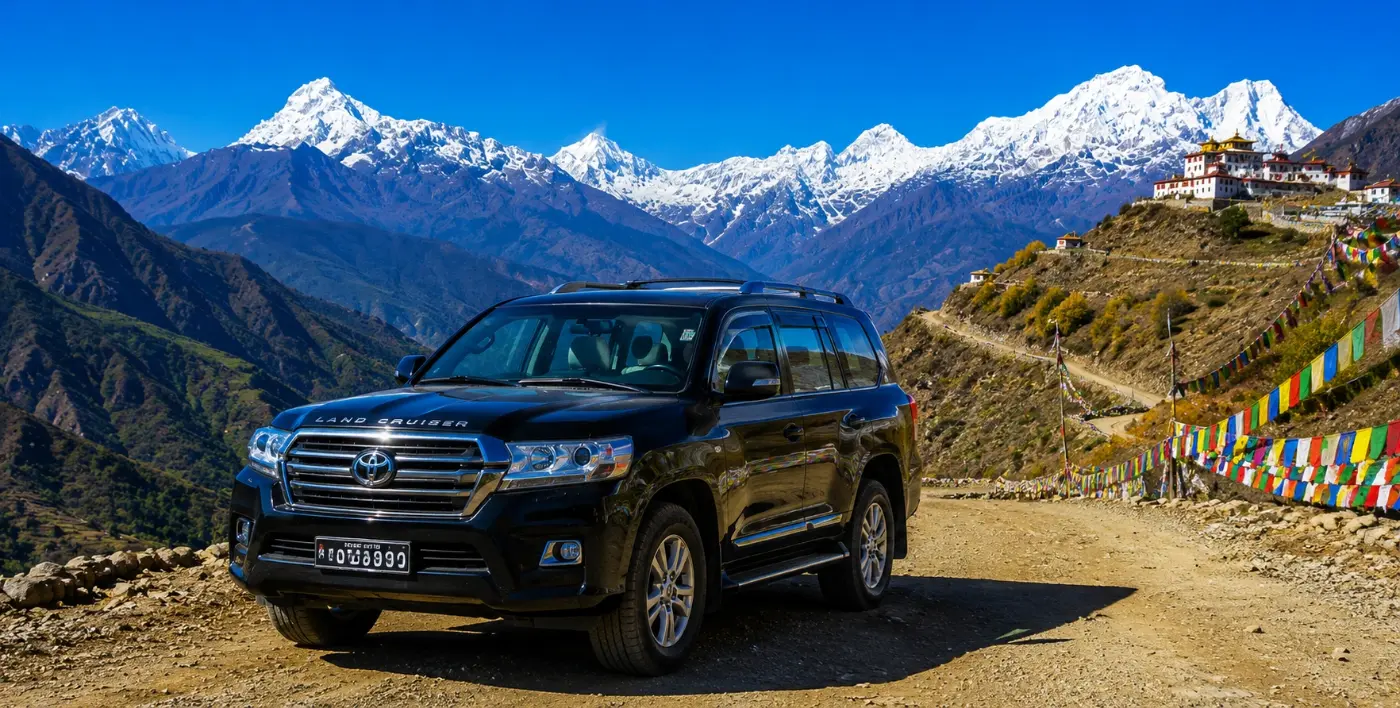
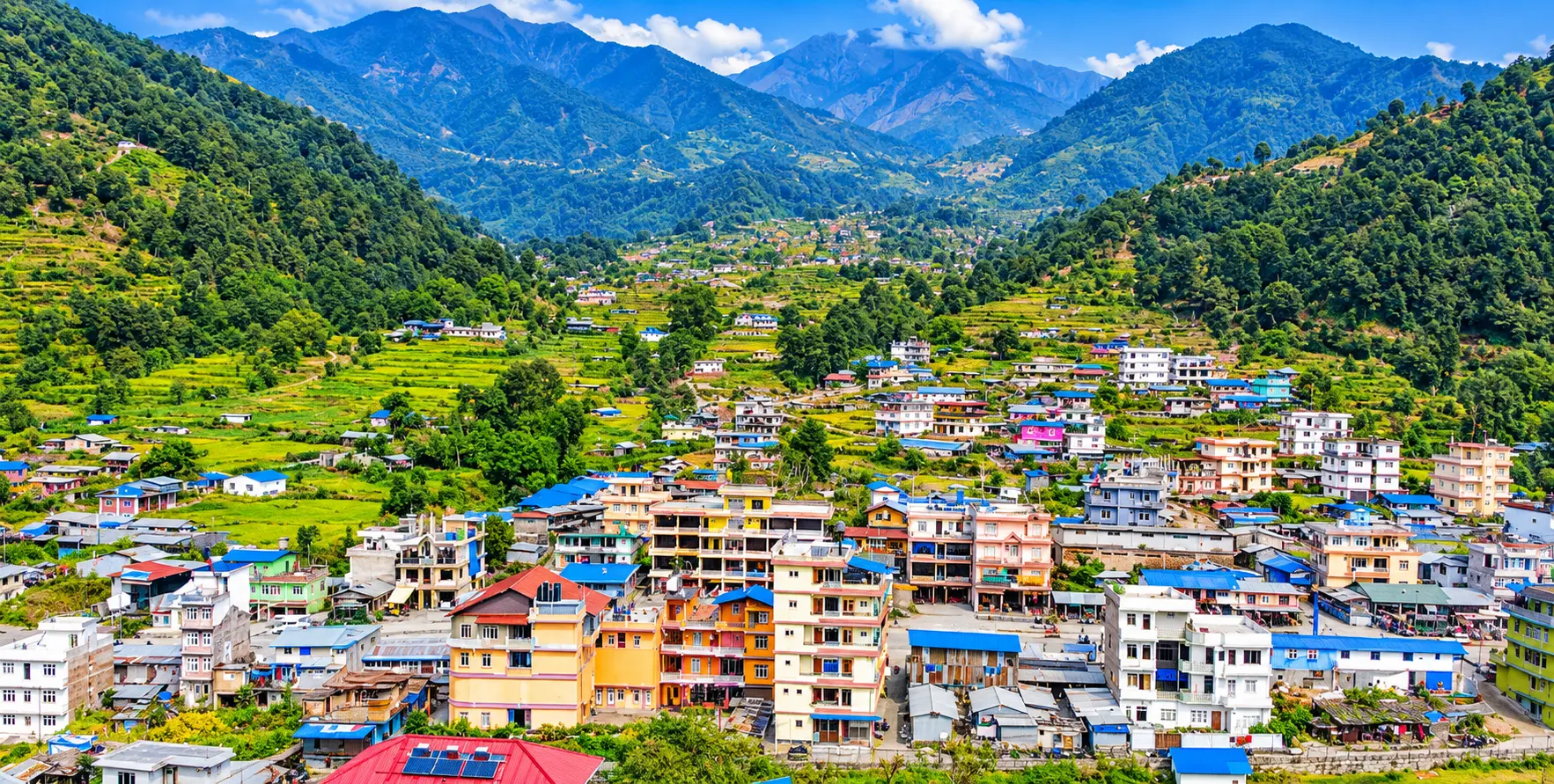
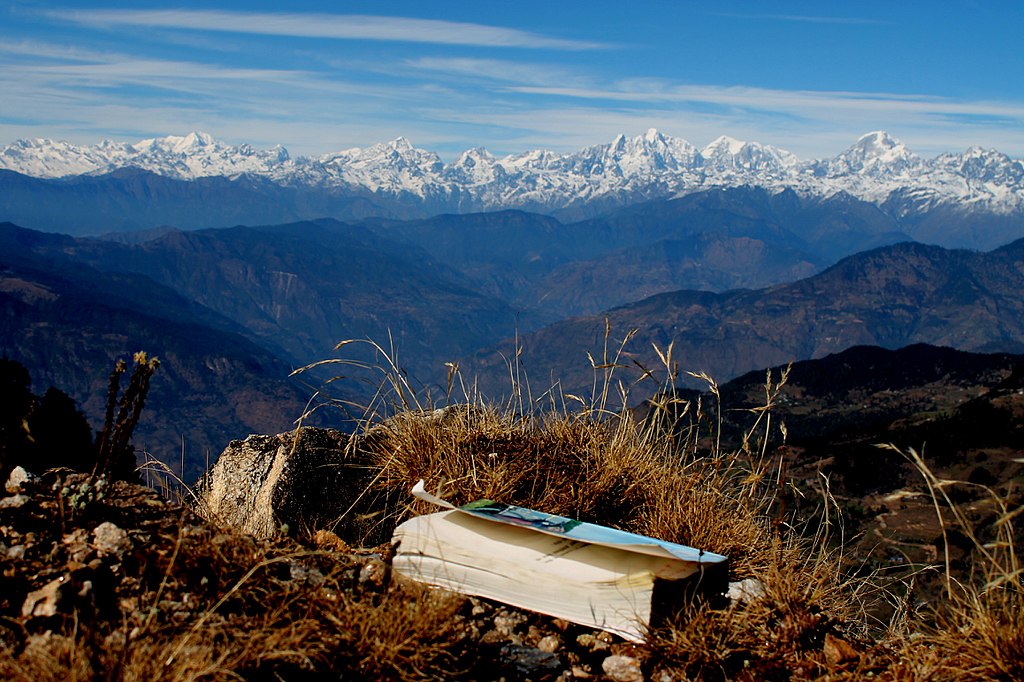
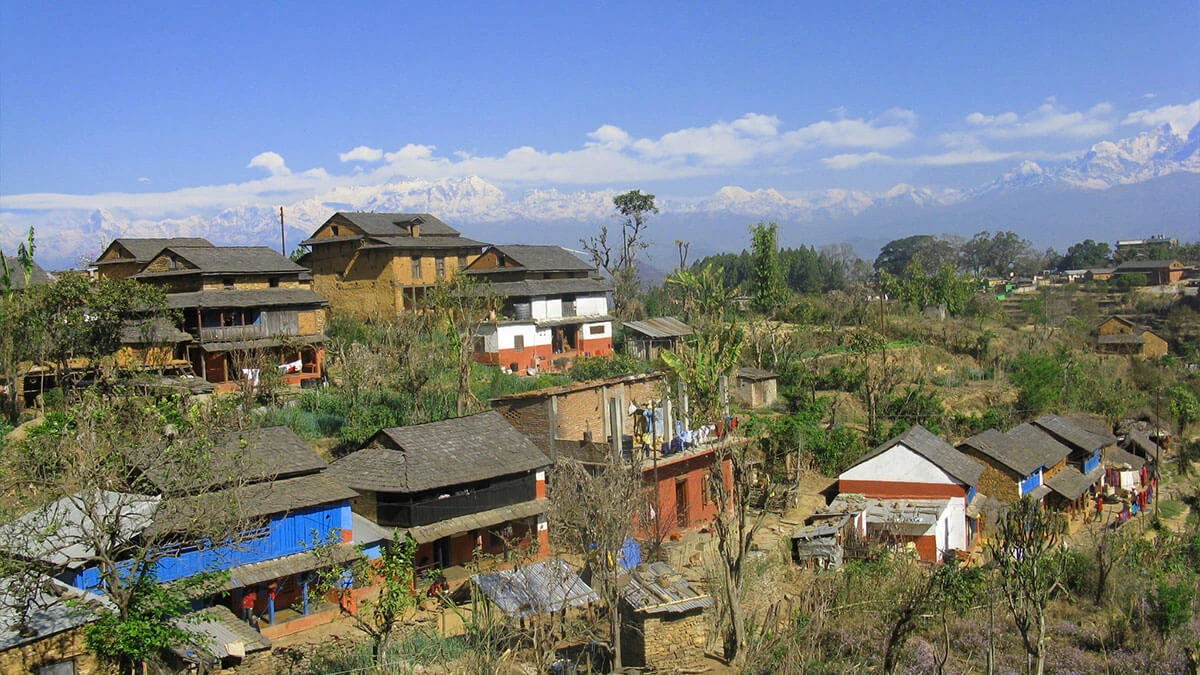
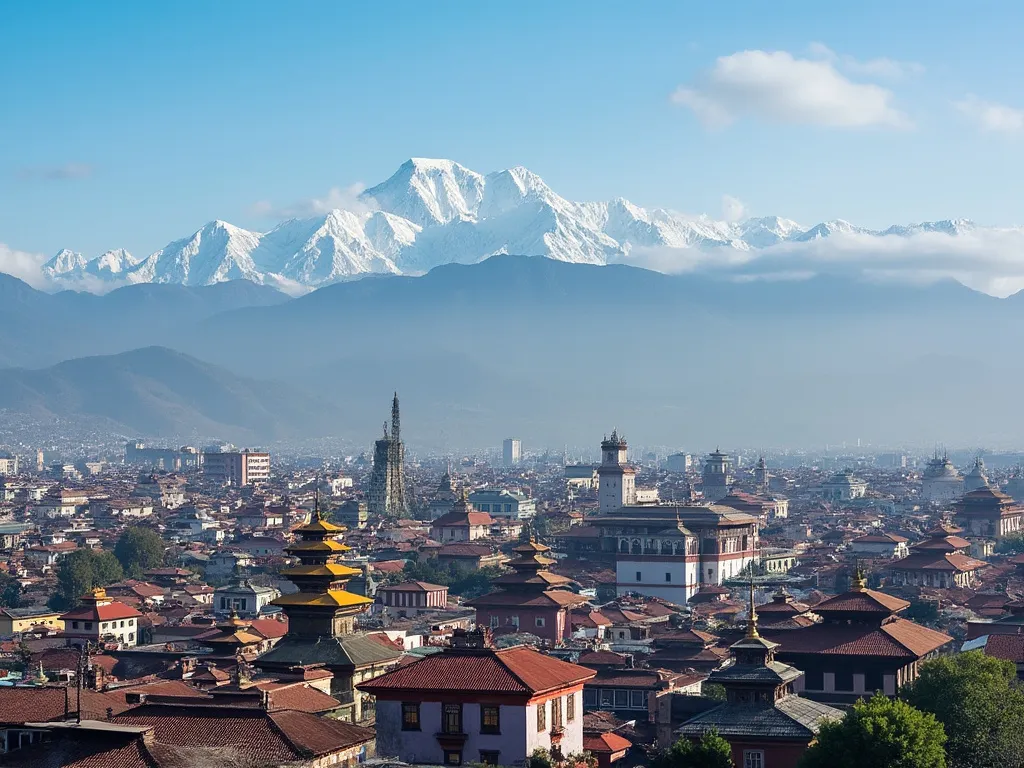
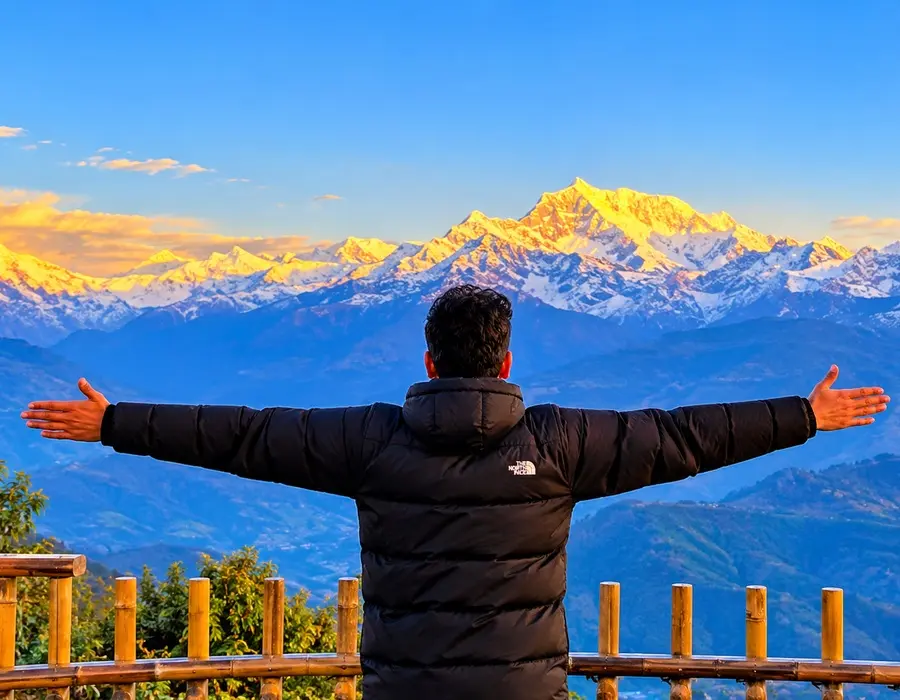
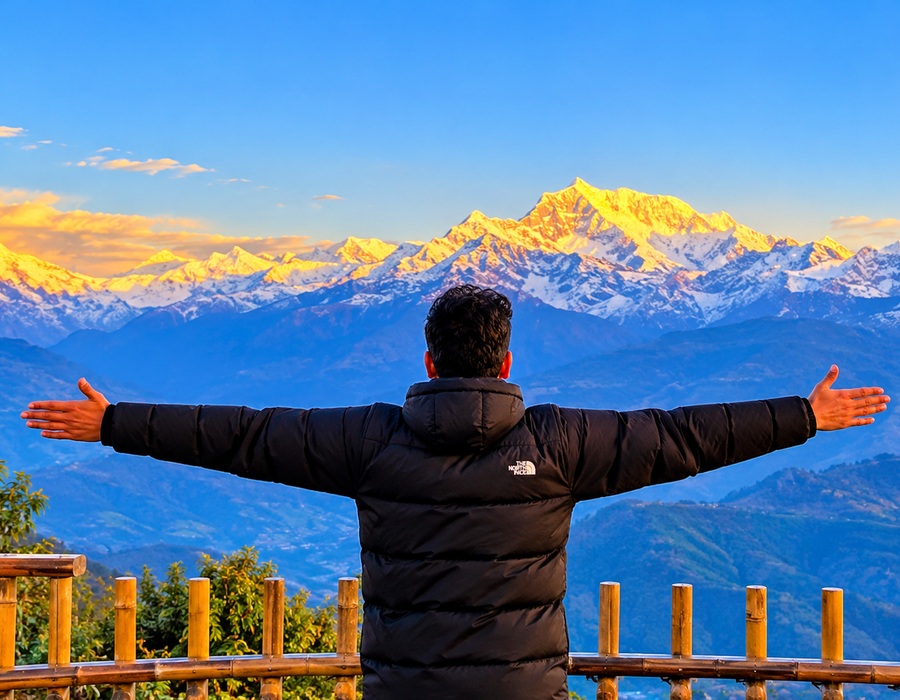
Sarangkot is the hill that defines Pokhara’s skyline. At around 1,600 meters, it rises straight above Phewa Lake and offers some of the finest views of the Annapurna range anywhere in Nepal: Dhaulagiri in the west, the Annapurnas, the fishtail peak of Machhapuchhre, Lamjung Himal, and, on clear days, Manaslu in the east.

It is also Nepal’s best-known paragliding launch site, and a growing number of travelers now stay in Sarangkot’s hotels and lodges instead of in the city below.

If you’re flying into Pokhara and heading straight up the hill, a Pokhara Airport to Sarangkot drop-off takes you from the terminal to your Sarangkot hotel, homestay or viewpoint in one private vehicle. You avoid bargaining for a taxi and carrying bags up the hill, with no confusion about which road to take.

This guide covers the route and drive time, how to choose between a car, jeep, Scorpio, Hiace, Coaster, and bus, USD price ranges, what to know about the steep Sarangkot road, and how to combine your transfer with a sunrise, paragliding, or onward travel.

At Nepal Vehicle Hiring, we run Pokhara airport transfers every day with private cars, jeeps, Mahindra Scorpios, Toyota Hiace vans, coach buses, and tourist buses. To book, send your flight details on WhatsApp or email [email protected].

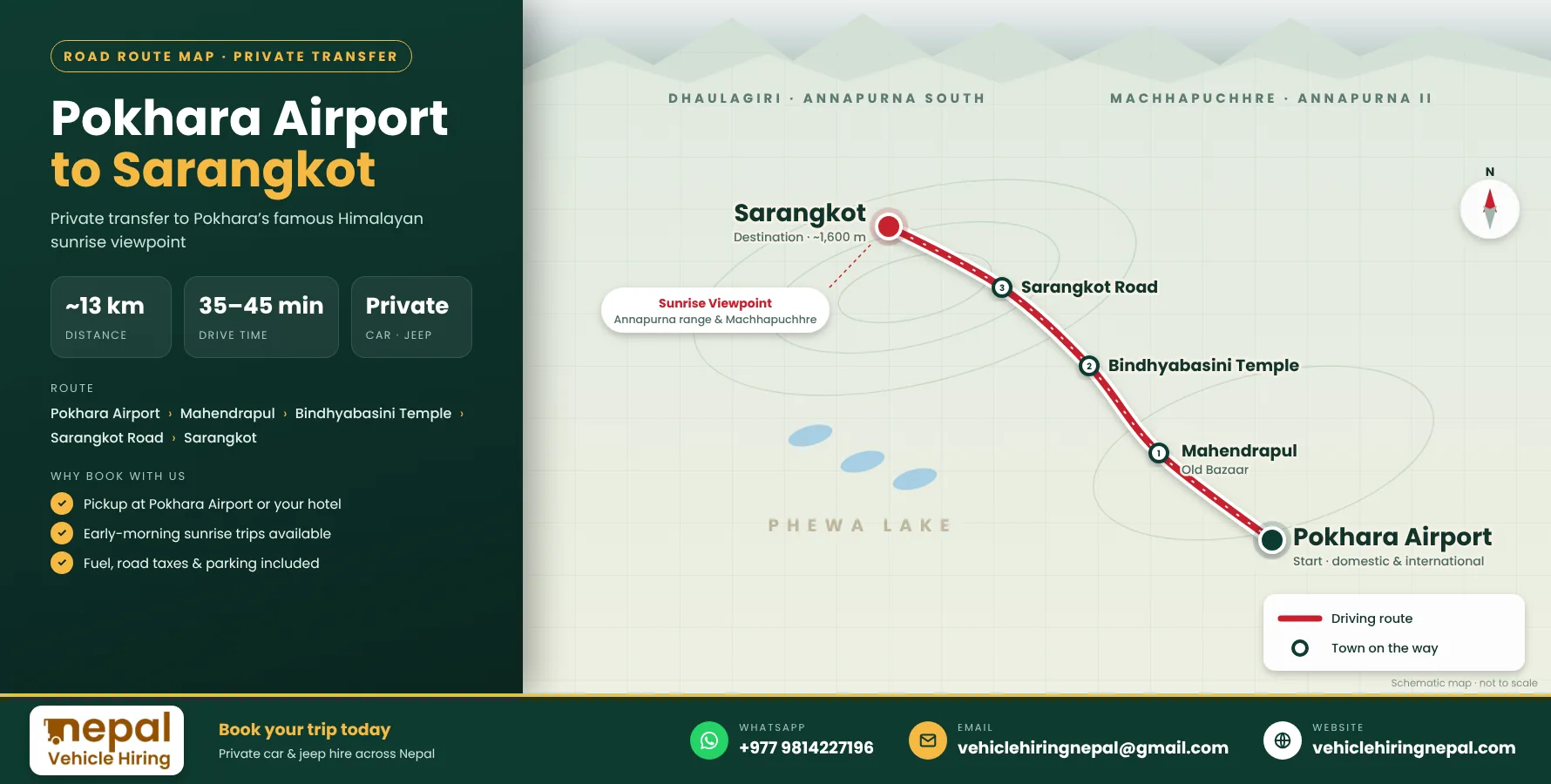
Pokhara Airport to Sarangkot at a Glance

  • Pick-up: Pokhara International Airport arrivals
  • Drop-off: your hotel, lodge or homestay in Sarangkot, or the viewpoint parking area
  • Approximate distance: about 12–16 km, depending on your exact drop-off point
  • Typical drive time: about 35 to 50 minutes
  • Route: airport – Pokhara city – Lakeside area – Sarangkot hill road
  • Road: paved city roads, then a steep, winding paved hill road
  • Sarangkot altitude: around 1,600 m, about 850 m above Lakeside: car, Scorpio, jeep, Hiace, Coaster, and bus
  • Private car price range: about USD 35-40 one way
Pokhara Airport to Sarangkot Drop-Off

Why Book a Private Drop-Off to Sarangkot?

No Bargaining at the Airport

Taxis at Pokhara Airport generally don’t use meters, so you negotiate the fare, and it often rises in peak season. A pre-booked private transfer has a fixed price agreed in advance, and your driver will be waiting with a name board when you leave arrivals.

The Right Vehicle for a Steep Road

The road to Sarangkot climbs about 850 meters in a short distance, with tight bends. Small, worn taxis sometimes struggle, especially with heavy bags. We send well-maintained vehicles suited to your group size and luggage.

Straight to Your Hotel Door

Many Sarangkot hotels sit on narrow lanes off the main road. Our drivers know the hill and will take you as close to your accommodation as the road allows, then help carry your bags.

Easy to Add a Sunrise or Sightseeing

Book your drop-off together with a Sarangkot sunrise tour, Pokhara sightseeing or your return to the airport, all with one company.
Pokhara Airport to Sarangkot Drop-Off by Car, Jeep, Hiace or Bus

The Route From Pokhara Airport to Sarangkot

Pokhara International Airport

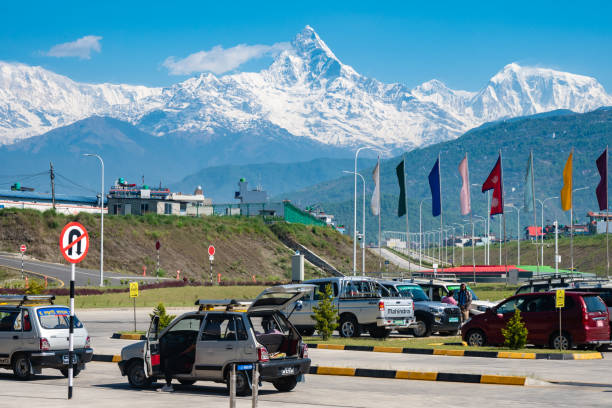
Pokhara International Airport lies on the eastern side of the city, a few kilometers from Lakeside, and handles flights from Kathmandu and other domestic routes; it replaced Pokhara’s old city-center airport as the main gateway. Your driver meets you just outside the arrivals hall.

Through Pokhara City

From the airport, the route crosses Pokhara toward the Lakeside area. Traffic is usually light outside rush hours, and the drive across the city takes around 15 to 25 minutes.

Up the Sarangkot Hill Road

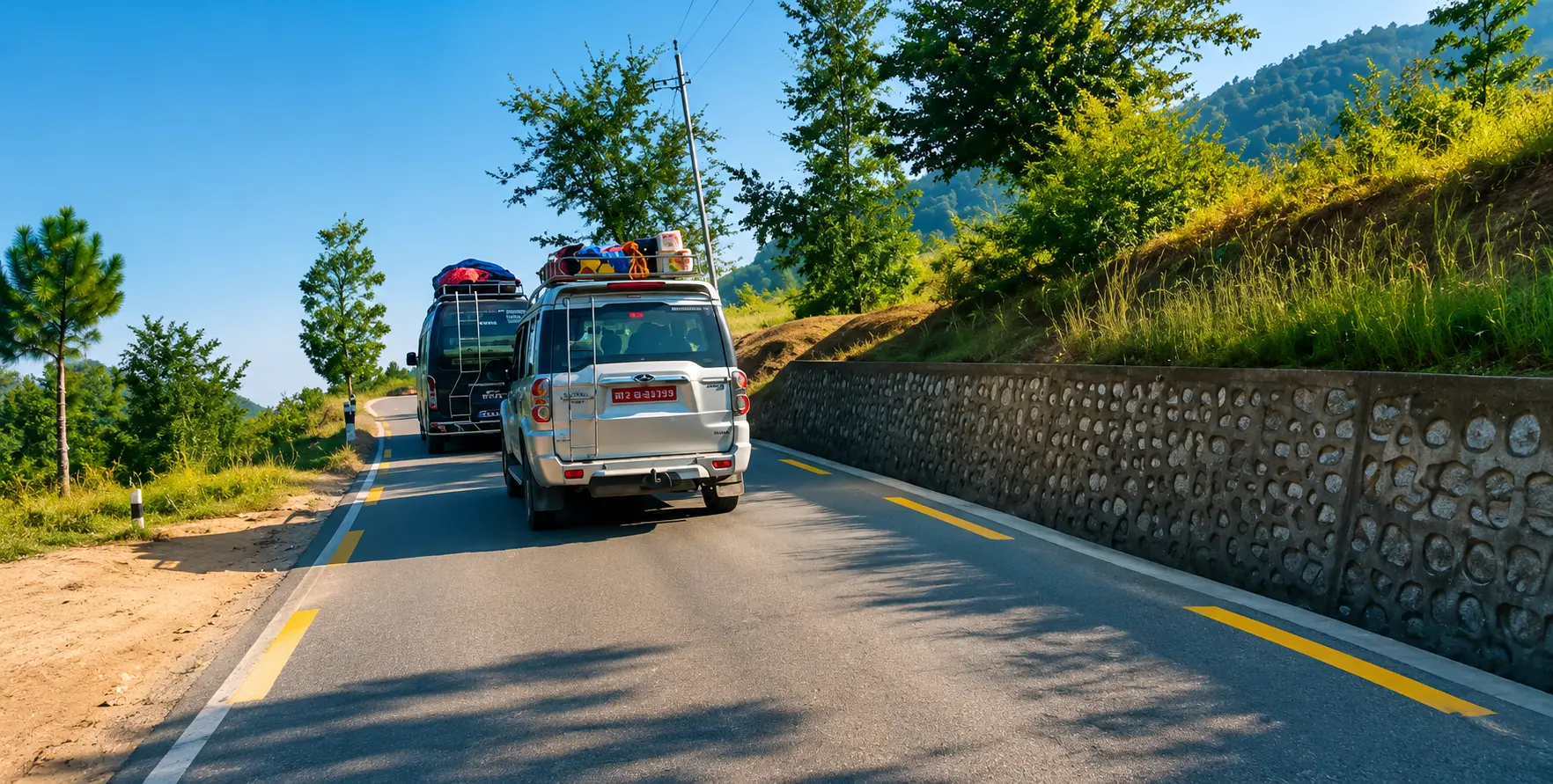
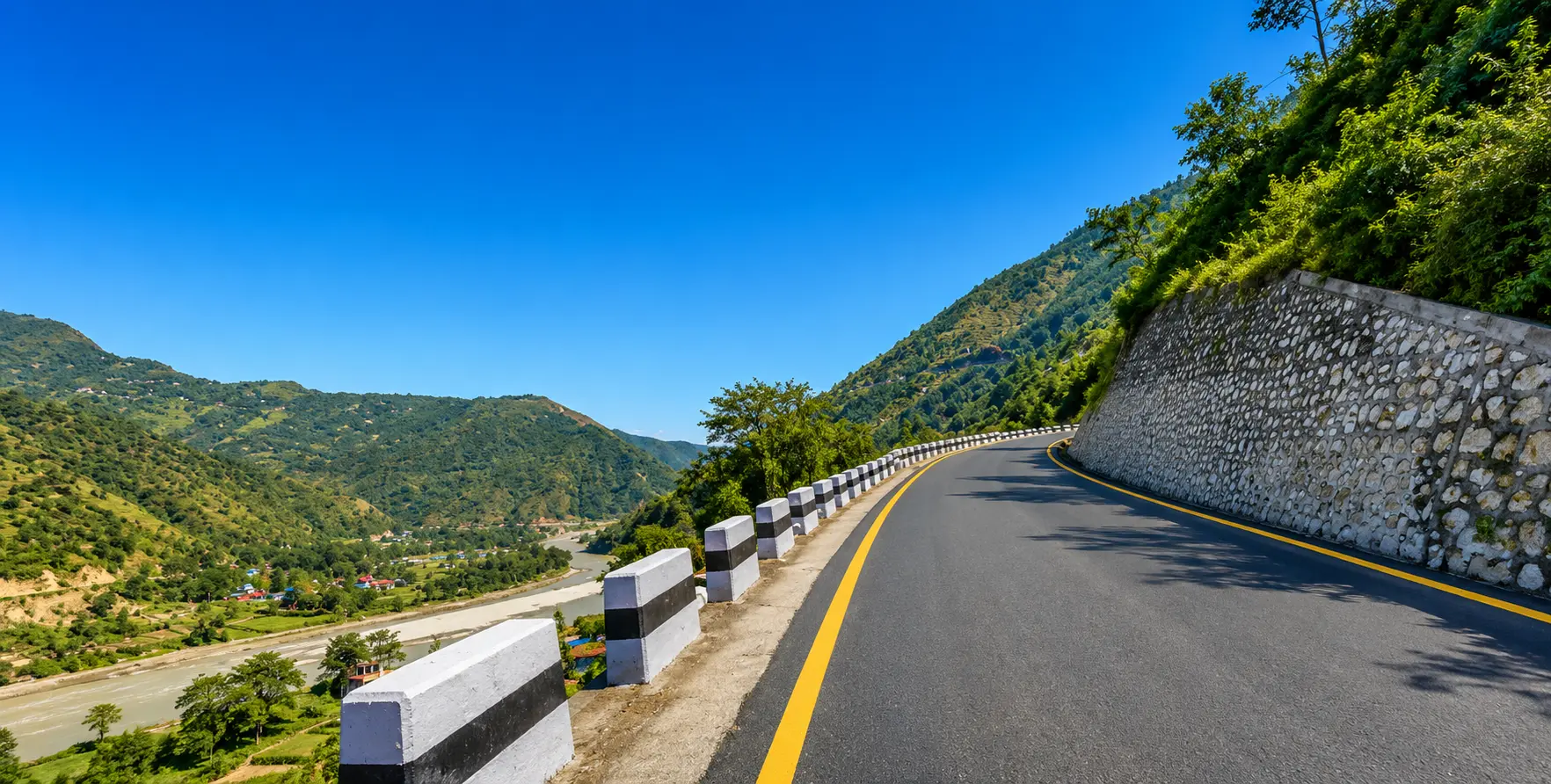
Near the northern end of Lakeside, the road turns uphill and climbs through a series of hairpin bends, with views opening over Phewa Lake and the city. The road is paved most of the way but steep and narrow in places. This section usually takes 20 to 30 minutes.

Hotels and lodges are spread along the ridge, and the main viewpoint parking area sits just below the Sarangkot View Tower, about a 10- to 15-minute walk up stone steps.

NOTE: Exact times depend on traffic, weather,r and where your hotel is on the hill. Our drivers check the best route on the day.
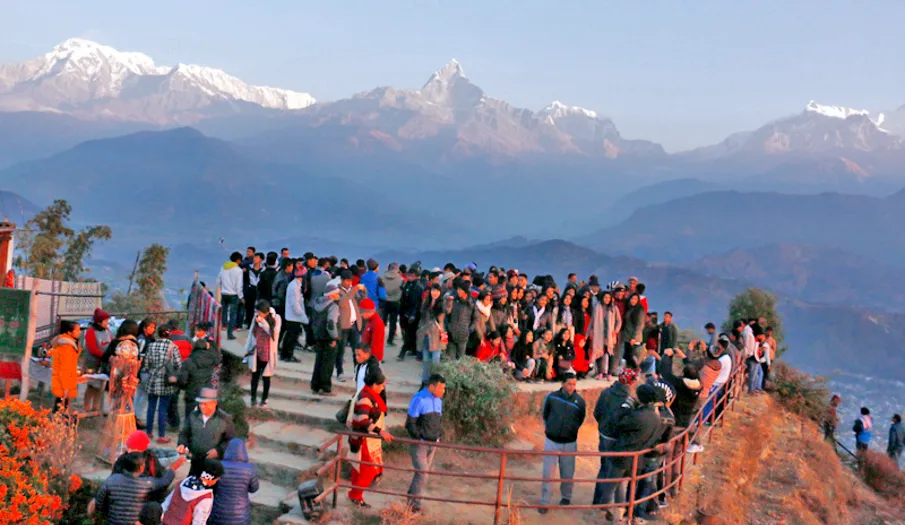
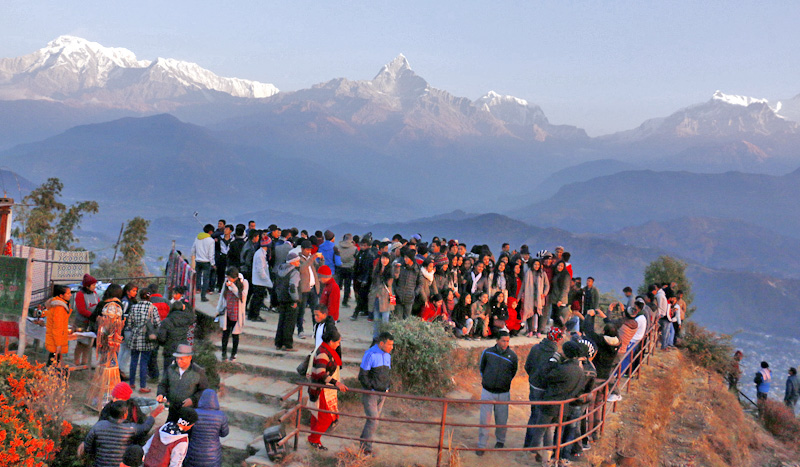
Sunrise viewpoint at Sarangkot above Pokhara

Which Vehicle Is Best?

Private Car (1–3 Passengers)

A private car is the most economical choice for solo travelers and couples with standard luggage. It handles the paved hill road well and is ideal for a simple hotel drop-off.

Mahindra Scorpio (2–5 Passengers)

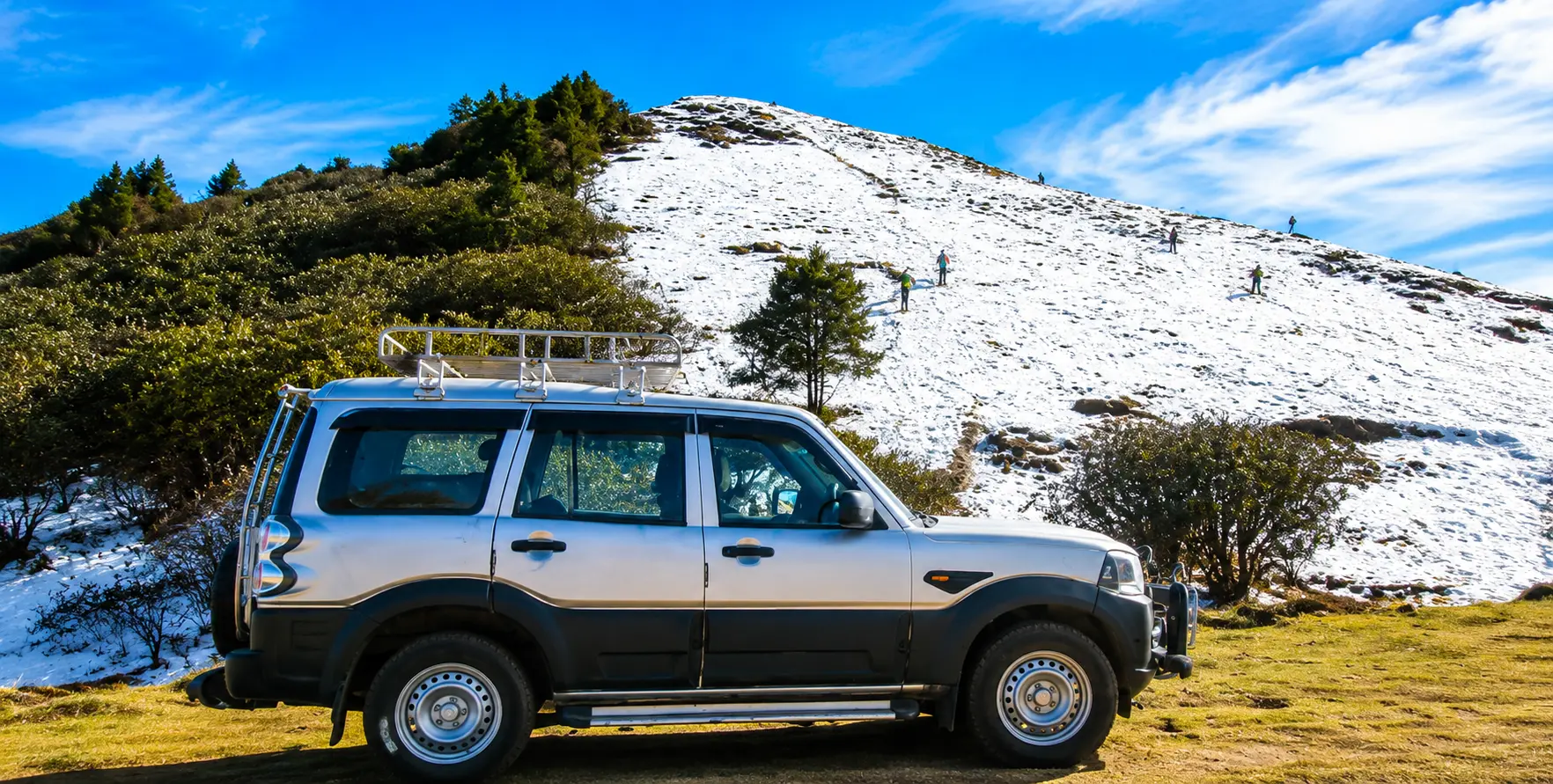
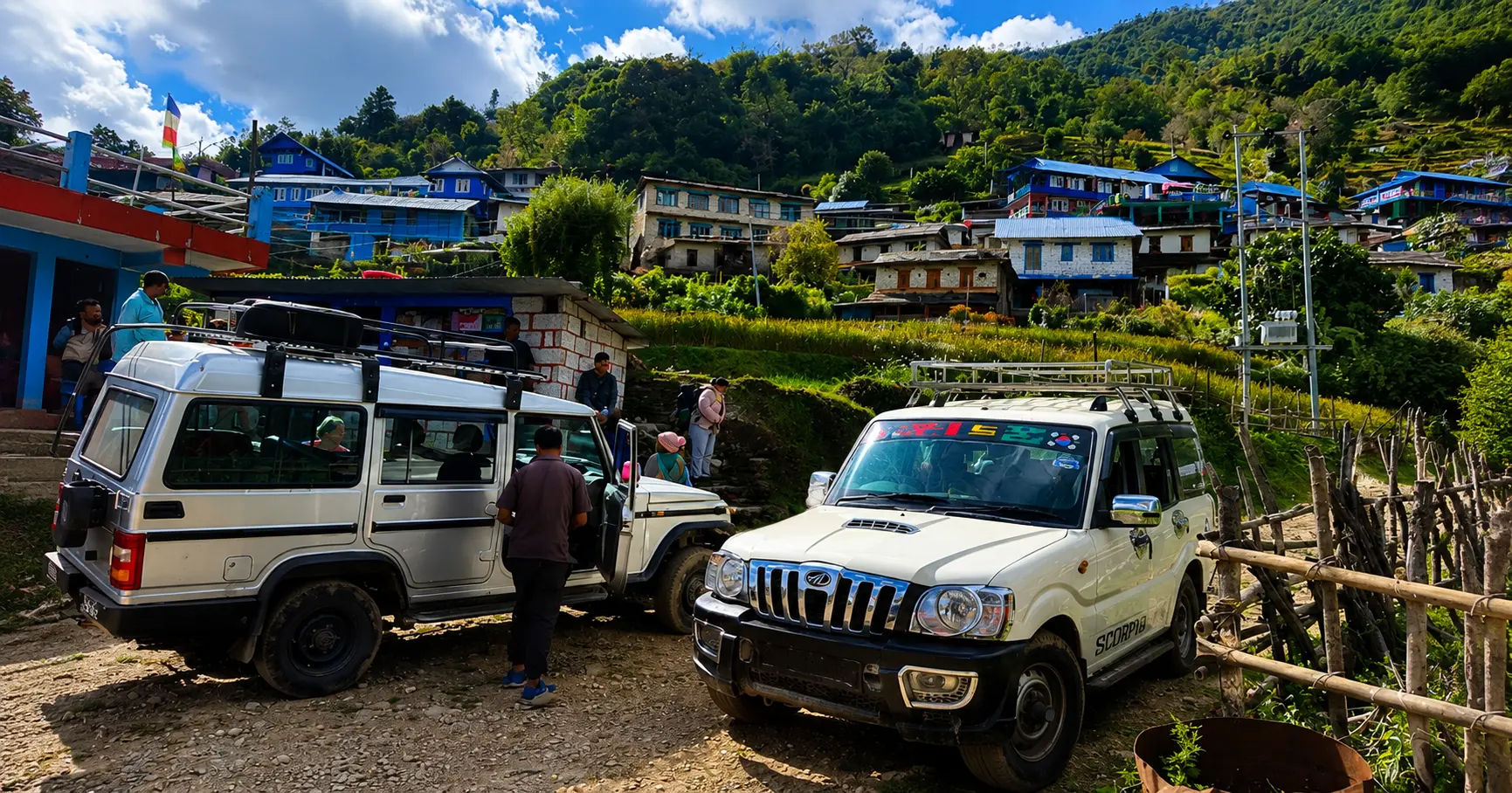
The Scorpio has more power for the climb, more luggage space, and more comfortable seats. It’s a good choice for families, small groups, and travelers with trekking duffels.

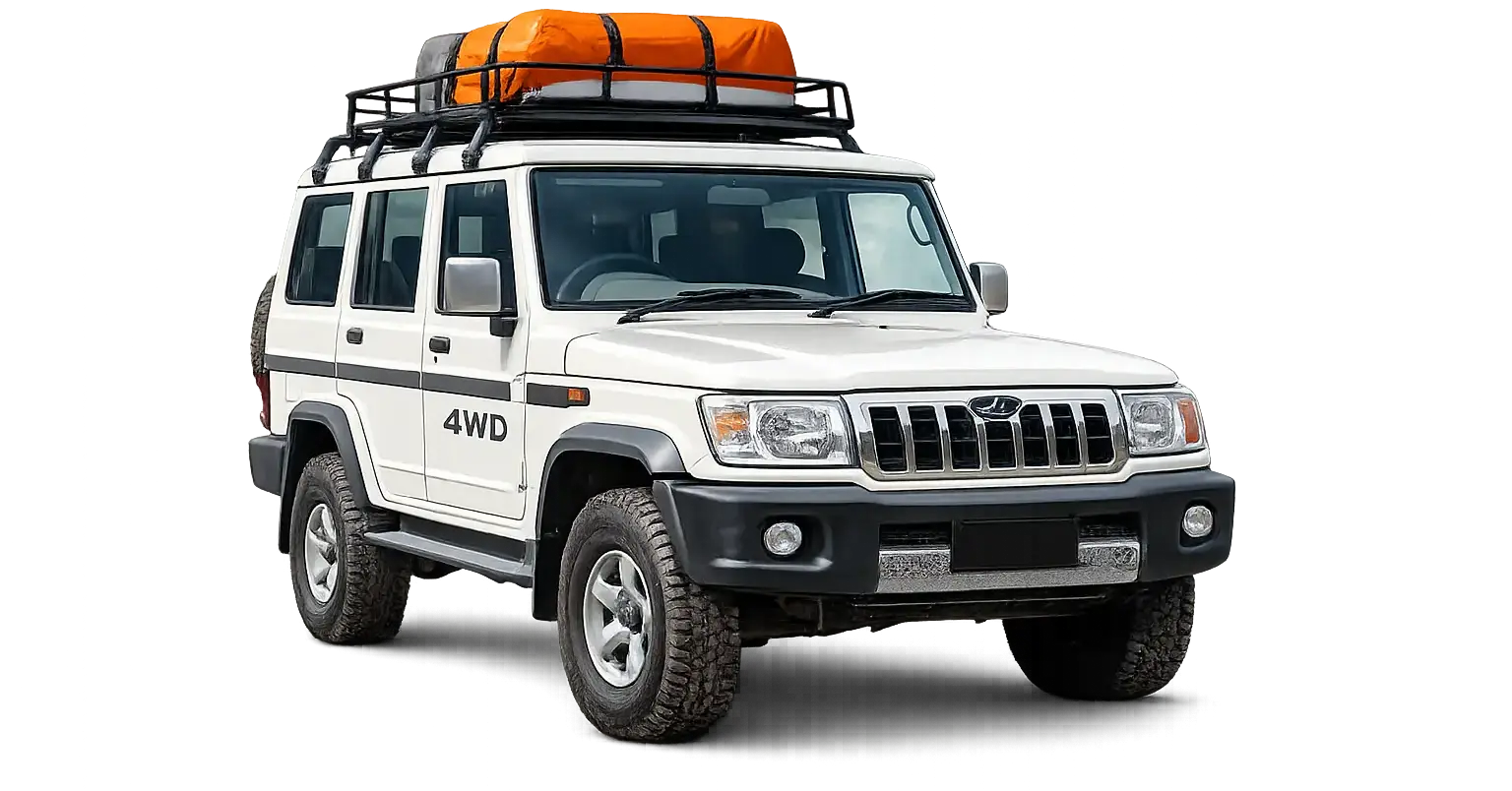
4WD Jeep (Up to 6 Passengers)

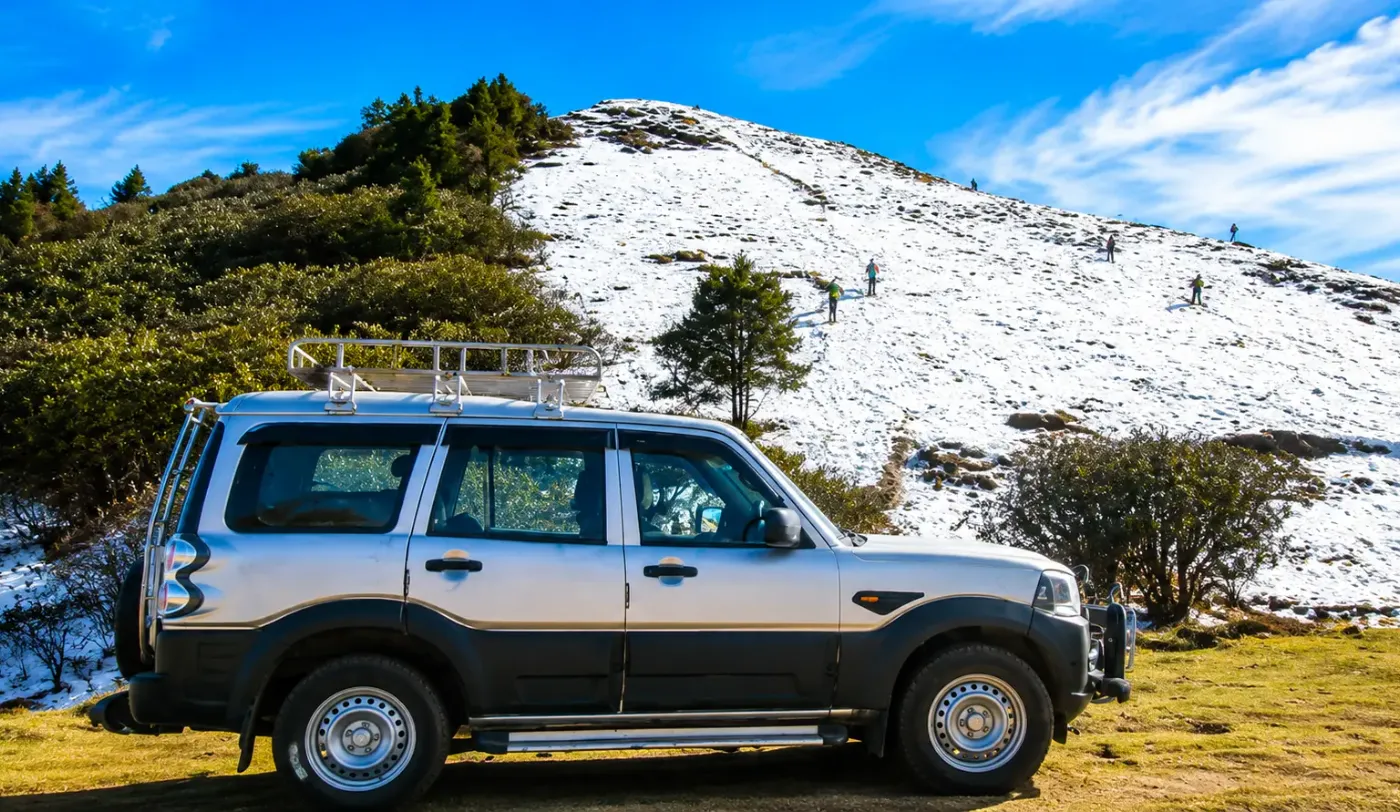
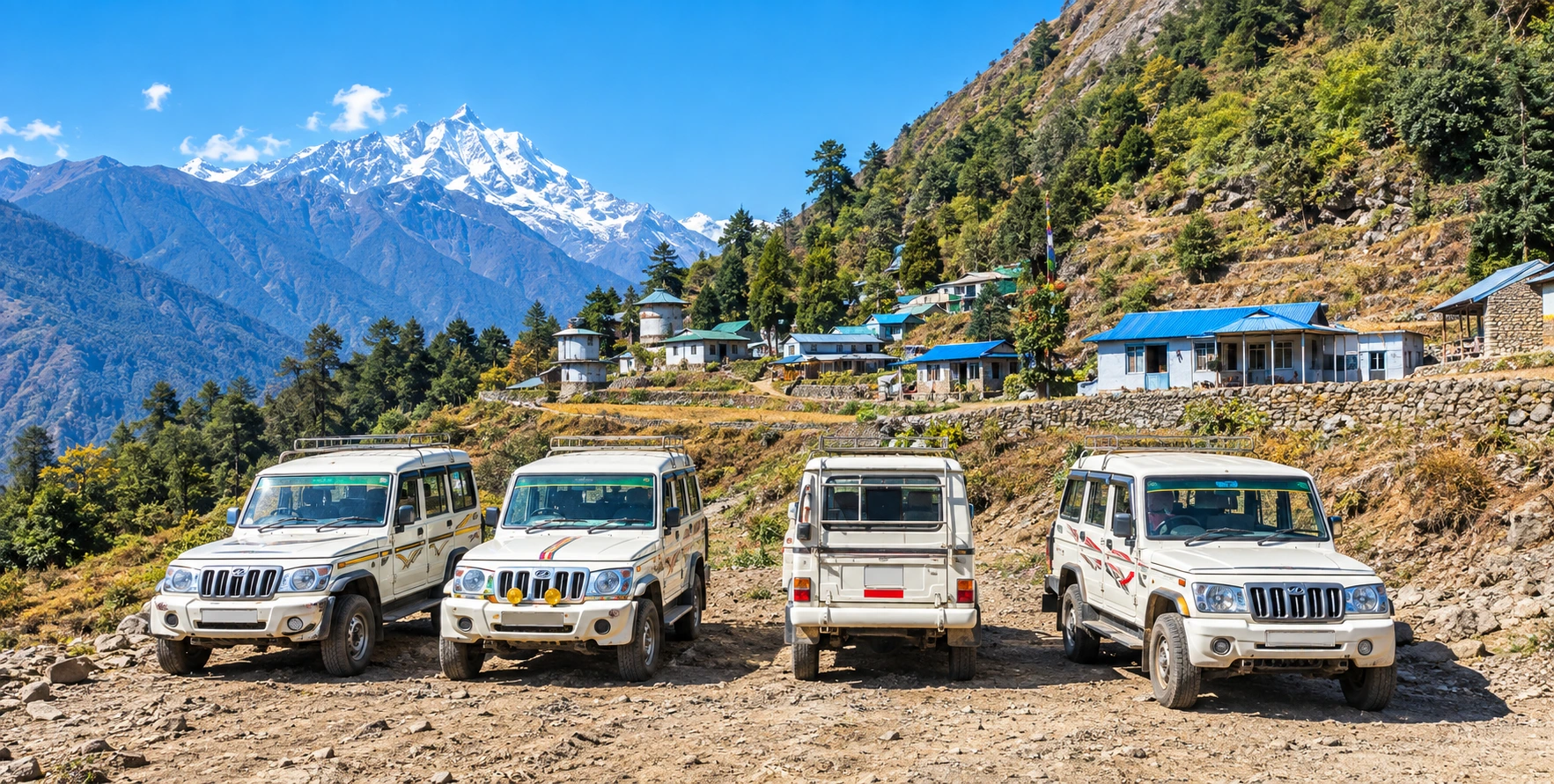
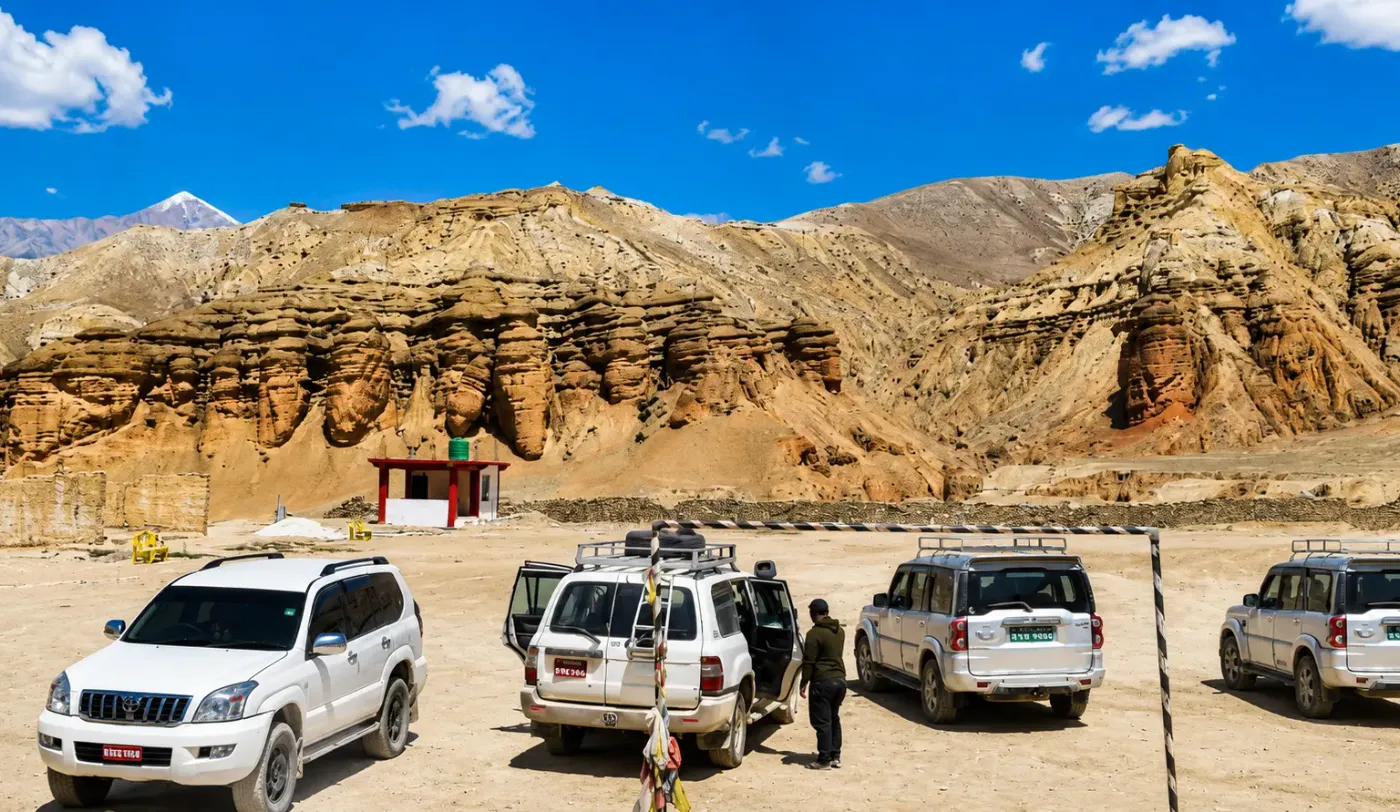
A jeep is useful if your hotel is on a rougher side lane, if it has rained heavily, or if you plan to continue to trailheads such as Kande or Dhampus.

Toyota Hiace (6–12 Passengers)

A Toyota Hiace keeps families and small groups together with plenty of luggage space. It manages the main Sarangkot road comfortably in normal conditions.

Coaster Bus (15–25 Passengers)

A coaster bus suits larger tour groups, schools,ols and wedding parties. It can reach many points on the hill, though some narrow side lanes may need a short walk or a shuttle in a smaller vehicle.

Tourist Bus (26–40 Passengers)

A full-size tourist bus works well for large groups. Because of the steep, narrow hill road, big buses may stop at a suitable point lower down, with Hiace or jeep shuttles for the final section. We’ll confirm the plan before you arrive.
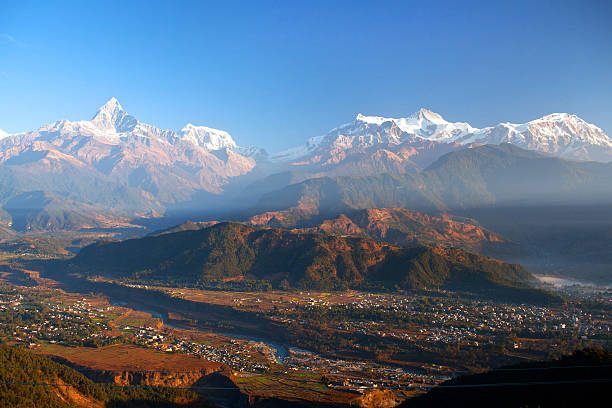
Pokhara Airport to Sarangkot Drop-Off

Pokhara Airport to Sarangkot Price (USD)

Our prices include a private vehicle, a professional driver, fuel, insurance, taxes, parking,  and meet-and-greet on arrival. They’re slightly higher than typical airport taxi fares because you get a fixed price agreed in advance, a well-maintained vehicle for the steep climb, and a driver waiting with your name.

One-Way, Pokhara Airport to Sarangkot

  • Private car (1–3 passengers): USD 35-40
  • Mahindra Scorpio (1–5 passengers): USD 45-60
  • 4WD jeep (1–6 passengers): USD 50-70
  • Toyota Hiace (6–12 passengers): USD 70–80
  • Coaster bus (15–25 passengers): USD 90–100
  • Tourist bus (26–40 passengers), with shuttles if needed: USD 130–140

Return and Add-Ons

  • Sarangkot to Pokhara Airport: same range as one-way
  • Airport drop-off plus next-morning sunrise viewpoint run: ask for a combined price
  • Half-day Pokhara sightseeing on the way: from USD 40-50 extra by car
  • Early-morning or late-night flights: included in the price

Groups save the most by sharing a Hiace, coaster, or bus. Send your flight number and group size on WhatsApp for an exact quote.
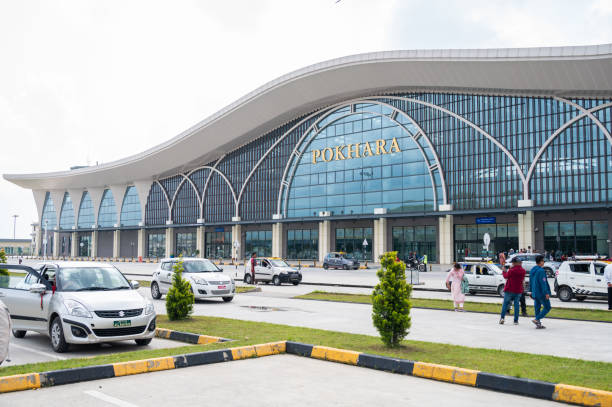
Pokhara Airport to Sarangkot Drop-Off

Meeting Your Driver at Pokhara Airport

  • Share your flight number when you book so we can track delays
  • Your driver waits just outside arrivals with a name board
  • If your flight is delayed, the driver waits at no extra cost
  • Call or message our office if you can’t see your driver straight away
  • Your driver helps load bags and confirms your Sarangkot hotel

Arriving from Kathmandu? Many travelers fly in after a Kathmandu airport pick-up and a night in the capital. If you’d rather travel by road, see our Kathmandu to Pokhara options.

Things to Do in Sarangkot

Sunrise Over the Annapurnas

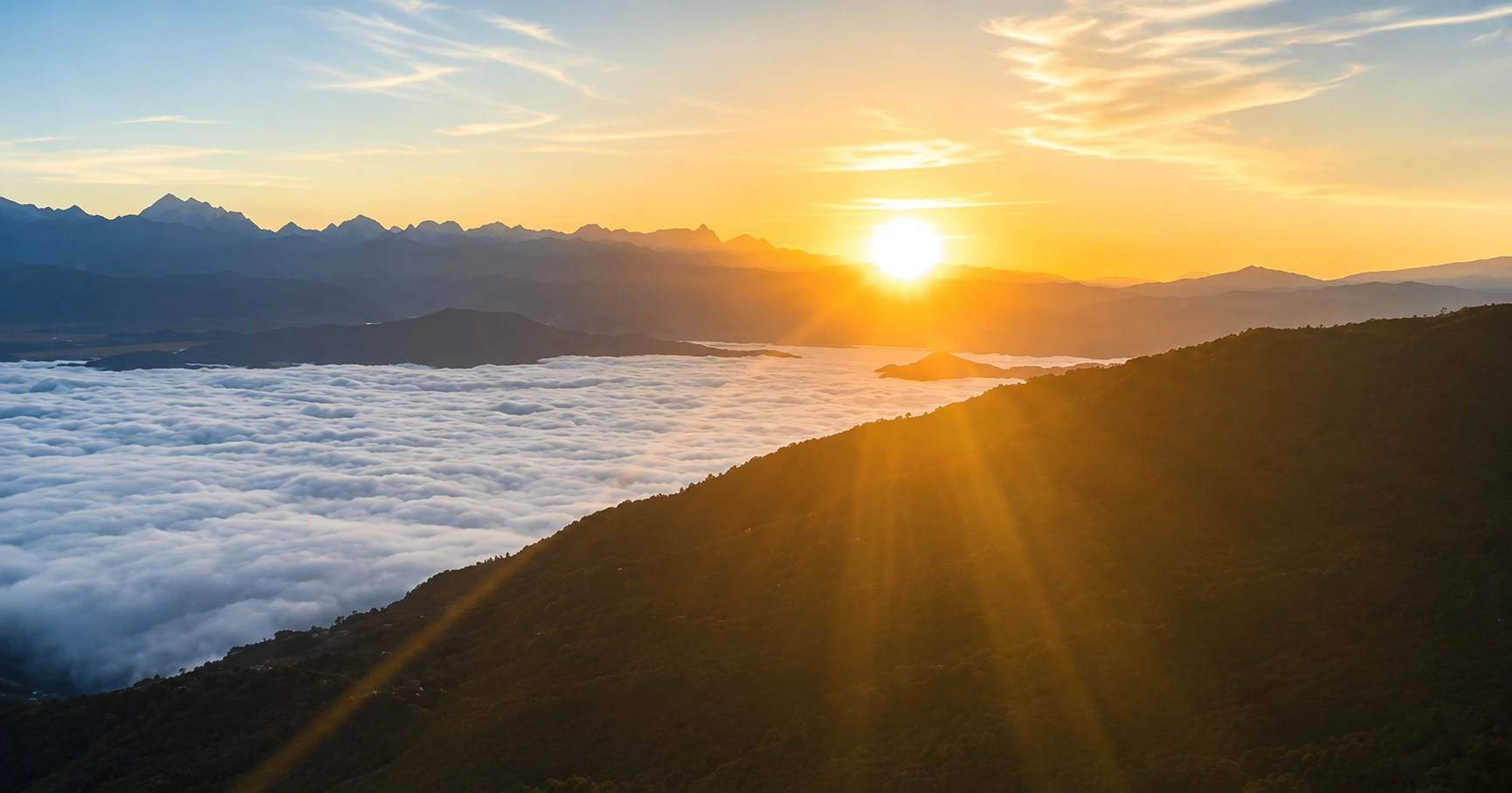
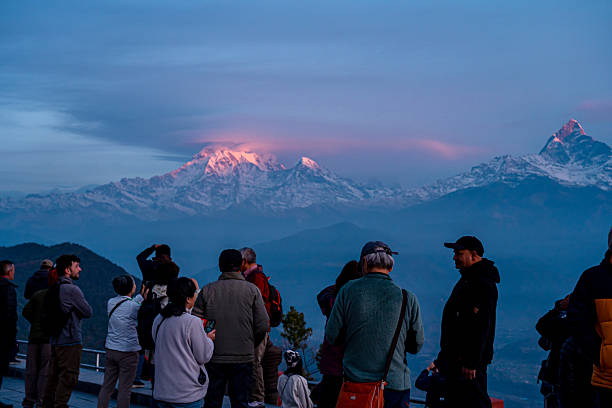
Sarangkot is most famous for sunrise. From the View Tower, the first light turns Dhaulagiri, the Annapurnas, Machhapuchhre and Lamjung Himal pink and gold, while mist often fills the Pokhara valley below. Staying overnight on the hill means you can walk to the viewpoint without a pre-dawn drive.

Visitors staying at Lakeside can book our Sarangkot sunrise tour vehicle.

Paragliding

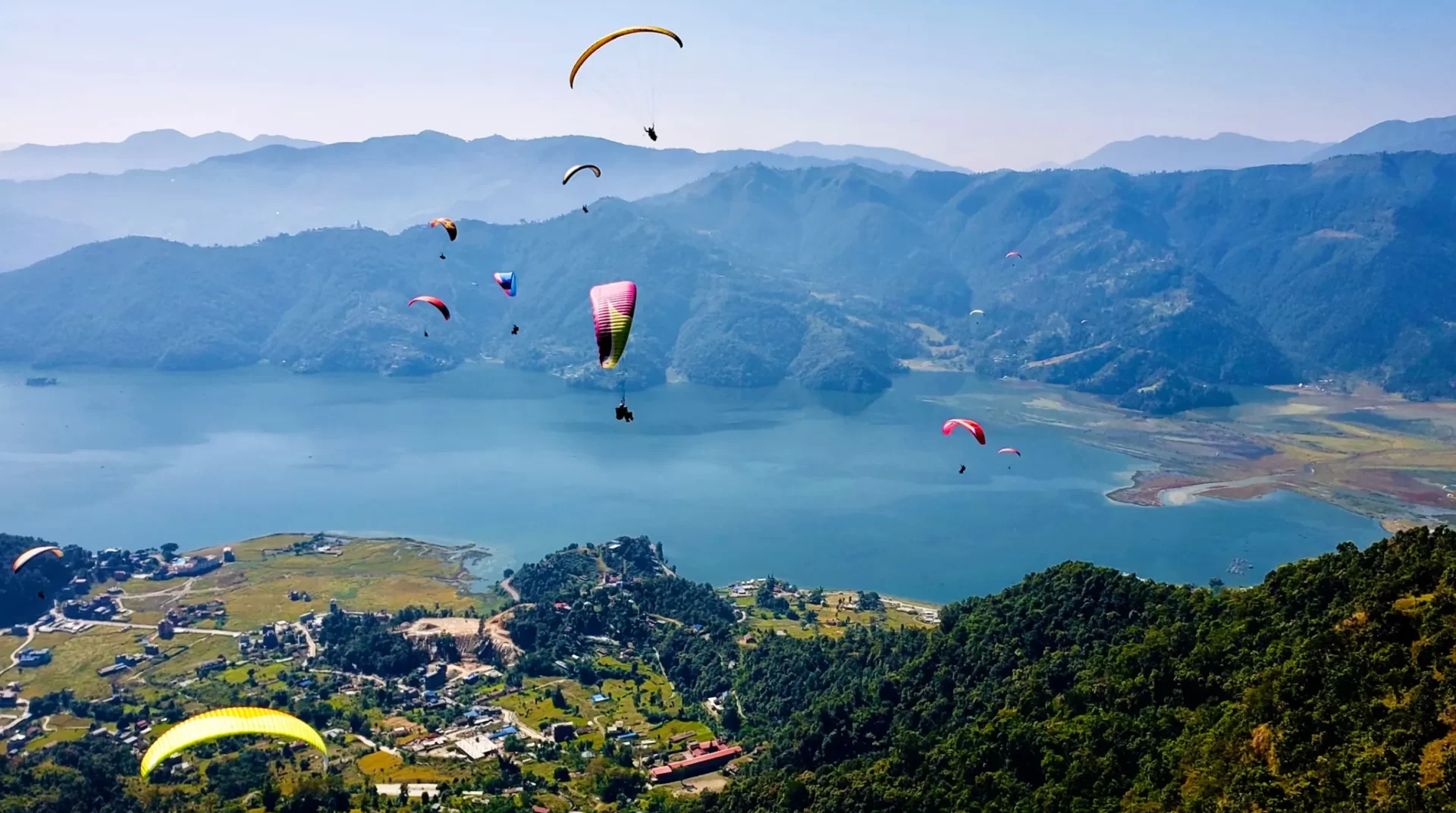
Sarangkot is one of the world’s best-known tandem paragliding sites. Flights launch from the hillside and glide over Phewa Lake, usually lasting around 20 to 40 minutes before landing near Lakeside.

Sunset and Lake Views

Evenings can be just as beautiful, with the Annapurna range glowing in the late light and Phewa Lake shining below. Many Sarangkot hotels have terraces facing the mountains.

Village Walks and Hiking

Footpaths lead along the ridge through small villages, terraced fields and forest. You can walk down to Lakeside in a few hours, or hike toward Naudanda and on to Kaskikot, with its old fort site.

Zip-Line and Adventure

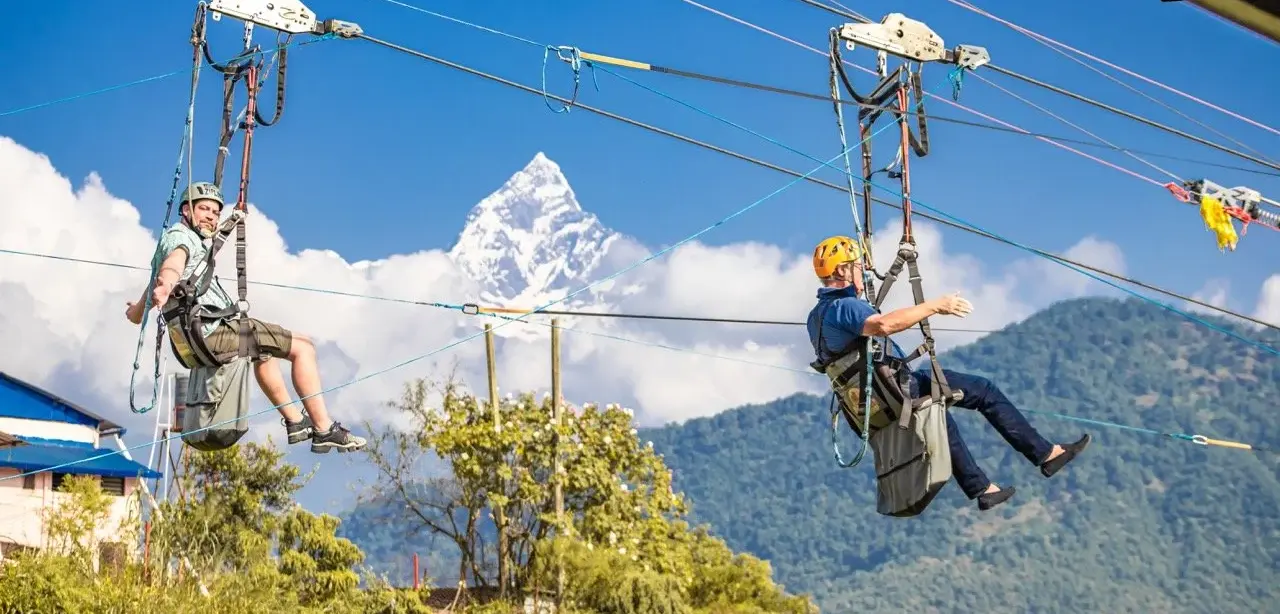
Adventure lovers can try the zip-line, one of the steepest and longest in the region, and other activities offered around the hill.

Nepal Tour Package

Sarangkot Sunrise: Tips for the Best Experience

Watching the sun rise over the Annapurna range is the highlight of any Sarangkot stay. A little planning makes it even better.

  • Check the sky the night before: clear evenings often mean clear mornings
  • Set out early: be at the viewpoint 30 to 45 minutes before sunrise to watch the colors change
  • Try a quieter spot: viewpoints along the ridge away from the main tower can be less crowded
  • Dress warmly: the hour before sunrise is the coldest part of the day
  • Bring a hot drink: tea stalls open early, but a flask helps
  • Stay a little longer: the light on the mountains often gets better after the sun is fully up
  • Look down as well as up: mist in the valley and the first boats on Phewa Lake make great photos

If clouds hide the peaks, don’t worry. Mornings change quickly in the hills, and the views often open up later. Staying two nights gives you a second chance.

Guests staying in Lakeside can book our Sarangkot sunrise tour vehicle with an early pick-up from their hotel.

Why Travelers Choose Sarangkot

Sarangkot gives you a mix that’s hard to find elsewhere near a major city: big Himalayan views, fresh air, village life, adventure sports, and comfortable hotels, all within an hour of an airport. For many visitors, it’s the image they remember most from Nepal, the moment the first sun touches Machhapuchhre while Pokhara still sleeps below. A smooth, well-planned transfer from the airport is the first step toward that moment.

Staying in Sarangkot

Sarangkot has a wide range of places to stay, from simple teahouses and family-run lodges to mid-range hotels and comfortable resorts with mountain views. Staying on the hill offers quiet evenings, cooler air than the city,y and sunrise on your doorstep.

  • Ask for a room facing north for mountain views
  • Bring a warm layer, as mornings and evenings are cool at 1,60 meters
  • Carry some cash, as card payments aren’t accepted everywhere
  • Check how close vehicles can reach your hotel if you have heavy luggage. Please check luggage. Please tell us your hotel name when you book, and our driver will plan the best drop-off point.
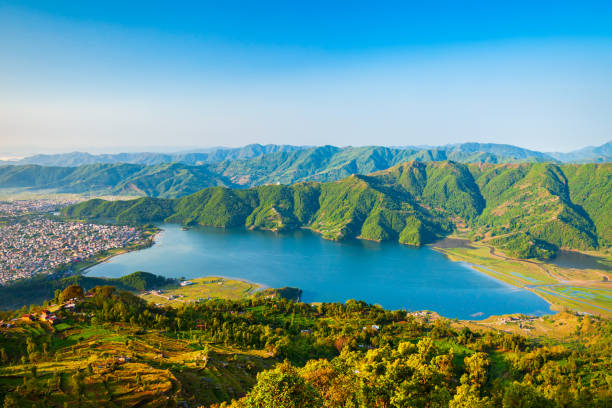
Pokhara Airport to Sarangkot Drop-Off

Best Time to Visit Sarangkot

Autumn

Clear, dry air and sharp mountain views make autumn the best season for Sarangkot sunrises and paragliding.

Winter

Winter mornings are cold but often very clear, with excellent visibility. Paragliding usually runs well.

Spring

Warm days and blooming rhododendrons, but haze can soften the views. Early mornings are best.

Monsoon

Clouds often hide the mountains, and paragliding is usually suspended in heavy rain. The hill road can be slippery, so a sturdy Scorpio or jeep is a sensible choice.
Pokhara Airport to Sarangkot Drop-Off

Sarangkot or Lakeside: Where Should You Stay?

Staying in Sarangkot

  • Sunrise from your hotel or a short walk away
  • Quieter, cooler and greener than the city
  • Panoramic mountain and lake views from many rooms
  • Fewer restaurants and shops, and a drive to reach Lakeside
  • Walkable cafés, restaurants, shops and boating on Phewa Lake
  • Easy access to paragliding offices, trekking agencies, and banks
  • A pre-dawn drive needed for the Sarangkot sunrise

Many travelers split their stay: a night or two in Sarangkot for sunrise and peace, then Lakeside for activities. We can handle every transfer, from the airport to Sarangkot, then down to Lakeside and back to the airport.

Sample Pokhara Itineraries With a Sarangkot Stay

Two Days

  • Day 1: Fly into Pokhara, airport drop-off to Sarangkot, sunset from your hotel terrace
  • Day 2: Sunrise from the View Tower, tandem paragliding down to Lakeside, afternoon boating, transfer to the airport

Three Days

  • Day 1: Arrival and drop-off in Sarangkot, ridge walk at sunset
  • Day 2: Sunrise, then a half-day Pokhara sightseeing tour to the World Peace Pagoda, Davis Falls and Gupteshwor Cave
  • Day 3: Paragliding or zip-line, then a transfer to the airport or onward to Chitwan

Four Days With a Short Trek

  • Day 1: Arrive and stay in Sarangkot
  • Day 2: Sunrise, then hike along the ridge toward Naudanda
  • Day 3: Continue toward Kande and Australian Camp; see our Kande transport
  • Day 4: Walk down to Dhampus and drive back to Pokhara with our Dhampus jeep

Want something different? Share your plans through our trip planner.
Pokhara Airport to Sarangkot Drop-Off by Car, Jeep, Hiace or Bus

Families and Child Seats

Sarangkot is a favorite with families. The drive from the airport is short; children love the mountain views and paragliders overhead, and hotels have gardens and terraces. For families, a Mahindra Scorpio or Hiace gives room for luggage, prams, and grandparents.

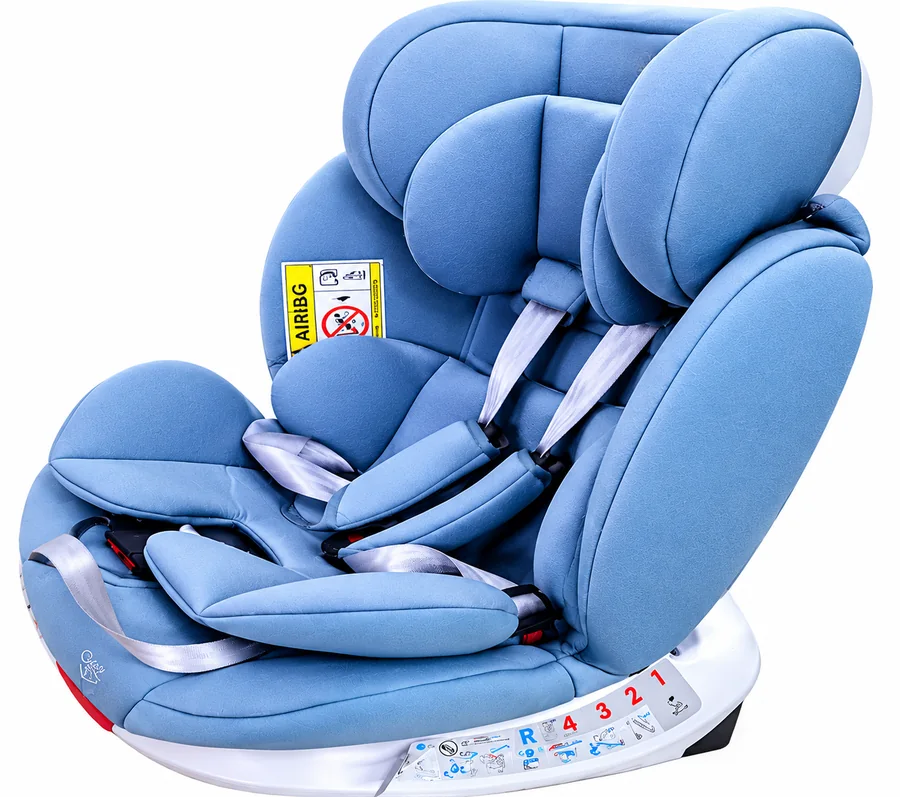
We can provide child seats on request, fitted in the rear.

Please tell us your children’s ages when you book. For toddlers, a short evening walk to a viewpoint and an early night make the next morning’s sunrise much easier.

Groups, Weddings and Events in Sarangkot

Sarangkot’s resorts host weddings, corporate retreats, school trips and photography tours. Moving a group from Pokhara Airport up the hill takes planning, especially with a steep road and limited parking.

  • Up to 12 guests: a Toyota Hiace
  • Up to 25 guests: a Coaster bus
  • Larger groups: a tourist bus with Hiace or jeep shuttles for narrow sections
  • Luggage vehicle: an extra jeep for equipment or decorations
  • Coordinator: one point of contact for all vehicles and timings

Contact us early through our contact page so we can reserve enough vehicles.
Pokhara Airport to Sarangkot Drop-Off

Trekkers and Sarangkot

Sarangkot is the starting point for some of the easiest walks near Pokhara and a scenic end point for others. The ridge trail continues west through Kaskikot and Naudanda, linking with routes toward Kande, Australian Camp and Dhampus. Further afield, Pokhara is the gateway for the Ghorepani Poon Hill trek, Annapurna Base Camp trek and Annapurna Circuit.

If you’re spending a night in Sarangkot before a trek, we can pick you up the next morning and drive you to your trailhead, such as Nayapul, Kande, or Besisahar. Our sister companies, Trek Nepal Himalayas, organize guided treks in the Annapurna region.

Arriving by Road Instead of by Air

Not flying? Many travelers reach Pokhara by road from Kathmandu or Chitwan. We can pick you up at the Pokhara Tourist Bus Park after your tourist bus from Kathmandu and drive you up to Sarangkot, or take you there directly from Kathmandu by private car, Scorpio, or Hiace.

Coming from the south after a Chitwan jungle safari or a visit to Lumbini? We can bring you straight to Sarangkot.
Pokhara Airport to Sarangkot Drop-Off

Paragliding From Sarangkot

Sarangkot’s slopes catch reliable thermals, making it one of the world’s top tandem paragliding sites. Experienced pilots take passengers on flights over Phewa Lake with views of the Annapurna range, usually lasting around 20 to 40 minutes. Longer cross-country flights are also available.

Landings are near the lakeshore in Lakeside, through a licensed operator. Tours normally include transport to the launch site..

  • Flights depend on weather and may pause in strong wind or rain
  • Wear closed shoes and bring a light jacket
  • Keep cameras and phones secure; many operators offer photos and videos

If you’re staying in Sarangkot, the launch area is close by. After you land in Lakeside, a driver can take you up and back down the hill.

What Is Included

Included

  • Private vehicle and professional driver
  • Fuel, insurance, road taxes, and parking
  • Meet-and-greet with a name board at arrivals
  • Free waiting time for flight delays
  • Help with luggage to your hotel

Not Included

  • Hotel accommodation and meals
  • Paragliding, zip-line or viewpoint entry fees
  • Extra stops or sightseeing not in the booking
  • Tips for the driver (optional)

The Sarangkot Road: What to Expect

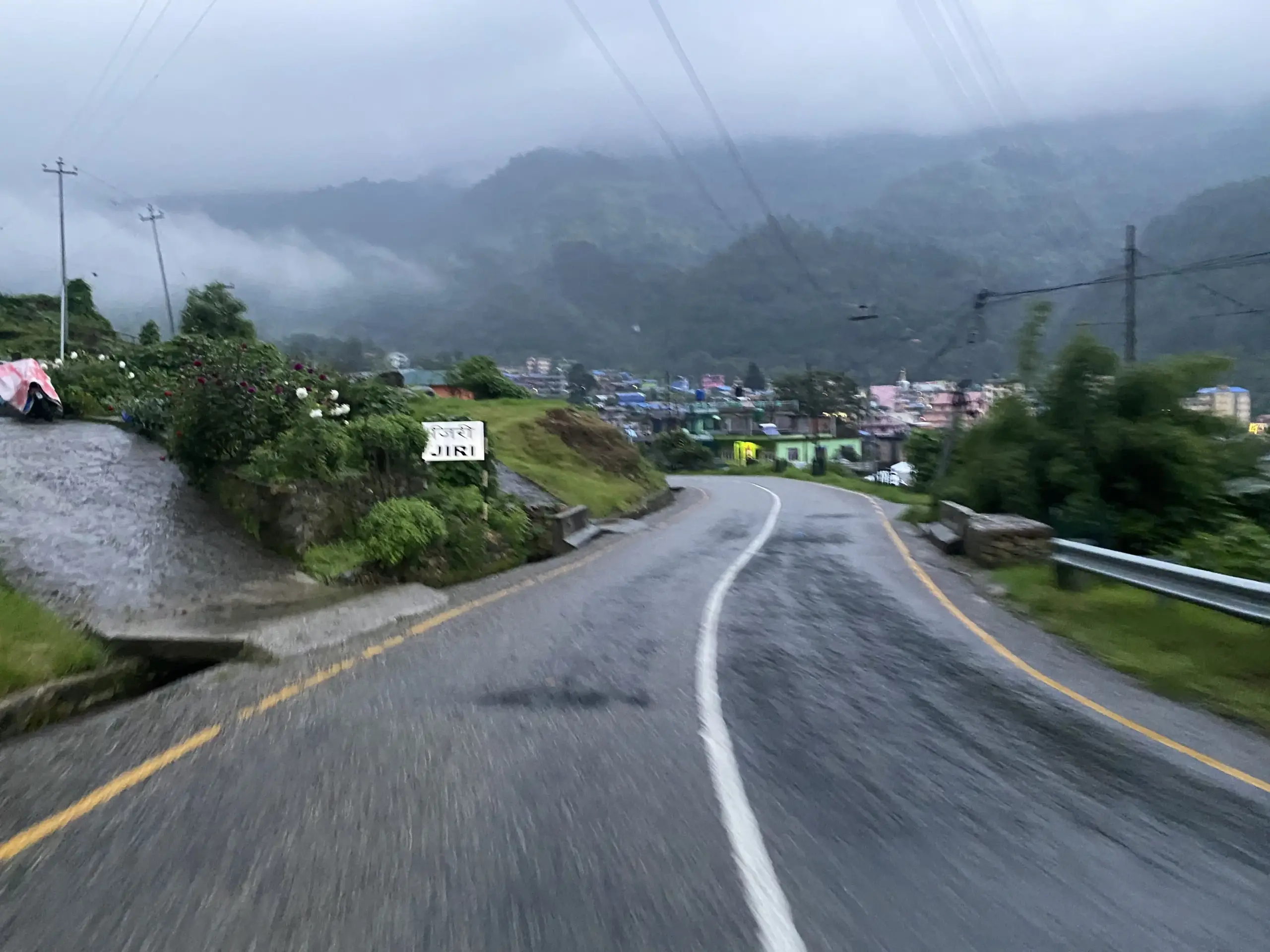
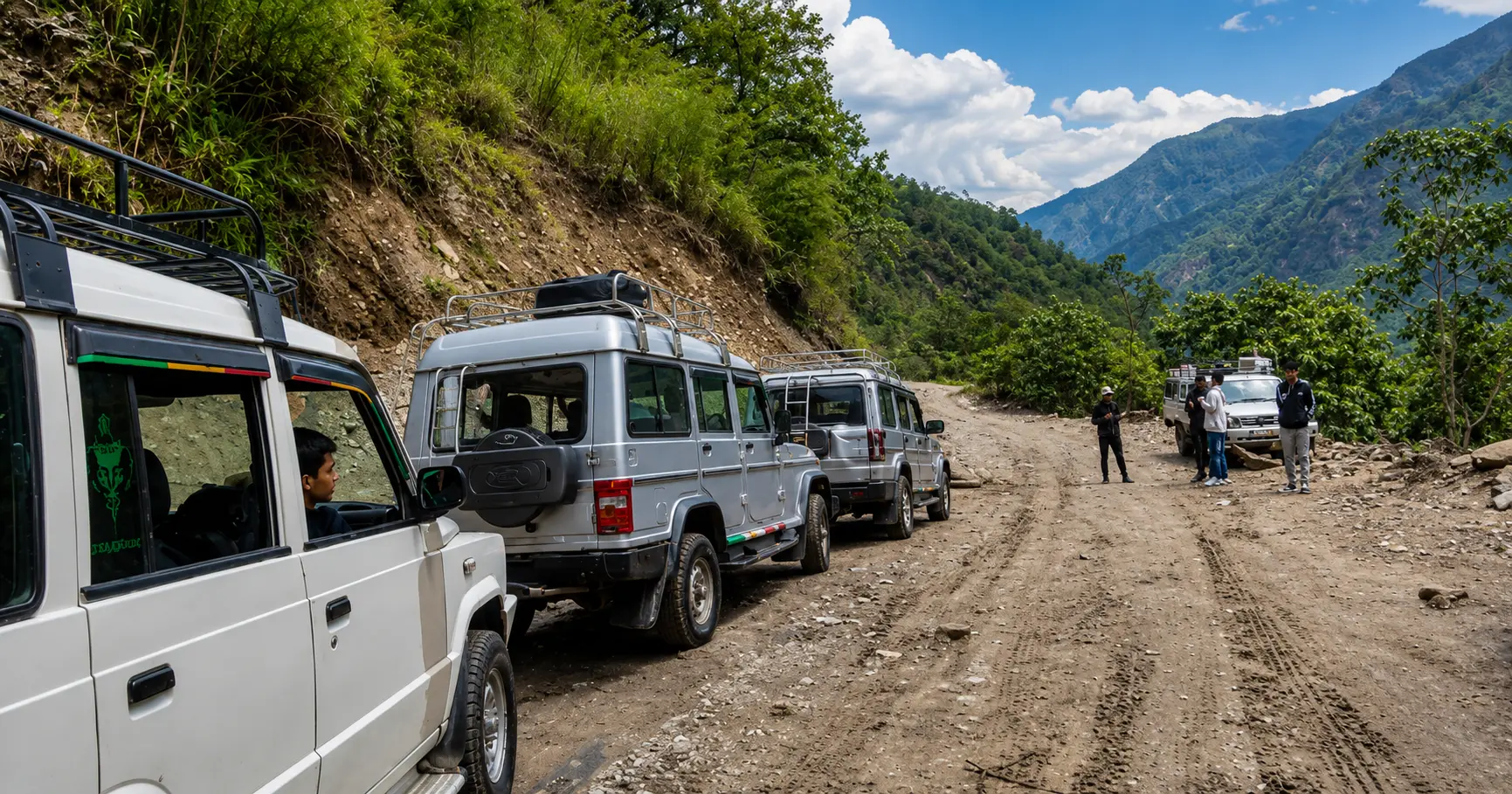
The road from Lakeside to Sarangkot is short but steep. It climbs around 850 meters through a long series of hairpin bends, with views of Phewa Lake, the World Peace Pagoda and the city opening up on every turn. The road is paved most of the way, but it is narrow in places, and you’ll share it with local buses, motorbikes and tourist vehicles, especially before sunrise.

  • Morning rush: before sunrise, many vehicles head up for the view, so traffic builds on the upper road
  • Narrow lanes: some hotels are on side lanes where only smaller vehicles can reach
  • Parking: the main viewpoint parking area fills early on clear mornings
  • Monsoon: rain can make the road slippery, and occasional small landslides can occur

Our drivers drive this road daily, know where larger vehicles can turn and park, and choose the right vehicle for your hotel’s location.
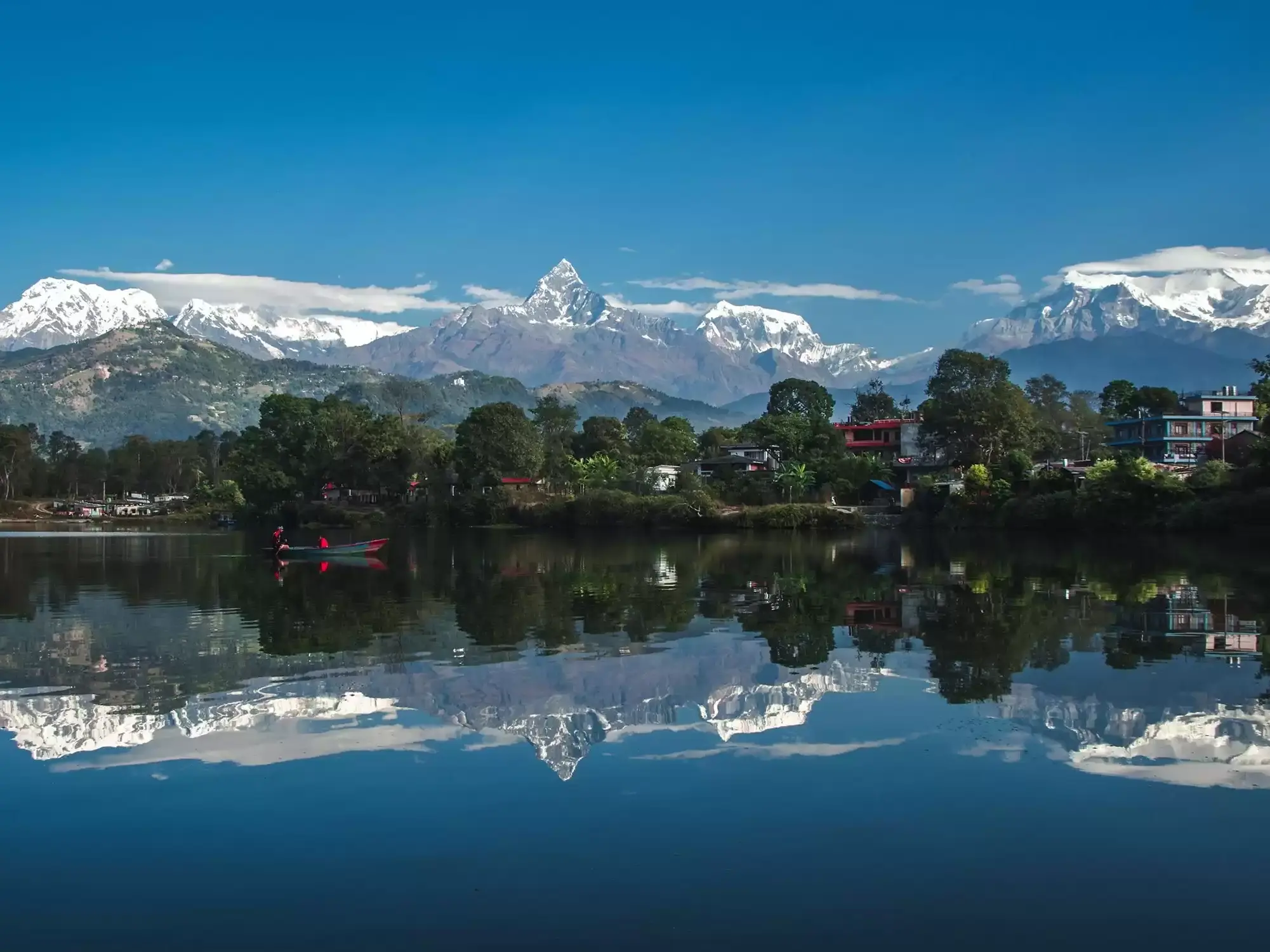
Pokhara

Photography in Sarangkot

Sarangkot is a photographer’s favorite. At sunrise, the Annapurna range glows above a sea of mist in the Pokhara valley. In the evening, warm light falls on the peaks and on Phewa Lake.

Paragliders drift past the hillside throughout the day, adding color to every shot.

  • Arrive at the viewpoint 30 to 45 minutes before sunrise
  • Use a telephoto lens for Machhapuchhre and the Annapurnas
  • Try the quieter viewpoints along the ridge away from the main tower
  • Shoot paragliders against the lake from the launch area
  • Visit in autumn or winter for the clearest air

With a private vehicle, you can easily move between viewpoints and lakes. Sarangkott sunrise service is popular with photographers staying in the city.

Packing for Sarangkot

  • Warm jacket for early mornings and evenings
  • Comfortable shoes for the steps to the View Tower
  • Headlamp for pre-dawn walks
  • Sunscreen, sunglasses and a hat
  • Camera with spare batteries
  • Some Nepali cash for tea shops and small purchases

Your Driver

Our Pokhara drivers know the city, the airport, and the Sarangkot hill road intimately. They track your flight, wait at arrivals, help with luggage, and drive the steep road calmly and carefully.

  • Licensed and experienced on Pokhara hill roads
  • Punctual meet-and-greet at arrivals
  • Knowledge of Sarangkot hotels, lanes, and parking areas
  • Basic English and local tips on food, viewpoints, and activities

Why Our Prices Are a Little Higher

Airport taxis can be cheaper on a good day, but fares are negotiated, change with demand, and the vehicles vary. Our prices are slightly higher because you get a fixed price agreed before you travel, a well-maintained vehicle suited to the steep roads, flight tracking, free waiting time, and a driver who helps you to your hotel door.

Explore More of Nepal From Pokhara

Pokhara is the travel hub of western Nepal. From Sarangkot, we can take you on to:

Browse our Nepal tour packages and trekking transport pages, or start with our trip planner.

Before You Fly to Pokhara

Many travelers start in Kathmandu before flying to Pokhara. We can meet you at Tribhuvan International Airport with an airport pick-up, show you the city on a Kathmandu sightseeing tour, take you to Bhaktapur or Nagarkot, then drop you at the domestic terminal for your Pokhara flight. One company for every transfer keeps your trip simple.

Responsible Travel in Sarangkot

  • Carry a reusable water bottle
  • Take your rubbish back down the hill
  • Keep noise low at the viewpoint during sunrise
  • Respect local homes and ask before photographing people
  • Support family-run lodges and tea shops

Key Takeaways

  • Sarangkot is about 12–16 km from Pokhara Airport, usually 35-50 minutes by car.
  • The hill road is paved but steep and winding, so choose a well-maintained vehicle and an experienced driver.
  • A private car costs about USD 35–40; a Scorpio or jeep costs about USD 50–60; a Hiace costs about USD 70-80
  • Large buses may need Hiace or Jeep shuttles for the final section.
  • Staying overnight gives you sunrise on your doorstep and easy access to paragliding.

Planning Around Weather and Flight Changes

Pokhara’s mountain weather can affect flights, especially in the early morning or during the monsoon. If your flight into Pokhara is delayed, our driver will wait at arrivals at no extra cost. If it’s canceled and you need to travel by road instead, we can arrange a private vehicle from Kathmandu straight to Sarangkot by car, Scorpio, or Hiace.

On departure day, keep an eye on messages from your airline. If your flight out of Pokhara is delayed, we’ll adjust your pick-up time. If it’s canceled, we can bring you back to your hotel or drive you to Kathmandu by road.

Message us on WhatsApp anytime, and our office will help you replan. This flexibility is one of the biggest advantages of booking all your transfers with one local company.

Is a Private Transfer Worth It?

For most travelers, yes. The price difference between a pre-booked private transfer and a negotiated airport taxi is small, especially when you share the cost with family or friends.

In return, you get a fixed price, a vehicle suited to the steep Sarangkot road, a driver who waits for delayed flights and helps with your bags, and a local team you can contact anytime. After a flight, that simplicity is worth a great deal, and it sets a relaxed tone for the rest of your stay in Pokhara.

A Little History of Sarangkot

The name Sarangkot comes from the word ‘kot’, meaning fort. Long before it became a viewpoint, the hilltop was a strategic lookout over the Pokhara valley, used by local rulers in the era of the small hill kingdoms that existed before Nepal’s unification. Remains of old fortifications and a hilltop shrine still mark the summit area today.

For centuries, the villages on Sarangkot’s slopes were farming communities, growing rice, millet and maize on terraced fields. As tourism in Pokhara grew, the hill’s extraordinary views drew travelers up for sunrise, and from the 1990s onward, paragliding brought international attention. Today, Sarangkot blends village life with lodges, cafés, and adventure sports, while keeping the slower pace that makes it a refreshing escape from the city below.
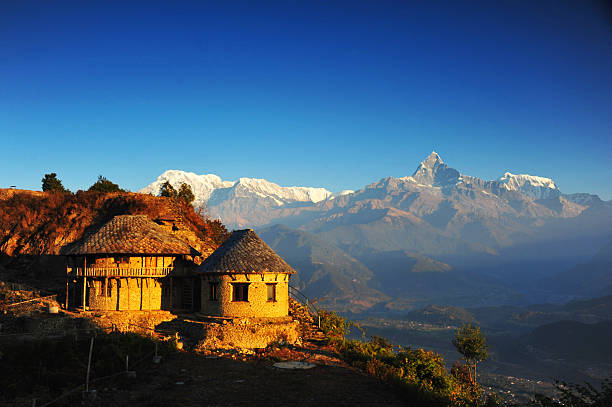
Pokhara Airport to Sarangkot Drop-Off

A Day in Sarangkot

A typical day on the hill starts in the dark, as guests walk up to the View Tower with headlamps and hot tea. As the sky lightens, the first sun hits the summit of Dhaulagiri, then spreads east across the Annapurnas, Machhapuchhre and Lamjung Himal. Mist often lies in the valley below, with Pokhara slowly appearing as it burns off.

After breakfast on your hotel terrace, you might take a tandem paragliding flight down to Lakeside along the ridge through villages and terraced fields. Have lunch in Lakeside, take a boat ride on Phewa Lake, then let a driver take you back up the hill.

Evenings are quiet, with the peaks glowing pink at sunset and the lights of Pokhara twinkling far below. Our Pokhara car hire makes it easy to move between the hill and the city.

Places to Visit Below Sarangkot

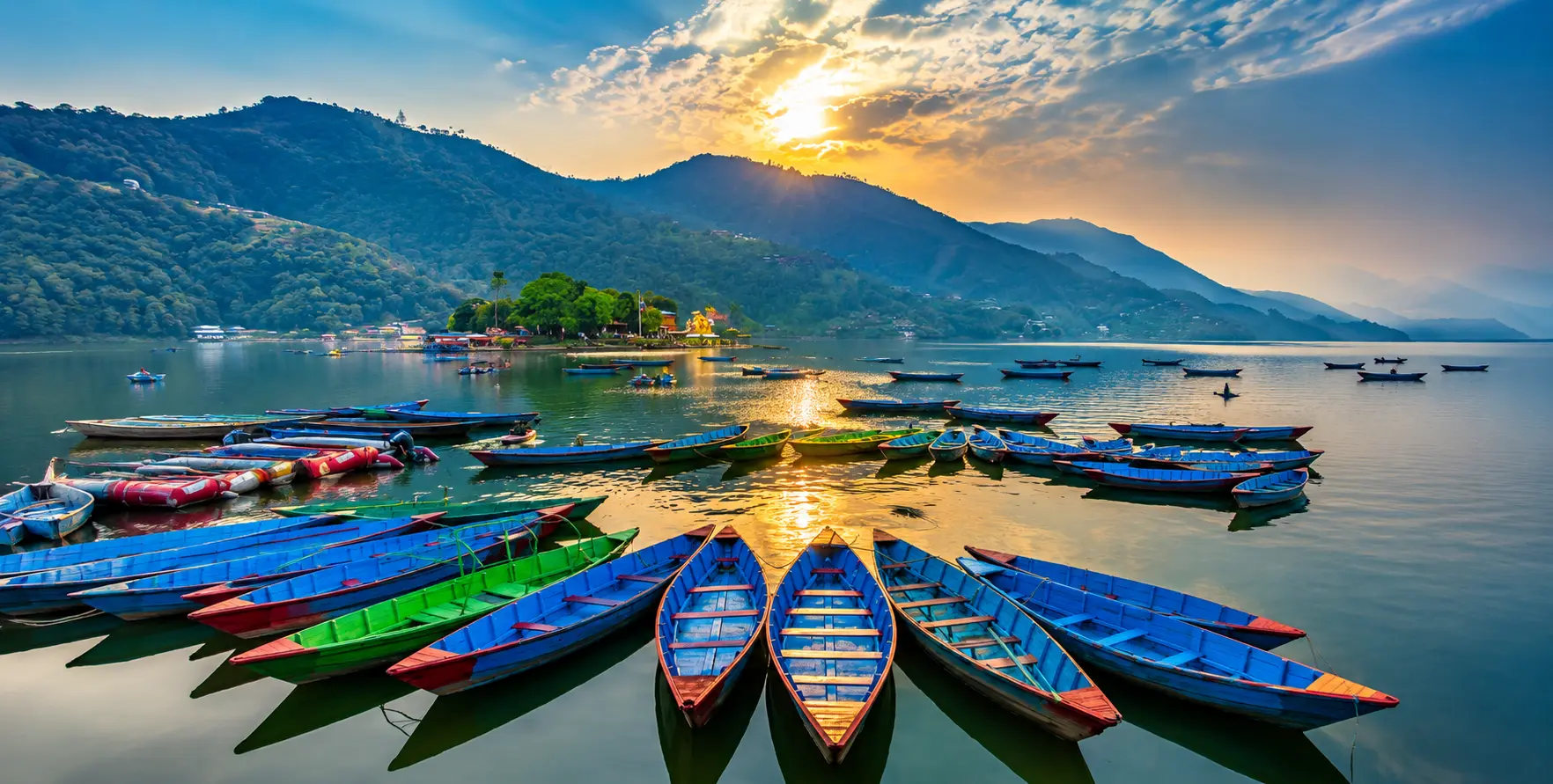
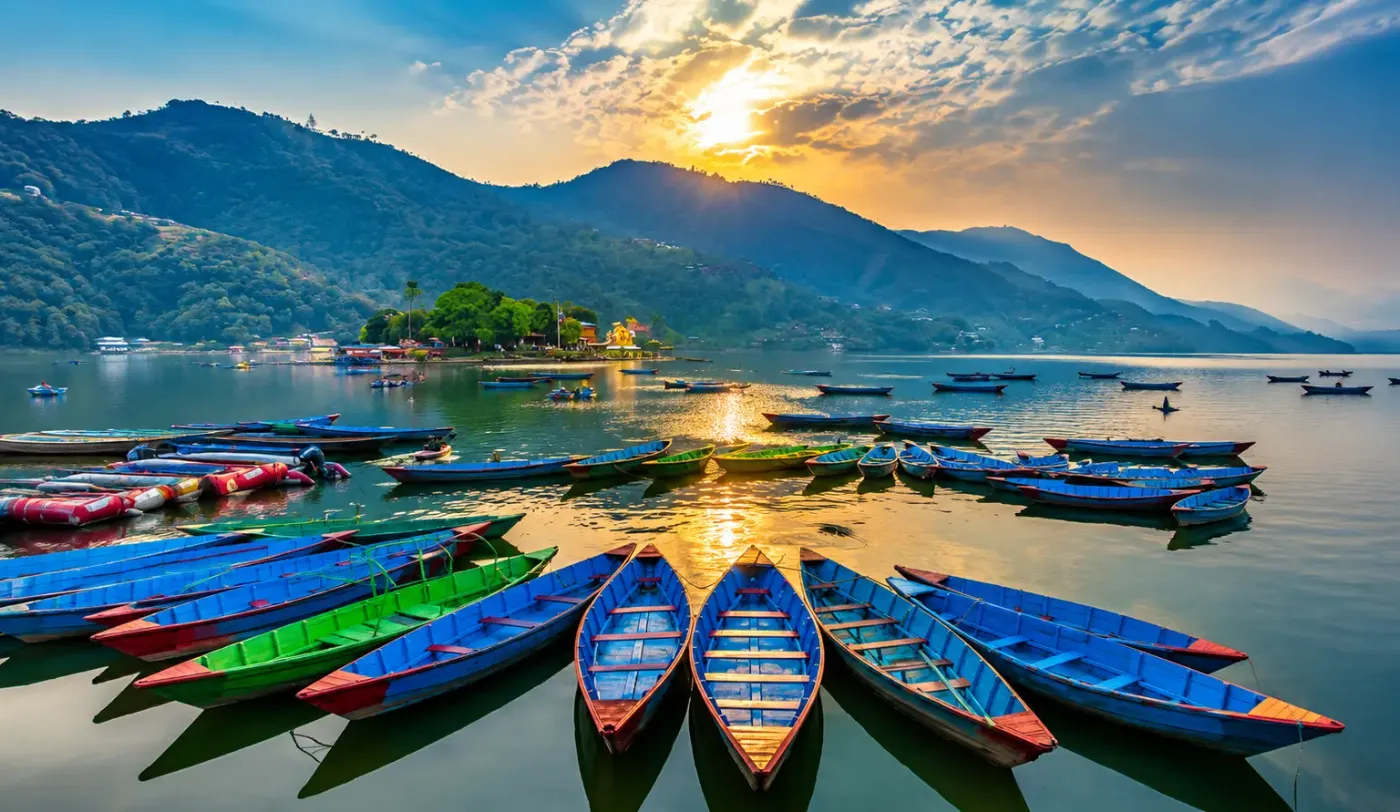
  • Phewa Lake: rowing boats to the Tal Barahi temple island
  • World Peace Pagoda: a white stupa on a hill across the lake
  • Davis Falls and Gupteshwor Cave: a waterfall that disappears into a gorge, with a cave temple opposite
  • International Mountain Museum: exhibits on the Himalaya and mountaineering
  • Old Bazaar and Bindhyabasini Temple: traditional streets and a popular hilltop temple
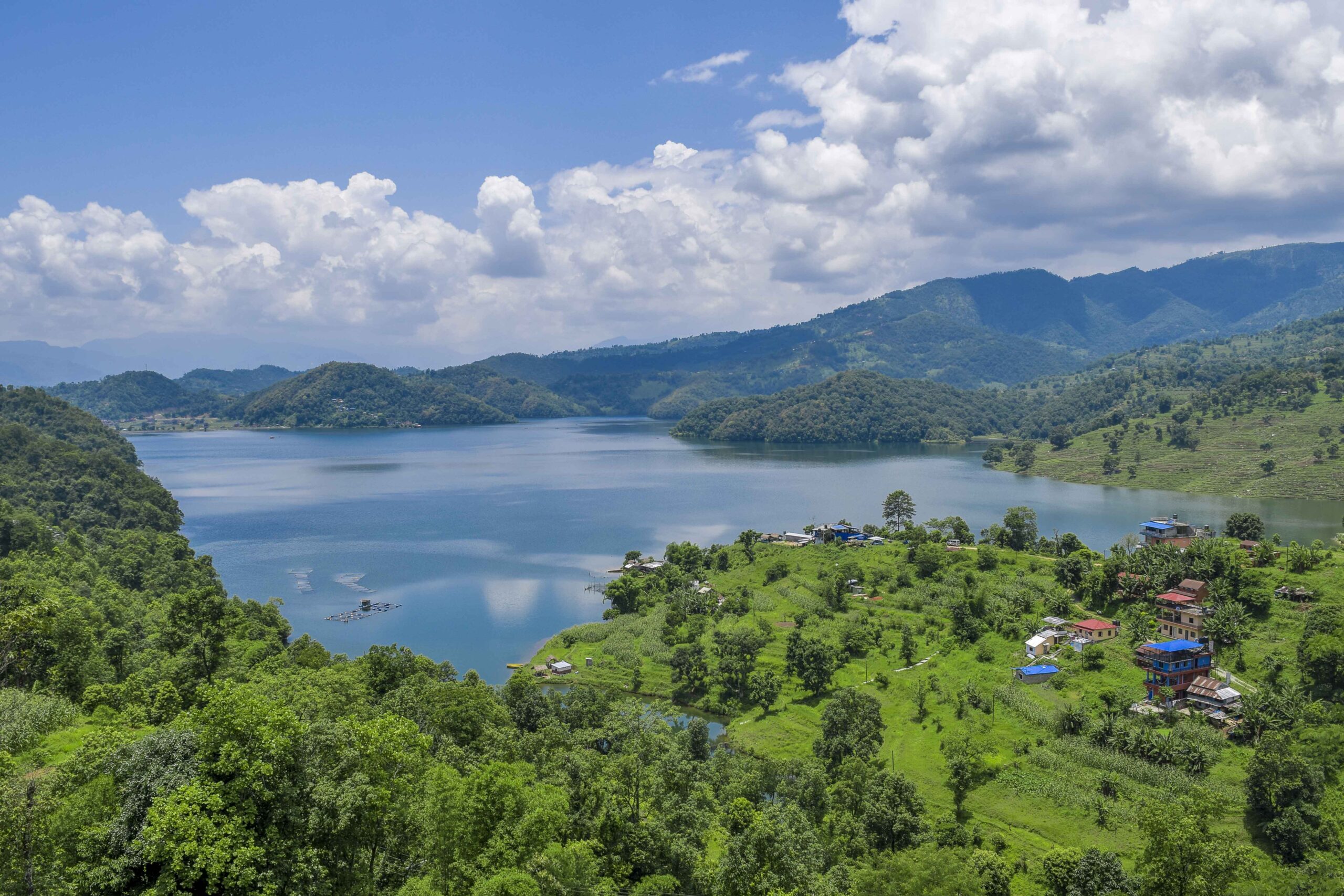
  • Begnas and Rupa Lakes: quieter lakes to the east of the city

A half-day or full-day private car from Sarangkot covers most of these. Ask us to add sightseeing to your airport transfer.

Leaving Sarangkot for Your Flight

When it’s time to fly out, allow enough time for the drive down the hill and across the city. From most Sarangkot hotels, Pokhara Airport is about 35 to 50 minutes away. Domestic airlines usually ask passengers to check in about an hour before departure, so plan to leave your hotel at least 1.5 to 2 hours before your flight.

  • Early-morning flights are popular because mountain weather is usually clearer.
  • If your flight is very early, you may still catch first light from your hotel before leaving.
  • Tell us your flight time,e and we’ll set the pick-up
  • If your flight is delayed or canceled, we can bring you back to your hotel or rebook

If you’re connecting to an international flight in Kathmandu, allow extra time in case of weather delays. Our Kathmandu airport transfer team can meet you on arrival in the capital.

Food in Sarangkot

Most Sarangkot hotels and lodges have their own restaurants, serving Nepali dal bhat, momos, noodles and Western breakfasts with mountain views. Small cafés near the View Tower offer tea, coffee and snacks for sunrise visitors. For a wide choice, lakeside restaurants are a short drive away.

Your driver can recommend places on the way up or down.

Seniors and Travelers With Limited Mobility

Sarangkot’s views are accessible to almost everyone. A Scorpio or Hiace offers easy entry and comfortable seats on the winding road. The main View Tower involves a 110-to 115-minute walk up steps, but many hotels have mountain-view terraces, and some viewpoints closer to the road require little or no climbing.

Tell us about any mobility needs, and we’ll suggest the best drop-off points and viewpoints.
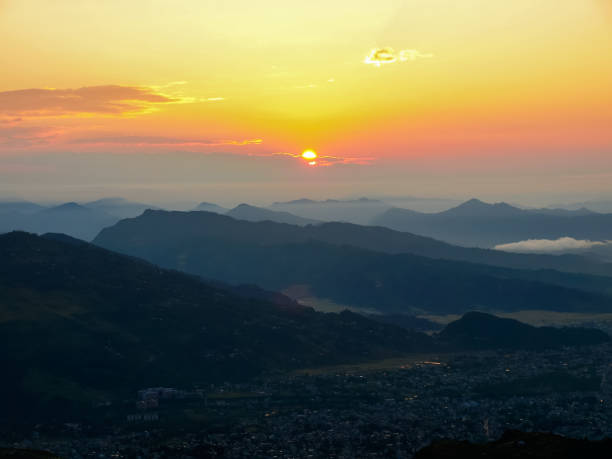
Pokhara Airport to Sarangkot Drop-Off

Sunrise Timing Through the Year

Sunrise in Pokhara ranges from early morning in the warmer months to later morning in winter. Whatever the season, plan to reach the viewpoint about 30 to 45 minutes before sunrise to see the colors develop on the peaks. If you’re staying in Sarangkot, ask your hotel for the expected sunrise time the night before.

If you’re staying in Lakeside,l set your pick-up time accordingly for the Sarangkot sunrise drive.

Questions to Ask Before Booking

  • Is the price fixed and all-inclusive?
  • Will the driver wait if my flight is delayed?
  • Can the vehicle reach my hotel, or will we need to walk the last part?
  • Is there enough space for our luggage?
  • Can you arrange my return to the airport?

We’re happy to answer all of these on WhatsApp or email.

What Our Guests Value Most

Guests often mention seeing their name at arrivals, a smooth drive up the hill, drivers who carried bags to their hotel door, and the ease of booking sunrise and airport returns with the same company. Families appreciate child seats being ready, and groups value having one coordinator who manages every vehicle from the airport to the hilltop.

Arrival-Day Checklist

  • Send us your flight number and hotel name
  • Save our WhatsApp number and your driver’s number
  • Keep a warm layer handy for the hill
  • Carry some Nepali cash for tea shops and tips
  • Check your hotel’s check-in time
  • Tell us if you’d like a sunrise pick-up or sightseeing added
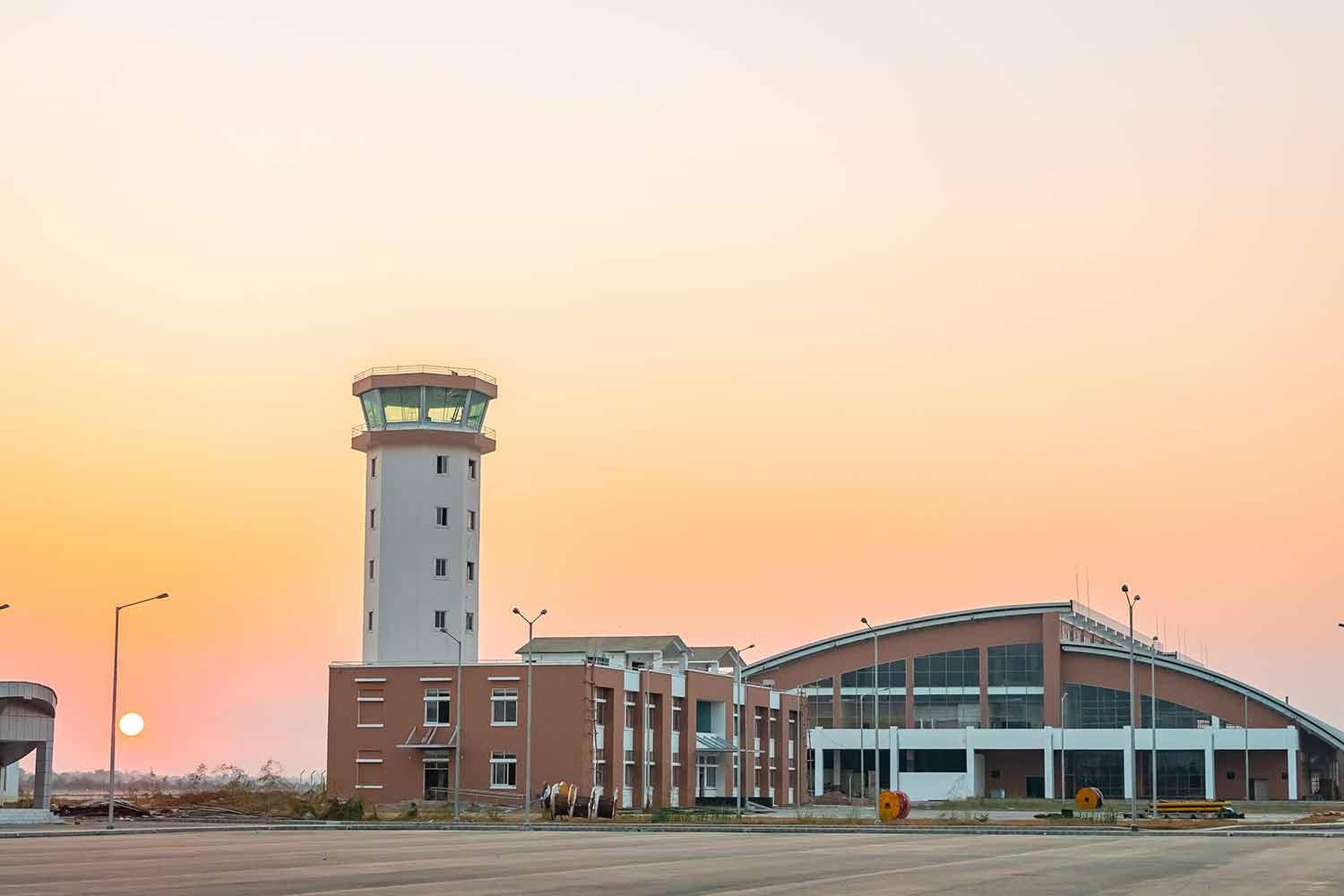
Gautam,Buddhai,Airport,In,Bhairahawa,,Nepal.,The,International,Terminal,Is

Quick Vehicle Guide by Group Size

  • 1–3 passengers: private car
  • 2–5 passengers with more luggage: Mahindra Scorpio
  • Up to 6 passengers or rough side lanes: 4WD jeep
  • 6–12 passengers: Toyota Hiace
  • 15–25 passengers: Coaster bus
  • 26–40 passengers: tourist bus with shuttles where needed

Not sure? Send your group size and luggage, and we’ll recommend the best option.

Along the Ridge: Kaskikot and Naudanda

West of Sarangkot, a quiet ridge road and footpath continue through farming villages to Kaskikot and Naudanda. Kaskikot was once the seat of a small hill kingdom, and remains of its old fort and a temple still stand on the hilltop. The views of Phewa Lake on one side and the Annapurna range on the other are superb, and there are far fewer visitors than at the Sarangkot View Tower.

Naudanda sits on the Pokhara–Baglung highway, close to Kande, the trailhead for Australian Camp and Mardi Himal. Walkers can spend a day hiking from Sarangkot along the ridge, then meet our vehicle for the drive back to Pokhara, or continue to Kande for a longer trek. It’s a beautiful way to explore the countryside around Pokhara without a full trek.

Monsoon Travel to Sarangkot

In the monsoon, clouds often hide the mountains, and heavy rain can make the hill road slippery. Paragliding is usually suspended on rainy days. Sarangkot is still worth visiting, though: the hills turn lush green, waterfalls appear on the slopes,s and the occasional break in the clouds can reveal dramatic mountain views.

  • Choose a sturdy Scorpio or 4WD jeep
  • Allow extra time for the hill road
  • Carry a rain jacket and umbrella
  • Plan sunrise viewing for clearer mornings and check the forecast

Cold Winter Mornings

Winter brings some of the year’s clearest views, but mornings at 1,600 meters are cold, especially at sunrise. Wear a warm jacket, hat, and gloves for the View Tower, and bring a flask of tea or buy one from the cafés at the top. Many hotels provide extra blankets, and our vehicles can be heated on the way up.

Booking for Paragliding Days

If paragliding is the main reason for your Sarangkot visit, plan transport around your flight time. Operators usually collect passengers from Lakeside offices and drive them to the launch site.

If you’re arriving at Pokhara Airport the same day, we can drop you at your paragliding office in Lakeside, pick you up after you land, and drive you to your Sarangkot hotel. Flights depend on the weather, so keep your schedule flexible and stay in touch with us on WhatsApp.

Hotel Check-In and Luggage

Many Sarangkot hotels check in in the early afternoon. If your flight lands in the morning, you can leave your bags at the hotel and head out to explore, or ask us to add a short Pokhara sightseeing tour before the drive up the hill.

If your hotel is on a narrow lane, our driver will help carry bags from the nearest drop-off point. For longer stays, consider leaving large luggage at a Lakeside hotel and taking only a small bag up to Sarangkot.

Solo Travellers

A private car for one person costs a little more than a negotiated taxi, but you get a fixed price, a reliable vehicle, and a driver who knows your hotel. Solo travelers who plan to see the sunrise and visit Lakeside find it easiest to book the airport transfer and sunrise run together.

Common Mistakes to Avoid

  • Not checking how close vehicles can reach your hotel: some lanes are narrow.
  • Booking a large bus without a shuttle plan: big buses may not reach the top
  • Leaving too little time for departure flights: the hill road and city traffic take time
  • Forgetting warm clothes: sunrise at Sarangkot can be cold
  • Assuming clear views every day: check the forecast and stay flexible

About Pokhara International Airport

Pokhara International Airport, on the eastern edge of the city, has become the main gateway to the Annapurna region. It handles frequent flights from Kathmandu, along with other domestic services. The terminal is modern and compact, so getting from the aircraft to the arrivals area is usually quick.

The short flight from Kathmandu offers spectacular mountain views on clear days, with the Annapurna and Manaslu ranges stretching along the northern horizon. Once you land, you’re only about 35 to 50 minutes from Sarangkot, so you could be watching the sun set over Machhapuchhre within an hour of touchdown.

Late Arrivals and Evening Transfers

Arriving on a late-afternoon or evening flight is no problem. Our driver tracks your flight, waits at arrival,s and drives you up the hill after dark. The Sarangkot road has many bends, so our drivers take it slowly at night.

If you arrive late, ask your hotel to hold your dinner, and let us know if you’d like a sunrise pick-up the next morning from a different part of the hill.
Pokhara Airport to Sarangkot Drop-Off

Zip-Line, Hiking and Other Adventures

Beyond paragliding, Sarangkot and the surrounding hills offer plenty of ways to get the adrenaline going. The zip-line runs from the hillside down toward the valley at high speed, giving a thrilling ride with lake and mountain views. Mountain biking trails wind down the hill to Lakeside, and hiking paths connect Sarangkot with Kaskikot, Naudanda and the World Peace Pagoda area across the lake.

Most adventure operators are based in Lakeside and include transport to their starting points. If you’re staying in Sarangkot, our drivers can take you to the operator’s office and bring you back afterward.

Birdwatching and Nature

The forests and fields around Sarangkot are home to a wide variety of birds, from colorful sunbirds and barbets to raptors circling on the thermals alongside the paragliders. Early mornings are the best time for birdwatching, when the air is still, and birdsong fills the hillside. Bring binoculars, and walk the quieter trails along the ridge away from the main viewpoint.

One Transport Partner for Your Whole Nepal Trip

Your Pokhara Airport to Sarangkot drop-off can be one part of a complete journey planned with Nepal Vehicle Hiring. We meet travelers at Tribhuvan International Airport, organize Kathmandu sightseeing, and drive the highway to Pokhara for those who prefer the road.

We also handle Pokhara airport transfers, trekking trailhead drops, and onward trips to Chitwan and Lumbini. One office tracks every transfer and adjusts the plan if flights or weather change. Share your full itinerary through our trip planner, and we’ll send one clear USD quote.

Combining Sarangkot With the World Peace Pagoda and Lakes

Many visitors pair a Sarangkot stay with a day exploring Pokhara’s other viewpoints. The World Peace Pagoda sits on the forested ridge across Phewa Lake, offering a different angle on the lake, the city and the Annapurna range. You can reach it by road, or by boat across the lake followed by a short uphill walk.

East of the city, Begnas and Rupa Lakes offer a quieter side of Pokhara, with fishing boats, rice fields and small lakeside restaurants. A private car from Sarangkot can combine the World Peace Pagoda, Davis Falls, Gupteshwor Cave and Begnas Lake in a single relaxed day, returning you to your hotel in time for sunset. Ask us to add a Pokhara sightseeing day to your booking.

Corporate Retreats and Photo Shoots

Sarangkot’s resorts and open hillside make it a popular location for company retreats, team-building events, pre-wedding photo shoots, and film crews. These groups often need several vehicles moving at different times: guests from the airport, equipment from Lakeside, and staff from other hotels.

We can schedule cars, Hiace vans, and jeeps together, with a coordinator managing timing so everyone and everything reaches the hill on time. Traveling with Pets or Special Equipment

If you’re bringing bulky items such as camera rigs, drones, musical instruments, or sports equipment, please tell us when you book. We’ll choose a vehicle with enough space, such as a Scorpio, jeep with a roof rack, or Hiace, and make sure your gear is secured for the steep, winding climb.

If you travel with assistance animals or have special requirements, let us know in advance so we can plan accordingly.

Why Book With Nepal Vehicle Hiring

  • Fixed prices agreed in advance, with no airport bargaining
  • Meet-and-greet with a name board at arrivals
  • Flight tracking and free waiting for delays
  • Full fleet: cars, Scorpios, jeeps, Hiace vans, coasters and buses
  • Local drivers who know every bend of the Sarangkot road
  • 24/7 support on WhatsApp

See our Pokhara car hire, car hire in Nepal, and Nepal tour package pages for more.

How to Book

  • Step 1: Send your flight number, arrival time, hotel name, number of passengers, and luggage details via WhatsApp or email.
  • Step 2: We recommend a vehicle and send a USD quote.
  • Step 3: Confirm your booking.
  • Step 4: Receive your driver’s details before arrival.
  • Step 5: Meet your driver at arrivals and enjoy the ride up the hill.

Or use our trip planner and contact page.

Frequently Asked Questions

How far is Sarangkot from Pokhara Airport?

About 12–16 km, depending on your drop-off point; usually 35-50 minutes by car.

How much is a private car from Pokhara Airport to Sarangkot?

About USD 20–30 one way for up to three passengers. A Scorpio or jeep costs about USD 40-60

Can a bus reach Sarangkot?

A coaster can reach many points. Large buses may stop lower on the hill, with shuttles for the final section.

Is the Sarangkot road safe?

Yes, it’s paved most of the way. It is steep and winding, so experienced local drivers and well-maintained vehicles make the trip comfortable.

Will the driver wait if my flight is late?

Yes. We track your flight and wait at no extra cost.

Can you take me to the sunrise viewpoint the next morning?

Yes. Add a sunrise viewpoint drive to your booking.

Can you drop me at the paragliding launch site?

Yes, though most paragliding companies include their own transport.

Can you pick me up from Sarangkot for my departure flight?

Yes. Book your return to Pokhara Airport at the same time.

Can a Hiace reach my Sarangkot hotel?

A Hiace can reach most hotels on the main road. For narrow side lanes, we may use a car or jeep instead.

Do you provide child seats?

Yes, on request. Please tell us your children’s ages when you book.

Can you take us from Sarangkot to a trekking trailhead?

Yes. We drive to Nayapul, Kande, Phedi, and other trailheads.

Is there a night or early-morning surcharge?

No. Early-morning and late-night flights are included in the price.

Book Your Pokhara Airport to Sarangkot Drop-Off

Start your Pokhara stay above the clouds. One private vehicle, one fixed price, and a driver waiting at arrivals will take you straight up to your Sarangkot hotel.

WhatsApp

Email: [email protected]

Online: Plan your trip | Contact us | Nepal Vehicle Hiring

Send your flight details today, and we’ll reply with the right vehicle and a clear USD quote.

From the moment you land in Pokhara to your first sunrise over the Annapurnas, a smooth transfer sets the tone for your stay. With a fixed price, a driver waiting at arrivals, and a vehicle chosen for the Sarangkot road, you can relax and enjoy the views from the first bend. We look forward to welcoming you to Pokhara.
Kathmandu to Butwal Vehicle Rental

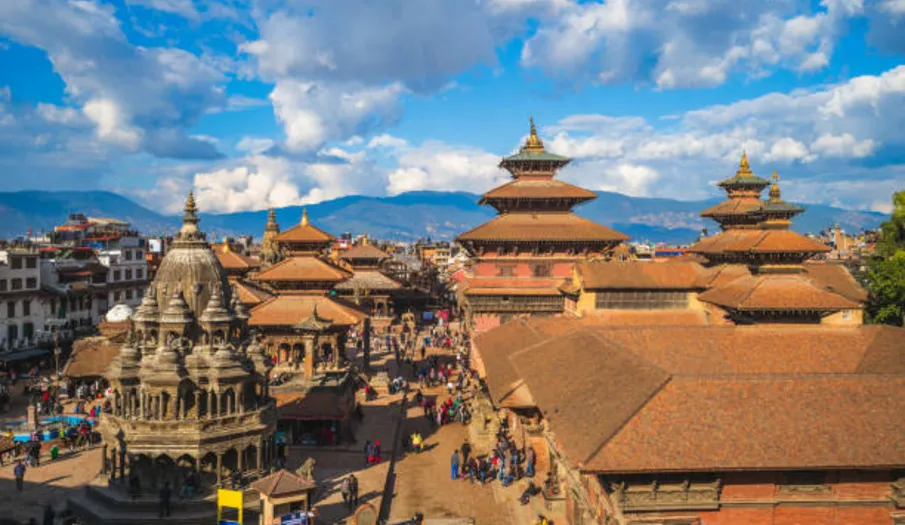
Patan Durbar Square in the Kathmandu Valley

Kathmandu to Butwal Vehicle Rental: Complete Guide

Butwal — the major commercial city of Nepal’s Rupandehi District, situated at the foot of the Palpa District hills where the Tinau River emerges from the Siwalik range onto the Terai plains — is one of Nepal’s most strategically located cities. As the western Terai’s primary commercial hub, the gateway to the Siddhartha Highway northward to Pokhara, the junction point for the East-West Highway westward to Lumbini and Bhairahawa, and the closest large city to the Sunauli India border crossing, Butwal serves as a crossroads for trade, tourism, pilgrimage, and regional travel throughout western Nepal.

The private vehicle journey from Kathmandu to Butwal — approximately 280 to 300 kilometres on the Prithvi Highway southwestward — is one of Nepal’s most frequently travelled inter-city corridors, serving business travellers, families, pilgrims heading to Lumbini, and tourists connecting to the Pokhara and Annapurna region from the Indian border.

Nepal Vehicle Hiring Pvt Ltd (vehiclehiringnepal.com) provides private vehicle rental for the full Kathmandu to Butwal journey—private car hire, 4WD jeep hire, Hiace van hire, Coaster hire, and bus hire—with hotel-to-hotel door service, all-inclusive transparent pricing, and 24-hour WhatsApp support at +977 981-4227196.

The Route: Kathmandu to Butwal

Distance and Drive Time

The Kathmandu to Butwal route covers approximately 280 to 300 kilometres and takes 7 to 9 hours by private vehicle. The route follows the Prithvi Highway westward from Kathmandu, descending through the Trishuli River gorge to Mugling junction, then southwestward to Narayanghat and westward on the East-West Highway to Butwal.

A 6:00 to 6:30 AM departure from Kathmandu arrives at Butwal in the early afternoon—the recommended schedule to avoid mid-day Terai heat and peak commercial traffic at the Narayanghat junction.

Three Stages

Stage 1 — Kathmandu to Mugling (approximately 110 km, 2.5 to 3 hours): The Prithvi Highway descends from Kathmandu’s valley rim at Thankot through the dramatic Trishuli River gorge to the Mugling junction at 450 metres. The gorge section between Thankot and Mugling is one of Nepal’s most spectacular highway drives — the river visible far below on the canyon floor, forested walls rising steeply on both sides.

Mugling is the journey’s natural midpoint and recommended tea and lunch stop, famous for its riverside fish curry teahouses.

Stage 2 — Mugling to Narayanghat (approximately 58 km, 1 to 1.5 hours): The highway continues southwestward from Mugling through the gentler Marsyangdi-Trishuli corridor to Narayanghat and the Narayani River bridge — the transition point from Nepal’s mid-hills into the flat Terai. The Narayanghat bridge crossing over the Narayani River — one of Nepal’s largest rivers, bordering Chitwan National Park — is one of the journey’s most impressive single moments.

Stage 3 — Narayanghat to Butwal (approximately 115 km, 2 to 2.5 hours): The East-West Highway westward across the flat Terai agricultural plain through Kawasoti, Bardghat, and Sunwal to Butwal junction. Fast, flat, sealed national highway — the Palpa District foothills appearing on the northern horizon as the vehicle approaches Butwal.

Key Stops

  • Mugling (110 km, 2.5 to 3 hrs): Natural midpoint — famous riverside fish curry restaurants on the Trishuli bank. Allow 30 to 45 minutes.
  • Narayanghat/Bharatpur (168 km, 4 to 4.5 hrs): Optional ATM, fuel, and snack stop. —Gateway to Chitwan National Park for groups planning a safari extension.
  • Butwal (280–300 km, 7 to 9 hrs): Destination — commercial hub, Siddhartha Highway junction, Lumbini connection.

Nepal Tour Package

Vehicle Options

Private Car — Ideal for Small Groups

For groups of 1 to 4 passengers, Nepal Vehicle Hiring Pvt Ltd offers well-maintained sedans and compact SUVs for the sealed Kathmandu to Butwal highway route, with door-to-door hotel service, a professional driver, and all-inclusive pricing.

Jeep — Best Comfort for 4–6 Passengers

Nepal Vehicle Hiring Pvt Ltd’s jeep hire service provides Scorpio and equivalent 4WD vehicles for groups of 4 to 6 with full luggage. Higher suspension and ground clearance deliver superior ride comfort on the Prithvi Highway gorge section’s variable road surfaces — particularly the Mugling to Narayanghat stretch where occasional rough patches from monsoon repair work are encountered.

Hiace Van — Best for 7–14 Passengers

Nepal Vehicle Hiring Pvt Ltd’s Hiace van hire service is the most spacious and comfortable per-person private vehicle for medium-sized groups on the Kathmandu to Butwal highway route. Every passenger gets an individual window seat with generous legroom, and the dedicated rear luggage area accommodates all group bags without compromise.

Coaster and Bus — Large Groups

For groups of 15 or more, Nepal Vehicle Hiring Pvt Ltd’s coaster hire and bus hire provide fully private group transport with the same door-to-door service standard as smaller vehicles. Ideal for pilgrimage groups heading to Lumbini via Butwal, institutional parties, and large family gatherings.

Swayambhunath visit during Kathmandu Pokhara Tour

Why Private Vehicle Rental?

Private vehicle rental from Nepal Vehicle Hiring Pvt Ltd departs from the hotel gate at the chosen time, carries only the group, stops at Mugling for as long as the group wants, and delivers directly to the Butwal destination — not to a bus park requiring onward transport. For families, elderly travellers, pilgrimage groups, and business travellers, this door-to-door private standard is a practical necessity, not a luxury.

The Prithvi Highway gorge is also one of Nepal’s finest highway experiences — a private vehicle group that stops at the gorge viewpoints or lingers at Mugling captures the full value of the corridor in a way a shared bus cannot. Contact us at +977 981-4227196 to book.

Onward Connections from Butwal

Butwal to Lumbini

Butwal is the primary transit hub for Lumbini—the UNESCO World Heritage birthplace of the Buddha —about 45 kilometres from Butwal. Nepal Vehicle Hiring Pvt Ltd’s Nepal tour packages coordinate the complete Kathmandu to Butwal to Lumbini arrangement as a single booking — pilgrims are delivered from Kathmandu directly to the Lumbini Sacred Garden without separate Butwal arrangements.

Butwal to Sunauli Border

Butwal is approximately 50 kilometres from the Sunauli ICP India-Nepal border. You can extend the Kathmandu to Butwal vehicle to Sunauli at booking—a complete Kathmandu to India border door-to-door private vehicle service in a single, all-inclusive arrangement. WhatsApp +977 981-4227196 for the complete Sunauli extension.

Butwal to Pokhara via Siddhartha Highway

Butwal is the southern junction of the Siddhartha Highway, heading north through Palpa’s Tansen heritage town to Pokhara. Travellers combining a Lumbini pilgrimage with arrival in Pokhara in a single multi-day itinerary use the Butwal junction as the pivot. Nepal Vehicle Hiring Pvt Ltd coordinates this Butwal to Pokhara Siddhartha Highway stage alongside our Kathmandu to Pokhara private vehicle for groups who prefer the southern routing.

Kathmandu to Butwal vehicle rental

The Prithvi Highway Gorge: Nepal’s Most Dramatic Highway

The Prithvi Highway gorge between Thankot and Mugling is the Kathmandu to Butwal journey’s defining visual and geographic experience — 90 kilometres of river canyon highway where the Trishuli River flows hundreds of metres below the road, the forested canyon walls rise steeply on both sides, and the progressive altitude descent from Kathmandu’s 1,400 metres to Mugling’s 450 metres delivers a complete ecological transition from temperate broadleaf forest to subtropical river valley. Built with Chinese technical assistance in the 1970s, the Prithvi Highway’s gorge section represents one of Asia’s most technically accomplished mountain road construction achievements — tunnels through projecting rock faces, cliff-face ledges above sheer drops, and retaining structures that have supported the highway’s continuous operation through Nepal’s seismic and monsoon environment for over fifty years.

The gorge is also Nepal’s most active commercial freight corridor — trucks carrying goods between the Terai, the mid-hills cities, and Kathmandu share the road with private vehicles, tourist buses, and local transport in a traffic density that makes the Prithvi Highway the economic lifeline of Nepal’s western highway network. Private vehicle hire on this corridor offers travel-quality advantages that shared transport cannot — the ability to stop at the finest viewpoints, photograph the gorge at the most dramatic bends, and pace the descent through the canyon at the group’s own tempo rather than the freight truck’s schedule.

Seasonal Guide

Autumn (September to November): Finest season — post-monsoon road surfaces at their best, gorge vegetation at its most lush. Recommended for first-time Kathmandu-to-Butwal travellers.

Spring (March to May): Pleasant temperatures and good road conditions. New growth foliage on the gorge walls in March and April adds visual richness to the Prithvi Highway section.

Monsoon (June to August): Highest disruption risk on the gorge section — occasional landslides after sustained rainfall. Nepal Vehicle Hiring Pvt Ltd monitors conditions daily and recommends departure before dawn during monsoon season. Early morning departures consistently clear the gorge before afternoon rainfall peaks.

Winter (December to February): Finest road conditions of the year — dry, cool, clear. No precipitation risk. Best vehicle availability and most relaxed booking conditions.

The Terai section is pleasantly cool rather than hot.

Booking Tips

  • WhatsApp +977 981-4227196 with departure date, group size, Kathmandu hotel name, and Butwal destination address — our team responds within hours with vehicle recommendation and confirmation.
  • Depart by 6:00 to 6:30 AM from Kathmandu — early departures clear the Narayanghat bridge before peak commercial traffic and arrive at Butwal in the early afternoon.
  • Allow 30 to 45 minutes for a Mugling riverside stop — the fish curry teahouses are one of Nepal’s finest roadside experiences and the natural midpoint rest for the journey.
  • For Lumbini or Sunauli onward connections, book the complete journey as a single Nepal Vehicle Hiring Pvt Ltd arrangement — no separate Butwal-side vehicle needed.
  • Confirm all-inclusive pricing at booking — our rates cover vehicle, driver, fuel, and all applicable tolls with zero additions at settlement.
  • For groups of 15 or more, book at least 3 to 5 days in advance — large vehicle positioning from Kathmandu requires lead time

Complete Nepal Network

Nepal Vehicle Hiring Pvt Ltd’s Kathmandu to Butwal vehicle rental connects to our complete Nepal network. From Kathmandu: Kathmandu airport transfer. Kathmandu sightseeing.

Bhaktapur day tour. Nagarkot sunrise tour and Nagarkot vehicle hire. Kathmandu to Pokhara private vehicle.

Kathmandu to Syabrubesi jeep for the Langtang Valley Trek. Kathmandu to Besisahar vehicle and Kathmandu to Manang jeep for the Annapurna Circuit Trek. Kathmandu to Soti Khola jeep for the Manaslu Circuit Trek.

Kathmandu to Salleri Phaplu for the Everest Base Camp Trek. Kathmandu to Muktinath jeep for the Muktinath Tour.

From Pokhara: Pokhara car hire. Sarangkot sunrise vehicle. Pokhara to Ghandruk jeep for the Annapurna Base Camp Trek.

Pokhara to Nayapul transport. Pokhara to Ghorepani Poon Hill jeep for the Ghorepani Poon Hill Trek. Pokhara to Upper Mustang overland jeep for the Upper Mustang Trek.

Gokyo Lake Trek and Three Passes Trek overland approaches. Tsum Valley Trek. Kanchenjunga Base Camp Trek.

Trekking transport. Nepal tour packages. Plan your trip or contact us at +977 981-4227196. Visit vehiclehiringnepal.com to book.

Butwal: Western Nepal’s Commercial Crossroads

Butwal sits at the precise geographical point where Nepal’s mid-hill topography meets the flat Terai lowland — the Tinau River emerging from the Palpa foothills gorge onto the plains at the city’s northern edge. This position has made Butwal a natural commercial hub for western Nepal’s regional economy since the Rana period, serving agricultural produce from the surrounding Terai districts, manufactured goods arriving from India at the Sunauli border, and the regional demand of Rupandehi, Palpa, Nawalparasi, and Kapilbastu districts.

For travellers arriving from Kathmandu, Butwal is most often an intermediate transit point for Lumbini pilgrimage, a Sunauli border connection, or a Pokhara approach via the Siddhartha Highway northward. But the city’s commercial energy, the Tinau River gorge at its northern approach, and its position as a western Nepal highway hub make it a significant regional destination in its own right — one that private-vehicle arrival delivers the group to far more efficiently and comfortably than the public bus park alternative.

Kathmandu to Butwal vehicle rental

The Mugling Experience: Nepal’s Famous Roadside Stop

No guide to the Kathmandu to Butwal private vehicle journey is complete without dedicated attention to Mugling — the small junction town at the confluence of the Trishuli and Marsyangdi rivers that has become Nepal’s most celebrated highway stop. Mugling’s position at the meeting point of the Prithvi Highway routes has concentrated decades of traveller traffic through a tiny riverside settlement, and the fish curry restaurants that have grown to serve this traffic have developed a collective reputation that extends across Nepal’s travel community.

The fresh river fish available at Mugling — caught locally in the Trishuli and Marsyangdi river systems — are prepared in traditional Nepali fish curry style in open kitchen teahouses on the Trishuli bank. Sahar, asla, and trout species are the prized catches.

The combination of fresh river fish, the riverside setting with mountains visible upstream, and the distinct character of a highway teahouse meal — where other diners are equally varied travellers — creates one of Nepal’s most authentically distinct roadside dining experiences. Nepal Vehicle Hiring Pvt Ltd’s drivers know the best Mugling teahouses from personal experience and guide groups to the quality stops rather than the nearest visible option.

Private Vehicle Hire for Kathmandu to Butwal: Quality Standards

Nepal Vehicle Hiring Pvt Ltd delivers Kathmandu to Butwal vehicle rentals to the same quality standards as our complete Nepal private vehicle hire network. We provide a written booking confirmation—vehicle type, driver name, vehicle registration number, all-inclusive price, and confirmed departure time—before every journey.

Drivers for the Kathmandu to Butwal corridor have documented experience on the Prithvi Highway and East-West Highway route, know the Narayanghat junction’s traffic patterns, and manage the Mugling stop timing efficiently within the overall journey schedule. Our Kathmandu airport transfer begins every Nepal journey; our Kathmandu to Butwal vehicle rental continues it; our trekking transport and tour packages complete it — all through a single professional booking relationship with Nepal Vehicle Hiring Pvt Ltd. Plan your complete Nepal journey with our team. Contact us at +977 981-4227196 (WhatsApp/Viber).

Departure Day: From Your Kathmandu Hotel to the Prithvi Highway

The Kathmandu to Butwal journey begins at the hotel gate. For most travellers, this means a Thamel, Lazimpat, Baluwatar, Patan, or Boudhanath hotel, and the driver arrives five to ten minutes before the agreed pickup time with the vehicle clean, fuelled, and ready. The driver loads the luggage, and passengers settle into their seats.

The vehicle leaves the city via the Kalanki and Thankot route that connects the Kathmandu Valley to the Prithvi Highway. Early departures, between six and half past six in the morning, move through the valley before the commuter traffic builds, and the group reaches the Thankot viewpoint while the morning light is still soft on the valley rim.

Many travellers combine the Kathmandu to Butwal journey with other Kathmandu services before departure day. Our Kathmandu airport transfer meets international arrivals at Tribhuvan Airport, our Kathmandu sightseeing vehicles cover the heritage circuit of Pashupatinath, Boudhanath, Swayambhunath and Patan, our Bhaktapur Durbar Square day tour visits the medieval city of potters and woodcarvers, and our Nagarkot sunrise tour and Nagarkot vehicle hire take groups to the ridge viewpoint for the Himalayan dawn.

You can book all of these alongside the main Butwal journey in a single WhatsApp conversation at +977 981-4227196, so one operator handles your whole Nepal itinerary.

Once the vehicle passes Thankot, the road drops into the Trishuli River gorge, and the journey’s character changes completely. The first hour is a steady descent through terraced hillsides, small bazaar towns and roadside tea stalls.

The driver reads the road constantly, because the Prithvi Highway carries heavy freight, local buses and private vehicles in both directions, and the experienced drivers of Nepal Vehicle Hiring Pvt Ltd know exactly where to pass, where to hold back, and where the road narrows at the cliff-face sections. Passengers who want to photograph the gorge can ask the driver to stop at a safe pull-off, and the vehicle will wait.

Kathmandu to Butwal vehicle rental

Optional Chitwan Stopover Between Mugling and Butwal

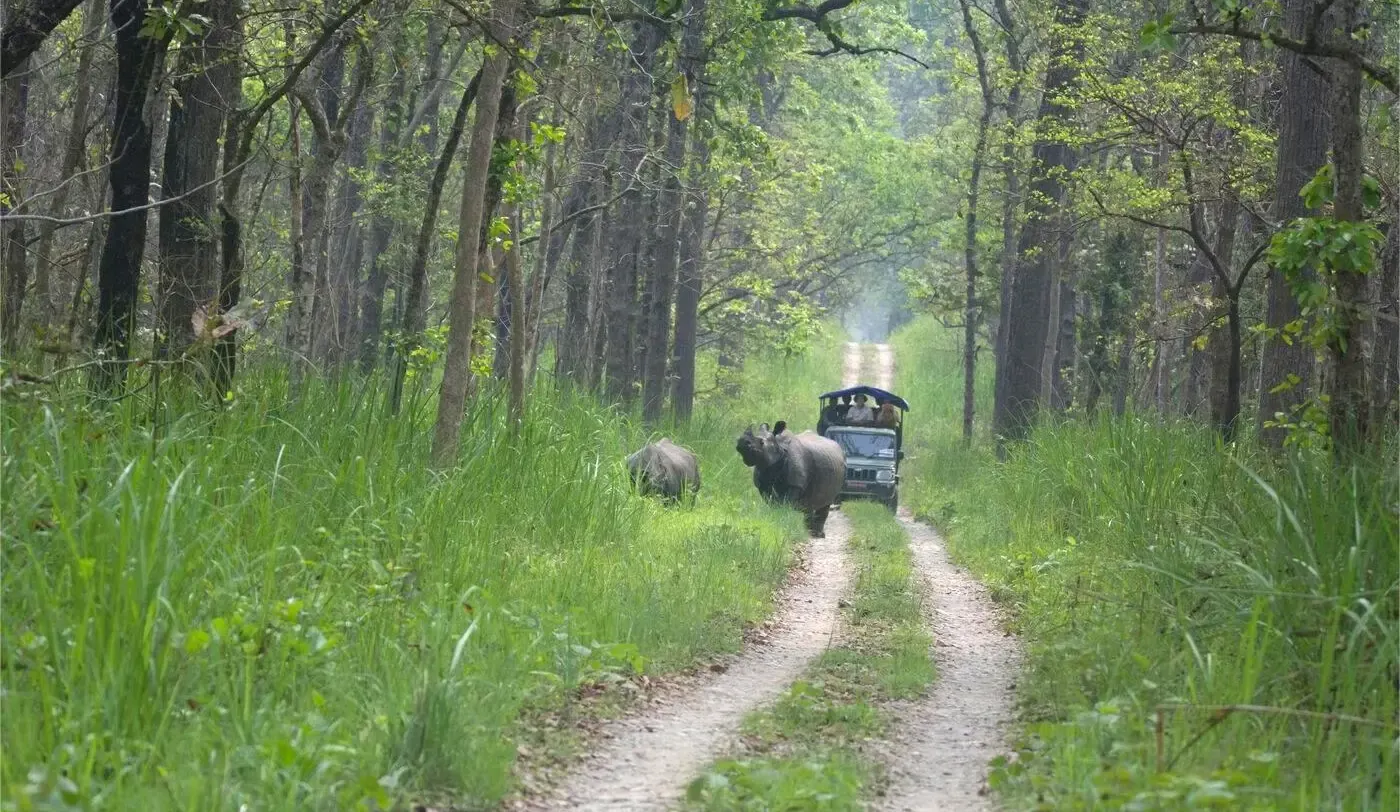
The Kathmandu to Butwal route passes within a short drive of Chitwan National Park, one of Asia’s finest wildlife reserves, and many groups use the journey to add a night or two at Sauraha or Meghauli. The park protects Bengal tigers, one-horned rhinoceroses, wild elephants, gharial crocodiles, and hundreds of bird species, and a Chitwan safari is one of the most rewarding additions to a Nepal itinerary.

Nepal Vehicle Hiring Pvt Ltd coordinates the Kathmandu to Chitwan leg, the hotel transfers around the park and the onward Chitwan to Butwal leg as one continuous private vehicle arrangement, so the group never has to change vehicles or renegotiate arrangements. Our Nepal tour packages are designed for this kind of multi-stop journey, and our Plan your trip page helps travellers map the full route before booking.

A Chitwan stopover also breaks the Kathmandu to Butwal drive into two comfortable days. The first day covers the gorge and the Mugling lunch stop and ends at the Chitwan resort in the afternoon, leaving time for a river walk or an evening cultural programme.

The second day covers the flat East-West Highway from Narayanghat to Butwal, a pleasant and unhurried drive of about two hours. For elderly travellers, families with young children, and anyone who finds an eight-hour road day tiring, the two-day arrangement with a Chitwan night is often the best way to make the journey comfortable.

The Most Important Reason to Travel Beyond Butwal

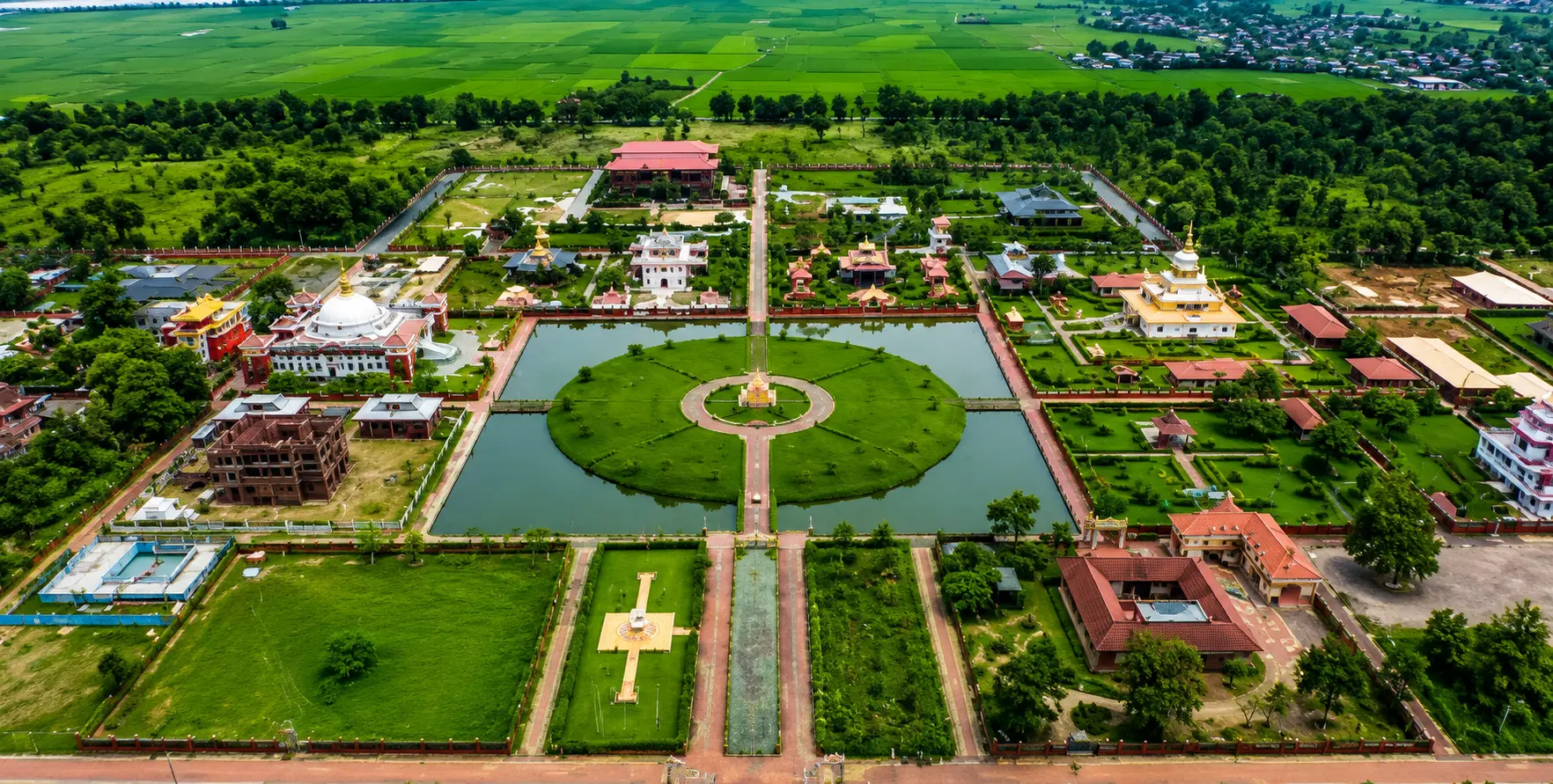
For many travellers, Butwal is not the final destination but the last major city before Lumbini, the birthplace of Siddhartha Gautama and one of the world’s four great Buddhist pilgrimage sites. The Sacred Garden holds the Maya Devi Temple, the Ashoka Pillar erected in the third century before the common era, the sacred pond, and the excavated remains of monasteries that stood on this ground for centuries.

Around the Sacred Garden, the monastic zone contains temples built by Buddhist communities from Thailand, Myanmar, Japan, Korea, Vietnam, China, Tibet, Germany, France and many other countries, and walking through it is like travelling through the whole Buddhist world in a single afternoon. Our Muktinath Tour partners and Buddhist pilgrim groups regularly combine Lumbini with the Himalayan pilgrimage circuit, and a private vehicle makes that combination straightforward.

A private vehicle suits Lumbini very well. The Sacred Garden is large, the monasteries are spread over several kilometres, and a group with its own vehicle and driver can move between the Maya Devi Temple, the Peace Pagoda, the Royal Thai Monastery, and other major sites at its own pace, with a cool cabin waiting between visits.

Pilgrim groups who want to practice devotion, meditate, or spend extra time at the sacred pond can do so without watching the clock. The driver waits patiently, understands the site’s respectful atmosphere, and knows the access roads and parking areas for the main monasteries.

Butwal to the Sunauli Border and the India Connection

Butwal is the closest large city to the Sunauli border crossing, which links Nepal’s western Terai to the Indian state of Uttar Pradesh. Many travellers use the Kathmandu to Butwal route as the first stage of a journey that ends at the border, whether they are Indian pilgrims returning home after a Nepal circuit, international travellers continuing overland to Varanasi, Gorakhpur, or Lucknow, or families visiting relatives on both sides of the border.

Indian nationals cross freely without a visa, while other nationalities need a valid Indian visa obtained in advance. Nepal Vehicle Hiring Pvt Ltd’s drivers know the route to the Sunauli check post, the parking and luggage drop-off area, and the sequence of immigration steps, and they explain the process to passengers crossing for the first time.

Travellers who want to continue by road across the border can ask our team for recommendations for trusted India-side vehicle partners at Sunauli. Pilgrims who arrive at Sunauli from the Muktinath Yatra, the Lumbini visit or a Pokhara holiday often combine several of our services: the Pokhara to Upper Mustang overland jeep and Kathmandu to Muktinath jeep for the high Himalayan temple, the Kathmandu to Pokhara private vehicle for the lakeside city, and the Butwal and Sunauli stages for the return to India.

Because one operator handles every stage, there is never a gap between vehicles.

Kathmandu to Butwal vehicle rental

The Siddhartha Highway: Butwal to Pokhara via Tansen

Butwal is also the southern end of the Siddhartha Highway, the scenic mountain road that climbs through the Palpa hills to the ancient Newari town of Tansen and continues across the mid-hills to Pokhara. Travellers who want to reach Pokhara from Butwal without returning to the Prithvi Highway use this route, and many consider it one of the most beautiful drives in western Nepal.

The road climbs out of the Terai through forested ridges, passes the Palpa Deurali viewpoint with its first views of the Annapurna foothills, and reaches Tansen at about one thousand three hundred metres, where a medieval bazaar of stone-paved lanes, traditional metalwork shops and the Amar Narayan temple repay a stop of an hour or more.

From Pokhara, the Annapurna region opens up. Our Pokhara to Ghandruk jeep and Pokhara to Nayapul transport reach the trailheads of the Annapurna Base Camp Trek. In contrast,e the Pokhara to Ghorepani Poon Hill jeep serves the Ghorepani Poon Hill Trek.

Our Pokhara car hire and Sarangkot sunrise vehicle cover lakeside and sunrise-viewpoint excursions. A group that begins in Kathmandu, spends a night in Butwal, drives the Siddhartha Highway to Pokhara, and then heads into the mountains is following one of the country’s most satisfying overland routes, and Nepal Vehicle Hiring Pvt Ltd can arrange every stage.

Safety Standards on the Kathmandu to Butwal Corridor

A seven-to-nine-hour journey on a busy national highway demands careful attention to safety, and Nepal Vehicle Hiring Pvt Ltd treats the Kathmandu to Butwal corridor accordingly. Every vehicle assigned to the route is checked before departure, with particular attention to brakes, tyres, lights, steering and cooling, because the long descent through the Trishuli gorge and the heat of the Terai section both put real demands on a vehicle.

Drivers are chosen for their experience on this specific highway, and they are expected to drive at moderate speeds, keep safe distances on the gorge section, avoid risky overtaking, and stop for rest when concentration begins to fade.

Passengers play a part as well. Wear seat belts on the highway, seat young children securely, and tell the driver if you feel unwell on the winding gorge section; they will stop in a safe place.

The early-morning departure we recommend is itself a safety measure, as it brings the vehicle through the gorge and the Narayanghat junction in the lightest traffic of the day and gets the group to Butwal before dusk. During the monsoon months, the team monitors road conditions daily and advises on departure timing, and the driver carries a fully charged phone so that the office can reach him at any point on the route.

Nepal Tour Package

Groups That Choose Private Vehicle Hire to Butwal

Business and Government Travellers

Business travellers, government officials and NGO field teams make up a steady share of Kathmandu to Butwal bookings. For these travellers, punctuality, comfort and a professional appearance matter, and a private vehicle that leaves on time and arrives at the exact address is far better than a public bus.

A Hiace van is ideal for a team of eight to twelve who want to talk, review documents,s or rest comfortably during the journey, while a car or jeep suits two to five executives. Nepal Vehicle Hiring Pvt Ltd provides clear booking confirmations with vehicle details and driver name, which institutional travellers value.

Families and Extended Family Gatherings

Families travelling to weddings, festivals and reunions in western Nepal often need to move six, ten or even fifteen people with a good deal of luggage and gifts. A Hiace van or Coaster keeps everyone together, avoids the confusion of splitting across several buses, and lets the children and elders travel in comfort.

The driver can stop for meals and rest when it suits the family, not the bus company’s timetable, and the vehicle can go straight to the family home rather than dropping the group at a bus park.

Pilgrim Parties and Religious Tour Groups

Pilgrim parties travelling from Kathmandu to Lumbini, to the Sunauli border, or onward to the Himalayan temples form another important group. They often need a coaster or bus for twenty or more passengers, a driver who understands the devotional character of the journey, and the flexibility to stop at temples and shrines along the way.

Our coaster hire and bus hire are built for this purpose, and the same drivers regularly serve the Muktinath and Lumbini circuits. Our trekking transport service completes the picture for groups that also plan a Himalayan trek.

Trekkers and Adventure Travellers

Trekkers heading west often use Butwal as a waypoint between Kathmandu, Lumbini and Pokhara. A trekking group arriving from India at Sunauli may drive to Butwal and then on to Pokhara. In contrast, a group leaving Kathmandu may head to Butwal to visit Lumbini before turning north to the mountains.

From there, our network reaches every great trek: the Annapurna Circuit Trek through the Besisahar approach, the Upper Mustang Trek through the Kali Gandaki, the Langtang Valley Trek through Syabrubesi, the Manaslu Circuit Trek through Soti Khola, and the Everest Base Camp Trek through the overland road to Salleri. Our Kathmandu to Besisahar vehicle, Kathmandu to Manang jeep, Kathmandu to Syabrubesi jeep, Kathmandu to Soti Khola jeep and Kathmandu to Salleri Phaplu services all begin from the same Kathmandu hotel gate.

Understanding the Landscape Between Kathmandu and Butwal

The journey from Kathmandu to Butwal is also a journey through Nepal’s geography. Kathmandu sits in a high valley, ringed by hills that were once the floor of an ancient lake, and the first part of the drive leaves that bowl by climbing to the rim at Thankot before dropping into the lower country beyond.

The gorge of the Trishuli River that follows is one of the Himalaya’s great river corridors, fed by snow and glacier melt from the Langtang and Gosainkunda ranges far to the north, and its turquoise colour in the dry season is a constant companion for the first half of the day. Villages cling to terraces above the river, suspension bridges span the canyon, and small hydropower stations and rafting camps give the corridor a working, living character.

At Mugling, the Trishuli meets the Marsyangdi, and the combined river flows south as the Narayani, one of Nepal’s biggest rivers. The landscape opens, the hills fall away, and the road enters the inner Terai valley of Chitwan, where sal forests, grasslands and tropical farmland replace the pine and oak of the hills.

This is the zone of tigers and rhinoceros, and although most travellers will not see wildlife from the highway, the dense green margins of the road and the wide gravel beds of the rivers make it clear that this is a different Nepal from the mountain country behind. The air is warmer, the villages are larger, and the pace of life along the road changes.

West of Narayanghat, the highway runs across the true Terai, the flat alluvial plain that stretches along Nepal’s entire southern edge. Fields of rice, wheat, mustard, and sugarcane line the road; brick kilns send smoke up into the horizon, and the long straight sections let the vehicle make good time.

The Churia hills, known elsewhere as the Siwaliks, rise to the north, and as the vehicle approaches Butwa,l the first big ridges of the Palpa hills come into view, announcing the end of the plain and the start of the mid-hill country that leads toward Pokhara. By the time the vehicle reaches Butwal, passengers have crossed almost every zone of Nepal’s lowland and mid-hill geography in a single day, which is one of the great pleasures of travelling this corridor by road.

Food, Rest and Comfort Stops Along the Way

A seven-to-nine-hour road journey calls for sensible planning of meals and rest. Breakfast is best taken at the hotel before departure, or at a simple tea stop after the first hour of descent through the gorge.

Mugling is the natural lunch stop, with its famous riverside restaurants serving rice, lentils, vegetables, local greens and fresh river fish, as well as simpler snacks for children and vegetarians. In the afternoon, a tea stop near Narayanghat or Bharatpur gives the driver and passengers a break before the final flat stretch.

Carry water, fruit, and light snacks in the vehicle, and passengers prone to car sickness should avoid heavy meals before the gorge section.

Comfort also depends on seating and luggage. In a car or jeep, the front seat suits anyone sensitive to winding roads, and the driver can adjust the air conditioning and open windows when the air is fresh.

In a Hiace van, every passenger has a window seat, and the generous legroom makes it easy to stretch on a long day. In a Coaster or bus, groups can arrange seating so elders and children sit at the front.

Whatever the vehicle, the driver will be glad to stop whenever a passenger needs the toilet, a photograph or simply some fresh air, which is part of the freedom and flexibility of private hire.

Kathmandu to Butwal vehicle rental

The Return Journey: Butwal to Kathmandu

Many travellers book the return journey from Butwal to Kathmandu at the same time as the outbound trip. The return follows the same route in reverse, with a morning departure from Butwal, a Mugling lunch stop, and an afternoon climb out of the Trishuli gorge to the Kathmandu Valley.

The climb from Mugling to Thankot is slower than the descent, so the group should expect the return to take a little longer, and an early start is especially valuable because it lets the vehicle reach the valley before the evening traffic. Our private car hire, jeep hire, and Hiace van hire operate the Butwal to Kathmandu route with the same drivers and standards as the outbound journey, and you can coordinate arrival with a Kathmandu airport transfer for travellers flying out of Tribhuvan Airport the same evening or the next morning.

Some groups prefer to return by a different route, for example from Butwal to Pokhara on the Siddhartha Highway and then from Pokhara to Kathmandu on the Prithvi Highway. This turns the journey into a loop and lets the group see two of the country’s most important highways in a single trip.

Nepal Vehicle Hiring Pvt Ltd can arrange the entire loop as a single booking, with the same vehicle and driver or with vehicle changes at convenient points, and the team can advise on the best order of stops based on the group’s interests and time.

Planning a Complete Western Nepal Circuit

The Kathmandu to Butwal journey is the doorway to a rich western Nepal circuit that can fill a week or more. A classic itinerary begins with arrival in Kathmandu and a day or two of sightseeing, continues with a day-long drive to Chitwan for a jungle safari, moves on to Butwal and Lumbini for the Buddhist pilgrimage, climbs the Siddhartha Highway to Pokhara for the lakes and mountain views, and then returns to Kathmandu by the Prithvi Highway.

Variations include adding the Muktinath temple through the Kali Gandaki gorge, adding a short trek from Pokhara to Ghandruk or Poon Hill, or ending the journey at the Sunauli border for the return to India. Our Nepal tour packages and trekking transport help build this kind of circuit, and each stage can use the vehicle that suits the group: a car for two, a jeep for four to six, a Hiace for ten, or a coaster or bus for larger parties.

Because Nepal Vehicle Hiring Pvt Ltd operates across the country, you don’t need to arrange separate vehicles with separate companies. One WhatsApp conversation covers the entire circuit, one team follows the group from stage to stage, and standards for vehicle maintenance, driver experience, and customer support stay the same at every point.

If plans change because of weather, health, a flight change or a new idea, the team can adjust the itinerary quickly and keep the rest of the journey on track. This continuity is what makes a long, multi-stop Nepal journey feel effortless rather than complicated.

Booking Checklist for Kathmandu to Butwal

  • Decide the group size and luggage volume so we can recommend the right vehicle type: car, jeep, Hiace Coaster, or bus.
  • Choose the departure date and a morning departure time between 6:00 and 6:30 from the Kathmandu hotel.
  • Provide the exact hotel name and area in Kathmandu and the exact destination address or landmark in Butwal.
  • Say whether the journey will include a Chitwan stopover, a Lumbini visit, a Sunauli border drop or a Siddhartha Highway continuation to Pokhara.
  • Mention special requirements such as elderly passengers, small children, wheelchairs, medical needs, or dietary preferences at the lunch stop.
  • Ask for written confirmation with the vehicle type, driver name and vehicle registration, and keep it on the phone for easy reference.
  • Save the WhatsApp number +977 981-4227196 so the team can be reached anytime before and during the journey.

When these details are in place, the booking is simple. Our team confirms the vehicle and driver, the group meets the vehicle at the hotel gate, and the journey unfolds as planned.

If you would like help designing a longer itinerary, contact our team or use the trip planning page, and visit vehiclehiringnepal.com for the full list of services. Nepal Vehicle Hiring Pvt Ltd is ready to take you from Kathmandu to Butwal and everywhere else in Nepal with comfort, safety and complete flexibility.

Festivals, Peak Travel Periods and Planning Ahead

Travel demand on the Kathmandu to Butwal corridor rises sharply around the major festivals of the Nepali calendar. In the weeks around Dashain and Tihar, hundreds of thousands of people leave Kathmandu to visit family in the hills and the Terai, and vehicles of every kind are in short supply.

Buddha Jayanti draws pilgrims to Lumbini from across the Buddhist world, and the weeks around Holi, Teej and Chhath bring heavy traffic toward the western border districts. Travellers planning to move during these periods should book as early as possible, confirm departure times carefully, and allow extra time for busy roads, particularly at the Narayanghat junction and the approaches to Butwal.

Outside the festival peaks, the corridor is calmer, and the best months for comfortable road travel are the dry, clear seasons of autumn and spring, together with the cool, dry weeks of winter. The monsoon months are greener and cheaper in terms of demand, but they require more attention to road conditions and a willingness to adjust the schedule if a landslide closes the gorge for a few hours.

In every season, the Nepal Vehicle Hiring Pvt Ltd team advises starting early, keeping some time in reserve, and keeping the WhatsApp line open so the office can help with any changes.

Why Travellers Keep Choosing Nepal Vehicle Hiring Pvt Ltd

Travellers return to Nepal Vehicle Hiring Pvt Ltd for three simple reasons: the vehicles are well maintained, the drivers know their routes, and the team keeps its promises. A booking confirmation is a real commitment: the named driver and registered vehicle arrive at the gate at the agreed time.

The fleet covers every need, from a single traveller in a car to a pilgrim party of forty in a bus, and the same standards apply to a short airport run and to a ten-day overland expedition. For adventurous groups, the jeep service reaches mountain trailheads where ordinary vehicles cannot go.

For families and corporate teams, the Hiace and Coaster services offer space and comfort on Nepal’s highways.

The Kathmandu to Butwal journey is a good example of how this works in practice. It is a long day on a demanding highway, but with an early start, a skilled driver, a comfortable vehicle and a relaxed lunch at Mugling, it becomes one of the most enjoyable road trips in Nepal.

Passengers see the gorge, the great rivers, the jungle margins and the Terai plain, and they arrive at Butwal rested and ready for whatever comes next, whether that is a family reunion, a business meeting, a pilgrimage to Lumbini, a border crossing or the start of a new adventure in the Annapurna hills.

To begin planning, send a WhatsApp message to +977 981-4227196 with your date, group size and destination, or visit vehiclehiringnepal.com to explore every route and service. Nepal Vehicle Hiring Pvt Ltd looks forward to taking you from Kathmandu to Butwal and onward, with comfort, safety and complete freedom to travel at your own pace.

Whatever the purpose of the journey, the principle is the same: the right vehicle, the right driver and the right plan make a long road day easy. Nepal Vehicle Hiring Pvt Ltd brings these together on every Kathmandu to Butwal booking, so that travellers can enjoy the scenery, the food and the company of their own group instead of worrying about logistics.

Frequently Asked Questions

Nepal Vehicle Hiring Pvt Ltd’s team answers every Kathmandu to Butwal vehicle rental question at booking—departure timing, onward connections, vehicle type for specific group needs, and monsoon road condition updates are all available via WhatsApp at +977 981-4227196. The FAQs below address the most commonly asked questions before booking.

Q1: How do I book a private vehicle from Kathmandu to Butwal?

WhatsApp Nepal Vehicle Hiring Pvt Ltd at +977 981-4227196 with your departure date, group size, Kathmandu hotel name and location, and Butwal destination address. Our team provides vehicle recommendations and written booking confirmation within hours. Visit vehiclehiringnepal.com or contact our team directly to book.

Q2: How long does the Kathmandu to Butwal drive take?

7 to 9 hours by private vehicle, including a standard stop in Mugling. A 6:00 AM departure from Kathmandu arrives at Butwal between 1:30 PM and 3:30 PM, depending on Narayanghat junction traffic. Early morning departures consistently deliver the best journey times on this route.

Q3: What is the best vehicle for Kathmandu to Butwal?

For 1 to 4 passengers: private car. For 4 to 6 passengers with full luggage: jeep (Scorpio or equivalent). For 7 to 14 passengers: Hiace van.

For 15+ passengers: Coaster. Nepal Vehicle Hiring Pvt Ltd advises on the right vehicle for your specific group at booking.

Q4: Can I extend from Butwal to Lumbini or Sunauli?

Yes — Nepal Vehicle Hiring Pvt Ltd coordinates the Butwal to Lumbini (approximately 45 km) or Butwal to Sunauli border (approximately 50 km) extension as part of the single Kathmandu booking. WhatsApp +977 981-4227196 with your complete journey requirements for a single, all-inclusive arrangement covering every stage.

Q5: Is the route safe during monsoon season?

The route is generally safe year-round. The Prithvi Highway gorge section carries the highest monsoon disruption risk from occasional landslides after sustained heavy rainfall. Nepal Vehicle Hiring Pvt Ltd monitors conditions daily during monsoon and recommends 6:00 AM departures that clear the gorge section before afternoon rainfall peaks.

The East-West Highway Terai section is less affected by monsoon conditions.

Q6: Does Nepal Vehicle Hiring Pvt Ltd offer the return Butwal to Kathmandu direction?

Yes — Nepal Vehicle Hiring Pvt Ltd operates the Butwal to Kathmandu return direction with the same all-inclusive private vehicle service. Book both outbound and return trips at the same time for the best vehicle and driver availability. Our car, jeep, and Hiace serve both directions.

Contact +977 981-4227196 or visit vehiclehiringnepal.com to book.

Conclusion: Book Your Kathmandu to Butwal Vehicle with Nepal Vehicle Hiring Pvt Ltd

The Kathmandu to Butwal private vehicle rental is one of Nepal’s most important inter-city journeys — connecting the capital to the western commercial hub via the Prithvi Highway’s extraordinary gorge corridor and the Terai’s flat agricultural plains. Nepal Vehicle Hiring Pvt Ltd’s private cars, jeeps, Hiace vans, coasters, and buses take every group to Butwal on schedule, from their hotel door, with all-inclusive, transparent pricing and no hidden additions.

Contact our team at +977 981-4227196 (WhatsApp/Viber) to book today. Visit vehiclehiringnepal.com — Nepal’s most trusted private vehicle hire service.

Toyota Hiace Rental Price in Nepal

Share jeep

Toyota Hiace Rental Price in Nepal: Complete Guide

The Toyota Hiace is Nepal’s most popular group tourist vehicle — a comfortable, reliable, air-conditioned van that seats 8 to 14 passengers and handles Nepal’s full range of tourist routes from the flat Terai highways to the Prithvi Highway gorge.

For tour groups, trekking teams, corporate parties, pilgrim groups, and extended families visiting Nepal, the Hiace van hire strikes the balance between per-person economy and travel comfort that no other Nepal vehicle matches at equivalent group sizes.

Nepal Vehicle Hiring Pvt. Ltd., based in Thamel, Kathmandu, operates a well-maintained fleet of Toyota Hiace vans for group hire across every Nepal tourist route. This complete guide covers Toyota Hiace rental prices in Nepal for every major route and use case

airport transfers, Kathmandu Valley sightseeing, the Kathmandu-Pokhara highway, Chitwan, Lumbini, and all trekking approach roads — with all-in pricing, vehicle specifications, booking information, and a comparison with other Nepal vehicle types so your group can make the right hire decision.

Toyota Hiace Specifications: What You Get

Nepal Vehicle Hiring’s Toyota Hiace fleet comprises the standard high-roof Hiace van — the most common and most practical configuration for Nepal tourist group transport:

  • Seating capacity: 8 to 14 passengers depending on seat configuration (standard Nepal tourist Hiace is configured for 11 to 14 seats with central aisle)
  • Air conditioning: roof-mounted air conditioning serving all passenger rows — essential for the Terai and Chitwan highway sections
  • Luggage: large rear luggage area plus roof rack for trekking packs, expedition bags, and group equipment — a Hiace handles the combined luggage of 10 to 12 trekkers with full expedition kit comfortably
  • Windows: large panoramic windows on both sides — important for the Trishuli gorge and mountain approach photography that Nepal’s scenic routes reward
  • Reclining seats: standard reclining seats on all passenger rows for long highway journeys
  • Music system: built-in sound system for the group’s comfort on long journeys
  • Fuel: diesel — Nepal Vehicle Hiring’s Hiace fleet maintains current service schedules, and all vehicles have passed Nepal’s roadworthiness inspection
  • Driver: experienced, licensed driver with passenger vehicle commercial licence — assigned based on route expertise for each journey

Toyota Hiace Rental Prices in Nepal: All-In Rate Reference

All prices below are Nepal Vehicle Hiring’s all-inclusive rates — vehicle, driver, fuel, road charges, and driver accommodation/meals for multi-day journeys. No end-of-journey additions.

Kathmandu — Local and Valley Rates

  • Airport transfer (TIA to Thamel, one way): NPR 2,500 to 6,000
  • Full-day Kathmandu sightseeing (all 7 UNESCO sites): NPR 10,000 to 16,000
  • Bhaktapur Durbar Square day tour: NPR 7,000 to 11,000
  • Nagarkot sunrise tour and Bhaktapur return: NPR 12,000 to 17,000
  • Half-day valley circuit (3 to 4 sites): NPR 6,000 to 9,000

Kathmandu to Major Nepal Destinations (One Way)

  • Kathmandu to Pokhara: NPR 18,000 to 26,000
  • Kathmandu to Chitwan (Sauraha): NPR 16,000 to 22,000
  • Kathmandu to Lumbini: US$220
  • Kathmandu to Besisahar (Annapurna Circuit gateway): NPR 12,000 to 26,000
  • Kathmandu to Sunauli border (Nepal-India crossing): NPR 20,000 to 28,000
  • Kathmandu to Bhairahawa: NPR 20,000 to 40,000
  • Kathmandu to Kodari (Tibet border, Araniko Highway): NPR 15,000 to 35,000

Pokhara Routes (One Way)

  • Pokhara to Kathmandu: NPR 18,000 to 26,000
  • Pokhara to Chitwan (Sauraha): NPR 13,000 to 26,000
  • Pokhara to Nayapul (Annapurna Base Camp trailhead): NPR 5,000 to 8,000
  • Pokhara to Beni (Dhaulagiri and Mustang gateway): NPR 8,000 to 15,000

Terai and India Border Routes (One Way)

  • Chitwan to Lumbini direct Terai route: US$110
  • Lumbini to Kathmandu: US$220
  • Sunauli to Kathmandu: NPR 18,000 to 35,000
  • Sunauli to Pokhara: US$209

Multi-Day Hiace Hire (All-In Per Day)

  • Full-day within Kathmandu Valley: NPR 10,000 to 16,000 per day
  • Multi-day Nepal circuit (highway route days): NPR 16,000 to 24,000 per day
  • Extended Nepal circuit (7+ days including multiple destinations): NPR 15,000 to 22,000 per day (daily rate decreases slightly for longer bookings)

Contact Nepal Vehicle Hiring via our plan your trip page or WhatsApp  for confirmed pricing for your specific route and group size.

Bp highway

When to Choose a Toyota Hiace: The Right Vehicle for Your Group

The Hiace is the right Nepal group vehicle when the group size and route characteristics align with its specifications. Nepal Vehicle Hiring’s vehicle selection guide:

Choose Hiace for Groups of 8 to 14

The Hiace’s main advantage is group economics: for 8 to 14 passengers, the per-person Hiace cost is typically 30 to 50 per cent lower than an equivalent private car or jeep hire on the same route. A Kathmandu-to-Pokhara Hiace at NPR 18,000 to 30,000 carries 10 passengers at NPR 1,800 to 4,000 per person — significantly below the private car cost of NPR 8,000 to 20,000 (NPR 2,000 to 8,000 per person for 2 to 4 passengers, and no economy for the 5th to 14th passenger who cannot fit in the car).

Choose Hiace for Nepal Highway Routes

The Hiace excels on Nepal’s main tourist highways — Kathmandu-to-Pokhara, Kathmandu-to-Chitwan, Lumbini-to-Kathmandu, Sunauli-to-Kathmandu. These smooth blacktop routes play to the Hiace’s strengths: air-conditioned comfort, large windows for scenery, ample luggage space, and a road-stable ride on Nepal’s widened highways.

The Hiace is the standard vehicle for all Nepal tourist triangle connections and for any group tour that spends its days on Nepal’s primary highway network.

Choose Hiace for Trekking Approach to Besisahar

For trekking groups of 8 to 14 approaching the Annapurna Circuit, the Hiace covers the Kathmandu-to-Besisahar highway and Prithvi Highway sections efficiently.

Nepal Vehicle Hiring’s standard configuration for large Annapurna Circuit groups: Hiace from Kathmandu to Besisahar (highway section), then 4WD jeeps from Besisahar for the off-road mountain section to Chame or beyond. We coordinate the Hiace van hire and 4WD jeep hire as a single booking.

Choose Hiace for Pilgrimage Groups

Hindu and Buddhist pilgrim groups — typically 8 to 14 people travelling to Pashupatinath, Muktinath, Lumbini, or the Kailash Yatra Nepal circuit — are the Hiace’s most frequent Nepal clients.

The van’s spacious interior accommodates puja materials, sacred items, and the modest personal luggage typical of pilgrimage travel. Nepal Vehicle Hiring’s Nepal Nekhor tour and Nepal holiday tour pilgrimage circuit coordination regularly uses the Hiace as the primary group vehicle.

Do NOT Choose Hiace for Mountain Off-Road Routes

The Hiace is a highway and moderate road vehicle — not a mountain off-road vehicle. Beyond Besisahar on the Annapurna Circuit, beyond Beni on the Mustang approach, and on the Manang or Gosaikunda mountain approach roads, Nepal Vehicle Hiring’s 4WD jeep hire is mandatory.

A Hiace attempting these sections risks undercarriage damage and is inappropriate for the gradient and surface conditions. Nepal Vehicle Hiring will advise on this vehicle transition at the time of booking.

Toyota Hiace for Nepal’s Key Tourist Routes

Kathmandu Valley Sightseeing

The Kathmandu sightseeing service by Hiace van is the most popular Nepal group vehicle experience — a full-day circuit covering all seven UNESCO World Heritage Sites across the valley. The Hiace driver knows the best parking at each heritage site and the best approach roads to avoid Kathmandu’s narrow-lane congestion.

The timing sequence gets the group to Pashupatinath for the 5:00 PM evening Aarti. The Hiace’s panoramic windows are particularly valuable at the approach to Boudhanath Stupa, the steep climb to Swayambhunath, and the elevated sections of Bhaktapur’s Durbar Square.

Kathmandu to Pokhara by Hiace

Both the Kathmandu to Pokhara bus service and private Hiace hire connect Nepal’s two primary tourism cities. The private Hiace is significantly preferable to the shared tourist bus for groups of 8 or more: departure from the hotel door at the agreed time (not from a Kathmandu bus park on a fixed schedule).

The Manakamana cable car stop on request, lunch at a Mugling fish restaurant, and delivery to each passenger’s specific Pokhara Lakeside hotel rather than to a Pokhara bus park. The 200-kilometre Prithvi Highway journey takes 6 to 8 hours with the standard stops.

Kathmandu to Chitwan by Hiace

The Kathmandu-to-Chitwan Hiace hire (approximately 200 km, 4 to 5 hours) is one of Nepal’s most frequently booked Hiace routes. The vehicle picks you up from the Thamel hotel, includes the optional Manakamana cable car stop, and drops you off at your specific Chitwan jungle lodge rather than the Sauraha village tourist bus stand.

For groups of 8 or more visiting Chitwan for wildlife safaris and Tharu cultural experiences, the Hiace is the economically optimal vehicle.

Kathmandu to Lumbini by Hiace

The 300-kilometre Kathmandu-to-Lumbini route (6 to 7 hours) via the Prithvi Highway and the Terai is a full-day Hiace journey that Nepal Vehicle Hiring’s Buddhist and Hindu pilgrimage groups frequently book as part of the Nepal sacred circuit. The Hiace delivers to the Lumbini Sacred Garden car park or to Bhairahawa hotels, with the 6-kilometre Lumbini zone entry road easily navigable from the drop point.

Nepal Tourist Triangle Circuit by Hiace

The Kathmandu → Pokhara → Chitwan → Kathmandu circuit — Nepal’s most popular tourism route — is most economically served by a single Hiace van for groups of 8 to 14. One vehicle, one driver, all three destinations connected, with the circuit vehicle pre-confirmed as a single booking. Nepal Vehicle Hiring’s Nepal tour package and holiday tour coordination regularly use the Hiace for this full triangle circuit.

How Toyota Hiace Compares with Other Nepal Vehicle Options

Hiace vs Private Car (Sedan/SUV)

Private car: 2 to 4 passengers, NPR 7,000 to 20,000 for a Kathmandu-to-Pokhara one-way (NPR 1,750 to 8,000 per person). Hiace: 8 to 14 passengers, NPR 18,000 to 30,000 for the same route (NPR 1,300 to 6,000 per person). For groups of 5 or more,

the Hiace offers better value per person while providing more comfort (more window space, no cramped seating, better luggage space). For couples and solo travellers, the private car’s smaller size and lower all-in cost make it the right choice.

Hiace vs 4WD Jeep

4WD jeep (Scorpio): 4 to 7 passengers, NPR 10,000 to 26,000 per day. Hiace: 8 to 14 passengers, NPR 10,000 to 30,000 per day. The critical difference: the 4WD jeep handles mountain off-road sections (Besisahar to Manang, Beni to Mustang, Betrawati to Syabrubesi) that the Hiace cannot access.

For highway-only routes and valley circuits, the Hiace is economically preferable for larger groups. For any route with significant off-road mountain sections, the jeep is mandatory regardless of group preference.

Hiace vs Coaster Bus

Coaster bus: 15 to 25 passengers, NPR 18,000 to 45,000 per day. Hiace: 8 to 14 passengers, NPR 10,000 to 34,000 per day. When a group exceeds 14 passengers, Nepal Vehicle Hiring’s Coaster bus hire is the right upgrade—the Coaster’s extra seats and luggage capacity serve larger groups more efficiently than two Hiace vans.

For groups of exactly 14 to 16 passengers, Nepal Vehicle Hiring will advise on whether a single Coaster or a Hiace plus private car combination is more practical for the specific route and luggage requirements.

Hiace vs Full Tourist Bus

Full tourist bus: 25 to 45 passengers, NPR 28,000 to 50,000 per day. The full bus is only appropriate for large tour groups that exceed Coaster capacity. The Hiace’s smaller size gives it significant routing flexibility ;

It can navigate Thamel’s narrow hotel access lanes, Bhaktapur’s old-city approach roads, and Chitwan’s jungle-lodge access tracks that larger buses cannot enter. Nepal Vehicle Hiring’s full bus hire serves the largest group requirements; the Hiace serves the broadest range of Nepal tourist routes at the most common group sizes.

The Hiace reaches its best per-person rate at maximum occupancy — 12 to 14 passengers. For groups in this size range, no other Nepal vehicle hiring option offers a lower per-person transport cost while maintaining comfortable, air-conditioned highway travel. This economic profile makes the Hiace the default vehicle choice for school and university trip groups, corporate incentive tours, large extended family visits, and big pilgrim parties.

How to Book a Toyota Hiace in Nepal with Nepal Vehicle Hiring

Nepal Vehicle Hiring’s Toyota Hiace booking process is straightforward:

  • WhatsApp with your journey dates, group size, Kathmandu hotel address, destination, and any specific stops or timing requirements
  • Receive a confirmed all-in NPR quote within 2 to 4 hours during Nepal business hours
  • Confirm the booking — Nepal Vehicle Hiring issues a written WhatsApp/email confirmation stating vehicle, driver name, pickup time, and all-in price.
  • For peak season (October to November, April to May) bookings, Nepal Vehicle Hiring recommends 3 to 7 days’ advance notice for Hiace availability — the fleet is at high utilisation in peak season, and booking secures the vehicle and driver for your specific date.
  • For multi-day Nepal circuits (Nepal triangle, pilgrimage circuit, Lumbini extension), book 7 to 14 days in advance for the best vehicle allocation and driver assignment

Frequently Asked Questions: Toyota Hiace Rental Nepal

How many passengers does a Hiace hold in Nepal?

Nepal Vehicle Hiring’s Toyota Hiace vans seat 8 to 14 passengers depending on configuration. The standard Nepal tourist Hiace configuration has 11 to 14 seats, a central aisle, and a rear luggage bay. A single Hiace can accommodate groups of up to 14 passengers with standard luggage.

For expedition-weight trekking packs, Nepal Vehicle Hiring installs roof racks on the Hiace to add luggage capacity.

Does the Hiace have air conditioning?

Yes—all Nepal Vehicle Hiring Hiace vans have roof-mounted air conditioning that covers all passenger rows. Air conditioning is essential for Terai-route travel (Kathmandu-to-Chitwan, Lumbini routes) where temperatures reach 30 to 38°C, and is appreciated on the Prithvi Highway runs in spring and summer.

Can a Hiace go on the Besisahar to Manang mountain road?

No — the Hiace is not appropriate for the off-road mountain sections beyond Besisahar on the Annapurna Circuit, beyond Beni on the Mustang approach, or on the Syabrubesi or Gosaikunda approach roads. These sections require a 4WD jeep hire from Nepal Vehicle Hiring (Mahindra Scorpio or Toyota Land Cruiser). Nepal Vehicle Hiring typically coordinates a Hiace-to-jeep vehicle transition at Besisahar for large Annapurna Circuit groups.

What is the minimum hire period for a Hiace in Nepal?

There is no minimum hire period — Nepal Vehicle Hiring books Hiace vans by the journey or by the day. Airport transfers are single-journey bookings; sightseeing is half-day or full-day; highway trips are one-way or return. There is no requirement to book a minimum number of days.

Does the Hiace rental price include the driver?

Yes — Nepal Vehicle Hiring’s all-in Hiace rental price includes the vehicle, an experienced licensed driver, fuel, and all road charges. There is no self-drive Hiace option in Nepal — all vehicles are driver-accompanied. Driver accommodation and meals are included in the all-in price for multi-day journeys.

How do I pay for Toyota Hiace hire in Nepal?

Nepal Vehicle Hiring accepts NPR cash, USD cash, Nepal mobile payment (eSewa, Khalti, IME Pay), and international bank transfer for advance payments. For international clients booking from abroad, a 30 to 50 per cent advance bank transfer is required for peak-season Hiace bookings — balance payable in NPR or USD cash on arrival. See Nepal Vehicle Hiring’s complete advance payment guide for full details.

Book Your Toyota Hiace with Nepal Vehicle Hiring

Nepal Vehicle Hiring Pvt. Ltd., Thamel, Kathmandu — Toyota Hiace van hire for all Nepal group travel needs:

WhatsApp / Call: WhatsApp
Email: [email protected]
www.vehiclehiringnepal.com

Visit our Plan Your Trip page with your group size, Kathmandu hotel, dates, and Nepal destinations. Nepal Vehicle Hiring confirms Hiace availability, the all-in price, and a driver within 24 hours. Nepal’s finest group travel vehicle is ready — Nepal Vehicle Hiring brings it to your door.

The Toyota Hiace’s dominance in Nepal’s tourist van market isn’t accidental — it reflects a combination of mechanical reliability, parts availability, and functional specifications that match Nepal’s transport demands unusually well. Understanding why the Hiace has become the default Nepal group van helps tourists make a more confident hire decision.

Toyota’s global reputation for mechanical reliability is well-earned in Nepal’s demanding environment. The Hiace engine and drivetrain have proven robust across Nepal’s full temperature range — from the tropical heat of the Terai (frequently exceeding 35°C) to the cold of the Prithvi Highway gorge in winter,

. The diesel powerplant provides adequate torque for Nepal’s gradient changes without the fuel-economy penalty petrol engines would impose on long-distance Nepal circuits.

Nepal Vehicle Hiring’s Hiace fleet follows Toyota’s recommended service schedule, and the widespread availability of Toyota parts in Kathmandu means any mechanical issue can be resolved quickly with genuine parts, rather than waiting for imported components.

The Hiace’s passenger capacity — 8 to 14 seats depending on configuration — hits the sweet spot for Nepal’s most common group sizes. School and university trip groups of 10 to 14, extended family touring parties of 8 to 12, corporate team visits of 8 to 10, and pilgrim groups of 10 to 14 all fit within

the Hiace’s capacity range without the awkwardness of multiple vehicles (which 2 cars would require) or the excess capacity of a Coaster bus (which would seat 15 to 25 but feel sparse for a group of 10). The Hiace fills this group size range precisely.

The Hiace’s high-roof configuration gives passenger headroom that standard vans lack — passengers can stand partially upright in the central aisle, luggage can be placed on overhead shelves in some configurations, and the interior volume creates a spacious feel that makes 6 to 8 hour highway journeys comfortable rather than claustrophobic.

On Nepal’s scenic highways — where the Trishuli gorge views from the Prithvi Highway or the first Annapurna range sighting on the approach to Pokhara are experienced through the Hiace’s generous windows — the vehicle’s interior space gives passengers a genuinely enjoyable observation platform.

The Toyota Hiace on Nepal’s Highway Network

Nepal’s highway network — improved significantly over the past decade with road widening programmes, tunnel construction, and surface upgrades — is now genuinely comfortable for Hiace operation on the main tourist routes. Understanding the current state of Nepal’s highways helps set realistic expectations for Hiace journey times and comfort:

The Prithvi Highway (Kathmandu to Pokhara, 200 km)

Nepal’s primary tourist highway has been progressively widened, and the Nagdhunga-Sisnekhola Tunnel near Kathmandu has dramatically improved the valley-exit section. About 40 to 50 per cent of the highway is now dual carriageway or a wide, single-lane blacktop in excellent condition. The remaining sections include construction zones with rougher surfaces and the original gorge sections with narrower roads.

Nepal Vehicle Hiring’s Prithvi Highway drivers know which sections to drive slowly for passenger comfort and which are now fully open for normal highway speeds. A Hiace journey from Thamel to Pokhara Lakeside typically takes 6 to 8 hours, including the Manakamana cable car stop and a Mugling lunch.

The Mahendra Highway (Terai — Narayanghat to Bhairahawa)

The western section of Nepal’s Terai east-west highway is flat, well-maintained blacktop — the Hiace’s most comfortable operating environment. This section (used for Chitwan-to-Lumbini, Sunauli-to-Narayanghat, and all western Terai routes) allows near-highway-speed driving throughout, and the air conditioning is particularly valuable in the Terai’s heat. Journey time for the Narayanghat-to-Bhairahawa section (approximately 137 km) is consistently 2 to 2.5 hours.

The Araniko Highway (Kathmandu to Kodari, 115 km)

The Araniko Highway from Kathmandu to the Kodari-Zhangmu Tibet border is paved throughout and accessible to Hiace vans. The gorge sections in the Bhotekoshi canyon require more careful driving but do not exclude the Hiace.

Nepal Vehicle Hiring deploys the Hiace for the Kathmandu-to-Kodari journey for Kailash Yatra groups who enter Tibet via the Kodari crossing — a standard pilgrimage vehicle application.

Toyota Hiace for Corporate and Institutional Groups

Corporate and institutional groups have specific requirements that the Toyota Hiace meets particularly well for Nepal travel:

Corporate Incentive Tours

Nepal is an increasingly popular corporate incentive destination — Kathmandu’s heritage, Pokhara’s mountain scenery, and Chitwan’s wildlife combine in a circuit that is both genuinely memorable and cost-effective compared to more expensive incentive destinations. Corporate groups of 8 to 14 — the most common incentive tour size

are precisely served by the Hiace configuration. Nepal Vehicle Hiring’s corporate Hiace service includes confirmed departure times with zero tolerance for delay, English-speaking drivers, documentation for corporate travel expense systems (formal NPR invoice available on request), and 24/7 WhatsApp operations support for real-time schedule management.

School and University Educational Groups

School and university groups visiting Nepal for cultural immersion, Himalayan geography, development studies, or trekking programmes regularly use Nepal Vehicle Hiring’s Hiace for their Kathmandu Valley circuits and highway transport.

The Hiace’s capacity (up to 14 students in a single vehicle) reduces the logistical complexity of multi-vehicle group management, and Nepal Vehicle Hiring’s institutional documentation — booking confirmations, invoices, driver details — meets the safety and accountability requirements of most educational institutions.

NGO and Development Organisation Groups

International development organisation staff visiting Nepal project sites—particularly in the Terai and mid-hills—frequently hire Nepal Vehicle Hiring’s Hiace for site-visit transport.

The van’s highway capability, luggage capacity for field equipment, and reliable all-inclusive pricing make it the standard vehicle for NGO Nepal field missions. NGO groups value Nepal Vehicle Hiring’s 24/7 WhatsApp contact, especially when schedules change rapidly in response to field conditions.

Seasonal Hiace Availability and Pricing

Nepal Vehicle Hiring’s Toyota Hiace fleet is available year-round, but seasonal demand affects both vehicle availability and the booking requirement:

  • Peak season (October to November, April to May): Hiace fleet utilisation is at its maximum during these months—Nepal’s finest trekking and tourism seasons draw the highest visitor numbers, and group travel peaks at the same time. We strongly recommend booking 1 to 2 weeks in advance for peak-season Hiace hire. Nepal Vehicle Hiring’s operations team advises on current availability when clients contact us — the Thamel office monitors fleet utilisation in real time.
  • Shoulder season (March, June, September): Hiace availability is good, with 3 to 7 days’ advance notice sufficient for most routes. Journey times on highways are typically shorter than peak season as traffic volumes are lower.
  • Low season (December to February, July to August): Hiace hire requires only 24 to 48 hours’ advance notice in most cases. January and February are the coldest months — the Hiace’s air conditioning is less necessary. Still, the vehicle’s diesel heater (in models so equipped) provides cabin warmth on the colder Prithvi Highway sections. The monsoon months (July to August) see lighter tourist traffic, but the Prithvi Highway’s monsoon landslide risk requires daily road-condition monitoring.

Nepal Vehicle Hiring does not apply seasonal price surcharges — the Hiace hire rates quoted in this guide apply throughout the year for the same route. Availability, not price, varies by season.

What Makes a Quality Hiace Hire: Nepal Vehicle Hiring’s Standards

Not all Toyota Hiace vans available in Nepal’s vehicle hire market meet the same quality standard. Nepal Vehicle Hiring’s specific Hiace quality criteria help tourists understand what distinguishes our fleet from informal market alternatives:

  • Fleet age and condition: Nepal Vehicle Hiring maintains an average fleet age that balances mechanical reliability (newer vehicles) with the proven reliability of established models. Every vehicle undergoes a pre-deployment inspection before tourist circuit assignment — engine, brakes, tyres, air conditioning, and all safety systems checked.
  • Tyre condition: Nepal Vehicle Hiring replaces Hiace tyres on a mileage-based schedule rather than waiting for visible wear. Tyre condition is the single most important safety factor on Nepal’s roads — we do not deploy a Hiace with tyres below our minimum tread depth standard regardless of remaining scheduled service interval.
  • Driver licensing and experience: Nepal Vehicle Hiring’s Hiace drivers hold commercial passenger vehicle licences (above the standard car licence) and are assigned to routes they know from prior driving experience. A driver making their first trip on the Prithvi Highway with a loaded Hiace is not a Nepal Vehicle Hiring deployment.
  • Insurance: every Nepal Vehicle Hiring Hiace carries third-party liability insurance. In the event of any accident or incident, our vehicles are insured — informal market vans may not be.
  • Vehicle registration: all Nepal Vehicle Hiring vehicles are registered with Nepal’s Department of Transport Management. Registration documentation is available for inspection on request.

Toyota Hiace for Nepal Trekking Groups: The Approach Vehicle

For Nepal trekking groups arriving from abroad—whether from India via Sunauli, Kathmandu airport, or Pokhara—the Toyota Hiace is often the first Nepal vehicle experience: the airport pickup, the Kathmandu hotel circuit, and the trailhead approach. Understanding how the Hiace fits into a trekking group’s Nepal transport plan helps trekking leaders book vehicles correctly.

The most common Hiace-to-jeep transition in Nepal trekking transport: groups of 8 to 14 hire a Hiace from Kathmandu to Besisahar (the Annapurna Circuit gateway, 175 km, 4 to 5 hours on highway and Dumre road). In Besisahar, the group transfers to 2 or 3 Mahindra Scorpio jeeps (4WD, 4 to 7 seats each)

for the mountain-road section beyond. Nepal Vehicle Hiring coordinates this vehicle transition as part of a single circuit booking — the Hiace arrives at Besisahar as the jeeps depart from Kathmandu to meet the group, minimising the Besisahar wait time.

For EBC trekkers using the Ramechhap airport option, Nepal Vehicle Hiring’s Hiace covers the critical 3:00 AM Kathmandu-to-Manthali run for groups of 8 to 14. The early morning departure, the 130-kilometre BP Highway run to Manthali, and the airport drop are all standard Hiace territory — and Nepal Vehicle Hiring’s Everest Base Camp trek transport service coordinates this specific trekking group vehicle sequence.

Post-trek, the Hiace connects groups from the completion points to Kathmandu or Pokhara: from Nayapul or Birethanti after the Annapurna Circuit or ABC trek (via the Pokhara to Nayapul transportation road), from Pokhara after the complete Annapurna Circuit descent, or from the Ramechhap airport after a helicopter EBC return.

Nepal Vehicle Hiring pre-confirms these post-trek vehicles at the time of the original trekking approach booking — complete Nepal circuit transport certainty from the moment the group arrives in Kathmandu.

Hiace Rental Price Nepal: Summary Reference

For quick reference, the following is Nepal Vehicle Hiring’s Toyota Hiace rental price summary for Nepal’s most booked routes. All prices are all-inclusive — no additions at the journey end:

  • Full-day Kathmandu Valley sightseeing: NPR 10,000 to 16,000
  • Nagarkot sunrise + Bhaktapur: NPR 12,000 to 17,000
  • Kathmandu to Pokhara (one way): NPR 18,000 to 26,000
  • Kathmandu to Chitwan (one way): US$120
  • Kathmandu to Lumbini (one way): US$220
  • Kathmandu to Besisahar (one way): NPR 12,000 to 26,000
  • Kathmandu to Sunauli border (one way): NPR 20,000 to 35,000
  • Pokhara to Chitwan (one way): US$120
  • Chitwan to Lumbini direct (one way): US$110
  • Lumbini to Kathmandu (one way): US$220
  • Multi-day Nepal circuit (per day): NPR 15,000 to 30,000

Contact Nepal Vehicle Hiring via WhatsApp, email [email protected], or our plan your trip page at vehiclehiringnepal.com for confirmed Hiace pricing for your specific route, group size, and dates. Nepal Vehicle Hiring confirms availability and all-in price within 24 hours of any enquiry.

Hiace for Group Airport Transfers: Getting Everyone to the Hotel

The group airport transfer from Tribhuvan International Airport (TIA) to Thamel is one of the most stressful moments of any Nepal group trip — a large party emerging from the international arrivals hall with significant luggage into a busy forecourt where taxi touts compete for attention. Nepal Vehicle Hiring’s Hiace group airport transfer eliminates this stress.

For groups of 8 to 14 arriving on the same international flight, the Hiace is the right vehicle: one vehicle, one driver with the group name sign, one loading of all luggage, and direct delivery to the specific Thamel hotel — typically 20 to 30 minutes from TIA.

The alternative (multiple individual taxis negotiated in the arrivals forecourt) involves separate fare negotiations for each taxi, multiple drivers who may not all know the specific hotel, and the confusion of coordinating vehicle departures for a large group.

Nepal Vehicle Hiring’s Hiace airport transfer service is available 24 hours — including the early morning international arrivals (typically 1:00 AM to 4:00 AM for flights from the Gulf and South Asia) that make up a significant portion of Nepal’s international traffic.

The driver tracks flight status and adjusts arrival times for any delays at no extra charge. The driver’s name and mobile number are sent to the group leader via WhatsApp the evening before arrival.

For groups where members arrive on different flights, Nepal Vehicle Hiring coordinates multiple airport transfers — each pickup confirmed separately with the relevant driver details. Groups scattered across multiple arrival times use a combination of individual car hire arrivals and Hiace arrival for the bulk group — Nepal Vehicle Hiring coordinates both vehicle types under a single operations contact.

Hiace for Nepal’s Festival and Special Event Travel

Nepal’s major festivals—Dashain (October), Tihar (October-November), Holi (March), and dozens of regional and sacred festivals throughout the year—create specific travel demand spikes that affect Hiace availability. Groups visiting Nepal during festival periods should book earlier than the standard advance notice:

  • Dashain (October): Nepal’s biggest festival creates significant domestic travel demand as Kathmandu residents return to home villages. The week before Dashain (typically 10 to 14 days of planning required) and the festival week itself see heightened Hiace demand both from domestic travellers and international tourists who want to observe the festival celebrations. Book Nepal Vehicle Hiring’s Hiace 2 to 3 weeks before the Dashain window.
  • Tihar (October-November): follows Dashain closely and creates similar travel pressure. The festival of lights—with its famous Kathmandu city illuminations—is one of Nepal’s finest visual experiences for international visitors, and Hiace demand during Tihar mirrors the Dashain pattern.
  • Holi (March): Nepal’s festival of colours, celebrated most vibrantly in the Kathmandu Valley and the Terai, coincides with the spring trekking season. The combination of Holi celebrations and peak spring trekking demand makes March one of Nepal Vehicle Hiring’s busiest Hiace periods.
  • Religious pilgrimage festivals (Vesak/Buddha Purnima, Mahashivratri, Janai Purnima): these sacred festivals draw large pilgrim groups to specific sites — Lumbini for Vesak, Pashupatinath for Mahashivratri, Gosaikunda for Janai Purnima — creating festival-specific Hiace demand on the routes to these pilgrimage destinations. Book Nepal Vehicle Hiring’s Hiace 2 to 4 weeks before any major pilgrimage festival.

Toyota Hiace vs Toyota Coaster: Which Is Right for Your Group?

For groups at the boundary between Hiace capacity (14 passengers maximum) and Coaster capacity (15 to 25 passengers), the choice between these two Toyota vehicles is an important hire decision. Nepal Vehicle Hiring’s guidance:

The Toyota Coaster is a full-size minibus — significantly larger than the Hiace both in passenger capacity and in external vehicle dimensions. This size difference has practical route implications: the Coaster cannot navigate Thamel’s narrowest hotel access lanes, cannot turn around in the small parking areas of many Bhaktapur and Patan heritage site car parks, and has more restricted access

the Besisahar approach road to the Annapurna Circuit. The Coaster’s advantages are its per-person economy for groups above 14 and its individual reclining seats, which provide superior comfort on long highway journeys.

For groups of exactly 14 to 16 passengers, Nepal Vehicle Hiring typically recommends: a single Hiace for 14 passengers (maximum capacity, good economy, better access flexibility) or a Coaster for 15 to 16 (slightly more

comfortable per seat, slightly less access flexibility, marginally higher all-in cost). For groups of 17 or more, the Coaster is the right vehicle. Nepal Vehicle Hiring’s operations team will advise on the optimal vehicle for any specific group size and route combination.

Practical Tips for Booking and Using a Hiace in Nepal

  • Book the Nagarkot sunrise tour the evening before: the 4:30 AM Hiace departure for Nagarkot must be confirmed the previous evening via WhatsApp. Nepal Vehicle Hiring sends a pre-departure reminder with the driver’s name and mobile — ensure the group is ready at the hotel entrance at the confirmed pickup time.
  • Organise luggage before the Besisahar-to-Chame transition: for trekking groups doing the Hiace-to-jeep vehicle change at Besisahar, use the Besisahar stop to reorganise packs before transferring to the smaller jeeps. Keep items needed for the mountain section accessible; bulk gear can go on jeep roof racks.
  • Use the Mugling fish lunch stop: on any Kathmandu-to-Pokhara or Lumbini-to-Kathmandu Hiace journey, the Mugling riverside fish restaurants are a genuine Nepal travel highlight — fresh Mahseer fish in mustard oil, served above the Trishuli River. Allow 45 minutes. Ask the driver to include this stop when booking.
  • Confirm seat assignments for the morning safari connection: for Chitwan groups connecting from the Hiace to morning safari jeeps, confirm the safari departure time with the jungle lodge in advance and ensure the Hiace departure from Kathmandu is early enough to arrive at Sauraha by late afternoon for the afternoon activity session.
  • Carry NPR cash for en-route stops: Nepal Vehicle Hiring’s Hiace all-in price covers the vehicle, driver, fuel, and road charges — not passenger food or entry fees. Carry NPR for Manakamana cable car (NPR 1,200 return per person), Mugling lunch (NPR 400 to 700 per person), heritage site entry fees (NPR 1,000 to 1,500 per person at UNESCO sites), and any other en-route expenses.
  • Advise Nepal Vehicle Hiring of any group member with mobility requirements: the Hiace’s step entry height and aisle configuration may be challenging for passengers with limited mobility. Nepal Vehicle Hiring can assign specific seat positions, arrange entry assistance, and advise on alternative vehicle configurations for groups with mobility requirements.

The Hiace in Nepal’s Cultural Landscape: Group Travel Done Right

The Toyota Hiace occupies an interesting position in Nepal’s cultural landscape of tourism and travel—it is both the most common tourist group vehicle in Nepal and one of the vehicles most closely associated with the community-based tourism and pilgrimage traditions that define a significant portion of Nepal’s visitor economy.

Pilgrimage groups travelling to Pashupatinath, to Muktinath’s 108 water spouts, to Lumbini’s Sacred Garden, or to Janakpur’s Janaki Mandir have used the Hiace as their primary group vehicle for decades — the van’s interior becoming a mobile space for devotional song, puja performance, and shared prayer as the group moves between sacred sites.

Nepal Vehicle Hiring’s drivers are accustomed to serving pilgrimage groups who use the vehicle interior as a devotional space, may need stops at roadside temples, observe silence during certain sacred phases of the journey, and carry significant sacred items that require careful luggage management.

Educational groups using the Hiace for cultural immersion programmes transform the vehicle interior into a moving classroom — guides explaining the landscape transitions visible through the Hiace’s panoramic windows, students photographing the cultural heritage markers

that appear along Nepal’s tourist routes, and the shared experience of seeing Kathmandu’s Himalayan rim or the Pokhara Annapurna panorama for the first time from the Hiace window, creating collectively memorable moments that individual taxi travel cannot replicate.

For Nepal’s adventure tourism groups — the trekking teams, the white-water rafting parties, the paragliding groups approaching Pokhara’s Sarangkot — the Hiace is the pre-activity staging vehicle: delivering the group to the trailhead, the raft put-in, or the launch site with collective energy and group anticipation rather than the fragmentary arrival of multiple individual taxis. The group experience begins in the Hiace, not at the activity start point.

Nepal Vehicle Hiring’s understanding of these diverse Hiace use contexts — pilgrimage, education, adventure, corporate, tourism — is reflected in how we brief our drivers and prepare our vehicles for each booking type.

We brief a Hiace assigned to a pilgrimage group differently from one assigned to a trekking party, and a trekking party differently from one assigned to a corporate site visit. The vehicle specification may be identical; the service understanding that accompanies it depends on the group’s purpose and character.

Booking the Toyota Hiace Through Nepal Vehicle Hiring: The Process

Nepal Vehicle Hiring’s Hiace booking is designed to be fast, clear, and confirmable in writing before any journey begins:

  • Step 1 — WhatsApp enquiry: send group size, journey date, departure city (Kathmandu hotel or airport), destination, any specific stops or timing requirements, and whether multi-day circuit vehicle coordination is needed. WhatsApp.
  • Step 2 — Quote: Nepal Vehicle Hiring responds with an all-in NPR price, advance payment requirement (if applicable for peak season or multi-day bookings), and a departure-time recommendation within 2 to 4 hours during Nepal business hours.
  • Step 3 — Confirmation: group confirms acceptance; Nepal Vehicle Hiring assigns a driver and issues a written WhatsApp/email booking confirmation with the vehicle, driver name and phone, pickup time, destination, and all-in price.
  • Step 4 — Pre-departure reminder: for pre-dawn Nagarkot or Sarangkot departures, Nepal Vehicle Hiring sends a WhatsApp reminder the previous evening. For airport pickups, Nepal Vehicle Hiring monitors flight status and automatically updates the driver’s timing.
  • Step 5 — Journey: driver arrives at the confirmed pickup time at the hotel entrance. Journey proceeds as booked. Balance payment (if any) in NPR or USD cash at journey completion.

Nepal Vehicle Hiring completes the Hiace booking process within 24 hours from first contact to confirmed booking for most standard Nepal routes. Peak season multi-day circuits may require 2 to 3 days for full circuit vehicle allocation confirmation. Visit our plan your trip page at vehiclehiringnepal.com for the web form booking option if WhatsApp is not preferred.

Hiace for Nepal’s International Visitor Communities

Different international visitor communities use the Toyota Hiace in distinctly different ways, and Nepal Vehicle Hiring’s service is adapted to each community’s specific needs and travel patterns:

Indian Visitors — Nepal’s Largest International Group

Indian nationals are Nepal’s largest international visitor group, and the Hiace is the most common vehicle for Indian tour groups visiting Nepal for pilgrimage or leisure. Indian groups typically enter Nepal at Sunauli-Belahiya and move in groups of 8 to 14

exactly the Hiace’s sweet spot. The Sunauli-to-Kathmandu Hiace run is one of Nepal Vehicle Hiring’s most frequently booked routes, serving both the Kailash Yatra groups continuing to the Tibet border at Kodari and the Pashupatinath, Muktinath, and Lumbini pilgrimage groups on the Nepal Nekhor circuit. Indian group travel culture — family parties, temple congregation groups, neighbourhood associations — is inherently group-size vehicle territory, and the Hiace serves it precisely.

Chinese Visitors — Heritage and Pilgrimage Tourism

Chinese Buddhist pilgrimage groups visiting Lumbini (the Buddha’s birthplace) represent a significant and growing segment of Nepal’s visitor market. These groups typically arrive at Tribhuvan International Airport and require group airport transfer, Kathmandu heritage circuit, and Lumbini direct vehicle.

Nepal Vehicle Hiring’s Hiace airport transfer and Kathmandu-to-Lumbini Hiace hire serve this visitor pattern directly. The Hiace’s comfortable interior is particularly well-suited to the sacred nature of Buddhist pilgrimage travel.

South Korean and Japanese Trekking Groups

South Korean and Japanese trekkers are among the most organised and best-prepared trekking nationalities in Nepal — typically travelling in groups of 8 to 14 with a group leader, pre-arranged accommodation, and specific trailhead timing requirements.

The Hiace serves these groups for the Kathmandu-to-Besisahar Annapurna Circuit approach, the Kathmandu-to-Salleri EBC Solu approach, and the post-trek Pokhara-to-Kathmandu return. Nepal Vehicle Hiring’s written booking confirmations and 24/7 WhatsApp operations contact meet the documentation and communication standards these groups expect.

Western Trekking and Adventure Groups

Western (European, North American, Australian) trekking groups visiting Nepal through adventure travel operators frequently use Nepal Vehicle Hiring’s Hiace for the ground transport components of their Nepal circuit — airport pickup, Kathmandu cultural day, trailhead approach, and post-trek return.

These groups typically value written booking confirmation, reliable departure times, and all-inclusive pricing above all other service characteristics — precisely the Nepal Vehicle Hiring standards that distinguish our Hiace service from informal market alternatives.

The Hiace Driver: The Most Important Person in Your Nepal Vehicle

Nepal Vehicle Hiring’s Toyota Hiace drivers are among the most important elements of the vehicle hire experience— arguably more important than the vehicle itself.

An excellent driver turns a Hiace journey from functional transport into a genuinely enriching Nepal experience; a poor driver turns even a well-maintained vehicle into an anxiety-producing experience. Understanding Nepal Vehicle Hiring’s driver standards helps you appreciate the service’s full value.

Nepal Vehicle Hiring assigns Hiace drivers based on route expertise. The Prithvi Highway Hiace driver has made hundreds of Kathmandu-to-Pokhara runs and knows every nuance of road conditions, every Manakamana cable car queue time, and the best fuel-stop sequence for the day’s traffic.

The Kathmandu Valley sightseeing driver knows the best parking approach for every heritage site, alternative routes when the Ring Road is congested, and the optimal sequence for the seven UNESCO sites based on the day’s planned timing.

The pilgrimage route driver understands the journey’s sacred significance, the appropriate stopping protocols at roadside temples, and the respectful handling of puja materials and sacred items in the vehicle.

Communication is a specific hiring criterion at Nepal Vehicle Hiring. Our Hiace drivers have sufficient English (or Hindi for Indian pilgrim groups) to communicate essential journey information — timing, stop options, upcoming road conditions, arrival estimates

without requiring the group leader to manage all communication through a guide intermediary. This communication capability is not universal in Nepal’s informal vehicle market, where drivers may be unable to explain a detour or advise on road conditions without interpreter assistance.

Nepal Vehicle Hiring’s drivers are also ambassadors for Nepal’s tourist experience — the informal cultural commentary provided during a Hiace valley circuit (the significance of the stupa dome visible on the Boudhanath approach, the identification of the Himalayan peaks visible from the Prithvi Highway, and

the explanation of the cremation protocol visible at Pashupatinath’s ghats) adds a dimension that transforms transportation into guided travel. These informal explanations aren’t scripted; they come from drivers who have made these journeys hundreds of times and genuinely enjoy sharing Nepal’s landscape and culture with international passengers.

Hiace Safety on Nepal Roads: What Passengers Should Know

Travelling in a Toyota Hiace on Nepal’s roads is genuinely safe when the vehicle is maintained and the driver is experienced — but it is a different road environment from most passengers’ home countries, and understanding the safety context helps passengers relax and enjoy the journey rather than experiencing unnecessary anxiety:

  • Nepal’s road accident statistics: Nepal’s road safety record has improved significantly with highway widening and surface improvements, but the road environment remains more demanding than European or North American highways.
  • Nepal Vehicle Hiring’s safety management—vehicle maintenance, driver experience, route-specific briefing, and the prohibition on driving mountain roads after dark—is designed to deliver safe transport in this environment.
  • Horn use is normal and necessary: Nepal’s road culture uses the horn as a communication tool — alerting pedestrians, cyclists, and oncoming vehicles to the Hiace’s presence on blind curves, narrow passing sections, and pedestrian-heavy market zones. Frequent horn use in Nepal is not aggressive driving; it is standard road communication protocol. Nepal Vehicle Hiring’s drivers use the horn appropriately and professionally.
  • Speed on mountain roads: Nepal Vehicle Hiring’s Hiace drivers reduce speed significantly on mountain road sections compared to highway speed — the Prithvi Highway gorge section, the Araniko Highway canyon, and any off-piste deviation from main highways receive appropriate speed management. Passengers who feel speed is inappropriate on any section should communicate this to the driver — our drivers respond to passenger comfort feedback.
  • Seatbelts: Nepal Vehicle Hiring’s Hiace fleet is equipped with seatbelts on all passenger seats. Nepal Vehicle Hiring requires that passengers wear seatbelts during highway travel — particularly on the Prithvi Highway gorge section and any mountain road approach. Drivers will remind passengers to use seatbelts at the start of the journey and after any stop.
  • Night driving restrictions: Nepal Vehicle Hiring prohibits Hiace deployment on mountain roads after dark. Highway night driving on the main Prithvi Highway and Mahendra Highway is permitted for necessary early-morning or late-evening connections (the Ramechhap 3:00 AM airport run uses the BP Highway at night, for example), but mountain approach roads are strictly daylight-only. This restriction is a safety policy, not a convenience issue.

Hiace Hire vs Public Bus: The Nepal Group Transport Decision

Groups visiting Nepal sometimes consider Nepal’s public tourist bus network as an alternative to private Hiace hire — the tourist bus Kathmandu-to-Pokhara service, for example, runs at approximately NPR 700 to 1,000 per seat versus a Hiace hire of NPR 18,000 to 45,000 for up to 14 passengers (NPR 1,285 to 1,857 per person at full occupancy). Understanding the real comparison between these options helps groups make an informed decision:

Public tourist bus advantages: significantly lower per-person cost for solo travellers and couples, a fixed schedule that removes the need to self-organise departure, and social contact with other travellers on the shared bus.

Private Hiace advantages: hotel door pickup rather than departure from Kathmandu’s tourism bus park (a taxi ride from Thamel); delivery toa  specific hotel in Pokhara rather than to the Pokhara bus park (another taxi required); departure time set by the group (not by the bus schedule);

Manakamana cable car stop option at the group’s choice; Mugling fish lunch stop at the group’s timing; no other passengers creating noise, schedule, or comfort conflicts; group luggage secured in the vehicle throughout rather than in a shared bus hold; comparable per-person cost for groups of 10 or more at full Hiace occupancy.

For groups of 8 or more, Nepal Vehicle Hiking consistently recommends the private Hiace over the public tourist bus — the per-person cost difference at 10 to 14 passengers is NPR 285 to 857 per person, a marginal top-end for the hotel-door-to-hotel-door, schedule-flexible, stop-optional private service.

For smaller groups, the public bus’s lower per-person cost is a real advantage that Nepal Vehicle Hiring acknowledges — for 2 to 4 passengers, a private car or 4WD jeep is more economical than a full Hiace, not a public bus.

Conclusion: Toyota Hiace Rental is the Best Value Nepal Group Vehicle

The Toyota Hiace’s combination of capacity (8 to 14 passengers), air-conditioned highway comfort, ample luggage space, and all-inclusive Nepal Vehicle Hiring pricing makes it the definitive best-value Nepal group vehicle for the majority of tourist circuit routes.

At full occupancy, the per-person economics are unmatched by any other Nepal Vehicle Hiring vehicle on the same highway routes, and the vehicle’s reliability and service record in Nepal’s demanding environment reflect the quality required by Nepal Vehicle Hiring’s maintenance standards.

Whether the journey is a group airport pickup at TIA, a full-day Kathmandu UNESCO valley circuit, the Kathmandu-to-Pokhara highway run with a Manakamana stop, the Sunauli-to-Kathmandu Terai-highway border connection, the Lumbini pilgrimage circuit return, or the Besisahar Annapurna Circuit approach,

the Toyota Hiace from Nepal Vehicle Hiring delivers the right combination of capacity, comfort, reliability, and price that Nepal’s group tourist vehicle market requires. Contact Nepal Vehicle Hiring to confirm your Hiace booking and begin the Nepal circuit your group has planned.

WhatsApp | Email: [email protected] | vehiclehiringnepal.com

Jiri to Kathmandu Private Vehicle Hire

Bhandar jiri

Jiri to Kathmandu Private Vehicle Hire – Complete Guide

Travelling the Jiri to Kathmandu road is uniquely satisfying— a route with one of the most storied histories in Nepal’s trekking landscape. Jiri was the original starting point for Everest expeditions before they cut the Lukla airstrip into the Khumbu hillside.

Every expedition that reached Everest Base Camp before the late 1960s — including the 1953 Hillary and Tenzing first ascent team — walked the complete route from the roadhead at Jiri (or its predecessor at even lower points before the road was extended) through the Solu Khumbu hills and valleys to the Khumbu region.

Swiss development assistance built the Jiri-to-Salleri road as part of Nepal’s first major mountain road development programme, and it remains a remarkable piece of engineering that connects Kathmandu to the Solu Khumbu district headquarters across some of Nepal’s most challenging middle-hills terrain.

Jiri road

Today, Jiri-to-Kathmandu private vehicle hire serves several distinct categories of traveller. The most significant are Everest region trekkers who have chosen the classic Jiri route to begin their trek — starting from Jiri and walking the 8–10 day route to Lukla before flying out or continuing to base camp — and who need private vehicle transfer from Kathmandu to Jiri at the start and from Jiri back to Kathmandu on the return.

The second category is a growing segment of trekkers who complete the Everest Base Camp Trek via a Lukla flight and then walk the return route from Lukla down the historic trail to Jiri, reaching Jiri after 8–12 days of walking through the Solu Khumbu valleys and needing a vehicle to return to Kathmandu.

A third category is local travellers, researchers, development workers, and those with connections to the Ramechhap and Dolakha district communities who use this Jiri-to-Kathmandu route as their primary highway connection to the capital.

Nepal Vehicle Hiring Pvt Ltd provides private vehicle hire for the complete Jiri to Kathmandu and Kathmandu to Jiri route as a professional door-to-door service — hotel pickup in Kathmandu with delivery to the Jiri bus park or your specific Jiri guesthouse, and return Jiri pickup with delivery to your Kathmandu hotel.

This guide covers the route in complete detail: the highway, the road conditions, the realistic journey time, every vehicle option with honest costs, the optional stops, the permit requirements for Everest trekkers using this route, and how the Jiri transfer connects to the full suite of Trek Nepal Himalayas Everest trekking packages and Alpine Luxury Treks top-end Himalayan journeys.

Book: vehiclehiringnepal.com | Call/ WhatsApp

Jiri to Kathmandu Private Vehicle Hire

Jiri – The Historic Gateway to the Solu Khumbu

Jiri is a small but strategically significant hill town at approximately 1,905 metres above sea level in Dolakha District, eastern Nepal. It sits at the confluence of the Jiri Khola and Khimti Khola rivers and serves as the administrative and market hub for the surrounding Solu Khumbu approach region.

The town offers basic to moderate guesthouse accommodation, restaurants serving Nepali and basic international menus, a small market, a fuel station, and Tabu’s Park, where vehicles from Kathmandu arrive and depart. For trekkers beginning or ending the Jiri-to-Lukla classic Everest approach route, Jiri offers the last reliable services before the trail enters the remote Solu Khumbu hills.

The Jiri-to-Salleri road, which continues beyond Jiri deeper into the Solu Khumbu district, was one of Nepal’s pioneering Swiss-assisted rural development road projects. The Swiss Association for Technical Assistance (SATA, later Helvetas) began work on this road in the 1970s, as part of a broader integrated rural development programme that also brought health posts, schools, and agricultural support to one of Nepal’s most remote inhabited regions.

Over subsequent decades, the road has been extended and improved, and today it connects Kathmandu through Jiri to Salleri and Phaplu—the Salleri and Phaplu access points for the Everest region road approach that Nepal Vehicle Hiring also serves as a dedicated alternative to the Manthali–Lukla flight.

Jiri to Kathmandu Private Vehicle Hire

The Road – BP Highway to Jiri in Complete Detail

Kathmandu to Banepa–Dhulikhel – The BP Highway Start

The Kathmandu to Jiri route follows the BP Highway (Banepa–Bardibas Highway) eastward from Kathmandu — the same highway used for the Kathmandu to Manthali Airport pre-dawn transfer — as far as Banepa, where the Jiri road branches south-eastward from the main BP Highway.

The first 30 km from Kathmandu to Banepa is a smooth, paved highway, passing through Bhaktapur District and offering the first views of the eastern Himalayan foothills as the road climbs toward Dhulikhel (1,550 m) — a hilltop town with one of Nepal’s finest panoramic views of the central and eastern Himalayan range. Many Kathmandu to Jiri travellers stop briefly at Dhulikhel for the mountain vista before continuing east and south on the Jiri road.

Banepa to Jiri – The Middle Hills Section

From Banepa, the Jiri road heads southeast through Panchkhal, then becomes a serious hill road, climbing through successive ridges and valleys in the Sindhupalchowk and Dolakha districts. This section of the route is one of Nepal’s most beautiful middle-hills drives — a continuous panorama of terraced rice fields, traditional Tamang and Sherpa villages, forested ridgelines, and river valleys

that captures the essential character of Nepal’s inhabited hill landscape far more authentically than the more touristic routes to Pokhara or Chitwan. The road passes through the important town of Charikot (Dolakha district headquarters at 1,890 m) — a natural rest and refreshment stop approximately two-thirds of the way between Banepa and Jiri, with the Dolakha Bhimsen Temple above the town being a significant pilgrimage site for Nepalis from across the eastern hills region.

The road surface between Banepa and Jiri is paved throughout but has the characteristic features of Nepal’s middle-hills roads: narrow sections with limited passing space, steep grades on both climbs and descents, blind corners that require careful speed management, and sections where monsoon damage has created rough patches that require reduced speed. Safe transportation in Nepal is especially important on this stretch.

Steep hill grades, narrow roads, and heavy local bus and truck traffic make an experienced, route-familiar driver essential for safe, efficient travel. Nepal Vehicle Hiring’s Jiri route drivers have specific, documented experience on the Kathmandu to Jiri BP Highway branch, one of the key driver qualification criteria the booking team verifies before assigning a driver to this route.

Jiri to Kathmandu Private Vehicle Hire

The Jiri Approach and Town Arrival

The final approach to Jiri from the east descends from the Solu ridge into the Jiri Khola valley, with the town visible below and the distinctive terraced fields and the Jiri Technical School (another Swiss development project legacy) visible on the hillsides.

Nepal Vehicle Hiring delivers to the Jiri bus park, any specific guesthouse in the town, or the trailhead departure point for the classic trekking route as specified in the booking. For trekkers starting the classic Jiri to Lukla trail, the Trek Nepal Himalayas guide team can confirm the specific trailhead pickup or drop-off point before the vehicle departs Kathmandu.

Distance and Realistic Travel Time

The Kathmandu to Jiri road distance is approximately 188 km by the main BP Highway route via Banepa and Charikot. Although it may look manageable on a map, travel time ranges from 5 to 7 hours, depending on road conditions, traffic, and the number of stops.

This time range reflects the genuine character of Nepal’s middle-hills road network — the mountain road profile of the Banepa–Jiri section means that average speeds are rarely above 40–50 km/h even on the better-maintained stretches, and 30–35 km/h is more typical on the steeper and rougher sections through Dolakha District.

Nepal Vehicle Hiring recommends departing Kathmandu by 7:00 AM at the latest for a comfortable daylight arrival in Jiri. A 7:00 AM departure with normal road conditions and one rest stop at Charikot arrives in Jiri by approximately 1:00–2:00 PM — providing adequate time for trekkers to check into their guesthouse, meet their Trek Nepal Himalayas guide and porter team, organise their loads, and rest before the first trekking day begins the following morning.

A later departure risks arriving after dark on the final approach to Jiri, which is not recommended on this road.

For the Jiri-to-Kathmandu return journey, trekkers completing the Solu Khumbu route on foot and reaching Jiri after 8–12 days of walking typically arrive in Jiri in the mid-to-late afternoon. Trekkers can drive from Jiri to Kathmandu the same day if they arrive before 11:00 AM. Still, most arriving in the afternoon prefer to stay overnight in Jiri and depart for Kathmandu the following morning at 7:00 AM.

Nepal Vehicle Hiring’s Jiri to Kathmandu transfer service accommodates both same-day and next-morning departure arrangements — the driver can be pre-positioned in Jiri the previous evening for an early morning departure, or can depart Kathmandu at 7:00 AM to collect the group for a same-day return if the group is already in Jiri and ready.

Jiri

Vehicle Options and Realistic Costs

Private Car or Standard SUV – For Small Groups of One to Three

For solo trekkers and small groups of two to three people with manageable luggage, the private car or standard compact SUV handles the Kathmandu to Jiri road adequately — the route is paved throughout. It doesn’t require true 4WD capability, though an SUV’s higher ground clearance helps on the rougher sections near Jiri.

The approximate one-way cost from Kathmandu to Jiri in a private car is US$133, covering the vehicle, driver, and fuel for the full 188 km route.

Green meadow and pine forest at Jiri

Mahindra Scorpio or Bolero 4WD – The Standard for Groups

For groups of four to seven trekkers with full expedition luggage, Nepal Vehicle Hiring recommends the Mahindra Scorpio or Bolero 4WD for the Kathmandu to Jiri transfer. The roof rack fits all main trekking duffels and porter loads outside the cabin, keeping passengers comfortable on the 5–7 hour journey, and the 4WD capability adds a safety margin on the steeper, rougher sections between Charikot and Jiri.

The approximate cost for a Mahindra Scorpio or Bolero one-way from Kathmandu to Jiri is NPR 14,000–35,000 (approximately USD 105–250), covering vehicle, driver, and fuel. For trekking groups booked with Trek Nepal Himalayas for the classic Jiri-to-Lukla Everest route, the Scorpio is the standard transfer vehicle coordinated with the trek guide team.

Toyota Hiace Van – For Larger Groups

For groups of eight to thirteen people—research teams, school groups, development sector workers, or larger trekking parties—the Toyota Hiace van handles the Kathmandu-to-Jiri highway route smoothly, with its full-length roof rack providing ample luggage space outside the passenger cabin.

The approximate cost for a Toyota Hiace one-way from Kathmandu to Jiri is NPR 18,000–40,000 (approximately USD 135–300), making it the most cost-effective per-head option for larger groups on this route. The Hiace handles the BP Highway route and the Banepa–Jiri road comfortably—the road is paved and, while steep in sections, does not require 4WD Low range.

Toyota Land Cruiser – Top-end Option

For VIP trekkers, senior participants, top-end tour groups, and researchers requiring the highest standard of comfort and reliability on the Jiri route, the Toyota Land Cruiser 4WD provides the definitive private vehicle experience — superior suspension comfort on the rough Dolakha District road sections, a top-end cabin, generous rear cargo space, and

the Land Cruiser’s proven reliability for extended mountain road journeys. The approximate cost for a Toyota Land Cruiser one-way from Kathmandu to Jiri is NPR 22,000–60,000 (approximately USD 165–600). For Alpine Luxury Treks clients using the classic Jiri route as part of a custom Himalayan journey, the Land Cruiser delivers the top-end standard expected throughout the itinerary.

Jiri to Kathmandu Private Vehicle Hire

The Classic Jiri Trekking Route – Why It Matters for Transport Planning

Understanding why trekkers use the Jiri route at all — given that the Lukla flight provides a much faster approach to the Khumbu — is essential context for anyone planning the Kathmandu to Jiri private vehicle transfer. The classic Jiri to Lukla approach to Everest Base Camp is chosen for a set of reasons that make it genuinely superior to the flight approach for certain trekkers and itineraries.

The most compelling reason is acclimatisation. The 8–12 day walk from Jiri to Lukla gains altitude gradually through multiple ridge crossings, providing an acclimatisation profile that significantly reduces the risk of altitude sickness compared to the rapid ascent from a Kathmandu-level airport to Lukla’s 2,860 metres in a 25-minute flight.

Trekkers who have previously experienced altitude issues on the flight approach often find the Jiri route entirely manageable. As Trek Nepal Himalayas guides consistently advise their clients, the extra days walking to Lukla are not days lost from the trek — they are days of preparation that make the entire Khumbu experience safer, healthier, and ultimately more enjoyable.

The second reason is historical and experiential depth. The Jiri to Lukla trail passes through the Solu Khumbu valleys—the homeland of the Sherpa and Rai communities — whose culture, monastery life, and agricultural traditions offer a completely different experiential dimension from the more heavily visited area above Lukla.

Only a fraction of trekkers reach villages like Sete, Junbesi, Ringmo, and Kenja, and the traditional Sherpa culture of the lower Solu valleys is more intact and easier to observe than on the more commercially developed Namche circuit above Lukla.

The third reason is eliminating flight dependency—the Lukla flight cancellation risk is one of the most significant logistical vulnerabilities in any Everest trekking itinerary. Trekkers who walk in from Jiri remove this vulnerability entirely on the inbound leg, arriving in Lukla on foot with full schedule independence, regardless of weather or flight conditions.

Jiri to Kathmandu Private Vehicle Hire

The Jiri to Salleri Extension – Connecting to the Everest Road

One of the most practical uses of the Jiri to Kathmandu vehicle hire route is its role as part of the longer Kathmandu to Salleri and Phaplu road access route to the Everest region. The Salleri (Solukhumbu district headquarters) and Phaplu airport are approximately 70 km beyond Jiri on the same road that the Kathmandu–Jiri route follows.

For trekkers whose itinerary takes them to Phaplu or Salleri rather than Jiri as their road endpoint — or who want to take the vehicle all the way to the Solukhumbu district before beginning the trek — Nepal Vehicle Hiring provides the Kathmandu to Salleri and Kathmandu to Phaplu private vehicle hire as an extension of the Jiri service.

This Jiri–Salleri–Phaplu extension is increasingly popular with Everest Base Camp trekkers who want to begin their trek from a higher starting point than Jiri without taking the Lukla flight, using Phaplu (2,335 m) or Salleri (2,398 m) as the road endpoint and beginning the trekking circuit from there — a strategy that provides better acclimatisation than Jiri while still avoiding the Lukla flight entirely. Nepal Vehicle Hiring’s Jiri–Salleri–Phaplu service covers the complete road to both destinations as a single booking.

Jiri to Kathmandu Private Vehicle Hire

Kathmandu to Jiri – Optimal Timing and Day Planning

The Kathmandu to Jiri transfer requires strict timing, which NepalVehicle Hiring includes in every booking confirmation. The key timing principle: always depart Kathmandu by 7:00 AM at the latest for a Jiri-destination trip.

A 7:00 AM Kathmandu departure with one rest stop at Charikot (about 2.5 hours from Kathmandu) gets you to Jiri by 1:00–2:00 PM in good conditions, giving trekkers a productive afternoon to prepare before the trek starts the next day. Later departures reduce daylight at the Jiri end and increase the risk of driving the final Charikot-to-Jiri descent in poor light.

Nepal Vehicle Hiring typically arranges Kathmandu hotel pickup for the Jiri route at 6:30–7:00 AM from any Thamel, Boudha, or Patan hotel. For trekking groups booked with Trek Nepal Himalayas, the vehicle departure aligns with the guide team’s morning briefing schedule

. The guide and porter team assemble, load distribution occurs, and final permit and equipment checks are completed before the vehicle departs, rather than in a hurried roadside scramble. This pre-departure coordination between Nepal Vehicle Hiring and Trek Nepal Himalayas is one of the most practically significant benefits of booking transport and trekking through aligned partner companies.

Jiri to Kathmandu Private Vehicle Hire

The Jiri to Kathmandu Return – After the Trek

The Jiri to Kathmandu return transfer is the final leg for trekkers completing the full Everest trekking circuit via the classic Jiri approach. After 8–12 days of walking the Jiri to Lukla route, or completing the full Base Camp circuit and walking the return from Lukla back to Jiri, the group arrives in Jiri typically late in the afternoon.

Nepal Vehicle Hiring’s standard arrangement for returning trekkers is to stay overnight in Jiri and depart for Kathmandu at 7:00 AM the following morning. This provides proper rest after the final trekking day, a hot meal and shower in Jiri, and a daylight arrival in Kathmandu by early afternoon—far better than a late-afternoon Jiri arrival followed by an immediate 5–7 hour drive that gets you to Kathmandu after dark.

For trekkers connecting directly from Jiri to an international flight at Kathmandu — or to onward domestic connections — Nepal Vehicle Hiring calculates the Kathmandu arrival time backwards from the flight schedule, exactly as done for all airport transfer bookings. If the flight requires a morning Kathmandu arrival, the Jiri departure may need to be the previous day or very early morning — arrangements that Nepal Vehicle Hiring accommodates with pre-positioned drivers in Jiri when required.

Jiri to Kathmandu Private Vehicle Hire

Charikot – The Essential Mid-Journey Stop

Charikot (Dolakha district headquarters, approximately 1,890 metres) is the most important intermediate stop on the Kathmandu to Jiri road, sitting approximately 120 km from Kathmandu and 68 km from Jiri — almost exactly the halfway point of the journey.

Nepal Vehicle Hiring recommends a 20–30 minute Charikot stop on every Kathmandu–Jiri run for fuel, toilets, and a brief stretching break. Charikot has several good local restaurants with Nepali set meals, reliable fuel stations, and basic shops for last-minute supplies that trekkers setting out for the Solu Khumbu may want to supplement.

Above Charikot town on the ridge is the Dolakha Bhimsen Temple — one of Nepal’s most historically significant Bhimsen (a form of Bhairav/Shiva) temples, whose sweating idol is believed to portend national events. For travellers interested in Nepal’s less

visited temples, this temple offers a short, steep climb above the Charikot temple;  it is one of the most unexpected and rewarding experiences on the Jiri route. Nepal Vehicle-Hiking drivers know the temple location and are happy to accommodate a brief visit at the Charikot stop.

Jiri to Kathmandu Private Vehicle Hire

Connecting Jiri with Ramechhap Manthali – The Combined Everest Transfer

One of the most strategically interesting route combinations for Everest trekkers is the Jiri-to-Manthali connection—Jiri and Manthali Airport are both on the BP Highway corridor, about 100 km apart by road.

This geographic proximity creates a genuinely useful combined Everest transfer option: trekkers who fly into Lukla from Manthali and walk out to Jiri via the classic Solu Khumbu trail can have a Nepal Vehicle Hiring vehicle waiting at Jiri for the return to Kathmandu, completing the circuit without doubling back to Manthali.

The Jiri-to-Kathmandu transfer covers the return leg efficiently, making the total flight-in, walk-out Everest circuit one of the finest complete Himalayan adventures available.

Equally, trekkers who walk in from Jiri and fly out from Lukla back to Kathmandu complete the route in the other direction — arriving in Jiri by Kathmandu to Jiri private vehicle, walking the 8–12 days to Lukla, completing the Khumbu circuit and the summit approach, and flying the return from Lukla to Kathmandu,

where a Nepal Vehicle Hiring vehicle collects for the return to Kathmandu. For complete Everest Base Camp Trek itineraries that use the Jiri approach and Manthali exit or vice versa, Nepal Vehicle Hiring coordinates both vehicle transfers as a single combined booking — ensuring vehicle availability at both endpoints regardless of the trekking completion date.

Jiri to Kathmandu Private Vehicle Hire

Seasonal Considerations for the Jiri Route

The Kathmandu to Jiri road operates year-round, but road conditions vary significantly by season, affecting journey time and vehicle requirements. The monsoon season (roughly June to September) is the most challenging; heavy rainfall on the hill sections between Charikot and Jiri accelerates road deterioration and can generate localised landslide debris on steeper sections.

Nepal Vehicle Hiring monitors road conditions daily during monsoon and advises clients of any specific sections requiring caution or detour before departure. The 4WD vehicles—Scorpio and Bolero—are particularly valuable during monsoon on the Jiri route for their ability to navigate muddy patches and degraded sections that can defeat a standard car.

The dry season months (October to May) provide the best road conditions and the fastest, most reliable journey times on the Kathmandu–Jiri route. These months also coincide with peak trekking season in the Everest region, when demand for Jiri transfers is highest—book early during peak trekking periods to secure the vehicle type and departure time you need.

Practical Tips for the Jiri to Kathmandu Transfer

  • Depart by 7:00 AM in Both Directions: Whether Kathmandu-to-Jiri or Jiri-to-Kathmandu, a 7:00 AM departure ensures daylight arrival. A 7:00 AM Kathmandu departure arrives in Jiri by early afternoon; a 7:00 AM Jiri departure arrives in Kathmandu by early afternoon — both providing productive arrival time at either end.
  • Stop at Charikot for Fuel and Rest: Charikot is the halfway point and the natural comfort stop. Nepal Vehicle-Hiring drivers always include a Charikot stop—fuel the vehicle, use the facilities, and enjoy a local tea or meal. The Dolakha Bhimsen Temple above the town is worth a brief visit for culturally curious travellers.
  • Book the Return Transfer Before the Trek Begins: Jiri return vehicle availability during peak trekking seasons is constrained. Book the outward Kathmandu–Jiri AND the return Jiri–Kathmandu transfers simultaneously before the trek starts — Nepal Vehicle Hiring holds the return booking with a flexible date window for trekkers whose exact return day is not precisely fixed.
  • Carry Trekking Permits from Kathmandu: The Sagarmatha National Park Entry Permit must be obtained at NTB offices in Kathmandu before departure — not in Jiri. Nepal Vehicle Hiring confirms permit requirements for all clients at booking and coordinates with Trek Nepal Himalayas guide teams to verify permits before the vehicle departs.
  • Jiri to Manthali Combined Booking Available: For trekkers doing the walk-in-fly-out or fly-in-walk-out Everest circuit, Nepal Vehicle Hiring provides the Jiri-to-Kathmandu and Manthali-to-Kathmandu transfers as a combined booking at a single coordinated rate — the most complete Everest transport solution available.

Frequently Asked Questions – Jiri to Kathmandu Private Vehicle Hire

How far is Jiri from Kathmandu and how long does the drive take?

Jiri is approximately 188 km from Kathmandu via the BP Highway route through Banepa and Charikot. The drive takes 5–7 hours in normal conditions, depending on road conditions, traffic, and stops. Nepal Vehicle Hiring recommends departing Kathmandu at 7:00 AM to ensure a comfortable daylight arrival in Jiri.

What vehicle does Nepal Vehicle Hiring recommend for Kathmandu to Jiri?

For groups of four to seven trekkers with full expedition luggage, the Mahindra Scorpio or Bolero 4WD with roof rack is the standard recommended vehicle — providing 4WD capability for the rougher Dolakha road sections, roof rack for all trekking luggage, and comfortable 7-passenger capacity. For groups of 8–13, the Toyota Hiace van is the most cost-effective option. For top-end transfers, the Toyota Land Cruiser offers the highest standard of comfort.

Can I book a vehicle from Jiri all the way to Salleri or Phaplu?

Yes — Nepal Vehicle Hiring provides the Kathmandu to Salleri and Kathmandu to Phaplu vehicle service as an extension of the Jiri route on the same BP Highway corridor. Salleri is approximately 70 km beyond Jiri and adds approximately 1.5–2 hours to the journey time. The combined Kathmandu-Phaplu/Salleri transfer is the road-based alternative to the Manthali–Lukla flight for Everest region trekkers.

Can Nepal Vehicle Hiring combine the Jiri and Manthali transfers for an Everest circuit?

Yes — for trekkers doing the classic walk-in from Jiri and fly-out from Lukla to Manthali (or the reverse), Nepal Vehicle Hiring provides both transfer legs as a combined booking: Kathmandu to Jiri outward and Manthali to Kathmandu return, or vice versa. Both transfers are confirmed, with driver details and a flexible return-date window that accommodates normal trekking-schedule variations.

What permits do I need for the Jiri to Everest Base Camp route?

Trekkers using the Jiri approach to Everest Base Camp need: Sagarmatha National Park Entry Permit (obtain at NTB Kathmandu before departure from Jiri) and the Khumbu Pasang Lhamu Municipality digital Trek Card (obtained at Lukla or Monjo after entering the Khumbu). A licensed guide is mandatory on the Everest trail. Trek Nepal Himalayas handles all permit arrangements for clients on organised Everest trekking packages.

How do I book the Jiri to Kathmandu or Kathmandu to Jiri transfer?

Contact Nepal Vehicle Hiring on WhatsApp by WhatsApp or phone, or visit vehiclehiringnepal.com. Provide your Kathmandu hotel address, travel date, group size, specific pickup point in Jiri (bus park, guesthouse, or trailhead), and any extension to Salleri or Phaplu required. Nepal Vehicle Hiring provides a written quotation with vehicle type, driver details, and confirmed timing before any payment.

Book Your Jiri to Kathmandu Private Vehicle with Nepal Vehicle Hiring

The Jiri to Kathmandu road is one of Nepal’s finest middle-hills drives — a continuous panorama of terraced hillsides, traditional mountain communities, and the forested ridges of the Solu Khumbu approach region that rewards the journey as much as the destination.

Whether you are heading to Jiri to begin the classic Everest approach on foot or returning from the Solu Khumbu valleys after completing one of the world’s great trekking adventures, Nepal Vehicle Hiring’s private vehicle service ensures a professional, safe, comfortable, and precisely timed journey, working with Trek Nepal Himalayas for the complete trekking circuit and Alpine Luxury Treks for top-end Himalayan experiences,

Nepal Vehicle Hiring provides the complete Jiri transport solution — from Kathmandu hotel pickup to trailhead delivery and back — as Nepal’s most professionally coordinated private vehicle service on this historic Everest approach route.

Call / WhatsApp  |  vehiclehiringnepal.com  |  Book Jiri Vehicle Hire  |  treknepalhimalayas.com  |  alpineluxurytreks.com

Kathmandu to Sukute Private Vehicle Hire

Nepal Tour Package

Kathmandu to Sukute Private Vehicle Hire – Car, Jeep, Hiace and Bus Complete Guide

Sukute is one of the Kathmandu Valley’s best-kept escapes — a riverside destination on the banks of the Sun Koshi River in Sindhupalchowk District, approximately 83 km east of Kathmandu via the BP Highway, where Nepal’s most popular adventure resort concentration has grown around a sandy river beach, white-water rafting access, and the extraordinary landscape of the Sun Koshi River gorge. The cluster of adventure and eco-resorts at Sukute — most famously the Sun Koshi Beach Resort and related properties — has become the single most popular weekend and day-trip escape destination for Kathmandu’s residents and visitors, offering a genuinely different Nepal experience from the heritage sites of the valley and the trekking circuits of the high Himalaya: riverine recreation, sandy beach relaxation, riverside dining, zip-lining, rock climbing, bungee jumping access, and the in-depth sound and movement of one of Nepal’s great rivers in a narrow gorge setting.

For all of these reasons, the Kathmandu to Sukute private vehicle hire is one of Nepal Vehicle Hiring’s most frequently booked short-to-medium distance transfers — serving family weekend escapes, corporate team retreats, school and college adventure groups, trekking pre- and post-trip relaxation stays, and international visitors who want a river day-trip from the capital. The journey covers 83 km on the BP Highway in 2.5 to 3.5 hours — an entirely manageable drive that includes some of Nepal’s finest eastern valley and Sun Koshi gorge scenery — and the wide range of vehicle options available through Nepal Vehicle Hiring makes this transfer accessible and cost-effective for every group size, from a solo traveller in a private car to a forty-person corporate retreat in a VIP Sofa Bus.

This guide covers the complete Kathmandu to Sukute transfer in the detail it deserves: the route, the realistic journey time, every vehicle option with honest costs, the specific advantages of each vehicle for different group types, the activities awaiting at Sukute, how the transfer connects to broader Himalayan experiences through our partner companies, and the practical tips that make the journey as good as the destination.

Book: vehiclehiringnepal.com | Call/ WhatsApp

Kathmandu to Sukute Private Vehicle Hire | Best Car, Jeep, Hiace & Bus – Nepal Vehicle Hiring

Sukute – What Makes This Destination Worth the Drive

Sukute sits at approximately 750 metres above sea level in the Sun Koshi River gorge in Sindhupalchowk District, directly on the banks of the Sun Koshi River — one of Nepal’s seven major river systems, fed by the glaciers of the Rolwaling and Solu Khumbu Himalaya and carrying the extraordinary aquamarine-green colour of glacially sourced Himalayan water. The Sun Koshi at Sukute is a Grade III–IV white-water rafting river at standard water levels, making it accessible for adventure beginners while offering a genuine challenge for experienced paddlers.

The section past the Sukute beach resort zone is well-suited to half-day and full-day trips that start upstream and end at Sukute beach, offering a full white-water experience and a comfortable finish at a resort with beach chairs, cold drinks, and river views.

Beyond rafting, Sukute’s adventure portfolio has expanded considerably as the resort cluster has grown. It now includes: zip-lining across the Sun Koshi gorge, rock climbing on the gorge walls, kayaking, canyoning in side streams, mountain biking on surrounding trails, and the world-famous Last Resort bungee jump approximately 8 km further up the same highway.

For non-adventure visitors — and Sukute draws plenty — the beach itself (sandy, clean, and properly managed at the main resort properties), riverside dining on Nepal’s finest river-view terrace restaurants, swimming in the river’s calmer sections, and simply the visual and atmospheric experience of being in a deep Himalayan river gorge with the water moving past are all genuinely compelling reasons to make the 83 km journey from Kathmandu.

Sukute’s resort accommodation has improved dramatically in recent years, with properties now offering riverside tented camps, permanent riverside bungalows, standard resort rooms, and luxury glamping options that make overnight and multi-night stays comfortable for guests accustomed to international travel standards. For Alpine Luxury Treks clients completing a Himalayan trekking circuit through Trek Nepal Himalayas and wanting a final night of riverside relaxation before departure, Sukute offers the contrast and recovery a riverside luxury camp after a high-altitude trek delivers uniquely well.

Kathmandu to Sukute Private Vehicle Hire | Best Car, Jeep, Hiace & Bus – Nepal Vehicle Hiring

The Route – Kathmandu to Sukute via the BP Highway

Kathmandu to Bhaktapur – The Valley Exit

The Kathmandu to Sukute route follows the BP Highway (Banepa–Bardibas Highway) eastward from Kathmandu — the same highway used for the Kathmandu to Manthali Airport pre-dawn transfer, the Kathmandu to Jiri route, and the Kathmandu to Dhulikhel transfer. The first 25 km from Kathmandu through Koteshwor, Balkumari, and the Bhaktapur boundary carry the Kathmandu suburban traffic characteristic of this corridor- the most efficient exit routing from Kathmandu’s eastern side, bypassing the most congested central ring road intersections by using the Tinkune–Koteshwor corridor that takes vehicles directly toward the BP Highway without re-entering the city centre.

The optional Bhaktapur Durbar Square stop sits directly on this route for groups with time to include a heritage visit — described in detail in the optional stops section below.

Banepa to Dolalghat – The Valley Transition

From Banepa junction (approximately 30 km from Kathmandu), where the Dhulikhel and Jiri roads branch northward, the Sukute route continues eastward on the BP Highway toward Panchkhal. Then it descends toward the Sun Koshi River valley at Dolalghat. This Banepa to Dolalghat section is where the landscape transforms most dramatically on the Kathmandu to Sukute journey: the enclosed Kathmandu Valley gives way to increasingly open mid-hill country, the road climbs to the Lamosangu ridge before descending steeply into the Sun Koshi gorge, and the first views of the great river below begin to appear through the gorge vegetation — aquamarine water threading between steep forested walls with the occasional sandy beach visible at river bends.

For many Kathmandu weekenders, this section of the drive is the moment the city genuinely falls away, and the journey becomes an experience in itself.

Dolalghat to Sukute – Following the Sun Koshi

At Dolalghat, the road reaches the Sun Koshi River at about 580 metres elevation and follows the riverbank closely for the rest of the way to Sukute. This final 30 km section along the river is among the most scenic riverside driving in Nepal’s accessible road network — the aquamarine Sun Koshi visible on one side, the forested gorge walls rising steeply on the other, and the series of small Tamang and Newar villages on the riverside terraces providing a continuous window into the hill communities of Sindhupalchowk District.

The road passes through the well-known adventure destination zone, home to the Last Resort bungee jump, The Farm resort, and several other adventure properties, before reaching Sukute’s main resort cluster about 83 km from Kathmandu. Nepal Vehicle Hiring delivers to the entrance of any specific Sukute resort property — Sun Koshi Beach Resort, The Farm or any other riverside property — as a standard door-to-door service element.

Distance and Journey Time – Realistic Planning

The distance from  Kathmandu to Sukute is approximately 83 km via the BP Highway route. The realistic journey time ranges from 2.5 hours in ideal off-peak conditions to 3.5 hours in peak traffic.

The primary variable is the Kathmandu urban exit corridor — the 25 km from Kathmandu to the Bhaktapur boundary that carries the city’s eastern traffic. Once clear of Bhaktapur, the road moves efficiently through Banepa, Panchkhal, and the Sun Koshi descent with minimal congestion for most of the journey.

The Dolalghat to Sukute riverside section (approximately 30 km) is the most scenic and the most traffic-free, typically taking 45–60 minutes at a comfortable pace.

Nepal Vehicle Hiring recommends the following departure windows for the Kathmandu to Sukute transfer for day-trip and overnight groups: for day trips — depart by 7:30 AM to arrive at Sukute before 10:30 AM, maximising the available time at the resort; for overnight groups — a 9:00–10:00 AM departure avoids the worst peak traffic and arrives in time for lunch and a full afternoon of activities before overnight check-in. Both timings are significantly better than the post-peak midday departure many corporate and family groups default to, which results in a late-afternoon Sukute arrival that substantially cuts available resort time.

Swayambhunath visit during Kathmandu Pokhara Tour

Vehicle Options – Every Group Size Served

Private Car – For Small Groups and Couples

For solo travellers, couples, and small groups of up to three people, the private car is Nepal Vehicle Hiring’s most economical option for the Kathmandu to Sukute transfer. The BP Highway to Sukute is entirely paved — 4WD is not required, and a standard sedan or compact SUV handles every section comfortably.

The approximate cost for a private car from Kathmandu to Sukute is NPR 3,500–5,000 (approximately USD 26–37) one way, covering vehicle, driver, and fuel. For a couple sharing a day trip or overnight excursion to Sukute, a private car offers the most personalised experience—departing exactly when they want, stopping wherever they choose, and returning on their own schedule.

Nepal Vehicle Hiring also offers a full-day car hire option for Sukute day trips where the vehicle and driver wait at the resort and return the group to Kathmandu in the evening — the most flexible solution for groups who are not staying overnight and want complete timing freedom at the destination.

Mahindra Scorpio 4WD – The Standard Group Jeep

For groups of four to seven people, the Mahindra Scorpio 4WD is Nepal Vehicle Hiring’s most booked vehicle for the Kathmandu to Sukute group transfer. Comfortable and spacious enough for seven passengers, with luggage in the boot and a roof rack for larger bags, the fully air-conditioned Scorpio is driven by a professional, route-familiar driver.

It offers the best combination of comfort, capacity, and cost efficiency for the standard Kathmandu escape group. The approximate cost for a Mahindra Scorpio from Kathmandu to Sukute is NPR 5,500–8,000 (approximately USD 41–60) one way.

For corporate team outings of five to six people, the Scorpio is the natural single-vehicle solution — everyone in one vehicle, departing together, arriving together, with a professional presentation that matches the corporate standard Nepal Vehicle Hiring maintains across the fleet. The Bolero 4WD is a comparable budget alternative for the same group size at a marginally lower hire rate.

Mahindra Bolero 4WD – Budget Group Option

The Mahindra Bolero 4WD offers the same passenger capacity and essential capability as the Scorpio at a slightly lower price, making it the preferred option for budget-conscious groups of five to seven who prioritise cost efficiency over the Scorpio’s marginally superior interior refinement. The Bolero handles the BP Highway to Sukute without difficulty — the route’s paved surface means neither the Scorpio’s nor the Bolero’s 4WD capability is required for the journey itself, though it is available if the group plans any off-road extension beyond the main resort area.

The approximate cost for a Mahindra Bolero from Kathmandu to Sukute is NPR 5,000–7,000 (approximately USD 37–52) one way.

Nepal Tour Package

Toyota Hiace Van – The Corporate and School Group Standard

For groups of eight to thirteen people — corporate team outings, family groups, school adventure trips, NGO and development sector field days — the Toyota Hiace van is Nepal Vehicle Hiring’s most popular vehicle for the Kathmandu to Sukute group transfer. With full air conditioning, generous passenger space, a roof rack for larger bags and adventure equipment, and the professional presentation of a well-maintained minibus, the Hiace handles the BP Highway to Sukute as one of its most natural routes—smooth, fast highway driving that covers the 83 km efficiently.

The approximate cost for a Toyota Hiace from Kathmandu to Sukute is NPR 7,500–11,000 (approximately USD 56–82) one way. For corporate retreats, the Hiace offers a team arrival experience where all participants travel together—building team dynamics in the vehicle rather than splitting the group across multiple smaller cars.

Coaster Minibus For Medium-Large Groups

For groups of fourteen to twenty-five people, the Coaster minibus is Nepal Vehicle Hiring’s most appropriate single-vehicle solution for the Kathmandu to Sukute run. It’s comfortable and fully air-conditioned, with generous luggage space, while remaining compact enough to navigate the Sun Koshi riverside resort access roads that full-size tourist coaches occasionally find tight.

The approximate cost for a Coaster from Kathmandu to Sukute is NPR 12,000–18,000 (approximately USD 90–135) one way. For school adventure programme groups of 20–25 students, the Coaster is the standard vehicle recommended by Nepal Vehicle Hiring — large enough for the group, professional enough for the institution, and manageable enough for the resort arrival process.

Kathmandu to Sukute Private Vehicle Hire | Best Car, Jeep, Hiace & Bus – Nepal Vehicle Hiring

VIP Sofa Bus – Top-end Large Group Transport

For large corporate retreats, top-end group tours, and event groups of twenty to forty-five people, Nepal Vehicle Hiring’s VIP Sofa Bus transforms the Kathmandu to Sukute transfer into a top-end travel experience in its own right — individual reclining sofa seats, full AC, USB charging points, WiFi, air suspension for a smooth ride, and panoramic windows corporate team retreats where the quality of every element of the experience reflects the company’s investment in its people, the VIP Sofa Bus sets the tone from the moment the team boards in Kathmandu. The approximate cost for a VIP Sofa Bus from Kathmandu to Sukute is NPR 22,000–35,000 (approximately USD 165–260) one way- a significantly superior experience to any shared transport alternative at any group size.

Tourist Bus – Large Group Budget Option

budget-conscious large groups of thirty to forty-five people — school trips, community outings, and larger NGO field days — Nepal Vehicle Hiring’s Deluxe Tourist Bus provides adequate comfort at the lowest per-head cost of any Nepal Vehicle Hiring vehicle option for this route. The approximate cost for a Tourist Bus from Kathmandu to Sukute is NPR 15,000–22,000 (approximately USD 112–165) one way, a purpose-built coach with 2×2 seating, AC, adequate luggage storage, and professional presentation — a significant improvement over public local buses, with a letter of vehicle registration and driver details for school administration records on request.

Corporate Retreats to Sukute – Nepal Vehicle Hiring’s Speciality

The corporate team retreat to Sukute is one of Nepal Vehicle Hiring’s highest-volume repeat-booking service categories. Nepal Vehicle Hiring has become the preferred operator for this specific use case.

Corporate retreat groups have specific transport requirements that differ from leisure travellers: confirmed departure times from office or hotel addresses (not flexible), professional vehicle presentation that reflects the company’s standards, driver punctuality and courtesy as part of the corporate arrival experience, capacity for laptop bags and professional equipment alongside leisure clothing, and simultaneous pickup from multiple Kathmandu locations — head office, resident representative’s house, airport for inbound colleagues. Nepal Vehicle Hiring’s corporate booking coordination service handles all of this as standard: confirmed departure times with named driver details sent to the company’s event coordinator, flexible multi-location pickup routing, professional vehicle presentation, and a 24/7 operations contact for any day-of adjustments.

For corporate retreat groups of twenty or more, a dedicated Hiace van or Coaster provides the cohesion of a single-vehicle corporate arrival at the resort. At the same time, smaller executive subgroups can travel in a separate Land Cruiser for senior leadership.

School and College Adventure Groups

Sukute’s adventure activities—particularly white-water rafting, zip-lining, rock climbing, and the combined adventure-day packages offered by the main resort operators —make it Nepal’s most popular school and college adventure destination within day-trip distance of Kathmandu. Nepal Vehicle Hiring has extensive experience coordinating transport for educational institution groups to Sukute, and understands the specific requirements these groups have: vehicle capacity that exactly matches the group count, a written transport confirmation that school administration can file, a driver who understands that school groups have chaperones and safety protocols, and departure and return timing coordinated with the resort’s activity schedule.

For school groups of 15–30 students, the Coaster minibus keeps the group together, maintains teacher oversight of all students in a single vehicle, and provides the professional presentation that school groups require. For larger school groups of 30+, the Tourist Bus or VIP Sofa Bus never splits school groups across multiple vehicles without a dedicated teacher or chaperone confirmed for each vehicle — a safety protocol that educational institutions consistently cite as one of the key reasons they return to Nepal Vehicle Hiring for Sukute school trips.

Kathmandu Durbar Square

The Bhaktapur Heritage Stop – Combining Culture and Adventure

The Bhaktapur Durbar Square sits directly on the Kathmandu to Sukute BP Highway route, approximately 12 km from Kathmandu on the eastern corridor. For groups whose Sukute trip has an educational or cultural dimension alongside the adventure activities — school trips, NGO team days with a heritage component, international visitor groups combining city culture with river adventure — a Bhaktapur heritage stop on the way to Sukute adds approximately 1.5–2 hours to the journey (including the detour into the Bhaktapur heritage zone parking area) while delivering one of Nepal’s finest UNESCO heritage experiences55-window palace, Nyatapola Pagoda, pottery square, and peacock window of Bhaktapurcomplete introduction to Nepal’s medieval Newari urban culture that enriches the overall Nepal experience beyond what a pure adventure day provides.

Nepal Vehicle Hiring coordinates the Bhaktapur stop timing with the Sukute resort’s activity schedule, confirms the revised Sukute arrival time with the resort, and adjusts adventure activities and meals accordingly.

Kathmandu to Sukute Private Vehicle Hire | Best Car, Jeep, Hiace & Bus – Nepal Vehicle Hiring

The Last Resort Bungee – The Natural Extension Beyond Sukute

For adventure groups who want to pair a Sukute resort stay with Nepal’s most famous bungee jump, The Last Resort—home of the 160-metre-drop bungee jump over the Bhote Koshi River—lies about 8 km further up the BP Highway from Sukute. This additional 8 km takes approximately 15 minutes by vehicle from the Sukute resort zone.

Nepal Vehicle Hiring offers a combined Kathmandu-to-Sukute-to-Last-Resort itinerary: a bungee-plus-rafting day, Nepal’s most popular single-day adventure from Kathmandu, with flexible inter-site transport that public buses and shared taxis cannot replicate.

Returning from Sukute – Coordinating the Return Transfer

Nepal Vehicle Hiring books the Sukute-to-Kathmandu return transfer at the same time as the outward journey, including overnight and multi-night stays, confirmed resort check-out, and the return journey.

The return journey from Sukute to Kathmandu follows the same BP Highway route in reverse. It takes 2.5–3.5 hours depending on departure timing and traffic, and returns no later than 3:00 PM from Sukute for groups whose next commitment is in Kathmandu that evening. Later departures risk evening Bhaktapur–Ring Road traffic, which can extend the return to 4 hours in the worst case.

For groups with Kathmandu hotel commitments or airport connections that evening, plan backwards from the next fixed commitment with a comfortable buffer and communicate this to the resort contact on the morning of departure.

Sukute and the Broader Nepal Adventure Circuit

Sukute’s position on the BP Highway corridor makes it a natural component of several broader Nepal adventure circuits that Nepal Vehicle Hiring and its partner companies coordinate together. The most popular circuit combinations are: a Kathmandu–Sukute–Kathmandu day trip as a standalone Kathmandu Valley escape; a Kathmandu–Dhulikhel overnight–Sukute day combining the mountain view resort night with the river adventure day; and a Kathmandu–Sukute–Jiri or Kathmandu–Sukute–Ramechhap trekking connection for trekkers who start their Everest region trek with a pre-trek Sukute adventure night before the vehicle continues east to the trailhead.

For international visitors coordinating their Nepal visit with Trek Nepal Himalayas trekking packages, Sukute works as both a pre-trek warm-up day for Everest-bound trekkers who want to arrive at the trailhead with an adventure mindset already engaged, and a post-trek recovery and celebration day for groups returning from the high Himalaya who want to mark the completion of their circuit with a river day before flying home. Nepal Vehicle Hiring coordinates Sukute transfers as intermediate stops in multi-leg trekking itineraries, confirming onward connections whether the next stop is Kathmandu airport, Chitwan, or a Lumbini pilgrimage connection.

Practical Tips for the Kathmandu to Sukute Transfer

  • A 7:30–8:00 AM departure from Kathmandu avoids the worst eastern corridor traffic and arrives at Sukute by 10:30–11:00 AM — leaving a full morning and afternoon for resort activities before the return drive.
  • Book the Return Transfer at the same time: Book outward and return transfers simultaneously, and pre-calculate the return departure time against the group’s Kathmandu commitments.
  • Specify the Exact Resort Delivery Point: The Sukute resort cluster covers several properties along the Sun Koshi riverside. Confirm your specific resort name and access instructions to avoid confusion on arrival.
  • Consider the Bhaktapur Stop for Educational Groups: Bhaktapur Durbar Square on the outward journey. Confirm with the resort that activity scheduling can accommodate a 1–2 hour later arrival before finalising the Bhaktapur stop at booking.
  • Choose VIP Sofa Bus for Corporate Events: For corporate retreats where the vehicle experience reflects the event organiser’s quality standard, the VIP Sofa Bus is a strong option.
  • Check Activity Bookings Before Vehicle Departure: Book in advance directly with the resort or activity operator; coordinate the Sukute arrival time with the activity start time.

Frequently Asked Questions – Kathmandu to Sukute Private Vehicle Hire

How far is Sukute from Kathmandu and how long does the drive take?

Sukute is approximately 83 km from Kathmandu via the BP Highway through Bhaktapur, Banepa, Panchkhal, Dolalghat, and the Sun Koshi riverside road. The journey takes 2.5–3.5 hours depending on Kathmandu exit traffic conditions. Off-peak departures before 8:00 AM or mid-morning reach the faster end of this range; peak-hour departures in Kathmandu traffic in the morning or evening extend toward 3.5 hours.

What does a private vehicle from Kathmandu to Sukute cost?

Nepal Vehicle Hiring’s estimated one-way costs: private car NPR 3,500–5,000 (USD 26–37); Mahindra Scorpio NPR 5,500–8,000 (USD 41–60); Mahindra Bolero NPR 5,000–7,000 (USD 37–52); Toyota Hiace NPR 7,500–11,000 (USD 56–82); Coaster NPR 12,000–18,000 (USD 90–135); VIP Sofa Bus NPR 22,000–35,000 (USD 165–260); Tourist Bus NPR 15,000–22,000 (USD 112–165). All prices cover vehicle, driver, and fuel. Contact Nepal Vehicle Hiring on WhatsApp for a confirmed quotation for your group size.

What vehicle does Nepal Vehicle Hiring recommend for a corporate retreat to Sukute?

For corporate groups of 8–13 people, the Toyota Hiace van is the standard recommendation. For 20–30 people, the VIP Sofa Bus provides the top-end experience. For executive subgroups of 3–5 senior leaders, a Toyota Land Cruiser alongside the Hiace fleet provides a two-tier corporate arrival.

Can Nepal Vehicle Hiring combine Sukute with the Last Resort bungee in one trip?

Yes — the Last Resort is approximately 8 km beyond Sukute on the BP Highway, about 15 minutes from the Sukute resort zone. Nepal Vehicle Hiring offers a combined transfer from Kathmandu to Last Resort and back to Sukute. Book a Last Resort bungee time slot directly with The Last Resort in advance — Nepal Vehicle Hiring coordinates the vehicle timing around the confirmed activity schedule.

Does Nepal Vehicle Hiring provide a full-day hire option for Sukute day trips?

Yes — for groups doing a Sukute day trip without an overnight stay, Nepal Vehicle Hiring offers full-day vehicle hire, wait at the resort throughout the day, and return the group to Kathmandu in the evening, giving you complete timing freedom at the resort without needing to arrange a separate return vehicle. Full-day hire rates vary by vehicle and estimated waiting time at Sukute.

How do I book a private vehicle transfer from Kathmandu to Sukute?

Contact Nepal Vehicle Hiring on WhatsApp by WhatsApp or phone, or visit vehiclehiringnepal.com. Provide: your Kathmandu hotel or office pickup address, travel date and preferred departure time, group size, vehicle preference, specific Sukute resort name, and whether you need a return transfer or full-day hire. Nepal Vehicle Hiring provides a written quotation with vehicle type, driver details, and confirmed pricing before you finalise any booking.

Book Your Kathmandu to Sukute Transfer with Nepal Vehicle Hiring

The Kathmandu to Sukute private vehicle transfer is one of Nepal’s finest short-distance escapes from the capital—2.5–3.5 hours of BP Highway driving through the eastern valley hills and the Sun Koshi gorge, delivered with the professional, door-to-door comfort Nepal Vehicle Hiring provides across its full fleet. Whether the group is a corporate team heading for a riverside retreat, a school adventure group bound for their first white-water experience, a family escaping the city for a beach weekend, or a post-trek international group celebrating their Himalayan achievement with a river day — Nepal Vehicle Hiring has the exact vehicle for the group size, the professional driver for the route, and the operational coordination for the complete outward and return transfer.

For complete Nepal itineraries that combine the Sukute adventure with Himalayan trekking, partner with Trek Nepal Himalayas for Nepal’s finest guided mountain experiences, and Alpine Luxury Treks for top-end Himalayan journey design.

Call / WhatsApp  |  vehiclehiringnepal.com  |  Book Sukute Transfer  |  treknepalhimalayas.com  |  alpineluxurytreks.com

Lumbini to Bandipur: Car, Jeep, Scorpio and Hiace Hire

Kathmandu to Bandipur Car

Lumbini to Bandipur: Car, Jeep, Scorpio And Hiace Hire

After the sacred atmosphere of Lumbini — the Buddha’s birthplace, the Maya Devi Temple, the international monastery zone — the journey north to Bandipur connects Nepal’s most important Buddhist sacred site with its finest mid-hills heritage town. Bandipur (1,030 m), perched on a Marsyangdi valley ridge with a perfectly preserved Newari bazaar and panoramic Himalayan views, is one of Nepal’s most rewarding single overnight stops.

Nepal Vehicle Hiring Pvt. Ltd. provides private cars, Mahindra Scorpio jeeps, Toyota Hiace vans, Coaster buses, and all vehicle types for the Lumbini-to-Bandipur journey—covering about 248 kilometres via Bhairahawa, Butwal, Narayanghat, Mugling, and the Dumre junction ascent in 4.5 to 6 hours.

Lumbini to Bandipur: Distance, Route and Drive Time

  • Lumbini to Bhairahawa: 22 km, 25–30 min (Siddhartha Highway west)
  • Bhairahawa to Butwal: 22 km, 25 min
  • Butwal to Narayanghat (Mahendra Highway): 115 km, 2–2.5 hours — flat Terai plains, sal forest, Deukhuri valley scenic section
  • Narayanghat to Mugling (NH44): 33 km, 35–40 min — Nepal’s finest highway section, newly widened
  • Mugling to Dumre (Prithvi Highway east): 40 km, 40–45 min — follows Marsyangdi River valley.
  • Dumre to Bandipur ascent: 16 km, 30–40 min — winding hill road, 930 m altitude gain to ridge

Total: approximately 248 km, 4.5 to 6 hours. A 9:00 AM departure from Lumbini with a Mugling fish lunch gets you to Bandipur by 3:30-4:30 PM, with time for a golden-hour bazaar walk and an evening temple visit.

All-In Vehicle Prices: Lumbini to Bandipur

  • Private car (2–4 pax): NPR 11,000–25,000
  • Mahindra Scorpio 4WD (4–7 pax): NPR 14,000–30,000
  • Toyota Land Cruiser (4–5 pax, top-end): NPR 18,000–80,000
  • Toyota Hiace van (8–14 pax): NPR 18,000–35,000
  • Coaster bus hire (15–25 pax): NPR 24,000–45,000

All prices include vehicle, driver, fuel, and all road charges. Contact Nepal Vehicle Hiring via   WhatsApp or visit the Plan Your Trip page for confirmed pricing.

lubini

Why Combine Lumbini and Bandipur

Lumbini (100 m) is globally managed, internationally Buddhist, flat and sacred — the UNESCO heritage birthplace confirmed by Ashoka’s 249 BCE inscription and modern archaeology. Bandipur (1,030 m) is locally lived, specifically Newari, and mountain-ridged — a 18th-19th century merchant heritage town preserved by the accident of the Prithvi Highway bypassing it below.

The two sites represent Nepal’s heritage at different scales and in entirely different idioms: Lumbini is the world coming to Nepal; Bandipur is Nepal being itself.

The Lumbini-to-Bandipur vehicle connects these complementary experiences in a single afternoon—the 930-metre altitude gain from the sacred Terai plains to the mountain heritage ridge compresses Nepal’s entire ecological and cultural transition into one drive.

Lumbini to Bandipur

Route Section by Section

Lumbini to Butwal (44 km, 55 minutes)

West on the Siddhartha Highway through Bhairahawa’s commercial centre (ATM, fuel stop) to Butwal junction. Butwal’s Tinau River gorge marks the northern edge of the flat plains. Standard 20-minute rest stop at Butwal before the Terai highway run.

Butwal to Narayanghat (115 km, 2 to 2.5 hours — Mahendra Highway)

Nepal’s western Terai artery — flat, fast blacktop through sal forest and agricultural plains. The Deukhuri valley (about 60 km from Butwal) is the most scenic mid-section: a forested mid-hills corridor where the highway briefly enters the hill country—birdlife in the sal forest patches: painted storks, adjutant storks, crested serpent eagles, bee-eaters.

Narayanghat to Mugling (33 km, 35 to 40 minutes — NH44)

Nepal’s finest highway section — recently widened dual carriageway following the Narayani River north. The optional Devghat sacred confluence (8 km from Narayanghat, confluence of Trishuli and Kali Gandaki rivers, Nepal’s most sacred tirtha) adds a 30-minute sacred river bath for Hindu pilgrims — directly on the northbound route and completely appropriate for Lumbini-departing pilgrim groups.

Mugling to Dumre (40 km, 40 to 45 minutes)

East on the Prithvi Highway following the Marsyangdi River. Mugling junction’s riverside fish restaurants — freshwater Mahseer (sahar) in mustard oil, riverside tables above the Trishuli rapids, NPR 300 to 600 per person, 40 to 45 minutes — are the journey’s finest food stop and fall directly on the route. Nepal Vehicle Hiring’s drivers always offer this stop.

Dumre to Bandipur (16 km, 30 to 40 minutes — the ascent)

The winding hill road from Dumre junction (190 m) to Bandipur’s ridge (1,030 m) climbs 840 metres in 16 kilometres through terraced farms, forested sections, and mid-hills villages before emerging at the ridge with the first Himalayan views. The temperature drops noticeably on the final ascent — arriving in Bandipur from the Terai heat, the ridge cool feels restorative. Nepal Vehicle Hiring drops you at the specific Bandipur guesthouse entrance.

Lumbini to Bandipur

The Bandipur Arrival Experience

The finest arrival window in Bandipur is 4:00 to 5:30 PM — the golden-hour light on the Newari carved wooden facades, the evening puja at the Khadga Devi Temple (5:00 to 6:30 PM bells, incense, lamp lighting), and the sunset view from the Bindyabasini Temple at the western ridge end are all accessible to groups arriving in this window. Lumbini groups departing at 9:00 AM reach Bandipur by 3:30 to 4:30 PM — perfectly timed.

The Tundikhel meadow mountain sunrise the following dawn — Manaslu (8,163 m), the entire Annapurna range, and Machhapuchhre (Fishtail, 6,993 m) in alpenglow — is the confirmation that the Bandipur overnight was worth it. It’s a 10-minute walk from any bazaar guesthouse, with no jeep ride or cable car required.

Vehicle Notes: Scorpio vs Car vs Hiace for This Route

The Mahindra Scorpio is the recommended vehicle for groups of 4 to 7 on the Lumbini-to-Bandipur route. The flat Terai highway sections (Butwal to Narayanghat, 115 km) suit any vehicle equally; the Dumre-to-Bandipur 16 km ascent road rewards the Scorpio’s higher clearance and 4WD stability on narrow and occasionally rough sections.

A private car suits 2 to 3 passengers in dry conditions. Hiace vans are ideal for the Terai sections; Nepal Vehicle Hiring assesses the Dumre-to-Bandipur ascent road suitability for Hiace on current conditions — some pilgrimage groups transfer to a Scorpio at Dumre for the final ascent while the Hiace waits.

Kathmandu to Lumbini

Optional Stops on the Route

  • Devghat sacred confluence (8 km from Narayanghat, 30 min): Trishuli-Kali Gandaki river junction — Nepal’s most sacred tirtha, old sadhus in riverside meditation, small temples along the ghats. Essential addition for Hindu pilgrims departing Lumbini.
  • Mugling fish lunch (at Mugling junction, 40 to 45 min): freshwater Mahseer from the Trishuli River, riverside restaurants, one of Nepal’s finest roadside food experiences. Directly on the route — ask the driver to include it.
  • Siddha Gufa cave (4 km past Dumre on the Bandipur ascent, 1.5 hrs total): Nepal’s largest cave (430 m long, 45 m high main chamber), stalactites, local guide at entrance. Adds 1.5 hours — allow for early Lumbini departure if including.

Onward from Bandipur: Where the Circuit Continues

  • Bandipur to Pokhara: 70 km west via Dumre (2 hours) — Phewa Lake, Sarangkot sunrise, world mountain views
  • Bandipur to Kathmandu: 130 km east via Dumre and Prithvi Highway (3.5 to 4 hours)
  • Bandipur to Sunauli India border: 200 km (4 to 5 hours via Narayanghat, Butwal, Bhairahawa, Belahiya gate)
  • Bandipur to Chitwan: 145 km via Narayanghat (3 to 3.5 hours)

Nepal Vehicle Hiring coordinates all onward legs from Bandipur as part of the complete circuit booking — contact us to pre-confirm both the Lumbini-to-Bandipur vehicle and all subsequent legs as a single managed arrangement.

Lumbini to Bandipur

Lumbini-to-Bandipur Seasonal Conditions

  • Spring (March to May): excellent in all sections. Terai warm (28–36°C) — AC essential. Mountain views at Bandipur clear before pre-monsoon haze. Book 3 to 7 days in advance.
  • Monsoon (June to September): Terai highway reliable. Dumre-to-Bandipur ascent road can be slippery — Scorpio preferred over car. Bandipur lush green in monsoon. Book 1 to 3 days in advance.
  • Post-Monsoon (October to November): finest season — crystal-clear Himalayan panorama from Bandipur Tundikhel, all roads at best post-repair condition. Book 7 to 14 days in advance — peak season.
  • Winter (December to February): comfortable in all sections, outstanding mountain clarity at Bandipur. Book 24 to 48 hours in advance in low season.

Circuit Routing: Lumbini and Bandipur in the Nepal Triangle

The standard India-origin Nepal circuit incorporating Lumbini and Bandipur: Sunauli → Lumbini → (north, this route) → Bandipur overnight → Pokhara → Kathmandu → return. Nepal Vehicle Hiring coordinates all legs: Sunauli-to-Lumbini, Lumbini-to-Bandipur (this guide), Bandipur-to-Pokhara (70 km), and Pokhara-to-Kathmandu. The Nepal holiday tour and Nepal tour package pages cover the complete circuit vehicle service.

The Nepal Nekhor tour — Nepal’s complete sacred pilgrimage circuit — routes the Lumbini-to-Kathmandu return via Bandipur for clients who want the heritage overnight addition. The Besisahar private vehicle service and Kathmandu-to-Manang jeep serve trekkers who continue from Bandipur to the Annapurna Circuit at Besisahar after the overnight.

Frequently Asked Questions

How far is Lumbini from Bandipur?

Approximately 248 km, taking 4.5 to 6 hours by private vehicle. A 9:00 AM departure with a Mugling fish lunch arrives in Bandipur between 3:30 and 4:30 PM.

Which vehicle is best for this route?

The Mahindra Scorpio (4–7 passengers, NPR 14,000–30,000) is the recommended choice — best balance of comfort on the 115 km Terai highway and capability on the Dumre-to-Bandipur ascent road. Private car hire in Nepal (NPR 11,000–25,000) for 2-3 passengers. Hiace van hire (NPR 18,000–35,000) for groups of 8 to 14 — confirm ascent road suitability when booking.

Can we do a dawn visit to Lumbini, then drive to Bandipur the same day?

Yes — Lumbini Sacred Garden 5:30 AM to 8:00 AM, vehicle departure 9:00 AM, Bandipur arrival 3:30 to 4:30 PM. This is Nepal Vehicle Hiring’s recommended schedule — it captures Lumbini’s finest early-morning Sacred Garden window before the day-tour groups arrive from Bhairahawa, then makes the full Bandipur afternoon available.

Is Bandipur on the way from Lumbini to Kathmandu?

Bandipur adds approximately 70 km and 1.5 hours versus the direct Lumbini-to-Kathmandu route. Most groups treat it as a two-day addition — Lumbini Day 1 evening, Bandipur overnight Day 2, Kathmandu Day 3 morning arrival (4 hours, 130 km from Bandipur via Dumre and Prithvi Highway).

Does Nepal Vehicle Hiring pick up from inside the Lumbini zone?

Yes — Nepal Vehicle Hiring collects from the Lumbini zone hotel entrance or the Sacred Garden car park. Confirm the specific pickup address when booking. Our driver is at the hotel entrance at the confirmed departure time.

Kathmandu to Lumbini Tour Package

Book the Lumbini to Bandipur Vehicle

Visit our Plan Your Trip page with your group size, Lumbini pickup location, and Bandipur arrival time. Nepal Vehicle Hiring confirms the all-in price and driver within 24 hours. From the Maya Devi Temple to the Tundikhel mountain sunrise — one vehicle, one afternoon’s drive, two of Nepal’s finest heritage encounters.

Lumbini’s Sacred Significance: Departure Context

Every journey from Lumbini begins at one of the world’s most historically documented sacred sites. Emperor Ashoka’s personal pilgrimage inscription from 249 BCE—the oldest dated stone epigraph in the Indian subcontinent— unambiguously confirms that the Buddha was born here.

Archaeological excavations since 1996 have uncovered a brick structure beneath the Maya Devi Temple that radiocarbon-dates to approximately the 6th century BCE, consistent with the traditional dating of Siddhartha Gautama’s birth. No other ancient sacred site in the world offers this combination of imperial contemporaneous documentation and modern archaeological confirmation.

For Buddhist pilgrims, departing from Lumbini carries the merit of a northward pilgrimage —the 108-spout sacred bath at Muktinath and the Lumbini birthplace darshan together constitute the two most powerful devotional acts available in Nepal. For Hindu pilgrims who venerate the Buddha as Vishnu’s ninth avatar, a visit to Lumbini completes a sacred arc that connects the divine in its cosmic (Muktinath) and human incarnate (Lumbini) expressions.

For secular cultural travellers, leaving Lumbini with Ashoka’s pillar still visible in the rearview mirror means leaving the oldest confirmed sacred site they will likely ever visit. All of these departures deserve a worthy next destination — and Bandipur, with its mountain ridge and its living Newari heritage, is precisely that.

The Terai Highway: What the Flat Road Reveals

The 115-kilometre Mahendra Highway section between Butwal and Narayanghat — the longest flat section of the Lumbini-to-Bandipur drive — carries more interest than its flat character suggests for observant passengers.

The western Terai along the Mahendra Highway is part of the Terai Arc Landscape — a 49,000 square kilometre transboundary conservation corridor connecting Nepal’s western reserves (Bardia National Park, Shuklaphanta Wildlife Reserve) with India’s Terai reserves. The sal forest patches visible from the highway are functional wildlife habitat where tiger and rhinoceros populations move between protected areas.

For groups who have visited Chitwan’s wildlife on their Nepal circuit, the Terai along the Mahendra Highway reminds them that Chitwan’s biodiversity is part of a much larger connected landscape.

The Deukhuri valley section — a forested mid-hills corridor where the Churia (Siwalik) Hills create a scenic backdrop north of the highway — is the most pleasant 25-kilometre stretch of the flat highway run. The occasional river crossing reveals the broad, gravelly Terai river character, and birdlife along the sal forest corridor rewards patient window-watchers: painted storks in wetland margins, adjutant storks (nearly 2 metres tall, one of Nepal’s most impressive birds) stalking the paddy field edges, and crested serpent eagles circling above the forest canopy.

Lumbini to Bandipur

Bandipur’s Newari Heritage: A Cultural Primer

For visitors arriving in Bandipur from Lumbini, understanding the Newari cultural tradition that shaped the town adds real depth to the bazaar walk. The Newar community is one of the oldest civilisations indigenous to the Kathmandu Valley, and established trading outposts along Nepal’s key mid-hills trade routes from the medieval period onward.

At 1,030 m, Bandipur is one of the most strategically positioned of these outposts: above the malarial Terai but accessible from the Marsyangdi valley trade corridor leading north toward Tibet.

The carved wooden windows, doorways, and struts that line Bandipur’s bazaar are the most visible expression of Newari material culture in the mid-hills. The torana (carved arch above the doorway) signals the house’s sacred allegiance through deity imagery—typically Vishnu, Ganesh, or the protective Bhairav—surrounded by attendant figures, floral motifs, and naga (serpent) imagery.

Each merchant house has its own torana whose iconographic programme repays study. The latticed window screens (tikijhya) encode auspicious geometric patterns that double as natural ventilation systems.

The corner struts of traditional buildings carry erotic imagery that serves an apotropaic (evil-averting) function in Newari religious understanding—a tradition directly related to the corner-strut carving visible at Kathmandu’s Durbar Squares.

Bandipur’s preservation is a historical accident. When the Prithvi Highway was built in the 1970s, it followed the Marsyangdi valley floor rather than the ridge where Bandipur sits. The road that would have brought modernisation and development passed 16 kilometres below the town, leaving Bandipur’s historic fabric intact while other Nepal mid-hills towns were transformed.

The bypass that impoverished Bandipur commercially is what made it Nepal’s finest heritage town. Visitors arriving in the afternoon from Lumbini find a town that has had decades of quiet to maintain its historical character — and the result is one of Nepal’s most rewarding heritage encounters.

The Lumbini-to-Bandipur-to-Kathmandu 3-Day Programme

For visitors on a tight Nepal schedule who want to include both Lumbini and Bandipur before reaching Kathmandu, the following 3-day programme is Nepal Vehicle Hiring’s optimal recommendation:

  • Day 1 PM: Arrive in Lumbini from Kathmandu, Pokhara, or the Sunauli border. Afternoon: Maya Devi Temple and Sacred Garden (2 hours). Evening international monastery zone walk (3 to 4 selected monasteries along the central canal, 1.5 hours). Overnight in a Lumbini zone hotel or Bhairahawa.
  • Day 2 Dawn to PM: 5:30 AM Sacred Garden dawn visit — Maya Devi Temple and Puskarini pool before day-tour groups arrive from Bhairahawa. Return for hotel breakfast. Nepal: Hire a vehicle at 9:00 AM. Mugling fish lunch at Trishuli riverside (40 minutes). Arrive in Bandipur between 3:30 and 4:30 PM. Evening golden-hour bazaar walk, Khadga Devi Temple puja (5:00 to 6:30 PM), Newari dinner at bazaar restaurant. Overnight at Bandipur heritage guesthouse.
  • Day 3 Dawn to KTM: 5:30 AM Tundikhel meadow mountain sunrise (Manaslu, Annapurna range, Machhapuchhre in alpenglow, 10-minute walk from any guesthouse). Return for hotel breakfast. Nepal Vehicle Hiring: vehicle at 9:00 AM — Bandipur to Kathmandu via Dumre and Prithvi Highway, arrival in Thamel by 1:00 to 2:00 PM.

This 3-day programme delivers both Lumbini’s finest hour (the Sacred Garden at dawn) and Bandipur’s finest hour (the Himalayan sunrise from the Tundikhel) without rushing either site. Nepal Vehicle Hiring pre-confirms all three vehicle legs — Sunauli/Kathmandu-to-Lumbini, Lumbini-to-Bandipur, and Bandipur-to-Kathmandu — as a single circuit booking.

Pilgrimage Groups on the Lumbini-to-Bandipur Route

Hindu pilgrim groups completing the Nepal Muktinath or Pashupatinath circuit often route south to Lumbini as a sacred addition before crossing the Sunauli border into India. For these groups, the Lumbini-to-Bandipur vehicle is an optional heritage addition on the circuit — the Bandipur overnight giving a mountain heritage night before the Sunauli border crossing the following morning via the Bandipur-to-Sunauli route (200 km, 4 to 5 hours).

Nepal Vehicle Hiring’s Hiace van is the standard vehicle for Hindu pilgrim groups of 8 to 14 on this circuit — spacious for puja materials, sacred items from Lumbini (butter lamps, temple prasad, monastery publications), and the luggage of a group that has been travelling Nepal for 7 to 14 days. Our Hiace drivers serving pilgrim groups on this route understand the devotional character of the journey — stopping at roadside temples on request, accommodating group prayer in the vehicle, and timing the Devghat sacred confluence detour for groups wanting this additional sacred stop between Lumbini and Bandipur.

Buddhist pilgrim groups from Sri Lanka, Myanmar, Thailand, Korea, Japan, and China who have visited Lumbini as the Nepal leg of the India-Nepal Buddhist pilgrimage circuit sometimes continue to Bandipur before flying from Pokhara or Kathmandu. For these groups, Bandipur’s gompa and Tibetan-Buddhist iconography connect them to Nepal’s living Buddhist heritage, complementing the internationally managed UNESCO site of Lumbini.

Practical Tips for the Lumbini-to-Bandipur Journey

  • Withdraw NPR at Bhairahawa before Butwal: Bhairahawa has the most reliable ATMs on the route — NIC Asia, Everest Bank, Nepal SBI. After Butwal, the next reliable ATMs are in Narayanghat. Withdraw sufficient NPR for Mugling lunch, Bandipur accommodation, and any onward journey cash needs before leaving Bhairahawa.
  • Confirm Devghat stop when booking: the Devghat sacred confluence detour (8 km from Narayanghat, 30 minutes) is not automatic — confirm with Nepal Vehicle Hiring when booking if the group wants this stop. Our driver adjusts the Butwal departure time to accommodate Devghat within the overall Bandipur arrival timing.
  • Request Mugling fish stop when booking: the Mugling fish lunch is the route’s finest food experience and falls directly on the way — but confirm it when booking so the driver paces the Butwal-to-Mugling section to arrive at the right time and allows the full 40 to 45 minutes.
  • Wear layers for the Bandipur ascent: the Terai sections of the route are warm (28 to 35°C in dry season), requiring light clothing and air conditioning. The Bandipur ridge at 1,030 m can be 8 to 12 degrees cooler — have a light layer accessible in the vehicle cabin for the Dumre ascent.
  • Siddha Gufa cave: if the group wants to visit Nepal’s largest cave (4 km past Dumre on the Bandipur road, 1.5 hours total), allow a 7:30 to 8:00 AM Lumbini departure for the extended journey day with cave stop included while still reaching Bandipur by 4:00 to 5:00 PM.

Pricing Summary: Lumbini to Bandipur All Vehicles

Nepal Vehicle Hiring’s all-inclusive one-way prices:

  • Private car (sedan/SUV, 2–4 pax): NPR 11,000–25,000
  • Mahindra Scorpio 4WD (4–7 pax): NPR 14,000–30,000
  • Toyota Land Cruiser (4–5 pax, top-end): NPR 18,000–80,000
  • Toyota Hiace van (8–14 pax): NPR 18,000–35,000
  • Coaster minibus (15–25 pax): NPR 24,000–45,000

All prices: vehicle, driver, fuel, road charges. Optional stops (Devghat, Mugling fish, Siddha Gufa) at no additional vehicle charge. Passenger entry fees and food are additional.

WhatsApp or email [email protected] to book. From Lumbini’s sacred plains to Bandipur’s mountain ridge — Nepal Vehicle Hiring makes the connection smooth.

Bandipur at Dusk: The Golden Hour the Lumbini Group Arrives Into

The best window to experience Bandipur’s bazaar is late afternoon—specifically 4:00 to 6:00 PM—and groups arriving from Lumbini by mid-afternoon reach Bandipur within this window. Golden-hour light transforms the Newari carved wooden facades in a way midday flat light cannot: the directional western sun catches the three-dimensional carved screen patterns of the tikijhya windows and the relief work of the torana doorway arches, casting shadows that give the carving full visual depth.

Photographers who have documented Bandipur consistently rate the late-afternoon bazaar as one of Nepal’s most rewarding heritage photography environments.

The Khadga Devi Temple evening puja—the daily worship ceremony at Bandipur’s principal temple, dedicated to the goddess Khadga Devi, whose image is paraded on a chariot during the town’s most important annual festival—begins between 5:00 and 6:30 PM, depending on the season. The ceremony includes bells, incense, lighting outer lamps in the temple shrine, and gathering local devotees for the evening prayer.

For Lumbini pilgrims arriving in the late afternoon, the Khadga Devi evening puja naturally continues the devotional mood from the morning’s Sacred Garden visit—a transition from the globally significant Buddhist sacred to the locally intimate Hindu sacred that Bandipur’s community has maintained continuously.

The walk from the bazaar’s eastern Tundikhel meadow to the Bindyabasini Temple at the western ridge end (approximately 700 metres along the main bazaar lane, 15 minutes at a leisurely pace) takes in the full bazaar streetscape. It ends at the hilltop Durga temple, with views over the valley and mountains.

In the late afternoon, the view from Bindyabasini’s stone platform extends west across the Marsyangdi valley toward the Pokhara basin — Machhapuchhre’s pyramid visible on clear days above the western ridgelines. This westward view at sunset is specific to Bindyabasini’s position and cannot be replicated from the Tundikhel’s eastward-facing panorama.

Together, the Tundikhel (morning, Manaslu-Annapurna panorama) and the Bindyabasini (evening, Marsyangdi valley-Machhapuchhre view) form Bandipur’s complete mountain view circuit.

The Lumbini-Bandipur Heritage Juxtaposition: What Travel Teaches

The specific experience of visiting Lumbini and Bandipur in sequence — in either order — is one of Nepal’s most instructive cultural encounters precisely because of the contrast between the two sites. No amount of reading about Nepal’s heritage diversity prepares a traveller for the visceral difference between the flat Terai Sacred Garden and the mountain-ridge Newari bazaar, experienced within 24 hours of each other.

At Lumbini, heritage is international, Buddhist, and carefully managed — the UNESCO development zone with its Kenzo Tange master plan, its 20-country monastery zone, its multilingual interpretive signage, and its controlled visitor movement is a heritage landscape designed for the global Buddhist community. The Maya Devi Temple at its centre is tended by priests whose service tradition predates the UNESCO designation by centuries, but the surrounding landscape is deliberate and planned. This is heritage as an international institution.

At Bandipur, heritage is local, Newari, and organically present — the bazaar that was not designed for visitors but preserved by economic circumstance, the temples served by the community’s own priests for the community’s own devotional needs, and the architectural fabric maintained (imperfectly, with visible decay alongside preservation efforts) by residents who live inside the heritage rather than administering it from outside. This is heritage as living community.

Travelling between these two expressions of Nepal’s heritage in a single afternoon — aboard a Nepal Vehicle Hiring private car or Scorpio that covers the 248-kilometre transition in 4.5 to 6 hours — gives the traveller a compressed understanding of Nepal’s cultural range that months of reading cannot replicate. In this sense, the Lumbini-to-Bandipur vehicle journey is more than a transport connection: it is a structured encounter with the full diversity of what Nepal means as a heritage landscape.

The Marsyangdi Valley: Bandipur’s Setting Explained

Bandipur’s extraordinary mountain view is a direct consequence of its position above the Marsyangdi River valley — the same valley that the Annapurna Circuit follows upstream from Besisahar to Manang and the Thorong La. Understanding the Marsyangdi valley’s geography helps travellers appreciate why Bandipur’s ridge offers the specific mountain panorama it does.

The Marsyangdi River originates from the glaciers on the eastern approaches to the Annapurna massif. It flows south through the dramatic Marsyangdi gorge (the valley that Nepal Vehicle Hiring’s Annapurna Circuit approach vehicles drive through) before spreading into the broader valley visible from Bandipur’s ridge.

The river joins the Trishuli at Mugling junction — the same Mugling where the Lumbini-to-Bandipur vehicle stops for the fish lunch. The entire upper Marsyangdi drainage is the Annapurna Conservation Area — the world’s most visited trekking destination.

From Bandipur’s Tundikhel meadow, the view north into the Marsyangdi valley reveals the specific mountain arrangement that makes the panorama so striking: Manaslu (8,163 m) to the northeast, rising above its own valley system; the Annapurna massif filling the northern horizon in a 50-kilometre sweep of snow peaks; and Machhapuchhre (Fishtail, 6,993 m) rising above the Pokhara basin to the northwest in its unmistakable twin-summit profile. This simultaneous view of Manaslu (world’s 8th highest), Annapurna I (10th highest), and Machhapuchhre (one of Nepal’s most beautiful mountains) is available from Bandipur’s Tundikhel in a single panoramic sweep — an extraordinary mountain geography concentration that the ridge position above the Marsyangdi valley uniquely enables.

For Lumbini-to-Bandipur travellers arriving from the flat Terai plains where no mountains are visible, the Tundikhel mountain panorama at dawn the following morning is a revelation. These snow peaks were invisible, suddenly filling the entire northern horizon from a ridge that is itself only 930 metres above the highway junction below.

This sudden mountain encounter, made possible by the Bandipur ascent road that Nepal Vehicle Hiring’s vehicle navigates the previous afternoon, is one of Nepal’s finest spatial surprises.

Nepal Vehicle Hiring: The Circuit Vehicle Partner from Lumbini to Bandipur and Beyond

Nepal Vehicle Hiring’s role in the Lumbini-to-Bandipur journey is straightforward: we provide the vehicle, driver, route knowledge, and coordination that make the connection between these two heritage sites smooth. But the vehicle service extends beyond this single leg — Nepal Vehicle Hiring coordinates the complete Nepal circuit vehicle service for clients who want a single operator managing every vehicle leg from their first Nepal arrival to their last Nepal departure:

  • Airport arrival: Nepal Vehicle Hiring’s Kathmandu airport transfer meets TIA arrivals at the terminal and delivers to a Thamel hotel. The Nepal circuit begins here.
  • Kathmandu sightseeing: the Kathmandu UNESCO heritage circuit — Pashupatinath, Boudhanath, Swayambhunath, Bhaktapur — by Nepal Vehicle Hiring’s private vehicle with a sightseeing-experienced driver.
  • Lumbini approach: from Kathmandu or from the Sunauli border, Nepal Vehicle Hiring’s Hiace van or private car delivers to the Lumbini zone.
  • Lumbini to Bandipur: this journey is confirmed and coordinated as part of the complete circuit booking.
  • Bandipur onward: to Pokhara (70 km, 2 hours), Kathmandu (130 km, 4 hours), Sunauli border (200 km, 4 to 5 hours), or Chitwan (145 km, 3 to 3.5 hours) — whichever the circuit requires.
  • Airport departure: Nepal Vehicle Hiring’s TIA airport transfer completes the Nepal circuit with the same confirmed, named-driver reliability as the arrival pickup.

One contact on WhatsApp. One operations team. Every vehicle leg confirmed before the circuit begins.

Nepal Vehicle Hiring is the circuit vehicle partner for Nepal travel — from the international airport to the heritage hilltop and back again.

Siddha Gufa: Nepal’s Largest Cave on the Bandipur Approach

Four kilometres above Dumre junction on the Bandipur ascent road, a signposted track leads to Siddha Gufa — Nepal’s largest known cave system. For groups arriving from Lumbini with an early enough departure, adding the cave visit to the Bandipur approach is one of the journey’s finest enrichments.

Siddha Gufa extends about 430 metres into the limestone hillside, with a main cavern rising to 45 metres. The geological formations — stalactites and stalagmites accumulated over tens of thousands of years — create a subterranean landscape of genuine drama.

Local sadhus and yogis have used the cave as a meditation site for generations; small shrines at the entrance acknowledge this sacred dimension. For pilgrims leaving Lumbini’s sacred outdoor landscape, the cave’s enclosed, sacred darkness offers a complementary encounter with Nepal’s devotional geography.

The cave visit adds approximately 1.5 hours to the Lumbini-to-Bandipur journey. Nepal Vehicle Hiring recommends a 7:30 to 8:00 AM departure from Lumbini for groups who want the cave and still want to reach Bandipur by 4:00 to 5:00 PM. Confirm the cave stop when booking — our driver knows the access road and parking area and will factor the cave timing into the day’s schedule.

The Mugling Fish Lunch: Not to Be Skipped

The Mugling riverside fish restaurants fall directly on the Lumbini-to-Bandipur route at precisely the right time — midday, approximately 3 hours after a 9:00 AM Lumbini departure. Freshwater Mahseer (sahar) from the Trishuli River, fried in mustard oil with ginger and garlic and served at riverside tables above the rapids, is one of Nepal’s finest casual food experiences.

Cost: NPR 300 to 600 per person, including rice or bread; 40 to 45 minutes. Nepal Vehicle Hiring’s drivers know the freshest-catch establishments on the Mugling strip — ask for the stop to be included when booking.

Lumbini to Bandipur: Car, Jeep, Scorpio and Hiace Hire

Bandipur Accommodation: Staying in a Heritage House

Bandipur’s guesthouses occupy former Newari merchant mansions — the carved wooden windows visible from the bazaar are the guesthouses’ interior windows, and upper-floor terraces look directly to the Annapurna range. Accommodation ranges from simple budget rooms (NPR 600 to 1,200 per room) to developed heritage lodge properties (NPR 2,000 to 5,000 per room with private bathroom and mountain view).

Nepal Vehicle Hiring’s operations team can recommend specific Bandipur guesthouses from current driver knowledge of the town’s properties — ask when booking the vehicle.

Book the Bandipur guesthouse in advance, especially during the October-November peak season. Book via WhatsApp with the guesthouse on the morning of your Lumbini departure to secure the room for an afternoon arrival.

The Ecological Arc: Lumbini to Bandipur in Five Zones

Lumbini to Butwal (100 to 206 m): Subtropical Terai

Flattest and warmest section — rice paddies, wheat fields, sal forest patches, temperature 30 to 38°C in dry season. The Lumbini development zone’s managed Bodhi and sal tree landscape gives way to western Terai agricultural plains passing through the outer buffer zones of Nepal’s western wildlife corridors.

Butwal to Narayanghat (206 to 190 m): Western Terai Highway

The 115 km Mahendra Highway maintains flat Terai character. The Deukhuri valley (forested mid-hills corridor, approximately 60 km from Butwal) is the most ecologically interesting section — mixed sal and secondary forest with notably richer birdlife than the open plains sections. By Narayanghat, the first foothills appear on the northern horizon.

Narayanghat to Mugling: The Transition Zone

NH44 north follows the Narayani River — a mountain-origin river whose character signals the approaching mid-hills. Devghat confluence (8 km from Narayanghat) marks the meeting of the Trishuli and Kali Gandaki rivers at the Terai edge—a sacred hydrological junction and an optional stop for Hindu pilgrims.

Mugling to Dumre: Mid-Hills Valley

The Prithvi Highway east follows the Marsyangdi River into the mid-hills. The valley is used for roads and agriculture; surrounding ridgelines rise high and are forested. Chestnut, oak, and rhododendron begin on upper slopes.

Occasional snow peaks visible through the valley head on clear days.

Dumre to Bandipur (190 to 1,030 m): The Ascent

840 metres of altitude gain in 16 kilometres — from dry lower agricultural slopes through increasingly forested mid-sections to the open ridge crest where Bandipur’s town appears with the Himalayan backdrop. Temperature drops 5 to 8 degrees Celsius between Dumre and the ridge. The transition from Terai heat to ridge cool physically confirms the journey’s ecological arc.

Why This Connection Deserves More Visitors

Despite the logical appeal of combining Lumbini’s sacred plains with Bandipur’s heritage ridge, this connection remains underutilised — most tour operators route the Lumbini-to-Kathmandu journey directly via the highway. Nepal Vehicle Hiring’s Lumbini-to-Bandipur private vehicle service makes this connection as easy to book as any other Nepal circuit leg: confirmed pickup from the Lumbini zone, hotel-door Bandipur delivery, optional stops coordinated in a single booking.

For India-origin visitors on the Nepal circuit, adding Bandipur to the Lumbini-exit routing adds one overnight and one 248 km vehicle journey—and delivers one of Nepal’s finest heritage town experiences as the circuit’s final statement before the Sunauli crossing.

WhatsApp or email [email protected] to book. From the Maya Devi Temple to the Tundikhel mountain sunrise — 248 kilometres, one private vehicle, two of Nepal’s finest heritage encounters. Nepal Vehicle Hiring makes the connection.

Bandipur’s Festivals: Timing the Visit for Celebration

Bandipur has a small but vibrant festival calendar that rewards visitors who plan; the most dramatic is the annual Khadga Devi chariot festival — the procession of the town deity on a wooden chariot through the bazaar lane, accompanied by traditional Newari dhime drums and sahanai horns, priests, and the entire community in traditional dress. This procession transforms the bazaar into a living expression of the same Newari processional culture that animates Kathmandu’s major festivals.

The chariot festival timing follows the lunar calendar; contact Nepal Vehicle Hiring’s operations team for current festival dates when planning the Lumbini-to-Bandipur routing around this event.

The annual Bandipur Mahotsav heritage festival—when the bazaar fills with cultural performances, traditional food stalls, and craft demonstrations—is another calendar highlight that draws visitors from Pokhara and Kathmandu. For groups whose Nepal circuit can be timed around either event, the festival adds a living-culture experience to Bandipur’s heritage architecture, making the town even more rewarding than its physical fabric alone would suggest.

Post-monsoon (October and November) is both Nepal’s finest trekking season and Bandipur’s most atmospheric period — the crystal-clear skies of the post-monsoon window give the Tundikhel mountain panorama its greatest visual clarity, the recently-washed landscape is intensely green against the snow-white peaks, and the Bandipur tourist season’s peak energy gives the bazaar a lively character that the quieter winter months lack. India-origin visitors completing their Nepal circuit in October or November, routing from Lumbini to Bandipur to Sunauli, arrive in Bandipur during this optimal window.

Lumbini to Bandipur

The Bandipur Sunrise: Validating the Overnight

The Tundikhel mountain sunrise from Bandipur’s ridge most consistently validates the decision to overnight in Bandipur rather than route directly through to Pokhara or Kathmandu. For groups arriving from Lumbini’s flat Terai who have not yet encountered the Himalayan range at close range, the dawn panorama from the Tundikhel — Manaslu (8,163 m) and the Annapurna massif filling the northern horizon in the first alpenglow — is a revelation that no photograph or description can fully prepare.

The Tundikhel is a 10-minute walk from any Bandipur bazaar guesthouse. The optimal timing: arrive at the meadow’s eastern edge approximately 20 minutes before sunrise, when the first alpenglow touches Manaslu’s summit. Over the following 40 minutes, the light sweeps across the entire Annapurna range as the sun rises above the eastern hills.

In the dry season, the Marsyangdi valley below Bandipur’s ridge fills with morning mist, giving the mountains an island-in-cloud quality that photographers consistently find most rewarding.

For Lumbini-to-Bandipur travellers who have already experienced the Lumbini Sacred Garden in the early-morning light — the Puskarini pool at dawn, the Ashoka Pillar in the first light, the monastery zone before the day-tour crowds — the Bandipur Tundikhel dawn is the second great early-morning Nepal experience of the circuit. Two dawn heritage experiences within 24 hours: the Buddha’s birthplace at 5:30 AM one morning, and the Himalayan panorama at 5:30 AM the following morning. Nepal Vehicle Hiring’s Lumbini-to-Bandipur private vehicle connects these two dawn experiences.

Comparing Lumbini-to-Bandipur with Direct Lumbini-to-Kathmandu

The direct Lumbini-to-Kathmandu highway route (approximately 300 km, 6 to 7 hours via Narayanghat and the Prithvi Highway) is the most commonly booked Nepal circuit leg between these two destinations. The Lumbini-to-Bandipur routing is 248 km to Bandipur plus 130 km from Bandipur to Kathmandu — approximately 378 km total, split across two days with a Bandipur overnight. The following comparison helps groups decide which routing is right for their Nepal schedule:

  • Direct Lumbini to Kathmandu (single day, 300 km, 6 to 7 hours): appropriate for groups with tight schedules, groups who have already visited Bandipur on the outbound journey, or groups prioritising maximum Kathmandu time. Nepal Vehicle Hiking’s Lumbini-to-Kathmandu service covers this direct route efficiently.
  • Lumbini to Bandipur to Kathmandu (two days, 378 km total, Bandipur overnight): appropriate for groups with one additional day in their Nepal schedule, groups who have not previously visited Bandipur, and groups whose Nepal circuit emphasises heritage depth over destination count. Adds one night accommodation cost (NPR 1,000 to 5,000 depending on guesthouse) and the vehicle hire difference (approximately NPR 3,000 to 8,000 more total for the split journey versus the direct route). The added cost is modest, but the experience is significant.

Nepal Vehicle Hiring coordinates both routing options — direct Lumbini-to-Kathmandu and the Lumbini-Bandipur-Kathmandu split — with equal ease as part of the complete Nepal circuit booking. Groups who are undecided between the two routings at the time of initial booking can leave the Bandipur decision open until the Lumbini morning, confirming the vehicle by WhatsApp as the Sacred Garden dawn visit concludes.

The NVH Advantage: Local Knowledge on the Lumbini-Bandipur Route

Nepal Vehicle Hiring’s specific advantages for the Lumbini-to-Bandipur private vehicle:

  • Lumbini zone pickup: Nepal Vehicle Hiring collects from the specific hotel or guesthouse inside the Lumbini development zone or at the Sacred Garden car park — not from the Bhairahawa bus park 22 km away. The driver is at the hotel entrance at the confirmed departure time.
  • Dumre ascent expertise: the 16 km Bandipur ascent road is narrow and requires knowledge of the passing points and the current road condition. Nepal Vehicle Hiring’s Bandipur approach drivers have made this ascent many times and navigate it with appropriate speed and confidence.
  • Devghat and Mugling coordination: both optional stops fall naturally on the route. Nepal Vehicle Hiring’s drivers time the Butwal departure to accommodate both (Devghat 8 km from Narayanghat, 30 minutes; Mugling 40 to 45 minutes) within the Bandipur arrival window. No separate arrangement needed — confirm the stops when booking and the driver handles the timing.
  • Bandipur hotel delivery: Nepal Vehicle Hiring delivers to the specific guesthouse entrance in Bandipur’s bazaar approach lanes — not to the Dumre junction below where informal vehicles may leave passengers to arrange their own local transport up the hill. All Bandipur guesthouses are accessible by vehicle via the approach lanes.
  • Single circuit booking: the Lumbini-to-Bandipur vehicle and all subsequent circuit legs (Bandipur-to-Pokhara, Bandipur-to-Kathmandu, or Bandipur-to-Sunauli) are pre-confirmed as a single booking — one WhatsApp contact, no last-minute vehicle arrangement at Bandipur.

Contact Nepal Vehicle Hiring on WhatsApp or email [email protected] to book the Lumbini-to-Bandipur private vehicle and any onward Nepal circuit legs. We confirm all-in pricing and driver details within 24 hours. The journey from the Buddha’s birthplace to Nepal’s finest hilltop heritage town is one of Nepal’s great private vehicle routes — Nepal Vehicle Hiring drives it for you.

Nepal Vehicle Rental with Roof Luggage Space

Nepal Vehicle Rental With Roof Luggage Space

Nepal Vehicle Rental With Roof Luggage Space – Complete Guide

It happens with remarkable regularity on Nepal’s mountain roads: a trekking group arrives at the trailhead after a long jeep journey, opens the vehicle’s boot, and discovers what they already suspected but hoped would not be true — there is genuinely not enough space for everyone’s trekking pack, sleeping bag, and porter duffel to travel together in a single vehicle. The overflow bags that ended up on laps, wedged between seats, or strapped to the outside of the vehicle with bungee cords are damp, misshapen, and, in the case of camera equipment and sensitive electronics, subtly damaged by five hours of mountain-road vibration.

The group’s porter duffels, each containing 15–25 kg of trekking supplies, have been stacked in a configuration that blocks the rear view, makes emergency access to any bag during the journey impossible, and has left two passengers sitting bolt upright for the entire drive because the seat recline was blocked by the bag behind them. This scenario is not unusual — it is the predictable result of booking a vehicle based purely on passenger count without giving equivalent attention to luggage volume.

The luggage problem is Nepal’s most consistently underestimated vehicle hire planning challenge, and it has a specific character that makes it more acute in Nepal than in most other trekking destinations: Nepal trekkers carry more gear per person than almost any other category of traveller. A trekking group of six people heading to Everest Base Camp via the Salleri road or the Annapurna Circuit via Besisahar will typically be carrying, per person: one large trekking backpack or duffel (60–80 litres), one day pack, sleeping bag in compression sack, trekking poles, and shared camping or expedition equipment — plus the equipment of hired porters and guides who are often travelling in the same vehicle to the trailhead.

The total luggage volume for six adequately equipped trekkers can easily exceed 400–500 litres, a load that challenges even the largest standard jeep configuration and makes roof luggage space not a nice-to-have supplement but an operational necessity.

This guide from Nepal Vehicle Hiring Pvt Ltd provides the complete, practically researched 2026 picture of Nepal vehicle rental with roof luggage space — covering every vehicle in our fleet that provides roof or bed-mounted luggage capacity, the specific trekking routes and group configurations for which each vehicle is best suited, how roof luggage is safely secured and what protection measures apply in different weather conditions, the combined vehicle configurations for large expedition groups whose luggage exceeds single-vehicle capacity, and the specific links to the trekking packages and tour services that most commonly require this specific capability. For trekking packages requiring heavy expedition gear transport, contact Trek Nepal Himalayas; for top-end lightweight-luggage luxury trekking, contact Alpinee Luxury Treks.

Book Nepal Vehicle Hiring: vehiclehiringnepal.com | Call/ WhatsApp

Nepal Vehicle Rental With Roof Luggage Space

Understanding Nepal’s Luggage Challenge – What Trekkers Actually Carry

The starting point for any honest guide to Nepal vehicle rental with roof luggage space is an accurate accounting of what Nepal trekkers and tour groups actually carry — because the scale of luggage in a typical Nepal trekking group is systematically larger than what most travellers assume when booking transport and far larger than what the nominal seating capacity of a vehicle implies about its luggage accommodation.

A typical participant on a Trek Nepal Himalayas Annapurna Circuit Trek or Everest Base Camp Trek will carry a main trekking duffel of 60–90 litres (carried by the hired porter on the trail) and a day pack of 20–30 litres (carried personally on the trail). The duffel, when packed for a 14–18 day high-altitude trek, typically weighs 12–20 kg — clothing layers for temperatures ranging from 25°C at the trailhead to -10°C or below at high camp, sleeping bag rated to -20°C, down jacket, trekking boots, water purification equipment, first aid supplies, and personal hygiene items.

For a group of six trekkers, the combined luggage load includes six main duffels, six day packs, plus shared equipment for two to three porters and a guide—the guide’s personal pack and the porters’ loads are often transported in the jeep to the trailhead.

Photography and videography equipment adds a further dimension to the luggage calculation for the growing segment of Nepal adventure travellers who carry serious camera gear: a DSLR or mirrorless camera system with multiple lenses, drone and controller, tripod, and associated accessories can represent 15–25 kg of additional load in hard cases or padded backpacks that require specific positioning — ideally inside the vehicle or in a covered roof compartment rather than on an open rack. For Alpine Luxury Treks top-end clients, whose luxury Nepal trekking packages often include filming and photography services, the Land Cruiser’s generous rear cargo area, combined with a roof rack, provides the most complete camera-gear accommodation available in Nepal’s hire fleet.

Expedition-grade trekking — routes like Manaslu Circuit, Kanchenjunga Trek, and Upper Mustang Trek — adds more volume through high-altitude camping equipment, technical climbing gear, supplementary oxygen cylinders, and expedition-grade cold-weather clothing that can double or triple per-person luggage volume compared to standard teahouse trekking. For these routes, calculate luggage needs before selecting a vehicle, not after — and Nepal Vehicle Hiring’s operations team can help match capacity to any expedition group’s specific gear list.

Muglin

The Toyota Hilux – Nepal’s Premier Roof Luggage Vehicle

The Toyota Hilux 4WD holds a unique and highly valuable position in Nepal’s vehicle hire market — a dual-cab pickup truck whose bed and rooftop carrier configuration offers more usable luggage capacity than any other single vehicle in Nepal’s tourist hire fleet. As Nepal Vehicle Hiring’s own Toyota Hilux, Fortuner and Land Cruiser comparison guide notes, the Hilux’s dual-cab pickup body means the bed and rooftop carrier provide generous luggage space for full trekking expeditions — more space than any comparable single vehicle at the same price point.

The Toyota Hilux bed — the open cargo area behind the passenger cab — provides approximately 1.5 cubic metres of unobstructed cargo space in the standard dual-cab configuration. This single space accommodates the entire luggage load of a four-to-five person trekking group without compression or compromise: main trekking duffels, porter loads, shared expedition equipment, and day packs all fit side by side with full accessibility.

The bed’s waterproof liner and aluminium side rails protect the load from surface damage, and a weatherproof tonneau cover or lockable hard canopy — standard on Nepal Vehicle Hiring’s Hilux fleet — provides rain and dust protection that open roof racks cannot match. For the Annapurna Circuit Besisahar to Chame jeep transfer, the Langtang Valley trek Syabrubesi transfer, and the Salleri Everest road access route, the Hilux bed provides a completely protected luggage solution for a full expedition group across Nepal’s most demanding off-road sections.

The Toyota Hilux rooftop carrier — mounted above the cab on a steel frame — provides an additional 0.5–0.8 cubic metres of supplementary luggage capacity for items that can tolerate open-air transport: empty porter duffels, rolled sleeping mats, tent poles and carry bags, and lightweight bulky items that do not require weather protection. All Nepal Vehicle Hiring Hilux operations secure the rooftop carrier with ratchet straps and a cargo net as standard practice.

Together, the Hilux bed and rooftop carrier deliver a total luggage capacity that rivals a small truck, while the enclosed dual-cab passenger compartment comfortably seats five to six passengers.

The Hilux’s 2026 hire rate is NPR 15,000–22,000 per day, including driver and fuel—positioning it as the most cost-effective professional expedition luggage solution in Nepal’s hire market, roughly comparable to the Mahindra Scorpio’s daily rate while delivering substantially more cargo capacity. As Nepal Vehicle Hiring’s Hilux guide states, the Hilux’s bed and rooftop carrier handle the largest trekking duffel bags and expedition equipment without compromise, and the hire cost savings compared to a Land Cruiser are approximately NPR 8,000–15,000 per day.

For Trek Nepal Himalayas trekking expedition groups that need the highest luggage-to-passenger ratio in a single vehicle, the Hilux is the professional’s first choice.

Bg highway

The Toyota Hiace Van – The Group Roof Rack Standard

The Toyota Hiace van is Nepal Vehicle Hiring’s most popular group highway vehicle and the standard choice for medium-sized trekking groups of eight to thirteen people on paved highway routes. Its roof luggage rack capacity for trekking gear and large bags — documented across multiple 2026 Nepal vehicle hire operators — makes it the group roof luggage standard for Terai Highway, Prithvi Highway, and all Category 1 paved road routes.

The Hiace’s roof rack is a factory-fitted or professionally installed steel tube frame running the full length of the vehicle’s roof, providing approximately 2.5–3 metres of rack length and 1.2–1.4 metres of rack width — a total surface area of approximately three square metres. This accommodates eight to ten large trekking duffels and day packs side by side in a single layer, providing complete main luggage accommodation for a group of eight trekkers without any bags inside the passenger cabin.

Nepal Vehicle Hiking’s Hiace van fleet is equipped with cargo nets, ratchet strap tie-downs, and waterproof tarpaulin covers for all roof rack loads — the tarpaulin cover being particularly critical on routes that pass through rain-prone sections such as the Pokhara approach or the Chitwan corridor where afternoon monsoon showers are common even outside the main monsoon season.

The practical advantage of the Hiace roof rack over interior luggage stacking for medium groups is not merely space — it is the fundamental improvement in passenger comfort and safety that comes from keeping the passenger cabin clear. A Hiace carrying thirteen passengers with all luggage inside the cabin is a genuinely uncomfortable, claustrophobic, and, in an emergency, potentially dangerous environment—bags blocking emergency exit aisles, passengers unable to recline seats, and the collective ambient temperature of a full cabin making the AC system struggle.

The same Hiace with all luggage on the roof rack carries thirteen passengers in genuine comfort across a twelve-seat configuration with full aisle access and proper seat space — a categorically different experience for the same group.

The Hiace roof rack is appropriate for highway routes including Kathmandu to Pokhara group transfer, Kathmandu to Chitwan Hiace hire, Kathmandu to Lumbini group transfer, and Pokhara to Chitwan Hiace service. For off-road mountain routes, the Hiace is not an appropriate vehicle—the roof rack load raises the vehicle’s centre of gravity in ways that are not problematic on flat highways but create genuine stability concerns on steep, rough mountain tracks, where the Scorpio and Land Cruiser are deployed.

For combined itineraries where a group travels by Hiace on the highway section and transfers to a 4WD Scorpio or Bolero for the off-road mountain approach, Nepal Vehicle Hiring coordinates the two-vehicle transfer as a single integrated service.

The Mahindra Scorpio – Roof Rack for the Mountain Off-Road Standard

The Mahindra Scorpio 4WD is Nepal’s most widely used private trekking transfer vehicle. Its standard roof rack is one of the most important practical features for mountain trekking transfers. The Scorpio’s OEM-standard or aftermarket roof rack — a steel tube frame mounted on the vehicle’s roof rails, covering an area of approximately 1.6 metres long by 1.2 metres wide — provides supplementary luggage capacity that allows a vehicle configured for six passengers to carry six full trekking duffels plus day packs without any compression of passenger space. Without the roof rack, a Scorpio carrying six passengers and their full trekking gear forces a genuinely difficult choice between adequate passenger seating and adequate luggage accommodation — a choice that the roof rack eliminates.

For the routes most commonly served by the Mahindra Scorpio hire fleet — Besisahar to Dharapani on the Annapurna Circuit, Kathmandu to Syabrubesi for the Langtang Valley Trek, Pokhara to Ulleri for the Poon Hill Trek, and Pokhara to Ghorepani Jeep transfer — the roof rack is loaded with main trekking duffels, porter carry bags, and shared group equipment. At the same time, day packs travel inside with passengers for easy access during rest stops. Nepal Vehicle Hiring’s Scorpio fleet carries ratchet strap tie-downs and cargo nets as standard equipment for all roof rack loads, and the pre-departure load check includes confirmation that the roof rack load is within the vehicle’s safe roof load capacity, straps are tensioned correctly on all four attachment points, and the cargo net is secured.

One specific consideration for Scorpio roof rack loads on Nepal’s mountain roads deserves explicit mention: loose gravel surfaces, continuous vibration, and the physical dynamics of mountain switchbacks can cause improperly secured roof rack loads to shift, loosen, or, in extreme cases, partially dislodge during a long mountain drive. Nepal Vehicle Hiring’s drivers inspect roof rack loads at every major stop on mountain route transfers—typically at Trishuli Bazaar on the Syabrubesi route, at Besisahar on the Annapurna Circuit approach, and at any intermediate stop of twenty minutes or more.

Clients are encouraged to keep valuables and fragile items inside the passenger cab, not on the roof rack, on any route involving extended off-road driving.

For trekkers using Trek Nepal Himalayas for the Ghorepani Poon Hill Trek or the Mardi Himal Trek from Pokhara, the Scorpio roof rack typically carries the guide’s personal pack, porter loads, and group equipment in addition to the trekkers’ main duffels, with the configuration pre-arranged by Trek Nepal Himalayas’ operations team so that the vehicle is loaded correctly before departure rather than requiring reorganisation at the trailhead. This guide-agency coordination of vehicle loading is one practical advantage of booking transport through Nepal Vehicle Hiring as part of a Trek Nepal Himalayas coordinated trekking package.

The Mahindra Bolero – Budget Roof Rack for Mountain Routes

The Mahindra Bolero 4WD is Nepal Vehicle Hiring’s budget-category mountain vehicle with genuine 4WD capability, and its roof rack configuration provides essentially the same supplementary luggage capacity as the Scorpio at a lower daily hire rate. As multiple Nepal vehicle hire sources document, the Bolero’s roof rack covers a similar surface area to the Scorpio—about 1.5 metres long by 1.2 metres wide—and carries the same maximum load.

For budget-conscious trekking groups of five to seven people on routes like the Tamang Heritage Trail Syabrubesi transfer, the Manaslu Circuit Arughat approach, and the Besisahar to Dharapani off-road track, the Bolero roof rack delivers the same practical luggage solution as the Scorpio.

The Bolero’s key advantage for roof rack use on remote mountain routes is its nationwide spare-parts availability—mentioned throughout Nepal Vehicle Hiring’s transport companion guides as one of the most practical factors for remote-area operation. A roof rack attachment bracket that fails on the Rasuwagadhi Kerung border route or on the Salleri Phaplu Everest road approach can be sourced and repaired locally with Bolero parts at any district workshop.

This practical redundancy turns minor mechanical failures in remote areas into an inconvenience rather than a journey-ending event.

Nepal Vehicle Rental With Roof Luggage Space

The Toyota Land Cruiser – Top-end Cargo for the Most Demanding Routes

The Toyota Land Cruiser 4WD approaches the luggage capacity question differently from the Hilux or Hiace — rather than relying primarily on roof-mounted cargo, the Land Cruiser’s main luggage solution is its expansive rear cargo area within the vehicle’s protected interior. The Land Cruiser’s rear cargo hold, when the third-row seats are folded flat, provides approximately 1.9–2.1 cubic metres of protected interior cargo space — more protected volume than the Hilux bed under a tonneau cover, and accessible from the rear through the full-width tailgate that makes loading and unloading significantly easier than the Hilux’s side-access bed configuration.

However, Nepal Vehicle Hiring also fits factory or aftermarket roof racks on its Land Cruiser fleet units—particularly the LC200 and LC300 series used for Upper Mustang jeep hire, Korala Tibet border vehicle service, and the Api Himal Darchula route in Sudurpashchim. The Land Cruiser roof rack adds 0.8–1.0 cubic metres of extra capacity—typically used for lightweight expedition items, tent bags, or rolled sleeping pads—on top of the already generous interior cargo space.

This combination of interior cargo area plus roof rack makes the Land Cruiser the vehicle with the highest absolute luggage capacity in Nepal Vehicle Hiring’s 4WD fleet for routes where both passenger comfort and full expedition gear transport must be achieved in a single top-end vehicle.

For Alpine Luxury Treks clients whose custom Nepal Himalayan journeys involve the Land Cruiser as standard transport between luxury lodges and trailheads, the luggage profile is typically lighter per person than a standard trekking group — luxury trekking packages provide porter services that remove the heaviest gear from the vehicle luggage equation, leaving the Land Cruiser’s interior to accommodate soft duffel bags, day packs, camera equipment, and personal valuables in protected, accessible comfort. The Land Cruiser service page documents the vehicle’s rear cargo plus roof rack configuration as standard for all mountain route operations.

The VIP Sofa Bus and Coaster – Roof Luggage for Pilgrimage and Tour Groups

For large group tours of twenty to forty-five people—Buddhist pilgrimage circuits, corporate Nepal tours, school and university groups, and international adventure travel parties—the VIP Sofa Bus and Coaster provide a group roof-luggage solution that matches their passenger scale. Both vehicles carry factory-fitted or professionally installed roof racks that can accommodate the full luggage of their respective passenger capacities in a single loading.

The VIP Sofa Bus roof rack — spanning the full length of the bus roof at approximately seven to eight metres — accommodates twenty to thirty large bags in a single layer with full tie-down coverage. For the Kathmandu to Lumbini VIP Sofa Bus pilgrimage service, where groups of twenty to thirty Indian pilgrims carry personal luggage, ritual items, prasad, and shared devotional equipment, the VIP Sofa Bus roof rack accommodates the full load.

At the same time, passengers travel in the bus’s individually reclining 2×1 sofa seats in genuine comfort for the eight- to ten-hour journey. Similarly, the Kathmandu to Pokhara VIP Sofa Bus service and the Pokhara to Chitwan group transfer use the roof rack to maintain cabin quality for passengers on long highway journeys.

The Coaster minibus — Nepal Vehicle Hiring’s main minibus for groups of eighteen to twenty-five — carries a proportionally scaled roof rack that accommodates fifteen to twenty bags in a single loading. The Coaster is particularly valued for its ability to navigate secondary roads and narrow mountain access routes that full-size buses cannot manage, while still providing roof-rack luggage capacity that far exceeds any jeep or SUV configuration.

For groups visiting Chitwan National Park after a Lumbini-to-Chitwan private transfer or connecting from a Trek Nepal Himalayas group trekking package, the Coaster offers the right size and roof capacity for a group that outgrows the Hiace but doesn’t fill a full-size tourist bus.

Nepal Vehicle Rental With Roof Luggage Space

Roof Luggage Safety – Protection, Security and Weather Management

Roof-mounted luggage on Nepal’s mountain roads isn’t just about placing bags on a rack and hoping for the best—it requires specific protection measures that address three distinct challenges: weather exposure, physical security against movement and falls, and protection of contents from dust and vibration damage. Nepal Vehicle Hiring’s roof luggage protocols address all three.

Weather Protection – Tarpaulin Covers on All Roof Racks

Nepal’s weather is among the most variable and rapidly changing in the world. A journey that begins in clear sunshine in Kathmandu can encounter afternoon monsoon showers in the Trishuli Valley, winter hailstorms at Dhunche, and cold fog in the final approach to Syabrubesi Hill on the same day, in different seasons.

Without weather protection, roof-mounted luggage on this route would be soaked, partially frozen, or penetrated by dust before arrival. Nepal Vehicle Hiring’s roof rack vehicles carry heavy-duty waterproof tarpaulin covers secured to the rack frame with ratchet clips and elastic cord, providing complete protection against rain, dust, and moderate hail.

For the Toyota Hilux bed configuration, a lockable hard canopy or weatherproof tonneau cover offers superior protection compared with any tarpaulin. It is standard on Nepal Vehicle Hiring’s Hilux fleet for mountain-route operations.

Physical Security – Ratchet Straps and Cargo Nets

Nepal Vehicle Hiring uses ratchet straps and cargo nets as its standard roof-rack securing system. Ratchet straps — minimum two, ideally four per standard roof rack load — are tensioned to the rack rails and create a primary restraint system that prevents lateral and longitudinal shifting of the luggage during the acceleration, braking, and cornering of mountain road driving.

A full-coverage cargo net layered over the ratchet-strapped load provides secondary restraint, preventing any individual bag from working free even if the primary straps loosen during a particularly rough road section. Nepal Vehicle Hiring’s drivers perform a strap and net tension check at every major stop — at Trishuli on the Syabrubesi route, at Besisahar on the Annapurna approach, at Butwal on the Lumbini circuit — and re-tension as required.

Contents Protection – What Should and Should Not Travel on the Roof

Not every category of luggage is appropriate for roof rack transport in Nepal’s mountain conditions, and being clear with the Nepal Vehicle Hiring booking team about the contents of roof-bound bags is the most direct way to ensure appropriate handling. Items appropriate for roof rack transport in weatherproof bags: main trekking duffels in waterproof roll-top bags, porter loads in sealed duffel bags, tents and sleeping bags in compression sacks inside waterproof bags, empty carry bags and lightweight bulky items.

Items that should travel inside the vehicle: camera bodies and lenses, laptops and tablets, passports and travel documents, medications, smartphones and charging equipment, any fragile or moisture-sensitive items. The day pack that each trekker carries personally on the trail should always travel inside the vehicle — it is the bag most immediately needed at the trailhead and should be the last bag loaded and the first bag unloaded.

Nepal Vehicle Rental With Roof Luggage Space

Matching Vehicle to Group and Luggage – The Decision Framework

The most useful planning tool for Nepal vehicle rental with roof luggage space is a clear decision framework that matches group size and luggage volume to the right vehicle configuration—and you should apply it before booking, not at the vehicle loading point.

For one to four passengers with standard trekking luggage, the private car or standard SUV with roof rack is adequate for highway routes. For mountain off-road routes, the Mahindra Scorpio 4WD with roof rack handles the passenger plus luggage load comfortably. Contact Nepal Vehicle Hiring to confirm whether the planned route qualifies for a standard car or requires 4WD.

For five to seven passengers with full trekking gear including porter loads, the Mahindra Scorpio or Bolero 4WD with roof rack provides the most cost-effective single-vehicle solution for mountain routes. The Toyota Hilux with bed and rooftop carrier is the preferred alternative when luggage volume is particularly high — expedition-grade routes like Manaslu Circuit or Kanchenjunga Trek where per-person gear load is at its maximum.

For eight to thirteen passengers on highway routes, Nepal Vehicle Hiring’s standard recommendation is the Toyota Hiace van with roof rack, which seats the full group comfortably. In contrast, the roof rack carries all luggage outside the cabin. For off-road mountain routes at this group size, the standard configuration is two Scorpio 4WDs or one Hiace to the highway endpoint, plus Scorpios for the off-road section.

For 14 to 25 passengers, a minibus with a roof rack or two Toyota Hiace vans are the right configuration for highway travel. For twenty to forty-five passengers, the VIP Sofa Bus or Tourist Bus with a roof rack handles the full group and luggage as a single vehicle.

The crucial caveat for any group larger than seven on mountain off-road routes: no single vehicle in Nepal’s standard hire fleet combines fourteen-plus passenger capacity with Category 3 off-road capability. Large groups on mountain trekking transfers always involve a multi-vehicle convoy configuration — highway vehicles to the Category 1 road endpoint, then a fleet of 4WD Scorpios or Boleros for the off-road approach.

Nepal Vehicle Hiring coordinates these multi-vehicle convoy transfers as a standard service for Trek Nepal Himalayas group trekking departures and Alpine Luxury Treks expedition groups.

Nepal Vehicle Rental With Roof Luggage Space

Route-by-Route Roof Luggage Planning Guide

Kathmandu to Besisahar and Dharapani – Annapurna Circuit Trekking Transfer

The Besisahar to Dharapani Annapurna Circuit jeep transfer is Nepal Vehicle Hiring’s highest-volume mountain trekking transfer route, and roof luggage configuration is the most important vehicle planning element for this transfer. A typical Annapurna Circuit group of six trekkers with a guide and two porters carries nine to ten bags of varying sizes plus trekking poles, crampons, bags, and shared group equipment.

The Scorpio roof rack accommodates the six main trekker duffels and the two porter loads — eight bags total — while day packs travel inside. For Annapurna Circuit Trek group departures, Nepal Vehicle Hiring pre-loads the vehicle at the Kathmandu hotel under the supervision of a Trek Nepal Himalayas guide to ensure all equipment is correctly positioned before the six- to seven-hour highway section and the four- to five-hour off-road section.

Kathmandu to Syabrubesi – Langtang and Tamang Heritage Trail

For the Kathmandu to Syabrubesi Langtang transfer serving the Langtang Valley Trek and Tamang Heritage Trail, the seven- to nine-hour drive, with its Ramche zone challenge, makes roof rack load security particularly important. Nepal Vehicle Hiring adds an extra strap inspection on the rough section between Dhunche and Syabrubesi, and always moves camera bags and electronics inside the vehicle before this section begins.

Pokhara to Ulleri and Ghorepani – Poon Hill and ABC Trekking

The Pokhara to Ulleri jeep service for the Ghorepani Poon Hill Trekincludes the 4WD track from Tikhedhunga to Ulleri, a rough, steep off-road climb that generates significant vehicle vibration and lateral movement. On this section, Nepal Vehicle Hiring’s Pokhara-based drivers secure roof rack loads with maximum strap tension and double cargo-net coverage, drawing on specific experience with the Tikhedhunga-Ulleri track’s luggage-securing demands.

The Annapurna Base Camp Trek trailhead transfer to Nayapul follows a comparatively gentler road and standard roof rack securing applies.

Kathmandu to Salleri / Phaplu – Everest Road Access

The Salleri Phaplu Everest road access route is one of Nepal’s longest continuous mountain road journeys — 270 km, eight to ten hours — and the roof rack configuration for this route prioritises waterproof bag selection over everything else, since the Madhya Pahadi Highway passes through multiple climate zones and afternoon moisture is common even in the dry season. All Nepal Vehicle Hiring Scorpio and Bolero roof rack loads on the Salleri route travel under full tarpaulin cover from departure.

Trek Nepal Himalayas Everest Base Camp Trek groups using the Salleri road alternative receive a pre-departure briefing on roof pack waterproofing from the guide team as a standard part of the Salleri road departure protocol.

Two-Vehicle and Multi-Vehicle Configurations for Large Expedition Groups

For expedition-scale trekking groups—whether Trek Nepal Himalayas Manaslu Circuit expeditions, Alpine Luxury Treks custom Himalayan journeys, or international adventure travel group departures—a single vehicle rarely provides enough combined passenger and luggage capacity. Nepal Vehicle Hiring’s standard solution for groups where passenger count and luggage volume exceed single-vehicle capacity is a coordinated two-vehicle or multi-vehicle convoy, designed to distribute the load optimally between vehicles of the appropriate type for the route.

The most common two-vehicle configuration for mountain trekking groups is a Toyota Hilux carrying all expedition equipment and porter loads in the bed and on the roof rack, combined with a Mahindra Scorpio carrying the trekking group and guide, with day packs inside and individual main duffels split between the Scorpio roof rack and the Hilux bed. This configuration delivers genuine comfort for all passengers, fully secured and weather-protected luggage, no compromise on seating quality, and an organised luggage management system that makes trailhead unloading fast and efficient.

Both vehicles travel in convoy on mountain routes, maintaining radio or phone contact on sections where convoy separation could occur on single-lane mountain tracks.

For the largest expedition departures — Nepal group trekking packages of fifteen or more people — Nepal Vehicle Hiring deploys a Toyota Hiace for the highway section combined with two to three Scorpio 4WDs for the off-road mountain approach. The Hiace carries all passengers comfortably on the highway sections, with all luggage on the roof rack.

At the Category 2 to Category 3 road transition point — Besisahar, Syabrubesi junction, or the Salleri turning — the group transfers to the waiting Scorpio fleet for the mountain approach, and luggage is redistributed between the Scorpio roof racks for the off-road section. After the transfer, the Hiace driver returns to the Kathmandu or Pokhara base.

On the return, the process reverses: the Scorpios bring the group and luggage back to the Category 2 road endpoint, where the Hiace is pre-positioned for the highway return journey.

Booking Tips – How to Get the Right Vehicle for Your Luggage

  • Provide a Complete Luggage Inventory at Booking, Not on the Day: When contacting Nepal Vehicle Hiring on WhatsApp, provide the number of passengers, number and approximate size of main bags, porter loads to be transported, any specialist equipment (tents, photography gear, climbing equipment), and whether any items require inside-cabin protection. This information lets the booking team match the right vehicle or vehicle combination to the group’s needs.
  • Use Waterproof Bags for All Roof Rack Items: Nepal Vehicle Hiring provides tarpaulin covers on all roof racks but recommends that clients carry their main trekking luggage in waterproof roll-top duffels rather than relying on the tarpaulin alone for moisture protection. Gear shops in Thamel, Kathmandu, and Lakeside, Pokhara, offer waterproof duffel bags before departure.
  • Consider the Toyota Hilux for Six-Person Expedition Groups: The Toyota Hilux bed and roof carrier can handle the full luggage load of a six-person expedition group in a single vehicle, eliminating the need for a two-vehicle configuration on routes like Besisahar to Dharapani or Kathmandu to Syabrubesi, where the Hilux’s off-road capability is adequate.
  • Pre-Agree Loading Order With Your Trek Guide: For trekking groups using Trek Nepal Himalayas guide services, coordinate with the guide the night before departure on which bags go on the roof rack, which go inside the vehicle, and the order in which bags will be unloaded at the trailhead. This saves 15 to 20 minutes of trailhead confusion and keeps valuable items accessible without moving the entire load.
  • Book Roof Rack Vehicles Through Nepal Vehicle Hiring’s Operations Team: Not all Nepal vehicle hire operators include proper cargo nets, ratchet straps, and waterproof tarpaulin covers as standard on roof rack vehicles. Nepal Vehicle Hiring confirms its complete roof rack equipment standard—straps, net, and cover on every deployment at booking and verifies it at the pre-departure vehicle check.

Frequently Asked Questions – Nepal Vehicle Rental With Roof Luggage Space

Which Nepal vehicle has the most roof luggage space?

The Toyota Hilux 4WD has the most total luggage capacity of any Nepal Vehicle Hire vehicle, combining a 1.5 cubic metre bed with a 0.5–0.8 cubic metre rooftop carrier for about 2 cubic metres of protected cargo space—enough for a six-person expedition group. For highway group routes, the VIP Sofa Bus and Toyota Hiace van carry full-length roof racks that accommodate up to thirty and ten bags, respectively.

Is luggage secure on a roof rack on Nepal mountain roads?

Yes — when properly secured with ratchet straps at all four attachment points, plus a full-coverage cargo net, and covered with a waterproof tarpaulin. Nepal vehicle-hiring drivers inspect the roof rack load at every major stop and re-tension it as needed. The Toyota Hilux bed under a lockable hard canopy provides superior protection for sensitive equipment compared with any open roof rack configuration.

Should camera equipment travel on the roof rack?

No — camera bodies, lenses, laptops, tablets, passports, medications, and any moisture-sensitive or fragile item should travel inside the passenger cabin, not on the roof rack. Nepal Vehicle Hiring recommends day packs containing cameras and electronics always travel inside the vehicle on all Nepal mountain routes, regardless of how generous the roof rack capacity is.

Can Nepal Vehicle Hiring arrange a vehicle specifically for large expedition luggage?

Yes — Nepal Vehicle Hiring provides the Toyota Hilux with a bed and roof carrier, multi-vehicle convoy configurations, and dedicated expedition luggage vehicles for groups whose gear volume exceeds standard jeep capacity. Provide your complete luggage inventory at booking, and Nepal Vehicle Hiring’s team will design the optimal single- or multi-vehicle configuration—contact: WhatsApp or vehiclehiringnepal.com.

Does the Toyota Hiace have roof luggage space?

Yes — all Nepal Vehicle Hiring Toyota Hiace vans have roof luggage rack capacity for trekking gear and large bags, secured with cargo nets and ratchet straps. The Hiace roof rack is appropriate for highway routes (Kathmandu-Pokhara, Kathmandu-Chitwan, Kathmandu-Lumbini). For off-road mountain routes requiring 4WD, a Scorpio or Bolero with a roof rack replaces the Hiace.

Book Nepal Vehicle Rental With Roof Luggage Space

Getting your luggage to the trailhead — all of it, undamaged, dry, and accessible — is the foundation of every successful Nepal trekking departure. Nepal Vehicle Hiring Pvt Ltd’s roof luggage-equipped vehicle fleet — from the Toyota Hilux’s bed and rooftop carrier to the Hiace’s full-length roof rack and the Scorpio’s mountain-proven roof rack system — ensures that no group, regardless of luggage volume or route type, faces the compromised loading scenarios that poor vehicle selection produces.

Working with our sister companies Trek Nepal Himalayas and Alpine Luxury Treks, Nepal Vehicle Hiring coordinates the complete pre-departure loading plan for every trekking group transfer, ensuring the right vehicle for the right load on the right route — before the vehicle arrives at the hotel, not after.

Call / WhatsApp  |  vehiclehiringnepal.com  |  Book Your Roof Luggage Vehicle  |  treknepalhimalayas.com  |  alpineluxurytreks.com

Tourist Vehicle Rental in Chitwan

Jeep safari track in Chitwan National Park

Best Tourist Vehicle Rental in Chitwan

Chitwan National Park — Nepal’s most celebrated wildlife destination and one of Asia’s finest tiger and rhinoceros reserves — sits at the centre of Nepal’s most popular tourist triangle, connecting Kathmandu’s cultural heritage and Pokhara’s mountain lakeside beauty with the extraordinary sal forest and grassland ecosystem of the inner Terai. Nearly every Nepal tourist itinerary includes Chitwan, and choosing the right vehicle to and from the park shapes both the journey experience and the budget.

Tourist vehicle rental in Chitwan covers two distinct requirements: the inter-city highway vehicle that brings tourists from Kathmandu (200 km, 4 to 5 hours) or Pokhara (150 km, 3 to 4 hours) to the park gate area; and the local Chitwan activity transport within and around the park — the jeep safari vehicles, elephant-back rides, and local taxis that serve the wildlife activities inside the park boundary. Nepal Vehicle Hiking Pvt. Ltd. specialises in the inter-city highway vehicle component — providing private tourist vehicles for the Kathmandu-to-Chitwan and Pokhara-to-Chitwan connections as part of the Nepal tourist triangle and broader Nepal circuit.

This complete guide covers every aspect of tourist vehicle rental in Chitwan — the right vehicle for every group size and budget, the Kathmandu-to-Chitwan and Pokhara-to-Chitwan route details, the Chitwan park entrance logistics, the wildlife activities requiring vehicle access, the cost structure, and how Nepal Vehicle Hiring’s complete service connects Chitwan within the broader Nepal tour.

Chitwan Tourist Vehicle Rental: Quick Reference

VehicleCapacityKathmandu–ChitwanPokhara–ChitwanBest For
Private Car (Sedan/SUV)2–4 paxNPR 7,000–25,000NPR 6,000–25,000Couples, solo, small families
4WD Jeep (Scorpio/LC)4–7 paxNPR 11,000–26,000NPR 9,000–26,000Top-end groups, mountain-approach combo
Hiace Van8–14 paxNPR 16,000–30,000NPR 13,000–30,000Group tours, families, trekking groups
Coaster Bus15–25 paxNPR 22,000–40,000NPR 18,000–40,000Corporate, pilgrim, large family groups
Full Tourist Bus25–45 paxNPR 30,000–60,000NPR 25,000–60,000Large tour groups, schools, institutions

All prices are all-inclusive — vehicle, licensed driver, fuel, and road charges. Contact Nepal Vehicle Hiring via our Plan Your Trip page for confirmed 2026/27 pricing.

Private jeeps parked in Mustang

Why Private Tourist Vehicle is the Best Chitwan Transport Choice

Chitwan is one of Nepal’s few tourist destinations with a genuine alternative transport option: the tourist bus service that runs daily between Kathmandu and Sauraha (Chitwan’s main tourist village). For budget solo travellers, the tourist bus (approximately NPR 800 to 1,200 per seat) is a viable option. For everyone else, private tourist vehicle rental wins on every meaningful dimension:

  • Door-to-door delivery: tourist buses depart from specific Kathmandu bus parks (far from Thamel hotels) and arrive at Sauraha’s tourist bus stand (requiring a short local tuk-tuk or vehicle to individual jungle lodges). Private vehicle picks you up at your Thamel hotel door and drops you at your specific jungle lodge gate.
  • Schedule control: tourist buses depart at fixed times (typically 7:00 a.m. and 7:30 a.m.) regardless of your preferred start time. Private vehicles depart when you do — 6:00 a.m. for groups wanting an early Chitwan arrival, or 8:30 a.m. for a more relaxed start with a Manakamana stop en route.
  • En-route flexibility: the Kathmandu-to-Chitwan private vehicle can include a Manakamana Temple cable car stop (2 to 2.5 hours, the most popular en-route attraction), a Mugling fish restaurant lunch, or any other roadside attraction the group prefers.
  • Group economics: for groups of 4 or more, private vehicle per-person costs are competitive with tourist bus fares while delivering all of the above advantages. At 6 passengers in a Hiace van, per-person costs are often lower than a tourist bus seat.
  • Luggage comfort: Chitwan tourists typically carry significant luggage — jungle clothing, binoculars, camera equipment, and often trekking gear for onward travel to Pokhara. Private vehicles accommodate full-sized luggage; tourist buses charge extra for large bags and may not accommodate all gear comfortably.

Kathmandu to Chitwan Tourist Vehicle: The Route in Detail

The Kathmandu-to-Chitwan journey is approximately 200 kilometres on the Prithvi Highway and Narayanghat road, taking 4 to 5 hours by private vehicle (5 to 6 hours with the Manakamana stop). Nepal Vehicle Hiring’s vehicles depart from your Thamel hotel at the agreed time and deliver you to your specific Chitwan jungle lodge.

SectionDistanceRoadDrive TimeKey Notes
Kathmandu to Mugling110 kmPrithvi Hwy2–2.5 hrsTrishuli River gorge; Manakamana cable car at Mugling
Mugling to Narayanghat33 kmNH44 (blacktop)30–40 minFastest, widest highway section; Narayanghat is Chitwan gateway
Narayanghat to Sauraha30 kmProvincial road40–50 minFinal approach to Chitwan; road through Bharatpur city
Sauraha to jungle lodges1–10 kmLocal road5–20 minDepends on specific lodge location near park buffer zone

The Manakamana Temple Stop

The Manakamana Temple cable car at Mugling junction is the most popular en-route attraction on the Kathmandu-to-Chitwan journey. The cable car carries visitors up a dramatic 2.8-kilometre aerial ropeway (one of Asia’s longest) to the Manakamana Bhagwati Temple (1,302 m) — a major Hindu sacred site dedicated to the goddess Manakamana, believed to fulfil the wishes (mana = heart, kamana = wish) of devout visitors.

Cable car operating hours: 9:00 a.m. to 12:00 noon and 2:00 p.m. to 5:00 p.m.;; closed Tuesdays. Ticket: approximately NPR 1,200 return per person. Total stop time including cable car ride (10 minutes each way), temple visit, and a meal at the top: approximately 2 to 2.5 hours.

Nepal Vehicle Hiring includes the Manakamana stop on all Kathmandu-to-Chitwan journeys on request — our driver waits at the cable car base while guests make the ascent.

The Mugling Fish Restaurant Stop

At Mugling junction (about 3.5 hours from Kathmandu), Trishuli River riverside restaurants serve Nepal’s most famous roadside lunch—fresh Mahseer fish (sahar) caught from the Trishuli River and prepared in a simple mustard-oil and spice preparation that is one of Nepal’s finest roadside food experiences. The Mugling fish lunch is a standard stop on all Nepal Vehicle Hiring Kathmandu-to-Chitwan journeys when time allows (approximately 45 minutes for a proper lunch).

This stop works well with the Manakamana cable car visit—fish lunch after the cable car descent, before continuing to Chitwan.

Pokhara to Chitwan Tourist Vehicle

The Pokhara-to-Chitwan connection is about 150 kilometers and takes 3 to 4 hours by private vehicle—a straightforward, comfortable drive through the Terai plains and the Narayanghat junction. Most tourists make this journey as part of the Nepal Triangle circuit (Kathmandu → Pokhara → Chitwan → Kathmandu) or the reverse direction.

Nepal Vehicle Hiring’s car hire in Nepal, Hiace van hire, and Coaster bus hire all serve this route, with all-inclusive pricing that includes pickup at your Pokhara hotel.

Route: Pokhara → Prithvi Chowk (east Pokhara) → BP Highway east → Mugling junction → Narayanghat → Sauraha. The journey descends from Pokhara’s 827 m to Chitwan’s approximately 150 m — a tropical heat increase that Chitwan visitors should factor into their clothing preparation (Chitwan is significantly warmer than Pokhara, particularly in the October to April dry season when days reach 28°C to 35°C).

Chitwan National Park: What the Tourist Vehicle Connects You To

Understanding Chitwan National Park’s wildlife and activities helps tourists choose the right vehicle and stay duration.

One-Horned Rhinoceros

Chitwan National Park is home to one of the world’s most important populations of the greater one-horned rhinoceros (Rhinoceros unicornis) —approximately 700 individuals —making it one of the largest single populations of this endangered species on Earth. The rhino’s recovery from near extinction in the early 20th century (when fewer than 100 individuals survived) to its current robust population is one of Nepal’s conservation success stories.

Rhinos are most commonly seen in the grasslands near the Rapti River, in the Sauraha buffer zone, and on jeep safaris in the core park. The morning jeep safari (departing 5:30 to 6:00 a.m6:00 a.m.) offers the highest chance of seeing rhinos, as animals are active in the early morning.

Bengal Tiger

Chitwan’s tiger population—estimated at 100 individuals in the most recent survey—represents one of Nepal’s greatest conservation achievements. Tigers are far less common than rhinos (sighting a tiger in Chitwan is a genuine wildlife event, not a guarantee). Still, the park’s core zone jeep safari offers the best chance of seeing a wild tiger in Nepal.

During safaris, you often see tiger pugmarks, scrapes, and scent markings, even when the tiger remains hidden in the sal forest.

Wildlife Activities Requiring Local Transport

Within and around Chitwan National Park, tourist activities that require local transport (separate from the Nepal Vehicle Hiring inter-city vehicle) include:

  • Jeep safari in the core zone: open-top 4WD jeep operated by park-licensed safari operators from Sauraha. Price: approximately NPR 5,000 to 8,000 per person for a 3-hour morning or afternoon safari
  • Elephant-back safari: traditional elephant safari in the buffer zone grasslands — morning is the prime time for rhino sightings from elephant back. Price: approximately NPR 1,500 to 2,500 per person
  • Canoe trip on the Rapti River: dugout canoe safari along the Rapti River boundary — excellent for crocodile (mugger and gharial), river birds, and riverside wildlife sightings
  • Elephant breeding centre: the government-managed elephant facility 3 km from Sauraha where park elephants are cared for, accessible by local tuk-tuk or walking
  • Tharu cultural show: traditional Tharu dance and cultural performance at village cultural centres in the Sauraha area, accessible by local transport or a 10 to 20 minute walk from most lodges

Nepal Vehicle Hiring provides inter-city transport to Sauraha; local park activities are arranged separately through Chitwan jungle lodges, with activity packages included in their accommodation pricing. Our Nepal holiday tour and Nepal tour package services coordinate Chitwan inter-city transport alongside Kathmandu and Pokhara for a complete Nepal circuit booking.

Best tourist vehicle rental in Chitwan with private cars, Scorpio jeeps, Hiace vans and professional drivers for safari tours, sightseeing and comfortable transfers.

Sauraha: Chitwan’s Tourist Village — Vehicle Access Guide

Sauraha is the primary tourist village on the northern boundary of Chitwan National Park—a strip of jungle lodges, restaurants, activity booking offices, elephant facilities, and Tharu cultural centres that has developed organically around the park’s main tourist gateway. Understanding Sauraha’s geography helps tourists and their drivers navigate the lodge delivery logistics.

Sauraha is located approximately 30 km south of Narayanghat (the Chitwan gateway city) on the north bank of the Rapti River — the river that forms the northern boundary of Chitwan National Park’s buffer zone. The road from Narayanghat to Sauraha passes through Bharatpur (the Chitwan district capital with its own domestic airport for Kathmandu-Bharatpur flights) and then the market town of Tadi Bazaar before reaching the Sauraha tourist strip.

Within Sauraha, individual jungle lodges range from the main Sauraha road (closest to the village amenities) to the riverside lodge locations directly above the Rapti River and the park boundary (most wildlife-adjacent, best for dawn rhino sightings from the lodge terrace, but furthest from Sauraha’s restaurants and shops). Nepal Vehicle Hiring d: Drivers know the Sauraha lodge layout and will navigate to the correct gate for each lodge — confirm your specific lodge name and gate location with us at the time of booking.

Chitwan in the Nepal Tourist Triangle: The Vehicle Connection

Chitwan is most commonly visited as part of the Nepal tourist triangle — the classic circuit connecting Kathmandu (culture), Pokhara (mountain scenery), and Chitwan (wildlife). This three-destination circuit is Nepal’s most popular tourist itinerary and Nepal Vehicle Hiring’s most booked complete vehicle service. The triangle can be approached in three sequences:

  • Kathmandu → Pokhara → Chitwan → Kathmandu: the most popular clockwise circuit. Begins with Kathmandu’s cultural heritage, transitions to Pokhara’s mountain lakeside for 2 to 3 days, then connects south to Chitwan for 2 days before returning to Kathmandu for international departure.
  • Kathmandu → Chitwan → Pokhara → Kathmandu: begins with Chitwan wildlife before moving to Pokhara’s mountain scenery, ending in Kathmandu. Good for travellers who want wildlife before altitude.
  • Pokhara → Chitwan → Kathmandu: for travellers arriving in Pokhara and departing from Kathmandu. Connects Pokhara, Chitwan, and Kathmandu in a linear southeast direction.

Nepal Vehicle Hiring’s Nepal holiday tour and Nepal tour package services coordinate all three triangle vehicle sequences as a single managed booking. Every vehicle confirmed, every pickup arranged, every lodge delivery handled.

Our car hire in Nepal for small groups, Hiace van hire for medium groups, and Coaster bus hire or full bus hire for large groups cover the three-triangle tourist parties of every size. The Tharu People: Chitwan’s Indigenous Cultural Heritage

Alongside its wildlife, Chitwan is the homeland of the Tharu people—one of Nepal’s most distinctive indigenous ethnic communities—with a unique cultural heritage that predates the park’s establishment and coexists with Chitwan’s conservation mission in a complex, fascinating relationship. Understanding the Chitwan Tharu cultural dimension of the tourist vehicle journey from Kathmandu adds a layer of significance.

The Tharu are an indigenous community of the inner Terai plains — historically resistant to malaria (a genetic adaptation that protected them from the disease that kept most other ethnic groups out of the lowland forests); they lived in the Chitwan area for centuries before the government’s malaria eradication program in the 1950s opened the region to settlement from the hills. The Tharu’s traditional lifestyle—communal longhouses, rice agriculture, fishing and foraging at forest margins, and a rich tradition of dance, music, and craftsmanship—is both a living cultural heritage and a growing tourist attraction.

The Tharu Cultural Village Program in Sauraha allows tourists to visit traditional Tharu longhouses, observe traditional craft-making (particularly the intricate dhikki (rice pestle) and madhu (beer pot) pottery), and attend the Tharu cultural dance show — a performance of traditional dances including the Stick Dance (Deuda) and the Fish Dance that represent Tharu village social life. Nepal Vehicle Hiring’s Chitwan tourist vehicle service connects Kathmandu and Pokhara tourists directly to this cultural experience — the Sauraha delivery includes proximity to the Tharu cultural program venues as a standard feature.

Best Time to Visit Chitwan and Book Tourist Vehicles

SeasonMonthsChitwan ConditionsWildlife ViewingVehicle Booking Lead
SpringMar–MayHot, 30–38°C, dryGood — water scarce, animals at rivers3–4 weeks
MonsoonJun–SepHeavy rain, humidity, 30–38°CPark partially closed; wildlife concentrated1–2 weeks
Post-MonsoonOctWarm, lush, clearExcellent — lush grasslands, animals active3–5 weeks
Autumn PeakOct–Nov28–32°C days, cool nightsBest overall — peak season5–7 weeks
WinterDec–Feb18–25°C days, cold nightsExcellent visibility, active rhinos & tigers2–3 weeks
Late Winter/SpringFeb–AprWarming, dry, grass burningGood visibility when grass is burned — prime tiger viewing2–4 weeks

The October to March window is Chitwan’s finest tourist vehicle period — comfortable temperatures, operational park access, and peak wildlife visibility. The grass-burning period (February to March), when park management deliberately burns tall elephant grass to encourage new growth, dramatically increases wildlife visibility—historically the best period for tiger sightings, as animals are no longer hidden in the tall grass.

Best tourist vehicle rental in Chitwan with private cars, Scorpio jeeps, Hiace vans and professional drivers for safari tours, sightseeing and comfortable transfers.

Chitwan National Park Fees and Permits

Fee / PermitCost Who PaysWhere
CNP Entry Permit (foreign national)NPR 1,500 per dayEach visitorPark entry gate or online
CNP Entry Permit (SAARC national)NPR 750 per dayEach visitorPark entry gate
Jeep safari vehicle permitNPR 4,000–6,000 per jeepSafari operatorIncluded in safari price
Elephant safari permitNPR 800–1,200 per elephantGovernment elephant centreIncluded in elephant activity price

Nepal Vehicle Hiring’s tourist vehicles do not enter the Chitwan National Park core zone — we deliver tourists to their jungle lodge gates in the Sauraha buffer zone area. Jungle lodges and local safari operators arrange park entry permits and safari vehicle permits. Our Plan Your Trip page provides Chitwan jungle lodge recommendations and contact details, along with inter-city vehicle booking.

Frequently Asked Questions: Tourist Vehicle Rental Chitwan

How long does it take to drive from Kathmandu to Chitwan?

Approximately 4 to 5 hours by private vehicle without stops, or 6 to 7 hours with a stop at the Manakamana cable car and a Mugling fish lunch. Nepal Vehicle Hiring departs from your Thamel hotel at the agreed time — a 7:00 a.m. departure typica7:00 a.m.es Chitwan by 12:00 noon (without Manakamana) or 2:00 p.m. (with Manakamana2:00 p.m. Manakamana stop worth adding?

For most tourists, yes — the Manakamana cable car is one of Nepal’s most memorable short experiences and a significant Hindu sacred site. It adds 2 to 2.5 hours to the Kathmandu-to-Chitwan journey but delivers a genuinely distinctive experience.

The main reason to skip it: if you are arriving in Chitwan in time for an afternoon wildlife activity that requires a specific early arrival time, the Manakamana stop may conflict with your lodge’s afternoon safari schedule.

What is the best vehicle for a family of 4 visiting Chitwan?

Our private car hire in Nepal (sedan or SUV) comfortably seats a family of 4 with luggage for the Kathmandu-to-Chitwan highway. For families of 5 to 7, our 4WD jeep hire (Mahindra Scorpio) is the right vehicle — more space and a higher ride position for better views of the Trishuli gorge landscape en route. For families of 8 or more, our Hiace van hire is the most comfortable configuration.

Can Nepal Vehicle Hiring also arrange the return from Chitwan?

Yes — Nepal Vehicle Hiring pre-books the return vehicle (Chitwan-to-Kathmandu or Chitwan-to-Pokhara) as part of the original circuit booking. We confirm the return before departure from Kathmandu, so your lodge knows the pickup time and the driver is confirmed for your specific return date. No improvised arrangements at Chitwan — everything is pre-arranged.

Do your vehicles go inside Chitwan National Park?

No — Nepal Vehicle Hiring’s highway vehicles deliver tourists to their jungle lodge gates in the Sauraha buffer zone. Access to the CNP core zone requires a park-licensed open-top safari jeep operated by Sauraha-based safari operators (arranged through your jungle lodge). Our vehicles serve the inter-city approach; the jungle lodge provides the park activity vehicles.

Can I combine the Chitwan visit with Lumbini?

Yes — Lumbini (birthplace of the Buddha) is approximately 150 km west of Chitwan on the Terai highway, about 2.5 to 3 hours by private vehicle. Nepal Vehicle Hiring’s Hiace van hire or car hire in Nepal connects Chitwan and Lumbini directly as part of the Nepal circuit. Our Nepal Nekhor tour coordinates Lumbini and Chitwan as part of the complete Nepal pilgrimage and wildlife circuit.

Book Your Chitwan Tourist Vehicle with Nepal Vehicle Hiring

Nepal Vehicle Hiring Pvt. Ltd., Thamel, Kathmandu — your specialist for tourist vehicle rental from Kathmandu and Pokhara to Chitwan National Park. Hotel door pickup, all-inclusive pricing, experienced drivers, 24/7 support:

Visit our Plan Your Trip page with your group size, Chitwan dates, departure city (Kathmandu or Pokhara), and jungle lodge name. We respond within 24 hours with a confirmed vehicle, driver, all-in price, and departure time. Chitwan’s one-horned rhinos, Bengal tigers, and Tharu hospitality are waiting — Nepal Vehicle Hiring drives you there.

Best tourist vehicle rental in Chitwan with private cars, Scorpio jeeps, Hiace vans and professional drivers for safari tours, sightseeing and comfortable transfers.

Chitwan National Park: Conservation Story and Ecological Significance

Understanding Chitwan National Park’s conservation history and ecological significance turns a wildlife visit into a genuinely meaningful encounter with one of Asia’s greatest conservation achievements. Nepal Vehicle Hiring’s drivers often share this context with tourist clients on the Kathmandu-to-Chitwan journey — the approximately 4-hour drive provides ample time to understand what makes Chitwan so extraordinary.

Chitwan was declared a Rhinoceros Sanctuary in 1963 and a National Park in 1973, becoming Nepal’s first protected area. UNESCO inscribed the park as a World Heritage Site in 1984, recognising its outstanding value as one of the few remaining undisturbed areas of the Terai-Duar savanna and grassland ecosystem that once extended across the entire length of the Indian subcontinent’s southern flank.

Today, only scattered fragments of this ecosystem survive, and Chitwan is the finest and best-managed of them.

The park covers 952 square kilometres of core zone, surrounded by a 750-square-kilometre buffer zone that includes the Sauraha tourist area. This total protected landscape — approximately 1,700 square kilometres — is part of the larger Terai Arc Landscape, a transboundary conservation initiative connecting Chitwan with India’s Valmiki Tiger Reserve across the Gandak River border, and with other Nepal protected areas (Bardia, Shuklaphanta) in a network that allows wildlife movement across a 49,000 square kilometre connectivity corridor.

The one-horned rhinoceros population in Chitwan — approximately 700 individuals as of the most recent survey — has recovered from fewer than 100 animals in the early 20th century to a thriving population that is gradually expanding its range. Nepal has achieved zero rhinoceros poaching incidents for several years running—a conservation achievement that requires the continuous vigilance of Nepal Army soldiers and park rangers who patrol Chitwan’s borders.

Tourist vehicles that bring visitors to Chitwan,  and the park entry fees they generate, are a direct and important funding source for this protection system.

Best tourist vehicle rental in Chitwan with private cars, Scorpio jeeps, Hiace vans and professional drivers for safari tours, sightseeing and comfortable transfers.

The Rapti River: Chitwan’s Ecological and Visual Heart

The Rapti River — which forms the northern boundary of Chitwan National Park’s buffer zone and flows along the Sauraha tourist area’s southern edge — is both an ecological boundary and one of the park’s most productive wildlife observation zones. Understanding the Rapti’s role in Chitwan’s ecosystem gives tourist vehicle clients a richer appreciation of what they are approaching.

The Rapti is a Terai river—braided, shallow, and seasonally flooding—that creates a mosaic of riverside grassland, oxbow lakes, and riverine forest that the one-horned rhinoceros, Bengal tiger, mugger crocodile, gharial, and Gangetic river dolphin all depend on. The river with riverbanks near Rahas is among Nepal’s most reliable rhino-spotting zones— the animals come to drink and wallow in the morning and evening hours, and tourists stay at riverside lodges.

They can sometimes spot them from their lodges without leaving the property.

The Rapti also supports a remarkable waterbird population: grey-headed fish eagle, brown fish owl, great thick-knee, river lapwing, small pratincole, Eurasian and Asian openbill storks, Indian spot-billed pelican, and various kingfisher species are all commonly seen along the riverside in the October-to-March dry season. The canoe safari on the Rapti—one of Chitwan’s most affordable and rewarding wildlife activities—gives tourists a water-level perspective on this riverside ecology that no jeep safari can replicate.
Best tourist vehicle rental in Chitwan with private cars, Scorpio jeeps, Hiace vans and professional drivers for safari tours, sightseeing and comfortable transfers.

Chitwan Beyond Wildlife: Cultural and Historical Context

Chitwan’s history as a tourist destination predates Nepal’s tourism industry. The inner Terai (Dang and Chitwan valleys) was historically the winter hunting ground of Nepal’s Rana prime ministers—the hereditary autocrats who ruled Nepal from 1846 to 1951—who organised spectacular royal hunts (shikars) in which hundreds of elephants were deployed to drive game through the forests toward waiting hunters.

These royal shikars also hosted international guests, including King George V of Britain in 1911, making the Chitwan wildlife experience one of Nepal’s earliest internationally promoted tourist activities.

Established in 1964 in the heart of what became Chitwan National Park, the Tiger Tops Jungle Lodge was Nepal’s first tourist jungle lodge and one of the world’s pioneering ecotourism ventures. This model influenced the development of the modern African safari lodge concept.

Although Tiger Tops operated within the park boundary (a privilege that ended when the park established its current strict zoning), its success demonstrated that wildlife tourism could generate the economic incentives that sustain conservation. This economic logic underpins Chitwan’s entire conservation model today.

For tourists approaching Chitwan by private vehicle from Kathmandu, these historical layers—the Rana hunting grounds, the royal shikars, the pioneering eco-lodge—give the landscape depth beyond the immediate wildlife excitement. The sal forest visible from the Chitwan highway approach is the same forest that once echoed with shikar elephants trumpeting and the reports of the Rana rulers’ rifles.

Its current status as a UNESCO World Heritage Site—protected, recovering, and supporting one of South Asia’s most important wildlife populations—reflects a conservation journey as remarkable as any Nepal trekking route.

Best tourist vehicle rental in Chitwan with private cars, Scorpio jeeps, Hiace vans and professional drivers for safari tours, sightseeing and comfortable transfers.

Chitwan Jungle Lodge Selection Guide: What the Vehicle Delivery Means

The jungle lodge a tourist chooses in Chitwan directly affects what the Nepal Vehicle Hiring tourist vehicle delivery involves — and choosing the right lodge is one of the most important Chitwan planning decisions.

Riverside Lodges (Top-end Wildlife Position)

The riverside lodges along the Rapti River — within direct sight or sound of the national park boundary — are Chitwan’s most desirable wildlife positions. Guests at riverside lodges can watch rhinos wading in the Rapti from their breakfast terrace, hear tigers calling across the river at dawn, and observe the Rapti’s waterbird community without leaving the property.

These lodges are also farthest from Sauraha’s restaurant and shop strip — guests enjoy a quieter, more wildlife-rich environment. Nepal Vehicle Hiring drivers know the access roads to all riverside lodge gates — confirm the specific lodge address at booking time.

Sauraha Village Lodges (Budget and Mid-Range)

Lodges within and adjacent to Sauraha village offer easy walking access to the village’s restaurants, cultural show venues, elephant breeding centre, and the Sauraha informal wildlife viewing area on the riverbank. These lodges are less in-depth for wildlife than riverside options but more convenient for tourists who want flexibility in choosing evening meals and activities from Sauraha’s options. Good budget-to-mid-range accommodation is available within 5 to 10 minutes’ walk of Sauraha’s main street.

The Kasara Resort Area (Luxury)

The Kasara Resort and similar luxury properties in the western Chitwan area offer the highest-end Chitwan accommodation—private villas, infinity pools with Rapti River views, and exclusive safari arrangements with dedicated naturalists. Nepal Vehicle Hiring’s Land Cruiser private hire is the right vehicle for guests at Kasara and similar luxury properties—matching the top-end experience from highway to lodge gate.

Confirm the Kasara access road with Nepal Vehicle Hiring at booking time, as the approach from the Narayanghat highway differs from the main Sauraha road.

Practical Packing Tips for the Kathmandu-to-Chitwan Tourist Vehicle Journey

The tourist vehicle journey from Kathmandu to Chitwan is approximately 4 to 5 hours — long enough to require some preparation for comfort, and the destination’s tropical climate is very different from Kathmandu’s higher-altitude character:

  • Lightweight clothing for Chitwan: the park is hot (28°C to 38°C in most months) and humid. Carry lightweight, breathable clothing in neutral or earth-toned colours for wildlife activities — bright colours startle wildlife, and dark colours attract insects. Do not pack all your Chitwan clothing in checked luggage on top of the vehicle—carry a small day bag with your immediate Chitwan needs accessible in the vehicle cabin.
  • Insect repellent: Chitwan is a mosquito zone, particularly at dawn and dusk safari times. DEET-based repellent (per cent or higher) is strongly recommended. Pack it in your accessible day bag, not in the roof luggage.
  • Binoculars: for wildlife viewing, 8×42 or 10×42 binoculars transform the experience — rhinos in distant grassland, birds in the riparian forest, deer in the sal woodland margin are all better appreciated through quality optics. Pack binoculars in your lap bag for the vehicle journey rather than in checked luggage.
  • Sun protection: Chitwan’s flat terrain and open grasslands provide less shade than Nepal’s mountain destinations. SPF 50 sunscreen, sunglasses, and a wide-brimmed hat are essential for morning jeep safaris and canoe trips.
  • Cash in NPR: Sauraha has ATMs, but they are not always reliable. Carry adequate NPR from Kathmandu for park entry fees, safari activities, meals, cultural shows, and tips. Budget NPR 5,000 to 8,000 per person per day for the Chitwan stay.
  • Water: The vehicle can stop for water en route, but carry at least a litre per person for the journey. Chitwan’s heat requires higher hydration than Kathmandu’s cooler altitude.

Nepal’s Conservation Success: Why Chitwan Matters Globally

For international tourists visiting Chitwan, understanding Nepal’s broader conservation achievement puts the experience in context as one of the world’s most inspiring wildlife recovery stories. Nepal is one of the few countries where tiger and rhinoceros populations are increasing — a counterpoint to the global narrative of wildlife decline that is both genuinely encouraging and an argument for the economic value of wildlife tourism as a conservation funding mechanism.

Nepal’s wild tiger population has more than doubled, from about 121 individuals in 2009 to over 355 in the most recent national survey—one of the most dramatic wild tiger population recoveries in the world. Chitwan National Park accounts for the largest single share of this population.

Nepal’s conservation approach — combining strict law enforcement (zero tolerance for poaching, with significant penalties), community buffer zone programs that give local communities an economic stake in conservation, and wildlife tourism revenue that funds park management — is increasingly studied as a model for conservation in high-biodiversity, high-human-pressure landscapes globally.

The tourist vehicle that carries visitors from Chitwan plays a real role in this conservation equation. Each tourist’s park entry fee, the jungle lodge revenue that sustains local employment, and the guide and safari activity fees that circulate through the Sauraha community all contribute to the economic case for conservation that keeps Chitwan’s wildlife intact.

Nepal Vehicle Hiring’s tourist vehicle clients are not merely tourists visiting a wildlife area — they are, in a small but genuine way, participants in one of the world’s most successful conservation outcomes.

Chitwan to Other Destinations: Onward Vehicle Services from Nepal Vehicle Hiring

After Chitwan, most Nepal tourist circuits continue to one of three destinations — and Nepal Vehicle Hiring provides confirmed onward vehicles for all of them:

  • Chitwan to Kathmandu (return): 4 to 5 hours, same route as the inbound journey. Pre-booked at the time of the Kathmandu-to-Chitwan booking. Our driver returns on the confirmed date at the confirmed pickup time from your jungle lodge gate.
  • Chitwan to Pokhara: approximately 3 to 4 hours on the Narayanghat-Mugling-Pokhara highway. Our Hiace van and Coaster bus serve this route as part of the Nepal triangle circuit, with a drop-off at your hotel in Pokhara Lakeside.
  • Chitwan to Lumbini: 2.5 to 3 hours west on the Terai highway through Butwal and Bhairahawa. Our Hiace van hire and car hire connect Chitwan directly to the birthplace of the Buddha without returning to Kathmandu — ideal for pilgrims combining wildlife with the Lumbini sacred circuit.
  • Chitwan to Kathmandu via Narayanghat and Mugling with Manakamana stop: the return option adds the Manakamana cable car on the homeward journey for tourists who skipped it on arrival.

Nepal Vehicle Hiring pre-books all onward vehicles from Chitwan at the time of the original circuit booking — ensuring that your jungle lodge departure is as smooth and confirmed as your arrival. No improvised taxi negotiations in Sauraha when you are tired and ready to move on — your Nepal Vehicle Hiring driver is confirmed, on time, and ready at your gate.

Best tourist vehicle rental in Chitwan with private cars, Scorpio jeeps, Hiace vans and professional drivers for safari tours, sightseeing and comfortable transfers.

Chitwan National Park Wildlife: The Complete Species Guide

Chitwan’s wildlife richness extends well beyond the headline species of rhinoceros and tiger. Understanding the full range of wildlife the park’s sal forest, grassland, and riverine ecosystem supports helps tourists appreciate every element of the jeep safari experience—not just the iconic megafauna moments, but the hundreds of smaller sightings that make up a Chitwan wildlife day.

Mammals

One-horned rhinoceros (approximately 700 individuals) — the park’s most reliably seen large mammal, particularly in the Sauraha buffer zone grasslands and along the Rapti River. Bengal tiger (approximately 100 individuals) — present but secretive; most commonly detected by pugmarks, alarm calls of deer and langur, and occasionally in the early morning core zone safari.

Sloth bear — nocturnal but occasionally seen; omnivorous and potentially aggressive if surprised. Wild elephant — small resident population in the western Chitwan forests.

Gharial crocodile — critically endangered; the Narayani River (Chitwan’s western boundary) supports one of the world’s most important gharial populations, with the Gharial Conservation Breeding Centre at Kasara as a key recovery facility. Mugger crocodile — abundant on the Rapti River banks; readily seen on morning canoe trips.

Spotted deer (chital) — by far the most numerous large mammal, seen in herds of 20 to 200 in grassland clearings. Sambar deer — larger, more solitary, seen at forest edges in evening hours. Barking deer (muntjac) — small, shy, forest interior species.

Gaur (Indian bison) — large bovid, occasionally seen near the Sat River; common langur and rhesus macaque — primate species active in the park’s sal canopy.

Birds

Chitwan’s bird list exceeds 650 species — one of the highest counts for any protected area in Asia. Key species for visiting birders: the giant hornbill (great hornbill), pied kingfisher, common kingfisher, stork-billed kingfisher, and Himalayan pied kingfisher along the waterways; the red jungle fowl (ancestor of the domestic chicken) in the forest floor; the Bengal florican (critically endangered bustard) in the tall grasslands; the grey-headed fish eagle and Pallas’s fish eagle above the rivers; the red-wattled lapwing and river lapwing on exposed sandbars; and the osprey, greater flameback, and lineated barbet among the dozens of species that make Chitwan one of Asia’s premier birding destinations.

Nepal Vehicle Hiring’s tourist vehicle clients who are birders should ask their driver to include a Rapti River crossing and a stop at dawn to maximise Chitwan’s bird species count on the journey to Sauraha.

Reptiles

Beyond crocodiles, Chitwan’s reptile fauna includes the Indian python (found near grassland waterholes), monitor lizard (Bengal monitor — common on riverbanks), rat snake, and king cobra. The Gharial Conservation Breeding Centre at Kasara breeds critically endangered gharials for release into the Narayani River — a visit to the centre (approximately 7 km west of Sauraha) is one of Chitwan’s most educationally rewarding excursions.

Narayanghat: The Chitwan Gateway City

Narayanghat is the city through which all tourist vehicles approach Chitwan — a Terai junction city of approximately 150,000 people at the confluence of the Narayani and Trishuli Rivers, approximately 30 km north of Sauraha. Understanding Narayanghat’s role helps tourists and Nepal Vehicle Hiring drivers plan the Chitwan approach efficiently.

For tourist vehicles coming from Kathmandu on the Prithvi Highway, the Mugling junction (where the Prithvi Highway meets the Narayanghat road) is the key decision point—turn south for Narayanghat and Chitwan, or continue west for Pokhara. Narayanghat has fuel stations, ATMs (more reliable than Sauraha’s), pharmacies, and restaurants — Nepal Vehicle Hiring drivers use Narayanghat as the standard final fuel stop before the Sauraha approach.

The city is also the nearest town to Bharatpur Airport — tourists flying Kathmandu-to-Bharatpur (approximately 30 minutes) and then taking a vehicle to Sauraha can be collected at Bharatpur Airport by Nepal Vehicle Hiring for the 30 to 40 minute drive to their jungle lodge.

From Narayanghat, the road to Sauraha passes through Bharatpur city (Chitwan District headquarters) and Tadi Bazaar before reaching the Sauraha turn-off. This final section takes approximately 40 to 50 minutes. It passes through flat Terai farmland and buffer-zone communities surrounding the park.

This landscape shows the human side of Chitwan’s conservation challenge: communities live adjacent to a national park whose wildlife (particularly elephants) occasionally damages crops, and conservation’s economic benefits must be distributed broadly enough to sustain community support.

Bharatpur Airport: The Flight Alternative to Kathmandu-Chitwan Road

For tourists whose schedule or budget makes the 4 to 5 hour Kathmandu-to-Chitwan road journey impractical,

Bharatpur Airport (BHR) offers domestic flights from Kathmandu in approximately 25 minutes on Buddha Air, Yeti Airlines, or similar. Ticket cost: approximately NPR 6,000 to 10,000 per person, one way. Nepal Vehicle Hiring’s car hire, Hiace van, or Coaster bus meets flight arrivals at Bharatpur Airport.

It drives 30 to 40 minutes to Sauraha Jungle Lodges — a total Kathmandu-to-Sauraha time of about 2 hours, including airport check-in. The flight costs more per person than road travel for groups of 4 or more, but for solo travellers and couples where per-person cost matters less, the time savings are significant.

For the return journey, tourists staying at Chitwan jungle lodges can book a Nepal Vehicle Hiring Sauraha-to-Bharatpur-Airport transfer (40 minutes) for the Bharatpur-to-Kathmandu domestic flight. Contact us via WhatsApp or visit our Plan Your Trip page to book Bharatpur airport transfers as part of any Chitwan vehicle package.

Sample Chitwan Tourist Itineraries with Vehicle Plans

Day 1: Nepal Vehicle Hiring: private car/Hiace departs Kathmandu Thamel at 7:00 AM. Manakamana cable car stop (optional, 2.5 hours at Mugling). Mugling fish lunch.

Arrive Sauraha/ju7:00 a.m. and arrive by 2:00 to 3:00 p.m. Afternoon: welcome cultural walk, rhino spotting from the Rapti River bank, and an evening Tharu cultural show.

Day 2: Early morning jeep safari in CNP core zone (5:30 a.m. departure, 3 hours). Return to the lodge for breakfast. Elephant breeding centre visit.

Afternoon: d5:30a.m. trip on the Rapti River (rhinos, crocodiles, birds). Late afternoon free for lodge pool/relaxation. Next morning: Return to Kathmandu or Pokhara; vehicle departs at 7:00 AM.

Day 1: Arrive as above. Afternoon canoe trip on the Rapti River. 7:000a.m..2: Early morning jeep safari (core zone).

After breakfast: elephant breeding centre, Gharial Conservation Centre at Kasara (7 km west). Afternoon: guided nature walk in the buffer zone.

Day 3: Dawn bird walk along the Rapti (for birders: 40+ species possible in 2 hours)—Tharu village cultural program. Nepal Vehicle Hiring: return vehicle departs early afternoon.

Nepal Triangle (Kathmandu-Pokhara-Chitwan-Kathmandu), 8 Days

Day 1: Kathmandu arrival. Nepal vehicle hire; airport transfer. Valley sightseeing.

Day 2: Kathmandu to Pokhara. Manakamana stop (optional). Pokhara Lakeside.
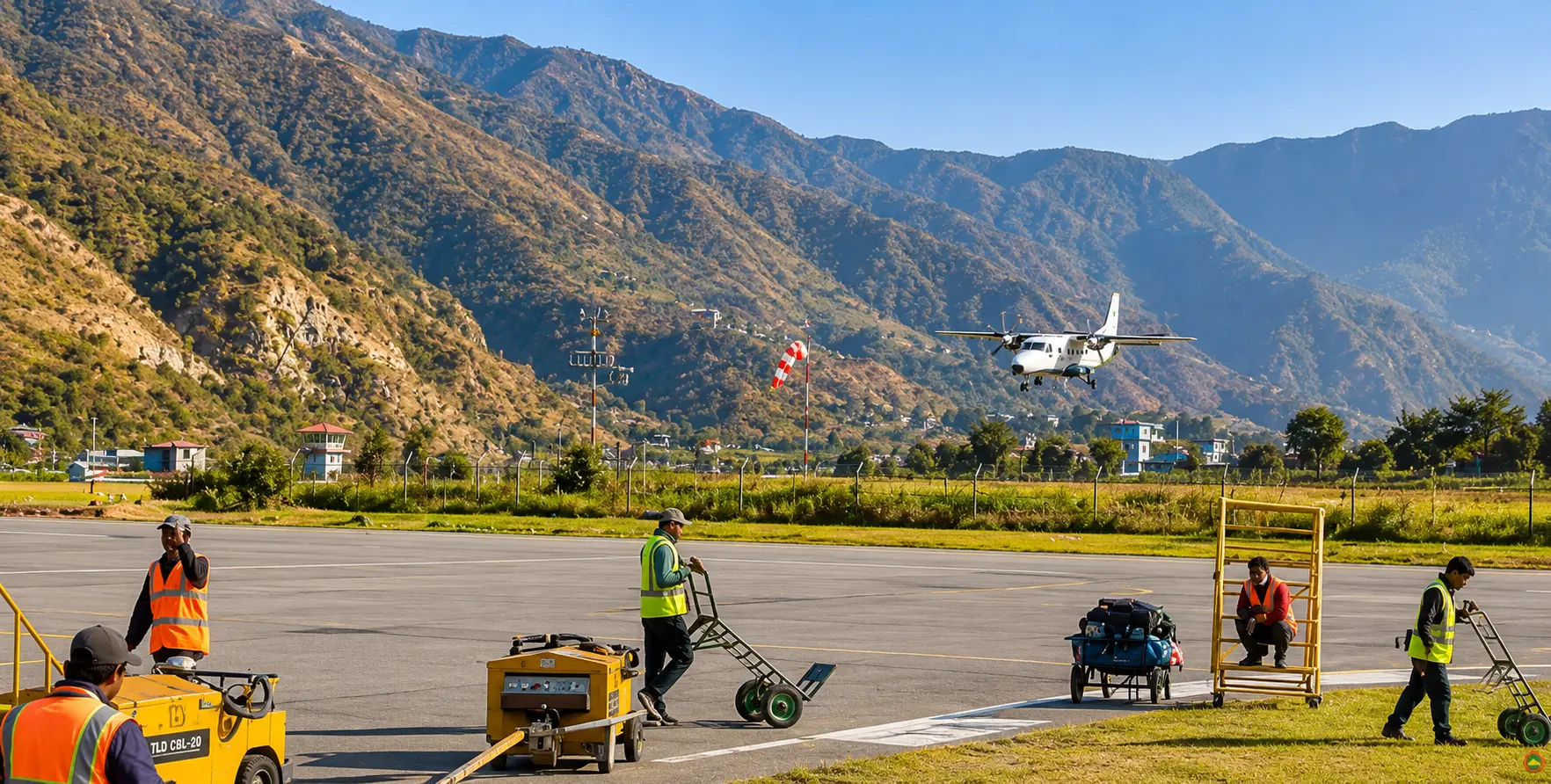
Day 3: Sarangkot sunrise. Pokhara activities (Phewa Lake, Peace Stupa, Bindabasini Temple).

Day 4: Pokhara to Chitwan by hired Hiace van (3 to 4 hours). Afternoon: Rapti River canoe.

Day 5: Full-day Chitwan — morning jeep safari, elephant centre, nature walk, Tharu cultural show.

Day 6: Chitwan to Kathmandu by Nepal Vehicle Hiring Hiace van (4 to 5 hours, lunch of Mugling fish).

Day 7: Kathmandu Nagarkot sunrise tour + Bhaktapur day tour.

Day 8: Nepal Vehicle Hiring airport transfer. International departure.

Nepal Vehicle Hiring coordinates every vehicle across all 8 days of this circuit — one booking, one provider, one contact throughout. Book via our Nepal holiday tour service page or WhatsApp.

Why Nepal Vehicle Hiring is the Best Choice for Chitwan Tourist Transport

The Kathmandu-to-Chitwan tourist vehicle route is Nepal’s most frequently booked inter-city tourist transfer — and the quality difference between providers is significant. Nepal Vehicle Hiring’s Chitwan service stands out for specific operational reasons:

  • Route-experienced drivers: our Kathmandu-to-Chitwan drivers know the Manakamana cable car timing (avoiding the midday queue by arriving at 9:30 a.m.), the best Mugling fish restaurant (we have specific recommendations from years of client feedback) and the Narayanghat fuel stop.m.every jungle lodge access road in Sauraha. This isn’t generic Nepal highway driving knowledge—it is Kathmandu-to-Chitwan circuit knowledge built over years of operating the route.
  • All vehicle types on the same route: whether you are a solo traveller driving a private car or a 35-person corporate group needing a full tourist bus, Nepal Vehicle Hiring’s fleet covers it. No handoffs to partner operators, no quality inconsistency between vehicle types — our full fleet operates the Kathmandu-to-Chitwan route under the same service standards.
  • Return trip pre-booked at first booking: Nepal Vehicle Hiring confirms the return vehicle (Chitwan-to-Kathmandu or Chitwan-to-Pokhara) at the same time as the outbound booking. Your jungle lodge receives a confirmed pickup time from our driver, with no uncertainty about when and how you leave Chitwan.
  • Integration with the complete Nepal circuit: for tourists doing the Nepal triangle (Kathmandu-Pokhara-Chitwan or any sequence), Nepal Vehicle Hiring’s single booking covers every vehicle leg. The Pokhara-to-Chitwan vehicle and the Chitwan-to-Kathmandu return are confirmed at the same time as the initial booking—total logistics certainty from arrival to departure.
  • 24/7 WhatsApp operations: if the Prithvi Highway has a landslide causing delays, or if your Sauraha jungle lodge pickup needs to be rescheduled by an hour, Nepal Vehicle Hiring’s operations team is available on WhatsApp to manage the adjustment in real time—no phone tag, no email delays — instant WhatsApp coordination for any itinerary change.

Tourist Vehicle Rental in Kathmandu

Patan Durbar Square in the Kathmandu Valley

Best Tourist Vehicle Rental In Kathmandu

Kathmandu is the starting and ending point of almost every Nepal journey—the city where international visitors arrive, where trekking permits are arranged, where the cultural heritage of the Kathmandu Valley awaits exploration, and from which every major Nepal destination is accessed by vehicle, flight, or trail. Having the right tourist vehicle rental in Kathmandu from arrival transforms the Nepal experience: no taxi queues at the airport, no fare negotiations on unfamiliar streets, no uncertainty about which vehicle suits which route, and no gaps between destinations as the itinerary shifts from valley sightseeing to mountain approaches.

Nepal Vehicle Hiring Pvt. Ltd., based in Thamel, Kathmandu — Nepal’s primary tourist district — is the city’s specialist tourist vehicle rental provider, offering the complete range of vehicles for every type of Kathmandu and Nepal tourist need: private car hire for individuals and small groups, 4WD jeep hire for mountain approaches and top-end highway travel, Hiace van hire for groups of 8 to 14, Coaster bus hire for groups of 15 to 25, and full bus hire for large tour parties of 25 to 45. Every vehicle includes an experienced, licensed driver, all-inclusive pricing, and hotel door service from any address in Kathmandu.

This complete guide covers everything tourists and travel planners need to know about vehicle rental in Kathmandu — the right vehicle for every use case, the prices, the key tourist routes, the most important Kathmandu Valley sites, and the connections from Kathmandu to every major Nepal destination.

Kathmandu Tourist Vehicle Rental: Quick Reference Guide

Vehicle TypeCapacityBest ForPrice Range (per day)Advance Booking
Private Car (Sedan/SUV)2–4 passengersAirport transfer, valley sightseeing, couplesNPR 4,000–10,00024–48 hours
4WD Jeep, Scorpio)4–7 passengersMountain routes, top-end highway, small groupsNPR 8,000–15,0002–5 days
Hiace Van8–14 passengersGroup tours, airport runs, highway transferNPR 10,000–16,0003–7 days
Coaster Bus15–25 passengersMid-size group tours, corporate, pilgrim groupsNPR 18,000–28,0005–10 days
Full Tourist Bus25–45 passengersLarge group tours, pilgrimage, school/corporateNPR 28,000–45,0007–14 days

All prices are all-inclusive — vehicle, licensed driver, fuel, and all applicable road charges. Multi-day prices include driver accommodation and meal allowance. Contact Nepal Vehicle Hiring via our Plan Your Trip page for confirmed rates.

Nepal Tour Package

Kathmandu Airport Transfer — Your First Nepal Vehicle

Kathmandu visitors’ first tourist vehicle rental need is a Kathmandu airport transfer. This private vehicle picks you up at Tribhuvan International Airport (TIA) and takes you to your hotel in Thamel.

Nepal Vehicle Hiring’s airport transfer service sets the first impression of Nepal transport quality: a confirmed vehicle, a named driver holding your sign in the arrivals hall, and a direct route to your hotel, without the haggling and uncertainty of the unregulated taxi queue outside TIA.

Airport transfer pricing (TIA to Thamel, one way, all-inclusive):

  • Private car: NPR 1,200 to 1,800
  • 4WD jeep/SUV: NPR 1,800 to 2,500
  • Hiace van (groups): NPR 2,500 to 3,500

Nepal Vehicle Hiring offers airport transfers 24 hours a day, 7 days a week—including early morning and late-night international arrivals. Our driver tracks your flight status and adjusts pickup times for delays at no extra charge. Book via WhatsApp with your flight number, arrival date, and hotel name — confirmation within 2 hours.

Kathmandu Valley Sightseeing — The Tourist Vehicle Essential

The Kathmandu Valley’s seven UNESCO World Heritage monument zones span a 330-kilometer-diameter valley — close enough for an energetic walker to cover in multiple days. Still, a private tourist vehicle is best, letting you control timing, sequence, and duration at each site.

Nepal Vehicle Hiring’s Kathmandu sightseeing service is the dedicated valley-circuit vehicle—covering all seven UNESCO sites in a single efficient day with an experienced driver who knows the best parking, checkpoint timings, and optimal photo spots at each monument.

Book the Best Tourist Vehicle Rental in Kathmandu for sightseeing, airport transfers, trekking pickups, pilgrimage tours, and long-distance journeys. Choose a private car for couples, an SUV or Scorpio for families, a 4WD jeep for mountain routes, or a Hiace, Coaster, or tourist bus for groups.

The Seven UNESCO World Heritage Sites

  • Pashupatinath Temple: the most sacred Shiva temple in the world, on the Bagmati River bank. Most powerful at the evening Aarti ceremony (5:00 to 6:30 p.m.). Hindu-only inner sanctum; full riverside access for all visitors.
  • Boudhanath Stupa: Nepal’s largest stupa and one of Asia’s most important Buddhist pilgrimage sites. Morning kora (circumambulation) with the resident Tibetan Buddhist community is the defining experience.
  • Swayambhunath: the ancient hilltop stupa (‘Monkey Temple’) with panoramic valley views and 365 stone steps. Best visited in morning light for the valley panorama.
  • Patan Durbar Square: the finest collection of Newari architecture in Nepal, just across the Ring Road from Kathmandu. Patan Museum (in the former royal palace) is Nepal’s best museum.
  • Kathmandu Durbar Square: the historic royal palace square of the old city, with the living goddess Kumari’s palace and the Taleju Temple.
  • Bhaktapur Durbar Square: Nepal’s most perfectly preserved medieval city, 13 km east of Kathmandu. Nyatapola Temple, 55-Window Palace, pottery and wood-carving quarters. Deserves a dedicated half-day or full day.
  • Changu Narayan: Nepal’s oldest dated temple (464 CE inscription), on a forested ridge above the Bhaktapur valley. Often bypassed by busy tourists — one of the Valley’s finest heritage rewards.

Nepal Vehicle Hiring’s Kathmandu sightseeing service typically follows this sequence: Pashupatinath (morning) → Boudhanath (mid-morning) → Swayambhunath (late morning) → Pata (afternoon) → Kathmandu Durbar Square (late afternoon), allowing the final sunset light on the palace. We offer the Bhaktapur Durbar Square day tour as a separate dedicated vehicle for those who want a full Bhaktapur experience.

Book the Best Tourist Vehicle Rental in Kathmandu for sightseeing, airport transfers, trekking pickups, pilgrimage tours, and long-distance journeys. Choose a private car for couples, an SUV or Scorpio for families, a 4WD jeep for mountain routes, or a Hiace, Coaster, or tourist bus for groups.

Nagarkot Sunrise Tour — The Essential Himalayan Dawn Experience

The Nagarkot sunrise tour via Nepal Vehicle Hiring’s Kathmandu to Nagarkot vehicle is one of the most popular single tourist vehicle experiences in Kathmandu — a pre-dawn drive from Thamel to the Nagarkot ridge (2,175 m), arriving in time for the first light on the Himalayan panorama: Manaslu (8,163 m), Ganesh Himal, Langtang Lirung (7,227 m), Dorje Lakpa, Jugal Himal, and on the clearest days, Everest itself at the eastern horizon. Nagarkot offers the finest accessible Himalayan view in the Kathmandu Valley and is one of Nepal’s most photographed sights.

Vehicle departs Thamel at approximately 4:30 to 5:00 a.m., reaching Nagarkot (32 km) by 6:00 a.m. for the sunrise viewing (duration varies by season — December sunrise is at approximately 6:45 a.m., May sunrise at approximately 5:15 a.m.). The most popular circuit combines the Nagarkot sunrise with the return route through Bhaktapur Durbar Square—arriving in Bhaktapur as the medieval city wakes for the morning, before day-tour groups arrive from Kathmandu. Nepal Vehicle Hiring offers this combination as a single-vehicle booking.

Kathmandu to Major Nepal Destinations — Tourist Vehicle Highway Services

Kathmandu to Pokhara

The Kathmandu to Pokhara bus service and private car/Hiace/Coaster hire cover Nepal’s most travelled tourist highway — 200 km on the Prithvi Highway, 6 to 8 hours by private vehicle. All types of tourist vehicles are available for this route: private car for couples, 4WD jeep for small top-end groups, Hiace van for 8 to 14 passengers, Coaster for 15 to 25, and a full bus for large groups.

The Manakamana Temple cable car stop (approximately 3 hours from Kathmandu) is the standard midpoint cultural break on the Kathmandu-Pokhara tourist vehicle journey.

Kathmandu to Chitwan

The Kathmandu-to-Chitwan highway (approximately 150 km, 4 to 5 hours) connects Kathmandu to Nepal’s premier wildlife destination. All Nepal Vehicle Hiring vehicle types serve this route on the Prithvi Highway and Narayanghat road. Most tourists combine Chitwan with Pokhara and Kathmandu in a Nepal tour package or holiday circuit.

Kathmandu to Lumbini

Kathmandu to Lumbini (birthplace of the Buddha, UNESCO World Heritage Site) is approximately km and takes 6 to 8 hours on the Terai highway. Nepal Vehicle Hiring’s Hiace van hire, Coaster bus hire, and full bus hire serve this pilgrim route. Our Nepal Nekhor tour covers the full Nepal pilgrimage circuit, including Lumbini.

Kathmandu to Muktinath via Pokhara

The Muktinath Yatra — one of Nepal’s most popular pilgrimage circuits — departs from Kathmandu for Pokhara, then continues by 4WD jeep via the Kali Gandaki gorge to Muktinath Temple (3,710 m). Nepal Vehicle Hiring’s Muktinath Yatra itinerary and Kathmandu-to-Mustang private jeep coordinate the complete Kathmandu-to-Muktinath tourist vehicle service.

Swayambhunath visit during Kathmandu Pokhara Tour

Tourist Vehicle Types: Which One Do You Need?

Private Car Hire (2 to 4 Passengers)

Our private car hire in Nepal is ideal for couples, solo travellers, and small families based in Kathmandu. Sedans for the smooth Kathmandu Valley roads and Prithvi Highway;4WD SUVs for mountain approach sections. Best for: airport transfers, valley sightseeing circuits, Nagarkot sunrise tour, Kathmandu-Pokhara highway.

Price range: NPR 4,000 to 7,000 per day within the Valley; NPR 8,000 to 12,000 Kathmandu to Pokhara one way.

4WD Jeep Hire (4 to 7 Passengers)

ValleyD jeep hire — Mahindra Scorpio and Toyota Land Cruiser — is the essential vehicle for mountain approach routes (Manang, Mustang, Gosaikunda, Syabrubesi) and the top-end highway option for tourists who want the finest available vehicle for the Kathmandu-Pokhara journey. The Land Cruiser is Nepal’s ultimate tourist vehicle — leather interior, advanced climate control, the finest suspension available on Nepal roads.

Price: NPR 8,000 to 15,000 per day for Valley and highway use; NPR 22,000 to 38,000 for Kathmandu-Manang or Kathmandu-Mustang multi-valley approaches.

Hiace Van Hire (8 to 14 Passengers)

Our Hiace van hire is the most frequently booked tourist vehicle in Kathmandu for group tours. Comfortable, air-conditioned, and economical for groups of 8 to 14 on all highway routes in Nepal. Standard vehicle for: group airport transfers, family tour circuits, school cultural trips, corporate Kathmandu visits.

Price: NPR 10,000 to 16,000 per day within the Valley; NPR 18,000 to 25,000 one way from Kathmandu to Pokhara.
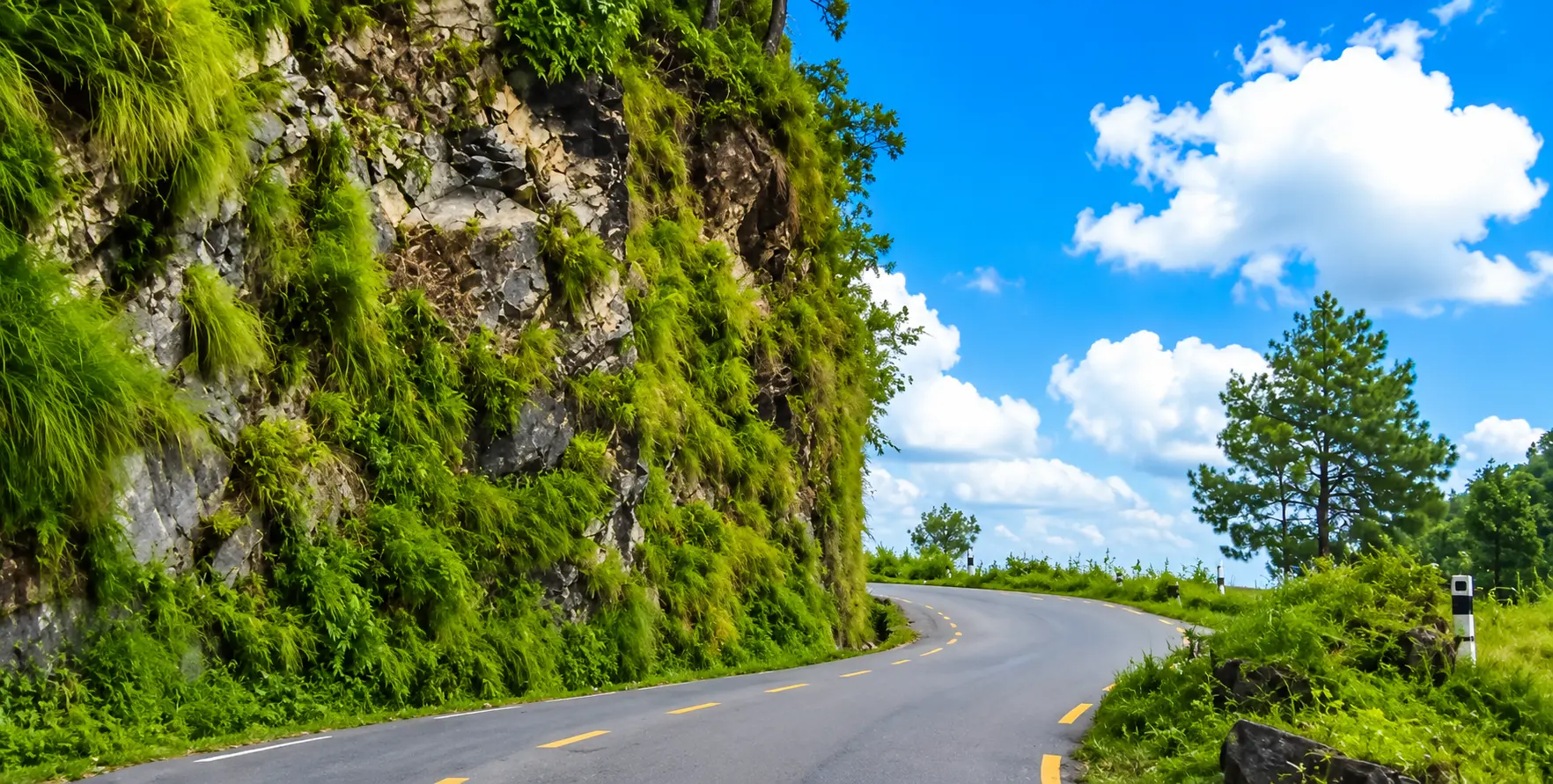
Coaster Bus Hire (15 to 25 passengers) Valley

Our Coaster bus hire serves mid-size tourist groups — corporate incentive tours, extended family groups, educational institution visits, pilgrim parties. Individual reclining seats with air-conditioning, suitable for all Nepal highway corridors. Price: NPR 18,000 to 28,000 per day for highway use.

Full Tourist Bus Hire (25 to 45 Passengers)

Our full tourist bus hire serves Nepal’s largest tourist groups. Covers all major highway corridors; air-conditioned; experienced drivers. Most commonly used for: large pilgrim groups, corporate incentive tours, school and university trips.

Price: NPR 28,000 to 45,000 per day for highway use.

Nepal Tour Package

What Makes a Good Tourist Vehicle Rental in Kathmandu?

Kathmandu’s tourist vehicle rental market ranges from professionally managed services to informal arrangements assembled on the day of travel. Understanding what distinguishes quality service helps tourists make the right choice:

  • Licensed and registered vehicles: Every Nepal Vehicle Hiring vehicle is fully registered with the Department of Transport Management and carries current roadworthiness and insurance certification. Ask any vehicle rental provider for their vehicle registration documentation — legitimate operators provide it immediately.
  • Licensed drivers: Nepal Vehicle Hiring drivers are licensed by Nepal’s transport authority for their specific vehicle class. Mountain road drivers (Mustang, Manang, Gosaikunda) receive route-specific orientation before being deployed on client journeys.
  • All-inclusive pricing confirmed in writing: Nepal Vehicle Hiring quotes all-in prices covering vehicle, driver, fuel, and all road charges before the journey begins: no end-of-journey additions, no fuel supplements, no unexpected checkpoint fees.
  • Hotel door pickup: our vehicles collect from your specific Thamel hotel address ot from a central pickup point that requires a taxi to reach. This seems minor but saves 20 to 40 minutes and NPR 300 to 500 per journey.
  • 24/7 WhatsApp operations: our team is available on WhatsApp throughout your Nepal stay for any schedule change, road condition query, or additional vehicle requirement.
  • Route-specific driver expertise: our Nagarkot drivers know the best sunrise viewpoints; our Bhaktapur drivers know the parking, the entry sequence, and the best photography light timing; our mountain drivers know the Marsyangdi gorge and Kali Gandaki approach roads in all seasons.

Kathmandu Tourist Area Vehicle Guide

Thamel — The Tourist Hub

Thamel is Kathmandu’s main tourist district—a hub of hotels, restaurants, trekking equipment shops, travel agencies, and cultural attractions that serves as the base for most international visitors. Nepal Vehicle Hiring’s operations office is based in Thamel, making hotel door pickup from any Thamel address straightforward. Thamel’s narrow, often-congested streets are best navigated by our drivers who know which approach roads are accessible at different times of day.

Patan/Lalitpur — The City of Fine Arts

Patan (Lalitpur), just across the Ring Road from Kathmandu, is a UNESCO-listed medieval city with some of the finest Newari architecture and Buddhist heritage. Patan Durbar Square, Patan Museum (rated the best museum in Nepal by multiple travel publications), the Golden Temple (Hiranya Varna Mahavihar), and the dozens of Buddhist bahals (monastery courtyards) that make Patan the most concentrated Buddhist sacred space in the Valley are all within 1 kilometre of the main square.

Nepal Vehicle Hiring’s Kathmandu Valley service includes Patan as a standard circuit stop.

Bhaktapur — Nepal’s Medieval City

Bhaktapur (13 km east of Kathmandu) deserves more time than most tour itineraries allow. The city’s four main squares — Durbar Square, Taumadhi Square (dominated by the 30-meter Nyatapola Temple), Dattatreya Square, and Pottery Square — plus the exceptional Peacock Window and the 55-Window Palace represent the fullest surviving expression of Newari medieval urban culture anywhere in the world.

Nepal Vehicle Hiring’s dedicated Bhaktapur Durbar Square day tour vehicle lets you spend a full morning in Bhaktapur before the day-tour crowds arrive from Kathmandu — arriving at 8:00 a.m. gives 2 to 3 hours of relatively crowd-free exploration of Nepal’s finest medieval architecture.

Boudhanath — The Tibetan Quarter

Boudhanath Stupa — 10 km east of Thamel on the Ring Road — is Nepal’s largest stupa and the most important Buddhist pilgrimage site in South Asia outside India. The stupa’s surrounding community of Tibetan Buddhist monasteries, shops, restaurants, and guesthouses makes it a genuinely distinct cultural zone within Kathmandu — more Tibet than Nepal in atmosphere.

Morning kora (6:30 to 9:00 a.m.) is the defining experience: hundreds of Tibetan Buddhist practitioners circumambulating the stupa with prayer beads, prostrations, and the steady rhythm of a living devotional practice. Nepal Vehicle Hiring’s Kathmandu sightseeing service always includes Boudhanath as an early morning stop.

Pashupatinath — The Sacred Ghats

Pashupatinath Temple on the Bagmati River is one of the world’s most important Shiva temples and Nepal’s most sacred Hindu site. The temple’s inner sanctum is restricted to Hindus. Still, the river ghats and surrounding complex—including the cremation platforms, sadhus in meditation, and the evening Aarti ceremony—are accessible to all respectful visitors.

The evening Aarti (5:00 to 6:30 p.m.) is the single most powerful and moving ceremony in Kathmandu’s cultural calendar. Nepal Vehicle Hiring schedules the Pashupatinath visit for the evening Aarti whenever the itinerary allows.

Seasonal Guide for Tourist Vehicle Rental in Kathmandu

SeasonMonthsValley ConditionsHighway ConditionsBooking Lead Time
SpringMar–MayClear, warm, rhododendronsExcellent on all routes3–5 weeks for peak dates
MonsoonJun–AugLush, humid, occasional rainPrithvi Hwy reliable; mountain roads variable1–2 weeks
Post-MonsoonSep–OctClear skies, lush greenBest overall clarity4–6 weeks
Autumn PeakOct–NovFinest conditionsPeak traffic on all tourist routes5–7 weeks
WinterDec–FebClear, cold morningsPrithvi Hwy fine; mountain roads cold1–2 weeks

Top 10 Tourist Vehicle Rental Uses in Kathmandu

Tourist Vehicle Rental Prices Kathmandu

ServiceVehiclePrice (all-in)Notes
Airport transfer (TIA to Thamel)Private carNPR 1,200–3,00024/7 service, flight tracking
Full-day Kathmandu sightseeingPrivate carNPR 5,000–10,000All 7 UNESCO sites in one day
Bhaktapur Durbar Square tourPrivate carNPR 3,000–4,500Half or full day
Nagarkot sunrise + Bhaktapur returnPrivate carNPR 5,500–150004:30 a.m. departure
Kathmandu to Pokhara (1-way)Private carUS$120Manakamana stop included
Kathmandu to Pokhara (1-way)Hiace vanNPR 18,000–30,000For groups of 8–14
Full-day group sightseeingHiace vanNPR 10,000–16,0008–14 passengers, all valley sites
Kathmandu to Manang (2 days)4WD Jeep (Scorpio)NPR 22,000–60,000Annapurna Circuit approach
Kathmandu to Muktinath (3–4 days)4WD JeepNPR 40,000–60,000Via Pokhara and Kali Gandaki

Frequently Asked Questions: Tourist Vehicle Rental Kathmandu

What is the best tourist vehicle for a couple visiting Kathmandu?

For 2 to 3 people, our private car hire in Nepal is ideal—comfortable, economical, and suitable for Kathmandu Valley sightseeing, the Nagarkot sunrise tour, and the Kathmandu-to-Pokhara highway leg. For a couple wanting the most comfortable Nepal experience, our 4WD jeep hire with a Toyota Land Cruiser is the top-end upgrade—especially for the Pokhara and Muktinath highway sections.

How much does tourist vehicle rental cost in Kathmandu?

Day rates within the Kathmandu Valley: private car NPR 4,000 to 10,000; Hiace van NPR 10,000 to 20,000; 4WD jeep NPR 8,000 to 20,000; Coaster bus NPR 18,000 to 28,000. All prices are all-inclusive — vehicle, driver, fuel, and road charges. Multi-day journeys include driver accommodation and meals. We provide confirmed pricing in writing before any journey begins — contact us via our plan your trip page.

Can I hire a vehicle for just one site, or do I need a full-day booking?

Nepal Vehicle Hiring offers both point-to-point transfers (e.g., hotel to Pashupatinath and return — NPR 1,800 to 2,500 by private car) and full-day circuit bookings. The Kathmandu airport transfer is a single journey; the Kathmandu sightseeing service is a full-day booking. Contact us for any specific configuration—we customise your vehicle arrangement to your exact requirements.

Do your tourist vehicles include a guide, or just the driver?

Nepal Vehicle Hiring provides vehicles and professional drivers — not licensed tour guides. Our drivers have extensive knowledge of the Kathmandu Valley and will advise on the best sequence, parking, and timing at each site. For a licensed Kathmandu tour guide (recommended for visitors who want in-depth heritage explanation at each site), Nepal Vehicle Hiring can recommend partner guide services — ask at the time of vehicle booking.

What is the minimum booking notice for Kathmandu tourist vehicle rental?

Airport transfers: 4 to 8 hours (24 hours preferred). Kathmandu sightseeing: 24 to 48 hours. Nagarkot sunrise tour: 24 hours (book the evening before).

Kathmandu to Pokhara or other highway journeys: 2 to 5 days. Mountain approach vehicles (Manang, Mustang, Gosaikunda): 3 to 7 days. For October and November peak season, book all tourist vehicles 4 to 6 weeks in advance.

Can Nepal Vehicle Hiring manage my complete Nepal circuit vehicle?

Yes — our Nepal holiday tour and Nepal tour package services coordinate every vehicle from the airport transfer on arrival to the final airport drop-off for international departure. One booking, one provider, one contact throughout—visit our Plan Your Trip page.

Book Your Kathmandu Tourist Vehicle with Nepal Vehicle Hiring

Nepal Vehicle Hiring Pvt. Ltd., Thamel, Kathmandu — the city’s specialist tourist vehicle rental provider for 2026 and 2027. Hotel door pickup from any Kathmandu address, all-inclusive pricing, experienced licensed drivers, 24/7 support:

Visit our Plan Your Trip page with your Kathmandu arrival date, group email, hotel name, and planned Nepal destinations. We respond within 24 hours with a complete vehicle plan and all-in pricing for your entire stay in Nepal.

Why Private Tourist Vehicle Beats Public Transport in Kathmandu

Many first-time Nepal visitors consider public transport or apps to get around Kathmandu before discovering that private tourist vehicle rental is a more practical choice for sightseeing in the city. Understanding the key differences helps tourists decide with confidence.

Kathmandu’s public transport system—local buses, tempos (electric three-wheelers), and ride-hailing apps—works well for residents commuting on fixed routes. For tourists moving between heritage sites spread across the Valley with luggage, camera equipment, and specific timing requirements for dawn visits and Valleyg-time attractions, public transport presents several challenges: routes do not directly connect heritage sites to schedules; schedules are not aligned with sunrise viewpoints or Aarti timings; luggage is difficult to manage on crowded local buses; and the language barrier for navigating Kathmandu’s route system is a genuine obstacle for first-time visitors.

Private tourist vehicle rental solves all of these specifically: Nepal Vehicle Hiring collects from your Thamel hotel door, sequences the heritage sites in optimal order, arrives at Pashupatinath for the Aarti at 5:15 p.m., reaches Nagarkot for the sunrise at 6:00 a.m., parks at the Bhaktapur east gate (not the tourist bus park 500 meters away), and returns you to your hotel precisely when you choose to leave each site. The driver’s local knowledge — of traffic patterns, which Kathmandu roads are congested at which hours, and back routes that bypass Ring Road traffic jams — is a significant service that no app-based or public transport alternative provides.

For tourists combining Kathmandu sightseeing with onward Nepal travel to Pokhara, Chitwan, trekking trailheads, or pilgrimage sites, private vehicle rental provides a single continuous service that transitions from city to highway to mountain road without rebooking, renegotiating, or finding new transport at each destination junction. Nepal Vehicle Hiring’s integrated service model—one booking, one provider, one contact—is designed for this multi-destination Nepal tourist circuit.

Kathmandu’s Cultural Heritage: A Vehicle Guide to the Valley’s Depths

Beyond the seven UNESCO sites that make up the primary Kathmandu Valley tourist circuit, the Valley offers a rich heritage landscape that rewards tourists with a vehicle and a flexible schedule. Nepal Vehicle Hiring’s drivers know these secondary sites and can incorporate them into a customised Valley circuit on request:

Budhanilkantha — The Sleeping Vishnu

Budhanilkantha (8 km north of Thamel) is one of Nepal’s most extraordinary religious monuments—a 5-meter reclining Vishnu figure carved from a single piece of black basalt, lying in a water tank fed by natural springs. The sculpture is considered one of Nepal’s finest examples of Licchavi-period stone carving (approximately 7th to 9th century CE).

It is among the country’s most sacred images of Vishnu. The Nepal Vehicle Hiring private car reaches Budhanilkantha in 20 to 30 minutes from Thamel — a convenient addition to any Kathmandu Valley sightseeing day.

Dakshinkali Temple

Dakshinkali (22 km southwest of Kathmandu) is Nepal’s most important Kali temple — an active, dramatically atmospheric site where animal sacrifices are performed on Tuesdays and Saturdays, drawing thousands of Hindu devotees from across the country. The drive to Dakshinkali passes through the forested Pharping area with its Buddhist cave hermitages and the ancient Vajrayogini temple.

Dakshinkali, Pharping cave monasteries, and the scenic Kirtipur medieval town make a superb full-day Kathmandu south circuit by private vehicle.

Kirtipur — The Fortified Hilltop City

Kirtipur (5 km southwest of Kathmandu) is the Valley’s least-visited major historic city — a compact medieval hilltop town with two ancient Valley ponds, the Chilancho Stupa (a rare Licchavi-period Buddhist monument), and a network of narrow lanes between traditional Newar houses. Kirtipur’s relative obscurity among tourists gives it a genuinely untouristed character that the more famous Bhaktapur has largely lost, and its rampart views across the Kathmandu Valley toward the Himalayan range are among the Valley’s finest accessible panoramas.

Panauti and Namo Buddha

East of Bhaktapur, the historic valley town of Panauti (32 km from Kathmandu) sits at the sacred confluence of three rivers. It contains some of Nepal’s finest medieval Newari temple architecture, including the extraordinary Indreshwor Mahadev temple.

Continuing east to Namo Buddha (40 km from Kathmandu) takes visitors to one of Nepal’s most sacred Buddhist pilgrimage sites— a hilltop stupa marking the spot where, in Buddhist tradition, the Bodhisattva offered his body to a starving tigress to save her cubs. Nepal Vehicle Hiring’s private car makes the Panauti-Namo Buddha circuit a comfortable half-day excursion from Kathmandu.

Kathmandu to Pokhara: The Tourist Highway in Detail

The Kathmandu-to-Pokhara highway is Nepal’s most-travelled vehicle route, connecting the country’s largest cities and tourist hubs in a 6- to 8-hour drive through some of Nepal’s mid-hill landscape. Understanding this route in detail helps tourists choose the right vehicle and plan the journey optimally.

The standard Kathmandu-to-Pokhara tourist vehicle route follows the Prithvi Highway west from Kathmandu through Thankot (Kathmandu Valley rim), descends through the Mahesh Khola valley to Naubise junction, then follows the Trishuli River gorge through Malekhu, Benighat, and the increasingly dramatic canyon landscape to Mugling junction. At Mugling, the highway turns west, leaves the Trishuli, and crosses to the Marsyangdi River valley before ascending through Damauli and descending to Pokhara’s eastern outskirts.

Key tourist vehicle stops on the Kathmandu-to-Pokhara highway: Manakamana Temple cable car at Mugling junction (the most popular stop — a 20-minute cable car ride to the hilltop Bhagwati temple, total stop time approximately 2 to 2.5 hours); Mugling fish restaurant for lunch (the famous freshwater fish restaurants on the Trishuli riverside, approximately 3.5 hours from Kathmandu); and the first Annapurna range views as the highway approaches Pokhara from the east in the final hour of the journey.

Nepal Vehicle Hiring offers private car hire, Hiace van hire, and Coaster bus hire on the Kathmandu-to-Pokhara route. Our Kathmandu to Pokhara bus service also offers individual seat bookings at competitive rates for solo travellers and small groups. All vehicle types include the Manakamana stop option and the Mugling fish lunch stop — discuss your preferred timing with our driver at departure.

Tourist Vehicle Rental for Specific Trip Types

Honeymoon and Anniversary Trips

Kathmandu offers some of Nepal’s most romantic tourist vehicle experiences. Nepal Vehicle Hiring’s Toyota Land Cruiser — Nepal’s finest available private vehicle — transforms every leg of a honeymoon itinerary: the private Nagarkot sunrise with no other vehicles at the viewpoint, the Bhaktapur medieval city in the golden morning light before the tourist buses arrive, the Pokhara Himalayan panorama through the Land Cruiser’s panoramic windows, the private jeep journey through the Kali Gandaki gorge to Muktinath.

For honeymoon and anniversary travel, the Land Cruiser is the vehicle choice — book via WhatsApp.

Family Tours with Children

Family tours in Kathmandu benefit most from the flexibility of private vehicle rental — the ability to stop when a child needs a break, skip a site that isn’t engaging the younger members, and manage the day’s pace around the family’s energy rather than a fixed group schedule. Nepal Vehicle Hiring’s Hiace van hire is the most practical family vehicle for Kathmandu: spacious, comfortable, and able to accommodate strollers, camera bags, and the accumulated shopping from a Thamel trekking-gear spree.

Our most popular family booking is the full-day Kathmandu sightseeing circuit with the Hiace van.

Corporate Groups and Incentive Tours

Nepal is an increasingly popular corporate incentive destination — the combination of Himalayan adventure, cultural heritage, and the team-building potential of shared challenging experiences attracts corporate groups from India, Southeast Asia, and beyond. Nepal Vehicle Hiring’s Coaster bus hire and full bus hire support corporate Kathmandu and Nepal circuit programs with the professionalism and operational reliability business travel demands: confirmed pickup times, specific vehicle allocations, a single operations contact, and documentation for corporate travel approval processes.

Educational and School Groups

School and university groups visiting Kathmandu for cultural immersion programs, UNESCO heritage studies, or Nepal development and geography studies use Nepal Vehicle Hiring’s full bus hire and Coaster bus hire for group valley sightseeing. Our trekking transport services also serve educational institutions running Himalayan trekking programs in the Annapurna, Everest, or Langtang regions. Nepal Vehicle Hiring’s vehicles meet institutional safety and insurance standards — documentation available on request.

Pilgrim Groups

Hindu and Buddhist pilgrim groups from India and abroad make up a significant part of Nepal’s tourist vehicle rental market. Nepal Vehicle Hiring’s complete pilgrimage vehicle service covers: Pashupatinath in Kathmandu (the world’s most sacred Shiva temple); Muktinath in Mustang (Nepal’s most sacred Vishnu temple); Lumbini in the Terai (birthplace of the Buddha); Janakpur in Mithila (birthplace of Goddess Sita); and the Gosaikunda alpine lake pilgrimage.

Our Nepal Nekhor tour coordinates transport for the complete Nepal sacred circuit. Our Kailash Mansarovar Yatra alternative route vehicle services cover the Simikot-Hilsa and Kathmandu-Lhasa approaches.

Understanding Kathmandu’s Road Network for Tourist Vehicle Hire

Kathmandu’s road network is far more complex for tourist vehicle navigation than it appears on a map. Understanding the key features of the city’s road system helps tourists appreciate why an experienced local driver is genuinely valuable, not merely convenient.

The Kathmandu Valley road network radiates from the historic city core in multiple directions, connecting to the surrounding districts via passes over the valley rim. The key road for tourist vehicles: the Ring Road (a roughly circular highway around the Valley at mid-radius) connects the main access roads; the Arniko Highway heads northeast toward Valleyaktapur and the Tibet border; the BP Highway heads east toward Salleri and the Everest region; the Prithvi Highway heads west toward Pokhara; the Tribhuvan Highway (the old road) heads south toward the Terai; and the Dakshinkali Road heads southwest toward Pharping and the Valley’s southern pilgrim sites.

Within the city, Kathmandu’s narrow lanes and the Ring Road Valley’s patterns create daily navigational complexity that requires local knowledge to manage efficiently. The Thamel district — where most tourists stay — has a particularly confusing internal lane network that changes one-way directions based on road widths and daily traffic management decisions.

Nepal Vehicle Hiring’s drivers navigate Thamel’s lanes daily and know the correct approach road to every hotel in the district — saving the first-day confusion that GPS alone cannot resolve in Kathmandu’s complex urban geography.

Nepal Vehicle Hiring vs Other Kathmandu Vehicle Rental Options

The Kathmandu tourist vehicle rental market includes several types of providers — understanding the differences helps tourists choose appropriately:

Hotel-Arranged Vehicles

Many Thamel hotels offer a range of tourist vehicles for guests through their own contacts. This is convenient but often more expensive than booking directly with a vehicle specialist, and the hotel’s vehicle quality and driver experience standards may be less controlled than those of a specialist operator. Nepal Vehicle Hiring partners with hotels—our vehicles are available to hotel guests through direct booking or hotel recommendation.

Street-Level Taxi and Jeep Touts

The street outside TIA’s arrival hall and in Thamel’s main lanes has informal taxi and jeep touts offering tourist vehicle hire. These arrangements are typically cheaper on the surface but carry significant risks: unmetered fares negotiated in the confusion of arrival; vehicles that may not be properly registered or insured; drivers whose route knowledge may not extend beyond Thamel; and no accountability if service quality is poor. Nepal Vehicle Hiring’s pre-booked, confirmed service eliminates all of these risks.

App-Based Ride Services

Nepal has ride-hailing services (InDrive and others) that work within Kathmandu city. These are excellent for short urban point-to-point trips but aren’t suitable for full-day heritage circuits, Nagarkot sunrise tours, or any journey outside the Kathmandu Ring Road. App services don’t offer the Manakamana stop option on the Prithvi Highway; guidance on optimal heritage-site sequencing; overnight, multi-day mountain-approach driving; or the all-inclusive pricing that Nepal Vehicle Hiring’s confirmed bookings provide.

Nepal Vehicle Hiring: The Specialist

Nepal Vehicle Hiring is built specifically for the tourist vehicle rental market — our entire fleet, driver training, and operations model are designed for international tourist clients making Nepal’s most significant journeys. We are not a taxi company, a local commute service, or a general transport business.

Every driver in our fleet is deployed on the tourist circuit routes their vehicle covers; every vehicle is maintained to the standards Nepal’s mountain and highway roads demand; and our Kathmandu operations team is staffed specifically to support the English-language communication international visitors require. This specialisation shows in both the quality of service and the peace of mind that comes from booking with a provider that knows exactly what Nepal tourist vehicle rental requires.

Kathmandu Tourist Vehicle Hire: Practical Tips for Getting It Right

First-time visitors to Kathmandu often run into preventable problems with tourist vehicle hire that a few preparation steps can eliminate. Nepal Vehicle Hiring’s operations team has distilled these into a practical checklist:

  • Book your airport transfer before you land: the TIA arrival hall has confirmed private-vehicle drivers holding name signs—Nepal Vehicle Hiring’s driver will be there. Alternatives include negotiating with unregulated taxis in the confusion of a jet-lagged arrival. WhatsApp with your flight number and arrival time before you leave your home country.
  • Confirm your hotel address before booking: Thamel has dozens of hotels with similar names, and Kathmandu addresses aren’t always GPS-reliable. Give your driver the hotel name, the nearest intersection or landmark, and your mobile number for the arrival call. Nepal Vehicle Hiring’s drivers know every Thamel hotel address, but you must confirm the specific hotel name in advance.
  • Book the Nagarkot sunrise the evening before: the Nagarkot tour requires a 4:30 to 5:00 a.m. departure — WhatsApp confirmation the previous evening is the most reliable booking method. Don’t rely on WhatsApp at the pre-dawn wake-up.
  • Schedule the Pashupatinath Aarti for the last stop of the day: the evening Aarti (5:00 to 6:30 p.m.) is Kathmandu’s most powerful experience and a natural end to any sightseeing day. For this reason, Nepal Vehicle Hiring makes Pashupatinath the final stop on its Kathmandu sightseeing service.
  • Bring NPR cash for site entry fees: Kathmandu’s UNESCO sites charge foreign national entry fees (NPR 1,000 to 1,500 per site) payable in NPR. Nepal Vehicle Hiring’s vehicles do not carry entry fees — carry NPR 5,000 to 10,000 per person for a full-day valley circuit. ATMs in Thamel are reliable.
  • Allow time for photography: Nepal Vehicle Hiring’s all-day sightseeing bookings include stops at all key sites for photos. Tell your driver at departure which sites you want the most time at — our drivers will adjust the pace accordingly rather than rushing the circuit on a fixed schedule.

Book the Best Tourist Vehicle Rental in Kathmandu for sightseeing, airport transfers, trekking pickups, pilgrimage tours, and long-distance journeys. Choose a private car for couples, an SUV or Scorpio for families, a 4WD jeep for mountain routes, or a Hiace, Coaster, or tourist bus for groups.

Kathmandu’s Living Culture: What Makes the City’s Heritage Different

One of the biggest surprises for first-time visitors to Kathmandu is that its UNESCO World Heritage Sites are not archaeological ruins or preserved museum pieces—they are living, active sacred spaces where religious practice has continued without interruption for over a thousand years. Understanding this living character of Kathmandu’s heritage makes the tourist vehicle circuit a genuinely different experience from a European heritage tour.

Pashupatinath Temple has been in continuous religious operation since at least the 5th century CE — the burning ghats on the Bagmati River have seen cremation ceremonies daily for over 1,500 years. The Aarti ceremony, performed every evening by temple priests, follows the same ritual form it has for centuries.

The sadhus who sit in meditation in the temple’s outer courtyards are not performers for tourist camera; ty; they are ascetic practitioners who have renounced householder life for the spiritual path, choosing Pashupatinath as their sacred residence, as their predecessors did in the Licchavi and Malla periods.

The Tibetan Buddhist exile community, which has made Kathmandu their home since the Chinese annexation of Tibet in 1959, performs the Boudhanath Stupa’s morning kora. The monasteries surrounding the stupa are genuine monastic institutions with resident monks, daily puja schedules, and the full complement of Tibetan Buddhist practice — not heritage displays.

Visitors who arrive at Boudhanath at 6:30 a.m. walk the kora alongside these practitioners, inadvertently participating in a living tradition.

Bhaktapur’s streets and squares are still inhabited by Newari families who have lived in these medieval buildings for generations; the pottery quarter’s wheels spin daily, with working potters producing the same black-clay water pots the town has made for centuries. The sweet-makers of Taumadhi still sell Juju Dhau (the famous Bhaktapur curd, pronounced ‘king curd’) from earthenware pots as their grandparents did.

Nepal Vehicle Hiring’s Bhaktapur day tour offers access to this living culture, arriving early enough to see the morning market, the daily ritual washing at the Siddha Pokhari tank, and the artisan workshops opening for the day before the heritage-site crowds arrive.

Post-COVID Nepal Tourism: The Present Landscape

Nepal’s tourism industry recovered strongly after the COVID-19 pandemic disruptions of 2020 to 2022, with visitor numbers in 2023, 2024, and 2025 returning to and then exceeding pre-pandemic levels. In 2026, Nepal’s tourism landscape has several characteristics that directly affect tourist vehicle rental in Kathmandu:

Peak season demand is stronger than ever: October and November 2026 have seen the highest booking volumes for Kathmandu tourist vehicles since record-keeping began, reflecting both pent-up demand and Nepal’s growing profile as a destination for the South Asian outbound market (particularly Indian tourists, who now represent Nepal’s single largest foreign visitor nationality). Nepal Vehicle Hiring’s fleet was fully booked in November; book 4 to 6 weeks in advance for a peak-season tour vehicle in Kathmandu.

New tourism infrastructure: ongoing improvements to Tribhuvan International Airport — including expanded international terminal capacity and improved road connections to the city — have reduced airport-to-Thamel transfer times and improved the overall arrival experience. Nepal Vehicle Hiring’s airport transfer service benefits from these improvements, and our drivers know the current TIA layout, including the new arrivals hall and the designated private vehicle pickup area.

Digital booking: Nepal Vehicle Hiring’s WhatsApp-based booking system is fully operational  — tourists can WhatsApp their vehicle requirements from anywhere in the world and receive confirmed bookings within 2 to 4 hours during Nepal business hours. Our Plan Your Trip page on vehiclehiringnepal.com provides the same booking functionality via a web form for those who prefer not to use WhatsApp.

This digital accessibility is a significant improvement over the in-person or email booking processes that dominated Nepal’s vehicle rental market just five years ago.

Book the Best Tourist Vehicle Rental in Kathmandu for sightseeing, airport transfers, trekking pickups, pilgrimage tours, and long-distance journeys. Choose a private car for couples, an SUV or Scorpio for families, a 4WD jeep for mountain routes, or a Hiace, Coaster, or tourist bus for groups.

Planning Your Kathmandu Days: A Vehicle-by-Vehicle-by-Email Framework. For those spending 3 to 5 days in Kathmandu before or after a trekking or regional circuit, the following day-by-day tourist vehicle framework optimises the valley experience:

Day 1 (Arrival Day)

Nepal Vehicle Hiring: airport transfer from TIA to Thamel hotel. Afternoon: light recovery walk around Thamel. Evening: Pashupatinath evening Aarti by private car (20 minutes from Thamel) — the most powerful Kathmandu experience and a perfect first-evening introduction to Nepal’s living sacred culture.

Return to Thamel for dinner.

Day 2 (Full Valley Circuit)

Full-day Kathmandu sightseeing service by private car or Hiace (depending on group size). Sequence: Boudhanath 6:30 a.m.M kora) → Pashupatinath morning (optional second visit) → Swayambhunath → Kathmandu Durbar Square → Patan Durbar Square + Patan Museum (2 hours). Return to Thamel by 6:00 p.—best day for ticking all seven UNESCO sites in a single managed circuit.

Day 3 (Nagarkot and Bhaktapur)

Depart Thamel at 4:30 a.m. by private car for Nagarkot sunrise—full Himalayan panorama at first light. Return via Bhaktapur Durbar Square, arriving at 8:00 a.m. before the tourist buses — 2 to 3 hours in the medieval city. Optional Changu Narayan temple visit on the return.

Arrive in Thamel by 2:00 p. m. Afternoon free for Thamel shopping or rest.

Day 4 (South Valley Circuit)

Dakshinkali Temple pilgrimage visit (Tuesday or Saturday for the most atmospheric atmosphere) via private car (40 minutes from Thamel). Add the Pharping cave monastery complex and Vajrayogini Temple en route. Return via Kirtipur hilltop medieval town (30 minutes from Dakshinkali).

Return to Thamel by 4:00 p.m.

Day 5 (Departure or Onward Journey)

Nepal  Vehicle Hiring: Airport transfer for international departure, or private car/Hiace for the Kathmandu-to-Pokhara highway journey with Manakamana Temple cable car stop. If you depart on an afternoon international flight, a morning visit to Budhanilkantha (the Sleeping Vishnu, 20 minutes from Thamel) makes an excellent final Kathmandu cultural experience before the airport transfer.

This 5-day framework delivers a comprehensive Kathmandu experience covering all seven UNESCO sites, the Nagarkot sunrise, the Pashupatinath Aarti, the Bhaktapur medieval city, the Dakshinkali pilgrimage circuit, and the south valley cultural heritage — all via Nepal Vehicle Hiring’s private tourist vehicle service. Customise your day’s itinerary, or add/remove sites, based on your group’s specific interests and energy levels.

Nepal Vehicle Hiring’s Commitment to Tourist Vehicle Quality

Nepal Vehicle Hiring has served Kathmandu’s international tourist market for many years, and our core principles have remained consistent: licensed, roadworthy vehicles; professional, experienced drivers; all-inclusive, transparent pricing; and the operational reliability Nepal’s tourist vehicle market demands but often fails to deliver.

Our fleet maintenance program ensures that every vehicle deployed on tourist circuit duty in Kathmandu has completed its scheduled service within the previous month, carries current roadworthiness certification, and is fully insured for both the driver and all passengers. We withdraw vehicles overdue for service or showing any mechanical concern until they are returned to standard — we do not deploy tourist vehicles we would not be comfortable recommending to our own families.

Our driver selection and training program prioritises all others: route knowledge and communication ability. A driver who knows the Kathmandu Valley heritage circuit but cannot tell an international tourist the next stop is 20 minutes away is only half the service.

A driver who communicates well but is unsure about Bhaktapur parking options and east-gate approach timing is the other half. Nepal Vehicle Hiring selects and deploys tourist circuit drivers based on the routes they know best—valley sightseeing drivers for Kathmandu, mountain-approach drivers for trekking transport, and highway drivers for the Prithvi and BP Highway circuits.

This route specialisation is what makes our service consistently better than general-purpose vehicle rental providers in Kathmandu.

For tourists planning Kathmandu visits and Nepal circuits, Nepal Vehicle Hiring is ready to meet every vehicle need, from TIA arrival transfers to final departure drops. WhatsApp, email [email protected], or visit vehiclehiringnepal.com to begin planning your Nepal tourist vehicle requirements. Namaste — we look forward to being your Nepal vehicle partner.

Trekking Transport Hire in Pokhara: Jeep and Car

Sarangkot Pokhara

Nearly every major trek in the Annapurna region begins with the same first step: a private vehicle out of Pokhara. Whether the destination is Poon Hill, Annapurna Base Camp, Mardi Himal, or the high desert of Mustang,
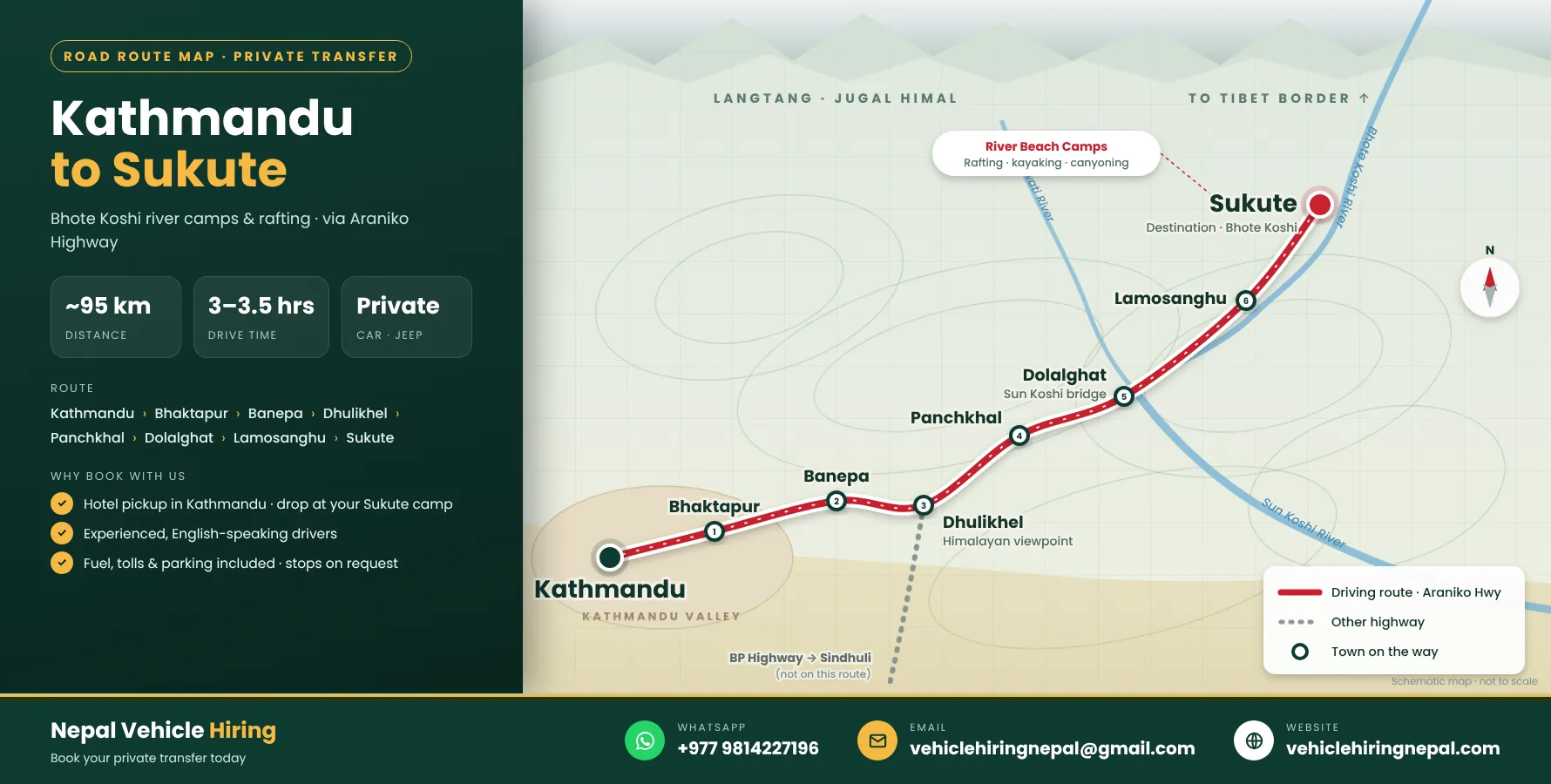
Trekking transport hire in Pokhara is the practical foundation that makes the rest of the trek possible, and getting this first leg right shapes how the entire trip begins.

This guide covers the full range of trekking trailheads reachable from Pokhara, the vehicle types suited to each route, realistic drive times, seasonal considerations, and how to book with confidence. Nepal Vehicle Hiring has coordinated trekking transport out of Pokhara for years, and this guide draws directly on that route experience.

For pilgrims and cultural travelers extending their Pokhara stay, our companion guides to

Muktinath Temple: Vehicle Hire and Pilgrimage Route Guide and

Best Time to Visit Mustang Nepal cover the seasonal and permit details for two of Pokhara’s most popular onward trekking destinations.

Why Pokhara Is Nepal’s Trekking Gateway

Pokhara’s position at the foot of the Annapurna range, much closer to the major trailheads than Kathmandu, has made it the natural starting point for most Annapurna region treks. Where a Kathmandu-based trekker might spend a full day simply reaching a trailhead, many of Pokhara’s most popular routes are reachable within one to three hours, a genuine practical advantage that shapes how most Annapurna itineraries are structured around Pokhara as a base rather than Kathmandu.

Nayapul: Gateway to Poon Hill and Annapurna Base Camp

Nayapul remains the single most requested trekking transport route out of Pokhara, serving as the trailhead for both the

Ghorepani Poon Hill Trek and the

Annapurna Base Camp Trek. Our dedicated

Pokhara to Nayapul transportation service covers this route, roughly forty-five kilometers and ninety minutes each way, in either a private car or jeep depending on group size.

Kande and Phedi: Gateway to Mardi Himal and Ghandruk

Kande and Phedi, both a short drive from Pokhara, serve as popular starting points for the Mardi Himal Trek and the shorter Australian Camp and Dhampus routes, offering an accessible short trekking option without the longer drive required for Nayapul-based routes.

Jomsom and the Mustang Approach

For trekkers heading toward Muktinath or Upper Mustang, covered in detail in our companion guides, the Pokhara to Jomsom corridor requires a genuine 4WD vehicle given the rougher road conditions beyond the lower valley. Our

car hire in Pokhara and

Jeep Hire in Nepal services both support this route, with jeep transport recommended for the full Jomsom stretch.

Besisahar for the Annapurna Circuit

Trekkers beginning the

Annapurna Circuit Trek from the Pokhara side, rather than the standard Kathmandu departure covered in our

Kathmandu to Besisahar guide, can also arrange this leg directly from Pokhara, a shorter and often more convenient option for travelers already based there.

Jhinu Danda and the Hot Springs Route

Covered in full detail in our companion guide to

Pokhara to Jhinu Danda Private Jeep, this route serves both standalone hot springs day trips and the wider Annapurna Base Camp trekking route.

Pokhara to Sarangkot Jeep

Vehicle Options for Trekking Transport Hire in Pokhara

Private Car

Suited to well-paved routes such as Nayapul, Kande, and Phedi, offering comfort and efficiency for smaller groups.

4WD Jeep

Essential for rougher routes toward Jomsom and Mustang, or any itinerary continuing beyond the standard paved highway sections.

Hiace and Larger Vans

Suited to larger trekking groups needing more luggage space and seating capacity, bookable through our

Hiace hire service.

Seasonal Considerations for Pokhara Trekking Transport

Spring and autumn represent peak booking periods given Nepal’s standard trekking calendar, and vehicle availability tightens accordingly. Monsoon season brings landslide risk on some routes, while Mustang-bound travelers should note the counterintuitive dry summer window covered in our

Best Time to Visit Mustang Nepal guide.

A Deeper Look at Each Major Trailhead

Nayapul in Greater Detail

Nayapul’s role as Pokhara’s busiest trekking transport route reflects the sheer popularity of the two treks it serves. The Ghorepani Poon Hill Trek, a relatively short four-to-five-day route, draws travelers specifically seeking a manageable introduction to Himalayan trekking. In contrast, the considerably longer Annapurna Base Camp Trek draws those seeking the full Annapurna Sanctuary experience.

Both begin with the same Nayapul departure, and vehicle demand on this route spans from small private cars for couples to larger vans for guided group departures.

The drive itself passes through Pokhara’s outskirts before reaching the rural, terraced landscape typical of the lower Annapurna foothills, with Birethanti, just beyond Nayapul, marking the formal trailhead and permit checkpoint for both routes.

Kande and the Mardi Himal Trek

Kande has grown considerably in popularity in recent years as the starting point for the Mardi Himal Trek, a moderate-length route offering close-up views of Machapuchare without the permit complexity or crowds found on the longer Annapurna Sanctuary route. The short drive from Pokhara to Kande, generally under an hour, makes this one of the most time-efficient trekking transport bookings available, especially for travelers with limited time who still want a genuine multi-day mountain trekking experience.

Phedi and Dhampus

Phedi serves as an alternative starting point for routes into the Dhampus and Australian Camp area, offering shorter trekking options suited to families or travelers seeking an accessible taste of Annapurna foothill trekking without a lengthy multi-day commitment.

Ghandruk Direct Access

Some itineraries arrange direct vehicle transport toward Ghandruk itself, a significant Gurung village and common overnight stop on the Annapurna Base Camp route, rather than beginning the trek entirely on foot from Nayapul. This option appeals to trekkers who want to shorten the initial walking distance while still experiencing most of the classic Annapurna Sanctuary trekking route.

Coordinating Group Bookings for Trekking Agencies

Trekking agencies running regular departures to these Pokhara-based trailheads benefit from a standing relationship with a single, reliable vehicle provider, ensuring consistent vehicle quality and driver familiarity across repeated bookings during a busy trekking season. Nepal Vehicle Hiring works directly with several trekking agencies, including our sister companies, to support this kind of recurring group transport need.

Early Morning Departures and Trail Timing

Most trekking transport bookings out of Pokhara are scheduled for early morning departure, both to maximize useful daylight for the trekking day ahead and to avoid the midday heat common in the lower Annapurna foothills. Coordinating an early, reliable pickup from your Pokhara hotel is one of the more practical details to confirm when booking trekking transport, particularly for larger groups, where a delayed departure can meaningfully cut the day’s planned trekking distance.

Return Transport and Trek-End Logistics

Beyond the outbound journey to a trailhead, most trekkers also need return transport from wherever their trek ends, whether it’s the same trailhead for a there-and-back route or a different endpoint for treks that finish as a loop or continue onward to another region. Confirming both legs of this journey during initial booking, rather than arranging return transport only once a trek is already underway, ensures a smoother overall experience and avoids the complication of arranging last-minute transport from a remote trailhead village with limited connectivity.

Kathmandu to Pokhara tour

Combining Trekking Transport With Pokhara Sightseeing

Many trekkers build in a day or two of Pokhara sightseeing before or after their trek, using our

Sarangkot sunrise tour vehicle service for Annapurna range views, or simply relaxing at Phewa Lake before returning to Kathmandu via our

Kathmandu to Pokhara service.

Permits Required for Pokhara-Based Trekking Routes

Nearly every trailhead reachable from Pokhara falls within the Annapurna Conservation Area, requiring a standard ACAP permit and TIMS card for routes such as Poon Hill, Annapurna Base Camp, and Mardi Himal. Travelers continuing toward Upper Mustang require the additional Restricted Area Permit covered in our companion Mustang guide. At the same time, the Annapurna Circuit similarly falls within standard ACAP coverage for its main route.

Weather and Road Condition Monitoring

Given the varied terrain across these different trailhead routes, from Nayapul’s well-paved highway to Jomsom’s considerably rougher mountain road, weather and road condition monitoring varies by route. Our drivers stay current on conditions across all these corridors, which is especially important during the monsoon season, when landslide risk affects some routes far more than others.

Why Choose Nepal Vehicle Hiring for Pokhara Trekking Transport

Our drivers assigned to Pokhara trekking routes bring genuine, route-specific experience across the full range of trailheads covered in this guide, from the short Kande and Phedi transfers to the considerably more demanding Jomsom and Mustang approach. We coordinate closely with our sister trekking companies,

Alpine Luxury Treks and

Trek Nepal Himalayas, to support fully coordinated trekking itineraries spanning transport, guiding, and accommodation.

What to Pack for Your Trailhead Transfer

  • Comfortable clothing suited to a multi-hour vehicle journey, layered for temperature changes between Pokhara and higher trailhead elevations.
  • All trekking permits and TIMS documentation, checked before departure to avoid delays at trailhead checkpoints.
  • Snacks and water for the journey, particularly on longer routes such as Jomsom.
  • Cash in Nepali rupees for any permit fees or purchases along the way.

A Realistic Look at Drive Times From Pokhara

Kande and Phedi are reachable within roughly forty-five minutes to an hour. Nayapul takes approximately ninety minutes under normal conditions. Besisahar, for Annapurna Circuit trekkers starting from the Pokhara side, typically takes three to four hours.

Jomsom, given the rougher road conditions beyond the lower valley, can take a full day depending on current conditions and the exact drop-off point. Confirming realistic timing for your specific route during booking helps set accurate expectations for your overall trekking day.

The Growth of Pokhara as a Trekking Logistics Hub

Pokhara’s development into Nepal’s primary Annapurna region trekking gateway reflects decades of steady tourism infrastructure investment, from hotel and lodge development around Lakeside to the growth of a genuinely specialized trekking transport and guiding industry serving the surrounding trailheads. This development has accelerated further with the opening of Pokhara’s expanded international airport, discussed in our companion guide to Annapurna Base Camp helicopter tours, bringing a growing number of travelers directly into the city without first routing through Kathmandu, and further reinforcing Pokhara’s role as the practical starting point for most Annapurna region trekking.

Comparing Pokhara-Based and Kathmandu-Based Trekking Departures

Travelers planning an Annapurna region trek should generally favor Pokhara as their departure base given the considerably shorter transport distances to virtually every major trailhead compared to a Kathmandu departure, a contrast covered in more detail across our companion guides to Kathmandu-based routes such as the

Kathmandu to Besisahar service. While some Annapurna Circuit itineraries do begin from Kathmandu, the vast majority of Pokhara-accessible trailheads, including Nayapul, Kande, and Phedi, make far more sense as Pokhara departures given the dramatically shorter drive times.

Understanding Trailhead Checkpoint Procedures

Nearly every major trailhead reachable from Pokhara includes a formal permit checkpoint where TIMS cards and ACAP permits are verified before trekkers begin walking, typically located at the trailhead village itself, such as Birethanti for the Nayapul-based routes. Drivers familiar with these checkpoints can help ensure trekkers arrive with all necessary documentation organized, avoiding delays at this final step before the trek begins.

Book Trekking Transport Hire in Pokhara with private 4WD jeeps, Scorpio SUVs, cars, Hiace vans, and buses for convenient transfers to popular trekking destinations including Annapurna, Mustang, and surrounding Himalayan trailheads.

Family and Group Considerations for Trailhead Transport

Families or larger groups planning a Pokhara-based trek should communicate their group composition, including children’s ages and any mobility considerations, when booking transport, since this affects both vehicle selection and realistic timing expectations for routes like Kande and Phedi, which offer shorter, more accessible trekking options than the longer Nayapul-based routes.

Porter and Guide Coordination Alongside Vehicle Transport

Most trekkers arrange porters and guides separately from vehicle transport, whether independently at the trailhead itself or through a trekking agency managing the full itinerary. Coordinating vehicle pickup timing with any pre-arranged guide or porter meeting point at the trailhead helps ensure a smooth transition from vehicle transport to the trekking portion of the journey, which is especially important for group departures where multiple trekkers, guides, and porters need to convene at the same starting point.

Weather Delays and Contingency Planning

Monsoon-season landslide risk affects some Pokhara trailhead routes more than others, with the Jomsom corridor particularly susceptible to disruption given its more challenging road conditions compared to the well-established Nayapul highway. Building reasonable schedule flexibility into any trekking transport booking during the wetter months helps manage this genuine seasonal risk.

Return Journeys From Different Trek Endpoints

Trekkers completing routes that conclude at a different point than their starting trailhead, such as certain Annapurna Circuit variations, should confirm return transport arrangements from their specific trek-end location well in advance, since not every remote trekking endpoint has the same reliable, on-demand vehicle availability found at busier trailheads like Nayapul.

The Value of Local Driver Knowledge

Drivers with genuine, current experience across Pokhara’s various trekking transport routes bring considerable value beyond simply operating the vehicle, including practical knowledge of realistic timing, current road conditions, and the specific checkpoint and trailhead logistics for each route. This local knowledge is especially valuable on less standardized routes such as Jomsom, where conditions can vary significantly from trip to trip depending on recent weather and road maintenance activity.

A Typical Multi-Trek Pokhara Itinerary

Some travelers with extended time in Pokhara combine multiple shorter treks across a single visit, taking advantage of the city’s position as a genuine multi-trailhead hub. A typical extended itinerary might begin with a shorter Kande-based Mardi Himal trek, followed by rest and Pokhara sightseeing, before continuing with a longer Nayapul-based Annapurna Base Camp trek later in the same trip.

This combined itinerary makes efficient use of Pokhara’s central position relative to multiple trailheads, which is considerably harder to replicate from a Kathmandu base given the longer transport distances involved.

Trekking Peak Season Demand and Vehicle Availability

Vehicle demand across all Pokhara trekking transport routes peaks sharply during the October-to-November and March-to-May windows, mirroring Nepal’s overall trekking season. During these peak periods, particularly popular routes like Nayapul can see considerable morning departure congestion, with multiple trekking groups all seeking early transport within a similar time window. Booking several days to a few weeks ahead, depending on group size and specific vehicle requirements, helps secure preferred departure timing during these busiest periods.

Sustainable and Responsible Trekking Transport Practices

As trekking traffic across Pokhara’s various trailheads has grown over recent years, questions of sustainable transport practice have become increasingly relevant, including vehicle emissions, road wear on less-developed corridors like the Jomsom route, and the broader environmental footprint of the growing trekking tourism industry the city supports. Choosing well-maintained, properly serviced vehicles and consolidating group transport into appropriately sized vehicles rather than multiple smaller cars both contribute to a more environmentally responsible approach to this essential trekking logistics.

Solo Trekkers and Independent Travel Considerations

Solo trekkers heading to routes that don’t require a mandatory guide, such as Poon Hill, Mardi Himal, or the standard Annapurna Base Camp trek, can arrange vehicle transport independently without coordinating around a larger group’s schedule, offering genuine flexibility for travelers who prefer an independent trekking experience. This independence contrasts with routes requiring mandatory guides and minimum group sizes, such as Upper Mustang, where transport timing must necessarily align with the broader guided group arrangement.

Boats on Phewa Lake in Pokhara

Night Bus and Alternative Transport Options

While private vehicle hire remains the standard choice for trekking transport given its flexibility and door-to-door convenience, some budget-conscious trekkers use Pokhara’s shared local bus network for routes like Nayapul, accepting a fixed schedule and shared seating in exchange for lower cost. Private vehicle hire remains the considerably more practical choice for early morning departures, larger groups, or routes like Jomsom, where shared transport options are more limited or less reliable.

Insurance and Safety Standards for Trekking Transport

Given the mountain driving conditions on several of these routes, particularly Jomsom and any route continuing toward Mustang, confirm your vehicle provider carries appropriate commercial insurance and maintains a genuine vehicle safety inspection routine, especially on unpaved, higher-risk road sections beyond Pokhara’s immediate valley.

Combining Trekking Transport With Wildlife and Cultural Extensions

Trekkers with additional time sometimes extend their Pokhara-based trip with a wildlife excursion toward Chitwan, arranged through our

Pokhara to Chitwan bus service, combining a trekking-focused Annapurna region visit with Nepal’s premier lowland wildlife destination within a single broader trip.

Booking Through a Trekking Agency Versus Direct Vehicle Hire

Travelers can arrange trekking transport either directly through a vehicle hire provider like Nepal Vehicle Hiring or as part of a broader package booked through a trekking agency that manages the full itinerary, including guiding and accommodation. Both approaches work well depending on a traveler’s preferences: direct vehicle hire offers maximum flexibility and typically clearer pricing for the transport component.

At the same time, agency-coordinated bookings simplify overall logistics for travelers who prefer a single point of contact for their entire trek.

Currency and Payment Considerations

Vehicle hire for Pokhara trekking transport is typically arranged and paid for in Nepali rupees. However, many providers, including Nepal Vehicle Hiring, can accommodate international payment methods for bookings made before arrival in Nepal. Confirming payment logistics during the initial booking avoids complications on the morning of departure.

Geography of the Annapurna Foothills Around Pokhara

The trailheads reachable from Pokhara span a genuinely varied geography, from the relatively gentle terraced hillsides near Kande and Phedi to the steeper, more dramatic Modi Khola gorge approached via Nayapul, and finally the high-desert terrain beyond Jomsom covered in our Mustang guide. This geographic variety means the driving experience itself differs considerably by route, and travelers should set realistic expectations for each specific corridor rather than assuming a uniform experience across all Pokhara-based trekking transport.

Machapuchare Views Along the Approach Roads

Several of Pokhara’s trekking transport routes offer striking views of Machapuchare, the sacred, unclimbed Fishtail peak that dominates Pokhara’s own skyline, during the approach drive itself. The Kande and Phedi routes toward Mardi Himal in particular offer close, dramatic views of this iconic peak, adding a scenic dimension to what might otherwise be treated as a purely functional transfer before the trekking begins.

Understanding the Modi Khola Valley Approach

The Nayapul route follows the lower reaches of the Modi Khola valley, the same river system that later feeds into the dramatic Annapurna Sanctuary further up the route. This valley’s terraced agriculture and traditional Gurung village architecture, visible from the road, offer an early glimpse of the cultural landscape trekkers will experience in greater depth once their walking begins.

Seasonal Road Maintenance and Its Effect on Transport Timing

Nepal’s road maintenance schedules, particularly on less heavily trafficked routes such as the Jomsom corridor, can occasionally affect travel timing through temporary construction delays or single-lane traffic management during active repair work. Experienced local drivers typically stay up to date on such disruptions and can advise on realistic timing adjustments for a specific booking date.

The Practical Value of a Single Coordinated Booking

Trekkers who arrange both outbound and return transport, along with any additional Pokhara sightseeing or onward travel, through a single vehicle hire provider benefit from much simpler logistics than arranging each leg separately with different local operators. This coordinated approach also provides a single point of contact for schedule adjustments once a trek is underway, rather than requiring separate contact with multiple providers for each leg of a broader Annapurna region itinerary.

Comparing Trekking Transport Needs Across Different Trip Types

Independent Trekkers

Independent trekkers heading toward routes without mandatory guide requirements typically need only straightforward point-to-point transport, without the additional coordination required for larger guided groups.

Guided Group Departures

Trekking agencies managing guided group departures require closer coordination between vehicle timing and the broader group’s guide and porter arrangements, often involving larger vehicles suited to the full group size.

Family and Multi-Generation Groups

Families spanning multiple generations often benefit from choosing shorter, more accessible routes such as Kande or Phedi, paired with a vehicle offering comfortable seating suited to a wider range of ages and mobility levels.

Photography and Specialist Expeditions

Photographers or specialist expedition groups sometimes require more flexible, non-standard timing, including very early departures for specific lighting conditions, best coordinated directly with an experienced local vehicle provider familiar with these specialized requests.

A Closer Look at the Annapurna Conservation Area Entry Process

Nearly every trailhead covered in this guide falls within the Annapurna Conservation Area, Nepal’s largest protected area and home to most of the country’s most popular trekking routes. Entry procedures typically involve permit verification at a designated checkpoint near the trailhead, and experienced drivers on these routes can help ensure trekkers have all necessary documentation organized before reaching the checkpoint, avoiding delays that could otherwise cut into the day’s available trekking time.

Trekking Transport for International Volunteer and Research Groups

Beyond standard tourist trekking, Pokhara also serves as a base for international volunteer groups, university research expeditions, and other specialized group travel requiring trekking transport toward the same trailheads covered throughout this guide. These groups often have specific scheduling and equipment-transport needs distinct from standard tourist bookings, and our team can accommodate this specialized institutional travel alongside our standard trekking transport services.

The Relationship Between Trekking Transport and Nepal’s Broader Tourism Economy

Trekking transport out of Pokhara supports a considerable economic ecosystem beyond the vehicle hire sector itself, including trailhead village guesthouses, local guide and porter employment, and the broader Annapurna Conservation Area’s ongoing conservation funding, sourced significantly from trekking permit fees. Reliable, well-organized trekking transport plays a genuinely foundational role in sustaining this broader economic and conservation ecosystem, connecting Pokhara’s urban tourism infrastructure to the rural trailhead communities that depend on continued trekking traffic.

Practical Tips for First-Time Pokhara Trekkers

  • Confirm your exact trailhead and vehicle requirements when booking, since routes like Nayapul and Jomsom demand very different vehicle classes.
  • Book your outbound and return transport together where possible to simplify overall logistics.
  • Arrange all necessary permits before your transport departure to avoid trailhead checkpoint delays.
  • Build a buffer day into your itinerary during monsoon season given landslide risk on some routes.
  • Communicate any group size changes to your vehicle provider as early as possible.

How Nepal Vehicle Hiring Supports the Full Range of Pokhara Trekking Routes

From the short Kande and Phedi transfers to the demanding overland journey toward Jomsom and Mustang, our team maintains route-specific driver expertise across the full spectrum of Pokhara’s trekking trailheads. This breadth of coverage lets us support nearly any Annapurna region trekking itinerary a traveler might plan, whether a single short trek or an extended multi-region journey combining several routes covered throughout this guide.

Looking Ahead: The Future of Pokhara Trekking Transport

As Pokhara’s international airport continues to bring more direct arrivals into the city, and as trekking tourism across the Annapurna region continues its steady growth, demand for reliable, well-organized trekking transport out of Pokhara seems likely to continue growing in the years ahead. Vehicle providers who invest in genuine route-specific expertise across this full range of trailheads, rather than treating trekking transport as a generic service, are best positioned to support this continued growth.

A Sample Week-Long Pokhara Trekking Itinerary

For travelers with roughly a week available in Pokhara, a common itinerary structure begins with a day of rest and acclimatization in the city itself, taking in Phewa Lake and perhaps a Sarangkot sunrise excursion, before an early morning transfer to Nayapul and the start of a five-day Ghorepani Poon Hill Trek, one of the most popular combinations for travelers with limited but not minimal time available. This kind of week-long structure makes efficient use of Pokhara’s central trailhead position, delivering a genuine multi-day Himalayan trekking experience alongside meaningful time to enjoy the city itself, all within a single manageable week.

Extended Itineraries Combining Multiple Regions

Travelers with two weeks or more available sometimes combine a Pokhara-based Annapurna region trek with an extension toward Mustang or Muktinath, using the same general transport corridor while adding the considerable seasonal and cultural depth our dedicated guides cover in those destinations. This extended, multi-region itinerary rewards careful planning, especially around seasonal considerations that differ between standard Annapurna trekking and Mustang’s distinct rain-shadow calendar.

Transport Considerations for High-Altitude Trekking Peaks

Some Pokhara-based trekkers extend their itinerary with an introductory peak climb, such as those accessible from the upper Annapurna Sanctuary or Mardi Himal areas, which requires transporting additional equipment beyond standard trekking luggage. Travelers planning this kind of extended, mountaineering-adjacent itinerary should discuss specific equipment transport needs with their vehicle provider during initial booking to ensure the vehicle has capacity for additional climbing gear beyond standard trekking equipment.

Weather Apps and Real-Time Condition Monitoring

Given the significant seasonal and daily weather variation across Pokhara’s trekking corridors, many trekkers and vehicle providers now rely on weather monitoring tools and real-time road condition updates shared through trekking agency networks and local driver communication channels. This real-time monitoring, layered on top of the general seasonal guidance covered throughout this article, helps ensure transport timing decisions reflect current conditions rather than historical averages alone.

The Role of Homestays Along Pokhara Trekking Routes

Several villages along Pokhara’s major trekking routes, particularly Ghandruk and other Gurung settlements along the Nayapul-based routes, have developed homestay programs that offer trekkers a more in-depth cultural alternative to standard teahouse accommodation. Travelers interested in this kind of homestay experience should communicate this preference to their trekking agency or guide during itinerary planning, since it may affect the route and daily walking distances chosen for their trek.

Currency Exchange and Financial Preparation in Pokhara

Before departing on any Pokhara-based trek, travelers should ensure adequate cash reserves in Nepali rupees, since ATM and card payment access becomes increasingly limited once trekkers leave Pokhara’s urban area, a consideration relevant to the trekking portion of the journey even though the vehicle transport itself is typically arranged and paid for in the city before departure.

Travel Insurance Considerations for Pokhara-Based Trekking

Given the range of trekking difficulty and altitude across Pokhara’s various trailhead routes, from the relatively gentle Kande and Phedi options to the more demanding Annapurna Base Camp and Mustang routes, travelers should confirm their travel insurance policy appropriately covers the specific altitude and trekking activity level of their chosen route, since coverage requirements can vary meaningfully between a short Poon Hill trek and a longer, higher-altitude Annapurna Circuit or Mustang extension.

Combining Trekking Transport With Return International Flights

Travelers with a fixed international departure date should build adequate buffer time between their planned trek completion and their return flight, accounting for both the trekking transport return leg and potential weather-related delays, particularly on routes like Jomsom, where flight or road disruption risk is genuinely higher than on the well-established Nayapul corridor. Coordinating this final return transport leg well in advance, rather than arranging it only once already on the trek, helps ensure a smooth, well-timed conclusion to the trip.

Final Practical Summary

Bringing together everything covered throughout this guide, the practical formula for successful Pokhara trekking transport comes down to a few consistent principles: match your vehicle class to your specific trailhead’s road conditions, book early during peak spring and autumn seasons, confirm both outbound and return transport together, ensure all permits are properly arranged before departure, and work with a vehicle provider offering genuine, current route-specific knowledge across whichever of Pokhara’s many trekking corridors your itinerary requires.

Travelers planning trekking transport out of Pokhara alongside a wider Nepal itinerary may find these related guides useful:

A Note on Choosing the Right Trek for Your Available Time

Travelers unsure which Pokhara-based trek best suits their available time should weigh trip duration carefully against the trailhead options covered throughout this guide. A three-to-five day window suits the Ghorepani Poon Hill Trek from Nayapul or the Mardi Himal Trek from Kande well.

A seven-to-twelve day window opens up the full Annapurna Base Camp Trek from Nayapul. A two-to-three-week window accommodates the full Annapurna Circuit from Besisahar, potentially extended into Mustang given the natural route overlap already discussed.

Matching trekking transport planning to this kind of realistic time budget from the outset avoids the common mistake of underestimating how much of a trip’s total duration the trek itself, rather than the transport connecting to it, actually requires.

Final Word on Trusting Local Expertise

Above nearly everything else covered in this guide, the single most valuable resource for planning Pokhara trekking transport remains genuine, current local expertise, whether from an experienced vehicle provider, a knowledgeable trekking guide, or a well-established trekking agency. Route conditions, seasonal patterns, and practical logistics all shift meaningfully enough from year to year that no single article, including this one, can substitute entirely for direct, current local knowledge closer to your actual travel dates.

Understanding Vehicle Pricing Structures for Trekking Transport

Vehicle pricing for Pokhara trekking transport typically reflects a combination of distance, road difficulty, and vehicle class, with short, well-paved routes like Kande and Phedi generally priced lower than longer or rougher routes such as Jomsom. Group bookings sharing a single larger vehicle typically achieve better per-person value than multiple smaller individual bookings, and our team is glad to advise on the most cost-effective vehicle configuration for a given group size and route combination.

Trekking Transport During National Holidays and Festivals

Nepali national holidays and major festivals such as Dashain and Tihar can affect vehicle availability and road traffic around Pokhara, as domestic travel increases during these periods. Trekkers planning trips that coincide with major Nepali festivals should factor this into their booking timeline, both for vehicle availability and realistic travel-time expectations, given potentially heavier road traffic.

The Difference Between Pokhara City Transport and Trekking Transport

It is worth distinguishing standard Pokhara city transport, such as short taxi rides around Lakeside or airport transfers, from the dedicated trekking transport covered throughout this guide, which involves longer distances, different vehicle requirements, and considerably more planning given the trailhead-specific logistics involved. Travelers should communicate clearly with their vehicle provider about which transport category they need, since city taxis are generally not equipped or licensed for the longer, more demanding trekking transport routes covered in this guide.

A Final Comparison of All Major Routes

Bringing together the full range of routes covered throughout this guide: Kande and Phedi offer the shortest, most accessible transport for Mardi Himal and Dhampus-area trekking; Nayapul serves the two most popular longer treks, Poon Hill and Annapurna Base Camp; Besisahar connects to the full Annapurna Circuit; Jhinu Danda offers both a standalone hot springs trip and a Base Camp trekking connection; and Jomsom serves as the gateway to Muktinath and Mustang, requiring the most demanding vehicle and road conditions of any route covered in this guide. Matching your trekking goals to the right route and vehicle class from the outset remains the most important step in planning smooth, well-organized trekking transport out of Pokhara.
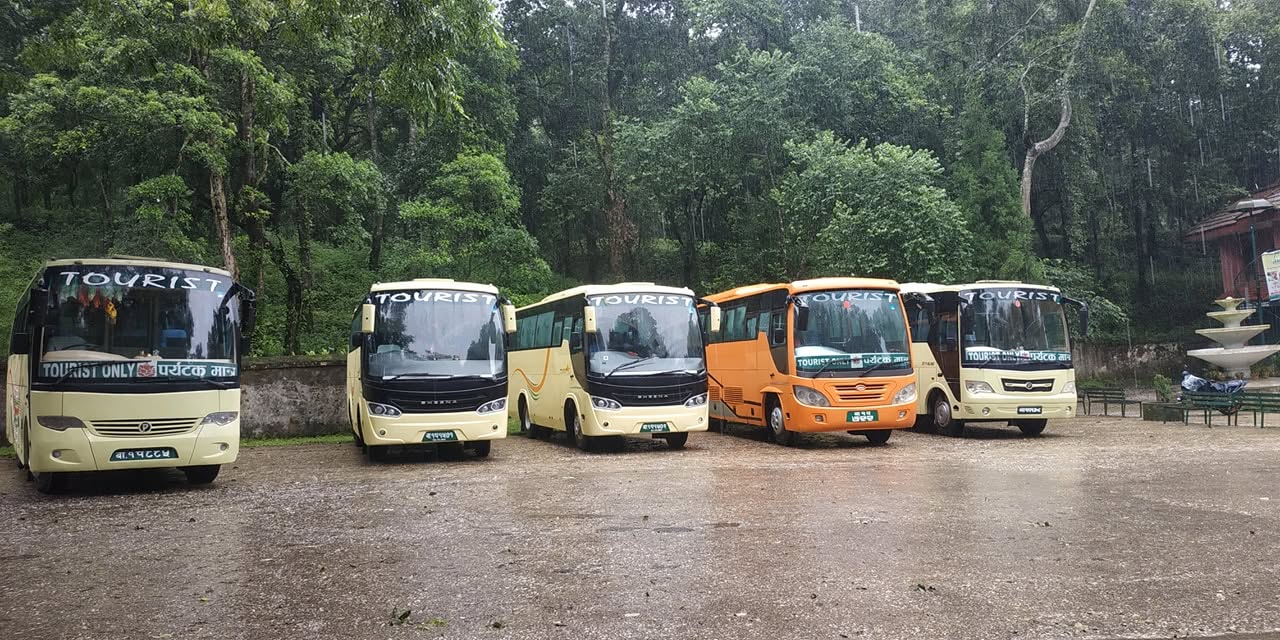
Additional Considerations for Repeat Visitors to Pokhara

Travelers returning to Pokhara for a second or third trekking trip often already have a preferred vehicle provider or driver from a previous visit, and re-establishing this relationship for a return trip can offer real value, given the driver’s familiarity with the traveler’s preferences and any specific needs from prior bookings. Nepal Vehicle Hiring welcomes this returning client relationship and, where possible, aims to accommodate requests for a specific driver or vehicle type based on prior experience together.
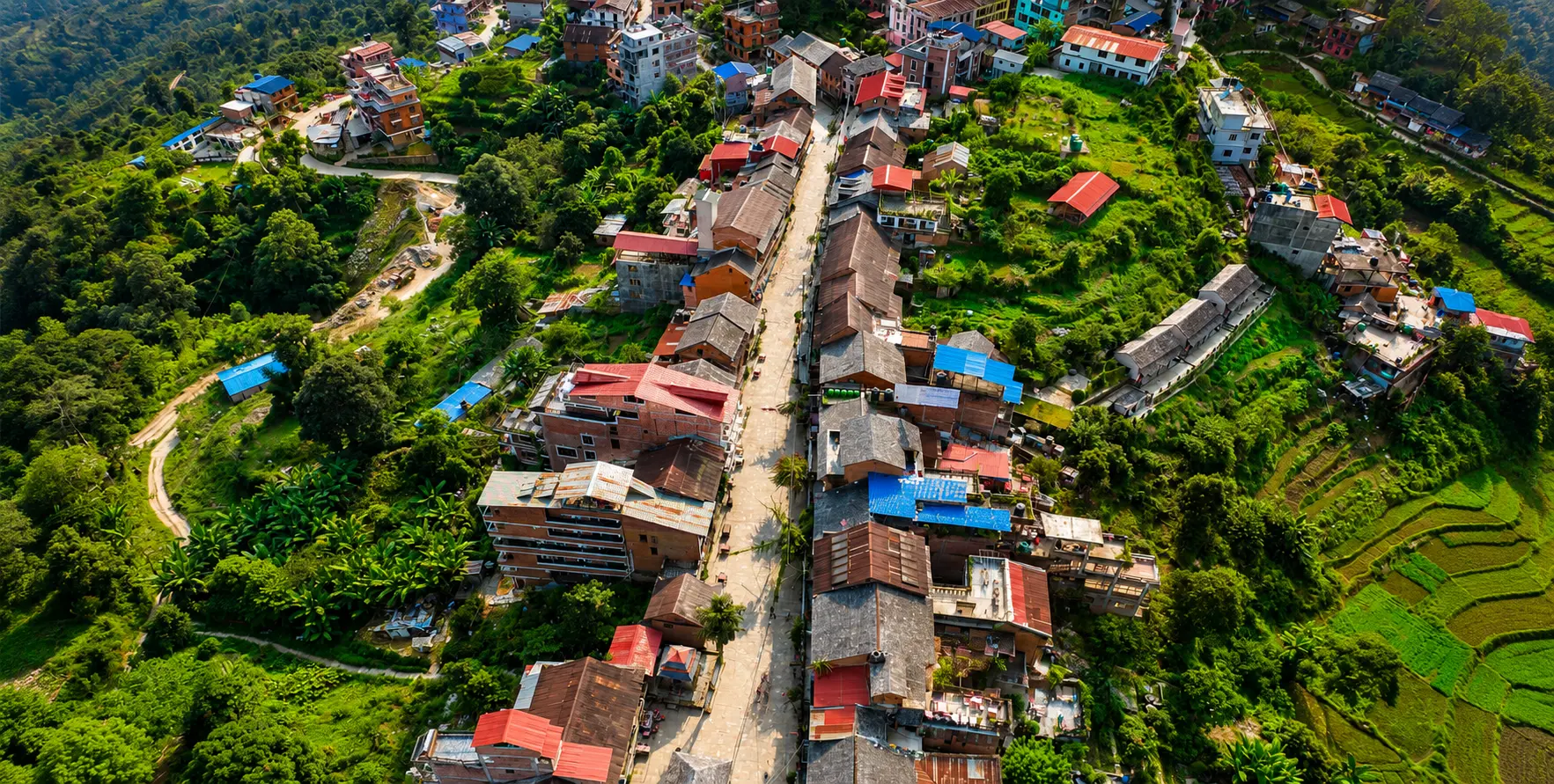
Trekking Transport and Local Employment

The trekking transport sector supports meaningful local employment throughout the Pokhara region, from drivers and vehicle maintenance staff to the broader logistics coordination required to keep this varied network of routes running smoothly throughout the trekking season. Choosing an established, properly registered vehicle hire provider helps ensure this employment reflects fair, properly regulated working conditions, rather than the more informal, less accountable arrangements sometimes found among unregistered local operators.

Closing Thoughts on Planning Your Pokhara Trek

Pokhara’s role as Nepal’s primary Annapurna region trekking gateway means the city offers genuine flexibility for nearly any kind of trekking itinerary, from a short, accessible day or two toward Kande or Phedi, through to a full multi-week Annapurna Circuit or an extension toward the trans-Himalayan landscapes of Mustang. Whatever combination of routes your own itinerary involves, understanding the specific transport requirements of each trailhead, from vehicle class to seasonal timing to permit checkpoint logistics, gives your trek the strongest possible practical foundation before the walking even begins.

Travelers combining Pokhara trekking transport with a wider Nepal itinerary may find these related guides useful:

Thank You for Reading

We hope this guide has given you a clear, practical understanding of trekking transport across every major Pokhara trailhead, and we look forward to helping arrange your own journey to whichever corner of the Annapurna region draws you.

A Note on Vehicle Condition and Mountain Driving Standards

Given the genuine mountain driving demands involved across several of these routes, particularly the climb toward Kande and Phedi and the considerably rougher stretch toward Jomsom, vehicles used for Pokhara trekking transport should undergo regular mechanical inspection focused specifically on brakes, suspension, and tire condition, given the additional strain these routes place on a vehicle compared to standard city driving. Our fleet receives this kind of route-specific maintenance before any trekking transport assignment.

Final Word on Choosing the Right Partner for Your Trek

Ultimately, successful trekking transport out of Pokhara comes down to matching the right vehicle, driver, and timing to your specific trailhead and trekking goals, whether that is a short, accessible day toward Kande, the classic Nayapul approach to Poon Hill or Annapurna Base Camp, or the considerably more demanding journey toward Jomsom and the trans-Himalayan landscapes beyond. Working with a provider who understands this full range of routes, rather than treating every booking as a generic transfer, makes a genuine difference to how smoothly your trek begins.

Frequently Asked Questions

Which trailhead is closest to Pokhara?

Kande and Phedi, both under an hour’s drive, are the closest major trailheads and serve the Mardi Himal and Dhampus routes.

Do I need a 4WD for Nayapul?

A standard private car is generally sufficient for the well-paved Nayapul road.

How far ahead should I book?

Two to three weeks ahead during peak spring and autumn seasons is recommended.

Can I combine multiple trailhead visits in one trip?

Yes, many travelers combine a short Kande or Phedi trek with a longer Nayapul-based trek later in their stay.

Is transport available for large trekking groups?

Yes, our Hiace and bus fleet accommodates larger groups across all these routes.

Can I book a one-way transfer rather than a round trip?

Yes, we commonly arrange one-way transfers, particularly for treks that end at a different point than they began.

What happens if my trek finishes earlier or later than planned?

Contact our team as early as possible to adjust your return transport timing; we build reasonable flexibility into most bookings given the variable nature of trekking schedules.

Is transport available very early in the morning?

Yes, early morning departures, often before dawn, are standard for most Pokhara trekking transport bookings.

Final Thoughts

Whichever Annapurna region trailhead your trek begins from, getting the first leg out of Pokhara right, with the correct vehicle and an experienced driver, sets the tone for everything that follows.

Contact Nepal Vehicle Hiring today on WhatsApp or visit

vehiclehiringnepal.com to arrange your Pokhara trekking transport.

Nepal Vehicle Hiring Pvt. Ltd. | vehiclehiringnepal.com

BOOK YOUR POKHARA TREKKING TRANSPORT

Nepal Vehicle Hiring Pvt. Ltd.

WhatsApp / Phone: WhatsApp

Email: [email protected]

Office: Bhagawatisthan, Thamel, Kathmandu, Nepal

Chat with us