Jomsom Airport to Muktinath by Jeep, Car, Hiace or Bus

Kathmandu to Muktinath Bus

Jomsom Airport to Muktinath Jeep, Car,r Hiace Bus hire

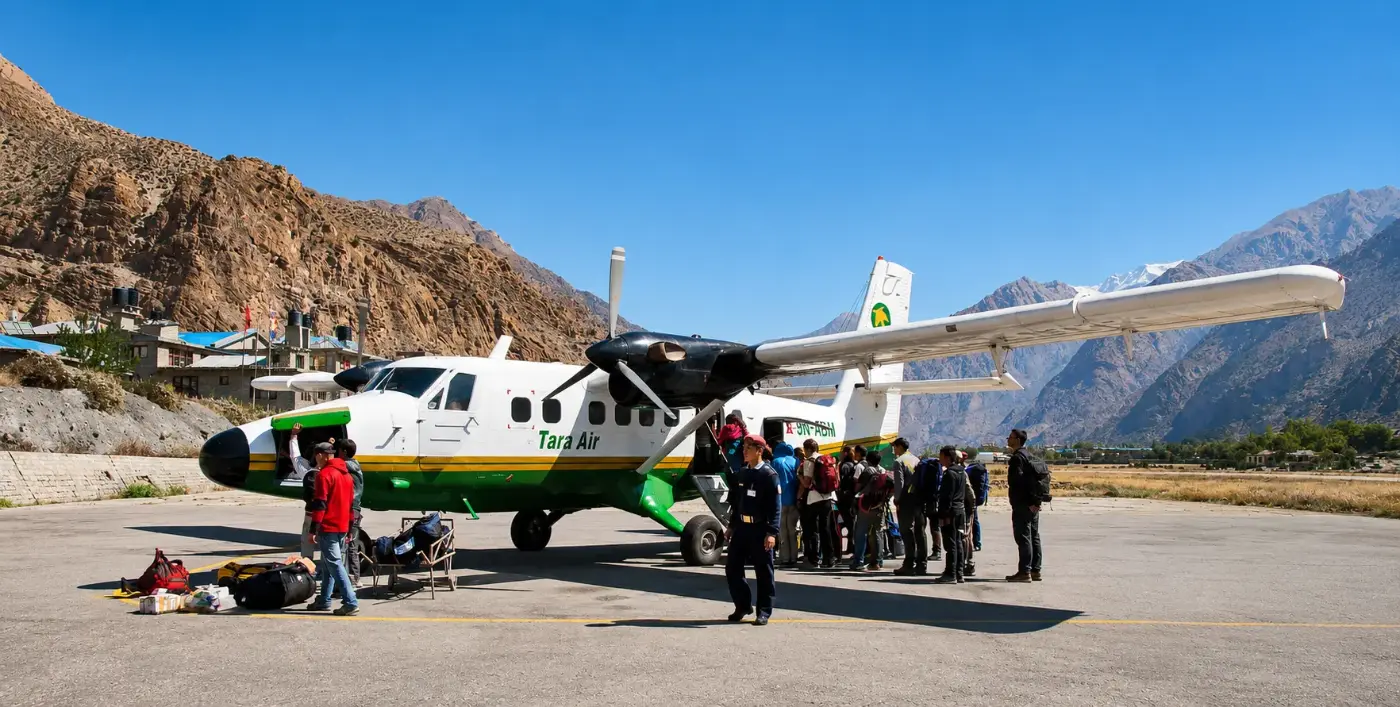
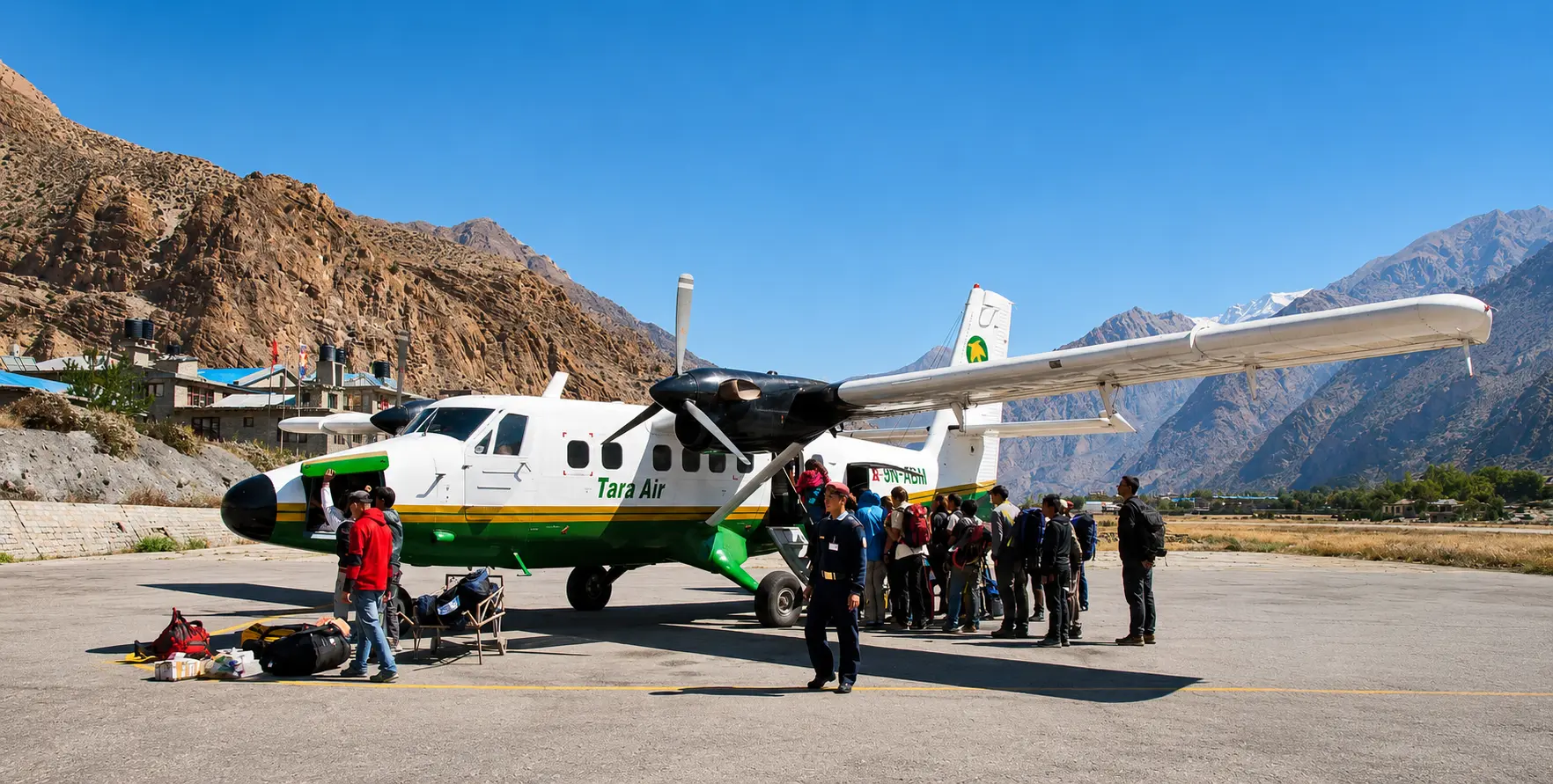
Jomsom Airport, the small domestic airstrip serving the Mustang District at 2,720 metres, is one of the most dramatic and most frequently discussed domestic airports in Nepal — famous for its morning-only flight window before the famous Jomsom valley wind builds to speeds that ground the Twin Otter aircraft that provide the only air connection to Pokhara, and for the extraordinary mountain panorama that passengers experience as the tiny aircraft threads between the Dhaulagiri and Annapurna ranges during the 20-minute flight. For the tens of thousands of pilgrims, trekkers, and tourists who arrive at Jomsom Airport each year, the immediate question on landing is always the same: how to get from this small airstrip to Muktinath — the 106th Divya Desam of Vaishnavite tradition at 3,710 meters — as quickly, comfortably, and reliably as possible.

The Jomsom Airport to Muktinath vehicle hire covers about 19 to 22 kilometres of road—a short distance by Nepal standards. Still, it climbs over 1,000 vertical meters from the airport at 2,720 m to the Ranipauwa village vehicle stand at approximately 3,690 m, and its road conditions make vehicle choice genuinely significant, not merely a matter of comfort preference.

This complete guide covers all four main vehicle options for this route: the private Scorpio jeep, the private car, the Toyota Hiace van, and the local bus — with  price ranges, specific road suitability assessments, timing guidance (the Jomsom wind makes vehicle departure time critical), and the practical arrangement through Nepal Vehicle Hiring Pvt Ltd that ensures the right vehicle for your group is waiting when the flight lands.
Book Jomsom Airport to Muktinath Jeep Car Hiace Bus transportation for families, couples, and groups. Choose a private 4WD jeep, car, Hiace van, or bus for convenient airport pickup and comfortable travel to Muktinath Temple.

Jomsom Airport — The Gateway That Sets the Pace

Jomsom Airport, officially known as Jomsom Airport (IATA: JMO), is among the world’s most operationally constrained domestic airports: its runway sits in the Kali Gandaki valley at 2,720 meters, with the valley walls rising sharply on both sides and the famous upstream thermal wind that builds progressively from approximately 10:00 a.m. to afternoon speeds exceeding 60 km/h. Domestic operators — Buddha Air, Tara Air, and others — schedule all Jomsom flights in the early-morning window to take advantage of the calm pre-wind air: most Pokhara-to-Jomsom flights depart Pokhara between 6:00 and 9:00 a.m. and land at Jomsom between 6:20 and 9:20 a.m. Return flights from Jomsom to Pokhara similarly depart in the early morning window before the wind makes landing and takeoff too dangerous to attempt.

The practical consequence of this flight window for Jomsom Airport to Muktinath vehicle hire is that most arriving pilgrims and trekkers land at Jomsom between 7:00 and9:30 a.m.M — and all of them then want to reach Muktinath as quickly as possible, ideally arriving before the midday heat and the increasingly strong valley wind make the ascent to Ranipauwa uncomfortable. Private vehicle hire from Nepal Vehicle Hiring Pvt Ltd, which meets arriving passengers directly at the airport after landing and departs for Muktinath between 7:30 and 9:00 a.m., offers the smoothest, most comfortable approach.

In contrast, negotiating a shared jeep at the airport stand—competing with other arriving passengers for the limited local vehicle supply—creates the kind of post-flight stress a well-organised pilgrimage journey specifically avoids.

The Route — Jomsom Airport to Muktinath Via Kagbeni

The Jomsom to Muktinath road follows a clearly defined corridor northward from Jomsom along the Kali Gandaki valley floor to Kagbeni, then climbs steeply east and north out of the valley toward the high-plateau approaches to Muktinath. Total distance: approximately 19-22 kilometres.

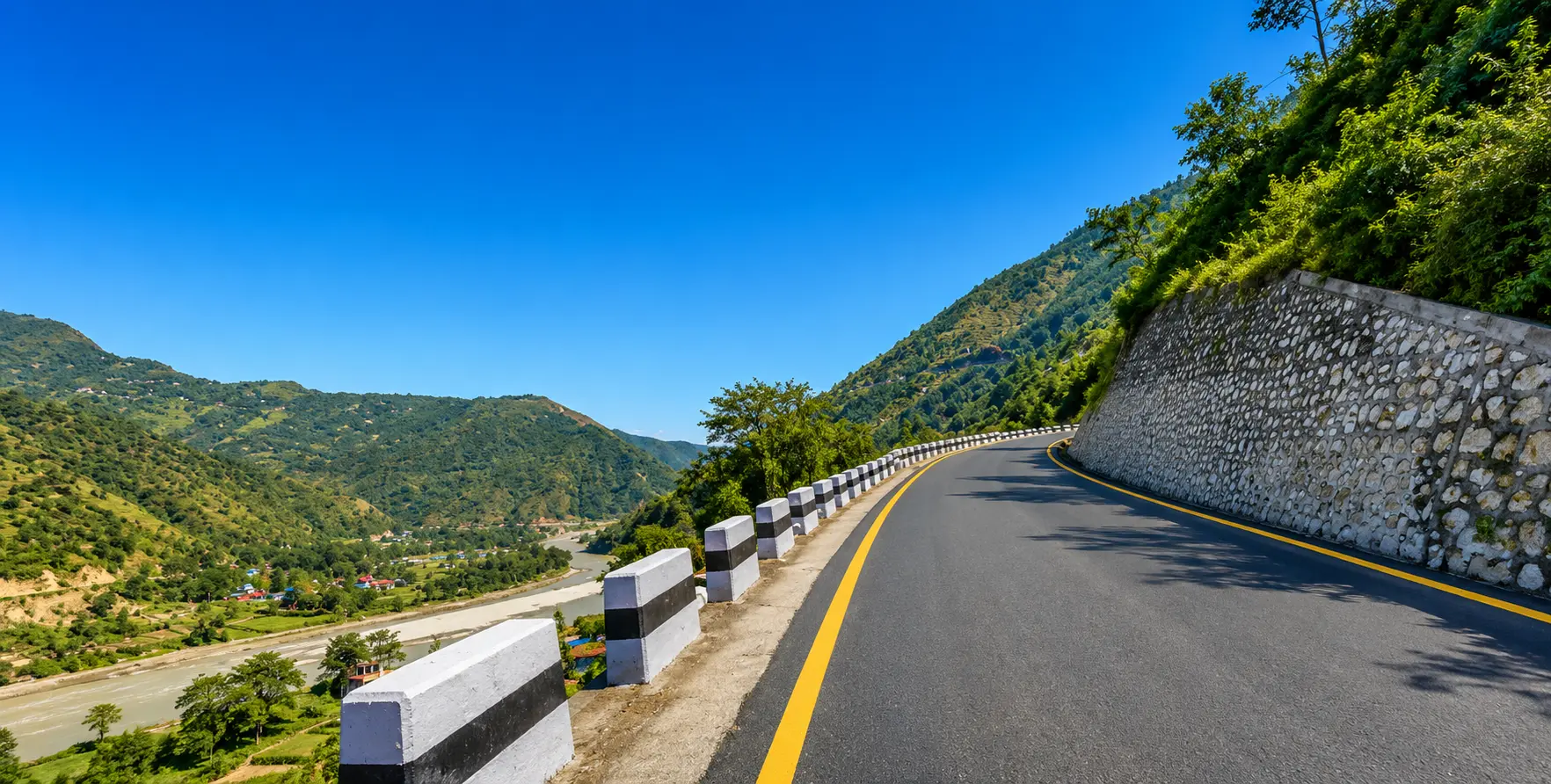
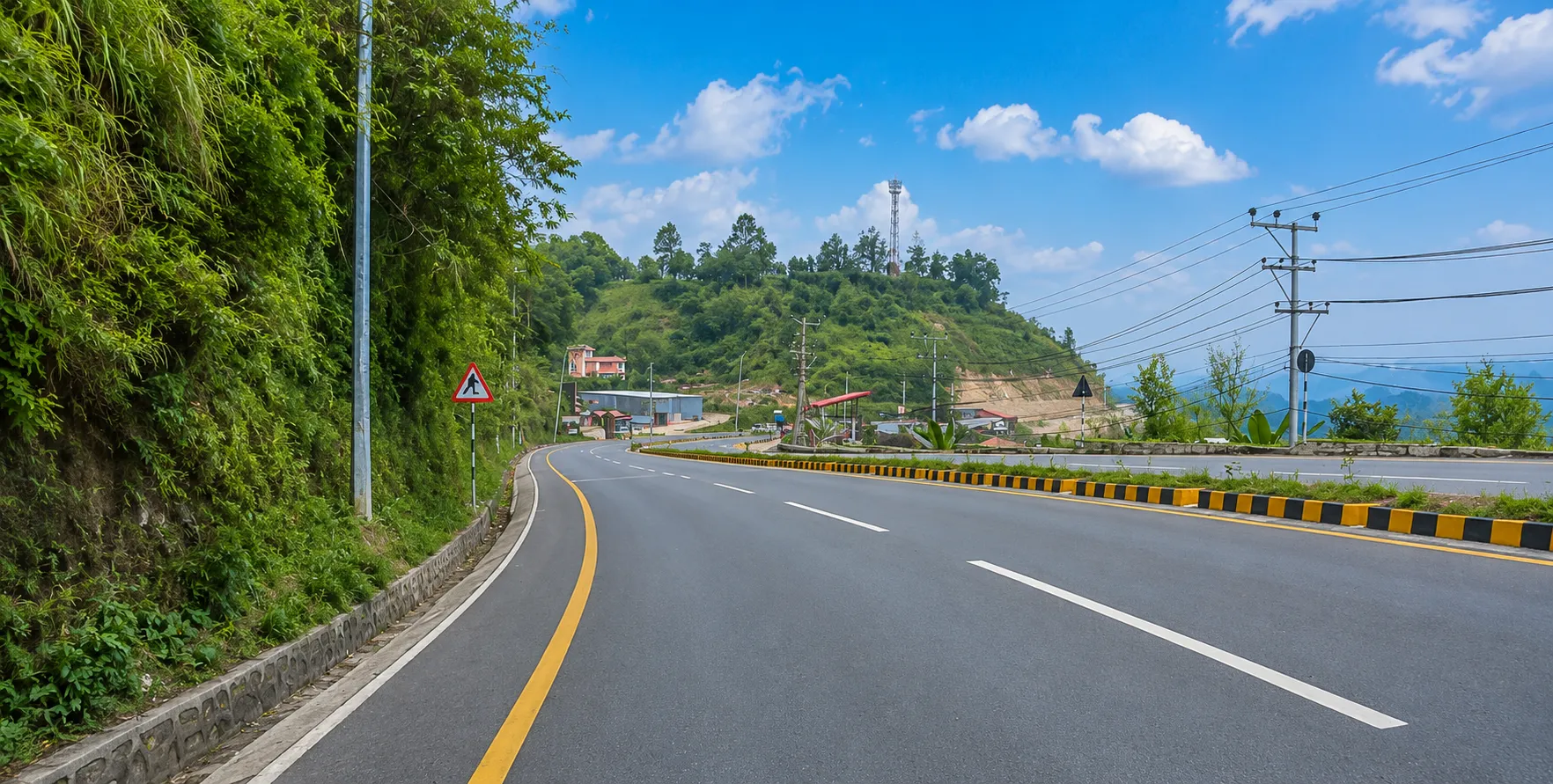
Total driving time in a private vehicle: 45 minutes to 1.5 hours, depending on vehicle type, road condition, and How Long You stop in Kagbeni. The road is significantly better than its reputation suggests — recent years have seen substantial improvement in the paving and surface quality of the Jomsom-Kagbeni section and of the final approach to Ranipauwa.

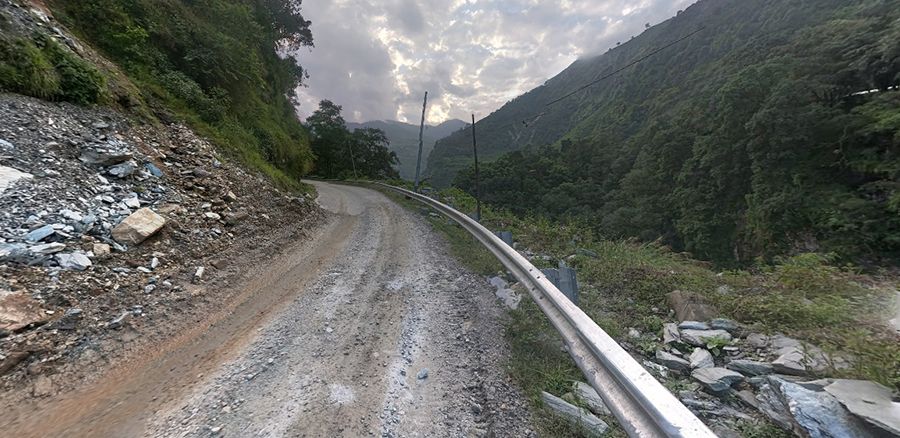
However, sections of the climb from Kagbeni to Ranipauwa remain rough enough to warrant a vehicle with higher ground clearance.

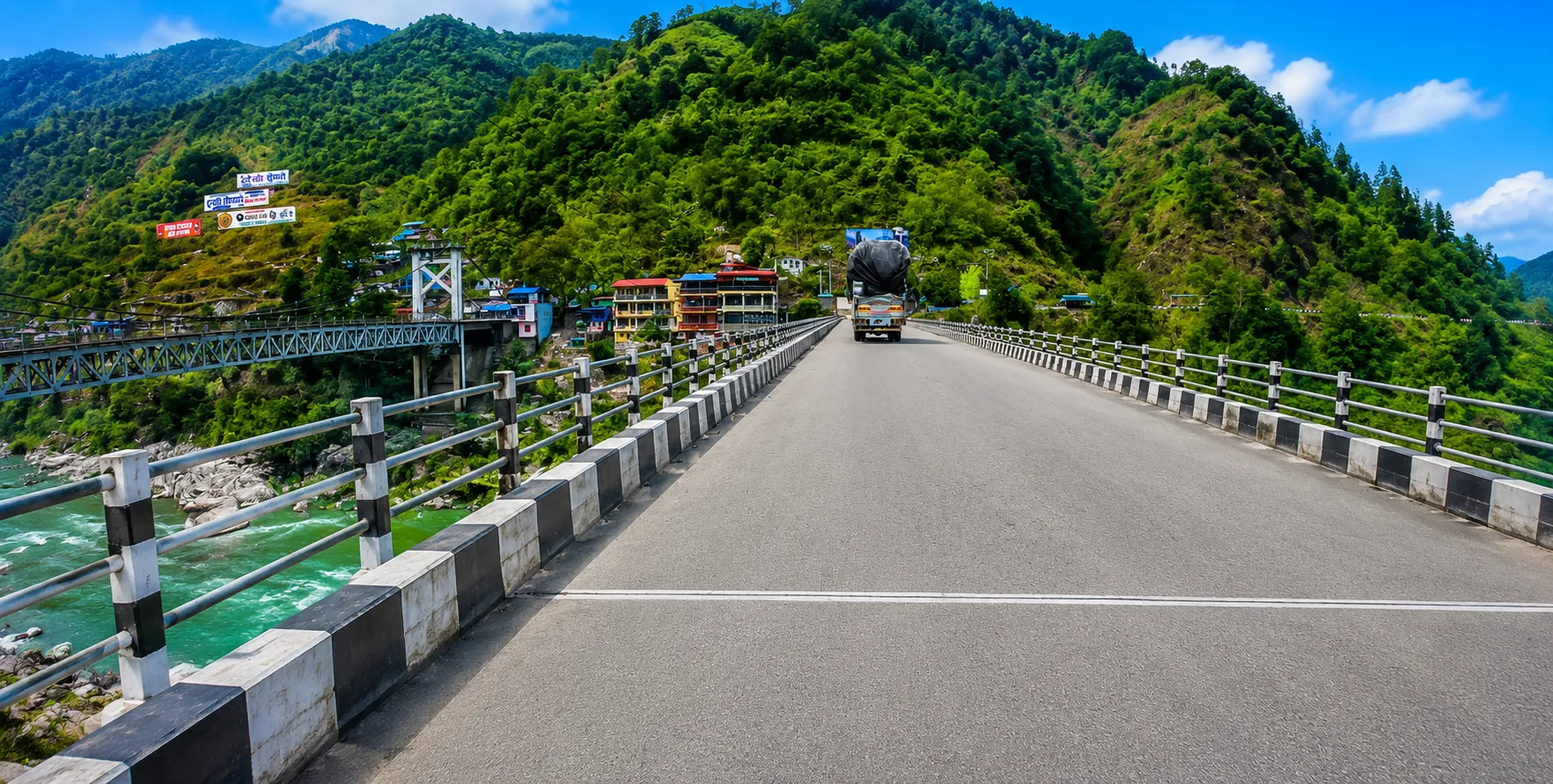
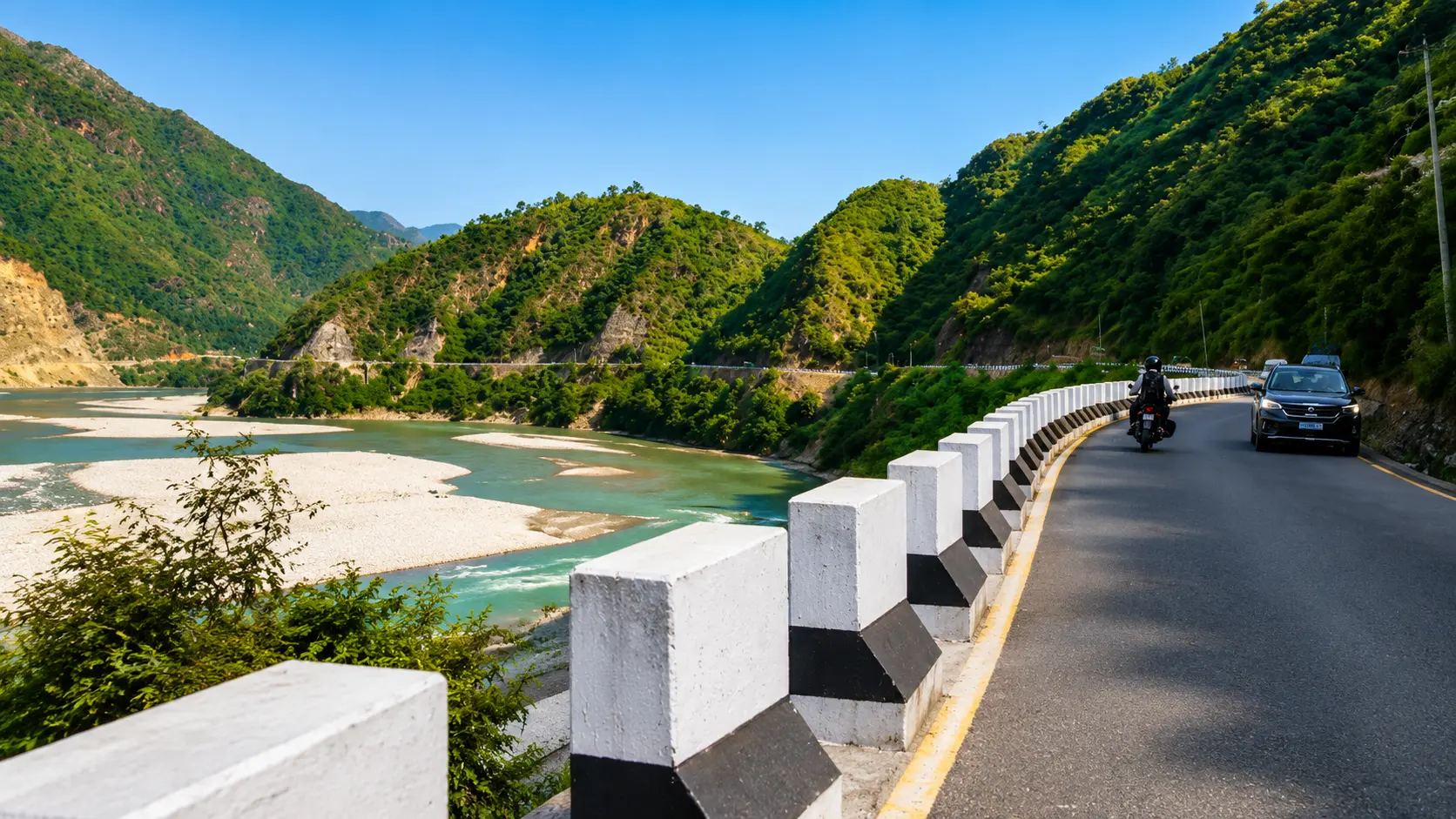
Jomsom to Kagbeni — 18 km Flat Valley Floor. From the Jomsom airstrip and main bazaar, the road heads northward along the Kali Gandaki River bank — a flat, wide, and mostly paved section that covers the 18 kilometres to Kagbeni in approximately 30 to 40 minutes. This section is the easiest and most comfortable driving of the full Jomsom-to-Muktinath route, and the one where the famous Jomsom wind has the most impact: the open valley floor gives the upstream wind no obstacle and maximum speed, and vehicles travelling northward in the late morning are driving directly into this wind at its most powerful.

Leaving Jomsom between 7:30 and 8:30 a.m. ensures you cover this section before the wind peaks.

Kagbeni — The Sacred Village and ACAP Checkpoint. At about 2,810 meters, Kagbeni is one of the most visually striking and historically significant villages in the Mustang region—a compact, flat-roofed stone settlement at the confluence of the Kali Gandaki and Jhong Khola rivers, with a dramatic medieval fort ruin above the village and a magnificent monastery at its centre. Kagbeni is also the checkpoint where vehicles and passengers heading to Muktinath have their ACAP permits verified, and the official gateway to the Upper Mustang restricted area to the north.

Vehicles continuing to Muktinath turn east from Kagbeni onto the road that climbs out of the main Kali Gandaki valley and up toward the Muktinath plateau.

Kagbeni to Ranipauwa — The Climb to Muktinath. From Kagbeni, the road to Ranipauwa (the vehicle stand below the Muktinath temple) climbs about 880 vertical meters over about 8 to 10 kilometres. This gradient is sustained and often steep, mixing improved paved sections with rougher unpaved stretches whose quality varies with recent maintenance and seasonal conditions.

This is the section of the Jomsom to Muktinath drive where vehicle choice matters most: the gradient and surface quality are manageable for a 4WD Scorpio or Hilux jeep without difficulty but create genuine strain for a standard 2WD sedan in slippery or steep conditions. At Ranipauwa (approximately 3,690 m), the vehicle stand is the end of the road — the Muktinath temple complex itself, 100 vertical meters above and 2 kilometres distant, is reached on foot or by horse.
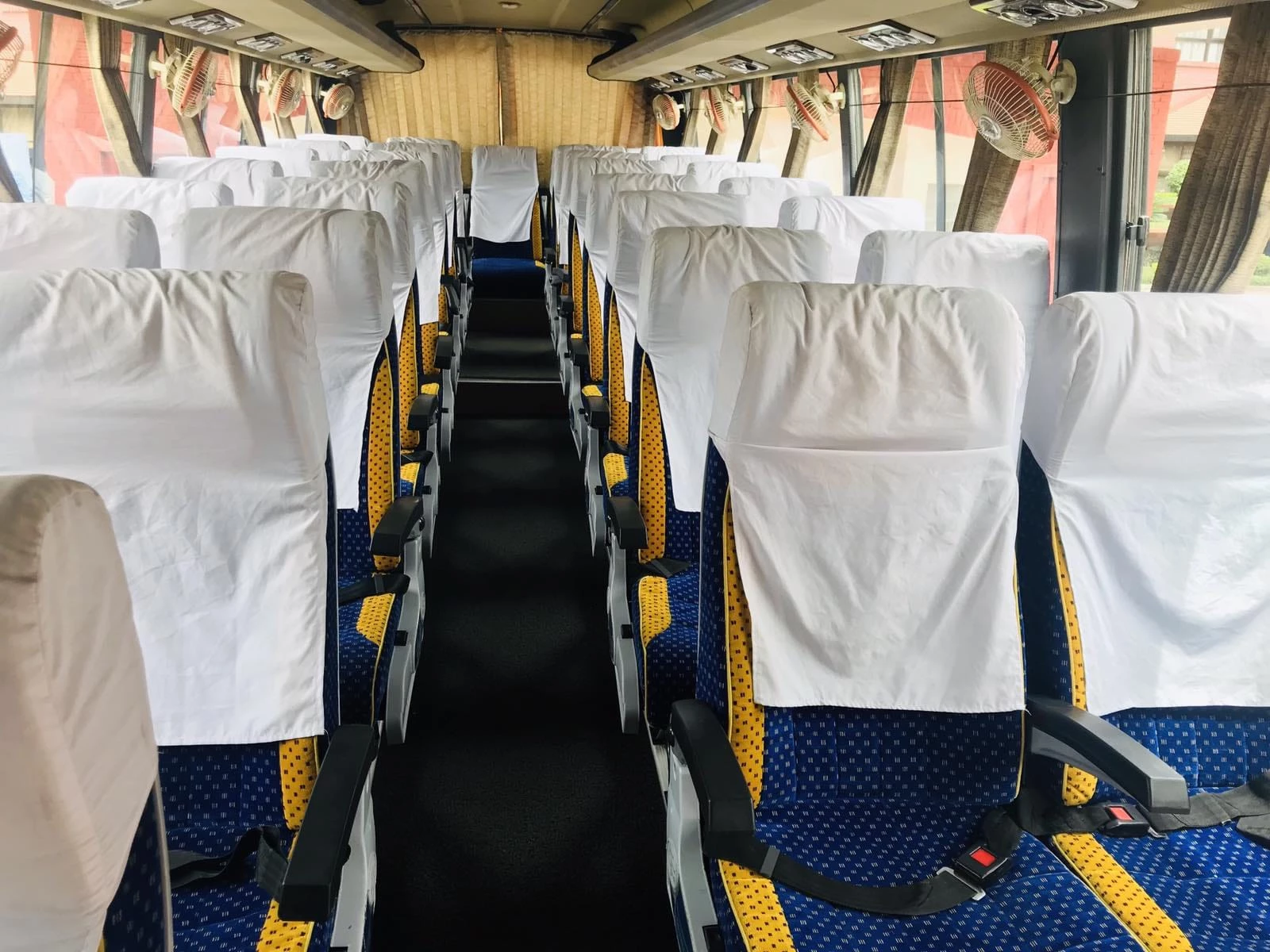
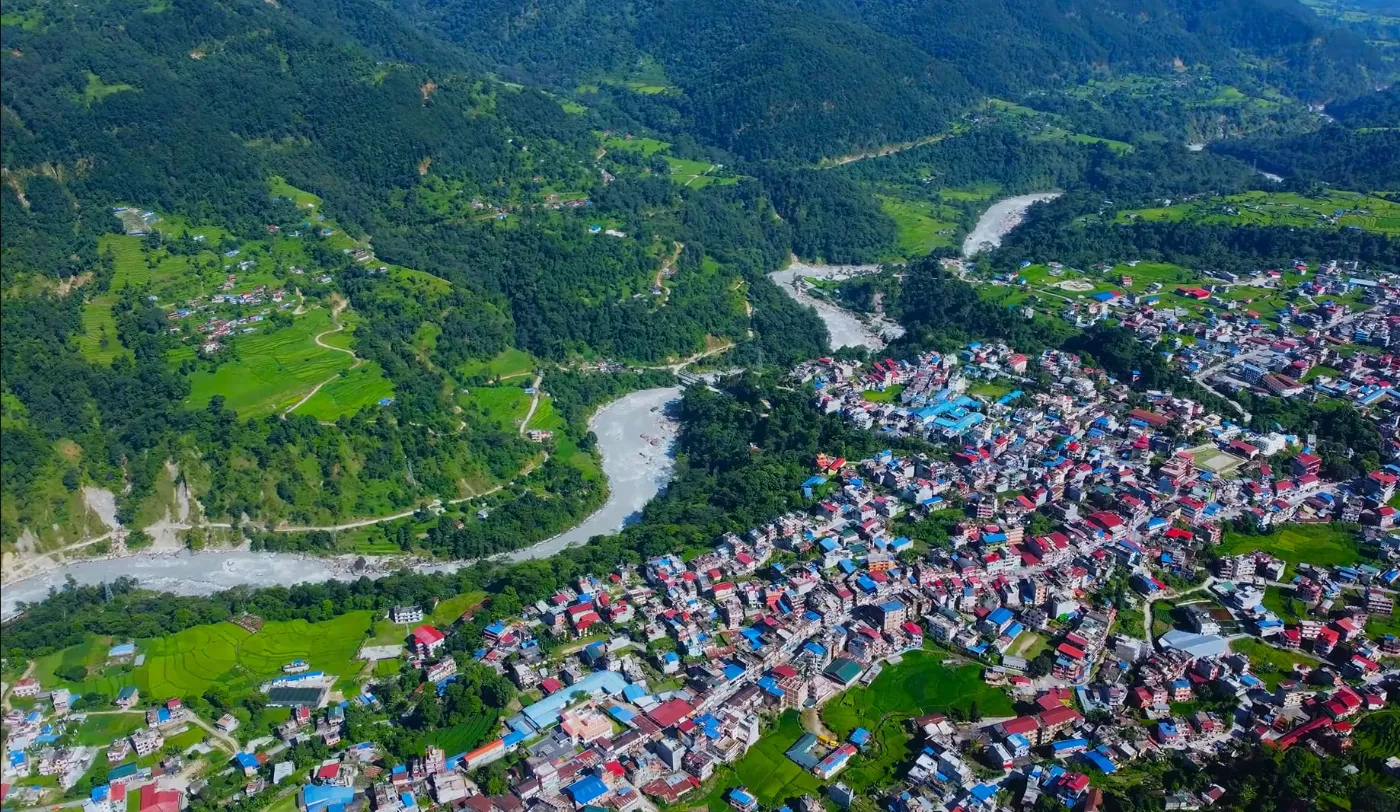
manang

The Vehicle Options — Scorpio Jeep, Car, Hiace and Bus Compared

The vehicle options mentioned in this guide’s title—Scorpio jeep, car, Hiace van, and bus—each has specific strengths and limitations on the Jomsom-to-Muktinath route, depending on the gradient, surface, and altitude profile of the Kagbeni-to-Ranipauwa climb. Understanding these differences helps you choose the right vehicle for your group’s size, budget, and comfort needs.

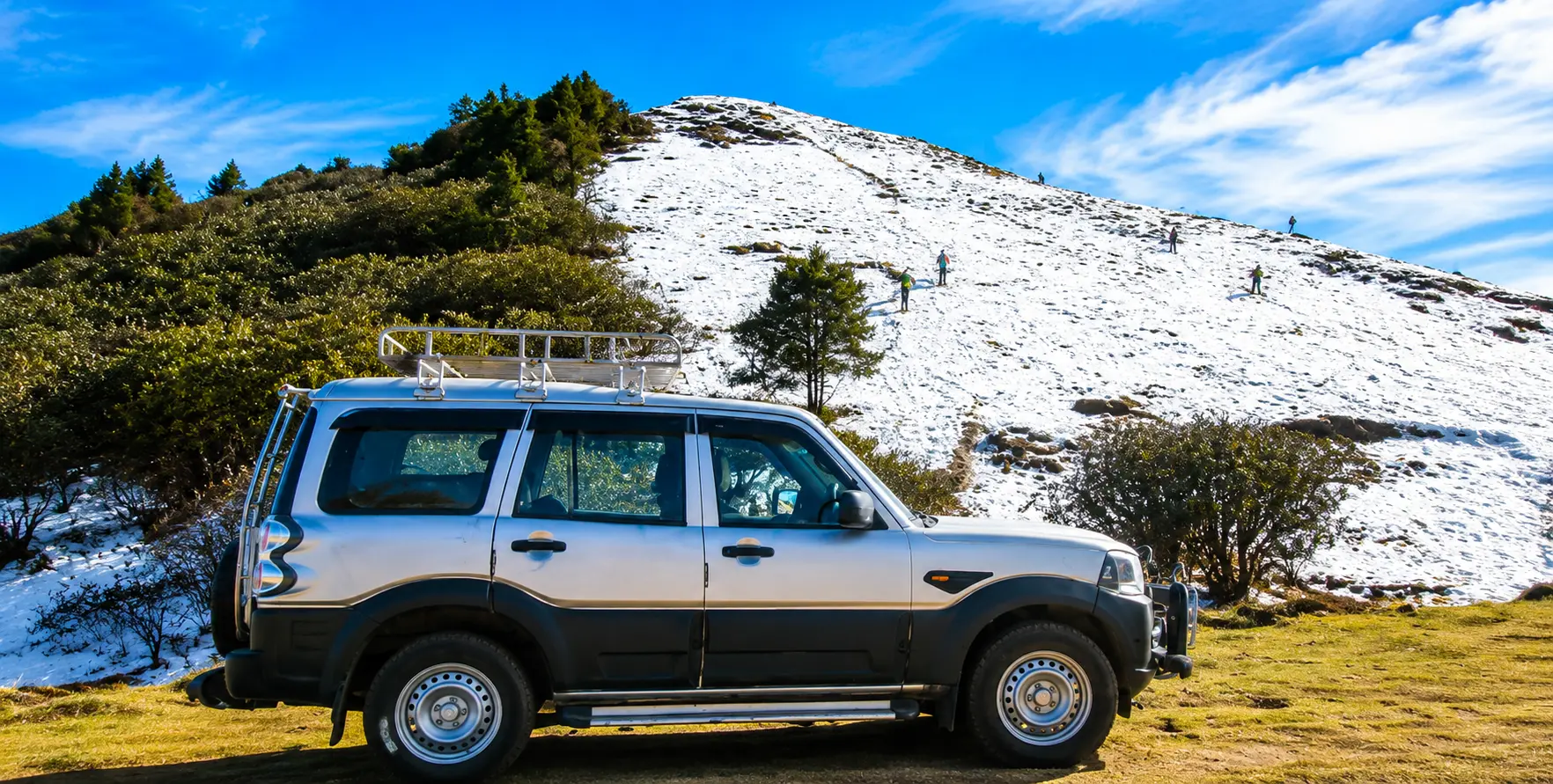
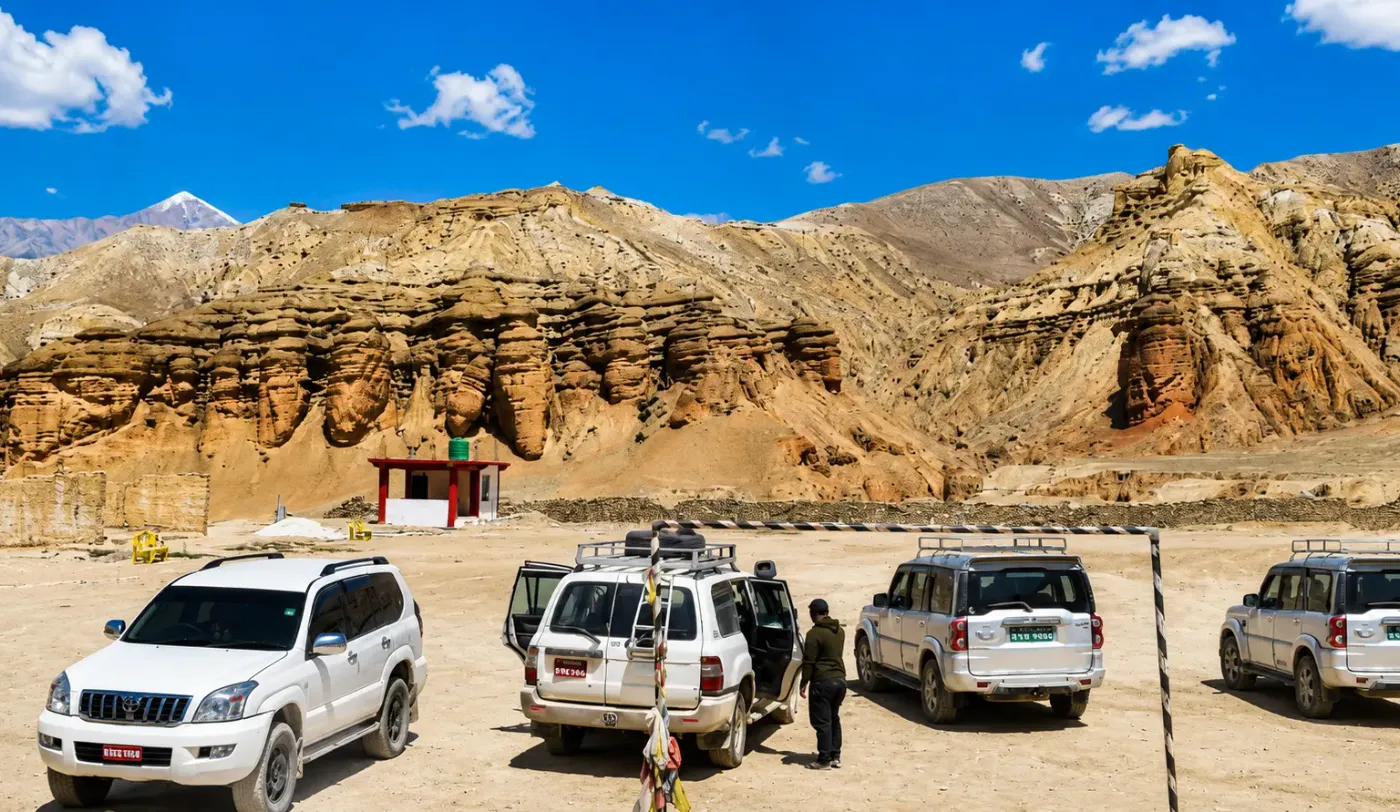
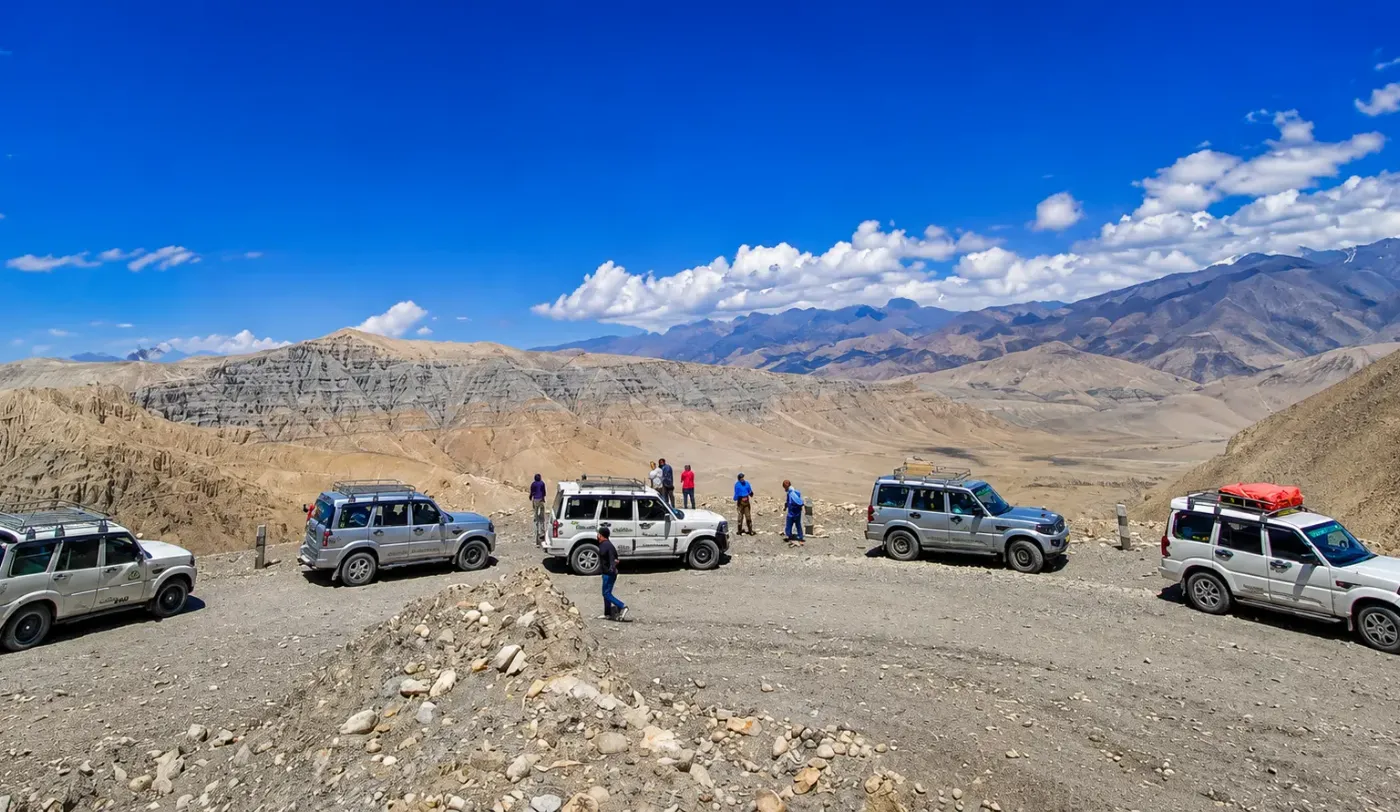
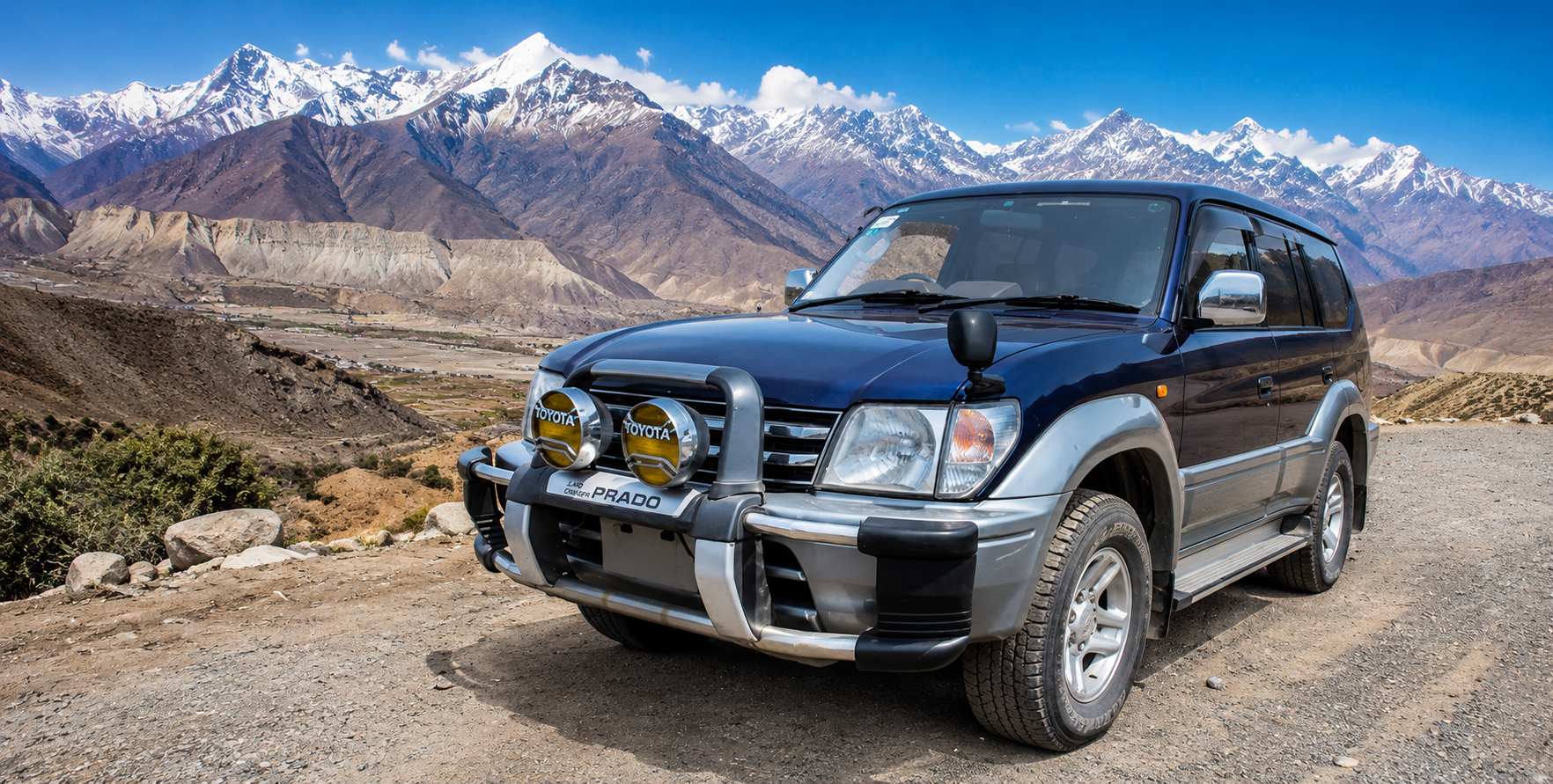
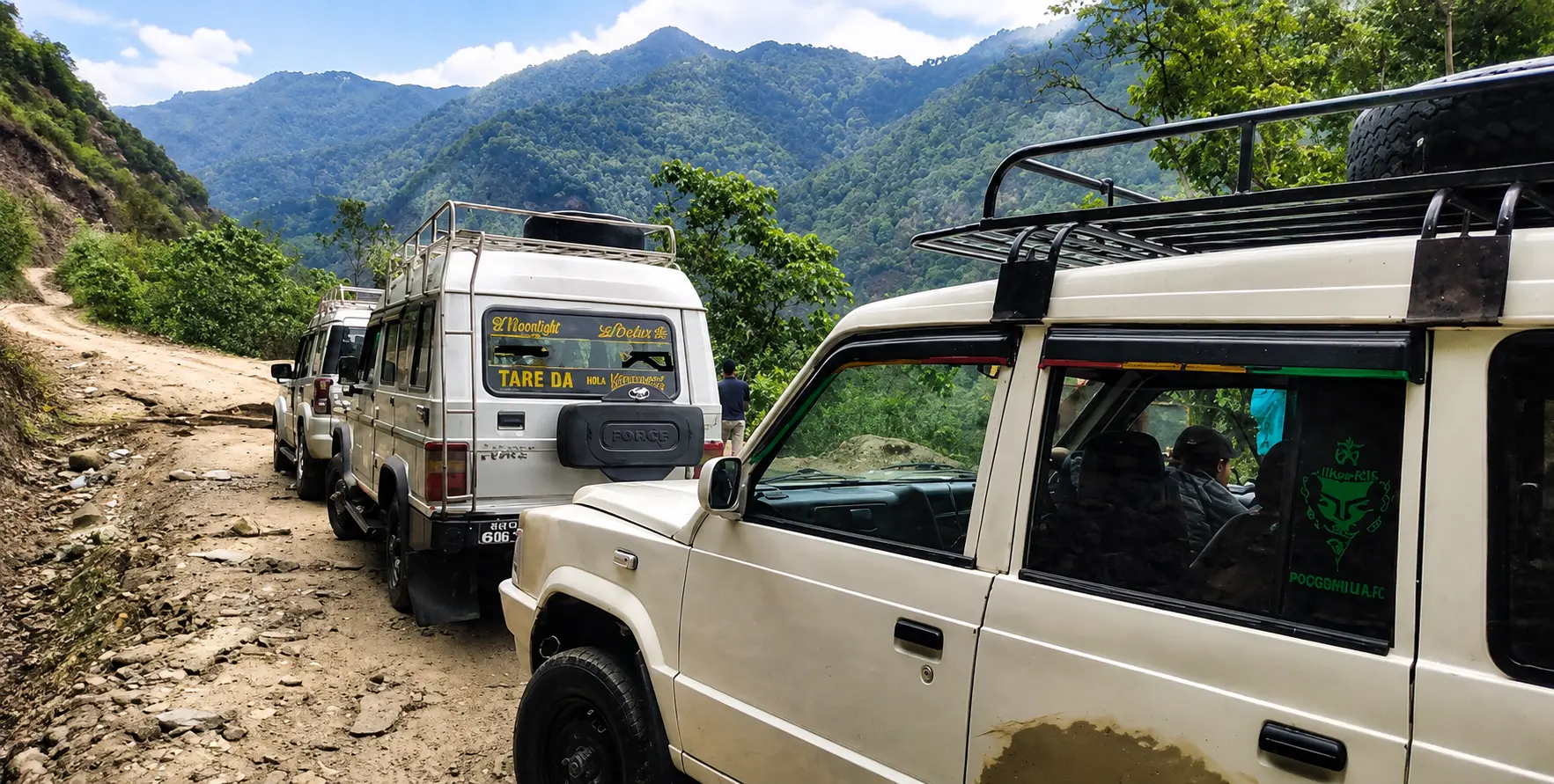
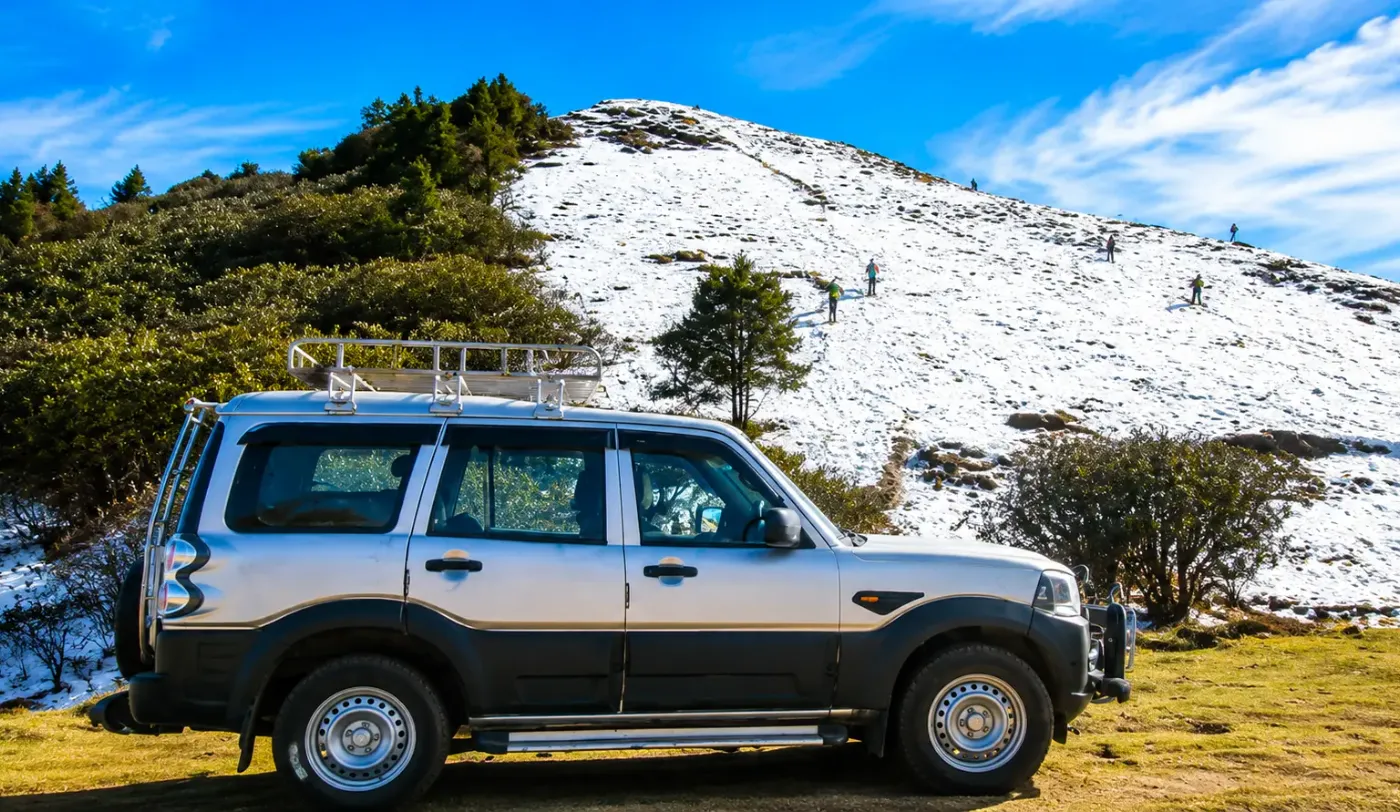
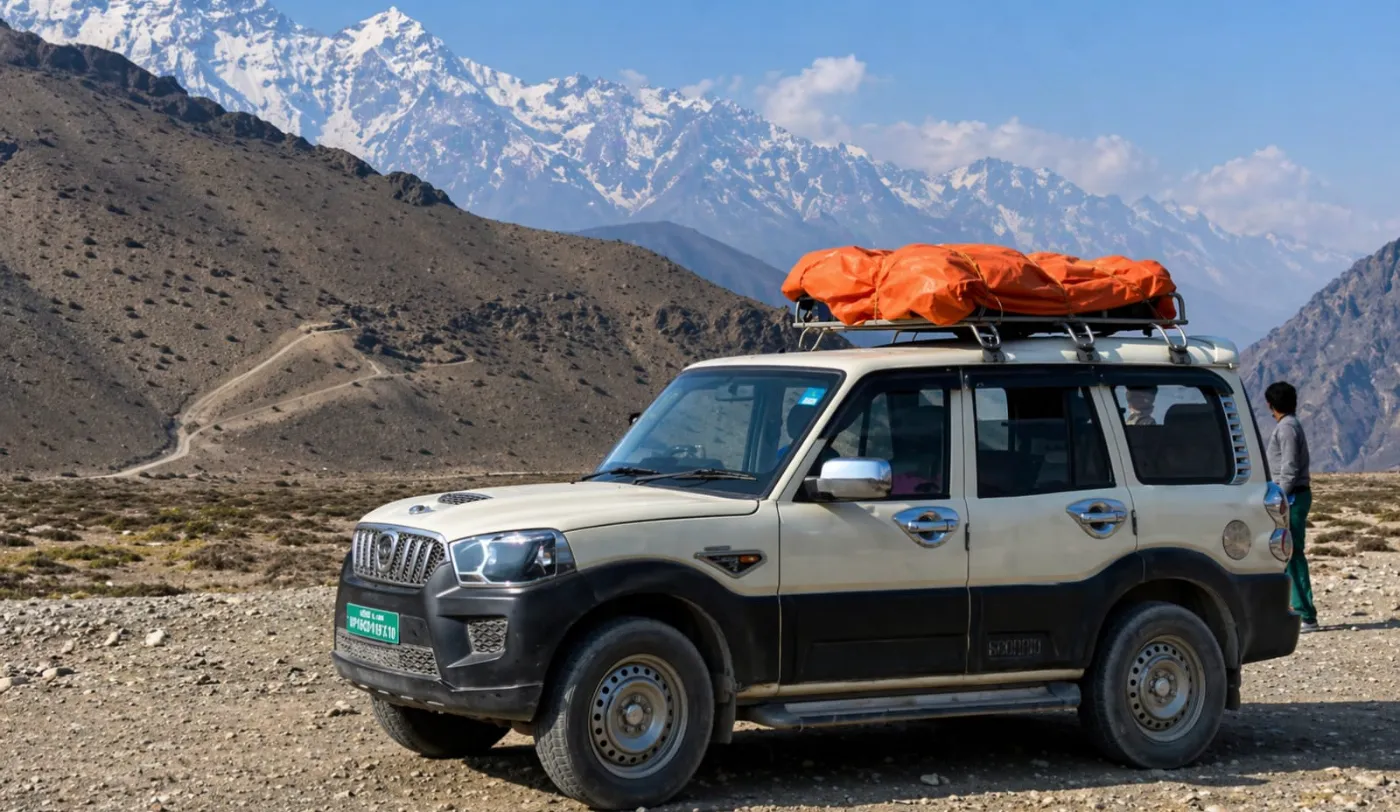
Option 1 — Private Scorpio or Hilux 4WD Jeep (Best Choice). The private 4WD Scorpio or Hilux jeep is the definitive recommendation for the Jomsom-to-Muktinath route, and the choice of every experienced operator and returning pilgrim group coordinator.

Its 4WD capability handles the steeper Kagbeni-to-Ranipauwa gradient sections without strain, even in early-morning cold conditions when road surfaces may be frost-affected. Its 200 to 220 mm ground clearance navigates the rougher unpaved sections of the Ranipauwa approach. Its diesel engine provides the low-range torque needed for sustained gradient driving at altitude, something petrol alternatives lack.

Its passenger capacity of 4 to 6 people, plus luggage and full temple-visit luggage, suits the group sizes most pilgrimage and trekking parties travel in. The price for a private Scorpio or Hilux from Jomsom Airport to Muktinath is approximately NPR 4,000 to 10,000 (USD 30 to 80) for the full vehicle one way.

Nepal Vehicle Hiring Pvt Ltd pre-arranges a jeep pickup at the airport to meet your specific incoming flight.

Option 2 — Private Car (Sedan or Non-4WD SUV). A standard private car is occasionally used for the Jomsom-to-Muktinath transfer in good dry-season road conditions — the Jomsom-to-Kagbeni flat section is entirely manageable for a standard sedan, and the Kagbeni-to-Ranipauwa climb is paved for significant portions that a standard 2WD car can manage in dry conditions without excessive difficulty.

The limitations are real, however: in wet conditions, early morning frost, or on the rougher unpaved approach sections, a standard car offers considerably less safety margin and road confidence than the 4WD jeep.

Nepal Vehicle Hiring Pvt Ltd recommends the private car option only for solo travellers or couples without large luggage travelling in the peak dry season (October-November or March-May), and always recommends upgrading to the 4WD jeep hire, where the cost top-end is modest, and the reliability improvement is meaningful. The private car rate from Jomsom to Muktinath is approximately NPR 3,000 to 8000 (USD 22 to 60).

Option 3 — Toyota Hiace Van. The Toyota Hiace van is a frequently misunderstood option for the Jomsom-to-Muktinath route. As our dedicated Muktinath Hiace hire guide explains in detail, the Hiace is an excellent vehicle for the long highway sections of the Kathmandu or Pokhara approach to the Kali Gandaki region — but its 2WD drivetrain and lower ground clearance make it specifically unsuitable for the Kagbeni-to-Ranipauwa climb, where the combination of sustained gradient, rough unpaved sections, and altitude creates conditions beyond the Hiace’s design parameters.

The practical solution for groups of 7 to 14 people arriving by flight is to use the Hiace van for the Pokhara-to-Jomsom road transport (where its comfort and passenger capacity are genuine advantages) and transfer passengers to 4WD jeeps in Jomsom for the Muktinath ascent.

If a group specifically insists on a Hiace for the Jomsom-to-Muktinath section, Nepal Vehicle Hiring Pvt Ltd advises on the road’s current surface condition and recommends accordingly—in the best dry-season conditions, a Hiace can complete the route. Still, the margin for difficulty is smaller than on the 4WD jeep.

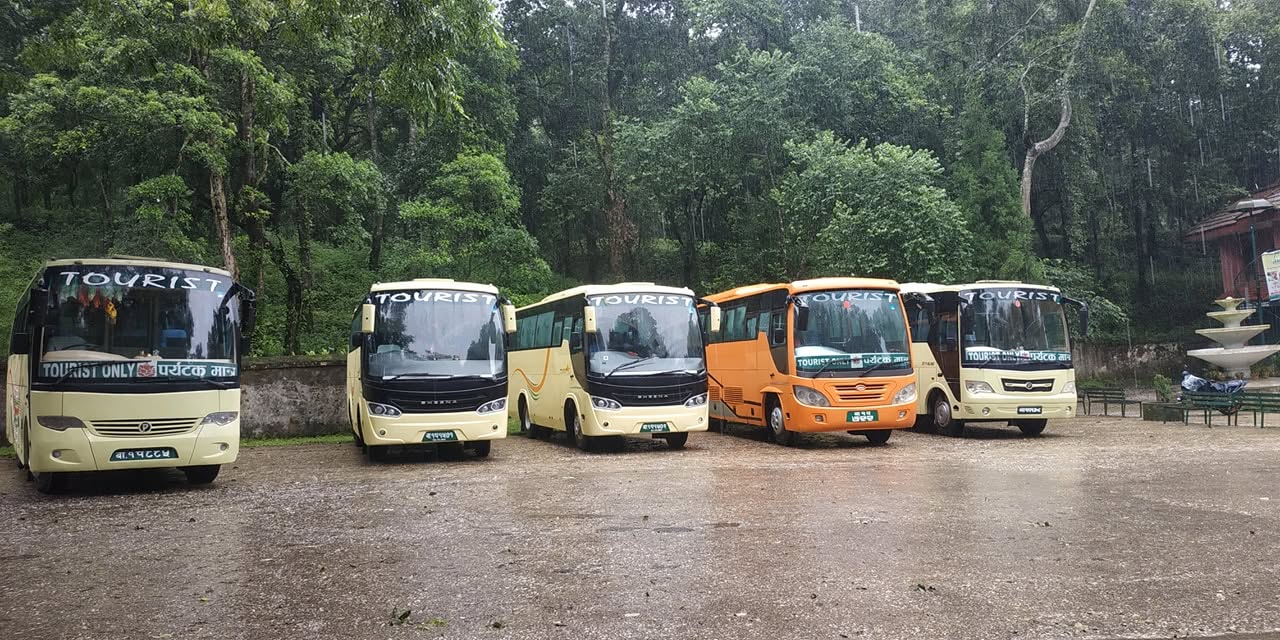
Option 4 — Local Bus. Local buses operating on the Jomsom-to-Muktinath route are primarily the small public buses that serve the Mustang District’s inter-village public transport network. These buses depart from Jomsom Bazaar around 9:00 a.m. and 2:00 p.m. daily and cost about NPR 200 to 300 per person (USD 1.50 to 2.25) for the Jomsom-to-Ranipauwa run.

The journey takes about 1.5 to 2.5 hours because of multiple stops at intermediate villages.

For budget-conscious solo travellers with no fixed timing requirements and light luggage, the local bus is a perfectly functional option. For pilgrimage groups, families, or anyone who paid for a flight specifically to arrive at Muktinath efficiently, the local bus’s fixed departure times, unpredictable journey duration, crowded seating, and limited luggage space make private vehicle hire from Nepal Vehicle Hiring Pvt Ltd the clearly better choice.
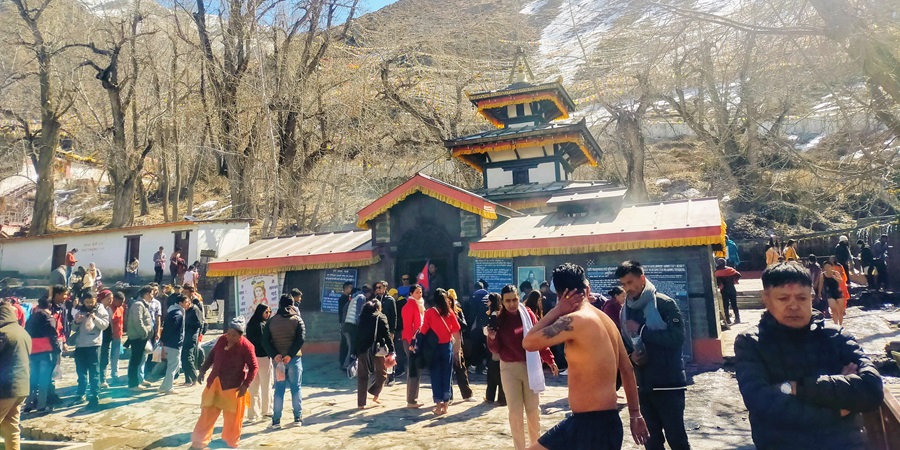
Muktinath

Price Guide — All Jomsom to Muktinath Vehicle Options

The following prices apply to Nepal Vehicle Hiring Pvt Ltd vehicle hire services for the Jomsom Airport to Muktinath transfer. All private vehicle prices include the driver and fuel for the full Jomsom-to-Ranipauwa journey and return (round-trip pricing noted separately).

Private Scorpio  4WD Jeep — One Way, Airport to Ranipauwa: NPR 4,000 to 10,000 (USD 30 to 80) for the full vehicle, 4 to 6 passengers.

Private Scorpio  4WD Jeep — Round Trip, Airport to Ranipauwa and Return: NPR 7,500 to 26,000 (USD 56 to 150) for the full vehicle. This round-trip arrangement includes waiting at Ranipauwa during the darshan (2 to 4 hours) and returning the group to Jomsom Airport or Bazaar Hotel.

Private Car (Sedan) — One Way, Jomsom to Ranipauwa: NPR 3,000 to 8,000 (USD 22 to 60) for the full vehicle, 1 to 3 passengers, dry-season only.

Toyota Hiace Van — One Way, Jomsom to Ranipauwa: NPR 7,000 to 15,000 (USD 53 to 100) for the full vehicle, 7 to 14 passengers, only in best dry-season conditions.

For the complete Muktinath yatra vehicle package covering Pokhara to Jomsom (road) or Jomsom Airport pickup (for those flying), through Jomsom-to-Muktinath darshan,n and return to Pokhara or Sunauli, Nepal Vehicle Hiring Pvt Ltd provides coordinated,d all-inclusive pricing through our plan trip page or by contacting our team at +977 981-4227196.
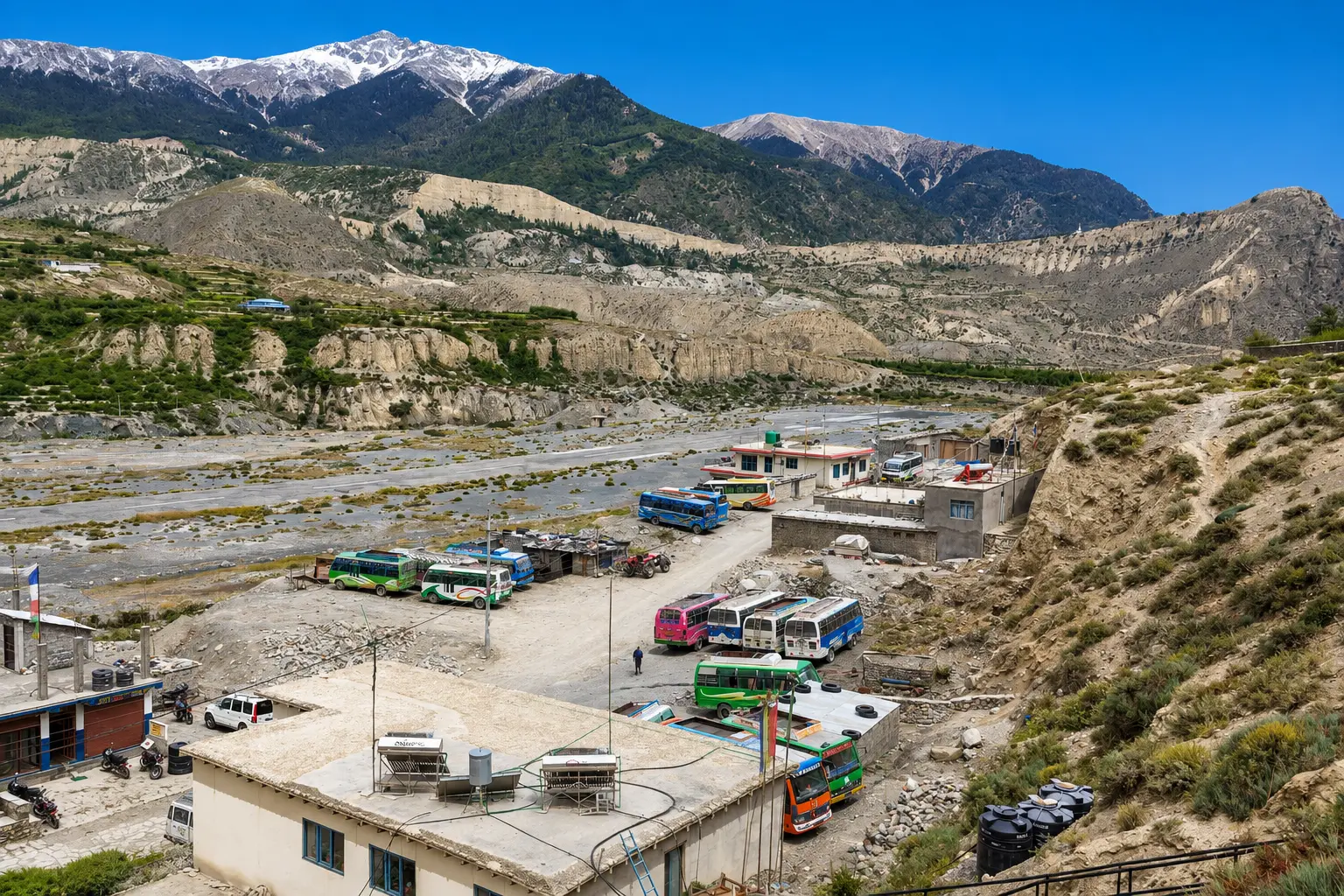
Book Jomsom Airport to Muktinath Jeep Car Hiace Bus transportation for families, couples, and groups. Choose a private 4WD jeep, car, Hiace van, or bus for convenient airport pickup and comfortable travel to Muktinath Temple.

The Jomsom Wind — The Most Critical Timing Factor

The Jomsom wind is perhaps the most famous natural phenomenon in all of Nepal’s mountain transport geography. This powerful upstream thermal wind builds through the Kali Gandaki valley from about 10:00 a.m. each day, reaching sustained speeds of 60 to 80 km/h by early afternoon on the most intense days and creating the distinctive, sand-blown haze that gives Jomsom’s midday atmosphere its characteristic stark quality.

The wind is created by the same atmospheric dynamics that make the Kali Gandaki valley one of the world’s deepest and most efficiently channelled natural wind corridors: the thermal heating of the Tibetan plateau above drives a powerful upvalley airflow through the gorge between Dhaulagiri and Annapurna, and the valley’s geometric efficiency in channelling this flow concentrates it into the remarkable phenomenon that makes Jomsom-area driving in the afternoon a genuinely challenging and sometimes hazardous experience.

The wind’s practical impact on Jomsom-to-Muktinath vehicle transfers is straightforward and widely acknowledged: depart as early as possible after the incoming flight lands, ideally between 7:30 and 9:30 a.m., and complete the ascent to Ranipauwa before the wind peaks around noon. A private jeep from Nepal Vehicle Hiring Pvt Ltd can meet the incoming flight at the airport and depart immediately after luggage collection, completing the Jomsom-to-Ranipauwa journey before 10:00 a.m. on most mornings and avoiding the peak wind window.

The shared jeep alternative, which may fill and depart 30 to 60 minutes after the flight lands, puts the Kagbeni-to-Ranipauwa climb in the early wind-building period — still manageable, but noticeably less comfortable than the dawn calm.

The return from Muktinath to Jomsom involves a different wind consideration. On the Kagbeni-to-Jomsom section, the descent from Ranipauwa runs northward-to-southward, so the vehicle travels with the upvalley wind rather than against it. This makes the afternoon return descent considerably more comfortable than the afternoon ascent would be.

Nepal Vehicle Hiking Pvt Ltd’s standard Muktinath round-trip vehicle arrangement confirms the return departure from Ranipauwa based on the group’s darshan completion time—typically a 2 to 4 hour window at the temple—with the driver waiting at the Ranipauwa vehicle stand throughout.
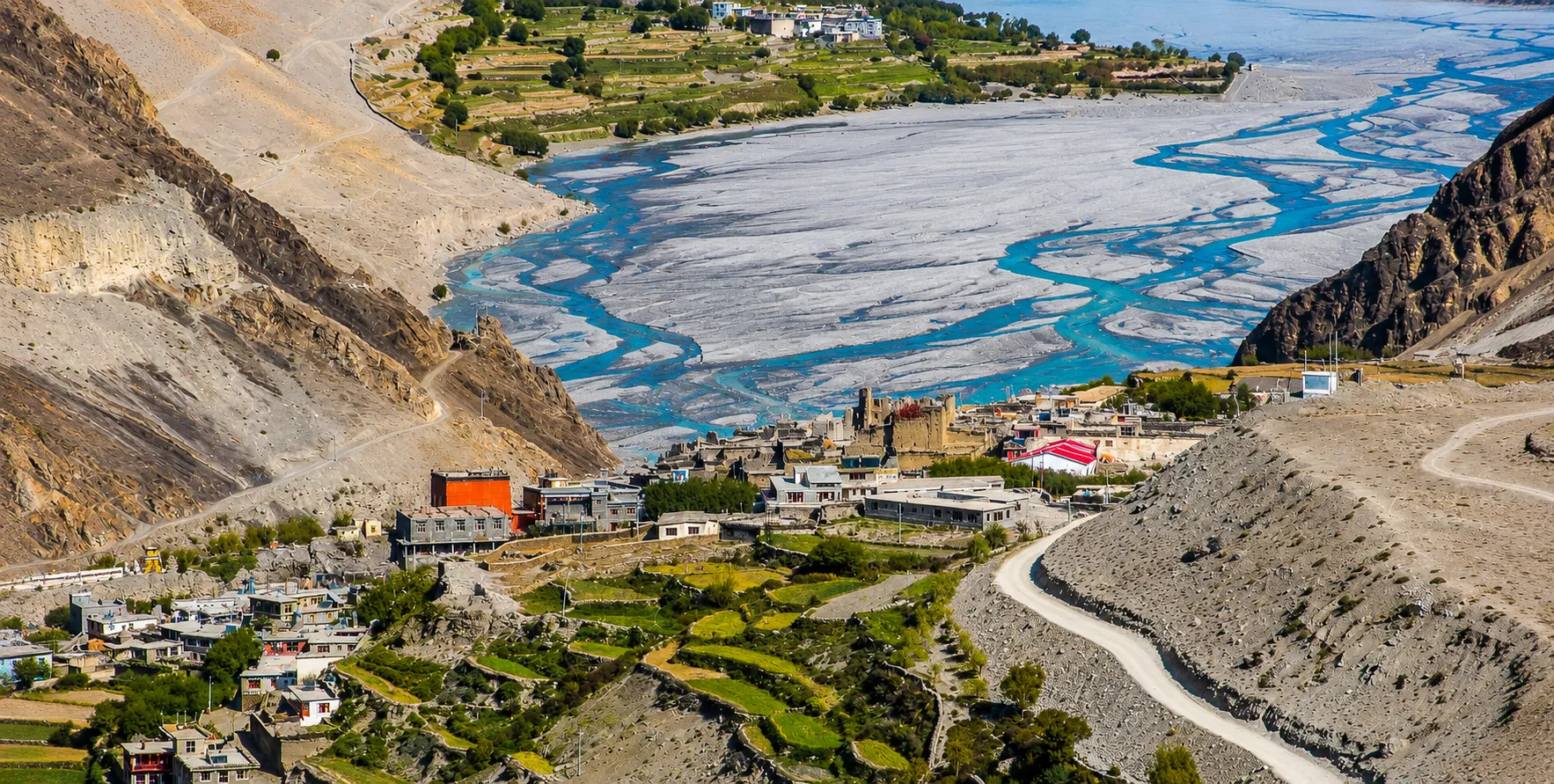
Book Jomsom Airport to Muktinath Jeep Car Hiace Bus transportation for families, couples, and groups. Choose a private 4WD jeep, car, Hiace van, or bus for convenient airport pickup and comfortable travel to Muktinath Temple.

Kagbeni — The Sacred Stopover Worth More Than a Checkpoint

Most vehicles passing through Kagbeni on the Jomsom to Muktinath route stop only as long as the ACAP checkpoint verification requires — typically 5 to 10 minutes — before continuing to Ranipauwa. This is understandable given the wind-timing urgency described above.

Still, it consistently means one of the Muktinath corridor’s finest historical and cultural environments is seen only from the checkpoint queue rather than explored with proper attention. Kagbeni is worth more than this — and for groups with early flights whose Jomsom-to-Muktinath transfer begins before 8:00 a.m., a 20 to 30 minute Kagbeni stop adds perspective and cultural depth to the journey without meaningfully affecting the wind timing.

The Kagbeni checkpoint marks the official entry into the restricted Upper Mustang area for travellers continuing northward — tourists going above Kagbeni to Lo Manthang require the USD 50 per day Restricted Area Permit. At the same time,e Muktinath-bound vehicles turn east at Kagbeni and re-enter the standard ACAP area.

The Kag Chode Thupten Samphel Ling Monastery in Kagbeni, one of the valley’s oldest active monasteries, sits above the village and is a short climb from the main village lane. The sacred Kali Gandaki riverbed at Kagbeni is the primary Shaligram Shila collecting site—the black ammonite fossils that Vaishnavite tradition regards as physical manifestations of Vishnu are found in the river gravel, and pilgrims on the ascending journey to Muktinath darshan sometimes stop to collect Shaligrams for blessing at the temple above.
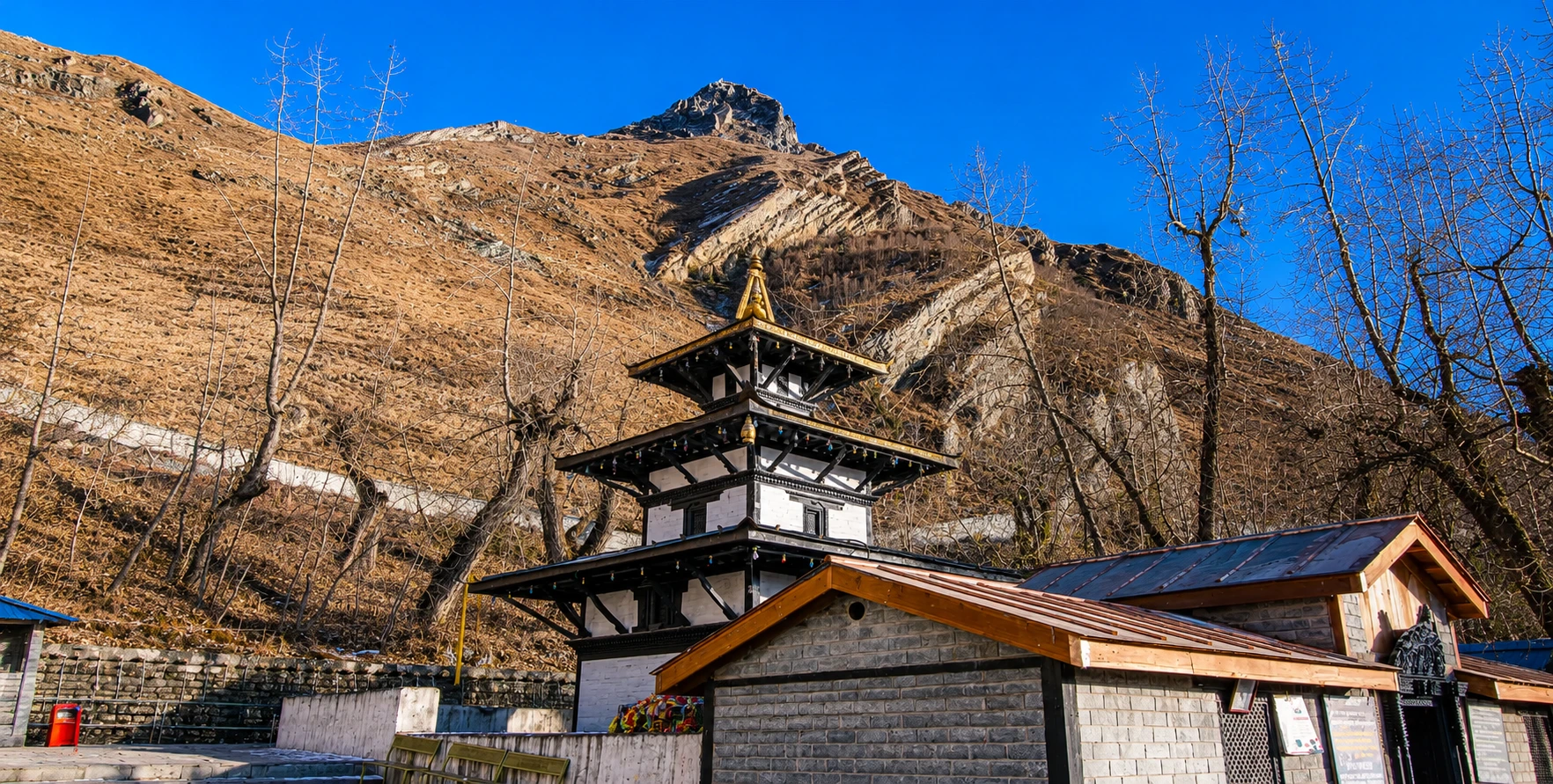
Book Jomsom Airport to Muktinath Jeep Car Hiace Bus transportation for families, couples, and groups. Choose a private 4WD jeep, car, Hiace van, or bus for convenient airport pickup and comfortable travel to Muktinath Temple.

Muktinath Darshan — What Happens at Ranipauwa and the Temple

Ranipauwa village, at approximately 3,690 meters, is where every Jomsom-to-Muktinath vehicle transfer ends and where the 2-kilometre walk — or horse ride — to the Muktinath temple complex begins. The vehicle stand at Ranipauwa has a small cluster of guesthouses, tea shops, and horse hire operators, ensuring the vehicle-to-temple transition is managed rather than improvised.

Nepal Vehicle Hiring Pvt Ltd’s private jeep drivers wait in Ranipauwa throughout the group’s darshan, confirming by WhatsApp when the group descends from the temple and is ready to return to Jomsom.

The horse ride from Ranipauwa to the temple takes approximately 15 to 20 minutes one way and costs approximately NPR 300 to 500 return. This option is strongly recommended for elderly pilgrims and for anyone who wants to conserve energy for the 108 Mukti Dhara ritual itself at 3,710 meters, where the cold-water spout circuit requires sustained standing in cold, open air at an altitude where any physical exertion is noticeably harder than at sea level.

The walk is about 2 kilometres of gradual uphill — not technically difficult, but tiring enough at altitude that many experienced pilgrims prefer the horse for at least the ascent.

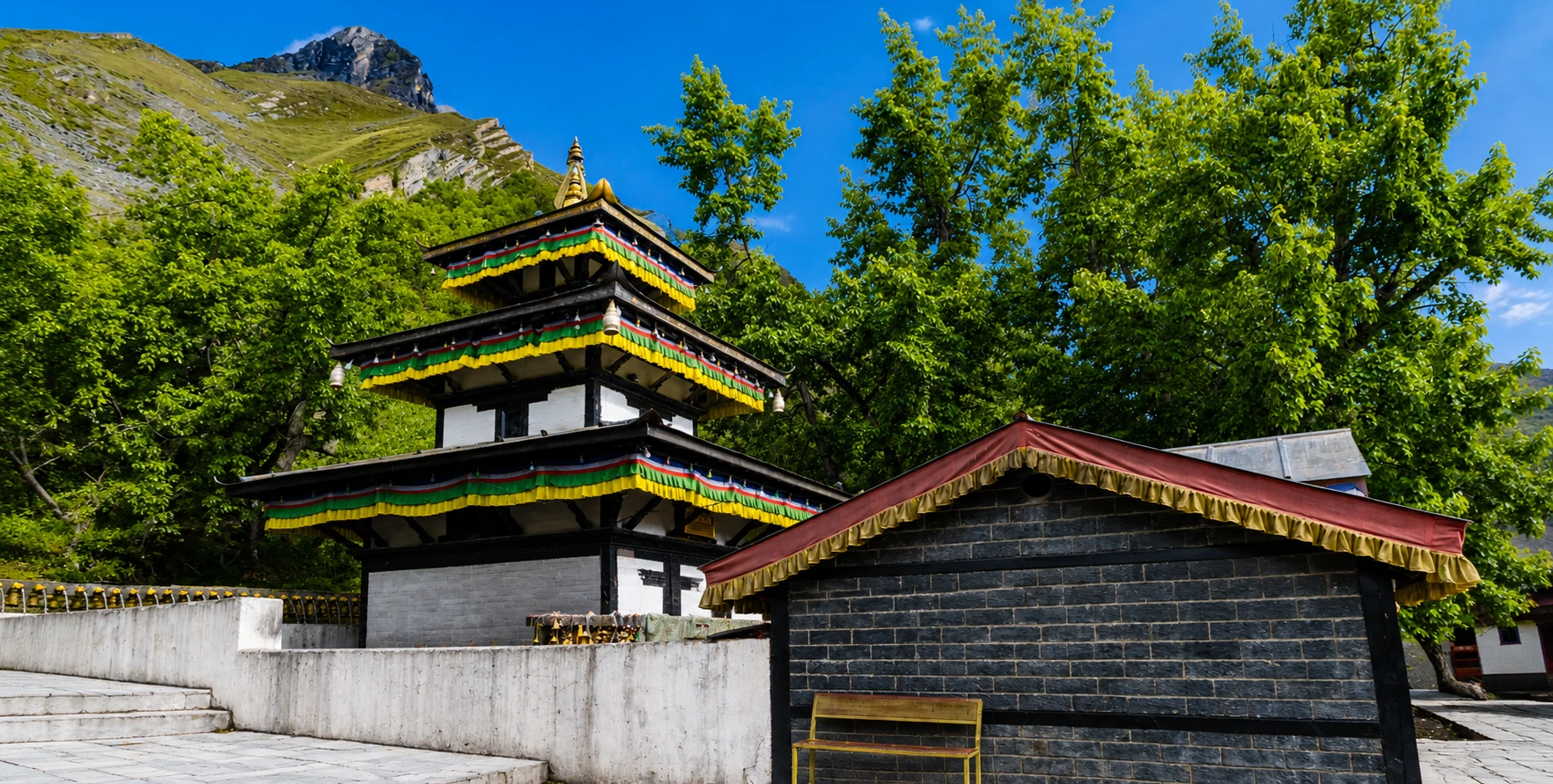
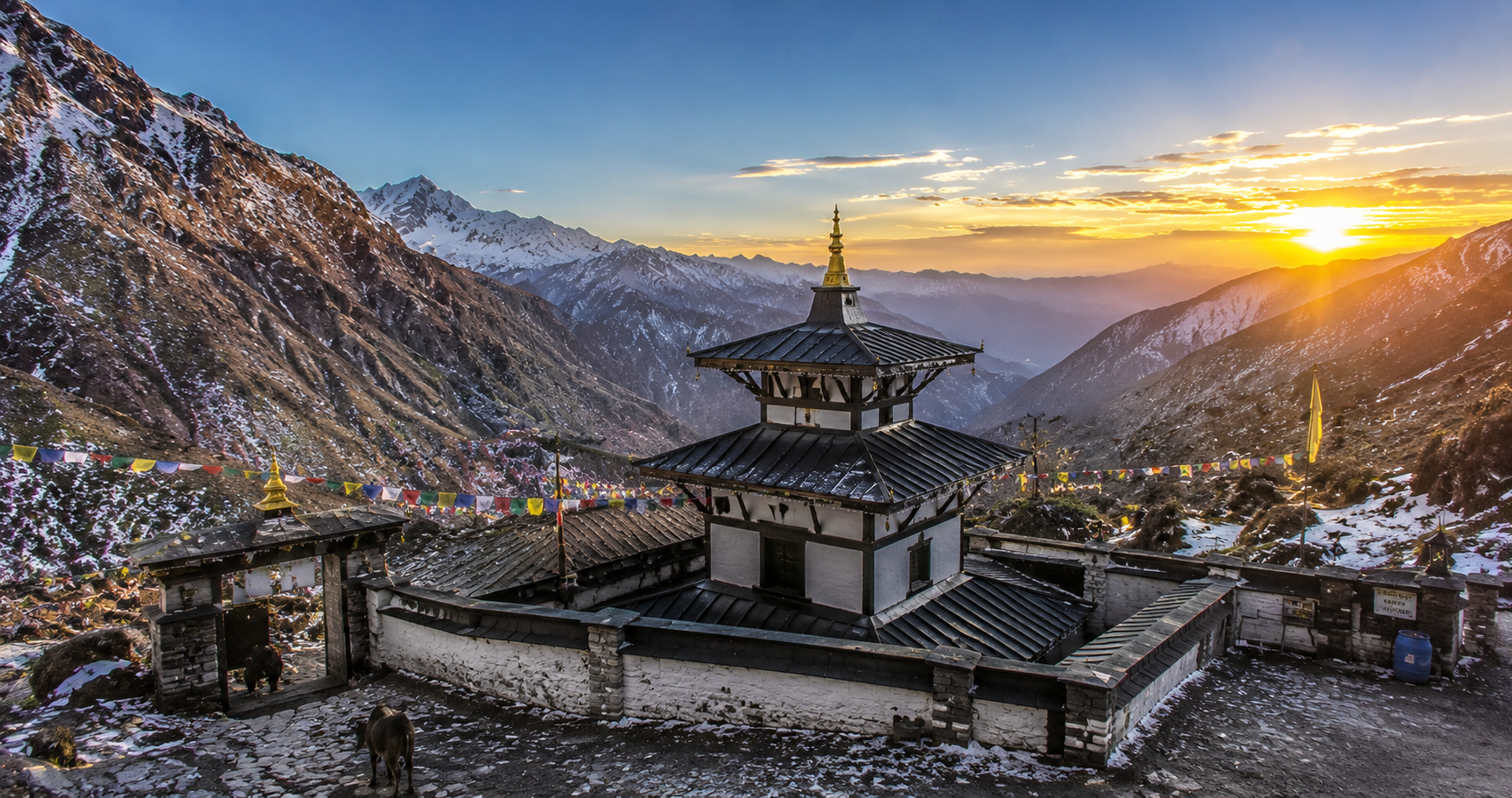
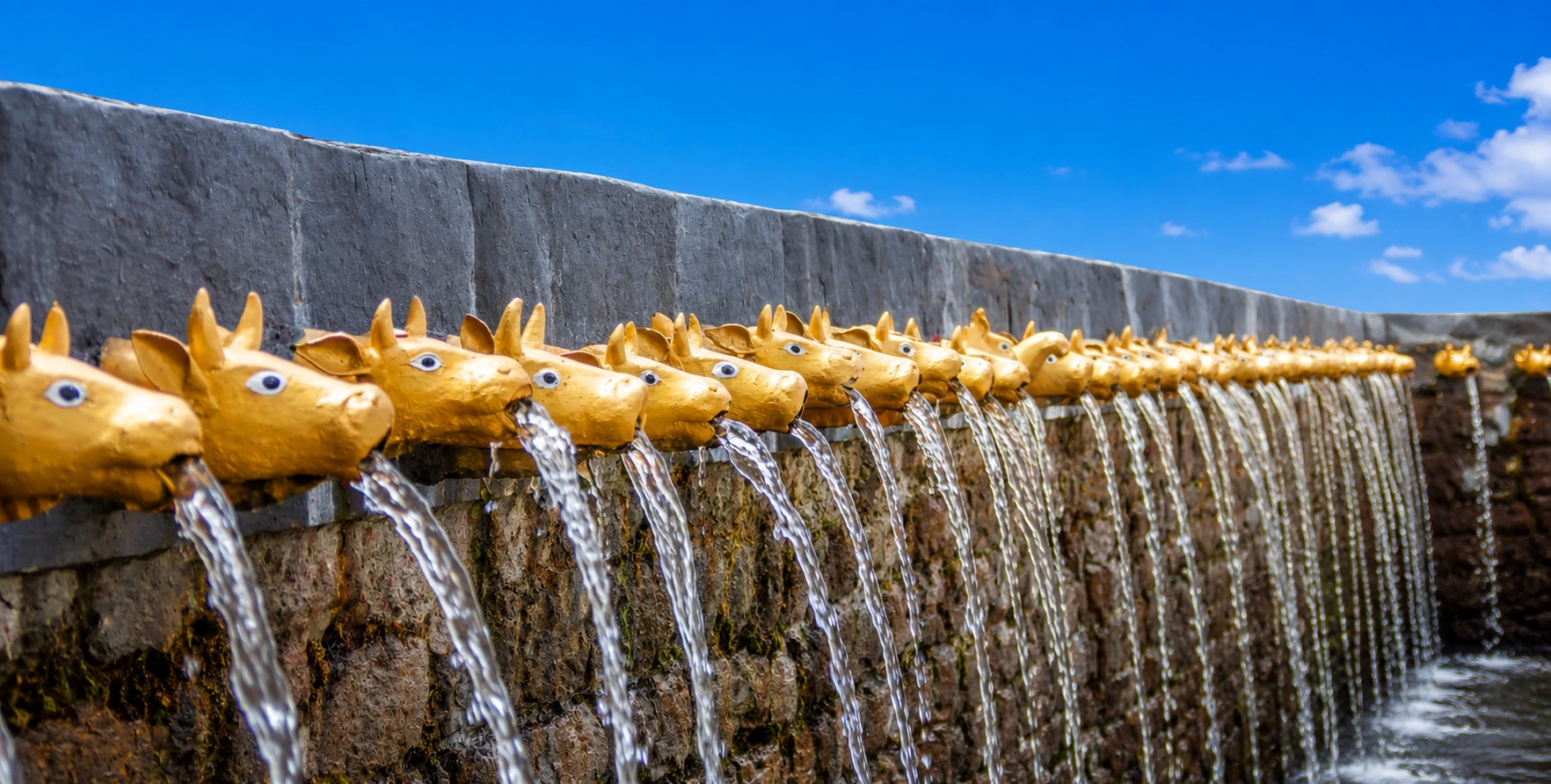
The Muktinath temple complex itself — the 108 Mukti Dhara sacred water spouts, the Jwala Mai eternal flame shrine, the principal Vishnu Mandir, the Buddhist Gompa, and the Mukteshwor Mahadev Temple — typically takes 2 to 4 hours for a complete, unhurried visit. Nepal Vehicle Hiking Pvt Ltd’s jeep and vehicle hire arrangements for the Jomsom-to-Muktinath round trip include a standard 3-hour minimum wait at Ranipauwa, with flexible extensions available for groups who want more time at the temple before the return descent.

Pre-Arranged vs On-Arrival Vehicle Hire — The Critical Distinction

One of the most consistently reported stress points for pilgrims arriving at Jomsom Airport is the transition from flight to ground transport at the vehicle stand outside the small terminal building — a process that, in the unmanaged form that airport-stand haggling takes in peak season, involves competing with all other arriving passengers for the limited supply of local jeeps at rates inflated by immediate demand. During the peak October-November and March-May windows, when multiple Pokhara-to-Jomsom flights operate consecutively, and 40 to 80 pilgrims may arrive at the airport within 30 minutes of each other, the local jeep supply at Jomsom airport is frequently insufficient for immediate demand, creating waits of 30 to 60 minutes for groups unable to secure a vehicle immediately.

A pre-arranged private jeep from Nepal Vehicle Hiring Pvt Ltd eliminates this stress. Our driver is at the airport with the vehicle confirmed and positioned before the incoming flight lands — the group walks from the arrivals area directly to their waiting Scorpio or Hilux, loads luggage.

It departs for Muktinath within 10 to 15 minutes of the plane door opening. We confirm the booking 24 hours before the flight via WhatsApp and share the driver’s name, vehicle description, and mobile number. No airport-stand negotiation, no waiting during peak wind periods, and no uncertainty about vehicle condition or price.

Nepal Vehicle Hiring Pvt Ltd pre-arranges Jomsom Airport pickup vehicles for all Muktinath transfer groups booking through our plan trip page or via WhatsApp at +977 981-4227196. Please provide your incoming flight details (flight number, airline, departure time from Pokhara) at booking so we can confirm your arrival time at Jomsom Airport.

The ACAP Permit — What to Have Ready at Kagbeni Checkpoint

The Kagbeni ACAP checkpoint requires valid Annapurna Conservation Area Permits for all passengers in any vehicle heading toward Muktinath. The 2026 ACAP fee is NPR 3,000 (approximately USD 22 to 25) per person for foreign nationals and NPR 1,000 per person for SAARC nationals, including Indian citizens. You must obtain the permit in Kathmandu or Pokhara before the Jomsom flight; you cannot purchase it in Kagbeni or Jomsom.

For pilgrims arriving at Jomsom by domestic flight from Pokhara and who have not yet obtained their ACAP permits, Jomsom Bazaar has a permit office where ACAP permits can be purchased before the Muktinath vehicle transfer departs — our Nepal Vehicle Hiring Pvt Ltd drivers allow 20 to 30 minutes at Jomsom Bazaar for permit purchase if required, factoring this into the overall morning departure timing. For pilgrims arriving by road from Pokhara through the Kali Gandaki gorge, the ACAP permit is typically verified at the Beni checkpoint before the Gorge section — meaning Kagbeni is a second verification rather than the first.

NOTE: Foreign nationals arriving at the Kagbeni checkpoint without a valid ACAP permit must return to Jomsom to buy one before proceeding to Muktinath. This adds 1-2 hours to the journey. Arrange ACAP permits in Pokhara or Kathmandu before departure.

Horse Hire at Ranipauwa — The Muktinath Ascent Alternative

The horse hire facility at Ranipauwa village deserves a dedicated section in any Jomsom to Muktinath vehicle guide because, for many pilgrims, it’s the most practical and sensible way to cover the 2-kilometre, 100-vertical-meter ascent from the vehicle stand to the temple complex. The horses available at Ranipauwa are acclimatised and well-fed, and their operators are experienced on the specific trail to the temple; pilgrim groups consistently rate their services highly.

The current rate is approximately NPR 300 to 500 for the return ride (from the vehicle stand to the temple and back).

For elderly pilgrims, for those with knee or joint concerns, for children, and for any pilgrim who has already been physically active (a trekker who has just crossed the Thorong La and descended to Ranipauwa over the previous 8 to 10 hours, for example), the horse ride is not a compromise but a sensibly managed conservation of energy for the temple circuit itself — the standing walk through the 108 Mukti Dhara water spouts, the circumambulation of the courtyard, and the extended time at the Jwala Mai shrine that the proper Muktinath darshan requires. Nepal Vehicle Hiring Pvt Ltd’s private jeep drivers can help clients identify the most appropriate horse operators at Ranipauwa, and our booking team advises on horse-hire arrangements when confirming Jomsom Airport pickup bookings.

Jharkot and Khingar — Sacred Villages on the Muktinath Ascent

The road from Kagbeni to Ranipauwa passes through two Tibetan-influenced villages — Jharkot and Khingar — whose cultural and architectural character adds significant depth to the Jomsom to Muktinath vehicle journey for pilgrims and travellers willing to slow the ascent by 15 to 20 minutes for a village stop. Jharkot, at approximately 3,550 meters, is a compact hilltop settlement whose dramatic medieval castle ruin rises above the flat-roofed village houses in a composition photographed by virtually every professional photographer who has passed through the Mustang region.

The Jharkot castle, though no longer inhabited or structurally safe to enter, is visible from the road immediately above the village and provides one of the most photographically compelling roadside scenes on the entire Muktinath corridor.

Khingar, continuing above Jharkot at approximately 3,620 meters, is a smaller but similarly atmospheric village whose residents maintain the mix of farming, herding, and guesthouse operation that characterises Mustang’s high-altitude communities. The village monastery, accessible via a short trail from the main road, is active and holds a modest but genuine collection of religious paintings and sculptures that reward a brief respectful visit.

For groups travelling in a private jeep from Nepal Vehicle Hiring Pvt Ltd with a flexible schedule, a 10 to 15-minute stop at each of Jharkot and Khingar adds cultural texture to what is otherwise treated purely as a transit section of the Jomsom to Muktinath road transfer. Our drivers on this route know both villages well and are glad to stop for photography and brief exploration on request — confirm the stop preference when booking the vehicle transfer through our plan trip page.

The Muktinath Plateau Landscape — High Desert Beauty

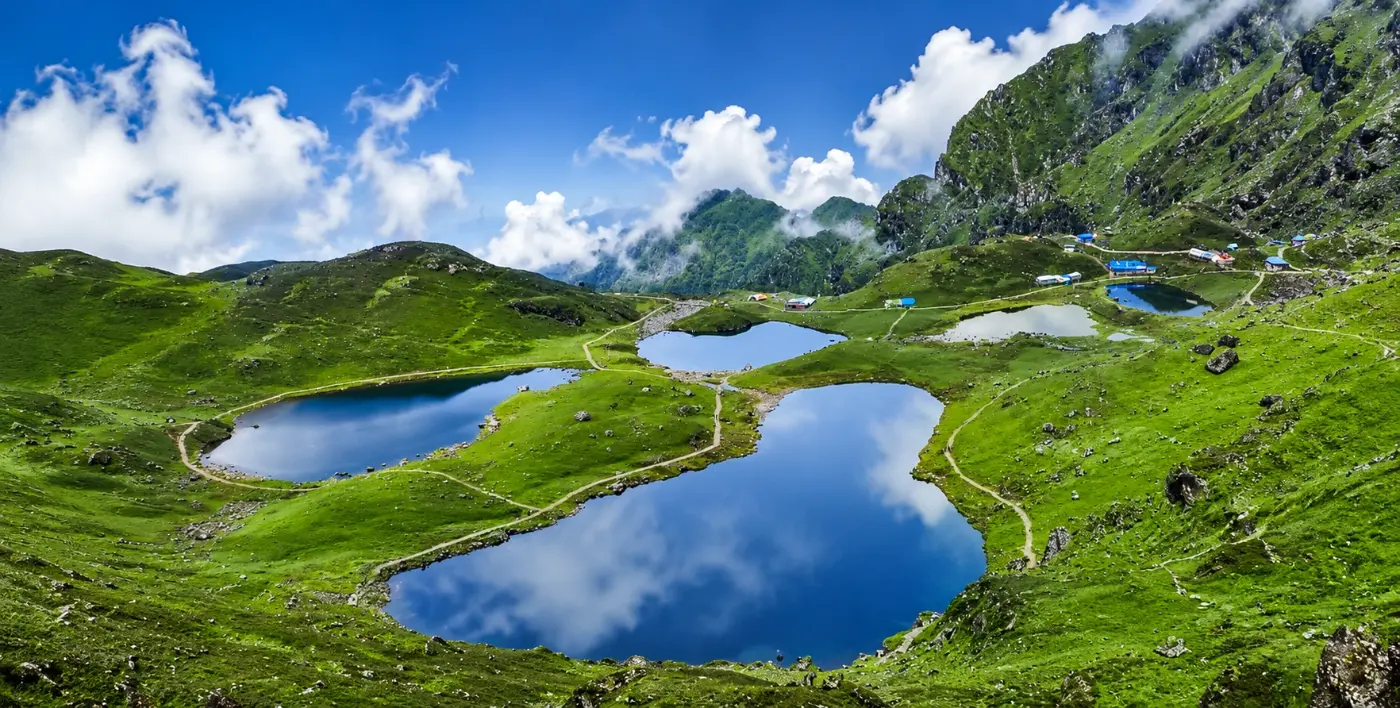
The landscape above Kagbeni on the ascent to Muktinath is one of the most visually distinctive in Nepal — a high-altitude plateau environment that, in its dry, ochre-colored, wind-sculpted character, feels more like the Tibetan plateau than the forested mountain terrain below the Himalayan rain shadow. At approximately 3,500 to 3,800 meters on the Muktinath ascent, the vegetation is sparse scrub and dry grassland, the rock formations are deeply eroded sandstone and conglomerate in the characteristic Mustang palette of red, ochre, and cream, and the sky above is an intense deep blue that the low humidity and high altitude of this specific environment produce in a quality rarely available at lower elevations.

The visual backdrop for the Jomsom to Muktinath vehicle transfer changes continuously as the private jeep climbs from the valley floor: the Nilgiri massif (7,061 m) dominates the southern view throughout the climb, its enormous snow-covered face visible in extraordinary proximity as the road gains altitude. The Thorong Peak (6,144 m) appears to the north above the plateau rim.

And as the final approach to Ranipauwa rounds the last hairpin above Khingar, the full extent of the Muktinath plateau comes into view — the cluster of whitewashed guesthouses at Ranipauwa, the prayer flag lines of the temple complex on the hill above, and behind everything,g the massive dark bulk of the Thorong massif from which the sacred Kali Gandaki springs originate. This view — sudden, vast, and spiritually charged — first-time Muktinath visitors consistently describe as the most powerful landscape revelation of their Nepal visit.

Nepal Vehicle Hiring Pvt Ltd’s private jeep hire brings this moment to passengers who haven’t walked the approach trail — and it is, from a moving vehicle window at 3,600 meters, genuinely magnificent.
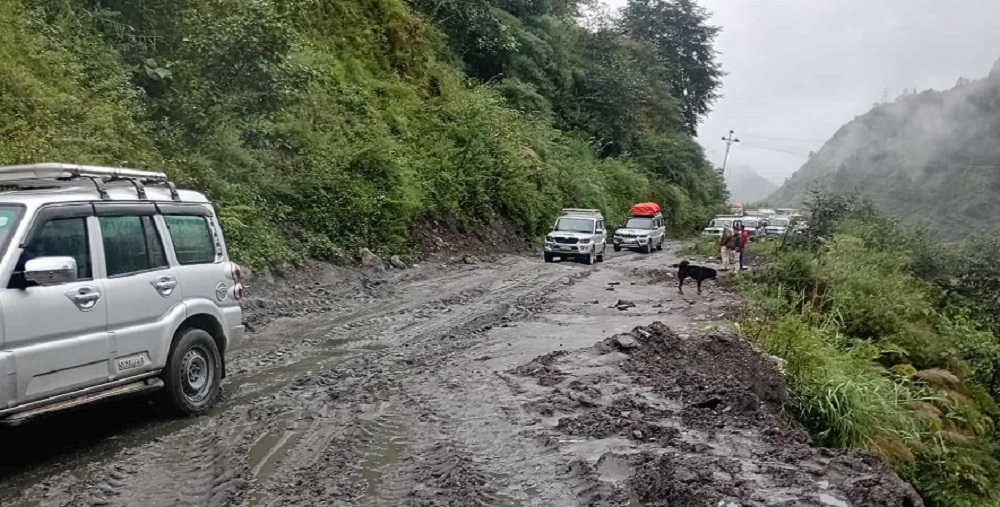
Book Jomsom Airport to Muktinath Jeep Car Hiace Bus transportation for families, couples, and groups. Choose a private 4WD jeep, car, Hiace van, or bus for convenient airport pickup and comfortable travel to Muktinath Temple.

Pokhara to Jomsom Road vs Flight — Choosing Your Approach

Before the Jomsom Airport to Muktinath private vehicle transfer begins, every Muktinath-bound traveler must get to Jomsom — and the choice between the 20-minute domestic flight from Pokhara and the 7 to 9 hour private jeep drive through the Kali Gandaki gorge shapes not just the day’s logistics but the character of the entire arrival experience. The flight is faster, eliminates the road journey, and — on a clear morning — offers an aerial view of the Annapurna and Dhaulagiri ranges from the Twin Otter window on one of Asia’s finest domestic mountain-flight experiences.

The road is slower but infinitely richer: the Kali Gandaki gorge drive through Beni, Tatopani, Dana, Ghasa, Tukuche, and Marpha delivers 7 to 9 hours of the most dramatically beautiful mountain road scenery in Nepal alongside the cultural texture of the Thakali villages, the famous apple orchards, and the deep geological wonder of the world’s deepest gorge.

Nepal Vehicle Hiring Pvt Ltd provides Pokhara-to-Jomsom private jeep hire for travellers choosing the road approach, and the same Jomsom-to-Muktinath jeep continues to Muktinath for the complete Pokhara-to-Muktinath ground transfer. For travellers choosing the flight to Jomsom and then a private vehicle for the Jomsom-to-Muktinath section only, the airport pickup arrangement described in this guide covers the connection.

For groups combining the approaches — flying to Jomsom for the ascent to Muktinath and driving the Kali Gandaki gorge on the return descent to Pokhara — Nepal Vehicle Hiring Pvt Ltd coordinates the full multi-modal arrangement through our plan trip page. Our Kathmandu airport transfer service connects international arrivals to the Pokhara-bound vehicles, and our Pokhara car hire covers Pokhara sightseeing days before the Jomsom flight departure.

For the full Muktinath yatra circuit, including Indian pilgrim groups from the Sunauli border, our Muktinath tour packages cover every leg.

The Annapurna Circuit Connection — Jomsom as a Trek Exit Point

For a specific and significant category of travellers arriving at Jomsom for the Muktinath transfer, the context is different from the pilgrim who has just flown in from Pokhara: the Annapurna Circuit trekker who has just descended from the Thorong La pass at 5,416 metres to Muktinath and then taken the road down to Jomsom is physically exhausted, emotionally fulfilled, and in need of onward transport that connects the circuit’s highest point to the return journey south. For this group, the Jomsom to Pokhara private jeep transfer is the primary booking priority rather than the Jomsom-to-Muktinath upward transfer — the Thorong La descent has already delivered them to the Muktinath side of the journey.

Nepal Vehicle Hiring Pvt Ltd’s Jomsom to Pokhara jeep hire serves Annapurna Circuit trekkers exiting through Jomsom at the same professional standard as our upward Muktinath vehicle transfers — pre-arranged departure from Jomsom hotel at 6:00 7:00 a.m.AM before the wind builds, comfortable descent through Marpha’s apple orchards and Tatopani’s hot springs, and hotel delivery in Pokhara by afternoon. Our Annapurna Circuit vehicle hire guide covers this complete exit arrangement in detail, along with the Besisahar private vehicle entry service.

For trekkers whose Annapurna Circuit guided package from Trek Nepal Himalayas or luxury Annapurna Circuit experience from Alpine Luxury Treks includes the Jomsom return, we coordinate our vehicles directly with those operators. For Everest Base Camp trekkers starting a Nepal circuit after Muktinath, our Kathmandu add-on includes sightseeing, Bhaktapur tours, and Nagarkot sunrise transfers, available via our contact page.

Combining Jomsom Airport Arrival with Jomsom Town

For many pilgrims arriving at Jomsom Airport, the Jomsom-to-Muktinath transfer is the primary objective — but Jomsom itself, though primarily a transit town for Muktinath visitors, offers several attractions and experiences worth adding to a flexible Mustang itinerary. The Jomsom bazaar area has a good range of guesthouses and restaurants by Mustang standards — notably the apple products (brandy, juice, dried fruit, cider) for which Marh —kilometres south of Jomsom — is famous, sold in Jomsom bazaar shops.

The Kali Gandaki riverbed at Jomsom is one of the more accessible sections of the river for Shaligram Shila exploration — the black ammonite fossils that Vaishnavite pilgrims collect as sacred stones are found in the gravel banks visible from the Jomsom main bridge.

The ACIMIT Museum (Annapurna Conservation Area Muktinath and Integrated Mustang-Tourism Museum) in Jomsom offers an informative cultural orientation to the Mustang region’s history, ecology, and religious traditions before the Muktinath ascent— a 3-minute visit that contextualises pilgrimage for first-time visitors and enriches the temple experience. And for guests whose Jomsom Airport arrival places them in the town the evening before an early morning Muktinath departure, the option of a Jomsom evening walk along the Kali Gandaki bank — with Nilgiri mountain’s north face catching the last light of the day above the valley — provides one of the finest high-altitude evening scenes available on any Nepal pilgrimage circuit.

Nepal Vehicle Hiring Pvt Ltd coordinates all Jomsom-to-Muktinath vehicle transfers, including overnight arrangements, through our plan trip page.
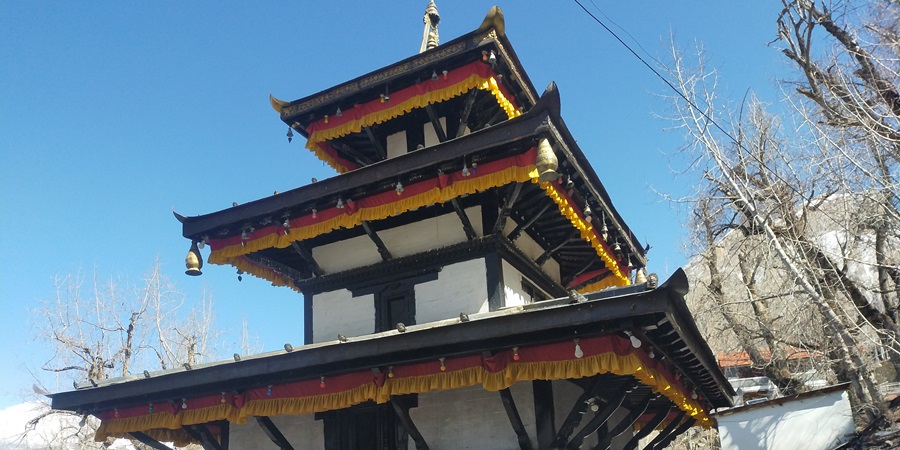
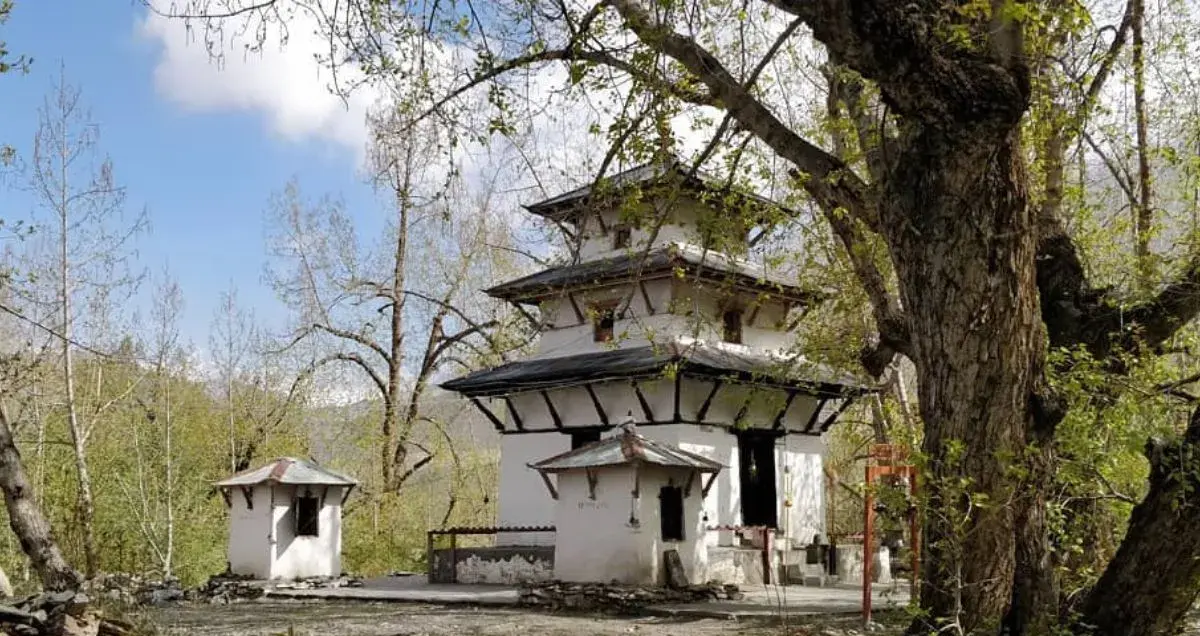
Muktinath temple

The Return — Muktinath to Jomsom and Onward

The return from Muktinath to Jomsom after the darshan is a straightforward descent in the same private vehicle that provided the upward transfer — 19 kilometres, taking minutes to 1 hour in the southward direction, aided by the downhill gradient and by the afternoon tailwind that pushes south along the valley floor after the midday thermal peak. Nepal Vehicle Hiring Pvt Ltd’s standard Muktinath round-trip arrangement confirms both the upward and return legs at booking—the driver communicates with the group via WhatsApp during the darshan to confirm the return pickup time based on when the group finishes its temple visit.

From Jomsom, most pilgrimage groups face a choice between the return domestic flight to Pokhara (the Pokhara-to-Jomsom return flight, also morning-only) or the private jeep road descent through the Kali Gandaki gorge to Pokhara — a 7 to 9 hour drive through Marpha, Tatopani, and Beni that is one of Nepal’s most spectacular overland routes. Nepal Vehicle Hiring Pvt Ltd coordinates the Jomsom to Pokhara return jeep transfer as part of the Muktinath yatra package for groups who prefer the road experience over flying.

Our Pokhara car hire and Pokhara to Chitwan bus complete the onward journey for groups adding Chitwan or other destinations after Pokhara. For Indian pilgrim groups returning to the Sunauli border, our comprehensive Muktinath Yatra return guides cover the full Jomsom-to-Sunauli routing in detail.

Season Guide — Best Time for the Jomsom Airport to Muktinath Transfer

Autumn (October to November) is peak season for Jomsom-to-Muktinath vehicle transfers and when demand for private jeep hire is highest. Post-monsoon clarity delivers exceptional mountain views. Road conditions are at their best.

But flight availability is most constrained — book Pokhara-to-Jomsom domestic flights at least 2 to 3 weeks ahead in October. Similarly, book Nepal Vehicle Hiring Pvt Ltd airport pickup vehicles in advance for this peak period.

Spring (March to May) is the second peak, with the Jomsom-to-Muktinath vehicle transfer service fully available and Annapurna Circuit trekkers descending through the Kali Gandaki, adding to general Jomsom traffic. The Tatopani hot springs road below Jomsom is most beautiful in April, with the lower gorge rhododendrons in bloom.

Winter (December to February) is the quietest period at Jomsom Airport — flights operate but with more weather-related cancellations than in spring and autumn. Muktinath Temple is open, and private jeep transfers from Jomsom are available year-round. Still, morning temperatures at Ranipauwa can drop to -10 to -15 Celsius in January, and the 108 Mukti Dhara cold-water ritual is a genuine physical challenge in these conditions.

Monsoon (June to August) brings limited flight services to Jomsom — clouds and reduced visibility restrict the Twin Otter mountain flight window. The road alternative via the Kali Gandaki Gorge is more reliable than flying in this season. For vehicle transfers, the Jomsom-to-Muktinath road itself is less affected by monsoon than other Nepal mountain road sections, as Mustang’s rain shadow limits precipitation.

Practical Tips — Jomsom Airport to Muktinath

  • Pre-arrange your airport pickup: Do not rely on airport-stand jeeps in peak season. Book your Jomsom Airport pickup vehicle through Nepal Vehicle Hiring Pvt Ltd at least 48 hours before the flight.
  • Depart the airport by 8:00 a.m.The Jomsom wind builds from 10 a.m. An 8:00 a.m. Jomsom departure reaches Ranipauwa by 9:00 to 9:30 a.m. in calm conditions.
  • Book morning flights: The only Pokhara-to-Jomsom flights operate in the early morning window (6:00 to 9:00 a.m. departure from Pokhara). Secure your flight booking 2 to 3 weeks ahead in peak season.
  • ACAP permit: Obtain in Pokhara before the flight. The Jomsom Bazaar permit office also issues ACAP permits if needed before the Muktinath vehicle departs.
  • Scorpio or Hilux for the Kagbeni-Ranipauwa climb: This section specifically benefits from 4WD. Nepal Vehicle Hiring Pvt Ltd recommends the 4WD jeep hire for all groups.
  • Horse hire at Ranipauwa: NPR 300-500 return. Strongly recommended for elderly pilgrims and those with joint concerns.
  • Allow 3 to 4 hours at the temple: The full 108 Mukti Dhara circuit, the Jwala Mai shrine, the Vishnu Mandir darshan, and the Buddhist Gompa require unhurried time. A rushed temple visit is the most common regret of Muktinath yatras.
  • Confirm return pickup by WhatsApp: Message the Nepal Vehicle Hiring Pvt Ltd driver from the temple when ready to descend — the return vehicle is confirmed and waiting at Ranipauwa vehicle stand.

Why Choose Nepal Vehicle Hiring Pvt Ltd for Jomsom to Muktinath

  • Airport waiting vehicle: A private jeep or car is confirmed and positioned at Jomsom Airport before the incoming flight lands.
  • 4WD fleet: Scorpio and Hilux 4WD for the Kagbeni-to-Ranipauwa climb — the right vehicles for this specific gradient and surface.
  • Wind timing knowledge: Our drivers know the Jomsom wind pattern and prioritise early departure as standard service.
  • Round trip coordination: Outward airport pickup and return from Ranipauwa confirmed as a single booking — no uncertainty at either end.
  • Transparent pricing: Driver and fuel inclusive, all-in. No additions at journey end.
  • 24/7 booking: WhatsApp +977 981-4227196 or plan trip page.

Frequently Asked Questions — Jomsom Airport to Muktinath

How far is Jomsom Airport from Muktinath?

Approximately 19 to 22 kilometres by road via Kagbeni and Jharkot to Ranipauwa. The drive takes 45 minutes to 1.5 hours by private jeep.

What is the 2026 private jeep price from Jomsom to Muktinath?

NPR 4,000 to 10,000 (USD 30 to 80) one way for a private Scorpio. Round trip (airport pickup plus Ranipauwa return): NPR 7,500 to 20,000 (USD 56 to 130). Contact Nepal Vehicle Hiring Pvt Ltd at +977 981-4227196.

Can a Hiace van go from Jomsom to Muktinath?

In the best dry-season conditions, yes — but the Kagbeni-to-Ranipauwa climb has steep, rough sections that exceed the Hiace’s optimal road type. Nepal Vehicle Hiring Pvt Ltd recommends a 4WD jeep transfer for the Jomsom-to-Muktinath section and uses the Hiace only for highway sections.

What time should I depart Jomsom for Muktinath?

As early as possible after the flight lands — ideally by 7:30 to 8:30 a.m. The famous Jomsom valley wind builds from 10 a.m. and makes the ascent progressively more uncomfortable after this time.

Is the ACAP permit required from Jomsom to Muktinath?

Yes — the Kagbeni checkpoint verifies ACAP permits for all passengers. NPR 3,000 per person for foreign nationals. Obtain in Pokhara or Kathmandu before the flight.

Can I pre-arrange my airport vehicle pickup?

Yes — Nepal Vehicle Hiring Pvt Ltd pre-arranges the airport vehicle for all confirmed bookings. Provide your flight details when booking via WhatsApp +977 981-4227196 or our plan trip page.

Conclusion

The Jomsom Airport to Muktinath private vehicle transfer is the final transport leg of a pilgrimage that may have begun hundreds of kilometres away in India or Kathmandu — a short but critical 19 to 22-kilometre drive that, when arranged well, delivers pilgrims to the sacred complex of Muktinath rested, on schedule, and ready for the darshan. The private Scorpio or Hilux 4WD jeep is the right vehicle for this section; the car, Hiace, and local bus each have their own application, audience, and limitations.

Nepal Vehicle Hiring Pvt Ltd provides a pre-confirmed airport waiting vehicle that eliminates post-flight transport stress and delivers the pilgrimage’s final approach as professionally as every section before it deserves.

Book your Jomsom Airport to Muktinath private vehicle with Nepal Vehicle Hiring Pvt Ltd — call or WhatsApp +977 981-4227196, visit vehiclehiringnepal.com, or plan your complete Muktinath yatra through our plan trip page.
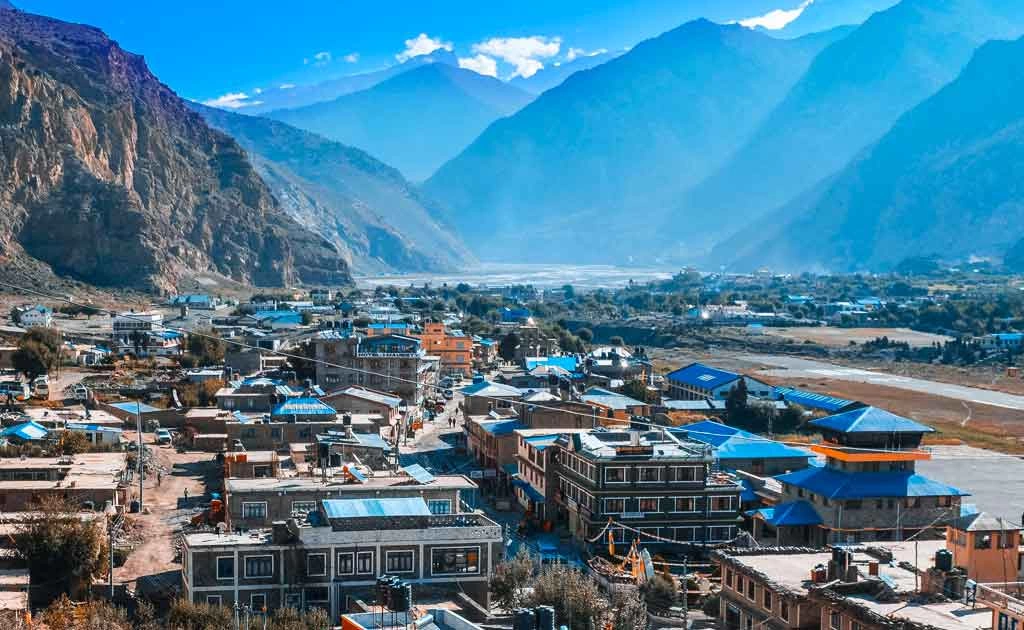
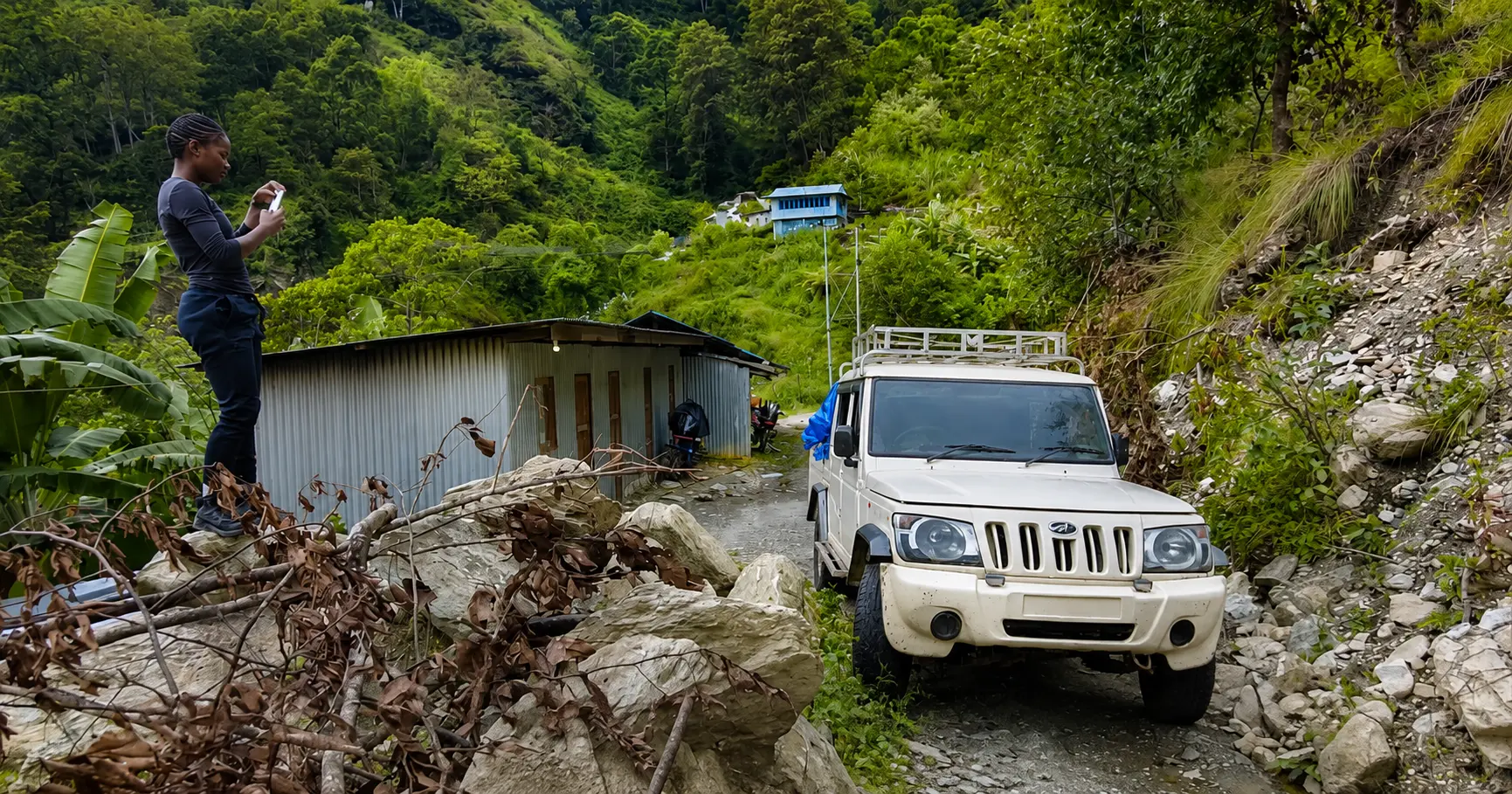
Jomsom Airport to Muktinath

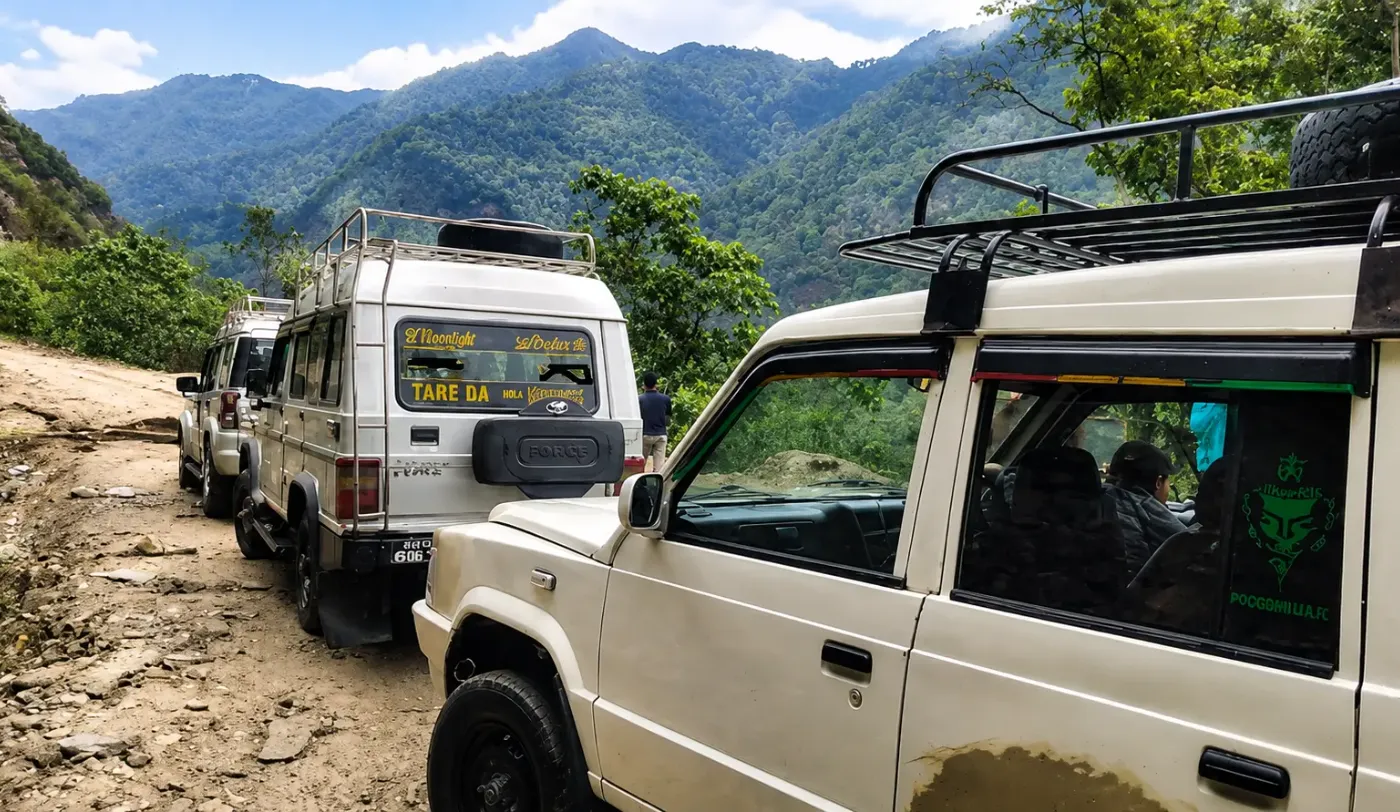
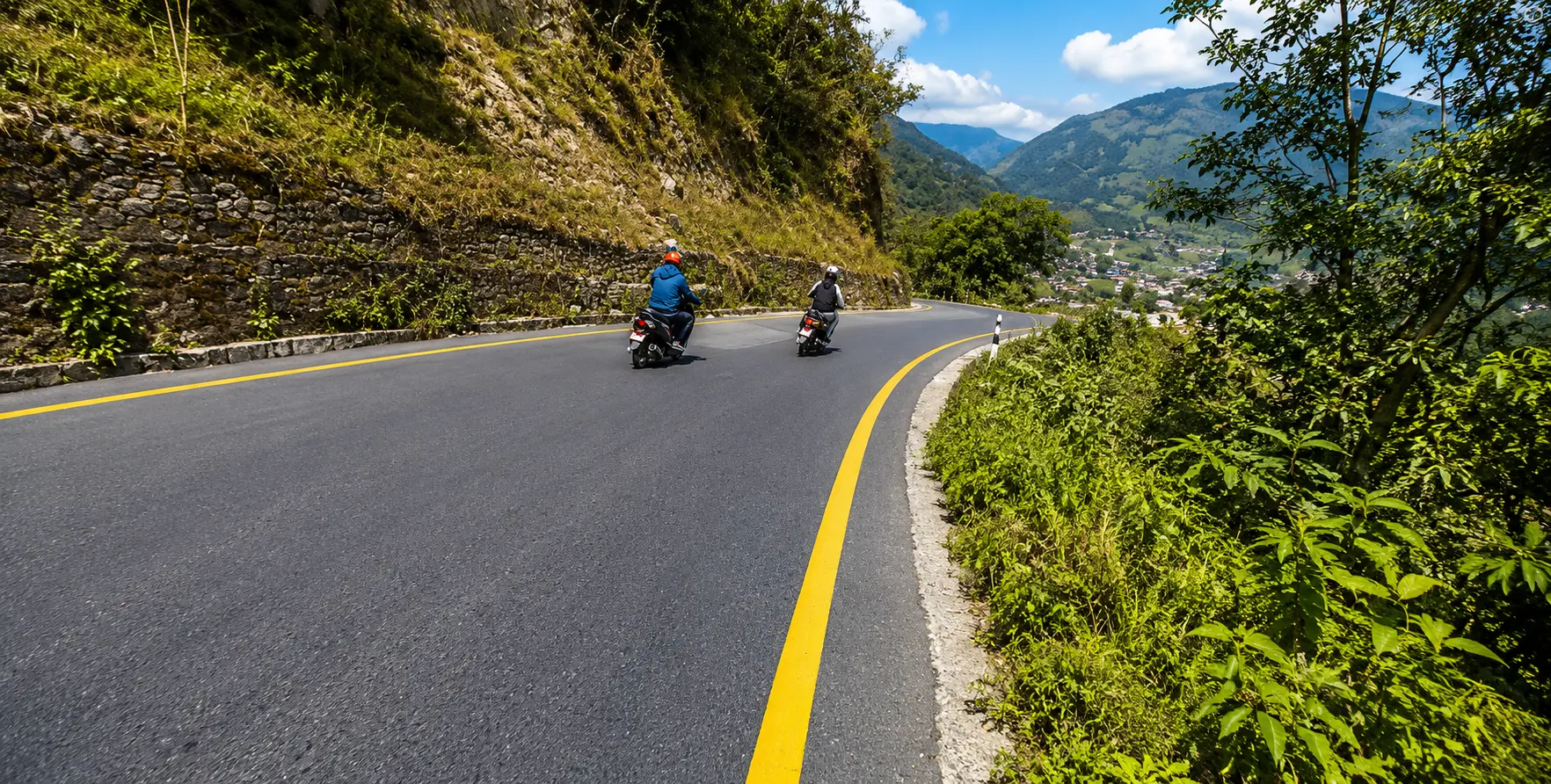
Private 4WD jeep traveling from Jomsom Airport to Muktinath Temple through the scenic Mustang mountain landscape

Jomsom Airport to Muktinath: Private Vehicle Options Compared

You’ve landed at Jomsom, the wind is already picking up over the valley, and the temple is still 20-odd kilometres and a 1,000-meter climb away. Choosing the right Jomsom Airport to Muktinath private vehicle isn’t just a comfort question—on this stretch, it genuinely shapes how the rest of your pilgrimage day unfolds.

This guide compares every real option available at Jomsom Airport: Scorpio jeep, car, Hiace van, and local bus, with honest guidance on which actually suits this route and which don’t.

This guide covers real distances, drive times, costs, schedules, and vehicle-by-vehicle honesty about what works on this short but demanding mountain stretch so that you can plan your Muktinath trip with confidence rather than guesswork at the airport.

Why Vehicle Choice Matters on This Specific Stretch

The Jomsom-Muktinath road covers only about 20 to 25 kilometres, but climbs from Jomsom’s roughly 2,700 meters to Ranipauwa’s approximately 3,710 meters in that short distance, on a road that mixes improved sections with genuinely rough, unpaved stretches. Unlike longer routes where a comfortable highway vehicle can handle most of the distance before switching to a jeep for a final rough section, this entire stretch is the rough section. There’s no easy paved lead-in to soften the vehicle-choice decision.

Our broader guide on why 4WD is best for Nepal explains this terrain logic in general terms, and our dedicated Jomsom to Muktinath jeep rental guide covers the jeep option specifically in depth. This article widens the lens to compare every vehicle type travellers actually consider for this leg.

It’s worth being upfront about why this comparison matters more here than on almost any other short route in Nepal: most travellers reaching Jomsom Airport have already invested considerable time and money getting there — a flight from Pokhara, permits, possibly days of prior travel — and the last thing anyone wants is for the final, shortest leg of the journey to become the least comfortable or most stressful part of the entire trip—getting this one decision right is disproportionately important, given how short the distance is.

Understanding Jomsom Airport Itself

Jomsom Airport is a small, single-runway facility known for its dramatic mountain setting and its equally dramatic wind-dependent flight schedule. Flights operate almost exclusively in the early morning, before winds strengthen enough to make the short runway genuinely risky for landing and takeoff.

This means your vehicle transfer to Muktinath will almost always begin in the morning, regardless of which option you choose, which works in your favour given the same wind pattern that governs the road itself.

It’s worth building a small buffer into your plans around the airport experience — luggage collection can take time, and if you haven’t pre-arranged ground transport, locating and confirming a vehicle on arrival adds further delay before you’re actually on the road. Many travellers underestimate this small but real buffer, arriving with plans that assume an immediate, frictionless transition from plane to vehicle.

Ranipauwa vs Muktinath: Where the Road Actually Ends

A small but genuinely useful detail: your vehicle, whichever type you choose, will drop you at Ranipauwa, the village just below the temple, not at Muktinath Temple itself. From Ranipauwa, a short uphill walk of roughly 15 to 20 minutes covers the remaining distance to the temple complex.

This isn’t a significant extra burden for most travellers, but it’s worth knowing in advance so you don’t expect your vehicle to take you directly to the temple gates.

Understanding the Route: Distance, Altitude, and Road Character

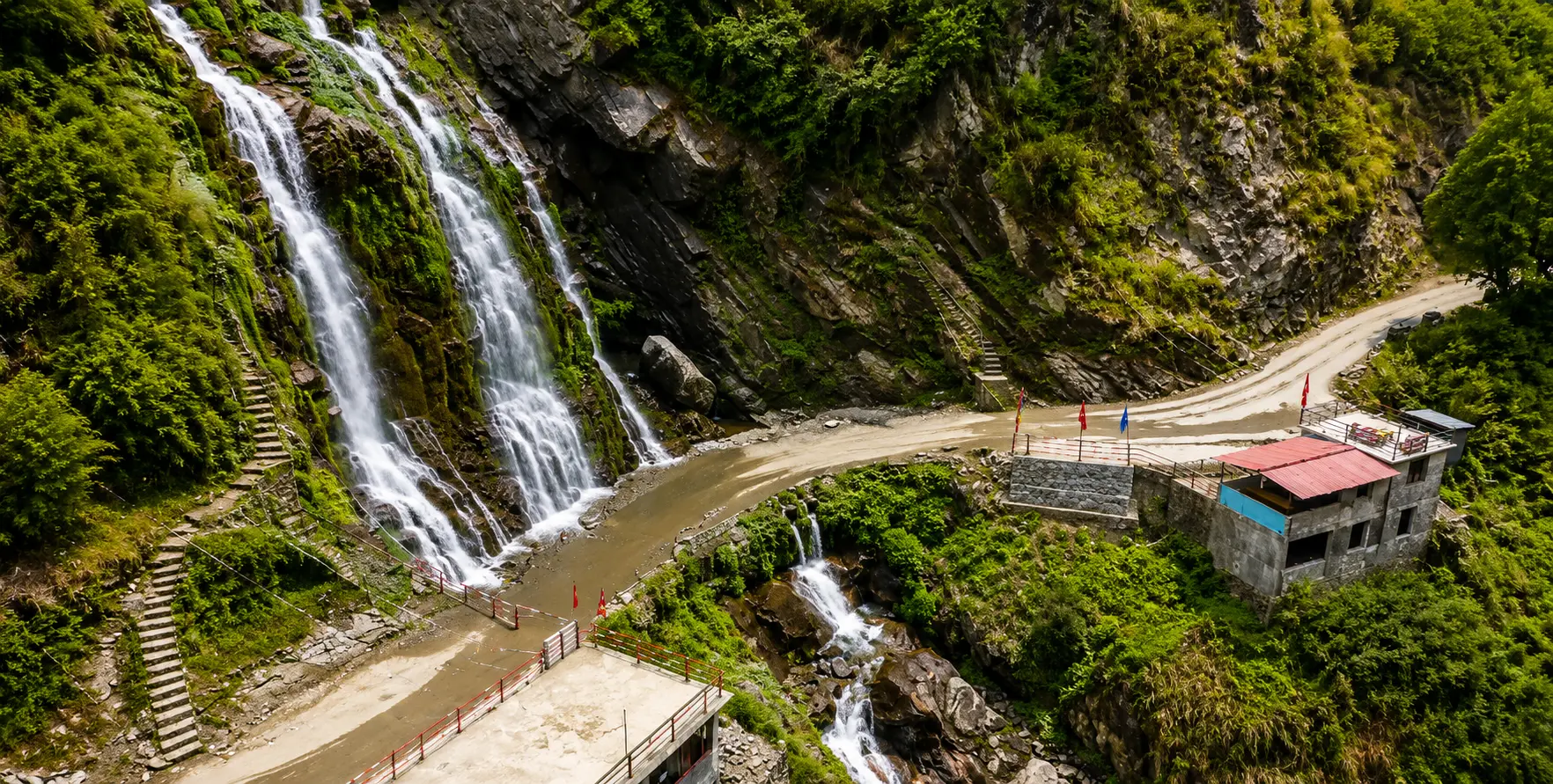
The drive from Jomsom Airport to Muktinath (technically to Ranipauwa, the village just below the temple, where the road ends) covers roughly 20 to 25 kilometres, climbing over 1,000 meters in the process. The road passes through Kagbeni, Jharkot, and Khingar, mixing recently improved sections with older, rougher gravel stretches, particularly closer to Ranipauwa.

Afternoon winds in the Kali Gandaki valley are a near-daily feature, so vehicle choice and departure timing matter more here than on most short Nepal drives.

This valley helps make the Kali Gandaki Gorge one of the deepest gorges on earth, and the road sits exposed along the valley floor and lower slopes, with little natural wind shelter for most of the drive. This geography is precisely why the afternoon wind pattern is so consistent and predictable — cool air funnels up from the lowlands as the day warms, intensifying through the afternoon before easing again toward evening.

Traveller Type Deep Dive: Pilgrims

Hindu and Buddhist pilgrims visiting Muktinath specifically for darshan or religious observance often prioritise timely arrival over cost savings, particularly older pilgrims or those travelling with family for a significant religious occasion. A private jeep, booked in advance so it’s waiting at the airport, removes uncertainty at the point in the trip where it feels most unwelcome—after a flight, before a meaningful temple visit.

Traveller Type Deep Dive: Trekkers

Trekkers using Jomsom as an entry or exit point for the wider Annapurna Circuit or Upper Mustang region often have more schedule flexibility and a higher tolerance for basic transport, making the local bus or shared jeep a genuinely reasonable choice, especially if budget matters more over a longer overall trip. That said, trekkers on a tight itinerary—say, needing to catch a specific Jomsom-Pokhara flight the same day—often find the private jeep’s schedule certainty worth the extra cost.

Traveller Type Deep Dive: Photographers and Casual Tourists

Travellers primarily visiting for the scenery, photography, or to see Muktinath as part of a broader Nepal trip often value the private jeep’s flexibility to stop along the way more than any other traveller type covered in this guide, since the ability to pause at Kagbeni or a particularly striking viewpoint genuinely enhances the experience in a way a fixed-schedule bus cannot accommodate.

Private 4WD jeep traveling from Jomsom Airport to Muktinath Temple through the scenic Mustang mountain landscape

A Scorpio jeep hire is the standard, most widely used vehicle for this route, and for good reason: genuine 4WD, high ground clearance, and a rugged build that handles the rough gravel sections without drama. Private charters typically accommodate up to six passengers plus luggage, and the drive takes roughly 45 minutes to just over an hour, depending on conditions.

  • Best for: most travellers, families, and small groups wanting reliability and comfort together
  • Pros: genuine off-road capability, comfortable for the group, flexible timing
  • Cons: costs more than a shared bus or shared jeep seat

For travellers who’ve already flown a small mountain aircraft into a runway carved into the valley floor, a Scorpio jeep’s steady, predictable handling on the ground feels like a natural continuation of that same sense of capability — this is a vehicle genuinely built for exactly this kind of terrain, not adapted to it as an afterthought.

Option 2: Car or Local Taxi

Small cars and local taxis do operate on this route, particularly for shorter hops or when jeeps aren’t immediately available. They sometimes cost less than a full jeep charter.

That said, a standard car is a meaningfully less capable choice on this specific stretch than a genuine 4WD — lower ground clearance and less robust suspension make the rougher sections a rougher ride. In wet or icy conditions, traction becomes a real concern.

Where available, a car or taxi can work for a quick, opportunistic trip in good weather, but it isn’t the recommended default for this route the way it might be for a paved highway transfer elsewhere in Nepal.

  • Best for: solo travellers or pairs in good weather, prioritising immediate availability over comfort
  • Pros: sometimes cheaper, sometimes more readily available on short notice
  • Cons: less capable on rough or wet sections; less comfortable for the climb

Many of the vehicles marketed as ‘taxis’ on this route are higher-clearance local vehicles rather than standard sedans, since a genuine city car would struggle on the rougher stretches. Confirm exactly what vehicle you’re being offered before assuming ‘taxi’ means the same thing here as it would in Kathmandu or Pokhara.

Kathmandu to Muktinath Bus

Option 3: Hiace Van

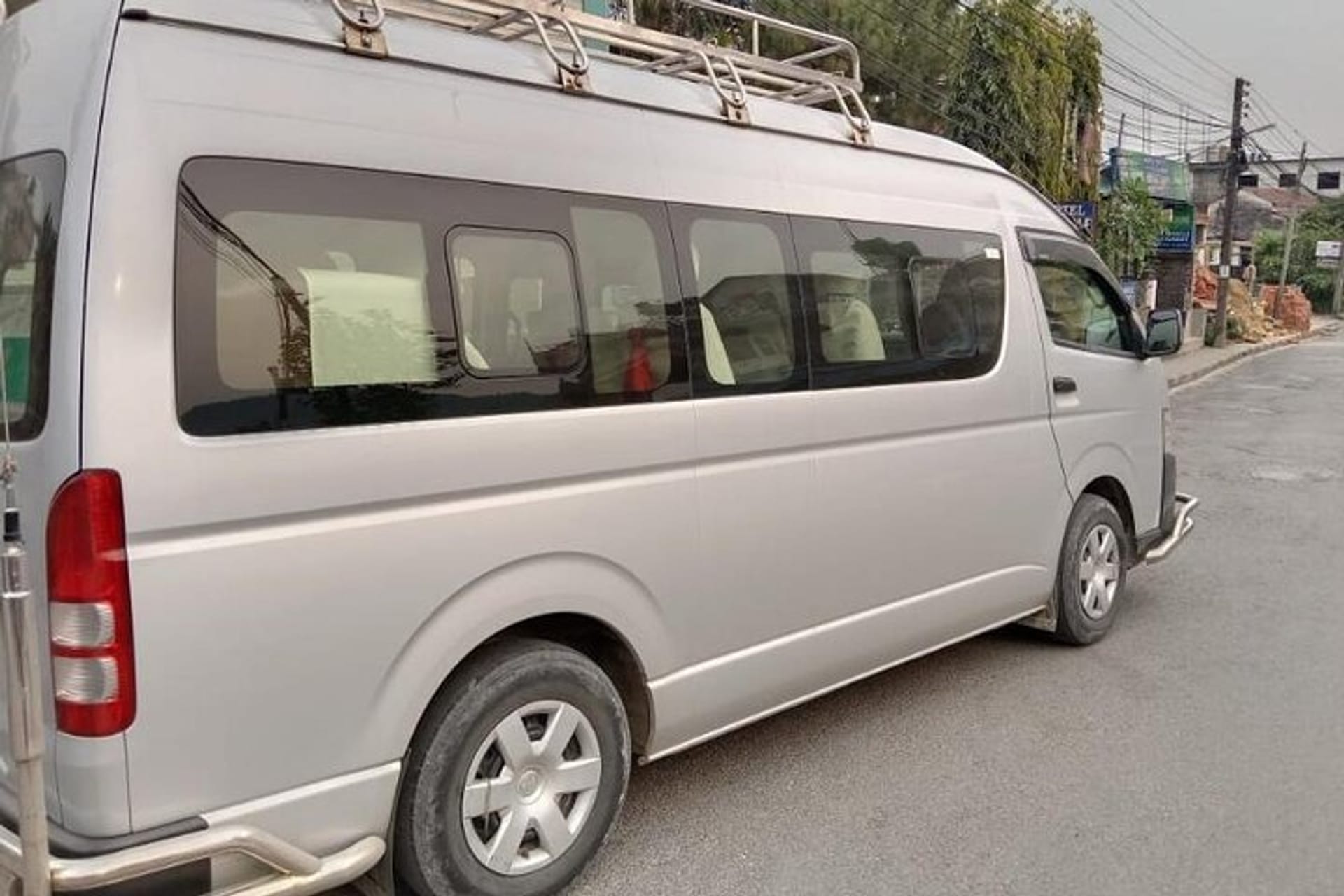
A Hiace is Nepal’s standard group vehicle for highway travel, but it is not commonly used on the Jomsom-Muktinath stretch itself, and this guide doesn’t recommend it for this specific leg. Unlike routes where a Hiace comfortably covers a paved approach before switching to jeeps for a rough final stretch — the pattern covered in our Muktinath temple Hiace hire guide — the entire Jomsom-Muktinath road is the rough stretch, with no easier paved lead-in for a Hiace to handle.

Large groups arriving at Jomsom Airport should plan to split directly into multiple jeeps for this leg rather than expecting a single larger vehicle to manage it.

  • Best for: not recommended for this specific stretch
  • Pros: none specific to this route — better suited to paved approach legs elsewhere in a Mustang itinerary
  • Cons: lower ground clearance and less suited to rough gravel sections than a jeep

Option 4: Local Bus

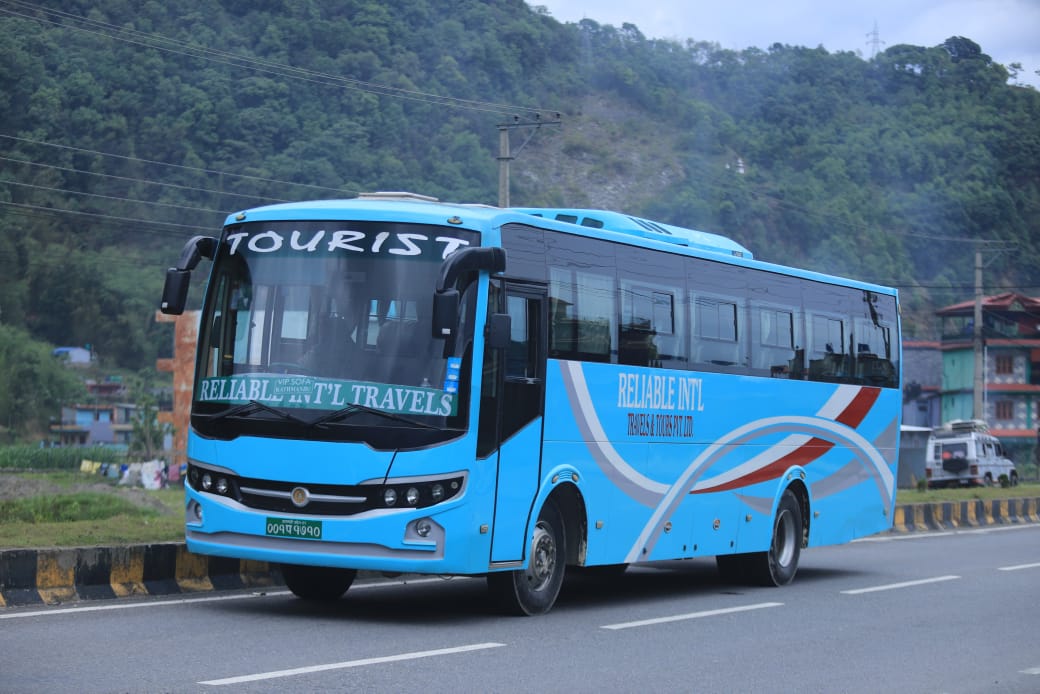
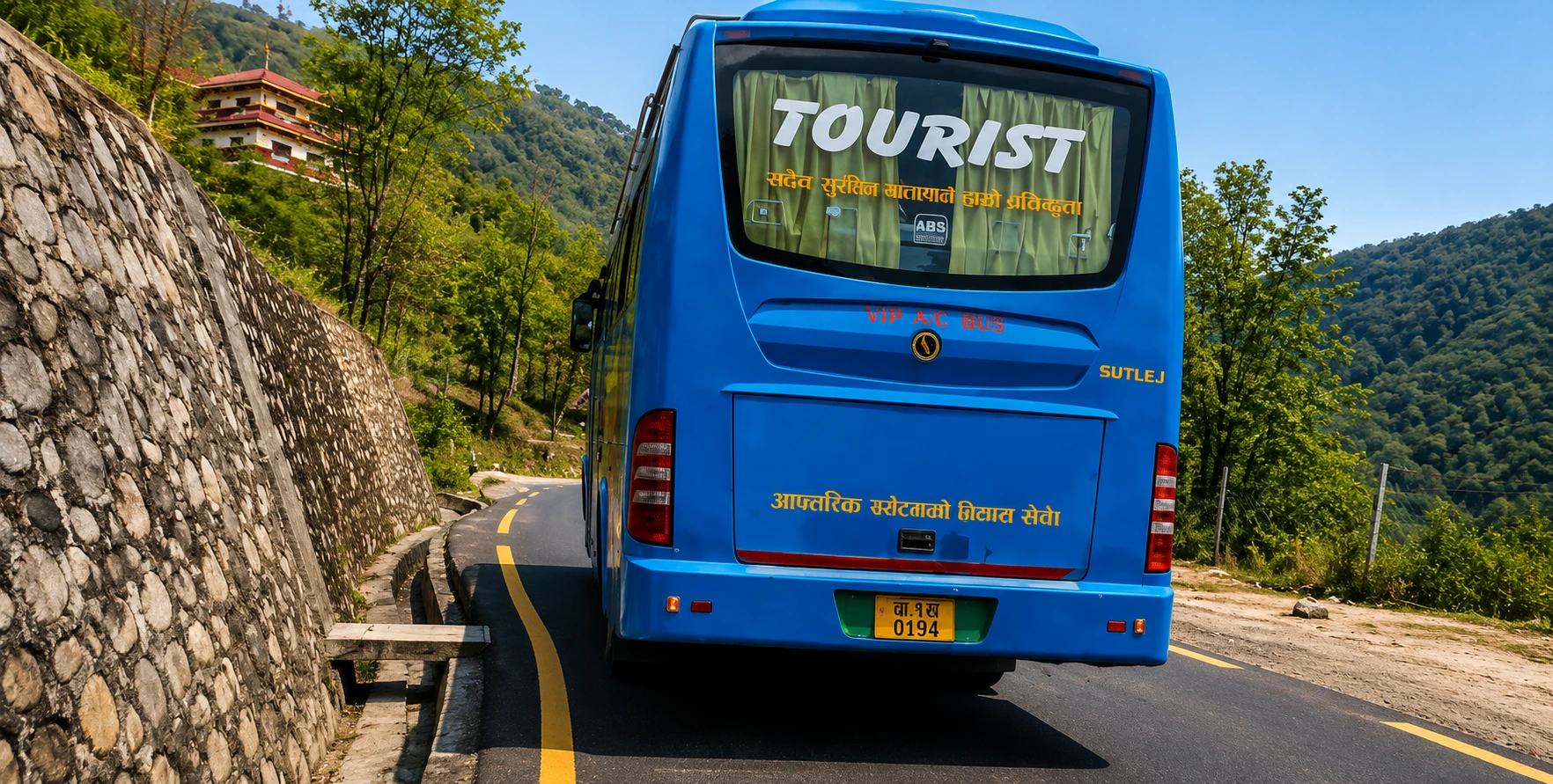
A local bus runs between Jomsom and Muktinath, typically departing around 9 a.m. and 2 p.m., taking roughly 2 to 3 hours and costing only a few dollars per seat—by far the cheapest option on this route. The trade-off is what you’d expect: a fixed, limited schedule, shared seating with other passengers, and a much less comfortable ride on rough sections than in a private jeep.

For budget-conscious solo travellers with flexible timing, this remains a genuinely viable option; for anyone time-constrained or travelling with family, the fixed departure windows are a real limitation.

  • Best for: solo, budget-conscious travellers with flexible schedules
  • Pros: by far the cheapest option
  • Cons: fixed departure times (typically 9 a.m. and 2 p.m.), shared seating, least comfortable ride.

One practical consideration with the bus option: if you miss the morning departure, you’re often waiting until early afternoon for the next one, which can eat significantly into a tightly planned day, particularly if you also want time to properly visit the temple and explore Ranipauwa or Kagbeni before returning to Jomsom for a flight.

Private 4WD jeep traveling from Jomsom Airport to Muktinath Temple through the scenic Mustang mountain landscape

Option 5: Shared Jeep

A middle-ground option between the local bus and a private jeep charter, a shared jeep departs only when full, offering more flexibility than the bus at a lower cost than a private charter. The trade-off is genuine 4WD comfort shared with strangers, with no control over when the vehicle actually departs.

  • Best for: solo or paired travellers wanting jeep comfort without private charter cost
  • Pros: cheaper than private charter, more flexible than the fixed-schedule bus
  • Cons: departs only once full, shared with other passengers

Choosing a Reliable Operator

  • Confirm the operator has genuine, current experience specifically on the Jomsom-Muktinath stretch, not just general Mustang region driving.
  • Ask directly whether your vehicle is a genuine 4WD jeep or a lower-clearance car marketed loosely as a ‘taxi’
  • Request confirmation of pickup timing at Jomsom Airport, including how flight delays are handled
  • Check whether your quoted price is per vehicle (private charter) or per seat (shared), since these are priced very differently.
  • Ask about the driver’s experience with the valley’s afternoon wind pattern and how that affects their recommended departure timing.

Altitude and Health Considerations

Ranipauwa’s roughly 3,710-meter elevation is high enough to warrant basic altitude awareness, particularly for travellers who’ve flown directly into Jomsom without gradual acclimatisation. Whatevervehicle you choose, avoid rushing into strenuous activity on arrival at Ranipauwa, stay hydrated throughout the drive, and watch for mild headache, nausea, or unusual fatigue, adjusting your pace rather than pushing through.

Side-by-Side: Which Vehicle Actually Fits Your Trip

Travelling solo on a tight budget: take the local bus or a shared jeep seat, accepting the fixed schedule or waiting for a full vehicle.Travelling as a couple or small family: take a private Scorpio jeep charter, split the cost across the group, and keep full control of the schedule.Travelling as a larger group or pilgrimage party: multiple private jeeps rather than a single larger vehicle, since neither a car nor a Hiace suits this specific stretch — see our Muktinath temple Hiace hire guide for how to structure a larger group’s full itinerary around this reality.

Travelling with limited time:  book a private jeep in advance so you’re not waiting for a shared vehicle to fill or working around the bus’s fixed departure windows.

A History of Transport on This Route

For decades, the only way between Jomsom and Muktinath was on foot or by mule, a journey that took pilgrims and traders alike most of a day. Road construction reaching this far into the Mustang region is relatively recent, part of a broader wave of rural road expansion that has reshaped access across Nepal’s mid-hill and high-mountain districts over the past decade or so.

Understanding this history adds context to why the road still feels rough in places — it’s a genuinely young piece of infrastructure by any standard, still being incrementally improved rather than a mature, long-settled route. Older maps and trekking accounts of the region still occasionally reference the multi-day foot journey this drive has now largely replaced, a useful reminder of how quickly access to this part of Nepal has changed.

This also explains why online information about this route can quickly go stale. Trip reports and travel guides written even a few years ago may describe road conditions, vehicle options, or pricing that no longer reflect the current situation, making it worth confirming details directly with a current, locally experienced operator rather than relying solely on older sources.

Cultural Significance of the Journey Itself

For Hindu and Buddhist pilgrims specifically, the journey from Jomsom to Muktinath carries meaning beyond simple transportation — passing through Kagbeni, itself a place of some religious significance, and approaching the temple through increasingly stark, sacred high-desert terrain that has drawn pilgrims for centuries, long before any road existed at all. Whichever vehicle you choose, take a moment during the drive to appreciate that you’re covering, in under an hour or two, a journey pilgrims once spent days completing on foot.

Weather and Seasonal Considerations for This Route

Autumn and spring bring the most stable overall conditions, both for the Pokhara-Jomsom flight and for the road itself. Winter can bring snow and ice at these elevations, making a genuine 4WD considerably more valuable than in the drier months.

In contrast, monsoon season brings its own risk of localised flooding or washout on the rougher sections, even though this valley sits in a rain-shadow zone less affected by monsoon than most of Nepal. No matter what season you’re travelling, check current road conditions with your operator shortly before departure, since conditions here can shift meaningfully within a few days.

Communicating With Your Driver

Most drivers working with established operators on this route have functional English, though a few basic Nepali phrases go a long way in building rapport over a short but shared journey. Confirm before departure how to communicate any change of plans — a longer stop at Kagbeni, an earlier or later return — so expectations are clear on both sides throughout the trip.

What Makes This Route Unique Compared to Other Nepal Transfers

Few routes in Nepal compress this much altitude gain, terrain change, and genuine vehicle-choice consequence into such a short distance. Most comparable mountain approaches — Besisahar to Chame, for instance, or the road toward Rolwaling’s Chhetchhet trailhead — cover considerably more distance to achieve a similar effect.

Jomsom to Muktinath does it in barely 20 kilometres, which is exactly why this guide treats vehicle choice as a genuinely significant decision rather than a minor afterthought.

Comparing This Route to Other Nepal Airport-to-Trailhead Transfers

Jomsom isn’t the only Nepal airport where the final ground transport leg matters enormously. Similar considerations apply for travellers connecting through Kathmandu airport transfers onward to trekking regions. However, most other airport-to-trailhead transfers in Nepal at least offer some paved highway distance before conditions roughen.

Jomsom’s near-total lack of an easy lead-in is genuinely unusual, and part of why this specific comparison guide exists as a standalone resource rather than folding into a broader Mustang region overview.

Checklist Before You Fly Into Jomsom

  • ACAP permit arranged in Kathmandu or Pokhara before departure
  • Ground transport booked in advance, ideally a private jeep, with pickup confirmed for your specific flight
  • Sufficient Nepali rupees for the leg itself and any stops along the way
  • Warm, windproof layers packed accessibly rather than in checked luggage
  • A realistic same-day or overnight plan for the return leg, confirmed with your driver or operator

Working through this short checklist before your flight removes almost all the uncertainty this guide has focused on throughout — the goal isn’t to overcomplicate a genuinely short journey, but to make sure the one variable that actually matters here, vehicle choice, is settled well before you land.

Combining This Leg With a Wider Mustang Itinerary

Few travellers treat the Jomsom-Muktinath drive as an isolated trip. Most connect it to a wider Mustang or Muktinath pilgrimage itinerary — see our best time to visit Muktinath guide for full seasonal planning, our jeep rental for Mustang tour guide if you’re continuing north into the restricted Upper Mustang zone beyond Kagbeni, or our Muktinath temple Hiace hire guide if you’re organising a group’s full trip from Pokhara or Kathmandu rather than just the Jomsom Airport leg covered here.

Cost Comparison

Local bus fares run only a few dollars per seat, the cheapest option by a wide margin. Shared jeep seats cost more than the bus but less than a private charter, varying with demand and season.

A private jeep charter is priced per vehicle rather than per seat — commonly cited in the range of roughly USD 40 to 45 for the Jomsom-Muktinath leg specifically when booked locally. However, rates vary by operator, season, and whether you book in advance from Pokhara or Kathmandu versus on the ground in Jomsom.

For a group of four to six, per-vehicle pricing often works out to be comparable to, or cheaper than, the same group booking individual shared-jeep or taxi fares.

Planning Your Overall Trip Timeline

Most travellers flying into Jomsom plan their Muktinath visit as part of a broader multi-day Mustang or Annapurna region itinerary rather than an isolated day trip. Building in at least one buffer day around your Jomsom flight—whether flying in or out—accounts for the real possibility of weather-related delays and prevents a single missed connection from cascading through the rest of a tightly scheduled trip.

Comparing This Leg’s Cost to the Rest of a Mustang Trip

In the context of a full Mustang or Muktinath pilgrimage budget — flights, permits, accommodation, guide fees if applicable — the cost difference between a private jeep and a local bus for this specific short leg is relatively modest. Many travellers who might otherwise default to the cheapest option on principle find that, once they see the full trip budget in context, the private jeep’s comfort and schedule certainty are a small price relative to the overall investment already made in reaching Jomsom.

What Happens if Your Jomsom Flight Is Delayed

Flight delays into Jomsom are common, particularly outside the reliable morning window, given the valley’s wind patterns. If you’ve pre-booked a private jeep, a reputable operator will track your actual arrival rather than the originally scheduled time, and adjust the driver’s wait accordingly.

This is one of the clearest practical advantages of booking a private vehicle in advance over relying on whatever transport happens to be available when you eventually land—your ground transport won’t have to guess your arrival time.

Family Travel Considerations

Families travelling with children or elderly members should weigh comfort more heavily than budget for this leg, given how physically jarring the rougher sections can feel in a less capable vehicle. A private Scorpio jeep, with its more stable ride and the flexibility to pause if anyone needs a break, is generally the more sensible choice for family groups than the fixed-schedule bus or a cramped shared jeep.

Solo Traveller Considerations

Solo travellers have the most flexibility ty weigh cost against comfort, without coordinating a group’s preferences. Budget-focused solo travellers can reasonably choose the bus or a shared jeep, accepting the trade-offs covered throughout this guide. At the same time, prioritising comfort can justify a private jeep’s cost more easily when compared against a single traveller’s overall trip budget rather than split unevenly across a group with different priorities.

Round-Trip Planning: Same-Day Return to Jomsom

Many travellers complete their Muktinath visit and return to Jomsom the same day, particularly those with an onward flight or continuing overland the same day. A private jeep makes this much easier to coordinate than relying on the bus’s fixed schedule or a shared jeep that fills up in both directions.

If your itinerary depends on a same-day return, confirm this explicitly with your driver or operator when booking, rather than assuming a one-way transport arrangement includes it automatically.

Private 4WD jeep traveling from Jomsom Airport to Muktinath Temple through the scenic Mustang mountain landscape

Travel Time by Vehicle Type

A private jeep covers the route in roughly 45 minutes to just over an hour under normal conditions. A shared jeep takes a similar driving time but adds unpredictable waiting time before departure. The local bus, given its fixed stops and shared nature, generally takes closer to 2 to 3 hours door to door.

In good conditions, a car or taxi’s actual driving time is comparable to a jeep’s, though it may need to slow further on the roughest sections because of its lower clearance.

What Drivers on This Route Know That Guidebooks Don’t

Experienced local drivers on the Jomsom-Muktinath stretch carry a kind of practical knowledge that rarely makes it into written guides — which specific sections tend to wash out first after rain, where the wind hits hardest and earliest in the afternoon, and which of the two main villages along the way (Kagbeni or Jharkot) is worth a stop on a given day based on light and weather. This is one of the strongest arguments for booking through an operator with genuine, current experience on this exact route rather than a general Mustang-region driver unfamiliar with this specific stretch’s particular quirks.

Documents and Cash to Carry

Beyond your ACAP permit, carry sufficient Nepali rupees for this leg, since card payment isn’t available for local transport on this route, whichever vehicle you choose. If you’re arranging a private jeep in advance through an agency, confirm whether you pay before arrival or directly to the driver on the ground, and keep a copy of any booking confirmation accessible in case you need it to identify your pre-arranged vehicle at the airport.

It’s a small piece of paperwork, but it can save time and prevent confusion in a busy arrivals area, especially during peak pilgrimage season when several jeeps and drivers may be waiting for different pre-booked groups at once.

Permits Required

Regardless of which vehicle you choose, every visitor needs a valid ACAP (Annapurna Conservation Area Permit) for this route, since it runs entirely within the Annapurna Conservation Area. Our ACAP permit guide covers exactly where to get it in Kathmandu or Pokhara before you fly into Jomsom — it isn’t available at the airport, so arrange it before you travel.

How This Guide Fits Into Your Wider Trip Planning

This guide deliberately focuses narrowly on one short but consequential leg of a much larger journey. If you’re still working out the broader shape of your trip — how you’re reaching Jomsom in the first place, whether you’re continuing into Upper Mustang afterwards, or how this fits alongside other Nepal destinations — our wider Mustang and Muktinath region guides, linked throughout this article and gathered in the resource section below, are the natural next stop.

Treat this page as the detailed answer to one specific, important question within a much bigger trip you’re piecing together.

One Last Practical Note: Confirming Your Booking

Whichever vehicle you ultimately choose, get your booking confirmation in writing — even a simple message thread with your operator confirming vehicle type, price, and pickup arrangements — before you fly. This small step protects you from any confusion or last-minute renegotiation at the airport, particularly during peak season when demand for jeeps at Jomsom can genuinely outstrip supply on the busiest mornings.

Atravellerr who lands with a confirmed booking in hand is in a categorically stronger position than one hoping to arrange transport fresh on arrival.

Frequently Confused Terms for This Route

A few terms are worth clarifying: a private jeep charter means your group has exclusive use of the vehicle, priced per vehicle rather than per passenger. A shared jeep departs once full with unrelated passengers and is priced per seat.

On this route, ‘taxi’ usually refers to a small local vehicle rather than a standard highway car, given the terrain. Ranipauwa and Muktinath are often used interchangeably, though technically Ranipauwa is the village where the road ends, with a short walk up to the temple.

It’s also worth distinguishing this Jomsom-Muktinath leg from the broader Kathmandu or Pokhara approach into the Mustang region. Some travellers fly directly into Jomsom, as this guide assumes throughout, while others drive the full overland route from Pokhara via Beni and reach Jomsom by road rather than air. Both approaches converge at Jomsom, after which everything covered in this guide applies equally regardless of how you got there.

Group Size Guidance by Vehicle

  • Solo or pair: local bus, shared jeep, or a private jeep if budget allows and schedule flexibility is limited
  • Small family (3-4): a private Scorpio jeep that comfortably fits the group and luggage.
  • Larger group (5-6): a single private jeep, at or near its comfortable passenger limit
  • Group of 7 or more: multiple private jeeps rather than a single larger vehicle, given the lack of a suitable Hiace-class option for this specific stretch

This scaling logic holds regardless of whether your group is a family marking a personal milestone, a temple committee, an organised agee, or a mixed tour group assembled for the trip — the underlying vehicle math on this particular stretch doesn’t change based on why the group is travelling together, only how many people and how much luggage need to fit.

Booking Private vs Waiting for Shared Transport

Booking a private jeep in advance — ideally before you even fly into Jomsom — removes the single biggest source of frustration on this route: standing at the airport uncertain how long you’ll wait for a shared vehicle to fill, especially as afternoon winds approach and flying conditions elsewhere in your itinerary depend on tight timing. A pre-arranged private vehicle means your transport is waiting when you land, regardless of how busy or quiet Jomsom is that day.

Insurance and Emergency Preparedness

Given the altitude and remoteness of this route, basic travel insurance covering the relevant elevations is worth having in place regardless of which vehicle you choose. Medical facilities are minimal beyond Jomsom, and any serious issue during the drive or at Ranipauwa would require evacuation back toward Jomsom or, in urgent cases, onward to Pokhara. Carry a basic first-aid kit and any personal medications for the trip.

A Note on Comparing Quotes

When comparing quotes for this leg, confirm exactly what’s included: vehicle type, whether it’s private or shared, and whether the fare covers a round trip or one-way only. A quote that sounds unusually cheap may reflect a shared seat rather than a private vehicle, or a car rather than a genuine jeep; always confirm the specifics rather than comparing headline numbers alone.

Road Conditions and Safety

The road mixes recently improved sections with older gravel stretches, particularly closer to Ranipauwa, and dust is a near-constant feature in the dry season. Whichever vehicle you choose, an experienced local driver familiar with current conditions matters more here than on most short Nepal drives, given how quickly weather and wind can change conditions on this exposed valley road.

Best Time to Travel This Route

Morning departures are strongly preferred, before the Kali Gandaki valley’s characteristic afternoon winds pick up, typically by late morning to early afternoon. Autumn (September-November) and spring (March-May) offer the most stable overall conditions for both flights into Jomsom and the road itself, consistent with the broader seasonal pattern across the Mustang and Muktinath region covered in our best time to visit Muktinath guide.

Photography Along the Drive

Whichever vehicle you choose, the drive itself offers genuinely striking photography opportunities — the Kali Gandaki gorge’s stark, wind-carved terrain, Kagbeni’s medieval alleyways, and the first glimpses of Muktinath’s temple complex as you approach Ranipauwa. A private jeep lets you pause briefly for photos, something the fixed-schedule bus or a shared jeep waiting on other passengers generally can’t accommodate.

What to Pack

  • Warm, windproof layers, regardless of season, given the valley’s near-constant wind
  • Dust protection (a light scarf or mask) for the drier months
  • Cash in Nepali rupees, since card payment isn’t available for local transport on this route
  • Your ACAP permit, easily accessible rather than packed away, in case it’s checked along the way
  • Sun protection, given the high altitude and often intense midday sun

Kagbeni: A Natural Stop Along the Way

Regardless of which vehicle you choose, Kagbeni sits roughly midway along the route and is worth a short stop if your schedule allows — a medieval-style village with narrow alleyways, mud-brick houses, and an old monastery, marking the traditional gateway to Upper Mustang. A private jeep makes this kind of flexible stop far easier to arrange than a fixed-schedule bus or a shared jeep on a tight timeline.

Group Travel Logistics

For groups arriving together at Jomsom Airport, plan directly for multiple jeeps rather than assuming a single vehicle will suffice — a group of twelve, for example, typically splits across two to three Scorpio-class jeeps. Our Muktinath temple Hiace hire guide covers this kind of group logistics in full, including how the jeep stage fits into a larger itinerary that may also involve a Hiace for other, more highway-suited legs of the same trip.

Vehicle Condition and What to Check Before Departure

Because this short route is demanding on tyres and suspension, ask about vehicle condition before departure, regardless of which option you choose. A well-maintained Jeep handles the rough sections predictably; a poorly maintained one — Jeep or otherwise — can turn a short drive into a genuinely uncomfortable and less safe experience.

This matters more here than on longer, gentler highway routes precisely because the terrain offers no easy stretches to compensate for a tired vehicle.

Common Mistakes to Avoid

  • Assuming a Hiace or standard car can comfortably handle this entire stretch the way it might handle a highway approach elsewhere
  • Not booking a private jeep in advance and then facing a long wait for a shared vehicle to fill, especially in peak season.
  • Planning a departure time that ignores the valley’s typical afternoon wind pattern
  • Forgetting to arrange your ACAP permit before flying into Jomsom, since it isn’t available at the airport
  • Underestimating how much rougher the road feels in a low-clearance car compared to a genuine 4WD

Booking Tips

  • Book your private jeep in advance from Pokhara or Kathmandu rather than arranging transport only after landing.
  • Confirm exactly which vehicle type you’re being offered, not just a general ‘transport included’ promise.
  • Ask about morning departure options specifically, to beat the afternoon winds.
  • For groups, confirm how many vehicles you’ll need based on your actual group size before arrival.
  • If budget is the top priority, ask locally about the current bus schedule, since departure times can shift slightly by season.

Comparing Quotes Across Operators

Before committing, compare a couple of quotes rather than booking the first option offered. Our ultimate Nepal vehicle rental guide covers general comparison-shopping advice that applies here, including confirming vehicle type, inclusions, and cancellation terms before finalising, regardless of which operator you choose.

A Word on Sustainable, Responsible Travel Here

The Annapurna Conservation Area, which encompasses this entire route, operates under a community-managed model funded partly by ACAP fees. Whichever vehicle you choose, supporting locally owned transport operators and drivers channels tourism income directly into the communities whose villages you’re passing through—Kagbeni, Jharkot, Khingar, and Ranipauwa all benefit far more from this kind of direct, local economic support than from spending concentrated only with larger, non-local operators.

Final Thoughts on Choosing Your Vehicle

This short stretch punches well above its weight in terms of how much vehicle choice actually matters. A private Scorpio jeep hire remains the sensible default for most travellers, the local bus a genuinely fine choice for the most budget-conscious and flexible, and cars or a shared jeep reasonable middle options depending on your specific priorities.

What matters most is going in with realistic expectations rather than assuming any vehicle marketed as available at Jomsom Airport is equally suited to the climb ahead.

Why This Guide Compares Every Option Honestly

Many transport guides for popular routes quietly steer readers toward whichever option is most profitable to recommend, without genuinely weighing the alternatives. This guide has taken a different approach throughout: recommending the Scorpio jeep as the default for most travellers isn’t a sales pitch dressed up as advice; it’s a straightforward reflection of what actually handles this specific terrain best, while still giving the bus, shared jeep, and car options their fair, honest due for the travellers they genuinely suit.

The same applies to being direct about the Hiace’s poor fit for this stretch, even though we’re equally happy to arrange it for the many other Nepal routes where it excels.

That honesty is worth more to you as a traveller than a one-size-fits-all recommendation, and it’s the same standard this guide applies across every route comparison we publish — matching the vehicle to the terrain and the traveller, not the other way around.

Summary: Key Facts for This Route

  • Distance: roughly 20-2kilometresrs from Jomsom Airport to Ranipauwa/Muktinath
  • Altitude gain: over 1,000 meters in a short distance
  • Recommended vehicle: private Scorpio jeep for most travellers
  • Private jeep cost: commonly around USD 40-45 for the full vehicle charter
  • Local bus: departs roughly 9 a.m. and 2 p.m., taking 2-3 hours, cheapest option
  • Drive time by jeep: 45 minutes to just over an hour
  • Best time of day: morning, before afternoon winds pick up
  • Permit required: ACAP, arranged before flying into Jomsom

A Final Word on This Route

It’s easy to underestimate a 20-kilometre drive, especially right after landing at one of Nepal’s most dramatically situated airports. This guide’s central point is simple: don’t.

The Jomsom-Muktinath stretch rewards a little upfront thought about vehicle choice with a smoother, more comfortable start to what is, for many travellers, a genuinely meaningful pilgrimage or trekking milestone. Whether you choose the comfort and flexibility of a private jeep, the budget-friendly reliability of the local bus, or something in between, going in informed rather than improvising at the airport makes all the difference.

This guide covers every vehicle option that can get you to Muktinath. The real question this guide tries to answer honestly is which option gets you there in the way that best fits your trip—your budget, timeline, group size, and how much comfort matters after whatever journey it took to reach Jomsom in the first place.

Why Book With Nepal Vehicle Hiring Pvt Ltd

We arrange private Scorpio jeep transport for the Jomsom-Muktinath leg with drivers experienced on this specific stretch, along with the wider vehicle logistics for your full Mustang or Muktinath itinerary. Every booking includes transparent pricing agreed before you fly into Jomsom, so your transport is simply waiting when you land.

Reach out through our contact page to arrange your Jomsom Airport to Muktinath private vehicle, whether you’re travelling solo, as a couple, or coordinating a larger pilgrimage group.

Explore More Nepal Routes, Tours, and Vehicles

Whatever vehicle you choose for this leg, here’s a fuller map of the routes, tours, and vehicle options we cover, in case your trip extends further across the Mustang and Muktinath region and beyond.

Annapurna Circuit and Manang Region

See Pokhara to Manang transport, Manang to Kathmandu private jeep hire, Kathmandu to Manang jeep, Besisahar to Chame and Upper Pisang, why Dharapani is the Annapurna Circuit’s most popular starting point, Pokhara to Landruk jeep hire, Pokhara to Ghandruk jeep, Kathmandu to Ghandruk private jeep hire, and Pokhara to Sikles jeep rental.

Mustang and Muktinath Region

See our Jomsom to Muktinath jeep rental guide, our best time to visit Muktinath guide, our Muktinath temple Hiace hire guide, Upper Mustang 4WD jeep, our jeep rental for Mustang tour guide, places to visit in Mustang, Kathmandu to Mustang private jeep, Pokhara to Beni jeep hire, Muktinath to Pokhara jeep, the ACAP permit guide, and the Annapurna Conservation Area overview.

Annapurna Circuit and Manang Region

See Pokhara to Manang transport, Manang to Kathmandu private jeep hire, Kathmandu to Manang jeep, Besisahar to Chame and Upper Pisang, why Dharapani is the Annapurna Circuit’s most popular starting point, Pokhara to Landruk jeep hire, Pokhara to Ghandruk jeep, Kathmandu to Ghandruk private jeep hire, and Pokhara to Sikles jeep rental.

Kathmandu and Pokhara Transport: Explore Kathmandu to Pokhara bus tickets, Kathmandu to Pokhara bus tickets, Pokhara to Kathmandu buses, Kathmandu to Pokhara road trips, Kathmandu to Pokhara vehicle rentals, Kathmandu to Pokhara private SUVs, our Pokhara bus ticket price guide, VIP Sofa Bus hire in Nepal, and car hire in Pokhara.

Kathmandu Valley Sightseeing

Round out your trip with Kathmandu sightseeing, Kathmandu’s historical heritage sites, our Nepal UNESCO World Heritage Sites guide, Bhaktapur Durbar Square, Kathmandu to Nagarkot vehicle hire, the Nagarkot sunrise tour, Kathmandu airport transfers, our Thamel to airport private vehicle hire guide, and our airport pickup to Thamel and hotel drop guide.

Chitwan, Lumbini, and Border Routes

See Pokhara to Chitwan bus, Chitwan to Kathmandu bus, our Chitwan VIP bus ticket price guide, Kathmandu to Lumbini bus, Lumbini to Kathmandu bus, Sunauli to Pokhara car, our Muktinath tour from Sunauli border guide, and our Bhairahawa to Kathmandu private car guide.

Other Remote Trekking Gateways

See Kathmandu to Soti Khola, Kathmandu to Salleri-Phaplu, Kathmandu to Gorkha jeep service, Kathmandu to Besisahar bus ticket, Besisahar private vehicle hire, our Rolwaling Valley vehicle service guide, the Everest Base Camp trek, and our general trekking services.

Vehicle Fleet and Booking Resources

Compare our full fleet: jeep, car, Hiace, bus, coaster, car hire in Nepal, our alternate Hiace van hire listing, Toyota Land Cruiser 4WD hire, our SUV rental in Nepal guide, jeep and SUV comparison, why a genuine 4WD jeep matters, why private vehicle hire is the smartest way to travel Nepal, and our ultimate Nepal vehicle rental guide.

Plan and Learn More

Use our plan your trip tool, browse our Nepal tour package options, learn more about us, read our luxury trek vehicle hire guide, or browse our blog for further route guides across the country.

Frequently Asked Questions

What’s the best vehicle from Jomsom Airport to Muktinath? We recommend a private Scorpio jeep, which offers genuine 4WD capability and comfort for the climb.

Can a Hiace van handle this route? Not recommended — the entire stretch is rough mountain road with no easier paved lead-in, unlike routes where a Hiace covers a highway approach before switching to jeeps.

How much does a private jeep cost for this leg? Commonly cited around USD 40-45 for the full vehicle charter, though rates vary by operator and season.

Is there a local bus from Jomsom to Muktinath? Yes, typically departing around 9 a.m. and 2 p.m., taking 2-3 hours and costing only a few dollars per seat.

How long does the jeep ride take? Roughly 45 minutes to just over an hour under normal conditions.

Can I take a car or taxi instead of a jeep? Cars and taxis do operate on this route, though a genuine 4WD jeep handles the rough sections more capably and comfortably.

Do I need a permit for this route? Yes, you need an ACAP permit, which you can arrange in Kathmandu or Pokhara before flying into Jomsom.

What’s the best time of day to travel? In the morning, before the Kali Gandaki Valley’s characteristic afternoon winds pick up.

Is a shared jeep cheaper than a private charter? Yes, per person, but it departs only when it’s full rather than on your schedule.

Can I book my vehicle before landing at Jomsom? Yes, and we strongly recommend it so your transport is waiting when you land rather than arranged on the spot.

How many people fit in a private jeep? Typically, up to six passengers comfortably, plus luggage.

What should a large group do for this leg? Split across multiple private jeeps rather than expecting a single larger vehicle to handle the route.

Is the road between Jomsom and Muktinath paved? Partially — sections have been improved in recent years, but rougher gravel stretches remain, particularly near Ranipauwa.

Does weather affect vehicle choice on this route? Yes, wet or icy conditions make a genuine 4WD considerably more important than in dry, stable weather.

Do all group members need to travel in the same jeep? No, larger groups typically split across multiple jeeps, and family members or friends can usually request to travel together within the same vehicle.

Can I negotiate the price on the ground at Jomsom? Some flexibility may exist, but pre-booking secures both your vehicle and a confirmed, transparent price without needing to negotiate after a flight.

Is there a difference between weekday and weekend availability? Demand can be higher around major festival dates or peak-season weekends, but this route doesn’t see the dramatic weekday-weekend swings common on more urban routes.

Landing at Jomsom soon? Book your private vehicle from Jomsom Airport to Muktinath in advance through our contact page, so your transport is ready the moment you land.

Muktinath Temple Hiace Hire

Kathmandu to Muktinath Bus

Muktinath Temple Hiace Hire: The Complete Group Travel Guide

For families, temple committees, and pilgrimage groups travelling together,  hiring a Hiace is often the most practical way to move a large group efficiently, until the road itself becomes the deciding factor. This guide covers exactly where a Hiace van excels on the journey to Muktinath, where the mountain terrain genuinely requires switching to a 4WD jeep, and how to plan a group pilgrimage that uses the right vehicle for each stage rather than assuming one vehicle can do it all.

Whether you’re organising a family pilgrimage, a temple committee trip, or a larger group tour to one of the Himalayas’ most sacred sites, this guide covers routes, realistic costs, vehicle-switching logistics, seasonal timing, and every practical detail for planning a Hiace-based Muktinath trip.

What a Hiace Actually Is and Why Groups Choose It

The Toyota Hiace is Nepal’s standard mid-size group vehicle, typically seating 9 to 14 passengers comfortably, plus luggage, making it the natural choice for extended families, temple groups, and small tour parties who don’t want to split across multiple cars or a full-size bus. Compared to booking several individual cars or jeeps, a single Hiace keeps the group together, simplifies coordination, and is generally priced more efficiently per person than multiple smaller vehicles for groups in the 8-14 person range.

Our Hiace fleet page and alternate Hiace van hire listing cover the vehicle specifications and general booking details if you’re comparing it against other group transport options for your Muktinath trip.

Beyond simple capacity, a Hiace offers real comfort advantages for the highway portion of a long journey: proper individual or bench seating with more legroom than a cramped jeep, luggage space suited to a group’s combined bags and offerings for the temple, and — on well-maintained highway routes — a smoother, more stable ride than a rugged mountain jeep, which prioritises off-road capability over highway comfort. For a group spending 6-7 hours on the Kathmandu-Pokhara highway alone, this comfort difference adds up meaningfully over a multi-day pilgrimage.

Discover the Best Time to Visit Mustang Nepal for clear Himalayan views, comfortable weather, cultural exBook Muktinath Temple Hiace Hire for comfortable group transportation from Kathmandu, Pokhara, or Sunauli. A private Hiace van is a convenient option for families and pilgrimage groups traveling to Muktinath.periences, trekking, and scenic jeep tours across Upper and Lower Mustang.

Muktinath’s Significance for Pilgrimage Groups

Understanding why so many groups organise dedicated pilgrimages to Muktinath helps frame the travel planning that follows. The temple is sacred to both Hindus and Buddhistssimultaneously —a rare distinction shared by very few sites worldwide.

Hindu pilgrims know it as one of the 108 Divya Desams sacred to Vaishnavism, where bathing in the temple’s 108 stone water spouts is believed to grant moksha, liberation from the cycle of rebirth. The Jwala Mai Temple within the same complex houses a naturally occurring eternal flame, regarded by both faiths as a genuine spiritual marvel.

For Buddhists, the same site is known as Chumig Gyatsa, one of the 24 Tantric places sacred to Vajrayana Buddhism and closely associated with the great tantric master Guru Rinpoche. This dual significance is why so many pilgrimage groups—temple committees, extended families marking a specific occasion, or organised religious tour groups—travel together in meaningful numbers rather than as individual travellers, and why group transport logistics matter enough to warrant a dedicated guide like this one.

Muktinath

The Honest Truth About Hiace vs Jeep for This Route

This is the most important thing to understand before booking: a Hiace is built for highways and reasonably good roads, not the rough, high-altitude mountain tracks that define the final stretch to Muktinath. The road from Jomsom to Ranipauwa and the temple climb over 1,000 meters in a short distance, on a mix of paved and unpaved surfaces, with sections that genuinely demand the higher ground clearance and 4WD traction of a proper mountain jeep.

Our Jomsom to Muktinath jeep rental guide covers this final leg in detail, and our broader explanation of why 4WD is best for Nepal, and why a genuine 4WD jeep matters, explains why a vehicle like a Hiace, despite its comfort and group capacity, isn’t the right tool for that stretch.

The practical solution most experienced operators use — and the one this guide recommends — is a two-stage approach: a Hiace for the long, comfortable highway sections of the journey, where its size and comfort genuinely shine for a large group, followed by a switch to private jeeps for the final rough climb from Jomsom to Ranipauwa and the temple itself. This isn’t a downgrade or an inconvenience; it’s simply matching the right vehicle to each section of a route that changes character dramatically along the way.

Muktinath temple

It’s worth being direct about why some operators are less forthcoming about this vehicle switch than they should be: a single-vehicle quote sounds simple. It can look cheaper on paper than a two-stage itinerary with a built-in vehicle change.

But pushing a Hiace beyond its realistic capability on genuinely rough mountain terrain risks breakdowns, delays, and a far less comfortable experience than planning the switch properly from the outset. A transparent operator will explain this distinction clearly during booking rather than let a group discover it partway through the trip.

Road Conditions in Detail: Why the Switch Matters

The Kathmandu-Pokhara highway and the Pokhara-Beni stretch are both largely paved, well-maintained roads suited to a Hiace’s highway-oriented suspension and lower ground clearance. Beyond Beni, however, the road toward Jomsom climbs through the Kali Gandaki gorge on a mix of narrower, less consistently maintained surfaces, with sections still unpaved or affected by seasonal damage.

The final Jomsom-to-Muktinath stretch climbs more than 1,000 meters over roughly 20-25 kilometres, on a road that, while improved in recent years, still includes rough gravel sections and grades that genuinely benefit from a 4WD vehicle’s traction and clearance.

Book Muktinath Temple Hiace Hire for comfortable group transportation from Kathmandu, Pokhara, or Sunauli. A private Hiace van is a convenient option for families and pilgrimage groups traveling to Muktinath.

This isn’t a matter of driver skill or vehicle care — it’s a fundamental difference in what each vehicle type is engineered for. A Hiace’s lower stance and highway-tuned suspension, which make it so comfortable on the Prithvi Highway, are the same characteristics that make it poorly suited to a rutted, rocky mountain track, where a jeep’s higher clearance and four-wheel traction become genuinely necessary, not just preferable.

Where a Hiace Genuinely Excels on This Trip

  • Kathmandu to Pokhara. The rough 200-kilometre Prithvi Highway is well within Hiace territory — paved, well-travelled, and comfortable for a large group over the 6-7 hour drive. See our Kathmandu to Pokhara bus and Kathmandu to Pokhara road trip guides for route details.
  • Pokhara to Beni. A largely paved stretch suitable for a Hiace, covered in our Pokhara to Beni jeep hire page, though this route is more commonly run by jeep given what follows immediately afterwards.
  • Kathmandu Valley sightseeing before or after your pilgrimage. A Hiace comfortably covers Kathmandu sightseeing, Bhaktapur Durbar Square, and Kathmandu to Nagarkot for large groups travelling together.
  • Airport transfers for large groups. A single Hiace efficiently handles Kathmandu airport transfers for a large pilgrimage group, rather than splitting across multiple cars.

Where You’ll Need to Switch to a Jeep

Beni to Jomsom and onward to Muktinath is where the road genuinely narrows, roughens, and climbs in ways a Hiace isn’t built for. This is standard mountain-jeep territory — see our Upper Mustang 4WD jeep and Kathmandu to Mustang private jeep guides for the wider regional context, and our Muktinath to Pokhara jeep page for the return leg.

A large group’s Hiace typically waits in Jomsom or Beni while the group continues in multiple jeeps, then reunites with the Hiace for the return journey toward Pokhara or Kathmandu.

Planning a Group Pilgrimage: Two-Stage Vehicle Logistics

Stage 1: Hiace From Kathmandu or Pokhara

Your group travels together in comfort on the paved highway sections — Kathmandu to Pokhara via our Kathmandu to Pokhara bus route, or directly if starting from Pokhara — continuing as far as Beni or, road conditions permitting, partway toward Jomsom.

Stage 2: Jeep Transfer for the Mountain Stretch

Where the road becomes genuinely mountainous, the group splits into two or three jeeps (depending on group size) to continue to Jomsom and for the final Jomsom-to-Muktinath jeep leg up to the temple. For example, a group of 12 typically splits across two to three Scorpio-class jeeps for this stretch.

Stage 3: Reuniting for the Return Journey

After visiting the temple, the group reverses the process—jeeps back down to Jomsom or Beni, then back into the Hiace for a comfortable return drive to Pokhara or Kathmandu, keeping the group together for most of the total travel time even though the middle section required smaller vehicles.

Muktinath temple

Group Coordination Tips for the Vehicle Switch

  • Appoint a single group coordinator to liaise with both the Hiace driver and the jeep drivers, to avoid confusion at the vehicle transition point.
  • Agree on a clear luggage plan — what travels in the Hiace and waits at the switch point versus what each traveller carries into the jeep.s
  • Confirm in advance exactly where the switch happens (typically Beni or a point along the Beni-Jomsom road) so the group knows what to expect.
  • Build a buffer into your schedule around the switch itself, since coordinating a dozen or more people between vehicles takes longer than a quick transfer for two or three travellers.
  • Keep essential items — medication, warm layers, permits — with each individual rather than packed away in shared luggage during the switch.

Sample 5-Day Group Itinerary

Day 1: Hiace departs Kathmandu early morning, arriving in Pokhara by evening via the Prithvi Highway.

Day 2: The Hiace continues from Pokhara toward Beni;  the group transfers to private jeeps to continue to Jomsom, arriving by evening.

Day 3: Jeep transfer from Jomsom to Ranipauwa and Muktinath Temple, with time for darshan and exploring Kagbeni on the return to Jomsom.

Day 4: Jeeps return the group from Jomsom to Beni, reuniting with the waiting Hiace for the drive back toward Pokhara.

Day 5: Hiace continues from Pokhara back to Kathmandu, or the group extends their stay in Pokhara for additional sightseeing.

This can be compressed to 4 days for groups flying between Pokhara and Jomsom rather than driving the full overland route, or extended to 6-7 days for groups wanting additional time in Pokhara or combining the trip with other Annapurna region destinations.

Cost Considerations for Group Hiace and Jeep Combinations

Budgeting for this two-stage trip means accounting for both vehicle types across the itinerary: a Hiace charter for the highway sections, plus separate jeep charters for the mountain stretch, rather than a single flat vehicle cost. For larger groups, this combination is still generally more cost-effective per person than attempting to fit everyone into individual cars for the entire journey, since the Hiace efficiently covers the long, easy highway distance.

At the same time, you only need jeeps for the shorter, rougher mountain sections. Confirm both vehicle costs together when booking, since coordinating a single operator to arrange both stages tends to be simpler and more reliable than arranging them separately.

As a rough itemised picture: the Hiace charter typically covers the Kathmandu-Pokhara-Beni stretch as one continuous cost, priced per vehicle rather than per passenger, which is where the real per-person savings show up for a group of 9 to 14 compared to booking multiple smaller cars for the same distance. The jeep stage from Beni or Jomsom to Muktinath and back is priced separately and split across two to three vehicles, with each jeep typically carrying up to six passengers.

Add ACAP permit fees per person, accommodation in Ranipauwa or Jomsom for the group, and meals, and you have the full picture of what a group pilgrimage costs beyond the base vehicle charters.

Hiace vs Bus or Coaster for Very Large Groups

For groups larger than roughly 14 people, a single Hiace no longer comfortably fits everyone. So it’s worth considering our coaster and tourist bus hire, or full-bus options for the highway stretch, then splitting into a correspondingly larger jeep fleet for the mountain section.

A coaster typically seats 25-30 passengers, making it the practical choice for larger temple groups or community pilgrimages, while still following the same two-stage logic — highway vehicle for the easy stretch, jeeps for the climb to Muktinath. Our tourist bus hire in Nepal page covers a full range of group vehicle sizes if a Hiace is too small for your group.

Safety Considerations for Group Pilgrimage Travel

  • Confirm every vehicle in your convoy — Hiace and jeeps alike — is operated by an experienced driver familiar with the specific route, not just a general highway driver.
  • Keep the group informed of the itinerary and vehicle-switch plan in advance to reduce confusion and stress during the transition.
  • Carry a basic group first-aid kit, and ensure at least one member knows the nearest medical facilities along the route.
  • Avoid overloading any single vehicle beyond its comfortable passenger capacity, even under pressure to keep the group together in fewer vehicles.
  • Register your group’s travel dates and itinerary with your booking agency so someone outside the group knows your planned schedule, particularly useful during monsoon or winter travel.

Common Mistakes Groups Make When Planning This Trip

  • Assuming a single Hiace can complete the entire journey without a jeep switch, then discovering the limitation partway through the trip.
  • Underestimating how much longer group coordination takes at the vehicle-switch point compared to a solo or small-family transfer
  • Booking accommodation for a large group too late, only to find Ranipauwa or Jomsom guesthouses already full during peak season
  • Not confirming ACAP permits for every group member individually well before departure.
  • Choosing the cheapest available quote without asking directly whether it includes both the Hiace and jeep stages, or only one

Weather and Seasonal Considerations for Group Travel

Group logistics make weather-related delays far more disruptive than for a solo traveller or small family, because rebooking accommodation, meals, and onward transport for 12 or more people takes longer and involves more moving parts. This is another strong argument for favouring autumn or spring travel for group pilgrimage, since these seasons offer the most predictable road and flight conditions for both stages of the journey.

If your group must travel during a less predictable season, build extra buffer days into the itinerary from the outset rather than assuming everything will run exactly on schedule.

Choosing a Reliable Operator for Group Travel

  • Confirm the operator directly owns or has a stable, long-term working relationship with both the Hiace and the jeep fleet, rather than subcontracting on the fly.
  • Ask for the operator’s experience specifically with group pilgrimage logistics, not just general tour transport.
  • Request a clear, itemised quote covering both vehicle stages, permits, and any accommodation coordination included in the .package
  • Check whether the operator provides a dedicated point of contact for your group throughout the trip, useful if plans need to shift due to weather or other delays.
  • Ask about their contingency plan if a jeep breaks down or a guesthouse booking falls through during peak season.

Group Booking and Pricing Considerations

Larger groups generally have more negotiating room on per-person pricing than small families because the fixed costs of coordinating vehicles and accommodation spread across more travellers. That said, group pricing works best when you confirm group size and composition early, and they don’t shift significantly close to departure, since vehicle and accommodation bookings for a dozen or more people are harder to adjust on short notice than for two or three travellers.

Confirm your final headcount with your operator well ahead of the trip, and clarify how any late additions or cancellations to the group are handled in terms of cost.

Documenting Your Group Pilgrimage

Many pilgrimage groups want to document the trip properly, both for personal memories and to share with family members who couldn’t join. The drive between Beni and Jomsom offers genuinely striking Kali Gandaki gorge scenery, and Muktinath itself, with its 108 water spouts and prayer flag-draped courtyard, is a natural focal point for group photography.

Build in extra time for group photos, since a large group inevitably takes longer to organise than an individual or couple, and the temple can be busy during peak pilgrimage periods.

Extending Your Group Trip Into Upper Mustang

Some larger, more adventurous pilgrimage groups extend their trip beyond Muktinath into Upper Mustang. However, this adds meaningful complexity: Upper Mustang requires a separate Restricted Area Permit for every group member, a mandatory licensed guide, and exclusively jeep-based transport beyond Kagbeni—a Hiace has no role at all in the restricted zone.

Our full jeep rental for a Mua stang tour guide covers this extension in detail, including the significant 2026 permit reform that has made shorter group trips into the restricted zone considerably more affordable than before.

Hiace Vehicle Specifications and What to Expect

A typical Hiace rental fleet in Nepal includes both standard and higher-roof configurations, with seating capacity generally between 9 and 14 depending on the specific model and layout. Most rental Hiace vans used for tourist and group transport include air conditioning, reasonably comfortable cloth or leather-style seating, and adequate luggage space, either in a rear compartment or on a roof rack for larger group loads.

Drivers assigned to Hiace group charters are typically experienced with highway routes specifically, distinct from the mountain-specialist drivers assigned to the jeep stage of a Muktinath group trip — another reason the two-stage approach makes practical sense, since each driver operates within their area of genuine expertise.

Preparing Your Group Before Departure

  • Hold a pre-departure briefing with the full group covering the itinerary, the vehicle-switch plan, and what to expect at each stage
  • Distribute a simple packing list in advance so the whole group arrives similarly prepared for the altitude and mountain conditions.
  • Confirm dietary requirements or restrictions with your operator ahead of time if meals are being arranged as part of the package.
  • Share emergency contact information among group members and with your operator before departure.
  • Confirm each group member has their required documents — passport, permit paperwork, and any personal medications — organised and accessible rather than packed away.

Communication and Language Considerations for Groups

Most drivers and guides working with international tour operators speak functional English. Still, larger groups with members who speak different languages should confirm this directly with their operator ahead of time, particularly if part of the group is more comfortable in Nepali, Hindi, or another regional language given the religious nature of many Muktinath pilgrimages.

Having at least one bilingual group member or a driver comfortable in the group’s preferred language greatly smooths coordination, especially at the vehicle-switch point and during unexpected schedule changes along the route.

Budget Planning Timeline for Group Organisers

For group organisers managing collections or contributions toward a shared pilgrimage cost, lock in firm vehicle and permit pricing early, since these figures form the basis for what each family or individual needs to contribute. Request a written quote covering both the Hiace and jeep stages, permits, and any bundled accommodation well before collecting funds from group members, and build in the modest contingency discussed earlier in this guide so the group isn’t caught short if minor costs shift between booking and departure.

A mid-journey breakdown is a manageable inconvenience for a solo traveller or small family, but a genuine logistical problem for a group of a dozen or more, especially on the more remote stretches beyond Beni where roadside assistance isn’t readily available. Ask your operator directly about their vehicle maintenance standards and the age of the specific Hiace and jeeps assigned to your booking, rather than assuming all vehicles in a fleet are equally well maintained.

A reputable operator services vehicles regularly before the autumn and spring peak seasons because group charter work increases demand during these busy months.

Insurance and Liability for Group Bookings

Confirm that both the Hiace and jeep stages of your trip are covered by appropriate vehicle insurance through your operator, and that your group also has personal travel insurance covering medical evacuation, given the altitude and remoteness involved in reaching Muktinath. These are two distinct types of coverage — vehicle insurance protects against accidents or vehicle issues.

In contrast, personal travel insurance protects individual group members in case of illness, injury, or the need for emergency evacuation from a remote part of the route. Confirm both are in place well before departure rather than assuming either is automatically included.

Travelling as a large group brings its own dynamics worth planning for honestly: members will have different paces, comfort levels with altitude and cold, and priorities for how much time to spend at each stop. Building flexibility into your itinerary—rather than a rigid, minute-by-minute schedule—tends to create a more relaxed group experience, especially during the temple visit itself, when members may want more or less time for prayer, photography, or simply taking in the setting.

A good group coordinator keeps the overall schedule loose enough to accommodate this natural variation while still keeping the group moving together for vehicle transitions that require tighter coordination.

Frequently Confused Terms for Group Planning

A few terms are worth clarifying for group organisers new to this kind of trip: a Hiace charter means hiring the entire vehicle for your group’s exclusive use, unlike a shared seat booking where individual seats are sold to unrelated passengers. A jeep charter follows the same logic — your group has exclusive use of each vehicle rather than sharing seats with strangers.

ACAP refers to the base conservation area permit required for the whole Muktinath region, while RAP (Restricted Area Permit) applies only if your group extends into Upper Mustang. Keeping these distinctions clear when requesting quotes helps ensure you’re comparing genuinely equivalent options between operators.

It’s also worth clarifying the difference between a ‘group tour’ package, where an operator bundles vehicles, permits, a guide, and accommodation into a single fixed itinerary, and a ‘group transport’ arrangement, where you book the Hiace and jeeps while managing accommodation and other logistics yourself. Both are valid approaches depending on how much your group wants handled on your behalf versus arranged independently, and clarifying which model you’re booking avoids confusion about what’s included in your quoted price.

Comparing Group Pilgrimage Logistics to Individual Travel

It’s worth understanding how group logistics genuinely differ from a solo or small-family Muktinath trip, since the difference goes beyond simply needing a bigger vehicle. Accommodation booking shifts from a same-day or short-notice arrangement to something requiring real planning, since Ranipauwa and Jomsom’s limited guesthouse stock can’t always absorb a dozen or more unplanned arrivals.

Meal coordination at teahouses along the route becomes a group logistics question rather than an individual choice, since larger parties often need advance notice for a kitchen to prepare food for that many people at once. And the vehicle-switch point itself, covered extensively above, becomes a genuine logistical event requiring a coordinator, a luggage plan, and realistic time budgeting, rather than a five-minute transfer for two people.

None of this makes group travel to Muktinath more difficult in any fundamental sense — it simply means the planning process benefits from more structure and earlier decision-making than an individual traveller might need. Groups that build this structure in from the start, rather than assuming everything will sort itself out informally along the way, consistently report a smoother, more enjoyable pilgrimage experience.

This ultimately separates a group trip that runs smoothly in the background, leaving everyone free to focus on the pilgrimage itself, from one where logistics dominate the conversation throughout the journey.

Permits Required for the Group

Every member of your group needs a valid ACAP (Annapurna Conservation Area Permit) for the Muktinath region, regardless of group size or vehicle type. Our ACAP permit guide covers exactly where to obtain this in Kathmandu or Pokhara before departure, and our broader Annapurna Conservation Area guide covers the wider conservation area context. For larger groups, arranging permits together through a single booking simplifies the process considerably compared to individual applications.

Book Muktinath Temple Hiace Hire for comfortable group transportation from Kathmandu, Pokhara, or Sunauli. A private Hiace van is a convenient option for families and pilgrimage groups traveling to Muktinath.

Best Time for a Group Pilgrimage

Autumn (September to November) and spring (March to May) remain the most reliable windows for group travel, offering the most stable road conditions for both the Hiace and jeep stages of the journey. Our full best time to visit Muktinath guide covers the complete seasonal breakdown, including festival dates like Ram Navami and Janai Purnima that many pilgrimage groups specifically plan around.

Group trips benefit especially from avoiding monsoon season, since weather-related delays are much harder to manage when coordinating a dozen or more travellers than a single family.

Accommodation for Large Groups

Ranipauwa and Jomsom both offer guesthouse accommodation, but large-group availability requires more planning than a small family trip. Groups of 10 or more should confirm room blocks well ahead of travel, particularly during peak autumn and spring windows or around major festival dates, when the limited guesthouse stock in both villages fills quickly.

Some larger pilgrimage groups split across two or three guesthouses rather than expecting a single property to accommodate everyone, which your booking agency or driver can help coordinate.

Choosing Your Jeep Fleet for the Mountain Stage

For the Jomsom-to-Muktinath stretch, a Scorpio jeep hire is the standard, reliable choice, typically seating up to six passengers per vehicle. Groups wanting extra comfort on this stretch can consider a Toyota Land Cruiser 4WD hire for part of the group. Our jeep and SUV comparison and SUV rental in Nepal guide cover these options if you’re deciding how to split a larger group across multiple vehicles for this leg.

What to Pack for a Group Pilgrimage

  • Warm, layered clothing for the whole group, given the altitude swing between Jomsom, Ranipauwa, and Muktinath itself
  • A group first-aid kit alongside any personal medications, since medical facilities become more limited beyond Jomsom
  • Sufficient cash in Nepali rupees for the group, since card and ATM access is unreliable beyond Jomsom
  • Comfortable walking shoes for the short uphill stretch from Ranipauwa to the temple
  • A designated group coordinator’s contact list for drivers, guesthouses, and the temple visit schedule, to keep a larger group organised across the vehicle switch

Altitude Considerations for Groups

Muktinath’s roughly 3,710-meter elevation means the whole group needs basic altitude awareness, especially older members or anyone with underlying health conditions. Build a relaxed pace into your Ranipauwa arrival rather than rushing straight to the temple, ensure the group stays hydrated throughout, and have your group coordinator watch for any member showing signs of altitude discomfort — mild headache, nausea, or unusual fatigue — so the group can adjust pacing accordingly rather than pushing through.

Groups travelling with a wide age range — common for extended family pilgrimages spanning grandparents to young adults — should plan the pace of the trip around the group’s least altitude-adapted members rather than the fittest. This might mean an extra rest stop in Jomsom before continuing to Ranipauwa, or simply allowing more time than a younger, more athletic group might need for the same itinerary.

Once you’ve committed to the multi-day structure the guide covers, there’s no real pressure, so a slightly slower pace costs little while meaningfully reducing discomfort for less altitude-adapted travellers.

Planning Around Special Occasions and Group Milestones

Many Hiace-and-jeep group bookings for Muktinath are tied to a specific occasion — a family milestone, a memorial pilgrimage, or a temple committee’s annual trip. If your group’s visit is tied to a particular date, whether a family anniversary or a specific auspicious day on the Hindu lunar calendar, confirm that date’s availability with your operator well in advance, since popular dates can coincide with broader seasonal demand from other pilgrimage groups, tightening both vehicle and accommodation availability further.

Our best time to visit Muktinath guide covers the wider festival calendar in detail if your group’s trip isn’t tied to a fixed date and can flex around Ram Navami, Janai Purnima, or another significant pilgrimage window.

Combining Your Muktinath Pilgrimage With Other Destinations

Many pilgrimage groups extend their trip beyond Muktinath itself. Some continue into Upper Mustang for a fuller regional experience, covered in our jeep rental for Mustang tour guide. Others combine the trip with Kathmandu Valley heritage sites via our Nepal UNESCO World Heritage Sites guide, stop at Kathmandu’s historical sites, or extend into Pokhara-area sightseeing with a stop at Sarangkot before heading home.

Return Options After the Pilgrimage

Most groups retrace their route through Jomsom and Beni to reunite with the waiting Hiace, but a few alternative return options are worth knowing. Some groups fly part of the party from Jomsom to Pokhara while the rest continue overland with the Hiace, useful if certain members have earlier onward travel commitments.

Others extend the return journey with a stop in Pokhara for group sightseeing — a boat trip on Phewa Lake, a visit to Sarangkot for sunrise views, or simply a relaxed day before the final Hiace leg back to Kathmandu — turning the return journey into an extension of the trip rather than simply the way home.

Explore More Nepal Routes, Tours, and Vehicles

Whatever combination of vehicles your Muktinath pilgrimage uses, here’s a fuller map of the routes, tours, and vehicle options we cover, in case your group’s trip extends further across Nepal. Very few groups treat Muktinath as a fully isolated destination — most weave it into a longer itinerary covering the wider Annapurna region, Kathmandu Valley heritage sites, or beyond. The resources below cover most natural extensions for a larger travelling party.

Mustang, Muktinath, and Annapurna Region

See Upper Mustang 4WD jeep, our jeep rental for Mustang tour guide, places to visit in Mustang, Kathmandu to Mustang private jeep, Pokhara to Beni jeep hire, Muktinath to Pokhara jeep, our Jomsom to Muktinath jeep rental guide, our best time to visit Muktinath guide, the ACAP permit guide, and the Annapurna Conservation Area overview.

Annapurna Circuit and Trekking Approaches

See Pokhara to Manang transport, Manang to Kathmandu private jeep hire, Kathmandu to Manang jeep, Besisahar to Chame and Upper Pisang, why Dharapani is the Annapurna Circuit’s most popular starting point, Kathmandu to Ghandruk private jeep hire, Pokhara to Ghandruk jeep, Pokhara to Sikles jeep rental, Pokhara to Nayapul transportation, the Everest Base Camp trek, and our general trekking services.

Kathmandu and Pokhara Group Transport

See Kathmandu to Pokhara bus tickets, Kathmandu to Pokhara bus ticket, Pokhara to Kathmandu bus, Kathmandu to Pokhara road trip, Kathmandu to Pokhara vehicle rental, Kathmandu to Pokhara private Scorpio, our Pokhara bus ticket price guide, VIP Sofa Bus hire in Nepal, Kathmandu to Pokhara VIP Sofa Bus, tourist bus hire in Nepal, and coaster and tourist bus hire for even larger groups.

Kathmandu Valley Sightseeing

Round out your group’s trip with Kathmandu sightseeing, Kathmandu’s historical heritage sites, our Nepal UNESCO World Heritage Sites guide, Bhaktapur Durbar Square, Kathmandu to Nagarkot vehicle hire, the Nagarkot sunrise tour, and reliable Kathmandu airport transfers. If your group is staying in Thamel, see our Thamel to airport private vehicle hire guide or our airport pickup to Thamel and hotel drop guide; if you’re staying in Patan instead, see our airport to Patan private vehicle drop guide.

Chitwan, Lumbini, and the Terai

Extend your group’s trip with Pokhara to Chitwan bus, Chitwan to Kathmandu bus, our Chitwan VIP bus ticket price guide, Kathmandu to Chitwan VIP Sofa Bus Ticket, Kathmandu to Chitwan luxury car hire, Kathmandu to Lumbini bus, Lumbini to Kathmandu bus, eastern border vehicle hire, Chitwan to Birgunj border transport, and Janakpur airport transfer service.

Vehicle Fleet and Resources

Compare our full fleet: car, jeep, Hiace, bus, coaster, car hire in Nepal, car hire in Pokhara, our alternate Hiace van hire listing, our why 4WD is best for Nepal guide, why private vehicle hire is the smartest way to travel Nepal, why a genuine 4WD jeep matters, and our ultimate Nepal vehicle rental guide.

Plan and Learn More

Use our plan your trip tool, browse our Nepal tour package options, learn more about us, read our luxury trek vehicle hire guide, or browse our blog for further route guides across the country.

Why Book With Nepal Vehicle Hiring Pvt Ltd

We regularly coordinate this kind of two-stage group pilgrimage—a comfortable Hiace for the highway stretch and well-maintained jeeps for the mountain climb to Muktinath —all arranged through a single booking so your group doesn’t need to manage two separate vehicle contracts. Every booking includes transparent pricing agreed before departure, experienced drivers for both vehicle types, and coordination between the two stages so your group transitions smoothly from Hiace to jeep.

Beyond the vehicles themselves, we understand that a group pilgrimage carries a different kind of importance than a standard sightseeing trip; the logistics need to work smoothly enough that they fade into the background, leaving your group free to focus on the journey’s religious an cultural significance rather than transport arrangements. We uphold that standard for every group booking, whether it’s a family of nine or a full temple committee of thirty.

Reach out through our contact page to start planning your group’s Muktinath pilgrimage, whether you’re a family of ten or a full temple committee group.

Off-Season Group Travel: Special Considerations

Some pilgrimage groups have little flexibility around dates, tied instead to a specific religious occasion or annual tradition, meaning off-season travel is sometimes unavoidable. If your group must travel during monsoon or winter, adjust expectations rather than the fundamentals: build in longer buffer periods around both the Hiace and jeep stages, confirm your operator has genuine experience running trips in the specific off-season month you’re travelling, and communicate clearly with the group in advance that delays are more likely than during peak season.

Groups that go in with realistic expectations for off-season travel report far less frustration than those expecting peak-season reliability during a genuinely more difficult travel window.

Winter group trips in particular benefit from extra attention to cold-weather logistics—not just personal clothing, but confirming heated accommodation is available for the whole group in Ranipauwa or Jomsom, since heated rooms can be more limited than general room availability during the coldest months.

Sustainability and Group Impact on the Region

A group of a dozen or more travellers has a noticeably larger footprint on Ranipauwa and Jomsom’s small-scale local infrastructure than an individual traveller, which is worth factoring into responsible planning. Choose accommodation and meal providers that distribute your group’s spending across multiple local businesses where practical rather than concentrating everything in one place, pack out any waste your group generates given the region’s limited waste infrastructure, and be mindful of water usage in a high-desert region where it’s a genuine resource.

These small considerations matter more at group scale than for an individual traveller, and thoughtful group organisers increasingly factor this into their planning alongside the more immediate logistics of vehicles and permits.

A Final Word on Group Pilgrimage Planning

The core idea running through this entire guide is straightforward: a Hiace is genuinely the right vehicle for a large group’s Muktinath pilgrimage, but only for the portion of the journey it’s actually built for. Trying to stretch it across the entire route, including the rough mountain climb to the temple itself, sets your group up for a harder, less comfortable trip than necessary.

Planning the vehicle switch from the outset—Hiace for the highway, jeeps for the mountain—gives your group the comfort of travelling together on the easy stretches and the safety and capability of a proper 4WD exactly where the terrain demands it.

With that structure in place, a group pilgrimage to one of the Himalayas’ most remarkable shared religious sites becomes a genuinely manageable, well-organised trip rather than a logistical headache — leaving your group free to focus on the pilgrimage itself rather than the mechanics of getting there.

Whether your group is a close-knit family marking a specific occasion, a temple committee’s annual tradition, or a broader community pilgrimage, the same underlying principle applies: plan for the vehicle switch honestly from the start, book accommodation and permits early given the group’s larger footprint on limited local infrastructure, and choose an operator willing to explain the realistic logistics rather than promise a simpler-sounding single-vehicle trip that the mountain terrain won’t support. Get that foundation right, and everything else about the journey — the comfort of travelling together, the shared experience of reaching Muktinath as a group, and the pilgrimage itself — tends to fall into place.

Vehicle Maintenance and Reliability for Group Trips

A breakdown mid-journey is a manageable inconvenience for a solo traveller, but a real logistical problem for a group of a dozen or more, especially on the more remote stretches beyond Beni, where roadside assistance is less available. Ask your operator directly about their vehicle maintenance standards and the age of the specific Hiace and Jeeps assigned to your booking, rather than assuming all vehicles in a fleet are equally well maintained.

A reputable operator services vehicles regularly ahead of the autumn and spring peak seasons because group charter work adds demands during these busy months.

It’s reasonable to ask a prospective operator directly how they’d handle a breakdown scenario for your group specifically — whether they maintain backup vehicles on standby during peak season, how quickly a replacement could reach your group’s location along the route, and whether this kind of contingency is factored into their standard pricing or would involve additional cost. An operator with a clear, confident answer to these questions is generally a safer choice for group bookings than one who hasn’t considered the scenario at all.

What Makes This Route Different From Other Group Pilgrimages

Nepal has several other significant pilgrimage sites reachable by group vehicle — Pashupatinath and Swayambhunath within the Kathmandu Valley, Manakamana via cable car, and Lumbini in the Terai plains, among others. Muktinath stands apart from most of these specifically because of the altitude and terrain involved, which is exactly why the vehicle logistics covered throughout this guide matter so much more here than for a typical valley or lowland pilgrimage.

A group planning their first high-altitude pilgrimage, having previously only organised valley-based religious trips, should go in understanding that this is a genuinely different category of logistics — not simply a longer version of a day trip to Pashupatinath, but a multi-day journey involving real elevation change, a mandatory vehicle switch, and seasonal considerations that don’t apply to lower-altitude sites.

This distinction matters most for groups whose organising committee has handled valley pilgrimages before but is planning a Muktinath trip for the first time. Experience with a single-day Pashupatinath visit, however smoothly it ran, doesn’t fully prepare a group for the multi-day, multi-vehicle, altitude-aware planning this route requires — and organisers who recognise that difference early tend to plan considerably more effectively than those who assume the same simple logistics will carry over directly.

Long-Term Value of Getting Group Logistics Right

For a family or committee planning what may be a once-in-a-lifetime pilgrimage together, the practical vehicle and permit logistics covered throughout this guide can feel secondary to the trip’s spiritual purpose — and in one sense, they are. But getting those logistics right is what lets the spiritual purpose take centre stage, rather than being overshadowed by a cramped, confusing, or poorly timed journey.

A well-planned two-stage Hiace-and-jeep trip fades into the background once your group reaches Muktinath, remembered mainly as smooth and comfortable rather than as a source of stress along the way. That’s ultimately the standard worth planning toward: transport logistics good enough that nobody in your group thinks about them once you’re standing at the temple itself, focused entirely on the reason you came.

Working With a Temple Committee or Religious Organisation

Formal temple committees and religious organisations planning an annual or recurring Muktinath pilgrimage benefit from establishing an ongoing relationship with a single trusted operator rather than sourcing quotes from scratch each year. A returning operator familiar with your group’s typical size, preferences, and past logistics can plan more efficiently each time, often identifying improvements from previous trips—a better guesthouse arrangement, a more efficient vehicle-switch point, or adjusted timing based on what worked well or poorly the last time the group travelled.

For organisations planning an annual or recurring pilgrimage, this continuity is worth prioritising over simply chasing the lowest quote each year.

Final Checklist Before You Depart

  • Group headcount confirmed and communicated to your operator
  • Hiace and jeep charters both booked and confirmed in writing
  • ACAP permits arranged for every group member
  • Accommodation confirmed in Ranipauwa or Jomsom for your group size
  • Travel insurance in place for all members, covering high-altitude evacuation
  • Group coordinator assigned, with driver and guesthouse contact details distributed
  • Weather and seasonal buffer days built into the itinerary if travelling outside peak autumn
  • Packing list shared with the group covering altitude, cold, and dust conditions

Working through this checklist as a group, rather than leaving each item to individual assumption, is the single most effective step toward a smooth, well-organised pilgrimage—turning everything covered in this guide into a concrete plan your group can follow with confidence.

Frequently Asked Questions

Can a Hiace drive all the way to Muktinath Temple? No—the final stretch from Jomsom to Ranipauwa and the temple requires a 4WD jeep given the mountain road conditions; a Hiace covers only the highway sections.

Why not just use jeeps for the whole trip? For large groups, a Hiace is more comfortable and cost-effective on the long, easy highway stretch from Kathmandu or Pokhara, reserving jeeps for the shorter mountain section where they’re actually necessary.

How many people does a Hiace seat? Typically 9 to 14 passengers, depending on the specific vehicle and luggage load.

How many jeeps does a group of 12 need for the mountain stretch? Typically two to three Scorpio-class jeeps, each seating up to six passengers.

Do we need separate permits for each group member? Yes, every visitor needs an individual ACAP permit regardless of group size or vehicle type.

What’s the best season for a group pilgrimage? Autumn (September-November) and spring (March-May) offer the most stable road conditions for both the Hiace and jeep stages.

Can our group fly to Jomsom instead of driving the full route? Yes, many groups fly from Pokhara to Jomsom to save time, using the Hiace only for the Kathmandu-Pokhara or local sightseeing portions.

Is it cheaper to book the Hiace and jeeps separately? Usually not — coordinating both through a single operator tends to be simpler and often more cost-effective than arranging them independently.

How far in advance should a large group book? At least a few weeks ahead for autumn or spring travel, longer around major festival dates when both vehicles and accommodation are in higher demand.

Can elderly group members manage the trip comfortably? Yes, with sensible pacing — the jeep stage removes most physical exertion, though basic altitude awareness still matters for all group members.

What happens to the Hiace while our group is at Muktinath? It typically waits in Jomsom or Beni until the group returns, ready for the comfortable journey back to Pokhara or Kathmandu.

Can we extend the trip into Upper Mustang with the same group? Yes, though Upper Mustang requires additional permits and a mandatory guide — see our dedicated Mustang jeep tour guide for details.

What size group is a Hiace best suited for? Groups of 9 to 14 fit comfortably; larger groups should consider a coaster or bus for the highway stage instead.

Do we need to book the Hiace and jeeps with the same company? Not strictly required, but doing so simplifies coordination considerably, particularly around the vehicle-switch point.

Can we fly part of the group and drive the rest? Yes, some groups split between flying to Jomsom and driving via Hiace and jeep, particularly if some members prefer to save time.

How much luggage can a Hiace carry for a large group? Generally enough for standard travel bags per passenger, though groups carrying substantial temple offerings or equipment should confirm cargo space with their operator in advance.

What if a group member can’t continue past Jomsom due to altitude? It’s sensible to plan for this possibility with your operator in advance, since arranging a shorter wait or alternate plan for one member is far easier when anticipated rather than improvised.

Do all group members need to travel in the same jeep for the mountain stage? No, the group typically splits across two or three jeeps, and family members or friends can usually request to travel together within the same vehicle.

How far in advance should we confirm our final group headcount? At least a week or two before departure, since both vehicle and accommodation bookings become harder to adjust closer to the travel date.

Is travel insurance required for every group member? It’s not legally required, but we strongly recommend it for all members, given the altitude and remoteness of the route beyond Jomsom.

Planning a group pilgrimage to Muktinath? Book your Hiace and jeep combination through our contact page, and we’ll coordinate both vehicle stages so your group travels comfortably from door to temple and back.

Book your Muktinath yatra Hiace hire by calling or messaging us on WhatsApp, visiting vehiclehiringnepal.com, or contacting our team through the plan trip page.

College Tour Vehicle Service in Nepal

Prithivi highway road png

College Tour Vehicle Service in Nepal: Safe, Comfortable & Affordable Student Group Transportation Guide

Every year, colleges, universities, and schools across Nepal organise a wide range of educational tours, study excursions, and field trips that take students well beyond the classroom, from the medieval Durbar Squares of the Kathmandu Valley to the wildlife-rich lowlands of Chitwan and the pilgrimage significance of Lumbini. Behind every successful college tour sits a less visible but genuinely critical piece of planning: reliable, safe, and properly coordinated 

college tour vehicle service capable of moving large student groups efficiently and safely across the country.

This guide covers everything educational institutions need to know about arranging vehicle transport for college and school tours in Nepal: vehicle options for different group sizes, popular educational tour destinations, safety standards specific to student transport, planning and coordination logistics, cost factors for group bookings, and how to combine an academic tour with the wider cultural and natural experiences Nepal has to offer. Nepal Vehicle Hiring has coordinated transport for college and school groups nationwide for years, and this guide draws directly on that experience.

Bg highway

What a College Tour Vehicle Service Actually Involves

Arranging reliable transport for a college or school tour differs considerably from booking a single private vehicle for an individual traveller or small family group. Institutional bookings typically involve larger groups, often 40 to 60 students plus accompanying teachers and staff, multi-day itineraries spanning several destinations, strict safety and supervision requirements, and a level of budget accountability that individual travellers rarely need to navigate.

A genuine college tour vehicle service accounts for all of these factors from the outset, rather than simply scaling up a standard tourist vehicle booking.

In practice, this typically means carefully coordinating multiple vehicles at once, such as a combination of buses or coasters for the main student group alongside smaller vehicles for staff or equipment, planning realistic daily schedules that account for educational site visit durations rather than purely tourist sightseeing pace, and maintaining clear, ongoing communication with the coordinating teacher or administrator responsible for the trip’s overall success.

Vehicle Options for College and School Groups

Coaster and Full-Size Bus

For larger student groups, our 

Coaster and Bus hire fleet remains the standard choice, offering the seating capacity needed to keep an entire class or year group travelling together rather than splitting across multiple smaller vehicles. This consolidation also simplifies supervision, as teachers can keep the full group in sight and stay in easy communication throughout the journey.

Executive Hiace for Smaller Groups

For smaller classes, university department trips, or staff accompanying a larger student group in a separate vehicle, our 

Hiace hire service offers a more manageable vehicle size, with reclining seating and ample luggage capacity, for shorter research or study trips.

Private Cars for Faculty and Equipment

Larger college tours often need a separate vehicle for faculty coordinators, guest lecturers, or specialised scientific field-study gear, alongside the main group transport, without overloading the primary student vehicle.

Kathmandu Valley Heritage Sites

For history, architecture, and broader cultural studies programs, the Kathmandu Valley’s UNESCO World Heritage Durbar Squares offer an unmatched educational resource in a compact geographic area. Our 

Kathmandu sightseeing tour and 

Colleges frequently book Bhaktapur Durbar Square tour services for exactly this kind of heritage and architecture-focused excursion.

Chitwan National Park for Biology and Environmental Studies

Book a reliable College Tour Vehicle Service in Nepal with tourist buses, Coaster buses, Hiace vans, private cars, and 4WD jeeps for safe, comfortable, and affordable educational trips.
Chitwan

Biology, environmental science, and wildlife conservation programs regularly organise dedicated field trips to Chitwan National Park, one of Nepal’s premier wildlife destinations and a UNESCO World Heritage Site. Our 

Pokhara to Chitwan bus service supports colleges combining a Pokhara stay with a Chitwan field study extension.

Lumbini for Religious and Historical Studies

Religious studies, history, and Buddhist philosophy programs often organise excursions to Lumbini, the birthplace of Lord Buddha, arranged through our 

Kathmandu to Lumbini bus service, offering students direct engagement with one of Buddhism’s most significant historical sites.

Pokhara for Geography and Environmental Field Studies

Geography and environmental science programs frequently use Pokhara and the surrounding Annapurna foothills as a practical field study location, examining topics from glacial lake formation to rural agricultural practices, supported by our 

car hire in Pokhara and 

Kathmandu to Pokhara bus service.

Safety Standards Specific to Student Transport

Transporting groups of students carries a different safety and liability profile than standard tourist transport, and a genuine college tour vehicle service should reflect this in its operating standards. This includes drivers specifically briefed on student group conduct and supervision cooperation with accompanying teachers, vehicles maintained to a consistently high standard given the larger passenger loads typically involved, clear emergency contact and response protocols shared with the coordinating institution before departure, and realistic daily travel schedules that avoid excessive driving hours or late-night travel wherever possible.

Planning and Coordination for Institutional Bookings

Successful college tour transport planning typically begins well before the trip, often several weeks to a few months out, depending on group size and itinerary complexity. Key planning elements include confirming exact student and staff numbers to determine appropriate vehicle count and class, agreeing a detailed day-by-day itinerary accounting for educational site visit durations rather than standard tourist pacing, establishing clear points of contact between the vehicle provider and the coordinating teacher or administrator, and confirming payment and invoicing arrangements suited to institutional procurement processes rather than individual traveller billing.

Combining Educational Tours With Broader Cultural Experiences

Many college tours combine their core educational objectives with broader cultural experiences that enrich the overall trip. A sunrise excursion through our 

Nagarkot sunrise tour vehicle service offers a memorable shared experience for a student group beyond the core academic itinerary, while a properly organised 

Kathmandu airport transfer ensures a smooth, well-supervised arrival for groups travelling from other parts of Nepal or internationally.

Cost Factors for College Tour Vehicle Bookings

Institutional vehicle bookings benefit from meaningful economies of scale compared to individual traveller transport, since a single Coaster or Bus booking covers an entire student group rather than requiring multiple smaller vehicle bookings. Cost factors include total group size and resulting vehicle count, trip duration and total distance covered across the itinerary, and any additional vehicles required for faculty or equipment.

Our team is glad to prepare a detailed institutional quote based on your specific group size, itinerary, and travel dates. Visit our

homepage or explore our full 

vehicle fleet for further details.

Best Time of Year for College Tours

Most college and school tours in Nepal are scheduled around the academic calendar, typically clustering in autumn and spring, which also align with Nepal’s most reliable weather and road conditions. This overlap helps institutional trip planning, since the same October-to-November and March-to-May windows favoured by trekkers and tourists also offer the most predictable travel conditions for larger-group transport over longer distances between Kathmandu, Pokhara, Chitwan, and Lumbini.

College students traveling in a tourist bus and Hiace van during an educational tour in Nepal

How to Book Your College Tour Vehicle Service

Booking begins when you share your total group size, proposed itinerary, and travel dates with our team, so we can recommend the right vehicle combination and prepare a detailed quote tailored to your institution’s budget and procurement requirements. We recommend starting at least four to six weeks before your intended travel dates, especially for larger groups or during peak autumn and spring seasons, to ensure vehicle availability and proper route planning.

Frequently Asked Questions

What is the ideal vehicle for a college tour of forty to fifty students?

A full-size Coaster or Bus is generally the most efficient choice for groups of this size, keeping the entire student group together in a single vehicle for easier supervision and coordination.

How far in advance should we book college tour transport?

We recommend booking at least four to six weeks ahead, especially for larger groups or trips during the peak autumn and spring seasons when vehicle demand is highest.

Can you arrange vehicle hire for multi-day, multi-destination college tours?

Yes. We commonly arrange multi-day itineraries spanning Kathmandu, Pokhara, Chitwan, and Lumbini for college tours, with vehicles and drivers coordinated across the full schedule.

Are drivers experienced with student group supervision needs?

We brief drivers assigned to institutional bookings specifically on cooperating with accompanying teachers and staff on student conduct and supervision expectations during transport.

Can we arrange separate vehicles for faculty and equipment?

Yes. We can book a standard private car or smaller van alongside the main student vehicle for faculty coordinators, guest lecturers, or specialised equipment.

Does the vehicle service handle payment through institutional procurement processes?

Yes. We can accommodate invoicing and payment arrangements that suit school or university procurement requirements, rather than standard individual traveller billing.

Can college tours combine educational visits with cultural or scenic experiences?

Yes. Many institutions pair core educational site visits with cultural experiences, such as a Nagarkot sunrise excursion or a Bhaktapur heritage tour, to enrich the overall trip.

What happens if our group size changes close to the travel date?

Contact our team as early as possible if group numbers change, since this may affect vehicle count and class. We will do our best to accommodate changes, but earlier notice gives us more flexibility.

Final Thoughts: Supporting Nepal’s Educational Tourism

College and school tours play a genuinely important role in Nepal’s broader educational and tourism landscape, giving students direct, memorable engagement with history, culture, wildlife, and geography that no classroom can fully replicate. Reliable, safety-conscious 

college tour vehicle service forms the practical backbone that makes these experiences possible, moving student groups safely and efficiently between Nepal’s most significant educational destinations.

Please do get in touch with Nepal Vehicle Hiring today on WhatsApp or visit 

vehiclehiringnepal.com to arrange transport for your next college or school educational tour anywhere in Nepal, whether a single-day heritage excursion or a full multi-region academic field study program.

Why Institutions Choose a Dedicated Vehicle Service Over Ad Hoc Arrangements

Many schools and colleges initially attempt to arrange tour transport informally, contacting individual drivers or smaller local operators directly rather than working with an established vehicle hire company experienced in institutional bookings. This approach frequently creates problems that only become apparent once a trip is underway: inconsistent vehicle quality across a fleet assembled from multiple informal sources, drivers unfamiliar with the specific needs of supervising a large student group, unclear liability and insurance arrangements in the event of an incident, and considerable administrative burden placed on teachers who end up effectively managing transport logistics themselves rather than focusing on the educational content of the trip.

Working with a single, established provider that understands institutional requirements from the outset removes most of this friction by consolidating vehicle quality, driver briefing, and administrative coordination under one accountable point of contact.

The Role of the Coordinating Teacher or Administrator

Every successful college tour depends on clear communication between the vehicle provider and the teacher, department head, or administrator responsible for the trip. This individual typically serves as the single point of contact for confirming final student numbers, communicating itinerary changes, and relaying supervision or safety requirements specific to their institution’s policies.

Establishing this relationship early in the planning process, rather than only in the days immediately before departure, lets both the vehicle provider and the coordinating staff member address logistical questions well ahead of the trip, reducing the likelihood of last-minute complications.

Group Size Planning and Vehicle Allocation

Determining the right vehicle mix for a college tour depends on more than dividing total students by a single vehicle’s seating capacity. Institutions should also account for luggage space if the trip involves an overnight stay, whether faculty require a separate vehicle for flexibility independent of the main student group’s schedule, and whether the itinerary involves any splitting of the larger group into smaller subgroups for specific activities, such as a subset of students attending a specialised laboratory or museum session.

Others pursue a different educational activity nearby. Sharing these details with your vehicle provider during initial planning allows for more accurate, cost-effective vehicle allocation than a simple headcount-based estimate.

Educational Value of Field-Based Learning in Nepal

Nepal offers an unusually rich range of field-based learning opportunities in a relatively compact geographic area, allowing colleges to design multidisciplinary itineraries in history, religious studies, biology, geography, and cultural anthropology in a single, well-planned trip. A history or archaeology program might pair a visit to Kathmandu Durbar Square with a trip to the ancient city of Bhaktapur, examining centuries of Newar architectural evolution in a single day.

A biology or environmental science program might pair a Chitwan wildlife safari with a discussion of conservation policy and community-based tourism models. A religious studies or philosophy program might combine a Lumbini visit with a stop at Kathmandu’s Pashupatinath or Swayambhunath, examining both Buddhist and Hindu religious practice within the same broader trip.

This kind of multi-site, multidisciplinary approach is one of the genuine strengths of organising a college tour in Nepal, and reliable vehicle transport makes it practical to move efficiently between these varied educational sites within a limited trip duration.

International College and University Partnerships

Beyond Nepali educational institutions organising domestic tours, Nepal Vehicle Hiring also supports international colleges and universities bringing study abroad groups, exchange programs, or short-term academic field courses to Nepal. These international bookings often require additional coordination, including airport transfers for arriving international students, accommodation-linked transport schedules coordinated with a partner institution or local academic host, and sometimes English-speaking drivers or guides to support international students less familiar with local customs and language. Our experience coordinating transport for both domestic and international educational groups allows us to adapt our service to whichever kind of institutional booking a given college or university requiresBook a reliable College Tour Vehicle Service in Nepal with tourist buses, Coaster buses, Hiace vans, private cars, and 4WD jeeps for safe, comfortable, and affordable educational trips.

Combining Academic Tours With Light Adventure Activities

Some college tours, particularly those with an outdoor Education, physical Education, or adventure tourism studies component, combine their core academic itinerary with a lighter adventure activity such as a short day hike toward Poon Hill or a rafting experience on a river near Pokhara or Trishuli. These activities require careful coordination between the vehicle provider and any additional adventure activity operator involved, ensuring transport schedules align with activity start times and that students receive appropriate safety briefings before any physical activity begins.

Driver Selection and Training for Institutional Bookings

Drivers assigned to college tour bookings carry more responsibility than those handling standard tourist transport, given the larger passenger loads and the presence of a supervising teacher who depends on the driver’s cooperation to maintain order and safety throughout the journey. Nepal Vehicle Hiring selects drivers for institutional bookings specifically for their experience with group transport, their ability to communicate clearly with coordinating teachers about schedule changes or route conditions, and a demonstrated track record of safe, defensive driving appropriate to carrying a full vehicle of students rather than a smaller private group.

This selection process reflects the genuinely different risk profile and responsibility involved in institutional transport compared to individual tourist bookings.

Insurance and Liability Considerations for Educational Institutions

Schools and colleges organising student tours typically carry their own institutional liability insurance covering student activities, and any vehicle hire provider used for these tours must carry appropriate commercial vehicle insurance covering passengers as a complementary layer of protection. Institutions should confirm this detail directly with their chosen vehicle provider before finalising a booking.

Reputable operators such as Nepal Vehicle Hiring can readily provide documentation confirming current insurance coverage upon request, giving coordinating teachers and school administrators the assurance they need for institutional risk management and parental communication about trip safety.

Communicating With Parents and Guardians About Trip Transport

Many schools and colleges include transport safety information in broader parental communication about an educational tour, especially for younger student groups or trips with all-day travel. Trip providers experienced in institutional bookings can typically provide relevant safety and vehicle information, such as vehicle age, driver experience summaries, and insurance confirmation, to support this kind of parental communication and help coordinating teachers address safety questions with concrete, verifiable information rather than general reassurance alone.

Seasonal and Academic Calendar Considerations

College and school tours in Nepal typically cluster around specific points in the academic calendar, often coinciding with term breaks, dedicated field trip weeks, or the period following major examinations when institutions have more scheduling flexibility. This clustering means vehicle demand for institutional bookings can spike during certain weeks of the academic year, particularly the broader October-to-November and March-to-May periods, which also see peak tourist demand for the same fleet.

Institutions planning tours during these popular windows should book early to secure preferred vehicle types and avoid availability constraints when academic and general tourist demand overlap.

Designing a Multi-Day College Tour Itinerary

A well-designed multi-day college tour balances educational content with realistic travel and rest time, avoiding the temptation to overpack a schedule to visit as many sites as possible in a limited trip. A common structure for a five-to-seven-day Nepal college tour might begin with a day or two in the Kathmandu Valley covering Durbar Square heritage sites and a Bhaktapur excursion, followed by a scenic drive to Pokhara for geography or environmental field study, an extension to Chitwan for wildlife and conservation-focused biology students, and a final return journey to Kathmandu or direct departure from Pokhara depending on the group’s onward travel plans.

Building in adequate rest time between travel days and site visits, rather than scheduling back-to-back activities with no buffer, generally produces a more successful and enjoyable trip for both students and accompanying staff.

Managing Large Groups at Cultural and Historical Sites

Visiting popular cultural sites such as Kathmandu’s Durbar Square or Bhaktapur with a large student group requires more coordination than smaller tourist groups, both to manage the logistics of moving a large group through a crowded historical site and to ensure meaningful educational engagement rather than a rushed, superficial visit. Many institutions find it helpful to split a larger group into smaller subgroups for guided site visits, each accompanied by a local guide familiar with the site’s historical and architectural significance, before reconvening as a full group for the return journey.

Vehicle providers experienced in institutional bookings can help coordinate these subgroup logistics, ensuring vehicles are positioned appropriately for pickup once the educational site visit concludes.

College students traveling in a tourist bus and Hiace van during an educational tour in Nepal

Budget Planning for Institutional Vehicle Hire

Schools and colleges typically operate under defined budget constraints for organising student tours, often requiring detailed cost breakdowns to support internal approval processes or parental fee communication. A transparent college tour vehicle service should provide clear, itemised quotes covering vehicle hire, driver costs, and any additional charges such as toll fees or extended trip days, allowing coordinating staff to accurately budget the transport component of an overall tour cost alongside accommodation, meals, entrance fees, and any guide services arranged separately.

Institutions should request this detailed quote early in their planning process to support internal budget approval and compare quotes from different vehicle hire providers.

First Aid and Emergency Preparedness During Student Transport

Given the number of students typically involved in a college tour, basic first aid preparedness during transport is an important consideration alongside general vehicle safety. Vehicles used for institutional bookings should carry a basic first aid kit, and drivers should be briefed on the nearest medical facilities along the route, especially on longer journeys between major cities where rural stretches limit medical infrastructure.

Coordinating teachers should also confirm in advance whether any students have specific medical needs or allergies that the vehicle provider and driver should know about during the journey.

Case Study: A Typical University Field Study Tour

Consider a typical environmental science department organising a week-long field study tour combining classroom learning with direct site observation. The trip might begin with a Kathmandu Valley orientation day, examining urban environmental challenges and heritage conservation issues around Bhaktapur, before travelling to Pokhara for two days of freshwater ecology study around Phewa Lake and glacial geography observation in the surrounding Annapurna foothills.

The itinerary could then continue to Chitwan for a multi-day wildlife conservation and community-based tourism module, examining the ecological and socioeconomic dimensions of protected area management, before returning to Kathmandu. Throughout this itinerary, consistent vehicle transport from a single provider, rather than arranging separate local transport at each destination, ensures continuity in driver familiarity with the group’s specific needs, simplifies overall trip logistics for the coordinating faculty member, and typically produces a more cost-effective outcome than arranging fragmented local transport at each stop.

Coordinating With Local Guides and Site Educators

Many college tours benefit from engaging local guides or subject-matter educators at specific sites, such as a Bhaktapur heritage guide with architectural expertise, a Chitwan naturalist guide for wildlife identification, or a Lumbini-based Buddhist studies scholar offering deeper religious and historical context than a standard tourist guide might provide. Coordinating vehicle arrival and departure times with these additional local experts requires clear communication among the vehicle provider, the coordinating teacher, and the local guide or educator, and institutions should build this coordination into their planning timeline well before the trip to ensure all parties are aligned on schedule.

Accessibility Considerations for Students With Disabilities

Institutions organising tours that include students with mobility or other disabilities should discuss specific accessibility requirements with their vehicle provider during initial planning, since vehicle selection, boarding assistance, and site accessibility at various educational destinations can vary considerably across Nepal. While accessibility infrastructure at some historical and natural sites remains more limited than in many other countries, careful planning, including realistic assessment of which sites and activities are genuinely accessible for all students, and appropriate vehicle selection to support any mobility aids required, helps ensure a more inclusive tour experience for the full student group.

Environmental Responsibility in Institutional Group Travel

Educational institutions increasingly consider the environmental footprint of their study tours as part of broader sustainability commitments, and vehicle selection plays a meaningful role. Consolidating a larger student group into an appropriately sized Coaster or Bus, rather than splitting the same group across multiple smaller vehicles, considerably reduces the group’s overall transport footprint.

Institutions with specific sustainability reporting requirements can ask their vehicle provider for information on vehicle age, fuel type, and maintenance standards as part of their own environmental impact assessment for a given tour.

Multi-Institution and Combined School Tours

Some college tours involve multiple institutions travelling together, such as a joint tour between partner schools or a combined university department trip spanning several faculties, requiring coordination across multiple coordinating teachers or administrators rather than a single point of contact. These combined bookings benefit especially from working with an established vehicle provider that can manage communication across multiple institutional stakeholders, ensuring everyone receives consistent information on schedules, safety protocols, and any changes that arise during planning or the trip itself.

Technology and Communication for Institutional Bookings

Modern college tour planning increasingly relies on clear digital communication among the vehicle provider, coordinating teachers, and, sometimes, school administration overseeing budget approval. Confirmed booking documentation, driver contact details shared in advance, and a clear point of contact for any day-of-trip changes or questions all contribute to a smoother institutional booking experience.

Some institutions also request real-time location sharing or check-in protocols for larger, multi-vehicle tours, allowing coordinating staff to track group progress across a multi-day itinerary, particularly valuable for university-level trips where students might be split into smaller subgroups pursuing different activities on a given day.

Handling Itinerary Changes During a College Tour

Despite careful planning, college tours occasionally require itinerary adjustments once underway, whether due to weather, road conditions, a site closure, or simply a change in the group’s pace compared to the original schedule. A genuine college tour vehicle service should offer the flexibility to accommodate reasonable itinerary adjustments during a trip, working directly with the coordinating teacher to revise pickup times, routes, or daily schedules as needed, rather than rigidly adhering to an original plan regardless of changing circumstances on the ground.

This flexibility is a key advantage of working with an experienced, responsive local vehicle provider rather than a rigid, pre-paid package booked entirely in advance through an overseas intermediary.

Building Long-Term Relationships With Educational Institutions

Many schools, colleges, and universities organise recurring annual or biannual tours as part of their academic calendar, and building a long-term relationship with a single, trusted vehicle provider offers real benefits for these bookings. A provider familiar with an institution’s specific preferences, typical group sizes, and preferred destinations can streamline planning considerably for each subsequent tour, reducing the administrative burden on coordinating teachers who might otherwise need to research and vet a new vehicle provider for each trip.

Nepal Vehicle Hiring works with several educational institutions on exactly this kind of recurring basis, building institutional knowledge of each school or college’s specific needs over multiple years of collaboration.

Combining College Tours With Broader Regional Educational Circuits

Some universities, particularly those with international studies, South Asian studies, or comparative religion programs, combine their Nepal college tour with a broader regional educational circuit spanning neighbouring countries. For institutions considering this kind of extended regional program, our sister companies’ 

Nepal, Tibet, and Bhutan tour packages offer a template for a multi-country educational itinerary, which can be adapted for an academic audience by adding more structured educational content alongside the standard touring itinerary.

Preparing Students Before Departure

A well-organised college tour benefits from proper student preparation before departure, and vehicle providers can support this by supplying practical information such as expected travel times between destinations, realistic rest-stop availability on longer routes, and general guidance on appropriate conduct during group transport. Coordinating teachers often incorporate this information into pre-trip briefings alongside academic preparation materials, helping students understand both the educational objectives and the practical logistics of the days ahead.

The Value of a Single Coordinated Provider Across a Multi-Region Tour

For college tours spanning multiple regions in Nepal, using a single vehicle provider that can coordinate transport across the entire itinerary, rather than arranging separate local transport at each destination, offers significant practical advantages. This includes consistent vehicle and driver quality throughout the trip, simplified overall communication and invoicing for the coordinating institution, and the ability for the provider to build genuine familiarity with the group’s specific needs and preferences across the full duration of a multi-day tour, rather than each new local operator needing to learn these details from scratch at each new destination.

Supporting Research and Thesis Fieldwork

Beyond standard undergraduate educational tours, Nepal Vehicle Hiring also supports graduate students and faculty researchers conducting thesis or academic fieldwork that requires reliable transport to specific research sites, whether a village for anthropological research, a protected area for ecological data collection, or a historical site for archaeological or architectural documentation. These research-focused bookings often involve more flexible, less rigidly scheduled itineraries than standard tours, sometimes requiring a vehicle and driver on standby across an extended period while a researcher conducts fieldwork at a single location, a service our team can accommodate with appropriate planning and clear communication regarding the researcher’s specific access and timing needs.

Feedback and Continuous Improvement for Institutional Partners

Institutions organising recurring tours benefit from providing feedback to their vehicle provider after each trip, helping refine future bookings based on what worked well and what could be improved. This might include feedback on driver performance, itinerary pacing, or communication during planning, all of which help build a stronger, more effective working relationship for future tours.

Nepal Vehicle Hiring welcomes this feedback from our institutional partners and uses it to refine how we support educational group travel across Nepal continuously.

Comparing Vehicle Hire Providers for Institutional Bookings

Schools and colleges evaluating different vehicle hire providers for an upcoming tour should look beyond simple price comparison to consider factors specifically relevant to institutional group travel: demonstrated experience with student group bookings rather than purely individual tourist transport, clear insurance and liability documentation, transparent, itemised pricing that supports internal budget approval processes, and a genuine willingness to engage in the kind of detailed planning that a multi-day, multi-site educational tour requires. A provider offering the lowest headline price but limited institutional booking experience may ultimately prove more costly in terms of the coordinating teacher’s administrative burden and potential logistical complications during the trip itself.

Why Nepal Vehicle Hiring Supports Educational Institutions

Beyond the commercial relationship, supporting educational tourism reflects our team’s genuine belief in the role travel and direct site engagement play in effective learning. Nepal’s extraordinary concentration of historical, cultural, religious, and natural sites within a relatively compact and increasingly well-connected road network makes it an unusually rich destination for exactly this kind of field-based Education, and we take genuine pride in being part of the logistics that make these learning experiences possible for student groups from Nepal and internationally alike.

A Sample Cost Structure for Institutional Planning Purposes

While exact costs depend heavily on group size, vehicle class, and itinerary length, institutions can generally expect college tour vehicle costs to scale primarily with total distance covered and number of days the vehicle and driver are engaged, rather than purely with student headcount once an appropriate vehicle class has been selected for the group size involved. For example, a single-day Kathmandu Valley heritage tour for a class of thirty to forty students typically costs considerably less per student than a multi-day itinerary spanning Kathmandu, Pokhara, and Chitwan, given the substantial difference in total vehicle engagement time and distance covered.

Requesting a detailed, itemised quote early in the planning process allows accurate budgeting against whichever itinerary an institution is considering.

Combining Multiple Grade Levels or Departments in One Tour

Larger schools and universities sometimes organise combined tours involving multiple grade levels or academic departments travelling together, whether to share transport costs across a larger combined group or to support cross-disciplinary learning objectives spanning several subject areas within a single trip. These combined bookings require clear communication about which staff member holds overall coordinating responsibility, and experienced vehicle providers can help structure vehicle allocation when a single tour serves the differing needs of multiple grade levels or departments simultaneously.

Weather and Seasonal Route Planning for Institutional Tours

Just as individual trekkers and tourists plan around Nepal’s seasonal weather patterns, institutions organising college tours should factor seasonal road conditions into their itinerary planning, particularly for routes connecting Kathmandu, Pokhara, and Chitwan that involve longer highway travel through hill terrain prone to monsoon-season landslide activity. When possible, schedule tours during the more reliable autumn or spring windows to reduce the risk of weather-related itinerary disruption; institutions constrained to specific academic calendar dates outside these windows should build additional schedule flexibility into their planning to accommodate potential weather-related delays.

Cultural Sensitivity Training for Student Groups

Many colleges include cultural sensitivity briefings in pre-departure preparation to help students understand appropriate conduct at religious sites such as Pashupatinath, Swayambhunath, or Lumbini, along with general etiquette expectations for interacting with local communities during the tour. Vehicle providers and drivers experienced in supporting educational tours can often supplement this preparation with practical, on-the-ground guidance during the trip itself, helping reinforce appropriate conduct expectations at specific sites as the group moves through their itinerary.

Documentation and Record-Keeping for Institutional Trips

Schools and colleges typically maintain documentation for organised student trips, including transport provider details, insurance confirmation, and itinerary records, for internal record-keeping and, in some cases, regulatory or accreditation requirements specific to the institution’s home country or governing educational body. A professional college tour vehicle service should be able to readily supply whatever documentation an institution requires to support this kind of record-keeping, including formal booking confirmations, insurance certificates, and, if requested, driver licensing and vehicle registration information.

Why Group Cohesion Matters During Educational Transport

Keeping a student group together during transport, rather than splitting into multiple smaller vehicles that depart at different times, supports better cohesion and easier supervision throughout a college tour. This matters particularly for younger student groups or trips to unfamiliar destinations, where a coordinating teacher benefits from having the full group accessible for briefings, headcounts, and general supervision during transit between sites, rather than managing communication across multiple vehicles travelling independently.

Final Practical Tips for Institutions Planning a College Tour

  • Begin vehicle booking discussions at least four to six weeks ahead of your travel dates, earlier for larger groups or peak season travel.
  • Confirm final student and staff numbers as early as possible to ensure accurate vehicle allocation.
  • Request detailed, itemised quotes to support internal budget approval processes.
  • Establish a single coordinating point of contact between your institution and the vehicle provider.
  • Confirm insurance and safety documentation in advance to support communication with parents and institutional risk management.
  • Build realistic rest time into multi-day itineraries rather than over-scheduling educational site visits.

Additional Frequently Asked Questions

Can college tours be arranged during weekends or short breaks rather than full term time?

Yes. We commonly arrange shorter weekend or long-weekend tours for closer destinations such as the Kathmandu Valley or Pokhara, which require less overall travel time than a full multi-region itinerary.

Yes, though this falls outside standard educational tour bookings; our team can discuss specific requirements for this kind of institutional group transport separately.

Can vehicles be booked for a single day trip rather than a multi-day tour?

Yes. Colleges commonly arrange single-day educational excursions, such as a Kathmandu Valley heritage tour or a Nagarkot day trip, without requiring a longer multi-day commitment.

What happens if a vehicle breaks down during a college tour?

Reputable providers maintain contingency plans for this scenario, including backup vehicle arrangements, and our team conducts regular vehicle inspections to minimise this risk during institutional bookings.

How College Tours Contribute to Nepal’s Broader Tourism Economy

Beyond their educational value, college and school tours contribute meaningfully to Nepal’s broader tourism economy by supporting local guides, generating site entrance-fee revenue that funds ongoing heritage and conservation work, and benefiting hospitality businesses in destinations such as Pokhara and Chitwan that rely on group bookings throughout the academic touring season. This economic contribution, though less visible than individual leisure tourism, is a genuine and growing part of Nepal’s overall tourism sector, especially as international study abroad and exchange programs increasingly include Nepal for South Asian studies, environmental science, and comparative religion coursework.

Looking Ahead: The Growing Role of Educational Tourism in Nepal

As international awareness of Nepal’s educational tourism potential grows and infrastructure connecting the country’s main educational destinations improves, university tours are likely to become an increasingly significant part of Nepal’s tourism sector. Vehicle hire providers that genuinely understand institutional booking requirements, rather than treating educational group travel as simply a larger version of standard tourist transport, are best positioned to support this continued growth in the years ahead.

A Note on Booking Confirmation and Contracts

For institutional peace of mind and to support internal procurement and approval processes, schools and colleges should request written booking confirmation detailing vehicle type, driver information, the agreed itinerary, total cost, and payment terms before finalising any college tour vehicle booking. This written confirmation protects both the institution and the vehicle provider by ensuring all parties share a clear, documented understanding of the agreed arrangement well before the trip begins.

It provides a useful reference point if changes or clarifications are needed as the travel date approaches.

Supporting Alumni and Reunion Group Travel

Beyond current student tours, colleges and universities occasionally organise alum reunion trips or donor engagement visits to Nepal, particularly for institutions with an established history of student exchange or field study programs in the country. These trips share many of the same institutional booking characteristics as standard student tours, including coordinating group size and planning multi-site itineraries.

However, they emphasise comfort and a more relaxed pace suited to an older travelling group. Our team is equally well positioned to support this kind of institutional-adjacent group travel alongside standard student tours.

Closing Thoughts on Institutional Trust and Reliability

Ultimately, the value of a genuine college tour vehicle service comes down to trust and reliability built through consistent, well-communicated institutional bookings over time. Schools and colleges depend on their vehicle provider not just to move students from one place to another, but to do so safely and predictably, with clear communication that lets coordinating teachers focus on the trip’s educational content rather than logistical firefighting.

This is the standard Nepal Vehicle Hiring aims to meet with every institutional booking, whether a single-day Kathmandu Valley excursion or a multi-week, multi-region academic field study tour.

Getting Started With Your Institutional Booking

Whether you are a Kathmandu-based school planning a one-day Bhaktapur heritage excursion, a university department organising a multi-week field research programme spanning several regions of Nepal, or an international institution bringing a study abroad cohort for the first time, the process begins the same way: sharing your group size, proposed itinerary, and travel dates with our team so we can recommend the right combination of vehicles and prepare a detailed, transparent quote suited to your institution’s specific needs and budget.

A Final Word for Coordinating Teachers and Administrators

Organising a college tour is rarely a small undertaking, and the transport component, while sometimes treated as a purely logistical afterthought, genuinely shapes how smoothly the entire trip unfolds for both students and accompanying staff. Investing the time to properly vet and coordinate with an experienced college tour vehicle service, rather than defaulting to the cheapest or most convenient informal arrangement, consistently pays off in fewer complications, safer travel, and ultimately a more successful and memorable educational experience for the students who are, after all, the entire reason the tour exists in the first place.

Thank You for Considering Nepal Vehicle Hiring

We genuinely appreciate the ongoing trust educational institutions across Nepal and beyond place in us to support their student tours safely, reliably, and consistently well, and we look forward to helping plan and coordinate your very next college or school excursion anywhere across Nepal, however large or small it may be.

Panch Pokhari Pilgrimage Trek Transport and Trail Guide

Bp highwayPanch Pokhari Trek Transport Guide: The Complete Transport and Trail Guide
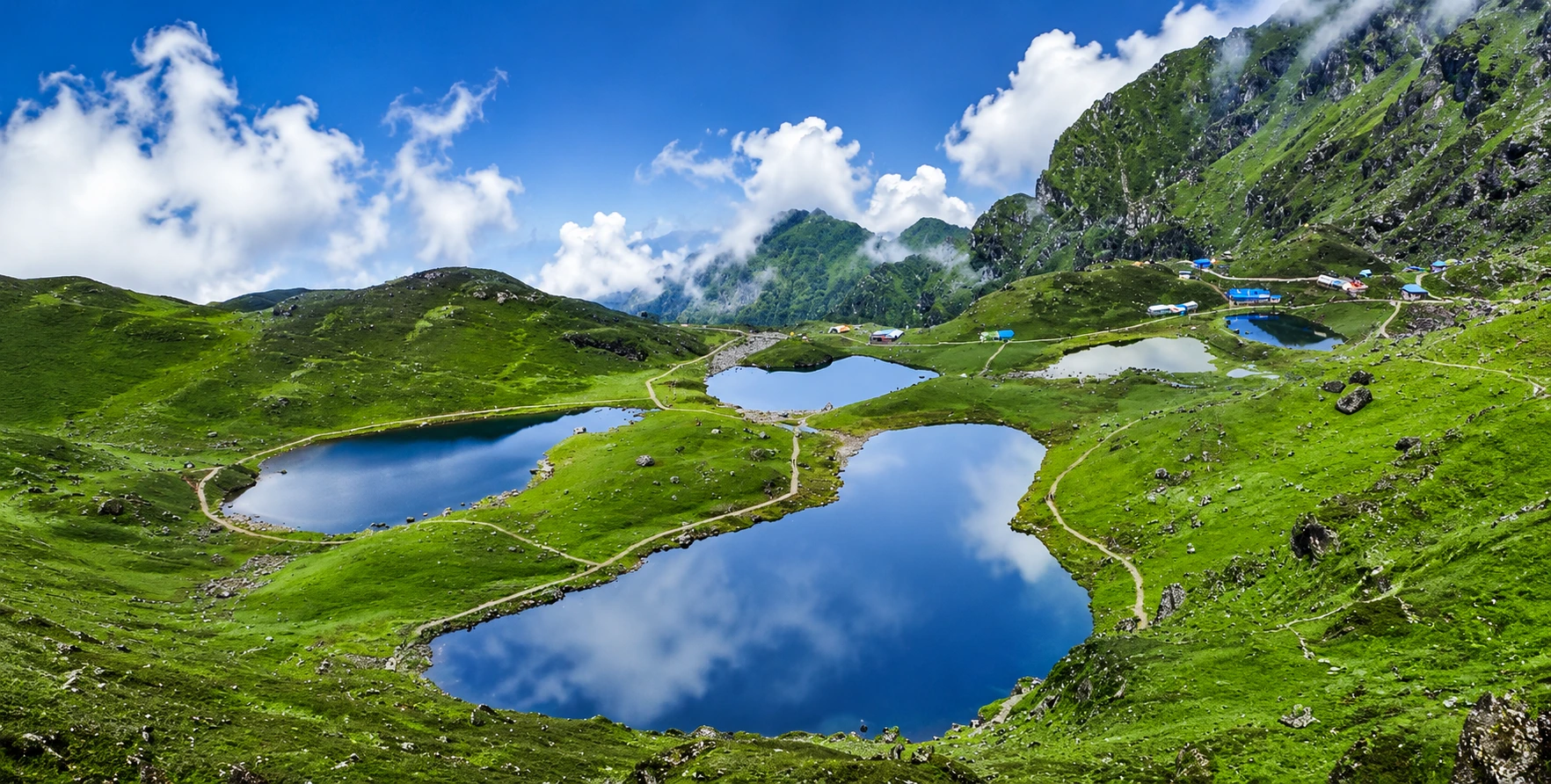
In a country already dense with sacred lakes, ancient temples, and pilgrimage trails, Panch Pokhari stands apart. Five crystalline glacial lakes, each named for and dedicated to Lord Shiva, are clustered on a high ridge at 4,100 meters in the remote Sindhupalchok district, northeast of Kathmandu, with the Jugal Himal, Langtang, Rolwaling, and Ganesh Himal ranges visible on the horizon in every direction.

The name means simply Five Lakes in Nepali, but that plainness undersells the reality: each lake catches the sky differently, the surrounding alpine meadow fills with wildflowers in spring, and on the full moon of Janai Purnima in August, the hillsides and the lake shore come alive with thousands of pilgrims who have climbed here on foot specifically to bathe in these waters and change their sacred Janai thread in the presence of Shiva.

This guide is written specifically for travellers planning to visit Panch Pokhari, whether as pilgrims, trekkers, or both. It covers everything: the legend and religious significance of the five lakes, every road access option from Kathmandu, precise driving times and road conditions along the Araniko Highway and Sindhupalchok district roads, the two main trekking routes to the lakes and their day-by-day stages, permits and what checkpoints to expect, seasonal timing and how the Janai Purnima festival changes the logistics, wildlife and biodiversity within Langtang National Park, accommodation realities, packing requirements for this high-altitude but rarely commercialized trail, and how to combine the Panch Pokhari trek with a wider Kathmandu Valley itinerary using Nepal Vehicle Hiring Pvt Ltd for every transport leg.

Unlike the famous trekking circuits of Annapurna, Everest, and Langtang, Panch Pokhari is still largely outside the international trekking mainstream. The Trekking Agencies’ Association of Nepal formally explored and opened this route only in 2012, and even today, the trail infrastructure remains basic, the teahouse network thin, and the signage incomplete compared to Nepal’s more commercialised trekking corridors.

That is, emphatically, a feature rather than a drawback for the right traveller, and this guide is built to give you everything you need to arrive at those five sacred lakes fully prepared and properly transported, without any avoidable logistical surprises that catch under-prepared visitors on this route. The Panch Pokhari trail rewards preparation more than almost any other trek in the Kathmandu region precisely because so little of what you need can be sourced along the way; everything from your sleeping bag to your cash to your permits must be sorted before you leave Kathmandu, and a well-planned vehicle transfer to the correct trailhead is the first and most foundational step in making that preparation work.

The Legend and Sacred Significance of the Five Lakes

Panch Pokhari’s religious importance is inseparable from one of Hindu mythology’s most significant stories. During the Samudra Manthan, the churning of the cosmic ocean described in the Bhagavata Purana and the Mahabharata, a poison called Halahala emerged from the depths and threatened to destroy all creation.

Lord Shiva, the destroyer and protector, swallowed the poison to save the universe. The venom burned his throat with intense heat and thirst, and where his trident struck the Earth in relief, five springs of pure, cool water burst from the ground.

These five sources are said to be the origin of the five lakes of Panch Pokhari.

Book reliable transport for the Panch Pokhari Trek with private 4WD jeeps, Scorpio SUVs, and experienced drivers for a safe and comfortable journey from Kathmandu to the trek starting point.Book reliable transport for the Panch Pokhari Trek with private 4WD jeeps, Scorpio SUVs, and experienced drivers for a safe and comfortable journey from Kathmandu to the trek starting point.

Each of the five lakes has a distinct name connected to Shiva’s divine nature and the Shaivite spiritual tradition, and devotees who bathe in them during auspicious periods are believed to be purified of sins accumulated across multiple lifetimes. The lakeshore temple lake-shore temple, dedicated to Lord Shiva, serves as the ritual centre during Janai Purnima, when priests and local shamans lead ceremonies that draw participants from across Nepal and across the border in India.

The Buddhist dimension of Panch Pokhari’s significance is also genuine and should not be treated as incidental. The lakes are considered the residence of Jambhu Lama, a local protective deity in the Tibetan Buddhist tradition, and the communities along the trekking trail, including the Tamang and Yalmu people of Sindhupalchok, are predominantly Buddhist and have maintained shrines, mani walls, and small monasteries along the route for generations.

In this sense, the Panch Pokhari pilgrimage trail reflects the characteristic blending of Hindu and Buddhist sacred traditions that defines religious life across much of Nepal’s hill region, where the same landscape holds meaning for both traditions simultaneously and the same traveller, whether Hindu pilgrim or Buddhist meditator, is walking a trail that has been spiritually charged for centuries.

For trekkers without a specific religious motivation, this layered sacred character adds a dimension of cultural depth that purely scenic treks lack. Arriving at Panch Pokhari during a non-festival period, a trekker will still find two pilgrim houses near the shore, the Lord Shiva temple, ritual offerings left by recent visitors, and the quieter, more personal form of devotion that characterises the non-festival season, when individual pilgrims and small family groups make their own private pilgrimages to the lakes outside the peak August festival crowd.

Where Panch Pokhari Is and Why It Is Harder to Reach Than It Looks

Panch Pokhari sits in the northeastern corner of Sindhupalchok district, one of Nepal’s 77 districts, in the Bagmati Province. Administratively, it falls within the boundaries of Langtang National Park, which also encompasses parts of Rasuwa and Nuwakot districts, and is classified as a protected area under Nepal’s national conservation framework.

The straight-line distance from Kathmandu to Panch Pokhari is not large. Still, the mountainous terrain between them makes road access circuitous, and the final trekking approach is steep enough that the total journey time is considerably longer than the map distance implies.

Sindhupalchok District connects to Kathmandu via the Araniko Highway. The same corridor runs northeast from Kathmandu toward the Tibet border at Rasuwagadhi (now the primary Nepal-Tibet crossing, following the closure of the older Kodari crossing after the 2015 earthquake).

The Araniko Highway is a paved, reasonably maintained road to Bahrabise and beyond toward the border, and this corridor is the primary vehicle access route for the Panch Pokhari trek. From various points along or just off the Araniko Highway, district roads branch toward the two main trekking trailheads: Chautara and Chimchi.

The 2015 Gorkha earthquake heavily affected Sindhupalchok district, as it lies close to the earthquake’s epicentre and suffered significant landslide damage and infrastructure losses. Since then, road reconstruction and trail rebuilding have continued.

Conditions have improved substantially, but travellers should understand that the Sindhupalchok road network remains more prone to landslides during and after monsoon season than most other districts in the Kathmandu region, and that road conditions can vary significantly depending on whether post-monsoon repairs have been completed before a visit.

Pokhara

Kathmandu to Panch Pokhari: All Vehicle Access Options

Route One: Kathmandu to Chautara, the Southern Trailhead

The most common starting point for the Panch Pokhari trek is Chautara, the administrative headquarters of Sindhupalchok district, reached via the Araniko Highway northeast of Kathmandu. The driving distance from Kathmandu to Chautara is about 77 kilometres by road, and the journey typically takes five to seven hours in a private jeep, reflecting the winding, hilly final stretch from the Araniko Highway to Chautara town.

A public bus runs on this route but takes much longer, requires a transfer, and is not a reliable option for trekkers carrying significant gear. For a private jeep transfer, our Kathmandu-to-Sindhupalchok Jeep service covers this corridor and can drop trekkers directly at the trailhead rather than at the town centre.

From Chautara, the trekking trail toward Panch Pokhari begins by climbing north through Sano Okhreni and a series of terraced villages, then ascends through dense rhododendron and oak forests as it gains altitude. This southern approach is the longer of the two main routes to the lakes and typically takes five to six days of walking to reach Panch Pokhari from Chautara, passing through communities of Tamang, Sherpa, Brahmin, and Chhetri households across the Sindhupalchok hill belt before breaking through the tree line into alpine meadow terrain in the final two days of approach.

Route Two: Kathmandu to Chimchi (Chhimti), the Shorter Northern Approach

A shorter alternative begins from Chimchi village, also spelt Chhimti, reached via a branch road off the Araniko Highway at Melamchi. The Melamchi junction is well known as the site of the Melamchi Water Supply Project, a major infrastructure project connecting the Melamchi River in Sindhupalchok to the Kathmandu Valley’s water supply system.

From the Melamchi junction, a district road climbs northeast toward Chimchi, which sits at roughly 1,350 meters and serves as the starting point for a faster, more direct approach to Panch Pokhari that can reach the lakes in as few as four to five days of trekking compared to the six days typically required from Chautara. Our Kathmandu Jeep service can drop trekkers at the Chimchi trailhead on request, and the Melamchi corridor is a regular route for our drivers.

From Chimchi, the trail climbs through Tuppi Danda and Nashympati before making the final approach to the lakes. This shorter itinerary suits trekkers on a tighter schedule or those focused on the pilgrimage destination rather than a long, gradual approach through multiple communities.

The trade-off is that the ascent from Chimchi to Panch Pokhari is steeper and more compressed, which trekkers should factor into planning, especially if they may not be fully acclimatised before starting the trek.

Alternative Starting Points Along the Araniko Highway Corridor

Some longer itineraries, particularly those designed by trekking agencies that want more village cultural exposure, begin in Simpal, a small roadside settlement on the Araniko Highway, or in Bahrabise, farther northeast, adding trekking days in exchange for a more gradual, village-rich approach from a lower altitude. For trekkers arriving from Kathmandu, these longer approaches are less commonly booked by independent travellers but suit organised group trips that want a more in-depth, multi-community experience before reaching the high-altitude lakes.

Our Kathmandu to Langtang region jeep network already operates this general Araniko Highway corridor for Langtang and Kerung border transfers, making the Sindhupalchok approach road a natural extension of routes our drivers already run regularly.

Road Conditions and What to Expect on the Drive

The Araniko Highway out of Kathmandu is paved and well maintained for most of its length through Sindhupalchok district. However, it climbs steadily through the Bhote Koshi gorge. It passes several sections that have historically been vulnerable to landslides during the monsoon and to flash flooding on the lower riverside stretches.

After the 2015 earthquake, several sections of the Araniko Highway required significant repair and reconstruction. While the main highway is now generally motorable year-round, the district branch roads that peel off toward Chautara, Chimchi, and the lesser-used trailhead villages remain more variable in quality, with unpaved sections, seasonal washouts, and narrow single-lane stretches that require careful driving.

Private 4WD jeep and Scorpio transporting trekkers to the Panch Pokhari Trek through the scenic mountain roads of Sindhupalchok

A 4WD jeep is the correct vehicle for any transfer beyond the main Araniko Highway onto the district roads serving the Panch Pokhari trailheads. Sedans and standard cars lack the ground clearance and drivetrain confidence for the steeper, rougher sections of the Chautara approach road and the Chimchi branch road, particularly during or after rain.

We explain this reasoning in more detail in our dedicated piece on why a 4WD jeep is the right choice for Nepal’s mountain roads, and the Sindhupalchok district road network is a textbook example of the conditions it applies to.

Travellers planning their Panch Pokhari trip during or immediately after the monsoon season (June through September) should plan for possible road closures due to landslides on the final stretch toward Chautara and on the Chimchi access road. Our drivers monitor these conditions as part of standard pre-trip planning.

For any Sindhupalchok trip booked through Nepal Vehicle Hiring, we will flag any known road disruptions before departure and advise on the best available trailhead access point given current conditions. During peak pilgrimage season around Janai Purnima in August, road traffic on the Araniko Highway and the Chautara approach increases dramatically, and an early-morning departure from Kathmandu is strongly advisable to clear the valley and the lower highway before traffic builds.

The Trail: Stage-by-Stage from Trailhead to Sacred Lakes

Chautara to Tuppi Danda

The opening stage from Chautara climbs immediately into the Sindhupalchok hill terrain through a landscape of terraced farms, small Tamang villages, and gradually thickening forest as the trail gains elevation. This lower section of the trail is the most populated, with households from the Brahmin, Chhetri, and Tamang communities along the trail, where basic food and water are available.

Trail conditions here are typical of Nepal’s middle-hill terrain: a mix of stone stairways, earthen paths, and occasional dirt tracks between the villages.

Tuppi Danda to Nashympati and Pauwa Bas

As the trail climbs beyond the lower settlement zone, it enters denser rhododendron and oak forest, with views of the Jugal Himal appearing on the northern horizon when the canopy opens at ridge crossings. This section passes through Nashympati, a small forest-edge settlement used as an overnight stop, and the trail feels more remote, with fewer households and longer gaps between water sources.

Pauwa Bas roughly marks the transition from mid-hill to high-altitude terrain, and nights here can be noticeably colder than in the lower trailhead villages.

Pauwa Bas to Hile Bhanjyang

The stage to Hile Bhanjyang involves a significant climb followed by a steep descent, passing through largely uninhabited forest, with the trail narrowing and receiving far less maintenance than the lower sections. Mountain views from the ridgeline crossings on this stage extend to the Langtang, Jugal, Rolwaling, and Ganesh Himal ranges, and on clear days the summits of Dorje Lakpa (6,966 m), Madiya (6,257 m), Phurbi Chhyachu (6,637 m), and Gaurishankar (7,134 m) are visible.

This stretch makes the remoteness of the Panch Pokhari trail most tangible for trekkers accustomed to the well-supplied, well-trafficked trails of the Annapurna or Everest regions.

Private 4WD jeep and Scorpio transporting trekkers to the Panch Pokhari Trek through the scenic mountain roads of Sindhupalchok

Hile Bhanjyang to Panch Pokhari (4,100 m)

The final approach to the lakes climbs through increasingly rocky, open terrain above the tree line, crossing alpine meadows and boulder fields before the five lakes come into view. The approach follows a steady ascent through Nashympati to the lake basin, and trekkers consistently describe the first sight of the five glacial lakes against the backdrop of the Jugal Himal as the most striking visual moment of the entire route.

The Lord Shiva temple and two pilgrim houses sit on the lakeshore, where trekkers and pilgrims alike camp or stay in basic overnight accommodations.

The Viewpoint Above the Lakes

From the lake basin, a short one-hour hike to the viewpoint ridge above Panch Pokhari opens a full-circle panorama that encompasses the Dorje Lakpa massif, Gaurishankar, the full Jugal Himal chain, the distant Rolwaling range, the Ganesh Himal group to the west, and the Langtang range to the northwest. Several itineraries build in an extra day at the lakes specifically for this sunrise viewpoint hike in stable early-morning light, when visibility is typically at its clearest and the 8,000-metre peaks on the horizon catch the dawn before the valleys below.

Janai Purnima: The Festival That Transforms the Trail

The single event that most dramatically changes the character of a Panch Pokhari trip is Janai Purnima, the full-moon festival of Shrawan, which falls in late July or August, depending on the lunar calendar. During this festival, the normally quiet trail to Panch Pokhari becomes a genuine mass pilgrimage, with thousands of Hindu devotees climbing from surrounding villages and towns to the lakes specifically to perform the ritual bathing and the renewal of the Janai, the sacred thread worn by twice-born Hindu men, in the presence of the five sacred waters.

Shamans, known as dhami-jhankri in Nepali, are particularly numerous at Panch Pokhari during Janai Purnima, arriving with their ritual drums, chanting, and trance-state ceremonies that represent a much older layer of spiritual practice than either mainstream Hinduism or Tibetan Buddhism, and which draw significant attention from travellers with an interest in indigenous religious traditions. The sight of hundreds of shamans drumming and dancing simultaneously at a high-altitude sacred lake while thousands of pilgrims bathe and pray is not something easily replicated anywhere else in Nepal, and travellers specifically interested in this experience should plan their trip to coincide with the Janai Purnima window rather than treating it as a complication to be avoided.

Panch Pokhari Pilgrimage Trek Transport and Trail Guide
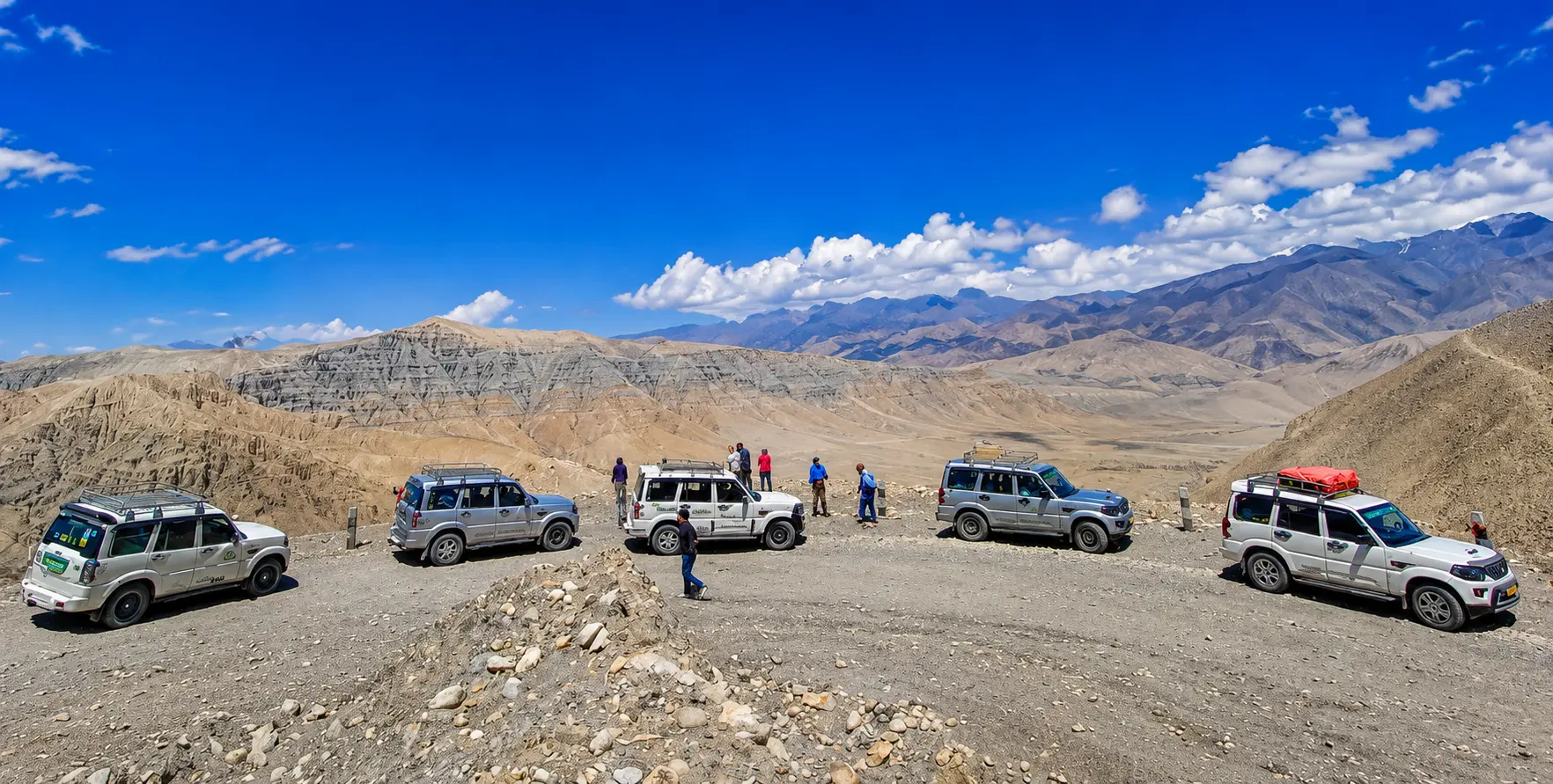
That said, the festival period does create significant practical complications for vehicle transport and accommodation. The Chautara approach road becomes extremely busy with pilgrim traffic in the days before and after the festival, and both trailheads see far more simultaneous footfall than at any other time of year.

Accommodation at the lake shore fills up quickly; camping may be necessary even for trekkers who expected teahouse accommodation, and book the jeep transfer from Kathmandu well in advance rather than arranging it at short notice. Returning to Kathmandu immediately after the festival also requires careful planning, since the return traffic surge on the Araniko Highway and the district roads can produce significant delays.

For travellers not specifically motivated by the Janai Purnima pilgrimage, the spring window of March to May and the autumn window of September to November offer the clearest mountain views, the most stable road and trail conditions, and a significantly quieter experience at the lakes themselves. These are the same seasons that serve the broader Langtang and Annapurna trekking regions covered in our unlimited tour and trek vehicle hire guide, and the same seasonal logic applies here.

Permits Required for the Panch Pokhari Trek

Because Panch Pokhari lies within Langtang National Park, trekkers need a Langtang National Park Entry Permit, which differs from the ACAP permit required for the Annapurna region. You can obtain this permit at Nepal Tourism Board offices in Kathmandu or at park checkpoints along the approach trail, and the fee structure follows the standard national park entry framework: higher for non-SAARC foreign nationals, lower for SAARC nationals, and a specific rate for Nepali citizens.

In addition to the national park permit, the Panch Pokhari trail currently requires a TIMS card (Trekkers’ Information Management System). Unlike the Everest region, where a local municipality fee has effectively replaced the TIMS, and unlike the Annapurna region, where enforcement has become inconsistent, the TIMS card remains a standard requirement for the routes in Sindhupalchok and Langtang National Park.

Arrange it before departure in Kathmandu. You can typically get both the park permit and the TIMS card on the same day at the Nepal Tourism Board’s Pradarshani Marg office in Kathmandu.

Panch Pokhari does not fall under Nepal’s restricted area regulations, which means it requires no special restricted area permit, no minimum group size, and no compulsory government-licensed guide for the trek itself, though carrying a local guide is strongly advisable given the trail’s remoteness, limited signage, and basic infrastructure compared to Nepal’s more developed trekking corridors. A guide familiar with the Sindhupalchok hill trails makes a meaningful difference in navigation and in understanding the cultural and religious sites along the way.

Wildlife, Flora, and the Ecological Significance of the Lakes

Panch Pokhari holds a unique designation in wetland ecology: it is classified as the ninth-highest-altitude wetland, reflecting both the extreme elevation of the five lakes and the ecological rarity of functioning glacial lake ecosystems at this altitude. The lake basin and surrounding alpine meadow support a range of high-altitude flora that changes visibly with the season, from wildflower-carpeted meadows in spring and early summer to frost-rimmed grass and bare rock in winter.

The forested slopes of the approach trail, from roughly 1,500 to 3,500 meters, pass through the transition zones between subtropical broadleaf forest at the lower elevations, mixed temperate forest including rhododendron, oak, and alder, and subalpine rhododendron and juniper scrub that characterises the forest immediately below the tree line. This transition is one of the most varied altitudinal vegetation gradients on any single trekking route in Nepal’s Bagmati Province, and spring trekkers in particular encounter the rhododendron bloom, which transforms large sections of the trail into shades of crimson, pink, and white in March and April.

Wildlife along the trail includes species typical of Langtang National Park’s protected forest: the endangered red panda has been recorded in the park’s forest zones, including the Sindhupalchok sections, alongside Himalayan tahr, musk deer, leopard, Himalayan black bear, and a wide range of high-altitude bird species, including the Himalayan monal pheasant, Nepal’s national bird, which frequents alpine meadow edges at elevations approaching and exceeding the lake basin itself. The lakes serve as a watershed for the Indravati River system, contributing to regional water supply and giving the ecological protection of the lake basin significance beyond the immediate trekking and pilgrimage context.

The ninth-highest altitude wetland designation, which the Panch Pokhari lake system carries, also reflects a broader reality: high-altitude wetlands are among the most ecologically fragile and least understood ecosystems on Earth, and the relative remoteness of Panch Pokhari compared to more heavily visited sacred lake sites has so far helped preserve the ecological integrity of the lake basin in a way that more popular destinations have sometimes struggled to maintain as visitor numbers have grown. This ecological value is an argument, alongside the cultural and religious ones, for thoughtful, well-prepared trekking rather than poorly organised mass access.

Accommodation and Food Along the Panch Pokhari Trail

The Panch Pokhari trail is honest about its infrastructure limitations, and trekkers expecting the well-supplied teahouse network of the Everest Base Camp or Annapurna Base Camp routes will find the reality here considerably more basic. The lower sections of the trail, through the Sindhupalchok hill villages between the trailhead and roughly 2,500 meters, have small local tea shops and very basic guesthouses or homestays that provide simple meals and a bed in a private household rather than a purpose-built trekking lodge.

Dal bhat, eggs, potatoes, and seasonal vegetables are the standard menu throughout; speciality trekking dishes common on the more commercial routes are largely unavailable.

Above roughly 2,500 meters, accommodation becomes even more limited, with some stages of the trail requiring either a tented camp or a stay in a basic pilgrim shelter rather than any form of commercial teahouse. The two pilgrim houses at the lake shore itself are available for overnight stays during and around the Janai Purnima festival period.

Still, they may not be reliably staffed outside festival season, which is a key reason organised group trekking on the Panch Pokhari trail typically involves carrying camping equipment by porters rather than relying on finding open teahouse accommodation at every stage.

This accommodation reality is not a criticism of the trail; it reflects how new and non-commercial the Panch Pokhari route remains compared to Nepal’s established trekking circuits. This means trekkers planning an independent trip without an organised agency need to be genuinely self-sufficient from the upper trail stages onward, carrying a good sleeping bag, some emergency rations, and water purification capability, and ideally coordinating with a local guide who knows which community homestays are currently operating at each stage.

A Complete Sample Itinerary: Kathmandu to Panch Pokhari and Back

The following itinerary uses the Chimchi approach for efficiency. It is structured around a private jeep transfer from Kathmandu for the road legs, with porter and guide support for the trekking sections. You can book all vehicle transfers through our Plan a Trip page.

  • Day 1 — Arrive in Kathmandu. Collect the Langtang National Park permit and TIMS card from the Nepal Tourism Board. Check gear and obtain any remaining cash; ATMs are unavailable on the trail.
  • Day 2 — Early morning private jeep transfer from Kathmandu along the Araniko Highway to the Chimchi/Chhimti trailhead, approximately five to six hours. Overnight at a basic teahouse or homestay in Chimchi.
  • Day 3 — Trek from Chimchi to Tuppi Danda (2,320 m), roughly seven hours through terraced farmland and lower forest. Overnight in a basic teahouse.
  • Day 4 — Trek from Tuppi Danda to Nashympati or Hile Bhanjyang (3,400 m), around five to six hours through dense rhododendron forest. Mountain views begin opening at ridgeline crossings. Overnight in a tent camp or basic shelter.
  • Day 5 — Trek from Hile Bhanjyang to Panch Pokhari (4,100 m), around four to six hours. Ascend through rocky alpine terrain to the five sacred lakes. Visit the Lord Shiva temple and the lake shore. Overnight in the pilgrim house or tent at the lake.
  • Day 6 — Optional early sunrise hike to the viewpoint above the lakes for panoramic views of Dorje Lakpa, Gaurishankar, the Jugal Himal, Rolwaling, and Langtang ranges. Return to the lakes for rest. Overnight at Panch Pokhari for a second night, or begin descent.
  • Day 7 — Descend via Nashympati and Tuppi Danda back toward the Chimchi trailhead. The descent is faster but still a full day of walking on steep, uneven terrain.
  • Day 8 — Complete descent to Chimchi. Private jeep pickup and return transfer to Kathmandu along the Araniko Highway. Overnight in Kathmandu.

This eight-day round trip can be extended by taking the Chautara southern approach for a richer village experience, or shortened by one day if trekkers opt not to spend two nights at the lakes. On return to Kathmandu, the same vehicle and driver can continue with any subsequent legs of a wider Nepal itinerary — valley sightseeing via our Kathmandu Sightseeing Tour or an onward transfer to Pokhara via the Kathmandu to Pokhara Bus for trekkers extending their Nepal trip into the Annapurna region.

Panch Pokhari Pilgrimage Trek Transport and Trail Guide
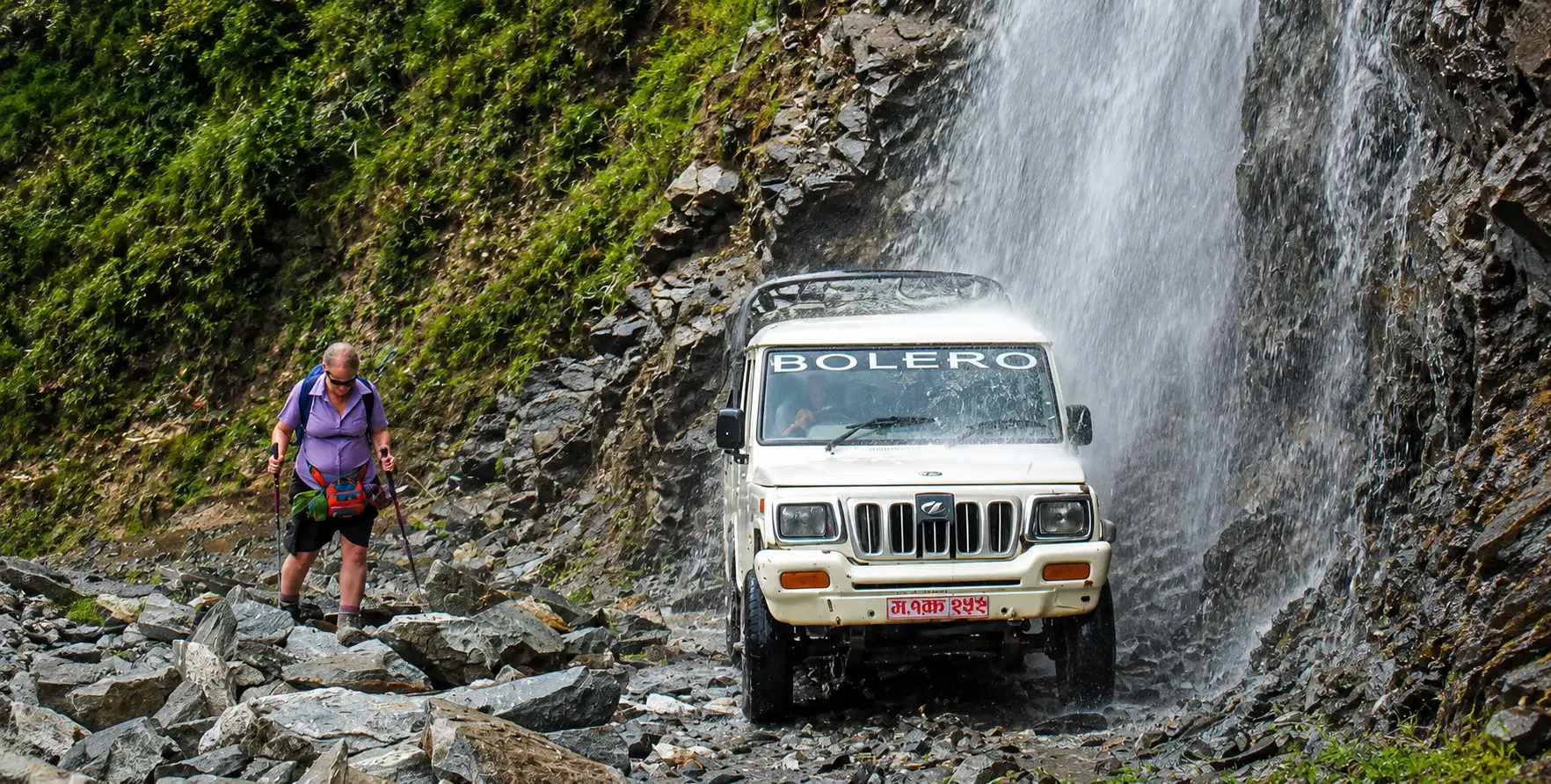
Combining Panch Pokhari With a Wider Nepal Itinerary

Because Panch Pokhari is located northeast of Kathmandu rather than north or west, it fits naturally at the beginning or end of a broader Nepal itinerary rather than as a mid-trip leg. Travellers arriving in Kathmandu and wanting to begin with a spiritually significant, off-the-beaten-path experience before the better-known circuits often start with Panch Pokhari, then return to Kathmandu before continuing to Pokhara for the Annapurna region or flying to Lukla for the Everest trek.

Our Kathmandu to Syabrubesi Jeep Transfer and Kathmandu to Dhunche Jeep serve a similar northeast Kathmandu corridor and can be combined with a Panch Pokhari trip for travellers who want to explore more of the Sindhupalchok and Rasuwa districts in a single extended Kathmandu-based trip.

For travellers interested in the Helambu trekking area, which lies in the same general northeast quadrant of Kathmandu as Panch Pokhari, the two destinations can be combined into a longer loop itinerary that returns to Kathmandu via a different route from the one used on the approach, providing more variety within a single continuous trip. For visitors interested in rafting on the Bhote Koshi River, one of Nepal’s most renowned whitewater stretches, the Araniko Highway corridor that serves as the jeep access route for Panch Pokhari also passes directly alongside this famous rafting destination, making a Bhote Koshi rafting day a natural add-on to the vehicle hire for any Panch Pokhari transfer.

What to Pack and How to Prepare for Panch Pokhari

Panch Pokhari requires more careful packing than many of Nepal’s more commercial trekking routes, because the limited infrastructure along the trail means you cannot count on resupplying food or equipment beyond the lower trailhead villages, and because the 4,100-meter altitude of the destination makes cold-weather preparation non-negotiable even in the nominally milder spring and autumn seasons.

  • Sleeping bag rated to -15°C or lower — nights at the lake basin can be genuinely cold at any time of year, and the pilgrim house accommodation does not provide bedding.
  • Full waterproof layering system — base layer, fleece or down mid-layer, and windproof and waterproof outer shell. Afternoon weather at altitude can change rapidly.
  • Sturdy, broken-in trekking boots — the trail includes rocky, steep sections that are hard on ankle stability and harder still on new footwear.
  • Water purification — UV purifier or iodine tablets, as stream water along the upper trail should not be drunk untreated and bottled water is unavailable beyond the lower villages.
  • Emergency food supplies — energy bars, nuts, or other calorie-dense portable food for the upper trail stages where teahouse menu options are severely limited.
  • Headlamp and spare batteries — essential for sunrise viewpoint hikes, early morning departures, and basic teahouse or tent camp evening use.
  • Trekking poles — the steep descents from Hile Bhanjyang and from the lakes themselves are considerably easier on the knees with pole support.
  • Cash in sufficient quantity — no ATMs exist beyond the Araniko Highway and Chautara town; carry enough for the entire trekking portion of the trip.
  • Travel insurance confirming helicopter evacuation coverage — the Panch Pokhari trail is remote enough that an injury or severe altitude-related illness requiring evacuation would involve a helicopter, which standard travel insurance does not cover.

The Communities Along the Trail: Tamang, Sherpa, and the Sindhupalchok Hill People

One of the most distinctive and underappreciated aspects of the Panch Pokhari trail is the cultural and ethnic diversity of the communities it passes through. Sindhupalchok district is one of Nepal’s most ethnically heterogeneous districts.

The northern hill section of the trekking trail, between the lower trailhead villages and the high-altitude lake basin, passes through settlements where Tamang, Sherpa, Yalmu, Brahmin, and Chhetri households often sit within a few minutes’ walk of one another, each maintaining distinct but overlapping cultural and religious traditions.

The Tamang people, the most numerous community along most of the trail’s mid-altitude section, are one of Nepal’s largest ethnic groups and are predominantly Buddhist, with a culture deeply influenced by Tibetan traditions, including their language, which belongs to the Tibeto-Burman family and is closely related to Tibetan, their monastic architecture, and their festival calendar. Tamang villages along the Panch Pokhari trail often feature mani walls, carved stone tablets bearing the Om Mani Padme Hum mantra, small gompa shrines, and prayer flag lines strung between houses and ridge crossings, all of which add a tangible visual and spiritual texture to the walking day that is absent from the purely teahouse-focused trekking infrastructure of more commercial routes.

The Yalmu people, a smaller community also present in this part of Sindhupalchok, maintain a particularly close traditional relationship with the Panch Pokhari lake site itself, and have historically played a custodial role in the lake’s religious observances alongside the Brahmin priests who lead the formal Hindu rituals during Janai Purnima. Encountering this layered community relationship, where a Buddhist Tamang village, a Hindu Brahmin priesthood, and a Yalmu custodial tradition all converge around the same set of five sacred lakes, is one of the most intellectually interesting aspects of the Panch Pokhari experience for travellers interested in Nepal’s complex religious and ethnic landscape.

Interactions with households along the lower trail offer a level of genuine, unscripted cultural contact that is harder to achieve on Nepal’s more commercially developed trekking corridors, where the teahouse economy has, over decades, created a mediated, hospitality-business relationship between trekker and host rather than a genuine household encounter. On the Panch Pokhari trail, where the homestay and small community tea shop model still dominates over the purpose-built trekking lodge, the hospitality tends to be more direct, more personal, and more reflective of daily life in Sindhupalchok’s hills than a visitor would encounter in a Namche Bazaar or Ghorepani teahouse.

Book reliable transport for the Panch Pokhari Trek with private 4WD jeeps, Scorpio SUVs, and experienced drivers for a safe and comfortable journey from Kathmandu to the trek starting point.

Panch Pokhari Versus Gosaikunda: Choosing Between Nepal’s Two Great Sacred Lake Treks. Travellers researching sacred lake pilgrimage destinations in Nepal will quickly encounter Gosaikunda and Panch Pokhari, and the two sites invite a direct comparison worth addressing clearly. Gosaikunda, at 4,380 meters in the Rasuwa district north of Kathmandu, is the older and more internationally famous of the two sacred lake destinations, with a well-developed trail network connecting it to both the Langtang Valley and the Helambu circuit.

Our Kathmandu to Dhunche Jeep and Kathmandu to Syabrubesi Jeep Transfer services both approach from the Rasuwa side and cover the general Gosaikunda access corridor.

The key differences between the two destinations are trail development, crowd levels, cultural context, and approach flexibility. Gosaikunda is served by a well-marked, teahouse-equipped trail from Dhunche or Syabrubesi that international trekkers have used for decades, meaning reliable accommodation at most stages and trail infrastructure that makes independent trekking straightforward.

Panch Pokhari, by contrast, has only been formally opened as a trekking destination since 2012, has a much thinner teahouse network, requires more self-sufficiency on the upper trail, and is consequently quieter, less tramped, and more genuinely off the beaten path.

Gosaikunda is also associated with Janai Purnima, drawing its own large pilgrimage during the same August festival window, so both sites see their peak pilgrimage crowds simultaneously. Travellers specifically seeking to avoid festival-period crowds at a sacred lake destination will find neither site entirely quiet during Janai Purnima.

Still, Panch Pokhari remains meaningfully less crowded than Gosaikunda in absolute numbers even during the peak pilgrimage period. Outside the festival season, Panch Pokhari offers greater solitude throughout.

In summary: trekkers and pilgrims wanting a well-established, teahouse-supported trail with flexible length options and the option to combine with the Langtang Valley circuit should choose Gosaikunda. Those specifically seeking a more remote, community-based, and less commercially developed sacred lake experience with fewer other trekkers on the trail should choose Panch Pokhari.

Both are exceptional destinations for their respective purposes, and travelers with enough time in Nepal can realistically fit both into a longer itinerary centered on the northeast Kathmandu district cluster, using the same general jeep corridor out of Kathmandu for both legs and only diverging at the specific junction toward Rasuwa for Gosaikunda or Sindhupalchok for Panch Pokhari. Because the two destinations share a broadly similar vehicle access corridor, a single vehicle hire booking can cover the combined itinerary rather than two separate arrangements, keeping logistics simple and costs proportionally lower than booking each leg independently.

Frequently Asked Questions About the Panch Pokhari Trek

Is the Panch Pokhari trek suitable for beginners?

It is classified as moderate to challenging rather than beginner-friendly. The destination’s altitude of 4,100 meters, combined with the steep approach, basic accommodation, and remoteness of the upper trail, makes it more demanding than Nepal’s most accessible short treks, such as Poon Hill.

Trekkers with reasonable fitness, prior hiking experience, and careful preparation can complete it successfully. Still, first-time high-altitude trekkers without prior experience above 3,000 meters should consider acclimatising in Kathmandu for at least one to two days before beginning and taking the slower Chautara approach rather than the shorter but steeper Chimchi route.

Do I need a guide for this trek?

While Panch Pokhari does not legally require a government-licensed guide under Nepal’s current trekking regulations for this specific route, the trail’s limited signage, basic infrastructure, and genuine remoteness make a local guide strongly advisable in practice. Navigation errors on the upper trail could lead to a significant safety situation, given the distances between settlements and the lack of mobile signal on most of the upper route.

When is the absolute best time to visit Panch Pokhari?

For mountain views and trail conditions, October and November are generally considered the best months, offering post-monsoon clarity and stable weather. For the Janai Purnima pilgrimage experience, go in August, accepting the trade-off of busier trails, more variable weather, and the possibility of monsoon-related road disruption on the approach. Spring from March to May is the best time for rhododendron blooms and a strong second choice for mountain views.

Can I drive all the way to Panch Pokhari, or is trekking mandatory?

No road reaches Panch Pokhari itself. The vehicle access ends at the trailheads of Chautara or Chimchi, and the approach from either point requires several days of foot travel. No shortcut, cable car, or partial road access exists beyond these trailheads.

Why Choose Nepal Vehicle Hiring for Your Panch Pokhari Transport

The Araniko Highway corridor northeast of Kathmandu is a route our driver regularly runs for Langtang National Park transfers, Kerung border crossings, and access to the broader Sindhupalchok district, meaning we bring genuine route familiarity rather than a generic hill-road experience to the Panch Pokhari transfer. We know the road conditions on the branch road to Chautara, the Melamchi junction turn for the Chimchi approach, and the seasonal landslide-risk sections that require either an early-morning start or a contingency trailhead plan during monsoon season.

We also understand the specific logistical demands of the Janai Purnima pilgrimage window, including the dramatically increased road traffic on the approach corridor during that period and the importance of an early-morning departure from Kathmandu to clear the valley before the pilgrim convoys build up on the highway. Our full Jeep fleet covers every 4WD route in this corridor, and our Plan a Trip service can coordinate the Panch Pokhari jeep transfer with any wider Nepal itinerary that comes before or after.

For trekkers combining Panch Pokhari with a Langtang Valley trip, our Kathmandu to Syabrubesi Jeep Transfer and Kathmandu to Dhunche Jeep share the same general northeast approach via the Kathmandu highway and can be booked consecutively with a single operator. For a broader picture of how our vehicle network covers every trekking region in Nepal, our complete guide to unlimited tour and trek vehicle hire and our Complete Nepal Tourism Guide provide the full context.

Book Your Kathmandu to Panch Pokhari Jeep Transfer Today

Whether you are arriving as a Hindu pilgrim for Janai Purnima, as a trekker seeking solitude and genuine high-altitude wilderness, or as a cultural traveller drawn to the Tamang and Sherpa village trail and the extraordinary convergence of Hindu and Buddhist sacred traditions at the five glacial lakes of Sindhupalchok, Nepal Vehicle Hiring Pvt Ltd can arrange a comfortable, well-maintained 4WD jeep with an experienced driver who knows the Araniko Highway corridor and the Sindhupalchok district roads that lead to the Panch Pokhari trailheads. From your first morning departure from Kathmandu, through the winding hill-road climb to Chautara or the Melamchi junction turn toward Chimchi, and back to Kathmandu at the end of the trek, every vehicle leg of your Panch Pokhari journey is in capable,d well-prepared hands.

Call or WhatsApp us at +WhatsApp or visit vehiclehiringnepal.com to plan your pilgrimage.

Nepal Vehicle Rental

Scorpio jeeps on the road in Mustang

Vehicle Rental In Nepal: Your Route to Amazing Adventures

Nepal resists easy movement by design. In the space of roughly 200 kilometres, measured north to south at its widest point, the land rises from the malarial lowlands of the Terai at under 100 meters above sea level to the summit of Sagarmatha at 8,849 meters — a vertical compression of nearly every climate zone on earth, achieved with almost no flat ground in between.

No national railway network exists, no river system is navigable for any meaningful distance through the hill country, and the topography is so relentlessly vertical that even the country’s capital sat in a valley reached, until 1956, by nothing more substantial than a mule track. Every meaningful journey in Nepal, for as long as the country has existed in anything resembling its present form, has depended on a road — and for the overwhelming majority of visitors and many Nepalis themselves, that road is travelled not by personal car ownership but by hired vehicle.

This single geographic fact — that roughly three-quarters of Nepal’s territory is mountain and hill country where wheeled transport of any kind was, within living memory, simply impossible — explains more about the structure of the country’s modern vehicle rental industry than any regulation, price list, or fleet specification ever could. Every operator, every driver, and every traveller booking a private jeep today is, knowingly or not, operating within a transport system that is still actively catching up with a landscape that spent most of recorded human history trying to defeat wheeled vehicles entirely, and continues, in places, to do so even now.

This foundational fact makes vehicle rental—not merely a convenience but a structural necessity—the backbone of how Nepal actually moves. Trekkers reach trailheads by jeep before a single boot touches the trail.

Pilgrims reach sacred temples thousands of meters above sea level by the same private vehicles that, an hour earlier, navigated city traffic in Kathmandu. Wildlife safari guests reach the subtropical plains of Chitwan, heritage travellers reach the medieval squares of Bhaktapur, and cross-border travellers reach the edges of India, China, and beyond — all threaded together by a relatively young, still-evolving, and surprisingly well-organised vehicle rental industry that this guide sets out to explain in genuine depth.

What follows is not simply a list of vehicle types and prices, as covered in our companion guides to private vehicle hire and the complete Nepal vehicle fleet. It is a deeper look at how Nepal’s roads were built, how its vehicle rental sector came to be regulated, how the colour of a license plate quietly encodes the entire structure of who is permitted to drive whom and where, how the country’s hydropower abundance is reshaping its vehicle fleet in real time, and ultimately, how all of this assembles into the practical decision a traveller faces today: which vehicle. On this road, for which adventure?

Find the best vehicle rental in Nepal with affordable prices on cars, 4WD jeeps, Hiace vans, Coaster buses, tourist buses, and luxury vehicles for tours, trekking, and business travel.

A Country Built Without Roads, Then Built Entirely Around Them

It is worth pausing on a fact that modern visitors rarely consider: Kathmandu, the seat of Nepali political and economic life for centuries, had no motorable road connection to the rest of the world until the mid-1950s. Before the Tribhuvan Rajpath was completed between 1953 and 1956 with Indian engineering and financial assistance, every vehicle that ever reached the Kathmandu Valley — and there were, by the early twentieth century, a small number of cars belonging to the Rana ruling family — had to be carried in pieces on the backs of porters over the mountain passes, then reassembled once inside the valley.

The Tribhuvan Rajpath changed this permanently, connecting Kathmandu to Birgunj on the Indian border and, through it, to the entire Indian road and rail network beyond.

HighwayBuilt / OpenedSignificance
Tribhuvan Rajpath1953–1956 (Indian assistance)Nepal’s first highway — the first road link between Kathmandu and the outside world
Araniko Highway1963–1967 (Chinese assistance)First overland link to Tibet/China via Kodari, named after the 13th-century Nepali architect
Prithvi HighwayCompleted 1973Kathmandu–Pokhara link opened the western hills and Annapurna region to road tourism
East-West (Mahendra) HighwayBuilt in stages, 1960s–2000s~1,028 km spanning Nepal’s entire Terai, from Mechi to Mahakali — the nation’s central spine
BP (Sindhuli) HighwayCompleted in stages through the 2010s–2020sDirect Kathmandu–Bardibas link, bypassing the older Mugling–Narayanghat detour

Each of the highways in this brief history was built not as a tourism project but as an act of national integration and, in several cases, geopolitical positioning — the Araniko Highway in particular, completed with Chinese assistance in the 1960s and explored in depth in our dedicated Kodari border guide, gave Nepal its first land link to Tibet, a strategically significant counterweight to the country’s near-total historical dependence on routes through India. The much more recent BP Highway, cutting a direct path from Kathmandu to the eastern Terai and substantially shortening journeys that previously required the long detour through Mugling and Narayanghat, reflects a newer phase of road-building aimed specifically at reducing Kathmandu’s relative isolation from its own eastern districts.

This history makes clear that Nepal’s road network — and, by extension, its vehicle rental industry — remains a comparatively young and continuously evolving system. Routes that were impassable for any vehicle a generation ago, such as the off-road jeep tracks now reaching deep into the Annapurna Circuit’s Marsyangdi valley or partway up toward Upper Mustang, are themselves part of an ongoing process of road extension that continues to reshape which adventures are accessible by vehicle and which still require trekking on foot.

A traveller renting a vehicle in Nepal today is, in a very real sense, part of the latest chapter of a road-building story barely seventy years old.

Vehicle rental in Nepal featuring private cars, 4WD jeeps, Hiace vans, Coaster buses, and tourist buses at the best price

The Quiet Bureaucracy Behind Every Rented Vehicle

Renting a vehicle in Nepal involves stepping into a regulatory architecture that, while largely invisible to the passenger in the back seat, governs nearly every aspect of the journey: who is licensed to drive, what category a vehicle is registered under, what colour its license plate must be, and what rates may legally be charged for its hire. The Department of Transport Management, operating under Nepal’s Ministry of Physical Infrastructure and Transport, issues every vehicle registration in the country through its network of Transport Management Offices, historically organised at the zonal level and still commonly referred to by the zone-code prefixes — Ba, Pa, and others — that appear on every Nepali number plate.

One of the more genuinely interesting and under-appreciated aspects of this system, from a deep-research perspective, is how directly the colour of a vehicle’s license plate encodes its legal purpose. Private vehicles carry white plates with black lettering. Public transport and standard tourist-category vehicles carry yellow plates with black lettering.

Under a dedicated regulation, vehicles registered specifically for tourist carriage must carry green plates and follow a mandated chauffeur dress code, designed to distinguish a genuine licensed tourist vehicle and its professionally presented driver from an ordinary private car. Government-owned vehicles carry white plates with red lettering, and foreign or diplomatic vehicles carry white plates with blue lettering.

Plate ColourVehicle CategoryLettering
WhitePrivate vehiclesBlack letters
YellowPublic transport and standard tourist-category vehiclesBlack letters
GreenVehicles specifically registered for tourist carriage (per dedicated tourist-vehicle regulation)Black letters, with mandated chauffeur dress code
White (red letters)Government-owned vehiclesRed letters
White (blue letters)FForeign/diplomatic vehiclesBlue letters

This system has not been without genuine controversy, and the controversy itself is instructive about how Nepal’s transport bureaucracy actually functions in practice. A plan to replace Nepal’s traditional plates with digitally embossed, RFID-chip-equipped versions was first floated in the government’s Three-Year Interim Plan covering 2007 to 2010. Still, it was not launched until the 2015–16 fiscal year, when the government awarded the contract to the Bangladeshi firm Tiger IT.

The project subsequently became entangled in years of dispute: the original design replaced Nepal’s traditional Devanagari script with Latin lettering, prompting a public outcry and a Supreme Court petition that led the Court to halt the rollout in 2018; the contractor itself was separately blocked by the World Bank in 2019 over allegations of corrupt bidding practices in an unrelated Bangladeshi project, yet the Nepali government proceeded with the contract regardless; and as recently as April 2026

Nepal’s Central Federation of Public Transport was still publicly urging vehicle owners not to install the new embossed plates until it resolved further practical concerns. For a traveller simply hoping to book a jeep to a mountain trailhead, none of this bureaucratic history is visible — but it is a genuine and ongoing part of the institutional environment within which every vehicle rental company in Nepal, including Nepal Vehicle Hiring Pvt Ltd, must operate.

Vehicle rental in Nepal featuring private cars, 4WD jeeps, Hiace vans, Coaster buses, and tourist buses at the best price

The Association That Standardised an Industry

Before 2004, Nepal’s tourist vehicle hire sector operated with far less coordination than it does today—individual operators set their own rates with little reference to any shared industry standard. This created genuine unpredictability for both visitors and operators. The founding of the Nepal Tourist Vehicle Association (NTVA) in Nepali year 2060 B.S.

(2004 in the Gregorian calendar) changed this by bringing together vehicle owners and transporters serving foreign and domestic visitors under a single coordinating body. NTVA’s membership has grown steadily since its founding.

The association now counts 65 distinct vehicle companies among its members, collectively responsible for publishing and periodically updating the standardised tourist vehicle rate schedules — hourly, daily, and route-specific — that legitimate operators across the country, including Nepal Vehicle Hiring Pvt Ltd, generally reference as the baseline for fair and transparent pricing.

This standardisation matters more than it might first appear. In an industry where a visitor typically has no independent way to verify whether a quoted price for a Kathmandu-to-Pokhara private jeep is fair, inflated, or suspiciously cheap, the existence of an industry association that periodically publishes reference rates provides a genuine, if imperfect, anchor against which both operators and travellers can calibrate expectations.

It is a quiet but structurally important piece of how trust functions in a tourism economy built so heavily on private, individually negotiated vehicle hire rather than fixed-price public transport.

From Trolley Bus to Electric Taxi — Nepal’s Surprisingly Long Electric Vehicle History

It comes as a genuine surprise to most visitors that Nepal’s relationship with electric vehicles did not begin with the recent global EV boom but stretches back exactly half a century. In 1975, Kathmandu briefly operated a trolleybus service connecting the capital to neighbouring Bhaktapur — an early, government-led experiment in electric public transport that did not survive in its original form but set a precedent that would resurface decades later.

In the 1990s, the distinctive Safa Tempo — a small, boxy electric three-wheeler — began appearing on Kathmandu’s streets. In 1999, regulatory action specifically targeting polluting diesel tempos accelerated the wider adoption of these electric alternatives, making Kathmandu one of the earliest cities in South Asia to have a meaningful fleet of zero-emission public transport vehicles, decades before the term ‘EV’ entered everyday vocabulary.

This long and largely self-driven history helps explain why Nepal has, in the 2020s, emerged as one of the fastest-growing electric-vehicle markets in South Asia — a development with direct and growing relevance to the vehicle rental sector specifically. The underlying logic is, in environmental and economic terms, almost unanswerably strong: Nepal generates more than 90 per cent of its electricity from hydropower, a renewable resource the country has in genuine abundance given its mountain river systems, while importing virtually half its petroleum fuel at high cost and with balance-of-payments strain.

Every litre of diesel a tourist jeep burns on the long drive to Jomsom is fuel Nepal has paid hard currency to import; every kilowatt-hour an electric vehicle draws from the grid is, overwhelmingly, generated domestically from rainfall and gravity.

EV Policy Element2026 StatusRelevance to Vehicle Rental
Hydropower’s share of electricityOver 90% of Nepal’s electricity generationMakes EV charging genuinely low-carbon, unlike most of South Asia
Government EV transition targetGoal to replace ICE vehicle imports with EVs by 2031Signals a long-term shift in the national rental and private fleet composition
Charging infrastructure~490+ public charging stations nationwide (early 2026), concentrated on Kathmandu–Pokhara and East-West Highway corridorsDirectly relevant to long-distance tourist vehicle routes covered in this guide
EV import volume19,477 units imported in the first eight months of FY 2025/26 (NPR 16.33 billion)Reflects the rapid pace of EV adoption across Nepal’s vehicle market
Provincial EV mandatesBagmati Province requires all new taxis to be electric from 2024 onwardAn early signal of where broader tourist and rental fleet regulation may move

The Government of Nepal has backed this logic with sustained policy support: a stated ambition to replace internal combustion engine vehicle imports with electric alternatives entirely by 2031, a tax structure that has remained deliberately stable and favourable toward EVs across recent fiscal years specifically to signal policy reliability to importers and buyers, and — as recently as April 2026 — Cabinet approval for legal provisions permitting the retrofitting of existing petrol and diesel vehicles with electric powertrains, a measure that could eventually allow part of Nepal’s existing tourist vehicle fleet to transition to electric propulsion without requiring complete vehicle replacement. Import data for the first eight months of the 2025–26 fiscal year recorded 19,477 electric vehicle units entering Nepal, worth NPR 16.33 billion, with Chinese manufacturers — BYD, Changan’s Deepal brand, Seres, and MG — accounting for the vast majority of this volume.

For the vehicle rental sector specifically, the most directly relevant infrastructure development is the steady build-out of public charging stations along exactly the corridors that long-distance tourist vehicle hire depends upon most heavily: the Kathmandu–Pokhara highway and the East-West Mahendra Highway spanning the Terai.

With approximately 490 charging stations operating nationwide as of early 2026 and continued expansion projected, the practical case for electric vehicles serving Nepal’s major tourist routes — as opposed to its more remote, charging-infrastructure-poor mountain tracks — strengthens with each passing year. Bagmati Province’s mandate that all newly registered taxis be electric from 2024 onward offers an early signal of where broader provincial regulation of commercial and tourist vehicle fleets may eventually move, even if mountain off-road tourist jeep hire — given current battery range and charging limitations at altitude — remains, for now, firmly the domain of diesel-powered 4WD vehicles.

Scorpio jeep beside a snow-covered hillside

Why Nepal Rents Drivers, Not Just Cars

Visitors arriving from countries where self-drive car rental is the overwhelming norm are often surprised to discover that self-drive hire is, by comparison, a marginal and rarely offered option across most of Nepal’s tourist vehicle market. The default model — and the model Nepal Vehicle Hiring Pvt Ltd, like virtually every established operator in the country, follows as standard practice — is chauffeur-driven hire: a vehicle and a professional, licensed local driver supplied together as a single package, rather than a bare vehicle handed over to a self-driving visitor.

Several genuinely structural factors explain why this model dominates so completely. Nepal’s mountain roads, even where paved, frequently involve hairpin gradients, single-lane bridges, unmarked livestock crossings, and the locally specific hazard knowledge — which exact bend tends to ice over first, which stretch of riverbank track becomes impassable after a particular rainfall threshold — that a visiting driver, however experienced on roads at home, cannot be expected to possess.

International driving permit recognition and local licensing requirements add further legal complexity for any visitor wishing to drive independently. At a more basic level, the driving culture and traffic conventions of Nepal’s crowded city streets and narrow mountain roads alike differ enough from most international visitors’ home experience that, in practice, a chauffeur-driven model functions as much as a safety measure as a convenience.

This is also, importantly, an employment structure with genuine economic significance reaching well beyond the vehicle rental transaction itself. A professional driver’s livelihood, and frequently that of his extended family, depends directly on the chauffeur-driven hire model that dominates Nepali tourist transport — meaning that every private jeep booking is, in a small but real way, also a direct contribution to a specific household’s income in a country where formal employment opportunities, particularly outside Kathmandu and Pokhara, remain limited.

Matching the Vehicle to the Adventure

Nepal’s vehicle rental fleet, as covered in this guide’s earlier sections, has evolved over the decades into a genuinely differentiated spectrum of vehicle types, each suited to a specific combination of terrain, group size, and adventure type.

Vehicle TypeBest Matched AdventureTypical Capacity
Private SedanCity heritage circuits, airport transfers, and Terai highway routes1–3 passengers
Mahindra Scorpio 4WDMountain trailheads, pilgrimage routes, and moderate off-road4–6 passengers
Toyota Hilux / Fortuner 4WDDemanding off-road — Annapurna Circuit, Muktinath, Langtang5–6 passengers
Toyota Land Cruiser 4WDExtreme remote routes — Upper Mustang, Rara Lake, VIP touring6–7 passengers
Toyota Hiace VanGroup highway travel — Pokhara, Chitwan, Lumbini tours12–14 passengers
Tourist Coaster / BusLarge pilgrimage groups, corporate and wedding parties24–45 passengers

The underlying logic connecting vehicle type to adventure type runs throughout every destination-specific guide in our wider blog series: a private sedan comfortably handles the smooth highway sections to Pokhara, Chitwan, or Lumbini, and the city streets of the Kathmandu Valley’s heritage circuit, but cannot safely attempt the off-road gorge sections of the Annapurna Circuit beyond Besisahar, the rough final approach to Halesi Mahadev, or the high-altitude Jomsom-to-Muktinath track. A 4WD Scorpio or Hilux extends real capability into exactly these mountain off-road corridors.

A Land Cruiser becomes necessary only at the very end of the spectrum — Upper Mustang’s canyon roads to Lo Manthang, or the rare and genuinely demanding route to Rara Lake in Nepal’s far northwest. Larger Hiace vans and tourist buses exist to serve the economics of group travel on Nepal’s paved highway network, where per-person cost falls dramatically as group size rises.

Still, they can’t follow a trekking group onto genuinely off-road mountain tracks.

The Economics of a Booking

The cost structure underlying any Nepal vehicle rental booking is shaped by a handful of consistent factors that recur across every route covered in our wider guide series: vehicle type and its corresponding fuel consumption and maintenance cost; distance and the corresponding driver time and fuel required; road difficulty, with off-road mountain routes generally commanding higher rates than equivalent-distance paved highway journeys due to greater vehicle wear, slower average speeds, and the specialised driving skill required; and seasonality, with October–November and March–May — Nepal’s two peak trekking and tourism windows — generally seeing tighter vehicle availability and correspondingly less room for rate negotiation than the quieter monsoon and deep winter months.

NTVA’s standardised rate publications, discussed earlier in this guide, provide the industry-wide reference point against which individual operator quotes can be assessed. However, actual market rates inevitably vary somewhat by operator reputation, vehicle condition and age, specific inclusions (fuel, tolls, and driver accommodation on multi-day routes, for example), and the simple dynamics of supply and demand on any given booking date.

A transparent, all-inclusive quote—covering driver, fuel, and tolls with no hidden charges added on arrival—remains, across virtually every guide in this blog series, the clearest marker distinguishing a reliable operator from a less trustworthy one.

Vehicle rental in Nepal featuring private cars, 4WD jeeps, Hiace vans, Coaster buses, and tourist buses at the best price

Roads, Risk, and the Driver’s Real Expertise

Nepal’s road safety record, like that of many mountainous developing nations with rapidly growing vehicle fleets, carries genuine and well-documented challenges — narrow roads, mixed traffic of pedestrians, livestock, motorcycles, and heavy vehicles sharing the same carriageway, and mountain sections where landslide risk, particularly during the monsoon, can alter road conditions with little warning. Against this backdrop, the practical expertise of a genuinely experienced local driver constitutes far more than simple convenience; it is, in a very direct sense, the primary safety system protecting passengers on routes where formal infrastructure — guardrails, lighting, emergency services response time — often lags well behind what travellers on more developed road networks might assume as a baseline.

This expertise is built specifically through repeated, route-specific experience: knowing exactly which stretch of the Araniko Highway tends to develop fog at a particular hour, which precise section of the Besisahar-to-Manang gorge road requires low-range 4WD engagement regardless of how dry conditions appear, and how a particular vehicle’s braking performance changes when fully loaded with passengers and roof-rack luggage on a long mountain descent. This accumulated, route-specific knowledge — not simply a valid driving license — genuinely differentiates a professional Nepali tourist vehicle driver from any visitor who might otherwise attempt the same roads independently.

Nepal Vehicle Hiring Pvt Ltd considers this expertise the single most important criterion for selecting and retaining drivers across our fleet.

How Bookings Actually Happen — The WhatsApp Economy

Despite Nepal’s rapidly growing digital infrastructure and the proliferation of formal booking platforms and travel agency websites, the practical reality of how the large majority of Nepal vehicle rental transactions are actually arranged remains strikingly direct: a phone call or, increasingly and now overwhelmingly, a WhatsApp message, exchanged between a traveller or their trekking agency and a vehicle operator, often initiated within hours rather than weeks of the planned departure date. This is not a sign of an underdeveloped industry; it reflects the genuine flexibility that mountain travel in Nepal requires — flight delays to Lukla, sudden changes in trekking itinerary, last-minute group size adjustments — none of which a rigid, pre-paid, non-negotiable online booking system handles nearly as gracefully as a direct conversation with an operator capable of adjusting a vehicle assignment within minutes.

Nepal Vehicle Hiring Pvt Ltd operates squarely within this same WhatsApp-driven booking culture, while bringing the consistency, transparent pricing, and verified vehicle standards that distinguish a professionally run operation from the more informal, individually negotiated arrangements that still characterise parts of the wider market. A booking conversation typically begins with the basic logistics — date, group size, pickup location, destination — and concludes, usually within minutes during business hours, with a confirmed vehicle, driver, and all-inclusive price.

Where This Leaves the Traveller Today

Pulling together the threads of this guide — a seventy-year road-building history still actively extending into Nepal’s remotest valleys, a regulatory architecture encoded quietly into every license plate colour, an industry association that has spent two decades standardising what would otherwise be unpredictable pricing, a half-century-old and rapidly accelerating electric vehicle transition powered by domestic hydropower, and a chauffeur-driven hire culture rooted as much in genuine safety logic as in convenience — the practical task facing any traveller renting a vehicle in Nepal today is considerably more informed than it might first appear.

Choosing the right vehicle for a specific adventure is not simply a matter of group size and budget, though both matter enormously. It is also a question of which decade of Nepal’s road-building history your specific destination belongs to: a smooth, fully paved, EV-charging-corridor journey to Pokhara or Chitwan belongs to the country’s oldest and most mature highway infrastructure; a jeep journey into the Marsyangdi gorge toward Manang belongs to a frontier of road-building that is, even now, still actively extending; and a trek that begins with a flight to Lukla or a multi-day camping approach to a destination like Panch Pokhari belongs to terrain that road-building, at least for now, has not yet reached at all.

Nepal Vehicle Hiring Pvt Ltd exists to help travellers navigate this layered reality, matching the right vehicle, the right driver, and the right route knowledge to wherever in this seventy-year continuum of Nepali road history your adventure falls.

Nepal’s First Highway Tunnel — and the Bureaucracy of Building One

No discussion of Nepal’s evolving road network would be complete without the single most ambitious infrastructure project currently reshaping how vehicles move in and out of the Kathmandu Valley: the Nagdhunga–Sisnekhola Tunnel, Nepal’s first modern highway tunnel, bored through the mountain that has for decades formed the single most notorious bottleneck on the entire Tribhuvan Highway corridor connecting Kathmandu to Dhading and, beyond it, to Pokhara and the rest of western Nepal. The existing surface road over Nagdhunga is a chronic source of delay for every vehicle rental operator running routes west or south from Kathmandu — nineteen hairpin bends, a section perpetually vulnerable to landslides, and a stretch that the project’s own planning documents estimate currently consumes roughly half an hour in each direction even without traffic congestion or weather disruption.

Construction on the tunnel began in October 2019, with an original 42-month completion target that would have opened it sometime in 2023. It did not go that way. The COVID-19 pandemic halted work for extended periods, local protests over compensation and construction impacts caused further obstruction, and a series of genuine geological and engineering challenges pushed the project’s cost from an initial estimate of roughly NPR 22 billion to more than NPR 27 billion, financed through a concessional loan from the Japan International Cooperation Agency alongside direct contributions from the Government of Nepal.

By late 2025, with the physical tunnel boring and lining work reported at 97 to 98 per cent complete, Prime Minister Pushpa Kamal Dahal publicly described the project as marking Nepal’s entry into what he termed the ‘tunnel age’ — a genuinely significant moment for a country that had, until this point, never bored a single highway tunnel through any of its mountains.

And yet the tunnel’s opening has, as of mid-2026, still not occurred on schedule, amid a sequence of delays that itself offers a small but genuinely instructive case study in how infrastructure is actually built and operated in Nepal. The government first promised a January 2026 opening, then revised this to April 2026 to coincide with the Nepali New Year, and has since acknowledged that even this date cannot be firmly guaranteed.

The reasons are threefold,d and each one is revealing in its own right: first, selecting a qualified operator to actually run the tunnel — an entirely new operational category for Nepal, requiring 24-hour staffing, jet fan and CCTV systems, emergency response capability, and digital toll collection — required an international tender process that took far longer than anticipated, eventually awarding a five-year operating contract to Yus .in

ART, a joint venture between Chinese and Nepali firms, after technical and financial evaluation of ten competing international bidders; second, a significant landslide at the tunnel’s Dhading-side entrance required engineers to develop a permanent, monsoon-resistant stabilisation solution rather than a temporary fix, given that the entire point of the tunnel is to bypass exactly this kind of landslide vulnerability. Third, the construction of toll plazas at both ends, without which the tunnel cannot legally begin commercial operation regardless of its physical readiness, has proceeded on its own separate and slower timeline.

For the vehicle rental sector specifically, the tunnel’s eventual opening — whenever it finally occurs — promises to meaningfully reshape journey times on one of Nepal’s busiest tourist corridors: official estimates suggest the Sisnekhola-to-Balambhu travel time could fall from over thirty minutes to as little as seven, bypassing the nineteen hairpin bends and chronic landslide risk of the existing surface road entirely.

Toll rates of NPR 65 for cars and vans entering Kathmandu and NPR 60 for exiting have already been fixed by a government gazette notification, with planners estimating that roughly 859 vehicles will enter and 646 will exit the valley through the tunnel daily once operations stabilise. Whether this estimate proves accurate will depend substantially on how quickly Nepal’s tourist vehicle operators — including Nepal Vehicle Hiring Pvt Ltd — incorporate the new route into routine Kathmandu-to-Pokhara and Kathmandu-to-Chitwan trip planning once the tunnel finally and definitively opens.

Vehicle rental in Nepal featuring private cars, 4WD jeeps, Hiace vans, Coaster buses, and tourist buses at the best price

The Monsoon Problem — Why a Road That Was Fine in October May Not Be Fine in July

Underlying every route guide in our wider blog series, and underlying this guide’s broader argument that Nepal’s road network remains a young and still-evolving system, sits a recurring seasonal reality that any serious account of Nepal vehicle rental must address directly: roughly three-quarters of Nepal’s total land area consists of hills and high mountains, and the overwhelming majority of the country’s highway network beyond the flat southern Terai consists of two-lane roads winding through precisely this steep, geologically young, and monsoon-saturated terrain.

Nepal’s monsoon, arriving each year from roughly June through September, does not simply make travel uncomfortable; it repeatedly damages the road surface itself in ways that can change a route’s drivability from one week to the next.

The scale of this disruption, in any given monsoon season, is substantial enough that Nepal’s Department of Roads maintains running, location-specific restoration data rather than treating monsoon damage as a single seasonal event: recent reporting on highway conditions recorded two-way traffic restored at 345 separate landslide-affected locations nationwide, with one-way traffic (meaning traffic must alternate direction, typically controlled by a traffic officer or temporary signal at the damaged section) still in effect at a further 408 locations.

The Nagdhunga–Mugling road specifically — one of the most heavily used tourist vehicle corridors in the entire country, carrying virtually all Kathmandu-to-Pokhara and Kathmandu-to-Chitwan traffic before the Nagdhunga tunnel’s eventual completion — has its own well-documented roster of chronically landslide-prone sections with names familiar to every experienced Nepali driver: Mauwa Khola, Hukdi Khola, Fishling, Kali Khola, Simaltal, Jalbire, and Ghopte Bhir among them, each requiring its own seasonal monitoring and repeated repair.

This is precisely why every transport-specific guide in our blog series, from the Kodari border crossing to the Besisahar–Manang off-road route to the Kathmandu–Kakarbhitta long-distance corridor, repeatedly emphasises the same practical point: a private vehicle hire booking with an operator who actively monitors current road conditions is not a luxury add-on but a genuine, sometimes safety-critical, service.

A road that carried smooth two-way traffic in October may be reduced to single-lane alternating traffic, or briefly closed entirely, after a single heavy monsoon downpour in July — a reality that no fixed online booking platform can account for in real time, but which an experienced local operator, in direct daily contact with drivers actually on these roads, generally can.

Insurance, Liability, and the Question Few Travellers Think to Ask

Amid the excitement of planning a Himalayan adventure, remarkably few travellers ask what insurance coverage applies to a hired vehicle before booking. Yet it sits at the centre of the regulatory and commercial structure this guide has described. Under Nepal’s Motor Vehicles and Transport Management framework, every registered commercial and tourist vehicle must carry at least third-party insurance, covering injury or damage to people and property outside the vehicle itself.

Reputable tourist vehicle operators, including Nepal Vehicle Hiring Pvt Ltd, offer more comprehensive coverage that also extends to passengers in the vehicle. However, the specific scope, exclusions, and claim procedures can vary meaningfully between operators in ways that are not always obvious from a simple price quote.

This matters in practical terms for several genuinely common scenarios that arise on Nepal’s roads: a landslide-damaged section forcing an unplanned detour or delay, a mechanical breakdown on a remote mountain track far from any service centre, or, in rarer but real cases, an accident involving another vehicle or a pedestrian on a narrow mountain road. A traveller booking through an established, NTVA-aligned operator benefits from a vehicle that is not only mechanically maintained to a higher standard but also genuinely insured in a way that protects the traveller’s own interests, rather than simply meeting the bare legal minimum required to keep the vehicle on the road.

This is one of the less visible but more consequential differences between booking through a transparent, established operator and accepting an informally negotiated arrangement with an unverified individual driver — a distinction this guide has returned to repeatedly, because it is, in the end, one of the clearest practical markers of trustworthiness in an industry built so heavily on direct, person-to-person negotiation rather than fixed institutional contracts. Travellers are also well served by ensuring their own personal travel insurance policy — a requirement explored in detail in our dedicated guide to Muktinath altitude health, where helicopter evacuation coverage is the central concern — extends to cover road travel incidents as well as the trekking and altitude-related risks more commonly discussed.

A policy that covers high-altitude rescue but excludes road traffic incidents, or vice versa, leaves a real gap in protection for a journey that, as this guide emphasised, depends on vehicles and roads as much as it depends on trails and altitude.

Why Choose Nepal Vehicle Hiring Pvt Ltd

  • Complete Fleet Coverage: From private sedans for Kathmandu Valley heritage circuits to Land Cruisers for Upper Mustang expeditions, this guide covers every vehicle category, all available from one trusted operator.
  • NTVA-Aligned Transparent Pricing: Our quotes are benchmarked against industry-standard rates, with driver, fuel, and tolls included — no hidden charges added after booking.
  • Route-Specific Driver Expertise: Our drivers bring the accumulated, route-specific knowledge this guide describes as the single most important safety factor on Nepal’s mountain routes.
  • Operating Within Nepal’s Evolving Regulatory Framework: We maintain full compliance with the Department of Transport Management’s registration, licensing, and standards for tourist vehicle plates and chauffeur presentation, as described in this guide.
  • 24/7 WhatsApp Booking: Reflecting the booking culture this guide has explained, we respond to inquiries directly and quickly — often within minutes during business hours.
  • A Genuine Stake in Nepal’s Road Future: As Nepal’s highway network continues to expand and its vehicle fleet gradually electrifies, we are committed to adapting alongside an industry that, as this guide has shown, never stops evolving.

Frequently Asked Questions — Vehicle Rental In Nepal

Why is chauffeur-driven hire the standard in Nepal rather than self-drive rental?

Nepal’s mountain roads, mixed traffic conditions, and locally specific hazards make professional local driving expertise a genuine safety necessity, not just a convenience. Licensing complexity for visiting drivers and the broader driving culture also support this model, which is why nearly all established Nepali operators, including Nepal Vehicle Hiring Pvt Ltd, offer vehicles and drivers as a single package.

What do the different license plate colours in Nepal mean?

White plates with black letters denote private vehicles; yellow plates with black letters denote public transport and standard tourist-category vehicles; green plates (with a mandated chauffeur dress code) denote vehicles specifically registered for tourist carriage; white plates with red letters denote government vehicles; and white plates with blue letters denote foreign or diplomatic vehicles.

What is the Nepal Tourist Vehicle Association (NTVA)?

NTVA was founded in 2004 (2060 B.S.) by tourist vehicle operators and transporters to coordinate and standardise the tourist vehicle hire industry. It now counts 65 member vehicle companies and periodically publishes reference rate schedules that legitimate operators use as a transparent pricing benchmark.

Is Nepal moving toward electric vehicles for tourist transport?

Yes, gradually. Nepal generates over 90% of its electricity from hydropower and has set a target to replace imports of combustion-engine vehicles with EVs by 2031. Charging infrastructure is expanding fastest along paved highway corridors such as Kathmandu-Pokhara and the East-West Highway. However, remote mountain off-road routes remain the domain of diesel-powered 4WD vehicles because of charging infrastructure and range limitations at altitude.

How do I get a fair price when renting a vehicle in Nepal?

Request an all-inclusive quote covering driver, fuel, and tolls, and compare it against NTVA’s published reference rates where possible. Booking with an established, transparent operator like Nepal Vehicle Hiring Pvt Ltd, rather than negotiating informally on arrival, is the most reliable way to avoid hidden charges.

When was Nepal’s first road built, and why does this matter for vehicle rental today?

The Tribhuvan Rajpath, completed between 1953 and 1956, was Nepal’s first highway connecting Kathmandu to the outside world. This relatively recent history explains why Nepal’s road network, and the vehicle rental industry built on it, remain young and continuously evolving systems—with new off-road routes still actively extending into previously roadless mountain valleys today.

What is the Nagdhunga Tunnel and how does it affect vehicle rental journeys?

The Nagdhunga–Sisnekhola Tunnel is Nepal’s first modern highway tunnel, built to bypass the chronically congested and landslide-prone Nagdhunga section of the Tribhuvan Highway, which connects Kathmandu to Dhading. Once fully operational, it is expected to cut travel time on this stretch from over 30 minutes to as little as 7 minutes, benefiting Kathmandu-Pokhara and Kathmandu-Chitwan journeys by vehicle. As of 2026, its commercial opening has been repeatedly delayed by operator selection and landslide-stabilisation work.

Conclusion

Nepal Vehicle Rental is not simply a transactional convenience layered on top of the country’s mountains, temples, and trails — it is the connective infrastructure that makes nearly every Nepali adventure possible in the first place, built upon seventy years of road history, a quietly sophisticated regulatory architecture, an industry association that has spent two decades standardising fair pricing, a vehicle fleet now in the early stages of a hydropower-driven electric transition that few visitors ever think to ask about, and — as the still-unfinished Nagdhunga tunnel saga makes clear — a road network that continues, in real time, to be built, delayed, rebuilt, and gradually improved by a government and an engineering sector still learning, project by project, how to do this work at the scale modern tourism now demands.

Understanding this depth does not change which vehicle you need for your own journey — but it does change how you understand the road beneath you, and the driver beside you, as you travel it. Every jeep that climbs toward Manang, every sedan that glides smoothly toward Pokhara, every tourist bus carrying a pilgrim party toward Lumbini moves through a system shaped by sixty years of highway diplomacy, four decades of EV policy experimentation, and a regulatory bureaucracy still actively working out how to manage its own modernisation.

Nepal Vehicle Hiring Pvt Ltd is glad to be your route to that adventure, wherever in Nepal’s vast and still-evolving road network it takes you.

Book your Nepal vehicle rental — Call or WhatsApp

Email: [email protected]

Car, Jeep, Hiace and Bus Hire in Nepal

Private Scorpio jeep with luggage on the roof
cars, 4WD jeeps, Toyota Hiace vans, and tourist buses

Nepal’s terrain changes more dramatically, more often, than almost anywhere else on earth — from flat highways through the Terai to hairpin mountain roads climbing thousands of meters, and unpaved tracks that no ordinary car was ever built to handle. This is precisely why there is no single ‘best’ vehicle for travelling around Nepal.

The right choice for car, jeep, Hiace, or bus hire in Nepal depends entirely on your group size, route, budget, and whether your itinerary includes rough mountain roads that demand genuine 4WD capability. This guide compares all four major vehicle categories in detail — what each one is built for, what it costs and which specific Nepal routes suit it best — so that you can book the right vehicle the first time, rather than discovering halfway up a mountain road that your sedan should have been a jeep, or paying for an oversized coaster when a single shared car would have done the job for a couple travelling alone.

Every comparison in this guide links directly to the specific vehicle and route pages on Nepal Vehicle Hiring Pvt Ltd’s website, so you can move straight from reading about a vehicle category to checking availability and pricing for your exact trip.

Quick Overview: car, jeep, Hiace, and bus hire in Nepal

Before diving into the details, here is the short version. A private car suits solo travellers and small families sticking to paved roads — Kathmandu Valley sightseeing, the Kathmandu–Pokhara highway, and Terai routes toward Lumbini and Chitwan.

A 4WD jeep is the only sensible choice once your route includes unpaved mountain roads — Mustang, Manaslu, Annapurna trailheads, and most trekking gateway towns above 2,000 meters. A Hiace van fits families and small groups of up to fourteen who want one comfortable vehicle rather than splitting across two cars.

A tourist bus or coaster suits larger groups and budget-conscious solo travellers between major tourist hubs on fixed schedules and well-paved routes.

How This Guide Is Organised: The vehicle category below follows the same structure: what the vehicle is built for, what it typically costs, which specific Nepal routes it suits best, and where its practical limits lie. Reading through all four sections, even if you already have a vehicle category in mind, helps clarify the trade-offs at the boundaries between categories, since many real Nepal itineraries combine more than one vehicle type across different legs of the same trip, rather than relying on a single vehicle for an entire journey from arrival to departure.

Car Hire in Nepal: Comfort for City and Highway Travel

A standard car hire in Nepal is the most popular choice for travellers on itineraries that stay on paved roads: Kathmandu Valley sightseeing, the Kathmandu–Pokhara highway, transfers to and from the airport, and day trips around Pokhara, Chitwan, and Lumbini. Sedans and small SUVs typically seat one to three passengers comfortably, with luggage space sufficient for a few suitcases, making them ideal for solo travellers and honeymooners who prioritise privacy over carrying capacity.

Private jeeps on a mountain road in Nepal

Typical Car Hire Pricing

Within the Kathmandu Valley, sedan hire with a professional driver typically starts around NPR 5,000–6,000 per day (roughly US$38–45), rising modestly for trips outside the valley due to additional fuel and driver accommodation costs. Hourly bookings, useful for half-day sightseeing or short transfers, generally run NPR 600–800 per hour with a minimum booking of around five hours.

These rates conventionally include the driver’s salary, fuel, parking fees, and standard road tolls. However, confirm what is included before booking, since some providers charge extras for late-evening trips on a set mileage allowance.

Best Routes for Car Hire

Cars are not suited to unpaved mountain roads, steep trekking-trailhead access tracks, or routes above roughly 2,000 meters, where road surfaces deteriorate; for any of these, a jeep is the appropriate choice, which is covered next.

Jeep and 4WD Hire in Nepal: The Mountain Specialist

For Nepal’s mountain districts, 4WD hire is not a luxury upgrade; it is a structural requirement. Routes into Mustang, Manang, Manaslu, Dolpa, and most trekking trailheads above 2,000 meters climb steep, unpaved switchbacks that a standard sedan cannot manage safely, especially after monsoon rains wash sections of road into rutted tracks.

A purpose-built jeep hire in Nepal — typically a Mahindra Scorpio, Bolero, Toyota Hilux, or Toyota Land Cruiser Prado — provides the ground clearance, four-wheel drive, and experienced mountain driving needed for these roads.

2WD vs 4WD Jeep: Which Do You Need?

Most Jeep fleets in Nepal offer both two-wheel-drive (2WD) and four-wheel-drive (4WD) variants of the same vehicle models. 2WD Jeeps are a comfortable, slightly more affordable option for long-distance paved highway travel and gentler unpaved stretches.

At the same time, genuine 4WD is essential for steep, loose-surface mountain roads, river crossings, and the high-altitude trekking trailhead access roads common throughout Nepal’s restricted trekking regions. As a rule of thumb, if your itinerary includes any route described online as requiring ‘4WD only’ or passing through districts such as Mustang, Manang, Dolpa, or Manaslu, book a genuine 4WD rather than the cheaper 2WD option.

Typical Jeep Hire Pricing

Jeep hire with a driver typically runs NPR 7,500–9,000 per day (roughly US$56–68) within and immediately around Kathmandu, with rates rising for multi-day mountain itineraries that involve higher fuel consumption, steeper terrain, and overnight accommodation for the driver in remote areas. Standard jeep models such as the Mahindra Scorpio and Bolero comfortably seat up to seven passengers, including the driver, with rooftop space for luggage and trekking gear, making them practical for both family groups and small trekking parties.

Best Routes for Jeep Hire

Jeeps are also the standard choice for pilgrimage routes to high-altitude temples such as Muktinath, and for travelling Upper Mustang’s expanding network of jeep-accessible roads, where the terrain shifts from forested hillside to high-altitude desert within a single day’s drive.

Hiace Van Hire in Nepal: The Group Comfort Option

For families and small groups of seven to fourteen people, a Hiace van hire offers the comfort of a single shared vehicle rather than splitting a group across two cars or a car and a jeep. The Toyota Hiace, Nepal’s standard tourist van, offers individual reclining seats, generous luggage space, and — on most tourist-grade models — air conditioning, making it a popular middle ground between a private car’s intimacy and a bus’s economy of scale.

Typical Hiace Hire Pricing

Hiace van hire with a driver typically costs NPR 7,500–9,000 per day for valley and short-distance use, broadly comparable to jeep pricing, with hourly rates around NPR 850 per hour for shorter bookings, subject to a minimum hours requirement. For multi-day touring itineraries combining several cities, daily rates are usually quoted as part of a package that also covers driver accommodation and meals for overnight trips.

Best Uses for Hiace Hire

Hiace vans handle paved and lightly unpaved roads well but, like cars, are not suited to the steepest, roughest mountain trailhead roads — for those routes, a jeep convoy or a smaller group split between jeeps is the more practical choice.

Bus, Coaster, and Tourist Bus Hire in Nepal: Budget and Scale

For larger groups, budget-conscious solo travellers, and fixed-route intercity travel, Nepal’s bus hire network is reliable, inexpensive, and well-suited to the country’s main paved tourist corridors. Standard tourist buses operate scheduled daily departures on routes such as Kathmandu–Pokhara, Kathmandu–Lumbini, and Pokhara–Chitwan, with reclining seats, onboard storage, and, on the better-equipped lines, air conditioning and onboard refreshment stops.

For private group charters rather than scheduled seats, a coaster bus—Nepa’s standard 20-seater minibus— offers a cost-effective option for groups of 15–20 travelling on a fixed itinerary, commonly used for company retreats, tour groups, and extended family travel.

Typical Bus and Coaster Pricing

Scheduled tourist bus seats between Kathmandu and Pokhara typically cost around US$10 per person, with similar pricing on the Lumbini and Chitwan corridors, making bus travel by far the most economical way to move between Nepal’s major tourist hubs. Private coaster charters are quoted per day or per itinerary rather than per seat, scaling with route length and number of travel days, and represent better value than multiple car or jeep bookings once a group exceeds roughly fifteen people.

Best Routes for Bus and Coaster Hire

Buses are not recommended for the steep, unpaved trailhead access roads covered earlier under jeep hire; even where a bus route nominally exists toward a mountain district, the ride is typically slower, less comfortable, and less reliable than a private jeep over the same rough terrain.

Side-by-Side: Matching the Vehicle to Your Trip

Solo traveller or couple, city and highway only: A private car hire offers the best balance of comfort, privacy, and cost for Kathmandu sightseeing, airport transfers, and the Kathmandu–Pokhara highway.

Solo traveller, mountain trailhead access: A 2WD or 4WD jeep is necessary once your route leaves paved roads, even for just one or two passengers, since the vehicle choice is dictated by road surface rather than group size on these routes.

Family of four to seven, mixed itinerary: A jeep or Hiace both work well; choose the jeep if any part of the route is unpaved or mountainous, and the Hiace if the entire itinerary stays on paved roads and you want a more spacious, car-like ride.

Group of eight to fourteen, paved or lightly mixed roads: A Hiace van is generally the most comfortable and cost-effective single-vehicle solution for this group size.

Group of fifteen or more, fixed touring itinerary: A coaster bus charter typically offers the best value, particularly for multi-day group tours covering several cities.

Budget solo or pair travel between major cities: Scheduled tourist bus seats on routes like Kathmandu to Pokhara offer the lowest per-person cost for travellers on a tight schedule or with heavy luggage.

What’s Typically Included in a Nepal Vehicle Hire Price

Reputable vehicle hire providers in Nepal, across all four categories covered in this guide, generally structure their pricing to include the driver’s daily salary, fuel for the agreed route, standard road tolls and parking fees, and, for multi-day trips, the driver’s meals and overnight accommodation in towns along the route. What is typically included, and what to confirm before booking, includes: routes beyond the originally agreed route; late-night surcharges for pickups or drop-offs outside standard daytime hours; and any tips for the driver, which remain customary but optional at the end of a satisfactory trip.

For multi-day mountain itineraries in particular, confirm whether the quoted price assumes a fixed number of driving days or a fixed itinerary regardless of weather delays, since road closures from landslides or snow are not uncommon during shoulder seasons and can affect both timing and cost if not clarified up front.

Seasonal Considerations for Vehicle Hire

Nepal’s vehicle hire market generally follows the same seasonal rhythm as its tourism calendar. Autumn (late September through November) and spring (March through May) represent peak demand, when vehicles of every category, but particularly jeeps serving popular trekking trailheads, should be booked at least a week or two in advance to guarantee availability on the exact dates needed.

Monsoon season (June through early September) adds the complication of landslide risk on several mountain roads, making jeep drivers’ local route knowledge especially valuable; experienced operators know which roads remain passable and which require detours.

Winter (December through February) is generally the easiest season for last-minute vehicle bookings outside the main Everest and Annapurna trekking windows. However, some high-altitude roads, including sections of the Mustang and Manang jeep routes, may close temporarily due to snow at the highest passes.

Vehicle Hire for Special Occasions and Pilgrimage Travel

Beyond standard sightseeing and trekking logistics, vehicle hire in Nepal also plays a central role in religious pilgrimage travel, a significant segment of the country’s domestic and international tourism economy. Hindu pilgrims travelling to Muktinath, Pashupatinath, and other sacred sites, alongside Buddhist pilgrims visiting Lumbini, Boudhanath, and Swayambhunath, often have specific scheduling needs tied to auspicious dates and religious festivals, requiring vehicle providers experienced in coordinating around these calendars rather than purely tourist schedules.

Jeep hire, in particular, plays an outsized role in pilgrimage logistics to high-altitude sites like Muktinath, where the final approach road climbs well above 3,000 meters and genuinely demands the same 4WD capability used for standard trekking trailhead access elsewhere in this guide.

Wedding parties, corporate retreats, and milestone celebrations represent another distinct category of vehicle-hire needs, often requiring multiple coordinated vehicles to arrive and depart in sequence, sometimes alongside decoration or branding requests for the vehicles themselves. Reputable providers serving this segment typically offer dedicated coordination for multi-vehicle convoys, ensuring that a ng party’s cars, a Hiace for the families, and a coaster for extended guests all arrive at the correct venue at the correct time without the logistics falling to the event organisers. Hire for Business and Corporate Travel in Nepal.

Nepal’s growing business tourism sector, including conferences, corporate retreats, and site visits for international NGOs and development organisations, relies heavily on reliable vehicle hire services distinct from those for standard leisure tourism. Corporate clients typically prioritise reliability, vehicle presentation, and driver professionalism over the adventure-oriented capability that leisure trekkers might prioritise, so many providers maintain a distinct fleet tier of well-presented sedans and SUVs for executive and corporate transfers, alongside their standard tourist fleet.

For multi-day corporate retreats or site visits spanning several Nepal locations, the same vehicle category logic that applies to leisure travel still holds: a sedan or SUV suits Kathmandu Valley meetings and airport transfers, while site visits to rural project locations outside the valley may require a 4WD jeep depending on the specific road conditions involved, a detail worth clarifying with local project staff before booking transport for an unfamiliar rural route. Many corporate clients also value the option to scale a vehicle fleet up or down across a multi-day program, starting with a single executive car for airport arrival and adding jeeps or a Hiace for field visits later in the itinerary, which a fleet-diverse local provider can typically accommodate far more smoothly than a company relying on a single rental partner with a narrower vehicle range.

Practical Tips for Booking Vehicle Hire in Nepal

  • Book in advance during October–November and March–May, Nepal’s two peak tourist seasons, when popular vehicle categories and routes can sell out, particularly jeeps serving major trekking trailheads.
  • Confirm whether your route requires 4WD specifically, not just ‘a jeep’ — some providers default to 2WD unless 4WD is explicitly requested, which matters considerably on rough mountain roads.
  • Clarify what is included in the quoted price: driver costs, fuel, tolls, and meals are usually included, but always confirm before booking rather than assuming.
  • For group travel, compare the total cost of multiple smaller vehicles with that of a single larger vehicle, such as a Hiace or Coaster — beyond a certain group size, the larger vehicle is almost always more economical and more comfortable.
  • Ask about the driver’s experience on your specific route, particularly for mountain destinations, since local route knowledge meaningfully affects both safety and trip pacing.
  • Pre-book airport transfers rather than negotiating with curbside taxi operators on arrival, since pre-arranged rates are typically more transparent and eliminate wait time.

Vehicle Models Explained: What You’re Actually Riding In

Sedans and SUVs (Car Category)

Nepal’s car hire fleets typically draw from a mix of Japanese, Korean, and Indian models well suited to Kathmandu Valley roads and the Kathmandu–Pokhara highway. Compact sedans like the Suzuki Dzire and Honda Amaze offer fuel-efficient, comfortable rides for one to three passengers.

At the same time, small SUVs and crossovers add a bit more ground clearance and luggage space without stepping into full off-road territory. For travellers seeking a more top-end experience, larger SUVs such as the Toyota Land Cruiser Prado are increasingly offered in a ‘luxury car’ tier, combining genuine comfort with enough capability to handle lightly rough roads if an itinerary occasionally strays off the main highway.

Mahindra Scorpio and Bolero (Jeep Category)

The Mahindra Scorpio is Nepal’s most widely used mountain vehicle, prized for its balance of power, ground clearance, and relatively affordable running costs compared to larger 4WD options. Seating up to seven passengers, including the driver, with full rooftop luggage capacity, the Scorpio handles everything from the steep switchbacks toward Manaslu’s Soti Khola trailhead to the high-altitude tracks of Upper Mustang.

The Mahindra Bolero, a slightly more rugged and basic sibling to the Scorpio, is a popular budget-friendly alternative for the same routes, trading a little cabin refinement for an even lower price point, while remaining fully capable on rough terrain in its 4WD configuration.

Toyota Hilux and Land Cruiser Prado (Top-end Jeep Category)

For travellers seeking a higher comfort tier on mountain routes, the Toyota Hilux and Toyota Land Cruiser Prado offer noticeably smoother rides and more robust off-road engineering than the Scorpio or Bolero, at a correspondingly higher daily rate. These vehicles are particularly popular for VIP transfers, longer multi-day mountain itineraries where ride comfort matters for hours of driving, and travellers seeking a top-end experience for occasions such as honeymoons or milestone celebrations.

Toyota Hiace (Van Category)

The Toyota Hiace remains the standard tourist van across Nepal, valued for its reliability, parts availability, and comfortable individual seating compared to older minibus designs. Tourist-grade Hiace vans typically include air conditioning, tinted windows, and a dedicated luggage compartment separate from the passenger cabin, distinguishing them from the more basic Hiace models used for local public transport.

Coaster and Coach Buses (Bus Category)

The Toyota Coaster, Nepal’s standard 20-seater minibus, bridges the gap between vans and full-size buses and is commonly chartered by tour groups, corporate retreats, and extended families. For larger parties, full-size tourist coaches seating roughly 35 passengers handle the major scheduled routes between Kathmandu, Pokhara, Lumbini, and Chitwan, typically offering reclining seats, onboard sound systems, and scheduled rest stops at clean roadside restaurants along the route.

Why the Driver Matters as Much as the Vehicle

Across every vehicle category covered in this guide, the single factor that most affects trip quality, beyond the vehicle itself, is the driver. Nepal’s mountain roads demand genuine local knowledge: which sections wash out first in monsoon rain, where landslide risk is highest in shoulder seasons, which detours avoid current roadwork, and how to pace a long mountain drive so passengers arrive comfortable rather than exhausted.

An inexperienced driver in a perfectly capable 4WD jeep can still produce a stressful, unsafe trip. In contrast,e an experienced driver in a more modest vehicle often delivers a smoother, more reassuring journey.

When booking any vehicle category, it comes down to the driver’s experience on your intended route, not just their general years of driving experience. A driver who regularly runs the Kathmandu to Soti Khola route, for instance, will know the current state of the Budhi Gandaki Valley better than a driver whose experience is mostly confined to Kathmandu Valley city driving, even if both are equally skilled behind the wheel overall.

Understanding Nepal’s Road Conditions by Region

Nepal’s road network broadly falls into three categories that determine which vehicle type best suits a given route. Major highways — the Prithvi Highway connecting Kathmandu and Pokhara, the Mahendra Highway running the length of the Terai, and the roads linking Kathmandu to Bhaktapur and the airport — are sealed, well-maintained, and suitable for any vehicle category, including standard sedans.

Secondary district roads, connecting smaller towns and the lower stretches of most trekking approach routes, are a mix of paved and unpaved surfaces, generally manageable by a 2WD jeep or Hiace but increasingly rough toward their upper reaches.

The third category, rural and high-altitude trekking access roads, is where this choice matters most. Roads like those toward Soti Khola, Besisahar’s upper reaches, and the jeep tracks through Upper Mustang are unpaved, frequently rutted, and prone to seasonal washouts that can render sections temporarily impassable, even to 4WD vehicles, during heavy monsoon rain.

These roads are precisely why Nepal’s vehicle hire market maintains such a clear distinction between car, jeep, Hiace, and bus categories: the underlying infrastructure genuinely requires different vehicles for different routes, not a matter of marketing or upselling.

Understanding the Full Cost of Vehicle Hire

Beyond the daily or per-route rate quoted by a vehicle hire provider, several additional cost factors are worth understanding before booking. Multi-day mountain itineraries typically include the driver’s overnight accommodation and meals as part of the quoted package, since drivers cannot return to Kathmandu each night on remote routes; this is standard practice and should already be reflected in any quoted multi-day rate rather than appearing as a surprise add-on.

Toll roads and entry fees for certain protected areas, such as national park entrance fees for routes through Chitwan or conservation area fees near Annapurna and Manaslu, are sometimes included in quoted vehicle prices and sometimes charged separately, so it is worth clarifying this distinction explicitly when booking.

Fuel costs are almost always included in quoted daily rates for standard itineraries. Still, it is sensible to confirm whether significant detours or mid-trip itinerary changes would incur additional charges, since most providers price routes based on an agreed distance and itinerary established at the time of booking.

Tipping, while not contractually required, remains a customary and appreciated gesture for drivers at the end of a satisfactory multi-day trip, particularly for challenging mountain routes where driver skill directly affects passenger comfort and safety.

How to Book Vehicle Hire in Nepal: A Step-by-Step Overview

Booking vehicle hire in Nepal, whether for a car, jeep, Hiace, or bus, generally follows a similar process regardless of the provider. Travellers typically start by sharing the itinerary, including pickup and drop-off locations, dates, and any multi-day routing; the provider then responds with a vehicle recommendation and an itemised quote, ideally clarifying what is included (driver, fuel, tolls, accommodation for multi-day trips) and what is excluded.

Confirmation usually requires a partial deposit, with the balance settled on arrival or at trip completion, and most established providers in Kathmandu and Pokhara accept a mix of cash, bank transfer, and, increasingly, card payments for deposits.

For travellers planning a multi-stop itinerary spanning several of the vehicle categories covered in this guide — perhaps a car for Kathmandu sightseeing, a jeep for a mountain trailhead, and a bus for the return leg — booking through a single provider that maintains a full fleet across all categories, such as Nepal Vehicle Hiring Pvt Ltd, simplifies logistics considerably compared to coordinating separate bookings with different companies for each leg of the journey.

This kind of integrated booking also tends to produce more accurate quotes overall, since a single provider managing the full itinerary can plan driver rotations, vehicle positioning, and route sequencing as one coordinated plan rather than as several disconnected bookings that may not account for how each leg interacts with the others in terms of timing, vehicle availability, and driver scheduling across a multi-day trip.

Safety Standards and What to Check Before Booking

Vehicle safety standards vary considerably across Nepal’s vehicle hire market, and a few practical checks help travellers identify reputable providers before committing to a booking. Reputable companies maintain documented vehicle insurance, including third-party coverage, and can confirm this on request; vehicles should be visibly well-maintained, with functioning seatbelts for every passenger seat, a spare tyre, and safety equipment such as a first aid kit and warning triangle, particularly important for mountain routes where breakdown assistance can be hours away.

Drivers operating tourist routes generally need a commercial driving license appropriate to the vehicle class, and experienced operators are usually happy to share their experience and familiarity with the requested route when asked directly. For mountain routes in particular, asking whether the vehicle carries snow chains or recovery equipment for high-altitude winter conditions is reasonable during the November–February window, when some higher passes can experience unexpected early snowfall.

Comfort Considerations for Long-Distance Nepal Drives

Several of Nepal’s most popular routes involve genuinely long driving days, and a few practical considerations help travellers choose the right vehicle for comfort, rather than just capability. The Kathmandu–Pokhara highway, while fully paved, still takes six to eight hours depending on traffic and weather, making the seating comfort and air-conditioning quality a key factor in the experience, not merely a luxury detail.

Mountain jeep routes, while often shorter in raw distance, can involve several hours of continuous, low-speed driving over rough terrain, which is physically more tiring than an equivalent highway distance and is worth factoring into trip planning, particularly for travellers prone to motion sickness or with limited mobility.

For any drive expected to exceed four to five hours, requesting scheduled rest stops in advance, rather than assuming the driver will offer them unprompted, ensures the journey includes reasonable breaks for meals, restroom access, and simply stretching, particularly important on winding mountain roads where the cumulative effect of continuous turns can be considerably more fatiguing than a straight highway drive of similar duration. Travellers, children, or anyone prone to motion sickness should factor this into route planning,   choosing shorter daily driving segments over a single very long push wherever the itinerary allows

Planning Vehicle Logistics for Larger Groups

Group travel in Nepal often requires more careful vehicle planning than solo or couple itineraries, particularly when a group’s size sits awkwardly between categories — too large for a single jeep but not quite justifying a full coaster charter. In these cases, a combination approach often works best: splitting a group of ten or twelve across two jeeps for a mountain trailhead route, for instance, rather than forcing everyone into a single overcrowded vehicle or chartering an oversized coaster that struggles on narrower mountain roads where coasters and full-size buses are sometimes simply unable to pass at all.

For mixed-ability groups — families travelling with young children and elderly members, for example — vehicle choice should also weigh comfort and ease of entry and exit alongside raw capacity. A Hiace van’s lower step height and more car-like seating generally suit less mobile travellers than its higher ground clearance, which, while excellent for rough terrain, can make entry and exit noticeably more difficult for anyone with limited mobility- a worthwhile trade-off to discuss when booking for a mixed-ability group.

Sustainable and Responsible Vehicle Hire Choices

As tourist traffic has grown along Nepal’s most popular routes, several practical choices help travellers reduce their transport footprint without sacrificing comfort or reliability. Sharing a single appropriately sized vehicle for the entire trip, rather than booking multiple smaller vehicles for convenience, reduces both costs and road congestion, which matters on narrow mountain roads where vehicle volume directly affects everyone’s travel time.

Choosing well-maintained, newer-model vehicles, where available, also tends to mean better fuel efficiency and lower emissions per kilometre travelled than fleet vehicles that are common among some budget providers.

Supporting local Nepali-owned vehicle hire operators, rather than international rental chains with comparatively limited local route knowledge, also channels tourism revenue more directly into the communities along Nepal’s major travel corridors, including the drivers, mechanics, and roadside businesses that depend on steady tourist vehicle traffic throughout the high season. This is not simply a feel-good consideration; it tends to produce a more knowledgeable, more invested driver, since locally rooted operators generally have a longer-term stake in their reputation among both fellow operators and the travel agencies who refer repeat business their way.

Self-Drive vs Driver-Included Hire: A Closer Comparison

While self-drive rental exists in Nepal for certain vehicle categories, the overwhelming majority of foreign visitors choose driver-included hire, and for good reason. Nepal’s traffic patterns differ considerably from those in most visitors’ home countries: lane discipline is loosely observed at best in Kathmandu, horn use serves as a primary communication tool rather than an emergency signal, and mountain roads frequently lack guardrails, clear signage, or consistent surface quality, particularly during and immediately after monsoon season.

International visitors attempting to self-drive on unfamiliar mountain roads face a meaningfully higher risk of accidents than experienced local drivers who have spent years learning these routes.

Beyond safety, driver-included hire also removes the practical burden of navigation, parking logistics in congested city centres, and the constant vigilance required by Nepal’s traffic conditions, freeing travellers to actually enjoy the scenery rather than focus entirely on the road ahead. For travellers who want the independence of self-drive, specialist providers still offer it, generally requiring an International Driving Permit, a security deposit, and a valid international credit card.

However, this is a minority choice among foreign visitors rather than the standard approach.

Vehicle Availability Across Nepal’s Main Tourist Hubs

Kathmandu offers by far the widest selection of vehicle categories and individual fleet options, simply because it is the country’s primary entry point and largest tourism hub. Pokhara maintains a strong, well-developed fleet across car, jeep, and Hiace categories,s given its role as the launch point for most Annapurna-region trekking.

However, bus and coaster availability, while still solid, is somewhat more limited than in Kathmandu. Smaller tourist hubs such as Chitwan’s Sauraha and Lumbini generally offer adequate car and jeep availability for local excursions but a more limited selection for long-distance or specialist mountain vehicles, making it more practical to arrange multi-day or mountain-bound vehicle hire from Kathmandu or Pokhara before travelling to these smaller hubs.

This uneven distribution of fleet availability is another reason many travellers find it more convenient to arrange their full vehicle logistics — covering multiple legs of a Nepal itinerary across different vehicle categories — through a single Kathmandu-based provider with a comprehensive fleet, rather than sourcing vehicles locally at each stop along a multi-city itinerary.

Common Mistakes When Hiring Vehicles in Nepal

  • Booking a car or 2WD vehicle for a route that actually requires 4WD. Always specify your exact destination, including the final unpaved stretch, rather than just the nearest major town, since road conditions can change dramatically in the last few kilometres to a trekking trailhead.
  • The assumed price covers the entire trip duration, regardless of delays. Confirm whether weather-related delays on mountain routes affect pricing before departure, particularly during monsoon season.
  • Underestimating group size needs. A group of nine or ten people is awkward for a single jeep or Hiace and may need two vehicles or a coaster; clarify exact passenger and luggage counts when requesting a quote.
  • Booking too close to peak season dates. Popular jeep routes to major trekking trailheads can sell out a week or more in advance during October and November.
  • Not confirming driver language ability for remote routes. While most tourist-facing drivers speak functional English, confirming this in advance helps avoid miscommunication on day mountain trips.

Are there electric or hybrid vehicle options for hire in Nepal?

Electric vehicle adoption in Nepal’s tourist transport sector has grown steadily in recent years, particularly for sightseeing in the Kathmandu Valley and airport transfers, supported by the country’s reliance on domestically generated hydropower, which makes charging electric vehicles both clean and relatively inexpensive compared to imported fuel. Electric sedan and SUV options are increasingly available for travellers seeking low-emission city transport.

However, electric 4WD jeeps for genuine mountain trekking routes remain limited because infrastructure in remote districts is lacking, meaning petrol jeeps will remain the standard choice for mountain itineraries for the foreseeable future.

How far in advance should I book a vehicle hire for a trip to Nepal?

For standard car or Hiace hire within Kathmandu or Pokhara, booking a few days in advance is generally sufficient outside peak season, and many providers can accommodate same-day requests when fleet availability allows. For jeep hire to popular trekking trailheads during October–November and March–May, booking one to two weeks in advance is strongly advised, as street capacity on the most popular mountain routes can become genuinely constrained during the busiest weeks of these peak seasons.

Bus and coaster charters for larger groups typically benefit from several weeks’ advance notice, particularly for multi-day itineraries that require coordinated scheduling across multiple destinations.

Frequently Asked Questions

What is the cheapest way to travel between Kathmandu and Pokhara?

A scheduled seat on the Kathmandu-to-Pokhara bus is the most economical option, typically costing around US$10 per person, compared with the considerably higher cost of a private car, jeep, or domestic flight for the same route.

Do I need a 4WD jeep for the Kathmandu-Pokhara highway?

No. The Kathmandu–Pokhara highway is fully paved and well-maintained, suitable for a standard car or a Hiace van. 4WD jeeps become necessary when the route leaves paved roads, typically toward mountain trekking trailheads or remote districts like Mustang and Manaslu.

How many people fit in a Hiace van?

A standard Hiace van comfortably seats up to fourteen passengers, making it the preferred choice for families and small groups who want to travel together in a single vehicle.

Is it cheaper to hire a jeep or take a public bus to a trekking trailhead?

Public buses are cheaper per person but considerably slower and less comfortable on the rough, unpaved roads typical of trekking trailhead access, and many remote trailheads have no reliable public bus service. A private jeep costs more but saves significant time, offers door-to-door convenience, and is often the only practical option for restricted or very remote trekking regions.

What vehicle is best for a family of five visiting Kathmandu, Pokhara, and Chitwan?

A jeep or Hiace van works well for this itinerary; a jeep is preferable if any leg includes rougher roads, while a Hiace offers slightly more interior space and comfort if the entire route stays on paved highways.

Can I rent a vehicle without a driver in Nepal?

Self-drive rentals are available in Nepal for certain vehicle categories and generally require a national driving permit, a security deposit, and a valid credit card. However, most visitors choose driver-included hire, given Nepal’s unfamiliar traffic patterns, mountain road conditions, and the value of a driver’s local route knowledge, particularly outside the Kathmandu Valley.

Combining Vehicle Categories Across a Single Itinerary

Many of the most satisfying Nepal itineraries do not rely on a single vehicle category throughout; instead, they combine two or three categories strategically across different legs of the trip. A common pattern for first-time visitors looks like this: a car or Hiace for Kathmandu Valley sightseeing and the highway transfer to Pokhara, a jeep for any trekking trailhead access from Pokhara, and a scheduled bus or private car for a final loop through Chitwan before returning to Kathmandu for departure.

This approach matches each leg’s actual conditions and the group’s needs rather than forcing one vehicle type to handle an entire itinerary, including stretches it is particularly suited for. A multi-vehicle itinerary works best when arranged through a single provider from the outset, since coordinating handoffs between vehicle categories, confirming each leg’s specific route and timing, and ensuring drivers are briefed correctly on each segment all become considerably simpler when one company manages the full logistics chain rather than several independent bookings needing to be reconciled against each other.

Final Thoughts: Matching Vehicle to Journey

There is no universally ‘best’ vehicle for travelling around Nepal — only the right vehicle for your specific itinerary, group size, and the road conditions your route actually involves. A car serves city sightseeing and highway travel beautifully but has no business on a mountain trailhead road; a jeep handles that same rough terrain with ease but is unnecessary overkill for a flat Terai transfer; a Hiace comfortably carries a family or small group on paved routes; and a bus or coaster delivers the best value once a group grows large enough or a budget tight enough to make per-seat economics matter most.

Nepal Vehicle Hiring Pvt Ltd maintains a full fleet across all four categories covered in this guide — car, jeep, Hiace, and bus — with experienced drivers who know Nepal’s routes, seasonal road conditions, and trailhead access points firsthand. Browse our full range of vehicle packages, and we’ll include the right vehicle for your itinerary, from arrival to departure.

Still unsure which vehicle suits your specific route? Contact our team directly — we help travellers match the right car, jeep, Hiace, or bus to their exact itinerary every day of the season, whether that means a single half-day city tour or a complex multi-vehicle itinerary spanning several weeks and every corner of the country.

Book your car, jeep, Hiace Bus Pickup & Drop Today

WhatsApp: +977 981-4227196
E-mail: [email protected]

Kathmandu → Salleri  / Kathmandu → pokhara  / Kathmandu → besisahar / kathmandu →  chitwan  / Kathmandu →  Lumbini|  Year-Round Service

Nepal Vehicle Rental: Complete Guide to Car, Jeep, Van and Bus Hire

Why Your Vehicle Choice Defines Your Nepal Experience

Nepal is not a destination you pass through — it is a country you move through, physically and experientially, across an extraordinary range of landscapes, altitudes, cultures, and road conditions that can change dramatically in a single day’s travel. In the morning, you might be in Kathmandu at 1,350 m, threading through the medieval lanes of Bhaktapur’s Durbar Square.

By afternoon, a private jeep has carried you to Kalinchowk at 3,842 m, where snow covers the rhododendron ridges and the Himalayan panorama fills every direction. By the following week, a VIP Sofa Bus will deliver you to the birthplace of the Buddha in Lumbini’s subtropical plains, 600 km and 1,000 m below your morning’s altitude.

This physical and experiential range — Nepal’s defining characteristic as a travel destination — makes choosing a vehicle not merely a logistical consideration but a fundamental determinant of your entire experience in Nepal. The wrong vehicle leaves you stranded in Besisahar while your group heads to Dharapani on the Annapurna Circuit.

The wrong vehicle leaves elderly pilgrims exhausted by a 9-hour bus journey that should have been a 9-hour Land Cruiser journey. The wrong vehicle — a standard car where a 4WD Scorpio was required — leaves you looking at Muktinath on a map rather than standing at its sacred temple.

In Nepal, the vehicle is not incidental to the journey. It is the journey.

This guide — Nepal Vehicle Hiring Pvt Ltd’s ultimate Nepal vehicle rental guide 2026 — is the most comprehensive resource available on private vehicle hire in Nepal. It covers every vehicle type in our fleet, every major route across the country, seasonal road conditions, permit requirements, traveller profiles, and recommended vehicles, Nepal’s unique driving environment, 10 golden rules for Nepal vehicle hire, and a complete FAQ answering every question we receive from travellers, tour operators, and corporate clients.

Whether you are planning your first Nepal visit or your tenth, whether you are coming alone or with a group of fifty, whether your destination is the nearest heritage site or the most remote corner of Upper Mustang — this guide is designed to help you choose the right vehicle and travel Nepal with complete confidence.

Plan your Nepal journey now: Nepal Vehicle Hiring | Jeep Hire | Bus Hire | Hiace Van Hire | Call/WhatsApp: +977 981-4227196

Private jeeps parked in Mustang

Understanding Nepal’s Road Network – The Foundation of Vehicle Hire Planning

Nepal’s Four Road Categories – What Each Means for Vehicle Choice

Nepal’s road network is among the most geographically diverse in the world—spanning smooth, wide Terai highways (like the Mahendra and Prithvi Highways) to precarious cliff-edge off-road mountain tracks above 4,000 meters, where the road is barely wide enough for a single vehicle. Understanding these four categories is the starting point for selecting the right vehicle:

  • Category 1 – Major Paved Highways: The Prithvi Highway (Kathmandu–Pokhara), Mahendra Highway (East- West), Tribhuvan Highway (Kathmandu–Birgunj), Araniko Highway (Kathmandu–Tibet border). These well-maintained paved roads are accessible to all vehicle types, including standard cars, Hiace vans, and tourist buses. Journey times are predictable, and comfort levels are high.
  • Category 2 – Secondary Paved Roads: District roads and regional connections, such as the Pokhara–Baglung Highway, Sindhuli–Okhaldhunga road, and Bardibas–Janakpur route. Paved but often narrower, with sections of road damage, sharp bends, and moderate gradients. Accessible to most vehicles but less comfortable in standard cars on longer journeys. Hiace vans and jeeps are recommended.
  • Category 3 – Unpaved / Gravel Mountain Roads: The Beni–Muktinath Kali Gandaki valley road, sections of the Besisahar–Dharapani Annapurna road, and numerous district and rural roads across the hills. Loose gravel, ruts, river crossings, and steep gradients define these routes. A 4WD with high ground clearance is required – standard vehicles cannot operate safely here.
  • Category 4 – Extreme Off-Road Tracks: The Kagbeni–Lo Manthang (Upper Mustang) track, Karnali Highway sections, Charikot–Kuri Village (Kalinchowk), and other remote mountain tracks—Rocky and narrow, with cliff-edge drops, boulder fields, and altitudes above 3,500 m. Only a Toyota Land Cruiser 4WD or equivalent can reliably and safely navigate these routes.

Scorpio jeeps on the road in Mustang

The 4WD Question – When It Is Mandatory, When It Is Optional

The single most frequently asked question in Nepal vehicle hire is: “Do I need a 4WD vehicle?” The answer depends entirely on your route and the current road conditions. Nepal Vehicle Hiring’s clear guidance:

Nepal’s Unique Driving Environment – What Every Traveller Should Know

Nepal’s driving environment is unlike any other country in South Asia — and understanding its unique characteristics sets realistic expectations and ensures you choose the right vehicle and driver for your journey:

  • Traffic Density – Kathmandu Valley: Kathmandu city traffic is among the densest and most chaotic in South Asia — motorcycles, buses, cars, tuk-tuks, and pedestrians competing for road space with minimal lane discipline. Nepal Vehicle Hiring’s drivers are experienced urban navigators who know the most efficient routes across the city at all hours. Budget extra time for all valley road journeys, especially during morning (8–10 AM) and evening (5–8 PM) rush hours.
  • Mountain Road Hazards: Narrow roads with no barriers, cliff-edge drops, blind corners, oncoming traffic in the same lane, loose rock surfaces, and seasonal landslide debris are all normal features of Nepal’s mountain road environment. These are not reasons to avoid Nepal’s mountain routes — they are reasons to use an experienced, professional driver and the right vehicle.
  • Altitude Effects on Vehicles: Above 3,000 m, standard petrol engines lose up to 30% of their effective power output due to reduced atmospheric oxygen. Diesel engines (used in Land Cruisers and Scorpios) are far less affected by altitude, making them a much better choice for high-altitude routes to Muktinath, Upper Mustang, and Manang.
  • Monsoon Road Changes: Nepal’s June–September monsoon delivers extraordinarily heavy rainfall (Kathmandu receives 1,400 mm; Lumle near Pokhara receives 5,000 mm), causing frequent landslides on mountain roads and significant flooding on Terai routes. Nepal Vehicle Hiring monitors road conditions daily during the monsoon and clearly communicates route safety and alternatives to all clients.
  • Checkpoints and Permits: Nepal has numerous police and army checkpoints on mountain routes, particularly in the Annapurna Conservation Area, Manaslu, and Restricted Area regions. All passengers must carry valid permits (ACAP, TIMS, Restricted Area Permit) and identity documents. Nepal Vehicle Hiring’s drivers are familiar with all checkpoint locations and requirements.

Nepal Vehicle Hiring’s Complete Fleet – Every Vehicle Explained

Vehicle TypeCapacityACOff-Road?Best Use Case in Nepal
Sedan / Hatchback Car1–4 paxYesNoCity tours, airport transfers, Kathmandu Valley sightseeing, and highway transfers (flat roads)
Mahindra Scorpio 4WD1–7 paxYesYes – excellentMountain treks, Muktinath, Kalinchowk, Besisahar–Dharapani, Ulleri, all off-road routes
Toyota Land Cruiser 4WD1–6 paxYesYes – outstandingVIP, Upper Mustang, Karnali, extreme routes, long-distance luxury mountain expeditions
Mahindra Bolero 4WD1–7 paxYesYes – excellentBudget mountain routes, trekking access, Kalinchowk, similar to Scorpio
Toyota Hiace Van8–13 paxYesNo – highwayGroup tours, families, pilgrimages, airport group transfers, tourist circuits
Coaster Mini Bus18–25 paxYesNo – highwayMedium groups, school excursions, moderate hill routes (not off-road)
VIP Sofa Bus (2×1)21–30 paxYesNo – highwayTop-end long-distance groups, pilgrims, international tourists, KTM–Pokhara/Lumbini
Deluxe Tourist Bus (2×2)30–45 paxMostNo – highwayLarge tour groups, pilgrimages, school groups, and all major highway routes
Standard / Non-AC Bus45–52 paxNoNoBudget large groups, domestic local travel, seasonal off-peak transport

Private Car / Sedan – Best for City and Highway Transfers

The private car or sedan — ranging from compact hatchbacks to mid-size sedans — is ideal for solo travellers, couples, small families of up to 4 passengers, and anyone travelling exclusively on Nepal’s paved highways and city road network. The private car’s greatest strengths are cost-effectiveness for small groups, maximum schedule flexibility, full air conditioning, and door-to-door hotel pick-up.

It is the recommended vehicle for: Kathmandu Valley heritage sightseeing, airport transfers, Kathmandu–Chitwan highway runs, and all Category 1 and 2 route journeys with groups of 1–4.

Nepal Vehicle Hiring’s private car fleet is regularly maintained, fully insured, and driven by licensed professional drivers. All our private cars are air-conditioned and available 24/7. Private cars are not suitable for off-road mountain routes beyond Beni, Tikhedhunga, or Charikot—for those destinations, a genuine 4WD vehicle is required, regardless of the driver’s confidence.

Mahindra Scorpio 4WD – Nepal’s Most Versatile Mountain Vehicle

The Mahindra Scorpio 4WD is the single most widely used and trusted private vehicle for Nepal’s mountain routes, for very good reason. Its genuine switchable 4WD system (4H and 4L modes), 180–200 mm ground clearance, powerful diesel engine, 6–7-passenger capacity, and proven reliability in Nepal’s most challenging terrain make it the gold standard for off-road travel in Nepal at the most accessible price point.

The Scorpio is the vehicle of choice for the Muktinath route, Kalinchowk, Besisahar–Dharapani, Pokhara–Ulleri, and dozens of other mountain routes across Nepal. Nepal Vehicle Hiring’s Scorpio fleet is among the finest in the country—regularly serviced, inspected before each mountain journey, and equipped with snow chains for winter operation. See our Jeep Hire page.

Toyota Land Cruiser 4WD – Nepal’s Top-end Mountain Vehicle

The Toyota Land Cruiser — in its 300, 200, 250 Prado, and 150 Prado variants — represents the absolute pinnacle of 4WD performance, comfort, and reliability available in Nepal’s vehicle hire market. Its 220+ mm ground clearance, locking differentials, multi-terrain select system, crawl control, air suspension, and top-end leather interior deliver a categorically superior experience on Nepal’s most demanding routes — Upper Mustang, Karnali, high-altitude Muktinath approaches, and any extreme Category 4 road — and provide meaningful improvements in comfort, safety, and high-altitude performance over the Scorpio on standard mountain routes.

For VIP pilgrims, international luxury tourists, corporate executives, diplomatic visitors, and honeymooners, the Land Cruiser is not a vehicle choice but a travel standard. See our Luxury Jeep Hire page.

Toyota Hiace Van – The Group Highway Workhorse

The Toyota Hiace (8–13 passengers) is Nepal’s most popular vehicle for medium-sized group highway travel—and for good reason. Its spacious interior, comfortable seating, full air conditioning, adequate luggage space, and competitive group pricing make it the most cost-effective per-head private vehicle for groups of 8–13 on Nepal’s highway routes.

Widely used for: pilgrimage groups to Lumbini, Janakpur, and Manakamana; family group circuit tours; trekking group transfers to Besisahar, Syabrubesi, and Salleri; school and college heritage tours; medium corporate group outings. The Hiace is not suitable for off-road mountain routes — when groups of 8+ need off-road capability (e.g., for Kalinchowk or Besisahar–Dharapani), two or more Scorpios or Land Cruisers are the correct solution. See our Hiace Van Hire page.

VIP Sofa Bus – Nepal’s Finest Group Highway Travel

The VIP Sofa Bus (2×1 seating, 21–30 passengers) is Nepal’s top-end group highway bus — featuring sofa-style reclining seats with wide individual space, full AC, WiFi (on major routes), USB charging at every seat, air suspension, panoramic windows, and complimentary mineral water. It offers the most comfortable group bus travel experience on Nepal’s highway network. It is the preferred choice for international tour operators, Buddhist pilgrimage delegations, top-end corporate groups, and senior traveller parties.

The VIP Sofa Bus is exclusively for highway use — not suitable for off-road or hill routes. See our VIP Sofa Bus Hire page.

Tourist Bus and Coaster – Flexible Group Options

Nepal Vehicle Hiring’s Coaster Mini Bus (18–25 passengers) and Deluxe Tourist Bus (30–45 passengers) cover the full range of medium- and large-group highway travel at competitive per-head rates. The Coaster is particularly valued by groups needing more flexibility than a full tourist bus—its compact size lets it navigate secondary roads and reach hill destinations (Charikot, Bandipur) that full-size buses cannot.

The Deluxe Tourist Bus is the standard vehicle for school excursions, large pilgrimage groups, corporate team outings, and wedding party transport. See Coaster Hire and Bus Hire Nepal.

Best Vehicle for Every Major Nepal Route – Complete Reference

Destination / RouteDistance4WD Needed?Recommended Vehicle
Kathmandu to Pokhara200 kmNoCar, Jeep, Hiace, VIP Sofa Bus, Tourist Bus
Kathmandu to Chitwan150 kmNoCar, Jeep, Hiace, VIP Sofa Bus
Kathmandu to Muktinath400 kmYES – MandatoryToyota Land Cruiser, Scorpio, Bolero
Kathmandu to Kalinchowk150 kmYES – MandatoryScorpio, Bolero, Land Cruiser
Kathmandu to Lumbini280 kmNoCar, Jeep, VIP Sofa Bus, Tourist Bus
Pokhara to Muktinath200 kmYES – MandatoryLand Cruiser, Scorpio, Bolero
Pokhara to Ulleri / Ghorepani52–70 kmYES – MandatoryScorpio, Land Cruiser, Bolero
Besisahar to Dharapani40 kmYES – MandatoryLand Cruiser, Scorpio, Bolero
Nepalgunj to Bardiya74 kmNoCar, Jeep, Hiace, Bus
Kathmandu to Bandipur143 kmRecommendedScorpio, Land Cruiser for Dumre Hill section
Upper Mustang (Lo Manthang)500 kmYES – OutstandingLand Cruiser 4WD only – no other vehicle is suitable
Chitwan to Birgunj160 kmNoCar, Jeep, Hiace, Bus
Lumbini to Kathmandu280 kmNoCar, Jeep, Hiace, VIP Sofa Bus, Tourist Bus

Nepal Vehicle Hire by Traveller Profile – Who Needs What

Traveller ProfileBest Nepal Vehicle Hiring Solution
Solo or Couple – Standard BudgetPrivate Sedan or Car for city and highway transfers. Scorpio 4WD for mountain routes.
Family (4–6 people)Mahindra Scorpio or Toyota Land Cruiser 4WD – covers all routes, including mountains, with full comfort and luggage space.
Small Friend Group (5–7)Scorpio or Land Cruiser for mountain routes. Hiace Van for highway group travel at a reduced per-person cost.
Medium Group (8–15 pax)Toyota Hiace Van (8–13 pax) for all highway routes. Scorpio convoy for off-road mountain routes.
Large Group (20–30 pax)VIP Sofa Bus (top-end) or Coaster (mid-range) for highway routes. Multiple Scorpios for mountain off-road routes.
Large Group (35–52 pax)Deluxe Tourist Bus (AC) or Standard Bus. VIP Sofa Bus is not available at this capacity – book two VIP Sofa Buses for 50–60 pax.
VIP / Corporate / DiplomaticToyota Land Cruiser 300 (LC300) private hire. Most top-end comfort and capability. Professional uniformed driver.
Buddhist / Hindu Pilgrim GroupVIP Sofa Bus or Land Cruiser, depending on group size. Prayer stop flexibility, vegetarian meal coordination, and senior-passenger support.
Trekking Group (Annapurna Circuit, Everest, Langtang)Scorpio or Land Cruiser for trailhead transfers. Hiace from Kathmandu/Pokhara to Besisahar, Syabrubesi, or Salleri.

Seasonal Vehicle Hire Guide – Nepal

SeasonMonthsHighway RoadsMountain Off-RoadVehicle Hire Tip
AutumnOct–NovExcellentDry and stable – bestBook 1–2 weeks ahead. Peak demand. Finest season for all routes.
SpringMar–MayGoodGood – some soft sectionsBook 5–7 days ahead. Rhododendrons bloom. Great driving conditions.
WinterDec–FebCold; some frostSnow chains are required above 2,000 mLand Cruiser or Scorpio with chains for mountains. Book early for Kalinchowk.
MonsoonJun–SepLandslide risk on Prithvi & hilly roadsMuddy; some routes closed4WD is mandatory for all mountain routes. Check conditions daily. Terai routes are safer.

Autumn (October–November) – Peak Season, Peak Demand

October and November are Nepal’s finest travel months and the most in-demand period for private vehicle hire. Post-monsoon road conditions are at their best across the country — the Prithvi Highway is clear and dry, the Kali Gandaki valley road is stable, Kalinchowk’s off-road section is in optimal condition, and every mountain route is at its most accessible.

Clear skies, sharp mountain views, and the extraordinary festive atmosphere of Dashain and Tihar make this Nepal’s travel high season without rival.

Vehicle hire during the peak autumn season is characterised by very high demand and limited availability of top-end vehicles—particularly Land Cruisers for Muktinath and Scorpios for Kalinchowk. Nepal Vehicle Hiring strongly recommends booking 1–2 weeks in advance for jeep hire and 3–5 days for bus hire during October and November. Festival dates (Dashain, Tihar, Chhath Puja) see particularly concentrated demand — book 2–3 weeks ahead for these dates.

Spring (March–May) – The Rhododendron Season

Spring is the second-best Nepal travel season, offering warm temperatures, good road conditions, and the spectacular rhododendron bloom along Nepal’s mid-hill routes from March through April. Mountain views are excellent through April, with some haze building in May.

Spring is particularly rewarding for the Pokhara–Ghorepani jeep hire (Route 1), the Kalinchowk Scorpio hire, and the Muktinath and Annapurna Circuit jeep routes. The Haribodhini Ekadashi festival at Muktinath (usually April–May) brings significant pilgrim traffic — book Muktinath jeep hire 2+ weeks ahead during festival dates.

Winter (December–February) – Snow and Silence

Winter is Nepal’s quietest travel season — offering dramatically reduced crowds, lower accommodation prices, and, on certain routes, the year’s most powerful experiences. The Kalinchowk Scorpio hire in December and January for snowfall experiences is paradoxically the most in-demand period in Nepal’s domestic winter tourism calendar — book 2–3 weeks ahead for weekend snowfall dates.

Mountain routes above 3,000 m require snow chains on 4WD vehicles from December. Highway routes (Kathmandu–Pokhara, Kathmandu–Lumbini) are fully operational year-round with no winter disruption.

Monsoon (June–September) – Navigate with Caution

The monsoon season brings Nepal’s most challenging driving conditions — particularly on mountain and hilly routes where frequent landslides, muddy off-road sections, and reduced visibility create real hazards. Nepal Vehicle Hiring monitors road conditions daily during monsoon and communicates openly with all clients about route safety.

Terai highway routes (Kathmandu–Lumbini, Kathmandu–Chitwan, Lumbini–Kathmandu) are generally safe year-round. Mountain routes (Muktinath, Kalinchowk, Besisahar–Dharapani) carry a genuine risk during heavy rainfall and are advisable only with experienced 4WD drivers who actively monitor conditions.

Permits Required for Nepal Vehicle Hire Routes – Complete Reference

PermitWhere RequiredCost (Foreign)Where to Obtain
ACAPAnnapurna region (Muktinath, Ghorepani, Besisahar, Jomsom)NPR 3,000NTB Kathmandu / Pokhara / Besisahar
TIMS CardAll Annapurna / trekking regionsUSD 20NTB / TAAN offices KTM / Pokhara
Manaslu MCAPManaslu Circuit, Tsum ValleyNPR 3,000NTB Kathmandu office
Upper Mustang RAPAbove Kagbeni toward Lo ManthangUSD 500 / 10 daysRegistered trekking agency only
Gaurishankar CAKalinchowk / Kuri Village areaNPR 1,000Paid at the area entry point

Nepal Vehicle Hiring advises all clients to obtain permits in Kathmandu or Pokhara before departure — not at mountain checkpoints, where costs are higher, processing is slower, and delays can compromise your journey timing. The NTB (Nepal Tourism Board) offices in Kathmandu (Pradarshani Marg) and Pokhara (Damside) process ACAP and TIMS permits in 30 minutes on weekday mornings. Nepal Vehicle Hiring can advise on permit requirements for any route when you book.

10 Golden Rules for Nepal Vehicle Hire – Nepal Vehicle Hiring’s Expert Advice

Rule 1: Always Match Vehicle to Route – Not Budget to Route

The most costly mistake in Nepal vehicle hire is choosing a vehicle based on price rather than route requirements. A standard SUV that costs NPR 3,000 less per day than a Scorpio but cannot navigate the Kalinchowk off-road section hasn’t saved you money — it’s wasted the entire journey cost plus the price of a wasted travel day.

Nepal Vehicle Hiring’s booking team asks about your full route before recommending a vehicle, ot the other way around. Always confirm that your chosen vehicle suits every segment of your planned journey.

Rule 2: Book Early – Especially for Mountain Jeeps in Peak Season

Nepal’s finest mountain vehicles — Land Cruisers for Upper Mustang, Scorpios for Kalinchowk, experienced drivers for the Muktinath route — are finite resources in very high demand during peak season. Booking 10 days ahead versus 1 day ahead in October can mean the difference between a Land Cruiser and… no vehicle at all.

Nepal Vehicle Hiring operates on a first-confirmed, first-served basis. Book in advance. Always.

Rule 3: Depart Early – Mountain Roads Belong to the Morning

Nepal’s mountain roads are safest and most pleasant in the early morning, before traffic builds, passing vehicles raise dust, and afternoon winds begin in the Kali Gandaki and other mountain valleys. Nepal Vehicle Hiring recommends departures of 6:00–7:00 AM for all mountain-route journeys and 6:30–7:30 AM for long highway routes (Kathmandu–Pokhara, Lumbini–Kathmandu).

Early departure for the Muktinath section is particularly critical — the Jomsom valley afternoon winds (sometimes gale-force from midday onward) make driving later in the day genuinely hazardous.

Rule 4: Always Carry Cash – Nepal’s Mountain Areas Are Card-Free

The last reliable ATMs for most mountain routes are in Pokhara (for western Nepal routes) and Besisahar (for Annapurna Circuit routes). Beyond these cities, teahouses, guesthouses, restaurants, cable cars, and permit checkpoints accept only cash. Nepal Vehicle Hiring recommends: withdraw sufficient NPR before departing on any mountain journey.

For multi-day Muktinath or Upper Mustang trips, carry at least NPR 15,000–20,000 per person for accommodation, food, and unforeseen expenses.

Rule 5: Obtain All Permits Before Departure

Permits obtained at mountain checkpoints cost significantly more than those obtained in advance at NTB offices in Kathmandu or Pokhara. Beyond the cost, buying at checkpoints is time-consuming and causes significant delays.

Nepal Vehicle Hiring builds permit-check time at Nayapul (Annapurna) and Beni (Mustang routes) into our journey timing calculations — but only if permits are already in hand. Without permits obtained in advance, delays can be 1–2 hours, and costs can be significantly higher.

Rule 6: Trust Your Driver’s Road Assessment

Nepal Vehicle Hiring’s mountain drivers are professional specialists, not just vehicle operators. When a Nepal Vehicle Hiring driver says “today we park at Hile, not Ulleri” or “the Deurali section requires chains before we continue”, they are making a professional safety assessment based on years of experience with that specific road in those specific conditions.

Pressuring drivers to proceed on roads they have assessed as unsafe is a primary cause of vehicle accidents in Nepal’s mountains. Trust the driver. Safety is not negotiable.

Rule 7: Know the Altitude – Prepare Your Body for Mountain Routes

Destinations like Muktinath (3,760 m), Kalinchowk (3,842 m), and Thorong La Pass (5,416 m) are at altitudes where acute mountain sickness (AMS) is a genuine medical risk for visitors ascending rapidly from Kathmandu (1,350 m)—common symptoms: persistent headache, nausea, fatigue, and dizziness. Nepal Vehicle Hiring recommends: never drive to 3,500+ m on your first day of arrival in Nepal; spend a night at an intermediate altitude (Jomsom at 2,743 m for Muktinath, Kuri Village at 2,300 m for Kalinchowk); drink 3–4 litres of water daily at altitude; carry Diamox if prescribed by your doctor.

Rule 8: Private Charter Beats Shared Transport for Comfort and Control

Nepal Vehicle Hiring operates an exclusively private charter model — your group hires the entire vehicle. This isn’t a top-end service; it is the standard every Nepali journey deserves.

Shared jeeps — the public alternatives on routes like Besisahar–Dharapani or Nayapul–Ghorepani — are overcrowded, depart on unpredictable schedules, carry freight alongside passengers, and stop anywhere along the route without notice. The per-person cost difference between a shared jeep and a Nepal Vehicle Hiring private jeep, split across a group of 5–7, is often smaller than travellers expect — and the difference in comfort, safety, and flexibility is enormous.

Rule 9: Plan Around Your Flight – Not the Other Way

Nepal’s long-distance route travel times — Lumbini to Kathmandu Airport (8–10 hours), Chitwan to Kathmandu (4–5 hours), Pokhara to Kathmandu (6–8 hours) — must be planned backwards from your departure flight time, not forward from your desired departure time. Nepal Vehicle Hiring’s operations team performs this flight-backwards timing calculation for every airport transfer booking, providing a recommended departure time for Lumbini / Chitwan / Pokhara that ensures you arrive at the airport with a 3-hour international buffer and a 1.5-hour domestic buffer. Always share your flight details with Nepal Vehicle Hiring when booking.

Rule 10: Nepal Vehicle Hiring Is Available 24/7 – Always Communicate

Every Nepal journey can bring the unexpected — a highway landslide, a flight delay that disrupts the departure chain, a sudden change in weather on a mountain route, or a passenger’s medical issue. Nepal Vehicle Hiring’s 24/7 operations line on WhatsApp is staffed throughout all operating hours.

It can reroute, reschedule, substitute vehicles, contact emergency services, and resolve any travel issues that arise during your Nepal journey. Communication prevents the unexpected from becoming a crisis.

Nepal Vehicle Hiring – Complete Services Overview

Service CategoryNepal Vehicle Hiring Key Routes & Blog Links
Mountain Jeep RoutesMuktinath (from KTM & Pokhara), Upper Mustang, Kalinchowk, Besisahar–Dharapani, Pokhara–Ulleri, Pokhara–Ghorepani
Pilgrimage TransfersLumbini transfers, Janakpur airport, Muktinath Yatra, Manakamana, Pashupatinath sightseeing, Pokhara to Muktinath
City to City HighwayKathmandu–Pokhara, Kathmandu–Chitwan, Kathmandu–Lumbini, Kathmandu–Birgunj, Chitwan–Birgunj, Lumbini–Kathmandu
Airport TransfersLumbini to KTM Airport, Janakpur Airport Transfer, Nepalgunj to Bardiya, Pokhara Airport to Muktinath
Heritage & SightseeingKathmandu Valley (7 UNESCO sites), Bhaktapur, Nagarkot, Dhulikhel, Bandipur, Kalinchowk, Panauti–Namobuddha
Luxury & VIP ServicesLand Cruiser hire Nepal, Chitwan luxury car, Muktinath top-end jeep, corporate Nepal travel, diplomatic transfers.
Bus & Large GroupVIP Sofa Bus hire Nepal, Tourist Bus hire Nepal, Coaster hire Nepal, Hiace Van hire Nepal
Trekking TransfersBesisahar–Dharapani (Annapurna), Pokhara–Ulleri (Poon Hill), Salleri (Everest), Syabrubesi (Langtang)

Why Nepal Vehicle Hiring Is Nepal’s Most Trusted Vehicle Hire Partner

Nepal Vehicle Hiring Pvt Ltd was established with one mission: to provide Nepal’s most reliable, most professional, and most customer-focused private vehicle hire service. In a market where quality standards vary enormously between operators, Nepal Vehicle Hiring has built its reputation on five non-negotiable pillars:

  • Fleet Quality: Every Nepal Vehicle Hiring vehicle is regularly serviced, mechanically inspected before every mountain departure, fully insured, and green-plated (legally registered for tourist use).
  • Driver Expertise: All drivers hold valid DoTM licenses at the appropriate category level, have route-specific experience, are English-speaking, and have completed Nepal Vehicle Hiring’s internal safety training program.
  • Transparency: We disclose full pricing in writing before booking confirmation. No hidden charges. No surprise fees on travel day. What is quoted is what is charged.
  • 24/7 Support: Nepal Vehicle Hiring’s operations team is available around the clock — not just for bookings but for real-time journey support, emergency response, and problem resolution throughout every trip.
  • Range and Coverage: From a single private car for a Kathmandu Valley heritage day tour to a convoy of Land Cruisers for an Upper Mustang expedition to a VIP Sofa Bus for a 30-person international Buddhist delegation — Nepal Vehicle Hiring covers every scale, every route, every vehicle category, every corner of Nepal.

Explore our complete service library — each blog is a detailed guide to a specific route, vehicle type, or destination:

Frequently Asked Questions

The Mahindra Scorpio 4WD is the most widely used private vehicle for Nepal’s mountain routes — particularly popular for Muktinath, Kalinchowk, Besisahar–Dharapani, Pokhara–Ulleri, and Pokhara–Ghorepani. It offers the best balance of genuine 4WD capability, passenger comfort (6–7 seats), luggage space, and cost-effectiveness. For routes demanding maximum off-road performance and passenger luxury — Upper Mustang, Karnali, VIP pilgrimages — the Toyota Land Cruiser is the top-end choice.

Is a driver included with Nepal Vehicle Hiring vehicles?

Yes — all Nepal Vehicle Hiring vehicle hires include a professional, licensed driver as standard. Nepal Vehicle Hiring does not offer self-drive for safety, legal, and practical reasons (Nepal’s mountain road conditions require route-specific local expertise that visiting drivers cannot practically possess). Our drivers are not merely vehicle operators — they are experienced Nepal travel professionals who enhance the journey with local knowledge, cultural insight, and genuine care for passenger wellbeing.

Can I hire a vehicle for multiple days / a full Nepal circuit?

Yes — multi-day, full-circuit vehicle hire is one of Nepal Vehicle Hiring’s most popular services. We arrange Kathmandu–Pokhara–Chitwan–Kathmandu circuits, Kathmandu–Muktinath–Kathmandu Yatra trips, Nepal Golden Triangle circuits, and custom multi-week itineraries with the same vehicle and driver throughout — ensuring continuity, consistency, and the deep local relationship between driver and passenger group that multi-day travel creates.

How far in advance should I book a vehicle hire in Nepal?

Standard periods: 2–5 days ahead. Peak tourist season (Oct–Nov, Mar–May): 7–14 days ahead. Festival periods (Dashain, Tihar, Vivah Panchami): 2–4 weeks ahead.

Winter Kalinchowk snowfall weekends (Dec–Jan): 1–2 weeks ahead. Upper Mustang expeditions: 3–4 weeks ahead (permit + vehicle combined). For large groups (20+ passengers): always at least 2 weeks, regardless of season.

What is included in the Nepal Vehicle Hiring price?

All Nepal Vehicle Hiring hires include the vehicle, professional driver, fuel for the agreed route, vehicle insurance, and all vehicle running costs. Not included: trekking or conservation area permits (ACAP, TIMS, Restricted Area), passenger food and accommodation, driver accommodation on multi-day trips (quoted separately and transparently), and driver gratuity. Fully transparent pricing is provided before booking confirmation — no hidden charges.

Can Nepal Vehicle Hiring pick me up from my hotel?

Yes — hotel pick-up from any hotel, guesthouse, resort, or specified address in Kathmandu, Pokhara, Chitwan, Lumbini, and all major cities in Nepal is standard for private vehicle bookings. This is one of the key advantages of private hire over public transport — no secondary taxi to a bus park, no navigating an unfamiliar city with heavy luggage. Your driver arrives at your hotel at the agreed time.

What is the difference between a VIP Sofa Bus and a VIP Deluxe Bus?

The key difference is seating configuration. VIP Sofa Bus: 2×1 seats (one on the right, two on the left) — 21–30 passengers with exceptional personal space. VIP Deluxe Bus: 2×2 seats — 30–40 passengers with good but standard bus comfort.

The Sofa Bus is superior for long-distance comfort (especially overnight travel), but the Deluxe Bus accommodates a larger group at a lower per-head cost.

How do I know which vehicle is right for my trip to Nepal?

The three key questions that determine your Nepal vehicle: (1) How many passengers? (2) Which routes will you travel — highway only or mountain off-road? (3) What are your comfort and budget priorities? Nepal Vehicle Hiring’s booking team asks these questions and recommends the right vehicle based on your answers. Use the vehicle-by-route table in this guide as a reference, or call us at +977 981-4227196 for personalised advice.

Are Nepal Vehicle Hiring vehicles safe for families with children?

Yes — Nepal Vehicle Hiring’s fleet is fully insured and maintained to high safety standards. Our drivers are experienced in family group travel and adapt their driving style accordingly.

For families with young children, the Toyota Land Cruiser Prado (7-seat) and Mahindra Scorpio are the most recommended family vehicles, offering easy rear-door access, spacious seating, ample boot space for family luggage, and the smoothest available ride on mountain routes. Child seat requests can be accommodated — advise us at the time of booking.

Can I book a vehicle hire in Nepal from outside Nepal?

Yes — Nepal Vehicle Hiring accepts bookings from anywhere in the world via WhatsApp, email, and the website (vehiclehiringnepal.com). International clients frequently book months in advance to secure top-end vehicles for peak-season Nepal itineraries. We coordinate all booking details, confirmations, and itinerary planning remotely and provide full booking documentation via WhatsApp or email before travel.

Your Nepal Journey Starts Here – Book with Nepal Vehicle Hiring Today

Nepal is one of the most extraordinary travel destinations on earth — a country that compresses tundra and tropics, ancient kingdoms and Himalayan wilderness, sacred pilgrimage and high adventure, Buddhist monasteries and Hindu temples into a landscape barely the size of England. To do it justice —to reach its heights and depths, to connect its ancient cities and remote mountain valleys—you need the right vehicle, the right driver, and the right partner.

Nepal Vehicle Hiring Pvt Ltd has partnered with thousands of travellers, pilgrims, trekkers, tour operators, and corporate clients across Nepal. Our complete fleet — from private cars to luxury Land Cruisers, from Hiace vans to VIP Sofa Buses — our professional, licensed, route-experienced drivers, and our 24/7 customer service and operations support make Nepal Vehicle Hiring Nepal’s most trusted private vehicle hire service in 2026.

Whatever your Nepal destination — and whatever your group size, budget, or travel style — Nepal Vehicle Hiring has the perfect vehicle and the perfect service for your perfect Nepal journey.

Call / WhatsApp: +977 981-4227196 |  Website: vehiclehiringnepal.com  |  Book a Jeep or Car  |  Book a Bus or Van

Kathmandu to Chitwan Transfer

Chitwan

Kathmandu to Chitwan Transfer: Complete Guide to Car, Jeep, Bus & Van Options

Chitwan National Park — Nepal’s first and most celebrated national park, and a UNESCO World Heritage Site — is the country’s most visited wildlife destination and an essential stop on almost every Nepal itinerary. After the temples, monuments, and cultural richness of Kathmandu Valley, the transition to the lush Terai lowlands of Chitwan — with one-horned rhinoceroses grazing in the grasslands, Bengal tigers moving through the forest, wild elephants at the riverside, and over 544 bird species filling the trees — is one of the most dramatic and rewarding journeys in Asia.

The transfer from Kathmandu to Chitwan covers about 150 to 170 kilometres along the Prithvi Highway and the East-West Highway, taking 5 to 7 hours depending on the mode of transport and traffic conditions. In 2026, travellers will have a wide range of transfer options available —from budget-friendly shared tourist buses to top-end private cars, from spacious family jeeps to large Hiace vans for groups, and from VIP sofa coaches to full coaster buses for larger parties.

At Nepal Vehicle Hiring Pvt Ltd, we offer a complete range of Kathmandu-to-Chitwan transfer services, including private cars, jeeps, Hiace vans, coaster buses, and tourist bus ticket booking. This comprehensive 2026 guide covers every available option, including full cost comparisons, departure details, route highlights, the optional Bandipur detour, seasonal guidance, and expert tips to ensure every Kathmandu-to-Chitwan transfer is smooth, comfortable, and genuinely enjoyable.

All Kathmandu to Chitwan Transfer Options –  Quick Comparison

Transfer OptionTimeCostDepartureComfortBest For
Local / Deluxe Bus6–8 hrsNPR 500–900/personGongabu Bus Park (6 AM)LowCheapest shared option
Tourist Bus (Standard)5–7 hrsNPR 1,000–1,300/personSorhakhutte Tourist Park (7 AM)MediumBudget independent
VIP Sofa Bus (2+1)5–6 hrsNPR 1,400–2,000/personSorhakhutte Tourist Park (7 AM)HighComfort-seeking solo/couple
Night BusOvernightNPR 1,000–1,800/personGongabu / Sorhakhutte (7–10 PM)MediumSave hotel cost
Private Car (Sedan/SUV)4–5 hrsNPR 12,000–20,000 (vehicle)Hotel pickupVery HighCouple, small family
Private Jeep (4WD)4–5 hrsNPR 15,000–24,000 (vehicle)Hotel pickupVery HighGroup of 4–6
Toyota Hiace Van5–6 hrsNPR 20,000–30,000 (vehicle)Hotel pickupVery HighGroup of 7–10
Toyota Coaster5–6 hrsNPR 28,000–42,000 (vehicle)Hotel pickupHighGroup of 12–18
Tourist Bus (Private)5–7 hrsNPR 38,000–60,000 (vehicle)Hotel pickupHighGroup of 25–40

Kathmandu to Chitwan – Journey Quick Facts

DetailInformation
Road DistanceApproximately 150–170 km
Drive Time (Private Vehicle)4 to 5 hours
Drive Time (Tourist Bus)5 to 7 hours
Main RouteKathmandu → Prithvi Highway → Mugling → East-West Highway → Bharatpur → Sauraha
Key Rest StopMugling (midpoint) – Trishuli riverside lunch
Tourist Bus DepartureSorhakhutte Tourist Bus Park, Kathmandu – 7:00 AM
Arrival PointSauraha Bus Park or direct to the resort (private vehicle)
Best Departure Time7:00 AM – 8:00 AM for a comfortable daytime journey
Road ConditionMostly paved; ongoing upgrades near Mugling junction
Scenic HighlightTrishuli River gorge, Narayanghat river plains

Private Vehicle Transfer: Kathmandu to Chitwan

Nepal Vehicle Hiring Pvt Ltd provides professional hotel-to-resort private vehicle transfer services for the Kathmandu-to-Chitwan route. All private vehicles include hotel pickup in Kathmandu and direct resort drop-off in Sauraha:

Pokhara to Chitwan

Private Car – Best for Couples and Small Families

A private car is the ideal choice for solo travellers, couples, and small families of up to 4 people seeking comfort, speed, and door-to-door service for the Kathmandu-to-Chitwan transfer.

Car TypeCapacityOne Way (NPR)One Way (USD)Round Trip (NPR)
Standard Sedan (Dzire/Etios)2–3 paxNPR 12,000–15,000USD 90–120NPR 20,000–30,000
SUV / Crossover3–4 paxNPR 14,000–18,000USD 105–150NPR 24,000–40,000
Top-end SUV4 paxNPR 17,000–22,000USD 127–200NPR 29,000–55,000

The private 4WD jeep is the most popular vehicle for the Kathmandu-to-Chitwan transfer, especially for trekking groups heading to or returning from Chitwan. It offers more space, higher seating, and better luggage capacity than a standard car.

Jeep TypeCapacityOne Way (NPR)One Way (USD)Round Trip (NPR)
Standard Jeep (Scorpio/Bolero)4–5 paxNPR 15,000–26,000USD 112–150NPR 26,000–40,000
4WD Jeep (Hilux/Fortuner)5–6 paxNPR 18,000–24,000USD 135–300NPR 31,000–55,000
Top-end 4WD (Land Cruiser)5–6 paxNPR 22,000–30,000USD 165–400NPR 38,000–90,000

Toyota Hiace Van – Best for Groups of 7 to 10

The Toyota Hiace van is the most practical and economical private vehicle for larger family groups and small tour parties travelling from Kathmandu to Chitwan.

DetailInformation
Seating Capacity7 to 10 passengers comfortably
One-Way CostNPR 20,000–30,000 (USD 150–225)
Round Trip CostNPR 34,000–52,000 (USD 255–390)
Air ConditioningFull front and rear AC
Luggage SpaceLarge rear boot + roof rack
Best ForExtended families, small tour groups, mixed groups

Chitwan Riverside Bamboo Huts and Reflections

Coaster Bus and Tourist Bus – Large Groups

For groups of 12 or more, Nepal Vehicle Hiring offers coaster buses and full tourist buses for the Kathmandu to Chitwan transfer:

VehicleCapacityOne Way (NPR)One Way (USD)Best For
Toyota Coaster12–18 paxNPR 28,000–42,000USD 210–315Medium tour groups, corporate
Mini Bus20–25 paxNPR 35,000–50,000USD 260–375Mid-large groups
Tourist Bus (Private)25–40 paxNPR 38,000–60,000USD 285–450Large tour groups, schools

Note: All private vehicle prices include driver, fuel, and toll charges for the one-way journey from Kathmandu to Chitwan/Sauraha. Contact Nepal Vehicle Hiring for confirmed quotes for your specific travel date and group size.

What Is Included in Your Nepal Vehicle Hiring Private Transfer

  • Hotel pickup from your exact accommodation anywhere in Kathmandu – Thamel, Lazimpat, Boudha, or any area
  • Air-conditioned private vehicle – well-maintained and regularly serviced
  • Professional, licensed driver experienced on the Kathmandu to Chitwan Prithvi Highway
  • Fuel, toll charges, and all driver expenses are included in the quoted price
  • Freedom to stop at Mugling, Bandipur, Narayanghat, or any attraction on request
  • Direct drop-off at your resort or hotel entrance in Sauraha, Chitwan
  • Flexible departure time – leave Kathmandu when you are ready
  • 24-hour Nepal Vehicle Hiring operations contact for any in-journey support

Tourist Bus Options: Kathmandu to Chitwan

Shared tourist buses are the most popular choice for independent travellers and backpackers on the Kathmandu-to-Chitwan route. Here is the complete guide to all bus categories:

Bus TypeSeat LayoutTicket Price (NPR)Ticket Price (USD)DepartureComfort
Local / Deluxe Bus2+2NPR 500–900USD 3.7–6.7Gongabu Bus Park, 6 AMLow–Medium
Standard Tourist Bus2+2NPR 1,000–1,300USD 7.5–9.7Sorhakhutte, 7 AMMedium
Super Deluxe Bus2+2NPR 1,200–1,600USD 9–12Sorhakhutte, 7 AMGood
VIP Sofa Bus2+1NPR 1,400–2,000USD 10.5–15Sorhakhutte, 7–8 AMHigh
Night Bus2+1 or 2+2NPR 1,000–1,800USD 7.5–13.5Gongabu/Sorhakhutte, 7–10 PMMedium

Departure point for tourist buses: Sorhakhutte Tourist Bus Park (also called New Bus Park), about 20- 30 minutes by taxi from Thamel (NPR 400–600). Arrive at least 30 minutes before the 7:00 AM departure.

Kathmandu to Chitwan Tour Package: Complete Travel Guide

Complete Transfer Comparison: Kathmandu to Chitwan

FactorVIP Sofa BusPrivate CarPrivate JeepHiace VanLocal Bus
Journey Time5–6 hrs4–5 hrs4–5 hrs5–6 hrs6–8 hrs
Cost (per person, est.)NPR 1,400–2,000NPR 3,000–7,300*NPR 2,500–6,000*NPR 2,000–4,300*NPR 500–900
Hotel PickupSorhakhutte Bus ParkYes – doorYes – doorYes – doorGongabu Bus Park
Drop-offSauraha Bus ParkResort entranceResort entranceResort entranceSauraha Bus Park
Departure TimeFixed 7 AMFully flexibleFully flexibleFully flexibleFixed 6 AM
Luggage SpaceUnderfloorGoodExcellentExcellentVery limited
Stop FreedomNoneFullFullFullNone
PrivacyShared 25–30 paxCompleteCompleteCompleteNo
Best ForSolo/couple budgetCouple/small familyGroups 4–6Groups 7–10Cheapest

* Per-person cost based on typical group size: car per 2–3 pax, Jeep per 4–5 pax, Hiace per 7–9 pax.

Kathmandu to Chitwan Route – Highlights and Stops

The Prithvi Highway from Kathmandu to Chitwan is a beautiful and varied road journey. Here are the key highlights and recommended stops along the way:

Kathmandu Valley Exit – Chandragiri Hills

As the vehicle leaves Kathmandu, the road climbs through the Chandragiri hills at the valley rim before descending steeply through the Naubise area. This transition from Kathmandu’s dense urban bowl to the open river valley below is dramatic and immediate. On clear days, you can see the Himalayan range behind you as you exit the valley.

Prithvi Highway – Trishuli River Gorge

After Naubise, the Prithvi Highway follows the Trishuli River through a spectacular gorge. The road winds alongside the rushing river for approximately 60 kilometres from Naubise to Mugling, with forested hillsides above, cascading side streams, and traditional Nepali villages clinging to the slopes. This is consistently the most scenic section of the entire Kathmandu-to-Chitwan road journey.

Mugling – The Essential Midway Stop

Mugling sits at the confluence of the Trishuli and Marsyangdi rivers, approximately 90-100 km from Kathmandu, and is Nepal’s most famous roadside stop. Almost every tourist bus and private vehicle stops here for 20 to 30 minutes. Riverside restaurants serve fresh fish curry (Mugling fish curry is legendary throughout Nepal), dal bhat, and snacks.

The riverside setting with the two rivers meeting below is scenic and refreshing. For families with children, Mugling is an excellent stretch-your-legs opportunity.

Bandipur – Optional UNESCO Heritage Town Detour

Bandipur is one of Nepal’s most remarkable heritage destinations — a beautifully preserved Newari hilltop trading town about 8 km off the Prithvi Highway between Dumre and Mugling. With its cobblestone main street, traditional Newari architecture, panoramic mountain views of the Annapurna and Manaslu ranges, and the nearby Siddha Cave (Nepal’s largest cave), Bandipur is an outstanding cultural detour that adds approximately 1 to 1.5 hours to the journey.

With a private vehicle from Nepal Vehicle Hiring, this stop is entirely flexible and on request.

Narayanghat – Terai Entry

After Mugling, the route turns south on the East-West Highway and begins the final descent to the Terai lowlands. Narayanghat is the major city at the Terai entry point, situated at the confluence of the Narayani and Rapti rivers. The transition from the hilly gorge terrain to the flat, green Terai landscape is noticeable and dramatic — the temperature rises, the vegetation becomes denser and more tropical, and Nepal’s character shifts completely.

Bharatpur to Sauraha – Chitwan Approach

From Narayanghat, the route continues to Bharatpur — the administrative headquarters of Chitwan District and one of Nepal’s largest cities — before the final approach road to Sauraha, the main tourist gateway to Chitwan National Park. The approach to Sauraha via Bharatpur passes through flat Terai countryside, with occasional views of the Rapti River and the national park forest on the southern horizon.

Route Overview Table: Kathmandu to Sauraha

StageSectionDistanceRoadTimeNotes
1Kathmandu to Naubise30 kmPrithvi Hwy – paved45 minValley exit, Chandragiri Hills
2Naubise to Mugling65 kmPrithvi Hwy – gorge road1.5–2 hrsTrishuli River gorge – most scenic section
3Mugling Rest Stop0 km–20–30 minRiverside lunch or snacks – all vehicles stop
4Mugling to Narayanghat35 kmEast-West Hwy45 minTerai entry, flat lowlands
5Narayanghat to Bharatpur15 kmPaved – good20 minMajor city, East-West Highway
6Bharatpur to Sauraha22 kmGood approach road30 minNational park edge, resort area
TOTALKathmandu to Sauraha~167 kmMostly paved4–5 hrs (private)Classic Nepal highway journey

Which Transfer Option is Right for You?

Your ProfileBest OptionReason
Solo traveller, budgetVIP Sofa Bus (NPR 1,400–2,000)Best comfort-to-cost ratio for single travellers
Couple on a tight budgetTourist Bus or Sofa BusTwo adjacent seats, affordable, morning schedule
A couple wanting comfortPrivate Car (Sedan/SUV)Door-to-door, flexible, fast, private
Family of 4Private SUV or JeepSpace for bags, flexibility, and hotel pickup
Family of 5–6Private Jeep (Hilux/Fortuner)All family together, boot space, fast
Group of 7–10Toyota Hiace VanOne vehicle, hotel pickup, economical per head
Group of 12–18Toyota CoasterAll together, AC, a professional driver
Large group 25+Private Tourist BusMaximum capacity, single vehicle, group cohesion
Night travellerNight Bus (NPR 1,000–1,800)Save accommodation costs, arrive early
Wants Bandipur stopAny private vehicleOnly private vehicles are allowed off-route detours
Chitwan
Chitwan

What Awaits You at Chitwan National Park

After the Kathmandu to Chitwan transfer, one of Nepal’s greatest wildlife experiences awaits:

Chitwan National Park – UNESCO World Heritage Site

Established in 1973, Chitwan National Park covers 952 square kilometres of subtropical lowland forest, grassland, and river systems. It is home to over 700 one-horned rhinoceroses, a significant population of Bengal tigers (over 100 individuals), wild Asian elephants, gharial and mugger crocodiles, and 544 bird species. Chitwan is consistently rated as one of the finest wildlife destinations in Asia.

Jeep Safari – The Premier Chitwan Experience

The open 4WD jeep safari through the national park’s core zones at dawn and dusk is the most popular and rewarding Chitwan activity. Trained naturalist guides know the best wildlife areas and maximise sightings of rhinoceroses, deer, crocodiles, and occasionally tigers. A half-day or full-day jeep safari is the recommended first activity for any visit to Chitwan.

Jungle Walk on Foot

Walking through Chitwan’s forests on foot with an armed guide is the most intimate wildlife experience the park offers. The proximity to nature — smelling the vegetation, hearing the birds, following tracks — creates a thrilling connection with the jungle ecosystem that no vehicle-based safari can replicate.

Dugout Canoe Ride

A silent dawn canoe on the Rapti River is the finest way to observe Chitwan’s riverine wildlife — gharials and mugger crocodiles basking on the banks, river kingfishers, otters, and occasionally elephants drinking at the water’s edge. One of the most peaceful and memorable experiences available in Chitwan.

Tharu Cultural Program

The traditional Tharu community stick dance performed at Chitwan resorts every evening is a colourful, energetic cultural introduction to the indigenous Tharu people, the original inhabitants of the Terai lowlands whose remarkable immunity to malaria allowed them to settle this region for centuries before modern development.

KTM to Chitwan

Best Time for the Kathmandu to Chitwan Transfer

Autumn (October to November) – Best Season

Autumn is the finest time for the Kathmandu-to-Chitwan transfer and a visit to Chitwan. The road is in excellent post-monsoon condition, the weather is comfortable (cool in Kathmandu, warm in Chitwan), and wildlife sightings in the park are excellent after the monsoon vegetation flush.

The Trishuli Gorge section of the Prithvi Highway is particularly beautiful in autumn. This is peak season — book all transport in advance.

Spring (March to May) – Excellent

Spring offers warm weather, good road conditions, and active wildlife. March and April are ideal — temperatures are comfortable, and the park’s wildlife is very visible. May becomes hot in the Terai.

The Prithvi Highway is scenic, with rhododendrons visible on the hillsides above the gorge.

Winter (December to February) – Good

Winter is excellent for Chitwan wildlife—the tall elephant grass is burned in late January, dramatically improving visibility in the park. The road is in good condition year-round. Temperatures in Chitwan are cool and comfortable for wildlife walking.

The Kathmandu-to-Chitwan transfer is comfortable with the right layers of clothing.

Monsoon (June to August) – Possible with Caution

The Prithvi Highway can experience occasional landslides near Mugling during the heavy monsoon season. Chitwan’s core zone is closed from June to August. The road journey is generally fine, but allow extra time.

Nepal Vehicle Hiring monitors conditions and advises clients accordingly.

Expert Tips for the Kathmandu to Chitwan Transfer

  • Book your VIP Sofa Bus seat at least 2 to 3 days in advance during October–November and March–April – the25-5 to 30-seat buses sell out quickly.
  • For private vehicles, book at least 2 to 3 days in advance during the off-peak season and 5 to 7 days in advance during peak trekking and wildlife seasons.
  • Depart Kathmandu between 7:00 AM and 8:00 AM to arrive in Sauraha by early afternoon, with time to settle in and do an afternoon jungle activity.
  • For Sorhakhutte Bus Park departures, take a taxi from Thamel at 6:00 AM to arrive at the bus park with 30 minutes to spare before the 7:00 AM bus.
  • Request a Bandipur heritage town stop if you have a private vehicle – it is directly on the route and is one of Nepal’s most rewarding cultural detours.
  • The Mugling stop is typically 20 to 30 minutes – use it for the famous riverside fish curry or a quick lunch.
  • For families with young children, a private vehicle is strongly recommended – the flexibility to make toilet stops, take snack breaks, and maintain child-friendly pacing makes a significant difference.
  • Confirm your Chitwan resort’s arrival procedure before departure – most resorts send a representative to Sauraha Bus Park for tourist bus arrivals.
  • For private vehicle passengers, Nepal Vehicle Hiring drivers drop you off directly at your resort entrance – no need to navigate the Sauraha bus park.
  • Nepal Vehicle Hiring can book the complete Nepal transport sequence – Pokhara to Chitwan, Chitwan to Kathmandu, or Kathmandu to Chitwan, then Pokhara – in a single coordinated arrangement.

What to Pack for the Kathmandu to Chitwan Transfer

  • Light summer clothing for Chitwan (the Terai is hot and humid)
  • Light jacket for the air-conditioned bus or vehicle cabin
  • Water bottle – stay hydrated during the 4- to 6-hour journey
  • Light snacks – biscuits, fruits, energy bars for the journey
  • Insect repellent – essential from the moment you arrive in Chitwan
  • Camera – the Trishuli River gorge and Mugling riverside are excellent photo subjects
  • Motion sickness tablets, if needed – the Prithvi Highway gorge section has curves
  • Nepali cash – for the Mugling stop and resort arrival expenses
  • Chitwan Resort confirmation and contact number for arrival coordination

How to Book Your Kathmandu to Chitwan Transfer with Nepal Vehicle Hiring

Booking your transfer with Nepal Vehicle Hiring Pvt Ltd is simple:

  • Step 1: Contact us via phone, WhatsApp, or at vehiclehiringnepal.com
  • Step 2: Tell us your travel date, number of passengers, hotel name in Kathmandu, and resort/hotel in Sauraha, Chitwan
  • Step 3: Choose your transfer type – private Jeep, Hiace van, coaster, or tourist bus ticket
  • Step 4: Mention any special requirements – Bandipur stop, child seats, extra luggage, flexible timing
  • Step 5: Receive your booking confirmation with driver details, vehicle information, and exact pickup time
  • Step 6: Your driver arrives at your Kathmandu hotel at the confirmed time and takes you directly to your Chitwan resort

We recommend booking 2 to 3 days in advance for off-peak dates and 5 to 7 days in advance for the October–November and March–April peak seasons.

Frequently Asked Questions (FAQ)

How far is Kathmandu from Chitwan?

The road distance from Kathmandu to Chitwan (Sauraha) is approximately 115- 70 kilometres via the Prithvi Highway and the East-West Highway.

How long does the Kathmandu-to-Chitwan transfer take?

By private car or jeep: 4-5 hours, including a stop in Mugling. By tourist bus: 5-7 hours. By local bus: 6 hours.

How much does a private car from Kathmandu to Chitwan cost in 2026?

A private sedan costs US$120 one way. An SUV costs NPR 14,000 to 22,000. A private jeep costs NPR 15,000 to 26,000. A Toyota Hiace van costs NPR 20,000 to 35,000. All include driver and fuel.

Where does the tourist bus to Chitwan depart from in Kathmandu?

Tourist buses to Chitwan depart from Sorhakhutte Tourist Bus Park (also called New Bus Park) in Kathmandu, approximately 20 to 30 minutes by taxi from Thamel, with daily departures at 7:00 AM. Arrive at least 30 minutes early.

Can I stop at Bandipur on the way from Kathmandu to Chitwan?

Yes, with a private vehicle from Nepal Vehicle Hiring. Bandipur is approximately 8 km off the Prithvi Highway between Dumre and Mugling. A stop in Bandipur adds approximately 1 to 1.5 hours to the journey and is highly recommended for first-time visitors to Nepal.

What is the best transport for a family of 5 from Kathmandu to Chitwan?

A private 4WD jeep (Toyota Fortuner or Hilux) is ideal for 5 people. It includes hotel pickup, resort drop-off, 4 to 5 hours of travel time, full luggage space, and the freedom to stop anywhere. Contact Nepal Vehicle Hiring for a confirmed quote.

Is there a direct flight from Kathmandu to Chitwan?

No scheduled domestic flight runs to Sauraha/Chitwan. Road transport by private vehicle or tourist bus is the standard transfer option. The nearest airport to Chitwan is Bharatpur Airport (used mainly by charter flights).

Can I book a return vehicle from Chitwan to Kathmandu at the same time?

Yes. Nepal Vehicle Hiring provides return transfers from Chitwan to Kathmandu and round-trip packages at a combined price. Book both legs together for a smooth Nepal itinerary.

Contact us at vehiclehiringnepal.com.

Book Your Kathmandu to Chitwan Transfer with Nepal Vehicle Hiring

The Kathmandu to Chitwan transfer is one of Nepal’s great road journeys — a transition from the ancient temples and urban energy of the Kathmandu Valley through the spectacular Trishuli River gorge, past the charming heritage town of Bandipur, and into the warm, lush Terai lowlands where the wildlife of Chitwan National Park awaits. Every kilometre of this 150- to 170-kilometre journey offers something new, and arriving at your Chitwan resort with the afternoon free for a first jungle activity is the perfect beginning to one of Nepal’s finest wildlife experiences.

Whether you travel by the excellent-value VIP Sofa Bus, the door-to-door comfort of a private Jeep, the group convenience of a Toyota Hiace, or the large-group logistics of a coaster or tourist bus — Nepal Vehicle Hiring Pvt Ltd has the right vehicle, the right driver, and the right service for your Kathmandu to Chitwan transfer.

Contact Nepal Vehicle Hiring Pvt Ltd today at vehiclehiringnepal.com to book your Kathmandu-to-Chitwan transfer and begin your Chitwan National Park adventure in complete comfort and style.

Book your Kathmandu-to-Chitwan transfer today. WhatsApp: +977 981-4227196 | Email: [email protected]

Kathmandu to Besisahar Hiace Transfer: Complete Guide

Besisahar

Kathmandu to Besisahar Hiace Transfer – Complete Guide

Besisahar is the official starting point of the world-famous Annapurna Circuit Trek – one of the finest and most celebrated long-distance treks in the Himalayan world. Located approximately 142 km northwest of Kathmandu at 820 m in the Marsyangdi River valley, Besisahar is where thousands of trekkers begin their journey each year, heading north through the Annapurna Conservation Area toward Manang, the Thorong La Pass, and Muktinath.

A Toyota Hiace van transfer from Kathmandu to Besisahar is the most popular and practical transport option for trekking groups of 7 to 14 people beginning the Annapurna Circuit. This complete 2026 guide covers the full route, road conditions, Hiace transfer prices, what to do in Besisahar before your trek, permits, and everything else your group needs to know before hitting the trail.

Why Choose a Hiace Van for the Journey from Kathmandu to Besisahar?

For trekking groups, the Toyota Hiace van is the best choice for the Kathmandu-to-Besisahar transfer. Here is why:

  • Perfect group-size vehicle – seats 7 to 14 trekkers comfortably, with all trekking packs stored in the rear and on the roof rack
  • Keeps the entire trekking group together from Kathmandu to the trailhead – no splitting across multiple taxis or buses
  • Depart from your Kathmandu hotel at any time – no fixed 7:00 AM tourist bus schedule to rush for
  • Direct hotel-to-trailhead service – your driver picks up from your Thamel or Kathmandu hotel and drops you at the Besisahar ACAP permit checkpoint
  • Full luggage space for 7 to 14 trekkers’ large backpacks, sleeping bags, and trekking gear
  • Air-conditioned throughout the 3.5 to 4.5-hour journey
  • Cost per person for a group of 10 to 12 trekkers (USD 11 to USD 17 each) is highly competitive with local bus ticket prices
  • Same driver available for return pickup from Besisahar, Dharapani, or Nayapul at the end of the circuit

Route Overview: Kathmandu to Besisahar

Distance: Approximately 142 km by road

Travel Time: 3.5 to 4.5 hours by Hiace van

Main Route: Kathmandu – Prithvi Highway – Mugling Junction – Dumre – Besisahar

Road Type: Prithvi Highway (paved, excellent) + Dumre–Besisahar road (mostly paved, some rough patches)

Best Departure: 6:00 to 7:00 AM from Kathmandu to arrive in Besisahar by 10:00 to 11:30 AM

Altitude: Kathmandu 1,400 m → Besisahar 820 m (descent through the Prithvi Highway valleys)

Vehicle Suitability: Toyota Hiace is fully suitable – no 4WD required for the Kathmandu to Besisahar road

Hiace Transfer Prices: Kathmandu to Besisahar

VehicleCapacityOne-Way Price (USD)Round Trip (USD)Notes
Toyota Hiace (standard)7–12 paxUSD 120–160USD 200–250Most popular for trekking groups
Toyota Hiace (high-roof)7–14 paxUSD 130–200USD 220–400More headroom – better for taller trekkers
Toyota Coaster Bus15–22 paxUSD 160–250USD 270–440Larger trekking groups or school trips
Sedan Car1–3 paxUSD 100-120USD 130–200Solo trekker or couple – Hiace not needed
SUV / Scorpio4–5 paxUSD 100- 160USD 160–250Small group of 4–5 trekkers

All prices include the driver, full fuel for the Kathmandu-to-Besisahar journey, and vehicle insurance. Round-trip pricing covers the driver waiting in Besisahar or nearby during the start of your trek and returning you (or your group) from Besisahar, Dharapani, or Nayapul at the end of the circuit. Contact Vehicle Hiring Nepal for exact 2026 pricing based on your travel date.

Detailed Road Guide: Kathmandu to Besisahar

Stage 1: Kathmandu to Mugling Junction (115 km | 2.5 hrs)

Depart your Kathmandu hotel early – 6:00 to 6:30 AM is ideal. Head west on the Prithvi Highway through Naubise and along the spectacular Trishuli River gorge through Malekhu to Mugling Junction. The Trishuli gorge section is one of the most scenic stretches of the journey, with the green river running alongside the road through forested cliffs.

Malekhu is a popular early morning tea stop with riverside tea houses and restaurants. Mugling Junction – approximately 2.5 hours from Kathmandu – is the critical turning point. At Mugling, instead of continuing west toward Pokhara, turn north onto the Dumre road heading toward Besisahar and the Annapurna region.

Mugling is an excellent breakfast or snack stop. Take 20 to 30 minutes here – it is the last busy junction town before the quieter Lamjung hill roads begin.

Stage 2: Mugling to Dumre (25 km | 40 min)

From Mugling, the road heads north along the Marsyangdi River valley. The highway is mostly paved, with some rough patches, and it climbs gradually through terraced farmland on the hillside. Dumre is a small but important junction town on the Prithvi Highway where the dedicated Besisahar road branches north.

This is a good final fuel stop and the last chance to purchase any forgotten supplies before Besisahar.

Stage 3: Dumre to Besisahar (22 km | 40 min)

From Dumre, the road heads north into the Marsyangdi River valley. The surface is mostly paved with some rougher compacted gravel sections. The valley is beautiful – green terraced rice paddies and small farming villages.

On clear days, the Annapurna peaks begin to appear in the distance to the north as you approach Besisahar. Arrival at Besisahar – the district headquarters of Lamjung District and the official gateway town to the Annapurna Circuit.

Distance and Time Summary

StageFrom – ToDistanceTimeNotes
1Kathmandu to Mugling115 km2.5 hrsPrithvi Hwy – paved, scenic gorge
2Mugling to Dumre25 km40 minSecondary road – mostly paved
3Dumre to Besisahar22 km40 minHill road – paved with rough patches
TOTALKTM to Besisahar162 km3.5–4.5 hrsIncluding Mugling break
Kathmandu to Besisahar Hiace Transfer-Hiace Hire in Nepal – Comfortable Group Transportation Service
Besisahar-Nepal

About Besisahar – The Annapurna Circuit Gateway

Official Name: Besisahar, Lamjung District, Gandaki Province

Altitude: 820 m above sea level

Population: Approximately 8,000 – district headquarters and market town

Trek Start: Official starting point of the Annapurna Circuit Trek

Permit Check: ACAP (Annapurna Conservation Area Permit) and TIMS card checked here

Facilities: ATMs (last reliable ones before Manang), pharmacies, gear shops, teahouses, restaurants, medical clinic

Besisahar is a genuine Nepali market town – busy, colourful, and full of the daily life of the Lamjung district. For trekkers arriving by Hiace from Kathmandu, it is the transition point between the city world and the mountain world. The Marsyangdi River flows fast and green just below the town.

The hills rise dramatically to the north, and the first Annapurna Circuit trail markers are visible from the main bazaar.

What to Do in Besisahar Before Your Trek

  • Register your ACAP permit at the official ACAP checkpoint in Besisahar – your permit must be stamped here before trekking north.
  • Withdraw cash from the ATM – this is the last reliable ATM until Jomsom (via Manang). Budget NPR 40,000 to NPR 60,000 per person for the full circuit, which includes food, accommodation, and permits
  • Final gear check and purchases – Besisahar has small trekking shops selling forgotten items such as trekking poles, gaiters, gloves, headlamps, and batteries at reasonable prices
  • Eat a proper meal at a Besisahar restaurant before hitting the trail – dal bhat is the recommended pre-trek meal for maximum energy.
  • Confirm your porter and guide arrangements if hiring locally – Besisahar has a small but active porter and guide community.
  • Download offline maps to your phone if not already done – signal becomes unreliable beyond. Chame

Trekking Permits for the Annapurna Circuit

All trekkers on the Annapurna Circuit require two permits. These must be obtained in Kathmandu or Pokhara before departure – they can also be purchased in Besisahar, but it is more convenient to arrange in advance:

PermitCost 2026Where to GetChecked At
ACAP – Annapurna Conservation Area PermitNPR 3,000 (USD 22)Nepal Tourism Board – Kathmandu or Pokhara (or Besisahar checkpoint)Besisahar, Chame, Manang, Muktinath, Tatopani
TIMS Card – Trekkers Information Management SystemUSD 10Nepal Tourism Board / TAAN – Kathmandu or PokharaBesisahar checkpoint and multiple points along the route

Obtain your ACAP permit and TIMS card from the Nepal Tourism Board office in Kathmandu (Pradarshani Marg) or in Pokhara (Damside) before your Hiace transfer departs. The Besisahar checkpoint strictly inspects permits – trekkers without valid permits will be sent back or fined. Allow 30 to 60 minutes at the Nepal Tourism Board office.

Annapurna Circuit Trek – Overview from Besisahar

Starting the full Annapurna Circuit from Besisahar means walking the traditional route. Here is what lies ahead:

DayStageDistanceAltitudeHighlights
Day 1Besisahar – Khudi11 km820m → 790mMarsyangdi valley, waterfalls, subtropical forests
Day 2Khudi – Bahundanda11 km790m → 1,310mRice terraces, first Himalayan foothills views
Day 3Bahundanda – Chamje16 km1,310m→1,430mThe gorge narrows dramatically, with suspension bridges
Day 4Chamje – Tal10 km1,430m→1,700mEnter Manang District, a dramatic gorge
Day 5Tal – Dharapani12 km1,700m→1,860mWide valley, Tibetan culture begins, waterfalls
Day 6Dharapani – Chame15 km1,860m→2,710mApple orchards, forest, and Annapurna II appear
Day 7Chame – Pisang17 km2,710m→3,200mPaungda Danda rock face, Upper Pisang monastery
Day 8Pisang – Manang22 km3,200m→3,500mAnnapurna III, Gangapurna glacier, Braga gompa
Day 9Manang (rest day)–3,500mIce Lake hike, Praken Gompa, HRA altitude briefing
Day 10Manang – Yak Kharka10 km3,500m→4,018mHigh pastures, Chulu peaks
Day 11Yak Kharka – Thorong Phedi8 km4,018m→4,450mLast teahouses before the pass
Day 12Thorong La Pass – Muktinath16 km4,450m→5,416m→3,710mThe highest point of the circuit, the sacred Muktinath temple
Day 13Muktinath – Marpha28 km3,710m→2,670mKali Gandaki gorge, Jomsom, apple orchards
Day 14Marpha – Tatopani30 km2,670m→1,190mDhaulagiri views, hot springs
Day 15Tatopani – Ghorepani18 km1,190m→2,874mSteep climb, rhododendron forests
Day 16Ghorepani – Poon Hill – Nayapul21 km2,874m→3,210m→1,070mPoon Hill sunrise, final descent to Nayapul

Total Trek Duration: 16 to 21 days for the full circuit from Besisahar to Nayapul
Total Distance: Approximately 200 to 230 km on the full circuit
Highest Point: Thorong La Pass at 5,416 m
End Point: Nayapul (near Pokhara) – vehicle back to Pokhara from the trailhead

Way to besisahar

Hiace vs Other Transport Options – Kathmandu to Besisahar

TransportCostTravel TimeGroup SizeComfortBest For
Private Hiace VanUSD 120–200 full van3.5–4.5 hrs7–14 paxExcellentTrekking groups – recommended
Private SUVUSD 100–160 full car3.5–4.5 hrs4–5 paxExcellentSmall groups of 4–5
Private SedanUSD 100–120 full car3.5–4.5 hrs1–3 paxGoodSolo trekker or couple
Local Bus (Kathmandu–Besisahar)NPR 400–600/seat5–7 hrsPer seatBasicVery budget – connections required
Tourist Bus to Pokhara + jeepUSD 10–15 + jeep5–7 hrs totalPer seatVariableBudget solo trekkers

For trekking groups of 7 or more, the private Hiace van is almost always the best choice. It keeps the group together, provides full trekking-pack storage, departs from the hotel at the group’s chosen time, and, at USD 11 to USD 17 per person for a group of 10, is cost-competitive with local buses, without the inconvenience of connections and shared seats.

Drive or Trek from Besisahar? Understanding Modern Options

In 2026, the question for Annapurna Circuit trekkers is not just how to get to Besisahar, but how much of the lower circuit to do by vehicle vs on foot. The road from Besisahar has been extended north through much of the lower circuit, and this changes the trekking decisions for many groups:

Option A: Drive to Besisahar, Trek the Full Circuit (16–20 days)

Take the Hiace from Kathmandu to Besisahar and walk the complete traditional circuit from Besisahar to Nayapul. This is the original Annapurna Circuit experience. The lower sections from Besisahar to Chame now run partly alongside the jeep road, but the trail itself remains separate in most places.

For traditionalists and those who want the full circuit distance, this is still a valid and rewarding option.

Option B: Drive to Chame, Trek Upper Circuit (12–14 days)

Take the Hiace from Kathmandu to Besisahar, then continue by local jeep from Besisahar to Chame (2,710 m), and begin trekking from Chame. This skips the lower Marsyangdi gorge section that is now most heavily affected by road construction. Trekking begins at Chame in the circuit’s most scenic high-altitude section—a popular choice for time-limited trekkers.

Vehicle Hiring Nepal can arrange the Besisahar-to-Chame jeep connection.

Option C: Drive to Manang, Trek from Manang (7–10 days)

The most common choice for time-limited trekkers in 2026. Take the Hiace from Kathmandu to Besisahar, then continue by 4WD jeep from Besisahar to Manang (3,500 m), and begin the circuit in Manang. This puts you immediately in the most dramatic, high-altitude section of the circuit – Thorong La, Muktinath, and the Kali Gandaki gorge. Vehicle Hiring Nepal offers the full Kathmandu-to-Manang multi-vehicle package.

Kathmandu to Besisahar Hiace Transfer-Hiace Hire in Nepal – Comfortable Group Transportation Service

Best Time for Kathmandu to Besisahar Hiace Transfer

October to November (Best)

The post-monsoon season is the finest time for the Annapurna Circuit and the Kathmandu-to-Besisahar transfer. Roads are dry, skies are clear, and the Annapurna range is brilliantly visible. October and November are the busiest months – book your Hiace transfer at least 1 to 2 weeks in advance, as trekking groups are numerous.

The morning drive to Besisahar in October light through the Trishuli gorge is beautiful.

March to May (Excellent – Spring)

Spring is the second-best season. Rhododendron forests along the Prithvi Highway hillsides bloom in March and April. The circuit trail above 2,000 m is lined with flowering rhododendrons.

Mountain views are good in the morning. Roads are dry and in good condition—less crowded than in October–November.

December to February (Good – Cold at High Altitude)

The Kathmandu-Besisahar road is fully accessible in winter. The lower circuit trail from Besisahar to Chame is walkable in winter. However, the Thorong La Pass can be snowbound in January and February – check current conditions before committing to the full circuit crossing in the winter months.

June to September (Monsoon – Caution)

The Prithvi Highway and the Dumre–Besisahar road remain accessible during the monsoon. However, the lower circuit trail from Besisahar through the Marsyangdi gorge has significant landslide and leech issues in the monsoon. Most trekking agencies do not recommend the full Annapurna Circuit during the peak monsoon season.

If trekking in the monsoon, drive to Chame or Manang to start above the worst of the gorge road issues.

Accommodation in Besisahar

Besisahar has good accommodation for trekkers arriving by Hiace from Kathmandu. Here is what is available:

  • Budget teahouses: NPR 300 to NPR 600 per night – simple rooms, shared bathrooms, cold water
  • Mid-range guesthouses: NPR 600 to NPR 1,500 – cleaner rooms, some with attached bathrooms, hot bucket water available
  • Better hotels: NPR 1,500 to NPR 3,000 – more comfortable rooms, hot shower, good restaurant
  • Meals available everywhere: Dal bhat, noodles, Tibetan bread, eggs, tea – the pre-trek dal bhat at a Besisahar restaurant is a deeply satisfying way to fuel up
  • Electricity is reliable in Besisahar – charge all devices fully here before the circuit.
  • Mobile signal: NTC and Ncell both work in Besisahar
  • Note: Prices increase significantly once you are on the circuit above Besisahar – enjoy Besisahar prices while you can

What to Pack for the Kathmandu to Besisahar Hiace Journey

  • All trekking permits – ACAP and TIMS card – can be obtained in Kathmandu the day before departure.
  • Sufficient Nepali Rupees – withdraw extra in Kathmandu and top up at Besisahar ATM
  • Snacks and water for the 3.5 to 4.5-hour van journey – stops are limited between Mugling and Besisahar
  • Motion sickness medication, if needed – the Dumre to Besisahar road has some winding sections
  • Camera with a charged battery – Trishuli gorge scenery from the Hiace is excellent
  • All trekking gear packed and organised in your main backpack – ready to trek on arrival
  • Warm base layers accessible in your daypack – mornings in Besisahar can be cool

Group Trekking Tips for the Hiace Transfer

  • Agree on your departure time as a group the evening before – the 6:00 AM departure window requires everyone to be ready by then.
  • Coordinate pickup points if group members are staying at different hotels in Kathmandu – inform Vehicle Hiring Nepal of all pickup addresses at the time of booking.
  • Assign one group member to serve as the logistics contact with the Vehicle Hiring Nepal driver to ensure smooth communication.
  • Load the heaviest packs into the rear luggage area first, smaller bags on top – your Hiace driver will assist with loading
  • If any group member is prone to motion sickness, reserve the front passenger seat for them.
  • Designate someone to handle the Mugling stop timing – the group should agree in advance on 20 or 30 minutes.
  • Have your ACAP and TIMS permits accessible (not buried in the main pack) for the Besisahar checkpoint.

What is Included in Your Hiace Transfer

  • Toyota Hiace van (standard or high-roof) with an experienced, licensed driver
  • Full fuel cost for the complete Kathmandu to Besisahar journey
  • Vehicle insurance
  • Pickup from your hotel or guesthouse in Kathmandu (Thamel or any area)
  • Drop-off at the Besisahar ACAP checkpoint or the Besisahar main bazaar area
  • Tea stop at Malekhu and a full break at Mugling junction
  • Driver available for return pickup from Besisahar, Nayapul, or Dharapani at the end of the circuit (pre-arrange)
  • 24/7 WhatsApp support before and during the journey

Not included: ACAP permit and TIMS card fees, personal meals, teahouse accommodation, guide and porter fees, and any additional stops beyond the agreed route.

Besisahar town from above

How to Book Your Kathmandu to Besisahar Hiace Transfer

  1. Contact Vehicle Hiring Nepal via WhatsApp at +977 981-4227196 or visit vehiclehiringnepal.com
  2. Confirm your travel date and departure time from Kathmandu (6:00 AM recommended)
  3. Provide all pickup addresses in Kathmandu – hotel names and areas for all group members
  4. Confirm the total group size and the number of trekking packs
  5. Specify destination – Besisahar only, or continuing to Chame or Manang
  6. Request a return pickup arrangement from Nayapul or Dharapani if needed
  7. Receive booking confirmation with driver name, van details, and pickup time

WhatsApp: +977 981-4227196
Email: [email protected]

Frequently Asked Questions

How long does the Hiace transfer from Kathmandu to Besisahar take?

The Hiace van transfer takes approximately 3.5 to 4.5 hours, including a tea break at Malekhu and a 20 to 30-minute break at Mugling junction. Departing Kathmandu at 6:00 AM, most groups arrive in Besisahar between 9:30 and 10:30 AM.

Is a Hiace van the right choice for a group of 6 trekkers?

Yes. A Toyota Hiace comfortably seats 6 to 12 trekkers, with ample space for all luggage. For a group of exactly 6, the Hiace provides spacious seating for everyone, and the per-person cost is USD 20-28 – very reasonable for the convenience and comfort of a private group transfer.

A standard sedan or SUV would be too small for 6 trekkers with full packs.

Can I get permits at Besisahar or must I obtain them in Kathmandu?

You can technically obtain ACAP permits and TIMS cards at the Besisahar permit checkpoint on arrival. However, we strongly recommend getting both permits in Kathmandu at the Nepal Tourism Board office (Pradarshani Marg) before your Hiace departure. This avoids queuing in Besisahar with a fully loaded van, ensures your permits are processed properly, and lets you start trekking immediately upon arrival.

Can the same Hiace driver take us from Besisahar to Chame?

A standard Toyota Hiace van can travel from Besisahar to approximately Khudi or Bahundanda on the very early sections of the mountain track beyond Besisahar. Still, the road beyond becomes too rough and narrow for a Hiace beyond those points.

For travel from Besisahar to Chame or Manang, you’ll need a 4WD Toyota Land Cruiser jeep. Vehicle Hiring Nepal can arrange a Hiace from Kathmandu to Besisahar and a Land Cruiser jeep from Besisahar to Chame as a smooth combined booking.

What is the last ATM before the high sections of the Annapurna Circuit?

The last reliable ATMs are in Besisahar. Manang has a limited e-banking kiosk that is sometimes operational but unreliable. Withdraw all the Nepali Rupees you need for the full circuit in Besisahar – or better yet, in Kathmandu before departure.

Budget NPR 4,000 to NPR 6,000 per person per day for teahouse food and accommodation on the circuit.

What happens at the end of the Annapurna Circuit – how do I get back to Kathmandu?

Most trekkers completing the full Annapurna Circuit end at Nayapul (near Pokhara) after descending from Poon Hill. From Nayapul, Vehicle Hiring Nepal can arrange a private vehicle back to Pokhara Lakeside (45 to 60 minutes), where you can rest, and then a separate vehicle from Pokhara to Kathmandu the following day (6 to 7 hours).

Alternatively, fly from Pokhara to Kathmandu in 25 minutes. Book your return transport when arranging your outward Hiace transfer.

Final Thoughts

The Hiace van transfer from Kathmandu to Besisahar is the essential first step of one of the world’s great trekking adventures. Getting your group from Kathmandu to the Annapurna Circuit trailhead comfortably, on time, and with all gear intact sets the perfect tone for the days and weeks of trekking ahead.

A pre-booked Toyota Hiace with Vehicle Hiring Nepal means no bus park stress, no early morning taxi scramble, no split groups, and no wasted time – just a smooth, direct journey from your Kathmandu hotel to the start of the Marsyangdi valley.

Thousands of trekking groups have trusted Vehicle Hiring Nepal along the Kathmandu-to-Besisahar route. Our Hiace vans are well-maintained, our drivers are experienced on the Prithvi Highway and Dumre road, and our 24/7 WhatsApp support means you are never without help from booking to drop-off.

Book your Kathmandu-to-Besisahar Hiace transfer today. WhatsApp: +977 981-4227196 | Email: [email protected]

Chat with us