Plan a Trip


Muktinath Temple Hiace Hire
Muktinath Temple Hiace Hire: The Complete 2026 Group Travel Guide
For families, temple committees, and pilgrimage groups traveling together, Muktinath temple Hiace hire is often the most practical way to move a large group efficiently — right up until the road itself becomes the deciding factor. This guide covers exactly where a Hiace van excels on the journey to Muktinath, where the mountain terrain genuinely requires switching to a 4WD jeep, and how to plan a group pilgrimage that uses the right vehicle for each stage rather than assuming one vehicle can do it all.
Whether you’re organizing a family pilgrimage, a temple committee trip, or a larger group tour to one of the Himalayas’ most sacred sites, this guide walks through routes, realistic costs, vehicle-switching logistics, seasonal timing, and every practical detail for planning a 2026 or 2027 Hiace-based Muktinath trip.
What a Hiace Actually Is and Why Groups Choose It
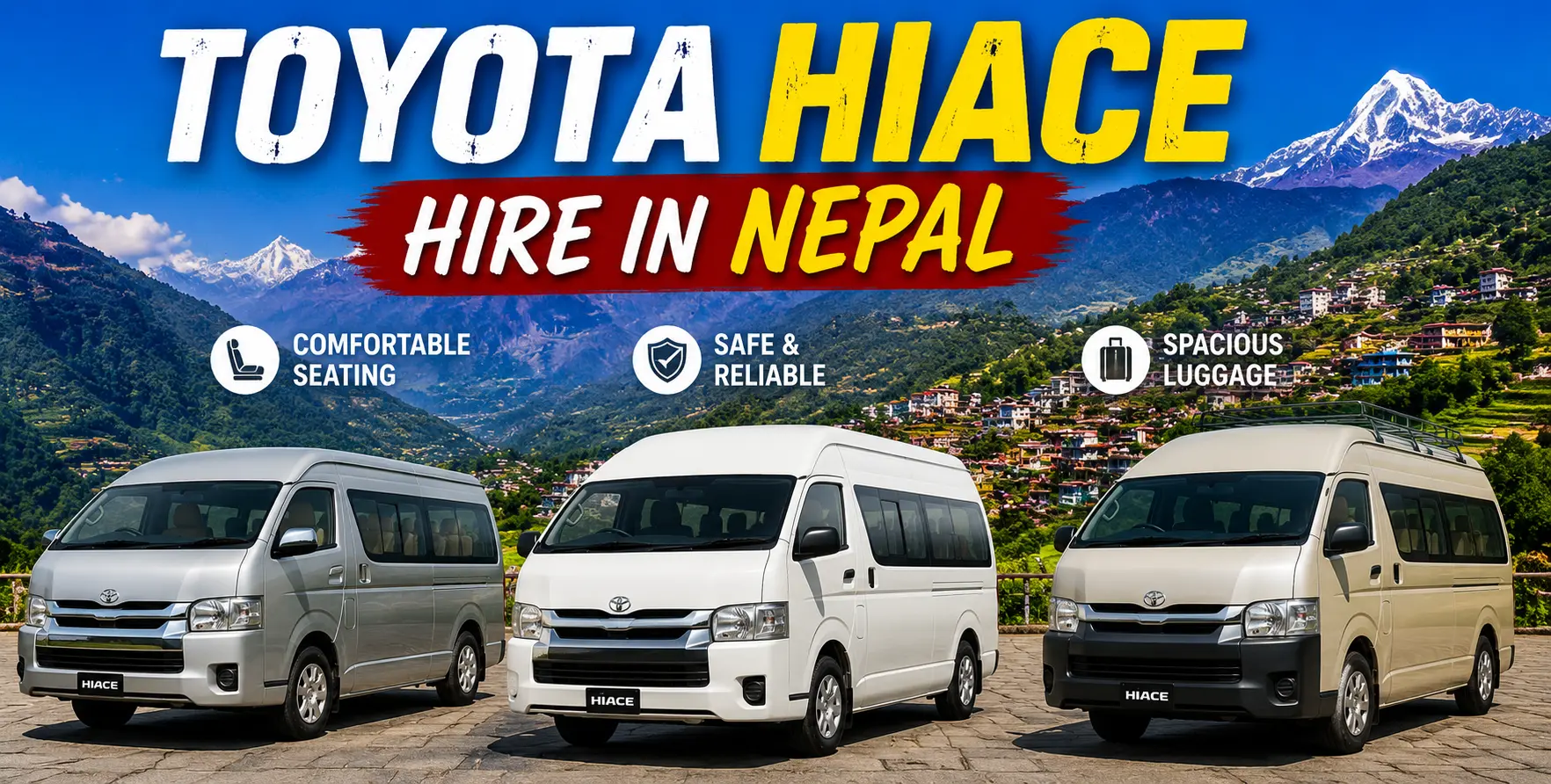
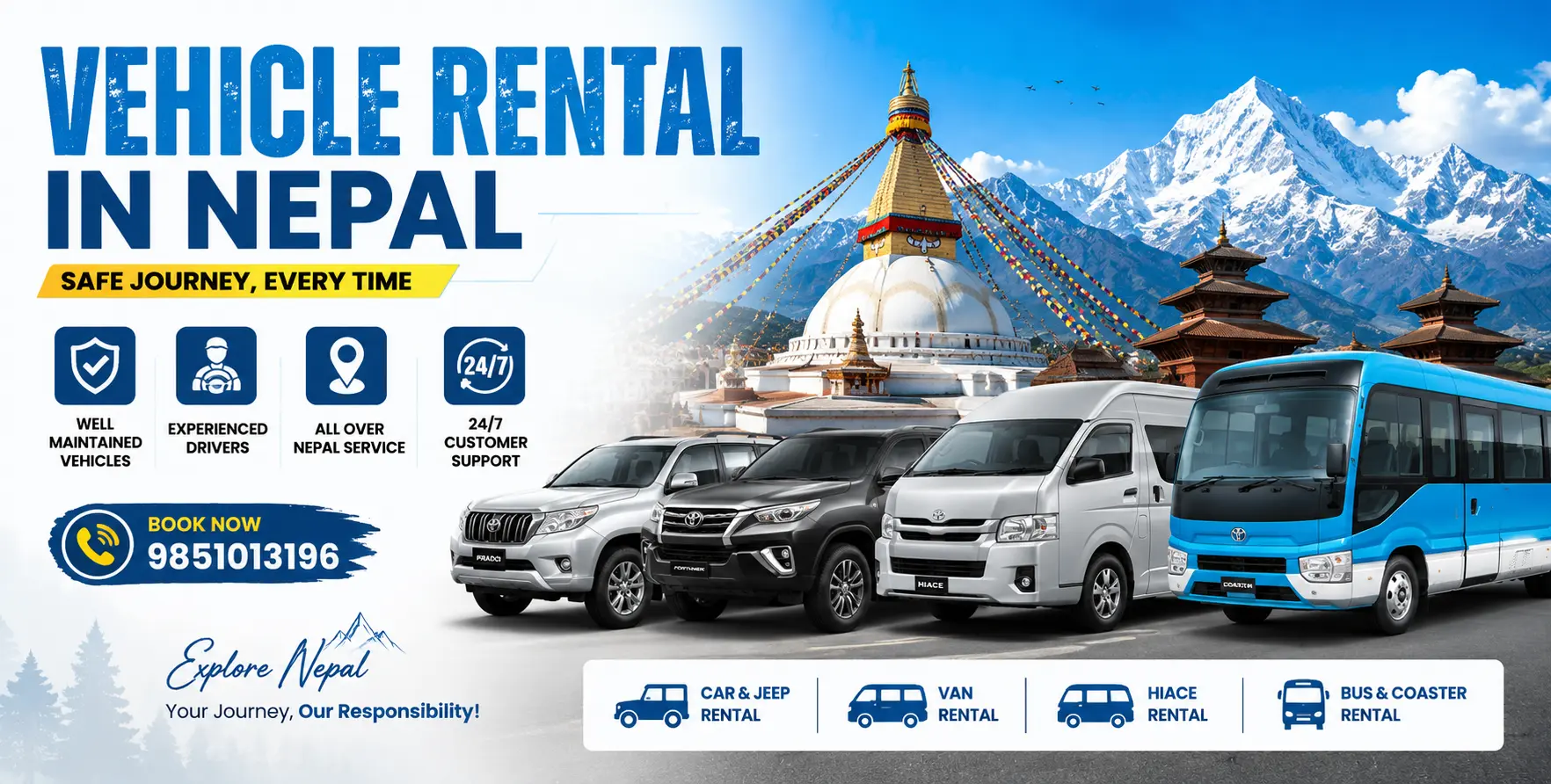
The Toyota Hiace is Nepal’s standard mid-size group vehicle, typically seating 9 to 14 passengers comfortably along with luggage, making it the natural choice for extended families, temple groups, and small tour parties who don’t want to split across multiple cars or a full-size bus. Compared to booking several individual cars or jeeps, a single Hiace keeps the group together, simplifies coordination, and is generally priced more efficiently per person than multiple smaller vehicles for groups in the 8-14 person range.
Our Hiace fleet page and alternate Hiace van hire listing cover the vehicle specifications and general booking details if you’re comparing it against other group transport options for your Muktinath trip.
Beyond simple capacity, a Hiace offers real comfort advantages for the highway portion of a long journey: proper individual or bench seating with more legroom than a cramped jeep, luggage space suited to a group’s combined bags and offerings for the temple, and — on well-maintained highway routes — a smoother, more stable ride than a rugged mountain jeep, which prioritizes off-road capability over highway comfort. For a group spending 6-7 hours on the Kathmandu-Pokhara highway alone, this comfort difference adds up meaningfully over the course of a multi-day pilgrimage.
Muktinath’s Significance for Pilgrimage Groups
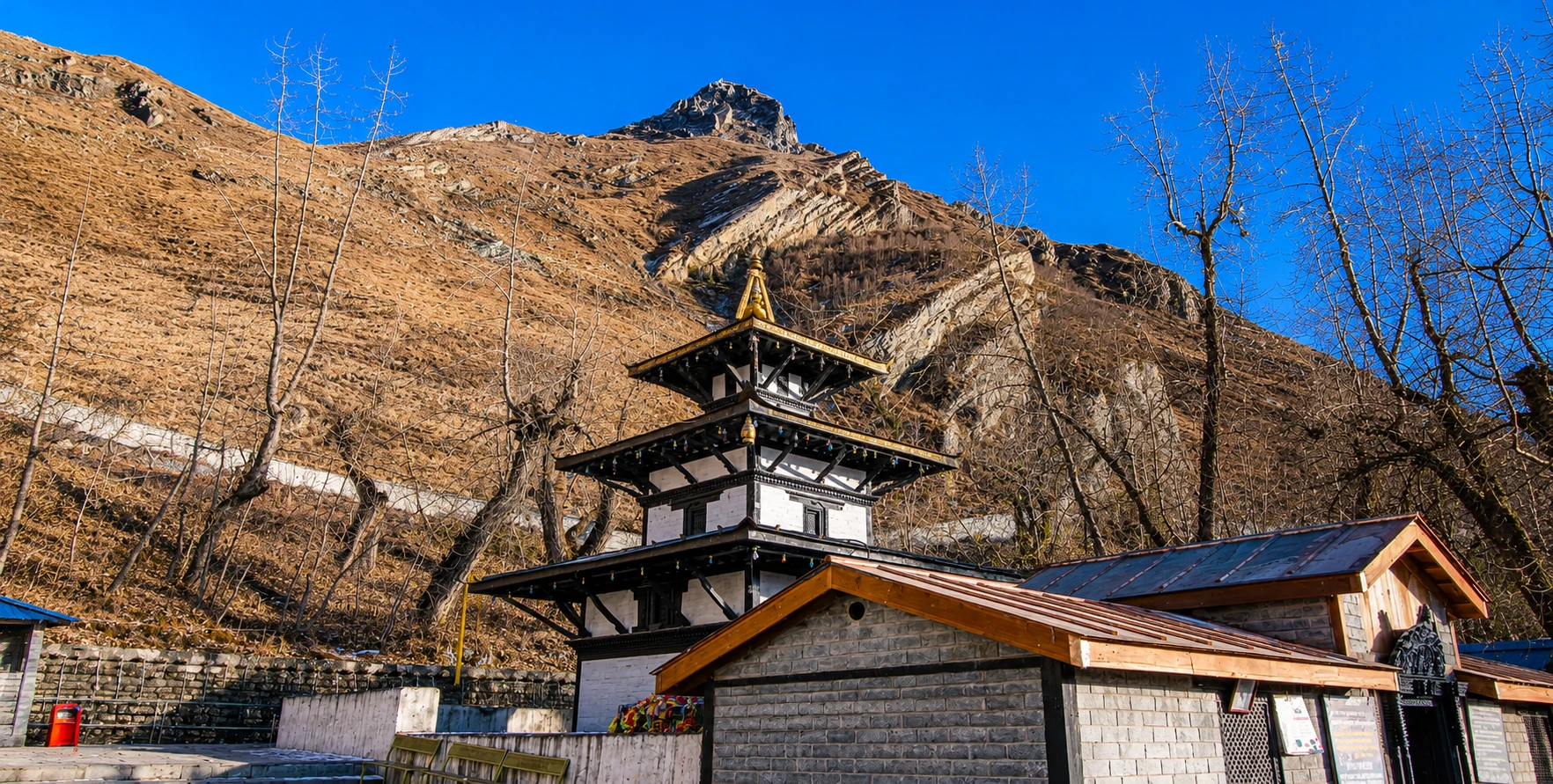
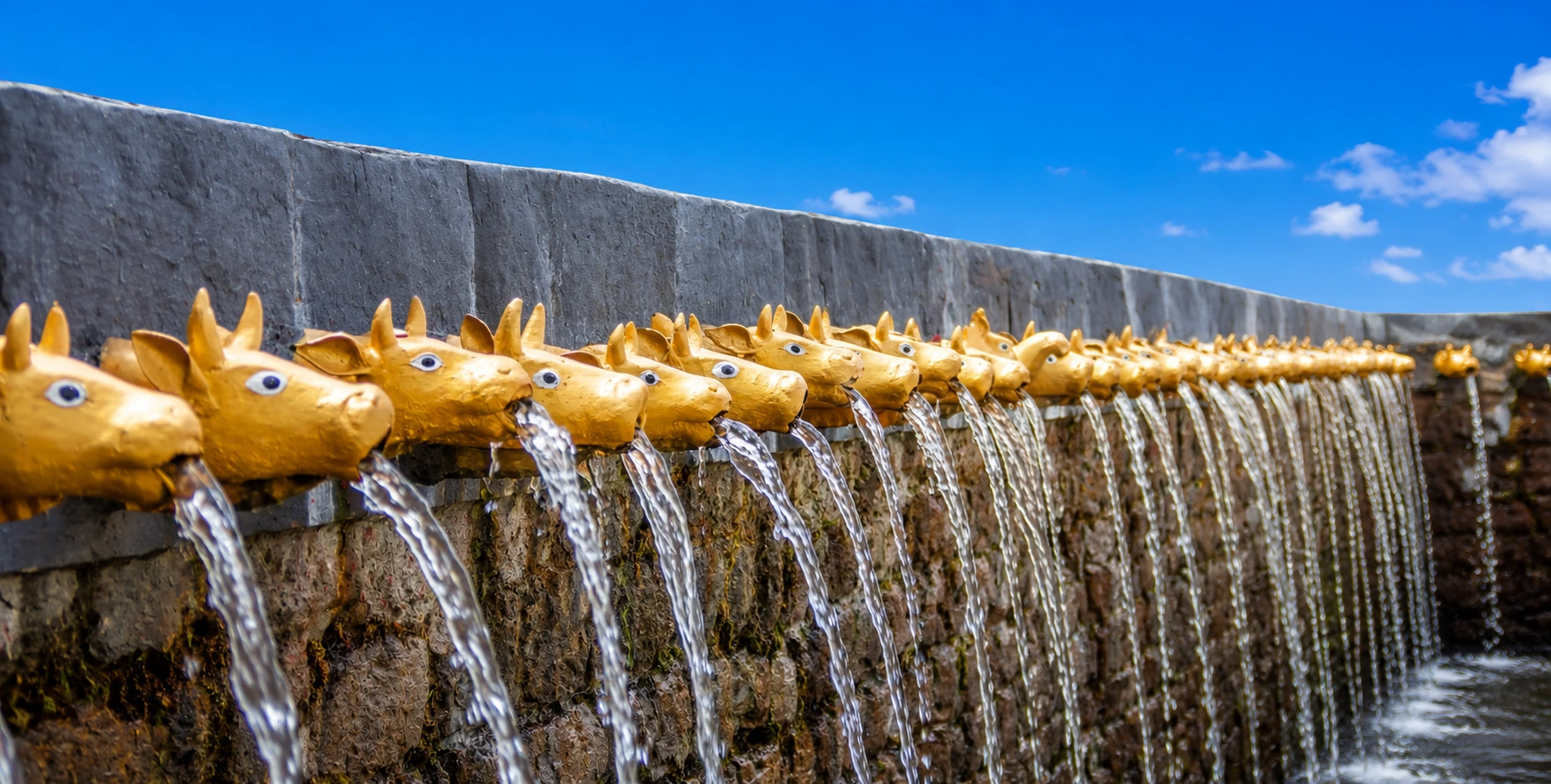
Understanding why so many groups organize dedicated pilgrimages to Muktinath helps frame the travel planning that follows. The temple is sacred to both Hindus and Buddhists simultaneously — a rare distinction shared by very few sites anywhere in the world. Hindu pilgrims know it as one of the 108 Divya Desams sacred to Vaishnavism, where bathing in the temple’s 108 stone water spouts is believed to grant moksha, liberation from the cycle of rebirth. The Jwala Mai Temple within the same complex houses a naturally occurring eternal flame, regarded by both faiths as a genuine spiritual marvel.
For Buddhists, the same site is known as Chumig Gyatsa, one of the 24 Tantric places sacred to Vajrayana Buddhism and closely associated with the great tantric master Guru Rinpoche. This dual significance is exactly why so many pilgrimage groups — temple committees, extended families marking a specific occasion, or organized religious tour groups — travel together in meaningful numbers rather than as individual travelers, and why group transport logistics matter enough to warrant a dedicated guide like this one.
The Honest Truth About Hiace vs Jeep for This Route
This is the single most important thing to understand before booking: a Hiace is built for highway and reasonably good road conditions, not the rough, high-altitude mountain tracks that define the final stretch of the journey to Muktinath. The road from Jomsom up to Ranipauwa and the temple climbs over 1,000 meters in a short distance, on a mix of paved and unpaved surfaces with sections that genuinely demand the higher ground clearance and 4WD traction of a proper mountain jeep.
Our Jomsom to Muktinath jeep rental guide covers this final leg in detail, and our broader explanation of why 4WD is best for Nepal and why a genuine 4WD jeep matters explains exactly why a vehicle like a Hiace, despite its comfort and group capacity, isn’t the right tool for that specific stretch.
The practical solution most experienced operators use — and the one this guide recommends — is a two-stage approach: a Hiace for the long, comfortable highway sections of the journey, where its size and comfort genuinely shine for a large group, followed by a switch to private jeeps for the final rough climb from Jomsom to Ranipauwa and the temple itself. This isn’t a downgrade or an inconvenience; it’s simply matching the right vehicle to each section of a route that changes character dramatically along the way.
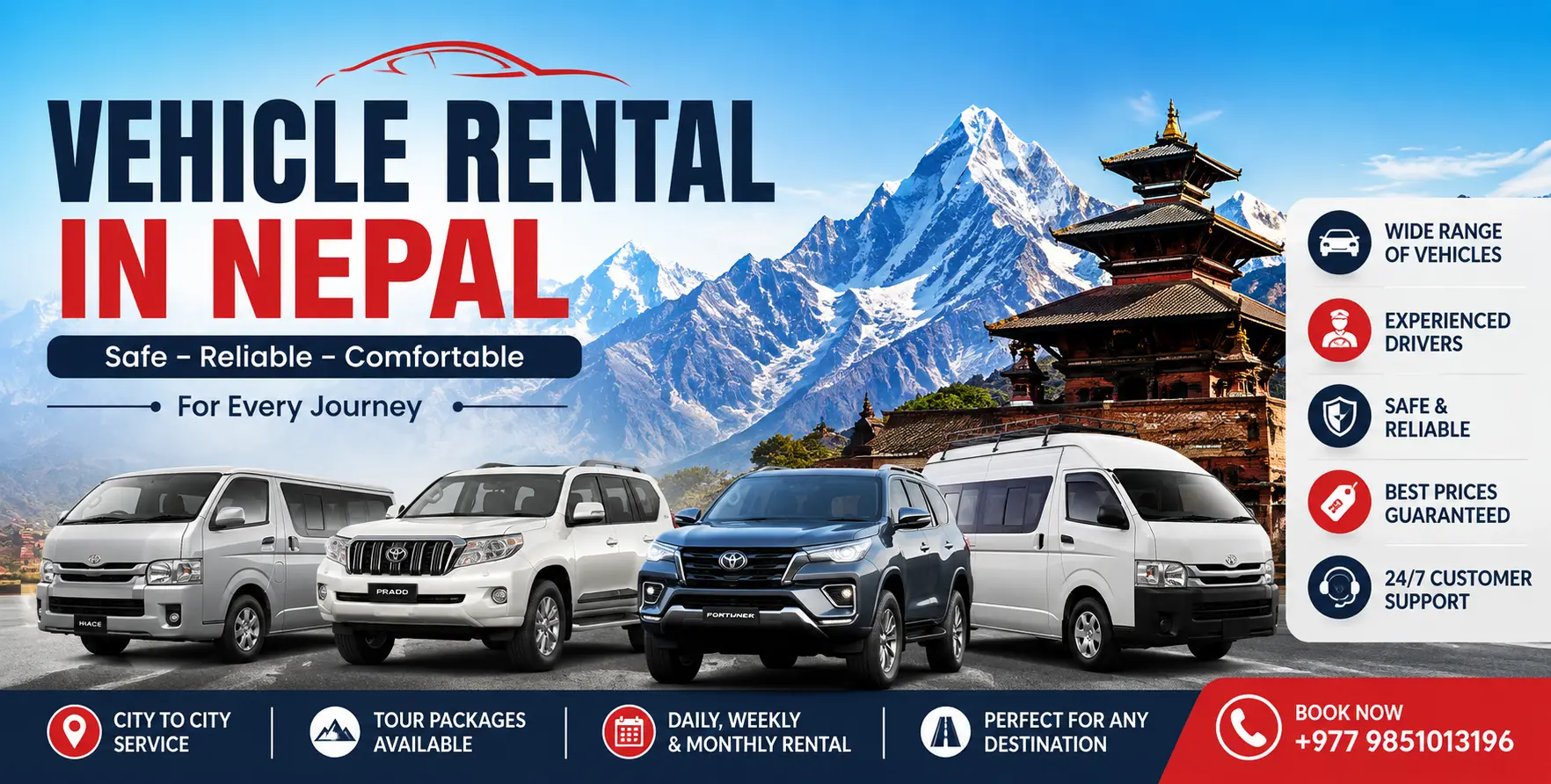
It’s worth being direct about why some operators are less forthcoming about this vehicle switch than they should be: a single-vehicle quote sounds simple. It can look cheaper on paper than a two-stage itinerary with a vehicle change built in. But attempting to push a Hiace beyond its realistic capability on genuinely rough mountain terrain risks breakdowns, delays, and a considerably less comfortable experience for your group than simply planning the switch properly from the outset. A transparent operator will explain this distinction clearly during booking rather than let a group discover it partway through the trip.
Road Conditions in Detail: Why the Switch Matters
The Kathmandu-Pokhara highway and the Pokhara-Beni stretch are both largely paved, well-maintained roads suited to a Hiace’s highway-oriented suspension and lower ground clearance. Beyond Beni, however, the road toward Jomsom climbs through the Kali Gandaki gorge on a mix of narrower, less consistently maintained surfaces, with sections still unpaved or affected by seasonal damage. The final Jomsom-to-Muktinath stretch climbs more than 1,000 meters over roughly 20-25 kilometers, on a road that, while improved in recent years, still includes rough gravel sections and grades that genuinely benefit from a 4WD vehicle’s traction and clearance.
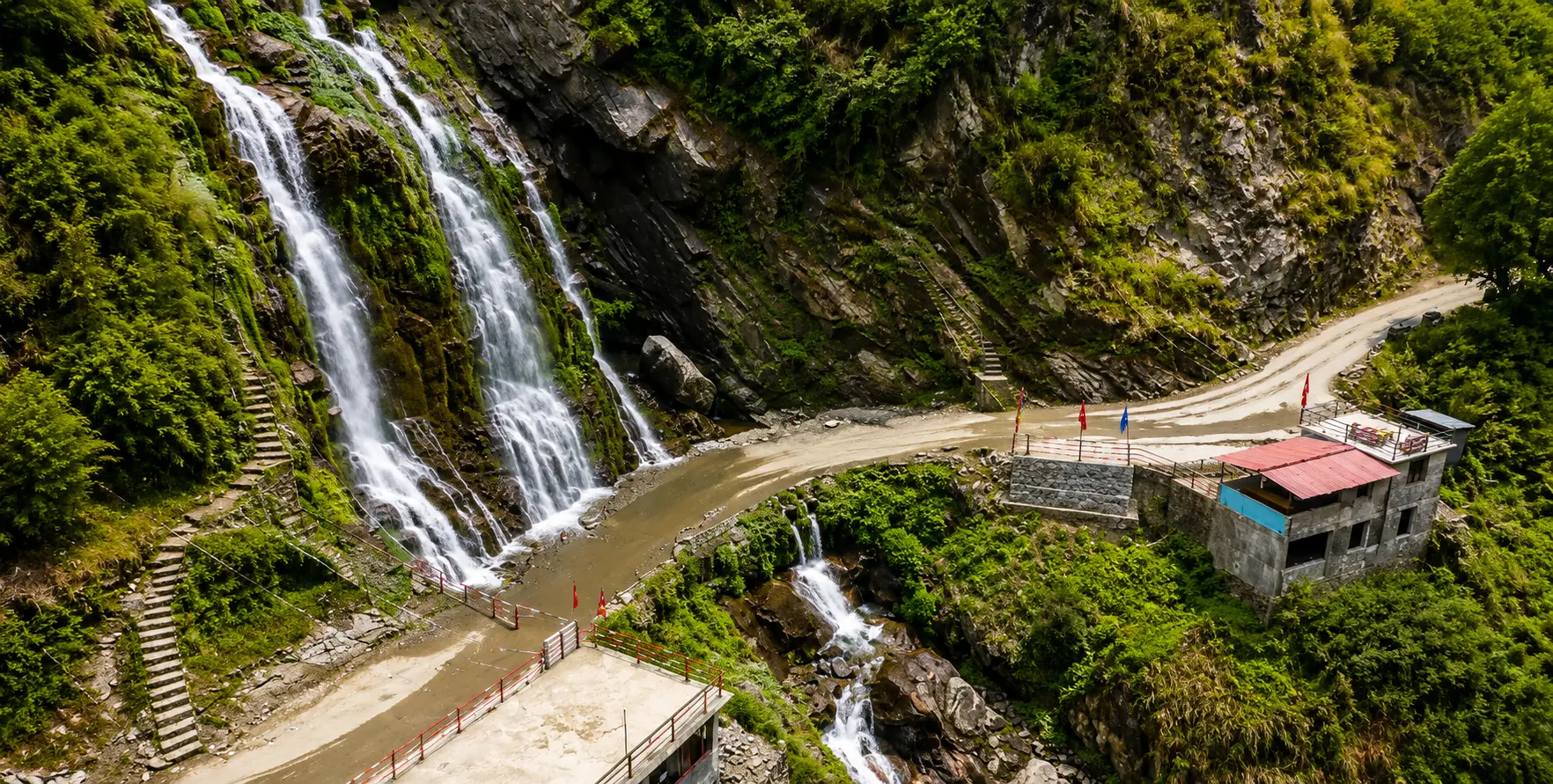
This isn’t a matter of driver skill or vehicle care — it’s a fundamental difference in what each vehicle type is engineered for. A Hiace’s lower stance and highway-tuned suspension that make it so comfortable on the Prithvi Highway are the same characteristics that make it poorly suited to a rutted, rocky mountain track, where a jeep’s higher clearance and four-wheel traction become genuinely necessary rather than simply preferable.
Where a Hiace Genuinely Excels on This Trip
- Kathmandu to Pokhara. The roughly 200-kilometer Prithvi Highway is well within Hiace territory — paved, well-traveled, and comfortable for a large group over the 6-7 hour drive. See our Kathmandu to Pokhara bus and Kathmandu to Pokhara road trip guides for route detail.
- Pokhara to Beni. A largely paved stretch suitable for a Hiace, covered in our Pokhara to Beni jeep hire page, though this route is more commonly run by jeep given what follows immediately afterward.
- Kathmandu Valley sightseeing before or after your pilgrimage. A Hiace comfortably covers Kathmandu sightseeing, Bhaktapur Durbar Square, and Kathmandu to Nagarkot vehicle hire for large groups traveling together.
- Airport transfers for large groups. A single Hiace efficiently handles a big pilgrimage group’s Kathmandu airport transfers rather than splitting across multiple cars.
Where You’ll Need to Switch to a Jeep
Beni to Jomsom and onward to Muktinath is where the road genuinely narrows, roughens, and climbs in ways a Hiace isn’t built for. This is standard mountain-jeep territory — see our Upper Mustang 4WD jeep and Kathmandu to Mustang private jeep guides for the wider regional context, and our Muktinath to Pokhara jeep page for the return leg. A large group’s Hiace typically waits in Jomsom or Beni while the group continues in multiple jeeps, then reunites with the Hiace for the return journey toward Pokhara or Kathmandu.
Planning a Group Pilgrimage: Two-Stage Vehicle Logistics
Stage 1: Hiace From Kathmandu or Pokhara
Your group travels together in comfort on the paved highway sections — Kathmandu to Pokhara via our Kathmandu to Pokhara bus route, or directly if starting from Pokhara — continuing as far as Beni or, road conditions permitting, partway toward Jomsom.
Stage 2: Jeep Transfer for the Mountain Stretch
At the point where the road becomes genuinely mountainous, the group splits into two or three jeeps (depending on group size) for the continuation to Jomsom and the final Jomsom to Muktinath jeep rental leg up to the temple. A group of 12, for example, typically splits across two to three Scorpio-class jeeps for this stretch.
Stage 3: Reuniting for the Return Journey
After visiting the temple, the group reverses the process — jeeps back down to Jomsom or Beni, then back into the Hiace for the comfortable return drive to Pokhara or Kathmandu, keeping the group together for the majority of total travel time even though the middle section required smaller vehicles.
Group Coordination Tips for the Vehicle Switch
- Appoint a single group coordinator to liaise with both the Hiace driver and the jeep drivers, avoiding confusion during the vehicle transition point.
- Agree on a clear luggage plan — what travels in the Hiace and waits at the switch point versus what each traveler carries into the jeep.s
- Confirm in advance exactly where the switch happens (typically Beni or a point along the Beni-Jomsom road) so the group knows what to expect.ct
- Build a buffer into your schedule around the switch itself, since coordinating a dozen or more people between vehicles takes longer than a quick transfer for two or three travelers.
- Keep essential items — medication, warm layers, permits — with each individual rather than packed away in shared luggage during the switch.h
Sample 5-Day Group Itinerary
Day 1: Hiace departs Kathmandu early morning, arriving in Pokhara by evening via the Prithvi Highway.
Day 2: Hiace continues from Pokhara toward Beni; group transfers to private jeeps for the continuation to Jomsom, arriving by evening.
Day 3: Jeep transfer from Jomsom to Ranipauwa and Muktinath Temple, with time for darshan and exploring Kagbeni on the return to Jomsom.
Day 4: Jeeps return the group from Jomsom to Beni, reuniting with the waiting Hiace for the drive back toward Pokhara.
Day 5: Hiace continues from Pokhara back to Kathmandu, or the group extends their stay in Pokhara for additional sightseeing.
This can be compressed to 4 days for groups flying between Pokhara and Jomsom rather than driving the full overland route, or extended to 6-7 days for groups wanting additional time in Pokhara or combining the trip with other Annapurna region destinations.
Cost Considerations for Group Hiace and Jeep Combinations
Budgeting for this kind of two-stage trip means accounting for both vehicle types across the itinerary: the Hiace charter for the highway sections, plus separate jeep charters for the mountain stretch, rather than a single flat vehicle cost. For larger groups, this combination is still generally more cost-effective per person than attempting to fit everyone into individual cars for the entire journey, since the Hiace efficiently covers the long, easy highway dis. At the same time, jeeps are only needed for the shorter, rougher mountain sections. Confirm both vehicle costs together when booking, since coordinating a single operator to arrange both stages tends to be simpler and more reliable than arranging them separately.
As a rough itemized picture: the Hiace charter typically covers the Kathmandu-Pokhara-Beni stretch as one continuous cost, priced per vehicle rather than per passenger, which is where the real per-person savings show up for a group of 9 to 14 compared to booking multiple smaller cars for the same distance. The jeep stage from Beni or Jomsom up to Muktinath and back is priced separately, split across two to three vehicles depending on group size, with each jeep typically carrying up to six passengers. Add ACAP permit fees per person, accommodation in Ranipauwa or Jomsom for the group, and meals, and you have the full picture of what a group pilgrimage costs beyond the base vehicle charters.
Hiace vs Bus or Coaster for Very Large Groups
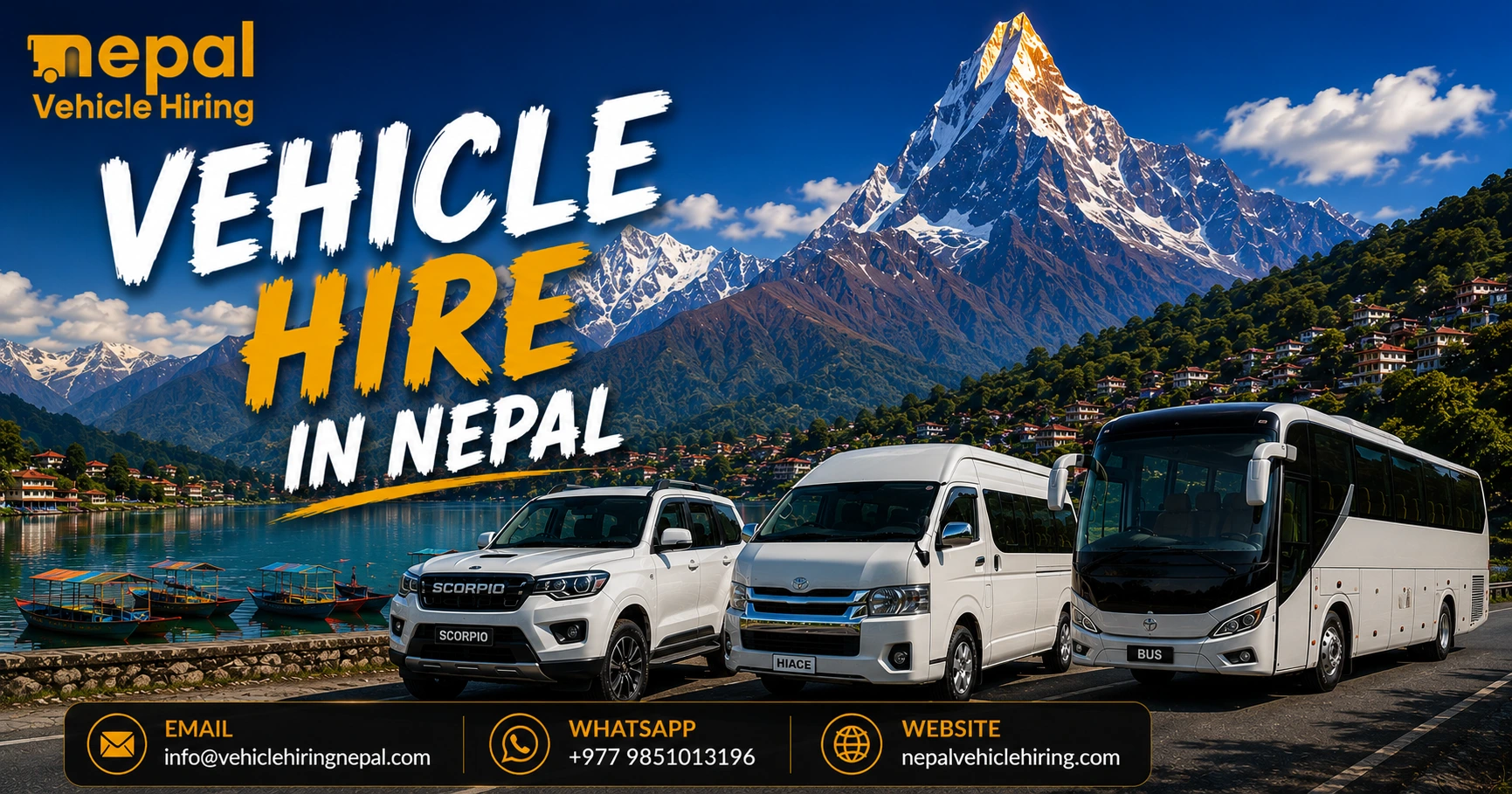
For groups larger than roughly 14 people, a single Hiace no longer comfortably fits everyone, and it’s worth considering our coaster and tourist bus hire or full bus options instead for the highway stretch, before splitting into a correspondingly larger jeep fleet for the mountain section. A coaster typically seats 25-30 passengers, making it the practical choice for larger temple groups or community pilgrimages, while still following the same two-stage logic — highway vehicle for the easy stretch, jeeps for the climb to Muktinath. Our tourist bus hire in Nepal page covers the full range of group vehicle sizes if a Hiace turns out to be too small for your specific group.
Safety Considerations for Group Pilgrimage Travel
- Confirm every vehicle in your convoy — Hiace and jeeps alike — is operated by an experienced driver familiar with the specific route, not just a general highway driver.
- Keep the group informed of the itinerary and vehicle-switch plan in advance, reducing confusion and stress during the actual transition.n
- Carry a basic group first-aid kit and ensure at least one member of the group is aware of the nearest medical facilities along the route.
- Avoid overloading any single vehicle beyond its comfortable passenger capacity, even under pressure to keep the group together in fewer vehicles.les
- Register your group’s travel dates and itinerary with your booking agency so someone outside the group knows your planned schedule, particularly useful during monsoon or winter travel.
Common Mistakes Groups Make When Planning This Trip
- Assuming a single Hiace can complete the entire journey without a jeep switch, then discovering the limitation partway through the trip.
- Underestimating how much longer group coordination takes at the vehicle-switch point compared to a solo or small-family transfer
- Booking accommodation for a large group too late, only to find Ranipauwa or Jomsom guesthouses already full during peak season
- Not confirming ACAP permits for every group member individually well before departure.e
- Choosing the cheapest available quote without asking directly whether it includes both the Hiace and jeep stages, or only one
Weather and Seasonal Considerations for Group Travel
Group logistics make weather-related delays considerably more disruptive than for a solo traveler or small family, simply because rebooking accommodation, meals, and onward transport for a dozen or more people takes longer and involves more moving parts. This is another strong argument for favoring autumn or spring travel for group pilgrimages specifically, since these seasons offer the most predictable road and flight conditions for both stages of the journey. If your group must travel during a less predictable season, build extra buffer days into the itinerary from the outset rather than assuming everything will run exactly on schedule.
Choosing a Reliable Operator for Group Travel
- Confirm the operator directly owns or has a stable, long-term working relationship with both the Hiace and the jeep fleet, rather than subcontracting on the fly.y
- Ask for the operator’s experience specifically with group pilgrimage logistics, not just general tour transport. r.t
- Request a clear, itemized quote covering both vehicle stages, permits, and any accommodation coordination included in the .package
- Check whether the operator provides a dedicated point of contact for your group throughout the trip, useful if plans need to shift due to weather or other delays.
- Ask about their contingency plan if a jeep breaks down or a guesthouse booking falls through during peak seaPeakon.ak season.
Group Booking and Pricing Considerations
Larger groups generally have more negotiating room on per-person pricing than small families, simply because the fixed costs of coordinating vehicles and accommodation spread across more travelers. That said, group pricing works best when the group size and composition are confirmed early and don’t shift significantly close to departure, since vehicle and accommodation bookings for a dozen or more people are harder to adjust on short notice than for two or three travelers. Confirm your final headcount with your operator well ahead of the trip, and clarify how any late additions or cancellations to the group are handled in terms of cost.
Documenting Your Group Pilgrimage
Many pilgrimage groups want to properly document the trip, both for personal memory and to share with family members who couldn’t join. The drive between Beni and Jomsom offers genuinely striking Kali Gandaki gorge scenery, and Muktinath itself, with its 108 water spouts and prayer flag-draped courtyard, is a natural focal point for group photography. Build a little extra time into your temple visit specifically for group photos, since a large group inevitably takes longer to organize for a photo than an individual or couple, and the temple can be quite busy during peak pilgrimage periods.
Extending Your Group Trip Into Upper Mustang
Some larger, more adventurous pilgrimage groups extend their trip beyond Muktinath into Upper Mustang. However,lf, though this adds meaningful complexity: Upper Mustang requires a separate Restricted Area Permit for every group member, a mandatory licensed guide, and exclusively jeep-based transport beyond Kagbeni — a Hiace has no role at all in the restricted zone. Our full jeep rental for Mustang tour guide covers this extension in complete detail, including the significant 2026 permit reform that’s made shorter group trips into the restricted zone considerably more affordable than before.
Hiace Vehicle Specifications and What to Expect
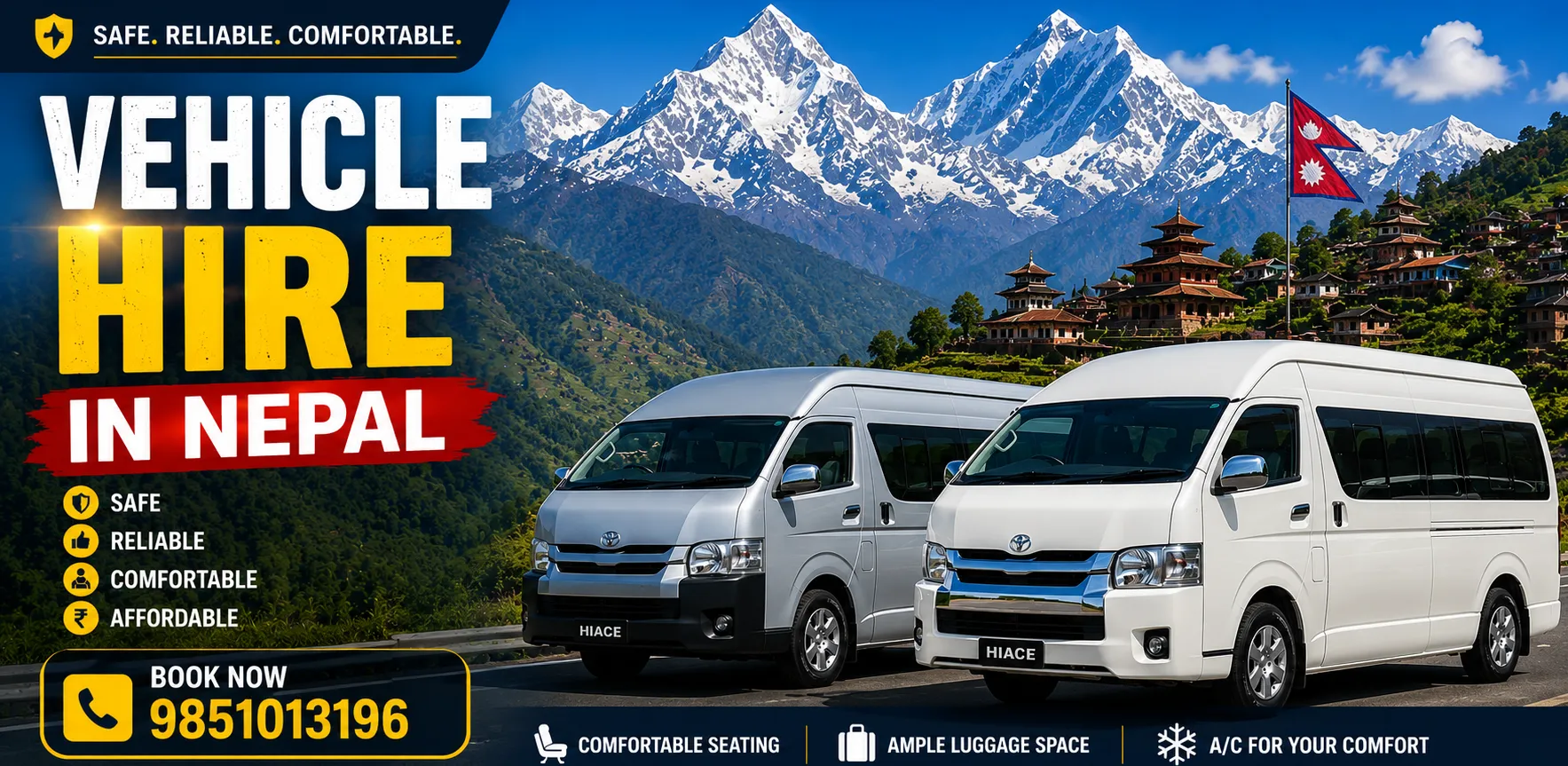
A typical Hiace rental fleet in Nepal includes both standard and higher-roof configurations, with seating capacity generally between 9 and 14 depending on the specific model and layout. Air conditioning is standard on most rental Hiace vans used for tourist and group transport, along with reasonably comfortable cloth or leather-style seating and adequate luggage space either in a rear compartment or a roof rack for larger group loads. Drivers assigned to Hiace group charters are typically experienced with highway routes specifically, distinct from the mountain-specialist drivers assigned to the jeep stage of a Muktinath group trip — another reason the two-stage approach makes practical sense, since each driver operates within their area of genuine expertise.
Preparing Your Group Before Departure
- Hold a pre-departure briefing with the full group covering the itinerary, the vehicle-switch plan, and what to expect at each stage
- Distribute a simple packing list in advance so the whole group arrives similarly prepared for the altitude and mountain conditions.
- Confirm dietary requirements or restrictions with your operator ahead of time if meals are being arranged as part of the package.e
- Share emergency contact information among group members and with your operator before departure.
- Confirm each group member has their required documents — passport, permit paperwork, and any personal medications — organized and accessible rather than packed away.
Communication and Language Considerations for Groups
Most drivers and guides working with international tour operators speak functional English. Still, larger groups with members who speak different languages should confirm this directly with their operator ahead of time, particularly if part of the group is more comfortable in Nepali, Hindi, or another regional language given the religious nature of many Muktinath pilgrimages. Having at least one bilingual group member or a driver comfortable in the group’s preferred language smooths coordination considerably, especially during the vehicle-switch point and any unexpected schedule changes along the route.
Budget Planning Timeline for Group Organizers
For group organizers managing collections or contributions toward a shared pilgrimage cost, it helps to have firm vehicle and permit pricing locked in early, since these figures form the basis for what each family or individual needs to contribute. Request a written quote covering both the Hiace and jeep stages, permits, and any bundled accommodation well before collecting funds from group members, and build in the modest contingency discussed earlier in this guide so the group isn’t caught short if minor costs shift between booking and departure.
A breakdown mid-journey is a manageable inconvenience for a solo traveler or small family, but a genuine logistical problem for a group of a dozen or more, particularly on the more remote stretches beyond Beni where roadside assistance isn’t readily available. Ask your operator directly about their vehicle maintenance standards and the age of the specific Hiace and jeeps assigned to your booking, rather than assuming all vehicles in a fleet are equally well maintained. A reputable operator services vehicles regularly ahead of the autumn and spring peak seasons specifically because of the added demands of group charter work over these busy months.
Insurance and Liability for Group Bookings
Confirm that both the Hiace and jeep stages of your trip are covered by appropriate vehicle insurance through your operator, and separately, that your group has personal travel insurance covering medical evacuation given the altitude and remoteness involved in reaching Muktinath. These are two distinct types of coverage — vehicle insurance protects against accidents or vehicle issues. In contrast, personal travel insurance protects individual group members in case of illness, injury, or the need for emergency evacuation from a remote part of the route. Confirm both are in place well before departure rather than assuming either is automatically included.
Traveling as a large group brings its own dynamic worth planning for honestly: different members will have different paces, different comfort levels with altitude and cold, and different priorities for how much time to spend at each stop. Building some flexibility into your itinerary — rather than a rigid, minute-by-minute schedule — tends to make for a more relaxed group experience, particularly during the temple visit itself, where different members may want more or less time for prayer, photography, or simply taking in the setting. A good group coordinator holds the overall schedule loosely enough to accommodate this natural variation while still keeping the group moving together for the vehicle transitions that do require tighter coordination.
Frequently Confused Terms for Group Planning
A few terms are worth clarifying for group organizers new to this kind of trip: a Hiace charter refers to hiring the entire vehicle for your group’s exclusive use, distinct from a shared seat booking where individual seats are sold to unrelated passengers. A jeep charter follows the same logic — your group has exclusive use of each vehicle rather than sharing seats with strangers. ACAP refers to the base conservation area permit required for the whole Muktinath region, while RAP (Restricted Area Permit) only applies if your group extends into Upper Mustang specifically. Keeping these distinctions clear when requesting quotes helps ensure you’re comparing genuinely equivalent options between operators.
It’s also worth clarifying the difference between a ‘group tour’ package, where an operator bundles vehicles, permits, guide, and accommodation into a single fixed itinerary, and a ‘group transport’ arrangement, where you’re simply booking the Hiace and jeeps while managing accommodation and other logistics yourself. Both are valid approaches depending on how much your group wants handled on your behalf versus arranged independently, and clarifying which model you’re booking avoids confusion about what’s included in your quoted price.
Comparing Group Pilgrimage Logistics to Individual Travel
It’s worth understanding how group logistics genuinely differ from a solo or small-family Muktinath trip, since the difference goes beyond simply needing a bigger vehicle. Accommodation booking shifts from a same-day or short-notice arrangement to something requiring real planning, since Ranipauwa and Jomsom’s limited guesthouse stock can’t always absorb a dozen or more unplanned arrivals. Meal coordination at teahouses along the route becomes a group logistics question rather than an individual choice, since larger parties often need advance notice for a kitchen to prepare food for that many people at once. And the vehicle-switch point itself, covered extensively above, transforms from a five-minute transfer for two people into a genuine logistical event requiring a coordinator, a luggage plan, and realistic time budgeting.
None of this makes group travel to Muktinath more difficult in any fundamental sense — it simply means the planning process benefits from more structure and earlier decision-making than an individual traveler might need. Groups that build this structure in from the start, rather than assuming everything will sort itself out informally along the way, consistently report a smoother, more enjoyable pilgrimage experience. This is ultimately the difference between a group trip that runs smoothly in the background, leaving everyone free to focus on the pilgrimage itself, and one where logistics dominate the conversation for the whole journey.
Permits Required for the Group
Every member of your group needs a valid ACAP (Annapurna Conservation Area Permit) for the Muktinath region, regardless of group size or vehicle type. Our ACAP permit guide covers exactly where to obtain this in Kathmandu or Pokhara before departure, and our broader Annapurna Conservation Area guide covers the wider conservation area context. For larger groups, arranging permits together through a single booking simplifies the process considerably compared to individual applications.
Best Time for a Group Pilgrimage
Autumn (September to November) and spring (March to May) remain the most reliable windows for group travel, offering the most stable road conditions for both the Hiace and jeep stages of the journey. Our full best time to visit Muktinath guide covers the complete seasonal breakdown, including festival dates like Ram Navami and Janai Purnima that many pilgrimage groups specifically plan around. Group trips benefit especially from avoiding monsoon season, given how much harder weather-related delays are to manage when coordinating a dozen or more travelers rather than a single family.
Accommodation for Large Groups
Ranipauwa and Jomsom both offer guesthouse accommodation, though room availability for large groups requires more planning than a small family trip. Groups of 10 or more should confirm room blocks well ahead of travel, particularly during peak autumn and spring windows or around major festival dates, when the limited guesthouse stock in both villages fills quickly. Some larger pilgrimage groups split across two or three guesthouses rather than expecting a single property to accommodate everyone, which your booking agency or driver can help coordinate.
Choosing Your Jeep Fleet for the Mountain Stage
For the Jomsom-to-Muktinath stretch, a Scorpio jeep hire is the standard, reliable choice, typically seating up to six passengers per vehicle. Groups wanting extra comfort on this stretch can consider a Toyota Land Cruiser 4WD hire for part of the group. Our jeep and SUV comparison and SUV rental in Nepal guide cover these options if you’re deciding how to split a larger group across multiple vehicles for this leg.
What to Pack for a Group Pilgrimage
- Warm, layered clothing for the whole group, given the altitude swing between Jomsom, Ranipauwa, and Muktinath itself
- A group first-aid kit alongside any personal medications, since medical facilities become more limited beyond Jomsom
- Sufficient cash in Nepali rupees for the group, since card and ATM access is unreliable beyond Jomsom
- Comfortable walking shoes for the short uphill stretch from Ranipauwa to the temple
- A designated group coordinator’s contact list for drivers, guesthouses, and the temple visit schedule, to keep a larger group organized across the vehicle switch
Altitude Considerations for Groups
Muktinath’s roughly 3,710-meter elevation means basic altitude awareness matters for the whole group, particularly older members or anyone with underlying health conditions. Build a relaxed pace into your Ranipauwa arrival rather than rushing straight to the temple, ensure the group stays hydrated throughout, and have your group coordinator watch for any member showing signs of altitude discomfort — mild headache, nausea, or unusual fatigue — so the group can adjust pacing accordingly rather than pushing through.
Groups traveling with a wide age range — common for extended family pilgrimages spanning grandparents to young adults — should plan the pace of the trip around the group’s least altitude-adapted members rather than the fittest. This might mean an extra rest stop in Jomsom before continuing to Ranipauwa, or simply allowing more time than a younger, more athletic group might need for the same itinerary. There’s no meaningful time pressure once you’ve committed to the multi-day structure covered in this guide, so a slightly slower pace costs little while meaningfully reducing discomfort for less altitude-adapted travelers.
Planning Around Special Occasions and Group Milestones
Many Hiace-and-jeep group bookings for Muktinath are tied to a specific occasion — a family milestone, a memorial pilgrimage, or a temple committee’s annual trip. If your group’s visit is tied to a particular date, whether a family anniversary or a specific auspicious day on the Hindu lunar calendar, confirm that date’s availability with your operator well in advance, since popular dates can coincide with broader seasonal demand from other pilgrimage groups, tightening both vehicle and accommodation availability further. Our best time to visit Muktinath guide covers the wider festival calendar in detail if your group’s trip isn’t tied to a fixed date and has flexibility to time itself around Ram Navami, Janai Purnima, or another significant pilgrimage window.
Combining Your Muktinath Pilgrimage With Other Destinations
Many pilgrimage groups extend their trip beyond Muktinath itself. Some continue into Upper Mustang for a fuller regional experience, covered in our jeep rental for Mustang tour guide. Others combine the trip with Kathmandu Valley heritage sites via our Nepal UNESCO World Heritage Sites guide or a stop at Kathmandu’s historical heritage sites, or extend into Pokhara-area sightseeing with a stop at Sarangkot before heading home.
Return Options After the Pilgrimage
Most groups retrace their route back through Jomsom and Beni to reunite with the waiting Hiace, but a few alternate return options are worth knowing about. Some groups choose to fly part of the party back from Jomsom to Pokhara while the rest continue overland with the Hiace, useful if certain members have earlier onward travel commitments. Others extend the return journey with a stop in Pokhara for group sightseeing — a boat trip on Phewa Lake, a visit to Sarangkot for sunrise views, or simply a relaxed day before the final Hiace leg back to Kathmandu — turning the return journey into an extension of the trip rather than simply the way home.
Explore More Nepal Routes, Tours, and Vehicles
Whatever combination of vehicles your Muktinath pilgrimage ends up using, here’s a fuller map of the routes, tours, and vehicle options we cover, in case your group’s trip extends further across Nepal. Very few groups treat Muktinath as a fully isolated destination — most weave it into a longer itinerary covering the wider Annapurna region, Kathmandu Valley heritage sites, or beyond. The resources below cover most of the natural extensions for a larger traveling party.
Mustang, Muktinath, and Annapurna Region
See Upper Mustang 4WD jeep, our jeep rental for Mustang tour guide, places to visit in Mustang, Kathmandu to Mustang private jeep, Pokhara to Beni jeep hire, Muktinath to Pokhara jeep, our Jomsom to Muktinath jeep rental guide, our best time to visit Muktinath guide, the ACAP permit guide, and the Annapurna Conservation Area overview.
Annapurna Circuit and Trekking Approaches
See Pokhara to Manang transport, Manang to Kathmandu private jeep hire, Kathmandu to Manang jeep, Besisahar to Chame and Upper Pisang, why Dharapani is the Annapurna Circuit’s most popular starting point, Kathmandu to Ghandruk private jeep hire, Pokhara to Ghandruk jeep, Pokhara to Sikles jeep rental, Pokhara to Nayapul transportation, the Everest Base Camp trek, and our general trekking services.
Kathmandu and Pokhara Group Transport
See Kathmandu to Pokhara bus tickets, Kathmandu to Pokhara bus ticket, Pokhara to Kathmandu bus, Kathmandu to Pokhara road trip, Kathmandu to Pokhara vehicle rental, Kathmandu to Pokhara private Scorpio, our Pokhara bus ticket price guide, VIP Sofa Bus hire in Nepal, Kathmandu to Pokhara VIP Sofa Bus, tourist bus hire in Nepal, and coaster and tourist bus hire for even larger groups.
Kathmandu Valley Sightseeing
Round out your group’s trip with Kathmandu sightseeing, Kathmandu’s historical heritage sites, our Nepal UNESCO World Heritage Sites guide, Bhaktapur Durbar Square, Kathmandu to Nagarkot vehicle hire, the Nagarkot sunrise tour, and reliable Kathmandu airport transfers. If your group is staying in Thamel, see our Thamel to airport private vehicle hire guide or airport pickup to Thamel and hotel drop guide, and if staying in Patan instead, see our airport to Patan private vehicle drop guide.
Chitwan, Lumbini, and the Terai
Extend your group’s trip with Pokhara to Chitwan bus, Chitwan to Kathmandu bus, our Chitwan VIP bus ticket price guide, Kathmandu to Chitwan VIP Sofa Bus Ticket, Kathmandu to Chitwan luxury car hire, Kathmandu to Lumbini bus, Lumbini to Kathmandu bus, eastern border vehicle hire, Chitwan to Birgunj border transport, and Janakpur airport transfer service.
Vehicle Fleet and Resources
Compare our full fleet: car, jeep, Hiace, bus, coaster, car hire in Nepal, car hire in Pokhara, our alternate Hiace van hire listing, our why 4WD is best for Nepal guide, why private vehicle hire is the smartest way to travel Nepal, why a genuine 4WD jeep matters, and our ultimate Nepal vehicle rental guide.
Plan and Learn More
Use our plan your trip tool, browse our Nepal tour package options, learn more about us, read our luxury trek vehicle hire guide, or browse our blog for further route guides across the country.
Why Book With Nepal Vehicle Hiring Pvt Ltd
We coordinate exactly this kind of two-stage group pilgrimage regularly — a comfortable Hiace for the highway stretch, and well-maintained jeeps for the mountain climb to Muktinath, all arranged through a single booking so your group doesn’t need to manage two separate vehicle contracts. Every booking includes transparent pricing agreed before departure, experienced drivers on both vehicle types, and coordination between the two stages so your group’s transition from Hiace to jeep happens smoothly.
Beyond the vehicles themselves, we understand that a group pilgrimage carries a different kind of importance than a standard sightseeing trip — the logistics need to work smoothly enough that they fade into the background, leaving your group free to focus on the religious and cultural significance of the journey rather than transport arrangements. That’s the standard we hold every group booking to, whether it’s a family of nine or a full temple committee of thirty.
Reach out through our contact page to start planning your group’s Muktinath pilgrimage, whether you’re a family of ten or a full temple committee group.
Off-Season Group Travel: Special Considerations
Some pilgrimage groups have little flexibility around dates, tied instead to a specific religious occasion or annual tradition, meaning off-season travel is sometimes unavoidable. If your group must travel during monsoon or winter, adjust expectations rather than the fundamentals: build in longer buffer periods around both the Hiace and jeep stages, confirm your operator has genuine experience running trips in the specific off-season month you’re traveling, and communicate clearly with the group in advance that delays are more likely than during peak season. Groups that go in with realistic expectations for off-season travel report far less frustration than those expecting peak-season reliability during a genuinely more difficult travel window.
Winter group trips in particular benefit from extra attention to cold-weather logistics — not just personal clothing, but confirming heated accommodation is available for the whole group in Ranipauwa or Jomsom, since capacity for heated rooms can be more limited than general room availability during the coldest months.
Sustainability and Group Impact on the Region
A group of a dozen or more travelers has a noticeably larger footprint on Ranipauwa and Jomsom’s small-scale local infrastructure than an individual traveler, which is worth factoring into responsible planning. Choose accommodation and meal providers that distribute your group’s spending across multiple local businesses where practical rather than concentrating everything in one place, pack out any waste your group generates given the region’s limited waste infrastructure, and be mindful of water usage in a high-desert region where it’s a genuine resource. These small considerations matter more at group scale than for an individual traveler, and thoughtful group organizers increasingly factor this into their planning alongside the more immediate logistics of vehicles and permits.
A Final Word on Group Pilgrimage Planning
The core idea running through this entire guide is straightforward: a Hiace is genuinely the right vehicle for a large group’s Muktinath pilgrimage, but only for the portion of the journey it’s actually built for. Trying to stretch it across the entire route, including the rough mountain climb to the temple itself, sets your group up for a harder, less comfortable trip than necessary. Planning the vehicle switch properly from the outset — Hiace for the highway, jeeps for the mountain — gives your group the comfort of traveling together on the easy stretches and the safety and capability of a proper 4WD exactly where the terrain demands it.
With that structure in place, a group pilgrimage to one of the Himalayas’ most remarkable shared religious sites becomes a genuinely manageable, well-organized trip rather than a logistical headache — leaving your group free to focus on the pilgrimage itself rather than the mechanics of getting there.
Whether your group is a close-knit family marking a specific occasion, a temple committee’s annual tradition, or a broader community pilgrimage, the same underlying principle applies: plan for the vehicle switch honestly from the start, book accommodation and permits early given the group’s larger footprint on limited local infrastructure, and choose an operator willing to explain the realistic logistics rather than promise a simpler-sounding single-vehicle trip that the mountain terrain won’t support. Get that foundation right, and everything else about the journey — the comfort of traveling together, the shared experience of reaching Muktinath as a group, and the pilgrimage itself — tends to fall into place.
Vehicle Maintenance and Reliability for Group Trips
A breakdown mid-journey is a manageable inconvenience for a solo traveler or small family, but a genuine logistical problem for a group of a dozen or more, particularly on the more remote stretches beyond Beni where roadside assistance isn’t readily available. Ask your operator directly about their vehicle maintenance standards and the age of the specific Hiace and jeeps assigned to your booking, rather than assuming all vehicles in a fleet are equally well maintained. A reputable operator services vehicles regularly ahead of the autumn and spring peak seasons specifically because of the added demands of group charter work over these busy months.
It’s reasonable to ask a prospective operator directly how they’d handle a breakdown scenario for your group specifically — whether they maintain backup vehicles on standby during peak season, how quickly a replacement could reach your group’s location along the route, and whether this kind of contingency is factored into their standard pricing or would involve additional cost. An operator with a clear, confident answer to these questions is generally a safer choice for group bookings than one who hasn’t considered the scenario at all.
What Makes This Route Different From Other Group Pilgrimages
Nepal has several other significant pilgrimage sites reachable by group vehicle — Pashupatinath and Swayambhunath within the Kathmandu Valley, Manakamana via cable car, and Lumbini in the Terai plains, among others. Muktinath stands apart from most of these specifically because of the altitude and terrain involved, which is exactly why the vehicle logistics covered throughout this guide matter so much more here than for a typical valley or lowland pilgrimage. A group planning their first high-altitude pilgrimage, having previously only organized valley-based religious trips, should go in understanding that this is a genuinely different category of logistics — not simply a longer version of a day trip to Pashupatinath, but a multi-day journey involving real elevation change, a mandatory vehicle switch, and seasonal considerations that don’t apply to lower-altitude sites.
This distinction matters most for groups whose organizing committee has handled valley pilgrimages before but is planning a Muktinath trip for the first time. Experience with a single-day Pashupatinath visit, however smoothly it ran, doesn’t fully prepare a group for the multi-day, multi-vehicle, altitude-aware planning this route requires — and organizers who recognize that difference early tend to plan considerably more effectively than those who assume the same simple logistics will carry over directly.
Long-Term Value of Getting Group Logistics Right
For a family or committee planning what may be a once-in-a-lifetime pilgrimage together, the practical vehicle and permit logistics covered throughout this guide can feel secondary to the spiritual purpose of the trip itself — and in one sense, they are. But getting those logistics right is precisely what allows the spiritual purpose to take center stage rather than being overshadowed by a cramped, confused, or poorly timed journey. A well-planned two-stage Hiace-and-jeep trip fades into the background once your group reaches Muktinath, remembered mainly as smooth and comfortable rather than as a source of stress along the way. That’s ultimately the standard worth planning toward: transport logistics good enough that nobody in your group thinks about them once you’re standing at the temple itself, focused entirely on the reason you came.
Working With a Temple Committee or Religious Organization
Formal temple committees and religious organizations planning an annual or recurring Muktinath pilgrimage benefit from establishing an ongoing relationship with a single trusted operator rather than sourcing quotes from scratch each year. A returning operator familiar with your group’s typical size, preferences, and past logistics can plan more efficiently each time, often identifying improvements from previous trips — a better guesthouse arrangement, a more efficient vehicle-switch point, or adjusted timing based on what worked well or poorly the last time the group traveled. For organizations planning to make this an annual or recurring pilgrimage, this kind of continuity is worth prioritizing over simply chasing the lowest quote each year.
Final Checklist Before You Depart
- Group headcount confirmed and communicated to your operator
- Hiace and jeep charters both booked and confirmed in writing
- ACAP permits arranged for every group member
- Accommodation confirmed in Ranipauwa or Jomsom for your group size
- Travel insurance in place for all members, covering high-altitude evacuation
- Group coordinator assigned, with driver and guesthouse contact details distributed
- Weather and seasonal buffer days built into the itinerary if traveling outside peak autumn
- Packing list shared with the group covering altitude, cold, and dust conditions
Working through this checklist as a group, rather than leaving each item to individual assumption, is the single most effective step toward a smooth, well-organized pilgrimage — turning everything covered in this guide into a concrete plan your group can follow with confidence.
Frequently Asked Questions
Can a Hiace drive all the way to Muktinath Temple? No — the final stretch from Jomsom to Ranipauwa and the temple requires a 4WD jeep given the mountain road conditions; a Hiace covers the highway sections only.
Why not just use jeeps for the whole trip? For large groups, a Hiace is more comfortable and cost-effective on the long, easy highway stretch from Kathmandu or Pokhara, reserving jeeps for the shorter mountain section where they’re actually necessary.
How many people does a Hiace seat? Typically 9 to 14 passengers, depending on the specific vehicle and luggage load.
How many jeeps does a group of 12 need for the mountain stretch? Typically two to three Scorpio-class jeeps, each seating up to six passengers.
Do we need separate permits for each group member? Yes, every visitor needs an individual ACAP permit regardless of group size or vehicle type.
What’s the best season for a group pilgrimage? Autumn (September-November) and spring (March-May) offer the most stable road conditions for both the Hiace and jeep stages.
Can our group fly to Jomsom instead of driving the full route? Yes, many groups fly from Pokhara to Jomsom to save time, using the Hiace only for the Kathmandu-Pokhara or local sightseeing portions.
Is it cheaper to book the Hiace and jeeps separately? Usually not — coordinating both through a single operator tends to be simpler and often more cost-effective than arranging them independently.
How far in advance should a large group book? At least a few weeks ahead for autumn or spring travel, longer around major festival dates when both vehicles and accommodation are in higher demand.
Can elderly group members manage the trip comfortably? Yes, with sensible pacing — the jeep stage removes most physical exertion, though basic altitude awareness still matters for all group members.
What happens to the Hiace while our group is at Muktinath? It typically waits in Jomsom or Beni for the group’s return, ready for the comfortable journey back to Pokhara or Kathmandu.
Can we extend the trip into Upper Mustang with the same group? Yes, though Upper Mustang requires additional permits and a mandatory guide — see our dedicated Mustang jeep tour guide for details.
What size group is a Hiace best suited for? Groups of 9 to 14 fit comfortably; larger groups should consider a coaster or bus for the highway stage instead.
Do we need to book the Hiace and jeeps with the same company? Not strictly required, but doing so simplifies coordination considerably, particularly around the vehicle-switch point.
Is it possible to fly part of the group and drive the rest? Yes, some groups split between flying to Jomsom and driving via Hiace and jeep, particularly if some members prefer to save time.
How much luggage can a Hiace carry for a large group? Generally enough for standard travel bags per passenger, though groups carrying substantial temple offerings or equipment should confirm cargo space with their operator in advance.
What if a group member can’t continue past Jomsom due to altitude? It’s sensible to plan for this possibility with your operator in advance, since arranging a shorter wait or alternate plan for one member is far easier when anticipated rather than improvised.
Do all group members need to travel in the same jeep for the mountain stage? No, the group typically splits across two or three jeeps, and family members or friends can usually request to travel together within the same vehicle.
How far in advance should we confirm our final group headcount? At least a week or two before departure, since both vehicle and accommodation bookings become harder to adjust closer to the travel date.
Is travel insurance required for every group member? Not legally required, but strongly recommended for all members given the altitude and remoteness of the route beyond Jomsom.
Planning a group pilgrimage to Muktinath? Book your Hiace and jeep combination through our contact page, and we’ll coordinate both vehicle stages so your group travels comfortably from door to temple and back.
Book your Muktinath yatra Hiace hire by calling or messaging us on WhatsApp at +977-9851013196, visiting vehiclehiringnepal.com, or contacting our team through the plan trip page.
- Muktinath Temple Hiace Hire: The Complete 2026 Group Travel Guide
- What a Hiace Actually Is and Why Groups Choose It
- Muktinath's Significance for Pilgrimage Groups
- The Honest Truth About Hiace vs Jeep for This Route
- Road Conditions in Detail: Why the Switch Matters
- Where a Hiace Genuinely Excels on This Trip
- Where You'll Need to Switch to a Jeep
- Planning a Group Pilgrimage: Two-Stage Vehicle Logistics
- Group Coordination Tips for the Vehicle Switch
- Sample 5-Day Group Itinerary
- Cost Considerations for Group Hiace and Jeep Combinations
- Hiace vs Bus or Coaster for Very Large Groups
- Safety Considerations for Group Pilgrimage Travel
- Common Mistakes Groups Make When Planning This Trip
- Weather and Seasonal Considerations for Group Travel
- Choosing a Reliable Operator for Group Travel
- Group Booking and Pricing Considerations
- Documenting Your Group Pilgrimage
- Extending Your Group Trip Into Upper Mustang
- Hiace Vehicle Specifications and What to Expect
- Preparing Your Group Before Departure
- Communication and Language Considerations for Groups
- Budget Planning Timeline for Group Organizers
- Insurance and Liability for Group Bookings
- Frequently Confused Terms for Group Planning
- Comparing Group Pilgrimage Logistics to Individual Travel
- Permits Required for the Group
- Best Time for a Group Pilgrimage
- Accommodation for Large Groups
- Choosing Your Jeep Fleet for the Mountain Stage
- What to Pack for a Group Pilgrimage
- Altitude Considerations for Groups
- Planning Around Special Occasions and Group Milestones
- Combining Your Muktinath Pilgrimage With Other Destinations
- Return Options After the Pilgrimage
- Explore More Nepal Routes, Tours, and Vehicles
- Why Book With Nepal Vehicle Hiring Pvt Ltd
- Off-Season Group Travel: Special Considerations
- Sustainability and Group Impact on the Region
- A Final Word on Group Pilgrimage Planning
- Vehicle Maintenance and Reliability for Group Trips
- What Makes This Route Different From Other Group Pilgrimages
- Long-Term Value of Getting Group Logistics Right
- Working With a Temple Committee or Religious Organization
- Final Checklist Before You Depart
- Frequently Asked Questions

Related Blog & Articles
Altitude and Health: Essential Muktinath Advice
Best time to visit Mustang Nepal
Best Time to Visit Muktinath