Upper Mustang Bike Ride

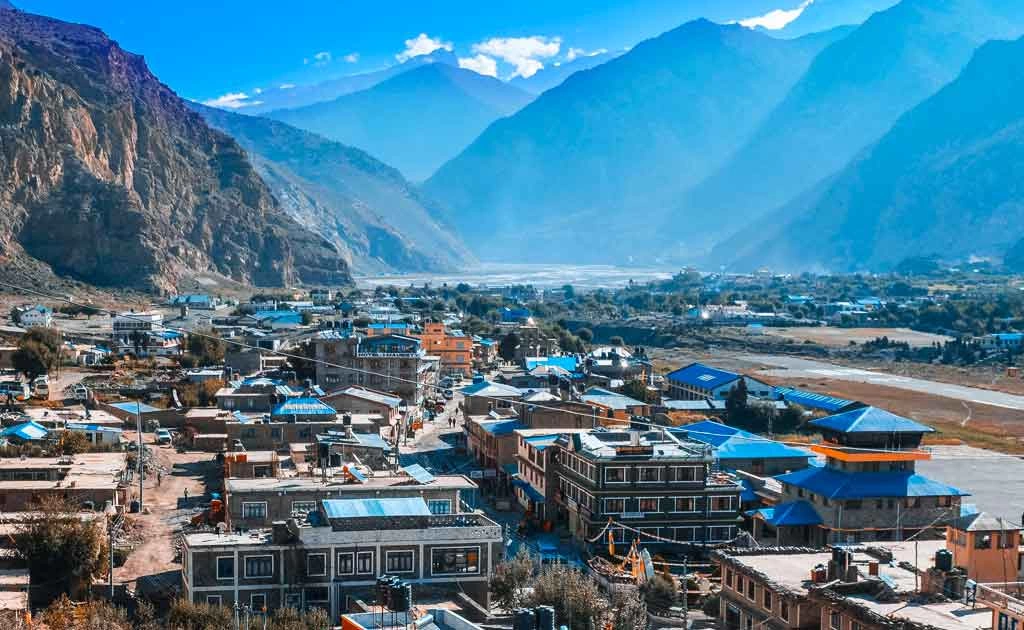
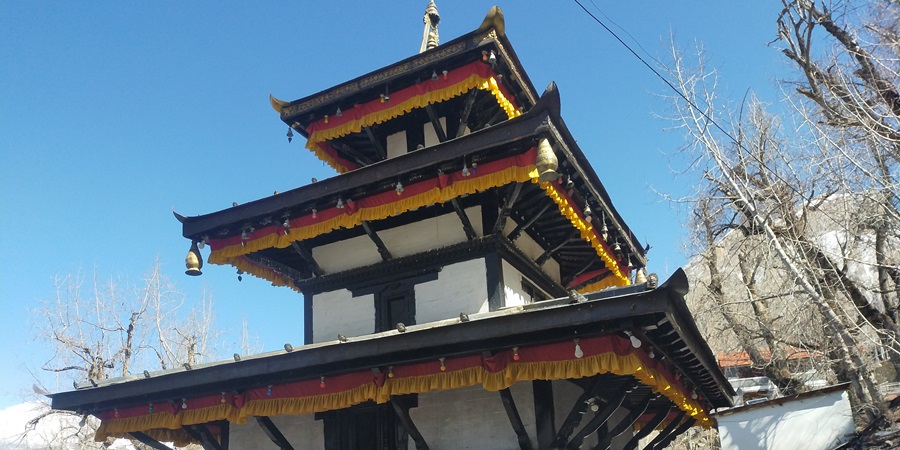
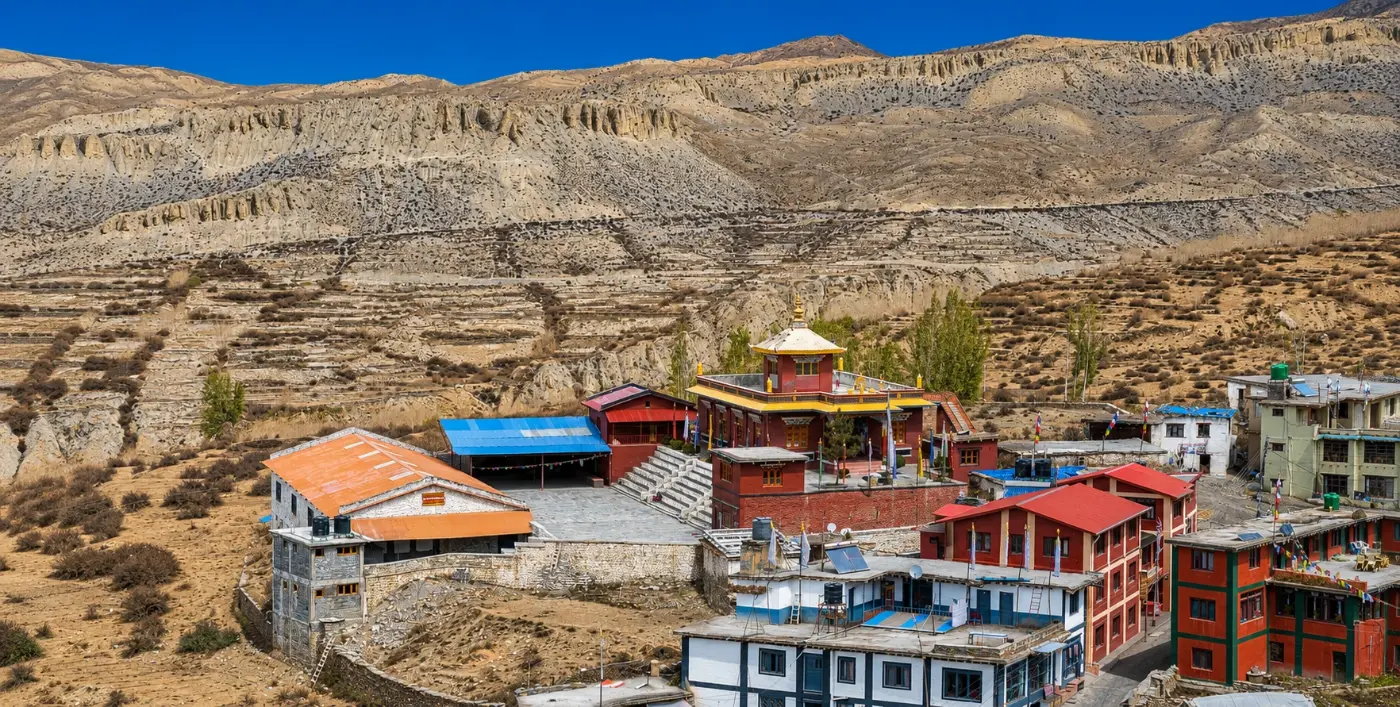
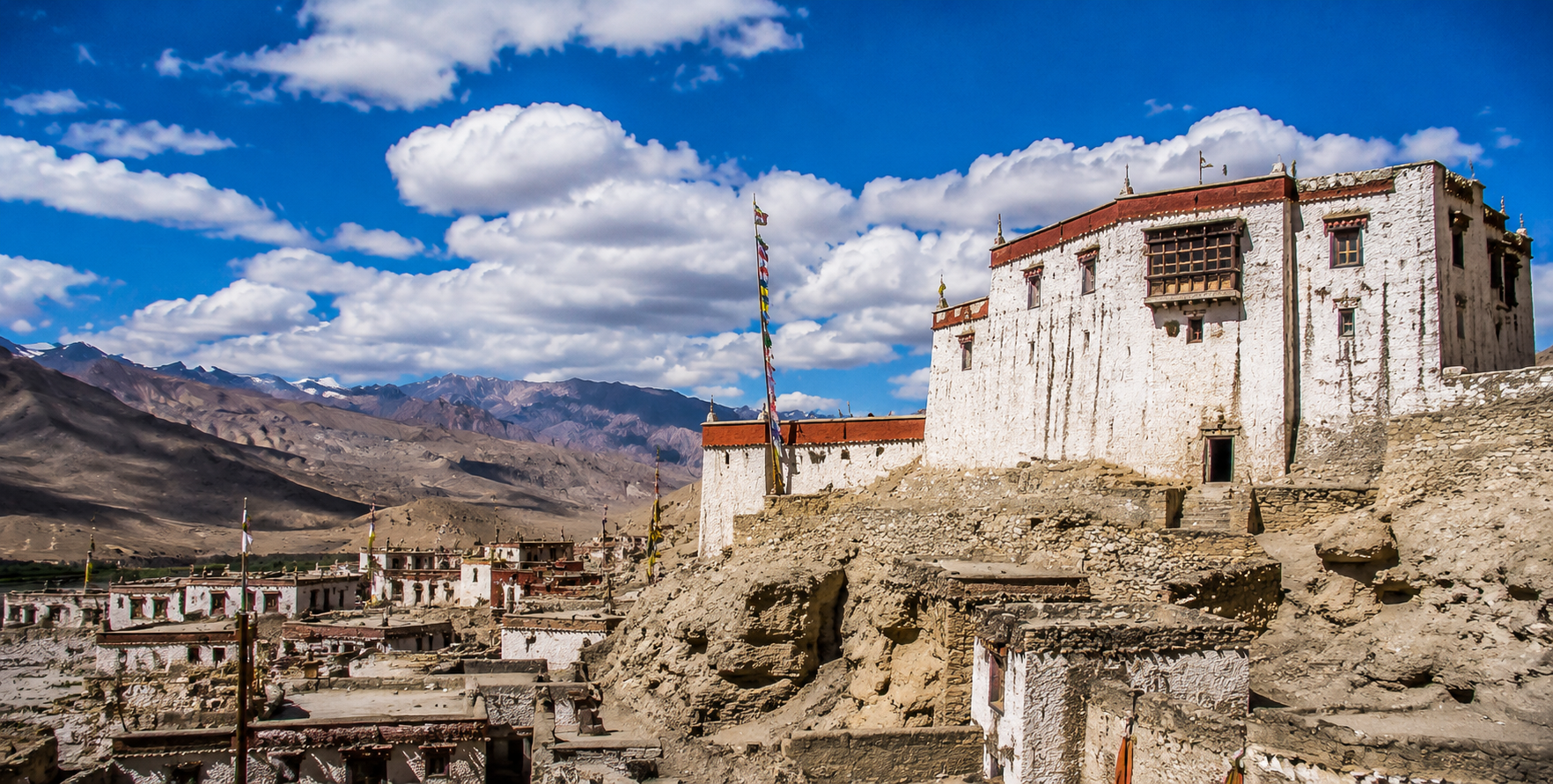
Experience an unforgettable Upper Mustang Bike Ride through Kagbeni, Chele, Ghami, Tsarang, and Lo Manthang. Discover ancient Tibetan-influenced villages, dramatic Himalayan landscapes, remote mountain roads, and the unique culture of the former Kingdom of Mustang.

Upper Mustang Bike Ride — Mountain Biking the Forbidden Kingdom with Vehicle Support

There is a road in the far west of Nepal that goes where very few roads in the world go: north from Kagbeni, through the entry checkpoint of one of the last restricted kingdoms on earth, climbing through a high desert landscape of ochre canyons, wind-carved rock formations, and ancient cliff-face cave monasteries toward the walled medieval city of Lo Manthang at 3,840 metres. The Upper Mustang bike ride on this road—whether by mountain bike, motorbike, or the growing number of adventure cyclists choosing this route—is one of the finest and most remote cycling experiences in South Asia, and arguably in the Himalayan world.

The combination of extraordinary landscape, living medieval Tibetan Buddhist culture, permit-controlled exclusivity, and the physical challenge of high-altitude off-road riding makes it a journey that no other cycling adventure can adequately replace

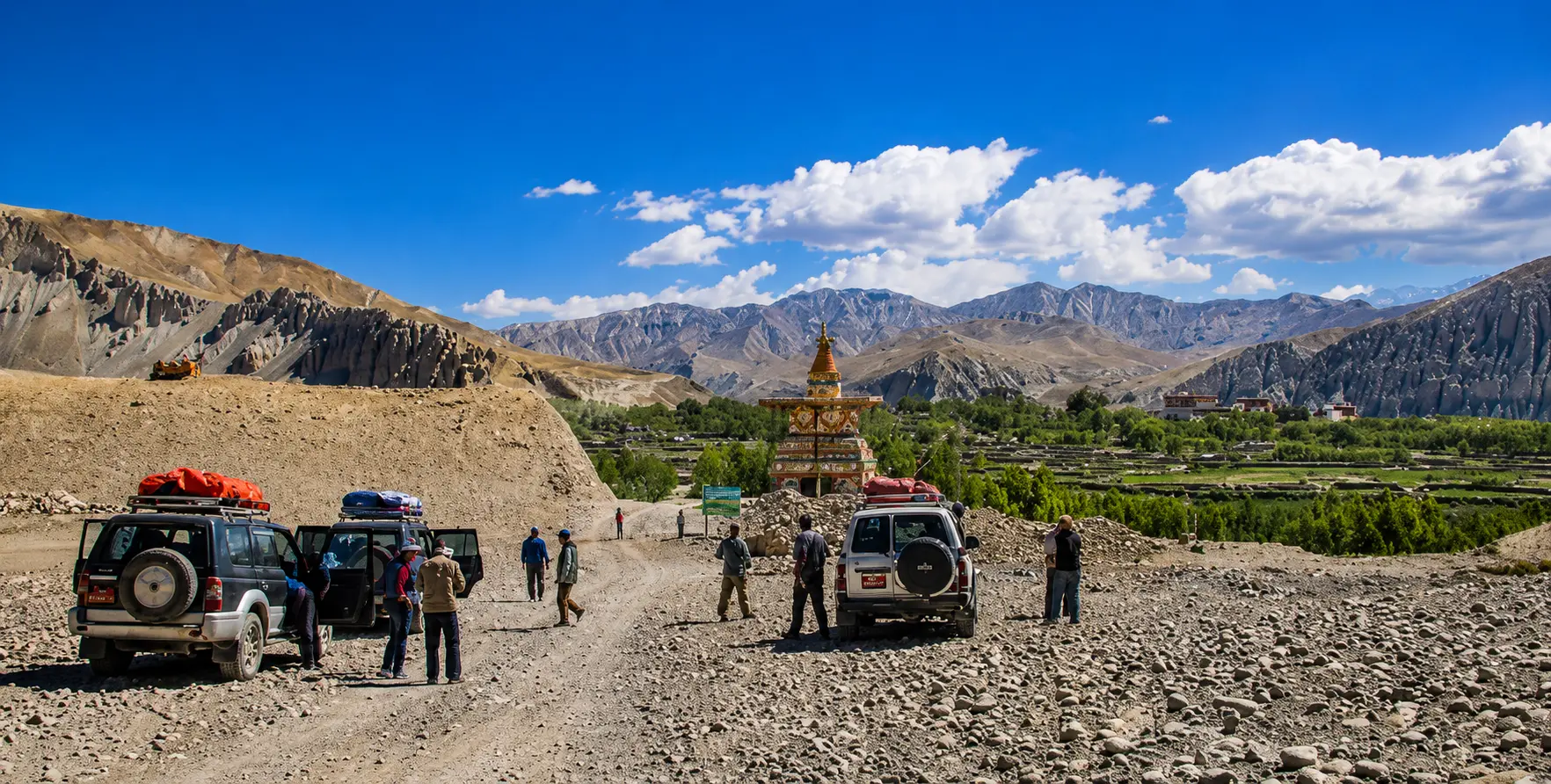
The Upper Mustang bike ride does not work well without a support vehicle. The distances between villages in Upper Mustang are substantial, the terrain is technically demanding on fully loaded bikes, and the logistical requirements of a multi-day high-altitude ride through a restricted area — fuel, spare parts, emergency equipment, luggage, accommodation booking coordination — exceed what any cycling group can reliably carry on the bikes themselves.

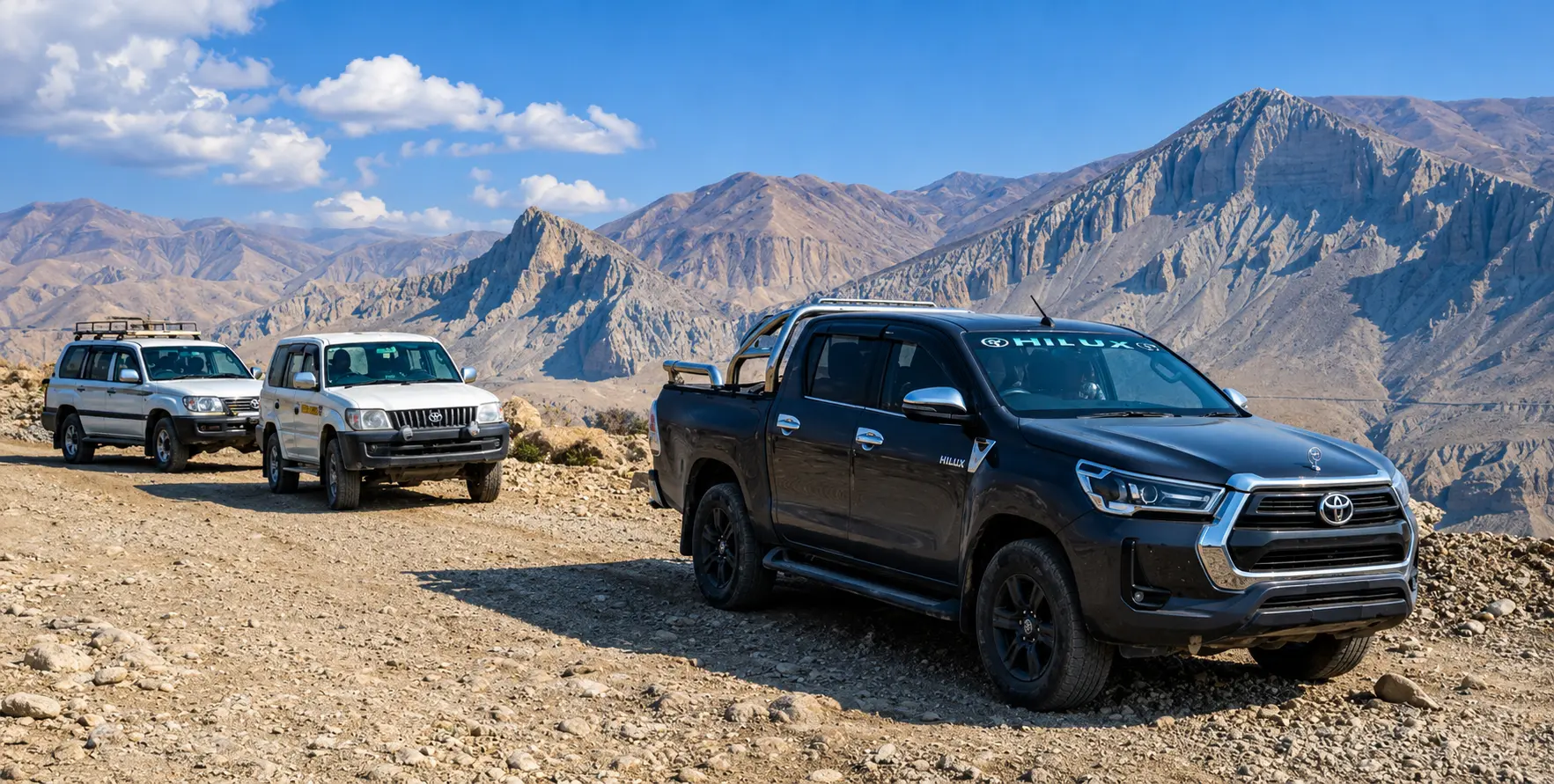
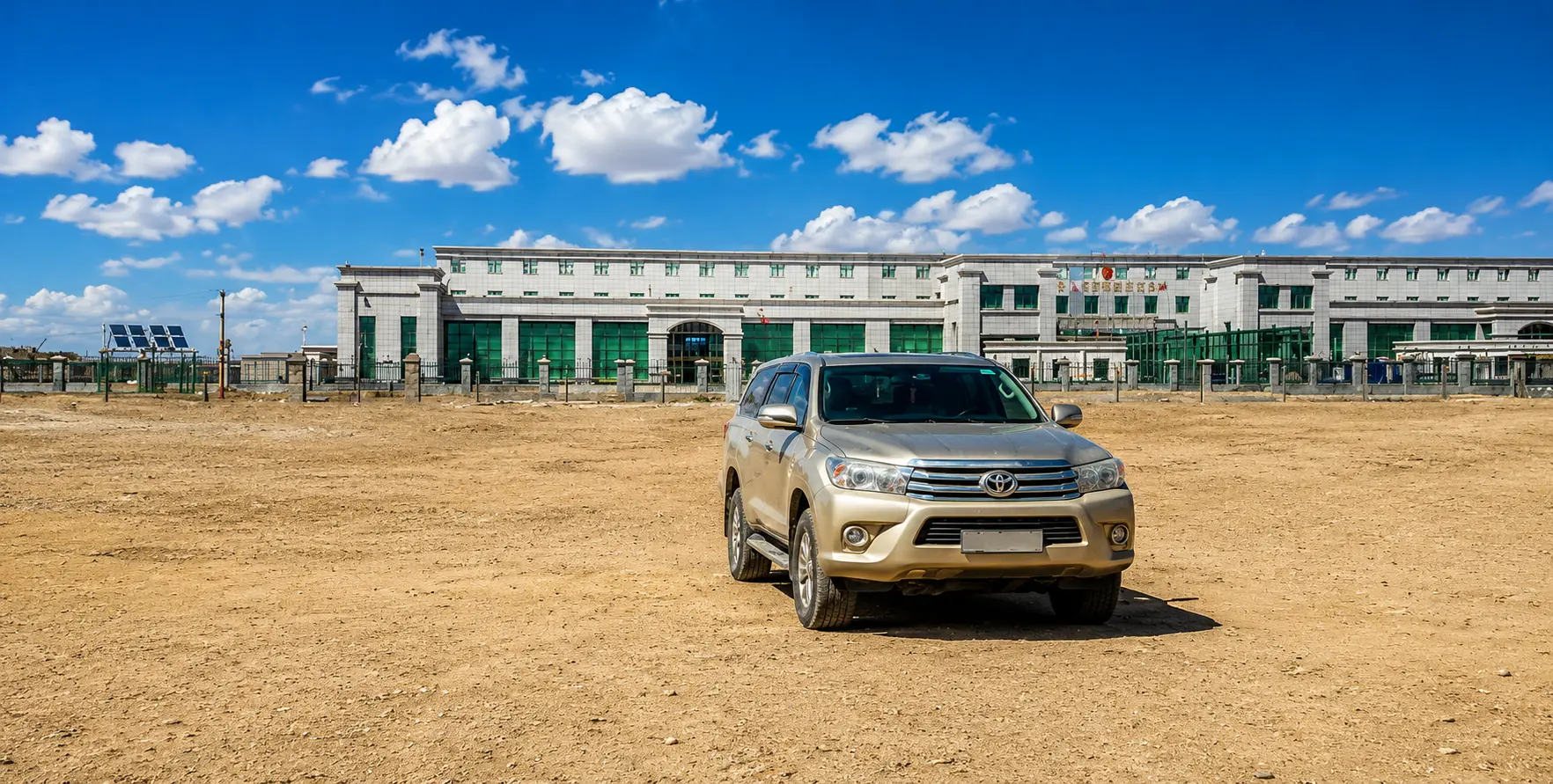
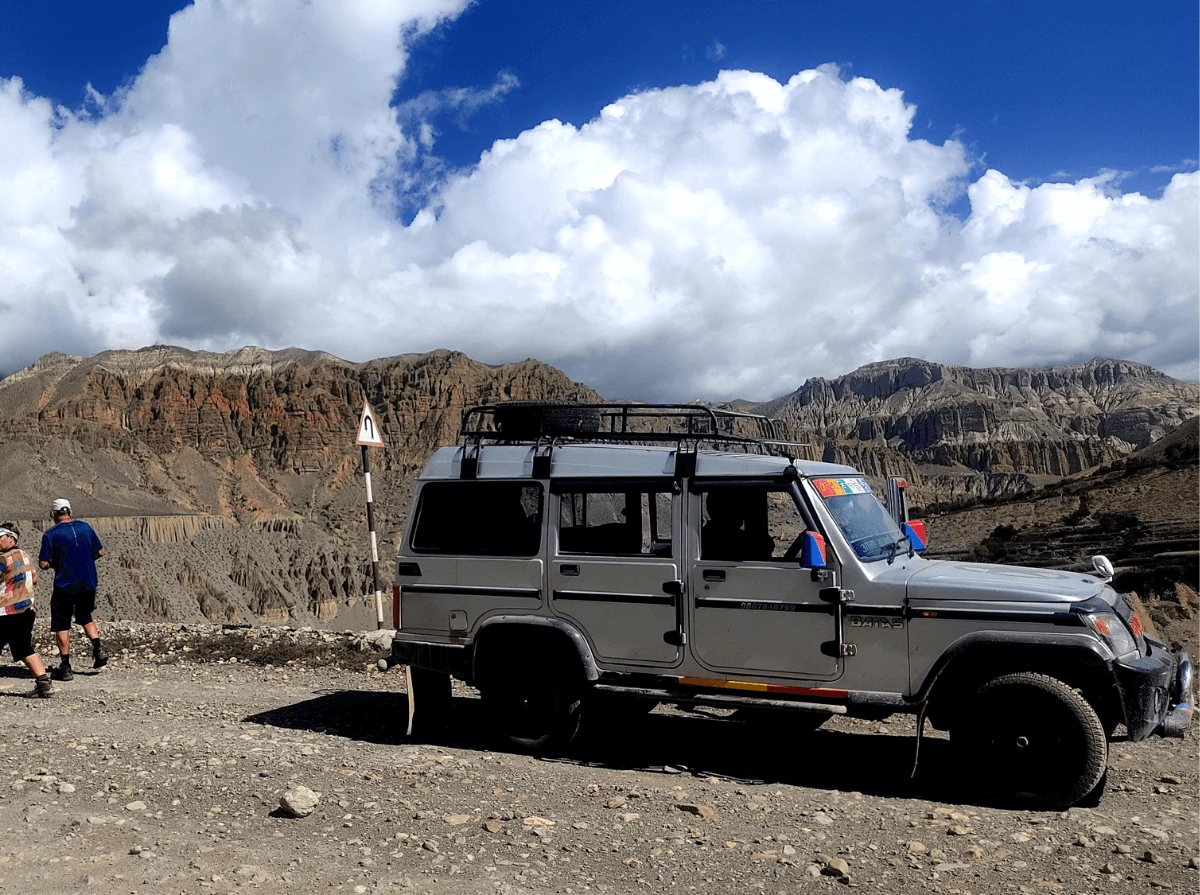
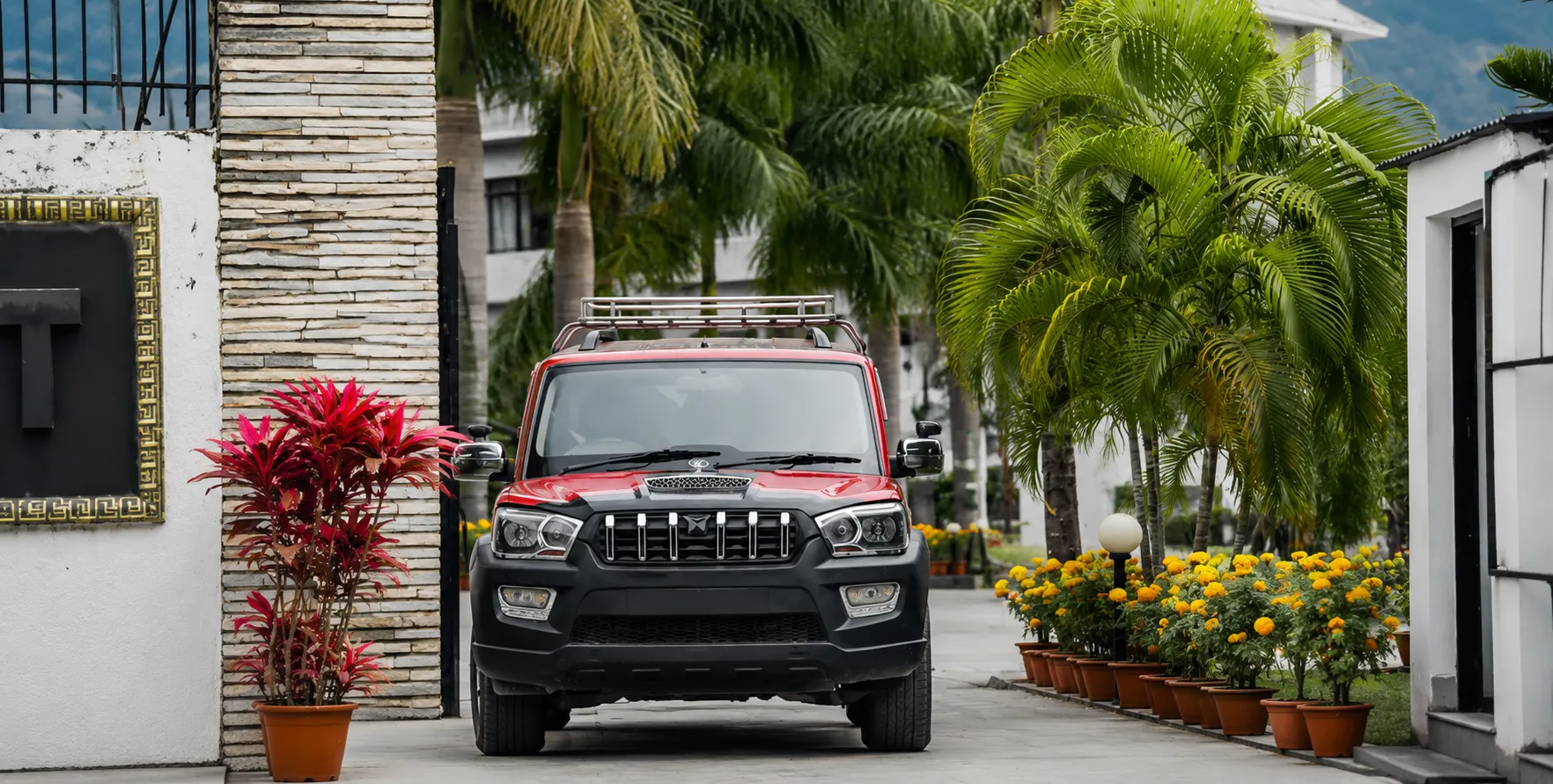
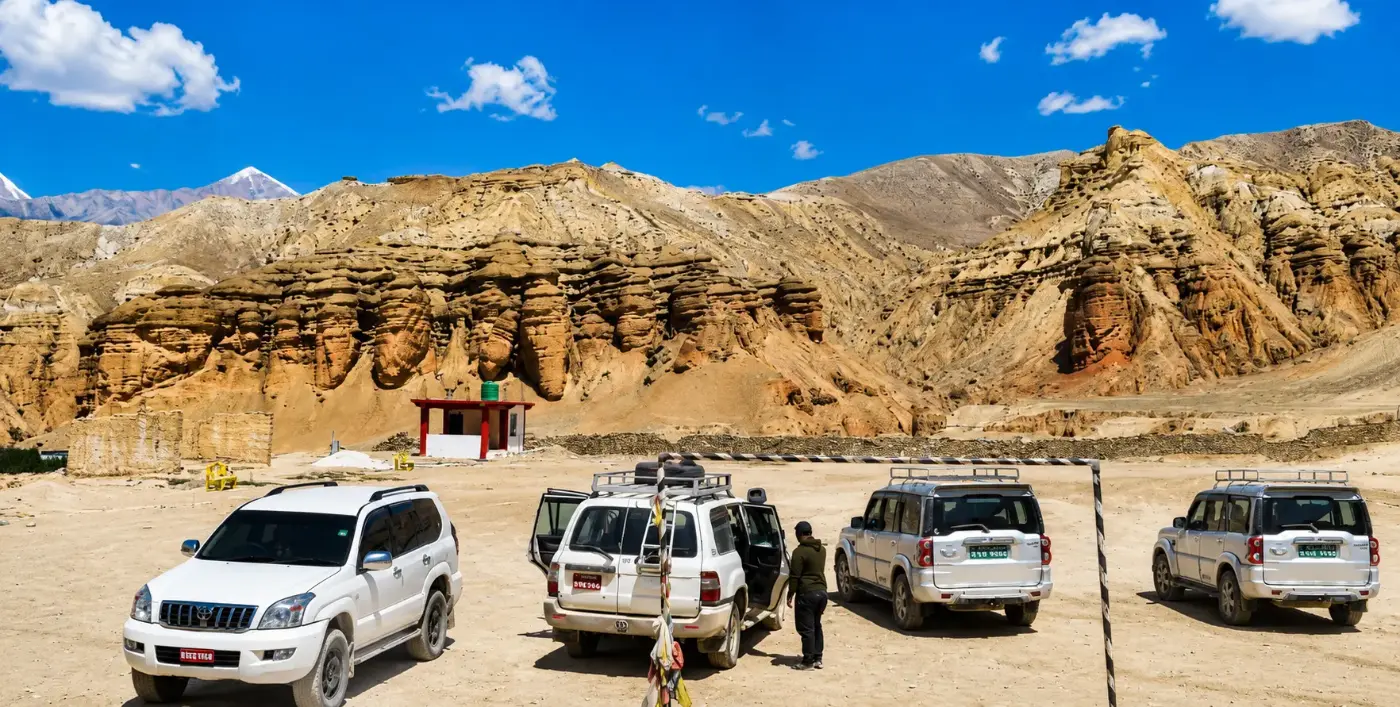
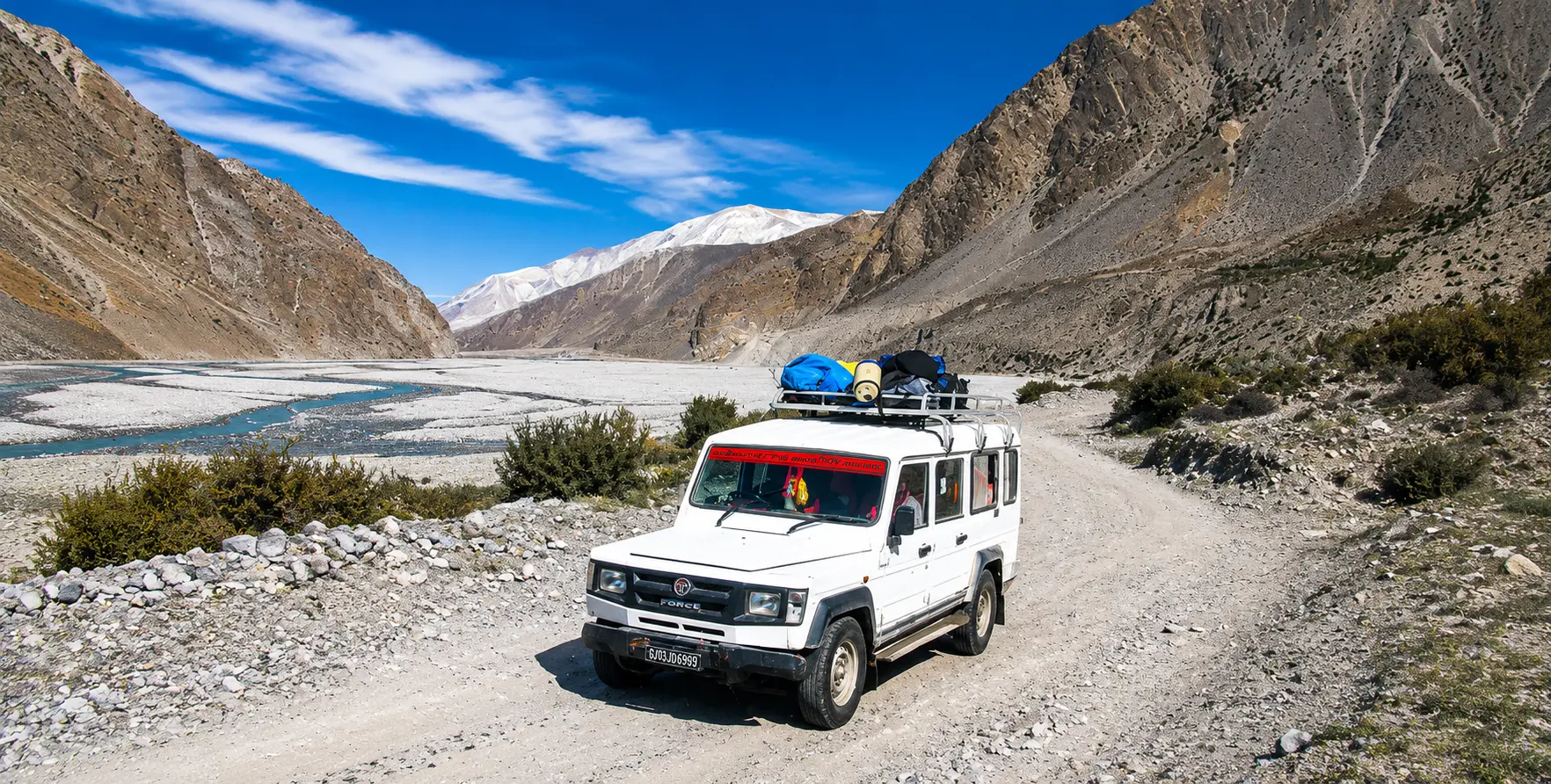
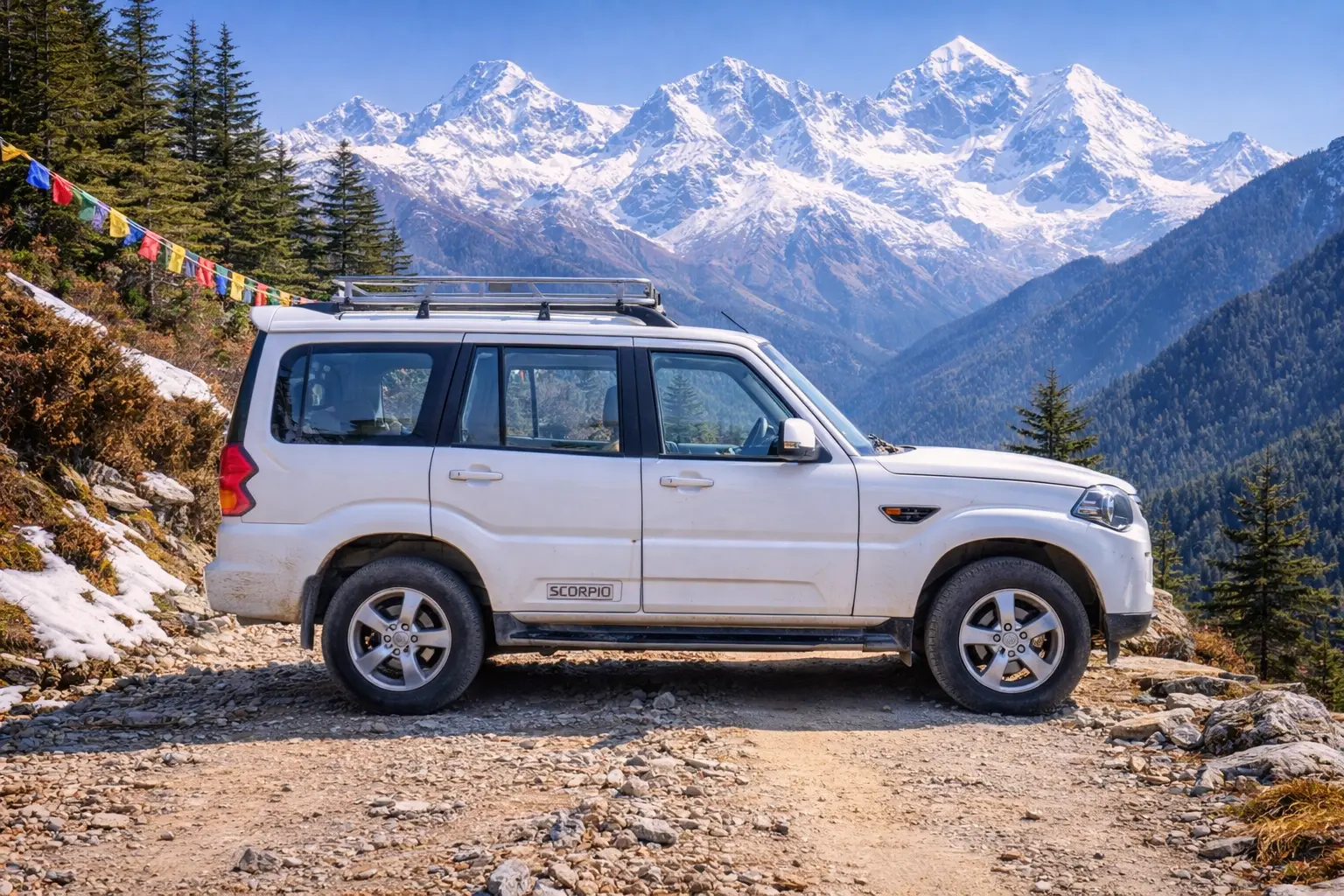
A private 4WD jeep from Nepal Vehicle Hiring Pvt Ltd serves as the dedicated support vehicle, not an optional luxury, but the practical foundation that makes the Upper Mustang bike ride achievable for any group beyond the most self-sufficient expedition cyclists.

This complete 2026 guide covers everything about the Upper Mustang bike ride and the vehicle support that accompanies it: the full route from Pokhara or Jomsom to Lo Manthang, the 2026 permit changes (the major update making Upper Mustang more accessible than ever before), what the terrain actually demands, the support vehicle role and costs, what to see in Lo Manthang and the surrounding kingdom, the best season, practical preparation, and how Nepal Vehicle Hiring Pvt Ltd provides the private jeep support vehicle hire that makes every Upper Mustang cycling adventure properly equipped and properly supported.
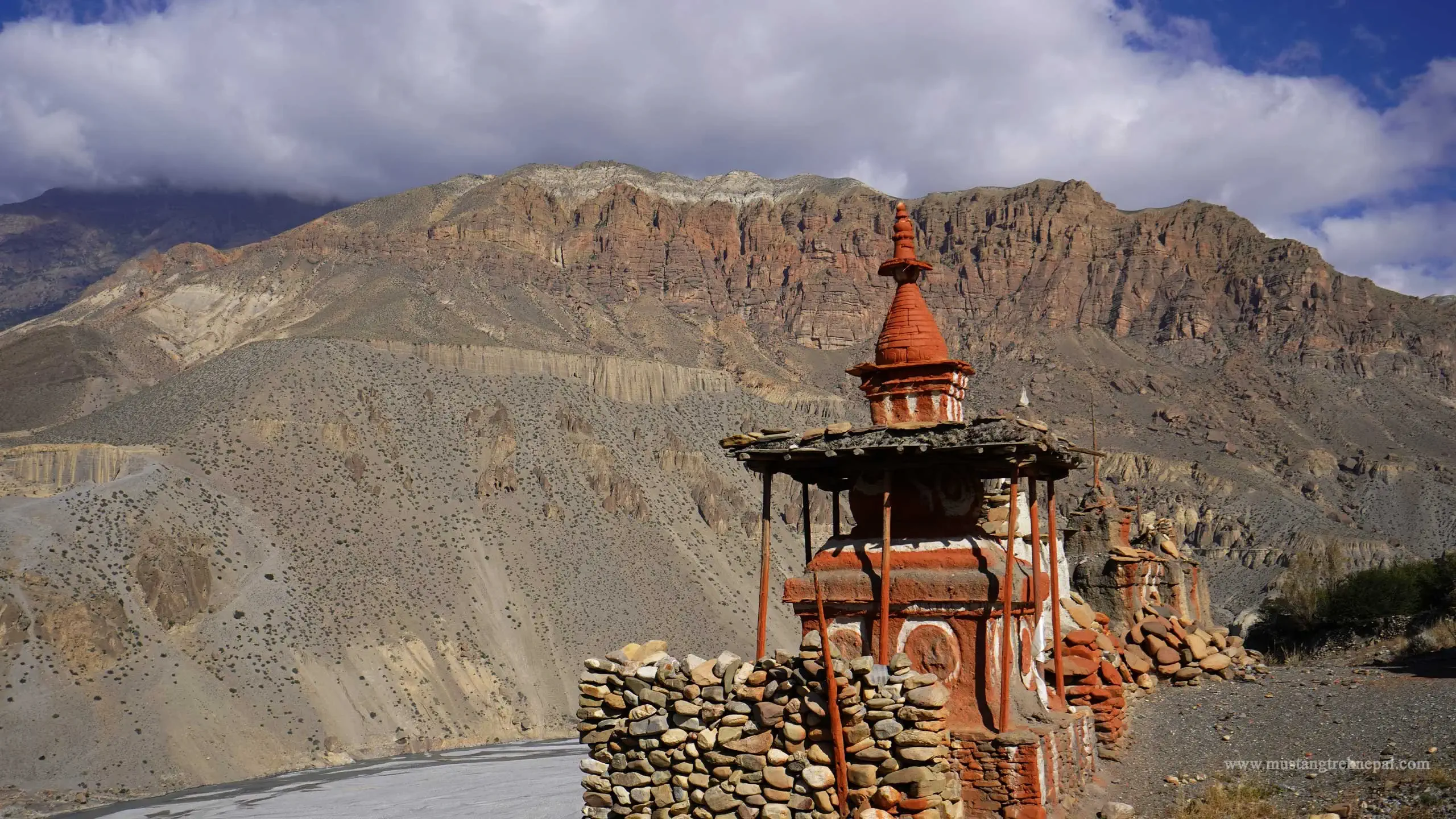
Mustang

Upper Mustang — The Last Forbidden Kingdom

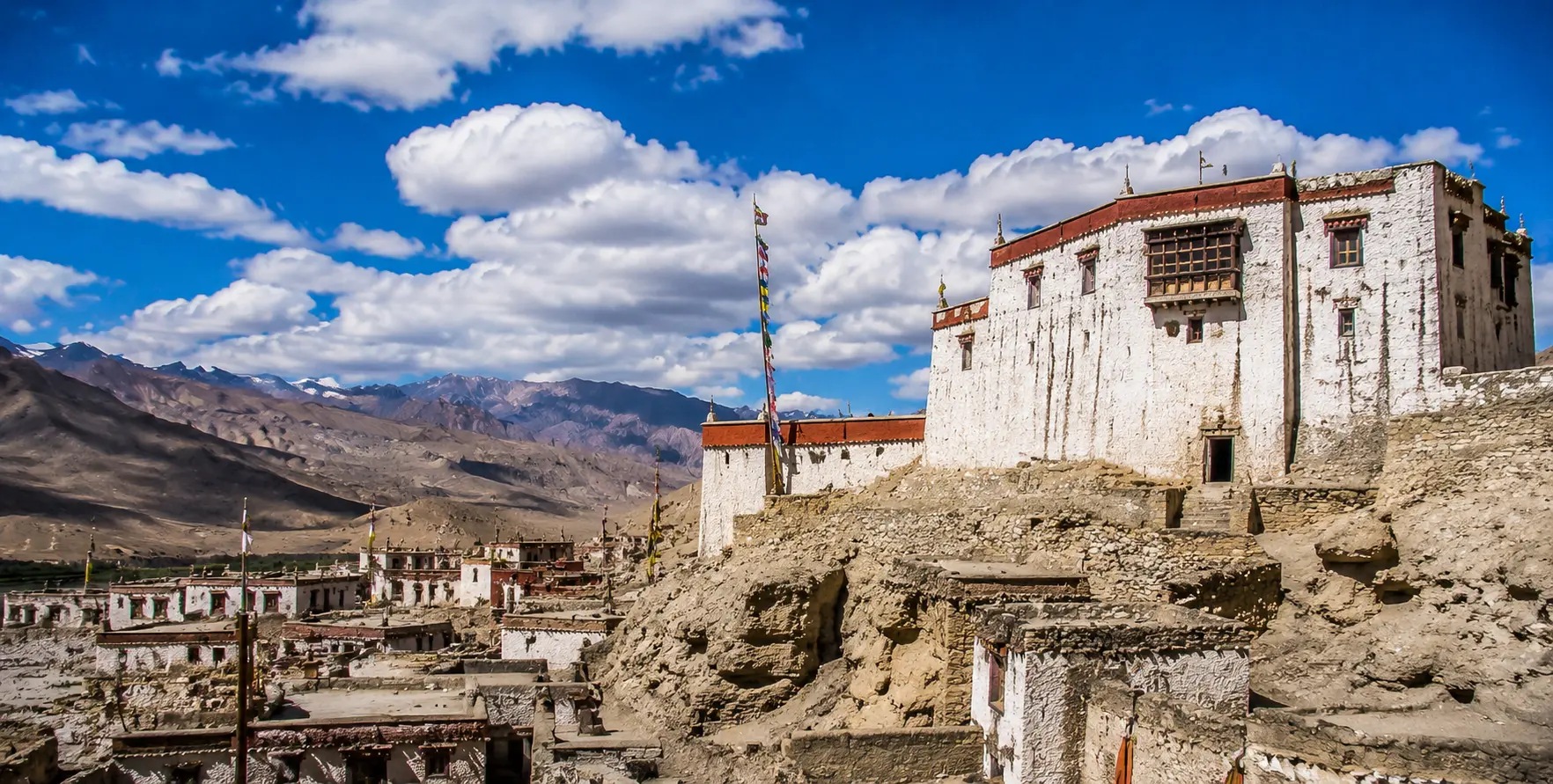
Upper Mustang — the area of Mustang District that lies north of the Kagbeni checkpoint, encompassing the ancient Kingdom of Lo and its walled capital Lo Manthang — was closed to all foreign visitors until 1992, making it one of the last Himalayan regions to open to international tourism and one of the most culturally intact Tibetan-influenced communities still accessible anywhere in the modern world. The former Kingdom of Lo, established in the fourteenth century by the Tibetan warrior Ame Pal, maintained semi-autonomous status within Nepal’s national territory well into the democratic era, with the hereditary king of Lo (the Raja of Lo Manthang) retaining traditional authority over his people and territory even as Nepal underwent the political transformations of the twentieth century.

The last king, Jigme Dorje Palbar Bista, passed away in 2016, formally ending the royal dynasty — but his capital, Lo Manthang,g survives as one of the most remarkably preserved medieval Tibetan Buddhist cities anywhere, a community of approximately 1,000 people living within a 600-year-old walled town whose street plan, architecture, and daily ritual life would be recognisable to the city’s founders.

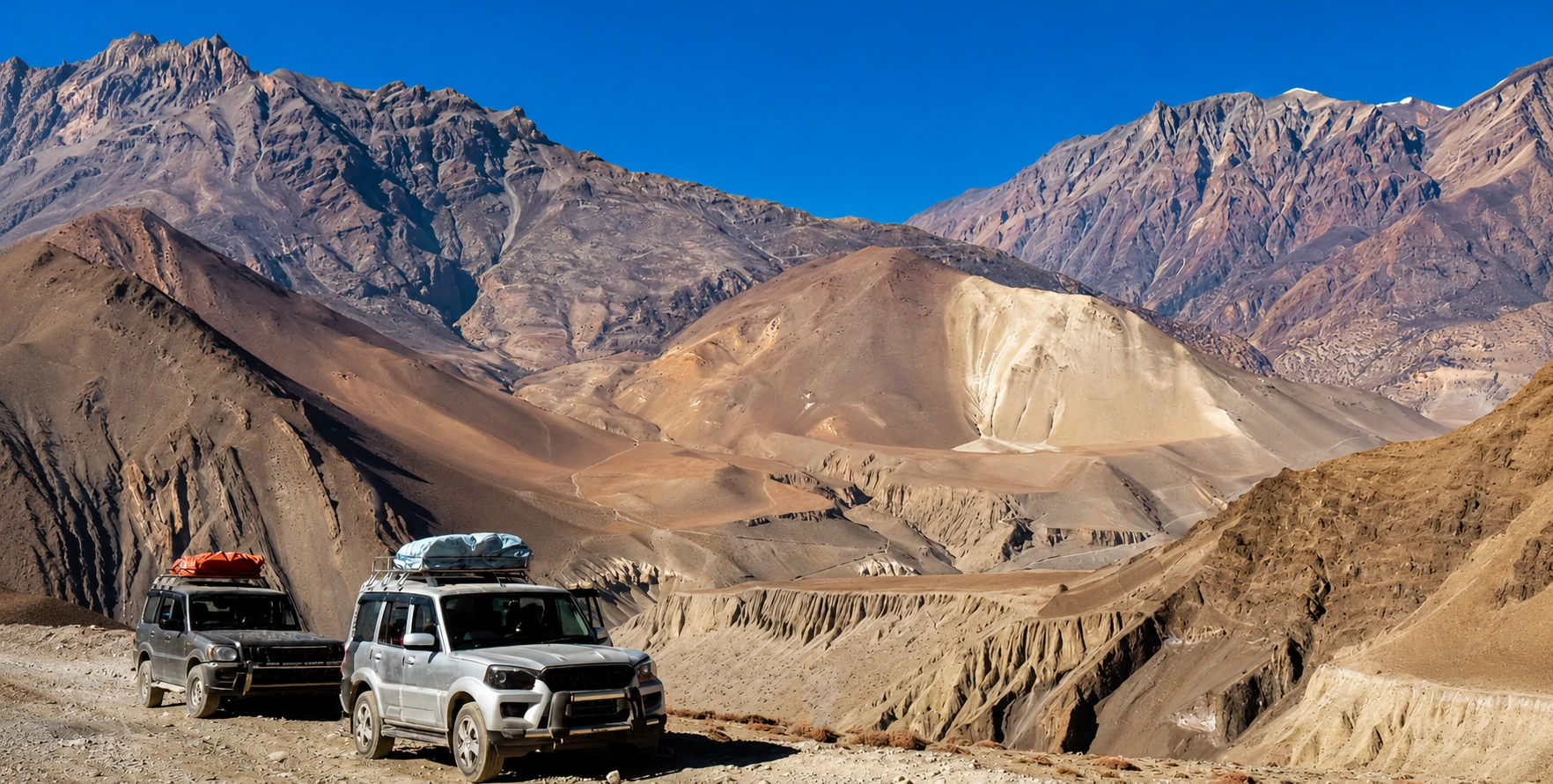
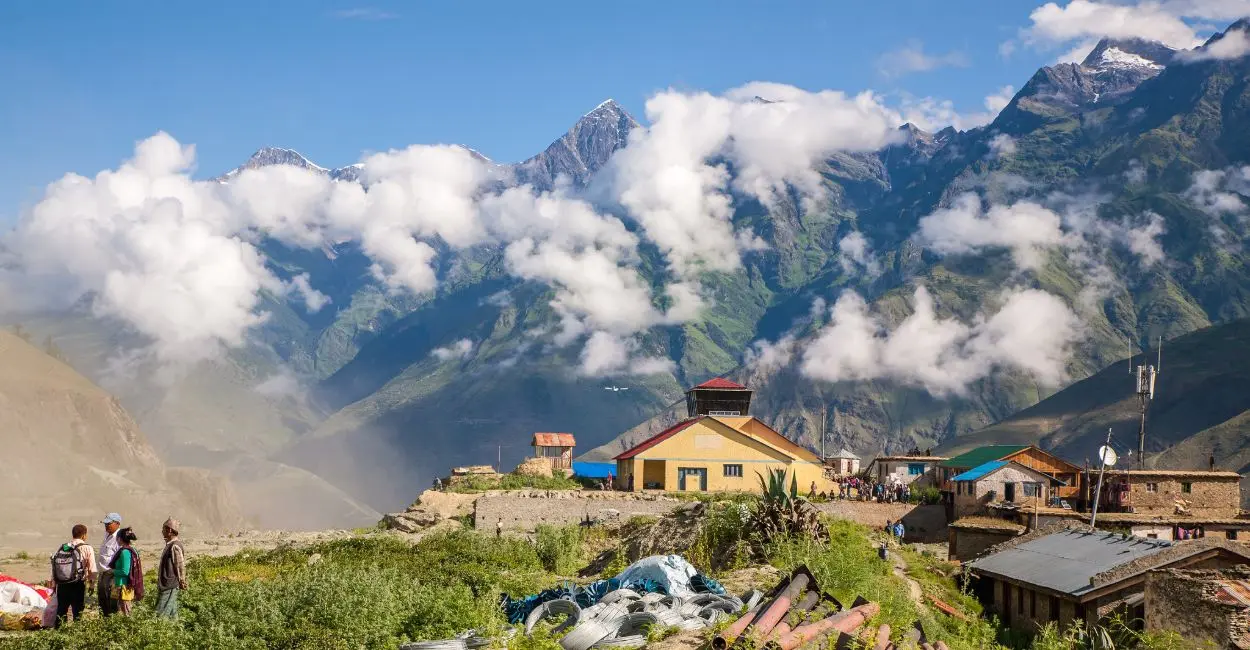
The landscape of Upper Mustang is what makes the bike ride through it so extraordinary. Unlike the monsoon-drenched, forested terrain of most of Nepal’s mountain regions, Upper Mustang sits in the deepest rain shadow of the Himalayan range, receiving less than 200 mm of precipitation annually—comparable to a semi-desert —and, visually, unlike anything else in Nepal.

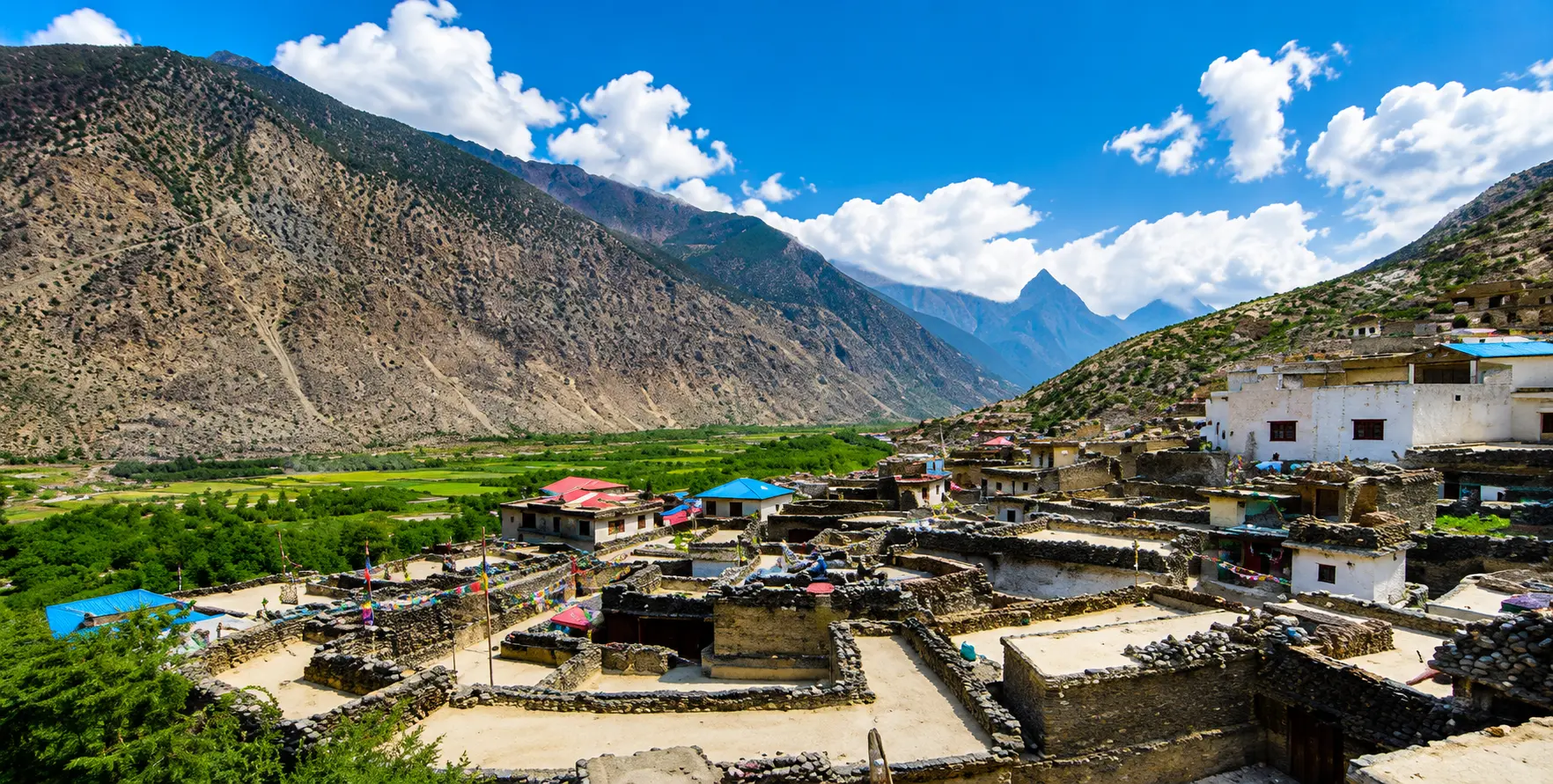
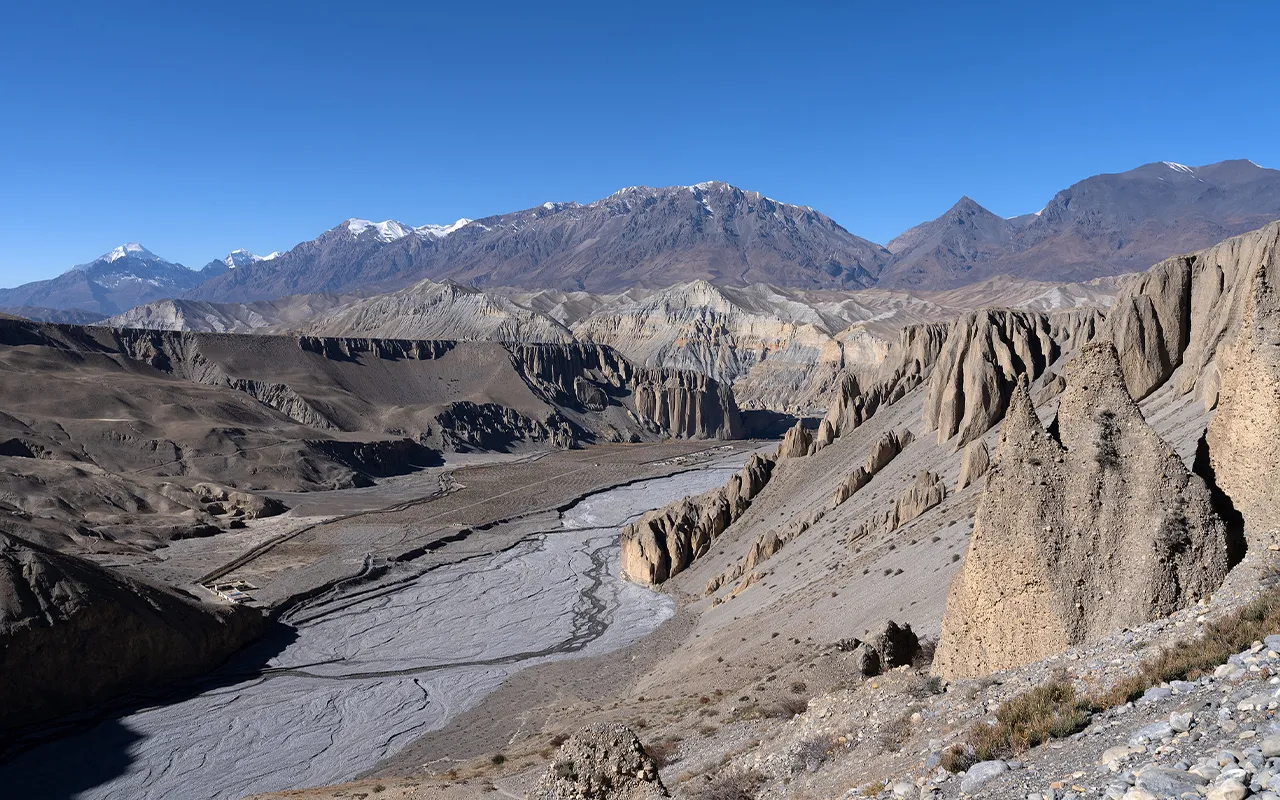
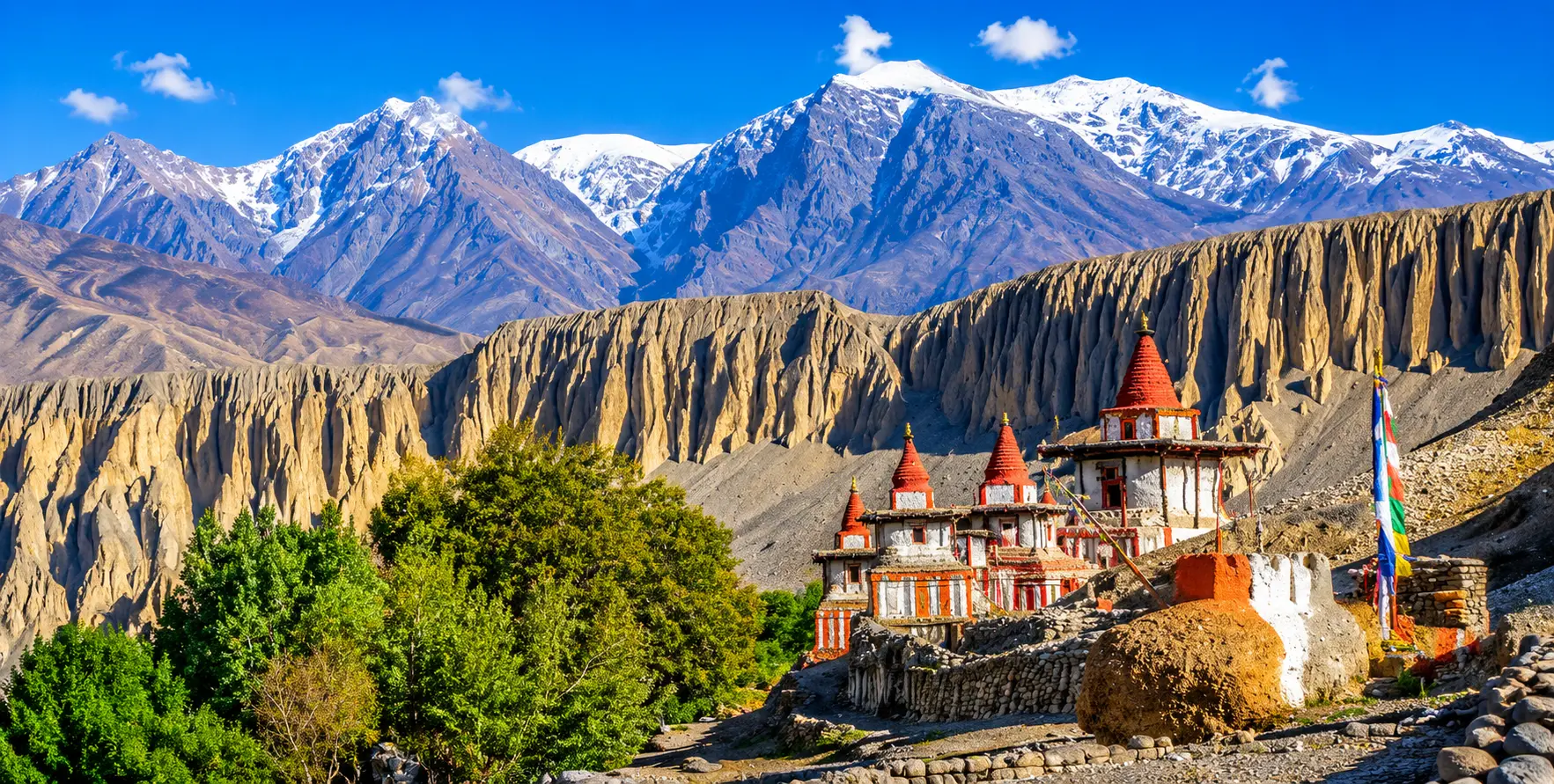
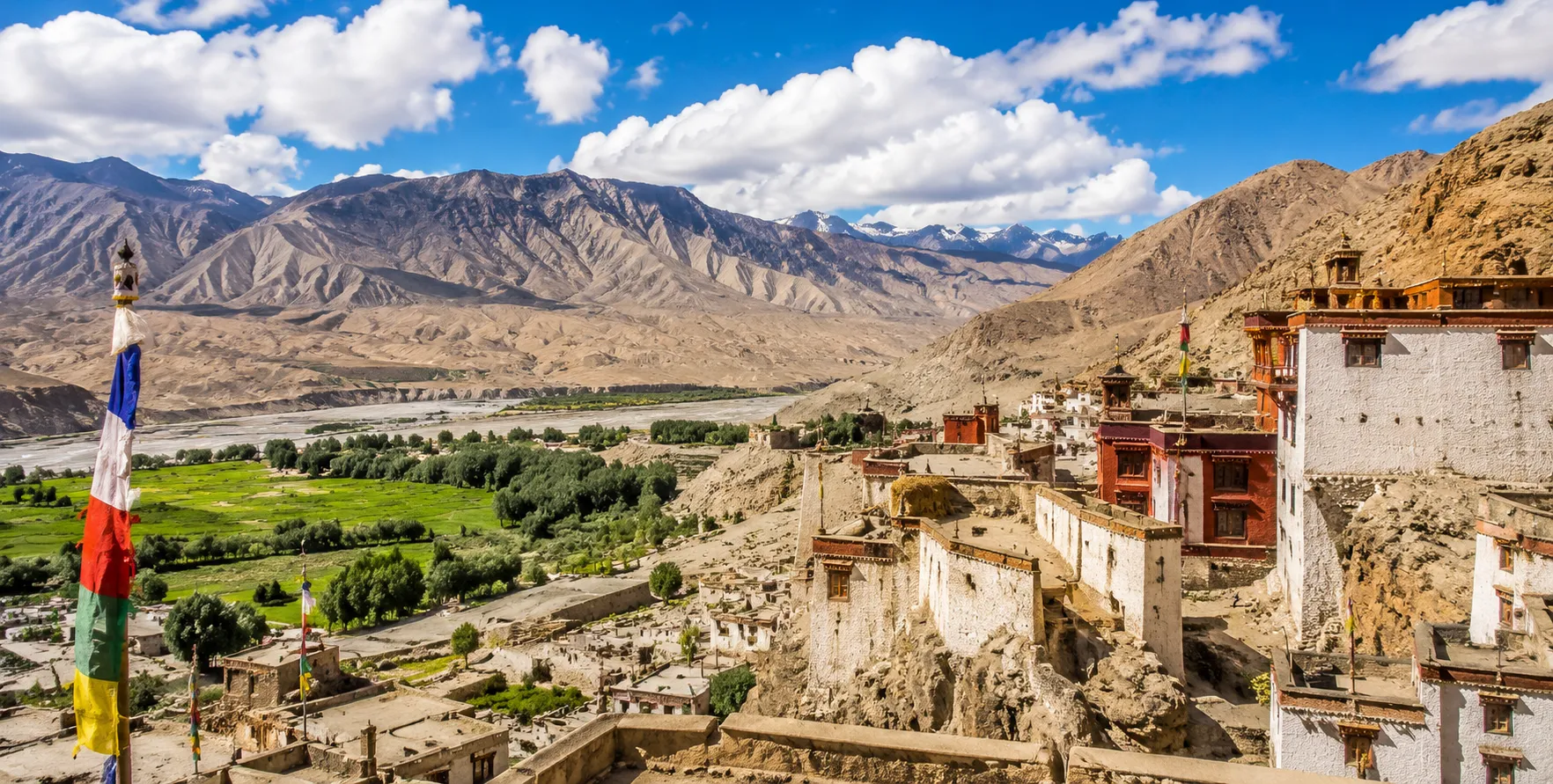
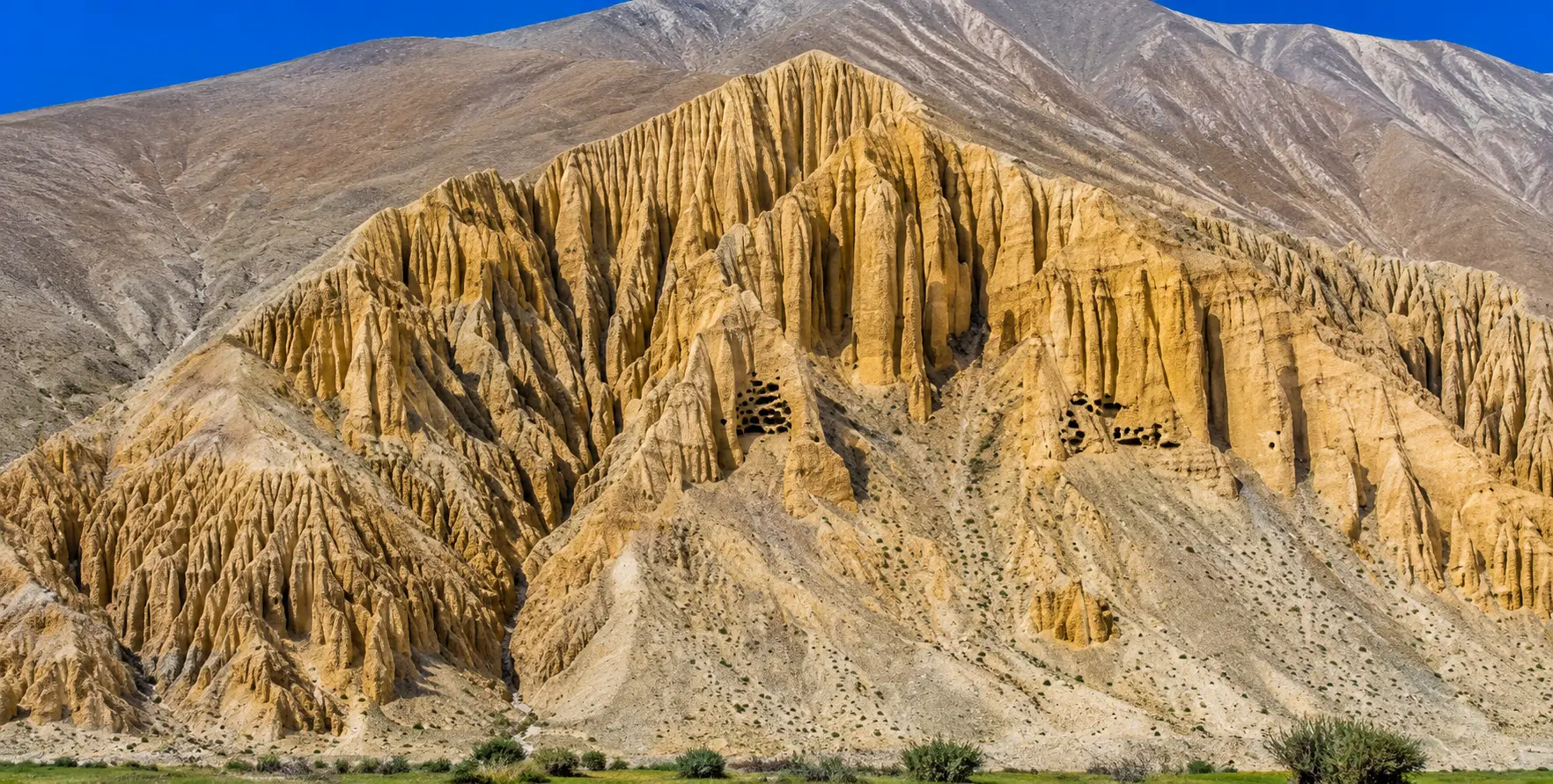
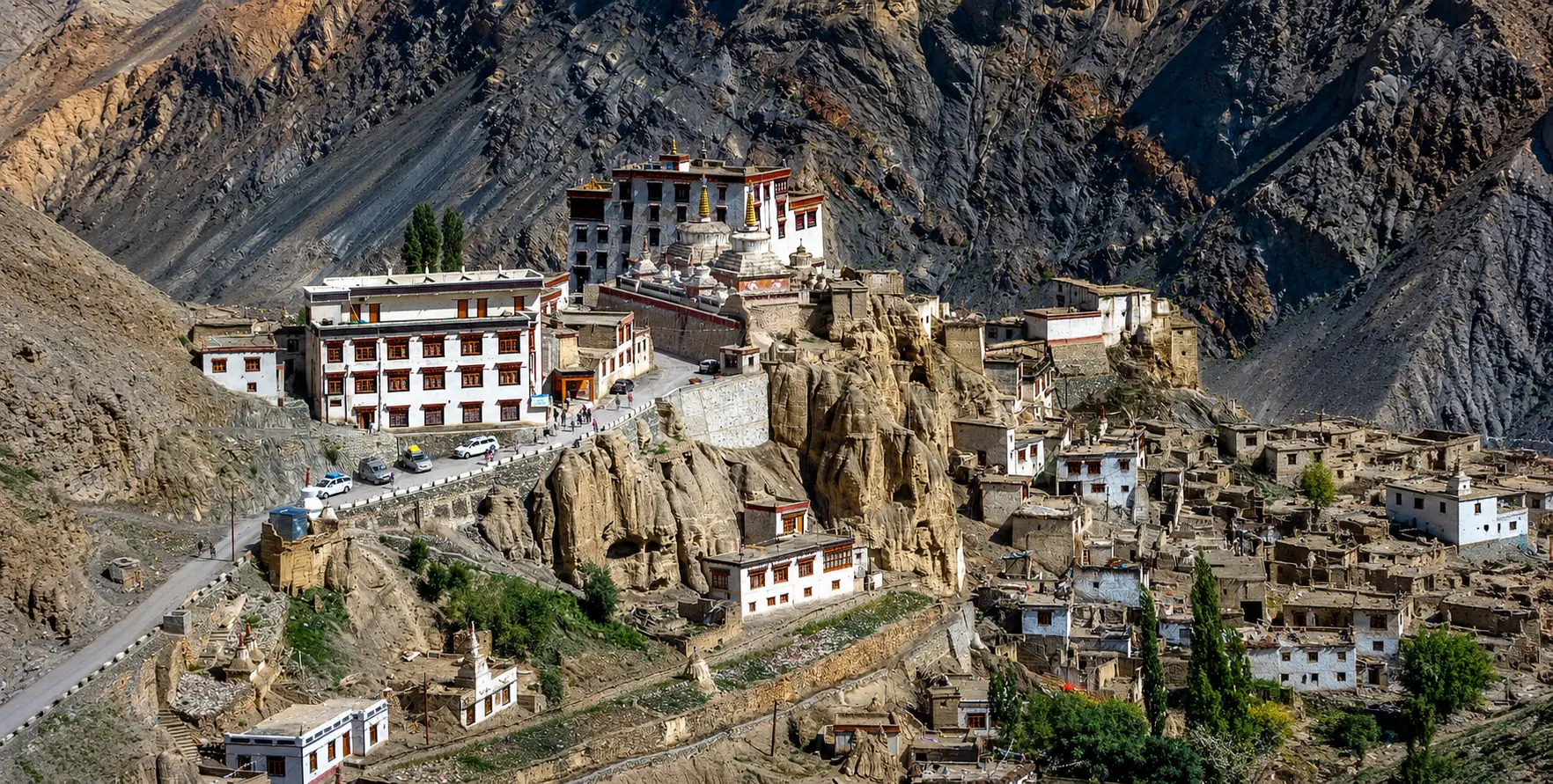
Red and ochre sandstone canyons, eroded into bizarre pinnacle formations by millennia of wind and seasonal meltwater, line the valley walls between every village on the route. The ancient trade route to Tibet that this valley served for centuries passes through terrain that has been compared, not unreasonably, to the canyonlands of the American Southwest or the high desert of the Tibetan Plateau itself — and the occasional medieval monastery or whitewashed village visible against this elemental backdrop creates a visual contrast of remarkable power.

The Upper Mustang trek offered by our sister company Trek Nepal Himalayas is the walking version of this same journey, and the extensive research and itinerary detail developed for that product underpins much of the route knowledge in this guide. Alpine Luxury Treks offers the top end of the Upper Mustang experience—luxury lodge accommodation, private chef service, and top-end guiding—for cyclists and trekkers who want the highest available comfort standard in this remote region.

The  Permit Change — Upper Mustang Is Now More Accessible

The single most significant development for Upper Mustang bike ride planning in 2026 is the restructuring of the Restricted Area Permit (RAP) from the previous flat fee of USD 500 per person for the first 10 days to a new per-day rate of USD 50 per person per day, issued for exactly the number of days required. This change is transformative for the Upper Mustang cycling community: previously, a group wanting to do a 5-day fast mountain bike circuit of Upper Mustang paid the same USD 500 per person as a group spending 14 days trekking — creating a significant cost barrier for shorter, faster visits.

Under the new 2026 system, a 5-day Upper Mustang bike ride costs USD 250 per person in RAP fees rather than USD 500 — a saving that meaningfully changes the economics of short-format cycling adventures in the restricted area.

The permit day count begins when the group crosses the Kagbeni checkpoint northward into the restricted area, and ends when they return through the same checkpoint heading south. This means that the driving and cycling days in Lower Mustang (Jomsom, Marpha, Muktinath) before the Kagbeni crossing do not count against the permit, and that the return driving day from Jomsom to Pokhara after the Kagbeni exit similarly does not add to the permit cost.

For a standard Upper Mustang bike tour covering Kagbeni to Lo Manthang and back in 7 to 10 days, the 2026 RAP cost is therefore USD 350 to USD 500 per person — in addition to the standard ACAP permit (NPR 3,000 for foreign nationals) and TIMS card (USD 10 to 20). Nepal Vehicle Hiring Pvt Ltd coordinates permit applications for all Upper Mustang vehicle support packages through our registered agency partner network.

NOTE: Upper Mustang requires a minimum of 2 people and a licensed guide to issue the Restricted Area Permit. Solo cyclists cannot enter the restricted area and must join a registered tour or, at minimum, find one additional participant for the RAP application.
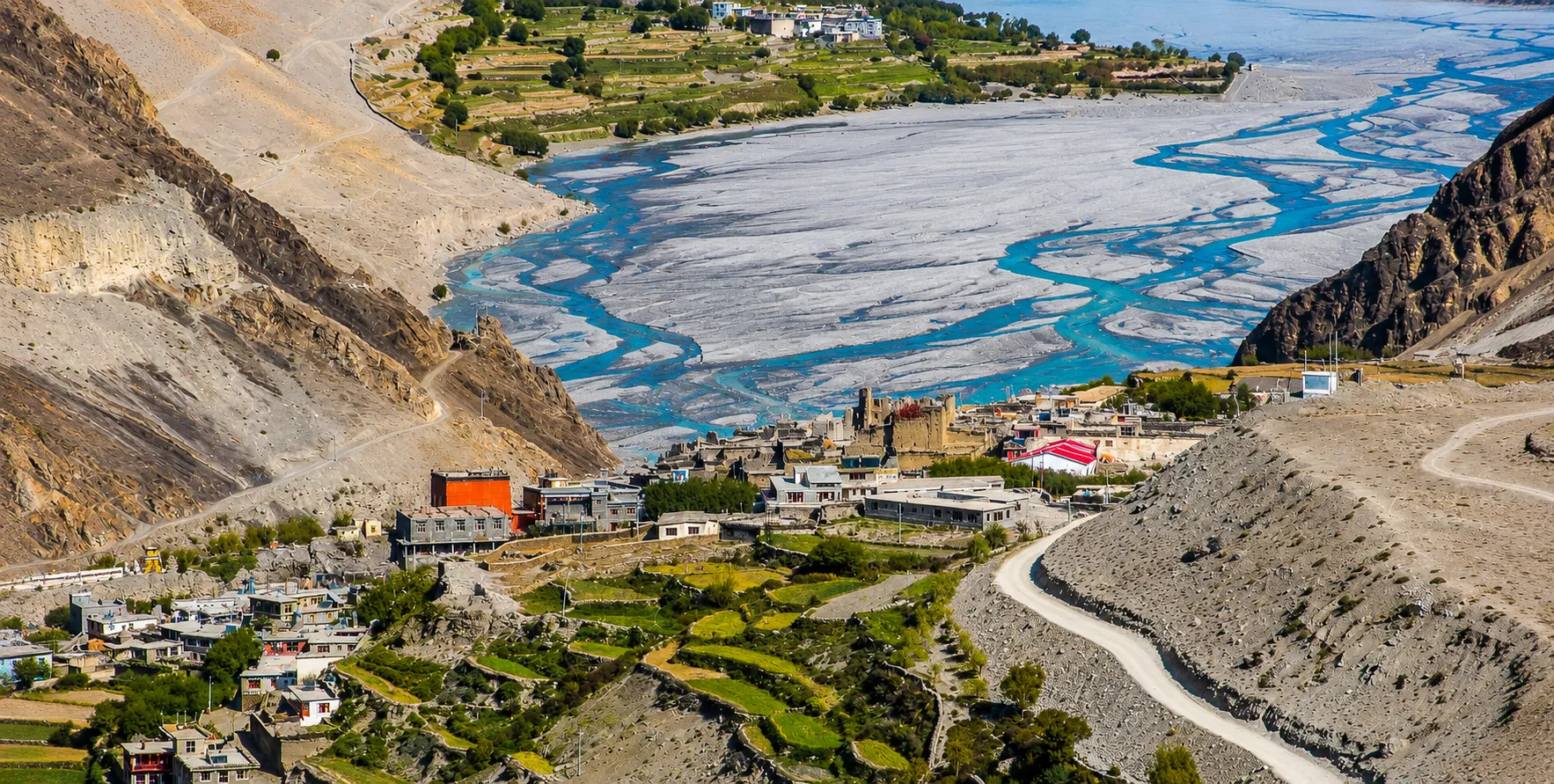
Experience an unforgettable Upper Mustang Bike Ride through Kagbeni, Chele, Ghami, Tsarang, and Lo Manthang. Discover ancient Tibetan-influenced villages, dramatic Himalayan landscapes, remote mountain roads, and the unique culture of the former Kingdom of Mustang.

The Route — Kagbeni to Lo Manthang and Return

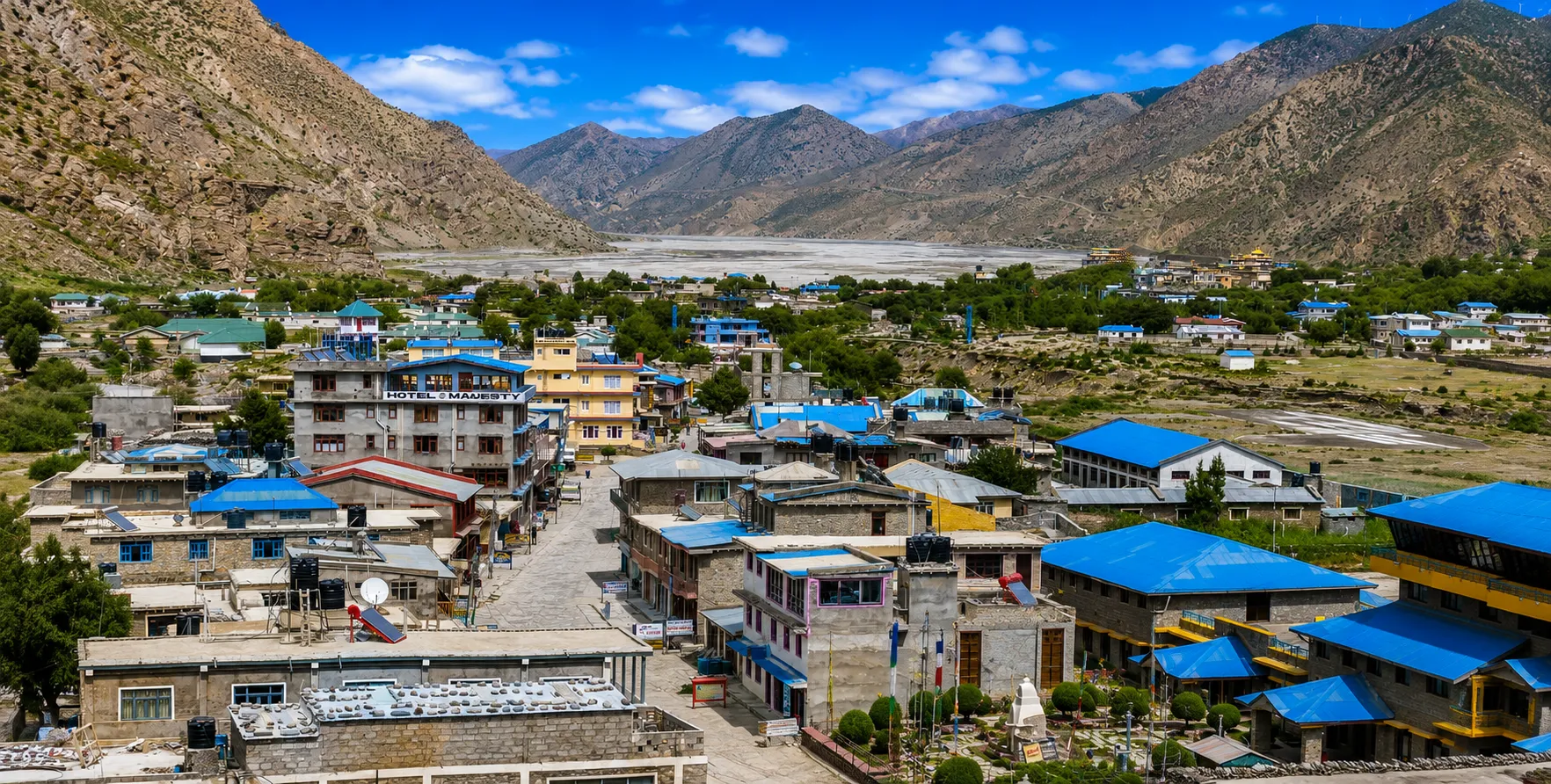
The standard Upper Mustang bike ride route begins at Jomsom (2,720 m) or Kagbeni (2,810 m), depending on whether the group rides or drives the Jomsom-to-Kagbeni section. Most dedicated mountain bike groups ride this section as a warm-up day, while motorbike riders often combine it with the Jomsom arrival day for a late-morning start in Kagbeni.

The route from Kagbeni to Lo Manthang follows the ancient trading route north through the Mustang kingdom’s main valley, covering about 105 to 115 kilometres of mostly off-road terrain over 4 to 5 riding days.

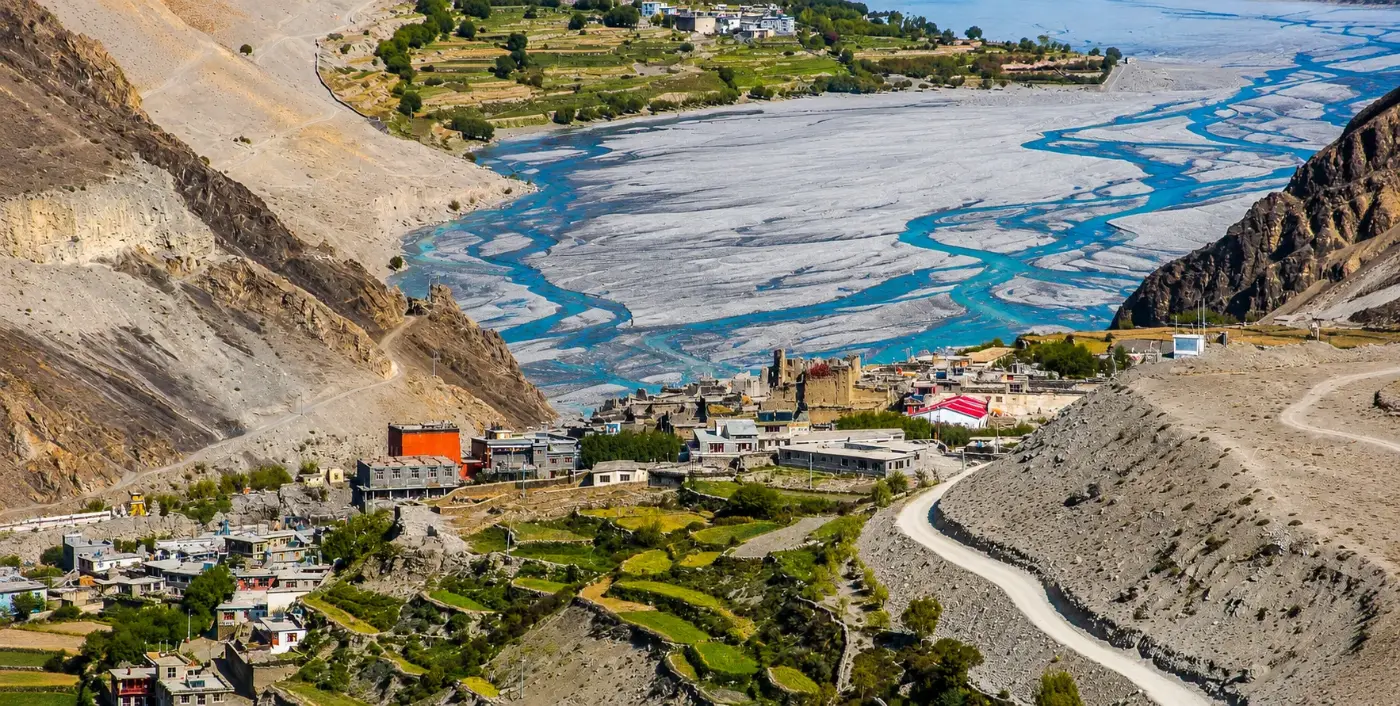
Kagbeni to Chele (3,050 m) — The Restricted Area Entry. At the Kagbeni checkpoint, the RAP permit is scanned, identities are verified, and official entry into Upper Mustang is recorded. Beyond Kagbeni, the landscape changes almost immediately: the greenery of the Kali Gandaki valley floor gives way to the characteristic Upper Mustang canyon of red and ochre rock.

The first riding day to Chele or Eklobhati covers approximately 30 to 35 kilometres of mixed terrain — some jeep track, some rough single-track, and the first of the significant altitude gains that characterise the route.

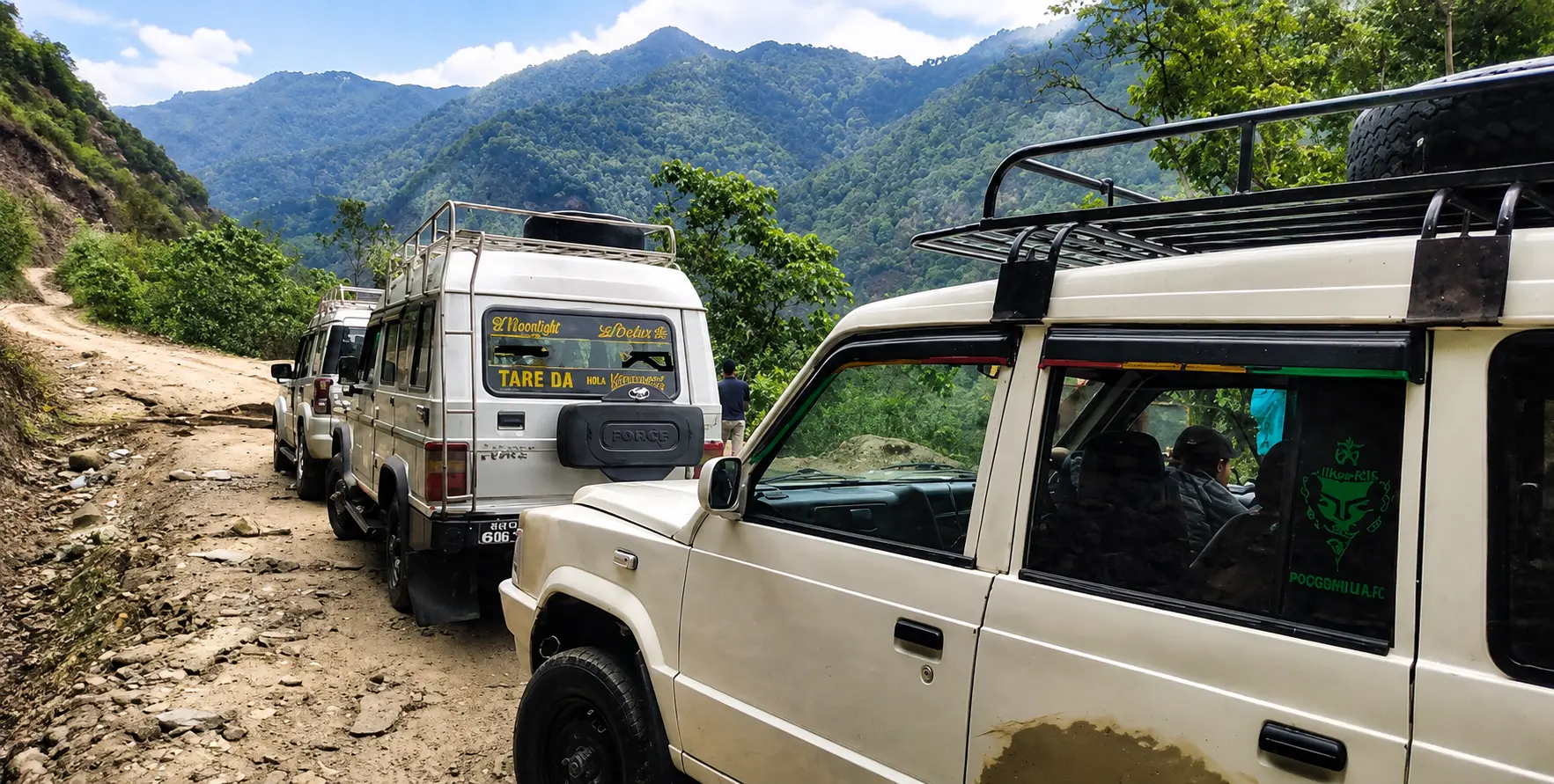
Chele to Syangboche (3,800 m) — The Most Demanding Section. All operators and cyclists consistently describe the second riding day as the most technically challenging part of the Upper Mustang bike ride: narrow cliff-face trails carved into sheer rock walls, significant sections requiring bike carrying rather than riding, and altitude that rises from 3,050 to 3,800 metres in a single day. This is where the support jeep from Nepal Vehicle Hiring Pvt Ltd proves its most critical value: carrying the cycling group’s luggage, providing emergency mechanical and medical support, and — for those stretches that exceed the technical capability or physical reserves of individual riders — offering a rescue option that prevents a difficult section from becoming a trip-ending crisis.

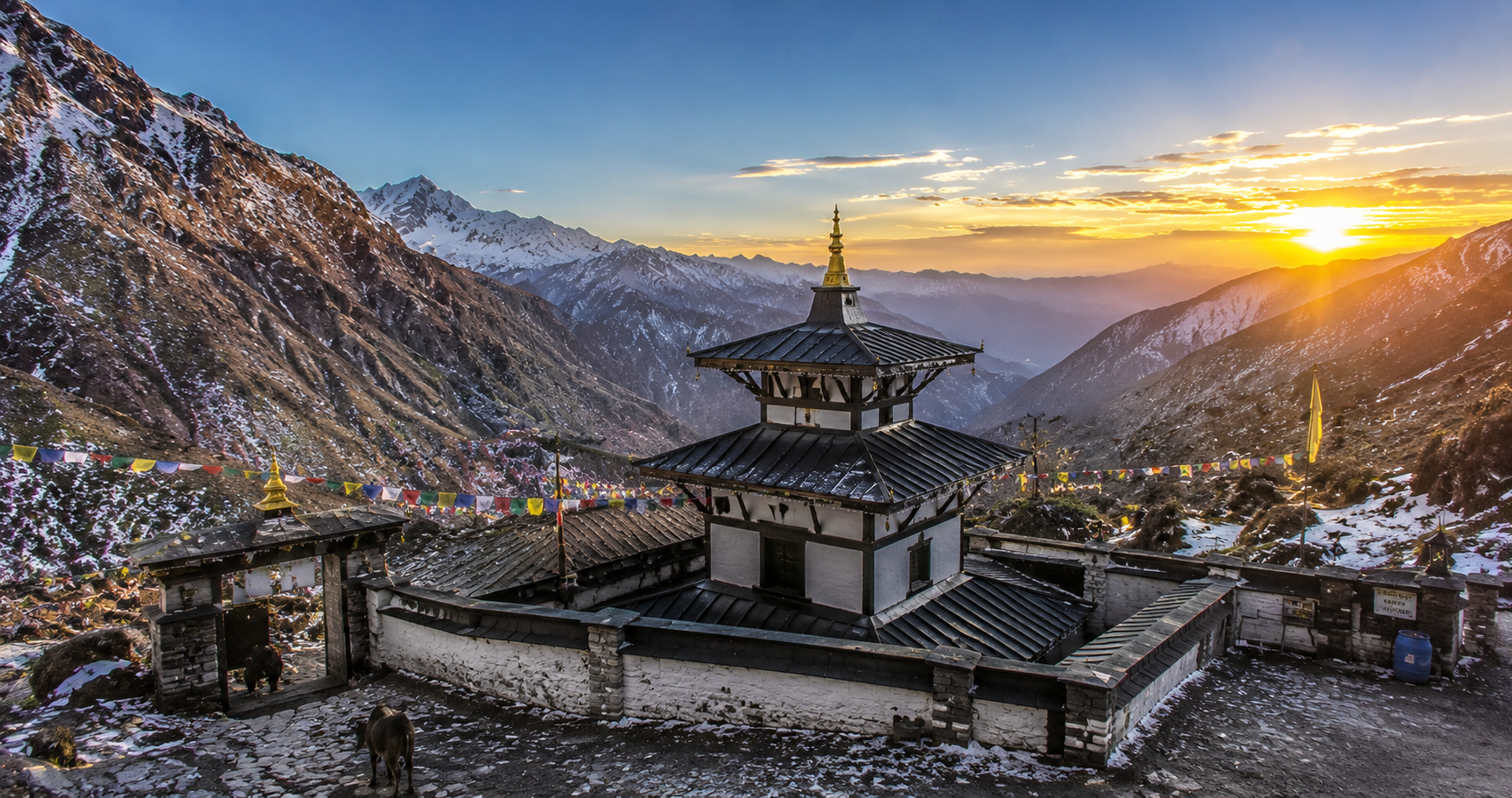
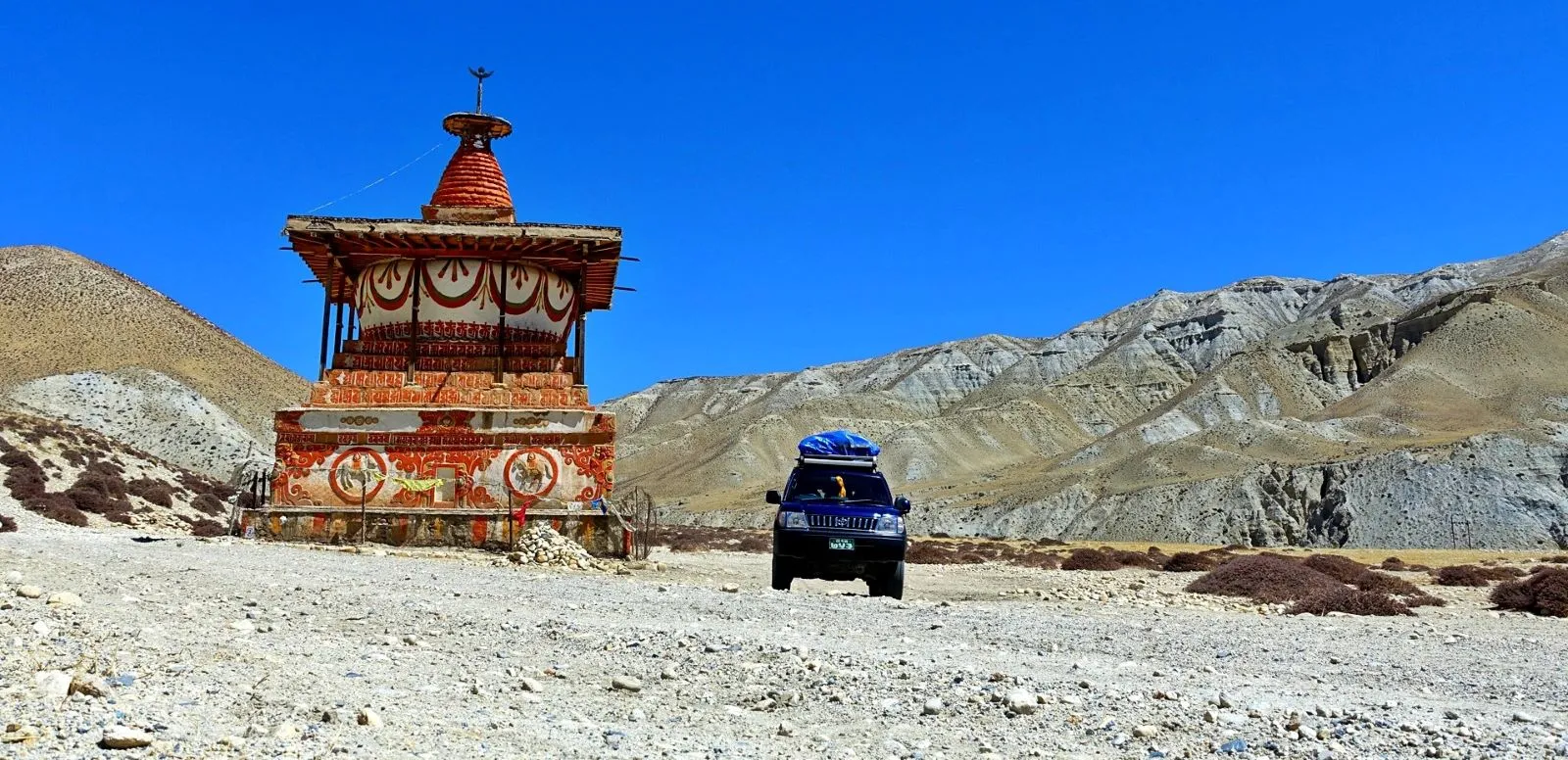
Syangboche to Ghami (3,500 m) — The Ancient Villages. The third riding day takes you through some of Upper Mustang’s most culturally rich territory: the dramatic Luri Gompa cave monastery, carved into a cliff face and accessible by a short ladder climb, is one of the route’s most memorable cultural stops. Ghami village, with its famous long mani wall (the longest in Nepal at approximately 400 metres) and its ancient monastery, provides a genuinely moving encounter with Upper Mustang’s living religious tradition — chortens, prayer flags, and the sounds of monastic chanting creating an atmosphere quite different from anything available in the more accessible parts of Nepal.

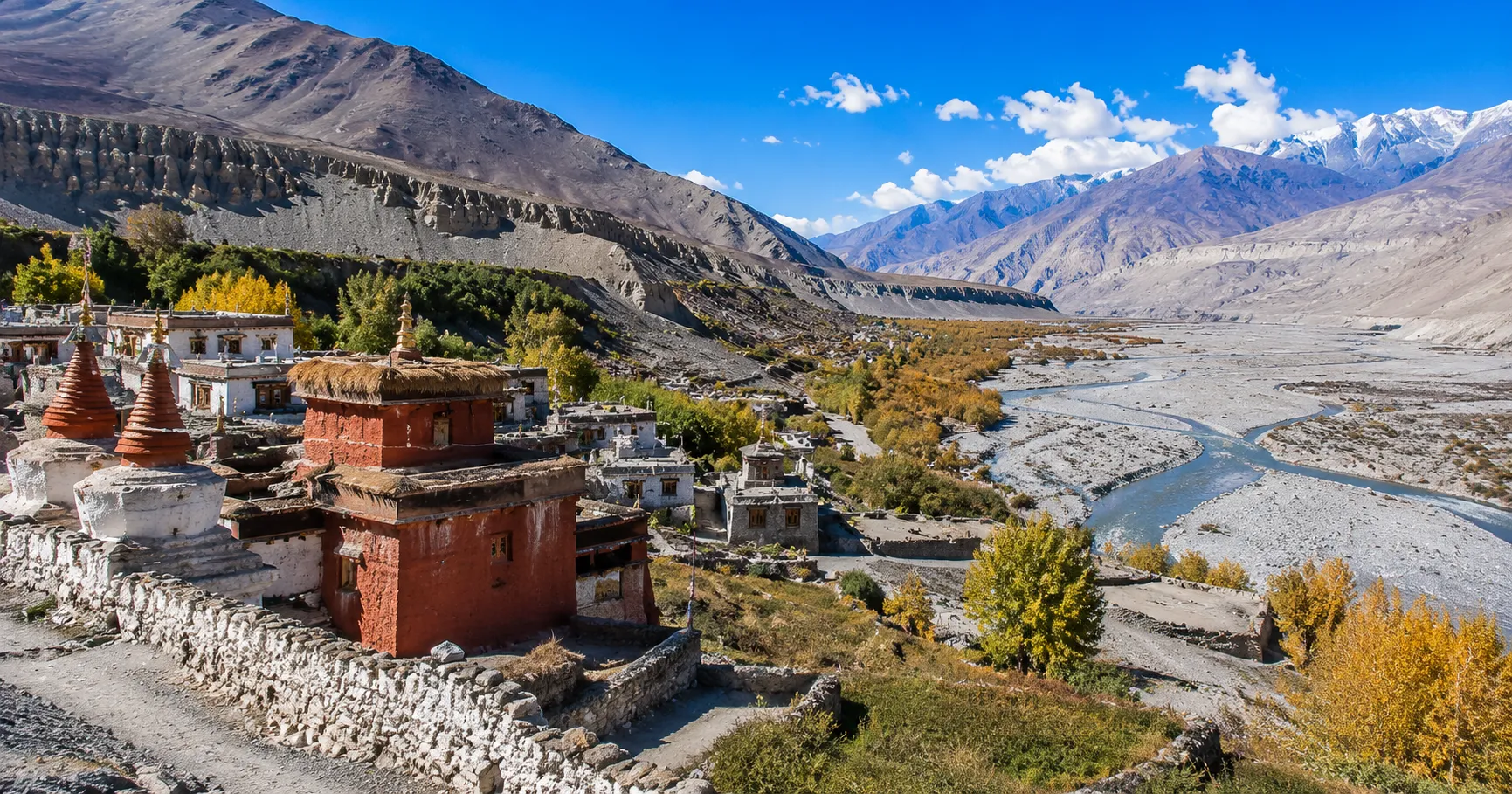
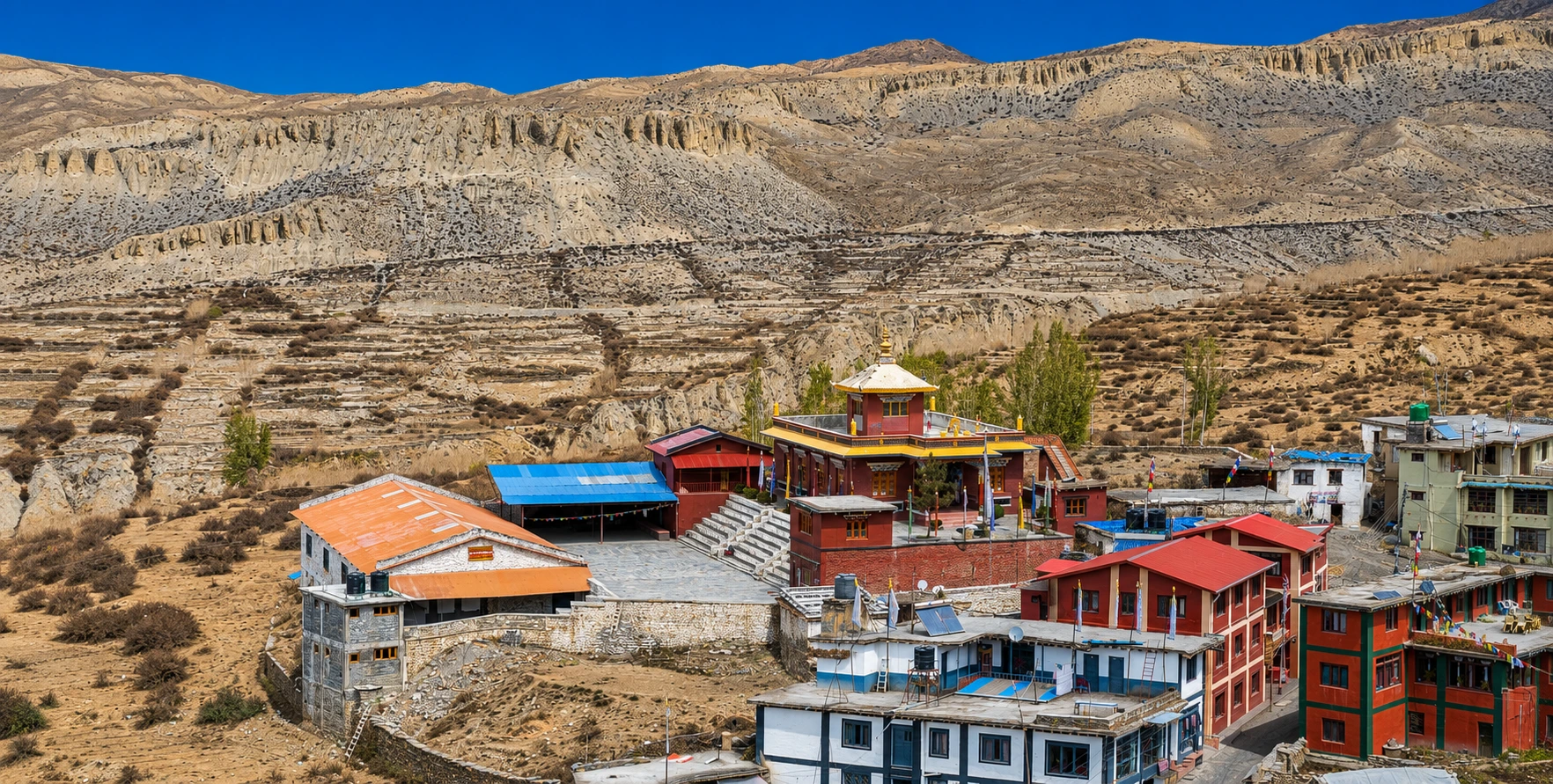
Ghami to Tsarang (3,560 m) — The Royal Fort. Tsarang (also written Charang) is home to the ancient fort palace of the Lo kings and the Tsarang Gompa — a five-storey monastery housing an extraordinary collection of ancient thangka paintings and clay Buddha statues that date to the fourteenth-century founding of the Kingdom of Lo. The Tsarang Gompa’s red-painted exterior is one of Upper Mustang’s most recognisable icons, and the medieval fort ruins on the ridge above, paired with the monastery in the village below, create an exceptional architectural time capsule.

Tsarang to Lo Manthang (3,840 m) — The Forbidden Kingdom’s Capital. The final ride to Lo Manthang is typically short (approximately 15 to 20 kilometres). Still, it carries significant altitude and emotional weight — arriving at the walled city’s entrance gate and passing through the ancient archway into the warren of narrow lanes and whitewashed buildings within is one of those travel experiences that justifies every difficult kilometre of the approach.

The private support jeep from Nepal Vehicle Hiring Pvt Ltd arrives at Lo Manthang via the same road, having already secured accommodation for the group through pre-arranged bookings coordinated from Pokhara before departure.
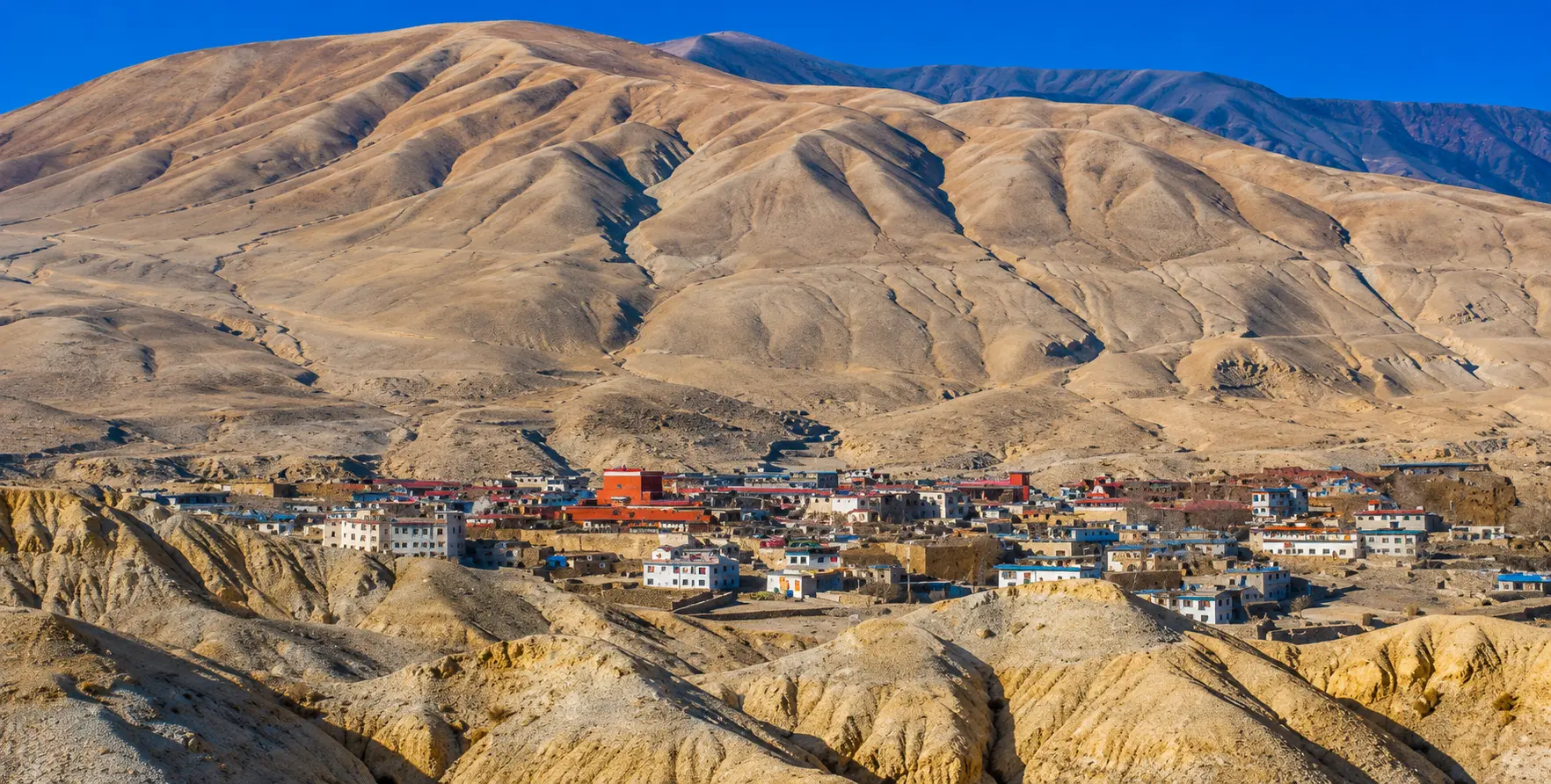
Experience an unforgettable Upper Mustang Bike Ride through Kagbeni, Chele, Ghami, Tsarang, and Lo Manthang. Discover ancient Tibetan-influenced villages, dramatic Himalayan landscapes, remote mountain roads, and the unique culture of the former Kingdom of Mustang.

Lo Manthang — What to See in the Forbidden Kingdom’s Capital

At 3,840 metres, Lo Manthang is both the destination and the reward of the Upper Mustang bike ride: a walled medieval Tibetan Buddhist city whose white-painted stone buildings, royal palace, four major monasteries, and narrow lane system have remained essentially unchanged in character for six centuries. A full rest day in Lo Manthang — standard on all well-organised bike tours — is genuinely insufficient to explore everything the city and its immediate surroundings offer, and most experienced operators strongly recommend at least 2 nights in Lo Manthang to allow proper exploration.

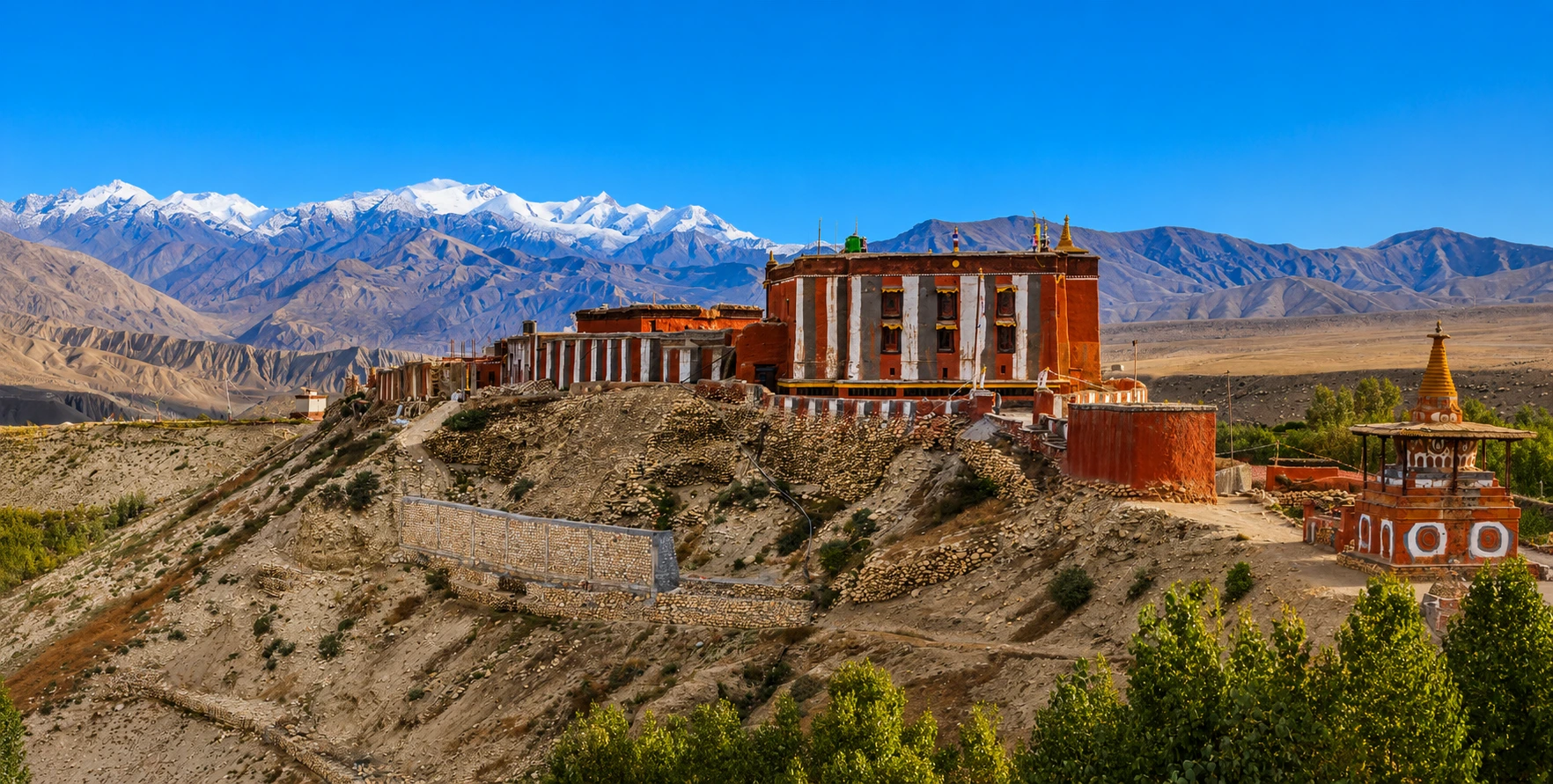
The Lo Manthang Gompa complex includes four major monasteries within the walled city: the Jampa Lhakhang (a three-storey monastery housing a remarkable collection of 15th-century murals and a 14-metre Maitreya Buddha statue), the Thubchen Gompa (one of the largest assembly halls in the entire Mustang region, with extraordinary ceiling frescoes recently restored with Tibetan and international heritage funding), the Choede Gompa (the most active monastery in the city, where monks conduct daily prayer sessions that visitors may observe), and the Rongchung Gompa. Each monastery represents a different era and lineage of the Kingdom of Lo’s Buddhist tradition, and together they form one of the most concentrated collections of original Himalayan Buddhist art and architecture accessible to visitors anywhere.

The Royal Palace of the former Kingdom of Lo stands at the northeast corner of Lo Manthang. This five-storey structure was the residence of the Lo royal family until relatively recently, and the royal family still maintains it even after the kingdom’s formal end.

Access is by guided tour only, arranged through the Lo Manthang guesthouses, and the interior displays a personal collection of royal regalia, thangka paintings, and historical artefacts that provide the most direct connection to the four-century history of Himalayan royalty that this walled city embodies.

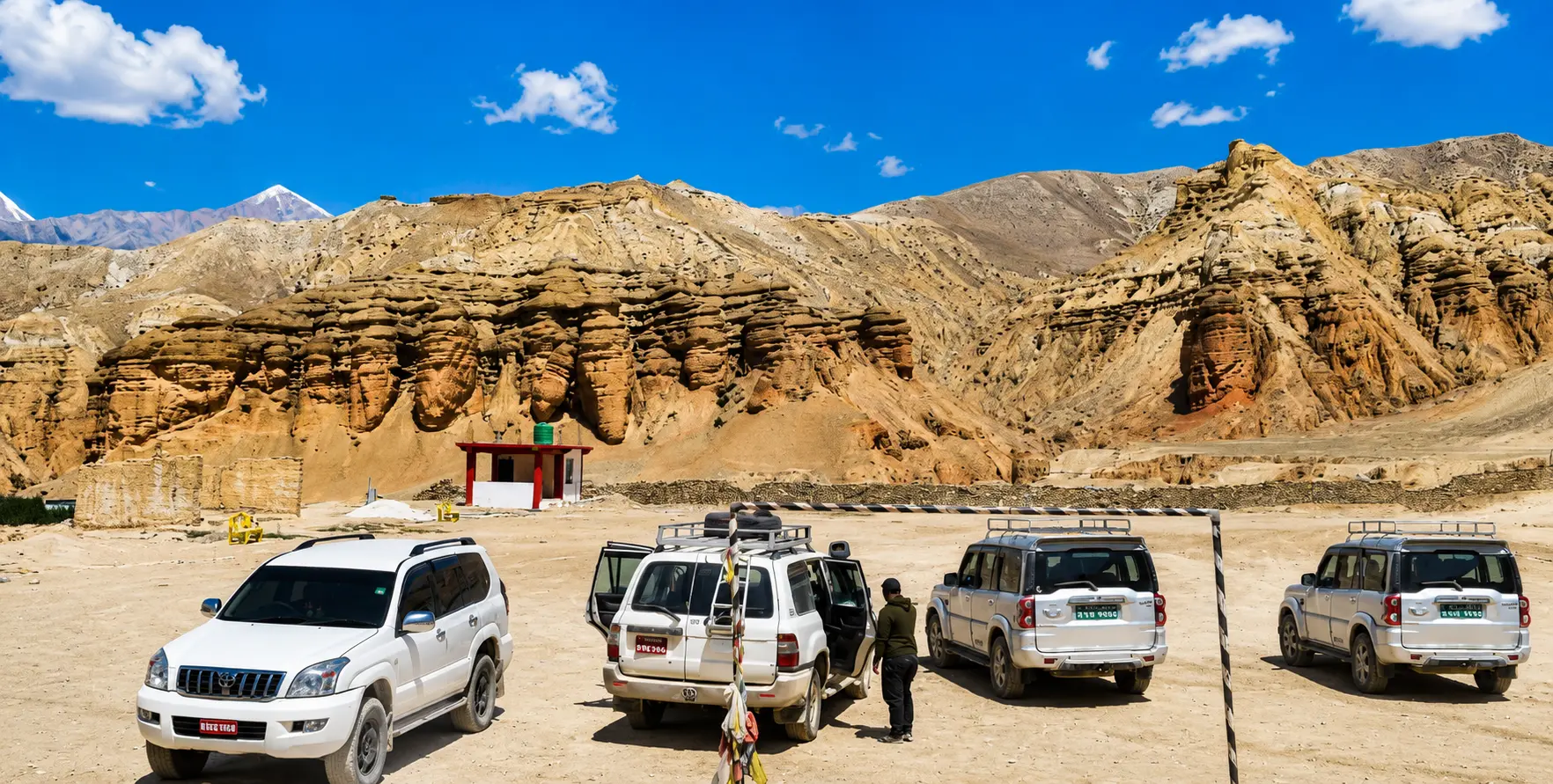
The Choser Caves — a complex of sky caves carved into the clifftops north and west of Lo Manthang — are among the Enstang region’s most archaeologically significant sites, containing ancient human remains, manuscript fragments, and cave-painted shrines dated by archaeologists to the eighth to twelfth centuries. The Choser cave complex is reachable on a day trip from Lo Manthang by private jeep to the canyon base, followed by a climb on foot to the cliff face — a half-day excursion that the Nepal Vehicle Hiring Pvt Ltd support vehicle handles as a standard Lo Manthang rest-day extension on request.
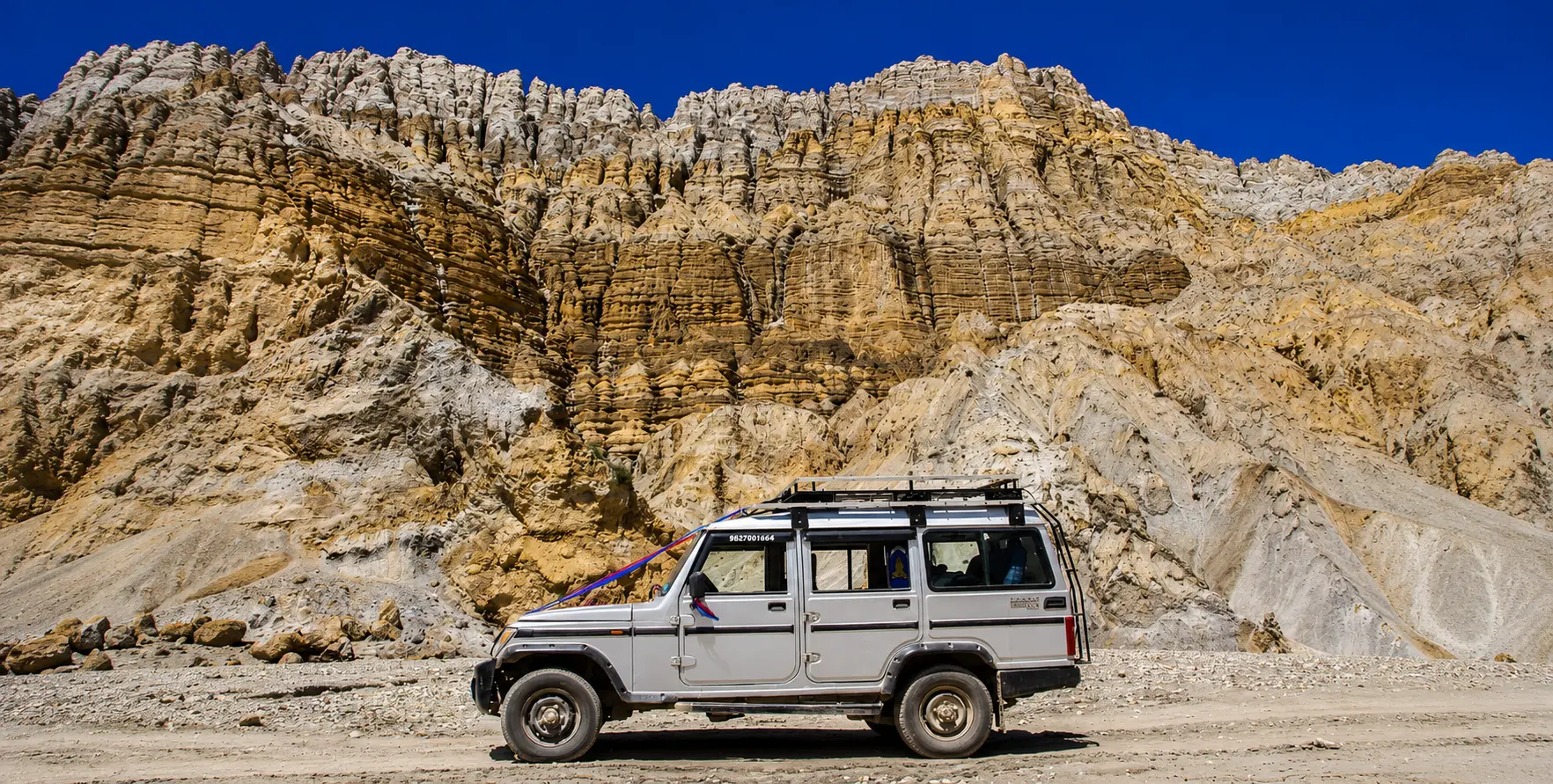
Experience an unforgettable Upper Mustang Bike Ride through Kagbeni, Chele, Ghami, Tsarang, and Lo Manthang. Discover ancient Tibetan-influenced villages, dramatic Himalayan landscapes, remote mountain roads, and the unique culture of the former Kingdom of Mustang.

The Support Jeep — Why It Is Essential for Upper Mustang Cycling

The question of whether a support vehicle hire is necessary for the Upper Mustang bike ride has a clear and consistent answer from every operator, guide, and returning cyclist who has done this route: yes, unreservedly, for any group that wants to complete the journey safely, reliably, and with the flexibility to respond to the inevitable mechanical failures, weather events, and physical limits that a multi-day high-altitude off-road cycling adventure generates.

Luggage Support. The distance from Jomsom to Lo Manthang and back is approximately 210 to 230 kilometres of mostly rough terrain at an average altitude exceeding 3,200 metres. Carrying tents, sleeping bags, spare clothing, cooking equipment, camera gear, medical supplies, spare parts, and personal luggage on fully loaded bikes for this distance, at this altitude, on this terrain, transforms a challenging but achievable cycling adventure into an expedition-grade undertaking that requires months of prior loaded-touring experience.

A private support jeep from Nepal Vehicle Hiring Pvt Ltd carries all luggage, letting riders focus entirely on the cycling.

Emergency Support and Rescue. Upper Mustang is a restricted area with no helicopter evacuation infrastructure comparable to the Khumbu or main Annapurna region. Medical emergencies, serious mechanical failures, altitude sickness requiring rapid descent, and weather-related route changes all require a vehicle capable of evacuating a rider to Jomsom, where helicopter access is available, at any point on the route.

The support jeep is this evacuation capacity — and in a high-altitude restricted area with no public transport, its presence is the essential safety margin that responsible operators build into every Upper Mustang cycling tour.

Fuel and Supply Logistics. Upper Mustang has limited fuel availability: Jomsom, Kagbeni, and Lo Manthang have fuel points, but supplies aren’t always guaranteed, particularly at Lo Manthang, where resupply depends on infrequent deliveries. Private jeep hire from Nepal Vehicle Hiring Pvt Ltd includes reserve fuel as standard for all Upper Mustang support vehicle bookings, and our drivers coordinate with the Lo Manthang fuel point in advance to confirm availability before departure.

Without a vehicle-carried fuel reserve, a motorbike group faces a real risk of getting stranded for fuel in the restricted area.

Accommodation and Route Coordination. Upper Mustang’s village guesthouses have limited accommodation — typically 3 to 8 rooms per village —so booking in advance is required to guarantee space for a cycling group. The support vehicle driver from Nepal Vehicle Hiring Pvt Ltd coordinates advance accommodation bookings along the route before departure from Jomsom, ensuring that when the cycling group arrives at each village, beds, hot water, and dinner are confirmed rather than uncertain.
Experience an unforgettable Upper Mustang Bike Ride through Kagbeni, Chele, Ghami, Tsarang, and Lo Manthang. Discover ancient Tibetan-influenced villages, dramatic Himalayan landscapes, remote mountain roads, and the unique culture of the former Kingdom of Mustang.

The Cave Monasteries and Ancient Ruins Along the Route

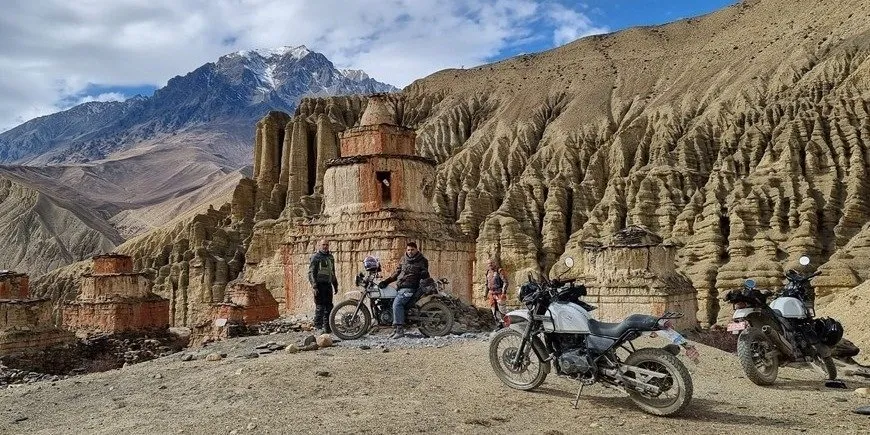
One of the defining qualities of the Upper Mustang bike ride, and what distinguishes it from any other cycling adventure in Nepal, is the density of ancient religious and archaeological sites visible directly from the route—not as detours requiring significant off-trail effort, but as natural features of the landscape the road passes through. The cliff-face cave systems carved into the Upper Mustang canyon walls contain some of the oldest human habitation evidence in the entire Himalayan region, with archaeological investigations in recent decades revealing cave complexes occupied as early as 2,500 to 3,000 years ago and containing manuscripts, textiles, and human remains that have transformed scholarly understanding of pre-Buddhist Himalayan culture.

The Luri Gompa — accessible on a short stop from the route between Ghami and Tsarang — is one of the most visually dramatic cave monasteries in the entire Upper Mustang region: a monastery carved directly into a rock face, accessible via a short cliff-climbing ladder, with interior cave chambers containing remarkably well-preserved Newari-style paintings dated to the fifteenth century. Luri Gompa’s iconography uniquely combines Tibetan Buddhist conventions with Newari artistic techniques, reflecting the extraordinary cultural exchange between the Kathmandu Valley and the Upper Mustang kingdom during the medieval period.

The support vehicle from Nepal Vehicle Hiring Pvt Ltd is parked at the canyon base while the group makes the 30-minute climb to Luri Gompa — the driver waits with water, snacks, and any gear not needed for the climb.

Ghar Gompa above Chele village — reached by a steep 30-minute climb from the village — is considered one of the oldest monasteries in the Mustang region, with foundations some scholars date to before the establishment of the Kingdom of Lo in the fourteenth century. The Drakmar cliffs near Chele and the Dhakmar red cliffs south of Ghami are extraordinary geological formations whose ochre- and crimson-banded rock faces create some of the most photogenic landscapes on the entire route.

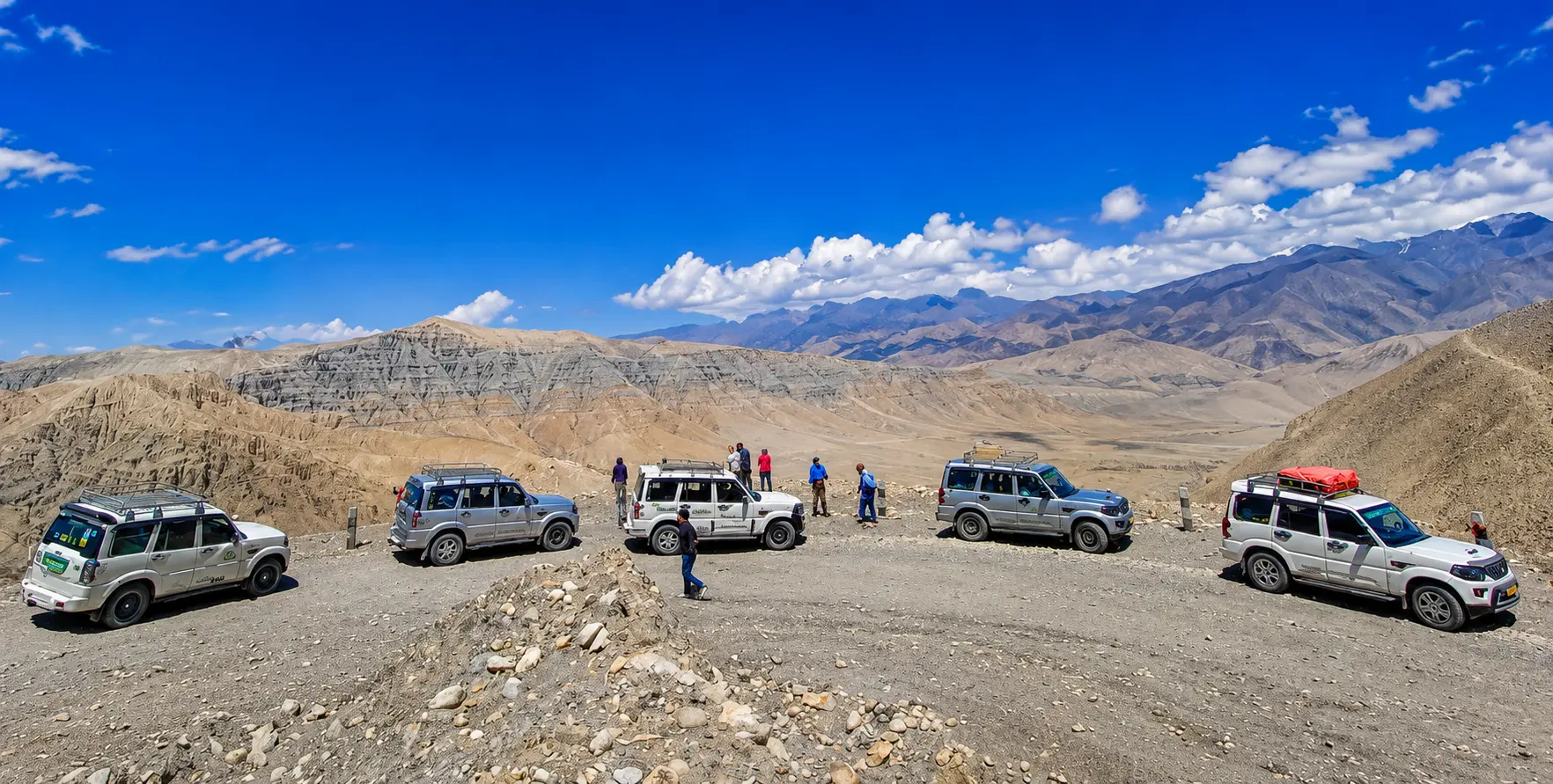
The Nyi La pass at 4,010 metres between Ghami and Tsarang is the highest point on the standard route between Kagbeni and Lo Manthang, and the view from the pass across the Upper Mustang plateau toward the Tibetan border peaks is one of the ride’s finest panoramic moments. The private jeep support vehicle meets the cycling group at the top of the pass or at the Tsathe Tsarang-side descent, depending on road conditions and group preference.
Experience an unforgettable Upper Mustang Bike Ride through Kagbeni, Chele, Ghami, Tsarang, and Lo Manthang. Discover ancient Tibetan-influenced villages, dramatic Himalayan landscapes, remote mountain roads, and the unique culture of the former Kingdom of Mustang.

Lo Manthang’s Living Culture — Festivals and Daily Life

Arriving in Lo Manthang by bike — whether mountain bicycle or motorbike — after several days of riding through the austere Upper Mustang landscape creates a specific quality of arrival experience that cannot be replicated by arriving in a vehicle: the sense of having earned entry to the walled city through sustained physical effort at high altitude, combined with the particular physical-spiritual satisfaction of completing a challenging cycling journey at its intended destination, gives the Lo Manthang arrival an emotional quality beyond what the city’s extraordinary architectural character alone would produce.

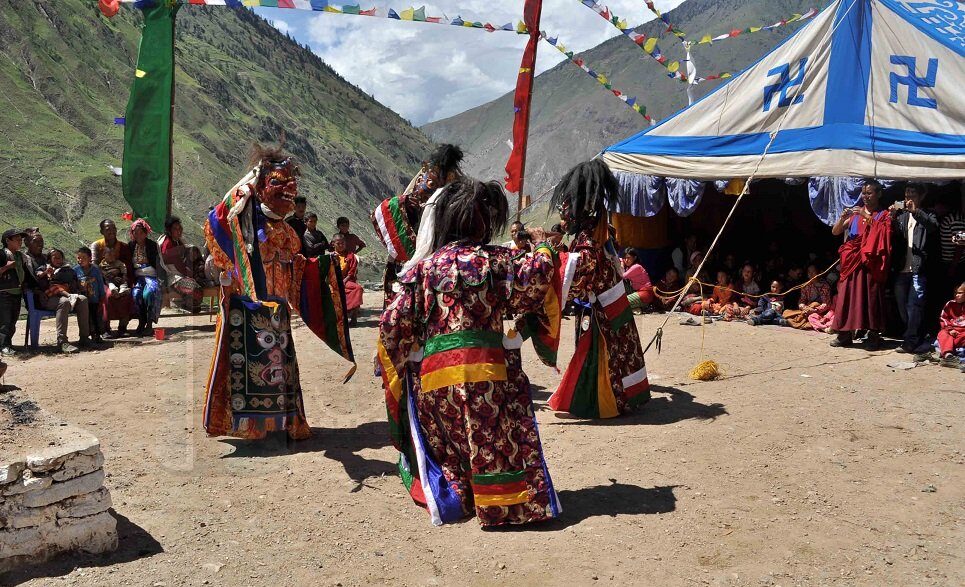
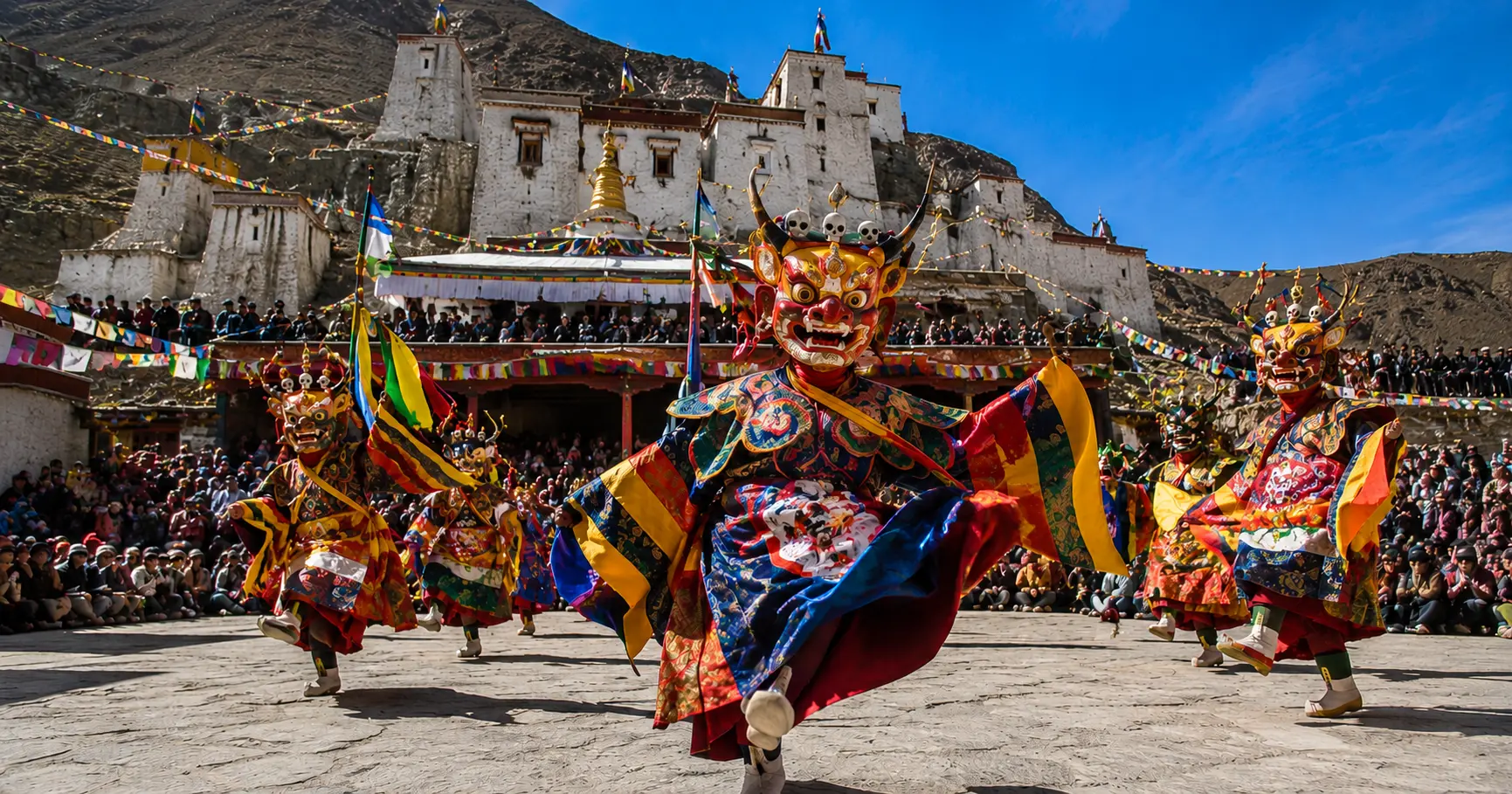
Lo Manthang’s most extraordinary cultural moment is the Tiji Festival (Tenchi or Teeji), held annually in May on dates determined by the Tibetan lunar calendar. This three-day religious ceremony commemorates the legend of Dorje Jono, the son of a demon who defeated his own father to save Lo Manthang from destruction, through elaborate masked dance rituals (Cham) performed by monks from the Lo Manthang monasteries in full ceremonial regalia.

The festival draws the entire Lo Manthang community: monks in magnificent brocade and ceremonial masks, the lay community in their finest traditional dress, and an increasing number of international visitors who time their Upper Mustang bike ride around the Tiji dates. Nepal Vehicle Hiring Pvt Ltd’s support vehicle packages for Tiji-timed tours book out 2 to 3 months in advance because Lo Manthang has limited accommodation during the festival.

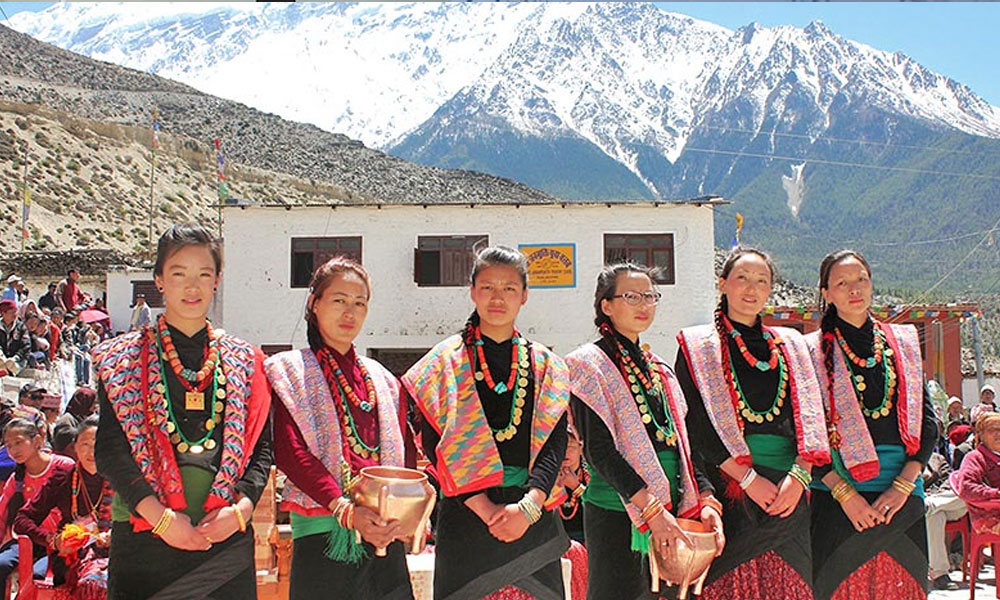
Outside festival season, daily life in Lo Manthang offers its own absorbing texture: monks performing their morning and evening chanting schedules in the open courtyards of the four principal monasteries, elderly residents circumambulating the city walls at dawn spinning prayer wheels, children walking to the community school that has operated within the walled city since the 1990s, and the gradual interaction between traditional pastoral economy and the small but growing tourism economy that the Upper Mustang trek and bike tour community has created. Local families run the Lo Manthang guesthouses and serve traditional thukpa noodle soup, tsampa (roasted barley flour), and butter tea alongside increasingly available Western alternatives, creating a dining experience that places the visitor directly within the food culture of a still-living medieval community.
Experience an unforgettable Upper Mustang Bike Ride through Kagbeni, Chele, Ghami, Tsarang, and Lo Manthang. Discover ancient Tibetan-influenced villages, dramatic Himalayan landscapes, remote mountain roads, and the unique culture of the former Kingdom of Mustang.

The Support Vehicle’s Role Day by Day

Understanding exactly what the Nepal Vehicle Hiring Pvt Ltd support jeep does on each day of the Upper Mustang bike ride helps clarify why this specific service differs from a standard trekking private vehicle hire and why the driver’s specific knowledge of the Upper Mustang route and its logistics is as important as the vehicle’s mechanical specifications.

On the departure morning from Jomsom, the support jeep driver loads the vehicle with all luggage, spare parts, emergency equipment, reserve fuel, and the first day’s food supplies while the cycling group prepares their bikes for the day’s ride. The driver then heads to Kagbeni along the jeep road, arriving at the checkpoint before the cycling group to verify the vehicle permit.

At the same time, the riders complete the flat section at Kagbeni at their own pace. Beyond Kagbeni, on days when the riding route and the vehicle route diverge because trail sections are inaccessible by jeep, the driver proceeds to the day’s destination village by road. Meanwhile, the cyclists follow the single-track trail.

At the destination, the driver has already negotiated room allocation with the guesthouse owner, confirmed the dinner order for the group’s estimated arrival time, and found a covered or sheltered space where the bikes can be stored overnight — details that, accumulated across a 7 to 10 day trip, represent the difference between an exhausting logistical struggle and a smoothly executed cycling adventure.

On rest days and detour days — the Lo Manthang rest day, the Choser Cave excursion, the Luri Gompa stop — the support jeep hire becomes the exploration vehicle: carrying the group to the canyon base for the Choser climb, waiting while the cave visit proceeds, and returning the group to Lo Manthang for the evening. This dual role of the support vehicle—logistics carrier for the riding days and exploration taxi for the rest days—makes the Nepal Vehicle Hiring Pvt Ltd Upper Mustang support package more comprehensive than a simple luggage transport arrangement.

Contact our team on WhatsApp or via our plan trip page to discuss the specific daily itinerary and support requirements for your cycling group.
Experience an unforgettable Upper Mustang Bike Ride through Kagbeni, Chele, Ghami, Tsarang, and Lo Manthang. Discover ancient Tibetan-influenced villages, dramatic Himalayan landscapes, remote mountain roads, and the unique culture of the former Kingdom of Mustang.

Transport from Kathmandu and Pokhara — Getting to the Bike Ride Start

The Upper Mustang bike ride begins at Jomsom — either by the 20-minute domestic flight from Pokhara (the most popular approach for time-conscious groups) or by the private jeep drive from Pokhara through the Kali Gandaki gorge (the surface-transport approach that extends the cycling adventure to include the magnificent gorge drive as part of the journey, typically covering Pokhara to Jomsom in 7 to 9 hours). For groups whose bikes and equipment require road transport that a domestic flight cannot accommodate, the Pokhara to Jomsom private jeep is the standard and only practical option.

From Kathmandu, the most efficient routing to the Upper Mustang bike start is: Kathmandu to Pokhara by private vehicle or Kathmandu to Pokhara bus (4 to 6 hours), Pokhara overnight, then Pokhara to Jomsom by domestic flight (20 minutes) or by private jeep drive (7 to 9 hours). Nepal Vehicle Hiring Pvt Ltd coordinates the full Kathmandu-to-Jomsom transport chain, including Kathmandu airport transfers for groups arriving internationally, Kathmandu sightseeing days, and Pokhara car hire for any Pokhara-based preparation days before the transfer.

The support 4WD jeep from Nepal Vehicle Hiring Pvt Ltd travels the Pokhara-to-Jomsom route by road regardless of whether the cycling group takes the domestic flight, arriving at Jomsom with all luggage, equipment, and supplies in advance of or concurrent with the riders. For the return, the same road route reverses from Jomsom to Pokhara, with the Jomsom to Pokhara jeep hire covering the spectacular Kali Gandaki gorge descent through Marpha, Tukuche, Tatopani, and Beni to Pokhara in 7 to 9 hours — one of Nepal’s finest overland drives, described in full in our dedicated Muktinath tour guide series.
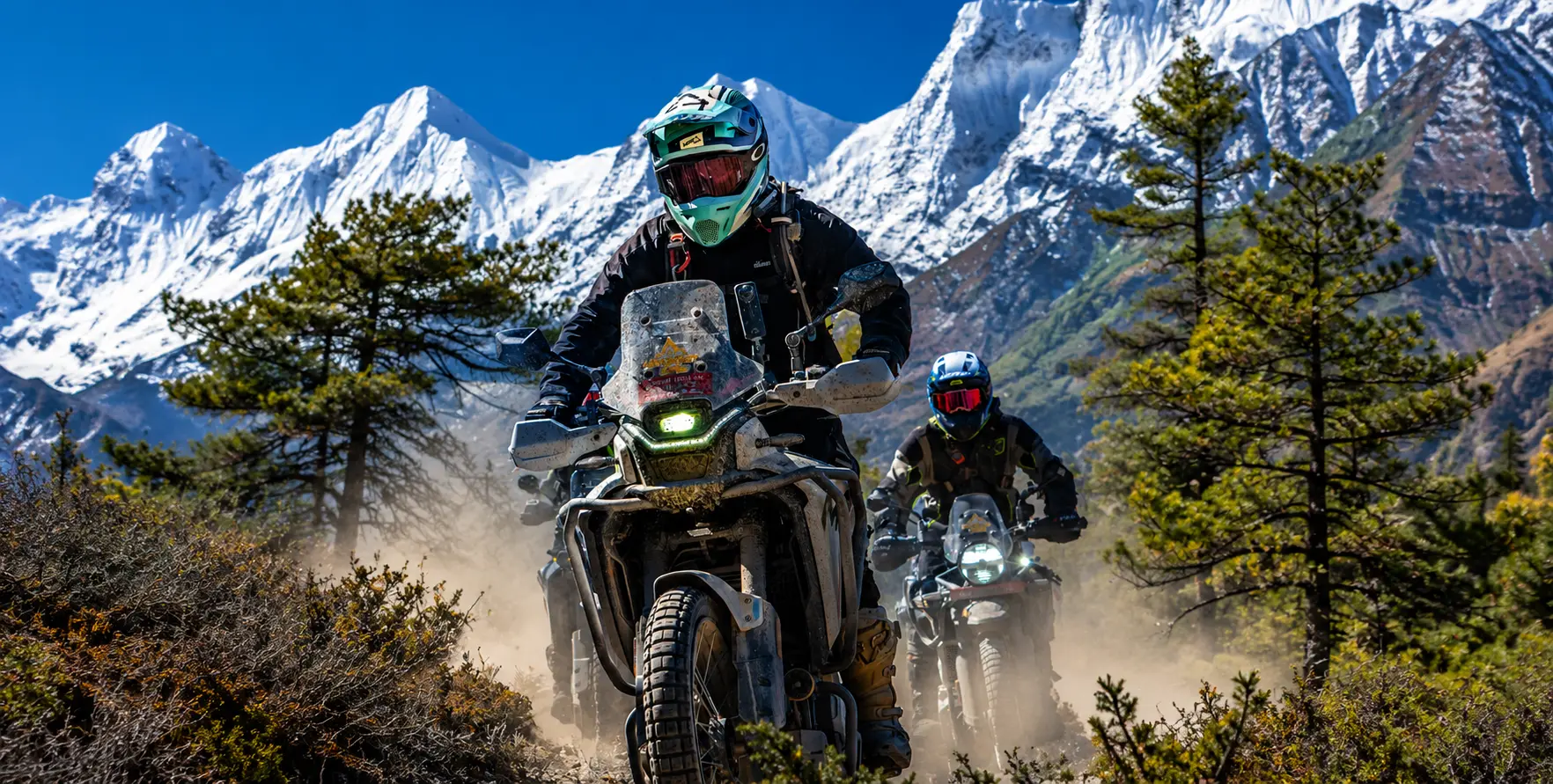
Experience an unforgettable Upper Mustang Bike Ride through Kagbeni, Chele, Ghami, Tsarang, and Lo Manthang. Discover ancient Tibetan-influenced villages, dramatic Himalayan landscapes, remote mountain roads, and the unique culture of the former Kingdom of Mustang.

Mountain Bikes vs Motorbikes — Two Different Upper Mustang Experiences

The term Upper Mustang bike ride covers two distinct cycling experiences that share the same route but differ fundamentally in their physical demands, daily distances, and required preparation.

Mountain Biking. The mountain bike version of the Upper Mustang route is a genuinely demanding technical cycling adventure: 210 to 230 kilometres of mostly unpaved terrain at high altitude, with daily riding times of 4 to 8 hours, sections requiring bike carrying on the most technical cliff-face trail, and the sustained demands of off-road pedalling at an average altitude above 3,200 metres, where oxygen availability is about 30 per cent lower than at sea level. Most operators recommend intermediate to advanced off-road experience as a genuine minimum for the mountain bike version, and strongly advise prior acclimatisation at altitude before attempting the RAP section.

The daily riding distances of 25 to 40 kilometres are manageable on their own but, on technical terrain, compress into riding times that cover 80 to 100 kilometres on standard trail surfaces.

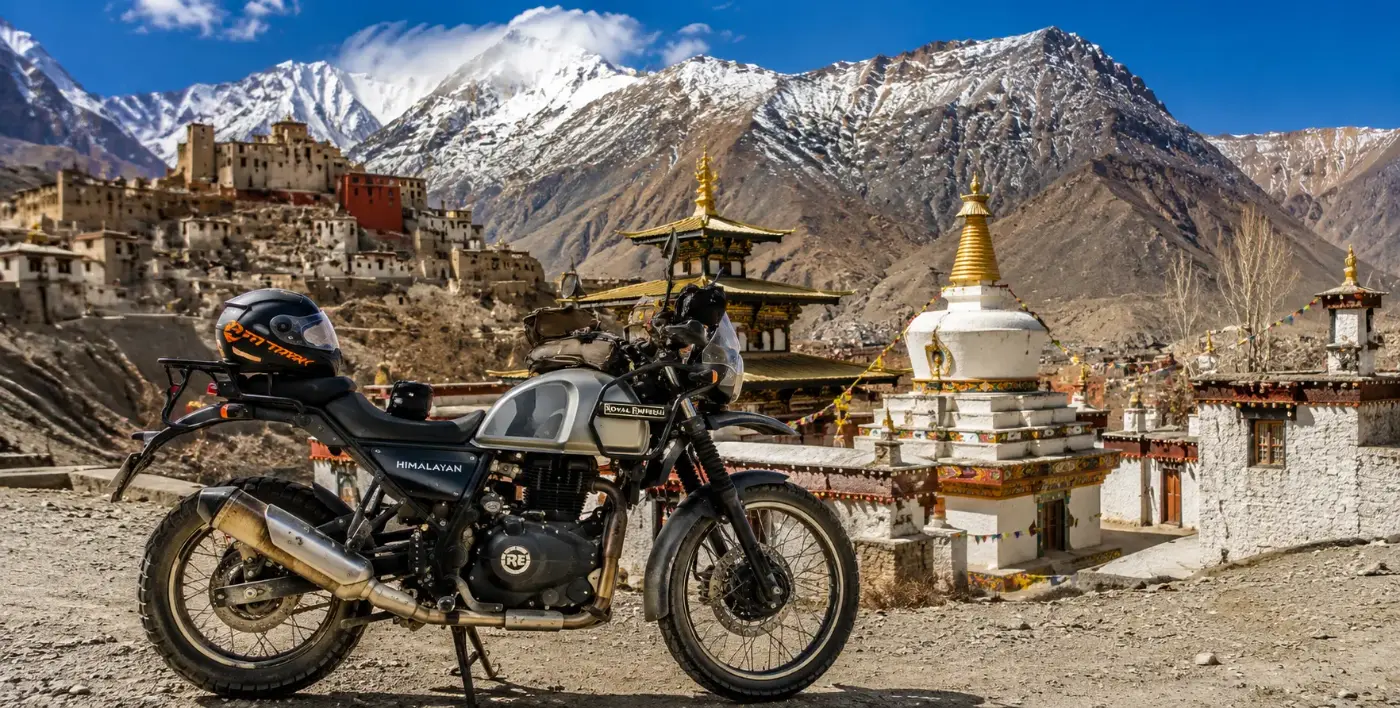
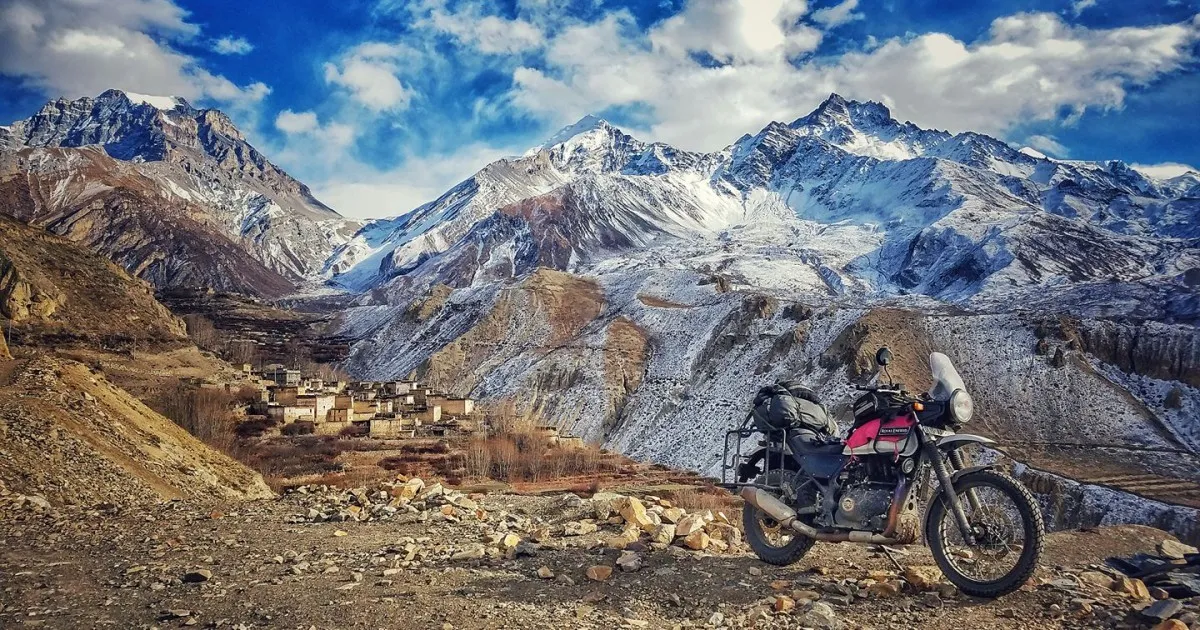
Motorbike Riding. The motorbike version — most commonly done on Royal Enfield Himalayan bikes, which have become the semi-official vehicle of Himalayan adventure touring in Nepal for their combination of mechanical reliability, parts availability in remote areas, and suitability for high-altitude off-road terrain — covers the same route in fewer days and with less physical demand, but with the specific technical requirements of off-road motorcycle control in loose gravel, sand, and the occasional river crossing. A typical Upper Mustang motorbike tour covers the round trip from Kagbeni to Lo Manthang in 6 to 8 days at a more relaxed pace, or 4 to 5 days for experienced riders comfortable with sustained off-road riding.

Nepal Vehicle Hiking Pvt Ltd’s support jeep hire covers both mountain bike and motorbike formats equally—carrying luggage, providing emergency support, and coordinating accommodation and logistics regardless of the bike type.

Permits in Full — Everything You Need for Upper Mustang

The Upper Mustang bike ride requires a specific set of permits that differ from standard Nepal trekking documentation, and you must arrange them through a registered agency in Kathmandu or Pokhara before the Kagbeni checkpoint.

The Restricted Area Permit (RAP) is the defining permit for Upper Mustang: as of 2026, the fee is USD 50 per person per day for each day spent inside the restricted area (north of Kagbeni). The RAP requires a minimum of 2 people and a licensed guide.

This permit is arranged through a registered trekking or cycling agency in Kathmandu — it cannot be obtained at the Kagbeni checkpoint or any other point along the route. Nepal Vehicle Hiring Pvt Ltd works with registered agency partners to coordinate RAP applications for all Upper Mustang support vehicle packages.

The ACAP (Annapurna Conservation Area Permit) at NPR 3,000 (approximately USD 22 to 25) per person for foreign nationals covers the Lower Mustang section of the route (Jomsom to Kagbeni) through the Annapurna Conservation Area — the same permit described in our Annapurna Circuit vehicle hire guide and Besisahar private vehicle guide. A TIMS card (USD 10 to 20 per person) completes the standard permit set.

For the support vehicle specifically, you must also arrange vehicle permits for the restricted area —the Kagbeni checkpoint verifies both the passenger RAP permits and the vehicle’s restricted-area authorisation. Nepal Vehicle Hiring Pvt Ltd handles all vehicle-specific documentation as a standard component of every Upper Mustang support jeep hire booking.

Season Guide — When to Ride Upper Mustang

The Upper Mustang bike ride season is one of Nepal’s most distinctive: unlike most Himalayan destinations where monsoon (June to August) is the low season, Upper Mustang in the rain shadow of the Himalayan range is one of the best possible destinations during the monsoon months — clear skies, dry trails, no leeches, and dramatically lower visitor numbers than the pre-monsoon and post-monsoon peaks.

June to August — The Rain Shadow Advantage. This is one of Nepal’s best-kept adventure travel secrets: while the Annapurna Circuit trek, the Langtang Valley trek, and the Everest Base Camp trek all deal with heavy monsoon rainfall and leech-infested trails in the summer months, Upper Mustang sits in the Himalayan rain shadow that receives less than 200 mm of annual precipitation. The July and August months specifically are considered by experienced operators as among the finest for the Upper Mustang bike ride: dry trails, cool temperatures at altitude, and the Tiji Festival in May (two days of spectacular masked dance ritual in Lo Manthang, timed by the lunar calendar) if the schedule extends into late spring.

March to May — Spring Season. Clear skies, moderate temperatures, and the Tiji Festival if the calendar aligns make this the most popular booking window for the Upper Mustang bike ride. The Kali Gandaki gorge section between Jomsom and Pokhara is in rhododendron bloom through March and April, adding colour to the support vehicle transfer through the gorge.

September to November — Post-Monsoon Autumn. Exceptional visibility and stable weather make autumn the most reliably excellent season for the entire Nepal mountain region, and Upper Mustang bike tours in October are some of the finest available: the post-monsoon atmosphere is crystal clear, temperatures are comfortable, and the 4WD support jeep hire benefits from the best road conditions of the year on the Jomsom approach.

Winter (December to February). Upper Mustang is passable in winter but requires significant cold-weather preparation: temperatures at Lo Manthang drop well below -15 Celsius overnight in January, and some sections of the route above 3,500 metres may carry snow patches requiring careful navigation.

The Kali Gandaki Gorge Drive — A Journey Within the Journey

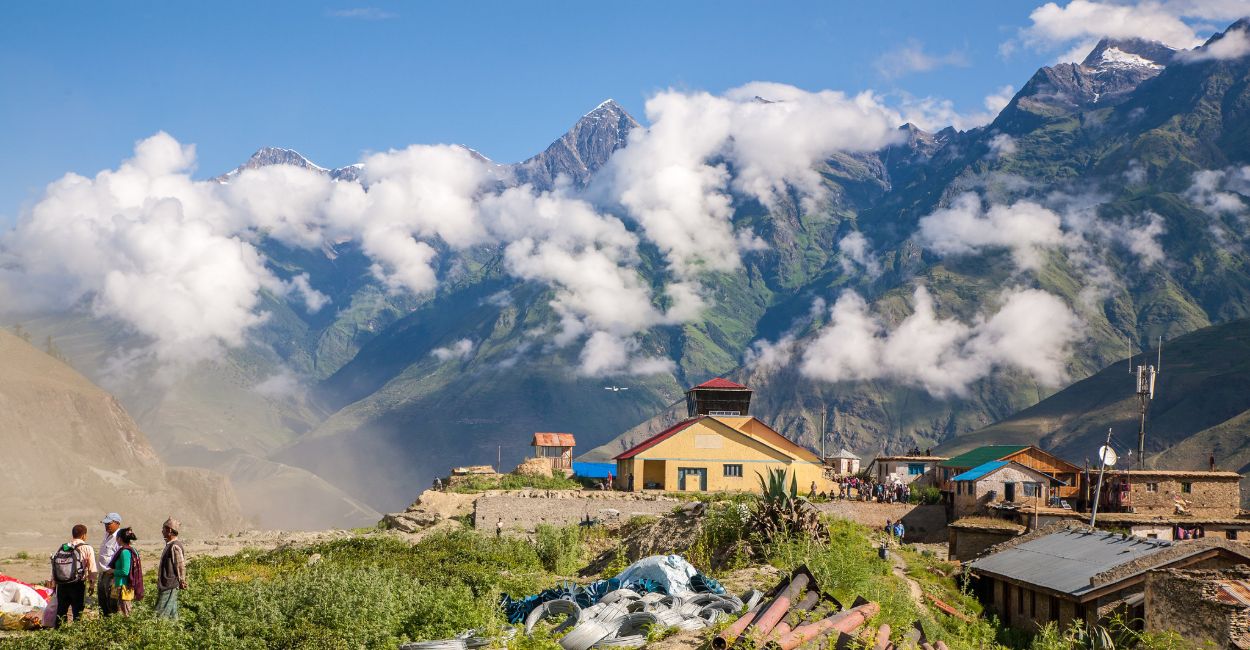
Whether arriving at Jomsom by domestic flight from Pokhara or by the private jeep drive through the Kali Gandaki gorge, the Kali Gandaki valley section between Jomsom and Pokhara is itself one of Nepal’s most spectacular road experiences — the deepest gorge on earth, flanked by Dhaulagiri (8,167 m) to the west and Annapurna I (8,091 m) to the east, passing through the traditional Thakali villages of Marpha, Tukuche, Kalopani, and Tatopani on its way to Beni and Pokhara. The Nepal Vehicle Hiring Pvt Ltd support jeep drives this corridor in both directions — Pokhara to Jomsom on the outward journey and Jomsom to Pokhara on the return — and both drives are genuinely rewarding in their own right.

Many Upper Mustang bike ride groups specifically choose to ride their bikes on sections of the Kali Gandaki gorge road — Jomsom to Kagbeni (a gentle flat ride of 18 km), and sections of the return from Jomsom toward Tatopani — as part of their overall cycling experience, while the support jeep drives the remaining gorge sections independently. This combination lets you cycle the most rideable gorge sections while driving the technically difficult or high-wind sections, extending the Upper Mustang cycling journey beyond the restricted area boundaries into one of Nepal’s finest valley cycling environments.

Our contact team advises on the optimal cycling-versus-driving split for the Kali Gandaki sections based on each group’s experience level and available time.

Practical Tips for the Upper Mustang Bike Ride

  • Book permits 3-4 weeks in advance: RAP applications through a registered agency take several working days and require group passport copies. Arrange before arriving in Nepal if possible. Contact Nepal Vehicle Hiring Pvt Ltd for registered agency referrals.
  • Acclimatise before entering the restricted area: Spend at least 2 nights in Jomsom (2,720 m) before crossing the Kagbeni checkpoint. Rapid altitude gain from Jomsom to Lo Manthang without acclimatisation creates a serious AMS risk.
  • Early morning starts: The Jomsom valley wind builds from 10 AM to speeds of 60+ km/h in the afternoon. All Upper Mustang bike rides should start by 6:00 to 7:00 AM each riding day.
  • Carry sufficient water: Water sources are limited on the Upper Mustang plateau. Carry 3 to 4 litres per person per day, and use water purification tablets or a filter to treat refills from wells and springs.
  • Spare parts essentials: The minimum spare requirements are inner tubes (minimum 4 per bike), tyre levers a patch kit, brake pads, chain lubricant, and multi-tools. The support vehicle carries these for all participants.
  • Support vehicle fuel reserve: Nepal Vehicle Hiring Pvt Ltd’s Upper Mustang support jeep hire carries 40 to 60 litres of reserve fuel — sufficient to complete the full circuit without dependence on Kagbeni or Lo Manthang fuel points.
  • Travel insurance: Must specifically cover mountain biking above 4,000 m and helicopter evacuation in restricted areas. Standard trekking insurance policies frequently exclude restricted-area helicopter evacuation — verify your policy before departure.
  • Book support jeep well in advance: Contact Nepal Vehicle Hiring Pvt Ltd via WhatsApp or through our plan trip page at least 3 to 4 weeks before departure for Upper Mustang support vehicle bookings.
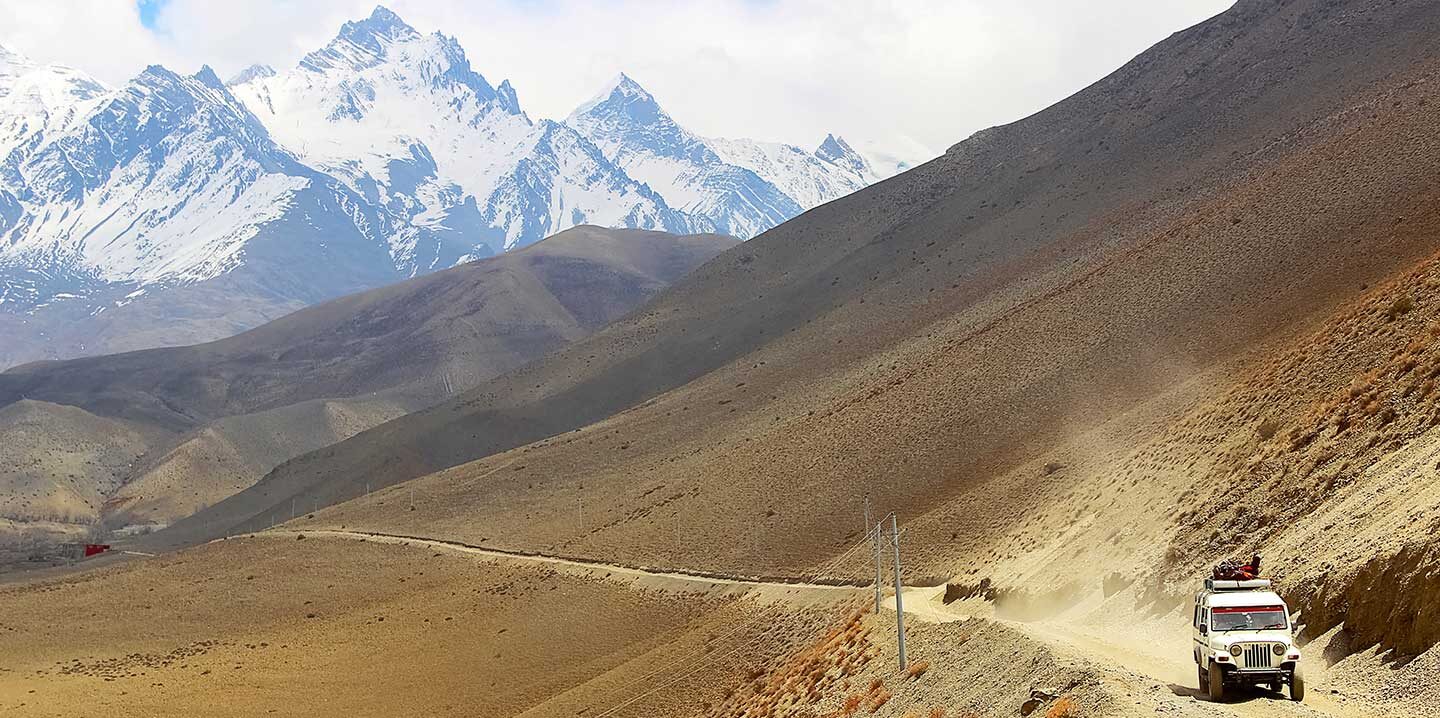
photo

Altitude Sickness on the Upper Mustang Bike Ride

Altitude sickness is a real consideration on the Upper Mustang bike ride. Still, it differs from most Nepal trekking and cycling destinations because the route gains altitude so quickly from Jomsom to the high passes above Lo Manthang. Jomsom itself, at 2,720 metres, is already at an altitude where mild AMS symptoms begin for some travellers, and the daily elevation profile of the bike ride — gaining 500 to 1,000 metres per riding day through the Kagbeni-to-Lo Manthang approach — is aggressive by any acclimatisation standard.

The standard advice to spend 2 nights in Jomsom before entering the restricted area is not excessive caution; it’s a minimum acclimatisation baseline that makes the subsequent riding days considerably safer.

The support jeep from Nepal Vehicle Hiring Pvt Ltd is the primary AMS response tool available in the restricted area: a rider experiencing worsening AMS symptoms that do not improve with rest and hydration can be loaded into the 4WD jeep and driven down to a lower altitude within hours, bypassing the multi-day walk-out that would be required without vehicle support. A private support vehicle and a licensed guide trained in AMS recognition and management provide the best safety net for high-altitude cycling in a remote, restricted area.

Contact our team or visit our plan trip page to book full Upper Mustang support vehicle coverage.

Combining the Upper Mustang Bike Ride with Other Nepal Adventures

The Upper Mustang bike ride pairs naturally with Pokhara as a recovery and relaxation base before and after the ride, with our Pokhara car hire and Sarangkot sunrise vehicle covering sightseeing. For adventure travellers who want to add a Kathmandu cultural experience, our Kathmandu sightseeing, Bhaktapur day tour, and Nagarkot sunrise transfer complete the pre-trip Nepal cultural circuit.

The Annapurna Circuit trek and Annapurna Base Camp trek are popular post-Upper Mustang extensions, accessible from Pokhara via our Pokhara-to-Nayapul transfer and Besisahar private vehicle service. For a complete western Nepal adventure circuit, the Nar Phu Valley trek and the Manaslu Circuit trek pair naturally with Mustang as a multi-region Himalayan adventure.

Why Choose Nepal Vehicle Hiring Pvt Ltd for Upper Mustang Support Vehicle Hire

  • Restricted area vehicle authorisation: All Nepal Vehicle Hiring Pvt Ltd jeeps used for Upper Mustang support carry the correct vehicle permits for the restricted zone — verified at the Kagbeni checkpoint.
  • Reserve fuel standard: 40 to 60 litres of reserve fuel carried on all Upper Mustang support vehicle bookings — no dependence on unreliable remote fuel points.
  • Route-experienced drivers: Our drivers have personal, repeated experience on the Jomsom-to-Lo Manthang road, including current knowledge of surface conditions, accommodation availability at each village, and the wind timing that makes early-morning departures essential.
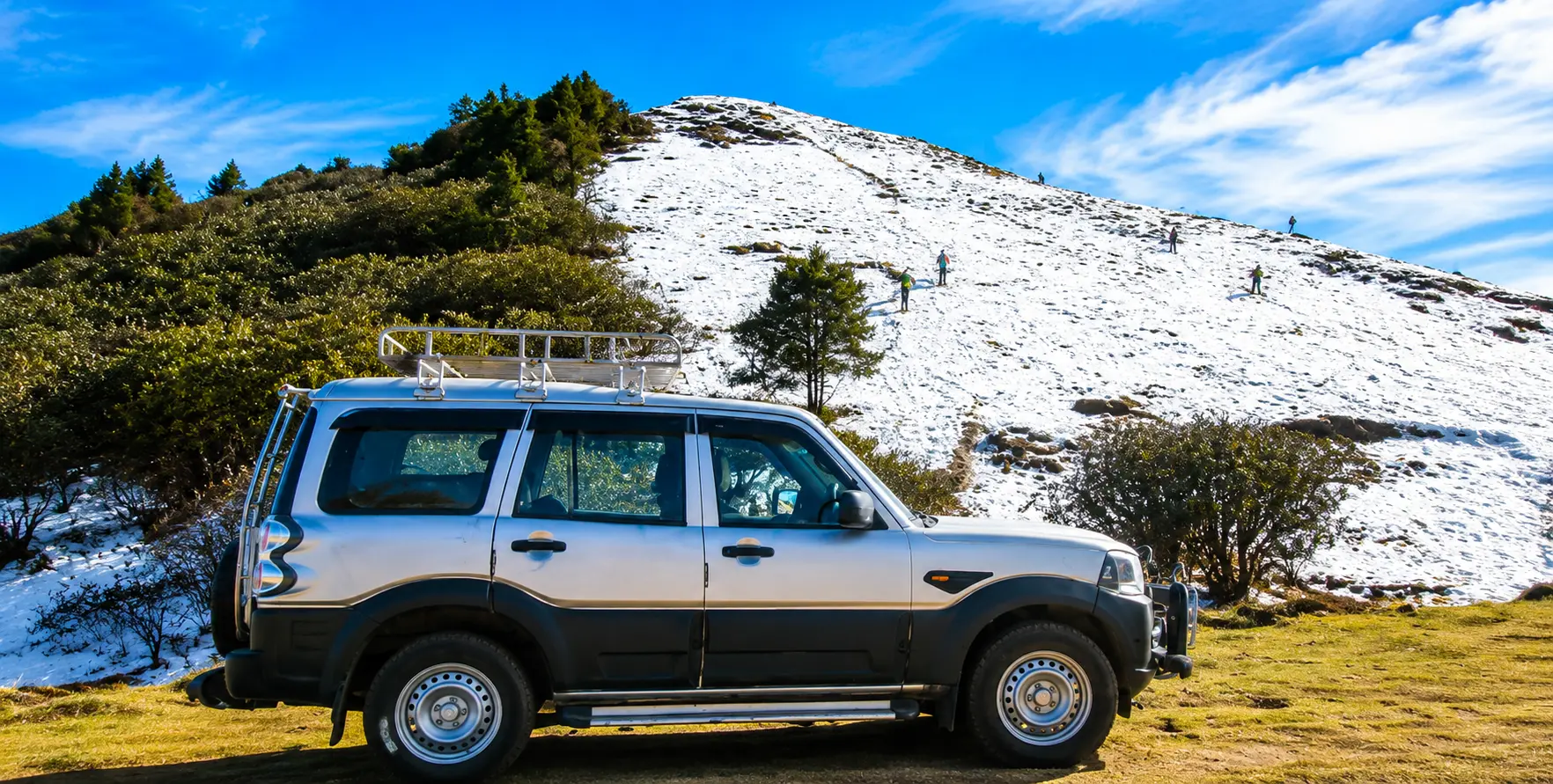
  • Emergency evacuation capacity: The 4WD support jeep is the only evacuation option in the restricted area. Nepal Vehicle Hiring Pvt Ltd provides fully maintained, reliable Scorpio and Hilux jeeps specifically because mechanical reliability in Upper Mustang is a safety requirement.
  • Accommodation pre-booking: Support drivers in coordinating advance guesthouse bookings at each night stop before departure from Jomsom.
  • Transparent pricing: Driver, fuel, vehicle permits, and reserve fuel all included — no hidden charges.
  • 24/7 booking: WhatsApp +977 981-4227196 or visit our plan trip page.

Frequently Asked Questions — Upper Mustang Bike Ride

How much does the Upper Mustang Restricted Area Permit cost in 2026?

USD 50 per person per day, issued for the exact number of days spent inside the restricted area (north of Kagbeni checkpoint). Previously USD 500 for the first 10 days — the 2026 change makes shorter trips significantly more affordable.

What bike is best for Upper Mustang?

For mountain biking: a full-suspension trail or enduro bike with a minimum 2.3-inch tyre width and hydraulic disc brakes. For motorbike touring: the Royal Enfield Himalayan (411cc) is the most commonly used and most parts-available option in Nepal. Both require a support vehicle for luggage and safety.

Is a support vehicle necessary for Upper Mustang biking?

Yes — for all but the most self-sufficient expedition cyclists. The distances, altitude, limited accommodation, fuel availability, and restricted-area emergency requirements make a private 4WD support jeep essential for any organised cycling tour of Upper Mustang.

What is the best time of year for the Upper Mustang bike ride?

June to August (monsoon — rain shadow advantage), March to May (spring, with the Tiji Festival), and September to November (post-monsoon autumn) are all excellent. Upper Mustang’s rain shadow means the June-August monsoon season is actually one of the finest times — dry trails, clear skies, and very few other visitors.

How do I get to Jomsom from Kathmandu or Pokhara?

From Pokhara: domestic flight (20 minutes) or private jeep drive through the Kali Gandaki gorge (7-9 hours). From Kathmandu: Kathmandu to Pokhara bus or private vehicle (4-6 hours), then Pokhara to Jomsom as above. Nepal Vehicle Hiring Pvt Ltd coordinates all legs.

How many days does the Upper Mustang bike ride take?

A standard round trip from Kagbeni to Lo Manthang and return takes 7 to 10 days of riding, plus 2 to 3 days for Jomsom acclimatisation and the Pokhara-Jomsom-Pokhara transfers. Total from Pokhara: 10 to 14 days.

Conclusion

The Upper Mustang bike ride is one of the finest cycling adventures in Asia — a journey through living medieval Himalayan history, across a high desert landscape unlike anything else in Nepal, to a walled city that has survived four centuries of Himalayan winters and geopolitical isolation with its culture, its monasteries, and its extraordinary visual character essentially intact. The support vehicle hire from Nepal Vehicle Hiking Pvt Ltd that accompanies every well-organised Upper Mustang bike tour is not a concession to comfort.

Still, it provides he practical foundation on which this adventure is built —on handling logistics, ensuring safety, and enabling the focus on riding that turns a demanding high-altitude journey into a genuinely transcendent experience.

Book your Upper Mustang support vehicle hire with Nepal Vehicle Hiring Pvt Ltd — call or WhatsApp +977 981-4227196, visit vehiclehiringnepal.com, or plan your full Upper Mustang cycling adventure through our plan trip page.
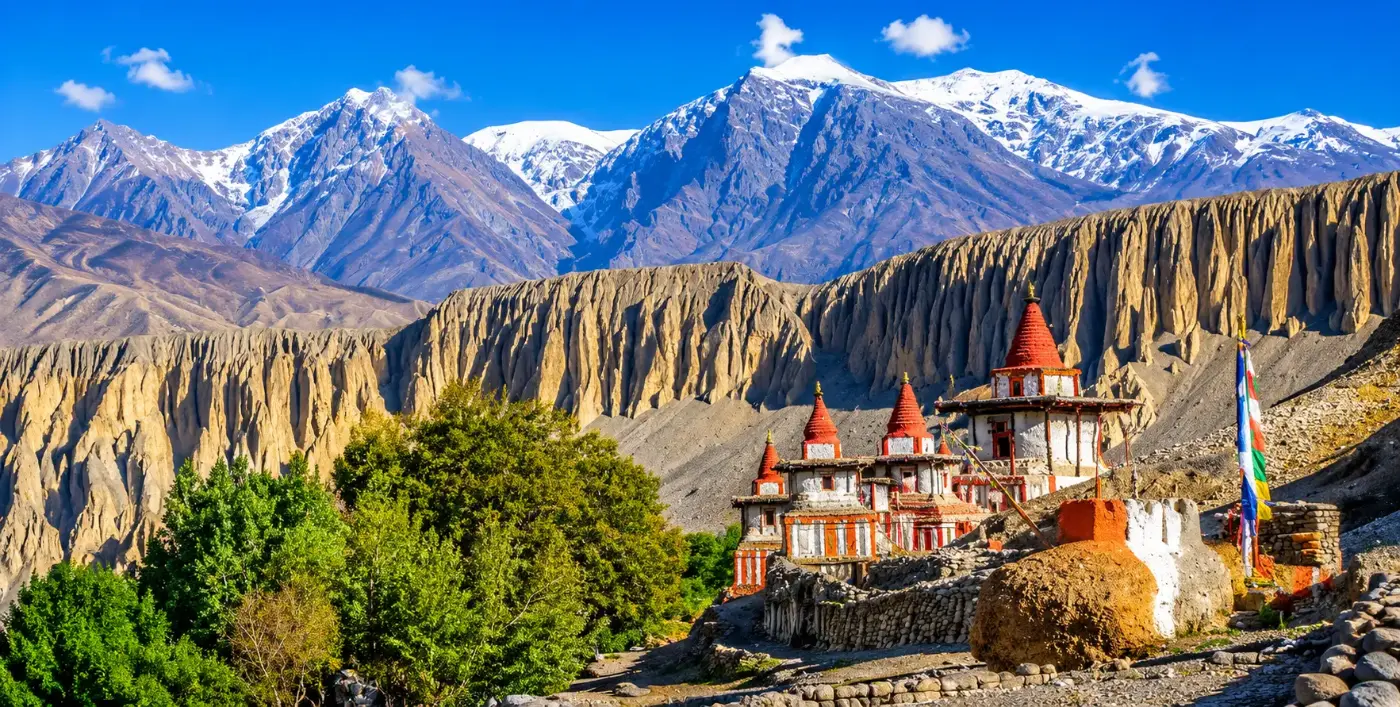
Best Time to Visit Mustang, Nepal

Mustang Nepal landscape with Himalayan mountains, traditional villages, and scenic roads during the best travel season

Best Time to Visit Mustang Nepal

Most of Nepal, taken as a whole, follows a fairly simple seasonal rule: trek in spring or autumn, and generally avoid the monsoon. Mustang breaks that rule entirely. Sitting in the rain shadow of the Annapurna and Dhaulagiri massifs, this trans-Himalayan desert kingdom stays dry precisely when the rest of the country is drenched, making the question of the

best time to visit Mustang, Nepal one of the more genuinely counterintuitive pieces of trip planning in the entire country.

This guide walks through Mustang’s seasons month by month, covering weather, road conditions, the region’s famous afternoon winds, its two defining festivals, and how timing changes everything from permit planning to vehicle choice. Nepal Vehicle Hiring has coordinated jeep transport into both Lower and Upper Mustang for years, and this guide draws on that direct route and seasonal experience.

Whether your interest lies in the wind-carved cliffs around Lo Manthang, the hot springs and orchards of Marpha and Kagbeni covered in our companion guide to

Muktinath Temple: Vehicle Hire and Pilgrimage Route Guide, or the full high-desert expanse of the restricted Upper Mustang region, timing your visit correctly changes the experience more here than almost anywhere else in Nepal.

Why Mustang’s Best Season Differs From the Rest of Nepal

Mustang’s genuinely unusual seasonal calendar comes down, in the end, to a single defining piece of geography: the district sits directly behind the Annapurna and Dhaulagiri massifs, two of the tallest walls of rock and ice on the planet, which intercept the moisture-laden monsoon winds arriving from the Bay of Bengal before they can reach the high desert beyond. This rain-shadow effect is so pronounced that Mustang receives a fraction of the rainfall recorded in Pokhara, just on the other side of the Annapurna range, during the same monsoon weeks.

As a result, June, July, and August, the very months most trekkers avoid elsewhere in Nepal, rank among the most reliable for clear skies, dry trails, and stable road conditions in Mustang. This single fact reshapes the entire seasonal calendar for the region and is the single most important thing to understand before booking

vehicle hire toward Jomsom and Mustang.

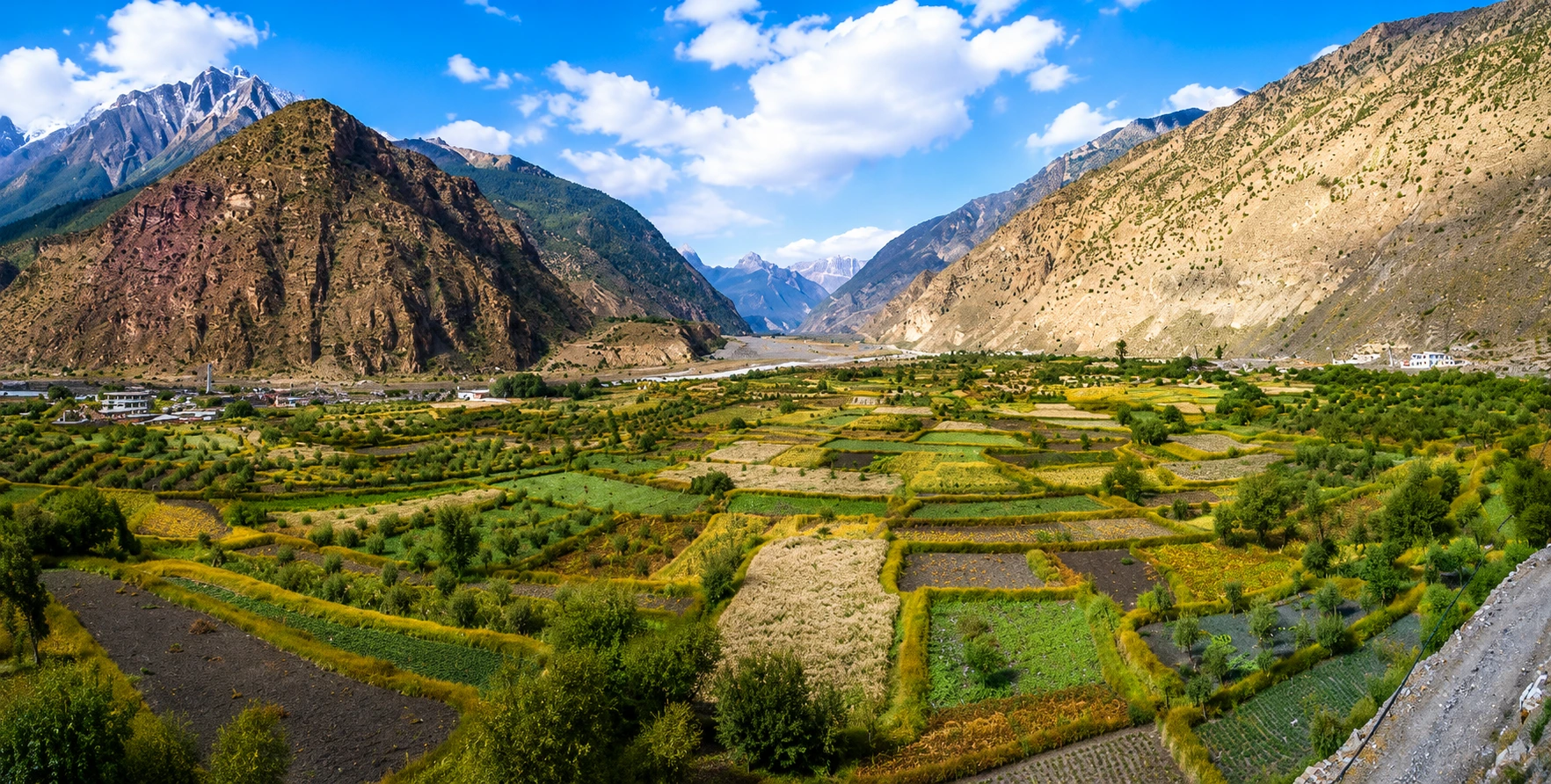
Mustang Nepal landscape with Himalayan mountains, traditional villages, and scenic roads during the best travel season

Mustang Season by Season

Spring (March to May)

Spring brings steadily warming temperatures, blooming apple orchards around the village of Marpha, and the build-up to Lo Manthang’s Tiji Festival, which generally falls in May. Road conditions along the Kali Gandaki corridor toward Jomsom are typically favourable during this period, and this remains one of the two genuinely excellent windows for a Mustang trip, alongside the summer monsoon months discussed below.

Daytime temperatures in Lower Mustang villages such as Jomsom and Kagbeni are generally comfortable for walking and vehicle travel. However, nights remain cold at this elevation, and the higher reaches of Upper Mustang toward Lo Manthang can still feel winter’s chill well into April.

Summer and Monsoon (June to August)

This period is Mustang’s signature season, and it most consistently surprises first-time visitors. While the rest of Nepal’s trekking industry effectively pauses for the monsoon, Mustang’s rain-shadow position keeps its trails dry, its skies largely clear, and its roads passable, making this the single best window for travellers specifically wanting to avoid the crowds that fill the Everest and Annapurna regions during the busier autumn season.

This is also when the Kali Gandaki valley’s famous afternoon winds are strongest, driven by the pressure difference between the warm Terai plains to the south and the cooler Tibetan plateau to the north, funnelled through the narrow gorge between Dhaulagiri and Annapurna. Morning travel is strongly preferred throughout this window.

Trekkers and vehicle passengers travelling this route in summer also benefit from cooler, more comfortable daytime temperatures than the sweltering conditions in Kathmandu or Pokhara at the same time of year, another reason this counterintuitive season has become increasingly popular among experienced Nepal travellers.

Autumn (September to November)

Overall, autumn remains a reliably good season for a Mustang visit, offering clear skies and generally stable road conditions. However, it coincides with Nepal’s peak trekking season, so book accommodation and vehicle hire well in advance. Many travellers combine a Mustang extension with an

Annapurna Circuit Trek during this window, given the natural overlap in route and season.

Winter (December to February)

Winter brings genuinely cold, consistent conditions throughout Mustang, with overnight temperatures in Lo Manthang regularly dropping well below freezing and occasional snow at the higher elevations of Upper Mustang. Lower Mustang villages such as Jomsom and Kagbeni generally remain accessible, but this is the region’s quietest season by a considerable margin, suited mainly to travellers seeking solitude and willing to prepare for the cold.

Mustang’s Defining Festivals

Mustang Nepal landscape with Himalayan mountains, traditional villages, and scenic roads during the best travel season

Tiji Festival

The traditional three-day Tiji Festival, held annually in Lo Manthang and typically in May, celebrates the legendary triumph of Dorje Jono over a demon threatening the Mustang kingdom, marked by masked monastic dances performed in the walled city’s central square. This is Upper Mustang’s most significant cultural event and draws the region’s largest annual gathering of residents and travellers, who time their visits around it.

Yartung Festival

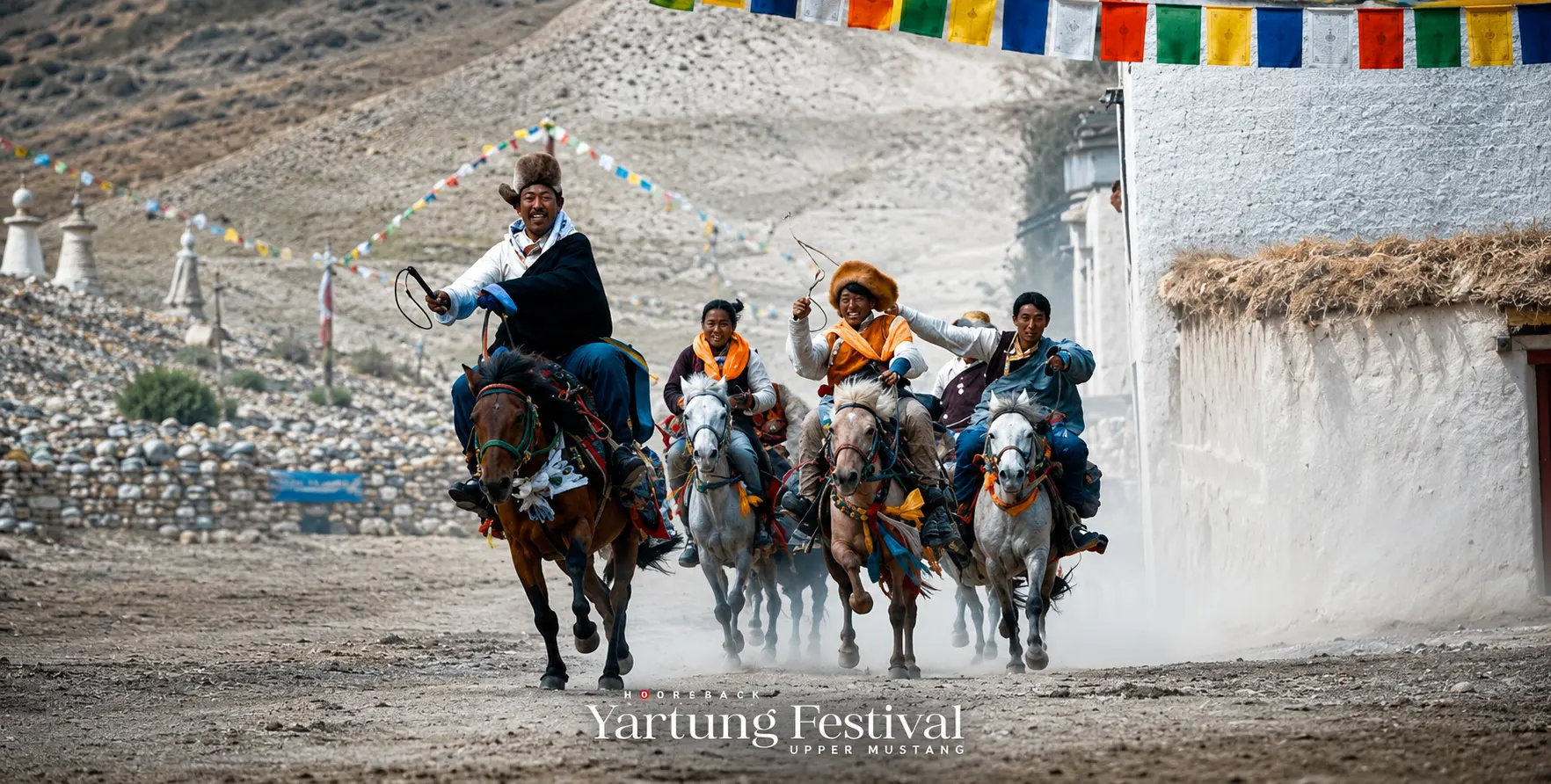
Yartung itself, generally held each year in August around Muktinath and the wider Mustang region, features horse racing and community celebration marking the end of the summer season, offering a lively, colourful cultural experience for travellers passing through during the dry monsoon window already discussed.

Understanding the Kali Gandaki Wind Pattern

Nearly every seasonal recommendation in this guide connects to one defining geographic feature: the Kali Gandaki gorge, the deepest river gorge on earth, which channels a daily wind cycle strong enough to shape travel planning year-round. Mornings are consistently calm; by early to mid-afternoon, winds funnelling between Dhaulagiri and Annapurna intensify considerably, particularly along the exposed stretch between Kagbeni and Muktinath. Experienced drivers on this route, including those working with our

Jeep Hire in Nepal service, plan departures accordingly, favouring early starts regardless of season.

Upper Mustang Versus Lower Mustang: Seasonal Differences

Lower Mustang, including Jomsom, Marpha, and Kagbeni within the Annapurna Conservation Area, remains accessible year-round and does not require the restricted-area permit needed further north. Upper Mustang, beyond Kagbeni toward Lo Manthang, requires a separate Restricted Area Permit and a licensed guide, and while technically accessible across all four seasons, is best experienced during the May Tiji Festival window or the dry summer months already discussed, given the added remoteness and more limited winter infrastructure found in villages like Lo Manthang and Charang.

Permits Required for Mustang

Travellers visiting Lower Mustang need a standard Annapurna Conservation Area Permit and a TIMS card. Upper Mustang, beyond Kagbeni, requires an additional Restricted Area Permit, priced per day and requiring a minimum group size and a licensed guide under current Nepali regulations, similar to the restricted area requirements discussed in our companion guide to the

Kathmandu to Machha Khola jeep transfer for the Manaslu region.

Discover the Best Time to Visit Mustang Nepal for clear Himalayan views, comfortable weather, cultural experiences, trekking, and scenic jeep tours across Upper and Lower Mustang.

Vehicle and Road Conditions by Season

The road into Mustang, whether reached via Pokhara and Jomsom or overland through the Kali Gandaki Valley, requires a genuine four-wheel-drive vehicle year-round. However, the specific challenges shift by season.

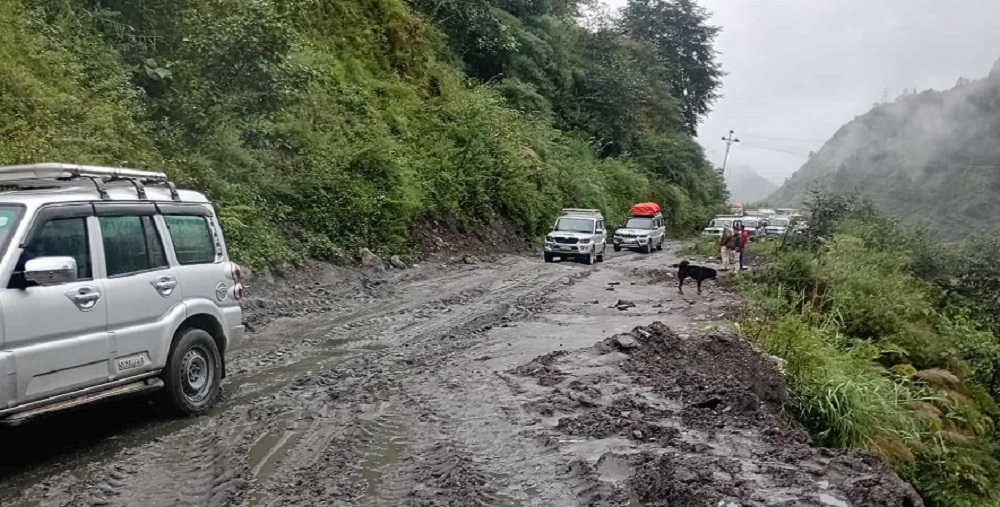
During the summer monsoon months, despite Mustang’s own dry conditions, landslide activity can still occur on the approach roads through the wetter Annapurna foothills before the rain shadow effect takes hold. Winter brings icy patches at higher elevations. Our

car hire in Pokhara service supports the approach leg of this journey, connecting with 4WD jeep transport for the Jomsom-to-Mustang stretch itself.

What to Pack by Season

  • Spring and autumn: layered clothing, windproof outer shell, sun protection given high-altitude UV exposure.
  • Summer: lighter layers for daytime warmth, still combined with a windproof layer for afternoon conditions.
  • Winter: heavy insulated clothing, a warm sleeping bag if trekking, and preparation for genuinely sub-zero overnight temperatures in Upper Mustang.
  • Any season: dust protection, given Mustang’s exposed, wind-blown terrain.

Discover the Best Time to Visit Mustang Nepal for clear Himalayan views, comfortable weather, cultural experiences, trekking, and scenic jeep tours across Upper and Lower Mustang.

Combining a Mustang Visit With the Wider Annapurna Region

Many travellers choose to combine their Mustang trip with additional time in Pokhara, arranged through our

Kathmandu to Pokhara and

Sarangkot sunrise tour services, or extend their trip toward the

Ghorepani Poon Hill Trek for a broader Annapurna region itinerary.

Cost Factors for a Mustang Trip

Vehicle hire cost for a Mustang trip depends mainly on vehicle class, whether the itinerary includes Upper Mustang’s restricted area, and total trip duration. Our team is glad to prepare a custom quote based on your season and itinerary. Visit our

homepage for further guidance.

Why Choose Nepal Vehicle Hiring for Mustang

Our drivers assigned to the Jomsom-Mustang corridor understand the region’s specific seasonal patterns, from monsoon-window opportunities to winter cold-weather driving, and we coordinate closely with our sister company,

Alpine Luxury Treks, for travellers combining vehicle hire with a guided Upper Mustang itinerary.

PLAN YOUR MUSTANG JOURNEY

Nepal Vehicle Hiring Pvt. Ltd.

Website: vehiclehiringnepal.com

WhatsApp / Phone: WhatsApp

Email: [email protected]

Office: Bhagawatisthan, Thamel, Kathmandu, Nepal

Frequently Asked Questions

What is the single best month to visit Mustang?

July is often cited as the most reliable month, combining Mustang’s dry rain-shadow conditions with cooler temperatures than Kathmandu or Pokhara.

Is Mustang really dry during the monsoon?

Yes. The Annapurna and Dhaulagiri massifs block most monsoon moisture from reaching Mustang, making June through August one of the region’s best windows despite being the worst season almost everywhere else in Nepal.

When is the Tiji Festival held?

Tiji is typically held in May in Lo Manthang, though the exact date shifts slightly year to year according to the Tibetan lunar calendar.

Can I visit Upper Mustang in winter?

Technically, yes, but conditions are genuinely cold, and infrastructure is limited in villages like Lo Manthang. Most travelers avoid this season for Upper Mustang specifically.

Do I need a special permit for Lower Mustang?

Lower Mustang requires a standard Annapurna Conservation Area Permit and TIMS card, not the Restricted Area Permit required beyond Kagbeni for Upper Mustang.

What time of day should I plan road travel in Mustang?

Morning, consistently, because strong afternoon winds build through the Kali Gandaki gorge starting around midday.

Can Mustang be combined with the Annapurna Circuit?

Yes. Many trekkers combine a Mustang extension with the Annapurna Circuit Trek because the routes overlap through the Kali Gandaki Valley.

Discover the Best Time to Visit Mustang Nepal for clear Himalayan views, comfortable weather, cultural experiences, trekking, and scenic jeep tours across Upper and Lower Mustang.

The Geography Behind Mustang’s Trans-Himalayan Climate

Mustang’s position immediately north of the Annapurna and Dhaulagiri massifs places it firmly within what geographers call a rain shadow desert, a landscape more commonly associated with the Tibetan plateau than with Nepal’s generally lush, monsoon-fed hill country. The Kali Gandaki gorge, cutting between these two 8,000-meter giants, is recognized as the deepest river gorge on earth when measured from riverbed to surrounding summit, and this extreme topography is precisely what strips incoming monsoon clouds of their moisture before they can cross into Mustang proper.

The result is a landscape of wind-carved cliffs, sparse vegetation, and stark, layered rock formations that feel closer to the high plateaus of Tibet than anywhere else in Nepal, along with a climate pattern that inverts the seasonal logic travellers bring from the rest of their Nepal itinerary.

This geographic reality has shaped human settlement in Mustang for centuries: villages built to withstand near-constant wind exposure, thick-walled stone and mud-brick homes clustered tightly together, and agricultural practices adapted to an arid, high-altitude environment that differs sharply from the terraced, monsoon-fed farming found in most of hill Nepal.

Historical and Cultural Context of the Mustang Kingdom

Until relatively recently, Upper Mustang was an independent kingdom in its own right, with its own royal lineage ruling from the walled city of Lo Manthang for centuries before formal integration into the modern Nepali state. This independent history, combined with Mustang’s remote, rain-shadow geography and its historically close cultural and trade ties to Tibet rather than the Kathmandu Valley, has preserved a distinct Tibetan Buddhist culture throughout the region, visible in Lo Manthang’s centuries-old monasteries, the walled city’s traditional layout, and the strong Tibetan Buddhist religious practice still actively followed throughout Upper Mustang villages today.

This cultural distinctiveness is a major reason timing a Mustang visit around cultural events like Tiji carries more weight than choosing a season based on weather alone, since the Tiji Festival showcases this preserved royal and religious heritage in a way not replicated anywhere else in Nepal.

A Closer Look at July: The Single Best Month

Among the dry monsoon months already discussed, July deserves particular attention, as experienced Mustang guides and repeat visitors often cite it as the region’s most reliable month. By July, the rain-shadow effect is fully established for the season, road conditions along the approach through Pokhara and Jomsom have generally stabilised after any early-monsoon disruption, and daytime temperatures remain comfortably cool compared to the considerable heat in Kathmandu and Pokhara during the same month.

Trekkers and vehicle passengers travelling in July also benefit from Mustang’s relatively low visitor numbers compared to the busier autumn season, offering a genuinely quieter experience of the region’s villages and landscapes.

August and the Yartung Festival Window

August extends the same favourable dry-season conditions found in June and July, while adding the cultural draw of the Yartung Festival, celebrated with horse racing and community gathering around Muktinath and the broader Mustang region. Trekkers specifically timing their visit around Yartung should confirm current festival dates with a local guide or trekking agency, since, like Tiji, the exact timing shifts somewhat from year to year according to the local lunar calendar rather than falling on a fixed Gregorian date.

Discover the Best Time to Visit Mustang Nepal for clear Himalayan views, comfortable weather, cultural experiences, trekking, and scenic jeep tours across Upper and Lower Mustang.

Comparing Mustang’s Season to Nepal’s Standard Trekking Calendar

For travellers accustomed to Nepal’s standard spring-and-autumn trekking calendar, covered throughout our guides to routes like the

Everest Base Camp Trek and

Annapurna Base Camp Trek, Mustang’s inverted seasonal pattern can initially seem counterintuitive. Remember that this inversion applies specifically to Mustang; travellers combining a Mustang extension with time in other regions should plan around each region’s distinct optimal season rather than assuming a single seasonal window suits an entire multi-region Nepal itinerary.

Temperature Ranges Throughout the Year

Daytime temperatures in Lower Mustang villages such as Jomsom typically range from comfortably mild in spring and autumn to warm, though rarely extreme, during the summer dry season, dropping to genuinely cold conditions in winter. Upper Mustang, at higher elevations and farther from the moderating influence of lower-valley air, stays consistently colder year-round, with Lo Manthang’s winter nights regularly falling well below freezing.

This elevation-driven temperature gradient means packing for the specific villages on your itinerary matters as much as packing for the season overall.

Rainfall Patterns Across Mustang’s Sub-Regions

While the rain-shadow effect applies across Mustang generally, its intensity varies somewhat between the lower approach villages near Jomsom and the higher, more sheltered terrain further north toward Lo Manthang. Jomsom and the immediate surrounding area, sitting closer to the Annapurna and Dhaulagiri barrier, can occasionally see brief monsoon-season showers spilling over.

At the same time,e the deeper high-desert terrain toward Lo Manthang remains more consistently dry throughout the summer months. This gradient matters for travellers planning an itinerary that spans both Lower and Upper Mustang in the same trip.

Cloud Cover and Mountain Visibility by Season

Beyond rainfall itself, cloud cover patterns affect mountain visibility differently across Mustang’s seasons. Autumn and winter generally offer the clearest overall visibility for views of Dhaulagiri, Nilgiri, and the surrounding peaks, while summer, despite its dry trail conditions, can still see periodic cloud build-up along the higher ridgelines even without significant rainfall reaching the valley floor.

Photographers specifically prioritising clear mountain views alongside dry trail conditions should weigh this trade-off carefully when choosing between the summer and autumn windows.

Marpha and the Apple Orchards Through the Seasons

Marpha, famous throughout Nepal for its apple orchards, brandy, and cider production, clearly illustrates how Mustang’s seasons shape the visitor experience beyond weather and road conditions. Spring brings blossoms to the orchards, while autumn brings harvest, giving each visit a genuinely different character depending on when you go.

Travellers with a specific interest in Marpha’s agricultural calendar should factor this into their season choice alongside the broader weather and crowd considerations already discussed throughout this guide.

Discover the Best Time to Visit Mustang Nepal for clear Himalayan views, comfortable weather, cultural experiences, trekking, and scenic jeep tours across Upper and Lower Mustang.

Kagbeni’s Seasonal Character

Kagbeni, the walled medieval village that marks the traditional gateway to Upper Mustang’s restricted area, follows the same broad seasonal pattern as the rest of the region. However, its position directly in the path of the Kali Gandaki’s afternoon winds makes timing the walk through the village particularly important. Early morning visits to Kagbeni, regardless of season, consistently offer calmer conditions for exploring its narrow alleyways and historic monastery than the wind-affected afternoons.

Photography Considerations by Season

Mustang’s stark, layered rock formations and traditional architecture reward photographers year-round, though each season adds a distinct character. Spring’s blooming orchards add colour against the otherwise muted desert palette; summer’s clear morning light before the afternoon winds arrive offers some of the sharpest visibility of the year; autumn combines good weather with the clearest mountain backdrop views; and winter’s occasional snow dusting on the higher peaks and rooftops of Lo Manthang creates a starkly beautiful, rarely photographed version of the region.

Health and Altitude Considerations for Mustang Travel

While Mustang’s elevations, generally ranging from around 2,700 meters at Jomsom to just over 3,800 meters at Lo Manthang, are considerably lower than the extreme altitudes reached on treks toward Everest Base Camp or the Annapurna Circuit’s Thorong La crossing, travellers should still allow reasonable acclimatisation time, particularly those flying directly into Jomsom from lower elevations without any prior time at altitude. The region’s dry air and intense high-altitude sun also warrant attention year-round, with sun protection and adequate hydration remaining important considerations even during the cooler winter months.

Group Travel and Guide Requirements by Season

Given Upper Mustang’s Restricted Area Permit requirements discussed earlier, which mandate a licensed guide and a minimum group size regardless of season, travellers should confirm their trekking agency’s seasonal operating schedule, since some smaller agencies reduce Upper Mustang departures during the quieter winter months due to lower overall demand. Booking well in advance during the popular Tiji Festival window in May is particularly important, given the concentrated demand this specific cultural event generates each year.

A Note on Climate Change and Shifting Patterns

As with many parts of the Himalaya, some long-term shifts in precipitation and temperature patterns have been observed across the wider Annapurna and Mustang region in recent decades, and travellers planning well in advance should treat the seasonal guidance in this article as a reliable general framework rather than an unchanging guarantee, confirming current conditions with a local guide or vehicle operator closer to their actual travel dates.

A Month-by-Month Planning Summary

To bring together everything covered so far, here is a concise month-by-month summary. January and February bring the coldest, quietest conditions, suited only to well-prepared travellers specifically seeking solitude. March and April bring warming temperatures, blooming orchards and generally favourable road conditions, building toward May’s Tiji Festival, the year’s best-timed cultural visit.

June opens the dry monsoon window, with July standing out as the most reliable month, and August continuing the same favourable pattern while adding the Yartsa Duwarchha Festival. September through November offer autumn’s clear skies and stable conditions, though visitor numbers are considerably higher during Nepal’s broader peak season. December returns the region to winter quiet, completing the annual cycle.

Mustang

Choosing Between Jomsom Flights and Overland Jeep Travel by Season

Travellers reaching Mustang via Jomsom can fly from Pokhara or travel overland by jeep, and seasonal conditions meaningfully affect that choice. Jomsom’s small airstrip is notorious for wind-related flight disruptions, and the same afternoon wind pattern discussed throughout this guide forces an early cutoff for flight operations each day, generally by mid-morning.

This makes overland jeep travel, while slower, much more predictable year-round, since a well-timed early-morning departure avoids the wind disruption that so often affects Jomsom’s flight schedule. Our

car hire in Pokhara service supports this overland approach for travellers who prioritise schedule reliability over flight speed.

Seasonal Booking Patterns for Mustang Vehicle Hire

Demand for vehicle hire toward Mustang follows a somewhat different pattern than Nepal’s standard trekking corridors, given the region’s unusual dry-season appeal. While autumn remains busy, in line with Nepal’s overall peak season, the July dry-season window has steadily grown in popularity among experienced travellers and repeat visitors seeking this counterintuitive but genuinely rewarding timing.

Vehicle availability has tightened accordingly in recent years. The May Tiji Festival window represents the year’s most concentrated demand spike, and travellers planning around it should book vehicle hire and any guided Upper Mustang trekking arrangements several months in advance.

Combining Mustang With a Muktinath Pilgrimage

Given Muktinath’s position just beyond Kagbeni on the standard route toward Upper Mustang, many travellers combine a Mustang visit with the pilgrimage covered in detail in our companion guide to

Muktinath Temple: Vehicle Hire and Pilgrimage Route Guide. The same seasonal considerations discussed throughout this Mustang guide, particularly the summer dry-season window and the importance of morning travel given the Kali Gandaki wind pattern, apply equally to a combined Muktinath and Mustang itinerary, and travellers planning this kind of combined pilgrimage and cultural trip should factor both destinations’ seasonal calendars into a single, well-coordinated plan.

photo

Regardless of season, travellers to Mustang should build reasonable flexibility into their itinerary given the real possibility of weather-related delays, whether monsoon-season landslide risk on the lower approach roads before the rain shadow effect takes hold, or occasional winter snow affecting the higher sections of Upper Mustang. Working with an experienced local vehicle provider who monitors current conditions and sets realistic timing expectations helps manage this uncertainty far better than assuming a fixed, guaranteed schedule regardless of the weather on a given trip.

Combining Mustang With a Broader Kathmandu and Pokhara Itinerary

Most Mustang itineraries begin and end in Kathmandu, Pokhara, or both, and travellers should factor these cities’ seasonal patterns into their overall trip planning while prioritising Mustang’s dry-season window. Our

Kathmandu sightseeing tour and

Bhaktapur Durbar Square tour services pair naturally with the Kathmandu portion of a Mustang trip, while a

Kathmandu airport transfer and

Kathmandu-to-Pokhara transfer round out the journey toward the Jomsom and Mustang approach.

Local Cuisine in Mustang Across the Seasons

Food throughout Mustang reflects the region’s high-altitude, Tibetan-influenced culture, with buckwheat, barley, and potato-based dishes forming the staple diet in most villages, alongside butter tea and, in Marpha specifically, the apple products the village has become famous for. Seasonal produce availability shifts accordingly, with fresh apples and apple-based products most abundant during the autumn harvest, while winter months rely more heavily on stored and preserved foods given the limited fresh produce available during the coldest part of the year.

Accommodation Standards Through the Seasons

Lodge and guesthouse accommodation throughout Mustang, from Jomsom through to Lo Manthang, generally operates year-round. However, some more basic seasonal establishments in smaller villages may close during the depths of winter due to reduced visitor numbers.

Travellers planning a winter visit specifically should confirm accommodation availability in advance with a local guide, since the assumption of year-round teahouse availability common on Nepal’s more heavily trafficked routes does not always hold in Mustang’s smaller, more seasonally variable villages.

Connectivity and Communication in Mustang

Mobile network coverage throughout Lower Mustang, including Jomsom, Marpha, and Kagbeni, is generally reliable given the route’s established tourism infrastructure. However, coverage becomes more variable in Upper Mustang’s more remote villages toward Lo Manthang. This connectivity pattern remains broadly consistent across seasons, though winter weather can occasionally affect infrastructure reliability in the more exposed higher villages.

Why Choose a Local, Experienced Vehicle Provider for Mustang

Given the specific seasonal knowledge required to time departures around the Kali Gandaki’s wind patterns, and the genuine value of understanding which months actually suit this rain-shadow region rather than defaulting to Nepal’s standard spring-autumn calendar, working with a vehicle provider who genuinely understands Mustang’s distinct seasonal character offers real value beyond simply booking any available 4WD vehicle. Nepal Vehicle Hiring’s drivers assigned to this corridor bring exactly this kind of specific, current seasonal knowledge to every Mustang booking.

Combining Mustang With the Annapurna Circuit Trek

For trekkers completing the full Annapurna Circuit, covered in detail through our sister company’s

Annapurna Circuit Trek itinerary, the descent from the Thorong La pass into Muktinath and onward through Kagbeni and Jomsom naturally passes through the heart of Lower Mustang, giving circuit trekkers a taste of this trans-Himalayan landscape as part of their broader trek regardless of whether they specifically extend into the restricted Upper Mustang area. Trekkers timing their circuit for Mustang’s dry summer window should note that the Thorong La crossing has its own seasonal considerations given the high-altitude snow conditions possible at that pass.

They should confirm current pass conditions with their trekking agency, regardless of how favourable conditions are in the lower Mustang valley.

A Realistic Sample Itinerary for the Dry Summer Window

A typical itinerary that takes advantage of Mustang’s July dry-season window might begin with a flight or overland journey from Kathmandu to Pokhara, then an early-morning departure to Jomsom by road or a short flight, weather permitting. From Jomsom, the itinerary continues through Kagbeni, entering Upper Mustang’s restricted area with the appropriate permit and guide, then travels to Lo Manthang over several days, with time to explore the walled city’s monasteries and historic sites before retracing the route to Jomsom and onward to Pokhara.

This itinerary typically spans seven to ten days, depending on the pace and number of stops.

Environmental Considerations in This Fragile High-Desert Ecosystem

Mustang’s high-desert ecosystem, while visually stark compared to Nepal’s more heavily forested regions, supports a genuinely fragile ecological balance shaped by centuries of careful water management and sustainable land use adapted to this arid environment. Growing tourism traffic, particularly during the increasingly popular Tiji Festival and the summer dry-season windows already discussed, has strained this delicate balance.

Responsible travellers are encouraged to minimise water use given the region’s genuine scarcity, carry out non-biodegradable waste, and generally approach this landscape with the same environmental care expected throughout Nepal’s more well-known protected areas.

Cultural Etiquette for Visiting Mustang’s Monasteries

Given Upper Mustang’s well-preserved Tibetan Buddhist heritage, visitors to Lo Manthang’s historic monasteries and other religious sites throughout the region should follow standard Buddhist site etiquette, including modest dress, removing shoes where appropriate, and asking permission before photographing monks, religious ceremonies, or monastery interiors. This cultural sensitivity matters particularly during the Tiji Festival, when religious and cultural significance peaks and the local community hosting this significant annual event especially appreciates respectful observation over purely tourist-focused photography.

The Role of Local Guides in Seasonal Planning

Beyond the mandatory guide requirement for Upper Mustang’s restricted area, a knowledgeable local guide adds considerable value to seasonal trip planning specifically, given their direct, current knowledge of actual conditions in a given week or month, rather than the more general seasonal guidance any article, including this one, can only provide as a starting framework. Guides with genuine Mustang-specific experience can advise on the current state of Tiji Festival preparations, recent weather patterns affecting road conditions, and realistic timing recommendations tailored to a traveller’s specific dates rather than a generic seasonal window.

Understanding Mustang’s Position Within Gandaki Province

Mustang district sits within Gandaki Province, distinct from the far-western Sudurpashchim Province covered in our companion guides to Mahendranagar, Nepalgunj, and Darchula. However, these regions share characteristics common to Nepal’s more remote, trans-Himalayan border districts, including limited infrastructure relative to central Nepal and a cultural character shaped significantly by proximity to Tibet.

This broader context helps situate Mustang within Nepal’s wider geography of remote frontier regions, even as its tourism development and accessibility differ considerably from other remote districts, given Mustang’s longer-established trekking tourism history.

A Comparison With Other Rain-Shadow Regions in the Himalaya

Mustang is not the only rain-shadow region in the greater Himalayan range; Ladakh in India’s far north shares a broadly similar geographic logic and an equally counterintuitive summer peak season for the same reasons discussed throughout this guide. Travellers with prior experience visiting Ladakh or similar trans-Himalayan rain-shadow regions elsewhere often find Mustang’s seasonal pattern intuitively familiar, even if it initially seems to contradict everything else they know about trekking season timing in Nepal specifically.

Frequently Overlooked Seasonal Details Worth Knowing

A handful of seasonal details often go unmentioned in general Nepal trekking guidance but matter genuinely for Mustang trip planning. First, the transition weeks between seasons, late February into March and late August into September, can bring unpredictable weather that doesn’t fit either season’s typical pattern, so travellers planning trips during these shoulder windows should build extra flexibility into their itinerary.

Second, Upper Mustang’s higher-elevation villages stay cold overnight even during the warm summer dry season, so packing only for daytime warmth without preparing for cold evenings is a common planning mistake. Third, the exact timing of both Tiji and Yartung festivals shifts with the lunar calendar, so travellers planning a trip around either event should confirm dates as close to their travel window as possible, rather than relying on the previous year’s dates.

Seasonal Considerations for Photography Expeditions

Professional and serious amateur photographers planning a dedicated Mustang photography expedition should weigh season choice particularly carefully given the different visual character each period offers. Spring’s blossoming orchards provide colour contrast against the desert landscape rarely available at other times of year.

Summer’s clear mornings, before the afternoon winds arrive, often offer the year’s sharpest overall visibility, though building a shooting schedule around this narrow morning window requires genuine discipline. Autumn combines generally reliable weather with the clearest mountain backdrop views, making it a popular choice for photographers prioritising dramatic peak visibility over the specific cultural draw of Tiji.

Winter, though logistically demanding, occasionally rewards visiting photographers with snow-dusted rooftops in Lo Manthang, a rarely captured scene given how few photographers make the journey during this coldest, quietest season.

Family Travel Considerations by Season

Families considering a Mustang trip with children should weigh seasonal timing carefully, given the region’s real physical demands regardless of the month. The relatively milder temperatures and stable conditions of the spring and summer dry-season windows generally suit family travel better than the considerably harsher winter conditions, and families should also factor in Upper Mustang’s mandatory guide requirement, ensuring their chosen guide has specific experience accommodating family groups with children of varying ages and physical capability.

Solo Travel and Group Size Considerations

Solo travellers interested in Upper Mustang specifically should note the minimum group size requirement attached to the Restricted Area Permit. They should discuss with their chosen trekking agency how they typically meet this requirement, whether by joining an existing scheduled group departure timed around the popular Tiji Festival or dry summer windows, or through the agency’s own arrangement to satisfy the minimum group size on paper while still trekking with a private guide.

Lower Mustang, which requires only the standard Annapurna Conservation Area Permit, offers much more flexibility for solo, independent travel without this group-size consideration.

Combining a Mustang Trip With Helicopter Access

Some travellers with limited time combine ground transport into Lower Mustang with a helicopter return, or use a helicopter for the full journey in either direction, especially given the Jomsom flight schedule unreliability discussed earlier. Alpine Luxury Treks’

helicopter tour packages occasionally extend to cover Annapurna and Mustang region flights, offering a time-efficient alternative for travellers whose schedules cannot accommodate the ground travel time a full overland Mustang trip requires, regardless of how favourable the season.

Seasonal Impact on Trekking Difficulty

While Mustang’s trekking routes don’t involve the extreme altitude gains found on routes toward Everest Base Camp or the Annapurna Circuit’s Thorong La crossing, seasonal conditions still meaningfully affect overall trekking difficulty. Summer’s dry trails generally offer the most comfortable underfoot conditions.

At the same time, winter’s occasional ice patches at higher elevations and stronger, more persistent winds can make an otherwise moderate trekking day considerably more physically demanding. Trekkers should factor these seasonal variations into their fitness assessment and pacing expectations, regardless of which season they choose for their visit.

The Broader Appeal of Off-Season Travel to Mustang

Beyond the dry-season advantages already discussed, some travellers choose Mustang’s quieter winter season for the solitude it offers, accepting the cold and logistical challenges in exchange for an experience of the region’s monasteries, walled city, and high-desert landscape with virtually no other visitors. This kind of deliberate off-season travel suits a particular kind of traveller, generally more experienced, well-prepared for cold weather trekking, and specifically motivated by solitude over comfort, but for the right traveller, winter Mustang offers a genuinely distinct experience worth considering alongside the more conventionally recommended seasons covered throughout the rest of this guide.

Final Practical Checklist by Season

  • Spring (March-May): confirm Tiji Festival dates early, pack layered clothing, expect favourable but variable road conditions.
  • Summer (June-August): plan around morning travel, pack lighter but wind-resistant layers, book ahead given growing popularity of this window.
  • Autumn (September-November): book well ahead given peak season demand, expect the clearest mountain views of the year.
  • Winter (December-February): confirm accommodation availability in advance, pack heavy insulated clothing, expect the quietest visitor numbers of the year.

How to Book Your Mustang Vehicle Hire

Booking begins with your preferred travel dates, whether your itinerary includes Upper Mustang’s restricted area, and any specific festival timing you plan around. Our team will confirm current seasonal conditions and match the right vehicle and driver to your Mustang itinerary, coordinating with our sister trekking companies when a guided Upper Mustang component is also required.

Additional Frequently Asked Questions

Is Mustang colder than Kathmandu?

Generally yes, particularly at night and especially in Upper Mustang, given the region’s higher elevation and exposed, wind-affected terrain, even though daytime summer temperatures can feel milder than Kathmandu’s own summer heat.

How does the wind affect vehicle travel specifically?

Strong afternoon winds, particularly between Kagbeni and Muktinath, can make driving genuinely uncomfortable and occasionally reduce visibility due to blowing dust, which is why experienced drivers consistently recommend completing this stretch before midday.

Does the Tiji Festival require booking?

Yes, strongly recommended. Accommodation and vehicle hire around the festival dates in Lo Manthang book up well in advance because this event draws concentrated visitor demand each year.

Is July too hot to visit Mustang?

No. Mustang’s high elevation and desert climate keep July daytime temperatures much more comfortable than the heat and humidity in Kathmandu or Pokhara that same month.

Can I visit both Upper and Lower Mustang in one trip regardless of season?

Yes, and most itineraries combine both, though Upper Mustang requires the additional Restricted Area Permit and guide discussed throughout this guide, regardless of the season you choose.

Discover the Best Time to Visit Mustang Nepal for clear Himalayan views, comfortable weather, cultural experiences, trekking, and scenic jeep tours across Upper and Lower Mustang.

Travellers planning a Mustang trip alongside a wider Nepal itinerary may find these related guides useful for the rest of their planning:

Understanding Shoulder Season Trade-offs: Non-negotiable travel dates that don’t necessarily have to abandon their trip plans entirely. Late winter into early spring and late summer into early autumn both offer workable conditions with appropriate preparation, even if they fall short of the region’s genuinely optimal windows discussed throughout this guide. The key difference in these shoulder periods is reduced predictability rather than guaranteed poor conditions, meaning a well-prepared traveller with flexible expectations can still have a rewarding trip, provided they work with a knowledgeable local guide or vehicle provider who can offer realistic, current guidance rather than relying purely on general seasonal averages.

Mustang’s Growing Profile Among Experienced Nepal Travellers

As more travellers complete Nepal’s most famous treks and activities and seek alternatives for return visits, Mustang’s unique calendar and preserved Tibetan Buddhist culture have made it an increasingly popular choice, especially for repeat visitors. This growing profile has, in turn, driven gradual improvements in the region’s tourism infrastructure and vehicle transport options, even as Mustang retains considerably lower overall visitor numbers than Everest, Annapurna, or even Langtang, keeping the genuine sense of discovery that continues to draw travellers to this trans-Himalayan high desert.

Final Thoughts: Timing Mustang Right

Mustang’s best time to visit ultimately depends on what you are specifically seeking from the trip: the Tiji Festival’s cultural spectacle points firmly toward May, a genuinely rewarding and increasingly popular dry-season escape points toward June through August, reliable clear skies with the trade-off of larger crowds points toward September through November, and quiet solitude for well-prepared travellers points toward the winter months. Whichever window suits your priorities, understanding the real reasoning behind Mustang’s inverted seasonal calendar, rather than simply importing assumptions from the rest of Nepal’s trekking calendar, separates a well-planned trip from one left to chance.

Contact Nepal Vehicle Hiring today on WhatsApp or visit

vehiclehiringnepal.com to arrange your Mustang vehicle hire for whichever season suits your trip.

A Practical Summary for Different Traveller Priorities

For travellers whose top priority is the Tiji Festival in May, that window gives the best mix of fair weather and cultural spectacle. For travellers who simply want reliable weather, the June through August dry-season window remains the strongest overall choice, offering Mustang’s own favourable conditions precisely when the rest of Nepal’s trekking regions are at their quietest.

For travellers whose top priority is the clearest possible mountain views and who are willing to accept larger crowds and higher accommodation demand, September through November delivers the most consistently clear skies of the year. For travellers seeking solitude above all else, and willing to prepare thoroughly for genuinely cold conditions, the winter months from December through February offer a rarely experienced, virtually visitor-free version of this remarkable high-desert kingdom.

A Final Word on Preparation

Whichever season ultimately suits your Mustang trip, the single consistent piece of advice running throughout this guide is to work with genuinely experienced local partners, whether a vehicle provider familiar with the Kali Gandaki wind pattern and current road conditions, or a trekking agency with direct, current knowledge of Upper Mustang’s permit requirements and festival scheduling. Mustang rewards careful, well-informed planning more than almost any other region in Nepal, precisely because its seasonal calendar runs so counter to what most travellers assume before they first encounter this extraordinary trans-Himalayan landscape.

Thank You for Reading

We hope this season-by-season guide has given you the genuine understanding needed to plan your own Mustang journey with confidence, whatever window ultimately suits your priorities. Nepal Vehicle Hiring remains ready to coordinate ground transport for whichever season you choose, drawing on years of direct experience navigating this remarkable trans-Himalayan corridor year-round.

Wishing You Clear Skies and Calm Winds

From the wind-carved cliffs of the Kali Gandaki gorge to the ancient walled city of Lo Manthang and the blossoming orchards of Marpha, Mustang offers a genuinely different kind of Himalayan experience in every season, provided you arrive with the right expectations and a well-timed plan. We wish you clear skies, calm morning winds for your road travel, and a memorable journey through this trans-Himalayan desert kingdom.

Getting Started With Your Booking

Whenever you are ready to move from planning to booking, share your preferred travel window, group size, and whether Upper Mustang forms part of your itinerary, and our team will confirm current seasonal conditions and prepare a clear, transparent quote for your journey into this extraordinary corner of Nepal.

Best Time to Visit Muktinath
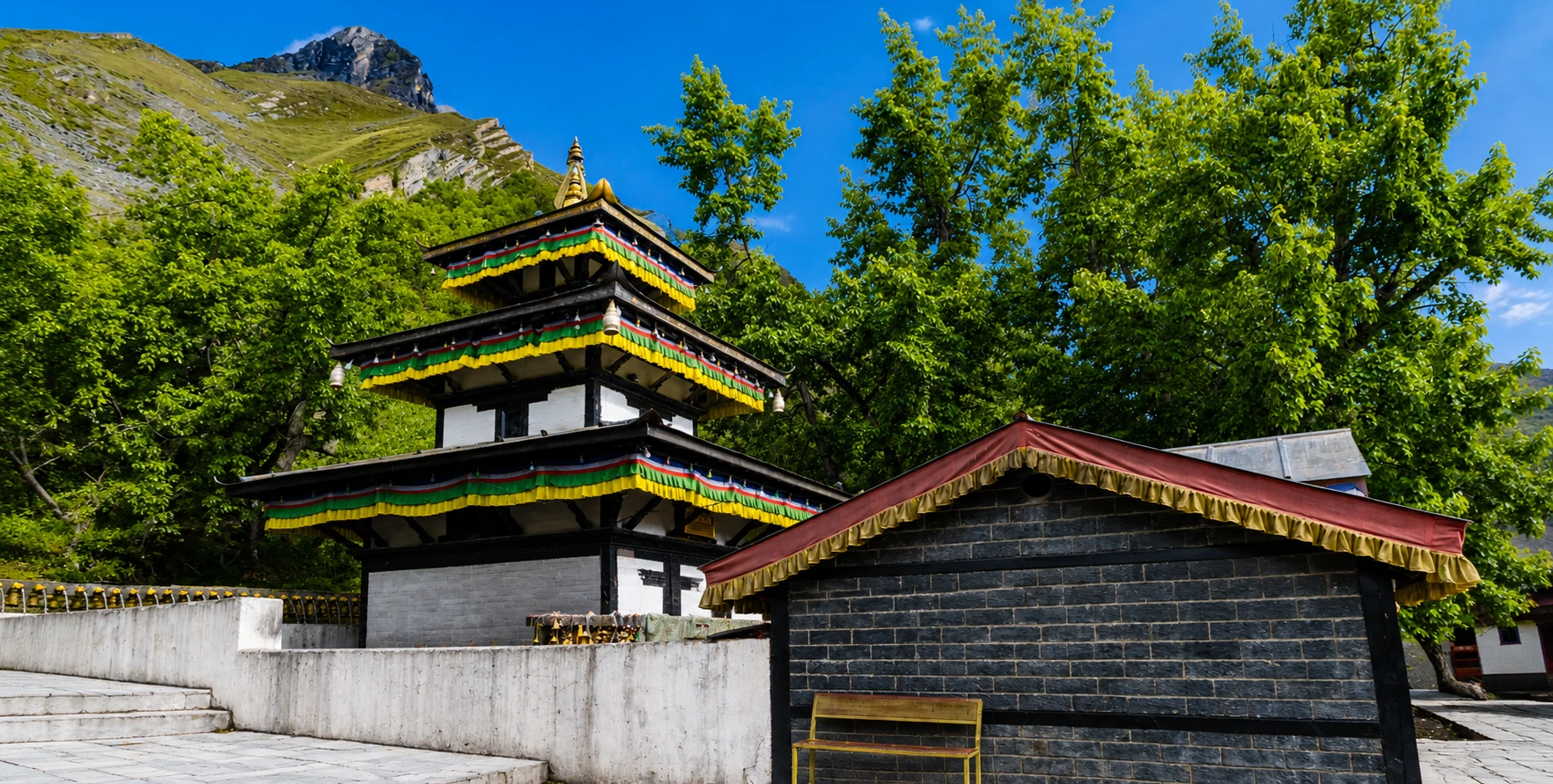
Kathmandu to Muktinath BusBest Time to Visit Muktinath

At 3,710 meters in the rain shadow of the Annapurna and Dhaulagiri ranges, Muktinath is one of the few places on earth sacred to both Hindus and Buddhists at once—and choosing the best time to visit Muktinath for the travel year genuinely changes what your trip looks like. The wrong month can mean a closed Thorong La pass, a fogged-in Jomsom flight, or a landslide-blocked jeep road.

The right month can mean crisp mountain air, blooming rhododendrons, and a temple courtyard alive with pilgrims marking one of the region’s sacred festival days.

This guide walks through Muktinath’s climate season by season and month by month, covers the Hindu and Buddhist festival calendar that shapes when pilgrims travel, and covers every practical detail—routes, permits, vehicles, and packing—you need to plan your trip with confidence.

Quick Answer: When Should You Go?

Autumn (late September to November) is the single best for most travellers, with clear skies and drier flying and driving conditions; winter is a strong second choice, trading a little stability for rhododendron blooms and thinner crowds. Winter (December to February) works for travellers, but brings serious cold and possible flight cancellations, usually offset by a jeep or helicopter option.

Monsoon (June to August) is the one season worth actively avoiding for a first visit, given landslide risk on the jeep road and frequent flight cancellations into Jomsom.

Understanding Muktinath’s Location and Climate

Muktinath sits in the Mustang district, in the deep rain-shadow carved by the Kali Gandaki Gorge between the Annapurna and Dhaulagiri massifs — among the deepest gorges on earth. This geography is exactly why Muktinath’s weather behaves differently from the rest of Nepal: the surrounding peaks block most monsoon moisture, so even during Nepal’s wet season the region receives far less rainfall than Kathmandu or Pokhara, though none.

Average annual precipitation is modest by Himalayan standards. Still, temperatures swing dramatically, from summer highs around 12°C (54°F) down to winter lows well below freezing, with night temperatures at altitude occasionally dropping toward -19°C (-2°F) in the coldest months.

This combination — thin air, wide day-night temperature swings, and a rain-shadow climate — is why the ‘best time’ question has such a clear answer for most travellers; the temple technically remains open and accessible in some form year-round.

Geographically, Muktinath belongs to the Trans-Himalayan zone rather than the lush, forested mid-hills most visitors picture when they think of Nepal. Expect eroded cliffs, wind-sculpted rock formations, and a stark, high-desert palette of ochre and grey, broken up by scattered poplar groves and irrigated barley fields near the villages.

This landscape is part of what makes the region feel so different from the rest of the itinerary, and it’s also part of what makes the season matter so much more here than on a typical trip.

Best Time to Visit Muktinath | Weather, Seasons & Travel Guide
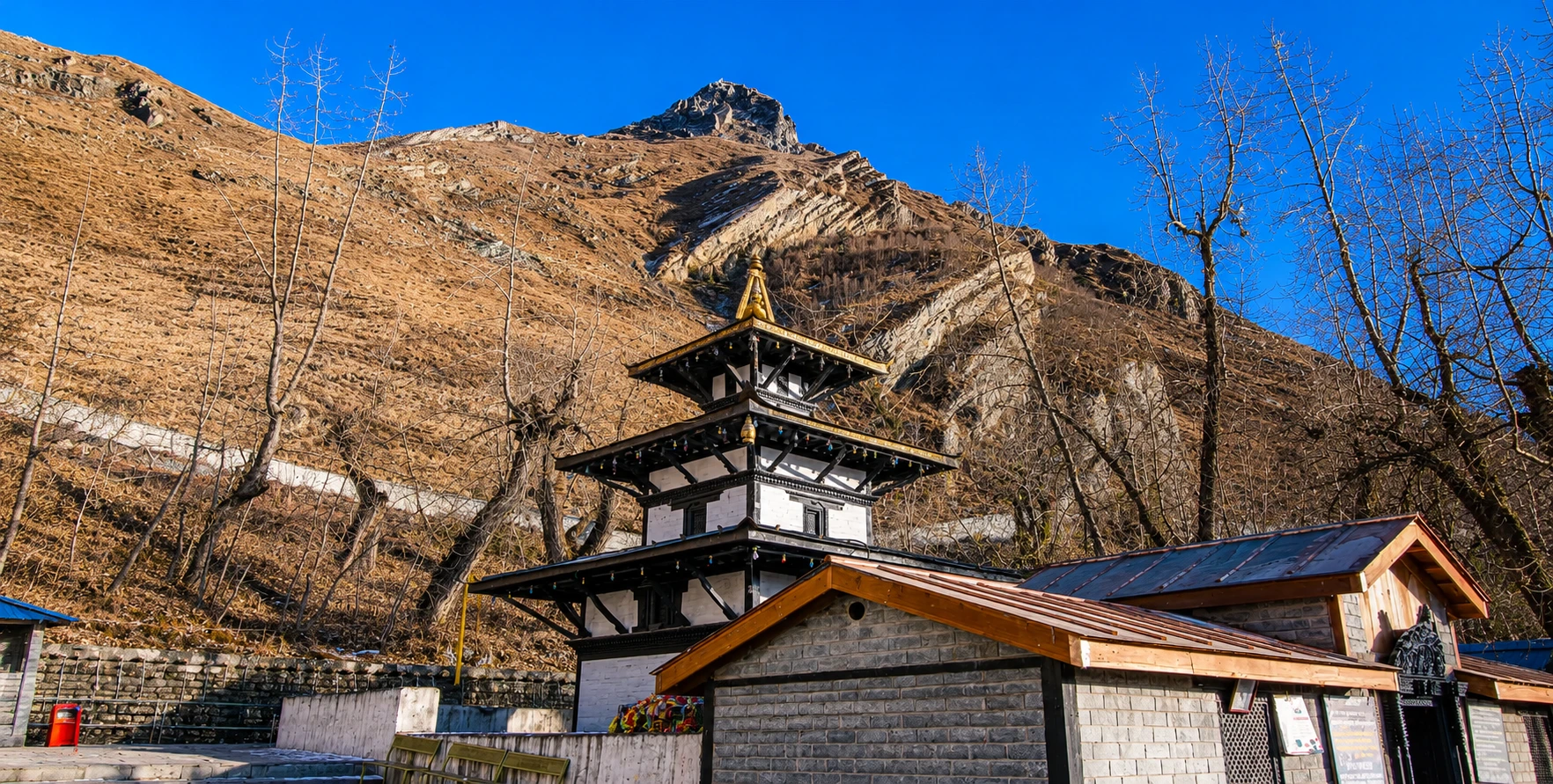
Muktinath’s Religious and Cultural Significance

Part of what makes timing this trip well worth the effort is what you’re actually visiting. Muktinath is one of the few sites on earth held sacred by both Hindus and Buddhists, each with its own name, mythology, and ritual practice built around the same small temple complex.

For Hindus, Muktinath (literally ‘Lord of Liberation’) is one of the 108 Divya Desams sacred to Vaishnavism and one of the holiest Shaligram pilgrimage sites, where devotees believe bathing in the temple’s 108 stone water spouts, fed by glacial meltwater, grants moksha — liberation from the cycle of rebirth. The adjoining Jwala Mai Temple houses a naturally occurring eternal flame, fed by a small underground natural gas seep, which Hindus and Buddhists alike regard as a genuine spiritual marvel.

Buddhists call the same site Chumig Gyatsa, meaning ‘Hundred Waters.’ It is considered one of the 24 Tantric places sacred to Vajrayana Buddhism, closely associated with the great tantric master Guru Rinpoche (Padmasambhava).

Tibetan Buddhist pilgrims from Nepal, Tibet, and beyond visit alongside Hindu devotees, and the surrounding villages — Kagbeni, Jharkot, and Khingar among them — carry a strongly Tibetan-influenced culture, visible in the architecture, prayer flags, and local monasteries you’ll pass on the drive up from Jomsom.

Understanding this dual significance helps explain why the festival calendar covered later in this guide matters so much to serious pilgrims, and why the temple sees a genuinely diverse mix of visitors — trekkers, Hindu families on a religious circuit, Buddhist monks and nuns, and curious travellers by the setting — throughout the year.

Altitude and Health Considerations at 3,710 Meters

Muktinath’s elevation is high enough that altitude should factor into your planning, even for a short visit. Most travellers fly into Jomsom (2,700 metres) and drive up, which means a fairly rapid altitude gain in a short time, precisely the kind of ascent profile that can trigger mild altitude symptoms in sensitive travellers, even those who wouldn’t consider this a serious trekking altitude by Himalayan standards.

  • Take it easy during your first few hours in Jomsom or Ranipauwa rather than going straight to the temple.
  • Stay hydrated — the dry, high-desert air at this elevation dehydrates you faster than you’d expect
  • Watch for mild headache, nausea, or unusual fatigue, and rest or descend if symptoms don’t improve.
  • Travellers on the overland jeep route via Beni acclimatize more gradually than those flying directly into Jomsom, which some find more comfortable.
  • If you have a pre-existing heart or lung condition, or are pregnant, it’s worth a quick conversation with a doctor before this kind of rapid-altitude trip, regardless of season.

Best Time to Visit Muktinath | Weather, Seasons & Travel Guide
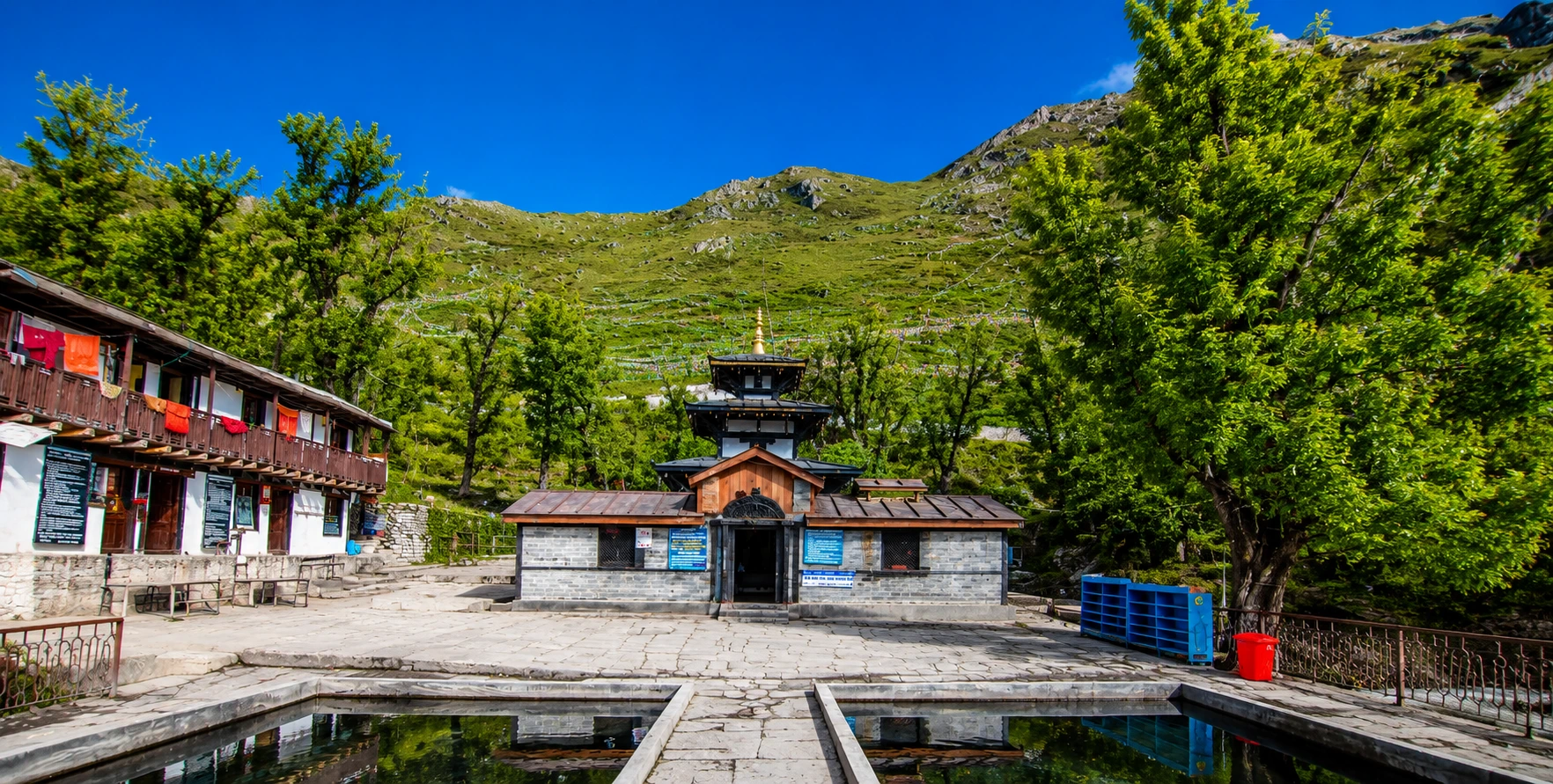
Autumn (Late September to November): The Best Season

Nearly every source covering this route names autumn the top season, and for good reason. Post-monsoon skies clear almost completely, humidity drops, and the Kali Gandaki valley settles into its most stable weather pattern of the year. Daytime temperatures typically range from around 8°C to 18°C, cold enough for warm layers but comfortable for walking and sightseeing, while November in particular sees little to no significant rainfall.

This is also peak trekking season across Nepal, so book your Jomsom to Muktinath jeep rental and any onward transport well ahead, particularly around the Dashain and Tihar festival period, when both domestic flights and jeep availability tighten considerably.

The trade-off is shorter days — by November, daylight runs to roughly 10.7 hours, so plan an early start if you’re combining the temple visit with a walk through Kagbeni or the surrounding villages.

Crowds are also thickest in autumn, particularly around the Dashain and Tihar festival window, when many Nepali families combine a holiday visit home with a pilgrimage to Muktinath. Hotel and guesthouse rooms in Ranipauwa and Jomsom fill up quickly, so travellers planning a trip should book rooms alongside their transport rather than assuming rooms will be available on arrival.

Spring (March to Mid-May): A Strong Second Choice

Spring brings a different kind of beauty to the region. As snow retreats from the high passes, rhododendrons bloom in bands of red and pink lower down the trekking trails, and the Kali Gandaki valley turns noticeably greener than its stark winter appearance.

Daytime temperatures generally range from 10°C to 20°C, and the season is considered nearly as stable as autumn. However, late March can occasionally bring a dip in conditions worth watching if your dates are flexible.

Spring also carries genuine religious weight: Ram Navami, one of the major Hindu pilgrimage days associated with Muktinath, falls on, drawing a noticeable rise in devotee traffic to the temple around that date. Travellers planning around this festival should book their ACAP permit and transport well in advance, since accommodation and jeep seats around Jomsom and Ranipauwa tighten considerably in the days surrounding major pilgrimage dates.

By May, scattered pre-monsoon showers become more frequent, gently easing the region toward the wetter months ahead — still generally manageable, but worth noting if you’re booking toward the very end of the spring window.

Spring visitors also benefit from noticeably better availability than autumn’s peak crush — accommodation in Ranipauwa and Jomsom is easier to secure on shorter notice, and the trekking trails around Kagbeni and Jharkot feel considerably less crowded, even during the Ram Navami window, which draws pilgrims specifically to the temple rather than to the wider trekking circuit.

Monsoon (June to August): The Season to Avoid or Plan Carefully Around

Monsoon rewards patience with lush, green landscapes and noticeably thinner crowds, but it’s the one season most guides — and this one — recommend avoiding for a first-time or time-constrained visit. Rain and cloud cover regularly ground flights between Pokhara and Jomsom, sometimes for days at a stretch, and the jeep road via Beni becomes considerably more exposed to landslides and slippery, rutted surfaces in the wetter stretches.

Despite the challenges, this window does carry cultural significance: Janai Purnima (also called Rishi Tarpani), the Hindu sacred-thread festival, falls on the full moon of the Nepali month of Shrawan, generally in August, and Muktinath hosts its own gathering on this day alongside the Gurung and Thakali community’s Yartung Mela, a lively local festival combining horse racing, archery, and celebration around the same period. Travellers seeking a real experience should build flexibility into their itinerary, since weather delays are common at this time of year.

Winter (December to February): Cold, Quiet, and Still Accessible

Winter transforms the region into a genuine high-altitude winter landscape, with the area around Muktinath frequently snow-covered and night temperatures dropping well below freezing. The classic trekking route over Thorong La Pass at 5,380 meters is often snowbound and impassable in these months, ruling out a full Annapurna Circuit crossing.

Still, Muktinath remains reachable: most winter visitors fly to Jomsom (weather permitting), then take a jeep to Ranipauwa and walk the final short stretch to the temple, or book a direct helicopter tour when road and flight conditions are uncertain.

If you’re planning winter travel, pack seriously for the cold — thermal base layers, a proper down jacket, insulated gloves, and a warm hat are non-negotiable, even for a short visit. Confirm your Scorpio jeep hire or Toyota Land Cruiser 4WD hire booking with flexible timing, since winter road conditions can shift quickly after fresh snowfall.

Buddhist Lhosar (Tibetan New Year), typically falling in February, is another important date on the winter calendar for the Buddhist communities around Muktinath and Upper Mustang, adding a cultural dimension to an otherwise quiet season.

Month-by-Month Breakdown

January

The coldest month, with daytime highs often near or below freezing and nights dropping toward -19°C at altitude. Snow typically blankets the temple grounds, and heating in guesthouses becomes a genuine consideration when choosing where to stay. Jeep access to Ranipauwa generally continues on clear days; flights are the most weather-dependent element, with morning departures the most reliable before winds pick up.

February

Still firmly winter, though days slowly lengthen and Buddhist Lhosar celebrations bring cultural life to the region’s monasteries and villages. Daytime temperatures begin a gradual climb from January’s lows, though nights remain sharply cold and snow cover can persist at the temple.

Mark the start of spring proper, with warming days and Ram Navami usually falling late in the month — 26-27 March in 2026 — drawing a rise in Hindu pilgrim traffic. Early March can still carry a wintry feel, especially in the mornings, so travellers pack warmer layers despite the official turn.

April is one of the year’s most reliable months: mild temperatures, clear skies, and rhododendrons in bloom along the lower trekking trails. Flight reliability into Jomsom is generally strong, and this month sees a healthy but not overwhelming mix of trekkers and pilgrims, making it a favourite among travellers who want good weather without autumn’s peak crowds.

May

Still a good month overall, though pre-monsoon showers become more frequent toward the end, especially in the final week. Daytime temperatures are comfortably warm, and this is often considered the last genuinely reliable window before the monsoon begins to disrupt travel in June.

June

The monsoon begins to establish itself; flights into Jomsom become noticeably less reliable, and the jeep road starts seeing more frequent minor disruptions. Early June can still offer reasonable conditions, but travellers are better served waiting until autumn if good visibility matters to their trip.

July

The wettest month of the year regionally, with the highest rainfall totals and the greatest landslide risk on the road via Beni. Cloud cover frequently obscures mountain views even on days without active rain. Not recommended for first-time visitors on a tight schedule, though the surrounding hills turn a vivid green rarely seen.

August

Rainfall continues but eases slightly toward the end of the month. Janai Purnima and the Yartung Mela festival fall in this window, drawing pilgrims and cultural travellers despite the weather trade-offs. Travellers timing a visit around this festival should build extra flexibility into flights and jeep bookings given the ongoing monsoon influence.

September

The genuine turning point of the year — early September can still carry late-monsoon moisture, but conditions improve rapidly as the month progresses toward the autumn peak. By the final week, most travellers report noticeably clearer skies and drier roads than just two or three weeks earlier.

October

Widely cited as the year’s most favourable month, with stable weather, comfortable daytime temperatures around 5-15°C, and excellent Himalayan visibility. This is also peak Dashain and Tihar festival season in Nepal more broadly, meaning both high demand for transport and a particularly festive atmosphere in villages along the route.

November

The driest month of the year, with little to no significant precipitation and consistently clear mountain panoramas—the top choice for photographers and anyone prioritizing reliable conditions. Nights turn noticeably colder toward the end of the month as the region transitions toward winter.

December

Winter sets in firmly, with snow becoming common around the temple itself, though the region remains noticeably quieter and serene for travellers comfortable with the cold. Early December can still offer relatively mild, clear days before January’s deeper cold arrives, making it an interesting shoulder option for travellers seeking a quieter alternative to the autumn crowds.

Muktinath Temple surrounded by Himalayan mountains during the best season for pilgrimage and sightseeing

Best Time for Pilgrimage: Hindu and Buddhist Festival Calendar

Because Muktinath is sacred to both major Himalayan faiths, its pilgrimage calendar is unusually rich, and many devotees deliberately time their visit around a specific festival day rather than simply chasing good weather.

  • Ram Navami — marking the birth of Lord Rama, one of Muktinath’s most significant Hindu pilgrimage days.
  • Janai Purnima / Rishi Tarpani (full moon of Shrawan, generally August) — the sacred-thread renewal festival, observed at Muktinath alongside the Gurung and Thakali Yartung Mela.
  • Dashain and Tihar (September-October, dates shift yearly with the lunar calendar) — Nepal’s largest festival season, drawing many pilgrims to Muktinath during the already-favourable autumn window.
  • Buddhist Lhosar (February, exact date varies by community) — Tibetan New Year, significant for the Buddhist communities of Upper Mustang and the wider Muktinath area.

Travellers prioritizing a quieter, more contemplative visit may want to avoid these peak festival dates. At the same time, those seeking the cultural and devotional atmosphere of a major pilgrimage day should plan and build their itinerary around the inevitable crowds and transport demand.

Sample Itineraries by Season

Autumn Itinerary (3 Days, From Pokhara)

Day 1: Fly or drive from Pokhara to Jomsom, then continue by private jeep to Ranipauwa, with time in the afternoon to visit Muktinath Temple and watch the light change over the valley toward evening. Day 2: Enjoy a relaxed morning at the temple if you skipped the crowds the day before, then stop in Kagbeni on the drive back to Jomsom, with time to explore the old village.

Day 3: Fly or drive back to Pokhara, with a buffer built in given autumn’s high demand for both flights and jeep seats.

Spring Itinerary (3-4 Days, From Pokhara)

Similar in structure to the autumn version, but with more flexibility to add a night in Jomsom or Kagbeni given lighter crowds, plus the option to time your visit around Ram Navami in late March if the festival atmosphere interests you. Spring’s milder mornings also make an early temple visit more comfortable than in the depths of winter.

Winter Itinerary (3-4 Days, Weather-Dependent, From Pokhara)

Build in at least one full buffer day given the higher chance of flight delays. Day 1: Attempt the Pokhara-Jomsom flight; if grounded, use the day to arrange a jeep departure via Beni instead.

Day 2-3: Reach Ranipauwa, visit the temple bundled in serious cold-weather gear, and consider a helicopter option for the return leg if road or flight conditions look uncertain. Day 4: Return to Pokhara, with the extra buffer day absorbed if delays occurred earlier in the trip.

Common Mistakes to Avoid When Planning Your Timing

  • Booking a monsoon-season trip on a tight schedule with no buffer day for flight cancellations
  • Underestimating winter cold because Muktinath is technically in Nepal’s dry rain-shadow zone — altitude cold is still serious cold.
  • Assuming accommodation will be available without booking ahead during Dashain-Tihar or Ram Navami.
  • Forgetting to arrange your ACAP permit in Kathmandu or Pokhara before heading toward Jomsom
  • Not checking festival dates in advance if a specific pilgrimage day matters to your trip, since Hindu lunar-calendar festivals shift year to year

Muktinath Temple surrounded by Himalayan mountains during the best season for pilgrimage and sightseeing

How to Reach Muktinath

There’s no single right way to reach Muktinath—the best approach depends on your time, budget, tolerance for weather-related delays, and whether you’d rather fly, drive, or trek. Most visitors combine at least two of these methods, flying one direction and driving the other, or trekking in and taking transport out.

By Air: Pokhara to Jomsom, Then Jeep

The fastest route combines a short domestic flight from Pokhara to Jomsom with a road transfer for the final stretch. Once in Jomsom, our Jomsom to Muktinath jeep rental covers the final 20-25-kilometre leg, climbing over 1,000 meters in about an hour by vehicle. Flights are most reliable in autumn and spring and least reliable during monsoon, so add a buffer day if you’re flying during the wetter months.

Jomsom’s airport is known for its early-morning-only flight window — winds in the valley typically pick up by mid-to-late morning, strong enough that flights rarely operate past around 10 or 11 AM. This means an early start from Pokhara is essential, and it’s also why flight delays cascade so easily during unsettled weather: miss the morning window, and you’re often waiting until the following day.

By Road: Pokhara to Beni to Jomsom to Muktinath

For travellers wanting an overland journey — or when flights aren’t running — the full road route runs from Pokhara through Beni and on to Jomsom before the final Muktinath leg. Our Pokhara to Beni jeep hire service covers the first stage, continuing the same overland approach used for the return leg on our Muktinath to Pokhara jeep page.

This route takes considerably longer than flying but offers a genuinely scenic, uninterrupted look at the Kali Gandaki valley.

This overland approach is also the more weather-resilient option in absolute terms, since it doesn’t depend on flying conditions — though it carries its own seasonal risk profile, with monsoon-season landslides being the main concern rather than wind or cloud cover. Many travellers who fly to the region choose to drive the rest of the way, giving them both the speed of a flight and a full look at the valley by road.

Muktinath

From Kathmandu, travellers starting in the capital rather than Pokhara can arrange the full overland journey directly, covered on our Kathmandu to Mustang private jeep page, or connect through Pokhara first via our Kathmandu to Pokhara bus, Kathmandu to Pokhara VIP Sofa Bus, or Kathmandu to Pokhara private Scorpio services before continuing toward Jomsom and Muktinath.

Starting from Kathmandu adds a full extra day or more to the front end of your trip compared to starting from Pokhara, so factor this into your total itinerary length regardless of season — this is one of the most common planning oversights among first-time visitors mapping out timing purely around Muktinath’s weather without accounting for the approach journey.

On Foot: The Classic Trekking Approach

For those with more time, the traditional trekking route into the region passes through Ghandruk or approaches via the wider Annapurna Conservation Area, eventually joining the Jomsom-Muktinath corridor on foot rather than by vehicle — a much slower but in-depth way to reach the temple, and the classic finale for travellers completing the full Annapurna Circuit over Thorong La from the Manang side.

This approach is entirely season-dependent in a way the jeep and flight routes aren’t: Thorong La Pass at 5,380 meters is frequently snowbound and closed to trekkers from roughly December through February, making the full circuit crossing an autumn or spring-only proposition for most trekkers, even though Muktinath itself remains reachable by jeep from the Jomsom side year-round.

Choosing Between a Guided Trek and a Private Jeep Trip

Travellers weighing a multi-day trek to Muktinath against a faster jeep-based visit: the honest answer depends on what you’re looking for. A trek — whether the full Annapurna Circuit over Thorong La or a shorter approach through the lower Mustang villages — delivers a slower, more in-depth experience and a genuine sense of arrival at the temple after real physical effort, but locks you into autumn or spring timing given the pass conditions discussed above, and requires significantly more time, typically two weeks or more for the full circuit.

A private jeep trip compresses the same destination into 2 to 4 days, works in every season except the least favourable monsoon and deep-winter windows, and suits travellers with limited vacation time, mobility considerations, or a preference for comfort over multi-day trekking. Many pilgrims specifically choose the jeep route precisely because their visit is devotional rather than adventure-driven, and getting to the temple efficiently matters more than the journey itself.

Discover the Best Time to Visit Muktinath for comfortable weather, clear Himalayan views, pilgrimage, and scenic jeep travel through Mustang. Spring and autumn are generally popular seasons for visiting Muktinath.
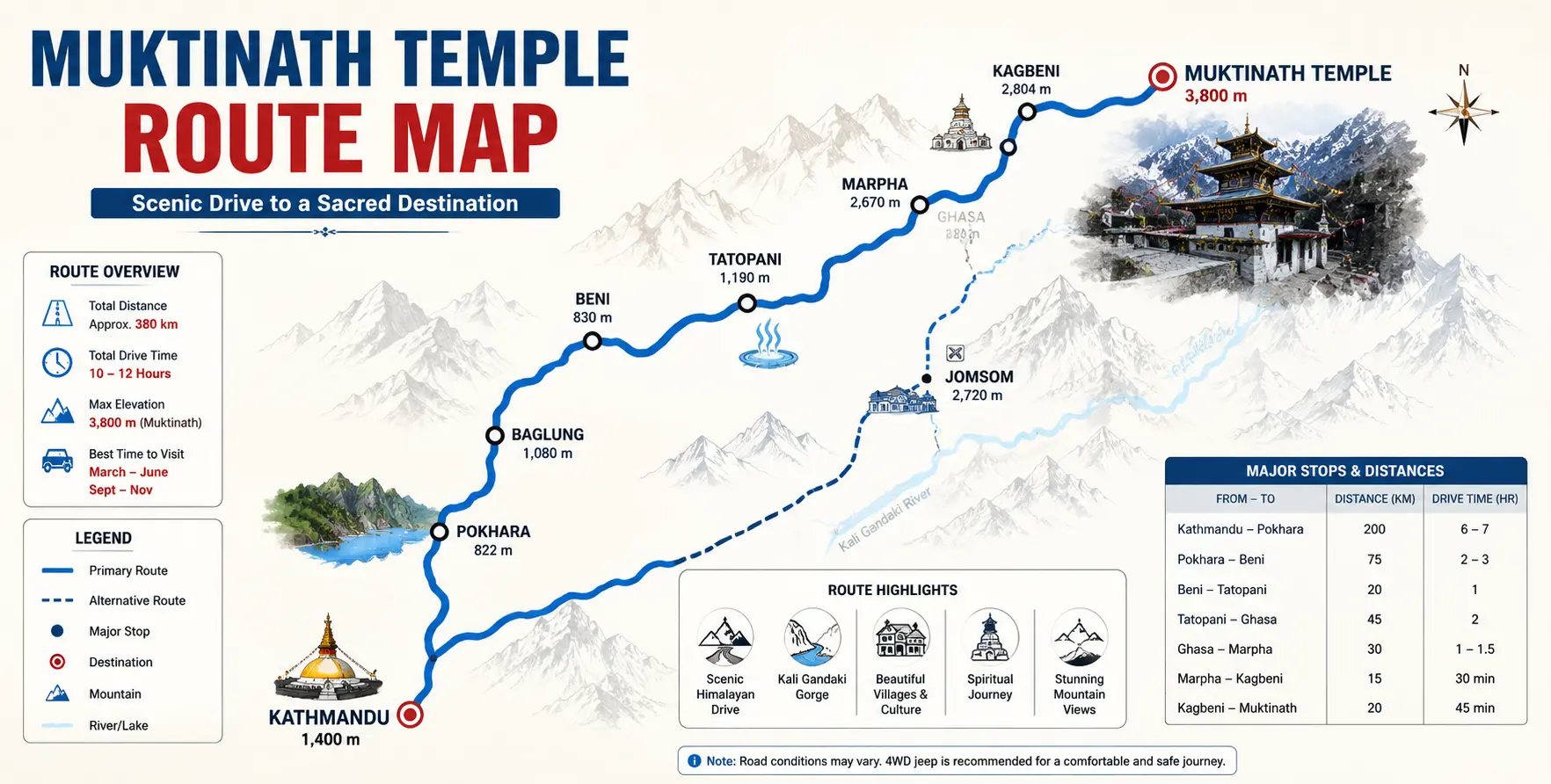
Group Travel vs Solo Pilgrimage: Timing Considerations

Groups and families travelling together generally benefit most from travelling in autumn or spring, when flights and road conditions are most reliable and large-group logistics—coordinating multiple jeep seats or a private charter, securing enough guesthouse rooms in Ranipauwa—are much easier to manage. Solo travellers and those with fully flexible schedules have more room to experiment with shoulder-season timing, since a single unexpected delay is far easier to absorb alone than when coordinating a group’s shared itinerary.

Permits You’ll Need

Every visitor to the Muktinath region needs a valid ACAP (Annapurna Conservation Area Permit), regardless of whether you arrive by jeep, flight, or on foot, since the entire route falls within the conservation area. Our ACAP permit guide covers exactly where to obtain this in Kathmandu or Pokhara before you travel — it isn’t available once you’re already in Jomsom or Muktinath itself, so arrange it ahead of time.

Processing an ACAP permit typically requires a passport copy and passport-sized photos, plus the applicable fee, which varies by nationality (SAARC nationals generally pay a reduced rate than other foreign visitors). Since the permit checkpoint sits along the route rather than at the temple itself, keep your documents easily accessible during the drive rather than packed at the bottom of your luggage.

Unlike some of Nepal’s more remote restricted areas, Muktinath and the surrounding lower Mustang region do not require a special restricted-area permit on top of ACAP — that additional requirement applies specifically to Upper Mustang beyond Kagbeni, relevant only if you’re extending your trip further north.

Cost Considerations by Season

Timing your trip also affects your budget, sometimes in ways that aren’t immediately obvious. Flights between Pokhara and Jomsom are priced fairly consistently year-round.

Still, during monsoon, the real cost often comes from cancellations and rebooking—a delayed or cancelled flight can mean an unplanned extra night in Pokhara or Jomsom, plus the hassle of shifting your entire itinerary. Autumn and spring, while busier, tend to offer more predictable costs overall since delays are far less common.

Accommodation rates in Ranipauwa and Jomsom generally rise modestly during the autumn and spring peaks and around major festival dates, reflecting the higher demand. At the same time, winter and monsoon often see lower rates because fewer travellers visit. Private jeep charter costs remain relatively stable across seasons, though winter charters occasionally carry a small top-end because driving conditions are more demanding.

Choosing Your Vehicle by Season

Your best vehicle choice shifts with the season. In the drier autumn and spring months, a Scorpio jeep hire comfortably handles the route’s mixed paved and unpaved surfaces. In winter, when snow and ice become a real factor, a Toyota Land Cruiser 4WD hire offers extra confidence on slippery sections.

Travellers wanting to compare vehicle classes more broadly can read our jeep and SUV comparison or our note on why a genuine 4WD jeep matters for this kind of mountain terrain. A small number of independent travellers explore the wider Mustang region by motorbike; see our past adventure bike rental in Nepal, though a jeep remains the more practical choice for most pilgrims and families.

Discover the Best Time to Visit Muktinath for comfortable weather, clear Himalayan views, pilgrimage, and scenic jeep travel through Mustang. Spring and autumn are generally popular seasons for visiting Muktinath.
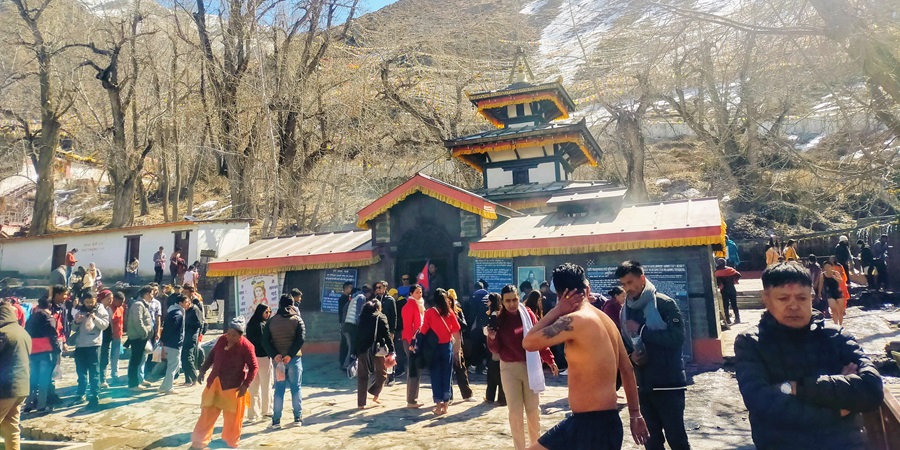
Where to Stay Near Jomsom and Muktinath

Most visitors stay in either Jomsom or Ranipauwa, the small village just below the temple. As the district headquarters and airport hub, Jomsom offers a wider range of guesthouses and basic hotels, along with the region’s best selection of restaurants and shops.

Ranipauwa sits closer to the temple — close enough to walk up in 15 to 20 minutes — and is the more common choice for pilgrims wanting to be near the temple for an early-morning visit.

Accommodation throughout the region is generally simple: expect basic guesthouse-style rooms, with hot water and heating availability varying by season and property. During peak autumn and spring windows, and especially around major festival dates like Ram Navami or the Dashain-Tihar period, booking ahead is genuinely worthwhile rather than a formality, since the limited room stock in both villages fills quickly.

If your itinerary routes back through Pokhara afterwards, our car hire in Pokhara service can arrange onward local transport once you’re back down from the mountains.

Photography and Views by Season

For photographers, autumn and winter both offer their own rewards. Late autumn (October-November) delivers the year’s clearest, haze-free mountain panoramas, ideal for capturing the Dhaulagiri and Nilgiri peaks framing the valley.

Winter’s snow-dusted temple grounds and villages offer a starkly beautiful, quieter alternative, though shorter days and colder conditions mean less flexibility for early or late golden-hour shooting. Spring adds beauty with rhododendrons blooming along trekking trails.

At the same time, monsoon, despite its travel-logistics drawbacks, occasionally rewards patient photographers with dramatic cloud formations breaking around the peaks between rain showers. Many photographers combine this trip with the Sarangkot sunrise tour in Pokhara before or after, for a full Annapurna-range photography circuit.

What to Pack, Season by Season

  • Autumn and spring: Layered clothing, a warm jacket for mornings and evenings, sun protection, and sturdy walking shoes for the short uphill stretch from Ranipauwa to the temple.
  • Winter: Thermal base layers, a serious down jacket, insulated gloves, a warm hat, and lip balm or moisturizer for the dry, cold air.
  • Monsoon: A proper waterproof jacket, quick-dry clothing, insect repellent, and a flexible itinerary in case of flight delays or road disruptions.
  • Year-round: A basic altitude-awareness plan, given Muktinath’s 3,710-meter elevation, plus sunglasses and sunscreen, since UV exposure is stronger at altitude year-round.

Combining Muktinath With a Wider Nepal Trip

Few travellers visit Muktinath in isolation. Many extend north into Upper Mustang, a broader range of destinations. They can broadly connect the trip to the wider Annapurna Circuit via Besisahar to Chame and Upper Pisang, then onward to Dharapani, the Circuit’s most popular starting point.

Others prefer to base themselves in Pokhara before or after, exploring Pokhara to Sikles, Pokhara to Nayapul, or a sunrise trip via Sarangkot. Travellers building a longer Nepal itinerary around their Muktinath pilgrimage often also add a Kathmandu Valley cultural stop covering the region’s UNESCO World Heritage Sites, a wildlife safari via Pokhara to Chitwan bus, or an extension toward Everest Base Camp on the same trip.

Muktinath temple

Explore More Nepal Routes, Tours, and Vehicles

Whatever season you choose for Muktinath, here’s a fuller map of the routes, tours, and vehicle options we cover, in case your trip extends further across Nepal. Many pilgrims and trekkers treat Muktinath as one stop on a longer journey rather than a standalone destination, and the resources below cover most natural extensions.

Mustang and Annapurna Region

For travellers continuing deeper into the Mustang and Annapurna region beyond Muktinath itself, or approaching from a different direction, these routes and guides cover the wider circuit:

Explore Kathmandu to Mustang private jeep, Pokhara to Beni jeep hire, Muktinath to Pokhara jeep, Upper Mustang 4WD jeep, places to visit in Mustang, Pokhara to Manang transport, Manang to Kathmandu private jeep hire, Kathmandu to Manang jeep, Besisahar to Chame and Upper Pisang, Kathmandu to Ghandruk private jeep hire, Pokhara to Ghandruk jeep, Pokhara to Sikles jeep rental, and the Annapurna Conservation Area guide.

Kathmandu and Pokhara Transport

Most journeys to Muktinath start in Pokhara or Kathmandu. These pages cover the full range of bus, VIP Sofa, and private vehicle options for that leg of your trip:

See Kathmandu to Pokhara bus tickets, Kathmandu to Pokhara bus ticket, Pokhara to Kathmandu bus, Kathmandu to Pokhara road trip, Kathmandu to Pokhara vehicle rental, our Pokhara bus ticket price guide, VIP Sofa Bus hire in Nepal, tourist bus hire in Nepal, and coaster and tourist bus hire.

Kathmandu Valley Sightseeing

If your itinerary includes time in the capital before or after your pilgrimage, these guides cover the valley’s main sightseeing routes and airport logistics:

Round out your trip with Kathmandu sightseeing, Kathmandu’s historical heritage sites, Bhaktapur Durbar Square, Kathmandu to Nagarkot vehicle hire, the Nagarkot sunrise tour, and reliable Kathmandu airport transfers. If you’re staying near Thamel, see our Thamel to airport private vehicle hire guide or our airport pickup to Thamel and hotel drop guide, and if your hotel is in Patan instead, see our airport to Patan private vehicle drop guide.

Chitwan, Lumbini, and the Terai

Extend your trip with Pokhara to Chitwan bus, Chitwan to Kathmandu bus, our Chitwan VIP bus ticket price guide, Kathmandu to Chitwan VIP Sofa Bus Ticket, Kathmandu to Chitwan luxury car hire, Kathmandu to Lumbini bus, Lumbini to Kathmandu bus, Chitwan to Birgunj border transport, eastern border vehicle hire, and Janakpur airport transfer service.

Trekking Approaches

For other trekking gateways, see Kathmandu to Soti Khola, Kathmandu to Salleri-Phaplu, Kathmandu to Besisahar bus ticket, Besisahar private vehicle hire, the Everest Base Camp trek, our general trekking services, Kathmandu to Gorkha jeep service, and luxury trek vehicle hire for those wanting extra comfort throughout.

Vehicle Fleet

Compare our full fleet: car, jeep, Hiace, bus, coaster, car hire in Nepal, car hire in Pokhara, our alternate Hiace van hire listing, why private vehicle hire is the smartest way to travel Nepal, and our ultimate Nepal vehicle rental guide.

Plan and Learn More

Use our plan your trip tool, browse our Nepal tour package options, learn more about us, read our full SUV rental in Nepal guide, or browse our blog for further route guides across the country.

Best Time to Visit by Traveller Type

Photographers should prioritize late autumn, specifically late October through November, when haze-free skies deliver the clearest possible views of the Dhaulagiri and Nilgiri peaks framing the valley. Early morning light is especially rewarding around Ranipauwa and the temple courtyard.

Devotional pilgrims focused on a specific festival day should plan around the relevant date first and weather second — Ram Navami in late March or the Dashain-Tihar window in autumn are the two biggest draws, and both come with the trade-off of higher demand for accommodation and transport.

Trekkers completing the full Annapurna Circuit over Thorong La are effectively restricted to autumn or spring, since snow frequently closes the pass in winter. Those who approach by jeep alone, rather than trekking the pass, have far more seasonal flexibility.

Families with children or elderly members are generally best served by spring or early autumn, avoiding both winter’s serious cold and monsoon’s transport unpredictability, and benefiting from the more moderate daytime temperatures for the short walk up to the temple.

Budget-conscious travellers willing to accept some unpredictability can find genuine value in shoulder-season windows — early December or early March — when accommodation rates ease and crowds thin out, without the more serious weather risks of deep winter or peak monsoon. Travellers seeking solitude away from festival crowds should consider winter (outside of Lhosar) or the early autumn shoulder in September, when the region is noticeably quieter than the October-November peak, while still offering reasonably manageable conditions.

Understanding the Local Place Names

A small but common source of confusion for first-time visitors: Muktinath refers specifically to the temple complex itself, while Ranipauwa is the village immediately below it, where most accommodation and the end of the drivable road are located. Jomsom, roughly kilometres away, is the district headquarters of Mustang and the region’s airport hub, not the temple site itself.

Mustang, meanwhile, refers to the wider district and former kingdom, split informally into Lower Mustang (which includes Jomsom and Muktinath) and Upper Mustang (the more remote, restricted-permit area further north beyond Kagbeni). Keeping these distinctions straight helps when reading flight schedules, permit requirements, and transport options, since each name refers to a genuinely different point along the route.

Cultural Etiquette When Visiting Muktinath Temple

Muktinath is an active place of worship for both Hindus and Buddhists, not simply a tourist attraction, and a respectful approach matters regardless of your own faith or background. Dress modestly — shoulders and knees covered is a safe standard — and be prepared to remove your shoes before entering temple buildings.

Photography is generally permitted in the outer courtyard and around the 108 water spouts, but always check for posted restrictions or ask before photographing inside the inner sanctums or during active rituals.

If you choose to bathe in the water spouts, as many Hindu pilgrims do, be aware that the glacial meltwater is genuinely cold year-round. This ritual is optional for visitors, not expected.

Move calmly and give space to pilgrims engaged in prayer or ritual, particularly around the Jwala Mai Temple’s eternal flame, and follow local devotees’ lead on the direction of circumambulation around the temple structures, which follows specific customary patterns in both Hindu and Buddhist practice.

Environmental Considerations and Responsible Travel

The Annapurna Conservation Area, which encompasses the entire Jomsom-Muktinath corridor, operates under a community-managed conservation model funded partly by ACAP permit fees. Responsible travellers pack out any waste they generate, avoid single-use plastic where possible given the limited waste infrastructure in these high-altitude villages, and respect the fragile high-desert ecology, which recovers slowly from disturbance given the short growing season at this elevation.

Choosing a licensed, reputable transport operator also supports the local economy more directly than informal arrangements, and drivers familiar with the region are generally well-versed in both the practical and cultural expectations of travelling through these conservation-area communities.

Why Book With Nepal Vehicle Hiring Pvt Ltd

Our drivers cover the Jomsom-Muktinath corridor in every season, from clear October mornings to snow-dusted December afternoons, with vehicles matched to the road and weather conditions, not a one-size-fits-all fleet. Every booking includes transparent pricing, an experienced high-altitude driver, and flexibility to adjust your schedule around flight delays or seasonal road conditions.

Reach out through our contact page to plan your Muktinath pilgrimage around the season and festival dates that matter most to you.

Nearby Attractions to Pair With Your Visit

Beyond the temple itself, the wider Jomsom-Muktinath area rewards travellers who budget a little extra time for the surrounding villages. Marpha, a short distance south of Jomsom, is known for its apple orchards, a small local distillery producing apple brandy, and some of the region’s tidiest traditional Thakali architecture, with whitewashed stone houses and narrow flagstone alleys.

Kagbeni, covered earlier as a stop en route to Muktinath, rewards a longer visit with its medieval core and views straight up the restricted Upper Mustang valley. Jharkot, just below Muktinath, has a notable old monastery and a traditional Tibetan medicine centre worth a stop if your schedule allows.

Travellers with extra time sometimes head south to Tatopani, known for its natural hot springs, a welcome stop after days on dusty mountain roads. However, this adds a full extra day or more depending on road conditions and is more commonly combined with a longer Annapurna Circuit itinerary than a short Muktinath-focused trip.

Weather Risk at a Glance

Stepping back from month-by-month detail, it helps to think about this trip in terms of risk rather than just averages. Autumn carries the lowest overall risk of weather-related disruption, balanced against the highest demand for transport and accommodation.

Spring carries slightly more risk than autumn, concentrated mainly in its final weeks as pre-monsoon showers increase, but remains a genuinely reliable window for most of its span. Winter carries a moderate, specific risk profile — mainly flight cancellations and cold-weather logistics rather than road washouts — while monsoon carries the highest combined risk across both flight reliability and road safety, and is the one season where a flexible schedule isn’t just helpful but close to essential.

None of this means monsoon or winter travel should be ruled out entirely — plenty of pilgrims and travellers visit successfully in both windows every year, particularly those specifically drawn by a festival date or simply preferring quieter conditions. It does mean you should plan accordingly: add buffer days, book flexibly, and expect at least one weather-related delay somewhere in the trip.

Planning Checklist Before You Book

  • Decide which season fits your priorities: clearest weather (autumn), blooms and lighter crowds (spring), festival timing (check the lunar calendar for the specific year), or budget and solitude (shoulder season)
  • Confirm your ACAP permit arrangements in Kathmandu or Pokhara before departure.
  • Book flights or jeep transport with buffer days if travelling outside the autumn-spring window
  • Reserve accommodation in Ranipauwa or Jomsom ahead of time during festival dates or peak season
  • Pack for the specific season, not just ‘mountain weather’ generally, given how differently January and July feel at this altitude.
  • Check current festival dates for the specific year you’re travelling, since Hindu lunar-calendar dates shift annually.
  • Build in at least one extra buffer day if your trip involves flying into or out of Jomsom during any season other than peak autumn. Working through this checklist before finalising your dates is the single most effective way to avoid the most common planning mistakes covered earlier in this guide. It applies whether you’re organizing a short 2026 pilgrimage or a longer 2027 trip combining Muktinath with the wider Annapurna region.

A Final Word on Choosing Your Dates

If there’s one takeaway from this guide, it’s that ‘best time to visit Muktinath’ doesn’t have a single universal answer — it has a best answer for your specific priorities. A photographer chasing crystal-clear Himalayan panoramas and a pilgrim timing their trip around Ram Navami are optimizing for genuinely different things, even though both might end up travelling within a few weeks of each other.

Use the season-by-season and month-by-month breakdowns above to narrow down a window, cross-check it against the festival calendar if a specific date matters to you, and then build your transport and accommodation bookings around that window with realistic buffer time, particularly outside the reliable autumn stretch.

However you choose to time it, the destination itself remains one of the most remarkable places in Nepal to visit — a temple sacred to two of the world’s major religions, set in a stark, high-altitude landscape unlike almost anywhere else in the country, reachable comfortably by jeep in a matter of hours from Pokhara regardless of which season ultimately fits your trip best.

Frequently Asked Questions

What is the single best month to visit Muktinath? October and November are the most consistently recommended, offering the clearest skies and most stable road and flight conditions of the year.

Can I visit Muktinath in winter? Yes — the temple remains accessible via jeep to Ranipauwa or by helicopter tour, though the Thorong La trekking route is often snowbound.

Is Muktinath open all year? Yes, the temple is open year-round, though visitor numbers and accessibility vary significantly by season.

When is Ram Navami? A major Hindu pilgrimage date at Muktinath.

When is Janai Purnima observed at Muktinath? It falls in the Shrawan month, generally coinciding with the local Yartunga Mela festival.

Should I avoid monsoon season entirely? For most first-time visitors, yes — flight cancellations and landslide risk on the road are common between June and August.

Do I need a permit to visit Muktinath? Yes, you need an ACAP permit for the trek; you can obtain it in Kathmandu. Is it better to fly or drive to Jomsom? Flying is faster but more weather-dependent; driving via Beni takes longer but is more reliable when flying conditions are questionable.

How cold does it get at Muktinath in winter? Night temperatures at altitude can drop toward -19°C in the coldest months, so serious cold-weather gear is essential.

Can I combine Muktinath with the Annapurna Circuit? Yes, many trekkers arrive at Muktinath as the final stop after crossing Thorong La from the Manang side, weather and season permitting.

What should I pack for a spring visit? Layered clothing, a warm jacket for mornings and evenings, and sturdy footwear for the short walk up to the temple from Ranipauwa.

Does timing differ between religious and trekking visits? Not fundamentally — both benefit most from autumn or spring conditions. However, devotional travellers prioritise festival dates, while trekkers completing the full circuit are more strictly bound by Thorong La’s seasonal accessibility.

Can weather conditions in Pokhara affect my Jomsom flight even if Jomsom itself looks clear? Yes — both departure and arrival airport conditions matter, and cloud cover or wind at either end can delay or cancel a flight even when the other looks fine.

Can we visit Muktinath as a day trip from Pokhara? Technically, it’s an early flight, though most budget travellers prefer to spend one overnight in Jomsom or Ranipauwa to avoid a rushed, weather-dependent same-day round trip.

Does the best time to visit change if I’m coming specifically for Upper Mustang rather than just Muktinath? Upper Mustang has its own seasonal considerations and an additional restricted-area permit requirement, but broadly follows the same autumn-and-spring preference as the wider Mustang region.

Is Muktinath more crowded in autumn or spring? Autumn typically sees the highest volume of both trekkers and pilgrims, particularly around the Dashain and Tihar festival period.

How many days should I budget for a Muktinath trip from Pokhara? A minimum of 2 to 3 days is typical, allowing for a flight or drive to Jomsom, the temple visit, and a buffer day for weather-related delays.

Is Muktinath suitable for elderly travellers or travellers with children? Yes, given the availability of jeep transport most of the way—the altitude and short walk from Ranipauwa are the main considerations rather than the route’s physical difficulty. January is typically the coldest, with the year’s lowest night temperatures at altitude.

Planning your pilgrimage to Muktinath? Book your best time to visit Muktinath, travel dates, and jeep transport in advance through our contact page, and let a local driver handle the season-specific road conditions while you focus on the journey.

WhatsApp / Call: WhatsApp
Email: [email protected]

Places to Visit in Mustang Nepal: Budget Travel Guide

Discover the best places to visit in Mustang Nepal, from the ancient kingdom of Lo Manthang and sacred Muktinath Temple to Jomsom, Kagbeni, Marpha, and the spectacular landscapes of Upper and Lower Mustang.

Places to Visit in Mustang, Nepal: Budget Travel Guide

When travellers hear that Upper Mustang requires a USD 500 restricted area permit, many immediately assume the entire Mustang region of Nepal is out of reach for budget-conscious travellers. This assumption is both understandable and fundamentally incorrect — because Nepal’s Mustang region is not a single uniform landscape with a single price tag, but rather a vast and extraordinarily diverse highland territory divided into Lower Mustang and Upper Mustang sections that differ dramatically in terms of permit requirements, costs, accessibility, and the specific character of the cultural and natural experiences they offer.

Lower Mustang, encompassing the famous destinations of Jomsom, Marpha, Muktinath, and Kagbeni, requires no special restricted area permit at all — only the standard Annapurna Conservation Area Permit (ACAP) that applies throughout the Annapurna region — and delivers one of the most spectacular and culturally rich landscapes in all of Nepal at a cost that any genuine budget traveller can manage with basic planning.

The key difference between Lower Mustang and Upper Mustang is the one piece of information that unlocks budget travel in this region. Lower Mustang sits on the Nepali side of the Thorong La pass area within the Kali Gandaki gorge — the world’s deepest gorge — and is freely accessible to all trekkers and visitors with the standard ACAP permit.

The spectacular Muktinath Temple at 3,800 metres, the medieval village of Kagbeni that guards the entrance to the upper valley, the apple-orchard paradise of Marpha, the windy but magnificent district headquarters of Jomsom, and the dramatic Kali Gandaki Valley itself — all of these extraordinary destinations are in Lower Mustang, require no special permits beyond the ACAP, and are accessible via the Pokhara to Muktinath jeep hire service or by trekking the classic Annapurna Circuit route.

Upper Mustang — the ancient Kingdom of Lo sealed from the outside world until 1992, featuring the walled medieval capital of Lo Manthang and the extraordinary red-cliff desert landscape that many visitors describe as the closest thing to Tibet accessible anywhere — does require the USD 500 restricted area permit and a licensed guide, making it genuinely more expensive. But even Upper Mustang can be approached budget-consciously with the right transport choices, the right season, and a realistic understanding of what the permit covers and why it offers reasonable value.

This deep-research guide covers every significant place to visit in Mustang, Nepal, for travellers at every budget level — from the backpacker arriving by overnight bus from Kathmandu through Pokhara to the traveller splurging on a private Land Cruiser expedition from Nepal Vehicle Hiring Pvt. Ltd. through the desert plateau of Upper Mustang. The transport choices that make each destination accessible are clearly identified, with Nepal Vehicle Hiring Pvt. Ltd. providing the specific vehicle services—from Pokhara car hire to specialised Upper Mustang jeep expeditions—that make these extraordinary destinations reachable.

Discover the best places to visit in Mustang Nepal, from the ancient kingdom of Lo Manthang and sacred Muktinath Temple to Jomsom, Kagbeni, Marpha, and the spectacular landscapes of Upper and Lower Mustang.

Mustang Budget Travel — Quick Reference

Lower Mustang: Jomsom, Marpha, Muktinath, Kagbeni — No special permit required (ACAP only: NPR 3,000)

Upper Mustang: Lo Manthang, Tsarang, Ghami, Chhoser — Restricted Area Permit: USD 500 for 10 days

Getting There: Pokhara → Jomsom flight (35 min, USD 120–175) OR Pokhara → Jomsom by jeep (8–9 hrs)

Budget Jeep Option: Pokhara to Muktinath by private jeep (NPR 25,000–40,000 full vehicle)

Budget Accommodation: NPR 500–1,500/night in Jomsom, Marpha, Kagbeni teahouses

Budget Meals: Dal Bhat NPR 350–600 in Lower Mustang | NPR 600–1,000 in Upper Mustang

Best Season: March–May (spring) and September–November (autumn) — June–August also good

Vehicle Hire: Nepal Vehicle Hiring Pvt. Ltd. | WhatsApp | vehiclehiringnepal.com

Understanding the Mustang Region — Lower vs Upper

Discover the best places to visit in Mustang Nepal, from the ancient kingdom of Lo Manthang and sacred Muktinath Temple to Jomsom, Kagbeni, Marpha, and the spectacular landscapes of Upper and Lower Mustang.

Lower Mustang: Budget-Friendly and Spectacular

Lower Mustang covers the southern part of the Mustang District, roughly from the Kali Gandaki River junction near Ghasa north through Jomsom to Kagbeni, and west to Muktinath.  It sits broadly within the Annapurna Conservation Area (ACAP) and is governed by the same permit rules that apply to the Annapurna Circuit Trek and the Ghorepani Poon Hill Trek. For foreign nationals in 2026, the ACAP permit costs NPR 3,000—a reasonable amount for access to one of Nepal’s most dramatic and beautiful highland landscapes.

Lower Mustang’s landscape is extraordinary: the Kali Gandaki gorge is carved between the flanking massifs of Dhaulagiri (8,167 meters) and Annapurna (8,091 meters), the world’s deepest gorge,  creating a valley of raw geological drama that frames every journey through this region with mountain scales that defy ordinary comprehension.

The villages of Lower Mustang — Jomsom, Marpha, Tukuche, Kagbeni — are themselves among the finest examples of Thakali cultural architecture in Nepal, characterized by flat-roofed houses, narrow covered alleyways that protect against the fierce afternoon winds, whitewashed walls with dark-framed windows, and the distinctive stone-paved lane networks that give each village its characteristic labyrinthine character. The Thakali people of Lower Mustang are historically among Nepal’s most successful trader communities, who built their wealth through the ancient salt trade between Tibet and the Indian plains along the Kali Gandaki corridor.

This trade brought prosperity to the region and shaped its distinctive cultural character.

Explore the best places to visit in Mustang Nepal, from the ancient walled city of Lo Manthang to Muktinath Temple, Jomsom, Kagbeni, Marpha, and the breathtaking landscapes of Upper and Lower Mustang.

Upper Mustang: Worth Saving For

Upper Mustang begins north of Kagbeni at the official restricted area checkpoint and extends to the Tibetan border.  The landscape transforms dramatically above Kagbeni: the lush terraced farmland and forested hillsides of the Kali Gandaki valley give way to a high-altitude desert plateau of extraordinary visual character — eroded red, orange, and ochre cliffs, ancient cave complexes carved into cliff faces, wind-sculpted badlands, and the sparse, light-catching texture of a landscape that many visitors describe as the most Mars-like accessible on earth. This landscape has made Upper Mustang one of the world’s most celebrated and sought-after adventure photography and cultural travel destinations, and the USD 500 restricted-area permit exists specifically to limit visitor numbers and protect this genuinely unique cultural and environmental integrity.

For budget-conscious travellers, the Upper Mustang permit represents a real cost threshold—USD 500 per person for the first 10 days, plus USD 50 per day for each additional day—that makes Upper Mustang a deliberate financial commitment rather than a casual addition to an itinerary. However, there are meaningful strategies for managing this cost: travelling in a group of four to six shares the 4WD jeep expedition costs that are the primary Upper Mustang transport expense; travelling outside the absolute peak October and March-April windows may find slightly better rates on accommodation; and careful planning of the permit days to match the actual time needed — typically eight to ten days for a complete Upper Mustang circuit — avoids unnecessary permit overage charges.

Budget Places to Visit in Lower Mustang — No Special Permit Needed

Jomsom — The Windy Gateway Town

At 2,720 meters, Jomsom is the district headquarters of Mustang District and the primary transport hub for the entire Mustang region. In this town, the famous Jomsom Airport handles flights from Pokhara, and the road from Pokhara ends at the northern terminus of the vehicle-accessible route.

Jomsom is not a sightseeing destination in the conventional sense — it is a functional, somewhat wind-battered administrative and transport town — but its setting is absolutely extraordinary. The town sits in the Kali Gandaki Valley with the massive wall of Nilgiri (7,061 m) rising directly to the east and the Annapurna range visible on the southern horizon, creating a mountain backdrop of raw scale and power that reminds the visitor at every moment that they are in one of the most geographically extraordinary places on earth.

Explore the best places to visit in Mustang Nepal, from the ancient walled city of Lo Manthang to Muktinath Temple, Jomsom, Kagbeni, Marpha, and the breathtaking landscapes of Upper and Lower Mustang.

The Jomsom to Pokhara journey can be made by the famous small-aircraft flight (USD 120–200 per person, roughly 20 minutes of spectacular mountain flying) or by the progressively improving road via private jeep hire from Nepal Vehicle Hiring Pvt. Ltd.. The Pokhara to Jomsom road follows the Kali Gandaki gorge for approximately 150 km and takes eight to nine hours in a capable 4WD vehicle.  For budget travellers, sharing a Fortuner jeep hire from Pokhara with three or four companions costs NPR 6,000–8,000 per person—competitive with public jeep alternatives while offering the comfort of a private vehicle.

In Jomsom, budget accommodation is readily available at the numerous teahouses along the main street, with basic rooms starting at NPR 500–800 per night. Meals are modest — standard dal bhat (Nepal’s national dish of rice, lentil soup, and vegetable curry, with unlimited refills) is available at most Jomsom teahouses for NPR 400–600 and provides excellent caloric value for trekkers.

The famous Jomsom local apple products — fresh apples in season, apple juice, apple cider vinegar, and the celebrated Marpha apple brandy (available at shops in both Jomsom and Marpha) — are not to be missed and represent excellent value for quality.

Marpha Village — The Apple Capital of Nepal

Marpha village, about 5 kilometres south of Jomsom at 2,670 meters, is widely regarded as one of the most beautiful traditional villages in Mustang District and one of Nepal’s finest examples of Thakali architecture. The village is celebrated throughout Nepal for its extraordinary apple orchards—the hillside orchards surrounding Marpha produce some of the country’s finest apples.

The village’s apple-based products (fresh apples, dried apple chips, apple juice, apple wine, apple brandy, and apple pie at the village teahouses) are central to both its economy and its appeal to visitors. Walking through Marpha’s narrow, paved, whitewashed alleyways—completely protected from the fierce Kali Gandaki afternoon winds by their covered passage design—is one of the most pleasant and in-depth village-walking experiences in Nepal.

Discover the best places to visit in Mustang Nepal, from the ancient kingdom of Lo Manthang and sacred Muktinath Temple to Jomsom, Kagbeni, Marpha, and the spectacular landscapes of Upper and Lower Mustang.

The Marpha Monastery, perched on a hillside above the village, offers an excellent vantage point for photographing the village roofscape and the surrounding valley. In contrast, the village’s water-powered prayer wheel — a technical and spiritual curiosity — demonstrates the ingenuity with which Thakali communities have traditionally harnessed the Kali Gandaki’s resources.

Marpha is easily reached from Jomsom on foot in about 1.5 hours, making it an excellent first-morning walk for travellers arriving on the early Jomsom flight or the overnight jeep service from Pokhara. Budget accommodation in Marpha includes several comfortable teahouses at NPR 600–1,200 per night, and trekkers have described the village’s apple pie as the finest available anywhere on the Annapurna Circuit route.

Muktinath Temple — The Sacred Pilgrimage Destination

Muktinath Temple at 3,800 meters is, without question, the most significant and most visited destination in the Mustang region for most travellers—a sacred site of profound importance to both Hinduism and Buddhism that draws pilgrims from across Nepal and India in enormous numbers throughout the year. The temple complex is dedicated to Vishnu in the Mukti Nath manifestation.

It is one of the 108 Divya Desams (sacred Vishnu shrines) recognised in Vaishnavite Hindu tradition—its status in Hindu devotional geography is equivalent to, or in some traditions surpasses, many better-known Himalayan pilgrimage sites. For Buddhists, the same complex is sacred as a Dakini place associated with the goddess Jwala Mai, and the permanent flame burning at the site — fed by natural gas seeping through the rock — is regarded as a manifestation of the divine that transcends sectarian boundaries.

Explore the best places to visit in Mustang Nepal, from the ancient walled city of Lo Manthang to Muktinath Temple, Jomsom, Kagbeni, Marpha, and the breathtaking landscapes of Upper and Lower Mustang.

The 108 water spouts that surround the main Muktinath temple courtyard — each carved in the form of a bull’s head and dispensing the sacred Gandaki River water that is itself considered holy — provide the primary devotional experience for pilgrims, who circulate the spouts and douse themselves in the icy water as an act of purification. The sight of hundreds of pilgrims performing this circumambulation, many of them older men and women from remote Indian villages who have travelled days or weeks to reach this point, gives Muktinath an atmosphere of concentrated devotional energy among the most powerful at any Himalayan sacred site.

Muktinath is accessible from Jomsom by a road that has improved significantly in recent years, with a local jeep transfer from Jomsom to Muktinath available for NPR 1,500–2,500 per person in shared jeeps (or approximately NPR 8,000–20,000 for the full vehicle in a private jeep booking). Alternatively, many trekkers walk the approximately 5-kilometre climb from Ranipauwa (the village below Muktinath where vehicles park) to the temple complex, a rewarding one- to one-and-a-half-hour uphill walk through prayer-flag-decorated hillside terrain.

Those travelling directly from Pokhara can book the Pokhara-to-Muktinath jeep hire service from Nepal Vehicle Hiring Pvt. Ltd. for NPR 25,000–40,000 for the full vehicle—one of Nepal’s most popular long-distance private jeep routes.

Budget accommodation in the Ranipauwa village below the Muktinath temple — where almost all accommodation for Muktinath visitors is located — starts from NPR 600–1,000 per night for basic but clean teahouse rooms, with more comfortable options available at NPR 1,500–2,500. The village is small, and the accommodation options are concentrated, making it easy to shop around on arrival. The cold at night at 3,800 meters is significant—rooms with attached bathrooms and hot showers are available at NPR 1,200–2,000 and are worth the extra cost for hot water after a day of walking or jeep travel in the mountain air.

Places to visit in Mustang Nepal featuring Lo Manthang, Muktinath Temple, Jomsom, Kagbeni, Marpha, and dramatic Himalayan landscapes

Kagbeni — The Medieval Gateway to Upper Mustang

Kagbeni, at approximately 2,810 meters, is one of the most fascinating and atmospheric villages in the entire Mustang region — a compact, medieval-character settlement at the junction of the Kali Gandaki and Jhong Khola rivers that serves simultaneously as the last major Lower Mustang village and the official restricted area checkpoint beyond which Upper Mustang begins. For budget travellers who do not hold the Upper Mustang restricted area permit, Kagbeni represents the furthest north that the standard ACAP permit allows — and it is an outstanding destination in its own right, offering an authentic and genuinely atmospheric taste of the Upper Mustang cultural landscape without the financial commitment of the restricted area permit.

The village of Kagbeni is visually extraordinary: its dense cluster of red-painted fortress walls, flat-roofed mud-brick houses, and narrow alleyways gives it an unmistakably medieval character that is closer to the architectural atmosphere of a Tibetan village than to anything in the Lower Mustang towns below. The Kag Chode Thubten Samphel Ling Monastery — a large, active Sakya monastery perched dramatically above the village — is one of the most impressive religious buildings in the Mustang region and welcomes respectful visitors.

The view north from Kagbeni into the beginning of the Upper Mustang plateau offers a tantalising preview of the red-cliff desert landscape that characterises the restricted area beyond, and many visitors report that simply sitting by the Kagbeni checkpoint and looking north is one of the most striking atmospheric moments of their entire Nepal journey.

Kagbeni is about a 2-hour walk from Jomsom along the flat river-valley track, or reachable by local jeep in about 30 to 45 minutes. Budget teahouse accommodation in Kagbeni starts from NPR 500–800 per night, and several teahouses offer rooftop seating with exceptional views of the surrounding landscape — particularly rewarding in the late afternoon when the light turns the surrounding cliffs warm shades of amber and gold.
Places to visit in Mustang Nepal featuring Lo Manthang, Muktinath Temple, Jomsom, Kagbeni, Marpha, and dramatic Himalayan landscapes

The Kali Gandaki Gorge — A Landscape That Defies Comprehension

The Kali Gandaki Gorge itself — the extraordinary geological feature that runs through the heart of Lower Mustang and defines the region’s visual experience — is one of Nepal’s most overwhelming natural landscapes, and it requires no permit beyond the standard ACAP. At its deepest measurement points, the gorge plunges approximately 6,000 meters from the flanking summits of Dhaulagiri and Annapurna to the riverbed below, making it the world’s deepest gorge by some definitions — a geological wonder of a scale that only becomes comprehensible when standing on the valley floor and craning upward at the walls that seem to go on forever.

The gorge’s most distinctive and practically important characteristic for Mustang travellers is the daily wind pattern that has shaped life in this valley for millennia: from late morning through the afternoon, a powerful up-valley wind — locally known as the Kali Gandaki updraft — funnels through the gorge with remarkable regularity and intensity, sometimes reaching speeds of 60 to 80 kilometres per hour. The traditional communities of the Mustang region have structured their entire daily schedule around this wind pattern—early morning travel and activity, with rest and shelter from midday onward—and experienced travellers quickly learn to adopt the same approach.

The best time to walk in the Kali Gandaki valley is early morning b, before 9 or 10 AM, when the air is still, the light is warm, and you can appreciate the extraordinary landscape without the distraction and discomfort of the afternoon wind.

Explore the best places to visit in Mustang Nepal, from the ancient walled city of Lo Manthang to Muktinath Temple, Jomsom, Kagbeni, Marpha, and the breathtaking landscapes of Upper and Lower Mustang.

Tukuche and Lete — The Forgotten Villages of Lower Mustang

South of Jomsom and Marpha, the villages of Tukuche and Lete are among the most rewarding and least visited destinations in Lower Mustang — traditional Thakali communities whose historical importance in the trans-Himalayan salt trade made them among the wealthiest villages in nineteenth-century Nepal and whose architectural legacy reflects that prosperity in extraordinary detail. Tukuche is celebrated for its large, well-preserved Thakali merchant houses—some of the finest examples of this domestic architectural tradition anywhere in Nepal—and for the Himalayan Distillery, which has produced the famous Mustang brandy since 1975 and still offers tours and tastings to visitors.

The village sits on the classic Annapurna Circuit trekking route, so it sees significant foot traffic from passing trekkers. Still, most move through without stopping for more than a brief rest—making it a rewarding destination for travellers who take the time to explore its lanes and architectural heritage at a slower pace.

Upper Mustang — Making the Forbidden Kingdom Affordable

Lo Manthang — The Walled City of the Forbidden Kingdom

At 3,840 meters, Lo Manthang is the ancient walled capital of the Kingdom of Lo — a living medieval city of extraordinary historical and cultural significance that remains one of Nepal’s most remote, most authentic, and most atmospheric destinations. The city’s whitewashed defensive walls, enclosing a dense settlement of traditional Tibetan-influenced buildings, four major monasteries, the five-story royal palace of the King of Mustang, narrow winding alleyways, and the daily rhythms of a community whose cultural life continues largely as it has for centuries, create an experience that is genuinely unlike anything else accessible by road anywhere in the Himalayan world.

The most budget-conscious approach to Lo Manthang is the shared jeep expedition from Jomsom — organising a group of four to six travellers to share the cost of a Land Cruiser or Fortuner hire from Jomsom to Lo Manthang and back, which reduces the per-person vehicle cost significantly while maintaining the efficiency of vehicle transport on the rough Upper Mustang plateau tracks. Nepal Vehicle Hiring Pvt. Ltd. provides specialised Upper Mustang jeep expedition services with Land Cruiser vehicles and drivers experienced on the plateau tracks beyond Kagbeni, who understand the afternoon wind schedule, know the locations of the few fuel sources, and have navigated the plateau’s more challenging sections in all seasonal conditions.

The three great monasteries of Lo Manthang — Thupchen Gompa, Jampa Lhakhang, and Chode Gompa — are among the finest examples of Tibetan Buddhist religious art and architecture accessible anywhere outside Tibet itself. Thupchen Gompa, in particular, houses a remarkable collection of murals painted in the fifteenth and sixteenth centuries, considered among the most significant surviving examples of Tibetan Buddhist painting in the Himalayan world, and has been the subject of major international conservation efforts.

Visiting all three monasteries during a Lo Manthang stay is free beyond the RAP permit and deeply rewarding for anyone interested in Himalayan Buddhist art and culture.

Explore the best places to visit in Mustang Nepal, from the ancient walled city of Lo Manthang to Muktinath Temple, Jomsom, Kagbeni, Marpha, and the breathtaking landscapes of Upper and Lower Mustang.

Tsarang — The Ancient Sub-Capital

At 3,560 meters and about 8 kilometres south of Lo Manthang, Tsarang is one of Upper Mustang’s most significant historical sites and an important destination for travellers spending more than a day or two in the restricted area. The village is dominated by the magnificent ruins of the Tsarang Fort and the Tsarang Monastery — a remarkable Sakya monastery built in the fourteenth century whose assembly hall contains exceptional thangkas and wall paintings.

The cliff-top location of Tsarang above the Mustang valley provides some of the finest panoramic views of the Upper Mustang landscape available from any easily accessible vantage point, and the walk from Lo Manthang to Tsarang — approximately two to three hours on a clear plateau track — is one of the most beautiful and meditative walks in the entire region.

The Sky Caves of Mustang — Ancient Cliff Dwellings

One of the Mustang region’s most extraordinary and least-known attractions is its collection of sky caves—ancient cliff-dwelling complexes carved or naturally formed in the vertical face of the red and ochre cliffs that characterise the Upper Mustang landscape. These caves, some dating back more than two thousand years and many accessible only by rope or ladder, have yielded extraordinary archaeological discoveries in recent decades: manuscripts, human remains, ritual objects, and painted artefacts that suggest sophisticated human habitation at these extraordinary heights long before the recorded history of the Mustang kingdom.

The most accessible and famous sky cave concentration is near the village of Chhoser, north of Lo Manthang, where a cluster of cave complexes includes several with painted interiors and significant archaeological content. Most Upper Mustang itineraries include day excursions to the Chhoser area from Lo Manthang, typically by local jeep hire from the Lo Manthang parking area, adding archaeological and historical intrigue to the region’s already rich experiential portfolio.

Explore the best places to visit in Mustang Nepal, from the ancient walled city of Lo Manthang to Muktinath Temple, Jomsom, Kagbeni, Marpha, and the breathtaking landscapes of Upper and Lower Mustang.

The Ghami Monastery and the Long Mani Wall

Ghami village at approximately 3,520 metres on the classic Upper Mustang jeep and trek route between Kagbeni and Lo Manthang is home to two of the region’s most notable cultural landmarks: the Ghami Monastery, one of the oldest in Mustang, and the Long Mani Wall — a centuries-old prayer wall more than 400 metres in length, covered in thousands of mani stones inscribed with the Buddhist mantra Om Mani Padme Hum and stretching across the plateau in a structure that is simultaneously one of the longest and one of the most devotionally charged religious objects in the entire Himalayan world. Pilgrims always circumambulate the Ghami Mani Wall clockwise, and passing through Ghami without pausing to walk its length means missing one of Upper Mustang’s most quietly extraordinary experiences.

How to Reach Mustang — Budget Transport Options

The Budget Route: Kathmandu to Pokhara to Jomsom

The most budget-conscious route to the Mustang region from Kathmandu runs as follows: an overnight tourist bus from Kathmandu to Pokhara (NPR 1,000–1,500, approximately 6–7 hours); a day in Pokhara to obtain permits and rest; and then either the early morning Pokhara to Jomsom flight (USD 120–200 per person, 20 minutes of spectacular mountain flying) or the longer Pokhara to Jomsom by road option (shared jeep NPR 1,500–2,000 per person, 8–9 hours, or private jeep hire from Nepal Vehicle Hiring Pvt. Ltd. at NPR 22,000–40,000 for the full vehicle). The flight is significantly faster and provides extraordinary aerial views of the Annapurna range.

Still, the road journey through the Kali Gandaki gorge is itself one of Nepal’s most dramatic and rewarding overland experiences. Travellers often prefer it to start the Mustang experience as early as possible.

For the most budget-efficient option overall—for solo travellers or couples—sharing a Pokhara to Muktinath private jeep hire with other travellers met in Pokhara Lakeside is consistently the most cost-effective private-vehicle solution. Nepal Vehicle Hiring Pvt. Ltd. can sometimes facilitate connections between travellers with compatible Mustang itineraries who want to share vehicle costs — contact the team on WhatsApp or vehiclehiringnepal.com to enquire about this possibility for your travel dates.

The Mid-Budget Route: Direct Pokhara to Muktinath Jeep Hire

For travellers whose primary Mustang goal is Muktinath Temple and the Lower Mustang region, the most common Lower Mustang itinerary—the Pokhara-to-Muktinath direct private jeep hire — is the most time-efficient and comfortable option. The Nepal Vehicle Hiring Pvt. Ltd. service covers approximately 165 km via Beni and the Kali Gandaki gorge in a day, delivering travellers directly to Ranipauwa below the Muktinath temple for NPR 25,000–40,000 all-inclusive in a Toyota Fortuner.

For a group of five or six sharing the vehicle, the per-person cost of NPR 4,200–7,000 is genuinely competitive with shared jeep alternatives while providing the significant advantages of hotel pickup in Pokhara, flexible timing, and direct delivery to the destination.

The Pokhara to Muktinath road journey itself is one of Nepal’s most dramatically scenic drives — the progressive entry into the Kali Gandaki gorge, the views of Dhaulagiri and Annapurna growing larger as the vehicle climbs northward, the passage through Tatopani and Ghasa, the apple orchards of Marpha, and the final approach through the increasingly arid and wind-swept Mustang plateau terrain to the temple — provides a visual narrative of Nepal’s extraordinary geographic diversity that no other single road journey can replicate. Nepal Vehicle Hiring Pvt. Ltd.’s drivers know the Sanakphu Road well and typically suggest leaving Pokhara by 7:00 AM to ensure you arrive at Muktinath before the afternoon winds pick up.

Explore the best places to visit in Mustang Nepal, from the ancient walled city of Lo Manthang to Muktinath Temple, Jomsom, Kagbeni, Marpha, and the breathtaking landscapes of Upper and Lower Mustang.

Permits Required for Mustang — Complete Guide

ACAP Permit — Required for All of Mustang

The Annapurna Conservation Area Permit (ACAP), NPR 3,000 for foreign nationals, is the foundational permit required to enter any part of the Mustang region, both Lower and Upper. Obtain this permit from the Nepal Tourism Board office in Kathmandu or the NTNC office in Pokhara before departure. SAARC nationals pay NPR 200 for the ACAP.

The permit covers the entire Annapurna Conservation Area, including all of Lower Mustang and the approach roads.

TIMS Card — Required for Trekking

The TIMS Card (NPR 2,000 for individual trekkers, NPR 1,000 with a registered agency) is required for all trekkers in Nepal’s major trekking areas, including Mustang. Like the ACAP, it is best obtained in Kathmandu or Pokhara before departure.

Upper Mustang Restricted Area Permit — For Lo Manthang and Beyond

The Restricted Area Permit (RAP) for Upper Mustang has changed significantly in 2026. The 2026 policy requires all foreign nationals to pay USD 500 per person for the first 10 days in the restricted area, plus USD 50 per day for each additional day. Crucially, the 2026 regulation requires that all Upper Mustang visitors be accompanied by a licensed guide arranged through a registered agency — independent trekking or jeep touring in Upper Mustang without a licensed guide is not permitted.

You cannot obtain the RAPd independently; you must arrange it through a registered trekking agency. This guide and agency requirement is a genuine additional cost consideration for budget travellers planning Upper Mustang.

The mandatory guide requirement for Upper Mustang does not apply to Lower Mustang — Jomsom, Marpha, Muktinath, Kagbeni, and the Kali Gandaki valley south of the Kagbeni checkpoint can all be visited independently with only the ACAP and TIMS card. This makes Lower Mustang genuinely budget-accessible, unlike Upper Mustang, with its USD 500 RAP and mandatory guide.

Budget travellers should plan their Mustang itinerary with this distinction clearly in mind.

Explore the best places to visit in Mustang Nepal, from the ancient walled city of Lo Manthang to Muktinath Temple, Jomsom, Kagbeni, Marpha, and the breathtaking landscapes of Upper and Lower Mustang.

Budget Accommodation and Food in Mustang

Teahouse Culture — Mustang’s Budget Accommodation Network. Mustang’s teahouse accommodation network is well developed throughout Lower Mustang and increasingly so in Upper Mustang, and it forms the backbone of budget travel in the region. In Lower Mustang villages — Jomsom, Marpha, Kagbeni, Ranipauwa, Tukuche — basic but functional teahouse rooms with shared bathroom facilities start from NPR 500–800 per night, with attached bathroom and hot shower available at NPR 800–1,500. These prices are broadly similar to teahouse rates elsewhere in the Annapurna and Everest trekking regions, though energy costs in remote locations mean that some services carry a top-end.

In Upper Mustang — particularly in Tsarang and Lo Manthang — accommodation is more limited and consequently more expensive, with basic double rooms starting from approximately NPR 1,000–1,500 and running to NPR 2,500–4,000 for the best available rooms in the village. The accommodation market in Lo Manthang has improved considerably as the region’s tourism infrastructure has developed.

Still, it remains genuinely basic compared to the more established trekking circuits. Most Upper Mustang teahouses offer accommodation at very low or zero cost to guests who eat their meals there. This common Himalayan teahouse arrangement bundles accommodation costs with meals, so negotiating them separately is often impractical.

Explore the best places to visit in Mustang Nepal, from the ancient walled city of Lo Manthang to Muktinath Temple, Jomsom, Kagbeni, Marpha, and the breathtaking landscapes of Upper and Lower Mustang.

Eating on a Budget in Mustang

Dal bhat — Nepal’s national dish and the single most important element of budget eating throughout the country — is universally available in Mustang teahouses and represents the best caloric and nutritional value available at any price point in the region. A standard dal bhat in Lower Mustang teahouses costs NPR 400–600 and includes unlimited rice and lentil soup refills, plus seasonal vegetable curry and often a side of pickle—enough calories for a full day of mountain trekking or vehicle travel.

In Upper Mustang, dal bhat prices rise to approximately NPR 700–1,000, reflecting the higher logistics cost of supplying remote villages.

Beyond dal bhat, Mustang-specific food specialities offer budget-friendly culinary experiences you shouldn’t miss. The famous Marpha apple products — apple pie at teahouses (NPR 150–300), dried apple snacks (NPR 100–200 per packet), apple juice (NPR 150–250 per glass) — are widely available in Jomsom and Marpha at modest prices.

Thakali cuisine—the traditional cooking of Mustang’s Thakali community, characterised by well-spiced meat dishes, thick dal, and buckwheat bread—is available at speciality Thakali restaurants in Jomsom and some teahouses in Marpha, offering an outstanding introduction to a regional cuisine distinct from standard Nepali teahouse fare.

Discover the best places to visit in Mustang Nepal, from the ancient kingdom of Lo Manthang and sacred Muktinath Temple to Jomsom, Kagbeni, Marpha, and the spectacular landscapes of Upper and Lower Mustang.

Best Season and Timing for Budget Mustang Travel

The Mustang region has one of the most distinctive and genuinely helpful seasonal patterns of any Nepal trekking destination — its position in the rain shadow of the Annapurna and Dhaulagiri ranges means that Lower Mustang and Upper Mustang remain accessible and enjoyable throughout the year, including the monsoon months of June through September when most of Nepal’s trekking destinations are significantly less rewarding due to rainfall, cloud cover, and leeches.

The spring season from March through May is Mustang’s most celebrated time — the Kali Gandaki valley is clear, the rhododendron forests on the approach from Pokhara are in bloom, and the famous Tiji Festival of Lo Manthang (typically held in May, though exact dates vary annually) brings three days of extraordinary costumed dance, mask ritual, and religious ceremony that represents the single most spectacular cultural event accessible anywhere in Nepal. For budget travellers who can plan around the Tiji Festival dates, the festival atmosphere and spring clarity make May one of the best months to visit Upper Mustang—though accommodation in Lo Manthang is in high demand during Tiji and should be booked well in advance.

Explore the best places to visit in Mustang Nepal, from the ancient walled city of Lo Manthang to Muktinath Temple, Jomsom, Kagbeni, Marpha, and the breathtaking landscapes of Upper and Lower Mustang.

The autumn season from September through November offers the clearest mountain visibility and the most reliable walking and driving conditions on both the Kali Gandaki road and the Upper Mustang plateau tracks. October is consistently rated the finest single month for Mustang travel—the air is clear and cool, the landscape has been freshened by the tail end of the monsoon, and the afternoon winds, while still present, are at their least ferocious of the year.

The Pokhara-to-Muktinath jeep hire and Upper Mustang jeep expedition services from Nepal Vehicle Hiring Pvt. Ltd. see their highest demand in October and November—early booking is essential for this period.

Rather than avoiding the monsoon season from June through September, experienced Mustang travellers actively recommend it for the Upper Mustang experience. While the approach road from Pokhara through the Kali Gandaki can be affected by occasional landslides during heavy monsoon rainfall, the Upper Mustang plateau itself receives very little monsoon rain, and the Lower Mustang villages provide a genuine off-season tranquillity with significantly lower accommodation prices and a complete absence of the crowds that characterise the peak months.

Nepal Vehicle Hiring Pvt. Ltd. — Your Mustang Transport Partner

Reaching Mustang’s extraordinary destinations from Pokhara or Kathmandu requires the right vehicle, an experienced driver, and a transport provider that understands the specific demands of Mustang’s roads. Nepal Vehicle Hiring Pvt. Ltd. provides a full range of Mustang transport services—from Pokhara-to-Muktinath jeep hire for Lower Mustang visitors to specialised Upper Mustang Land Cruiser expeditions that take permitted travellers through the full restricted area to Lo Manthang.

The company’s Pokhara car hire service covers all Pokhara-based transfers and sightseeing, with experienced drivers available at any time from your Lakeside hotel. For travellers starting their Nepal journey in Kathmandu, we offer Kathmandu sightseeing tours, Bhaktapur Durbar Square day tours, and Nagarkot sunrise tours before your onward journey to Pokhara and Mustang.

Nepal Vehicle Hiring Pvt. Ltd.‘s 8,000+ satisfied customers, 5.0 TripAdvisor rating, and 200+ verified five-star reviews reflect a consistent standard of service that makes it Nepal’s most trusted private vehicle hire provider — particularly for the demanding mountain routes of the Mustang region.

Book Your Mustang Vehicle with Nepal Vehicle Hiring Pvt. Ltd.

Website: www.vehiclehiringnepal.com

WhatsApp (24/7 Support)

Email: [email protected]

Office: Bhagawatisthan, Thamel, Kathmandu, Nepal

Pokhara to Muktinath Jeep: Toyota Fortuner | NPR 25,000–45,000 (full vehicle)

Pokhara to Jomsom Road: Toyota Fortuner/Land Cruiser | NPR 22,000–30,000

Upper Mustang: Land Cruiser | NPR 35,000–70,000/day

Budget Group Sharing: Per-person cost NPR 4,000–7,000 for groups of 5–6

Explore the best places to visit in Mustang Nepal, from the ancient walled city of Lo Manthang to Muktinath Temple, Jomsom, Kagbeni, Marpha, and the breathtaking landscapes of Upper and Lower Mustang.

Pre-Mustang Kathmandu and Pokhara Activities

Most travellers visiting Mustang spend time in either Kathmandu or Pokhara before heading into the Mustang region, and both cities reward the time invested in pre-Mustang exploration. In Kathmandu, the Kathmandu sightseeing tour from Nepal Vehicle Hiring Pvt. Ltd. covers Boudhanath, Pashupatinath, Swayambhunath, and Patan in a single comfortable day by private vehicle.

The Bhaktapur Durbar Square day tour adds Nepal’s finest medieval city to the pre-Mustang cultural circuit. In contrast, th the Nagarkot sunrise tour from Nepal Vehicle Hiring Pvt. Ltd. provides a first glimpse of the Himalayan range that Mustang will bring the traveller directly into

In Pokhara, the day before the Mustang departure is best used for permit collection at the Pokhara NTNC office and a restful evening at Lakeside. The car hire service from Nepal Vehicle Hiring Pvt. Ltd. is available for Pokhara city sightseeing, Sarangkot viewpoint, World Peace Pagoda, the International Mountain Museum, and Phewa Lake before the Mustang departure.

Sarangkot sunrise from Pokhara offers the best preview of the Annapurna and Dhaulagiri ranges that frame the Mustang journey, and many experienced Mustang travellers recommend starting their Pokhara stay with Sarangkot sunrise to orient themselves to the mountain geography they are about to enter at ground level.

The Kathmandu to Pokhara private vehicle hire from Nepal Vehicle Hiring Pvt. Ltd. connects the two cities efficiently along the Prithvi Highway, a 200 km journey that takes five to seven hours and can include stops at the famous riverside restaurants at Malekhu and the celebrated curd vendors at Mugling. Booking the Kathmandu to Pokhara jeep hire and the Pokhara to Muktinath transfer together through Nepal Vehicle Hiring Pvt. Ltd. creates a fully coordinated transport chain from Kathmandu to Muktinath with a single trusted provider—the most efficient and stress-free way to organise the complete Nepal and Mustang journey.

Explore the best places to visit in Mustang Nepal, from the ancient walled city of Lo Manthang to Muktinath Temple, Jomsom, Kagbeni, Marpha, and the breathtaking landscapes of Upper and Lower Mustang.

Frequently Asked Questions — Mustang Budget Travel

Can I visit Mustang without a special permit?

Yes — Lower Mustang, including Jomsom, Marpha, Muktinath, Kagbeni, and the Kali Gandaki gorge, requires only the standard ACAP permit (NPR 3,000 for foreign nationals), with no special restricted-area permit. Only Upper Mustang — north of Kagbeni, including Lo Manthang — requires the USD 500 Restricted Area Permit. Budget travellers who limit their Mustang itinerary to Lower Mustang can reach extraordinary destinations with minimal permit costs.

How much does it cost per day to travel in Lower Mustang on a budget?

A realistic budget daily cost in Lower Mustang for an independent traveller in 2026 is about NPR 2,500–4,000 per day, covering a basic teahouse room (NPR 600–1,000), two meals (NPR 500–1,200 each), and incidentals. The ACAP permit costs NPR 3,000 and is a one-time fee spread across the trip. Transport within Lower Mustang — shared jeeps between villages — is NPR 200–500 per person per short journey, making it very affordable.

Is the Tiji Festival worth planning around?

Absolutely — the Tiji Festival in Lo Manthang is considered one of the most extraordinary cultural events accessible in Nepal and the Himalayan world. The three-day festival of masked dance, ritual music, and costumed ceremony in the courtyard of the Lo Manthang monastery complex draws visitors from across the world specifically to witness it.

However, it requires an Upper Mustang RAP permit (USD 500), a licensed guide, and advance accommodation booking. Fortravellerss with the budget for Upper Mustang, the Tiji Festivalitimingg—typically late May—is one of the most compelling reasons to choose that travel window.

Is Mustang safe for budget solo travellers?

Lower Mustang is safe and suitable for solo budget travellers and offers a standard Nepal trekking experience. Routes are well-marked, teahouses are consistently available, mobile phone coverage exists in most Lower Mustang villages, including Jomsom and Ranipauwa, and the Kali Gandaki road is well served by shared vehicles.

The main practical challenges for solo travellers are the afternoon winds, which make exposed walking uncomfortable, and the altitude, which requires appropriate acclimatisation (Muktinath is at 3,800 m). Upper Mustang requires a licensed guide by regulation and should not be attempted independently regardless of experience. book ao I book a Pokhara-to-Mukti with Nepal Vehicle Hiring?

Contact Nepal Vehicle Hiring Pvt. Ltd. via WhatsApp, by email at [email protected], or through vehiclehiringnepal.com.  Provide your departure date from Pokhara, group size, vehicle preference, and any planned stops along the Kali Gandaki route. The team confirms bookings and provides the driver’s contact details. Book at least 2–3 days in advance during peak season (October and March–May), or same-day during off-peak periods.

Conclusion: Mustang Is More Accessible Than You Think

The most important takeaway from this guide is one too many potential visitors to the Mustang region miss: most of Mustang’s most extraordinary destinations are genuinely budget-friendly.  The Kali Gandaki gorge, Muktinath Temple, Marpha village, Kagbeni, and Jomsom — each remarkable in its own right, together constituting one of the finest concentrations of natural and cultural highlights available in any single Nepal travel corridor — all lie in Lower Mustang and require nothing beyond the standard ACAP permit at NPR 3,000. The USD 500 restricted area permit for Upper Mustang opens an extraordinary additional dimension: Lo Manthang and the ancient forbidden kingdom. Still, it is not a prerequisite for a Mustang experience of genuine depth and lasting impact.

Whether you arrive by shared jeep from Pokhara on the most budget-conscious arrangement possible, or by private Fortuner jeep hire from Nepal Vehicle Hiring Pvt. Ltd. with the flexibility and comfort that a quality private vehicle provides, the destinations of Mustang deliver an experience that is in all the ways that matter — the scale of the landscape, the depth of the cultural heritage, the spiritual power of the pilgrimage sites, the extraordinary quality of the light on the red cliffs and the desert plateau — entirely worth the journey. Contact Nepal Vehicle Hiring Pvt. Ltd. at +977WhatsApp or visit vehiclehiringnepal.com for Kathmandu sightseeing tours, Bhaktapur day trips, Nagarkot sunrise, and all Nepal vehicle hire needs, and plan your Mustang vehicle hire today.

Places to Visit in Mustang Nepal: Budget Travel Guide

Explore the best places to visit in Mustang Nepal with this Upper and Lower Mustang budget travel guide, featuring Lo Manthang, Muktinath, Jomsom, Kagbeni, scenic valleys, cultural sites, and affordable travel tips.

Places to Visit in Mustang, Nepal: Budget Travel Guide: Why Mustang Is Nepal’s Most Underrated Budget Destination

When travellers hear that Upper Mustang requires a USD 500 restricted area permit, many immediately assume the entire Mustang region of Nepal is out of reach for budget-conscious travellers. Th s assumption is both understandable and fundamentally incorrect — because Nepal’s Mustang region is not a single uniform landscape with a single price tag, but rather a vast and extraordinarily diverse highland territory divided into Lower Mustang and Upper Mustang sections that differ dramatically in terms of permit requirements, costs, accessibility, and the specific character of the cultural and natural experiences they offer.

Lower Mustang, encompassing the famous destinations of Jomsom, Marpha, Muktinath, and Kagbeni, requires no special restricted area permit at all — only the standard Annapurna Conservation Area Permit (ACAP) that applies throughout the Annapurna region — and delivers one of the most spectacular and culturally rich landscapes in all of Nepal at a cost that any genuine budget traveller can manage with basic planning.

The key difference between Lower Mustang and Upper Mustang is the single piece of information that unlocks budget travel in this region. Lower Mustang sits on the Nepali side of the Thorong La pass within the Kali Gandaki gorge—the world’s deepest gorge—and is freely accessible to all trekkers and visitors with the standard ACAP permit.

The spectacular Muktinath Temple at 3,800 metres, the medieval village of Kagbeni that guards the entrance to the upper valley, the apple-orchard paradise of Marpha, the windy but magnificent district headquarters of Jomsom, and the dramatic Kali Gandaki Valley itself — all of these extraordinary destinations are in Lower Mustang, require no special permits beyond the ACAP, and are accessible via the Pokhara to Muktinath jeep hire service or by trekking the classic Annapurna Circuit route.

Upper Mustang — the ancient Kingdom of Lo sealed from the outside world until 1992, featuring the walled medieval capital of Lo Manthang and the extraordinary red-cliff desert landscape that many visitors describe as the closest thing to Tibet accessible anywhere — does require the USD 500 restricted area permit and a licensed guide, making it genuinely more expensive. B t even Upper Mustang can be approached with budget consciousness through the right transport choices, the right season, and a realistic understanding of what the permit covers and why it represents reasonable value.

This deep-research guide covers every significant place to visit in Mustang, Nepal, for travellers at every budget level—from the backpacker arriving by overnight bus from Kathmandu through Pokhara to the traveller joining a private Land Cruiser expedition with Nepal Vehicle Hiring Pvt. Ltd. across the desert plateau of Upper Mustang. It clearly identifies the transport choices that make each destination accessible, with Nepal Vehicle Hiring Pvt. Ltd. providing the specific vehicle services—from Pokhara car hire to specialised Upper Mustang jeep expeditions—that make these extraordinary destinations reachable.

Places to visit in Mustang Nepal featuring Lo Manthang, Muktinath Temple, Jomsom, Kagbeni, and dramatic Himalayan desert landscapes

Mustang Budget Travel — Quick Reference

Lower Mustang: Jomsom, Marpha, Muktinath, Kagbeni — No special permit required (ACAP only: NPR 3,000)

Upper Mustang: Lo Manthang, Tsarang, Ghami, Chhoser — Restricted Area Permit: USD 500 for 10 days

Getting There: Pokhara → Jomsom flight (35 min, USD 120–175) OR Pokhara → Jomsom by jeep (8–9 hrs)

Budget Jeep Option: Pokhara to Muktinath by private jeep (NPR 25,000–40,000 full vehicle)

Budget Accommodation: NPR 500–1,500/night in Jomsom, Marpha, Kagbeni teahouses

Budget Meals: Dal Bhat NPR 350–600 in Lower Mustang | NPR 600–1,000 in Upper Mustang

Best Season: March–May (spring) and September–November (autumn) — June–August also good

Vehicle Hire: Nepal Vehicle Hiring Pvt. Ltd. |WhatsApp | vehiclehiringnepal.com

Places to visit in Mustang Nepal featuring Lo Manthang, Muktinath Temple, Jomsom, Kagbeni, and dramatic Himalayan desert landscapes

Understanding the Mustang Region — Lower vs Upper

Lower Mustang: Budget-Friendly and Spectacular

Lower Mustang covers the southern part of the Mustang District, roughly from the Kali Gandaki River junction near Ghasa north through Jomsom to Kagbeni, and west to Muktinath.  It sits within the Annapurna Conservation Area (ACAP) and follows the same permit rules as the Annapurna Circuit Trek and the Ghorepani Poon Hill Trek. For foreign nationals in 2026, the ACAP permit costs NPR 3,000—a reasonable amount for access to one of Nepal’s most dramatic and beautiful highland landscapes.

Lower Mustang’s landscape is extraordinary: the Kali Gandaki gorge—carved between the flanking massifs of Dhaulagiri at 8,167 meters and Annapurna at 8,091 meters —is the world’s deepest gorge, creating a valley of raw geological drama that frames every journey through this region with mountain scales that defy ordinary comprehension.

The villages of Lower Mustang — Jomsom, Marpha, Tukuche, Kagbeni — are themselves among the finest examples of Thakali cultural architecture in Nepal, characterised by flat-roofed houses, narrow covered alleyways that protect against the fierce afternoon winds, whitewashed walls with dark-framed windows, and the distinctive stone-paved lane networks that give each village its characteristic labyrinthine character. Historically, the Thakali people of Lower Mustang are among Nepal’s most successful trading communities, building wealth through the ancient salt trade between Tibet and the Indian plains along the Kali Gandaki corridor.

This trade brought prosperity to the region and shaped its distinctive cultural character.

Places to visit in Mustang Nepal featuring Lo Manthang, Muktinath Temple, Jomsom, Kagbeni, and dramatic Himalayan desert landscapes

Upper Mustang: Worth Saving For

Upper Mustang begins north of Kagbeni at the official restricted area checkpoint and extends to the Tibetan border.  The landscape transforms dramatically after Kagbeni: the lush terraced farmland and forested hillsides of the Kali Gandaki valley give way to a high-altitude desert plateau of extraordinary visual character — eroded red, orange, and ochre cliffs, ancient cave complexes carved into cliff faces, wind-sculpted badlands, and the sparse, light-catching texture of a landscape that many visitors describe as the most Mars-like accessible on earth. This landscape has made Upper Mustang one of the world’s most celebrated and sought-after destinations for adventure photography and cultural travel, and the USD 500 restricted-area permit exists specifically to limit visitor numbers and protect its extraordinary cultural and environmental integrity.

For budget-conscious travellers, the Upper Mustang permit is a real cost threshold—USD 500 per person for the first 10 days, plus USD 50 per day for each additional day—making Upper Mustang a deliberate financial commitment rather than a casual itinerary addition. However, there are meaningful strategies for managing this cost: travelling in a group of four to six shares the 4WD jeep expedition costs that are the primary Upper Mustang transport expense; travelling outside the absolute peak October and March-April windows may find slightly better rates on accommodation; and careful planning of the permit days to match the actual time needed — typically eight to ten days for a complete Upper Mustang circuit — avoids unnecessary permit overage charges.

Budget Places to Visit in Lower Mustang — No Special Permit Needed

Jomsom — The Windy Gateway Town

At 2,720 meters, Jomsom is the district headquarters of Mustang District and the primary transport hub for the entire Mustang region. In this town, the famous Jomsom Airport handles flights from Pokhara, and the road from Pokhara ends at the northern terminus of the vehicle-accessible route.

Jomsom is not a sightseeing destination in the conventional sense—it is a functional, somewhat wind-battered administrative and transport town—but its setting is absolutely extraordinary. The town sits in the Kali Gandaki Valley with the massive wall of Nilgiri (7,061 m) rising directly to the east and the Annapurna range visible on the southern horizon, creating a mountain backdrop of raw scale and power that reminds the visitor at every moment that they are in one of the most geographically extraordinary places on earth.

The Jomsom to Pokhara journey can be made by the famous small-aircraft flight (USD 120–175 per person, roughly 20 minutes of spectacular mountain flying) or by the progressively improving road via private jeep hire from Nepal Vehicle Hiring Pvt. Ltd.. The Pokhara to Jomsom road follows the Kali Gandaki gorge for approximately 150 km and takes eight to nine hours in a capable 4WD vehicle.  For budget travellers, sharing a Fortuner jeep hire from Pokhara with three or four companions yields per-person costs of NPR 6,000–8,000—competitive with public jeep alternatives while offering the comfort of a private vehicle.

Places to visit in Mustang Nepal featuring Lo Manthang, Muktinath Temple, Jomsom, Kagbeni, and dramatic Himalayan desert landscapes

In Jomsom, budget accommodation is readily available at the numerous teahouses along the main street, with basic rooms starting at NPR 500–800 per night. Meals are modest — standard dal bhat (Nepal’s national dish of rice, lentil soup, and vegetable curry, with unlimited refills) is available at most Jomsom teahouses for NPR 400–600 and provides excellent caloric value for trekkers.

The famous Jomsom local apple products — fresh apples in season, apple juice, apple cider vinegar, and the celebrated Marpha apple brandy (available at shops in both Marpha Village — The Apple Capital of Nepal

Marpha village, about 5 kilometres south of Jomsom at 2,670 meters, is widely regarded as one of the most beautiful traditional villages in the Mustang District and one of the finest examples of Thakali architecture in Nepal. The village is celebrated throughout Nepal for its extraordinary apple orchards; hillside orchards surrounding Msurroundingarpha produce some of the country’s finest apples.

The village’s apple-based products (fresh apples, dried apple chips, apple juice, apple wine, apple brandy, and apple pie at the village teahouses) are central to its economy and appeal to visitors. Walking through Marpha’s narrow, paved, whitewashed alleyways, protected from the fierce Kali Gandaki afternoon winds by their covered passage design, is one of Nepal’s most pleasant and in-depth village-walking experiences.

The Marpha Monastery, perched on a hillside above the village, offers an excellent vantage point for photographing the village roofscape and the surrounding valley. In contrast, the village’s water-powered prayer wheel — a technical and spiritual curiosity — demonstrates the ingenuity with which Thakali communities have traditionally harnessed the Kali Gandaki’s resources.

Marpha is easily reached from Jomsom on foot in about one and a half hours, making it an excellent first-morning walk for travellers arriving on the early Jomsom flight or the overnight jeep service from Pokhara. Budget accommodation in Marpha includes several comfortable guesthouses at NPR 600–1,200 per night, and trekkers describe the village’s apple pie as the finest on the Annapurna Circuit.

Places to visit in Mustang Nepal featuring Lo Manthang, Muktinath Temple, Jomsom, Kagbeni, and dramatic Himalayan desert landscapes

Muktinath Temple — The Sacred Pilgrimage Destination

At 3,800 meters, Muktinath Temple is, without question, the most significant and most visited destination in the Mustang region for most travellers —a sacred site of profound importance to both Hinduism and Buddhism that draws pilgrims from across Nepal and India in enormous numbers throughout the year. The temple complex is dedicated to Vishnu in the Mukti Nath manifestation.

It is one of the 108 Divya Desams (sacred Vishnu shrines) recognised in Vaishnavite Hindu tradition—its status in Hindu devotional geography is equivalent to, or in some traditions surpasses, many better-known Himalayan pilgrimage sites. For Buddhists, the same complex is sacred as a Dakini place associated with the goddess Jwala Mai, and the permanent flame burning at the site — fed by natural gas seeping through the rock — is regarded as a manifestation of the divine that transcends sectarian boundaries.

The 108 water spouts that surround the main Muktinath temple courtyard — each carved in the form of a bull’s head and dispensing the sacred Gandaki River water that is itself considered holy — provide the primary devotional experience for pilgrims, who circulate the spouts and douse themselves in the icy water as an act of purification. The sight of hundreds of pilgrims performing this circumambulation, many of them older men and women from remote Indian villages who have travelled days or weeks to reach this point, gives Muktinath an atmosphere of concentrated devotional energy among the most powerful at any Himalayan sacred site.

Places to visit in Mustang Nepal featuring Lo Manthang, Muktinath Temple, Jomsom, Kagbeni, and dramatic Himalayan desert landscapes

Muktinath is accessible from Jomsom by a road that has improved significantly in recent years, with a local jeep transfer from Jomsom to Muktinath available for NPR 1,500–2,500 per person in shared jeeps (or approximately NPR 8,000–14,000 for the full vehicle in a private jeep booking). Alternatively, many trekkers choose to walk the approximately 5-kilometre climb from Ranipauwa (the village below Muktinath where vehicles park) to the temple complex, a rewarding one- to one-and-a-half-hour uphill walk through prayer-flag-decorated hillside terrain.

Those travelling directly from Pokhara can book the Pokhara-to-Muktinath jeep hire service from Nepal Vehicle Hiring Pvt. Ltd. for NPR 25,000–45,000 for the full vehicle—one of Nepal’s most popular long-distance private jeep routes.

Budget accommodation in the Ranipauwa village below the Muktinath temple — where almost all accommodation for Muktinath visitors is located — starts from NPR 600–1,000 per night for basic but clean teahouse rooms, with more comfortable options available at NPR 1,500–2,500. The village is small, and accommodation options are concentrated, making it easy to shop around on arrival. The cold at night at 3,80  meters is significant — rooms with an attached bathroom and hot shower, available at NPR 1,200–2,000, are worth the additional cost for the hot water access after a day of walking or jeep travel in the mountain air.

Places to visit in Mustang Nepal featuring Lo Manthang, Muktinath Temple, Jomsom, Kagbeni, and dramatic Himalayan desert landscapes

Kagbeni — The Medieval Gateway to Upper Mustang

Kagbeni, at approximately 2,810 meters, is one of the most fascinating and atmospheric villages in the entire Mustang region — a compact, medieval-character settlement at the junction of the Kali Gandaki and Jhong Khola rivers that serves simultaneously as the last major Lower Mustang village and the official restricted area checkpoint beyond which Upper Mustang begins. For budget travellers who do not hold the Upper Mustang restricted area permit, Kagbeni represents the furthest north that the standard ACAP permit allows — and it is an outstanding destination in its own right, offering an authentic and genuinely atmospheric taste of the Upper Mustang cultural landscape without the financial commitment of the restricted area permit.

The village of Kagbeni is visually extraordinary: its dense cluster of red-painted fortress walls, flat-roofed mud-brick houses, and narrow alleyways gives it an unmistakably medieval character that is closer to the architectural atmosphere of a Tibetan village than to anything in the Lower Mustang towns below. The Kag Chode Thubten Samph l Ling Monas ery — a large, active Sakya monastery perched dramatically above the village — is one of the most impressive religious buildings in the Mustang region and welcomes respectful visitors.

The view north from Kagbeni into the start of the Upper Mustang plateau offers a tantalising preview of the red-cliff desert landscape that characterises the restricted area beyond, and many visitors report that simply sitting at the Kagbeni checkpoint and looking north is one of the most striking atmospheric moments of their entire Nepal journey.

Kagbeni is about a 2-hour walk from Jomsom along the flat river-valley track, or reachable by local jeep in about 30 to 45 minutes. Budget teahouse accommodation in Kagbeni starts from NPR 500–800 per night, and several teahouses offer rooftop seating with exceptional views of the surrounding landscape — particularly rewarding in the late afternoon when the light turns the surrounding cliffs warm shades of amber and gold.

The Kali Gandaki Gorge — A Landscape That Defies Comprehension

The Kali Gandaki Gorge itself — the extraordinary geological feature running through the heart of Lower Mustang and defining the region’s visual experience — is one of Nepal’s most overwhelming natural landscapes, and it requires no permit beyond the standard ACAP. At its deepest measurement points, the gorge plunges approximately 6,000 meters from the flanking summits of Dhaulagiri and Annapurna to the riverbed below, making it the world’s deepest gorge by some definitions — a geological wonder of a scale that only becomes comprehensible when standing on the valley floor and craning upward at the walls that seem to go on forever.

The gorge’s most distinctive and practically important characteristic for Mustang travellers is the daily wind pattern that has shaped life in this valley for millennia: from late morning through the afternoon, a powerful up-valley wind — locally known as the Kali Gandaki updraft — funnels through the gorge with remarkable regularity and intensity, sometimes reaching speeds of 60 to 80 kilometres per hour. The traditional communities of the Mustang region have structured their entire daily schedule around this wind pattern—early-morning travel and activity, with rest and shelter from midday onward—and experienced travellers quickly learn to adopt the same approach.

The best time to walk in the Kali Gandaki valley is early morning, before 9 or 10 AM, when the air is still, the light warms the valley walls, and the extraordinary landscape can be appreciated without the distraction and discomfort of the afternoon wind.

Explore the best places to visit in Mustang Nepal with this Upper and Lower Mustang budget travel guide, featuring Lo Manthang, Muktinath, Jomsom, Kagbeni, scenic valleys, cultural sites, and affordable travel tips.

Tukuche and Lete — The Forgotten Villages of Lower Mustang

South of Jomsom and Marpha, the villages of Tukuche and Lete are among the most rewarding and least visited destinations in Lower Mustang—traditional Thakali communities whose historical importance in the trans-Himalayan salt trade made them among the wealthiest villages in nineteenth-century Nepal, and whose architecture reflects that prosperity in extraordinary detail. Tukular is best known for its well-preserved Thakali merchant hues—some of the finest examples of this domestic architectural tradition anywhere in Nepal—and for the Himalayan Distillery, which has produced famous Mustang brandy since 1975 and offers tours.

The village sits on the classic Annapurna Circuit trekking route, so trekkers pass through regularly. Still, most move through without stopping for more than a brief rest—making it a rewarding destination for travellers who take the time to explore its lanes and architectural heritage at a slower pace.

Places to visit in Mustang Nepal featuring Lo Manthang, Muktinath Temple, Jomsom, Kagbeni, and dramatic Himalayan desert landscapes

Upper Mustang — Making the Forbidden Kingdom Affordable

Lo Manthang — The Walled City of the Forbidden Kingdom

At 3,840 meters, Lo Manthang is the ancient walled capital of the Kingdom of Lo—a living medieval city of extraordinary historical and cultural significance that remains one of Nepal’s most remote, most authentic, and most atmospheric destinations. The city’s whitewashed defensive walls, enclosing a dense settlement of traditional Tibetan-influenced buildings, four major monasteries, the five-story royal palace of the King of Mustang, narrow winding alleyways, and the daily rhythms of a community whose cultural life continues largely as it has for centuries, create an experience that is genuinely unlike anything else accessible by road anywhere in the Himalayan world.

The most budget-conscious approach to Lo Manthang is the shared jeep expedition from Jomsom —organising four to six travellers to share the cost of a Land Cruiser or Fortuner hire from Jomsom to Lo Manthang and back, which reduces the per-person vehicle cost significantly while maintaining the efficiency of vehicle transport on the rough Upper Mustang plateau tracks. Nepal Vehicle Hiring Pvt. Ltd. provides specialised per-Mustang jeep expedition services with Land Cruiser vehicles and drivers experienced on the plateau tracks beyond Kagbeni—drivers who understand the afternoon wind schedule, know the locations of the few fuel sources, and have navigated the plateau’s more challenging sections in all seasonal conditions.

Explore the best places to visit in Mustang Nepal with this Upper and Lower Mustang budget travel guide, featuring Lo Manthang, Muktinath, Jomsom, Kagbeni, scenic valleys, cultural sites, and affordable travel tips.

The three great monasteries of Lo Manthang — Thupchen Gompa, Jampa Lhakhang, and Chode Gompa — are among the finest examples of Tibetan Buddhist religious art and architecture accessible anywhere outside Tibet itself. Thupchen Gompa, in particular, houses a remarkable collection of murals painted in the fifteenth and sixteenth centuries, considered among the most significant surviving examples of Tibetan Buddhist painting in the Himalayan world, and has been the subject of major international conservation efforts.

Visiting all three monasteries during a Lo Manthang stay costs extra beyond the RAP permit and is deeply rewarding for anyone interested in Himalayan Buddhist art and culture.

Tsarang — The Ancient Sub-Capital

At 3,560 meters and about 8 kilometres south of Lo Manthang, Tsarang is one of Upper Mustang’s most significant historical sites and an important destination for travellers spending more than a day or two in the restricted area. The village is dominated by the magnificent ruins of the Tsarang Fort and the Tsarang Monastery — a remarkable Sakya monastery built in the fourteenth century whose assembly hall contains exceptional thangkas and wall paintings.

The cliff-top location of Tsarang above the Mustang valley provides some of the finest panoramic views of the Upper Mustang landscape available from any easily accessible vantage point, and the walk from Lo Manthang to Tsarang — approximately two to three hours on a clear plateau track — is one of the most beautiful and meditative walks in the entire region.

The Sky Caves of Mustang — Ancient Cliff Dwellings

One of the Mustang region’s most extraordinary and least-known attractions is its collection of sky caves—ancient cliff-dwelling complexes carved or naturally formed in the vertical face of the red and ochre cliffs that characterise the Mustang landscape. These caves, some dating back more than two thousand years and many accessible only by rope or ladder, have yielded extraordinary archaeological discoveries in recent decades: manuscripts, human remains, ritual objects, and painted artefacts that suggest sophisticated human habitation at these extraordinary heights long before the recorded history of the Mustang kingdom.

The most accessible and best-known cave concentration is near the village of Chhoser, north of Lo Manthang, where a cluster of cave complexes includes several with painted interiors and significant archaeological content. Day excursions to Chhoser start from Lo Manthang, typically by local jeep hire from the Lo Manthang parking area, and most Upper Mustang itineraries include them, adding archaeological and historical intrigue to the region’s already rich experiential portfolio.
Explore the best places to visit in Mustang Nepal with this Upper and Lower Mustang budget travel guide, featuring Lo Manthang, Muktinath, Jomsom, Kagbeni, scenic valleys, cultural sites, and affordable travel tips.

The Ghami Monastery and the Long Mani Wall

Ghami village at approximately 3,520 metres on the classic Upper Mustang jeep and trek route between Kagbeni and Lo Manthang is home to two of the region’s most notable cultural landmarks: the Ghami Monastery, one of the oldest in Mustang, and the Long Mani Wall — a centuries-old prayer wall more than 400 metres in length, covered in thousands of mani stones inscribed with the Buddhist mantra Om Mani Padme Hum and stretching across the plateau in a structure that is simultaneously one of the longest and one of the most devotionally charged religious objects in the entire Himalayan world. People always circumambulate the Ghami Mani Wall clockwise, and passing through Ghami without pausing to walk its length means missing one of Upper Mustang’s most quietly extraordinary experiences.

How to Reach Mustang — Budget Transport Options

The Budget Route: Kathmandu to Pokhara to Jomsom

The most budget-conscious route to the Mustang region from Kathmandu runs as follows: an overnight tourist bus from Kathmandu to Pokhara (NPR 1,000–1,500, approximately 6–7 hours); a day in Pokhara to obtain permits and rest; and then either the early morning Pokhara to Jomsom flight (USD 120–175 per person, 20 minutes of spectacular mountain flying) or the longer Pokhara to Jomsom by road option (shared jeep NPR 1,500–2,000 per person, 8–9 hours, or private jeep hire from Nepal Vehicle Hiring Pvt. Ltd. at NPR 22,000–40,000 for the full vehicle). The flight is significantly faster and provides extraordinary aerial views of the Annapurna range.

Still, the road journey through the Kali Gandaki gorge is itself one of Nepal’s most dramatic and rewarding overland experiences. Travellers often prefer it to start the Mustang experience as early as possible.

Places to visit in Mustang Nepal featuring Lo Manthang, Muktinath Temple, Jomsom, Kagbeni, and dramatic Himalayan desert landscapes

For the most budget-efficient option overall—for solo travellers or couples—sharing a Pokhara-to-Muktinath private jeep hire with other travellers met in Pokhara Lakeside is consistently the most cost-effective private-vehicle solution. Nepal Vehicle Hiring Pvt. Ltd. can sometimes facilitate connections between travellers with compatible Mustang itineraries who want to share vehicle costs — contact the team on WhatsApp or vehiclehiringnepal.com to enquire about this possibility for your travel dates.

The Mid-Budget Route: Direct Pokhara to Muktinath Jeep Hire

For travellers whose primary goal is Muktinath Temple and the Lower Mustang villages—the most common Lower Mustang itinerary—the Pokhara-to-Muktinath direct private jeep hire is the most time-efficient and comfortable option. The Nepal Vehicle Hiring Pvt. Ltd. service covers approximately 165 km via Beni and the Kali Gandaki gorge in a day, delivering travellers directly below the Muktinath temple for NPR 25,000–35,000 all-inclusive in a Toyota Fortuner.

For a group of five or six sharing the vehicle, the per-person cost of NPR 4,200–7,000 is genuinely competitive with shared jeep alternatives while providing the significant advantages of hotel pickup in Pokhara, flexible timing, and direct delivery to the destination.

The Pokhara to Muktinath road journey itself is one of Nepal’s most dramatically scenic drives — the progressive entry into the Kali Gandaki gorge, the views of Dhaulagiri and Annapurna growing larger as the vehicle climbs northward, the passage through Tatopani and Ghasa, the apple orchards of Marpha, and the final approach through the increasingly arid and wind-swept Mustang plateau terrain to the temple — provides a visual narrative of Nepal’s extraordinary geographic diversity that no other single road journey can replicate. Nepal Vehicle Hiring Pvt. Ltd.’s drivers on this route are experienced with the Kali Gandaki road’s specific character and weather.

They will also suggest leaving Pokhara by 7:00 AM to ensure you arrive at Muktinath before the afternoon winds pick up.

Explore the best places to visit in Mustang Nepal with this Upper and Lower Mustang budget travel guide, featuring Lo Manthang, Muktinath, Jomsom, Kagbeni, scenic valleys, cultural sites, and affordable travel tips.

Permits Required for Mustang — Complete Guide

ACAP Permit — Required for All of Mustang

The Annapurna Conservation Area Permit (ACAP), NPR 3,000 for foreign nationals, is the foundational permit required to enter any part of the Mustang region, both Lower and Upper. Obtain this permit from the Nepal Tourism Board office in Kathmandu or the NTNC office in Pokhara before departure. SAARC nationals pay NPR 200 for the ACAP.

The permit covers the entire Annapurna Conservation Area, including all of Lower Mustang and the approach roads.

TIMS Card — Required for Trekking

The TIMS Card (NPR 2,000 for individual trekkers, NPR 1,000 with a registered agency) is required for all trekkers in Nepal’s major trekking areas, including Mustang. Like the ACAP, it is best obtained in Kathmandu or Pokhara before departure.

Upper Mustang Restricted Area Permit — For Lo Manthang and Beyond

The Restricted Area Permit (RAP) for Upper Mustang has changed significantly in 2026. The 2026 policy requires all foreign nationals to pay USD 500 per person for the first 10 days in the restricted area, plus USD 50 per day for each additional day. Crucially, the 2026 regulation requires that all Upper Mustang visitors be accompanied by a licensed guide arranged through a registered agency — independent trekking or jeep touring in Upper Mustang without a licensed guide is not permitted.

You cannot obtain the RAP independently; you must arrange it through a registered trekking agency. This guide and agency requirement is a genuine additional cost consideration for budget travellers planning Upper Mustang.

The mandatory guide requirement for Upper Mustang does not apply to Lower Mustang — Jomsom, Marpha, Muktinath, Kagbeni, and the Kali Gandaki valley south of the Kagbeni checkpoint can all be visited independently with only the ACAP and TIMS card. This makes Lower Mustang genuinely budget-accessible, unlike Upper Mustang, which requires a USD 500 RAP and a mandatory guide.

Budget travellers should plan their Mustang itinerary with this distinction clearly in mind.

Places to Visit in Mustang Nepal: Upper & Lower Mustang Budget Travel Guide

Budget Accommodation and Food in Mustang

Teahouse Culture — Mustang’s Budget Accommodation Network. Mustang’s teahouse accommodation network is well developed throughout Lower Mustang and increasingly so in Upper Mustang, and it forms the backbone of budget travel in the region. In Lower Mustang villages — Jomsom, Marpha, Kagbeni, Ranipauwa, Tukuche — basic but functional teahouse rooms with shared bathroom facilities start from NPR 500–800 per night, with attached bathroom and hot shower available at NPR 800–1,500. These prices are broadly similar to teahouse rates elsewhere in the Annapurna and Everest trekking regions, though energy costs in remote locations mean that some services carry a top-end.

In Upper Mustang — particularly in Tsarang and Lo Manthang — accommodation is more limited and consequently more expensive, with basic double rooms starting from approximately NPR 1,000–1,500 and running to NPR 2,500–4,000 for the best available rooms in the village. The accommodation market in Lo Manthang has improved considerably as the region’s tourism infrastructure has developed.

Still, it remains genuinely basic compared to the more established trekking circuits. Most Upper Mustang teahouses offer accommodation at very low or zero cost to guests who eat their meals there. This common Himalayan teahouse arrangement bundles accommodation costs with meals, and negotiating them separately is often impractical.

Eating on a Budget in Mustang

Dal bhat — Nepal’s national dish and the single most important element of budget eating throughout the country — is universally available in Mustang teahouses and represents the best caloric and nutritional value available at any price point in the region. A standard dal bhat in Lower Mustang teahouses costs NPR 400–600 and includes unlimited rice and lentil soup refills, plus seasonal vegetable curry and often a side of pickle—enough calories for a full day of mountain trekking or vehicle travel.

In Upper Mustang, dal bhat prices rise to approximately NPR 700–1,000, reflecting the higher logistics cost of supplying remote villages.

Beyond dal bhat, Mustang’s food specialities offer budget-friendly culinary experiences you shouldn’t miss. The famous Marpha apple products — apple pie at teahouses (NPR 150–300), dried apple snacks (NPR 100–200 per packet), apple juice (NPR 150–250 per glass) — are widely available in Jomsom and Marpha at modest prices.

Thakali cuisine—the traditional cooking of Mustang’s Thakali community, characterised by well-spiced meat dishes, thick dal, and buckwheat bread—is available at speciality Thakali restaurants in Jomsom and some teahouses in Marpha, offering an outstanding introduction to a regional cuisine distinct from standard Nepali teahouse fare.

Explore the best places to visit in Mustang Nepal with this Upper and Lower Mustang budget travel guide, featuring Lo Manthang, Muktinath, Jomsom, Kagbeni, scenic valleys, cultural sites, and affordable travel tips.

Best Season and Timing for Budget Mustang Travel

The Mustang region has one of the most distinctive and genuinely helpful seasonal patterns of any Nepal trekking destination — its position in the rain shadow of the Annapurna and Dhaulagiri ranges means that Lower Mustang and Upper Mustang remain accessible and enjoyable throughout the year, including the monsoon months of June through September when most of Nepal’s trekking destinations are significantly less rewarding due to rainfall, cloud cover, and leeches.

The spring season from March through May is Mustang’s most celebrated time — the Kali Gandaki valley is clear, the rhododendron forests on the approach from Pokhara are in bloom, and the famous Tiji Festival of Lo Manthang (typically held in May, though exact dates vary annually) brings three days of extraordinary costumed dance, mask ritual, and religious ceremony that represents the single most spectacular cultural event accessible anywhere in Nepal. For budget travellers who can plan around the Tiji Festival dates, the festival atmosphere and spring clarity make May one of the best months to visit Upper Mustang.

However, accommodation in Lo Manthang is in high demand during Tiji and should be booked well in advance.

The autumn season from September through November offers the clearest mountain visibility and the most reliable walking and driving conditions on both the Kali Gandaki road and the Upper Mustang plateau tracks. October is consistently rated the finest single month for Mustang travel—the air is clear and cool, the landscape has been freshened by the tail end of the monsoon, and the afternoon winds, while still present, are at their least ferocious of the year.

Pokhara-to-Muktinath jeep hire and Upper Mustang jeep expedition services from Nepal Vehicle Hiring Pvt. Ltd. see their highest demand in October and November—book early for this period.

Unlike most Nepal trekking regions, experienced Mustang travellers often recommend the monsoon season from June through September for Upper Mustang. While occasional landslides during heavy monsoon rainfall can affect the approach road from Pokhara through the Kali Gandaki, the Upper Mustang plateau receives very little monsoon rain, and the Lower Mustang villages offer genuine off-season tranquillity, with significantly lower accommodation prices and no crowds that characterise the peak months.

Mustang

Nepal Vehicle Hiring Pvt. Ltd. — Your Mustang Transport Partner. Reaching Mustang’s extraordinary destinations from Pokhara or Kathmandu requires the right vehicle, an experienced driver, and a transport provider that understands the specific demands of Mustang’s roads. Nepal Vehicle Hiring Pvt. Ltd. offers a full range of Mustang transport services—from Pokhara-to-Muktinath jeep hire for Lower Mustang visitors to specialised Mustang Land Cruiser expeditions that take permitted travellers through the full restricted area to Lo Manthang.

The company’s Pokhara car hire service covers all Pokhara-based transfers and sightseeing, with experienced drivers available at any time from your Lakeside hotel. For travellers beginning their trip, we offer Kathmandu sightseeing, tours, Ajiathe River tour, and Nagarkot sunrise tours in Pokhara and Mustang.

Nepal Vehicle Hiring Pvt.Ltd.‘s  8,000+ satisfied customers, 5.0 TripAdvisor rating, and 200+ verified five-star reviews reflect a consistent standard of service that makes it Nepal’s most trusted private vehicle hire provider — particularly for the demanding mountain routes of the Mustang region.

Pre-Mustang Kathmandu and Pokhara Activities

Most travellers visiting Mustang spend time in either Kathmandu or Pokhara before heading into the Mustang region, and both cities reward the time invested in pre-Mustang exploration. In Kathmandu, the Kathmandu sightseeing tour from Nepal Vehicle Hiring Pvt. Ltd. covers Boudhanath, Pashupatinath, Swayambhunath, and Patan in a single comfortable day by private vehicle.

The Bhaktapur Durbar Square day tour adds Nepal’s finest medieval city to the pre-Mustang cultural circuit. In contrast, the Nagarkot sunrise tour from Nepal Vehicle Hiring Pvt. Ltd. offers a first glimpse of the Himalayan range, and the day before the Mustang departure is best used for permit collection at the Pokhara NTNC office and a restful evening at Lakeside.

Nepal Vehicle Hiring Pvt. Ltd. offers car hire for Pokhara city sightseeing—Sarangkot viewpoint, World Peace Pagoda, the International Mountain Museum, and Phewa Lake—before the Mustang departure. Sarangkot sunrise from Pokhara offers the best preview of the Annapurna and Dhaulagiri ranges that frame the Mustang journey, and many experienced Mustang travellers recommend starting their Pokhara stay with Sarangkot sunrise to orient themselves to the mountain geography they are about to enter at ground level.

The Kathmandu to Pokhara private vehicle hire from Nepal Vehicle Hiring Pvt. Ltd. connects the two cities efficiently along the Prithvi Highway—a 200 km journey of five to seven hours that can include stops at the famous riverside restaurants at Malekhu and the celebrated curd vendors at Mugling. Booking the Kathmandu to Pokhara jeep hire and the Pokhara to Muktinath transfer together through Nepal Vehicle Hiring Pvt. Ltd. creates a fully coordinated transport chain from Kathmandu to Muktinath with a single trusted provider—the most efficient, stress-free way to organise a complete Nepal and Mustang journey.

Frequently Asked Questions — Mustang Budget Travel

Can I visit Mustang without a special permit?

Yes — Lower Mustang, including Jomsom, Marpha, Muktinath, Kagbeni, and the Kali Gandaki gorge, requires only the standard ACAP permit (NPR 3,000 for foreign nationals), with no special restricted area permit. Only Upper Mustang — north of Kagbeni, including Lo Manthang — requires the USD 500 Restricted Area Permit. Budget travellers who limit their Mustang itinerary to Lower Mustang can experience extraordinary destinations with minimal permit costs.

How much does it cost per day to travel in Lower Mustang on a budget?

A realistic budget daily cost in Lower Mustang for an independent traveller in 2026 is about NPR 2,500–4,000 per day, covering a basic teahouse room (NPR 600–1,000), two meals (NPR 500–1,200 each), and incidentals. The ACAP permit (NPR 3,000) is a one-time cost spread across the trip. Transport within Lower Mustang — shared jeeps between villages — is NPR 200–500 per person per short journey, making it very affordable.

What is the cheapest way to get from Pokhara to Muktinath?

The cheapest single option is the public/shared jeep from Pokhara to Muktinath, costing approximately NPR 1,500–2,500 per person with multiple stops and a 9–12 hour journey. For groups of four or more, private jeep hire from Nepal Vehicle Hiring Pvt. Ltd. at NPR 25,000–35,000 for the full Fortuner produces a per-person cost of NPR 5,000–8,750 — significantly more comfortable, faster (7–8 hours), and with hotel pickup included. The Pokhara-to-Muktinath private jeep is the best-value option for groups.

Is the Tiji Festival worth planning around?

Absolutely — the Tiji Festival in Lo Manthang is considered one of the most extraordinary cultural events accessible in Nepal and the Himalayan world. The three-day festival of masked dance, ritual music, and costumed ceremony in the courtyard of the Lo Manthang monastery complex draws visitors from across the world specifically to witness it.

However, it requires an Upper Mustang RAP permit (USD 500), a licensed guide, and advance accommodation booking. For travellers with the budget for Upper Mustang, the Tiji Festival timing—typically late May—is one of the most compelling reasons to choose that travel window.

Is Mustang safe for budget solo travellers?

Lower Mustang is safe and suitable for solo budget travellers with standard trekking experience in Nepal. Trails are well marked, teahouses are consistently available, and mobile phone coverage exists in most Lower Mustang villages, including Jomsom and Ranipauwa. Shared vehicles serve the Aliandakid wells.

The main practical challenges for solo travellers are the afternoon winds, which make exposed walking uncomfortable, and the altitude, which requires appropriate acclimatisation at 3,800 m. Upper Mustang requires a licensed guide by regulation and should not be attempted independently regardless of experience.

How do I book a Pokhara-to-Muktinath jeep with Nepal Vehicle Hiring?

Contact Nepal Vehicle Hiring Pvt. Ltd. via WhatsApp, by email at [email protected], or through vehiclehiringnepal.com.   Provide your departure date from Pokhara, group size, vehicle preference, and any planned stops along the Kali Gandaki. The Gandaki. The company confirms the booking and provides the driver’s contact details.

B  k at least 2–3 days in advance during peak season (October and March–May), or same-day during off-peak periods.

Places to visit in Mustang Nepal featuring Lo Manthang, Muktinath Temple, Jomsom, Kagbeni, and dramatic Himalayan desert landscapes

Conclusion: Mustang Is More Accessible Than You Think

The most important takeaway from this guide is one too many potential visitors to the Mustang region miss: most of Mustang’s most extraordinary destinations are genuinely budget-friendly.    Kali Gandaki Gorge, Muktinath Temple, Marpha village, Kagbeni, and Jomsom—each remarkable in its own right, together forming one of the finest concentrations of natural and cultural highlights in any single Nepal travel corridor—all lie in Lower Mustang and require nothing beyond the standard ACAP permit at NPR 3,000. The USD 500 restricted area permit for Upper Mustang opens an extraordinary additional dimension: The ancient forbidden kingdom; it is not a prerequisite for a Mustang experience of genuine depth and lasting impact.

Whether you arrive by shared jeep from Pokhara on the most budget-conscious arrangement possible, or by private Fortuner jeep hire from Nepal Vehicle Hiring Pvt. Ltd. with the flexibility and comfort that a quality private vehicle provides, the destinations of Mustang deliver an experience that is in all the ways that matter — the scale of the landscape, the depth of the cultural heritage, the spiritual power of the pilgrimage sites, the extraordinary quality of the light on the red cliffs and the desert plateau — entirely worth the journey. C  tact Nepal Vehicle Hiring Pvt. Ltd. on WhatsApp or vehiclehiringnepal.com for Kathmandu sightseeing tours, Bhaktapur day trips, Nagarkot sunrise, and all Nepal vehicle hire needs to plan your Mustang vehicle hire today.

Book Your Mustang Vehicle with Nepal Vehicle Hiring Pvt. Ltd.

Website: www.vehiclehiringnepal.com

WhatsApp (24/7 Support)

Email: [email protected]

Office: Bhagawatisthan, Thamel, Kathmandu, Nepal

Pokhara to Muktinath Jeep: Toyota Fortuner | NPR 25,000–40,000 (full vehicle)

Pokhara to Jomsom Road: NPR 22,000–60,000

Upper Mustang Expedition: NPR 35,000–70,000/day

Budget Group Sharing: Per-person cost NPR 4,000–7,000 for groups of 5–6

Upper Mustang vs Upper Dolpa: Which Remote Himalayan Trek Is Right for You?

Mustang

Upper Mustang vs Upper Dolpa: Which of Nepal’s Forbidden Kingdoms Should You Choose?

A deeply researched guide comparing Upper Mustang and Upper Dolpa across landscape, difficulty, culture, permits, vehicle access, accommodation, cost, and the traveller profiles that suit each—with full transport and vehicle-hire information for both regions.

Nepal has many trekking regions. Two of them are in a different category entirely. Upper Mustang and Upper Dolpa are not simply remote or beautiful or culturally rich, though they are all of those things.

They are the last places in Nepal where the door to the outside world was kept genuinely shut for most of the twentieth century, where Tibetan culture, religious tradition, and a way of life shaped by centuries of high-altitude isolation survived intact long after those same traditions had been disrupted or destroyed across the border in Tibet itself. Upper Mustang opened to foreign trekkers in 1992, called the Forbidden Kingdom because it was closed for so long and remained a semi-autonomous kingdom under the Raja of Lo.

Upper Dolpa opened the same year, with its most sensitive inner valleys, after decades of restricted access tied to its border position and its Bon religious communities.

If you’ve heard of both and are trying to decide between them, or wondering whether to combine them into a single extended western Nepal expedition, this guide is written specifically for you. We compare Upper Mustang and Upper Dolpa across every dimension that actually matters for planning: geography and landscape character, trekking difficulty and physical requirements, cultural highlights, the permit system and what it costs, vehicle access and the role of private jeep hire on each route, accommodation type and what to expect on the ground, seasonal timing, wildlife, and the overall traveller profile that each destination is best suited to.

At Nepal Vehicle Hiring Pvt Ltd, we operate vehicle hire on both routes, including our dedicated Kathmandu to Mustang Private Jeep and Upper Mustang 4WD Jeep services for Mustang, and our Shey Phoksundo Lake Jeep Tour covering the overland Karnali Highway approach to Dolpa. The comparison below draws on that operational knowledge alongside thorough current research.

This is not a guide that declares a winner. Both Upper Mustang and Upper Dolpa are extraordinary destinations that belong in a category of their own within Nepal’s trekking network.

The right choice depends on who you are as a traveller, how much time you have, your fitness and prior trekking experience, and what you genuinely want from this level of trip. By the end of this guide, you should have a clear enough picture of both regions to know which one is yours, or whether you have the time, budget, and determination to do both in a single extended trans-Himalayan expedition.

photo

The Basics: What Each Region Is

Upper Mustang

Upper Mustang occupies the upper section of the Kali Gandaki valley in Mustang district, north of the main Annapurna-Dhaulagiri watershed and in the rain shadow of both ranges. Its highest point is Lo Manthang, the walled medieval capital of the former Kingdom of Lo, sitting at approximately 3,840 meters.

The region is characterised by an arid, wind-sculpted high-altitude desert landscape: ochre and terracotta cliff formations, ancient cave dwellings carved directly into the rock faces, chortens and prayer walls lining the trail between villages, and the remarkable walled city of Lo Manthang with its royal palace, ancient monasteries, and mud-brick architecture that has stood largely unchanged for centuries. A jeep road now connects Jomsom at the southern approach to Lo Manthang at the north, making Upper Mustang one of Nepal’s few restricted-area destinations reachable by vehicle as well as on foot. Our Kathmandu-to-Muktinath Jeep and Pokhara-to-Mustang Jeep services serve this corridor.

Upper Dolpa

Upper Dolpa occupies the inner valleys of Dolpa district, north of Shey Phoksundo Lake in Nepal’s far northwest. Unlike Upper Mustang, no road penetrates beyond Dunai into this region; everything north of the lake basin is accessible only on foot or by yak.

The landscape is more dramatically varied than Mustang: deep river gorges and dense forest on the approach give way to high-altitude desert similar in character to Mustang, but punctuated by the extraordinary turquoise of Phoksundo Lake, ancient Bon monasteries, and high passes consistently above 5,000 meters. The region centres culturally on Shey Gompa and the Crystal Mountain, the sacred pilgrimage site of the Bon tradition, and the villages of Saldang, Dho Tarap, and Tinje, where Dolpo-pa communities maintain a semi-nomadic way of life shaped by both Tibetan Buddhism and the older Bon tradition.

Our Shey Phoksundo Lake Jeep Tour and our dedicated Dolpo region vehicle hire guide cover the transport logistics in depth.

Comparison of Upper Mustang and Upper Dolpa featuring dramatic Himalayan landscapes, ancient monasteries, and remote trekking routes

Landscape and Scenery: Two Deserts, Two Very Different Characters

Both Upper Mustang and Upper Dolpa sit in the Himalayan rain shadow, so they share a broadly similar macro-climate: dry, clear, relatively low in rainfall, and in strong contrast to the green, monsoon-watered landscape of most of Nepal’s better-known trekking regions. But within this shared rain-shadow character, the two regions look and feel very different.

Upper Mustang’s landscape is dominated by the Kali Gandaki valley, one of the world’s deepest gorges, and by dramatic, wind-eroded cliff formations that rise above it in shades of red, ochre, yellow, and grey. The overall impression is one of grand, austere openness: wide valleys, enormous sky, almost no vegetation on the upper slopes, and a palette of earth tones punctuated by the white of chortens and the blue of prayer flags.

The terrain above Kagbeni and toward Lo Manthang is largely flat to gently rolling by Himalayan standards, with the main trekking route’s highest passes reaching around 4,200 to 4,320 meters, notably lower than the passes required for Upper Dolpa.

Upper Dolpa’s landscape is wilder and more varied in a single trip. The approach through Lower Dolpa follows river gorges with dense subtropical and temperate forest before the scene suddenly opens at Phoksundo Lake, whose impossibly vivid turquoise water sits below cliff faces dropping directly into the lake from hundreds of meters above.

North of the lake, the landscape transitions to the high desert plateau, similar in character to Mustang but reached by crossing passes at 5,000 meters or above; the villages of Inner Dolpo sit in a more isolated, bleaker, and more austere setting than even the remotest parts of Upper Mustang. If Upper Mustang is the desert kingdom polished by centuries of trade-route traffic, Upper Dolpa is the desert wilderness at the end of a much longer and harder road.

The single most dramatic landscape feature exclusive to Dolpa, with no equivalent in Mustang, is Shey Phoksundo Lake, Nepal’s deepest lake at 145 meters and one of the most visually arresting places in the Himalayan region. Our Shey Phoksundo Lake Jeep Tour is built specifically around reaching this extraordinary destination, and many travellers visit Phoksundo alone without extending into Upper Dolpa’s high valley interior.

Trekking Difficulty: A Clear and Important Difference

This is one of the most practically significant differences between the two destinations, and it is worth being direct about rather than softening it diplomatically. Upper Mustang and Upper Dolpa are not equally physically demanding. Upper Mustang is rated moderate; Upper Dolpa is rated challenging to strenuous and is widely considered one of the hardest standard treks in Nepal.

Upper Mustang Difficulty

Upper Mustang’s main trekking route follows the Kali Gandaki valley on a mostly flat-to-gently ascending trail, with the highest point on the main route around 4,320 meters at Chogo La Pass and most trekking days spent between 2,800 and 3,900 meters. A trekker who walks five to seven hours per day, has basic fitness, and has previously completed a moderate Himalayan trek such as Poon Hill or the Annapurna Base Camp approach can manage Upper Mustang comfortably with good preparation.

The absence of technical sections, glaciers, and passes above 4,500 meters makes this significantly more accessible than it might appear given its restricted-area status. The trail is also now motorable by jeep to Lo Manthang, meaning even travellers who aren’t trekkers in the conventional sense can reach the region’s main cultural highlights by vehicle.

Upper Dolpa Difficulty

Upper Dolpa is in a genuinely different category. The route from Juphal into Inner Dolpo crosses six to seven high passes, most of them above 5,000 meters, including Kang La (5,350 m), Jeng La (5,110 m), Numa La (5,190 m), Baga La (5,070 m), and Shey La (5,000 m).

Most trekking days are spent above 4,000 meters, often with six to eight hours of walking on rough, unmarked trails through completely uninhabited terrain. There are no teahouses in the inner valley section, so every night is spent in a tent at a camp the crew sets up, and any meaningful medical care or rescue infrastructure is far away.

An experienced trekker from Dolpo describes it plainly: Upper Dolpa is for someone with a real trekking background and the willingness to operate in a remote area where things going wrong have serious consequences. It is not technically a mountaineering expedition, but it is genuinely strenuous and should not be approached without prior high-altitude trekking experience.

In practical terms: if this is your first restricted-area trek or your first serious high-altitude trek in Nepal, choose Upper Mustang. If you have already completed several high-altitude Nepal treks, are comfortable at 5,000 meters, have strong expedition fitness, and want a remote, camping-based challenge, Upper Dolpa is the next level.

Cultural Highlights: Ancient Kingdoms, Forbidden Cities, and Sacred Sites

Comparison of Upper Mustang and Upper Dolpa featuring dramatic Himalayan landscapes, ancient monasteries, and remote trekking routes

Upper Mustang’s Cultural Offer

Upper Mustang’s cultural significance centres on Lo Manthang, the walled city that served as the capital of the Kingdom of Lo from the 14th century until Nepal formally abolished the monarchy in 2008. The current Raja of Lo, whose family has held the throne for about 25 generations, still lives in Lo Manthang, and the city’s main cultural sites are the royal palace and the Thubchen Gompa, Jampa Gompa, and Choede Gompa monasteries within the city walls. The monasteries contain murals and thangka paintings of extraordinary age and quality, some dating to the 15th century and subject to ongoing international restoration efforts.

The sky cave settlements visible in the cliff faces above the Kali Gandaki valley are equally remarkable: thousands of hand-carved cave rooms, some 3,000 years old, used for habitation, meditation retreats, and funerary practice. The Lo people, known as Lobas, speak a dialect of Tibetan, practice Tibetan Buddhism, and have maintained a way of life, economy, and religious tradition largely unchanged by the outside modernisation that transformed most of lowland Nepal in the twentieth century.

Mustang’s cultural calendar centres on the Tiji Festival, a three-day Buddhist ceremony in Lo Manthang in May that re-enacts a legendary battle against a demon, and features spectacular costumed masked dances performed by the monks of Choede Gompa.

Comparison of Upper Mustang and Upper Dolpa featuring dramatic Himalayan landscapes, ancient monasteries, and remote trekking routes

Upper Dolpa’s Cultural Offer

Upper Dolpa’s cultural significance centres on an older, and in some ways rarer, er tradition than Mustang’s Tibetan Buddhism. The Bon religion, which predates Buddhism on the Tibetan plateau, survives in Upper Dolpa largely protected from outside disruption by the region’s extreme isolation.

The Bon tradition’s sacred geography in Dolpa centres on the Crystal Mountain near Shey Gompa, around which pilgrims circumambulate counterclockwise, a direction specific to Bon practice, and on the pilgrimage circuit linking Shey Gompa, Saldang, and the inner valley’s high passes. Shey Gompa, the Crystal Monastery, is about 900 years old and serves as Dolpa’s spiritual heart, where monks maintain Bon ritual practice, and the Shey Festival draws pilgrims from across the region each August.

The villages of Dho Tarap, Saldang, and Tinje in Inner Dolpo are among the highest permanently inhabited settlements on Earth. The Dolpo-pa communities who live there maintain the salt-trade traditions, semi-nomadic yak herding, and extended family structures that anthropologists and writers have documented since David Snellgrove’s expeditions in the 1950s and Peter Matthiessen’s famous journey in 1973.

In simple terms, the cultural distinction is this: Upper Mustang offers a medieval Tibetan Buddhist kingdom with a surviving royal court, some of the finest ancient monastery murals in the Himalayan region, and cliff-cave archaeology spanning millennia. Upper Dolpa offers the Bon heartland, an older and rarer spiritual tradition; a rarer, less-restored form of cultural encounter in communities that see very few visitors; and the specific atmosphere of being genuinely far from commercial tourism infrastructure.

Vehicle Hire and Road Access: The Biggest Practical Difference Between the Two

This is where Upper Mustang and Upper Dolpa diverge most dramatically from a practical transport-planning perspective, and where our direct operational experience as a vehicle hire operator is most relevant.

Comparison of Upper Mustang and Upper Dolpa featuring dramatic Himalayan landscapes, ancient monasteries, and remote trekking routes

Upper Mustang: The Jeep Road to Lo Manthang

Upper Mustang has a jeep road. This isn’t a minor detail; it fundamentally changes the trip’s nature and the transport options available. A road runs from Jomsom north through Kagbeni, Chele, Syangboche, Ghami, Charang, and all the way to Lo Manthang, covering the entire distance trekkers walk on the classic Upper Mustang trail.

This road means that travellers who cannot or do not want to trek can still reach Lo Manthang and its extraordinary cultural highlights by vehicle in a fraction of the time a trekking itinerary requires. Our Kathmandu to Mustang Private Jeep and Upper Mustang 4WD Jeep services cover this full road corridor, while our Pokhara to Mustang Jeep handles the western approach from the Pokhara side.

The standard vehicle approach begins in Kathmandu or Pokhara, follows the Prithvi Highway to the Beni junction, then climbs the Kali Gandaki gorge road through Tatopani, Ghasa, Marpha, and Jomsom before entering the restricted area beyond Kagbeni. A 4WD jeep is essential from Marpha northward, where the road becomes unpaved.

The Jomsom-to-Lo Manthang jeep road is one of Nepal’s most dramatic, passing through the deep ochre canyon landscape of the Kali Gandaki valley on a route that shares its corridor with the ancient salt-trade trail between Nepal and Tibet. For older travellers, families with children, pilgrim groups, or anyone for whom multi-week trekking is impractical for medical or physical reasons, the Upper Mustang jeep tour provides access to a destination that would otherwise require 14 to 20 days of high-altitude walking.

This is genuinely rare: very few restricted-area destinations in Nepal are reachable by vehicle. For the full route breakdown, see our related guide on why Upper Mustang is one of the best destinations for a 4WD jeep tour.

Comparison of Upper Mustang and Upper Dolpa featuring dramatic Himalayan landscapes, ancient monasteries, and remote trekking routes

Upper Dolpa: No Road Beyond Dunai

Upper Dolpa has no jeep road beyond Dunai, the district headquarters. The road, completed in 2018, ends at Dunai, and everything north of it into the inner valley, including Phoksundo Lake, Shey Gompa, and the villages of Saldang and Dho Tarap, is accessible only on foot.

This means that the vehicle hire role in a Dolpa expedition is entirely limited to the approach and departure legs: either the overland Karnali Highway drive from Kathmandu to Dunai, or the Kathmandu-to-Nepalgunj transfer and Nepalgunj-to-Juphal flight logistics. Our Shey Phoksundo Lake Jeep Tour covers the full overland Karnali Highway approach, which requires a Toyota Hilux or Land Cruiser category vehicle given the unpaved Surkhet-to-Dunai section’s road demands.

The overland Karnali Highway approach from Kathmandu to Dunai is a significant journey of three to four driving days through western Nepal’s Karnali province, passing through Surkhet and following the Karnali River corridor through some of the country’s most remote and scenically dramatic valley terrain. For trekkers who value the journey as much as the destination, this overland approach is a genuine feature of a Dolpa expedition.

For trekkers focused specifically on maximising time in the inner valleys, the Nepalganj-Juphal flight route is more time-efficient.

In summary: Upper Mustang can be done by jeep without trekking. Upper Dolpa cannot be done by jeep without trekking if vehicle accessibility is a priority for any reason, whether medical, age-related, or simply a preference for a jeep tour over a camping trek; Upper Mustang is the only viable choice of the two.

Permits: Similar Cost, Different Complexity

Both Upper Mustang and Upper Dolpa require Restricted Area Permits, and as of 2026 both carry the same high permit fee structure at the upper end: USD 500 per person for the first ten days, then USD 50 per additional day. For a typical 14-day Upper Mustang itinerary in the restricted area, the permit cost alone reaches about USD 700 per person.

The 24-day Upper Dolpa itinerary alone exceeds USD 570 per person, plus additional costs for the Lower Dolpa Restricted Area Permit (USD 20 per week) and the Shey Phoksundo National Park permit (USD 30).

A critical 2026 regulatory update applies equally to both destinations: as of March 22, 2026, the Government of Nepal removed the previous requirement of a minimum group of two foreign trekkers for restricted area permits. Solo trekkers can now obtain permits for both Upper Mustang and Upper Dolpa, provided they are accompanied by a licensed guide and book through a registered trekking agency.

The agency processing requirement and the guide mandate both remain strictly in force for both destinations. All permits must be obtained through the Department of Immigration via a registered agency and cannot be purchased directly by individual trekkers.

Beyond the permit fee, the practical permit-processing experience differs between the two destinations. Upper Mustang permits are relatively straightforward to arrange, given the route’s longer history and the higher volume of organised trekking groups.

Upper Dolpa permits, particularly the Upper Dolpa Restricted Area Permit, require more lead time, so your trekking agency should initiate them as soon as the booking is confirmed, well before departure. Both destinations require permits before you leave Kathmandu; there is no way to collect permits at a checkpoint en route in either case.

Accommodation: Teahouses vs Full Camping Expedition

The accommodation difference between Upper Mustang and Upper Dolpa is one of the starkest practical distinctions between the two destinations, and it significantly affects the total cost, logistical complexity, and day-to-day experience of the trip.

Upper Mustang is a teahouse trek throughout its main trekking route. Guesthouses and teahouses exist in every village from Kagbeni to Lo Manthang, providing twin-sharing rooms, simple meals, hot showers in many cases, and the basic but functional infrastructure of a well-developed Nepal trekking corridor.

The teahouse standard is broadly comparable to what trekkers experience on popular Annapurna routes: adequate and comfortable by trekking standards, limited compared to hotel accommodation, but perfectly functional for multi-week stays. This teahouse infrastructure makes Upper Mustang much easier to organise independently or with a basic trekking agency arrangement, since you don’t have to carry or provision your own accommodation for the duration of the trek.

Upper Dolpa above Phoksundo Lake is a full camping expedition with no teahouse accommodation. Every night in the inner valley is spent in a tent the crew erects, with a separate dining tent, a kitchen tent, and a support team of porters or yak handlers carrying all this equipment plus the full food supply for the trek.

This camping requirement adds significant logistical complexity and cost to a Dolpa expedition compared to a Mustang trek of equivalent duration. It is one of the main reasons Upper Dolpa is recommended only for travellers booking through an experienced Dolpa expedition operator rather than attempting a more loosely organised, independent approach.

Total Cost Comparison: Budget Realistically for Both

Both Upper Mustang and Upper Dolpa are expensive by Nepal trekking standards, but their total cost structures differ in important ways beyond the headline permit fee.

  • Permit fees — broadly similar for both at USD 500 for the first 10 days in the restricted area. Upper Dolpa has additional Lower Dolpa and national park permit costs on top of the Upper Dolpa RAP.
  • Transport — Upper Mustang can be reached by a single continuous overland jeep from Kathmandu or Pokhara, which is a straightforward vehicle hire booking. Upper Dolpa requires either a multi-day overland jeep on the demanding Karnali Highway or a two-flight air route, both of which are logistically complex and, on a comparable basis, priced per person
  • . Accommodation — Upper Mustang’s teahouse model is significantly cheaper per night than the full camping expedition required for Upper Dolpa’s inner valley. Camping costs include a cook, kitchen staff, porter/yak hire, tent hire, food purchase, and fuel, all of which add up substantially over a 24-30-day expedition.
  • Guide and crew — both require a licensed guide as a legal mandate. Upper Dolpa additionally requires a full expedition crew including a cook, kitchen staff, and porters, which Upper Mustang’s teahouse infrastructure largely eliminates.
  • Duration — a complete Upper Mustang trek typically runs 14 to 20 days Kathmandu-to-Kathmandu. A complete Upper Dolpa expedition runs 24 to 30 days or more, and the longer duration multiplies all daily costs accordingly.

As a rough framework: a complete Upper Mustang trekking package, including permits, a guide, teahouse accommodation, and transport, typically starts at USD 2,000 to 3,000 per person for a 14 to 18-day trip. A complete Upper Dolpa expedition, including permits, a licensed guide, a full camping crew, porter and yak hire, and all transport, typically starts from USD 3,500 to 5,000 or more per person for a 24 to 30-day itinerary.

These are starting figures that vary significantly based on group size, package inclusions, and operator quality.

Comparison of Upper Mustang and Upper Dolpa featuring dramatic Himalayan landscapes, ancient monasteries, and remote trekking routesSeasonal Timing: When to Visit Each Region
Both Upper Mustang and Upper Dolpa share the rain-shadow characteristic that makes them theoretically trekkable during the monsoon months of June through August, when most of Nepal’s trekking network is at its wettest and most difficult. This shared characteristic is one reason both destinations are sometimes specifically marketed as monsoon trekking options.

For travellers whose schedules allow only a summer visit, both offer genuine alternatives to the standard Everest and Annapurna routes.

In practice, the ideal windows for both regions are spring (March to May) and autumn (September to November), when high-pass crossings in Upper Dolpa carry the least risk of snow, when mountain views across both regions are at their clearest, and when conditions are most consistently favourable for the long, weather-dependent days that both itineraries involve. Spring in Upper Mustang also coincides with the Tiji Festival, held over three days in Lo Manthang in May, which draws travellers specifically to witness this extraordinary masked-dance ceremony and is worth timing a visit around if the schedule permits.

Winter, from December through February, is the most significant seasonal difference between the two. Upper Mustang is largely accessible year-round at its lower elevations, and winter visits to Lo Manthang are possible for trekkers prepared for cold temperatures and occasional snow.

Upper Dolpa in winter is not a practical destination; the high passes above 5,000 meters that are mandatory in any Inner Dolpo itinerary are snowbound and impassable for most of December through February, and the Juphal airstrip can be closed by snow for extended periods during this window.

For travellers visiting during monsoon, Upper Mustang’s jeep road access from Jomsom to Lo  Manthang is more reliably accessible in wet-season conditions than Upper Dolpa’s approach,  where monsoon conditions can disrupt both the Karnali Highway section and the trekking trail above Phoksundo Laks. See our broader unlimited tour and trek vehicle hire guide for how seasonal road conditions across Nepal affect vehicle hire planning.

Comparison of Upper Mustang and Upper Dolpa featuring dramatic Himalayan landscapes, ancient monasteries, and remote trekking routes

Wildlife: What Each Region Offers

Both Upper Mustang and Upper Dolpa fall within the high-altitude rain-shadow belt and support wildlife communities adapted to this extreme environment. Still, the specific wildlife offerings differ in important ways.

Upper Mustang sits within the Annapurna Conservation Area and supports the same general high-altitude wildlife community as the wider Annapurna region: Himalayan blue sheep (bharal) are commonly sighted on rocky slopes throughout the trekking route, Himalayan griffon vultures and golden eagles are regularly seen riding thermals above the Kali Gandaki gorge, and Tibetan gazelles are occasionally observed at higher elevations. Red foxes and Tibetan wolves are present but less commonly seen.

The snow leopard is present in Mustang but rarely sighted; the terrain is less favourable for snow leopard observation than the more remote and less-trafficked Dolpa region.

Upper Dolpa, within Shey Phoksundo National Park, offers consistently better wildlife-watching prospects, particularly for snow leopards. The park is one of Nepal’s most important remaining snow leopard habitats, with an estimated population and observation frequency that draw dedicated wildlife photographers and naturalists. Blue sheep are abundant and are the snow leopard’s primary prey.

A patient trekker spending time in the Shey Gompa area has a genuinely higher-than-average chance of spotting a snow leopard than at almost any other accessible location in the country. The Himalayan wolf, a genetically distinct subspecies, is also present in Dolpa and is of significant conservation interest.

If wildlife observation, and specifically snow leopard observation, is a major motivation for the trip, Upper Dolpa has a meaningful advantage over Upper Mustang on this specific dimension.

Which Region Suits Which Traveller: An Honest Assessment

After covering every comparative dimension above, the most useful thing this guide can do is offer an honest summary of who each destination is genuinely best suited for, drawn from the real experiences of travellers who have done one or both routes.

Choose Upper Mustang if you:

  • Are doing your first restricted-area trek in Nepal or your first high-altitude Himalayan experience.
  • Have a limited 14- to 18-day Kathmandu-to-Kathmandu window.
  • Want the option to explore cultural highlights by jeep instead of trekking, if needed.
  • Are travelling with family members, older relatives, or companions with physical limitations.
  • Are primarily motivated by cultural and historical sites, particularly medieval monastery architecture, thangka murals, cave dwellings, and the living Tibetan Buddhist kingdom of Lo Manthang.
  • Prefer teahouse accommodation over camping throughout the trip.
  • Have a tighter budget or want a more cost-predictable restricted-area experience.
  • Want to visit during the monsoon months with reliable access.

Choose Upper Dolpa if you:

  • Have prior experience on serious high-altitude Nepal treks and are comfortable above 5,000 meters.
  • Have 24 to 30 days available for the full expedition.
  • Are specifically seeking a camping-based, fully self-sufficient expedition in a genuinely remote environment.
  • Are motivated by the Bon religion and the distinct cultural character of the Dolpo-pa communities, which is older and rarer than Mustang’s Tibetan Buddhism.
  • Want the unique visual experience of Shey Phoksundo Lake, Nepal’s deepest and most dramatically coloured lake, with no equivalent in Mustang, and worth the overland approach on our Shey Phoksundo Lake Jeep Tour.
  • Are specifically seeking snow leopard observation, for which Dolpa offers a higher realistic probability than Mustang.
  • Want the most remote and least-trafficked restricted-area trekking experience in Nepal.
  • Have the budget for a full camping expedition including a professional crew.

Consider combining both if you:

  • Have five or more weeks available and the fitness for a 30-plus-day high-altitude expedition.
  • Want to traverse from Dolpa into Mustang via the Sangda La high pass connection, one of Nepal’s great trans-Himalayan expedition routes.
  • Are experienced at Himalayan expedition-level trekking and want one of the ultimate Nepal journeys in a single trip.

Comparison of Upper Mustang and Upper Dolpa featuring dramatic Himalayan landscapes, ancient monasteries, and remote trekking routes

What the Day-to-Day Experience Actually Feels Like in Each Region

Comparison guides tend to focus on headline statistics — altitude, distance, permit cost — but the day-to-day experiential texture of a trip is often what determines whether a traveller feels it was exactly right for them or slightly mismatched. The two regions genuinely feel different on the ground in ways statistics don’t fully capture.

A Typical Trekking Day in Upper Mustang

A typical day on the Upper Mustang trekking route begins in a stone guesthouse in one of the Loba villages, with butter tea and tsampa porridge or eggs and Tibetan bread at a teahouse dining table alongside a small number of other trekkers. The morning walk starts early to take advantage of calm conditions before the famous afternoon wind funnels north through the Kali Gandaki gorge and picks up, reliably and forcefully, by midday on most days in the main trekking season.

The trail follows the valley floor or climbs a ridge above it, through dry canyon scenery in ochre and terracotta, past mani walls and chortens, and occasionally through the remains of ancient cave settlements visible in the cliff faces above. Villages are spaced about four to six hours apart, with basic lunch available at most, and by early afternoon a trekker will typically be settled into the next guesthouse.

Evenings in Lo Manthang involve visiting the monasteries in late afternoon light as the ancient murals glow, meeting local Loba families and perhaps the monks of Choede Gompa as they go about their evening prayers, then retreating to a heated common room for dinner.

The overall character is austere and culturally rich, with the teahouse infrastructure removing the burden of camping logistics and letting mental energy focus on the landscape and cultural sites rather than survival and camp management. The afternoon wind is genuinely challenging and shouldn’t be underestimated; it can make the open sections of the trail physically taxing even for fit trekkers, so starting early enough to complete the main walking before it peaks is standard practice on this route.

Compare Upper Mustang vs Upper Dolpa to find the best Himalayan adventure based on road access, trekking difficulty, culture, landscapes, permits, costs, and travel experiences

A Typical Trekking Day in Upper Dolpa

A typical day in Upper Dolpa above Phoksundo Lake begins in a tent at a high-altitude camp, often above 4,000 meters, where the cook crew has already been up for an hour preparing breakfast. Temperatures outside the tent before sunrise are genuinely cold, and the first task of the day is layering up before emerging.

Breakfast in the dining tent is a warm and surprisingly substantial affair given the remote context, since a good Dolpa expedition cook manages remarkable output on a high-altitude camp stove. The day’s walking often begins on unmarked or lightly marked trails through boulder fields, dry riverbeds, or exposed ridgelines, guided by someone now rather than by any signage.

Passes above 5,000 meters define the day’s physical experience on pass-crossing stages: a long, steep climb on loose rock or compacted scree, with noticeably thin air at the top, followed by a descent on the other side into a different valley where another small camp awaits.

Most days, there are no other trekkers in Upper Dolpa. The sense of genuine solitude, of being in a landscape that sees perhaps a few hundred foreign visitors per year rather than per week, is the dominant experiential quality of the inner valley section.

Encounters with Dolpo-pa herders and their yak trains, with monks at Shey Gompa, or with a family in Saldang preparing for the seasonal move to summer pastures, have a different quality from encounters on a busy teahouse route: they are more spontaneous, less mediated by commercial hospitality, and more genuinely mutual. Many travellers who have done both Upper Mustang and Upper Dolpa describe Upper Dolpa as the harder, more demanding, and ultimately more transformative experience of the two.

Compare Upper Mustang vs Upper Dolpa to find the best Himalayan adventure based on road access, trekking difficulty, culture, landscapes, permits, costs, and travel experiences

The Combined Traverse: Dolpa to Mustang in a Single Expedition

For trekkers wondering whether they can do both in one trip: yes, but only if you’re well conditioned. The Upper Dolpa to Upper Mustang traverse is a recognised itinerary in Nepal, typically 35 days from Juphal to Jomsom, and is one of the most demanding and rewarding itineraries in the Himalayan region.

The traverse connects the two regions via a sequence of high passes, crossing from Dolpa’s inner valley system into the upper Mustang plateau, with the key connection passing through Sangda La and related passes above the Tarap Valley. After completing the Inner Dolpo circuit, including Shey Gompa and the Crystal Mountain pilgrimage, trekkers cross into the upper Mustang watershed and descend toward Lo Manthang, joining the standard Upper Mustang itinerary for its northern sections before continuing south to Jomsom and the main Kali Gandaki corridor.

The expedition exits either by flying from Jomsom to Pokhara, covered by our onward transfer network, or by driving south through the Kali Gandaki gorge on the same road used by our Pokhara to Mustang Jeep and Kathmandu to Mustang Private Jeep services.

The combined traverse requires all permits for both restricted areas simultaneously, all camping equipment and crew for the Dolpa portion, and the flexibility to switch to teahouse accommodation once you reach the Mustang section. It is strictly recommended only for experienced high-altitude trekkers with strong expedition fitness, prior pass-crossing experience above 5,000 meters, and a serious trekking agency with specific Dolpa-to-Mustang traverse experience managing the logistics.

The reward for those who complete it is sustained immersion in the most remote and culturally distinctive trans-Himalayan landscapes available to foreign trekkers anywhere in Nepal, approached from two different directions. For a complete cultural shift or vehicle transport, our Upper Mustang 4WD Jeep service can manage the Jomsom exit leg.

At the same time, our Shey Phoksundo Lake Jeep Tour handles the Kathmandu-to-Dunai or Nepalganj approach on the Dolpa entry side so that you can book both ends of the traverse with a single operator.

Frequently Asked Questions: Upper Mustang vs Upper Dolpa

Which destination has better mountain views?

Both offer spectacular Himalayan panoramas, but of different character. Upper Mustang views are dominated by the Annapurna and Dhaulagiri ranges seen from the rain-shadow side, with the arid canyon landscape in the foreground creating a dramatic contrast.

Upper Dolpa views include the Jugal Himal, Kanjiroba, Dhaulagiri, and Dolpo’s own high peaks, with the added visual impact of Phoksundo Lake, which has no equivalent anywhere in Mustang. For sheer variety and mountain views, Upper Dolpa has the edge; for the Kali Gandaki Gorge and the ochre canyon country around Lo Manthang, Upper Mustang is unique.

Can older travellers with children visit? Visiting Upper Dolpo isn’t suitable for older travellers with children, given the mandatory multi-day, high-altitude camping trek above 5,000 meters and the lack of infrastructure at the core of any Inner Dolpo itinerary. Our Upper Mustang 4WD Jeep page has full details on the vehicle tour option.

Which region is better for photography?

Both are exceptional photographic destinations, but they attract different styles of photography. Upper Mustang’s cave dwellings, medieval monastery murals, walled city architecture, and Loba people in traditional dress against a dramatic desert-canyon backdrop make it one of Asia’s best cultural photography destinations.

In contrast, Dolpa’s combination of Phoksundo Lake’s extraordinary colour, the raw high-altitude landscape of the inner valleys, Bon religious ceremony and community life in Saldang and Shey Gompa, and the genuine possibility of wildlife photography, including snow leopards, makes it more appealing to nature and wildlife photographers. For landscape photographers, the vistas are extraordinary; the choice depends on whether you prioritise cultural architecture or natural wilderness.

Do I need prior trekking experience for either destination?

For Upper Mustang trekking, moderate prior hiking or trekking experience at altitude helps but isn’t strictly required for a reasonably fit traveller. For the Upper Mustang jeep tour, no trekking experience is required. For Upper Dolpa, prior experience on serious high-altitude Nepal treks, including familiarity with trekking above 4,500 meters over multiple consecutive days, is strongly recommended and in practice essential for anyone planning to cross the inner valley passes above 5,000 meters safely.

How long in advance should I plan either trip?

For Upper Mustang, book 2 to 4 months in advance during the peak spring and autumn seasons, especially May dates around the Tiji Festival. A registered agency can process permits in a few days to two weeks.

For Upper Dolpa, plan six months or more, since Upper Dolpa Restricted Area Permits take longer to process; you need to arrange yak and porter crews through valley community contacts, and domestic flight seats on the Nepalgunj-Juphal route are limited and sell out early in peak season.

Upper Mustang Trek

Planning Your Upper Mustang or Upper Dolpa Vehicle Transport

Whichever destination you choose, vehicle hire for Upper Mustang and Upper Dolpa trips is a critical logistics component that should be planned alongside your permits and trekking agency booking, not as an afterthought. For Upper Mustang, our fleet of 4WD jeeps operates the full Kathmandu-to-Lo Manthang corridor, including the Kali Gandaki gorge road from Beni through Tatopani and Jomsom, with drivers who know this route’s seasonal risk sections and are familiar with both the trekking trail entry points and the vehicle-only access road through to Lo Manthang.

Our Kathmandu to Mustang Private Jeep and Muktinath Yatra itineraries both use the same general western Nepal vehicle corridor.

For Upper Dolpa, our Shey Phoksundo Lake Jeep Tour uses the overland Karnali Highway approach from Kathmandu to Dunai, with Toyota Hilux or Land Cruiser-category vehicles suited to the unpaved Surkhet-to-Dunai section. We can also coordinate the logistics for the flight approach via Nepalgunj and Juphal.

For a broader view of how our vehicle network and route knowledge cover both far-western Nepal corridors, our complete Nepal Tour Package and Plan a Trip service can coordinate everything into a single booking.

Contact Nepal Vehicle Hiring to Plan Your Expedition

Whether you choose Upper Mustang, Upper Dolpa, or a traverse that combines both into one of the great trans-Himalayan expeditions available to foreign trekkers anywhere in Nepal, Nepal Vehicle Hiring Pvt Ltd can arrange the right vehicle, driver, and logistics for every road leg of your expedition. Both regions demand experience, preparation, and a transport operator who knows the specific corridors, not a generic Nepal vehicle hire booking.

Reach us on WhatsApp, email us at [email protected], or visit vehiclehiringnepal.com to start planning your Upper Mustang or Upper Dolpa vehicle hire today.

Family Jeep Hire for a Mustang Tour

Travel together with a family jeep hire for your Mustang tour in Nepal. Choose a private 4WD Jeep, Scorpio, Land Cruiser, or SUV for a safe, comfortable, and unforgettable Himalayan road trip.Family Jeep Hire Mustang Tour Nepal: The Complete

Imagine watching your children’s faces as a Toyota Land Cruiser rounds the final bend above Kagbeni and the ancient walled city of Lo Manthang materialises from the desert plateau ahead — white-painted walls rising from the ochre earth, monastery rooftops glinting in the high-altitude sun, the vast Tibetan landscape stretching northward to the border with China. This is the moment that defines a Mustang family jeep tour — a moment of shared discovery so genuinely extraordinary that families who experience it together consistently describe it as one of their most powerful shared memories.

In a world where family travel can too easily be reduced to resort swimming pools and airport shopping, the Mustang family jeep tour is something different and something deeper: an adventure that tests no one beyond their comfort zone but challenges everyone’s imagination of what the world contains.

Mustang is uniquely positioned among Nepal’s travel destinations as an experience that genuinely works for families across a wide age range — from children old enough to appreciate an extraordinary landscape (typically eight years and above, though younger children have made the journey successfully with appropriate preparation) through parents and grandparents for whom the jeep-based access eliminates the physical demands of trekking at altitude while delivering the full visual and cultural richness of one of the Himalayan world’s most remarkable landscapes. Unlike the Everest Base Camp Trek or the Annapurna Circuit, which demand serious physical fitness and altitude tolerance across many walking days, the Mustang family jeep tour is fundamentally a vehicle-based adventure — the family travels together in a private 4WD jeep, stops wherever the landscape or the children’s curiosity demands, and explores Lo Manthang, Muktinath, and the extraordinary desert plateau of Upper Mustang without ever needing to carry a pack or worry about daily walking distances.

This accessibility without compromise — full richness of experience, minimal physical exclusion — is precisely what makes Mustang the ideal family adventure destination in the Himalayan region.

The road access that has transformed Mustang from a destination requiring 10-day treks to one reachable by vehicle in two to three days from Pokhara is, in practical terms, the development that made the family jeep tour possible. While some experienced trekkers lament this road access as a compromise of Mustang’s wilderness character, for families—particularly those travelling with children, elderly grandparents, or members with mobility limitations—it is the development that opened a previously inaccessible world.

The road is rough, the landscape is dramatic, the altitude is great, and the adventure is real: when access changes, the Mustang experience doesn’t; it changes the entry requirement, democratising one of Nepal’s most extraordinary destinations in ways that have genuinely broadened who can experience it.

Travel together with a family jeep hire for your Mustang tour in Nepal. Choose a private 4WD Jeep, Scorpio, Land Cruiser, or SUV for a safe, comfortable, and unforgettable Himalayan road trip.

Understanding the Mustang Region: Upper and Lower for Families

Lower Mustang — Accessible, Sacred, Spectacular

Lower Mustang, from Beni through the Kali Gandaki Gorge to Jomsom, Kagbeni, and Muktinath, is accessible to all visitors with only the standard Annapurna Conservation Area Permit (ACAP) at NPR 3,000 per person — no restricted area permit, no minimum group size, and no mandatory guide. For families visiting Nepal with limited time, or those with very young children for whom the altitude of Upper Mustang (approaching 4,660 meters at the Korala area) might be a concern, Lower Mustang offers an extraordinary experience within a more compact, less permit-intensive framework.

The sacred temple complex at Muktinath at 3,710 meters — one of the holiest shrines in the Hindu and Buddhist traditions, with its famous 108 sacred water spouts and the eternal flame — is the emotional centrepiece of the Lower Mustang family visit, a place whose spiritual atmosphere and physical setting make an impression on children as well as adults that endures long after the journey’s end.

The drive from Pokhara to Jomsom through the Kali Gandaki Gorge — widely described as the world’s deepest gorge, measured from the surrounding peaks to the riverbed below — is one of Nepal’s great road experiences, covering about 143 kilometres of canyon terrain with extraordinary visual drama over seven to nine hours. Families with children find that this drive maintains engagement remarkably well, because the landscape changes constantly and dramatically: from the lush, green lower gorge section south of Tatopani, through the increasingly arid and canyon-dominated upper gorge approaching Marpha and Jomsom, to the sudden openness of the Jomsom valley that announces the beginning of the high Mustang landscape.

Children who might struggle to maintain interest on a featureless highway drive typically find the Kali Gandaki Gorge journey genuinely gripping because the succession of gorge walls, waterfalls, river crossings, and traditional village stopovers offers enough variety and visual novelty to sustain attention throughout.

The town of Marpha, about 15 kilometres south of Jomsom, deserves special mention as a family stop that engages children in ways purely landscape-focused destinations cannot. Known as Nepal’s apple capital, Marpha is a beautifully preserved Thakali village of whitewashed stone houses and narrow covered lanes that pedestrians navigate without any vehicle traffic, creating a calm, explorable space that children find naturally interesting.

The local apple products — fresh apple juice, apple brandy for adults, apple pie, dried apples, and apple jam — offer both a genuine culinary discovery and a sensory anchor to a place children can relate to through the familiar fruit, even as everything else around them is gloriously unfamiliar. Adult family members can visit the local distillery, where Marpha’s famous apple brandy is produced, during pressing season while children explore the village lanes under light supervision.

Travel together with a family jeep hire for your Mustang tour in Nepal. Choose a private 4WD Jeep, Scorpio, Land Cruiser, or SUV for a safe, comfortable, and unforgettable Himalayan road trip.

Upper Mustang — The Forbidden Kingdom for the Whole Family

Upper Mustang, the restricted area north of Kagbeni that encompasses the ancient walled capital of Lo Manthang and the extraordinary high-desert plateau approaching the Nepal-Tibet border, is described by experienced tour operators as explicitly family-friendly — a characterisation that initially surprises many potential visitors who assume that a restricted-area, high-altitude jeep adventure would be beyond the scope of family travel. In fact, the combination of vehicle-based access, the genuinely child-captivating character of Lo Manthang’s medieval city environment, and the visual spectacle of the Mustang desert landscape makes Upper Mustang one of the most memorable family travel destinations in the entire Himalayan region.

Children who visit Lo Manthang typically remember it as one of the most distinctively unfamiliar — and therefore most genuinely interesting — places they have ever been.

Lo Manthang itself, the ancient walled capital of the Kingdom of Lo, fires children’s imaginations in precisely the way a living medieval city should. The city walls — enclosing an urban space of traditional Loba houses, four ancient monasteries, and the Royal Palace — create an environment that feels genuinely different from any other place a child is likely to have visited, combining the visual cues of a historical setting (narrow stone lanes, carved wooden windows, butter-lamp-lit interiors) with the complete reality of a living community whose residents go about their daily lives amid surroundings unchanged in their fundamental character for six centuries.

The monasteries of Thubchen and Jampa, with their extraordinary collections of ancient murals and statuary, create an atmosphere of sacred antiquity that most children respond to with natural respect and curiosity, deepening the family experience far beyond what a conventional tourist site offers.

Travel together with a family jeep hire for your Mustang tour in Nepal. Choose a private 4WD Jeep, Scorpio, Land Cruiser, or SUV for a safe, comfortable, and unforgettable Himalayan road trip.

The Family Jeep: Vehicle Selection for Mustang Tours

The single most important logistical decision in planning a family Mustang jeep tour is the vehicle choice, and it deserves far more thought than the simple assumption that any available jeep will suffice. The road conditions between Pokhara and Lo Manthang span an extraordinary range—from the relatively well-maintained paved highway between Pokhara and Beni, through the rough, winding off-road track of the Beni-to-Jomsom section, to the genuinely challenging 4WD-only mountain track between Kagbeni and Lo Manthang.

This mix of conditions means a proper, well-maintained 4WD jeep with high ground clearance, genuine low-range capability, and a suspension calibrated for rough roads and comfort is appropriate for a family travelling the full Mustang circuit. A standard car, van, or Hiace minibus is not suitable beyond Beni, and any provider who suggests otherwise is either unfamiliar with current road conditions or willing to compromise your family’s safety and comfort for their own convenience.

For families, the Toyota Land Cruiser — either the Prado or the VX configuration — is the definitive recommended vehicle for the complete Mustang jeep tour. The Land Cruiser’s mountain-road engineering credentials are beyond question: decades of use on this terrain, a chassis and drivetrain built for sustained off-road performance, and the kind of mechanical robustness that makes breakdowns in remote locations far less likely than with less proven alternatives.

But for a family specifically, the Land Cruiser’s interior dimensions and comfort level are equally important. With seven seats in a spacious, well-insulated cabin, adequate legroom for children across the middle and rear rows, effective climate control that manages both the heat of the Kali Gandaki gorge sections and the cold of the high-altitude plateau approaches, and the noise insulation that makes conversation and even sleep possible across the long driving days that the Mustang circuit involves, the Land Cruiser delivers a family travel experience that genuinely earns the description of comfortable adventure rather than merely endured expedition.

Mustang

The Mahindra Scorpio is the standard workhorse of Mustang jeep operations and can complete the circuit safely with an experienced driver. For budget-conscious families focused on getting from A to B rather than interior comfort, the Scorpio is a perfectly adequate choice.

However, families with young children, elderly members, or anyone for whom a long, rough driving day in a firm, utilitarian vehicle will be physically demanding should seriously consider the additional investment in a Land Cruiser — the per-person cost differential across a family of four or five is often more modest than the quoted difference in per-vehicle hire rates suggests. Families who have made both journeys consistently describe the quality-of-experience improvement as substantial, not marginal.

Nepal Vehicle Hiring Pvt Ltd’s family Mustang jeep hire service is built around Toyota Land Cruiser Prado and VX vehicles specifically maintained for the Mustang route’s demanding conditions, with drivers who have completed the Pokhara-to-Lo-Manthang journey dozens of times and who understand the particular requirements of family groups — the need for more frequent comfort stops, patience with children’s photography and curiosity pauses, the management of altitude-related concerns in young passengers, and the kind of gentle, reassuring driving style that makes long mountain road journeys comfortable rather than anxious for children unfamiliar with extreme terrain.

Travel together with a family jeep hire for your Mustang tour in Nepal. Choose a private 4WD Jeep, Scorpio, Land Cruiser, or SUV for a safe, comfortable, and unforgettable Himalayan road trip.

Complete Family Mustang Itinerary: Day by Day

Day 1: Kathmandu to Pokhara — Setting the Stage

The family Mustang tour typically begins not in Mustang itself but with the journey from Kathmandu to Pokhara — a six-to-eight-hour drive along the Prithvi Highway that serves as the first day’s adventure and the perfect introduction to Nepal’s extraordinary road scenery. A private vehicle from Nepal Vehicle Hiring Pvt Ltd collects the family from their Kathmandu hotel at approximately 7:00 AM, following the scenic Prithvi Highway through the Trishuli River gorge, past the famous fish restaurants of Malekhu and Mugling, and optionally stopping at the Manakamana cable car for a family visit to the famous hilltop temple before arriving in Pokhara by early evening.

For families with children, the Prithvi Highway drive is a genuine introduction to Nepal’s geographic diversity — the gorge sections, the river views, and the transition from mid-hill to mountain character that occurs in the final approach to Pokhara all work together to build a genuine sense of anticipation for what lies ahead.

Day 2: Pokhara — Acclimatisation and Orientation

Day 2 in Pokhara is an important preparation day for the Mustang journey that follows. Families should use this day for altitude acclimatisation, permit processing, and practical preparation rather than rushing toward the mountains before the body has had a chance to adjust to Nepal’s elevation.

Pokhara itself, at 820 meters, provides the baseline from which the family will ascend progressively over the following days to Jomsom at 2,720 meters, Kagbeni at 2,804 meters, and ultimately Lo Manthang at 3,840 meters — an ascent profile that requires respect even in a vehicle, since altitude sickness does not discriminate between walkers and passengers.

Permit processing in Pokhara covers both the ACAP (NPR 3,000 per person) required for the Lower Mustang section and, for families visiting Upper Mustang, the Restricted Area Permit (USD 500 per person for the first 10 days, USD 50 per additional day) that must be arranged through a registered trekking agency — and cannot be obtained independently by individual travellers. Nepal Vehicle Hiring Pvt Ltd works with registered trekking agencies to coordinate permit arrangements for family groups booking our Pokhara-to-Mustang private jeep service, ensuring all documentation is in order before departure.

As a result, the family arrives at the Kagbeni checkpoint with complete paperwork and no risk of being turned back after two days of travel. The second day also offers a perfect opportunity for a Sarangkot sunrise tour—an early-morning drive to the famous viewpoint above Pokhara for a panorama of the Annapurna range, giving children their first direct visual encounter with the mountain world they are about to enter.

Travel together with a family jeep hire for your Mustang tour in Nepal. Choose a private 4WD Jeep, Scorpio, Land Cruiser, or SUV for a safe, comfortable, and unforgettable Himalayan road trip.

Day 3: Pokhara to Jomsom — The Great Gorge Drive

The drive from Pokhara to Jomsom on Day 3 is the Mustang family tour’s most dramatic sustained drive — approximately 143 to 197 kilometres of road that transitions from Nepal’s finest highway gorge scenery to the beginning of the high-altitude desert landscape of the Mustang region. The family jeep departs Pokhara’s lakeside area at approximately 6:30 AM, heading east toward Beni before turning north into the Kali Gandaki corridor.

The road from Beni to Jomsom is entirely off-road — rough, dusty, and winding — requiring four-wheel drive throughout and an experienced driver who knows the route’s seasonal variations and its most technically demanding sections.

The drive passes through Tatopani, where families can stop briefly at the famous natural hot springs — a welcome early-morning comfort for children who have been in the vehicle for several hours and respond enthusiastically to the novelty of bathing in geothermally heated outdoor pools in a river-gorge setting. Beyond Tatopani, the road climbs through Ghasa and Lete with increasingly impressive views of Nilgiri and Dhaulagiri above, before the apple orchards and whitewashed houses of Marpha announce the entry into the distinctly Tibetan character of the upper valley.

The wind that characterises the Kali Gandaki — famous as the valley through which a constant northerly wind blows, channelled by the gorge topography from the Tibetan plateau — becomes noticeable above Marpha and grows increasingly intense as it approaches Jomsom, where gusts can be strong enough to blow dust across the road in visible curtains. Families visiting Jomsom for the first time are typically both surprised and delighted by this wind’s unusual strength — an atmospheric characteristic unlike anything most visitors have experienced, and one that children find genuinely entertaining rather than alarming, from the protection of a Land Cruiser cabin.

Day 4: Jomsom to Kagbeni and Onward to Chele

Day 4 begins the Upper Mustang approach in earnest, with the 18-kilometre drive from Jomsom to Kagbeni — the gateway village where all restricted-area permits are checked before vehicles can continue northward. Kagbeni itself is one of the most atmospheric stops on the Mustang family tour, a medieval Tibetan-influenced village of narrow alleyways, ancient mud-brick houses, and prayer wheels that deserves at least a 45-minute walk while the permit check is completed.

The hilltop monastery above the village, visible from considerable distances as the jeep approaches from Jomsom, contains ancient frescoes and statues that provide children with their first encounter with the Tibetan Buddhist artistic tradition in a context of genuine antiquity.

Beyond Kagbeni, the road enters the restricted zone, and the landscape transforms into something most families find striking in the most literal sense—not from altitude but from visual impact. The ochre, red, and grey rock formations of the Upper Mustang plateau, carved by millennia of wind erosion into canyon walls, columns, and ridgelines of extraordinary drama, constitute a landscape with no equivalent in most visitors’ prior experience.

Children who have grown up with digital screens and simulated spectacle consistently describe the Upper Mustang plateau as looking more extraordinary than anything they have seen virtually — a reversal of the usual relationship between screen-mediated experience and physical reality that speaks directly to what genuinely wild and genuinely ancient landscapes can still do to an imagination not yet entirely desensitised by visual overload. The family jeep continues to Chele at approximately 3,050 meters for the first overnight in Upper Mustang, with the altitude gain gradual enough to allow comfortable acclimatisation throughout the day.

Travel together with a family jeep hire for your Mustang tour in Nepal. Choose a private 4WD Jeep, Scorpio, Land Cruiser, or SUV for a safe, comfortable, and unforgettable Himalayan road trip.

Day 5: Chele to Lo Manthang — The Heart of the Hidden Kingdom

The drive from Chele to Lo Manthang is the Mustang family tour’s emotional crescendo — the day on which everything the journey has been building toward finally arrives. The road climbs through Syangboche, Ghami, and Tsarang, each village with its own monastery and traditional architecture, providing progressively deeper immersion in the Loba cultural world before the final approach to Lo Manthang.

The plateau above Ghami, at approximately 3,900 meters, offers the most expansive views of the surrounding landscape available from any drivable road in the entire Mustang region — a 360-degree panorama across the Tibetan-character desert that extends in all directions to mountains on the horizon.

Arriving in Lo Manthang in the late morning or early afternoon — the optimal timing for a departure from Chele at approximately 7:00 AM — gives families the full afternoon to explore the ancient walled city. The four monasteries within the walls, the Royal Palace that continues to be associated with the hereditary king despite the formal end of Nepal’s monarchy system in 2008, and the narrow, labyrinthine lanes connecting these ancient institutions provide enough material for a full afternoon’s exploration with children whose curiosity is in genuine active engagement with an environment unlike any they have previously encountered.

The butter-lamp-lit monastery interiors, the thangka paintings covering entire walls in elaborate Buddhist iconographic programs centuries old, and the unexpected human warmth of Loba residents who maintain a quiet, dignified hospitality toward the visitors who now constitute their primary economic connection to the outside world — all of these create a family experience whose depth and richness no resort destination or theme park could begin to replicate.

Day 6: Lo Manthang Exploration and Sky Cave Excursion

The second full day in Lo Manthang is dedicated to deeper exploration — and for families with children, the day’s headline activity is typically the excursion to the Chhoser sky caves, approximately 20 kilometres north of Lo Manthang on a rough 4WD track that provides another half-day of mountain driving adventure before reaching the extraordinary cliff-face cave complexes that have made Chhoser one of Upper Mustang’s most celebrated natural and archaeological sites. The caves — thousands of hand-carved chambers cut into the sheer 30-meter cliff faces above Tingkhar village — are described by archaeological researchers as containing evidence of habitation dating back more than 1,000 years.

Their visual impact from the valley floor below is immediate and compelling: the cave openings punctuating the cliff face at heights that would have required sophisticated rope systems for access, creating an appearance that children consistently describe as resembling a real-life version of a cliff dwelling from an adventure story.

The return to Lo Manthang by mid-afternoon allows the second morning’s monastic visit — ideally to Thubchen Gompa for its extraordinary collection of 15th-century murals, widely regarded as among the finest surviving examples of Tibetan Buddhist mural painting from the medieval period, preserved in exceptional condition by the extreme dryness of the Mustang climate. The opportunity to show children medieval Buddhist art of this quality in its original architectural context — not behind museum glass but on the walls of the living monastery for which it was created — is one of the most culturally profound moments of the family Mustang tour.

Days 7–9: Return to Pokhara and Kathmandu

The return journey from Lo Manthang retraces the approach route southward through Tsarang, Ghami, Chele, Kagbeni, and Jomsom — a two-day return drive that, far from feeling repetitive, reveals familiar landscapes in entirely different light conditions and often in different weather, creating genuinely new visual experiences from the same physical spaces. Families consistently report that the return drive through the Upper Mustang plateau, in the soft afternoon light of the southward journey, reveals colours and textures in the canyon walls and rock formations that the direct morning light of the approach had disguised — a good lesson for children about how light shapes our perception of physical reality.

Overnight in Jomsom before the full-day return drive to Pokhara on Day 8, and from Pokhara to Kathmandu on Day 9, completing the itinerary with the same Kali Gandaki Gorge scenery now familiar and somehow even more beautiful because you know what lies beyond it.

family-jeep-hire-mustang-tour-nepal

Family-Specific Practical Considerations

Altitude Safety for Children and Elderly Family Members

Altitude safety is the most important practical consideration for any family Mustang tour, and it deserves honest, informed treatment rather than the reassuring minimisation some operators offer to avoid scaring potential clients away from booking. Lo Manthang at 3,840 meters is genuinely high — higher than most accessible destinations in the European Alps, higher than the summit of Nepal’s Shivapuri National Park viewpoints, and high enough that altitude sickness is a real possibility for any visitor who ascends too quickly without allowing adequate time to acclimatise.

Children are not automatically more susceptible to altitude sickness than adults. Still, they may be less able to articulate early symptoms clearly, making parental vigilance more, not less, important on a family tour than on an adult-only journey.

The itinerary structure described above—with a Pokhara acclimatisation day, a gradual ascent through Jomsom (2,720 m) and Chele (3,050 m) before reaching Lo Manthang (3,840 m)—is designed to provide a gradual altitude-gain profile that minimises risk for all family members, regardless of age. Families should know the symptoms of acute mountain sickness: headache, nausea, fatigue, dizziness, and loss of appetite.

At the first sign of significant symptoms, stop ascending and, if symptoms do not resolve within a few hours of rest at the current altitude, descend immediately. Our Land Cruiser vehicles are maintained with the mechanical reliability and fuel reserves needed to make an unplanned, rapid descent from Lo Manthang at any time if health concerns require it—a practical safety backup that families should know is always available.

What Children Love About the Mustang Tour

Understanding which elements of the Mustang family tour resonate most powerfully with children helps families prepare for conversations, manage expectations, and identify the moments worth prioritising, even when schedule pressure suggests moving on quickly. The sky caves at Chhoser are almost universally the children’s highlight — ancient, inaccessible, visually extraordinary, and deeply amenable to the kind of imaginative inhabitation that children bring to places that feel like story settings.

The Kali Gandaki Gorge fossil hunting — the river’s shingle banks are scattered with saligram fossils, ancient ammonite stones regarded as sacred in the Hindu tradition and fascinating to any child who has ever collected pebbles at a beach — provides a tactile, participatory element to the river gorge sections that adults often enjoy as much as the children. The apple products of Marpha—particularly the fresh apple juice and the apple pie available at village teahouses—consistently earn enthusiastic responses from children whose palates are more reliably engaged by familiar flavours in unfamiliar settings than by entirely new culinary territory.

And Lo Manthang’s monastery interiors, with their enormous painted Buddha figures, elaborate ritual implements, and the resonant sound of a monk’s prayer bell in a butter-lamp-lit chamber, tend to produce in children a quality of hushed, attentive awe that parents often find as moving as the artistic heritage itself.

What to Pack for a Family Mustang Jeep Tour

  • Warm layers for all family members — temperatures at Lo Manthang (3,840 m) drop significantly even in summer, with overnight lows potentially below 5°C even in August
  • Windproof outer layers — the Kali Gandaki wind is a constant and powerful feature of the upper valley that surprises most first-time visitors regardless of season
  • Sun protection rated SPF 50 or above plus UV-protective sunglasses for all family members — UV intensity at altitude is severe and increases significantly at every 1,000-meter elevation gain.
  • Altitude sickness medication (Diamox) — consult your physician before departure about appropriate dosage for adults; pediatric use requires specific medical advice
  • Dust face covers, or light scarves — the Mustang plateau roads are consistently dusty regardless of season, particularly between Chele and Lo Manthang.
  • Hand sanitiser and wet wipes in quantity — bathroom facilities in teahouses on the upper route are basic, and hand hygiene management is particularly important for children
  • Entertainment for long vehicle days — books, cards, drawing materials, and downloaded content for a device — works better on rough roads than fine-motor-skill activities.
  • Snacks familiar to children — energy bars, dried fruit, biscuits, and other familiar snack foods provide comfort and energy security during the longer driving sections between teahouse stops.s
  • Sufficient NPR cash for the complete family across all meals, tea, tips, and personal purchases — ATMs are available in Jomsom but nowhere beyond

Travel together with a family jeep hire for your Mustang tour in Nepal. Choose a private 4WD Jeep, Scorpio, Land Cruiser, or SUV for a safe, comfortable, and unforgettable Himalayan road trip.

Permits and Costs for Family Mustang Jeep Tours

The cost structure of a family Mustang jeep tour combines several distinct elements—vehicle hire, permit fees, accommodation, meals, and guide fees—that together create a total budget requirement that varies significantly by family size, duration, and the specific options chosen. Understanding each component clearly allows families to plan accurate budgets and avoid unexpected costs after a trip has already begun.

For the vehicle hire component, Nepal Vehicle Hiring Pvt Ltd’s Pokhara-to-Mustang private jeep service provides a Toyota Land Cruiser or equivalent top-end 4WD for the complete circuit, with a private round-trip priced at NPR 80,000 to NPR 120,000, depending on the specific route, duration, and vehicle configuration. This cost covers the vehicle, the experienced driver, fuel for the full trip, and all applicable road tolls—making it a fully inclusive rate with no hidden additions at settlement.

For families of four to six people travelling together, this translates to approximately NPR 13,000 to NPR 30,000 per person for the complete vehicle hire component, making the private jeep tour considerably more economical per person than many families initially assume when they see the headline vehicle hire figure. Permits for Upper Mustang are the biggest per-person expense in the full tour budget.

The Restricted Area Permit costs USD 500 per person for the first 10 days inside the restricted zone north of Kagbeni, with USD 50 per additional day. The ACAP costs NPR 3,000 per person for non-SAARC nationals.

Children under 10 are exempt from most permit fees, a significant consideration for families with younger children,  as it can substantially reduce the total permit cost. A family of two adults and two children under 10 pays RAP and ACAP fees for the two adults only — approximately USD 1,060 total in permit costs — rather than the USD 2,120 that four adults would pay.

Families with children aged 10 to 15should confirm current age-specific permit rates with the Nepal Tourism Board before finalising their budget, as this part of the permit structure has been subject to periodic clarification.

Accommodation costs in the Mustang circuit run approximately NPR 400 to NPR 1,000 per room per night for standard teahouse accommodation, with slightly higher rates in Lo Manthang itself, where the limited number of guesthouses and the significant distance from supply chains make costs somewhat higher than in the lower valley. A family typically requires two rooms — one for parents and one for children, or a family room where available — making nightly accommodation costs of NPR 800 to NPR 2,000 per family a realistic planning figure for most of the circuit.

Meals on the standard teahouse system cost approximately NPR 500 to NPR 1,500 per person per day for three meals, including breakfast, lunch at a different teahouse, and dinner at the overnight stop.

photoBest Season for Family Mustang Jeep Tours

The Mustang region’s rain-shadow geography gives it one of the most favourable seasonal profiles of any Nepal travel destination, with viable family-visit windows spanning a much broader range of the year than those of the trekking-dominated destinations that close during the monsoon season. Understanding the seasonal character of each travel window helps families with school-holiday constraints or other timing requirements identify the option that best suits their specific situation.

Spring, from March through May, is widely regarded as the finest overall season for a family Mustang jeep tour, combining clear skies and comfortable daytime temperatures with the spectacular visual bonus of the lower Kali Gandaki valley’s rhododendron bloom and the dramatic flowering of the Mapple orchard in the Marpha area. May also offers the Tiji Festival—the three-day masked dance ceremony held in Lo Manthang—one of the most extraordinary cultural events in the Himalayan region and one families with children find memorable.

The Tiji Festival dates for 2026 fall on May 13 to 15, making a May visit particularly special for families who can align their travel with this exceptional cultural event. Spring road conditions are generally good, as the dry winter period has stabilised the road surfaces before the season’s travel surge begins.

Summer, from June through August, is the season that most uniquely benefits from Upper Mustang’s rain-shadow geography. While most of Nepal receives heavy monsoon rainfall that makes outdoor activities challenging, Upper Mustang’s position north of the main Himalayan crest means it gets minimal monsoon precipitation and stays largely dry and clear, even as Kathmandu and Pokhara are wet.

For families constrained to school summer holidays, this monsoon-season window is one of the better times to visit Upper Mustang—less crowded than the spring and autumn peaks, with the high-plateau landscape showing occasional monsoon-fed greenery that contrasts beautifully with the dominant ochre and red rock formations. The lower sections of the approach road south of Jomsom can be more affected by monsoon conditions and should be checked for their current status before departure.

Autumn, from September through November, is Nepal’s peak season and offers the finest road conditions, the most outstanding mountain visibility, and the full richness of the post-harvest cultural calendar across the Mustang region. October in particular offers a combination of exceptional clarity and comfortable temperatures that make every aspect of the family tour experience — the driving, the photography, the walking around village sites — as good as it gets.

The disadvantage of autumn is competition for accommodation in Lo Manthang, where the limited guesthouse inventory fills in October, so booking is essential quickly. Winter, from December through February, brings cold temperatures and potential snow closures on higher sections of the Upper Mustang route, making it the least recommended season for family tours with children. However,gh Lower Mustang, including Jomsom and Muktinath, remains accessible throughout winter.

Upper Mustang TrekCombining Mustang with Kathmandu and Pokhara Sightseeing

For families visiting Nepal specifically for the Mustang tour, the days in Kathmandu and Pokhara before and after the mountain journey offer natural opportunities for cultural and sightseeing enrichment that beautifully complement the Mustang experience. In Kathmandu, the heritage sightseeing circuit covering Pashupatinath, Boudhanath, Swayambhunath, and Patan Durbar Square introduces children to the broader context of Tibetan Buddhism and Newar temple architecture, which they will recognise and appreciate more deeply when they encounter the same traditions in the remote monasteries of Lo Manthang.

The Bhaktapur Durbar Square day tour is particularly well-suited to families with children, combining the visual drama of the preserved medieval city with the more human-scale engagement of the famous pottery square where traditional Newar potters work in the open courtyard that has served as their workspace for centuries. Children can watch a skilled potter shape clay on a traditional wheel in the same courtyard where these artisans have worked across generations — and purchase a small handmade clay pot as a tangible souvenir of the encounter.

In Pokhara, the Sarangkot sunrise tour is the natural choice for families seeking their first proper Himalayan viewpoint — a pre-dawn drive to the ridge above the city, with the spectacular early-morning view of the Dhaulagiri range and Machhapuchhre reflected in the still waters of Phewa Lake below. For families with children who will be seeing the Annapurna range at close quarters in the days ahead during the Mustang circuit, the Sarangkot perspective from a distance provides a valuable spatial orientation — this is the range that they will drive beneath and around; these are the peaks whose shadows will fall across their teahouse windows in Lo Manthang.

The Pokhara car hire service provides the comfortable private vehicle that the 5:00 AM Sarangkot departure requires — a proper car rather than a scramble for a taxi that a predawn trip to a hilltop viewpoint organically demands.

Frequently Asked Questions: predawn Fapredawnstang Jeep Tours.

Is the Mustang jeep tour suitable for children?

Yes — the Mustang jeep tour is explicitly family-friendly and suitable for children aged approximately 8 years and above, though younger children have completed the journey with appropriate preparation. The vehicle-based format means no strenuous trekking is required, and the varied, visually spectacular landscape keeps children interested throughout.

Altitude management is the primary safety consideration: the gradual ascent itinerary described in this guide is designed to minimise the risk of altitude sickness for all age groups.

What vehicle does Nepal Vehicle Hiring Pvt Ltd recommend for a family Mustang tour?

Nepal Vehicle Hiring Pvt Ltd strongly recommends a Toyota Land Cruiser Prado or VX for family Mustang tours. The Land Cruiser’s combination of spacious seven-seat interior comfort, genuine 4WD mountain capability, and proven mechanical reliability on the demanding tracks of the Mustang route makes it the clearly appropriate choice for a family journey of this scope and duration.

Contact us via vehiclehiringnepal.com or WhatsApp to discuss vehicle options and current availability for your preferred travel dates.

How much does a family Mustang jeep tour cost?

A complete family Mustang jeep tour budget combines vehicle hire (NPR 80,000 to NPR 120,000 for a private Land Cruiser round trip), Upper Mustang permits (USD 500 per adult for the first 10 days plus NPR 3,000 ACAP per adult; children under 10 are typically exempt), accommodation (NPR 800 to NPR 2,000 per family per night), meals (NPR 500 to NPR 1,500 per person per day), and guide fees (required for Upper Mustang, arranged through a registered agency). A realistic total budget for a family of four adults doing a 9-day Upper Mustang circuit is approximately USD 2,500 to USD 4,000, depending on the vehicle and accommodation standards chosen.

Do children need a Restricted Area Permit for the Upper Mustang?

Children under 10 are typically exempt from the Upper Mustang Restricted Area Permit fee. Children between 10 and 15 may be eligible for reduced rates under the current Nepal Tourism Board policy — confirm this directly with your registered trekking agency when arranging permits, as this part of the permit structure is subject to periodic revision and the most up-to-date information is essential for accurate family budget planning.

Can we do Lower Mustang only as a family, without the Upper Mustang permit?

Absolutely — Lower Mustang, covering the region from Beni through Tatopani, Marpha, Jomsom, Kagbeni, and Muktinath, requires only the standard ACAP (NPR 3,000 per person) and delivers an extraordinary family experience without the additional permit cost and altitude exposure of Upper Mustang. Nepal Vehicle Hiring Pvt Ltd’s Kathmandu-to-Muktinath jeep service provides private 4WD hire for the Lower Mustang circuit at a lower overall cost than the complete Upper Mustang package.

Contact us to discuss the option that best fits your family’s time, budget, and interests.

Conclusion: Give Your Family the Mustang Experience They Will Never Forget

The Mustang family jeep tour is not simply a holiday — it is the kind of shared experience that families talk about years later, that children grow up referencing as the trip that showed them what the world genuinely contains, and that adults describe as one of the most meaningful journeys of their lives precisely because they shared it with the people who matter most to them. A Toyota Land Cruiser moving across the high-desert plateau of Upper Mustang with a family inside, approaching the ancient walled city of Lo Manthang for the first time, is a genuinely rare and profound moment—the kind of moment the best family travel creates and no digital experience can substitute for.

Nepal Vehicle Hiring Pvt Ltd is ready to make that moment possible for your family. From the airport transfer in Kathmandu through the Kathmandu-to-Pokhara drive, the Pokhara city orientation, and the complete Pokhara-to-Mustang private jeep circuit, our vehicles, drivers, and service standards support a family Mustang tour that matches the extraordinary scale of the destination itself.

Plan your family Mustang trip today—or contact our team to discuss the itinerary, vehicle, and dates that work best for your family.

We look forward to being part of the adventure your family will never forget.

Muktinath Temple Vehicle Hire

Kathmandu to Muktinath Bus

Muktinath Temple Vehicle Hire and Pilgrimage Route Guide

Some destinations in Nepal reward effort with scenery. And then there is Muktinath, which rewards effort with something older and harder to name.

Sitting at 3,710 to 3,800 meters in the Muktinath Valley of Mustang district, at the foot of the famous Thorong La pass and between the Annapurna and Dhaulagiri massifs, Muktinath Temple is simultaneously one of the holiest Hindu pilgrimage sites in the world and a deeply revered Buddhist sacred site. Its name means Lord of Liberation, from the Sanskrit mukti (salvation, liberation from the cycle of birth and death) and nath (lord, protector).

Pilgrims arrive from across Nepal, India, Sri Lanka, and the wider Hindu and Buddhist world specifically to stand before the 108 sacred water spouts, bathe in the glacial water that flows from them, and offer prayers at a temple that Hindu scriptures mention as far back as the 3rd century BCE and that has drawn devotees continuously for at least two millennia.

Getting to Muktinath requires planning. The temple sits at high altitude in a remote section of the Mustang corridor.

The road from Pokhara to Jomsom, then onward to Muktinath, includes a long stretch of genuinely rough, unpaved mountain road between Beni and Jomsom that demands a 4WD vehicle, an experienced driver, and a clear understanding of which sections are passable in which conditions and at what time of day. This guide is written to give pilgrims and trekkers exactly that understanding, along with a full picture of every transport option, the religious and cultural significance of everything you will encounter at the temple complex, permits, best timing, what to expect at altitude, and the complete route variations available depending on whether you are starting from Kathmandu or Pokhara, travelling as a pilgrim or a trekker, or arriving from India.

At Nepal Vehicle Hiring Pvt Ltd, we operate regular private jeep hire to Muktinath from both Kathmandu and Pokhara through our dedicated Kathmandu to Muktinath Jeep and Muktinath Yatra itinerary services, and this guide draws on that route experience alongside thorough current research.

Muktinath-Private 4WD jeep and Scorpio providing vehicle hire service to Muktinath Temple through the scenic Mustang region

The Sacred Significance of Muktinath: Where Two Faiths Meet

What sets Muktinath apart from virtually every other pilgrimage site in Nepal, and indeed from virtually every other holy site anywhere in the world, is not merely its altitude or its age but its dual religious character. This is a temple where Hindu priests and Buddhist nuns have shared custodial responsibility for centuries: Hindu Brahmin priests perform the morning rituals, and Buddhist nuns called Jhuma or Aani handle the daytime care of the inner shrine, handing it back to the Hindu priests for evening prayers each day.

This handover happens quietly and routinely, without ceremony or conflict, as though the two traditions have always understood that this place belongs equally to both. This living arrangement is found nowhere else in the world of Hindu temples.

For devout Hindus, Muktinath carries multiple layers of significance that compound its spiritual power. It is one of the 108 Divya Desams, the holiest Vaishnava shrines dedicated to Lord Vishnu as enumerated in Tamil Vaishnava scripture, and it is the only Divya Desam located outside India, making it an especially potent pilgrimage destination for Sri Vaishnava devotees from South India who complete the full Divya Desam circuit.

It is also one of eight Svayam Vyakta Kshetras, self-manifested shrines where Vishnu is believed to have appeared of his own divine will rather than through human construction. The name itself carries the central promise: a place where moksha, liberation from the cycle of birth and death, is accessible to those who arrive with devotion.

The legend behind Muktinath involves one of the most psychologically complex stories in Hindu mythology. The demon king Jalandhara, born of the union of Shiva and the Ganges, had grown so powerful that even the gods could not defeat him, because his wife Vrinda’s absolute chastity and devotion made him invincible.

To weaken Jalandhara’s power, Vishnu disguised himself as Jalandhara and tricked Vrinda, breaking her chastity and thereby breaking her husband’s invincibility. After Jalandhara was killed, Vrinda, realising she had been deceived, cursed Vishnu to be turned to stone.

Vishnu underwent this transformation, suffering and performing intense penance until he achieved liberation from the curse at the site of present-day Muktinath. The sacred Shaligram stones, ammonite fossils found in the Gandaki River that flows below the temple, are considered direct physical manifestations of Vishnu in stone, and pilgrims who collect these stones from the riverbed participate in one of the most ancient devotional practices in South Asian religion.

Tibetan Buddhists call the site Chumig Gyatsa, meaning “Hundred Waters.” It is venerated as a place of Enlightenment associated with Guru Rinpoche, also known as Padmasambhava, who is believed to have meditated here during his travels across the Himalayan plateau and spread Buddhism to Tibet in the eighth century.

The presence of Buddhist stupas, prayer flags, and the two sacred Mukti Kunda ponds alongside the Hindu temple structures reflects this shared sacred geography in visible architectural terms. Additionally, within the Bon tradition, which predates Tibetan Buddhism, Muktinath sits at the edge of the trans-Himalayan plateau, itself considered sacred terrain, giving the site a third spiritual dimension rarely discussed in mainstream pilgrimage literature.

Private 4WD jeep and Scorpio providing vehicle hire service to Muktinath Temple through the scenic Mustang region

Inside the Muktinath Temple Complex: What You Will Encounter

The Main Vishnu Temple

The principal temple building is a pagoda-style shrine housing a golden statue of Lord Vishnu flanked by Goddess Lakshmi and Goddess Saraswati, with additional statues of Garuda and Hanuman in attendance. On entering the temple, the smell of incense, the sound of chanting, and the thin, cold mountain air combine to create a sensory atmosphere many visitors describe as immediately striking.

Hindu priests perform the morning aarti at sunrise, and the outer courtyard fills with pilgrims offering flowers, tulsi leaves, and coconuts from early morning onward throughout the main pilgrimage season.

The 108 Muktidhara Waterspouts

The most physically distinctive feature of the Muktinath complex is the semicircular wall of 108 brass cow-faced waterspouts, each one pouring a continuous stream of glacial water fed from the high snowfields above the temple. Bathing under all 108 spouts, called the Mukti Dhara, is the central ritual act for Hindu pilgrims, believed to wash away the sins of all previous lifetimes and open the path to moksha.

The water temperature hovers just above freezing year-round, and pilgrims, including elderly devotees who have sometimes travelled for weeks from remote parts of Nepal and India to reach this moment, stand under each spout in turn with a devotion that is genuinely humbling to witness. The number 108 carries deep significance in both Hindu and Buddhist cosmology.

Hindu astrology combines 12 zodiac signs with 9 planets, yielding 108 combinations; 27 lunar mansions, each divided into 4 quarters, yielding 108 padas; and the sacred waters here are believed to represent the Pushkarini waters from all 108 Divya Desams simultaneously.

Private 4WD jeep and Scorpio providing vehicle hire service to Muktinath Temple through the scenic Mustang region

The Jwala Mai Temple: The Eternal Flame

Just below the main Vishnu temple sits the Jwala Mai Temple, one of the most extraordinary natural phenomena associated with any religious site in the Himalayan region. Three natural gas vents emerge simultaneously from the earth here, producing flames that rise from soil, rock, and water, fueled by underground gas seepage from geological formations beneath the Muktinath Valley.

These flames have been burning continuously for centuries, possibly millennia, and Hindus and Buddhists alike regard them as sacred miracles representing the presence of Jwala Mai, the goddess of fire, and the simultaneous presence of the five Hindu sacred elements: earth, water, fire, air, and sky. The sight of a flame burning on the surface of water is particularly striking to first-time visitors and unlike anything else at any other sacred site in Nepal.

The Two Sacred Ponds

Two sacred ponds, called Mukti Kunda, sit within the temple complex and are considered sacred to both Hindu and Buddhist traditions. The ponds are fed by the same glacial water system that feeds the 108 waterspouts, and bathing in them carries its own specific ritual significance within the pilgrimage sequence. Many pilgrims complete the full ritual bath in the ponds after completing the 108-spout sequence, before proceeding to the main temple for darshan.

Jharkot, Kagbeni, and the Surrounding Sacred Sites

The Muktinath pilgrimage extends meaningfully beyond the temple complex itself. The village of Jharkot, a 15-minute walk below the temple, contains an important Tibetan-style monastery and a traditional Thakali village of considerable architectural beauty.

Kagbeni village, at the confluence of the Kali Gandaki and Jhong Rive, rs, roughly 20 kilometers below Muktinath, is the traditional gateway to Upper Mustang and holds its own pilgrimage significance as a place where Pitri Tarpan, ritual offerings to deceased ancestors, are performed. Our broader guide to Upper Mustang 4WD Jeep explains how to extend a Muktinath pilgrimage into a full Upper Mustang jeep tour for those who want to continue beyond the temple.

Private 4WD jeep and Scorpio providing vehicle hire service to Muktinath Temple through the scenic Mustang region

Getting to Muktinath: Every Vehicle Hire Option from Kathmandu and Pokhara

Option One: Kathmandu to Muktinath by Private Jeep (Full Overland)

The full overland route from Kathmandu to Muktinath is a multi-day journey covering approximately 370-400 kilometres by road, typically spread over two or three driving days. The route follows the Prithvi Highway from Kathmandu to Pokhara (approximately 200 kilometres, five to six hours in a private jeep), then continues on the Kali Gandaki gorge road from Pokhara through Beni, Tatopani, Ghasa, Marpha, and Jomsom before the final ascent to Muktinath.

Our dedicated Kathmandu-to-Muktinath Jeep service covers the entire overland corridor, and our structured Muktinath Yatra itinerary packages the complete pilgrimage from Kathmandu into a fixed multi-day plan, including accommodation guidance and permit logistics.

Most Kathmandu-based Muktinath itineraries structure the drive as follows: Day 1, Kathmandu to Pokhara; Day 2, Pokhara to Jomsom with an overnight stay; Day 3, Jomsom to Muktinath for darshan, then return to Jomsom or Marpha for the night; Day 4 or 5, return drive to Pokhara and then to Kathmandu. This structure builds in an overnight in Jomsom before the final ascent to the temple, which is strongly advisable for altitude acclimatisation, given that pilgrims are ascending from Pokhara at roughly 800 meters to Jomsom at 2,720 meters, and then to Muktinath at 3,710 to 3,800 meters in a compressed time frame.

Private 4WD jeep and Scorpio providing vehicle hire service to Muktinath Temple through the scenic Mustang region

Option Two: Pokhara to Muktinath by Private Jeep

For pilgrims and travellers already based in Pokhara, the jeep route to Muktinath starts directly from the lakeside city, skipping the Kathmandu leg. The Pokhara-to-Muktinath distance is approximately 160 to 197 kilometres, depending on the specific route taken, and the driving time runs between eight and eleven hours in a 4WD jeep; again, this is not a comfortable one-day journey and is best divided into two days, with an overnight in Jomsom. Our Muktinath-to-Pokhara Jeep handles the return leg.

The road from Pokhara to Beni, roughly 70 to 109 kilometres depending on the route taken through the Kali Gandaki valley, is paved and generally comfortable. Beyond Beni, the road becomes progressively rougher and more demanding, with unpaved sections, narrow lanes, landslide-prone stretches, and the famous Kali Gandaki gorge walls rising steeply on both sides.

The section from Beni through Tatopani, Ghasa, Dana, Kalopani, Tukuche, and Marpha to Jomsom is approximately 69 kilometres of off-road mountain driving, taking four to five hours under normal conditions. From Jomsom to Muktinath, the final 19 to 21 kilometres climb steeply on a road that is now largely paved, taking around 45 minutes to 1.5 hours.

The total Pokhara-to-Muktinath drive, done in a single day, is eight to eleven hours under good conditions and not advisable for older pilgrims or groups with children as a single unbroken journey.

Option Three: Pokhara to Jomsom by Flight, then Jeep to Muktinath

For pilgrims who want to minimise the rough driving section, the most popular time-efficient approach is to fly from Pokhara to Jomsom on an early-morning domestic flight, then complete the final 21 kilometres to Muktinath by Jeep. The Pokhara-Jomsom flight takes roughly Jeepo 25 minutes and offers extraordinary aerial views of the Annapurna and Dhaulagiri ranges, making it a memorable part of the pilgrimage experience.

From Jomsom, a private jeep to Muktinath takes approximately 45 minutes to 1.5 hours, depending on road conditions, and a shared local jeep is also available for around NPR 500-800 per seat.

The main practical complication is weather reliability. The Pokhara-Jomsom route is one of the most weather-sensitive mountain flights in Nepal, prone to cancellation or delay due to strong afternoon winds in the Kali Gandaki Valley and morning cloud cover.

Booking an early-morning flight and building a buffer day into the schedule is standard practice for this route, particularly in the October to December window, when high winds make cancellations more frequent. A traveler who books a tight onward schedule that depends on the Jomsom flight leaving on time is routinely disappointed.

Option Four: Jomsom by Flight, Return by Jeep (or Vice Versa)

A widely recommended strategy, particularly for pilgrim groups that want to minimize their total driving time without fully sacrificing the overland experience, is the combined approach: fly from Pokhara to Jomsom for the approach, complete the Muktinath darshan, and then drive back to Pokhara by jeep along the Kali Gandaki gorge road  This combination captures the dramatic aerial approach and eliminates one of the roughest road sections, while preserving the overland experience for the return leg, when pilgrims are familiar with the route and can enjoy the scenery of Tatopani, the Rupse Waterfall, and the Ghasa gorge section with more relaxed attention. Our Muktinath-to-Pokhara Jeep handles the return overland leg for exactly this kind of combined itinerary.

Private 4WD jeep and Scorpio providing vehicle hire service to Muktinath Temple through the scenic Mustang region

The Indian Pilgrim Route: Gorakhpur to Muktinath

A substantial proportion of Muktinath pilgrims arrive from India rather than within Nepal, and many enter through the Sunauli border crossing near Gorakhpur in Uttar Pradesh. This approach is covered by our Nepal Tour from Gorakhpur package, which handles border-crossing logistics and onward transport from the Nepal side of Sunauli to Pokhara, then to Muktinath.

Indian citizens do not require a visa for Nepal, and the ACAP permit fee for SAARC nationals is significantly lower than for non-SAARC visitors, at approximately NPR 1,600 compared to NPR 3,000. Pilgrimage operators based in Gorakhpur, Varanasi, and other major North Indian pilgrimage hubs regularly organise group Muktinath Yatra packages that handle border crossing, Nepali transport, accommodation, and permit logistics as a single package. Our vehicle hire services integrate with these group arrangements for the Nepal-side driving legs.

Road Conditions Section by Section: What to Expect on the Drive

Kathmandu to Pokhara: Prithvi Highway (200 km, 5 to 6 hours)

The Prithvi Highway from Kathmandu to Pokhara is paved throughout and generally in reasonable condition, running alongside the Trishuli and then the Marsyangdi river valleys through the middle hills. Traffic can be slow through Mugling and on the Pokhara approach due to heavy truck and bus traffic, and construction work can add time.

A standard sedan or Jeep can handle the Jeep leg comfortably, though a Jeep group planning to continue to Muktinath should begin the journey in a 4WD vehicle from Kathmandu rather than switching vehicles in Pokhara.

Pokhara to Beni: The Comfortable Opening (70 to 109 km, 2.5 to 3 hours)

The road from Pokhara to Beni is paved and comfortable for most of its length, giving little indication of what lies ahead beyond Beni. This section follows the Modi Khola and then the Kali Gandaki valley through lower hill terrain and suits any vehicle type.

This is the section of the drive where stops at Baglung Kalika Mai Mandir and the suspension bridge at Kushma are often built into the Muktinath Yatra itinerary for pilgrims interested in the broader religious landscape of the Pokhara region.

Private 4WD jeep and Scorpio providing vehicle hire service to Muktinath Temple through the scenic Mustang region

Beni to Jomsom: The Challenging Core (69 km, 4 to 5 hours)

The section from Beni to Jomsom is the most demanding part of the journey, and a properly maintained 4WD vehicle with an experienced driver makes the biggest difference. The road is unpaved through most of this stretch, running through the Kali Gandaki gorge between cliff walls that rise hundreds of meters on both sides, through villages including Tatopani known for its natural hot springs, Ghasa, Dana, the gorge’s narrowest point near Rupse Waterfall, Kalopani with its wide valley and mountain views, Tukuche with its famous apple brandy orchards, and Marpha, before arriving at Jomsom.

The road involves muddy sections in wet weather, occasional landslide debris, narrow passing points, and the famous afternoon Kali Gandaki wind, which begins building from midday and can make driving conditions considerably more difficult. Departing from Beni as early as possible, ideally by 6 or 7 AM, is strongly recommended to complete this section before the afternoon wind peaks.

Jomsom to Muktinath: The Final Ascent (19 to 21 km, 45 to 90 minutes)

The final section from Jomsom to Muktinath, passing through Kagbeni village, is largely paved and represents a significant improvement from the rough Beni-Jomsom section. However, the road climbs steeply from Jomsom at 2,720 meters to Muktinath at 3,710 meters, gaining approximately 1,000 meters of altitude in under 20 kilometres.

The paved surface makes this section more comfortable than it might otherwise be, though the altitude gain is rapid enough that pilgrims arriving directly from low elevation should plan an overnight in Jomsom before the final ascent to allow basic acclimatisation.

From the vehicle stop at Ranipauwa, at the base of the final approach to the temple, visitors must walk approximately 500 meters uphill on a paved path to reach the temple entrance. This walk takes 20 to 40 minutes at altitude for most visitors, longer for older pilgrims or those feeling the altitude.

Horses and palanquins (called doli or palkhi) are available for hire at Ranipauwa for pilgrims who cannot walk the final approach, at approximately NPR 1,000 to 1,500 for the horse ride and more for the palanquin service. This availability is an important practical detail for pilgrims travelling with elderly parents or family members with mobility limitations, as it makes the actual temple visit accessible even to those who cannot manage the final slope on foot.

Permits Required for the Muktinath Pilgrimage

All visitors to Muktinath, regardless of nationality, require two permits, as the temple lies within the Annapurna Conservation Area. Arrange these before leaving Kathmandu or Pokhara, not at a checkpoint en route.

  • Annapurna Conservation Area Permit (ACAP) — mandatory for all visitors to the Annapurna Conservation Area, which includes the entire Jomsom-Muktinath corridor. As of 2026, the fee is approximately NPR 3,000 for foreign nationals (non-SAARC) and NPR 1,600 for SAARC nationals, including Indian citizens. You can obtain this permit at Nepal Tourism Board offices in Kathmandu or Pokhara, and it is verified at checkpoints in Birethanti and Kagbeni on the approach to Muktinath.
  • TIMS Card (Trekkers’ Information Management System) — required for the Muktinath trekking route and for vehicle-based visitors at certain checkpoints and interpretations. You can also get it at Nepal Tourism Board offices in Kathmandu or Pokhara. SAARC national fees are considerably lower than non-SAARC fees.

You can obtain both permits on the same day at the same office, and the process is straightforward. Indian pilgrims booking through a registered Nepal tour operator often have their permits arranged as part of the package, which simplifies the logistics considerably. For jeep tour visitors who are not trekking, confirm with your transport operator before departure whether the TIMS card requirement applies to your specific route, as checkpoint interpretation can vary.

Private 4WD jeep and Scorpio providing vehicle hire service to Muktinath Temple through the scenic Mustang region

The Thakali People and the Villages of the Kali Gandaki Corridor

The road from Beni to Muktinath passes through territory primarily inhabited by the Thakali people, one of the most distinctive ethnic communities in Nepal and historically one of the most economically prominent, owing to their central role in the salt trade between Tibet and the lowlands of Nepal that made the Kali Gandaki corridor one of the most commercially important routes in the Himalayan region before the Chinese closure of the Tibet border disrupted traditional trading patterns.

Marpha village, often called the apple capital of Nepal, is one of the most architecturally beautiful settlements along the route, with whitewashed stone houses, a central drainage channel that keeps the lanes remarkably clean, a small local distillery producing apple brandy and cider that has become a popular stop for travellers, and a Nyingma Buddhist monastery on the ridge above the village. Experienced Muktinath operators consistently recommend spending time in Marpha during a two- or three-day Muktinath itinerary rather than rushing through it, since the village offers a genuine introduction to Thakali culture and the high-altitude orchard agriculture that makes this valley unusual within the broader Himalayan region.

Jomsom, the district headquarters of Mustang at 2,720 meters, is the overnight base for most Muktinath pilgrims on the overland route, with a range of teahouses and lodges, a few restaurants serving Thakali cuisine, and a small domestic airport that serves the Pokhara flight connection. The afternoon Kali Gandaki wind that affects driving on this route also makes Jomsom famous among meteorologists and kite enthusiasts: the valley is one of the windiest regularly inhabited places in Nepal, and the sustained afternoon gusts that come off the Tibetan plateau through the gorge can be forceful enough to push people physically sideways on the airstrip apron.

Kagbeni, at the confluence of the Kali Gandaki and Jhong rivers, is the traditional checkpoint village marking the boundary of the old Kingdom of Lo, beyond which the restricted area of Upper Mustang begins. The village’s medieval mud-brick architecture, its red-walled monastery above the rooftops, and its position at the river confluence where the ritual Pitri Tarpan ancestor offerings are made have made it one of the most photographed and spiritually significant waypoints on the Muktinath pilgrimage route.

Many pilgrims stop here on both the outbound and return journey for its devotional significance, separate from the main temple darshan at Muktinath.

Muktinath

Sample Itineraries: Kathmandu and Pokhara to Muktinath

Five-Day Kathmandu to Muktinath Yatra by Private Jeep

  • Day 1 — Kathmandu: sightseeing and permit collection at the Nepal Tourism Board. The evening is free for rest.
  • Day 2 — Kathmandu to Pokhara by private Jeep via Prithvi Highway, approximately 200 km. Jeep: 5 km. Jeep: ours. Evening lakeside at Pokhara.
  • Day 3 — Early morning departure from Pokhara. Jeep to Jomsom via Beni, Tatopani hot springs, Rupse Waterfall, Ghasa gorge, Marpha. Eight to ten hours. Overnight in Jomsom.
  • Day 4 — Morning drive from Jomsom to Kagbeni for Pitri Tarpan offerings, then ascent to Muktinath. Temple darshan, holy bath under the 108 Muktidhara water spouts, visit Jwala Mai Temple, and visit Jharkot Monastery. Return to Jomsom or Marpha for the overnight.
  • Day 5 — Return drive to Pokhara and overnight, or continue directly to Kathmandu as a long combined driving day.

Three-Day Pokhara to Muktinath Yatra

  • Day 1 — Pokhara to Jomsom via full overland jeep route through Beni, Tatopani, Marpha. Eight to ten hours. Overnight in Jomsom.
  • Day 2 — Jomsom to Muktinath early morning. Kagbeni stop, Darshan at all temple sites, holy bath under 108 waterspouts, Jwala Mai flame, Narsing Gompa. Afternoon return to Jomsom or Tatopani. Overnight.
  • Day 3 — Return to Pokhara via Beni, with a morning stop at Tatopani hot springs if staying overnight in Tatopani—five to seven hours.

Two-Day Pokhara by Flight to Jomsom, Jeep Return

  • Day 1 — Early morning flight from Pokhara to Jomsom (25 minutes)—private Jeep from Jomsom to Jomsom for full darshan. Return to Jomsom overnight.
  • Day 2 — Return drive from Jomsom to Pokhara via Kali Gandaki Gorge, with stops at Marpha, the Upper Kali Gandaki Gorge, and the Omsom Hot Springs waterfall—arrive in Pokhara in the evening.

You can book all of these itineraries through our Muktinath Yatra itinerary page. You can extend them in either direction to include Kathmandu Valley sightseeing via our Kathmandu Sightseeing Tour or a broader Pokhara-area excursion. Pilgrims who want to continue to Upper Mustang and Lo Manthang after completing the Muktinath darshan can do so using our Kathmandu-to-Mustang Private Jeep or Upper Mustang 4WD Jeep services.

Private 4WD jeep and Scorpio providing vehicle hire service to Muktinath Temple through the scenic Mustang region

Best Season and Altitude Considerations

The best seasons for the Muktinath pilgrimage are spring (March through May and autumn (September through November. Spring offers warming temperatures, occasional rhododendron blooms on the lower Kali Gandaki slopes, and generally stable weather and altitude.

Autumn, particularly October and November, combines the clearest mountain views of the year with the dry post-monsoon conditions that make the Beni-Jomsom road section most predictable. Both seasons coincide with the main Hindu pilgrimage calendar, including the period around Janai Purnima in August, when Muktinath draws its largest annual crowd of pilgrims.

However, August falls within the monsoon season and brings the highest risk of road disruptions on the rough Beni-Jomsom section.

Because Muktinath sits in the Mustang rain shadow, monsoon disrupts road and trail conditions less severely than on routes on the south face of the Himalaya, which is why visits during July and August are possible for pilgrims with limited scheduling flexibility. Still, road conditions, specifically on the Beni-Jomsom section, should be confirmed with an operator who has current on-the-ground information before departure during this period.

Winter,, from December through February,, brings cold temperatures and occasional snow at Muktinath and on higher road sections. The road can become icy, and the temple complex itself may have snow on the approach path.

While Muktinath itself does not close in winter, the practical conditions make the pilgrimage considerably more physically demanding than a spring or autumn visit, and older pilgrims or those with altitude-related health concerns are generally advised against a winter visit. Temple management notes that January and February can see snow blocking the roads, and the best general advice is to target spring or autumn for any non-urgent pilgrimage.

Take altitude sickness seriously at Muktinath, regardless of the season. Pilgrims ascending from Pokhara or Kathmandu gain well over 2,000 meters in a day or two of driving, and the rapid ascent can cause headache, fatigue, and nausea in unacclimatized visitors, particularly those arriving directly from low-elevation cities.

The recommended mitigation is an overnight stay in Jomsom before proceeding to Muktinath, which allows the body to begin adjusting to 2,720 meters before the further climb to 3,710 meters. Staying well hydrated, avoiding alcohol on ascent days, and taking any symptoms of altitude sickness seriously rather than pushing through them are standard precautions that apply here, as at any Himalayan destination above 3,000 meters.

Book Muktinath Temple Vehicle Hire with private jeeps, 4WD vehicles, Scorpio SUVs, Hiace vans, and experienced drivers for a safe and comfortable pilgrimage or adventure journey.

Combining Muktinath Temple Vehicle Hire With a Wider Annapurna and Nepal Itinerary

Muktinath’s position in the Mustang corridor makes it a natural fit to be combined with several other destinations along the same road network. Pilgrims approaching via Pokhara can easily include a Pokhara city day, visiting the lakeside, Bindabasini Temple, Devi’s Fall, and Gupteshwor Mahadev Cave, before departing for the Kali Gandaki road.

On the return journey, Tatopani Hot Springs, Galeshwor Mahadev Temple, and the Baglung Kalika Mai Mandir are standard devotional stops in many Muktinath Yatra itineraries because they fall directly on the return route.

Trekkers who want to combine the Muktinath visit with a proper high-altitude trekking experience can build in a side trip from Muktinath to the Thorong La pass area, the highest point on the Annapurna Circuit at 5,416 meters, or extend the trip westward toward the Annapurna Circuit’s Manang-Jomsom corridor using our Kathmandu to Manang Jeep and Kathmandu to Chame Private Jeep services for the eastern approach into the Annapurna Circuit from the Besisahar side. The Annapurna Circuit remains one of Nepal’s great long-distance treks, and combining a Muktinath vehicle pilgrimage with even the first few days of the circuit walking experience offers a genuinely different dimension of the same Mustang corridor that the jeep tour alone cannot replicate.

For pilgrims wanting to continue deeper into Mustang after completing the Muktinath darshan, our Pokhara-to-Mustang Jeep continues to Lo Manthang and the walled city of the Kingdom of Lo. The road from Kagbeni to Lo Manthang, which forms the Upper Mustang jeep tour, runs directly through the same valley system as the Muktinath approach, making a combined Muktinath pilgrimage and Upper Mustang cultural tour one of the most natural and rewarding itinerary combinations in the entire western Nepal vehicle hire network.

Muktinath temple

The Shaligram Stones of the Gandaki River: A Pilgrimage Within a Pilgrimage

One of the most distinctive and least discussed aspects of the Muktinath pilgrimage is collecting Shaligram stones from the Kali Gandaki River on the approach to the temple. Shaligrams are naturally occurring ammonite fossils, the mineralised shells of extinct cephalopod molluscs that lived in a shallow tropical sea that covered what is now the Himalayan region approximately 65 to 140 million years ago.

As the Indian tectonic plate collided with the Eurasian plate and the Himalaya rose, these fossils were uplifted to extraordinary altitudes. The erosive power of the Kali Gandaki River, one of the deepest and most geologically active river systems in the Himalayan region, cuts through the ancient seabed and releases these fossils in extraordinary quantities into the riverbed between Mustang and the lower Kali Gandaki valley.

For devout Hindus, and particularly for Vaishnavas, Shaligrams are not merely fossils but direct physical manifestations of Lord Vishnu. The legend connecting Vishnu to this specific riverbed, through his transformation into stone after Vrinda’s curse at the site of Muktinath, has sanctified every Shaligram stone found in the Gandaki watershed as a form of the deity himself.

This means that a Shaligram stone found in the Gandaki River is considered a legitimate object of Vishnu worship in its own right, capable of being installed in a home shrine and receiving daily puja offerings without requiring the presence of a Brahmin priest for its consecration, which is an unusual status in Hindu temple practice where most sacred images require elaborate priestly consecration.

The specific spiral pattern of each Shaligram, corresponding to the natural growth pattern of the ammonite shell, is interpreted in Shaivite and Vaishnava iconography as representing the Sudarshana Chakra, the spinning disc weapon of Vishnu, and the precise pattern and colour of each stone determine which specific form of Vishnu or which deity it is understood to embody. Pilgrims, particularly those from the Sri Vaishnava tradition of South India, come specifically to the Gandaki riverbed with the knowledge to identify and select particular types of Shaligram stones for specific ritual purposes, and collecting one or more Shaligrams from the Gandaki River on the Muktinath yatra is itself considered a sacred act, completing a specific dimension of the pilgrimage that cannot be replicated elsewhere.

The Kali Gandaki riverbed near Kagbeni and Jomsom is the primary collection point for most pilgrims.

Private 4WD jeep and Scorpio providing vehicle hire service to Muktinath Temple through the scenic Mustang region

Food, Accommodation, and the Practical Experience Along the Route

The quality and character of accommodation and food change significantly along the Muktinath route, and setting expectations correctly by section helps pilgrims pack appropriately and plan their days without avoidable surprises.

In Kathmandu and Pokhara, accommodation ranges from basic guesthouses to comfortable three- and four-star hotels, and the two-night minimum stay that most itineraries build into both cities provides genuine rest before the mountain section. Pokhara’s lakeside district offers a particularly wide range of options and a relaxed atmosphere,e well suited to a day of rest and preparation before the early-morning departure toward Beni.

Along the Kali Gandaki route, accommodation is available in all major villages, with Tatopani, Marpha, and Jomsom offering the most reliable and comfortable options. Tatopani is popular as an overnight stop because of its natural hot springs and soaking; soaking in the thermal pools after a long, dusty day of driving on the Kali Gandaki road has become something of a tradition on the Muktinath Yatra circuit.

Marpha offers simple but characterful teahouse accommodation in a Thakali village setting, and the local apple brandy is genuinely excellent for those interested in trying it. Jomsom has the widest range of accommodation in this section and the most reliable services, including basic restaurants serving Thakali cuisine, a police checkpoint for permit verification, and a small airport for travellers using the flight option.

Thakali cuisine, shaped by the Kali Gandaki Valley’s specific agricultural and trade conditions, is worth engaging with deliberately rather than defaulting to standard dal bhat throughout the route. The Thakali thali, a set meal platter, typically includes ghee-enriched rice, a buckwheat bread called dhido, bone soup, a range of pickled vegetable condiments, and fresh curd, representing a considerably more elaborate and flavorful version of the standard teahouse meal and reflecting the prosperity and culinary sophistication that the historical salt trade brought to this valley’s communities.

At Muktinath itself and in the immediate vicinity, accommodation at the Ranipauwa village level is basic but functional, with several simple teahouses and lodge rooms available for pilgrims who want to spend a night at altitude before the temple darshan rather than ascending and descending the same day. Spending a night at Muktinath allows pilgrims to attend the early-morning aarti at sunrise, when the mountain light is extraordinary, and the pilgrim crowds are at their smallest, a moment most experienced Muktinath visitors describe as the most spiritually potent of the entire yatra.

Muktinath temple

Frequently Asked Questions About the Muktinath Temple Vehicle Hire

Is the road to Muktinath suitable for a standard car?

No. After Beni, the road becomes rough, unpaved, and mountainous, with sections that require a high-clearance 4WD vehicle to pass safely. A Mahindra Scorpio, Toyota Land Cruiser, or equivalent 4WD is the appropriate vehicle for the Beni-Jomsom section. A regular sedan or 2WD car is not suitable for this stretch and should not be used, particularly in wet conditions.

Can I visit Muktinath in a single day from Pokhara?

Technically possible but not recommended for most pilgrims, particularly older travellers or those arriving from low altitudes. Eight to eleven hours of rough driving from Pokhara to Muktinath and back in a single day is physically tiring, and the rapid altitude gain without an overnight acclimatisation stop at Jomsom increases the risk of altitude sickness at the temple. A two-day, Pokhara-based itinerary with an overnight in Jomsom provides a much better experience.

Are horses or palanquins available at Muktinath for elderly pilgrims?

Yes. Horses and palanquins (doli) are available for hire at Ranipauwa, the vehicle drop-off point at the base of the final approach to the temple. This is specifically available to pilgrims who cannot walk the 500-meter uphill path to the temple entrance, making darshan accessible even to elderly pilgrims or those with mobility limitations.

Your driver and local contacts can help arrange this on arrival.

What is the best vehicle for a family group of six on the Muktinath pilgrimage?

A Mahindra Scorpio or equivalent 4WD jeep seats six to seven passengers comfortably and is the most common vehicle used for family Muktinath yatra groups. For larger groups, we can arrange two jeeps or a Hiace van for the smoother early sections. See our Jeep and Hiace fleet pages for vehicle specifications and capacity.

Is Muktinath open to non-Hindu visitors?

Yes. Muktinath is open to visitors of all religions and nationalities, and no dress code beyond modest clothing is strictly enforced. However, removing footwear before entering the temple’s inner sanctum is standard practice at all Hindu temples.

Non-Hindu visitors can observe the 108 waterspout ritual and visit the Jwala Mai Temple. Many international trekkers on the Annapurna Circuit visit the temple for its cultural and historical significance rather than for devotional reasons.

Book Muktinath Temple Vehicle Hire with private jeeps, 4WD vehicles, Scorpio SUVs, Hiace vans, and experienced drivers for a safe and comfortable pilgrimage or adventure journey.

Why Choose Nepal Vehicle Hiring for Your Muktinath Temple Vehicle Hire

The Pokhara-to-Muktinath road is one of the routes our drivers run most regularly. That familiarity makes a practical difference on a pilgrimage, where the rough Beni-Jomsom section, the afternoon Kali Gandaki wind timing, and the altitude-gain logistics at Jomsom all require route-specific knowledge rather than generic mountain-driving experience.

Our Kathmandu to Muktinath Jeep and Muktinath to Kathmandu Jeep cover the full overland corridor; our Muktinath Yatra itinerary packages the entire pilgrimage from Kathmandu; and our Muktinath to Pokhara Jeep handles the Pokhara-based return leg. For travellers India via the Sunauli border, our Nepal Tour from Gorakhpur smoothly integrates border-crossing logistics with the Nepal-side transport chain.

For pilgrims who want to extend their trip to include Kathmandu sightseeing before or after the yatra, a Pokhara lakeside day via our Pokhara to Sarangkot Jeep for sunrise views over the Annapurna range, or a full Upper Mustang extension, we can coordinate the complete multi-day itinerary as a single vehicle hire booking through our Plan a Trip service. The Muktinath yatra does not have to be a standalone trip; it fits naturally as one component of a broader Nepal pilgrimage circuit that could also include Pashupatinath in Kathmandu, Manakamana temple by cable car, Lumbini as the birthplace of the Buddha, and Janakpur in the eastern Terai, all of which are reachable within a single two-week Nepal itinerary using a coordinated private vehicle hire arrangement that eliminates the logistical complexity of managing each leg as a separate booking.

Book Your Muktinath Yatra Vehicle Hire Today

Whether you are a Hindu pilgrim seeking moksha at one of the holiest Vaishnava shrines outside India, a Buddhist devotee following in the footsteps of Guru Rinpoche through the Chumig Gyatsa valley, a family group carrying out a lifelong elder’s pilgrimage wish, or a cultural traveller drawn by the extraordinary convergence of two great faiths at the foot of the Thorong La, Nepal Vehicle Hiring Pvt Ltd can arrange a comfortable, well-maintained 4WD jeep with an experienced driver who knows the Kali Gandaki road intimately:

its seasonal road conditions by section, the optimal morning departure timing to beat the afternoon Kali Gandaki valley wind, the acclimatisation logic behind the Jomsom overnight, and the pilgrimage logistics from Kathmandu or Pokhara all the way to Ranipauwa and Muktinath Temple. The road to Muktinath is part of the pilgrimage, and the right vehicle and driver make it not just safe and comfortable, but genuinely memorable in its own right.

Call or message us on WhatsApp, email us at [email protected], or visit vehiclehiringnepal.com to plan your Muktinath yatra today.

Pokhara to Lo Manthang Jeep Service

Private 4WD jeep traveling from Pokhara to Lo Manthang through the spectacular landscapes of Upper Mustang

Pokhara to Lo Manthang Jeep Service – Complete Upper Mustang Guide

Lo Manthang is the ancient walled capital of the former Kingdom of Mustang – one of the most remote, most extraordinary, and most photogenic destinations in the entire Himalayan world. Set on a vast windswept plateau at 3,840 m in the heart of the Tibetan cultural landscape of Upper Mustang, Lo Manthang is a living medieval city of whitewashed walls, ancient palace ruins, cave monasteries, and centuries-old Buddhist art. Here, the 14th century feels closer than the 21st.

It is also one of Nepal’s most restricted destinations, requiring the Upper Mustang Restricted Area Permit (USD 500 for 10 days) and accessible only by a combination of jeep and trekking through the dramatic Kali Gandaki gorge and the high plateau beyond.

From Pokhara, the jeep journey to Lo Manthang is a 3- to 4-day road adventure through some of the most dramatic landscapes in Asia – the Kali Gandaki gorge, the Mustang plateau, medieval villages, and the surreal lunar landscape of Upper Mustang. This complete guide covers the full jeep route from Pokhara to Lo Manthang, permit requirements, prices, road conditions, the Upper Mustang experience, and how to book your jeep service with Vehicle Hiring Nepal.

Lo Manthang – The Forbidden Kingdom

  • Location: Lo Manthang, Mustang District, Gandaki Province, Nepal. Altitude: 3,840 m above sea level
  • Distance from Pokhara: Approximately 320–340 km by road
  • Distance from Jomsom: Approximately 82 km north by jeep track
  • Travel Time from Pokhara: 3 to 4 days by private jeep
  • Permit Required: Upper Mustang Restricted Area Permit – USD 500 for 10 days (mandatory)
  • Famous For: Medieval walled city, ancient cave monasteries, sky caves, Tiji Festival, Tibetan culture, lunar landscape
  • Road Type: 4WD jeep track from Kagbeni northward – rough, remote, extraordinary

Upper Mustang was closed to foreign visitors until 1992 – one of the last forbidden kingdoms in the Himalayan world. For decades, the ancient Tibetan-culture kingdom of Lo remained isolated behind Nepal’s northern border while the rest of the country opened to tourism.

When it finally opened, visitors discovered a cultural landscape of astonishing antiquity and authenticity – cave dwellings carved into cliff faces thousands of years ago, monastery complexes with 600-year-old murals, and a royal family (the Lo Rajas) still maintaining the traditions of their kingdom.

Private 4WD jeep traveling from Pokhara to Lo Manthang through the spectacular landscapes of Upper Mustang

The Upper Mustang Restricted Area Permit – Essential Information

Before planning your jeep service from Pokhara to Lo Manthang, you must understand the permit requirements. Upper Mustang is a restricted area, and the permit is mandatory for all foreign visitors:

Permit DetailInformation
Permit NameUpper Mustang Restricted Area Permit (RAP)
Cost 2026USD 500 per person for the first 10 days (USD 50 per additional day)
Who Needs ItAll foreign nationals – no exceptions. Nepali citizens do not need this permit.
Where to GetDepartment of Immigration, Kathmandu (Maitighar) – NOT available in Pokhara or Jomsom
Processing TimeSame day (if applied early morning) or 1 to 2 working days
Minimum GroupA minimum of 2 foreign trekkers is required – solo travel is not permitted in Upper Mustang.
Licensed GuideA licensed trekking guide is mandatory for Upper Mustang – arrange through a licensed agency.
Also RequiredACAP permit (NPR 3,000) and TIMS card (USD 10) in addition to the RAP
Area CoveredNorth of Kagbeni village are Lo Manthang, Chhoser, Lo Gekar, Nam La, and Sky Caves.
CheckpointPermits are strictly checked at the Kagbeni entry point and multiple points in Upper Mustang.

Important: You must obtain the Upper Mustang Restricted Area Permit in Kathmandu before your journey to Pokhara—you cannot obtain it in Pokhara or anywhere along the route. Plan at least 1-2 days in Kathmandu before your departure to process permits.

Vehicle Hiring Nepal can advise on the permit process but does not arrange permits – you must obtain these through the Department of Immigration directly or through a licensed trekking agency.

Private 4WD jeep traveling from Pokhara to Lo Manthang through the spectacular landscapes of Upper Mustang

Jeep Service Prices: Pokhara to Lo Manthang

RouteVehicleCapacityPrice (USD)Notes
Pokhara → Lo Manthang (one-way)Land Cruiser 4WD4–6 paxUSD 500–6503–4-day journey, driver stays in Lo Manthang
Pokhara → Lo Manthang → PokharaLand Cruiser 4WD4–6 paxUSD 850–1,100Full round trip, driver waits during your stay
Pokhara → Jomsom → Lo ManthangLand Cruiser Prado4–5 paxUSD 550–720Top-end comfort version
Jomsom → Lo Manthang (from airport)Land Cruiser 4WD4–6 paxUSD 220–280If flying Pokhara–Jomsom, take a jeep from there
Kagbeni → Lo Manthang (Upper section)Local 4WD jeep4–6 paxUSD 180–240Upper Mustang section only – shared option
Lo Manthang → Pokhara (return only)Land Cruiser 4WD4–6 paxUSD 450–580Return journey from Lo Manthang to Pokhara

All private jeep prices include the driver, full fuel for the complete journey, and vehicle insurance. The driver’s accommodation during your stay in Lo Manthang is arranged separately and is not included in the vehicle price. Contact Vehicle Hiring Nepal for your exact 2026 quote based on your group size and travel dates.

The Full Route: Pokhara to Lo Manthang

The journey from Pokhara to Lo Manthang is best done over 3 to 4 days to enjoy the dramatic scenery and allow for the altitude gain. Here is the complete route with all options:

Total Distance: Approximately 320–340 km from Pokhara to Lo Manthang

From Jomsom: Approximately 82 km north – 3 to 4 hours by jeep track

From Kagbeni: Approximately 64 km north – 2.5 to 3 hours by Upper Mustang jeep track

Road Type: Paved Pokhara to Beni → rough Kali Gandaki gorge track;k Beni to Jomsom → remote Upper Mustang track;ck Kagbeni to Lo Manthang

Critical Requirement: A 4WD Toyota Land Cruiser is mandatory for the full route – no other vehicle is suitable

Private 4WD jeep traveling from Pokhara to Lo Manthang through the spectacular landscapes of Upper Mustang

Stage-by-Stage Road Guide: Pokhara to Lo Manthang

Day 1: Pokhara to Tatopani or Ghasa (130 km | 5–6 hrs)

Depart Pokhara early – 6:00 AM is essential to beat the Kali Gandaki afternoon wind. Drive west through Baglung and Beni – the last major town before the mountain road begins. At Beni, the paved road ends and the Kali Gandaki gorge jeep track begins.

This track follows the river north through one of the world’s deepest gorges, flanked by Dhaulagiri (8,167 m) to the west and Annapurna (8,091 m) to the east.

Key stops on Day 1: Beni (fuel up and withdraw cash – last reliable fuel station and ATM), Tatopani (famous natural hot springs – ideal overnight or lunch stop), Ghasa (beautiful forest village at 2,010 m – good overnight if pushing further). Recommend an overnight in Tatopani (1,190 m) or Ghasa (2,010 m), depending on departure time and pace.

Day 2: Tatopani / Ghasa to Jomsom (80–105 km | 4–5 hrs)

Depart early – 6:00 to 6:30 AM maximum. The Kali Gandaki wind starts between 11:00 and 12:00 and makes driving on the exposed gorge road extremely difficult and dangerous after midday.

The road continues north through Kalopani (spectacular Dhaulagiri and Nilgiri views), Marpha (beautiful whitewashed village, apple orchards, apple brandy), and Jomsom – the district headquarters of Mustang. Complete all driving in the Kali Gandaki before noon.

Jomsom (2,720 m) is a good overnight stop with comfortable teahouses, a domestic airport, medical facilities, and shops. Stock up on cash here if needed – there is an ATM in Jomsom that is sometimes operational. Beyond Jomsom, services are very limited.

Day 3: Jomsom to Kagbeni to Lo Manthang (82 km | 4–5 hrs)

Day 3 is the crossing into Upper Mustang – the journey from the Lower Mustang world of Jomsom into the ancient, remote plateau of Upper Mustang. Depart Jomsom by 7:00 AM. Drive north to Kagbeni (2,810 m), the entry checkpoint to Upper Mustang, where all permits are strictly checked.

Beyond Kagbeni, the landscape transforms completely. The Kali Gandaki gorge opens into a wide, flat valley,y and the terrain becomes increasingly arid, ochre, and wind-eroded. This is the Tibetan plateau landscape of Upper Mustang – surreal, dramatic, and unlike anything else in Nepal.

Key stops and landmarks on the Upper Mustang jeep track from Kagbeni to Lo Manthang:

  • Chele (3,050 m) – first Upper Mustang village. Ancient cave dwellings visible in cliff faces above the road
  • Syangboche (3,800 m) – a high pass section with extraordinary views across the Upper Mustang plateau
  • Ghami (3,520 m) – a beautiful village with the longest mani wall in Nepal and an ancient monastery
  • Charang (3,560 m) – fortress ruins and active monastery, apple orchards at altitude
  • Lo Manthang (3,840 m) – the walled capital of Upper Mustang – arrival after approximately 4 to 5 hours from Kagbeni

Private 4WD jeep traveling from Pokhara to Lo Manthang through the spectacular landscapes of Upper Mustang

Optional Day 4: Day Trips from Lo Manthang

With a private jeep stationed at Lo Manthang, day trips to the most remote and spectacular Upper Mustang sites become possible:

  • Sky Caves of Chhoser (Mustang Caves) – Neolithic cave complex with ancient frescoes, accessible by jeep track 10 km north of Lo Manthang
  • Namgyal Gompa – ancient monastery 12 km from Lo Manthang with extraordinary wall paintings
  • Lo Gekar Monastery – claimed to be the oldest Buddhist monastery in Nepal, 18 km from Lo Manthang
  • Nam La Pass (4,013 m) – border viewpoint with Tibet, accessible by jeep
  • Yara and Tange Villages – remote Upper Mustang villages with cave temples

Key Distances and Driving Times

StageFrom – ToDistanceDrive TimeAltitude
1Pokhara → Beni62 km1.5 hrs820m → 830m
2Beni → Tatopani45 km1.5 hrs830m → 1,190m
3Tatopani → Ghasa25 km1 hr1,190m → 2,010m
4Ghasa → Marpha30 km1.5 hrs2,010m → 2,670m
5Marpha → Jomsom8 km20 min2,670m → 2,720m
6Jomsom → Kagbeni18 km45 min2,720m → 2,810m
7Kagbeni → Chele10 km45 min2,810m → 3,050m
8Chele → Ghami18 km1.5 hrs3,050m → 3,520m
9Ghami → Charang12 km1 hr3,520m → 3,560m
10Charang → Lo Manthang6 km30 min3,560m → 3,840m
TOTALPokhara → Lo Manthang316 km10–12 hrs driving820m → 3,840m

Private 4WD jeep traveling from Pokhara to Lo Manthang through the spectacular landscapes of Upper Mustang

Road Conditions: Pokhara to Lo Manthang

SectionSurfaceDifficulty4WD Essential?Key Risk
Pokhara → BeniPaved highwayEasyNoStandard highway – no issues
Beni → TatopaniRough gravel gorge trackModerate–HardYesNarrow gorge, cliff-edge drops
Tatopani → JomsomVery rough gorge trackHardYesAfternoon wind, rockfall, narrow sections
Jomsom → KagbeniGravel Valley TrackModerateYesSandy, wind-exposed flat valley
Kagbeni → CheleRemote rocky trackHardYesFirst Upper Mustang section – remote
Chele → Lo ManthangHigh plateau desert trackVery HardYesAltitude, remote, no services, exposed

A Toyota Land Cruiser is not just recommended for the Pokhara-to-Lo Manthang jeep service – it is the only vehicle that should be used on this route. The Upper Mustang section from Kagbeni to Lo Manthang is one of Nepal’s most remote and technically demanding jeep tracks. Lesser vehicles risk breakdowns in an area where assistance may be hours away.

Book the best Pokhara to Lo Manthang Jeep Service with a private 4WD jeep and experienced driver for a comfortable overland journey through the breathtaking Upper Mustang region.

Lo Manthang – The Ancient Walled City

The City Walls

Lo Manthang is one of the last surviving fully walled cities in the Himalayan world. The clay-and-stone walls stand approximately 8 to 10 meters high and completely enclose the city on all four sides.

The walls were built in the 14th century – the same era that produced the European Gothic cathedrals – as fortification against raids from neighbouring kingdoms. Walking the outer perimeter of the walls gives you the strongest sense of this medieval city’s extraordinary scale and preservation. The reddish-ochre walls glow magnificently in the late afternoon light.

The Lo Raja’s Palace

The multi-storied royal palace of the Lo Raja (King of Mustang) dominates Lo Manthang’s interior. The Bista royal family has inhabited the palace for over 600 years. It remains so today – making it one of the oldest continuously inhabited royal residences in the Himalayan world.

The current Lo Raja, Jigme Dorje Palbar Bista, and his family continue to live in the palace and maintain the cultural and religious traditions of their kingdom. Visitors can view the palace from within the walled city, though access is limited.

The Monasteries of Lo Manthang

Lo Manthang contains four main monasteries – Thubchen, Jampa, Chodey, and Namgyal – all dating from the 14th to 16th centuries and containing some of the finest and best-preserved Tibetan Buddhist murals in the world. The murals in Thubchen Gompa, in particular,r, are considered among the masterpieces of Tibetan Buddhist sacred art – vast, jewel-colored paintings covering every surface of the monastery’s interior with scenes from the Buddha’s life, mandalas, protector deities, and bodhisattvas.

A major restoration project supported by the American Himalayan Foundation has been working to preserve these monastery murals. It has saved extraordinary examples of medieval Tibetan art that were deteriorating due to weather and neglect. The restoration work itself is visible and impressive.

The Sky Caves of Mustang (Chhoser)

About 10 km north of Lo Manthang, the cliffs of Chhoser contain one of the most extraordinary archaeological discoveries of the 20th century: thousands of cave dwellings and ritual sites carved into vertical cliff faces up to 50 meters high. These caves were occupied between 2,000 and 3,000 years ago and contain evidence of sophisticated ancient culture, including cave paintings, burial chambers, wooden coffins, textiles, and manuscripts.

Some caves were later repurposed as meditation retreats and monastic sites. The Sky Caves of Mustang are among Asia’s greatest and most mysterious archaeological sites.

The Living Culture of Upper Mustang

Perhaps the most extraordinary aspect of Lo Manthang is not its monuments but its living culture. The Lopa people – the inhabitants of Upper Mustang – maintain a way of life that has changed relatively little over the past 500 years.

Traditional dress, agricultural practices, religious ceremonies, and social customs continue much as they have for centuries. Upper Mustang’s relative isolation until 1992, and ongoing restrictions on visitor numbers, have helped preserve this culture to a remarkable degree.

Witnessing daily life in Lo Manthang – monks conducting morning puja, women in traditional Lopa dress carrying water from the communal tap, yaks being loaded in the alley behind the palace – is a privilege available to relatively few travellers.

Book the best Pokhara to Lo Manthang Jeep Service with a private 4WD jeep and experienced driver for a comfortable overland journey through the breathtaking Upper Mustang region.

The Tiji Festival – Lo Manthang’s Most Sacred Event

The Tiji Festival (Tee-ji, or Tenten Dhampaa in Tibetan) is Lo Manthang’s most important and most spectacular annual religious event – a three-day festival held in the walled city each year in late April or May. Tiji is one of the finest cultural events in Nepal and has become an increasingly popular reason to time an Upper Mustang visit.

What Happens at Tiji

Tiji is an ancient ritual re-enactment of the legend of Dorje Jono – a deity who fights the demon Mara to save Upper Mustang from destruction. Over three days, monks from the Thubchen and Namgyal monasteries perform elaborate masked cham dances in the main square of Lo Manthang – the walled city becomes a stage for extraordinary sacred performance.

The masks, costumes, and music of the Tiji are ancient and spectacular – the visual impact of the masked dancers performing against the backdrop of the palace walls and the Himalayan plateau is memorable.

Tiji 2026 Dates

The Tibetan lunar calendar determines the dates of the Tiji Festival, which vary slightly each year. The festival is expected to be held from late May to mid-May – contact Vehicle Hiring Nepal for the exact 2026 festival dates.

If you are planning to visit Lo Manthang for Tiji, book your jeep service, Upper Mustang permit, and accommodation at least 8 to 12 weeks in advance. Tiji is one of the most popular events in Nepal’s tourism calendar, and accommodation in Lo Manthang fills up months in advance.

Private 4WD jeep traveling from Pokhara to Lo Manthang through the spectacular landscapes of Upper Mustang

Best Time for Pokhara to Lo Manthang Jeep Service

April to May (Best – Tiji Season)

Spring is the most celebrated season for Upper Mustang. The Tiji Festival draws visitors from around the world to Lo Manthang. The high plateau warms from winter; Lower Mustang below is brilliant with apple blossoms in Marpha and rhododendrons in the lower gorge.

The road from Kagbeni to Lo Manthang is in reasonably dry condition. Mountain views are excellent in the morning. Book a jeep, permit, and accommodation very far in advance for the Tiji season.

June to September (Mustang’s Unique Season)

This is Mustang’s greatest secret. While the rest of Nepal drowns in the monsoon, Upper Mustang lies completely in a rain shadow behind the Annapurna and Dhaulagiri ranges. The Upper Mustang plateau receives almost no monsoon rainfall and stays remarkably sunny and dry June through September.

Lo Manthang is accessible, peaceful, and very lightly visited during these months. The Lower Mustang Kali Gandaki gorge can have occasional monsoon landslides on the road south of Tatopani – check conditions before departure. The upper plateau itself is completely clear.

October to November (Excellent)

Post-monsoon autumn is ideal for the Pokhara-to-Lo Manthang journey. Skies are brilliantly clear; the Kali Gandaki gorge has dried after the monsoon; mountain views are spectacular; and the ochre and red landscape of Upper Mustang glows in the autumn light. The road is in its best post-monsoon condition.

October and November are busy months – book 4 to 8 weeks ahead.

December to March (Cold – Possible with Experience)

Winter in Upper Mustang is severe, but the region remains accessible by jeep for much of the season. Lo Manthang at 3,840 m can drop to -15 to -25°C at night in January and February. The road from Kagbeni to Lo Manthang may have snow and ice in December and January,y requiring snow chains.

Not recommended for first-time visitors but deeply atmospheric for experienced cold-weather travellers. Lo Manthang in snow with the ancient walls dusted white is extraordinarily beautiful.

Altitude and Health: Pokhara to Lo Manthang

The altitude gain from Pokhara (820 m) to Lo Manthang (3,840 m) is 3,020 m – a significant ascent that requires proper acclimatisation:

  • Never drive directly to Lo Manthang in two days – the ascent is too rapid, and AMS risk is high
  • The recommended 3- to 4-day journey with overnight stops at Tatopani (1,190 m), Jomsom (2,720 m), and Kagbeni (2,810 m) provides gradual acclimatisation, with one night acclimatising before ascending to Lo Manthang.
  • AMS symptoms (headache, fatigue, dizziness) are common above 3,000 m – know the signs and descend if symptoms worsen
  • Carry Diamox (acetazolamide) – consult your doctor for dosage. Start 24 hours before ascending above 3,000 m
  • Drink 4 to 5 litres of water per day from Jomsom onwards
  • Avoid alcohol for the first 48 hours after arriving in Lo Manthang
  • Travel and health insurance covering high-altitude helicopter evacuation is strongly recommended for all Upper Mustang visitors

Private 4WD jeep traveling from Pokhara to Lo Manthang through the spectacular landscapes of Upper Mustang

Itinerary A: Standard Upper Mustang Jeep Tour (8 Days from Pokhara)

  • Day 1: Pokhara to Tatopani by jeep (5–6 hrs) – hot spring soak, overnight Tatopani
  • Day 2: Tatopani to Jomsom (4–5 hrs) – Marpha apple village, overnight Jomsom
  • Day 3: Jomsom to Kagbeni – permit check – continue to Chele or Ghami, overnight Upper Mustang
  • Day 4: Continue to Lo Manthang – arrive in the afternoon, explore the walled city, overnight in Lo Manthang
  • Day 5: Full Lo Manthang day – monasteries, palace, city walls, local culture
  • Day 6: Day trip to the Sky Caves of Chhoser or Lo Gekar Monastery by jeep
  • Day 7: Return to Lo Manthang from Jomsom or Tatopani by jeep
  • Day 8: Return to Pokhara

Itinerary B: Tiji Festival Tour (10 Days from Pokhara)

  • Days 1–3: Pokhara to Lo Manthang via Tatopani and Jomsom (standard 3-day approach)
  • Day 4: Arrive in Manthang – settle in, explore the city, monastery visits
  • Day 5: Day trip to Sky Caves or Namgyal Gompa
  • Days 6–8: Tiji Festival – three full days of masked dance ceremonies in Lo Manthang main square
  • Day 9: Return Lo Manthang toward Jomsom – overnight Marpha or Tatopani
  • Day 10: Return to Pokhara

Itinerary C: Fly Pokhara–Jomsom, Jeep to Lo Manthang (6 Days)

  • Day 1: Fly Pokhara to Jomsom (25 min) –acclimatise, explore: Acclimatise to Kagbeni, then to Chele or Ghami by jeep – Upper Mustang entry
  • Day 3: Arrive in Lo Manthang – full day city exploration
  • Day 4: Day trip to the Sky Caves of Chhoser
  • Day 5: Return to Lo Manthang from Jomsom by jeep
  • Day 6: Fly Jomsom to Pokhara (25 min)

Book the best Pokhara to Lo Manthang Jeep Service with a private 4WD jeep and experienced driver for a comfortable overland journey through the breathtaking Upper Mustang region.

What to See Beyond Lo Manthang

Sky Caves of Chhoser (Mustang Caves)

The Chhoser sky caves are located 10 km north of Lo Manthang on a jeep track that continues toward the Tibetan border. The cave complex – known in Tibetan as Ri Phug – contains thousands of individual caves carved into vertical red and grey cliffs, rising to heights of up to 50 meters.

Dating from Neolithic times through the medieval period, the caves served successively as dwelling sites, burial chambers, meditation retreats, and monastic complexes. Inside some accessible chambers, fragments of ancient frescoes in Tibetan Buddhist style survive. The scale and the setting – towering ochre cliffs beneath a vast blue Himalayan sky –are extraordinary.

Lo Gekar – Nepal’s Oldest Monastery

Lo Gekar monastery lies approximately 18 km west of Lo Manthang on a rough jeep track. Many scholars claim the monastery to be the oldest Buddhist monastery in Nepal – reportedly founded by Guru Rinpoche (Padmasambhava) in the 8th century CE during his journey from India to Tibet.

The monastery contains ancient wall paintings and sacred objects of great antiquity. The landscape around Lo Gekar – a remote high-altitude valley flanked by eroded cliff formations – is hauntingly beautiful and almost always quiet.

Namgyal Gompa

Namgyal Gompa is located 12 km from Lo Manthang and is the principal monastery of the Lo Raja’s own religious lineage. The monastery is well maintained and contains important ritual objects, thangkas, and sacred texts. The head lama of Namgyal has traditionally served as the Lo Raja’s spiritual advisor.

The monastery’s exterior walls are painted in the distinctive deep red colour of the Sakya school of Tibetan Buddhism.

Nam La Pass Viewpoint (Tibet Border)

For travellers with the Upper Mustang permit and their own licensed guide, a jeep drive to Nam La Pass on the Tibetan border (approximately 4,013 m) offers extraordinary views across the Tibetan plateau from Nepal. The pass marks Nepal’s northern frontier, and on clear days, you can see the Chinese town of Zhangmu in the valley below on the Tibetan side.

The drive from Lo Manthang to Nam La takes approximately 2 hours by jeep on a rough track.

Book the best Pokhara to Lo Manthang Jeep Service with a private 4WD jeep and experienced driver for a comfortable overland journey through the breathtaking Upper Mustang region.

Practical Tips for the Pokhara to Lo Manthang Jeep Service

  • Obtain your Upper Mustang Restricted Area Permit in Kathmandu before travelling to Pokhara – it cannot be obtained anywhere on the route.
  • Book your jeep service 4 to 8 weeks before travel during peak seasons (April–May Tiji and October–November). Earlier for the Tiji Festival dates
  • Carry sufficient Nepali Rupees cash – the last reliable ATM is in Jomsom (sometimes). Withdraw everything you need in Pokhara before departure.
  • Depart all Kali Gandaki gorge sections before noon – the afternoon wind that grounds flights at Jomsom airport makes driving dangerous and miserable.
  • Layer clothing – you travel from subtropical Pokhara to near-alpine Lo Manthang. Carry everything from T-shirts to a serious down jacket.
  • The jeep driver’s accommodation in Lo Manthang during your stay is your responsibility to arrange and contribute to – discuss with your driver at the time of booking.
  • Download offline maps (Maps.me or Gaia GPS with Upper Mustang coverage) before departing Pokhara – mobile signal is absent in most of Upper Mustang.
  • Carry extra fuel if your driver recommends – fuel stations are limited beyond Jomsom.
  • Camera batteries drain faster at high altitude – carry spare batteries and keep them warm in an inner .pocket
  • Purchase your local Mustang apple brandy (raksi) in Marpha on the way up – it is excellent and significantly cheaper than in Lo Manthang.

What is Included in Your Jeep Service

  • Toyota Land Cruiser 4WD with an experienced Mustang and Upper Mustang route driver
  • Full fuel cost for the complete Pokhara to Lo Manthang and return journey
  • Vehicle insurance throughout
  • Pickup from your Pokhara Lakeside hotel at your confirmed departure time
  • Drop-off at your accommodation in Lo Manthang
  • All key stops – Beni, Tatopani, Marpha, Jomsom, Kagbeni
  • Day trip vehicle service in Lo Manthang for Chhoser Caves, Lo Gekar, Namgyal Gompa (included in round-trip booking)
  • Return journey from Lo Manthang to Pokhara on your confirmed return dates
  • 24/7 support throughout the journey

Not included: Upper Mustang Restricted Area Permit (USD 500 – arrange in Kathmandu), ACAP permit (NPR 3,000), TIMS card (USD 10), licensed guide fees (mandatory), driver accommodation in Lo Manthang, personal meals, your accommodation, and any additional excursions beyond the agreed route.

Book the best Pokhara to Lo Manthang Jeep Service with a private 4WD jeep and experienced driver for a comfortable overland journey through the breathtaking Upper Mustang region.

How to Book Your Pokhara to Lo Manthang Jeep Service

  1. Obtain your Upper Mustang Restricted Area Permit in Kathmandu – arrange at the Department of Immigration, Maitighar.
  2. Arrange your ACAP permit and TIMS card at the Nepal Tourism Board in Kathmandu or Pokhara.
  3. Hire a licensed guide through a registered trekking agency – mandatory for Upper Mustang.
  4. Contact Vehicle Hiking Nepal via WhatsApp or visit vehiclehiringnepal.com
  5. Confirm your travel dates and group size.
  6. Specify your Pokhara hotel pickup address and the name of your Lo Manthang accommodation.
  7. Choose your itinerary – 8-day standard, 10-day Tiji, or 6-day fly-in option.
  8. Receive a booking confirmation with driver details, vehicle information, and day-by-day journey details. plan

Frequently Asked Questions

How long does it take to drive from Pokhara to Lo Manthang?

The total driving time from Pokhara to Lo Manthang is approximately 10 to 12 hours spread over 3 days (not driven in one stretch). Day 1: Pokhara to Tatopani or Ghasa (5 to 6 hours). Day 2: Continue to Jomsom (4 to 5 hours).

Day 3: Jomsom to Lo Manthang via Kagbeni (4 to 5 hours). A gradual 3-day approach is essential for safety and acclimatisation. The Upper Mustang Restricted Area Permit requires all foreign visitors in Upper Mustang to be accompanied by a licensed Nepali trekking guide at all times.

Authorities strictly enforce this at the Kagbeni checkpoint and throughout the Upper Mustang zone. Vehicle Hiring Nepal provides jeep service only – you must arrange your licensed guide through a registered trekking agency before departure.

What is the difference between Lower Mustang and Upper Mustang?

Lower Mustang covers the area south of Kagbeni – including Jomsom, Marpha, Tatopani, Muktinath, and the Kali Gandaki gorge. Lower Mustang requires only ACAP and TIMS permits. Upper Mustang covers everything north of Kagbeni – including Chele, Ghami, Charang, Lo Manthang, Chhoser, and the Tibetan border areas.

Upper Mustang requires the additional USD 500 Restricted Area Permit, a licensed guide, and a minimum group of 2 foreign visitors.

Can I drive from Kathmandu directly to Lo Manthang?

Yes. Vehicle Hiring Nepal can arrange a private jeep from Kathmandu all the way to Lo Manthang. The journey takes 4 to 5 days via Pokhara – Day  Kathmandu to Pokhara, then the same Pokhara-to-Lo Manthang route.

Contact us for combined jeep packages from Kathmandu to Lo Manthang.

How much does the full Upper Mustang trip cost per person?

A rough budget guide for 2026 per person (based on group of 4 sharing): Jeep Pokhara–Lo Manthang–Pokhara USD 212 to USD 275 (split 4 ways), Upper Mustang Restricted Area Permit USD 500, ACAP permit USD 22, TIMS USD 10, Licensed guide USD 25 to USD 40 per day, Accommodation NPR 1,500 to NPR 4,000 per night, Food NPR 1,500 to NPR 3,000 per day. A 10-day Upper Mustang trip typically costs USD 1,200 to USD 1,800 per person, all-in, excluding flights to Nepal.

What happens if a landslide blocks the Kali Gandaki road?

Landslides can block the Kali Gandaki gorge road, especially during and after the monsoon. Our drivers monitor road conditions in real time and will advise on the safest course of action. Local road crews typically clear minor landslides within hours.

For major blockages, the driver will wait or advise an alternative time. We stay in touch via WhatsApp throughout the journey.

Final Thoughts

The jeep journey from Pokhara to Lo Manthang is one of the great road adventures of Asia – a 3- to 4-day progression from the beautiful lakeside city of Pokhara through the world’s deepest gorge, past some of the world’s highest mountains, across the Mustang plateau, and finally through the gate of a medieval walled city that has barely changed in 600 years. Lo Manthang is not a destination you visit – it is a destination that enters you, changes your sense of what the world is and can be, and stays with you for the rest of your life.

Vehicle Hiring Nepal provides the most reliable and experienced jeep service for the Pokhara-Lo Manthang route in 2026. Our Land Cruiser drivers know every challenging kilometre of the Upper Mustang track, every timing consideration around the Kali Gandaki wind, and every accommodation recommendation for the journey. Book your Upper Mustang adventure with us.

WhatsApp
Email:[email protected]

Upper Mustang Jeep Tour: Nepal’s Hidden Kingdom

Mustang

Hidden Kingdom Adventure Nepal: The Ultimate Upper Mustang Jeep & 4WD Guide

Somewhere above the deepest gorge on Earth, beyond a police checkpoint at the edge of a medieval village, lies a landscape so remote, so culturally preserved, and so visually unlike anything else in South Asia that first-time visitors consistently struggle to find the language to describe it. The high-altitude desert plateau of Upper Mustang — wedged between the Annapurna and Dhaulagiri ranges to the south and the Tibetan border to the north — is Nepal’s last great secret, a place where the 21st century has arrived slowly and incompletely, where Tibetan Buddhist monasteries founded in the 14th century still perform unbroken ritual traditions, where the wind-carved cliffs conceal cave cities inhabited for millennia, and where the ancient walled capital of Lo Manthang feels less like a tourist destination than a living museum of a civilisation that the outside world nearly forgot.

Upper Mustang’s nickname as the Forbidden Kingdom is not merely poetic. Until 1992, when Nepal opened the region to international visitors for the first time, this territory was genuinely off-limits to foreigners — its isolation preserved by a combination of government restriction, difficult terrain, and the determined cultural self-sufficiency of the Loba people, the ethnic Tibetan community who have lived in these high valleys for centuries and who continue to regard Lo Manthang’s hereditary king, despite the formal abolition of Nepal’s monarchy in 2008, as their traditional ruler and spiritual authority.

The cultural continuity that this long isolation preserved is precisely what makes Upper Mustang so extraordinary to visit today: it offers an encounter with Tibetan Buddhist civilization in a form more complete, more undisturbed, and more emotionally authentic than anything available in Tibet itself, where decades of Chinese cultural management have fundamentally altered the landscape of traditional practice.

In 2025 and 2026, Upper Mustang is more accessible than ever and considerably more affordable than it was a year ago. A landmark government decision effective from late 2025 replaced the old mandatory flat-fee permit structure — USD 500 per person for ten days regardless of actual visit duration — with a flexible daily rate of USD 50 per person per day, making shorter jeep tours and overland adventures economically practical for a much broader range of international visitors.

The combination of this permit reform, improvements to road conditions toward Lo Manthang, and the growing quality of jeep tour operations serving the region has created an ideal moment to explore Nepal’s hidden kingdom on four wheels.

This guide from Nepal Vehicle Hiring Pvt Ltd (vehiclehiringnepal.com) covers everything relevant to planning a hidden kingdom adventure in Nepal’s Upper Mustang region by private jeep or 4WD vehicle — the landscape, culture, and key destinations, the complete route from Pokhara or Kathmandu, vehicle requirements, accurate 2025/26 permit costs, practical travel information, and the specific vehicle hire arrangements that make the difference between an adventure that unfolds smoothly and one that unravels at a checkpoint because of missing documentation or an underpowered vehicle stranded on a river crossing.

Hidden Kingdom Adventure Nepal Upper Mustang Jeep Tour with a 4WD jeep driving through the dramatic landscapes of Lo Manthang

The Kingdom of Lo: History, Culture, and What Makes It Unlike Anywhere Else

To understand why the Upper Mustang adventure captures the imagination so completely, it helps to grasp something of the territory’s history and the cultural forces that have shaped it into what it is today. Mustang, whose name derives from the Tibetan word ‘Monthang’ meaning fertile plain, was an independent kingdom for centuries before its formal integration into the Kingdom of Nepal in 1795, and even after that integration, maintained a degree of de facto autonomy that allowed it to preserve its Tibetan cultural identity long after the surrounding regions had adopted the Hindu and Nepali cultural frameworks that define the rest of the country.

The Kingdom of Lo at its historical height controlled the trade routes connecting the Tibetan plateau with the Indian subcontinent through the Kali Gandaki Valley — one of the most important commercial corridors in the Himalayan region, carrying salt, wool, and grain southward and rice, spices, and manufactured goods northward. This trade gave the Loba people both the economic resources to build the extraordinary monasteries and palace complexes that define Lo Manthang’s architectural heritage and the cultural connections with the Tibetan Buddhist world that shaped every dimension of their spiritual and artistic life.

The Sakya school of Tibetan Buddhism established its dominant presence in Mustang during the 14th and 15th centuries.

The monasteries built during this period, including the magnificent Jampa Lhakhang and Thubchen Monastery in Lo Manthang, contain some of the finest surviving examples of Tibetan Buddhist mural painting from this era — artworks of extraordinary quality that have been remarkably preserved by the region’s extreme dryness and long isolation from the outside world.

Hidden Kingdom Adventure Nepal Upper Mustang Jeep Tour with a 4WD jeep driving through the dramatic landscapes of Lo Manthang

Today, the Loba people number only a few thousand, distributed across a handful of villages in Upper and Lower Mustang. Their way of life combines traditional pastoral agriculture — yak herding, barley and buckwheat cultivation, apple orcharding in the lower valleys — with an increasing involvement in the tourism economy that has grown significantly since the region’s opening in 1992. Despite this growing external contact, the cultural fabric of Upper Mustang remains genuinely distinct from any other part of Nepal, from the Tibetan language still spoken as the primary tongue in most Upper Mustang villages, to the traditional dress worn for festivals and ceremonies, to the architectural style of the whitewashed mud-brick compound houses and monastery complexes that give Lo Manthang its particular medieval appearance.

For travelers arriving by jeep after the long approach from Pokhara, entering Lo Manthang through its ancient gateway feels genuinely unlike any other arrival in Nepal. The walled city, roughly 150 meters on its long axis, contains within its perimeter the royal palace, four principal monasteries, several hundred traditional houses, and a population that carries its extraordinary heritage with a quiet dignity that the respectful visitor immediately senses.

Sitting in the monastery courtyard during evening prayers, listening to the deep resonance of butter-lamp rituals and the rhythmic percussion of the ceremony, it becomes easy to understand why travelers who have experienced every corner of Nepal consistently describe Upper Mustang as the place that has affected them most deeply.

Hidden Kingdom Adventure Nepal Upper Mustang Jeep Tour with a 4WD jeep driving through the dramatic landscapes of Lo Manthang

The Hidden Kingdom’s Adventure Landscape: What You Will See and Experience

Lo Manthang: The Ancient Walled Capital

Lo Manthang is the undisputed centerpiece of the Upper Mustang adventure. This walled city has stood since the 14th century, and it continues to function as the cultural and spiritual capital of the Loba people today. Approached by jeep across the high plateau, the city materializes from the desert landscape with an almost theatrical abruptness — the whitewashed walls rising from the ochre Earth, the monastery rooftops visible above the perimeter, the mountains of Tibet visible in the distance on clear days.

Within the walls, visitors can explore the royal palace, the four ancient monasteries with their extraordinary fresco collections, and the narrow lanes where traditional Loba life unfolds with minimal concession to the modern world.

Hidden Kingdom Adventure Nepal Upper Mustang Jeep Tour with a 4WD jeep driving through the dramatic landscapes of Lo Manthang

The Tiji Festival, held annually in Lo Manthang in May according to the Tibetan lunar calendar, represents the most spectacular cultural event in the entire Upper Mustang calendar — a three-day ritual drama enacting the triumph of good over evil, performed by monks in elaborate costumes and masks against the backdrop of the city’s ancient monastery. Travelers who time their jeep tour to coincide with Tiji witness something genuinely irreplaceable: a centuries-old living tradition performed in its original setting by a community for whom it carries deep religious meaning, not a cultural display staged for tourist consumption.

The Sky Caves of Chhoser and Mustang’s Cliff Dwellings

Among the most extraordinary features of the Upper Mustang landscape are the sky caves — thousands of hand-carved cavities cut into the sheer cliff faces that characterize much of the region’s dramatic topography. The caves of Chhoser village, accessible by a short jeep detour from the main Lo Manthang route, have been partially excavated by archaeologists who discovered within them human remains, manuscripts, paintings, and artifacts dating back more than a thousand years, suggesting a tradition of cliff habitation that predates the foundation of Lo Manthang itself.

Other cave complexes elsewhere in the Upper Mustang plateau contain meditation chambers, burial sites, and storage areas whose full significance archaeologists are still working to understand. Visiting these remarkable sites by jeep, which can reach cliff faces and canyon viewpoints that would require days of walking to access on foot, represents one of the clearest practical advantages of the vehicle-based approach to exploring the hidden kingdom.

The Kali Gandaki Gorge and Mustang’s Desert Landscapes

The approach to Upper Mustang through the Kali Gandaki Gorge is in itself one of the great road journeys of the Himalayan world. The Kali Gandaki River runs between the massifs of Dhaulagiri and Annapurna — the world’s seventh and tenth highest peaks respectively — in a gorge that, measured from the surrounding summits to the river below, qualifies as the deepest in the world.

The jeep road from Beni through Tatopani, Ghasa, Lete, Kalopani, Tukuche, and Marpha to Jomsom follows this extraordinary corridor, the views shifting constantly between soaring mountain walls, dramatic waterfalls, ancient terrace agriculture, and the increasingly desert-like character of the landscape as altitude increases and rainfall decreases northward into Mustang’s rain shadow.

Hidden Kingdom Adventure Nepal Upper Mustang Jeep Tour with a 4WD jeep driving through the dramatic landscapes of Lo Manthang

Above Kagbeni, where Upper Mustang’s restricted zone begins, the landscape transforms into something that feels genuinely foreign to most visitors from subtropical or temperate regions — an arid, wind-sculpted plateau of ochre, red, and grey rock formations carved by millennia of erosion into canyons, columns, and ridgelines of extraordinary visual drama. The famous eroded badlands around Chele and Ghami, the vast open plateau approaching Lo Manthang, and the windswept passes connecting the region’s scattered villages all contribute to a landscape that alternates between austere beauty and dramatic spectacle, photographed compulsively by virtually every visitor and still somehow more extraordinary in person than any image can capture.

Ancient Monasteries and the Living Tradition of Tibetan Buddhism

Throughout the Upper Mustang plateau, the monasteries, prayer walls, and chortens of Tibetan Buddhism are not the ruins of a departed civilization but the active infrastructure of a living faith, maintained by monks and supported by lay communities who have practiced these traditions without interruption across multiple centuries. Beyond Lo Manthang’s principal monasteries, numerous smaller gompa throughout the region offer encounters with monastic life that range from the magnificent to the intimately human — a single elderly monk maintaining a remote hillside shrine, a community gathering for a local festival, or simply the sight of the classic Tibetan landscape element of prayer flags streaming in the mountain wind above a pass that pilgrims have crossed for hundreds of years.

Hidden Kingdom Adventure Nepal Upper Mustang Jeep Tour with a 4WD jeep driving through the dramatic landscapes of Lo Manthang

The Complete Jeep Route: Pokhara to Lo Manthang

The standard overland jeep route to Upper Mustang begins in Pokhara, Nepal’s second city and the most practical base for organizing this adventure. It covers a total distance of approximately 235 kilometers to Lo Manthang.

The journey, typically structured over two to three days of driving, depending on the itinerary’s pace and the number of stops, passes through some of the most spectacular road scenery in Nepal before entering the restricted zone at Kagbeni. Here is a complete stage-by-stage breakdown:

Stage 1: Pokhara to Jomsom (approx. 143 km / 6–9 hours)

The first driving stage from Pokhara follows the Kali Gandaki Highway through Beni, Tatopani, and Marpha to Jomsom, the district headquarters of Mustang, at 2,720 meters. This is a long day’s drive on a road that transitions from a reasonably maintained highway in its lower sections to an increasingly rough, unpaved mountain track as it climbs through the gorge.

The road crosses the Kali Gandaki River at several points, with concrete bridges at major crossings but occasional shallower fords elsewhere that make the 4WD capability of a proper jeep genuinely valuable. Jomsom itself is a pleasant mountain town with good accommodation options, a landing strip for domestic flights that many travelers use as an alternative to the overland drive for this first stage, and a warm welcome from the local Thakali community, whose distinctive cuisine — including the famous buckwheat dishes of the Kali Gandaki Valley — provides an excellent introduction to the culinary culture of the Mustang region.

Discover the Hidden Kingdom Adventure Nepal Upper Mustang Jeep Tour with a private 4WD jeep, exploring ancient monasteries, desert valleys, Himalayan scenery, and the unique culture of the former Kingdom of Lo.

Stage 2: Jomsom to Kagbeni and the Restricted Zone Entry (approx. 18 km / 45 min)

From Jomsom, a relatively short drive of approximately 18 kilometers leads to Kagbeni village at 2,810 meters — the gateway to Upper Mustang and the location of the police checkpoint where all restricted area permits are verified. Kagbeni itself is a remarkably well-preserved medieval village of narrow alleys, traditional architecture, and an ancient monastery perched dramatically above the confluence of the Kali Gandaki and Jhong Khola rivers.

Many jeep tour itineraries include a walking exploration of Kagbeni village. At the same time, permits are processed at the checkpoint, making this a worthwhile stop in its own right rather than merely a bureaucratic pause.

Stage 3: Kagbeni to Chele and Syangboche (approx. 30 km / 2–3 hours)

Beyond Kagbeni, the road enters the restricted zone, and the landscape changes dramatically. The track climbs steeply out of the Kali Gandaki valley onto the Mustang plateau through a series of switchbacks that demand both vehicle capability and driver experience.

The villages of Chele (3,050 m) and Syangboche (3,800 m) mark the key stops on this stage, with viewpoints of the extraordinary eroded canyon country and the first sightings of the characteristic red-banded cliffs that define much of Upper Mustang’s visual character. A detour to the Chhoser sky caves is practical from this stage, requiring only a short additional journey on a manageable track.

Discover the Hidden Kingdom Adventure Nepal Upper Mustang Jeep Tour with a private 4WD jeep, exploring ancient monasteries, desert valleys, Himalayan scenery, and the unique culture of the former Kingdom of Lo.

Stage 4: Ghami, Charang and the Approach to Lo Manthang (approx. 60 km / 3–4 hours)

The final approach to Lo Manthang passes through the villages of Ghami and Charang, each with its own monasteries and traditional architecture, across a high plateau where the altitude exceeds 4,000 meters, and the open scale of the Tibetan-influenced landscape delivers its full impact. Lo Manthang appears ahead as the road descends slightly onto the plateau on which it sits, the white perimeter walls and the monastery rooftops visible against the backdrop of the mountains.

Arriving in the late afternoon, checking into one of Lo Manthang’s small guesthouses, and walking the ancient streets as the day’s light fades over the surrounding peaks is an experience that most visitors describe as one of the most emotionally powerful moments of their entire Nepal journey.

Vehicle Requirements for the Upper Mustang Hidden Kingdom Route

The Upper Mustang route makes absolutely non-negotiable demands on the vehicle used to travel it. This is not a route where the vehicle’s quality is a matter of comfort preference; it is a matter of whether the journey is physically possible and safe. Several characteristics are essential, and Nepal Vehicle Hiring Pvt Ltd provides vehicles that meet all of them as standard on every Upper Mustang booking.

Ground clearance is the first and most visible requirement. The road between Jomsom and Lo Manthang includes sections where the track surface consists of large rocks, deep ruts, or loose substrate that would either damage a low-clearance vehicle’s undercarriage directly or cause it to ground out and become immovable.

A minimum of 220mm of ground clearance, as provided by a Toyota Land Cruiser or equivalent, is the practical baseline for this route. Standard SUVs and crossovers with lower clearance should not be used.

Upper Mustang Trek

Low-range four-wheel drive is the second essential. The switchback climbs above Kagbeni, the steep descents between plateau sections, and the technical river approaches all require the maximum torque at low speed that only a proper low-range transfer case provides.

All-wheel drive systems in crossovers and comfort SUVs, designed for traction on slippery tarmac rather than genuine low-speed technical terrain, are inadequate for the demands of the Upper Mustang route and should not be considered as equivalents.

Driver experience specific to this route is the third essential. Nepal Vehicle Hiring Pvt Ltd assigns drivers to Upper Mustang bookings exclusively from among those who have personally completed the Pokhara to Lo Manthang route multiple times, who know the precise location of the route’s key technical challenges, who understand how seasonal variation affects specific sections of the track, and who have the calm, methodical driving approach that this terrain demands.

This is emphatically not a route for drivers whose experience is confined to Kathmandu Valley streets or highway transfers.

Mechanical reliability and recent servicing round out the non-negotiable requirements. A breakdown anywhere between Kagbeni and Lo Manthang places travelers in a genuinely remote situation where recovery options are limited and potentially very expensive. Every vehicle Nepal Vehicle Hiring Pvt Ltd dispatches to Upper Mustang undergoes a thorough mechanical inspection and full servicing before departure, with particular attention to tires, brakes, cooling system, and drivetrain components that experience the greatest stress in this terrain.

Upper Mustang Jeep Route: Stage by Stage Summary

StageRouteDistanceDrive TimeAltitudeRoad Type
1Pokhara → Jomsom143 km6–9 hrs820–2,720 mMixed paved & rough dirt
2Jomsom → Kagbeni18 km45 min2,720–2,810 mMainly paved
3Kagbeni → Chele / Syangboche30 km2–3 hrs2,810–3,800 mOff-road 4WD track
4Syangboche → Ghami → Lo Manthang60 km3–4 hrs3,800–3,840 mHigh plateau track
TotalPokhara → Lo Manthang251 km2–3 days820–3,840 mMixed — 4WD essential beyond Kagbeni

Hidden Kingdom Adventure Nepal Upper Mustang Jeep Tour with a 4WD jeep driving through the dramatic landscapes of Lo Manthang

2025/26 Permits for Upper Mustang: Everything Changed

One of the most significant developments affecting travel in Upper Mustang in recent years is the government’s landmark change to the restricted area permit fee structure, which took effect in late 2025. This change directly affects the cost and practical accessibility of the hidden kingdom adventure and is essential to understand before planning any visit to Upper Mustang.

NEW 2025: As of late 2025, the Government of Nepal has replaced the old mandatory USD 500 flat fee (for a fixed 10-day period) with a flexible daily rate of USD 50 per person per day inside the restricted zone. This means travelers now pay only for the exact number of days they spend beyond Kagbeni, making short jeep tours of 4–7 days significantly more affordable than under the previous structure.

Under the old system, a 5-day jeep tour still cost the same USD 500 as a full 10-day trek, which strongly discouraged shorter visits and made the overall Upper Mustang permit one of the most expensive trekking access fees in the world. The new daily rate creates a genuinely flexible cost structure that reflects actual visit duration, encourages more diverse itinerary options, and opens Upper Mustang to travelers who want a focused jeep adventure rather than a full two-week expedition.

Complete 2025/26 Permit Requirements

PermitRequired ForCostWhere to Obtain
Upper Mustang Restricted Area Permit (RAP)All foreign nationals entering beyond KagbeniUSD 50 per person per day (NEW 2025)Through a registered trekking agency (Kathmandu or Pokhara)
Annapurna Conservation Area Permit (ACAP)All visitors, including the approach road to KagbeniNPR 3,000 (~USD 22–25) per person flat feeNepal Tourism Board, Kathmandu or Pokhara
TIMS CardMost overland visitors (not required for Jomsom flight-in/out)USD 20 per personNepal Tourism Board or a registered agency
Minimum group sizeRAP cannot be issued to solo foreign travelersMin. 2 foreign nationals requiredTravel with at least one other international visitor
Licensed guideMandatory — independent travel in restricted areas is not permittedIncluded in reputable tour packagesMust be arranged through a registered Nepal agency

Jeep hire mustang

Vehicle Hire Costs for the Upper Mustang Adventure (2025/26)

Vehicle hire for the Upper Mustang jeep tour is one of the most significant cost components of the overall adventure, reflecting the demanding nature of the route, the top-end required for proper 4WD vehicles maintained specifically for this terrain, and the multi-day driver commitment involved. The following costs represent current market rates for private vehicle hire on this specific route:

Route SegmentVehicleCost (NPR)Cost (USD)Notes
Pokhara → Jomsom (one-way)4WD Jeep (Land Cruiser/Scorpio)NPR 28,000–38,000$210–$285Road only, no flight
Jomsom → Lo Manthang (one-way)4WD Jeep (Land Cruiser required)NPR 20,000–30,000$150–$225Restricted zone segment
Pokhara → Lo Manthang (full)Private 4WD JeepNPR 45,000–65,000$338–$488Full overland, one-way
Pokhara ↔ Lo Manthang (return)Private 4WD JeepNPR 80,000–120,000$600–$900Complete round-trip, multi-day
Jomsom (arrival by flight) → Lo Manthang ↔ Pokhara4WD JeepNPR 40,000–55,000$300–$413Fly in, drive out
Day hire in the Lo Manthang area4WD Jeep with driverNPR 12,000–18,000$90–$135Local sightseeing, caves, day trips

Tip: A group of four to six travelers sharing a single private 4WD jeep significantly reduces the per-person vehicle hire cost, making the Upper Mustang adventure considerably more economical for groups than for solo or couple travelers. Contact vehiclehiringnepal.com for group discount rates.

Hidden Kingdom Adventure Nepal Upper Mustang Jeep Tour with a 4WD jeep driving through the dramatic landscapes of Lo Manthang

Best Season for the Hidden Kingdom Jeep Adventure

Upper Mustang’s rain-shadow geography gives it one of the most distinctive seasonal profiles of any Nepal travel destination, making it accessible and rewarding during periods when most other Nepal trekking and adventure routes are compromised by monsoon rainfall. This exceptional characteristic is one of the region’s most practical assets for travelers with specific travel windows.

Spring, from March through May, is widely regarded as the finest overall season for the Upper Mustang jeep adventure. The combination of clear skies, comfortable daytime temperatures, the dramatic floral display of the lower Mustang valley’s apple orchards and wildflowers, and the timing of the Tiji Festival in Lo Manthang during May creates an experience that many travelers consider the definitive Upper Mustang visit.

The Tiji Festival specifically draws experienced Nepal travelers who time return visits to coincide with this extraordinary cultural event, and booking both permits and vehicles well in advance is essential for May departures.

Monsoon season, from June through August, is when the upper Mustang’s rain-shadow advantage becomes most practically significant. While the approach road from Pokhara to Beni and beyond can be affected by landslides during heavy monsoon periods, the restricted zone north of Kagbeni receives minimal rainfall.

It remains largely accessible, making this the preferred season for experienced travelers who want to avoid the peak autumn and spring crowds while still experiencing the extraordinary high-plateau landscape. The golden light of summer afternoons over the Mustang desert, combined with the dramatic monsoon cloud formations building over the surrounding peaks, creates particularly beautiful photographic conditions that many serious photographers seek out during this period.

Autumn, from September through November, brings the stable, clear conditions that characterize Nepal’s peak trekking season to Upper Mustang as well, with excellent road conditions following the monsoon’s departure, outstanding mountain visibility, and the full range of accommodation and service availability in both Jomsom and Lo Manthang. October is the busiest month, with significant competition for vehicle bookings and accommodation, making early reservation through vehiclehiringnepal.com particularly important for this period.

Winter, from December through February, brings cold temperatures to the high plateau and can close higher sections of the road due to snow, making it the least reliable season for the full Pokhara-to-Lo Manthang overland journey. Short winter visits to Jomsom and Lower Mustang remain possible and can be rewarding in their own right.

Still, the complete hidden kingdom adventure to Lo Manthang is best reserved for the more reliably accessible spring, summer, and autumn windows.

Discover the Hidden Kingdom Adventure Nepal Upper Mustang Jeep Tour with a private 4WD jeep, exploring ancient monasteries, desert valleys, Himalayan scenery, and the unique culture of the former Kingdom of Lo.

Essential Practical Information for the Hidden Kingdom Adventure

Acclimatization and Altitude Awareness

Lo Manthang sits at approximately 3,840 meters, and the road between Kagbeni and Lo Manthang climbs through terrain approaching 4,000 meters at certain points. While these altitudes are significantly lower than the extreme elevations of classic Nepal trekking passes, altitude-related discomfort — headache, fatigue, and sleep disruption — is a realistic possibility for travelers who ascend rapidly from lower elevations without allowing time for physiological adjustment.

The jeep tour’s pace, while faster than trekking, still provides some natural acclimatization opportunity through the staged ascent from Pokhara’s 820 meters through Jomsom at 2,720 meters and Kagbeni at 2,810 meters before reaching Lo Manthang. A rest day in Jomsom before proceeding north is generally recommended by experienced operators as a practical acclimatization measure for visitors coming directly from low-altitude locations.

Accommodation Along the Route

Teahouse accommodation is available at all major stops along the Upper Mustang jeep route, from Jomsom and Marpha in Lower Mustang through Kagbeni, Chele, Ghami, and Charang to Lo Manthang itself. The standard of accommodation progressively simplifies as the route goes deeper into the restricted zone, with Lo Manthang’s guesthouses offering clean basic rooms with shared facilities and hearty local meals but none of the creature comforts associated with established trekking corridors.

Electricity is increasingly available through solar systems, but hot water and private bathrooms cannot be counted on as standard in the deeper sections of the route. Travelers accustomed to comfort-oriented trekking accommodation should calibrate expectations accordingly — the experience itself more than compensates for any physical simplicity.

Mobile Connectivity and Communication

Mobile network coverage in Upper Mustang is available at certain locations along the route, primarily in Jomsom and in some sections of the main valleys, but becomes increasingly sporadic and unreliable beyond Kagbeni. Travelers should not rely on mobile connectivity for navigation or communication beyond the lower sections of the route.

They shouldn’t be family or travel companions; communication gaps of 1 to 2 days are entirely normal during the deeper sections of the Upper Mustang adventure. Nepal Vehicle Hiring Pvt Ltd provides drivers with emergency contact protocols and local network knowledge that help manage communication expectations appropriately.

  • Carry sufficient NPR cash for the complete Upper Mustang journey — ATMs are available in Jomsom but nowhere beyond.
  • Obtain all permits before leaving Pokhara — permit processing is not available beyond the main tourism offices.
  • Dress in warm layers even in summer — evenings above 3,000 m can be dramatically colder than in Pokhara.
  • Carry water purification — bottled water becomes scarce and expensive beyond Kagben .i
  • Pack sun protection rated SPF 50 or higher — UV intensity at altitude is severe.
  • Confirm the vehicle’s condition, including the spare tire and recovery equipment, before departing Pokhar.a
  • Book in advance — particularly for May (Tiji Festival) and October, when vehicle and accommodation availability is tightest

Discover the Hidden Kingdom Adventure Nepal Upper Mustang Jeep Tour with a private 4WD jeep, exploring ancient monasteries, desert valleys, Himalayan scenery, and the unique culture of the former Kingdom of Lo.

Why Book Your Hidden Kingdom Adventure with Nepal Vehicle Hiring Pvt Ltd

The Upper Mustang hidden kingdom adventure is not a journey where the quality of the vehicle hire provider is a secondary consideration. The route’s technical demands, the importance of proper permit coordination, the need for genuinely experienced mountain drivers, and the consequences of vehicle failure in a remote restricted area all mean that the choice of transport provider directly shapes not just the comfort but the safety and success of the entire experience.

Nepal Vehicle Hiring Pvt Ltd has been arranging vehicle transport to Upper Mustang for travelers who value reliable, professional, and genuinely capable mountain vehicle hire. Our Upper Mustang fleet consists exclusively of properly maintained Toyota Land Cruisers and equivalent vehicles, serviced specifically for the demands of this route before every departure.

Our drivers assigned to Upper Mustang bookings have personally completed the Pokhara-to-Lo Manthang route on multiple occasions, giving them the route-specific knowledge, technical driving confidence, and local community connections that make a meaningful, practical difference on this journey.

We provide transparent, all-inclusive pricing for every Upper Mustang booking, clearly distinguishing vehicle hire costs from the separate permit, guide, and accommodation costs that complete the adventure’s budget picture. We work alongside registered trekking agencies to help coordinate permit applications for clients who need this support, and we provide practical pre-departure guidance on everything from cash requirements to packing recommendations, drawing on years of supporting travelers on exactly this route.

Hidden Kingdom Adventure Nepal Upper Mustang Jeep Tour with a 4WD jeep driving through the dramatic landscapes of Lo Manthang

Beyond Upper Mustang: Other Hidden Kingdom Experiences in Nepal

While Upper Mustang is rightly the centerpiece of the hidden kingdom narrative in Nepal, the country contains several other regions that share this quality of extraordinary remoteness, cultural preservation, and restricted-area exclusivity. Nar-Phu Valley, accessed from the Annapurna Circuit route near Koto village, is perhaps the most accessible of these additional hidden kingdom destinations, involving a restricted area permit and a dedicated guide arrangement.

The vehicle hire for Nar-Phu begins with the same Kathmandu or Pokhara to Besisahar and Chame transfer that any Annapurna Circuit trekker requires, revealing a side of the Annapurna region of remote Tibetan Buddhist communities and high pastures almost absent from the main circuit experience.

Upper Dolpo, accessible by domestic flight and overland travel in the far west of Nepal, represents perhaps the most extreme version of the hidden kingdom experience available anywhere in the country — the landscape that inspired Peter Matthiessen’s The Snow Leopard, where the ancient Bon Buddhist tradition survives in its most undiluted form on Earth. Phoksundo Lake, the luminous turquoise jewel at 3,611 meters, is accessible to visitors willing to undertake the approach to this remote region.

Humla district, bordering Tibet in Nepal’s far northwest, is the starting point for the overland journey toward Tibet’s sacred Mount Kailash, one of the great adventure journeys of the Himalayan world. Nepal Vehicle Hiring Pvt Ltd arranges vehicle hire for all of these hidden kingdom destinations with the same commitment to appropriate vehicle selection, experienced drivers, and transparent pricing that defines our Upper Mustang service — providing a single, trusted transport partner across every restricted and remote destination in Nepal’s extraordinary adventure portfolio.

Frequently Asked Questions

Can I visit Upper Mustang independently without a guide?

No. Upper Mustang is a restricted area, and Nepalese law requires all foreign visitors to be accompanied by a licensed guide arranged through a registered Nepal trekking agency. Independent travel in the restricted zone is not permitted and will result in being turned back at the Kagbeni checkpoint. This rule applies equally to trekkers, jeep tour participants, and motorcyclists.

How much does the Upper Mustang restricted area permit cost in 2025/26?

As of late 2025, the permit costs USD 50 per person per day for the days spent inside the restricted zone north of Kagbeni. This replaced the old USD 500 flat fee for a minimum 10-day period.

A 5-day jeep tour to Lo Manthang now costs USD 250 per person in restricted area permit fees, compared to USD 500 under the previous structure. You also need an ACAP (NPR 3,000) and a TIMS card (USD 20). A licensed guide is mandatory.

How long does the jeep journey from Pokhara to Lo Manthang take?

The complete overland journey from Pokhara to Lo Manthang covers approximately 25 kilometers. It is typically spread over 25 kilometers of appropriate acclimatization stops, cultural visits along the route, and realistic daily driving distances on roads that are demanding enough to make sustained multi-hour driving at speed impractical. Most itineraries overnight in Jomsom on the first night and Chele or Ghami on the second before reaching Lo Manthang on day three.

Can the Upper Mustang route be done in a standard SUV?

No. The road beyond Kagbeni requires a proper 4WD vehicle with high ground clearance, low-range gearing, and robust construction. Standard SUVs and crossovers are not suitable and should not be used on this route. Nepal Vehicle Hiring Pvt Ltd provides only Land Cruiser and equivalent vehicles for Upper Mustang bookings — vehicles specifically suited to and maintained for the demands of this terrain.

Is Upper Mustang accessible during the monsoon season?

Yes — this is one of Upper Mustang’s unique advantages. The restricted zone north of Kagbeni sits in a rain shadow. It receives minimal monsoon rainfall, making it one of the few Nepal adventure destinations accessible and enjoyable during the June to August monsoon period.

The approach road from Pokhara can be affected by landslides during heavy monsoon, so timing and conditions should be checked with your vehicle hire provider before departure.

What is the best time to visit Upper Mustang for the Tiji Festival?

The Tiji Festival is held in Lo Manthang each year in May, with exact dates determined by the Tibetan lunar calendar (typically mid to late May). Booking both permits, vehicles, and accommodation well in advance — ideally two to three months before departure — is essential for May visits, as this is the single most popular time for Upper Mustang travel and availability across all categories becomes tight very early.

Planning the hidden kingdom adventure also invites a deeper reflection on what distinguishes genuinely transformative travel from ordinary tourism, a distinction that matters to the growing number of travelers who seek experiences that shift their understanding of the world rather than simply adding another destination to a list. Upper Mustang offers this quality in a form that few other accessible destinations anywhere can match.

The encounter with Lo Manthang’s living medieval culture, the scale of the Mustang desert plateau seen from a high jeep track at sunset, the intimacy of a butter-tea conversation with a Loba elder in a monastery courtyard, the physical journey itself across the world’s deepest gorge and onto a plateau that feels genuinely Tibetan — these are not experiences that can be adequately prepared for or fully anticipated. Thearrivee, and transform.

Nepal Vehicle Hiring Pvt Ltd exists to make the practical arrangements around this transformation as smooth, reliable, and uncomplicated as possible, so that the adventure itself can claim all the attention and energy it deserves.

Conclusion: Answer the Call of the Hidden Kingdom

Upper Mustang is one of the last places on Earth where a traveler can genuinely feel they have arrived somewhere the world has not yet fully found. The ancient walled city of Lo Manthang, the extraordinary sky caves carved into orange cliffs a thousand years ago, the desert plateau that seems to belong more to Central Asia than to the Himalayan Nepal most visitors know, the Tibetan Buddhist traditions carried unbroken through centuries of isolation.

The dramatic mountain landscapes of the Kali Gandaki Gorge and the high Mustang plateau combine to create an adventure that is less like tourism and more like a journey into living history.

The 2025/26 permit reform, replacing the old USD 500 flat fee with a flexible USD 50-per-day structure, has made the hidden kingdom more financially accessible than at any point in its three decades of international openness. With improving road infrastructure toward Lo Manthang and the growing quality of vehicle and driver services on this route, there has never been a better time to plan the Upper Mustang adventure.

Nepal Vehicle Hiring Pvt Ltd stands ready to provide the right vehicle, the right driver, and the right practical support to make your hidden kingdom journey unfold exactly as it should.

Chat with us