Pokhara to Jagat Private Jeep: Annapurna Circuit Hire

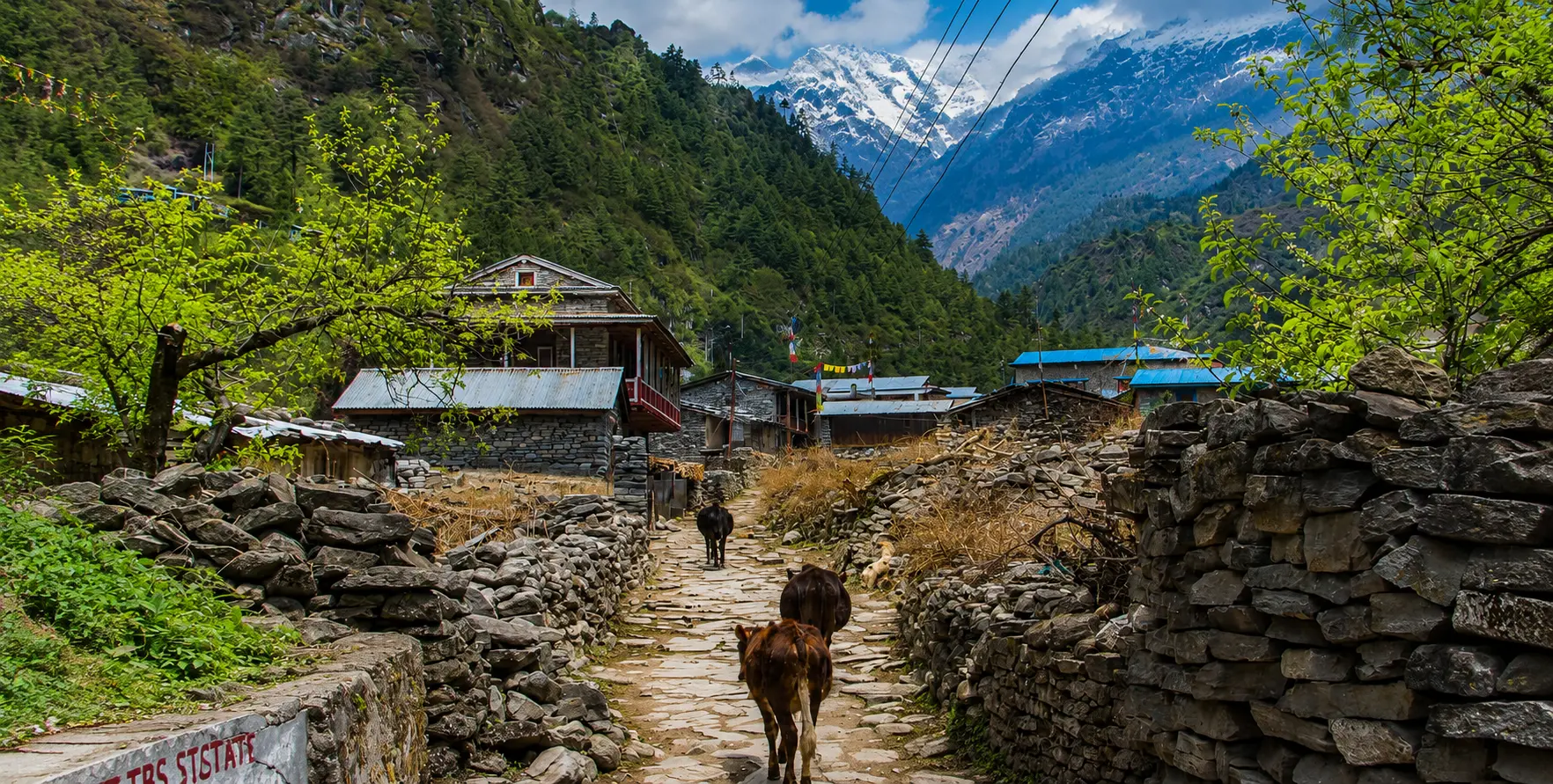
Dharapani trek start point of annapurna range

Pokhara to Jagat Private Jeep Hire — Annapurna Circuit Complete Guide

Jagat — a small village at approximately 1,300 metres in the narrow Marsyangdi River gorge, approximately 28 kilometres north of Besisahar — is the first significant settlement on the Annapurna Circuit trek after the ACAP (Annapurna Conservation Area) permit checkpoint at Bhulbhule. For trekkers who want to reduce the lower gorge walking distance and gain altitude more quickly on the Circuit’s opening days, the private 4WD jeep hire from Pokhara to Jagat — covering the route from Pokhara Lakeside through Dumre, Besisahar, and the lower Marsyangdi gorge road to Jagat — places the trekking group at 1,300 metres on arrival and saves approximately one to two walking days on the lower gorge section.

Nepal Vehicle Hiring Pvt Ltd offers a Pokhara-to-Jagat private 4WD jeep hire as a dedicated trekking trailhead transfer—covering the full Pokhara Lakeside hotel-to-Jagat village route in a single, professional, all-inclusive booking. This guide covers the full route from Pokhara to Jagat, private jeep costs, road conditions on the gorge section, why Jagat is the right starting point for different trekking plans, and how to book.

Pokhara to Jagat — Distance, Route and Time

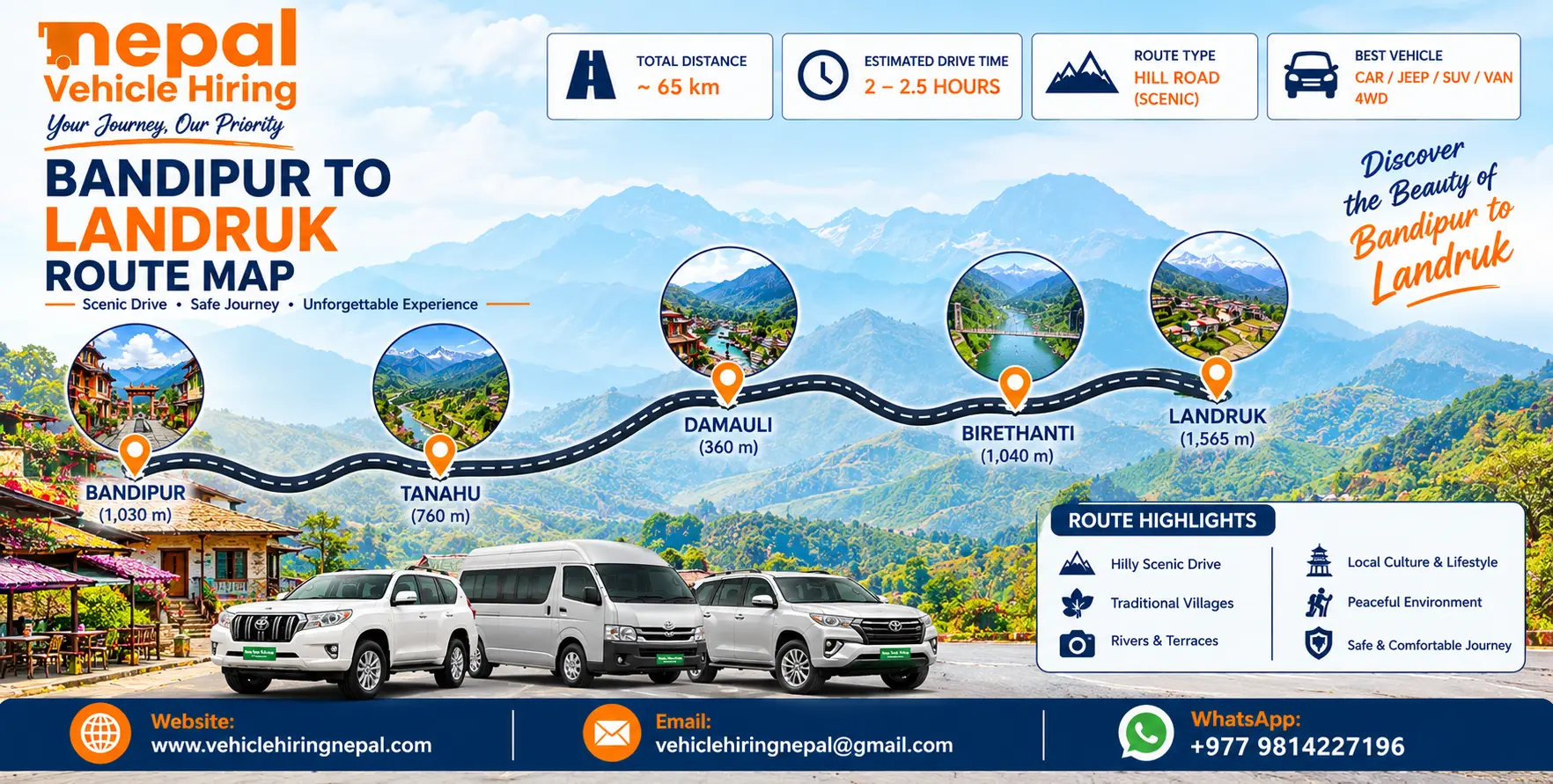
Total distance: Approximately 130-140 km from Pokhara Lakeside to Jagat village.

Route: Pokhara → Prithvi Highway east → Dumre junction (65 km, 1.5-2 hours) → Besisahar road (42 km, 1-1.5 hours) → Besisahar town (760 m) → Marsyangdi gorge road northward → Bhulbhule (840 m) → Ngadi (930 m) → Jagat (1,300 m).

Journey time: 5 to 7 hours total by private 4WD jeep hire, depending on road conditions on the Besisahar-to-Jagat gorge section and any planned stops.

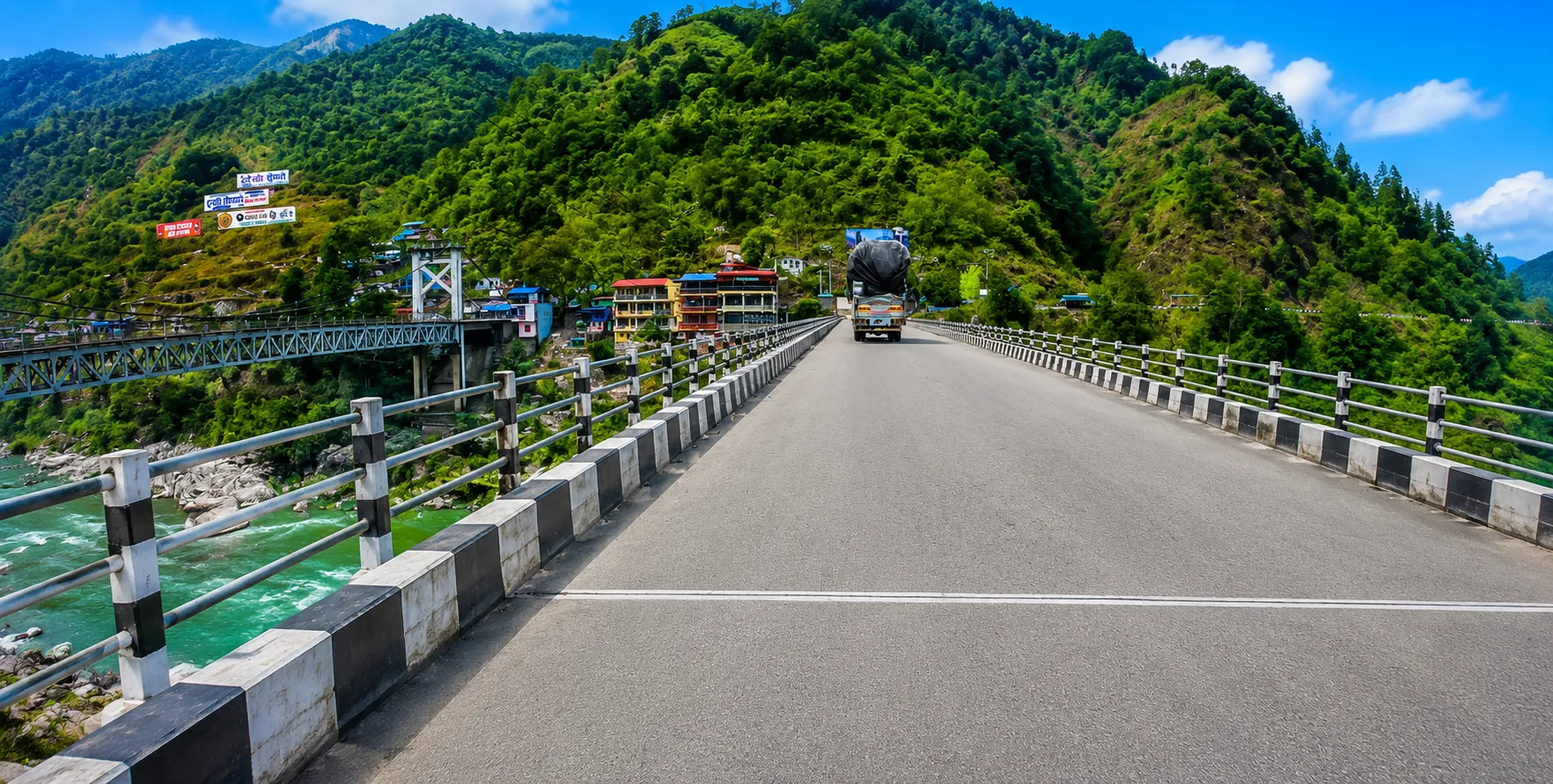
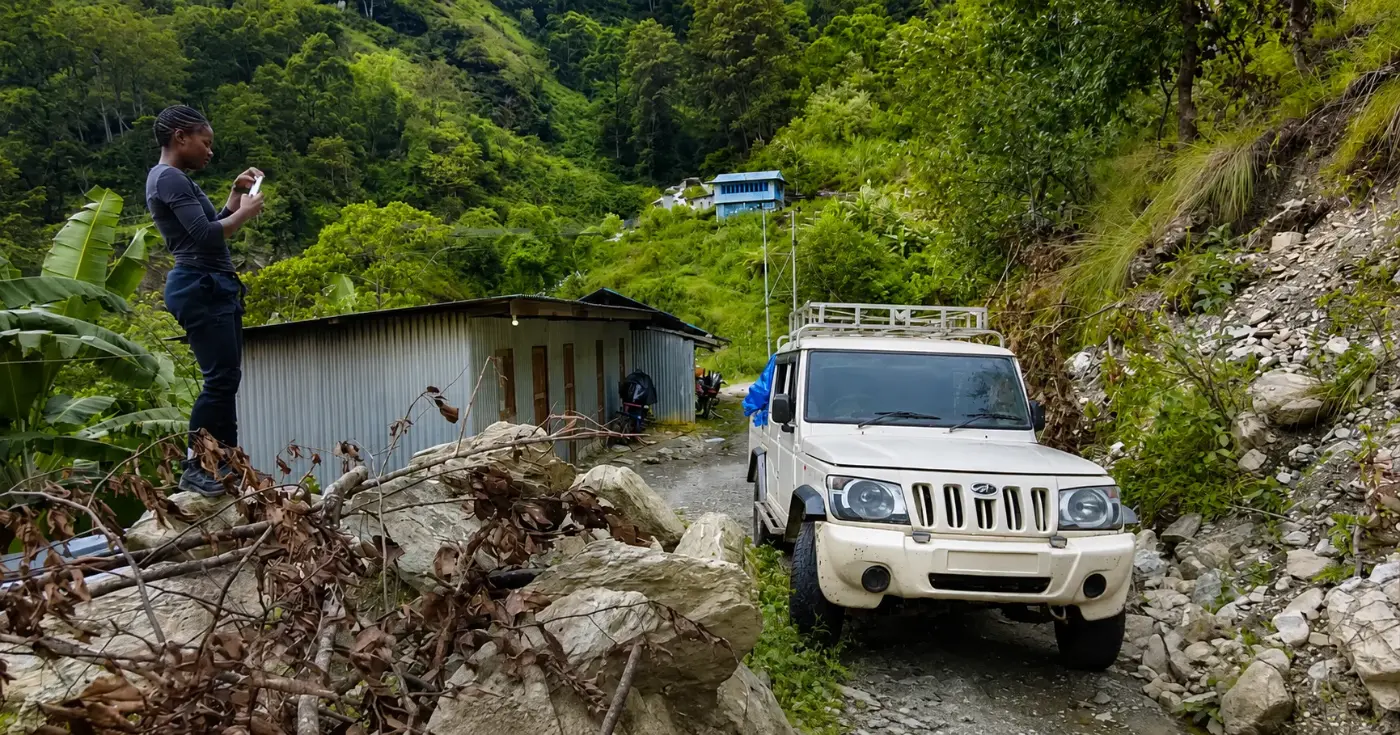
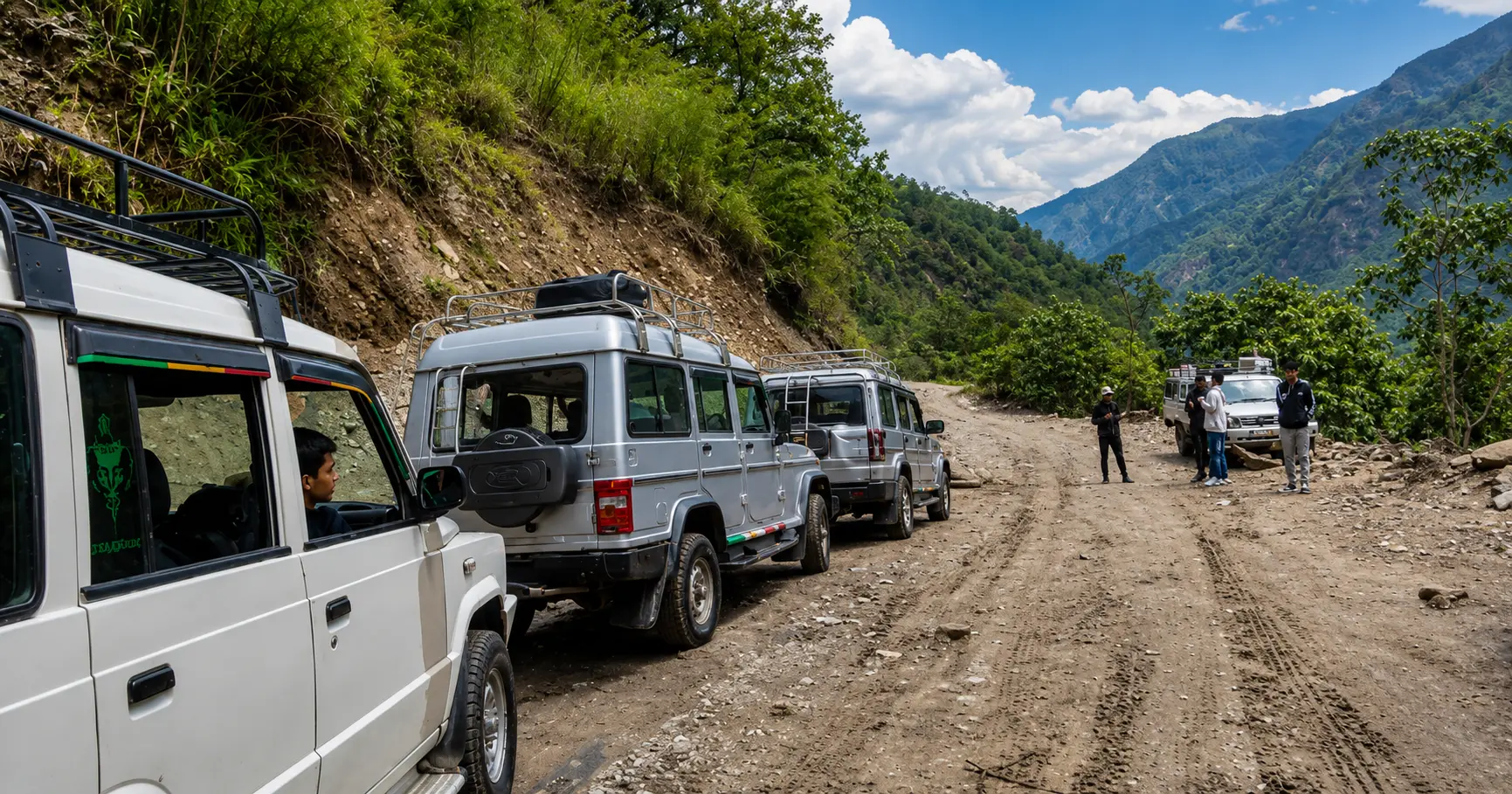
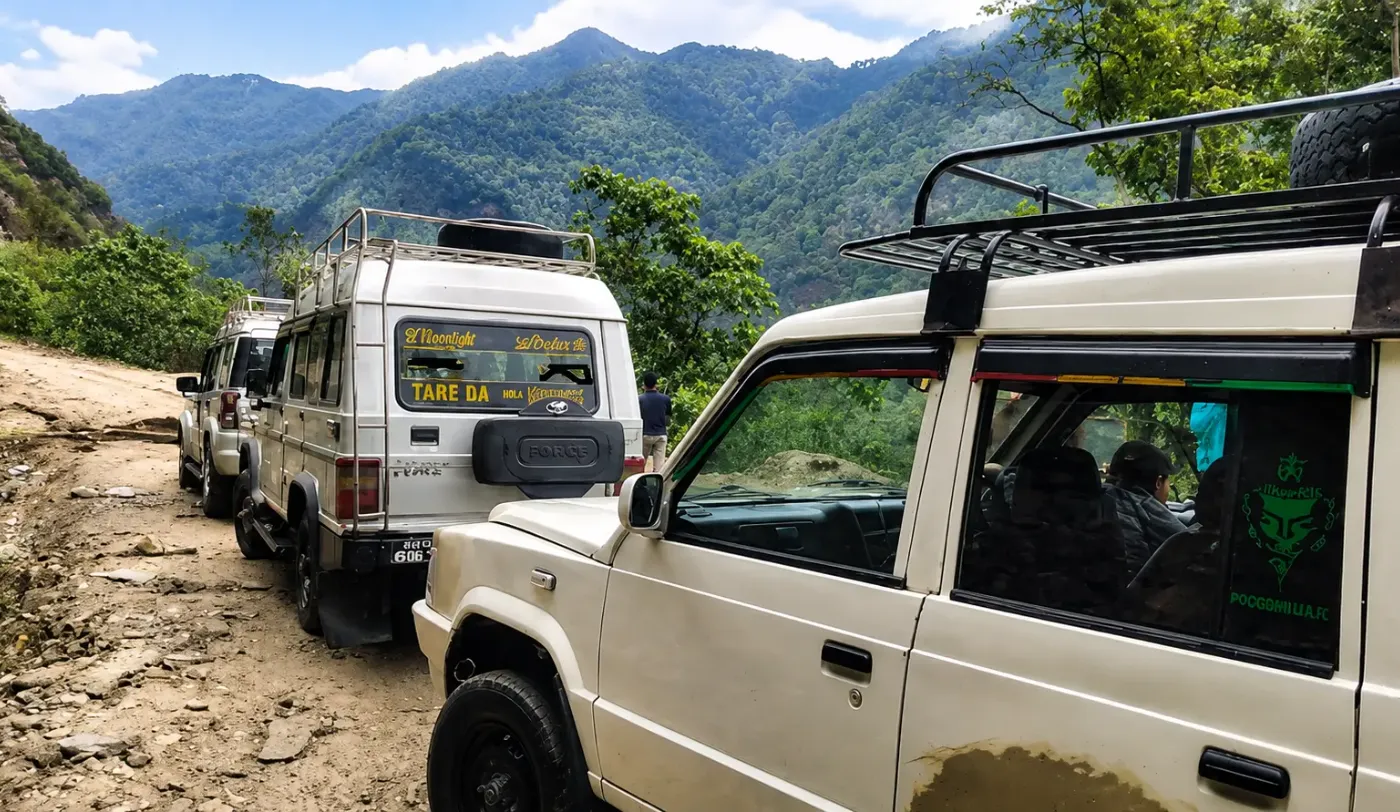
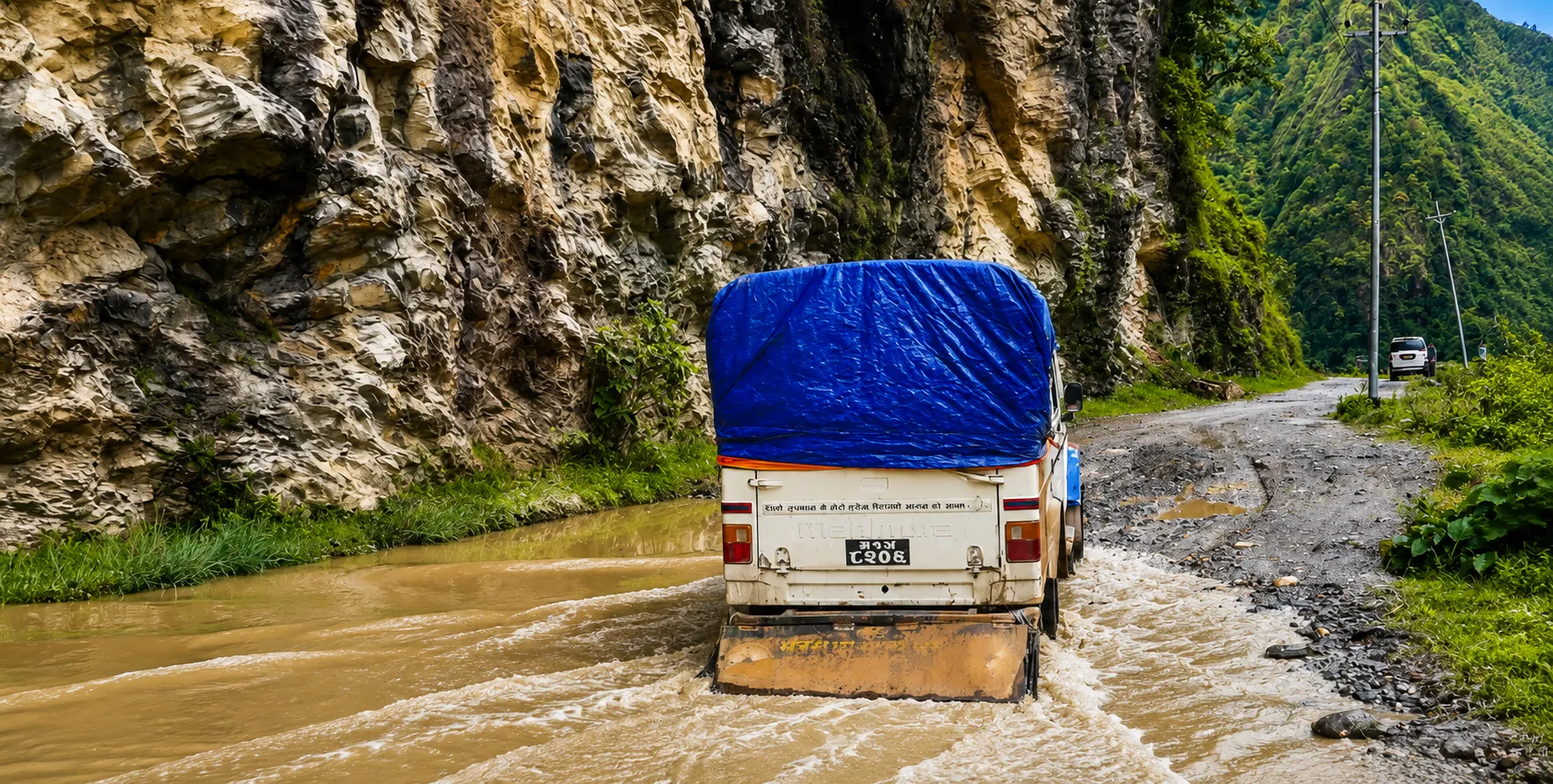
Road character: Pokhara to Dumre — paved Prithvi Highway, smooth and fast. Dumre to Besisahar — paved but narrower mountain road. Besisahar to Jagat — unpaved gorge road with rough sections, a narrow, river-adjacent track, and the 4WD requirement created by the gorge road’s surface and gradient.

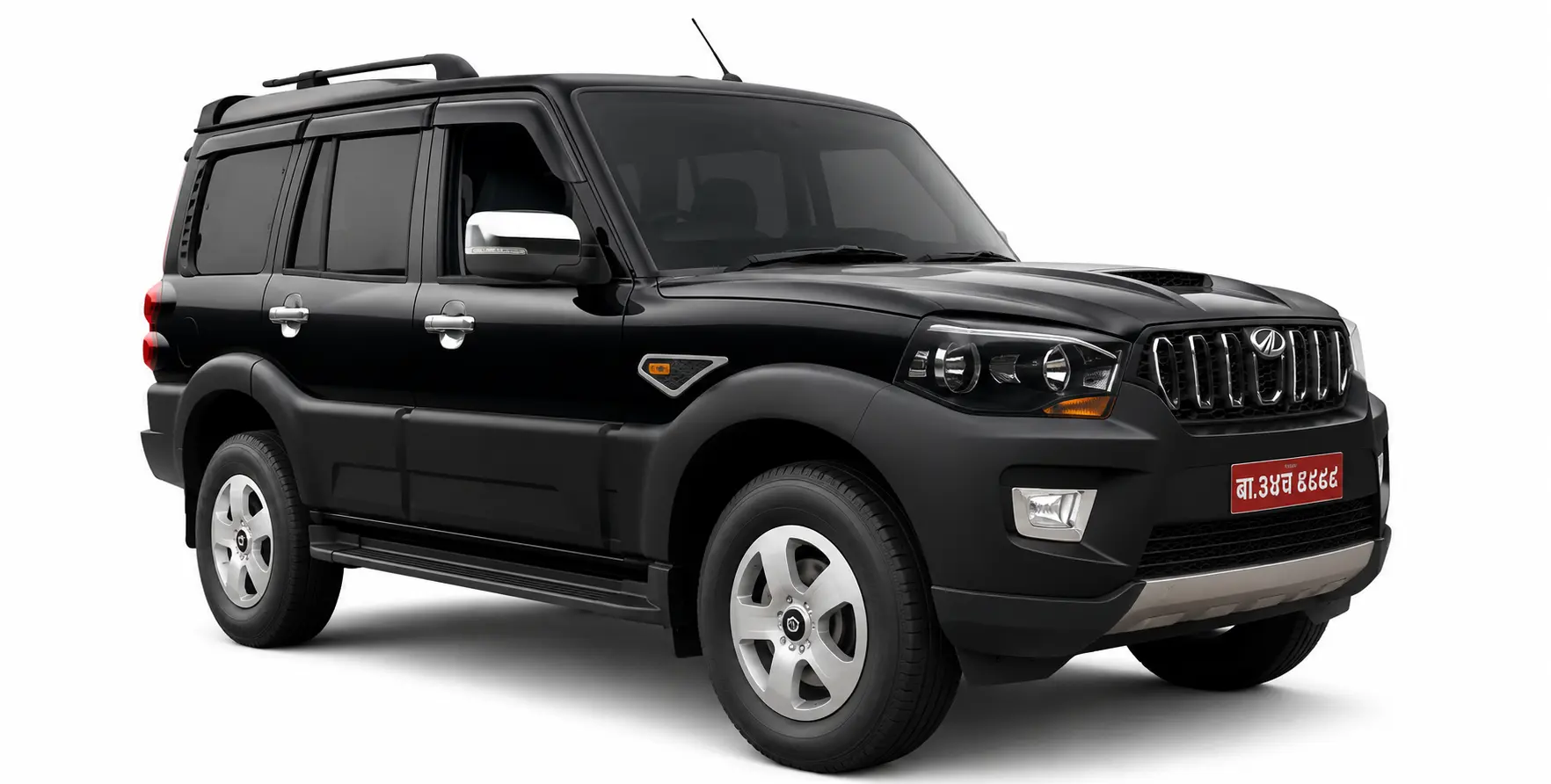
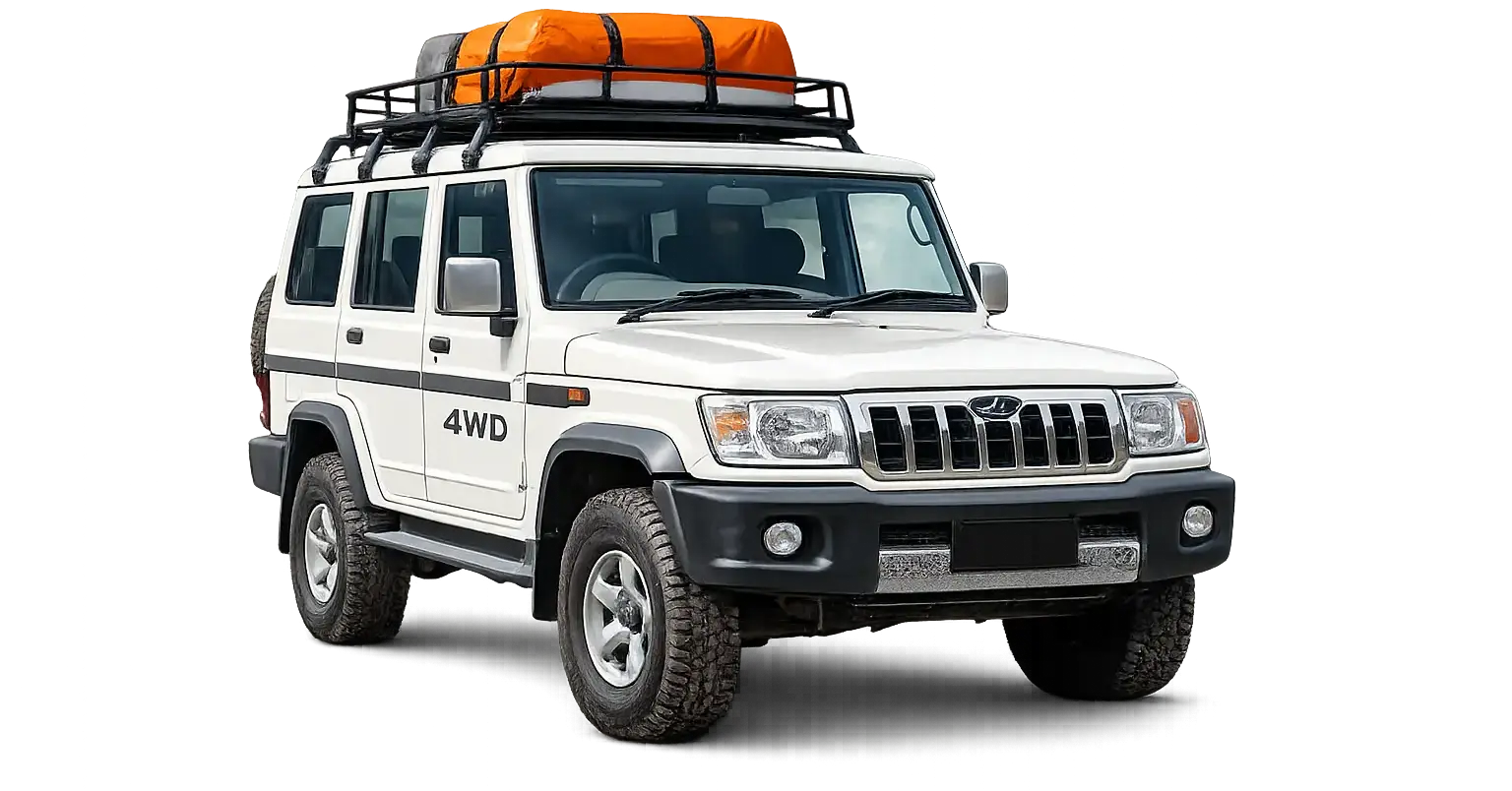
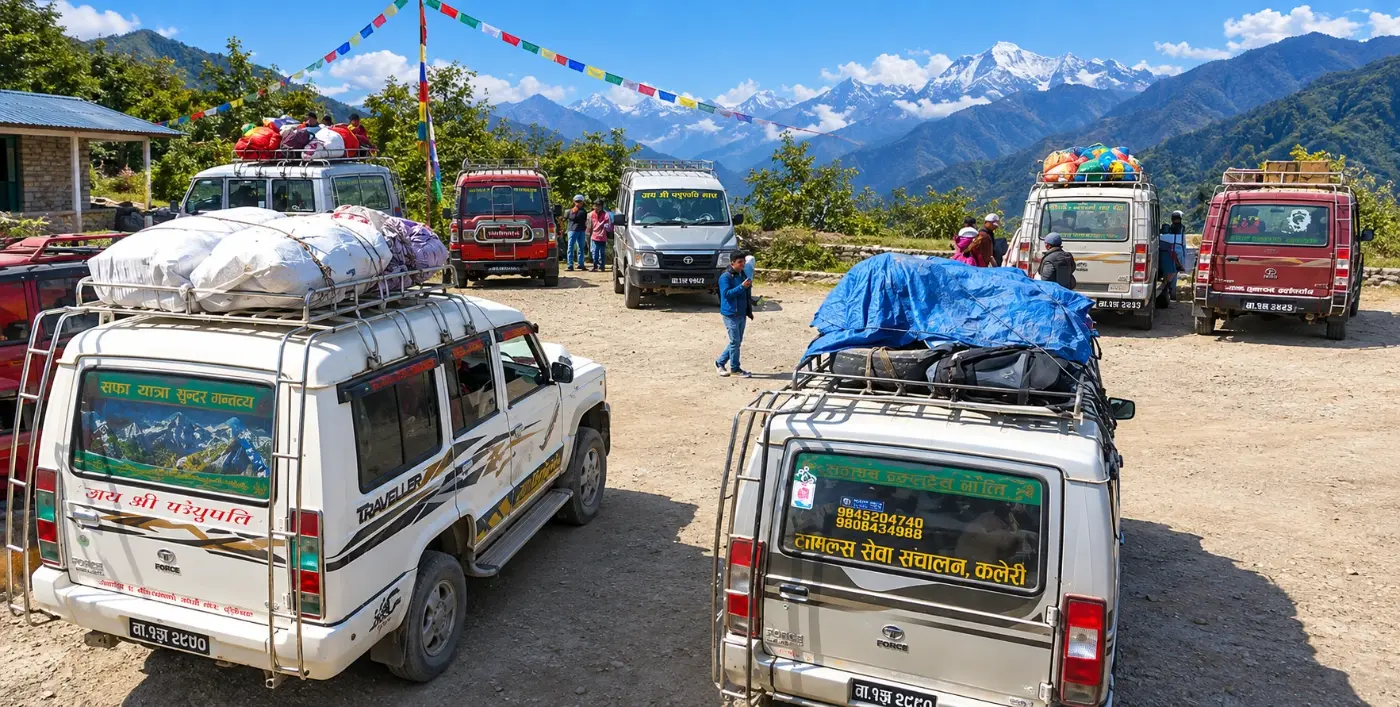
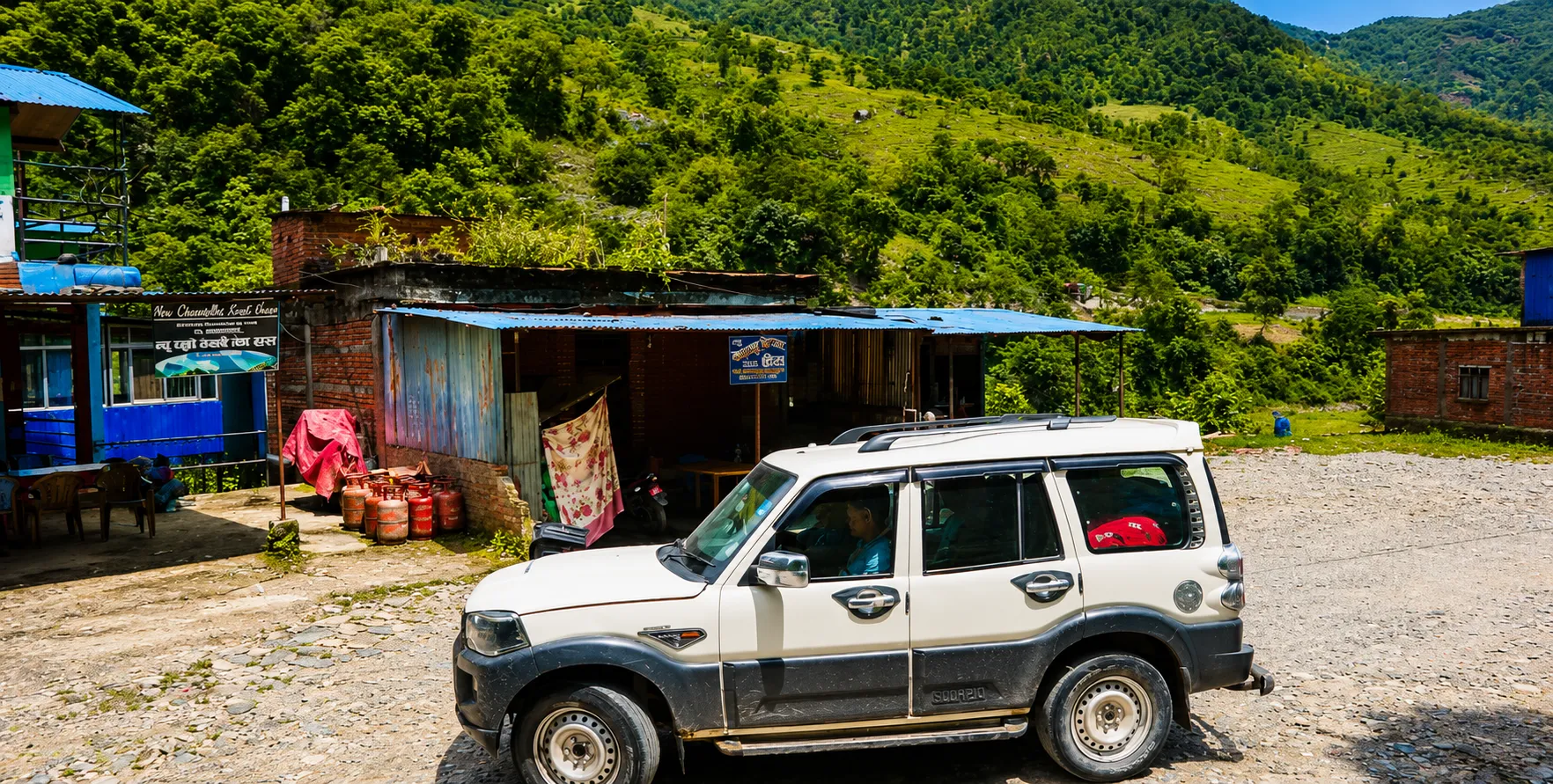
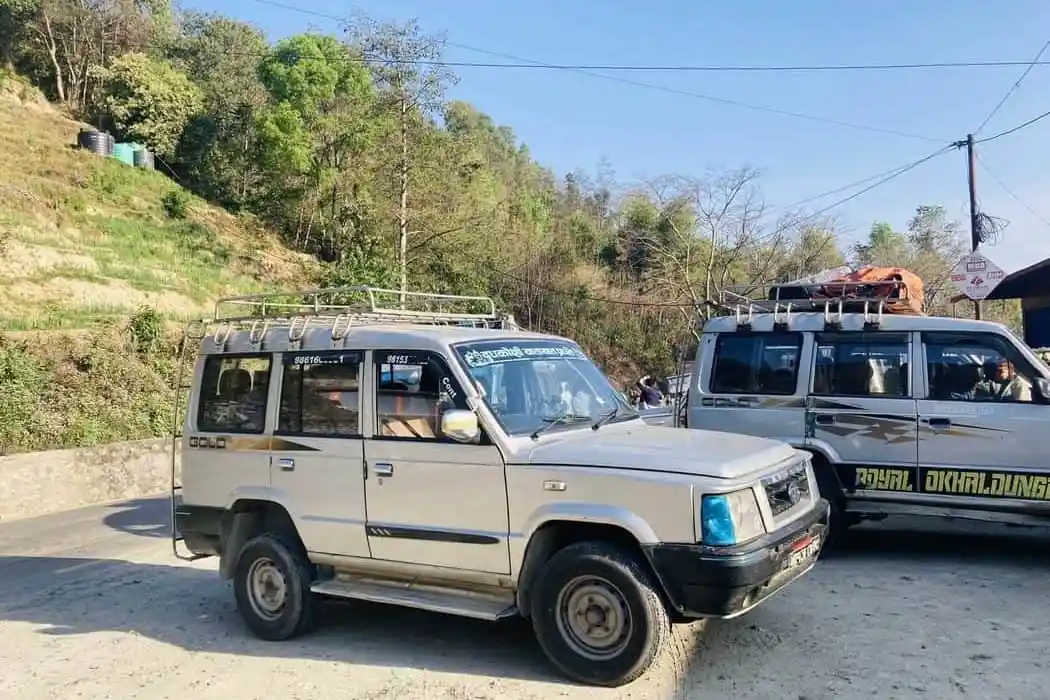
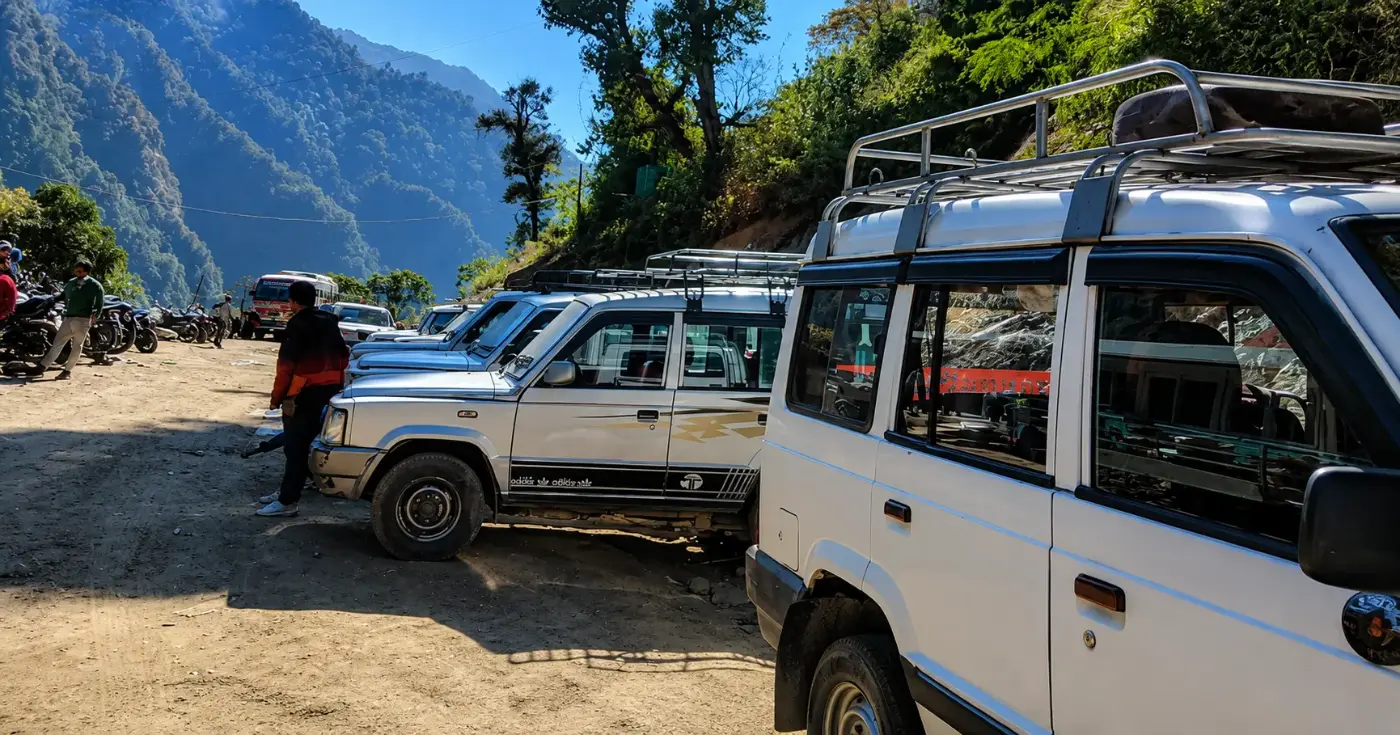
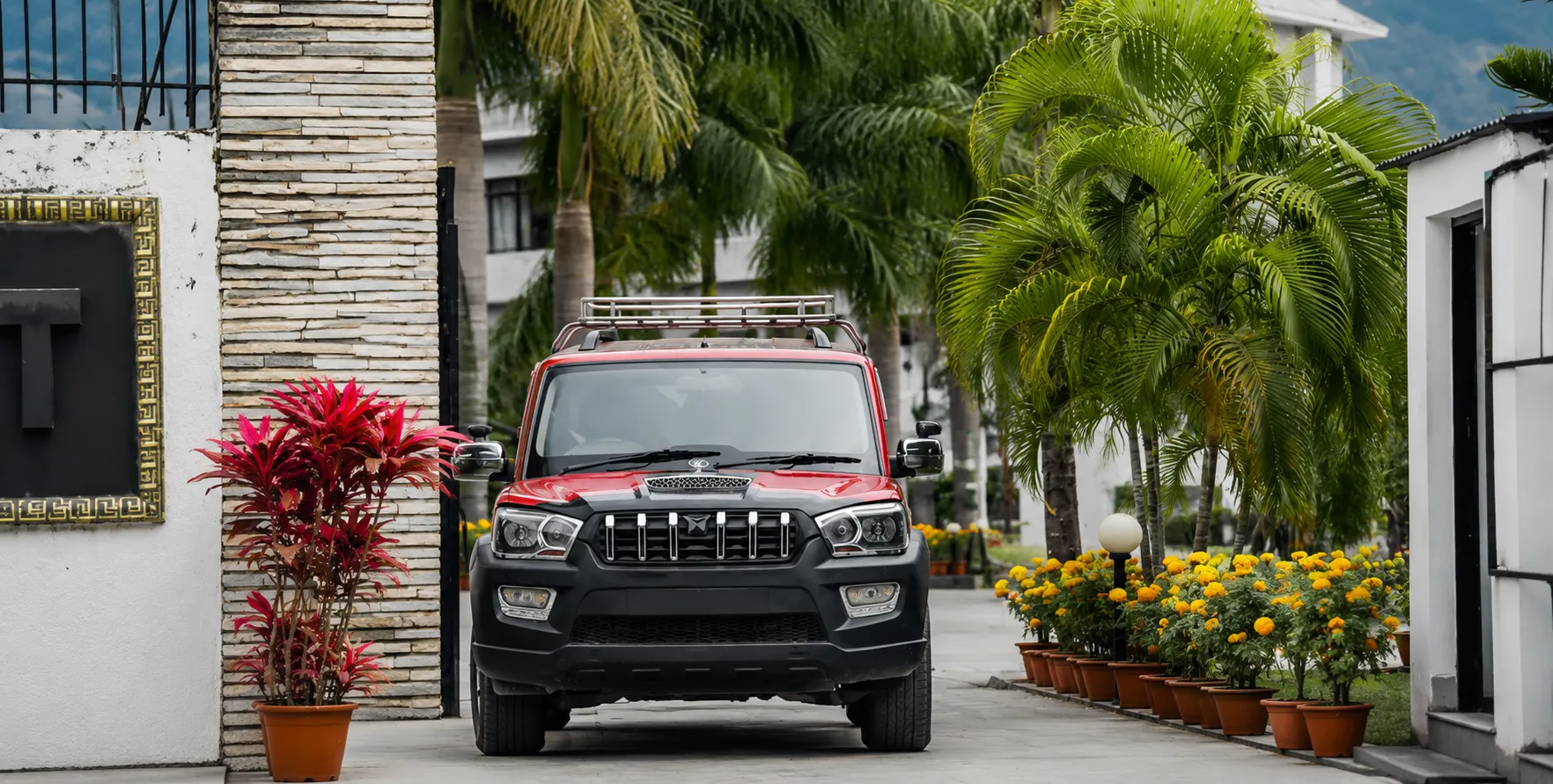
Only a 4WD Scorpio or Hilux jeep is available for the Besisahar-to-Jagat section.
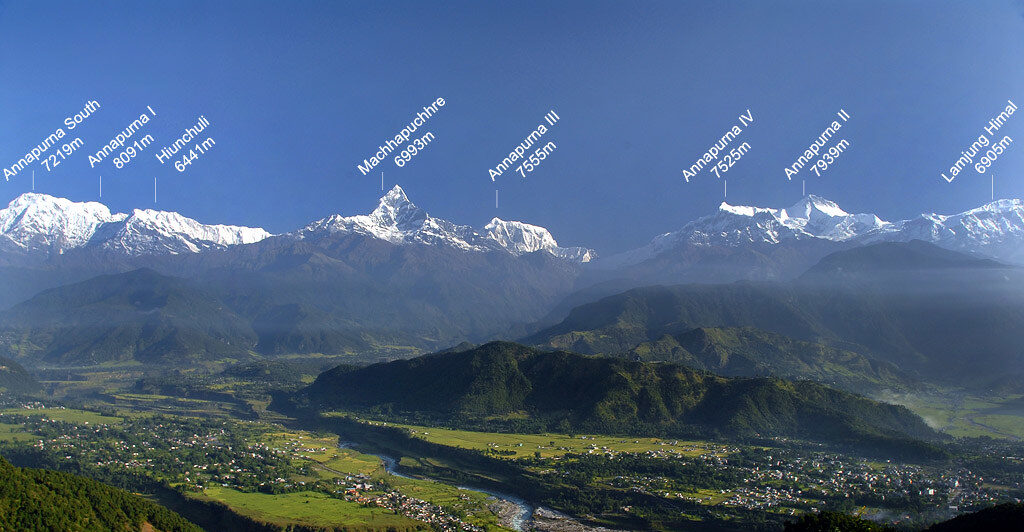
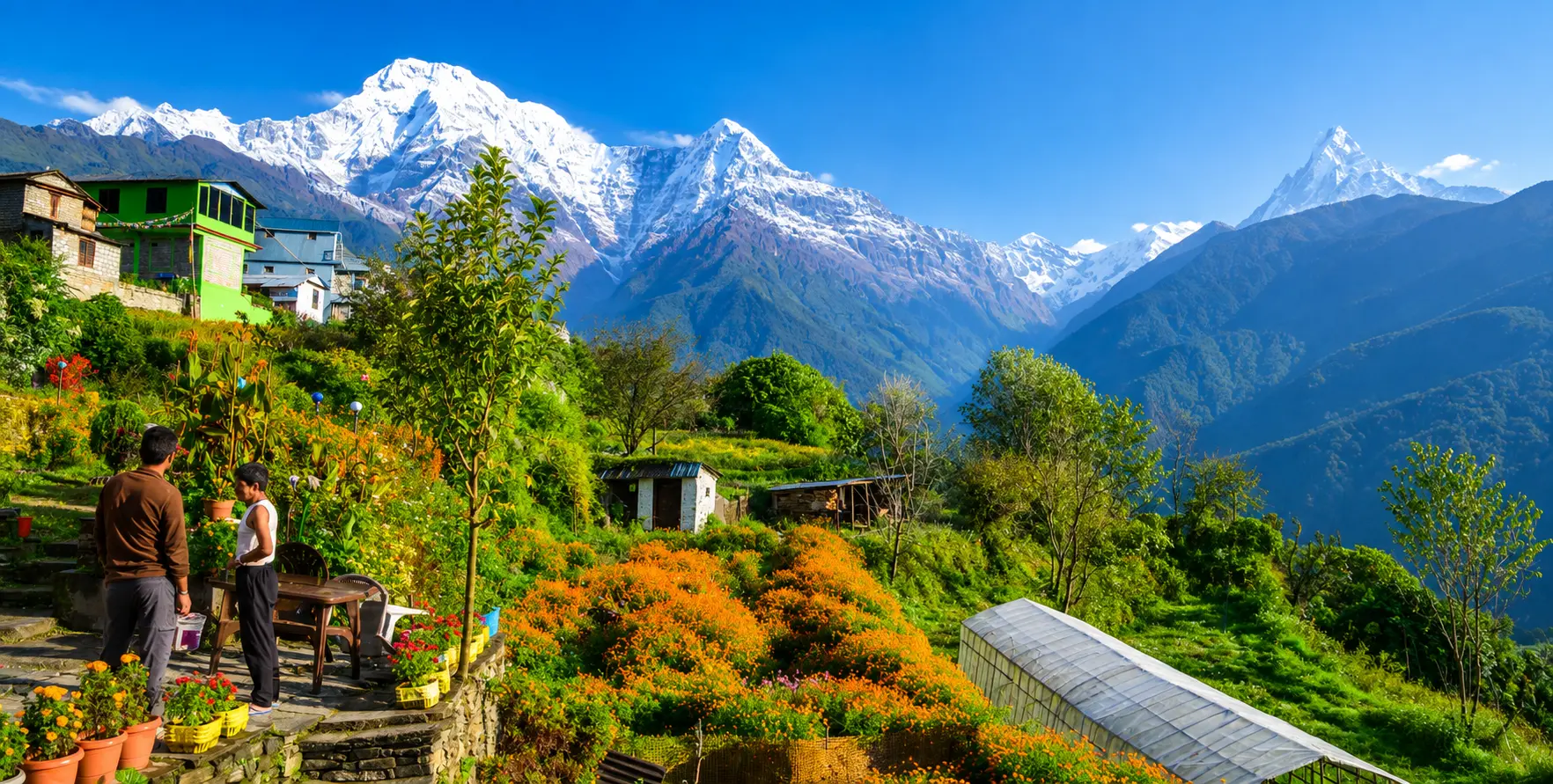
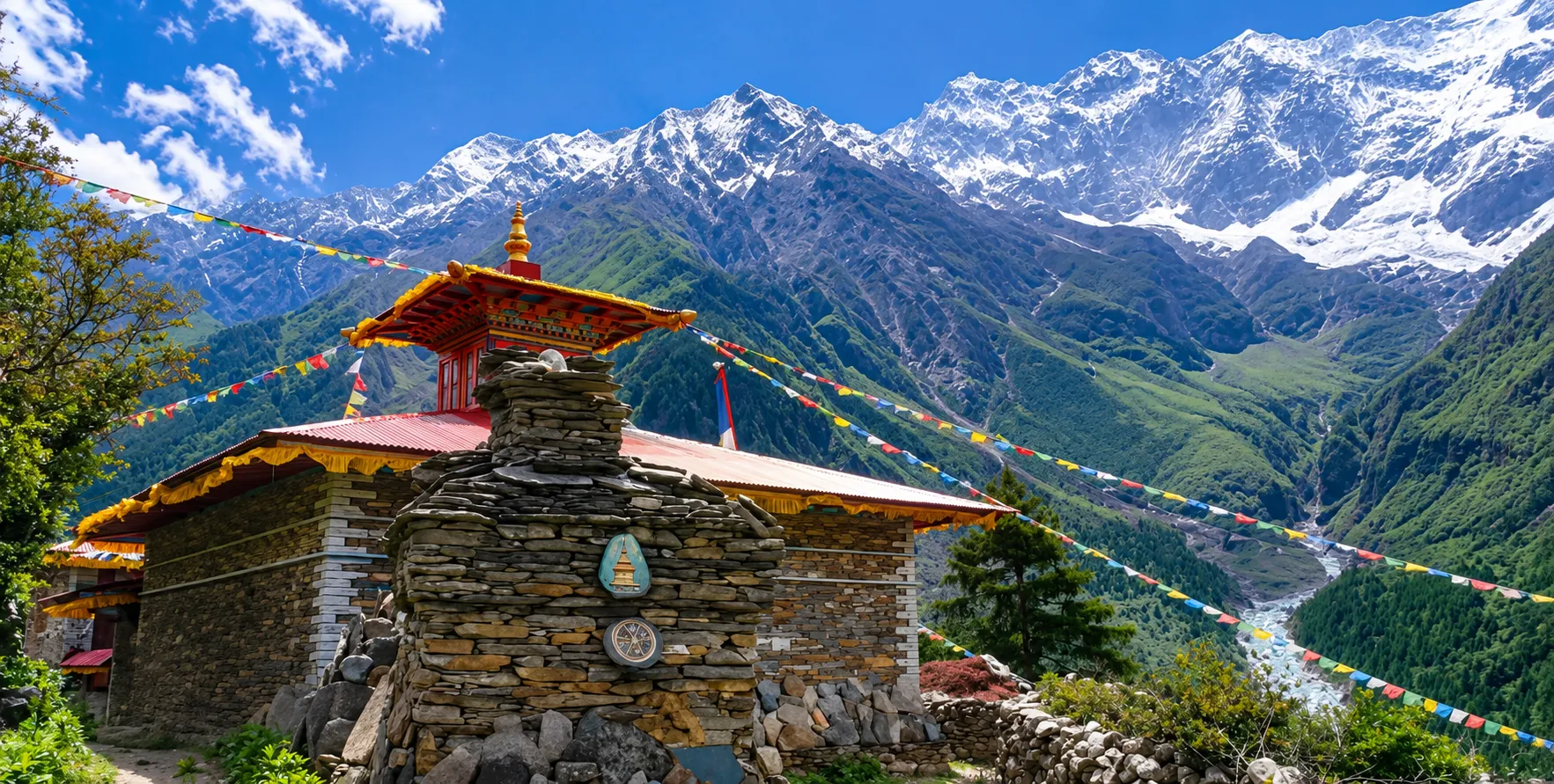
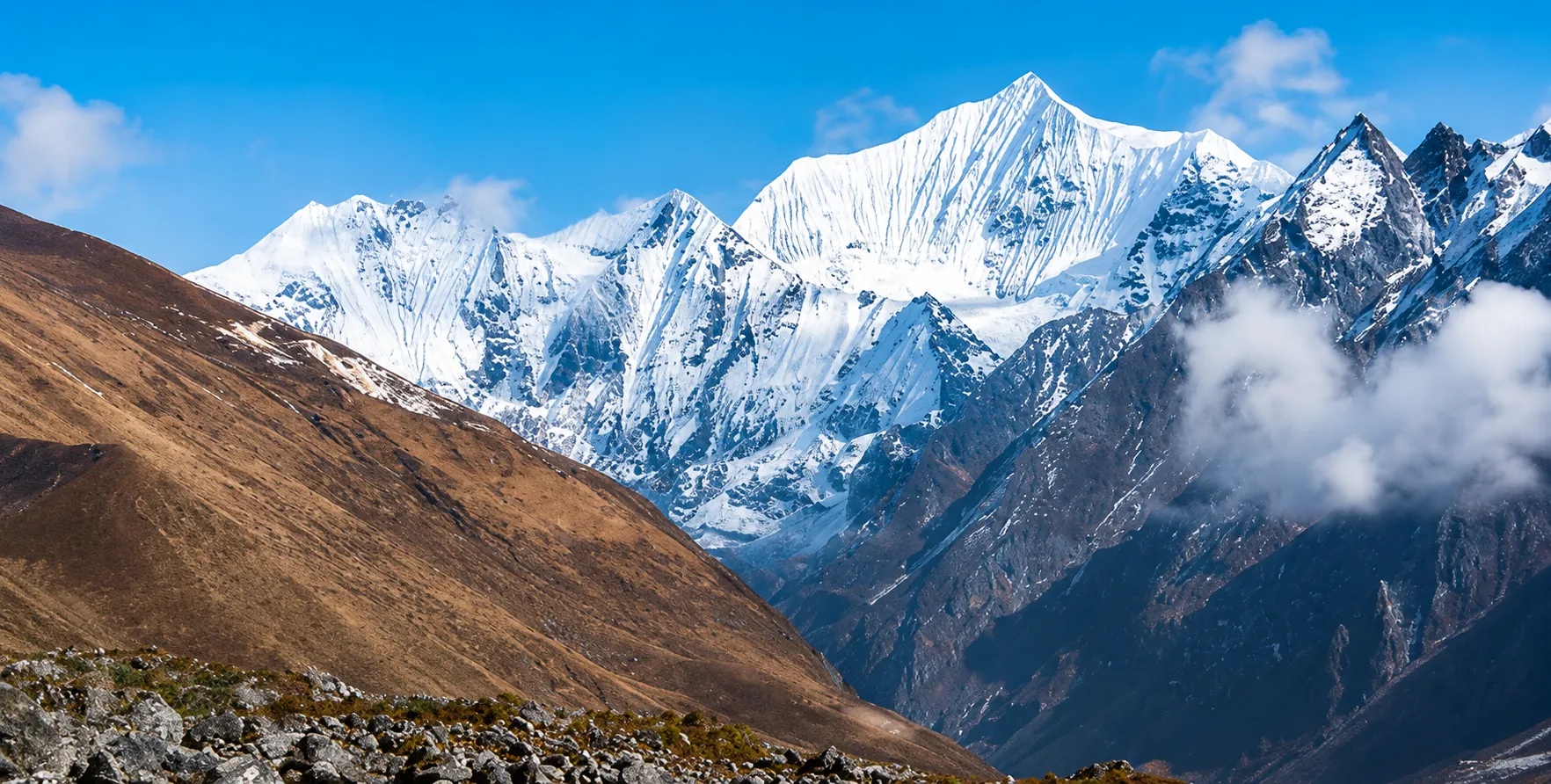
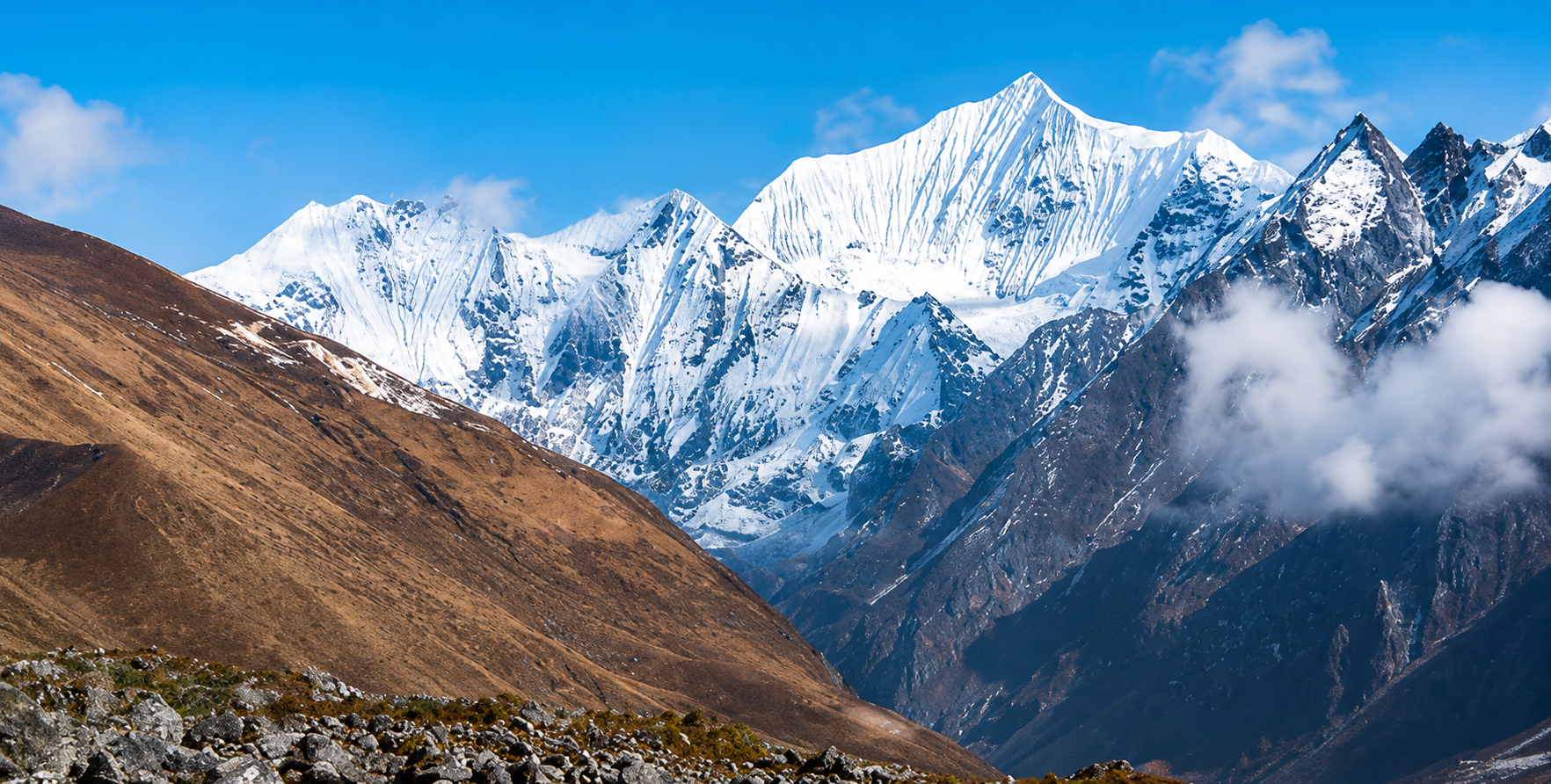
Annapurna range

Pokhara to Jagat Private Jeep Hire Cost

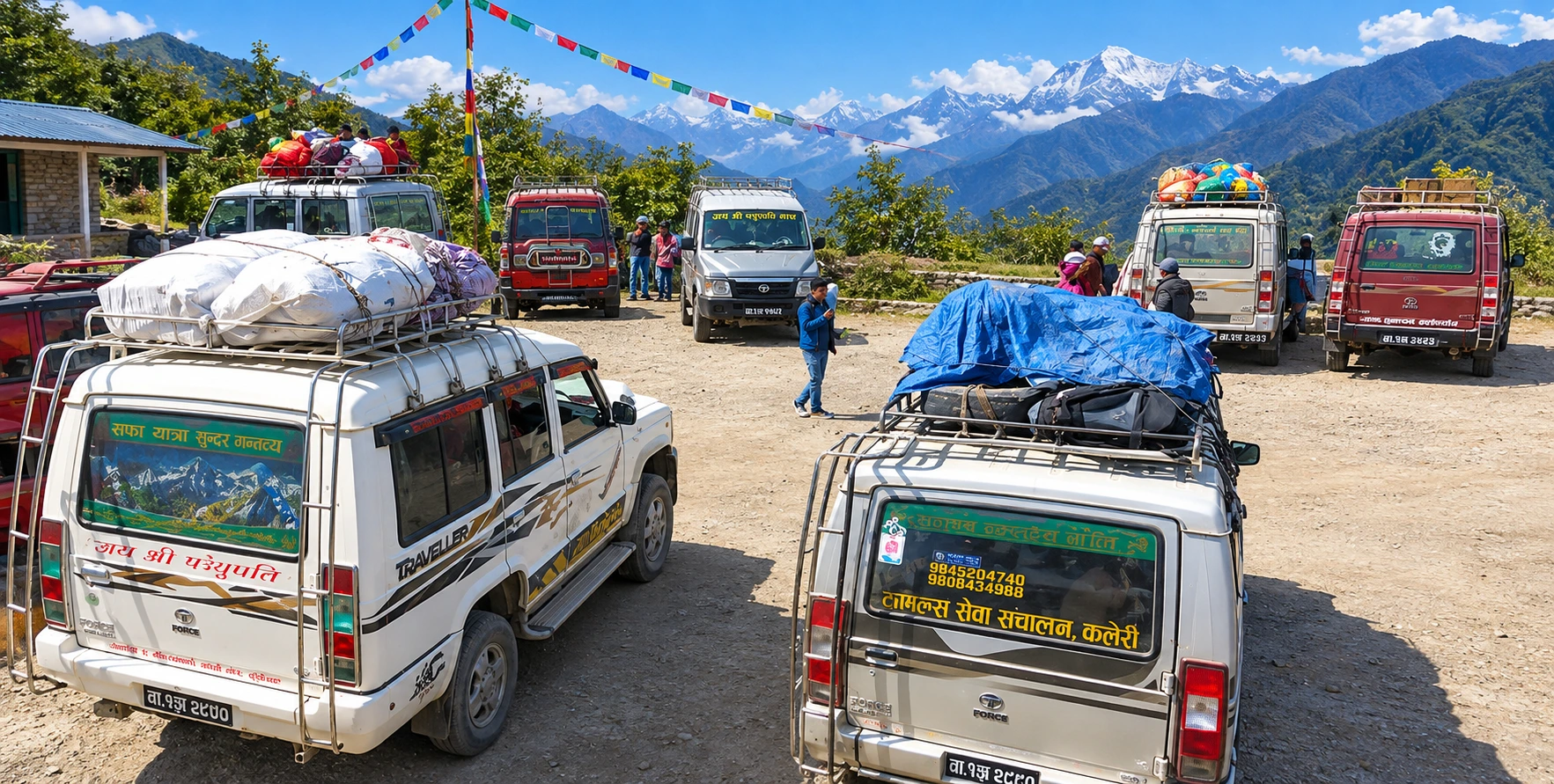
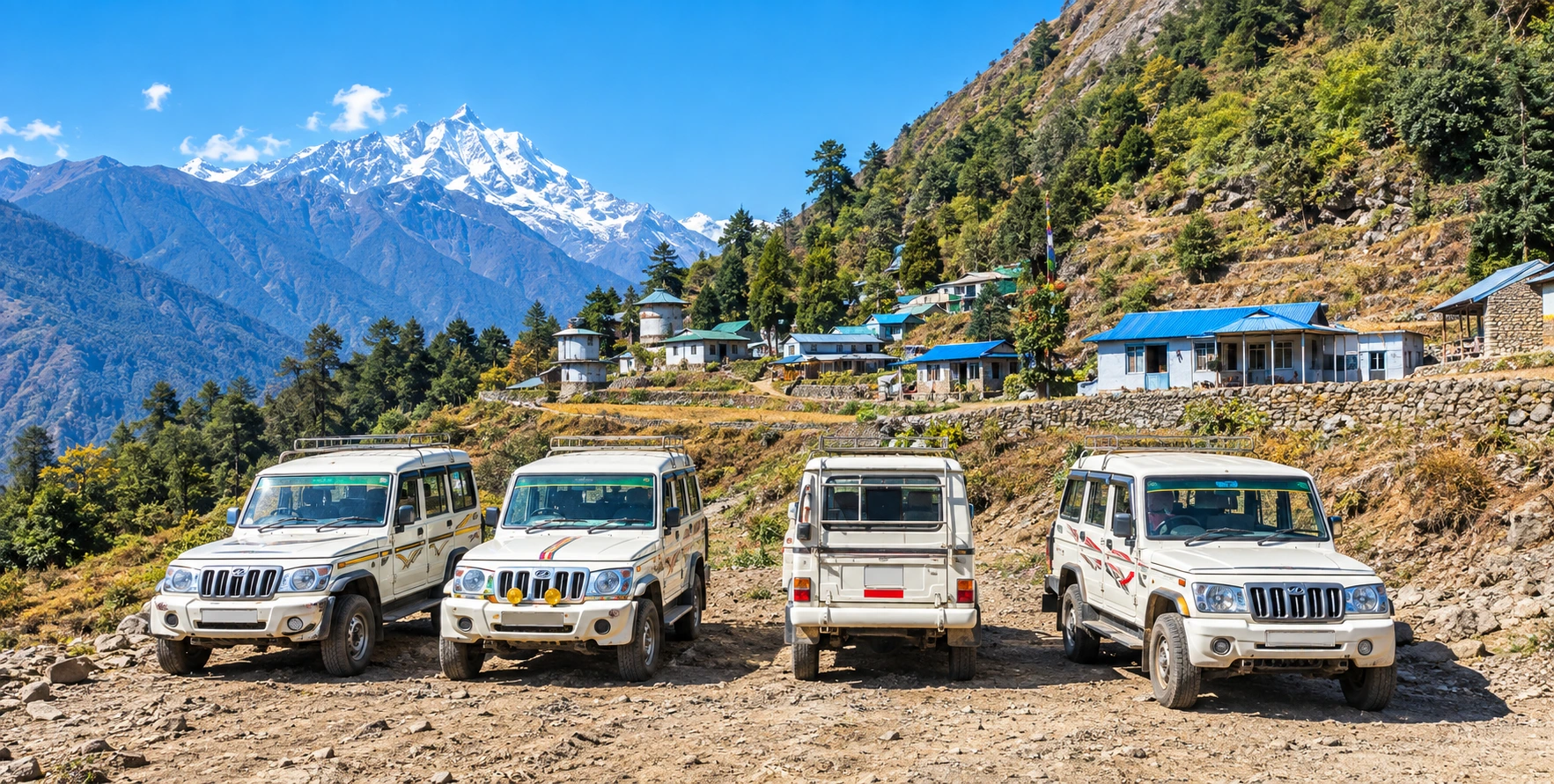
Private 4WD Scorpio jeep (4-6 passengers): NPR 16,000 to 40,000 (USD 120 to 250) all-inclusive from Pokhara Lakeside hotel to Jagat village, driver, fuel, road tolls.

Private Toyota Hilux 4WD (up to 8 with cargo): NPR 18,000 to 60,000 (USD 135 to 300) all-inclusive. Higher capacity for groups with camping equipment alongside passengers. Jeep hire.

Breakdown by section: Pokhara to Besisahar (107 km): approximately NPR 10,000-26,000. Besisahar to Jagat (28 km gorge road): approximately NPR 8,000-12,000. Combined Pokhara-to-Jagat: NPR 16,000-40,000 full vehicle all-inclusive.

Return jeep from Jagat: For groups who want a vehicle waiting at Jagat for an emergency return or post-trek collection, Nepal Vehicle Hiking Pvt Ltd pre-arranges the return vehicle when you book outward. Contact Nepal Vehicle Hiring Pvt Ltd on WhatsApp or our plan trip page.
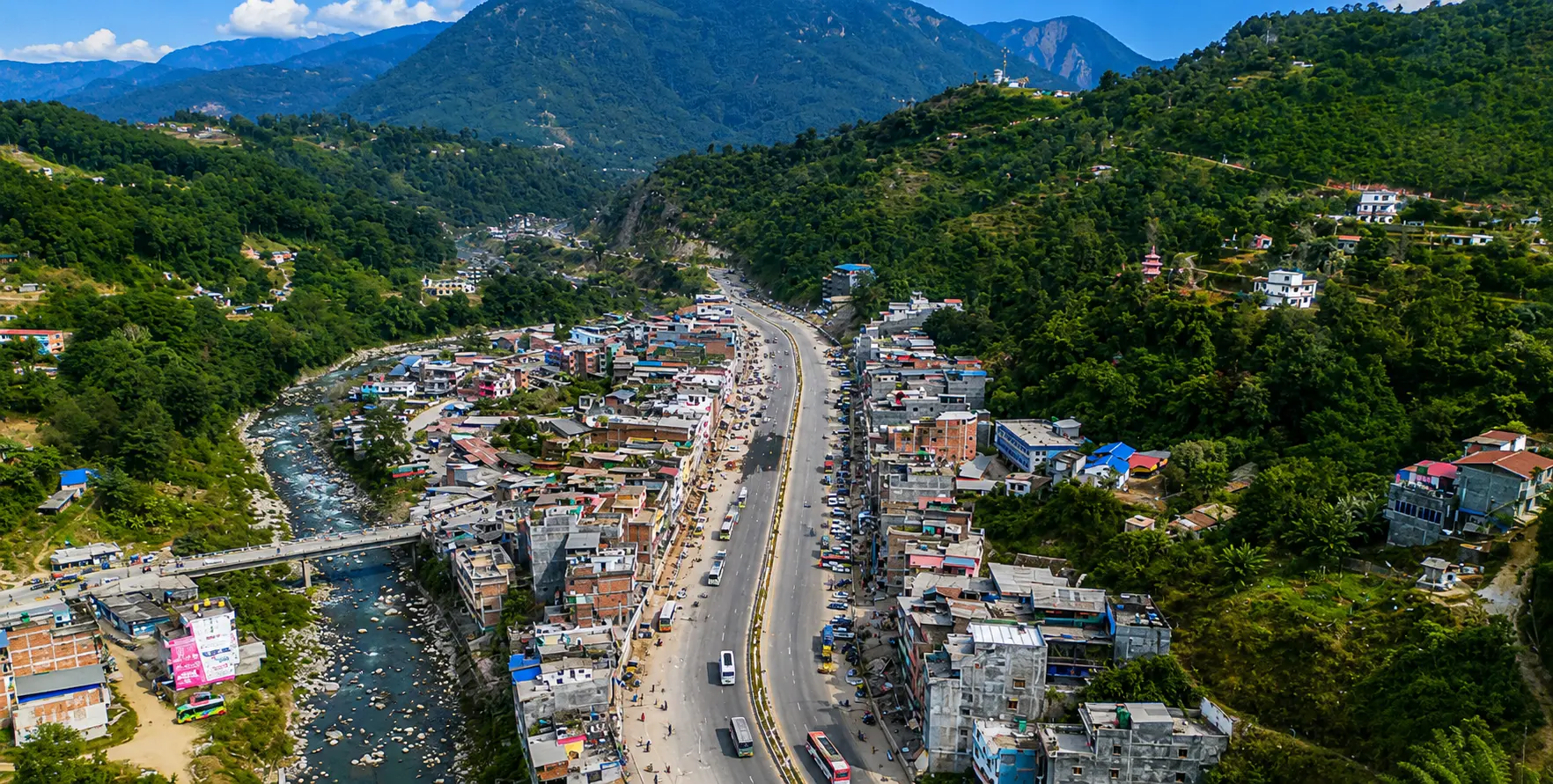
Pokhara to Jagat Private Jeep | Annapurna Circuit Hire 2026/27/28

Pokhara to Dumre — The Prithvi Highway East

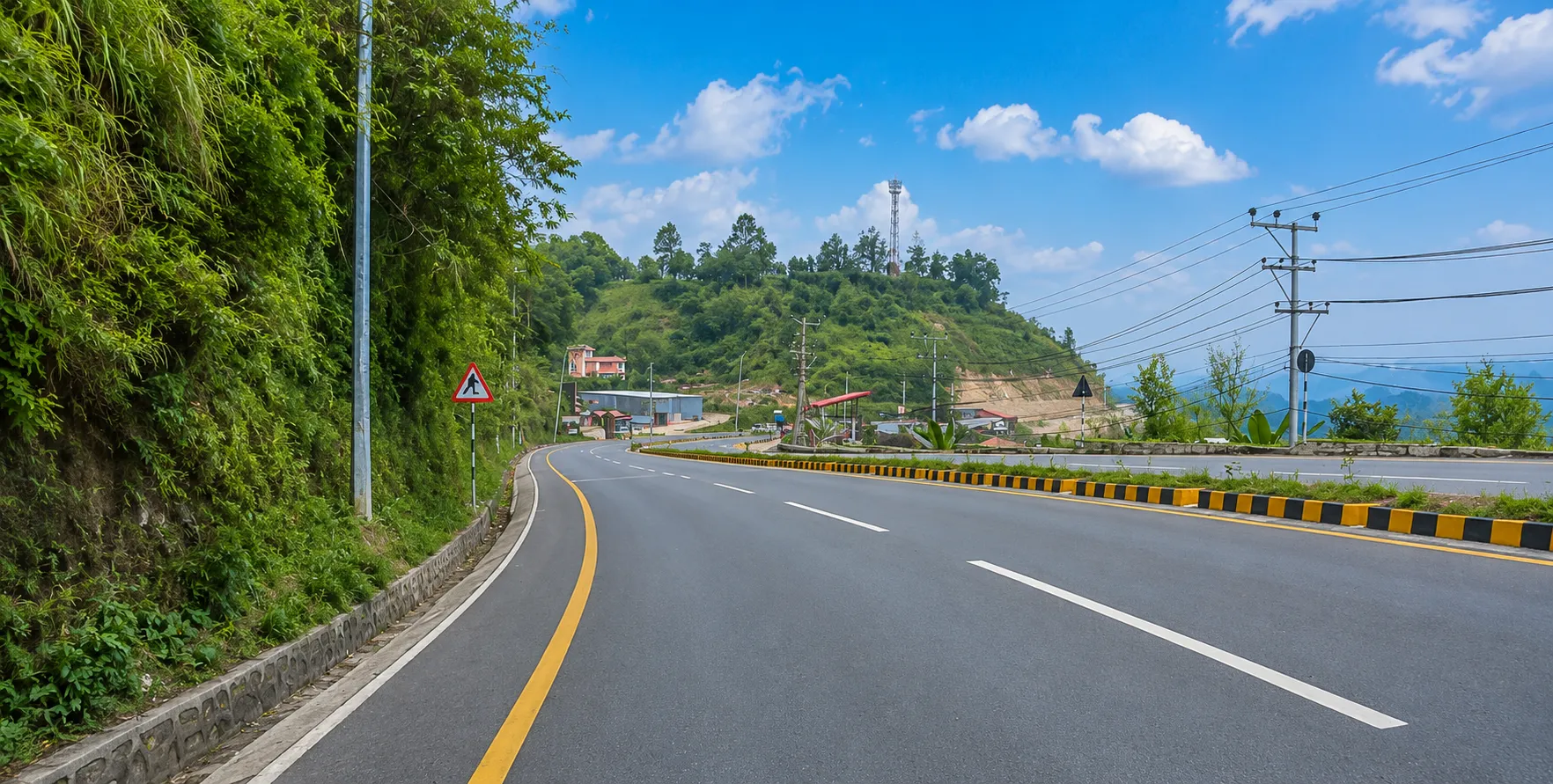
The first 65 kilometres of the Pokhara-to-Jagat journey follow the Prithvi Highway eastward from Pokhara Lakeside — a well-paved, fast national highway section through the Gandaki Province’s mid-hill foothills that connects Pokhara to the Marsyangdi valley junction at Dumre. Nepal Vehicle Hiring Pvt Ltd’s Pokhara car hire service covers Sarangkot sunrise vehicle hire for groups spending their final Pokhara morning at the Annapurna viewpoint before the Jagat departure—a pre-dawn Sarangkot visit followed by the 7:30 AM Jagat departure is one of the best ways to start an Annapurna Circuit trekking day.

The Prithvi Highway east of Pokhara passes through Walling, Damauli, and the Tanahu District’s agricultural landscape before the Dumre junction at approximately 65 km. The road is flat and fast — Nepal’s finest maintained highway section between Pokhara and the mountains to the east. Nepal Vehicle Hiring Pvt Ltd’s private jeep hire covers this section in 1.5 to 2 hours from Pokhara Lakeside.

Dumre to Besisahar — The Marsyangdi Valley Approach

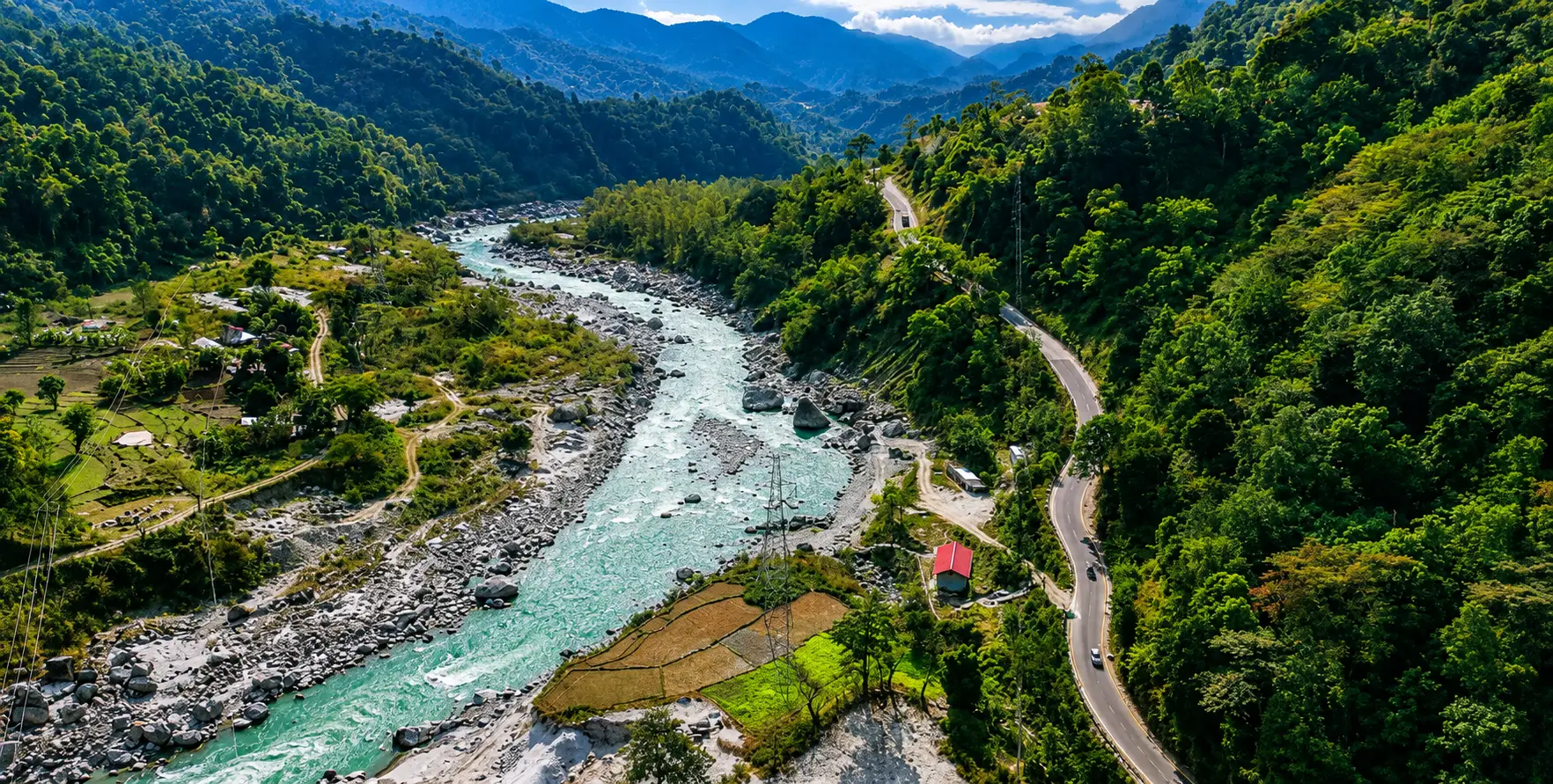
At Dumre junction, the Prithvi Highway’s character as a broad national road gives way to the Besisahar approach road’s narrower, more mountain character. This 42-kilometre section follows the eastern bank of the Marsyangdi River northward to Besisahar at 760 metres. This section takes about 1 to 1.5 hours by private 4WD jeep and offers the first sustained Himalayan river-valley driving experience on the Pokhara-to-Jagat journey.
Pokhara to Jagat Private Jeep | Annapurna Circuit Hire 2026/27/28

The Dumre-to-Besisahar road is paved throughout but narrows as the valley closes in — the Marsyangdi visible to the west, the valley walls rising on both sides, and the first Himalayan sightlines (Annapurna II, Lamjung Himal) appearing above the ridgeline as the road approaches Besisahar. The Besisahar private vehicle hire context covers this section in detail — for groups departing from Kathmandu rather than Pokhara, the Kathmandu to Besisahar jeep hire is a separate, longer journey of 175 km.

Besisahar town (760 m) is a natural mid-journey rest stop — ACAP permits and TIMS cards are available at the Besisahar permit office for groups who did not obtain them in Pokhara or Kathmandu. Plan a 20 to 30-minute stop in Besisahar for permits, tea, and a last-supplies check before the gorge road begins.

Besisahar to Jagat — The Gorge Road

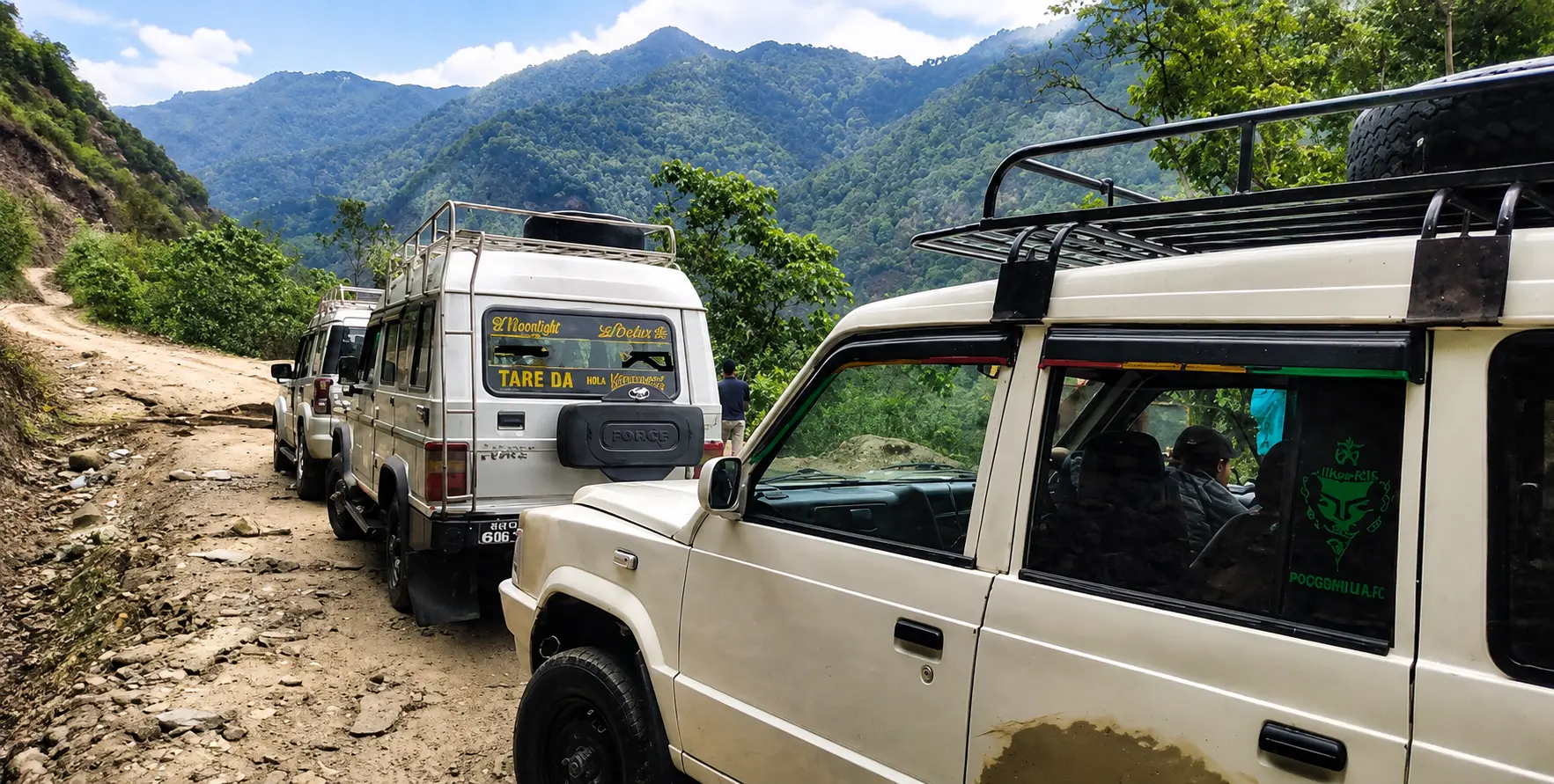
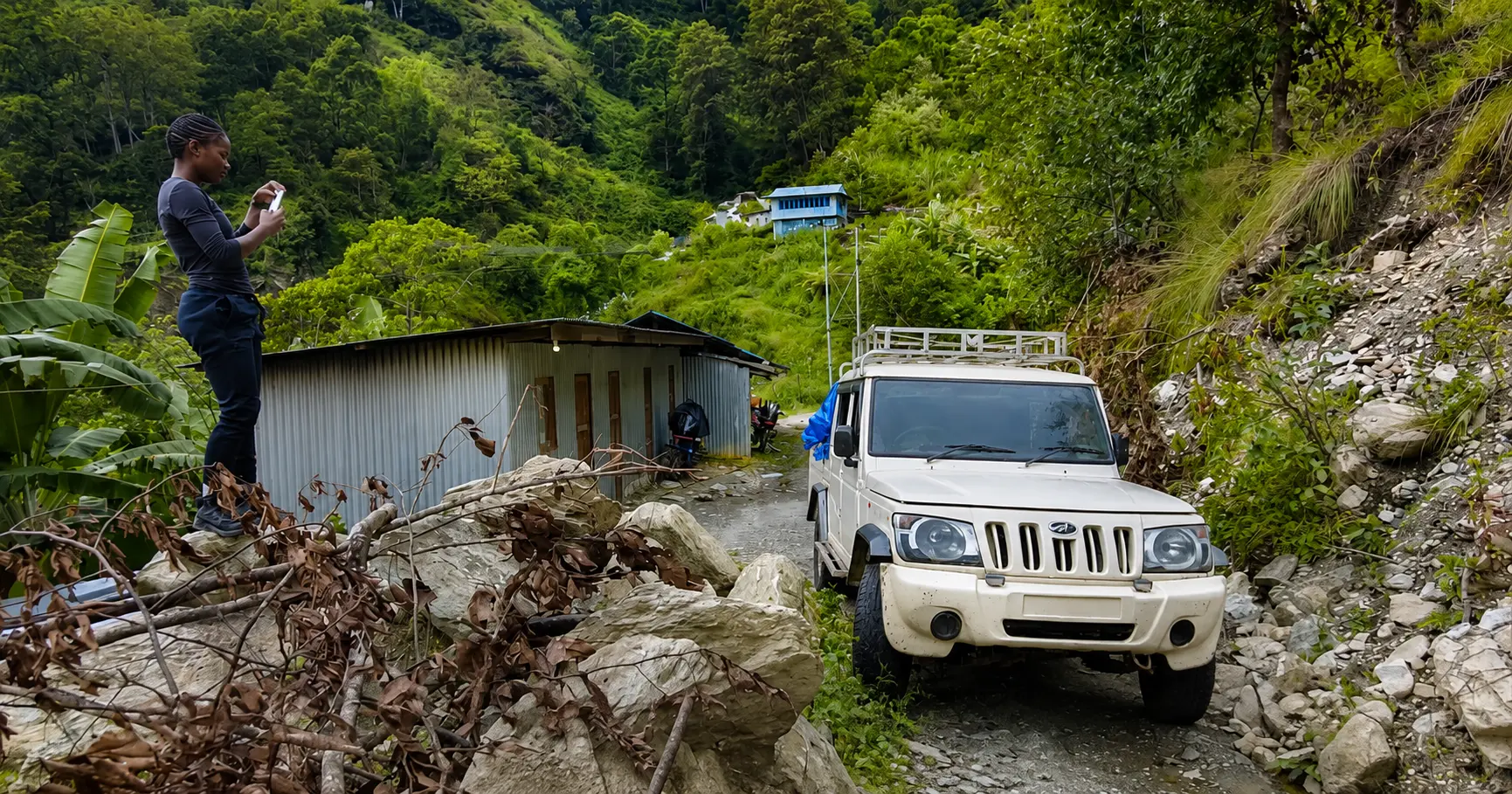
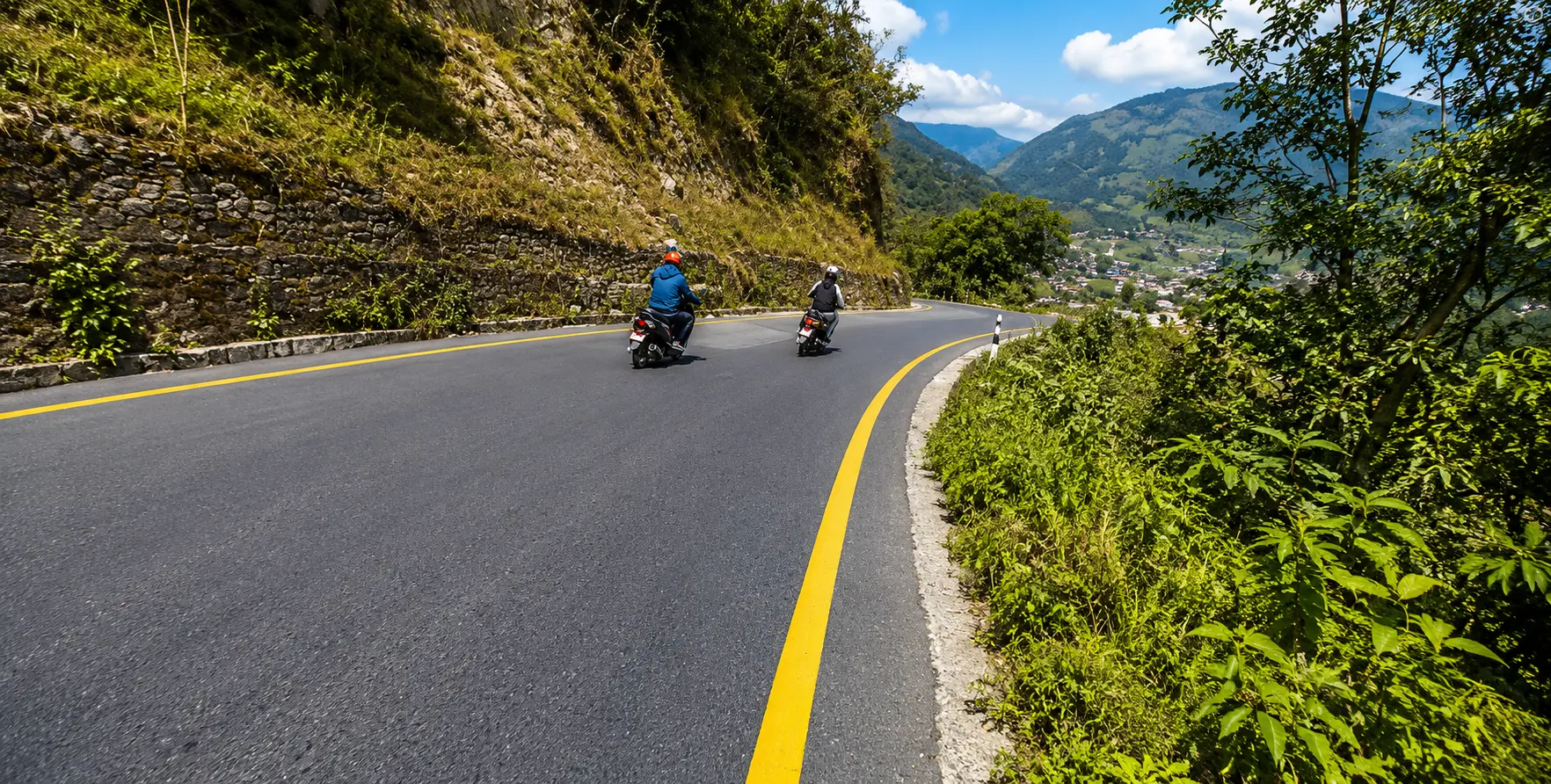
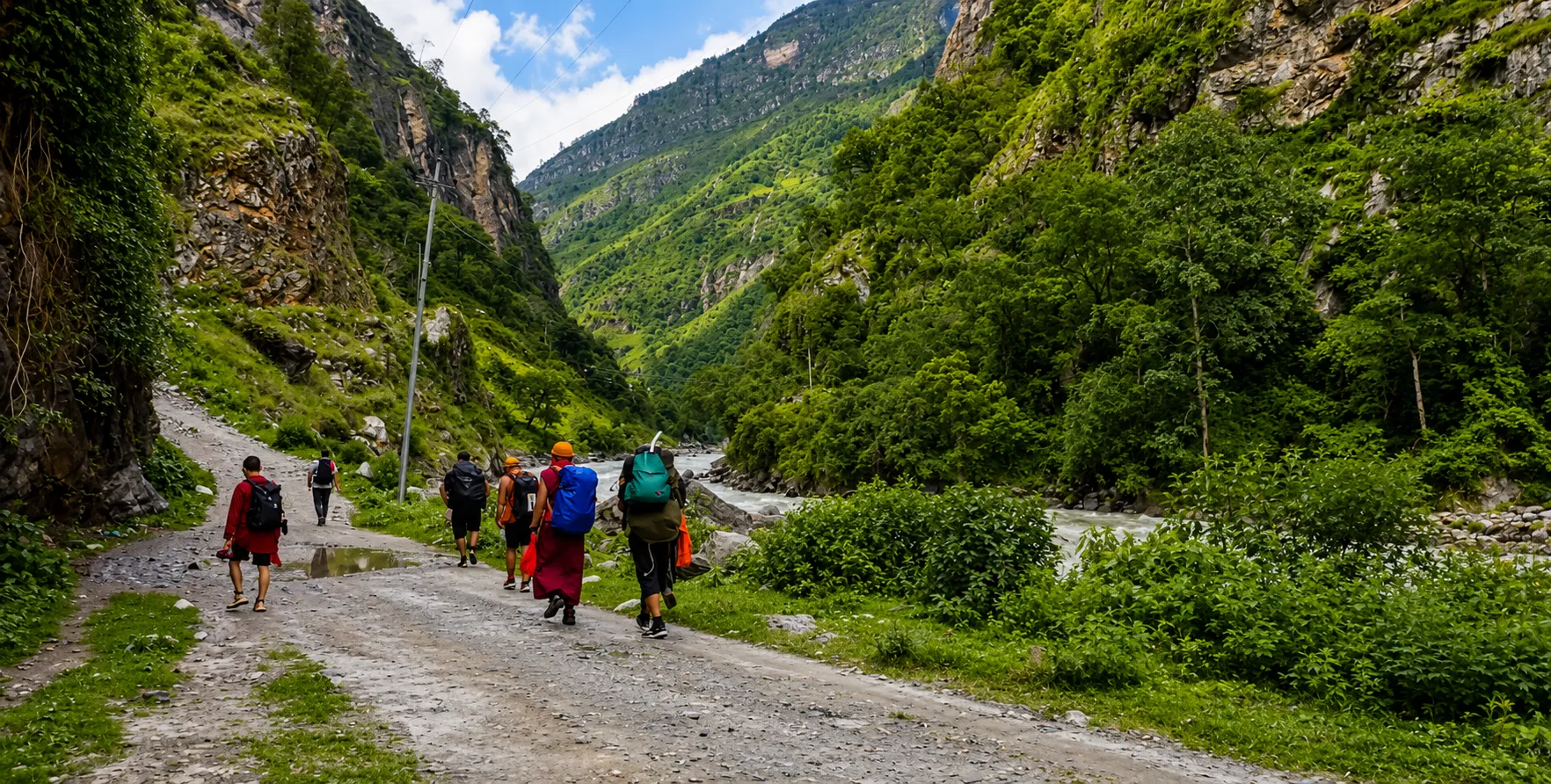
The 28-kilometre section from Besisahar north to Jagat through the lower Marsyangdi gorge is the journey’s most dramatic and technically demanding road section—a route where the 4WD jeep hire‘s specific capability is not simply preferred but required. The gorge road differs completely from the Besisahar approach road: unpaved in most sections, narrow with river-adjacent exposure, and demanding the ground clearance, traction, and low-range power of a purpose-built 4WD vehicle to navigate safely with a full trekking group load.

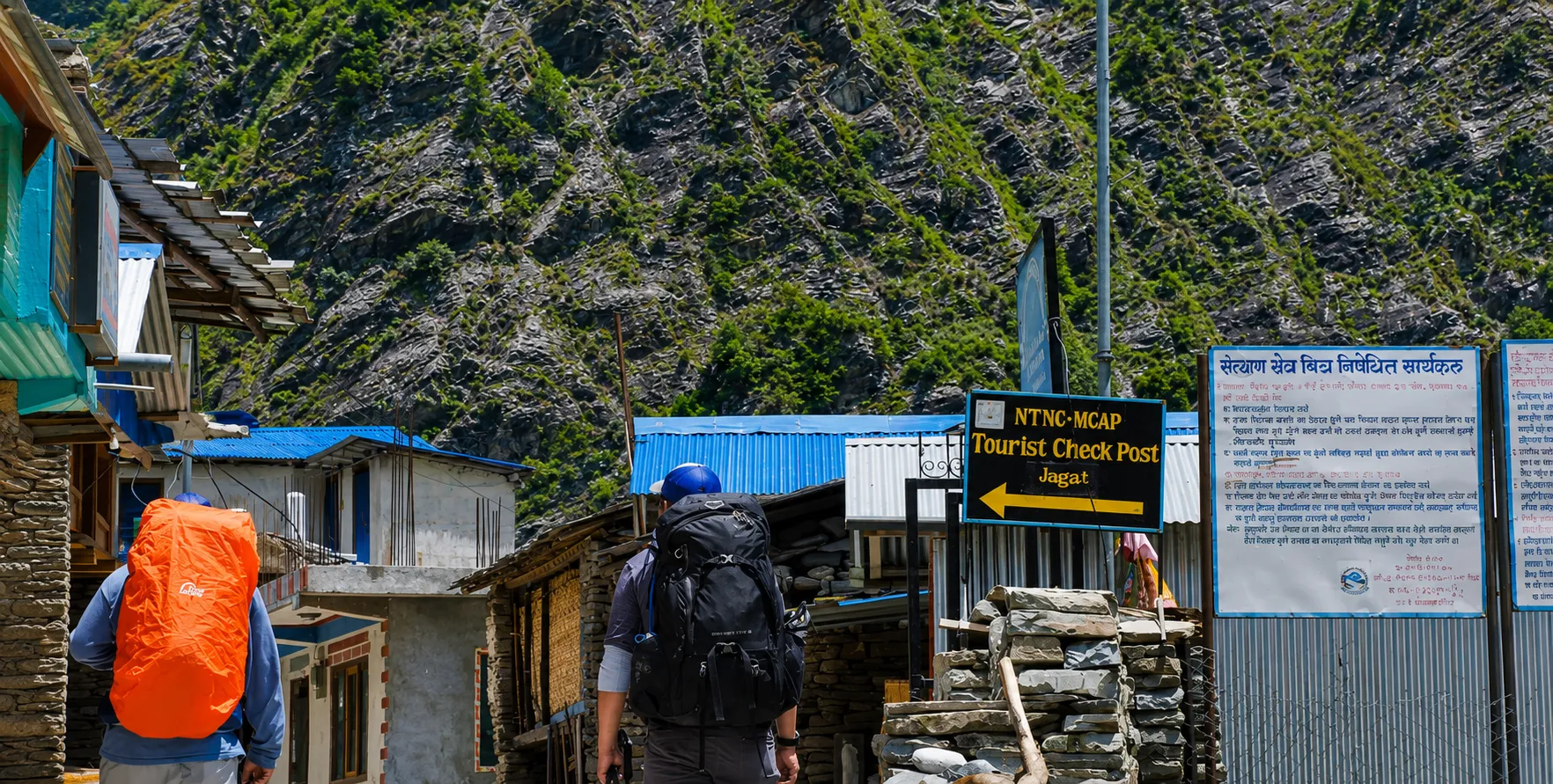
Besisahar to Bhulbhule (8 km, 30-45 minutes). The road exits Besisahar northward through the immediately adjacent villages. It reaches the suspension bridge crossing at Bhulbhule — the first Annapurna Circuit checkpoint village (840 m) where the trek trail and the jeep road run parallel or share sections. The Bhulbhule checkpoint issues the ACAP permit.

Bhulbhule to Ngadi (7 km, 25-40 minutes). Above Bhulbhule, the gorge narrows, and the road becomes progressively more demanding — the Marsyangdi visible directly below the road’s outer edge on the exposed cliff sections, the surface switching between rough gravel and the smoother sections where the road has been recently maintained. Ngadi village (930 m) sits at the junction where a significant side valley joins the Marsyangdi.

Ngadi to Jagat (13 km, 45-75 minutes). The most dramatic gorge section—the road between Ngadi and Jagat passes through the narrow canyon that defines the lower Marsyangdi’s geological character. The cliff walls converge above the road and the river on the most dramatic sections, the Marsyangdi’s white-water audible and visible below, and the 4WD jeep hire‘s specific mechanical confidence — ground clearance on the rocky sections, 4WD traction on the loose gravel descents, and the driver’s specific experience on this road — is the service that Nepal Vehicle Hiring Pvt Ltd specifically provides.

Jagat village (1,300 m) appears at the first widening of the gorge above the narrowest section, its teahouses and suspension bridge announcing the first major trekking stop of the Annapurna Circuit.
Pokhara to Jagat Private Jeep | Annapurna Circuit Hire 2026/27/28

Why Drive to Jagat Instead of Walking from Besisahar?

The Annapurna Circuit traditionally begins at Besisahar — and the walk from Besisahar to Jagat (approximately 2 to 3 hours, 18 km) is the circuit’s opening walking day, covering the lower gorge’s first villages and the ACAP permit checkpoint. The decision to take a private jeep from Pokhara directly to Jagat, bypassing the Besisahar-to-Jagat walk, depends on the group’s specific trekking priorities.

Drive to Jagat when: The group’s primary trekking interest is in the upper Annapurna Circuit (above Chame, the Manang plateau, and the Thorong La) and the lower gorge walking is considered a necessary transit rather than a valued experience. When trekking days are limited and every saved day in the lower gorge means more time at altitude.

When group members have physical limitations that make the lower gorge walking (which involves significant uphill in the first section) the harder part of the circuit.

Walk from Besisahar when: The group values the complete Circuit experience — every village, every cultural encounter, and every walking day of the lower gorge. The Besisahar-to-Jagat walk passes through Khudi, Bhulbhule, Bahundanda, and Ngadi—each with its own cultural character and valley views. For first-time Annapurna Circuit trekkers, walking the full route is the recommended option.

Nepal Vehicle Hiring Pvt Ltd’s Besisahar private vehicle hire covers the Besisahar drop option for groups who want to walk from Besisahar. In contrast, the Pokhara to Jagat private jeep hire covers the direct-to-Jagat option for groups who want to start walking at the gorge’s first significant village.

Group Booking Tips — Getting the Best Pokhara to Jagat Jeep

Booking a Pokhara to Jagat private jeep hire efficiently ensures your group gets the right vehicle at the right price, with all journey logistics confirmed in advance. Nepal Vehicle Hiring Pvt Ltd’s booking process is straightforward—WhatsApp or visit our plan trip page—and booking in advance with all details confirmed ensures the best outcome on departure day.

Specify the total passenger count and luggage volume accurately. The difference between 4 trekkers with day packs and 4 trekkers with full expedition packs changes the vehicle recommendation: the former may fit in a private car hire for the highway sections, the latter requires the Scorpio jeep’s cargo area. Accurate luggage information at booking ensures the right vehicle is allocated.

Confirm the exact drop point within the Besisahar-Jagat corridor. Jagat village centre (the main guesthouse cluster), the south approach to Jagat (where the gorge narrows), or the north side of Jagat (where some trekkers prefer to start walking immediately northward) — the specific drop point matters. Our team confirms the exact drop location at booking.

Confirm the departure time in relation to ACAP permit acquisition. If obtaining permits at the Pokhara ACAP office on the morning of departure, allow 45 to 60 minutes for the permit process before the vehicle departs. Nepal Vehicle Hiking Pvt Ltd advises the optimal departure time based on the permit strategy confirmed at booking.
Pokhara to Jagat Private Jeep | Annapurna Circuit Hire 2026/27/28

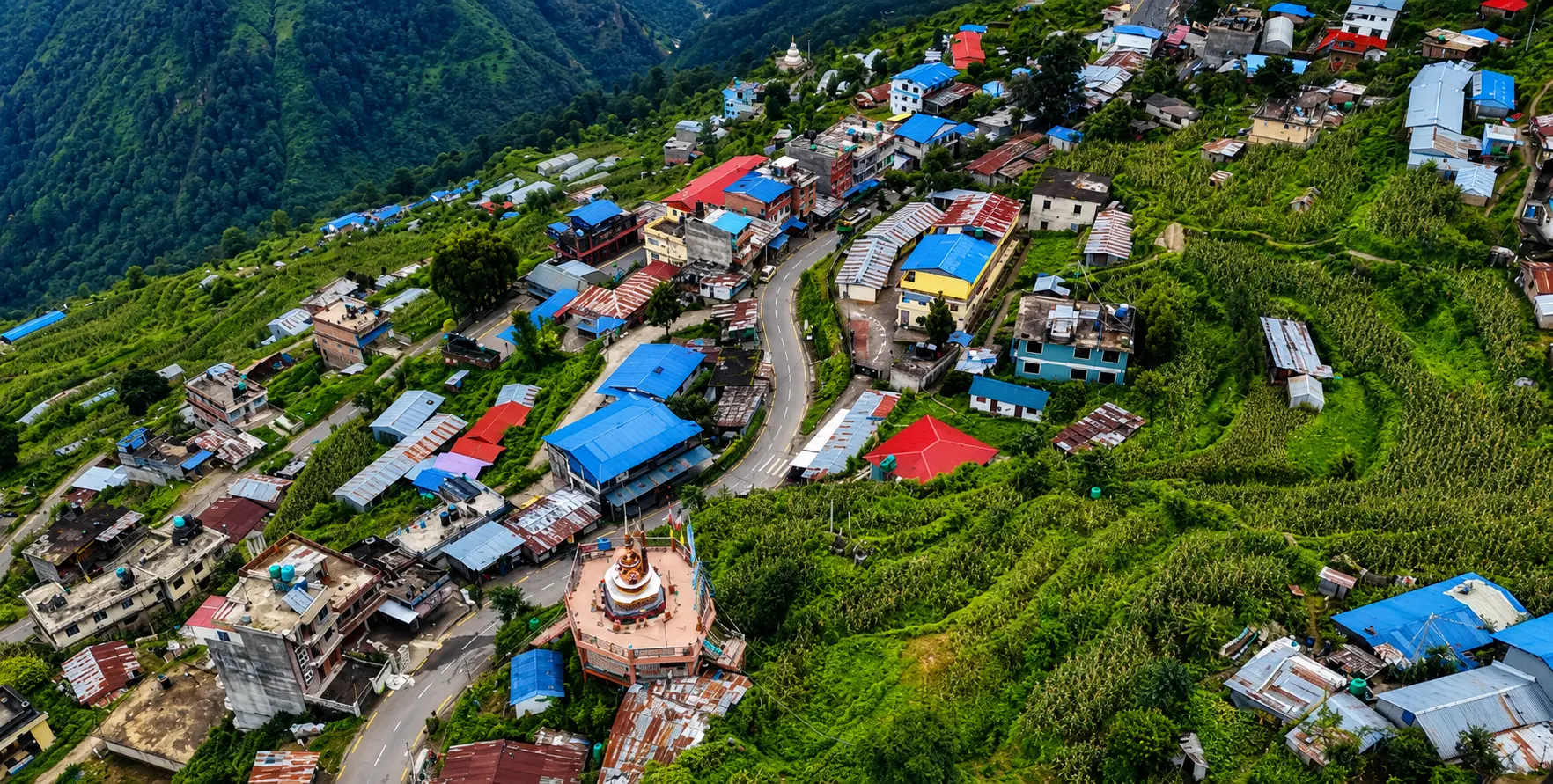
Jagat Village — The Annapurna Circuit’s First Gorge Stop

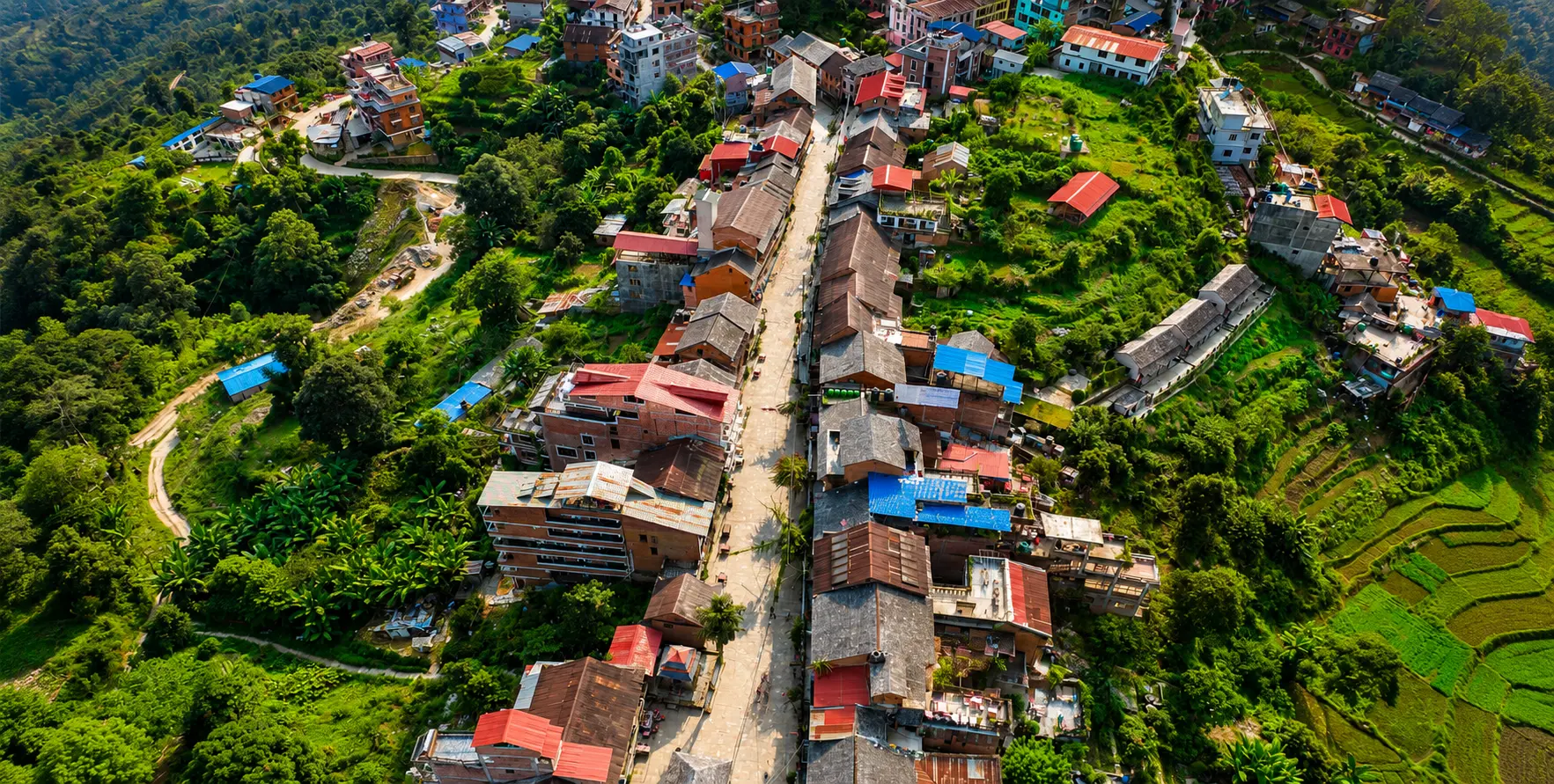
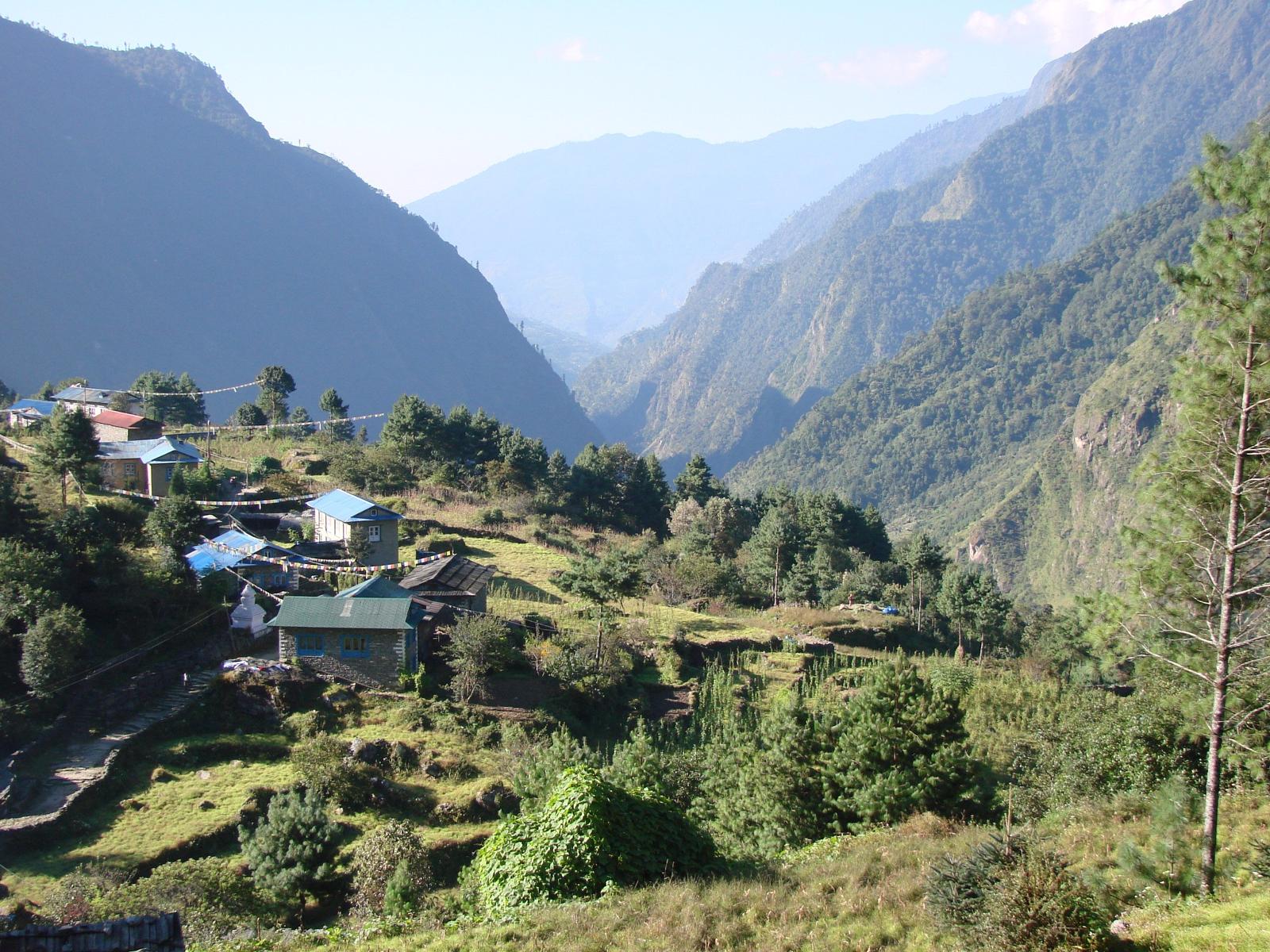
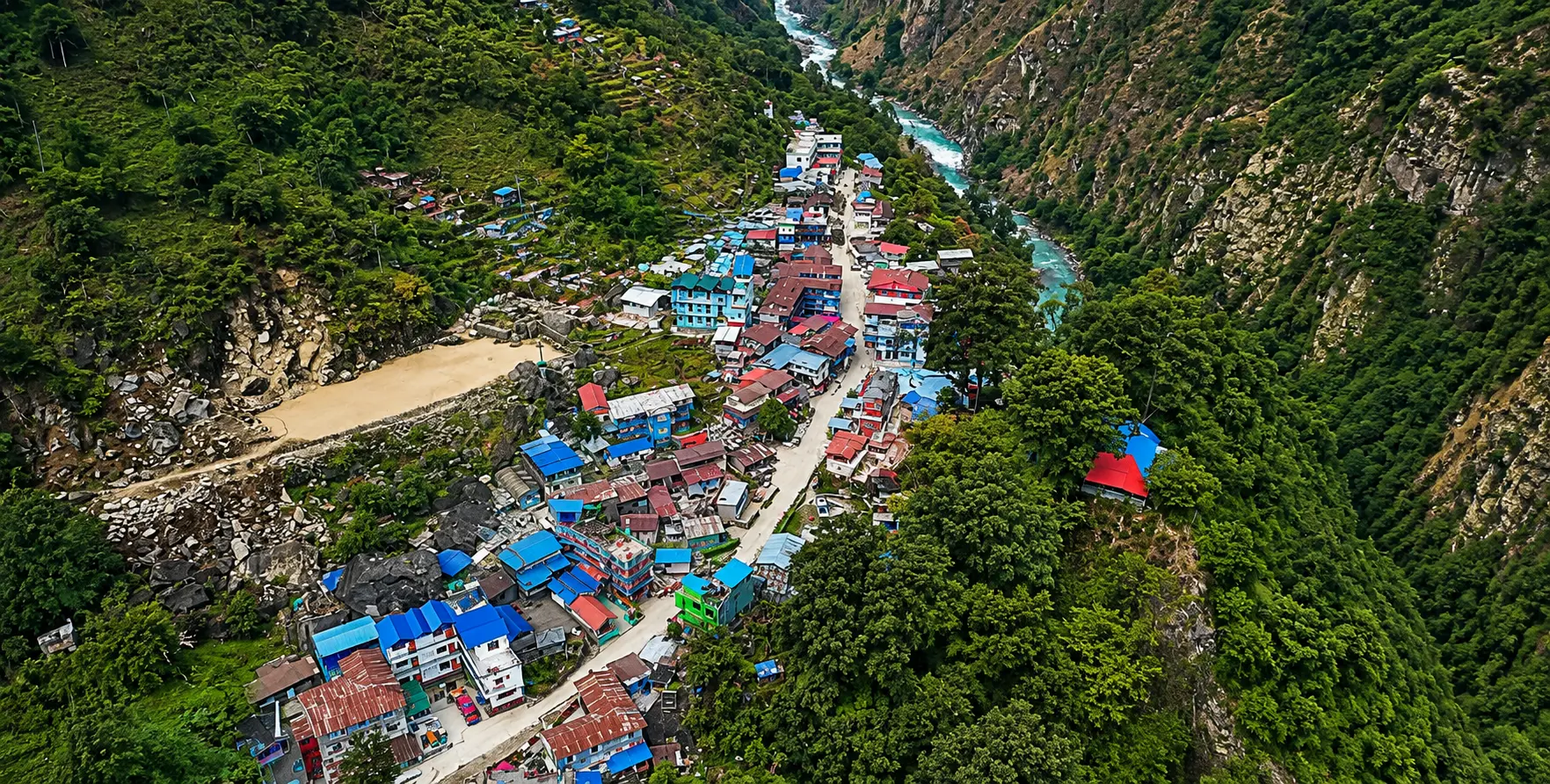
Jagat (1,300 m) is the first village on the Annapurna Circuit trek that feels genuinely inside the mountain world — the gorge’s specific narrowness and height at Jagat creating an enclosed valley character that is categorically different from the broad Marsyangdi valley below Besisahar. The village sits on a narrow terrace above the river, its teahouses and guesthouses arranged along a single lane between the gorge wall and the river edge.

Jagat is also the site of the first major ACAP checkpoint, which verifies permits for all vehicles and trekkers entering the conservation area’s northern gorge section. The checkpoint is positioned at the approach to Jagat’s narrow section — all vehicles must stop for permit verification before continuing. Nepal Vehicle Hiring Pvt Ltd’s drivers carry copies of the group’s ACAP permits (confirmed at booking) and manage the checkpoint process efficiently.

The Jagat teahouse accommodation standard is appropriate for the first overnight of the Annapurna Circuit — basic rooms, attached or shared bathroom depending on the guesthouse, dal bhat and a standard trekking menu available. Alpine Luxury Treks offers top-end Annapurna Circuit experiences with upgraded accommodation at every stage, including the lower gorge.

Trek Nepal Himalayas’ guided Annapurna Circuit packages cover the complete circuit with Nepal Vehicle Hiring Pvt Ltd’s jeep hire for the Pokhara or Kathmandu approach.

ACAP Permits — Essential Before Jagat

Annapurna Conservation Area Permit (ACAP): USD 30 per person for foreign nationals (lower rate for SAARC nationals). Required for all trekkers and vehicle passengers on the Annapurna Circuit. The permit is verified at the Bhulbhule and Jagat checkpoints.

Obtainable at the Nepal Tourism Board in Kathmandu, the ACAP office in Pokhara, or the Besisahar permit counter.

TIMS Card (Trekkers Information Management System): Required for all trekkers. USD 10 to 20. Obtainable from TAAN or the Tourism Board in Kathmandu or Pokhara.

NOTE: No vehicle proceeds past the Bhulbhule checkpoint without verified ACAP permits for all passengers. Nepal Vehicle Hiring Pvt Ltd confirms permit status with all groups at booking and requires confirmation of valid permits before departure from Pokhara for Jagat.

Beyond Jagat — The Upper Gorge Continues

For groups who want to extend the private jeep hire beyond Jagat into the upper Marsyangdi gorge, Nepal Vehicle Hiring Pvt Ltd’s 4WD jeep hire covers the northward road through Chamje, Tal, Dharapani, Chame, and ultimately to Manang (3,519 m). Each village further north adds driving time and cost on the gorge road, but also more altitude gain and fewer walking days between the vehicle drop and the Thorong La approach.

Jagat to Chamje (5 km, 20-30 minutes): The gorge road continues through the most dramatic narrow section above Jagat — the Marsyangdi canyon at its narrowest point between Jagat and Chamje, where the cliff walls, the river and the road share a space of remarkable geological compression.

Chamje to Tal (9 km, 30-45 minutes): The road crosses to the western bank above Chamje before ascending through the canyon walls to Tal — a flat glacial valley floor at 1,700 m that provides one of the Annapurna Circuit’s most dramatic visual surprises: the sudden opening of the gorge into an open valley surrounded by cliff walls.

Tal to Manang (80+ km, 3-5 additional hours): For groups aiming to drive all the way to Manang by jeep, the complete Pokhara-to-Manang journey becomes a 2-day operation — overnight at Besisahar or Chame, then the remaining gorge road to Manang on Day 2. Nepal Vehicle Hiring Pvt Ltd coordinates the complete Pokhara-to-Manang transport through our planned trip page.
Pokhara to Jagat Private Jeep | Annapurna Circuit Hire 2026/27/28

Pokhara to Jagat — Comparison with Kathmandu Departure

Trekkers approaching the Annapurna Circuit have two main vehicle departure options: from Pokhara (shorter, 130-140 km to Jagat) or from Kathmandu (longer, approximately 215 km to Jagat via Besisahar). The best departure city depends on where the trek group is based.

Pokhara departure (recommended for groups already in Pokhara): 130-140 km, 5-7 hours by private 4WD jeep hire. NPR 16,000-25,000 all-inclusive. The shorter distance means an earlier arrival in Jagat and more time on the first afternoon to rest and check permits before the trek morning.

Kathmandu departure (recommended for groups flying into TIA): 215 km, 6-8 hours by private vehicle from Kathmandu to Besisahar, plus the Besisahar-to-Jagat gorge section. The Kathmandu-to-Besisahar jeep hire drops you at Besisahar, and a local jeep continues to Jagat, or the group spends night 1 in Besisahar and takes the gorge road on Day 2.

Nepal Vehicle Hiring Pvt Ltd covers both departure options — Pokhara-based jeep hire and Kathmandu-based jeep hire — through a single plan trip page booking.

Connecting the Pokhara to Jagat Jeep with Pokhara Activities

Most Annapurna Circuit trekkers spend 1 to 3 days in Pokhara before the trek—enjoying Lakeside restaurants and cafes, preparing trekking equipment, and using Pokhara car hire for pre-trek activities.

Sarangkot Sunrise (pre-trek morning): The Sarangkot sunrise vehicle hire offers a stunning pre-dawn panorama of the Annapurna range on your final morning in Pokhara before departure to Jagat. Depart Lakeside at 4:00 AM, arrive at the Sarangkot viewpoint at sunrise, return to the hotel by 7:30 AM, pack, and depart for Jagat at 8:00 AM.

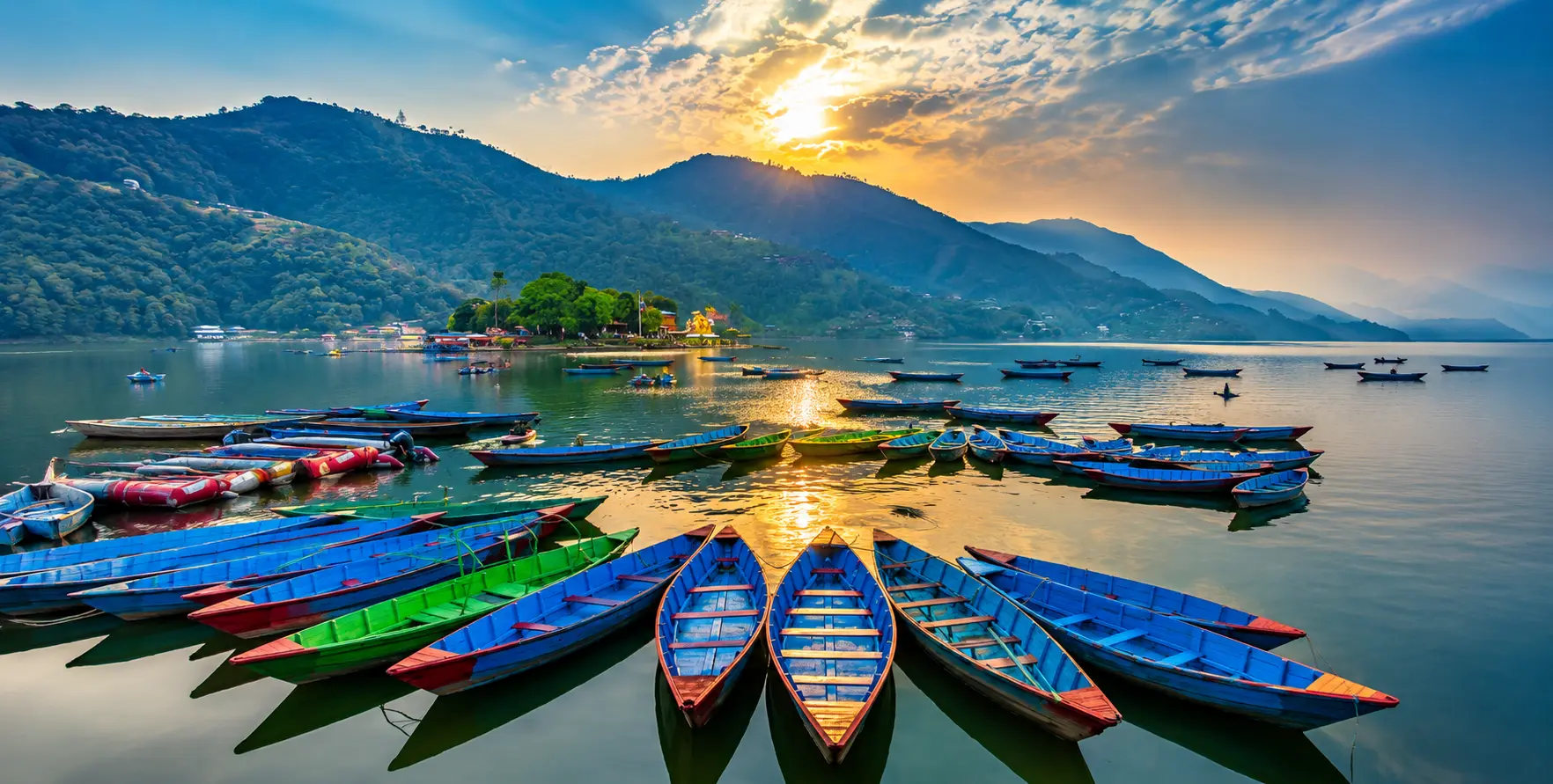
Pokhara Lakeside: Phewa Lake boat hire, the Peace Pagoda walk, and the World Peace Pagoda viewpoint are the standard pre-trek Pokhara activities. The Pokhara car hire covers all Lakeside and out-of-town Pokhara activities.

Pre-trek permit acquisition in Pokhara: The ACAP office and TIMS registration are available in Pokhara — obtain permits on the day before the Jagat departure to allow an efficient morning departure. Nepal Vehicle Hiring Pvt Ltd confirms permit requirement status at booking.
Pokhara to Jagat Private Jeep | Annapurna Circuit Hire 2026/27/28

The Gorge Road Character — What to Expect Between Besisahar and Jagat

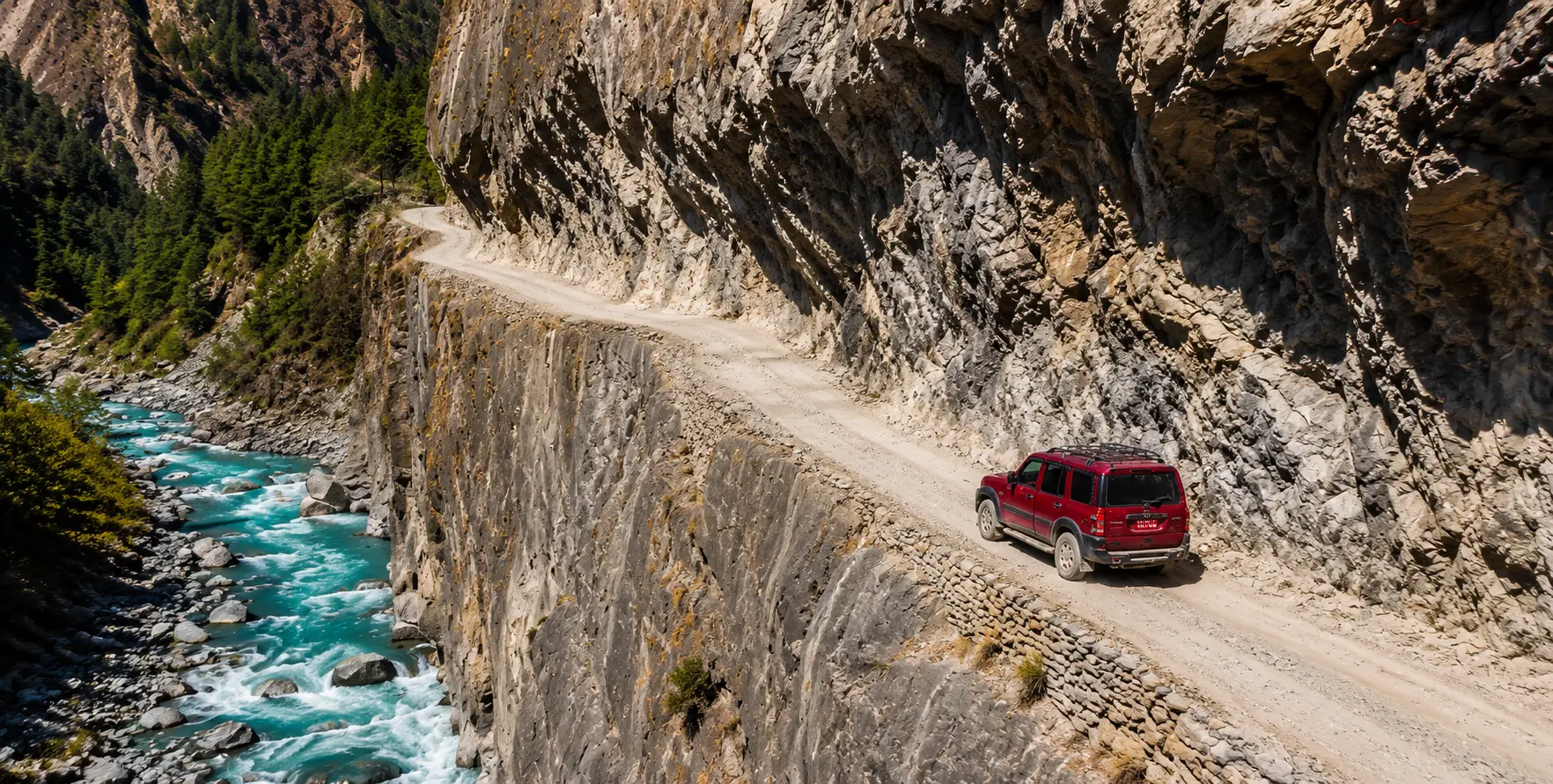
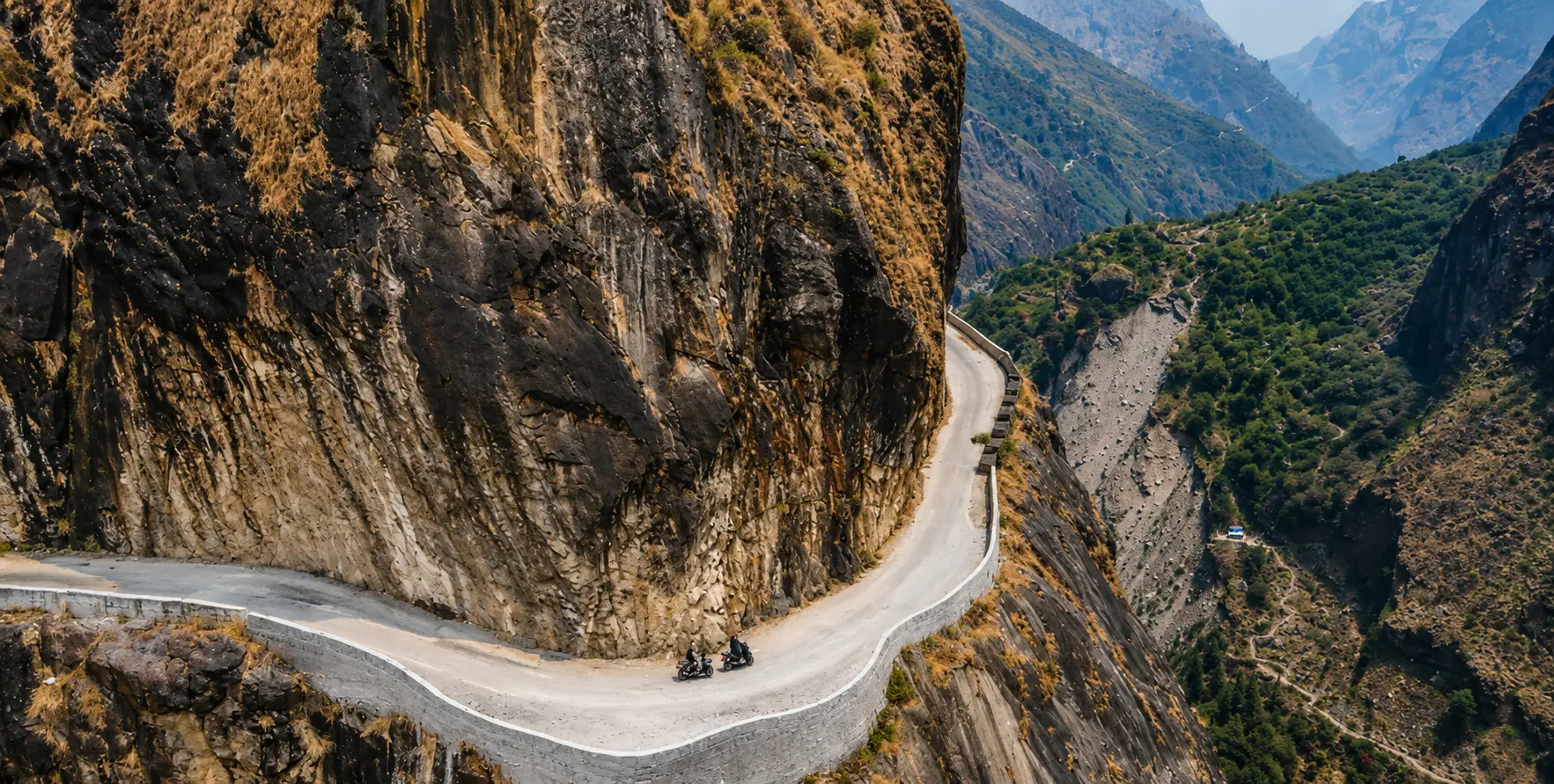
The 28-kilometre gorge road between Besisahar and Jagat is one of Nepal’s most character-rich approach roads—a driving environment that switches between rough gravel track, a narrow river-adjacent section, and the occasional rough concrete reinforcement that the Nepal Department of Roads has progressively improved on the most hazardous sections. Understanding what this road actually looks and feels like helps trekking groups set accurate expectations for the final section of the Pokhara to Jagat private jeep hire.

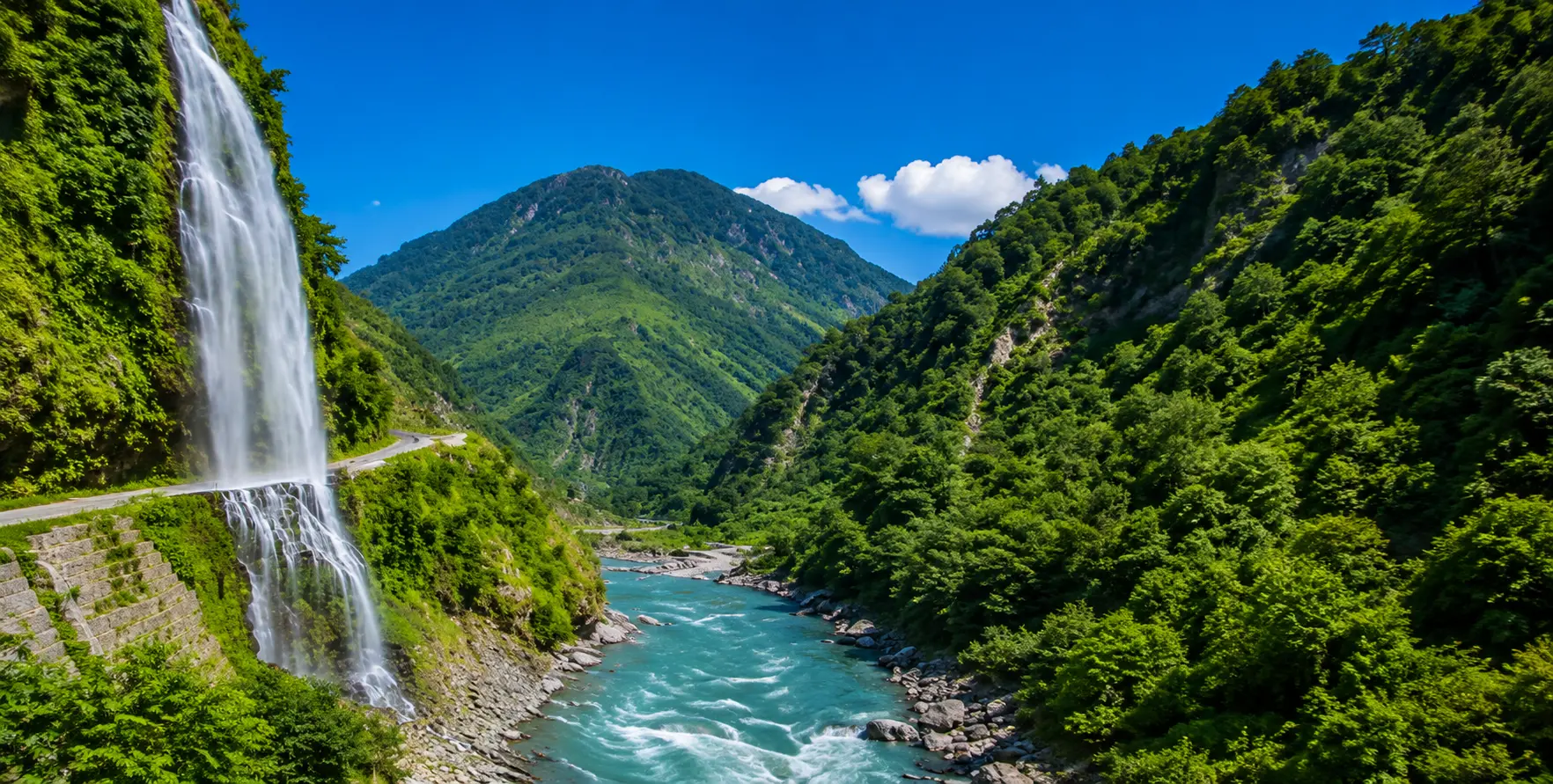
The river is always close. The Marsyangdi River accompanies the gorge road continuously between Besisahar and Jagat — sometimes visible directly below the road’s outer edge, sometimes audible through the gorge walls above a section where the road is 20 to 30 metres above the water. The river’s sound — white water, rapids, and the specific deep rumble of a major Himalayan river pushing through a narrow gorge — is the gorge road’s constant acoustic backdrop and one of its defining atmospheric qualities.

The road narrows in the critical sections. Between Ngadi and Jagat, the gorge narrows to sections where the road barely fits a single vehicle—passing encounters with oncoming vehicles require reversing to the nearest wide point. Nepal Vehicle Hiring Pvt Ltd’s gorge road drivers know every passing point on this section and manage the approach to narrow sections with the specific experience of dozens of previous transits.

First-time visitors to the gorge road consistently say the narrowness and river exposure are more dramatic in person than any description prepares them for—an assessment Nepal Vehicle Hiring Pvt Ltd takes as confirmation that a private 4WD jeep hire with an experienced driver is the right vehicle arrangement.

The surface changes frequently. The gorge road’s surface quality varies by section and season— the dry season produces the best conditions (compact gravel, no mud). In contrast, monsoon season adds water crossings, soft sections, and occasional landslide debris that the Department of Roads clears progressively through the season. Nepal Vehicle Hiring Pvt Ltd does not dispatch gorge road vehicles during monsoon season without morning-of road-condition confirmation.
Pokhara to Jagat Private Jeep | Annapurna Circuit Hire 2026/27/28

Jagat to Chame — Continuing the Jeep Beyond Jagat

For trekking groups who want to gain even more altitude by vehicle before starting their Annapurna Circuit walk, Nepal Vehicle Hiring Pvt Ltd’s 4WD jeep hire continues north from Jagat to Chame (2,710 m) — the district headquarters of Manang District and the furthest practical one-day vehicle destination from Pokhara.

The Jagat-to-Chame extension adds approximately 2 to 3 hours of additional gorge road driving — through Chamje (where the road crosses to the western bank on a significant suspension bridge), Tal (the dramatic flat-floored glacial valley at 1,700 m), Dharapani (the Manaslu Circuit junction at 1,860 m), and Bagarchhap before the valley opens into the upper Marsyangdi and the road improves slightly on the approach to Chame. This Jagat-to-Chame section is the gorge road’s finest sequence of villages—each with its own teahouse culture and the progressive altitude gain the trekker’s body benefits from experiencing by vehicle before beginning the walk.

The Pokhara-to-Chame full-day private 4WD jeep hire (approximately 5 to 8 hours total, 170 km) is the most altitude-gaining single-day vehicle option from Pokhara for Annapurna Circuit trekkers — placing the group at 2,710 m for the first overnight, with only the Chame-to-Manang section (approximately 40 km, 2-3 hours additional driving or 2 days’ walking) remaining before the acclimatisation stop—Nepal Vehicle acclimatisation: the Pokhara-to-Chame extension at booking alongside the standard Pokhara-to-Jagat booking.

Pokhara as the Annapurna Circuit Base — The Departure City

Pokhara is Nepal’s premier mountain tourism city and the natural base for all Annapurna region trekking — the city where Annapurna Circuit trekkers prepare before the trek and recover after it, where the Annapurna Base Camp trek and Ghorepani Poon Hill trek begin via the Nayapul transport, and where the Annapurna Circuit exits at Jomsom and connects back to the city by road.

For Annapurna Circuit trekkers departing from Pokhara for Jagat, the city’s Lakeside area provides all pre-trek logistics: the ACAP permit office is in Pokhara’s tourism area; Lakeside’s outdoor equipment shops provide the final gear top-ups; the currency exchange facilities handle the last cash requirement before the gorge road ATMs become unavailable; and Lakeside’s restaurant and cafe culture provides the final comfortable meal before the trek’s teahouse format begins. Nepal Vehicle Hiring Pvt Ltd’s Pokhara car hire service covers any pre-trek Pokhara vehicle requirements — hotel transfers, permit office runs, gear shop trips — alongside the principal Jagat departure booking.

Groups arriving in Pokhara from Kathmandu by the Kathmandu to Pokhara private vehicle hire before the Annapurna Circuit trek can coordinate the Kathmandu arrival, Pokhara Lakeside overnight, and Jagat departure as a single connected transport chain through Nepal Vehicle Hiring Pvt Ltd — one operator, all legs, smooth continuity from Kathmandu airport or hotel to the Marsyangdi gorge.
Pokhara to Jagat Private Jeep | Annapurna Circuit Hire 2026/27/28

The Marsyangdi Gorge — Natural and Cultural Context

The Marsyangdi River gorge that the Pokhara to Jagat jeep hire traverses in its final section is not merely a dramatic landscape — it is a corridor of extraordinary cultural and ecological diversity that the progressive altitude gain from Besisahar’s 760 m to Jagat’s 1,300 m traverses through the subtropical and lower temperate vegetation zones of the Annapurna Conservation Area.

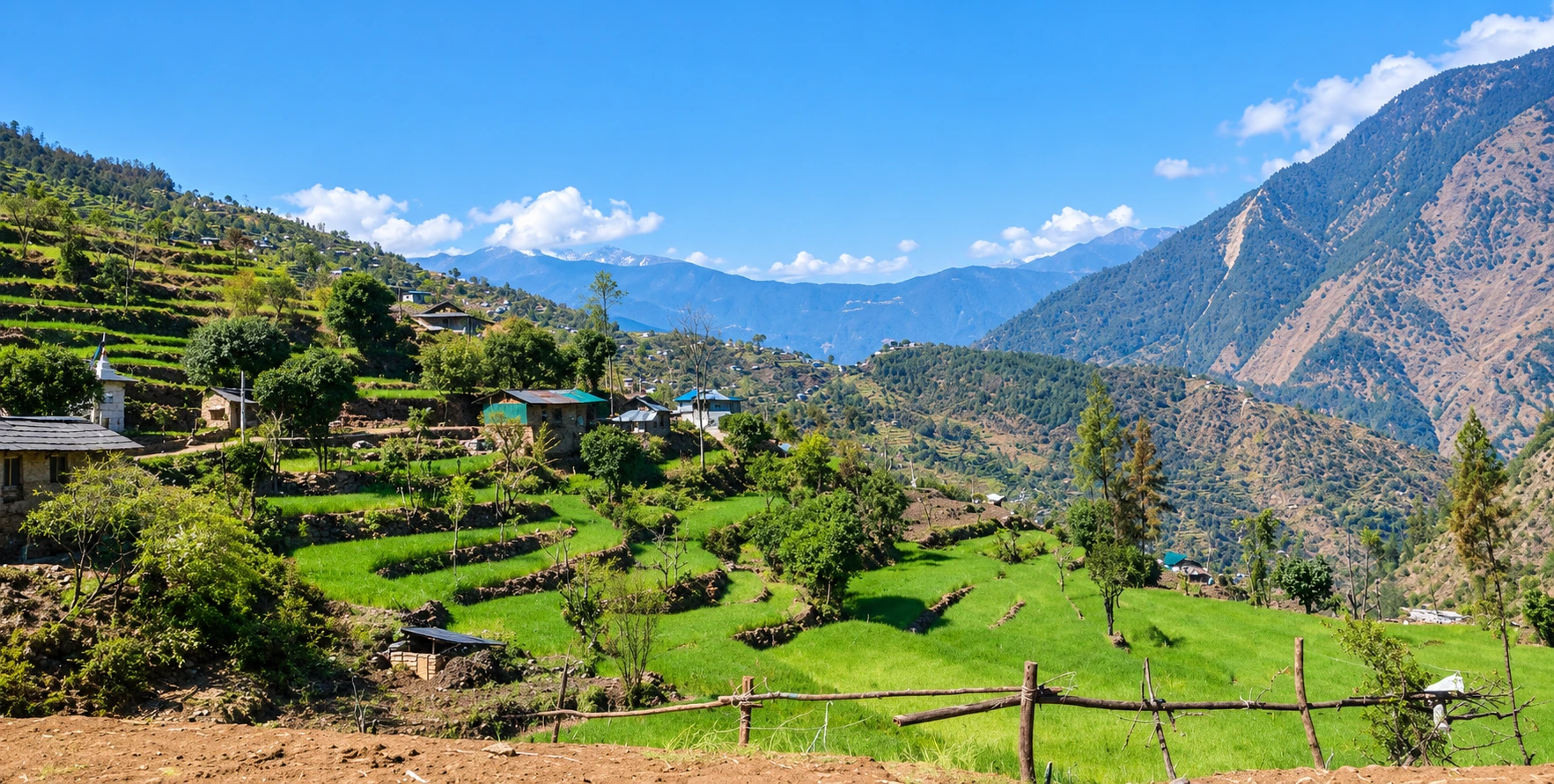
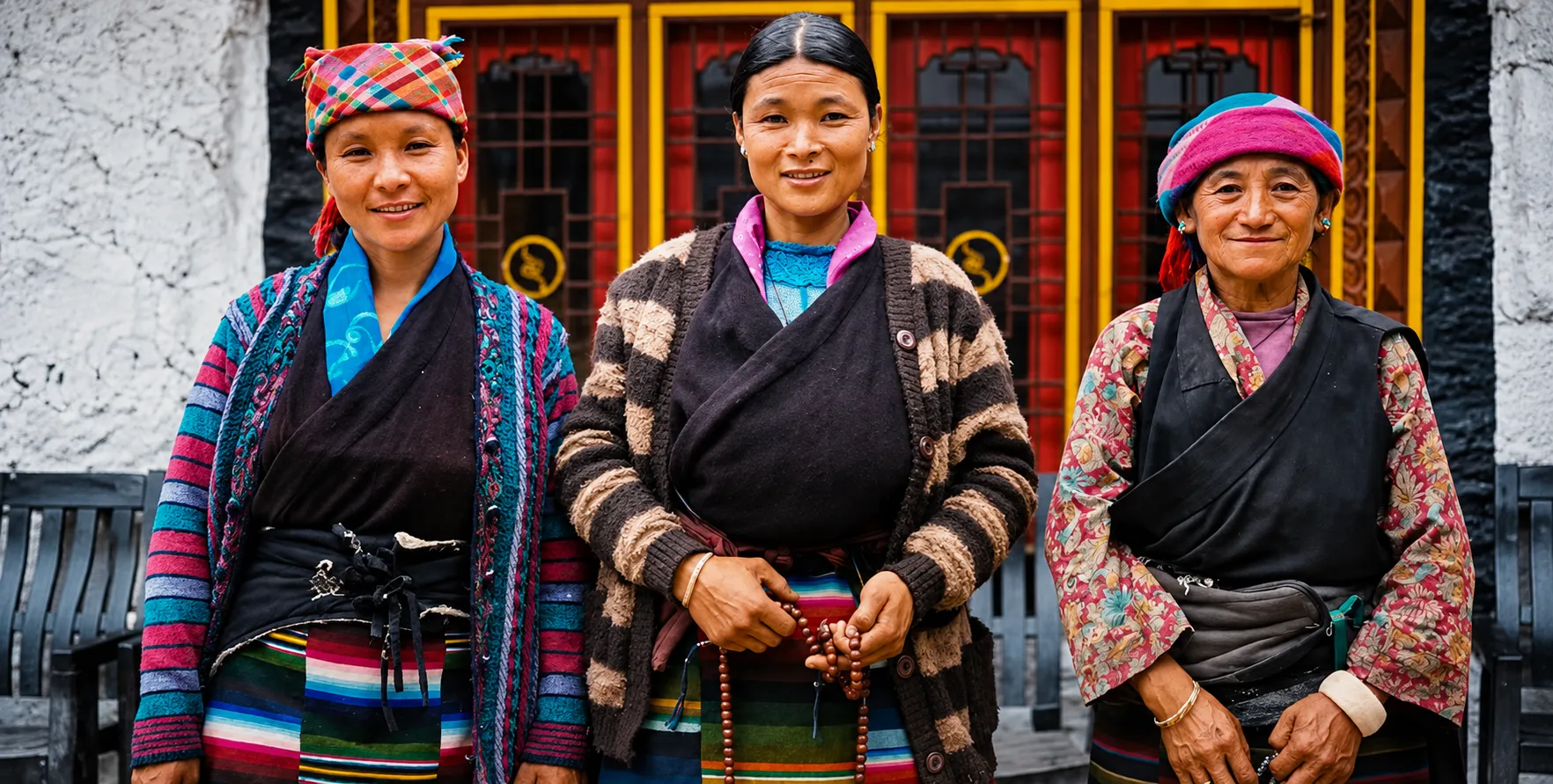
The communities of the lower Marsyangdi gorge between Besisahar and Jagat reflect the valley’s diverse ethnic mix: Gurung villages in the upper sections, Brahmin-Chhetri settlements in the lower middle sections, and Magar communities on the river-adjacent terraces. Each community’s terraced fields — maize and millet in the lower, where maize irrigation allows — create the specific agricultural landscape that frames the gorge road driving experience in a distinctively Nepali mid-hill character.

The private jeep hire takes the trekking group through this agricultural and cultural landscape at the pace the road allows—slower than the trekking trail’s walking pace for cultural immersion, but faster in altitude gain and distance covered. Nepal Vehicle Hiring Pvt Ltd’s drivers provide cultural context for the villages you pass — the community names, the agricultural cycles visible from the road, and the specific cultural landmarks the gorge road passes.

All-Inclusive Price — What the Pokhara to Jagat Jeep Covers

Nepal Vehicle Hiring Pvt Ltd’s Pokhara to Jagat private jeep hire uses genuine all-inclusive pricing. This single confirmed price covers the full Pokhara Lakeside hotel-to-Jagat village route with no additions at the end of the journey. The price quoted at booking is the price paid at Jagat.

Included: Driver for the complete Pokhara-to-Jagat journey; all fuel from Pokhara Lakeside to Jagat; all Nepal highway tolls (Prithvi Highway toll and Besisahar road toll); hotel-door pickup from any Pokhara Lakeside, Newroad, or Dam Side accommodation; Besisahar town stop for permits and rest (20-30 minutes); Jagat village drop at the group’s chosen guesthouse.

Not included: ACAP permit fees (USD 30 per person — paid by each trekker at the Pokhara ACAP office or Besisahar permit counter); TIMS card fee; driver meal during Besisahar stop (NPR 300-400, customarily paid by group); any significant detour beyond the standard Pokhara-to-Jagat route.

Nepal Vehicle Hiring Pvt Ltd quotes the all-inclusive price in writing via WhatsApp or through our plan trip page before the booking is confirmed.—no surprises on the gorge road.

Pokhara to Jagat Private Jeep | Annapurna Circuit Hire 2026/27/28

Seasonal Road Conditions — Pokhara to Jagat

The Pokhara to Jagat private 4WD jeep is available year-round, but road conditions on the gorge section vary significantly by season — a critical consideration for trekking groups planning the Annapurna Circuit approach.

Autumn (October-November): Peak trekking season. Finest gorge road conditions — dry, compact surface after the monsoon’s erosive effect has been cleared by maintenance. The Marsyangdi Valley is at its most visually stunning: post-monsoon green, clear skies, and the season’s first Himalayan snowfall visible on the peaks above.

Book 1-2 weeks ahead.

Spring (March-May): Second peak. The gorge road is reliable, with occasional pre-monsoon afternoon showers in May that temporarily soften the surface but rarely cause disruption. Rhododendron bloom on the higher slopes above the gorge road in March-April.

Book 1 week ahead.

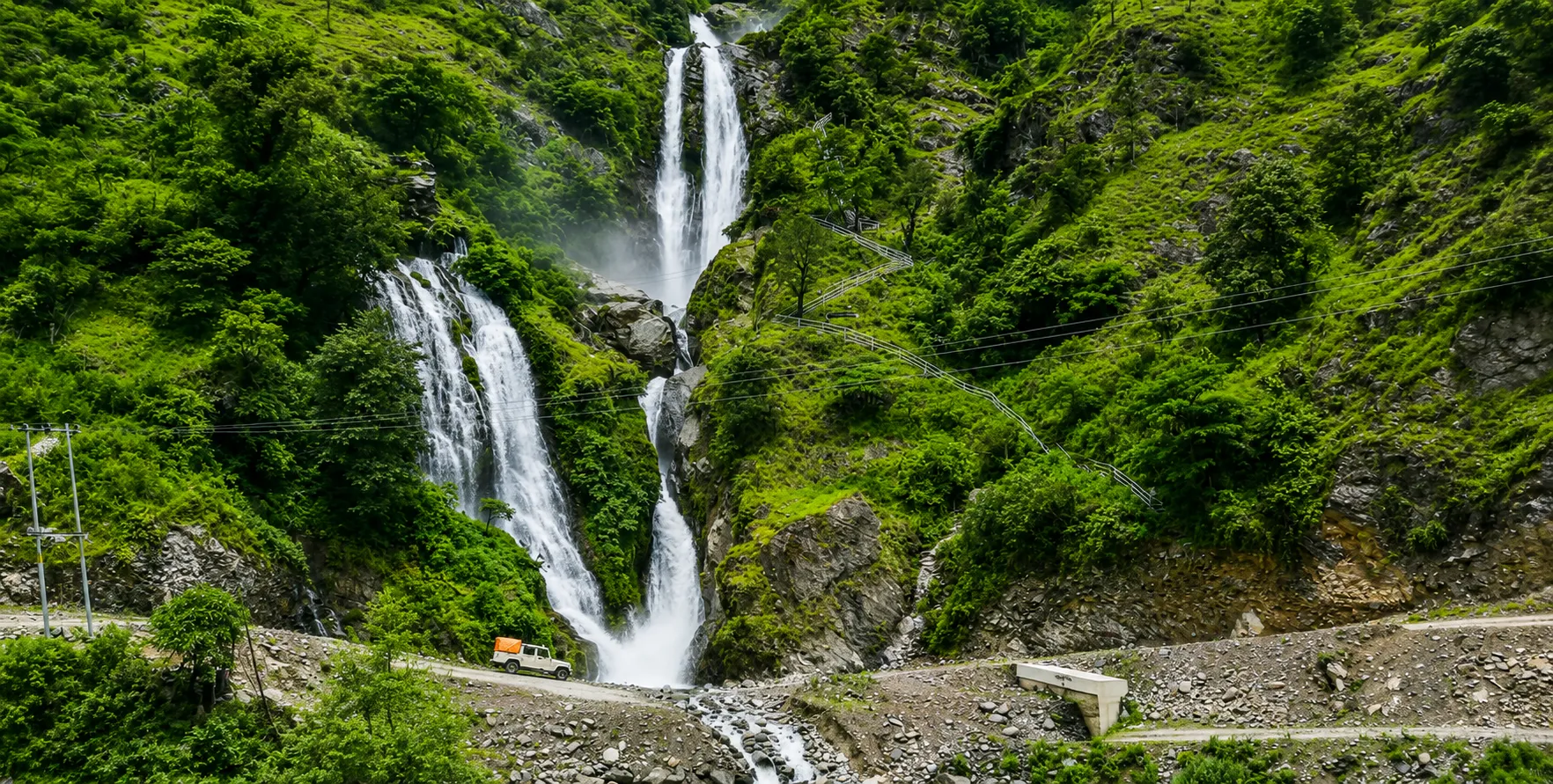
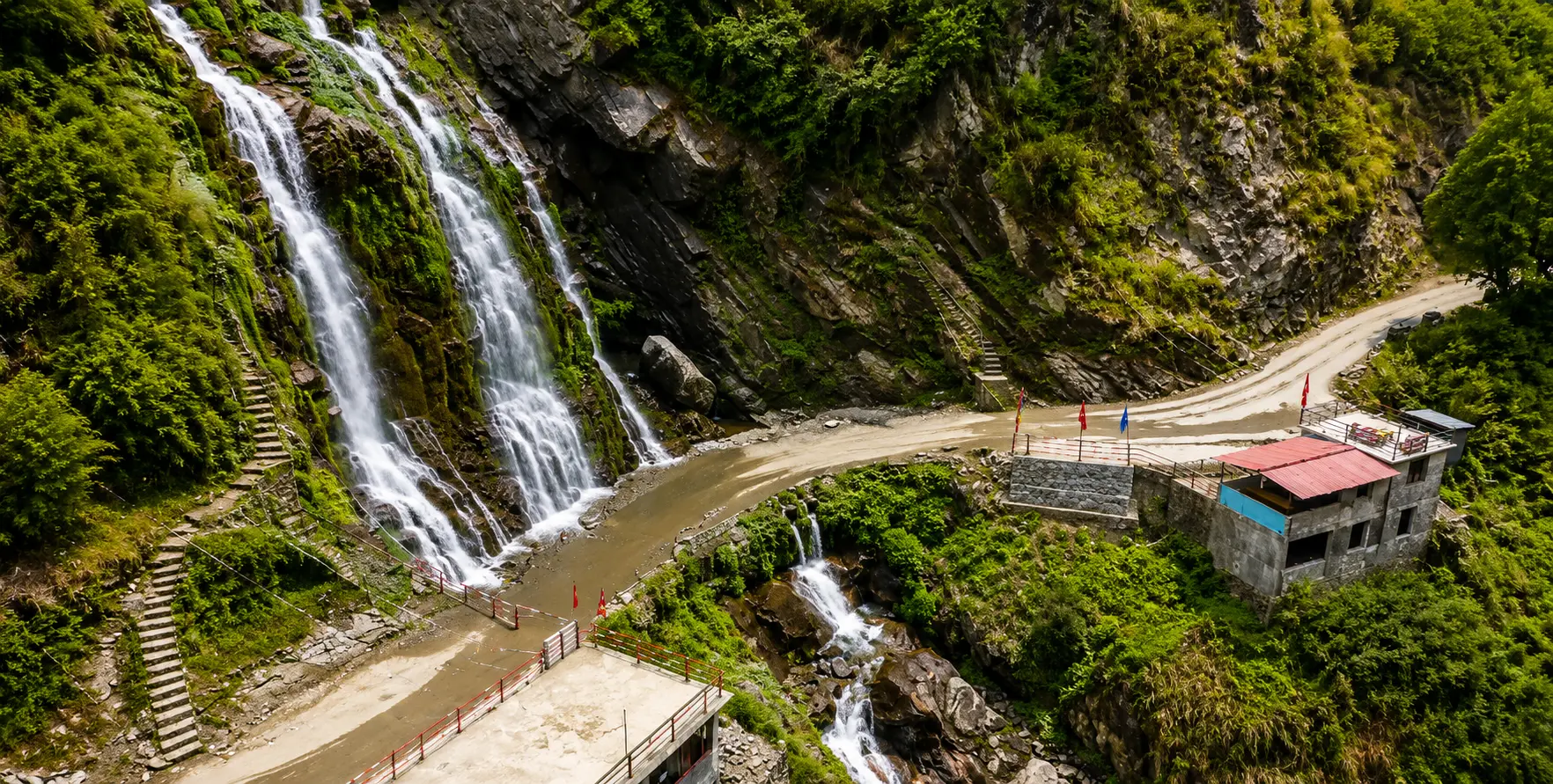
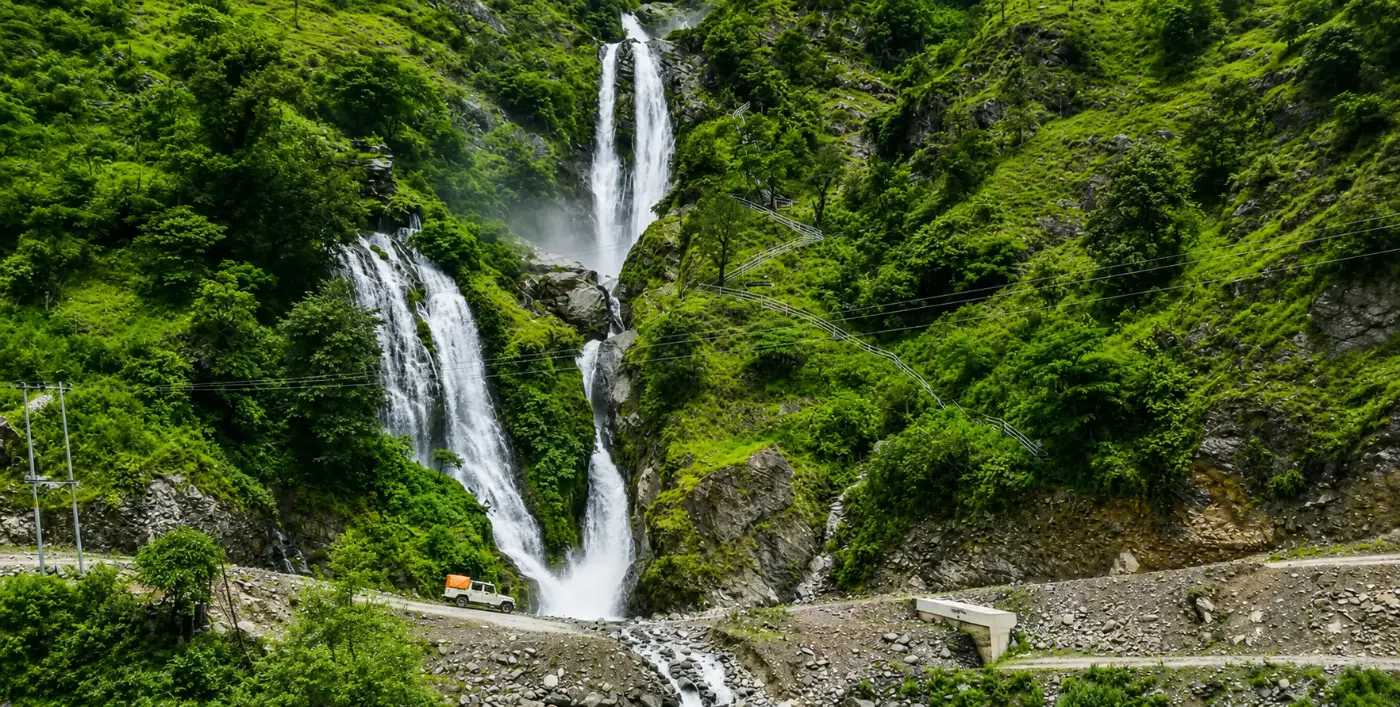
Monsoon (June-September): Nepal Vehicle Hiring Pvt Ltd does not dispatch gorge road vehicles without morning-of confirmation from our driver network on current Besisahar-to-Jagat status. Landslides on the gorge road’s upper cut sections are the primary monsoon risk. When the road is confirmed clear, the monsoon gorge drive has unique visual quality — waterfalls threading the cliff walls above, the river in full monsoon flood.

Winter (December-February): Reliable gorge road conditions below 1,300 m — no snow or ice on the Besisahar-to-Jagat section. The gorge road is least trafficked and easiest to drive in winter. Nepal Vehicle Hiring Pvt Ltd provides Pokhara to Jagat jeep hire year-round — contact WhatsApp for current road status.
Pokhara to Jagat Private Jeep | Annapurna Circuit Hire 2026/27/28

The Besisahar Stop — Permits and Rest Before the Gorge

The Besisahar stop on the Pokhara to Jagat private jeep journey is not simply a rest break — it is an essential logistics checkpoint that determines whether the vehicle can proceed past the Bhulbhule ACAP checkpoint into the gorge.

ACAP permit acquisition: Groups who did not obtain the ACAP permit in Pokhara must obtain it at the Besisahar permit counter before the jeep continues northward. The Besisahar ACAP counter is the last place to obtain permits before Jagat reliably. No permit offices exist between Besisahar and Jagat on the gorge road.

Final supply check: Besisahar’s trekking supply shops provide the last reliable equipment and supply top-up before the gorge. Water, snacks, basic medical supplies, and any forgotten small trekking items can be sourced here — the Jagat guesthouses stock minimal supplies beyond food.

Fuel for gorge road: Nepal Vehicle Hiring Pvt Ltd’s drivers fill the tank at Besisahar’s fuel station before the gorge section — no fuel available between Besisahar and the villages further north on the gorge road. The full tank is standard pre-departure procedure for our Besisahar-to-Jagat jeep hire section.

Besisahar guesthouse option: Groups who arrive at Besisahar late in the day and want to begin the gorge road fresh the following morning can overnight at Besisahar and continue to Jagat on Day 2. Nepal Vehicle Hiring Pvt Ltd’s driver and vehicle overnight at Besisahar at the standard driver overnight rate (NPR 500-800) — the next morning’s gorge drive departs at 7:00 AM for the freshest road and coolest gorge temperature. Contact our team on WhatsApp to arrange an overnight in Besisahar.

Return Journey — Post-Trek Vehicle from Jagat or Beyond

The return vehicle for trekkers who began the Annapurna Circuit at Jagat depends on whether the group exits the Circuit at the Jagat side (returning south to Besisahar and Pokhara) or completes the Thorong La crossing and exits at Jomsom (returning to Pokhara via the Kali Gandaki gorge road).

Circuit exit at Besisahar (eastern exit, same side as Jagat): Nepal Vehicle Hiring Pvt Ltd pre-arranges the Besisahar to Pokhara return jeep hire at outward booking — confirmed via WhatsApp during the trek when the exit date is known. The return vehicle covers the Besisahar-to-Dumre-to-Pokhara route in 3 to 4 hours.

Circuit exit at Jomsom (western exit, post-Thorong La): The Jomsom to Pokhara private jeep hire through the Kali Gandaki gorge (145 km, 7-9 hours) is pre-arranged at outward booking for groups who plan to complete the full Circuit. One booking at Nepal Vehicle Hiring Pvt Ltd covers both the Pokhara-to-Jagat inward and the Jomsom-to-Pokhara outward vehicle legs.

For groups who begin at Jagat and walk the complete Circuit to Thorong La and beyond, the complete transport chain is: Pokhara to Jagat 4WD jeep hire → trek the Annapurna Circuit → cross Thorong La → Muktinath → Jomsom → Jomsom to Pokhara return jeep hire. Nepal Vehicle Hiking Pvt Ltd coordinates both legs through a single plan trip page submission.

Pokhara to Jagat for Different Trekker Types

The Pokhara to Jagat private jeep hire serves several distinct trekker profiles whose specific motivations for driving to Jagat rather than walking from Besisahar vary significantly.

Time-constrained trekkers — the most common profile. International visitors with fixed return flights who have 12 to 14 days for the Annapurna Circuit and whose programme requires saving the lower gorge walking days to have sufficient time at altitude. For this group, hiring a Pokhara-to-Jagat jeep is a practical time-management decision rather than a concession to physical limitation.

Physically recovering trekkers returning to the Annapurna Circuit after injury or illness, starting from a higher point than their previous attempt. The Jagat start gives a fresh beginning at an altitude the trekker already knows and respects.

Experienced Annapurna Circuit repeat visitors who have walked the lower gorge section on previous visits and specifically want to begin walking where the gorge’s most dramatic section begins. For repeat Circuit trekkers, the Besisahar-to-Jagat section holds no unvisited experience — the private jeep hire to Jagat allows them to begin walking at the point where the Circuit starts to feel genuinely new.

Luxury trekking clients on guided programmes with Alpine Luxury Treks, whose itinerary begins at Jagat to meet the programme’s pacing requirements. The Pokhara-to-Jagat 4WD jeep hire from Nepal Vehicle Hiring Pvt Ltd serves this top-end market to the same professional standard as our standard trekking transport.
Pokhara to Jagat Private Jeep | Annapurna Circuit Hire 2026/27/28

Annapurna Circuit from Jagat — The Trek Ahead

Starting the Annapurna Circuit trek from Jagat rather than Besisahar saves approximately 1 to 2 walking days on the lower gorge section, placing trekkers directly in the most dramatic part of the gorge and at an altitude (1,300 m) where acclimatisation begins without the time spent on the lower valley. From Jagat, the Annapurna Circuit continues northward through Chamje, Tal, Dharapani, Bagarchhap, Danaque, Chame (2,710 m — district headquarters, last significant facilities before the high Annapurna plateau), Lower Pisang, Upper Pisang, and ultimately Manang (3,519 m) — the Circuit’s acclimatisation centre and the starting point for the Thorong La crossing.

The Nar Phu Valley restricted-area trek, which starts from Koto village (one day north of Dharapani) for groups adding this extraordinary hidden valley to the Circuit itinerary.

Nepal Himalayas’ guided Annapurna Circuit packages include Nepal Vehicle Hiring Pvt Ltd’s Pokhara-to-Jagat jeep hire as the standard approach for groups whose programme begins walking from the gorge rather than Besisahar.

Why Jagat Is the Right Road-End for Many Annapurna Circuit Plans

Among the several vehicle drop points available on the Annapurna Circuit approach road — Besisahar (760 m), Bhulbhule (840 m), Ngadi (930 m), Jagat (1,300 m), Chamje (1,430 m), Tal (1,700 m), Dharapani (1,860 m), Chame (2,710 m), and Manang (3,519 m) — Jagat occupies a specific position that makes it the most practically balanced starting point for the majority of trekking groups who want to reduce lower gorge walking without sacrificing the gorge’s most dramatic character.

Why Jagat rather than Besisahar: Jagat at 1,300 m is 540 metres higher than Besisahar — a meaningful altitude gain that begins the acclimatisation process earlier. The acclimatisation to Jagat walking section (1 to 2 days) covers the lower acclimatisation dramatic scenery — the wide valley sections below the gorge narrowing. Starting at Jagat puts you at the point where the gorge’s drama begins to intensify.

Why Jagat rather than Chame or Manang: Chame and Manang are higher and would save more walking days, but the altitude gain by vehicle to 2,710 m (Chame) or 3,519 m (Manang) in a single day from Pokhara is rapid — potentially too rapid for altitude-sensitive trekkers arriving directly from sea-level cities. Jagat at 1,300 m is the right altitude ceiling for a single-day vehicle trip from Pokhara (820 m), giving the body time to adjust gently before the gorge road’s altitude gain continues on foot.

Nepal Vehicle Hiring Pvt Ltd’s Pokhara to Jagat private jeep hire is designed for groups who have identified Jagat as their circuit starting point—confirming road conditions, the ACAP permit requirement, and the gorge road character at booking so the group arrives in Jagat with full information and preparation. Contact our team on WhatsApp or plan through our plan trip page.

Jagat’s Position in the Annapurna Circuit Ecology

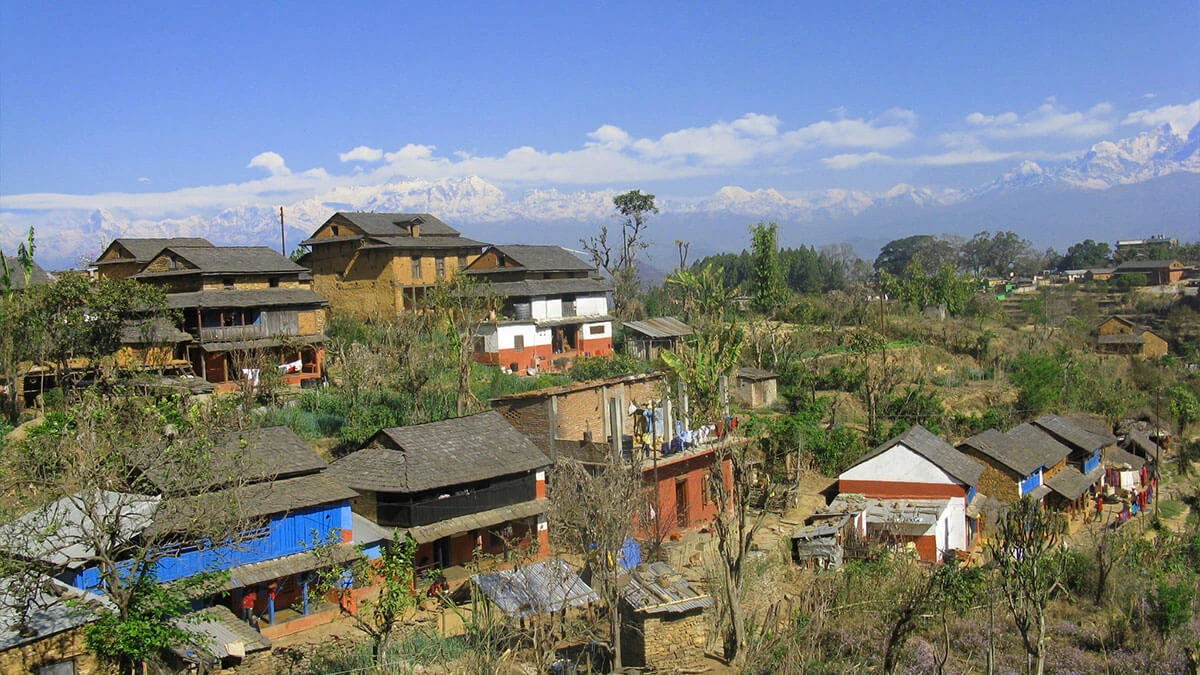
At 1,300 m, Jagat sits in the transition zone between the subtropical lower Marsyangdi valley and the warm temperate mid-gorge. This botanical and ecological transition point is perceptible to the attentive walker and visible to the attentive vehicle passenger on the approach.

Below Jagat, the valley floor and lower slopes support subtropical vegetation: banana plants, fig trees, and the dense mixed-species forest of Nepal’s sub-Himalayan zone. At and above Jagat, vegetation shifts toward temperate species—rhododendron, oak, and a progressively mixed conifer presence that intensifies on the approach to Chame.

This ecological transition makes Jagat a botanically interesting starting point for the Annapurna Circuit trek—the first walking day north from Jagat passes through the transition zone’s finest mix of subtropical and temperate species, with the specific diversity created by the two zones’ overlap in the immediate Jagat area. Birdwatchers who begin the Annapurna Circuit at Jagat have access to both the subtropical species of the lower gorge (still present at 1,300 m) and the first temperate zone species that appear above Jagat — a diversity concentration that pure highland starts from Chame miss.

Private jeep hire from Pokhara to Jagat takes birdwatchers and naturalists to this ecological crossover point. Book through Nepal Vehicle Hiring Pvt Ltd on WhatsApp or our plan trip page.

Why Choose Nepal Vehicle Hiring Pvt Ltd for Pokhara to Jagat

  • Pokhara Lakeside hotel pickup: Door-to-door from any Pokhara hotel — Lakeside, New Road, or out-of-town accommodation.
  • 4WD Scorpio or Hilux exclusively for gorge road: Besisahar-to-Jagat gorge section requires 4WD — no standard sedan options.
  • Route-experienced gorge road drivers: Drivers with specific Marsyangdi gorge experience — not highway-general drivers.
  • Sarangkot sunrise connection: Sarangkot vehicle hire on the final Pokhara morning connected to same-day Jagat departure.
  • ACAP permit advisory: Permit status confirmed at booking, Besisahar permit office stop included.
  • Beyond Jagat options: Jeep can continue to Chamje, Tal, Chame, or Manang — confirmed at booking.
  • Return vehicle: Post-trek vehicle pre-arranged — Besisahar return or Jomsom exit.
  • All-inclusive pricing: Driver, fuel, tolls — confirmed at booking.
  • 24/7 on WhatsApp6 or plan trip page.

The Prithvi Highway East of Pokhara — What to See

The 65-kilometre Prithvi Highway section from Pokhara to Dumre offers several natural and cultural points of interest that the private jeep hire makes accessible with spontaneous stops impossible on a shared bus.

The Seti River Gorge (10 km east of Pokhara). The Seti River — Pokhara’s own sacred river, which runs underground through much of the city — emerges in a spectacular gorge just east of the Lakeside area. The deep slot canyon where the turquoise Seti cuts through the white limestone is one of Nepal’s most extraordinary urban-fringe geological features, visible from the Prithvi Highway bridge and from the dedicated gorge viewpoint 1 kilometre off the highway.

Damauli (45 km from Pokhara). The Tanahu District capital of Damauli sits at the Seti-Madi river confluence—a significant confluence point in Nepal’s Gandaki river geography and a pleasant 15-minute highway stop for tea and the morning market’s local produce.

Dumre junction (65 km from Pokhara). The Dumre junction is the decision point where the Prithvi Highway continues toward Kathmandu and the Besisahar road branches northeast. A brief fuel station and snack stop at Dumre before the mountain road begins.

Nepal Vehicle Hiring Pvt Ltd’s drivers on the Pokhara to Jagat jeep hire route know the specific pullouts on the Prithvi Highway east of Pokhara where the Annapurna range panorama is most visible from the road — the Annapurna Massif’s south face appearing above the highway’s northern horizon as the road rounds specific bends. Our drivers point out these views without being asked, turning the highway drive into a gradual introduction to the mountain world the trekking group is approaching.

Connecting the Annapurna Circuit Approach with Kathmandu

Many international trekkers who fly into Kathmandu’s Tribhuvan International Airport and head to Pokhara for the Annapurna Circuit use Nepal Vehicle Hiring Pvt Ltd’s connected transport network for the complete Kathmandu-to-Pokhara-to-Jagat chain.

Kathmandu airport transfer on arrival → Kathmandu sightseeing car hire for Pashupatinath, Boudhanath, and Bhaktapur heritage tour → Kathmandu to Pokhara private vehicle hire → Pokhara Lakeside car hire with Sarangkot sunrise vehicle on the pre-trek morning → Pokhara to Jagat private 4WD jeep hire → complete Annapurna Circuit trek → Jomsom to Pokhara return jeep → Pokhara to Kathmandu return vehicle → Kathmandu airport departure transfer. One operator, all legs, professional standard throughout — coordinated through Nepal Vehicle Hiring Pvt Ltd’s plan trip page in a single submission.

Alpine Luxury Treks offers the top-end tier of the complete Kathmandu-Pokhara-Annapurna Circuit experience, using Nepal Vehicle Hiring Pvt Ltd’s private vehicle hire for every ground-transport leg. Trek Nepal Himalayas’ guided Annapurna Circuit packages similarly use Nepal Vehicle Hiring Pvt Ltd throughout. Contact our team on WhatsApp.

Frequently Asked Questions — Pokhara to Jagat Private Jeep

How long does the Pokhara to Jagat jeep journey take?

5 to 7 hours: Pokhara to Dumre (1.5-2 hours) + Dumre to Besisahar (1-1.5 hours) + Besisahar to Jagat Gorge road (1.5-2.5 hours).

What is the private jeep cost from Pokhara to Jagat?

NPR 16,000 to 40,000 (USD 120 to 250), all-inclusive, for a private 4WD Scorpio jeep. Contact Nepal Vehicle Hiring Pvt Ltd on WhatsApp  for a group-specific quote.

Is a 4WD jeep mandatory for Pokhara to Jagat?

Yes — the Besisahar-to-Jagat gorge road section requires a 4WD Scorpio or Hilux jeep. Standard sedans cannot navigate this section safely with a full passenger and luggage load.

Do I need an ACAP permit before the Pokhara-to-Jagat jeep journey?

Yes — ACAP permits are required at the Bhulbhule checkpoint before Jagat. Get them at the ACAP office in Pokhara before departure or at the Besisahar permit counter during the journey.

Can the jeep continue beyond Jagat to Chame or Manang?

Yes — Nepal Vehicle Hiring Pvt Ltd covers the gorge road beyond Jagat to Chamje, Tal, Dharapani, Chame, and Manang. Additional cost per section — confirm at booking.

The Pokhara to Jagat private jeep hire from Nepal Vehicle Hiring Pvt Ltd is more than a trailhead transfer — it is the vehicle journey that begins one of the world’s great trekking adventures at exactly the right point, at exactly the right altitude, with exactly the right vehicle on the gorge road that requires it.

Whether the group departs from the Pokhara Lakeside after the Sarangkot sunrise, midmorning from the Lakeside after ACAP permit acquisition, or at first light for the earliest possible Jagat arrival — Nepal Vehicle Hiring Pvt Ltd provides the 4WD Scorpio or Hilux jeep hire, the route-experienced gorge road driver, and the all-inclusive pricing that puts the group at 1,300 metres in the Marsyangdi gorge ready to walk north into the Annapurna Circuit’s finest mountain world. Contact Nepal Vehicle Hiring Pvt Ltd on WhatsApp or the plan trip page.

Conclusion

The Pokhara to Jagat private jeep hire puts trekkers directly at 1,300 metres in the Marsyangdi gorge’s most dramatic section — saving 1 to 2 walking days on the lower Circuit and beginning the Annapurna Circuit trek at the gorge’s first significant village. Nepal Vehicle Hiring Pvt Ltd offers private 4WD jeep transfers from Pokhara to Jagat with hotel-door pickup, all-inclusive pricing, experienced gorge-road drivers, and ACAP permit advice in one professional booking.

Book your Pokhara to Jagat private jeep with Nepal Vehicle Hiring Pvt Ltd — call or WhatsApp, visit vehiclehiringnepal.com, or plan through our trip page.
Best Vehicle for 2 People Trekking in Nepal

Female traveler exploring Nepal with Himalayan mountains and traditional Nepalese scenery

Best Vehicle for 2 People Trekking — Quick Answer

Paved approach roads (Nayapul, Besisahar): Sedan or Scorpio — most economical for 2
Rough mountain roads (Syabrubesi, Arughat, Jomsom): Scorpio or Fortuner 4WD — essential
Sedan price for 2 people: NPR 8,000-18,000 depending on route — cheapest private option
Scorpio/Bolero 4WD for 2 people: NPR 10,000-22,000 — best value on most trekking roads
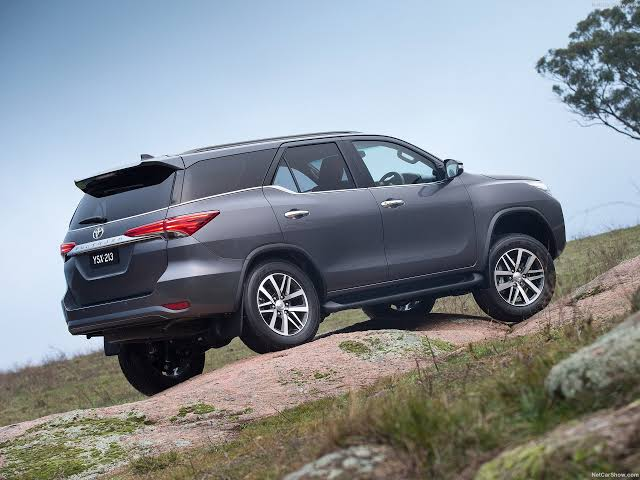
Toyota Fortuner 4WD for 2 people: NPR 14,000-25,000 — most comfortable, most capable
Shared jeep alternative: NPR 600-2,000 per person but no flexibility or door service
Best choice for most 2-person Nepal treks: Scorpio 4WD — capability + value + comfort
Book: Nepal Vehicle Hiring Pvt. Ltd. | WhatsApp | vehiclehiringnepal.com

Introduction: Choosing the Right Vehicle for 2 Trekkers

The most common question Nepal trekking couples and pairs ask when planning their trailhead transfer is: what is the best vehicle for 2 people trekking in Nepal? The honest answer depends on three factors — the specific trailhead road (paved and easy, or rough mountain track requiring 4WD), the budget for the transfer (per-person economics change based on group size, and 2 is the smallest group to share a vehicle), and the luggage volume (2 trekkers with full expedition kit need different boot space than 2-day hikers). This guide answers the question in full — the sedan, the Scorpio/Bolero 4WD, and the Toyota Fortuner) each has its optimal use case for 2-person Nepal trekking, and understanding which vehicle matches which route saves money without compromising safety or comfort.

Nepal Vehicle Hiring Pvt. Ltd. serves couples and pairs on every major Nepal trekking route — the Annapurna Circuit start at Besisahar), the Langtang Valley start at Syabrubesi), the Ghorepani and Poon Hill start at Nayapul), the Manaslu Circuit start at Arughat), the Upper Mustang and Muktinath approach via Jomsom) — with the right vehicle match for each road’s demands. ContactWhatsApp or vehiclehiringnepal.com) to book.

Muglin

The 2-Person Trekking Vehicle Question — Why Group Size Matters

The Economics of 2 vs Larger Groups

For a group of 4 to 6 trekkers sharing a private vehicle, the per-person cost drops to a level that competes directly with the public bus. For 2 people sharing the same vehicle, the per-person cost is higher — but the total vehicle cost is the same (the Nepal Vehicle Hiring Pvt. Ltd. price covers the full vehicle, not per person).

The question for 2-person trekking groups is therefore: is the total private vehicle cost justified for just 2 passengers? The answer is consistently yes, for three reasons.

First, 2 people with full trekking packs occupy the same private vehicle space as efficiently as any other group size — the luggage capacity remains the same regardless of how many passengers share the boot. Second, the alternatives for 2 trekkers (shared jeep, public bus) are significantly less convenient, slower, and more stressful than for larger groups — 2 people sharing a private vehicle lose none of the advantages of private transport while paying only slightly more per person than a group of 3 or 4. Third, the right vehicle choice for 2 people — a Scorpio rather than a Fortuner for most routes — brings the total cost down to a level that makes sense for even budget-conscious trekking pairs.

What 2 People Actually Need — The Vehicle Specification

Two trekkers with full trekking packs need: adequate boot space for 2 large rucksacks or duffel bags (80 to 100 litres each), comfortable seating in the back or front (2 trekkers can choose the configuration — one passenger in front beside the driver, or both in the rear), reliable 4WD capability for the approach road’s demands, and an experienced driver. The sedan) meets the luggage and seating requirements for easy routes.

The Scorpio or Bolero 4WD meets all four requirements for most Nepal trekking approach roads. The Toyota Fortuner) exceeds all requirements with top-end comfort — the right choice when the route’s road demands or the trekkers’ comfort preferences justify the additional cost.

Importantly, no trekking transfer for 2 people requires a Hiace van or Coaster bus — these are group vehicles whose per-person economics make sense only for 8 or more passengers sharing.

Vehicle Option 1: Sedan — The Budget Choice for Easy Roads

When the Sedan Is the Right Choice for 2 Trekkers

The sedan) — Toyota Corolla, Hyundai i20, Mahindra Xylo, or similar — is the most economical private vehicle option for 2-person Nepal trekking transfers) on paved, easy-access approach roads. If the trailhead is accessible on a paved highway with no 4WD requirement — Nayapul) for the Ghorepani and ABC treks, Besisahar) on the paved section of the Marsyangdi Highway, the Pokhara to Nayapul road) — then the sedan delivers all the private vehicle advantages (door-to-hotel pickup, direct trailhead delivery, luggage in boot) at the lowest possible price for a private vehicle hire.

The sedan’s per-vehicle price from Nepal Vehicle Hiring Pvt. Ltd.) for the most common 2-person trekking transfers: Pokhara to Nayapul) (Ghorepani/ABC) at NPR 6,000 to 8,000), Kathmandu to Besisahar) (paved section, Annapurna Circuit start) (NPR 12,000 to 15,000), and Kathmandu to Dhunche) (Gosaikunda approach, mostly paved) at NPR 10,000 to 13,000). For 2 people sharing, these total costs translate to per-person rates of NPR 3,000 to 7,500 — the most economical private vehicle option available.

Sedan Limitations for 2-Person Trekking

The sedan has two specific limitations for Nepal trekking transfers that make it inappropriate for many routes: no 4WD and limited ground clearance. On rough mountain tracks to Syabrubesi, Arughat, Soti Khola, Jomsom, Jiri, and similar destinations, a sedan would struggle with rocky surfaces and steep gradients, and its limited ground clearance creates real risks on these roads.

Nepal Vehicle Hiring Pvt. Ltd. does not offer sedan hire for routes that require 4WD — the company matches the vehicle to the road’s demands rather than offering whatever is cheapest.

Vehicle Option 2: Scorpio or Bolero 4WD — The Best Value for Most Routes

Why the Scorpio Is the Default Recommendation for 2 Trekkers

For most 2-person Nepal trekking transfers, the Mahindra Scorpio or Bolero 4WD is the best-value recommendation from Nepal Vehicle Hiring Pvt. Ltd.). The Scorpio delivers genuine 4WD capability that handles the rough sections of most Nepal trekking approach roads, adequate ground clearance) for the road conditions on the Besisahar, Nayapul, Dhunche, and Jiri routes, comfortable seating for 2 trekkers) with their packs in the boot, and a price point 15 to 20 per cent lower) than the Toyota Fortuner — giving 2-person groups the most capable locally-manufactured 4WD at the most economical price.

The Scorpio’s per-vehicle pricing from Nepal Vehicle Hiring Pvt. Ltd.) for key 2-person trekking routes: Pokhara to Nayapul) at NPR 7,000 to 9,000), Kathmandu to Besisahar) at NPR 13,000 to 17,000), Kathmandu to Syabrubesi) at NPR 12,000 to 15,000), Kathmandu to Jiri) at NPR 12,000 to 15,000, and Kathmandu to Arughat) at NPR 12,000 to 16,000). For 2 trekkers sharing, the per-person rate on most routes is NPR 6,000 to 8,500—the most economical private 4WD option for Nepal’s trekking approach-road network.

When the Scorpio Is Not Enough

The Scorpio’s 4WD capability is robust for most Nepal trekking approach roads, but Nepal Vehicle Hiring Pvt. Ltd. recommends the Toyota Fortuner) instead: the Jomsom and Kagbeni routes) from Pokhara) (the Kali Gandaki gorge road’s upper sections and the Kagbeni river crossing specifically benefit from the Fortuner’s superior ground clearance), the Soti Khola approach) to the Manaslu Circuit (the roughest standard trekking approach road in Nepal), and any route where the road has been particularly degraded by recent monsoon damage. In these cases, the Toyota Fortuner 4WD is the right vehicle for 2-person trekking groups; the road’s specific demands justify the added cost over the Scorpio.

Best Vehicle for 2 People Trekking in Nepal

Vehicle Option 3: Toyota Fortuner 4WD — The Top-end Choice

When 2 People Should Choose the Fortuner

The Toyota Fortuner 4WD is the top-end trekking vehicle for 2 people in Nepal: the one that delivers the most comfortable, most reliable trekking approach-road experience available. Two specific scenarios make the Fortuner the right choice even for just 2 passengers: when the route specifically demands it (Jomsom/Kagbeni, Soti Khola, post-monsoon rough roads) and when trekker comfort is the priority.

The Fortuner’s spacious interior—with 2 passengers in the back and full legroom—creates a genuinely comfortable long-distance mountain-road experience. On a 5- to 7-hour journey to Syabrubesi or Jomsom, the additional NPR 2,000 to 4,000 over the Scorpio buys a much more comfortable start to the trek, arriving fresh rather than cramped.

The Fortuner’s per-vehicle pricing from Nepal Vehicle Hiring Pvt. Ltd.) for 2-person trekking transfers: Pokhara to Nayapul) at NPR 8,000 to 11,000, Kathmandu to Besisahar) at NPR 16,000 to 20,000), Kathmandu to Syabrubesi) at NPR 14,000 to 18,000), Pokhara to Jomsom) at US$203, and Kathmandu to Arughat) at NPR 15,000 to 19,000). For 2 trekkers sharing, the Fortuner’s per-person rate is NPR 7,500 to 11,000—higher than the Scorpio but offering the highest-specification trekking transfer experience available for private groups in Nepal.

Route-by-Route: Best Vehicle for 2-Person Trekking Transfers

Annapurna Circuit (Kathmandu to Besisahar) — 2 People

For 2 trekkers) beginning the Annapurna Circuit Trek) at Besisahar, the best vehicle is the Scorpio 4WD at NPR 13,000 to 26,000 all-inclusive. The road to Besisahar via the Marsyangdi Highway is mostly paved — the Scorpio handles it with full comfort.

For trekking groups starting at Syange or Tal (beyond Besisahar on the rougher upper road), the Toyota Fortuner 4WD is the better choice, at NPR 17,000 to 40,000. The 4 -to 5-hour journey from Kathmandu is comfortable in either vehicle for 2 people.

Langtang Valley Trek (Kathmandu to Syabrubesi) — 2 People

For 2 trekkers) heading to Syabrubesi for the Langtang Valley Trek, the best vehicle is the Toyota Fortuner 4WD — the Langtang Gorge road’s most difficult sections (descent to Syabrubesi) specifically benefit from the Fortuner’s 4WD system and ground clearance. Price for 2 people in a Fortuner: NPR 14,000 to 26,000 all-inclusive.

The Scorpio is a viable alternative for this route at NPR 12,000 to 30,00. Still, Nepall Vehicle Hiring Pvt Ltd. recommends the Fortuner first,  given the road’s specific difficulty.

Ghorepani / Poon Hill (Pokhara to Nayapul) — 2 People

For 2 trekkers) taking the Ghorepani Poon Hill) or Annapurna Base Camp) trek from Pokhara, the best vehicle is a sedan or Scorpio) — the Pokhara to Nayapul road is paved and easy, making the 4WD top-end of the Fortuner unnecessary. Sedan: NPR 6,000 to 8,000. Scorpio: US$60. The car hire in Pokhara) from Nepal Vehicle Hiring Pvt. Ltd.) includes door pickup from the Pokhara Lakeside hotel) — the 42 km to Nayapul takes 1 to 1.5 hours.

Upper Mustang / Muktinath (Pokhara to Jomsom) — 2 People

For 2 trekkers) heading to Muktinath or Upper Mustang) via Jomsom, the Toyota Fortuner or Hilux 4WD is essential) — the Kali Gandaki gorge road, the afternoon wind conditions, and the Kagbeni river crossing all require the Fortuner’s capability. Price for 2 people in a Fortuner: NPR 18,000 to 40,000 all-inclusive.

The 5 to 7 hour Pokhara to Jomsom private jeep transfer) through the world’s deepest gorge is one of Nepal’s finest road experiences — the Fortuner’s comfortable interior makes the journey rewarding rather than merely functional.

Manaslu Circuit (Kathmandu to Arughat or Soti Khola) — 2 People

For 2 trekkers) beginning the Manaslu Circuit) at Arughat) or Soti Khola), the Toyota Hilux 4WD is the best vehicle) — the Budi Gandaki gorge road above Arughat (especially the Soti Khola section) is one of Nepal’s roughest standard trekking approach tracks and specifically benefits from the Hilux’s maximum ground clearance. Price for 2 people in a Hilux: NPR 15,000 to 19,000 all-inclusive.

The Fortuner is also appropriate; the Scorpio is at the limit of its capability on the most demanding Soti Khola sections.

Everest Classic (Kathmandu to Jiri) — 2 People

For 2 trekkers) beginning the Everest Classic route) at Jiri, the Scorpio or Fortuner 4WD is the right choice — the Charikot to Jiri upper section of the B.P. Koirala Highway is rough enough to require 4WD.

Scorpio price for 2 people: NPR 12,000 to 15,000. Fortuner price: NPR 14,000 to 17,000 all-inclusive. The 5 to 7-hour journey from Kathmandu) through Dhulikhel, Charikot, and the Dolakha hills is most comfortably made in the Fortuner, but the Scorpio is fully adequate for the road demands on this route.

Comparing Private Vehicle vs Shared Jeep for 2 Trekkers

The Shared Jeep Economics for 2 People

For 2 trekkers on a tight budget, the shared jeep) from the Kathmandu bus park offers the lowest per-person cost: NPR 800 to 2,000 per person for most major trekking trailheads. For 2 trekkers, this totals NPR 1,600 to 4,000 — significantly cheaper than the private Scorpio’s total of NPR 12,000 to 26,000. The per-person saving of NPR 4,000 to 8,000 is real.

The question is whether that saving is worth the trade-offs: no hotel pickup) (the shared jeep departs from the bus park, requiring a separate taxi from Thamel), departure when full) (waiting 30 to 120 minutes at the bus park while the vehicle fills), multiple stops) throughout the journey (picking up and dropping off other passengers on the route), crowded seating) (typically 8 to 10 people in a vehicle designed for 5 to 7 comfortable passengers), and a 2- to 3-hour longer journey time) due to stops. For a trek that begins the next day, arriving at the trailhead exhausted and cramped from a 7-hour shared jeep rather than alert and comfortable from a 5-hour private Scorpio is not an economy — it is a false saving at the expense of the trek itself.

The Private Vehicle Case for 2 Trekkers

Two factors make the pPrivateVehicle HCasefor 22 TrekkersFirst, luggage security and handling) — 2 trekkers with full packs (plus sleeping bags, trekking poles, and camera equipment) generate significant luggage volume. In a private Scorpio or Fortuner, this luggage goes in the boot — secure, accessible, and protected from weather.

In a shared jeep, it goes on the roof or is stuffed at the feet of other passengers—exposed, inaccessible during the journey, and at risk of damage or loss. Second, timing control) — 2 trekkers departing from their Kathmandu hotel at 6:00 AM in a Nepal Vehicle Hiring Pvt. Ltd.) private vehicle can plan their entire approach day around their trekking preparation schedule.

2 trekkers waiting at the bus park for a shared jeep to fill have no control over when they actually depart. For Nepal trekking couples) specifically, the private vehicle’s timing flexibility is often the most valued advantage — the departure time is the couple’s choice, not the bus operator’s.

Luggage Guide for 2-Person Trekking Vehicle Hire

How Much Luggage Can 2 Trekkers Carry?

Two trekkers’ typical luggage for a Nepal trek: 2 large trekking rucksacks (60-90 litres each), 2 sleeping bags in compression sacks, 2 sets of trekking poles, possibly a tent) if camping, and camera bags, day packs, and various smaller items. Total luggage volume for 2 Nepal trekkers: typically 4 to 6 large items.

This volume fits comfortably in the boot of a Toyota Fortuner or Scorpio) — both vehicles have large rear boot areas specifically designed for substantial luggage. In a sedan, the boot is adequate for light trekking luggage (2 medium rucksacks and day packs) but may require the rear seat folded forward for 2 large 90-litre expedition packs.

Porter Loads — Additional Luggage in the Vehicle

Some 2-person trekking parties) hire porters) for the mountain section of the trek — but transport their porter’s loads in the vehicle to the trailhead. A porter’s typical duffel bag load (15 to 25 kg, 60 to 80 litres)) adds a third large bag to the vehicle.

For 2 trekkers with 2 porter loads, the total luggage volume is 3 to 4 large bags comfortably within the Fortuner’s capacity. If the trekking party carries multiple porter loads and group camping equipment, the Toyota Hilux) with its roof rack provides additional capacity beyond the boot.

Specify the exact luggage description at booking via WhatsApp to ensure the right vehicle allocation.

The Cost of Trekking Vehicles for 2 People — Complete Price Guide

Per-Person Cost Comparison by Vehicle

Sedan (2 people sharing):) NPR 3,000 to 7,500 per person depending on route. Most economical option for paved, easy-access routes.

Scorpio/Bolero 4WD (2 people sharing):) NPR 6,000 to 9,500 per person. Best value 4WD option for most Nepal trekking approach roads.

Toyota Fortuner 4WD (2 people sharing):) NPR 7,000 to 12,500 per person. Top-end comfort and maximum capability for demanding routes.

Shared jeep (per person, no private vehicle):) NPR 800 to 2,000 per person. Cheapest but slowest, most uncomfortable, least flexible.

For 2 trekkers with a total Nepal travel budget of NPR 15,000 to 20,000 for vehicle transfers, the Scorpio 4WD from Nepal Vehicle Hiring Pvt. Ltd.) delivers the right vehicle for most Nepal trekking approach roads at a per-person cost of approximately NPR 7,500 to 10,000 — fair value for a fully private, door-to-trailhead, professional driver service that shared transport cannot approach for comfort, timing, or luggage security.

Seasonal Price Variations for 2-Person Vehicle Hire

Nepal Vehicle Hiring Pvt. Ltd. maintains consistent all-inclusive pricing throughout the year — the quoted prices do not change based on season, unlike airline or hotel pricing. The October to November peak trekking season brings higher demand for trekking vehicle rentals) but not higher prices — the same transparent all-inclusive rate applies regardless of when the trip is booked.

This pricing consistency is particularly valued by trekking couples who are planning well in advance — the price confirmed at booking is the price paid, with no peak season surcharges added later. Book via WhatsApp or vehiclehiringnepal.com to confirm current pricing for the specific route.

Tips for 2-Person Trekking Vehicle Transfers

Making the Most of the Private Vehicle Advantage

  • Sit in front alongside the driver if you want conversation and the best forward views — the driver’s local knowledge of the route is worth engaging.
  • Use the approach road journey to review maps, confirm the first day’s trek plan, and check permit documentation — the private vehicle provides a quiet working space.
  • Ask the driver to stop for photographs — private vehicles can pause for 5 to 10 minutes at viewpoints that public transport passes without stopping.
  • Request the Dhulikhel viewpoint stop on Kathmandu departure routes for the finest eastern Himalaya mountain panorama before the trek begins.
  • Use the journey to ask the driver about current trail conditions — experienced Nepal trekking drivers often have the most current, practical information about the approach road and trailhead area.
  • Request an early morning departure (5:30 to 6:30 AM from Kathmandu or Pokhara) to arrive at the trailhead by midday, leaving the afternoon for porter arrangements and first-day preparation.

Booking the Return Transfer Before You Leave

For trekking couples) completing a point-to-point or circuit trek, booking the return one-way jeep rental) from the exit trailhead simultaneously with the inward transfer is strongly recommended. Nepal Vehicle Hiring Pvt. Ltd. handles both legs through the same WhatsApp — the return date is left flexible at booking and confirmed via WhatsApp from the trek exit point 2 to 3 days before actual departure.

This dual booking gives 2 trekkers the security of knowing both transport legs are arranged without committing to a specific return date that a long mountain trek rarely delivers on schedule.

Book the Best Vehicle for 2 People Trekking — Nepal Vehicle Hiring Pvt. Ltd.

Website: www.vehiclehiringnepal.com
WhatsApp (24/7 — Early Morning Pickups from 5:30 AM)
Email: [email protected]
Office: Bhagawatisthan, Thamel, Kathmandu, Nepal
Sedan (2 pax, easy roads): NPR 6,000-22,000 | Scorpio 4WD: NPR 7,000-30,000
Toyota Fortuner 4WD: NPR 8,000-40,000 | Toyota Hilux 4WD: NPR 10,000-50,000
All prices are all-inclusive: driver, fuel, tolls, hotel-to-trailhead door service
Kathmandu airport pickup | Kathmandu sightseeing | Pokhara car hire — all available
8,000+ Customers | 5.0 TripAdvisor | 200+ Verified Reviews | Reg. No. 219204
Best Vehicle Match Guaranteed | Book both inward and outward transfers simultaneously

Scorpio vs Fortuner for Nepal Trekking — Deep Comparison

Build Quality and Off-Road Capability

The Mahindra Scorpio and Toyota Fortuner represent two different engineering philosophies applied to the same Nepal mountain road challenge. The Scorpio is a body-on-frame Indian SUV—robust, utilitarian, and built for India’s tough roads, including the mountain terrain of Himachal Pradesh and Uttarakhand, which shares characteristics with Nepal’s middle hills.

The Fortuner is a ladder-frame Japanese 4WD — sharing the Land Cruiser’s engineering DNA, optimised for maximum off-road capability with on-road comfort. For 2-person Nepal trekking transfers on standard approach roads, both perform reliably.

The Fortuner’s edge shows most clearly on the most degraded road sections — the steep loose-rock sections above Soti Khola, the gorge descent to Syabrubesi, and the Kali Gandaki River crossings near Kagbeni — where its superior ground clearance (279 mm vs Scorpio’s 200 mm) and more powerful 4WD system deliver a meaningful capability advantage.

For budget-conscious trekking couples, the Scorpio remains the Nepal Vehicle Hiring Pvt. Ltd.-recommended value choice for routes where its capability is adequate—Besisahar, Jiri, Dhunche, and Nayapul. For routes where the Fortuner’s additional capability is genuinely needed — Syabrubesi, Soti Khola, Jomsom, and any post-monsoon rough section — the additional NPR 2,000 to 4,000 over the Scorpio rate is the correct investment.

Interior Space and Comfort for 2 Trekkers

For 2 people, both the Scorpio and Fortuner offer more than enough interior space—neither vehicle feels crowded with only 2 passengers. The Scorpio’s second row is slightly narrower but still comfortable for 2 trekkers on a 5- to 7-hour journey.

The Fortuner’s wider, more cushioned second row and more refined suspension make it noticeably more comfortable on rougher sections of longer mountain journeys. For the Pokhara to Jomsom route (5 to 7 hours through the Kali Gandaki gorge), the Fortuner’s ride quality is a meaningful comfort advantage.

For the Pokhara to Nayapul transfer (1 to 1.5 hours on paved road), the comfort difference between a Scorpio and Fortuner is barely perceptible. Nepal Vehicle Hiring Pvt. Ltd. matches the vehicle to the journey length and road demands—contact WhatsApp to discuss the right vehicle for your route and group comfort preferences.

2-Person Trekking Vehicle Hire — City to City Connections

Kathmandu to Pokhara for 2 Trekkers

Many trekking couples travel from Kathmandu to Pokhara before starting an Annapurna region trek — the Kathmandu to Pokhara private vehicle transfer for 2 people is available by sedan (most economical, US$120 all-inclusive for the vehicle), Scorpio (comfortable mid-range, NPR 9,000 to 26,000), or Toyota Fortuner (top-end, NPR 12,000 to 35,000). The Prithvi Highway is fully paved — the sedan is entirely appropriate for this route, and the Fortuner’s 4WD is not required.

For 2 people, the sedan’s per-vehicle economy is the most logical choice for the Kathmandu to Pokhara transfer — saving the top-end for the Pokhara to Jomsom or Pokhara to Nayapul trekking leg where 4WD may be more relevant.

Pokhara Car Hire for 2 Trekkers — Pre-Trek Sightseeing

Pokhara pre-trek sightseeing for trekking couples: Sarangkot sunrise, Phewa Lake, World Peace Pagoda, International Mountain Museum, and Bindhabasini Temple are organised through Nepal Vehicle Hiring Pvt. Ltd.’s car hire service in Pokhara. The full-day Pokhara sightseeing tour for 2 people by private sedan or Scorpio is priced at NPR 4,000 to 8,000 all-inclusive, covering the Pokhara valley’s finest viewpoints and cultural sites in a single day before the trek departs the following morning.

Book the Pokhara car hire for the pre-trek day and the Pokhara-to-Nayapul trekking vehicle rental on the trek departure morning simultaneously through Nepal Vehicle Hiring Pvt. Ltd. on  WhatsApp.

Nepal Heritage Sightseeing for Trekking Couples

Kathmandu Sightseeing for 2 — Vehicle for City Days

The Kathmandu sightseeing tour for 2 trekkers — covering Boudhanath Stupa, Pashupatinath Temple, Swayambhunath, and Patan Durbar Square — by private sedan from Nepal Vehicle Hiring Pvt. Ltd. is priced at NPR 4,000 to 7,000 all-inclusive for the full day. The Bhaktapur Durbar Square day tour adds the finest medieval heritage town in the Kathmandu Valley — a half-day or full-day excursion by private sedan from Kathmandu to the Bhaktapur World Heritage Site.

The Nagarkot sunrise tour — departing Kathmandu at 4:30 AM for the Nagarkot sunrise viewpoint over the eastern Himalaya — is one of the finest pre-trek experiences available for trekking couples in Nepal. Nepal Vehicle Hiring Pvt. Ltd. organises all three through a single contact on WhatsApp.

Chitwan National Park — Post-Trek Wildlife for 2

Trekking couples who extend their Nepal journey to include Chitwan National Park after the trek can book a private vehicle transfer from Kathmandu to Chitwan or a private jeep from Pokhara to Chitwan from Nepal Vehicle Hiring Pvt. Ltd.. The Chitwan National Park wildlife safari — rhino jeep game drives, canoe trip on the Rapti River, jungle walk, Tharu cultural evening — is the perfect post-trek contrast to the Himalayan mountain experience.

After the mountains comes the jungle. The Lumbini-to-Chitwan car service and the Chitwan-to-Kathmandu private jeep complete Nepal’s southern circuit for couples who want the full Nepal experience—mountains, heritage, wildlife, and sacred sites—all organised through Nepal Vehicle Hiring Pvt. Ltd. on WhatsApp.

Frequently Asked Questions — Best Vehicle for 2 People Nepal Trekking

Q: What is the cheapest private vehicle for 2 people trekking in Nepal?

The cheapest private vehicle option for 2 people trekking in Nepal) on paved approach roads (Nayapul, Besisahar paved section) is the sedan at NPR 6,000 to 26,000 total. For routes requiring 4WD, the Scorpio (R 7,000 to 30,000) is the most economical private 4WD option. Both are available from Nepal Vehicle Hiring Pvt. Ltd. — contact WhatsApp for current pricing.

Q: Should 2 trekkers get a Scorpio or Fortuner for Nepal?

For most Nepal trekking routes, the Scorpio) is the best value choice for 2 trekkers — adequate 4WD capability at a lower price than the Fortuner. Choose the Toyota Fortuner) for: the Jomsom/Kagbeni route, the Soti Khola approach, post-monsoon rough road conditions, or when trekker comfort is the priority on a long 5 to 7 hour approach.

Nepal Vehicle Hiring PvtPvt Ltdadvises on the specific vehicle best suited to the trip at the time of booking at the

Q: Is a private vehicle worth it for just 2 trekkers?

Yes — for 2 Nepal trekkers, the private vehicle’s advantages (door pickup, direct trailhead delivery, luggage in boot, timing flexibility, 2 to 3 hours faster than shared jeep) justify the per-person top-end over shared transport on most trekking routes. The shared jeep’s lower per-person cost comes with significant comfort and timing trade-offs that affect the quality of the trek start itself.

Q: What vehicle is best for a couple trekking Nepal for the first time?

For a couple on their first Nepal trek, Nepal Vehicle Hiring Pvt. Ltd.) recommends the Toyota Fortuner 4WD. The Fortuner handles Nepal’s trekking roads, offering a high comfort level that first-time Nepal trekkers benefit from, plus the Driver’s guidance on route conditions, permit checkpoints, and local practical knowledge. The additional cost over the Scorpio is modest and well justified for the peace of mind it provides.

Q: Can 2 trekkers fit all their gear in a Scorpio?

Yes — the Scorpio’s boot) comfortably fits 2 large rucksacks (70 to 90 litres), 2 sleeping bags, and associated trekking gear. For trekkers carrying additional porter loads or camping equipment, the Toyota Fortuner Hilux (with roof rack option) offers more luggage capacity. Specify exact luggage details when booking via WhatsApp.

Conclusion: The Best Vehicle for 2 People Trekking Nepal

The best vehicle for 2 people trekking in Nepal is the Scorpio 4WD for most routes and the Toyota Fortuner 4WD for the most demanding routes and the most comfort-conscious trekking couples. The sedan is the right choice when the approach road is paved and ease and budget are the primary concerns.

In all cases, the private vehicle from Nepal Vehicle Hiring Pvt. Ltd. — with its transparent all-inclusive pricing, experienced mountain road driver, hotel-to-trailhead door service, and 24-hour support onWhatsApp — delivers the best available trekking approach experience for 2 people in Nepal, at a price that is genuinely fair for the service quality provided.

Book the best vehicle for your 2-person Nepal trek via WhatsApp or at vehiclehiringnepal.com. With 8,000+ satisfied customers, a 5.0 TripAdvisor rating from 200+ verified five-star reviews, and Company Registration No. 219204, Nepal Vehicle Hiring Pvt. Ltd. matches the right vehicle to every trekking couple and pair — because the best Nepal trek begins with the best possible approach.

Nepal Trekking Trailhead Conditions — Seasonal Road Guide for 2 Trekkers

October to November — The Best Season for Any Vehicle

The October to November post-monsoon season is the best time for 2-person Nepal trekking transfers — the trekking approach roads are at their best after the annual repair cycle, mountain views are spectacular, and all vehicle types perform most reliably on dry, firm road surfaces. The Scorpio 4WD is fully adequate for all standard trekking approach roads in October and November — the conditions do not require the Fortuner unless the route specifically demands it.

Nepal Vehicle Hiring Pvt. Ltd. books the highest volume of 2-person trekking vehicle rentals in October and November — contact WhatsApp at least one week in advance for peak season bookings.

March to May — Spring Blossom Season

Spring from March to May is Nepal’s second finest trekking season and the finest season for the Ghorepani Poon Hill Trek and the Annapurna Base Camp Trek) — the rhododendron forests along the approach roads and lower trekking trails are in spectacular bloom, creating a floral landscape that complements the mountain scenery.

The Pokhara to Nayapul one-way jeep or sedan rental) for 2 trekkers in March and April passes through the lower rhododendron zone in blossom — the first visual reward of the spring trekking season visible from the vehicle before the trailhead is even reached. Book the spring season trekking vehicle for 2 people well in advance via Nepal Vehicle Hiring Pvt. Ltd. on WhatsApp.

Monsoon Season — Upper Mustang and Rain Shadow Options for 2 Trekkers

The monsoon season from June to September makes most Nepal trekking approach roads more challenging — but the Pokhara to Jomsom private jeep rental for Upper Mustang treks) is one of Nepal’s most popular monsoon trekking transfers. Upper Mustang’s rain-shadow position beyond the main Himalayan range makes it one of the finest monsoon destinations—the desert landscape at its most dramatic, with Tibetan-character villages undisturbed by the dry-season trekking crowds.

Two trekkers heading to Upper Mustang in the monsoon need a Toyota Fortuner 4WD for the Jomsom approach—the Kali Gandaki gorge sections can be more challenging in monsoon conditions, and the Fortuner’s capability is especially valuable during this season. Contact Nepal Vehicle Hiring Pvt. Ltd. on WhatsApp  for current monsoon road status on the Pokhara to Jomsom route before booking.

Booking Summary: Best Vehicle for 2 People by Trekking Route

Ghorepani / Poon Hill / ABC (Pokhara to Nayapul/Kande): Sedan NPR 6,000-8,000 or Scorpio US$60. Paved road, no 4WD needed. Car hire in Pokhara from Nepal Vehicle Hiring Pvt. Ltd.).

Annapurna Circuit (Kathmandu to Besisahar): Scorpio NPR 13,000-26,000 or Fortuner NPR 16,000-35,000. 4WD recommended) for the upper sections. Book via WhatsApp.

Langtang Valley Trek (Kathmandu to Syabrubesi): Fortuner 4WD NPR 14,000-25,000 recommended. Difficult gorge road sections. See the Syabrubesi jeep guide) at vehiclehiringnepal.com).

Manaslu Circuit (Kathmandu to Arughat/Soti Khola): Hilux or Fortuner 4WD NPR 15,000-30,000. Nepal’s roughest standard trekking approach. Book Nepal Vehicle Hiring Pvt. Ltd. on WhatsApp.

Everest Classic (Kathmandu to Jiri): Scorpio or Fortuner NPR 12,000-30,000. 4WD needed for upper Charikot-Jiri section. Nepal Vehicle Hiring Pvt. Ltd. via vehiclehiringnepal.com.

Upper Mustang / Muktinath (Pokhara to Jomsom): 4WD US$203. Kali Gandaki Gorge, afternoon wind; 4WD essential. Book Nepal Vehicle Hiring Pvt. Ltd.)t WhatsApp)

Trekking Permits and Documentation — What 2 Trekkers Need

Every trekking party of 2 in Nepal requires the same individual permits as any other group size — permits are issued per person, not per group. The TIMS card (Trekkers’ Information Management System) costs NPR 2,000 per foreign national and is required for most Nepal treks.

The Annapurna Conservation Area Permit (ACAP) costs NPR 3,000 per foreign national and is needed for the Annapurna Circuit, Ghorepani, ABC, and Upper Mustang approaches. The Langtang National Park entry permit costs NPR 3,000 per foreign national.

The Sagarmatha National Park permit for the Everest region costs NPR 3,000 per person. l Vehicle Hiring Pvt. Ltd. drivers on trekking approach roads know the locations of all current permit checkpoints. They will remind couples to have the correct documents ready before approaching each checkpoint—a knowledgeable driver prevents costly U-turns due to forgotten permits.

Contact the team on WhatsApp or vehiclehiringnepal.com for current permit requirements for your specific route and to confirm the permit checkpoint locations on the approach road.

Nepal Honeymoon Trekking — The Top-end Vehicle Experience

Nepal is one of Asia’s most beautiful and distinctive honeymoon destinations—the combination of Himalayan mountain scenery, warm teahouse culture, and the spiritual depth of Nepal’s Hindu-Buddhist cultural landscape creates a honeymoon experience unlike any other in the world. Nepal Vehicle Hiring Pvt. Ltd. recommends the Toyota Fortuner 4WD for honeymoon couples regardless of the specific trekking route — the Fortuner’s spacious, comfortable interior, its excellent performance on all Nepal trekking approach roads, and the experienced driver’s attentiveness to the couple’s timing and comfort make it the natural top-end choice for the most special Nepal occasion.

The team on WhatsApp can arrange specific honeymoon additions to the trekking vehicle transfer: a private Dhulikhel viewpoint stop at sunrise for the Himalayan panorama on Kathmandu departure routes, a Tatopani hot spring stop on the Pokhara to Jomsom approach, a Tansen heritage stop on the Pokhara to Lumbini route. Nepal Vehicle Hiring Pvt. Ltd.’s 8,000+ satisfied customers and 5.0 TripAdvisor rating reflect the professional standard of a service that has managed hundreds of trekking couple transfers across Nepal’s most beautiful mountain routes — book at vehiclehiringnepal.com or via WhatsApp for the best possible start to the Nepal honeymoon trek adventure.

Making the Most of the Pre-Trek and Post-Trek Days

The days before and after the Nepal trek matter as much to the overall Nepal experience as the mountain days themselves. Nepal Vehicle Hiring Pvt. Ltd. organises the complete pre-trek and post-trek vehicle service for 2-person trekking couples: the Kathmandu airport pickup from Tribhuvan International Airport on arrival, the Kathmandu sightseeing tour covering Boudhanath Stupa, Pashupatinath Temple, Swayambhunath, and Patan Durbar Square, the Bhaktapur Durbar Square day tour, the Nagarkot sunrise tour for the pre-trek Himalayan preview, and the Kathmandu to Pokhara private vehicle transfer for Annapurna region treks.

After the trek, the return one-way jeep from the exit trailhead to Kathmandu or Pokhara, the Chitwan National Park wildlife safari extension (Kathmandu to Chitwan private vehicle or Pokhara to Chitwan private jeep), the Lumbini sacred garden pilgrimage for spiritually inclined couples (Pokhara to Lumbini private vehicle), and finally the Tribhuvan Airport departure transfer. Nepal Vehicle Hiring Pvt. Ltd. offers a vehicle for every leg and destination, booked through a single contact on WhatsApp or vehiclehiringnepal.com—Nepal’s most trusted private vehicle hire service —for 2-person trekking couples who want the most smoothly managed Nepal mountain journey.

For 2 trekkers comparing Nepal’s vehicle options, Nepal Vehicle Hiring Pvt. Ltd.’s summary recommendation is clear: match the vehicle to the road, not the group size. With only 2 passengers, every vehicle in the fleet is uncrowded and comfortable — the question is always which road demands which capability. The sedan for easy paved roads.

The Scorpio 4WD for most standard trekking approach tracks. The Fortuner for the most demanding mountain roads and for couples who value the highest available comfort standard on a long approach journey. The Hilux for the roughest post-monsoon road conditions.

Whatever the vehicle, Nepal Vehicle Hiring Pvt. Ltd.’s promise is the same: experienced mountain-road drivers mountain-road drivers, a maintained 4WD fleet, transparent all-inclusive pricing, hotel-to-trailhead door service, and 24-hour support on WhatsApp that gives 2 trekkers the confidence their Nepal mountain journey begins exactly the right way.

From Kathmandu hotel pickup before dawn to trailhead delivery in time for the first walking day, Nepal Vehicle Hiring Pvt. Ltd. makes the best vehicle for 2 trekkers in Nepal available for every route, season, and budget. Book at vehiclehiringnepal.com or via WhatsApp to confirm the right vehicle for your specific 2-person Nepal trek.

With over 8,000 satisfied customers, including thousands of trekking couples and pairs, a verified 5.0 TripAdvisor rating from 200+ five-star reviews, and Company Registration No. 219204, Nepal Vehicle Hiring Pvt. Ltd. is Nepal’s most trusted private vehicle hire service for the trekking community.

Every 2-person trekking couple who books with Nepal Vehicle Hiring Pvt. Ltd. benefits from the accumulated expertise of Nepal’s most experienced trekking vehicle rental team — drivers who know the Langtang gorge, the Kali Gandaki wind timing, the Marsyangdi Highway, and the Budi Gandaki approach from regular service on these roads, and who bring that knowledge to every trekking couple’s approach road journey with the professionalism and care that 8,000+ satisfied customers have consistently rated at five stars.

The Annapurna region’s trekking routes, from the short Ghorepani Poon Hill trek to the grand Annapurna Circuit, are Nepal’s most frequently trekked mountain areas, and Kathmandu to Besisahar and Pokhara to Nayapul trekking vehicle rentals for 2 people are among Nepal Vehicle Hiring Pvt. Ltd.’s most-booked transfers.

This volume of experience on the Annapurna approach roads means that the Nepal Vehicle Hiring Pvt. Ltd. drivers covering these routes have an especially deep familiarity with current road conditions, permit checkpoint requirements, the optimal departure timing for the Kali Gandaki wind on the Jomsom approach, and the seasonal road variations that affect vehicle choice for 2-person trekking couples.

The team’s collective knowledge of the Annapurna approach network — the Marsyangdi Highway to Besisahar, the Baglung Highway to Nayapul, the Kali Gandaki gorge road to Jomsom — is the practical expert knowledge that makes Nepal Vehicle Hiring Pvt. Ltd. the most reliably informed source of advice on the best vehicle for 2 people trekking the Annapurna region. Whether the choice is Scorpio or Fortuner, sedan or SUV, the Nepal Vehicle Hiring Pvt. Ltd. recommendation is always based on the current, practical road reality rather than a blanket policy — and that practical expertise is what 8,000+ satisfied trekking customers have found at vehiclehiringnepal.com and via WhatsApp

The Langtang Valley, Manaslu Circuit and Everest region trekking approaches each have specific requirements for solo and group trekkers, and Nepal Vehicle Hiring Pvt. Ltd.’s route-specific expertise ensures precise, accurate recommendations. wo trekkers beginning the Manaslu Circuit at Soti Khola need the Hilux for maximum ground clearance on the Budi Gandaki approach. Two trekkers taking the classic Jiri to EBC route need a 4WD for the Charikot to Jiri upper section —

the Scorpio or Fortuner depending on budget and comfort preference. In every case, the Nepal Vehicle Hiring Pvt. Ltd. booking team on WhatsApp provides route-specific recommendations based on current road conditions and the two trekkers’ priorities—the most personalised, practical trekking-vehicle advice available from Nepal’s most trusted private vehicle hire provider.

One-Way Jeep Rental for Nepal Treks: Complete Guide

Prithivi highway road png

One-Way Jeep Rental for Nepal Treks: Complete Guide

For trekkers heading to Nepal’s great mountain circuits, a one-way jeep rental is one of the most practical and cost-effective transport choices. This private 4WD vehicle takes a trekking group from their Kathmandu or Pokhara hotel to the trailhead, with no return vehicle to pay for. Unlike return vehicle hire (where the empty jeep must drive back, adding cost), a one-way jeep hire is priced for the single direction only, making it the most economical private vehicle option for trek approaches where the group will complete the circuit and exit at a different point, fly out from a mountain airport, or arrange separate return transport.

Nepal Vehicle Hiring Pvt. Ltd., based in Thamel, Kathmandu, provides one-way jeep rentals for all major Nepal trekking approaches, from the Annapurna Circuit’s Besisahar gateway to the Everest region’s Paiya and Surke trailheads, and from the Langtang approach at Syabrubesi to the Manaslu Circuit’s Arughat start point. Our 4WD jeep hire fleet of Mahindra Scorpio and Toyota Land Cruiser vehicles covers every trailhead on Nepal’s trekking network, with all-inclusive one-way pricing confirmed before departure.

This complete guide covers one-way jeep rental prices for Nepal’s main trekking approaches, the routes and road conditions for each trailhead, when one-way hire makes more sense than return hire, and how Nepal Vehicle Hiring’s one-way service works.

Why One-Way Jeep Rental Makes Sense for Nepal Trekking

The one-way jeep hire model is specifically suited to Nepal trekking because Nepal’s finest treks are circuits — they start at one trailhead and end at a different point:

  • Annapurna Circuit: starts at Besisahar (or Chame) and ends at Nayapul (for Pokhara) — the trekker does not return to Besisahar, making a return vehicle to Besisahar unnecessary
  • Everest Base Camp via Paiya: starts at Paiya/Surke (vehicle drop) and exits via Lukla domestic flight — a return vehicle to the Kathmandu trailhead is not needed.
  • Langtang Valley Trek: starts at Syabrubesi (vehicle drop) and returns to Syabrubesi — here, return hire may be preferred, or the trekker arranges a separate return vehicle on completion
  • Manaslu Circuit: starts at Arughat/Soti Khola (vehicle drop) and ends at Dharapani (separate vehicle pickup) — two one-way vehicles, not one return vehicle.
  • Gosaikunda Trek: starts at Dhunche (vehicle drop) and can exit at Sundarijal/Kathmandu — circuit exit different from entry point

For all circuit treks and any trek that exits via domestic flight, the one-way jeep hire is the most appropriate and most economical option. Nepal Vehicle Hiking’s one-way pricing reflects fuel, driver time, and road costs for a single direction—significantly lower than return vehicle hire for the same approach.

One-Way Jeep Rental Prices: All Major Nepal Trailheads

Annapurna Circuit Approach — Kathmandu to Besisahar

Route: Kathmandu → Dumre junction (Prithvi Highway) → Besisahar (823 m, 175 km, 4 to 5 hours)

  • Mahindra Scorpio (4–7 pax), one-way: NPR 9,000–26,000
  • Toyota Land Cruiser (4–5 pax), one-way: NPR 13,000–50,000
  • Hiace van (8–14 pax) to Besisahar highway section, one-way: NPR 12,000–30,000

See Nepal Vehicle Hiring’s dedicated Besisahar private vehicle service and Kathmandu to Besisahar bus ticket pages for full details.

Annapurna Circuit Extended — Kathmandu to Chame or Manang

Route: Kathmandu → Besisahar → Chame (2,670 m, 237 km, 8 to 10 hours, Day 2 from Besisahar) or Manang (3,519 m, 272 km, additional 3 to 4 hours beyond Chame). 4WD mandatory beyond Besisahar.

  • Kathmandu to Chame, one-way Scorpio: US$398
  • Kathmandu to Manang, one-way Scorpio: US$558

See Nepal Vehicle Hiring’s Kathmandu to Manang jeep page for full Manang approach details.

EBC / Annapurna Solu Approach — Kathmandu to Paiya or Surke

Route: Kathmandu → BP Highway → Salleri → Thamdanda → Paiya (2,730 m, ~320 km, 10 to 14 hours over 2 days) or Surke (2,290 m, 15 km beyond Paiya). 4WD beyond Salleri.

  • Kathmandu to Paiya, one-way Scorpio (2 days): NPR 26,000–45,000
  • Kathmandu to Surke, one-way Scorpio (2 days): NPR 28,000–55,000

See Nepal Vehicle Hiring’s Everest Base Camp trek transport page.

Langtang Trek — Kathmandu to Syabrubesi

Route: Kathmandu → Betrawati → Dhunche → Syabrubesi (1,462 m, 117 km, 5 to 7 hours). The road is paved to Dhunche, then rough gravel from Dhunche to Syabrubesi. 4WD recommended.

  • Kathmandu to Syabrubesi, one-way Scorpio: NPR 14,000–26,000
  • Kathmandu to Dhunche (Gosaikunda approach), one-way Scorpio: US$160

Manaslu Circuit — Kathmandu to Arughat or Soti Khola

Route: Kathmandu → Gorkha (135 km, 4 hours Prithvi Highway) → Arughat Bazaar (30 km off highway, rough road, 1.5 hours) → Soti Khola (Manaslu Circuit trailhead, 15 km further). 4WD recommended beyond Gorkha.

  • Kathmandu to Arughat, one-way Scorpio: NPR 13,000–26,000
  • Kathmandu to Soti Khola, one-way Scorpio: US$250

Mustang and Muktinath — Pokhara to Jomsom / Muktinath

Route: Pokhara → Beni → Tatopani → Jomsom (2,720 m, 180 km, 6 to 8 hours, 4WD mandatory) or Muktinath (3,710 m, 18 km beyond Jomsom, 1 more hour).

  • Pokhara to Jomsom, one-way Scorpio: US$203
  • Pokhara to Muktinath, one-way Scorpio: US$313
  • Kathmandu to Muktinath (via Pokhara, 2 days), one-way Land Cruiser: NPR 38,000–12,0000

See Nepal Vehicle Hiring’s Muktinath Yatra itinerary and Pokhara to Mustang jeep pages.

Upper Mustang — Pokhara to Kagbeni or Lo Manthang

Route: Pokhara → Beni → Jomsom → Kagbeni (2,810 m, 8 km beyond Jomsom). Beyond Kagbeni to Lo Manthang (3,840 m) requires an Upper Mustang Restricted Area Permit and ACAP. 4WD essential throughout.

  • Pokhara to Kagbeni, one-way Scorpio: NPR 16,000–40,000
  • Kathmandu to Lo Manthang (2 days), one-way Land Cruiser: NPR 50,000–1,00,000

See Nepal Vehicle Hiring’s Kathmandu to Mustang private jeep page.

Kanchenjunga Trek — Kathmandu to Taplejung

Route: Kathmandu → Biratnagar (domestic flight or 12-hour road) → Taplejung (210 km from Biratnagar, rough eastern Nepal road, 8 to 10 hours, 4WD). Most trekkers fly Kathmandu- Biratnagar, then take the road to Taplejung.

  • Biratnagar to Taplejung, one-way Scorpio: NPR 18,000–30,000

Dolpo Trek — Nepalgunj to Juphal

Route: Nepalgunj → domestic flight to Juphal Airport (Dolpo). Vehicle not required for the Dolpo approach — domestic flight is the standard access. Nepal Vehicle Hiring’s Hiace van hire serves Kathmandu-to-Nepalgunj for the domestic flight staging.

  • Kathmandu to Nepalgunj (highway), one-way Hiace: NPR 18,000–26,000

One-Way vs Return Jeep Hire: When to Choose Each

Choose One-Way When:

  • The trek is a circuit, and the exit trailhead differs from the entry trailhead (Annapurna Circuit, Manaslu Circuit, Three Passes Trek)
  • The trek exits via a domestic flight from a mountain airport (Lukla for EBC, Jomsom for Annapurna Circuit/Mustang, Juphal for Dolpo)
  • A separate post-trek vehicle is pre-arranged from the circuit exit point (Manaslu Circuit ends at Dharapani — a separate vehicle pickup is booked for the return)
  • Budget is a priority — one-way hire is 30 to 45 per cent cheaper than return hire for the same vehicle and route
  • The group does not know the exact return date (one-way avoids paying for a return vehicle that may be unused if the trek schedule shifts)

Choose Return When:

  • The trek goes to a single destination and returns the same way (Annapurna Base Camp from Nayapul out-and-back, Gosaikunda from Dhunche out-and-back)
  • The group needs the vehicle available at the trailhead for an uncertain return date (expedition base camp support vehicles)
  • The route has no alternative return transport option, and the same driver/vehicle is needed for safety continuity

4WD Routes: Where the Jeep is Non-Negotiable

Nepal Vehicle Hiking deploys 4WD jeeps (Mahindra Scorpio or Toyota Land Cruiser) for all trekking approach routes beyond the main highway network. The following sections specifically require 4WD — a standard car or Hiace van is inappropriate and potentially dangerous:

  • Besisahar to Chame / Manang (Annapurna Circuit): river crossings, loose gravel, gradient climbs — 4WD mandatory
  • Beni to Jomsom / Muktinath (Kali Gandaki gorge): cliff-cut road, narrow passages, gradient — 4WD mandatory
  • Salleri to Paiya / Surke (Solu Khumbu approach): rough mountain track, river crossings — 4WD mandatory
  • Dhunche to Syabrubesi (Langtang): rough gravel, steep sections — 4WD strongly recommended
  • Gorkha to Arughat / Soti Khola (Manaslu Circuit): rough off-road track — 4WD recommended
  • Kagbeni to Lo Manthang (Upper Mustang): high-altitude rough track, river crossings — 4WD essential, Restricted Area Permit required

Nepal Vehicle Hiring’s 4WD jeep hire fleet covers all these sections. Our drivers are specifically briefed on each route’s current conditions before deployment.

How Nepal Vehicle Hiring’s One-Way Jeep Service Works

  • WhatsApp with your departure city (Kathmandu or Pokhara hotel address), trailhead destination, trekking group size, and preferred departure date.
  • Nepal Vehicle Hiring confirms one-way jeep availability and sends an all-inclusive NPR quote within 2 to 4 hours — covering vehicle, driver, fuel, and all road charges for the one-way journey.
  • For mountain approach routes requiring overnight (Paiya/Surke, Manang, Lo Manthang): the all-in price includes driver accommodation and meals en route.
  • Written booking confirmation sent via WhatsApp/Email: vehicle type, driver name and phone, departure time, hotel pickup address, trailhead destination, and all-in price
  • The vehicle collects from the hotel door at the confirmed time. One-way delivery to the trailhead. Balance payment (if any) in NPR or USD cash at the trailhead drop.
  • If the group needs a post-trek vehicle pickup from the circuit exit (Nayapul after Annapurna Circuit, Dharapani after Manaslu, Jomsom after descent), Nepal Vehicle Hiring pre-books this return pickup at the same time as the one-way approach booking — complete Nepal trekking transport certainty in a single arrangement

Trekking Permit Reminders for One-Way Jeep Clients

  • Annapurna Conservation Area Permit (ACAP): NPR 3,000 per foreign national. Nepal Tourism Board office, Thamel, Kathmandu. Mandatory for all trekkers on the Annapurna Circuit, Muktinath, Mustang, and ABC.
  • TIMS Card: NPR 2,000 per person. Same NTB office. Mandatory for all registered Nepal trekking routes.
  • Manaslu Restricted Area Permit (MRAP): USD 100 per person per week. Requires a licensed trekking agency. Mandatory for Manaslu Circuit above Arughat.
  • Upper Mustang Restricted Area Permit: USD 500 per person per 10 days. Requires a licensed agency. Mandatory beyond Kagbeni.
  • Sagarmatha National Park Permit: NPR 3,000 per foreign national. Mandatory for all Khumbu trekkers, including EBC via Paiya/Surke.
  • Langtang National Park Permit: NPR 3,000 per foreign national. Mandatory for Langtang, Gosaikunda, and Helambu trekkers.

Nepal Vehicle Hiking recommends obtaining all required permits in Kathmandu before the one-way jeep departure. The NTB Thamel office processes ACAP and TIMS the same day. Our Kathmandu sightseeing service can coordinate the permit office visit on the Kathmandu preparation day.

Frequently Asked Questions: One-Way Jeep Nepal Treks

Is one-way jeep hire cheaper than return hire?

Yes — Nepal Vehicle Hiring’s one-way price is 30 to 45 per cent lower than the equivalent return hire for the same route. For example, the Kathmandu-to-Besisahar return hire (vehicle drives back empty) costs approximately NPR 16,000 to 22,000; the one-way is NPR 9,000 to 14,000. For all circuit treks and flight-exit treks, one-way hire is always more economical.

Can I book the trailhead pickup separately after the trek?

Yes — Nepal Vehicle Hiking pre-books the trailhead return pickup (Nayapul pickup after Annapurna Circuit, Dharapani pickup after Manaslu, Surke pickup after EBC return) as a separate one-way booking at the time of the approach one-way booking. This ensures both legs are confirmed before the trek begins with no last-minute trailhead vehicle scramble at circuit completion.

Does Nepal Vehicle Hiring do one-way drops to Ramechhap Airport?

Yes — the Kathmandu-to-Manthali (Ramechhap) one-way pre-dawn vehicle for the Lukla flight approach is one of Nepal Vehicle Hiring’s most booked trekking transport services. See the Everest Base Camp trek transport page for details on the Ramechhap service—price: approximately NPR 8,000 to 13,000 one-way for an early-morning Kathmandu-to-Manthali jeep or Hiace.

What if the trek finishes late and the pickup vehicle is waiting?

Nepal Vehicle Hiring’s post-trek pickup bookings include a 24-hour flexibility window at no additional charge—if the trekking group’s finish date shifts by 1 day due to weather or altitude, we can reschedule the pickup at no cost. For delays beyond 24 hours, a modest daily rebooking charge applies. Contact our operations team on WhatsApp from the trail to reschedule any pickup.

Are all trekking approach roads accessible year-round for jeeps?

Most trekking approach roads are accessible year-round with appropriate 4WD vehicles. The most weather-sensitive sections are: Besisahar-to-Chame/Manang (monsoon river crossings may be impassable for 1 to 3 days), Kali Gandaki gorge road (occasional monsoon landslides), and Salleri-to-Paiya/Surke (monsoon soft sections). Nepal Vehicle Hiking monitors road conditions daily and advises on the current status before any departure for a mountain approach.

Book Your One-Way Jeep with Nepal Vehicle Hiring

Visit our Plan Your Trip page and enter your trailhead, group size, trek circuit, and departure city. Nepal Vehicle Hiring confirms the one-way jeep availability, all-in price, and both approach and post-circuit pickup in a single 24-hour response. The trek begins at the trailhead — Nepal Vehicle Hiring drives you there.

The Trailhead Approach: Why the First Vehicle Matters

For trekkers who have spent months planning a Nepal trek — booking international flights, arranging trekking permits, selecting a guide and porter service, and packing and repacking their kit — the trailhead approach vehicle is often an afterthought. It shouldn’t be.

The vehicle that delivers a trekking group to the trailhead sets the physical and psychological tone for the days ahead, and a poor approach vehicle experience — a breakdown on the Prithvi Highway, a wrong drop-off point, an unexpectedly cramped vehicle that has trekkers arriving tired and uncomfortable — can undermine the first trekking day before it has begun.

Nepal Vehicle Hiring’s one-way jeep service for trekking approaches is specifically designed around the trekker’s needs at this first critical moment: a confirmed pickup from the Kathmandu or Pokhara hotel at the exact departure time (critical for the Ramechhap 3:00 AM departure or the Nagarkot-style pre-dawn approach roads), a vehicle with adequate luggage space for expedition packs, porter bags, and group equipment, and a driver who knows the specific trailhead — not just the general area — and delivers the group to the correct starting point rather than the nearest village.

On a trek where every calorie counts, the difference between being dropped at the right trailhead gate and being dropped at the wrong village 2 kilometres away is meaningful. Nepal Vehicle Hiring’s trailhead-specific driver briefing ensures the group arrives where the trail begins, not at the nearest road-end approximation.

Nepal’s Trekking Road Network: What Has Changed

Nepal’s trekking approach road network has expanded significantly over the past decade, changing what you can reach by vehicle and what remains trail-only. Understanding the current state of Nepal’s mountain road network helps trekkers make optimal decisions about where to take the jeep and where to start walking:

Annapurna Circuit Road (Besisahar to Manang)

The road from Besisahar through Chame to Upper Pisang and Humde (near Manang) is largely complete, though the surface quality varies significantly by section. Most sections are passable by 4WD in the dry season; after heavy rain, some become difficult.

The road’s completion has reduced the classic lower-circuit walking significantly — many trekkers now drive to Chame or Manang and begin the classic circuit from the upper valley. Nepal Vehicle Hiring offers one-way jeep drops in Besisahar, Chame, Upper Pisang, or Manang, depending on the trekking group’s preference and available walking time.

Solu Khumbu Road (Salleri to Surke)

The road from Kathmandu via the BP Highway to Salleri has been paved for years. Beyond Salleri, the road to Phaplu, Thamdanda, Paiya, and the December road extension to Surke (approximately 15 km below Lukla) has transformed the Everest overland approach.

The Surke road completion means vehicle drop-off within a 45-minute walk of Lukla — a dramatic change from the 5-day walk from Jiri that defined the classic EBC overland approach. Nepal Vehicle Hiring’s one-way jeep to Paiya or Surke is now the standard overland EBC approach vehicle.

Langtang Road (Betrawati to Syabrubesi)

The road from Kathmandu to Syabrubesi (Langtang valley entrance) is one of Nepal’s most scenic approach drives — through the Trishuli valley and the forested ridges of Rasuwa District. The 2015 earthquake heavily damaged the road, but it has been rebuilt and is now largely reliable. Nepal Vehicle Hiring’s one-way Scorpio jeep covers this route comfortably for trekkers to Langtang and Gosaikunda.

Manaslu Circuit Road (Gorkha to Soti Khola)

The Manaslu Circuit approach road from Gorkha, south of the Prithvi Highway, to Arughat Bazaar and then Soti Khola (the circuit’s common starting trailhead) is passable by 4WD throughout the trekking season. Nepal Vehicle Hiring’s one-way Scorpio covers Kathmandu to Soti Khola in a single day, with an early departure from Kathmandu.

Packing for the One-Way Jeep to Trailhead

The one-way jeep to the trailhead is the last chance trekkers have to access hotel facilities—a room to reorganise, a hot shower, electricity to charge devices, and the last reliable shopping opportunity before the mountain circuit begins. Nepal Vehicle Hiring’s advice for trekkers on the morning of the one-way jeep departure:

  • Reorganise your pack the night before: you may arrive at the trailhead in the afternoon (Manang approaches arrive by 5:00 to 6:00 PM on Day 2 from Kathmandu), and reorganising your pack at a mountain trailhead is difficult. Do the final pack sort the evening before departure in the hotel room.
  • Charge all devices before departure: the trekking circuit above most trailheads has limited charging infrastructure. The hotel room on the night before jeep departure is the last reliable charging point — charge everything (camera, phone, GPS, headtorch batteries, power banks) to maximum.
  • Carry snacks and water in the jeep day bag: Nepal Vehicle Hiring’s one-way mountain approach drives are 3 to 10+ hours depending on the trailhead. Carry energy bars, biscuits, and 1.5 litres of water per person in an accessible day bag rather than in the main expedition pack that goes in the jeep roof rack.
  • Wear or carry trekking boots from Kathmandu: the trailhead arrival is often directly into the first hour of walking — if trekking boots are packed in the main luggage rather than worn in the vehicle, the transition from jeep to trail is awkward. Wear trekking boots in the vehicle for mountain approach routes.
  • Confirm trail start point with driver at hotel: Nepal Vehicle Hiring’s driver knows the specific trailhead for each trek — confirm the exact drop point (the main trail junction, the permit checkpoint, or the specific teahouse where the trek begins) at the start of the journey so there is no ambiguity at arrival.

Post-Trek Return: Completing the One-Way Circuit

The one-way jeep to the trailhead is most economical when you plan the post-trek return. Nepal Vehicle Hiring’s post-trek return vehicle options for each major circuit:

Annapurna Circuit — Post-Trek from Nayapul

The standard Annapurna Circuit exit is at Nayapul (1,070 m) on the Pokhara-Beni road — 42 km from Pokhara Lakeside. Nepal Vehicle Hiring’s Pokhara-to-Nayapul service includes a pickup: the vehicle meets the trekking group at the Nayapul road junction. It drives to Pokhara Lakeside (1 to 1.5 hours) for the post-trek hotel.

This Nayapul pickup is pre-booked as a one-way return at the same time as the Kathmandu-to-Besisahar one-way approach — complete circuit transport in a single booking.

EBC Trek — Post-Trek Lukla-to-Kathmandu Flight

Most EBC trekkers who used the Paiya/Surke one-way jeep approach return from Lukla by domestic flight to Kathmandu (or via Manthali/Ramechhap). Nepal Vehicle Hiring’s Kathmandu airport transfer meets the Lukla flight arrival at TIA and delivers the group to their Thamel hotel — completing the trekking circuit with a confirmed return vehicle. For trekkers descending to Surke for the return to Kathmandu, Nepal Vehicle Hiring pre-arranges a one-way Surke-to-Kathmandu jeep before the trek begins.

Manaslu Circuit — Post-Trek from Dharapani

Manaslu Circuit trekkers who complete the Larkya La crossing emerge at Dharapani on the Annapurna Circuit road. Nepal Vehicle Hiring’s Dharapani-to-Kathmandu one-way vehicle meets the group at the Dharapani road junction — a separate one-way booking that completes the Manaslu Circuit transport pair. Some groups continue the Annapurna Circuit from Dharapani and exit at Nayapul, using Nepal Vehicle Hiring’s Nayapul pickup as the final return vehicle.

Langtang — Post-Trek from Syabrubesi

Langtang Valley trekkers who return from the Syabrubesi trailhead use Nepalcan  Vehicle Hiring’s Syabrubesi-to-Kathmandu one-way vehicle for the return (or a round-trip booking approach). Gosaikunda trekkers who cross the Laurebina La and descend to Sundarijal (Kathmandu) can arrange a post-trek vehicle from the Sundarijal trailhead directly to Thamel.

Nepal Vehicle Hiring’s Trekking Transport Network: Comprehensive Coverage

Nepal Vehicle Hiring provides one-way jeep rentals across Nepal’s trailheads. The following is a summary of all major trekking approach routes covered:

  • Annapurna region: Besisahar (Annapurna Circuit gateway), Chame (upper circuit start), Manang (high circuit start), Nayapul (ABC and Poon Hill approach), Phedi (short Poon Hill approach from Pokhara)
  • Everest/Khumbu region: Paiya and Surke (overland EBC approach via Solu), Manthali/Ramechhap (Lukla flight staging), Jiri (classic Solu approach start), Salleri and Phaplu (mid-Solu approach options)
  • Mustang and Muktinath: Jomsom (lower Mustang trek base), Kagbeni (Upper Mustang gateway), Muktinath (pilgrimage/trek terminus), Lo Manthang (Upper Mustang circuit end)
  • Langtang and Helambu: Syabrubesi (Langtang Valley entrance), Dhunche (Gosaikunda approach), Sundarijal (Helambu circuit exit, Kathmandu side)
  • Manaslu Circuit: Arughat Bazaar and Soti Khola (circuit start), Dharapani (circuit end/Annapurna junction)
  • Kanchenjunga: Taplejung (from Biratnagar), Phungling Bazaar (Taplejung district headquarters)
  • Dolpo gateway: Nepalgunj (domestic flight staging to Juphal)
  • Far western Nepal: Jumla (gateway to Rara Lake, via Nepalgunj flight), Simikot (Humla/Kailash Hilsa approach, via domestic flight)

For any Nepal trekking trailhead not listed above, contact Nepal Vehicle Hiring via WhatsApp. Our operations team has detailed knowledge of mountain approach roads—current conditions, 4WD requirements, distance and drive times, and appropriate recommendations for every trailhead on the Nepal trekking network.

Budget Planning: One-Way Jeep in the Nepal Trekking Budget

One-way jeep rental is typically one of the smaller line items in a Nepal trekking budget — but it is the item that determines whether the budget’s larger elements (international flights, accommodation, guide and porter fees, trekking permits) are accessed at all. A failed or wrong trailhead approach vehicle wastes every other budget element.

Nepal Vehicle Hiring’s transparent one-way pricing allows trekking groups to include the approach and return transport in their Nepal trip budget with certainty:

  • Budget trekker (solo, Annapurna Circuit): shared jeep to Besisahar (NPR 300 to 600 per seat on local shared vehicle) or Nepal Vehicle Hiring one-way private Scorpio (NPR 9,000 to 26,000. For groups of 4 or more, private Scorpio per-person cost is competitive with shared vehicle.
  • Standard group (6 to 8 trekkers, EBC via Paiya): Nepal Vehicle Hiring one-way Scorpio Kathmandu-to-Paiya (2 days, NPR 26,000 to 50,000 total), plus post-trek airport transfer from Lukla flight arrival (NPR 2,500 to 3,500 for Hiace group). Total vehicle budget: approximately NPR 29,000 to 70,000 for the group / NPR 3,600 to 5,000 per person (8 trekkers).
  • Top-end group (5 trekkers, Muktinath Yatra, Land Cruiser): Nepal Vehicle Hiring Land Cruiser Kathmandu-to-Muktinath one-way (2 days via Pokhara, NPR 38,000 to 60,000). Post-circuit Kali Gandaki jeep return (NPR 16,000 to 30,000). Total vehicle budget: NPR 54,000 to 100,000

These vehicle budgets represent a small fraction of the total Nepal trek cost (typically 5 to 15 per cent of the total budget, including international flights) but deliver a disproportionately important service—the start-and-finish transport that determines whether everything else works as planned. Nepal Vehicle Hiking’s one-way pricing makes this critical element transparent and confirmable before the trek begins.

The One-Way Jeep Experience: What Trekkers Actually See

For trekkers making their first Nepal approach by private jeep, the vehicle journey is a landscape experience in its own right—a progressive revelation of Nepal’s geography that sets the stage for the trek ahead. Understanding what the window shows on each major trekking approach route helps trekkers appreciate it as an integral part of the Nepal experience, not just something to endure.

Kathmandu to Besisahar — The Annapurna Circuit Approach

The one-way jeep from Kathmandu to Besisahar covers the Prithvi Highway east to Dumre junction and then the Marsyangdi Valley to Besisahar. After the familiar urban density of Kathmandu’s outer ring roads, the Prithvi Highway descent through the Trishuli gorge is the first dramatic landscape shift — the river gorge’s steep walls, the rapids visible below, and the terraced hillsides creating the characteristic Nepal mid-hills scenery.

At Dumre junction, the turn north onto the Besisahar road enters the Marsyangdi valley — flat and agricultural at first, but with the first snow peaks of the Annapurna range appearing above the valley walls as the vehicle approaches Besisahar. The mountains that fill the windscreen on the final approach to Besisahar — Ngadi Chuli (7,871 m), Himalchuli (7,893 m), and on clear days the Annapurna massif — are the group’s first sustained view of the mountains the trek will enter.

Pokhara to Jomsom — The Kali Gandaki Gorge Approach

The Pokhara-to-Jomsom one-way jeep via Beni and the Kali Gandaki gorge is one of Nepal’s finest vehicle journeys — a day-long drive that begins at Pokhara’s warm lakeside (827 m) and climbs through the world’s deepest gorge to Jomsom’s high-altitude plateau (2,720 m). From Beni northward, the Kali Gandaki gorge closes progressively around the vehicle — the river narrowing, the gorge walls steepening, the vegetation changing from subtropical forest to temperate and then to the near-treeless landscape of the rain shadow above the Himalayan barrier.

The Dhaulagiri massif appears first — its enormous south face rising directly above the gorge road — followed by the Nilgiri North Wall and eventually, above Marpha, the first views of Annapurna I’s southern ridges. Arriving at Jomsom in the early afternoon, with the valley’s famous upstream wind already building and the Mustang plateau’s arid character fully established, the trekker is introduced to the landscape not by arriving at it, but by being driven into it through its geological gateway.

Kathmandu to Salleri / Paiya — The Everest Overland Approach

The Kathmandu-to-Paiya two-day one-way jeep for EBC overland trekkers covers the BP Highway southeast from Kathmandu through Nepal’s eastern mid-hills — a less-travelled approach corridor that reveals a very different Nepal from the Prithvi Highway. The BP Highway climbs from the Kathmandu valley rim through increasingly remote hill country, passing through Sindhuli and Okhaldhunga before reaching the Solu Khumbu region at Salleri.

The landscape is characterised by steep ridges, terraced farming communities, and the gradual elevation gain that brings the snows into view as you head to the Soregion. The final mountain road section from Salleri to Paiya follows the Dudh Koshi valley upstream — the same river that flows from the Khumbu Glacier far above — providing trekkers with their first extended river valley approach toward the Everest world.

Kathmandu to Syabrubesi — The Langtang Valley Approach

The Kathmandu-Syabrubesi route runs from Kathmandu to Syabrubesi through Nepal’s Rasuwa District, on roads damaged in the 2015 earthquake but restored to reliable 4WD access. The drive north from Kathmandu through Betrawati and Dhunche follows the Trishuli River upstream through progressively wilder and more forested mid-hills terrain.

The final section from Dhunche to Syabrubesi descends into the deep Langtang Khola gorge — one of Nepal’s most dramatic valley entries, with the road clinging to the gorge walls above the rushing river and the Langtang Lirung massif (7,234 m) appearing above the valley head as Syabrubesi is approached. The border with Tibet is visible from several points on the final descent — this is Nepal’s closest trekking valley to the Tibet border, and the high ridges to the north carry the international boundary just above the Langtang National Park’s upper zone.

Group Dynamics in the One-Way Trailhead Jeep

The one-way jeep to the trailhead is often the moment when a Nepal trekking group comes fully together as a team — the shared vehicle journey replacing the fragmented individual taxi or shared bus connections that might have brought people from the airport and through Kathmandu. Nepal Vehicle Hiring’s one-way jeep carries the group as a unit: everyone in the same vehicle, same route, same time, and the same shared anticipation of what lies at the end of the drive.

Trekking leaders find the jeep journey a valuable group preparation window: route briefing, permit checks, checklist confirmation and the informal conversations that build team cohesion before the physical challenge begins can all happen in the vehicle. Nepal Vehicle Hiring’s jeeps provide this shared group space without the fragmentation of multiple taxis or the anonymity of a shared tourist bus.

For groups arriving from different international origins and meeting for the first time in Kathmandu—common on professionally organised trekking expeditions where participants have individual places—the shared one-way jeep from Kathmandu to the trailhead is often the first genuine group experience. Nepal Vehicle Hiring coordinates multi-point Kathmandu hotel pickups for groups whose members are staying at different Thamel hotels — the jeep collecting from each hotel in sequence to assemble the complete group before the highway begins.

This multi-pickup coordination is a standard feature of Nepal Vehicle Hiring’s trekking service, at no additional charge for Kathmandu-area pickups within a 15-minute driving radius.

Jeep Luggage Capacity for Nepal Trekking Groups

One of the most practical considerations for one-way trekking jeep hire is luggage capacity—a fully loaded Annapurna Circuit trekking group of 6, with expedition packs, porter bags, and group equipment, generates significant luggage volume that the vehicle must accommodate. Nepal Vehicle Hiring’s guidance on jeep luggage capacity:

  • Mahindra Scorpio (4 to 7 passengers): roof rack (standard fitment on Nepal Vehicle Hiring mountain jeeps) carries expedition packs and porter bags strapped and covered. Interior boot space handles day bags and camera equipment. For groups of more than 5 with full expedition kit, Nepal Vehicle Hiring recommends confirming the exact luggage volume when booking — very large porter bags (70L+ sacks x 6) may require 2 Scorpios.
  • Toyota Land Cruiser (4 to 5 passengers): larger roof rack and a bigger internal boot than the Scorpio — the standard choice for 4 to 5 trekkers with large expedition kit. The Land Cruiser’s interior also carries camera bags, tripods, and fragile equipment more securely on mountain roads.
  • Two Scorpios for 8 to 10 trekkers: when the group size exceeds 10, Nepal Vehicle Hiring deploys two Scorpios, providing ample luggage capacity for a standard 8- to 10-person group. The two-Scorpio configuration also provides vehicle redundancy on mountain approach roads where a single vehicle breakdown would strand the entire group.

Nepal Vehicle Hiring recommends confirming total passenger count, number of expedition packs (and approximate size), porter bags, and any specialist equipment (climbing rope, camera tripods, scientific equipment) when making the one-way jeep booking. Our operations team assesses whether a single vehicle or a two-vehicle configuration is appropriate and quotes accordingly.

Muglin

Shared vs Private One-Way Jeep for Nepal Trekking Approaches

Nepal’s trekking approach roads carry both private jeeps (Nepal Vehicle Hiring’s model) and shared local jeeps that fill and depart when full from the nearest roadhead town. Understanding the difference helps individual trekkers and small groups decide which model fits their priorities:

Shared local jeeps (from Besisahar bus park, from Beni for the Kali Gandaki, from Dhunche for Langtang): per-seat pricing (NPR 300 to 1,500 per seat depending on route), depart when full (which can mean a 1 to 3 hour wait at the departure point), drop at the road’s end or at the nearest village rather than the specific trailhead, and carry local passengers, supplies, and livestock alongside trekkers. For solo trekkers and couples on tight budgets, shared jeeps are a legitimate, common option.

Nepal Vehicle Hiring private one-way jeep: hotel-door pickup at a confirmed time, direct trailhead delivery (the specific trail junction gate, not the nearest village), vehicle for the group only (no sharing with other passengers), all-in price known before departure, and 24/7 support throughout the approach. For groups of 3 or more, the per-person cost difference between shared and private is typically NPR 1,000 to 2,500 per person — a modest top-end for the certainty, comfort, and direct delivery of the private service.

Nepal Vehicle Hiring’s recommendation: for groups of 4 or more, the private one-way jeep is consistently better value than shared seats when total cost (including the taxi from the hotel to the shared jeep departure point, and the local tuk-tuk or walk from the shared jeep drop to the actual trailhead) is accounted for. The quoted shared jeep seat price rarely reflects the true door-to-trailhead cost; the Nepal Vehicle Hiring private jeep quote is all-inclusive, with no add-ons.

Nepal’s trekking approach vehicle market includes both established operators and informal shared vehicles assembled at departure points on the morning of the approach. Nepal Vehicle Hiring’s specific advantages for the one-way trekking trailhead jeep:

  • Trailhead-specific route knowledge: our drivers are briefed on the specific trailhead for each trek — the Besisahar ACAP checkpoint, the Soti Khola bridge trailhead for the Manaslu Circuit, the Paiya road-end for the Solu Khumbu approach, the Syabrubesi bridge junction for Langtang. The group is dropped off at the trailhead and starts in the general village area.
  • All-inclusive confirmed pricing: the NPR price quoted by Nepal Vehicle Hiring covers vehicle, driver, fuel, road charges, and driver accommodation for multi-day approaches — confirmed in writing before departure. No end-of-journey price adjustment, no fuel surcharge, no mountain road top-end added at the trailhead.
  • Permit office coordination on Kathmandu day: Nepal Vehicle Hiring’s Kathmandu sightseeing service supports the permit acquisition visit (NTB Thamel office for ACAP and TIMS) on the preparation day before the one-way jeep departure — ensuring the group arrives at the trailhead with all required permits already in the document folder.
  • Post-trek vehicle pre-confirmed: Nepal Vehicle Hiking pre-books the circuit exit vehicle (Nayapul pickup, Dharapani pickup, Surke-to-Kathmandu return) at the time of the one-way approach booking — complete trekking circuit transport confirmed before the first step on the trail.
  • 24/7 WhatsApp operations: Nepal Vehicle Hiring’s operations team on WhatsApp  is reachable throughout the trekking approach and post-trek return period for any schedule change, road condition update, or pickup rescheduling required by trail conditions.

Nepal Vehicle Hiring’s one-way trekking jeep service is a standard Nepal trekking transport relationship— from the Kathmandu hotel to the trailhead gate and from the circuit exit back to the Pokhara or Kathmandu hotel. Contact us on WhatsApp or visit our trip page at vehiclehiringnepal.com to book the one-way jeep that begins your Nepal trek.

The mountains are waiting at the end of the road. Nepal Vehicle Hiring drives you to the point where the road ends and the trail begins.

What Makes a Great Nepal Trekking Approach Driver

The one-way jeep to a Nepal trailhead is only as good as the driver behind the wheel. For mountain approach roads — the Besisahar-to-Chame gorge section, the Kali Gandaki cliff-cut road above Tatopani, the Solu Khumbu track from Salleri to Paiya — driver quality is a genuine safety and comfort differentiator. Nepal Vehicle Hiring’s driver standards for trekking approach vehicles:

  • Route-specific experience: Nepal Vehicle Hiring assigns drivers based on their specific route history. A driver making their hundredth Besisahar-to-Chame run knows the current river crossing depth after a night’s rain, the specific rock that overhangs the road at the third bridge, and the passing-point protocol at the narrow Jagat section. This accumulated knowledge is not available on a driver’s first run — and informal market drivers are not always route-matched to their assignments.
  • Mountain road protocols: narrow passing sections on Nepal’s trekking approach roads require driver communication between meeting vehicles — horn signals, headlight flashing, and sometimes verbal coordination at the passing point. Nepal Vehicle Hiring’s mountain approach drivers handle these encounters with practised calm. For trekkers unfamiliar with Nepal’s mountain roads, encounters can seem alarming; a confident driver can make them a routine experience.
  • Mountain drives (Kathmandu to Paiya, for example) expose vehicles to the sustained stress that reveals latent mechanical issues. Nepal Vehicle Hiring’s pre-deployment vehicle check covers the specific stresses of each route’s profile — brake condition for long descents, 4WD system integrity for river crossings, tyre condition for sharp rock surfaces. A driver who notices an unusual brake feel or 4WD hesitation when engaging 4WD on a remote mountain approach and reports it to Vehicle Hiring’s operations team can make a difference.
  • Time awareness without rushing: trek reports often have a natural daylight deadline before dark on Day 2, arriving at Syabrubesi with time for an afternoon start on the Langtang trail, reaching Paiya at a reasonable hour after the long BP Highway run. Nepal Vehicle Hiring’s drivers manage this timing through appropriate departure times from Kathmandu rather than through speed on the mountain road. A driver who leaves Kathmandu at 5:00 AM for a Paiya Day 1 approach reaches Salleri at a comfortable midday lunch break; one who leaves at 8:00 AM is driving the rough Salleri-to-Paiya section in fading light.

Seasonal Trekking Windows and One-Way Jeep Timing

Nepal’s trekking seasons align closely with the best one-way jeep conditions for approach and descending; the seasonal overlap helps trekkers time their approach vehicle for the best combination of trail and road conditions:

Spring Trekking Season (March to May)

Spring is Nepal’s second-busiest trekking season — rhododendron forests in full bloom on the Annapurna and Langtang approaches, clear morning mountain views before the afternoon clouds build, and comfortable temperatures on the higher circuit trails. One-way jeep conditions: excellent on all approach roads.

The Besisahar-to-Chame road is dry and stable after winter; the Kali Gandaki gorge road is at its best before the pre-monsoon weather builds. Booking is recommended; capacity availability is limited.

Poon Trekking Season (October to November)

Post-monsoon is Nepal’s busiest and most celebrated trekking season — crystal-clear skies, freshly washed landscapes, and the entire Himalayan range in its finest visual state. One-way jeep conditions: excellent on all roads except where late-monsoon damage remains unrepaired.

Nepal Vehicle Hiring’s mountain-approach policy is to relay road conditions to our operations team throughout October and November; they flag any section with monsoon damage that reduces safe passage. Booking the Besisahar-to-Manang jeep 2 to 4 weeks ahead is strongly recommended; October and November are peak demand months for Nepal Vehicle Hiring’s whole fleet.

Winter Trekking (December to February)

Winter trekking is possible on Nepal’s lower-altitude circuits (Annapurna Base Camp, Ghorepani-Poon Hill, Langtang lower valley) and on the Mustang approach (which benefits from the trans-Himalayan rain shadow that keeps Upper Mustang’s roads snow-free even in winter). One-way jeep conditions: good on the Terai and Prithvi Highway; the Besisahar-to-Manang road can have icy sections above 2,500 m in January and February.

The Kali Gandaki to Jomsom remains drivable but cold. Nepal Vehicle Hiring’s winter mountain approach vehicles carry traction aids for icy sections—bookings are typically sufficient in low-season winter.

Monsoon Season (June to September)

Monsoon is Nepal’s off-peak trekking season for most circuits — heavy rainfall makes high passes risky, trail erosion creates route challenges, and the dramatic Himalayan views are cloud-obscured for most of the day. The notable exception: Mustang is rain-shadowed by the Himalayan barrier, offering conditions when the rest of Nepal is wet.

One-way jeep conditions: Kali Gandaki-to-Mustang road remains largely reliable in monsoon (protected zone); Besisahar-to-Chame/Manang carries the highest landslide risk of any season; Langtang approach (Syabrubesi road) is most weather-vulnerable in monsoon. Nepal Vehicle Hiring monitors all mountain approach roads daily in monsoon season and provides current road status before any departure.

Understanding Nepal’s Trek Trailheads: A Practical Guide

Not all Nepal trekking trailheads are equally well-defined as vehicle drop points. Some are clear administrative checkpoints with defined car parks; others are road-ends that leave trekkers at a gravel turnaround with no signage. Nepal Vehicle Hiring’s driver briefing addresses this ambiguity specifically for each trailhead:

Well-Defined Trailheads

  • Besisahar: the ACAP checkpoint and bus park at the north end of Besisahar town is the clear Annapurna Circuit entry point — permits checked, drivers well-known, trail clearly marked from the checkpoint.
  • Nayapul: the road junction bridge over the Modi Khola is the unmistakable Annapurna Circuit exit / Poon Hill start point — every vehicle driver and every trekker converges on the same bridge.
  • Syabrubesi: the suspension bridge at the village entrance is the Langtang Valley trail start — clearly marked, well-known to all Nepal Vehicle Hiring Langtang approach drivers.
  • Soti Khola: the Budhi Gandaki riverbank at Soti Khola is the standard Manaslu Circuit vehicle road-end — a small settlement with teahouses at the trailhead.

Less-Defined Trailheads

  • Paiya and Surke (Solu Khumbu approach): the road from Salleri to Paiya and Surke passes through multiple villages, and ends where construction currently stops. Nepal Vehicle Hiring’s Solu approach drivers know the current furthest drivable point on this road and deliver to the actual trailhead rather than the last named village on an outdated map.
  • Arughat Bazaar (Manaslu Circuit): the road to Arughat is clearly signed from Gorkha, but the Soti Khola extension beyond Arughat is a rough track whose condition varies seasonally. Nepal Vehicle Hiring’s Manaslu approach drivers assess current road conditions to determine whether the Soti Khola extension is passable on the day of arrival.

Digital Booking and Confirmation: How It Works

Nepal Vehicle Hiring manages one-way trekking bookings from abroad: trekkers planning their Nepal circuit months before arrival can confirm their approach and return vehicles before leaving home. The booking process from international locations:

  • WhatsApp is the primary booking channel: Nepal Vehicle Hiring’s WhatsApp line is monitored during Nepal business hours (approximately 7:00 AM to 9:00 PM Nepal time, UTC+5:45). International trekkers in European, American, or Australian time zones typically exchange booking messages across a 24-hour window — message sent at night your time, response within Nepal’s working day.
  • Written confirmation via WhatsApp or email: Nepal Vehicle Hiring sends a booking confirmation with all details stated clearly: vehicle type, pickup address, departure time, trailhead destination and all-in price in NPR. The trekking group saves this confirmation and presents it to the driver on pickup day as reference. a
  • Advance payment: For peak-season approach bookings, Nepal Vehicle Hiring may request a 30%- 50% advance payment via bank transfer or mobile payment (eSewa). This secures the specific vehicle and driver for the confirmed date. Balance in NPR or USD cash at trailhead drop.
  • Pre-trek WhatsApp reminder: Nepal Vehicle Hiring sends a departure reminder to the group leader the evening before the one-way jeep departure—confirming the driver’s name, phone, pickup time, and any last-minute road-condition updates relevant to the approach.

For trekking groups coordinating their Nepal approach and post-trek return from abroad, Nepal Vehicle Hiring’s complete one-way booking confirmation — approach vehicle confirmed, post-trek pickup confirmed, all-in price for both legs stated — provides the complete transport certainty that allows everything else in the Nepal trekking plan to proceed confidently. Contact our team at [email protected] or WhatsApp

Kanchenjunga Trek Jeep Hire from Kathmandu: Complete Transport Guide

Patan Durbar Square in the Kathmandu Valley

Introduction – Nepal’s Most Remote Trek and the Transport That Makes It Possible

Of all the great Himalayan trekking circuits in Nepal, the Kanchenjunga Conservation Area trek stands apart in a specific and irreducible way: it is Nepal’s most remote, most physically demanding, and most logistically complex major trekking destination. The third-highest mountain on Earth at 8,586 metres, Kanchenjunga sits in Nepal’s extreme northeastern corner, straddling the border with the Indian state of Sikkim and the Tibet Autonomous Region.

Reaching its base camps — both the North Base Camp (Pang Pema, 5,140 m) and the South Base Camp (Oktang, 4,730 m) — requires not just the 18–24 days of mountain trekking that the complete circuit demands, but an equally challenging transport journey from Kathmandu to reach the trekking trailhead.

The Kanchenjunga trek jeep hire is therefore not a secondary logistical detail—it is a defining component of the entire expedition, requiring the same standard of professional planning and execution as the trekking itself. The approach involves either a domestic flight from Kathmandu to Bhadrapur Airport in the eastern Terai, followed by a long jeep drive north to Taplejung, or a direct overland drive from Kathmandu to the trailhead—a journey of over 600 km taking 2–3 days.

Nepal Vehicle Hiring Pvt Ltd provides professional private jeep hire for every segment of the Kanchenjunga trekking approach — from Kathmandu hotel pickup to the Taplejung district headquarters and onward to the specific trailhead — working in direct coordination with Trek Nepal Himalayas guide teams and Alpine Luxury Treks expedition organisers.

Book: vehiclehiringnepal.com | Call/ WhatsApp

Understanding the Kanchenjunga Trek and Why Transport Is Critical

The Kanchenjunga Trek differs significantly from Nepal’s more accessible circuits like the Annapurna Circuit or Everest Base Camp Trek. It is a restricted area trek requiring a special permit, meaning a licensed guide must accompany all foreign trekkers — independent trekking is not permitted.

The circuit visits the Kanchenjunga Conservation Area — 2,035 square kilometres encompassing sub-tropical forest at the trailhead through to glacial terrain at the high-altitude base camps. The complete North and South circuit takes about 18–24 days of trekking and is considered one of Nepal’s most rewarding and demanding multi-week Himalayan journeys.

The transport dimension is critical: Taplejung District, the gateway to the Kanchenjunga Conservation Area, is located approximately 620–660 km from Kathmandu by road. No direct flight operates between Kathmandu and Taplejung.

The standard approach is a domestic flight from Kathmandu to Bhadrapur Airport in Jhapa District, eastern Terai, followed by a full-day jeep drive northward through Ilam, Phidim, and the steep hill roads to Taplejung. This Bhadrapur-to-Taplejung jeep journey is about 180–200 km and takes 7–10 hours, ascending from the flat eastern Terai through the magnificent tea-garden hill country of Ilam District to the high-ridge town of Taplejung at about 1,820 metres.

Nepal Tour Package

The Two Main Approach Routes

Option A – Bhadrapur Flight Plus Jeep (The Standard Approach)

The standard approach for organised Kanchenjunga trekking groups combines a domestic flight from Kathmandu TIA to Bhadrapur Airport (40–50 minutes, operated by Buddha Air, Yeti Airlines, and Shree Airlines) with the overland jeep from Bhadrapur to Taplejung. Nepal Vehicle Hiring’s Bhadrapur Airport pickup service positions the private jeep at the airport for the group’s arrival—meeting the party at the arrivals exit with a name board and starting the northward journey without delay.

As Nepal Vehicle Hiring advises all Kanchenjunga groups, the Bhadrapur flight should arrive by 9:00 AM at the latest for a comfortable same-day arrival in Taplejung. Later arrivals require an intermediate overnight stop at Ilam or Phidim.

Option B – Kathmandu Direct Overland

For groups preferring the complete overland approach to Kanchenjunga, a direct drive from Kathmandu to Taplejung covers approximately 620–660 km and is realistically a 2–3 day journey. Standard two-day itinerary: Day 1 — Kathmandu to Biratnagar or Birtamod via BP Highway and Mahendra Highway (approximately 540 km, 8–10 hours), with overnight in the eastern Terai; Day 2 — Biratnagar/Birtamod to Taplejung via Ilam and Phidim (180–200 km, 7–10 hours).

This full overland approach avoids reliance on flights and weather-related cancellations. Nepal Vehicle Hiking offers a full Kathmandu-to-Taplejung overland jeep service as a combined two-day booking, with overnight accommodation coordination.

The Bhadrapur to Taplejung Road – One of Nepal’s Great Driving Journeys

The Bhadrapur to Taplejung jeep route is one of Nepal’s most scenic and most demanding driving days. From the flat warmth of the eastern Terai at Bhadrapur (100 m), the road climbs through: the subtropical forests of the lower Jhapa and Ilam foothills, the extraordinary emerald-green tea gardens of Ilam District — 2,000+ hectares of commercial tea gardens covering ridge and valley slopes at 1,600 metres in a perfectly terraced botanical landscape — the transition to temperate oak and rhododendron forest above Ilam, and the final dramatic approach to Taplejung with first glimpses of the Kanchenjunga massif’s lower flanks appearing through the forest.

The road passes through Ilam (1,600 m) — the self-described tea capital of Nepal — which serves as the natural midway rest stop and lunch point on the Bhadrapur–Taplejung drive. Nepal Vehicle Hiring’s drivers always plan a 30–45 minute stop in Ilam for fuel, lunch, and a brief walk through the tea gardens.

Beyond Ilam, the road continues northward through Phidim (district headquarters of Panchthar District, 1,200 m) before the final steep mountain road approach to Taplejung.

The road quality varies significantly by section. The Terai section from Bhadrapur to the Ilam foothills is paved and smooth. The Ilam-to-Phidim section is primarily paved.

The final section from Phidim to Taplejung is the most challenging: a steep, rough mountain road with unpaved sections that require 4WD in wet conditions. Nepal Vehicle Hiring deploys the Mahindra Scorpio or Bolero 4WD exclusively for this route — no standard car or highway van is appropriate for the Phidim to Taplejung section.

Taplejung to Sekathum and the Kanchenjunga Trailheads

Taplejung (1,820 m) is the district headquarters and primary base for the Kanchenjunga Conservation Area trek. The town offers basic to moderate accommodation, trekking supply shops, a bank, and permit-checking facilities. Most organised groups spend their first night here after the drive from Bhadrapur, complete permit verification, and then proceed to the trailhead.

Beyond Taplejung, the vehicle continues on increasingly rough mountain track to the main trekking trailheads. For the Kanchenjunga South circuit approach, the vehicle typically goes as far as Sekathum (1,660 m) — the standard vehicle endpoint for the southern approach route — from which the trekking route begins on foot toward Yamphudin.

For the North circuit approach, the vehicle heads toward Khebang (approximately 1,950 m). The distance from Taplejung to Sekathum is approximately 26 km, taking 1.5–2.5 hours by 4WD on the steep mountain track.

Nepal Vehicle Hiring’s Kanchenjunga trailhead transfer covers the complete journey from Bhadrapur Airport to the specific trailhead delivery point specified by the Trek Nepal Himalayas guide team.

Permits Required for the Kanchenjunga Trek

The Kanchenjunga Conservation Area is a restricted area requiring a special permit. Requirements include a Kanchenjunga Conservation Area Permit (KCAP), a Restricted Area Permit (RAP) obtained through a registered trekking agency, and a TIMS card—all must be arranged in Kathmandu before departure.

The RAP for Kanchenjunga requires a minimum of two people travelling together and a licensed guide — independent solo trekking is not permitted. Trek Nepal Himalayas handles all permit applications for clients on its Kanchenjunga trekking packages and coordinates the paperwork in Kathmandu before transport departs.

Nepal Vehicle Hiring’s booking team confirms permit documentation is complete before confirming the Bhadrapur departure.

Kanchenjunga Trek Jeep Hire From Kathmandu

Vehicle Options and Costs for the Kanchenjunga Approach

Mahindra Scorpio 4WD – The Standard Kanchenjunga Jeep

The Mahindra Scorpio 4WD is Nepal Vehicle Hiring’s most frequently deployed vehicle for the Kanchenjunga trek approach—its switchable 4WD, high ground clearance, 7-passenger capacity, and proven reliability on the Phidim–Taplejung mountain road make it the optimal choice for groups of four to seven. The Scorpio roof rack carries all expedition equipment while passengers ride inside.

The approximate cost for a Mahindra Scorpio one-way from Bhadrapur to Taplejung is NPR 16,000–22,000 (approximately USD 120–165). The Taplejung to Sekathum or Khebang trailhead section costs an additional NPR 5,000–8,000 (approximately USD 37–60).

For the full Kathmandu to Taplejung overland two-day drive, the total Scorpio cost is approximately NPR 35,000–50,000 (USD 260–375).

Mahindra Bolero 4WD – The Budget Alternative With Parts Advantage

The Mahindra Bolero 4WD offers the same essential 4WD capability at a marginally lower hire rate, and its widespread spare-parts availability in district workshops across far eastern Nepal makes it particularly valuable on this remote route. The approximate cost for a Mahindra Bolero one-way from Bhadrapur to Taplejung is NPR 14,000–20,000 (approximately USD 105–150).

Toyota Land Cruiser – Top-end Expedition Transport

For top-end expedition groups and monsoon-season approaches that demand maximum capability, the Toyota Land Cruiser 4WD delivers a top-tier private-vehicle experience on the Kanchenjunga approach—225+ mm ground clearance, locking differentials, and a top-end interior. The approximate cost for a Toyota Land Cruiser one-way from Bhadrapur to Taplejung is NPR 25,000–35,000 (approximately USD 187–260).

For Alpine Luxury Treks clients undertaking the Kanchenjunga as a custom luxury expedition, the Land Cruiser is the standard approach vehicle.

Swayambhunath visit during Kathmandu Pokhara Tour

The Complete Multi-Stage Transport Plan

Nepal Vehicle Hiring’s complete Kanchenjunga transport plan covers every vehicle movement as a single coordinated booking. The complete plan for the standard Bhadrapur flight approach: Kathmandu hotel pickup for TIA domestic departure; Nepal Vehicle Hiring driver at Bhadrapur Airport for immediate start of the Bhadrapur to Taplejung drive; overnight in Taplejung after permit verification; vehicle continues to Sekathum or Khebang trailhead the following morning; and return vehicle pre-booked with a plus-or-minus two-day flexible window at Taplejung, guaranteeing availability after the 18–24 day trek.

This return vehicle pre-booking — made simultaneously with the approach booking — is one of Nepal Vehicle Hiring’s most important services for this remote destination where day-of vehicle arrangement carries genuine unavailability risk.

The Ilam Tea Garden Stop – Eastern Nepal’s Lesser-Known Spot

The Ilam tea garden landscape is one of the most beautiful and most unexpected visual experiences on any Nepal trekking approach drive. Ilam’s 2,000+ hectares of commercial tea gardens, covering ridge and valley slopes at 1,600 metres, create a perfectly terraced botanical landscape of deep green rows stretching across every available hillside.

Nepal Vehicle Hiring’s drivers build a 25–30 minute Ilam tea garden walk into every group’s itinerary — the group parks at the main garden access point, walks briefly through the tea rows, and returns for the continuation toward Taplejung. The Ilam tea market offers fresh Ilam tea at a fraction of international retail prices — a practical and pleasurable souvenir opportunity for tea-appreciating trekkers.

Seasonal Considerations

The Bhadrapur to Taplejung road is seasonally variable in ways that directly affect journey time and vehicle requirements. The optimal travel seasons are spring (March–May) and autumn (September–November) — mirroring the Kanchenjunga trek’s best trekking windows. During these dry-season periods, the mountain road sections are most stable and accessible.

The monsoon season (June–September) presents the most significant challenge: the Phidim to Taplejung section and trailhead access tracks are prone to monsoon landslides. Nepal Vehicle Hiring monitors daily road conditions on this route during monsoon. A monsoon-season approach should budget 2–3 extra buffer days at Taplejung for potential road-clearance delays, and we strongly recommend the Toyota Land Cruiser over the Scorpio and Bolero for monsoon-season approaches because of its superior ground clearance.

Connecting Kanchenjunga to the Complete Nepal Expedition

The Kanchenjunga Trek is typically the centrepiece of a broader Nepal expedition that begins and ends in Kathmandu. Nepal Vehicle Hiring provides transport coordination for the complete itinerary from arrival to departure — Kathmandu airport pickup, Kathmandu Valley heritage circuit, TIA to Bhadrapur airport transfer, Bhadrapur to Taplejung and Sekathum jeep, and return Taplejung to Bhadrapur.

Combined with Trek Nepal Himalayas’ Kanchenjunga packages, the complete expedition is managed as a single coordinated service. For Alpine Luxury Treks clients, the Kanchenjunga custom expedition includes Nepal Vehicle Hiring’s Land Cruiser fleet for all approach and return vehicle segments, combined with luxury lodge accommodation at each stage.

Practical Tips for Kanchenjunga Trek Jeep Hire

  • Fly to Bhadrapur, Don’t Drive From Kathmandu If Possible: The Bhadrapur flight (45 minutes) saves 1.5 days of approach travel compared to the full overland option and is the recommended approach for most expeditions.
  • Arrange Bhadrapur Arrival by 9:00 AM: Arriving in Bhadrapur before 9:00 AM lets the group reach Taplejung the same evening under normal conditions. Later arrivals require an Ilam or Phidim overnight stop.
  • Book All Stages Simultaneously: Kathmandu TIA transfer, Bhadrapur pickup, Bhadrapur–Taplejung jeep, Taplejung–Sekathum/Khebang trailhead, and return transfer should all be confirmed in a single Nepal Vehicle Hiring coordination booking before departure.
  • Book the Return Vehicle Before the Trek Starts: Taplejung vehicle availability is constrained. Nepal Vehicle Hiring holds the return booking with a plus-or-minus two-day flexibility window to accommodate normal trekking schedule variation.
  • Carry All Permits From Kathmandu: The Kanchenjunga RAP, KCAP, and TIMS must be obtained in Kathmandu. Trek Nepal Himalayas handles permit applications for the Kanchenjunga trekking package.
  • Budget Extra Days for Monsoon Approaches: Two to three buffer days at Taplejung is standard for monsoon-season expeditions where road delays are a genuine operational risk.
  • Use Land Cruiser for Monsoon and Remote Sections: Toyota Land Cruiser hire is strongly recommended over Scorpio and Bolero for the Phidim–Taplejung and trailhead approach sections in monsoon.

Kanchenjunga Trek Jeep Hire From Kathmandu

Frequently Asked Questions – Kanchenjunga Trek Jeep Hire

How do I get from Kathmandu to Taplejung for the Kanchenjunga trek?

The standard approach: domestic flight from Kathmandu TIA to Bhadrapur Airport (45 minutes) followed by a private 4WD jeep from Bhadrapur to Taplejung (180–200 km, 7–10 hours via Ilam and Phidim). Nepal Vehicle Hiring offers coordinated booking for Bhadrapur Airport pickup and the Bhadrapur- Taplejung jeep service. For groups preferring full overland travel, a two-day direct drive from Kathmandu to Taplejung (620–660 km total) is available.

How long does the drive from Bhadrapur to Taplejung take?

The Bhadrapur to Taplejung drive covers about 180–200 km and takes 7–10 hours by private 4WD jeep, including a lunch stop in Ilam and a comfort stop in Phidim. Departing Bhadrapur Airport by 9:00 AM gets you to Taplejung by evening under normal conditions. The Phidim to Taplejung section is the most demanding — rough, steep, and requiring 4WD in wet conditions.

What vehicle does Nepal Vehicle Hiring recommend for Kanchenjunga?

The Mahindra Scorpio 4WD is the standard recommendation for groups of 4–7 — genuine 4WD capability, 7-passenger capacity, and a roof rack for expedition luggage. The Toyota Land Cruiser is recommended for top-end groups and monsoon-season approaches. The Mahindra Bolero is the budget alternative, with excellent spare-parts availability for this remote route.

What permits are required for the Kanchenjunga trek?

A Kanchenjunga Restricted Area Permit (RAP), Kanchenjunga Conservation Area Permit (KCAP), and TIMS card — all must be obtained in Kathmandu before departure. A licensed guide is mandatory. Trek Nepal Himalayas handles all permit applications for clients booking the Kanchenjunga trekking packages.

Can Nepal Vehicle Hiring book both the approach and return transfers?

Yes — Nepal Vehicle Hiring books the complete Kanchenjunga transport as a single coordinated service: Kathmandu to Bhadrapur TIA transfer, Bhadrapur Airport pickup, Bhadrapur to Taplejung jeep, Taplejung to Sekathum/Khebang trailhead, and return Taplejung to Bhadrapur. The return vehicle is pre-booked with a flexible plus-or-minus two-day window to ensure availability after the trek.

Is there a direct flight from Kathmandu to Taplejung?

No regular direct flights operate between Kathmandu and Taplejung. The standard aviation approach is Kathmandu to Bhadrapur (45 minutes), then private jeep from Bhadrapur to Taplejung (7–10 hours). Nepal Vehicle Hiring’s Bhadrapur Airport pickup and onward jeep service provides a smooth connection from your flight arrival to the Taplejung road journey.

Book Your Kanchenjunga Trek Jeep Hire with Nepal Vehicle Hiring

The Kanchenjunga Trek stands at the summit of Nepal’s trekking hierarchy — the most remote, the most rewarding, and in many ways the most complete wilderness circuit the Himalaya offers. Getting there requires transport that matches the expedition’s seriousness: a professional 4WD vehicle with a route-familiar driver; a coordinated multi-stage booking covering every segment; a return vehicle pre-booked before the trek starts; permit completion confirmed before departure; and 24/7 operational support throughout.

Nepal Vehicle Hiring provides exactly this — in direct partnership with Trek Nepal Himalayas for guided trekking and Alpine Luxury Treks for top-end expeditions.

Call / WhatsApp  |  vehiclehiringnepal.com  |  Book Kanchenjunga Jeep  |  treknepalhimalayas.com  |  alpineluxurytreks.com

Round-Trip Jeep Rental for Nepal Treks

Private jeep on the road to Manang

Round-Trip Jeep Rental Nepal Treks — Complete Trailhead Transfer Guide

Every Nepal trek begins and ends with a vehicle journey— the outward transfer from Kathmandu or Pokhara to the trekking trailhead, and the return transfer from the trail exit point back to the city after the walk ends. The round-trip jeep rental that combines both legs into a single pre-arranged booking with Nepal Vehicle Hiring Pvt Ltd is the most efficient, reliable, and stress-free way to get around Nepal for trekking.

This is the format that every professional trekking agency, every experienced independent trekker, and every guided programme uses — and this guide explains exactly why, covering every major Nepal trekking corridor with routes, prices, coordination processes, and booking guidance.

Nepal Vehicle Hiring Pvt Ltd provides round-trip jeep rental for all of Nepal’s major trekking trailheads — Besisahar for the Annapurna Circuit, Nayapul for Annapurna Base Camp and Poon Hill, Soti Khola for the Manaslu Circuit, Salleri-Phaplu for the Everest overland approach, and every other Nepal trekking corridor served by road — through a single operator relationship at all-inclusive transparent pricing.

What Round-Trip Jeep Rental Means for Nepal Trekking

A round-trip jeep rental for a Nepal trek covers two vehicle journeys: the outward journey from city hotel to trekking trailhead before the trek, and the return journey from the trail exit point back to the city after the trek ends. Both legs are confirmed and priced at the same time — before the group sets foot on the trail. The three main formats:

Out-and-back (same entry and exit trailhead). The group enters and exits at the same road-end — Besisahar for the Annapurna Circuit eastern section or Soti Khola for the Tsum Valley. Outward and return private jeep hire at the same trailhead.

Circuit (different entry and exit trailheads). The group enters at one road-end and exits at a different one — the Annapurna Circuit entering at Besisahar and exiting at Jomsom, or the Manaslu Circuit entering at Soti Khola and exiting at Besisahar/Dharapani. Both vehicles confirmed in one booking.

One-way between cities (different departure and return city). Entering Nepal at Kathmandu, trekking to the Annapurna exit near Pokhara, returning to Pokhara rather than Kathmandu. Kathmandu to Besisahar outward and Jomsom to Pokhara return as a connected booking.

Why Round-Trip Booking Beats One-Way Arrangements

Certainty at the trek’s end. The most important advantage: the return vehicle is pre-confirmed before the trek begins. Without a round-trip booking, trekkers face informal vehicle negotiation at remote trailheads — Soti Khola, Salleri-Phaplu, Jomsom — after 14 days of walking, at altitude, from a position of complete price disadvantage. The round-trip booking eliminates this.

Full budget clarity before the trek. Outward and return confirmed at the same price — no unknown return cost discovered at the exit trailhead where the group’s obvious need sets informal prices.

Date flexibility. Nepal Vehicle Hiring Pvt Ltd confirms the return date via WhatsApp during the trek — adjusting for the actual exit date when pace or weather shifts the plan by 1 to 3 days. No additional booking fee for date adjustments.

Single contact for all transport. One WhatsApp manages both legs — no gap between operators, no re-explanation of the group’s requirements mid-trek.

Pre-arranged professionalism. Both vehicles are route-experienced 4WD Scorpio or Hilux jeeps or private car hire appropriate for each leg — not informal local vehicles sourced at the trailhead on departure day.

Private jeeps parked in Mustang

Round-Trip Options — All Major Nepal Trekking Circuits

3.1 Annapurna Circuit

Annapurna Circuit trek round-trip formats:

Besisahar round trip (out-and-back): Kathmandu to Besisahar private jeep hire outward + Besisahar to Kathmandu return. NPR 13,000–22,000 per leg. Groups who don’t cross the Thorong La.

Besisahar in, Jomsom out (circuit): Kathmandu/Pokhara to Besisahar outward + Jomsom to Pokhara return jeep hire. Full circuit for trekkers who cross the Thorong La. Both vehicles in one booking.

Nayapul round trip (ABC and Poon Hill): Pokhara to Nayapul transport outward + Nayapul to Pokhara return. NPR 5,000–9,000 per leg for Annapurna Base Camp and Ghorepani Poon Hill trek.

3.2 Manaslu Circuit

Full circuit (Soti Khola in, Besisahar out): Kathmandu to Soti Khola jeep hire + Besisahar to Kathmandu return.—the Manaslu Circuit‘s classic round-trip format.

Out-and-back (Soti Khola): Outward and return both at Soti Khola for Tsum Valley trekkers.

3.3 Everest Overland

Phaplu round trip: Kathmandu to Salleri-Phaplu jeep hire outward (2 days) + Phaplu to Kathmandu return (2 days)—for Everest Base Camp trekkers on the overland approach.

3.4 Langtang Valley

Kathmandu to Syabrubesi jeep hire outward + return for the Langtang Valley trek. Confirm current road status after the August 2026 GLOF event.

3.5 Rolwaling Valley

Private jeep hire to Shigati outward and return for the Rolwaling Valley trek.

3.6 Kanchenjunga Base Camp

Private jeep hire Kathmandu to Taplejung outward (2–3 days) and return for the Kanchenjunga Base Camp trek.

3.7 Helambu Circuit

Sundarijal entry by private car hire (20–30 min from Kathmandu) + Melamchi/Kiul exit by return private car hire. Nepal’s most accessible round-trip trekking circuit — Helambu trek.

3.8 Nar Phu Valley

Besisahar approach jeep hire outward + return for the Nar Phu Valley trek — combined with the Annapurna Circuit approach.

3.9 Panch Pokhari

Panch Pokhari trek transport outward and return — Sindhupalchok approach, 90–120 minutes from Kathmandu by private jeep hire.

Round-Trip Prices — All Major Trailheads

Annapurna Circuit — Besisahar round trip (per vehicle): Outward NPR 13,000–22,000 + Return NPR 13,000–22,000. Total: NPR 26,000–44,000.

Annapurna Circuit — Besisahar in, Jomsom out: Besisahar outward: NPR 13,000–22,000 + Jomsom to Pokhara return: NPR 20,000–30,000.

ABC and Poon Hill — Nayapul round trip: Nayapul transport: NPR 5,000–9,000 per leg. Total: NPR 10,000–18,000.

Manaslu Circuit — Soti Khola in, Besisahar out: Soti Khola jeep hire: NPR 22,000–32,000 + Besisahar return: NPR 13,000–22,000. Total: NPR 35,000–54,000.

Everest overland — Phaplu round trip (2 days each way): Phaplu outward: NPR 44,000–70,000 + Return: NPR 44,000–70,000. Total: NPR 88,000–140,000.

All prices per vehicle, all-inclusive. Contact Nepal Vehicle Hiring Pvt Ltd onWhatsApp or our plan trip page for a group-specific quote.

How the Return Vehicle Is Coordinated During the Trek

The coordination process that makes the round-trip jeep rental work during the trek is WhatsApp—the tool that connects the trek leader in the field with Nepal Vehicle Hiring Pvt Ltd’s operations team in Kathmandu, adjusting the return vehicle date in real time to the actual exit time.

Step 1 — Planning date set at outward booking. The group’s estimated return date is confirmed at the time of the outward booking — the plan trip page records the planned exit date and Nepal Vehicle Hiring Pvt Ltd allocates the return vehicle provisionally.

Step 2 — Mid-trek WhatsApp update. 2 to 3 days before the planned exit, the trek leader sends a WhatsApp update to WhatsApp confirming or adjusting the exit date. Our operations team adjusts the return vehicle booking immediately — no rebooking fee for date adjustments within 1 to 3 days of the planning date.

Step 3 — Evening-before driver confirmation. The evening before the confirmed exit date, Nepal Vehicle Hiring Pvt Ltd sends the driver’s name, mobile number, and vehicle registration for the return vehicle — confirming the pickup time at the exit trailhead.

Step 4 — Return vehicle arrives. The pre-arranged private jeep hire or car hire is at the confirmed trailhead at the confirmed time. The trek closes as professionally as it began.

TIP: Mobile coverage for WhatsApp updates is available at all major Nepal trekking rest stops — Manang, Namche Bazaar, Jomsom, Nayapul, Lukla. Send the exit date update from the last reliable signal point before any remote section.

Vehicle Selection for Round-Trip Trekking

The right vehicle for a Nepal trekking round trip depends on the approach road character and group size.

4WD Scorpio or Hilux required — mountain approach roads: Soti Khola gorge road, Besisahar gorge section beyond Besisahar town, Phaplu BP Highway mountain sections, Rolwaling valley approach, Taplejung long approach. 4WD jeep hire exclusively for these sections.

Standard car or Hiace appropriate — paved highway approaches: Nayapul (paved 42 km from Pokhara), Besisahar town (paved highway to Dumre, mountain approach to Besisahar town). Private car hire or Hiace van hire is appropriate.

Group size guidance: 2–4 trekkers — private car or jeep hire. 5–8 trekkers — Scorpio or Hilux jeep. 9–13 trekkers — Hiace van hire + jeep for gorge sections.

14–22 trekkers — tourist coaster hire.

The Complete Nepal Trek Transport Budget

A complete Nepal trekking visit transport budget covers not only the trailhead round trip but all city transport legs. For a typical Annapurna Circuit trek group of 5 departing from Kathmandu and exiting at Jomsom to Pokhara:

Full transport chain: Kathmandu airport arrival transfer (NPR 2,000–4,000) → Kathmandu sightseeing car hire 2 days (NPR 16,000–30,000) → Kathmandu to Pokhara vehicle hire (NPR 12,000–26,000) → Sarangkot sunrise vehicle (NPR 3,000–8,000) → Besisahar jeep outward (NPR 13,000–22,000) → Jomsom to Pokhara return jeep (NPR 20,000–30,000) → Pokhara to Kathmandu return vehicle (NPR 12,000–26,000) → Kathmandu airport departure transfer (NPR 2,000–4,000). All booked through one plan trip page submission.

The Annapurna Circuit Transport Budget — Complete Example

To make round-trip jeep rental costs concrete, here is the complete transport budget for a group of 6 trekkers on the Annapurna Circuit trek — flying into Kathmandu, trekking the full circuit from Besisahar to Jomsom, and returning to Pokhara for a 3-night post-trek stay before flying home.

Vehicle chain: Kathmandu airport arrival transfer (NPR 3,000) + Kathmandu sightseeing car hire 2 days (NPR 25,000) + Kathmandu to Pokhara private vehicle hire (NPR 25,000) + Sarangkot sunrise vehicle hire (NPR 6,000) + Besisahar 4WD Scorpio jeep hire outward (NPR 25,000) + Jomsom to Pokhara return jeep hire (NPR30,000) + Pokhara car hire 3 days (NPR 15,000) + Pokhara to Kathmandu return vehicle (NPR 15,000) + Kathmandu airport departure transfer (NPR 3,000).  Contact Nepal Vehicle Hiring Pvt Ltd on WhatsApp or the plan trip page for a complete quote.

Round-Trip Jeep Rental Nepal Treks
 

Panch Pokhari and Day-Range Round Trips

Not all Nepal trekking round trips require multiple highway hours — some of Nepal’s finest high-altitude trekking destinations are within 2 to 3 hours of Kathmandu by private jeep hire, making the round-trip vehicle arrangement a same-day or short-turnaround booking rather than a multi-day commitment.

The Panch Pokhari trek transport guide covers the Sindhupalchok District’s high-altitude sacred lake complex — accessible from Kathmandu in 2 to 4 hours by private jeep hire via the Araniko Highway and the Bhotekoshi valley approach roads. The Panch Pokhari round trip is one of Nepal’s shortest trekking trailhead vehicle journeys — outward vehicle in the morning, 3 to 5 days of trekking to the sacred lakes above 4,000 m, and return vehicle at the trek’s end.

Nepal Vehicle Hiring Pvt Ltd’s plan trip page accepts the Panch Pokhari round trip alongside all other Nepal trekking trailhead bookings.

Similarly, the Langtang Valley trek approach to Syabrubesi (117 km from Kathmandu, 4–5 hours) and the Helambu trek‘s Sundarijal approach (10 km, 20 minutes) both represent the short-approach end of Nepal’s trekking round-trip spectrum — where the vehicle journey is brief but the round-trip pre-arrangement still protects against the return vehicle uncertainty that makes the post-trek exit more stressful without it.

Peak Season Booking — When to Reserve

  • Annapurna Circuit (Besisahar round trip): Book 1–2 weeks ahead in Oct–Nov and March–May.
  • Manaslu Circuit (Soti Khola round trip): Book 1 week ahead — limited vehicle supply at Soti Khola road-end.
  • Everest overland (Phaplu round trip): Book 2 weeks ahead — multi-day driver allocation.
  • Kanchenjunga (Taplejung, 2–3 days each way): Book 3 weeks ahead.
  • Nayapul/Helambu (short approaches): 3–5 days ahead in peak season.

Book through Nepal Vehicle Hiring Pvt Ltd on WhatsApp or our plan trip page. Peak-season private jeep hire allocation is maintained for confirmed bookings, not late walk-in requests.
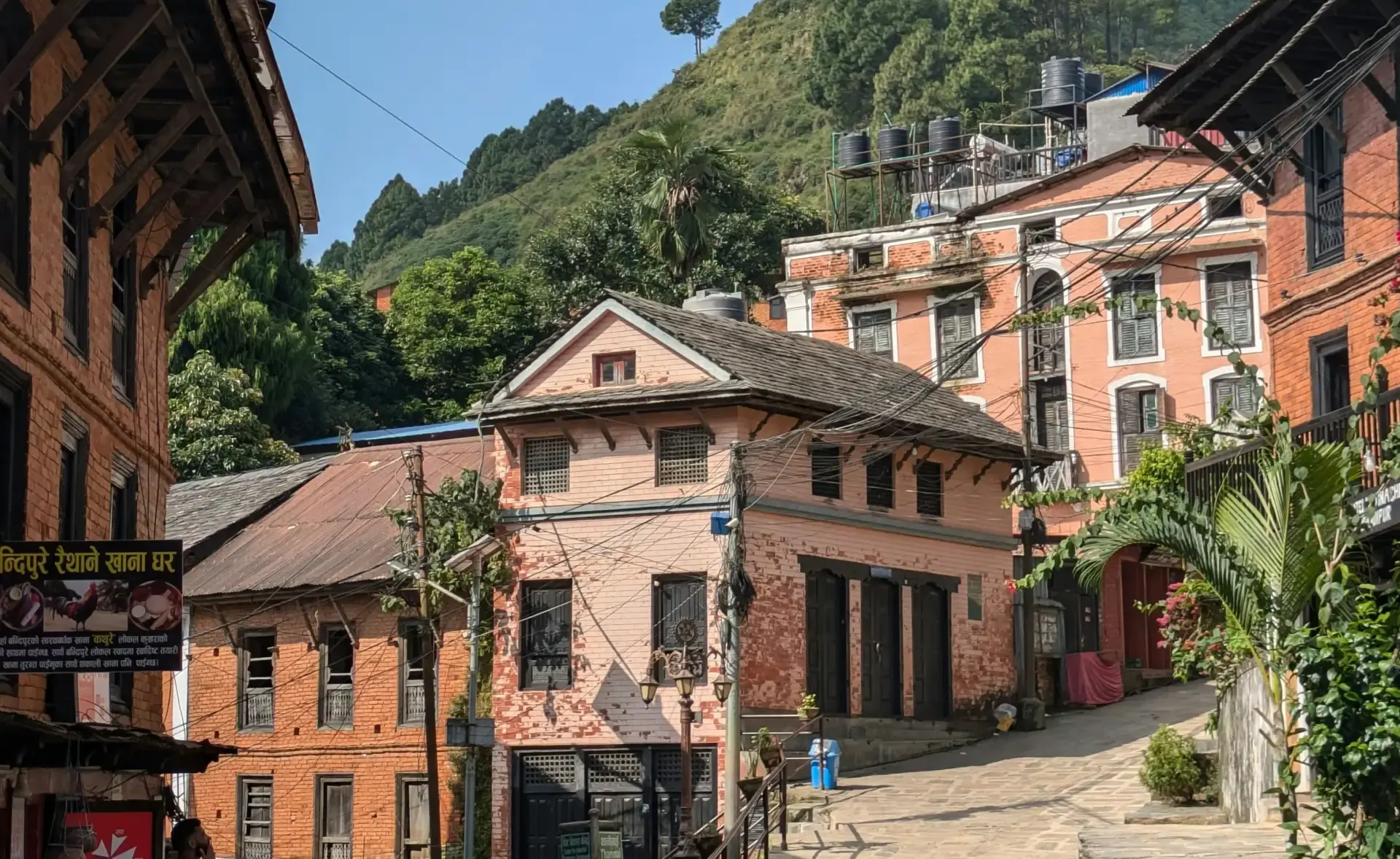
Round-Trip Jeep Rental for Commercial Trekking Agencies

Commercial trekking operators running multiple Annapurna Circuit, Manaslu Circuit, and Everest Base Camp groups annually use Nepal Vehicle Hiring Pvt Ltd’s round-trip jeep rental across their full season— with confirmed vehicle allocation, consistent service standards, and priority booking access during peak months.

Trek Nepal Himalayas’ guided trekking packages use Nepal Vehicle Hiring Pvt Ltd’s round-trip transport for every client group. Alpine Luxury Treks‘ top-end circuit experience uses Land Cruiser Prado round-trip hire for all luxury clients. Agencies interested in establishing a season-long transport relationship contact our team on WhatsApp.

The Vehicle Switch — Hiace Highway, Jeep Gorge

For medium groups (8–14 trekkers) on the Manaslu Circuit who travel by Hiace van hire on the paved highway and switch to 4WD Scorpio jeep hire at the gorge road start, Nepal Vehicle Hiring Pvt Ltd coordinates the vehicle switch as part of the single round-trip booking. All four legs — Kathmandu-to-Arughat Hiace, Arughat-to-Soti Khola jeep, Besisahar-to-Dumre jeep, Dumre-to-Kathmandu Hiace — confirmed in a single plan trip page submission.

WhatsApp Coordination in Practice — A Real Trekking Scenario

Understanding how WhatsApp return-vehicle coordination works in real trekking conditions—with variable weather, pace changes, and group health adjustments—helps trekkers see why a round-trip booking from Nepal Vehicle Hiring Pvt Ltd is the right format for every Nepal trek. A typical Annapurna Circuit round-trip jeep rental coordination: Day 1 — group departs Kathmandu by private Scorpio jeep hire to Besisahar, planned exit at Jomsom on Day 16. Day 8 at Manang — trek leader WhatsApps WhatsApp: ‘On track for Day 16 Jomsom exit.’

Day 12 at High Camp — brief signal stop: ‘Weather clear, Thorong La crossing tomorrow, Day 16 confirmed.’ Day 15 at Muktinath — ‘Crossing complete, confirming Jomsom exit Day 16 morning.’ Day 15 evening — Nepal Vehicle Hiring Pvt Ltd confirms: driver name, vehicle registration, 5:00 AM Pokhara departure, Jomsom arrival by noon.

Day 16 — group walks to Jomsom, private jeep hire arrives at confirmed time, Kali Gandaki gorge road drive south, Pokhara arrival by evening. The round trip is complete — both legs professionally managed.

Private vs Shared Transport — Why Round-Trip Private Wins

Shared jeep services to Besisahar and Soti Khola operate from Kathmandu’s Gongabu bus park — fixed early morning departures, shared with other passengers and cargo, luggage on the roof rack, no hotel pickup, and — critically — no pre-arranged return vehicle. The round-trip private jeep rental from Nepal Vehicle Hiring Pvt Ltd offers hotel-door pickup at any confirmed time, a vehicle dedicated to the group and their trekking luggage, a pre-arranged return vehicle for both legs, and WhatsApp coordination throughout.

For a private 4WD Scorpio jeep hire split among 4 trekkers, the per-person round-trip cost is often within NPR 2,000–4,000 of the shared jeep—a top-end that buys hotel pickup, confirmed timing, full luggage space, return-vehicle certainty, and the professional service standard the Nepal trekking experience deserves. For groups of 3 or more, we always recommend a round-trip private jeep rental over shared transport.

Driver Continuity and Route Knowledge

For out-and-back round trips where both legs depart from the same city — Kathmandu to Besisahar and back, or Kathmandu to Salleri-Phaplu and back — Nepal Vehicle Hiring Pvt Ltd assigns the same driver to both legs wherever scheduling allows. The driver who brought the group to the trailhead already knows the specific hotel, luggage volume, the group’s preferred rest-stop timing on the Prithvi Highway, and the specific trailhead drop point.

Returning with the same driver completes a relationship rather than a transaction with a stranger.

For circuit round trips with different entry and exit road-ends — Soti Khola entry to Besisahar exit for the Manaslu Circuit, or Besisahar entry to Jomsom exit for the Annapurna Circuit — Nepal Vehicle Hiring Pvt Ltd assigns different drivers whose specific route experience matches each approach corridor. The Soti Khola inward driver knows the Budhi Gandaki approach road’s specific character; the Besisahar outward driver knows the Marsyangdi gorge road.

Route-first assignment maintains our service standard on circuits where both road-ends demand their own specialist.

The Return Vehicle Problem — Why It Matters More Than It Seems

Arriving at a remote Nepal trekking exit trailhead without a pre-arranged return vehicle is an experience every experienced Nepal trekker resolves never to repeat. The problem: after 14 days of walking, tired, at a remote road end with full expedition packs, you face informal vehicle-hire negotiations where every available operator knows you need to reach the city and prices accordingly.

At Soti Khola after a Manaslu Circuit completion, the informal market is thin — 2 or 3 vehicles for multiple groups. At Salleri-Phaplu after the Everest overland approach, vehicle availability is constrained — remote Solukhumbu location, higher informal prices, longer waits.

At Jomsom, after the Annapurna Circuit Thorong La crossing, vehicles on the Kali Gandaki gorge road compete for post-peak traffic. Nepal Vehicle Hiring Pvt Ltd’s round-trip booking eliminates all of this — the private jeep hire is confirmed, pre-priced, and at the exit trailhead when the group walks out: no negotiation, no uncertainty, no post-trek transport stress.

Seasonal Round-Trip Booking Guide

Nepal’s trekking season creates specific peak demand periods for round-trip jeep rental that directly affect vehicle availability.

Autumn (October–November) — Peak Season. This is when Annapurna Circuit, Manaslu Circuit, and Everest overland departures are most concentrated. Book Besisahar jeep hire and Soti Khola jeep hire round trips 1–2 weeks ahead. Nepal Vehicle Hiking Pvt Ltd maintains priority allocation for confirmed bookings — informal late requests in October-November face genuine vehicle scarcity.

Spring (March–May) — Second Peak. The Annapurna Circuit and Nar Phu Valley trek spring peaks overlap with mountaineering expedition season—all Besisahar round-trip bookings 1 week ahead minimum.

Monsoon (June–September) — Available with Road Confirmation. Nepal Vehicle Hiring Pvt Ltd checks morning road conditions before dispatching any mountain road round-trip vehicle during monsoon — the Soti Khola approach road, the Besisahar gorge section, and the Phaplu BP Highway are all subject to landslide risk in heavy monsoon rainfall. When confirmed clear, the outward vehicle departs as booked.

Winter (December–February) — Most Reliable. All major Nepal trekking approach roads below 1,500 m stay reliable in winter. The most consistently bookable season for round-trip jeep rental. Private jeep hire available year-round through WhatsApp.

Round-Trip Jeep Rental Nepal Treks

Round-Trip for the Manaslu-Annapurna Combined Circuit

The combined Manaslu Circuit and Annapurna Circuit — entered at Soti Khola and exited at Jomsom after crossing both the Larkya La (5,106 m) and the Thorong La (5,416 m) — is Nepal’s most ambitious combined trekking circuit. It requires the most complex round-trip vehicle arrangement: ta private jeep hire from Kathmandu to Soti Khola and from Jomsom to Pokhara, on a circuit spanning 3 to 4 weeks and two of Nepal’s highest trekking passes.

Nepal Vehicle Hiring Pvt Ltd coordinates both vehicles in a single booking — the Manaslu trek transport inward and the Jomsom return confirmed simultaneously, with WhatsApp coordination in the circuit’s final week from Manang and Muktinath confirming the Jomsom arrival timing. Trek Nepal Himalayas’ Manaslu Circuit guided packages and Alpine Luxury Treks‘ top-end combined circuit experience both use Nepal Vehicle Hiring Pvt Ltd’s round-trip vehicle coordination for the complete transport chain.

Pre-Trek and Post-Trek City Connections

The round-trip trek jeep rental connects to a full pre-trek and post-trek city transport network for the complete Nepal visit. Kathmandu airport arrival transfer → Kathmandu heritage sightseeing car hire → Bhaktapur Durbar Square day tour → Nagarkot sunrise vehicle hire → Kathmandu to Pokhara private vehicle → Sarangkot sunrise vehicle → round-trip trek jeep hire → Pokhara to Chitwan bus service → Chitwan jungle safari → Kathmandu to Lumbini bus → Kathmandu airport departure transfer.

Nepal Vehicle Hiring Pvt Ltd covers every leg of your complete Nepal trip in a single plan-page submission. One operator. All legs.

Professional standard throughout.

What the Round-Trip Booking Includes — Pricing Transparency

Nepal Vehicle Hiring Pvt Ltd’s round-trip jeep rental uses all-inclusive pricing—a single confirmed price per leg that covers the complete journey with no additions at the end.

Included in each leg: Driver for the complete journey; all fuel for the confirmed route; all Nepal highway and road tolls; hotel-door pickup (outward) or trailhead pickup (return); drop at the confirmed destination; standard rest stops (Mugling fish curry stop on Prithvi Highway routes); morning road condition check on mountain road sections.

Not included: Group’s food and drinks at rest stops; driver meal at rest stops (NPR 300–1000, customarily paid by the group); trekking permits (ACAP USD 30, TIMS USD 10–20, restricted area permits); national park entry fees; any detour significantly extending the standard route distance.

We send the round-trip quote from Nepal Vehicle Hiking Pvt Ltd via WhatsApp or confirm it through our plan trip page before we accept the booking. No price surprises at the trailhead — outward or return. The complete Nepal tour package option covers all transport legs plus accommodation in a single programme through Nepal Vehicle Hiring Pvt Ltd and Trek Nepal Himalayas.

Round-Trip Jeep Rental Nepal Treks

Rolwaling, Kanchenjunga and Remote Circuit Round Trips

Beyond Nepal’s most-visited trekking corridors, Nepal Vehicle Hiring Pvt Ltd’s round-trip jeep rental covers three remote circuits that require careful planning. for transport

Rolwaling Valley (Shigati/Gongar approach, 135–145 km from Kathmandu). The Rolwaling Valley trek approaches via the Tamakoshi Valley Road from Kathmandu—a private jeep hire journey of 4 to 5 hours on a road that mixes paved and rough sections. The Rolwaling trailhead at Gongar or Shigati has very limited informal vehicle availability.

So pre-arranging a round-trip with Nepal Vehicle Hiring Pvt Ltd is especially important here, as sourcing a return vehicle informally at the trek’s end means either a long wait or an unfavourable price.

Kanchenjunga Base Camp (Taplejung approach, 540–640 km from Kathmandu, 2–3 days each way). The Kanchenjunga Base Camp trek to far-eastern Nepal requires Nepal’s longest trekking trailhead transfer by road — 2 to 3 travel days from Kathmandu to Taplejung. The multi-day driver allocation for this round trip requires the longest advance booking of any Nepal trekking circuit: 2 to 3 weeks ahead in all seasons.

Nepal Vehicle Hiring Pvt Ltd’s private jeep hire covers the complete Kathmandu-to-Taplejung-and-return round trip as a 4 to 6-day total vehicle commitment.

Helambu Circuit (Sundarijal to Melamchi, close to Kathmandu). The Helambu trek is Nepal’s most accessible round-trip trekking circuit — Sundarijal is 10 km from Kathmandu (private car hire, 20–30 minutes), and Melamchi Pul Bazaar is 45 km (private car hire, 45–60 minutes). You can confirm the return vehicle with just 24 hours’ notice via WhatsApp — the proximity to Kathmandu makes same-day return booking practical when the exit date is fluid.

The Trek Transport Philosophy — Why Both Legs Matter Equally

We book the outward vehicle to the Nepal trekking trailhead with care — the excitement of the trek’s beginning ensures the departure transport is professionally arranged, confirmed in advance, and appropriately sized for the group and their luggage. The return vehicle is where the care sometimes lapses — treated as a detail to arrange during the trek when the focus is on the mountain environment rather than the logistics of returning to the city.

This imbalance is the source of Nepal’s most common trekking transport frustration.

Nepal Vehicle Hiring Pvt Ltd’s round-trip booking philosophy corrects this imbalance by treating the return vehicle with the same advance care as the outward vehicle — because the group that arrives at Salleri-Phaplu after 18 days of Everest overland walking, or at Jomsom after crossing the Annapurna Circuit’s Thorong La at 5,416 m, deserves the same professional transport as the group that departed the Kathmandu hotel on Day 1. The trek’s end is not the time for logistical improvisation — it’s when the pre-arranged private jeep hire waits at the confirmed time, ready for the return journey the round-trip booking secured months before the trek began. That is the round-trip jeep rental philosophy—and it is why every professional Nepal trekking agency, from Trek Nepal Himalayas’ guided packages to Alpine Luxury Treks‘ top-end programmes, builds it into every Nepal trekking transport arrangement without exception. Book the round trip from the start: vehiclehiringnepal.com/plan-trip or WhatsApp.

Everest Overland Round Trip — The Two-Day Vehicle Commitment

The Kathmandu-to-Salleri-Phaplu private hire for the Everest Overland approach is Nepal’s most demanding day-range trailhead transfer—a 2-day journey covering about 80 km each way on the BP Koirala Highway through Okhaldhunga, Salleri, and into the Solukhumbu District. The round-trip format for the Phaplu approach requires a 4-day total vehicle commitment: 2 days outward, multi-day driver wait or return to Kathmandu, and 2 days return.

Nepal Vehicle Hiking Pvt Ltd’s Phaplu jeep hire covers this multi-day commitment with experienced drivers who know the BP Highway’s character—paved in sections, rough mountain road in others —along with the altitude changes and roadside village rest stops the 2-day drive entails.

For the Everest Base Camp luxury lodge trek and the standard Everest Base Camp trek overland approach, the Phaplu round-trip jeep hire is pre-arranged at outward booking — Day 1-2 outward Kathmandu to Phaplu, trek to EBC and back (14–21 days), Day 1-2 return Phaplu to Kathmandu. The return date is confirmed via WhatsApp from Namche Bazaar or Lukla during the trek.

Nepal Vehicle Hiring Pvt Ltd confirms the Phaplu return vehicle via the same WhatsApp update the trekker sends from their last satellite phone or mobile signal point before the final Phaplu descent.

Trek Nepal Himalayas and Alpine Luxury Treks — Commercial Partnership

Trek Nepal Himalayas and Alpine Luxury Treks uses Nepal Vehicle Hiring Pvt Ltd’s round-trip jeep rental as standard ground transport for every guided client group on every trekking circuit. The relationship covers:

Agencies wanting to establish a Nepal trekking-season transport relationship with Nepal Vehicle Hiking Pvt Ltd: contact our team on WhatsApp or through our plan trip page.
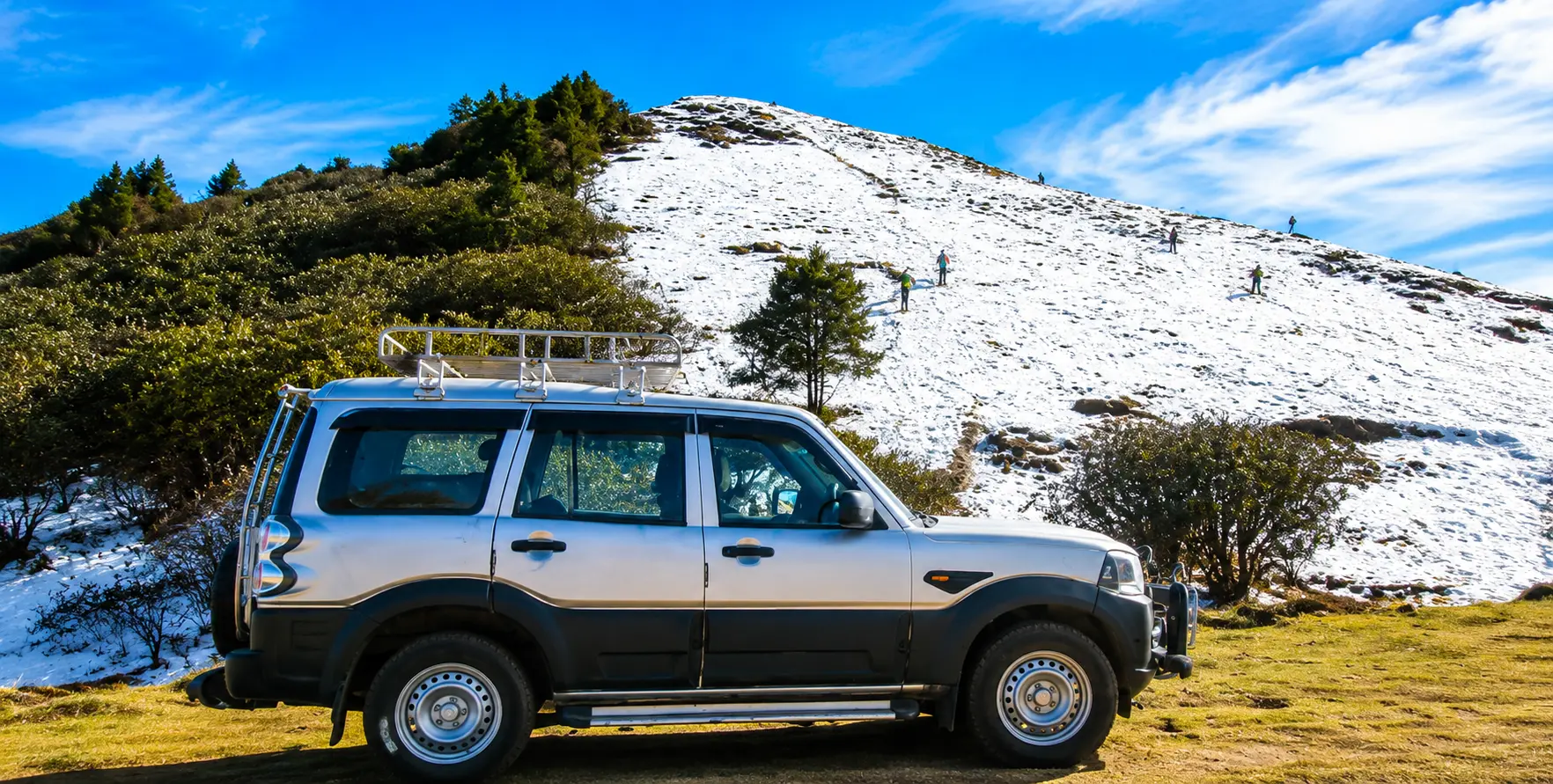
Common Mistakes in Nepal Trek Vehicle Planning

Mistake 1: Booking only the outward vehicle. Arranging the return vehicle at remote trailheads informally is harder and more expensive. Always book both legs simultaneously.

Mistake 2: Not specifying the circuit exit point. The Annapurna Circuit can exit at Besisahar or Jomsom — two completely different return vehicles from two different road-ends. Confirm the planned circuit format at outward booking.

Mistake 3: Booking too late in peak season. October–November and March–May 4WD jeep hire demand peaks. Late bookings face genuine vehicle scarcity.

Mistake 4: Not sending the mid-trek exit date update. The round-trip coordination works because the trek leader sends the exit date update 2–3 days before exit. Without the update, the return vehicle is on the planning date, not the actual date.

Why Nepal Vehicle Hiring Pvt Ltd for Round-Trip Trek Transport

  • All Nepal trekking corridors covered: Besisahar, Nayapul, Soti Khola, Phaplu, and all others.
  • Route-experienced drivers for each leg: Besisahar drivers for Besisahar legs; Soti Khola drivers for Soti Khola.
  • WhatsApp return coordination: WhatsApp throughout the trek for exit date updates.
  • All vehicle sizes: Car, 4WD Scorpio/Hilux, Hiace, coaster, bus.
  • Vehicle switch coordination: Hiace-to-jeep transitions at gorge road starts managed in same booking.
  • All-inclusive transparent pricing: Driver, fuel, tolls — confirmed at booking, no additions.
  • Plan trip page: com/plan-trip — single submission for complete circuit transport.

Group Planning — Right Vehicle for Every Trek Group Size

Selecting the right vehicle for a Nepal trekking round trip means matching vehicle capacity to the specific combination of passenger count and luggage volume—two variables that don’t always produce the same answer, especially when you add full expedition packs, camping equipment, and porter kit to the passenger count.

Solo trekker or couple (1–2 persons): Private car hire for paved approach roads (Nayapul, Besisahar town). Private 4WD Scorpio jeep hire for mountain road approaches (Soti Khola gorge, Phaplu BP Highway). Per-person round-trip cost is highest in this configuration, but the hotel pickup, confirmed timing, and certainty of the return vehicle justify the top-end for most independent trekkers.

Small group (3–6 trekkers with full packs): 4WD Scorpio jeep hire for all Nepal trekking approach roads — the natural round-trip vehicle for the 3 to 6-person trekking group. The Scorpio’s rear cargo area and roof rack accommodate full expedition packs without compression, and 4WD capability is standard on all mountain road sections.

Medium group (7–13 trekkers): Toyota Hiace van hire for the paved highway sections + 4WD Scorpio jeep hire for unpaved gorge road sections (vehicle switch at Arughat for Soti Khola approach, or at Besisahar for the gorge section). Nepal Vehicle Hiring Pvt Ltd coordinates the vehicle switch as part of the single round-trip booking — no additional coordination required from the group.

Large group (14–22 trekkers): Tourist coaster hire for highway sections + multiple 4WD jeeps for mountain road sections. Nepal Vehicle Hiking Pvt Ltd coordinates multi-vehicle convoys as single round-trip bookings.

Very large group (23+ trekkers): Full tourist bus hire for highway approach + convoy of 4WD jeeps for mountain road sections. Contact Nepal Vehicle Hiring Pvt Ltd on WhatsApp for large group round-trip arrangements.

Upper Mustang — Round-Trip from Jomsom

The Upper Mustang restricted area trek uses a specific round-trip vehicle format: the Pokhara-to-Jomsom private jeep hire through the Kali Gandaki gorge (145 km, 7–9 hours) is the approach vehicle, and the same Jomsom-to-Pokhara return jeep hire closes the circuit after the Upper Mustang trek ends back in Jomsom. Trekkers who enter Mustang from Jomsom and return to Jomsom have a clean out-and-back round trip at Jomsom — Pokhara to Jomsom outward jeep hire and Jomsom to Pokhara return jeep hire, both from Nepal Vehicle Hiring Pvt Ltd in a single round-trip booking.

Trekkers who fly one direction — Pokhara-to-Jomsom domestic flight outward and drive the Kali Gandaki gorge return — use Nepal Vehicle Hiring Pvt Ltd for the single gorge road Jomsom to Pokhara vehicle hire on the return leg.

Booking Information — What to Submit on the Plan Trip Page

Nepal Vehicle Hiring Pvt Ltd’s plan trip page is the most efficient format for booking a round-trip trekking jeep rental booking —accepting both legs in a single submission. The information needed for a complete round-trip quote:

  • Departure city: Kathmandu or Pokhara, and specific hotel or guesthouse.
  • Outward trailhead: Besisahar, Soti Khola, Nayapul, Phaplu/Salleri, or other road-end destination.
  • Return exit point: Same trailhead (out-and-back) or different exit road-end (circuit). Jomsom exit for Annapurna Circuit full-crossers. Dharapani/Besisahar exit for Manaslu Circuit completers.
  • Planned outward departure date: As a specific date — the vehicle allocated and driver confirmed against this date.
  • Estimated return date: As a planning date — confirmed via WhatsApp during the trek. State the expected exit date, and our team will provisionally allocate the return vehicle.
  • Group size: Total passengers including guide and cook if applicable. Accurate count determines vehicle recommendation.
  • Luggage: Standard trekking packs, full expedition gear, camping equipment, or other specific cargo description.
  • Any special requirements: Early departure time, Mugling stop preference, Bandipur or Manakamana detour addition, Besisahar overnight arrangement.

Submit through vehiclehiringnepal.com/plan-trip or WhatsApp. Nepal Vehicle Hiring Pvt Ltd returns a complete round-trip quote within hours — outward vehicle, return vehicle, driver confirmations, all-inclusive pricing, and WhatsApp coordination number for the trek’s duration.

Connecting the Round Trip to Nepal’s Full Travel Circuit

The round-trip trek jeep rental is most effective ass part of a complete Nepaltravelt pla  connecting the trekking approach and exit to the full range of Nepal’s destinations.

For trekkers extending their visit to Lumbini (the Buddha’s birthplace) or Chitwan National Park for wildlife safari after the trek, Nepal Vehicle Hiring Pvt Ltd connects the post-trek return vehicle to the onward destination — Pokhara to Chitwan bus service after the Kali Gandaki Jomsom return, or Kathmandu to Lumbini bus service after the Besisahar return. The Carpokhara hire covers Pokhara’s post-trek rest days, the Pokhara-to-Kathmandu return vehicle brings the group back to the capital, and the Kathmandu airport transfer closes the Nepal visit at the departure terminal.

All bookable as a single plan trip page submission — the round-trip trek jeep rental at the centre of a completely arranged Nepal visit.

Round-Trip Jeep Rental Nepal Treks

Frequently Asked Questions — Round-Trip Jeep Rental Nepal

Q: Can I book only the outward vehicle and arrange the return separately?

Yes — but the round-trip booking is strongly recommended. Informal return vehicle hire at remote trailheads like Soti Khola and Phaplu is difficult and expensive. Book both legs at the outward booking stage through Nepal Vehicle Hiring Pvt Ltd.

Q: What if my trek exit date changes by 2-3 days?

Nepal Vehicle Hiring Pvt Ltd will adjust the return vehicle date via WhatsApp. No additional fee for date adjustments within a reasonable range. Standard round-trip bookings allow for trek flexibility.

Q: Is the round-trip price discounted vs two one-way bookings?

Pricing is consistent whether booked as a round trip or two separate one-ways. The value of round-trip booking is coordination reliability and vehicle allocation certainty — not a pricing discount.

Q: Can I enter at one trailhead and exit at a different one?

Yes — Soti Khola to Besisahar for the Manaslu Circuit and Besisahar to Jomsom for the Annapurna Circuit are both managed as single round-trip bookings.

Q: How far in advance do I need to book?

Peak season (Oct–Nov, March–May): 1–2 weeks ahead for Besisahar jeep hire; 2–3 weeks ahead for Phaplu jeep hire. Off-peak: 3–5 days ahead for most trailheads.

Round-Trip Booking Tips — Getting the Best Result

Booking a round-trip Nepal trekking jeep rental efficiently requires accurate information at the time of booking and active communication during the trek. A few tips from Nepal Vehicle Hiring Pvt Ltd’s experience with hundreds of round-trip trekking transport bookings:

Specify the exact drop point, not just the trailhead name. ‘Besisahar’ can mean Besisahar town, Bhulbhule, Ngadi, or Jagat — each a different distance and road condition up the Marsyangdi gorge. ‘Soti Khola’ can mean the road-end at Arughat or the further drive to Soti Khola proper. Specifying the exact village destination ensures the vehicle quote covers the correct distance and the driver is prepared for the correct road-end.

Confirm whether the group includes a guide and cook. A private 4WD Scorpio jeep hire for 5 trekkers plus guide and cook is an 8-person vehicle — over the Scorpio’s comfortable capacity. Confirming the full passenger count (including support staff) lets Nepal Vehicle Hiring Pvt Ltd recommend the right vehicle: an upsize to a Hiace van for the highway section, or a second jeep hire for the mountain-road section.

State the planned circuit format clearly. ‘Annapurna Circuit’ without specifying the exit point leaves the return vehicle destination ambiguous — Besisahar (eastern exit), Jomsom (western exit after Thorong La), or Beni (a rarer exit option). The circuit format determines the return vehicle and return city. Confirm the planned crossing at outward booking.

Send the mid-trek WhatsApp update proactively. Don’t wait until the day before exit to confirm the return date. Send the update 2 to 3 days out — from Manang for the Annapurna Circuit exit, from Namche for the Everest overland, from Samdo for the Manaslu Circuit. Early updates give our operations team maximum scheduling flexibility.

Contact WhatsApp.

Round-Trip Jeep Rental Nepal Treks

Why the Return Vehicle Is the Most Important Part of the Booking

Counterintuitive as it seems, the return vehicle—not the outward vehicle—is the most important part of a round-trip jeep rental booking for Nepal trekking. The outward vehicle is booked from comfort and planning time, in the city, before the trek’s physical demands have been felt.

The return vehicle is needed from exhaustion, at altitude, at a remote road-end, with the body and mind depleted by weeks of mountain walking. The context in which the two vehicles are needed could not be more different—and yet both legs receive the same professional, pre-arranged service from Nepal Vehicle Hiring Pvt Ltd when you make the round-trip booking at the outset.

This is the defining value of the round-trip private jeep hire for Nepal trekking — that the return vehicle is arranged when the arranger is at their most capable (before the trek, from the city, with full information and full energy) rather than at their most depleted (after the trek, at the road-end, with no information about vehicle availability and no energy for negotiation). The trekker who arrives at Soti Khola after completing the Manaslu Circuit with a confirmed Nepal Vehicle Hiring Pvt Ltd jeep hire waiting has one focus: the satisfaction of a great trek completed.

The trekker who arrives without a pre-arranged vehicle has a different focus: the logistics of getting home. Book the round trip. Book it from the city.

Book it now. plan trip page or WhatsApp.

Nepal Vehicle Hiring Pvt Ltd covers every Nepal trekking round-trip corridor in a single professional booking with all-inclusive transparent pricing — from the short Panch Pokhari approach to the 2-day Phaplu Everest overland, from the Nayapul Poon Hill round trip to the combined Manaslu-Annapurna circuit spanning two Himalayan passes. Every 4WD Scorpio jeep hire, every Hiace van hire, every private car hire — confirmed at outward booking, coordinated by WhatsApp during the trek, and waiting at the exit trailhead when the group walks out.

Conclusion

Round-trip jeep rental for Nepal treks is the transport standard the industry has converged on because it solves three core trekking transport problems—return-vehicle uncertainty, pricing surprises, and the logistics gap—in a single pre-arranged booking before the group sets foot on the trail. Nepal Vehicle Hiring Pvt Ltd provides the complete round-trip trekking transport network: Besisahar, Nayapul, Soti Khola, Phaplu, and every other major trailhead — with 4WD jeep hire for mountain roads, Hiace van hire for medium groups, and private car hire for paved approaches — all at all-inclusive pricing with WhatsApp return coordination throughout.

Both legs confirmed. Both legs professional. The trek can begin.

Book your round-trip Nepal trek jeep rental with Nepal Vehicle Hiring Pvt Ltd — call or WhatsApp, visit vehiclehiringnepal.com, or plan your complete trek transport through our plan trip page.
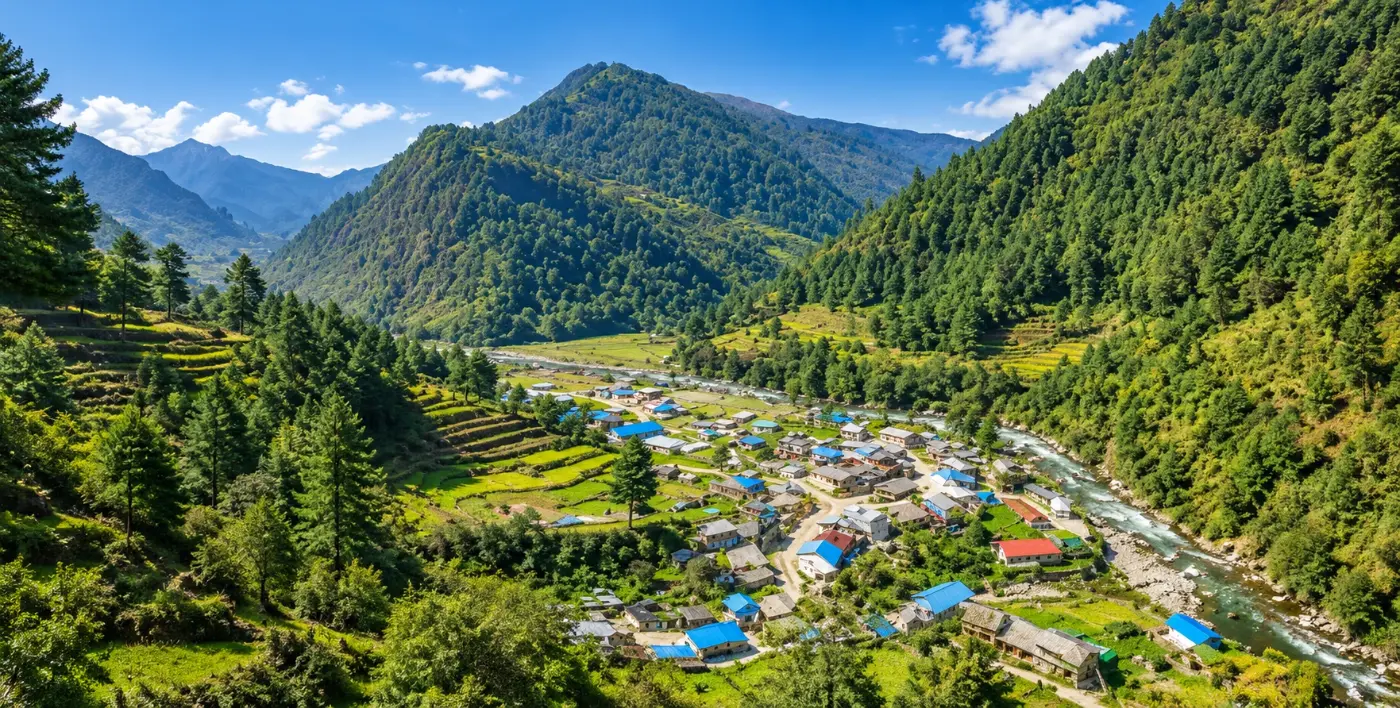
Bandipur to Landruk Private Jeep Hire: Complete Transfer Guide

Kathmandu to Bandipur Car

Bandipur to Langdruk Private Jeep Hire – Complete Transfer Guide

Bandipur and Langdruk represent two very different yet equally compelling expressions of Nepal’s mountain world. Bandipur is a celebrated Newari ridge town—car-free, heritage-preserved, and perched above the Prithvi Highway, with cobblestone lanes and Himalayan viewpoints that draw travellers seeking the authentic character of Nepal’s traditional hill communities.

Langdruk is something altogether wilder — a high-altitude traditional village at approximately 1,650 metres in the Annapurna foothills of Kaski District, sitting directly on the Annapurna Base Camp Trek and Ghorepani Poon Hill Trek approach routes, from which the full panorama of the Annapurna Sanctuary — Machapuchhre, Hiunchuli, Annapurna South — fills the northern sky with an immediacy that even Pokhara’s famous lakeside viewpoints cannot match. Between these two places runs one of Nepal’s finest private jeep journeys—combining the cultural richness of Tanahun District’s hill landscape with a dramatic approach into the Annapurna foothills that puts trekkers at one of the most rewarding starting points on the entire circuit.

The Bandipur to Langdruk private jeep hire serves a specific and growing category of trekking traveller: those who have spent one or two nights at Bandipur appreciating the heritage town and the Himalayan views from the ridge, and who are now ready to begin their Annapurna trekking circuit from a trailhead that is more direct, more atmospherically positioned, and more rewarding than the standard Pokhara-based departure points. Langdruk’s position on the Annapurna Base Camp approach route means that trekkers arriving here by private jeep from Bandipur begin their walk at altitude, in a traditional mountain village, with the Annapurna range already visible and already dominating the landscape — a completely different starting experience from the flat Pokhara lakeside departure that the standard ABC approach involves.

This guide covers every dimension of the Bandipur to Langdruk private jeep transfer: the route in full detail, realistic road conditions and journey times, the specific 4WD requirement, why this transfer makes exceptional sense as part of a Bandipur-to-Annapurna trekking itinerary, how the transfer connects to the full range of Trek Nepal Himalayas Annapurna packages, and the practical tips that ensure a smooth trailhead arrival.

Book: vehiclehiringnepal.com | Call/ WhatsApp

bandipur to landruk private jeep
Bandipur to landruk jeep hire

Langdruk – The Annapurna Trailhead Most Trekkers Never Discover

Langdruk village is one of those genuinely rewarding Nepal destinations that most international trekkers pass through without fully appreciating what they find. Situated in Kaski District’s Annapurna foothills at about 1,650 metres, Langdruk sits at the junction of several of the most important trekking routes in the Annapurna Conservation Area—the route from Tolka and Dhampus to the north, the descent from Pothana, and the connection southward toward Nayapul and the Birethanti corridor.

Its position on the ridge above the Modi Khola valley offers an extraordinary elevated view over the approach valleys toward the Annapurna Sanctuary, with Machapuchhre (6,993 m) visible to the north as an almost supernatural presence. From this angle, this sacred fish-tail peak dominates every aspect of the Annapurna approach landscape.

As a trekking trailhead rather than merely a transit village, Langdruk offers a specific value proposition that makes the Bandipur-to-Langdruk private jeep particularly interesting for certain trekking itineraries. Arriving at Langdruk by vehicle means beginning the Annapurna Base Camp Trek or the Ghorepani Poon Hill Trek at a point that is already well into the Annapurna Conservation Area environment — past the lower subtropical farmland approaches and already in the territory of rhododendron forest, traditional stone-paved trails, and the dramatic mountain views that define these circuits at their best.

For trekkers arriving from Bandipur, this means their first day of walking is already scenically and atmospherically rewarding rather than a gradual build through the lower approach stages.

The village has teahouses, basic accommodation, and the kind of traditional Gurung community character that the lower-approach villages below Pokhara increasingly lack as they commercialise around the standard tourist trekking circuit. Trek Nepal Himalayas guide teams leading the Annapurna Base Camp Trek regularly recommend Langdruk as the Bandipur departure trailhead because it removes the least interesting stages of the standard approach and puts the trekking group in the best section of the circuit from the first day of walking.

Bandipur to Langdruk Private Jeep Hire

The Route – Bandipur to Langdruk in Complete Detail

Bandipur Ridge to Dumre Junction – The Initial Descent

The Bandipur to Langdruk journey begins with the 8 km descent from Bandipur’s ridge to the Prithvi Highway at Dumre junction — the same steep hill road used for every vehicle departure from Bandipur. This winding descent through sal forest and small Magar and Brahmin community villages is beautiful in the morning light, with the Marsyangdi River valley visible below through the trees as the road loses altitude.

Nepal Vehicle Hiring’s drivers navigate this descent carefully — the road is narrow in sections, and the gradients are steep enough to require good braking technique and full attention. At Dumre junction, the vehicle connects to the Prithvi Highway and turns west toward Pokhara rather than east toward Kathmandu.

Dumre to Khudi or Nayapul Corridor – The Highway Approach

From Dumre, the route follows the Prithvi Highway westward — the same highway used for the Kathmandu to Pokhara transfer — through the spectacular Marsyangdi gorge section where the turquoise river runs alongside the road through forested gorge walls. This section is scenic and fast-moving—a well-maintained paved road that the private jeep covers comfortably.

Depending on the approach route to Langdruk, the vehicle either heads north from the highway at a junction toward Phedi, Pothana, or the Dhampus approach, or continues west toward the Nayapul area before turning north. Nepal Vehicle Hiring coordinates route planning for the Langdruk trailhead delivery with the Trek Nepal Himalayas guide team to ensure the vehicle reaches the correct approach road for the specific trekking itinerary.

Off-Road Approach to Langdruk – Where the Jeep Proves Its Worth

The final approach to Langdruk village is where the private jeep’s 4WD capability becomes genuinely and unmistakably necessary. The tracks approaching Langdruk from the highway ascend steeply through forested terrain, with loose-surfaced sections, sharp switchbacks, erosion channels, and, in wet conditions, muddy track surfaces that demand 4WD low-range traction management. This is not a route for a standard car or highway vehicle.

The Mahindra Scorpio or Bolero’s ground clearance, 4WD engagement, and mechanical confidence are required for the final push to the trailhead. Nepal Vehicle Hiring’s drivers on this approach have specific experience with the Langdruk track and its seasonal condition variations — knowing which sections require 4L (low range), which require patient throttle control, and which sections after recent rainfall are best approached from a running start rather than a slow crawl.

This route-specific driver knowledge is the most important practical factor in the success of the Bandipur to Langdruk jeep transfer, and it is the primary reason Nepal Vehicle Hiring’s Annapurna approach jeep service consistently delivers groups to the Langdruk trailhead without the delays and difficulties that characterise poorly planned trailhead transfers on this terrain type.

Bandipur to Langdruk Private Jeep Hire

Why Private Jeep Is the Only Realistic Option for This Transfer

The question of why a private jeep is the only viable transport for the Bandipur to Langdruk transfer is worth addressing directly, because it helps every trekker understand both the character of the route and the specific value of Nepal Vehicle Hiring’s service.

No public transport serves the Langdruk approach road. The local bus network connecting Dumre to Pokhara does not branch onto the Langdruk track, and even if it did, the approach road’s steep, rough character is incompatible with any standard bus.

Shared jeep services from Pokhara to the Annapurna approach roads exist for the more commonly used trailheads like Nayapul and Phedi. Still, these run on fixed routes without a Bandipur departure option and don’t provide the door-to-door hotel pickup from Bandipur’s ridge that makes Nepal Vehicle Hiring’s service the right single-booking solution for the full Bandipur-to-trailhead journey.

A private jeep from Nepal Vehicle Hiring solves every transport challenge of this specific journey in a single booking: hotel pickup at the Bandipur ridge accommodation, 8 km descent to the highway, Prithvi Highway transit to the Annapurna approach, off-road 4WD climb to Langdruk village, and vehicle waiting while the trekking group organises their packs and meets the guide team — before departing. For trekking groups booked with Trek Nepal Himalayas on the Annapurna Base Camp Trek, the Nepal Vehicle Hiring jeep is coordinated directly with the guide team’s Langdruk arrival timing — guide, porter team, and vehicle all arriving at the trailhead simultaneously for the most efficient start to the circuit.

Pokhara to Bandipur Car
 

Vehicle Options for the Bandipur to Langdruk Transfer

Mahindra Scorpio 4WD – The Standard Recommendation

The Mahindra Scorpio 4WD is Nepal Vehicle Hiring’s recommended and most booked vehicle for the Bandipur to Langdruk transfer. Its switchable 4WD system, with 2H, 4H, and 4L modes, provides full capability across all three sections of the journey: the highway sections (2H), the lower approach road (4H), and the steepest off-road climb to the trailhead (4L, where required).

The Scorpio’s roof rack carries all expedition trekking luggage — main duffels, porter loads, group equipment — outside the passenger cabin, keeping the interior comfortable for the group during the journey. With 7-passenger capacity, the Scorpio fits a standard Trek Nepal Himalayas trekking group of four to six people plus their gear in a single vehicle.

Nepal Vehicle Hiring’s Scorpio drivers assigned to Annapurna approach routes have specific, documented experience on the Langdruk approach track — a critical driver qualification for this specific route.

Mahindra Bolero 4WD – Budget Group Option

The Mahindra Bolero 4WD offers the same genuine 4WD capability as the Scorpio on the Langdruk approach track, and its outstanding spare-parts availability throughout the Kaski and Tanahun district area makes it particularly reliable for remote trailhead transfers. The Bolero’s ground clearance and diesel torque handle the Langdruk approach switchbacks as competently as the Scorpio, making it an entirely appropriate vehicle for budget-conscious trekking groups of five to seven who prioritise reliability and cost efficiency.

Bandipur to Langdruk Private Jeep Hire

The Bandipur to Langdruk Trekking Connection – Why This Starting Point Changes the Circuit

Understanding why starting a trek from Langdruk, rather than the standard Pokhara departure points, matters is the strongest argument for the Bandipur to Langdruk private jeep transfer, and it is worth exploring in genuine depth.

The standard Annapurna Base Camp Trek departure from Pokhara typically begins with a jeep transfer to Nayapul or Kimche, followed by a first trekking day through the relatively commercialised lower Bhurungdi corridor and the forested approach to Ghandruk or Chhomrong. This lower section is perfectly pleasant but is not where the Annapurna Circuit is at its finest — the best scenery, the most dramatic mountain views, and the most rewarding daily walking all occur higher up the circuit.

Starting at Langdruk — which sits above the lower approach valleys at 1,650 metres — puts the trekking group immediately in the zone where the circuit’s finest qualities are most apparent.

From Langdruk, the first day of walking heads toward Pothana (1,890 m) through rhododendron and oak forest, with the Annapurna range visible from multiple viewpoints along the trail. The sunrise view from the Pothana ridge — Machapuchhre catching the first light while the valley below is still in shadow — is one of the Annapurna trekking circuit’s most celebrated dawn experiences.

This is what the Bandipur to Langdruk jeep transfer delivers — arrival at the starting point of the circuit’s finest section, rather than a gradual work through the lower approaches.

For trekkers who have added a Bandipur cultural stop to their Nepal itinerary specifically because they want to connect the heritage mid-hill experience with the high-mountain adventure experience, the Bandipur to Langdruk jeep transfer is the geographic and experiential bridge between these two dimensions of Nepal — the preserved medieval culture of the hill town and the raw, spectacular wilderness of the Annapurna Conservation Area connected by a single jeep journey that itself passes through the transitional landscape between them.

Bandipur to Langdruk Private Jeep Hire

Road Conditions and Seasonal Considerations

Dry Season – Optimal Conditions

The dry season months — broadly October to May — deliver the most reliable conditions on the Langdruk approach track. Post-monsoon road stability in autumn and the dry spring conditions from March through May both provide firm, grippy off-road surfaces that the Scorpio and Bolero handle without difficulty.

Nepal Vehicle Hiring’s dry-season Langdruk jeep service operates with high reliability in these months—the track surface that challenged the monsoon has dried and compacted, the drainage channels have cleared, and the switchbacks that require careful 4WD management are at their most tractable. This dry-season window also coincides with peak trekking season for the Annapurna Base Camp Trek and Ghorepani Poon Hill Treks —meaning vehicle demand for the Langdruk trailhead is highest, and booking is essential.

Monsoon Season – Assessment Required

The monsoon season (roughly June to September) poses the biggest operational challenge for the Langdruk approach track. The steep, forested hillside terrain the track traverses receives heavy monsoon rainfall, which can turn sections of the track from manageable 4WD conditions into genuinely impassable mud during and immediately after heavy rainfall events.

Nepal Vehicle Hiring’s daily road condition monitoring service covers the Langdruk approach during monsoon — and the honest assessment is that monsoon-season Langdruk transfers require a same-day road condition confirmation before vehicle dispatch. Groups with monsoon-season Annapurna trek departures should build one to two extra flexibility days into the Langdruk trailhead arrival plan, allowing for rescheduling if monsoon rainfall has made the approach track temporarily impassable.

Nepal Vehicle Hiring proactively communicates monsoon conditions to all pre-booked clients. If the track is impassable, the group is advised before the vehicle departs rather than discovering the condition mid-journey.

Winter Conditions

The winter months (December to February) bring cold temperatures at Langdruk’s elevation and occasionally frost or ice on the upper sections of the approach track in the coldest weeks. Nepal Vehicle Hiring’s winter Annapurna jeep service equips vehicles with appropriate tyres and, in extreme cold-weather periods, adds the traction aids needed for any icy sections on the final approach.

Winter trekking on the Annapurna Base Camp approach is genuinely beautiful — clear skies, uncrowded trails, and snow on the higher Himalayan peaks — and the Langdruk trailhead in winter is particularly dramatic with the snow-dusted Annapurna range fully visible in the cold-season clarity.

Bandipur

Permits for the Bandipur to Langdruk Transfer and Annapurna Trek

The Langdruk approach enters the Annapurna Conservation Area — and the ACAP (Annapurna Conservation Area Permit) is checked at the Birethanti ACAP checkpoint that the route passes through. As Nepal Vehicle Hiring’s Annapurna trek transport guides document: always carry your original ACAP permit when travelling on the Annapurna approach roads—the checkpoint checks vehicles as well as trekkers on the approach tracks.

The ACAP permit must be obtained in Kathmandu or Pokhara at NTB offices before departure — not at the checkpoint. Nepal Vehicle Hiring’s booking team confirms permit status as part of the Annapurna approach transfer booking process and advises on current permit requirements.

For the trekking circuit itself, Trek Nepal Himalayas handles all permit arrangements for clients on their Annapurna trekking packages, including the ACAP, TIMS card, and any updated permit requirements that the Nepal Tourism Board has introduced for the Annapurna Conservation Area. Alpine Luxury Treks manages permits as a standard component of their luxury Annapurna trekking itineraries for clients using the Langdruk trailhead approach.

How the Bandipur Stop Enhances the Annapurna Circuit

The Bandipur overnight or two-night cultural stop before the Annapurna trek is not merely a logistical convenience—it is a genuinely enriching addition to the overall Nepal journey, and most trekkers who include it describe it as one of their most memorable Nepal experiences. The combination of Bandipur’s medieval Newari culture with the subsequent immersion in the Annapurna’s Gurung and Magar community landscape provides a remarkable cultural transect of Nepal’s hill communities that the standard Pokhara-centric Annapurna approach cannot replicate.

Bandipur’s specific cultural offer: the Bindabasini Temple and Thani Mai Temple on the ridge, the traditional Newari bazaar with its preserved architecture, the Siddha Gufa limestone cave system 7 km from the town, and the Bandipur viewpoint looking north across the Prithvi Highway valley to the Annapurna range — the same peaks the trekker will be standing beneath within two days of departing for Langdruk. For Alpine Luxury Treks clients on custom Nepal cultural and trekking itineraries, the Bandipur to Langdruk private jeep naturally links the cultural heritage chapter with the Himalayan adventure chapter of a complete Nepal journey.

Bandipur to Langdruk Private Jeep Hire

The Return Transfer – Langdruk to Bandipur or Pokhara

The Langdruk to Bandipur return jeep suits trekkers who complete a circuit that returns them to the Langdruk trailhead—either a short loop or an out-and-back on a specific section of the Annapurna trail. Nepal Vehicle Hiring pre-books the return vehicle simultaneously with the outward transfer, holding a confirmed vehicle with a flexible date window for trekkers whose exact circuit completion date may shift slightly.

The return can go back to Bandipur for onward connections or go directly to Pokhara if the trekker’s next itinerary is Pokhara-based.

The Langdruk to Pokhara jeep transfer is Nepal Vehicle Hiring’s most commonly booked return direction from Langdruk — the Pokhara Lakeside area is approximately 2.5–3 hours from Langdruk by private jeep via the same Prithvi Highway corridor in reverse. For trekkers connecting from a Bandipur start to a Pokhara finish, the Langdruk-to-Pokhara jeep is the natural transport completion of a circuit that moves from the Prithvi Highway hill country into the Annapurna foothills and returns to Nepal’s adventure capital for the flight home.

Trek Nepal Himalayas coordinates this complete circuit — Bandipur to Langdruk by Nepal Vehicle Hiring jeep and then Langdruk to Pokhara by Nepal Vehicle Hiring jeep — as a fully integrated trekking transfer service.

Bandipur to Langdruk Private Jeep Hire

Bandipur to Langdruk as Part of the Nepal Annapurna Circuit

For international visitors planning a Nepal visit that combines cultural heritage, mountain trekking, and natural diversity, the Bandipur to Langdruk private jeep fits within a broader Nepal itinerary that Nepal Vehicle Hiring and its partner companies coordinate. A typical complete Annapurna circuit using Bandipur as the departure point follows this logical sequence:

The journey begins in Kathmandu with the Kathmandu Valley heritage circuit — Pashupatinath, Boudhanath, Swayambhunath, Bhaktapur — using a Nepal Vehicle Hiring private car for the day. The Kathmandu to Pokhara transfer the following day uses the Prithvi Highway.

From Pokhara, the Pokhara-to-Bandipur jeep hire takes the group to the ridge town for 1 or 2 nights of cultural immersion. The Bandipur-to-Langdruk private jeep then takes the trekking group to the Annapurna trailhead for the Annapurna Base Camp Trek or Ghorepani Poon Hill Trek circuit.

Afterwards, the Langdruk to Pokhara jeep completes the transport loop. Throughout, Trek Nepal Himalayas provides a licensed guide and porter team, while Alpine Luxury Treks manages luxury accommodation and expedition standards at each stage for top-end experiences.

Bandipur to Langdruk Private Jeep Hire

Practical Tips for the Bandipur to Langdruk Private Jeep

  • Book in Advance During Peak Trekking Season: The Bandipur to Langdruk transfer is most in demand during the spring and autumn trekking seasons when Annapurna Base Camp Trek and Ghorepani Poon Hill Trek groups are at peak volume. Book the Bandipur to Langdruk jeep hire at least one week in advance during these peak periods to ensure vehicle and driver availability.
  • Depart Bandipur by 8:00 AM: An early departure ensures the group reaches Langdruk by mid-morning — leaving a full afternoon for the first stage of walking toward Pothana or settling into the Langdruk guesthouse before the next day’s early start. Nepal Vehicle Hiring’s Bandipur hotel pickup is typically at 7:30–8:00 AM for Langdruk-bound groups.
  • Confirm ACAP Permit Before Departure: The ACAP permit is checked at the Birethanti checkpoint on the Annapurna approach. Obtain in Kathmandu or Pokhara before the Bandipur to Langdruk departure — Trek Nepal Himalayas handles this for all organised trekking packages.
  • Pack Day Bags for Immediate Access at the Trailhead: All main trekking duffels travel on the Scorpio roof rack. Day pack with cameras, snacks, water, medications, and anything else needed within the first two hours of walking should travel inside the vehicle cabin for immediate access at the Langdruk trailhead without unloading the roof rack.
  • Monsoon Travellers: Build Flexibility Into Arrival Plans: The Langdruk approach track in monsoon requires same-day condition confirmation. Nepal Vehicle Hiring contacts all pre-booked monsoon-season clients the morning of the transfer with a live road condition update before vehicle dispatch. Build one extra day of schedule flexibility into the trailhead arrival plan for monsoon-season trekking departures.
  • Pre-Book the Return Transfer: Book the Langdruk to Pokhara or Langdruk to Bandipur return jeep at the same time as the outward transfer. Nepal Vehicle Hiring holds the return booking with a flexible window of plus or minus two days to accommodate the natural variability of trekking completion times.
  • Coordinate With Trek Nepal Himalayas for Guide Timing: Trek Nepal Himalayas guide teams for the Annapurna Base Camp Trek and Ghorepani Poon Hill Trek coordinate their Langdruk arrival timing directly with Nepal Vehicle Hiring’s operations team — ensuring guide, porter team, and vehicle all arrive at Langdruk simultaneously for the most efficient and most enjoyable trekking departure.

Bandipur to Langdruk Private Jeep Hire

Frequently Asked Questions – Bandipur to Langdruk Private Jeep Hire

How far is Bandipur from Langdruk and how long does the jeep journey take?

The distance from Bandipur to Langdruk is about 50–60 km by road, and the journey takes about 2.5–3.5 hours, depending on the approach track used and current road conditions. The Bandipur ridge descent to Dumre takes about 25 minutes, the Prithvi Highway section takes 45–60 minutes, and the off-road Langdruk approach track adds another 1–1.5 hours, depending on conditions.

Is 4WD essential for the Bandipur to Langdruk jeep transfer?

Yes — 4WD is genuinely required for the Langdruk approach track, not merely recommended. The final off-road approach to Langdruk involves steep gradients, loose surfaces, and, in wet conditions, deep mud that is impassable without 4WD traction management. Nepal Vehicle Hiring deploys only the Mahindra Scorpio 4WD or Bolero 4WD for this transfer — no standard car or highway vehicle is appropriate.

Which is better for Bandipur to Langdruk — Scorpio or Bolero?

Both vehicles handle the Langdruk approach track equally well. The Mahindra Scorpio offers slightly superior interior comfort and is Nepal Vehicle Hiring’s standard recommendation for most groups. The Mahindra Bolero is the preferred alternative for budget-conscious groups.

It offers excellent spare-parts availability throughout the Kaski and Tanahun district area—practically important for a remote trailhead transfer.

Can I start the Annapurna Base Camp Trek from Langdruk?

Yes — Langdruk is a well-established and increasingly preferred starting point for the Annapurna Base Camp Trek. Beginning from Langdruk (1,650 m) places the trekking group above the lower approach valleys and directly in the finest section of the circuit.

The first walking day from Langdruk heads toward Pothana (1,890 m) through rhododendron forest with immediate Machapuchhre and Annapurna views. Trek Nepal Himalayas specifically recommends the Langdruk start for Bandipur-departing groups on the ABC Trek.

What permits are needed for the Langdruk approach?

You need an ACAP (Annapurna Conservation Area Permit), which is checked at the Birethanti checkpoint on the approach route. Obtain at NTB offices in Kathmandu or Pokhara before departure. Trek Nepal Himalayas handles all permit arrangements for clients on organised Annapurna trekking packages.

How do I book a private jeep from Bandipur to Langdruk?

Contact Nepal Vehicle Hiring via WhatsApp, or visit vehiclehiringnepal.com. Provide your Bandipur hotel name and address, travel date and preferred departure time, group size, and whether a return transfer from Langdruk is also required. Nepal Vehicle Hiring provides a written booking confirmation with driver details before the transfer date.

Book Your Bandipur to Langdruk Private Jeep with Nepal Vehicle Hiring

The Bandipur to Langdruk private jeep hire is one of Nepal’s finest trailhead transfer experiences — a journey that begins on a medieval Newari ridge, descends through sal forest to the Prithvi Highway gorge, and then climbs off-road through forested Annapurna foothills to deposit the trekking group at one of the circuit’s most rewarding starting points. Nepal Vehicle Hiring’s 4WD Scorpio and Bolero fleet, experienced Annapurna approach drivers, and coordinated partnership with Trek Nepal Himalayas deliver this transfer as a professional, smooth, and genuinely adventure-starting service.

For the complete Annapurna trekking circuit, connect with Trek Nepal Himalayas for licensed guide and porter services, and Alpine Luxury Treks for top-end expedition management.

Call / WhatsApp  |  vehiclehiringnepal.com  |  Book Bandipur to Langdruk Jeep  |  treknepalhimalayas.com  |  alpineluxurytreks.com

Kathmandu to Bhandar Jeep Transfer for Everest Trek

Book Kathmandu to Bhandar Jeep Transfer for Everest Trek with a private 4WD jeep or Scorpio. Travel comfortably toward Bhandar with an experienced driver, convenient pickup, luggage space, and transport suitable for mountain roads.

Kathmandu to Bhandar Jeep Transfer for the Classic Everest Trek

Before Lukla Airport opened in 1964 and transformed the Everest Base Camp approach into the 10-to-14-day, flight-aided journey most contemporary trekkers experience, every Everest-bound climber, expedition member, and intrepid traveller walked the full route from the road head near Jiri northeastward through the Solu region’s ridge-and-valley landscape to the Khumbu highlands. Sir Edmund Hillary and Tenzing Norgay Sherpa walked this route in 1953 on their way to make history at 8,848.86 meters.

Their footsteps followed the same mid-hill terrain — the same suspension bridges over the Dudh Koshi’s tributaries, the same rhododendron-forested ridges, the same traditional Tamang, Jirel, Rai, and Sherpa villages — that the classic Everest trekking route via Jiri and Bhandar still offers the modern trekker who chooses history, cultural depth, and gradual acclimatisation over the efficiency of the Lukla flight.

Bhandar (2,190 m) in the Dolakha District of Bagmati Province has emerged as the most practically important trailhead on this classic route — the point where the road from Kathmandu via Jiri effectively ends and the Everest Base Camp Trek on foot truly begins. As multiple current Everest trekking operators confirm, while Jiri (1,905 m) was historically ‘the gateway to Everest’ as the road terminus, the road has now been extended beyond Jiri to Bhandar — making Bhandar the current effective starting point for trekkers who want to follow the classic Hillary route while saving one day of road walking that the Jiri-to-Bhandar section would otherwise require.

Most 18-day classic Everest itineraries in 2026 now begin with a jeep drive from Kathmandu directly to Bhandar, treating the Jiri-to-Bhandar road extension as part of the vehicle transfer rather than Day 1 of trekking.

Nepal Vehicle Hiring Pvt Ltd (vehiclehiringnepal.com) provides private jeep transfer from Kathmandu to Bhandar for classic Everest trekkers. The same professional, all-inclusive, route-experienced 4WD jeep hire service serves our established Kathmandu to Salleri and Phaplu overland service.

This complete guide covers everything a classic Everest trekker needs to know about the Kathmandu to Bhandar private jeep transfer: the complete route, distance, journey time, vehicle options, accurate NPR and USD costs, road character, the specific advantages of Bhandar over Jiri as the trek starting point, the classic Everest route that begins from Bhandar’s trailhead, and the broader Nepal vehicle network that supports classic Everest trekkers before and after this extraordinary overland journey.

Book Kathmandu to Bhandar Jeep Transfer for Everest Trek with a private 4WD jeep or Scorpio. Travel comfortably toward Bhandar with an experienced driver, convenient pickup, luggage space, and transport suitable for mountain roads.

Bhandar: The Modern Trailhead of the Classic Everest Route

Where Is Bhandar?

Bhandar (also spelt Bhandara or Bhandaar) is a small village in the Dolakha District of Bagmati Province, situated at approximately 2,190 meters above sea level on a ridge above the Likhu Khola valley. It lies approximately 25 kilometres northeast of Jiri — the previous road terminus that Hillary and Tenzing used as their 1953 departure point — and is the current end point of the road extension that has progressively pushed the Solu-Khumbu access road further northeastward from Kathmandu since the 1980s.

As Landmark Discovery Treks’ Bhandar-Everest route description confirms, the road from Kathmandu follows the Kodari Highway toward Tibet to Khadichaur, then turns east and follows a rough secondary road through the mid-hills to Bhandar—where the trek now begins. The distance from Kathmandu to Bhandar is about 213 kilometres, and the private jeep journey takes 8 to 9 hours, depending on road conditions and the season.

Why Start at Bhandar Rather Than Jiri?

The road extension from Jiri to Bhandar has significantly changed how trekkers approach the classic Everest route—saving a full day of walking on a section that now follows the road rather than a traditional trail. As Nepal Peak Adventure’s 2026 route guide confirms, most 17-to-18-day classic Everest itineraries now begin with a drive to Bhandar rather than Jiri, since the Jiri-to-Bhandar section now follows the road construction rather than the original hillside trail that made the full walking approach meaningful.

By starting the trek at Bhandar, trekkers immediately step onto trail terrain that road construction has not altered — the Bhandar to Sete ridge climb, the descent to Kinja, and the forested hillsides of the Solu region beyond offer the genuine classic Everest route experience from the first steps.

The acclimatisation argument still favours starting as low as possible for altitude-sensitive trekkers. Still, Bhandar’s 2,190 meters is only slightly higher than Jiri’s 1,905 meters—a 285-meter difference that doesn’t create a meaningful acclimatisation distinction for most healthy adult trekkers. The walking-time savings (one full day eliminated) matter far more for itinerary planning than the minimal altitude difference between the two starting points.

Book Kathmandu to Bhandar Jeep Transfer for Everest Trek with a private 4WD jeep or Scorpio. Travel comfortably toward Bhandar with an experienced driver, convenient pickup, luggage space, and transport suitable for mountain roads.

The Complete Drive: Kathmandu to Bhandar Route in Detail

Route Overview: 213 km, 8–9 Hours

The Kathmandu to Bhandar road journey covers about 213 kilometres and takes 8 to 9 hours by private jeep, according to multiple operators. The route follows the BP Highway (also called the Dolalghat Highway) eastward from Kathmandu through Dhulikhel and the Sun Koshi River gorge, then turns northeast onto the Sagarmatha Highway.

This road serves the complete Solu-Khumbu corridor, including Jiri, Bhandar, Salleri, and Phaplu. Himalayan Masters’ current itinerary description confirms the full route as: Kathmandu → Dhulikhel → Khadichaur Bazaar → Mude → Charikot → Tamakoshi Bazaar → Jiri → Shivalaya → Bhandar.

The journey’s first section from Kathmandu to Dhulikhel (approximately 35 km, 1.5 hours) follows the established BP Highway through the eastern Kathmandu Valley rim — a smooth, well-maintained sealed road that passes through the historic town of Banepa and the viewpoint settlement of Dhulikhel, from where the Himalayan panorama, including Gaurishankar, Melungtse, and, on clear mornings, even Everest itself, is visible above the mid-hill ridges to the northeast. From Dhulikhel, the route descends to Khadichaur and the Sun Koshi River gorge before following the river corridor eastward through the scenic BP Highway lower section to Mude junction (approximately 100 km from Kathmandu), where the Sagarmatha Highway turns northward toward the Solu-Khumbu region.

The Sagarmatha Highway section from Mude junction to Charikot (Dolakha District headquarters), Jiri, and Bhandar is the most scenically varied and most characterful portion of the complete drive — passing through the Dolakha District’s terraced hillsides, traditional market towns, and the progressively more remote and forested terrain that approaches the Solu region. The road passes through Charikot at approximately 1,980 meters (the same Charikot that serves as the junction for the Rolwaling Valley approach), continues through the Tamakoshi River valley, reaches Jiri Bazaar at approximately 1,905 meters (a pleasant mid-hills market town worth a lunch stop), and then follows the road extension through Shivalaya to Bhandar at 2,190 meters.

Road Character: What to Expect

The Kathmandu to Bhandar road splits into three distinct road-character sections, and the private jeep handles each very differently. The Kathmandu to Khadichaur section (approximately 85 km) is sealed BP Highway in good condition — smooth, fast, and entirely appropriate for any well-maintained vehicle.

The Khadichaur to Jiri section (approximately 103 km via Mude and Charikot) is sealed Sagarmatha Highway of variable quality—generally adequate but with some rough sections, construction-affected areas, and the characteristic winding of a hill road built in stages over several decades. The Jiri to Bhandar extension (approximately 25 km) is the most recent and most demanding section — a rough secondary road through hilly terrain that rewards a 4WD vehicle’s ground clearance and suspension quality over a sedan’s more limited capability.

⚠ Note: A 4WD jeep is strongly recommended for the complete Kathmandu to Bhandar journey — specifically for the Jiri to Bhandar extension section w, which is rough, narrow in places, and may involve muddy or loose sections after rainfall. Nepal Vehicle Hiring Pvt Ltd’s Kathmandu to Bhandar jeep hire specifically assigns 4WD vehicles for this route to ensure reliable completion of the final road section.

Everest expeditions

Vehicle Options and Costs: Kathmandu to Bhandar

The following costs represent current market rates for private vehicle hire on the Kathmandu to Bhandar route. Current operator pricing confirms USD 325 for a private jeep from Kathmandu to Salleri-Phaplu, accommodating up to 7 people; Bhandar, at 213 km, is slightly shorter than Salleri-Phaplu at 267 km, so Bhandar transfer pricing is slightly below the Salleri rate. All Nepal Vehicle Hiring Pvt Ltd rates include the vehicle, driver, fuel, and tolls.

Private 4WD jeep —  Mahindra Scorpio (4–6 passengers): NPR 22,000 to NPR 32,000 per vehicle (approximately USD 165 to USD 240). Per-person cost for a group of 5: NPR 4,400 to NPR 6,400. This is the recommended vehicle for the complete Kathmandu to Bhandar route.

Nepal Vehicle Hiking Pvt Ltd’s 4WD jeep hire service provides Land Cruiser and Scorpio options with drivers experienced on the BP Highway and Sagarmatha Highway corridor.

Private car / top-end SUV: NPR 16,000 to NPR 22,000. Handles the Kathmandu to Jiri sealed road section well; the Jiri to Bhandar extension in good dry-season conditions. Not recommended for monsoon-season transfers. Nepal Vehicle Hiring Pvt Ltd offers private car hire for this route under good road conditions.

Hiace van (8–12 passengers): NPR 28,000 to NPR 40,000 per vehicle. Suitable for the sealed Kathmandu to Jiri section; the Jiri to Bhandar extension may require extra care in wet conditions, given the van’s lower ground clearance compared to a 4WD jeep. Best for larger trekking groups in the dry season.

Nepal Vehicle Hiring Pvt Ltd’s Hiace van hire service covers this route for groups who need the larger capacity.

Public transport comparison: Daily buses from Kathmandu’s Gongabu Bus Park to Jiri cost about NPR 500 to NPR 800 per person and take 7 to 8 hours. No direct scheduled public bus service reaches Bhandar — trekkers must take local transport from Jiri for the final 25 km to Bhandar, adding 1 to 2 additional hours and a vehicle change.

A private jeep remains the most reliable single-vehicle option for the full Kathmandu-to-Bhandar trailhead transfer.

Tip: For a trekking group of 5 sharing a private Land Cruiser from Kathmandu to Bhandar at NPR 28,000, the per-person cost is NPR 5,600 (approximately USD 42) — less than the cost of a one-way Lukla domestic flight, yet delivering the complete classic Hillary route starting point with no flight cancellation risk, better acclimatisation, and the incomparably richer Solu-Khumbu cultural approach.

Everest bace camp

The Classic Everest Route from Bhandar: What Trekkers Are Heading Toward

Bhandar to Namche Bazaar: The Solu Section

From Bhandar’s trailhead, the Everest Base Camp Trek via the classic Jiri-Bhandar route traverses the Solu region’s remarkable landscape over 6 to 7 days before connecting with the main Khumbu trail at Surke or Phakding. The route from Bhandar follows a characteristically demanding Solu terrain pattern—repeated steep descents into river gorges followed by equally steep ascents onto ridge tops, with every valley crossing requiring significant altitude gain and loss that builds the leg strength and cardiovascular fitness the Khumbu’s higher elevations will later reward.

Day 1 from Bhandar leads to Sete (2,575 m) over approximately 6 to 7 hours — descending first to the Bhandar Khola suspension bridge before climbing the steep zigzag path to the Bhandar Changma ridge at approximately 2,900 meters and then descending to the Kinja valley (1,570 m) before the final climb to Sete. This first day’s altitude profile—descending from 2,190 m to 1,570 m and then climbing to 2,575 m—establishes the classic Solu pattern that continues for the next several days and provides a depth of lower-altitude acclimatisation that the Lukla flight approach cannot replicate.

Day 2 from Sete crosses the Lamjura Bhanjyang at 3,metres — the highest point of the complete Solu section and the first genuine high-altitude challenge of the classic route — before descending to Junbesi (2,670 m), the most beautiful village in the Solu region, with its ancient monastery, traditional Sherpa architecture, and apple orchards that provide fresh fruit in season.

The progression from Junbesi through Nunthala, Bupsa, and Kharikhola to the Surke junction — where the classic Jiri route meets the Khumbu trail from Lukla — takes 4 to 5 additional days of walking through a progressively more Sherpa-dominated cultural landscape. The Gokyo Lake Trek and the Three Passes Trek both use the same Khumbu trail from Lukla northward that the classic route joins at Surke or Phakding — meaning that trekkers approaching via Bhandar join the standard trail at Phakding or Namche and continue on the same high-altitude path as Lukla-arriving trekkers from that point forward, with the significant advantage of the additional acclimatisation and cultural depth that the Solu section has provided.

The Acclimatisation Advantage of the Bhandar Start

The biggest medical and physical advantage of starting the Everest Base Camp trek from Bhandar rather than flying to Lukla is the extra acclimatisation the 6-to-7-day Solu section provides. Lukla-arriving trekkers begin at 2,860 meters and climb toward Namche at 3,440 meters within 2 days — a rapid altitude gain that the mandatory Namche acclimatisation day only partially addresses.

Bhandar-starting trekkers reach Namche after 8 to 10 days of walking that already includes multiple altitude cycles from 1,500 meters to 3,530 meters and back, building broader altitude adaptation across a wider range before they reach the Khumbu’s most demanding elevations. The result is a lower incidence of altitude sickness at Namche and beyond for classic-route trekkers than for Lukla-arriving trekkers.

This clinically meaningful difference makes the Bhandar approach not only more culturally rich but also physiologically safer for trekkers who are concerned about altitude sensitivity c

Book Kathmandu to Bhandar Jeep Transfer for Everest Trek with a private 4WD jeep or Scorpio. Travel comfortably toward Bhandar with an experienced driver, convenient pickup, luggage space, and transport suitable for mountain roads.

Kathmandu to Bhandar vs Kathmandu to Salleri: Choosing Your Everest Approach

Nepal Vehicle Hiring Pvt Ltd provides both the Kathmandu to Bhandar jeep transfer for the classic Jiri-Bhandar Everest approach and the established Kathmandu to Salleri and Phaplu overland jeep service for the alternative southern Solu-Khumbu approach. Understanding the differences between these two vehicle transfers and the trekking routes they serve helps trekkers choose an itinerary that genuinely matches their priorities.

Kathmandu to Bhandar (213 km, 8–9 hours, NPR 22,000 to NPR 45,000 jeep): Serves the classic Jiri-Bhandar Everest route — the original Hillary-and-Tenzing approach, emphasising cultural immersion in the Tamang, Jirel, and Sherpa communities of the Solu Khumbu mid-hills, maximum acclimatisation through the altitude cycles of the Solu section, and the specifically historical dimension of following the most famous mountain journey in human history from near its beginning. Best for trekkers with 18 to 22 days available, a strong interest in cultural depth, and a preference for the most authentic classic Everest experience available.

Kathmandu to Salleri or Phaplu (267 km, 9–11 hours, US$350 jeep): Serves the alternative southern approach that joins the Khumbu trail at Surke, closer to Lukla, saving 3 to 4 days of Solu trekking compared to the Bhandar start while still providing meaningful lower-altitude acclimatisation above the Lukla-arriving trekker’s starting point. Best for trekkers with 14 to 18 days available who want overland acclimatisation advantages without the time investment of the full Solu section.

Tip: If your schedule allows 18 to 22 days for the complete Everest Base Camp trek, choose the Kathmandu to Bhandar jeep transfer and follow Hillary’s footsteps through the Solu section. If you have only 14 to 16 days, the Kathmandu to Salleri-Phaplu jeep offers a meaningful overland approach while saving 3 to 4 days. Contact us on WhatsApp, and the Nepal Vehicle Hiring Pvt Ltd team will discuss the best starting point for your schedule and fitness level.

Book Kathmandu to Bhandar Jeep Transfer for Everest Trek with a private 4WD jeep or Scorpio. Travel comfortably toward Bhandar with an experienced driver, convenient pickup, luggage space, and transport suitable for mountain roads.

The BP Highway and Sagarmatha Highway: Nepal’s Scenic Everest Approach Road

The road from Kathmandu to Bhandar is not merely a vehicle transfer but a scenic journey in its own right — one of Nepal’s most characterful overland drives, combining the BP Highway’s Sun Koshi River gorge scenery with the Sagarmatha Highway’s hill-country landscape in a sustained 8-to-9-hour visual experience that provides genuine psychological and emotional preparation for the mountain world ahead. Trekkers who sleep through the drive in the hope of conserving energy for the trail consistently report that they have missed one of Nepal’s finest overland experiences — the terraced hillsides of the Dolakha District, the dramatic gorge sections where the road clings to the cliff face above the Sun Koshi, and the progressive deepening of the Himalayan character as the route approaches the Solu region.

Khadichaur Bazaar is typically the lunch stop for Kathmandu-to-Bhandar private jeep transfers—a roadside market town on the Sun Koshi where simple restaurants serve the region’s standard traveller fare: excellent dal bhat and noodle soups. Nepal Vehicle Hiring Pvt Ltd drivers for this route know the best lunch stops at Khadichaur.

It can time the stop for maximum efficiency within the 8-to-9-hour journey. Jiri Bazaar, at about the 7-hour mark, is an alternative later-day stop for groups who prefer a larger town with a wider range of services.

For example, the market town has several guesthouses and restaurants that also offer overnight stays if groups want to split the Kathmandu to Bhandar journey over two days.

Seasonal Guide for the Kathmandu to Bhandar Drive

Autumn, from September through November, is the best season for the Kathmandu to Bhandar drive and the classic Everest route from Bhandar—post-monsoon road surfaces at their best, mountain views of extraordinary quality, and the Solu region’s landscape at its most vivid. October is Nepal’s peak trekking month and the most popular departure time for classic Everest route trekkers — book the private jeep 2 weeks in advance.

Spring, from March through May, brings the rhododendron bloom season that transforms the forested sections of the BP Highway and Sagarmatha Highway in March and April, adding spectacular colour to an already beautiful drive. Road conditions are generally good in spring, and the Jiri to Bhandar extension section is firm and dry after the winter. Pre-monsoon conditions from late May can affect road quality on some sections.

Monsoon from June through August brings the highest road disruption risk—the Sagarmatha Highway and the Jiri to Bhandar extension are subject to landslides and road damage during sustained heavy rainfall, and Nepal Vehicle Hiring Pvt Ltd monitors conditions before confirming monsoon-season departures from Bhandar. Experienced trekkers still use the classic Everest route year-round and plan specifically for monsoon conditions.

Winter from December through February is cold but generally road-safe on the main Kathmandu to Jiri section, with the Jiri to Bhandar extension potentially frosty in the early morning. The classic Everest route in winter offers the year’s best mountain clarity but requires cold-weather gear beyond standard trekking kit.

Book Kathmandu to Bhandar Jeep Transfer for Everest Trek with a private 4WD jeep or Scorpio. Travel comfortably toward Bhandar with an experienced driver, convenient pickup, luggage space, and transport suitable for mountain roads.

Practical Tips for the Kathmandu to Bhandar Jeep Transfer

  • Depart Kathmandu by 6:00 a.m. to arrive at Bhandar before dark — the 8-to-9-hour journey means a 6:00 a.m. departure gets you there around 2:00 to 3:00 p.m., with ample time for guesthouse check-in and trail prep before dark.
  • Book at least 1 week in advance for standard season travel, 2 weeks for October and April peak season — Nepal Vehicle Hiring Pvt Ltd’s Bhandar-route jeeps are in demand during the classic Everest trekking season
  • Carry NPR cash from Kathmandu — Bhandar has no ATMs, and you’ll need cash for guesthouse, food, and porter fees on the first days of the classic Everest route.
  • Pack a small daypack with immediate access items — water, snacks, motion sickness tablets, and a light jacket — separately from the main trekking pack in the vehicle boot.
  • Consider the Jiri lunch stop for a proper meal break at the halfway mark rather than roadside snacking — Jiri Bazaar has adequate restaurants, ts and a 30-to-45-minute stop refreshes both driver and passengers for the final section.
  • Obtain permits in Kathmandu before departure — the Sagarmatha National Park entry permit (NPR 3,390) and TIMS card are available from the Nepal Tourism Board in Kathmandu and should be arranged before departure from Bhandar.e
  • Confirm trekking agency and guide arrangements before the vehicle departure date — Nepal Vehicle Hiring Pvt Ltd coordinates with trekking agencies for combined vehicle-and-guide classic Everest packages on request.
  • Communicate with Nepal Vehicle Hiring Pvt Ltd via WhatsApp for real-time road condition updates if the departure date falls after recent rainfall; the Jiri to Bhandar extension’s condition varies more with th weather than the main highway section. ons

Nepal Vehicle Hiring Pvt Ltd: Complete Everest and Nepal Transport Network

Nepal Vehicle Hiring Pvt Ltd’s Kathmandu-to-Bhandar jeep transfer service is part of Nepal’s most comprehensive trekking transport network. Our established Kathmandu to Salleri and Phaplu overland service provides the alternative southern Solu-Khumbu approach. Our Everest Base Camp Trek support covers the complete Khumbu access chain, including the Ramechhap Airport pre-dawn transfer for peak-season Lukla flights.

For other great Nepal treks, our network covers: Kathmandu to Syabrubesi jeep for the Langtang Valley Trek; Kathmandu to Besisahar vehicle and Kathmandu to Manang jeep for the Annapurna Circuit Trek; Kathmandu to Soti Khola jeep for the Manaslu Circuit Trek; Pokhara to Nayapul transport for the Annapurna Base Camp Trek; and Pokhara to Upper Mustang overland jeep for the Upper Mustang Trek.

Our Kathmandu city services cover airport transfers, Kathmandu sightseeing, Bhaktapur day tour, Nagarkot sunrise tour, and Nagarkot vehicle hire. Our Kathmandu-to-Pokhara private vehicle services provide intercity transport.

From Pokhara: Sarangkot sunrise vehicle, Pokhara to Ghandruk jeep, Pokhara to Ghorepani Poon Hill jeep for the Ghorepani Poon Hill Trek, Pokhara car hire, and Kathmandu to Muktinath jeep for the Muktinath Tour. Our fleet of private cars, 4WD jeeps, Hiace vans, coasters, and buses serves groups of all sizes.

Our Nepal tour packages and trekking transport services coordinate complete multi-stage journeys. Plan your complete Nepal trip or contact us at +WhatsApp. Visit vehiclehiringnepal.com to book.

Book Kathmandu to Bhandar Jeep Transfer for Everest Trek with a private 4WD jeep or Scorpio. Travel comfortably toward Bhandar with an experienced driver, convenient pickup, luggage space, and transport suitable for mountain roads.The Classic Everest Route in Full: From Bhandar to Base Camp

The complete classic Everest Base Camp Trek from Bhandar to Base Camp and back to Lukla takes about 18 to 22 days of walking—one of the world’s most comprehensive and historically resonant mountain journeys. Understanding the full itinerary helps trekkers appreciate where the Kathmandu-to-Bhandar transfer begins, and why the overland approach’s acclimatisation advantages compound day by day as altitude rises through the Solu and Khumbu sections.

Bhandar to Sete (Day 1, 2,575 m, 6–7 hours): The first trail day from Bhandar immediately establishes the Solu region’s character — a descent to the Bhandar Khola suspension bridge, followed by a climb through the Bhandar Changma ridge section to approximately 2,900 meters, then a descent to Kinja at 1,570 meters, and a final climb to Sete. This altitude profile—descending 600 meters and climbing 1,000 meters in a single day—physically prepares trekkers for the sustained ups and downs that characterise the full Solu section.

Sete to Junbesi via Lamjura La (Day 2–3, 2,670 m): The ascent to the Lamjura Bhanjyang Pass at 3,530 meters is the highest point of the Solu section and the first genuine high-altitude challenge. The pass’s prayer flag-decorated saddle offers the first clear view of the Solu Khumbu’s northern mountain horizon, with Gaurishankar (7,150 m) and Melungtse dominating the western skyline.

The descent to Junbesi — the Solu region’s most beautiful and most culturally rich village — takes 3 to 4 hours through increasingly open terrain. Junbesi’s Sherpa community, ancient Thubtencholing Monastery (one of the largest in the Solu region), and traditional stone-and-timber architecture create the most in-depth cultural encounter in the early stages of the classic route.

Junbesi to Surke junction (Days 4–6): The route from Junbesi continues through Ringmo, Nunthala, Bupsa, and Kharikhola to the Surke junction where the classic Jiri route meets the standard Khumbu trail from Lukla. This section traverses the transition zone between the lower Solu’s agricultural mid-hill landscape and the upper Solu’s increasingly Sherpa-dominated alpine terrain — the villages becoming progressively more Buddhist in character, the forests progressively more pine and rhododendron above the temperate oak, and the Dudh Koshi River’s tributary gorges becoming progressively more dramatic as the trail approaches the main Khumbu corridor.

The Three Passes Trek and the Gokyo Lake Trek both pass through the Khumbu above Namche — trekkers who complete the classic Bhandar approach have earned their entry to this high-altitude landscape through a progression of physical and cultural preparation that the Lukla-arriving trekker has bypassed.

Namche Bazaar to Everest Base Camp (Days 7–14 from Namche): From Namche Bazaar at 3,440 meters, the classic and Lukla-approach trekking routes merge — the same trail continuing through Tengboche (3,870 m), Dingboche (4,410 m), Lobuche (4,910 m), and Gorak Shep (5,170 m) to Everest Base Camp at 5,364 meters. Every responsible Everest Base Camp itinerary includes a two-day acclimatisation rest in Namche and a mandatory rest day in Dingboche, regardless of the approach route.

The Khumbu Icefall visible from the Base Camp approach, the Kala Patthar viewpoint at 5,545 meters, and the full panorama of the Everest massif—Nuptse, Lhotse, Everest, and the Khumbu Glacier— make up the classic Everest Base Camp Trek’s culminating experience.

What Makes the Bhandar Approach Unique: Cultural and Historical Dimensions

The cultural dimension of the classic Everest route from Bhandar most fundamentally distinguishes it from the flight-to-Lukla approach—and makes the Kathmandu-to-Bhandar jeep transfer the beginning of an experience rather than merely a transfer to a trailhead. The Solu region’s communities — Tamang, Jirel, Rai, Brahmin, Chhetri, and Sherpa peoples living in traditional villages whose cultural practices, agricultural economies, and religious expressions have evolved over centuries in this specific landscape — offer a quality of cultural encounter that the Khumbu’s teahouse-economy Sherpa communities, while equally fascinating, present through the lens of 60 years of intensive trekking-industry adaptation.

The Jirel people of the Jiri-Bhandar-Shivalaya area are among Nepal’s smallest ethnic communities—a Tibeto-Burman-speaking group whose cultural traditions, language, and festival practices differ from both the Tamang people to the west and the Sherpa people to the north, and whose community is concentrated almost entirely within this Dolakha-Ramechhap corridor. Encountering Jirel culture in the villages between Bhandar and Sete offers an ethnographic experience that other Nepal trekking routes rarely provide, a genuinely rare cultural encounter available only on this trail.

The historical dimension is equally compelling. Hillary and Tenzing’s 1953 route from Jiri — documented in detail in multiple expedition accounts and subsequent trekking literature — passed through exactly the villages and ridgelines that the Bhandar approach traverses today.

The expedition camped in the same valley floors and crossed the same passes that modern classic-route trekkers use 73 years later. Following this route is not merely a logistical choice but a direct historical engagement with the most famous mountain achievement in human history — an engagement that the Lukla flight’s efficiency necessarily forecloses.

Nepal Vehicle Hiring Pvt Ltd’s private jeep from Kathmandu to Bhandar is the first stage of this historical journey.

Book Kathmandu to Bhandar Jeep Transfer for Everest Trek with a private 4WD jeep or Scorpio. Travel comfortably toward Bhandar with an experienced driver, convenient pickup, luggage space, and transport suitable for mountain roads.

Combining the Classic Everest Route with Other Nepal Treks

Many trekkers who choose the classic Bhandar approach for its historical authenticity and cultural richness also extend their Nepal journey to include other major trekking routes—Nepal’s extraordinary diversity of mountain landscapes makes multi-trek itineraries one of the country’s most compelling travel propositions. Nepal Vehicle Hiring Pvt Ltd coordinates vehicle arrangements for these multi-trek combinations with the same professional efficiency as the Bhandar jeep transfer.

The most natural post-Everest classic route extension is a Pokhara Annapurna adventure — a return to Kathmandu from the Khumbu (by Lukla flight after the trek) followed by a Kathmandu to Pokhara private vehicle journey and the beginning of the Annapurna Circuit Trek via our Kathmandu to Besisahar vehicle service or the Annapurna Base Camp Trek via our Pokhara to Nayapul transport service. For trekkers whose Nepal schedule allows 35 to 45 days—enough for both the classic Everest and a second major circuit—this Everest-plus-Annapurna combination offers one of the most comprehensive Himalayan trekking experiences anywhere in the world.

The Manaslu Circuit Trek via our Kathmandu to Soti Khola jeep service offers a third trekking circuit option that pairs particularly well with the classic Everest route’s cultural depth — the Manaslu Circuit’s restricted-zone character and its Nubri Buddhist cultural landscape providing a Himalayan wilderness experience of similar quality but distinctly different cultural character from the Khumbu Sherpa world that the classic Everest route concludes in. For adventurous trekkers combining Everest and Manaslu in a single extended Nepal season, Nepal Vehicle Hiring Pvt Ltd coordinates the vehicle arrangements for both approach transfers and all return pickups as a single coordinated booking.

For trekkers extending into western Nepal after the Everest classic route, our Kathmandu to Muktinath private jeep serves the Mustang pilgrimage at 3,710 meters, and our Pokhara to Upper Mustang overland jeep serves the extraordinary Upper Mustang Trek to Lo Manthang through the Kali Gandaki Gorge. For eastern Nepal extensions, our coordination covers the approach to the Kanchenjunga Base Camp Trek in the Taplejung corridor—one of Nepal’s most remote and spectacular eastern Himalayan circuits.

Our Nepal tour package plan-your-trip service coordinates complete trekking and vehicle arrangements from a single booking, making even the most ambitious Nepal trekking itinerary manageable through one professional transport partner.

Post-Trek Return: Bhandar to Kathmandu and Beyond

Most classic Everest route trekkers complete their journey by flying from Lukla to Kathmandu — the Lukla-to-Kathmandu domestic flight is the most efficient return option for trekkers who hike the Khumbu via the Solu section but understandably prefer not to retrace the difficult 10-day walk on the return. Nepal Vehicle Hiring Pvt Ltd’s Kathmandu airport transfer service meets returning classic Everest trekkers at the Kathmandu domestic terminal after the Lukla flight.

It delivers them to their Thamel or Boudha hotel in a comfortable private car or jeep — the final ground transport link that completes the classic Everest journey from Kathmandu hotel door to Kathmandu hotel door via the Hillary route.

For trekkers who choose to retrace the complete classic route on foot all the way back to Bhandar and Kathmandu by jeep — a decision that some historically committed trekkers make for the completeness it delivers — Nepal Vehicle Hiking Pvt Ltd provides the return Bhandar to Kathmandu private jeep pickup at the same cost as the outbound transfer (NPR 22,000 to NPR 40,000 per vehicle). We recommend pre-booking the return Bhandar to Kathmandu vehicle at the same time as the outbound Kathmandu to Bhandar jeep transfer.

Nepal Vehicle Hiring Pvt Ltd holds the return vehicle available with WhatsApp coordination from the trail, as the return date becomes clear during the trek. For trekkers returning via Kathmandu to Salleri Phaplu — those who enter the Khumbu via the classic Bhandar route but exit via Surke, Salleri, and Phaplu — our established Salleri-Phaplu return pickup service is available at the corresponding rates.

Book Kathmandu to Bhandar Jeep Transfer for Everest Trek with a private 4WD jeep or Scorpio. Travel comfortably toward Bhandar with an experienced driver, convenient pickup, luggage space, and transport suitable for mountain roads.

Pre-Trek Kathmandu Preparation: Getting Ready for the Classic Everest Journey

The 1 to 3 days in Kathmandu before the Bhandar jeep departure are among the most practical parts of the classic Everest journey—covering permit processing, final gear acquisition, cultural orientation, and the specific prep that maximises the likelihood of a successful and enjoyable Solu-Khumbu experience. Nepal Vehicle Hiring Pvt Ltd’s Kathmandu sightseeing vehicles serve classic Everest trekkers during these preparation days with a private car or jeep covering the UNESCO World Heritage circuit — Pashupatinath Temple, Boudhanath Stupa, Swayambhunath, and Patan Durbar Square — in a well-organised cultural day that introduces trekkers to the Buddhist and Hindu traditions they will encounter throughout the Solu-Khumbu cultural landscape.

Boudhanath Stupa resonates with classic Everest-bound trekkers—the great Tibetan Buddhist stupa whose Sherpa community has made Boudha a second home since the 1950s refugee migrations—and offers a direct cultural introduction to the people and traditions that characterise the Khumbu’s upper settlements. Circumambulating Boudhanath’s kora before departing for Bhandar is not merely a tourist activity but a genuine cultural orientation for the Sherpa villages that lie 18 to 22 days of walking ahead.

Our Bhaktapur Durbar Square day tour complements the Buddhist heritage circuit with the extraordinary Newar Hindu cultural complex of the medieval city — and the Nagarkot sunrise tour vehicle provides a final pre-departure Himalayan panorama from the valley rim that includes the Everest massif on the northeast horizon, visible as a tiny triangular peak above the main Himalayan ridgeline — the distant mountain that the Bhandar jeep departure will begin the journey toward in earnest the following morning.

Permit processing — the Sagarmatha National Park entry permit (NPR 3,390) and TIMS card — typically takes 1 to 2 hours at the Nepal Tourism Board office in Bhrikutimandap, Kathmandu. Nepal Vehicle Hiring Pvt Ltd advises all Bhandar-departure trekkers to complete permit processing the day before the jeep departs, not on the morning of departure—the 6:00 a.m. hotel pickup required for the Bhandar drive leaves no time for permit-office visits before the road journey begins.

Processing delays at the Nepal Tourism Board are common during peak trekking season, when hundreds of Everest-bound trekkers queue for permits on the same morning.

For classic Everest route trekkers who want to include a Pokhara acclimatisation-and-preparation day as part of their Nepal itinerary before the Bhandar departure — using Pokhara’s lower altitude and lakeside relaxation environment as a pre-trek rest base — Nepal Vehicle Hiring Pvt Ltd’s Kathmandu to Pokhara private vehicle service and the Sarangkot sunrise vehicle coordinate smoothly with the subsequent Kathmandu to Bhandar departure. Our Pokhara car hire service covers all Pokhara city and local transport during this acclimatisation stay, and our Nepal tour packages incorporate Pokhara preparation days into the complete classic Everest itinerary for trekkers who want the most comprehensively organised pre-trek schedule.

Contact Nepal Vehicle Hiring Pvt Ltd on WhatsApp to discuss a complete Kathmandu-to-Bhandar vehicle arrangement and any pre-trek Kathmandu or Pokhara vehicle services that will make the start of the classic Everest journey as excellent as its history deserves.

Frequently Asked Questions

Before the FAQ, it is worth summarising the complete Nepal Vehicle Hiring Pvt Ltd vehicle network that supports the Kathmandu to Bhandar classic Everest transfer—because most trekkers who make this extraordinary journey also need vehicles for multiple stages of their Nepal adventure beyond the single Bhandar transfer. Our network provides the most comprehensive coverage available, starting at Tribhuvan International Airport.

Fr Airportom the first Kathmandu airport transfer through pre-trek Kathmandu sightseeing and Nagarkot sunrise tour, the Kathmandu to Bhandar jeep departure, the post-Everest Lukla flight airport pickup, and any Pokhara extension via our Kathmandu to Pokhara private vehicle — including Pokhara to Ghorepani Poon Hill jeep for the Ghorepani Poon Hill Trek, Pokhara to Ghandruk jeep, or Pokhara to Nayapul transport for the Annapurna Base Camp Trek — our trekking transport services and Nepal tour packages coordinate every vehicle requirement across the complete Nepal journey from arrival to final departure. The Kathmandu to Syabrubesi jeep serves the Langtang Valley Trek for trekkers looking to add a third circuit.

Our coasters and buses serve large groups. Plan your complete trip with our team or contact us on WhatsApp to book.

The Kathmandu to Bhandar private jeep transfer is the modern equivalent of what Hillary and Tenzing’s expedition arranged in 1953 — a vehicle from Kathmandu to the nearest road point, and then the great walk into the Khumbu on foot. The vehicle is faster now, the road is longer, and the trailhead is at Bhandar rather than Jiri.

But the essential gesture — the transition from city road to mountain trail, from vehicle to footstep, from the familiar world to the extraordinary one — remains exactly as it was on the day that changed mountaineering history. Nepal Vehicle Hiring Pvt Ltd is honoured to support the first stage of this journey.

How far is Kathmandu to Bhandar and how long does it take?

Bhandar is about 213 kilometres via the BP Highway and Sagarmatha Highway through Dhulikhel, Khadichaur, Charikot, and Jiri. Multiple current operators confirm 8 to 9 hours by private jeep. Nepal Vehicle Hiring Pvt Ltd recommends departing Kathmandu at 6:00 a.m. to arrive at Bhandar before dark, with time for guesthouse check-in.

Why start the Everest trek at Bhandar rather than Jiri?

The road has been extended from Jiri to Bhandar, making Bhandar the practical trailhead today. As multiple 2026 classic Everest route operators confirm, the Jiri-to-Bhandar section now largely follows the new road rather than a traditional trail, eliminating its trekking value.

Starting in Bhandar saves a trekking day and lets you hit genuine trail terrain right away. Nepal Vehicle Hiring Pvt Ltd’s Kathmandu-to-Bhandar jeep transfer takes trekkers directly to this ideal starting point.

How much does the Kathmandu to Bhandar private jeep cost?

NPR 22,000 to NPR 40,000 for a private 4WD jeep (4–6 passengers), approximately USD 165 to USD 280. Per person for a group of 5: NPR 4,400 to NPR 6,400. All Nepal Vehicle Hiring Pvt Ltd rates include the vehicle, driver, fuel, and tolls. Contact WhatsApp for a specific quote.

What is the difference between the Bhandar route and the Salleri route to Everest?

The Bhandar route (213 km, 8–9 hours jeep) serves the classic Jiri-Bhandar Everest approach—18 to 22 days total —following Hillary’s 1953 route. The Salleri-Phaplu route (267 km, 9–11 hours jeep via our Kathmandu to Salleri Phaplu service) serves the southern Solu-Khumbu approach—14 to 18 days total —joining the Khumbu trail closer to Surke and Phakding.

Both offer land acclimatisation advantages over the Lukla flight; Bhandar provides more cultural depth, and Saand Leri saves 3 to 4 days.

Do I need permits for the classic Everest trek from Bhandar?

Yes — you need the Sagarmatha National Park entry permit (NPR 3,390 for foreign nationals) and a TIMS card. You can get both from the Nepal Tourism Board office at Bhrikutimandap in Kathmandu before departure.

You can also get permits at checkpoints along the route, but getting them in Kathmandu before the Bhandar drive saves check-in time. Under the 2023 regulations, a licensed guide is mandatory for all foreign trekkers in Nepal’s national parks.

Is the Kathmandu to Bhandar road safe for jeep travel?

Yes — local and tourist vehicles travel the route regularly year-round. The Kathmandu-to-Jiri section on the BP Highway and Sagarmatha Highway is safe in all seasons. The Jiri-to-Bhandar extension is a rougher secondary road that works best in dry conditions and may be affected by monsoon rainfall.

Nepal Vehicle Hiking Pvt Ltd monitors current road conditions before every Bhandar departure and can advise on optimal timing. A 4WD jeep is recommended to complete the full route. reliably

Conclusion: Begin Hillary’s Route with the Right Private Jeep

The Kathmandu to Bhandar jeep transfer is more than a vehicle hire — it is the modern beginning of one of the world’s most historically resonant trekking journeys. The road that Hillary and Tenzing walked in 1953 has been extended to Bhandar, allowing today’s classic Everest trekkers to begin where the legend truly started — not at Lukla’s crowded airport but at a mid-hills trailhead where the genuine Solu-Khumbu landscape, the traditional Tamang and Sherpa cultural communities, and the progressive altitude gain that the mountain demands begin from the very first step.

Nepal Vehicle Hiring Pvt Ltd’s private 4WD jeep hire service offers ideal trailhead delivery: experienced drivers on the BP and Sagarmatha Highway corridor, a Land Cruiser or Scorpio 4WD for the demanding Jiri-Bhandar extension section, transparent all-inclusive pricing, and hotel-to-trailhead service that starts every classic Everest adventure on the right note.

Contact Nepal Vehicle Hiring Pvt Ltd on WhatsApp to book your private jeep transfer from Kathmandu to Bhandar today. Plan your complete classic Everest trek journey, including vehicle, guide, and permit coordination. Or explore our Kathmandu to Salleri Phaplu overland service for the alternative Solu-Khumbu approach.

Visit vehiclehiringnepal.com — the vehicle hire partner for every Nepal Himalayan adventure, classic or contemporary.

Kathmandu to Paiya Jeep Transfer for Trekkers

Book Kathmandu to Paiya Jeep Transfer with a private 4WD jeep or Scorpio for convenient travel toward the Everest region. Arrange reliable road transport with an experienced driver, suitable luggage space, and pickup options based on the current route condition.

Kathmandu to Paiya Jeep Transfer for Trekkers: Complete Guide

Paiya (2,730 m) is a small Sherpa village in Solukhumbu District, sitting at one of Nepal’s most strategically important trekking junctions—the meeting point of the vehicle road from Salleri and the trail continuing toward Surke, Lukla, and the Khumbu, for trekkers who want to reach the Everest region without flying into Lukla — avoiding the weather delays and expensive helicopter alternatives that make Lukla flights so unpredictable — the Kathmandu-to-Paiya jeep transfer is the definitive overland alternative: a 1010-o 114-hour drive covering approximately 320 kilometres via the BP Highway and Salleri, dropping trekkers at Paiya, from where it is a 45-minute to 1-hour walk to Surke and a further 45-minute walk to Lukla.

Progressive road improvements have transformed the route in recent years. On December 8, 2024, the road from Paiya to Surke was completed, meaning jeeps can now drive all the way to Surke (2,290 m)—about 15 kilometres beyond Paiya and just a 45-minute walk from Lukla.

This extension makes the overland Everest approach more practical than ever for trekkers planning the Everest Base Camp trek, Gokyo Lakes, Three Passes, and the Mera Peak climb via the Paiya approach — a popular alternative that enters Hinku Valley from the south.

Nepal Vehicle Hiring Pvt. Ltd., based in Thamel, Kathmandu, provides dedicated 4WD jeep hire and trekking transport services for the Kathmandu-to-Paiya and Kathmandu-to-Surke overland trek approach. We maintain our Mahindra Scorpio and Toyota Land Cruiser specifically for the Salleri-to-Paiya off-road section, and our drivers know the route in all seasons.

This complete 2026/27 guide covers the full road, vehicle costs, seasonal conditions, the treks Paiya serves, and exactly how the jeep transfer fits into your EBC or Mera Peak itinerary.

Where is Paiya and Why Does It Matter for Trekkers?

Paiya (2,730 m) lies in the Solukhumbu District of Province No. 1 in eastern Nepal — on the lower trail section of the Solukhumbu approach to the Everest region. It sits on the route Edmund Hillary and Tenzing Norgay used on their 1953 Everest expedition from Jiri, and on which thousands of trekkers walked annually before the Lukla flight became the standard EBC approach.

The village sits on the Takshindu-Nunthala-Jubhing-Paiya-Surke-Chaurikharka trail section. This lower Khumbu trail connects the Solu District road network (accessible via Salleri and Phaplu) with the Khumbu proper above Lukla. Before the jeep road reached Thamdanda and then Paiya and Surke, trekkers had to walk this entire section from Salleri—a 3- to 4-day walk that added significant time to any Everest region itinerary.

Today, the jeep road to Paiya and then Surke lets trekkers skip the 3- to 4-day lower Solu approach on foot and start their Khumbu experience from a much higher point. Surke (2,290 m) is essentially the gateway to the Lukla-and-above trail network.

For trekkers who want the classic lower Solu approach, they can still walk from Salleri — but those who want to reach Lukla and the Khumbu as efficiently as possible can now take a private jeep to Surke.

Paiya is also the primary starting point for the Mera Peak via Hinku Valley route. Trekkers flying to Lukla and then walking south to Paiya, then entering the Hinku Valley via Pangom — or driving to Paiya by jeep and beginning the Mera approach directly — both use Paiya as the gateway village for the Mera Peak south approach.

Book Kathmandu to Paiya Jeep Transfer with a private 4WD jeep or Scorpio for convenient travel toward the Everest region. Arrange reliable road transport with an experienced driver, suitable luggage space, and pickup options based on the current route condition.

Kathmandu to Paiya: Distance, Drive Time and Route

Total distance Kathmandu to Paiya: approximately 320 kilometres. Total drive time: approximately 10 to 14 hours depending on road conditions, traffic, and the section beyond Salleri. Nepal Vehicle Hiring recommends a 2-day approach with an overnight in Salleri for maximum comfort and a more predictable arrival — single-day driving from Kathmandu to Paiya is technically possible with a 4:00 a.m. Thamel departure, but is very long and tiring.

SectionDistanceRoad TypeDrive TimeNotes
Kathmandu to Khurkot 126 kmBP Highway (blacktop)2.5–3 hrsSmooth concrete, Sun Koshi Valley
Khurkot to Ghurmi 40 kmBP Highway, smooth1 hrFollow the Sunkoshi River north
Ghurmi to Okhaldhunga 50 kmProvincial road1.5–2 hrsRoad turns north toward Solu
Okhaldhunga to Salleri 54 kmPaved provincial1.5–2 hrsPasses Dhap viewpoint (Everest visible on clear days)
Salleri to Thamdanda 70 kmOff-road gravel — 4WD4–5 hrsThrough Phaplu, Ringmu, Sherpa villages
Thamdanda to Paiya 10 kmOff-road track — 4WD45 min–1 hrRoad endpoint (historically); now continuing to Surke
Paiya to Surke (EXTENDED — Dec 2024) 15 kmOff-road track — 4WD1 hrRoad completed December 8, 2024; 45-min walk to Lukla

Nepal Tour Package

Vehicle Requirements: Why 4WD is Essential Beyond Salleri. The Kathmandu-to-Salleri section on the BP Highway is smooth blacktop accessible to all vehicle types. Beyond Salleri, the road is strictly 4WD territory — rough gravel, steep gradients, river crossings, and the narrow-track character of the Solu-Khumbu road extension make standard cars and Hiace vans unsuitable for the Salleri-to-Paiya section.

  • High ground clearance: the road surface between Salleri and Paiya has uneven sections, drainage washouts, and rock outcrops — standard passenger car clearance is insufficient
  • 4WD traction: steep gradient climbs and loose surface descents require all-wheel-drive engagement on multiple sections
  • Experienced eastern Nepal driver: the Salleri-to-Paiya section is remote and requires a driver who knows the road’s current condition, the key checkpoints, and emergency protocols
  • Adequate luggage space: trekkers typically carry large expedition-weight packs (60 to 80 litres) plus porter bags — our
  • ur jeeps accommodate full trekking kit for groups of up to 6

Nepal Vehicle Hiring deploys exclusively from our 4WD jeep hire fleet for all Paiya- and Surkhet-bound journeys — Mahindra Scorpio (5 to 7 passengers) and Toyota Land Cruiser (4 to 5 passengers). For groups of 8 to 14 trekkers, our Hiace van hire covers the Kathmandu-to-Salleri highway section, with 4WD jeeps taking over from Salleri for the off-road mountain section.

Jeep Transfer Costs: Kathmandu to Paiya and Surke

RouteVehicleAll-In Price/VehiclPerson
Kathmandu to Salleri (1-way)Mahindra ScorpioUS$350
Kathmandu to Thamdanda (1-way)Mahindra ScorpioNPR 22,000–45,000
Kathmandu to Paiya (1-way)Mahindra ScorpioNPR 26,000–50,000
Kathmandu to Surke (1-way)Mahindra ScorpioNPR 28,000–60,000
Kathmandu to Paiya (1-way)Toyota Land CruiserNPR 34,000–90,000
Kathmandu to Salleri, Hiace (highway only)Hiace van hireNPR 18,000–50,000

All prices are all-inclusive — vehicle, experienced driver, fuel, and driver accommodation and meal allowance for multi-day journeys. Contact us via our Plan Your Trip page for confirmed pricing.

Book Kathmandu to Paiya Jeep Transfer with a private 4WD jeep or Scorpio for convenient travel toward the Everest region. Arrange reliable road transport with an experienced driver, suitable luggage space, and pickup options based on the current route condition.

Section-by-Section Road Guide: Kathmandu to Paiya

Kathmandu to Khurkot (126 km, 2.5–3 hours): The BP Highway

The journey begins on the BP Highway (Prithvi Rajmarg) — heading east from Kathmandu through Bhaktapur, Dhulikhel, and Bhakundebesi along the Sun Koshi valley. The road is a fully paved concrete highway in good condition — the easiest and most comfortable section of the full journey.

At Khurkot junction, the highway continues east along the Sun Koshi while the Paiya-bound route turns north toward Ghurmi. Nepal Vehicle Hiring drivers use Khurkot as the standard first fuel stop and rest break—about 2.5 to 3 hours from Thamel.

Khurkot to Salleri via Ghurmi and Okhaldhunga (144 km, 3–4 hours)

From Khurkot, the route heads north along the Sun Koshi River to Ghurmi Bazaar, where the road divides — left for Jiri (the classic EBC approach starting point) and right for the Everest Solu approach via Okhaldhunga and Salleri. The Okhaldhunga section is a provincial road that is largely paved but narrower and busier than the BP Highway.

The approach to Dhap village (2,970 m) is the first high-altitude point on the journey — from Dhap on clear days, Everest and the Solu Himalayan range are visible to the northeast, providing the first dramatic confirmation of the mountain world ahead. Salleri (2,390 m) — the administrative headquarters of Solukhumbu District — is the standard overnight stop for the two-day Kathmandu-to-Paiya approach.

It has hotels, restaurants, ATMs, and mobile signal — the last reliable services before the off-road section begins.

Salleri to Thamdanda (70 km, 4–5 hours): The Off-Road Begins

North of Salleri, the paved road ends and the Solukhumbu off-road track begins. The road passes through Phaplu (Phaplu Airport is here—domestic flights from Kathmandu are possible directly to Phaplu as an alternative to the full road journey), then continues through Ringmu (where the classic Jiri-to-Everest trail joins the road from the west) and eastward through Sherpa villages toward Thamdanda.

This section is the most demanding of the approach — rough gravel, steep switchbacks, narrow sections where vehicles must pull aside for oncoming traffic, and river crossings at several points. The landscape is extraordinarily beautiful: forested ridges, terraced Sherpa farmland, rhododendron forests in spring, and the first distant views of major Himalayan peaks above the valley walls. Drive time: 5 hours for the 70-kilometre section.

Thamdanda to Paiya (10 km, 45 minutes–1 hour)

From Thamdanda (2,344 m), the road continues east through dense forest and steep hillside terrain to Paiya (2,730 m). The 10-kilometre section gains nearly 400 meters of altitude on a rough mountain track.

Paiya is a small Sherpa village with basic teahouse accommodation and the junction from which the trail branches—north toward Surke and Lukla, east toward Pangom and the Hinku Valley for Mera Peak. Most trekking groups choose to overnight at Paiya or push on to Surke depending on energy levels and timing.

Paiya to Surke (15 km, 1 hour) — Road Completed December 2024

As of December 8, 2024, the road extends from Paiya a further 1 kilometre to Surke (2,290 m) — essentially at the foot of Lukla. Trekkers dropped at Surke face approximately 45 minutes to 1 hour of walking to reach Lukla and the Sagarmatha National Park entrance gate at Chaurikharka.

This extension has dramatically changed the economics of the overland EBC approach; getting within 1 hour’s walk of Lukla by road is genuinely competitive with the flight option in total time and cost, especially when you factor in Lukla flight weather delays.

Why Drive to Paiya Instead of Flying to Lukla?

For most EBC trekkers, the Kathmandu-to-Lukla domestic flight is the default approach. But the Paiya jeep transfer is a genuinely compelling alternative in the following situations:

  • Lukla weather delays: Lukla is one of the world’s most weather-dependent airports. In peak season, flight delays of 1 to 4 days are common. Trekkers with fixed return dates cannot afford these delays—the jeep transfer provides schedule certainty that no flight can match.
  • Cost savings: the Kathmandu-to-Lukla domestic flight costs approximately NPR 18,000 to 25,000 per person. A private jeep for 5 people to Paiya/Surke costs NPR 26,000 to 60,000 per vehicle  — comparable or cheaper than the flight for groups of 4 or more.
  • Cultural experience: the BP Highway and Solu-Khumbu road pass through the Sun Koshi Valley, the Okhaldhunga Hills, and the classic Solu Sherpa heartland — providing a genuine Nepal landscape experience that the 35-minute Lukla flight entirely bypasses.
  • Mera Peak trekkers: those approaching via the Hinku Valley Mera route start from Paiya — the jeep transfer is the standard approach for this itinerary
  • Trekkers who specifically want the lower Solu trail experience: starting from Salleri or Phaplu and walking the classic approach adds 3 to 4 days of lower-Khumbu trail walking that EBC purists value.
  • Ramechhap: an alternative some trekkers use the Paiya jeep rather than the Ramechhap airport option — both avoid TIA congestion, but the Paiya jeep serves trekkers specifically wanting the Solu-approach entry into the Khumbu

Book Kathmandu to Paiya Jeep Transfer with a private 4WD jeep or Scorpio for convenient travel toward the Everest region. Arrange reliable road transport with an experienced driver, suitable luggage space, and pickup options based on the current route condition.

Treks Served by the Kathmandu-to-Paiya Jeep Transfer

Everest Base Camp Trek (Solu Approach)

The EBC trek via the Paiya/Surke approach starts from Surke — a 45-minute walk from the jeep drop — and then follows the standard EBC trail north through Chaurikharka, Lukla, Namche Bazaar, Tengboche, Dingboche, Lobuche, and Gorakshep to Everest Base Camp (5,364 m) and Kala Patthar (5,555 m). The Solu approach saves 3 to 4 days of lower Solu walking compared to starting from Salleri on foot, while providing a less crowded lower trail experience than the standard Lukla-flight start.

Nepal Vehicle Hiring’s Everest Base Camp trek transport service covers the complete Kathmandu-to-Paiya/Surke jeep transfer for EBC-bound trekkers.

Mera Peak Climb via Paiya (Hinku Valley Route)

The Mera Peak via Paiya route is one of Nepal’s most rewarding and least crowded high-altitude trekking experiences — entering the Hinku Valley from the south via Pangom (2,846 m), Ningsow/Sibuje (3,150 m), Chhatra Khola, and Kothe before reaching Mera Base Camp and the Mera Peak summit at 6,476 m. The Kathmandu-to-Paiya jeep transfer supports this approach: trekkers are dropped at Paiya and begin the Pangom trail the following morning.

The Mera Peak via Paiya route offers a far more in-depth experience of the lower Hinku Valley than the standard Lukla-flight approach, and Nepal Vehicle Hiring coordinates this approach specifically for Mera Peak climbing groups.

Phaplu to EBC Classic Route

Trekkers wanting the classic full Solu approach — walking from Phaplu through Ringmu, Takshindu, Nunthala, Jubhing, Paiya, Surke, and Chaurikharka to Lukla over 4 to 5 days — can be dropped at Phaplu or Salleri by the Kathmandu jeep transfer and begin walking from there. Nepal Vehicle Hiring’s Salleri one-way jeep hire provides the road approach without losing the lower-trail experience this itinerary values.

Gokyo Lakes and Three Passes Trek

Trekkers approaching Gokyo Lakes (4,700 m) or the Three Passes Trek (Renjo La 5,360 m, Cho La 5,420 m, Kongma La 5,535 m) via the Surke/Paiya road approach follow the same EBC route from Surke to Namche Bazaar, then branch west or east as their specific circuit requires. The jeep transfer to Surke serves all Khumbu circuit treks equally.

Seasonal Conditions: Kathmandu to Phakding Road 2026/27

SeasonMonthsRoad ConditionTrekking SuitabilityBooking Lead Time
SpringMar–MayGood — dry, stableExcellent. Rhododendron forests, clear skies3–5 weeks
MonsoonJun–AugChallenging — landslides, erosionNot recommended for EBC; Mera Peak July–Aug possible1–2 weeks; check conditions
Post-MonsoonSep–OctRepaired but rough patchesBest overall: clearest skies, lush green4–6 weeks
Autumn PeakOct–NovGood post-repairPeak season: finest mountain clarity, full teahouse service5–7 weeks
WinterDec–FebGenerally open, coldQuiet, fewer trekkers, Khumbu accessible1–2 weeks

The monsoon is the most significant seasonal risk for the Salleri-to-Paiya off-road section. Landslides and road erosion are common during heavy monsoon rain, and the Solu-Khumbu road can close temporarily for 1–2 days after major rain events. Nepal Vehicle Hiring monitors this road daily during the May-to-October active season and provides current road condition assessments before any booking departure.

Nepal Vehicle Hiring recommends spreading the Kathmandu-to-Paiya journey across two days for maximum comfort and predictable arrival at the trailhead:

  • Day 1: Depart Kathmandu by 6:30 a.m. toto. BP Highway east through Bhaktapur, Dhulikhel, along the Sun Koshi to Khurkot junction (fuel and rest stop, 20 minutes). Continue to Ghurmi; turn north. Okhaldhunga lunch stop. Arrive Salleri b66:00 p.m. to:00 p.m. Overnight in Salleri — hotel with proper rooms, ATM, hot food.
  • Day 2: Depart at 7:00 a.m. by 4WD jeep (same vehicle, same driver). Through Phaplu, Ringmu, and forest sections to Thamdanda (lunch stop, 30 minutes). Continue off-road to Paiya — arrive 4:00 p.m. to 4:00 p.m. Overnight at Paiya guesthouse. Begin trekking Day 1 from Paiya the following morning.

For trekkers who want Surke on Day 2, depart at 6:30 a.m., arrive in Surke by 4 p.m., stay in Surke, then begin the trail walk the following morning. Both configurations use the same jeep and driver from Nepal Vehicle Hiring across the two-day approach.

Permits for the EBC/Mera Peak Trek via Paiya

PermitCost (2026)Where to GetNotes
Sagarmatha National Park PermitNPR 3,000 per foreignerNTB office Kathmandu or Monjo checkpointRequired for EBC trekkers entering from Surke/Chaurikharka
TIMS CardNPR 2,000 per personNTB office, K.P. Indu or SalleriTrekkers Information Management System
Makalu Barun National Park PermitNPR 3,000 per foreignerNTB Kathmandu or park officeRequired for Mera Peak via Hinku Valley (Pangom route)
Khumbu Pasang Lhamu FeeNPR 2,000 per personLukla or Namche Bazaar checkpointLocal area fee for Khumbu trekking

Nepal Vehicle Hiking recommends arranging the SNP permit and TIMS card at the Nepal Tourism Board office in Kathmandu before departure. Contact us through our partner agencies for permit coordination.

Salleri: The Overnight Stop on the Kathmandu–Paiya Route

Salleri (2,390 m) is the administrative headquarters of Solukhumbu District and the most important staging town on the Kathmandu-to-Paiya jeep route. Understanding what Salleri offers makes the overnight stop more than just a logistics pause:

  • Accommodation: several hotels and guesthouses in the NPR 500 to 2,000 per room range — proper beds, attached or shared bathrooms, hot food. The Hotel Everest View and Hotel Khumbu are the standard trekker options—better quality accommodation than anything available beyond Salleri on the off-road section.
  • Banking: Salleri has ATMs (NIC Asia, Nepal SBI) — the last reliable ATMs before Paiya. Withdraw sufficient NPR cash for the complete trek from Salleri; no ATMs exist between Salleri and Namche Bazaar.
  • Trekking permits: the TIMS card and Sagarmatha National Park permit can be arranged at the Salleri checkpoint for trekkers who did not obtain them in Kathmandu — though we recommend Kathmandu for a smoother checkpoint passage.
  • Phaplu Airport: Salleri’s Phaplu Airport (5 km from town) serves domestic flights from Kathmandu — an alternative access option for trekkers who prefer flying to Phaplu and then driving the Phaplu-to-Paiya section by 4WD jeep (approximately 3 to 4 hours). Nepal Vehicle Hiking can arrange Phaplu pickup vehicles for trekkers arriving by domestic flight.
  • Mobile signal and WiFi: Salleri has reliable mobile signal (NCell and NTC). Use the Salleri overnight to download offline maps (Maps.me, Gaia GPS), communicate with home, and charge all electronics before the remote section begins.

Frequently Asked Questions: Kathmandu to Paiya Jeep Transfer

How long is the drive from Kathmandu to Paiya?

The drive takes about 10 to 14 hours, depending on road conditions and stops. Nepal Vehicle Hiring recommends spreading this over two days: Day 1, Kathmandu to Salleri (8 to 10 hours); Day 2, Salleri to Paiya (3 to 4 hours). A single-day drive is possible with a 4:00 a.m. departure, but it’s exhausting before a multi-week trek.

Is a 4WD jeep necessary all the way from Kathmandu?

A 4WD is mandatory from Salleri northward — the Salleri-to-Paiya road is a rough off-road track requiring 4WD traction and high ground clearance. The Kathmandu-to-Salleri section on the BP Highway is accessible for all vehicles — Nepal Vehicle Hiring uses our 4WD jeep hire fleet for the complete journey. For groups of 8 to 14, our Hiace van hire covers the Kathmandu-to-Salleri highway section, with 4WD jeep transfer at Salleri.

Can I drive all the way to Lukla by jeep now?

The road to Surke (2,290 m) was completed in December 2024 and is about a 45-minute walk from Lukla. As of 2026, there is no road directly into Lukla — the final section from Surke to Lukla requires walking the trail. Nepal Vehicle Hiring drops trekkers at Paiya or Surke, depending on current road conditions; Surke is the standard endpoint in good dry-season conditions.

Why choose the jeep transfer over flying to Lukla?

Key reasons: schedule certainty (jeep transfers can’t be cancelled like flights), better value for groups of 4+, the cultural experience of the BP Highway and Solu District, and the specific Mera Peak/Hinku Valley approach that starts at Paiya. For trekkers with flexible timing and solo or pair groups, the Lukla domestic flight remains the faster option.

What happens at Paiya — is there accommodation?

Paiya has basic teahouse accommodation — simple rooms and dal bhat meals in the NPR 300 to 600 range. It is a small but functional trekker guesthouse hub. Most trekkers overnight at Paiya after the jeep drop and begin the Surke/Pangom trail the following morning.

The short drive extension to Surke (15 km from Paiya) gives another teahouse option closer to Lukla if time and energy allow.

Does Nepal Vehicle Hiring do return pickups from Paiya?

Yes — Nepal Vehicle Hiring can pre-book a return pickup in Paiya or Surke for a specific date that matches your trek completion schedule. This is the most reliable return option — confirmed before departure from Kathmandu, eliminating the uncertainty of finding shared transport at the trailhead end. Contact us through our Plan Your Trip page to book both the outbound and return jeep together.

Book Your Kathmandu to Paiya Jeep Transfer

Nepal Vehicle Hiring Pvt. Ltd., Thamel, Kathmandu — your specialist for the Kathmandu-to-Paiya and Kathmandu-to-Surke jeep transfer. Hotel door pickup from Thamel, experienced Solu-Khumbu route driver, maximum road penetration to the trailhead.

Visit our Plan Your Trip page with your Kathmandu departure date, group size, trek destination (EBC, Mera Peak, Gokyo), and preferred drop-off point (Paiya or Surke). We respond within 24 hours with a confirmed vehicle, driver, all-in price, and departure time. The Everest region is calling — Nepal Vehicle Hiring drives you to the starting line.

Startingolu-Khumbu Landscape: What to Expect on the Drive

The Kathmandu-to-Paiya jeep journey passes through some of eastern Nepal’s finest mid-hill landscape — a succession of river valleys, forested ridges, terraced farmland, and Sherpa villages that introduces trekkers to the cultural region’s and natural character of the region before they have walked a single metre. Understanding what to look for at each stage makes the drive itself a rewarding experience rather than time to sleep through.

The Sun Koshi Valley (Kathmandu to Khurkot)

The BP Highway from Kathmandu follows the Sun Koshi River through a deep gorge landscape of subtropical forest and terraced hillsides. The Sun Koshi — one of Nepal’s seven Koshi tributaries — carries a powerful flow year-round, and the gorge walls rise dramatically on both sides of the road.

The river is used for white-water rafting (the Sun Koshi rapids are among Nepal’s most popular commercial rafting runs), and the highway crosses several suspension bridges above the turbulent water. In the morning light, the gorge is particularly photogenic — Nepal Vehicle Hiring drivers always pause at the best viewpoint near Dolalghat for the first clear river photo opportunity.

The Okhaldhunga Hills (Khurkot to Salleri)

North of Khurkot, the landscape shifts from the Sun Koshi gorge to the broader mid-hill terrain of Okhaldhunga District—terraced rice and millet fields, rhododendron forests at higher elevations, and the characteristic Newari and Rai village architecture of eastern Nepal’s hills. The approach to Dhap (2,970 m) marks the journey’s first genuinely high-altitude point, where vegetation shifts to oak and rhododendron forest and, on clear days, the first snow-capped peaks become visible.

The Dhap viewpoint — where the road reaches its highest point before descending to Salleri — is one of the best accessible mountain viewpoints in eastern Nepal: Everest, Lhotse, Makalu, and Numbur (6,959 m, Solukhumbu’s most sacred peak) are all theoretically visible from this point on clear pre-monsoon and post-monsoon mornings.

The Solu Sherpa Heartland (Salleri to Thamdanda)

Beyond Salleri, the road enters the traditional Sherpa heartland of Solu — the lower-altitude, more temperate homeland of the Sherpa people, distinct from the high-altitude Khumbu above. The Solu Sherpa villages along the road — Ringmu (where the classic Jiri trail joins) and the farmsteads en route to Thamdanda — represent the agricultural foundation of Sherpa culture that the high-altitude trading and mountaineering reputation has somewhat overshadowed.

The houses here are more substantial than the Khumbu stone construction above Namche — wooden-framed, with carved window details, surrounded by potato and buckwheat fields. Buddhist chortens, mani walls with carved prayer stones, and prayer flags mark every village junction.

The landscape is lush in spring and post-monsoon, dramatic in winter when snow covers the higher ridges.

The Forest Section (Thamdanda to Paiya)

The final 1 kilometre from Thamdanda to Paiya passes through dense mixed forest of rhododendron, oak, and hemlock at these altitudes, which frames the road in spring with extraordinary floral colour (rhododendron bloom peaks in March and April, turning the hillsides red and pink above the road). Birdlife in this section is exceptional: Nepal has over 800 bird species, and the Solu-Khumbu forest zone is one of the country’s finest birding corridors.

Observant passengers are likely to spot red-billed choughs, Himalayan bulbuls, pheasants (including the danphe, Nepal’s national bird), and various flycatcher and warbler species. Nepal Vehicle Hiring drivers will briefly pause the vehicle for exceptional wildlife sightings upon request.

Book Kathmandu to Paiya Jeep Transfer with a private 4WD jeep or Scorpio for convenient travel toward the Everest region. Arrange reliable road transport with an experienced driver, suitable luggage space, and pickup options based on the current route condition.

Comparing the Paiya Jeep Transfer with the Ramechhap Airport Option

EBC trekkers in 2026 have two main alternatives to the standard Kathmandu-TIA domestic Lukla flight: the Paiya jeep transfer and the Ramechhap (Manthali) airport option. Understanding the differences helps trekkers choose the right approach.

Ramechhap Airport (Manthali) Option

The Ramechhap option involves a 3:30 a.m. private vehicle departure from Thamel to Manthali Airport about 44 to 5 hours), arriving in time for a morning domestic flight to Lukla (20 to 25 minutes from Manthali). Nepal Vehicle Hiring’s Everest Base Camp trek transport covers this Ramechhap vehicle.

The advantage: the flight to Lukla is short (25 minutes), and trekkers arrive in Lukla by mid-morning. The disadvantage: the Kathmandu departure is 2:30 a.m., and the Lukla flight remains weather-dependent from the Manthali side.

Paiya Jeep Transfer Option

The Paiya jeep option involves a 6:00 a.m. Thamel departure (at 6:00 a.m.), a 10- to 14-hour two-day drive via Salleri, and arrival at Paiya or Surke — 45 minutes to 1 hour’s walk from Lukla. The advantages: no flight-weather dependency, comparable or lower per-person cost for groups of 4+, a genuine introduction to the Solu-Khumbu cultural and natural landscape, and a trailhead that offers the Mera Peak Hinku Valley approach no flight can match.

The downside: total elapsed time from Kathmandu is 1.5 to 2 days, compared with the Manthali option’s single morning.

Which option is right for you: choose Ramechhap if you have a tight trekking schedule and can handle the 2:30 a.m. departure; choose Paiya 2:3030 a.m. jeep if you have 2 days to spare, value the overland experience, are a group of 4+ finding per-person costs competitive, or are specifically doing the Mera Peak via Hinku Valley approach.

The December  Road Extension: What Changed at Surke

The completion of the Paiya-to-Surke road on 8 December 2024 was a significant moment in the development of the Everest region’s ground access: the moment when the jeep road effectively reached the foot of Lukla for the first time. Understanding what this road extension means for trekkers helps calibrate the current state of the Kathmandu-to-Paiya/Surke approach.

Before, the road endpoint was at Thamdanda or Paiya, requiring trekkers to walk the final section from Paiya through the Kharikhola-Surke trail—a 3- to 4-hour walk to Surke, plus 45 minutes from Surke to Lukla. The total walk from the Paiya road endpoint to Lukla was about 4 to 5 hours—a manageable half-day, but a significant final leg after 10 to 14 hours of driving.

After December, the road endpoint is Surke — reducing the walk from the jeep drop to Lukla to 45 minutes to 1 hour. This is a transformative improvement: trekkers arriving at Surke in the afternoon can walk to Lukla and check into a teahouse by early evening, or overnight at Surke and walk to Lukla in the morning before starting the Namche ascent.

The Surke endpoint makes the overland EBC approach genuinely competitive with the Lukla flight in terms of the starting-point experience—the first day’s walk from Surke to Namche Bazaar is the same whether the trekker arrived by jeep at Surke or by plane at Lukla.

The road condition report confirms the Kathmandu-to-Surke road was in good, drivable condition. Nepal Vehicle Hire provides daily road reports for this section and will advise on current conditions and whether Surke or Paiya is the appropriate vehicle endpoint at the time of any booking.

Practical Tips for the Kathmandu to Paiya Jeep Transfer

  • Depart Kathmandu early: a 6:00 a.m. Thamel departure gets you there by 4:00 -:00 p.m., with time for a proper lunch and an early bed before Day 2. A 7:00 a.m. A 7:00 a.m. departure is too late for comfort; push it to 6:00 a.m.
  • Carry snacks and water. 6:00 a.m. BP Highway: the Khurkot junction is the first reliable food stop (approximately 3 hours from Kathmandu). Carry energy bars, biscuits, and 1 litre of water from Kathmandu for the morning highway section.
  • Withdraw NPR at Salleri ATMs: this is the last reliable ATM before Namche Bazaar (which itself only has unreliable ATMs). Withdraw enough NPR for your complete trek — accommodation, food, permit top-ups, and tips. Budget NPR 2,500 to 4,000 per person per day for the EBC teahouse circuit.
  • Download offline maps beforehand. In Kathmandu: mobile signal is available in Salleri and intermittently in Phaplu, but disappears on the off-road section and trail. Download the Maps.me Solukhumbu trekking map and the Gaia GPS EBC/Mera Peak tracks before departure.
  • Pack your trek gear in accessible order: when the jeep drops you at Paiya or Surke, you begin trekking immediately. Keep your essentials, first-day snacks, water filter, and layers at the top of your pack — not buried under gear you won’t need until camp 3.
  • Nepal Vehicle Hiring will advise on road conditions before departure: the Salleri-to-Paiya off-road section is the variable element — current condition depends on recent rain and maintenance. Our operations team checks road status from Kathmandu before every Paiya-bound departure and will advise on any known issues or required modifications. Trekking Start Point: What the Village Offers

Paiya (2,730 m) is small but fully functional as a trekking start point—more developed than many villages at this altitude in Nepal because of its position on the vehicle road and the classic Solu-Khumbu trail. The village has 4 to 6 teahouses and guesthouses offering basic accommodation (NPR 300 to 700 per room) and standard trekking menus (dal bhat, pasta, noodle soup, fried rice, pancakes, eggs).

The Paiya guesthouses have seen a significant increase in their trekker client base since the road extension brought vehicles from Kathmandu directly to their doorstep.

From Paiya, two trails diverge: north toward Surke (2,290 m, approximately 1.5 hours downhill) and then Chaurikharka and Lukla; and east toward Pangom (2,846 m, approximately 4 to 5 hours) for the Mera Peak Hinku Valley approach. The trail to Surke passes through Kharikhola (2,072 m) and Bupsa (2,361 m) before reaching Surke.

Most trekkers can walk from the jeep drop-off at Paiya to Surke in 2 to 3 hours, making a same-day Paiya-arrival-to-Surke-overnight a realistic schedule when the jeep arrives at Paiya by 3:00 p.m.

The Paiya area is als3:00 p.mle for its connectivity to the

Takshindu Gompa — a significant Nyingma Buddhist monastery on the ridge above the Dudh Koshi valley, approximately 2 to 3 hours’ walk north of Paiya. For trekkers with a specific interest in Buddhist heritage, a brief detour to Takshindu is worth the extra half-day before descending into the Dudh Koshi valley below. The monastery sits on a high ridge, offering sweeping views of the Khumbu peaks above and the Solu hills below.

Mera Peak via Paiya: The Jeep Transfer That Makes This Route Possible

The Mera Peak climb via the Hinku Valley, starting from Paiya, is one of Nepal’s most sought-after alternative high-altitude trekking routes. It avoids the crowded Lukla-start approach while offering a lower-valley circuit experience and a genuinely wilderness approach to one of Nepal’s highest trekking peaks (6,476 m). The Kathmandu-to-Paiya jeep transfer is what makes this route logistically practical.

The standard Mera Peak via Paiya approach: day 1 — jeep arrives Paiya, overnight Paiya teahouse; day 2 — walk from Paiya to Pangom (2,846 m, approximately 5 to 6 hours via the Hinku entry trail); day 3 — Pangom to Ningsow/Sibuje (3,150 m); day 4 — Ningsow to Chhatra Khola (3,150 m); day 5 — Chhatra Khola to Kothe (3,691 m); day 6 — Kothe to Thaknak (4,358 m); day 7 — Thaknak to Mera Base Camp (5,300 m); day 8 — Base Camp to Mera High Camp (5,780 m); day 9 — Summit day and return to high camp. The full circuit (Kathmandu by jeep to Paiya, then Mera Peak and descent to Lukla for the return flight) is approximately 17 to 20 days total.

For the Mera Peak approach, Nepal Vehicle Hiring’s Kathmandu-to-Paiya jeep transfer is the only vehicle required—dropped at Paiya, trekkers begin the Pangom trail the following morning; only return from Lukla after the summit uses the standard Lukla-to-Kathmandu domestic flight or the Lukla-to-Surke walk and Surke-to-Kathmandu jeep return (also bookable with Nepal Vehicle Hiring). Contact us through our trekking transport services page for the complete Mera Peak approach logistics.

The Everest Region’s Road Development: Context for the Paiya Route

The Kathmandu-to-Paiya jeep road is part of a broader road development program that has progressively extended vehicle access into the Everest region. Over the last decade, this development has transformed trekking approach economics in this part of Nepal. Understanding this context helps trekkers appreciate what the current road network means and where it may go next.

The Solu-Khumbu road development began with improvements to the way to Khurkot, then the provincial road extension to Salleri and Phaplu, then the off-road track development toward Thamdanda, Paiya, and ultimately Surke. Each extension has been driven bf local development needs (reducing the isolation of Solukhumbu District communities), Nepal government infrastructure investment, and the tourism sector’s appetite for overland Everest access.

As of 2026, the road ends at Surke — 45 minutes from Lukla. Reaching Lukla itself is both technically possible and politically contentious. Lukla’s economy depends largely on the Khumbu Gateway Airport, a role a road would significantly disrupt.

Local community sentiment is mixed, and the Nepal government has not committed to extending the road beyond Surke. Nepal Vehicle Hiring will update this guide as the road development situation evolves.

For 2026 trekkers, the practical summary is: the road ends at Surke, 45 minutes from Lukla, which is an excellent starting point for the overland EBC approach. Nepal Vehicle Hiking’s Kathmandu-to-Surke jeep transfer — dropping trekkers at Surke in the afternoon and allowing a same-day walk to Lukla or a next-morning departure — provides the most efficient and competitive overland alternative to the Lukla domestic flight.

Nepal Vehicle Hiring’s Eastern Nepal Transport Network

Nepal Vehicle Hiring’s transport services extend well beyond the Kathmandu-to-Paiya route into the broader eastern Nepal transport network. For trekkers and travellers whose Nepal circuit includes the Everest region alongside other eastern Nepal destinations, our complete eastern network covers:

  • Kathmandu to Ramechhap/Manthali: for Lukla domestic flight staging, the 130 km, 4 to 5-hour drive that serves the alternative Lukla flight approach. Our Everest Base Camp trek transport service coordinates this.
  • Kathmandu to Tumlingtar: 280 km, 7 to 8 hours — the approach for the Makalu Base Camp Trek and the Arun Valley trekking routes in far eastern Nepal.
  • Kathmandu to Dharan: 350 km, 7 to 8 hours — the eastern Terai hub city and approach for Taplejung and the Kanchenjunga Circuit.
  • Kathmandu to Taplejung: 530 km, 12 to 14 hours — the Kanchenjunga Base Camp and Kanchenjunga Conservation Area approach for Nepal’s third-highest mountain circuit.
  • Kathmandu to Biratnagar: the eastern Nepal airport city and access point for Ilam tea gardens and the far eastern Nepal circuit.

Nepal Vehicle Hiring’s jeep hire, car hire, Hiace van, Coaster bus, and full-bus services cover these eastern Nepal routes as part of our comprehensive Nepal trekking transport network. Contact us for current pricing and road condition information for any eastern Nepal destination.

Book Kathmandu to Paiya Jeep Transfer with a private 4WD jeep or Scorpio for convenient travel toward the Everest region. Arrange reliable road transport with an experienced driver, suitable luggage space, and pickup options based on the current route condition.

What Makes Nepal Vehicle Hiring the Right Choice for the Paiya Jeep Transfer

Both formal operators like Nepal Vehicle Hiring and informal local jeep services assembled at the last minute serve the Kathmandu-to-Paiya route. Understanding what distinguishes our service helps trekkers make an informed booking decision.

Nepal Vehicle Hiring’s Paiya jeep transfer advantages: confirmed hotel pickup from your Thamel address at the agreed time (critical for the early morning 6:00 a.m. departure); a Solu-Khu6:00 a.m.te-specialist driver with experience on the Salleri-to-Paiya off-road section in all conditions; current road condition intelligence from our operations team based on daily driver reports (not online sources that may be weeks out of date); all-inclusive pricing confirmed in writing before departure; and 24/7 support throughout the journey. If the road has been damaged since your booking and your point is temporarily inaccessible, our operations team will advise you immediately and offer either a modified endpoint (Thamdanda or Salleri) or a rebooking for a later date.

For trekkers who have experienced the frustration of informal Nepal jeep arrangements — the driver who shows up late, the vehicle that breaks down 5 kilometres in, the road reported clear that turns out to be closed — Nepal Vehicle Hiring’s managed service provides the certainty that multi-week trekking itineraries cannot afford to lose to logistics failures. A missed jeep departure on Day 1 of an EBC trek with a fixed return flight can cascade into a genuinely difficult situation; Nepal Vehicle Hiring’s reliability at the start ensures the most controllable element of the trek—the approach vehicle—isn’t the last thing you want to worry about.

Solu-Khumbu Trail: What You Miss on the Jeep (And Why That’s Fine)

The Kathmandu-to-Paiya jeep transfer skips approximately 3 to 4 days of trail walking that the classic full Solu-Khumbu approach from Jiri or Salleri on foot covers. For most EBC trekkers with 12 to 16 days of total trek time, this is a straightforward and sensible time trade-off. But understanding what the jeep transfer bypasses helps trekkers who specifically want the full classic experience make an informed choice.

The classic Solu-Khumbu approach — either from Jiri (6 to 7 days to Namche Bazaar on foot) or from Salleri (3 to 4 days to Namche via Paiya and Surke) — passes through some of Nepal’s finest and most authentic trail landscapes. The section from Salleri through Solu Sherpa villages to Paiya covers terraced farmland, Buddhist monasteries (including the beautiful Takshindu Gompa above Nunthala), and the gradual transition from the subtropical lower hills to the temperate mid-mountain zone.

Trekkers who walk this section get a genuine introduction to Solukhumbu’s human and cultural geography, which the jeep transfer compresses into roadside glimpses rather than day-long immersions.

Practical recommendation: trekkers with 18 to 22 days and a specific interest in the classic approach should consider starting from Salleri, with the Nepal Vehicle Hiring jeep dropping them at Salleri rather than Paiya. Trekkers with 12 to 15 days and a primary goal of Everest Base Camp or Kala Patthar should take the jeep to Paiya or Surke and save the 3 to 4 lower-trail days for more time in the Khumbu.

Both the classic approach and the jeep transfer are valid choices—they prioritise different elements of the Everest region experience. Prioritise the Sagarmatha National Park: Starting at the Right Entry Point

The Sagarmatha National Park entry gate for trekkers approaching from Paiya and Surke is at Chaurikharka (approximately 2,660 m), just below Lukla — a 20 to 30 minute walk from Lukla’s main street. All trekkers entering the Khumbu must show their park permit here, whether they arrived by flight at Lukla or by road at Surke.

Trekkers approaching from Paiya/Surke who have not already obtained the SNP permit in Kathmandu can purchase it at the Yhaurikharka checkpoint — though processing is slower here than at the Kathmandu NTB office and can cause delays if the checkpoint officer is managing multiple groups simultaneously. We recommend obtaining the Sagarmatha National Park permit and TIMS card in Kathmandu before departure for the Paiya jeep transfer—both for faster checkpoint processing and because the Kathmandu NTB office can process permits in 20 minutes, compared to the variable wait at mountain checkpoints.

Our operations team coordinates permit office addresses and opening hours for clients booking the Paiya jeep transfer.

The SNP permit (NPR 3,000 per foreign national ) and the KPCAP fee (NPR 2,000 per person) apply equally to trekkers entering via the Paiya/Surke road approach as to those flying to Lukla. There is no reduced or alternative permit for the overland approach — all foreign nationals entering Sagarmatha National Park pay the standard fee regardless of how they reached the park boundary.

Book Kathmandu to Paiya Jeep Transfer with a private 4WD jeep or Scorpio for convenient travel toward the Everest region. Arrange reliable road transport with an experienced driver, suitable luggage space, and pickup options based on the current route condition.

From Surke to Phortse Bazaar: The First Day of EBC Trekking

For trekkers dropped at Surke by a Nepal Valley hiring jeep, the first day of Khumbu trekking connects Surke to Lukla and then begins the Namche ascent, setting the tone for the entire Everest Base Camp experience. Understanding this first day helps trekkers arrive in Surke prepared.

From (2,290 m), the trail climbs steadily for 45 minutes to 1 hour to Lukla (2,860 m). The trail passes through Chaurikharka  (Sagarmatha National Park checkpoint) and reaches Lukla.

It arrives at the main street — a compact, busy trekker hub with teahouses, equipment shops, bakeries, and the famous Tenzing-Hillary Airport visible on the ridge above. Most trekkers arriving by jeep choose to stay overnight in Lukla on the first night before starting the Namche ascent the next morning.

The Lukla-to-Namche section (approximately 20 km, 6 to 7 hours, 880 m altitude gain) is one of the Everest trek’s most iconic days — descending into the Dudh Koshi gorge, crossing the famous Hillary Suspension Bridge (there are several, but the one near Phakding at approximately 2,652 m is the most photographed), and then beginning the long sustained climb through pine and rhododendron forest to Namche Bazaar (3,440 m). For trekkers arriving at Surke by jeep in the late afternoon of their Day 2 drive, the Namche ascent typically happens on Day 3 of the total itinerary — arriving in Namche in the afternoon for the mandatory acclimatisation.

The overall EBC itinerary from the jeep acclimatisation to Everest Base Camp (5,364 m) and return to Lukla for the domestic flight back to Kathmandu takes approximately 14 to 16 days of trekking — essentially the same as the standard flight-to-Lukla EBC itinerary, since the jeep transfer replaces the Lukla flight rather than adding extra trekking days. Nepal Vehicle Hiking’s Kathmandu-to-Paiya jeep transfer is therefore a genuine flight alternative, not an itinerary extension.

Nepal Vehicle Hiring’s Complete Everest Region Transport

Nepal Vehicle Hiring provides complete ground transport support for every Everest region trekking approach. Beyond the Kathmandu-to-Paiya jeep transfer, our Everest region transport services include:

  • Kathmandu to Ramechhap/Manthali airport vehicle — the 3:00 a.m. Thamel departure for the 3:00 a.m. Manthali-to-Lukla domestic flight approach. Our Everest Base Camp trek transport service is the standard booking for this configuration.
  • Kathmandu to Jiri vehicle — for trekkers doing the full classic Jiri-to-Namche Bazaar 6 to 7 day approach on foot. Jiri (1,905 m) is approximately 180 km from Kathmandu on the BP Highway, accessible by private car hire or Hiace van hire in 5 to 6 hours.
  • Kathmandu to Salleri one-way jeep — for trekkers walking the Phaplu-to-Paiya-to-Lukla classic Solu approach, dropped at Salleri for the 3 to 4 day walk north.
  • Return jeep from Paiya/Surke to Kathmandu — pre-booked return vehicle for trekkers descending from Lukla to Surke after the EBC trek and returning to Kathmandu overland. Scheduled on a specific date from Kathmandu before departure.
  • Kathmandu airport transfer for EBC heli return clients — our Kathmandu airport transfer meets trekkers arriving by helicopter at TIA after the helicopter return from Gorakshep, then drives them to Thamel. Our Everest Base Camp trek heli return service page covers the full helicopter return logistics.
  • Post-trek Kathmandu vehicle services — Kathmandu sightseeing for recovery-day cultural visits, Bhaktapur Durbar Square day tour, and the final international departure airport transfer.

Nepal Vehicle Hiring’s Everest region transport is available for all trek types and group sizes, from solo trekkers to large expedition teams. Contact us via  WhatsApp for current road conditions, available vehicles, and confirmed pricing for any Everest region transport requirement.

Tsum Valley Trek Jeep Rental from Kathmandu

076

Book Tsum Valley Trek Jeep Rental Kathmandu with a private 4WD jeep or Scorpio for convenient transportation toward the Tsum Valley trekking route. Arrange pickup and drop-off based on road access, group size, luggage, and current mountain road conditions.

Tsum Valley Trek Jeep Rental Kathmandu

The Tsum Valley is one of Nepal’s most extraordinary and most genuinely hidden trekking destinations — a remote Himalayan valley in the northern Gorkha District whose geographical remoteness, restricted area permit requirement, and the absence of any road or flight access from the outside world have sealed it in a state of cultural and ecological preservation that the more accessible Nepal trekking regions lost to the global trekking economy decades ago. Known in Tibetan as ‘Kyimolung’ — the Valley of Happiness or Valley of Contentment — the Tsum Valley contains traditional Tibetan Buddhist communities whose monastery culture, agricultural practices, and language have been maintained in near-complete isolation from external influence, creating an encounter with Himalayan village life of a depth and authenticity that trekkers consistently describe as among the most moving of their Nepal experience.

The Tsum Valley trek jeep rental from Kathmandu is the unavoidable first transport leg of any Tsum Valley journey — covering approximately 150 to 162 kilometres from Kathmandu to the trailhead at Soti Khola or Machha Khola (or, with the recently extended road, as far as Jagat at 1,290 meters) through the Prithvi Highway, the Arughat junction, and the Budhi Gandaki valley approach. This comprehensive guide covers the complete jeep rental arrangement: the route in detail, the price of a private 4WD jeep, the road character and why 4WD matters, the Tsum Valley’s specific permits and why they cannot be arranged anywhere beyond Kathmandu, the trek overview and its cultural highlights, and how Nepal Vehicle Hiring Pvt Ltd delivers the verified, route-experienced private jeep hire that brings trekkers to this extraordinary valley’s gateway in the best possible condition for the journey ahead.

The Tsum Valley — Nepal’s Valley of Contentment

The Tsum Valley occupies the northern extension of the Budhi Gandaki River Valley in the Gorkha District, running roughly east-west along Nepal’s border with China’s Tibet Autonomous Region. At its broadest, the valley lies between 3,000 and 4,000 meters above sea level—a high-altitude pastoral environment where altitude, north-facing terrain, and distance from the monsoon’s primary track create a climate significantly drier and cooler than the lowland Nepal valleys below.

This climate has shaped the valley’s distinctive cultural character: the communities of Tsum — primarily the Tsumba people, a Tibetan-speaking Buddhist community — practice forms of agriculture and animal husbandry adapted to the short growing season and cold winters of high-altitude Tibet-adjacent terrain, and maintain a religious calendar and social structure built around the valley’s numerous monasteries rather than the commercial economy of lower Nepal.

Book Tsum Valley Trek Jeep Rental Kathmandu with a private 4WD jeep or Scorpio for convenient transportation toward the Tsum Valley trekking route. Arrange pickup and drop-off based on road access, group size, luggage, and current mountain road conditions.

The valley was closed to foreign trekkers until 2008—one of Nepal’s last restricted areas to be selectively opened—and remains subject to the Tsum Valley Restricted Area Permit (RAP), which limits visitor numbers and requires all trekkers to travel with a licensed Nepali guide through a registered agency. This permit requirement is not merely administrative: it is the practical enforcement mechanism of a conservation and cultural protection policy that the valley’s communities and the Nepal government jointly implemented when they decided to open the valley.

The Tsum Valley’s extraordinary cultural preservation—its monasteries, traditional costumes, polyandry marriage system, and a specific dialect of Tibetan understood in neither Lhasa nor Kathmandu—is directly connected to the controlled visitor access the permit system maintains.

The two primary sites of religious and cultural significance that the Tsum Valley trek is built around are Mu Gompa (approximately 3,700 m), the valley’s largest and most important monastery — founded in the eleventh century and still housing an active community of monks and nuns — and Rachen Gompa, the nunnery located above Mu Gompa that is one of the finest examples of traditional Tibetan Buddhist nunnery architecture in Nepal. Milarepa’s Cave, attributed to the eleventh-century Tibetan poet-saint Milarepa, who, according to Tibetan Buddhist tradition, meditated in this valley during his wandering years, is another site of profound spiritual significance.

Reaching these sites requires transport from Kathmandu to the trailhead, then 8 to 10 days of walking through the Budhi Gandaki approach corridor and into the Tsum Valley proper.

Book Tsum Valley Trek Jeep Rental Kathmandu with a private 4WD jeep or Scorpio for convenient transportation toward the Tsum Valley trekking route. Arrange pickup and drop-off based on road access, group size, luggage, and current mountain road conditions.

The Route — Kathmandu to Soti Khola and Machha Khola

The Kathmandu to Soti Khola jeep route for the Tsum Valley trek follows the same initial corridor as the Manaslu Circuit trek approach — the Prithvi Highway westward from Kathmandu to the Gorkha district junction, then the Budhi Gandaki valley road northward to Arughat and onward to Soti Khola and Machha Khola. Total driving distance: approximately 150 to 162 kilometres from Kathmandu to Machha Khola, depending on the specific trailhead.

Drive time: 7 to 10 hours by private 4WD jeep, longer by public bus.

Kathmandu to the Prithvi Highway Gorkha Junction. The journey begins on the Prithvi Highway heading northwest from Kathmandu, passing through Naubise and Malekhu toward the Trishuli River gorge. At Abukhaireni (approximately 110 kilometres from Kathmandu), the Gorkha district connecting road branches northward from the Prithvi Highway, climbing to Gorkha town (the historic hilltop fortress of Prithvi Narayan Shah) at approximately 1,145 meters before descending toward Arughat in the Budhi Gandaki valley.

This Prithvi Highway-to-Gorkha-to-Arughat section is paved for most of its length and takes approximately 4 to 5 hours.

Arughat to Soti Khola. Arughat, at approximately 550 meters on the Budhi Gandaki, is the last town of any size before the road becomes the Budhi Gandaki valley track heading toward the Manaslu and Tsum Valley approach. From Arughat, the road to Soti Khola covers about 25 kilometres of increasingly rough valley-floor track—narrowing, with unpaved or loosely paved sections, and with river-adjacent stretches that require 4WD engagement, making a private Scorpio or Hilux jeep the right vehicle for this route rather than a standard sedan.

Soti Khola to Machha Khola. Soti Khola (approximately 730 meters) has historically been the primary trailhead for both the Manaslu Circuit trek and the Tsum Valley trek. From Soti Khola, the jeep road continues another 10 to 15 kilometres to Machha Khola (approximately 890 meters) — the point traditionally identified as the trekking start for both routes.

The Soti Khola-to-Machha Khola section is the roughest part of the full road, with an unpaved surface, tight bends, and an exposed riverbank track that makes a 4WD jeep hire mandatory, not just recommended.

The Extended Road to Jagat (2026 Update). The jeep road has been extended north from Machha Khola toward Jagat (approximately 1,290 meters). What was previously a 2-day trek from Machha Khola is now, in the best conditions, reachable by 4WD jeep in about 2 additional hours of driving beyond Machha Khola.

This road extension is recent, rough, and not consistently reliable — the track quality between Machha Khola and Jagat varies significantly by season, and monsoon-season damage can make sections impassable. Nepal Vehicle Hiring Pvt Ltd advises clients on the current maximally drivable point at the time of booking — whether Soti Khola, Machha Khola, or Jagat — based on our driver network’s current knowledge.

Tsum valley

Private Jeep Rental Price — Kathmandu to Soti Khola and Machha Khola

The price for a private 4WD Scorpio or Hilux jeep from Kathmandu to Soti Khola or Machha Khola from Nepal Vehicle Hiring Pvt Ltd is approximately NPR 20,000 to 30,000 (USD 150 to 210) for the full vehicle one way, carrying 4 to 6 passengers with trekking luggage. This all-inclusive price covers the driver, fuel, and road tolls from any Kathmandu hotel to the confirmed trailhead.

For the extended road to Jagat (where current conditions allow), an additional NPR 3,000 to 5,000 (USD 22 to 37) covers the extra driving time and rough-road wear beyond Machha Khola.

For comparison, a shared jeep from Gongabu Bus Park in Kathmandu to the Soti Khola or Machha Khola area costs about NPR 2,500 to 3,500 (USD 19 to 26) per seat, departs on fixed morning schedules when full, and takes longer than the private vehicle because of multiple stops. For a trekking group of 4 to 6 people, the private jeep hire from Nepal Vehicle Hiring Pvt Ltd divides to approximately NPR 4,000 to 5,000 (USD 30 to 37) per person — meaningfully more than the shared seat but providing hotel-to-trailhead service, a verified vehicle, and a departure time matched to the group’s requirements.

For the return jeep from Machha Khola or Soti Khola to Kathmandu at the trek’s end, the same price range applies — pre-arranged at booking time through Nepal Vehicle Hiking Pvt Ltd. Our team stays in communication with the trekking group throughout the trek via WhatsApp, confirming the return pickup timing as the actual trek exit date becomes clear. Pre-arranging the return avoids the uncertainty of finding a vehicle at the trailhead after a long trek, when transport options are limited, and the priority is getting back to Kathmandu as efficiently as possible.

Book Tsum Valley Trek Jeep Rental Kathmandu with a private 4WD jeep or Scorpio for convenient transportation toward the Tsum Valley trekking route. Arrange pickup and drop-off based on road access, group size, luggage, and current mountain road conditions.

Arughat — The Last Major Town Before the Mountain Road

Arughat Bazaar, at approximately 550 meters on the Budhi Gandaki River, is the last properly equipped market town before the trailhead — and the essential resupply and preparation point for any Tsum Valley or Manaslu Circuit trek group. The town straddles the Budhi Gandaki with a bazaar on each bank connected by a bridge, providing: the last functioning ATMs before the trail (carry significant cash — Arughat ATMs occasionally run out during peak trekking season, so Kathmandu withdrawal is the safer approach); fuel stations for the private jeep’s tank top-up before the rough road continuation; a selection of basic trekking supply shops where any forgotten items (torches, gloves, basic medication) can be supplemented; and the restaurant lunch stop that Nepal Vehicle Hiring Pvt Ltd’s Soti Khola jeep drivers build into the standard journey timing.

From Arughat, the road continues north to Soti Khola on the east bank of the Budhi Gandaki. In this section, the road character definitively becomes a mountain track rather than a district-connecting road. Arughat is also the administrative checkpoint where officials first verify vehicle passengers’ Manaslu Conservation Area Permits.

Drivers on the Soti Khola route know the Arughat checkpoint procedure and keep all group documentation readily accessible during the stop. Beyond Arughat, the road to Soti Khola narrows, the surface becomes less predictable, and the 4WD engagement available on the Prithvi Highway becomes the operational mode for the final section of the drive.

The Prithvi Highway to Arughat — The First 110 km

The first 110 kilometres of the Kathmandu to Soti Khola jeep journey follow the Prithvi Highway through the Trishuli River gorge — the same highway used by Kathmandu to Pokhara private vehicles. This section, from Kathmandu to the Abukhaireni junction, is paved, comfortable, and scenically rewarding: the descent to the Trishuli River at Malekhu, the famous Mugling restaurant strip at the Marsyangdi confluence, and the green gorge walls that accompany the road throughout this section create a highway experience that trekkers departing in the early morning hours frequently describe as unexpectedly beautiful given the day’s primary transport objective.

Nepal Vehicle Hiring Pvt Ltd’s jeep hire drivers on this route know the most efficient and scenic stopping points for breakfast on this section — typically at the Mugling riverside restaurants around 8:30 to 9:30 a.m. for groups departing Kathmandu at 6:00 a.m.

At Abukhaireni, the Gorkha district connector road branches north from the Prithvi Highway—this is the junction where the journey shifts from the familiar Kathmandu-Pokhara corridor to the Gorkha-Arughat approach that serves the Manaslu Circuit trek and the Tsum Valley trek. The road climbs from the Prithvi Highway’s 400-meter elevation through the Gorkha town approach at 1,145 meters before descending steeply to Arughat in the Budhi Gandaki valley — a section of approximately 50 kilometres that takes 1.5 to 2.5 hours depending on traffic and conditions, and that passes through the Gorkha Palace viewpoint area where, on clear mornings, the Himalayan panorama from the Manaslu massif westward to the Annapurna range is visible above the valley walls.

This viewpoint section is one of the most rewarding moments of the pre-trek journey—the first clear sighting of the mountains the trek will enter, from the road to the trailhead.

Book Tsum Valley Trek Jeep Rental Kathmandu with a private 4WD jeep or Scorpio for convenient transportation toward the Tsum Valley trekking route. Arrange pickup and drop-off based on road access, group size, luggage, and current mountain road conditions.

Why a 4WD Jeep Is Essential for This Route

The Kathmandu to Soti Khola jeep route is one of Nepal’s most clearly 4WD-dependent trekking trailhead transfers. From the Arughat junction onward, the road character changes from the connected paved surface of the Gorkha district connector road to the Budhi Gandaki valley floor track — a route that during the monsoon sees significant flood damage and surface washing, that at all times includes unpaved sections with loose gravel and occasional rock debris, and that in the final Soti Khola-to-Machha Khola section includes the river-adjacent track character and steep descent-and-climb profile that defines Nepal’s highest-demand 4WD road environment.

Nepal Vehicle Hiring Pvt Ltd uses 4WD Scorpio and Hilux jeeps exclusively for the Soti Khola transfer — not by policy alone but because the specific road from Arughat to Machha Khola cannot be reliably navigated by a 2WD vehicle in any season except the driest months, and even then not without significant ground clearance compromise. The difference in passenger experience between a private 4WD jeep and a 2WD alternative on the Soti Khola section is substantial: the 4WD’s ability to engage differential lock on the most demanding sections, combined with its higher ground clearance and the mechanical confidence that the Scorpio and Hilux’s diesel engines provide on sustained gradient sections at low speeds, creates a journey that arrives at the trailhead without the vehicle stress that 2WD alternatives accumulate on this specific corridor.

Book Tsum Valley Trek Jeep Rental Kathmandu with a private 4WD jeep or Scorpio for convenient transportation toward the Tsum Valley trekking route. Arrange pickup and drop-off based on road access, group size, luggage, and current mountain road conditions.

Tsum Valley Permits — What Must Be Arranged in Kathmandu

The Tsum Valley’s Restricted Area status requires a permit that is categorically non-negotiable and cannot be addressed beyond Kathmandu — no permits are issued at any field checkpoint along the Budhi Gandaki approach. Checkpoint personnel turn back trekkers arriving at Lokpa without the correct documentation, regardless of how far they’ve already travelled or how much they’ve already spent.

Understanding and obtaining the full Tsum Valley permit set in Kathmandu before the jeep departs is the single most important administrative preparation for any Tsum Valley trek.

Tsum Valley Restricted Area Permit (RAP). The primary and most specific permit for the Tsum Valley—issued by the Department of Immigration in Kathmandu, available only through registered trekking agencies (not directly to individual trekkers), and requiring a minimum group size of 2 people. The RAP fee is USD 35 per person per week for the first 7 days and USD 20 per person per day thereafter—making a 10-day Tsum Valley visit cost approximately USD 35 (week 1) plus 3 days at USD 20 = USD 95 per person in permits for this document.

The RAP must specify the exact dates of Tsum Valley entry and exit and must be verified at the Lokpa checkpoint where the Tsum Valley trail diverges from the Manaslu Circuit route.

Manaslu Conservation Area Permit (MCAP). The Tsum Valley trek approach corridor from Soti Khola to the Tsum Valley lies within the Manaslu Conservation Area — the same protected area that encompasses the Manaslu Circuit trek corridor. The MCAP costs USD 30 per person for foreign nationals and is obtained from the Nepal Tourism Board in Kathmandu.

Both the RAP and MCAP are verified at the Jagat checkpoint early in the approach walk.

TIMS Card. The Trekkers Information Management System card costs USD 10 to 20 per person and must be accompanied by the original from a registered agency for the Tsum Valley restricted area.

Licensed Guide — Mandatory. A TAAN-registered licensed guide is mandatory for all Tsum Valley trekkers — the restricted area permit is not issued to any individual or group without a licensed guide attached. Guide fees typically run USD 30 to 40 per day.

Nepal Vehicle Hiring Pvt Ltd’s contact team advises on current permit requirements and partner agency connections when clients book their Kathmandu to Soti Khola jeep transfer.

NOTE: Obtain all permits in Kathmandu before the jeep departs. No permits are available at Arughat, Soti Khola, Machha Khola, or any field checkpoint along the approach trail. Bring the full permit set before boarding the vehicle.

Book Tsum Valley Trek Jeep Rental Kathmandu with a private 4WD jeep or Scorpio for convenient transportation toward the Tsum Valley trekking route. Arrange pickup and drop-off based on road access, group size, luggage, and current mountain road conditions.

The Tsum Valley Trek — What Awaits Beyond the Trailhead

The Tsum Valley trek from the road-end at Machha Khola or Jagat follows the Budhi Gandaki River northward through the Manaslu Conservation Area — initially sharing the route with the Manaslu Circuit trek before diverging at Lokpa village (approximately 2,240 meters, typically reached in 2 to 3 days from Machha Khola depending on the current road-end point). The standard Tsum Valley trek is 14 to 17 days from Kathmandu, including the approach corridor, the valley itself, and the return.

The Approach — Machha Khola to Lokpa. The trail from Machha Khola (or Jagat if the road extends) follows the Budhi Gandaki River northward through a series of increasingly Tibetan-influenced villages: Khorlabesi, Tatopani hot springs (where the river’s geothermal activity produces natural hot water pools used by trekkers and locals alike), Dovan, Yaru Bagar, Philim, Tekle Bhatti, Chisapani, and Lokpa. The trail character changes progressively as altitude builds from the subtropical gorge below Tatopani to the temperate mixed forest of the mid-valley and the increasingly open alpine landscape approaching Lokpa.

At Lokpa, the trail reaches its most significant junction: south and west continues the Manaslu Circuit trek; north and east enters the Tsum Valley.

The Tsum Valley Proper — Lokpa to Mu Gompa and Rachen Gompa. Above Lokpa, the character of the trek changes dramatically and immediately: the Manaslu Circuit crowds disappear, the villages adopt a distinctly Tibetan architectural and cultural character, and the mountains above — Ganesh Himal IV visible to the south, Sringi Himal to the northeast — frame a valley whose visual grandeur is matched by its cultural depth. The Tsum Valley’s major settlements— Chhekampar (also spelt Chhekamparo), the valley’s largest village cluster; Nile village; and the Mu Gompa monastery complex at approximately 3,700 meters—each offers progressively deeper immersion in the Tsumba culture that the restricted-area permit has successfully preserved.

Mu Gompa’s monastery, still fully functioning with both monks and nuns, offers an introduction to the valley’s specific form of Tibetan Buddhist practice, which differs in subtle ways from both the Sherpa Buddhist tradition of the Khumbu and the mainstream Gelugpa tradition of Lhasa.

Rachen Gompa and Milarepa’s Cave. Above Mu Gompa, the valley narrows toward the Tibetan border, and the trail reaches Rachen Gompa — the nunnery at about 3,800 meters whose resident community has maintained a tradition of religious practice and scholarship that has continued without significant interruption for several centuries. Above Rachen, on the upper approach toward the valley’s Tibetan border section, Milarepa’s Cave marks the point where, according to Tibetan Buddhist tradition, the eleventh-century master meditated during his long wandering in the Nepal-Tibet border region.

The Cave is a pilgrimage site for Tibetan Buddhist trekkers and a place of profound spiritual atmosphere for anyone connected to this tradition.

Book Tsum Valley Trek Jeep Rental Kathmandu with a private 4WD jeep or Scorpio for convenient transportation toward the Tsum Valley trekking route. Arrange pickup and drop-off based on road access, group size, luggage, and current mountain road conditions.

Combining Tsum Valley with the Manaslu Circuit

The most commonly trekked format for the Tsum Valley trek is the combined Tsum Valley and Manaslu Circuit trek — a single continuous 18 to 22-day journey that approaches from Soti Khola or Machha Khola, enters the Tsum Valley from Lokpa, returns to the Manaslu Circuit main trail after the Tsum Valley visit, and then continues the Manaslu Circuit through Sama Gaon, across the Larkya La Pass (5,106 m), and exits at Dharapani in the Annapurna region. This combined format is the most efficient and most complete mountain wilderness experience available on this specific corridor — visiting two of Nepal’s finest but most different Himalayan environments (the cultural sanctuary of Tsum and the technical mountain circuit of Manaslu) in a single extended trek.

The Manaslu Circuit exit at Dharapani connects to the Annapurna Circuit approach road at Besisahar — meaning that trekkers can exit the combined circuit to Kathmandu by private jeep from Besisahar or by bus from Besisahar. Nepal Vehicle Hiring Pvt Ltd coordinates this complete two-direction transfer: Soti Khola/Machha Khola approach by Kathmandu to Soti Khola jeep, and Besisahar-to-Kathmandu exit by our Manaslu trek transport service — all coordinated through our plan trip page as a single, complete trek transport arrangement.

The Budhi Gandaki Valley — The Approach Corridor

The Budhi Gandaki River, which the Tsum Valley approach trail follows northward from Machha Khola, is one of Nepal’s finest and most varied trekking river corridors — a Himalayan river whose character changes dramatically over the 60 to 70 kilometres between the lower gorge at Machha Khola and the upper valley at Sama Gaon. The lower Budhi Gandaki gorge is one of Nepal’s deepest and most dramatic canyon environments: the river compressed between vertical cliff walls at sections where the trail crosses the gorge on suspension bridges, the walls densely forested with subtropical jungle giving way to temperate forest as altitude builds, and the water a vivid green-blue in the dry season.

This approach corridor is shared with Manaslu Circuit trekkers until the Lokpa divergence. The gorge environment and the multi-ethnic communities of the lower Bhotei Gandak, Gurung, Chhetri, Brahmin, and Tamang villages in the lower section, and Tibetan-influenced communities in the upper section, create a richly varied cultural experience even before you enter the Tsum Valley proper.

The Tatopani hot springs, approximately 2 walking days above Machha Khola (or 1 day if the Jagat road extension has been driven), are one of the approach trail’s most distinctive features: natural geothermal pools at the river’s edge that provide the kind of unexpected luxury — hot bathing water in a remote mountain environment — that becomes genuinely meaningful after several days of trekking. The springs are a significant rest point for both Manaslu Circuit and Tsum Valley trekkers, and Tatopani village’s small guesthouses provide one of the approach’s most comfortable overnight stops.

The Ganesh Himal — The Valley’s Mountain Backdrop

The Ganesh Himal range forms the southern backdrop of the Tsum Valley, with several of the range’s seven named summits visible from the valley floor: Ganesh IV (7,052 m) and Pabil (7,109 m) — also called Ganesh IV Chuli — visible from Chhekampar and Mu Gompa in the most dramatic profile available from any trekking route in Nepal. Surveyors named Ganesh Himal in the nineteenth century for the elephant-headed Hindu deity whose profile they perceived in the massif’s outline when viewed from the south.

This topographic imagination is reinforced by the distinctive rounded, buttressed shapes of the range’s higher summits, visible from northern viewpoints in the Tsum Valley.

The Sringi Himal (7,187 m) — the highest peak in the immediate Tsum Valley visual panorama — is visible from the upper valley above Mu Gompa and provides one of the finest undiscovered high Himalayan mountain panoramas available on any Nepal trek, seen from a valley with visitor numbers so small that the experience carries none of the crowding and viewpoint competition that comparable views on the Annapurna Circuit or Everest Base Camp trek carry. Ganesh Himal’s approachable summit profile and Sringi’s more remote presence create the mountain backdrop of a first-rate trek that sees fewer visitors per year than a moderately popular single Annapurna Circuit day.

Book Tsum Valley Trek Jeep Rental Kathmandu with a private 4WD jeep or Scorpio for convenient transportation toward the Tsum Valley trekking route. Arrange pickup and drop-off based on road access, group size, luggage, and current mountain road conditions.

The Tsumba People — A Living Himalayan Culture

The Tsumba people — the approximately 4,000 to 5,000 inhabitants of the Tsum Valley — are one of Nepal’s most distinctively preserved ethnic and cultural communities in the Himalayas. Their language, a specific dialect of Tibetan that shares vocabulary with Lhasa Tibetan but carries phonological features unique to this valley, linguists classify as a separate language—distinct enough from standard Tibetan that it is not mutually comprehensible with either Lhasa Tibetan or the Tibetan dialect of Nepal’s Sherpa communities.

This linguistic distinctiveness reflects the valley’s centuries of relative isolation — the same geographical and cultural remoteness that the restricted-area permit now formally protects was the natural protection the valley’s geography provided for centuries before permit systems existed.

The Tsumba social structure maintains features that have largely disappeared from more accessible Himalayan communities: a form of fraternal polyandry — where a woman may marry several brothers of the same family simultaneously — that distributes family land and resources across generations without the subdivision that individual inheritance creates, preventing the progressive fragmentation of mountain farmland that has impoverished other high-altitude agricultural communities in Nepal. The practice is documented in only a handful of Himalayan communities worldwide, and the Tsum Valley is one of the most accessible places to observe it as a living social institution rather than a historical practice.

The valley’s agricultural system, built around high-altitude grain crops (barley, buckwheat, and potato at lower elevations), animal husbandry (yak, sheep, and goats providing milk, wool, and transport capacity), and the seasonal trans-Himalayan trade with Tibet that the valley’s border position historically enabled, creates an integrated subsistence economy of remarkable resilience. The Nepal-Tibet border closure has disrupted the trade routes that once connected Tsum with Tibetan markets over the northern passes, limiting local traders.

Still, the valley’s internal economy continues to function on principles that predate the modern nation-state system. For trekkers arriving via the Kathmandu-to-Soti Khola jeep route and the Budhi Gandaki approach trail, the Tsum Valley offers an encounter with this living cultural system that the world’s most celebrated trekking destination, the Annapurna and Everest corridor, cannot provide at anything close to this level of preservation and authenticity.

Book Tsum Valley Trek Jeep Rental Kathmandu with a private 4WD jeep or Scorpio for convenient transportation toward the Tsum Valley trekking route. Arrange pickup and drop-off based on road access, group size, luggage, and current mountain road conditions.

Season Guide — Best Time for the Kathmandu to Soti Khola Jeep and Tsum Valley Trek

Spring (March to May) — Peak Season. The finest combination of trekking conditions and mountain views. Rhododendron forests along the Budhi Gandaki approach corridor are in spectacular bloom in March and April — the red, pink, and white forest that frames the lower gorge trail is one of Nepal’s finest seasonal natural displays.

The Kathmandu-to-Soti Khola jeep road is at its driest and most consolidated. Book jeep hire and permits at least 3 to 4 weeks ahead for spring peak season.

Autumn (October to November) — The Second Peak. Post-monsoon clarity delivers the sharpest mountain views of the year — the Ganesh Himal and Sringi visible from the Tsum Valley upper viewpoints in the best atmospheric conditions available. The approach trail is dry and well maintained after the post-monsoon Department of Roads repair cycle.

October and November are the most popular months for the Manaslu Circuit trek and Tsum Valley combination — book the Soti Khola jeep hire at least 1 to 2 weeks ahead.

Winter (December to February) — Cold but Feasible. The lower Tsum Valley (below Mu Gompa) is accessible in winter for trekkers with strong cold-weather experience. Still, the upper valley above 3,500 m and the high viewpoints above Rachen Gompa see significant snowfall that makes the trek significantly more challenging; the La Pass for those combining Tsum Valley with the Manaslu Circuit is effectively closed in January and February.

Monsoon (June to August) — Not Recommended. The Budhi Gandaki approach corridor receives significant monsoon rainfall, with landslide risk on the gorge sections particularly high in July and August. The Kathmandu-to-Soti Khola jeep road becomes significantly more challenging during the monsoon. Nepal Vehicle Hiking Pvt Ltd does not dispatch on this route during monsoon season without current road confirmation.

Book Tsum Valley Trek Jeep Rental Kathmandu with a private 4WD jeep or Scorpio for convenient transportation toward the Tsum Valley trekking route. Arrange pickup and drop-off based on road access, group size, luggage, and current mountain road conditions.

Tsum Valley vs Manaslu Circuit — How They Differ

The Manaslu Circuit trek and the Tsum Valley trek share the same Kathmandu-to-Soti Khola jeep approach and the same initial Budhi Gandaki trail section — but they diverge at Lokpa into experiences of fundamentally different character.

The Manaslu Circuit is Nepal’s finest high-mountain circuit — a 14- to 17-day ring route that crosses the Larkya La Pass at 5,106 meters, circles the world’s eighth-highest mountain (Manaslu, 8,163 m), and exits at Dharapani in the Annapurna region. It is Nepal’s most technically demanding non-technical circuit trek—physically demanding, altitude-serious, and rewarding primarily for its mountain grandeur and the achievement of the high-pass crossing.

The Tsum Valley trek is Nepal’s finest cultural immersion trekking experience in a remote highland setting—a 12- to 15-day round trip that prioritises the valley’s Tibetan Buddhist communities, monasteries, and preserved traditional culture over high passes and dramatic altitude. Tsum Valley visitors consistently describe the human encounter — with the monks of Mu Gompa, the nuns of Rachen, and the farming communities of Chhekampar — as the trek’s primary reward, with the mountain scenery as the extraordinary backdrop to what is fundamentally a cultural experience.

Both treks deserve the same essential first step: a reliable, road-experienced 4WD private jeep from Nepal Vehicle Hiring Pvt Ltd from Kathmandu to the trailhead. Our Manaslu trek transport service covers both approaches — Soti Khola for the Tsum Valley entry and the Manaslu Circuit approach, and Besisahar for the Manaslu exit. Plan both through our trip planning page.

Practical Tips — Kathmandu to Soti Khola Tsum Valley Jeep Transfer

  • Depart Kathmandu by 5:30 to 6:30 a.m.The 7- to 10-hour drive to Machha Khola requires an early start so you arrive with daylight for trailhead check-in and lodge arrangements.
  • Obtain ALL permits in Kathmandu before departure: Tsum Valley RAP, MCAP, TIMS — none are available at field checkpoints. The Lokpa checkpoint will turn back groups without permits. Contact our team for permit requirement advice.
  • Book a licensed guide before the jeep departs: Only registered agencies issue the RAP, and they must include a licensed guide. Confirm guide arrangement before booking the jeep transfer.
  • Withdraw NPR cash in Kathmandu: The last reliable ATMs are in Gorkha or Arughat. Carry enough NPR for the full trek duration—guide and porter daily rates, teahouse food, and permit fees at any secondary checkpoints.
  • Confirm current road-end: Ask Nepal Vehicle Hiring Pvt Ltd to confirm the current maximally drivable point (Soti Khola, Machha Khola, or Jagat) at the time of booking — the road extension is ongoing and season-dependent.
  • Pre-arrange the return jeep: Book the Soti Khola-to-Kathmandu return jeep when you book the outward journey. Our team stays in touch on WhatsApp during the trek to confirm return timing. WhatsApp.
  • If combining with the Manaslu Circuit: Book the Dharapani-to-Kathmandu or Besisahar-to-Kathmandu exit vehicle through our Manaslu trek transport service when you book the outward Soti Khola journey.

The Gorkha District — A Historic Kingdom on the Way to Tsum

The Gorkha district, through which the Kathmandu to Soti Khola jeep route passes, is one of Nepal’s most historically significant territories — the birthplace of Prithvi Narayan Shah, the eighteenth-century king who unified the fractured hill kingdoms of the Himalayan region into the modern state of Nepal. The Gorkha Palace (Gorkha Durbar), perched on a hilltop above Gorkha town at approximately 1,145 meters, is one of Nepal’s finest examples of traditional Newari palace architecture — a fortified complex of halls, temples, and viewing platforms that has been restored to outstanding condition since the 2015 earthquake partially damaged sections of its complex, and that commands a sweeping view of the Himalayan range from Dhaulagiri to the Ganesh Himal and the Manaslu massif.

For Tsum Valley trek jeep rental groups departing Kathmandu on the two-day format — spending a night in Gorkha before the Arughat-to-Machha Khola continuation — the Gorkha Palace visit adds one of Nepal’s finest heritage experiences to what might otherwise be treated as a purely logistical transit day. The palace provides both a cultural orientation to the region the trek enters (the Gorkha district’s northern extensions include the Budhi Gandaki valley that the Manaslu and Tsum Valley trail follows.

A first sight of the Himalayan range — the Manaslu massif visible to the north from the palace viewpoint on clear days — provides a powerful visual introduction to the mountains the trek will enter. Nepal Vehicle Hiring Pvt Ltd’s private jeep drivers on this route know the Gorkha Palace approach road and the best morning timing to visit the palace before continuing to Arughat.

The 2015 Gorkha earthquake — the most destructive natural disaster in Nepal’s modern history, which killed nearly 9,000 people and damaged or destroyed 600,000 structures — was named for the district where it originated. The earthquake significantly affected the Budhi Gandaki valley: several villages on the Manaslu Circuit and Tsum Valley approach were damaged, and the trail infrastructure required extensive repair before trekking resumed in 2016. The rebuilt trail, teahouses, and bridge infrastructure Tsum Valley trekkers use today reflect a decade of post-earthquake reconstruction that has, in many respects, improved pre-2015 trail quality—a remarkable community and government effort that deserves acknowledgement as the foundation of the current Tsum Valley trek experience.

Book Tsum Valley Trek Jeep Rental Kathmandu with a private 4WD jeep or Scorpio for convenient transportation toward the Tsum Valley trekking route. Arrange pickup and drop-off based on road access, group size, luggage, and current mountain road conditions.

Mu Gompa — The Monastery at the Heart of Tsum Valley. At approximately 3,700 meters in the upper Tsum Valley, Mu Gompa is the physical and spiritual centre of the valley’s Buddhist life. This monastery complex has operated continuously since its founding in the eleventh century and today houses a community of monks and nuns whose religious schedule, agricultural cooperation, and management of the valley’s primary sacred objects provide the organisational core around which the Tsumba communities’ social and cultural life revolves. The monastery’s name in Tibetan — Mu — refers to the sky or the heavens, an appropriate designation for a complex perched at this altitude with the Sringi Himal and Ganesh IV dominating the northern skyline.

The monastery’s main assembly hall contains religious paintings, thangka tapestries, and ritual objects whose age and quality reflect the continuous patronage of the Tsumba community across many centuries — art objects of genuine historical and artistic significance that in more accessible locations would be in museum collections but that in the Tsum Valley remain in their functional religious context. The Tsum Valley’s restricted area permit system has been instrumental in preserving not just the physical artefacts but the living religious context in which they continue to serve — monks and nuns at Mu Gompa perform the same ritual schedules, use the same sacred objects, and maintain the same community relationships that their predecessors have for a thousand years, in a continuity that the restricted access enforced by the permit system and by the absence of any road access directly to the valley has successfully protected.

For trekkers staying overnight at Mu Gompa’s basic guesthouses (which provide the characteristically simple teahouse accommodation of the remote Nepal trekking sector — shared dormitory or basic private rooms, Nepali and Tibetan food, yak butter tea on request), the monastery’s morning prayer sessions are accessible to respectful visitors and provide one of the most authentic encounters with living Himalayan Buddhist practice available anywhere on Nepal’s trekking network. No Annapurna Circuit trekker sees this experience, no Everest Base Camp visitor encounters it, and the combination of the restricted area permit and the Kathmandu-to-Soti Khola jeep rental makes it possible for the few trekkers who plan the journey properly.

The Tsum Valley shares its category of remote, culturally preserved Himalayan valley trek with several other Nepal destinations that appeal to the same type of trekker—those who specifically seek the uncommercialized, the rare, and the culturally profound over the popular and the established. Understanding these alternatives and near-equivalents helps travellers situate the Tsum Valley in the broader context of Nepal’s remote trekking landscape.

The Rolwaling Valley trek in Dolakha District — accessible via Kathmandu-to-Shigatse hire — is Nepal’s other great restricted, rarely visited Himalayan valley of Tibetan Buddhist character, with Gauri Shankar and Melungtse as its mountain backdrop and the Tsho Rolpa glacial lake as its high destination. The Nar Phu Valley trek branches off the Annapurna Circuit above Koto and offers access to two similarly remote Tibetan Buddhist communities on the Manang District’s northern rim.

The Limi Valley trek in Humla—accessible via Simikot—offers the far-western Nepal equivalent of the Tsum Valley’s cultural preservation, in a setting even more remote than Tsum. The Kanchenjunga Base Camp trek in far eastern Nepal offers a mountain-grandeur counterpart to Tsum’s cultural depth, with the world’s third-highest mountain in a trekking environment that carries the same rarity top-end.

All of these remote valley and mountain treks share the same essential first step: a professional private jeep hire from Nepal Vehicle Hiring Pvt Ltd to the specific trailhead for each route — Soti Khola for Tsum Valley and Manaslu, Shigati for Rolwaling, Salleri for Kanchenjunga approach, Besisahar for the Nar Phu branch of the Annapurna Circuit. Our complete Nepal trekking transport service covers all of them through a single professional vehicle hire relationship.

Plan your complete trek transport through our plan trip page or call WhatsApp.

Book Tsum Valley Trek Jeep Rental Kathmandu with a private 4WD jeep or Scorpio for convenient transportation toward the Tsum Valley trekking route. Arrange pickup and drop-off based on road access, group size, luggage, and current mountain road conditions.

Why Choose Nepal Vehicle Hiring Pvt Ltd for the Tsum Valley Jeep Transfer

  • Soti Khola corridor experience: Our drivers have personal, repeated experience on the Arughat-to-Machha Khola road across multiple seasons, including current knowledge of road conditions and the current maximum drivable extension point.
  • 4WD Scorpio and Hilux only: Nepal Vehicle Hiring Pvt Ltd uses only 4WD vehicles for the Soti Khola corridor—the road beyond Arughat requires it.
  • Hotel pickup anywhere in Kathmandu: All Soti Khola jeep bookings include departure from the hotel door.
  • Permit advisory: Our contact team advises on current RAP, MCAP, and TIMS permit requirements when booking.
  • Return coordination: Both the Soti Khola outward and return transfers are pre-confirmed as a single booking — no uncertainty at the trek end.
  • Manaslu exit option: Full Manaslu trek transport service for groups combining Tsum Valley with the Manaslu Circuit.
  • 24/7 on WhatsApp or our plan trip page.

Frequently Asked Questions — Tsum Valley Trek Jeep Rental

How far is Kathmandu from Soti Khola and Machha Khola?

Approximately 150 km to Soti Khola and 162 km to Machha Khola by road. Drive time: 7/8 hours by private 4WD jeep.

What is the jeep price from Bandudu to Soti Khola?

NPR 20,000 to 35,000 (USD 150 to 280) for a full-vehicle, one-way hire for 4 to 6 passengers, all-inclusive. Contact Nepal Vehicle Hiring Pvt Ltd on WhatsApp or via our plan trip page.
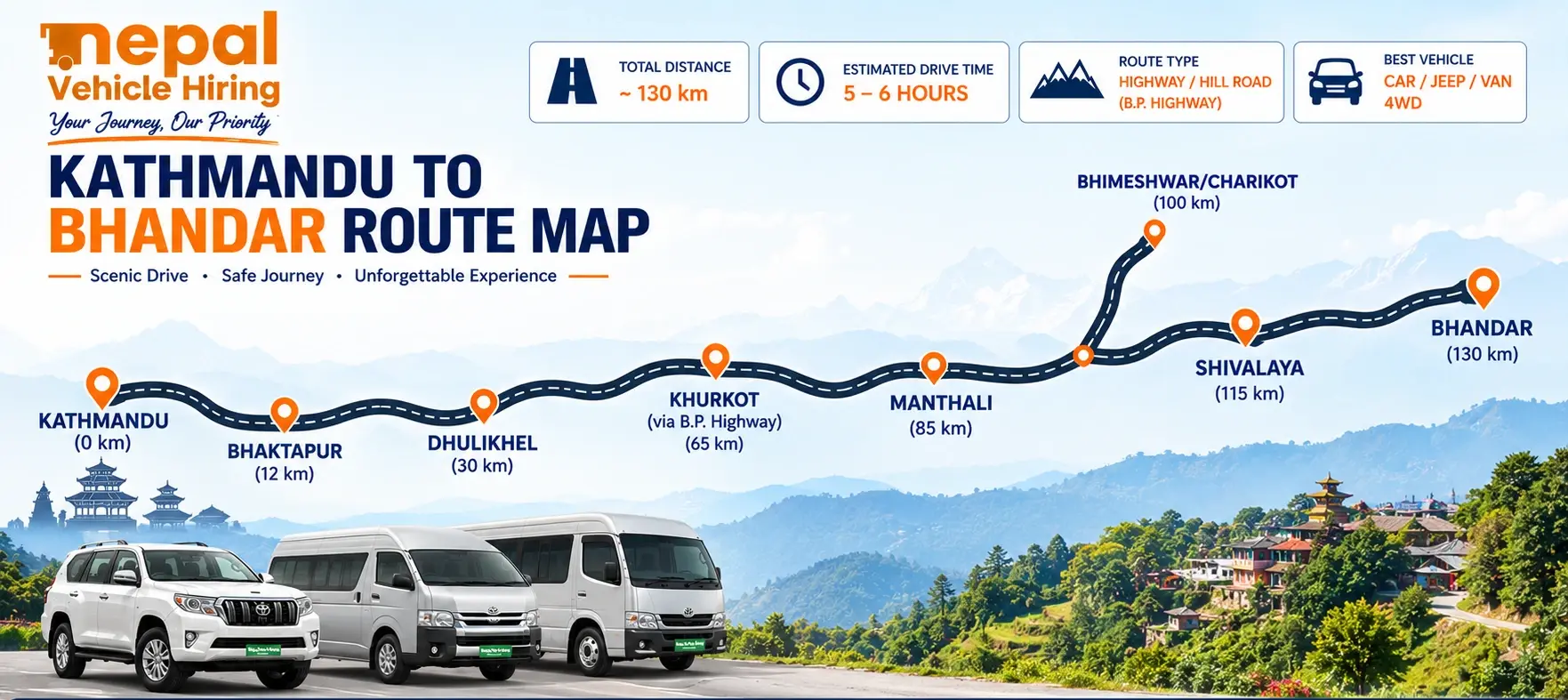
Do I need a 4WD jeep for the Soti Khola route?

Yes — the road from Arughat to Machha Khola includes unpaved sections that require 4WD. Nepal Vehicle Hiring Pvt Ltd uses 4WD Scorpio and Hilux exclusively for this route.

What permits are needed for the Tsum Valley trek?

Tsum Valley Restricted Area Permit (RAP, USD 35/week then USD 20/day), Manaslu Conservation Area Permit (MCAP, USD 30), TIMS card (USD 10-20), and a licensed guide (mandatory). You must obtain all of these in Kathmandu through a registered agency before departure.

Can you combine the Tsum Valley with the Manaslu Circuit?

Yes — the most popular format. The combined trek uses the same Kathmandu-to-Soti Khola jeep approach and exits at Dharapani/Besisahar after crossing the Larkya La. Our Manaslu trek transport service coordinates the exit vehicle.

When is the best time for the Tsum Valley trek?

Spring (March to May) and autumn (October to November). Spring brings rhododendron blooms along the approach trail. October-November offers the best mountain clarity.

Conclusion

The Tsum Valley is Nepal’s Valley of Contentment—and the journey begins with one well-organised transport decision: a reliable 4WD private jeep from Nepal Vehicle Hiring Pvt Ltd, from any Kathmandu hotel to the Soti Khola or Machha Khola trailhead. The 7- to 10-hour road journey through the Prithvi Highway, the Gorkha district connector, and the Budhi Gandaki valley track is the physical bridge between Nepal’s most modern city and one of its most ancient and most carefully preserved highland communities — and it deserves the professional, route-experienced vehicle hire service that Nepal Vehicle Hiring Pvt Ltd provides.

Book your Tsum Valley trek jeep rental from Kathmandu with Nepal Vehicle Hiring Pvt Ltd — call or WhatsApp, visit vehiclehiringnepal.com, or plan your complete Tsum Valley trek transport through our plan trip page.
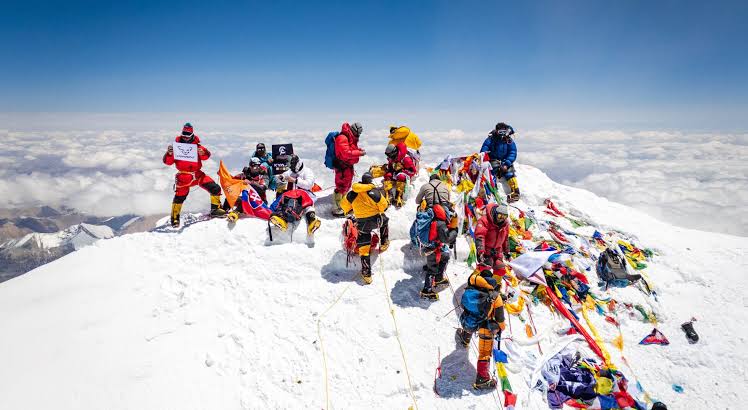
Langtang Gosaikunda Trek Alternative Route Vehicle Hire

Book Langtang Gosaikunda Trek Alternative Route Vehicle Hire with a private 4WD jeep or Scorpio for convenient access to Langtang and Gosaikunda trekking areas. Choose flexible pickup and drop-off options based on the selected trekking route and current road conditions.

Langtang & Gosaikunda Trek Alternative Route Vehicle Hire: Complete  Guide

The Langtang region — home to the Langtang Valley Trek, the Gosaikunda Lake Trek, the Tamang Heritage Trail, and the Helambu Circuit — is Nepal’s most accessible major Himalayan trekking area: entirely within a day’s drive from Kathmandu, served by multiple route options for both approach and exit, and offering a diversity of trekking circuits that can be combined in dozens of different ways to match available time, fitness, and interests. This very flexibility is what makes vehicle hire planning for the Langtang and Gosaikunda region more complex — and more important — than for Nepal’s other major trekking corridors.

Unlike the Everest region (where virtually everyone approaches via the Lukla flight) or the Annapurna Circuit (where Besisahar is the standard approach and Pokhara or Nayapul the standard exit), the Langtang-Gosaikunda region offers genuinely different approach and exit points that require different vehicle hire arrangements, depending on the route combination the trekker chooses. A trekker beginning at Syabrubesi for the Langtang Valley Trek and exiting at Dhunche needs a specific vehicle arrangement.

A trekker beginning at Dhunche for the Gosaikunda Lake Trek and exiting via the Helambu trail through Sundarijal needs a completely different arrangement. A trekker completing the full Langtang-Gosaikunda-Helambu circuit from Syabrubesi to Melamchi needs yet another.

Nepal Vehicle Hiring Pvt Ltd (vehiclehiringnepal.com) provides private jeep, private car, and Hiace van hire for every approach and exit combination the Langtang-Gosaikunda-Helambu trekking network generates. This complete guide covers them all.

This guide is structured around the alternative route perspective: rather than describing a single standard Kathmandu-to-Syabrubesi-and-back vehicle arrangement, it covers all the meaningful entry and exit point combinations — Syabrubesi, Dhunche, Thulo Syabru, Sundarijal, Melamchi Pul Bazaar — with specific vehicle hire options, costs, road character, and practical booking advice for each. Whether you are planning a classic Langtang Valley out-and-back from Syabrubesi, a Gosaikunda approach from Dhunche, a Lauribina Pass crossing to Helambu with an exit at Sundarijal, or the full 14-to-16-day Langtang-Gosaikunda-Helambu circuit from Syabrubesi to Melamchi, this guide gives you the full vehicle-hire picture.

The Langtang-Gosaikunda-Helambu Region: Trekking Routes Overview

The Key Entry and Exit Points

The Langtang-Gosaikunda-Helambu trekking network has four principal vehicle access points — four places where the road meets the trail and where a private vehicle can drop off or pick up trekkers. Understanding these four points and their relationships underpins all alternative route vehicle-hire planning in this region.

Syabrubesi (1,550 m): The primary trailhead for the Langtang Valley Trek and the Tamang Heritage Trail, and one of the two main starting points for the Gosaikunda Lake Trek. Located approximately 122 kilometres north of Kathmandu in the Rasuwa District, at the confluence of the Bhote Koshi and Langtang Khola rivers.

You can reach it in 5 to 9 hours by private vehicle via the Pasang Lhamu Highway through Trishuli and Dhunche.

Dhunche (1,980 m): The Rasuwa District headquarters and the alternative starting point for the Gosaikunda Trek via the Sing Gompa and Lauribina route. Located approximately 100 kilometres north of Kathmandu and 15 kilometres south of Syabrubesi on the same Pasang Lhamu Highway — the road actually passes through Dhunche before descending to Syabrubesi.

Many Gosaikunda-focused trekkers start at Dhunche rather than Syabrubesi, as it saves an extra day of walking and lets them start the ascent toward Gosaikunda immediately from a higher base altitude.

Sundarijal (1,460 m): The exit point for trekkers completing the Helambu circuit or the Langtang-Gosaikunda-Helambu full traverse. Located approximately 25 kilometres northeast of Kathmandu city centre — a short 1-to-1.5-hour drive from Thamel. The easiest and quickest return to Kathmandu from any Langtang region exit point, making the Sundarijal exit the most convenient option for trekkers whose itinerary crosses the Lauribina Pass from Gosaikunda into the Helambu region.

Melamchi Pul Bazaar (870 m): The lower-altitude exit point for trekkers descending from Helambu through Melamchi Gaon and Tarkeghyang to the Melamchi River valley road. Located about 45 to 60 kilometres east of Kathmandu, the Melamchi exit connects via a 3-to-4-hour drive on roads of variable quality back to Kathmandu—longer than the Sundarijal exit but serving trekkers whose itinerary descends through the lower Helambu villages rather than cutting directly to the Kathmandu Valley rim.

The Major Trek Combinations and Their Vehicle Needs

The Langtang Valley Trek out-and-back from Syabrubesi (8 to 12 days): both approach and return vehicle from/to Syabrubesi — same vehicle hire twice (or one vehicle arranged for the outbound and a separate return pickup on the confirmed return date).

The Gosaikunda Lake Trek from Dhunche, return to Dhunche (5 to 7 days): approach vehicle from Kathmandu to Dhunche; return pickup from Dhunche to Kathmandu—most economical round-trip, as Dhunche is 15 km shorter than Syabrubesi.

Langtang Valley plus Gosaikunda via Lauribina (12 to 15 days): approach vehicle from Kathmandu to Syabrubesi; return pickup from Dhunche (descending from Gosaikunda back to Dhunche road) or exit via Sundarijal after Helambu traverse. Open-jaw vehicle arrangement — different vehicle for approach and exit.

Full Langtang-Gosaikunda-Helambu circuit from Syabrubesi to Sundarijal or Melamchi (14 to 18 days): approach vehicle from Kathmandu to Syabrubesi; return vehicle from Sundarijal or Melamchi to Kathmandu. Classic open-jaw arrangement. Nepal Vehicle Hiring Pvt Ltd coordinates both legs as a single booking.

Route 1: Kathmandu to Syabrubesi — The Primary Langtang Approach

Route Overview and Road Conditions

The Kathmandu to Syabrubesi route via the Pasang Lhamu Highway is the most frequently used vehicle hire corridor in the Langtang region—the standard approach for both the Langtang Valley Trek and the combined Langtang-Gosaikunda itinerary, which begins in the Langtang Valley before ascending to the sacred lake. The route follows the Pasang Lhamu Highway northward from Kathmandu through Tokha, Trishuli Bazaar, Betrawati, and Dhunche, then descends the final 15 kilometres to Syabrubesi at 1,550 meters.

The total road distance is approximately 122 to 146 kilometres, depending on routing, and takes 5 to 9 hours depending on road conditions and vehicle type.

The road has two distinct sections: the sealed Kathmandu to Dhunche section (approximately 100 km), which is in generally good condition and navigable by any well-maintained vehicle; and the Dhunche to Syabrubesi final descent (15 km), which is narrower, less consistently maintained, and involves the infamous Ramche Landslide Zone — a 3-kilometre unpaved stretch before Dhunche that is bumpy and potentially muddy after rain. As Nepal Vehicle Hiring Pvt Ltd’s 2026 Syabrubesi jeep comparison guide confirms, 4WD jeeps clearly outperform buses on this section, and private jeeps also use an alternate route via Kakani and Galchhi that is often faster and avoids the worst congestion on the main Pasang Lhamu Highway.

Vehicle Options and Costs: Kathmandu to Syabrubesi 2026/27

Private 4WD jeep (Toyota Land Cruiser / Mahindra Scorpio), 4–6 passengers: NPR 20,000 to NPR 28,000 per vehicle one way (approximately USD 150 to USD 210). This is the most recommended vehicle for the complete Kathmandu to Syabrubesi route — current 2026 market data confirms USD 160 to USD 200 per vehicle for this service.

Nepal Vehicle Hiring Pvt Ltd’s Kathmandu to Syabrubesi jeep transfer service provides Land Cruiser and Scorpio options with drivers specifically experienced on the Pasang Lhamu Highway and the Dhunche-Syabrubesi descent. Per-person cost for 6 passengers: NPR 3,333 to NPR 4,667.

Private car/top-end SUV (Toyota Fortuner, 3–4 passengers): NPR 15,000 to NPR 22,000 per vehicle. Handles the sealed Kathmandu to Dhunche section comfortably but may struggle on the Ramche Landslide Zone section; is recommended for dry-season travel only, with a driver experienced on this specific section. Nepal Vehicle Hiring Pvt Ltd offers private car hire for this route in good road conditions.

Hiace van (8–12 passengers): NPR 25,000 to NPR 32,000 per vehicle. Appropriate for the sealed Kathmandu to Dhunche section; the Dhunche to Syabrubesi descent in variable conditions may require additional care. Nepal Vehicle Hiring Pvt Ltd’s Hiace van hire service serves larger Langtang groups on this corridor with per-person rates among the most economical available for private transport on this route.

Public bus comparison: Daily deluxe buses depart from Machhapokhari (near Gorkha) Bus Park from 6:30 to 8:00, costing about NPR 500 per person and taking 7 to 10 hours. The 2026 ‘local bus’ on this route has been largely replaced by deluxe versions with 2×2 seating and slightly better suspension, though still without air conditioning.

Shared jeeps are available at approximately USD 15 to USD 20 per person but depart only when full.

Tip: For 4 or more passengers, the private jeep’s per-person cost (NPR 4,000 to NPR 5,000 per person for 5 passengers) approaches or beats the shared jeep rate while delivering hotel pickup, departure time flexibility, and the Land Cruiser’s comfort advantage on the demanding final Dhunche-Syabrubesi descent section.

Book Langtang Gosaikunda Trek Alternative Route Vehicle Hire with a private 4WD jeep or Scorpio for convenient access to Langtang and Gosaikunda trekking areas. Choose flexible pickup and drop-off options based on the selected trekking route and current road conditions.

Route 2: Kathmandu to Dhunche — The Gosaikunda Direct Approach

Why Start at Dhunche for Gosaikunda

Dhunche at 1,980 meters is the best vehicle drop-off point for trekkers whose primary destination is Gosaikunda Lake rather than the Langtang Valley. The standard Gosaikunda trekking route from Dhunche follows the ridge trail through Sing Gompa (Chandanbari) at 3,250 meters and Lauribina at 3,920 meters to the sacred lake at 4,380 meters.

This 3-to-4-day ascent gains 2,400 meters from the Dhunche road head. Starting at Dhunche rather than Syabrubesi saves 15 kilometres of road descent and the corresponding 15-kilometre ascent back, making it the more efficient starting point for pure Gosaikunda itineraries.

Dhunche is also the exit point for trekkers who approach Gosaikunda from the Syabrubesi side (ascending via the Langtang Valley and crossing the Lauribina La) and then descend back to Dhunche on the standard trail rather than continuing into Helambu. This Syabrubesi-in / Dhunche-out combination is one of the most commonly booked open-jaw vehicle arrangements for the Langtang-Gosaikunda combination trek — Nepal Vehicle Hiring Pvt Ltd coordinates both the outbound Syabrubesi approach and the Dhunche return pickup as a single booking.

Costs and Vehicle Options: Kathmandu to Dhunche

Private 4WD jeep to Dhunche: NPR 16,000 to NPR 24,000 per vehicle (approximately USD 120 to USD 180) — slightly less than the full Syabrubesi rate as Dhunche is 15 kilometres shorter. Nepal Vehicle Hiring Pvt Ltd’s Kathmandu-to-Syabrubesi jeep service covers Dhunche as an alternative destination on the same route at the corresponding adjusted rate.

Dhunche to Kathmandu return pickup: NPR 16,000 to NPR 24,000 per vehicle for a private 4WD jeep. The return from Dhunche is a 4-to-6-hour drive, depending on road conditions—shorter and marginally less demanding than the full Syabrubesi return, as it avoids the final descent section.

Pre-booking the Dhunche return vehicle at the same time as the outbound Syabrubesi approach is strongly recommended—Nepal Vehicle Hiring Pvt Ltd’s WhatsApp coordination from the trail (confirmable from Dhunche town’s reliable NTC mobile coverage) ensures the return driver is positioned before the trekker descends from the trail.

Route 3: Sundarijal to Kathmandu — The Helambu Exit

Why Exit via Sundarijal

Sundarijal is the quickest and easiest vehicle exit from the Langtang-Gosaikunda-Helambu trekking network back to Kathmandu—a 1-to-1.5-hour drive from the Kathmandu Valley’s northeastern rim —making it by far the fastest return from any Langtang region exit point. Trekkers who complete the Gosaikunda Lake circuit and continue over the Lauribina La (4,610 m) into the Helambu region descend through Ghopte (3,430 m), Melamchi Ghyang (2,530 m), Chisapani (2,215 m), and reach Sundarijal in 3 to 4 additional days beyond Gosaikunda.

The Gosaikunda Lake Trek guide from Travel Himalaya Nepal confirms that the Helambu route descends through Tharepati, Ghopte, and Melamchi Ghyang before reaching Sundarijal at the northern rim of the Kathmandu Valley, where taxis back to Thamel are immediately available.

For the complete Langtang-Gosaikunda-Helambu circuit — beginning at Syabrubesi, traversing the Langtang Valley to Kyanjin Gompa, crossing to Gosaikunda via the Lauribina La, and descending through Helambu to Sundarijal — the Sundarijal exit creates the most convenient and most economical return vehicle arrangement of any Langtang circuit option. Nepal Vehicle Hiring Pvt Ltd provides private car, jeep, or taxi pickup from Sundarijal at any confirmed time — coordinated via WhatsApp notification from the trail as trekkers descend from Chisapani toward the valley rim.

Costs and Vehicles: Sundarijal to Kathmandu

Private car or sedan from Sundarijal to any Kathmandu hotel: NPR 2,500 to NPR 4,000 (approximately USD 19 to USD 30) — the shortest and most economical vehicle return from the Langtang region exit point. Nepal Vehicle Hiring Pvt Ltd’s private car hire service provides this Sundarijal pickup at transparent, all-inclusive rates.

Private jeep from Sundarijal: NPR 4,000 to NPR 6,000 for groups needing larger vehicle capacity. Hiace van for groups of 8 or more: NPR 8,000 to NPR 12,000. The short distance (25 km from Sundarijal to central Kathmandu) makes Sundarijal the most cost-effective exit from any Langtang region endpoint.

For trekkers who want a Dhulikhel or Nagarkot viewpoint stop on the return from Sundarijal — seeing the Himalayan range that the trek has just traversed from the valley rim on the way back — Nepal Vehicle Hiring Pvt Ltd drivers know the optimal ridge road detours from the Sundarijal approach that deliver this panoramic bookend within the same return vehicle journey.

⚠ Note: Trekkers exiting at Sundarijal pass through the Shivapuri-Nagarjun National Park, which requires a separate entry permit (NPR 1,000 for foreigners) in addition to the Langtang National Park permit. Obtain this at the Shivapuri-Nagarjun park checkpoint near Sundarijal on the final descent.

Route 4: Melamchi Pul Bazaar to Kathmandu — The Extended Helambu Exit

The Melamchi Route Character

Melamchi Pul Bazaar (870 m) on the Melamchi River is the alternative Helambu exit for trekkers whose itinerary descends through the lower Helambu villages of Tarkeghyang (2,740 m), Shermathang (2,620 m), and Melamchi Gaon (2,530 m) rather than taking the higher trail toward Chisapani and Sundarijal. The Langtang Gosaikunda Helambu trek guide confirms that the trek typically ends at Melamchi Bazaar or Sundarijal, from where trekkers return to Kathmandu.

The Melamchi exit adds cultural richness — the lower Helambu villages of Tarkeghyang and Shermathang are among the Hyolmo community’s best-preserved traditional settlements — but it results in a longer, more variable vehicle return than the Sundarijal option.

Costs and Vehicles: Melamchi to Kathmandu

Private 4WD jeep from Melamchi Pul Bazaar to Kathmandu: NPR 12,000 to NPR 18,000 per vehicle (3 to 4 hours drive). The road from Melamchi toward Kathmandu follows the Melamchi River valley southward to the Araniko Highway junction and then westward to Banepa and Kathmandu — a Category 1 to Category 2 road of variable quality that rewards a jeep’s ground clearance on some sections.

Nepal Vehicle Hiring Pvt Ltd’s private jeep hire service provides Melamchi pickup at confirmed times pre-arranged via WhatsApp from the trail.

Private car from Melamchi: NPR 8,000 to NPR 14,000 in good road conditions. Hiace van hire for groups of 8 or more: NPR 16,000 to NPR 22,000. The Melamchi return is longer and more expensive than the Sundarijal return. Still, it serves trekkers who prefer the cultural richness of the lower Helambu villages over the quicker ridge-top exit via Chisapani.

Book Langtang Gosaikunda Trek Alternative Route Vehicle Hire with a private 4WD jeep or Scorpio for convenient access to Langtang and Gosaikunda trekking areas. Choose flexible pickup and drop-off options based on the selected trekking route and current road conditions.

Alternative Starting Point: Sundarijal to Gosaikunda via Chisapani

A lesser-known but increasingly popular alternative approach to Gosaikunda begins not at Syabrubesi or Dhunche but at Sundarijal on the Kathmandu Valley’s northeastern rim—starting the Gosaikunda Lake Trek within 25 kilometres of Thamel and ascending through Chisapani, Gul Bhanjyang, Tharepati, and Lauribina to the sacred lake. This Sundarijal-to-Gosaikunda approach takes 5 to 6 days to reach the lake, compared to 3 to 4 days from Dhunche, but starts at a lower altitude and makes the Helambu region’s cultural and landscape diversity an integral part of the approach rather than a post-Gosaikunda extension.

The vehicle hire for the Sundarijal approach is the simplest of any Langtang-Gosaikunda access option: a short private car or taxi from any Kathmandu hotel to Sundarijal at NPR 2,500 to NPR 4,000 — a 1-to-1.5-hour city drive rather than a 5-to-9-hour mountain highway journey. For the return, trekkers who complete the Gosaikunda circuit and retrace to Sundarijal need only the same short Sundarijal-to-Kathmandu return transfer at the corresponding cost.

Trekkers who complete the Sundarijal approach, cross Lauribina to Gosaikunda, and then descend to Dhunche or Syabrubesi by the northern route need a Dhunche or Syabrubesi return vehicle — the open-jaw reverse of the standard Syabrubesi-in / Sundarijal-out arrangement.

Route Summary Table: All Vehicle Hire Options at a Glance

RouteDistanceDrive TimeBest Vehicle2026/27 Cost (NPR)
Kathmandu to Syabrubesi122–146 km5–9 hours4WD JeepNPR 20,000–28,000
Kathmandu to Dhunche100 km4–6 hours4WD Jeep or CarNPR 16,000–24,000
Dhunche to Kathmandu100 km4–6 hours4WD Jeep or CarNPR 16,000–24,000
Syabrubesi to Kathmandu122–146 km5–9 hours4WD JeepNPR 20,000–28,000
Sundarijal to Kathmandu25 km1–1.5 hoursCar or TaxiNPR 2,500–4,000
Melamchi Pul Bazaar to Kathmandu45–60 km3–4 hoursJeep or CarNPR 12,000–18,000
Kathmandu to Sundarijal (approach)25 km1–1.5 hoursCar or TaxiNPR 2,500–4,000

The Ramche Landslide Zone: What Every Trekker Should Know

The Ramche Landslide Zone — a 3-kilometre unpaved section of the Pasang Lhamu Highway between Ramche village and Dhunche — is the most discussed road-condition feature on the Kathmandu to Syabrubesi/Dhunche approach corridor, and understanding it helps trekkers make informed vehicle-hire choices. Nepal Vehicle Hiring Pvt Ltd’s  Syabrubesi guide confirms that every vehicle on the Kathmandu to Syabrubesi route must pass through the Ramche Landslide Zone regardless of routing — it is unavoidable on the Pasang Lhamu Highway.

Thee road through this zone is better maintained than in previous years but remains unpaved and bumpy, with 4WD jeeps having a clear advantage over buses in wet or post-monsoon conditions. The zone typically takes 30 to 45 minutes of slow, rough driving in a 4WD jeep.

It is considerably less comfortable in a bus or shared vehicle with suspension less suited to the unpaved surface.

The practical vehicle-hire implication: the Ramche Landslide Zone is the strongest argument for choosing a 4WD jeep over a bus or shared jeep for the Kathmandu to Syabrubesi or Kathmandu to Dhunche journey. The jeep’s higher ground clearance, superior suspension, and 4WD capability make this section noticeably more comfortable and reliable than alternatives—and during or immediately after heavy monsoon rainfall, the surface can deteriorate enough that a 4WD jeep is not merely preferable but genuinely necessary for consistent passage.
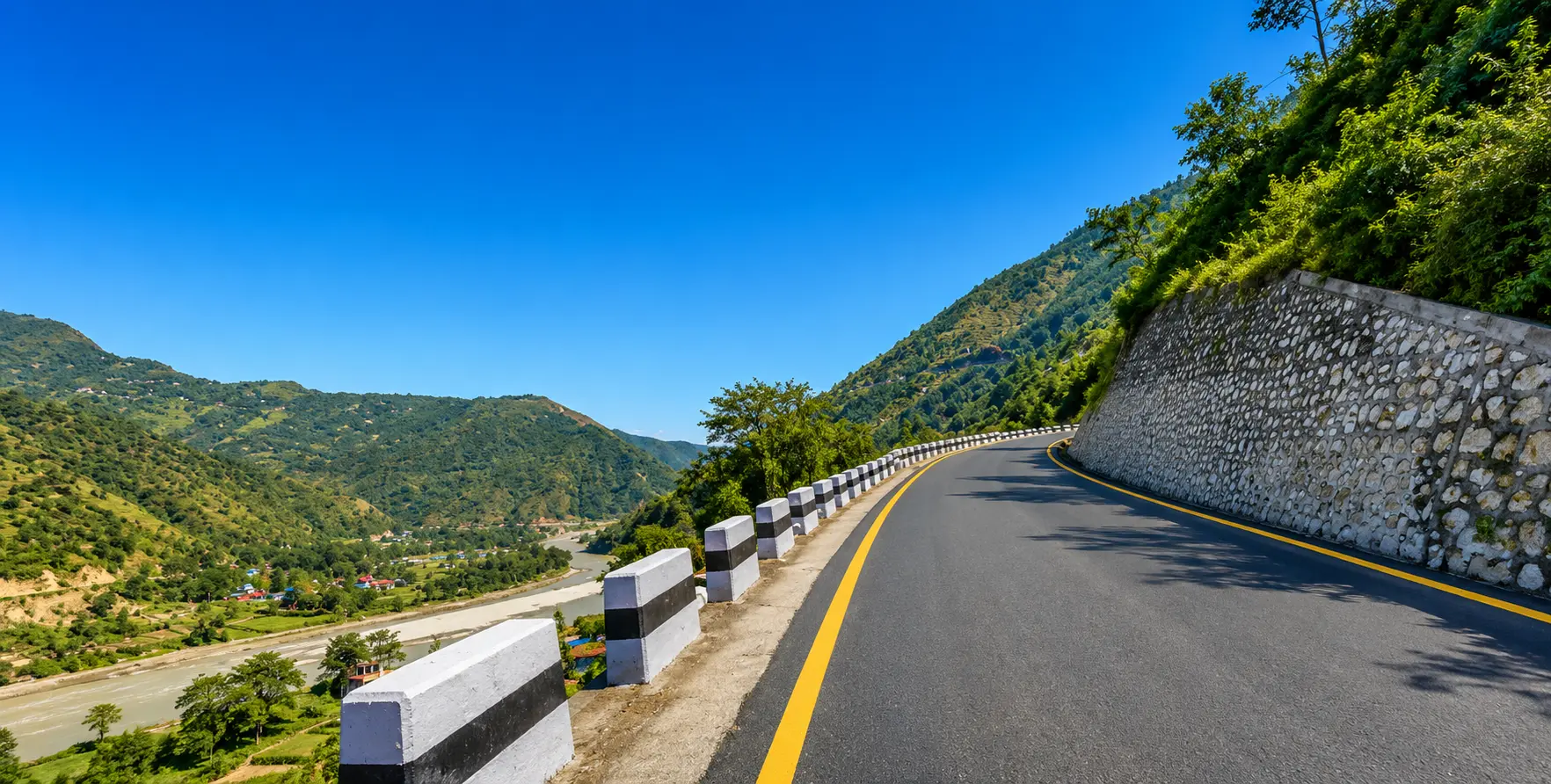
Book Langtang Gosaikunda Trek Alternative Route Vehicle Hire with a private 4WD jeep or Scorpio for convenient access to Langtang and Gosaikunda trekking areas. Choose flexible pickup and drop-off options based on the selected trekking route and current road conditions.

Seasonal Vehicle Hire Guide for Langtang-Gosaikunda Routes

Autumn from September through November is the best trekking and vehicle-hire season for the Langtang-Gosaikunda region—post-monsoon road surfaces at their annual best, mountain views at maximum clarity, and the Ramche Landslide Zone in its most stable condition of the year. October is the peak month for vehicle demand — book Syabrubesi and Dhunche private jeep transfers 1 to 2 weeks in advance during this period.

Spring from March through May brings the rhododendron bloom season on Langtang National Park’s forested approach ridges—the Kathmandu to Syabrubesi drive’s forested sections turn spectacular in March and April as red, white, and pink rhododendron flowers line the roadside. Road conditions are generally good in spring, and the Gosaikunda Lake Trek in April and May offers the finest combination of high-altitude snow scenery and warm mid-altitude approach forests.

Monsoon from June through August brings the highest risk of road disruption on the Pasang Lhamu Highway, with the Ramche Landslide Zone’s condition most variable after sustained heavy rainfall. Nepal Vehicle Hiring Pvt Ltd monitors road conditions daily during monsoon season and advises clients on departure timing adjustments when specific sections are affected.

The famous Janai Purnima pilgrimage to Gosaikunda falls within the monsoon window—helicopter access becomes the primary pilgrimage option during the festival. In contrast, road access remains available for hardy trekking pilgrims who choose the traditional walking approach.

Winter from December through February is cold but generally road-safe on the main Pasang Lhamu Highway, with the Gosaikunda Lake itself frozen and the higher Lauribina La pass potentially snow-affected. Vehicle hire for winter Langtang Valley trekking (lower altitude than Gosaikunda) continues through the winter months as the valley’s main section is accessible year-round.

Practical Tips for Alternative Route Vehicle Hire

  • Book both legs simultaneously — if your itinerary is open-jaw (Syabrubesi in, Sundarijal or Melamchi out), book both the outbound and return vehicles in one Nepal Vehicle Hiring Pvt Ltd booking before the trek begins.
  • Confirm the exact pickup point—Syabrubesi town, the Dhunche bus park, the Sundarijal trailhead, or Melamchi Pul Bazaar’s market area—and the driver must know the specific meeting point in advance.
  • WhatsApp the return date confirmation from the first town with reliable connectivity on the descent — Dhunche, Melamchi Gaon, or Chisapani all have adequate NTC signal for trail communication.
  • For monsoon season travel, depart Kathmandu by 6:00 a.m. at the latest — early morning departures beat the worst of the afternoon rainfall that affects road conditions on the Ramche and Dhunche-Syabrubesi sections.
  • Carry dust protection — a buff or face mask is essential for the Ramche Landslide Zone’s unpaved section, which generates significant dust in dry conditions and mud in wet conditions.
  • Motion sickness preparation — the Pasang Lhamu Highway’s 1,000-plus turns are frequently cited as among Nepal’s most challenging for susceptible passengers; carry appropriate medication.
  • For Sundarijal exit trekkers: arrange a return pickup for 11:00 a.m. or later — the final trail stage from Chisapani to Sundarijal takes about 3 to 4 hours, and a departure from Chisapani gets trekkers to Sundarijal by midday, leaving enough time for vehicle pickup and avoiding the day’s heat.
  • Confirm all-inclusive vehicle pricing at booking — Nepal Vehicle Hiring Pvt Ltd’s rates cover vehicle, driver, fuel, and tolls with no hidden additions at settlement.

Book Langtang Gosaikunda Trek Alternative Route Vehicle Hire with a private 4WD jeep or Scorpio for convenient access to Langtang and Gosaikunda trekking areas. Choose flexible pickup and drop-off options based on the selected trekking route and current road conditions.

Nepal Vehicle Hiring Pvt Ltd: Complete Langtang Region Transport Network

Nepal Vehicle Hiring Pvt Ltd provides the most comprehensive private vehicle hire network for the Langtang-Gosaikunda-Helambu trekking region — covering every approach and exit combination from a single, professionally managed fleet of 4WD jeeps, private cars, Hiace vans, coasters, and buses. Our Kathmandu to Syabrubesi jeep transfer service is the most established private vehicle service on this corridor, with drivers who complete this route multiple times per week and know the Ramche Landslide Zone’s current condition better than any single-journey driver can.

Beyond the Langtang corridor, our complete trekking transport network covers every region of Nepal: Kathmandu to Besisahar and Kathmandu to Manang jeep for the Annapurna Circuit Trek. Kathmandu to Soti Khola jeep for the Manaslu Circuit Trek. Kathmandu to Salleri Phaplu for the Everest Base Camp Trek overland.

Kathmandu to Muktinath jeep for the Muktinath Tour. Pokhara to Nayapul transport and Pokhara to Ghandruk jeep for the Annapurna Base Camp Trek. Pokhara to Ghorepani Poon Hill jeep for the Ghorepani Poon Hill Trek.

Pokhara to Upper Mustang overland jeep for the Upper Mustang Trek. Kathmandu airport transfer, Kathmandu sightseeing, Nagarkot sunrise tour, Bhaktapur day tour, Sarangkot sunrise vehicle, Pokhara car hire, and Kathmandu to Pokhara private vehicle. Our Nepal tour packages and trekking transport services coordinate complete multi-stage journeys.

Plan your trip or contact us at +977 981-4227196 (WhatsApp). Visit vehiclehiringnepal.com to book.

The Langtang Valley Trek in Detail: What Vehicle Trekkers Are Heading Toward

Understanding the full Langtang Valley Trek experience helps trekkers appreciate why the vehicle hire arrangement that begins the journey matters so much. The quality of the approach vehicle sets the energy level for the first day’s trekking; arriving at Syabrubesi rested and comfortable in a Land Cruiser is far better than arriving tired and dusty after a 9-hour bus journey.

The Langtang Valley Trek from Syabrubesi takes 7 to 12 days for the standard circuit, ascending the Langtang Khola valley through bamboo and rhododendron forest to the high-alpine landscape of Langtang Village (3,307 m) and the extraordinary glacier valley of Kyanjin Gompa (3,870 m).

From Kyanjin Gompa, the trek’s two most spectacular optional extensions reward trekkers with investment in additional altitude: Kyanjin Ri (4,773 m) for a 360-degree panorama of the Langtang Himal including the dramatic Langtang Lirung at 7,227 m; and Tserko Ri (4,984 m) for one of the finest mountain viewpoints accessible on a non-technical day hike anywhere in the Nepal Himalaya — the complete arc of the Langtang range, the Tibetan plateau visible to the north, and the Gosaikunda massif to the south all visible simultaneously on clear mornings. The return to Syabrubesi from Kyanjin Gompa takes 3 to 4 days of descent, with an alternative descent via Thulo Syabru connecting to the Gosaikunda approach trail for trekkers combining both destinations.

The Langtang Valley’s cultural dimension adds a depth that the purely physical mountain experience does not fully capture. The valley’s Tamang and Tibetan communities—some of the most culturally intact high-altitude Buddhist communities in Nepal outside restricted-zone areas—have rebuilt their settlements after the catastrophic 2015 earthquake with remarkable speed and determination.

Langtang Village, almost destroyed by the earthquake-triggered avalanche, has been rebuilt with international support and is now a viable trekking stop, with a rebuilt monastery and traditional guesthouses that welcome visitors in an atmosphere that honours the tragedy of 2015 and the community’s determined recovery. The Langtang Valley Trek in 2026 and 2027 combines Himalayan mountain grandeur with the unique human quality of a community that has faced and survived catastrophe.

This dimension makes the Langtang experience meaningfully different from, and in some ways more moving than, the more famous Nepal trekking circuits whose communities haven’t shared this history.

Book Langtang Gosaikunda Trek Alternative Route Vehicle Hire with a private 4WD jeep or Scorpio for convenient access to Langtang and Gosaikunda trekking areas. Choose flexible pickup and drop-off options based on the selected trekking route and current road conditions.

The Gosaikunda Lake Trek: Sacred Route in Full Detail

The Gosaikunda Lake Trek from Dhunche follows one of Nepal’s finest ridge-top trekking routes, ascending the Lauribina ridge through Langtang National Park’s high-altitude shrubbery and tundra to a cluster of sacred lakes at 4,380 meters, with mountain views expanding as the trail gains altitude. Day 1 from Dhunche reaches Sing Gompa (Chandanbari) at 3,250 meters through dense rhododendron and oak forest —a5-to-6-hour walk that gains 1,270 meters and ends at a small community famous for its traditional cheese factory t, which produces yak-milk cheese for the Kathmandu market.

Sing Gompa cheese is worth buying for the high-altitude days ahead, and the settlement’s all-monastery feel suggests an early encounter with the devotional character that intensifies as the trail approaches the sacred lake.

Day 2 from Sing Gompa climbs steeply through the transition zone between forest and high-alpine tundra to Lauribina (3,920 m) — a simple teahouse stop on the exposed ridgeline where the first views of the Gosaikunda massif’s glaciated peaks appear above the terrain ahead, and the Langtang Himal becomes visible to the north in its full extent. The camping ground at Lauribina Yak is a popular overnight stop for trekkers who want to reach Gosaikunda the next morning with fresh legs rather than arriving at the lake late on Day 2. Day 3 from Lauribina reaches Gosaikunda Lake (4,380 m) in 2 to 3 hours — the approach through a lunar landscape of rock, permanent snow patches, and glacial meltwater streams creating a progressive sensory preparation for the sacred lake’s turquoise waters that open suddenly below the final ridgeline.

The sacred lake’s immediate surroundings — the principal Shiva shrine at the eastern shore, the smaller associated lakes of Saraswatikunda and Bhairavkunda visible from the main lake’s rim, and the permanent snowfields reflecting in the water on still mornings — create an encounter with the Himalayan sacred geography that few other destinations in Nepal can replicate.

From Gosaikunda, trekkers have three onward options that generate different vehicle hire requirements: (1) retrace to Dhunche (2 to 3 days, return vehicle from Dhunche); (2) cross the Lauribina La (4,610 m) into Helambu and exit at Sundarijal (3 to 4 additional days, vehicle from Sundarijal); or (3) continue the complete Langtang-Gosaikunda-Helambu circuit to Melamchi Pul Bazaar (4 to 5 additional days, vehicle from Melamchi). Nepal Vehicle Hiking Pvt Ltd coordinates the return or exit vehicle for all three options — the key is communicating the chosen option at the time of the outbound booking so the return vehicle arrangement is prepared before the trek begins rather than improvised from the trail.

The Helambu Region: Nepal’s Most Accessible Himalayan Cultural Landscape

The Helambu region — the high country immediately north of the Kathmandu Valley in the Sindhupalchok and Kavrepalanchok districts — is Nepal’s most conveniently accessible Himalayan cultural trekking destination: close enough to Kathmandu to be reached by 1 to 2 hours of vehicle travel from the city, yet sufficiently elevated and remote to deliver authentic Hyolmo Buddhist cultural encounters and Himalayan landscape quality that justify the trekking investment. The Helambu circuit’s main cultural attractions are the Hyolmo communities—a Tibetan-origin Buddhist people whose traditional architecture, painted monasteries, and high-altitude agricultural practices have survived with considerable cultural integrity in the villages of Tarkeghyang (2,740 m), Shermathang (2,620 m), and Melamchi Gaon (2,530 m).

For trekkers who complete the full Langtang-Gosaikunda-Helambu traverse and descend through these lower Helambu villages to Melamchi Pul Bazaar, the cultural dimension of the final days creates a compelling reason to choose Melamchi over Sundarijal as the exit point — the ridge-top Sundarijal route is faster. Still, it skips the finest Helambu cultural encounters available in the lower-valley settlements.

Nepal Vehicle Hiring Pvt Ltd’s private jeep hire from Melamchi Pul Bazaar to Kathmandu serves trekkers choosing this culturally richer exit with a 3-to-4-hour return drive at NPR 12,000 to NPR 18,000 — the additional cost and time relative to the Sundarijal option are modest compared to the cultural richness of the lower Helambu villages that the Melamchi exit includes. Our Nepal tour packages include the complete Langtang-Gosaikunda-Helambu circuit as one of Nepal’s finest multi-region trekking programs, with coordinated vehicle hire for every stage, from the initial Kathmandu-to-Syabrubesi outbound transfer through the final Melamchi or Sundarijal return.

Combining Langtang-Gosaikunda with Nepal’s Other Great Treks

The Langtang-Gosaikunda region’s proximity to Kathmandu makes it an ideal starting or ending point for extended Nepal trekking adventures that combine this region with one or more of Nepal’s other great circuits. A common combination for trekkers with 3 to 4 weeks in Nepal is Langtang-Gosaikunda followed by the Annapurna Base Camp Trek or the Ghorepani Poon Hill Trek — completing the Langtang circuit at Sundarijal, returning to Kathmandu by private car, spending 2 days in Kathmandu for rest and cultural sightseeing, and then taking our Kathmandu-to-Pokhara private vehicle for the second trekking phase from Pokhara.

Nepal Vehicle Hiring Pvt Ltd coordinates the complete inter-city vehicle arrangement — including the Kathmandu sightseeing day between trekking phases — as a single unified booking.

For trekkers combining Langtang with the Manaslu Circuit Trek — both being northern Nepal circuits accessible from Kathmandu by road — Nepal Vehicle Hiring Pvt Ltd provides the Kathmandu to Syabrubesi jeep for the Langtang approach and the Kathmandu to Soti Khola jeep service for the subsequent Manaslu approach, with a Kathmandu rest period between the two circuits coordinated by our airport transfer and city sightseeing vehicles. We can add the Three Passes Trek and Gokyo Lake Trek in the Khumbu region as a third circuit for the most ambitious multi-region Nepal trekking programs, served by our Kathmandu-to-Salleri Phaplu overland service or the Ramechhap Airport jeep transfer for the Lukla flight approach.

Our plan-your-trip service coordinates the full multi-trek vehicle arrangement from a single booking.

Vehicle Hire Safety and Driver Standards on the Pasang Lhamu Highway

The Pasang Lhamu Highway to Syabrubesi and Dhunche is one of Nepal’s most scenically rewarding but also most technically demanding mountain approach roads — and the driver’s specific experience on this corridor is as important as the vehicle’s mechanical capability in determining the quality and safety of the journey. Nepal Vehicle Hiring Pvt Ltd assigns drivers to the Syabrubesi and Dhunche approaches exclusively from among those who have completed these routes multiple times — drivers who know the current condition of the Ramche Landslide Zone, who know which sections are most affected by rain in the morning versus the afternoon, and who know the specific passing places and priority protocols on the narrow sections of the Dhunche to Syabrubesi descent that require reverse manoeuvring for oncoming traffic.

Vehicle preparation for this specific corridor includes pre-journey checks of tyre condition and pressure (the rough sections demand adequate tread depth), brake performance (the descent to Syabrubesi involves sustained downhill driving where brake reliability is safety-critical), and 4WD system engagement (ensuring that the vehicle’s 4WD is immediately functional when the Ramche section or the Dhunche descent demands it). Every Nepal Vehicle Hiring Pvt Ltd jeep hired for the Syabrubesi approach undergoes these pre-journey checks.

This standard separates professional operators from casual hire arrangements whose vehicles may not meet the Pasang Lhamu Highway’s specific demands.

For trekkers travelling in the monsoon season or immediately after heavy rainfall, Nepal Vehicle Hiring Pvt Ltd additionally contacts local road condition sources before confirming the departure time — road authority contacts and local operators with same-day information about the Ramche section’s current condition allow us to adjust departure timing (earlier departures before afternoon rainfall peaks) or recommend a one-day delay when specific conditions make the journey inadvisable. This road-condition intelligence capability, built on years of operating on this corridor, gives Nepal Vehicle Hiring Pvt Ltd clients a practical safety advantage over trekkers who arrange transport through operators without established Pasang Lhamu Highway contacts.

Langtang National Park Permits and Vehicle Hire Coordination

The Langtang Valley Trek and the Gosaikunda Lake Trek both require entry into Langtang National Park, which demands a Langtang National Park Entry Permit (NPR 3,000 for foreign nationals, NPR 1,500 for SAARC nationals) obtainable from the Nepal Tourism Board in Kathmandu before departure. All foreign trekkers also need a TIMS card (Trekkers’ Information Management System).

Both permits are available from the Nepal Tourism Board office at Bhrikutimandap in central Kathmandu — allow 1 to 2 hours for complete permit processing.

Nepal Vehicle Hiking Pvt Ltd coordinates permit processing timing with vehicle departure scheduling—many Langtang-bound trekking groups obtain their permits the afternoon before the planned vehicle departure and depart the following morning at 6:00 7:00 a.m., or when road conditions are best. Our contact team can advise on the Nepal Tourism Board’s current operating hours and any changes to permit requirements when you confirm your vehicle booking.

For trekkers exiting via Sundarijal through the Shivapuri-Nagarjun National Park, a separate park entry permit (NPR 1,000 for foreigners) is required and is obtainable at the Shivapuri-Nagarjun checkpoint at the Sundarijal trailhead on the descent — Nepal Vehicle Hiring Pvt Ltd drivers for the Sundarijal pickup are familiar with this checkpoint and can advise on timing.

For groups combining the Langtang-Gosaikunda trek with a Kathmandu cultural day before or after, Nepal Vehicle Hiring Pvt Ltd’s complete city service network covers Kathmandu sightseeing by private vehicle, the Nagarkot sunrise tour for the Himalayan panorama including the Langtang and Gosaikunda massifs on the northern horizon, the Bhaktapur Durbar Square day tour for medieval Newar heritage immersion, and the Nagarkot vehicle hire for the valley-rim viewpoint at any time of day. Our Kathmandu airport transfer service connects arriving trekkers directly from Tribhuvan International to their hotel, beginning every Langtang-Gosaikunda adventure on the right door-to-door note.

Contact Nepal Vehicle Hiring Pvt Ltd at +977 981-4227196 (WhatsApp/Viber) to coordinate the complete Langtang-Gosaikunda alternative route vehicle hire — outbound and return, open-jaw or round-trip, private jeep or group Hiace — all with transparent all-inclusive pricing and experienced Pasang Lhamu Highway drivers. Visit vehiclehiringnepal.com to book.

Frequently Asked Questions

The Langtang-Gosaikunda-Helambu trekking region offers Nepal’s finest combination of accessibility and Himalayan wilderness—close enough to Kathmandu to reach by vehicle in a single day, yet remote and scenically spectacular enough to deliver the complete mountain adventure trekkers come to Nepal for. The alternative route vehicle hire options covered in this guide — Syabrubesi, Dhunche, Sundarijal, and Melamchi — give every trekker the transport flexibility their itinerary requires, coordinated by Nepal Vehicle Hiring Pvt Ltd’s experienced team through a single WhatsApp contact at +977 981-4227196. Every Langtang trail leads somewhere extraordinary — and the right private vehicle gets you there and brings you home.

Nepal Vehicle Hiring Pvt Ltd’s transparent, all-inclusive pricing, route-experienced drivers, and WhatsApp coordination make us the most reliable choice for Langtang-Gosaikunda alternative route vehicle hire. Book both legs before your trek begins and focus entirely on the mountains.

What is the best vehicle for Kathmandu to Syabrubesi in 2026?

A private 4WD jeep—Toyota Land Cruiser or Mahindra Scorpio—is the clear recommendation for the full Kathmandu to Syabrubesi route. The Ramche Landslide Zone’s unpaved section and the Dhunche-Syabrubesi descent both reward 4WD capability and high ground clearance. Nepal Vehicle Hiring Pvt Ltd’s Kathmandu-to-Syabrubesi jeep transfer costs NPR 20,000 to NPR 28,000 per vehicle (USD 150 to USD 210), all-inclusive.

Can I start the Gosaikunda Trek from Dhunche instead of Syabrubesi?

Yes — Dhunche is the ideal starting point for the Gosaikunda Lake Trek without the Langtang Valley extension. The Kathmandu to Dhunche vehicle hire costs US$160 per vehicle, slightly less than the full Syabrubesi rate. Nepal Vehicle Hiring Pvt Ltd’s Kathmandu-to-Syabrubesi jeep service covers Dhunche as an alternative destination at the adjusted shorter-distance rate.

How do I get from Sundarijal back to Kathmandu after the Helambu trek?

Sundarijal is only 25 kilometres from central Kathmandu — a 1-to-1.5-hour drive. A private car hire from Sundarijal to any Kathmandu hotel costs NPR 2,500 to NPR 4,000. Nepal Vehicle Hiking Pvt Ltd provides pre-arranged Sundarijal pickup—book it with the outbound Syabrubesi transfer, and WhatsApp the return date confirmation from Chisapani on the descent.

How long does the drive from Kathmandu to Syabrubesi take?

5 to 9 hours depending on vehicle type, road conditions, and season. Private jeeps via the alternate Kakani-Galchhi route typically take 5 to 7 hours; buses take 7 to 10 hours. As Nepal Vehicle Hiring Pvt Ltd’s route guide confirms, the private jeep also benefits from a faster alternate route that buses cannot use — a meaningful time saving on what is already one of Nepal’s longer standard trekking approach drives.

What is the best exit route from the Langtang-Gosaikunda-Helambu circuit?

Sundarijal is the quickest and cheapest exit — 25 km from Kathmandu, 1 to 1.5 hours drive, NPR 2,500 to NPR 4,000 private car. Melamchi Pul Bazaar is the alternative for trekkers descending through lower Helambu villages — 45 to 60 km from Kathmandu, 3 to 4 hours, NPR 12,000 to NPR 18,000 private jeep.

Nepal Vehicle Hiring Pvt Ltd offers both options with pre-arranged pickup. The Langtang Valley Trek guide recommends Sundarijal for time efficiency and Melamchi for cultural completeness.

Can I combine the Langtang Valley Trek and Gosaikunda in one trip?

Yes — the combined Langtang Valley and Gosaikunda Trek takes 12 to 15 days, beginning at Syabrubesi and ascending the Langtang Valley to Kyanjin Gompa before crossing back via Thulo Syabru to the Gosaikunda approach. Nepal Vehicle Hiring Pvt Ltd coordinates the Syabrubesi outbound transfer and the Dhunche or Sundarijal return in a single booking — contact us at +977 981-4227196 to arrange the complete open-jaw vehicle arrangement.

Conclusion: The Right Vehicle for Every Langtang Route

The Langtang-Gosaikunda-Helambu trekking network’s greatest strength—its multiple access and exit points—also creates genuine vehicle-hire planning complexity, which Nepal Vehicle Hiking Pvt Ltd resolves with transparent, route-specific private vehicle services for every combination. Whether your trek begins at Syabrubesi and ends at Sundarijal, begins at Dhunche and returns to Dhunche, or begins at Sundarijal and exits at Melamchi — the right 4WD jeep, private car, or Hiace van is available from Nepal Vehicle Hiring Pvt Ltd with transparent, all-inclusive pricing, experienced route drivers, and the WhatsApp coordination that keeps your return vehicle confirmed throughout your trek.

Contact our team at +977 981-4227196 or visit vehiclehiringnepal.com to book your Langtang-Gosaikunda alternative route vehicle hire today. Plan your complete Langtang trekking journey — from the first jeep to the last valley view.

Chat with us