Kathmandu to Jhinu Danda Jeep Rental: Complete Guide

Kathmandu to Jhinu Danda jeep rental

Kathmandu to Jhinu Danda Jeep Rental— Quick Reference

Total distance: about 260 km — roughly 200 km from Kathmandu to Pokhara, then about 50 to 60 km of hill road
Driving time: about 9 to 11 hours in total; most travelers split it with a night in Pokhara
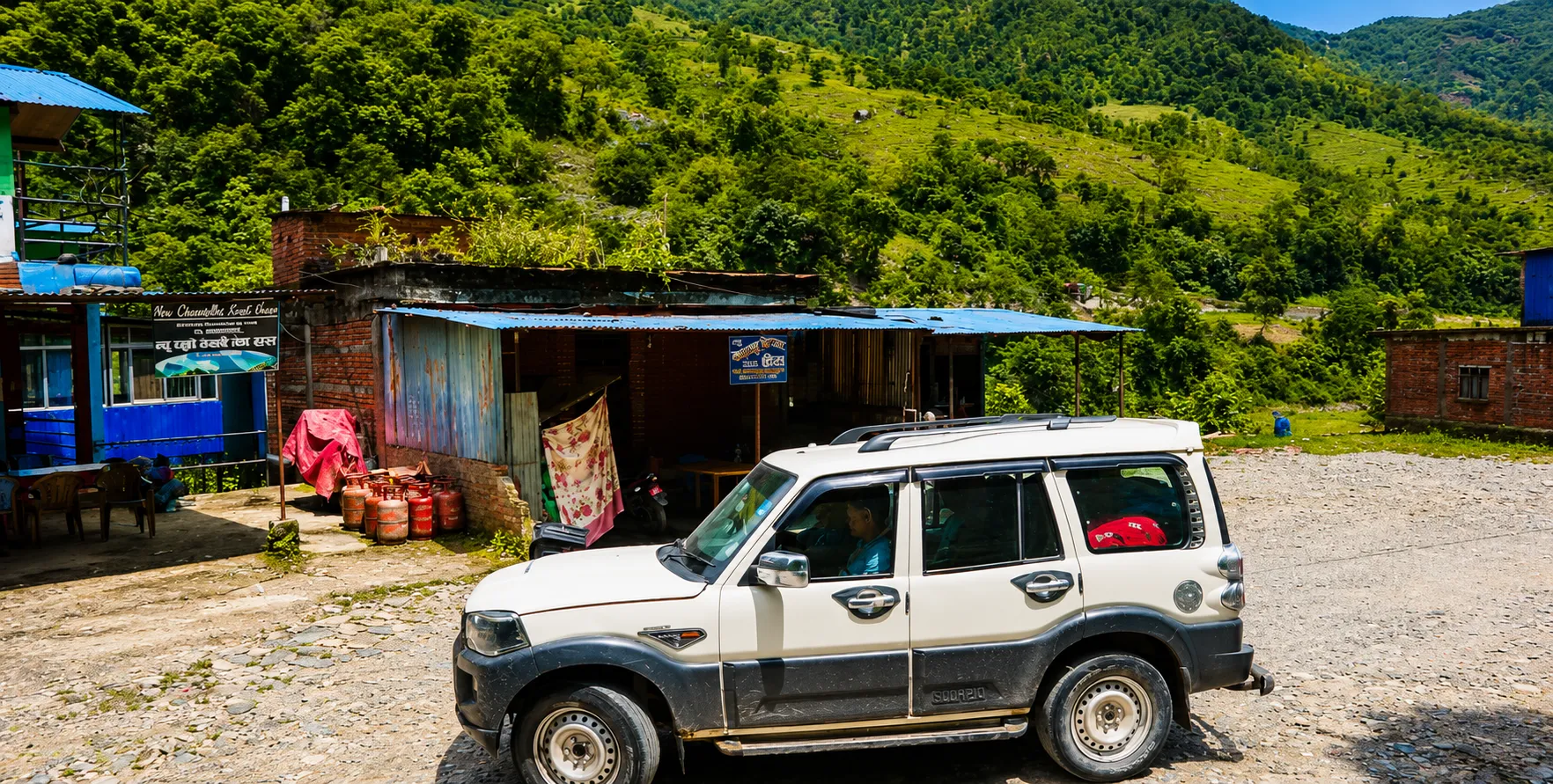
Vehicle: jeep (Scorpio or Bolero 4WD) for the hill road; a car is fine for the highway section
Road end: the drivable road stops close to Jhinu Danda, with a short walk to the village
Hot springs: a downhill walk of roughly 30 to 40 minutes from the village to the river
Permits: Annapurna Conservation Area permit and TIMS card are normally required.
Indicative jeep price, Kathmandu to the Jhinu Danda road end: about USD 190 to USD 250 one way
Book: Nepal Vehicle Hiring Pvt. Ltd. | WhatsApp | [email protected]

Introduction: A Village, a River and the Best Hot Soak in the Annapurna

Jhinu Danda is a small hillside village in the Annapurna Conservation Area, famous for one simple pleasure: natural hot springs beside a mountain river. Trekkers on the Annapurna Base Camp route reach it after days of climbing and sink gratefully into the warm pools below the village.

But you do not have to trek for a week to enjoy it. With a well-planned Kathmandu to Jhinu Danda jeep rental, you can travel from the capital to the edge of the Annapurna foothills in one comfortable journey, walk a short trail to the hot springs, and return to Pokhara or Kathmandu with mountain air still in your lungs.

This guide is written for travelers who want to do it properly. It explains where Jhinu Danda is, how the route from Kathmandu really works, why a jeep is the right vehicle, what the road end looks like, how long the journey takes, how to split it sensibly, which permits you need, when to go, and what to pack.

It also shows how our team at Nepal Vehicle Hiring Pvt. Ltd. can arrange the whole journey, with a car for the highway, a Scorpio or Bolero jeep for the hill road, and a Hiace van or Coaster bus for larger groups. Prices are given in US dollars as realistic ranges.

Everything is written to stay useful for years, so confirm the final figure when you book.

A note on spelling: you will see the village written as Jhinu Danda, Jhinudanda, Jhinu Dada, nd sometimes Jhino Danda. They all mean the same place. If you would like us to build a plan around your dates, message us on WhatsApp or write to [email protected].
Kathmandu to Jhinu Danda jeep rental

Where Is Jhinu Danda and Why Do People Go?

Location, Altitude and Setting

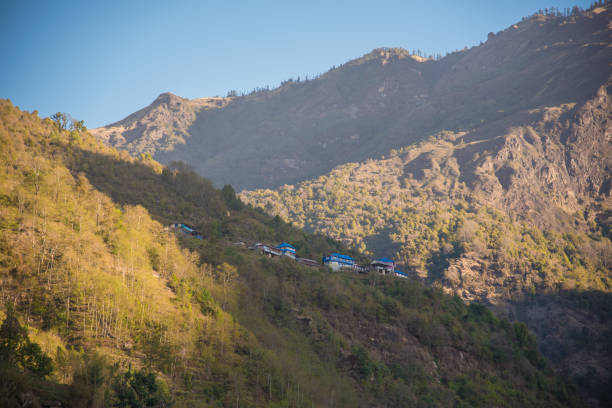
Jhinu Danda sits in the Kaski District of the Annapurna region, perched on a ridge above the Modi Khola River at roughly 1,780 meters above sea level. The hot springs themselves lie lower, beside the river at about 1,550 meters, which is why the visit involves a walk down to the water and a climb back up.

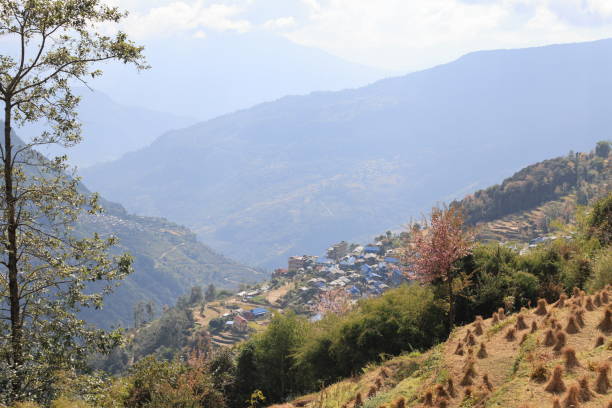
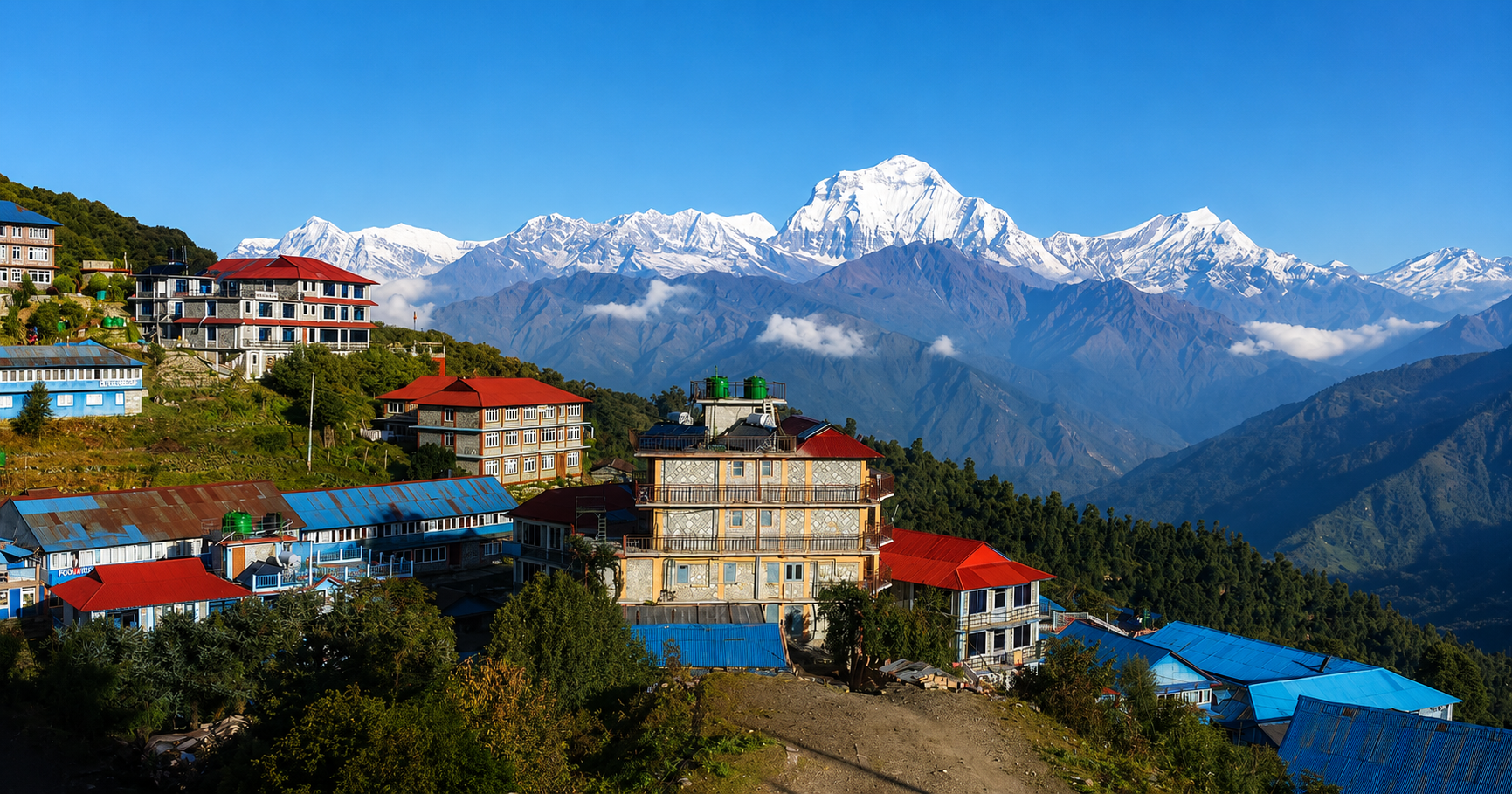
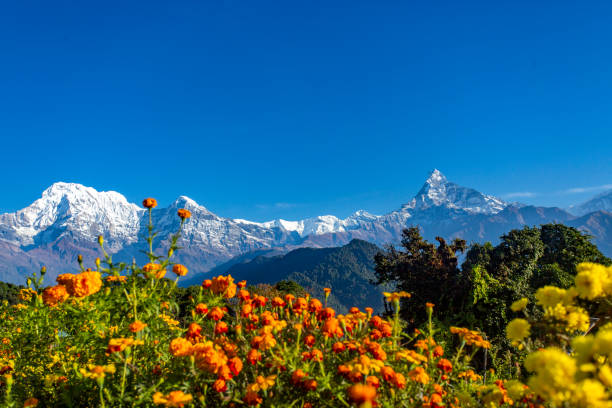
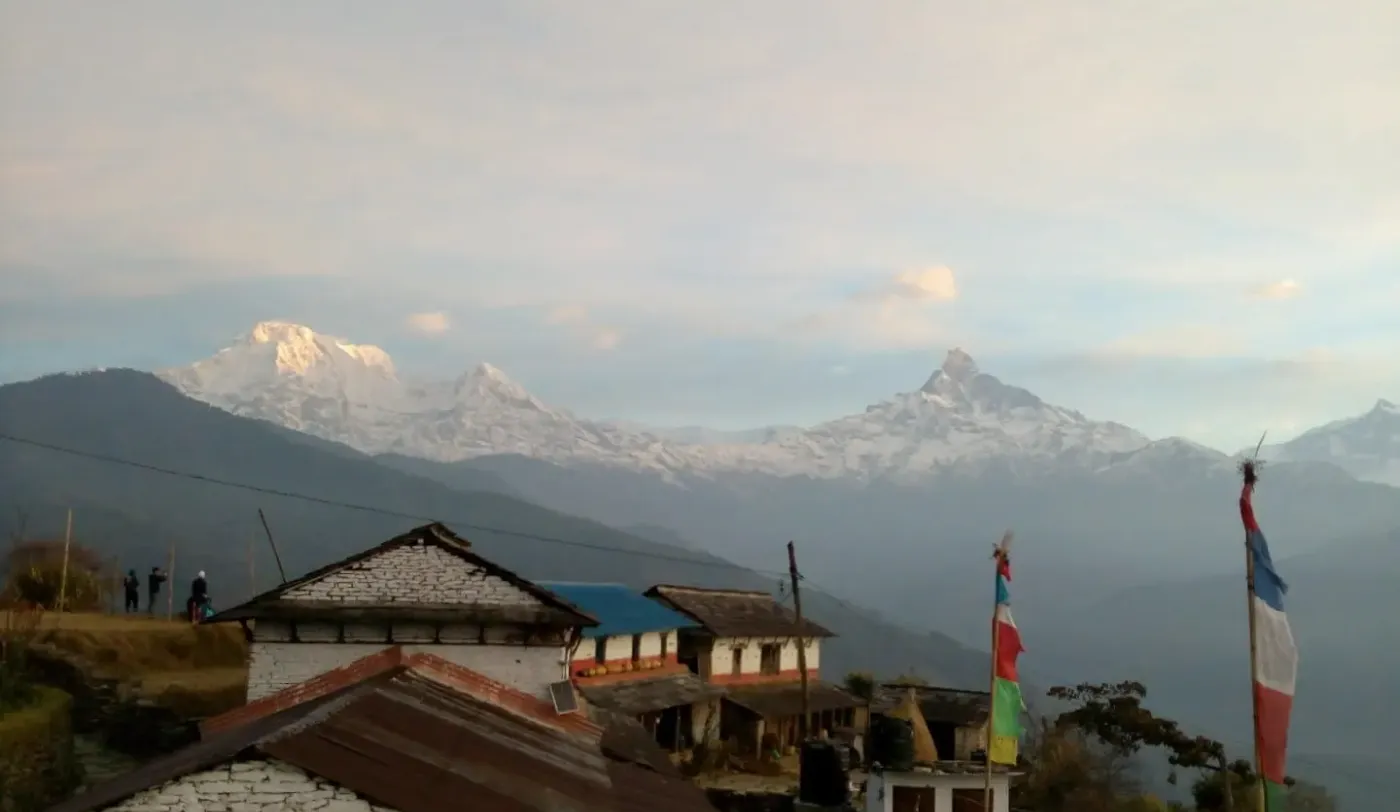
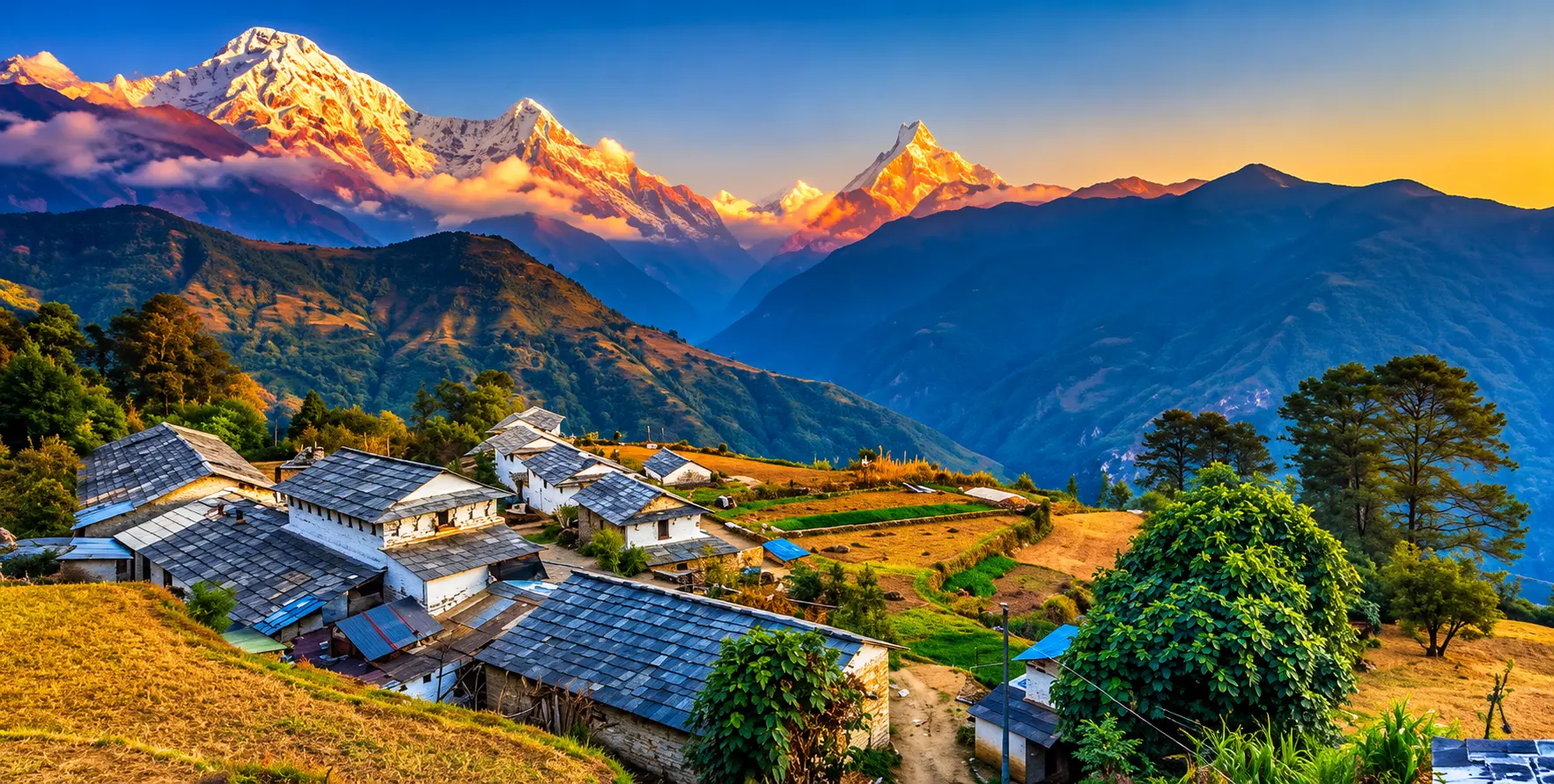
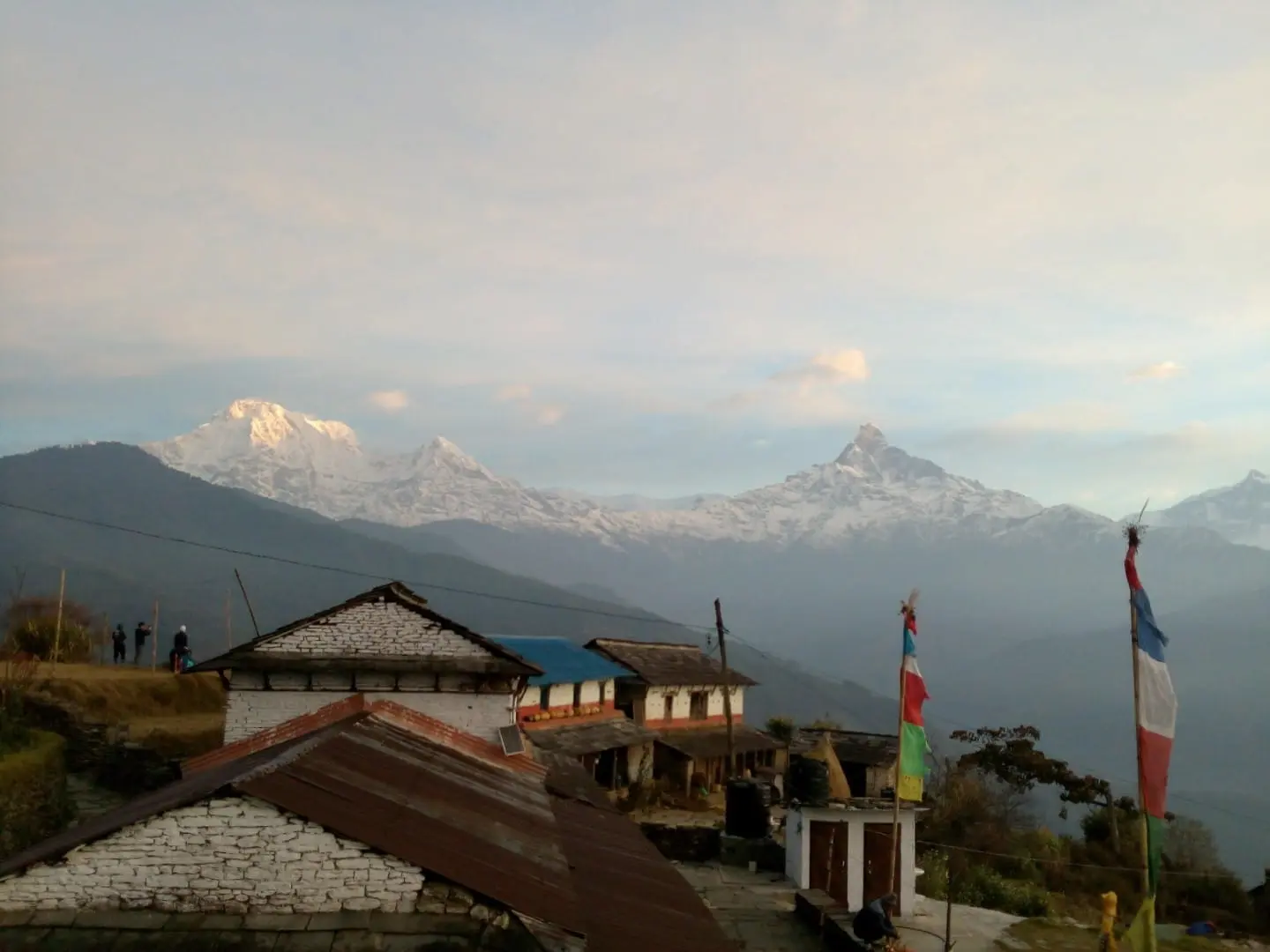
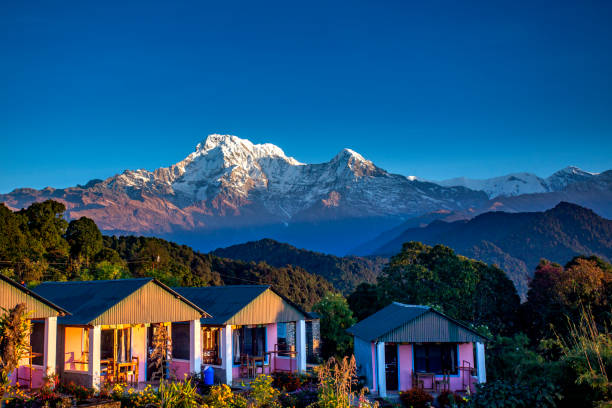
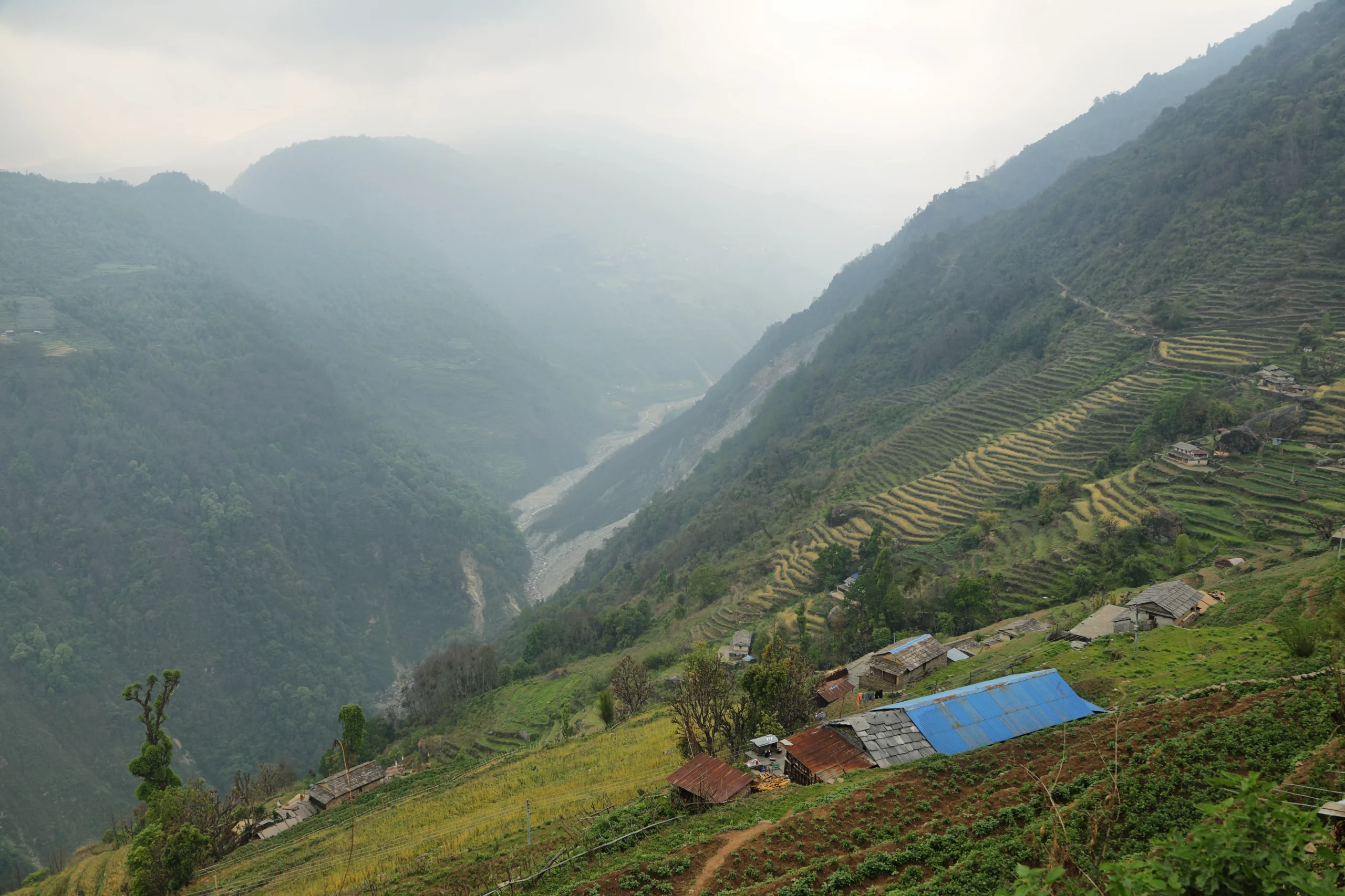
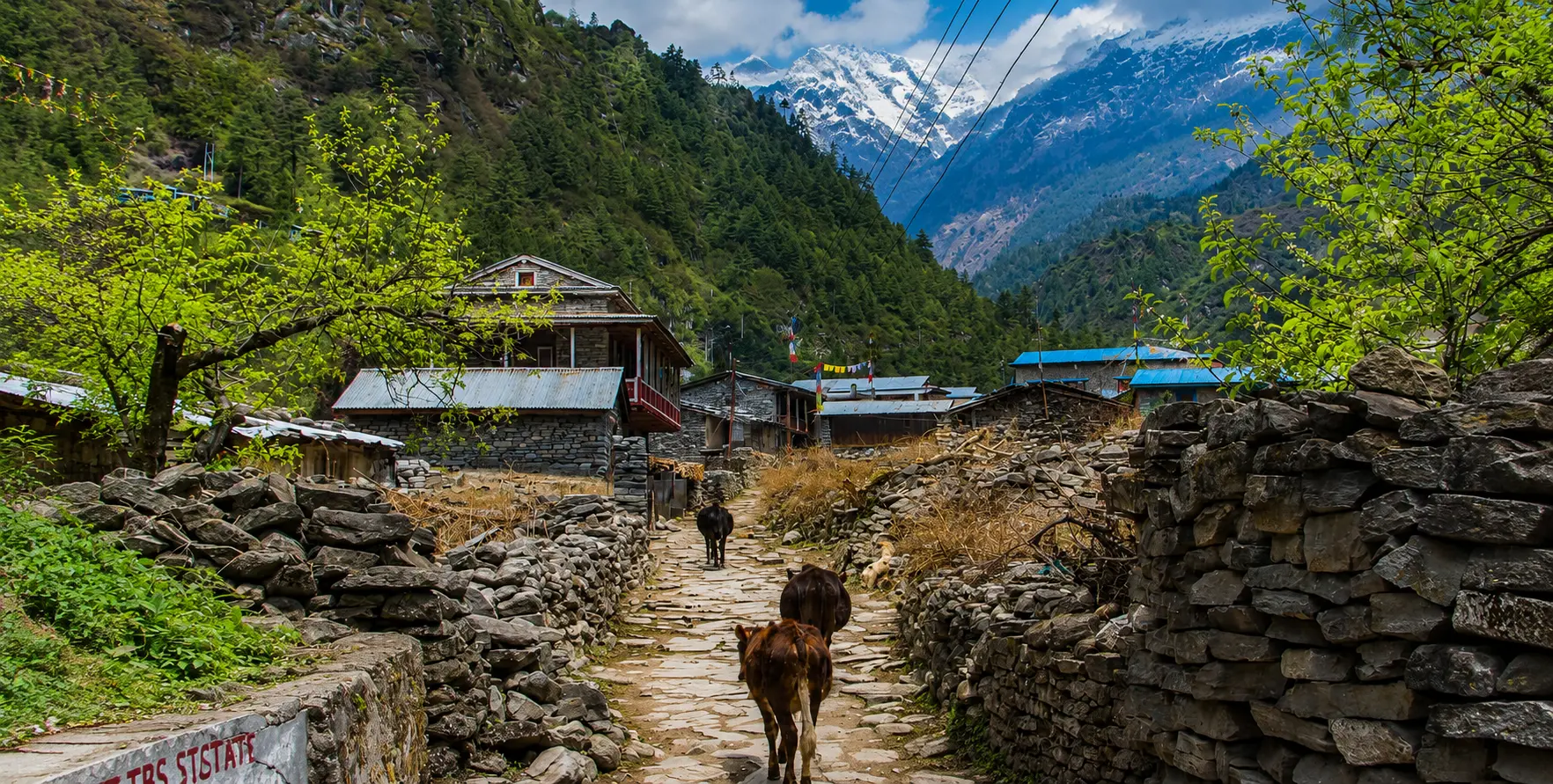
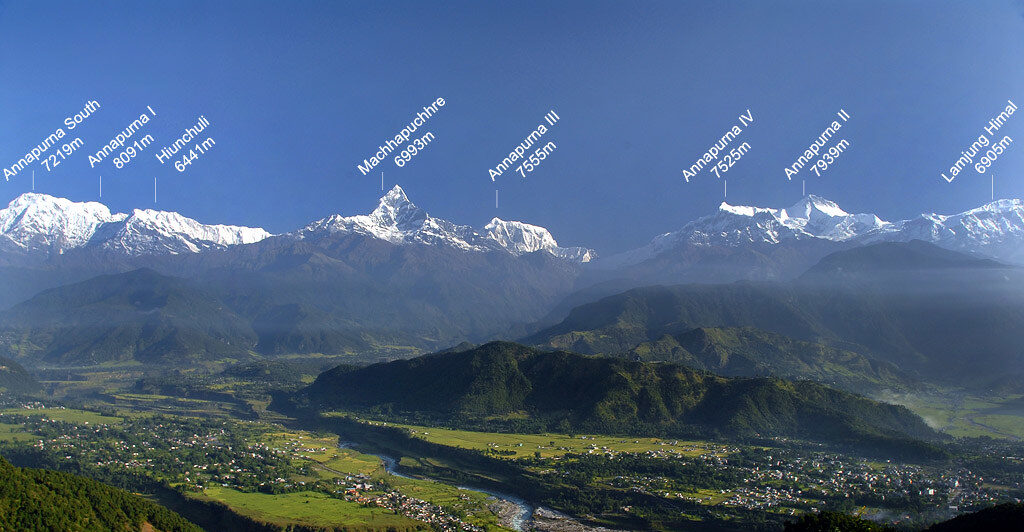
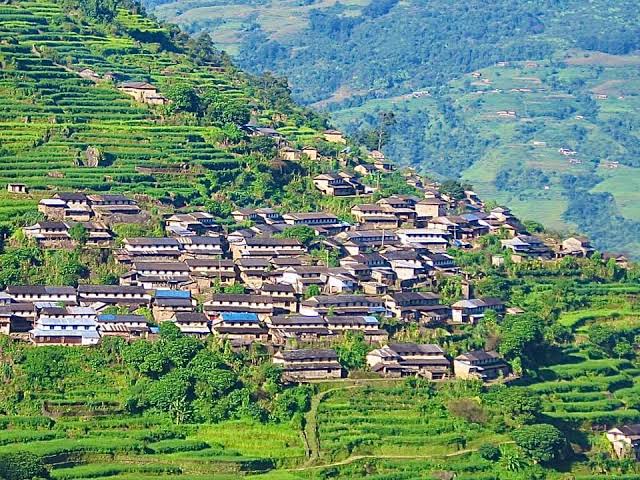
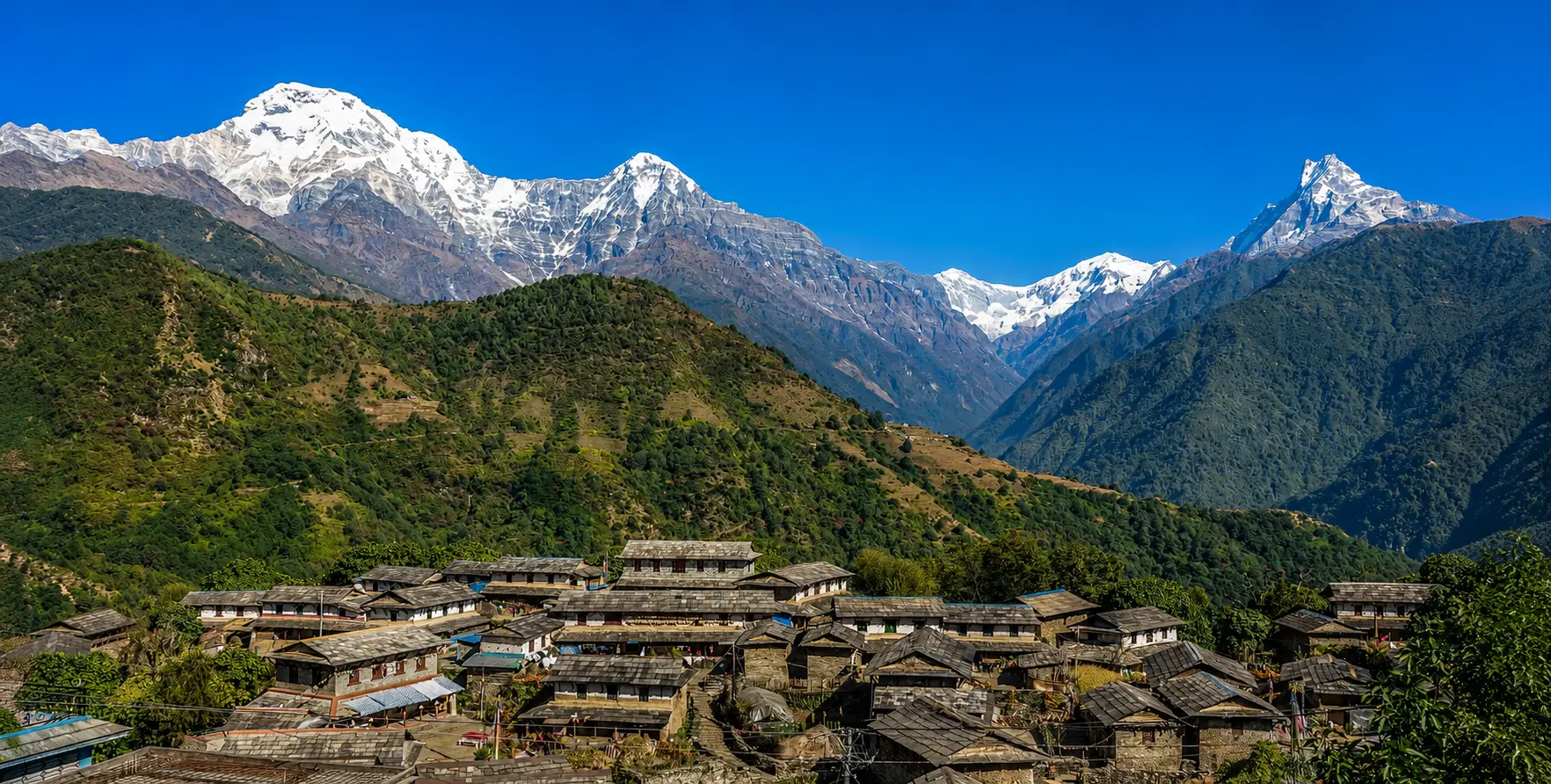
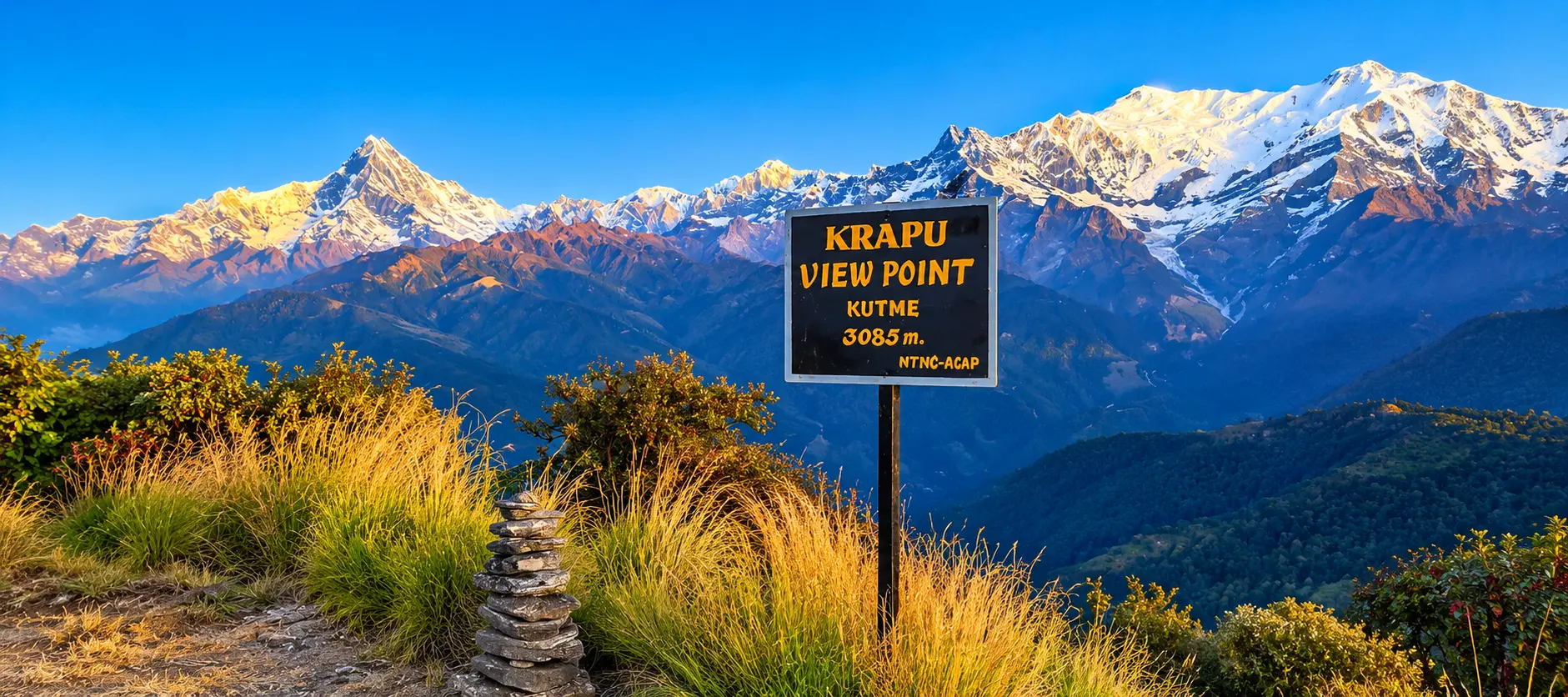
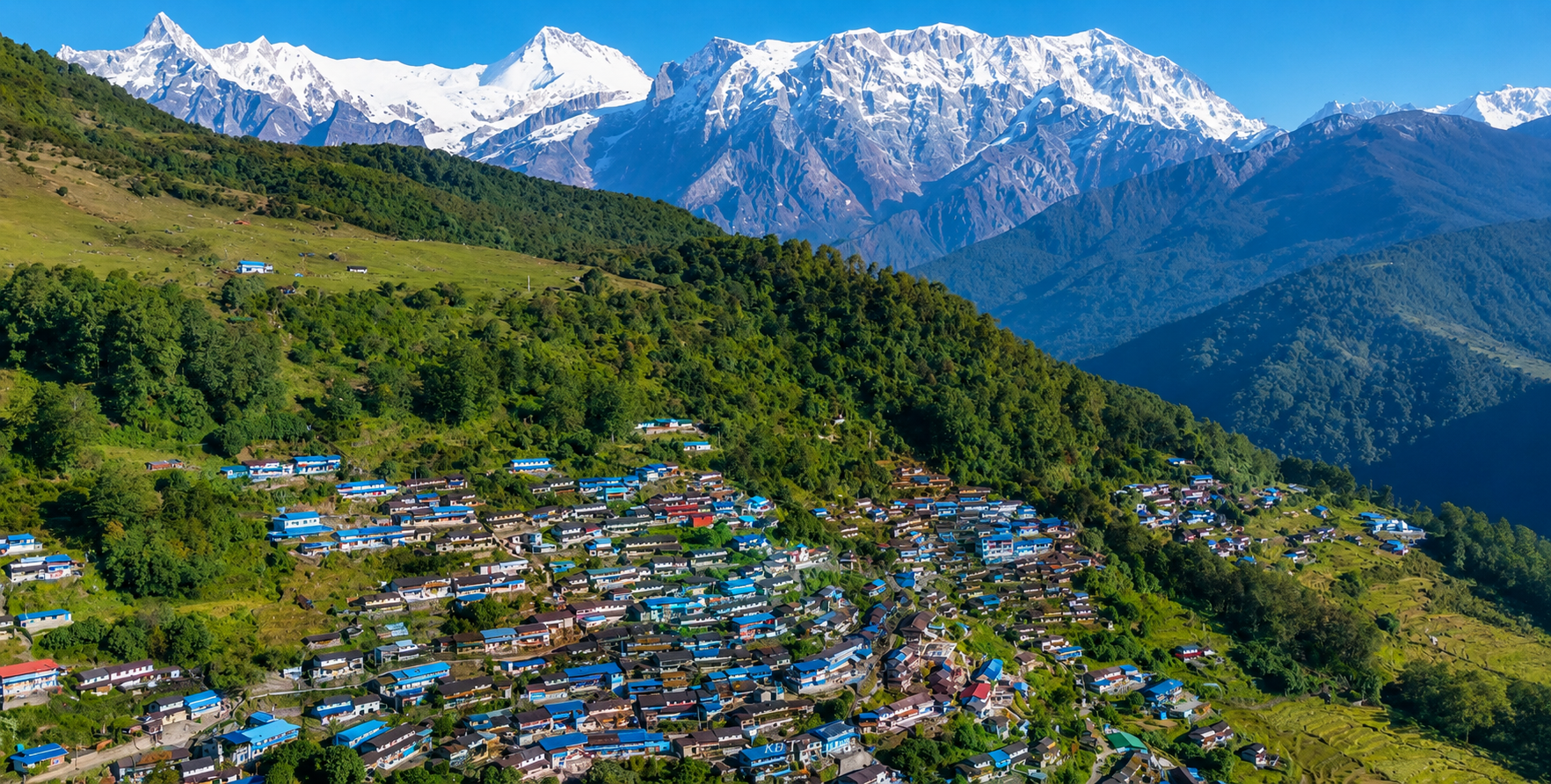
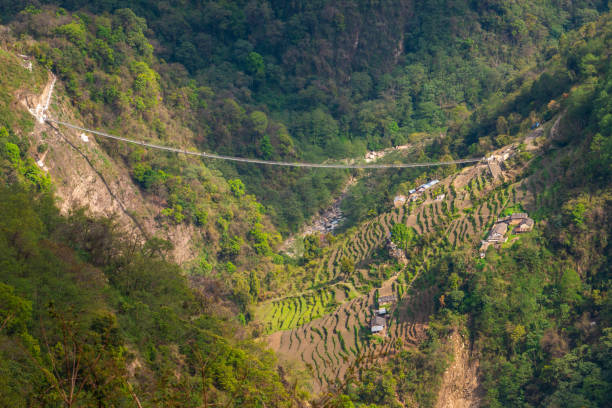
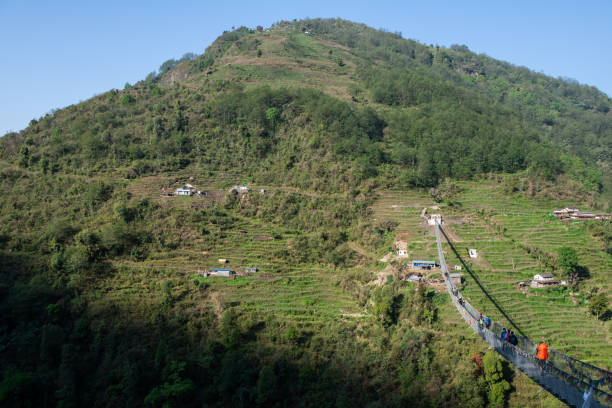
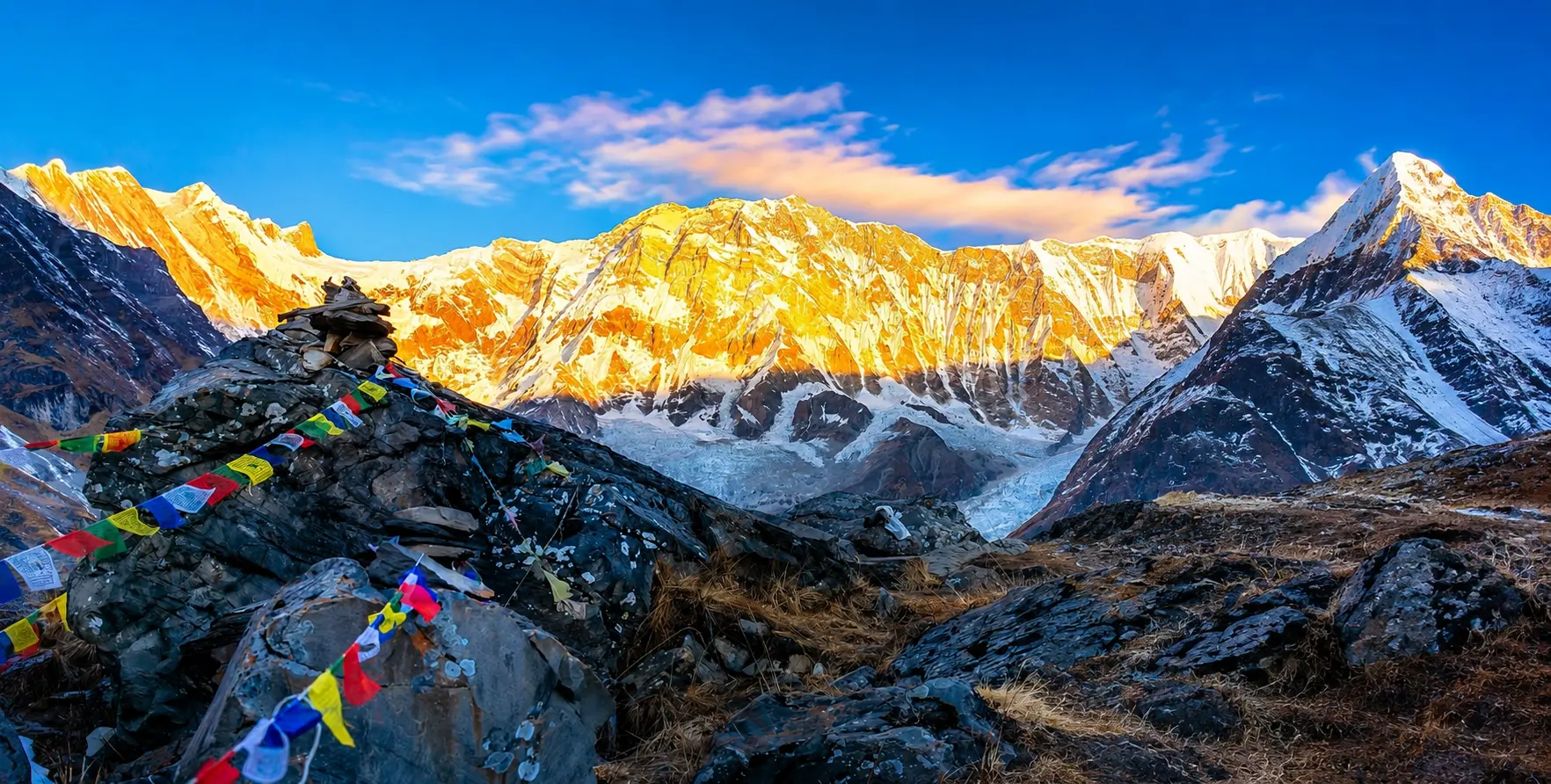
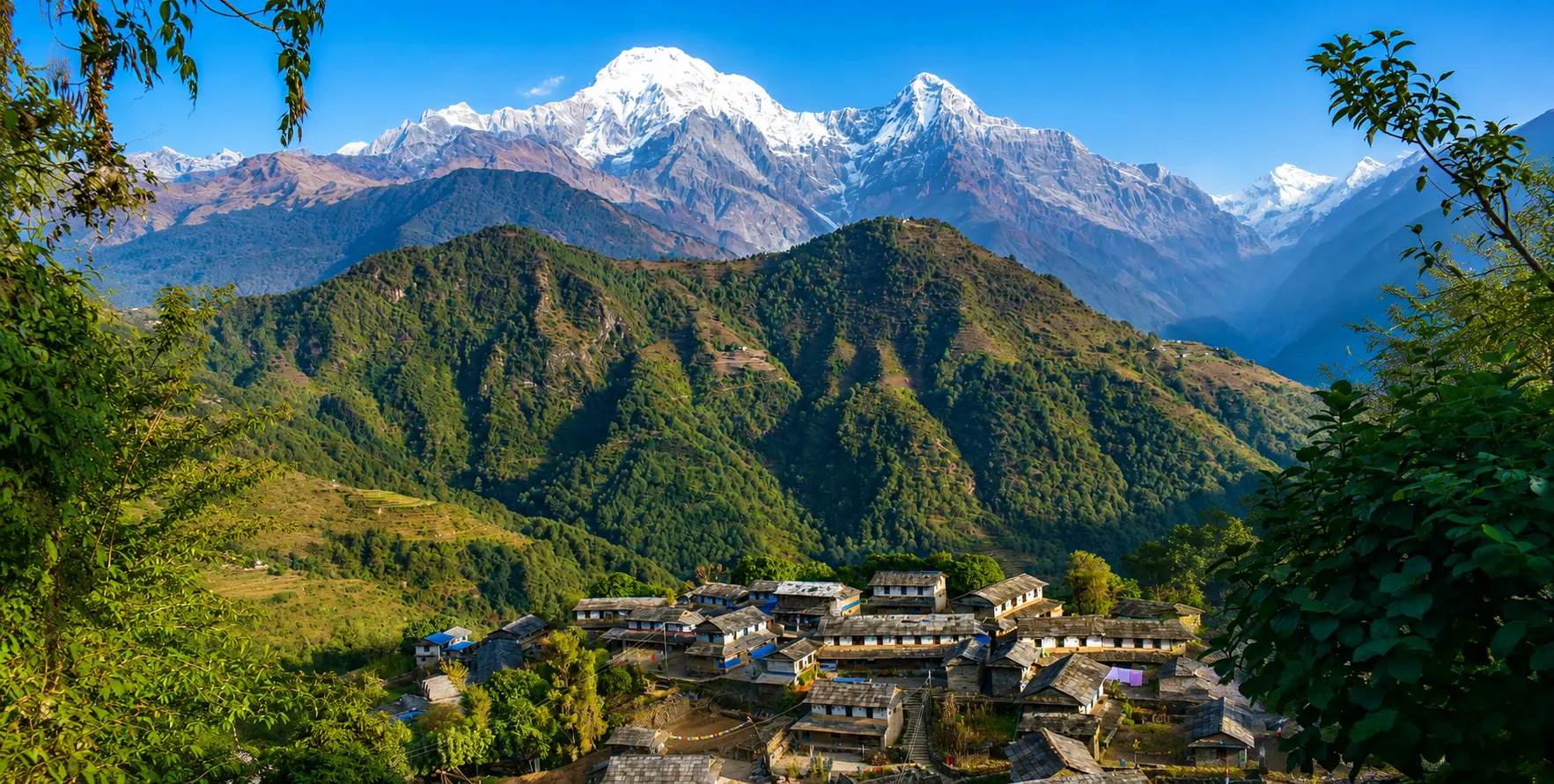
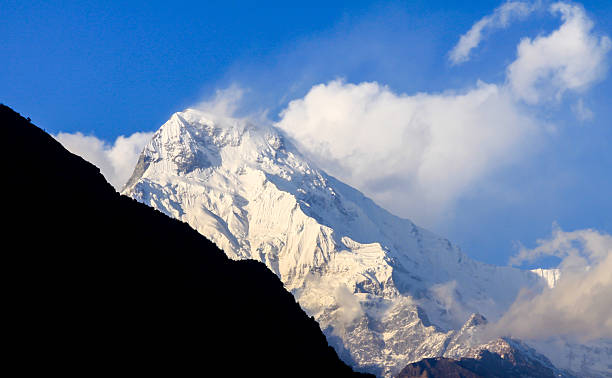
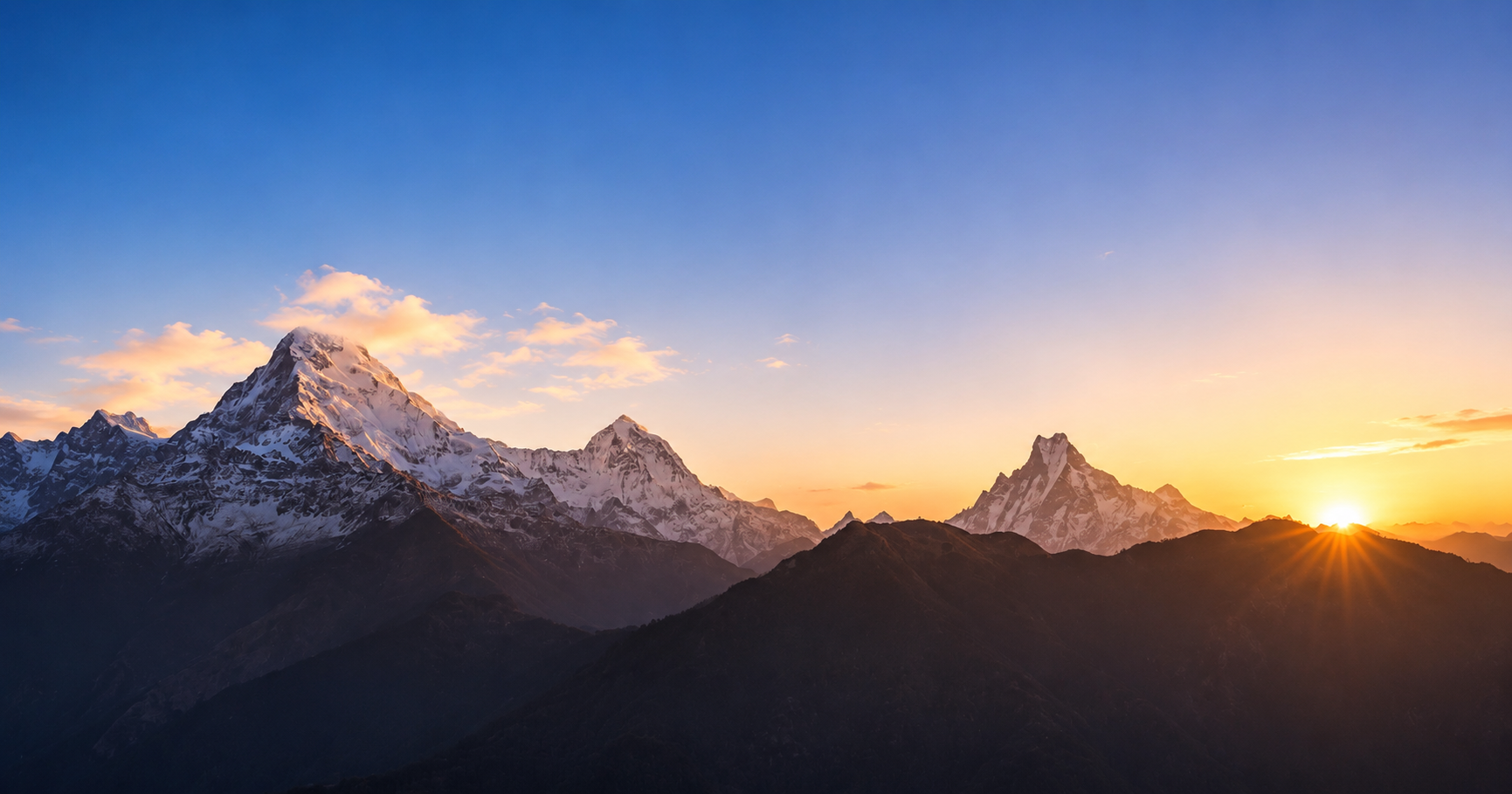
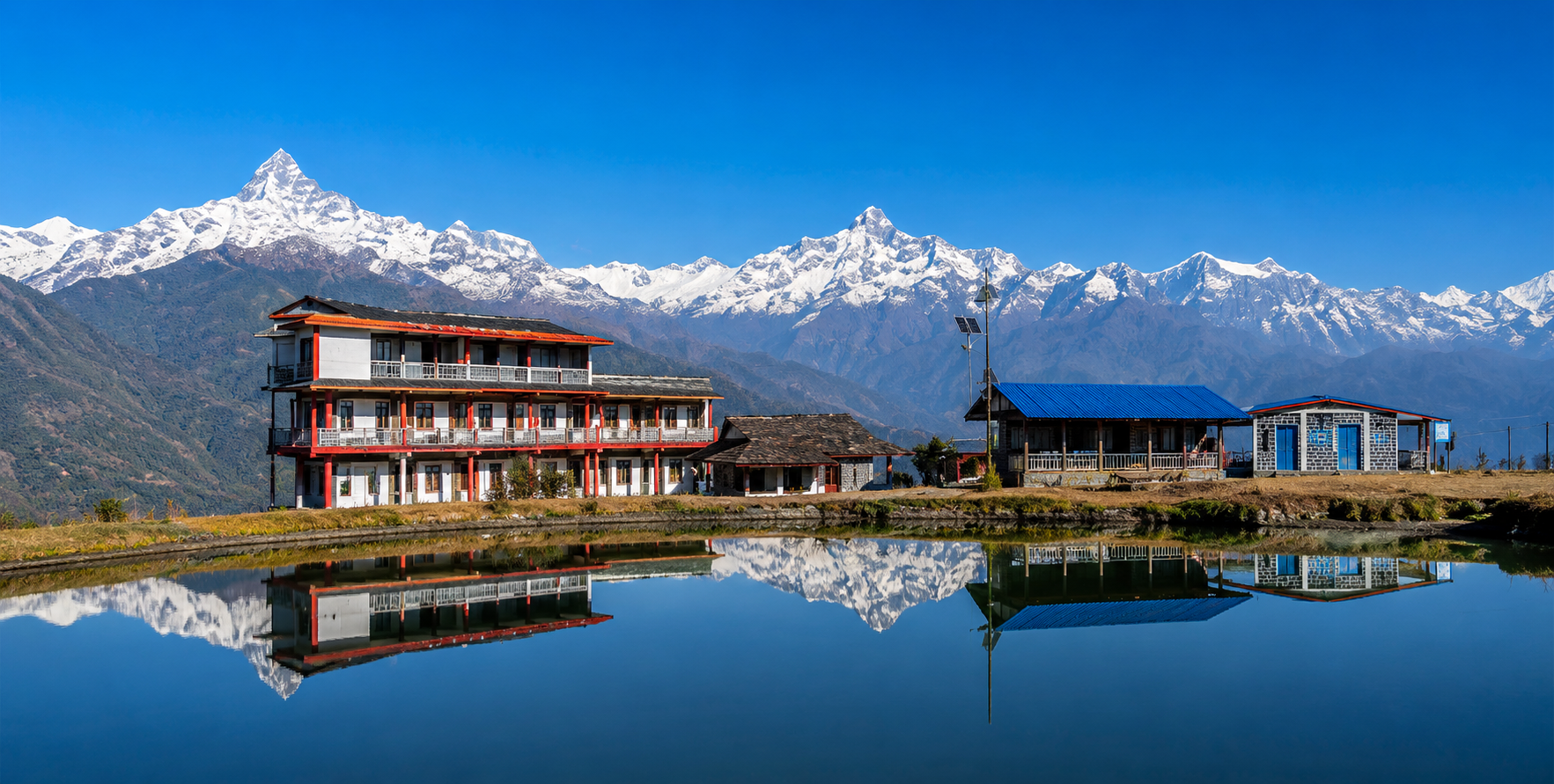
Terraced fields, bamboo and rhododendron forest, and stone-roofed Gurung houses surround the village, and on clear days the great peaks of the Annapurna Sanctuary — Annapurna South, Hiunchuli and the unmistakable fishtail of Machhapuchhre — rise above the valley ahead.

The village is a natural gateway to the Annapurna Base Camp trail. Trekkers pass through on their way to Chhomrong and the sanctuary, and on their way back down they linger here because the springs and the lodges are so welcoming.

Yet Jhinu Danda is also perfectly suited to a gentle, short trip from Pokhara for people who don’t plan to walk to Base Camp. A drive, a short trail, and a soak make a satisfying half-day or overnight excursion.

The Hot Springs: What to Expect

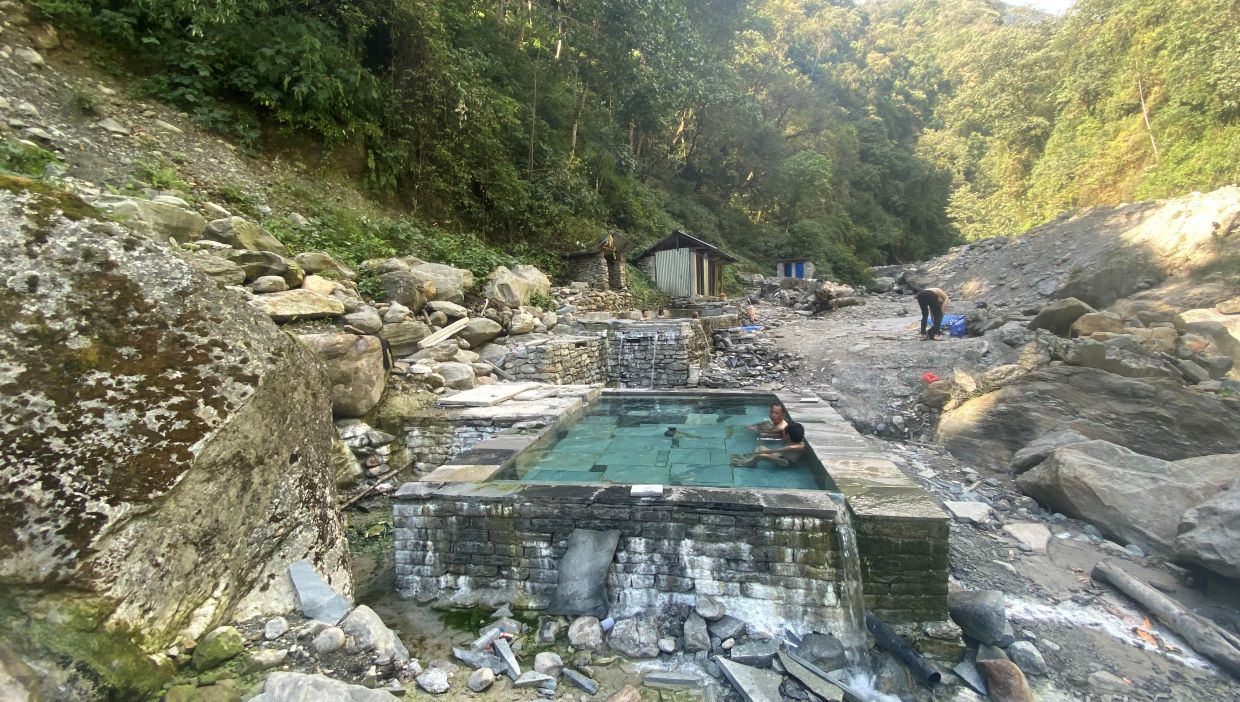
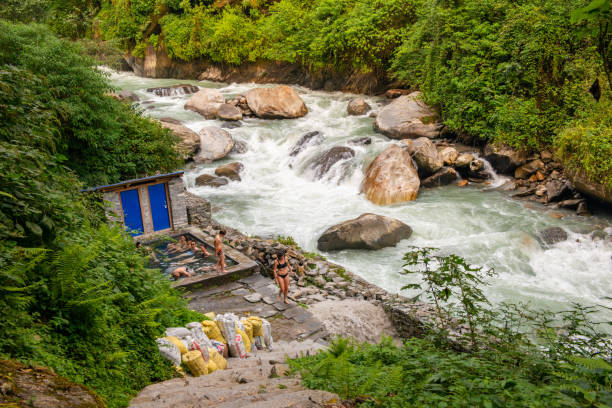
The hot springs are natural, fed by warm water emerging from the hillside beside the river, and channeled into stone-lined pools. Locals and trekkers value the water for relieving tired muscles, and many people describe it as the highlight of the Annapurna Base Camp route.

However, it is best understood as a simple, restful soak rather than a medical treatment. The pools usually charge a small entry fee, and basic changing areas are available. The setting — warm water, cool mountain air, the sound of the river and forest all around — is what makes it memorable.

The walk from the village to the springs takes roughly thirty to forty minutes, mostly downhill on stone steps and forest trail, and the return is correspondingly uphill. Visit in the morning or late afternoon for fewer crowds and softer light.

During the monsoon, high river levels or temporary closures can affect the springs, which is one reason the dry seasons are preferred. Bring swimwear, a towel, and a dry set of clothes, and keep your valuables in the lodge or with a trusted companion.

Other Things to Enjoy Around Jhinu Danda

Jhinu Danda also makes a good base for short walks. The trail to Chhomrong, the largest village on the route and a superb viewpoint for the sanctuary peaks, is a rewarding morning climb for those with energy.

Landruk and Ghandruk, two large Gurung villages with stone paths, tea houses and a strong cultural identity, are within reach for travelers who want to extend their stay. Ghandruk in particular has a small museum and a long tradition of welcoming visitors, and our jeep transfers make it an easy addition.

For a gentler, less strenuous trip, relax at the lodge, enjoy a Gurung-style meal, and watch the light change on the peaks.
Kathmandu to Jhinu Danda Jeep Rental: Complete Guide

The Route: Kathmandu to Jhinu Danda in Two Legs

Leg One: Kathmandu to Pokhara on the Prithvi Highway

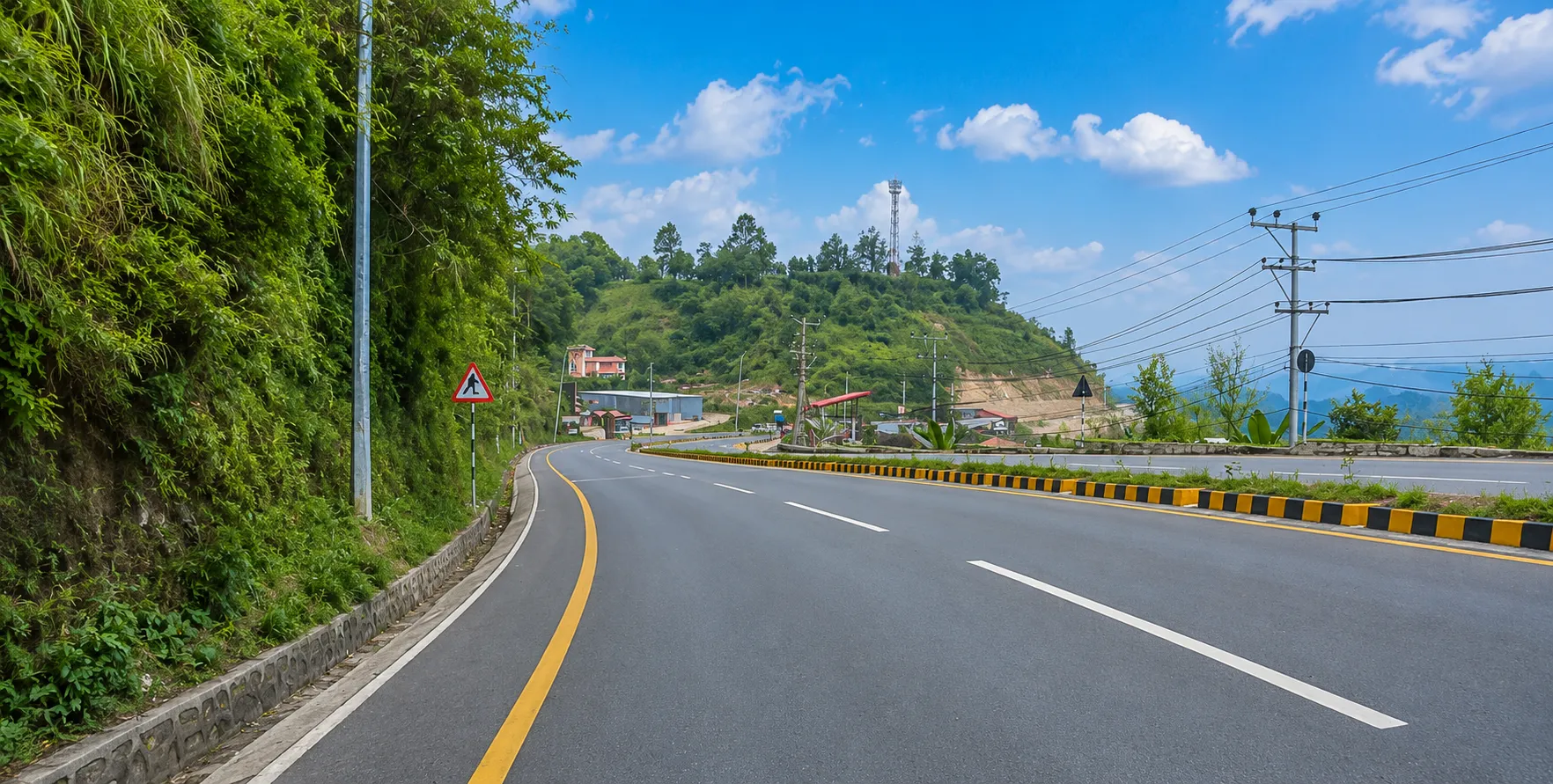
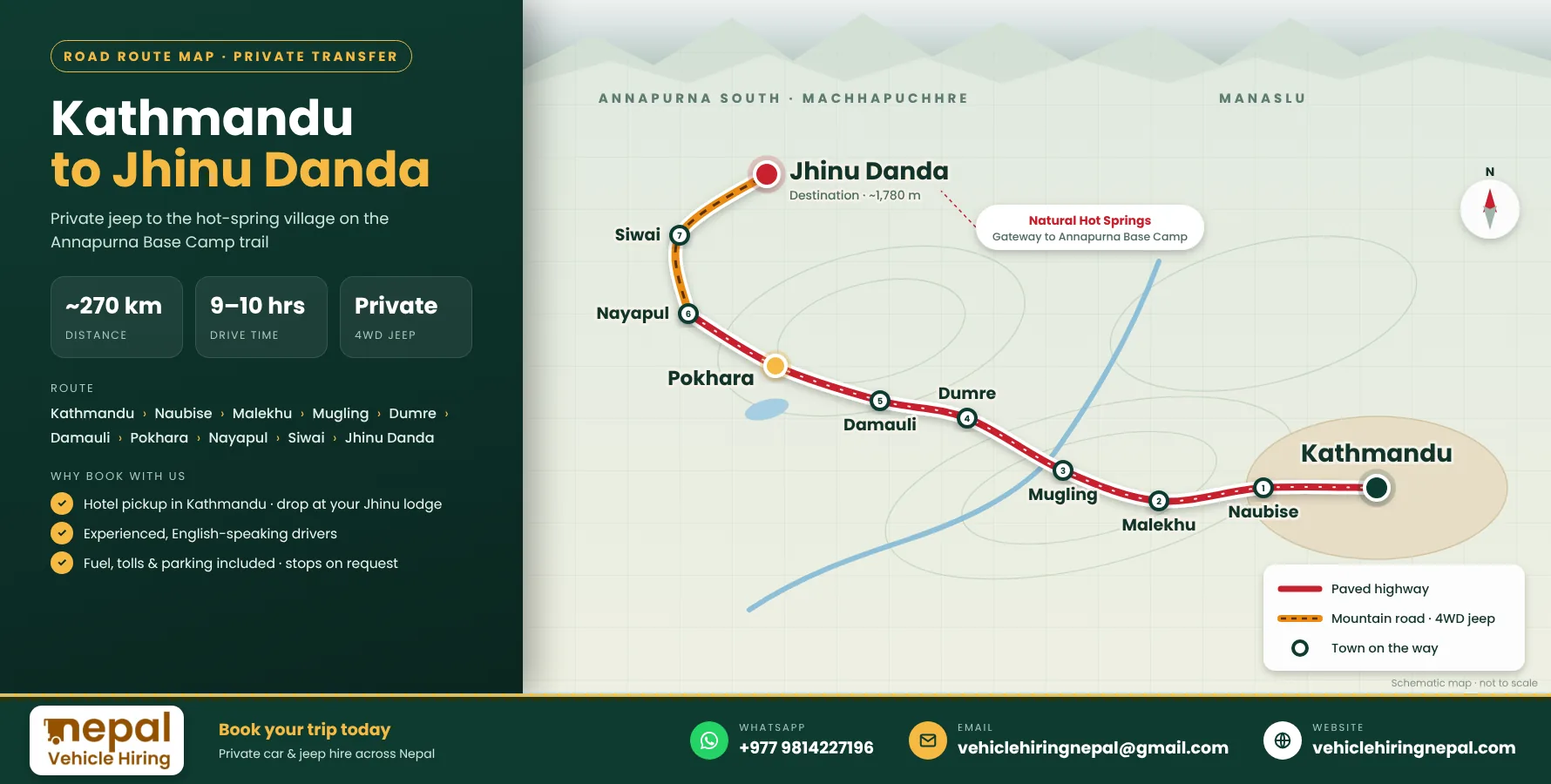
The first and longer leg is the drive from Kathmandu to Pokhara, about 200 kilometers on the Prithvi Highway, which usually takes five to seven hours depending on traffic and stops. The road leaves the Kathmandu Valley at Naubise, follows the Trishuli River gorge, passes the famous roadside curd restaurants at Mugling, and climbs through Dumre before the final run to Pokhara.

This is one of Nepal’s most scenic highways, with river canyons, terraced hillsides, and long views of snow peaks as you approach the lake city. A car is entirely comfortable on this leg, and a jeep is equally good if you prefer height and space.

Our Kathmandu to Pokhara private transfers cover this section in cars, jeeps, Hiace vans, and Coaster buses.

Leg Two: Pokhara to the Jhinu Danda Road End

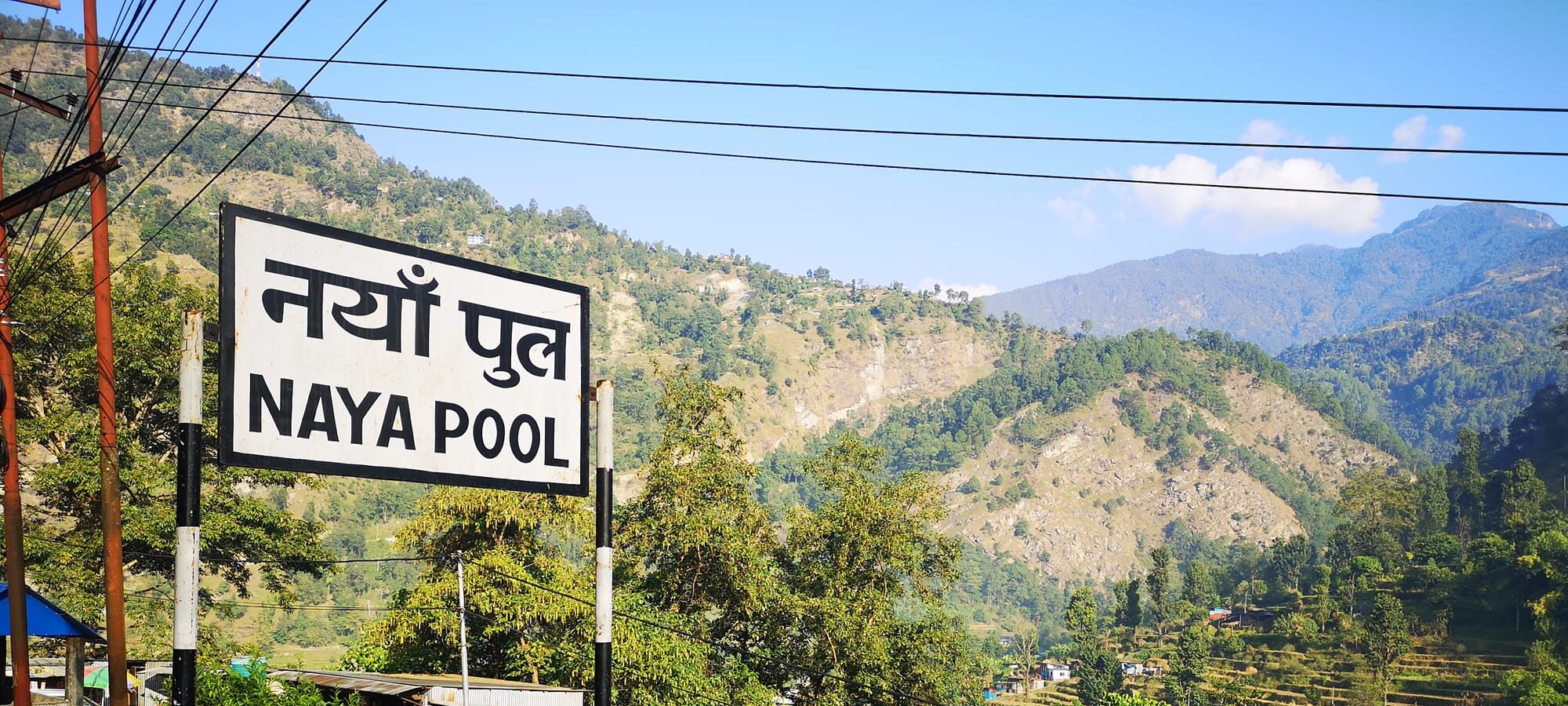
The second leg runs from Pokhara toward the Annapurna foothills, about 50 to 60 kilometers of increasingly rural road. From Pokhara, the route follows the Baglung highway toward the Nayapul area, then continues on hill roads along the Modi Khola valley system to the villages where the Jhinu Danda trail begins.

The closest practical road points to the village are in the Simrung and Mithu Danda area, from which Jhinu Danda is a short walk, commonly described as around twenty minutes to an hour depending on the exact starting point and your pace. Road conditions on this leg vary by season and by repair work, which is exactly why a four-wheel-drive jeep is the right choice.

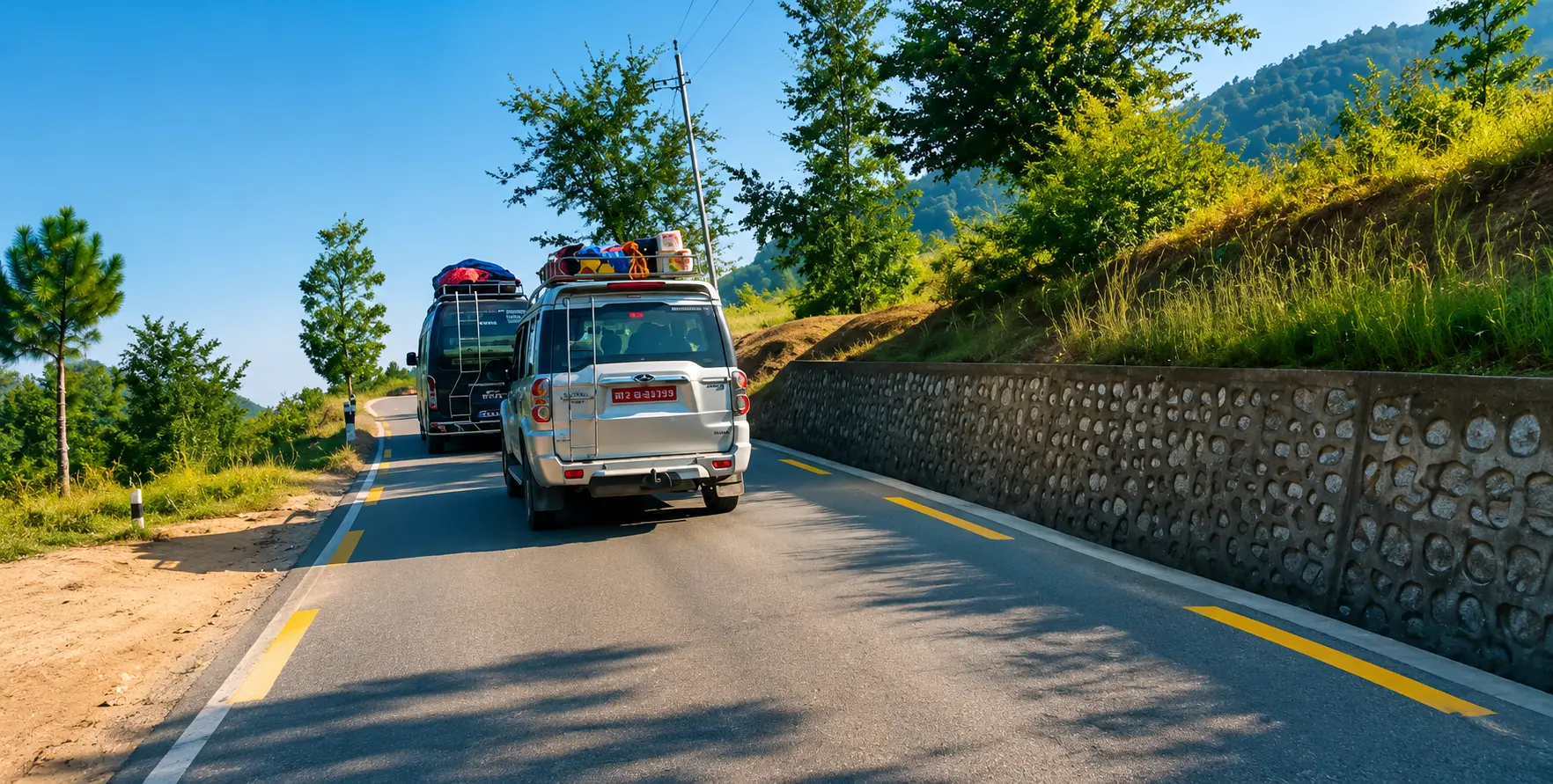
A realistic driving time for this leg is about three to four hours, because the hill road is narrow and winding, with sections where the surface is rough. The scenery is a reward in itself: terraced fields, bamboo groves, waterfalls after the rains, and glimpses of the high peaks ahead.

Our driver will take you to the closest practical road point and tell you the walking time to the village, so you never have to guess about the last stretch. If you want to see the rest of the Pokhara region too, our car hire in Pokhara service covers sightseeing before or after your Jhinu Danda trip.

How Far Is It, Really?

The total distance from Kathmandu to the Jhinu Danda road end is about 260 kilometers. That sounds modest, but the combination of a long highway day and a winding hill road means the real driving time is nine to eleven hours without long stops.

That’s a tiring single day, and you will arrive late in the afternoon with little daylight left for the walk and the springs. This is why we recommend splitting the journey, which the next section explains.
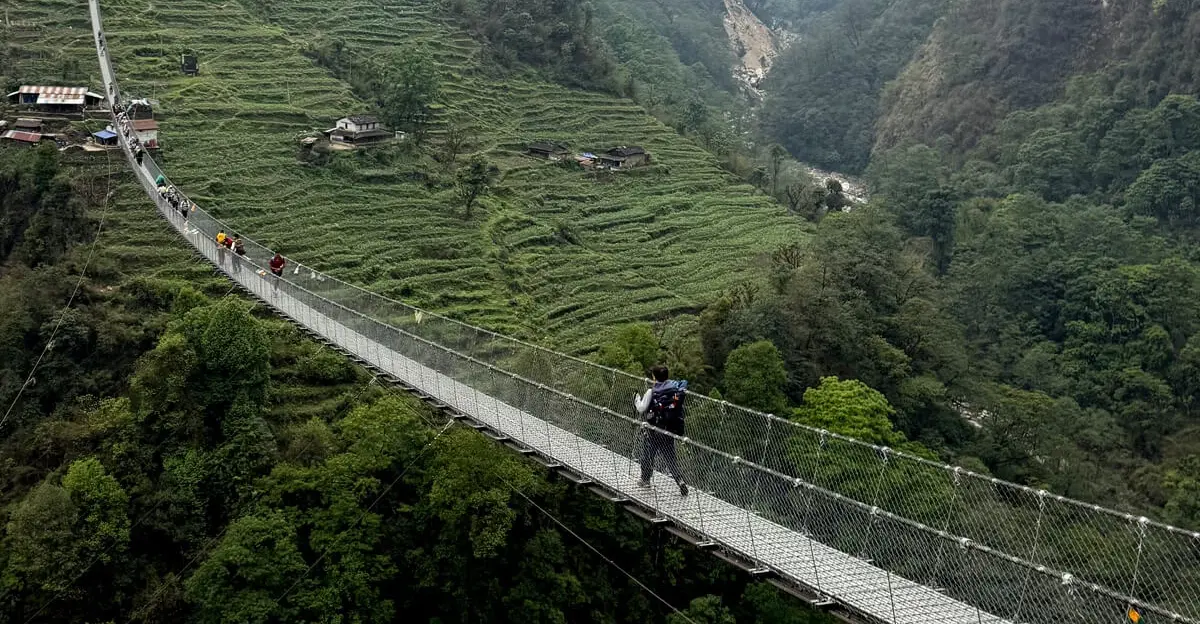
Jhinu dada

Why a Jeep Is the Right Vehicle for Jhinu Danda

Road Character and Seasonal Surprises

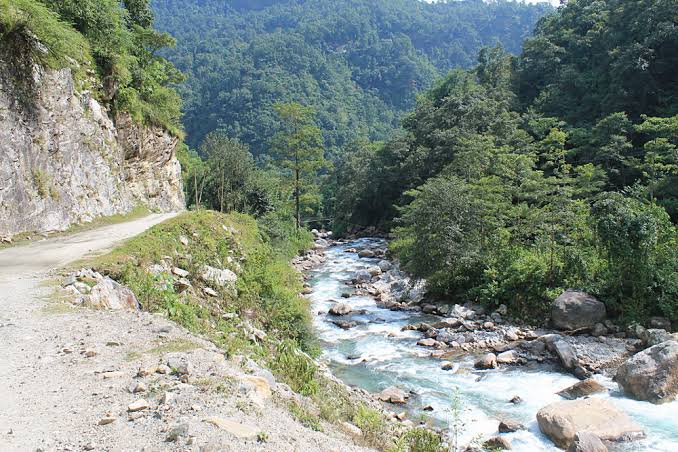
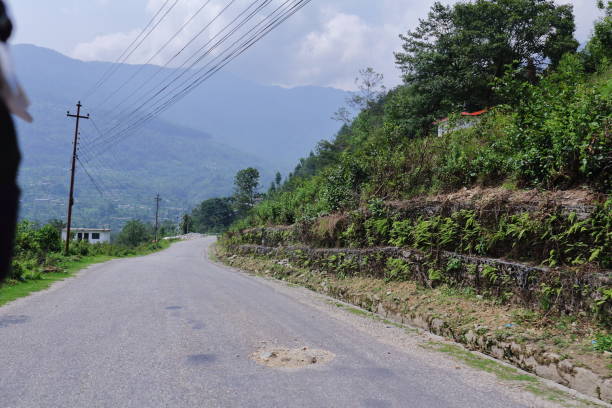
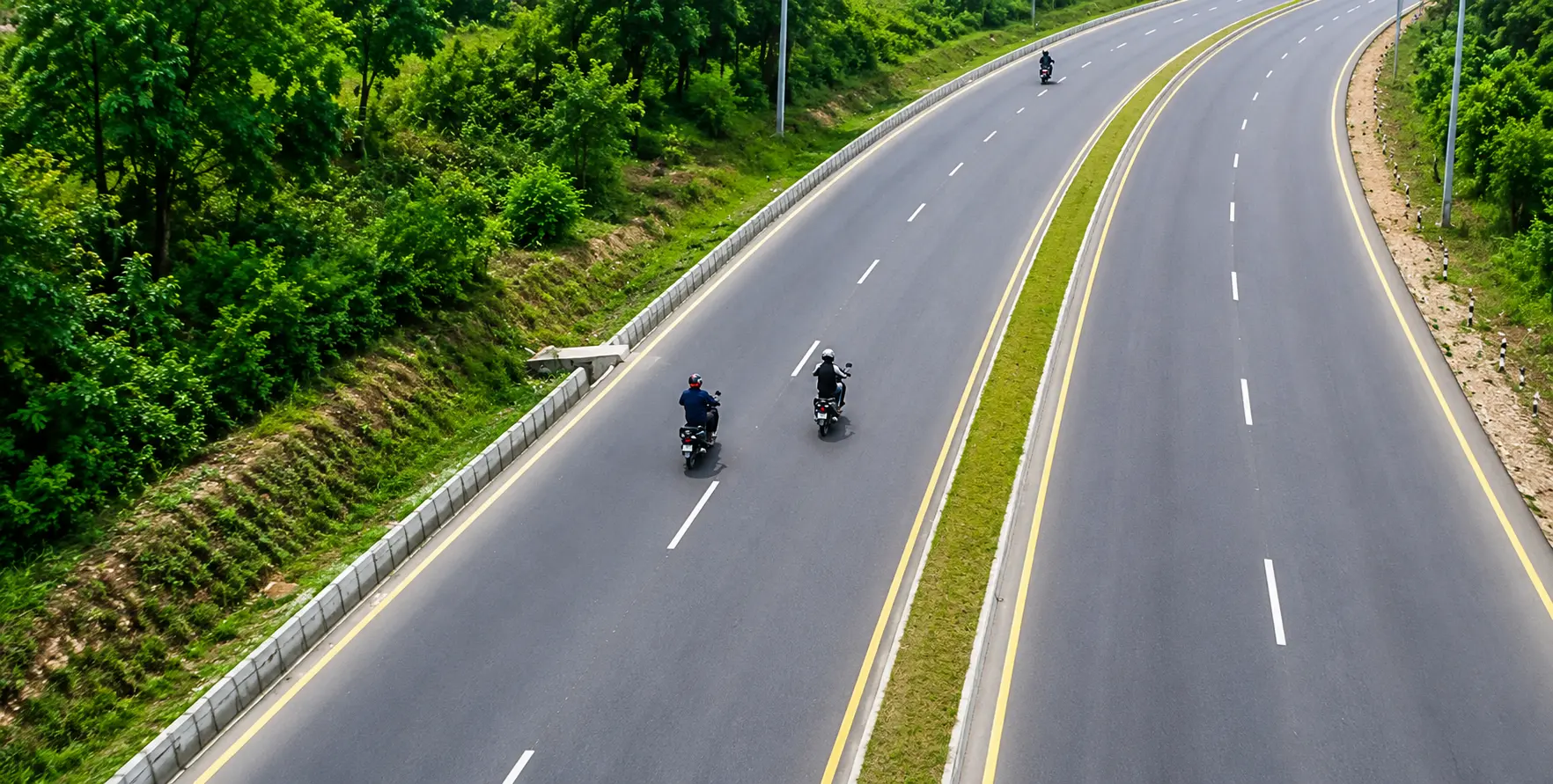
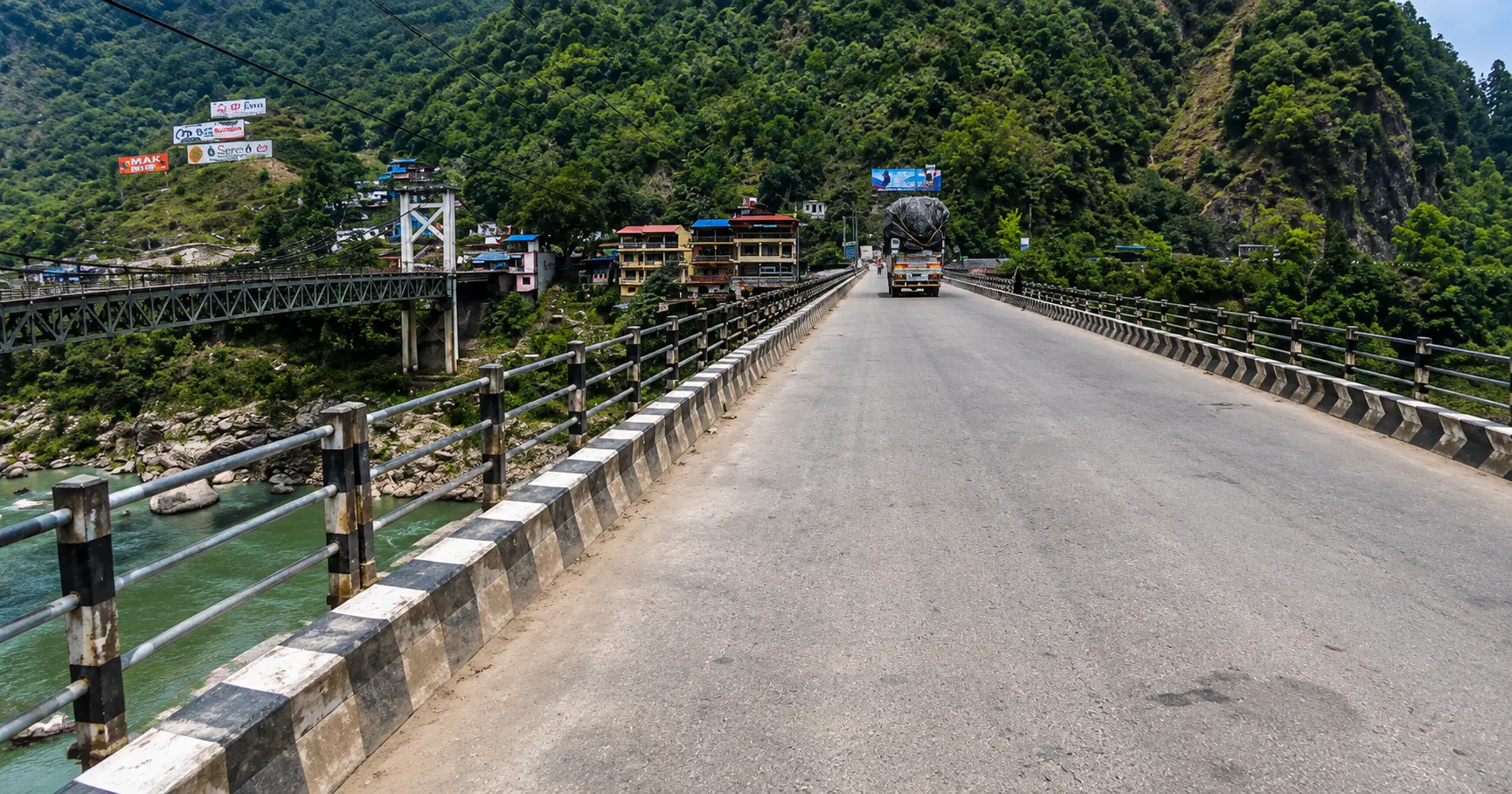
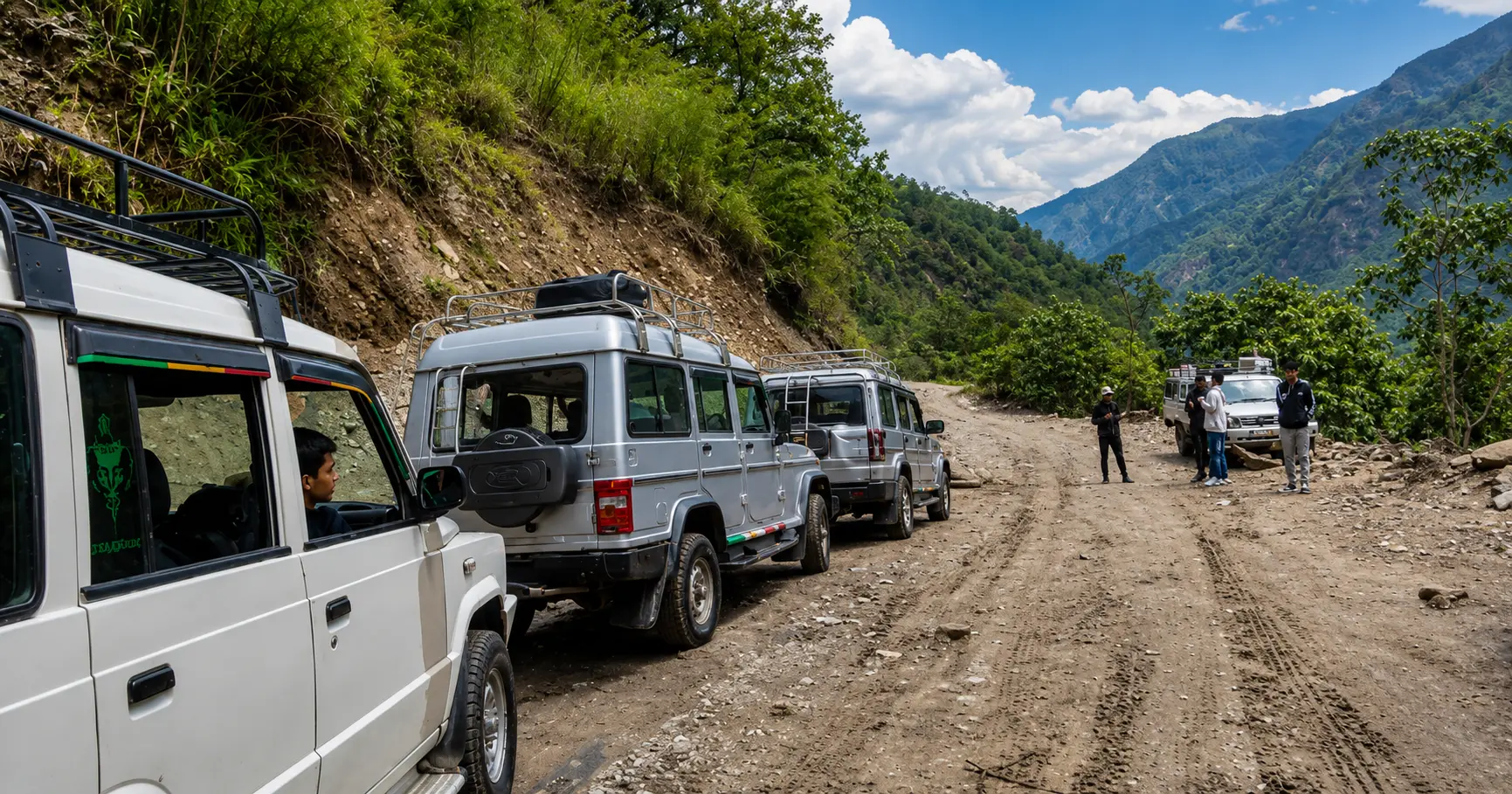
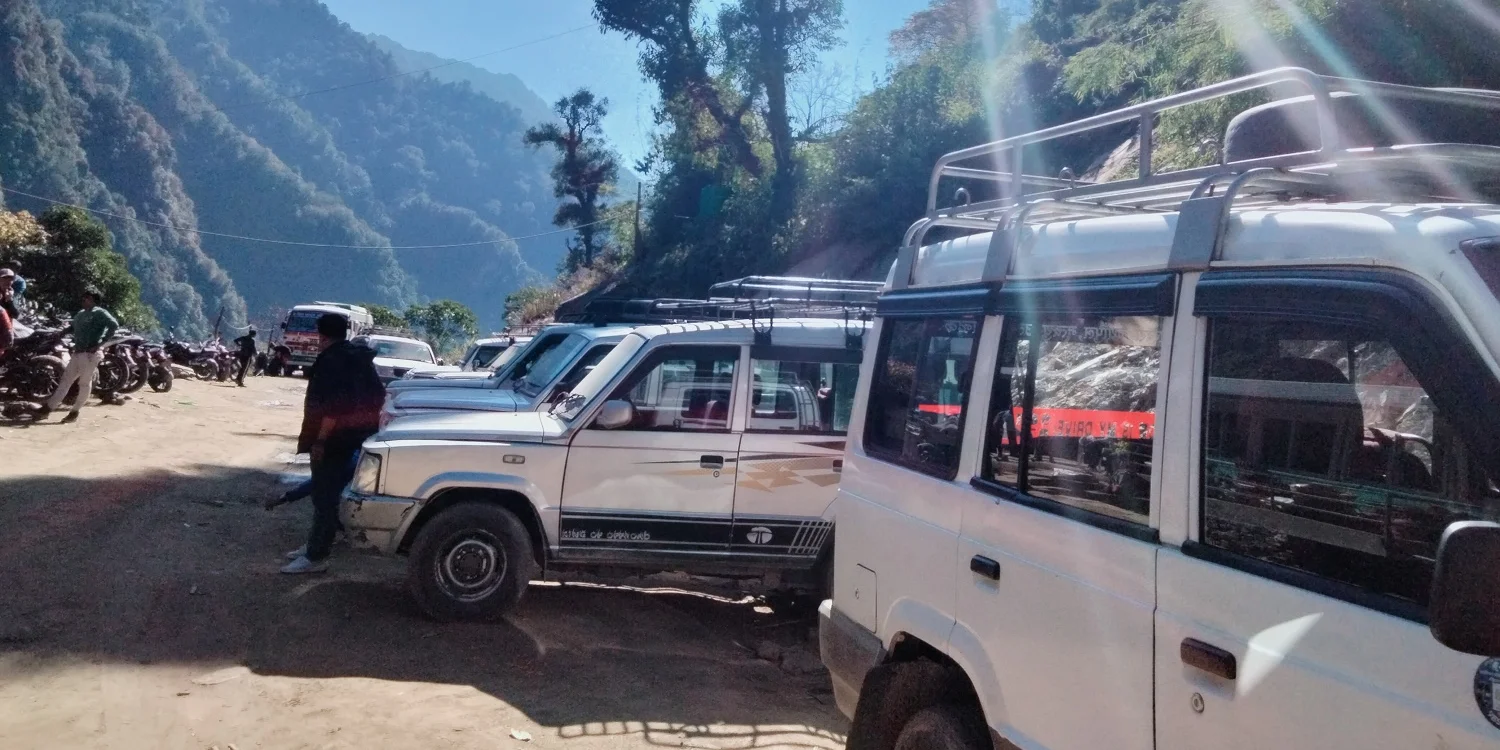
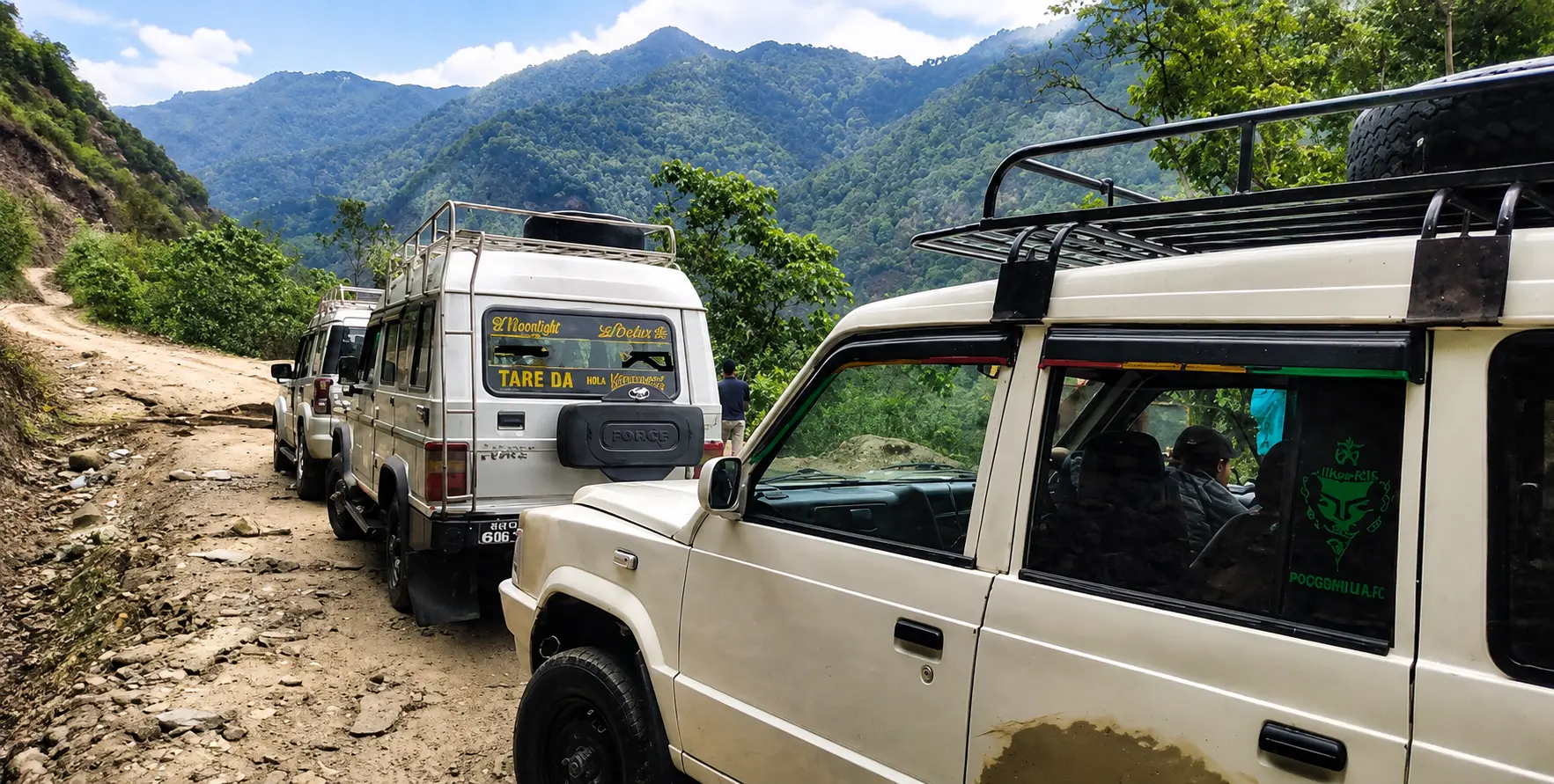
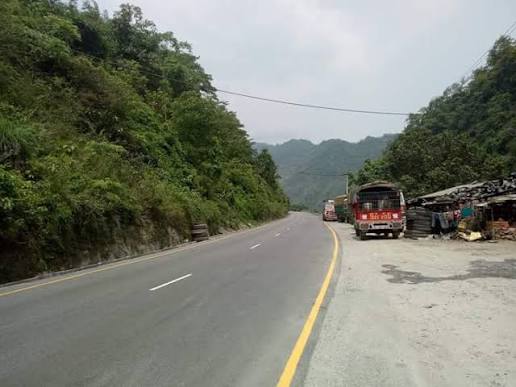
The hill road to the Jhinu Danda area is not a highway. It is a narrow, steep, and sometimes rough rural road that monsoon rain, small landslides, and repair work regularly affect. Some sections are surfaced, others are gravel or earth, and a few are rocky enough that ordinary cars struggle or cannot proceed.

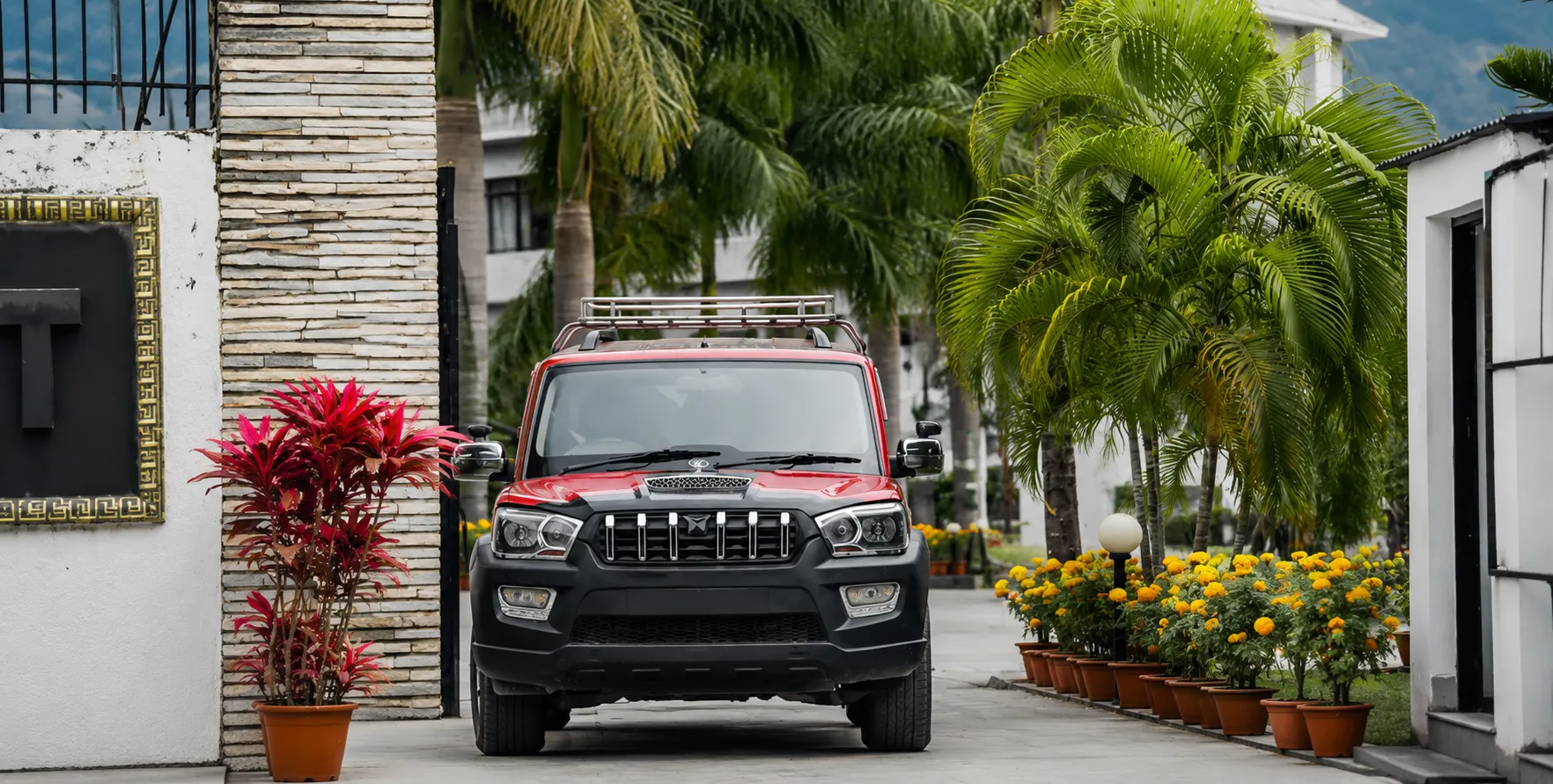
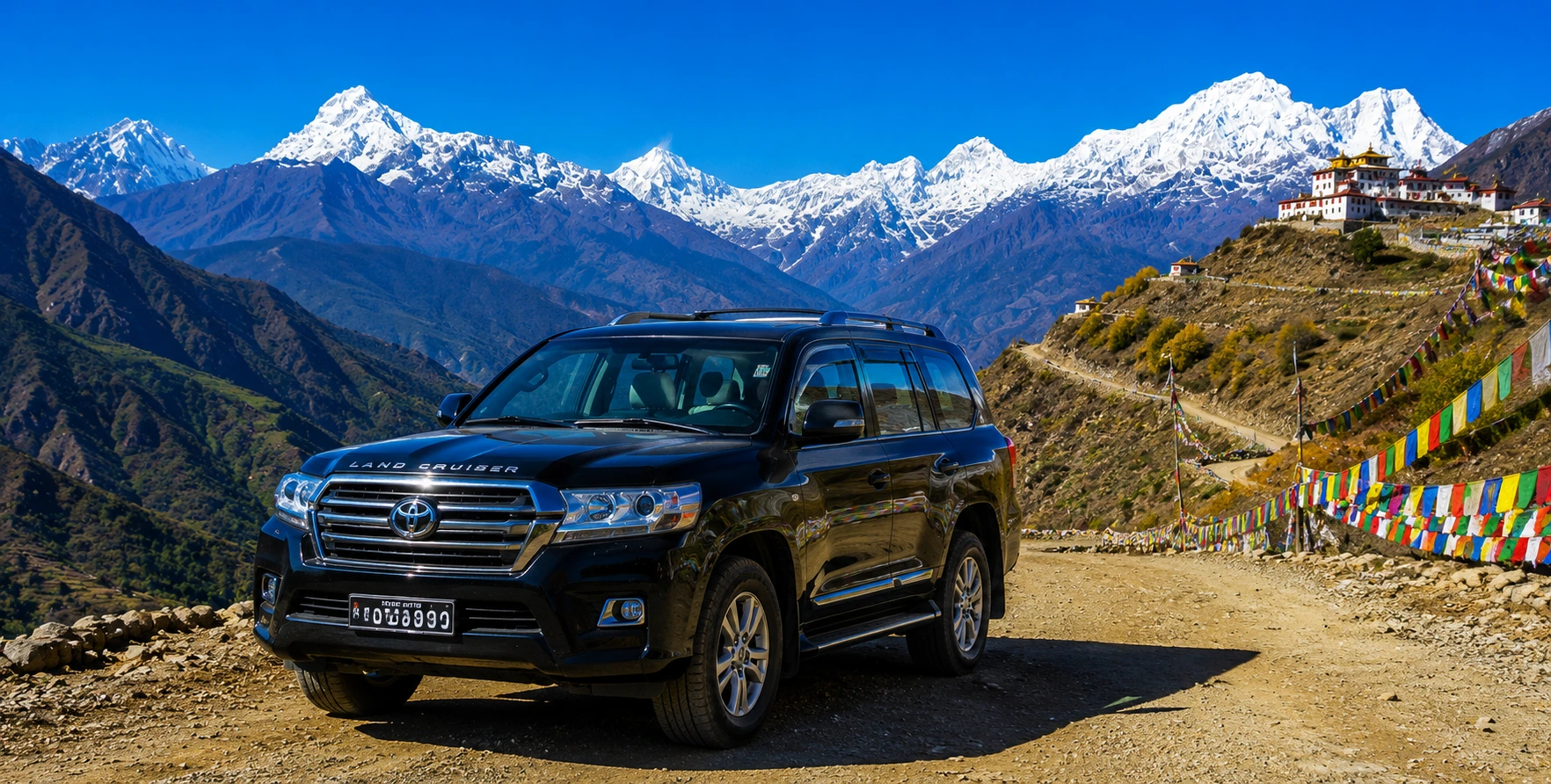
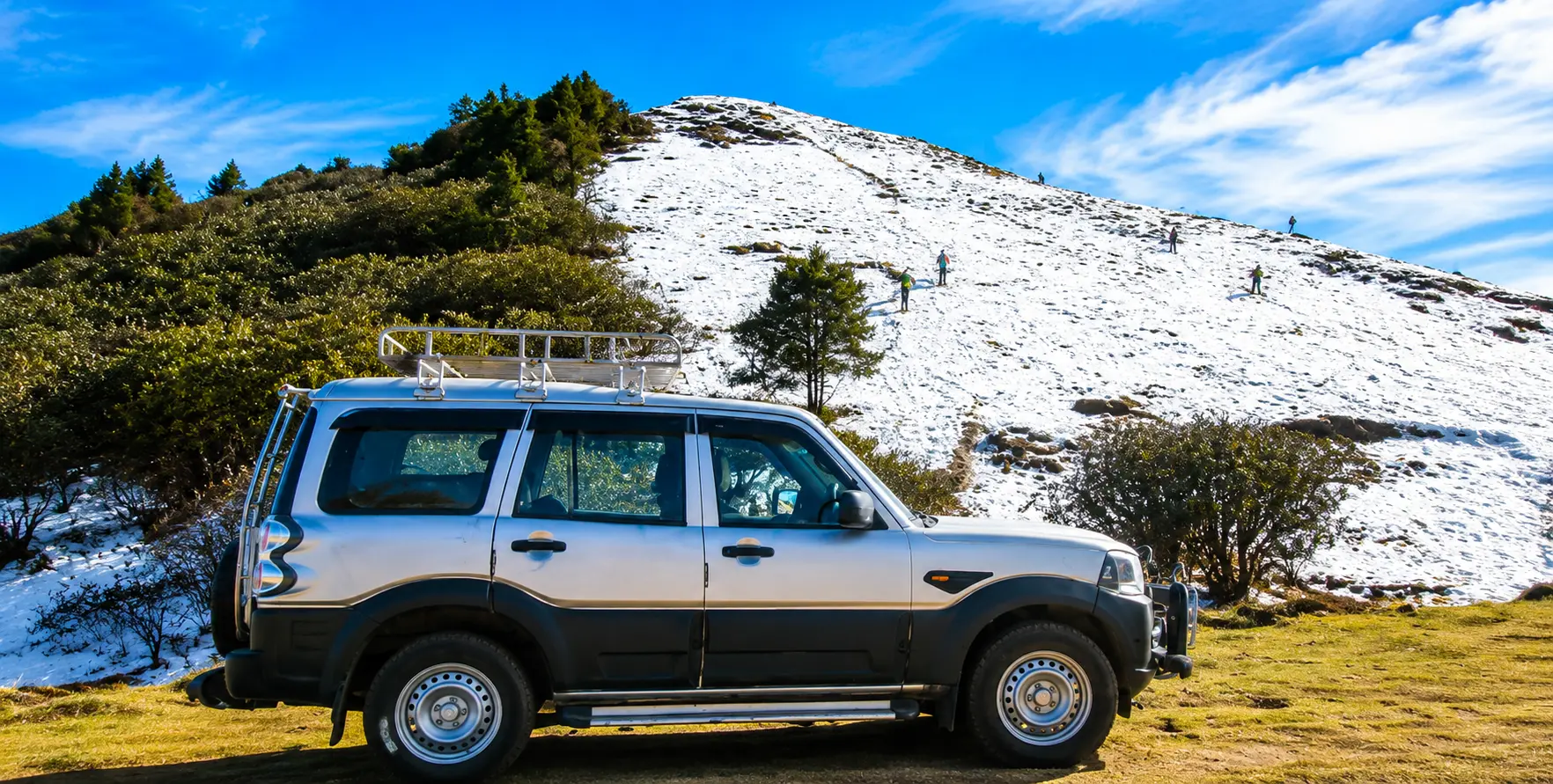
Local travel guides describe the road near Jhinu Danda as seasonal in places, which means conditions can change from one month to the next. A four-wheel-drive jeep, a Scorpio, or a Bolero handles this kind of road far better, with the ground clearance, traction, and engine torque rural hill roads demand.

The jeep also gives you a higher seating position, a more comfortable ride on rough surfaces, es and enough luggage space for trekking bags. For a couple or a family of four or five, a jeep is the sweet spot between comfort and cost.

It is also the vehicle our drivers know best for the Annapurna foothill roads, because they drive them regularly. If you are curious about how a jeep compares with public transport on mountain roads, our jeep versus bus guide for Syabrubesi explains the same principle on another famous route.

When a Car Is Enough and When It Is Not

A car is perfectly good for the Kathmandu to Pokhara highway leg. It is not the right choice for the final hill road toward Jhinu Danda, particularly in the monsoon or shortly after heavy rain.

Travelers therefore take a car from Kathmandu to Pokhara and switch to a jeep for the Pokhara to Jhinu Danda leg, or use a jeep for the entire journey so there is no vehicle or luggage transfer. Both options work, and we can arrange either.

A jeep for the whole route costs somewhat more than a car for the highway, but it removes a transfer and keeps your party together.

Hiace Vans and Coaster Buses for Groups

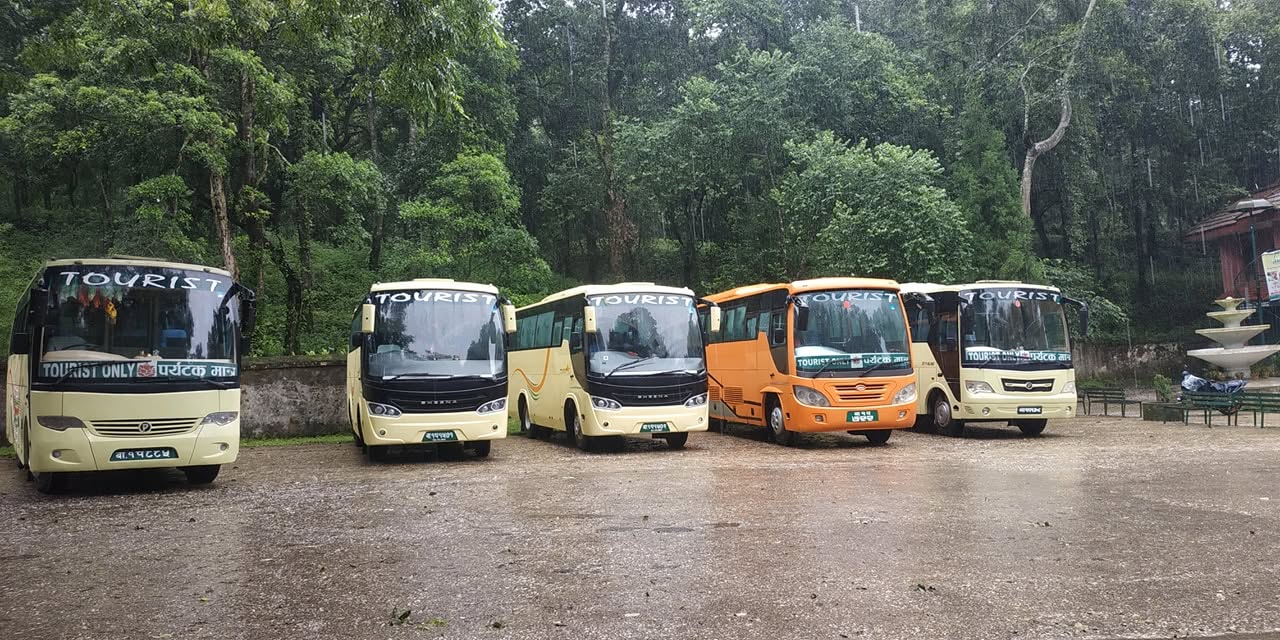
Larger groups need a different approach. A Hiace van carrying up to fourteen passengers and a Coaster bus carrying fifteen to twenty-two are excellent on the Kathmandu to Pokhara highway. Still, they are not suited to the rough hill road toward Jhinu Danda.

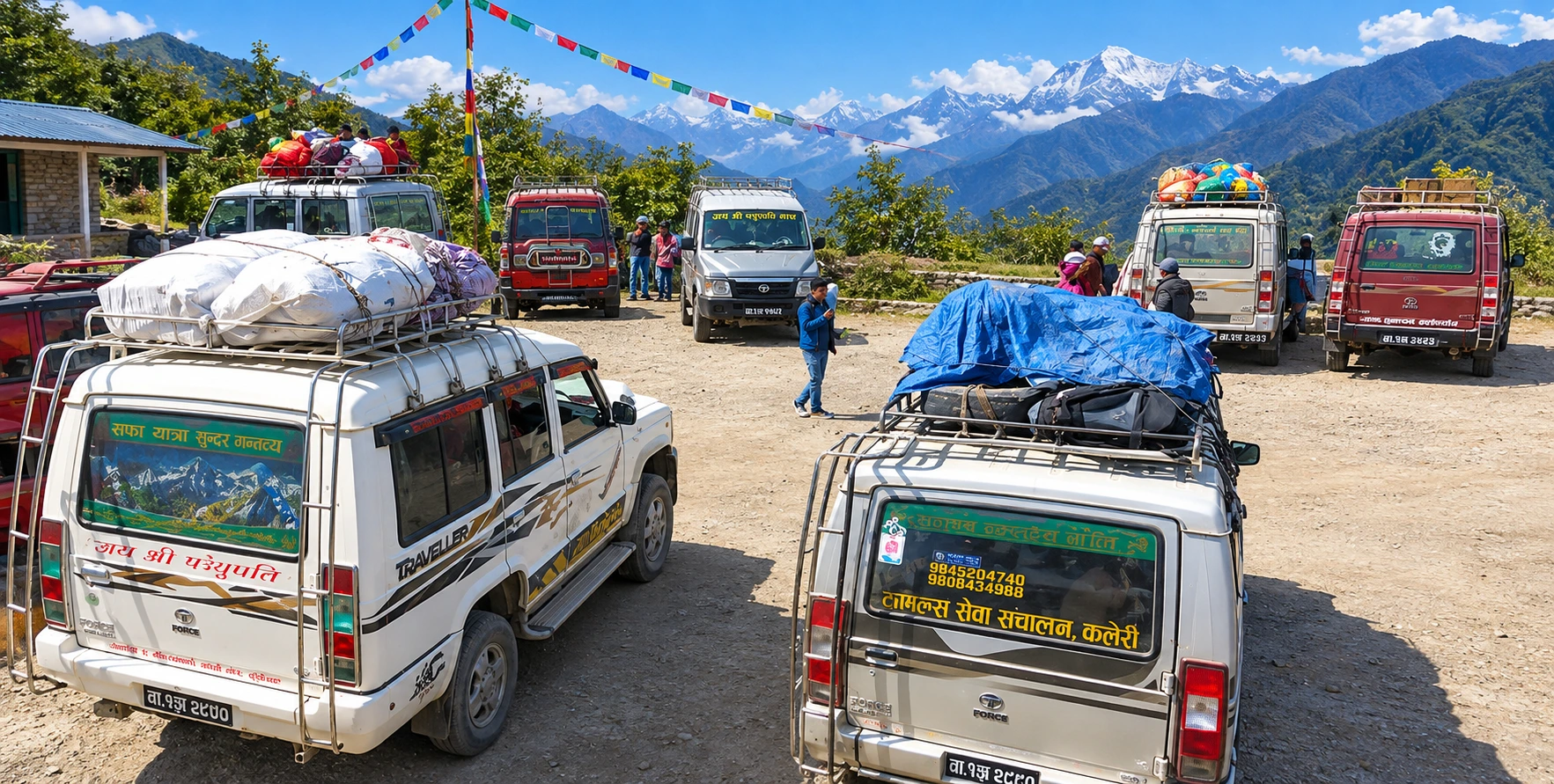
For groups, the best solution is to use a Hiace or Coaster for the highway leg to Pokhara, then transfer to several jeeps for the final hill road, with each jeep carrying four or five people. We coordinate the vehicles and the timing so that the whole group moves together, and we can use the same arrangement on the way back. Our group transport service handles this kind of mixed-vehicle plan regularly.
Kathmandu to Jhinu Danda jeep rental

How to Split the Journey: Three Sensible Plans

For most travelers, the best plan is to drive from Kathmandu to Pokhara on the first day, spend the evening and night by the lake, and make the Jhinu Danda trip the following morning. The Kathmandu to Pokhara drive leaves at around 7:00 AM, stops for a relaxed lunch near Mugling or Dumre, and arrives in Pokhara by mid-afternoon, leaving time for a lakeside stroll or a visit to the World Peace Pagoda.

The next morning, the jeep leaves early, reaches the road end by late morning, and gives you the whole day for the walk, the hot springs, lunch in the village, and the return drive. This plan keeps every day comfortable, avoids rushing the hot springs, and gives you a proper night’s rest.

Plan B: One Long Day or an Overnight at Jhinu Danda

If you want to reach the village by dark, you can leave Kathmandu at dawn and drive straight through, arriving at the road end in the late afternoon and walking up to a lodge for the night. This works well for travelers with limited time and a high tolerance for long drives, but the day is demanding, and you will have little time to enjoy the journey.

Alternatively, spend the first night in Pokhara and the second night at a lodge in Jhinu Danda itself, which allows an evening and a morning at the springs and lets you enjoy the village at its quietest. Our jeep rental team can arrange a one-way transfer to the road end and a pickup two days later, so you can walk and relax without worrying about the driver.

Plan C: Fly to Pokhara and Use the Jeep for the Hill Road

Some travelers prefer to fly between Kathmandu and Pokhara, which takes about half an hour, and use a jeep only for the final hill road. This saves a day of driving and is ideal for travelers who want Thaple scenery without the long highway journey.

We arrange airport pickup in Pokhara, the jeep for Jhinu Danda, and the return to the lake or the airport, and we can add Pokhara sightseeing with our Pokhara car hire. If you choose this plan, please share your flight time so the driver can wait at the right place.

Day One: Kathmandu to Pokhara

Your driver will pick you up from your Kathmandu hotel around 7:00 AM. The vehicle leaves the valley at Naubise, follows the Trishuli River through its gorge, and reaches Mugling around mid-morning, where a short stop for the famous thick buffalo curd is a tradition.

Lunch is usually taken near Dumre or on the road to Pokhara, and the afternoon drive climbs gently through the Seti River valley to the lake city. If you would like to break the journey with a heritage stop, the historic hill town of Bandipur is a short detour from the highway, and our Kathmandu to Bandipur heritage day trip shows how rewarding it can be.

Arrive in Pokhara by about 3:00 PM and settle into your lakeside hotel.

Day Two: Pokhara to Jhinu Danda and the Hot Springs

An early start is best. The jeep leaves Pokhara around 7:00 AM, follows the Baglung highway toward Nayapul, then turns onto the hill roads of the Modi Khola valley system. After about three to four hours of winding roads, you reach the nearest practical road point.

From there, a short uphill walk leads to Jhinu Danda village, where you can check in, enjoy lunch, and then walk down to the hot springs in the afternoon. A relaxed soak of an hour or two, followed by the climb back up and an evening meal, makes a perfect day.

If you are returning the same day, plan to leave the springs by about 2:30 PM to reach Pokhara before dark.

Day Three: Return to Pokhara or Kathmandu

If you stayed overnight in the village, enjoy a quiet morning, perhaps walking up toward Chhomrong for the mountain views, before descending to the road end where the jeep is waiting. The return to Pokhara takes about three to four hours, after which you can continue to Kathmandu by road or fly.

Our drivers coordinate timings by WhatsApp so the vehicle is at the road end when you arrive, whether your walk takes a little longer or shorter than planned.
Kathmandu to Jhinu Danda jeep rental

Permits and Documents for Jhinu Danda

Annapurna Conservation Area Permit and TIMS Card

Jhinu Danda lies within the Annapurna Conservation Area, so visitors normally need an Annapurna Conservation Area permit and a TIMS card, which is the Trekkers’ Information Management System registration. The permit fees are modest and support conservation and community projects in the area.

The Nepal Tourism Board and the conservation authority publish the current rates, so confirm the latest figures when you collect them. You can get permits at the Nepal Tourism Board offices in Kathmandu and Pokhara, and some checkpoints in the area also check them.

Carry your passport, a couple of passport-sized photographs, and the permit receipts.

You don’t need to arrange permits through a trekking agency for a simple trip to Jhinu Danda, although many travelers prefer to have their hotel or guide handle the paperwork. Our team can advise where to collect the permits and how much time to allow, and our drivers know the checkpoint locations so you are prepared.

If you plan to continue from Jhinu Danda toward Annapurna Base Camp later, the same permits apply, so it’s best to arrange them properly at the start.

Other Documents and Practical Items

Bring your passport or a copy, travel insurance details, and a small amount of cash in local currency for the hot spring entry charge, tea, lodge meals, and any tips. Mobile coverage exists in the area but is patchy in the valley, so download offline maps before you leave Pokhara and let your family know your plans.

If you are traveling with children, carry any medication they need and a lightweight rain layer. A power bank is useful because charging at remote lodges can be limited.

Best Time to Visit Jhinu Danda

The Two Best Seasons

The two best seasons for Jhinu Danda are autumn (October to November) and spring (March to May). Autumn brings crystal-clear air, crisp mornings, and the finest views of the peaks, and it is the busiest time of year.

Spring brings warmer weather, blossoming rhododendrons on the slopes, and good visibility in March and April, though haze increases toward May. Both seasons offer comfortable walking conditions and pleasant hot spring soaking, because the cool mountain air makes the warm water especially enjoyable.

Winter and Monsoon Considerations

Winter, from December to February, is cold, particularly at night, but often clear, and it is quieter on the trails. The springs are especially welcome in cold weather. The monsoon, from June to September, brings heavy rain, leeches on forest trails, slippery steps, and the risk of landslides on the hill roads.

During the monsoon, high river levels can affect the hot springs, and they may be temporarily unavailable. If you must travel in this period, choose a jeep, allow extra time, carry rain gear, and check conditions with us before leaving.

Our team monitors road conditions through our driver network and will advise honestly if you should postpone a trip.

Time of Day

Morning is the best time to drive, because the road is quieter, the air is clear, and the mountains are usually visible. In the village, the early morning and late afternoon are the best times for the springs, because the crowds are thinner and the light is softer.

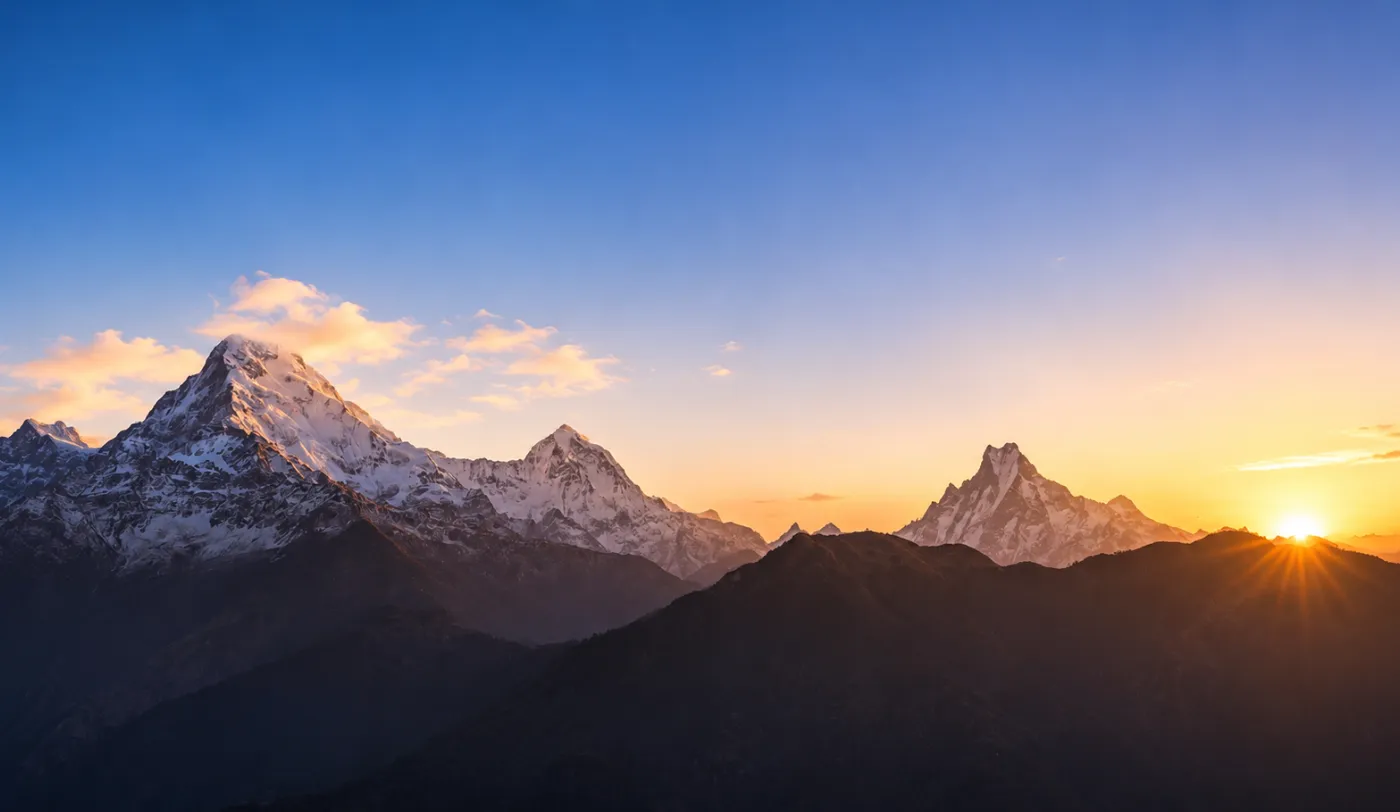
If you are staying overnight, a pre-dawn walk up the ridge for the sunrise over the peaks is a quiet reward. Whatever your plan, start early and build in some extra time.

Prices in US Dollars: What to Expect

Indicative Ranges by Vehicle

The final price depends on the vehicle, number of passengers, route, and waiting time, so the ranges below are indicative and confirmed in writing at booking. A jeep from Kathmandu to the Jhinu Danda road end, one way, typically costs USD 270 to USD 280.

A car from Kathmandu to Pokhara, for the highway leg only, typically costs USD 120 to USD 130, and a jeep for the same leg is US$160. A jeep from Pokhara to the road end and back on the same day, with the driver waiting while you visit the springs, typically costs USD 150 to USD 160.

A one-way jeep from Pokhara to the road end is about USD 110 to USD 120

For groups, a Hiace van from Kathmandu to Pokhara typically costs USD 220 to USD 240, and a Coaster bus is USD 400 to USD 420, with jeeps added for the hill road as needed. Longer stays at the village, extra waiting days, and onward travel are priced on request.

These figures sit slightly above the cheapest budget quotes you may find, and the value section below explains why. For a precise quote, send us your dates, group size, and pickup location on WhatsApp.

What Is Included

Our quoted prices include the vehicle, an experienced driver, fuel, tolls and parking, and a confirmed pickup and return plan. They do not include meals, lodge accommodation, permit fees, hot spring entry charges, or personal expenses.

If you want us to include accommodation in Pokhara or the village, we can suggest options and add them to the plan. A written quote before you travel avoids misunderstandings, and you pay the price you agree to.
Kathmandu to Jhinu Danda jeep rental

Who Takes This Trip?

Couples, Friends and Solo Travelers

Couples and friends are the most common travelers on this route, drawn by the mix of mountain scenery, culture, and relaxation. A jeep for two or three people is the most economical choice, and the two-day plan with a night in Pokhara gives you a proper holiday rhythm.

Solo travelers often join the trip to see the Annapurna foothills without committing to a full trek, and a private jeep offers comfort and flexibility without needing to find companions. Please tell us your pace and interests, and we will shape the plan around you.

Families With Children and Older Travelers

Families enjoy the trip because it combines a scenic drive with a gentle walk and a splash in warm water. Remember,t the walk down to the springs is about thirty to forty minutes,s and the walk back up is a proper climb on stone steps, so consider the age and fitness of everyone in your party.

Older travelers who prefer not to climb can stay in the village while the others walk down, or enjoy the views and the lodge. A jeep with a patient driver and a flexible plan helps everyone enjoy the day. Mention any mobility needs when booking, and we will plan accordingly.

Annapurna Base Camp Trekkers Finishing at Jhinu Danda

Many trekkers finish their Annapurna Base Camp walk at Jhinu Danda and want a reliable vehicle back to Pokhara or Kathmandu. A one-way jeep from the road end near the village, arranged in advance, spares tired legs the long walk down to Nayapul and gets you to Pokhara in time for a shower and a meal.

Because treks rarely finish exactly on schedule, we keep the pickup date flexible and confirm the exact time by WhatsApp from the village. This is one of the most common reasons travelers contact us, and it is easy to arrange. See our trekking vehicle services to learn more about how we handle trailhead pickups.
Kathmandu to Jhinu Danda jeep rental

The Kathmandu to Pokhara Highway: Stops Worth Making

From the Valley Rim to the Trishuli Gorge

The first hour of the drive takes you out of the Kathmandu Valley via Naubise, where the road begins its long descent toward the Trishuli River. From here, the highway hugs the river gorge for much of the way, with steep forested walls above, suspension bridges across the water and, in the dry season, rafting groups on the rapids below.

This is the heart of the journey, and a private jeep or car lets you pause at viewpoints rather than rushing past them. Ask the driver to stop where the river is most dramatic and take a few photographs before the road climbs again.

Mugling, the Cable Car and Roadside Food

Mugling, at the confluence of the Trishuli and Marsyangdi rivers, is the traditional halfway stop. Restaurants along the river serve thick buffalo-milk curd in small clay pots, a Nepali road-trip tradition that is worth the twenty-minute break.

Not far beyond is the cable car to the Manakamana temple, a famous hilltop shrine reached by a scenic ride above the valley that some travelers add to a longer day. Near Dumre, the road splits: one branch climbs to the hill town of Bandipur, and the other continues west toward Pokhara.

Our drivers know the best places to eat and how long each stop really takes, so your schedule stays realistic.

Approaching Pokhara and the First Mountain Views

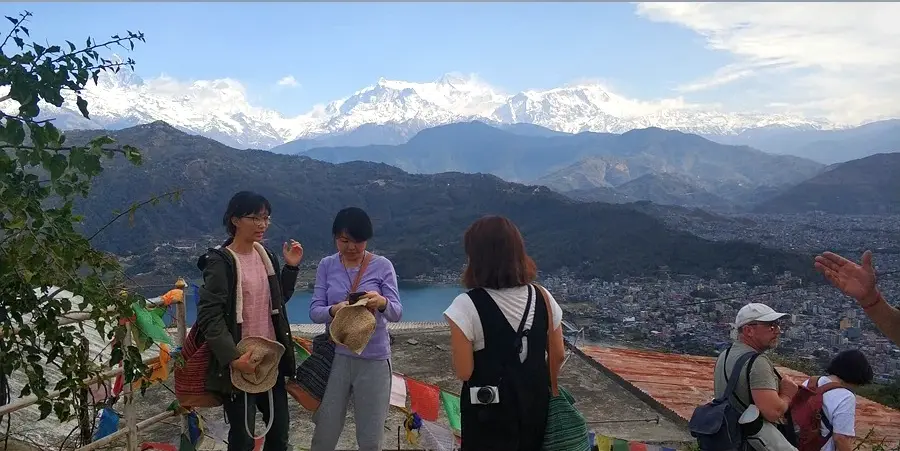
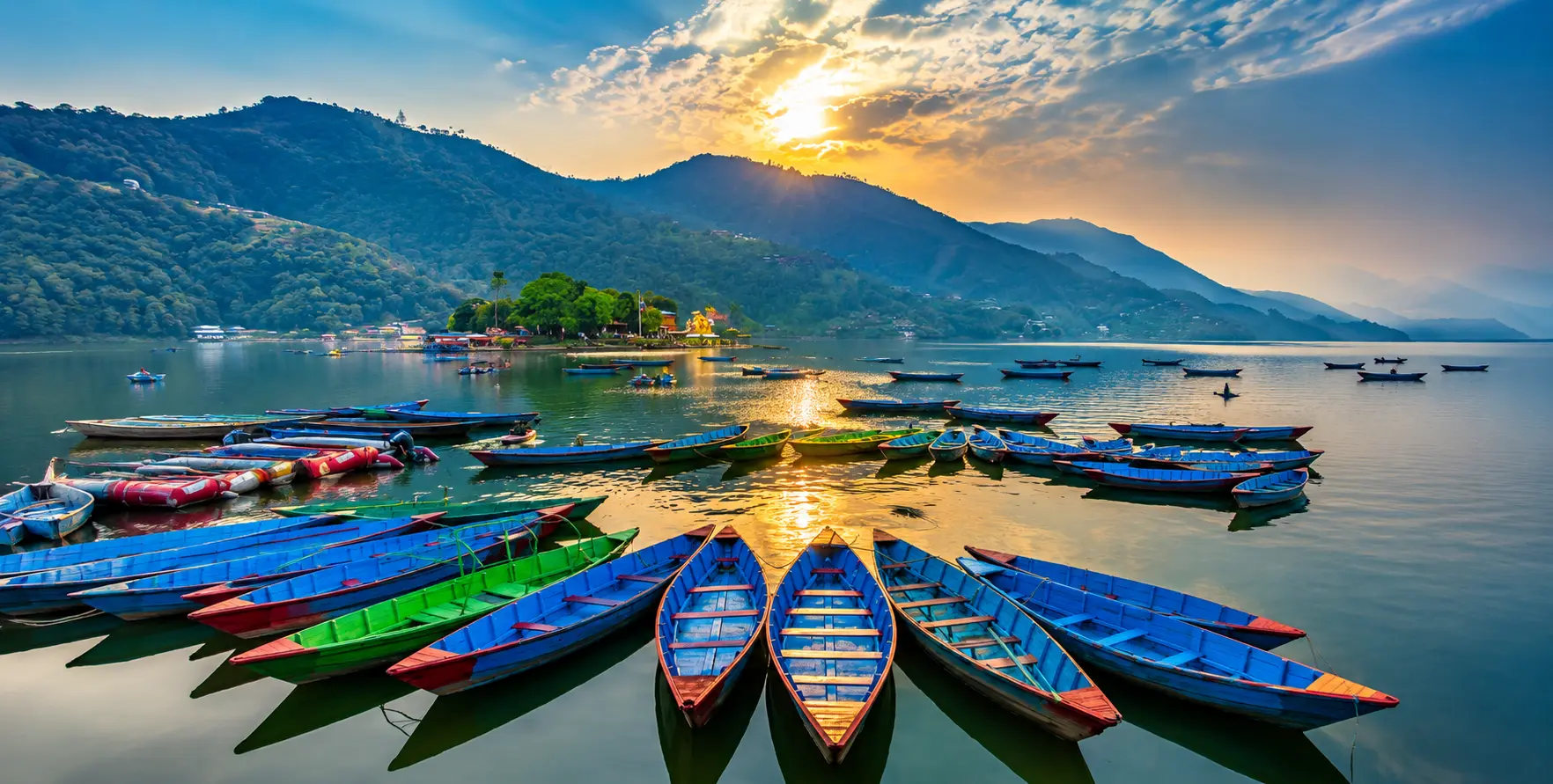
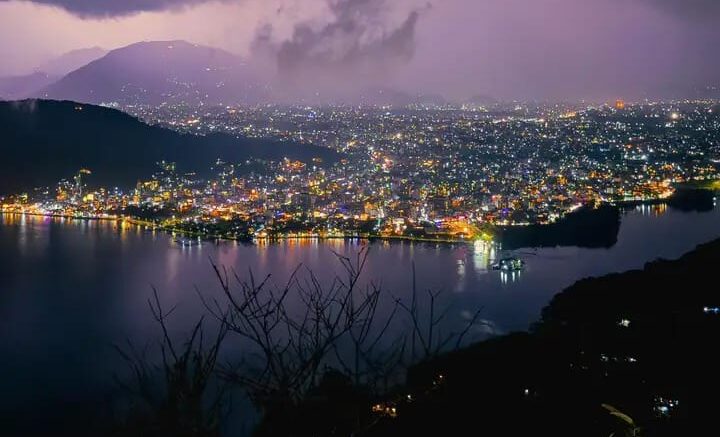
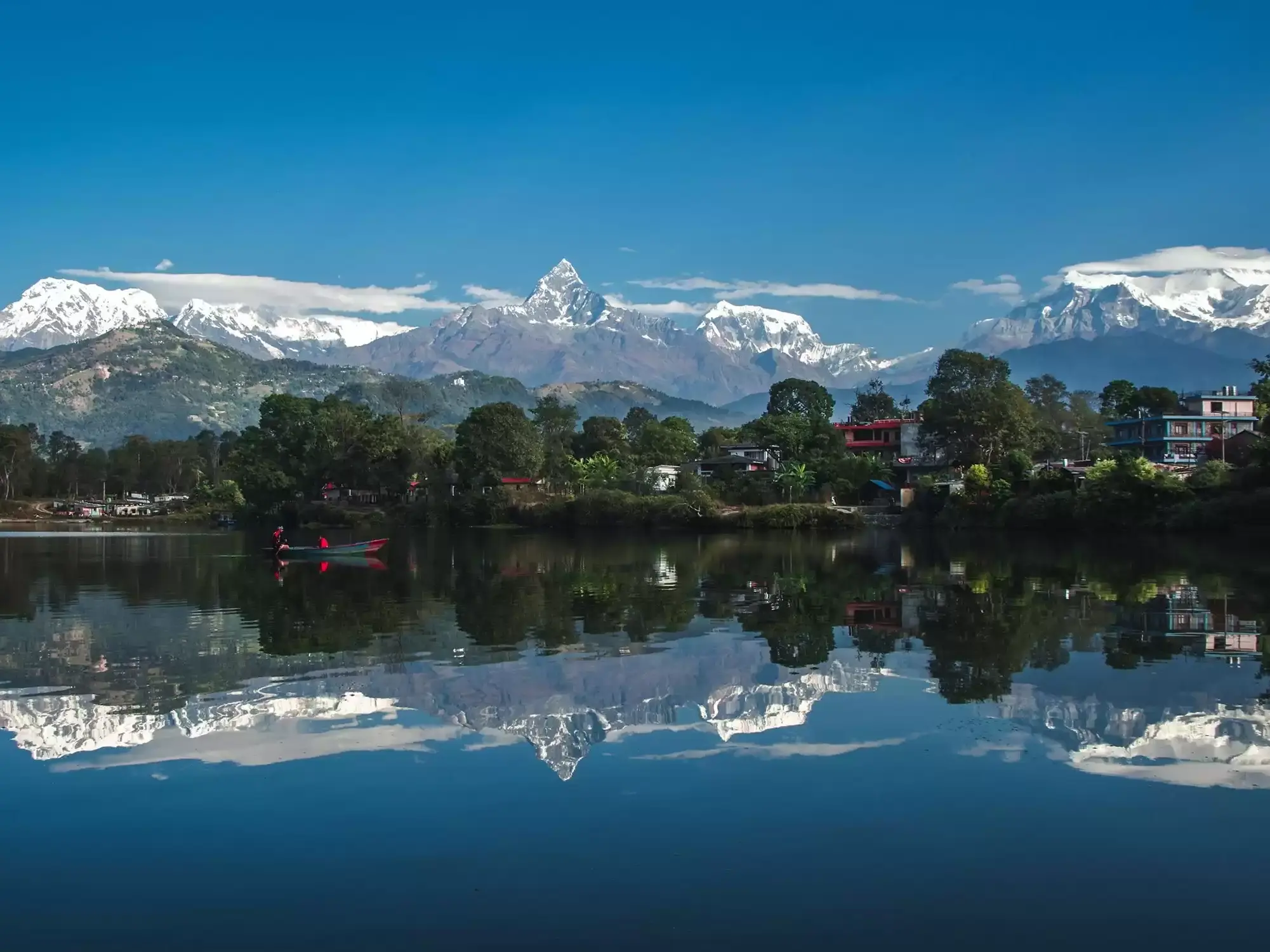
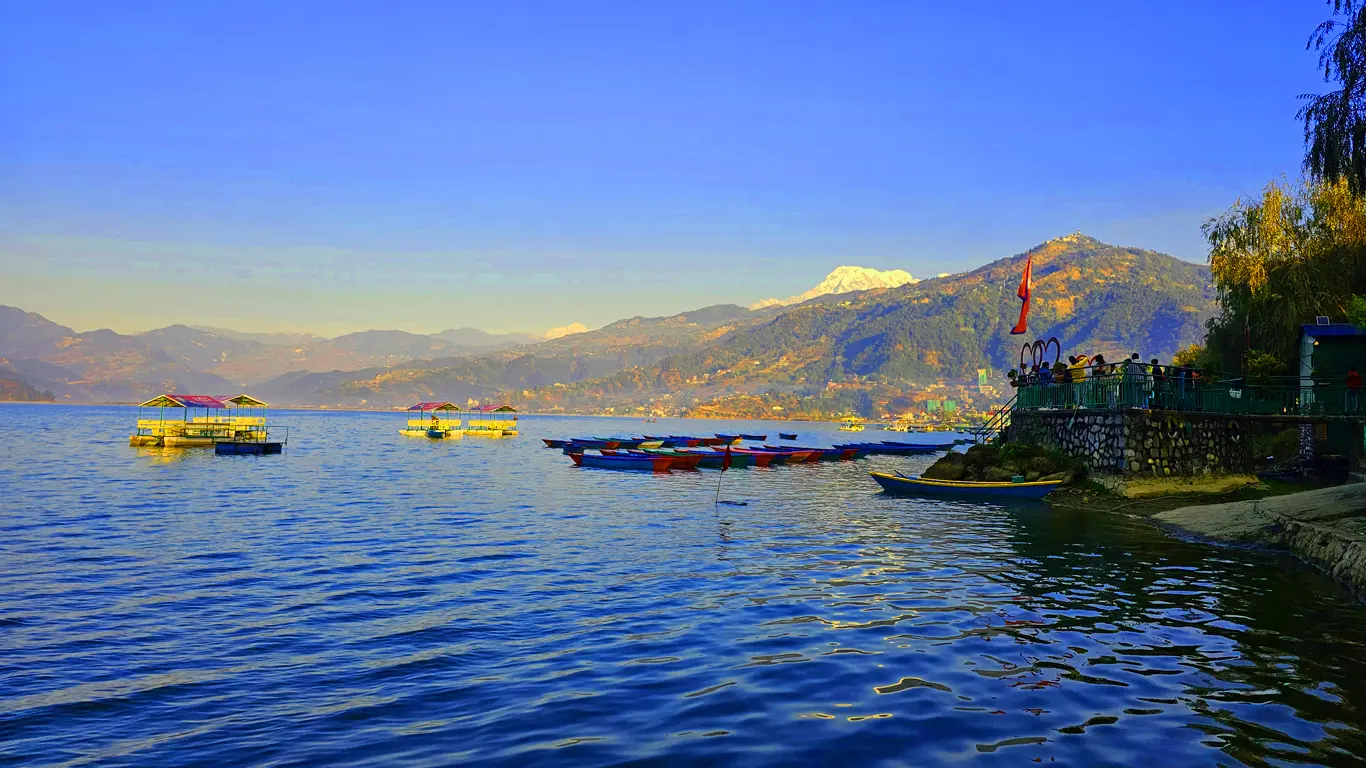
As the road descends toward Pokhara, the Annapurna range begins to appear on clear afternoons, a first glimpse of the mountains you are traveling to see. The city sits beside Phewa Lake at a gentler altitude than Kathmandu, with a warm, relaxed atmosphere, lakeside cafes and an easy pace.

Settling into a hotel here before the hill road trip is one of the best decisions you can make, and our Pokhara car hire service can cover local sightseeing on your arrival evening or after you return from Jhinu Danda.
Kathmandu to Jhinu Danda Jeep Rental: Complete Guide

Beyond the Springs: Ghandruk, Landruk and Chhomrong

Ghandruk: Stone Paths and Gurung Heritage

Ghandruk is one of the largest and most picturesque Gurung villages in the Annapurna region, with stone-paved lanes, slate-roofed houses and a long tradition of hosting visitors. Its small museum introduces Gurung history, clothing and customs, and the village viewpoint looks across to Annapurna South, Hiunchuli and Machhapuchhre.

Ghandruk is reachable by jeep road, and many travelers combine it with Jhinu Danda on a three-day trip. If culture interests you more than hiking, Ghandruk may be the highlight of your journey, and our Ghandruk jeep rental covers it with the same experienced drivers.

Landruk and the Quiet Side of the Valley

Landruk sits lower in the valley and is quieter, with terraced fields, small lodges, and a more local feel. It is a popular lunch stop for trekkers on the trail between Ghandruk and Jhinu Danda, and it gives a relaxed introduction to hill life without the traffic of larger villages.

If you want to walk part of the trail rather than ride the whole way, a driver can drop you at one village and pick you up at another, making a gentle, flexible one-day hike possible.

Chhomrong: The Gateway Viewpoint

Chhomrong is the last large village before the Annapurna Sanctuary proper and is celebrated for its stepped lanes and dramatic mountain panorama. From Jhinu Danda, it’s a couple-hour climb, steep in places but rewarded with some of the region’s best views.

A morning walk up to Chhomrong and back, followed by an afternoon soak at the springs, is a classic way to use a two-night stay. Start early, carry water,d move at your own pace, and don’t feel obliged to reach the top if the weather or your legs say otherwise.
Kathmandu to Jhinu Danda Jeep Rental: Complete Guide

Culture and Landscape of the Modi Khola Valley

The Gurung People and Their Hospitality

The villages along the route are mainly home to Gurung communities, among Nepal’s best-known hill peoples. Many families farm terraced fields, keep livestock, and run small lodges, and the community is also famous for its long association with the Gurkha regiments.

Visitors often remark on the warmth of the welcome, the quality of the home-cooked food, and the pride villagers take in maintaining their traditions. Staying in a local lodge, eating dal bhat and talking with the owners is part of the experience, and it directly supports the families who care for the trail and the springs.

Forests, Rivers and the Mountain Backdrop

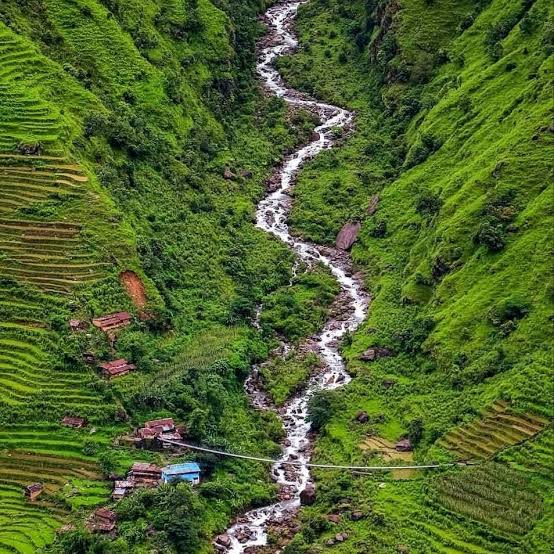
The Modi Khola, fed by glaciers high in the Annapurna Sanctuary, runs in a deep gorge below the villages, and its roar is a constant background sound. Slopes are covered with bamboo, oak, and rhododendron forests, home to langur monkeys and numerous birds, and in spring the rhododendrons bloom in red and pink on the higher slopes.

After rain, waterfalls spill down the valley walls, and the changing light on the high peaks makes every viewpoint worth a pause. Because the area lies within a conservation area, the landscape is relatively well protected, and travelers are encouraged to leave no trace.

Private Jeep, Shared Jeep or Public Bus: An Honest Comparison

The Shared Jeep and Bus Option

Travelers on a tight budget sometimes take a public bus or a shared jeep from Pokhara to the Jhinu Danda area. These services are inexpensive per person and a genuine option for solo trekkers who are flexible with time.

The drawbacks are fixed departure times, crowded seating, luggage on the roof or at your feet, multiple stops, and little control over when you arrive. In the monsoon or on a busy day, a shared service can be slow, and a missed connection can leave you stranded late in the afternoon in a village with few alternatives.

Why a Private Jeep Often Wins for Two or More People

For two or more travelers, a private jeep can be very competitive once you share the cost. You choose the departure time, stop where you want, keep your luggage safe inside, and travel with a driver who knows the road.

For a couple or family, the extra cost over shared transport is modest compared with the comfort and certainty you gain. The calculation is even stronger on a journey that begins in Kathmandu, where connections between buses and jeeps would otherwise add hours and uncertainty.

Compare what is included before you decide, and remember that a flexible, reliable vehicle is part of what makes a short holiday enjoyable.

Planning Tips That Save Time

A few practical habits make the journey smoother. Confirm your pickup time the night before and keep your driver’s phone number handy. Pack a small day bag with water, snacks, a rain layer, and your permit receipts, and keep your main luggage in the vehicle if you plan a day trip.

Withdraw cash in Kathmandu or Pokhara, because ATMs in the village aren’t reliable. Start early on every travel day, because mornings are clearer and the roads are quieter. If you want to extend your stay, tell us in advance so we can adjust the return pickup without stress.

You can reach our team anytime via WhatsApp, phone, or email.
Kathmandu to Jhinu Danda Jeep Rental: Complete Guide

Sample Itineraries With Jhinu Danda

Two Days: Pokhara Night and a Hot Spring Day

Day 1: Drive from Kathmandu to Pokhara with a Mugling curd stop and an evening by the lake. Day 2: Take an early jeep to the road end, walk to Jhinu Danda, soak in the springs, have lunch, and return to Pokhara.

This is the simplest way to enjoy the springs without trekking, and it works well for couples and small families who want a short, rewarding trip. A car carries you on Day 1 and a jeep on Day 2, or a jeep serves both days.

Three Days: Add Ghandruk and a Village Night

Day 1: Kathmandu to Pokhara. Day 2: Take a jeep to the road end, walk up to Jhinu Danda, stay overnight in a lodge, and enjoy a late-afternoon soak. Day 3: Sunrise walk, a morning at the springs or a climb toward Chhomrong, then jeep back to Pokhara.

If you prefer a culture-focused day, add a visit to Ghandruk and its Gurung museum using our Ghandruk jeep service before returning to Pokhara. Three days give you time to feel the pace of village life rather than rush through it.

Five Days: Kathmandu, Pokhara, Jhinu Danda and Bandipur

Day 1: Kathmandu sightseeing at Pashupatinath, Boudhanath, Swayambhunath and Patan using our Kathmandu sightseeing tour. Day 2: Drive to Bandipur for an overnight in its car-free Newari bazaar. Day 3: Continue to Pokhara and enjoy the lake and Sarangkot sunrise.

Day 4: Take a jeep to Jhinu Danda for the hot springs and stay overnight in the village. Day 5: Return to Pokhara and fly or drive back to Kathmandu. This itinerary blends heritage, mountains, and relaxation in a way that suits first-time visitors well.

Seven to Ten Days: Mountains, Wildlife and Pilgrimage

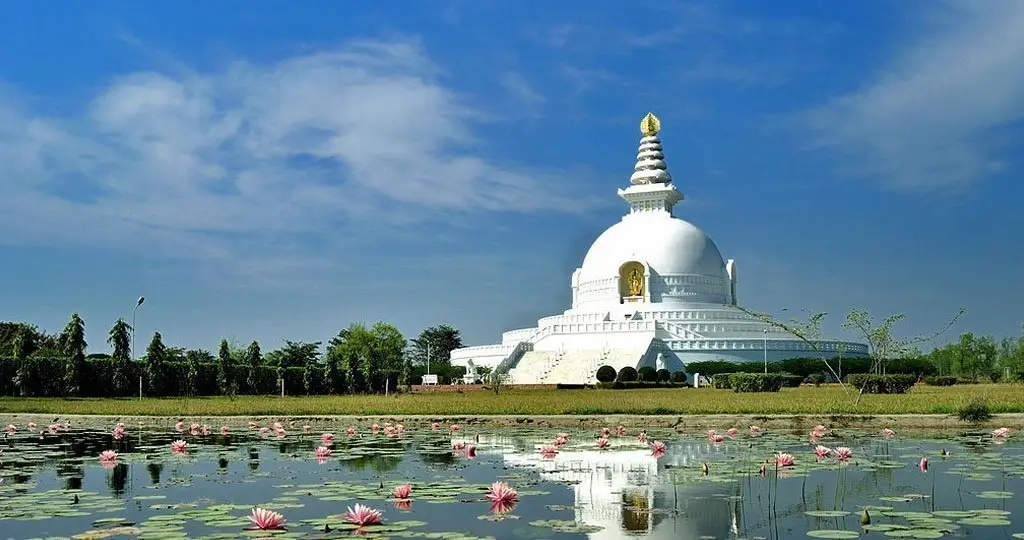
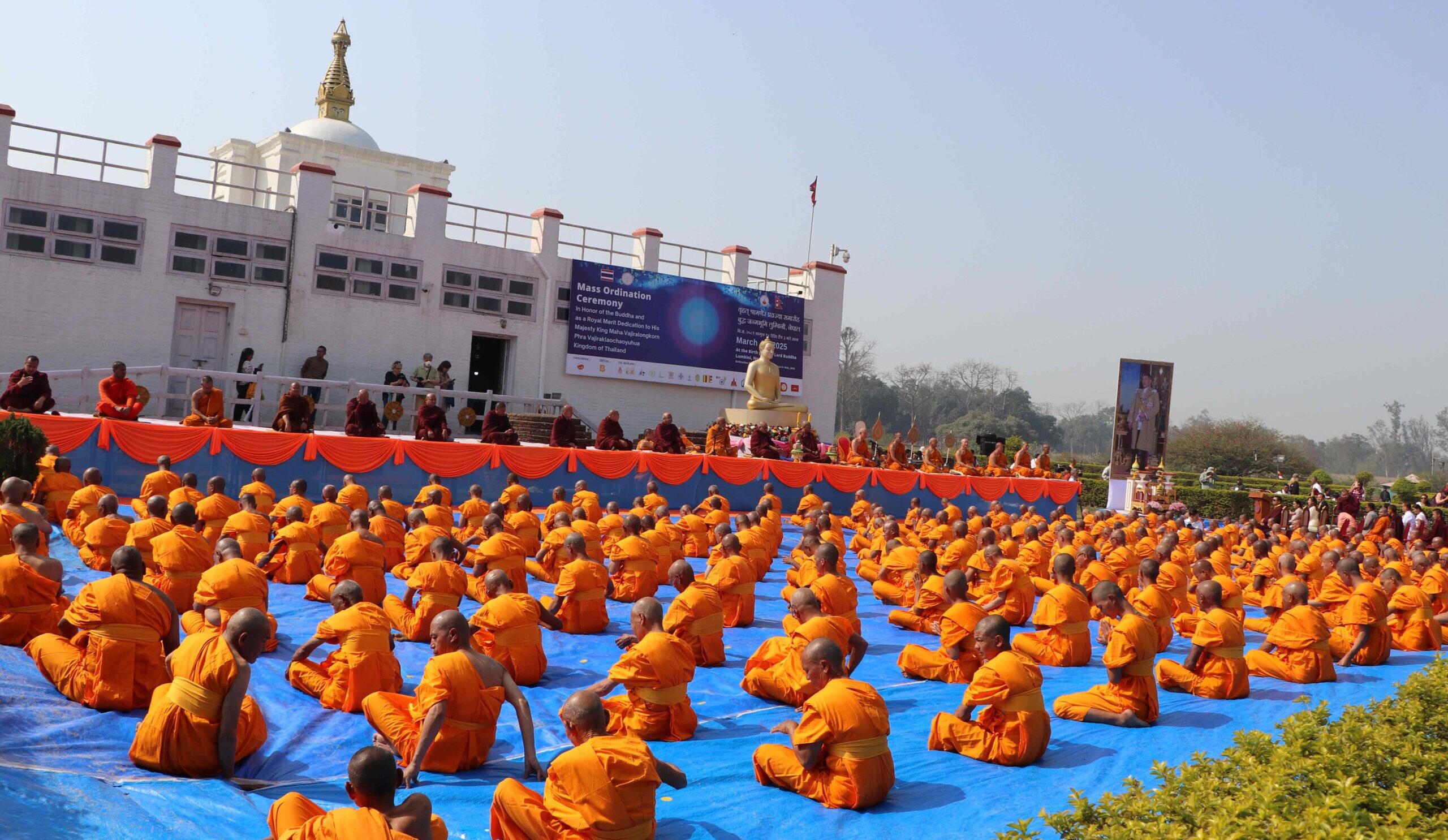
For a longer journey, start with Kathmandu heritage, travel to Pokhara and Jhinu Danda, then continue south to Chitwan National Park for a jungle safari and to Lumbini, the birthplace of the Buddha. Our Lumbini to Chitwan connection and our Sunauli to Pokhara route make it easy to link the Terai with the hills, and a single transport partner means one booking conversation and a consistent standard of vehicle and driver throughout.

Many travelers add a morning Everest mountain flight from Kathmandu at the start of their trip, so that the whole journey begins with the highest mountain in the world and ends with a quiet soak below the Annapurnas.

Packing List and Practical Tips

What to Bring for the Drive and the Springs

  • Swimwear, a quick-dry towel and a spare set of clothes for after the soak
  • Sturdy walking shoes or sandals with grip for the stone steps down to the river
  • A warm layer and a light rain jacket, because the weather in the foothills changes quickly
  • Sun hat, sunscreen and sunglasses for the road and the open sections of trail
  • A reusable water bottle, a few snacks and a small first-aid kit
  • Cash in local currency for entry fees, tea, lunch and tips, since cards are rarely accepted
  • Permit receipts, passport copies and a charged phone with offline maps
  • Leech socks or insect repellent if you travel during the monsoon months

Cash, Connectivity and Lodging

Village lodges are simple but friendly, with basic rooms, hot meals and often a dining room with mountain views. Rooms are inexpensive and are usually available without booking outside the busiest weeks, though booking ahead in October and November is wise.

Food is mainly dal bhat, noodles, momos and tea, and a hot meal after the springs is one of the pleasures of the trip. Electricity can be limited, so bring a power bank.

Mobile coverage is patchy in the valley but improves on the ridge, so inform family and friends of your plans before you leave Pokhara.

Responsible Travel at the Springs and on the Trail

Jhinu Danda is a living village and a conservation area, and a little care helps keep it special. Carry your rubbish out, avoid single-use plastic, use refillable bottles,s and follow the rules posted at the pools. Keep noise low, dress modestly away from the springs, and ask before photographing people.

Be careful near the river, where currents can be strong, and never enter the water at night or after heavy rain. Support the community by buying meals and drinks at local lodges and by hiring local porters and guides where appropriate.

Safety, Health and Peace of Mind

Road Safety on Hill Roads

Safe driving on the Annapurna foothill roads depends on local experience. Our drivers know where the road narrows, where small landslides tend to occur, and where it is wise to pause to let other vehicles pass.

They avoid night driving on the hill road, adjust their speed to conditions, and stay in contact with our team so we can report any problem quickly. If the weather turns bad, they will tell you honestly whether it is sensible to continue, and we would always rather postpone a trip than push through unsafe conditions.

Wearing seat belts, following the driver’s advice, and avoiding last-minute changes help keep the journey smooth.

Health on the Walk and in the Springs

The walk to the springs is short but involves steps, so wear suitable footwear and take your time on the climb back. The hot water can be tiring, particularly in warm weather, so soak in moderation, drink plenty of water and avoid alcohol before or after bathing.

People with heart conditions, high blood pressure, pregnancy, or other health concerns should speak to a doctor before using any hot spring. Carry basic medicines and insurance details, and tell your driver if anyone in your party has special needs. The village is remote, and the nearest large medical facilities are in Pokhara.

Why Our Prices Sit Slightly Above the Cheapest Options

An Honest Explanation

You can find cheaper jeeps in Pokhara and Kathmandu, and we want to be open about that. Our prices sit slightly above the lowest budget quotes because of what is included: vehicles that are regularly serviced and kept clean, experienced drivers who know the Annapurna foothill roads, fuel, tolls,s and parking built into the price, waiting time agreed in advance, and a team that responds to WhatsApp messages at any hour.

On a route where the road can change from one month to the next, an experienced driver and a reliable vehicle are worth considerably more than a small saving.

We quote in US dollars as ranges and confirm the exact amount in writing before you travel. The agreed price is the price you pay, with no surprise additions at the end.

When you compare quotes, compare what is included — the vehicle type, fuel, tolls, waiting time, a named driver and a direct contact number — rather than only the headline number. Many travelers find that a slightly higher, fully inclusive price is better value than a lower price with extras.

Learn more about our approach at Nepal Vehicle Hiring Pvt. Ltd..

What You Can Expect From Us

  • A confirmed vehicle and driver arranged before you travel, with the pickup time written down.
  • A jeep (Scorpio or Bolero) for the hill road and a car, Hiace van or Coaster bus for the highway
  • An honest assessment of road and weather conditions on the day
  • Clear USD price ranges, confirmed in writing, with fuel, tolls, a nd parking included
  • Flexible return pickups from the road end, confirmed by WhatsApp from the village
  • Optional Kathmandu sightseeing, Pokhara sightseeing, Bandipur, Chitwan and Lumbini added to the same booking
  • A single contact: WhatsApp and email [email protected]
Book Your Jhinu Danda Jeep — Nepal Vehicle Hiring Pvt. Ltd.
Website: www.vehiclehiringnepal.com
WhatsApp / Phone: WhatsApp (early morning pickups arranged)
Email: [email protected]
Office: Bhagawatisthan, Thamel, Kathmandu, Nepal | Registration No. 219204
Jeep Kathmandu to Jhinu Danda road end, one way: about USD 190 to USD 250
Car Kathmandu to Pokhara: about USD 120 to USD 130 | Jeep Pokhara to road end: about USD 100 to USD 110
Vehicles: Car | Jeep (Scorpio or Bolero) | Hiace Van | Coaster Bus
Add-ons: Kathmandu sightseeing, Pokhara tours, Ghandruk, Bandipur, Chitwan, Lumbini
8,000+ customers | 5.0 TripAdvisor rating | 200+ verified reviews

Frequently Asked Questions About Kathmandu to Jhinu Danda by Jeep

Q: How far is Jhinu Danda from Kathmandu?

About 260 kilometers in total: roughly 200 kilometers from Kathmandu to Pokhara on the Prithvi Highway, then about 50 to 60 kilometers on hill roads. The real driving time is nine to eleven hours, so most travelers split it with a night in Pokhara.

Q: Can a jeep go all the way to Jhinu Danda village?

The drivable road ends close to the village, in the Simrung and Mithu Danda area, and a short walk leads to Jhinu Danda. The exact road end and walking time can vary with the season and road works, so our driver will confirm the closest practical point on the day.

Q: Why not use a car instead of a jeep?

A car is fine on the Kathmandu to Pokhara highway, but the hill road toward Jhinu Danda is narrow, steep, and seasonal, and a four-wheel-drive Scorpio or Bolero handles it far better. Many travelers use a car for the highway and a jeep for the hill road, or a jeep for the whole route.

Q: How long does the walk to the hot springs take?

Roughly thirty to forty minutes downhill from the village to the springs, and a similar uphill climb on the way back. The route is on stone steps and forest trail, so wear shoes with grip.

Q: Do I need a permit?

Normally yes. Jhinu Danda is inside the Annapurna Conservation Area, so you need an Annapurna Conservation Area permit and a TIMS card, available at the Nepal Tourism Board offices in Kathmandu and Pokhara. Check the current fees when you pick them up.

Q: What is the best time to visit?

October to November and March to May are the best seasons, with clear skies and comfortable walking. The monsoon brings leeches, slippery steps, and possible road or spring disruption, and winter is cold but often very clear.

Q: Can I go as a day trip from Pokhara?

Yes. A jeep from Pokhara to the road end, a walk to the springs, a soak,k and the return can be done in about eight to ten hours, including driving. Start early and leave the springs by mid-afternoon to be back before dark.

Q: Can you pick us up from Jhinu Danda after our Annapurna Base Camp trek?

Yes. We arrange one-way jeep pickups from the road end near Jhinu Danda to Pokhara or Kathmandu, with the exact time confirmed via WhatsApp from the village so we can easily handle late or early finishes.

Q: What vehicles do you offer?

Cars for up to four passengers, jeeps (Scorpio or Bolero) for up to five, Hiace vans for up to fourteen, and Coaster buses for fifteen to twenty. For hill roads, we use jeeps, and for group transfers, we move from a van or bus to several jeeps in Pokhara.

Q: Can the trip include other places?

Absolutel y.We can add Kathmandu sightseeing, Pokhara tours, a heritage night at Bandipur,rpr or onward travel to Chitwan and Lumbini. We coordinate all legs through one booking.

Conclusion: The Gentlest Way Into the Annapurna Foothills

Jhinu Danda proves you don’t need to trek for weeks to feel the magic of the Annapurna. A well-planned jeep journey brings you to the foothills in comfort, a short walk leads to warm water beside a mountain river, and a lodge meal beneath the peaks completes the picture.

The key is to plan sensibly: split the long drive with a night in Pokhara, use a jeep for the hill road, carry the right permits, choose a good season, and allow time for the walk and the soak.

That is where Nepal Vehicle Hiring Pvt. Ltd. fits in. We provide the car, jeep, Hiace van, or Coaster bus; an experienced driver; a clear USD price range; and an always-open WhatsApp line to keep your journey smooth from the first pickup to the last view.

Message us on WhatsApp, email [email protected], or visit vehiclehiringnepal.com to start planning. The hot springs are waiting, and we will make sure you arrive rested and ready to enjoy them.
Kathmandu to Ulleri Jeep: Route, Timings and Poon Hill Plan

Poon hill trek

Kathmandu to Ulleri Jeep: Route, Timings and Poon Hill Plan

Ulleri is the village where the Ghorepani Poon Hill trek stops being a pleasant walk and starts to feel like a climb. It sits at roughly 2,000 metres on a steep hillside above the Bhurungdi Khola, at the top of one of the most talked-about stone staircases in Nepal, and for a long time trekkers reached it only the hard way: on foot from Nayapul, through Birethanti, Hile and Tikhedhunga, and then up the steps.

Today a rough but motorable road climbs the same valley, and a jeep can carry you from the Pokhara valley all the way to Ulleri, and in some conditions a little higher still.

That road has quietly changed how the trek works. It lets a group with only a few days to spare start at a higher, cooler, more scenic point. It lets older travellers and families begin without a long first-day grind.

It lets photographers reach the sunset light on Annapurna South while it is still warm. It also raises real questions that generic itineraries skip: where exactly does the jeep road end, how long does the whole journey from Kathmandu genuinely take, and is it better to drive past the famous staircase or climb it?

This guide answers those questions in the order a traveller actually meets them. It explains the three parts of the Kathmandu-to-Ulleri journey, what the road is like, how to choose between a one-day push and a night in Pokhara, which vehicle suits which group, and how Nepal Vehicle Hiring arranges it all as a single plan.

We have written it as honestly as we can. The road up the valley has been extended and repaired in stages, and the point where jeeps stop can vary by season and conditions, so we explain the pattern and what to confirm before you travel.

The Kathmandu-to-Ulleri journey at a glance

The journey is no one drive. It has three parts, each with a different character, and understanding them separately is key to planning well.

  • Kathmandu to Pokhara. Roughly two hundred kilometres on the Prithvi Highway, usually six to eight hours by road with a meal stop, or a flight of under h lf an hour. This is the long leg, and it is entirely independent of the trek.
  • Pokhara to Nayapul. About forty kilometres northwest along the Pokhara to Baglung highway, typically an hour to an hour and a half. This is a paved, easy run and the gateway to the lower Modi Khola valley.
  • Nayapul to Ulleri. The mountain section. From the Nayapul junction, a dirt-and-gravel road follows the valley through Birethanti, Hile, and Tikhedhunga up to Ulleri. Trekking operators describe the whole drive from Pokhara to Ulleri as roughly three to four hours by jeep, which means the dirt section alone takes around two hours, sometimes more.

Put together, a Kathmandu-to-Ulleri trip by road takes a full day: a long highway run, a short paved leg, and a slow mountain road at the end. By air and road, it is much shorter, and many trekkers fly to Pokhara in the morning and are in Ulleri by mid-afternoon.

We will compare the two options later. For now, the main point is that the Kathmandu-to-Ulleri jeep is really a relay across three kinds of road, and it works best when planned, not improvised.

Kathmandu to Ulleri Jeep

Understanding Ulleri as a starting point

Where Ulleri sits on the trek

Ulleri, sometimes written Uleri, is a Magar and Gurung hill village on the classic route from Nayapul to Ghorepani. Published elevations vary a little from source to source, usually between about 1,950 and 2,070 metres, so it is safest to say it sits at around two thousand metres.

Above it, the trail climbs through rhododendron and oak forest to Banthanti at roughly 2,200 metres, then to Ghorepani at about 2,860 metres, and finally to Poon Hill at 3,210 metres, where the famous sunrise panorama waits.

That altitude profile matters for vehicle planning. Starting a trek at Ulleri means you begin the walk already well above the heat and humidity of the lower valley, which most people find a relief. It also means you are gaining height steadily from the first day, so the question of acclimatisation, even on a trek as modest as Poon Hill, is worth taking seriously.

The staircase

Ulleri is famous for its stone staircase, a long flight of steps that climbs the slope from Tikhedhunga up to the village. Guides commonly quote figures somewhere around three thousand steps, with different counts from different sources, and nobody argues that it is short.

It is a feat of village engineering, built by hand over many years, and it is also the reason a jeep road feels like such a gift to some trekkers and such a loss to others.

Driving to Ulleri means skipping most of this staircase. For many people, that is exactly the point. For others, the staircase is the heart of the Poon Hill experience, and skipping it would be like visiting a cathedral and staying in the car park.

We will come back to this decision, because it affects the whole itinerary.

The village and its lodges

Ulleri is a working village of terraced fields and slate-roofed houses, with lodges strung along the trail and a few spread across the lower slope. The lodges are simple, family-run and welcoming.

From the upper terraces on a clear evening, you can watch the last light on Annapurna South, and in the morning the same peak catches the first light. For travellers who drive to Ulleri late in the day, a night here gives a quiet, memorable start to the trek.

Where does the jeep road actually go?

This is the single most useful thing to understand about the Kathmandu-to-Ulleri jeep, and the part where generic advice most often misleads.

The road, village by village

From Nayapul, the vehicle road follows the Bhurungdi Khola valley north. It passes Birethanti, a busy riverside settlement that also serves as the Annapurna Conservation Area checkpoint. It then climbs through the lower-valley villages, including Hile and Tikhedhunga, before ascending toward Ulleri.

Different sources describe the surface the same way: a dirt road, dusty in dry weather and rough after rain, suitable only for four-wheel-drive vehicles. Some describe the road continuing beyond Ulleri to Banthanti, so a jeep can, in some conditions, carry trekkers still higher, shortening the first day of walking to Ghorepani to a couple of hours.

Why the endpoint is not fixed

Itineraries from different operators describe the starting point differently. Some say the jeep goes to Ulleri, some to Banthanti, some only to Hile or Tikhedhunga, and some mention that most guides now favour starting at Hile because the lower road is smoother and saves a couple of hours of walking.

All of these are true for their operators at the time. The road is a seasonal mountain track, repaired and extended in stages, interrupted by landslides, and affected by construction.

More accurately, the road generally reaches Ulleri, sometimes farther and sometimes less far, and the exact point should be confirmed close to your travel date.

What we confirm before you travel

When you book with Nepal Vehicle Hiring, we ask for your intended trek dates, group size and bags, and the point where you would like to begin walking. In return, we confirm the current road situation with our drivers who work the valley, tell you honestly how far a vehicle can go that week, and agree on the plan.

If the road is affected, we will explain the alternatives, such as starting from Hile or Tikhedhunga and walking the stairs, or beginning at Nayapul. This is why we describe the route as a plan rather than a fixed list of stops: the best plan is the one that fits the road as it is.

If you’re planning the wider trip, our trekking transport page explains how approach and return vehicles are normally paired across Nepal, and the Pokhara to Nayapul transportation service describes the lower valley approach in detail.

Ghodepani poon hills

Leg one: Kathmandu to Pokhara

Almost every traveller heading for Ulleri passes through Pokhara, the lakeside city that serves as the gateway to the Annapurna region. How you cover the distance between the capital and Pokhara sets the rhythm of the whole trip, so it deserves a decision rather than a default.

By road

The Prithvi Highway runs roughly two hundred kilometres between the Kathmandu valley and Pokhara, following the Trishuli and Marsyangdi river corridors for much of the way. Sections have been widened over time, and others remain two lanes with the usual mix of trucks, buses and slow bridges. A comfortable allowance is six to eight hours, including a meal stop, and more on busy days or during roadworks.

A private car or Hiace van with air conditioning and reclining seats makes this a pleasant day rather than an endurance test, and it allows stops the public bus cannot: the fish restaurants at Mugling, the cable car to the Manakamana shrine, or an overnight in the hilltop heritage town of Bandipur. Travellers who prefer a scheduled service can use the regular Kathmandu to Pokhara bus, and our team can explain how its timings fit with a jeep waiting at Pokhara.

By air

A domestic flight between Kathmandu and Pokhara takes under half an hour and offers a good mountain views on a clear morning. It is weather-dependent, with the best flying generally in the morning, and delays or cancellations do occur, particularly in the monsoon and winter haze.

For a short trek, flying in the morning and driving to Ulleri in the afternoon is the fastest option. If you do fly, keep the road as a fallback and leave a little slack in the plan. We meet flights at Pokhara and also provide Kathmandu airport transfers for the Kathmandu end.

Kathmandu to Ulleri Jeep

Leg two: Pokhara to Nayapul

The second leg is short, paved and easy. From Pokhara, the Baglung highway runs northwest toward the foothills, and Nayapul sits roughly forty kilometres out, typically an hour to an hour and a half by car or jeep. The road passes the edge of the Pokhara valley, climbs a little through low forested hills and follows the Modi Khola downstream before reaching the busy junction.

Nayapul is where the trekking world begins. It is a bustling roadside town, packed with trucks, jeeps, small shops, and trekkers’ porters, and the point where the paved road ends for the Poon Hill trek. A short distance upstream is Birethanti, where the Annapurna Conservation Area checkpoint stands beside the river.

Trekkers on foot normally stop here to have permits checked. Those in vehicles will be told by the driver or guide whether a stop is needed, so keep your permit and TIMS card somewhere accessible.

For readers who want the full picture of the lower valley, the Pokhara to Nayapul transportation page covers this approach in more detail, and the same drivers who work this stretch often continue up the mountain track.

Leg three: the jeep road from Nayapul to Ulleri

This is the part of the journey that makes a four-wheel-drive jeep necessary, and the part first-time visitors most easily underestimate

What the road is like

The road is a mountain track, not a highway. Past Birethanti, it is a dirt-and-gravel surface that follows the valley wall, crosses side streams on narrow bridges or through shallow fords, and climbs in a series of bends past terraced farmland and small villages.

In dry weather it is dusty; after rain it can be rutted, slippery or temporarily blocked by small slides. Speed is set by the surface rather than the clock, and a driver who knows the road will slow to a crawl through the rough sections and make up a little time on firmer stretches.

Passing is done at wide spots. When two vehicles meet on a single-lane section, one reverses or pulls into the nearest bay, and the drivers settle it with horn taps and hand signals. It looks dramatic the first time, but it’s routine for anyone who drives here every day.

If you feel uneasy, say so; a good driver will slow down at once.

What you see on the way

The drive is more scenic than many people expect. The valley is terraced almost to its upper rim, with millet, rice and maize in season, and small villages of stone and slate houses scattered between the fields. After rain, waterfalls appear on the valley walls.

Birethanti gives way to Hile, then Tikhedhunga, each a little smaller and a little higher, and the air cools noticeably as you gain height. By the time the jeep climbs toward Ulleri, the Annapurna range is beginning to appear above the ridgeline, and a driver who knows the road will often slow at the best viewpoints without being asked.

Why a Scorpio jeep

The Mahindra Scorpio is Nepal Vehicle Hiring’s standard mountain vehicle. It has four-wheel drive, good ground clearance and a narrow body that suits tight bends, and it seats a small group with luggage on a roof rack. For this road, we use jeeps only.

A car, Hiace van, or bus is wrong for the surface and unsafe on the narrow sections, though it performs well on the highway. If your group is large, the answer is several jeeps, not one big vehicle.

Kathmandu to Ulleri Jeep

Drive to Ulleri or climb the staircase? A decision guide

Because a road now reaches the top of the staircase, trekkers face a choice that earlier generations did not. Neither answer is wrong, but they suit different people.

Reasons to drive to Ulleri

  • Limited time. If you have only a few days, driving to Ulleri saves hours and puts you near the hardest climb. For a short trek, it can be the difference between reaching Poon Hill and not.
  • Knees, age or fitness. The staircase is long and unrelenting. Older travellers, families with young children and anyone managing joint problems often find the jeep a better start.
  • Light and photography. Arriving in Ulleri in the afternoon puts you in position for warm light on Annapurna South at sunset and the first light the next morning.
  • A gentle first day. Starting at height with a short walk to Banthanti or Ghorepani can make the first day easier, leaving energy for the Poon Hill sunrise.

Reasons to climb it

  • The experience. For many trekkers, the staircase is the point. It’s what people remember and photograph, and arriving in Ulleri on your own power feels satisfying.
  • Gaining height gradually on foot helps your body adjust more gently than being carried up and starting the real climb immediately. On a trek that reaches over three thousand metres, this is no small thing.
  • Quieter trail. Walking from Nayapul or Hile means you pass through the lower villages at a human pace, with the Gurung and Magar communities along the way.
  • Less dust and traffic. Some guides prefer to avoid the jeep road, which can be dusty and busy, and use the trail instead.

A middle path

Many groups combine both. They drive from Pokhara to Hile or Tikhedhunga, walk the staircase to Ulleri in the afternoon, and finish the day’s walking with the road behind them.

Others do the opposite, driving to Ulleri on the way up and walking down the staircase on the way back, which is gentler on the knees. Please tell us your preference and your guide’s, and we will plan the vehicle section to match.

Kathmandu to Ulleri Jeep

One day or two: how long does Kathmandu to Ulleri really take?

If you do the whole journey by road in a single day, expect something like this. A six or seven in the morning departure from Kathmandu, six to eight hours on the highway, a late lunch in Pokhara, then an hour or more to Nayapul and about two hours on the dirt road to Ulleri.

That puts you in the village in the evening, tired, with the sun low and the first night’s lodge to find. It is possible, and some groups do it, but it is a long day.

Three practical plans

  • Fly and drive. Take an early flight to Pokhara, transfer straight to a jeep and reach Ulleri by mid-afternoon. This is the fastest option and works well if the flight operates on time. Keep a road backup in mind.
  • Drive to Pokhara, sleep, then take a jeep. Cover the highway on day one, enjoy an evening by the lake, and take the jeep up the valley the next morning, arriving in Ulleri by lunchtime with a full afternoon for the first leg of the trek. This is the plan we recommend for most groups; it is the most comfortable and forgiving. Start early by road and stay the night in Hile or Tikhedhunga. If you want to walk the staircase, leave Kathmandu at dawn, reach Pokhara by early afternoon, then take a jeep to Hile or Tikhedhunga, where you sleep and climb the next morning. It is a good compromise for people who want the staircase without a rushed day.

ChoosiGhorepani jeep from Pokhara Airport on the road to Poon Hillng the right vehicle for each leg
Because the journey crosses three different road types, the vehicle mix matters more than any single vehicle.

  • Couples and solo travellers. A private car is the most comfortable choice for the highway to Pokhara, followed by a jeep for the valley section. Many couples find the relay simple and pleasant.
  • Small groups of two to four. A single Scorpio jeep can handle the whole journey, from Pokhara to Ulleri, and in many cases from Kathmandu itself. It is sturdy, comfortable enough for a long day, and removes the need to change vehicles.
  • Groups of four to seven. One jeep is enough if luggage is light. If trekkers also carry larger bags, a second vehicle spreads the weight and keeps everyone comfortable on the rough road.
  • Groups of eight to fourteen. Because of the valley track, groups of this size travel in several jeeps for the Nayapul-to-Ulleri section. For the highway to Pokhara, a Hiace van is the natural choice. Nepal Vehicle Hiring coordinates the van and jeeps as one booking, so the jeeps wait while the van arrives.
  • Groups of fifteen or more. For school parties, clubs and larger tours, a Coaster bus handles the highway, and several jeeps take over for the mountain road.

All our vehicles come with an experienced driver. There is no self-drive option, and none would be sensible on this road. We assign drivers who work the Modi Khola valley regularly, who know which crossings are firm and which need care, and who communicate clearly in English or Hindi.

Planning the trek around the jeep

A vehicle that reaches Ulleri changes the shape of the whole Poon Hill itinerary, and the best plans are designed around it from the start.

The classic short itinerary

Many operators now offer a three-day version of the trek that depends entirely on the jeep. On day one,e you reach Ulleri by vehicle and walk up to Banthanti or Ghorepani. On day two, you climb to Poon Hill for sunrise, return to Ghorepani for breakfast and walk back down toward Ulleri.

On day three, you drive to Pokhara. It is a compact, rewarding trip, and it is only possible because the road reaches the top of the staircase.

The point-to-point alternative

A different and often better plan uses the jeep one way only. You drive to Ulleri on the way in, walk over Ghorepani and Poon Hill, and then continue across the ridge to Tadapani and Ghandruk, the large Gurung village at roughly 1,940 metres, before taking a jeep from Ghandruk back to Pokhara.

Operators describe the road from Ghandruk to Pokhara as about two hours. This avoids retracing your steps, adds a day or two of varied walking and puts you in a different village each night.

It also requires two separate vehicle bookings, one for the approach and one for the pickup, which we arrange together.Acclimatisation and the first night

Poon Hill is not a high trek by Himalayan standards, but Ghorepani sits at about 2,860 metres and Poon Hill at 3,210 metres, which is high enough that some people feel the altitude, especially if they have been driven quickly from a low base. Starting from Ulleri at around two thousand metres, with a night there or at Banthanti, gives the body a gentler introduction than going from Pokhara’s 820 metres to Ghorepani in a day.

If you are sensitive to altitude, plan to spend your first night at Ulleri or Banthanti rather than pushing on, drink plenty of water and tell your guide if you feel unwell. Headache, nausea or unusual breathlessness are signs to rest, not to ignore.

Practical preparation

Permits and documents

The Annapurna region requires an Annapurna Conservation Area permit and a TIMS card for foreign trekkers. You can usually arrange both in Kathmandu or Pokhara before you start, and the Birethanti checkpoint may ask to see them. Keep them in a waterproof folder in your day bag, along with your passport.

Bags and porters

Decide in advance what goes in the vehicle and what goes up the mountain. A jeep with a roof rack can carry bulky bags to Ulleri, and many trekkers leave non-essential luggage with their Pokhara hotel before the climb. A full roof on a rough road slows driving, not speeds it up, so if your group has more luggage than seats, the answer is an extra vehicle.

Keep a small daypack in the cabin with water, a warm layer, a rain shell, medication, a camera, and a charger. Temperatures drop quickly with altitude, and a jeep that arrives at Ulleri in the evening leaves little time to hunt through bags for a jacket.

Cash and connectivity

Carry small notes for tea stops, tips and lodge purchases. Card payment is not dependable on the trail, and ATMs thin out quickly after Pokhara. Withdraw what you need before leaving the city.

Mobile coverage is generally decent in the lower valley and patchy higher up, so agree a communication plan with your driver and guide before you set out.

Body care

  • Motion sickness. A winding dirt road after a long highway day can unsettle even people who normally travel well. Sit toward the front if you are prone to it and tell the driver early.
  • In dry weather, the road kicks up fine dust. A light scarf or buff and sunglasses help, and it’s sensible to keep windows closed on the dustiest sections.
  • Drink water regularly during the journey and at the start of the trek. The combination of a long drive and rapid height gain makes people drier than they realise.
  • Knees and calves. If you walk the staircase, expect your legs to notice. Trekking poles help, and so does a short stretch before bed.

Sunrise over the Annapurna range from Poon Hill

How the seasons change the journey

Spring

Spring is the most beautiful season on the Ghorepani trail. The rhododendron forests above Ulleri flower in shades of red, pink, and white; the weather is warm, and the valley road is generally dry. It is also busy, so vehicles and Pokhara rooms fill up early.

Book well ahead.

Monsoon

The rainy months bring heavy rain, leeches on the lower trail and clouds that hide the mountains. The jeep road is most vulnerable: slides, washed-out crossings, and slippery surfaces can interrupt the journey for a day or more. Build a buffer, keep your plan flexible and expect to adapt.

Some groups choose to walk rather than drive in the wettest weeks, which at least avoids the road.

Autumn

Autumn is the classic season, with clear skies, stable weather and sharp mountain views. The road is typically in its best condition after post-monsoon repair, but demand is highest. Treat any plan that leaves booking to the last few days with suspicion at this time of year.

Winter

Winter is cold and clear. Nights at Ghorepani are freezing, and snow can lie on the upper trail and around Poon Hill, but the sunrise views are often spectacular. The road to Ulleri is usually passable, though icy patches are possible higher up.

Daylight is short, so start early and avoid late arrivals.

Mistakes we see most often

  • Assuming the jeep goes all the way to Ghorepani. It does not. The road reaches Ulleri, and sometimes Banthanti, but you reach Ghorepani and Poon Hill on foot.
  • Using the wrong vehicle on the dirt road. A standard car or van cannot manage the track from Nayapul upward. Four-wheel drive is not optional.
  • Underestimating the day. Kathmandu to Ulleri by road in a single day is a long drive. Build in rest, or split it with a night in Pokhara.
  • Booking at the last minute in peak season. The best drivers and vehicles get booked early.—book before you leave home if you can.
  • Ignoring altitude. Going from Pokhara to Ghorepani too quickly catches people out. A night at Ulleri or Banthanti helps.
  • Treating the staircase as optional without thinking. If you skip it, plan for wild fitness.  If you climb it, allow time and energy.

The people of the valley

The road to Ulleri passes through the homeland of the Gurung and Magar communities, two of Nepal’s best-known hill peoples. Birethanti, Hile, Tikhedhunga and Ulleri are villages where terraced fields, stone-slab paths and family-run lodges are part of a living landscape rather than a trekking backdrop.

Higher up, Ghorepani is a Magar settlement beneath the Poon Hill viewpoint, and the villages on the far side of the ridge, such as Tadapani and Ghandruk, share the same hospitable mountain culture.

For visitors, this matters in small, practical ways. Lodges are homes, meals are often cooked on a family hearth, and the person who brings your tea may also tend the fields behind the building.

A greeting in Nepali, a patient attitude to slow service and a willingness to eat what the family eats go a long way. A driver who belongs to this valley, or who works it regularly, will often introduce you to a lodge owner or point out a family’s terraces on the way up, and those small human moments are as much a part of the journey as the mountains.

What to wear and carry on the vehicle day

The Kathmandu-to-Ulleri day crosses a wide range of temperatures, from the warm lowlands of Pokhara to the cool slopes of Ulleri, and a little preparation makes it more comfortable.

  • Layers you can reach. Keep a fleece and a waterproof shell in a daypack inside the cabin, not on the roof rack. Temperatures fall quickly in the evening as you gain height.
  • Wear your trekking shoes or boots in the vehicle, so the transition from jeep to trail is immediate and you don’t dig through bags at a muddy roadside.
  • Dust protection. A light scarf or buff and sunglasses help on the dry, dusty stretches of the valley road.
  • Water and snacks. The dirt section has few reliable stops. Carry water and something to eat.
  • Documents and money. Keep permits, passports and small notes together in a waterproof pouch near the top of your daypack.
  • Camera and phone. Charge everything the night before. Once you leave Pokhara, charging points are fewer and slower.

A sample three-day plan with vehicle legs

The plan below shows how the jeep fits into a compact Poon Hill trek. Adjust it to your timing and the road conditions.

  • Day one. Fly or drive from Kathmandu to Pokhara and continue to Nayapul. Change to a jeep and drive up the valley through Birethanti, Hile, and Tikhedhunga to Ulleri, then walk on to Banthanti or Ghorepani depending on your energy and the hour. Overnight in a lodge.
  • Day two. Rise early for the climb to Poon Hill, a roughly hour-long walk from Ghorepani, and watch the sunrise over the Annapurna and Dhaulagiri ranges. Return to Ghorepani for breakfast, then walk down through the forest toward Ulleri.
  • Day three. Meet the jeep at Ulleri or at the roadhead agreed with your guide then drive down the valley to Nayapul and on to Pokhara. Continue to Kathmandu by road or air, or stay another night by the lake.

For a longer version, replace the return to Ulleri with the ridge route to Tadapani and Ghandruk, and arrange the jeep pickup at Ghandruk instead. We plan both versions regularly.

Who the Ulleri jeep suits best

Families with children

The Poon Hill trek is one of the more family-friendly treks in Nepal, and the jeep to Ulleri makes it even more so. Younger children rarely enjoy a long first day of stairs, and a vehicle that drops you at the top of the staircase lets the family start fresh, with the sunrise on Poon Hill as the goal.

Keep the highway day short, let children walk at their own pace and make sure they have warm clothing for the higher lodges. Please tell us your children’s ages when you book so we can choose a vehicle with suitable seating and plan stops accordingly.

Older travellers

Many travellers in their sixties and seventies complete the Poon Hill trek happily, and the jeep is often the reason. Skipping the staircase saves joints and energy for the stretches that matter, and a night at Ulleri or Banthanti gives a gentle introduction to height.

We recommend a slower plan, an early night at Ulleri and a clear agreement with your guide about turn-back points. A guide who knows you are in no hurry is worth more than any piece of kit.

Photographers

The Ulleri road is a photographer’s gift. Arriving in the village in the late afternoon gives warm light on the terraces and Annapurna South, and an early start the next morning catches the first colour on the peaks.

Poon Hill itself delivers a famous sunrise panorama over the Annapurna and Dhaulagiri ranges, and a jeep to Ulleri the day before saves you from carrying camera gear up the full staircase. Pack your camera bag in the cabin, keep lenses wrapped against the dust and ask your driver to pause at viewpoints rather than rushing through them.

Groups, schools and clubs

Larger groups benefit most from planning. Brief everyone the evening before, count people and bags twice at every vehicle change, and assign each person to a numbered jeep so no one gets lost at Nayapul.

Agree on a single point of contact for the group, share the drivers’ numbers and keep a buffer in the schedule. A well-briefed group on a rough road is calm; a group that learns the plan while loading is not.

Why local driver knowledge matters on this road

On a highway, a driver is mainly a person who gets you from one place to another. On a mountain track like the one to Ulleri, the driver is closer to a pilot who reads the terrain.

  • Reading the surface. After rain, a crossing that was firm yesterday can be soft today. Experienced drivers notice small changes in colour, tracks and bank condition, and adjust before the vehicle is in trouble.
  • Knowing the passing places. On a single-lane section, knowing where the next wide spot is, and whether another vehicle is likely to be coming the other way, avoids long reversals on exposed edges.
  • Timing the day. A driver who has done this many times knows when the road is busiest, when the light fades, and how long each section really takes, rather than what a map suggests.
  • Local relationships. Drivers know the lodge owners, the checkpoint staff and other drivers. A quick message up the valley can tell them whether a slide has been cleared.
  • Passengers pick up on the driver’s confidence. A steady, unhurried driver makes the whole vehicle relax.

When we assign a driver to an Ulleri trip, we choose someone who works this valley regularly. On this route, the driver is the vehicle’s most important safety feature.

Travelling responsibly on the Ghorepani trail

The Poon Hill trail is among Nepal’s most popular short treks, and the villages along it live with that popularity every day. A few habits make you a better guest.

  • Treat lodge families as hosts. Most lodges here are family homes. Pay promptly, thank the family and avoid haggling over small things.
  • Reduce plastic. Carry a refillable bottle, use safe water points where available and take your rubbish out with you. Bottles and wrappers are a far bigger problem in mountain villages than they look.
  • Respect the forest. The rhododendron and oak forest above Ulleri is part of the Annapurna Conservation Area. Stay on the trail, leave plants where they grow and keep noise low in the early morning.
  • Support local people. Eat in lodges, hire local porters and guides and buy from village shops. The valley economy depends on trekkers who spend within it.
  • Look after porters and drivers. Make sure porters have appropriate clothing and loads, and treat drivers as part of the team. A thank-you and a hot drink at a stop matter more than people expect.
  • Never press a driver to hurry. If a vehicle is slow because the surface is poor, that is the safe choice.

Before and after: connecting Ulleri to the rest of your trip

The Kathmandu-to-Ulleri jeep is rarely the whole trip. It is usually the middle of something longer, and it works best when it is planned alongside the rest.

Before the trek

If you arrive in Kathmandu a day or two before the trek, our Kathmandu sightseeing service covers Pashupatinath, Boudhanath, Swayambhunath and the old squares in a single day, and the Bhaktapur Durbar Square day tour is the best single-site day in the valley for people who like old streets and pottery squares. The Nagarkot sunrise tour, reached by vehicle from Kathmandu to Nagarkot, offers a first Himalayan dawn before you head west.

In Pokhara

A night or two in Pokhara fits naturally before or after the trek. The Sarangkot sunrise tour is a satisfying way to see the Annapurna range from a ridge above the lake, and an unhurried evening by Phewa Lake is the best possible recovery after a long highway day.

After the trek

When you come down from Poon Hill, you can return to Pokhara by jeep from Ulleri or from Ghandruk, depending on your route, then continue to Kathmandu by road or air. For a longer adventure, the Muktinath Yatra and Pokhara to Mustang jeep pages describe the Kali Gandaki approach to the dry side of the Annapurna range, and the Kathmandu to Manang jeep and Besisahar private vehicle pages explain how the Annapurna Circuit’s mountain road works from the other side.

For travellers with a broader Nepal itinerary, the Nepal tour package and Nepal holiday tour pages explain how vehicle legs are coordinated across a wider circuit.

Kathmandu to Ulleri Jeep

Frequently asked questions

Can a jeep really reach Ulleri?

Yes. A dirt road runs from Nayapul through Birethanti, Hile and Tikhedhunga up to Ulleri, and in some conditions continues to Banthanti. Because the road is seasonal and repaired in stages, we confirm the current endpoint close to your travel date.

How long does it take to drive from Kathmandu to Ulleri?

By road, it takes roughly six to eight hours to Pokhara, then about an hour to an hour and a half to Nayapul, and a further two hours or so on the dirt road, which makes a full day. If you fly to Pokhara, you can be in Ulleri by mid-afternoon. Many groups split the road journey with a night in Pokhara.

Is one vehicle enough for the whole trip?

For small groups, a single Scorpio jeep can cover the whole journey. For larger groups, we normally use a car, a Hiace van, or a Coaster to Pokhara, and jeeps from the mountain in sections. We arrange the change as part of one booking.

Should I drive to Ulleri or walk the staircase?

It depends on your time, fitness, and interests. The jeep saves time and energy and suits families, older travellers, and photographers. Walking the staircase offers gentler acclimatisation and a more traditional trek.

A middle path is to drive to Hile or Tikhedhunga, walk the stairs and arrive with the road behind you.

Can the jeep take me to Ghorepani or Po n Hill?

No. The road reaches Ulleri, and in some cases Banthanti, but you reach Ghorepani and Poon Hill on foot. From Ulleri, it is roughly three hours of walking to Ghorepani, and about another hour up to Poon Hill for sunrise.

What about my luggage? Please tell us how many large bags you have and whether porters will trav l with you. Luggage determines how many vehicles you need. We recommend keeping a small daypack in the cabin with water, documents, medication and a warm layer, and leaving non-essential bags with your Pokhara hotel.

Can you arrange the pickup after th trek?

Yes. We can pick you up at Ulleri, Hile, Nayapulapul, or Ghandruk and take you to Pokhara or to Kathmandu. We recommend booking the return at the same time as the approach so both legs are confirmed before you set off.

What if the road is closed or damaged?

We monitor conditions through the drivers who work the valley. If the road is affected, we will let you know, suggest alternatives such as starting from Hile or Nayapul, and re-organise the plan. A buffer day makes this much less stressful.

Plan your Kathmandu to Ulleri journey

If you are planning a Poon Hill trek and want the vehicle sorted before you leave, tell us your travel dates, group size, number of bags and whether you want to walk the staircase or drive to the top. We will confirm the current road situation, recommend the right vehicles, and send you a written plan with driver details. Use the plan your trip page or contact us directly.

Kathmandu to Dhampus Private Jeep Rental

Dhampus village with Machhapuchhre behind

Kathmandu to Dhampus Private Jeep Rental: Complete Guide

Dhampus is a hillside village in the Kaski District, perched at roughly sixteen hundred metres on a ridge above the Seti River valley and a short distance from the lakeside city of Pokhara. Its fame rests on a simple fact: from the village paths and guesthouse terraces, the great wall of the Annapurna range stands almost within reach.

Annapurna South, Hiunchuli, Machhapuchhre with its fishtail summit, and, on clear mornings, the long white line of Dhaulagiri all rise above the green hills, and the sunrise light on these peaks is among the country’s most memorable sights. Because the village sits so close to Pokhara, it is one of Nepal’s most accessible mountain destinations, and many travellers choose it for a first taste of the Himalaya, a gentle overnight stay, or a starting point for a short trek.

The journey from Kathmandu to Dhampus is a two-part road trip. The first part follows the Prithvi Highway for about two hundred kilometres to Pokhara, and the second part leaves the Pokhara to Baglung highway at Phedi and climbs a narrow hill road to the village.

The final climb is steep and unpaved in places, which is why a private jeep is the preferred vehicle for the last stage. Nepal Vehicle Hiring Pvt Ltd (vehiclehiringnepal.com) provides 4WD jeep hire for exactly this kind of route, along with private car hire, Hiace van hire, coaster hire and bus hire for groups of every size.

This guide explains the route, stops, vehicle choices, best seasons, and booking process so you can plan the Kathmandu to Dhampus journey with confidence.

Unlike the heavy mountain approaches of the Manaslu or Mustang corridors, the Dhampus road is short and manageable, but it still rewards careful planning. The village is small, the guesthouses are simple and often full at the best times of year, and the weather in the foothills changes quickly.

A private jeep with a driver who knows the road removes the uncertainty of the final climb, lets the group carry luggage without stress, and drops travellers at the guesthouse gate rather than leaving them to find a local ride at the bottom of the hill.

Kathmandu to Dhampus private jeep rental

The Route: Kathmandu to Dhampus Stage by Stage

Overview of the Journey

The total journey from Kathmandu to Dhampus covers roughly 220 to 230 kilometres and normally takes seven to nine hours, including stops. The route has four stages: Kathmandu to Mugling through the Trishuli Gorge, Mugling to Pokhara along the Prithvi Highway, Pokhara to Phedi on the Baglung Highway, and finally Phedi to Dhampus via the hill road.

An early departure from Kathmandu, around six in the morning, usually brings the group to Pokhara by early afternoon and to Dhampus in time for a relaxed late-afternoon arrival and, with luck, a sunset view of the range.

StageApprox. DistanceApprox. TimeRoad TypeBest Vehicle
Kathmandu to Mugling110 km2.5 to 3 hoursSealed highway, gorge sectionCar, jeep, Hiace, bus
Mugling to Pokhara90 km2.5 to 3 hoursSealed highwayCar, jeep, Hiace, bus
Pokhara to Phedi18 to 20 km40 to 60 minutesSealed highwayCar, jeep, Hiace
Phedi to DhampusAbout 6 to 8 km30 to 45 minutesSteep hill road, partly unpaved4WD jeep

Kathmandu to Mugling: Through the Trishuli Gorge

The journey begins on the Prithvi Highway, which leaves the Kathmandu Valley at Thankot and drops into the Trishuli River gorge. This section is one of Nepal’s most scenic highway drives.

The road follows the river for long stretches, clinging to the canyon wall, passing through villages and rafting camps, and offering repeated views of terraced hillsides and the turquoise river below. Traffic can be heavy with trucks and buses, so experienced drivers choose passing places carefully and keep a steady pace.

Many groups stop briefly at a viewpoint to photograph the gorge or to stretch their legs, and a private vehicle makes these stops easy.

Kathmandu to Dhampus private jeep rental

Mugling to Pokhara: The Prithvi Highway Westward

At Mugling, the Trishuli meets the Marsyangdi, and the highway splits. One branch turns south to Narayanghat and the Terai, while the other continues west toward Pokhara along the Marsyangdi valley. Mugling is the classic midpoint stop, famous for its riverside teahouses and fish curry, and most groups stop here for lunch.

West of Mugling, the road passes Dumre, where a side road climbs to the old hill town of Bandipur, and another turns north to Besisahar and the Annapurna Circuit, then continues through Damauli and the Seti River valley before arriving at Pokhara. The scenery softens as the road leaves the deep gorge and enters a wider valley of rice terraces and farming villages, and on clear days the Annapurna range begins to appear to the north.

Travellers who prefer a simple point-to-point journey to Pokhara can use our Kathmandu to Pokhara private vehicle service, and then add the Dhampus jeep stage separately. Others book the whole Kathmandu to Dhampus journey as a single arrangement with one driver and one vehicle, which is the most convenient option for most groups.

Pokhara to Phedi: Along the Baglung Highway

From Pokhara, the route to Dhampus heads west along the Pokhara to Baglung highway, passing the Hemja area and the Phedi bazaar at the foot of the hill. Phedi is the traditional starting point for the climb to Dhampus and the nearby villages, and a small cluster of shops, tea stalls and trekking offices gives it a lively, practical character.

The sealed road makes this stage quick, and most vehicles reach Phedi within an hour of leaving Pokhara’s lakeside.

Phedi to Dhampus: The Hill Road

The final stage leaves the highway at Phedi and climbs the hillside to Dhampus. Trekkers on foot take the stone staircase and forest path, which takes a couple of hours, but a jeep road now makes the village accessible by vehicle.

The road is narrow, steep and in places rough, with hairpin bends and loose surfaces, and it can become muddy during the monsoon. A 4WD jeep with good ground clearance and an experienced driver handles it comfortably, while an ordinary car may struggle after rain.

The drive takes about half an hour, and the views open up quickly as the vehicle gains height, with the Seti valley falling away on one side and the first snow peaks appearing above the ridge ahead.

Note: Road conditions on the Phedi to Dhampus hill road vary with the season and recent weather. Nepal Vehicle Hiring Pvt Ltd checks the current condition before each departure and recommends a 4WD jeep for the final stage in every season.

Nepal Tour Package

Why a Private Jeep for Dhampus?

A private jeep is the most practical choice for the Kathmandu to Dhampus journey for several reasons. First, it handles every stage of the road, from the Prithvi Highway to the final hill climb, so the group never has to change vehicles with their luggage.

Second, the jeep’s ground clearance and four-wheel drive give confidence on the steep, partly unpaved Phedi to Dhampus section, particularly in wet weather. Third, a private vehicle departs when the group is ready, stops where the group wishes, and delivers passengers to the exact guesthouse rather than a roadside drop-off.

Fourth, the jeep’s comfortable seating and luggage space suit couples, families and small groups with trekking bags and cameras.

The Scorpio and similar 4WD jeeps in our fleet suit groups of four to six passengers. For smaller groups of one to three people travelling light, a private car can cover the highway to Pokhara or Phedi, with a jeep arranged for the last climb.

For larger parties of seven to fourteen people, a Hiace van makes an excellent highway vehicle to Pokhara, followed by two jeeps for the hill road. For groups of twenty or more, a coaster or bus carries everyone to Pokhara or Phedi, and a convoy of jeeps completes the final stage.

Nepal Vehicle Hiring Pvt Ltd coordinates these combinations so that the whole journey runs smoothly under a single booking.

Dhampus Village: What Travellers Find at the Top

The Mountain Views

Dhampus’s main attraction is the panorama. From the village and the ridge paths above it, travellers see Annapurna South, Hiunchuli and the sharp spire of Machhapuchhre, often glowing pink and gold at sunrise. On very clear days, you can also see the long ridge of Dhaulagiri and the distant Manaslu massif.

The best views come in the early morning, before clouds build up, and many guesthouses have terraces and rooftop seating designed for watching the dawn. Even travellers who stay only one night usually find the sunrise worth the journey.

Village Life and Culture

Dhampus is home to Gurung, Brahmin and Chhetri families, and the village keeps a strong sense of traditional hill life. Stone and slate houses line narrow lanes, buffalo and goats wander the paths, millet and rice terraces step down the hillside, and small shops sell tea, biscuits and handicrafts.

Guesthouses serve dal bhat, local vegetables, and simple breakfasts, and many hosts are happy to share stories about village life, farming, and the area’s history. A short walk through the lanes at dusk, with smoke rising from kitchen fires and the peaks fading into darkness, is one of the gentle pleasures of a Dhampus stay.

Short Walks and Nearby Places

Dhampus is a starting point for several short,d rewarding walks. The path to Pothana and Deurali climbs through rhododendron and oak forest and offers wider views of the range.

The ridge route to Australian Camp, reached by a longer walk or by road from the Kande side, is a popular sunrise viewpoint with a cluster of guesthouses and a broad panorama. The trail down to Landruk and onward connects to the wider Annapurna foothills trail network.

Many travellers use Dhampus for a simple overnight stay and a morning walk, while others make it the first stop on a three-to-five-day trek through the foothills. Whatever the plan, the jeep from Kathmandu delivers the group to the starting point without a long approach.

Treks and Journeys That Begin at Dhampus

Dhampus is a gateway to several popular walks and treks. The classic short route links Dhampus, Pothana, Deurali, Landruk and Tolka, with an exit at Phedi or a continuation toward Ghandruk. Longer itineraries connect with the Annapurna Base Camp Trek through Landruk and Chhomrong, and with the Ghorepani Poon Hill Trek through Tadapani and Ghorepani.

Our Pokhara to Ghandruk jeep service, Pokhara to Nayapul transport, and Pokhara to Ghorepani Poon Hill jeep help trekkers reach trailheads and return from trek endpoints so that the Dhampus stay can be combined with a larger Annapurna itinerary.

Because the Dhampus area is gentle and low in altitude, it suits families, older travellers and anyone who wants a mountain experience without heavy exertion. At around sixteen hundred metres, there is no real risk of altitude sickness; the paths are well marked, and the guesthouses offer comfortable beds and hot meals.

This is one reason the village is so popular as the first or last night of a longer Nepal journey, and why the private jeep from Kathmandu is such a natural fit.

Kathmandu to Dhampus private jeep rental

Seasonal Guide for Kathmandu to Dhampus

Autumn, from September to November, offers the best views and stable weather. The air is crisp after the monsoon, the mountains are sharply visible, and the hill road is usually at its best. This is also the busiest period, so book guesthouses and vehicles early.

Spring, from March to May, offers warm days, blooming rhododendrons on the hillsides,s and good morning visibility, although haze can build in the afternoons. Winter, from December to February, is cold at night but often brilliantly clear, with excellent sunrise views and fewer visitors.

The monsoon, from June to August, brings lush green scenery but heavy cloud and rain, leeches on the forest paths, and a higher risk of muddy or damaged roads, so the hill road needs particular care and flexibility.

Booking Tips for the Dhampus Journey

  • Send a WhatsApp message to +977 981-4227196 with your travel date, group size, Kathmandu hotel and whether you plan to stay in Dhampus, Australian Camp or elsewhere in the area.
  • Depart Kathmandu by six in the morning so that the group reaches Pokhara by early afternoon and Dhampus before dusk.
  • Allow time for a Mugling lunch stop and a short photo stop in the Trishuli gorge; both are part of the pleasure of the journey.
  • Choose a 4WD jeep for the final Phedi to Dhampus stage even if the highway section is covered by a car or Hiace.
  • Book guesthouse rooms in advance during autumn and spring, and share the guesthouse name with the team so the driver can go straight to the gate.
  • Pack light layers, rain protection and a torch; evenings in the foothills can be cool, and clouds can arrive quickly.
  • If you plan to continue to a trek, tell the team early so they can arrange the return vehicle from the trail end at the same time.
  • Confirm that the booking includes the vehicle, driver, and fuel so no surprises appear at the end of the trip.

Nepal Vehicle Hiring Pvt Ltd: Complete Network

The Kathmandu to Dhampus private jeep rental is one service within a nationwide network. In Kathmandu, we provide airport transfers, sightseeing vehicles, the Bhaktapur Durbar Square day tour, the Nagarkot sunrise tour and Nagarkot vehicle hire. In Pokhara, we provide Pokhara car hire and the Sarangkot sunrise vehicle.

For trekking approaches, we run the Kathmandu to Syabrubesi jeep for the Langtang Valley Trek, the Kathmandu to Besisahar vehicle and Kathmandu to Manang jeep for the Annapurna Circuit Trek, the Kathmandu to Soti Khola jeep for the Manaslu Circuit Trek, the Kathmandu to Salleri Phaplu service for the Everest Base Camp Trek, and the Pokhara to Upper Mustang overland jeep for the Upper Mustang Trek. Pilgrims can use the Kathmandu to Muktinath jeep for the Muktinath Tour.

Our Nepal tour packages and trekking transport combine these services, and the trip planning page and contact page make it easy to start a booking.

Departure Day: Leaving Kathmandu for the Foothills

The Kathmandu to Dhampus journey starts at the hotel gate. Most travellers stay in Thamel, Lazimpat, Patan, or near Boudhanath, and the driver arrives a few minutes before the agreed time, loads the luggage, checks that everyone is comfortable, and leaves the city via the western ring road toward Kalanki and Thangakote.

In the early morning,ning the valley is quiet, the light is soft, and the mountains ringing the valley are sometimes visible from the rim. The earlier you leave, the more relaxed the day: a six o’clock start allows an unhurried gorge descent, a proper lunch at Mugu, and an arrival at Dhampus before dark.

Many guests combine the Dhampus trip with other Kathmandu services. Our airport transfer meets arriving flights; our Kathmandu sightseeing vehicles cover Pashupatinath, Boudhanath, Swayambhunath, and Patan; the Bhaktapur Durbar Square day tour visits the medieval city of potters and woodcarvers; and the Nagarkot sunrise tour and Nagarkot vehicle hire take travellers to a ridge viewpoint for the first Himalayan dawn.

Because one operator handles all of these, travellers can land in Kathmandu, enjoy a day or two of sightseeing, and set off for Dhampus with the same team, the same standards, and a single WhatsApp contact at +977 981-4227196.

Mugling and Bandipur: Two Memorable Stops on the Way

Mugling, where the Trishuli and Marsyangdi rivers meet, is a natural lunch stop on the road to Pokhara. The riverside restaurants are simple, friendly, and busy, serving rice, lentils, vegetables, and fresh river fish to a stream of truck drivers, pilgrims, trekkers, and families.

A forty-minute break here refreshes the group for the second half of the journey. Drivers know the best places, and passengers with dietary needs can ask for vegetarian meals or milder dishes.

A little farther west, the road passes Dumre, where a short side road climbs to Bandipur, a beautifully preserved hill town with a paved bazaar street, old Newar houses and a panoramic ridge that looks across to the Annapurna and Manaslu ranges. Bandipur is an ideal extra stop for travellers who have time, and it fits naturally into a Kathmandu to Dhampus itinerary.

Dumre is also the junction for the road to Besisahar, the starting point of the Annapurna Circuit Trek, which our Kathmandu to Besisahar vehicle and Kathmandu to Manang jeep services serve. Travellers planning both a Dhampus stay and a longer Annapurna trek can therefore link the two journeys with ease.

Kathmandu to Dhampus private jeep rental

Pokhara: Lakeside City and Gateway

Most Kathmandu to Dhampus journeys pass through Pokhara, and many groups choose to spend a night or two in the lakeside city before or after the village stay. Pokhara offers boating on Phewa Lake, the World Peace Pagoda, caves and waterfalls, cafes and restaurants, and the early-morning view of the Annapurna range from Sarangkot.

Our Sarangkot sunrise vehicle and Pokhara car hire cover the city excursions, and the Dhampus stay can be slotted in before or after them. From Pokhara, the same team also operates the Pokhara to Upper Mustang overland jeep and the Kathmandu to Muktinath jeep for pilgrims who want to continue to the sacred temple at Muktinath and the Muktinath Tour.

Dhampus, Australian Camp, Pothana and Deurali Compared

The hills above Phedi and Kande hold a cluster of small settlements, each with its own character, and travellers often ask which to choose. Dhampus is the largest and most established, with a range of guesthouses, a village atmosphere and easy road access.

Pothana, a little higher and reached by forest path, is quieter and more secluded, with a few lodges set among rhododendron and oak. Deurali, higher still, sits on a ridge with broad views and is a common lunch or overnight stop for walkers.

Australian Camp, on a ridge to the east, is famed for its wide sunrise panorama and relaxed campsite atmosphere, and a separate road and trail from Kande reaches it.

A private jeep from Kathmandu can serve any of these, and the driver will explain the options on the way. Travellers who want a comfortable village stay with easy access should choose Dhampus. Those who want a more adventurous walk can choose Pothana or Deurali for a second night.

Photographers and sunrise lovers often prefer Australian Camp for its open eastern aspect. The team can advise on what suits the group’s priorities, season, and fitness level, and can arrange the final transfer to whichever destination is chosen.

Guesthouses, Food and What to Expect

Dhampus and the surrounding villages offer simple but welcoming accommodation. Rooms are clean and basic, often with attached bathrooms in the better guesthouses, and hot water is usually available in the evening.

Meals are served in family dining rooms or on terraces, with dal bhat as the staple and momos, noodles, soups, fried rice, potatoes and local vegetables as alternatives. Fresh milk tea and ginger lemon honey are favourite warming drinks. Mobile coverage is usually good, and some guesthouses have wifi, though speeds are modest.

Electricity is reliable most of the time, but it is wise to bring a power bank.

Visitors should pack for a mountain village: warm layers for the evenings, a light waterproof jacket, sturdy shoes for the paths, sun protection, a torch or headlamp, and any personal medicines. In the cooler months, a warm hat and gloves help at sunrise.

A reusable water bottle reduces plastic waste, and a little cash for tea, snacks and tips is always useful. Because guesthouses are small, book in advance in autumn and spring, and the driver can help confirm the room on arrival if plans change.

Kathmandu to Dhampus private jeep rental

Who Travels from Kathmandu to Dhampus?

Families and Multi-Generation Groups

Dhampus suits families because the altitude is gentle, the paths are safe, and the guesthouses are welcoming. Grandparents, parents, and children can travel together in a single jeep or Hiace, share early-morning views, and take short walks suited to every age. The private vehicle allows frequent rest stops, flexible meal times and the freedom to change plans if a child is tired or the weather turns.

Couples, Honeymooners and Friends

Couples and small groups of friends often choose Dhampus for a romantic overnight stay or a relaxed weekend in the hills. A private jeep gives them privacy, comfort and the freedom to stop at viewpoints, and the drive itself becomes part of the holiday. Many combine a Pokhara lakeside stay with a Dhampus night, creating a gentle mountain-and-lake itinerary.

Photographers and Nature Lovers

The foothills offer excellent photo opportunities: sunrise on the Annapurna range, rhododendron forests in spring, mist in the valleys, terraced fields, and village life. A private vehicle lets photographers start before dawn, stop at viewpoints along the highway, and linger when the light is good. Birdwatchers also enjoy the forests above Dhampus, where they can see many Himalayan species.

Trekkers Beginning or Ending a Journey

Trekkers use Dhampus as a gentle start or finish to a larger itinerary. A short walk from Dhampus to Landruk and Ghandruk connects with the Annapurna Base Camp Trek, while the ridge route toward Tadapani and Ghorepani links with the Ghorepani Poon Hill Trek.

Our Pokhara to Ghandruk jeep, Pokhara to Nayapul transport and Pokhara to Ghorepani Poon Hill jeep services make it simple to join or leave these treks, and our trekking transport team can coordinate the entire journey.

Kathmandu to Dhampus private jeep rental

The Phedi to Dhampus Road in Detail

The hill road from Phedi to Dhampus deserves a closer look because it is the part of the journey that most affects vehicle choice. The road leaves the highway just beyond the Phedi bazaar and climbs the hillside in a series of switchbacks, passing small farms, cardamom and millet terraces and patches of forest.

The surface shifts from rough concrete or gravel to packed earth and stone, and in places the road is so narrow vehicles must wait for each other at passing bays. After rain, clay sections become slippery, and drivers must choose their line with care.

The climb is short, but the gradient is real, and a vehicle with low-range four-wheel drive and good tyres moves through it with confidence.

Experienced drivers read the road constantly. They know where small landslides tend to occur after heavy rain, where the bends are tightest and where it is safest to stop for photographs.

They also know how to drive in a way that protects both passengers and the village road itself, keeping speeds low through settled areas, giving way to walkers and animals, and avoiding unnecessary horn use. Passengers can help by staying seated, keeping seat belts fastened and telling the driver if they feel uncomfortable.

The result is a short, scenic drive that is part of the adventure rather than a worry.

Safety Standards for the Highway and the Hill

A long highway day followed by a hill road calls for a consistent safety approach. We check every vehicle in the Nepal Vehicle Hiring Pvt Ltd fleet before departure, paying particular attention to brakes, tyres, lights, steering, cooling, and fuel.

We select drivers for their experience on the Prithvi Highway and Pokhara hill roads, and we expect them to drive at moderate speeds to avoid risky overtaking in the gorge, keep safe distances from trucks, and rest when needed. Our 4WD jeep hire service uses the same safety principles on every mountain approach, from the Dhampus hill road to the Kali Gandaki gorge, so travellers receive a consistent standard wherever they go.

The team monitors weather and road reports, particularly during the monsoon, and will advise on departure timing, alternative stops, or a schedule change if conditions require it. Drivers carry charged phones and can contact the office at any time, and the office can reach the group if plans need to change.

Passengers should carry identification, any personal medicines and a basic first-aid kit for the trip, and they should let the driver know about any medical conditions or sensitivities to winding roads so that he can adjust his driving and stops accordingly.

Travelling in the Monsoon and Shoulder Seasons

Many travellers visit Dhampus in the monsoon because the hills are green, the crowds are thin, and the cloud forests are atmospheric. The trade-off is that views are often hidden, the roads are wetter, and leeches appear on forest paths.

The Prithvi Highway gorge is more prone to occasional landslides in heavy rain, so an early departure and a flexible plan are wise. The Phedi to Dhampus road may be muddy and requires a 4WD jeep and a confident driver.

With the right preparation, a monsoon visit can be peaceful and beautiful, with dramatic cloud clearings at dawn and dusk and a deep sense of quiet in the village.

In the shoulder seasons, from late winter to early spring and from the end of the monsoon to early autumn, conditions are often excellent, and demand is lower. Guesthouses are easier to book, roads are quieter, and the village atmosphere is relaxed.

Travellers with flexible dates can choose these windows to enjoy the area with fewer visitors, and the team can advise on the best weeks based on recent weather patterns.

Swayambhunath visit during Kathmandu Pokhara Tour

Group Travel: Hiace, Coaster and Bus to Pokhara, Jeeps to the Village

For larger parties, the best approach is to use a large vehicle for the highway and jeeps for the hill road. A Hiace van carries seven to fourteen passengers in individual seats along the Prithvi Highway to Phedi or Pokhara, where two or three jeeps take over for the final climb.

A coaster suits groups of fifteen to twenty-five, and a full-size bus carries thirty-five to forty-five. In every case, luggage is transferred at Phedi or in Pokhara, and the same team coordinates the change so the group doesn’t have to organise anything themselves.

School trips, university field courses, corporate retreats, yoga groups, photography workshops and family reunions all use this arrangement. The organiser provides the number of passengers, the amount of luggage and the preferred guesthouses, and the team designs a plan that fits.

For very large groups, a lead jeep can go ahead to check the road and the guesthouses, and a sweep vehicle can follow to ensure that no one is left behind. This kind of coordination is one advantage of working with an operator that manages vehicles across the whole country.

Itineraries That Include Dhampus

A Two-Night Mountain Escape

A simple escape begins with the early drive from Kathmandu to Pokhara, an afternoon on the lake and a night in Pokhara. The next morning, the jeep climbs to Dhampus; the group spends the day walking and taking in the mountains, then returns to Pokhara or Kathmandu the following morning. This pattern suits travellers with limited time who still want a true mountain experience.

A Four-Day Foothill Circuit

A longer circuit links Dhampus, Pothana, Deurali, Landruk and Tolka on foot, with the jeep taking luggage to the final point and then returning to Pokhara. Walkers enjoy forests, villages and mountain views, and the vehicle provides support so that they can carry only day packs. This is a favourite with families and older travellers who want a mountain walk without heavy loads.

Kathmandu to Dhampus private jeep rental

An Annapurna Extension

Travellers who want to go further can use Dhampus as the beginning of an extended Annapurna itinerary. They might walk to Landruk, Ghandruk and Chhomrong and continue toward the Annapurna Base Camp Trek, or traverse to Tadapani and Ghorepani for the Ghorepani Poon Hill Trek.

Others might return to Pokhara and continue to Besisahar for the Annapurna Circuit Trek, or to Jomsom and Muktinath through the Kali Gandaki gorge. Nepal Vehicle Hiring Pvt Ltd can arrange every vehicle for every stage through one booking.

A Wider Nepal Journey

For international visitors, the Dhampus stay often fits within a two- or three-week Nepal itinerary: arrival in Kathmandu, sightseeing, a drive to Chitwan for wildlife, a stay in Pokhara and Dhampus, and a trek or a journey to Lumbini and the border. Our Nepal tour packages and trip planning service help to design such a journey, and trekking options such as the Langtang Valley Trek, Manaslu Circuit Trek, Everest Base Camp Trek, Gokyo Lake Trek, Three Passes Trek, Tsum Valley Trek and Kanchenjunga Base Camp Trek can be added by those who want to go deeper into the mountains.

Responsible Travel in a Small Hill Village

Dhampus is a living village, and visitors are guests. Simple habits help to protect its character: dress modestly, ask before photographing people, greet villagers with a namaste, and buy local products where possible. Carry reusable bottles, take rubbish back to Pokhara where the village has no collection, and avoid plastic.

Stay on paths, close gates behind you, and keep noise low in the evening. Support family-run guesthouses and shops, and tip drivers and guides fairly. These small gestures help ensure that the village stays welcoming for everyone who comes after you.

Nepal Vehicle Hiring Pvt Ltd encourages these habits in its drivers and passengers, and our vehicles are driven with respect for the road, the village and the environment. Drivers avoid unnecessary idling, keep speeds low in settled areas and give way to pedestrians and livestock.

By travelling in a shared private vehicle rather than several separate ones, groups also reduce the number of vehicles on the narrow hill road. Responsible travel is not just a slogan; it is how we operate.

Kathmandu to Dhampus private jeep rental

Return Journeys and Onward Connections from Dhampus

The journey does not end at Dhampus. Most travellers return to Pokhara after one or two nights, then continue to Kathmandu, Chitwan, Lumbini, or the mountains.

You can arrange a return vehicle in the original booking, and the driver can wait, return the next morning, or meet the group at a different point, such as Phedi or Kande, if they have walked part of the way. These flexible arrangements are a strength of private hire.

For the return to Kathmandu, the Kathmandu to Pokhara private vehicle service runs both ways, and our Kathmandu airport transfer can handle the final transfer to the airport. For travellers heading west, the Siddhartha Highway runs from Pokhara to Butwal, Lumbini, and the Sunauli border, and the team can arrange these stages with the same vehicle or a vehicle change.

For travellers heading north, the Kali Gandaki road leads to Jomsom and Muktinath, and our Pokhara to Upper Mustang overland jeep and Kathmandu to Muktinath jeep services take them there.

Why Choose Nepal Vehicle Hiring Pvt Ltd for Dhampus

Nepal Vehicle Hiring Pvt Ltd offers a combination of qualities that matter on a journey like this. The fleet is broad, from cars and jeeps to Hiace vans, Coasters and buses, so you can choose the right vehicle for each stage. The drivers are experienced on both highways and hill roads.

The booking process is simple and clear, with written confirmation of vehicle type, driver name and registration. We explain pricing clearly at booking, with no surprises. Support is available via WhatsApp throughout the journey, so questions are answered quickly and changes can be made easily.

Beyond Dhampus, our network covers the whole country. We run the Kathmandu to Syabrubesi jeep for the Langtang Valley Trek, the Kathmandu to Soti Khola jeep for the Manaslu Circuit Trek, the Kathmandu to Salleri Phaplu service for the Everest Base Camp Trek, and the Kathmandu to Manang jeep and Kathmandu to Besisahar vehicle for the Annapurna Circuit Trek.

In Pokhara, we provide Pokhara car hire, the Sarangkot sunrise vehicle, the Pokhara to Ghandruk jeep, Pokhara to Nayapul transport and the Pokhara to Ghorepani Poon Hill jeep. In Kathmandu, we provide sightseeing vehicles, the Bhaktapur day tour, the Nagarkot sunrise tour and Nagarkot vehicle hire.

A Sample Day-by-Day Plan

To make the journey concrete, here is a sample three-day plan for a small group. On the first day, the jeep collects the group from the Kathmandu hotel at six in the morning, descends the Trishuli gorge, stops for lunch at Mugling, continues to Pokhara and reaches the lakeside by mid-afternoon.

The group strolls along the lake, enjoys dinner and rests. On the second day, an early start takes the jeep to Phed,d then up the hill road to Dhampus before the clouds build.

The group has breakfast in the village, walks to Pothana and back, rests in the afternoon and watches the sunset from the terrace. On the third day, the group enjoys the sunrise, has breakfast,, pack, and drives down to Pokhara for lunch, then continues to Kathmandu or onward to the next destination.

You can stretch or compress this plan. Travellers with more time might add a day on the lake, a Sarangkot sunrise, a hike to the World Peace Pagoda or a visit to Bandipur on the way.

Those with less time might go directly from Kathmandu to Dhampus on the first day and return the next afternoon, though the lakeside rest is very much worth including. The team can suggest the best itinerary based on each group’s interests and energy.

Booking Checklist

  • Confirm the group size, number of bags, and any special needs, such as elderly passengers, small children, or medical conditions.
  • Choose the travel date and an early departure time from the Kathmandu hotel.
  • Decide whether the group will stay in Pokhara, Dhampus, Australian Camp or elsewhere, and share the guesthouse names.
  • Choose the vehicles: car or Hiace for the highway where suitable, and a 4WD jeep for the hill road.
  • Say whether the return journey, a trek connection or onward travel should be arranged at the same time.
  • Save the WhatsApp number +977 981-4227196 and keep the written confirmation handy.
  • Pack for the weather and the village: layers, rain protection, sturdy shoes, torch and personal medicines.

When these details are settled, the rest is easy. The team confirms the vehicle and driver, the group meets the jeep at the hotel gate, and the road to Dhampus unfolds. For help with a longer itinerary, contact our team or visit vehiclehiringnepal.com.

Our Nepal tour packages, trekking transport and trip planning page are also available for travellers who want to design a complete Nepal itinerary around the Dhampus stay. For groups of every size, private car, jeep, Hiace, co-coaster, and bus services are available

Dhampus rewards travellers with some of the finest mountain views in the foothills, a gentle village atmosphere, and the satisfaction of arriving by a road as interesting as the destination. With a reliable vehicle, a skilled driver and a plan that leaves room for stops and surprises, the trip from Kathmandu is a pleasure from the first kilometre to the last, and Nepal Vehicle Hiring Pvt Ltd is proud to make it possible.

Kathmandu to Dhampus private jeep rental

Health, Comfort and Practical Notes

Dhampus sits at a modest altitude, so altitude sickness is not a concern, but the long road day still deserves some care. Travellers prone to motion sickness should sit in the front seat, avoid heavy meals before the gorge, and carry their usual remedies.

Everyone should drink water regularly, wear sun protection and keep light snacks within reach. Elderly passengers and those with mobility needs should tell the team at booking, so the driver can plan extra rest stops and help with boarding.

In the village itself, paths are uneven and often steep, so supportive shoes and a walking stick are helpful.

Cash is useful in the hills. Pokhara has banks and cash machines, but village shops and guesthouses may prefer cash for small purchases, so withdraw what you need before the climb. Mobile networks usually work well in Dhampus, and you can buy a local SIM card in Kathmandu or Pokhara.

Power banks, spare batteries and a universal plug adaptor are also worth packing. If the group is travelling in a cold month, a down jacket and warm socks make the dawn viewpoint far more comfortable.

Photography and Sunrise Tips

The Dhampus sunrise is the highlight of the stay, and a little preparation helps. Check the sunrise time the evening before, set an alarm for well before dawn and dress warmly. Walk to the nearest viewpoint or terrace in the dark so that you are ready when the first light touches the summits.

The peaks turn pink, then gold, then white within a short time, so keep the camera or phone ready and take a few wide shots as well as close-ups of Machhapuchhre and Annapurna South. Mist often fills the valleys at dawn, creating layered scenes that photograph beautifully.

After sunrise, return for breakfast and tea, then explore the village in the soft morning light, when the lanes, houses and terraces glow.

A private vehicle makes these photographic opportunities easier. The driver can stop at roadside viewpoints on the way up, wait while the group photographs the terraces and forests, and plan the schedule so that the group arrives early enough to enjoy the evening light.

Whether you use a professional camera or a phone, the combination of mountain scenery and village life in Dhampus offers plenty of material, and the road from Kathmandu adds its own memorable images of rivers, gorges and hillside towns along the way.

If you are ready to plan your own journey, message +977 981-4227196 or visit vehiclehiringnepal.com. The team at Nepal Vehicle Hiring Pvt Ltd will be glad to help you choose the right vehicle, the right stops and the right pace for your trip from Kathmandu to Dhampus.

Kathmandu to Dhampus private jeep rental

Frequently Asked Questions

Q1: How do I book a private jeep from Kathmandu to Dhampus?

Send a WhatsApp message to +977 981-4227196 with your date, group size, Kathmandu hotel and destination in the Dhampus area. Our team recommends the right vehicle, confirms the driver and vehicle details in writing and answers any questions about the route. You can also visit vehiclehiringnepal.com or contact our team to begin.

Q2: How long does the Kathmandu to Dhampus journey take?

Normally, seven to nine hours, including a lunch stop and a short photo stop. The highway to Pokhara takes six to seven hours, the Pokhara to Phedi section about an hour, and the hill road to Dhampus about half an hour. An early start gives the most comfortable day.

Q3: Is a 4WD jeep necessary for Dhampus?

A 4WD jeep is strongly recommended for the final Phedi-to-Dhampus hill road, which is steep and partly unpaved. You can cover the highway sections in a car or Hiace. Still, the last climb is much safer and more comfortable in a jeep.

Q4: Can I combine Dhampus with a trek?

Yes. Dhampus connects to short foothill walks and longer routes toward Ghandruk, Ghorepani and the Annapurna Base Camp approach. Our Pokhara to Ghandruk jeep and Pokhara to Nayapul transport services help with trailhead transfers, and the team can arrange return vehicles from trek endpoints at booking.

Q5: What is the best season to visit Dhampus?

Autumn and spring offer the best balance of clear views and comfortable weather. Winter is cold but often very clear, and the monsoon is green but cloudy and wet. The team can advise on current conditions for your travel dates.

Q6: Can Nepal Vehicle Hiring Pvt Ltd arrange the return to Kathmandu?

Yes. The return from Dhampus to Pokhara or Kathmandu can be arranged in the same booking, and the Kathmandu to Pokhara private vehicle service operates in both directions. Booking both directions together helps guarantee vehicle and driver availability.

Conclusion: Book Your Kathmandu to Dhampus Jeep

Dhampus is one of Nepal’s most rewarding short mountain stays, and the Kathmandu to Dhampus private jeep journey is the simplest and most comfortable way to reach it. With a single vehicle from the Kathmandu hotel gate to the Dhampus guesthouse, a driver who knows both the highway and the hill road, and the freedom to stop wherever the group chooses, the trip becomes part of the experience rather than a chore.

Contact Nepal Vehicle Hiring Pvt Ltd on WhatsApp at +977 981-4227196 to book your journey, or visit vehiclehiringnepal.com to explore routes and services.

Kathmandu to Butwal Vehicle Rental

Patan Durbar Square in the Kathmandu Valley

Kathmandu to Butwal Vehicle Rental: Complete Guide

Butwal — the major commercial city of Nepal’s Rupandehi District, situated at the foot of the Palpa District hills where the Tinau River emerges from the Siwalik range onto the Terai plains — is one of Nepal’s most strategically located cities. As the western Terai’s primary commercial hub, the gateway to the Siddhartha Highway northward to Pokhara, the junction point for the East-West Highway westward to Lumbini and Bhairahawa, and the closest large city to the Sunauli India border crossing, Butwal serves as a crossroads for trade, tourism, pilgrimage, and regional travel throughout western Nepal.

The private vehicle journey from Kathmandu to Butwal — approximately 280 to 300 kilometres on the Prithvi Highway southwestward — is one of Nepal’s most frequently travelled inter-city corridors, serving business travellers, families, pilgrims heading to Lumbini, and tourists connecting to the Pokhara and Annapurna region from the Indian border.

Nepal Vehicle Hiring Pvt Ltd (vehiclehiringnepal.com) provides private vehicle rental for the full Kathmandu to Butwal journey—private car hire, 4WD jeep hire, Hiace van hire, Coaster hire, and bus hire—with hotel-to-hotel door service, all-inclusive transparent pricing, and 24-hour WhatsApp support at +977 981-4227196.

The Route: Kathmandu to Butwal

Distance and Drive Time

The Kathmandu to Butwal route covers approximately 280 to 300 kilometres and takes 7 to 9 hours by private vehicle. The route follows the Prithvi Highway westward from Kathmandu, descending through the Trishuli River gorge to Mugling junction, then southwestward to Narayanghat and westward on the East-West Highway to Butwal.

A 6:00 to 6:30 AM departure from Kathmandu arrives at Butwal in the early afternoon—the recommended schedule to avoid mid-day Terai heat and peak commercial traffic at the Narayanghat junction.

Three Stages

Stage 1 — Kathmandu to Mugling (approximately 110 km, 2.5 to 3 hours): The Prithvi Highway descends from Kathmandu’s valley rim at Thankot through the dramatic Trishuli River gorge to the Mugling junction at 450 metres. The gorge section between Thankot and Mugling is one of Nepal’s most spectacular highway drives — the river visible far below on the canyon floor, forested walls rising steeply on both sides.

Mugling is the journey’s natural midpoint and recommended tea and lunch stop, famous for its riverside fish curry teahouses.

Stage 2 — Mugling to Narayanghat (approximately 58 km, 1 to 1.5 hours): The highway continues southwestward from Mugling through the gentler Marsyangdi-Trishuli corridor to Narayanghat and the Narayani River bridge — the transition point from Nepal’s mid-hills into the flat Terai. The Narayanghat bridge crossing over the Narayani River — one of Nepal’s largest rivers, bordering Chitwan National Park — is one of the journey’s most impressive single moments.

Stage 3 — Narayanghat to Butwal (approximately 115 km, 2 to 2.5 hours): The East-West Highway westward across the flat Terai agricultural plain through Kawasoti, Bardghat, and Sunwal to Butwal junction. Fast, flat, sealed national highway — the Palpa District foothills appearing on the northern horizon as the vehicle approaches Butwal.

Key Stops

  • Mugling (110 km, 2.5 to 3 hrs): Natural midpoint — famous riverside fish curry restaurants on the Trishuli bank. Allow 30 to 45 minutes.
  • Narayanghat/Bharatpur (168 km, 4 to 4.5 hrs): Optional ATM, fuel, and snack stop. —Gateway to Chitwan National Park for groups planning a safari extension.
  • Butwal (280–300 km, 7 to 9 hrs): Destination — commercial hub, Siddhartha Highway junction, Lumbini connection.

Nepal Tour Package

Vehicle Options

Private Car — Ideal for Small Groups

For groups of 1 to 4 passengers, Nepal Vehicle Hiring Pvt Ltd offers well-maintained sedans and compact SUVs for the sealed Kathmandu to Butwal highway route, with door-to-door hotel service, a professional driver, and all-inclusive pricing.

Jeep — Best Comfort for 4–6 Passengers

Nepal Vehicle Hiring Pvt Ltd’s jeep hire service provides Scorpio and equivalent 4WD vehicles for groups of 4 to 6 with full luggage. Higher suspension and ground clearance deliver superior ride comfort on the Prithvi Highway gorge section’s variable road surfaces — particularly the Mugling to Narayanghat stretch where occasional rough patches from monsoon repair work are encountered.

Hiace Van — Best for 7–14 Passengers

Nepal Vehicle Hiring Pvt Ltd’s Hiace van hire service is the most spacious and comfortable per-person private vehicle for medium-sized groups on the Kathmandu to Butwal highway route. Every passenger gets an individual window seat with generous legroom, and the dedicated rear luggage area accommodates all group bags without compromise.

Coaster and Bus — Large Groups

For groups of 15 or more, Nepal Vehicle Hiring Pvt Ltd’s coaster hire and bus hire provide fully private group transport with the same door-to-door service standard as smaller vehicles. Ideal for pilgrimage groups heading to Lumbini via Butwal, institutional parties, and large family gatherings.

Swayambhunath visit during Kathmandu Pokhara Tour

Why Private Vehicle Rental?

Private vehicle rental from Nepal Vehicle Hiring Pvt Ltd departs from the hotel gate at the chosen time, carries only the group, stops at Mugling for as long as the group wants, and delivers directly to the Butwal destination — not to a bus park requiring onward transport. For families, elderly travellers, pilgrimage groups, and business travellers, this door-to-door private standard is a practical necessity, not a luxury.

The Prithvi Highway gorge is also one of Nepal’s finest highway experiences — a private vehicle group that stops at the gorge viewpoints or lingers at Mugling captures the full value of the corridor in a way a shared bus cannot. Contact us at +977 981-4227196 to book.

Onward Connections from Butwal

Butwal to Lumbini

Butwal is the primary transit hub for Lumbini—the UNESCO World Heritage birthplace of the Buddha —about 45 kilometres from Butwal. Nepal Vehicle Hiring Pvt Ltd’s Nepal tour packages coordinate the complete Kathmandu to Butwal to Lumbini arrangement as a single booking — pilgrims are delivered from Kathmandu directly to the Lumbini Sacred Garden without separate Butwal arrangements.

Butwal to Sunauli Border

Butwal is approximately 50 kilometres from the Sunauli ICP India-Nepal border. You can extend the Kathmandu to Butwal vehicle to Sunauli at booking—a complete Kathmandu to India border door-to-door private vehicle service in a single, all-inclusive arrangement. WhatsApp +977 981-4227196 for the complete Sunauli extension.

Butwal to Pokhara via Siddhartha Highway

Butwal is the southern junction of the Siddhartha Highway, heading north through Palpa’s Tansen heritage town to Pokhara. Travellers combining a Lumbini pilgrimage with arrival in Pokhara in a single multi-day itinerary use the Butwal junction as the pivot. Nepal Vehicle Hiring Pvt Ltd coordinates this Butwal to Pokhara Siddhartha Highway stage alongside our Kathmandu to Pokhara private vehicle for groups who prefer the southern routing.

Kathmandu to Butwal vehicle rental

The Prithvi Highway Gorge: Nepal’s Most Dramatic Highway

The Prithvi Highway gorge between Thankot and Mugling is the Kathmandu to Butwal journey’s defining visual and geographic experience — 90 kilometres of river canyon highway where the Trishuli River flows hundreds of metres below the road, the forested canyon walls rise steeply on both sides, and the progressive altitude descent from Kathmandu’s 1,400 metres to Mugling’s 450 metres delivers a complete ecological transition from temperate broadleaf forest to subtropical river valley. Built with Chinese technical assistance in the 1970s, the Prithvi Highway’s gorge section represents one of Asia’s most technically accomplished mountain road construction achievements — tunnels through projecting rock faces, cliff-face ledges above sheer drops, and retaining structures that have supported the highway’s continuous operation through Nepal’s seismic and monsoon environment for over fifty years.

The gorge is also Nepal’s most active commercial freight corridor — trucks carrying goods between the Terai, the mid-hills cities, and Kathmandu share the road with private vehicles, tourist buses, and local transport in a traffic density that makes the Prithvi Highway the economic lifeline of Nepal’s western highway network. Private vehicle hire on this corridor offers travel-quality advantages that shared transport cannot — the ability to stop at the finest viewpoints, photograph the gorge at the most dramatic bends, and pace the descent through the canyon at the group’s own tempo rather than the freight truck’s schedule.

Seasonal Guide

Autumn (September to November): Finest season — post-monsoon road surfaces at their best, gorge vegetation at its most lush. Recommended for first-time Kathmandu-to-Butwal travellers.

Spring (March to May): Pleasant temperatures and good road conditions. New growth foliage on the gorge walls in March and April adds visual richness to the Prithvi Highway section.

Monsoon (June to August): Highest disruption risk on the gorge section — occasional landslides after sustained rainfall. Nepal Vehicle Hiring Pvt Ltd monitors conditions daily and recommends departure before dawn during monsoon season. Early morning departures consistently clear the gorge before afternoon rainfall peaks.

Winter (December to February): Finest road conditions of the year — dry, cool, clear. No precipitation risk. Best vehicle availability and most relaxed booking conditions.

The Terai section is pleasantly cool rather than hot.

Booking Tips

  • WhatsApp +977 981-4227196 with departure date, group size, Kathmandu hotel name, and Butwal destination address — our team responds within hours with vehicle recommendation and confirmation.
  • Depart by 6:00 to 6:30 AM from Kathmandu — early departures clear the Narayanghat bridge before peak commercial traffic and arrive at Butwal in the early afternoon.
  • Allow 30 to 45 minutes for a Mugling riverside stop — the fish curry teahouses are one of Nepal’s finest roadside experiences and the natural midpoint rest for the journey.
  • For Lumbini or Sunauli onward connections, book the complete journey as a single Nepal Vehicle Hiring Pvt Ltd arrangement — no separate Butwal-side vehicle needed.
  • Confirm all-inclusive pricing at booking — our rates cover vehicle, driver, fuel, and all applicable tolls with zero additions at settlement.
  • For groups of 15 or more, book at least 3 to 5 days in advance — large vehicle positioning from Kathmandu requires lead time

Complete Nepal Network

Nepal Vehicle Hiring Pvt Ltd’s Kathmandu to Butwal vehicle rental connects to our complete Nepal network. From Kathmandu: Kathmandu airport transfer. Kathmandu sightseeing.

Bhaktapur day tour. Nagarkot sunrise tour and Nagarkot vehicle hire. Kathmandu to Pokhara private vehicle.

Kathmandu to Syabrubesi jeep for the Langtang Valley Trek. Kathmandu to Besisahar vehicle and Kathmandu to Manang jeep for the Annapurna Circuit Trek. Kathmandu to Soti Khola jeep for the Manaslu Circuit Trek.

Kathmandu to Salleri Phaplu for the Everest Base Camp Trek. Kathmandu to Muktinath jeep for the Muktinath Tour.

From Pokhara: Pokhara car hire. Sarangkot sunrise vehicle. Pokhara to Ghandruk jeep for the Annapurna Base Camp Trek.

Pokhara to Nayapul transport. Pokhara to Ghorepani Poon Hill jeep for the Ghorepani Poon Hill Trek. Pokhara to Upper Mustang overland jeep for the Upper Mustang Trek.

Gokyo Lake Trek and Three Passes Trek overland approaches. Tsum Valley Trek. Kanchenjunga Base Camp Trek.

Trekking transport. Nepal tour packages. Plan your trip or contact us at +977 981-4227196. Visit vehiclehiringnepal.com to book.

Butwal: Western Nepal’s Commercial Crossroads

Butwal sits at the precise geographical point where Nepal’s mid-hill topography meets the flat Terai lowland — the Tinau River emerging from the Palpa foothills gorge onto the plains at the city’s northern edge. This position has made Butwal a natural commercial hub for western Nepal’s regional economy since the Rana period, serving agricultural produce from the surrounding Terai districts, manufactured goods arriving from India at the Sunauli border, and the regional demand of Rupandehi, Palpa, Nawalparasi, and Kapilbastu districts.

For travellers arriving from Kathmandu, Butwal is most often an intermediate transit point for Lumbini pilgrimage, a Sunauli border connection, or a Pokhara approach via the Siddhartha Highway northward. But the city’s commercial energy, the Tinau River gorge at its northern approach, and its position as a western Nepal highway hub make it a significant regional destination in its own right — one that private-vehicle arrival delivers the group to far more efficiently and comfortably than the public bus park alternative.

Kathmandu to Butwal vehicle rental

The Mugling Experience: Nepal’s Famous Roadside Stop

No guide to the Kathmandu to Butwal private vehicle journey is complete without dedicated attention to Mugling — the small junction town at the confluence of the Trishuli and Marsyangdi rivers that has become Nepal’s most celebrated highway stop. Mugling’s position at the meeting point of the Prithvi Highway routes has concentrated decades of traveller traffic through a tiny riverside settlement, and the fish curry restaurants that have grown to serve this traffic have developed a collective reputation that extends across Nepal’s travel community.

The fresh river fish available at Mugling — caught locally in the Trishuli and Marsyangdi river systems — are prepared in traditional Nepali fish curry style in open kitchen teahouses on the Trishuli bank. Sahar, asla, and trout species are the prized catches.

The combination of fresh river fish, the riverside setting with mountains visible upstream, and the distinct character of a highway teahouse meal — where other diners are equally varied travellers — creates one of Nepal’s most authentically distinct roadside dining experiences. Nepal Vehicle Hiring Pvt Ltd’s drivers know the best Mugling teahouses from personal experience and guide groups to the quality stops rather than the nearest visible option.

Private Vehicle Hire for Kathmandu to Butwal: Quality Standards

Nepal Vehicle Hiring Pvt Ltd delivers Kathmandu to Butwal vehicle rentals to the same quality standards as our complete Nepal private vehicle hire network. We provide a written booking confirmation—vehicle type, driver name, vehicle registration number, all-inclusive price, and confirmed departure time—before every journey.

Drivers for the Kathmandu to Butwal corridor have documented experience on the Prithvi Highway and East-West Highway route, know the Narayanghat junction’s traffic patterns, and manage the Mugling stop timing efficiently within the overall journey schedule. Our Kathmandu airport transfer begins every Nepal journey; our Kathmandu to Butwal vehicle rental continues it; our trekking transport and tour packages complete it — all through a single professional booking relationship with Nepal Vehicle Hiring Pvt Ltd. Plan your complete Nepal journey with our team. Contact us at +977 981-4227196 (WhatsApp/Viber).

Departure Day: From Your Kathmandu Hotel to the Prithvi Highway

The Kathmandu to Butwal journey begins at the hotel gate. For most travellers, this means a Thamel, Lazimpat, Baluwatar, Patan, or Boudhanath hotel, and the driver arrives five to ten minutes before the agreed pickup time with the vehicle clean, fuelled, and ready. The driver loads the luggage, and passengers settle into their seats.

The vehicle leaves the city via the Kalanki and Thankot route that connects the Kathmandu Valley to the Prithvi Highway. Early departures, between six and half past six in the morning, move through the valley before the commuter traffic builds, and the group reaches the Thankot viewpoint while the morning light is still soft on the valley rim.

Many travellers combine the Kathmandu to Butwal journey with other Kathmandu services before departure day. Our Kathmandu airport transfer meets international arrivals at Tribhuvan Airport, our Kathmandu sightseeing vehicles cover the heritage circuit of Pashupatinath, Boudhanath, Swayambhunath and Patan, our Bhaktapur Durbar Square day tour visits the medieval city of potters and woodcarvers, and our Nagarkot sunrise tour and Nagarkot vehicle hire take groups to the ridge viewpoint for the Himalayan dawn.

You can book all of these alongside the main Butwal journey in a single WhatsApp conversation at +977 981-4227196, so one operator handles your whole Nepal itinerary.

Once the vehicle passes Thankot, the road drops into the Trishuli River gorge, and the journey’s character changes completely. The first hour is a steady descent through terraced hillsides, small bazaar towns and roadside tea stalls.

The driver reads the road constantly, because the Prithvi Highway carries heavy freight, local buses and private vehicles in both directions, and the experienced drivers of Nepal Vehicle Hiring Pvt Ltd know exactly where to pass, where to hold back, and where the road narrows at the cliff-face sections. Passengers who want to photograph the gorge can ask the driver to stop at a safe pull-off, and the vehicle will wait.

Kathmandu to Butwal vehicle rental

Optional Chitwan Stopover Between Mugling and Butwal

The Kathmandu to Butwal route passes within a short drive of Chitwan National Park, one of Asia’s finest wildlife reserves, and many groups use the journey to add a night or two at Sauraha or Meghauli. The park protects Bengal tigers, one-horned rhinoceroses, wild elephants, gharial crocodiles, and hundreds of bird species, and a Chitwan safari is one of the most rewarding additions to a Nepal itinerary.

Nepal Vehicle Hiring Pvt Ltd coordinates the Kathmandu to Chitwan leg, the hotel transfers around the park and the onward Chitwan to Butwal leg as one continuous private vehicle arrangement, so the group never has to change vehicles or renegotiate arrangements. Our Nepal tour packages are designed for this kind of multi-stop journey, and our Plan your trip page helps travellers map the full route before booking.
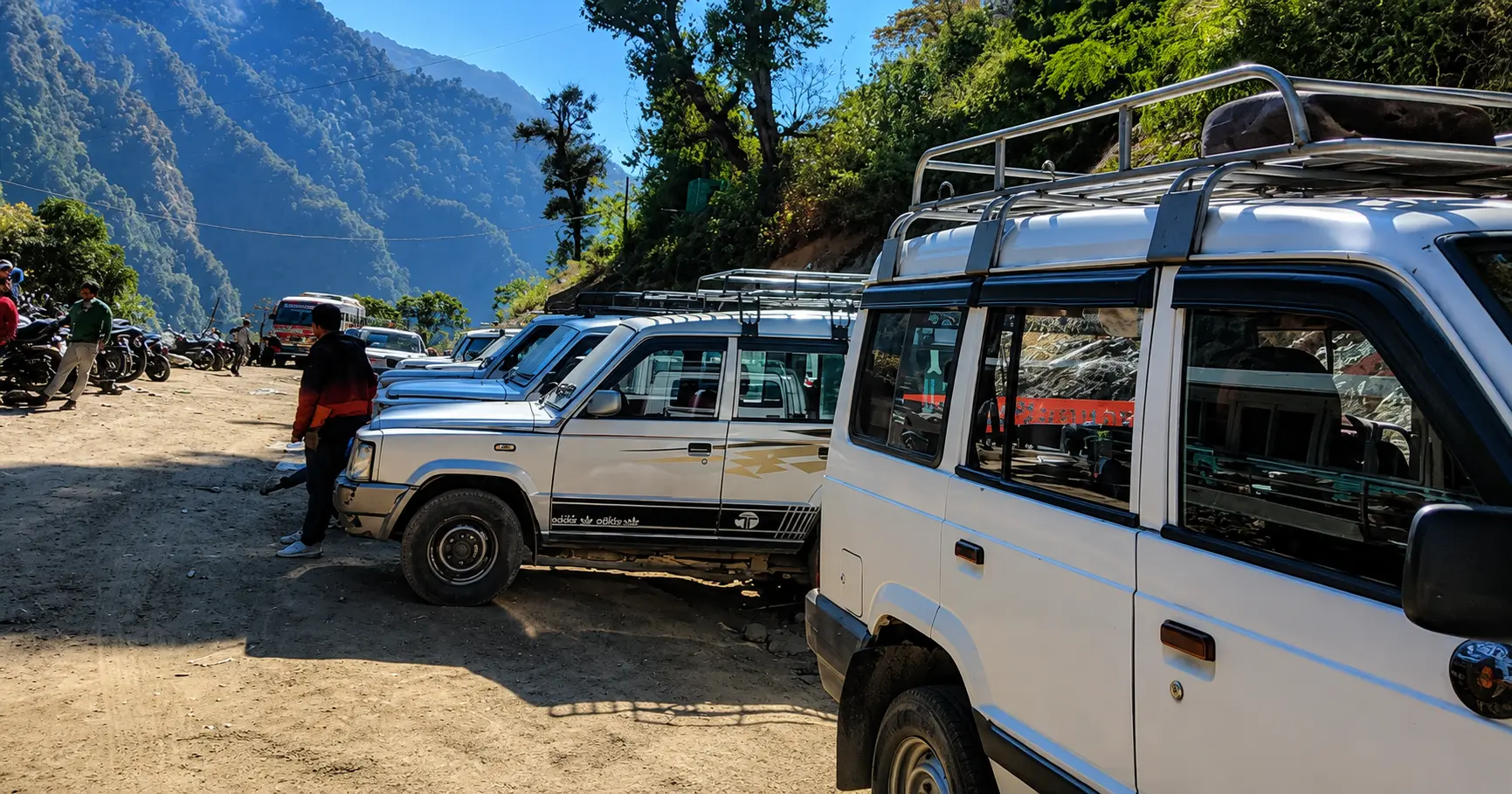
A Chitwan stopover also breaks the Kathmandu to Butwal drive into two comfortable days. The first day covers the gorge and the Mugling lunch stop and ends at the Chitwan resort in the afternoon, leaving time for a river walk or an evening cultural programme.

The second day covers the flat East-West Highway from Narayanghat to Butwal, a pleasant and unhurried drive of about two hours. For elderly travellers, families with young children, and anyone who finds an eight-hour road day tiring, the two-day arrangement with a Chitwan night is often the best way to make the journey comfortable.

The Most Important Reason to Travel Beyond Butwal

For many travellers, Butwal is not the final destination but the last major city before Lumbini, the birthplace of Siddhartha Gautama and one of the world’s four great Buddhist pilgrimage sites. The Sacred Garden holds the Maya Devi Temple, the Ashoka Pillar erected in the third century before the common era, the sacred pond, and the excavated remains of monasteries that stood on this ground for centuries.

Around the Sacred Garden, the monastic zone contains temples built by Buddhist communities from Thailand, Myanmar, Japan, Korea, Vietnam, China, Tibet, Germany, France and many other countries, and walking through it is like travelling through the whole Buddhist world in a single afternoon. Our Muktinath Tour partners and Buddhist pilgrim groups regularly combine Lumbini with the Himalayan pilgrimage circuit, and a private vehicle makes that combination straightforward.

A private vehicle suits Lumbini very well. The Sacred Garden is large, the monasteries are spread over several kilometres, and a group with its own vehicle and driver can move between the Maya Devi Temple, the Peace Pagoda, the Royal Thai Monastery, and other major sites at its own pace, with a cool cabin waiting between visits.

Pilgrim groups who want to practice devotion, meditate, or spend extra time at the sacred pond can do so without watching the clock. The driver waits patiently, understands the site’s respectful atmosphere, and knows the access roads and parking areas for the main monasteries.

Butwal to the Sunauli Border and the India Connection

Butwal is the closest large city to the Sunauli border crossing, which links Nepal’s western Terai to the Indian state of Uttar Pradesh. Many travellers use the Kathmandu to Butwal route as the first stage of a journey that ends at the border, whether they are Indian pilgrims returning home after a Nepal circuit, international travellers continuing overland to Varanasi, Gorakhpur, or Lucknow, or families visiting relatives on both sides of the border.

Indian nationals cross freely without a visa, while other nationalities need a valid Indian visa obtained in advance. Nepal Vehicle Hiring Pvt Ltd’s drivers know the route to the Sunauli check post, the parking and luggage drop-off area, and the sequence of immigration steps, and they explain the process to passengers crossing for the first time.

Travellers who want to continue by road across the border can ask our team for recommendations for trusted India-side vehicle partners at Sunauli. Pilgrims who arrive at Sunauli from the Muktinath Yatra, the Lumbini visit or a Pokhara holiday often combine several of our services: the Pokhara to Upper Mustang overland jeep and Kathmandu to Muktinath jeep for the high Himalayan temple, the Kathmandu to Pokhara private vehicle for the lakeside city, and the Butwal and Sunauli stages for the return to India.

Because one operator handles every stage, there is never a gap between vehicles.

Kathmandu to Butwal vehicle rental

The Siddhartha Highway: Butwal to Pokhara via Tansen

Butwal is also the southern end of the Siddhartha Highway, the scenic mountain road that climbs through the Palpa hills to the ancient Newari town of Tansen and continues across the mid-hills to Pokhara. Travellers who want to reach Pokhara from Butwal without returning to the Prithvi Highway use this route, and many consider it one of the most beautiful drives in western Nepal.

The road climbs out of the Terai through forested ridges, passes the Palpa Deurali viewpoint with its first views of the Annapurna foothills, and reaches Tansen at about one thousand three hundred metres, where a medieval bazaar of stone-paved lanes, traditional metalwork shops and the Amar Narayan temple repay a stop of an hour or more.

From Pokhara, the Annapurna region opens up. Our Pokhara to Ghandruk jeep and Pokhara to Nayapul transport reach the trailheads of the Annapurna Base Camp Trek. In contrast,e the Pokhara to Ghorepani Poon Hill jeep serves the Ghorepani Poon Hill Trek.

Our Pokhara car hire and Sarangkot sunrise vehicle cover lakeside and sunrise-viewpoint excursions. A group that begins in Kathmandu, spends a night in Butwal, drives the Siddhartha Highway to Pokhara, and then heads into the mountains is following one of the country’s most satisfying overland routes, and Nepal Vehicle Hiring Pvt Ltd can arrange every stage.

Safety Standards on the Kathmandu to Butwal Corridor

A seven-to-nine-hour journey on a busy national highway demands careful attention to safety, and Nepal Vehicle Hiring Pvt Ltd treats the Kathmandu to Butwal corridor accordingly. Every vehicle assigned to the route is checked before departure, with particular attention to brakes, tyres, lights, steering and cooling, because the long descent through the Trishuli gorge and the heat of the Terai section both put real demands on a vehicle.

Drivers are chosen for their experience on this specific highway, and they are expected to drive at moderate speeds, keep safe distances on the gorge section, avoid risky overtaking, and stop for rest when concentration begins to fade.

Passengers play a part as well. Wear seat belts on the highway, seat young children securely, and tell the driver if you feel unwell on the winding gorge section; they will stop in a safe place.

The early-morning departure we recommend is itself a safety measure, as it brings the vehicle through the gorge and the Narayanghat junction in the lightest traffic of the day and gets the group to Butwal before dusk. During the monsoon months, the team monitors road conditions daily and advises on departure timing, and the driver carries a fully charged phone so that the office can reach him at any point on the route.

Nepal Tour Package

Groups That Choose Private Vehicle Hire to Butwal

Business and Government Travellers

Business travellers, government officials and NGO field teams make up a steady share of Kathmandu to Butwal bookings. For these travellers, punctuality, comfort and a professional appearance matter, and a private vehicle that leaves on time and arrives at the exact address is far better than a public bus.

A Hiace van is ideal for a team of eight to twelve who want to talk, review documents,s or rest comfortably during the journey, while a car or jeep suits two to five executives. Nepal Vehicle Hiring Pvt Ltd provides clear booking confirmations with vehicle details and driver name, which institutional travellers value.

Families and Extended Family Gatherings

Families travelling to weddings, festivals and reunions in western Nepal often need to move six, ten or even fifteen people with a good deal of luggage and gifts. A Hiace van or Coaster keeps everyone together, avoids the confusion of splitting across several buses, and lets the children and elders travel in comfort.

The driver can stop for meals and rest when it suits the family, not the bus company’s timetable, and the vehicle can go straight to the family home rather than dropping the group at a bus park.

Pilgrim Parties and Religious Tour Groups

Pilgrim parties travelling from Kathmandu to Lumbini, to the Sunauli border, or onward to the Himalayan temples form another important group. They often need a coaster or bus for twenty or more passengers, a driver who understands the devotional character of the journey, and the flexibility to stop at temples and shrines along the way.

Our coaster hire and bus hire are built for this purpose, and the same drivers regularly serve the Muktinath and Lumbini circuits. Our trekking transport service completes the picture for groups that also plan a Himalayan trek.

Trekkers and Adventure Travellers

Trekkers heading west often use Butwal as a waypoint between Kathmandu, Lumbini and Pokhara. A trekking group arriving from India at Sunauli may drive to Butwal and then on to Pokhara. In contrast, a group leaving Kathmandu may head to Butwal to visit Lumbini before turning north to the mountains.

From there, our network reaches every great trek: the Annapurna Circuit Trek through the Besisahar approach, the Upper Mustang Trek through the Kali Gandaki, the Langtang Valley Trek through Syabrubesi, the Manaslu Circuit Trek through Soti Khola, and the Everest Base Camp Trek through the overland road to Salleri. Our Kathmandu to Besisahar vehicle, Kathmandu to Manang jeep, Kathmandu to Syabrubesi jeep, Kathmandu to Soti Khola jeep and Kathmandu to Salleri Phaplu services all begin from the same Kathmandu hotel gate.

Understanding the Landscape Between Kathmandu and Butwal

The journey from Kathmandu to Butwal is also a journey through Nepal’s geography. Kathmandu sits in a high valley, ringed by hills that were once the floor of an ancient lake, and the first part of the drive leaves that bowl by climbing to the rim at Thankot before dropping into the lower country beyond.

The gorge of the Trishuli River that follows is one of the Himalaya’s great river corridors, fed by snow and glacier melt from the Langtang and Gosainkunda ranges far to the north, and its turquoise colour in the dry season is a constant companion for the first half of the day. Villages cling to terraces above the river, suspension bridges span the canyon, and small hydropower stations and rafting camps give the corridor a working, living character.

At Mugling, the Trishuli meets the Marsyangdi, and the combined river flows south as the Narayani, one of Nepal’s biggest rivers. The landscape opens, the hills fall away, and the road enters the inner Terai valley of Chitwan, where sal forests, grasslands and tropical farmland replace the pine and oak of the hills.

This is the zone of tigers and rhinoceros, and although most travellers will not see wildlife from the highway, the dense green margins of the road and the wide gravel beds of the rivers make it clear that this is a different Nepal from the mountain country behind. The air is warmer, the villages are larger, and the pace of life along the road changes.

West of Narayanghat, the highway runs across the true Terai, the flat alluvial plain that stretches along Nepal’s entire southern edge. Fields of rice, wheat, mustard, and sugarcane line the road; brick kilns send smoke up into the horizon, and the long straight sections let the vehicle make good time.

The Churia hills, known elsewhere as the Siwaliks, rise to the north, and as the vehicle approaches Butwa,l the first big ridges of the Palpa hills come into view, announcing the end of the plain and the start of the mid-hill country that leads toward Pokhara. By the time the vehicle reaches Butwal, passengers have crossed almost every zone of Nepal’s lowland and mid-hill geography in a single day, which is one of the great pleasures of travelling this corridor by road.

Food, Rest and Comfort Stops Along the Way

A seven-to-nine-hour road journey calls for sensible planning of meals and rest. Breakfast is best taken at the hotel before departure, or at a simple tea stop after the first hour of descent through the gorge.

Mugling is the natural lunch stop, with its famous riverside restaurants serving rice, lentils, vegetables, local greens and fresh river fish, as well as simpler snacks for children and vegetarians. In the afternoon, a tea stop near Narayanghat or Bharatpur gives the driver and passengers a break before the final flat stretch.

Carry water, fruit, and light snacks in the vehicle, and passengers prone to car sickness should avoid heavy meals before the gorge section.

Comfort also depends on seating and luggage. In a car or jeep, the front seat suits anyone sensitive to winding roads, and the driver can adjust the air conditioning and open windows when the air is fresh.

In a Hiace van, every passenger has a window seat, and the generous legroom makes it easy to stretch on a long day. In a Coaster or bus, groups can arrange seating so elders and children sit at the front.

Whatever the vehicle, the driver will be glad to stop whenever a passenger needs the toilet, a photograph or simply some fresh air, which is part of the freedom and flexibility of private hire.

Kathmandu to Butwal vehicle rental

The Return Journey: Butwal to Kathmandu

Many travellers book the return journey from Butwal to Kathmandu at the same time as the outbound trip. The return follows the same route in reverse, with a morning departure from Butwal, a Mugling lunch stop, and an afternoon climb out of the Trishuli gorge to the Kathmandu Valley.

The climb from Mugling to Thankot is slower than the descent, so the group should expect the return to take a little longer, and an early start is especially valuable because it lets the vehicle reach the valley before the evening traffic. Our private car hire, jeep hire, and Hiace van hire operate the Butwal to Kathmandu route with the same drivers and standards as the outbound journey, and you can coordinate arrival with a Kathmandu airport transfer for travellers flying out of Tribhuvan Airport the same evening or the next morning.

Some groups prefer to return by a different route, for example from Butwal to Pokhara on the Siddhartha Highway and then from Pokhara to Kathmandu on the Prithvi Highway. This turns the journey into a loop and lets the group see two of the country’s most important highways in a single trip.

Nepal Vehicle Hiring Pvt Ltd can arrange the entire loop as a single booking, with the same vehicle and driver or with vehicle changes at convenient points, and the team can advise on the best order of stops based on the group’s interests and time.

Planning a Complete Western Nepal Circuit

The Kathmandu to Butwal journey is the doorway to a rich western Nepal circuit that can fill a week or more. A classic itinerary begins with arrival in Kathmandu and a day or two of sightseeing, continues with a day-long drive to Chitwan for a jungle safari, moves on to Butwal and Lumbini for the Buddhist pilgrimage, climbs the Siddhartha Highway to Pokhara for the lakes and mountain views, and then returns to Kathmandu by the Prithvi Highway.

Variations include adding the Muktinath temple through the Kali Gandaki gorge, adding a short trek from Pokhara to Ghandruk or Poon Hill, or ending the journey at the Sunauli border for the return to India. Our Nepal tour packages and trekking transport help build this kind of circuit, and each stage can use the vehicle that suits the group: a car for two, a jeep for four to six, a Hiace for ten, or a coaster or bus for larger parties.

Because Nepal Vehicle Hiring Pvt Ltd operates across the country, you don’t need to arrange separate vehicles with separate companies. One WhatsApp conversation covers the entire circuit, one team follows the group from stage to stage, and standards for vehicle maintenance, driver experience, and customer support stay the same at every point.

If plans change because of weather, health, a flight change or a new idea, the team can adjust the itinerary quickly and keep the rest of the journey on track. This continuity is what makes a long, multi-stop Nepal journey feel effortless rather than complicated.

Booking Checklist for Kathmandu to Butwal

  • Decide the group size and luggage volume so we can recommend the right vehicle type: car, jeep, Hiace Coaster, or bus.
  • Choose the departure date and a morning departure time between 6:00 and 6:30 from the Kathmandu hotel.
  • Provide the exact hotel name and area in Kathmandu and the exact destination address or landmark in Butwal.
  • Say whether the journey will include a Chitwan stopover, a Lumbini visit, a Sunauli border drop or a Siddhartha Highway continuation to Pokhara.
  • Mention special requirements such as elderly passengers, small children, wheelchairs, medical needs, or dietary preferences at the lunch stop.
  • Ask for written confirmation with the vehicle type, driver name and vehicle registration, and keep it on the phone for easy reference.
  • Save the WhatsApp number +977 981-4227196 so the team can be reached anytime before and during the journey.

When these details are in place, the booking is simple. Our team confirms the vehicle and driver, the group meets the vehicle at the hotel gate, and the journey unfolds as planned.

If you would like help designing a longer itinerary, contact our team or use the trip planning page, and visit vehiclehiringnepal.com for the full list of services. Nepal Vehicle Hiring Pvt Ltd is ready to take you from Kathmandu to Butwal and everywhere else in Nepal with comfort, safety and complete flexibility.

Festivals, Peak Travel Periods and Planning Ahead

Travel demand on the Kathmandu to Butwal corridor rises sharply around the major festivals of the Nepali calendar. In the weeks around Dashain and Tihar, hundreds of thousands of people leave Kathmandu to visit family in the hills and the Terai, and vehicles of every kind are in short supply.

Buddha Jayanti draws pilgrims to Lumbini from across the Buddhist world, and the weeks around Holi, Teej and Chhath bring heavy traffic toward the western border districts. Travellers planning to move during these periods should book as early as possible, confirm departure times carefully, and allow extra time for busy roads, particularly at the Narayanghat junction and the approaches to Butwal.

Outside the festival peaks, the corridor is calmer, and the best months for comfortable road travel are the dry, clear seasons of autumn and spring, together with the cool, dry weeks of winter. The monsoon months are greener and cheaper in terms of demand, but they require more attention to road conditions and a willingness to adjust the schedule if a landslide closes the gorge for a few hours.

In every season, the Nepal Vehicle Hiring Pvt Ltd team advises starting early, keeping some time in reserve, and keeping the WhatsApp line open so the office can help with any changes.

Why Travellers Keep Choosing Nepal Vehicle Hiring Pvt Ltd

Travellers return to Nepal Vehicle Hiring Pvt Ltd for three simple reasons: the vehicles are well maintained, the drivers know their routes, and the team keeps its promises. A booking confirmation is a real commitment: the named driver and registered vehicle arrive at the gate at the agreed time.

The fleet covers every need, from a single traveller in a car to a pilgrim party of forty in a bus, and the same standards apply to a short airport run and to a ten-day overland expedition. For adventurous groups, the jeep service reaches mountain trailheads where ordinary vehicles cannot go.

For families and corporate teams, the Hiace and Coaster services offer space and comfort on Nepal’s highways.

The Kathmandu to Butwal journey is a good example of how this works in practice. It is a long day on a demanding highway, but with an early start, a skilled driver, a comfortable vehicle and a relaxed lunch at Mugling, it becomes one of the most enjoyable road trips in Nepal.

Passengers see the gorge, the great rivers, the jungle margins and the Terai plain, and they arrive at Butwal rested and ready for whatever comes next, whether that is a family reunion, a business meeting, a pilgrimage to Lumbini, a border crossing or the start of a new adventure in the Annapurna hills.

To begin planning, send a WhatsApp message to +977 981-4227196 with your date, group size and destination, or visit vehiclehiringnepal.com to explore every route and service. Nepal Vehicle Hiring Pvt Ltd looks forward to taking you from Kathmandu to Butwal and onward, with comfort, safety and complete freedom to travel at your own pace.

Whatever the purpose of the journey, the principle is the same: the right vehicle, the right driver and the right plan make a long road day easy. Nepal Vehicle Hiring Pvt Ltd brings these together on every Kathmandu to Butwal booking, so that travellers can enjoy the scenery, the food and the company of their own group instead of worrying about logistics.

Frequently Asked Questions

Nepal Vehicle Hiring Pvt Ltd’s team answers every Kathmandu to Butwal vehicle rental question at booking—departure timing, onward connections, vehicle type for specific group needs, and monsoon road condition updates are all available via WhatsApp at +977 981-4227196. The FAQs below address the most commonly asked questions before booking.

Q1: How do I book a private vehicle from Kathmandu to Butwal?

WhatsApp Nepal Vehicle Hiring Pvt Ltd at +977 981-4227196 with your departure date, group size, Kathmandu hotel name and location, and Butwal destination address. Our team provides vehicle recommendations and written booking confirmation within hours. Visit vehiclehiringnepal.com or contact our team directly to book.

Q2: How long does the Kathmandu to Butwal drive take?

7 to 9 hours by private vehicle, including a standard stop in Mugling. A 6:00 AM departure from Kathmandu arrives at Butwal between 1:30 PM and 3:30 PM, depending on Narayanghat junction traffic. Early morning departures consistently deliver the best journey times on this route.

Q3: What is the best vehicle for Kathmandu to Butwal?

For 1 to 4 passengers: private car. For 4 to 6 passengers with full luggage: jeep (Scorpio or equivalent). For 7 to 14 passengers: Hiace van.

For 15+ passengers: Coaster. Nepal Vehicle Hiring Pvt Ltd advises on the right vehicle for your specific group at booking.

Q4: Can I extend from Butwal to Lumbini or Sunauli?

Yes — Nepal Vehicle Hiring Pvt Ltd coordinates the Butwal to Lumbini (approximately 45 km) or Butwal to Sunauli border (approximately 50 km) extension as part of the single Kathmandu booking. WhatsApp +977 981-4227196 with your complete journey requirements for a single, all-inclusive arrangement covering every stage.

Q5: Is the route safe during monsoon season?

The route is generally safe year-round. The Prithvi Highway gorge section carries the highest monsoon disruption risk from occasional landslides after sustained heavy rainfall. Nepal Vehicle Hiring Pvt Ltd monitors conditions daily during monsoon and recommends 6:00 AM departures that clear the gorge section before afternoon rainfall peaks.

The East-West Highway Terai section is less affected by monsoon conditions.

Q6: Does Nepal Vehicle Hiring Pvt Ltd offer the return Butwal to Kathmandu direction?

Yes — Nepal Vehicle Hiring Pvt Ltd operates the Butwal to Kathmandu return direction with the same all-inclusive private vehicle service. Book both outbound and return trips at the same time for the best vehicle and driver availability. Our car, jeep, and Hiace serve both directions.

Contact +977 981-4227196 or visit vehiclehiringnepal.com to book.

Conclusion: Book Your Kathmandu to Butwal Vehicle with Nepal Vehicle Hiring Pvt Ltd

The Kathmandu to Butwal private vehicle rental is one of Nepal’s most important inter-city journeys — connecting the capital to the western commercial hub via the Prithvi Highway’s extraordinary gorge corridor and the Terai’s flat agricultural plains. Nepal Vehicle Hiring Pvt Ltd’s private cars, jeeps, Hiace vans, coasters, and buses take every group to Butwal on schedule, from their hotel door, with all-inclusive, transparent pricing and no hidden additions.

Contact our team at +977 981-4227196 (WhatsApp/Viber) to book today. Visit vehiclehiringnepal.com — Nepal’s most trusted private vehicle hire service.

Jhinu to Kathmandu Jeep Hire: Annapurna Trek Exit Guide

Jhinu danda

Jhinu to Kathmandu Jeep Rental: Annapurna Trek Exit Guide

Most Annapurna Base Camp trekkers remember Jhinu Danda for one thing: the hot springs. After days of stone staircases, freezing mornings above the tree line and the long, knee-testing descent from Chhomrong, the pools beside the Modi Khola are the part of the trek people talk about afterwards.

What they talk about far less, and what causes more last-day stress than almost anything else on the itinerary, is the question of how to get from that riverside village to a hotel bed in Kathmandu.

This guide is written for exactly that moment. It explains what a Jhinu-to-Kathmandu jeep journey really consists of, why it is rarely one uninterrupted drive, where a vehicle can and cannot meet you, how to decide between pushing on to the capital the same day and sleeping a night in Pokhara, and how Nepal Vehicle Hiring arranges the legs so that the walk out, the valley road and the highway fit together without gaps.

One note on how we have written it. Road access in the Modi Khola valley has been extended in stages and varies with season and repair work, so the exact jeep pickup points have not stayed fixed.

Rather than promise a single pickup spot that may be wrong by the time you read this, we describe the pattern, explain the local names you will hear, and tell you what to confirm with your guide and with us before the final morning.

The Jhinu-to-Kathmandu journey at a glance

It helps to stop thinking of this as one trip and see it as three connected pieces, each with its own character and its own timing.

  • Piece one: Jhinu Danda to the roadhead. This is the short stretch between your lodge and where a vehicle can actually stop. Depending on conditions,s it is anything from a brief walk to a longer descent along the Modi Khola trail. Nothing with wheels can help you here, so it is a matter of legs, porters and good timing.
  • Piece two: the valley road to Pokhara. From the roadhead,d a four-wheel-drive jeep follows the Modi Khola valley down through the villages around Siwai, past the Birethanti checkpoint and the Nayapul junction, and on to Pokhara. Trekking operators commonly describe the drive from the Jhinu area to Pokhara as three to four hours, and the lower part of that is a quick paved run once you reach Nayapul.
  • Piece three: Pokhara to Kathmandu. This is the long Prithvi Highway run of roughly two hundred kilometres, normally six to eight hours with a meal stop. You can do it by road in a single day, by a short domestic flight, or after a night in Pokhara.

Add those together, and a same-day road journey from Jhinu to Kathmandu is a very long day, often ten to twelve hours of travelling once you count the walk, the stops, and the traffic at either end. Many trekkers happily do it, particularly those with an international flight to catch.

Many others, after a week or more of walking, decide the sensible option is to break the journey in Pokhara. Neither choice is wrong. The point of this guide is to help you make it deliberately rather than on the last evening, tired, in a lodge with patchy signal.

Jhinu to Kathmandu Jeep Rental

Understanding Jhinu Danda as a departure point

Jhinu Danda, sometimes written Jhinu Dada or Jinu Danda, is a Gurung settlement strung along a ridge above the Modi Khola at roughly 1,780 metres, in Kaski District inside the Annapurna Conservation Area. It sits on the Annapurna Base Camp route between Chhomrong above and the lower valley villages below, which is why so many itineraries make it the final trekking night.

Why so many treks end here

The reasoning is partly physical and partly practical. Coming down from Annapurna Base Camp, the trail passes Bamboo, Sinuwa and Chhomrong, and then drops steeply down the long Chhomrong staircase to the Kimrong Khola before climbing again to the ridge at Jhinu.

By the time you reach Jhin,u, the big altitude is behind you, the air is thick and warm, and the lodges are comfortable. The hot springs, reached by a stone-stepped forest path of about twenty to thirty minutes down to the river, turn the evening into a small celebration.

Several trekking operators describe the springs as a set of pools with different temperatures, set directly beside the Modi Khola in a forested gorge, which is a good part of their appeal.

From a transport point of view,w Jhinu matters because it is the last place where a trek and a road meet. Above Chhomrong,g there is no road at all. Below Jhinu,u the valley opens toward the lower villages and the motorable track.

That is why vehicle planning for this exit comes down to one question: where, on the day you leave, does the track end and the trail begin?

The culture you are walking out of

Jhinu and its neighbours belong to the Gurung homeland of the Annapurna foothills. Gurung villages in this part of Kaski are known for their terraced millet and rice fields, their stone-slab paths and lodges run by families who often have sons, brothers or cousins in military and overseas service.

Build in ten unhurried minutes on your final morning to say a proper goodbye to your lodge family. In a valley where almost every lodge is a family home, a good exit is as much about courtesy as logistics, and a driver who arrives to find the group relaxed and ready, rather than frantically repacking, has an easier and safer day.

The roadhead question: where does the jeep actually meet you?

This is the single most important thing to understand about a Jhinu-to-Kathmandu jeep, and the part where generic advice most often lets people down.

Why the pickup point is not fixed

The motorable road up the Modi Khola valley has been pushed progressively higher over time, and it is a seasonal, mountain-construction track rather than a finished highway. In the monsoon, landslides and washed-out crossings can interrupt it, and after the rains it is repaired and reopened in stages.

As a result, itineraries published by different operators describe the pickup differently. You may see the vehicle waiting at Siwai, at Simrung (sometimes spelt Samrung), at Mithu Danda, or not very near Jhinu itself when the track allows. Each of these descriptions was accurate for the operator who wrote it at the time.

None of them is a permanent rule.

What does stay constant is the geography. Jhinu sits at roughly 1,780 metres on a ridge, the river runs far below, and the track follows the valley downward. Wherever the vehicle waits, you will reach it by descending, not climbing, and the descent is usually short enough to be comfortable on tired legs.

Three ways to handle the walk-out

  • Ride from the nearest roadhead. If the track currently runs close to Jhinu, the walk is brief, and the jeep carries you the rest of the way. This is the easiest option and the one most groups prefer when it is available.
  • Walk down to a lower roadhead. If the track is interrupted higher up, the walk extends. Some groups choose this on purpose because the Modi Khola trail below Jhinu is pleasant, shaded and gently graded, and because it gives a calm morning before the vehicle section begins.
  • Walk all the way to Nayapul or Birethanti. The classic way to finish is to follow the river trail down to the Birethanti checkpoint and the Nayapul road junction, where an ordinary road vehicle is waiting. It is a long, rewarding day on foot, but it removes dependence on the valley track altogether, which is why some guides still favour it in unsettled weather.

What to tell us and what to confirm

When you book with Nepal Vehicle Hiring, give us three things: the date you expect to leave Jhinu, the number of people and bags, and whether you want to end the day in Pokhara or Kathmandu. In return, we will confirm the current pickup point with our driver in the valley, tell you honestly if the track is affected, and set the departure time based on the real situation rather than an old itinerary.

It also helps to ask your trekking guide, in the days before you reach Jhinu, to confirm the roadhead with lodge owners and local drivers. They know within a day or so when the track is open.

If you are still working out the earlier legs of the trek, our trekking transport page explains how approach and return vehicles are normally paired, and the Pokhara to Nayapul transportation service covers the lower valley approach if you are starting the trek rather than ending it.

Jhinu to Kathmandu Jeep Rental

Leg one: down the Modi Khola valley by jeep

Once you are in the vehicle, the first stage of the drive is the most characterful and demanding, and it’s why a four-wheel-drive Scorpio jeep is the right tool for the valley section.

What the road is like

The valley track is a mountain construction road. It clings to the side of the gorge in places, crosses side streams on narrow bridges or through shallow fords, and alternates between compacted gravel, exposed rock and the occasional stretch of loose material where a slope has recently been cleared.

The surface sets the speed, not the clock. A driver who knows the road slows to a walking pace through the rough crossings and makes up a little time on the firmer sections, and that rhythm is the difference between a smooth ride and a jarring one.

Passing is done at wide spots. Where two vehicles meet on a single-lane stretch, one reverses or pulls into the nearest bay, and the drivers settle it with horn taps and hand signals. It looks dramatic the first time, but it’s routine for anyone who drives here daily.

Passengers who feel uneasy should say so; a good driver will happily slow down, and nobody on this road is in a hurry to prove anything.

The villages and the checkpoint

As the track drops toward the lower valley, it passes through Gurung and other hill-community villages in the Siwai area, where terraced fields climb the slopes on both sides, and the river appears and disappears below the road. Further down, you reach Birethanti, the busy riverside settlement that serves as the Annapurna Conservation Area checkpoint on the Modi Khola.

Trekking itineraries often mention stopping here to have permits checked, and it is the natural place to keep your ACAP permit and TIMS card handy. Depending on your route and the checkpoint’s practice on the day, your driver or guide will tell you whether a stop is needed.

Just beyond lies the Nayapul junction, where the valley road meets the paved highway toward Pokhara. From here,e the character of the journey changes completely: smooth tarmac, shops, traffic and, within about an hour and a half, the first glimpses of Phewa Lake and the Pokhara valley.

Trekkers who have spent a week above the tree line often find this transition more jarring than any rough road, and it is worth spending a few quiet minutes simply looking out of the window.

Jhinu to Kathmandu Jeep Rental

Why a Scorpio jeep for this section

The Mahindra Scorpio is Nepal Vehicle Hiring’s standard mountain vehicle for roads like this. It combines four-wheel drive and good ground clearance with a body narrow enough for the tight sections, and it seats a small group comfortably with luggage on the roof rack.

A group of four to seven trekkers with their packs fits well. For this stretch, we do not use vans or buses; they are unsuitable for the surface and unsafe on the narrow crossings, no matter the group size.

Leg two: Pokhara to Kathmandu on the Prithvi Highway

If you plan to reach Kathmandu in one day, or if you are completing the second day of a two-day exit, this is the long leg. For many people, it’s also the most enjoyable part of the journey once the stress of the trek exit has passed.

The highway in plain terms

The Prithvi Highway is Nepal’s busiest tourist road, a roughly two-hundred-kilometre link between Pokhara and the Kathmandu Valley that follows the Marsyangdi and Trishuli river corridors for much of its length. Sections have been widened over time, and others remain two lanes with the traffic character you would expect on a national route: slow trucks, buses overtaking on gentle bends and the occasional hold-up at a narrow bridge.

A comfortable plan allows six to eight hours, including a proper meal stop, and more on festival days or when roadworks are active.

For a group arriving from the mountains, comfort matters as much as speed. This is where a car or a Hiace van with air conditioning and reclining seats is more comfortable than a jeep, which is why some of our itineraries use a relay: the Scorpio jeep for the valley section, and a car or van waiting at Pokhara for the highway.

Stops that make the drive worth it

  • Mugling junction and the river fish restaurants. Along the way,y you reach Mugling junction, where riverside restaurants serve freshwater fish from the Trishuli. A late lunch here, with the rapids audible from the table, is one of the better meals on any Nepal road.
  • Manakamana cable car. From Mugling, ng a cable car rises to the hilltop shrine of Manakamana. It adds a couple of hours and suits groups that aren’t under time pressure and enjoy a short, pilgrimage-style detour.
  • A little off the highway at Dumre, Bandipur’s preserved Newari bazaar makes a pleasant overnight stop for trekkers who want a quiet heritage town between the mountains and the capital. It is not essential, but it is a far gentler landing than a long push into the Kathmandu traffic.
  • Early arrival, Kathmandu traffic. The final hour into the valley can be slow in the evening. A mid-afternoon arrival in Thamel is far more pleasant than a nine o’clock arrival after a day in the vehicle.

For travellers who don’t want to hire a private vehicle on this leg, the regular Kathmandu to Pokhara bus service runs in the opposite direction on the same road, and our team can explain how the schedules fit with a late-morning arrival in Pokhara.

Jhinu to Kathmandu Jeep Rental

Same day or overnight in Pokhara? A practical decision guide

This is the question groups ask us most often and the one with the least generic answer. The right choice depends on four things.

When the same-day journey makes sense

  • You have an international flight the following morning. Rest matters less than certainty, and a long day on the road is the trade-off for being sure of making the flight. Leave Jhinu early, keep stops short, and tell us the flight time so we can plan the buffer.
  • Your group is fit, young or used to long days. If everyone finished the trek feeling strong and wants to be in Kathmandu for a proper evening, a same-day plan is workable.
  • Weather is settled. Clear weather and a dry road make a long day far less risky than a monsoon afternoon.

When a Pokhara overnight is better

  • Anyone is tired, sore or carrying a minor injury. Downhill days leave knees and ankles inflamed. Another six hours in a vehicle is hard on both.
  • The valley road is rough or slow. If the first leg takes the full four hours, the arithmetic of a same-day push gets poor very quickly.
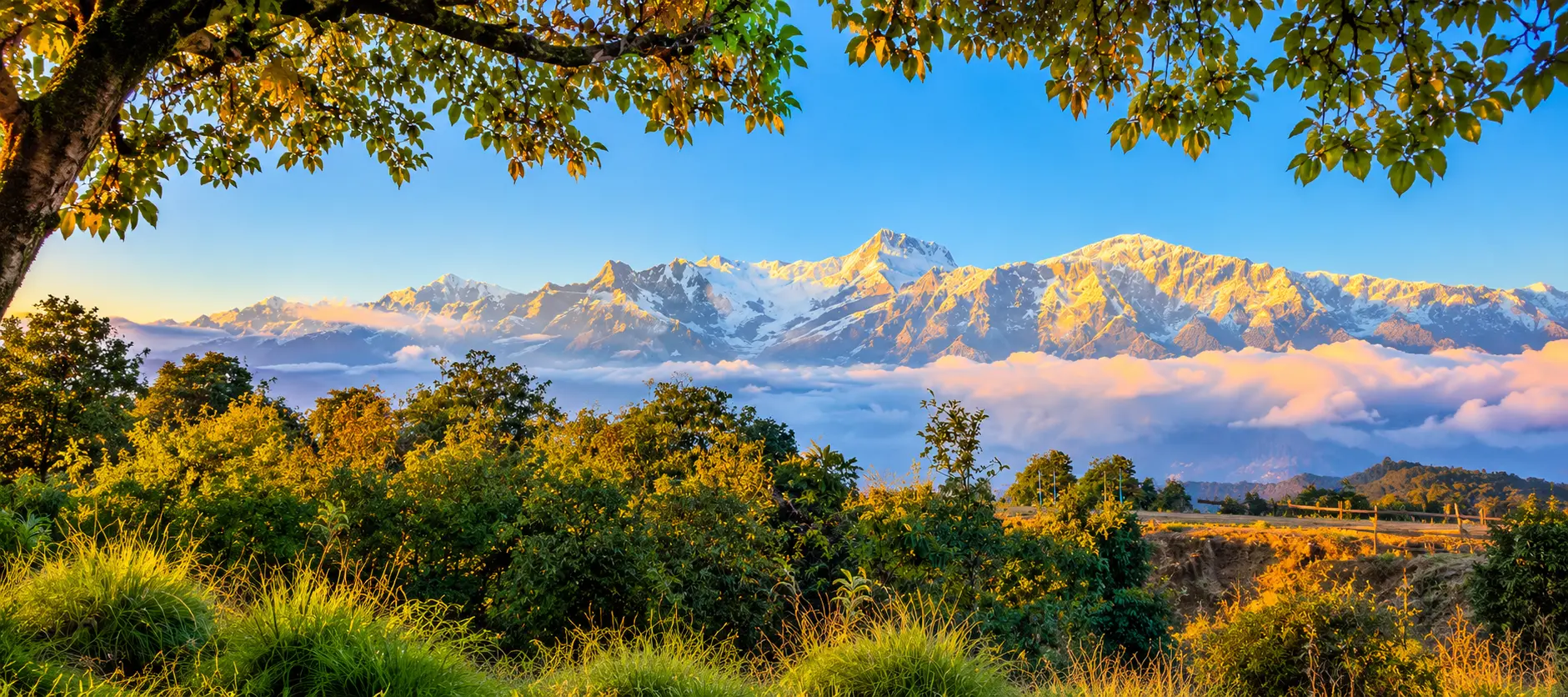
  • You want the lake. After days in the mountains, an unhurried evening beside Phewa Lake, with a proper shower, a restaurant meal and a view of Machhapuchhre in the morning light, turns the end of the trek into a holiday rather than a logistics exercise. An early start on the Sarangkot sunrise tour is a satisfying way to say goodbye to the Annapurna range.

The flight option

A domestic flight between Pokhara and Kathmandu takes well under half an hour and is a popular way to finish after a night in Pokhara. However, it is weather-dependent: flights in this corridor are generally best in the morning, and cancellations and delays happen, particularly in the monsoon and in winter haze.

If you have a fixed international connection, treat the flight as a convenience and keep the road as a backup. Nepal Vehicle Hiring can hold a vehicle in Pokhara as insurance on request, and we also provide Kathmandu airport transfers for the other end.

Jhinu to Kathmandu Jeep Rental

Choosing the right vehicle for your group

Because the journey crosses two very different road types, the vehicle mix matters more than the vehicle brand.

  • Small groups of two to four. A single Scorpio jeep can handle the whole journey, valley and highway. It is robust, comfortable enough for a long day and removes any need to change vehicles. This is the simplest option.
  • Groups of four to seven. One Scorpio jeep works if luggage is moderate. If bags are heavy, because of porter loads or expedition gear, a second vehicle spreads the weight and improves comfort.
  • Groups of eight to fourteen. Because of the valley track, a group of this size needs two or more jeeps for the Jhinu-to-Nayapul section, followed by a Hiace van from Nayapul or Pokhara for the highway. Nepal Vehicle Hiring coordinates this relay so that the van is waiting as the jeeps arrive.
  • Groups of fifteen or more. For larger parties, several jeeps cover the valley, and a Coaster bus takes over on the highway. Larger school, university and club groups often travel this way, and we arrange both vehicle types under a single booking.
  • Couples and solo travellers. A private car is the most economical choice for the highway leg, paired with a jeep for the valley if the road requires it.

All of our vehicles are driver-operated; there is no self-drive option, and none would be appropriate on this road. Your driver will have driven the valley before, will know which crossings are firm and which need care, and will know how to read the day’s conditions rather than guess.

A sample exit day, hour by hour

The details below describe a typical day for a group that wants to reach Pokhara comfortably by late afternoon. Adjust times to match your own plan and the road.

  • Early morning at Jhinu. Many groups visit the hot springs at dawn rather than the evening before, when the pools are quieter, and the valley is still cool. Allow forty to sixty minutes, including the descent and the climb back.
  • Breakfast and pack. Eat properly. The next leg is a day of sitting. Settle your lodge bill, confirm porters and make sure permits and passports are where you can reach them.
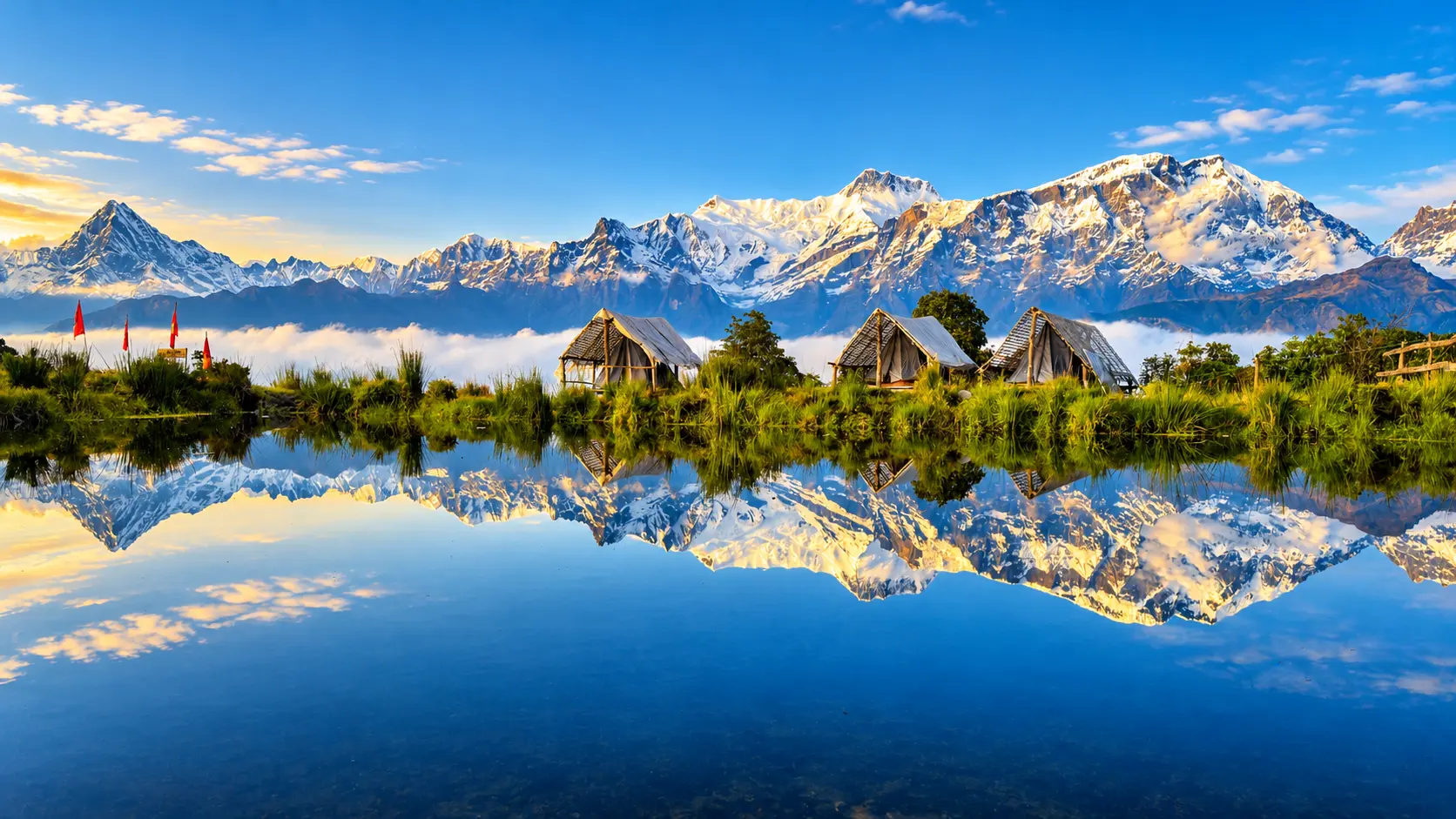
  • Mid-morning walk or short transfer. Descend to the roadhead agreed with your guide and driver. This takes from a few minutes to a couple of hours depending on where the vehicle waits.
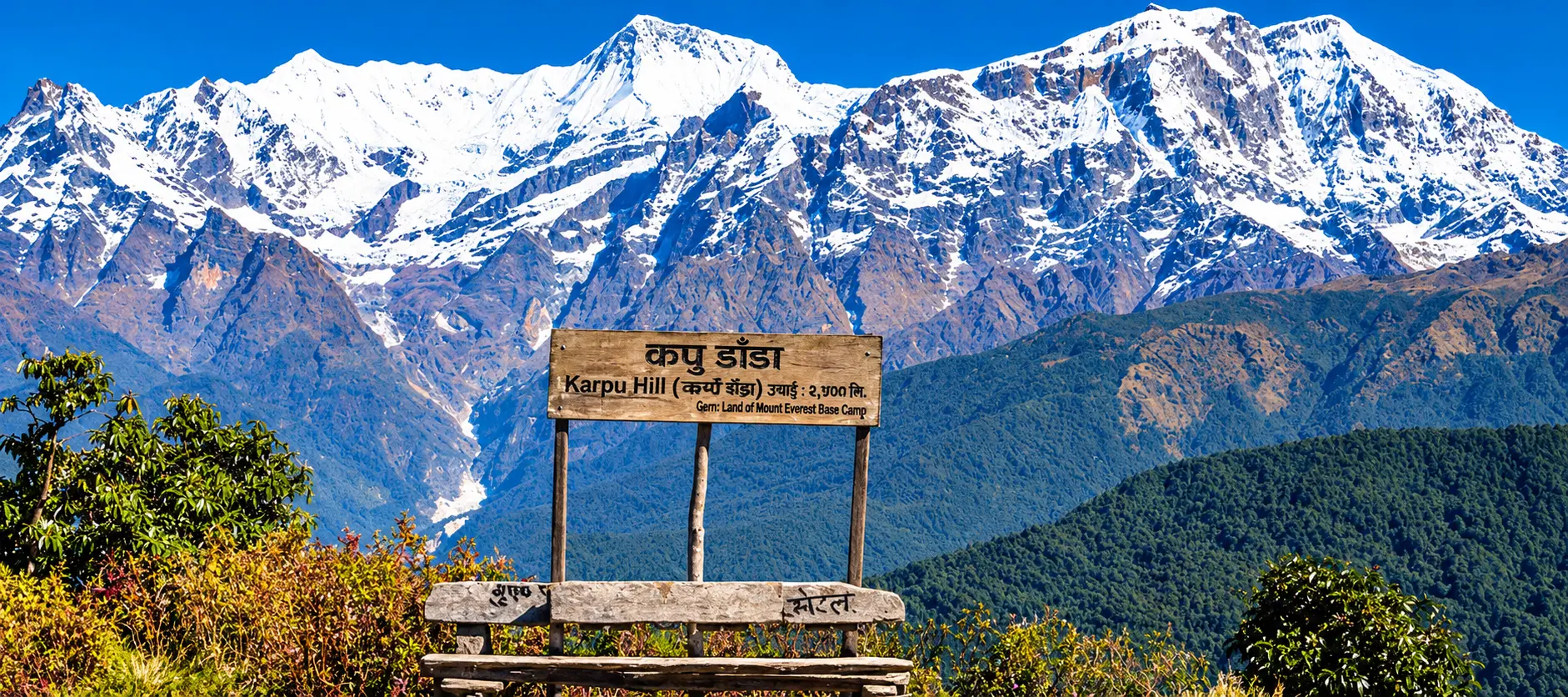
  • Valley drive. The jeep follows the valley track through Siwai and on toward Birethanti. Expect a stop for permits or a drink; your driver will tell you when.
  • Nayapul and the highway. At the junction, the tarmac begins. If you are changing to a car or van here, bags move across in a few minutes, and your driver or guide will handle it.
  • Early afternoon in Pokhara. A late lunch, a hot shower and a chance to wander the lakeside. For many groups, this is the point where the trek truly ends.
  • Next morning to Kathmandu. A relaxed departure for the six-to-eight-hour highway run, with a fish lunch at Mugling and a mid-afternoon arrival in the valley.

Dharapani trek start point of annapurna range

For trek leaders and group organisers, whether you’re organising a club, party, or family of eight, the exit from Jhinu is where small planning gaps turn into big ones. These habits keep it running smoothly.

Brief the group before the last night.t

Tell everyone the plan at dinner on the evening before, not at breakfast. Cover the departure time, the walk to the roadhead, what to carry in the cabin, where bags will travel, and the lunch arrangement. A group that has heard the plan once, calmly, behaves very differently from a group that learns it while shouldering packs in the cold.

Count heads and bags twice.e

Count people and count bags separately, at the lodge and again at the vehicle. Duffels are easy to leave behind on a porch, and the most common trek-exit loss is a bag that went to the wrong vehicle. If you are using more than one jeep, assign each person to a numbered vehicle and keep that assignment through the day, including at the change at Nayapul or Pokhara.

Agree on a communication plan.

Mobile coverage in the lower valley is better than on the upper trail but not complete. Give the driver and your guide each other’s numbers, share a single point of contact for the group and agree what to do if a vehicle is delayed. Nepal Vehicle Hiring’s operations team is reachable by WhatsApp, which handles patchy signal better than voice calls, and we send the driver’s name and number before the day.

Keep a margin for the unexpected.

Build slack into the plan on purpose. If the group has an international flight, add an extra margin on top of the usual allowance. If a bridge is slow or a vehicle is late, you want the margin to absorb it, not the flight.

A buffer day in Pokhara is often the most sensible protection against the monsoon and the road.

Plan the end of the trek as a moment. nt

The last night at Jhinu is a small celebration, and it is worth making it one. A group dinner, a thank-you to the guides and porters, and a moment of reflection on the trek give people a sense of completion. The vehicle exit the next day then feels like a graceful continuation rather than an anticlimax.

Why local driver knowledge matters on this road

On a highway, a driver is mainly a person who gets you from one place to another. On a valley track like this one, the driver is closer to a pilot who reads the terrain. Several things separate a driver who knows the Modi Khola valley from one who does not.

  • Reading the surface. After rain, a crossing that was firm yesterday can be soft today. Experienced drivers notice small changes such as the colour of the water, the freshness of the tracks and the state of the bank, and adjust before the vehicle is in trouble.
  • Knowing the passing places. On a single-lane section, knowing where the next wide spot is, and whether another vehicle is likely to be coming the other way, avoids long reversals on exposed edges.
  • Timing the day. A driver who has done this many times knows when the road is busiest, when the light fades and how long each section really takes, as opposed to what a map suggests.
  • Local relationships. Drivers on this road know the lodge owners, the checkpoint staff and other drivers. A quick message down the valley can tell them whether a slide has been cleared or a bridge is passable.
  • Passengers pick up on the driver’s confidence. A steady, unhurried driver makes the whole vehicle relax, and a relaxed group copes better with the rest of the day.

When we assign a driver to a Jhinu pickup, we choose someone who works this valley regularly and who communicates clearly in English or Hindi. That is not a luxury. On this particular road, it is the most important safety feature in the vehicle.

Jhinu to Kathmandu Jeep Rental

Travelling responsibly in the Modi Khola valley

The Annapurna Sanctuary route is among the most visited trekking trails in Nepal, and the communities along it live with the consequences of that popularity every day. A few habits make you a better guest and make the valley more pleasant for the next group.

  • Treat lodge families as hosts. Most lodges here are homes. Pay your bill promptly, thank the family and avoid haggling over small charges. A warm goodbye is part of the experience.
  • Be careful at the hot springs. The pools are shared and natural. Follow the posted rules, keep noise low, take your rubbish with you and shower or rinse as required before entering. Respect the privacy of other bathers.
  • Reduce plastic. Refill bottles from safe water points where available, and carry out what you carry in. Bottles and wrappers are a far larger problem in mountain valleys than they look.
  • Support local services. Eat in lodges, buy from village shops and hire local porters and guides where you can. The valley’s economy depends on trekkers who spend within it.
  • Look after porters and drivers. Make sure porters have appropriate clothing and loads, and treat drivers as part of the trekking team. Small gestures, a hot drink at a stop or a proper thank-you at the end, matter more than people expect.
  • Respect the road. If a vehicle is slow because the surface is poor, that is the safe choice. Never press a driver to hurry on exposed sections.

Linking the Jhinu exit to the rest of your Annapurna trip

The Jhinu-to-Kathmandu journey is the last chapter of a longer story, and it works best when it is planned alongside the first.

A typical Annapurna Base Camp itinerary begins with the road from Kathmandu to Pokhara, followed by a short drive from Pokhara to Nayapul and the first trekking days toward Ghandruk, Chhomrong or the Poon Hill ridge. Our Pokhara to Nayapul transportation service covers the lower approach, and the same drivers who take you up often come back for the exit.

When you book both ends together, you receive written confirmation for every leg before you leave Kathmandu, plus a single point of contact throughout the trek.

If you are combining the Sanctuary with something longer, such as a Poon Hill loop, a lake day in Pokhara or an extended Nepal circuit, we coordinate the legs as one plan. The same principle applies to groups finishing at Jhinu and continuing elsewhere: Chitwan for wildlife, Lumbini for the Buddha’s birthplace, or the Kali Gandaki valley for Mustang.

A single operator across all legs means a single standard of vehicle, driver and communication, and one conversation to adjust when the weather, the road or the group’s energy changes.

What the valley shows from the jeep window

It is easy to treat the vehicle section as dead time between the trek and the hotel, but the lower Modi Khola valley rewards anyone who keeps their eyes open. Because you are descending, the landscape changes in layers, and it changes faster than it ever did on foot.

Near Jhinu, the slopes are steep and forested, with oak and rhododendron on the cooler faces and bamboo thickets close to the river. As the track drops, the forest opens into terraces cut into the hillside, planted with millet, rice, and maize according to the season, with small stone and slate-roofed houses scattered between them.

After rain, thin waterfalls appear on the valley walls and disappear again within a day or two, which is why the same road can look entirely different on consecutive mornings.

Suspension bridges are the other recurring feature. Some carry only foot traffic and are visible far below the road, strung across the river at points where the gorge narrows. Others carry vehicles and are narrower than they look from the cabin.

Your driver will slow for each, and it is worth watching how little room the vehicle needs when it is placed with care.

Further down, the valley widens, and the settlements become larger and busier. Roadside tea shops, small shops selling trekking supplies and the first dense traffic of the day tell you that you are leaving the mountain world.

Many trekkers describe the moment the tarmac begins at Nayapul as the real end of the trek, and the sense of closure is unexpectedly strong. A few quiet minutes of looking back up the valley, before the conversation in the vehicle turns to hot showers and dinner, is a good way to mark it.

A short planning checklist

Use this list as a working summary when you finalise the exit guide with us.

  • Confirm the final exit date and a fallback day, so a delay on the trail does not collapse the plan.
  • Decide whether the journey ends in Pokhara or Kathmandu, and whether the plan includes a flight.
  • Count passengers and bags, and tell us how many porters are travelling to the roadhead.
  • Ask your guide to confirm the current pickup point with local lodge owners before you reach Jhinu.
  • Agree the departure time for the final morning, allowing for a dawn visit to the hot springs if you want one.
  • Keep permits, passports and a small daypack inside the cabin.
  • Share a single group contact and the driver’s number once you receive it.
  • Hold a buffer if you have a fixed international departure.

Jhinu to Kathmandu Jeep Rental

Practical preparation for the last day of the trek

Bags, porters and the roof rack

Trek bags are usually bulkier than people expect once everything is stuffed back in, and porter loads are often heavier than the guide’s estimate. Tell us at booking how many large packs and duffels there are, and whether porters will accompany the group to the roadhead or hand bags over earlier.

A Scorpio jeep carries a good number of packs on its roof rack, but a full roof on a rough road slows driving, not speeds it up. If your group has more luggage than passengers, the right answer is an extra vehicle, not a heavier roof.

Keep a small daypack inside the cabin with what you will want before the next hotel: water, a warm layer, a rain shell, phone and charger, passports, permits, and any medication. The same day-bag rule applies at Nayapul if you change vehicles.

Permits and documents

The Annapurna region requires an Annapurna Conservation Area permit and a TIMS card for foreign trekkers, and checkposts along the valley, including the Birethanti post near the end of the route, may ask to see them. Keep both documents in a waterproof folder near the top of your bag, not at the bottom of a duffel.

If you are leaving the mountains with a guide, they will know whether you need to stop. If you are travelling independently, ask your driver, who will know the usual practice. Carry your passport on the day, since you will need it at the hotel.

Cash for the road

Expect to spend small amounts at stops: a hot drink at a viewpoint, a snack, a tip for a porter or lodge staff, a last souvenir. Small notes are far more useful than large ones in the valley, and card payments aren’t dependable between Jhinu and Pokhara. Withdraw what you need in Pokhara, not on the road.

Looking after your body

  • Hydrate before the drive. Soaking in hot springs, followed by a long day in a vehicle, can leave you drowsy and dehydrated. Drink water at breakfast and carry a bottle in the cabin.
  • Motion sickness. A winding downhill road after days of walking can unsettle even people who normally travel well. If you are prone to it, sit toward the front, keep the window cracked open, and tell the driver early.
  • Knees and ankles. Tired joints may be tender after the long descent from Chhomrong. A walking pole in the cabin helps, and stretching your legs at stops is worth the extra minutes.
  • Leeches in wet weather. Low sections of the Modi Khola trail can have leeches in the rainy months. A quick check of socks and boots before getting into the vehicle saves a messy surprise later.

How the seasons change the exit

Spring

Late spring brings warm days, rhododendron on the upper slopes and a generally dry valley road. It is a busy time on the trail, so vehicles and lodge rooms in Pokhara fill up earlier than in the off-season. Book the exit well before you start trekking.

Monsoon

The rainy months are the most demanding period for the valley road. Slides and washed-out crossings can interrupt the track for a day or more, rivers run high, and visibility in the lower hills is often poor.

This is when a flexible plan, with a buffer day and a driver who can read conditions, matters most. It is also when walking the whole way to Nayapul, which avoids the track altogether, becomes the more attractive option for some groups.

Autumn

Autumn is the favourite season for trekking in Nepal for good reason: clear skies, stable weather and a freshly repaired road. It is also the busiest period, with the greatest demand for vehicles and rooms. Treat any plan that leaves booking to the last few days with suspicion at this time of year.

Winter

Winter mornings are cold at Jhinu, but the days are bright, and the views are sharp. The road is usually dry. Traffic is lighter, and with fewer trekkers, lodges are quieter and more flexible.

Short daylight hours mean the same-day plan to Kathmandu needs an earlier start.

Mistakes we see most often

  • Treating an old itinerary as a pickup instruction. The place a jeep waited in a published itinerary may not be where it can wait today. Always confirm the current roadhead.
  • Booking the vehicle on the last evening. Good drivers and the right vehicles are committed days ahead in the busy months. Book before you start the trek if you can, and refine the plan from the trail as the date approaches.
  • Underestimating luggage. The number of bags decides the number of vehicles, not just the number of passengers.
  • Using the wrong vehicle for the valley. A van or a standard car is not suitable for the valley track, no matter how well it handles a highway.
  • Packing the day too tightly. A hot spring soak, a rough road, a slow bridge and the Prithvi Highway traffic can all run late. Build a buffer, especially if you have a flight.
  • Skipping the Pokhara night out of habit. For many trekkers, the quiet evening beside the lake is the best way to end the trek.

Jhinu to Kathmandu Jeep Rental

Making the Kathmandu arrival count

Reaching the capital after a trek is a small culture shock, and it is worth planning your first day. A hot shower, a laundry service and a decent meal restore people faster than any amount of rest. After that, Kathmandu makes up for a slower day or two.

Our Kathmandu sightseeing service covers the valley’s heritage sites, including Pashupatinath, Boudhanath and Swayambhunath, in a single day. The Bhaktapur Durbar Square day tour is the best single-site day in the valley for people who want old-town streets and pottery squares.

For one last mountain view, the Nagarkot sunrise tour leaves in the dark and returns for breakfast, and the Kathmandu to Nagarkot vehicle service handles the road. Before an international departure, the airport transfer service meets you at the hotel with a named driver.

Beyond the Annapurna Sanctuary

Many trekkers who finish at Jhinu begin planning the next trip before they reach the capital. If the high mountains have hooked you, the Everest Base Camp trek transport page explains how approach vehicles work for the Khumbu, and the Muktinath Yatra and Pokhara to Mustang jeep pages describe the Kali Gandaki approach to the dry side of the Annapurna range.

For travellers with less time, our Nepal tour package and Nepal holiday tour pages explain how vehicle legs are coordinated across a wider circuit.

Frequently asked questions

Can a jeep reach Jhinu Danda itself?

Sometimes it can reach very close, but the exact point varies. The motorable track in the Modi Khola valley has been extended over time and is seasonal, so the place where jeeps wait has been described as Siwai, Simrung, Mithu Danda or a point near Jhinu at different times. We confirm the current situation before your departure and plan the walk-out around it.

How long does the journey from Jhinu to Kathmandu take?

Plan on roughly three to four hours by jeep from the Jhinu area to Pokhara, followed by six to eight hours on the Prithvi Highway from Pokhara to Kathmandu. With the walk out and stops, a same-day journey usually takes ten to twelve hours or more. Many groups break it up with a night in Pokhara.

Is one vehicle enough for the whole trip?

For small groups, a single Scorpio jeep can cover both the valley and the highway. For larger groups, we normally use jeeps for the valley section and change to a car, a Hiace van or a Coaster bus at Nayapul or Pokhara for the highway. We arrange the change as part of one booking.

Should I stay in Pokhara or go straight to Kathmandu?

It depends on your flight, your fitness and the state of the road. If you have an international departure the next morning, a same-day push may be sensible. Otherwise, an evening by the lake is a gentler and often more enjoyable way to finish the trek.

What about porters and bags?

Please tell us how many large bags you have and whether porters will accompany the group to the roadhead. Luggage decides how many vehicles you need. We recommend keeping a small daypack in the cabin with water, documents, medication and a warm layer.

Can I book the pickup before I start the trek?

Yes, and we recommend it, especially in the busy months. Book from Kathmandu or from home with a provisional exit date, then confirm or adjust by message from the trail. A short note a few days before you reach Jhinu lets us confirm the roadhead and the driver.

What if the road is closed or damaged?

We monitor conditions through the drivers who work the valley. If the track is interrupted, we will tell you, discuss alternatives such as walking farther down the trail to a lower roadhead or to Nayapul, and re-organise the plan. Building a buffer day into the plan makes it much less stressful.

Can I visit the hot springs and still leave the same day?

Yes, if you go at dawn. Many groups do exactly that, leaving the lodge soon after first light, soaking for a short while and being back for breakfast with the vehicle plan on schedule. Drink water afterwards and avoid rushing the climb back to the village.

Annapurna range

Plan your Jhinu to Kathmandu return

If you are planning an Annapurna Base Camp trek and want the return journey arranged before you leave, please tell us your expected exit date, group size and number of bags, and whether you want to finish in Pokhara or Kathmandu. We will confirm the current pickup point, recommend the right mix of vehicles and send you a written plan with driver details before you set out. Use the Plan Your Trip page or contact us directly.

Pokhara to Tangting Village Tour Vehicle Hire: Jeep and Car

Pokhara to Tangting Village Tour Vehicle

Pokhara to Tangting Village Tour Vehicle Hire: The Complete Guide

Planning a Pokhara to Tangting village tour vehicle hire is the first step to one of the most rewarding short escapes in the Annapurna foothills. Tangting is a traditional Gurung village in Madi Rural Municipality, Kaski District, sitting at roughly 1,650 to 1,685 metres on a green ridge above the Madi Valley.

From its stone courtyards, you look straight up at Annapurna II, Annapurna IV and Lamjung Himal, while Machhapuchhre rises to the west. It is close enough to Pokhara for a weekend, yet it feels a world away from the lakeside cafés.

At Nepal Vehicle Hiring, we run private jeeps, Mahindra Scorpios, cars, Toyota Hiace vans, Coaster buses, and full-size buses from Pokhara to Tangting every season. This guide covers everything you need: the route, drive time, road conditions, which vehicle suits your group, honest USD price ranges, what to see in the village, homestay etiquette, permits, and how to combine Tangting with Sikles, Krapu Danda, and the wider Annapurna region.

If you already know your dates and group size, you can skip ahead and plan your trip with us or message us directly on WhatsApp. Otherwise, read on. By the end of this guide, you will know exactly how to reach Tangting comfortably and safely.

Tangting Village at a Glance

  • Location: Madi Rural Municipality, Kaski district, Gandaki Province, north-east of Pokhara
  • Altitude: about 1,650 to 1,685 metres above sea level
  • People: predominantly Gurung, with a proud British and Indian Gurkha heritage
  • Drive from Pokhara: typically around 2 to 3 hours by private Jeep, depending on road and weather
  • Mountain views: Annapurna II, Annapurna IV, Lamjung Himal, Machhapuchhre and, from the ridge above, Dhaulagiri and Manaslu
  • Stay: a community homestay programme with host families, plus a handful of small lodges
  • Best vehicles: private 4WD jeep or Mahindra Scorpio for the full route; Hiace, coaster or bus for larger groups when the road is in good shape
  • Nearby highlights: Krapu Danda (Krapu Choh) sunrise ridge, Nauju Danda, Sikles village, Kori and the Madi valley

Tangting has electricity, mobile coverage, a health post and a secondary school, so it is a comfortable place for families and first-time visitors to rural Nepal. Yet it keeps its slate roofs, terraced fields and slow village rhythm. That balance is exactly why demand for a reliable private vehicle from Pokhara has grown so quickly.

Pokhara to Tangting Village Tour Vehicle

Why Visit Tangting from Pokhara?

Most travellers who reach Pokhara head for the classic routes: the Ghorepani Poon Hill trek, Annapurna Base Camp or a quick Sarangkot sunrise drive. Tangting offers something different. It is a living Gurung village where residents run community tourism through the homestay committee and the local Mothers’ Group (Ama Samuha).

Authentic Gurung Culture

Tangting’s Gurung families welcome guests with marigold garlands, home-cooked dal bhat and evening cultural programmes. On request, the Mothers’ Group performs traditional songs and dances, including Ghatu and the communal Rodhi singing gatherings that once defined Gurung social life. Guests often join in farm work, learn to cook local dishes, or listen to stories of grandfathers who served in the Gurkha regiments.

Big Mountain Views Without Long Trekking

From the village, you face the Annapurna and Lamjung massif across the deep Madi valley. Climb to Krapu Danda, the ridge above the village at around 3,000 metres, and the panorama widens to include Dhaulagiri and Manaslu. You get views that rival a week-long trek after only a couple of hours in a private jeep and a day of walking.

Quiet, Uncrowded and Close

Unlike Ghandruk or Ghorepani, Tangting rarely feels busy. It suits couples, families with children, photographers, birdwatchers and older travellers who want village life without long trekking days. Because it is close to Pokhara, it works as a one-night add-on to a Nepal tour package or as a gentle warm-up before a longer trek such as the Annapurna Circuit or Manaslu Circuit.

Pokhara to Tangting Village Tour Vehicle

Pokhara to Tangting Route: How the Drive Works

The drive from Pokhara to Tangting heads northeast out of the valley into the hills of Madi Rural Municipality. Your driver leaves Lakeside or your hotel, crosses Pokhara and climbs toward the Kalika (Kalikasthan) area. From there, the road follows the ridges and the Madi Khola valley toward Tangting and Sikles.

Local buses and jeeps for the area traditionally depart from the Kahunkhola side of Pokhara.

Road Sections

  • Pokhara city to the edge of the valley: paved, smooth road through town traffic. Any car or Hiace handles this easily.
  • Hill section toward Kalika: a mix of blacktop and patched sections with tight bends and steady climbing.
  • Upper section to Tangting: a narrower rural road, partly gravelled or rough, with steep stretches. This is where a 4WD jeep or Mahindra Scorpio really earns its place.

Road works across rural Nepal progress constantly, so surfaces change from season to season. Our drivers travel these hills regularly and check the latest condition before every booking. If a section becomes difficult after rain, they know the safest timing and alternatives.

Drive Time

In dry conditions, ns a private jeep usually takes about 2 to 3 hours from Pokhara to Tangting, including a short tea stop. In the monsoon, landslides or muddy sections can add time, so we recommend leaving in the morning. Local buses take much longer because of frequent stops, which is why most visitors prefer a private vehicle.

Walking In Instead

Some trekkers prefer to drive only as far as Kalikasthan and walk the final stretch to Tangting via Yangjakot, a pleasant walk of around three hours through forest and terraces. We can drop you at the trailhead and carry your heavy luggage on to the village, so you walk with a light daypack.

TIP: Tell us whether you want to drive all the way or walk the last section when you book your vehicle. We plan the drop-off point and timing around your choice.

Pokhara to Tangting Village Tour Vehicle

Which Vehicle Is Best for Pokhara to Tangting?

Choosing the right vehicle is the single biggest factor in a comfortable Tangting trip. Here is how each option in our fleet performs on this route.

Private Jeep (4WD) Best All-Round Choice

A 4WD private jeep is our top recommendation for one to six travellers. High ground clearance, strong low-range gearing and a skilled mountain driver make the rough upper section stress-free. The roof rack fits backpacks, and the jeep can reach the village in most seasons.

Mahindra Scorpio – Comfortable SUV Option

The Mahindra Scorpio is a popular SUV in the Nepal hills and an excellent choice for families and small groups of up to five or six. It offers a smoother ride on the paved and semi-paved sections and handles rural roads confidently in dry weather. Ask us about Scorpio availability when you enquire.

Private Car – For Couples and Light Luggage

A private car is comfortable and economical on paved roads. For Tangtin,g it works best for one to three passengers travelling in the dry season, or as a transfer to the trailhead for walkers. On rough upper sections, a jeep is the safer option, and our team will advise honestly based on current road conditions.

Toyota Hiace – Small Groups

For groups of six to twelve, a Toyota Hiace keeps everyone together. It is ideal for school groups, families travelling together and photography clubs. On the steepest rough stretches, a Hiace may stop at a suitable point, with a short walk or a jeep shuttle to the village.

We confirm this before you travel.

Coaster Bus and Full-Size Bus – Large Groups

For community visits, cultural exchanges, corporate retreats or pilgrim and student groups of 15 to 40 people, a coaster bus or tourist bus is the practical option. Large vehicles generally travel as far as the road allows,s and we arrange jeep shuttles for the final kilometres when needed.

NOTE: We only send vehicles that suit the road. If a larger vehicle cannot safely reach Tangting on your date, we will tell you before you book, not on the day.

Pokhara to Tangting Village Tour Vehicle

Pokhara to Tangting Vehicle Hire Price (USD)

Prices depend on the vehicle, the season, one-way or return, and how many days the vehicle stays with you. The ranges below are our typical private hire prices in USD. They include a professional driver, fuel, the driver’s food and accommodation, and vehicle taxes.

We confirm your exact quote on WhatsApp or by email.

One-Way Drop (Pokhara to Tangting)

  • Private 4WD jeep (1–6 passengers): USD 170–180
  • Mahindra Scorpio (1–5 passengers): USD 150–160
  • Tourist bus (30–40 passengers): USD 340–450

Return Trip and Multi-Day Tours

  • Same-day return by jeep: USD 240–250
  • Two-day Tangting tour, vehicle waits overnight: jeep or Scorpio USD 240–310
  • Each extra waiting day: USD 80-90 for jeep, car or Scorpio; more for Hiace and buses

Our rates are a little above the cheapest local offers. That difference covers well-maintained 4WD vehicles, experienced hill drivers, full insurance, English-speaking coordination and a guarantee that your vehicle turns up on time. For a remote mountain road, that reliability matters far more than a small saving.

TIP: Travelling with more people? A Hiace or Coaster usually brings the per-person cost well below separate jeeps.

Pokhara to Tangting Village Tour Vehicle

One-Way Drop, Return Trip or Multi-Day Hire?

The right booking type depends on how you plan to travel once you reach Tangting.

One-Way Drop

Choose a one-way drop if you plan to walk on from Tangting, for example to Sikles, Krapu Danda and down to another road-head, or if you will join a longer trek. We can arrange a separate pick-up from wherever your walk ends, so you don’t need to come back the same way.

Same-Day Return

A same-day return suits travellers who want a taste of village life without staying overnight. You leave Pokhara early, enjoy a few hours of walking, lunch with a local family and mountain views, then return to Lakeside by evening. It is a long but rewarding day in a jeep or Scorpio.

Multi-Day Hire

A multi-day hire is the most relaxed option. Your vehicle and driver stay with you for two, three, or four days so you can move between Tangting, Sikles, and viewpoints at your own pace. It is ideal for families, photographers and anyone combining several villages.

Ideal Vehicle by Group Size

  • 1–3 travellers: private car on good dry roads, or a jeep for full access
  • 2–5 travellers: Mahindra Scorpio or 4WD jeep
  • 6–12 travellers: Toyota Hiace, or two jeeps for the roughest roads
  • 13–25 travellers: coaster bus with jeep shuttle if needed
  • 26–40 travellers: tourist bus with jeep shuttle if needed

Not sure which fits? Send your group size and luggage details on WhatsApp, and we will recommend the most comfortable and cost-effective option.

Pokhara to Tangting Village Tour Vehicle

Things to Do in Tangting Village

Krapu Danda (Krapu Choh) Sunrise

The highlight of most visits is the walk up to Krapu Danda, the forested ridge above the village that reaches about 3,000 metres. Most people walk up one afternoon, stay at a basic shelter or camp, and watch the sunrise light up Annapurna, Lamjung, Dhaulagiri and Manaslu.

Others stay in Tangting and set off before dawn. Beds on the ridge are limited, so confirm in the village before you go. Your jeep driver can wait in Tangting while you hike.

Nauju Danda Viewpoint

For a shorter walk, Nauju Danda gives a fine sunset over the Madi valley and the peaks of the Annapurna range. It is an easy outing for families and older travellers.

Village Walks and Gurung Houses

Wander the stone-paved lanes between slate-roofed houses, rice, maize, and millet terraces, and small shrines. Your host family will happily show you their kitchen garden, granary and livestock. It is a slower, more personal experience than a busy Kathmandu sightseeing tour.

Cultural Programme

In the evening, the Mothers’ Group often welcomes guests with songs and dances in traditional dress. Programmes are arranged on request,t and a small contribution supports the community fund.

Birdwatching and Waterfalls

The forests around Tangting hold rhododendron, oak and a wide variety of Himalayan birds. Streams and small waterfalls tumble off the slopes, and spring rhododendron blooms paint the ridges red and pink.

Walk to Sikles

Across the valley lies Sikles, one of Kaski’s largest Gurung villages. A day walk links Tangting with Sikles through Kori and the forest, or your private jeep can take you on a jeep road. Together, the two villages make a superb three-day cultural circuit.

Pokhara to Tangting Village Tour Vehicle

Tangting Homestay: What to Expect

Tangting’s community homestay started more than a decade ago and now has around 14 host houses with about 100 beds, plus a few small hotels. The committee rotates guests between families so that tourism income is shared fairly across the village.

  • Rooms: simple, clean twin or shared rooms with warm blankets
  • Food: dal bhat, seasonal vegetables, gundruk, local chicken, millet roti and butter tea, mostly grown on the family farm
  • Bathrooms: usually shared, with squat or Western toilets depending on the house
  • Power and phone: national electricity and mobile coverage, though power cuts happen
  • Cash: banking is limited, so bring Nepali cash from Pokhara

When you book your Tangting vehicle with us, we can also arrange your homestay through the village committee. This means one contact handles your driver, accommodation and timings.

TIP: Remove shoes before entering kitchens, ask before photographing people, and accept tea with both hands. Small gestures go a long way in a Gurung home.

Gurung Culture and the Gurkha Heritage

Tangting is closely tied to the Gurkha story. Generations of young men from these hills served in the British and Indian armies, and pensions and remittances helped build the village’s schools, trails and water systems. Many houses display medals and photographs, and older residents are proud to share their memories.

Gurung life follows its own festival calendar, including Losar (Tamu Lhosar), Dashain, and Maghe Sankranti. Visiting during a festival is memorable, and our team can advise on timing when you contact us.

A Short History of Tangting and Community Tourism

Like many Gurung settlements in Kaski, Tangting grew around farming and livestock on the sunny ridges above the Madi River. For generations, families moved herds between lower terraces and high pastures such as Krapu Danda with the seasons. Education arrived early by rural standards: Shree Himalaya Milan Secondary School began as a primary school in 1956 and today serves children from across the area.

Gurkha service shaped the village too. Pensions and remittances from soldiers abroad paid for stone trails, water taps and school buildings. As younger people moved to Pokhara, Kathmandu or overseas for work, the community looked for ways to keep the village alive.

Community homestay tourism became part of that answer. Families opened their homes to guests; the Mothers’ Group organised cultural programmes; and visitor income began flowing into local households and community projects.

Today, every guest who travels to Tangting with a private vehicle and stays with a host family supports that model directly. Tourism keeps traditions, homes, and fields in use rather than abandoned.

Festivals Worth Planning Around

Gurung festivals bring the whole village together, and visitors who arrive at the right time often get invited to join in.

  • Tamu Lhosar: the Gurung New Year, celebrated in winter with dances, traditional dress, feasts and community gatherings.
  • Dashain: Nepal’s biggest festival in autumn, when families reunite, elders give blessings, and bamboo swings appear in villages.
  • Tihar: the festival of lights, with oil lamps, marigold garlands and Deusi-Bhailo songs going house to house.
  • Maghe Sankranti: a winter festival of special foods such as sesame sweets, yam and ghee.

Festival periods are busy on the roads and homestays fill quickly, so book your jeep early. Festival dates vary with the lunar calendar and shift each year, and our team can tell you the timing when you contact us.

Travelling to Tangting Directly From Kathmandu

Short on time? We can drive you straight from Kathmandu to Tangting in a single private journey. The first part follows the Prithvi Highway to Pokhara in a comfortable car, Scorpio,  or Jeep, and the final hill section continues into the Madi Valley.

It is a long day, so we suggest an early start, or an overnight stay in Pokhara to break up the trip.

On the return, we can take you back to Kathmandu, drop you in Pokhara, or continue to Chitwan or Lumbini. Many travellers also book Kathmandu airport transfers with us so the whole journey runs with one company and one point of contact.

Permits for Tangting

Tangting and the wider Madi valley lie within the Annapurna Conservation Area. Foreign visitors in the area are generally expected to carry an ACAP entry permit, which you can obtain in Pokhara or Kathmandu. Rules can change, so we check the current requirements for your trip.

Nepali and SAARC visitors follow different rules. If you are also doing the Annapurna Base Camp trek or Poon Hill trek, the same permit type applies.

Pokhara to Tangting Village Tour Vehicle

Best Time to Visit Tangting

Autumn Season

After the monsoon, autumn brings clear skies, stable roads and the sharpest mountain views. It is the most popular time for a Tangting jeep tour.

Spring Season

Spring is warm and colourful, with rhododendron forests in full bloom on the way to Krapu Danda. Afternoon haze can soften the views, so go early for photos.

Winter Season

Winter mornings are crisp and very clear, though nights are cold and the Krapu ridge can see snow. Pack warm layers. Roads are usually dry and good for any private vehicle.

Monsoon Season

The monsoon turns the valley lush and green, but rain can make the upper road muddy,y and landslides are possible. A 4WD jeep is essential, and flexible timing is wise.

Sample Itineraries from Pokhara

Two-Day Tangting Village Tour

  • Day 1: Morning pick-up in Pokhara, drive to Tangting by private jeep or Scorpio. Village walk, Naudanda sunset and a cultural evening with your host family.
  • Day 2: Early sunrise viewpoint, breakfast, farewell, ll and return drive to Pokhara by early afternoon.

Three-Day Tangting and Krapu Danda

  • Day 1: Drive from Pokhara to Tangting, and settle into your homestay.
  • Day 2: Hike up to Krapu Danda through the forest, overnight at the ridge or return to the village.
  • Day 3: Sunrise, descend to Tangting and drive back to Pokhara.

Four-Day Tangting and Sikles Circuit

  • Day 1: Drive to Kalikasthan, walk to Tangting via Yangjakot while your luggage travels by jeep.
  • Day 2: Village day and Krapu Danda viewpoint.
  • Day 3: Walk or drive to Sikles via Kori.
  • Day 4: Drive from Sikles back to Pokhara.

Every itinerary can be adjusted. Share your ideas through our trip planner, and we will design the transport around them.

Combining Tangting With Other Nepal Trips

Tangting fits neatly into a wider Nepal journey. Most travellers reach Pokhara first by tourist bus from Kathmandu or private vehicle, after landing at Tribhuvan Airport with one of our Kathmandu airport transfers. Before heading west, many enjoy a Kathmandu sightseeing day, a Bhaktapur Durbar Square tour or a Nagarkot sunrise trip.

After Tangting, popular next steps include:

For travellers who want a top-end trekking experience after their village stay, our sister company, Alpine Luxury Treks, arranges upscale lodge treks. At the same time, le Trek Nepal Himalayas runs classic routes such as Everest Base Camp, Langtang Valley, and Helambu.

Pokhara to Tangting Village Tour Vehicle

What to Pack for a Tangting Village Tour

  • Warm fleece or down jacket, as evenings are cool all year at 1,650 metres
  • Comfortable walking shoes or light hiking boots for village trails and Krapu Danda
  • Rain jacket and a cover for your daypack in the monsoon and spring showers
  • Headlamp for early sunrise walks and power cuts
  • Reusable water bottle and purification tablets
  • Nepali cash in small notes for homestay extras and donations
  • Sunscreen, sunglasses and a hat
  • Personal medicines and a small first-aid kit
  • A small gift from home or stationery for the local school, if you wish

You can leave heavy bags in the jeep or at your Pokhara hotel. If you’re continuing to a longer trek, we can store your luggage and deliver it to your next start point.

Road Safety on the Tangting Route

Hill roads in Nepal demand experience. Here is how we keep every Pokhara to Tangting trip safe:

  • Experienced hill drivers who know the Madi Valley roads and drive at sensible speeds
  • Well-maintained 4WD jeeps and Scorpios with good tyres and brakes, checked before each trip
  • Daylight driving on rural sections wherever possible
  • Live road checks with local contacts during the monsoon
  • Flexible plans, so drivers never push on when a section is unsafe
  • Fully insured, licensed vehicles under our company name

Safety is also why we recommend a private jeep over crowded public transport for this route. You stop when you want, travel at your pace and keep your belongings secure.

Kathmandu Pokhara Lumbini Tour Package by Private Vehicle

Private Vehicle vs Local Bus to Tangting

Local buses and shared jeeps do run between Pokhara and the Madi villages, and they are very cheap. However, they run on fixed schedules, stop often, carry cargo, and can take several hours longer. Seats are cramped, and luggage space is limited.

A private vehicle hire offers door-to-door service from your Pokhara hotel, flexible departure times, photo stops at viewpoints, space for bags, and an English-speaking contact throughout. For families, seniors, photographers and anyone on a tight schedule, the private option is far better value overall.

Responsible Travel in Tangting

  • Stay in community homestays so income reaches local families
  • Carry out plastic and avoid single-use bottles
  • Dress modestly, especially in homes and at shrines
  • Ask permission before photographing people and religious sites
  • Buy local crafts and produce where offered
  • Keep to the trails to protect terraces and forest

Responsible travel keeps Tangting the welcoming place it is. Our drivers and coordinators brief guests on local customs before arrival.

Why Book Your Tangting Vehicle With Nepal Vehicle Hiring

  • Local Pokhara team with drivers who know the Madi Valley roads well
  • Full fleet: cars, jeeps, Scorpios, Hiace vans, coasters and buses
  • Clear USD pricing with fuel, driver costs and taxes included
  • Homestay and permit help in one booking
  • 24/7 support on WhatsApp
  • Sister trekking company: Trek Nepal Himalayas  for longer adventures

See our full range of Pokhara car hire services, trekking transport and Nepal tour packages to build your trip.

The Drive Step by Step: What You See on the Way

Part of the charm of a Pokhara to Tangting village tour is the drive itself. Within minutes of leaving Lakeside, the city gives way to rice terraces, bamboo groves and small roadside settlements where children wave at passing vehicles. On a clear morning, ng Machhapuchhre, the Fishtail mountain, stands above the valley behind you, and your driver will happily pull over for photographs.

As the road climbs toward Kalika, the views open across the Pokhara valley and its lakes. Tea shops at the junction villages are good places for a short break, a cup of milk tea and a plate of fresh pakoda. Beyond Kalika,ika the landscape becomes greener and steeper.

Terraced hillsides drop toward the Madi Khola, and you begin to see the white wall of Annapurna II and Lamjung Himal growing larger with every bend.

The final climb to Tangting passes through a forest of alder, oak and rhododendron, with small streams crossing the track. Here the road narrows, and the value of a skilled driver in a 4WD jeep or Scorpio becomes clear. Arriving in the village, you are greeted by stone houses stacked along the ridge, prayer flags, and the smell of wood smoke from kitchen fires.

TIP: Sit on the left side of the vehicle on the way up for the best mountain views when the road faces north. Your driver can suggest the best seat on the day.

Pokhara to Tangting Village Tour Vehicle

Pick-Up Points in Pokhara

Our Pokhara to Tangting service is door-to-door. We pick up from any hotel, guesthouse, or homestay in Pokhara, including Lakeside, Damside, Baidam, Khahare, Phewa Marg, the Tourist Bus Park area, and Pokhara International Airport. If you arrive by tourist bus from Kathmandu, we can meet you at the bus park and drive straight to Tangting, saving you a night in the city.

We can pick up travellers flying in at Pokhara Airport with a name board. For those starting in Kathmandu, we offer a direct private transfer from your Kathmandu hotel or the airport to Tangting via Pokhara, using a comfortable car, jeep, or SUV for the highway section.

Tangting for Families, Seniors and First-Time Visitors

Tangting is one of the friendliest introductions to rural Nepal. At around 1,650 metres, the altitude is well below the level where altitude sickness is a concern for most healthy visitors, and the drive is short enough for young children. Homestay families love having children visit, and kids quickly make friends in the village.

For seniors or travellers with limited mobility, a private jeep or Scorpio can usually drop you close to your homestay, avoiding long walks with luggage. Village lanes are stone-paved with some steps, so walking poles help. You can enjoy the views, the cultural programme and village life without any demanding hiking.

First-time visitors to Nepal appreciate the gentle pace. There is no rush, no crowds and plenty of time to talk with hosts. Many guests tell us that a night in Tangting was the highlight of their whole Nepal tour.

Photography Guide to Tangting

Tangting is a photographer’s dream. Here are the best moments to capture:

  • Sunrise on Annapurna II and Lamjung Himal: shoot from the upper part of the village or Krapu Danda as the first light turns the peaks pink and gold.
  • Morning mist in the Madi valley: in autumn and winter, clouds often fill the valley below while the peaks stand clear above.
  • Village portraits: with permission, elders in traditional dress and Gurkha medals make powerful portraits.
  • Terraces in changing seasons: bright green rice in the monsoon, golden fields after harvest and rhododendron red in spring.
  • Night skies: with little light pollution, the Milky Way is visible on clear moonless nights.

Because you travel by private vehicle, you can stop for photos on the drive whenever the light is right, something impossible on a local bus.

Food in Tangting: What You Will Eat

Meals in a Tangting homestay are simple, fresh and filling. Breakfast might be Tibetan bread, millet roti, eggs or porridge with sweet milk tea. Lunch and dinner are usually dal bhat: rice, lentil soup, seasonal vegetable curry, spinach, pickles and sometimes local chicken.

Gurung specialities include gundruk (fermented greens), dhido (a thick millet or buckwheat porridge) and fresh buffalo milk products.

Most vegetables, grains and dairy come straight from the family farm, so food changes with the season. Vegetarian and vegan diets are easy to accommodate if you let us know when you plan your trip. Bottled drinks and snacks are limited, so pick up anything special in Pokhara before you leave.

Pokhara to Tangting Village Tour Vehicle

Tangting vs Other Villages Near Pokhara

Tangting vs Ghandruk

Ghandruk is larger, better known and busier, with many lodges and easy access from Nayapul. Tangting is quieter, more traditional and less commercial. If you want a calm homestay experience with a strong community feel, Tangting is the better pick.

If you want a classic trekking village with more facilities, Ghandruk suits you, and it pairs naturally with the Poon Hill trek.

Tangting vs Sikles

Sikles is bigger and sits higher across the valley, with close views of Annapurna II. Tangting is smaller and more intimate. Many visitors combine both on a two- to four-day circuit with a private jeep.

Tangting vs Ghale Gaun

Ghale Gaun in Lamjung is another famous Gurung homestay village, reached by a longer drive via Besisahar. Tangting is closer to Pokhara and easier for short trips.

Group Tours, School Trips and Corporate Retreats

Tangting’s community homestay can host fairly large groups, making it popular for school educational tours, university field visits, cultural exchange programmes, NGO visits, and company team retreats. Groups experience farming, cultural programmes, community projects and short hikes together.

For these trips, we provide a Hiace for groups of up to 12, a coaster bus for up to 25, and a full-size tourist bus for larger groups, with jeep shuttles for any section unsuitable for larger vehicles. One coordinator manages the transport plan from start to finish.

What Is Included in Our Tangting Vehicle Hire

Included

  • Private vehicle of your choice with a professional, licensed driver
  • Fuel, driver’s wage, food and overnight accommodation
  • Vehicle insurance, road taxes and parking
  • Hotel pick-up and drop-off in Pokhara
  • Help arranging homestays and permits

Not Included

  • Homestay accommodation and meals for travellers
  • ACAP permit fees where required
  • Guides or porters for Krapu Danda (available on request)
  • Tips for the driver, which are appreciated but optional

How to Book: Step by Step

  • Step 1: Message us on WhatsApp or email [email protected] with your dates, group size and pick-up point.
  • Step 2: We recommend the right vehicle and send a USD quote.
  • Step 3: Confirm with a small advance; pay the balance to the driver or office.
  • Step 4: We send your driver’s name and phone number before the trip.
  • Step 5: Enjoy Tangting. We stay in touch throughout.

You can also fill in our online trip planning form or visit the contact page.

Pokhara to Tangting Village Tour Vehicle

Krapu Danda Hike in Detail

Krapu Danda, also called Krapu Choh, is the ridge that rises directly above Tangting. The trail starts from the upper edge of the village and climbs steadily through terraces, old grazing land and then dense forest of oak and rhododendron.

The ascent to the high point at around 3,000 metres usually takes most of an afternoon at a steady pace. The descent is quicker but steep in places, so trekking poles are useful.

At the top, a wide panorama unfolds. To the north and east stand Annapurna II, Annapurna IV and Lamjung Himal, with Manaslu in the distance on clear days. To the west you can see Machhapuchhre and the Annapurna South group, and on the clearest mornings Dhaulagiri.

Below, Sikles spreads across the opposite slope and the Madi valley drops away toward Pokhara.

Facilities on the ridge are basic, with very limited beds, so many groups carry tents or arrange camping through the village. A local guide is strongly recommended because trails divide in the forest and mist can roll in quickly. We can arrange a guide from Tangting, and your jeep driver will wait in the village for your return.

NOTE: At around 3,000 metres, nights on Krapu Danda are cold in every season, and snow is possible in winter. Bring a warm sleeping bag if you plan to stay overnight.

A Day in Tangting: What It Feels Like

Mornings in Tangting start early. Roosters crow before dawn, and the first light touches the summit of Annapurna II while the village is still in shadow. Your host serves hot milk tea as smoke rises from kitchen chimneys and farmers lead buffaloes out to the fields.

After breakfast, you might walk the village lanes, visit the school, help with harvest work, or sit on a stone terrace watching clouds drift through the valley. Lunch is dal bhat eaten with the family. In the afternoon, a short hike to a viewpoint, a visit to a local shrine or a lesson in weaving fills the hours.

As the sun sets, the Mothers’ Group may gather for songs and dances, and the evening ends around the fire with stories and laughter. It is a simple day, yet it is the reason so many travellers return. And because your private vehicle is waiting, you can stay as long or as short as you like.

Health, Connectivity and Practical Details

  • Altitude: Tangting at around 1,650 metres is comfortable for nearly everyone. Krapu Danda at around 3,000 metres is higher, so ascend steadily and drink plenty of water.
  • Medical care: a local health post offers first aid and basic care. Serious cases are taken back to Pokhara, and your driver can help in an emergency.
  • Mobile signal: most of the village has mobile coverage, though data can be slow. Buy a Nepali SIM in Pokhara.
  • Electricity: national grid power is available. Bring a power bank for longer hikes.
  • Water: use purified or boiled water rather than untreated tap water.
  • Money: banking is limited, so carry Nepali cash from Pokhara.

Weather, Delays and Flexible Plans

Mountain weather is unpredictable, especially in the monsoon. Heavy rain can cause landslides or make the upper road muddy. Our policy is simple: safety first.

If the road becomes unsafe, your driver will stop at a secure point, and we will arrange an alternative such as a shorter walk, a different time, or a change of plan.

If you need to change dates because of weather, please tell us as early as possible on WhatsApp, and we will do our best to reschedule. For multi-day tours, we can adapt the itinerary so you still enjoy village life and views, perhaps visiting Sikles or returning toward Sarangkot if the weather closes in.

Travelling With Your Driver: Useful Tips

  • Agree the pick-up time and route the evening before.
  • Ask for photo stops; drivers are happy to stop at safe places.
  • Keep valuables with you rather than on the roof rack.
  • Share your homestay contact so the driver can coordinate the return.
  • Tipping is appreciated after good service but is entirely your choice.

Most of our drivers have years of experience on Pokhara hill routes, including Nayapul, Besisahar and Madi valley roads. They are also a great source of local knowledge about food, festivals and village life.

More Ideas Around Pokhara

If you have extra days in Pokhara before or after Tangting, consider a Sarangkot sunrise drive, a full-day Pokhara car hire for the World Peace Pagoda, Davis Falls and Begnas Lake, or a short Poon Hill trek. Adventurous travellers can head for the Annapurna Circuit or the remote Nar Phu valley. Wildlife lovers can continue to Chitwan by road from Pokhara.

Frequently Asked Questions

How far is Tangting from Pokhara?

Tangting lies north-east of Pokhara in Madi Rural Municipality. By road, the drive usually takes about 2 to 3 hours by private jeep, depending on road conditions and the season.

Can a normal car reach Tangting?

A private car can manage the paved sections and, in good dry conditions, much of the route. For the rough upper road,d we recommend a 4WD jeep or Scorpio. We will advise based on the current road conditions when you enquire.

How much does a private jeep from Pokhara to Tangting cost?

A one-way private jeep typically costs USD 150-160, and a two-day tour with the jeep and overnight costs USD 300–310.Jeep: contact us for an exact quote.

Is Tangting good for families and older travellers?

Yes. The drive is short, the village is at a comfortable altitude, and the homestays are welcoming. The Krapu Danda hike is optional, and gentle walks are available for all ages.

Do I need a permit to visit Tangting?

Tangting lies within the Annapurna Conservation Area, so foreign visitors walking there are generally expected to carry an ACAP permit. We confirm the current rule when you book.

What is the best time to visit Tangting?

Autumn and spring give the best mountain views and road conditions. Winter is clear but cold, and the monsoon is green but needs a 4WD jeep and flexible timing.

Can I combine Tangting with Sikles?

Yes. Tangting and Sikles make an excellent three- or four-day circuit, by foot through Kori or by private vehicle.

Can you pick us up from Kathmandu instead?

Yes. We can drive you from Kathmandu to Pokhara and on to Tangting in one booking, or arrange an airport pick-up first.

Is there a direct bus from Pokhara to Tangting?

Local buses and shared jeeps serve the Madi villages from Pokhara, but they are slow, crowded, and run on fixed schedules. A private vehicle is faster and far more comfortable.

Can the vehicle wait while we stay overnight?

Yes. On multi-day tours, the driver stays in the village or nearby. The driver’s food and accommodation are included in your price.

Is Tangting safe for solo travellers?

Tangting is a friendly, safe village. Solo travellers are welcome in homestays, and a private car or jeep gives you a secure, reliable ride. Do we hire a Hiace or bus for a group to Tangting?

Yes. A Hiace, coaster or bus suits groups. Where the road is unsuitable for larger vehicles, we add a jeep shuttle for the final section.

How early should we book?

For autumn and spring, and for groups, book a few weeks ahead. For small groups in quieter seasons, a few days is often enough. Plan your trip now to secure your vehicle.

Key Takeaways

  • Tangting is a traditional Gurung village at around 1,650 metres in Madi Rural Municipality, Kaski, with close views of Annapurna II, Annapurna IV and Lamjung Himal.
  • The drive from Pokhara usually takes about 2 to 3 hours, and a 4WD jeep or Mahindra Scorpio is the most reliable choice for the rough upper road.
  • Community homestays, the Krapu Danda sunrise and Gurung cultural evenings are the highlights.
  • Autumn and spring offer the clearest views and the best road conditions, while the monsoon needs a 4WD and flexible timing.
  • Tangting combines well with Sikles, Sarangkot and the classic Annapurna treks.

Book Your Pokhara to Tangting Vehicle Today

Tangting is one of the most rewarding village escapes near Pokhara: big Himalayan views, warm Gurung hospitality and a short, scenic drive. With the right vehicle and an experienced driver, the journey becomes part of the adventure.

WhatsApp

Email: [email protected]

Plan online: Plan your trip | Contact us | Nepal Vehicle Hiring

Please tell us your group size, travel dates and whether you want a one-way drop or a multi-day tour. We will reply with the best vehicle and a clear USD quote.

Pokhara to Tangting Private Jeep Hire: 4WD Jeep Service

Pokhara to Tangting Private Jeep Hire

Pokhara to Tangting Private Jeep Hire: Your Complete 4WD Jeep Hire Guide

A Pokhara to Tangting private jeep is the easiest, safest and most flexible way to reach Tangting, the Gurung hill village at around 1,650 metres in Madi Rural Municipality, Kaski. The road climbs out of the Pokhara valley, winds through the Kalika hills and finishes on a narrow, partly rough rural track above the Madi Khola.

That last section is exactly where a well-maintained 4WD private jeep and an experienced mountain driver make all the difference.

This guide is written for travellers who have already decided Tangting is on their list and now want to get the transport right. It covers which jeep to choose, how the road behaves in each season, how many people and bags fit, USD price ranges, pick-up and drop-off options, overnight jeep hire, extending to Sikles and Krapu Danda, and how to book.

At Nepal Vehicle Hiring, we operate private jeeps from Pokhara to the Madi Valley every season, with everything handled by our own drivers and day-to-day bookings.

Ready to book? Message us on WhatsApp or email [email protected] with your date and group size. You can also use our online trip planner.

Quick Facts: Pokhara to Tangting by Private Jeep

  • Start point: any hotel in Pokhara, Pokhara airport or the Tourist Bus Park
  • End point: Tangting village, Madi Rural Municipality, Kaski (around 1,650–1,685 m)
  • Typical drive time: about 2 to 3 hours by private jeep in dry conditions
  • Road type: paved city road, then mixed hill road, then a narrower rural track with rough, steep stretches
  • Recommended vehicle: 4WD jeep or Mahindra Scorpio
  • Seats: up to 6 passengers with luggage (fewer for maximum comfort)
  • One-way jeep price range: USD 150–160
  • Return or overnight jeep: from USD 240–250 (same day) and USD 340–360 (two days)
  • Booking: WhatsApp, email or the contact page

Pokhara

Why a Private Jeep Is the Right Choice for Tangting

You can reach the Madi villages by local buses or shared jeeps, and you can reach the paved section in a regular car. But for most visitors, a private 4WD jeep matches the road and the trip.

Built for the Upper Road

The final climb to Tangting is narrower than the main hill road, with loose gravel, ruts, tight bends and steep pitches. A jeep’s high ground clearance, four-wheel drive and low gearing let it climb steadily without scraping or spinning. In the monsoon, when mud appears on the upper section, 4WD is not a luxury but a necessity.

Door to Door, On Your Schedule

A private jeep collects you at your Pokhara hotel at the time you choose and drops you at your homestay—no waiting at a bus park, no changing vehicles, and no squeezing in with cargo. If you want an early start for clear mountain views or a late return after the cultural programme, the jeep runs on your timetable.

Space for Bags and Gear

Jeeps carry backpacks, camera bags and trekking gear inside and on a covered roof rack. That matters if you are continuing to Krapu Danda with camping kit or heading on to a longer trek such as the Annapurna Circuit or Annapurna Base Camp.

Photo Stops and Flexibility

Machhapuchhre behind you, Annapurna II and Lamjung Himal ahead and terraced hills all around: this drive is full of photo moments. With your own jeep, you stop whenever the view or the light is right.

Safety and Accountability

Every jeep we send is registered, insured and serviced, with a driver who knows hill roads. One company and one phone number are responsible for your trip from start to finish.

Begnas Lake Pokhara

Types of Jeeps for the Pokhara to Tangting Route

In the Nepal hills, the word ‘jeep’ covers several sturdy 4WD vehicles. These are the ones we use for Tangting.

Standard 4WD Hill Jeep (Mahindra Bolero Type)

The classic Nepali hill jeep is tough, simple and perfectly suited to rural roads. It seats up to six passengers plus the driver, with bags on the roof rack. It is the most popular choice for trekkers and small groups heading into the Madi valley and is the workhorse of routes such as Pokhara to Nayapul and Besisahar.

Mahindra Scorpio

The Scorpio is a more car-like SUV with comfortable seats, good suspension and air conditioning. It suits families, couples and travellers who want extra comfort on the paved and semi-paved sections, and it handles the Tangting road well in dry conditions. For four or five passengers, it is our most requested option.

Ask for a Scorpio when you book your jeep.

Which One Should You Choose?

  • Monsoon or very rough road: standard 4WD hill jeep
  • Families, seniors, comfort first: Mahindra Scorpio in dry seasons
  • 5–6 passengers with lots of luggage: standard hill jeep with roof rack
  • 1–3 passengers, dry season, light bags: Scorpio, or a private car if you are only going to a trailhead

TIP: Tell us your group’s age range, luggage and travel season. Our team will match the jeep to the road conditions at that time, not just to the number of seats.

Pokhara

Seating and Luggage in a Private Jeep

A comfortable jeep trip starts with sensible loading. Here is how our jeeps work for Tangting.

  • Up to 4 passengers: spacious, with bags inside or on the roof. Best for comfort on the winding road.
  • 5 passengers: comfortable for adults, with most luggage on the roof rack under a waterproof cover.
  • 6 passengers: full capacity. Fine for short trips and younger travellers; larger adults may prefer two jeeps or a Toyota Hiace.
  • Front seat: best for anyone prone to motion sickness.
  • Roof rack: bags are tied down and covered; keep valuables, passports and cameras inside with you.

For groups of seven or more, two jeeps usually work better than squeezing into one. For 10 or more, consider a Hiace, coaster bus or tourist bus for the paved section, with jeeps for the final climb.

The Pokhara to Tangting Jeep Road, Section by Section

Section 1: Pokhara City

Your jeep leaves Lakeside, Damside or your hotel and crosses Pokhara on smooth paved roads. Expect town traffic at the start of the trip, especially in the morning. Early departures help you beat the rush and enjoy clearer mountain views.

This is the same urban network we use for Pokhara car hire and the Sarangkot sunrise drive.

Section 2: Climbing Into the Kalika Hills

Leaving the valley floor, the road climbs north-east into the hills toward the Kalika (Kalikasthan) area. The surface is mostly blacktop, with patched sections and many hairpin bends. Views open back over the Pokhara valley and its lakes, and on clear mornings Machhapuchhre stands tall over your shoulder.

Roadside tea shops make good breaks.

Section 3: Into the Madi Valley

Beyond Kalika, the landscape turns greener and wilder. Terraced slopes drop toward the Madi Khola, small Gurung and Magar hamlets cling to ridges, and the white wall of Annapurna II and Lamjung Himal fills the skyline. The road narrows and becomes less regular, with occasional gravel stretches and water crossings after rain.

Section 4: The Final Climb to Tangting

The last part of the drive climbs steeply through a forest of oak, alder and rhododendron to the village. This is the 4WD section. Expect loose stones, ruts and tight turns.

Drivers take it slowly and carefully, and in wet weather they may engage four-wheel drive for grip. At the top, Tangting’s stone houses and prayer flags line the ridge, with the mountains directly opposite.

NOTE: Rural roads in Nepal are constantly being upgraded, widened or repaired, so conditions change from season to season. We check the latest status with local contacts before each departure.

kathmandu to salleri jeep

Pokhara to Tangting Private Jeep Price (USD)

Our private jeep prices are quoted in US dollars and include the jeep, an experienced driver, fuel, the driver’s food and accommodation, vehicle insurance, road taxes and parking. Rates are slightly higher than the cheapest local offers because we use only well-maintained 4WD vehicles and experienced hill drivers, with full support throughout.

Standard 4WD Hill Jeep

  • One-way Pokhara to Tangting: USD 150–160
  • One-way Tangting to Pokhara: USD 280–300
  • Same-day return with waiting time: USD 240–250
  • Two-day hire (jeep stays overnight): USD 340–360
  • Three-day Tangting and Sikles circuit: USD 440–450
  • Each additional day: USD 85-90

Mahindra Scorpio

  • One-way: USD150–160
  • Same-day return: USD 240–250
  • Two-day hire: USD 340–360

What Changes the Price?

  • Peak season and festival periods, when demand for jeeps is high
  • Monsoon road conditions that require extra time or 4WD use
  • Pick-ups outside Pokhara, for example from Kathmandu or Chitwan
  • Extra stops, detours to Sikles or waiting days
  • Very early or late departures

Share the cost: a full jeep of five or six travellers often costs less per person than several individual bus fares plus taxis, with far more comfort. Get your exact quote on WhatsApp.

Pokhara to Tangting Private Jeep Hire

One-Way, Return or Overnight Jeep Hire?

One-Way Jeep Drop

Best if you plan to walk on from Tangting, for example to Sikles via Kori or over Krapu Danda, or if you will be picked up from a different point later. We can book a separate jeep to collect you from wherever your walk ends.

Same-Day Return Jeep

Perfect for a day trip. Leave Pokhara early, spend several hours in Tangting walking the village, eating lunch with a local family and enjoying the views, then drive back to Lakeside by evening. The driver waits for you in the village.

Overnight and Multi-Day Jeep

The most relaxed option. The jeep and driver stay with you for two or more days, so you can visit viewpoints, head to Sikles, and return to Pokhara whenever you like. Our price includes the driver’s food and lodging.

Private Jeep vs Shared Jeep and Local Bus

Local buses and shared jeeps run between Pokhara and the Madi villages, mostly from the Kahunkhola side of the city. They are useful for locals and budget backpackers, but they have real limitations for visitors.

Shared Jeep and Local Bus

  • Fixed departure times, usually once or twice a day
  • Frequent stops for passengers and cargo
  • Crowded seats and little space for bags
  • Slower journey and no photo stops
  • Departure points across town rather than your hotel

Private Jeep

  • Pick-up from your hotel at your chosen time
  • Direct journey with stops only when you want
  • Space for luggage and trekking gear
  • Experienced driver who can share local knowledge
  • Flexible return, overnight and multi-village options

For families, seniors, photographers, groups and anyone with limited time, a private jeep is clearly the better choice.

Pokhara to Tangting Private Jeep Hire

Best Season for a Jeep Trip to Tangting

Autumn

Clear skies, dry roads and crisp mountain views make autumn the best overall season for a jeep trip to Tangting. Demand is high, so book your jeep early.

Spring

Warm days and blooming rhododendron forests along the upper road make spring beautiful. Roads are usually dry. Mornings are clearer than afternoons.

Winter

Winter brings very clear views and dry roads, but cold mornings and evenings. Frost can make shaded sections slippery early in the day, so drivers plan departures carefully.

Monsoon

The monsoon brings mud, fog and the chance of landslides on hill roads. A 4WD jeep is essential; travel times are longer and flexible plans are wise. The reward is a lush, green valley and very few visitors.

Pokhara to Tangting Private Jeep Hire

Your Jeep Driver: Experience You Can Rely On

On a road like Tangting’s, the driver matters as much as the jeep. Our Pokhara-based drivers spend their working lives on hill routes, from Nayapul and Besisahar to the Madi valley. They read the road, know where to slow down, and understand how weather changes conditions.

  • Licensed, experienced hill drivers
  • Basic English for directions and help
  • Local knowledge of villages, food stops and viewpoints
  • Calm, steady driving with no racing or overtaking on blind bends
  • Help with luggage loading and roof rack covers

Most of our drivers are happy to act as an informal guide on the way, pointing out villages, peaks and local customs. Tipping is never required, but it is appreciated after good service.

Pick-Up and Drop-Off Options

From Pokhara

We pick up from any hotel or guesthouse in Lakeside, Damside, Baidam, Khahare, and city areas; from Pokhara International Airport; and from the Tourist Bus Park if you arrive by bus from Kathmandu.

From Kathmandu

Short on time? Our jeep or Scorpio can collect you in Kathmandu, or after an airport transfer, and drive via the Prithvi Highway and Pokhara straight to Tangting. It is a long day, so start early or break the trip in Pokhara.

From Chitwan or Lumbini

Coming from the south after a Chitwan safari or a visit to Lumbini? We can arrange a direct jeep to Tangting via Pokhara.

Drop-Off After Tangting

After Tangting, your jeep can return you to Pokhara, continue to Sikles, take you to Nayapul for the Poon Hill trek, or connect to Besisahar for the Annapurna Circuit.

Pokhara to Tangting Private Jeep Hire

Extending Your Jeep Trip: Sikles, Krapu Danda and Beyond

Tangting and Sikles by Jeep

Sikles, one of the largest Gurung villages in Kaski, lies across the Madi valley from Tangting with close-up views of Annapurna II. With a multi-day jeep, you can visit both villages without long walks, or walk between them via Kori while the jeep carries your bags round by road.

Krapu Danda Sunrise

Krapu Danda (Krapu Choh) is the ridge above Tangting, rising to around 3,000 metres. You reach it on foot, not by jeep. Your driver waits in the village while you hike up for the sunrise panorama of Annapurna, Lamjung, Dhaulagiri and Manaslu.

Facilities on the ridge are very basic, so plan with your homestay and a local guide.

Combine With Pokhara Highlights

On your way back, add a Sarangkot sunrise or a half-day Pokhara sightseeing drive to the World Peace Pagoda, Davis Falls or Begnas Lake.

Sample Private Jeep Itineraries

Day Trip by Jeep

  • Early morning: pick-up in Pokhara, drive into the Kalika hills with photo stops
  • Late morning: arrive in Tangting, village walk and viewpoint
  • Midday: lunch with a host family
  • Afternoon: cultural visit, then return drive
  • Evening: drop-off at your Pokhara hotel

Two Days With Jeep Waiting

  • Day 1: drive to Tangting, settle into homestay, Nauju Danda sunset, cultural evening
  • Day 2: sunrise walk, breakfast, drive back to Pokhara

Three-Day Tangting and Sikles Jeep Circuit

  • Day 1: Pokhara to Tangting by jeep
  • Day 2: Tangting to Sikles (walk via Kori or by jeep)
  • Day 3: Sikles to Pokhara by jeep

Want something different? Share your ideas through our trip planner, and we will build the jeep plan around them.

Pokhara to Tangting Private Jeep Hire

Jeep Safety on Hill Roads

  • Serviced vehicles: we check brakes, tyres, steering, and 4WD systems before departure.
  • Daylight driving: we plan rural sections in daylight wherever possible
  • Weather checks: in the monsoon, we confirm road status with local contacts
  • No overloading: we never exceed safe passenger or luggage limits
  • Seat belts: fitted and recommended for all passengers
  • Flexible plans: if a section is unsafe, the driver stops, and we arrange an alternative

Safety is the main reason travellers choose a private 4WD jeep over crowded public transport for the Madi Valley.

Tips for a Comfortable Jeep Ride

  • Eat a light breakfast before the winding road.
  • Sit in the front if you get motion sickness, and keep a window slightly open
  • Carry water, snacks and tissues
  • Keep a warm layer handy, as the hills are cooler than Pokhara
  • Pack valuables in a daypack you keep with you
  • Bring Nepali cash for tea stops and homestay extras
  • Ask the driver to stop for photos at safe pull-offs

Pokhara to Tangting Private Jeep Hire

What to Expect When You Arrive in Tangting

Your jeep drops you at the village, where homestay hosts often greet guests with a marigold garland and tea. Tangting has around 14 homestay houses and a few small lodges, with simple, le clean rooms and home-cooked dal bhat. Electricity and mobile signal are available, and a health post is nearby.

Banking is limited, so bring cash.

From the village, you face Annapurna II, Annapurna IV and Lamjung Himal across the Madi Valley. Spend the afternoon walking the stone lanes, meeting families and watching the sunset from Nauju Danda. In the evening, the Mothers’ Group may perform Gurung songs and dances.

We can arrange your homestay together with your jeep if you wish.

Kathmandu to Tangting by Private Jeep: Full-Day Option

Not everyone wants to spend a night in Pokhara first. If you are short on time, our private jeep or Scorpio can take you directly from Kathmandu to Tangting. The route follows the Prithvi Highway west along the Trishuli River to Mugling, continues to Pokhara, and then climbs into the Kalika hills and the Madi Valley.

It is a long day on the road, so we recommend leaving Kathmandu very early. Your driver plans meals and rest stops along the highway, and you arrive in Tangting in the afternoon or early evening in good condition. If the highway is slow because of traffic or road works, we may suggest a short overnight in Pokhara and an early start the next morning.

For the return, the same jeep can drive you back to Kathmandu, drop you in Pokhara or take you on to Chitwan or Lumbini. Many travellers also book their Kathmandu airport pick-up with us, so one team handles the whole journey.

Pokhara to Tangting Private Jeep Hire

Health and Altitude on the Tangting Route

At around 1,650 metres, Tangting is well below the altitude where most people feel effects, so the jeep trip suits nearly all healthy travellers. The winding road is the bigger factor for some passengers: motion sickness is common on Nepal’s hill roads.

  • Sit in the front seat or by a window
  • Look at the horizon rather than your phone
  • Eat lightly before and during the drive
  • Take motion sickness tablets before departure if you are prone to it
  • Ask the driver for short breaks whenever needed

If you plan to hike up to Krapu Danda at around 3,000 metres, go steadily, drink plenty of water and descend if you feel unwell. Tangting’s health post can help with minor issues, and your jeep driver can bring you back to Pokhara quickly if needed.

Walking In: The Kalikasthan to Tangting Trail

For travellers who like to walk, a popular option is to take the private jeep only as far as Kalikasthan and walk the last part to Tangting via Yangjakot. The trail takes around three hours through terraced fields, forest and small hamlets, with views opening up as you climb.

Your jeep carries the luggage on to your homestay, so you walk with a light daypack. It is a gentle introduction to the Madi Valley and a lovely way to arrive, especially in autumn and spring. We can arrange a local guide for the walk on request, and the jeep will be waiting in Tangting when you arrive.

Permits

Tangting lies within the Annapurna Conservation Area. Foreign visitors walking in the area are generally expected to carry an ACAP permit, obtainable in Pokhara or Kathmandu. Rules can change, so we confirm current requirements when you book.

Jeep travel itself needs no extra permit.

Large Groups: Jeep, Hiace, Coaster or Bus

For larger groups, we combine vehicles so everyone travels comfortably and safely:

  • 7–12 people: two jeeps or one Toyota Hiace (Hiace may stop below the steepest section)
  • 13–25 people: a coaster bus for the main road plus jeep shuttles for the final climb
  • 26–40 people: a tourist bus plus jeep shuttles

School groups, cultural exchanges, NGOs and company retreats regularly use this combination. One coordinator manages every vehicle.

What Is Included in Our Private Jeep Price

Included

  • Private 4WD jeep or Mahindra Scorpio for your group only
  • Experienced, licensed hill driver
  • Fuel for the agreed route
  • Driver’s wage, meals and overnight accommodation
  • Vehicle insurance, road taxes, permits for the vehicle and parking
  • Hotel pick-up and drop-off in Pokhara
  • Waterproof cover for luggage on the roof rack
  • Help booking homestays and arranging ACAP permits

Not Included

  • Your homestay accommodation, meals and drinks
  • ACAP permit fees where they apply
  • Local guide or porter for Krapu Danda (available on request)
  • Extra detours or days not in the original plan
  • Tips for the driver (optional)

Our Pre-Trip Jeep Checklist

Before every Tangting departure, our team runs through the same checklist. This small routine makes a big difference on hill roads.

  • Tyres: tread depth and pressure checked, with a usable spare on board
  • Brakes: tested before climbing and descending long gradients
  • 4WD system: engaged and checked so it works when the road turns muddy
  • Lights and wipers: essential in fog and monsoon rain
  • Tools and recovery kit: jack, tow rope and basic repair tools
  • First-aid kit: stocked and accessible
  • Road report: latest condition of the Kalika and Madi valley sections from local contacts
  • Driver briefing: pick-up time, guest names, homestay contact and return plan

The same standards apply to every vehicle in our fleet, from cars to coaster buses.

Pokhara to Tangting Private Jeep Hire

Monsoon Jeep Travel to Tangting: What to Know

The monsoon transforms the Madi Valley. Terraces turn vivid green, waterfalls appear on every slope, and clouds swirl around the ridges. It is a beautiful time to visit, but the road needs respect.

  • Mud on the upper section: 4WD is essential,l and drivers move slowly
  • Landslide risk: small slides can block the road for hours; drivers wait or reroute where possible
  • Fog: visibility drops in the afternoon, so morning departures are best
  • Leeches: common on forest trails, so carry salt or repellent for walks
  • Longer journey: allow extra time and avoid tight connections the same day

We may suggest a morning departure, a later return, or an overnight stay rather than a same-day trip during heavy rain. Our priority is getting you there and back safely. If the road becomes impassable, we arrange alternatives as soon as possible.

Travelling With Children and Seniors by Jeep

A private jeep is the most family-friendly way to reach Tangting. You control the pace, take breaks as needed, and keep snacks, nappies, and medicines close at hand. For young children, bring your own child seat if possible, as availability is limited in Nepal.

Our jeeps have seat belts.

For seniors, a Mahindra Scorpio offers easier entry and more comfortable seats than a standard hill jeep. The driver drops you close to your homestay so you avoid carrying bags uphill. At around 1,650 metres, Tangting’s altitude is comfortable for most people, and the village has a health post for minor issues.

Pokhara to Tangting Private Jeep Hire

Tea Stops and Viewpoints Along the Way

One of the joys of a private jeep is stopping where you like. Our drivers know the best places to pause on the Pokhara to Tangting road:

  • Pokhara valley viewpoints on the climb out of the city, with lakes below and Machhapuchhre above
  • Kalika area tea shops for milk tea, biscuits and local snacks
  • Ridge bends above the Madi Khola with long views of terraced hills
  • First sight of Annapurna II and Lamjung Himal as the road turns north
  • Forest streams on the final climb, especially lovely after rain

TIP: Ask your driver to stop at the first clear viewpoint of Annapurna II. Clouds often build later in the day, so morning photos are usually the best.

Tangting at a Glance: Why the Jeep Ride Is Worth It

Tangting is a traditional Gurung village with a long Gurkha heritage. Generations of men from these hills served in the British and Indian armies, and their pensions helped build the village’s school, trails and water supply. Today the community runs a homestay programme in which host families welcome guests in rotation so that income is shared.

The village has stone and slate-roofed houses, terraced fields of rice, maize and millet, and forests of oak and rhododendron climbing to Krapu Danda. Views across the Madi valley take in Annapurna II, Annapurna IV and Lamjung Himal, with Machhapuchhre to the west. It is quieter and less commercial than Ghandruk, which is reached via Nayapul, and closer to Pokhara than Ghale Gaun, reached via Besisahar.

If you enjoy the Tangting drive, these Pokhara jeep routes are worth considering for the rest of your trip:

Luggage Storage and Onward Travel

Not taking everything to Tangting? Leave your large bags at your Pokhara hotel, or with us, and travel with a daypack.

If you are going straight on to a longer trek, we can carry your trekking gear in the jeep and drop it at your next start point, or deliver it to your hotel when you return. It is one less thing to worry about.

Responsible Jeep Travel

  • Ask your driver to avoid unnecessary engine idling at stops
  • Carry rubbish back to Pokhara rather than leaving it in villages
  • Use refillable water bottles
  • Respect village speed and slow down near homes, children and livestock
  • Support local tea shops and homestays along the way

Small choices help keep the Madi Valley clean and welcoming for future visitors.

Planning Your Day: Best Departure Times

The time you leave Pokhara shapes your whole Tangting experience. Here is how we usually plan private jeep departures.

Early Morning Departure

Leaving Pokhara early is our top recommendation. Roads are quiet, the air is clear, and mountains are most likely to be visible during the drive. You arrive in Tangting in time for a full day of village walks, lunch with your host family and an afternoon viewpoint.

In the monsoon, early departures also avoid the afternoon fog and rain that build up in the hills.

Mid-Morning Departure

Good for travellers arriving in Pokhara the same morning by flight or overnight bus. You still reach Tangting by early afternoon, with time to settle in, explore and catch the sunset from Nauju Danda.

Afternoon Departure

Possible in dry seasons, but we avoid arriving after dark on the upper section. If you can only leave in the afternoon, plan an overnight stay rather than a same-day return.

Return Timing

For the return drive, a morning departure after sunrise and breakfast works best. You are back in Pokhara by lunchtime, with the afternoon free for a boat on Phewa Lake or a Pokhara sightseeing drive.

Pokhara to Tangting Private Jeep Hire

Pokhara Jeep Hire for Photographers

Photographers love Tangting for its close views of Annapurna II and Lamjung Himal, morning mist in the Madi valley and the character of Gurung village life. A private jeep turns the drive into a photo tour.

  • Plan a pre-dawn start to catch the first light on the peaks from the road
  • Stop at ridge bends for valley panoramas above the Madi Khola
  • Keep camera bags inside the jeep, not on the roof
  • Ask permission before photographing people in the village
  • Stay overnight to shoot sunset, night skies and the next day’s sunrise
  • Consider the hike to Krapu Danda for a wide panorama including Dhaulagiri and Manaslu

A multi-day private jeep gives you the freedom to return to the best spots when the light is right, something no bus can offer.

Combining Your Jeep With a Longer Nepal Trip

Many travellers fit Tangting into a wider journey through Nepal. Here is a simple way to link it all together with one transport company.

Our Nepal tour packages and trekking transport pages have more ideas, and our sister companies Trek Nepal Himalayas and Alpine Luxury Treks can arrange guided treks.

Packing Checklist for a Tangting Jeep Trip

  • Daypack for valuables, water and layers
  • Warm jacket or fleece, as evenings are cool in the hills
  • Rain jacket in the monsoon and spring
  • Comfortable walking shoes for village trails
  • Headlamp or torch
  • Motion sickness tablets if needed for the winding road
  • Reusable water bottle and purification tablets
  • Nepali cash in small notes
  • Sunscreen, hat and sunglasses
  • Power bank and charging cables
  • Copy of passport and ACAP permit

Cancellation, Weather and Changes

Plans change, especially in the mountains. If you need to move your date, please tell us as soon as possible on WhatsApp, and we will do our best to reschedule your jeep. If road or weather conditions make the trip unsafe on your date, we will offer a new date or an alternative route.

Your advance is not lost if conditions are unsafe on our side.

For multi-day jeep hire, we can adapt the plan on the go. If the upper road is closed, we may stay at a nearby village, visit a different viewpoint or return toward Sarangkot for mountain views closer to Pokhara.

Corporate, School and Community Group Trips

Tangting is popular with schools, universities, NGOs and companies looking for a cultural or team-building experience close to Pokhara. Group programmes can include homestays, farm activities, cultural evenings, short hikes and community service projects.

We handle group transport with a combination of jeeps for the final climb and larger vehicles such as a Hiace, coaster or bus for the main road. A single coordinator manages pick-up times, vehicle allocation and the return trip so the group moves smoothly. Contact us early through the group enquiry page so we can reserve enough vehicles, especially in autumn and spring.

Jeep vs Car vs Hiace for Tangting

Private Jeep

The 4WD jeep is the only vehicle in our fleet that reliably handles the whole route in every season. It seats up to six, carries luggage on the roof and reaches the village itself in most conditions. Choose it for the complete door-to-door trip.

Private Car

A private car is smooth and economical on paved roads, but its low clearance makes the upper section difficult. It suits dry conditions or a drop to a lower trailhead, from where you walk to Tangting via Yangjakot.

Toyota Hiace

A Hiace is perfect for groups of 7 to 12 on the main hill road. On the steepest rough stretch, it may stop below the village, with a short walk or a jeep shuttle for the final part.

For most travellers, the jeep is the clear winner. For bigger groups, combining a Hiace or coaster with jeep shuttles keeps everyone together while still reaching the village safely.

Homestay Life After Your Jeep Ride

Once the jeep drops you in Tangting, life slows down. Tangting’s community homestay programme includes around 14 host houses and about 100 beds, run by a village committee that rotates guests among families. Rooms are simple and clean, with warm blankets for cool nights.

Meals are cooked fresh from the family farm: dal bhat (rice and lentils) with seasonal vegetables; gundruk; millet roti; local chicken; and buttery milk tea. Vegetarian guests are easily catered for. In the evening, the Mothers’ Group often performs Gurung songs and dances, and older villagers may share stories of Gurkha service.

Your driver stays nearby on multi-day hire, so the jeep is ready whenever you want to move on. If you prefer, we can book your homestay and jeep in one simple arrangement through our trip planner.

Pokhara to Tangting Private Jeep Hire

Exploring Sikles by Jeep

Sikles is one of the largest Gurung villages in Kaski, spread across a sunny slope on the side of the Madi Valley opposite Tangting. It sits higher than Tangting, with close-up views of Annapurna II and Lamjung Himal, and it is famous for its stone houses, narrow lanes and traditional culture.

With a multi-day private jeep, you can drive from Tangting to Sikles by road, or walk between the villages via Kori while your jeep carries the bags. Many visitors spend one night in each village before returning to Pokhara. It is one of the best short cultural circuits near Pokhara and an excellent alternative to busier routes such as Ghandruk via Nayapul.

Festival Season Jeep Bookings

Gurung festivals such as Tamu Lhosar, along with Dashain and Tihar, bring families home to Tangting and fill the roads with travellers. These are wonderful times to visit, with dances, feasts, and community gatherings, but jeeps and homestays book up quickly.

If you want to travel during a festival, book your jeep and homestay several weeks in advance. Festival dates follow the lunar calendar and change each year, so contact us, and we will tell you the timing for your trip.

Insider Tips From Our Pokhara Jeep Drivers

  • Start early, always. Morning light gives the best mountain views and the quietest roads, and you avoid afternoon cloud and rain in the hills.
  • Pack light for the roof. Soft bags travel better on the roof rack than hard suitcases, and they are easier to carry into homestays.
  • Bring small notes. Tea shops and homestays rarely have change for large notes, and there is no ATM in the village.
  • Plan one night at least. A same-day trip is possible, but Tangting really shines at sunset and sunrise.
  • Trust the driver’s judgement. If the driver suggests waiting for rain to pass or walking a short section, it is for your safety.
  • Combine villages. Adding Sikles turns a short trip into a memorable two- or three-day circuit for little extra cost.
  • Keep your driver’s number saved. It makes coordinating pick-ups from the homestay or the end of a walk easy.

Our drivers have spent years on routes across the Annapurna foothills. Their experience is part of what you get when you hire a private jeep with Nepal Vehicle Hiring.

Pokhara to Tangting Private Jeep Hire

Why Book Your Pokhara to Tangting Jeep With Us

  • Local Pokhara operation with drivers who know the Madi Valley
  • Well-maintained 4WD jeeps and Scorpios, plus cars, Hiace vans, coasters and buses
  • Transparent USD pricing including fuel, driver costs, insurance and taxes
  • Homestay and permit help in the same booking
  • Fast replies on WhatsApp
  • Trekking expertise through sister companies Trek Nepal Himalayas and Alpine Luxury Treks

Explore our trekking transport, Nepal tour packages and car hire in Nepal services to plan the rest of your journey, including Langtang, Manaslu, Nar Phu and Upper Mustang.

How to Book Your Private Jeep

  • Step 1: Send your date, pick-up point, group size and luggage to WhatsApp or email.
  • Step 2: We recommend the right jeep and send a clear USD quote.
  • Step 3: Confirm with a small advance.
  • Step 4: Receive your driver’s name, phone number and jeep details before departure.
  • Step 5: Enjoy the drive to Tangting. Pay the balance as agreed.

You can also use the online trip form or our contact page.

Frequently Asked Questions

How long does a private jeep take from Pokhara to Tangting?

Usually about 2 to 3 hours in dry conditions, including a short tea stop. Monsoon mud or road works can add time.

How much is a private jeep from Pokhara to Tangting?

A one-way 4WD jeep costs about USD 130–170. A same-day return is USD 190–250, and a two-day hire with the jeep waiting overnight is USD 240–310.

How many people fit in one jeep?

Up to six passengers plus the driver. For best comfort on the winding road, four or five with luggage is ideal.

Can a car reach Tangting instead of a jeep?

A private car can manage the paved hill road, but the upper section is rough. We recommend a 4WD jeep or Scorpio to reach the village itself.

Does the jeep go all the way to the village?

In most seasons, yes. After heavy rain, the driver may stop at a safe point, and you may need to walk a short distance.

Is the road to Tangting safe?

With a well-maintained 4WD jeep and an experienced hill driver, yes. We avoid rough sections in poor conditions and check road conditions during the monsoon.

Can the jeep wait while we stay overnight?

Yes. Multi-day hire includes the driver’s food and accommodation.

Can we go on to Sikles with the same jeep?

Yes. Tangting and Sikles make an excellent two- or three-day jeep circuit.

Do you provide jeeps from Kathmandu to Tangting?

Yes. We run direct jeeps and Scorpios from Kathmandu via Pokhara.

How far ahead should I book?

For autumn, spring and festival periods, book a few weeks ahead. In quieter seasons, a few days’ notice is usually enough.

Is there a shared jeep from Pokhara to Tangting?

Shared jeeps and local buses run from Pokhara to the Madi villages on fixed schedules. They are cheap but crowded and slow. A private jeep is faster, more comfortable and runs on your timetable.

Can I walk part of the way and send my bags by jeep?

Yes. Many travellers drive to Kalikasthan and walk to Tangting via Yangjakot (about three hours), while the jeep carries luggage to the homestay.

Do you have Scorpios available for Tangting?

Yes. Mahindra Scorpios are available for families and small groups, especially in dry seasons.

Can you arrange a homestay along with the jeep?

Yes. We can book your Tangting homestay through the village committee as part of your jeep booking.

Key Takeaways

  • A private 4WD jeep is the best way to reach Tangting from Pokhara, especially for the rough final climb.
  • Expect about 2 to 3 hours on the road and USD 130–170 for a one-way jeep.
  • Choose a standard hill jeep for rough or wet roads, and a Mahindra Scorpio for comfort in dry seasons.
  • Multi-day jeep hire makes it easy to add Sikles, sunrise viewpoints and Pokhara sightseeing.
  • Autumn and spring offer the best roads and views.

Pokhara to Tangting Private Jeep Hire

Book Your Pokhara to Tangting Private Jeep

Tangting’s mountain views and Gurung hospitality are only a short, scenic jeep ride from Pokhara. With the right 4WD and an experienced driver, the journey is safe, comfortable and part of the adventure.

WhatsApp

Email: [email protected]

Online: Plan your trip | Contact us | Nepal Vehicle Hiring

Send your date and group size today, and we will reply with the right jeep and a clear USD quote.

Whether you are a couple looking for a quiet night in a Gurung home, a family wanting an easy taste of village life, a photographer chasing sunrise on Annapurna II, or a group planning a cultural programme, our Pokhara to Tangting private jeep service is built around your plans. One message is all it takes to get started.

Lumbini to Pokhara Private Jeep: Best Price Guide

Kathmandu to Lumbini

QUICK REFERENCE:    Lumbini to Pokhara Private Jeep


Approximate DistanceRoughly 180-200 km via the Siddhartha Highway
Typical Drive Time6 to 8 hours by private vehicle, including rest stops
Route CharacterTerai plains, then sustained winding mountain road through the hills
Recommended VehiclePrivate car or SUV for small groups; Jeep or Hiace for families and groups
Best SeasonOctober to April for the clearest mountain views on arrival
ContactWhatsApp | vehiclehiringnepal.com

Few journeys in Nepal deliver a change of scenery as complete as the road from Lumbini to Pokhara. You begin on the flat, subtropical plains of the Terai at the birthplace of the Buddha, and you finish beside a lake in the foothills of the Annapurna range, with Machapuchare rising directly above the water. A

Lumbini to Pokhara private jeep transfer is by some distance the most comfortable and flexible way to make that transition, and this guide covers everything the journey involves.

Below you will find the route in detail, realistic timing, an honest explanation of what actually determines price on this corridor, vehicle guidance, seasonal considerations, and how to slot this transfer into a wider Nepal itinerary. Nepal Vehicle Hiring has run this corridor for years, and this guide draws on that direct route experience rather than generic travel copy.

Why This Route Is Different From Nepal’s Other Terai Transfers

It is worth noting from the outset that this isn’t a flat highway journey. Travellers who have driven the

Lumbini to Chitwan corridor, covered in our companion guide, will find this route substantially different. Where that journey runs east along the Terai plains on largely level ground, the Lumbini to Pokhara route turns north at Butwal and climbs into the hills on the Siddhartha Highway, a road known throughout Nepal for its sustained curves, steep drop-offs, and genuine scenic reward.

This matters in several practical ways: the drive takes longer than the distance suggests, motion sickness becomes a real consideration for susceptible travellers, vehicle condition and driver skill matter much more, and monsoon-season landslide risk is a real factor rather than a theoretical one.

Lumbini to Pokhara Private Jeep: Best Price Guide

The Route in Detail

Lumbini to Butwal: The Terai Leg

The first stage runs roughly 40 kilometres east and north from Lumbini through Bhairahawa to Butwal, taking about an hour on a flat, well-surfaced road. Butwal sits where the Terai plains meet the first hills, making it both a geographic transition and the practical junction where the Siddhartha Highway begins its climb north toward Pokhara.

Butwal is the best place to handle practical needs before the mountain section begins: fuel, cash from an ATM, snacks and water, and a proper restroom stop. Services become considerably more limited and more basic once the road starts climbing.

Butwal to Tansen: Into the Hills

From Butwal, the Siddhartha Highway climbs steadily through forested hillsides, following the Tinau River valley before winding up toward Palpa district. This stretch offers the journey’s first genuine mountain driving, with continuous curves and rising elevation. Tansen, the hill town and Palpa’s district headquarters, sits roughly midway along the route and is the most rewarding lunch or rest stop on the entire drive.

Tansen to Waling and Syangja

Beyond Tansen, the road continues north through Syangja district, passing Waling and a series of hill settlements, with the terrain remaining consistently winding throughout. On clear days, this section offers the first distant glimpses of the Annapurna range, a genuine highlight that builds anticipation for arrival.

The Final Approach to Pokhara

The last stretch descends toward the Pokharavalleye.On a clear morning, the reveal of Machapuchare and the Annapurna massif as you approach the city ranks among Nepal’s most memorable arrivals. Most itineraries end at a Lakeside hotel, roughly twenty to thirty minutes beyond the city’s edge, depending on the property.

Tansen: The Stop Worth Building In

Tansen deserves more than a passing mention. This Newar hill town, sitting at around 1,350 metres, retains a genuinely well-preserved traditional character with narrow stone-paved streets, traditional Newar architecture, and a hilltop setting offering panoramic views across the surrounding Mahabharat range and, on clear days, north toward the Himalaya.

The town is known for its handwoven dhaka fabric, used in the traditional Nepali topi, and the local weaving workshops make a worthwhile short visit. Srinagar Danda, a short walk or drive above the town, offers the best viewpoint in the area and is a genuinely rewarding thirty-minute detour for travellers not pressed for time.

Many travellers treat Tansen simply as a lunch stop, which is entirely reasonable given the length of the day. Those with flexibility, however, sometimes break the journey overnight here, turning a long single-day transfer into two considerably more relaxed half-days with a genuine cultural stop in between.

Understanding Pricing: An Honest Guide

Travellers searching for the best price on this route deserve a clear explanation of what drives costs, not a headline figure that may not apply to their circumstances. Several genuine variables shape pricing on this corridor, and understanding them puts you in a much stronger position when comparing quotes.

Vehicle Class

A standard private car costs meaningfully less than a Land Cruiser, Scorpio, or larger Hiace. Unlike genuinely rough trekking routes, the Siddhartha Highway is paved throughout, so a standard car is mechanically adequate. That said, the sustained curves make a slightly larger, better-suspended vehicle noticeably more comfortable over six to eight hours, and many travellers consider the difference worth the cost.

Group Size

Cost per person falls considerably as group size rises. A single Hiace carrying eight travellers is far more economical per head than multiple cars covering the identical route.

One-Way Versus Round Trip

A one-way drop in Pokhara means the driver returns to base empty, and pricing reflects this. Travellers continuing onward from Pokhara rather than returning should expect this to be factored in.

Season and Demand

The October to April window sees peak demand across this corridor, with both tourist traffic and vehicle availability tightening. Booking ahead during these months secures both availability and better rates than last-minute arrangements.

Stops and Detours

Adding a Tansen sightseeing stop, a Srinagar Danda viewpoint detour, or an overnight break affects the driver’s schedule and total engagement time, which is reflected in pricing.

Rather than quoting a figure here that may be outdated by the time you read this, we recommend contacting our team with your group size, travel dates, and exact pickup and drop points for a current, transparent quote. Visit our

homepage or explore our

Jeep Hire in Nepal and

Hiace hire pages for the full fleet.

How to Recognise a Fair Quote on This Route

A genuinely fair quote on the Siddhartha Highway should be transparent about several specifics. It should name the exact vehicle model rather than a vague category, since the comfort difference across six to eight hours of continuous curves is substantial.

It should confirm whether fuel, driver allowance, and any tolls are included rather than added later. It should state the exact drop-off point, since Lakeside hotels vary in their approach access. It should also confirm the vehicle’s air conditioning and general mechanical condition, both of which matter on a long mountain day.

Suspiciously low quotes on this corridor sometimes indicate shared rather than private transport, an older vehicle with tired suspension that turns the winding sections genuinely unpleasant, or an operator without proper commercial insurance on a route where accident risk is meaningfully higher than on flat highway. On the Siddhartha Highway in particular, the cheapest option is frequently poor value.

Kathmandu to Lumbini Tour Package

Vehicle Options for This Route

Private Car

Adequate and economical for one to three passengers with modest luggage, though the ride quality on sustained curves is noticeably firmer than a larger vehicle.

SUV or Jeep

Generally the sweet spot for this route. The higher seating position, better suspension, and additional space make a genuine difference across a long winding day, bookable through our

Jeep Hire in Nepal service.

Hiace Van

The standard choice for groups of six to ten, offering both seating and luggage capacity. Travellers prone to motion sickness should request a front seat where possible, since rear seating in a van can amplify the sensation of curves.

Coaster and Bus

For larger tour groups and pilgrimage parties, our

Coaster and Bus hire fleet handles the full group in one vehicle.

Motion Sickness: A Genuine Consideration Here

This deserves its own section because it affects a meaningful proportion of travellers on this specific route. The Siddhartha Highway involves several hours of near-continuous curves, and passengers who are entirely comfortable on flat highway journeys frequently struggle here.

Practical measures genuinely help: sit in the front seat when possible, keep a window slightly open for airflow, avoid reading or screen use while moving, eat lightly before departure rather than heavily, and take motion sickness medication in advance rather than after symptoms begin.

Travellers who know they are susceptible should mention this when booking, so we can assign a vehicle with better ride quality, brief the driver to maintain smoother, more measured cornering, and build in more frequent short stops.

Best Time of Year for This Journey

Autumn (October to November)

The clearest skies of the year, offering the best chance of the full Annapurna reveal on approach to Pokhara, along with stable road conditions. This is peak season, so book in advance.

Winter (December to February)

Excellent visibility continues, with cool but comfortable conditions in the hills. Occasional morning fog in the Terai around Butwal can delay early departures during the coldest weeks.

Spring (March to April)

Rhododendron bloom colours the hill sections, and conditions remain generally good, though increasing haze can reduce mountain visibility toward late spring.

Monsoon (June to September)

The Siddhartha Highway is genuinely susceptible to landslide disruption during heavy monsoon rainfall, and this is the one season when schedule flexibility isn’t optional. Travel remains possible, and the hillsides are spectacularly green, but travellers should build buffer time into their plans.

Road Safety and Monsoon Considerations

The Siddhartha Highway has a reputation in Nepal for demanding driving conditions, with sustained curves, steep roadside drops, and mixed traffic, including heavy goods vehicles. This is not cause for alarm, but it is a genuine reason to choose your operator on quality rather than price alone. An experienced driver familiar with this specific corridor, in a well-maintained vehicle with reliable brakes, transforms the risk profile of the journey.

During and immediately after the monsoon, landslide activity can temporarily close sections of the highway. Our drivers monitor current conditions and will advise on realistic timing, alternative routing where available, or in rare cases a recommendation to postpone. Travellers journeying between June and September should treat a buffer day as sensible, not excessive.

Lumbini Before You Depart

Most travellers give Lumbini at least a full day before continuing to Pokhara, and the site rewards it. The Maya Devi Temple marks the traditionally identified birthplace of Siddhartha Gautama, with the marker stone and ancient brick foundations visible within.

The nearby Ashoka Pillar, dating to 249 BCE, provides epigraphic evidence that supports the site’s identification. The surrounding monastic zone, where Buddhist nations from across the world have built monasteries in their own architectural traditions, is best explored slowly by bicycle.

Travellers arriving in Lumbini from Kathmandu can arrange that leg through our

Kathmandu to Lumbini bus and private vehicle service, making a full Kathmandu, Lumbini, Pokhara sequence a single coordinated booking.

Pokhara on Arrival: What Awaits

Pokhara holds an unusual place in Nepal’s tourism landscape, serving as both a relaxed lakeside destination and the primary gateway to the Annapurna trekking region. Phewa Lake anchors the Lakeside district, with boating, waterfront restaurants, and the Tal Barahi temple on its island. The World Peace Pagoda above the lake’s southern shore offers a classic Pokhara panorama, and the city’s caves, waterfalls, and museums fill additional days comfortably.

For travellers continuing into the mountains, Pokhara serves as the departure point for virtually every Annapurna region trek, covered in full detail in our companion guide to

trekking transport hire in Pokhara, alongside our

car hire in Pokhara and

Sarangkot sunrise tour services for travellers staying in the city itself.

A Realistic Timeline for the Day

A well-planned transfer day begins with departure from Lumbini between seven and eight in the morning. This allows the Butwal leg to finish before the day warms, gets you to Tansen around midday for a proper, unhurried lunch, and leaves a comfortable margin to reach Pokhara Lakeside in daylight in the late afternoon.

Departing later compresses everything, and arriving in Pokhara after dark removes both the scenic arrival and the convenience of settling into accommodation in daylight. Travellers wanting a final Lumbini sacred garden visit on departure morning should plan it for the very opening hour, returning to depart by eight at the latest.

Combining This Route Into a Wider Nepal Itinerary

This transfer slots into several common Nepal itinerary structures. Travellers entering overland from India via the Sunauli crossing near Bhairahawa often start in Lumbini before continuing to Pokhara and then Kathmandu. Travellers flying into Gautam Buddha International Airport at Bhairahawa follow a similar pattern with a shorter initial leg.

Others reverse the sequence entirely, arriving in Pokhara from Kathmandu via our

Kathmandu-to-Pokhara service before travelling south to Lumbini and exiting toward India. A third common structure adds Chitwan, creating a Lumbini, Chitwan, Pokhara triangle covered partly in our

Pokhara to Chitwan guide.

Why Choose Nepal Vehicle Hiring for This Corridor

Our drivers assigned to the Siddhartha Highway are familiar with this road’s curves, traffic patterns, reliable rest stops, and the current landslide-prone sections that change season to season. Our vehicles undergo inspection with particular attention to brakes, suspension, and tyres, all of which matter more on sustained mountain descent than on flat highway. We also coordinate closely with our sister companies,

Alpine Luxury Treks and

Trek Nepal Himalayas, for travellers continuing from Pokhara into the Annapurna region on treks such as the

Ghorepani Poon Hill Trek or

Annapurna Base Camp Trek.

The Siddhartha Highway: History and Engineering

Named after the Buddha’s given name and connecting his birthplace region to the Pokhara valley, the Siddhartha Highway represents a significant piece of Nepal’s mid-twentieth-century infrastructure development. Built with Indian assistance and completed in stages through the 1960s and 1970s, the road opened a direct north-south connection between the Terai plains and the hill regions of western Nepal, transforming trade and travel patterns that had previously depended on foot trails and considerably longer circuitous routes.

The engineering challenge was substantial. The route climbs from around 100 metres at Butwal to over 1,500 metres at points along the Palpa ridge before descending toward Pokhara’s valley floor at roughly 800 metres, all through geologically young and actively eroding Mahabharat range terrain. The sustained curves travellers experience today are a direct result of the gradient management this terrain demanded, and the ongoing landslide maintenance the road requires reflects the same underlying geology.

Understanding the Terrain You Cross

This journey crosses three distinct physiographic zones within a single day. The Terai, where Lumbini sits, forms part of the Gangetic plain, with alluvial soils, subtropical climate, and intensive agriculture. The Siwalik, or Churia hills, appear first after Butwal; they are Nepal’s youngest and most erosion-prone range, composed of relatively soft sedimentary rock.

Beyond them lies the Mahabharat range, higher and more geologically stable, where Tansen and most of the route’s hill sections sit.

This progression explains much of what travellers experience: the heat and humidity of the opening leg, the particularly winding and landslide-prone early climb through the Siwaliks, and the more settled, cultivated hill landscape of the Mahabharat section before the final descent into Pokhara’s valley.

Palpa District and Its Cultural Character

The hill sections of this route pass through Palpa, a district with a genuinely distinct historical identity. Palpa was an independent principality before Nepal’s unification, and Tansen served as its seat. The district retains a strong Newar cultural presence alongside Magar communities, and this mixed heritage shows in Tansen’s architecture, festivals, and craft traditions.

The Rani Mahal, sometimes called the Taj Mahal of Nepal, sits below Tansen on the banks of the Kali Gandaki River and was built in 1893 by a Nepali general in memory of his wife. Reaching it requires a substantial detour and a walk, so most single-day transfer itineraries skip it, but travellers breaking the journey overnight in Tansen sometimes include it.

Rest Stops Along the Route

Choosing good rest stops makes a real difference on this journey. Butwal offers the most comprehensive services on the route, with fuel, ATMs, pharmacies, and a range of restaurants, and it should be treated as the main practical stop before the mountain section begins. Tansen offers the best combination of food quality and scenic setting for a main meal break, and its position roughly midway makes the timing natural.

Beyond Tansen, roadside options become more basic, typically small tea shops and simple dal bhat establishments serving mostly local traffic. These are perfectly serviceable for a short break, but travellers with specific dietary requirements or a preference for more developed facilities should plan their main stops around Butwal and Tansen.

What to Bring for the Journey

  • Water and light snacks, since roadside options between main stops are limited and basic.
  • Motion sickness medication if you are susceptible, taken before departure rather than after symptoms begin.
  • A light layer, since hill sections can feel noticeably cooler than the Terai even on warm days.
  • Cash in Nepali rupees, since card acceptance is limited outside Butwal and Pokhara.
  • A camera that’s easy to carry rather than packed, given the scenic sections and potential mountain views.
  • Any medication you need during the day, since pharmacies are concentrated in Butwal and Pokhara.

Photography Along the Siddhartha Highway

This route rewards photographers considerably more than its reputation as a transfer corridor suggests. The early hill sections above Butwal offer layered ridge views through morning haze. Tansen’s traditional streetscape and the Srinagar Danda viewpoint deliver both cultural and landscape opportunities.

On clear days, the Syangja section can offer distant Annapurna views, and the final descent toward Pokhara occasionally reveals the full massif that so many travellers remember from this journey.

Travellers prioritising photography should mention this when booking, since a driver briefed to stop at better viewpoints rather than drive through can transform what’s possible. Autumn and winter mornings offer the best visibility for mountain photography on this corridor.

Birdlife and Natural Features Along the Route

The forested sections of the Siwalik and lower Mahabharat hills support a genuinely diverse bird population, and interested travellers may spot a range of species from the vehicle during slower sections. The Tinau and Kali Gandaki river systems, visible at points along the route, add further habitat variety, and the transition from subtropical Terai vegetation to temperate hill forest across the day’s elevation gain is evident to anyone watching the changing tree species alongside the road.

Travelling This Route With Children

Families should carefully weigh the route’s length and winding character when travelling with young children. Private vehicle hire offers substantial advantages over shared transport here: the ability to stop whenever needed, control over cabin temperature and airflow, space for children to be comfortable, and no fixed schedule creating pressure. Motion sickness affects children disproportionately on this corridor, and the practical measures outlined earlier apply even more strongly.

Families with genuine concerns about the journey length sometimes split it across two days with an overnight in Tansen, which most find transforms the experience considerably for younger travellers.

Travelling This Route With Elderly Passengers

Elderly travellers generally manage this route well provided the vehicle offers good ride quality, and the schedule includes regular stops. Sustained curves are more physically tiring than flat highway driving, so adding an extra rest stop beyond the standard Butwal and Tansen breaks is worthwhile.

Travellers with back or joint conditions in particular benefit from better suspension, and this is one route where paying for a more comfortable vehicle class is genuinely justified rather than simply a luxury.

Accessibility Considerations

Travellers with mobility limitations should discuss specific requirements when booking, since vehicle selection, assistance availability at rest stops, and the accessibility of the final Pokhara destination all warrant advance consideration. Nepal’s general accessibility infrastructure remains limited compared to many countries, and careful planning yields a much better outcome than assuming facilities will be available.

Comparing Private Jeep to Tourist Bus on This Route

Tourist buses operate between the Lumbini and Bhairahawa area and Pokhara, and for solo budget travellers they offer a genuinely economical option. The trade-offs on this specific corridor are more pronounced than on flatter routes, however.

Fixed departure times, no control over stop frequency across six to eight hours of winding road, shared cabin conditions where motion sickness in other passengers affects the whole vehicle, and drop-off at a central bus park rather than your Lakeside hotel all matter more here than they would on a shorter, flatter journey.

For families, groups, elderly travellers, anyone susceptible to motion sickness, or travellers who value comfort on a demanding road, private hire delivers proportionally greater benefit on this route than on almost any other Terai-origin transfer covered across our guides.

Comparing the Overland Route to Flying

Some schedules connect Bhairahawa to Pokhara by domestic flight, offering an obvious time saving over a six- to eight-hour drive. The trade-offs include limited and sometimes seasonal scheduling, weather-related cancellation risk, baggage limitations, and the complete loss of the scenic and cultural content the overland route delivers.

Travellers with very tight schedules sometimes fly, but most choose the road, and most report that the drive itself is a genuine part of the experience rather than merely transit.

Luggage Planning

Travellers on a broader Nepal circuit frequently carry substantial luggage, particularly those continuing from Pokhara into trekking. Communicating total luggage volume at booking ensures vehicle selection accounts for it, since a vehicle adequate for passenger seating may not comfortably take the accompanying bags. This matters particularly for groups that choose a Hiace for seats but need to confirm matching luggage capacity.

Connectivity Along the Corridor

Mobile coverage along the Siddhartha Highway is generally serviceable but not continuous, with reliable signal around Butwal, Tansen, Waling, and the Pokhara approach, and patchier coverage through some of the intervening forested and steep-sided sections. Travellers should not rely on continuous connectivity across the full journey. However, the gaps are brief, and this corridor remains far better served than the remote mountain routes covered elsewhere in our guides.

Currency and Payment Practicalities

Nepali rupees remain essential throughout the journey for roadside stops, tea shops, and incidental purchases. ATMs are readily available in Butwal and Pokhara, and Tansen has limited facilities, but travellers should not count on card acceptance at any point between Butwal and Pokhara. Withdrawing adequate cash in Butwal before the hill section begins is the practical approach.

Travel Insurance for This Route

Standard travel insurance covering road travel is appropriate for this journey, with no special high-altitude or adventure activity provisions required for the transfer itself. Travellers continuing from Pokhara into trekking should separately confirm their policy covers the specific altitude and activity level of their planned trek, a point covered in more detail in our Pokhara trekking transport guide.

A Sample Five-Day Lumbini and Pokhara Itinerary

A practical five-day structure begins with arrival in Lumbini, whether from the Sunauli border, Bhairahawa airport, or overland from Kathmandu, with an afternoon for orientation and rest. Day two offers a full Lumbini exploration, with the sacred garden in the cool early morning and a bicycle tour of the monastic zone in the afternoon.

Day three covers the transfer throughout this guide, departing early and arriving in Pokhara Lakeside by late afternoon. Day four allows a full Pokhara day, typically a Sarangkot sunrise excursion followed by lakeside relaxation, boating, or a visit to the World Peace Pagoda.

Day five continues either to Kathmandu, into an Annapurna trek, or for onward departure.

Travellers with additional time can comfortably extend either end, with an extra Pokhara day in particular offering scope for a Sarangkot paragliding flight, a day hike, or simply a slower pace before continuing.

Extending Into an Annapurna Trek

A substantial proportion of travellers making this transfer continue directly into an Annapurna region trek from Pokhara. Practically,  at your arrival time, rest-day planning should account for an early trekking departure, typically the following morning. Arriving in Pokhara with a full evening and a relaxed morning before a trek departure gives you a much better start than arriving late and leaving at dawn.

Our companion guide to

trekking transport hire in Pokhara covers every major trailhead reachable from the city, including Nayapul, Kande, Phedi, and the longer Jomsom corridor, and coordinating both this transfer and the onward trailhead transport through one provider simplifies the overall booking considerably.

Pilgrimage Travel Along This Corridor

Buddhist pilgrims visiting Lumbini often travel in organised groups that require Coaster or full bus capacity, and these bookings come with their own coordination needs around ceremony timings at the sacred garden, group dietary arrangements along the route, and realistic pacing for older pilgrims over a long, winding day. Our team regularly supports this kind of group pilgrimage transport and can advise on appropriate vehicle configuration and timing.

Travellers combining Buddhist and Hindu pilgrimage within a single Nepal journey may find our companion guides to

Muktinath Temple and the

Rasuwagadhi Kerung route for Kailash Yatra useful, since Muktinath in particular is reachable onward from Pokhara and pairs naturally with a Lumbini visit for travellers interested in both traditions.

Seasonal Character of the Hill Sections

The hill sections between Butwal and Pokhara change noticeably through the year, affecting the travel experience beyond road conditions. Autumn brings the clearest air of the year, with terraced hillsides in the final stages of the rice harvest and golden fields layered across the slopes. Winter delivers crisp visibility and cool,l comfortable travel, with occasional morning fog pooling in the valleys below the road,d creating genuinely striking conditions.

Spring adds rhododendron colour through the higher forested stretches alongside the fresh green of new cultivation. At the same time,ile the monsoon transforms the entire corridor into dense, saturated green, with waterfalls appearing on hillsides that are dry the rest of the year. Each season offers something distinct, and flexible travellers may find the choice worth considering beyond pure weather reliability.

Understanding Highway Traffic Patterns

The Siddhartha Highway carries a genuine mix of traffic, including heavy goods vehicles moving between the Indian border and Nepal’s hill regions, local buses serving communities along the route, and tourist vehicles. Heavy vehicle traffic tends to be most concentrated during daytime hours, and slow-moving trucks on the steeper climbing sections can extend journey times beyond estimates during busier periods.

An early departure helps in this respect as well as for the reasons already covered, since the earlier hours generally see lighter commercial traffic on the climbing sections above Butwal. Experienced drivers familiar with the corridor understand these patterns and pace the journey accordingly.

What Previous Travellers Say About This Journey

Feedback from travellers who have made this transfer consistently emphasises several themes. The journey takes longer than the map distance suggests, and travellers who arrive expecting a four-hour drive are consistently surprised. Tansen is repeatedly mentioned as an unexpected highlight, with many travellers wishing they had allowed more time there.

The winding sections genuinely affect susceptible passengers, and those who prepared for this report a much better experience than those who did not. And the mountain reveal on approach to Pokhara, when conditions allow it, is frequently described as a genuine trip highlight rather than simply an arrival.

Choosing Your Departure Point in Lumbini

The Lumbini spans a considerable footprint, with accommodation ranging from properties immediately adjacent to the sacred garden to hotels in Bhairahawa town roughly twenty kilometres away, plus comfortable monastery guesthouses within the development zone itself and confirming your exact pickup point when booking avoids confusion on departure morning, especially since the monastic zone’s internal road network isn’t always obvious to drivers unfamiliar with a specific property.

Travellers staying in Bhairahawa rather than Lumbini proper effectively shorten the journey slightly, since Bhairahawa sits closer to Butwal and the start of the Siddhartha Highway.

Choosing Your Arrival Point in Pokhara

Pokhara also stretches across a wide area, and the practical difference between a central Lakeside hotel, a property in the quieter northern Lakeside stretch, and a hotel near Pokhara city can mean a meaningful extra drive at the end of an already long day. Providing your exact hotel name and address at booking allows accurate routing.

It avoids the frustration of arriving in the general area and then circling to find a specific property in fading light.

Arriving in Pokhara: First Evening Suggestions

Travellers arriving in Lakeside in the late afternoon often find the simplest first evening works best after a long transfer: a walk along the lake shore, an early dinner at a waterfront restaurant, and an early bedtime ahead of whatever the following days hold. Sarangkot sunrise excursions, the most popular Pokhara morning activity, require a pre-dawn departure, so travellers planning that for their first full morning benefit particularly from an early night on arrival day.

Environmental Considerations on This Corridor

The Siwalik and Mahabharat hill sections of this route pass through genuinely fragile terrain, where road construction, vehicle traffic, and ongoing erosion interact in ways visible to any attentive traveller through landslide scars, road repair work, and slope stabilisation efforts. Travellers can contribute in real ways by avoiding roads.

The route also passes through part of Nepal’s community forestry network, among the more successful programmes of its kind globally, with local user groups managing and protecting forest resources. The visible forest cover along parts of the Siddhartha Highway reflects decades of that community management rather than simply undisturbed wilderness.

Supporting Local Economies Along the Route

Stopping in Butwal and Tansen, rather than simply driving through, supports roadside economies that depend on highway traffic, from restaurants and tea shops to craft producers in Tansen whose Dhaka weaving tradition is genuinely distinctive. Travellers who treat the journey as including these stops, rather than simply as necessary pauses, contribute meaningfully to communities along a corridor that sees considerable through-traffic but comparatively little lingering visitor spending.

A Final Word on Value Versus Price

Returning to the pricing question that brings many readers to this guide, genuine value on the Siddhartha Highway comes from a combination of factors rather than the headline number alone. A vehicle with suspension and ride quality appropriate to six or more hours of sustained curves.

A driver with specific experience of this road’s demands rather than general driving experience. Transparent inclusion of fuel, driver allowance, and tolls. Direct delivery to your actual Pokhara hotel rather than a central drop point.

And proper commercial insurance on a corridor where road risk is genuinely higher than on a flat highway.

A quote satisfying all of these at a fair rate represents real value. The lowest available figure on this route often does not, and this is one corridor where we encourage travellers to weigh quality heavily rather than optimise purely on cost. Our team is glad to explain exactly what any quote includes and the reasoning behind it.

Thank You for Reading

We hope this guide gives you an honest, genuinely useful picture of what the Lumbini to Pokhara journey involves, from the Siddhartha Highway’s demanding curves and the cultural reward of Tansen to the practical factors that determine fair pricing. Whether you are a pilgrim, a trekker heading for the Annapurnas, a family on a broader Nepal circuit, or a traveller crossing overland from India, we look forward to helping arrange this leg of your journey.

Wishing You a Comfortable Journey

From the quiet of Lumbini’s sacred garden, through the stone streets of Tansen, to the first sight of Machapuchare rising above Phewa Lake, this route connects three genuinely different faces of Nepal across a single memorable day. We wish you clear skies, smooth roads, and a journey you remember for the right reasons.

Booking Timelines and What to Confirm

For travel during the October to April peak, we recommend confirming your booking at least a week ahead, and considerably earlier for larger vehicles or group bookings where fleet availability is more constrained. Outside peak season, shorter notice is generally workable, though the months still warrant earlier communication, since current road conditions genuinely affect realistic timing advice.

At booking, the details worth confirming are your exact pickup address in Lumbini or Bhairahawa, your exact hotel name and address in Pokhara, total passenger count and luggage volume, preferred departure time, any planned stops such as Tansen sightseeing, and whether any passengers have specific needs such as motion sickness sensitivity or mobility considerations. Spending ten minutes on these details at booking prevents the most common problems on the day.

What Happens If Conditions Change

Occasionally, particularly during or shortly after the monsoon, landslide activity temporarily closes a section of the Siddhartha Highway. When this occurs, our drivers and office team assess the situation and advise honestly on the options available: waiting when the delay is expected to be short, an alternative route when one exists, or, in genuinely difficult situations, a recommendation to postpone or consider the flight alternative.

We would rather give an accurate picture and let you decide than commit to a schedule we cannot reliably deliver.

Final Practical Checklist

  • Confirm vehicle model, inclusions, and exact pickup and drop-off addresses when requesting your quote.
  • Depart Lumbini by eight in the morning to arrive in Pokhara comfortably in daylight.
  • Take motion sickness precautions in advance if you are susceptible to winding roads.
  • Withdraw cash in Butwal before the hill section, since ATMs are scarce until Pokhara.
  • Build a buffer day into monsoon-season itineraries given genuine landslide risk.
  • Allow time for a proper Tansen stop rather than rushing straight through.

Why This Corridor Matters in Nepal’s Tourism Map

The Lumbini to Pokhara connection links two of Nepal’s most visited destinations while crossing a stretch of the country that comparatively few travellers explore deliberately. Palpa district, Tansen, and the wider Siddhartha Highway corridor offer genuine cultural and scenic interest, yet most visitors experience them purely in transit.

Travellers willing to slow down slightly, whether by building a longer Tansen stop into the day or by breaking the journey overnight, access a side of Nepal that sits largely outside the standard Kathmandu, Pokhara, Chitwan circuit.

Reliable private transport along this corridor plays a key role in making that middle ground accessible, since shared bus schedules effectively rule out the flexible stops that turn this route from transit into an experience.

BOOK YOUR LUMBINI TO POKHARA TRANSFER

Nepal Vehicle Hiring Pvt. Ltd.

Website: vehiclehiringnepal.com

WhatsApp / Phone:WhatsApp

Email: [email protected]

Office: Bhagawatisthan, Thamel, Kathmandu, Nepal

Frequently Asked Questions

How long does the drive from Lumbini to Pokhara take?

Six to eight hours by private vehicle, including rest stops, depending on traffic, road conditions, and how long you stop in Tansen.

Is this route dangerous?

The Siddhartha Highway demands experienced driving because of its sustained curves and roadside drop. l, Still, with a properly maintained vehicle and a driver familiar with the corridor, thousands of vehicles travel it ly safely every day.

Price depends on vehicle class, group size, one-way versus round trip, season, and any stops added. Contact us with your specifics for a current, transparent quote rather than relying on a generic figure.

Should I break the journey in Tansen overnight?

If your schedule allows, it turns one long day into two relaxed halves and adds a genuinely worthwhile cultural stop. Most travellers do it as a lunch stop instead, which is also entirely reasonable.

Will I see the Himalaya on the way?

On clear days, yes, with distant Annapurna views appearing from the Syangja section onward and the full reveal on approach to Pokhara. Autumn and winter offer the best odds.

Is this route affected by the monsoon?

Yes, meaningfully. Landslide disruption is a real possibility between June and September, so it’s strongly advised to build buffer time into your itinerary during those months.

Can I do this journey by tourist bus instead?

Yes, and it is more economical for solo travellers. The trade-offs are fixed timing, no control over stops, shared cabin conditions, and drop-off at a central point rather than your hotel.

Is this transfer suitable for elderly travellers?

Yes, with the right vehicle and a measured pace, though the sustained curves are more demanding than a flat Terai transfer. A comfortable SUV and additional rest stops make a substantial difference.

Travellers building a wider Nepal itinerary around this route may find these guides useful:

Final Thoughts

The Lumbini to Pokhara journey offers more variety than almost any comparable stretch of road in Nepal, taking travellers from subtropical plains to a Newar hill town to a Himalayan lakeside within a single day. It asks more of both vehicle and driver: a flat Terai transfer, and choosing well on those two counts makes the difference between an enjoyable scenic journey and a tiring one.

Chitwan to Lumbini Private Jeep

KTM to Chitwan

Chitwan to Lumbini Private Jeep: Best Price Guide

The drive from Chitwan National Park (Sauraha) to Lumbini — the birthplace of the Buddha and one of Nepal’s most sacred UNESCO World Heritage Sites — is one of Nepal’s finest and most rewarding tourist vehicle journeys: a straight Terai highway run of approximately 165 to 175 kilometres, taking 3 to 4 hours by private vehicle, connecting Nepal’s finest wildlife destination with its most important Buddhist pilgrimage site in a single comfortable day’s travel.

Most tourists who visit both Chitwan and Lumbini route through Kathmandu or Pokhara between the two — a detour that adds 2 to 3 unnecessary travel days to the Nepal circuit. The direct Chitwan-to-Lumbini private jeep connection makes this detour entirely avoidable: Sauraha to Lumbini via the Terai highway is quicker, cheaper, and more direct than any Kathmandu-routed alternative.

Nepal Vehicle Hiring Pvt. Ltd. offers this direct connection as a standard service—private car hire, Hiace van hire, and Coaster bus hire for every group size —with all-inclusive pricing and confirmed hotel-to-hotel delivery.

This complete guide covers the Chitwan-to-Lumbini route in detail: distance and drive time, the best price for private jeep hire by vehicle type and group size, what to do in Lumbini, seasonal considerations, and how to combine Chitwan and Lumbini into the most efficient Nepal circuit.

Chitwan to Lumbini: Quick Reference

Distance (Sauraha to Lumbini Sacred Garden)165 to 175 km via Narayanghat–Butwal–Bhairahawa
Drive time3 to 4 hours by private vehicle (no major stops)
Road typeFlat Terai highway (Mahendra Highway / East-West Highway) — smooth blacktop
Best vehicle for 2 paxPrivate car hire — US$110 all-in
Best vehicle for 4–6 pax4WD jeep (Scorpio) — NPR 10 to 22,000 all-in
Best vehicle for 8–14 paxHiace van — NPR 15,000 to 30,000 all-in
Best vehicle for 15–25 paxCoaster bus — NPR 25,000 to 40,000 all-in
Lumbini entry feeNPR 200 per foreign national
Recommended visit time2 to 3 hours minimum; full day for monastery zone
Booking lead time24–48 hours (off-peak); 3–5 days (Oct–Nov peak)

Private Jeep Hire Prices: Chitwan to Lumbini

All Nepal Vehicle Hiring prices are all-inclusive — vehicle, licensed driver, fuel, and all road charges—no end-of-journey additions.

VehicleCapacityAll-In Price
Private Car (Sedan/SUV)2–4 paxNPR 6000–15,000
4WD Jeep (Mahindra Scorpio)4–7 paxNPR 10,000–22,000
Toyota Land Cruiser4–5 paxNPR 25,000–40,000
Hiace Van8–14 paxNPR 20,000–30,000
Coaster Bus15–25 paxNPR 30,000–40,000

Contact Nepal Vehicle Hiring via our plan your trip page or WhatsApp for confirmed pricing. Note: Nepal Vehicle Hiring’s Sauraha driver may need to deadhead from Kathmandu or Pokhara to reach Sauraha for the pickup — for early morning departures, arrange the vehicle the day before to ensure the driver is overnight in Sauraha.

The Route: Sauraha to Lumbini via Terai Highway

The Chitwan-to-Lumbini route runs entirely on Nepal’s flat Terai highway network—one of Nepal’s most comfortable and fastest driving environments. No mountain roads, no off-road sections, no altitude changes. The route:

SectionDistanceRoadDrive TimeNotes
Sauraha to Narayanghat~30 kmProvincial road40–50 minThrough Tadi Bazaar and Bharatpur; last reliable ATMs
Narayanghat to Butwal~115 kmMahendra Highway2–2.5 hrsFlat Terai, fast highway; passes Deukhuri valley
Butwal to Bhairahawa~22 kmMahendra Highway25–30 minSiddharthanagar — last city before Lumbini
Bhairahawa to Lumbini Sacred Garden~22 kmSiddhartha Highway25–30 minRoad east from Bhairahawa; UNESCO site entrance

The Mahendra Highway between Narayanghat and Butwal is the longest and most comfortable section — wide, well-maintained blacktop through the western Terai sal forest belt. The highway passes through the scenic Deukhuri valley where the Terai plains give way briefly to a forested mid-hill corridor before returning to flat Terai near Butwal.

This section has limited stopping points, but the sal forest corridor is a genuine wildlife sightings zone — langur monkeys and occasional deer are visible from the road.

Why the Direct Chitwan–Lumbini Route Beats Going via Kathmandu

The most common Nepal tourist circuit routes Chitwan and Lumbini via Kathmandu — either because tourists don’t realise the direct Terai connection exists, or because packaged itineraries are built around the Kathmandu hub. The direct Sauraha-to-Lumbini vehicle connection is significantly better on every practical dimension:

FactorVia KathmanduDirect Terai Route
Distance~490 km (Sauraha → KTM → Lumbini)~170 km (Sauraha → Lumbini direct)
Drive time2 days minimum3–4 hours —same-day arrival
Cost (private car, 2 pax)~NPR 18,000–35,000 (two vehicle legs)US$110 (one vehicle leg)
Overnight accommodationExtra 1–2 nights in KathmanduNone required — same-day connection
FatigueTwo mountain/highway road daysOne flat, comfortable Terai drive
Schedule flexibilityFixed via Kathmandu hubDepart any time from Sauraha lodge

Lumbini: What to See and Do After the Jeep Arrival

Arriving at Lumbini by private jeep from Chitwan lets tourists explore the UNESCO site at their own pace—not on a fixed group tour schedule. The site’s key components:

Maya Devi Temple and Sacred Garden

The Maya Devi Temple marks the precise birthplace of Siddhartha Gautama (the historical Buddha, born c. 563 BCE) — confirmed by the Ashoka Pillar, inscribed in 249 BCE by Emperor Ashoka, who visited Lumbini on pilgrimage, with the inscription ‘Here the Buddha, the Sage of the Shakyas, was born.’

The stone bearing the birth marker is visible in the temple’s inner sanctum. The surrounding Sacred Garden contains the Puskarini sacred pool — where, according to Buddhist tradition, Maya Devi (the Buddha’s mother) bathed before giving birth — and ancient brick ruins of monasteries dating to the Maurya and later periods.

The International Monastery Zone

North of the Sacred Garden, along a 1.5-kilometre central canal, runs the international monastery zone — two parallel rows of national monastery compounds built by Buddhist countries from around the world. The east zone has Theravada monasteries (Myanmar, Sri Lanka, Thailand, Cambodia, Laos); the west zone has Mahayana and Vajrayana monasteries (Nepal, China, Korea, Japan, Germany, France, Vietnam, Bhutan, Tibet).

Each monastery is architecturally distinctive — the Myanmar Golden Temple, the Korean temple, the Japanese Peace Pagoda, and the Royal Thai Monastery are the most visited. A focused monastery circuit takes 1 to 1.5 hours at a relaxed pace.

World Peace Flame and Eternal Peace Flame

The Eternal Peace Flame in the Sacred Garden — lit from flame fragments collected from conflict zones worldwide — burns continuously as a symbol of the Buddha’s message of peace. Nepal Vehicle-Hiring drivers know the exact location and include a brief stop as part of the Sacred Garden circuit.

Who Books the Chitwan–Lumbini Private Jeep

Buddhist Pilgrims

Buddhist pilgrims — from Nepal, Sri Lanka, Myanmar, Thailand, Korea, Japan, China, and the global Buddhist diaspora — make the Chitwan-to-Lumbini connection as part of a broader Buddhist sacred circuit of India and Nepal. The Lumbini pilgrimage (the Buddha’s birthplace), combined with India’s Buddhist circuit (Bodh Gaya, Sarnath, Kushinagar), is the most important Buddhist pilgrimage journey.

Chitwan wildlife is a natural, rewarding addition for flexible pilgrim groups. Nepal Vehicle Hiring’s Hiace van hire and Coaster bus hire serve Buddhist pilgrim groups on this route.

Hindu Pilgrims

Hindu pilgrims incorporating Lumbini into their Nepal pilgrimage circuit — whether as part of the Nepal Nekhor tour sacred circuit (Pashupatinath, Muktinath, Lumbini, Janakpur) or as a Lumbini visit after Chitwan’s wildlife — find the direct Terai route far more practical than routing through Kathmandu. Many Hindu pilgrims venerate the Buddha as an avatar of Vishnu, making Lumbini a natural and theologically coherent addition to the pilgrimage.

Nepal Triangle + Lumbini Extension

Tourists doing the standard Nepal triangle (Kathmandu-Pokhara-Chitwan) who want to add Lumbini without significantly extending their itinerary can do so via the direct Chitwan-to-Lumbini connection — spending 2 nights at Chitwan for wildlife, then a half-day drive to Lumbini (arriving in the afternoon), a Lumbini morning visit, and then Bhairahawa-to-Kathmandu by bus or the Sunauli-to-Kathmandu return. This adds only 1-2 days to the standard triangle itinerary.

Kailash Yatra Return Pilgrims

Kailash Mansarovar Yatra return pilgrims coming from Kodari through Kathmandu and heading to the Sunauli border (as covered in the Kodari-to-Sunauli guide) sometimes include a Chitwan 1-night extension before the Bhairahawa border crossing. The Chitwan-to-Lumbini connection serves these pilgrims perfectly — a Chitwan wildlife overnight followed by the short Lumbini morning visit before the Sunauli India border crossing.

Sample Itineraries Combining Chitwan and Lumbini

2-Day Chitwan + Lumbini Circuit from Kathmandu

Day 1: Kathmandu → Chitwan (Nepal Vehicle Hiring: Hiace van hire or car hire in Nepal, 4 to 5 hours, Manakamana optional). Afternoon canoe on the Rapti River.

Day 2: Early morning Chitwan jeep safari (core zone, 5:30 AM). Return for breakfast. Nepal Vehicle Hiring: private jeep from Sauraha to Lumbini (3 to 4 hours; depart 10:00 AM, arrive 1:30 PM).

Lumbini Sacred Garden and monastery zone visit (2 to 3 hours). Depart Lumbiniat  4:30 PM. Nepal vehicle hire continues from Lumbini to Kathmandu via Bhairahawa and Prithvi Highway (6 to 7 hours, overnight journey or next-morning flight).

Lumbini as Part of the Nepal Nekhor Pilgrimage Circuit

The Nepal Nekhor tour sacred circuit — connecting Pashupatinath, Muktinath, Lumbini, and Janakpur — can be routed to include Chitwan before Lumbini: Kathmandu → Chitwan (2 nights) → Lumbini (1 to 2 nights) → Janakpur (1 night) → return to Kathmandu. The Chitwan-to-Lumbini private jeep connects wildlife to the sacred circuit, while the Lumbini-to-Janakpur leg continues east on the Terai highway.

Pokhara–Chitwan–Lumbini–Sunauli One-Way Circuit

For tourists ending their Nepal visit at the India border: Pokhara → Chitwan (Nepal Vehicle Hiring vehicle, 3 to 4 hours) → 1 night Chitwan → Chitwan to Lumbini direct (3 to 4 hours) → Lumbini visit → Bhairahawa → Sunauli India border crossing. This one-way circuit avoids returning to Kathmandu entirely and is the most efficient overland exit from Nepal to India for tourists who have already done the Kathmandu circuit.

Seasonal Conditions: Chitwan to Lumbini Drive

SeasonMonthsRoad ConditionsNotes
SpringMar–MayExcellent — dry, hot (30–38°C)Good wildlife at Chitwan; Lumbini busy pre-monsoon
MonsoonJun–SepGenerally fine — Terai highway rarely floodsChitwan park partially restricted; Lumbini open year-round
Post-MonsoonOct–NovBest — cool, dry, clearPeak season; best Chitwan wildlife and Lumbini conditions
WinterDec–FebGood — cool (18–25°C), comfortableExcellent visibility; Lumbini at its best — cool and clear

The Terai highway between Narayanghat and Bhairahawa is one of Nepal’s most weather-resilient roads — the flat Terai terrain means it rarely floods or closes even in heavy monsoon rain. The Chitwan-to-Lumbini drive is reliable year-round, keeping this connection open for tourists in all seasons.

Practical Tips: Chitwan to Lumbini by Private Jeep

  • Depart Sauraha after the morning safari: the 5:30 AM morning jeep safari ends by 9:00 to 9:30 AM — a 10:00 AM Sauraha departure reaches Lumbini by 1:30 to 2:00 PM, allowing a 2 to 3 hour Sacred Garden visit before the 5:00 PM closing approach.
  • Withdraw cash at Narayanghat: ATMs in Narayanghat (NIC Asia, Nepal SBI) are the most reliable on the Terai route. Lumbini has some ATMs, but reliability is variable — carry NPR for Lumbini entry, restaurant meals, and monastery donations from Narayanghat.
  • Book Lumbini accommodation in advance for overnight stays: Lumbini has a range of accommodation from budget guesthouses to the Lumbini Garden New Crystal Hotel — book in advance for October-November peak season and the Buddhist pilgrimage festivals (Vesak/Buddha Purnima in May is Lumbini’s most important festival and draws tens of thousands of pilgrims).
  • Allow time in the monastery zone: many tourists underestimate how long the monastery zone rewards exploration. The Myanmar Golden Temple, the Korean temple, and the Great Drigung Kagyud Lotus Stupa each deserve 15 to 20 minutes of your attention. Allow 1.5 to 2 hours for the monastery zone circuit.
  • The Sacred Garden closes at sunset: the Maya Devi Temple inner sanctum has restricted entry times (check current hours with your jungle lodge before departure from Sauraha). Arriving at Lumbini by 2:00 PM ensures 3+ hours of Sacred Garden visiting time before closing.
  • Consider the Lumbini Museum: the Lumbini International Research Institute and the Lumbini Museum (in the northern monastery zone area) provide excellent contextual exhibits on Buddhist history, Ashokan inscriptions, and the archaeological history of the Lumbini site — worth 45 minutes for interested visitors.

Frequently Asked Questions: Chitwan to Lumbini Private Jeep

How far is Chitwan from Lumbini?

The distance from Sauraha (Chitwan’s tourist hub) to the Lumbini Sacred Garden entrance is approximately 165 to 175 kilometres by road, taking 3 to 4 hours by private vehicle on the Terai highway.

What is the best price for a private jeep from Chitwan to Lumbini?

Nepal Vehicle Hiring’s all-inclusive prices for the Chitwan-to-Lumbini private vehicle: US$110 for a private car (2 to 4 passengers); NPR 10,000 to 20,000 for a Scorpio jeep (4 to 7 passengers); NPR 15,000 to 25,000 for a Hiace van (8 to 14 passengers). All prices include vehicle, driver, fuel, and road charges. Contact Nepal Vehicle Hiring on WhatsApp for confirmed pricing.

Is it better to go directly from Chitwan to Lumbini or via Kathmandu?

Directly. The Chitwan-to-Lumbini direct Terai highway (165 km, 3 to 4 hours) is significantly faster, cheaper, and simpler than routing via Kathmandu (490 km, 2 days, 2 extra nights’ accommodation). The direct route is the obvious practical choice for any tourist who wants to see both Chitwan and Lumbini on the same Nepal trip.

Can I visit Lumbini as a day trip from Chitwan?

Yes — a Lumbini day trip from Chitwan is practical. Depart Sauraha at 9:00 to 10:00 AM (after the morning safari), arrive in  Lumbini by 1:00 to 2:00 PM, visit the Sacred Garden and selected monasteries (2 to 3 hours), and return to Sauraha by 8:00 to 9:00 PM.

The day trip requires a round-trip vehicle — add approximately 30 to 40% to the one-way price for the return journey. Most tourists prefer an overnight stay in Lumbini for a more complete visit.

Does Nepal Vehicle Hiring provide vehicles in Sauraha (Chitwan)?

Nepal Vehicle Hiring is based in Thamel, Kathmandu. For Sauraha pickups, our driver travels to Sauraha from Kathmandu or Pokhara the previous day for morning departures. Confirm your Sauraha departure at least 24 to 48 hours in advance to allow driver positioning.

Contact us via our plan your trip page or WhatsApp

Nepal Vehicle Hiring’s all-inclusive price covers the vehicle, experienced licensed driver, fuel for the complete Chitwan-to-Lumbini journey, and all road and bridge charges. Not included: Lumbini entry fee (NPR 200 per foreign national), passenger meals and accommodation, Lumbini museum entry, and driver tip (at passenger discretion).

Book Your Chitwan to Lumbini Vehicle with Nepal Vehicle Hiring

Nepal Vehicle Hiking Pvt. Ltd., Thamel, Kathmandu — all vehicle types for the Chitwan-to-Lumbini Terai route:

Visit our Plan Your Trip page with your Sauraha departure date, group size, and Lumbini plans. We confirm the vehicle, all-in price, and driver within 24 hours. Chitwan’s wildlife and Lumbini’s sacred history are two of Nepal’s finest experiences — Nepal Vehicle Hiring connects them in a single comfortable journey.

Lumbini’s Sacred Significance: What Every Visitor Should Know

Lumbini is not simply a heritage site or a museum — it is one of the four most sacred places in Buddhism, alongside Bodh Gaya (where the Buddha attained enlightenment), Sarnath (where he delivered his first teaching), and Kushinagar (where he passed into parinirvana). Together, the four form the most important Buddhist pilgrimage circuit in the world, drawing hundreds of thousands of devotees annually from every Buddhist country.

The historical certainty of Lumbini’s identification as the Buddha’s birthplace is exceptional for ancient religious sites — the Ashoka Pillar’s 249 BCE inscription (‘Here the Blessed One was born’) is the oldest known dated stone inscription in the Indian subcontinent and provides documentary confirmation more than 300 years before most comparable sacred sites have any written record. Archaeological excavations since 1996 have uncovered a brick structure beneath the Maya Devi Temple that radiocarbon-dates to approximately the 6th century BCE — consistent with the traditional birth date of Siddhartha Gautama.

For Hindu visitors — who make up a significant proportion of Lumbini’s visitors given India and Nepal’s predominantly Hindu populations — Lumbini is the birthplace of an avatar of Vishnu. The Dashavatara tradition (ten primary avatars of Vishnu) includes the Buddha as the ninth avatar in most traditional listings, making Lumbini as much a Vaishnava sacred site as a Buddhist one. Lumbini’s mixed Hindu-Buddhist visitor community reflects this shared sacred landscape.

Tourists approaching Lumbini from Chitwan by Nepal Vehicle Hiring’s private jeep arrive at one of the best-preserved and best-managed UNESCO sacred landscapes in South Asia — a site where the historical significance is substantiated by archaeology, the sacred dimension is living and actively practised, and the physical setting (the Sacred Garden, the Ashoka Pillar, the ancient ruins, the international monastery corridor) is genuinely beautiful and deeply moving.

Butwal: The Midpoint Stop on the Chitwan–Lumbini Road

Butwal — approximately halfway between Narayanghat and Bhairahawa on the Mahendra Highway — is the standard midpoint rest stop on the Chitwan-to-Lumbini drive. With a population of about 200,000, Butwal is one of Nepal’s fastest-growing cities and a key commercial centre for the western Terai. For tourists on the Chitwan-to-Lumbini vehicle journey:

  • Rest stop: Butwal’s highway food stalls and restaurants along the main Terai bazaar road serve standard Nepali dhaba (roadside eatery) food — dal bhat, noodle soup, fried rice, and tea. Nepal Vehicle Hiring drivers use Butwal for a standard 20- to 30-minute rest and food stop, about 1.5 to 2 hours from Sauraha.
  • Fuel: Butwal has reliable petrol stations with both petrol and diesel — Nepal Vehicle Hiring drivers fuel at Butwal if needed for the Bhairahawa approach.
  • Tinau River: The Tinau River crossing at Butwal is one of the more scenic moments on the otherwise flat Terai highway — the river emerges from the Siwalik Hills immediately north of Butwal in a dramatic gorge before spreading into the plains. The Butwal riverside area offers a pleasant walk along the riverbank if you have time for a 15-minute stop.

Beyond Butwal, the highway continues through the flat Bhairahawa plains to Siddharthanagar — the city renamed in honour of Siddhartha Gautama and the urban gateway to Lumbini. The 22-kilometre Bhairahawa-to-Lumbini road east of the city follows the Siddhartha Highway into the UNESCO site.

Lumbini Development Zone: Understanding the Site’s Layout

The Lumbini Development Zone — the managed UNESCO heritage area — was designed by the Japanese architect Kenzo Tange in the 1970s as a comprehensive master plan for the site’s development. Understanding Tange’s design helps visitors navigate the zone’s layout and make the most of their time:

The zone is organised on a north-south axis approximately 4.8 kilometres long. At the southern end is the Sacred Garden — the original pilgrimage area containing the Maya Devi Temple, the Ashoka Pillar, the Puskarini pool, and the ancient monastic ruins.

North of the Sacred Garden, a central canal runs the length of the 1.5-kilometre monastery zone — the east bank with Theravada Buddhist country monasteries, the west bank with Mahayana and Vajrayana monasteries. At the zone’s northern end are the Lumbini Museum and the Lumbini International Research Institute.

A tourist bus (electric vehicle) runs along the central canal for visitors who prefer not to walk the full 1.5-kilometre length.

Most Chitwan-to-Lumbini visitors on a 2- to 3-hour visit focus on the Sacred Garden and Maya Devi Temple (45 to 60 minutes), 3 to 4 selected monasteries in the international zone (30 to 45 minutes), and a walk along the central canal (15 minutes). For visitors with 4+ hours, the full monastery zone circuit plus the museum is a deeply rewarding extended visit.

Lumbini is best explored on foot (within the Sacred Garden and the immediately accessible monastery zone) or by the electric tourist bus (for the northern sections). Nepal Vehicle Hiring’s vehicle waits at the Lumbini Development Zone car park while passengers explore the site — our driver will be at the car park and available by phone for any timing adjustments during the visit.

Bhairahawa: The Lumbini Gateway City

Bhairahawa (officially renamed Siddharthanagar) is the major city nearest to Lumbini — 22 kilometres west of the Sacred Garden and the practical base for Lumbini visitors who need hotels, restaurants, ATMs, and services not available within the development zone itself.

For Chitwan-to-Lumbini private jeep passengers, Bhairahawa serves as: the final city before Lumbini for any last cash withdrawals (NIC Asia, Nepal SBI, Everest Bank ATMs); the accommodation base for overnight Lumbini stays (several hotels including Hotel Nirvana and similar mid-range properties are well-positioned for the Lumbini morning visit); the connection point for passengers who need to fly back to Kathmandu from Gautam Buddha International Airport (BHR, domestic flights 30 minutes to KTM) or onward to India via the Sunauli-Belahiya border crossing (4 km south of Bhairahawa city centre).

Nepal Vehicle Hiring’s Sauraha-to-Lumbini vehicle passes through Bhairahawa as part of the standard route, and our driver makes any needed city stops (ATM, hotel drop, airport connection, or Sunauli border drop) as required. Passengers who want the vehicle to continue from Lumbini to the Sunauli India border or to Bhairahawa Airport can request this as part of the onward journey — confirm with Nepal Vehicle Hiring’s operations team when booking.

The Chitwan–Lumbini Journey: What the Terai Reveals

For many international tourists, the Chitwan-to-Lumbini Terai highway drive is their longest encounter with Nepal’s southern plain, he lowland ecological zone that extends from India’s Gangetic plain, constitutes about 17 per cent of Nepal’s total land area and supports over half its agriculture and a significant portion of its population.

The Terai along the Mahendra Highway between Narayanghat and Butwal passes through the Churia (Siwalik) range’s southern foothills on one side and the flat agricultural plains on the other — a landscape of rice and wheat fields, thatched village houses, sal forest patches, and the occasional river crossing. The Deukhuri valley section (roughly between Lamahi and Sunwal) is particularly scenic — a broad river valley between the outer Siwalik range and the inner Churia that creates a momentary mid-hills character in the middle of the otherwise flat Terai highway.

Birdlife along the Terai highway is rich for observant passengers — the sal forest patches adjacent to the highway corridor support painted storks, adjutant storks, Asian openbill storks, common mynas, various bee-eaters, and the Terai’s distinctive raptor community including crested serpent eagles and changeable hawk-eagles. Nepal Vehicle Hiking drivers will pause briefly at the roadside for any exceptional wildlife sighting, on request.

The overall character of the Chitwan-to-Lumbini drive — flat, comfortable, fast, through one of South Asia’s most biodiverse lowland landscapes — makes it a genuinely pleasant and interesting journey in its own right, not just a transit between two destinations. The contrast with the mountain approaches that most Nepal tourists are more familiar with is striking: this is Nepal at sea level, warm and green and richly populated, as different from Kathmandu or the Annapurna foothills as possible while still being Nepal.

From Lumbini: Where to Go Next

After the Lumbini visit, Nepal Vehicle Hiring provides onward transport in several directions depending on the tourist’s circuit:

  • Lumbini to Kathmandu (300 km, 6 to 7 hours): the most common onward route — north on the Siddhartha Highway to Butwal, then east on the Mahendra Highway to Narayanghat and north on the Prithvi Highway to Kathmandu. Nepal Vehicle Hiring’s Hiace van and car hire serve this route for groups of all sizes.
  • Lumbini to Pokhara (200 km, 4 to 5 hours): north from Bhairahawa on the Siddhartha Highway through the Palpa hills to Pokhara. A scenic alternative to the Kathmandu route for tourists doing Pokhara before flying home.
  • Lumbini to Sunauli border (22 km, 30 minutes): for India-bound tourists ending their Nepal circuit at the Sunauli-Belahiya crossing. Nepal Vehicle Hiring drops at the Belahiya Nepal immigration gate.
  • Lumbini to Janakpur (300 km, 5 to 6 hours east on the Mahendra Highway): for the Nepal Nekhor pilgrimage circuit continuing to the birthplace of Goddess Sita in the Mithila heartland.
  • Lumbini to Bhairahawa Airport (22 km, 30 minutes): for domestic flights back to Kathmandu (25 minutes) or connections via Kathmandu to international destinations.

Nepal Vehicle Hiring coordinates all onward connections from Lumbini as part of the complete Nepal circuit booking — one operator, all vehicle legs, complete circuit certainty. Contact us via WhatsApp to plan the complete Chitwan-Lumbini-onward vehicle circuit for your Nepal trip.

Lumbini and Chitwan in Nepal’s Tourism: The Under-Explored Connection

Despite the obvious logic of combining Chitwan and Lumbini in a single Nepal circuit — wildlife and spirituality, two UNESCO World Heritage Sites, flat highway connection, no backtracking — the Chitwan-Lumbini direct connection remains significantly less trafficked than it deserves. Most tour operators route tourists through Kathmandu between the two sites because their itineraries are built around the capital hub; most individual tourists follow these operator itineraries without realising the direct option exists.

Nepal Vehicle Hiring’s Chitwan-to-Lumbini private jeep service addresses this gap directly — making the direct connection as easy to book as any Kathmandu-routed alternative, at a fraction of the cost and time. The 165-kilometre Terai drive connecting Nepal’s finest wildlife park to its most sacred Buddhist pilgrimage site is one of Nepal’s best-kept logistical secrets, and Nepal Vehicle Hiring’s transparent pricing and 24/7 WhatsApp booking make it accessible to every Nepal tourist who knows to ask.

WhatsApp to book a private jeep from Chitwan to Lumbini. The drive takes 3-4 hours. Memories from both destinations will last much longer.

Chitwan and Lumbini: Two UNESCO Sites, One Day’s Drive Apart

Nepal has ten UNESCO World Heritage Sites — more per square kilometre than almost any other country on Earth. Two of these sit within a single day’s drive of each other on the western Terai: Chitwan National Park (inscribed 1984, Outstanding Universal Value for its biodiversity and wildlife conservation achievements) and Lumbini, the Birthplace of the Lord Buddha (inscribed 1997, Outstanding Universal Value as the most sacred place of one of the world’s great religions).

Combining two UNESCO World Heritage Sites in a single day in Nepal— a morning wildlife safari at Chitwan and an afternoon sacred garden at Lumbini—offers an extraordinary concentration of Nepal’s finest heritage in a single 12-hour period. Few places in the world offer this density of UNESCO-designated experiences within a 3-hour drive. The Chitwan-to-Lumbini private jeep makes this combination possible.

Nepal Vehicle Hiring’s drivers understand the UNESCO significance of both sites and typically share relevant historical and ecological context with passengers during the Terai highway journey — the drive between two extraordinary sites is itself a time for learning, for quiet reflection, or for the simple pleasure of watching Nepal’s flat southern landscape roll by as the vehicle transitions from the wildlife world to the sacred world.

Understanding Chitwan National Park Before Leaving

Most tourists who make the Chitwan-to-Lumbini jeep connection depart from Sauraha after at least one night and one morning safari at Chitwan. Understanding what Chitwan’s wildlife experience offers — and what it means in global conservation terms — gives the departure a richer sense of what you’ve just witnessed.

Chitwan National Park protects one of the last undisturbed areas of the Terai-Duar savanna and grassland ecosystem — a landscape that once extended continuously from Pakistan’s Indus plain to Bangladesh’s Brahmaputra delta before agriculture, urbanisation, and hunting reduced it to scattered fragments. Chitwan’s 952-square-kilometre core zone and 750-square-kilometre buffer zone together represent the finest remaining expression of this lowland ecosystem in Asia.

The greater one-horned rhinoceros population at Chitwan — approaching 700 individuals — represents one of wildlife conservation’s most dramatic success stories. Commercial hunting and habitat loss reduced the species to fewer than 100 animals by the early 20th century; today, Chitwan holds the largest single population of the species anywhere.

Tourists who saw rhinos during the morning jeep safari or from the riverbank witnessed animals whose survival reflects decades of conservation effort, legal protection, and community engagement that Nepal has sustained even during periods of significant political and economic challenge.

The Bengal tiger population at Chitwan — approximately 100 animals — has more than doubled since Nepal’s conservation programme began its most intensive phase in the early 2000s. Nepal is one of the few countries where tiger populations are genuinely increasing, and Chitwan is the centrepiece of this recovery.

The animal that may have been glimpsed as a pugmark in the mud, an alarm call from a deer, or — in the fortunate moments — a direct sighting in the sal forest is one of the most endangered large mammals on Earth, and its presence at Chitwan is a conservation achievement that deserves genuine recognition.

Departing Chitwan for Lumbini with this wildlife context in mind gives the journey its proper weight: leaving one of the world’s most important conservation landscapes for one of the world’s most important sacred landscapes, connected by a flat Terai highway through the fertile plains that both wildlife and human civilisation have always depended on in this part of the subcontinent.

Lumbini’s International Community: The Monastery Zone in Depth

The international monastery zone at Lumbini — which tourists crossing from Chitwan have the afternoon to explore — is one of the most remarkable architectural and cultural collections in South Asia: a living embodiment of Buddhism’s global reach, assembled in a single planned landscape in the southern Nepal plains.

East Zone: Theravada Buddhism

The east bank of the central canal hosts the Theravada Buddhist countries — the tradition dominant in Southeast Asia and Sri Lanka. The Myanmar Golden Temple (Mahabodhi Society of Myanmar) is the most visually striking in this zone — a pagoda in the distinctive Myanmar tiered-spire style, with intricate gilded exterior carving. The Sri Lanka Mahabodhi Society temple, the Cambodia-style vihara, and the Thai monastery each express their country’s distinctive Buddhist architectural language.

West Zone: Mahayana and Vajrayana Buddhism

The west bank hosts the Mahayana and Vajrayana traditions — dominant in East Asia and the Himalayan regions. The Korean monastery and its distinctive wooden pavilion architecture, the Chinese Buddhist Association temple with its classical Chinese roof forms, the German Dharmaduta Society’s European-inflected meditation centre, the Vietnamese Phap Hoa Monastery, and the Great Drigung Kagyud Lotus Stupa (Tibetan Vajrayana) each represent different expressions of the northern Buddhist traditions that stretch from Germany to Japan.

Nepal’s Own Monastery

Nepal’s contribution to the international monastery zone, the Lumbini Buddhist Viha, represents the host nation’s Newar Buddhist tradition, which has maintained continuous Buddhist practice in the Kathmandu Valley for over 1,500 years and is one of the world’s oldest surviving Buddhist communities. The Newar Buddhist tradition blends Vajrayana tantric practice with local Kathmandu Valley cultural forms in ways that distinguish it from both the Theravada and the Tibetan Vajrayana.

For tourists arriving from Chitwan with 2 to 3 hours at Lumbini, the monastery zone circuit is best approached with specific priorities: choose 3 to 5 monasteries that reflect either the Buddhist traditions you know best (for practising Buddhists) or the architectural styles you find most striking (for cultural tourists), and take time inside each to appreciate the specific expression of Buddhist practice and aesthetics that the national community has brought to this shared sacred landscape.

Vesak and Buddhist Festival Season at Lumbini

For tourists who can time their Chitwan-to-Lumbini visit to coincide with a major Buddhist festival, the itinerary becomes a living pilgrimage, gathering extraordinary scale and diversity.

The most important Lumbini festival is

Vesak — also known as Buddha Purnima, Buddha Jayanti, or Visakha Puja depending on the tradition — is celebrated on the full moon of the lunar month of Vaishakha (typically April to May). Vesak commemorates the Buddha’s birth, enlightenment, and parinirvana simultaneously and is the single most important day in the Buddhist calendar for all traditions worldwide.

At Lumbini, the Vesak celebration draws tens of thousands of pilgrims from across Nepal, India, and internationally — the Sacred Garden and the monastery zone fill with devotees from every Buddhist country, the central canal is lit with butter lamps, and the Maya Devi Temple receives a continuous stream of worshippers through the day and night.

For Chitwan-to-Lumbini private jeep passengers timing a Vesak visit: Nepal Vehicle Hiring recommends arriving at Lumbini the day before Vesak for accommodation booking (Lumbini and Bhairahawa fill on Vesak) and the full-day experience of the festival. Contact Nepal Vehicle Hiring via WhatsApp at least 3 to 4 weeks before a Vesak Lumbini visit for vehicle booking — demand is high across the entire Terai in this window.

Comparing Private Jeep vs Tourist Bus: Chitwan to Lumbini

Some tourists consider using the public tourist bus network to connect Chitwan and Lumbini rather than booking a private jeep. The following comparison helps with this decision:

  • Private jeep (Nepal Vehicle Hiring): departs your Sauraha jungle lodge gate at your chosen time (typically 9:30 to 10:00 AM after morning safari), delivers directly to Lumbini Sacred Garden entrance or Bhairahawa hotel, all-inclusive price confirmed in advance, luggage in the vehicle throughout, flexible stops at Butwal and Narayanghat as required. Journey time: 3 to 4 hours door-to-door.
  • Tourist bus (shared/public): departs from Sauraha bus stand at fixed morning times (approximately 6:30 to 7:00 AM — incompatible with morning safari), requires tuk-tuk from jungle lodge to bus stand, drops at Bhairahawa bus park (not Lumbini — requires local tuk-tuk from Bhairahawa to Lumbini, 22 km additional journey), shared with other passengers, luggage management on the bus. Per-person cost is lower (approximately NPR 400 to 600 per seat), but total time and logistics are significantly more complex.

Nepal Vehicle Hiring: Your Terai Transport Specialist

Nepal Vehicle Hiring’s Terai route services — Chitwan to Lumbini, Lumbini to Kathmandu, Lumbini to Pokhara, Chitwan to Kathmandu, and the complete western Terai circuit — are operated with the same standards as our mountain approach and Kathmandu Valley services: licensed vehicles, experienced drivers, all-inclusive pricing, written booking confirmation, and 24/7 WhatsApp operations support.

The Terai highway is one of Nepal’s easiest driving environments. Still, it rewards drivers who know the specific road conditions, the best rest stops, and the optimal timing for each section—knowledge our Terai-experienced drivers bring from hundreds of journeys on this corridor.

Nepal Vehicle Hiring’s Chitwan-to-Lumbini service is not a generic ‘Terai route vehicle’ but a carefully planned journey with attention to the ri departure times, the Lumbini visit window, and the onward connections that make the combined Chitwan-Lumbini day trip or circuit work smoothly.

Book the Chitwan-to-Lumbini private jeep via WhatsApp, email [email protected], or our plan your trip page at vehiclehiringnepal.com. Specify your Sauraha departure date, group size, Lumbini arrival preference, and onward destination after Lumbini. Nepal Vehicle Hiring confirms the vehicle, driver, all-in price, and departure time within 24 hours.

Chitwan’s rhinoceros and Lumbini’s sacred garden await — one vehicle, one comfortable day’s drive connects them both.

The Mahendra Highway: Nepal’s East-West Lifeline

The Mahendra Highway — officially known as the East-West Highway or Purba Paschim Rajmarg — is Nepal’s longest road, running about 1,027 kilometres from Mechi in the far east to Mahendranagar in the far west along Nepal’s Terai belt. The Chitwan-to-Lumbini private jeep uses the western section of this highway between Narayanghat and Butwal, covering approximately 115 kilometres of the highway’s most commercially active and tourist-frequented section.

The highway was constructed in stages from the 1960s to the 1990s, with bilateral assistance from the United States, China, and India on different sections, and represents Nepal’s most significant ground-level infrastructure investment since the Rana era. For tourists accustomed to Nepal’s more famous mountain roads — the Prithvi Highway’s gorge sections, the Solu-Khumbu off-road tracks, the Kali Gandaki approach — the Mahendra Highway’s flat, fast, straight character can feel anticlimactic.

But its flatness serves a purpose: it carries Nepal’s agricultural produce, commercial goods, and people through the country’s most productive lowland zone, and its reliability as a transport artery is a significant asset for the communities it serves.

For tourists on the Chitwan-to-Lumbini journey, the Mahendra Highway section offers a specific pleasure: watching Nepal’s Terai landscape at speed without the distraction of road-management anxiety. The windows open easily, the vehicle holds its lane comfortably, and the passing landscape — the sal forest canopy, the rural villages, the occasional flash of a river crossing, the distant Himalayan foothills on the northern horizon on clear days — can be absorbed without the white-knuckle attention that Nepal’s mountain roads demand from alert passengers.

Lumbini for Non-Buddhist Visitors: Why the Site Resonates Universally

Lumbini’s appeal extends significantly beyond the Buddhist pilgrim community. For non-Buddhist tourists — secular travellers, Hindu pilgrims, Christian or Muslim visitors, or simply curious travellers without specific religious affiliation — Lumbini offers a set of experiences that transcend any particular faith:

Historical Significance

The Buddha is one of the most historically significant human beings who ever lived — his teachings shaped the civilisations of East Asia and Southeast Asia. Over 2,500 years, the Himalayan world has influenced Western philosophy from the Hellenistic period onward and today guides the practice of approximately 500 million people.

Standing at the precise location of his birth—confirmed by archaeology and epigraphy to a degree of historical certainty that very few ancient religious sites can match—offers an encounter with history that any culturally aware visitor will find meaningful, regardless of religious affiliation.

Architectural Diversity

The international monastery zone is one of the world’s most concentrated displays of contemporary Buddhist architecture — a living comparison of how 20 Buddhist countries from Myanmar to Germany have interpreted their tradition’s sacred building conventions. For architecture enthusiasts, the monastery zone is an extraordinary open-air museum of 20th- and 21st-century religious architecture across cultures.

Landscape Peace

The Sacred Garden’s physical setting — the tree-lined central canal, the ancient mound of the Maya Devi Temple, the Ashoka Pillar rising from its stone base, the Puskarini pool reflecting the surrounding garden — has a quality of stillness and spatial dignity that is genuinely calming. Many non-religious visitors report Lumbini as one of the most peaceful places they visited in Nepa  a quality the site’s careful management, the absence of the commercial intensity found at many South Asian pilgrimage sites, and the Terai’s gentle light and atmosphere all contribute to.

Lumbini Accommodation: Overnight Options Near the Sacred Garden

For tourists arriving from Chitwan by private jeep who want to overnight at Lumbini rather than continuing to Bhairahawa, the Lumbini development zone and its immediate environs have a growing accommodation offer:

  • Lumbini Buddha Garden Hotel: within the development zone, reasonable quality, peaceful setting, popular with Buddhist pilgrim groups
  • Lumbini Garden New Crystal Hotel: mid-range, good facilities, close to Sacred Garden entrance
  • Hotel Nirvana and similar Bhairahawa hotels: 22 km from Lumbini but better services and more hotel options; suitable for groups wanting hotel quality above budget guesthouse standard
  • Monastery guesthouses: several international monasteries in the zone have basic guest facilities for Buddhist practitioners — enquire directly with specific monastery compounds

Nepal Vehicle Hiking recommends overnight in Lumbini (or Bhairahawa) rather than a day-trip-and-return to Sauraha for tourists who want a full Lumbini experience. The Sacred Garden at dawn—before the day-tour groups arrive from Bhairahawa—is one of Nepal’s most serene morning experiences, and only overnight visitors get to experience this window. Book accommodation in advance for October-November peak season and for Vesak (April-May full moon).

Packing for the Chitwan–Lumbini Day: What to Bring

The Chitwan-to-Lumbini journey shifts from the jungle microclimate of Sauraha to the open plains of Lumbini—but in the Terai, with a slightly different character. The following packing guidance covers the combined Chitwan morning safari + Lumbini afternoon visit day:

  • Light layers for temperature transition: Sauraha mornings in the 5:30 AM safari hour can be cool (15 to 20°C in October-November); the midday Terai highway and Lumbini afternoon rise to 28 to 35°C. Carry a light fleece in the vehicle cabin for early departure, then switch to lighter clothes for the Lumbini visit.
  • Sun protection: the Lumbini development zone has minimal shade in the open monastery zone corridor. Sunscreen (SPF 50), sunglasses, and a hat are important for the 2 to 3 hour Lumbini visit, particularly in the post-monsoon and spring seasons when the sun is intense.
  • Comfortable walking shoes: the Lumbini monastery zone involves 1 to 2 km of walking on paved paths. After a morning safari (often involving vehicle seating), comfortable flat walking shoes are appropriate and appreciated.
  • Camera and binoculars: the Chitwan morning safari and the Lumbini monastery zone are both visually rich environments deserving serious photography. Charge your camera fully the previous evening; clear the memory card for the day.
  • NPR cash: Lumbini entry fee (NPR 200 per foreign national), monastery donations (optional but appropriate — NPR 100 to 500 per visited monastery), lunch at Lumbini’s restaurants (NPR 400 to 800 per person), and any Lumbini souvenir or book purchases. ATMs are in Bhairahawa (22 km) — carry NPR from Narayanghat (30 minutes from Sauraha), where ATMs are reliable.
  • Water: carry at least 1.5 litres per person for the Lumbini visit. Water is available at Lumbini restaurants, but carrying your own supply for the monastery zone walk is practical.

The Terai’s Sacred Landscape: Chitwan, Lumbini, and Beyond

Chitwan and Lumbini are the best-known sacred and natural sites in Nepal’s Terai. Still, the western Terai has a much richer sacred landscape than these two UNESCO sites alone suggest. For tourists with extended Nepal schedules, the following additional Terai sacred sites are accessible from the Chitwan-to-Lumbini route:

  • Devghat (near Narayanghat): the confluence of the Trishuli and Kali Gandaki Rivers — a sacred tirtha (crossing place) where Hindu pilgrims cremate their dead, old sadhus come to live out their final years, and the annual Makar Sankranti festival draws 100,000+ pilgrims—a 115-to 220-minute detour from the Narayanghat route.
  • Palpa and Tansen: in the Palpa hills between Butwal and Pokhara, the historic Newari market town of Tansen is one of Nepal’s finest and least-visited medieval urban heritage sites — a 45-minute detour from the Butwal junction for tourists with time.
  • Kapilvastu (Tilaurakot): 27 km west of Lumbini, the archaeological site believed to be the palace of King Suddhodana — the Buddha’s father — where Siddhartha Gautama spent his childhood and young adulthood before renouncing the world. The site has a small museum and the atmospheric ruins of the ancient city, a natural extension of the Lumbini visit for interested tourists.
  • Janakpur: 300 km east of Lumbini on the Mahendra Highway, the birthplace of Goddess Sita and Nepal’s most important Mithila cultural centre. Nepal Vehicle Hiring’s Hiace van hire serves the Lumbini-to-Janakpur Terai highway connection as part of the Nepal Nekhor sacred circuit.

Nepal Vehicle Hiring’s Terai route vehicles can stop at any of these sacred and heritage sites on the Chitwan-to-Lumbini journey or as extensions of the Lumbini visit—coordinate with our operations team via WhatsApp when planning the Terai circuit.

Chitwan to Kathmandu Private Jeep: Best Price

Chitwan

The Best Way to Travel Chitwan to Kathmandu

The Chitwan to Kathmandu private jeep journey is one of Nepal’s most frequently travelled tourist routes—connecting Chitwan National Park, Nepal’s premier wildlife destination, with Kathmandu, Nepal’s heritage capital and international gateway. The route covers approximately 155 to 165 km depending on the specific starting point within the Chitwan area, follows the Prithvi Highway through the scenic Trishuli River gorge, and takes 4 to 5 hours in a private vehicle — delivering travellers from the jungle terai to the mountain capital in a comfortable, door-to-door service that no public transport option can match.

This guide provides the most complete and honest information available for the Chitwan to Kathmandu private jeep price — the exact costs for different vehicle types, what is and is not included in the price, how to book for the best rate, the route options and their trade-offs, and why Nepal Vehicle Hiring Pvt. Ltd. consistently delivers the best combination of price, quality, and service on this route. Whether you are a solo traveller, a couple, a family, or a trekking group completing the wildlife-heritage circuit of southern and central Nepal, this guide gives you everything you need to book the Chitwan to Kathmandu private vehicle transfer with confidence.

Chitwan to Kathmandu Private Jeep — Quick Reference

Distance: Chitwan (Sauraha) to Kathmandu (Thamel) — approximately 155-165 km

Journey Time: 4 to 5 hours by private vehicle via Prithvi Highway

Best Route: Sauraha → Bharatpur → Narayanghat → Prithvi Highway → Kathmandu

Sedan/SUV Price: NPR 10,000-26,000 (all-inclusive, door-to-door)

Hiace Van (up to 14 pax): NPR 16,000-30,000 (trekking/tour groups)

Book: Nepal Vehicle Hiring Pvt. Ltd. | WhatsApp | vehiclehiringnepal.com

WhatsApp: Available 24/7 — Early Morning Departures from 5:00 AM Available

Chitwan to Kathmandu Private Jeep

The Route: Chitwan to Kathmandu via Prithvi Highway

Road Distance and Journey Profile

The standard Chitwan to Kathmandu private jeep route departs from Sauraha — the main tourist accommodation area on the northern bank of the Rapti River adjacent to Chitwan National Park — and travels north via Bharatpur) and Narayanghat to join the Prithvi Highway heading northeast toward Kathmandu. The Prithvi Highway section runs approximately 120 km from the Narayanghat junction to Kathmandu, following the Trishuli River gorge through some of Nepal’s most dramatic roadside scenery before climbing to the Kathmandu Valley rim and descending into the city.

The total distance from Sauraha to Thamel is approximately 155 to 165 km, depending on the specific route through Bharatpur and the Chitwan approach roads. In a private vehicle, the journey takes 4 to 5 hours under normal traffic conditions—significantly faster than the public bus alternative of 6 to 8 hours, including connections, waiting time, and the multiple stops public buses make along the route.

The Prithvi Highway is in excellent condition year-round as Nepal’s most important and best-maintained national highway—no 4WD is required for this route, and standard sedans and SUVs complete the journey comfortably in all seasons.

Alternative Route: Via Tribhuvan Highway (Hetauda)

An alternative Chitwan to Kathmandu route goes via Hetauda and the Tribhuvan Highway — Nepal’s original mountain road from the Terai to Kathmandu, built between 1953 and 1956 with American technical assistance. The Tribhuvan Highway is Nepal’s most historically significant road — the first overland connection between the Terai lowlands and the Kathmandu Valley) — and its switchback descent from the valley rim through Daman) and Bhimphedi to Hetauda) provides extraordinary views across the Terai and occasional Himalayan panoramas on the clearest days.

The Tribhuvan Highway route is longer (approximately 180 to 200 km) and takes slightly longer (5 to 6 hours) than the direct Prithvi Highway route. Still, it offers significantly more scenic and historical interest for travellers who haven’t experienced this road. Nepal Vehicle Hiring Pvt. Ltd. can arrange the Chitwan to Kathmandu transfer via the Tribhuvan Highway on request — the same all-inclusive transparent pricing applies.

Chitwan to Kathmandu Private Jeep

Chitwan to Kathmandu Private Jeep Price — Complete Guide

Sedan and SUV Pricing — The Standard Option

The most economical Chitwan to Kathmandu private vehicle transfer uses a sedan or standard SUV — vehicles like the Toyota Corolla, Mahindra Xylo, or similar capacity cars that comfortably carry 3 to 4 passengers with standard luggage. The all-inclusive price for this vehicle class from Nepal Vehicle Hiring Pvt. Ltd. is NPR 10,000 to 13,000 for the full vehicle, including the driver, fuel, tolls, and hotel-to-hotel door service.

This rate is the best available price for a fully professional, accountable, private vehicle service on this route — transparent, all-inclusive, and with no hidden charges at destination.

Divided among 4 passengers, the per-person cost is NPR 2,500 to 3,250 — comparable to the tourist bus fare for the same route but delivering a journey that is 2 to 3 hours faster, door-to-door, with luggage in the boot rather than on the roof, in air-conditioned comfort with stops at the passengers’ choice. For groups of 3 to 4 travelling together, private sedan transfers are extremely competitive with any shared transport alternative.

Toyota Fortuner 4WD — The Group and Luggage Option

For groups of 4 to 6 passengers, families with children and significant luggage, or trekkers travelling with full expedition kit, the Toyota Fortuner 4WD is the recommended vehicle for the Chitwan to Kathmandu transfer. The Fortuner’s spacious interior seats up to 6 passengers comfortably, and its large boot accommodates substantial luggage volumes that a standard sedan can’t handle.

The all-inclusive price for the Fortuner transfer from Nepal Vehicle Hiring Pvt. Ltd. is NPR 12,000 to 15,000—marginally more than the sedan rate, but with significantly more space and comfort. For a group of 6 sharing, the per-person cost of NPR 2,000 to 2,500 is among Nepal’s most economical private transport options.

Hiace Van and Coaster Bus — Group Tours

For larger groups — trekking groups completing the Chitwan wildlife safari before heading to Kathmandu, tour groups, family gatherings, and corporate teams — the Hiace van (14 passengers) and Coaster bus (15 to 22 passengers) provide the best value per-person rate for the Chitwan to Kathmandu journey. The Hiace van all-inclusive rate is NPR 16,000 to 30,000 — divided among 12 passengers, the per-person rate of NPR 1,300 to 1,700 is among the lowest available for any private Nepal transport.

The Coaster bus for larger groups offers similarly competitive per-person economics on this fully paved, easy-driving highway route.

What Is Included in the Nepal Vehicle Hiring Pvt. Ltd. Price

  • Professional driver — experienced on the Prithvi Highway route, English-speaking team
  • Fuel — full tank, all fuel costs to Kathmandu covered, no additional fuel charges
  • Tolls — the Prithvi Highway has several toll points; all tolls included in the quoted price
  • Hotel-to-hotel door service — pickup from the Sauraha hotel/lodge, delivery to the Kathmandu hotel
  • Luggage loading assistance — the driver assists with all baggage at pickup and delivery
  • 24-hour support — WhatsApp available throughout the journey
  • No hidden charges — the quoted price is the full price, no extras at destination

Chitwan Riverside Bamboo Huts and Reflections

Chitwan to Kathmandu Journey — What to Expect

Departure Point — Sauraha and Bharatpur

The Nepal Vehicle Hiring Pvt. Ltd. driver picks you up from your Sauraha hotel or lodge — the main tourist accommodation area that lines the northern bank of the Rapti River facing Chitwan National Park. Sauraha is compact, and all hotels and lodges are accessible by vehicle, so the hotel-to-hotel door service is real, not just on paper.

The departure time is flexible — Nepal Vehicle Hiring Pvt. Ltd. recommends a 6:00 to 7:00 AM departure from Sauraha to reach Kathmandu by late morning, before the afternoon traffic builds in the capital. For travellers whose Chitwan safari schedule requires a later morning departure, the driver can adjust — the all-inclusive booking is for the transfer, not for a fixed departure time.

Sauraha to Narayanghat — The Terai Section

The first section of the Chitwan to Kathmandu drive covers the flat Terai lowland from Sauraha to Narayanghat — the main city of Chitwan District and the junction where the route joins the Prithvi Highway. This 20 to 25 km section passes through Bharatpur) — Chitwan’s urban centre — and takes 30 to 40 minutes on flat, well-maintained Terai roads.

Narayanghat sits at the confluence of the Trishuli and Narayani rivers) — a dramatic river junction visible from the bridge that the Prithvi Highway crosses heading northeast. The Narayani River at Narayanghat is one of Nepal’s widest and most impressive rivers, and the bridge crossing provides a memorable view of the flat, wide floodplain that characterises the lower Terai river system.

Narayanghat to Mugling — The River Valley Climb

From Narayanghat, the Prithvi Highway climbs northward along the Trishuli River toward the Mugling junction — approximately 40 km of progressively more dramatic gorge scenery as the Terai flat gives way to the steepening hills of the middle mountains. The Mugling junction, at the confluence of the Marsyangdi and Trishuli rivers, marks the halfway point of the Prithvi Highway and home to the famous Mugling curd restaurants—the thick buffalo-milk yoghurt that is Nepal’s most celebrated roadside food, thick buffalo-milk yoghurt— and a traditional stop for both Nepali travellers and the Kathmandu-to-Chitwan tourist circuit.

The Nepal Vehicle Hiring Pvt. Ltd. driver typically stops at Mugling for 20 to 30 minutes—for curd, a light meal, and a rest break at the scenic riverside location.

Mugling to Kathmandu — The Gorge and Valley Entry

The Mugling to Kathmandu section of the Prithvi Highway is the most visually dramatic — the road climbs through the Trishuli River gorge where the highway was carved from near-vertical rock faces above the river, providing some of Nepal’s finest roadside scenery in a section of genuinely spectacular mountain engineering. The gorge section leads to Naubise, where the highway begins its final ascent to the Kathmandu Valley rim — a series of switchbacks and tunnel sections that deliver the traveller from the middle hills to the valley at Thankot, the western entry to Kathmandu.

From Thankot, the driver navigates through the Kathmandu urban area — the Ring Road, Balaju, and then Thamel) — delivering directly to the hotel entrance.

Chitwan to Kathmandu Private Jeep

Chitwan to Kathmandu vs Public Bus — Complete Comparison

Time Comparison

Private jeep (Nepal Vehicle Hiring Pvt. Ltd.): 4 to 5 hours, hotel to hotel, direct, one stop at Mugling by choice.

Tourist bus: 6 to 8 hours including loading, multiple passenger stops, scheduled rest stops not at the traveller’s choice, bus park arrival requiring a separate taxi to Thamel.

Local public bus: 7 to 10 hours including connections at Narayanghat, crowded conditions, roof luggage, multiple stops throughout the route.

The time differential — 2 to 5 hours saved by private jeep — represents a significant proportion of a Nepal travel day. For travellers arriving in Kathmandu with afternoon heritage sightseeing plans, the private jeep’s 4- to 5-hour journey allows a Kathmandu sightseeing tour to start at 2:00 PM after a 7:00 AM Sauraha departure; the public bus arrival at 3:00 to 4:00 PM and the additional taxi from the bus park make any meaningful afternoon sightseeing marginal.

Chitwan to Kathmandu — Booking with Nepal Vehicle Hiring Pvt. Ltd.

How to Book — Step by Step

Booking the Chitwan to Kathmandu private jeep from Nepal Vehicle Hiring Pvt. Ltd. is straightforward — send the following information to WhatsApp or to [email protected]: your Sauraha hotel name and address, your preferred departure date and time, your Kathmandu hotel name and address, and your group size and luggage description. The Nepal Vehicle Hiring Pvt. Ltd. team responds with a vehicle recommendation, all-inclusive price, and booking confirmation — typically within a few hours of the inquiry.

When to Book

For the Chitwan to Kathmandu private jeep transfer during the peak October and November season, book 3 to 7 days in advance to secure your preferred vehicle type and departure time. During less busy periods (December to March and June to September), 1 to 3 days’ advance notice is typically sufficient.

Same-day bookings are often possible for the standard sedan on this route — contact WhatsApp for current vehicle availability. For Hiace van and Coaster bus bookings for groups, a minimum of 3 to 5 days’ advance notice is recommended to ensure the correct group vehicle is available.

Payment Options

Nepal Vehicle Hiring Pvt. Ltd. accepts payment for the Chitwan to Kathmandu transfer in Nepali Rupees (NPR) cash) at the destination — the payment is made to the driver at the end of the journey, after delivery to the Kathmandu hotel. No advance deposit is required for the standard booking.

The all-inclusive price confirmed at booking is the amount paid — no additional charges are presented at delivery. For group bookings and long-distance multi-day itineraries, the team can discuss alternative payment arrangements on request via WhatsApp.

Chitwan to Kathmandu and Beyond — Extending Your Nepal Journey

Adding Kathmandu Heritage Sightseeing

The Chitwan to Kathmandu private jeep transfer is typically the second or third vehicle service that travellers book with Nepal Vehicle Hiring Pvt. Ltd. — the first being the airport pickup at Tribhuvan International Airport) and the Kathmandu to Chitwan transfer at the beginning of the Chitwan visit. After the Chitwan to Kathmandu private jeep return, the same Nepal Vehicle Hiring Pvt. Ltd. team can arrange the Kathmandu sightseeing tour) — covering Boudhanath Stupa, Pashupatinath Temple, Swayambhunath, and Patan Durbar Square) — for the following day.

The Bhaktapur Durbar Square day tour) and the Nagarkot sunrise tour) complete the classic Kathmandu Valley heritage circuit) that most Nepal tourists want after the Chitwan wildlife experience.

Connecting to Lumbini Before Chitwan

For travellers who wish to include Lumbini) — the birthplace of the Buddha — in their Nepal southern circuit before the Chitwan National Park) visit, the Lumbini to Chitwan car service) from Nepal Vehicle Hiring Pvt. Ltd.) provides the connecting transfer on the East-West Highway. The complete Lumbini-Chitwan-Kathmandu circuit) can be booked as three sequential transfers with Nepal Vehicle Hiring Pvt. Ltd.) — Kathmandu to Lumbini) or Sunauli border to Lumbini, then Lumbini to Chitwan, then Chitwan to Kathmandu private jeep) — the entire southern Nepal circuit organised through a single trusted provider at all-inclusive transparent rates.

Pokhara as an Alternative Destination

Some travellers completing the Chitwan National Park) visit choose to travel to Pokhara) rather than Kathmandu as their next destination — the Chitwan to Pokhara private vehicle transfer) takes approximately 4 to 5 hours via the Prithvi Highway to Mugling and then northwest to Pokhara, at a similar distance and time to the Chitwan to Kathmandu route. Nepal Vehicle Hiring Pvt. Ltd. provides the Chitwan to Pokhara private vehicle) at comparable all-inclusive rates — contact WhatsApp for Chitwan to Pokhara pricing.

The car hire in Pokhara) service then covers all Pokhara area sightseeing — Sarangkot sunrise, Lakeside, and the Annapurna Base Camp helicopter tour) departure.

Chitwan to Kathmandu Private Jeep

Chitwan National Park — The Wildlife Experience Before the Journey

Why Chitwan Is Nepal’s Must-Visit Wildlife Destination

Chitwan National Park) is Nepal’s most celebrated wildlife sanctuary and one of Asia’s finest wildlife tourism destinations — the 1,000 km² UNESCO World Heritage Site in Nepal’s Terai lowlands protects one of the continent’s most significant populations of one-horned rhinoceros) (over 700 individuals), Bengal tigers) (over 100 individuals), gharial and mugger crocodiles, Gangetic dolphins in the Narayani River, sloth bears, leopards, elephants, and over 600 bird species) — making it one of the highest biodiversity concentrations of any national park in South Asia.

The standard Chitwan safari experience) is 2 to 3 nights — long enough to complete the core safari activities of jeep safari) in the park (morning and afternoon game drives), canoe trip) on the Rapti River observing gharial and wildlife from the water, elephant bathing observation) at the park’s elephant breeding centre, jungle walk) with a naturalist guide, and the Tharu cultural programme) that provides an evening of traditional music and dance from the Tharu people) — the indigenous community who have inhabited the Chitwan Terai for centuries. After 2 to 3 nights of this extraordinary wildlife immersion, the Chitwan to Kathmandu private jeep transfer) returns the traveller to the capital in comfort, ready for the heritage sightseeing that completes the Nepal circuit.

Practical Tips for the Chitwan to Kathmandu Journey

Departure Timing Recommendations

  • Depart Sauraha by 6:00-7:00 AM to reach Kathmandu by 11:00 AM-12:00 noon, leaving a full afternoon for Kathmandu sightseeing.
  • Avoid departing after 10:00 AM — afternoon arrival in Kathmandu coincides with peak traffic,c making the final urban approach slow
  • The Mugling rest stop is best mid-morning (9:00-10:00 AM) when the famous curd restaurants are freshly stocked and at their best
  • For early morning departures, request a 5:30-6:00 AM hotel pickup from Nepal Vehicle Hiring Pvt. Ltd. on WhatsApp

What to Pack for the Transfer

  • Water bottle — the Prithvi Highway journey through the gorge section can be warm, particularly in spring and early summer
  • Light snack for the journey — the Mugling stop provides a full meal opportunity, but a light snack in the vehicle is useful before Mugling
  • Motion sickness medication if susceptible — the Prithvi Highway gorge section has curves that affect some passengers
  • Camera easily accessible — the Trishuli gorge section of the Prithvi Highway is genuinely photogenic, and the vehicle can slow for photography .phy
  • Warm layer for the Kathmandu arrival — the capital sits at 1,400 m and is noticeably cooler than the Chitwan Terai, particularly in winter

Children and Family Travel

The Chitwan to Kathmandu private jeep transfer) with children is most comfortable in the Toyota Fortuner 4WD — the spacious second-row seating, the large boot for pushchairs and family luggage, and the vehicle’s stable ride quality on the Prithvi Highway make the 4 to 5 hour journey manageable for families with young children. The Mugling stop is a natural break point for children — the riverside location, the curd, and the 20 to 30 minute break at the midpoint of the journey relieve the journey monotony at exactly the right time.

Nepal Vehicle Hiring Pvt. Ltd. can provide child seats on request — specify this requirement at the time of booking via WhatsApp.

Book Chitwan to Kathmandu Private Jeep — Nepal Vehicle Hiring Pvt. Ltd.
Website: www.vehiclehiringnepal.com
WhatsApp (24/7 — Early Morning Pickup from 5:00 AM)
Email: [email protected]
Office: Bhagawatisthan, Thamel, Kathmandu, Nepal
Sedan/SUV (3-4 pax): NPR 10,000-26,000 | Fortuner 4WD (5-6 pax): NPR 12,000-40,000
Hiace Van (up to 14 pax): NPR 16,000-30,000 | All-Inclusive, No Hidden Charges
Pickup from Sauraha hotel | Drop at Kathmandu hotel | Mugling curd stop included
Return from Kathmandu to Chitwan also available at the same transparent prices
8,000+ Satisfied Customers | 5.0 TripAdvisor | 200+ Verified 5-Star Reviews
Licensed & Registered | Company Reg. No. 219204 | Best Price Guaranteed

Chitwan to Kathmandu — Everything You Need to Know

The Sauraha Hotel Pickup Experience

One of the most consistently appreciated aspects of the Nepal Vehicle Hiring Pvt. Ltd. Chitwan to Kathmandu service is the hotel pickup experience in Sauraha. The driver arrives at the hotel on time, helps load all luggage into the vehicle, and waits patiently through the final checkout process.

Therefore, there is no pressure to rush the morning routine. The driver’s patience with the inevitable small delays of hotel departure is a consistent feature mentioned in Nepal Vehicle Hiring Pvt. Ltd.‘s verified customer reviews.

For families with children who need extra time at checkout, couples who want a final morning walk along the Rapti River before departure, and solo travellers completing one last bird-watching session in the hotel garden, the private vehicle waits without the meter running or driver impatience. This is the fundamental character difference between a professional private vehicle service and an informal taxi arrangement.

The Nepal Vehicle Hiring Pvt. Ltd. driver for the Chitwan to Kathmandu transfer is also available to advise on Sauraha-side practical matters — the best place to exchange remaining NPR back to USD before departure, the optimal timing for the Bharatpur supermarket stop if any supplies are needed for the journey, and the current road condition status on the Prithvi Highway based on the most recent driver network information. This local knowledge dimension — the driver as a practical information resource rather than simply a vehicle operator — is consistently valued by travellers on the Chitwan to Kathmandu private jeep route.

The Bharatpur and Narayanghat Fuel and Supply Stop

Before joining the Prithvi Highway at Narayanghat, the Chitwan to Kathmandu private jeep route passes through Bharatpur — Chitwan’s main urban centre and the location of the district’s primary shopping, fuel, and services infrastructure. The Nepal Vehicle Hiring Pvt. Ltd. driver will stop for fuel if required (this is not an additional charge — fuel is included in the all-inclusive rate) and can stop at a Bharatpur supermarket for travel supplies on request.

This brief Bharatpur stop takes 10 to 15 minutes and is the last opportunity to purchase specific items before the highway journey begins — the Mugling rest stop provides food and drink but limited retail options.

Road Safety on the Prithvi Highway — What to Know

The Prithvi Highway is Nepal’s safest and most professionally driven major road; the combination of high traffic volume, regular police presence, and the highway’s economic importance creates a driving standard significantly higher than on Nepal’s mountain routes. Nepal Vehicle Hiring Pvt. Ltd. drivers on the Prithvi Highway are professional highway drivers who know when overtaking is safe, where the road narrows for bridge crossings, and where the gorge section requires reduced speed for safety.

The Trishuli gorge section—the most scenic part of the highway—has specific sections where one-lane bridges and tight curves require careful speed management; Nepal Vehicle Hiring Pvt. Ltd. drivers’ familiarity with these sections is a genuine safety advantage over drivers who do not cover this route regularly.

For passengers who experience motion sickness on mountain roads, the Prithvi Highway is generally more manageable than Nepal’s steeper mountain routes — the curves are wider, and the gradient changes are more gradual than on the mountain trekking trailhead roads. If motion sickness is a concern, request a front seat when booking — the front passenger seat provides the clearest forward view and the most stable ride experience on curve-heavy highway sections.

Nepal Vehicle Hiring Pvt. Ltd. notes this preference in the booking and instructs the driver accordingly — contact WhatsApp to specify any seating preferences at the time of booking.

What Happens if the Road Is Blocked

The Prithvi Highway occasionally has brief disruptions — a minor landslide requiring 30 to 60 minutes of clearing, a traffic incident that backs up the gorge section, or a religious procession in the Narayanghat-Mugling section that slows highway traffic temporarily. Nepal Vehicle Hiring Pvt. Ltd. drivers respond with the calm experience of professionals who have encountered every type of Prithvi Highway disruption over years of regular service on the route.

The driver will assess whether the delay is temporary (and wait) or extended (and seek information about alternative routing or timing adjustments). 24-hour support at +9WhatsApp lets passengers in a delayed vehicle communicate with the team in real time.

It lets the team access current information on the cause and expected duration of any disruption. This organisational support — invisible during a smooth journey but genuinely valuable during any disruption — is one of the most important differences between a professional private vehicle service and an informal taxi arrangement where the passenger and driver are equally without information or support.

Chitwan to Kathmandu — Connections to Onwards Nepal Journeys

Kathmandu to Pokhara After the Chitwan Return

Many travellers returning from Chitwan to Kathmandu via private jeep subsequently travel onward to Pokhara for the Annapurna region experience. The Kathmandu to Pokhara private vehicle transfer from Nepal Vehicle Hiring Pvt. Ltd. is available the day after the Chitwan to Kathmandu jeep transfer — a natural next step for the Nepal grand circuit. Book both transfers at the same time on WhatsApp for the most organised Nepal transport schedule.

Kathmandu to Trekking Trailhead After Chitwan

For trekkers who are visiting Chitwan before their Nepal trek — a popular itinerary structure that starts with wildlife and culture before the mountain challenge — the Chitwan to Kathmandu private jeep return is followed by 1 to 2 days of Kathmandu sightseeing and permit organisation before the trekking trailhead jeep transfer — to Besisahar for the Annapurna Circuit, to Syabrubesi for the Langtang Valley Trek, or to Arughat for the Manaslu Circuit. Nepal Vehicle Hiring Pvt. Ltd. coordinates the complete sequence — Chitwan to Kathmandu private jeep, Kathmandu heritage sightseeing, and then the mountain 4WD trekking trailhead transfer — through a single booking conversation on WhatsApp.

The Departure Airport Transfer — Final Nepal Vehicle Service

The Nepal journey that began with the Tribhuvan Airport pickup concludes with the departure airport transfer. This Kathmandu hotel-to-Tribhuvan Airport private vehicle delivers the traveller to the international departure for the flight home. Booking this final transfer with Nepal Vehicle Hiring Pvt. Ltd. simultaneously with the Chitwan to Kathmandu private jeep booking completes the Nepal vehicle journey picture — every transport leg from first arrival to last departure organised through a single trusted provider.

Contact Nepal Vehicle Hiring Pvt. Ltd. on WhatsApp or vehiclehiringnepal.com for the complete Nepal private vehicle journey — from Kathmandu Airport arrival through Kathmandu heritage sightseeing, Bhaktapur day tour, Nagarkot sunrise, Pokhara transfer, Chitwan safari, and the Chitwan-to-Kathmandu private jeep return—all at Nepal’s best price for professional private vehicle service.

The Complete Chitwan Travel Circuit with Nepal Vehicle Hiring

Day-by-Day Suggested Chitwan Itinerary

For travellers combining Chitwan National Park with Kathmandu and Pokhara, a typical well-organised itinerary using Nepal Vehicle Hiring Pvt. Ltd. private vehicle services runs as follows. Days 1-2: Kathmandu arrival and sightseeing — Boudhanath, Pashupatinath, Swayambhunath, Patan, and the Bhaktapur Durbar Square day tour with Nagarkot sunrise.

Day 3: Kathmandu to Pokhara private transfer on the Prithvi Highway. Days 4-5: Pokhara sightseeing and car hire — Sarangkot sunrise, Phewa Lake, Annapurna helicopter tour. Day 6: Pokhara to Chitwan private vehicle transfer.

Days 7-9: Chitwan safari — jeep game drives, canoe trip, jungle walk, Tharu cultural evening. Day 10: Chitwan to Kathmandu private jeep transfer on the Prithvi Highway. Day 11: Kathmandu departure transfer to Tribhuvan Airport.

Nepal Vehicle Hiring Pvt. Ltd. organises every transport leg via WhatsApp.

Combining Chitwan with Lumbini — The Sacred and Natural Circuit

An extended southern Nepal circuit adds Lumbini—the birthplace of the Buddha and one of Asia’s most significant Buddhist pilgrimage sites—to the Chitwan wildlife experience, connected by the Lumbini to Chitwan car service on the East-West Highway. Travellers entering Nepal from India at the Sunauli border can use the Sunauli to Pokhara car service as their entry point, then complete the full Nepal circuit before returning to Kathmandu by private jeep from Chitwan.

Lumbini’s sacred tranquillity, Chitwan’s wildlife drama, and Kathmandu’s heritage richness combine to create a Nepal journey of extraordinary experiential breadth—entirely organised through Nepal Vehicle Hiring Pvt. Ltd. at transparent, all-inclusive pricing.

Nepal Vehicle Hiring Pvt. Ltd. — Chitwan Transport Specialist

Nepal Vehicle Hiring Pvt. Ltd. has extensive specific experience on the Chitwan transport corridor — the Kathmandu to Chitwan transfer, the Chitwan to Kathmandu private jeep) and the Lumbini to Chitwan car service) are among the company’s highest-volume routes. This volume means that the drivers covering these routes have deep familiarity with the current road conditions, the best rest stops, the optimal departure timings for different seasons, and the practical details of the Sauraha hotel pickup) that make the service genuinely smooth.

The Chitwan to Kathmandu transfer from Nepal Vehicle Hiring Pvt. Ltd.) is not a generic taxi service organised on arrival — it is a professional transport service with route-specific expertise, transparent pricing, and 24-hour support on WhatsApp that ensures every booking is confirmed, every departure is on time, and every passenger arrives at their Kathmandu) hotel comfortable, on schedule, and ready for the next chapter of their Nepal journey.

Chitwan to Kathmandu Private Jeep

Frequently Asked Questions — Chitwan to Kathmandu Private Jeep

Q: What is the best price for Chitwan to Kathmandu private jeep?

The best all-inclusive private jeep price from Chitwan to Kathmandu is NPR 26,000 for a sedan or SUV (3-4 passengers) and NPR 12,000 to 30,000 for a Toyota Fortuner 4WD (up to 6 passengers) Nepal Vehicle Hiring Pvt. Ltd.). These prices include driver, fuel, tolls, and hotel-to-hotel door service with no hidden charges.

Q: How long does it take to drive from Chitwan to Kathmandu?

The Chitwan to Kathmandu drive) takes 4 to 5 hours) by private vehicle via the Prithvi Highway — approximately 155 to 165 km from Sauraha to Thamel. The public bus takes 6 to 8 hours with stops and connections. Departing Sauraha between 6:00 and 7:00d AM, you arrive in Kathmandu between 11:00 AM and 12:000 noon.

Q: Is 4WD necessary for Chitwan to Kathmandu?

No — the Chitwan to Kathmandu route) via the Prithvi Highway is fully paved and does not require 4WD capability. A standard sedan or SUV is entirely appropriate. We recommend a Fortuner 4WD for groups of 5 to 6 passengers, as it offers extra space, comfort, and stability on the highway.

Q: Can I book a day Chitwan to Kathmandu transfer?

Yes — Nepal Vehicle Hiring Pvt. Ltd. accepts same-day bookings subject to vehicle availability. Contact WhatsApp via WhatsApp as early as possible to arrange same-day travel. For peak October and November season, 3 to 7 days’ booking) is recommended to secure the preferred vehicle type.

Q: Does Nepal Vehicle Hiring Pvt. Ltd. also do the reverse Kathmandu to Chitwan?

Yes — the Kathmandu to Chitwan private vehicle transfer) is available at the same all-inclusive transparent rates as the return journey. Many travellers book both the outward and return transfers simultaneously with Nepal Vehicle Hiring Pvt. Ltd. for the complete Chitwan wildlife circuit. Contact WhatsApp for Kathmandu to Chitwan pricing.

Conclusion: Start Your Nepal Return Journey Right

The Chitwan to Kathmandu private jeep transfer) from Nepal Vehicle Hiring Pvt. Ltd. is the best way to travel from Nepal’s finest wildlife destination to its heritage capital—comfortable, direct, door-to-hotel, and at the best available price for a fully professional private vehicle service. The Prithvi Highway) journey through the Trishuli River gorge) is genuinely scenic; the Mugling curd stop) is a highlight in its own right, and the delivery to the Thamel hotel) in time for an afternoon of Kathmandu sightseeing) makes the most of every Nepal travel day.

Book the Chitwan to Kathmandu private jeep) from Nepal Vehicle Hiring Pvt. Ltd.) on WhatsApp via WhatsApp or at vehiclehiringnepal.com. With 8,000+ satisfied customers, a 5.0 TripAdvisor rating from 200+ verified five-star reviews, and Company Registration No. 219204, Nepal Vehicle Hiring Pvt. Ltd. delivers the most trusted private vehicle hire service in Nepal — from Chitwan to Kathmandu) and every destination in between.

Chitwan to Kathmandu Private JeepThe Prithvi Highway — Nepal’s Finest Road Journey
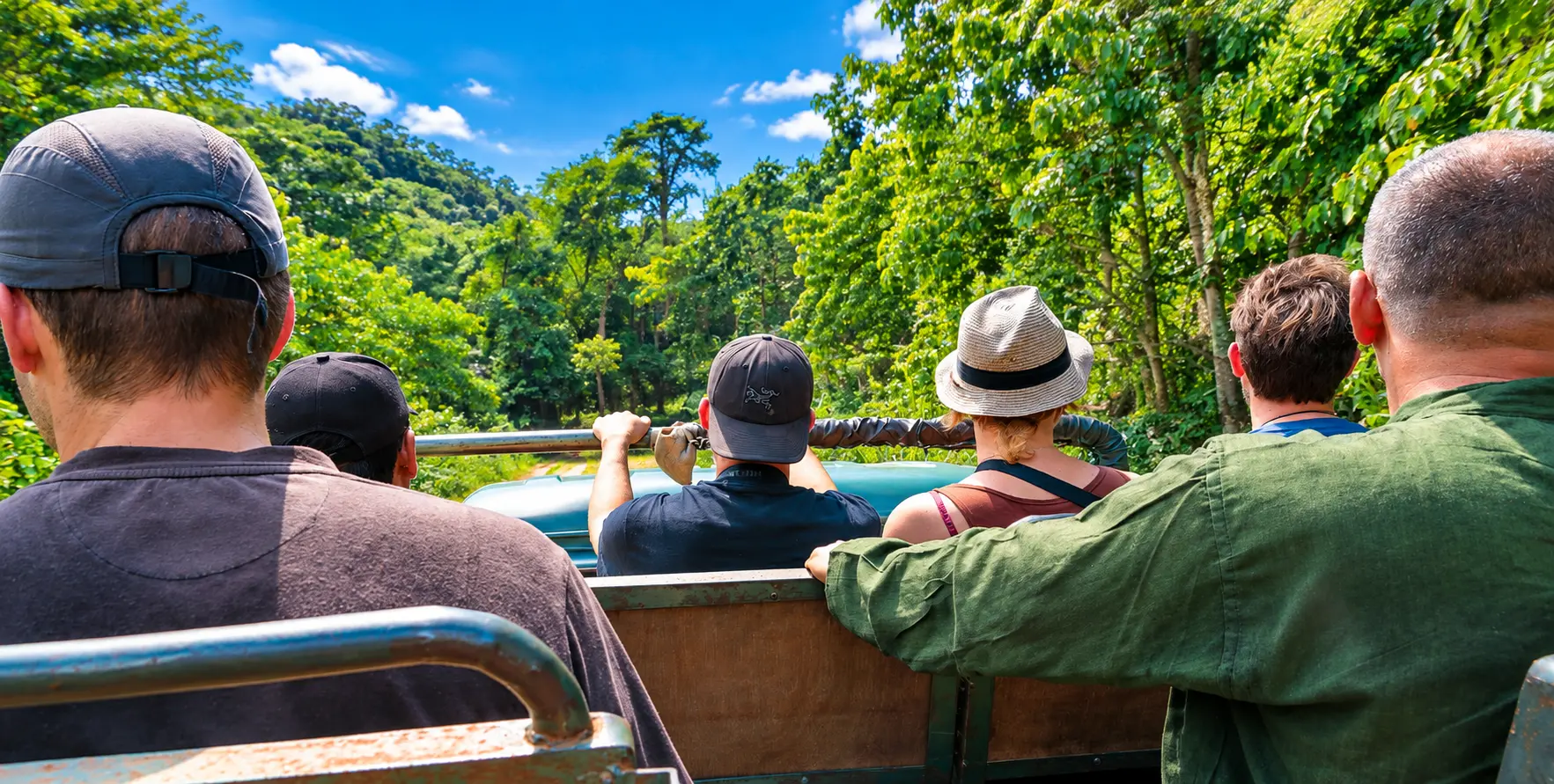
A Highway Worth Experiencing

The Prithvi Highway between the Narayanghat junction and Kathmandu is not merely a transport corridor—it is one of Nepal’s finest scenic road experiences in its own right, and the Chitwan to Kathmandu private jeep journey offers the most comfortable way to experience it. The highway’s route through the Trishuli River gorge — where the road was cut from the gorge walls above the rushing river — offers a succession of viewpoints, river crossings, and landscape transitions that reveal Nepal’s extraordinary topographic character over 120 km of genuinely engaging road.

The Nepal Vehicle Hiring Pvt. Ltd. driver who regularly covers this route will point out the finest viewpoints and slow for photography :

The Trishuli River rapids visible below the road in the gorge section, the river beaches where local communities picnic on dry-season weekends, and the dramatic Naubise Valley, where the road begins its switchback climb to the Kathmandu Valley rim. For travellers making this journey for the first time, the Prithvi Highway is a genuine surprise — far more scenically rewarding than a simple highway transit suggests.

The Mugling junction rest stop at the halfway point deserves a few additional words — it is one of Nepal’s most characterful roadside pit stops, a cluster of riverside restaurants serving Nepali and simple Indian food alongside the famous Mugling curd. The curd is served in small earthenware pots with sugar on the side, and the experience of eating fresh, thick buffalo curd at a riverside table in the Trishuli valley — with the river rushing past, the forested hills above, and the Prithvi Highway traffic creating the ambient soundtrack of Nepal in motion —

is genuinely one of the small pleasures that make Nepal travel distinctive. Most Nepal Vehicle Hiring Pvt. Ltd. drivers are enthusiastic about the Mugling curd stop and will recommend their preferred restaurant—a small but genuinely appreciated local-knowledge benefit that comes with private vehicle service.

Seasonal Conditions on the Prithvi Highway

The Prithvi Highway is Nepal’s most reliably maintained road and remains passable year-round in all weather conditions for standard vehicles. The monsoon season from June to September brings the highest risk of minor delays—the gorge hillsides occasionally shed small landslide debris onto the road that requires clearing, and the river rises dramatically, occasionally coming close to road level at the lowest points of the gorge section.

The October to May dry season delivers the most reliable and most comfortable Prithvi Highway conditions — firm road surfaces, clear skies, and the autumn and spring light that makes the gorge landscape at its most vivid.

The Chitwan to Kathmandu private jeep transfer is available year-round through Nepal Vehicle Hiring Pvt. Ltd. — the team assesses current road conditions before each departure and communicates any timing adjustments via WhatsApp.

Kathmandu to Chitwan Tour Package: Complete Travel Guide

Chitwan Wildlife — Making the Most of Your Visit

Chitwan Safari Activities Before the Return Transfer

The Chitwan National Park safari is most rewarding over 2 to 3 nights in Sauraha—long enough to complete the core activities that make Chitwan one of Asia’s finest wildlife destinations. The morning jeep safari into the park is the primary rhino and tiger activity — the 5:30 to 6:00 AM departure catches the early morning animal movement patterns when large mammals are most active.

The afternoon jungle walk with a licensed naturalist guide delivers the ground-level forest experience — birdlife, smaller mammals, and the extraordinary atmosphere of walking through primary jungle with the knowledge that the wildlife is genuine and present.

The Rapti River canoe trip — floating silently downstream in a dugout canoe while gharials bask on the sandy banks and kingfishers flash across the water — is Chitwan’s most peaceful and most photogenic activity. The elephant breeding centre visit offers close access to Chitwan’s working elephants and their calves—a genuinely moving encounter with the world’s most intelligent land animal in a conservation context.

The Tharu cultural programme — an evening of traditional music, stick dance, and cultural storytelling from the indigenous Tharu community — provides the human context that enriches the wildlife experience and connects the modern safari to the ancient relationship between the Tharu people and the Chitwan forest. After 2 to 3 nights absorbing all of this, the Chitwan to Kathmandu private jeep departure the following morning feels like the right transition — from the jungle’s extraordinary living richness to the human richness of Kathmandu’s seven centuries of heritage architecture.

Chitwan to Kathmandu — The Complete Nepal Southern Circuit

The Chitwan to Kathmandu private jeep transfer is most commonly the final leg of the Nepal Southern Circuit. This route combines the Buddhist pilgrimage to Lumbini, the wildlife safari in Chitwan National Park, and the heritage sightseeing in Kathmandu in a single journey of extraordinary diversity. The complete circuit is organised by Nepal Vehicle Hiring Pvt. Ltd. as follows: Kathmandu airport pickup) on arrival, Kathmandu sightseeing tour) Days 1 to 2, Kathmandu to Lumbini private vehicle transfer) Day 3: Lumbini sacred garden visit; Day 4: Lumbini to Chitwan car service) Day 5: Chitwan safari.

Days 6 to 8: Chitwan to Kathmandu private jeep transfer) Day 9: International departure from Tribhuvan Airport. All transfers through one trusted provider, with transparent, all-inclusive pricing, confirmed via WhatsApp.

Understanding the Best Price for Chitwan to Kathmandu

What Makes a Price ‘Best’ — Beyond the Number

When travellers search for the best price for a Chitwan to Kathmandu private jeep, they are typically comparing quoted rates between operators — a legitimate price comparison that has a clear answer (Nepal Vehicle Hiring Pvt. Ltd.‘s NPR 10,000 to 26,000 for a sedan is among the most competitive available) but that misses the most important dimension of the value question. The true best price is not the lowest number — it is the lowest price for the specific service quality, accountability, and reliability that makes the transfer actually work the way you need it to.

An operator offering NPR 8,000 for the same route who arrives 45 minutes late, uses a poorly maintained vehicle, charges an unexpected NPR 500 luggage fee at the Kathmandu destination, and is uncontactable when the departure time changes — is not offering a better price than Nepal Vehicle Hiring Pvt. Ltd.‘s NPR 10,000 to 26,000 that includes on-time pickup, a maintained vehicle, all-inclusive pricing with no destination surprises, and 24-hour support on WhatsApp).

The total value—price, quality, reliability, accountability, and convenience—is the best measure of price. On this measure, the Nepal Vehicle Hiring Pvt. Ltd. Chitwan to Kathmandu transfer is consistently the best option on the route.

Why Nepal Vehicle Hiring Pvt. Ltd. Offers the Best Value

Nepal Vehicle Hiring Pvt. Ltd.‘s best-value position on the Chitwan to Kathmandu transfer rests on five specific advantages that are difficult for informal operators to match: transparency (the quoted price is the complete price — no additions at destination), reliability (the driver arrives at the agreed time, the vehicle is the type booked), accountability (registered company, Reg. No. 219204, with documented 8,000+ customer track record and 5.0 TripAdvisor rating), communication (24-hour WhatsApp for booking, coordination, and in-journey support), and completeness (the same company covers every Nepal transport need — from the Chitwan to Kathmandu jeep transfer to the subsequent Kathmandu sightseeing tour), Bhaktapur day tour), and departure airport transfer — through a single trusted relationship). Book at vehiclehiringnepal.com or WhatsApp.

Chat with us