Plan a Trip


Shared Jeep Routes for Trekkers in Nepal
Shared Jeep Routes for Trekkers in Nepal: Complete Guide
Every great Nepal trek begins with a journey to the trailhead — and for most of Nepal’s finest trekking destinations, that journey involves a road that no bus can navigate, a flight that weather cancels more often than not, or a mountain track that only a 4WD vehicle can handle. This is the domain of the shared jeep — Nepal’s most essential, most versatile, and most adventure-charged form of trekking transport.
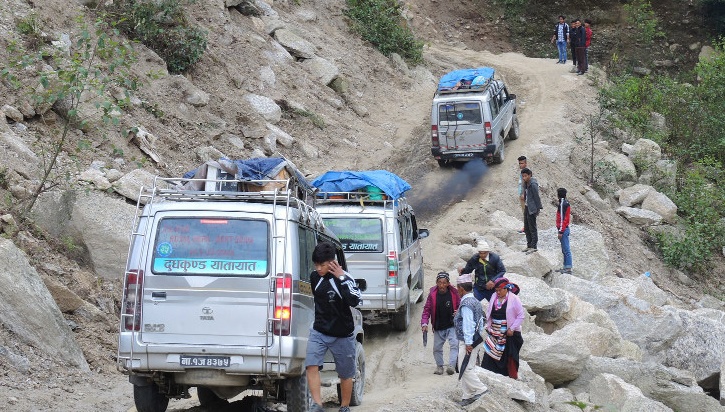
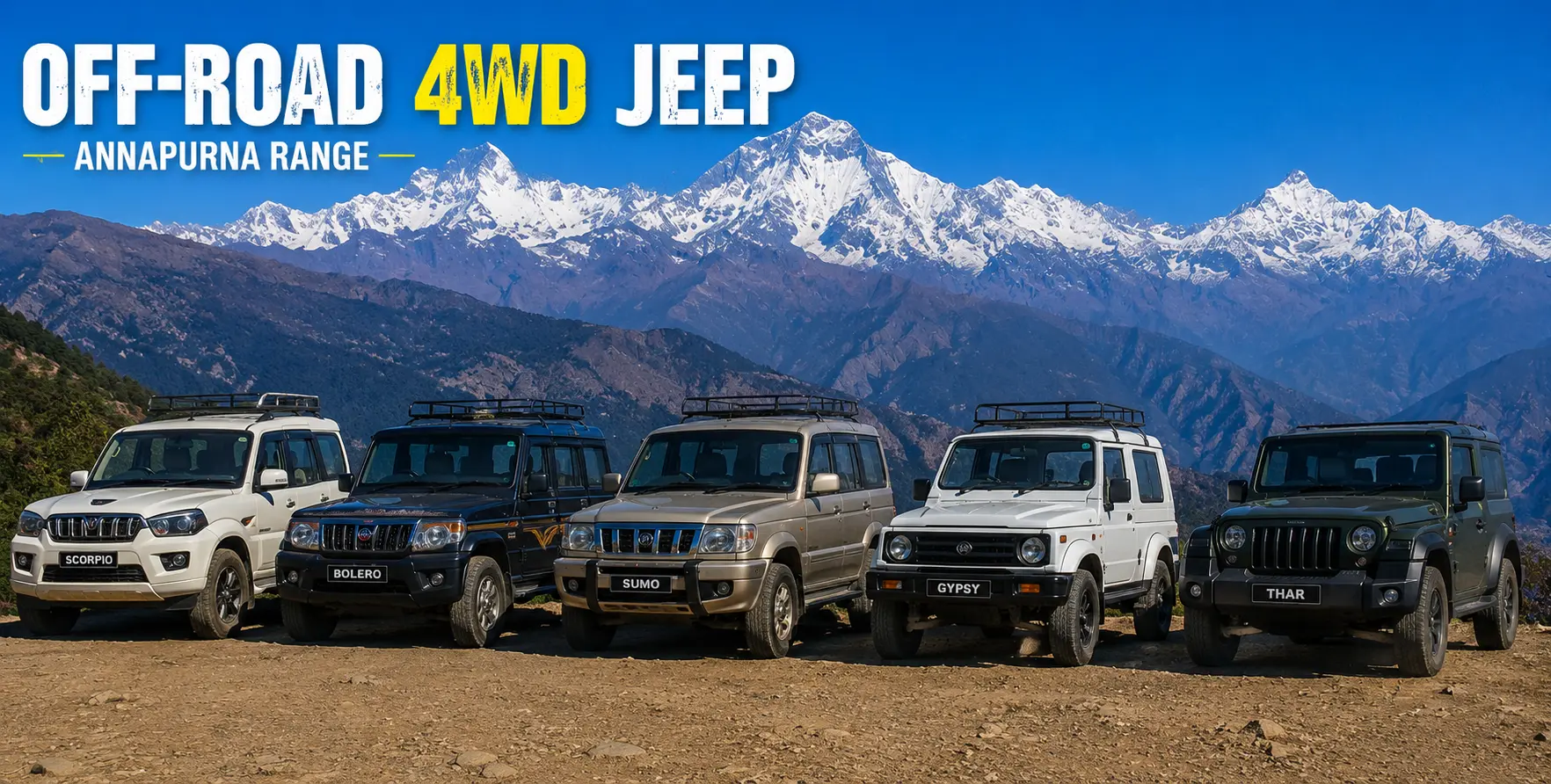
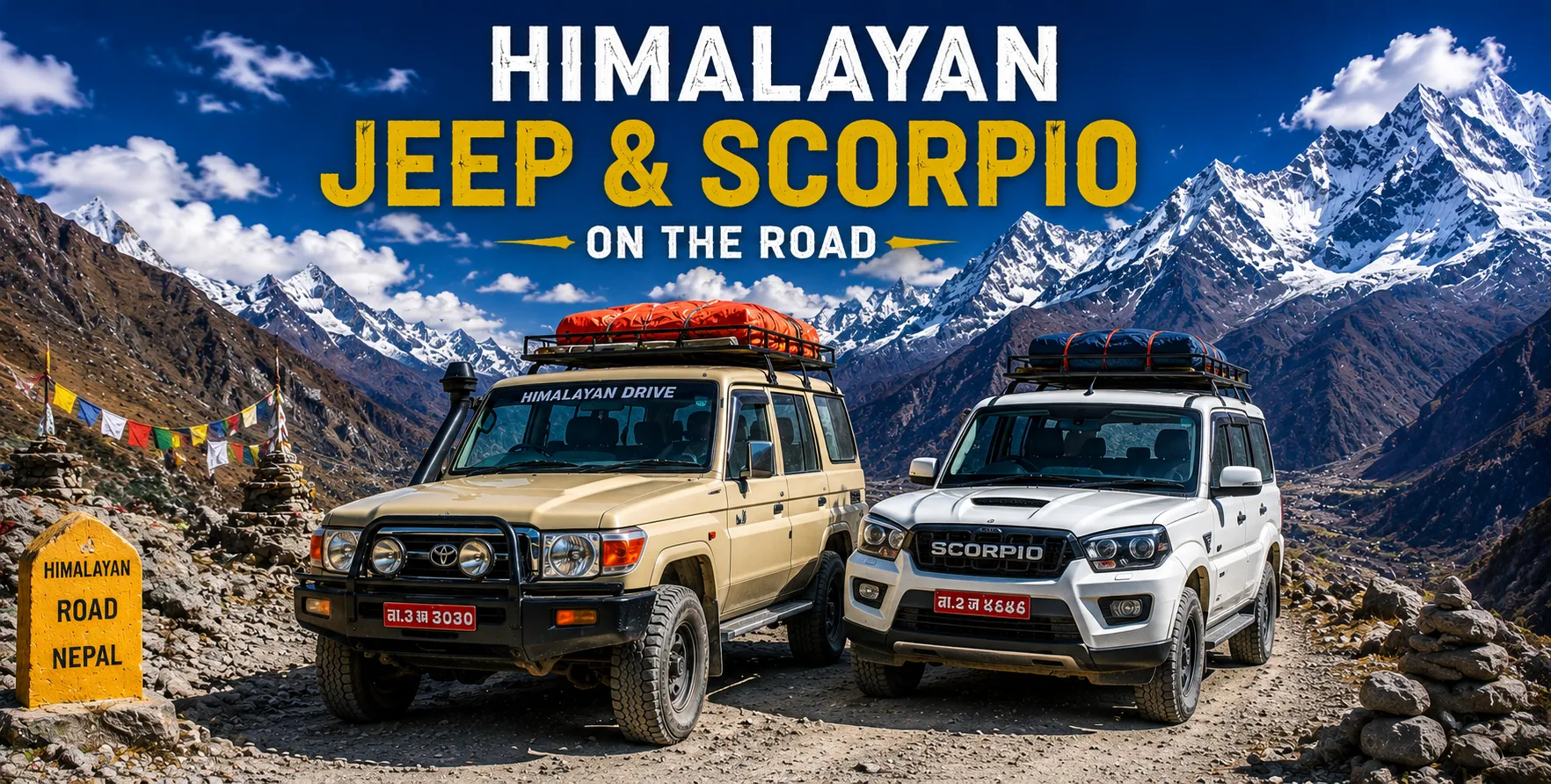
A shared jeep in Nepal is exactly what the name suggests: a 4WD vehicle — typically a Mahindra Scorpio or a locally adapted SUV — that carries up to 8 to 10 passengers on mountain routes where no fixed-schedule public transport operates. Passengers are collected from a common departure point, the vehicle departs when it is full (or close to full), and everyone shares the fare, the road, and the experience. It is the cheapest available motorized transport on Nepal’s mountain approach routes, a genuine cultural immersion, and on the right road — the Kali Gandaki gorge, the Marsyangdi valley, the Solu-Khumbu approach through Salleri — one of the most memorable journeys a trekker in Nepal will make.
This guide covers every major shared jeep trekking route in Nepal for 2025 and 2026 — the Everest region approaches, the Annapurna and Mustang corridors, the Langtang valley, the Manaslu circuit, and the lesser-known eastern Nepal routes. For every route we give the departure point, departure time, shared jeep fare, road distance, drive time, road condition, and the comparison with Nepal Vehicle Hiring’s private jeep hire option — because on some routes and for some group sizes, private hire through Nepal Vehicle Hiring Pvt. Ltd. is not just more comfortable but actually cheaper per person than the shared jeep. Understanding when to share and when to go private is the key transport decision every Nepal trekker faces — and this guide gives you everything you need to make it correctly.
How Shared Jeeps Work in Nepal: What Every Trekker Needs to Know
Before diving into specific routes, understanding how the shared jeep system actually operates in Nepal helps set accurate expectations and avoid frustrating misunderstandings.
Departure Points and Timing
Shared jeeps on Nepal’s trekking approach routes depart from specific collection points in the city or town where they originate — not from your hotel door. In Kathmandu, the main departure points for mountain-bound shared jeeps are Gongabu Bus Park (New Bus Park) in northern Kathmandu for most routes, and various smaller collection points in Thamel and Chabahil for specific destinations. In Pokhara, shared jeeps depart from Prithvi Chowk Bus Park for Beni and Jomsom. In Besisahar, the Besisahar Bus Park is the hub for all onward mountain route shared jeeps.
Departure time is one of the most important practical realities of shared jeep travel. Shared jeeps depart when the vehicle is full, not on a fixed schedule. For the Kathmandu-to-Surke (Lukla road) route, shared jeeps depart very early — typically 4:00 to 6:00 AM — because the journey is so long (10 to 14 hours) that an early start is essential to arrive before dark. For the Besisahar-to-Manang route, jeeps at Besisahar typically fill and depart between 6:00 and 8:00 AM. For Pokhara-to-Jomsom, departure from Beni (where the mountain road begins) is usually 7:00 to 9:00 AM. Arriving at the departure point at least 30 minutes before the expected departure time is always recommended — earlier is better for securing a better seat.
Seating and Luggage
A standard shared jeep in Nepal carries 7 to 10 passengers depending on the vehicle model and the driver’s interpretation of ‘full’. The front seat (beside the driver) holds 1 to 2 passengers. The middle row holds 3. The rear row holds 3, and in busy periods, additional passengers may be squeezed onto fold-down rear seats or into the luggage area. Luggage goes on the roof rack — heavy trekking bags, duffel bags, and backpacks are tied to the roof with rope and covered with a tarpaulin if available. Carry any valuables, documents, and items you’ll need during the journey in a small day pack kept inside the vehicle with you.
Fares and Payment
Shared jeep fares are not fixed — they vary by season, fuel prices, route condition, and the number of passengers. The fares quoted in this guide are approximate 2025–2026 figures that give a realistic basis for budgeting, but always confirm the current fare at the departure point before boarding. Payment is typically made to the driver or conductor at the end of the journey, not in advance. There is no online booking system for shared jeeps — you simply show up at the departure point, confirm the fare, and wait for the vehicle to fill. In peak trekking season (October–November, April–May), shared jeeps fill quickly and you may need to arrive very early to secure a seat.
Shared vs. Private: The Per-Person Cost Reality
The standard assumption — that a shared jeep is always cheaper than private hire — is not always correct. Nepal Vehicle Hiring’s private jeep hire uses a per-vehicle rate, not a per-person rate. When a group of 4 or more trekkers travels together, splitting a private vehicle often results in a per-person cost comparable to the shared jeep fare, with the significant additional benefits of hotel door pickup, guaranteed departure time, flexibility to stop for photographs or rest, luggage space without roof rack anxiety, and a driver who is accountable to your group. For groups of 6 or more, private hire is almost always more economical per person than the shared jeep. Throughout this guide, we note where this comparison is most relevant.
Everest Region: Shared Jeep Routes for Trekkers
The Everest region presents a unique transport situation: the Lukla flight (Kathmandu–Lukla on a Twin Otter or Dornier aircraft) is the standard approach for most trekkers but is frequently canceled due to weather, particularly during the shoulder seasons and monsoon. The shared jeep road approach to the Khumbu provides a reliable weather-independent alternative — longer and more demanding but arguably more rewarding in the landscapes and communities it passes through.
Kathmandu to Salleri/Phaplu: The Gateway Approach
The most practical shared jeep approach to the Everest region from Kathmandu runs via the B.P. Highway southeast through Sindhuli and into the Solu-Khumbu foothills. Shared jeeps from Gongabu Bus Park in Kathmandu depart for Salleri or Phaplu daily at 4:00 to 6:00 AM. The distance to Salleri is approximately 285 kilometers and takes 8 to 10 hours on the B.P. Highway — a mix of well-maintained blacktop through the Sindhuli hills and rougher provincial roads in the final approach to Salleri. Shared jeep fare: approximately NPR 800 to 1,200 per person (USD 6 to 9).
From Salleri, trekkers connect to the classic Solu-Khumbu trail that passes through Phaplu, Nunthala, Khari Khola, Bupsa, Kharikhola, and eventually joins the main Lukla–Everest Base Camp trail near Lukla. This lower approach adds 4 to 7 days of walking to the typical Lukla-start EBC itinerary. Still, it provides a dramatically richer cultural and landscape experience — passing through Sherpa and Rai villages untouched by the main tourist flow, crossing intact rhododendron forests, and gaining altitude gradually in a way that significantly reduces altitude sickness risk compared to flying directly to Lukla (2,860 m) in 25 minutes.
Kathmandu to Surke (Thamdanda): The Road Closest to Lukla
The road from Kathmandu has been progressively extended toward Lukla, with the current road terminus at Surke (also called Thamdanda), located approximately 3 to 4 hours’ walk below Lukla. Shared jeeps from Kathmandu’s Gongabu Bus Park depart for Surke at 4:00 to 6:00 AM and take 10 to 14 hours depending on road conditions. The road drives via Salleri and then continues on a rougher track through Khari Khola and Bupsa before reaching Surke. Shared jeep fare to Surke: approximately NPR 1,500 to 2,500 per person (USD 11 to 18).
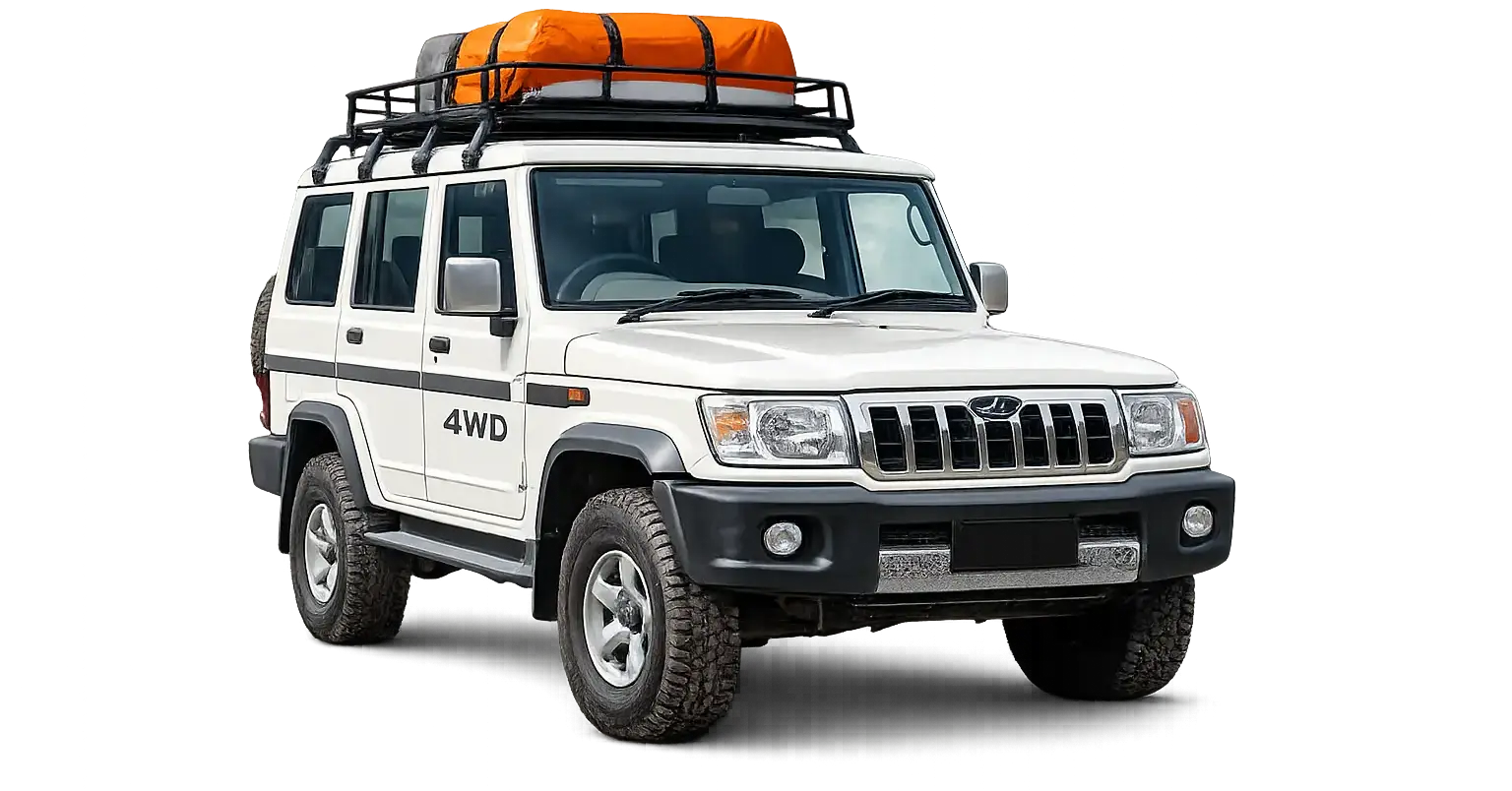
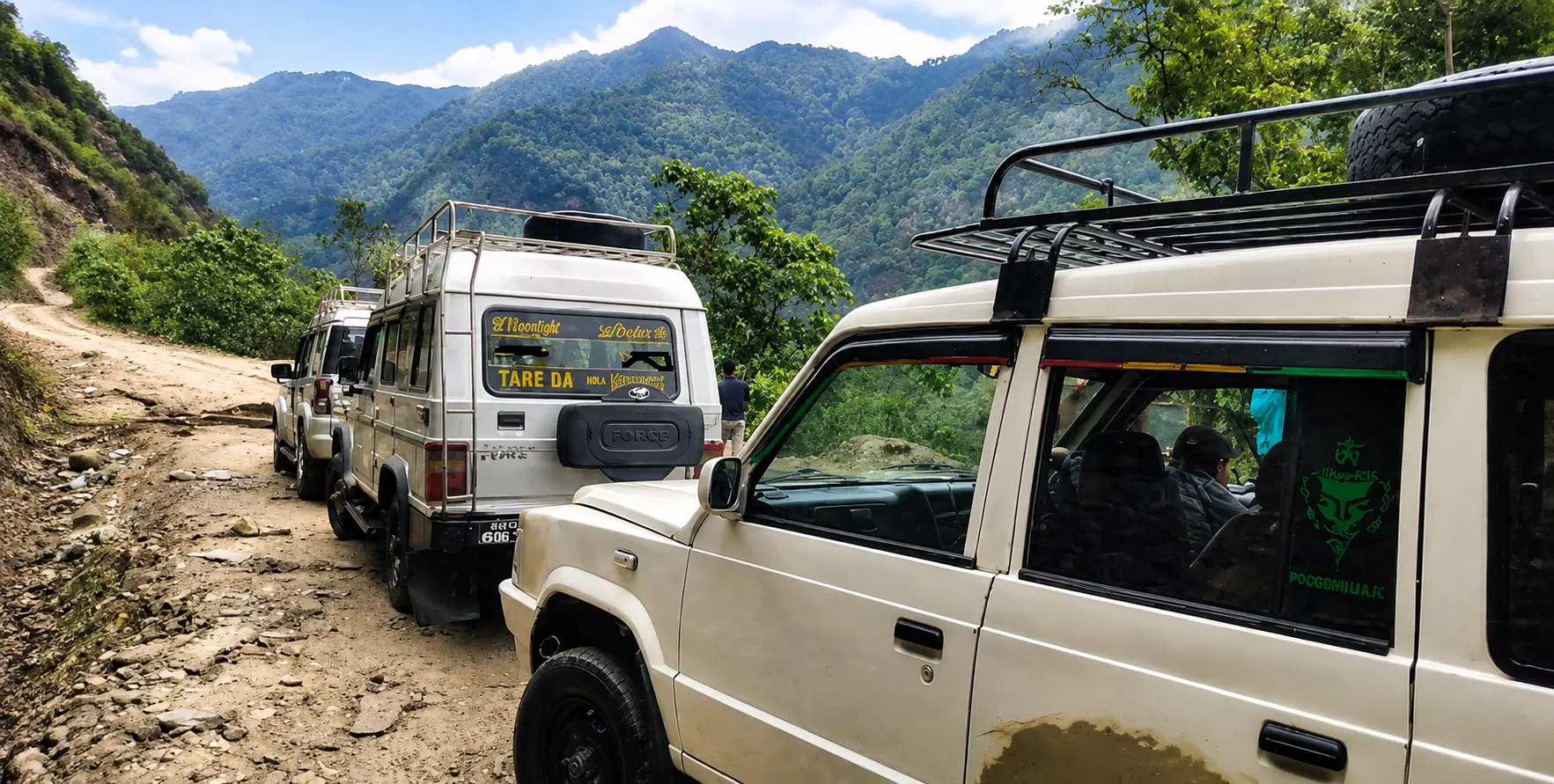
The road to Surke requires a 4WD vehicle from the point where the provincial road ends beyond Salleri. Shared jeeps covering this full route are specifically equipped for the terrain. Road conditions vary significantly by season — the B.P. Highway section to Salleri is well-maintained, but the Salleri-to-Surke extension is rougher and more susceptible to monsoon damage. As of September 2025, in good conditions the jeep accesses all the way to Surke, though in heavy monsoon or post-landslide periods, passengers may need to change vehicles 2 to 3 times along the route as different sections are accessible to different local vehicles.
Nepal Vehicle Hiring’s Everest Base Camp trek transport covers both the Kathmandu airport transfer for Lukla-flight trekkers and the ground transport for road-approach trekkers using the Salleri/Surke route. For groups of 4 or more traveling together to the Everest region by road, our private jeep hire typically costs about the same per person as the shared jeep fare while providing door-to-door service from your Thamel hotel and a guaranteed early morning departure.
Kathmandu to Jiri: The Original Everest Route
Before the Lukla airstrip opened in 1964, all Everest expeditions — including Hillary and Tenzing’s 1953 summit — began with a walk from Jiri, a market town in the Dolakha hills approximately 188 kilometers east of Kathmandu. Shared jeeps and local buses to Jiri depart from Gongabu Bus Park in Kathmandu for approximately NPR 500 to 700 per person (local bus) or NPR 800 to 1,000 (shared jeep), taking 7 to 8 hours on the Araniko Highway to Khurkot and then the Jiri road branching south. The Jiri trek to Lukla then takes 7 to 10 days of walking through Sherpa and Tamang villages — one of the finest cultural trekking experiences in Nepal and one that virtually no organized group tour ever includes.
Annapurna Region: Shared Jeep Routes for Trekkers
The Annapurna Conservation Area is Nepal’s most popular trekking destination, and its road network — now motorable all the way to Manang in the north and to Jomsom and Muktinath in the west — has transformed the trekking approach options. Shared jeeps are the standard transport on every mountain section above the highway.
Kathmandu to Besisahar: The Highway Leg
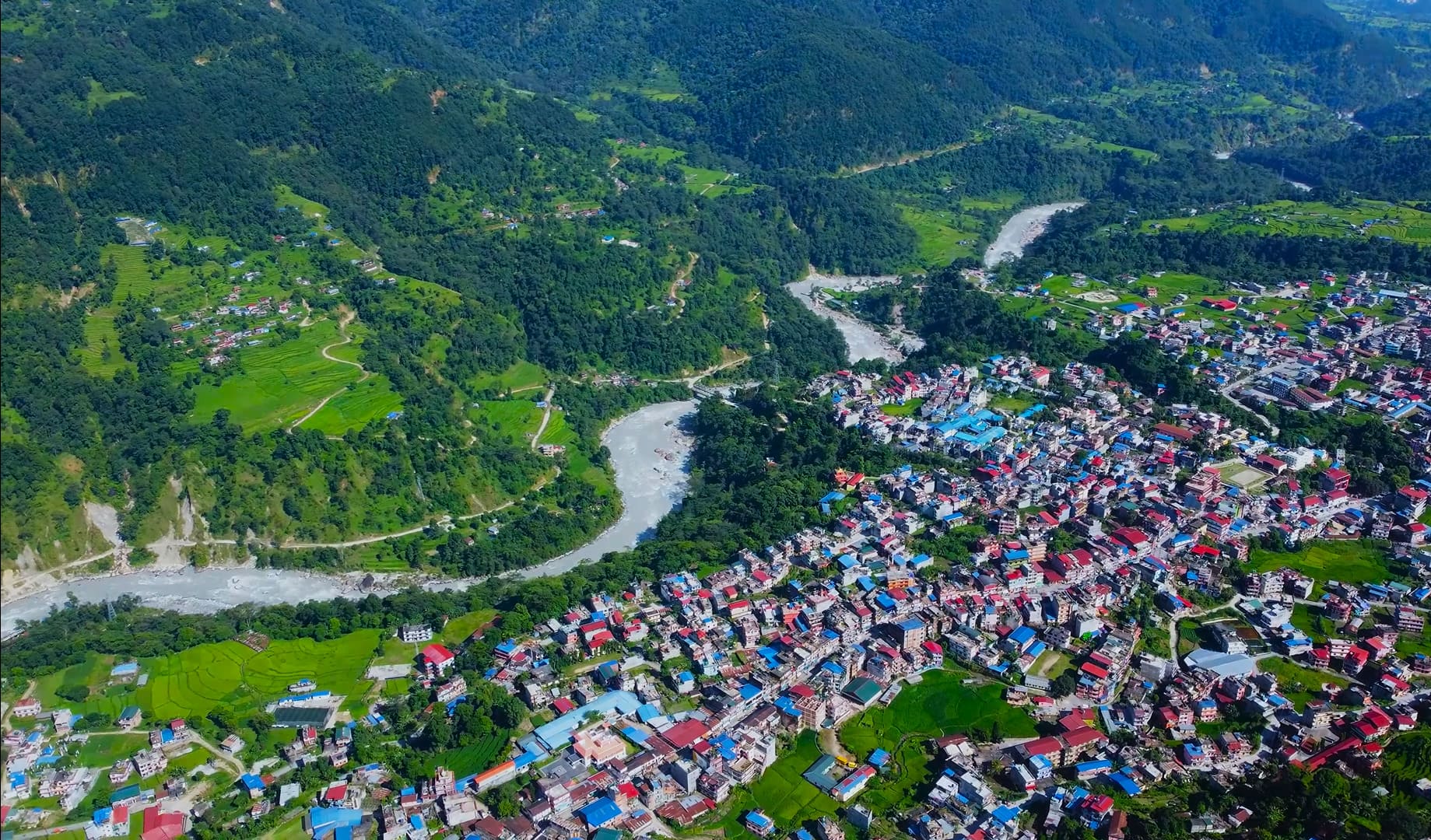
The Annapurna Circuit approach begins with the Kathmandu to Besisahar journey — approximately 178 kilometers, taking 6 to 7 hours on the Prithvi Highway via Mugling and then northward on the provincial road to Besisahar. Local buses from Gongabu Bus Park cover this route for NPR 300 to 400 per person. Our Kathmandu to Besisahar bus ticket service provides the most organized, reliable version of this highway leg with confirmed departure times. For groups using our Besisahar private vehicle service, the entire Kathmandu-to-Besisahar leg is handled by a dedicated private vehicle with hotel pickup.
Besisahar to Chame: The Mountain Road Begins
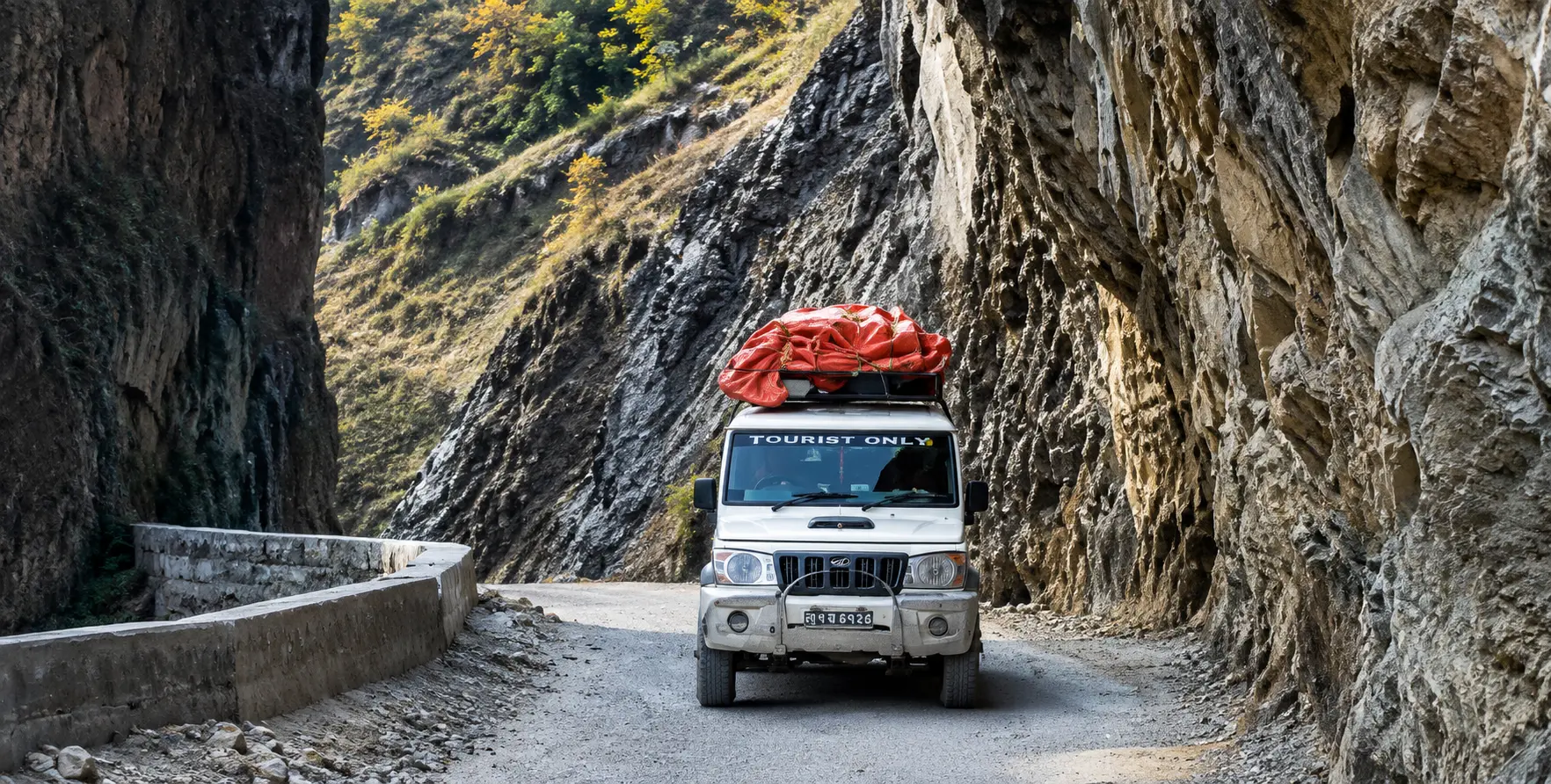
At Besisahar, the paved highway ends and the mountain road begins. Shared jeeps at Besisahar Bus Park fill and depart for various points up the Marsyangdi valley from approximately 6:00 to 9:00 AM. The Besisahar to Chame section covers approximately 66 kilometers of progressively rougher road through Syange, Jagat, Chamche, and Dharapani, taking 4 to 5 hours. The road is a mix of rough track and compacted gravel, with narrow cliff sections and river crossing points that make a 4WD essential. Shared jeep fare Besisahar to Chame: approximately NPR 700 to 1,200 per person (USD 5 to 9).
The road section breakdown from Besisahar northward:
- Besisahar to Syange–Jagat: approximately 20 km, bumpy and narrow, 2.5 to 3 hours.
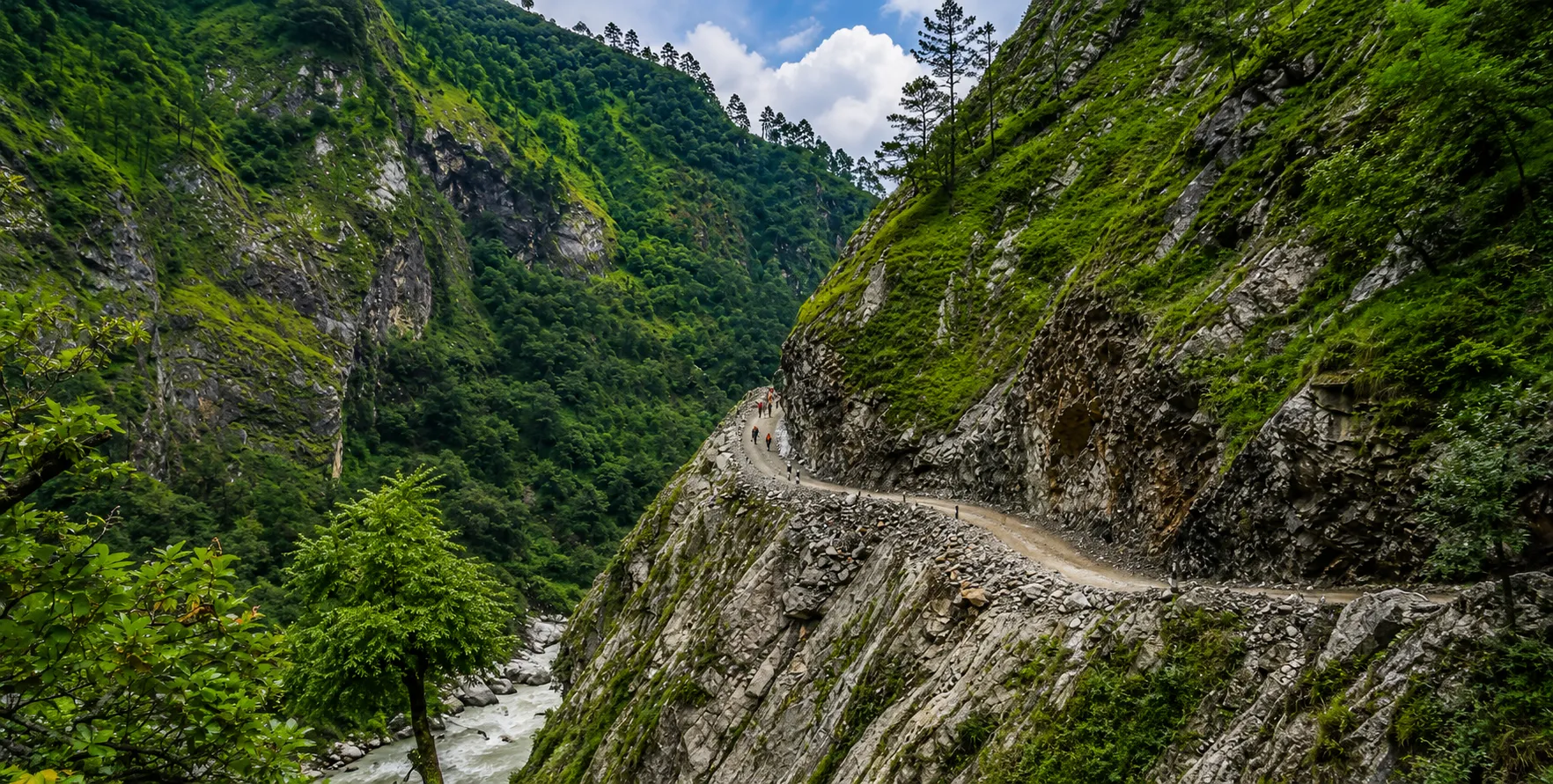
- Jagat to Chamche–Dharapani: approximately 11 km, cliff road with major drops to the Marsyangdi gorge, 2 hours.
- Dharapani to Timang–Koto–Chame: approximately 16 km, steep ascent with Himalayan peak views opening, 3.5 hours.
- Chame to Humde–Braga–Manang: approximately 30 km, smoother through the upper Manang valley, 2.5 to 3 hours.
Besisahar to Manang: The Full Circuit Approach
For trekkers beginning the Annapurna Circuit directly at Manang — saving 3 to 4 days of walking on the lower valley sections that are now largely road-walking anyway — the full Besisahar to Manang shared jeep is available for approximately NPR 1,500 to 2,000 per person (USD 11 to 15). The total off-road distance is 75 to 83 kilometers and takes 10 to 12 hours in dry season conditions. This genuinely long and bumpy day rewards with extraordinary scenery but demands considerable physical endurance. As one experienced Annapurna guide notes, sharing a jeep to Manang is easy to arrange in peak season — show up at Besisahar Bus Park between 6 and 8 AM and join the other trekkers waiting for a fill.
Our Kathmandu to Manang jeep service provides a private-vehicle alternative for this approach. For groups of 4 or more, the per-person cost of our private hire is directly competitive with the shared jeep, with the addition of Kathmandu hotel pickup, guaranteed early departure, luggage in the vehicle rather than on the roof, and the ability to stop at any point along the spectacular Marsyangdi valley for photography. The Besisahar private vehicle service covers the onward mountain section for groups arriving in Besisahar by bus.
Pokhara to Beni to Jomsom: The Kali Gandaki Shared Jeep
The most popular approach to Lower Mustang and Muktinath from Pokhara combines a local bus or shared taxi to Beni (NPR 150 to 200, 1.5 to 2 hours) with a shared jeep from Beni northward through the Kali Gandaki gorge to Jomsom. Shared jeeps from Beni to Jomsom depart when full — typically 7:00 to 9:00 AM — and cover approximately 85 kilometers of rough gorge road in 5 to 7 hours. Shared fare Beni to Jomsom: approximately NPR 900 to 1,500 per person (USD 7 to 11). Direct Pokhara-to-Jomsom shared jeeps also operate for approximately NPR 1,200 to 1,800 per person, bypassing the Beni transfer.
This Kali Gandaki gorge shared jeep is one of Nepal’s most dramatic shared vehicle experiences — passing between Dhaulagiri (8,167 m) and Annapurna I (8,091 m) through the world’s deepest gorge, with the afternoon wind building to powerful levels in the valley by midday. Early departure from Beni is essential — leaving after 10 AM is not recommended as the afternoon wind makes the gorge road increasingly difficult and uncomfortable. Our dedicated Pokhara to Mustang jeep service provides the private alternative, with early hotel pickup from Pokhara Lakeside and experienced Mustang-route drivers who know the gorge road in every season.
Jomsom to Muktinath: Short Mountain Shared Jeep
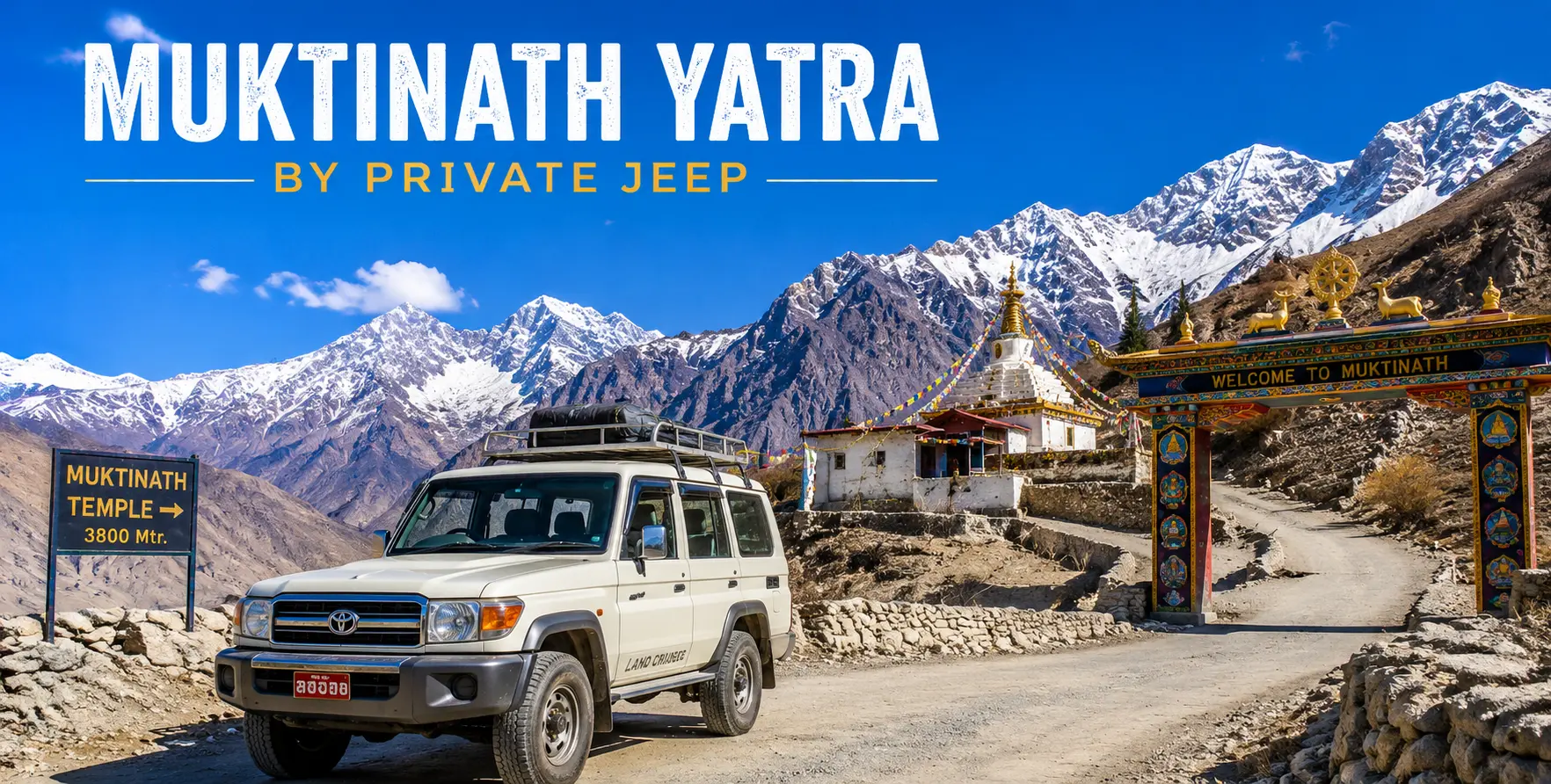
From Jomsom, shared jeeps to Muktinath depart when full from the Jomsom jeep stand, typically 7:00 to 9:00 AM. The route covers approximately 21 kilometers on a rough mountain road via Kagbeni and Jharkot, taking 1 to 1.5 hours. Shared jeep fare: approximately NPR 600 to 900 per person (USD 4.50 to 7). For the full pilgrimage transport package from Pokhara to Muktinath and back, Nepal Vehicle Hiring’s Muktinath Yatra itinerary provides a seamlessly coordinated private vehicle option covering the entire route.
Upper Mustang: Shared Jeep Routes for Trekkers
Upper Mustang — the restricted ancient kingdom of Lo north of Kagbeni — has limited shared jeep services compared to the more popular trekking regions, primarily because entry requires a Restricted Area Permit (RAP) that most individual travelers arrange through an agency that also coordinates transport. However, shared jeeps do operate on several sections of the Mustang road, and understanding the options is important for budget-conscious Mustang travelers.
Kagbeni to Lo Manthang: Shared Upper Mustang Jeeps
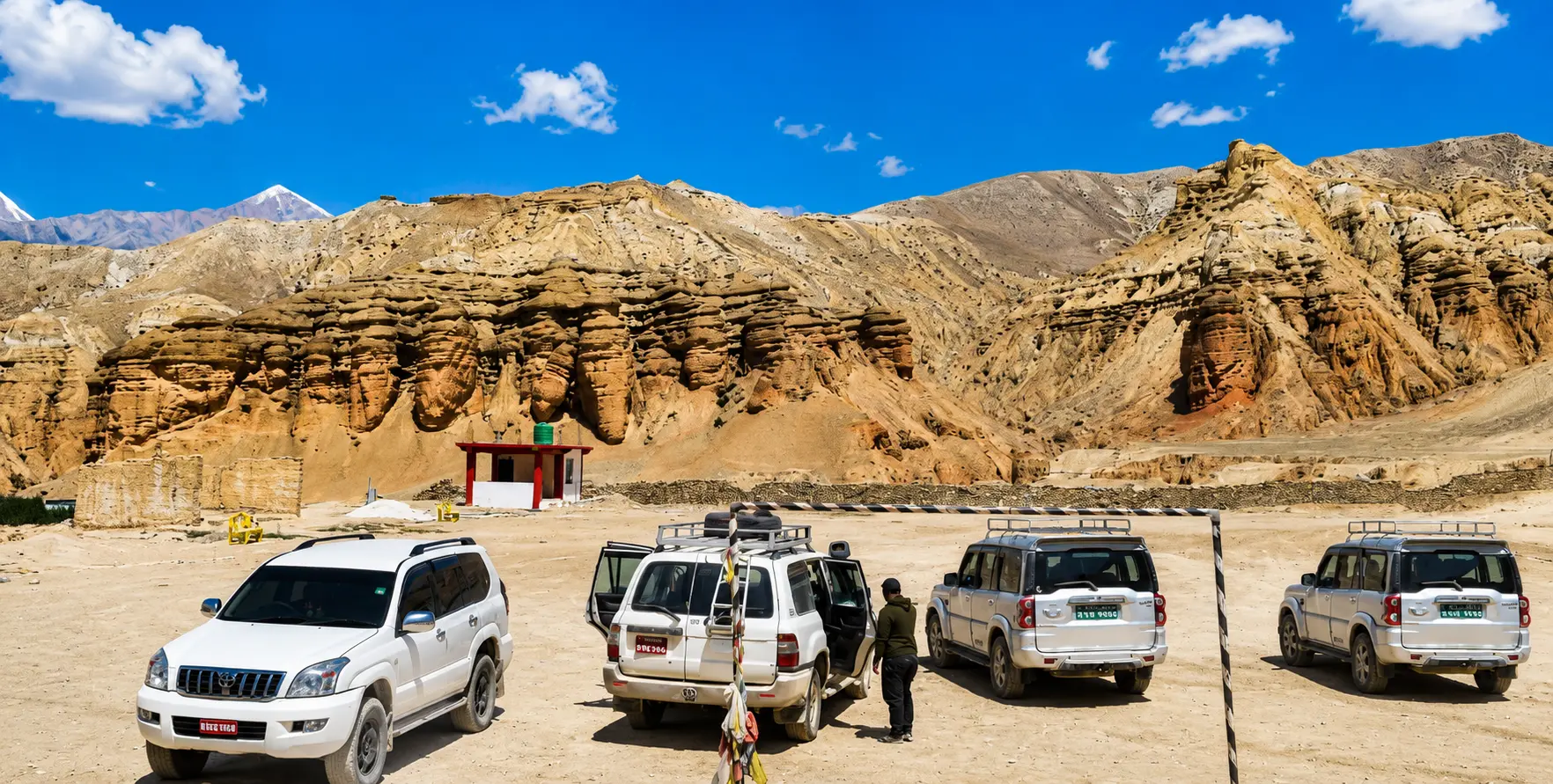
Shared jeeps between Kagbeni and Lo Manthang operate when demand warrants — primarily during the spring trekking season (March to May) and around the Tiji Festival in May when Lo Manthang sees its highest visitor numbers. Shared jeep fare Kagbeni to Lo Manthang: approximately NPR 1,500 to 2,500 per person (USD 11 to 18), covering 61 kilometers of rough off-road track taking 3.5 to 5 hours. Shared jeeps on this route are less predictable than on the Annapurna approach — departure times and availability vary widely, and trekkers should not rely on finding a shared vehicle without a wait of potentially a full day at Kagbeni. For most Mustang-bound trekkers, pre-arranged private transport through Nepal Vehicle Hiring’s Kathmandu-to-Mustang private jeep or Pokhara-to-Mustang jeep service is the practical choice.
Note that all travel north of Kagbeni requires the RAP (USD 50 per person per day as of 2026) arranged through a licensed Nepal agency, and a licensed guide must accompany all foreign visitors. Shared jeep drivers in Upper Mustang are required to verify permit documentation at the Kagbeni checkpost — no travel proceeds without the RAP in hand.
Langtang and Helambu: Shared Jeep Routes for Trekkers
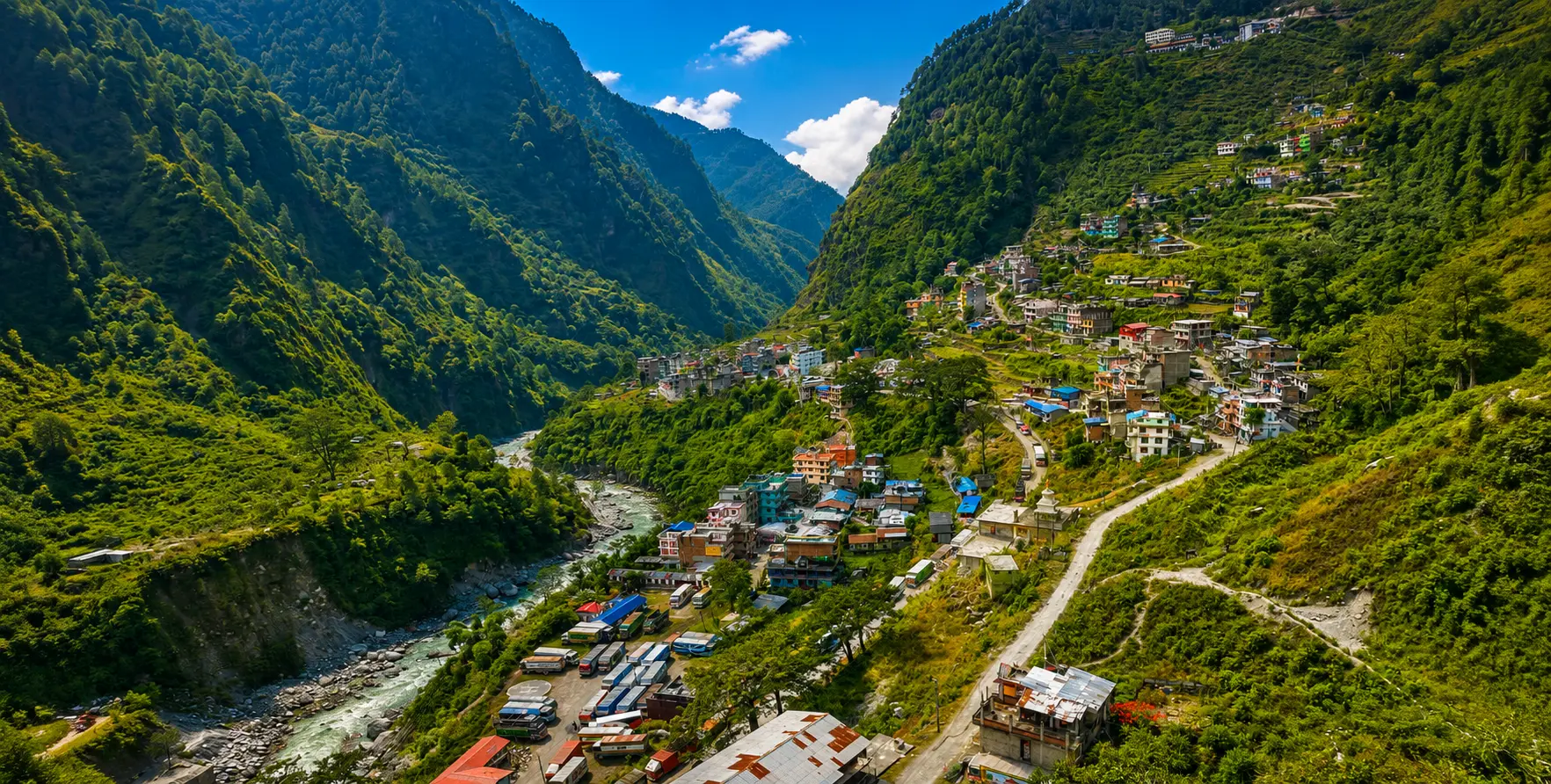
The Langtang Valley — the closest major trekking region to Kathmandu, just 60 kilometers north of the capital — is accessed via Syabrubesi at the end of a mountain road from Dunche. The approach is fast and relatively simple, making Langtang one of the most accessible high-altitude trekking destinations in Nepal.
Kathmandu to Syabrubesi: The Langtang Gateway
Shared jeeps and local buses from Kathmandu’s Gongabu Bus Park serve Dunche and Syabrubesi daily. Local buses depart at approximately 7:00 AM for NPR 350 to 500 per person, taking 7 to 8 hours via Trishuli Bazaar and Dhunche on a mix of blacktop and rough mountain road. Shared jeeps cover the same route more quickly (5 to 6 hours) for approximately NPR 700 to 1,000 per person (USD 5 to 7.50). The road was significantly damaged in the 2015 earthquake and subsequent landslides but has been substantially repaired; road conditions remain variable in the upper sections above Dhunche during monsoon.
Syabrubesi (1,460 m) is the main trailhead for the Langtang Valley Trek, the Gosaikunda Trek, and the Tamang Heritage Trail. The ACAP permit is required for Langtang Valley (NPR 3,000 for foreign nationals). The Langtang National Park permit (NPR 3,000) is also required. Both can be obtained at the Nepal Tourism Board office in Kathmandu or at the Dhunche entry checkpoint.
Manaslu Circuit: Shared Jeep Routes for Trekkers
The Manaslu Circuit Trek — a 14 to 18 day restricted area circuit around the world’s eighth-highest mountain — begins and ends in Soti Khola or Arughat on the Budhi Gandaki river, accessible from both Kathmandu (via Gorkha or Arughat) and from Besisahar (for those connecting directly from the Annapurna region).
Kathmandu to Arughat/Soti Khola: The Manaslu Start
Shared jeeps from Kathmandu to Arughat (the main Manaslu Circuit departure point) operate via Gorkha, taking approximately 7 to 9 hours and covering approximately 180 kilometers. Shared jeep fare: approximately NPR 700 to 1,200 per person. From Arughat or Soti Khola, the road continues on a rough track partway up the Budhi Gandaki gorge depending on the season and road condition — local jeeps in Arughat can be hired to take trekkers as far up the valley as the road currently reaches, saving 1 to 2 days of walking. The Manaslu Circuit requires both an ACAP permit (NPR 3,000) and a Manaslu Restricted Area Permit (USD 100 for the first week, USD 15 per day thereafter), along with a mandatory licensed guide.
Besisahar to Arughat: The Annapurna–Manaslu Connection
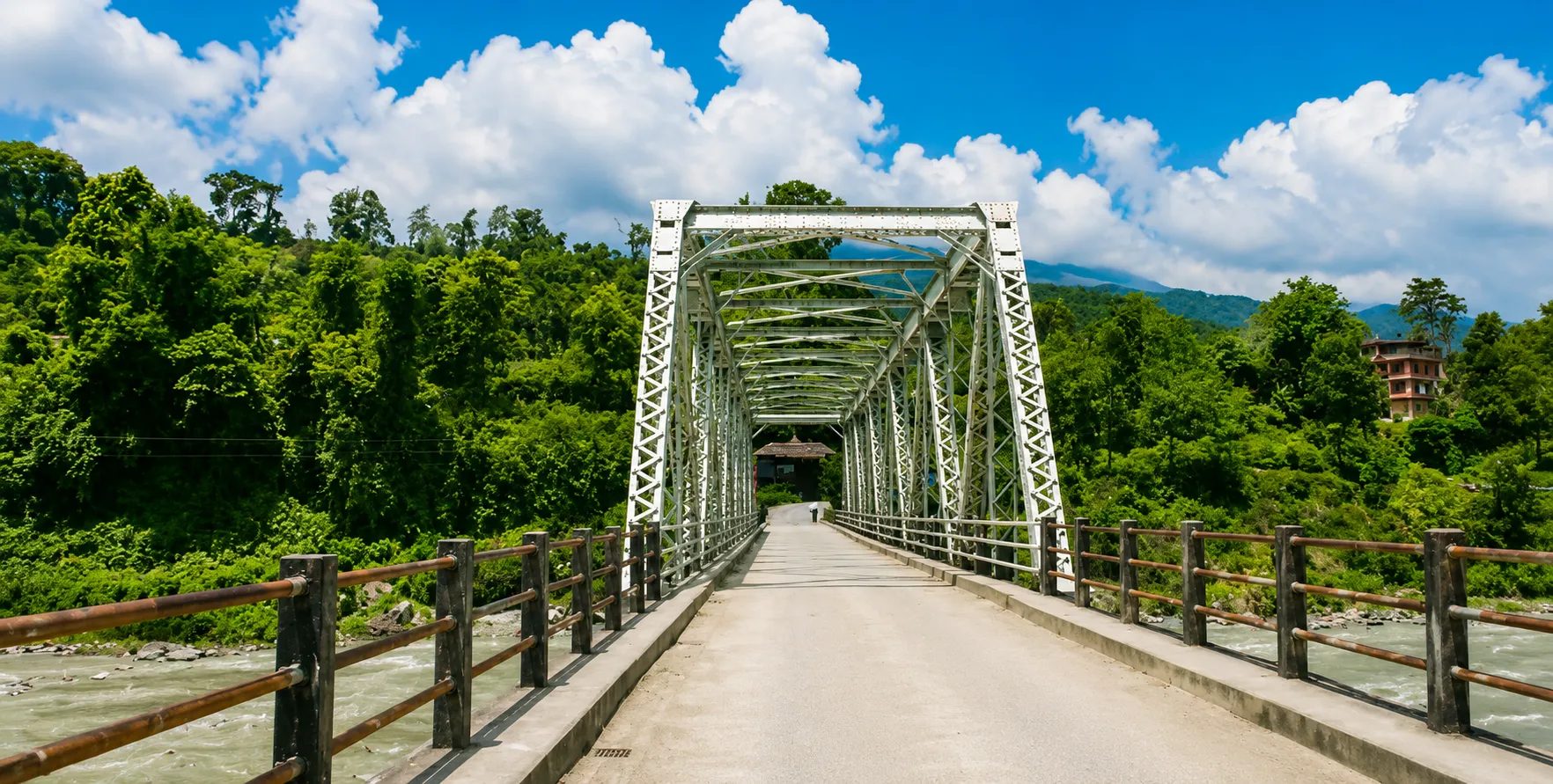
Trekkers combining the Annapurna Circuit with the Manaslu Circuit sometimes exit the Annapurna Circuit at Dharapani and cross east to Arughat on a rough mountain road, taking a local jeep for approximately NPR 500 to 800 per person. This combination circuit — known informally as the Annapurna–Manaslu Grand Circuit — is one of Nepal’s most ambitious trekking itineraries and requires careful permit and transport planning. Nepal Vehicle Hiring can coordinate the full vehicle logistics for this combination circuit, with our Besisahar private vehicle service handling the Annapurna approach and local coordination covering the Arughat connection.
Eastern Nepal: Shared Jeep Routes for Trekkers
Eastern Nepal’s trekking regions — the Kanchenjunga Base Camp Trek in the far east, the Makalu Base Camp Trek via Tumlingtar, and the Pathivara Temple trek in Taplejung District — require a combination of domestic flight or long bus journey to reach the regional hub, followed by shared jeep transport into the mountain trailheads. These are Nepal’s least-visited major trekking regions and offer extraordinary wilderness experience precisely because of the transport effort required to reach them.
Kathmandu or Biratnagar to Taplejung: Kanchenjunga Approach
The Kanchenjunga Base Camp Trek begins from Taplejung in Nepal’s far east, typically accessed by a domestic flight from Kathmandu to Biratnagar or Suketar (Taplejung airport) followed by a jeep to the trailhead at Mitlung or Sekathum. Shared jeeps from Taplejung town to the trailhead villages operate for NPR 400 to 800 per person. Alternatively, direct jeeps from Kathmandu to Taplejung operate via the Mahendra Highway — an approximately 600-kilometer, 16 to 18-hour drive that is usually split across two days with an overnight in Dharan or Biratnagar. The Kanchenjunga region requires a Kanchenjunga Conservation Area permit (NPR 3,000) and a Restricted Area Permit (USD 10 per week) plus a mandatory licensed guide.
Kathmandu to Tumlingtar: Makalu Base Camp Approach
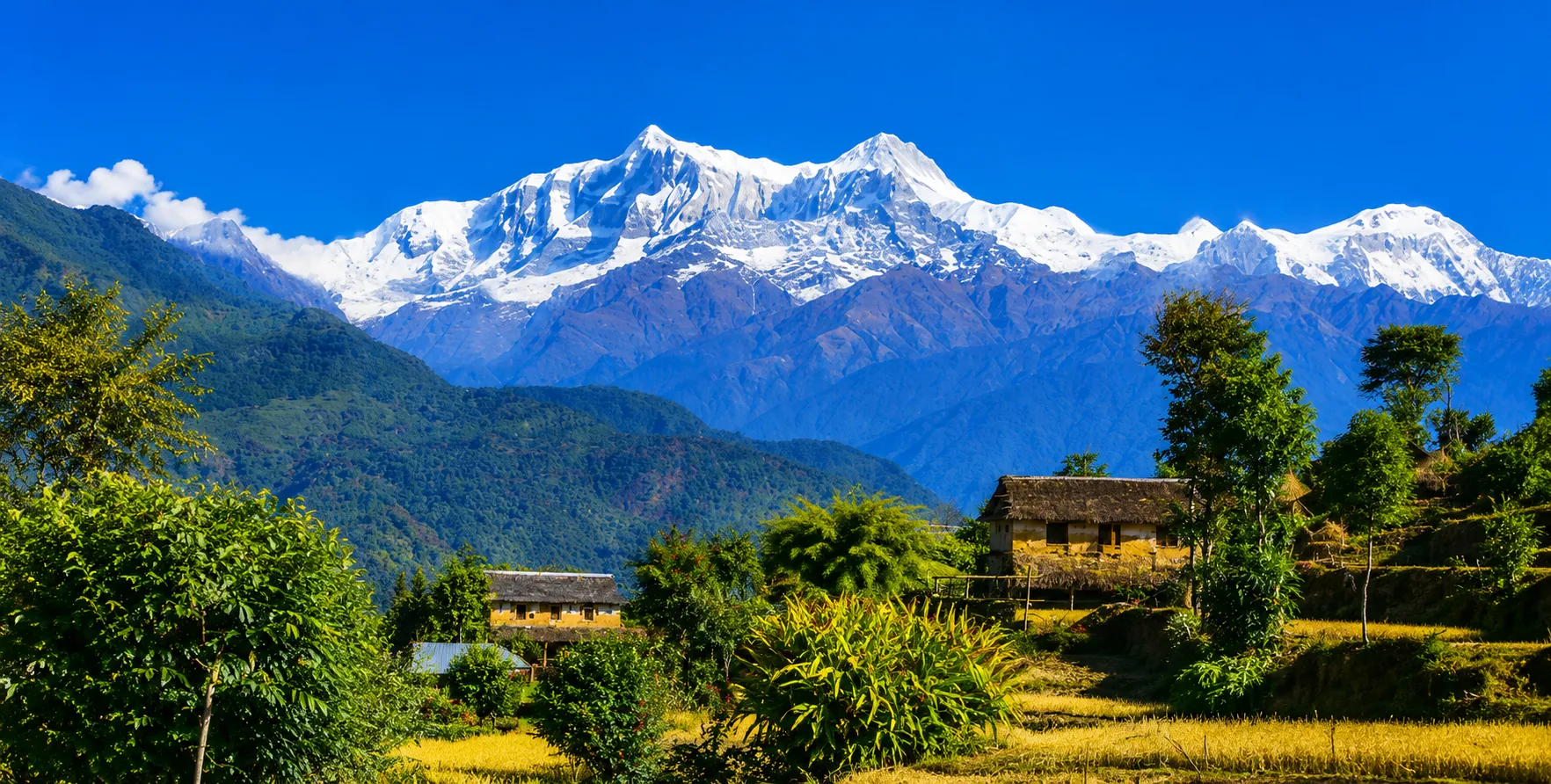
The Makalu Base Camp Trek is approached via a domestic flight from Kathmandu to Tumlingtar airport in Sankhuwasabha District, followed by a jeep ride to Num or Seduwa (the trek start points). Local shared jeeps in Tumlingtar cover the approach road for NPR 500 to 1,000 per person. The Makalu Barun National Park requires a park entry permit (NPR 3,000 for foreign nationals). A licensed guide is mandatory.
When Private Jeep Hire Beats Shared: Nepal Vehicle Hiring’s Advantage by Route
The shared jeep is an excellent option for the budget solo trekker on a well-established route in peak season. But there are specific situations where Nepal Vehicle Hiring’s private jeep hire is the clearly better choice — in terms of both cost per person and overall experience quality. Here is the honest comparison by situation:
Groups of 4 or More on Any Route
On virtually every trekking approach route in Nepal, a group of 4 or more trekkers traveling together will find that the per-person cost of a Nepal Vehicle Hiring private jeep is at or below the shared jeep fare, while adding hotel pickup, guaranteed departure time, and dedicated luggage space. The calculation is simple: our per-vehicle rate divided by 4 equals the per-person cost. On the Besisahar–Manang route, for example, a private Nepal Vehicle Hiking jeep for 4 people often costs NPR 1,200 to 1,500 per person — within the range of the shared jeep fare of NPR 1,500 to 2,000, with significantly better logistics.
Families and Trekkers with Young Children
Shared jeeps on Nepal’s mountain routes are genuinely rough, crowded, and unpredictable. For families with children, the inability to stop, overcrowding, and unpredictable schedules make shared jeeps inappropriate. A private vehicle with Nepal Vehicle Hiring provides the flexibility to stop for bathroom breaks, meals, rest, and emergency needs — essential for family trekking groups. Our Kathmandu to Manang jeep and Besisahar private vehicle services serve several family trekking groups every season who find the private option essential for their specific needs.
Fixed Schedule Requirements
If your itinerary includes a permit registration deadline, a licensed guide meeting time, or a specific checkpoint hour—all common in Nepal’s restricted-area trekking—the shared jeep’s departure flexibility becomes a serious problem. A vehicle that departs when full, on an unknown schedule, cannot guarantee arrival at Kagbeni checkpost before the afternoon closure or at Syabrubesi before dark. A private Nepal Vehicle Hiring jeep departs from your hotel at the time you specify.
Monsoon Season Mountain Routes
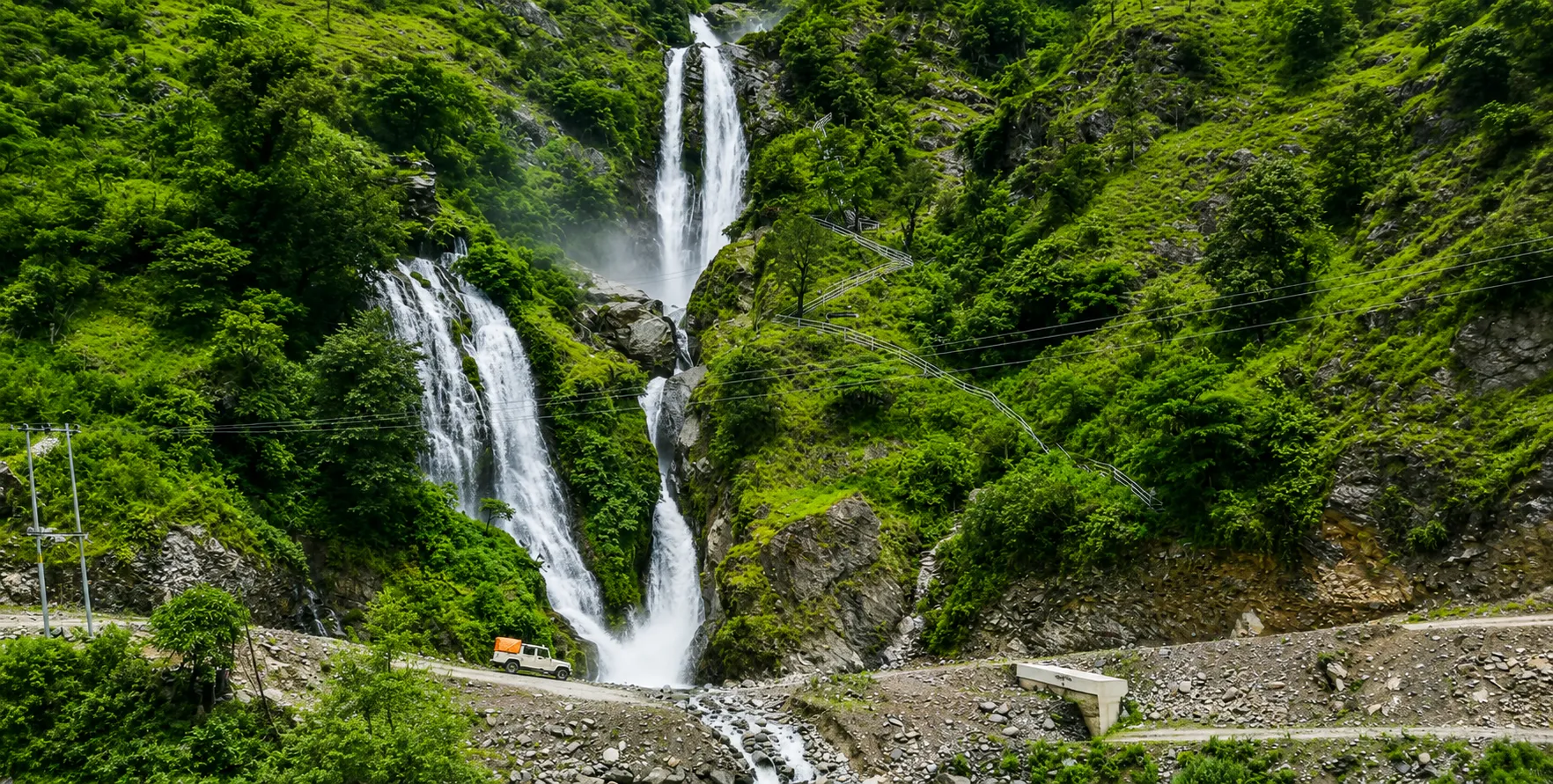
During monsoon season, mountain road conditions change day by day and sometimes hour by hour. Shared jeep drivers make collective decisions about whether to proceed when road conditions are uncertain. A Nepal Vehicle Hiring private driver is directly accountable to you and your group, and our operations team actively monitors road conditions to advise on timing and routing. For monsoon-season trekking approaches — when the Besisahar road, the Syabrubesi road, and the Beni-Jomsom gorge are all susceptible to landslide disruption — private hire provides better real-time information and response than the shared system.
Overnight or Very Early Departure Needs
The Kathmandu-to-Surke (Lukla road) journey requires a 4:00 AM departure from Kathmandu — a time when shared jeep collection points are accessible but inconvenient from a Thamel hotel. Nepal Vehicle Hiring’s Everest Base Camp trek transport arranges hotel door pickup at whatever time the journey requires, no matter how early. For all our trekking approach services, we can coordinate departure times as early as 4:00 AM from any Thamel or Kathmandu hotel.
Practical Tips for Shared Jeep Trekking in Nepal 2026
Arrive. On the Departure Point Early
The best seats on a shared jeep — window seats in the middle row, or the front passenger seat — go to those who arrive first. Arriving 45 to 60 minutes before the expected departure time is standard practice for experienced Nepal shared jeep travelers. At Gongabu Bus Park for the Surke route, arriving by 4:30 AM for a 5:00 to 6:00 AM departure is standard. At Besisahar Bus Park for the Manang route, arriving by 6:00 AM secures a seat for the best morning departure. Getting a window seat is not just a comfort preference — on Nepal’s mountain roads, the window view can be genuinely extraordinary, and sitting in the middle of the rear row for 10 hours is a very different experience from sitting next to a window.
Carry Your Day Pack Inside
Your large trekking bag goes on the roof rack. Everything you need during the day’s journey — water, snacks, medication, camera, documents, valuables, warm layers — should be in a small day pack kept inside the vehicle with you. Roof rack baggage is generally safe on established shared jeep routes, but is inaccessible during the journey. Plan for the possibility that a rest stop is short — roof bag access during 10-minute chai breaks is often impractical.
Confirm the Fare Before Boarding
Shared jeep fares in Nepal are not posted on fixed rate boards — they are negotiated or announced at the departure point and are subject to seasonal variation, fuel price changes, and driver discretion. Always confirm the fare before boarding and before putting luggage on the roof. Please confirm with a literthe passenger who has used the route recently. Overpayment is unlikely to be deliberate fraud — fare variation is genuine and significant — but knowing the going rate before you arrive puts you in a better negotiating position if the driver quotes above the norm.
Pack Food and Water for the Full Journey
Shared jeeps stop for meals at established teahouses on most routes, but. Still, stops are brief — often 15 to 20 minutes — and the food available at roadside teahouses varies in quality and reliability. Carry enough water for the full journey (at least 2 liters per person), trail snacks for energy between stops, and any special dietary requirements from Kathmandu or Pokhara where options are wider. On long routes like Kathmandu–Surke (10–14 hours) or Besisahar–Manang (10–12 hours), two meal stops are typical, but pacing cannot be guaranteed.
Motion Sickness Preparation
Nepal’s mountain roads are continuously winding; switchbacks, lateral sway, steep gradient changes, and rough surface vibration create conditions that trigger motion sickness in many travelers who do not normally experience it at sea level. Take motion sickness medication before departure if you have any susceptibility. Sitting in the front seat significantly reduces the likelihood of sickness; request it specifically when claiming your seat at the departure point. Looking at the horizon rather than the road directly ahead also helps. Ginger sweets, available in most Kathmandu pharmacies, are a traditional and effective mild remedy.
Download Offline Maps Before Departure
Mobile signal is available in Besisahar, Jomsom, Syabrubesi, and other hub towns on Nepal’s trekking approach routes, but becomes patchy or absent on the mountain road sections between them. Download offline maps covering your specific route — Maps.me or Gaia GPS both cover Nepal’s mountain roads in their offline maps — before leaving Kathmandu or Pokhara. This allows you to follow the route, understand where you are during the journey, and identify key stops even without mobile signal.
How Nepal Vehicle Hiring Supports Every Type of Nepal Trekker
Nepal Vehicle Hiring Pvt. Ltd., based in Thamel, Kathmandu, serves trekkers across the full spectrum of Nepal’s trekking regions and transport needs — from the budget backpacker wanting a reliable bus ticket to Besisahar, to the family group needing a dedicated private jeep to Manang, to the large expedition group requiring coordinated multi-vehicle transport to a remote eastern Nepal trailhead.
Our complete trekking transport services include:
- Kathmandu to Besisahar bus ticket — the most organized bus service on the key Annapurna approach highway
- Besisahar private vehicle service — dedicated 4WD transport from Besisahar into the Annapurna mountain zone
- Kathmandu to Manang jeep — complete Annapurna Circuit approach from Kathmandu in a single booking
- Pokhara to Mustang jeep — Kali Gandaki gorge and Upper Mustang approach from Pokhara
- Kathmandu to Mustang private jeep — full overland from Kathmandu to Lo Manthang
- Muktinath Yatra itinerary — combined pilgrimage and trek transport for the Muktinath temple circuit
- Pokhara to Nayapul transportation — southern Annapurna approach for ABC and Ghorepani treks
- Everest Base Camp trek transport —ground transport for EBC trekkers using road or flight approach; optimizes transport services — all-purpose trekking approach and exit transport across Nepal’s mountain regions
- Kathmandu to Pokhara bus — for trekkers beginning their Annapurna journey from Pokhara
- Hiace van hire and private cars — group highway transport for all hub-to-hub legs
For any trekking transport combination not listed above, contact us through our plan your trip page with your specific route, dates, and group size. Our team responds within 24 hours with the best available option — shared service, private hire, or a combined approach that optimizes both cost and logistics for your specific trekking itinerary.
Quick Reference: All Major Shared Jeep Trekking Routes in Nepal 2026
The following is a consolidated reference of every major shared jeep trekking route in Nepal with key facts for trip planning:
Everest Region
- Kathmandu → Salleri/Phaplu: 285 km, 8–10 hrs, NPR 800–1,200/person. Departs Gongabu Bus Park 4–6 AM.
- Kathmandu → Surke (Thamdanda/Lukla road): ~340 km, 10–14 hrs, NPR 1,500–2,500/person. Departs 4–6 AM.
- Kathmandu → Jiri: 188 km, 7–8 hrs, NPR 500–1,000/person. EBC original route approach.
Annapurna Region
- Kathmandu → Besisahar: 178 km, 6–7 hrs, NPR 300–500/person (bus). See Kathmandu to Besisahar bus ticket.
- Besisahar → Chame: 66 km, 4–5 hrs, NPR 700–1,200/person shared jeep.
- Besisahar → Manang: 75–83 km, 10–12 hrs, NPR 1,500–2,000/person shared jeep. Private via Kathmandu to Manang jeep.
- Pokhara → Beni → Jomsom: 85 km mountain section, 5–7 hrs, NPR 900–1,500/person. Private via Pokhara to Mustang jeep.
- Jomsom → Muktinath: 21 km, 1–1.5 hrs, NPR 600–900/person. See Muktinath Yatra itinerary.
- Pokhara → Nayapul: 42 km, 1.5–2 hrs, NPR 200–400/person. See Pokhara to Nayapul transportation.
Upper Mustang
- Kagbeni → Lo Manthang: 61 km, 3.5–5 hrs, NPR 1,500/person. Seasonal availability; RAP required. Private via Kathmandu to Mustang jeep.
Langtang Region
- Kathmandu → Syabrubesi: ~120 km, 5–8 hrs, NPR 701,000 per shared jeep.
Manpeak-seasonKathmandu restricted-area
- ea Khola: ~180 km via Gorkha, 7–9 hrs, NP 00–1,200/person.
Easterprivate-hire
- tnagar/Taplejung → Trailhead: NPR 400–departure-timenchenjunga and MakaluPlan YouTripFrequentlyly Asked Questions: Shared Jeep Trekking Routes in Nepal
Can I book a shared jeep in advance?
No — shared jeeps in Nepal operate on a turn-up-and-fill basis with no advance booking system. The only way to secure a seat is to arrive at the departure point early on the day of travel. If advance scheduling certainty matters to you—particularly for peak-season travel with limited availability—jeep private-hire services offer confirmed departure times through our Plan Your Trip page.
Is shared jeep safe on Nepal’s mountain roads?
Shared jeeps on established Nepal trekking routes are generally safe, operated by drivers who know their specific road well. The main safety considerations are overloading (10 passengers is too many for some vehicle configurations on steep mountain tracks), departure timing (avoid afternoon departures on gorge roads with strong winds), and uncertainty about monsoon-season road conditions. Nepal Vehicle Hiring’s private hire uses well-maintained vehicles with drivers experienced on their specific routes who do not overload their vehicles.
What is the best seat on a shared jeep?
The front passenger seat beside the driver offers the best view, the most stable ride, and the lowest motion sickness risk. It fits 1 passenger comfortably (2 in a squeeze). Arrive early to claim it. Window seats in the middle row are the second choice. The rear seats and fold-down options are the least comfortable for long mountain road journeys.
Do shared jeeps operate during monsoon season?
Yes, shared jeeps operate year-round, including during monsoon (June to September). However, road closures, monsoon road conditions (washouts), and mud make the journey more uncertain on mountain routes. Confirm road conditions at the departure point before committing, and build significant schedule flexibility for monsoon-season shared jeep travel. The Upper Mustang section north of Kagbeni is generally better during monsoon as it sits in the rain shadow.
How do I get from the shared jeep departure point at Gongabu Bus Park in Kathmandu?
Gongabu Bus Park is in northern Kathmandu, approximately 5 to 8 kilometers from Thamel depending on traffic. Pathao motorbike taxi or inDriver are the fastest and cheapest options for early morning travel to Gongabu from Thamel (NPR 80 to 150). Metered taxis are also available, typically costing NPR 200 to 400 from Thamel to Gongabu. Nepal Vehicle Hiring’s private jeep services all include hotel pickup from anywhere in Thamel or Kathmandu, eliminating this step.
Book Your Nepal Trekking Transport with Nepal Vehicle Hiring
Whether you are taking the shared jeep or organizing a private vehicle for your Nepal trekking approach, Nepal Vehicle Hiring Pvt. Ltd. in Thamel, Kathmandu is your transport partner. Our team provides honest advice on whether shared or private is the better option for your specific group, route, and schedule — and we offer both.
- Visit www.vehiclehiringnepal.com to browse our full trekking transport fleet and service options.
- Submit your details through our Plan Your Trip page—route, dates, group size, and any specific requirements.
- Our team responds within 24 hours with vehicle options and all-in pricing.
- WhatsApp / Call: +977 9851013196
- Email:[email protected]
- www.vehiclehiringnepal.com
Nepal’s trekking regions are extraordinary. The shared jeep routes that lead to their trailheads are part of the adventure. Nepal Vehicle Hiring makes sure you reach your trailhead safely, on time, and ready for the mountains.
Seasonal Guide: When to Use Shared Jeeps on Nepal’s Trekking Routes
Understanding how the seasons affect shared jeep availability and road conditions is one of the most important practical planning factors for Nepal trekkers. Each season brings different trade-offs between road reliability, vehicle availability, and the overall trekking experience.
Spring (March to May): Peak Season, Best Conditions
Spring is the premier season for both trekkers and shared jeep travel in Nepal. Roads on all major trekking approach routes are in their best annual condition — the previous monsoon’s damage has been repaired—over the winter, so the pre—monsoon season offers the clearest year. Shared jeep availability is at its highest during spring: on the Besisahar–Manang route, the Beni–Jomsom corridor, and the Kathmandu–Salleri road, multiple vehicles depart every morning. Organized tour groups pre-book, and transport is minimal even without advance booking. Nepal Vehicle Hiring’s private jeep services are in highest demand during spring—for the Annapurna Two-Day Trek, the Mustang road, and the Langtang gateway —so booking 4 to 6 weeks in advance is strongly recommended for the spring window.
The Tiji Festival in Lo Manthang in May drives exceptional demand for Upper Mustang jeep transport, both shared and private. Shared jeeps on the Kagbeni–Lo Manthang section become very scarce in the weeks around the festival; organized tour groups pre-book lower-valley transport. Independent trekkers planning to attend the Tiji Festival by shared jeep should arrive at Kagbeni with flexibility for a potential one-to two-day wait for a shared vehicle.
Monsoon (June to September): Variable but Possible
Monsoon season is Nepal’s most challenging period for shared jeep trekking routes — but it is far from impossible. The key distinction is between rain-shadow destinations (Upper Mustang, upper Manang valley above Dharapani), where the monsoon barely penetrates, and exposed lower-valley sections (Beni–Jomsom gorge, Besisahar–Jagat, the B.P. Highway to Salleri), where landslides and washouts can temporarily close roads. Shared jeeps continue to operate during monsoon on all established routes, but with the important caveat that departure may be delayed by hours or days if a road section is blocked. Travelers using shared jeeps during monsoon should build two to three days of buffer time around any checkpoint deadlines or fixed permit dates. Nepal Vehicle Hiring’s private jeep service monitors road conditions daily during monsoon and provides clients with real-time updates before departure — a significant advantage over the informal shared jeep system where road information is passed by word of mouth at the departure point.
Autumn (September to November): Nepal’s Best Season
Post-monsoon autumn is Nepal’s finest trekking season and its best shared jeep season simultaneously. Roads have been partially repaired after monsoon damage, the air is crystal clear after weeks of rain, the mountain views are at their finest, and the entire Nepal trekking organized infrastructure is operating at full capacity. Shared jeeps fill quickly on all routes during October and November — the Besisahar–Manang and Beni–Jomsom jeeps are typically full before 7:30 AM during peak season. Arriving at departure points by 6:00 AM is essential in October. For the Upper Mustang route, private hire through Nepal Vehicle Hiring’s Kathmandu to Mustang private jeep or Pokhara to Mustang jeep service is the practical choice during autumn peak — shared availability on the Kagbeni–Lo Manthang section is very limited as most transport is absorbed by organized trekking groups.
Winter (December to February)- Roads, Cold Mountains
Winter is Nepal’s off-season for trekking and its quietest period for shared jeep transport. Advantages: roads are less congested, shared jeeps are readily available without early morning rushes, and the cold dry air delivers outstanding mountain clarity. Disadvantages: upper Manang, Lo Manthang, and the high sections of the Syabrubesi road may be snow-affected, restricting access to the highest altitude destinations. The Besisahar–Chame section is generally accessible in winter, but the Chame–Manang section above 2,500 metres can be snow-covered and may require chains or waiting for post-snowfall clearing. The Beni–Jomsom road is usually passable in winter except during heavy snowfall events. Winter trekkers on Nepal’s high routes should always check road conditions at the departure point and allow flexibility for snow delays.
Combining Shared and Private Jeep Transport: The Smart Hybrid Approach
One of the most cost-effective strategies for Nepal trekkers is the hybrid approach — using public or shared transport for the highway sections (where comfort differences are minimal) and private hire for the mountain sections (where the shared jeep’s limitations have the most impact on experience and schedule reliability).
This hybrid model gives the best of both worlds: genuine cost savings on the long highway legs and the comfort, timing, and logistical advantages of private hire where they mattertravelers most common hybrid configurations used by Nepal trekkers include: taking the Kathmandu to Besisahar bus ticket for the highway legexplicitly (economical, reliable, 6–7 then a Nepal Vehicle Hiring Besisahar private vehicle for the mountain road to Chame or Manang (private, scheduled, with hot. In contrast, up in Besisahar); or taking the Kathmandu to Pokhara bus for the city-to-city leg and then a Nepal Vehicle Hiring Pokhara to Mustang jeep for the mountain approach. These combinations deliver genuine budget savings—particularly for solo or pair travelers —without sacrificing the quality of experience on the sections that actually define the journey.
Nepal Vehicle Hiring Pvt. Ltd. supports the hybrid approach explicitly. Our Kathmandu to Besisahar bus ticket and Kathmandu to Pokhara bus services cover the highway legs at competitive bus fares, while our private 4WD jeep hire and trekking transport services handle the mountain sections where private is clearly the better option. Contact us through the Plan Your Trip page at vehiclehiringnepal.com with your complete itinerary, and we will identify the optimal transport configuration—shared, private, or hybrid—for your specific trekking plan, group size, and budget.
Understanding ACAP, Restricted Area, and Trekking Permits for Jeep Routes
Every trekking region in Nepal that is accessible by shared or private jeep requires at least one permit, and several require multiple permits plus a mandatory licensed guide. Understanding the permit system before you travel avoids delays at checkpoints and ensures your jeep transport reaches its destination without administrative obstacles.
The Annapurna Conservation Area Permit (ACAP) at NPR 3,000 for foreign nationals covers the Besisahar–Manang corridor (Annapurna Circuit) and the Pokhara–Jomsom–Muktinath corridor (Lower Mustang). It can be obtained at the Nepal Tourism Board office in Kathmandu, at the ACAP office in Besisahar or Pokhara, or through a registered travel agency. The Upper Restricted Area Permit (RAP) at USD 50 per person per day (2026 rate) covers the zone north of Kagbeni and must be arranged through a licensed Nepal agency — it cannot be obtained independently. The Langtang National Park permit at NPR 3,000 covers the Syabrubesi–Langtang Valley approach. The Manaslu Restricted Area Permit costs USD 100 for the first week. The Kanchenjunga Conservation Area permit costs NPR 3,000. Nepal Vehicle Hiring coordinates permit processing through licensed partner agencies for all restricted area destinations — clients traveling to Upper Mustang, Manaslu, or Kanchenjunga on our private jeep services have their RAP and ACAP permits arranged in Kathmandu before departure, avoiding any checkpoint delays on the mountain road.
- Shared Jeep Routes for Trekkers in Nepal: Complete Guide
- How Shared Jeeps Work in Nepal: What Every Trekker Needs to Know
- Everest Region: Shared Jeep Routes for Trekkers
- Annapurna Region: Shared Jeep Routes for Trekkers
- Upper Mustang: Shared Jeep Routes for Trekkers
- Langtang and Helambu: Shared Jeep Routes for Trekkers
- Manaslu Circuit: Shared Jeep Routes for Trekkers
- Eastern Nepal: Shared Jeep Routes for Trekkers
- When Private Jeep Hire Beats Shared: Nepal Vehicle Hiring's Advantage by Route
- Practical Tips for Shared Jeep Trekking in Nepal 2026
- How Nepal Vehicle Hiring Supports Every Type of Nepal Trekker
- Quick Reference: All Major Shared Jeep Trekking Routes in Nepal 2026
- Book Your Nepal Trekking Transport with Nepal Vehicle Hiring
- Seasonal Guide: When to Use Shared Jeeps on Nepal's Trekking Routes
- Combining Shared and Private Jeep Transport: The Smart Hybrid Approach
- Understanding ACAP, Restricted Area, and Trekking Permits for Jeep Routes

Related Blog & Articles
Kathmandu to Pikey Peak Trek Transport

4WD Vehicles in Nepal: The Ultimate Hire Guide 2026
Kathmandu to Jiri Road Trip Guide 2026
Kathmandu to Salleri Jeep Guide 2026
Ramechhap Manthali Airport Transportation

Besisahar to Dharapani Jeep Hire – Complete 4WD Transfer Guide for Annapurna Circuit Trekkers