Pokhara to Besisahar Jeep

Besisahar

Pokhara to Besisahar Jeep 2026: Complete Guide to Cost, Route & Annapurna Circuit Start

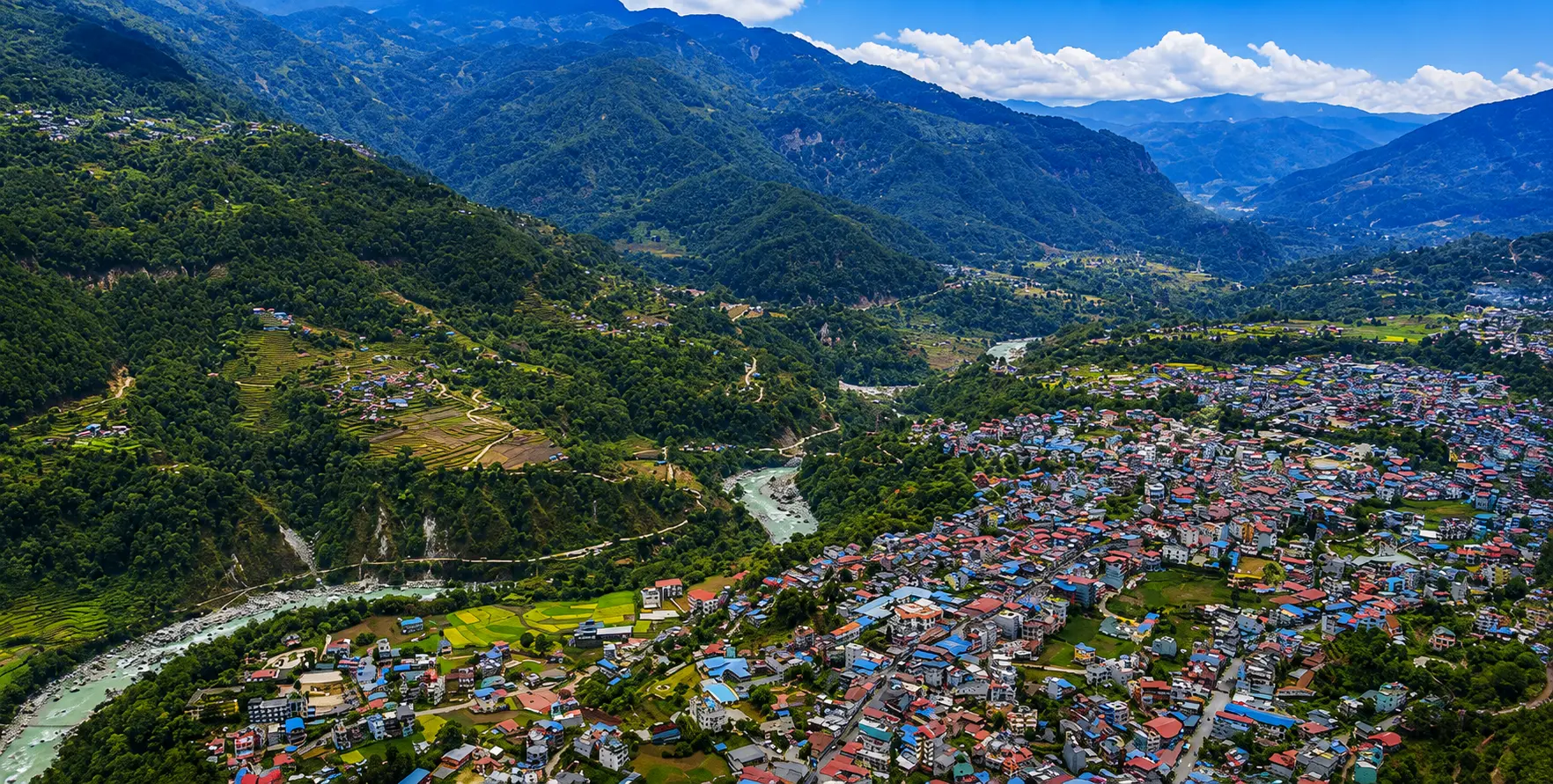
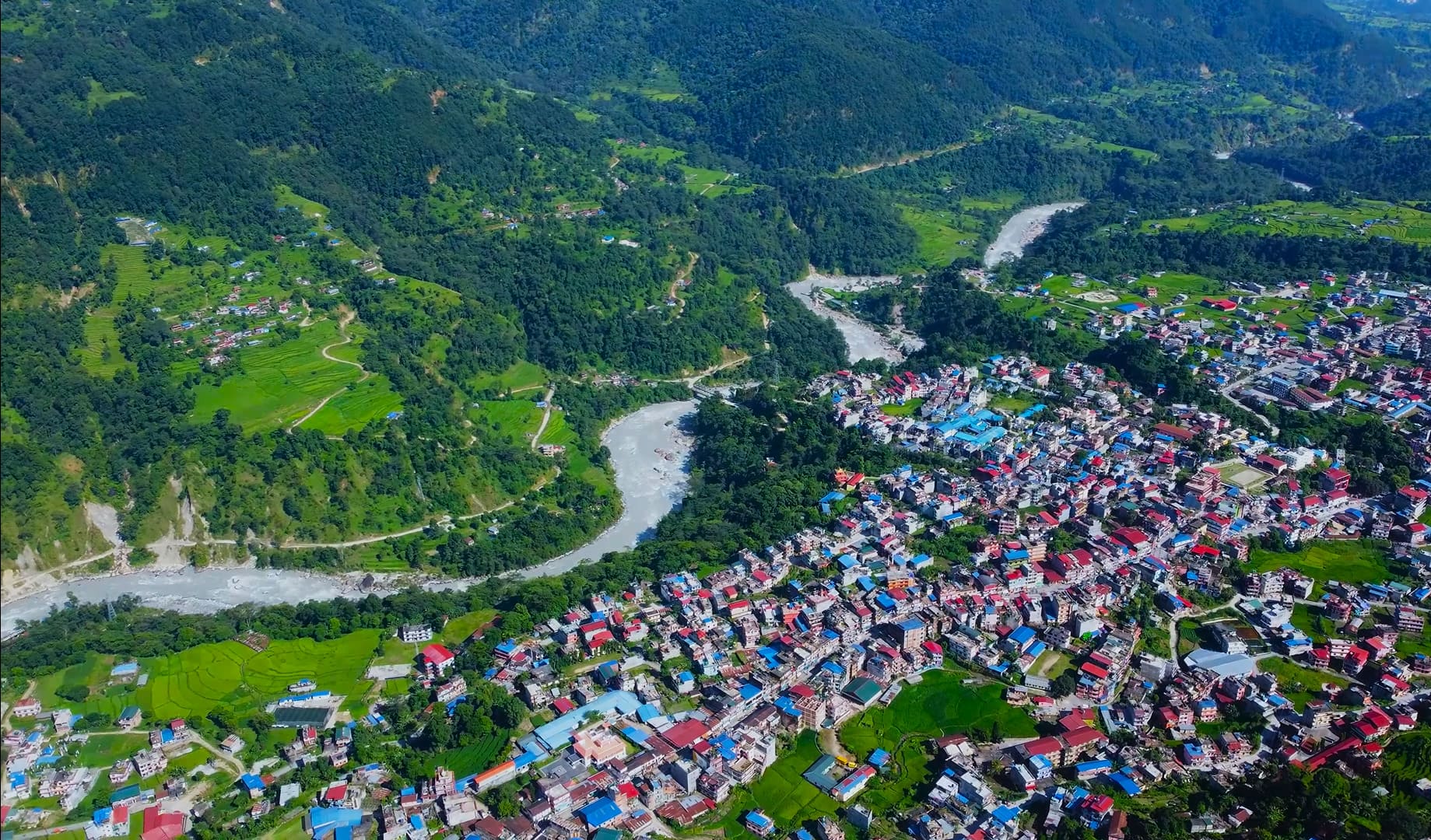
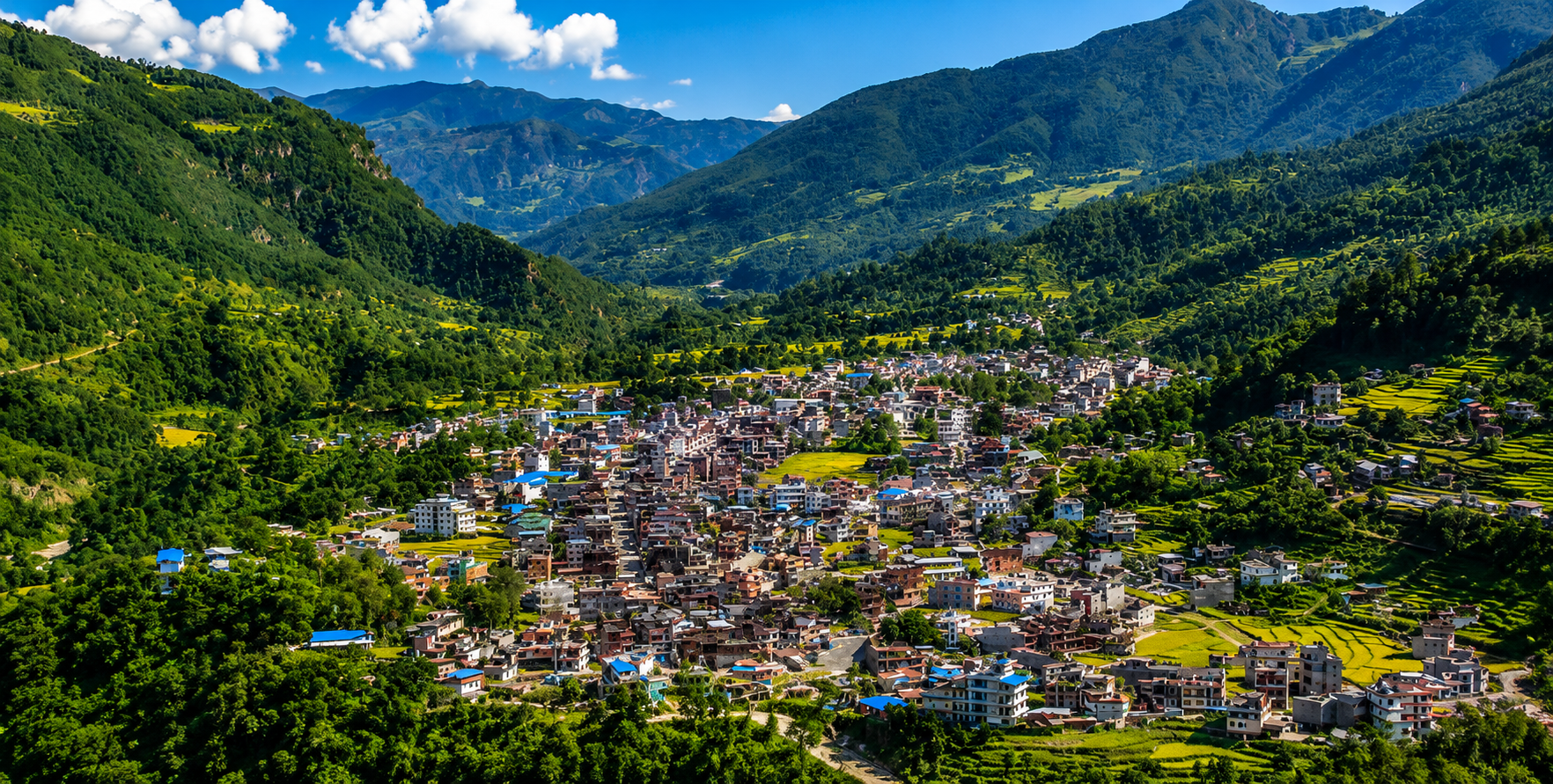
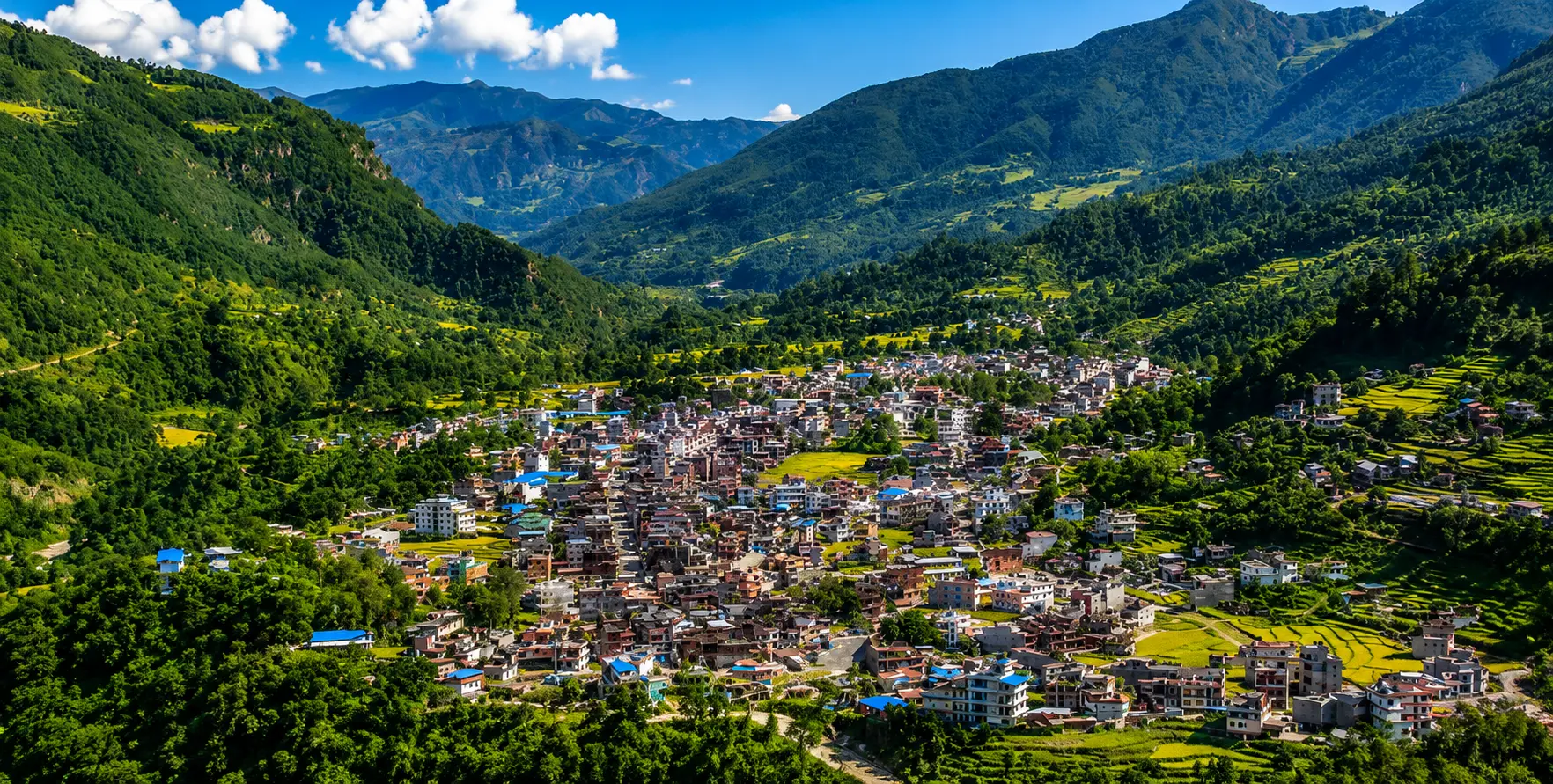
Besisahar is one of Nepal’s most important trekking gateway towns. As the district headquarters of Lamjung District and the traditional starting point of the Annapurna Circuit Trek — one of the most celebrated long-distance trekking routes in the world — Besisahar sits at the confluence of the Khudi and Marsyangdi rivers at 76 meters above sea level, surrounded by the forested foothills of the Annapurna Conservation Area.

For trekkers, adventurers, and travellers heading to the Annapurna Circuit from Pokhara, the jeep journey to Besisahar is the natural and most convenient starting point. The route covers approximately 72 to 87 kilometres from Pokhara, depending on the road taken, passing through the Prithvi Highway corridor, the Damauli junction, and then north along the beautiful Marsyangdi River valley to Besisahar.

The drive takes 2 to 3 hours by private jeep- a scenic, comfortable, and efficient start to one of Nepal’s greatest trekking adventures.

At Nepal Vehicle Hiring Pvt Ltd, we provide professional private jeep services from Pokhara to Besisahar and onward to Bhulbhule, Syange, Jagat, Chame, and Manang for trekkers beginning the Annapurna Circuit. This comprehensive 2026 guide covers everything you need—the full route, all vehicle options and costs, road conditions, what to see along the way, Annapurna Circuit trek connections, permits, seasonal guidance, and expert booking tips.

About Besisahar – Gateway to the Annapurna Circuit

Besisahar (also spelt as Sahar or Besishahar) is a lively small city and the headquarters of Lamjung District. Situated at 760 meters above sea level on the east bank of the Marsyangdi River, Besisahar sits at the southern end of the spectacular Marsyangdi gorge, which runs northward to the Manang Valley below the Annapurna and Manaslu massifs.

The town serves a vital practical function for Annapurna Circuit trekkers — it has several banks and ATMs (the last reliable banking before Manang), an ACAP and TIMS permit checkpoint, guesthouses, restaurants, a well-stocked market with trekking supplies, a bus station, and a jeep stand. Most trekking groups that hire a jeep from Pokhara or Kathmandu begin their Annapurna Circuit walk in Besisahar or in the first few villages north of the town.

Besisahar Key FactsDetails
Altitude760 metres above sea level
DistrictLamjung District, Gandaki Province
Distance from Pokhara72–87 km by road
Drive Time from Pokhara2 to 3 hours (private jeep)
Main riverMarsyangdi River (jeep)
ConnectionAnnapurna Circuit Trek starting point
Key FacilitiesATM, banks, permit checkpoint, guesthouses, restaurants, shops
Nearby PeaksLamjung Himal (6,983 m), Annapurna II (7,937 m), visible to the north
ACAP Permit CheckpointYes – all trekkers checked in at Besisahar/Khudi.
Next Trekking Stages BeyondBhulbhule (16 km), Syange (32 km), Jagat (43 km), Chame (90 km)

Why Choose a Private Jeep from Pokhara to Besisahar?

Direct Hotel Pickup – No Morning Bus Station Rush

A private jeep from Nepal Vehicle Hiring picks you up directly from your hotel in Pokhara Lakeside—no need to organise transport to a public bus station with heavy trekking bags before dawn. Your driver arrives at the agreed time and takes your group directly to Besisahar—door to door—with all your gear loaded efficiently and with no stress.

Most Efficient Start to the Annapurna Circuit

Starting the Annapurna Circuit from Pokhara by private jeep to Besisahar is the best option. A 7:00 AM departure from Pokhara gets you to Besisahar by 9:30 to 10:00 AM, leaving the rest of the day to start the first trekking stage to Bhulbhule and beyond.

Flexibility to Continue Beyond Besisahar

Many trekkers choose to skip the lower Marsyangdi Valley road sections and ride a jeep farther north to Bhulbhule, Syange, Jagat, Dharapani, or even Chame. A private jeep from Nepal Vehicle Hiring can take you as far along the Annapurna Circuit road as you want, saving 1 to 3 days of walking the lower trail. We arrange this extension before departure.

Best Value for Trekking Groups

For trekking groups of 4 to 6 people, a private jeep to Besisahar typically costs NPR 1,500 to 2,500 per person when shared — comparable to or only slightly more than a shared jeep, but with hotel pickup, more luggage space, and greater comfort and speed.

Luggage and Porter Equipment Space

Trekking groups often carry substantial luggage — personal bags for each trekker plus porter loads, a guide’s equipment, group supplies, and camera gear. A private jeep from Nepal Vehicle Hiring provides ample boot and roof rack space for all of this, whereas public shared jeeps offer very limited luggage capacity.
Besisahar

Pokhara to Besisahar Jeep – Journey Quick Facts

DetailInformation
Road Distance72–87 km (Pokhara to Besisahar)
Drive Time (Private Jeep)2 to 3 hours
Drive Time (Shared Jeep/Bus)2.5 to 4 hours
RoutePokhara → Prithvi Highway (east) → Damauli → Dumre Junction → Marsyangdi valley road → Besisahar
Road TypePaved Prithvi Highway to Dumre; paved but narrower from Dumre to Besisahar
Vehicle RequiredAny vehicle suitable for Besisahar; 4WD essential beyond Besisahar
Sharing Jeep DeparturePrithvi Chowk / Baglung area, Pokhara
Recommended Departure7:00 AM – 8:00 AM for the full first trekking day
ACAP Permit CheckpointAt Besisahar / Khudi (permit purchased in Pokhara recommended)
Beyond Besisahar4WD jeep mandatory Hulbhule onward to Chame and Manang

Besisahar valley

Vehicle Options: Pokhara to Besisahar Jeep 2026

Vehicle TypeCapacityOne-way Cost (NPR)Round Trip (NPR)Best For
Shared JeeptotalNPR 500–900/personNPR 900–1,600/personSolo budget travellers
Local Bus (per seat)OpenNPR 250–400/personN/ACheapest – slow, stops
Private Car (to Besisahar)2–4 paxUSD 80- 1500USD 140-200Small groups, car only to Besisahar
Private Jeep – Standard4–5 paxUSD 90-150USD 140-250Most popular option
Private Jeep – Hilux/Fortuner5–6 paxUSD150- 2500USD 250-500Best comfort + onward to Chame
Private Jeep – Land Cruiser5–6 paxUSD 200- 350USD 250- 6000Top-end, best for Manang extension
Toyota Hiace Van (to Besisahar only)7–10 paxUSD 150- 200USD 200-350Large group to Besisahar

Note: All private vehicle prices include driver and fuel. Prices may vary by season and vehicle availability. Toyota Hiace and standard cars are not suitable beyond Besisahar due to the rough off-road conditions. 4WD jeep is mandatory from Bhulbhule onward.

Private Jeep Cost Guide: Pokhara to Besisahar and Beyond

Here is the full cost guide for private jeep hire from Pokhara, including extensions beyond Besisahar along the Annapurna Circuit road:

DestinationDistance from PokharaOne Way (NPR)One Way (USD)Notes
Besisahar72–87 kmNPR 7,000–20,000USD 52–150The road is smooth to Dumre, narrow to Besisahar
Bhulbhule87–102 kmNPR 8,500–25,000USD 63–16015 km beyond Besisahar – new concrete road
Syange105–115 kmNPR 10,000–27,000USD 75–17030 km beyond Besisahar, a rough, narrow road starts
Jagat115–125 kmNPR 12,000–30,000USD 90–20043 km beyond Besisahar – 4WD essential
Dharapani130–140 kmNPR 14,000–35,000USD 150–25060 km beyond – cliff road, very rough
Chame155–165 kmNPR 18,000–38,000USD 135–30088 km beyond – high-clearance 4WD mandatory
Manang175–185 kmNPR 25,000–50,000USD 185–400110 km beyond – extreme 4WD, all day

All prices are one-way private vehicle rates from Pokhara. Destination prices are cumulative — the Manang price covers the full journey from Pokhara to Manang. Contact Nepal Vehicle Hiring for confirmed quotes for your specific departure date and group size.
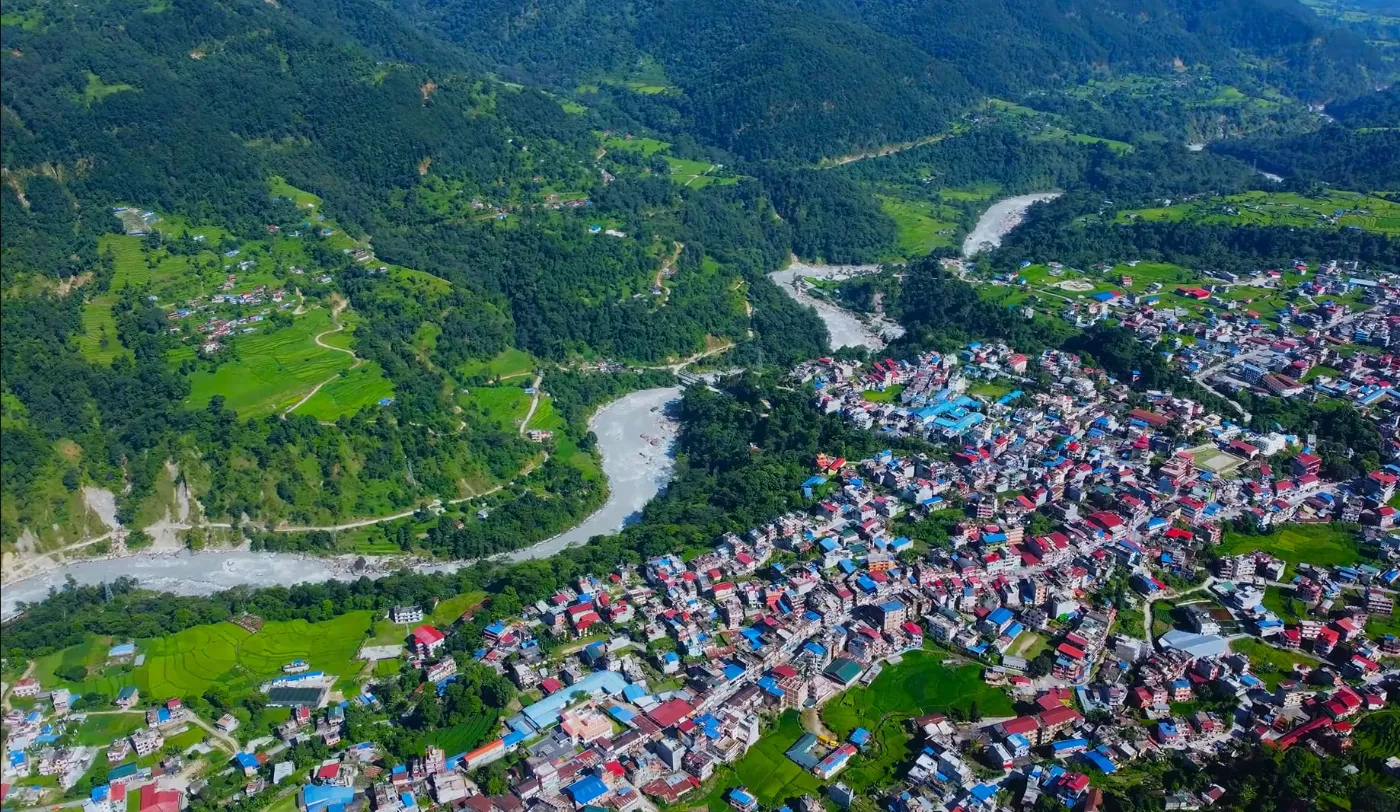
Besisahar town from above

Pokhara to Besisahar Route – Stage by Stage

The drive from Pokhara to Besisahar is a scenic journey through the Gandaki Province foothills, transitioning from the Pokhara valley onto the Prithvi Highway and then turning north into the Marsyangdi River valley. Here is the detailed stage-by-stage breakdown:

Stage 1: Pokhara to Damauli – Approx. 40 km (1 hour)

The journey begins in Pokhara and heads east along the Prithvi Highway. The road is smooth and well-maintained.

You pass through the outskirts of Pokhara, cross the Seti River, and climb through the midhill agricultural landscape before descending to Damauli — the headquarters of Tanahun District, located at the confluence of the Seti and Madi rivers. Damauli is an excellent first stop for tea or an early breakfast if needed.

From the higher sections of the road approaching Damauli, you can first see the Annapurna and Manaslu ranges on the northern horizon.

Stage 2: Damauli to Dumre Junction – Approx. 25 km (35 minutes)

From Damauli, the Prithvi Highway continues east. At Dumre, the road forks — the highway continues east toward Mugling and Kathmandu, while a separate road branches north toward Besisahar and the Marsyangdi valley. Dumre is a busy junction town with fuel stations, teahouses, and shops.

Your Nepal Vehicle Hiring driver will turn north at Dumre toward Besisahar.

Stage 3: Dumre to Besisahar Along the Marsyangdi Valley – Approx. 40 km (1 to 1.5 hours)

From Dumre, the road heads north following the Marsyangdi River upstream through increasingly beautiful terrain. The road passes through several villages, terraced hillsides, and forested stretches. The Marsyangdi River is visible on the left as the road climbs gradually toward Besisahar.

The road is paved throughout but narrows and has occasional rough patches in the final approach to Besisahar. The distant snow peaks of Lamjung Himal and the Annapurna range come progressively into view as you approach the town.

Route Overview Table: Pokhara to Besisahar

StageSectionDistanceRoad ConditionTimeHighlights
1Pokhara to Damauli40 kmPrithvi Hwy – smooth1 hourSeti River, Tanahun hills, first Himalayan views
2Damauli to Dumre25 kmPrithvi Hwy – smooth35 minJunction town, fuel stop, last major highway
3Dumre to Besisahar40 kmPaved, narrower Marsyangdi valley road1–1.5 hrsMarsyangdi River, terraced hills, Lamjung views
TotalPokhara to Besisahar72–87 kmMostly paved2–3 hoursScenic midhill journey to the Annapurna Circuit gateway

Pokhara to Besisahar Jeep

Beyond Besisahar: The Annapurna Circuit Road to Chame and Manang

One of the most significant advantages of hiring a private jeep from Nepal Vehicle Hiring is the ability to continue beyond Besisahar as far north along the Annapurna Circuit road as you wish. Here is a detailed guide to the road conditions and options beyond Besisahar:

Besisahar to Bhulbhule – 15 km (45 minutes)

Bhulbhule (840 m) is the first significant village north of Besisahar and the most common point for trekkers who want to save 1 day on the lower-valley walk. The road from Besisahar to Bhulbhule is a new concrete pavement ais nd in good condition. This is an excellent option for trekkers who want to start the proper trek in Bhulbhule while skipping the walk from Besisahar.

Bhulbhule to Jagat – Approx. 27 km (1.5 to 2 hours)

Beyond Bhulbhule, the road follows the Marsyangdi gorge through Ngadi, Syange, and Tal to Jagat (1,300 m). The road surface becomes progressively rougher — a mix of rocky gravel, steep climbs, and narrow cliff-edge sections. 4WD is essential from this point.

The scenery is spectacular — the gorge narrows dramatically, and the Marsyangdi rushes far below. Jagat marks the Manaslu Conservation Area boundary checkpoint.

Jagat to Chame – Approx. 47 km (2.5 to 3 hours)

From Jagat, the road continues through Chamche, Tal, Dharapani, Bagarchhap, Danaque, and Timang to reach Chame (2,670 m) — the district headquarters of Manang District and the most commonly used ‘skip point’ for Annapurna Circuit trekkers who drive this section. The road is very rough from Jagat onward, with deep ruts, river crossings, and steep gravel climbs that require a fully capable 4WD jeep and an experienced driver.

Chame to Manang – Approx. 25 km (2 to 3 hours)

The road continues from Chame through Pisang to Manang (3,519 m) — the highest point reachable by vehicle on the Annapurna Circuit. The road from Chame to Manang is extremely rough and demanding, passing through the spectacular Paungda Danda cliff and the high-altitude Humde plateau. Reaching Manang directly by jeep from Pokhara saves 4 to 5 days of lower-circuit trekking.

Stage-by-Stage Guide: Beyond Besisahar to Manang

StageFrom BesisaharDistanceRoadDrive TimeAltitude
Besisahar to Bhulbhule0 km start15 kmNew concrete – good45 min840 m
Bhulbhule to Syange15 km17 kmRough, narrow – 4WD recommended1 hr1,100 m
Syange to Jagat32 km11 kmRough, cliff road – 4WD essential45 min1,300 m
Jagat to Dharapani43 km17 kmVery rough, cliff sections1.5 hrs1,860 m
Dharapani to Chame60 km28 kmRough gravel, steep ascent2.5 hrs2,670 m
Chame to Manang88 km25 kmRough high-altitude road2–3 hrs3,519 m

Note: All distances in the ‘From Besisahar’ column are approximate road distances from Besisahar. Distances from Pokhara add approximately 72–87 km to each figure.
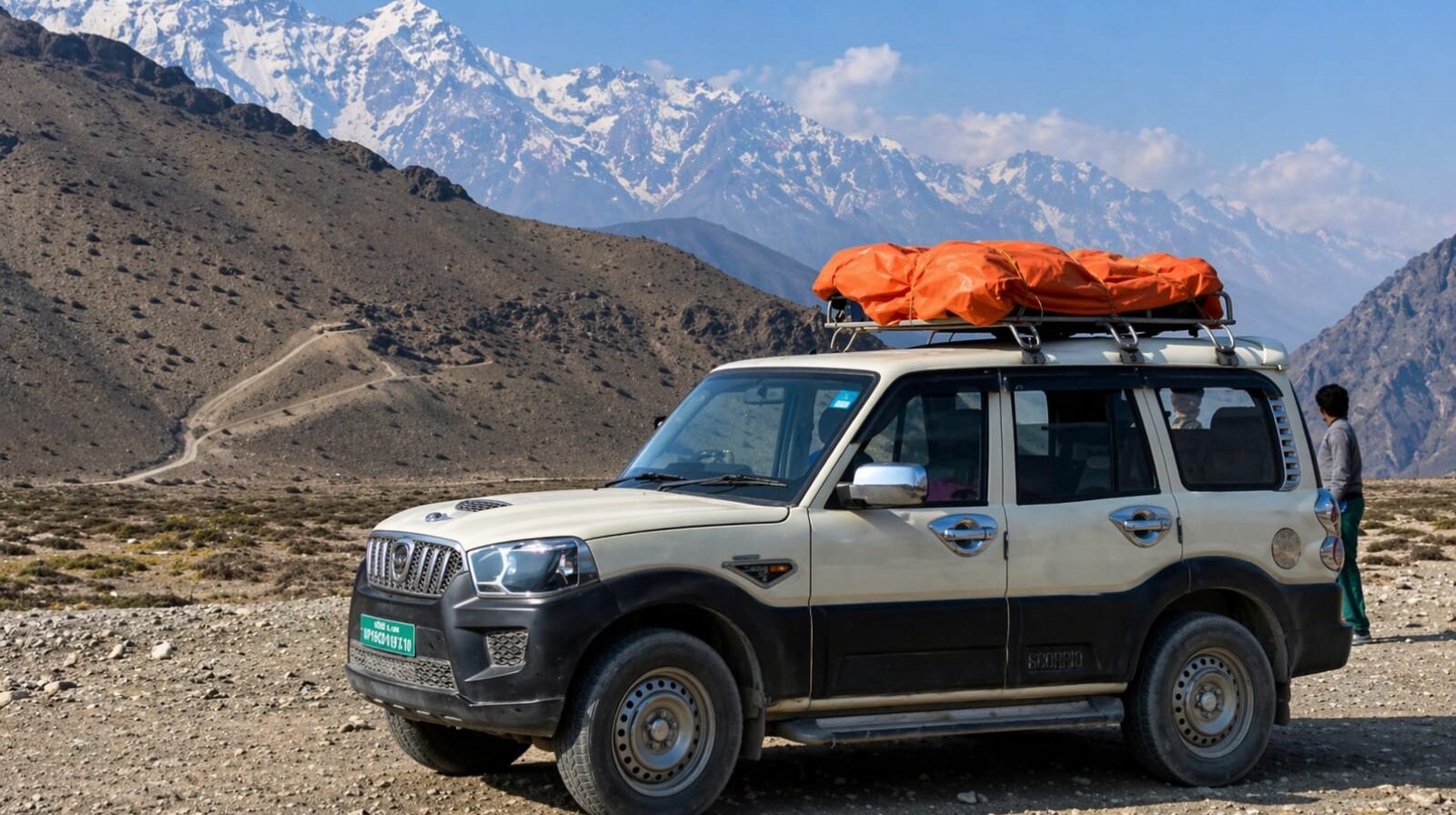
Pokhara to Besisahar Jeep

Sharing a jeep from Pokhara to Besisahar

For solo travellers and budget-conscious trekkers, shared jeeps run daily from Pokhara to Besisahar during trekking season. Here are the key details:

DetailInformation
Departure PointPrithvi Chowk or local jeep near Baglung Bus Park, Pokhara
Departure Time7:00 AM – 10:00 AM (departs when full – 7 to 8 passengers)
Journey Time2.5 to 3.5 hours
Cost Per PersonNPR 500–900 per person
LuggageRoof rack available – limited space for large trekking bags
FrequencyDaily during spring and autumn trekking seasons; less frequent in the off-season
Drop-offBesisahar town centre or bus park
Sharing jeeps beyond BesisaharAvailable at Besisahar jeep stand – NPR 800–2,500 per person to Chame/Manang

Pros of Sharing a Jeep

  • Very affordable – NPR 500 to 900 per person
  • Daily departures during trekking season
  • Good opportunity to meet other Annapurna Circuit trekkers
  • No booking required in the off-peak season

Cons of Sharing a Jeep

  • Crowded – 7 to 8 passengers in one vehicle
  • No hotel pickup – must travel independently to the departure point
  • Departs only when full – uncertain waiting time
  • Very limited luggage space – large trekking bags are difficult to manage
  • No freedom to stop along the route for sightseeing or photos

Annapurna Circuit Trek – Jeep Transport Strategy from Pokhara

The Annapurna Circuit is one of the world’s great trekking routes — a 160 to 230 km circuit through the Annapurna Conservation Area crossing the Thorong La Pass (5,416 m). The jeep transport strategy you choose from Pokhara significantly affects your total circuit duration and cost. Here are the main options:

Transport StrategyPokhara Jeep DestinationTrek Start PointTotal Circuit DaysBest For
Classic full circuitBesisaharBesisahar18–21 daysExperienced trekkers with maximum time
Save 1 dayBhulbhuleBhulbhule17–20 daysGood balance of road and trail
Save 2–3 daysJagat or SyangeSyange/Jagat15–18 daysTime-limited trekkers, Manang focus
Save 4–5 daysChameChame12–15 daysCompact circuit, popular choice
Maximum time savingManangManang (acclimatise here)8–10 daysVery time-limited, Thorong La’s focus

Note: Driving to Chame or Manang and starting the trek there saves significant walking days but reduces the cultural and scenic experience of the lower Marsyangdi valley circuit. Nepal Vehicle Hiring recommends Bhulbhule or Jagat as the starting point for the best balance of time efficiency and trekking experience.

Permits Required for the Annapurna Circuit from Besisahar

PermitCostRequired ForWhere to Obtain
ACAP – Annapurna Conservation Area PermitNPR 3,000 (foreigners)All visitors to the ACAP area – Besisahar and beyondNepal Tourism Board, Pokhara Lakeside (recommended), or Besisahar/Khudi checkpoint
TIMS CardNPR 2,000 (foreigners)All trekkers on multi-day routesNepal Tourism Board, Pokhara Lakeside, or Kathmandu
Manaslu Conservation Area PermitNPR 3,000 (foreigners)Trekkers entering the Manaslu area at Jagat checkpointNepal Tourism Board, Pokhara or Kathmandu

IMPORTANT: Nepal Tourism Board recommends obtaining ACAP and TIMS permits in Pokhara before departure, rather than at the Besisahar/Khudi checkpoint. The Pokhara NTB office in Lakeside processes permits efficiently and helps you avoid potential queues at the trail checkpoint. The office is open daily from 9:00 AM to 5:00 PM.

Attractions Along the Pokhara to Besisahar Route

Damauli and the Seti–Madi River Confluence

Damauli, the headquarters of Tanahun District, sits at the confluence of the Seti and Madi rivers — a scenic riverside setting with a pleasant local market and excellent views of the surrounding hills. As the natural midpoint of the Pokhara-to-Besisahar drive, Damauli is the ideal refreshment stop. The riverside teahouses serve excellent fresh Nepali tea, and the first mountain views of the journey appear on the northern horizon from Damauli’s elevated road sections.

Marsyangdi River Valley

The 40 km drive from Dumre to Besisahar along the Marsyangdi River Valley is one of Nepal’s finest river-valley drives. The Marsyangdi — one of Nepal’s most powerful rivers, originating in the high glaciers of Manang and draining the entire Annapurna region — rushes southward through a progressively deeper and more dramatic gorge as the road climbs toward Besisahar.

The river’s turquoise-green colour, the terraced hillsides above, and the first snow-capped peaks appearing on the northern horizon create a journey of ever-improving scenery.

Lamjung Himal Views

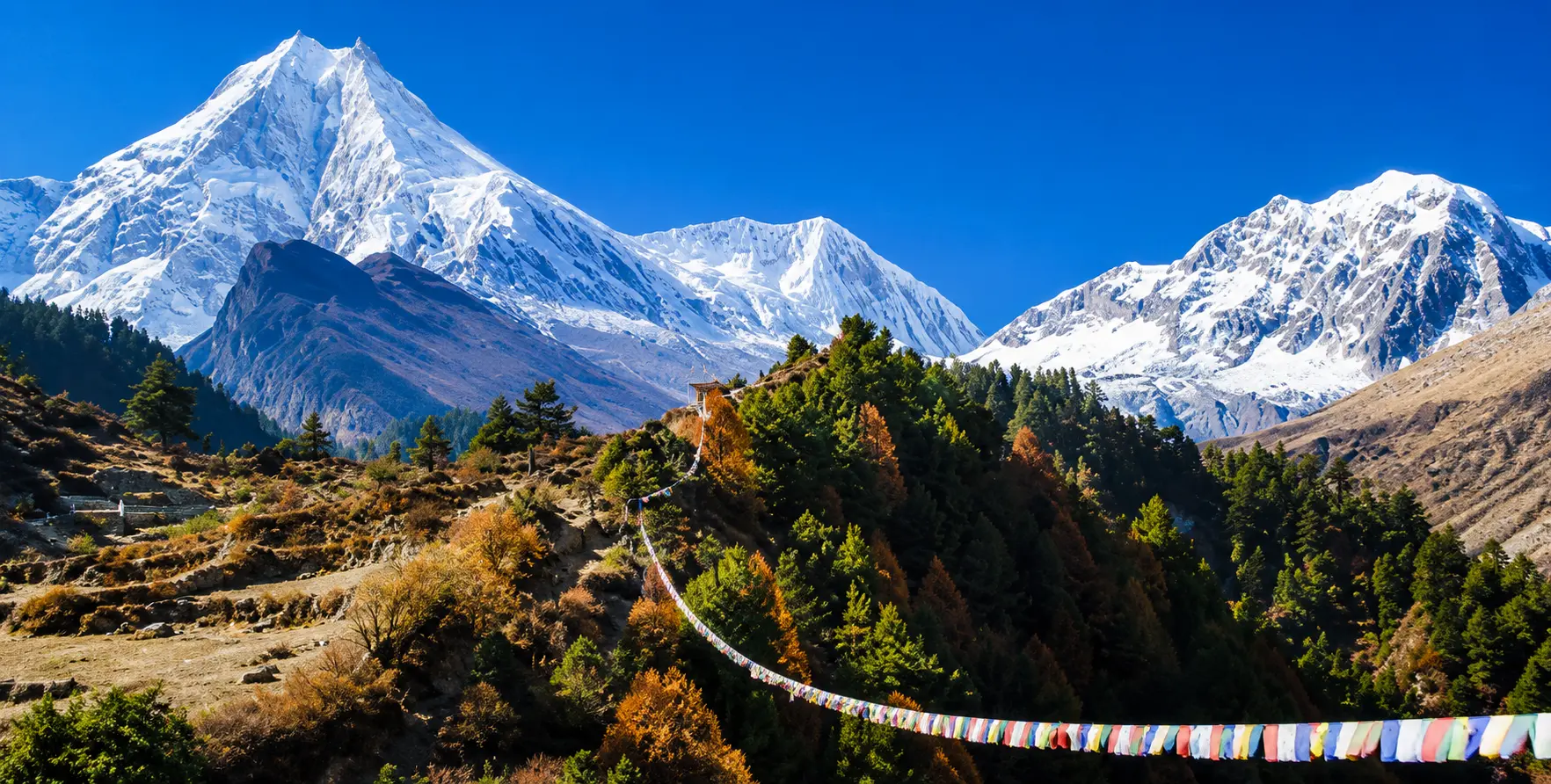
As you approach Besisahar from the south, the distinctive snow pyramid of Lamjung Himal (6,983 m) rises directly ahead. This peak, which gives Lamjung District its name, is one of the most elegant mountains in the Annapurna region and a dramatic visual focal point for the final approach to Besisahar. Annapurna II (7,937 m) and Annapurna IV (7,525 m) are also visible from the upper sections of the Marsyangdi valley road.

Besisahar Bazaar

Besisahar’s main bazaar is a lively mix of trekking supply shops, local restaurants, teahouses, and community market stalls. The town has an authentic midhill Nepali market character with a clear adventurous energy — the presence of trekking groups, local guides, and porters preparing for the Annapurna Circuit gives it an exciting departure-point atmosphere.

Most trekking groups stop in Besisahar to confirm permits, withdraw cash (the last reliable ATM before Manang), and have a final meal before starting the trek.

Best Time for Pokhara to Besisahar Jeep

Autumn (September to November) – Best Season

Autumn is the finest season for the drive from Pokhara to Besisahar and for the Annapurna Circuit. Post-monsoon skies are crystal clear, the Marsyangdi valley is at its most verdant and vivid, and the mountain views of Lamjung Himal and the Annapurna range, both from the road and from Besisahar, are outstanding. October and November are peak season; book your private jeep at least 7 days in advance.

Spring (March to May) – Excellent

Spring is the second peak season for the Annapurna Circuit. The road is dry and in good condition. Rhododendron forests bloom magnificently on the Marsyangdi valley hillsides in March and April.

Mountain views are excellent—a superb time for the Pokhara-to-Besisahar jeep journey.

Winter (December to February) – Good

Winter travel to Besisahar is perfectly comfortable — the Pokhara-Besisahar road is open year-round. The road beyond Besisahar to Chame and Manang may be covered in frost and snow above 3,000 m in winter. For trekkers going to the Thorong La or Manang, winter conditions require extra preparation.

The lower sections of the circuit from Besisahar to Chame are generally fine in winter.

Monsoon (June to August) – Possible with Caution

The Pokhara-Besisahar road is generally passable during the monsoon. However, the Marsyangdi valley road beyond Besisahar is significantly more hazardous in the monsoon due to landslides and flooding. Nepal Vehicle Hiring monitors road conditions and advises trekkers on the road’s current state beyond Besisahar before departure.

What to Pack for the Pokhara to Besisahar Jeep Journey

  • ACAP permit and TIMS card – obtain from Nepal Tourism Board in Pokhara before departure
  • Full trekking backpack packed and ready – boot or roof rack space in the jeep; day bag accessible in the vehicle – water, snacks, documents, camera
  • Warm layers for the morning departure – Besisahar mornings are cool
  • Water bottles – refill at teahouses in Damauli or Besisahar
  • Camera – the Marsyangdi valley and Lamjung Himal views are excellent photography subjects
  • Nepali cash – for ATM withdrawal in Besisahar (last reliable ATM before Manang) and first-day trekking expenses
  • Motion sickness tablets, if needed – the road from Dumre to Besisahar has occasional curves
  • Light snack – for the 2 to 3-hour drive

Expert Tips for the Pokhara to Besisahar Jeep

  • Book your private jeep at least 3 to 5 days in advance during October, November, March, and April peak seasons – Besisahar-bound vehicles are in high demand when the Annapurna Circuit is busy.
  • Collect your ACAP and TIMS permits from the Nepal Tourism Board office in Pokhara Lakeside before departure – processing at the Besisahar/Khudi checkpoint can create queues during peak season.
  • Withdraw enough NPR cash in Pokhara before departure – ATMs in Besisahar are the last reliable option before Manang and shouldn’t be your only cash source.
  • Depart from Pokhara by 7:00 AM or 7:30 AM to arrive in Besisahar by 10:00 AM, leaving a full day for the first stage of the trek.
  • If extending beyond Besisahar to Chame or Manang, confirm this with Nepal Vehicle Hiring before departure, so the correct vehicle is arranged – a Hilux or Land Cruiser is required for the rough road beyond Bhulbhule.
  • For trekking groups with porters, a private jeep arranged to carry the porters with the main group from Pokhara saves time compared to meeting them at Besisahar.
  • Tell your driver if you want to stop at Damauli for breakfast or a tea break – it is a pleasant midway stop.
  • Nepal Vehicle Hiring can also arrange the return transfer from Jomsom, Nayapul, Besisahar, or any Annapurna Circuit endpoint at the end of your trek – book this before you start.

How to Book Your Pokhara to Besisahar Jeep with Nepal Vehicle Hiring

Booking your Pokhara to Besisahar jeep with Nepal Vehicle Hiring Pvt Ltd is simple:

  • Step 1: Contact us via phone, WhatsApp, or at vehiclehiringnepal.com
  • Step 2: Share your travel date, group size (trekkers + guide + porters), hotel name in Pokhara, and desired final destination (Besisahar, Bhulbhule, Syange, Jagat, Chame, or Manang)
  • Step 3: Choose your vehicle – standard jeep or Hilux/Fortuner (recommended for Chame+), or Land Cruiser
  • Step 4: Confirm return transfer requirement at trek end – we arrange return from Jomsom, Nayapul, Besisahar, or other endpoint
  • Step 5: Receive booking confirmation with driver details, vehicle information, and pickup time
  • Step 6: Your driver arrives at your Pokhara hotel at the agreed time – your Annapurna adventure begins

We recommend booking at least 3 days in advance for off-peak trips and 5- 7 days in advance during the October–November and March–April peak seasons.

Frequently Asked Questions (FAQ)

How far is Pokhara from Besisahar?

The road distance from Pokhara to Besisahar is approximately 72- 87 kilometres via the Prithvi Highway and the Marsyangdi Valley Road from Dumre.

How long does the drive from Pokhara to Besisahar take?

By private jeep, the journey takes 2 to 3 hours. A shared jeep or local bus takes 2.5 to 4 hours, depending on stops and waiting time.

How much does a private jeep from Pokhara to Besisahar cost?

A private standard jeep costs NPR 7,000- 15,000 (USD 52–100) one way. A private Hilux/Fortuner costs NPR 9,000- 20,000 (USD 67–150). All prices include driver and fuel.

Can the private jeep continue beyond Besisahar to Chame or Manang?

Yes. Nepal Vehicle Hiring private jeeps can continue beyond Besisahar to Bhulbhule, Syange, Jagat, Dharapani, Chame, or Manang. A Toyota Hilux or Land Cruiser is mandatory for the rough road beyond Bhulbhule.

The additional cost from Besisahar to Chame is approximately NPR 10,000 to 18,000, and to Manang, approximately NPR 18,000 to 30,000 additional.

Is a 4WD jeep necessary for the Pokhara-Besisahar route?

The road from Pokhara to Besisahar is paved throughout, and a standard car or jeep is adequate. However, to continue beyond Bhulbhule toward Syange, Jagat, Chame, and Manang, you’ll need a 4WD vehicle with high ground clearance. Nepal Vehicle Hiring recommends booking a Hilux or Fortuner if any extension beyond Besisahar is planned.

Where do I get ACAP and TIMS permits for the Annapurna Circuit?

Permits can be obtained at the Nepal Tourism Board office in Pokhara Lakeside (recommended – efficient and quick) or at the checkpoint in Besisahar/Khudi at the start of the trek. ACAP costs NPR 3,000 for foreign trekkers, and TIMS costs NPR 2,000. Both are required for the Annapurna Circuit.

What is the last ATM before Manang on the Annapurna Circuit?

Besisahar has the last reliably functioning ATM before Manang. There are ATMs in Chame (occasionally working), but they cannot be relied upon. Nepal Vehicle Hiring strongly advises withdrawing sufficient NPR cash from Pokhara or Besisahar before beginning the circuit.

Book Your Pokhara to Besisahar Jeep with Nepal Vehicle Hiring

The drive from Pokhara to Besisahar along the Marsyangdi River valley is the perfect beginning to one of the world’s great trekking adventures. As the Lamjung Himal rises ahead and the Marsyangdi rushes southward beside the road, you feel the Annapurna Circuit already unfolding — the landscapes, the scale, and the anticipation building with every kilometre north.

Nepal Vehicle Hiring Pvt Ltd provides Pokhara’s most reliable, best-maintained, and most professionally driven jeep service for the Annapurna Circuit approach. Whether you are going only as far as Besisahar for the traditional start, or extending all the way to Chame or Manang to maximize your trekking efficiency, we have the right vehicle, the right driver, and the right price for your group.

Contact Nepal Vehicle Hiring Pvt Ltd today at vehiclehiringnepal.com to book your Pokhara-to-Besisahar jeep and start your Annapurna Circuit adventure the right way.

Call / WhatsApp:+977 981-4227196 | E-mail: [email protected]    | Website: vehiclehiringnepal.com  |  Book Scorpio or Land Cruiser  |  Nepal Trekking Packages
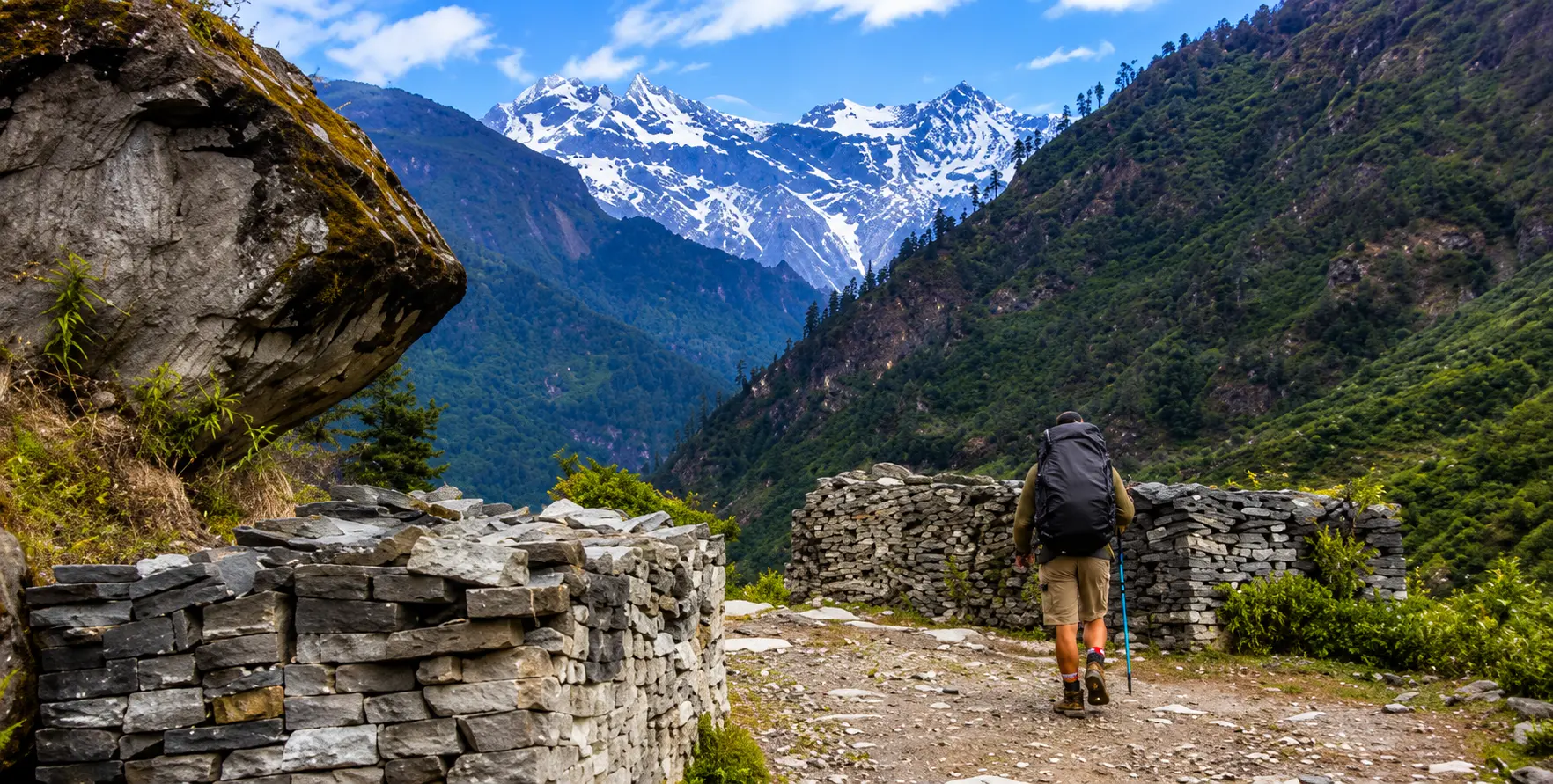
Besisahar to Dharapani Jeep Hire: Complete 4WD Transfer Guide for Annapurna Circuit Trekkers

Dharapani trek start point of annapurna range

The Gateway Drive to Nepal’s Greatest Trek

The Besisahar to Dharapani jeep hire is one of Nepal’s most important and dramatic 4WD transfers — the ride that launches trekkers into the heart of the Annapurna Conservation Area (ACAP) and the iconic Annapurna Circuit, widely regarded as one of the greatest trekking routes on earth. Nepal Vehicle Hiring Pvt Ltd provides the most reliable, professional, and experienced private 4WD jeep hire service for this spectacular off-road mountain route.

Covering approximately 40 km along the roaring Marsyangdi River gorge, the Besisahar–Dharapani jeep track ascends from the green subtropical valleys of Lamjung District (760 m) through a landscape of increasing dramatic grandeur — past traditional Gurung and Magar villages, through narrow gorge sections where waterfalls cascade directly onto the road, along cliff-hugging tracks carved into sheer rock faces, through the ancient salt-trade village of Jagat, and finally to the gateway village of Dharapani (1,860 m) — where the classic Annapurna Circuit trek officially begins for most modern trekkers.

The Besisahar–Dharapani section of the Annapurna Circuit was originally a 2-day stage. However, as road construction extended the jeep track deeper into the Marsyangdi valley over the past decade, this section is now motorable by 4WD — and most trekkers choose to ride by jeep from Besisahar to Dharapani, skipping the dusty, vehicle-trafficked lower trail and beginning their genuine wilderness trekking from Dharapani, where the road ends.
The pristine high-mountain trail to Manang and Thorong La begins. This guide explains everything you need to know to make the most of your jeep transfer from Besisahar to Dharapani.

Book now: Nepal Vehicle Hiring – Jeep | All Vehicles | Call/WhatsApp:+977 981-4227196

Besisahar to Dharapani Jeep Hire – Complete Route Overview

RouteBesisahar (760 m) to Dharapani (1,860 m)
Road DistanceApprox. 40 km off-road mountain track
Travel Time3–4 hours (private jeep) | 4–5 hours (shared jeep)
Road ConditionRough, narrow, unpaved off-road – 4WD MANDATORY
Altitude Gain760 m (Besisahar) to 1,860 m (Dharapani)
Key VillagesBhulbhule, Ngadi, Khudi, Syange, Jagat, Chamje, Tal, Dharapani
Best VehicleToyota Land Cruiser (top-end) | Mahindra Scorpio (most popular)
Permits RequiredACAP (Annapurna Conservation Area Permit) + TIMS Card
Best ForAnnapurna Circuit trekkers starting/skipping lower trail sections
AvailabilityDaily – depart Besisahar early morning for the best conditions
Contact+977 981-4227196| vehiclehiringnepal.com

The Annapurna Circuit – Context for Your Jeep Transfer

Before diving into the details of the Besisahar–Dharapani jeep route, it is essential to understand the context of the Annapurna Circuit itself — Nepal’s most complete trekking experience and arguably the finest long-distance mountain trek in the world.

What Is the Annapurna Circuit?

The Annapurna Circuit is a circular trekking route that circumnavigates the entire Annapurna massif — one of the world’s most spectacular mountain ranges, located in the Gandaki Province of north-central Nepal. The full circuit covers approximately 160–175 km of trekking, ascending from the subtropical Marsyangdi River valley (760 m) in the east, climbing through lush rhododendron and oak forests, crossing the Thorong La Pass (5,416 m) — the world’s highest trekking pass — before descending dramatically into the arid trans-Himalayan Mustang region and the Kali Gandaki valley, Nepal’s deepest gorge.

The circuit takes most trekkers 10–21 days to complete, depending on the starting point and pace.

Why Trekkers Start at Dharapani Instead of Besisahar

The classic starting point for the Annapurna Circuit is Besisahar (760 m) in Lamjung District. However, over the past decade, road construction has progressively extended a jeep track from Besisahar up the Marsyangdi valley, passing through villages that were once pure trekking territory. Today, the road reaches Dharapani (1,860 m) and beyond to Chame and Manang.

As a result, the trail between Besisahar and Dharapani has become increasingly dusty, trafficked by jeeps and motorcycles, and less wilderness-like than it once was. Most experienced trekking guides and agencies now recommend starting the trek from Dharapani, where the road effectively ends as a practical jeep route, and the pristine high-mountain trail to Chame, Manang, and Thorong La Pass begins.

The Annapurna Circuit in Brief – Key Stages After Dharapani

From Dharapani (1,860 m), the Annapurna Circuit progresses through these key stages:

  • Dharapani to Chame (2,670 m): 15 km trekking through rhododendron and pine forests, past Bagarchhap, Danakyu, and Timang villages. Spectacular views of Manaslu and Annapurna II emerge. 5–6hours’s walk.
  • Chame to Upper Pisang (3,300 m): 17 km through narrow gorge, dense forest, and first views of the soaring Annapurna III. 5–hour walk.
  • Upper Pisang to Manang (3,540 m): 20 km across a wide-open glacial valley; Tilicho Peak and Gangapurna dominate the skyline—mandatory acclimatisation at Manang.
  • Manang to Thorong Phedi / High Camp (4,450 m): 12 km across alpine meadows. Views of Annapurna II and Gangapurna Glacier.
  • Thorong La Pass (5,416 m) to Muktinath (3,760 m): The great crossing — 15 km, 8–9 hours. World’s highest trekking pass. Descent to the sacred Muktinath Temple.
  • Muktinath to Jomsom to Pokhara: Most trekkers take a jeep or bus from Jomsom to Pokhara via Marpha, Tatopani, and Beni.

Besisahar

Why Hire a Private 4WD Jeep from Besisahar to Dharapani?

Shared jeeps run from Besisahar to Dharapani—departing when full (typically 6–7 passengers per jeep), with no fixed schedule, no luggage guarantees, and stops at every village along the 40 km route. A private 4WD jeep hire from Nepal Vehicle Hiring transforms the experience entirely:

Departure on Your Schedule – Critical for Trekking Timing

The 40 km off-road Besisahar–Dharapani jeep track takes 3–4 hours under ideal conditions. Combined with a 6–7 hour drive from Kathmandu to Besisahar, a total Kathmandu-to-Dharapani day requires departing Kathmandu by 5:30–6:00 AM. With a private jeep, you control every departure time along the chain.

Shared jeeps from Besisahar often wait until full, which can mean standing at the bus park for 1–2 hours — a significant waste of precious trekking-day time.

No Passenger Overcrowding – Luggage and Comfort Protected

Shared jeeps on the Besisahar–Dharapani route are notoriously overcrowded. Seven passengers in a vehicle designed for six, trekking poles strapped to the roof, backpacks wedged between passengers — the shared jeep experience on this off-road mountain track can be genuinely uncomfortable.

With a private jeep, your group has the vehicle to itself—secure trekking backpacks in the boot or on the roof rack under a tarpaulin. Everyone has a proper seat with adequate legroom.

After a long day of travel from Kathmandu, arriving in Dharapani refreshed and comfortable makes a meaningful difference to your first days of trekking.

Expert Local Driver with Off-Road Mountain Experience

The Besisahar–Dharapani jeep track is not a road for inexperienced drivers. It is narrow, steep, and rutted, with cliff drops on one side and rock faces on the other, and features multiple blind corners, river crossings, and sections that become treacherous after rain.

Nepal Vehicle Hiring’s drivers for this route are experienced mountain specialists who have driven the Marsyangdi valley track many times, know every difficult section, and understand the conditions required for safe passage in different seasons.

Flexible Stops at Key Villages and Viewpoints

The Besisahar–Dharapani route passes through villages that, while now accessible by road, still retain significant cultural, scenic, and experiential value. A private jeep lets you stop at Bhulbhule for ACAP permit registration, photograph the Syange waterfall, briefly explore Jagat’s historic lanes, and pause at Tal’s stunning flat valley and waterfall backdrop—all impossible at your own pace on a shared jeep following a shared schedule.

Vehicle Reliability in Remote Terrain

Breaking down on the Besisahar–Dharapani track deep in a remote mountain gorge, with no phone signal and no passing traffic, is a real possibility with poorly maintained vehicles. Nepal Vehicle Hirings regularly inspects and services its fleet before every mountain-route departure.

All vehicles are fully insured and equipped with basic tools, a spare tyre, and a first-aid kit. Our drivers carry emergency contact numbers and are experienced in handling minor mechanical issues in remote locations.

Combined Kathmandu–Besisahar–Dharapani Service

Many trekkers want the convenience of a single vehicle and driver from Kathmandu all the way to Dharapani — rather than switching from a bus to a shared jeep at Besisahar Bus Park. Nepal Vehicle Hiring offers a combined Kathmandu-to-Besisahar-to-Dharapani private jeep service: one booking, one driver, one vehicle for the entire 220+ km journey. This is the most stress-free, comfortable, and time-efficient way for trekking groups to reach the Annapurna Circuit starting point.

Besisahar

Best 4WD Vehicles for the Besisahar to Dharapani Route

The Besisahar–Dharapani jeep track is one of the most technically demanding roads regularly driven in Nepal. All vehicles MUST be genuine 4WD with high ground clearance — standard AWD crossovers, sedans, and vans are entirely unsuitable for this route. Nepal Vehicle Hiring uses only the following proven mountain vehicles:

VehicleCapacityOff-Road RatingGround ClearanceBest For
Toyota Land Cruiser 4WD1–6 paxExcellent220 mmTop-end trekkers / VIP groups
Mahindra Scorpio 4WD1–6 paxExcellent180–200 mmGroups / Standard trekkers
Mahindra Bolero 4WD1–6 paxExcellent180 mmBudget groups
Tata Sumo 4WD1–7 paxGood165 mmLarge budget groups

Toyota Land Cruiser 4WD – The Ultimate Marsyangdi Valley Vehicle

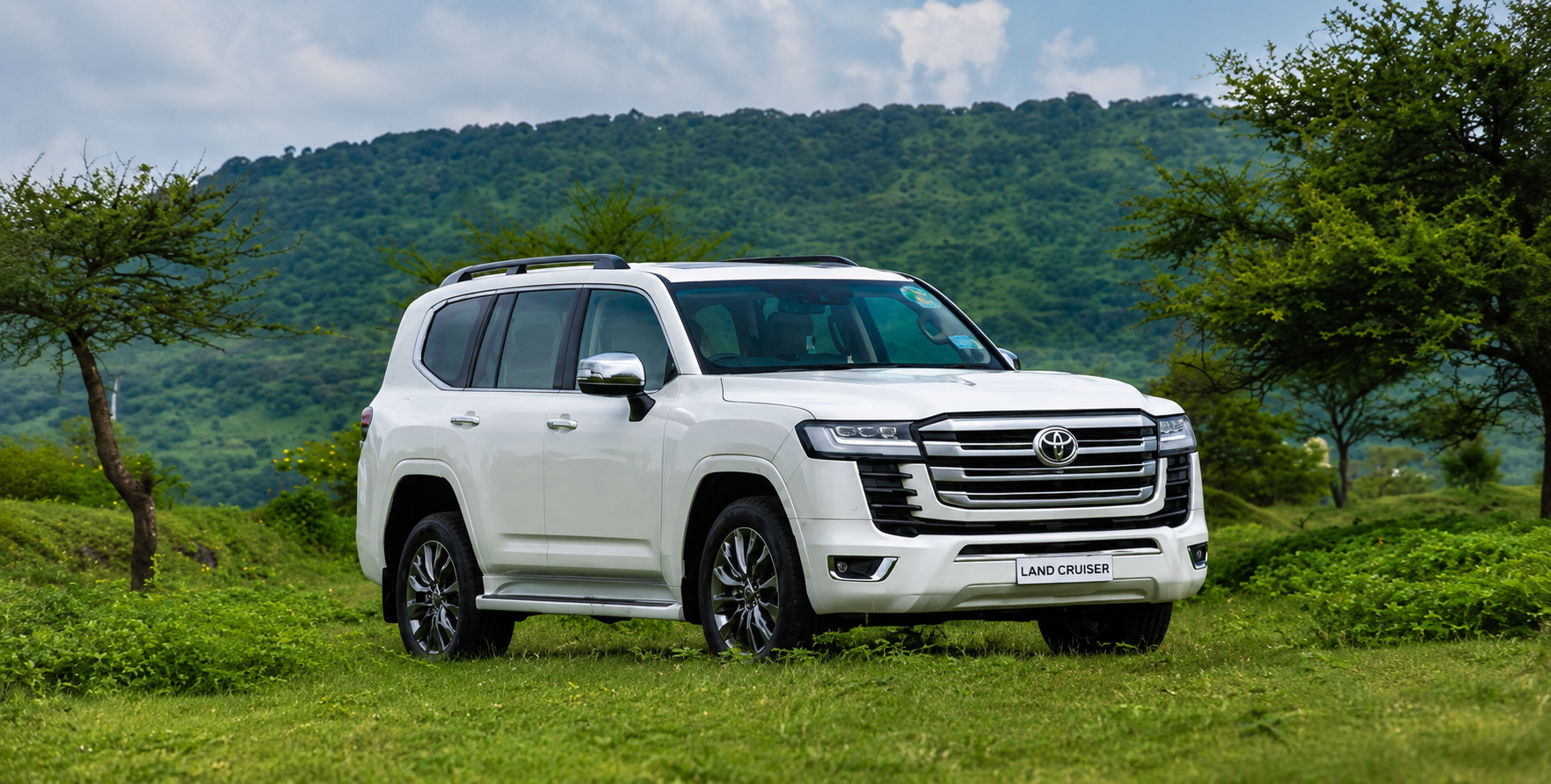
For the Besisahar–Dharapani route, the Toyota Land Cruiser 4WD is without question the finest available vehicle. Its purpose-built off-road architecture — locking differentials, superior suspension travel, 220 mm of ground clearance, a low-range transfer case, and a proven high-torque diesel engine — handles the roughest sections of the Marsyangdi valley track with capabilities other vehicles cannot match.

Passengers experience significantly less jarring on the rocky sections, and the Land Cruiser’s spacious interior accommodates 6 trekkers with full backpacks in genuine comfort. For groups who have invested in a 15–20-day Annapurna Circuit trek, starting the journey in a Toyota Land Cruiser is an investment in both safety and physical well-being that pays dividends on the first days of trekking.

The Mahindra Scorpio 4WD is the most widely used private jeep on Nepal’s mountain trekking transfer routes, and for good reason. Its powerful diesel engine, 180–200 mm ground clearance, genuine 4WD with switchable low-range, and 6-passenger capacity make it the most cost-effective and reliable vehicle for the Besisahar–Dharapani off-road section.

The Scorpio handles the cliff-edge sections, stream crossings, and steep rock-strewn climbs of the Marsyangdi valley track with proven confidence, and its reputation on Nepal’s mountain roads is unimpeachable. For most trekking groups, the Scorpio represents the optimal balance of off-road capability, passenger comfort, luggage capacity, and value for money.

Mahindra Bolero and Tata Sumo – Budget 4WD Alternatives

For group travelling on tighter budgets, the Mahindra Bolero and Tata Sumo 4WD are reliable budget options for the Besisahar–Dharapani route. Both are genuine 4WD vehicles with adequate ground clearance for the route in dry conditions.

The Bolero and Sumo offer slightly less refined interiors than the Scorpio but equivalent off-road capability under standard Marsyangdi valley conditions. Suitable for trekking groups prioritising comfort. Not recommended during or after heavy rainfall, when the more powerful Scorpio or Land Cruiser provides meaningfully superior traction on wet rock and mud sections.

Besisahar to Dharapani Jeep Hire: Complete 4WD Transfer Guide for Annapurna Circuit Trekkers

Besisahar to Dharapani – Detailed Village-by-Village Route Guide

The 40 km Besisahar–Dharapani off-road route is not merely a transfer — it is a journey through one of Nepal’s most dramatically beautiful and culturally rich river valleys. Here is a complete village-by-village guide to what you will see and experience:

Village / CheckpointDistance from BesisaharAltitudeDrive Time from StartHighlights
Bhulbhule7 km840 m30 minAnnapurna Conservation Area entry; ACAP permit check; first Gurung villages
Ngadi / Khudi10 km790 m45 minMarsyangdi River crossing; local villages; wide valley views
Syange15 km1,100 m1–1.5 hrsDramatic gorge entry; seasonal waterfall over road; Mad Honey hunters’ village
Jagat22 km1,330 m1.5–2 hrsFormer Tibet salt-route checkpoint; suspension bridge; cliff-hugging road
Chamje27 km1,410 m2–2.5 hrsMarsyangdi gorge narrows; dense forest; dramatic canyon views
Tal32 km1,700 m2.5–3 hrsFirst village of Manang District; wide flat valley; impressive waterfall backdrop; palm trees
Dharapani40 km1,860 m3–4 hrsACAP checkpoint; Annapurna Circuit proper begins; Manaslu Circuit junction; stone-paved lanes

Besisahar (760 m) – The Annapurna Circuit Gateway Town

Besisahar is the headquarters of Lamjung District and the traditional starting point of the Annapurna Circuit. A bustling small mountain town straddling the Marsyangdi River (“Turbulent River” in Nepal, named for its powerful, churning currents), Besisahar is the last major town with reliable ATMs, well-stocked shops, pharmacies, and vehicle fuel before entering the Annapurna Conservation Area.

The town’s tea houses, trekking supply shops, and guesthouse lodges are always busy with Annapurna Circuit trekkers preparing for their mountain journey.

Besisahar is also where most Annapurna Circuit trekkers obtain their ACAP (Annapurna Conservation Area Permit) and TIMS Card if they have not already secured them in Kathmandu or Pokhara. Nepal vehicle-hiring drivers wait in Besisahar for the permit process and any last-minute supplies before continuing on the off-road section to Dharapani.

Bhulbhule (840 m) – The ACAP Entry Checkpoint

Just 7 km from Besisahar, Bhulbhule is the official entry checkpoint for the Annapurna Conservation Area (ACAP). All trekkers must have their ACAP permit and TIMS card checked and stamped here — whether arriving by foot or by jeep.

The National Trust for Nature Conservation (NTNC) manages the ACAP checkpoint, and the fees collected directly fund conservation in the Annapurna region, including protecting snow leopards, Himalayan tahr, red pandas, and over 400 bird species. The village itself has several guesthouses and a scenic suspension bridge over the Marsyangdi River, which trekkers cross to begin the trail proper from the east bank.

Khudi and Ngadi – River Valley Villages

Beyond Bhulbhule, the jeep track continues through Khudi (790 m) and Ngadi — traditional Gurung and Magar villages set among rice paddies, banana groves, and millet fields. The Marsyangdi River here is wide and powerful, its glacier-fed waters a magnificent turquoise-grey, flanked by forested hills that hint at the increasingly dramatic landscape ahead.

These lower-valley villages are home to the indigenous Gurung people — a community famous throughout Nepal and around the world for producing the legendary Gurkha soldiers who have served in the British and Indian armies for two centuries. The stone-built homes, water mills (called dhiki or kol), and terraced farmland of these villages are among the most photogenic scenes of the lower circuit.

Syange (1,100 m) – Waterfalls, Gorge Entry, and Mad Honey

At Syange, approximately 15 km from Besisahar, the Annapurna Circuit jeep track enters the first true gorge section of the Marsyangdi valley. The road narrows dramatically as it is carved directly into sheer cliffs above the river, with the gorge walls rising hundreds of meters on either side.

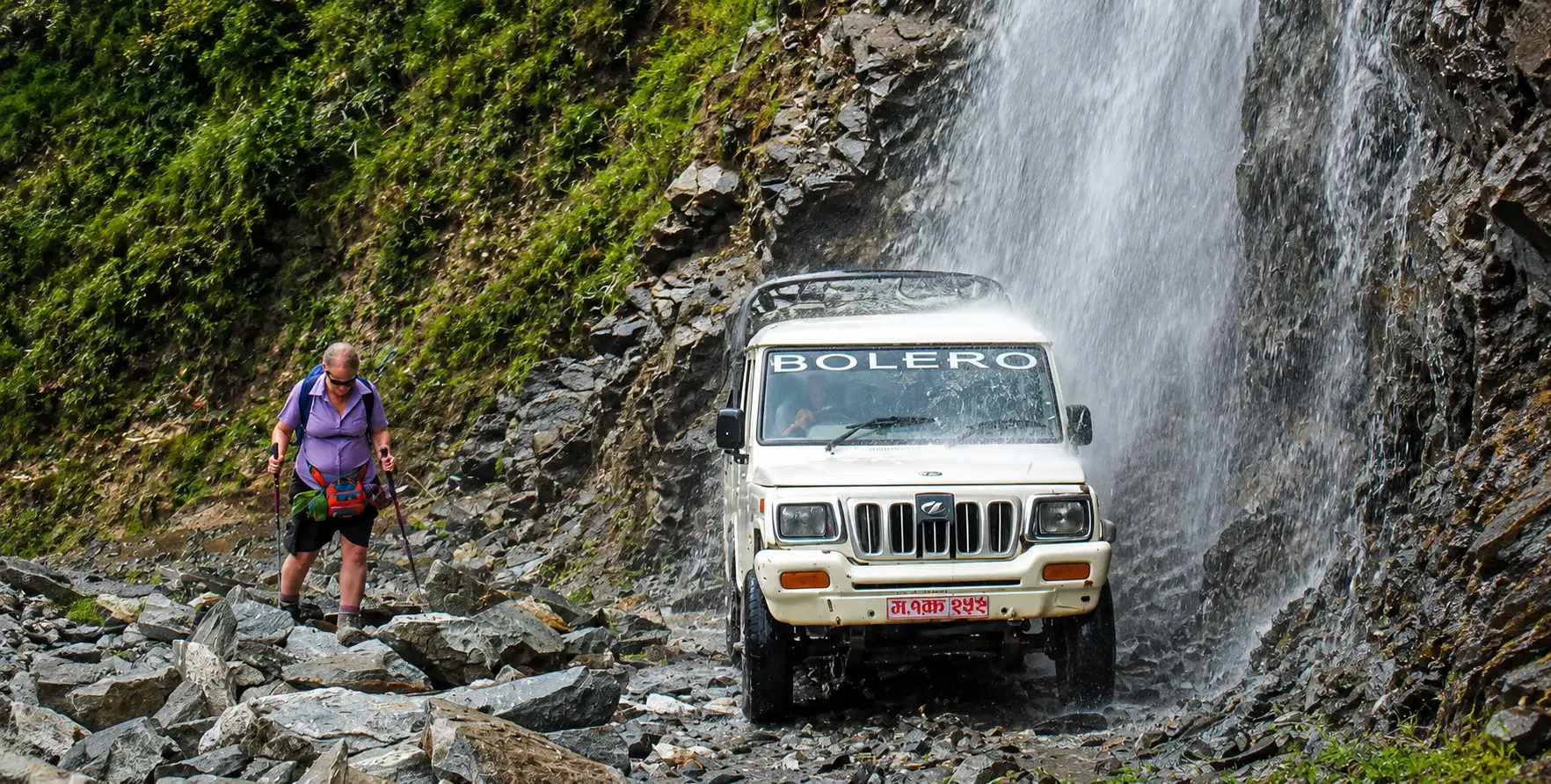
The approach to Syange is marked by a spectacular seasonal waterfall that cascades directly across the road during monsoon and early autumn — passengers in the jeep are drenched as the vehicle passes through, an experience that generates both shock and delight in equal measure. In the dry season, the waterfall is reduced to a trickle, but the rocky overhang above the road remains impressively dramatic.

Syange is also associated with Nepal’s legendary “Mad Honey” (Phryngo Mahuri) — a rare hallucinogenic honey produced by the giant Himalayan Cliff Bee (Apis laboriosa) from the nectar of rhododendron flowers. The Gurung honey hunters of Syange and the surrounding cliffs practice the ancient, vertigo-inducing art of cliff-face honey harvesting using traditional rope ladders and smoke pots — a practice documented in the famous Eric Valli National Geographic photographs that brought global attention to this extraordinary Lamjung tradition.

The Gurung people have known the unique psychoactive properties of Mad Honey for millennia, and they use it in very small quantities for medicinal and ritual purposes.

Jagat (1,330 m) – The Ancient Salt Road Checkpoint

Roughly halfway between Besisahar and Dharapani, Jagat is one of the most historically significant villages on the lower Annapurna Circuit. Its name in Nepali means “the world” — reflecting its former importance as a toll and customs post on the ancient Tibet–India salt trade route, where traders from Tibet bringing salt, wool, and dried meat southward paid taxes to the local administration.

The historic trail passed directly through Jagat before descending to the Terai plains.

Today, Jagat retains its stone-built character and its position on a rocky ridge above the Marsyangdi, with the jeep track requiring a suspension bridge crossing and a short, steep climb to reach the village. The approach to Jagat involves some of the most dramatic cliff-edge driving on the entire route — sections where the road is barely wide enough for a single jeep and the drop to the river below is vertigo-inducing.

Chamje (1,410 m) – Into the Deep Gorge

Beyond Jagat, the jeep track descends to Chamje — a small village where the Marsyangdi River gorge narrows to its most extreme point. The gorge walls here are vertical or overhanging in places, with the river far below and the road carved into a thin rock ledge.

Rhododendron, oak, and pine forests cling to every available slope. In spring, the blaze of red and pink rhododendron flowers against the grey cliff walls creates an extraordinary scene of natural beauty.

The sound of the river is constant and powerful at Chamje — the Marsyangdi roaring through the narrows in a permanent white-water thunder that fills the canyon. This is one of the finest sections of the entire Besisahar–Dharapani drive for photography and sheer natural drama.

Tal (1,700 m) – The Flat Valley and the Great Waterfall

At Tal, the dramatic gorge suddenly and unexpectedly opens into a wide, flat valley floor — a geological anomaly formed by an ancient glacial lake that once filled this entire section of the Marsyangdi valley. The name “Tal” literally means “lake” in Nepali, reflecting this origin.

The village sits at the centre of this wide valley on a raised plateau of flat alluvial land, with the Marsyangdi flowing peacefully between engineered embankments (gabions) rather than in its usual fury.

The backdrop to Tal is one of the most iconic natural scenes on the Annapurna Circuit — a magnificent waterfall cascading several hundred meters from the cliff face at the head of the valley, flanked by dense forest. In the foreground, palm trees sway beside traditional stone-built teahouses — an incongruous tropical touch at 1,700 m.

Tal is the first village of Manang District — the cultural transition point from the largely Hindu Lamjung communities of the lower valley to the increasingly Buddhist Gurung and Tibetan-influenced communities of the upper Marsyangdi and Manang.

Dharapani (1,860 m) – Where the Trek Truly Begins

The destination: Dharapani — a small but critically important village at 1,860 meters, marking both the practical end of the Besisahar–Dharapani jeep transfer and the beginning of the pure wilderness trekking section of the Annapurna Circuit. Dharapani is also the junction village for the Manaslu Circuit — the trail to the north leading toward the Nubri Valley and the Manaslu Base Camp region.

The ACAP checkpoint here records all trekkers’ permits and collects conservation-fee data.

Dharapani’s teahouse lodges are simple yet welcoming — and their warm dal bhat, sweet Nepali tea, and campfire evenings mark the beginning of authentic mountain-trekking hospitality. The dramatic view of the Manaslu range (8,163 m) visible to the north from Dharapani is often many trekkers’ first direct sighting of an 8,000-meter peak — a moment of genuine awe that signals the scale and magnificence of what lies ahead on the Annapurna Circuit.Besisahar to Dharapani Jeep Hire

Permits Required for the Besisahar to Dharapani Jeep Route

All visitors to the Annapurna Conservation Area must carry valid permits. These must be obtained BEFORE the jeep departs from Besisahar — the ACAP checkpoint at Bhulbhule will require their presentation. Permits are significantly more expensive and time-consuming to obtain at mountain checkpoints.

Obtain in advance at the NTB (Nepal Tourism Board) offices in Kathmandu, Pokhara, or Besisahar:

PermitRequired ForCost (Foreign)Where to Get
ACAPAll Annapurna Conservation Area visitorsNPR 3,000NTB offices KTM / Pokhara / Besisahar
TIMS CardAll foreign trekkersUSD 20 (~NPR 2,700)NTB / TAAN offices
Manaslu MCAPManaslu Circuit extension onlyNPR 3,000NTB office Besisahar / Kathmandu

ACAP Permit – The Annapurna Conservation Area Entry Pass

The Annapurna Conservation Area Permit (ACAP) is the primary permit required for all visitors entering the Annapurna region — whether on foot or by vehicle. The permit funds the National Trust for Nature Conservation (NTNC), which manages the 7,629 sq. km Annapurna Conservation Area — the largest protected area in Nepal.

The ACAP fees directly support wildlife conservation, trail maintenance, community development, and environmental protection across the entire circuit. Foreign nationals pay NPR 3,000; SAARC nationals pay NPR 1,000; Nepali citizens pay NPR 100.

TIMS Card – Trekker Registration

The TIMS (Trekkers Information Management System) Card is a safety registration system managed by the Nepal Tourism Board. It records trekkers’ personal details, contact information, and trek routes, creating a database that supports search-and-rescue operations in an emergency on the trail.

The TIMS card costs USD 20 for independent trekkers and USD 10 for trekkers using a registered trekking agency. Staff check the card at multiple points along the Annapurna Circuit.

Choosing Your Annapurna Circuit Starting Point – Complete Guide

One of the most important decisions for any Annapurna Circuit trekker in 2026 is where to start the actual trek. The jeep road extension to Dharapani (and beyond to Chame and Manang) has created multiple viable starting points, each with its own advantages and disadvantages. Nepal Vehicle Hiring’s jeep service covers all of these, and our drivers can advise on the best option for your group’s fitness, timeline, and priorities:

Trek Start PointAltitudeProsConsBest For
Besisahar760 mFull circuit; local cultureDusty road walking 40 kmPurist trekkers
Bhulbhule840 mPartial road skip; ACAP startStill near the roadBudget trekkers
Syange1,100 mSkip the dusty lower roadMiss the lower villagesTrekkers with time limits
Jagat1,330 mGood middle-start optionSkip Bhulbhule gorgeModerate trekkers
Dharapani1,860 mPure trekking begins here; the most popular in 2026Miss lower trail entirelyMost trekkers in 2026
Chame2,670 mSkip all road sections; 3 extra daysAltitude gain is fast and expensiveFit/experienced trekkers

Most Annapurna Circuit trekkers in 2026 choose to ride by jeep from Besisahar (or directly from Kathmandu/Pokhara) to Dharapani and begin trekking from there. The reason is straightforward: the 40 km trail from Besisahar to Dharapani now runs alongside a paved road, making it dusty, noisy, and less wild than the original remote trekking trail.

Beyond Dharapani, the road becomes increasingly impractical for most vehicles, and the trail enters genuine wilderness terrain — dense rhododendron forests, dramatic river gorges, traditional alpine villages, and the soaring Himalayan peaks of Annapurna and Manaslu appearing above the treeline. Starting from Dharapani delivers the authentic Annapurna Circuit experience without the compromised lower section.

Chame

Best Time for the Besishahar to Dharapani Jeep Transfer

SeasonMonthsRoad ConditionTrek ConditionsRecommendation
AutumnOct–NovDry & stableBest season: clear viewsHighest recommended
SpringMar–MayGoodRhododendrons; warmHighly recommended
WinterDec–FebCold; possible iceQuiet; snow above 3,500 mModerate; experienced only
MonsoonJun–SepLandslide risk; muddyLeeches; road closuresNot recommended

Autumn Season – October to November

Without question, October and November are the finest months for the Besisahar–Dharapani jeep transfer and the Annapurna Circuit. The monsoon has ended, the roads have dried, the rivers run clear, and the skies are crystal blue with the full panorama of the Annapurna massif, Manaslu, and Lamjung Himal visible in sharp relief.

The rhododendron forest along the route has its deepest autumn foliage, and the waterfalls — including the spectacular one above Syange — are still running strongly from late monsoon discharge but not overflowing onto the road. October and November are peak trekking season — Nepal Vehicle Hiring strongly recommends booking your Besisahar–Dharapani jeep transfer at least 1 week in advance during this period.

Spring Season – March to May

Spring is the second great trekking season for the Annapurna Circuit. March and April bring the extraordinary spectacle of rhododendron forests in full bloom along the Besisahar–Dharapani route — the hillsides between Syange and Tal ablaze with red, pink, and white flowers against the snow-covered mountain backdrop.

Temperatures are warm and pleasant at lower elevations (excellent for the jeep ride), and trail conditions above Dharapani improve progressively as the month advances. May is warm and slightly hazy, but still good — and the Haribodhini Ekadashi festival at Muktinath (usually April–May) draws enormous numbers of pilgrims to the upper Mustang end of the circuit, adding a vibrant cultural dimension to the trek.

Winter – December to February

Winter travel on the Besisahar–Dharapani route is possible but requires extra caution and preparation. The lower sections (Besisahar to Tal) remain drivable in most years because the altitude is too low for significant snowfall. However, the track can be icy in shaded sections and slippery after overnight frost.

Above Dharapani on the trek itself, snow accumulates heavily at altitude, and the Thorong La Pass is frequently closed from December through February. Winter trekkers on the circuit typically need more time, experience, and appropriate equipment.

The road section from Besisahar to Dharapani is quieter in winter — a significant benefit for those who prefer solitude, lower costs, and an uncrowded trail.

Monsoon – June to September

The monsoon season is not recommended for hiring a jeep between Besisahar and Dharapani. Heavy rainfall causes frequent landslides on the cliff-face sections between Syange and Jagat, which can block the road for hours or days. The track becomes extremely muddy and slippery, significantly increasing the risk of vehicle incidents.

The waterfalls — spectacular in the dry season — become dangerous flood cascades that can overwhelm the road. Leeches are rampant on the lower trails from Bhulbhule to Dharapani during the monsoon months.

For determined monsoon trekkers, the Annapurna region’s rain shadow effect (Manang and Mustang districts receive relatively little monsoon rain) makes the upper circuit passable — but reaching Dharapani safely from Besisahar by jeep in July or August requires experienced drivers and close monitoring of road conditions.

Packing and Preparation Guide – Besisahar to Dharapani Jeep Transfer

The Besisahar–Dharapani jeep transfer is the gateway to a major Himalayan trek. Being well-prepared before the jeep departs sets the tone for your entire Annapurna Circuit experience:

Trekking Permits and Documents

  • ACAP Permit: NPR 3,000 (foreign). Obtain in Kathmandu, Pokhara, or Besisahar. Carry the original certificate.
  • TIMS Card: USD 20. Obtain from the NTB offices in Kathmandu or Pokhara. Required from Bhulbhule checkpoint onwards.
  • Passport: Original passport required at all ACAP checkpoints along the circuit.
  • Travel Insurance: Must cover trekking above 5,000 m and helicopter evacuation. Verify your policy before departure from Kathmandu.

Cash and Banking

  • Besisahar ATMs: The last reliable ATM on the Annapurna Circuit is in Besisahar. Draw sufficient Nepali rupees for your entire trek — including accommodation, meals, hot showers, charging fees, and tips. Budget approximately NPR 2,500–4,000 per day for teahouse costs in the lower circuit, rising to NPR 4,000–6,000+ in upper Manang.
  • Small Denominations: Carry notes in small denominations (NPR 100, 200, 500) — teahouses on the trail have limited change.

Essential Gear for the Jeep Ride and First Trek Days

  • Layered Clothing: The Besisahar–Dharapani jeep ride passes through subtropical (760 m) to lower temperate (1,860 m) zones —pack light clothes for the jeep ride, with layers for Dharapani evenings.
  • Trekking Poles: Secure them in the jeep boot or tie them to the roof rack; don’t put them between passengers.
  • Hydration: Carry 1–2 litres of water for the 3–4 hour jeep ride. Water refills are available at all villages along the route.
  • Snacks: Energy bars, biscuits, or fruit for the jeep ride. Restaurants are available at Bhulbhule, Jagat, and Tal.
  • Camera / Drone: The Syange waterfall, Jagat gorge, and Tal valley backdrop make for extraordinary photo opportunities. Have your camera accessible during the jeep ride.

How to Book Your Besisahar to Dharapani Jeep Hire

  • Step 1 – Browse Fleet: Visit com/jeep and review our 4WD fleet.
  • Step 2 – Contact Us: Call or WhatsApp +977 981-4227196 with: your trek start date, number of passengers, volume of luggage and trekking packs, preferred vehicle (Scorpio / Land Cruiser), and whether you need the combined Kathmandu–Besisahar–Dharapani service or only the Besisahar–Dharapani section.
  • Step 3 – Confirm Permits: Confirm that all passengers have valid ACAP and TIMS permits, or advise Nepal Vehicle Hiring to factor in permit acquisition time in Besisahar.
  • Step 4 – Receive Booking Confirmation: We provide your driver’s name, vehicle registration, pick-up location, and departure time.
  • Step 5 – Depart Early: Meet your driver at the agreed point — in Besisahar, ata  Kathmandu hotel, or at Pokhara — and depart as early as possible (6–7 AM maximum) to complete the off-road Besisahar–Dharapani section before the afternoon.

Essential Travel Tips –Besisahar to Dharapani Jeep Transfer

  • Depart Besisahar by 8 AM: The off-road section to Dharapani takes 3–4 hours in good conditions. Departing by 8 AM gets you to Dharapani by noon–1 PM, leaving a full afternoon to rest, settle into your guesthouse, and prepare for the next day’s trek.
  • Obtain Permits Before Besisahar: Getting ACAP and TIMS permits in Kathmandu or Pokhara saves significant time in Besisahar. The NTB office in Kathmandu’s Pradarshani Marg and Pokhara’s Damside area both process permits within 30 minutes on weekday mornings.
  • Sit on the Right Side: For the best views of the Marsyangdi gorge and the waterfalls on the approach to Syange, sit on the right side of the jeep (facing forward) — this is the mountain/river side on the northbound journey from Besisahar to Dharapani.
  • Avoid Sharing Your Jeep with Freight: Local shared jeeps on this route often carry local produce, building materials, and supplies alongside passengers. A private Nepal Vehicle Hiring jeep carries only your group — no freight, no unexpected co-passengers, no impromptu collections along the road.
  • Notify Your Trek Agency or Guesthouse: If your trekking agency or Dharapani guesthouse is expecting you, send your estimated arrival time from Besisahar. Phone signal is available in most villages, but may be unavailable in deep, narrow gorges.
  • Check Weather Forecasts: In monsoon and shoulder seasons, check weather forecasts before departure. Heavy overnight rain can cause landslides that block the Syange–Jagat section for several hours. Nepal Vehicle Hiring’s drivers monitor road conditions and advise on safe departure timing.
  • Budget Extra Time in Besisahar: Plan to spend 1–2 hours in Besisahar for permit checks, last-minute supply purchases, a proper breakfast, and vehicle loading. Rushing this preparation phase adds stress to the entire trek.

Nepal Vehicle Hiring covers the full range of transport options for Annapurna Circuit trekkers and all other Nepal routes:

Frequently Asked Questions – Besisahar to Dharapani Jeep Hire

How far is Besisahar from Dharapani?

The road distance from Besisahar to Dharapani is approximately 40 km along an off-road mountain track that follows the Marsyangdi River valley through Bhulbhule, Syange, Jagat, Chamje, and Tal. Despite the relatively short distance, the rough terrain means the drive takes 3–4 hours by private jeep.

Is a 4WD jeep truly necessary for the Besisahar- Dharapani route?

Yes — absolutely. The Besisahar–Dharapani track is entirely off-road, narrow, rocky, and steep in multiple sections. Standard cars, sedans, SUVs without 4WD, and vans cannot safely navigate this route.

Use only genuine 4WD vehicles with high ground clearance — Toyota Land Cruiser, Mahindra Scorpio, Bolero, or Tata Sumo. Nepal Vehicle Hiring operates exclusively genuine 4WD jeeps for this route.

Can I go from Kathmandu directly to Dharapani by private jeep in one day?

Yes — the combined Kathmandu-Dharapani journey (approx. 220 km) can be completed in a single long day with a very early departure from Kathmandu (5:30–6:00 AM). Expect to arrive at Dharapani in 9–12 hours, including the off-road section from Besisahar. Nepal Vehicle Hiring provides this combined single-day service on request.

Departing earlier is strongly recommended, as it lets you complete the off-road Besisahar–Dharapani section before the afternoon, when road traffic and weather conditions can be less favourable.

Can I continue by jeep from Dharapani to Chame or Manang?

Yes — the jeep road continues beyond Dharapani to Chame (2,670 m, 17 km) and to Manang (3,540 m, 50+ km) in good conditions. However, Nepal Vehicle Hiring and the most experienced trekking guides strongly recommend starting the trek in Dharapani rather than in Chame or Manang.

The trail from Dharapani to Chame passes through some of the most beautiful forest terrain on the entire circuit — driving past it means missing superb biodiversity, wildlife, and classic mountain village culture. Additionally, driving to Manang without proper acclimatisation increases the risk of altitude sickness.

What happens if the road is blocked by a landslide between Besisahar and Dharapani?

Landslide blockages are a real possibility on the Syange–Jagat section, particularly during and after heavy monsoon rainfall. If a blockage occurs, options include: (a) waiting for the road clearance team (typically 2–6 hours for minor blockages), (b) trekking around the blockage on foot, loading equipment after the cleared section, or (c) in extreme cases, returning to Besisahar to overnight and retry the following morning.

Nepal Vehicle Hiring’s drivers are experienced in managing these situations and carry emergency contact numbers. We monitor road conditions before departure and advise clients on the safest timing.

Where can I get ACAP permits and TIMS cards near Besisahar? You can get

ACAP permits and TIMS cards at the NTB office in Besisahar Bazaar (open during standard office hours, Monday–Friday). You can also get them in Kathmandu (Pradarshani Marg area) and Pokhara (Damside), which Nepal Vehicle Hiring recommends as the fastest option. Some private trekking agencies also process permits for clients in advance.

The ACAP checkpoint at Bhulbhule requires both the ACAP certificate and TIMS card — have both ready before passing this checkpoint.

How many people can fit in a private jeep from Besisahar to Dharapani?

A Mahindra Scorpio or Bolero comfortably seats 6 passengers with full trekking backpacks in the boot or on the roof rack. A Toyota Land Cruiser also seats 6 in comfort. If your group is larger than 6, we arrange a second jeep — both departing together to maintain the group dynamic throughout the drive.

Nepal Vehicle Hiring does not overload vehicles — passenger safety and comfort on off-road sections require proper seating for all passengers.

What is included in the Nepal Vehicle Hiring jeep hire price?

Our Besisahar to Dharapani jeep hire rate includes a 4WD vehicle, a professional mountain driver, fuel, and vehicle insurance. Not included: passenger food and refreshments en route, ACAP and TIMS permit fees, and driver gratuity.— We provide a fully transparent quote before booking confirmation to avoid surprise charges on the day.

Can I book the jeep from Pokhara to Besisahar and then to Dharapani?

Yes — Nepal Vehicle Hiring provides a complete private jeep service from Pokhara to Besisahar to Dharapani. The journey from Pokhara to Besisahar takes approximately 3–4 hours via Dumre (paved road), followed by a 3–4-hour off-road section to Dharapani. Total Pokhara–Dharapani journey: approximately 6–8 hours.

Contact us on WhatsApp to arrange this combined service.

Is the Besisahar-to-Dharapani route safe for families and less-experienced travellers?

The jeep ride itself is safe with an experienced driver. However, it is genuinely rough and adventurous, not the kind that suits travellers prone to severe motion sickness or those who are highly anxious about heights and cliff-edge tracks. The gorge section between Syange and Jagat has several dramatic cliff-edge moments that some passengers find startling.

Children and older travellers generally manage well with a calm, experienced driver. If motion sickness is a concern, take medication before departure from Besisahar and sit in the front passenger seat for the most stable ride.

Book Your Besisahar to Dharapani Jeep Hire Today

The Besisahar to Dharapani jeep transfer is the first great adventure of the Annapurna Circuit — 40 km of off-road mountain driving through waterfalls, cliff-face gorges, ancient salt-route villages, and the roaring Marsyangdi River that is, in itself, a memorable experience. Nepal Vehicle Hiring Pvt Ltd provides Nepal’s most trusted, experienced, and professionally equipped 4WD jeep service for this spectacular route.

Whether you are a solo trekker, a group of friends, a family on an adventure journey, or a professional trekking agency arranging transport for your clients, our Toyota Land Cruisers and Mahindra Scorpios, our expert mountain drivers, and our 24/7 booking and support service ensure that your Annapurna Circuit begins exactly as it deserves — in safety, comfort, and genuine mountain adventure.

The trek of a lifetime begins with the right vehicle. Book your Besisahar-to-Dharapani jeep hire today.

Call / WhatsApp:+977 981-4227196  |  Website: vehiclehiringnepal.com  |  Book Your 4WD Jeep Now  |  Nepal Trekking Packages

Pokhara to Annapurna Base Camp Transport

Annapurna Base Camp

Pokhara to Annapurna Base Camp Transport

Annapurna Base Camp (ABC) — the sacred glacial sanctuary cradled at 4,130 meters within a ring of some of the world’s highest and most beautiful mountains — is Nepal’s most iconic trekking destination. Every year, tens of thousands of trekkers from around the world journey to Pokhara, then take a vehicle to the Annapurna foothills to begin one of the most rewarding treks on earth.

But choosing the right trailhead, vehicle, and transport strategy is not as simple as it sounds. Seven trailheads are accessible by vehicle from Pokhara, ranging from the classic Nayapul trailhead to advanced off-road destinations like Jhinu Danda and Ghandruk. Your trailhead choice dramatically affects your trek distance, your time at altitude, and — most importantly — which sections of the ABC trail you experience on foot versus by vehicle.

This complete 2026 transport guide covers every vehicle option from Pokhara to the Annapurna Base Camp trailheads — all seven road-accessible starting points, full 2026 costs, road conditions for each route, the best trailhead for different trek durations and styles, and why Nepal Vehicle Hiring Pvt Ltd is the most trusted transport partner for your ABC adventure.

Annapurna Base Camp

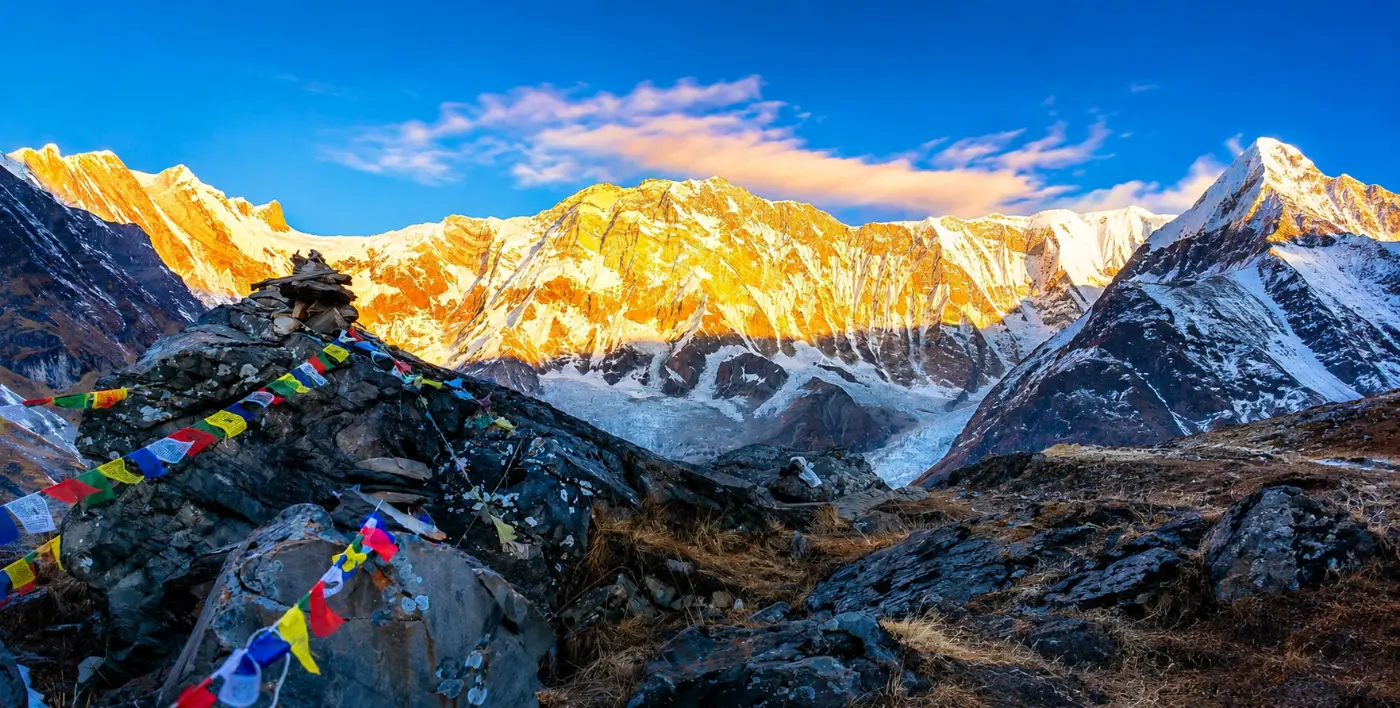
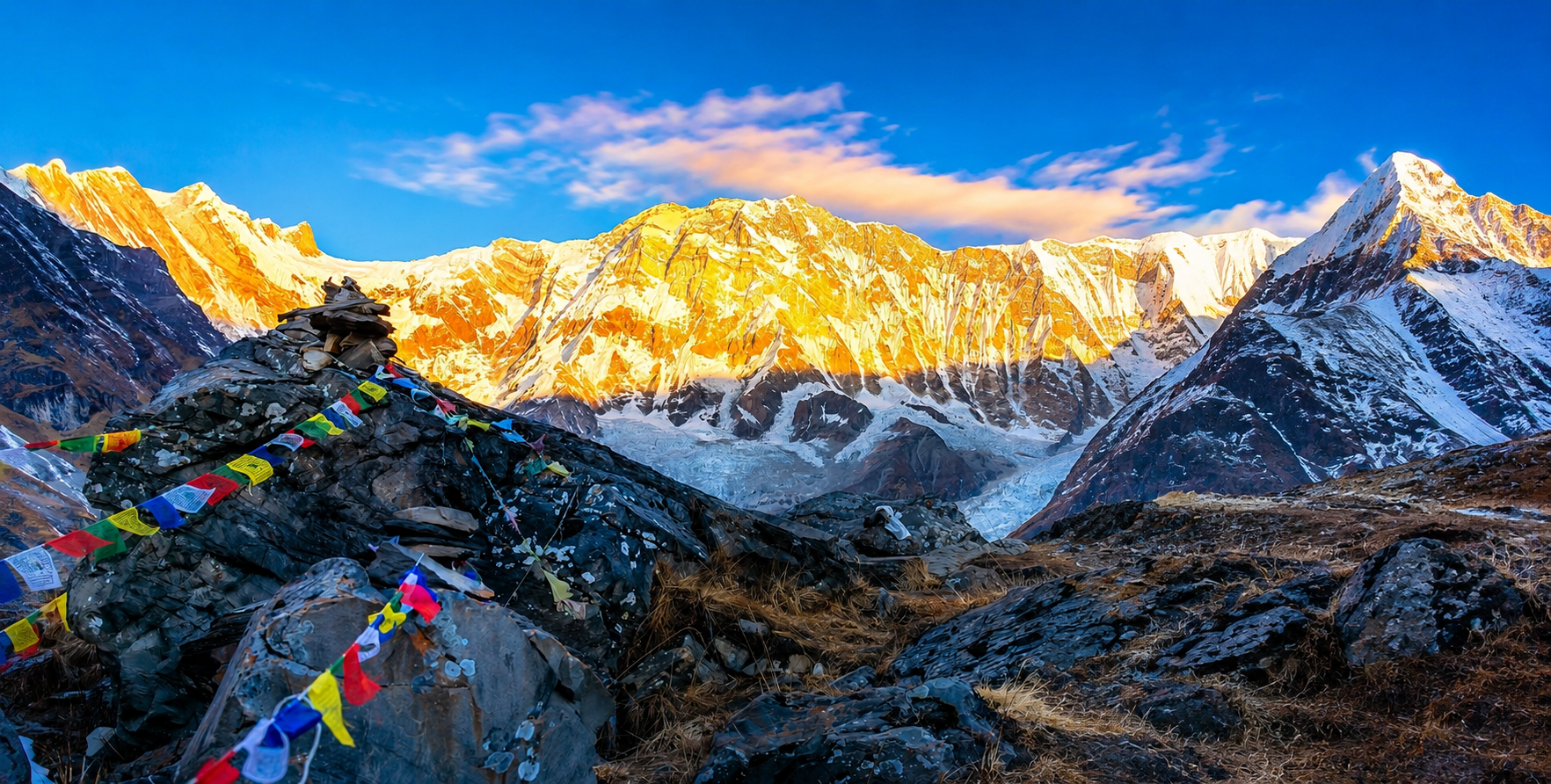
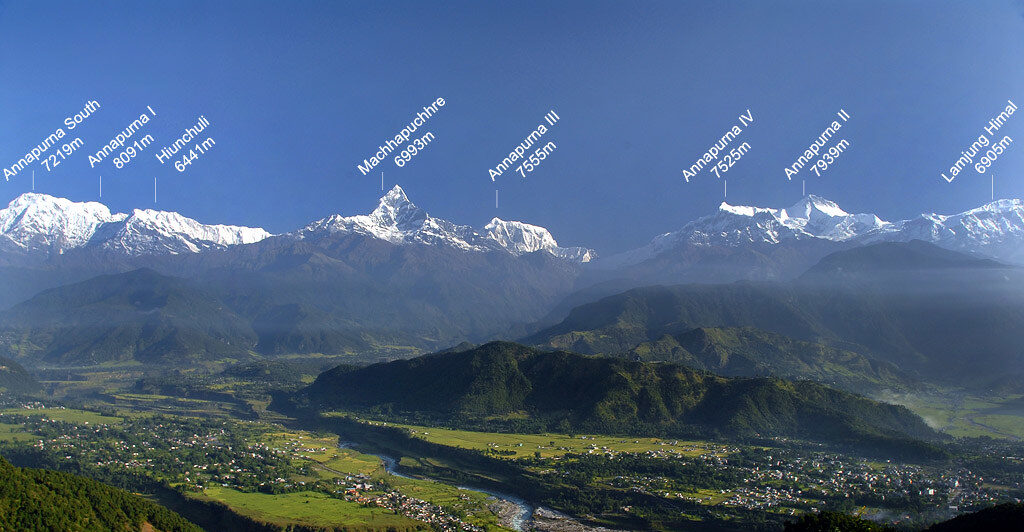
Annapurna Base Camp (4,130 m / 13,550 ft) lies at the heart of the Annapurna Sanctuary — a hidden glacial amphitheatre enclosed by thirteen Himalayan peaks exceeding 6,000 meters and four peaks exceeding 7,000 meters. The sanctuary’s centrepiece is Annapurna I (8,091 m), the tenth-highest mountain on Earth and, historically, the first 8,000-meter peak ever summited by humans (French expedition, 1950).

The Annapurna Base Camp Trek is a moderate-grade trek suitable for fit beginners through to experienced mountain trekkers. The full route typically takes 7 to 10 days from Pokhara. It involves no technical climbing, just walking on well-marked trails through diverse ecosystems,g from subtropical rice terraces at 1,000 meters to glacial moraines at 4,130 meters.

  • Maximum altitude: 4,130 m (Annapurna Base Camp)
  • Machhapuchhre Base Camp (MBC): 3,700 m — one day below ABC
  • Total trek distance: Approximately 50–60 km one way from Nayapul
  • Trek duration from Pokhara: 6 to 10 days, depending on pace and route
  • Key mountains visible: Annapurna I (8,091 m), Annapurna South (7,219 m), Machhapuchhre / Fishtail (6,993 m), Hiunchuli (6,441 m), Gangapurna (7,455 m)
  • Trek type: Teahouse trek — accommodation and meals available throughout
  • Best starting point: Pokhara (827 m) — Nepal’s second-largest city and closest major hub to the ABC trailheads

Key Transport Facts — Pokhara to ABC Trailheads 2026

Route DetailInformation
Total ABC Trek Distance81 km (Pokhara to ABC and return — road + trek combined)
Annapurna Base Camp Altitude4,130 m (13,550 ft) above sea level
Pokhara to Nayapul (Road)42–46 km | 1 to 1.5 hrs | Paved highway
Pokhara to Jhinu Danda (Road)50–56 km | 3 to 4 hrs | Paved + off-road
Pokhara to Ulleri (Road)48–52 km | 2.5 to 3.5 hrs | Paved + steep off-road
Pokhara to Ghandruk (Road)55–61 km | 3 to 4 hrs | Paved + rough off-road
Best SeasonOctober–November (Autumn) and March–May (Spring)
Permits RequiredACAP + TIMS Card — both obtainable in Pokhara
Trek Duration6 to 10 days from Pokhara, depending on the route

Key Insight: There is NO single ‘Pokhara to Annapurna Base Camp’ vehicle route — the road takes you to one of several trailheads at the base of the Annapurna foothills. From there, ALL travel to ABC is on foot. Your trailhead choice determines how much walking you do on the lower sections and when the spectacular mountain scenery begins.

All Trailheads — Which Starting Point is Right for You?

One of the most important and least understood decisions in planning ABC transport is choosing which trailhead to use. Each trailhead offers a different entry point into the ABC trek, with different distances, road types, and trekking experiences:

TrailheadDistance from PokharaTravel TimeRoad TypeTrek Start AltitudeBest For
Nayapul42 km1–1.5 hrsPaved highway1,070 mTraditional start, all vehicles
Birethanti44 km1.5 hrsPaved → rough1,025 mSlightly deeper than Nayapul
Ulleri50–52 km2.5–3.5 hrsOff-road 4WD1,960 mSkip Tikhedhunga stone steps
Ghandruk55–61 km3–4 hrsOff-road 4WD1,940 mVia Gurung village, cultural start
Jhinu Danda50–56 km3–4 hrsOff-road 4WD1,760 mDirect to Chhomrong approach, hot springs
Kimche53 km3–3.5 hrsOff-road 4WD1,640 mGhandruk approach, shorter final walk
Siwai / Kyumi23 km1 hrPaved + light rough1,100 mBudget option, longer trek

Pokhara to Annapurna Base Camp Transport

Nayapul (1,070 m) — The Classic ABC Trailhead

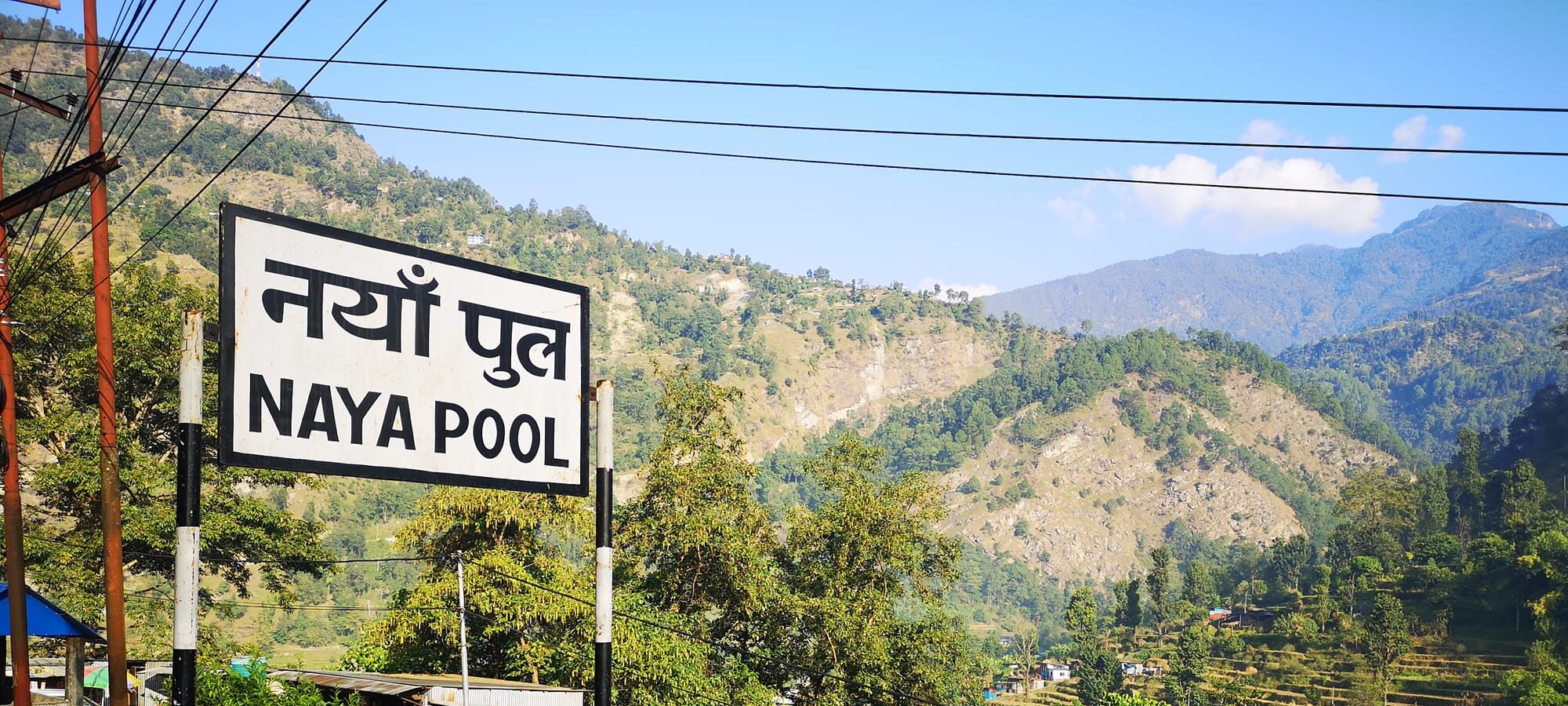
Nayapul is the most traditional and most commonly used ABC trailhead. It sits at the junction of the Bhurungdi and Modi rivers, approximately 42 km from Pokhara, on the fully paved Beni-Baglung Highway. From Nayapul, the classic ABC trail passes through Birethanti, Tikhedhunga (with the famous 3,300 stone steps to Ulleri), Ghorepani (optional Poon Hill detour), Tadapani, Chhomrong, and up through the Annapurna Sanctuary to ABC.

  • Road: Fully paved Beni Baglung Highway — suitable for all vehicles, including sedans and buses
  • Distance from Pokhara: ~42 km
  • Travel time: 1 to 1.5 hours by private vehicle
  • Trek from Nayapul to ABC: 7 to 10 days
  • Best for: Traditional full ABC experience, trekkers with 8+ days, first-time Nepal trekkers

Ulleri (1,960 m) — Skip the Stone Steps

A private jeep can reach Ulleri directly from Pokhara, bypassing the legendary 3,300 stone steps between Tikhedhunga and Ulleri, one of the most demanding sections of the lower ABC trail. By starting at Ulleri, trekkers save about 2 hours of steep climbing and begin with significantly more energy.

  • Road: Paved highway to Nayapul/Birethanti, then steep off-road 4WD track
  • Distance from Pokhara: ~50–52 km
  • Travel time: 2.5 to 3.5 hours — 4WD mandatory
  • Trek from Ulleri to ABC: 5 to 7 days
  • Best for: Trekkers with 6–8 days, older trekkers, families, anyone wanting to skip the stone steps

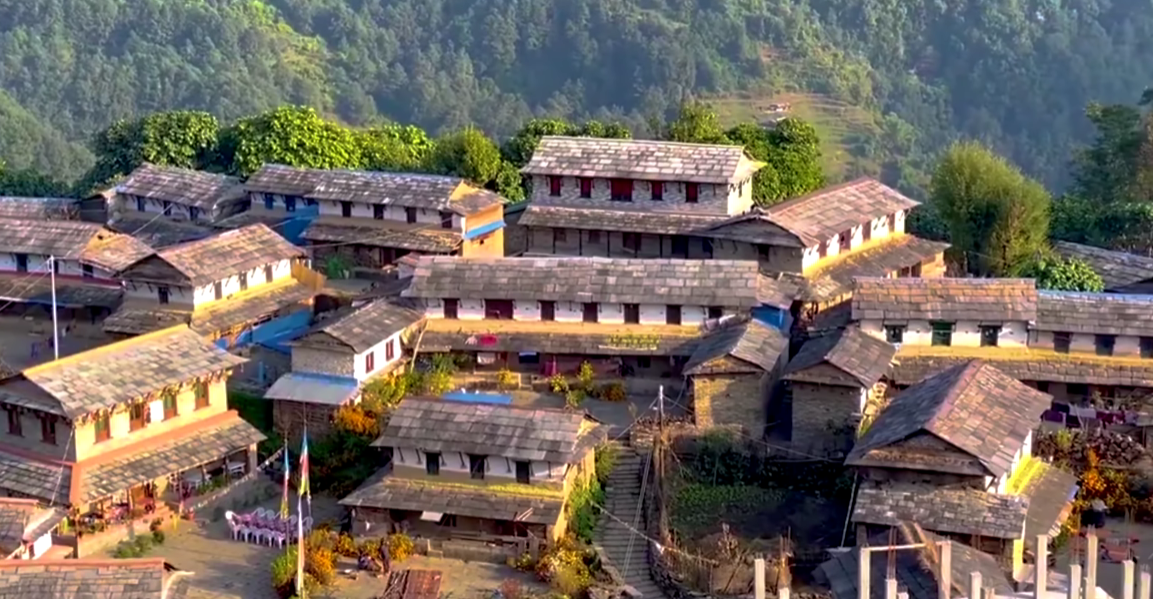
Ghandruk village

Ghandruk (1,940 m) — The Cultural Entry Point

Ghandruk is the largest Gurung village in the Annapurna region, and you can reach it by 4WD jeep from Pokhara via Birethanti. Starting your ABC trek from Ghandruk immerses you immediately in authentic Gurung culture — cobblestone lanes, traditional stone houses, the Gurung Museum, and extraordinary close-up views of Annapurna South and Machhapuchhre. The Ghandruk-to-Chhomrong section is one of the most scenic on the entire ABC route.

  • Road: Beni Baglung Highway to Birethanti, then a rough off-road 4WD track
  • Distance from Pokhara: ~55–61 km
  • Travel time: 3 to 4 hours — 4WD mandatory
  • Trek from Ghandruk to ABC: 5 to 7 days
  • Best for: Cultural travellers, photographers, trekkers, combining the Ghandruk visit with the ABC

Jhinu Danda (1,760 m) — Hot Springs Start and Finish

Jhinu Danda (also spelt Jhino) is the trailhead offering the most direct access to the Chhomrong approach to the ABC trek. It sits on the Modi Khola River and is famous for its natural hot spring pools—a perfect way to relax tired muscles at the end of the trek. Many ABC trekkers use Jhinu Danda as both their start and end point, creating a beautiful circular route through Chhomrong, the Annapurna Sanctuary, and back.

  • Road: Beni Baglung Highway to Siwai, then off-road track to Jhinu Danda
  • Distance from Pokhara: ~50–56 km
  • Travel time: 3 to 4 hours — 4WD strongly recommended
  • Trek from Jhinu Danda to ABC: 4 to 6 days
  • Best for: Trekkers wanting the most efficient ABC approach, a hot spring reward at the end

Siwai / Kyumi (1,100 m) — Budget Entry Point

Siwai and Kyumi are small roadside villages located approximately 23 km from Pokhara on the Beni-Baglung Highway. The road to these villages is mostly paved and accessible by standard vehicles. From Siwai, a 1- to 2-hour uphill hike leads to Jhinu Danda.

This is the most economical trailhead option — useful for budget travellers willing to add extra walking time.

  • Road: Mostly paved — accessible by sedan, bus, or Jeep
  • Jeep ride from Pokhara: ~23 km
  • Travel time: ~1 hour
  • Walk from Siwai to Jhinu Danda: 1 to 2 hours uphill
  • Best for: Budget travellers comfortable with extra walking time

Dharapani trek start point of annapurna range

All Vehicle Hire Options — Pokhara to ABC Trailheads 2026

Transport OptionBest TrailheadCapacity2026 CostBest For
Private Jeep (Scorpio/Sumo)Any trailhead4–7 passengersUSD 90–160 (full vehicle)Groups of 2–6, trekkers with gear
Private Car (Sedan)Nayapul / Birethanti only2–3 passengersUSD 60–100 (full vehicle)Pairs/solo to Nayapul
Private Hiace VanNayapul / Birethanti8–14 passengersUSD 150–200 (full vehicle)Large trekking groups
Shared Jeep (per seat)Multiple trailheads7–9 totalUSD 10–20 per personBudget solo travellers
Local Bus to NayapulNayapulMany paxNPR 200–300 per personTightest budget option
Helicopter (return)ABC / MBC direct5 per heliUSD 450–650 per personLuxury/emergency return

Private Jeep — Best Transport Option for All Trailheads

A private 4WD jeep is the recommended and most widely used transport option for trekkers heading from Pokhara to any ABC trailhead. It provides door-to-door hotel pickup in Pokhara, direct access to all seven trailheads, including the off-road endpoints (Ulleri, Ghandruk, Jhinu Danda), flexible departure time, and ample roof rack space for trekking luggage.

  • Vehicle types: Mahindra Scorpio 4WD, Toyota Hilux 4WD, or similar
  • Capacity: 4–6 passengers comfortably; up to 7 with luggage on the roof rack
  • 2026 Cost: USD 90–160 for the full vehicle (one way), depending on the trailhead
  • 4WD mandatory: For all trailheads beyond Nayapul / Birethanti on off-road sections
  • Pickup: Door-to-door from your hotel in Lakeside, Pokhara
  • Departure: Flexible — depart at any time to suit your trek start

Best Value: With 6 trekkers sharing a private jeep to Jhinu Danda for USD 160, the per-person cost is just USD 20—marginally more than a shared jeep but with major advantages in comfort, hotel pickup, and flexibility.

Shared Jeep — Budget Option for Solo Travellers

Shared jeeps depart from Baglung Bus Park and Hari Chowk in Pokhara and serve all major ABC trailheads. They are the most affordable motorised option and are widely available during peak trekking season.

  • 2026 Cost: USD 10–20 per person, depending on the destination trailhead
  • Departure point: Baglung Bus Park or Hari Chowk, Pokhara
  • Departure: Fill-and-go — typically 7:30–9:00 AM
  • Travel time: 30–45 minutes longer in a private jeep due to multiple stops
  • Limitation: No hotel pickup; crowded seating; no flexibility in stops

Annapurna range

Private Sedan Car — Nayapul and Birethanti Only

A private sedan is suitable only for Nayapul and Birethanti — the paved highway trailheads. Beyond Birethanti, the road becomes off-road and unsuitable for sedans. Ideal for trekkers who plan to walk the full traditional ABC trail from Nayapul.

  • 2026 Cost: USD 60–100 for a full vehicle from Pokhara to Nayapul
  • Travel time: 1 to 1.5 hours
  • Best for: Small groups (1–3 persons) starting the traditional ABC route from Nayapul

Private Hiace Van — Best for Large Groups to Nayapul

For large trekking groups of 8 or more, a private Hiace van is the most economical option for the paved Nayapul or Birethanti trailheads. The Hiace cannot access off-road trailheads (Ulleri, Ghandruk, Jhinu Danda) due to road-type limitations.

  • 2026 Cost: USD 150–200 for a full vehicle to Nayapul (one way)
  • Capacity: Up to 14 passengers
  • Suitable for: Paved highway trailheads only — Nayapul and Birethanti

Local Bus — Budget Option to Nayapul

Local buses run from Baglung Bus Park in Pokhara to Nayapul throughout the day. They are the cheapest option but the slowest, with multiple passenger stops.

  • 2026 Cost: NPR 200–300 per person to Nayapul (approximately USD 1.50–2.50)
  • Departure: Multiple daily — approximately every 30 minutes from 6:30 AM
  • Travel time: ~1.5 to 2 hours with stops
  • Limitation: Crowded, slow, no direct access to off-road trailheads

Helicopter Return from ABC — Luxury Option

An increasingly popular option for trekkers with limited time or physical fatigue is the helicopter return from Annapurna Base Camp (or Machhapuchhre Base Camp) directly to Pokhara airport. This saves 3 to 4 days of descent walking and provides extraordinary aerial views of the Annapurna massif.

  • Route: ABC (4,130 m) or MBC (3,700 m) → Pokhara
  • Flight time: Approximately 25–35 minutes
  • 2026 Cost: USD 450–650 per person (helicopter charter — typically 5 seats)
  • Charter a full helicopter: USD 2,500–3,500 for a full 5-seat helicopter
  • Best for: Trekkers with tight departure schedules, luxury travellers, and altitude sickness rescue
  • Booking: Arrange through Nepal Vehicle Hiring Pvt Ltd or a trekking agency in Pokhara — must be pre-arranged, not available on demand at ABC

Annapurna range mountain

Cost Guide by Trailhead — Pokhara to ABC

From Pokhara ToPrivate Jeep CostShared Jeep CostNotes
NayapulUSD 71–100USD 8–12 / personPaved road — any vehicle
BirethantiUSD 70–100USD 10–15 / personPaved + light rough
UlleriUSD 100–150USD 15–20 / person4WD essential — steep track
GhandrukUSD 100–140USD 15–18 / person4WD essential — off-road
Jhinu DandaUSD 110–160USD 15–20 / person4WD essential — off-road
KimcheUSD 100–140USD 13–18 / person4WD essential
Siwai / KyumiUSD 50–80USD 8–12 / personShorter off-road section

All private jeep costs are for the full vehicle (one-way) and include the driver, fuel, and road tolls. Shared jeep costs are per person. Peak season (October–November and March–May) rates may be 10–15% higher.

Nepal Vehicle Hiring Pvt Ltd provides all-inclusive pricing with no hidden charges.

The Complete ABC Trek Route — Stopping Points from Nayapul

Here is the complete ABC trek route from Nayapul to Annapurna Base Camp, showing all key stopping points with altitude and distance:

Trekking StopAltitudeDistance from NayapulKey Features
Nayapul1,070 mStartClassic ABC trailhead, bus/jeep junction
Birethanti1,025 m0.5 kmACAP checkpoint, Modi Khola riverside
Tikhedhunga / Hile1,480 m5 kmThe famous 3,300 stone steps start
Ulleri1,960 m8 kmMagar village, stone steps end, jeep endpoint
Ghorepani2,870 m18 kmPoon Hill gateway, rhododendron forests
Tadapani2,630 m22 kmRhododendron traverse, Annapurna views
Ghandruk1,940 m16 km altGurung village, Annapurna South views
Chhomrong2,170 m28 kmKey ABC junction, last major village
Bamboo / Sinuwa2,310 m32 kmDense forest, rhododendron zone
Dovan2,600 m37 kmSteep terrain, waterfall views
Himalayan Hotel2,920 m40 kmLast major facilities before MBC
Deurali3,230 m44 kmFrequent snow/cloud —acclimatise here
Machhapuchhre Base Camp (MBC)3,700 m48 kmFishtail Mountain views, glacier approach
Annapurna Base Camp (ABC)4,130 m52 kmUltimate destination — Annapurna Sanctuary

Lower Section — Nayapul to Chhomrong (1,070 m to 2,170 m)

The lower section of the ABC trek from Nayapul passes through some of Nepal’s most beautiful Gurung and Magar villages. The trail winds through terraced rice fields, the Modi Khola river gorge, rhododendron and oak forests, and traditional stone-paved village paths. This section, about 28 takes 2 to 3 days to walk and is the culturally richest part of the trek.

For trekkers using a private jeep from Pokhara to one of the advanced trailheads (Ulleri, Ghandruk, or Jhinu Danda), a significant portion of this lower section is bypassed by vehicle. The trade-off is saving 1 to 2 days of walking versus experiencing the lower village culture and landscape.

Middle Section — Chhomrong to Deurali (2,170 m to 3,230 m)

Above Chhomrong, the ABC trail enters a long, deep valley that channels through dense bamboo and rhododendron forest before emerging into an increasingly dramatic high-altitude landscape. The trail passes through Sinuwa, Bamboo, Dovan, and the Himalayan Hotel — each offering progressively more spectacular views of the surrounding peaks. Waterfalls, suspension bridges, and the constant roar of the Modi Khola below make this section one of the most atmospherically in-depth on the entire trail.

Upper Section — Deurali to ABC (3,230 m to 4,130 m)

Above Deurali, the trail emerges from the forest into open alpine terrain. The first views of Machhapuchhre (Fishtail) appear suddenly and dramatically as you round a corner above Deurali- a moment many trekkers describe as one of the most striking reveals in all of Himalayan trekking.

Machhapuchhre Base Camp (3,700 m) marks the final approach to the sanctuary. From MBC, the final 2-hour walk to Annapurna Base Camp (4,130 m) crosses glacial moraine and passes through increasingly surreal, high-altitude terrain surrounded by towering walls of ice and rock.

Off road annapurna range

Here are the two most popular ABC trek approaches from Pokhara, each using different transport strategies:

Option A — 7-Day ABC Trek via Jhinu Danda (Most Efficient)

DayRouteTransport / TrekKey Activity
Day 1Pokhara → Jhinu DandaJeep: 3–4 hrsTrek Jhinu → Chhomrong (4–5 hrs)
Day 2Chhomrong → DovanTrek: 5–6 hrsForest trail, bamboo groves
Day 3Dovan → Himalayan Hotel / DeuraliTrek: 5–6 hrsSteep climb, waterfall views
Day 4Deurali → MBC → ABCTrek: 6–7 hrsGlacier approach, Annapurna Sanctuary
Day 5ABC → MBC → BambooTrek: 6–7 hrsBegin descent, rhododendron forest
Day 6Bamboo → Chhomrong → Jhinu DandaTrek: 5–6 hrsHot springs at Jhinu Danda
Day 7Jhinu Danda → PokharaJeep: 3–4 hrsTransfer back to Pokhara

Hot Springs Reward: Jhinu Danda Hot Springs (natural rock pools on the Modi Khola riverbank) are among the most celebrated rewards on the entire ABC trek. After 5+ days of trekking, soaking in a natural hot spring with views of Annapurna is a memorable final evening before the jeep returns to Pokhara.
Pokhara to Annapurna Base Camp transport

Option B — 9-Day ABC Trek via Ghorepani–Poon Hill (Most Scenic)

For trekkers with 9+ days who want to combine the Poon Hill sunrise with the ABC trek, this is the classic Jejeep-dependent route:

  • Day 1: Pokhara → Ulleri by jeep (3 hrs) → trek to Ghorepani (4–5 hrs)
  • Day 2: Pre-dawn hike to Poon Hill (3,210 m) for sunrise → trek to Tadapani
  • Day 3: Tadapani → Ghandruk (2 hrs) → Bamboo via Chhomrong
  • Day 4: Bamboo → Dovan → Himalayan Hotel
  • Day 5: Himalayan Hotel → Deurali → MBC → ABC (6–7 hrs)
  • Day 6: ABC → MBC → Bamboo (6 hrs)
  • Day 7: Bamboo → Chhomrong → Sinuwa → Jhinu Danda (5–6 hrs)
  • Day 8: Jhinu Danda hot springs → drive to Pokhara by jeep (hrs)

This route is widely regarded as the finest combined Poon Hill + ABC trek in Nepal—offering both the Ghorepani sunrise panorama and the Annapurna Sanctuary in a single 8-day circuit.

Road Conditions — Pokhara to ABC Trailheads

Pokhara to Nayapul / Birethanti (Beni Baglung Highway)

Fully paved and well-maintained national highway throughout. Accessible for all vehicle types, including sedans, buses, and Hiace vans. Road quality has been consistently good with ongoing improvements.

This section is manageable year-round in all weather conditions.

Birethanti to Ulleri (Off-Road Track)

Beyond Birethanti, the road becomes a rough gravel-and-earth track that climbs steeply through the Modi Khola foothills. 4WD mandatory. The Hile to Ulleri section is the steepest and most technically challenging — a very rough, narrow, rocky track that requires low-range 4WD and an experienced driver.

Best condition: October to May (dry season). Avoid or verify carefully: June to September (monsoon).

Birethanti to Ghandruk (Off-Road Track)

The Birethanti to Ghandruk track follows a different route than Ulleri — heading north from Birethanti along the Modi Khola and then climbing steeply to Ghandruk village. 4WD mandatory. Road quality is rough but navigable for experienced drivers in the dry season.

The final approach to Ghandruk is very steep and narrow in sections.

Nayapul / Siwai to Jhinu Danda (Off-Road Track)

The jeep track from the Siwai junction to Jhinu Danda follows a rough riverside track along the Modi Khola. 4WD recommended throughout; mandatory in wet conditions. Some sections cross small stream beds.

Driver experience is important on this route.

Season-by-Season Road Conditions

SeasonMonthsRoad ConditionsTrek ConditionsRecommendation
Post-Monsoon / AutumnOct – NovDry, excellentCrystal clear, best visibilityBest — book early
SpringMar – MayDry, goodRhododendron bloom, warmExcellent — most popular
WinterDec – FebDry, coldSnow risk above DeuraliGood — quiet, cold
MonsoonJun – SepMuddy, riskyHeavy rain, leeches, limited viewsNot recommended for ABC

Monsoon Warning (June–September): All off-road trailhead tracks (Ulleri, Ghandruk, Jhinu Danda) are susceptible to landslides and road damage during heavy monsoon rainfall. Always verify road conditions with Nepal Vehicle Hiring Pvt Ltd before travel during the monsoon season. The Nayapul trailhead on the paved highway is always accessible year-round.

Permits Required — Pokhara to Annapurna Base Camp

Two permits are required to trek in the Annapurna Conservation Area. Both are inspected at the ACAP checkpoint in Birethanti (on the jeep route) and at multiple points on the ABC trail:

ACAP — Annapurna Conservation Area Permit

  • Cost: NPR 3,000 per person for foreign nationals (approximately USD 22 — verify current rate before travel)
  • SAARC nationals: NPR 200 per person
  • Where to obtain: Nepal Tourism Board office in Lakeside or Damside, Pokhara (preferred), or at the Birethanti checkpoint
  • Checked at: Birethanti ACAP checkpoint, Ghorepani, Chhomrong, and multiple trail points

TIMS Card — Trekkers’ Information Management System

  • Cost: Approximately USD 10–20 per person for foreign nationals
  • Where to obtain: Nepal Tourism Board or TAAN office in Lakeside, Pokhara

Permit Tip: Obtain both permits at the Nepal Tourism Board office in Lakeside, Pokhara, on Day 1 before departing for the trailhead on Day 2. The office opens at 9:00 AM. Getting permits in Pokhara is faster and more reliable, and it helps you avoid delays or fines at the Birethanti checkpoint.

Choosing the Right Trailhead for Your Trek Duration

The single most practical question for most ABC trekkers is: ‘How many days do I have?’ Here is a clear guide to the best trailhead for each trek duration:

  • 10+ days available: Start from Nayapul — walk the full traditional ABC trail, including the complete lower section with stone steps, Ulleri, and the full village experience
  • 8–9 days available: Start from Ulleri by jeep; Jeep up the stone steps, begin trekking at a higher point, optionally include Poon Hill
  • 7–8 days available: Start from Ghandruk by jeep. Jeep in-depth Gurung village culture from Day 1, direct access to the Ghandruk–Chhomrong Jeep
  • 6–7 days available: Start from Jhinu Danda by jeep. Direct approach to Chhomrong and the upper ABC trail, hot springs return
  • 56-day Jeep (but challenging): Start from Jhinu Danda by jeep, jeep-paced itinerary with minimal rest days — experienced trekkers only
  • 3–4 days (express option): Helicopter to the ABC area, trek to ABC, then jeep return. Only for luxury or emergency rescue — not recommended for first-time high-altitude visitors

Practical Tips for Pokhara to ABC Transport

  • Book your vehicle 24–48 hours in advance during peak season (October–November, March–May) — private jeeps to ABC trailheads are in very high demand.
  • Obtain both permits (ACAP and TIMS) in Pokhara on Day 1 — do not leave this until the morning of the trek.
  • Depart Pokhara by 7:00–8:00 AM to arrive at your trailhead by mid-morning and begin trekking with maximum daylight.
  • Communicate your trailhead choice clearly to Nepal Vehicle Hiring Pvt Ltd — different trailheads require different route planning and jeep types.
  • Confirm with your driver whether the jeep reaches Ghandruk / Ulleri / Jhinu Danda directly or stops short — and plan accordingly.
  • Book your return vehicle at the same time as your outward transfer — this guarantees availability when you descend from the trek, especially for Jhinu Danda pickups.
  • For the Jhinu Danda route: Message your driver on WhatsApp about 24 hours before your return so the vehicle is ready at Jhinu Danda at the right time.
  • Carry cash (NPR): ATMs are available in Pokhara and Nayapul, but not on the trail. Carry at least NPR 20,000–30,000 per person for 7 days of tea house accommodation and meals.
  • Altitude sickness is real at 4,130 m — never rush to ABC. Follow the recommended acclimatisation pace: gain no more than 500 m of altitude per day above 3,000 m.
  • Pack trekking poles: The descent from ABC to Jhinu Danda is steep and knee-intensive — trekking poles are valuable on the way down.

Why Choose Nepal Vehicle Hiring Pvt Ltd for Your ABC Transport?

  • All 7 Trailheads Covered: We provide private jeep hire to every road-accessible ABC trailhead — Nayapul, Birethanti, Ulleri, Ghandruk, Jhinu Danda, Kimche, and Siwai.
  • Right Vehicle Every Time: 4WD jeeps for off-road trailheads (Ulleri, Ghandruk, Jhinu Danda), sedans or Hiace for Nayapul groups — always the right vehicle for the specific route.
  • Hotel Pickup in Pokhara: Door-to-door service from your hotel in Lakeside, Dam Side, or anywhere in Pokhara.
  • All-Inclusive Pricing: Includes driver, fuel, and tolls. The price quoted is the final price — no hidden charges.
  • Return Booking: Book both outward and return transfers in one reservation. We arrange post-trek pickup from Jhinu Danda, Ghandruk, or Nayapul at your convenience.
  • Route Advice: Not sure which trailhead best fits your trek duration and fitness level? Our team provides honest, expert advice based on your specific itinerary.
  • Road Condition Monitoring: Real-time monitoring of all off-road ABC trailhead routes — proactive alerts if any road is not passable on your travel day.
  • 24/7 Booking: WhatsApp, phone, or email — instant confirmation at any time.

Frequently Asked Questions — Pokhara to ABC Transport

How do I get from Pokhara to Annapurna Base Camp?

You cannot drive directly to Annapurna Base Camp — the road ends at one of several trailheads in the Annapurna foothills. From Pokhara, you can hire a private jeep or take a shared vehicle to your chosen trailhead (Nayapul, Ulleri, Ghandruk, Jhinu Danda, etc.), then trek to ABC over 4 to 7 days. The total distance from Pokhara to ABC combines approximately 42–56 km of road travel and 50–60 km of trekking.

Which is the best trailhead for the ABC trek?

It depends on your available time. For 10+ days, start from Nayapul for the full traditional experience. For 7–8 days, start from Ulleri or Ghandruk by jeep.

For the most efficient 6–7 day route, start from Jhinu Danda, the most direct approach to the Chhomrong trailhead— without springs, with hot springs on return.

What is the 2026 cost of a private jeep from Pokhara to Nayapul?

A private jeep or car hire from Pokhara to Nayapul costs approximately USD 60–100 for a full vehicle (one-way), including driver and fuel. For a group of 6, this is only USD 10–15 per person — excellent value.

What is the cost of a private jeep from Pokhara to Jhinu Danda?

A private jeep from Pokhara to Jhinu Danda costs approximately US$140 for the entire vehicle (one-way). This includes the driver, fuel, and road tolls. 4WD is essential for this route.

Can a regular car or sedan reach Ghandruk or Jhinu Danda?

No. Regular sedans can only reach Nayapul and Birethanti along the paved Beni Baglung Highway. Beyond Birethanti, all trailhead roads (Ulleri, Ghandruk, Jhinu Danda) are rough off-road tracks that require a 4WD jeep. Nepal Vehicle Hiring Pvt Ltd exclusively provides 4WD jeeps for all off-road trailhead routes.

Do I need permits for the Annapurna Base Camp Trek?

Yes. Two mandatory permits are required: ACAP (Annapurna Conservation Area Permit — approximately NPR 3,000 / USD 22 per person) and TIMS Card (approximately USD 10–20 per person). You can get both at the Nepal Tourism Board office in Lakeside, Pokhara.

Authorities inspect permits at Birethanti and at multiple points on the ABC trail.

Is a helicopter return from ABC possible?

Yes. Helicopter charter returns from Annapurna Base Camp (4,130 m) or Machhapuchhre Base Camp (3,700 m) to Pokhara are available, costing approximately USD 450–650 per person. Full helicopter charters (5-seat) cost USD 2,500–3,500. Nepal Vehicle Hiring Pvt Ltd can coordinate helicopter bookings in partnership with Pokhara helicopter operators.

When is the best time to hire a vehicle for the ABC trek?

October to November (post-monsoon autumn) and March to May (spring) are the best seasons, with clear skies, dry roads, and rhododendron blooms, respectively. Both are peak trekking seasons, so book vehicles 24–48 hours in advance. Winter (December–February) is quieter with good views.

Monsoon (June–September) is not recommended for ABC trekking.

Can I book a return vehicle from Jhinu Danda after the trek?

Yes. Nepal Vehicle Hiring Pvt Ltd arranges return private jeep transfers from Jhinu Danda, Ghandruk, or Nayapul to Pokhara after your ABC trek. Book at the same time as your outward transfer.

Contact your driver via WhatsApp approximately 24 hours before your planned return to confirm the pickup time.

Conclusion

The transport from Pokhara to the Annapurna Base Camp trailheads is the crucial first chapter of one of the world’s greatest trekking adventures. Choosing the right trailhead — Nayapul for the full traditional experience, Ulleri to skip the stone steps, Ghandruk for cultural immersion, or Jhinu Danda for the most efficient ABC approach — sets the tone and pace for your entire trek.

In 2026, a private 4WD jeep from Nepal Vehicle Hiring Pvt Ltd remains the gold standard for ABC trek transport from Pokhara. With all-inclusive pricing, hotel pickup, experienced drivers who know every kilometre of the Beni Baglung Highway and the off-road trailhead tracks, and the flexibility to reach any of the seven road-accessible ABC trailheads, we ensure your Annapurna adventure begins exactly the way you want it to.

Book your Pokhara to ABC trailhead transfer with Nepal Vehicle Hiring Pvt Ltd today — and take the first step toward one of the world’s most extraordinary trekking destinations.

Book your ABC transport today — Call or WhatsApp

Chat with us