How to Go to Manang from Pokhara

How to Go to Manang from Pokhara — The Complete 2026 Guide
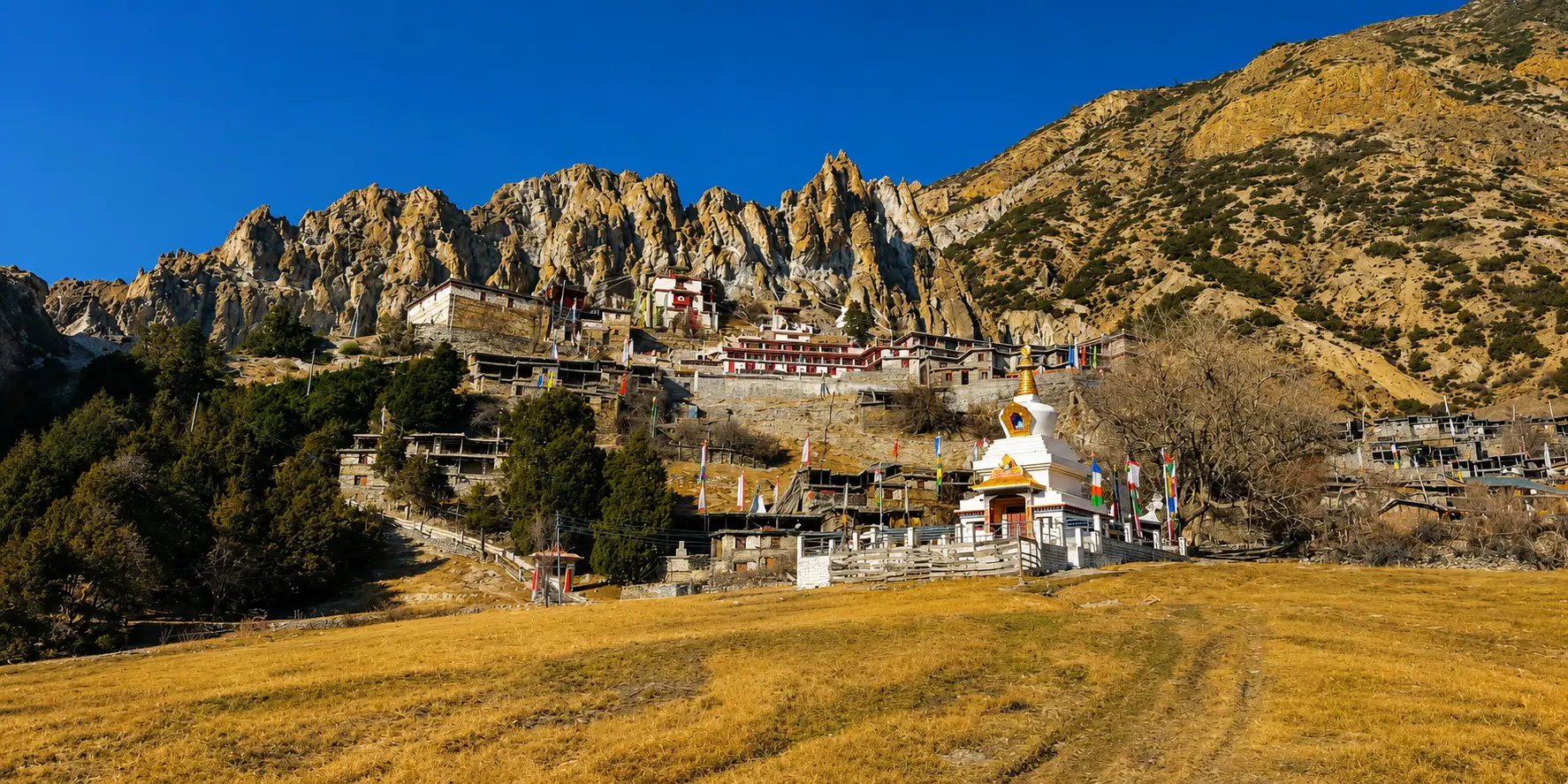
Manang, the high-altitude valley sitting at 3,519 meters beneath the mighty Annapurna and Gangapurna massifs, is one of Nepal’s most dramatic and most rewarding mountain destinations. As the primary acclimatization hub on the classic Annapurna Circuit trek, Manang has long been familiar to experienced Himalayan walkers — but what is less widely known is that the same dramatic valley, with its ancient monasteries, glacial lakes, yak farms, and front-row Himalayan panorama, is now reachable by private 4WD jeep from Pokhara in a single long day or a comfortable two-day journey, without any requirement for multi-week trekking fitness or a long-distance trail commitment.

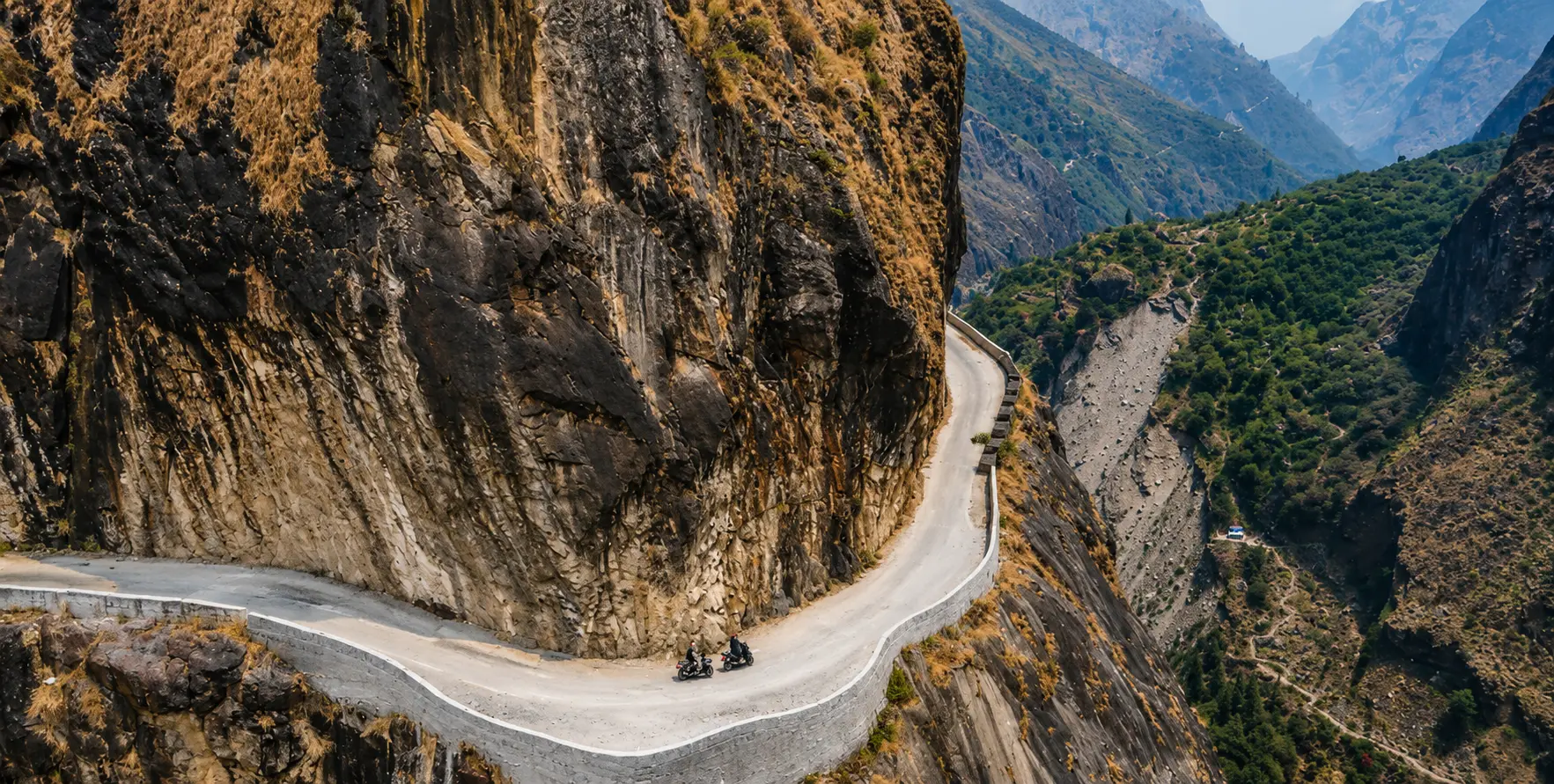
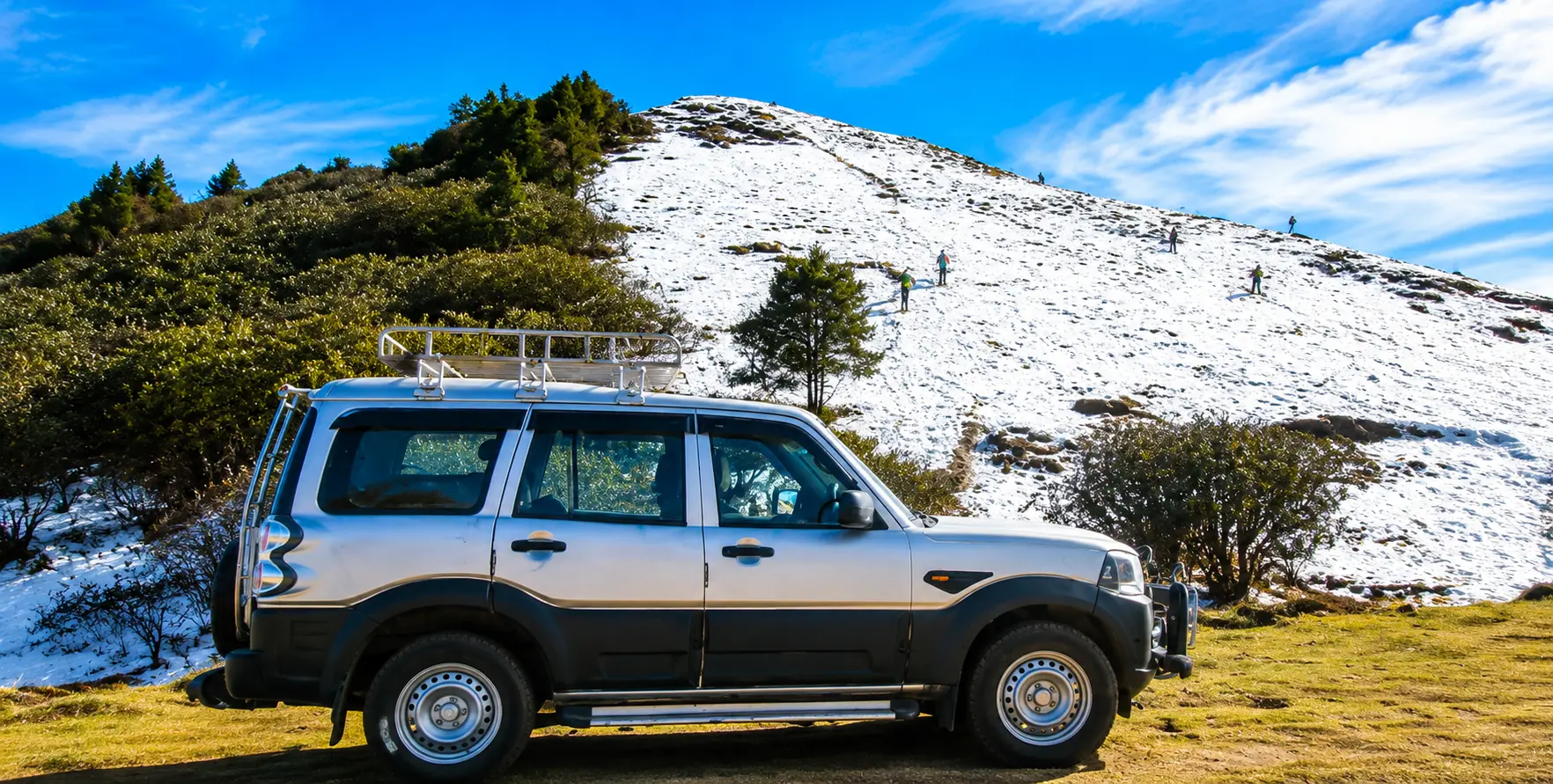
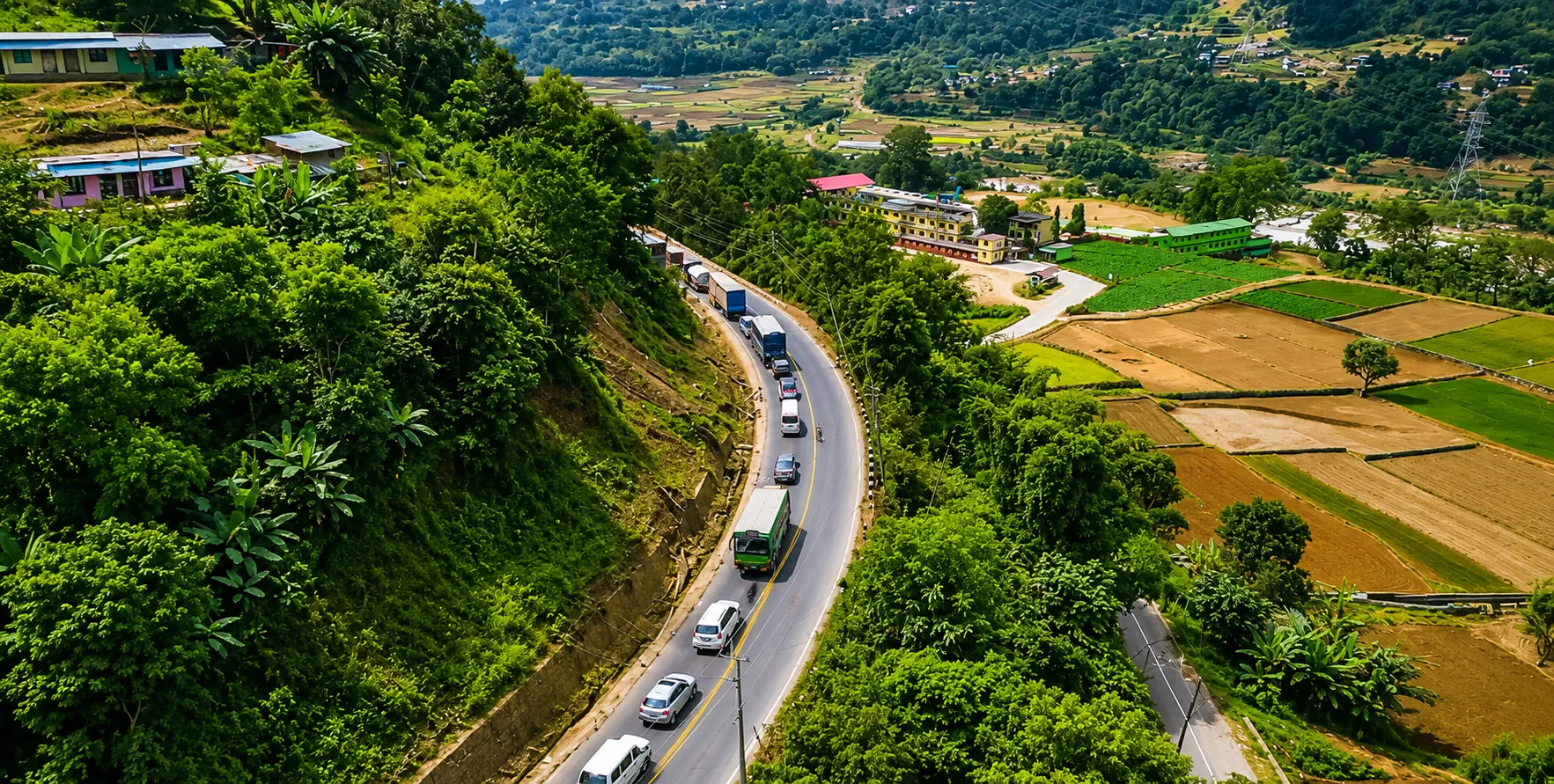
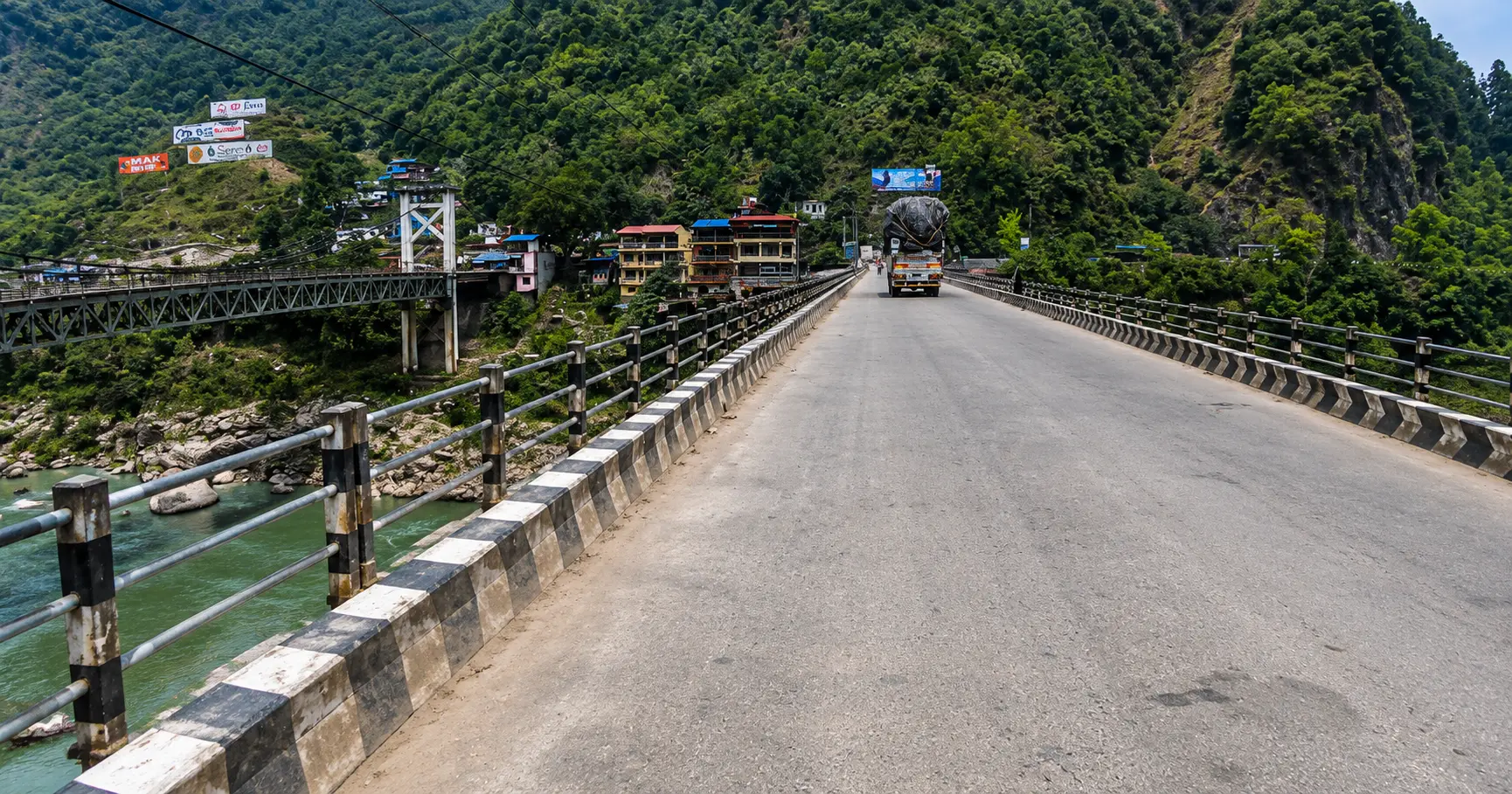
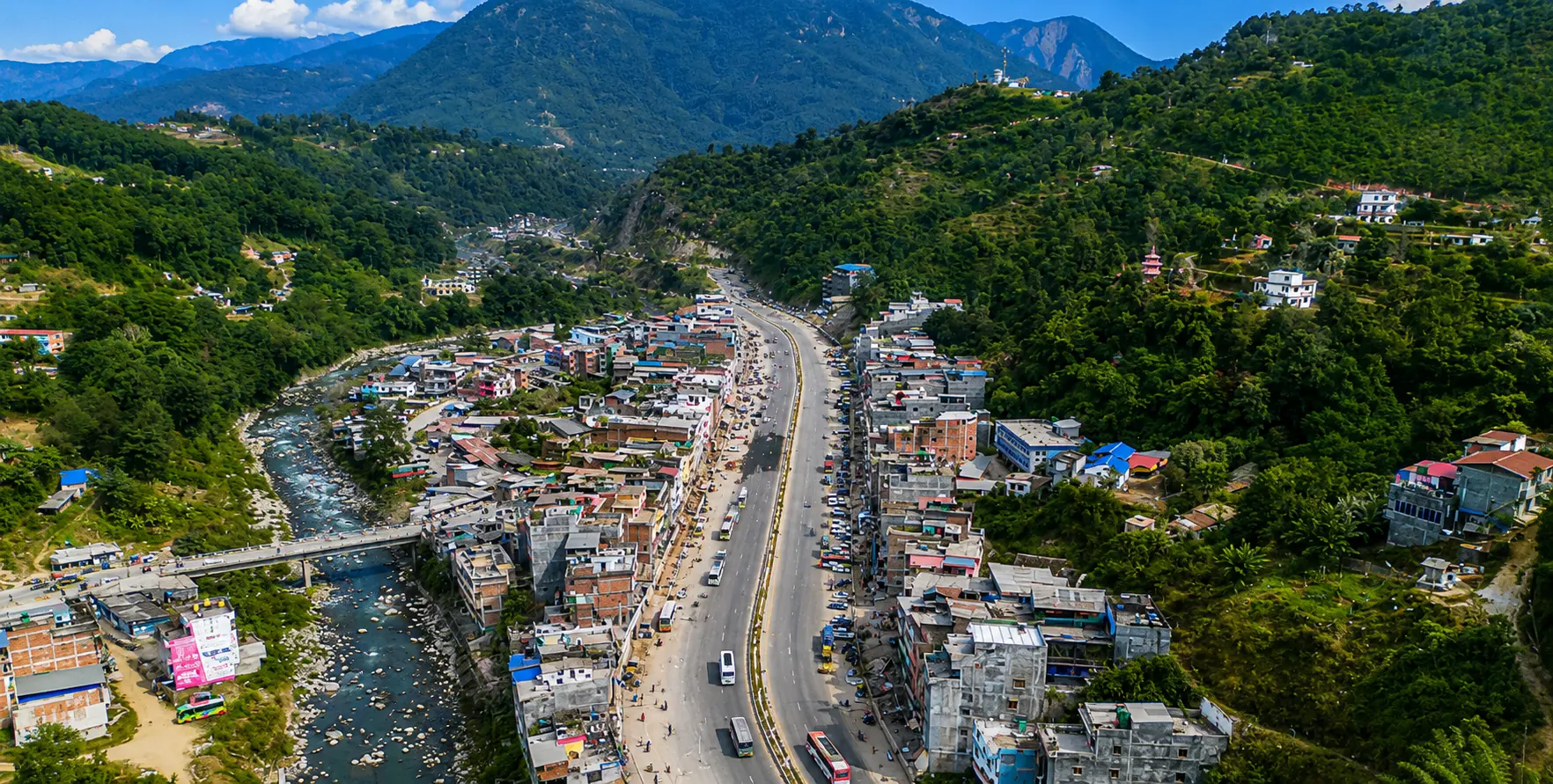
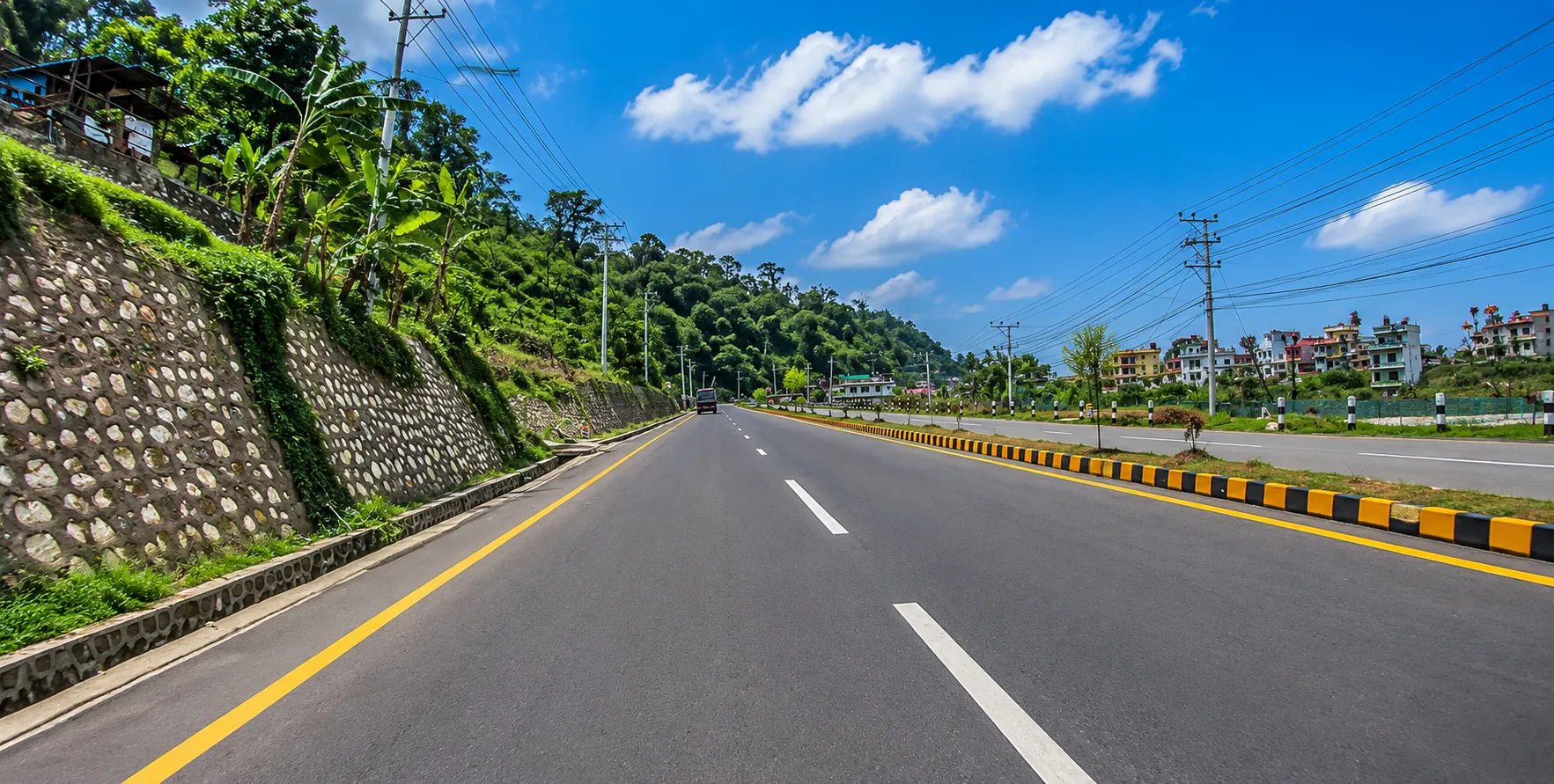
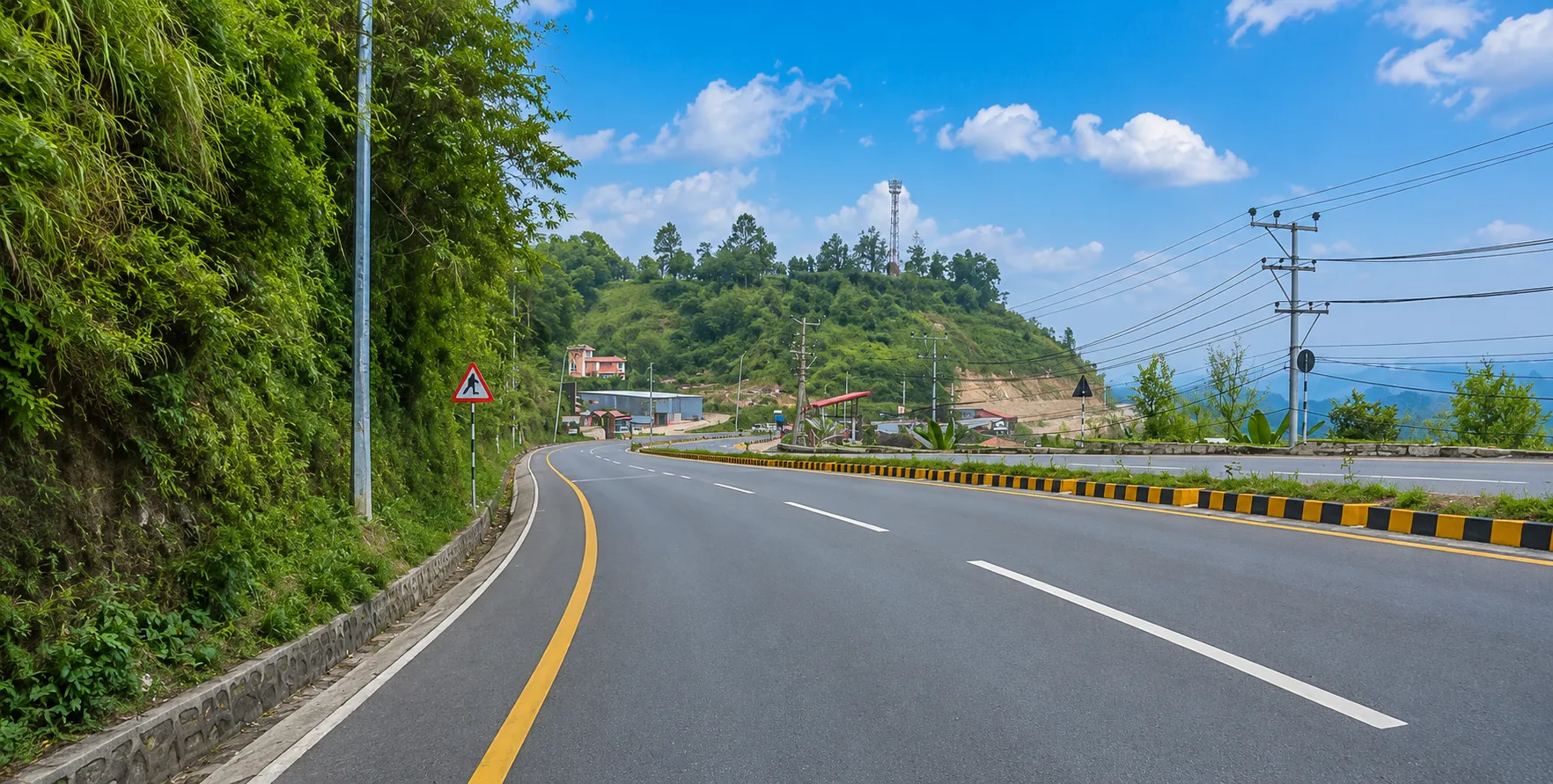
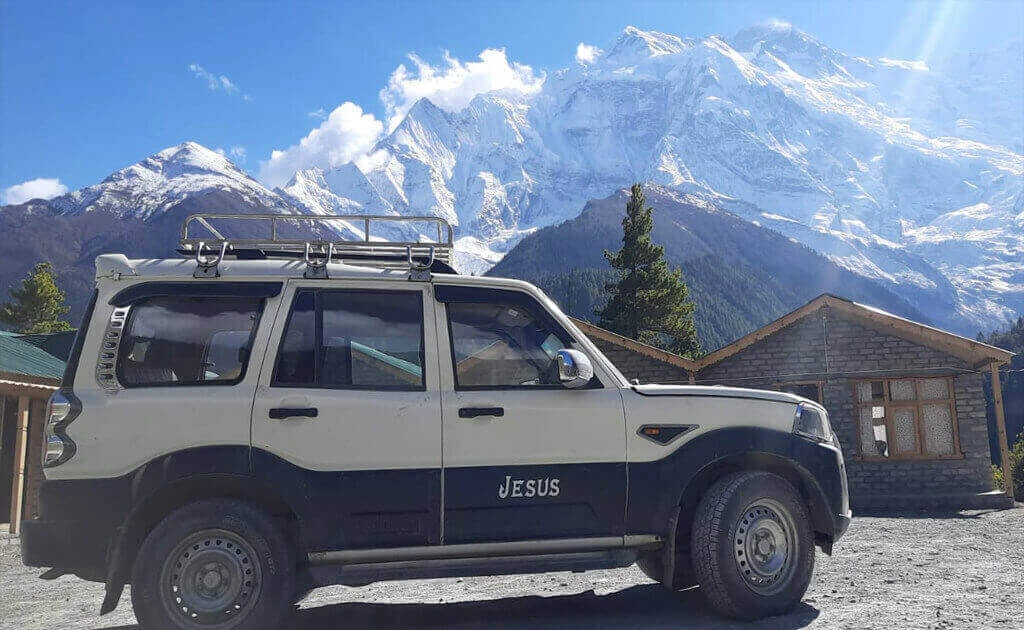
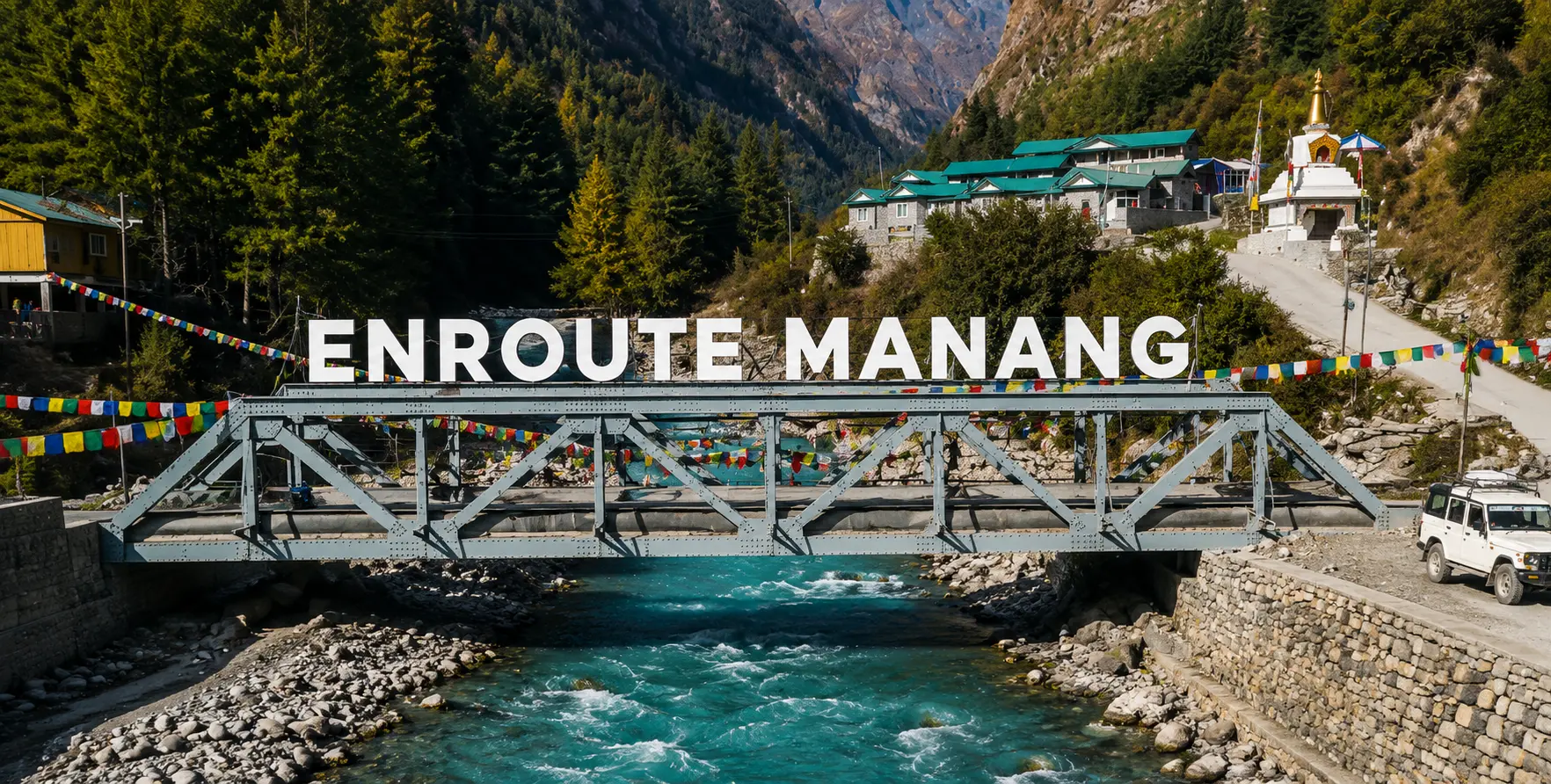
The route from Pokhara to Manang follows the Prithvi Highway to Besisahar before climbing into the Marsyangdi River gorge on the famous Annapurna Circuit road — initially paved and smooth, progressively rougher and more dramatic as the track climbs through Bhulbhule, Jagat, Dharapani, and Chame before delivering vehicles into the wide, high-altitude basin of Manang itself. It is a genuinely spectacular drive — one of Nepal’s finest overland journeys — and one that requires a 4WD vehicle, an experienced driver, and a sensible approach to altitude acclimatization given how rapidly the route gains elevation in its upper half.

This complete 2026 guide covers everything: the full route and its key stops, all transport options and costs, the important question of how to handle altitude safely on this journey, what to do once you reach Manang, required permits, and how Nepal Vehicle Hiring Pvt Ltd provides the private jeep transfer that makes this journey smooth, safe, and comfortable.

The growing popularity of Pokhara as a base for the Manang jeep journey reflects several practical advantages that the Pokhara approach has over the better-known Kathmandu start. At roughly 180 km from Pokhara versus 265 km or more from Kathmandu, the Pokhara approach is considerably shorter — reducing the total drive time by roughly 2 to 3 hours and making a single-day journey to Manang far more realistic from Pokhara than it ever is from Kathmandu, where the same itinerary almost always requires an overnight stop along the route.
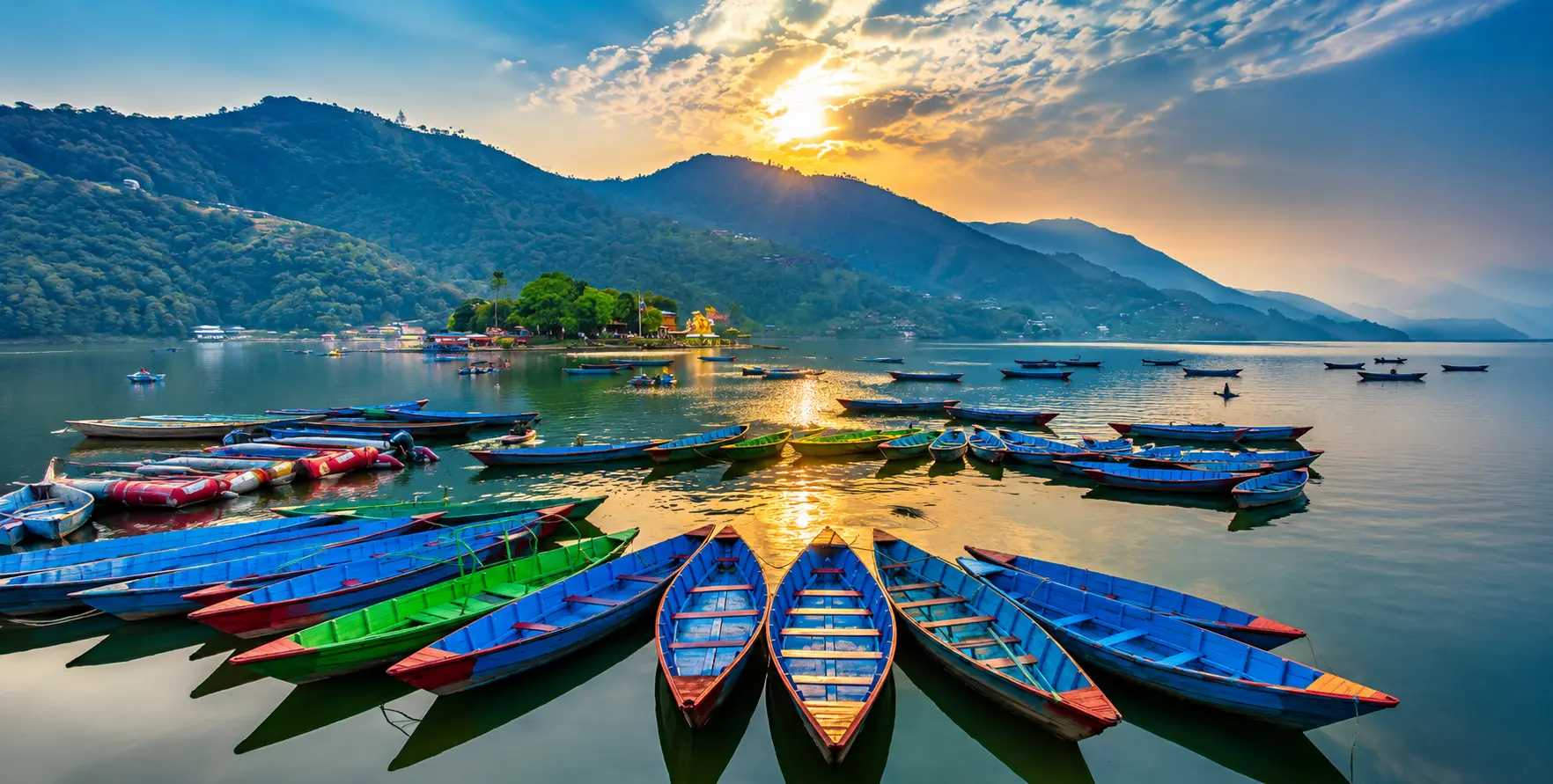
Pokhara is also, increasingly, where many Nepal visitors want to be: the city’s lakeside atmosphere, its proximity to the Annapurna foothills, and its status as the natural base for Annapurna region adventures of all kinds make it the logical starting point for a Manang jeep journey as well as for the Poon Hill, Mardi Himal, and Annapurna Base Camp trekking routes covered elsewhere in our blog series. For travelers spending several days in Pokhara, a two-day Manang excursion — driving up on Day 1, exploring Manang and the surrounding lakes and monasteries on Day 2, and returning to Pokhara on Day 3 — has become one of the most popular short adventure packages available from the lakeside city.

Key Facts at a Glance


Route DetailInformation
FromPokhara (827 m)
ToManang (3,519 m)
Road Distance180 km (Pokhara to Manang via Besisahar)
Private Jeep Travel Time7 to 9 hours (often split into 2 days with overnight at Chame or Dharapani)
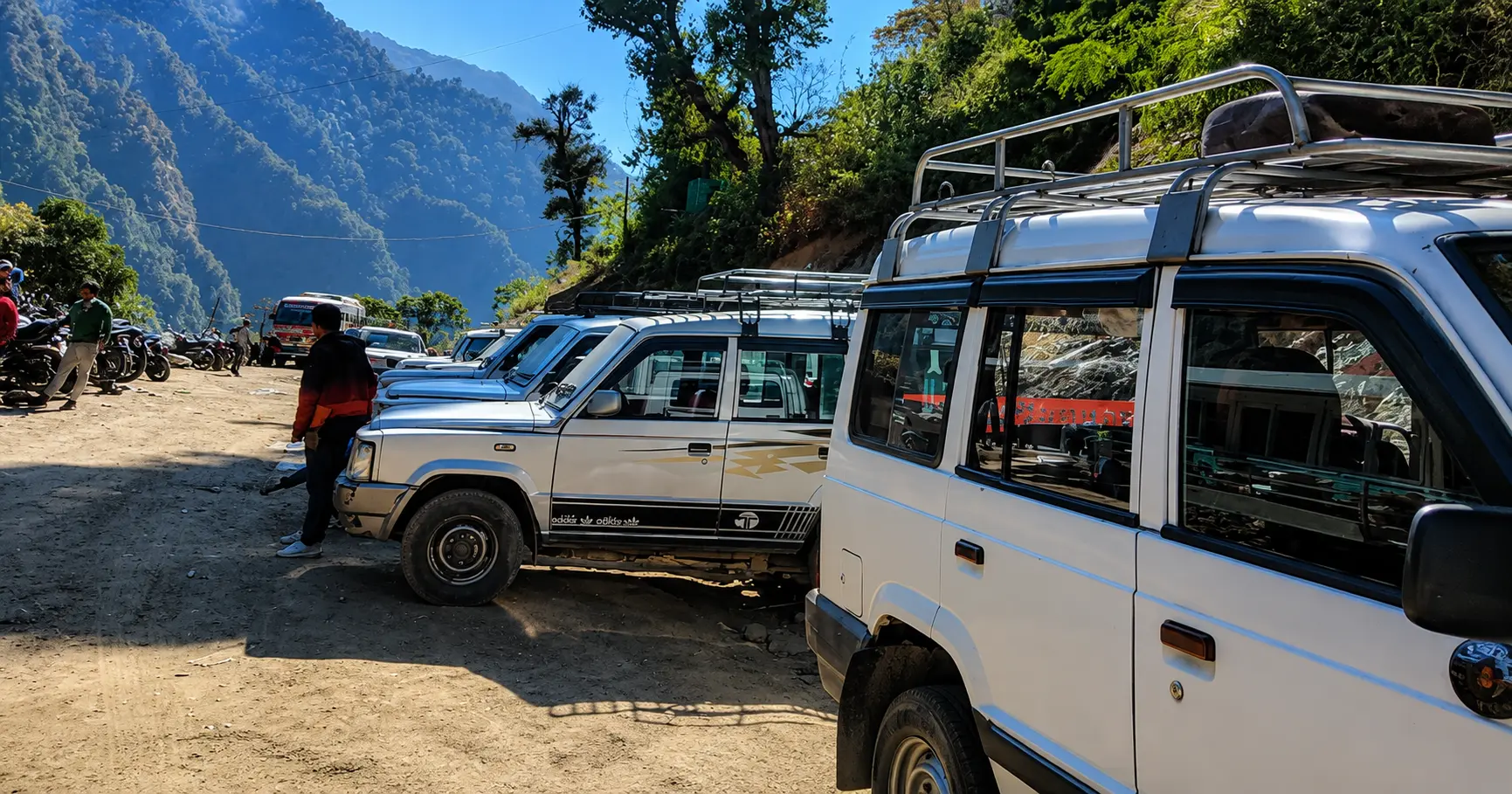
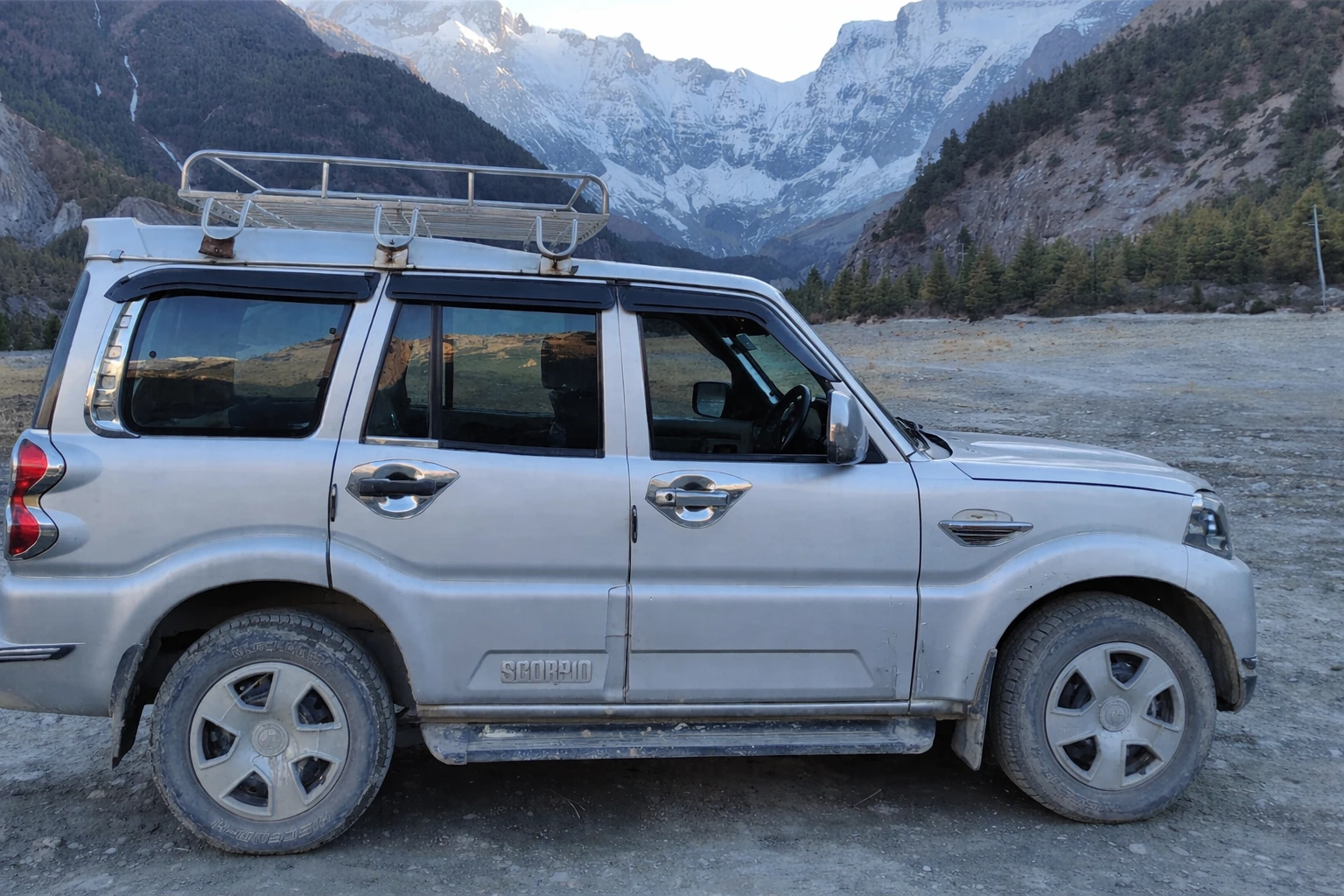
Recommended vehicle4WD Scorpio or Hilux — mandatory beyond Besisahar
RoutePokhara – Dumre – Besisahar – Bhulbhule – Jagat – Dharapani – Chame – Pisang – Manang
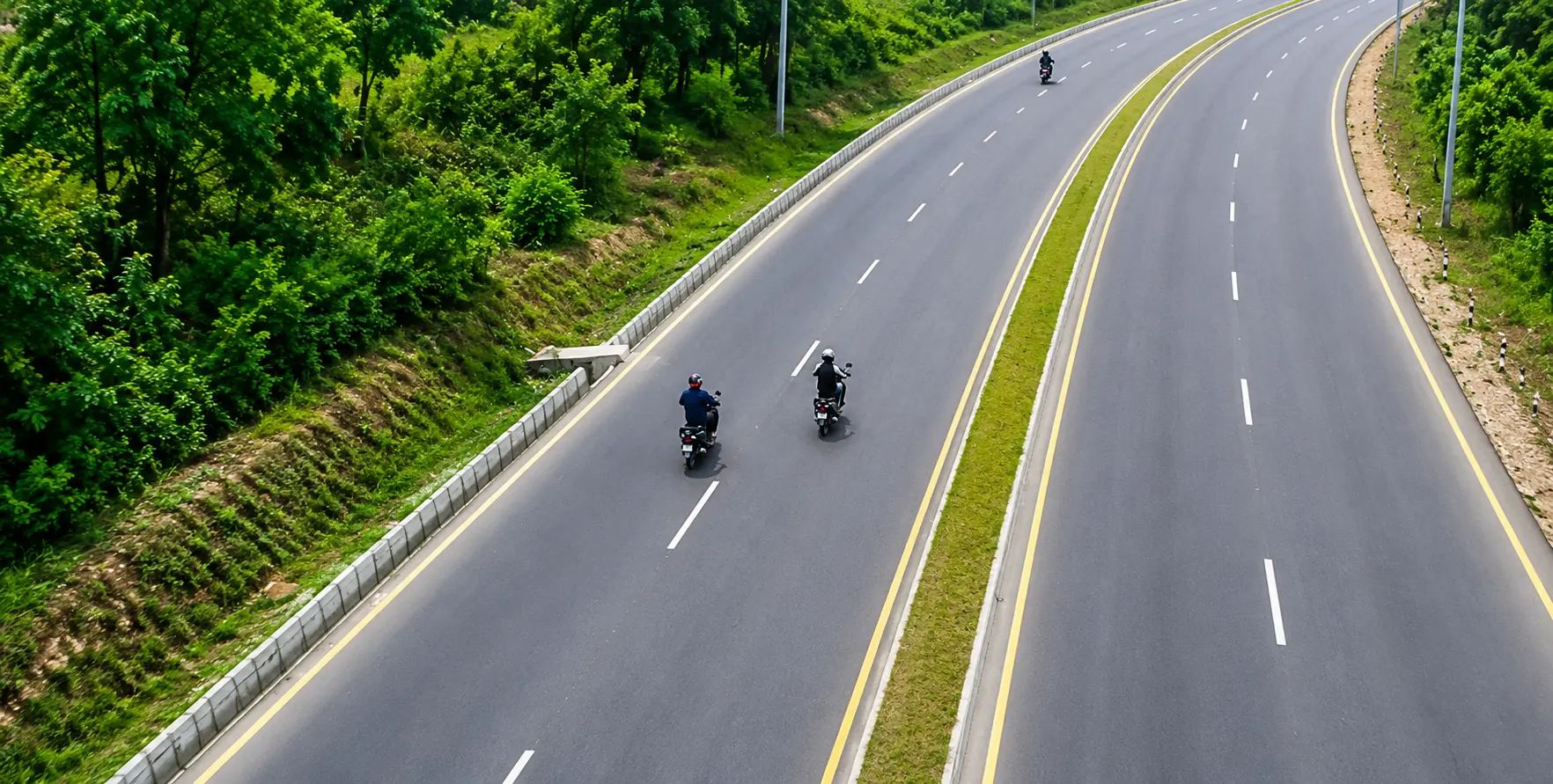
Road TypePaved (Pokhara to Besisahar) + Off-road mountain track (Besisahar to Manang)
ACAP PermitNPR 3,000 (USD 22-25) per person — mandatory
TIMS CardUSD 10-20 per person — recommended
Best SeasonOctober-November and March-May
Altitude GainPokhara 827 m to Manang 3,519 m — acclimatization stop strongly recommended


ALTITUDE ALERT: Manang sits at 3,519 meters — 2,692 meters higher than Pokhara. Driving this elevation gain in a single day, while possible, carries a genuine risk of Acute Mountain Sickness (AMS) for many travelers. Nepal Vehicle Hiring Pvt Ltd strongly recommends the 2-day approach with an overnight stop at Dharapani (1,860 m) or Chame (2,670 m) for any traveler who has not previously spent time above 3,000 m.
All Transport Options — Pokhara to Manang 2026


Transport OptionCost (2026)Travel TimeBest For
Private Jeep (Pokhara-Manang direct)NPR 25,000-38,000 / USD 190-285 (full vehicle)7-9 hrs one day OR 2 days with overnightGroups wanting comfort + flexibility
Private Jeep (2-day: Pokhara-Besisahar Day 1; Besisahar-Manang Day 2)NPR 28,000-42,000 / USD 210-315 (full vehicle, 2 days)~5 hrs Day 1 + ~5 hrs Day 2Best for acclimatization; recommended approach
Shared Jeep (Besisahar-Manang)NPR 1,500-2,500 / USD 12-20 per person5-7 hrs (Besisahar to Manang only)Budget travelers already at Besisahar
Tourist Bus (Pokhara-Besisahar) + shared jeepNPR 400-700 bus + NPR 1,500-2,500 jeep per person3-4 hrs bus + 5-7 hrs jeepBudget — slower, multiple transfers
Round Trip Private Package (Pokhara-Manang-Pokhara)NPR 45,000-65,000 / USD 340-490 (full vehicle)2 days each waySightseeing groups; most popular Manang tour format

Why Private Jeep Is the Right Choice for This Route

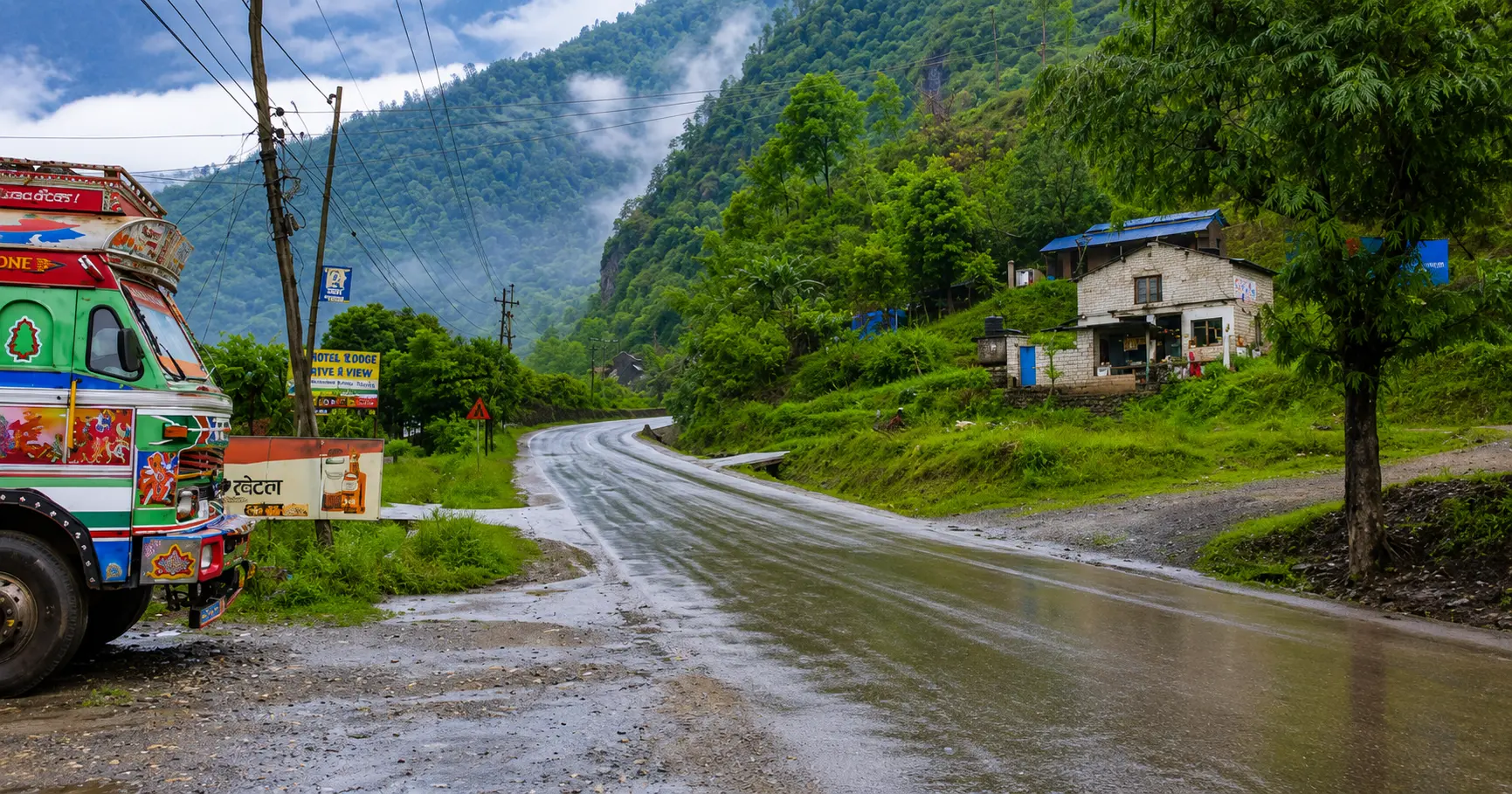
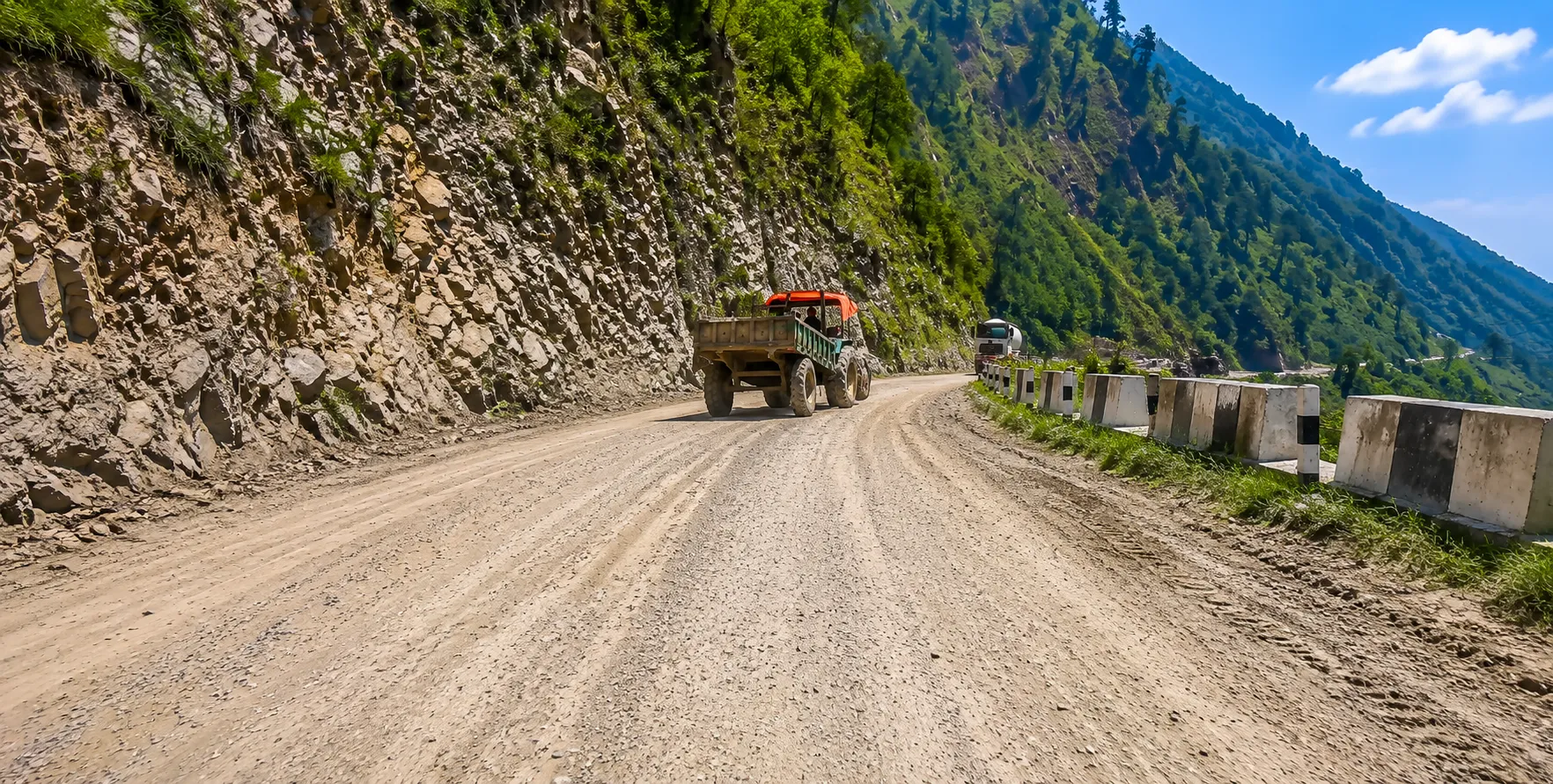
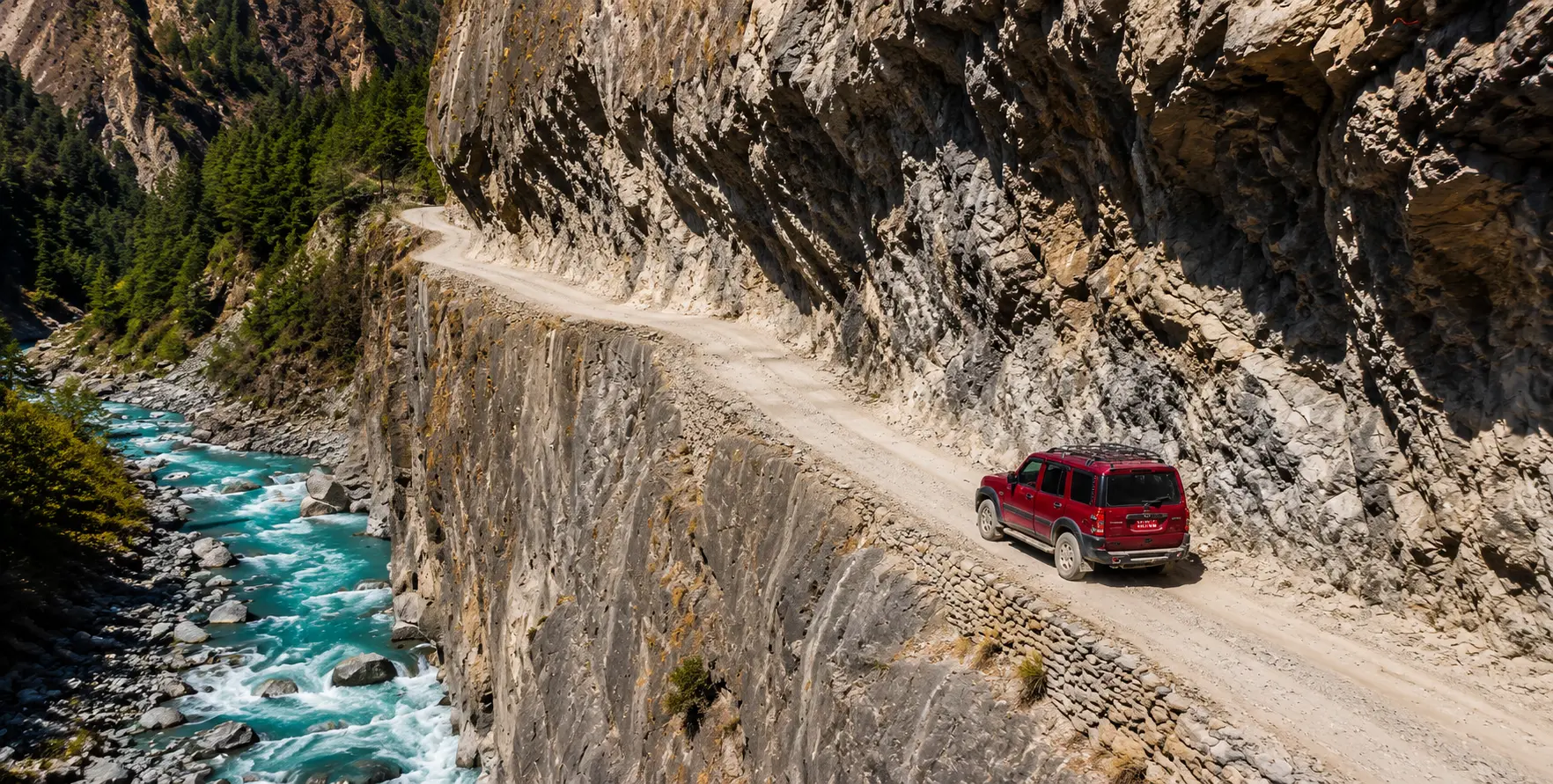
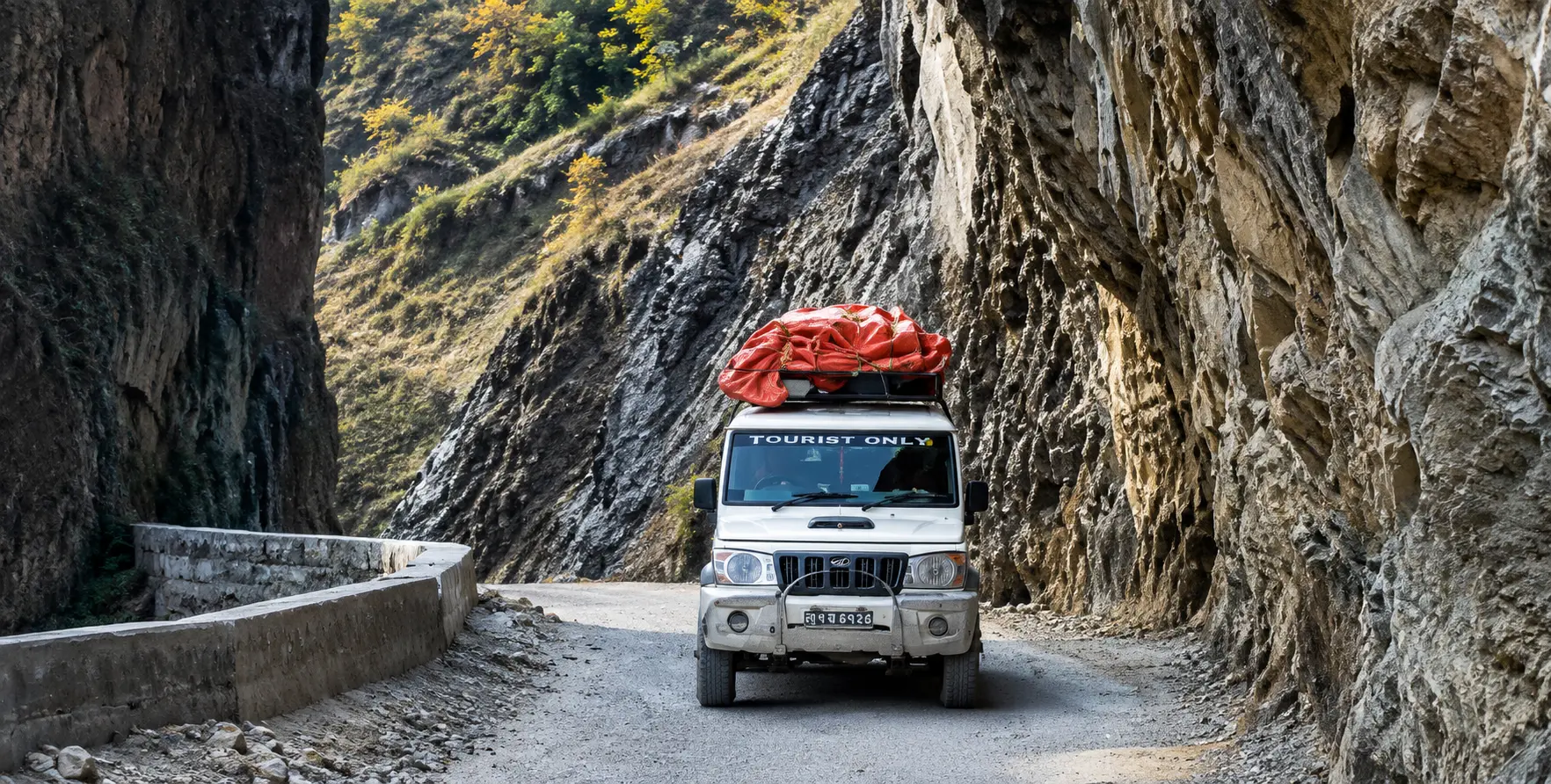
Beyond Besisahar, the Annapurna Circuit road that leads to Manang is a rough, unpaved mountain track that passes through some of Nepal’s most dramatic and least forgiving terrain. The Marsyangdi River gorge between Bhulbhule and Dharapani involves cliff-edge driving, river crossings, steep gradient sections, and the accumulated damage of seasonal weather and trekking-season traffic that makes any non-4WD vehicle genuinely unsuitable. Shared jeeps and local vehicles do operate on this route, but they typically stop at Besisahar or depart only when fully loaded — removing the schedule flexibility and direct hotel-to-hotel comfort that a private vehicle provides from Pokhara.

For a group of 4 to 6 sharing a private Scorpio or Hilux, the per-person cost of a full round-trip Pokhara-Manang-Pokhara private jeep at NPR 45,000 to 65,000 works out at approximately USD 55 to 100 per person — comparable to or cheaper than piecing together public transport across several separate legs, and dramatically more comfortable, flexible, and reliably safe on the demanding upper gorge sections.
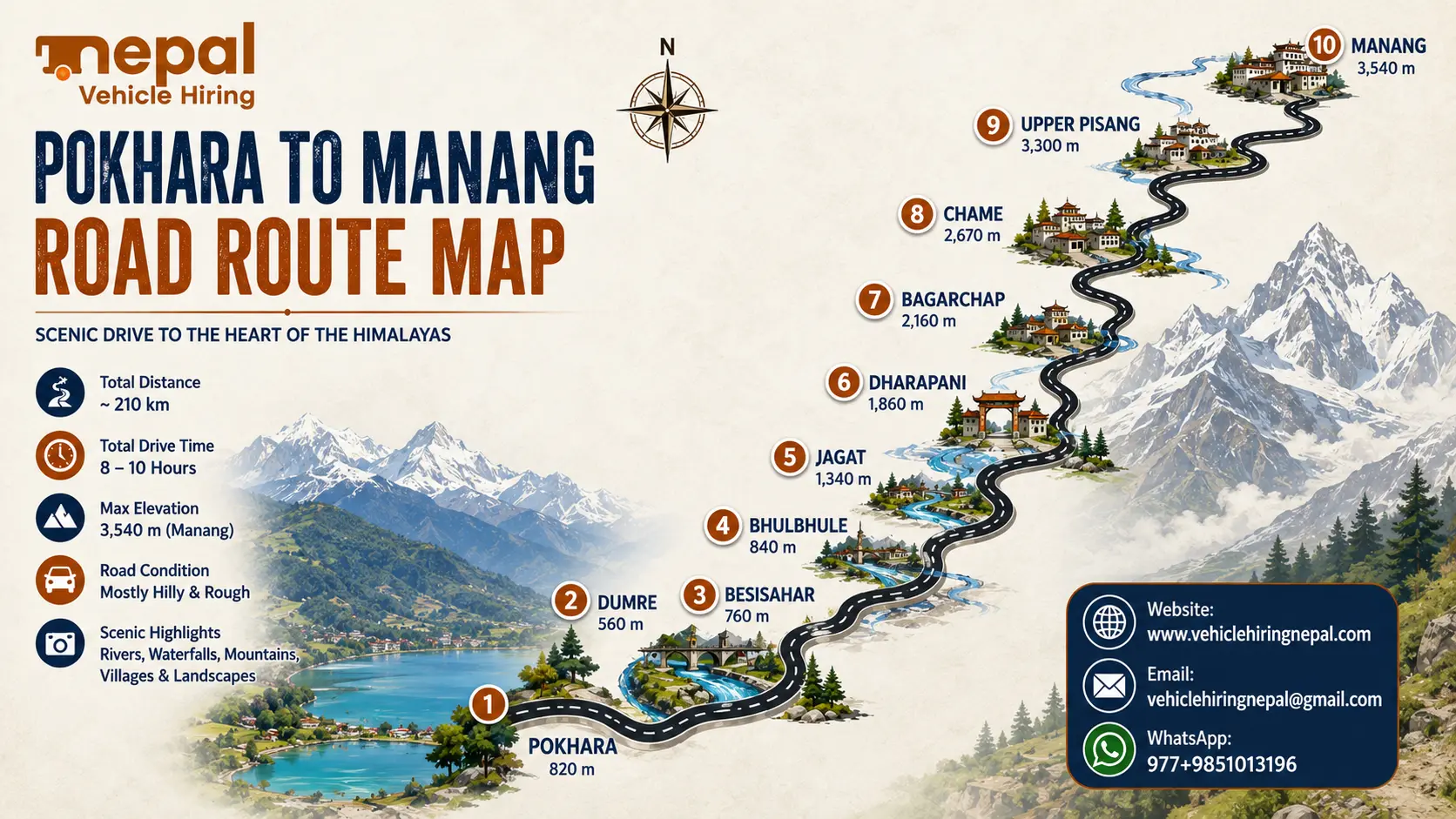
The Route — Pokhara to Manang Step by Step


StopDistance from PokharaAltitudeRoadNotes
Pokhara (Lakeside)Start827 mCity roadsHotel pickup — depart 6:00-7:00 AM
Dumre97 km365 mPrithvi Highway (paved)Junction town — turn north toward Besisahar
Besisahar142 km760 mPaved highwayGateway to Annapurna Circuit; ACAP + TIMS checkpoint
Bhulbhule155 km840 mOff-road beginsLast riverside flat section; waterfalls visible
Jagat175 km1,340 mRocky off-roadManaslu Circuit permits checked here too
Dharapani195 km1,860 mRough off-roadCommon overnight stop for 2-day itineraries
Bagarchap / Danaque200 km2,160 mRough off-roadGompa visible; landscape becoming alpine
Chame215 km2,670 mRough off-roadManang District HQ; apple orchards; another good overnight
Upper Pisang230 km3,300 mRough off-roadChoice of Upper (hill) or Lower Pisang route
Manang250-265 km3,519 mRough off-road endsFinal destination — Gangapurna Lake, Braga Gompa, Tilicho approach

Pokhara to Besisahar — The Comfortable Paved Section

The journey begins on the Pokhara-Kathmandu Prithvi Highway, heading east through the flat Pokhara Valley before climbing gently into the Gandaki hill country toward Dumre Junction at approximately 97 km from Pokhara. Dumre is the turn-off point for Besisahar and the Annapurna Circuit road. This junction also marks the boundary between the comfortable paved highway driving and the increasingly adventurous terrain ahead. From Dumre, the road climbs north to Besisahar, reaching the Annapurna Circuit’s official gateway town at approximately 142 km from Pokhara — a journey of roughly 3 to 4 hours in comfortable highway conditions.

Besisahar is where ACAP permits and TIMS cards are checked at the conservation area entry checkpoint — one of the most important reasons why all permits must be obtained in Pokhara or Kathmandu before departure, as described in the permits section below. Besisahar also has the last reliable fuel stations, ATMs, and comprehensive meal options before Manang — a practical rest stop as well as a checkpoint.
Besisahar to Dharapani — The Gorge Begins

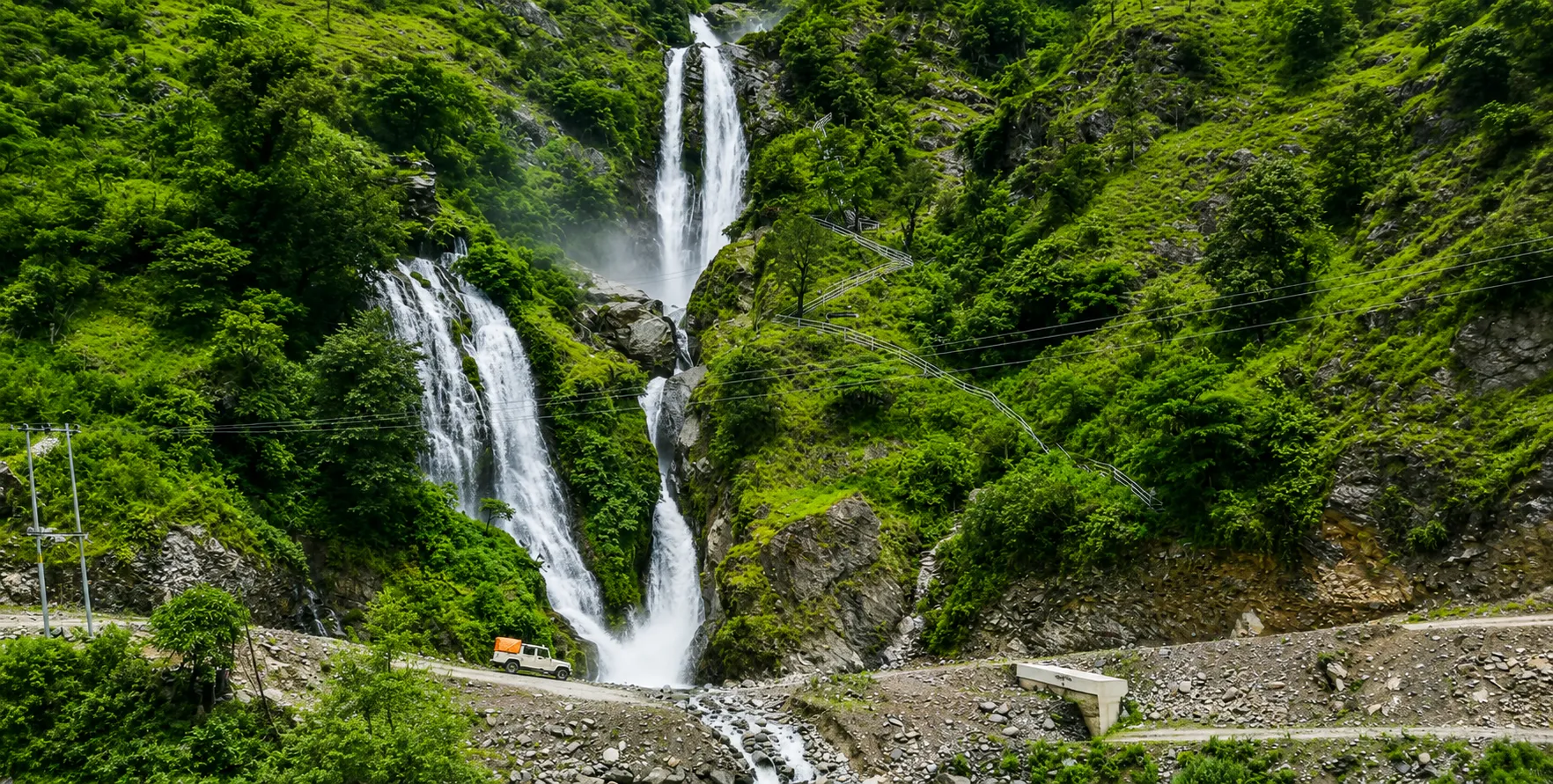
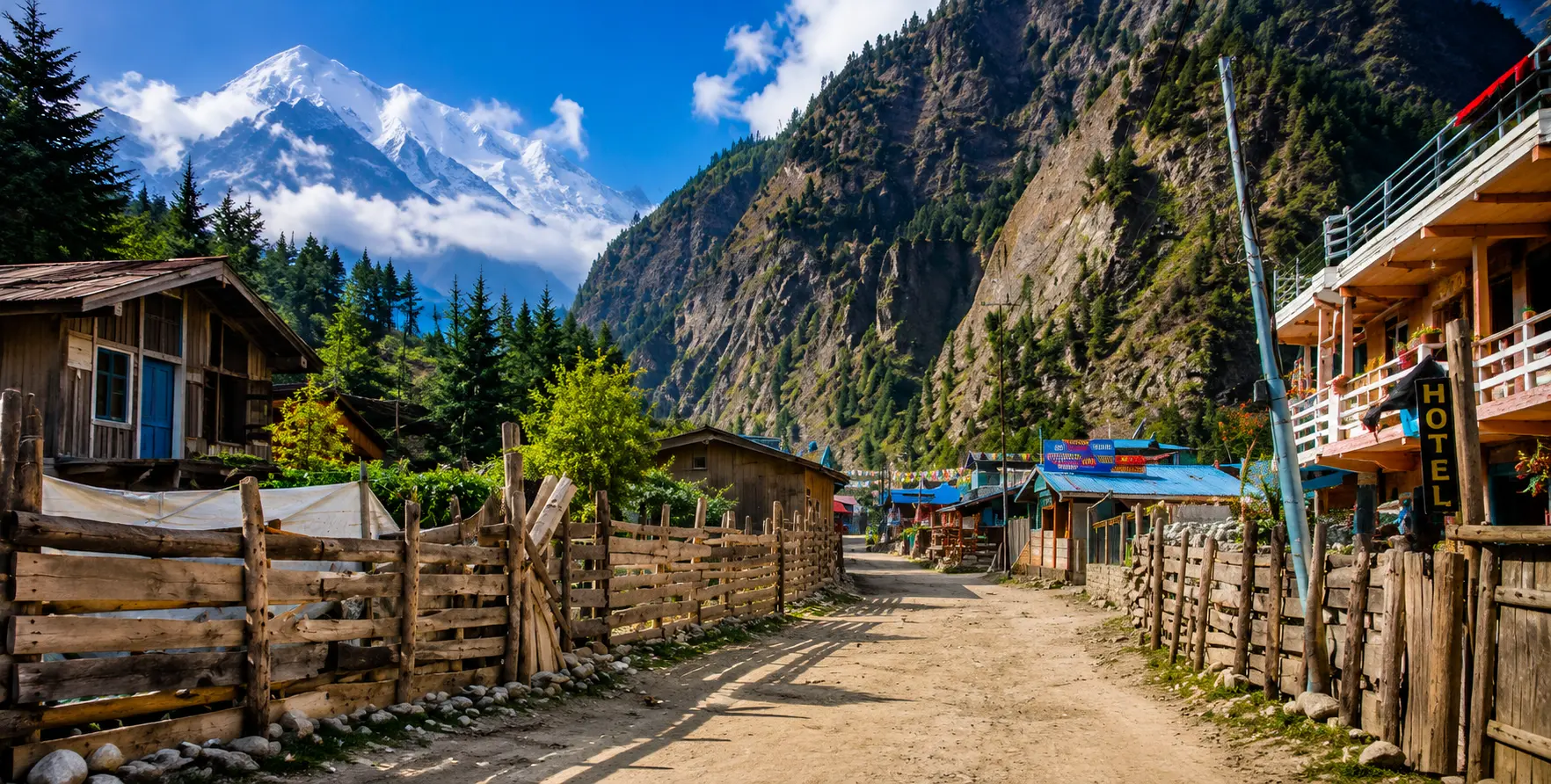
Beyond Besisahar, the road leaves the paved highway behind and begins its transformation into the rough, cliff-edge mountain track that defines the Annapurna Circuit driving experience. The first section, climbing through Bhulbhule, Ngadi, and Jagat, follows the Marsyangdi River through increasingly dramatic gorge terrain — waterfalls visible directly beside the track, the river thundering far below, and the canyon walls rising steeply on both sides. This section is the most genuinely demanding driving of the entire Pokhara-to-Manang route: narrow passing points, exposed cliff edges, and the kind of surface deterioration that monsoon damage and ongoing trekker-jeep traffic creates even in the best dry-season conditions.

Dharapani, at 1,860 meters, marks both the end of the most demanding gorge section and the entry into the progressively more open Manang District valley. For two-day itineraries, Dharapani provides a natural overnight stop that allows meaningful acclimatization at a significantly safer intermediate altitude than pushing directly to Manang’s 3,519 meters in a single day.
Dharapani to Chame — Entering the High Country

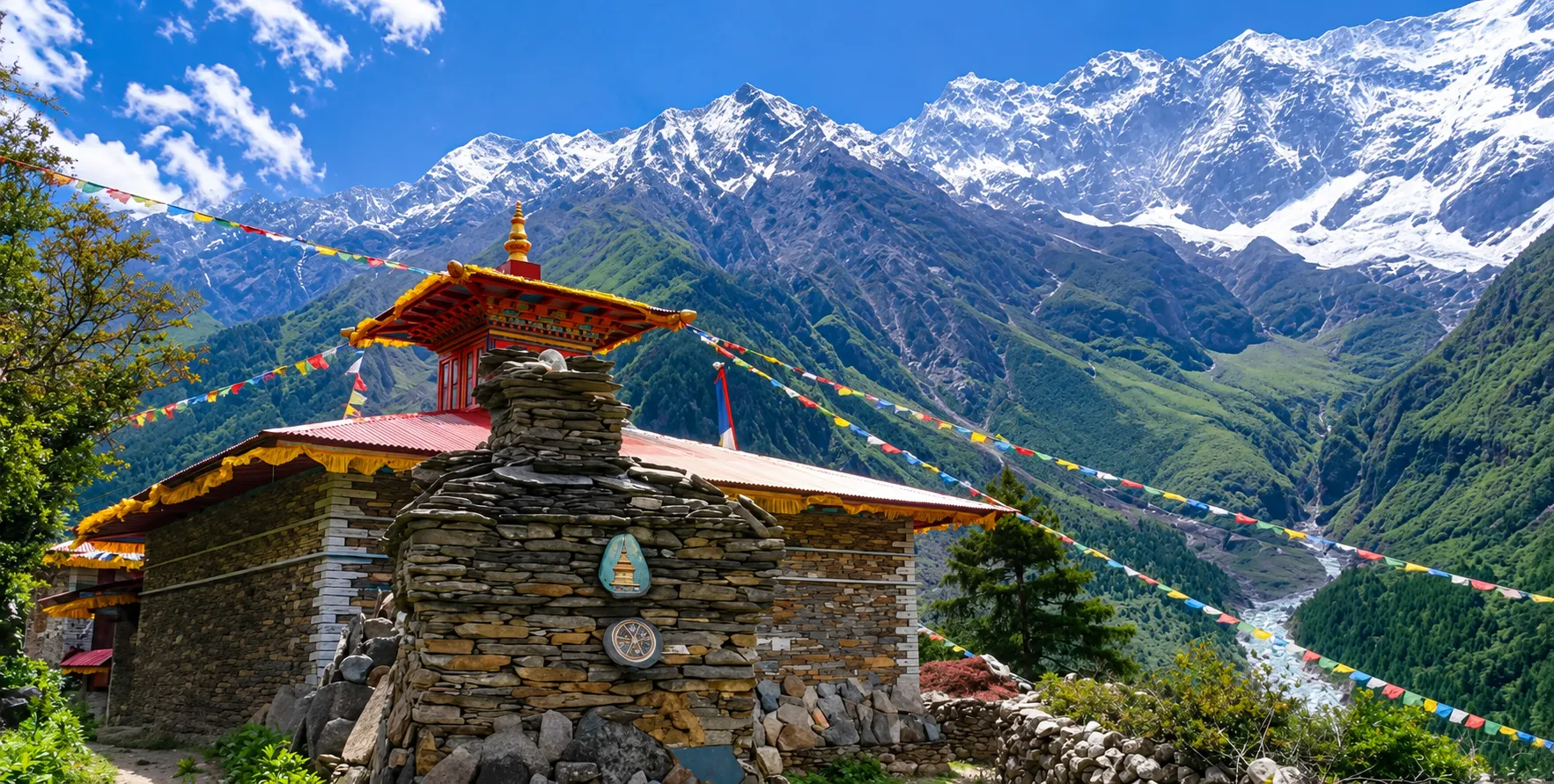
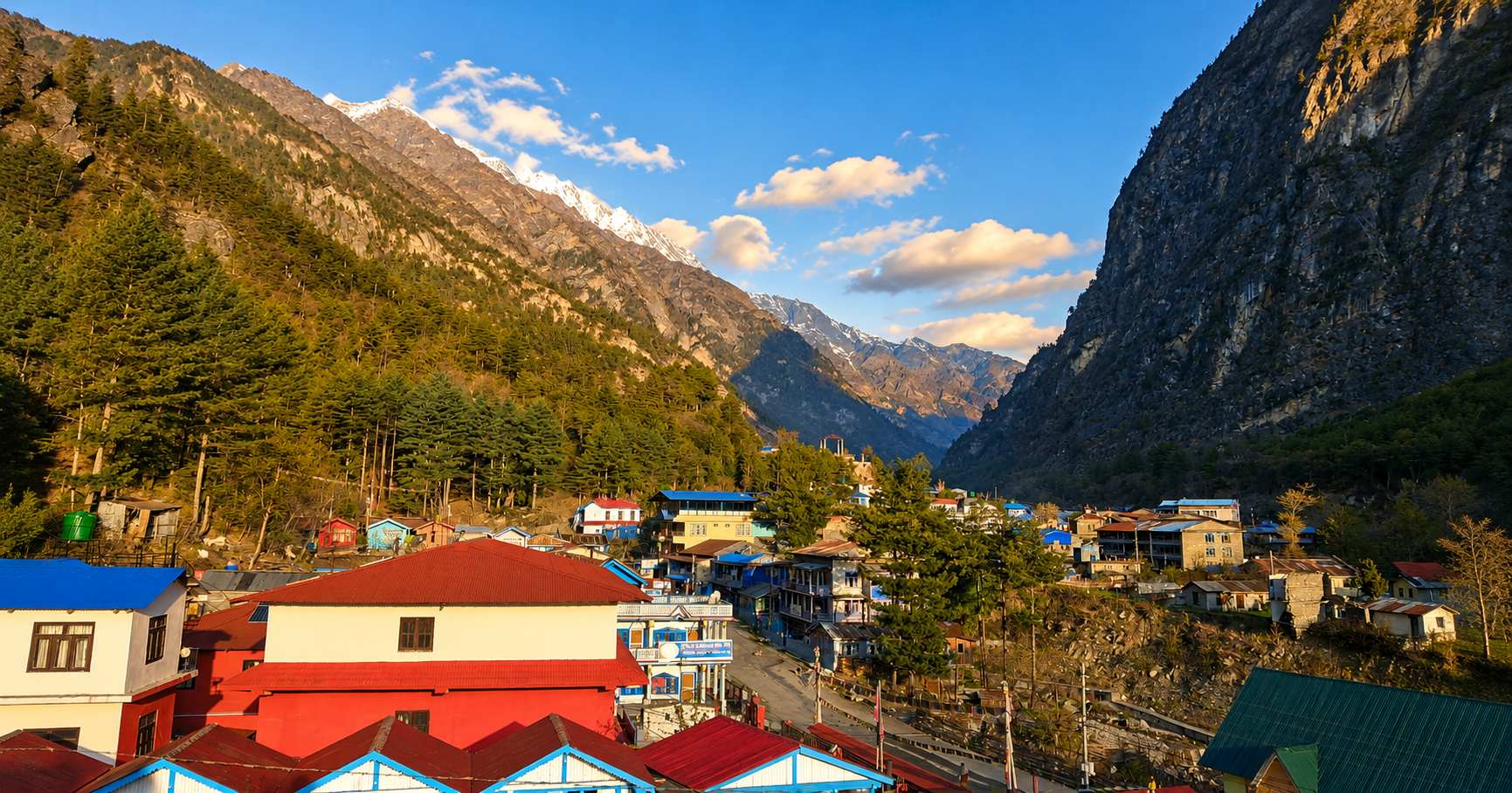
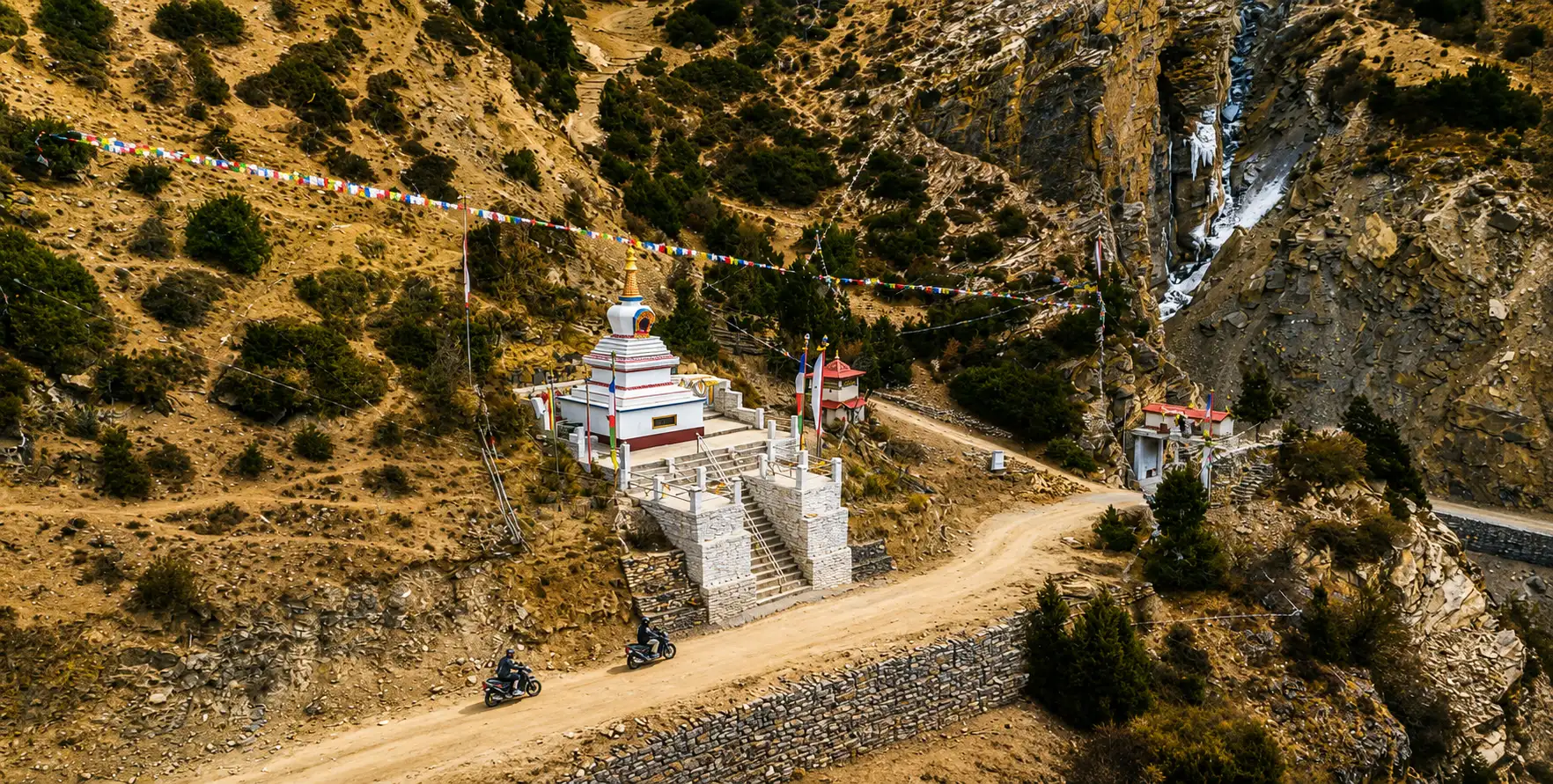
From Dharapani, the road continues through Bagarchap and Danaque, climbing steadily into increasingly alpine terrain. Buddhist monasteries become more frequent and more prominent as the route gains altitude and the Tibetan cultural influence characteristic of the upper Annapurna valley becomes visible in architecture, prayer flags, and chortens. Chame, the administrative headquarters of Manang District at 2,670 meters, is another popular overnight option for travelers wishing to add an extra acclimatization step — particularly advisable for groups including older travelers, anyone with a history of altitude sensitivity, or children.

Chame to Manang — The Annapurna Panorama Unfolds

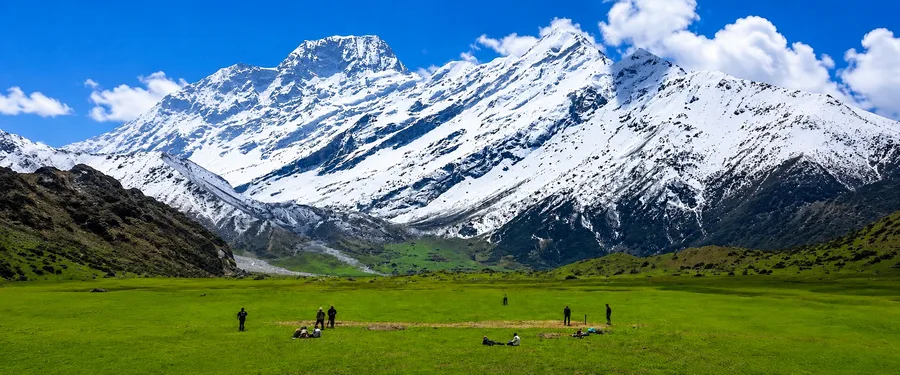
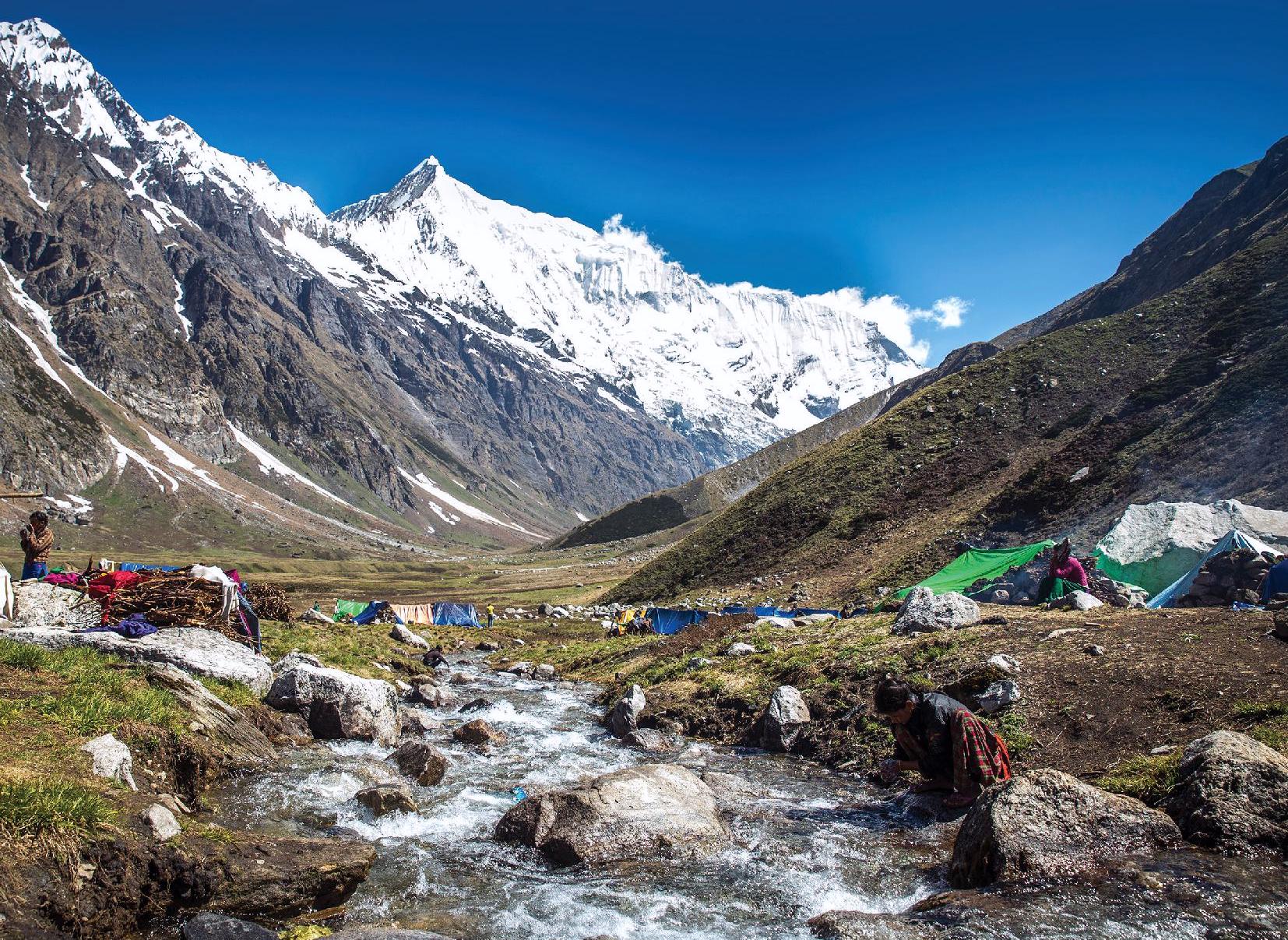
The final section from Chame to Manang delivers what many drivers and travelers describe as the most spectacular scenery of the entire route: the valley progressively widens, the peaks of Annapurna II (7,937 m), Annapurna III (7,555 m), Annapurna IV (7,525 m), and Gangapurna (7,455 m) come into increasingly close and dramatic view, and the landscape transitions from the forest and waterfall character of the lower gorge into the wide, open, Tibetan-influenced high-altitude basin that defines Manang’s unmistakable appearance. The villages of Lower and Upper Pisang — the upper option sitting on a dramatic ridge above the main valley with its own beautiful monastery — offer a brief stop before the final run into Manang itself.
The Altitude Question — The Most Important Safety Consideration

The altitude gain from Pokhara to Manang — from 827 meters to 3,519 meters in a single driving day — is the single most important safety factor for anyone planning this journey. Acute Mountain Sickness (AMS) does not discriminate by age, fitness, or previous trekking experience, and driving to 3,519 meters in a single day, while physically possible for the vehicle, exceeds the recommended daily altitude gain of 300 to 500 meters per day for safe acclimatization above 3,000 meters.

  • The Two-Day Approach: Nepal Vehicle Hiring Pvt Ltd recommends all Pokhara-to-Manang journeys be split across two days, with an overnight stop at either Dharapani (1,860 m) or Chame (2,670 m). This adds one driving day to the schedule but dramatically reduces AMS risk and makes the Manang stay itself considerably more enjoyable by ensuring travelers arrive rested and acclimatized rather than symptomatic.
  • Day Hikes from Manang: Even after the recommended two-day approach, spend at least one full day at Manang altitude before any further ascent. The classic Manang acclimatization hike to Ice Lake (4,600 m) or the viewpoint above Gangapurna Lake is an excellent way to go higher by day while sleeping lower by night.
  • AMS Warning Signs: Headache, nausea, loss of appetite, and fatigue on arrival in Manang are common mild symptoms. If these worsen over 12 to 24 hours rather than improving, descend immediately to Chame or Dharapani — do not push on hoping symptoms will resolve at altitude.
  • Diamox: Discuss with a doctor before departure whether acetazolamide (Diamox) is appropriate for your specific health situation and itinerary. It is available at pharmacies in Kathmandu and Pokhara.

ACCLIMATIZATION RECOMMENDATION: Even for a two-day journey, Nepal Vehicle Hiring Pvt Ltd drivers are instructed to offer an optional additional rest stop at Chame on the Day 2 approach if any passenger reports headache or discomfort — building this flexibility directly into the driving schedule rather than treating it as a schedule disruption.
What to Do in Manang — Making the Most of Your Stay


AttractionDistance from ManangWhy Visit
Gangapurna Lake1 km walkGlacial lake fed by Gangapurna Glacier — stunning turquoise color
Braga Gompa (monastery)3 km walkOne of the oldest monasteries in the Annapurna region; ~500 years old
Ice Lake (Kicho Tal)3-4 hrs hikeHigh-altitude lake at 4,600 m — one of the best day hikes from Manang
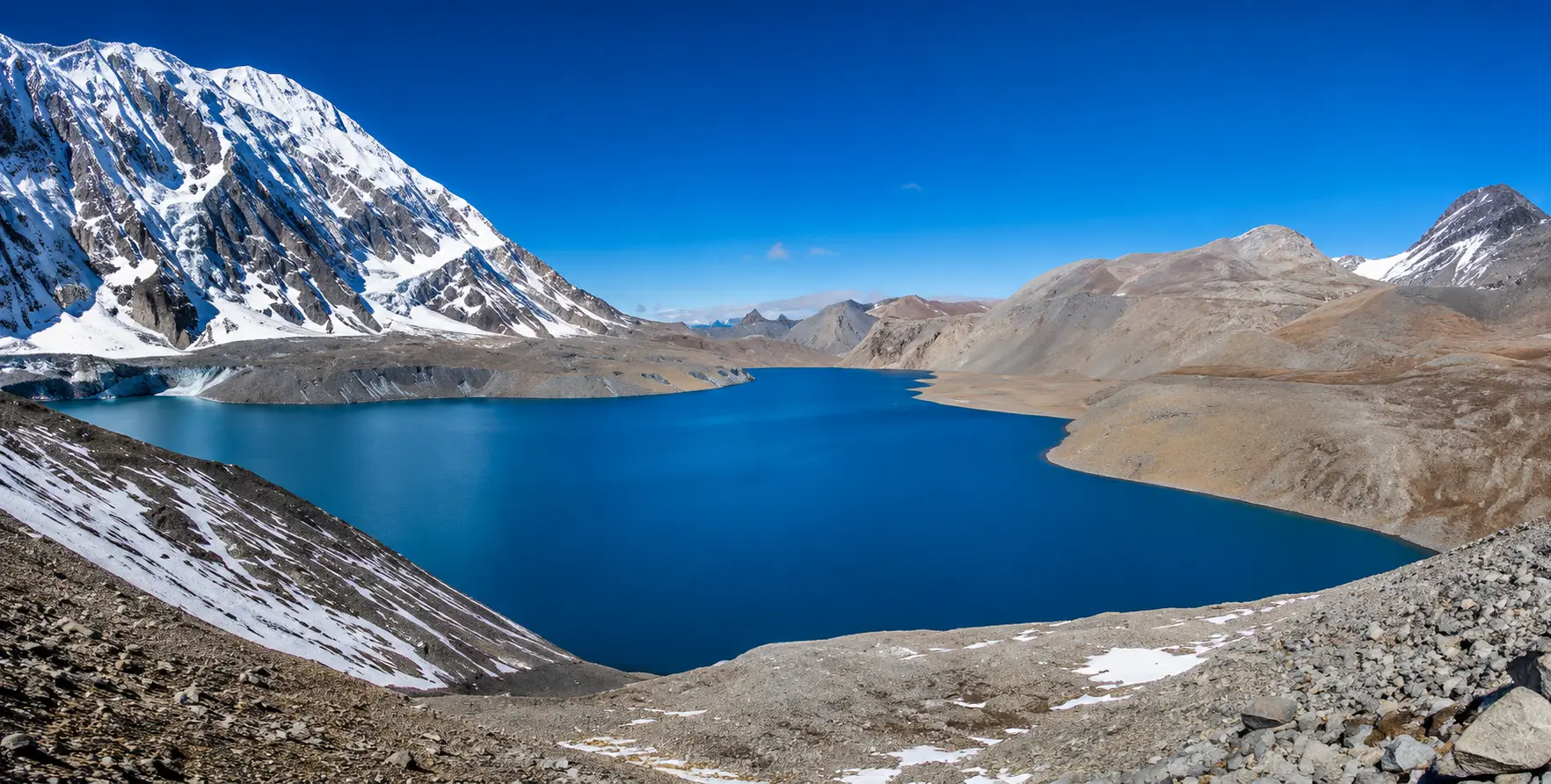
Tilicho Lake Base Camp approach4-5 hrs jeep + walkHighest large lake in the world at 4,919 m — jeep track toward base camp
Manang BakeryIn villageFamous high-altitude bakery — apple pie and cinnamon rolls at 3,519 m
Khangsar Village6- 7 kmHighest village accessible by jeep; spectacular Annapurna III views


Manang Village — Life at 3,519 Meters

Manang village itself, with its flat-roofed stone houses, prayer wheel lanes, and yak-grazing pastures, is a destination worth spending unhurried time in regardless of any specific attraction. The village has developed a surprising range of teahouses, bakeries, and even a few surprisingly well-stocked small shops serving the steady flow of Annapurna Circuit trekkers who pass through — most notably the famous Manang Bakery, whose apple pie, cinnamon rolls, and hot chocolate served at 3,519 meters have achieved a near-legendary status among Himalayan trekkers. A short walk through the village in the early morning or evening, when the high-altitude light turns the Annapurna peaks a deep orange-gold, requires no agenda beyond simply being present in a place this beautiful.
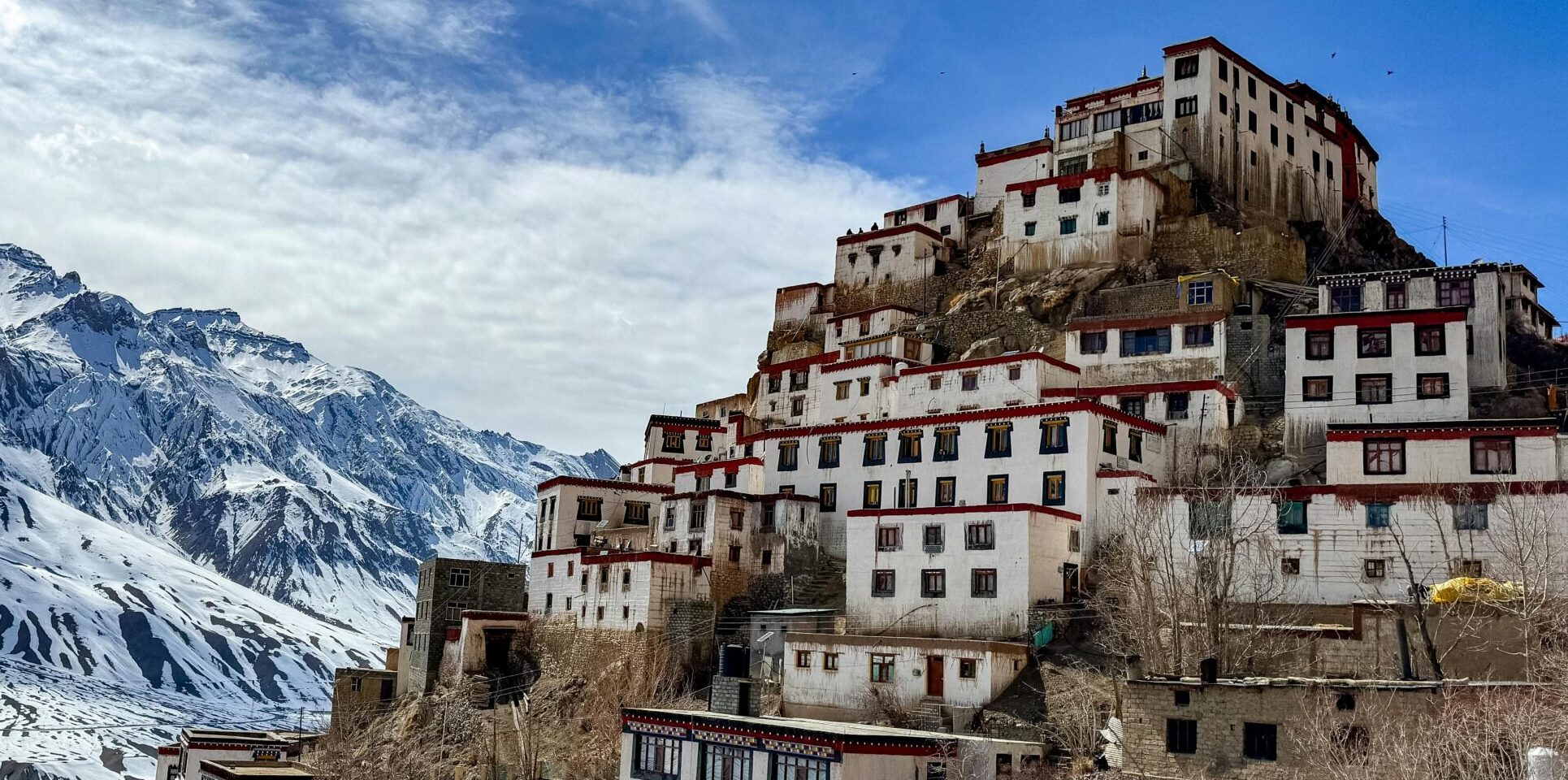
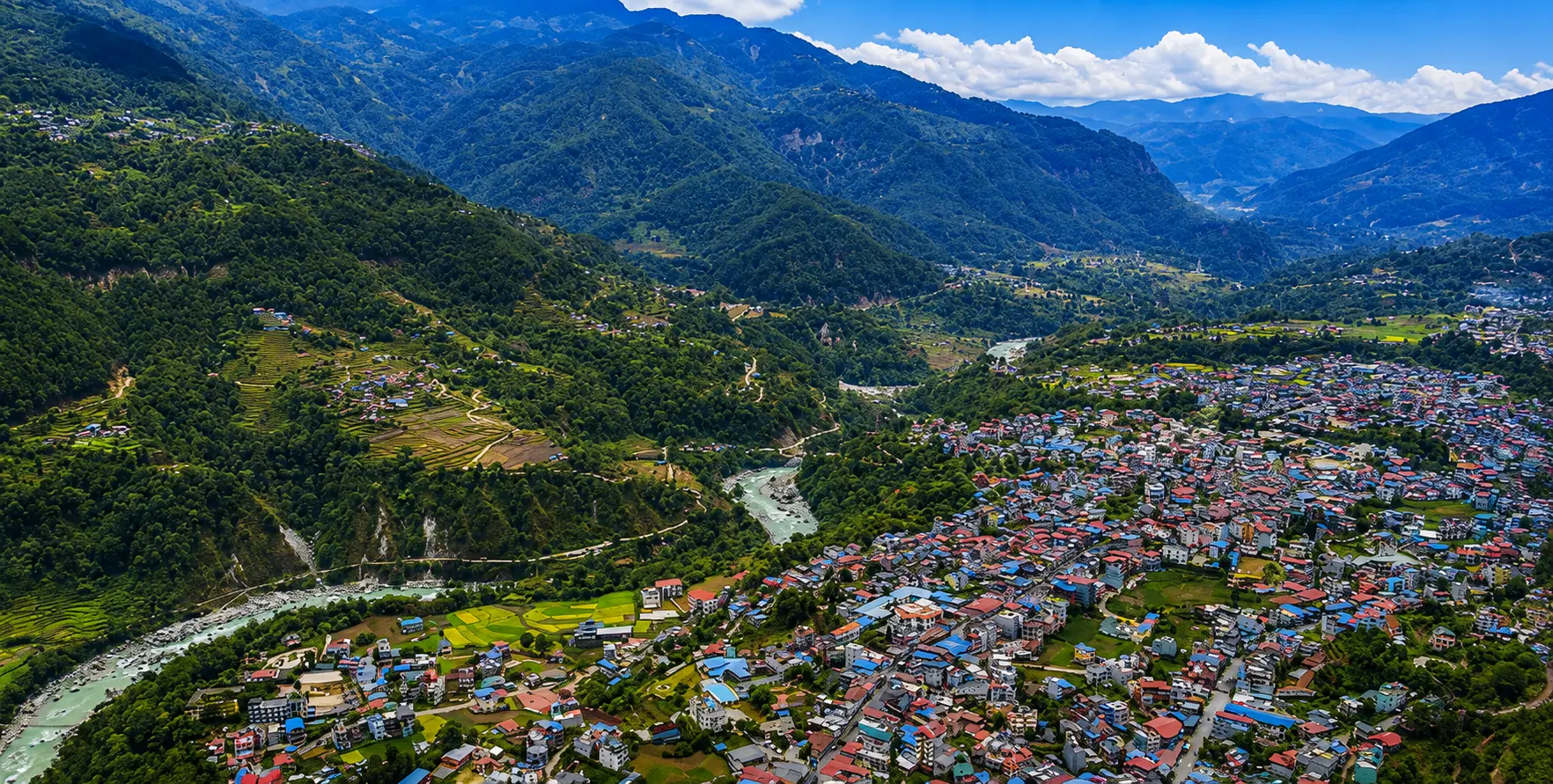
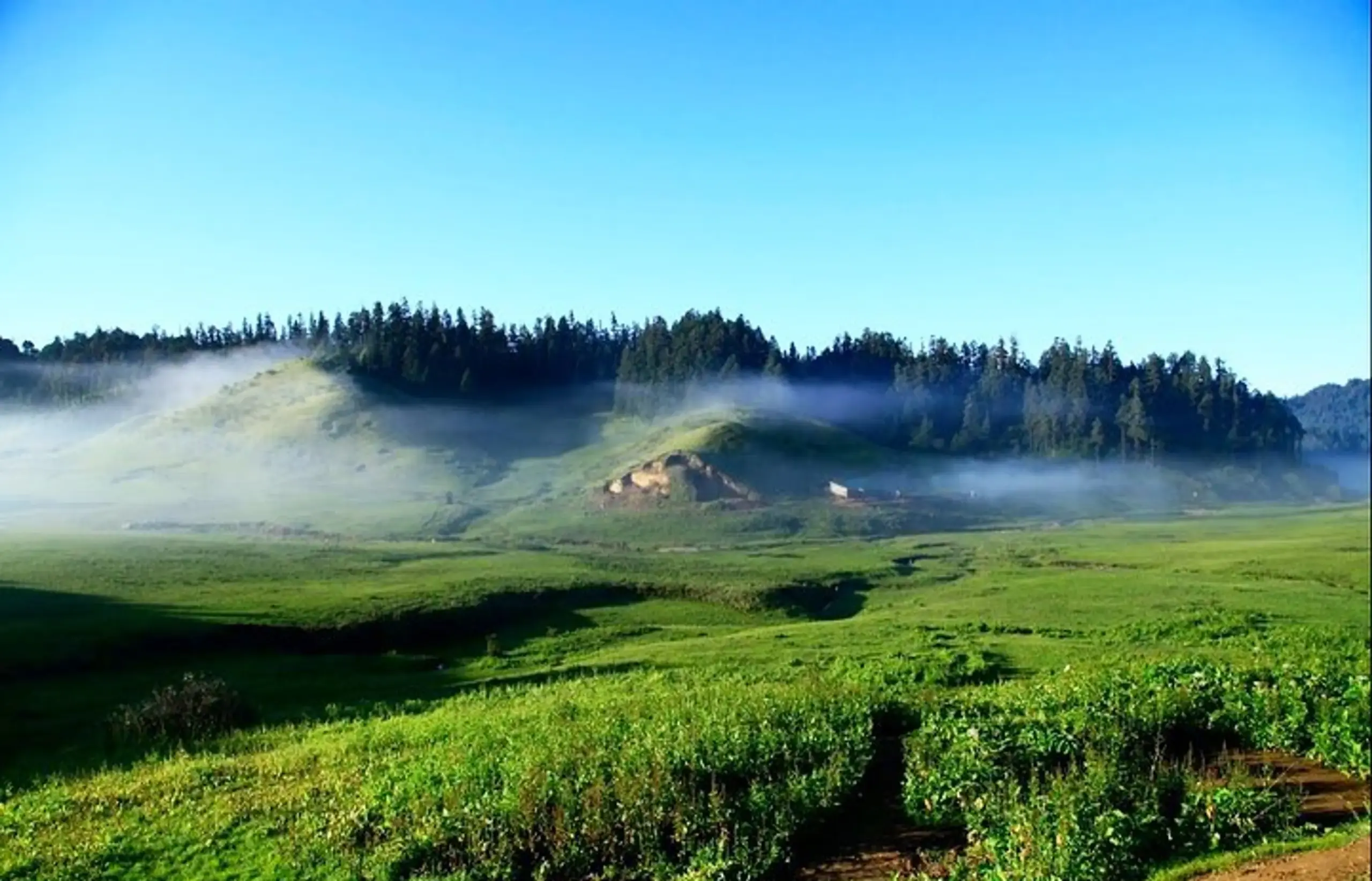
Manang valley
Manang valley

Braga Gompa — Ancient Monastery Above the Valley

Braga Gompa, perched dramatically above the valley floor approximately 3 kilometers from Manang village, is one of the oldest and most culturally significant Buddhist monasteries in the entire Annapurna region, with foundations dated to approximately 500 years ago and an interior housing one of the most impressive collections of ancient statues, thangka paintings, and religious artifacts of any Annapurna-region monastery accessible without multi-day trekking. The short hike up to Braga from Manang village gains approximately 200 vertical meters and offers increasingly open views of the Annapurna panorama as it climbs.

Gangapurna Lake — The Glacial Mirror

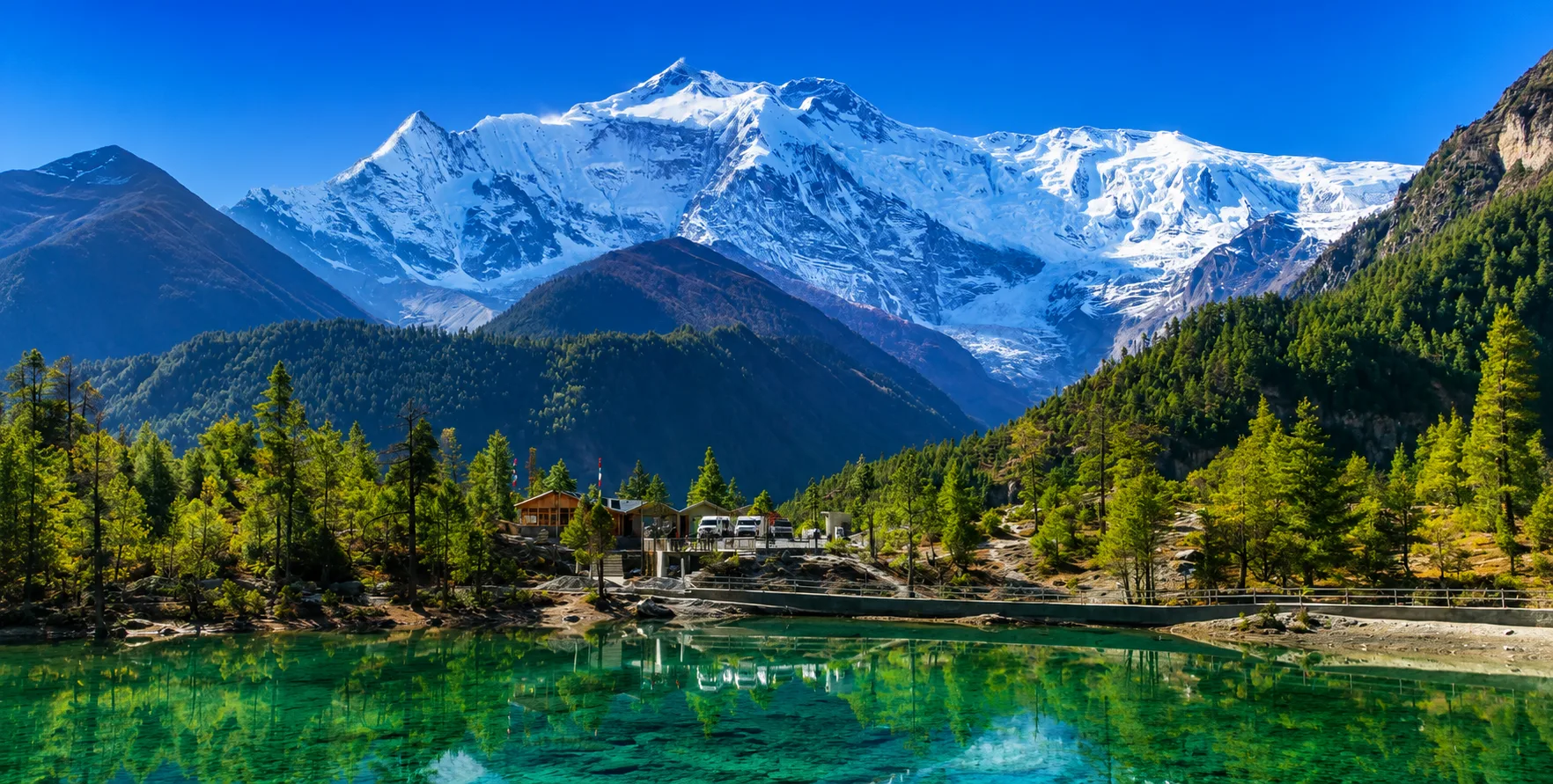
Gangapurna Lake, the brilliant turquoise glacial lake immediately below the Gangapurna Glacier on the valley’s western flank, is perhaps the single most photographed spot in the entire Manang area — and one that requires only a 20 to 30 minute walk from the village to reach. The combination of the intensely coloured glacial water, the surrounding moraine, and the close views of Gangapurna’s ice-draped summit directly above creates an alpine landscape of extraordinary visual intensity that rewards even a brief visit at any time of day.
Permits Required for the Pokhara to Manang Journey

  • ACAP (Annapurna Conservation Area Permit): NPR 3,000 (approximately USD 22-25) per person — mandatory for all travelers entering the Annapurna Conservation Area beyond Besisahar. Obtain at the Nepal Tourism Board office in Pokhara Lakeside before departure.
  • TIMS Card (Trekkers Information Management System): USD 10-20 per person — required for trekkers and increasingly expected even for vehicle-based sightseeing visitors to the conservation area. Obtain from the Nepal Tourism Board or TAAN office in Pokhara.
  • Vehicle Registration and Insurance: Nepal Vehicle Hiring Pvt Ltd vehicles are fully registered and insured for tourist vehicle operation in the Annapurna Conservation Area — this is verified at the Besisahar checkpoint.

Do not attempt to pass the Besisahar ACAP checkpoint without valid permits — vehicles are turned back, and permits cannot be arranged at the checkpoint itself. Budget half a morning in Pokhara for permit processing on the day before your planned departure.

Season Guide — Best Time for the Pokhara to Manang Journey

October and November are the single finest months for the Pokhara-to-Manang drive: post-monsoon air clarity delivers genuinely spectacular mountain visibility, the road surface is at its most consolidated after the dry summer, and the light in Manang at this time of year — intense, high-altitude clarity with long morning shadows — creates the most dramatic photographic conditions available on this route. March to May, the spring season, brings slightly hazier conditions than autumn but adds the color of blooming rhododendrons in the lower gorge sections and the warmth of a valley returning to life after winter.
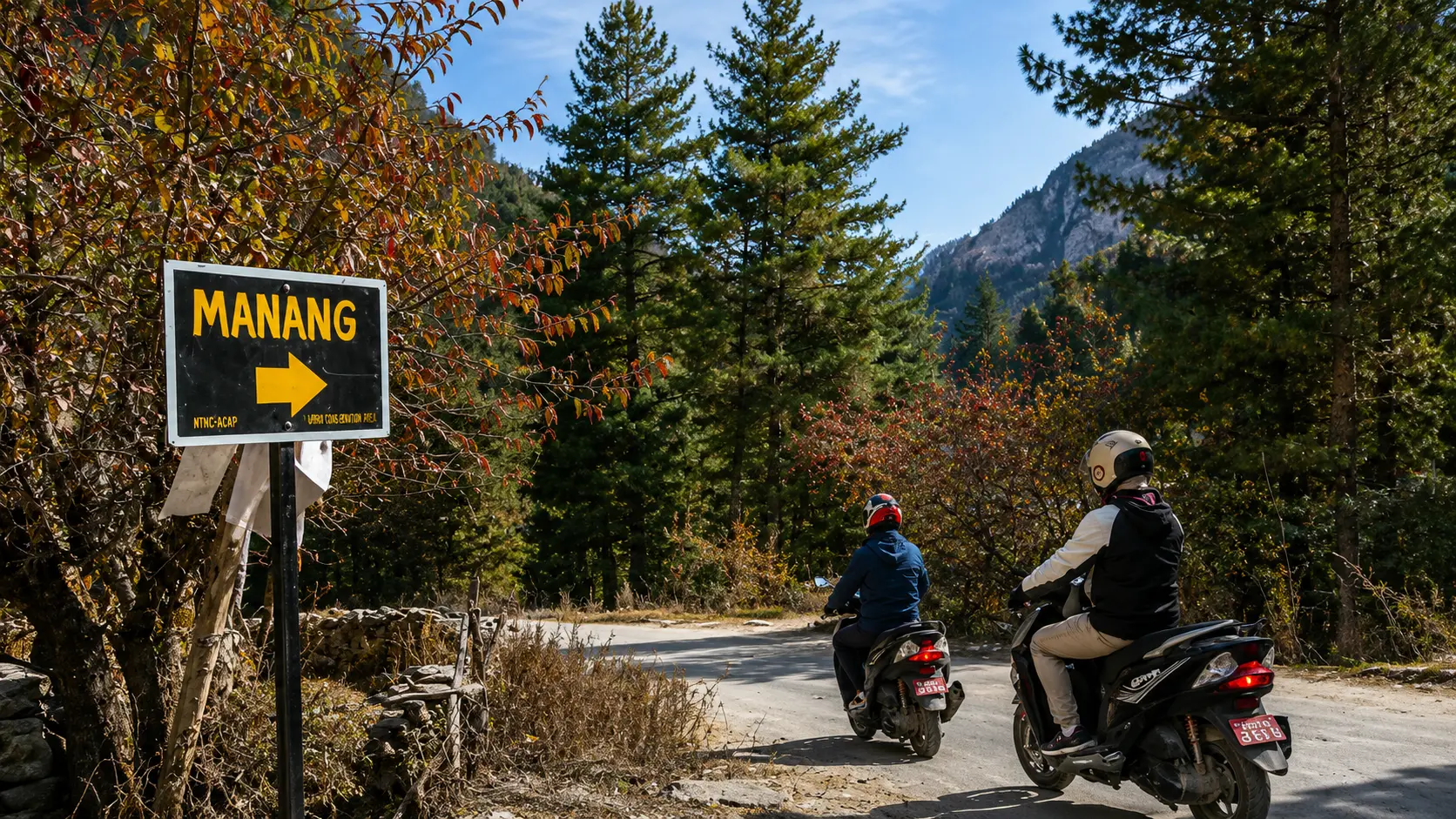
Winter from December to February is passable but cold — temperatures in Manang regularly fall below -10 to -15 Celsius overnight in the depths of winter, and certain sections of the road above Chame may carry ice or light snow patches requiring extra care. The mThe monsoon from June to September is the least recommended period for this specific route, given the landslide risk on the gorge sections between Jagat and Dharapani. However, Manang itself, lying in the rain shadow of the Annapurna massif, receives considerably less monsoon rainfall than the lower gorge approach.

Practical Tips for the Pokhara to Manang Journey

  • Depart Pokhara by 6:30 to 7:00 AM for a single-day itinerary — this allows the full daylight window needed for the long drive and arrival in Manang before dark.
  • For a two-day itinerary, a 7:00 to 8:00 AM departure is comfortable — Day 1 to Dharapani or Chame is 5 to 6 hours, leaving afternoon time for a gentle acclimatization walk.
  • Obtain ACAP and TIMS permits in Pokhara the day before departure — the Nepal Tourism Board office in Lakeside processes both quickly.
  • Carry sufficient NPR cash from Pokhara — there are no reliable ATMs beyond Besisahar. Estimate generously for accommodation, meals, entry fees at Gangapurna Lake, and any emergency expenses.
  • Pack layers — the temperature difference between Pokhara (usually warm) and Manang (potentially below freezing at night) requires a complete wardrobe change during the drive.
  • Carry water and snacks for the gorge section between Jagat and Dharapani — this stretch has limited reliable teahouse stops and takes 2 to 3 hours.
  • Motion sickness medication is worth considering — the gorge road above Besisahar involves continuous winding, and the combination of altitude and vehicle movement can affect passengers who do not normally experience car sickness.
  • Keep a camera accessible throughout the drive — the waterfall sections near Chamje, the cliff-edge gorge near Tal, and the opening Annapurna panorama above Pisang are all best captured in the moment rather than missed while digging through a bag.
Why Choose Nepal Vehicle Hiring Pvt Ltd

  • Route Experience: Our drivers have extensive personal experience on the full Pokhara-to-Manang corridor, including detailed knowledge of the most challenging driving sections, the best rest stops, and the acclimatization considerations specific to this altitude gain.
  • Verified 4WD Fleet: Scorpio and Hilux 4WD vehicles for all Manang transfers — the right vehicles for the rough gorge road beyond Besisahar.
  • Altitude-Aware Itinerary Planning: We build acclimatization stops into every two-day Manang itinerary and carry this awareness into every driver briefing.
  • Door-to-Door Pokhara Pickup: From any hotel in Pokhara Lakeside or Pokhara city — no need to find a vehicle stand or negotiate with local operators.
  • Round-Trip Coordination: Book the outward Pokhara-to-Manang transfer and the return Manang-to-Pokhara leg in a single arrangement.
  • Transparent All-Inclusive Pricing: Driver, fuel, and road tolls included in every quote.
  • 24/7 Booking: WhatsApp +977-9851343204 — plan your Manang journey with full route and logistics support.

Frequently Asked Questions — Pokhara to Manang

How far is Pokhara from Manang, and how long does the drive take?

Pokhara to Manang is approximately 180 km by road. A private 4WD jeep takes 7 to 9 hours in a single day. However, Nepal Vehicle Hiring Pvt Ltd recommends splitting this across two days with an overnight stop at Dharapani (1,860 m) or Chame (2,670 m) for safer acclimatization.

Is a 4WD vehicle necessary for the Pokhara to Manang journey?

Yes, beyond Besisahar the road becomes a rough, unpaved mountain track through steep gorge terrain. A 4WD vehicle with adequate ground clearance — Scorpio or Hilux — is essential for this section. Standard sedans and Hiace vans cannot safely complete the full route to Manang.

What is the 2026 cost of a private jeep from Pokhara to Manang?

A private Scorpio or Hilux 4WD costs approximately NPR 25,000 to 38,000 (USD 190 to 285) for the full vehicle one way. A round-trip package (Pokhara to Manang and return) costs approximately NPR 45,000 to 65,000 (USD 340 to 490) for the full vehicle over 2 to 3 days.

Do I need permits to visit Manang from Pokhara by jeep?

Yes. An ACAP permit (NPR 3,000 / USD 22-25 per person) and a TIMS card (USD 10-20 per person) are both required. Both must be obtained from the Nepal Tourism Board office in Pokhara before departure — they cannot be arranged at the Besisahar checkpoint.

What is the risk of altitude sickness on this journey?

Manang at 3,519 meters is high enough that Acute Mountain Sickness is a genuine consideration, particularly for travelers who drive directly from Pokhara (827 m) in a single day. The two-day approach with an overnight stop at Dharapani or Chame is strongly recommended. Symptoms including headache, nausea, and fatigue that worsen rather than improve should prompt immediate descent.

What is the best time of year to visit Manang from Pokhara?

October to November offers the clearest mountain views and best road conditions. March to May is also excellent with rhododendron bloom in the lower gorge. Winter (December to February) is possible but cold. Monsoon (June to September) carries landslide risk on the gorge approach and is generally not recommended.
Conclusion

The journey from Pokhara to Manang is one of Nepal’s finest overland adventures — a 180-kilometer transformation from the lakeside warmth of the tourism city into the stark, spectacular high-altitude world of the Annapurna Conservation Area, delivered through some of the most dramatic gorge driving anywhere in the Himalaya. With the right 4WD vehicle, the right driver, a sensible acclimatization approach, and a permit obtained the day before in Pokhara, it is a journey that rewards fully and asks only that you give it the time and respect that 3,519 meters of mountain destination honestly requires.

Nepal Vehicle Hiring Pvt Ltd provides the private 4WD transfer that makes this journey comfortable, safe, and properly paced — from your Pokhara hotel door to the Gangapurna Lake shore in Manang and back again, with everything in between handled by experienced local drivers who know this road in every season and every condition.

Book your Pokhara to Manang jeep — Call or WhatsApp: +977-9851013196

E-mail: [email protected]

Bhairahawa Airport Pickup Vehicle

Professional Bhairahawa Airport pickup service with comfortable vehicles for Lumbini, Butwal, Pokhara, Chitwan, Kathmandu, and other destinations.Bhairahawa Airport Pickup Vehicle – The Complete 2026 Gautam Buddha Airport Transfer Guide
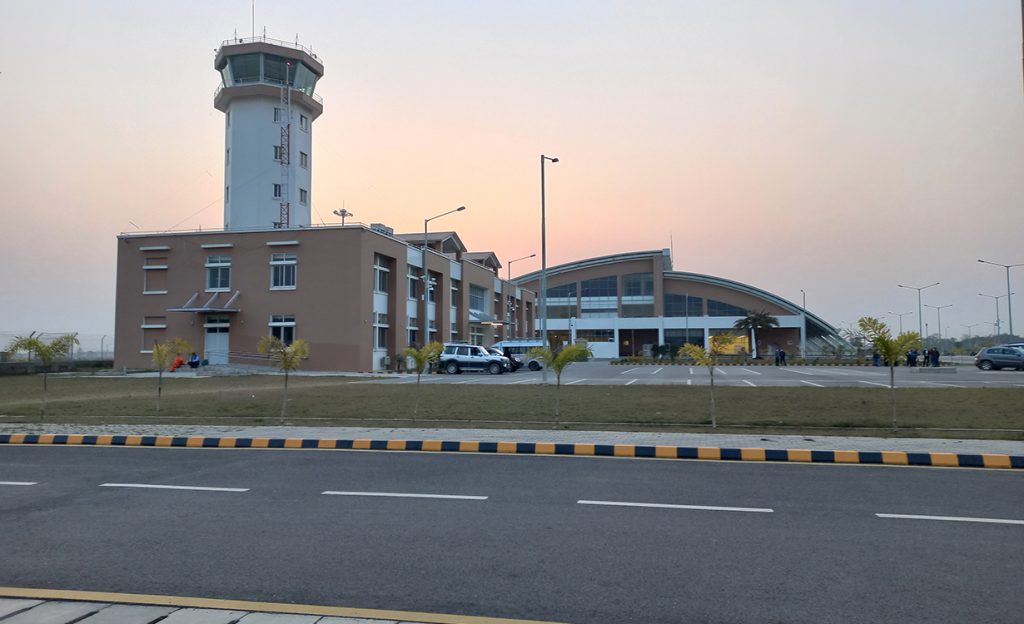
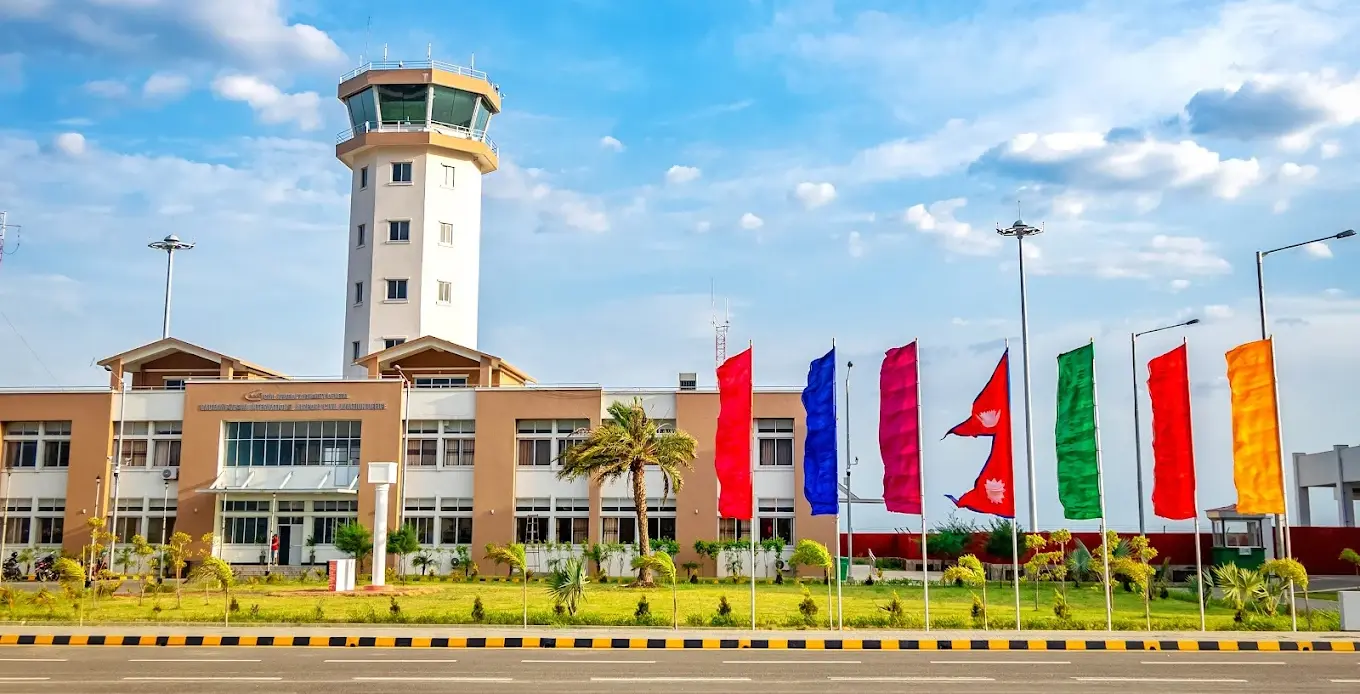
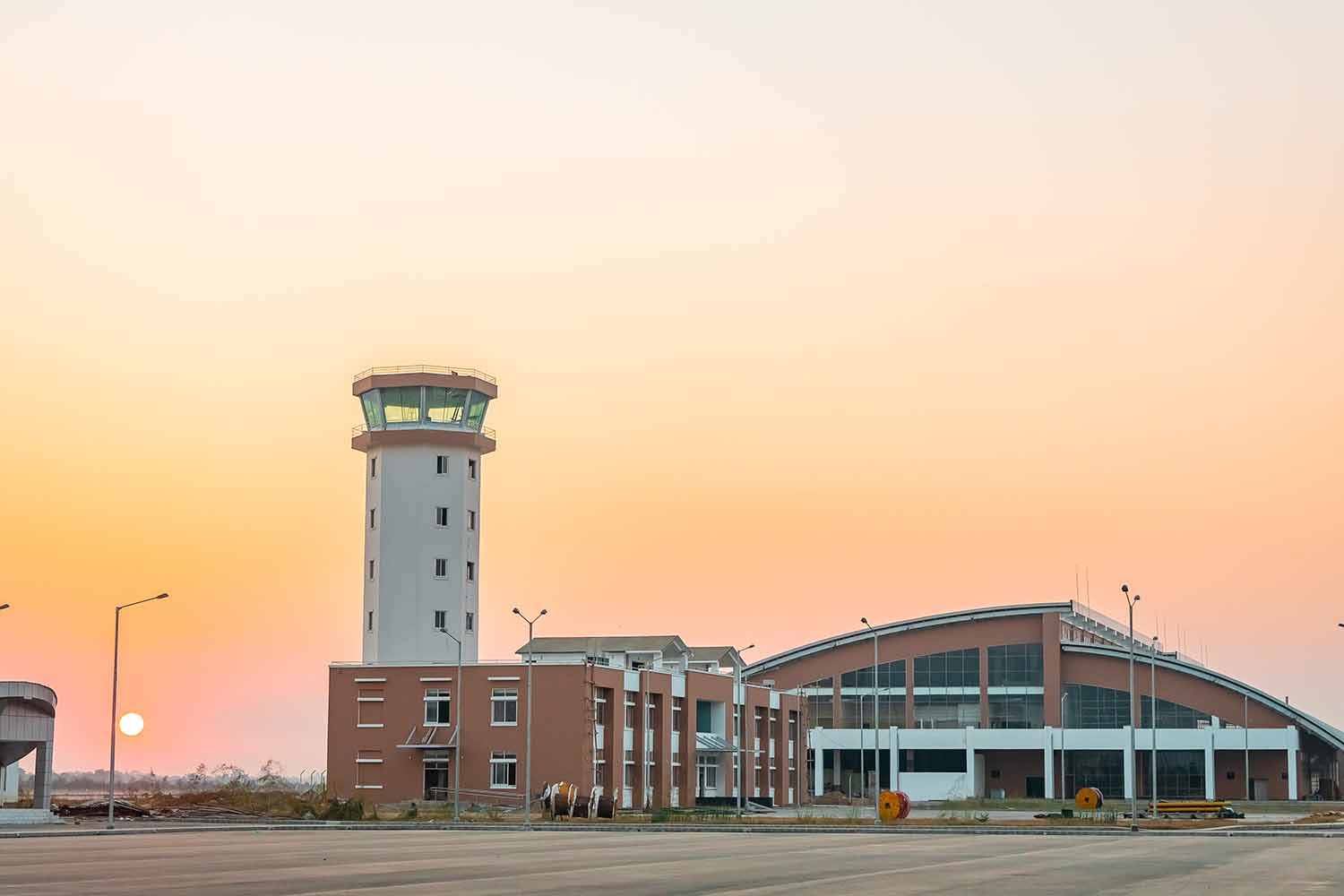
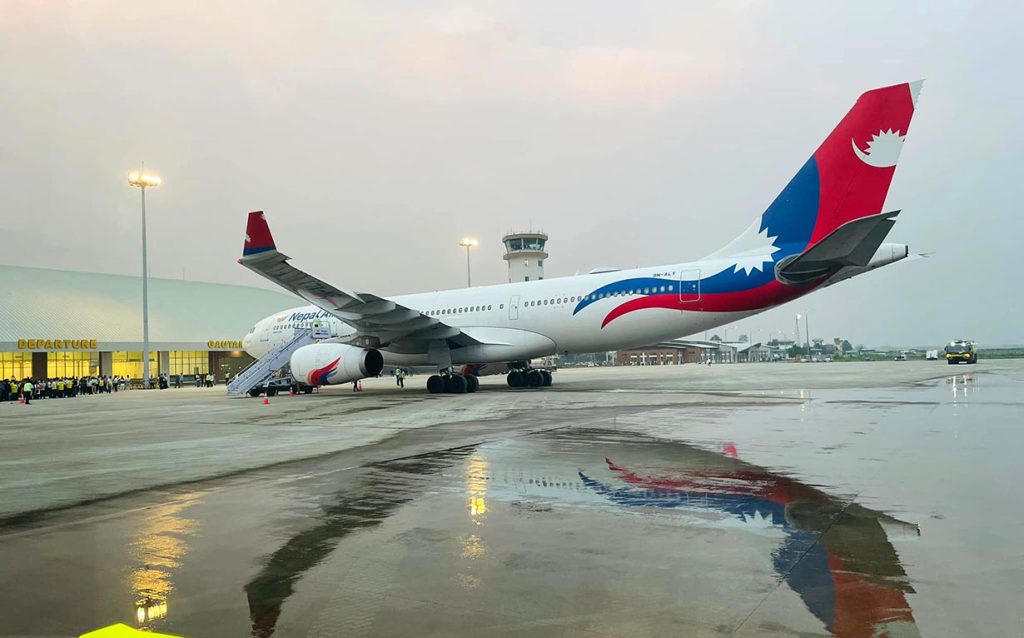
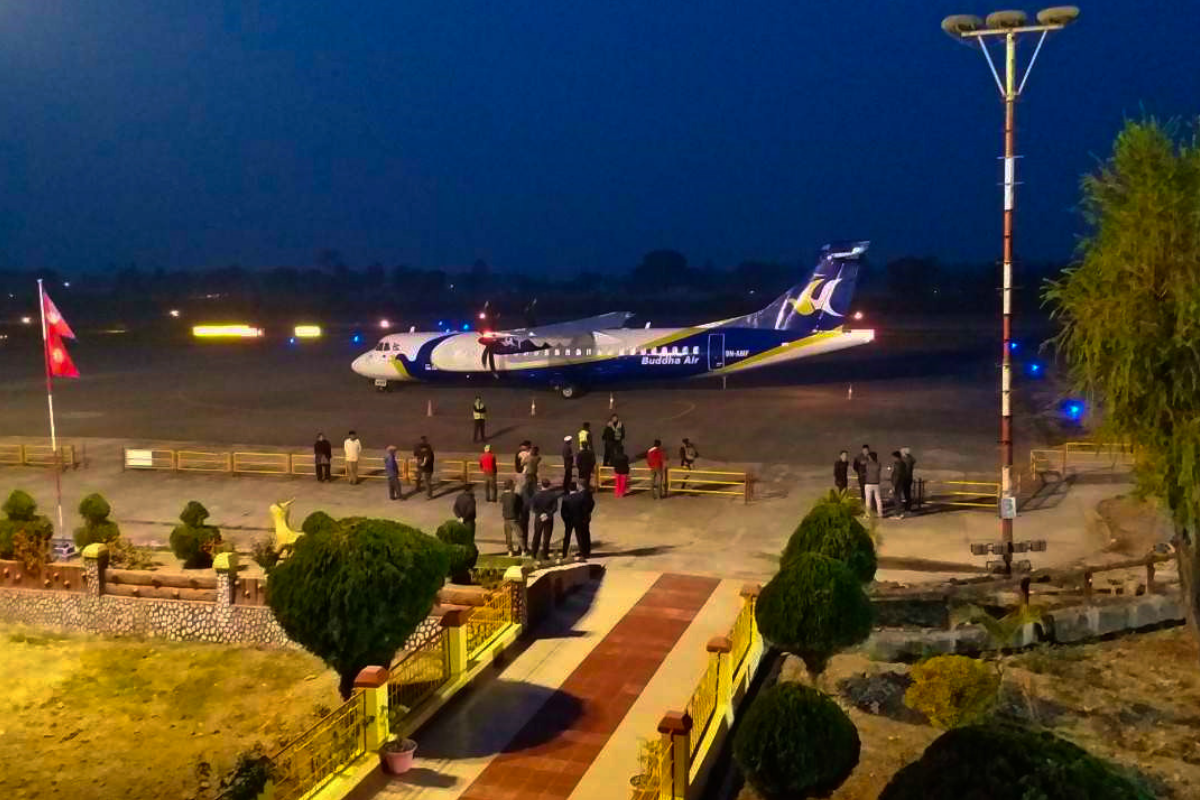
Gautam Buddha International Airport in Bhairahawa (IATA code BWA) is one of Nepal’s two international gateways alongside Tribhuvan International Airport in Kathmandu — and for the growing number of travelers arriving directly into this corner of the country, arranging a reliable airport pickup vehicle is the essential first step of any Nepal journey that begins here. Located in Siddharthanagar in Rupandehi District, the airport sits just 22 km from Lumbini, the birthplace of the Buddha, making it the natural aviation gateway for Buddhist pilgrims, cultural travelers, and anyone whose Nepal itinerary is centered on the sacred Terai plains rather than the mountain trekking circuits further north.

This comprehensive 2026 guide covers everything you need to know about arranging a Bhairahawa Airport pickup vehicle — the airport itself and its current flight situation, vehicle options and prices, the full range of destinations reachable from Bhairahawa (Lumbini, Chitwan, Pokhara, and Kathmandu), road conditions and travel times, and complete booking guidance from Vehicle Hiring Nepal. Because Bhairahawa’s international flight schedule has been unusually volatile in recent years, we also address directly what current arrivals should expect and how ground transport plans should account for this.


Gautam Buddha International Airport — Complete Overview

Official Name: Gautam Buddha International Airport (GBIA)

IATA / ICAO Codes: BWA / VNBW

Location: Siddharthanagar (commonly still called Bhairahawa), Rupandehi District, Lumbini Province

History: Opened as a domestic airport on July 4, 1958, providing flights to Kathmandu. Renamed Gautam Buddha Airport in 1977 in honor of the Buddha, born in neighboring Lumbini. Upgraded to international status with a new terminal, and began commercial international operations on May 16, 2022, coinciding with Buddha Purnima.

Terminals: Two public terminals — one international, one domestic

Distance to Lumbini: Approximately 22 km, 25–35 minutes by vehicle

Distance to Kathmandu: Approximately 280–300 km by road

Distance to Pokhara: Approximately 200 km by road

Distance to Chitwan (Sauraha): Approximately 130 km by road

Gautam Buddha International Airport was conceived as a major gateway for religious tourism, designed to provide pilgrims and international visitors a direct aviation route into the Lumbini region without first transiting through Kathmandu. The airport’s design capacity is substantial — spokespeople have indicated capacity for approximately 50 international flights daily and over 3 million passengers annually — reflecting the scale of the original vision for the facility.

Professional Bhairahawa Airport pickup service with comfortable vehicles for Lumbini, Butwal, Pokhara, Chitwan, Kathmandu, and other destinations.

Understanding Bhairahawa’s Current Flight Situation — What Arrivals Should Know

Unlike many airport guides, an honest guide to Bhairahawa Airport pickup transport must address the airport’s unusual and well-documented international flight volatility directly, because it materially affects how you should plan your ground transport.

Since its international opening in May 2022, Gautam Buddha International Airport has experienced repeated cycles of international flight suspension and resumption. International services were suspended for approximately 10 months at one stage before resuming in November 2024 with five airlines operating. The airport recorded strong performance in the January–March 2025 window (299 international flights, over 15,000 passengers) — a period that coincided with runway maintenance closures at Kathmandu’s Tribhuvan International Airport, which temporarily redirected international carriers including Nepal Airlines, Jazeera Airways, FlyDubai, Thai Airways, and Air Asia to Bhairahawa. However, as the summer 2025 schedule began, airlines did not apply for slots from Bhairahawa and international flights were again suspended, with the airport’s General Manager confirming zero international flights operating as of mid-2025. Thai AirAsia has since indicated plans to resume limited service.

A significant structural factor behind this volatility, according to airport officials, is that visa processing, maworkforcegency services, and medical test centres for outbound migrant workers and other travelers remain centralised in Kathmandu — meaning passengers flying internationally via Bhairahawa must still complete pre-departure formalities in the capital, which reduces the practical advantage of flying directly from Bhairahawa for many travelers and has limited airline interest in maintaining consistent schedules.

Practical implication for 2026 travelers: Domestic flights between Bhairahawa and Kathmandu (via Buddha Air, Yeti Airlines, and Shree Airlines) and between Bhairahawa and Pokhara operate reliably and are the standard way most travelers reach the airport. International flight availability should always be confirmed directly with your airline before finalizing travel plans, as schedules have changed with limited notice in the recent past. Whichever way you arrive — domestic or international — the ground transport guidance in this article applies equally.


Why You Need a Pre-Booked Airport Pickup Vehicle

Arriving at any airport in an unfamiliar country creates a moment of vulnerability that a pre-arranged pickup eliminates. At Bhairahawa specifically, several factors make advance vehicle booking particularly valuable:

  • Limited on-the-ground taxi infrastructure compared to Kathmandu — Bhairahawa is a smaller airport with a less developed spontaneous taxi rank system
  • Many arriving passengers are pilgrims or first-time Nepal visitors who benefit enormously from a driver holding a name board at the arrivals exit rather than needing to negotiate transport on arrival.
  • Onward destinations — Lumbini, Chitwan, Pokhara, Kathmandu — all require vehicles suited to the specific route and distance, which is far better arranged in advance than negotiated on the spot.t
  • Group travel (pilgrimage parties, family reunions, tour groups) requires vehicle capacity matched precisely to group size — something only possible with pre-booking
  • Flight schedule volatility (as discussed above) means having a flexible, communicative ground transport partner who can track your flight and adjust pickup timing is valuable insurance.ce

Bhairahawa Airport pickup vehicle with private car, jeep, Hiace, and tourist bus service in Nepal.

Vehicle Options for Bhairahawa Airport Pickup 2026


Vehicle TypeCapacityBest ForApprox. Price Range (USD)
Sedan Car1–3 paxSolo travelers, couples, small familiesUSD 15–25 (to Lumbini)
SUV / Toyota Fortuner4–5 paxFamilies, small groups with luggageUSD 22–35 (to Lumbini)
Toyota Hiace Van7–14 paxPilgrim groups, tour groupsUSD 35–55 (to Lumbini)
Toyota Coaster Bus15–22 paxLarge pilgrim groups, monastery partiesUSD 60–90 (to Lumbini)
Full Size Bus23–45 paxVery large groups, temple/school toursUSD 100–140 (to Lumbini)


These prices cover the short transfer to Lumbini. For longer onward journeys — to Chitwan National Park, Pokhara, or Kathmandu — see the dedicated route sections below for full pricing.

Bhairahawa Airport pickup vehicle with private car, jeep, Hiace, and tourist bus service in Nepal.

Bhairahawa Airport to Lumbini — The Core Transfer

Distance: Approximately 22 km

Travel Time: 25–35 minutes

Road: Fully paved throughout — no rough sections

For the complete details of this transfer — including the full road guide via Bhairahawa city, the Lumbini Development Zone layout, entry fees, top sacred sites, accommodation, and pilgrimage tips — see our dedicated Gautam Buddha Airport to Lumbini Vehicle guide. This is the single most common journey made from the airport, and the guide covers every aspect in full depth.

In brief: the road passes through Bhairahawa city (Siddharthanagar) — useful for a final ATM withdrawal, offerings purchase (marigolds, incense), or supplies — before continuing west on the Siddhartha Highway through Terai farmland to the Lumbini Development Zone gate. Vehicle Hiring Nepal drivers wait at the arrivals exit with a name board, track your flight in real time, and can accommodate any requested stops in Bhairahawa city en route.

Professional Bhairahawa Airport pickup service with comfortable vehicles for Lumbini, Butwal, Pokhara, Chitwan, Kathmandu, and other destinations.
Chitwan

Bhairahawa Airport to Chitwan National Park

Distance: Approximately 130 km

Travel Time: 3–4 hours

For pilgrims and travelers wishing to combine a Lumbini visit with a wildlife safari, Chitwan National Park is a natural onward destination from Bhairahawa. Our complete Bhairahawa Airport to Chitwan vehicle hire guide covers the full route, vehicle options, and safari logistics. The journey typically passes through or near Butwal and the Mahendra Highway, arriving at Sauraha or the Chitwan National Park buffer zone lodges.

Vehicle Recommendation: SUV or Hiace for groups; sedan sufficient for couples and solo travelers

Price Range 2026: USD 90–180 depending on vehicle type — see our dedicated guide for the complete price table

Professional Bhairahawa Airport pickup service with comfortable vehicles for Lumbini, Butwal, Pokhara, Chitwan, Kathmandu, and other destinations.

Bhairahawa Airport to Pokhara

Distance: Approximately 200 km

Travel Time: 5–6 hours

For travelers continuing to the Annapurna region and Pokhara’s lakeside city after a Lumbini pilgrimage, the road journey passes through Butwal and along the Siddhartha Highway north into the hills before reaching the Pokhara valley. See our comprehensive guides on Kathmandu to Pokhara transport options and Chitwan to Pokhara vehicle hire for related route information — the Bhairahawa to Pokhara road shares similar character and vehicle considerations to these routes.

Vehicle Recommendation: SUV, Land Cruiser, or Hiace depending on group size and any onward mountain plans (Muktinath, Mustang)

If your itinerary continues beyond Pokhara into the Kali Gandaki gorge toward Muktinath or Mustang, consider booking a Land Cruiser 4WD from Bhairahawa directly — the same vehicle and driver can continue seamlessly into the mountain sections. See our 

KathmanduProfessional Bhairahawa Airport pickup service with comfortable vehicles for Lumbini, Butwal, Pokhara, Chitwan, Kathmandu, and other destinations.

Bhairahawa Airport to Kathmandu

Distance: Approximately 280–300 km

Travel Time: 7–8 hours by road; alternatively fly Bhairahawa to Kathmandu (Buddha Air, Yeti Airlines, Shree Airlines — approximately 30–40 minutes)

For travelers who prefer the full overland experience or are traveling in a large group where flight costs multiply quickly, the road journey to Kathmandu is a full-day undertaking. See our Kathmandu to Lumbini vehicle guide (the reverse of this journey) for complete route details, and our broader Nepal pilgrimage vehicle hire guide for combining Lumbini with other sacred sites en route to or from Kathmandu.

For most travelers with limited time, flying Bhairahawa to Kathmandu is the more practical choice given the substantial road distance. Vehicle Hiring Nepal provides the airport-to-Lumbini and Lumbini-to-Kathmandu legs; let us know your preferred combination when booking.

Bhairahawa Airport pickup vehicle with private car, jeep, Hiace, and tourist bus service in Nepal.

Complete Vehicle Price Table — All Bhairahawa Airport Routes 2026


RouteVehiclePrice (USD)Travel Time
Airport → LumbiniSedan/SUVUSD 15–3525–35 min
Airport → LumbiniHiace/CoasterUSD 35–9025–35 min
Airport → Chitwan (Sauraha)Sedan/SUVUSD 90–1403–4 hrs
Airport → Chitwan (Sauraha)HiaceUSD 140–1803–4 hrs
Airport → PokharaSedan/SUVUSD 110–1505–6 hrs
Airport → PokharaLand CruiserUSD 150–2005–6 hrs
Airport → Kathmandu (road)Sedan/SUVUSD 180–2507–8 hrs
Airport → Kathmandu (road)HiaceUSD 220–2907–8 hrs

All prices include the driver, fuel, and vehicle insurance. Contact Vehicle Hiring Nepal for exact 2026 quotes tailored to your specific flight date, group size, and destination.

Professional Bhairahawa Airport pickup service with comfortable vehicles for Lumbini, Butwal, Pokhara, Chitwan, Kathmandu, and other destinations.

Lumbini Itself — What Awaits After Your Airport Transfer

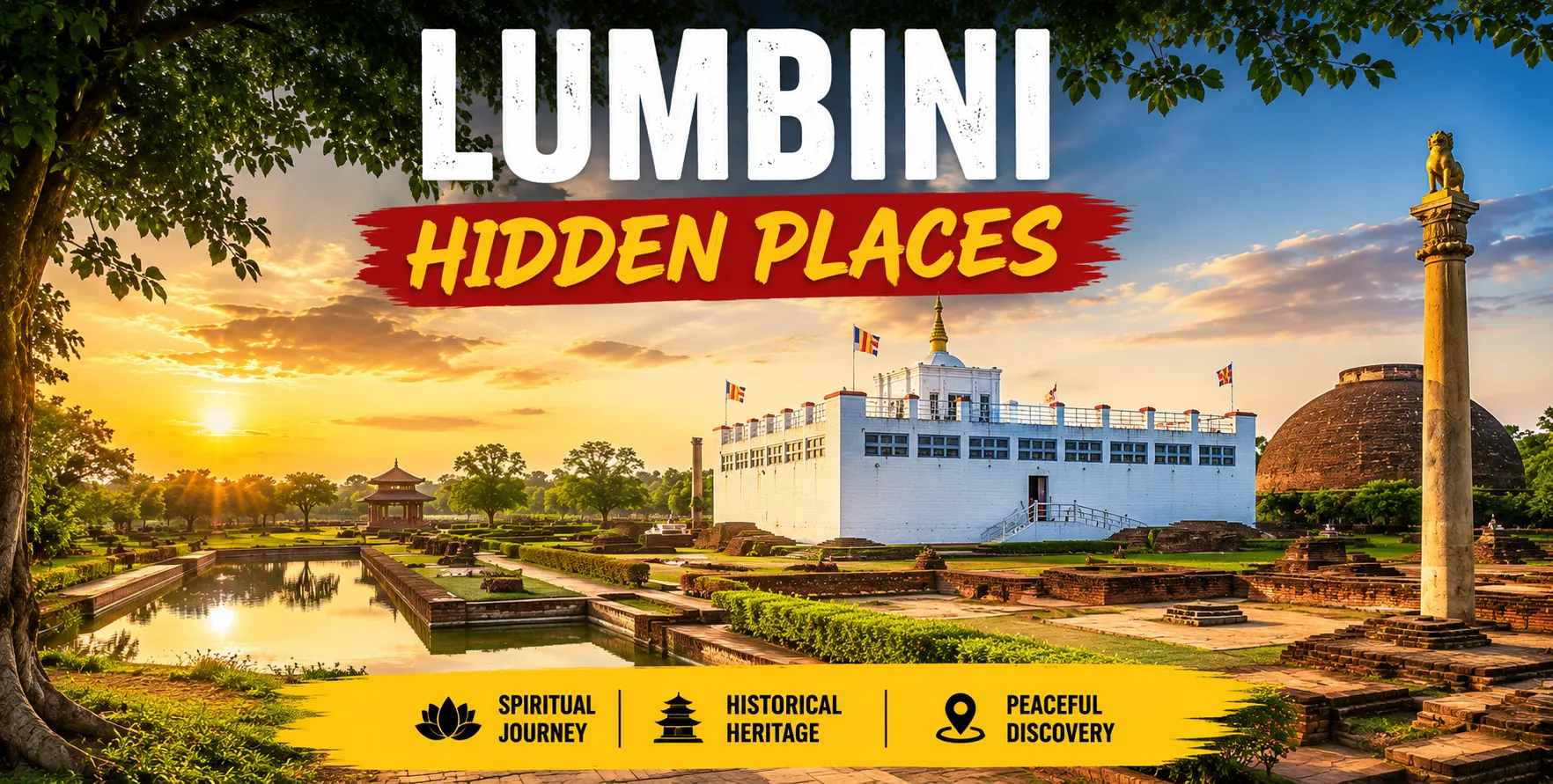
Since the overwhelming majority of Bhairahawa Airport arrivals are bound for Lumbini, it is worth understanding what awaits at the destination itself. The Lumbini Development Zone is a planned sacred park of approximately 6 square kilometers divided into the Sacred Garden (containing the Maya Devi Temple marking the Buddha’s exact birthplace, the Ashoka Pillar of 249 BCE, and the Puskarini Pond), the Monastic Zone (home to over 40 monasteries built by Buddhist nations from around the world), and the surrounding village area with hotels and guesthouses. Our complete Gautam Buddha Airport to Lumbini guide covers all of this in full depth, including entry fees, the best time of day for temple visits, and accommodation options ranging from budget guesthouses to the Lumbini Garden New Hotel inside the Development Zone.

For Buddhist pilgrims, Hindu devotees (who revere the Buddha as an avatar of Vishnu in some traditions), heritage travelers, and families, Lumbini offers a profoundly different but equally rich experience depending on what each visitor brings to the site. A minimum of two nights is recommended to properly experience both the Sacred Garden at dawn and the full extent of the Monastic Zone by bicycle or electric rickshaw.

Rupandehi District and Butwal — The Wider Region

Butwal: The major commercial city of the region, approximately 22 km north of Bhairahawa, serving as a transport hub for onward journeys toward Pokhara and the hills. Most road routes from Bhairahawa toward Pokhara or the mid-hills pass through or near Butwal.

Siddharthanagar (Bhairahawa town): The city surrounding the airport itself, officially renamed Siddharthanagar but still commonly called Bhairahawa. A busy Terai commercial center with hotels, banks, markets, and hospitals — useful for any final preparations before continuing to Lumbini or beyond.

Tilaurakot (Kapilavastu): Approximately 27 km west of Lumbini, the archaeological site identified as the ancient royal city of Kapilavastu where Prince Siddhartha grew up before his renunciation. A meaningful half-day excursion for pilgrims wanting to trace the fuller narrative of the Buddha’s early life beyond the birthplace itself.

Chitwan National Park — What Awaits Beyond the Transfer

For travelers combining their Bhairahawa arrival with a Chitwan safari, Nepal’s premier lowland national park offers jeep safaris in search of the one-horned rhinoceros, canoe rides along the Rapti River watching for gharial crocodiles, guided jungle walks, and immersion in Tharu indigenous culture including traditional stick dances. Chitwan is a UNESCO World Heritage Site and one of Asia’s most successful wildlife conservation stories, with rhino populations having recovered dramatically over recent decades through sustained protection efforts.

The Sauraha area on the park’s eastern boundary is the standard base for safari lodges, ranging from simple guesthouses to comfortable eco-lodges within the buffer zone. A minimum of 2 nights is recommended to allow for both a morning and an afternoon safari activity, since wildlife sightings vary considerably by time of day and a single safari cannot guarantee results.

Pokhara and the Annapurna Foothills — The Onward Mountain Gateway

For travelers whose Nepal itinerary extends from the Lumbini plains into the Himalaya, Pokhara is the essential staging point. From Pokhara, travelers can explore Phewa Lake, take in the Sarangkot sunrise viewpoint, or continue further into serious mountain territory via routes we cover extensively elsewhere — including the Kali Gandaki gorge to Jomsom and Muktinath, the Annapurna Circuit approach via Besisahar, and the Upper Mustang jeep route to Lo Manthang. With advance notice, a Bhairahawa-Pokhara vehicle booking can be arranged to continue seamlessly into any of these onward mountain journeys with the same Land Cruiser and driver.

Historical and Religious Context — Why Lumbini and Bhairahawa Matter

Understanding the depth of Lumbini’s significance enriches the arrival experience considerably. Siddhartha Gautama was born in Lumbini around 623 BCE (dates vary by scholarly tradition) to Queen Maya Devi, wife of King Suddhodana of the Shakya clan, whose capital was at nearby Kapilavastu. Queen Maya Devi is said to have given birth while holding the branch of a sal tree in the Lumbini garden, en route from Kapilavastu to her parental home.

The infant prince would later renounce his royal life to seek Enlightenment, eventually becoming the Buddha — the Awakened One — whose teachings form the foundation of one of the world’s great religious traditions, now followed by hundreds of millions of people across Asia and, increasingly, worldwide.

Emperor Ashoka of the Mauryan Empire made a pilgrimage to Lumbini in 249 BCE and erected the stone pillar that still stands at the site today, its Brahmi script inscription confirming the location as the Buddha’s birthplace and recording Ashoka’s tax exemption for the village in recognition of its sacred status. This pillar is one of the most important physical confirmations of the historical Buddha’s existence and birthplace anywhere in the archaeological record, and its survival for over two millennia makes Lumbini a genuinely rare encounter with verified ancient history.

Bhairahawa Airport pickup vehicle with private car, jeep, Hiace, and tourist bus service in Nepal.

Practical Currency, SIM Card, and Communication Tips on Arrival

  • Currency exchange counters are available at Bhairahawa Airport. However, rates are sometimes less favorable than in Kathmandu — exchanging a modest amount on arrival for immediate needs (offerings, tips, snacks) and the remainder in Lumbini or Bhairahawa city is a sensible approach.
  • Nepali SIM cards (NTC or Ncell) can be purchased at the airport or in Bhairahawa city — useful for WhatsApp contact with your Vehicle Hiring Nepal driver and for navigation.
  • ATMs are available in Bhairahawa city and within the Lumbini Development Zone area. However, it is wise to carry sufficient Nepali Rupees cash for temple donations and offerings, which are rarely payable by card.d
  • English is spoken by hotel staff, monastery caretakers, and most tourism-facing businesses in the Lumbini area, though a few basic Nepali phrases are always warmly received.


Comparing Bhairahawa Arrival with Kathmandu Arrival for Lumbini-Bound Travelers

FactorFly into BhairahawaFly into Kathmandu then drive/fly to Lumbini
Distance to Lumbini22 km, 25–35 min280–300 km, 7–8 hrs by road, or fly to Bhairahawa (30–40 min)
International flight reliabilityVariable — confirm with airlineKathmandu TIA is Nepal’s primary, most reliable international hub
Best forPilgrims prioritizing fastest Lumbini access, when international service is runningTravelers combining Lumbini with a broader Nepal circuit starting in Kathmandu
Domestic connectivityReliable flights to/from Kathmandu and PokharaReliable flights to Bhairahawa, Pokhara, and most of Nepal
Recommended approachConfirm international schedule before booking; have a Kathmandu-routing backup plan.Fly to Kathmandu, then domestic flight or road to Bhairahawa/Lumbini


Bhairahawa Airport pickup vehicle with private car, jeep, Hiace, and tourist bus service in Nepal.

Extended Pilgrimage Circuits from Bhairahawa

For pilgrims with additional time, Bhairahawa and Lumbini serve as one node in Nepal’s broader sacred geography. Our Nepal pilgrimage vehicle hire guide covers the complete network of major Hindu and Buddhist sacred sites reachable by private vehicle, including Pashupatinath in Kathmandu, Muktinath high in the Mustang region, Manakamana on the Kathmandu-Pokhara highway, and Janakpur in the eastern Terai, sacred to Hindus as the birthplace of Sita. A grand 10-day circuit combining Lumbini with these other sites is entirely achievable with Vehicle Hiring Nepal’s coordinated multi-leg vehicle bookings.


Family and Group Travel Considerations

  • Multi-generational pilgrimage families often benefit from a Toyota Hiace van, providing space for both people and the offerings, luggage, and mobility aids that accompany group pilgrimage travel.
  • Elderly pilgrims should inform Vehicle Hiring Nepal at booking of any mobility considerations — our drivers can adjust pacing and assist with luggage at each stop.
  • Children traveling for the first time to a Buddhist or Hindu sacred site benefit from the storytelling opportunity a knowledgeable driver can provide during the short Lumbini transfer — ask your driver about the history of the route.e
  • Large monastery or temple groups (20+ pilgrims) are best served by coordinating a Coaster bus or multiple Hiace vans with a single point of contact for the whole group’s logistics.


Flight Tracking and Meet-and-Greet Service

  • Vehicle Hiring Nepal drivers wait at the Bhairahawa arrivals exit with a printed name board bearing your name.
  • Your driver monitors your actual flight status and adjusts waiting time accordingly for delays.s
  • Given the flight schedule volatility discussed in Section 2, we recommend confirming your flight status with your airline 24 hours before travel and updating Vehicle Hiring Nepal via WhatsApp if your flight time or date changes. ges
  • For domestic connections (Bhairahawa–Kathmandu or Bhairahawa–Pokhara), the same meet-and-greet standard applies.
  • If your international flight is canceled or rescheduled due to the airport’s periodic service changes, contact us immediately — we can adjust pickup timing with no penalty given sufficient notice.ce
Bhairahawa Airport pickup vehicle with private car, jeep, Hiace, and tourist bus service in Nepal.
 

What to Expect on Arrival at Bhairahawa Airport

Gautam Buddha International Airport’s terminal facilities are more modest than Kathmandu’s Tribhuvan International Airport but entirely functional — an arrivals hall, baggage claim, currency exchange counter, a small café, an official taxi desk, and a car park area where private vehicles wait. The airport has two public terminals — one for international traffic and one for domestic — so confirm which terminal your specific flight uses when planning your pickup point.

For pilgrims arriving specifically for Lumbini, the airport’s naming after the Buddha and its 22 km proximity to the birthplace itself makes the moment of arrival feel like an extension of the pilgrimage — many devotees describe stepping off the aircraft at Gautam Buddha Airport as the symbolic beginning of their spiritual journey, discussed further in our Gautam Buddha Airport to Lumbini guide.

Combining Bhairahawa Arrival with a Full Nepal Itinerary

Many travelers use Bhairahawa as one leg of a larger Nepal circuit rather than a single-destination trip. Popular combined itineraries include:

Lumbini + Chitwan Safari: Fly into Bhairahawa, visit Lumbini for 1–2 days, then continue to Chitwan National Park for a jungle safari. See our Lumbini to Chitwan vehicle guide for the connecting leg.

Lumbini + Pokhara + Kathmandu Grand Circuit: Fly into Bhairahawa, visit Lumbini, continue by road or flight to Pokhara for the Annapurna foothills and lakeside city, then complete the circuit with Pokhara to Kathmandu transport before departure.

Full Pilgrimage Circuit: Combine Lumbini with Pashupatinath, Muktinath, and other sacred sites as detailed in our comprehensive Nepal pilgrimage vehicle hire guide.

Cultural and Nature Circuit: See our broader Explore Nepal’s Culture and Nature guide for how a Bhairahawa arrival fits into Nepal’s wider cultural and natural heritage circuit.

Bhairahawa Airport pickup vehicle with private car, jeep, Hiace, and tourist bus service in Nepal.

Best Time to Fly Into Bhairahawa

October to February — Peak Pilgrimage Season

This is peak international pilgrimage season for Lumbini, with the largest annual visitor numbers. Domestic flight connections to Bhairahawa from Kathmandu are most reliable in this drier period. Book your pickup vehicle in advance given higher passenger volumes.

March to May — Warming Season

Good flight reliability continues into spring. Temperatures rise progressively through this period — by May, expect significant Terai heat (35–38°C), making your vehicle’s air conditioning especially welcome.

June to September — Monsoon

Domestic flights to Bhairahawa are more subject to weather-related delays during monsoon. If your flight is delayed or canceled, Vehicle Hiring Nepal can help you reschedule your airport transfer with flexibility.


What is Included in Your Airport Pickup Booking

  • Meet-and-greet service with a name board at the arrivals exit
  • Flight tracking and waiting time adjustment for delays
  • Private, air-conditioned vehicle matched to your group size
  • Full fuel cost and vehicle insurance included
  • Direct drop-off at your Lumbini hotel, monastery guest house, or onward destination
  • Optional stops in Bhairahawa city for currency exchange, offerings, or supplies
  • 24/7 WhatsApp contact for flight changes or queries

Professional Bhairahawa Airport pickup service with comfortable vehicles for Lumbini, Butwal, Pokhara, Chitwan, Kathmandu, and other destinations.

How to Book Your Bhairahawa Airport Pickup Vehicle

  1. Contact Vehicle Hiring Nepal via WhatsApp at +977 9851013196 or visit vehiclehiringnepal.com
  2. Provide your flight details — airline, flight number, and scheduled arrival time at Bhairahawa.
  3. Confirm your group size and luggage.e
  4. Choose your vehicle type and destination — Lumbini, Chitwan, Pokhara, or Kathmandu.
  5. Receive instant booking confirmation with driver name, vehicle details, and WhatsApp contact.


Vehicle Hiring Nepal’s Complete Route Network — Beyond Bhairahawa

Bhairahawa Airport pickup is one node within Vehicle Hiring Nepal’s much wider network of vehicle hire services across Nepal. For travelers planning a fuller itinerary, our published route guides cover every major corridor in the country:

Kathmandu Valley and Central Nepal: Kathmandu to Pokhara all vehicle transfer | Kathmandu to Pokhara private jeep | Kathmandu to Chitwan | Kathmandu to Nuwakot | Kathmandu to Langtang

Terai and Lumbini Region: Kathmandu to Lumbini vehicle | Gautam Buddha Airport to Lumbini | Bhairahawa Airport to Chitwan | Lumbini to Chitwan vehicle | Kathmandu to Janakpur

Pokhara and the Annapurna Region: Pokhara to Jomsom vehicle | Pokhara to Ghasa jeep | Pokhara to Manang | Pokhara to Sikles jeep | Kathmandu to Besisahar Hiace | Chitwan to Pokhara

Mustang and Muktinath: Muktinath jeep hire | Pokhara to Lo Manthang jeep | Upper Mustang 4WD jeep | Muktinath to Pokhara and Kathmandu return

Manaslu and Central Trekking Regions: Kathmandu to Arughat | Kathmandu to Manaslu trek transport | Kathmandu to Chisapani | Dhaulagiri trek transport

Everest Region: Pokhara to Everest region transport | Kathmandu to Salleri and Phaplu | Kathmandu to Ramechhap Manthali

Eastern Nepal: Kathmandu to Ilam vehicle rental | Kathmandu to Pathivara transport | Eastern Nepal tour vehicle rental | Eastern border vehicle hire

Border Crossings: Nepal to all border vehicle hire | Eastern border vehicle hire service

Historical, Spiritual, and Educational Guides: Nuwakot historical and spiritual guide | Pokhara historical and spiritual places | Nepal pilgrimage vehicle hire guide | Why choose a 4WD jeep for mountain roads | Nepal mountain road transport | Explore Nepal’s culture and nature | Kathmandu to Pokhara road condition 2026/27

Whatever combination of these routes your Nepal itinerary requires, Vehicle Hiring Nepal can coordinate the full journey as a single, continuous booking — the same reliability and standard from your Bhairahawa arrival through to your final departure from the country.


Trusted External Resources for Trekking and Expedition Planning

For travelers whose Bhairahawa or Lumbini visit forms part of a wider Nepal adventure including guided trekking in the Annapurna, Everest, Dhaulagiri, or Mustang regions, we recommend two trusted trekking specialists who complement Vehicle Hiring Nepal’s ground transport services: Trek Nepal Himalayas, a licensed Kathmandu-based trekking agency offering guided expeditions across Nepal’s major trekking regions with reliable permit-processing support; and Alpine Luxury Treks, a premium expedition and trekking service specialising in high-altitude and remote Himalayan journeys including the Dhaulagiri Circuit, Kanchenjunga Circuit, and Upper Dolpo. Both agencies coordinate smoothly with Vehicle Hiring Nepal’s transport bookings for a seamless combined itinerary.

A Day-by-Day Sample: 4-Day Bhairahawa Arrival Circuit

  • Day 1: Arrive Bhairahawa Airport — Vehicle Hiring Nepal driver meets you at arrivals — transfer to Lumbini (25–35 min) — check in, afternoon Sacred Garden visit for the golden evening light
  • Day 2: Full Lumbini day — dawn Maya Devi Temple visit before crowds, Ashoka Pillar, Puskarini Pond, full Monastic Zone tour by bicycle or electric rickshaw, optional Tilaurakot half-day excursion
  • Day 3: Lumbini to Chitwan National Park by vehicle (3–4 hrs) — afternoon jungle activity, Tharu cultural program in the evening
  • Day 4: Full Chitwan safari day — morning jeep safari, canoe ride on the Rapti River, afternoon departure or continuation to Pokhara or Kathmandu

This 4-day circuit can be extended in either direction — adding Pokhara and the Annapurna foothills, or a deeper pilgrimage circuit through Pashupatinath and other Kathmandu Valley sacred sites — by simply continuing the same Vehicle Hiring Nepal booking.

Weather and Climate Considerations for Terai Arrivals

Bhairahawa and the surrounding Rupandehi Terai experience a genuinely subtropical climate distinct from the temperate Kathmandu Valley or the alpine conditions of the mountain regions. Summer (April to June) brings intense heat, often exceeding 38 to 40°C in the weeks before the monsoon —a significant contrast for travelers arriving from cooler climates or continuing from a mountain trek in the north. Monsoon (June to September) brings heavy humidity alongside the rains. Winter (December to February) is the most comfortable season, with daytime temperatures in the comfortable 20s Celsius and cool, pleasant evenings ideal for temple visits and outdoor exploration.

Vehicle Hiring Nepal’s air-conditioned fleet is particularly appreciated on the Bhairahawa to Lumbini and Bhairahawa to Chitwan routes during the hot pre-monsoon months, when even a short 25-minute transfer benefits considerably from reliable climate control.

Deeper Dive: The Airport’s Development History and Regional Significance

The story of Gautam Buddha International Airport’s development is itself instructive for understanding what to expect on arrival in 2026. First plans to upgrade the then-domestic Bhairahawa Airport into Nepal’s second international airport were developed in 2013, with an original target of operational readiness by 2017 — a timeline that ultimately extended considerably. The upgrade process, which began in earnest around 2015, involved a new runway, a new international terminal building, and the full suite of customs, immigration, and security infrastructure required for international operations. The airport finally began commercial international service on May 16, 2022, deliberately timed to coincide with Buddha Purnima — the full moon day marking the Buddha’s Enlightenment and death, the most sacred day in the Buddhist calendar and a symbolically resonant date for the airport’s international debut.

In June 2023, India granted clearance for the operation of an Instrument Landing System (ILS) at Bhairahawa — a significant technical milestone improving the airport’s ability to handle flights in reduced visibility conditions, particularly relevant given that winter fog and haze in the Terai plains have been cited as a factor in some of the airport’s flight disruptions. The airport has also had an Automatic Dependent Surveillance-Broadcast (ADS-B) sensor installed by the Civil Aviation Authority of Nepal, part of the modernization of the airport’s air traffic monitoring capability.

Understanding this history helps explain the airport’s current character: a technically well-equipped, purpose-built international facility whose realised international traffic has, so far, fallen well short of its designed capacity — a gap that reflects the complex interplay of regional airline economics, cross-border regulatory coordination with India (given the airport’s proximity to Indian airspace and the need for coordinated flight path clearances), and the centralisation of Nepal’s outbound travel infrastructure in Kathmandu. For the ground transport traveler, none of this changes the fundamentals: Bhairahawa remains a functioning, accessible airport with reliable domestic connectivity and a well-established road network to Lumbini and beyond.

Professional Bhairahawa Airport pickup service with comfortable vehicles for Lumbini, Butwal, Pokhara, Chitwan, Kathmandu, and other destinations.

Understanding Domestic Flight Options to Bhairahawa in Detail

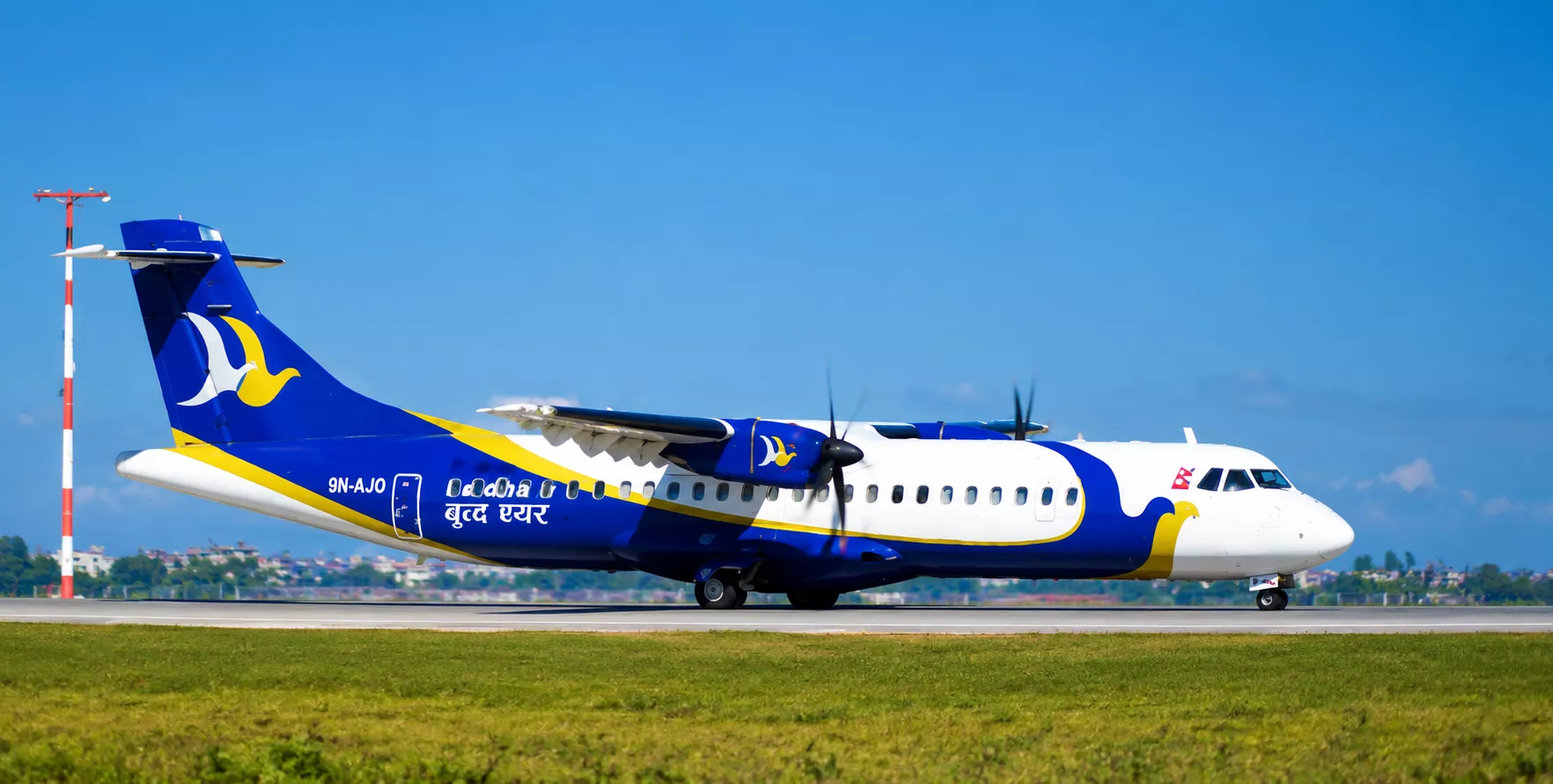
Kathmandu to Bhairahawa: Buddha Air, Yeti Airlines, and Shree Airlines operate multiple daily flights on this route using ATR turboprop aircraft. Flight duration is approximately 30 to 40 minutes. This is one of Nepal’s more reliable and frequently serviced domestic routes given the steady demand from both Lumbini-bound pilgrims and general Rupandehi-Butwal area travelers and business passengers.

Pokhara to Bhairahawa: Domestic connections are also available between Pokhara and Bhairahawa, useful for travelers moving between the Annapurna region and the Lumbini plains without routing back through Kathmandu.

Booking Considerations: Domestic flights to Bhairahawa should be booked with normal advance notice during peak pilgrimage season (October to February) when demand is highest. Unlike the airport’s international schedule, domestic services have operated with much greater consistency throughout the airport’s history.

For travelers uncertain whether to fly directly into Bhairahawa internationally (subject to the schedule volatility discussed earlier) or to fly into Kathmandu and connect domestically, the safer and more universally reliable option in 2026 remains routing through Kathmandu’s Tribhuvan International Airport and taking a short domestic flight — or a scenic road journey — onward to Bhairahawa or directly to Lumbini.

Tharu Culture and the Terai’s Indigenous Heritage

Travelers passing through the Bhairahawa region and onward toward Chitwan encounter one of Nepal’s most historically distinct indigenous communities — the Tharu people, the traditional inhabitants of the Terai lowlands who developed a unique genetic and cultural resistance to the malaria that historically made much of the Terai uninhabitable for other Nepali hill populations. Tharu villages throughout Rupandehi and Chitwan districts maintain distinctive traditional architecture (mud-and-thatch longhouses with elaborately decorated walls), a rich oral storytelling and dance tradition, and subsistence practices closely tied to the rivers and forests of the lowland plains.

Travelers combining a Bhairahawa arrival with a Chitwan safari frequently encounter Tharu cultural programs, traditional stick dance performances, and home-stay opportunities that offer a meaningful complement to the wildlife-focused safari activities — a reminder that the Terai’s significance extends well beyond Lumbini’s religious history to encompass a living indigenous culture with its own deep roots in this landscape.


Vehicle Maintenance and Safety Standards for Terai Routes

The roads connecting Bhairahawa to Lumbini, Chitwan, and beyond are predominantly flat, paved Terai highways—categorically different from Nepal’s demanding mountain jeep tracks —and consequently accessible by any well-maintained standard vehicle without the 4WD requirements that apply to Nepal’s high-altitude routes. Nonetheless, Vehicle Hiring Nepal applies the same maintenance standards across our entire fleet regardless of route difficulty: pre-departure brake and tire checks, verified air conditioning function (essential for Terai heat), and drivers briefed on the specific comfort and timing needs of airport transfer service, which differs meaningfully from multi-day mountain expedition driving.

Terai routes do carry their own specific considerations: the flat highway network can experience dense fog in winter mornings (December to February) in certain sections, occasionally affecting both flight schedules and road visibility. Monsoon-season heavy rain can create temporary standing water on some rural road sections, though the core Bhairahawa-Lumbini-Chitwan corridor is well-engineered and rarely significantly disrupted.

Bhairahawa Airport pickup vehicle with private car, jeep, Hiace, and tourist bus service in Nepal.

Group Booking Coordination for Monastery and Temple Delegations

Bhairahawa Airport frequently receives organized delegations — Buddhist monastery groups from Thailand, Sri Lanka, Myanmar, South Korea, Japan, and other Buddhist-majority nations making formal pilgrimage visits to Lumbini, sometimes coordinated with monastery construction anniversaries, ordination ceremonies, or international Buddhist conferences held within the Lumbini Monastic Zone. Vehicle Hiring Nepal has extensive experience coordinating vehicle logistics for these larger, more formally structured group visits, including:

  • Multi-vehicle convoy coordination for groups exceeding 45 passengers, requiring several vehicles moving in coordinated sequence
  • Liaison with monastery hosts regarding precise arrival timing for ceremonial receptions
  • Extended waiting arrangements where delegation schedules involve flexible or ceremony-dependent timing rather than fixed clock times
  • Coordination with monastery-based accommodation within the Lumbini Monastic Zone, where vehicle access differs from standard hotel drop-off logistics

Monastery and temple groups planning a Bhairahawa arrival are encouraged to contact Vehicle Hiring Nepal well in advance — ideally 4 to 6 weeks ahead for groups exceeding 20 people — to allow proper vehicle allocation and driver briefing for the specific ceremonial requirements of the visit.


Photography, Etiquette, and Making the Most of Your Lumbini Visit

For travelers arriving via Bhairahawa specifically for Lumbini, a few etiquette and practical notes enhance the visit considerably. Photography is generally permitted throughout the Lumbini Development Zone’s outdoor areas, though the inner sanctum of the Maya Devi Temple restricts photography in certain sections to preserve the contemplative atmosphere for pilgrims — always follow posted signage and the guidance of temple staff. Footwear must be removed before entering the Sacred Garden enclosure, and modest dress (covered shoulders and knees) is expected throughout the Development Zone, consistent with visiting any active religious site in Nepal.

The early morning hours, from the 6:00 AM opening until approximately 8:30 AM, offer the most contemplative atmosphere at the Maya Devi Temple, before larger tour groups arrive from Kathmandu and elsewhere later in the day. Given that most Bhairahawa Airport arrivals reach Lumbini in the morning or early afternoon on their arrival day, many pilgrims choose to rest and explore the Monastic Zone on their first afternoon, reserving the following dawn for the most peaceful possible Sacred Garden experience — a sequencing that a same-day airport pickup and Lumbini transfer with Vehicle Hiring Nepal supports naturally.

For those wishing to make a specific offering or participate in a puja ceremony at one of the Lumbini monasteries, most monasteries welcome respectful visitors and some offer opportunities to light butter lamps, offer khata (ceremonial scarves), or make a modest donation. Monastery caretakers are generally happy to explain their nation’s specific Buddhist tradition and the architectural features of their particular monastery to interested visitors, adding considerable depth to a Monastic Zone tour beyond simple sightseeing.

Bhairahawa Airport pickup vehicle with private car, jeep, Hiace, and tourist bus service in Nepal.

Insurance, Health, and Safety Preparation for Terai Travel

  • Standard travel insurance covering medical treatment and trip interruption is recommended for all Nepal travel, including the lower-altitude Terai region — while altitude-related risks do not apply here, general travel health coverage remains important.
  • Malaria risk in the Terai, while historically significant, has been substantially reduced through public health interventions; nonetheless, standard mosquito precautions (repellent, covered clothing at dusk) are sensible, particularly around Chitwan’s forested areas.
  • Drinking water should be bottled or properly treated throughout the Terai region, as with the rest of Nepal.l
  • Basic medical facilities are available in Bhairahawa city and Butwal; for anything beyond minor concerns, Kathmandu’s hospitals offer the most comprehensive care in the country. ry
  • Sun protection is important given the intense Terai sun, particularly during the hot pre-monsoon months of April through June.


Frequently Asked Questions

Does Gautam Buddha International Airport currently have international flights?

The airport’s international flight schedule has been inconsistent since its 2022 opening, with periods of suspension and resumption. As of the most recent updates, international flights have been limited, with some airlines (such as Thai AirAsia) indicating plans to resume or add service. Always confirm directly with your airline before finalizing travel plans, as international schedules from Bhairahawa change with limited notice.

How far is Bhairahawa Airport from Lumbini?

Bhairahawa Airport is approximately 22 km from the Lumbini Development Zone, a 25 to 35-minute drive. See our full Gautam Buddha Airport to Lumbini guide for complete route and pilgrimage details.

Can I fly domestically to Bhairahawa from Kathmandu or Pokhara?

Yes. Buddha Air, Yeti Airlines, and Shree Airlines operate regular domestic flights between Kathmandu and Bhairahawa (approximately 30–40 minutes), and Bhairahawa also has domestic connections to Pokhara. Domestic service is significantly more reliable than the airport’s international schedule.

What is the best vehicle for a large pilgrimage group arriving at Bhairahawa?

For pilgrim groups of 15 or more, a Toyota Coaster bus or full-size bus is the most practical option, keeping the entire group together for the transfer to Lumbini or onward destination. A Toyota  Hiace van best serves groups of 7 to 14.

Ca14ehicle Hiring Nepal arrange transport beyond Lumbini from the airport?

Yes. We provide vehicles from Bhairahawa Airport to Lumbini, Chitwan National Park, Pokhara, and Kathmandu, as well as combined multi-destination circuits. Specify your full itinerary when booking, and we will arrange each leg.

What should I do if my international flight to Bhairahawa is canceled?

Given the documented volatility of Bhairahawa’s international schedule, always have a backup plan. If your international flight to Bhairahawa is canceled, the most reliable alternative is to fly into Kathmandu’s Tribhuvan International Airport instead and continue to Lumbini either by a short domestic flight to Bhairahawa or by road. Contact Vehicle Hiring Nepal as soon as you are aware of any flight change — we can adjust your pickup location and timing accordingly, whether that means meeting you in Kathmandu instead or revising your Bhairahawa pickup for a later date.

Is it better to fly directly into Bhairahawa or route through Kathmandu?

This depends entirely on the current state of Bhairahawa’s international schedule at the time of your travel, which should always be confirmed directly with your airline before booking. If a suitable international service is operating reliably to Bhairahawa at your travel time, flying direct saves considerable time for a Lumbini-focused visit. If international service is limited or suspended, routing through Kathmandu and connecting via a reliable domestic flight or road journey is the safer choice. Vehicle Hiring Nepal can advise based on the most current information available at the time of your inquiry. ry

How much luggage space is available in the airport pickup vehicles?

Sedan cars comfortably accommodate 2 to 3 standard suitcases plus hand luggage. SUVs and Fortuners handle 3 to 4 suitcases with additional space for pilgrimage offerings or camera equipment. Toyota Hiace vans provide ample space for group luggage including large duffel bags, and Coaster buses and full-size buses have dedicated luggage holds for large delegations. Inform us of any unusually bulky items (ceremonial objects, large groups of gift boxes for monastery donations) at the time of booking so we can select the appropriately sized vehicle.

Are English-speaking drivers available for Bhairahawa Airport pickups?

Yes. Vehicle Hiring Nepal drivers assigned to airport pickup routes are selected for their ability to communicate with international visitors, including functional English for directions, basic conversation, and handling any queries about the journey or destination. For monastery delegations from non-English-speaking countries (Thailand, Japan, South Korea, and others), we can coordinate with monastery hosts or tour coordinators who often provide their own interpreter support for the visit.

Bhairahawa Airport pickup vehicle with private car, jeep, Hiace, and tourist bus service in Nepal.

Quick Reference Directory — All Vehicle Hiring Nepal Route Guides

For quick reference, here is a consolidated directory of every route guide published by Vehicle Hiring Nepal, useful for travelers planning a Bhairahawa arrival as part of a broader multi-week Nepal journey:

Kathmandu to Pokhara all vehicle transfer — every vehicle option on Nepal’s busiest tourist corridor

Kathmandu to Pokhara private jeep — for travelers prioritizing 4WD continuity into the mountains

Kathmandu to Pokhara road condition 2026/27 — current highway condition and best vehicle recommendations

Kathmandu to Lumbini vehicle — the reverse of a Bhairahawa arrival, for those flying into Kathmandu first

Gautam Buddha Airport to Lumbini — our dedicated deep-dive on this specific short transfer

Bhairahawa Airport to Chitwan — the safari-bound onward journey

Lumbini to Chitwan vehicle — connecting Nepal’s two most visited Terai destinations

Chitwan to Pokhara — continuing the circuit toward the mountains

Kathmandu to Chitwan — for travelers beginning their circuit in the capital

Kathmandu to Janakpur — the eastern Terai’s own great pilgrimage city

Nepal pilgrimage vehicle hire guide — our comprehensive guide to all of Nepal’s sacred sites by vehicle

Muktinath jeep hire — the high-altitude pilgrimage counterpart to Lumbini

Pokhara to Jomsom vehicle — the Kali Gandaki gorge route toward Mustang

Pokhara to Lo Manthang jeep and Upper Mustang 4WD jeep — for the restricted Mustang kingdom

Kathmandu to Besisahar Hiace — the Annapurna Circuit trailhead

Kathmandu to Arughat and Kathmandu to Manaslu trek transport — for the Manaslu Circuit

Dhaulagiri trek transport — for Nepal’s seventh-highest peak circuit

Pokhara to Everest region transport, Kathmandu to Salleri and Phaplu, and Kathmandu to Ramechhap Manthali — Everest region approach options

Kathmandu to Ilam vehicle rental, Kathmandu to Pathivara transport, and Eastern Nepal tour vehicle rental — the eastern hills and tea gardens

Nepal to all border vehicle hire and Eastern border vehicle hire service — for onward international travel

Nuwakot historical and spiritual guide and Pokhara historical and spiritual places — Nepal’s deeper historical landscape

Nepal mountain road transport and Why choose a 4WD jeep for mountain roads — essential background reading for any mountain-bound leg of your journey

Explore Nepal’s culture and nature with easy transport — our broadest overview guide tying every region together.


Final Thoughts

Whatever the current state of Gautam Buddha International Airport’s international flight schedule, its role as the closest aviation gateway to Lumbini and the wider Rupandehi Terai region remains unchanged — and a reliable, pre-booked pickup vehicle is the single best way to ensure your arrival into this sacred corner of Nepal begins smoothly. Whether you are a Buddhist pilgrim taking your first steps toward the birthplace of the Buddha, a family combining Lumbini with a Chitwan safari, or a traveler continuing to Pokhara and the mountains beyond, Vehicle Hiring Nepal is ready to meet you at the arrivals gate.

Book your Bhairahawa Airport pickup vehicle today. WhatsApp: +977 9851013196 | Website: www.vehiclehiringnepal.com | Email: [email protected]

Mahendranagar Basbasa Pickup and Drop Vehicle Guide 2026

Mahendranagar Basbasa Pickup and Drop Vehicle

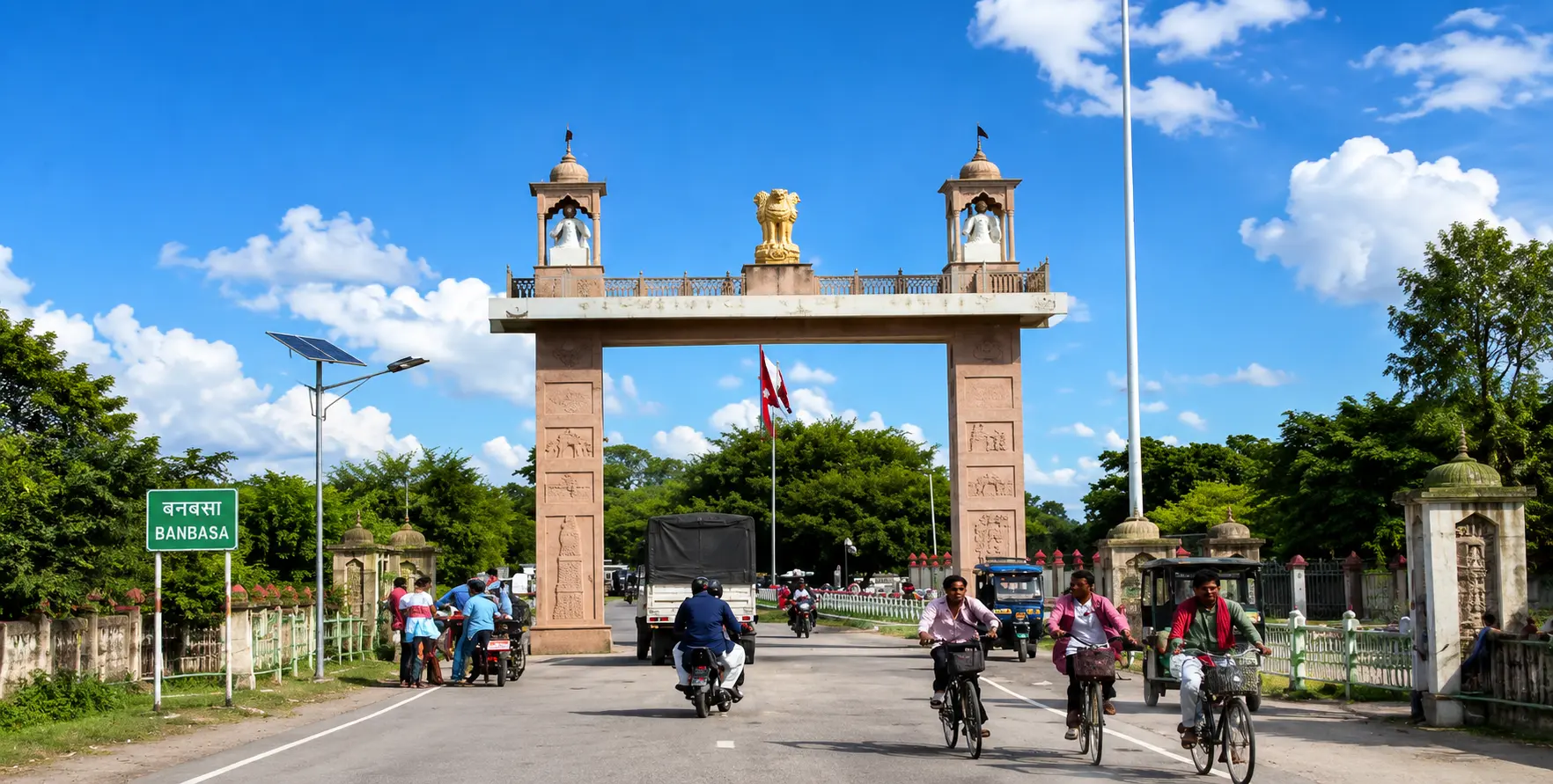
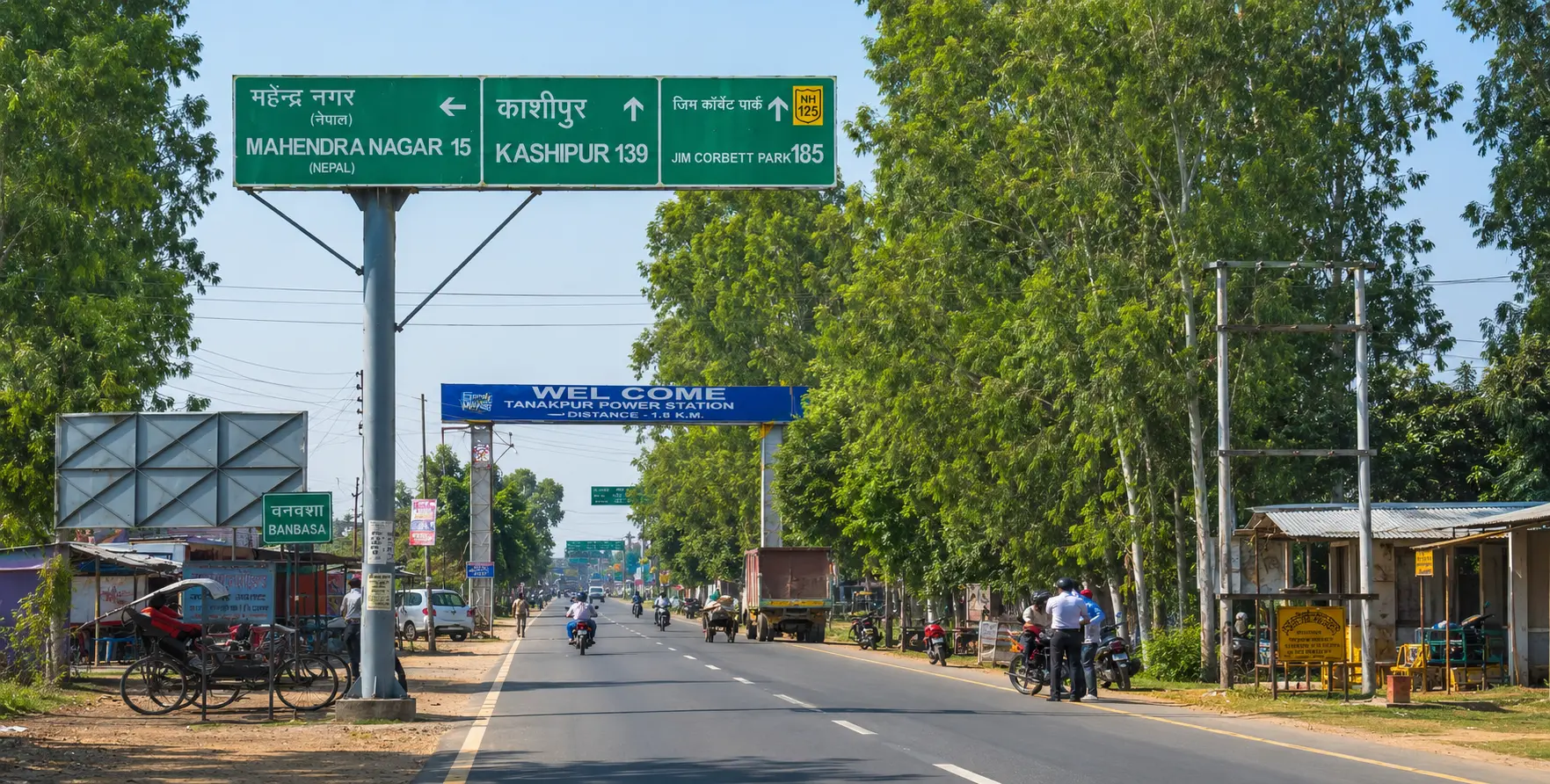
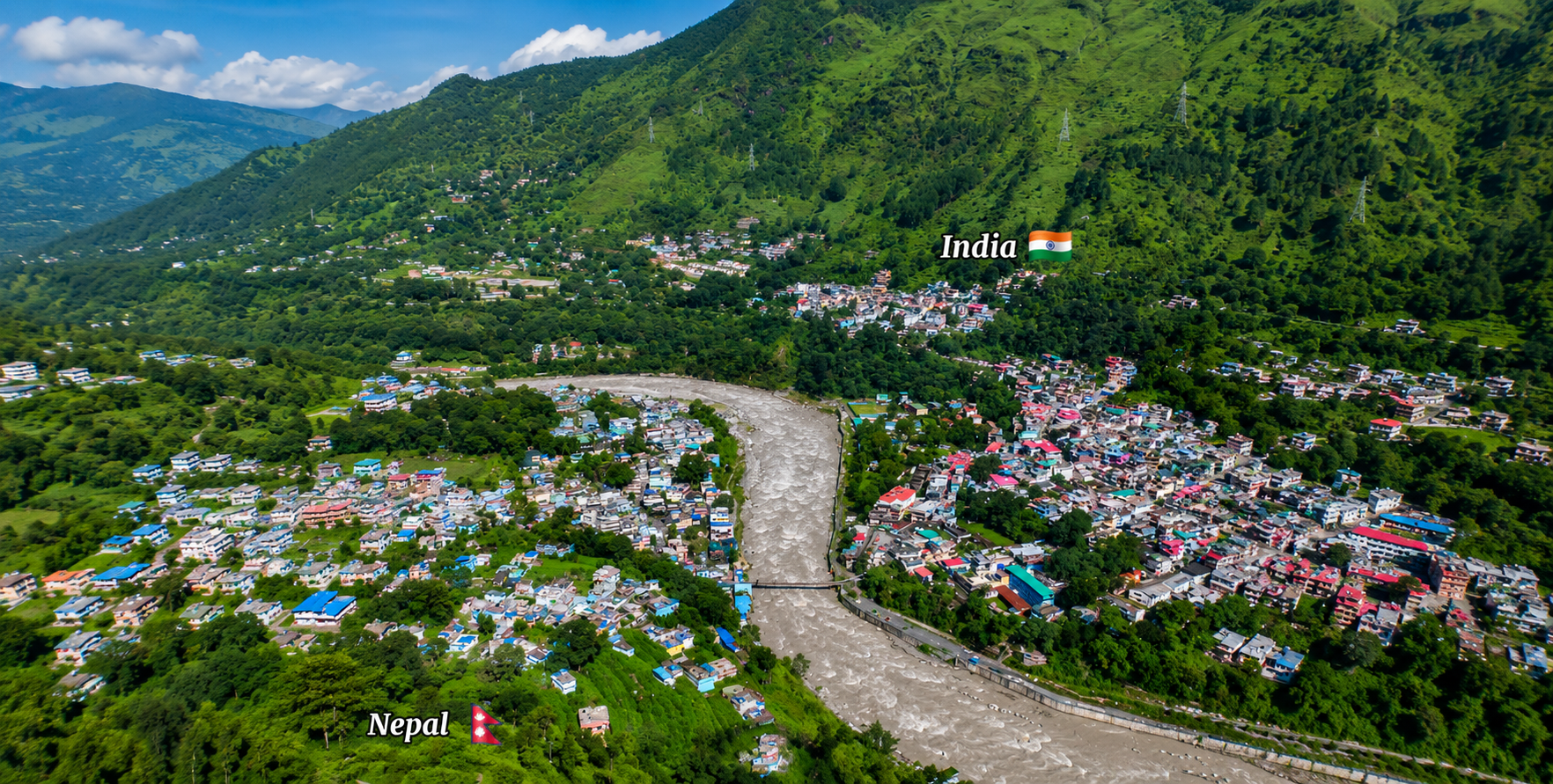
At the very far western edge of Nepal, precisely where the Mahakali River marks the formal international boundary with India, sits the city of Mahendranagar, officially known as Bhimdatta Municipality, the administrative headquarters of Kanchanpur district and one of Nepal’s most significant far-western gateway cities. Just a short distance outside the town itself, the Basbasa border crossing connects directly to Banbasa on the Indian side in Uttarakhand state, forming one of the busiest and most economically important land border crossings along Nepal’s entire western frontier.

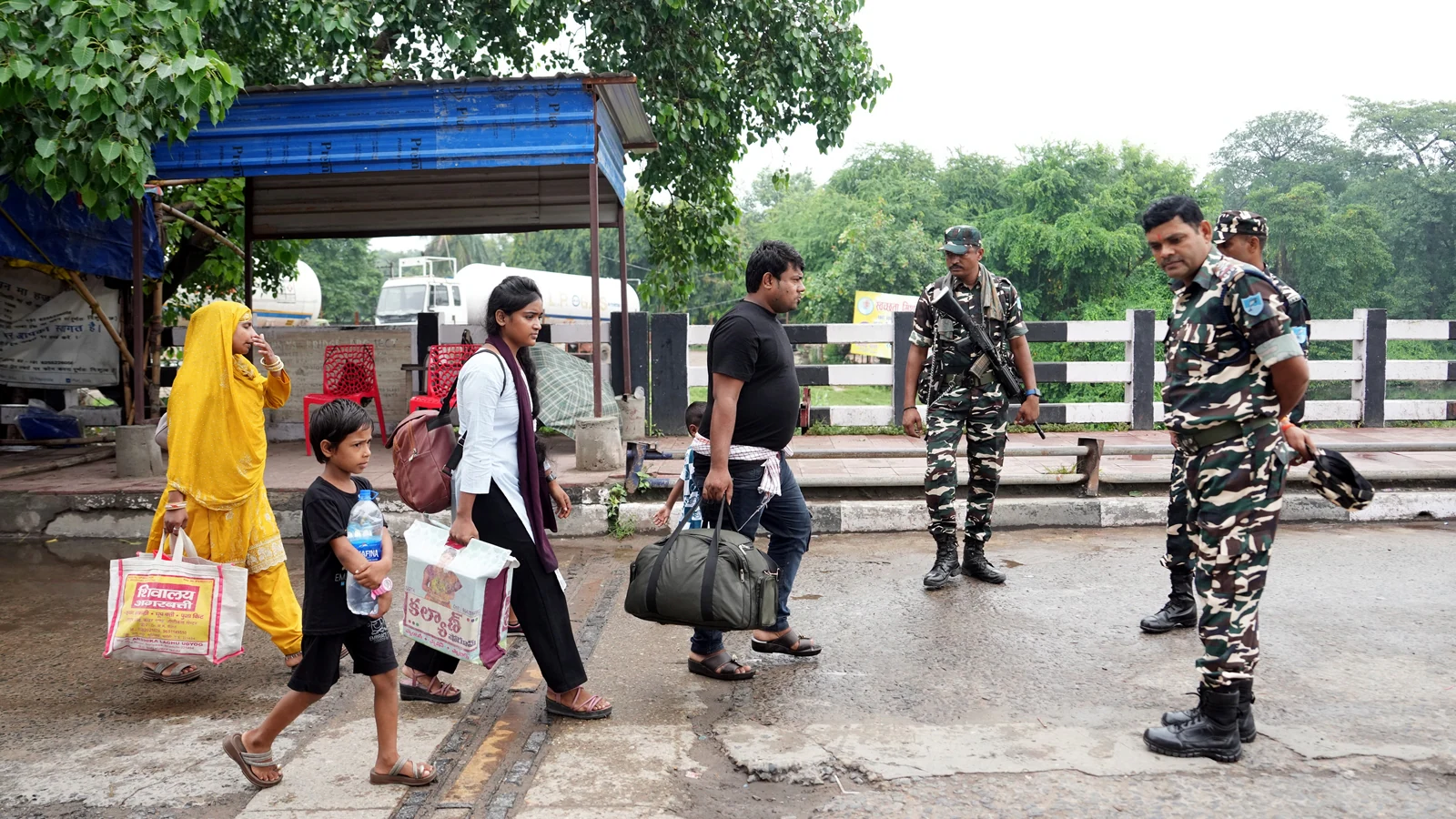
Mahendranagar Basbasa pickup and drop service with private jeep, car, and taxi at the Nepal–India borde

This guide covers everything travelers and businesses need to know about arranging. 

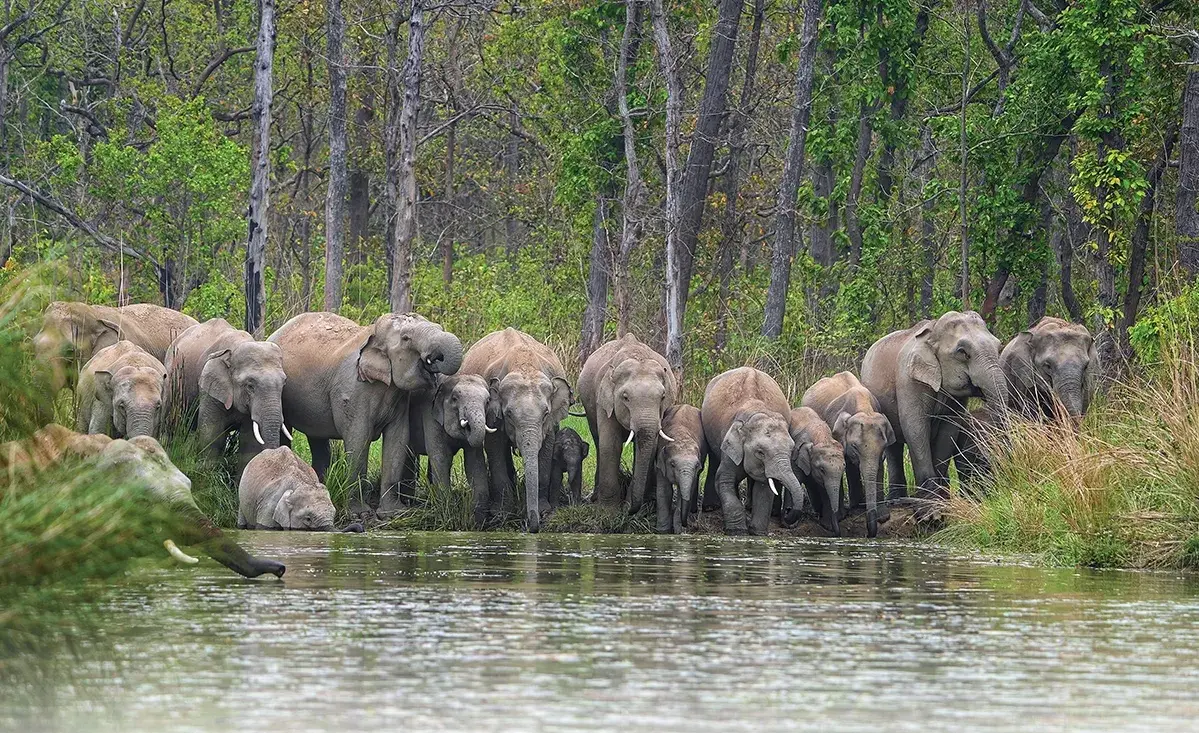
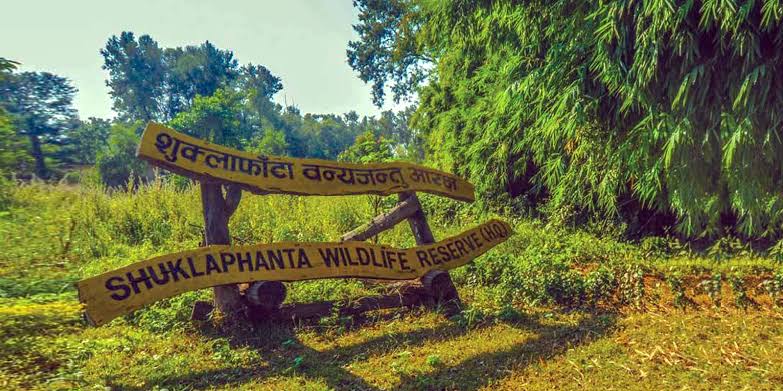
Mahendranagar Basbasa pickup and drop vehicle services: the geography and significance of this far-western gateway, the Basbasa border crossing itself, airport pickup options, nearby Shuklaphanta National Park, onward connections across far-western Nepal, and how to arrange reliable ground transport for business, wildlife tourism, pilgrimage, or cross-border travel through this corner of the country. Nepal Vehicle Hiring supports travelers throughout Nepal, and this guide draws on our understanding of this far-western corridor’s specific transport needs.

Where Is Mahendranagar

Mahendranagar, known formally today as Bhimdatta Municipality, serves proudly as the administrative headquarters of Kanchanpur district within Nepal’s Sudurpashchim, or Far-Western, Province. Sitting near the Mahakali River, which forms the international border with India along this stretch, the city occupies a strategically significant position at the very western edge of Nepal’s Terai plains, considerably further from Kathmandu than most of the destinations covered in our other guides, reflecting the sheer geographic breadth of Nepal from east to west.

This far-western position has historically made Mahendranagar an important trade and administrative center, and the city has grown considerably in recent decades as both a commercial hub for the surrounding agricultural region and a transit point for cross-border trade and travel with India.

Mahendranagar Basbasa pickup and drop service with private jeep, car, and taxi at the Nepal–India border.

The Basbasa Border Crossing

The Basbasa crossing itself, connecting directly across to Banbasa in India’s neighboring Uttarakhand state, ranks among the more significant land border crossings along Nepal’s western frontier, handling substantial trade traffic alongside passenger travel between the two countries. This crossing serves not only bilateral Nepal-India trade and travel but also functions as a transit point for travelers continuing further into India, whether for business, pilgrimage, or onward travel to Indian cities such as Delhi, accessible via road and rail connections from the Indian side of the border.

For Nepali citizens working across the border in India, alongside Indian citizens engaged in cross-border trade or family connections, this crossing represents a genuinely vital daily transport corridor, distinct from the more purely tourist-oriented border crossings found elsewhere in Nepal.

Pickup and Drop Vehicle Services at Mahendranagar

Reliable pickup and drop vehicle service at Mahendranagar typically serves several distinct traveler needs: airport transfers for those flying into the region’s small local airstrip, border crossing transfers for travelers arriving from or departing toward Basbasa and Banbasa, and onward connections toward Shuklaphanta National Park or further along Nepal’s Mahakali Highway toward Dhangadhi and the rest of far-western Nepal. A dependable local vehicle service coordinating all of these transport needs removes considerable uncertainty for travelers navigating this less-visited but genuinely significant corner of the country.

Mahendranagar Basbasa pickup and drop service with private jeep, car, and taxi at the Nepal–India border.

Mahendranagar’s Local Airport

Mahendranagar is served by a small domestic airstrip offering limited flight connections to Kathmandu and other parts of Nepal, providing an alternative to the considerably longer overland journey from the capital given the sheer distance involved in reaching this far-western corner of the country by road. Reliable airport pickup service ensures travelers flying into this airstrip can connect smoothly to their onward destination, whether a border crossing at Basbasa, a wildlife excursion to Shuklaphanta, or further travel along the Mahakali Highway.

Vehicle Options for This Region

Private Car for Border and City Transfers

For straightforward airport pickups, border crossing transfers, or general transport within Mahendranagar itself, a standard private car offers a comfortable, efficient option suited to this generally flat, well-connected Terai region.

Jeep and SUV for Shuklaphanta and Rural Access

Travelers heading toward Shuklaphanta National Park or more rural sections of Kanchanpur district benefit from a 4WD vehicle, given the less developed road conditions found away from the main highway corridors.

Vans and Buses for Group and Business Travel

Larger groups, whether business delegations, pilgrimage groups transiting toward India, or wildlife tourism parties, can be accommodated through larger vehicle bookings suited to the specific group size involved.

Mahendranagar Basbasa pickup and drop service with private jeep, car, and taxi at the Nepal–India border.

Shuklaphanta National Park

A relatively short distance from Mahendranagar itself, Shuklaphanta National Park carefully protects one of Nepal’s most significant remaining grassland ecosystems, home to the country’s largest population of swamp deer, known locally as barasingha, alongside Bengal tigers, wild elephants, and a wide range of Terai wildlife and bird species. Considerably less visited than Chitwan National Park further east, Shuklaphanta offers a genuinely quieter wildlife tourism experience for travelers willing to venture into this far-western corner of Nepal, and reliable vehicle transport from Mahendranagar makes this park a practical addition to any trip through the region.

Onward Connections Across Far-Western Nepal

Mahendranagar serves as a starting point for onward travel along the Mahakali Highway toward Dhangadhi and the broader far-western Terai region, alongside connections toward the hill and mountain districts further north within Sudurpashchim Province. Business travelers, government officials, and NGO workers active throughout this region commonly use Mahendranagar as a base or transit point, given its position and relatively developed transport infrastructure compared to more remote parts of far-western Nepal.

Mahendranagar Basbasa pickup and drop service with private jeep, car, and taxi at the Nepal–India border.

Cross-Border Travel Toward India

Beyond the immediate Basbasa-Banbasa crossing itself, travelers continuing further into India often use this route as a gateway toward destinations such as Delhi or the hill stations of Uttarakhand, including Nainital, given the road and rail connections available from the Indian side of the border. Business travelers and pilgrims alike use this corridor as a practical alternative to flying, particularly for those already based in far-western Nepal rather than Kathmandu.

Best Time of Year for This Region

Winter (October to February)

Generally the most comfortable season for travel and wildlife viewing at Shuklaphanta, with milder Terai temperatures than the intense summer heat this region experiences.

Summer (March to June)

Considerably hot given this region’s low-elevation Terai climate, with temperatures often exceeding those found in Kathmandu or the hill regions covered in our other guides.

Monsoon (July to September)

Heavy rainfall affects road conditions throughout the region, and travelers should expect potential delays given the flatter, flood-prone terrain characteristic of this part of the Terai.

Cost Factors for Mahendranagar Vehicle Services

Vehicle rental cost in this region depends on vehicle class, trip duration, and whether the booking involves a straightforward airport or border transfer versus an extended itinerary including Shuklaphanta or onward travel across far-western Nepal. Given this region’s distance from Kathmandu, most bookings are arranged with locally based vehicles and drivers familiar with the specific area, and our team is glad to help coordinate arrangements for travelers planning a visit to this part of Nepal.

Alternative Text: Mahendranagar Basbasa pickup and drop service with private jeep, car, and taxi at the Nepal–India border.

How to Book Your Mahendranagar Transport

Booking begins with sharing your travel dates, specific transport needs (airport pickup, border-crossing transfer, or a wildlife-focused itinerary toward Shuklaphanta), and group size. Given this region’s distance from our core Kathmandu and Pokhara operating areas, advance coordination is particularly helpful in ensuring the right vehicle and driver are properly arranged for your specific far-western Nepal itinerary.

Travelers whose itinerary spans both far-western Nepal and the more established Kathmandu and Pokhara-based routes may find these related guides useful:

Frequently Asked Questions

How far is Mahendranagar from Kathmandu?

Mahendranagar sits at the far western edge of Nepal, a considerable distance from Kathmandu, typically requiring either a domestic flight or a long multi-day overland journey.

Can I arrange a vehicle for border crossing transfers at Basbasa?

Yes. Pickup and drop service can be arranged for travelers crossing at Basbasa toward Banbasa in India, or arriving from India into Nepal at this crossing.

Is Shuklaphanta National Park worth visiting compared to Chitwan?

Shuklaphanta offers a considerably quieter wildlife experience with a genuinely significant swamp deer population, appealing to travelers specifically seeking a less commercialized alternative to Chitwan’s busier tourism infrastructure.

Does Mahendranagar have its own airport?

Yes, a small domestic airstrip serves Mahendranagar with limited flight connections to other parts of Nepal, offering an alternative to the long overland journey from Kathmandu.

Can I continue from Mahendranagar into India by road?

Yes. The Basbasa-Banbasa crossing provides direct road access into India’s Uttarakhand state, with onward connections toward Delhi and other Indian destinations.

What is the best season to visit this region?

Winter, from October through February, offers the most comfortable travel conditions given this region’s hot Terai climate during summer months.

Final Thoughts: Nepal’s Far-Western Gateway

Mahendranagar and the Basbasa border crossing may sit far outside Nepal’s typical tourist circuit. Still, this far-western gateway plays a genuinely significant role in the country’s cross-border trade, regional administration, and access to the quieter wildlife landscapes of Shuklaphanta National Park. Reliable pickup and drop-off vehicle service in this region supports the varied travelers who pass through, whether for business, wildlife tourism, or cross-border journeys into India.

Please do get in touch with Nepal Vehicle Hiring today at +977 9851013196 or visit 

vehiclehiringnepal.com to discuss your transport needs for Mahendranagar, Basbasa, and Nepal’s far-western region, whether for business travel, cross-border logistics, or a wildlife excursion into Shuklaphanta National Park.

The History and Development of Bhimdatta Municipality

Mahendranagar, officially renamed Bhimdatta Municipality in recent years, reflecting a broader pattern of Nepali municipal renaming, has a history closely tied to the settlement and development of the far-western Terai. This region saw later and more gradual settlement than the central Terai areas closer to Kathmandu and Chitwan, given its more remote location and malaria-prone conditions that historically limited permanent settlement in parts of Nepal’s lowland Terai before mid-twentieth-century malaria eradication programs made the region more habitable. The city’s growth into its current role as Kanchanpur district’s administrative and commercial center reflects this broader pattern of Terai development, alongside its specific strategic significance as a border gateway.

Kanchanpur District: Geography and Economy

Kanchanpur district, with Mahendranagar as its headquarters, sits at the extreme western edge of Nepal’s Terai region, bordered by the Mahakali River and India to the west and south. The district’s economy centers significantly on agriculture, given the fertile Terai plains characteristic of this region, alongside the commercial and trade activity generated by the district’s border position. This combination of agricultural production and cross-border trade has shaped Kanchanpur’s economic development in ways distinct from Nepal’s more mountainous districts, whose economies more typically center on tourism, remittances, or hydropower rather than agriculture and border trade specifically.

Sudurpashchim Province in National Context

Mahendranagar’s position within Sudurpashchim, or Far-Western, Province places it within one of Nepal’s seven federal provinces established under the country’s 2015 constitution, a province that has historically received less infrastructure investment and tourism development attention compared to provinces closer to Kathmandu. This relative under-development has both challenges and advantages for travelers: infrastructure and services remain less developed than in more heavily visited parts of Nepal. Still, destinations like Shuklaphanta National Park offer a genuinely uncrowded alternative to the country’s more famous tourist attractions.

Alternative Text: Mahendranagar Basbasa pickup and drop service with private jeep, car, and taxi at the Nepal–India border.

The Mahakali River and Its Border Significance

The Mahakali River, known as the Sharda River on the Indian side of the border, forms a natural boundary between Nepal and India along a considerable stretch of the western frontier, including the section near Mahendranagar and Basbasa. This river has longstanding significance for bilateral water resource management between the two countries, alongside its role as a natural border marker, and the Mahakali Treaty governing shared water resources along this river remains an important part of the broader Nepal-India bilateral relationship, adding a further layer of significance to this border region beyond its role in trade and passenger transit.

Trade Activity Through the Basbasa Crossing

The Basbasa-Banbasa crossing handles substantial bilateral trade traffic, with goods moving in both directions between Nepal and India, reflecting the broader economic interdependence between the two countries along their shared open border. This trade activity has historically supported Mahendranagar’s development as a commercial hub, with warehousing, customs facilities, and associated logistics businesses developing around the crossing point to support this cross-border commercial activity. Business travelers engaged in this trade increasingly rely on organized, reliable vehicle transport to move efficiently between Mahendranagar, the border crossing itself, and onward destinations either within Nepal or across into India.

Pilgrimage Connections Through This Border Crossing

Beyond trade, the Basbasa crossing also serves pilgrims and religious travelers moving between Nepal and India, given the shared Hindu religious heritage and numerous significant pilgrimage sites found on both sides of this open border. Travelers from far-western Nepal sometimes use this crossing as a starting point for pilgrimage journeys to significant Indian religious sites. In contrast, Indian pilgrims occasionally use the same crossing for journeys into Nepal, reflecting the porous, culturally connected nature of this particular stretch of the Nepal-India border.

Mahendranagar Basbasa pickup and drop service with private jeep, car, and taxi at the Nepal–India border.

Comparing Shuklaphanta to Nepal’s Other Wildlife Parks

Shuklaphanta National Park’s relative obscurity compared to Chitwan reflects both its more remote far-western location and Nepal’s broader tourism infrastructure development pattern, which has historically concentrated around Kathmandu, Pokhara, and the more centrally located Chitwan National Park. For wildlife enthusiasts specifically seeking Nepal’s swamp deer population, found in its largest concentration anywhere in the country at Shuklaphanta, this park offers something genuinely unique compared to Chitwan or Bardia National Park, Nepal’s other major Terai wildlife destinations, each of which has developed its own distinct wildlife tourism niche within the country’s broader protected area network.

Local Culture in Far-Western Nepal

Kanchanpur district and the broader far-western Terai region are home to a distinct cultural landscape compared to central and eastern Nepal, with Tharu indigenous communities, alongside various hill-origin communities who have settled in the region over recent generations, forming the area’s demographic base. This far-western Tharu culture, while sharing broad similarities with Tharu communities found further east near Chitwan, has developed its own distinct regional character, reflecting the area’s particular history and its close, ongoing cultural exchange with neighboring communities across the Indian border.

Business Travel Considerations for This Region

Companies engaged in cross-border trade through the Basbasa crossing, or those operating agricultural, logistics, or general commercial activities in Kanchanpur district, benefit from establishing reliable, ongoing vehicle transport arrangements rather than seeking ad hoc transport for each business trip. Given this region’s distance from Kathmandu, most such businesses work with locally based transport providers with genuine familiarity with the area’s specific roads, border procedures, and general business travel needs, rather than attempting to coordinate transport remotely from the capital.

A Typical Itinerary Combining Mahendranagar and Shuklaphanta

Travelers specifically visiting this region for wildlife tourism typically combine a stay in or near Mahendranagar with a dedicated excursion into Shuklaphanta National Park, often across two to three days to allow adequate time for wildlife viewing given the park’s considerable size and the more dispersed wildlife populations typical of its grassland habitat compared to the denser forest viewing conditions found in some other Nepali parks. A typical itinerary might include arrival via the local airstrip or a long overland journey, a day or two of guided safari activity within Shuklaphanta itself, and a final day allowing for either onward travel further into far-western Nepal or a return journey toward Kathmandu.

Health and Practical Considerations for This Region

Given this region’s low-elevation Terai climate, travelers should prepare for considerably warmer temperatures than found in Kathmandu or Nepal’s hill and mountain regions, particularly during the hot pre-monsoon months. Basic precautions typical of Terai travel throughout Nepal, including appropriate insect protection given the region’s proximity to wetland and grassland habitat, and adequate hydration given the heat, remain relevant considerations for travelers visiting Mahendranagar and the surrounding Shuklaphanta region.

Communication and Connectivity in Far-Western Nepal

Mobile network coverage in Mahendranagar itself is generally reliable, reflecting its status as a significant district headquarters and commercial center. However, coverage becomes more variable in the more rural sections of Kanchanpur district and within Shuklaphanta National Park itself. Travelers should not assume the same level of connectivity found in Kathmandu or Pokhara throughout this entire region, particularly once away from Mahendranagar’s immediate urban area.

Currency and Practical Logistics

As with most of Nepal outside major tourist centers, cash in Nepali rupees remains essential throughout Mahendranagar and the surrounding region, with card payment infrastructure considerably more limited than in Kathmandu or Pokhara. Travelers planning any cross-border activity toward Banbasa should also consider Indian rupee requirements for that portion of their journey, given the practical realities of conducting transactions on either side of this international border.

Why Choose a Local, Established Vehicle Provider for This Region

Given Mahendranagar’s considerable distance from Kathmandu and Pokhara, and the specific local knowledge required for border-crossing procedures, Shuklaphanta park access, and general navigation throughout Kanchanpur district, working with a vehicle provider genuinely familiar with this region offers considerable advantages over attempting to coordinate transport remotely from a Kathmandu-based perspective alone. Local familiarity with current border crossing procedures, seasonal road conditions specific to this Terai region, and the practical logistics of reaching Shuklaphanta all matter considerably for a smooth travel experience in this less-visited part of Nepal.

Combining This Region With a Broader Far-Western Nepal Itinerary

Travelers with additional time sometimes combine a Mahendranagar and Shuklaphanta visit with further exploration of Sudurpashchim Province, including the hill districts further north within the same province, though these areas generally require considerably more planning and local knowledge given their more remote, less developed transport infrastructure compared to Mahendranagar and the immediate Terai region around it. Such extended itineraries typically require working closely with a locally based operator with genuine familiarity with these more remote districts.

The Role of NGOs and Development Organizations in This Region

Given Sudurpashchim Province’s historically lower level of infrastructure development compared to other parts of Nepal, the region hosts a meaningful presence of non-governmental organizations and development agencies working on various rural development, health, and Education initiatives throughout Kanchanpur district and the broader far-western region. These organizationsorganizations often require reliable local transport for their staff and program activities, forming another distinct segment of transport demand in this region beyond tourism, trade, and general business travel already discussed.

Seasonal Wildlife Viewing Patterns at Shuklaphanta

Wildlife viewing conditions at Shuklaphanta vary considerably by season, with the drier winter months generally offering the best visibility across the park’s characteristic open grassland habitat, since vegetation growth during and immediately after the monsoon can significantly reduce visibility for wildlife spotting. The park’s swamp deer population, along with other resident wildlife, tends to be most visible during these clearer winter viewing conditions, making the October through February period particularly popular among the relatively modest number of wildlife tourists who make the journey to this far-western park each year.

What to Pack for a Mahendranagar and Shuklaphanta Trip

  • Lightweight, breathable clothing given this region’s hot Terai climate, particularly outside the cooler winter months.
  • Insect protection suited to the grassland and wetland habitat found throughout Shuklaphanta National Park.
  • Sufficient Nepali rupees in cash, and Indian rupees if planning any cross-border activity toward Banbasa.
  • Basic first aid supplies and any personal medication needed given this region’s distance from major medical facilities.
  • Appropriate documentation for cross-border travel if your itinerary includes crossing at Basbasa toward India.

Road Connections Between Mahendranagar and Dhangadhi

The Mahakali Highway connects Mahendranagar to Dhangadhi, the largest city in far-western Nepal and headquarters of Kailali district, a journey covering a moderate distance across the flat Terai terrain characteristic of this region. Dhangadhi itself hosts a more developed regional airport with more frequent flight connections to Kathmandu than Mahendranagar’s smaller airstrip, and many travelers to this region choose to fly into Dhangadhi before continuing to Mahendranagar by road, given the generally more reliable flight schedule this larger airport offers. Reliable vehicle transport along this Mahakali Highway corridor supports this common travel pattern for visitors to Nepal’s far-western region.

Understanding the Broader Sudurpashchim Transport Network

Beyond the Mahendranagar-Dhangadhi corridor, Sudurpashchim Province’s transport network extends into considerably more challenging hill and mountain terrain further north, connecting the Terai lowlands to remote hill districts that, in some cases, remain among the least accessible parts of Nepal given their distance from both Kathmandu and the more developed road networks found in central Nepal. This broader network context helps explain why Mahendranagar and Dhangadhi, sitting within the more accessible Terai portion of the province, serve as such important gateway and staging points for any travel deeper into this less-developed far-western region.

Cross-Border Trade Patterns and Their Transport Implications

The volume and pattern of cross-border trade through Basbasa fluctuate according to broader Nepal-India trade policy and seasonal agricultural cycles, given the significant agricultural trade component moving through this crossing. Business travelers and logistics operators engaged in this trade require vehicle transport that can adapt to these fluctuating patterns, sometimes requiring more vehicles during peak agricultural trading seasons and less during quieter periods, a dynamic distinct from the more predictable, tourism-season-driven demand patterns seen on Nepal’s trekking-focused transport corridors covered throughout our other guides.

A Note on Safety and Border Crossing Procedures

Travelers crossing at Basbasa should ensure all necessary documentation, including passports and any required visas for onward travel into India, is properly in order before arriving at the border, since immigration and customs procedures at this crossing follow standard bilateral protocols requiring proper documentation. Working with a vehicle provider or local guide familiar with current crossing procedures helps ensure a smooth experience, particularly for travelers unfamiliar with this specific border crossing’s practical requirements.

Combining Business and Wildlife Tourism in a Single Trip

Some business travelers visiting Mahendranagar for trade or commercial purposes extend their trip with a short wildlife excursion to Shuklaphanta, taking advantage of their presence in this otherwise less-visited region to experience its natural attractions alongside their primary business purpose. This kind of combined itinerary requires coordinating both a business-appropriate transport schedule and a separate wildlife-focused excursion, something a locally knowledgeable vehicle provider can arrange as part of a single overall visit to the region.

Government and Administrative Travel Through Mahendranagar

As the headquarters of Kanchanpur district and a significant center within Sudurpashchim Province, Mahendranagar sees regular government and administrative travel connected to provincial and district-level governance functions, alongside the border security and customs administration necessarily concentrated at a significant crossing point like Basbasa. This administrative travel forms another distinct segment of the transport demand in this region, often requiring flexible, on-demand vehicle arrangements suited to government schedules and requirements rather than fixed tourist itineraries.

The Broader Significance of Far-Western Nepal’s Development

Mahendranagar and the broader Kanchanpur district’s continued development reflects broader national conversations in Nepal regarding balanced regional development, given the historical concentration of infrastructure investment and tourism attention around Kathmandu, Pokhara, and the central and eastern regions of the country. Continued investment in this far-western region’s transport infrastructure, tourism development around Shuklaphanta, and border trade facilities at Basbasa all form part of this broader development conversation, and reliable vehicle transport services play a genuinely practical role in supporting whatever development this region continues to see in the years ahead.

Final Practical Tips Before You Go

  • Confirm current border crossing requirements and documentation well before your planned Basbasa transit if continuing into India.
  • Consider flying into Dhangadhi rather than Mahendranagar directly if seeking more reliable flight scheduling from Kathmandu.
  • Book vehicle transport in advance given this region’s distance from our core operating areas and the value of working with genuinely local expertise.
  • Pack for hot Terai conditions, particularly outside the cooler winter months.
  • Consider combining a Shuklaphanta wildlife excursion with any business or border-crossing purpose bringing you to this region.

A Comparison With Nepal’s Other Border Crossings

Nepal maintains several significant land border crossings with India, each serving a somewhat different regional and trade purpose. The Basbasa crossing near Mahendranagar serves far-western Nepal specifically, connecting to Uttarakhand in India, distinct from the Birgunj crossing further east, covered in our companion guide to 

Kathmandu to Hetauda vehicle rental, which serves as Nepal’s busiest overall land crossing connecting to Bihar in India. Understanding these different crossings and their respective connections to different Indian states helps travelers and businesses plan their specific cross-border journey according to their actual origin and destination on both sides of the border.

Wildlife Conservation Efforts at Shuklaphanta

Shuklaphanta National Park’s conservation significance extends beyond its swamp deer population to broader efforts protecting the park’s grassland ecosystem, one of the last significant remaining examples of this habitat type in Nepal’s Terai region, given how much of the country’s original grassland habitat has been converted to agricultural use over recent decades. Conservation organizations working in and around the park focus on habitat protection, anti-poaching efforts, and community engagement with local Tharu and other communities living near the park boundary, reflecting the broader pattern of community-based conservation increasingly common throughout Nepal’s protected area network.

Historical Trade Routes Through This Region

Long before the formal establishment of the modern Basbasa border crossing, this general region of far-western Nepal served as a historical trade corridor connecting the hill regions of what is now Sudurpashchim Province to the plains and onward into the Indian subcontinent, a trade pattern reflecting the broader historical relationship between Nepal’s hill kingdoms and the lowland trade networks of northern India. This historical trade significance helps explain the standing importance of this general border region, predating the specific modern infrastructure now found at Mahendranagar and Basbasa.

Supporting Both Nepali and Indian Travelers at This Crossing

The Basbasa-Banbasa crossing serves genuinely bidirectional travel, supporting Nepali citizens traveling into India for work, trade, or family reasons, alongside Indian citizens traveling into Nepal for similar purposes, reflecting the deeply interconnected nature of communities living on either side of this border. Vehicle transport services in this region should be prepared to serve both directions of this cross-border travel pattern, rather than assuming travel flows purely in one direction.

Additional Frequently Asked Questions

Is Mahendranagar safe for tourists to visit?

Yes, Mahendranagar and the surrounding region are generally safe for travelers. However, as with any less-visited part of Nepal, working with a locally knowledgeable guide or vehicle provider helps ensure a smooth experience given the more limited tourism infrastructure compared to Kathmandu or Pokhara.

How long does it take to reach Shuklaphanta from Mahendranagar?

The park sits a relatively short distance from Mahendranagar, typically reachable within an hour or so by vehicle, making it a practical day-trip addition to any visit to the region.

Can I arrange a multi-day safari package at Shuklaphanta?

Yes, though options are more limited than at Chitwan given the park’s lower overall tourism development. Local lodges and guides can arrange multi-day wildlife viewing itineraries for interested travelers.

What documentation do I need to cross at Basbasa into India?

Standard passport and any required Indian visa documentation apply for this crossing, as with any other formal Nepal-India border crossing. Confirm current requirements before travel, as visa policies can change.

Is there a significant language barrier in this region?

Nepali remains the primary language throughout the region, alongside Tharu and other local languages, with Hindi also widely understood given the proximity to India and ongoing cross-border interaction.

Can business travelers arrange recurring transport for regular trips to this region?

Yes. Companies with regular business activity in Kanchanpur district or requiring recurring border crossing transport can arrange standing vehicle arrangements suited to their ongoing needs.

The Growing Potential for Tourism Development in This Region

As Nepal’s tourism sector continues to mature and travelers increasingly seek alternatives to the country’s most famous, and increasingly crowded, destinations, far-western Nepal’s genuine natural attractions, including Shuklaphanta National Park’s swamp deer population and grassland ecosystem, offer real potential for continued tourism development in the years ahead. This potential development would likely bring improved transport infrastructure and vehicle service options to the region, building on the foundation already provided by Mahendranagar’s role as district headquarters and border gateway.

A Closing Perspective on This Far-Western Gateway

Mahendranagar and the Basbasa border crossing represent a genuinely distinct piece of Nepal’s transport and travel landscape, shaped by cross-border trade, regional administration, and a still largely undiscovered wildlife destination in Shuklaphanta National Park, rather than the trekking and cultural heritage tourism that defines most of Nepal’s more famous destinations. Understanding this region’s particular character, and working with vehicle transport providers who genuinely understand its specific needs, helps ensure a smooth experience for whatever business, wildlife, or cross-border purpose brings travelers to this far-western corner of the country.

Combining a Far-Western Trip With Nepal’s Wider Attractions

Travelers with sufficient time sometimes combine a visit to Mahendranagar and Shuklaphanta with the more established attractions covered throughout our other guides, whether Kathmandu’s cultural heritage sites, Pokhara’s lakeside setting, or the trekking regions further east. Given the considerable distance involved, this kind of combined itinerary typically requires flying between the far-western region and Kathmandu or Pokhara, rather than attempting a purely overland journey connecting these distant parts of the country within a single reasonable trip duration.

Understanding Nepal’s East-West Geographic Scale

Mahendranagar’s distance from Kathmandu offers a useful reminder of Nepal’s genuine east-west geographic scale, a country that, despite its relatively modest overall area, spans a considerable distance from its far-eastern districts near Kanchenjunga to its far-western border with India near Mahendranagar and the Mahakali River. This scale means that travel between different regions of Nepal often requires more careful planning around domestic flights or lengthy overland journeys than visitors unfamiliar with the country’s actual geography might initially assume, a consideration worth factoring into any itinerary spanning both far-western Nepal and the country’s more central regions.

Local Guides and Their Value in This Region

Given the more limited tourism infrastructure in far-western Nepal compared to Kathmandu, Pokhara, or Chitwan, working with a knowledgeable local guide adds particular value for travelers visiting Shuklaphanta National Park or exploring the broader Kanchanpur district. Local guides bring genuine wildlife spotting expertise specific to Shuklaphanta’s grassland habitat, alongside cultural knowledge of the Tharu and other communities living in the surrounding area, enriching what might otherwise be a purely transit-focused visit to this part of Nepal.

Practical Considerations for International Visitors

International visitors planning a trip to this region should note that Mahendranagar and the surrounding area see considerably fewer international tourists than Nepal’s more established destinations, meaning English-language services, international-standard accommodation, and general tourism infrastructure remain more limited than visitors accustomed to Kathmandu or Pokhara might expect. This is not a barrier to visiting, but rather a genuine consideration worth factoring into realistic expectations for anyone planning a trip to this far-western corner of Nepal specifically for its wildlife or border-crossing significance.

Combining Vehicle Hire With Our Wider Nepal Network

While Mahendranagar and the Basbasa border crossing sit at a considerable distance from our core Kathmandu and Pokhara-based operating areas, travelers whose broader Nepal itinerary spans both this far-western region and more established destinations can still benefit from coordinating their overall trip planning through a single point of contact. Our core services cover: 

Kathmandu sightseeing

Kathmandu airport transfer

car hire in Pokhara, and 

Pokhara to Chitwan transport can be coordinated alongside your far-western Nepal plans, even where the Mahendranagar-specific leg of your journey is arranged through locally based partners more directly familiar with that particular region.

Mahendranagar Basbasa pickup and drop service with private jeep, car, and taxi at the Nepal–India border.

Why Reliable Ground Transport Matters in Border Regions

Border regions like Mahendranagar and Basbasa carry particular importance for reliable ground transport, given the formal, time-sensitive nature of border-crossing procedures and the genuine economic significance of the cross-border trade these crossings support. A missed or unreliable transport connection at a border crossing carries more significant consequences than a similar delay on a purely domestic tourist route, whether through missed business meetings, disrupted trade logistics, or complications with time-sensitive visa or permit arrangements, making dependable, well-coordinated vehicle service particularly valuable in this specific context.

Environmental Context of the Shuklaphanta Grasslands

Shuklaphanta’s grassland ecosystem, among the most significant remaining examples of this habitat type in Nepal, plays an important ecological role beyond simply supporting its notable swamp deer population, including watershed protection functions and supporting a broader web of grassland-dependent species beyond the more visible large mammals that draw most visitor attention. This ecological significance has drawn increasing conservation research and international attention to the park in recent years, gradually raising its profile beyond the relatively small number of dedicated wildlife tourists who have historically made the journey to this far-western destination.

A Final Word on Planning Your Visit

Whether your reason for visiting Mahendranagar involves cross-border trade through Basbasa, wildlife tourism at Shuklaphanta, government or NGO work in the region, or simply a genuine interest in experiencing a less-visited corner of Nepal, careful planning and coordination with locally knowledgeable transport providers makes a considerable difference to how smoothly your visit unfolds. This far-western gateway rewards travelers willing to venture beyond Nepal’s more established tourist circuit with genuine cultural and natural experiences difficult to find anywhere else in the country.

Seasonal Business Cycles Affecting Transport Demand

Transport demand through Mahendranagar and Basbasa fluctuates according to several distinct seasonal cycles beyond the standard tourism seasonality discussed earlier, including agricultural trading seasons that affect cross-border trade volume, and periodic increases in cross-border passenger travel tied to major Hindu festivals celebrated on both sides of the border, given the shared religious calendar between Nepal and northern India. Vehicle providers serving this region need to remain attentive to these varied demand cycles, distinct from the purely trekking-season-driven patterns seen elsewhere in Nepal’s tourism-focused transport corridors.

The Contrast Between This Region and Nepal’s Mountain Tourism

Mahendranagar and the Basbasa border crossing offer a genuinely useful point of contrast with the mountain trekking and pilgrimage routes covered throughout most of our other guides, a reminder that Nepal’s transport and travel landscape extends well beyond its famous Himalayan attractions into the flat, agriculturally significant, and internationally connected Terai plains along its southern and western borders. This contrast reflects Nepal’s genuine geographic and economic diversity, from the world’s highest mountains in the north to significant international trade gateways in the south and west, each requiring a different kind of transport service and local expertise to support effectively.

Building Long-Term Knowledge of This Specialized Corridor

Supporting travelers and businesses in a region as specific and distinct as Mahendranagar and Basbasa requires genuine, ongoing local knowledge rather than simply extending standard Kathmandu-based tourist transport service into an unfamiliar region. Understanding current border crossing procedures, seasonal road conditions specific to this Terai border area, and the practical needs of the varied traveler base using this corridor, from traders to pilgrims to wildlife tourists to government officials, all require a genuinely specialized approach distinct from standard tourism transport service elsewhere in Nepal.

Insurance and Documentation for Cross-Border Travel

Travelers planning to cross at Basbasa into India should confirm their travel insurance policy appropriately covers cross-border activity, and ensure all relevant documentation, including passports, visas, and any vehicle-related paperwork if driving across the border directly, are properly arranged well in advance of travel. These requirements differ somewhat from purely domestic Nepal travel and warrant specific attention given the international nature of this particular journey segment.

The Value of Advance Communication for This Region

Given Mahendranagar’s distance from our core operating areas and the specialized local knowledge required for this specific corridor, travelers and businesses planning a visit to this region benefit considerably from early, detailed communication regarding their specific transport needs, whether airport pickup, border crossing transfer, Shuklaphanta wildlife access, or broader business travel throughout Kanchanpur district. This advance communication allows appropriate coordination with locally knowledgeable transport partners well before your actual travel dates, ensuring a smoother overall experience in this less-visited but genuinely significant part of Nepal.

Reflecting on Nepal’s Full Range of Travel Purposes

This guide’s focus on Mahendranagar and Basbasa, a region defined by trade, border administration, and quiet wildlife tourism rather than the trekking and cultural heritage experiences covered throughout most of our other guides, reflects our broader commitment to supporting the full range of genuine travel purposes that bring people to and through Nepal, not only its most famous and heavily marketed attractions. Business travelers, cross-border traders, development workers, and the small but growing number of wildlife tourists drawn to Shuklaphanta’s grasslands all deserve the same quality of reliable, well-informed ground transport service as trekkers heading toward Everest or pilgrims traveling to Muktinath, even though this particular corner of Nepal rarely features in the country’s standard tourism marketing.

Thank You for Reading

We hope this guide has provided genuinely useful insight into Mahendranagar, the Basbasa border crossing, and the broader far-western Nepal region surrounding them, and we look forward to helping coordinate your own transport needs for whatever business, wildlife, or cross-border purpose brings you to this distinctive corner of the country.

One Final Practical Note

Before finalizing any travel plans to this region, we recommend confirming current conditions and requirements directly with our team or a locally based partner, given both the seasonal variability of road and border conditions in this Terai region and the more limited general information available online for this less-visited part of Nepal compared to the country’s more famous destinations.

Wishing You Smooth Travels

From the bustling cross-border trade activity at Basbasa to the quiet grasslands of Shuklaphanta National Park, Mahendranagar and its surrounding region offer a genuinely distinctive slice of Nepal, one shaped as much by international trade and border administration as by natural beauty and wildlife. We wish you safe, smooth, and well-coordinated travels through this far-western gateway, whatever purpose brings you here.

Where to Learn More

For travelers wanting to learn more about combining a far-western Nepal visit with the rest of the country’s attractions, our other guides covering Kathmandu, Pokhara, Chitwan, and Nepal’s major trekking and pilgrimage routes offer a useful starting point for planning the broader portions of a Nepal itinerary, even where the Mahendranagar-specific leg requires its own dedicated local coordination given the region’s distinct character and considerable distance from these more established destinations.

A Brief Word on Regional Pride

Residents of Kanchanpur district and the broader far-western region take genuine pride in their area’s unique cultural heritage, agricultural productivity, and role as Nepal’s gateway to this particular stretch of the Indian border, and visitors who take time to appreciate this local identity, rather than treating the region purely as a transit point on the way to somewhere else, often find their visit considerably more rewarding as a result.

Thank you very much indeed for reading all the way through this detailed and comprehensive guide, and safe, pleasant travels wherever your own personal journey through Nepal’s far west ultimately takes you next.

Private Jeep Hire for Salleri, Phaplu, Thamdanda & Surke

Private 4WD jeep traveling from Kathmandu to Salleri, Phaplu, Thamdanda, and Surke on the scenic Everest Region mountain roadsPrivate Jeep Hire for Salleri, Phaplu, Thamdanda, and Surke
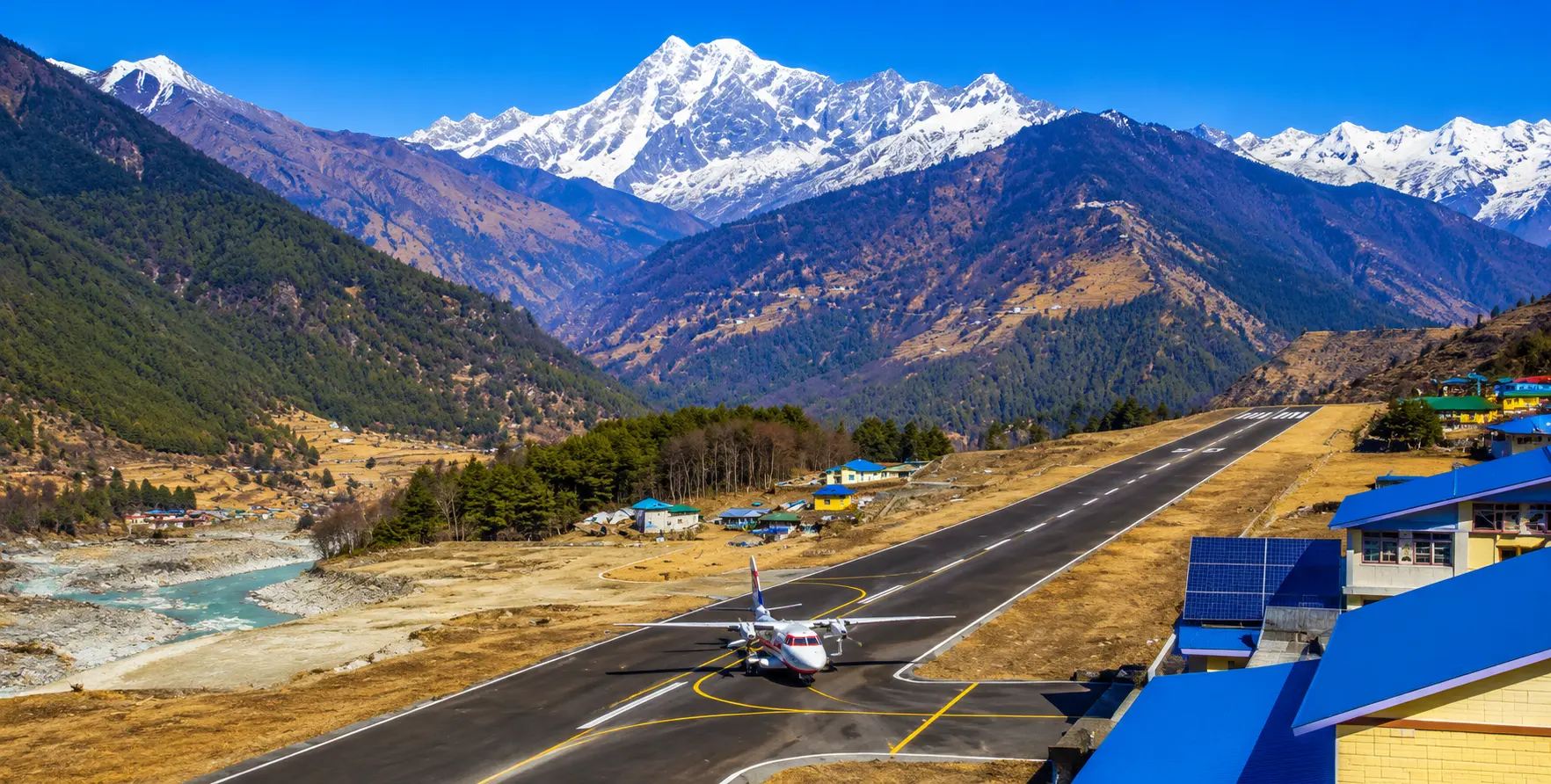
For decades now, reaching the remote Everest region has meant either a dramatic, short flight into Lukla’s famously challenging mountainside airstrip or a long, multi-day trek in from Jiri following the historic route used by early Everest expeditions. Over the past several years, however, steady road construction through Solukhumbu district has quietly rewritten this equation, extending drivable access well beyond the traditional Salleri and Phaplu roadhead toward the villages of Thamdanda and, increasingly, Surke, bringing jeep transport closer than ever to the standard Everest trekking trail near Lukla itself.

This guide covers everything trekkers need to know about arranging 

Private Jeep Hire Salleri Phaplu: the geography of this extended road corridor, how far the road actually reaches today, the journey from Kathmandu itself, vehicle options, how this changing roadhead affects Everest region trekking itineraries, permits, seasonal considerations, and how this overland route compares to flying into Lukla. Nepal Vehicle Hiring has arranged jeep transport along this exact corridor for years, and this guide draws directly on that route experience.

Where Are Salleri, Phaplu, Thamdanda, and Surke
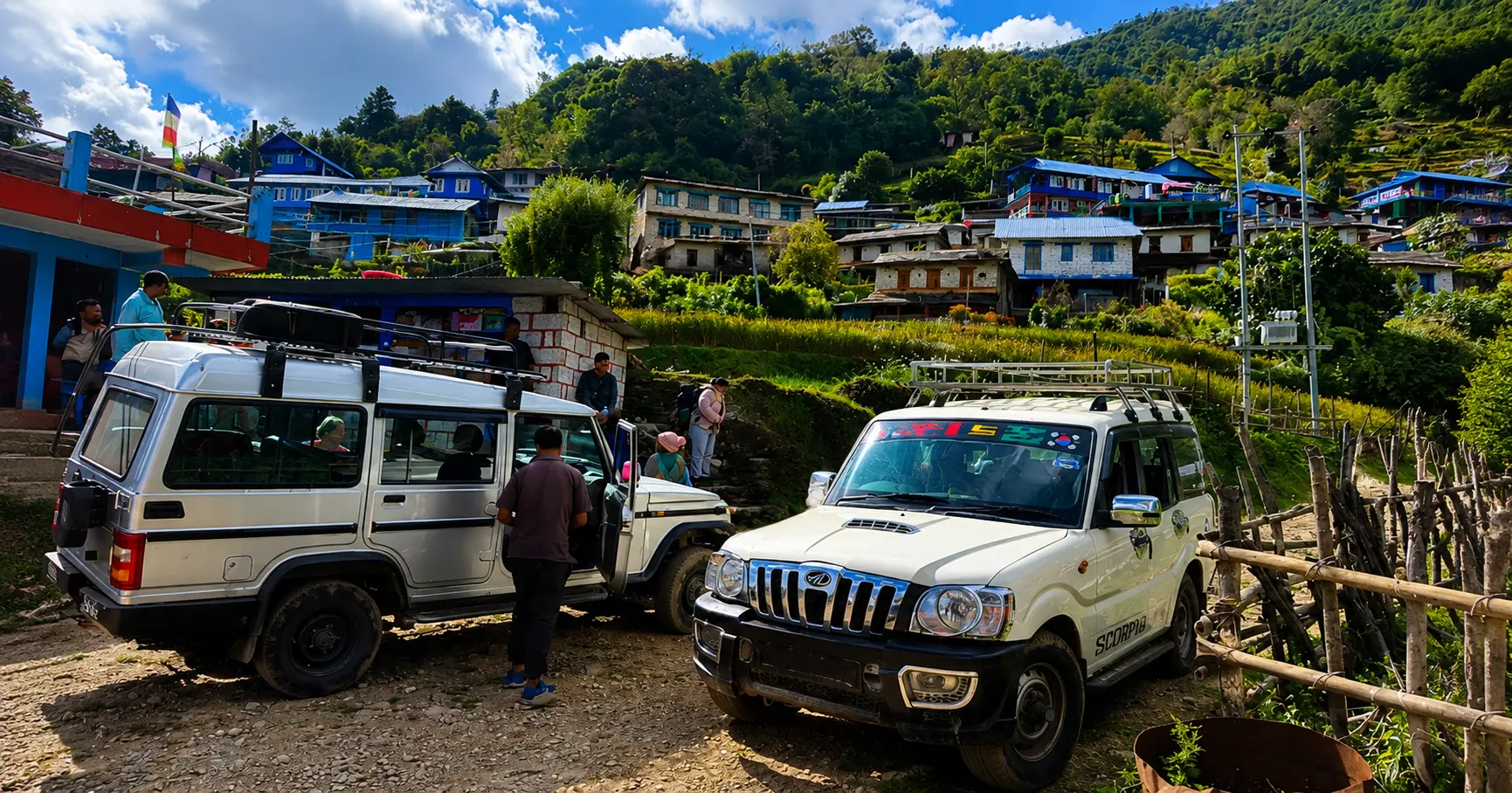
Salleri itself serves proudly as the district headquarters of Solukhumbu, the broader district containing the entire Everest region within its boundaries, while Phaplu, a short distance away, hosts its own small airstrip and has long served as an alternative, lower-risk entry point to the region compared to Lukla’s more famous and more challenging airstrip. Thamdanda and Surke themselves sit considerably further along this same general road corridor, considerably closer to the standard Everest trekking trail, with Surke in particular sitting close enough to Chaurikharka, just below Lukla, that trekkers driving this far can join the main Everest Base Camp trekking route with only a short remaining walk, bypassing the need to fly into Lukla at all.

This lower Solukhumbu region sits within the Solu portion of the district, distinct from the higher Khumbu region containing Namche Bazaar, Everest Base Camp, and the classic high-altitude trekking trail, and is home to a mixed population of Rai, Chhetri, and other communities alongside the Sherpa population more commonly associated with the higher Khumbu villages further up the trail.

Book a private 4WD jeep to Salleri, Phaplu, Thamdanda, or Surke for a safe and comfortable transfer to the Everest Region. Ideal for Everest Base Camp trekkers seeking reliable road transport.

The Journey From Kathmandu

The drive from Kathmandu toward Salleri and Phaplu covers a considerable distance through Nepal’s central and eastern hill regions, typically taking a full day or, more commonly, two days with an overnight stop, given the distance and road conditions involved. Our 

Kathmandu to Salleri Phaplu jeep service covers this established leg of the journey in detail, and forms the foundation for the extended route now reaching toward Thamdanda and Surke as road construction has continued to push further along this corridor in recent years.

Beyond Phaplu, the more recently constructed and considerably rougher road continues toward Ringmo, Taktor, and onward toward Thamdanda, with the furthest currently drivable sections reaching Surke on a good day, subject to current road maintenance and recent weather conditions. This extended section demands a genuine four-wheel-drive vehicle and a driver with specific, up-to-date knowledge of exactly how far the road remains passable on any given trip, since this changes more frequently on this newer section than on the well-established Kathmandu-to-Phaplu leg.

Why This Extended Route Matters

The extension of drivable road access beyond Phaplu toward Thamdanda and Surke represents a genuinely significant development for Everest region trekking logistics, offering trekkers a way to reach the immediate vicinity of the standard trekking trail without relying on a Lukla flight at all. Lukla’s small mountainside airstrip, despite its considerable international fame, remains notoriously subject to significant weather-related delays and cancellations, particularly during the shoulder seasons and any period of genuinely unstable, unpredictable mountain weather, and a growing number of trekkers now specifically choose the overland route via Salleri, Phaplu, and onward toward Surke specifically to avoid this flight risk entirely, accepting a longer overall journey in exchange for greater schedule reliability.

Vehicle Options for This Route

Toyota Land Cruiser and Prado

For the demanding sections beyond Phaplu toward Thamdanda and Surke, a Land Cruiser or Prado remains the most reliable option, offering the ground clearance and mechanical dependability this genuinely rough corridor requires.

Mahindra Bolero and Local Jeeps

Local jeeps such as the Mahindra Bolero are widely used by regional operators on this corridor and remain a practical, cost-effective option for smaller groups, discussed further in our 

Mahindra Bolero and Tata Sumo trekking transfer guide.

Executive Hiace for the Kathmandu-Phaplu Highway Sections

For larger trekking groups, our 

Hiace hire service suits the more established, paved sections of the journey closer to Kathmandu, before smaller groups transfer into 4WD jeeps for the rougher stretch beyond Phaplu.

Book a private jeep hire Salleri, Phaplu, Thamdanda, or Surke for a safe and comfortable transfer to the Everest Region. Ideal for Everest Base Camp trekkers seeking reliable road transport.

Phaplu’s Airstrip as an Alternative to Lukla

Beyond its role as a road terminus, Phaplu also hosts its own small airstrip, occasionally used as a lower-risk alternative to Lukla for trekkers wanting to fly rather than drive the full distance from Kathmandu, while still avoiding Lukla’s more challenging approach and higher weather-related cancellation rate. This gives trekkers a genuine third option beyond a pure road journey or a Lukla flight: driving or flying to Phaplu, then continuing on foot or by the extended road toward Thamdanda and Surke before joining the main Everest trail.

Trekking From Surke to the Main Everest Trail

For trekkers driving as far as the road currently allows toward Surke, the remaining walk to join the standard Everest Base Camp trekking route near Chaurikharka and Lukla itself is considerably shorter than the multi-day walk once required from Jiri or even from Phaplu in earlier years. This compressed approach has made the overland route an increasingly practical alternative to flying, rather than simply a slower, more scenic option reserved for trekkers with unlimited time, and its growing popularity reflects genuine road infrastructure improvement rather than simply changing trekker preferences.

Private Jeep Hire Salleri, Phaplu, Thamdanda & Surke

Comparing the Overland Route to Flying Into Lukla

Flying to Lukla remains the fastest way to begin an Everest Base Camp Trek, but carries genuine weather-related risk, with flights frequently delayed or rerouted through Manthali in Ramechhap district during peak season, as discussed in our 

Everest Range Nepal Full Guide. The overland route via Salleri, Phaplu, Thamdanda, and Surke takes considerably longer overall, typically adding two to three days compared to flying directly, but offers far greater schedule predictability, an important consideration for trekkers with a fixed return flight or limited overall trip duration who cannot afford an open-ended wait for Lukla flight conditions to improve.
Comparing This Route to the Classic Jiri Approach

The traditional Jiri to Everest route, covered in our companion guide to the 

Jiri to Everest Trek offered by our sister company Alpine Luxury Treks, remains available for trekkers specifically seeking the full historical approach used by early Everest expeditions including Hillary and Tenzing’s own 1953 climb. The Salleri, Phaplu, Thamdanda, and Surke route, by contrast, offers a considerably shorter overland approach for trekkers prioritizing efficiency over historical authenticity, while still avoiding a Lukla flight entirely.
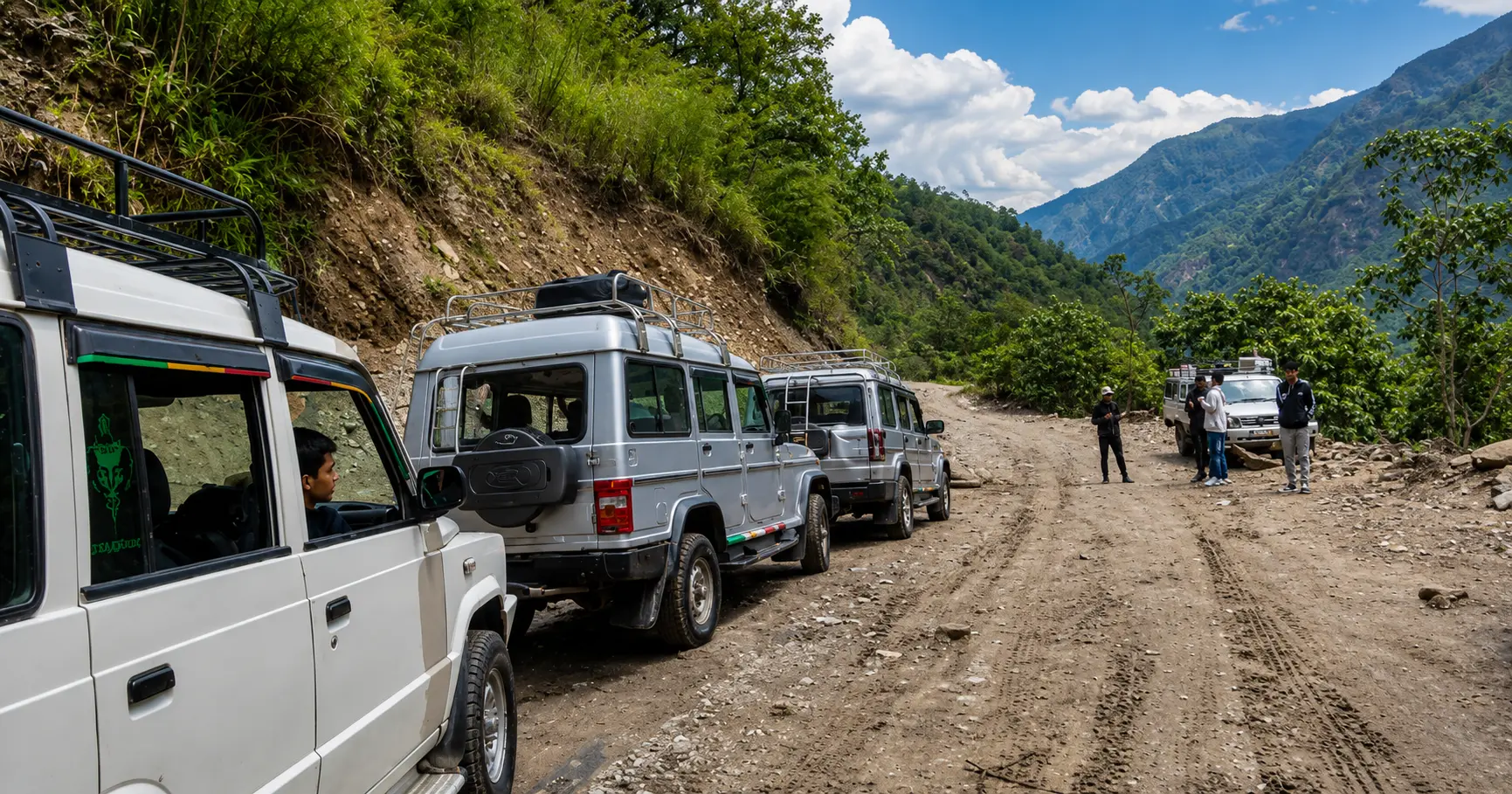
Private Jeep Hire Salleri, Phaplu, Thamdanda & Surke

Permits Required for This Route

Trekkers joining the standard, well-established Everest Base Camp Trek via this particular overland approach require exactly the same permits as those flying into Lukla: a Sagarmatha National Park entry permit and the Khumbu Pasang Lhamu Rural Municipality entry fee, both typically arranged in Kathmandu or at the appropriate checkpoint along the route. No additional restricted area permit is required for this lower Solukhumbu approach itself, since it falls outside any restricted zone.

Best Time of Year for This Route

Spring (March to May)

Generally favorable road conditions and stable weather make this one of the two peak seasons for both the drive and onward trekking.

Summer and Monsoon (June to August)

Heavy rainfall significantly increases landslide risk on the rougher sections beyond Phaplu, making this the least reliable season for the extended road toward Thamdanda and Surke specifically.

Autumn (September to November)

The clearest skies and most stable conditions of the year, and the busiest season for Everest region trekking overall, making early booking for this route advisable.

Winter (December to February)

Cold conditions affect the higher trekking sections beyond Surke, though the lower road corridor itself generally remains passable, appealing to trekkers seeking a quieter season.

Private Jeep Hire Salleri, Phaplu, Thamdanda & Surke

Road Safety on This Extended Corridor

The road beyond Phaplu toward Thamdanda and Surke remains considerably rougher and less consistently maintained than the established Kathmandu-to-Phaplu highway sections, passing through active landslide zones particularly during and after the monsoon. An experienced driver with current, up-to-date knowledge of exactly how far the road remains passable is essential, given how much this can change between trips depending on recent weather and maintenance activity.

Combining This Route With the Full Everest Base Camp Trek

Trekkers using this overland approach typically continue on to complete the full 

Everest Base Camp Trek offered by our sister company, Alpine Luxury Treks, joining the standard trail near Chaurikharka and continuing through Namche Bazaar, Tengboche, and onward to Base Camp and Kala Patthar exactly as trekkers flying into Lukla would, simply with a different and more schedule-reliable starting point.

Private Jeep Hire Salleri, Phaplu, Thamdanda & Surke

Cost Factors for This Route

Vehicle hire costs for the Salleri, Phaplu, Thamdanda, and Surke corridor depend on vehicle class, group size, and how far the current road allows the vehicle to travel on a given trip. Our team is glad to prepare a custom quote based on your group size and travel dates, confirming current road conditions at the time of booking. Visit our 
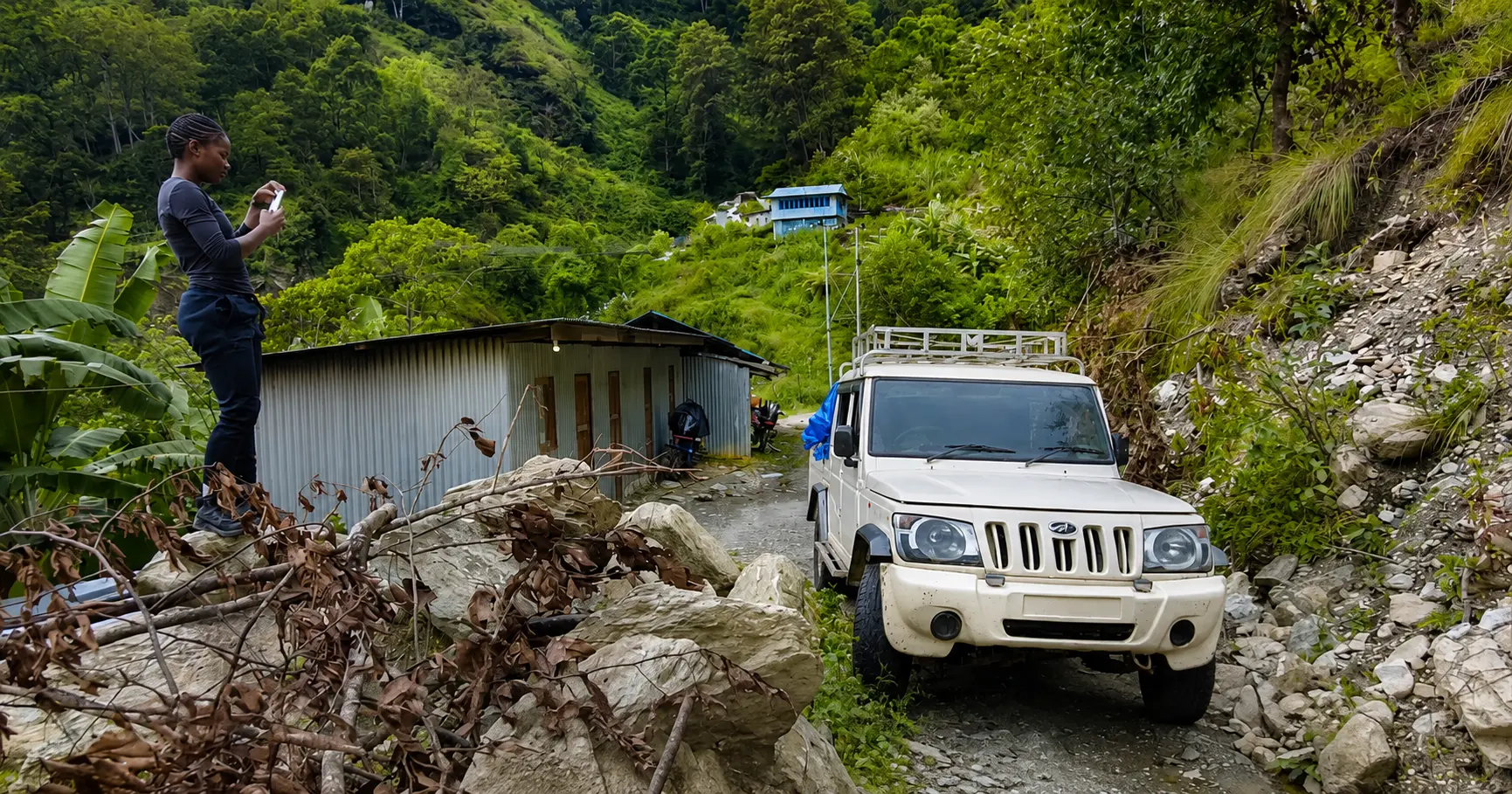
homepage or explore our 

trekking transport section for further guidance.

How to Book Your Transport

Booking begins with sharing your group size, preferred travel dates, and whether your priority is reaching as far as possible toward Surke to minimize walking, or a more standard Salleri-Phaplu drop-off. Our team will confirm current road conditions and match the appropriate vehicle and driver for your specific itinerary. Booking at least two to three weeks ahead is recommended during peak spring and autumn seasons.

Private Jeep Hire Salleri, Phaplu, Thamdanda & Surke

Trekkers planning an Everest region trip via this overland approach may find these related guides useful:

Frequently Asked Questions

How far can I currently drive toward the Everest region without flying?

Road access currently reaches as far as Thamdanda and, on good days, Surke, though exact conditions vary and should be confirmed with your vehicle operator before finalizing travel plans.

Is this route safer than flying to Lukla?

It avoids Lukla’s specific flight-related weather risk entirely, though the road itself demands a genuine 4WD vehicle and an experienced driver given its rough, landslide-prone sections beyond Phaplu.

How much walking remains after driving to Surke?

The remaining walk to join the main Everest trail near Chaurikharka and Lukla is considerably shorter than the traditional Jiri approach, typically achievable within a single day depending on the exact road endpoint on your trip.

Do I need different permits for this route compared to flying into Lukla?

No. The same Sagarmatha National Park permit and Khumbu Rural Municipality entry fee apply regardless of whether you fly into Lukla or approach overland via this route.

Can I fly from Phaplu instead of driving the whole way?

Yes. Phaplu’s airstrip offers an alternative, generally lower-risk flight option compared to Lukla, and can be combined with the extended road toward Thamdanda and Surke for trekkers wanting to shorten their overland journey.

What is the best season for this route?

Spring and autumn offer the most reliable road conditions, with the monsoon season carrying the highest landslide risk on the rougher sections beyond Phaplu.


Private Jeep Hire Salleri, Phaplu, Thamdanda & Surke

Final Thoughts: Nepal’s Quietly Changing Everest Gateway

The steady extension of drivable road access from Salleri and Phaplu toward Thamdanda and Surke represents one of the more significant, if quietly developing, changes to Everest region trekking logistics in recent years, offering a genuine alternative to Lukla’s flight-dependent access without the multi-day commitment of the full traditional Jiri approach. Getting this journey right, with an experienced driver and up-to-date knowledge of current road conditions, sets a reliable, weather-independent start to one of the world’s great trekking adventures.

Contact Nepal Vehicle Hiring today at +977 9851013196 or visit 

vehiclehiringnepal.com to arrange your private jeep for Salleri, Phaplu, Thamdanda, and Surke, and to help plan your onward journey into the Everest region with current, accurate route information for whichever season you plan to travel.

The History of Road Development in Lower Solukhumbu

Road construction into Solukhumbu district has proceeded in distinct phases over recent decades, beginning with the establishment of a reliable road connection to Salleri and Phaplu, which for years served as the practical limit of drivable access toward the Everest region. This Salleri-Phaplu roadhead became the standard starting point for trekkers choosing an overland approach rather than flying into Lukla, effectively creating a shorter alternative to the full traditional Jiri route while still requiring several additional trekking days compared to flying directly. More recently, continued road construction has pushed this drivable limit further, through Ringmo and Taktor, toward Thamdanda and, on favorable days, as far as Surke, progressively compressing the walking distance required to join the standard Everest trekking trail near Lukla and Chaurikharka.

Private Jeep Hire Salleri, Phaplu, Thamdanda & Surke

Salleri: The District Headquarters

As the administrative headquarters of Solukhumbu district, Salleri hosts government offices, a hospital, and a range of services reflecting its role as the district’s administrative center, distinct from the more purely trekking-oriented character of villages further up the trail toward the high Khumbu region. Many trekkers pass through or briefly stop in Salleri as part of their overland journey, and the town offers a useful last point for final supplies or services before continuing on toward the more remote sections of the route.

Phaplu in Greater Detail

Phaplu, a short distance from Salleri, has developed its own distinct identity centred around its small airstrip and its role as a common starting or ending point for trekking itineraries in the region. The Phaplu area also hosts a hospital originally established with support connected to the Hillary family’s long-standing philanthropic work in the region, part of the broader legacy of infrastructure development in Solukhumbu tracing back to Sir Edmund Hillary’s post-expedition work supporting local communities throughout the district.

Private Jeep Hire Salleri, Phaplu, Thamdanda & Surke

Thamdanda and the Newer Road Sections

Thamdanda represents one of the more recently established points along this extending road corridor, reflecting the ongoing, incremental nature of road construction through this challenging terrain. Unlike the well-established Kathmandu-to-Phaplu highway sections, the road beyond Phaplu toward Thamdanda remains under active development, meaning conditions and the exact drivable endpoint can shift meaningfully between trekking seasons as construction continues and monsoon damage is repaired.

Surke and Its Proximity to the Main Trekking Trail

Surke’s particular significance within this extended road corridor comes from its proximity to Chaurikharka, a village sitting directly on the standard Everest Base Camp trekking trail just below Lukla itself. Trekkers able to drive as far as Surke on a given trip face only a relatively short remaining walk to join this main trail, effectively allowing them to bypass both the Lukla flight and the considerably longer trek from Phaplu or Jiri that earlier generations of overland trekkers faced. This proximity is precisely what has made Surke the focus of considerable interest as road construction has continued to extend toward it in recent years.

Private Jeep Hire Salleri, Phaplu, Thamdanda & Surke

A Typical Itinerary Using This Extended Route

A common itinerary for trekkers choosing this overland approach begins with the drive from Kathmandu to Salleri or Phaplu, typically requiring a full day or an overnight stop given the distance involved, followed by a second day continuing along the rougher, more recently constructed road toward Thamdanda and as far toward Surke as current conditions allow. From this point, trekkers complete the remaining walk to join the main trail near Chaurikharka, continuing on to Lukla itself or directly onward toward Namche Bazaar depending on their specific itinerary and acclimatization schedule. This combined road and short trekking approach typically adds two to three days to an itinerary compared to flying directly into Lukla, but removes the schedule uncertainty associated with Lukla flight delays entirely.

Weather Patterns Affecting This Corridor

The lower Solukhumbu region through which this road passes experiences a genuinely different weather pattern than the higher Khumbu region further up the standard trekking trail, with more monsoon-influenced rainfall and denser forest cover typical of the mid-hill elevations this corridor traverses before climbing toward the higher, more exposed terrain near Lukla and Namche Bazaar. This means road conditions along the Phaplu-to-Surke stretch are particularly sensitive to monsoon-season rainfall, with landslide risk considerably higher during and immediately after the main monsoon months compared to the drier, more stable conditions typical of the peak autumn and spring trekking seasons.


Private Jeep Hire Salleri, Phaplu, Thamdanda & Surke

Local Communities Along the Route

The villages along this extended corridor, including Salleri, Phaplu, and the smaller settlements toward Thamdanda and Surke, are home to a genuinely mixed population reflecting lower Solukhumbu’s more ethnically diverse character compared to the more uniformly Sherpa communities found in the higher Khumbu villages further up the trail. Rai and Chhetri communities form a significant part of the population in these lower villages, alongside Sherpa residents, giving trekkers using this overland route a somewhat different cultural cross-section than those flying directly into the more purely Sherpa cultural landscape of Lukla and Namche Bazaar.

Why Trekkers Increasingly Choose This Overland Approach

Beyond simply avoiding Lukla flight risk, a growing number of trekkers choose this overland approach specifically for the additional cultural and scenic exposure it offers compared to flying directly into the high Khumbu region. The drive and short trek through lower Solukhumbu offer a genuinely different landscape and cultural setting than the higher trail sections most trekkers experience, providing a more gradual, immersive introduction to the broader Everest region rather than the more abrupt transition of a direct Lukla flight. This has made the route appealing not only to risk-averse trekkers but also to those specifically seeking a richer, more complete regional experience.

Health and Altitude Considerations for This Approach

One genuine advantage of this overland route lies in its gradual elevation gain compared to flying directly into Lukla’s 2,860 metres. Trekkers driving from Kathmandu’s roughly 1,400 metres through Salleri and Phaplu, both at considerably lower elevations, before continuing on foot toward the higher trail sections, experience a more gradual acclimatisation profile than those who fly directly into Lukla and begin trekking immediately at a considerably higher starting elevation. Some trekkers and guides consider this gradual approach genuinely beneficial for altitude acclimatization, complementing the standard rest days built into most Everest Base Camp itineraries.

Guides and Local Knowledge for This Route

Given the more variable and continually evolving nature of road conditions found beyond Phaplu toward both Thamdanda and Surke, working closely with a guide or vehicle operator who maintains current, up-to-date knowledge of the exact drivable endpoint is particularly valuable for this specific route, more so than on well-established, unchanging highway corridors elsewhere in Nepal. Local drivers who regularly travel this corridor typically have the most accurate, current information regarding road status, since conditions can change meaningfully between individual trips depending on recent weather and ongoing construction activity.

Combining This Route With a Broader Solukhumbu Exploration

Trekkers with additional time sometimes use this extended overland approach as an opportunity to explore lower Solukhumbu more broadly, rather than treating the drive purely as a transit journey toward the main Everest trail. Salleri’s role as district headquarters, Phaplu’s historic hospital and airstrip, and the general cultural landscape of the lower Solu region all offer worthwhile points of interest for trekkers willing to build additional time into their itinerary beyond the minimum required to reach Surke and join the main trekking trail.

What to Pack for This Journey

  • Warm, layered clothing given the range of elevations and temperatures encountered across the drive and subsequent trek.
  • Sturdy footwear for the walking sections between the road’s current endpoint and the main Everest trail near Chaurikharka.
  • A flexible itinerary buffer, given the more variable nature of road conditions on this evolving corridor compared to established highway routes.
  • Cash in Nepali rupees, since card payment infrastructure remains limited throughout this rural corridor.
  • Basic first aid supplies and any personal medication needed for the trekking portion of the journey.

Private Jeep Hire Salleri, Phaplu, Thamdanda & Surke

Why Choose Nepal Vehicle Hiring for This Route

Nepal Vehicle Hiring has arranged transport along the Kathmandu to Salleri and Phaplu corridor for years, and our team maintains ongoing contact with drivers regularly working the extended sections toward Thamdanda and Surke, giving us genuinely current knowledge of road conditions rather than relying on outdated information. Our drivers assigned to this corridor are selected specifically for their experience navigating both the established highway sections and the rougher, evolving stretches beyond Phaplu, and we work directly with trekking groups to confirm realistic expectations regarding exactly how far the road allows travel on any given trip, since this genuinely does shift between seasons.

Coordinating With Trekking Agencies for This Route

Given the evolving nature of road access on this corridor, close coordination between ground transport providers and trekking agencies planning Everest region itineraries is particularly valuable for this specific route. Trekking agencies benefit from working with a vehicle provider who can confirm current road status close to a group’s actual departure date, allowing itinerary adjustments if the road has become more or less passable than assumed during initial trip planning months in advance. Our team works directly with trekking agencies, including our sister companies, to provide this kind of current, reliable route information supporting accurate Everest region itinerary planning.

The Broader Context of Nepal’s Rural Road Expansion

The extension of drivable access from Phaplu toward Thamdanda and Surke reflects a broader pattern of rural road construction occurring across many of Nepal’s trekking regions, similarly discussed in our guides to the changing roadhead at 

Machha Khola on the Manaslu Circuit approach, and the historical development of the 

Tribhuvan Highway connecting Kathmandu to Hetauda. This pattern of steadily extending rural road networks continues to reshape how trekkers access some of Nepal’s most significant mountain regions, generally compressing walking distances and reducing dependence on weather-sensitive domestic flights, though it often introduces new considerations around road quality and reliability on newly constructed sections.

Private Jeep Hire Salleri, Phaplu, Thamdanda & Surke

Seasonal Booking Patterns for This Corridor

Demand for vehicle hire along this corridor follows Everest region trekking’s broader seasonal pattern, with autumn representing the peak booking period, followed by spring. Given the corridor’s dual role serving both established highway sections and the more variable extended road toward Surke, booking well in advance during peak season, while also confirming current road conditions closer to the actual travel date, offers the best combination of availability and route accuracy for trekkers planning this specific journey.

A Note on Realistic Expectations for This Route

Trekkers considering this overland approach should understand that, unlike the well-established Kathmandu-to-Phaplu highway sections, the extended road toward Thamdanda and Surke remains a genuinely evolving piece of infrastructure, and the exact distance drivable on any given trip should be treated as subject to change rather than a fixed, guaranteed endpoint. Approaching this journey with appropriate flexibility, and working with a vehicle provider who communicates honestly about current conditions rather than overpromising a specific drivable distance, leads to a considerably smoother overall experience than assuming a fixed, guaranteed route based on outdated trip reports.

Private Jeep Hire Salleri, Phaplu, Thamdanda & Surke

Combining This Route With a Kathmandu Valley Stay

Most trekkers using this overland approach begin their trip with at least a day or two in Kathmandu, both for final trekking preparation and general acclimatisation before departure. Our 

Kathmandu sightseeing tour and 

Bhaktapur Durbar Square tour services pair naturally with this time before departure, while a reliable 

Kathmandu airport transfer ensures a smooth arrival before the demanding overland journey toward Solukhumbu begins.

Insurance and Emergency Considerations

Given the genuinely more remote and continually evolving nature of the road beyond Phaplu specifically, comprehensive travel insurance covering trekking activities and, if relevant, emergency evacuation, remains important for this route, as it does for any Everest region trekking approach. Emergency response along the extended road sections toward Thamdanda and Surke may be less immediately available than along the well-established Kathmandu-to-Phaplu highway, and trekkers should discuss realistic emergency response expectations with their guide or vehicle provider before departure.

The Growing Appeal Among Repeat Everest Region Visitors

Trekkers who have previously visited the Everest region by flying into Lukla sometimes specifically choose this overland approach on a return visit, drawn by the novelty of a different route and the additional cultural exposure to lower Solukhumbu that a Lukla flight simply does not offer. This has made the Salleri, Phaplu, Thamdanda, and Surke corridor an increasingly popular choice not only among first-time trekkers seeking to avoid flight risk, but also among experienced repeat visitors specifically seeking a different way to experience a region they may already know well from previous trips.
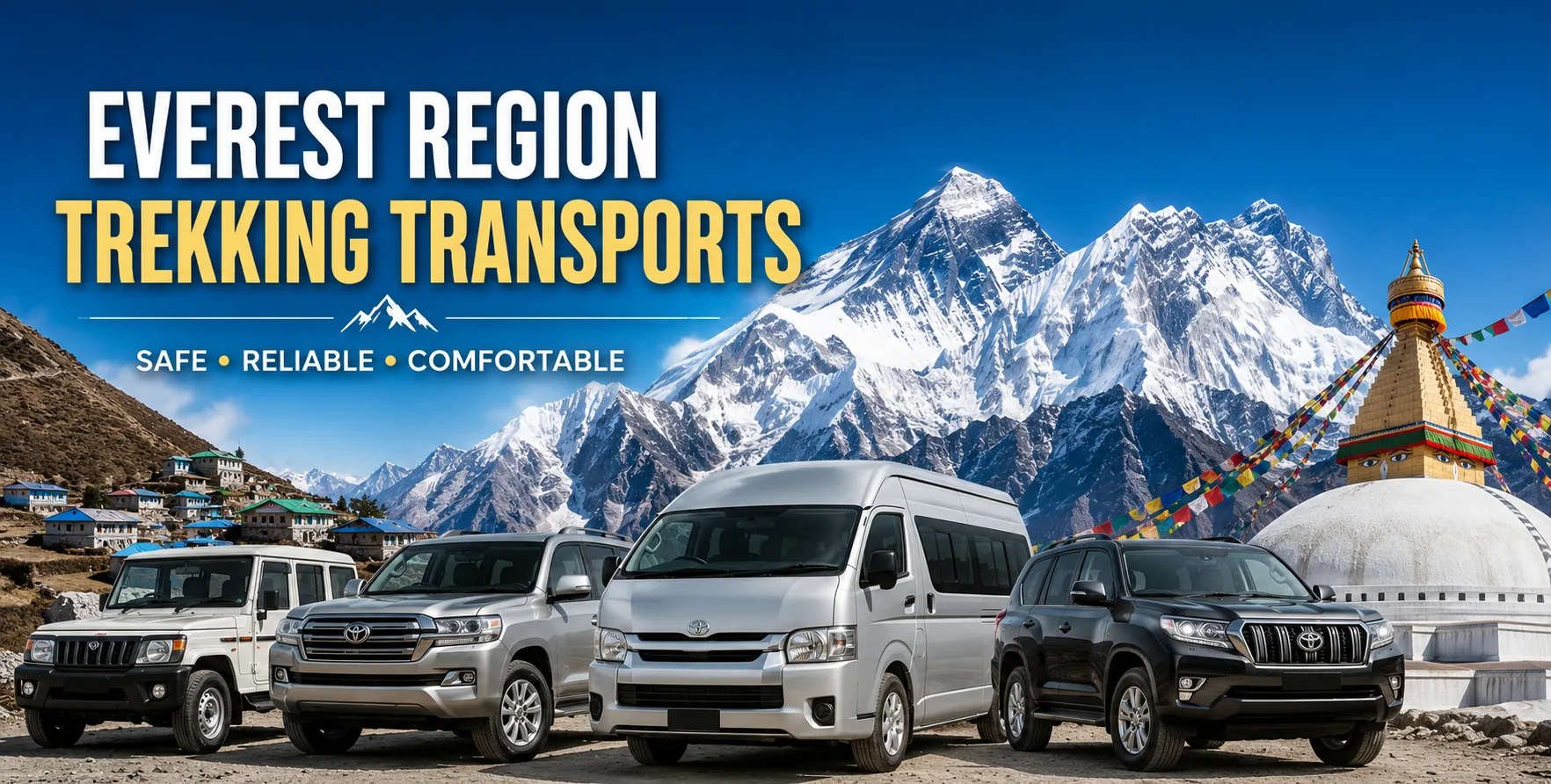
Private Jeep Hire Salleri, Phaplu, Thamdanda & Surke
 

Photography and Scenic Highlights Along This Route

The drive and subsequent trek along this corridor offers a genuinely varied range of scenery, from the terraced hillside agriculture and forested slopes typical of Nepal’s central hill region near Kathmandu, through to the increasingly dramatic mountain terrain as the route approaches Solukhumbu and the first glimpses of high Himalayan peaks become visible on clear days. The gradual transition in landscape character across this multi-day journey offers photography opportunities considerably different from the more abrupt shift experienced by trekkers flying directly into Lukla’s high-altitude airstrip.

Local Food and Accommodation Along the Way

Both Salleri and Phaplu together offer genuinely reasonable accommodation and food options reflecting their established role as a regional hub and trekking gateway, with dal bhat widely available alongside a modest range of other options. Accommodation and food options become progressively more basic along the newer road sections toward Thamdanda and Surke, reflecting the more recent and less developed tourism infrastructure in these smaller settlements compared to the more established facilities in Salleri and Phaplu themselves.

Group Size Considerations for This Route

Given the genuinely variable road conditions found on the extended sections beyond Phaplu specifically, larger trekking groups should plan for the possibility of splitting across multiple vehicles if the current road endpoint requires a rougher, smaller-capacity jeep rather than a larger vehicle suited to the established highway sections closer to Kathmandu. Discussing group size and luggage requirements with your vehicle provider during initial booking allows more accurate planning around this potential need to transfer between vehicle types partway through the journey.

A Comparison of Total Journey Time Across Different Approaches

Trekkers weighing their options for reaching the Everest region can expect roughly the following total journey times from Kathmandu to the start of the main trekking trail: a direct Lukla flight typically takes under an hour of actual flying time, though total time including airport procedures and potential weather delays can vary considerably; the full Jiri approach typically requires six to eight days of trekking after an initial day’s drive to Jiri itself; and the Salleri, Phaplu, Thamdanda, and Surke overland approach typically requires two to three days of combined driving and short trekking to reach the same starting point near Chaurikharka, positioning this route as a genuine middle ground between the speed of flying and the extended duration of the full historical Jiri trek.
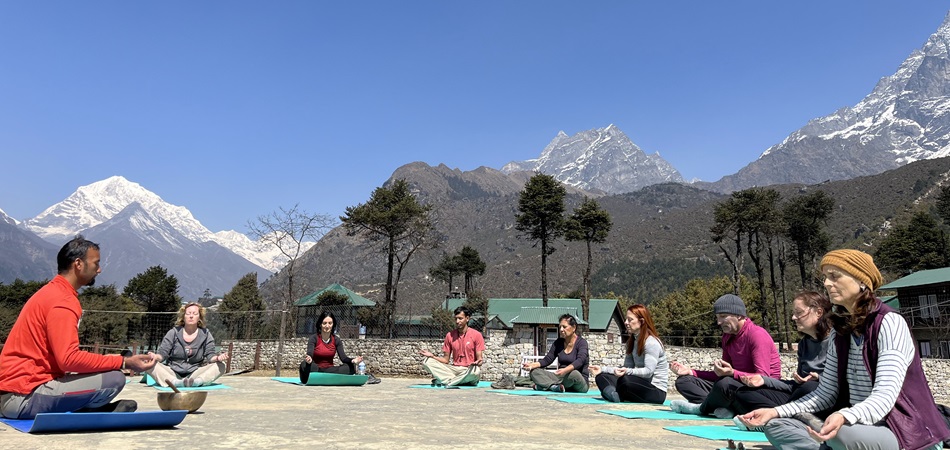
Why This Route Appeals to Budget-Conscious Trekkers

Beyond weather reliability alone, cost also drives many trekkers toward this overland approach, since ground transport for this corridor is generally more affordable than the combined cost of round-trip Lukla flights, particularly for larger groups able to share vehicle costs across multiple trekkers. This cost advantage, combined with the flight-risk avoidance already discussed, has made the overland route an increasingly attractive option for trekkers balancing budget considerations against their available trip time.

Environmental Considerations of Overland Versus Flight Access

Some environmentally conscious trekkers specifically choose the overland route over flying, given the generally lower per-passenger emissions associated with shared ground transport compared to short-haul mountain flights, though this environmental calculation depends considerably on vehicle occupancy and the total distance driven versus flown. Trekkers with a specific interest in minimizing their trip’s environmental footprint may find this consideration worth weighing alongside the other practical factors already discussed when choosing between flying and this overland approach.

Final Practical Tips Before You Go

  • Confirm current road conditions toward Thamdanda and Surke with your vehicle operator close to your actual travel dates, given how frequently this can change.
  • Book your vehicle at least two to three weeks ahead during the peak spring and autumn seasons.
  • Build flexibility into your itinerary given the more variable nature of this evolving road corridor compared to established highway routes.
  • Pack for a genuine range of temperatures and conditions across the multi-day journey from Kathmandu through to the higher trekking trail.
  • Consider combining this route with additional exploration of lower Solukhumbu if your schedule allows.

A Sample Cost Breakdown for Planning Purposes

While exact pricing depends on vehicle class, group size, and current road conditions, travelers can generally expect the ground transport component of this journey to scale with total distance and driving days involved, similar to other extended trekking transport routes covered throughout our guides. Groups able to reach further toward Surke before transitioning to foot travel generally see a modestly higher transport cost reflecting the additional driving distance, offset by a correspondingly shorter and less physically demanding remaining trek to reach the main trail, a trade-off worth discussing directly with your vehicle provider when planning your specific budget.

Combining This Journey With Broader Sister Company Trekking Packages

Trekkers using this overland approach to reach the Everest region typically continue on to complete a full trekking itinerary through our sister company, Alpine Luxury Treks, whether the standard 

Everest Base Camp Trek, the more premium 

Everest Base Camp Luxury Lodge Trek, or an extended itinerary incorporating the 

Gokyo Lakes or full 

Three Passes circuit. Coordinating the overland ground transport and the trekking itinerary itself through a single point of contact, spanning both Nepal Vehicle Hiring and our sister trekking company, ensures a consistent, well-planned experience across the entire journey from Kathmandu to Everest Base Camp and back.

A Closing Perspective on This Evolving Route

The Salleri, Phaplu, Thamdanda, and Surke corridor represents Nepal’s trekking infrastructure in genuine, active transition, a road network still extending year by year into terrain that not long ago was accessible only on foot. For trekkers willing to accept a degree of route uncertainty in exchange for weather-independent scheduling, a potentially lower overall cost, and a richer cultural introduction to lower Solukhumbu, this overland approach offers a genuinely compelling alternative to the Lukla flight that has defined most visitors’ Everest region experience for decades.
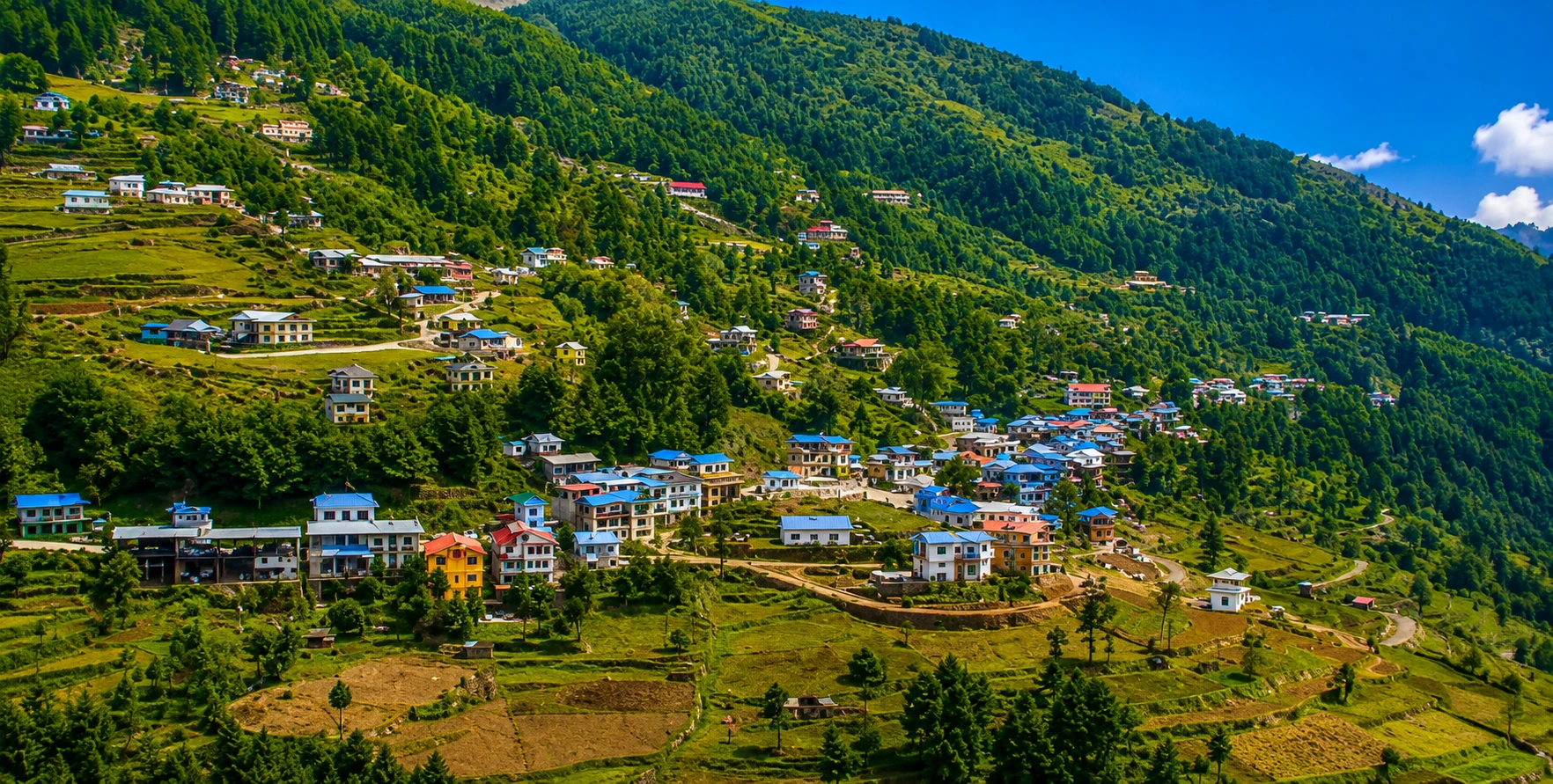
Additional Frequently Asked Questions

Is this route suitable for first-time trekkers to Nepal?

Yes, though first-time trekkers should discuss realistic expectations regarding road variability and the remaining walking distance with their trekking agency or vehicle provider, given the less predictable nature of this route compared to established, unchanging routes elsewhere in Nepal.

How does road quality compare between Kathmandu-Phaplu and Phaplu-Surke sections?

The Kathmandu-to-Phaplu section follows a considerably more established highway route, while the Phaplu-to-Surke stretch remains rougher and more variable given its more recent, ongoing construction.

Can this route be used for the return journey as well as the approach?

Yes. Many trekkers use this overland route for both directions, though some choose to fly out from Lukla on the return leg to save time after completing their trek, using the overland approach only for the outbound journey.

What happens if the road is impassable beyond a certain point on my trip?

Your driver will confirm the furthest safely drivable point on the day itself, and any remaining distance to reach the main trekking trail is covered on foot, an outcome your vehicle provider should communicate clearly rather than presenting a fixed endpoint as guaranteed.

Is a guide required for this specific approach route?

While a guide is not strictly mandatory for this lower Solukhumbu approach itself, most trekkers travel with a guide for the onward Everest Base Camp Trek regardless of which approach route they use to reach the main trail.

One Final Word for Prospective Trekkers

If you are weighing this overland approach against a direct Lukla flight, consider your own priorities carefully: those with a fixed, non-negotiable return date may still prefer the speed of flying despite its weather-related risk, while those with greater schedule flexibility, a preference for avoiding mountain flights, or a specific interest in experiencing lower Solukhumbu’s distinct cultural landscape will likely find the Salleri, Phaplu, Thamdanda, and Surke corridor a genuinely rewarding way to begin their journey toward Everest.
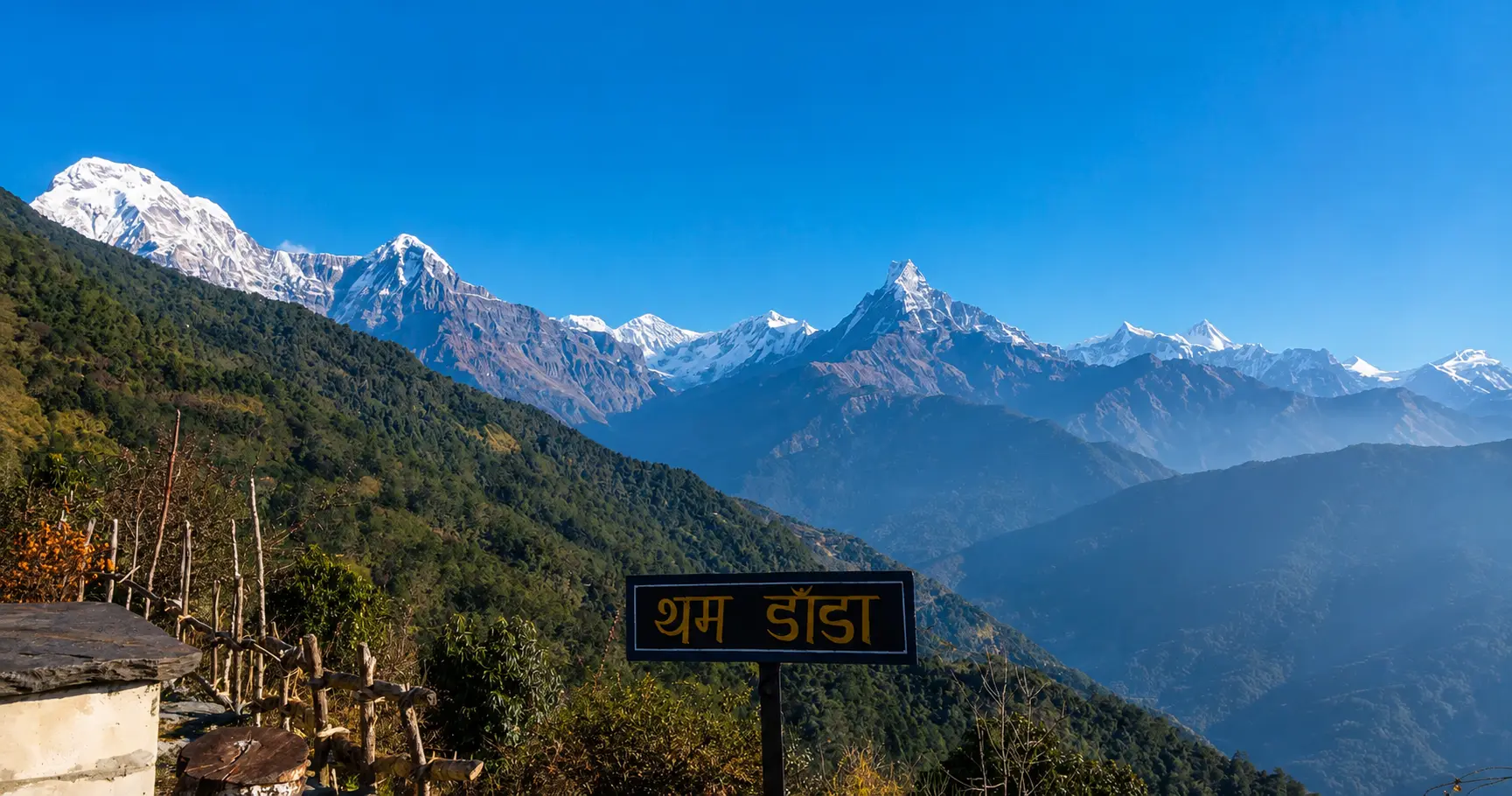
How Nepal Vehicle Hiring Supports This Specific Route

Coordinating transport along an evolving, less predictable corridor like this one requires a genuinely different operational approach compared to managing bookings on Nepal’s more established, unchanging highway routes. Our team maintains ongoing communication with drivers regularly working the Phaplu-to-Surke stretch specifically, allowing us to provide trekkers and trekking agencies with current, accurate information about road status rather than relying on assumptions based on previous seasons. This ongoing local knowledge, built through years of coordinating transport along this exact corridor, forms the foundation of the guidance we provide to travelers planning this particular route into the Everest region.

The Role of This Route in Nepal’s Broader Trekking Infrastructure Evolution

This corridor’s continued development sits alongside similar road extension patterns seen elsewhere in Nepal, from the changing Manaslu Circuit roadhead at Machha Khola to the historical development of highway infrastructure connecting Kathmandu to destinations throughout the country. Together, these evolving road networks reflect Nepal’s ongoing infrastructure development story, gradually extending motorized access into terrain that trekkers a generation ago could only reach on foot, and reshaping trekking logistics across nearly every major region of the country as a result.

Supporting Trekking Agencies With Current Route Information

Trekking agencies planning Everest region itineraries via this overland approach benefit considerably from an established relationship with a ground transport provider who can supply current, reliable road status information during the trip planning process, months before a group’s actual departure date. This kind of ongoing collaborative relationship between trekking agencies and vehicle hire providers helps ensure itineraries are planned realistically from the outset, rather than requiring last-minute adjustments discovered only once a trekking group has already arrived in Nepal and begun their journey toward Solukhumbu.

Looking Ahead: The Continued Extension of This Road Corridor

Given the pace of road construction already seen along this corridor over recent years, further extension beyond Surke toward Chaurikharka itself, or even closer to Lukla, remains a genuine possibility in the years ahead, following the same incremental pattern that has already brought drivable access this far. Trekkers and trekking agencies alike continue to monitor this ongoing development closely, since further extension would likely compress the remaining walking distance even further, continuing the gradual transformation of how travelers access the Everest region that this guide has traced throughout.

A Final Summary of Key Considerations

Bringing together everything covered in this guide, trekkers considering the Salleri, Phaplu, Thamdanda, and Surke overland approach to the Everest region should weigh the genuine trade-offs involved: a longer overall journey compared to flying, offset by considerably greater schedule reliability and, for many travelers, a lower total cost and a richer cultural introduction to lower Solukhumbu. The exact drivable distance on any given trip remains subject to change given the evolving nature of the road beyond Phaplu, making flexibility and current, accurate route information from an experienced local vehicle provider essential rather than optional for planning this specific journey with confidence.
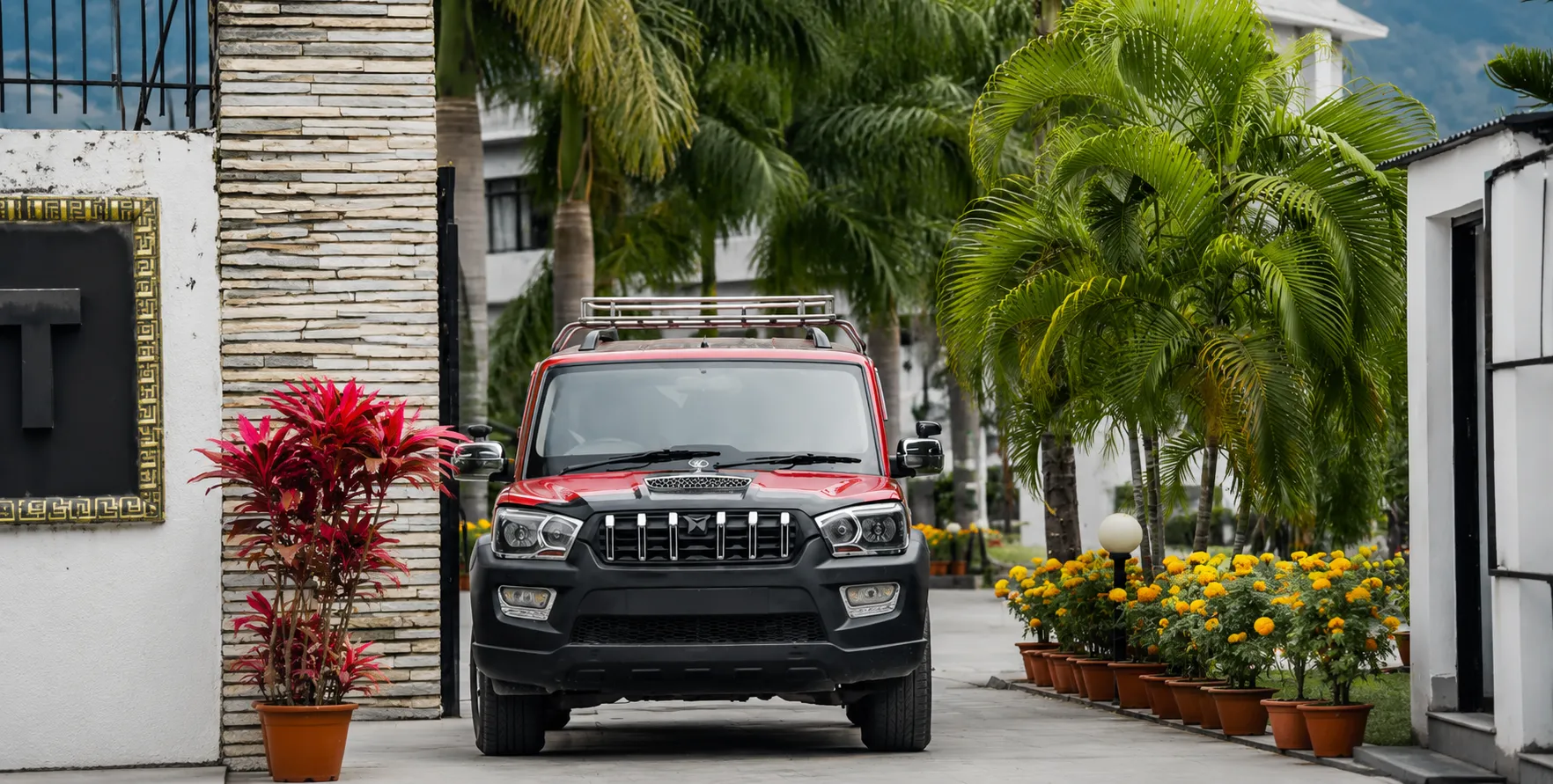
Thank You for Reading

We hope this guide has provided a clear, genuinely useful overview of this changing overland route into the Everest region, and we look forward to helping arrange your own journey toward Salleri, Phaplu, Thamdanda, and Surke, whatever combination of driving and trekking your own itinerary ultimately involves.

Private Jeep Hire Salleri, Phaplu, Thamdanda & Surke

Combining Ground Transport With Nepal’s Wider Vehicle Hiring Network

Beyond this specific Solukhumbu corridor, Nepal Vehicle Hiring supports travelers across nearly every major route in the country, from 

Kathmandu to Pokhara and 

Kathmandu to Besisahar for Annapurna region trekking, to 

Pokhara to Nayapul and 

Kathmandu to Lumbini, alongside our full 

Jeep Hire in Nepal

Hiace hire, and 

Coaster and Bus hire fleet, all coordinated through the same trusted local team supporting your Everest region ground transport.

A Note on Booking Flexibility for This Evolving Route

Given everything discussed throughout this guide regarding the variable nature of road conditions beyond Phaplu, we recommend travelers approach booking for this specific route with a degree of flexibility not always necessary on Nepal’s more established, unchanging highway corridors. Confirming your itinerary broadly, while remaining open to adjusting the exact drivable endpoint based on current conditions confirmed closer to your actual travel date, leads to a considerably smoother overall experience than insisting on a fixed, guaranteed distance regardless of what conditions the road actually presents on the day of travel itself.

Cultural Etiquette Along the Lower Solukhumbu Route

Trekkers passing through the mixed Rai, Chhetri, and Sherpa communities along this corridor should approach local villages with the same respect and cultural sensitivity expected throughout Nepal’s trekking regions, including modest dress, requesting permission before photographing individuals, and general courtesy toward the communities whose homeland this road and trail pass through. This lower Solukhumbu cultural landscape, while less visited than the higher Khumbu villages further up the trail, holds its own genuine significance and deserves the same respectful engagement afforded to any community along Nepal’s trekking routes.

Wishing You a Smooth and Reliable Journey

Whether you choose this evolving overland route specifically to avoid Lukla’s flight-related uncertainty, to explore lower Solukhumbu’s distinct cultural landscape, or simply because it fits your available budget and schedule better than the alternatives, we wish you a safe, smooth journey toward Salleri, Phaplu, Thamdanda, and Surke, and an unforgettable trek beyond it toward the roof of the world.

A Practical Reminder Before You Book

As a final practical reminder, always request the most current road status directly from your chosen vehicle provider before finalizing travel dates, particularly if traveling during or shortly after the monsoon season when conditions on the newer road sections beyond Phaplu are most likely to have changed since your initial research.

Closing Summary

This guide has covered the geography, history, road conditions, permits, seasonal considerations, and practical booking guidance for the Salleri, Phaplu, Thamdanda, and Surke overland approach to the Everest region, offering a genuinely useful alternative for trekkers seeking to avoid Lukla’s flight-related risk while still reaching the main Everest trekking trail within a reasonable, well-planned timeframe.
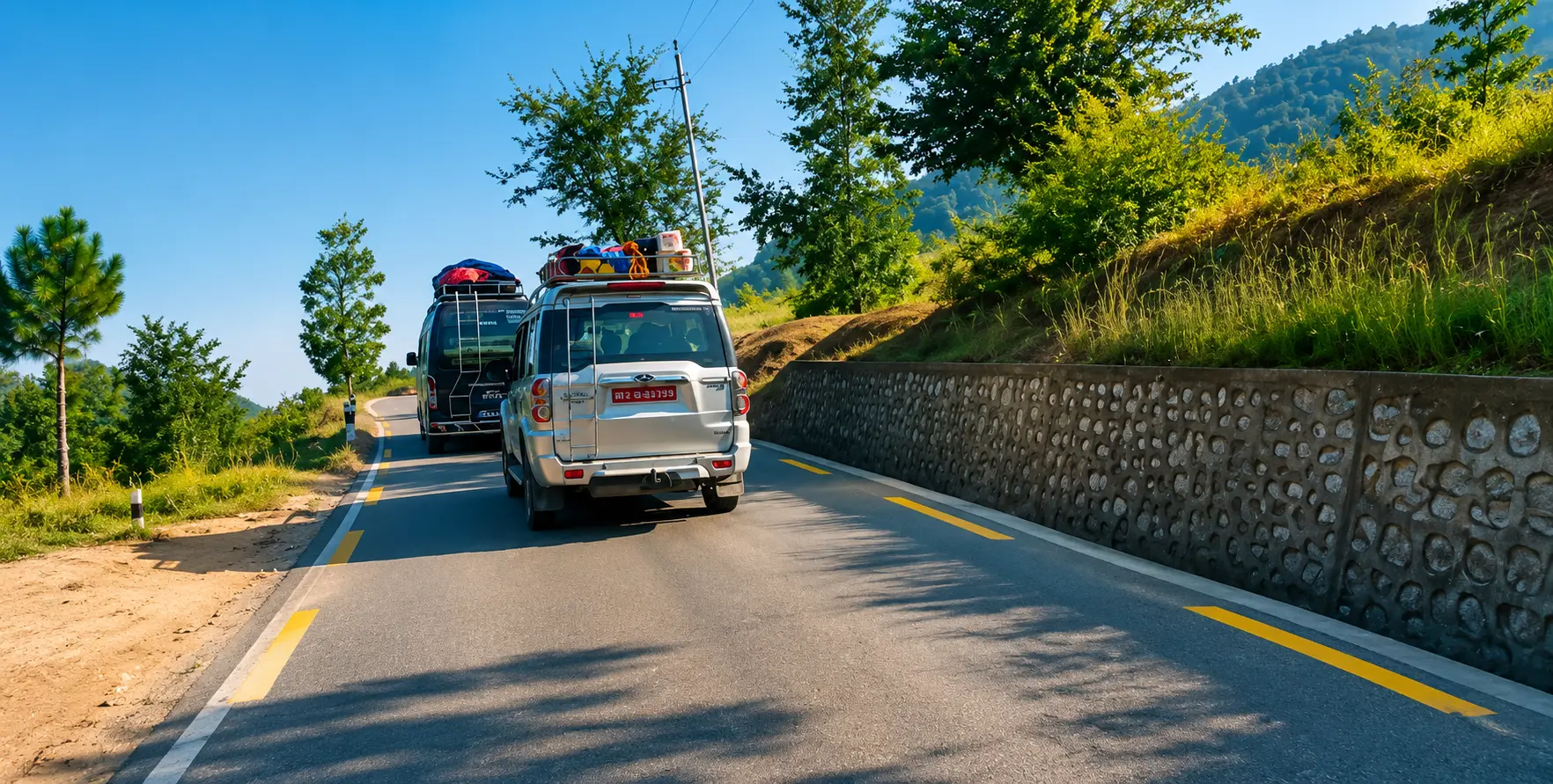
Safe, smooth, and genuinely pleasant travels to you and your whole trekking group, and we sincerely look forward to very warmly welcoming your entire trekking party back to Nepal again very soon indeed.

Kathmandu to Pokhara Road Condition Overview

Kathmandu to Pokhara road conditions along the Prithvi Highway, with mountain scenery, rivers, and tourist vehicles in Nepal.

Kathmandu to Pokhara Road Condition Overview 2026/27 – Best Vehicle Guide

The Kathmandu to Pokhara journey on the Prithvi Highway is Nepal’s most traveled road — a 200 km corridor between the mountain capital and the lakeside city that carries trekkers, tourists, pilgrims, business travelers, and daily commuters in a continuous flow throughout the year. As Nepal’s primary road connection between its two most important cities, the Prithvi Highway is also the country’s most actively maintained road — receiving regular attention from the Department of Roads, undergoing ongoing widening and improvement works, and subject to the same weather stresses that affect all of Nepal’s major road arteries.

For travelers planning the Kathmandu to Pokhara journey in 2026 and 2027, understanding the current road conditions—which sections have been recently improved, which are undergoing active construction, where seasonal hazards exist, and what the honest travel-time expectations are under different conditions—is essential for making good transport decisions. This complete guide provides a section-by-section road condition assessment for 2026/27, vehicle recommendations for different group sizes and priorities, seasonal condition variations, and practical advice from Vehicle Hiring Nepal’s drivers who make this journey regularly throughout the year.

Current Kathmandu to Pokhara road condition via the Prithvi Highway – complete travel route for cars, jeeps, buses, and tourists.

The Prithvi Highway — Overview and Strategic Importance

Official Name: Prithvi Highway (B.P. Highway section connects at Naubise; Prithvi Highway properly begins from there)

Total Distance: Approximately 200 km from central Kathmandu (New Bus Park area) to Pokhara Lakeside

Classification: National Highway — Nepal’s primary westbound arterial road

Maintained by: Department of Roads (DoR), Nepal Government

Construction Year: Originally built 1968–1974 with Chinese assistance; progressively upgraded since

Key Intermediate Towns: Naubise, Malekhu, Mugling (midpoint junction), Damauli, Pokhara

Traffic Volume: One of Nepal’s highest-traffic roads — heavy truck, bus, and private vehicle mix


The Prithvi Highway serves not merely as a tourist corridor but as the economic lifeline connecting Pokhara, the Gandaki Province hill districts, and the western mountain regions to Kathmandu. Heavy goods vehicles carry cement, fuel, food, and construction materials westward in continuous convoys. Tourist buses and private vehicles fill the early morning departure windows. Local buses connect the dozens of market towns along the route. Understanding the highway’s character — busy, paved, maintained but subject to ongoing construction and seasonal disruption — is the starting point for any realistic assessment of the 2026/27 journey.


Overall Road Condition Rating 2026/27

Based on Vehicle Hiring Nepal driver assessments and current road department information, here is the overall 2026/27 condition snapshot for the Kathmandu to Pokhara highway:

Road SectionDistanceCondition 2026/27Key IssueRating
Kathmandu → Naubise30 kmGoodKalanki–Naubise widening works ongoing in sections; some delays possible.★★★★☆
Naubise → Malekhu50 kmGood–Very GoodTrishuli gorge section generally well-maintained; minor landslide risk in monsoon.★★★★☆
Malekhu → Mugling30 kmGoodSome rough patches post-monsoon; repair works frequent★★★★☆
Mugling → Dumre45 kmVery GoodMarsyangdi valley road — widening completed in most sections; smooth driving★★★★★
Dumre → Damauli25 kmGoodMostly paved and smooth; some road works in 2026 near Bimalnagar★★★★☆
Damauli → Pokhara40 kmGood–Very GoodBest section of the highway; wide, well-paved, fast driving★★★★★
OVERALL KTM → POKHARA200 kmGoodFully paved throughout 2026/27; no unpaved sections★★★★☆

The bottom line for 2026/27: the Kathmandu to Pokhara Prithvi Highway is fully paved throughout and in generally good to very good condition. It is a reliable, manageable journey for any standard vehicle in any season. The headline concerns for 2026/27 are the ongoing road widening works near Kathmandu, the post-monsoon rough patches in the Trishuli gorge section, and the standard monsoon landslide risk on the Naubise to Mugling gorge corridor. None of these represent serious obstacles for a properly planned journey with an experienced driver.


Section-by-Section Condition Detail

Section 1: Kathmandu to Naubise (30 km | 45–60 min)

Road Status 2026/27: Paved; road widening and improvement works ongoing in several sections

Key Challenge: Kalanki to Thankot and Thankot to Naubise — active road widening project creating some single-lane working and temporary surface irregularities

Traffic Factor: Heaviest traffic congestion of the entire journey; Kathmandu ring road exit and Kalanki junction are bottlenecks at peak hours

Current Kathmandu to Pokhara road condition via the Prithvi Highway – complete travel route for cars, jeeps, buses, and tourists.

The first 30 km from Kathmandu to Naubise is consistently the most time-unpredictable section of the entire journey. The road climbs from the Kathmandu Valley through the Chandragiri hills to Naubise — a gradient section that has been subject to significant road widening works as part of the ongoing Prithvi Highway improvement project. In 2026/27, this section has sections under active construction with temporary single-lane working and compacted sub-base surfaces rather than final asphalt in places.

Traffic at Kalanki junction — the main southwestern exit from Kathmandu’s ring road — is consistently the worst bottleneck on the entire Pokhara route. Rush hour (7:00–9:00 AM and 5:00–7:00 PM) can add 30 to 45 minutes to this section alone. The standard Vehicle Hiring Nepal departure time of 6:00–7:00 AM is specifically chosen to clear the Kalanki junction before the morning rush builds. A 5:30 AM departure in peak trekking season is even better.

2026/27 Improvement Note: The Thankot to Naubise section road widening is expected to be substantially completed in the second half of 2026, which will significantly improve this section’s condition and flow. Check with Vehicle Hiring Nepal at the time of booking for the current construction status.

Section 2: Naubise to Malekhu (50 km | 1 hr 10 min – 1 hr 30 min)

Road Status 2026/27: Paved throughout; generally good condition

Scenic Rating: Highest of the entire journey — Trishuli River gorge driving

Key Challenge: Post-monsoon debris and minor slides on the gorge sections; narrow sections near the river


From Naubise, the road descends dramatically into the Trishuli River gorge — the most scenically spectacular section of the entire Kathmandu to Pokhara drive. The road follows the right bank of the Trishuli through a narrow, forested gorge with the river running green and powerful below on the left side of the vehicle. This section was heavily affected by road construction over the past decade, and the 2026/27 condition reflects a much-improved but still gorge-constrained road.

The primary risks in this section are monsoon-related. The gorge walls above the road are subject to regular small rockfalls and debris flows during and after heavy rain. The Department routinely clears the road, and major blockages are unusual outside of severe weather events. In 2026/27, the condition of the asphalt surface through this section is good with some rough patches near Malekhu where repair works have created uneven transitions.

Malekhu town, approximately 80 km from Kathmandu, is the traditional first rest stop on the Pokhara journey. The roadside restaurants here are known throughout Nepal for fresh Trishuli River fish—a specialty that has made Malekhu a standard lunch stop for generations of Kathmandu-Pokhara travelers. A 20-minute tea or breakfast stop at Malekhu is built into most Vehicle Hiring Nepal Pokhara journey schedules.

Section 3: Malekhu to Mugling (30 km | 35–45 min)

Road Status 2026/27: Paved; good condition with post-monsoon repair works in progress

Key Feature: Approach to the Mugling junction — the midpoint of the entire journey


The road continues west through the deepening Trishuli gorge from Malekhu to Mugling. The river remains the constant companion on the left side of the road, and this section retains the dramatic gorge character of the previous section but with a slightly wider road in most places. Some rough patches in this section reflect the ongoing cycle of monsoon damage and repair that characterizes Nepal’s gorge roads — the DoR patches these annually, and in 2026/27 the condition is functional but not glass-smooth throughout.

Mugling junction — at the confluence of the Trishuli and Marsyangdi rivers, approximately 110 km from Kathmandu — is the geographical and logistical midpoint of the journey. It is where the Prithvi Highway turns northwest up the Marsyangdi valley toward Pokhara, while a branching road continues north toward Besisahar and the Annapurna Circuit. Mugling is the universally standard lunch stop — a busy river junction town with dozens of roadside restaurants. Budget 30 to 45 minutes here; it is the longest planned stop of the journey and the best opportunity for a proper meal.

Section 4: Mugling to Dumre (45 km | 50 min – 1 hr)

Road Status 2026/27: Very good — this is the best-maintained and most recently improved section of the highway

Key Feature: Marsyangdi River valley road; recently widened in many sections

Kathmandu to Pokhara road conditions along the Prithvi Highway, with mountain scenery, rivers, and tourist vehicles in Nepal.

From Mugling, the road turns northwest along the Marsyangdi River valley — the most recently improved section of the Prithvi Highway and in 2026/27 noticeably better than the gorge sections behind. The road has been widened to near-double-lane standard in several sections along this stretch, and the asphalt surface is in good to very good condition. Traffic moves quickly here; this is where a private vehicle makes up time lost in the Kathmandu traffic and Trishuli gorge sections.

Dumre is the junction town for the Besisahar road heading north toward the Annapurna Circuit. For travelers heading to Pokhara, Dumre is simply a brief visual landmark — the junction is clearly marked, and your driver turns left (continuing west) without stopping.

Section 5: Dumre to Damauli (25 km | 30–35 min)

Road Status 2026/27: Good; some road works near Bimalnagar in 2026

Key Feature: Approach to the Gandaki district; road becomes wider and flatter

From Dumre,e the road continues northwest through flatter valley terrain. Damauli is the district headquarters of Tanahun District and a pleasant hilltop town with views over the Seti and Madi river confluence. In 2026, the road has some construction activity near Bimalnagar that may cause brief single-lane sections—check with Vehicle Hiring Nepal for the current status. Beyond these works, the road is good quality, and the approach to Damauli offers the first distant views of the Annapurna range on clear mornings.

Kathmandu to Pokhara road conditions along the Prithvi Highway, with mountain scenery, rivers, and tourist vehicles in Nepal.

Section 6: Damauli to Pokhara Lakeside (40 km | ~40–50 min)

Road Status 2026/27: Best section of the highway — wide, well-paved, fast

Key Feature: Annapurna range approach panorama; Pokhara valley descent

The final 40 km from Damauli to Pokhara is consistently the finest section of road on the entire Kathmandu to Pokhara highway. The road is wide, well-paved, carries lower vehicle density than the gorge sections, and on clear mornings the Annapurna range fills the northern horizon in a spectacular progressive reveal as the road descends toward the Pokhara valley. Machhapuchhre (Fishtail) appears first — its distinctive double-summit visible above the foothills — before Annapurna South, Hiunchuli, and eventually Annapurna I come into view. This 40 km section is one of the finest mountain-view road approaches anywhere in Nepal.

Private vehicles enter Pokhara from the east, with the driver taking you directly to your Lakeside hotel address. Tourist buses drop at the Baidam/Lakeside bus stop. Traffic in Pokhara city can add 10 to 20 minutes to the final approach during peak afternoon hours.

Kathmandu to Pokhara road conditions along the Prithvi Highway, with mountain scenery, rivers, and tourist vehicles in Nepal. Caption:

Key Road Hazard Zones 2026/27


Hazard ZoneLocationType of RiskSeasonImpact on Journey
Kalanki JunctionKathmandu exit, 5 kmTraffic congestionYear-round; worst peak hoursAdd 20–45 min at peak hours; depart before 7 AM
Thankot–Naubise works15–30 km from KTMRoad widening construction2026 (ongoing)Occasional single-lane; add 15–30 min
Naubise–Malekhu gorge30–80 kmLandslide/rockfall riskMonsoon June–SepOccasional brief closures; rare major blockage
Malekhu–Mugling rough patches80–110 kmSurface irregularityPost-monsoon Aug–OctSlow sections; no closure risk
Mugling–Dumre construction110–155 km (select)Active widening works2026 (targeted sections)Brief single-lane; minimal delay
Damauli road works165–170 kmConstruction near Bimalnagar2026Short delay; confirm status at booking
Pokhara city traffic195–200 kmUrban congestionPeak afternoonsAdd 10–20 min; avoid 4–6 PM entry


Realistic Travel Times 2026/27

One of the most commonly asked questions about the Kathmandu to Pokhara journey is: how long does it actually take? Here are honest, experience-based estimates for 2026/27:

Departure TimeSeason / ConditionsEstimated Total TimeNotes
6:00–6:30 AMDry season, weekday5.5–6.5 hrsBest option — beats Kalanki rush, good road conditions
6:00–6:30 AMPeak trekking season Oct–Nov6–7 hrsHigher overall traffic; Mugling busy
7:00–8:00 AMDry season, weekday6–7 hrsKalanki rush begins; add time for exit
8:00–9:00 AMDry season6.5–8 hrsFull morning rush; significant Kalanki delay likely
Any timeMonsoon (Jun–Sep)6.5–9 hrsConstruction delays, possible brief road works; landslide risk adds uncertainty
Any timeFestival/holiday7–10 hrsDashain, Tihar, major public holidays — extreme traffic; avoid if possible


The practical conclusion: the Kathmandu to Pokhara journey takes 5.5 to 7 hours under good conditions with a 6:00–7:00 AM departure. Allow 7 to 8 hours as your planning buffer. Do not plan an afternoon arrival activity that requires you to be in Pokhara by a fixed time, as traffic and road conditions can add hours to the journey unexpectedly.

Kathmandu to Pokhara road conditions along the Prithvi Highway, with mountain scenery, rivers, and tourist vehicles in Nepal.

Best Vehicle for Each Traveler Type 2026/27

The Kathmandu to Pokhara highway is fully paved and accessible by all vehicle types — this is not a road where 4WD is required. The vehicle choice is therefore about matching the right vehicle to your group size, budget, comfort expectations, and onward travel plans rather than road capability requirements.

Solo Traveler or Couple — Tourist Bus or Sedan

For 1 to 2 passengers, the standard tourist bus (USD 10–15 per person, 7–8 hours) or Greenline luxury bus (USD 25–30 per person, 6–7 hours including lunch) provides excellent value. A private sedan hire (USD 80–110 for the full vehicle) is a worthwhile upgrade if you value privacy, a faster journey, and the flexibility to stop at Manakamana Temple en route.

Small Family of 3 to 5 — Private Sedan or SUV

For 3 to 5 passengers, a private sedan or Toyota Fortuner is the clear recommendation. Split between 4 passengers, the sedan costs USD 20–28 per person — comparable with a Greenline bus ticket but with door-to-door service, 1 to 1.5 hours saved, and complete flexibility for stops. The Fortuner seats 5 comfortably with luggage and is the preferred vehicle for families with children due to its space and high seating position.

Trekking Group of 6 to 14 — Toyota Hiace Van

The Toyota Hiace is the outstanding choice for trekking groups heading to Pokhara. It keeps the full group together (no splitting into multiple taxis), provides ample boot and roof space for trekking packs, departs from the group’s Kathmandu hotel rather than the tourist bus park, and at USD 130–170 for the full vehicle works out to USD 10–25 per person for a group of 6–14 — often less expensive than individual tourist bus tickets. The Hiace comfortably completes the Prithvi Highway in the same 5.5 to 6.5 hours as a private sedan with an early departure.

Group Continuing to Mustang / Annapurna — Land Cruiser

If your journey continues from Pokhara to the Kali Gandaki gorge, Muktinath, Jomsom, Lo Manthang, or any destination requiring a 4WD vehicle, hire the Land Cruiser from Kathmandu. The Prithvi Highway section is easy for a Land Cruiser, and having the same vehicle and driver continue from Pokhara into the mountains saves the cost and logistics of changing vehicles in Pokhara. The Land Cruiser costs USD 110–145 for the Kathmandu to Pokhara section — a small premium over the sedan for the benefit of continuity.

Large Group of 15 to 22 — Toyota Coaster Bus

For groups of 15 to 22, a private Toyota Coaster bus hire (USD 175–230) is the most practical option — keeping everyone together in a single vehicle with a private departure time and direct hotel drop. The Coaster handles the Prithvi Highway well and offers better comfort than many shared tourist buses.

Very Large Group of 23+ — Full Size Private Bus

Groups exceeding 22 passengers require a full-size private bus. Vehicle Hiring Nepal provides 30–45 seat buses for the Kathmandu to Pokhara route at USD 250–360 for the full vehicle — the most economical per-person option for very large groups.

Kathmandu to Pokhara road conditions along the Prithvi Highway, with mountain scenery, rivers, and tourist vehicles in Nepal.

Vehicle Comparison Table — Kathmandu to Pokhara 2026/27


VehicleCapacityPrice (Full Vehicle)Travel TimeComfortBest For
Tourist Bus (shared)Per seatUSD 10–15/person7–8 hrsGoodSolo, couple, budget traveler
Bus (shared)Per seatUSD 25–30/person6–7 hrsVery GoodComfort-seeking solo/couple, includes lunch
Private Sedan1–3 paxUSD 80–1105.5–6.5 hrsGoodCouple, small family
Private SUV/Fortuner4–5 paxUSD 100–1355.5–6.5 hrsVery GoodFamily, small group
Toyota Land Cruiser4–6 paxUSD 110–1455.5–6.5 hrsExcellentGroups continuing to the mountains
Toyota Hiace Van7–14 paxUSD 130–1705.5–6.5 hrsGoodTrekking groups — best value
Toyota Coaster Bus15–22 paxUSD 175–2306–7 hrsGoodLarge groups
Full Size Private Bus23–45 paxUSD 250–3606–7 hrsStandardVery large groups

Kathmandu to Pokhara road conditions along the Prithvi Highway, with mountain scenery, rivers, and tourist vehicles in Nepal.

Seasonal Road Condition Variations

October to November 2026 — Best Season

Post-monsoon is consistently the finest period for the Kathmandu to Pokhara drive. The monsoon has ended, road repair works are completed on the gorge sections, surfaces are dry and firm, and the Annapurna range on the final Pokhara approach is at its most brilliantly clear. October is the busiest single month on this road — the volume of tourist and trekking traffic is at its annual maximum, which means the Mugling lunch stop is crowded, and Pokhara-bound traffic is heavy. Despite this, road conditions are their best and travel times are reliable. Expect 5.5 to 6.5 hours with a 6:00–6:30 AM departure.

November to February 2026/27 — Good Winter Season

After the October peak, traffic reduces,s and road conditions remain very good through winter. Dry weather continues; no monsoon risks; road repair works from monsoon are completed. The mountain views on the final Pokhara approach in December and January are often the sharpest and clearest of the year — the cold, dry air provides exceptional visibility. The Naubise–Malekhu gorge section can be frosty on early morning descents in December and January — not a problem for standard vehicles but worth noting for early 6:00 AM departures.

March to May 2027 — Spring Season

Spring is excellent for the drive. Rhododendrons are blooming in the forested sections above Naubise and on the hillsides above the Marsyangdi valley. Road conditions remain good from the dry season. Traffic builds again from March as the spring trekking season begins, and the Kathmandu morning exit becomes busy again. Pre-monsoon clouds build in May afternoons, reducing mountain views until October–November.

June to September 2026/27 — Monsoon Season

The monsoon is the most challenging season for the Prithvi Highway — not because the road becomes impassable (it rarely does completely) but because it introduces several specific risk factors that honest travelers must acknowledge:

  • Landslide risk in the Naubise to Mugling gorge section — the gorge walls above the road are subject to debris flows in heavy rain. Road crews clear minor slides within hours; major events can block the road for 12 to 24 hours.
  • Surface degradation — the constant rain softens road edges and creates potholes that develop rapidly, particularly in the Malekhu to Mugling section
  • Reduced visibility — low cloud and rain reduce visibility on the gorge sections and completely obscure the Annapurna mountain views on the final Pokhara approach.
  • Extended journey times — add 1 to 2 hours to dry-season journey time estimates for monsoon travel

Vehicle Hiring Nepal drivers monitor road conditions before every monsoon season departure. We will advise on same-day conditions through our local contact network if there are concerns about specific sections on your travel date.

kathmandu-pokhara-road-condition

Key Stops on the Kathmandu to Pokhara Route

Manakamana Temple Cable Car — Kurintar (105 km | 2.5 hrs from KTM)

The most popular en-route stop on the Kathmandu to Pokhara journey, Manakamana sits on a hilltop above the Trishuli River, accessible by a 10-minute cable car from Kurintar on the highway. The temple of Goddess Bhagwati (an incarnation of Parvati) is one of Nepal’s most beloved pilgrimage destinations, revered as wish-fulfilling. The cable car (NPR 2,700 round trip for foreigners; NPR 770 for Nepali citizens in 2026) operates 9:00 AM to 5:00 PM with a midday break. A Manakamana stop adds 1.5 to 2.5 hours to the journey. Inform Vehicle Hiring Nepal at booking to include this stop.

Malekhu Tea Stop (~80 km from KTM)

The riverside tea houses and fish restaurants of Malekhu are legendary on the Kathmandu to Pokhara route. A 20-minute tea and snack stop here is both practical and atmospheric — the Trishuli River runs past the restaurant terraces, and the fresh river fish (reared in the Trishuli) is available from early morning. Most Vehicle Hiring Nepal drivers build this stop in automatically.

Mugling Lunch Stop (~110 km | midpoint)

Mugling is the universally recognized lunch stop — the junction town at the midpoint of the journey with the largest concentration of roadside restaurants on the highway. Dal bhat, momo, noodles, and grilled chicken are all available at numerous establishments. Budget 30 to 45 minutes. The riverside location at the Trishuli-Marsyangdi confluence makes this a visually pleasant lunch break as well as a practical one.

Damauli Optional Stop (~165 km from KTM)

Damauli is an underappreciated stop on the route — a pleasant hill town with a good teahouse culture and views over the Seti-Madi river confluence. A brief tea break here is worth considering for groups who want to break up the final 40 km to Pokhara with a scenic pause.


Road Widening Project — 2026/27 Status

The Kathmandu to Pokhara highway has been under a major widening and upgrading project for several years, aimed at transforming it from its current mostly two-lane standard to a proper four-lane divided highway on key sections. Here is the 2026/27 project status:

  • Kalanki to Thankot section: Active widening — some sections now two-lane each direction, others still under construction. Expected completion of this section: late 2026 to early 2027
  • Thankot to Naubise section: Widening under way — significant improvement from 2025 condition but not yet complete in all sections. Expect some single-lane working areas.
  • Naubise to Malekhu gorge: Road improvement works limited by the gorge geography — widening not feasible in the narrowest gorge sections; safety barrier installation and surface improvement ongoing
  • Mugling to Dumre section: Most recently improved section — widening largely complete; near four-lane standard in several stretches. Best road quality on the entire highway in 2026/27
  • Damauli to Pokhara: Good two-lane condition throughout; widening works in select sections near Bimalnagar and Prithvi Chowk

The practical implication: in 2026/27, the Kalanki to Naubise section near Kathmandu has the most active construction activity and the greatest potential for journey time addition. As works complete in late 2026 and 2027, this section will improve significantly. By mid-2027, this section is expected to be substantially better than its 2026 condition.


Tips for the Best Kathmandu to Pokhara Journey Experience

  • Depart between 6:00 and 6:30 AM — this is the single most impactful decision you can make for the journey. Clearing Kalanki before the rush, enjoying Malekhu in morning light, and arriving in Pokhara by early-to-mid afternoon gives the best overall experience.e
  • Book a left-side seat in the vehicle (or request left-side seats on the tourist bus) — the left side of the vehicle faces the Trishuli River through the gorge section, providing the best views of the river and cliffs.fs
  • The Annapurna mountain view on the final Pokhara approach is clearest in the morning — arriving before 1:00 PM on clear days gives the best chance of seeing the full range before afternoon cloud builds
  • Motion sickness tablets for the gorge section — the Naubise to Mugling road has sustained bends that affect susceptible passengers. Take medication 30 minutes before the Naubise descent if needed.
  • For groups using a private vehicle: confirm with your driver exactly which stops you want — Manakamana, Malekhu, Mugling, or others — at the time of booking, not on the day of travel
  • Carry water and snacks for the vehicle — the standard stops are Malekhu and Mugling, but having your own supplies for between-stop sections is comfortable.
  • Do not attempt to rush the journey — the Kathmandu to Pokhara road is not a fast highway. The 5.5 to 6.5 hour journey is the realistic minimum with an early start.
  • For the return journey, Pokhara to Kathmandu, depart Pokhara by 7:00–7:30 AM to arrive in Kathmandu in the early afternoon and avoid both the Pokhara morning traffic and the Kathmandu afternoon rush.

Private Vehicle vs Tourist Bus — The Decision


FactorPrivate VehicleTourist Bus (Shared)
Cost for soloUSD 80–110 full vehicle (expensive solo)USD 10–30 — cheapest option for 1
Cost for 4 paxUSD 20–34/person (sedan or SUV split 4)USD 10–30/person (similar or more)
Cost for 10 paxUSD 13–17/person (Hiace, full value)USD 10–30/person (Hiace better value)
Departure timeFlexible — any time you chooseFixed 7:00 or 8:00 AM only
Departure locationYour hotel doorTourist bus park, Kantipath
ArrivalYour Pokhara hotel doorLakeside bus stop (walk/taxi needed)
Journey time5.5–6.5 hrs with private vehicle7–8 hrs standard; 6–7 hrs Greenline
StopsAny stop, any durationFixed — Mugling lunch only
LuggageFull boot + roof rackHold only (limited and unsecured)
Manakamana optionYes — easy en-route stopNo — not possible on bus
Mountain viewsStop anywhere for photosCannot stop for views
Best forGroups of 4+, families, trekkersSolo, budget, backpacker

Current Kathmandu to Pokhara road condition via the Prithvi Highway – complete travel route for cars, jeeps, buses, and tourists.

What is Included in Your Private Vehicle Hire

  • Your chosen vehicle (sedan, SUV, Land Cruiser, Hiace, Coaster, or bus) — fully maintained and insured
  • Professional, licensed driver with experience on the Prithvi Highway and knowledge of current road conditions
  • Full fuel cost for the Kathmandu to Pokhara journey
  • Vehicle insurance throughout
  • Pickup from your Kathmandu hotel or any specified address
  • Drop-off at your Pokhara hotel or any Lakeside/Pokhara address
  • Malekhu tea stop and Mugling lunch stop (standard); additional stops on request
  • Manakamana cable car stop if requested at booking (driver waits below during your temple visit)
  • 24/7 WhatsApp support throughout the journey

Not included: Manakamana cable car ticket (NPR 2,700 for foreigners), personal meals at stops, accommodation, and any continuation journeys beyond Pokhara.

How to Book Your Kathmandu to Pokhara Vehicle

  1. Contact Vehicle Hiring Nepal via WhatsApp at +977 9851013196 or visit vehiclehiringnepal.com
  2. Choose your vehicle based on group size and onward travel plans
  3. Confirm your travel date and preferred departure time (6:00–6:30 AM recommended)
  4. Provide your Kathmandu hotel pickup address
  5. Provide your Pokhara destination hotel name and address
  6. Specify any en-route stops — Manakamana, Malekhu, Mugling
  7. Receive booking confirmation with driver details, pickup time, and vehicle information

Frequently Asked Questions

What is the current road condition on the Kathmandu to Pokhara highway in 2026?

The Kathmandu to Pokhara Prithvi Highway is fully paved throughout in 2026 and in good to very good overall condition. The Mugling to Pokhara section is in very good to excellent condition following recent widening works. The Kalanki to Naubise section near Kathmandu has active road widening construction in 2026 that can add 15 to 30 minutes in some areas. The Naubise to Mugling gorge section is in good condition but subject to the standard monsoon landslide risk (June to September). No 4WD vehicle is required at any point on this route.

Is the road to Pokhara open year-round?

Yes. The Kathmandu to Pokhara Prithvi Highway is open year-round without exception in normal conditions. Even during monsoon, the road closes only temporarily for major landslide clearance — these events are uncommon and typically resolved within a few hours. Unlike Nepal’s mountain routes which can be seasonally impassable, the Prithvi Highway is a national highway maintained to an all-season standard.

How much does a private vehicle from Kathmandu to Pokhara cost in 2026?

In 2026, private vehicle hire for the Kathmandu to Pokhara one-way journey costs approximately USD 80–110 for a sedan (1–3 passengers), USD 100–135 for an SUV/Fortuner (4–5 passengers), USD 110–145 for a Land Cruiser (4–6 passengers), and USD 130–170 for a Toyota Hiace van (7–14 passengers). All prices include the driver, fuel, and vehicle insurance. Contact Vehicle Hiring Nepal at +977 9851013196 for an exact quote for your specific date and group size.

Is there construction on the Prithvi Highway in 2026?

Yes — the ongoing Prithvi Highway widening project has active construction sections in 2026, primarily in the Kalanki to Naubise section near Kathmandu and some targeted works near Damauli. These construction areas may cause brief single-lane working sections and 15 to 30-minute delays in some cases. Vehicle Hiring Nepal drivers are aware of current construction locations and factor them into departure time planning.

What is the best time of year to drive from Kathmandu to Pokhara?

October and November are the best months for the Kathmandu to Pokhara drive — dry roads, sharp mountain views on the Pokhara approach, and optimal conditions throughout. March and April are excellent for spring rhododendrons. December to February offers clear winter air and the sharpest mountain views. Monsoon (June to September) is the most challenging period due to gorge landslide risk and surface degradation, but the road remains open and passable throughout.


Final Thoughts

The Kathmandu to Pokhara road in 2026/27 is fundamentally a good news story for travelers: a fully paved, actively maintained national highway in its best-ever overall condition, connecting Nepal’s two most visited cities with a journey that is manageable in 5.5 to 7 hours with the right departure time. The construction works underway near Kathmandu will, once complete, make this section significantly better than it has ever been. The ongoing improvements to the Mugling to Pokhara section have already made the western half of the journey notably smoother than previous years.

The key to a good Kathmandu to Pokhara experience in 2026/27 remains what it has always been: depart early (6:00–6:30 AM), choose the right vehicle for your group size and onward plans, stop at Malekhu and Mugling, and arrive in Pokhara in time to enjoy the afternoon before the mountain view clouds over. Vehicle Hiring Nepal provides the vehicles and drivers to make that formula work every time.

Book your Kathmandu to Pokhara vehicle today. WhatsApp: +977 9851013196 | Website: www.vehiclehiringnepal.com | Email: [email protected]

Nepal Trekking Transport Guide | Private Jeep Hire 2026

Plan your Himalayan adventure with the Nepal Trekking Transport Guide. Book private 4WD jeeps, Scorpio SUVs, Hiace vans, and cars with experienced drivers for safe, comfortable, and reliable transfers to Nepal's major trekking regions.

Nepal Trekking Transport Guide | — The Complete 2026 Guide to Getting to Every Trailhead

There are two parts to every Nepal trek. The part that every guidebook, every Instagram post, and every trekking company’s website describes in full: the trail itself, the altitude, the mountain views, the teahouses, the culture, the pass crossing. And the part that almost every planning resource treats as a footnote: the transport. The jeep hire or the bus that takes you from your Kathmandu or Pokhara hotel to the trailhead where the walking begins. The pre-dawn road transfer to Ramechhap airport before the Lukla flight. The rough 4WD track beyond Besisahar that you never quite expected to be that dramatic. The pre-arranged pickup from Dharapani or Syabrubesi at the trek’s end when you step off the trail after 14 days and want to sit in a comfortable vehicle and be driven home.

Nepal trekking transport is not a footnote. It is the first and last chapter of every Himalayan adventure, and in many cases it is also a genuine adventure in its own right — one of the most spectacular road journeys on earth, threading through a landscape that transitions, in a single driving day, from urban river valley to glacier-fed gorge. This complete 2026 guide covers every dimension of Nepal trekking transport: the vehicles available, the routes and their real road characters, the region-by-region breakdown of how transport works for every major Nepal trek, and how Nepal Vehicle Hiring Pvt Ltd provides the private jeep hire, Hiace van, tourist bus, and coaster service that connects every Kathmandu and Pokhara hotel to every major trekking trailhead in the country.

Why Nepal Trekking Transport Deserves Serious Planning

Nepal’s geography makes transport planning for trekking non-trivial in a way that has no real equivalent among the world’s other major trekking destinations. There is no railway system connecting any trekking region to either Kathmandu or Pokhara. There are no broad, flat approach roads that allow a standard hire car to reach any significant mountain trailhead without encountering at minimum one rough, unpaved, 4WD-necessary section. There are no standardized, published timetables for the shared jeep services that operate on most trekking corridors, which fill and depart when they have enough passengers rather than at any fixed time. There is also no single point of coordination for domestic flights, airport transfers, and trekking-agency logistics that together constitute the full transport chain for any flight-dependent approach like the Everest region.

This complexity is not a problem to be complained about — it is simply the practical expression of Nepal’s extraordinary topography, which compresses nearly every climate zone on earth between the Terai lowlands and the Himalayan summits within a north-south distance of approximately 200 kilometers. Roads into this terrain are, by definition, mountain roads: steep, winding, seasonally damaged, and requiring the kind of genuine local knowledge and appropriate vehicle specification that distinguishes a professional vehicle hire service from an improvised arrangement. Every traveler who has arrived at a Kathmandu trailhead in a flat-tired shared jeep two hours later than planned, or who has missed a Lukla flight because their airport transfer was poorly timed, understands viscerally why this planning matters. Every traveler who has arrived at a trailhead in a properly maintained 4WD Scorpio from Nepal Vehicle Hiring Pvt Ltd, on time, with their luggage intact and their driver’s phone number confirmed, understands the opposite.

Plan your Himalayan adventure with the Nepal Trekking Transport Guide. Book private 4WD jeeps, Scorpio SUVs, Hiace vans, and cars with experienced drivers for safe, comfortable, and reliable transfers to Nepal's major trekking regions.

Nepal Trekking Transport Guide | — Understanding Your Options

The first question in any Nepal trekking transport booking is vehicle type, and the right answer depends specifically on group size, distance, destination, and the road character of the final approach. Nepal Vehicle Hiring Pvt Ltd provides the complete spectrum of vehicle options for every trekking transport need.

Private Sedan / Car. The private car hire from Nepal Vehicle Hiring Pvt Ltd is the right choice for shorter, fully paved transfers: Kathmandu airport transfers, Kathmandu sightseeing, Bhaktapur day tours, and the Pokhara car hire for city excursions and shorter Lakeside-area transfers. For groups of 1 to 3 with minimal luggage, a private car is also appropriate for paved-highway transfers such as Kathmandu to Pokhara by road or Pokhara to Besisahar. A sedan is not suitable for any trekking trailhead approach that includes off-road sections.

Private 4WD Jeep (Scorpio / Hilux). The private 4WD jeep is the single most versatile and most widely used vehicle in Nepal’s trekking transport fleet. The Mahindra Scorpio 4WD and Toyota Hilux 4WD — the two primary workhorses of Nepal Vehicle Hiring Pvt Ltd’s jeep hire fleet — combine the ground clearance, low-range capability, and load-carrying capacity required for every major Nepal trekking trailhead approach, with comfortable cabin space for 4 to 6 passengers and roof-rack luggage capacity for full expedition duffel bags. A private jeep hire covers every trekking transfer in this guide: Everest region overland approaches via Salleri, Phaplu, and Kharikhola; the Langtang trek Syabrubesi transfer; the Manaslu Circuit trailhead; and the Besisahar private vehicle service extending into the Marsyangdi gorge toward Manang.

Toyota Hiace Van. The Toyota Hiace seats 12 to 14 passengers comfortably and is the right choice for medium-sized trekking groups on paved highway routes and moderate hill roads. Nepal Vehicle Hiring Pvt Ltd’s Hiace van hire covers Kathmandu to Pokhara bus corridor, the approach to Besisahar, the approach to Syabrubesi and Dhunche for the Langtang trek, and any other transfer where the road quality allows a van-height vehicle and the group exceeds 6 people. For approaches that include genuinely rough off-road sections — Soti Khola, Machha Khola, the Annapurna gorge beyond Besisahar — the Hiace transfers passengers at the pavement’s end, with a 4WD jeep shuttle covering the rougher final section.

Tourist Coaster and Bus. For large trekking groups of 20 to 45 people — school expeditions, corporate trekking programs, pilgrimage parties — Nepal Vehicle Hiring Pvt Ltd provides tourist coaster hire and full tourist bus hire on Nepal’s paved highway network. These larger vehicles cover the Kathmandu-to-Pokhara corridor, the approach to Besisahar, the Lumbini road via our Kathmandu to Lumbini bus service, and the Pokhara to Chitwan bus connection — all at significantly lower per-person cost than smaller vehicles for groups that fill them.

Land Cruiser — For the Most Demanding Terrain. For the most technically demanding Nepal trekking transport routes — Upper Mustang’s canyon roads to Lo Manthang, remote Dolpo District approaches, and the Rara Lake circuit in the far northwest — a Toyota Land Cruiser provides the highest available combination of 4WD capability, passenger comfort, and luggage capacity for small groups of 4 to 5. Nepal Vehicle Hiring Pvt Ltd provides Land Cruiser hire on these premium remote routes on booking. The Land Cruiser’s larger fuel tank, higher ground clearance, and greater low-range torque make it specifically suitable for multi-day, very remote transfers where the combination of long distance, rough terrain, and limited roadside support requires a vehicle with the greatest available margin of mechanical reliability.

Plan your Himalayan adventure with the Nepal Trekking Transport Guide. Book private 4WD jeeps, Scorpio SUVs, Hiace vans, and cars with experienced drivers for safe, comfortable, and reliable transfers to Nepal's major trekking regions.

Everest Region Trekking Transport — The Most Complex Logistics in Nepal

The Everest Base Camp trek is Nepal’s most famous trekking experience — and its most logistically complex to reach, because the standard trailhead at Lukla (2,860 m) is accessed by a short but frequently weather-canceled domestic flight rather than any road. Understanding how the transport chain for Everest region trekking actually works in 2026 is essential for avoiding the single most common source of Everest itinerary disruption.

The Lukla flight most commonly departs from Ramechhap’s Manthali Airport during the peak spring (March to May) and autumn (October to November) seasons, due to congestion management at Kathmandu’s Tribhuvan International Airport. This means the Everest trekking transport chain for most travelers runs as follows: a predawn private vehicle departure from Kathmandu at approximately 3:00 to 4:00 AM, a 4- to 5-hour drive to Ramechhap by private jeep, the short Manthali-to-Lukla flight, and then the Everest Base Camp trek on foot through Phakding, Namche Bazaar, and the Khumbu. Nepal Vehicle Hiring Pvt Ltd specializes in the Kathmandu-to-Ramechhap predawn transfer, calculating each departure time based on the specific flight slot to ensure arrival at Manthali Airport with adequate check-in time regardless of the pre-dawn start.

The overland alternative for Everest region trekking bypasses the Lukla flight entirely, using a private jeep transfer from Kathmandu to Phaplu, Salleri, or Kharikhola and Surke — the traditional overland approach route covered in detail in our dedicated Kathmandu to Salleri Phaplu guide and our Kathmandu to Kharikhola Surke guide. From Surke, a short 2 to 3 hour walk connects to Lukla and the main EBC trail. From Phaplu or Salleri, the Jiri to Everest historical overland route begins — the same approach all pre-1964 Everest expeditions used. For travelers wary of flight cancellations or seeking a more immersive, historically grounded introduction to the Everest region, Nepal Vehicle Hiring Pvt Ltd’s overland transfer to Soti Khola and beyond is one of the finest decisions an Everest-bound trekker can make.

For Gokyo Lakes trekkers and those undertaking the Everest Three Passes circuit, the same Lukla or overland approach transport applies. For the Everest View Trek — a shorter Khumbu itinerary reaching the famous Everest View Hotel above Namche without the full Base Camp commitment — the Lukla flight or the Surke overland approach delivers trekkers to the same starting point. The luxury Everest Base Camp lodge trek and the EBC with helicopter return from our sister company Trek Nepal Himalayas use the same outward Lukla approach combined with a helicopter return that eliminates the return road journey — a popular choice for travelers who want the historical overland walk in one direction and the spectacular aerial return in the other.

Off-Road Jeep Annapurna Nepal with luxury 4WD Bolero, Scorpio and Sumo vehicle on the Himalayan mountain road

Annapurna Region Trekking Transport — The Most Road-Changed Landscape

The Annapurna region offers Nepal’s widest diversity of trekking experiences — from the 4- to 5-day Ghorepani Poon Hill trek to the full Annapurna Circuit at 12 to 18 days, with the Annapurna Base Camp trek, Muldai View Trek, and Nar Phu Valley trek filling in between. It is also the region where Nepal trekking transport has changed most dramatically in the past decade, as road construction has pushed drivable tracks far deeper into the Marsyangdi gorge and the Kali Gandaki valley than any planning done before 2015 would have anticipated.

For the Ghorepani Poon Hill trek and Annapurna Base Camp trek, the transfer from Pokhara is the defining logistics step: typically a short Pokhara-to-Nayapul private jeep ride of 45 minutes to 1.5 hours, reaching the Nayapul or Birethanti trailhead on the Modi Khola valley. Nepal Vehicle Hiring Pvt Ltd provides this Pokhara trailhead transfer with hotel pickup from anywhere in Lakeside, making it one of Nepal’s smoothest and most reliable trekking transport arrangements — short, fully paved, and done before breakfast.

For the Annapurna Circuit trek, the key transport booking is the Besisahar private vehicle service — covered in dedicated detail in our Besisahar pickup drop guide — which now extends for many groups well beyond Besisahar itself, with private 4WD jeeps carrying trekkers deep into the Marsyangdi gorge toward Jagat, Chame, and Manang and reducing what was historically a full week of approach walking to 1 or 2 days of vehicle travel. The Kathmandu to Besisahar bus ticket provides the public transport option for budget-conscious trekkers on the same corridor.

For the return from the Annapurna Circuit via Jomsom, Muktinath, and the Kali Gandaki valley, car hire in Pokhara or a private jeep arrangement from Pokhara covers the Beni-to-Pokhara or Tatopani-to-Pokhara sections on the circuit’s western exit. At the same time, the Sarangkot sunrise vehicle provides the classic post-trek Pokhara view experience for groups who want to celebrate the Annapurna Circuit completion with the finest mountain panorama the city offers.

Plan your Himalayan adventure with the Nepal Trekking Transport Guide. Book private 4WD jeeps, Scorpio SUVs, Hiace vans, and cars with experienced drivers for safe, comfortable, and reliable transfers to Nepal's major trekking regions.

Langtang Region Trekking Transport — The Closest Trek, the Best Road Story

The Langtang Valley trek is Nepal’s closest major Himalayan trek to Kathmandu — accessible via a single Kathmandu to Syabrubesi jeep transfer of 6 to 8 hours along the Pasang Lhamu Highway, with no flight required at any stage. The standard vehicle-hire drop-off for the Langtang trek is Syabrubesi (1,460 m) for the main Langtang Valley route toward Lama Hotel, Langtang village, and Kyanjin Gompa, or Dhunche (1,970 m) for the Gosaikunda sacred lake approach. The Ramche Landslide zone — a specific section approximately 3 km south of Dhunche — is this route’s most consistently monitored road challenge, and Nepal Vehicle Hiring Pvt Ltd tracks conditions through our driver network before every scheduled departure.

The Helambu trek — often combined with Langtang and Gosaikunda into one of Nepal’s finest 12 to 16 day multi-region circuits — exits at Melamchi Bazaar, from where a private vehicle or local bus service connects back to Kathmandu. Nepal Vehicle Hiring Pvt Ltd coordinates the Melamchi pickup as a return leg alongside the outward Syabrubesi drop for combined Langtang-Gosaikunda-Helambu itineraries — one of our most popular multi-leg trekking transport arrangements for groups spending 12 or more days in the Rasuwa and Sindhupalchok mountain corridor.

The Panch Pokhari trek transport — a hidden gem of the Sindhupalchok region, with its sacred five-lake complex beneath the Jugal Himal — uses a related approach corridor, reachable via the Melamchi Bazaar road or via Chautara depending on the specific itinerary chosen. Our Panch Pokhari trek transport guide covers this approach in dedicated detail, and Nepal Vehicle Hiring Pvt Ltd provides private jeep hire to both standard gateways.

Plan your Himalayan adventure with the Nepal Trekking Transport Guide. Book private 4WD jeeps, Scorpio SUVs, Hiace vans, and cars with experienced drivers for safe, comfortable, and reliable transfers to Nepal's major trekking regions.

Manaslu Region Trekking Transport — Road Journey as Prologue

The Manaslu Circuit trek has, within the past five years, moved from relative obscurity to one of Nepal’s most-booked premier trekking experiences — its combination of teahouse infrastructure comparable to the Everest and Annapurna corridors with trail quietness dramatically greater than either has given it a specific and loyal following among trekkers who have completed the classic routes and are specifically seeking the combination of comfort and solitude. The Manaslu Circuit trek transport from Kathmandu is a 7 to 10 hour private 4WD jeep journey along the Prithvi Highway and Arughat corridor to the trailheads at Soti Khola (710 m) or Machha Khola (870 m), with the section from Arughat onward being the genuine rough off-road approach that makes 4WD essential rather than simply preferable.

The Manaslu Circuit requires the three-permit combination of Restricted Area Permit (RAP), Manaslu Conservation Area Permit (MCAP), and Annapurna Conservation Area Permit (ACAP) for the Larkya La crossing — all obtained in Kathmandu before departure. The circuit exits at Dharapani and Besisahar, from where Nepal Vehicle Hiring Pvt Ltd provides a private return vehicle service to Kathmandu or Pokhara. The Tsum Valley trek — one of Nepal’s finest and most culturally intact hidden valley experiences, covered in detail in our dedicated Tsum Valley trekkers guide — branches from the main Manaslu approach and uses the same trailhead transfer, making the Soti Khola and Machha Khola jeep transfer the gateway for both of the Manaslu region’s finest trekking destinations.

Plan your Himalayan adventure with the Nepal Trekking Transport Guide. Book private 4WD jeeps, Scorpio SUVs, Hiace vans, and cars with experienced drivers for safe, comfortable, and reliable transfers to Nepal's major trekking regions.

Upper Mustang and Muktinath — Trekking by Jeep

The Upper Mustang trek has undergone the most dramatic transport transformation of any major Nepal trekking route: road construction through the Kali Gandaki valley has advanced to the point that, as of 2026, the former multi-week walking approach to Lo Manthang is now largely drivable by private 4WD vehicle or Land Cruiser, making it one of Nepal’s finest jeep tour experiences as well as one of its most dramatic overland drives. Nepal Vehicle Hiring Pvt Ltd provides private vehicle hire for the Jomsom-to-Lo Manthang corridor within the broader Upper Mustang restricted area, coordinating with the Pokhara-to-Jomsom Yeti Airlines flight that begins most Upper Mustang itineraries.

Muktinath, the sacred pilgrimage site at 3,710 meters, is now reachable entirely by road from Jomsom via the extended Kali Gandaki valley track — a journey completed in private jeep hire by pilgrims and trekkers alike, and one of Nepal’s most popular altitude drives combining Hindu and Buddhist sacred site access with spectacular high-desert mountain scenery. The Nar Phu Valley trek — accessible from Koto village beyond Chame on the Annapurna Circuit approach road — is a restricted-area trek with rapidly growing reputation among experienced trekkers seeking genuine remote Himalayan wilderness, with the Besisahar to Manang jeep transfer serving as its transport entry point.

Plan your Himalayan adventure with the Nepal Trekking Transport Guide. Book private 4WD jeeps, Scorpio SUVs, Hiace vans, and cars with experienced drivers for safe, comfortable, and reliable transfers to Nepal's major trekking regions.

Eastern Nepal Trekking Transport — The Untrodden Corridors

Nepal’s eastern trekking regions — Kanchenjunga, Makalu, Rolwaling, and the Solu Khumbu overland approaches — represent the frontier of Nepal trekking transport in the sense that their approach roads combine the greatest distances with the roughest terrain and the most limited alternative transport options of any major trekking destination in the country. The Kanchenjunga Base Camp trek in Nepal’s far east requires either a domestic flight to Taplejung or a very long private vehicle transfer from Kathmandu via Itahari and the Mechi Highway — a journey that, by road, takes the better part of two days and tests even the most experienced of Nepal jeep drivers. Nepal Vehicle Hiring Pvt Ltd coordinates Kanchenjunga region transfers on booking, ensuring the right vehicle and driver experience for this demanding eastern corridor.

The Solukhumbu overland approach corridor — Kathmandu to Jiri, Salleri, Phaplu, Kharikhola, and Surke — has been covered in dedicated detail in our Kathmandu to Salleri Phaplu guide and our Kathmandu to Soti Khola guide, and represents the historical overland approach to the Everest region that bypasses the Lukla flight entirely. The Rolwaling Valley trek — accessed via Charikot in Dolakha District — uses an approach corridor reachable via the BP Highway from Kathmandu, with private 4WD jeep hire to Charikot taking approximately 5 to 6 hours. Nepal Vehicle Hiring Pvt Ltd provides Rolwaling and Dolakha District trailhead transfers on request.
What characterizes all of these eastern Nepal trekking transport routes—beyond their individual distance and road-quality specifics—is that they reward prior knowledge and punish improvisation more than any other Nepal trekking corridor. A driver who has done the Charikot approach once, two years ago, in a different vehicle, in different season conditions, is fundamentally less reliable than one who has done it regularly, recently, and specifically with the 4WD jeep model they are driving today. This is precisely the distinction Nepal Vehicle Hiring Pvt Ltd maintains through our driver assignment policy: every remote eastern Nepal trailhead booking is confirmed with a driver whose personal, current experience on that specific corridor we have verified — not assigned to the nearest available vehicle from a general pool. Contact our plan trip team for any eastern Nepal trekking transport inquiry to confirm driver availability and current road conditions before finalizing your booking dates.

Plan your Himalayan adventure with the Nepal Trekking Transport Guide. Book private 4WD jeeps, Scorpio SUVs, Hiace vans, and cars with experienced drivers for safe, comfortable, and reliable transfers to Nepal's major trekking regions.

Shared vs Private — The Decision That Shapes Your Entire Trek Start

The choice between shared and private Nepal trekking transport is, for many first-time Nepal visitors, made on price alone — and while cost is a legitimate consideration, it is rarely the only one that matters on the morning of a trek departure. Understanding the practical differences between shared and private vehicle hire for Nepal trekking helps travelers make an informed choice rather than a purely reflexive one.

Shared jeep services on Nepal’s major trekking corridors — to Besisahar, Syabrubesi, Salleri, or Phaplu — operate on a departure model that is, in honest terms, a departure when full: vehicles wait at their Kathmandu departure points until they have enough passengers to make the run economically worthwhile, then depart. In practice, during peak season, this usually means a departure by 7:00 to 9:00 AM. In off-peak months, it can mean waiting until 10:00 AM or later as passenger numbers build more slowly. None of this is unreasonable by the standards of rural Nepali shared transport. Still, it is incompatible with any trekking itinerary that requires a specific departure time to ensure daylight arrival at a distant trailhead.

A private 4WD jeep from Nepal Vehicle Hiring Pvt Ltd departs at the time you and our team agree in advance, from your hotel door, with a verified vehicle and driver specifically assigned to your booking. For the Manaslu Circuit approach where a 5:30 AM departure from Kathmandu is standard to allow daylight arrival at Soti Khola or Machha Khola, this fixed departure time is not a preference but a safety necessity. The same applies to the Ramechhap airport transfer, where a 3:30 or 4:00 AM departure is standard and a shared vehicle fill-and-go model is simply incompatible with meeting a specific domestic flight check-in window.

The cost difference between shared and private also narrows dramatically with group size. For a group of 4 to 6, the private jeep total divided among the group frequently comes within NPR 500 to 1,000 per person of the shared fare — a difference that, measured against the departure timing certainty, hotel pickup convenience, and luggage handling of the private vehicle hire arrangement, most experienced Nepal trekkers regard as straightforwardly worth paying. Nepal Vehicle Hiring Pvt Ltd’s private jeep hire also includes a dedicated roof rack with securing ropes for heavy trekking luggage — an arrangement far more secure than the typical shared vehicle roof handling.

Plan your Himalayan adventure with the Nepal Trekking Transport Guide. Book private 4WD jeeps, Scorpio SUVs, Hiace vans, and cars with experienced drivers for safe, comfortable, and reliable transfers to Nepal's major trekking regions.

Ramechhap Manthali Airport Transfer — The Forgotten First Leg of EBC

Ramechhap’s Manthali Airport has, over the past several trekking seasons, transitioned from an occasional overflow option to the standard departure point for the vast majority of Lukla-bound flights during Nepal’s two peak trekking windows — spring from March to May and autumn from September to November. The practical consequence for Everest Base Camp trekking transport is that the Everest trek now routinely begins with a 4 to 5 hour predawn private vehicle journey from Kathmandu to Ramechhap, departing at 3:00 to 4:00 AM to allow adequate check-in time for early morning Lukla flights.

Nepal Vehicle Hiring Pvt Ltd’s Kathmandu to Ramechhap airport transfer service is specifically calibrated to this early departure requirement: departure time is calculated backward from each client’s specific Lukla flight slot, buffer time is built in for both standard early morning Kathmandu traffic and the occasional construction zone on the Sindhuli Highway approach, and our drivers confirm pickup timing with clients by WhatsApp the evening before departure. A miscalculated departure or a driver who is even 30 minutes late can mean a missed Lukla flight in the worst cases, or not being rebooked for several days due to limited seat availability, creating a cascading delay that affects the entire EBC trek itinerary. This is the trekking transport booking where precision matters most, and where Nepal Vehicle Hiring Pvt Ltd’s specific Ramechhap experience pays for itself entirely.

For the luxury Everest Base Camp lodge trek and the EBC with helicopter return from Trek Nepal Himalayas, the same Ramechhap transfer serves as the outward journey, while the helicopter return eliminates the return road journey. The Jiri to Everest overland trek and Gokyo Lakes trek use the same flight approach. For those choosing the full overland alternative via Salleri and Phaplu, no flight is involved, and no Ramechhap transfer is needed — making this the single most logistically simplified Everest region approach available.

The Evolving Road Network — How Transport Options Are Changing Every Year

One of the most important — and most under-appreciated — aspects of planning Nepal trekking transport in 2026 is that the available options are genuinely, measurably different from those of even three or four years ago. Road construction in Nepal’s mountain districts is ongoing, ambitious, and in many areas specifically targeting the trekking corridor approach roads that private vehicle hire services depend upon. The drivable road beyond Besisahar has extended progressively year by year, shrinking the walking approach to Manang by multiple days compared to what the standard Annapurna Circuit trek guide published five years ago would have described. The road toward Kharikhola and Surke has similarly advanced beyond what guides published pre-2020chartst. Upper Mustang’s Lo Manthang is now substantially road-accessible, making the term ‘trek’ for the lower approach section increasingly a matter of personal choice rather than logistical necessity.
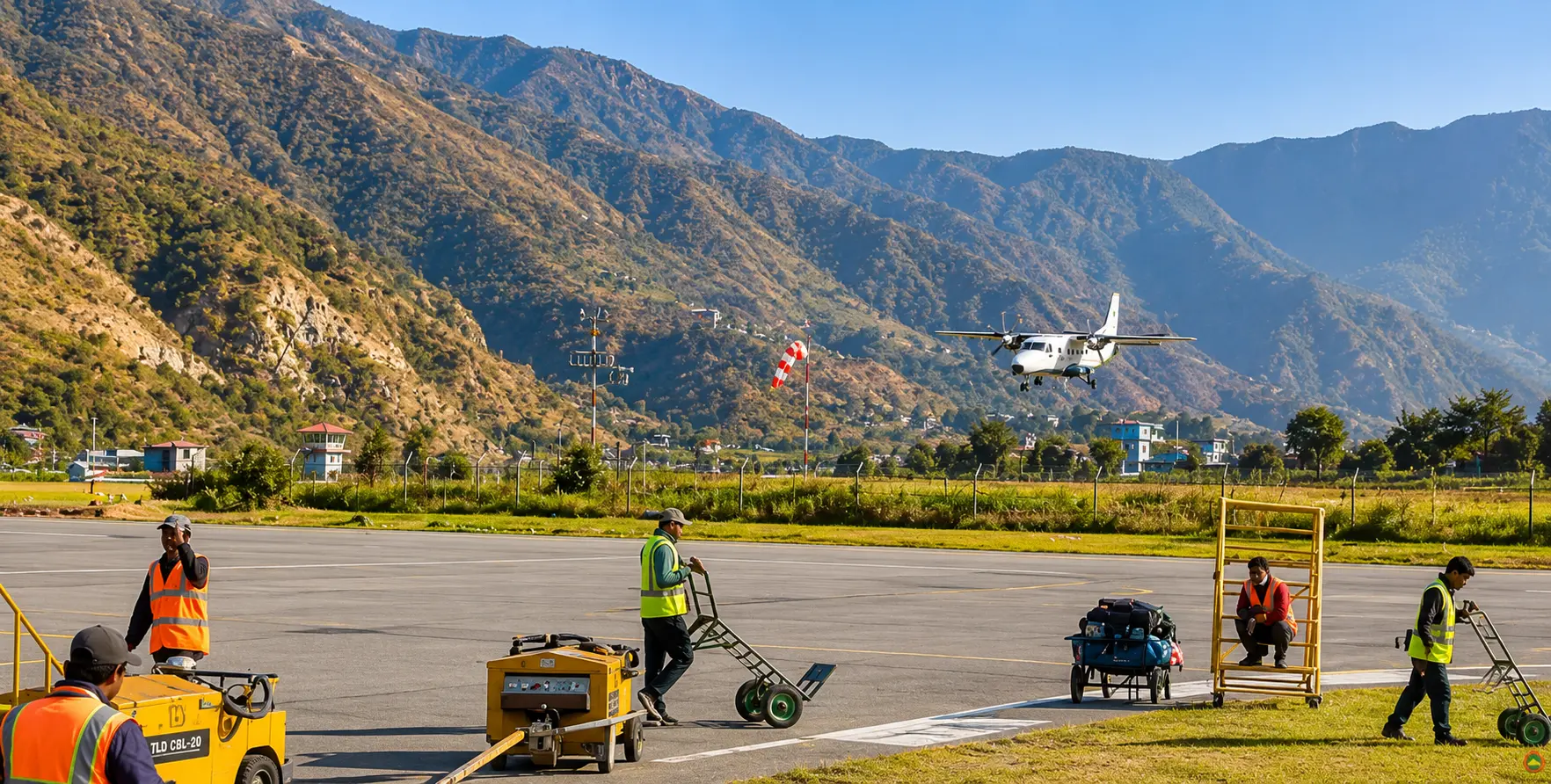
This means that any Nepal trekking transport planning based on published guidebooks older than two or three years should be treated with caution. The distances, driving times, and trailhead positions cited in those sources may have changed significantly—and almost always in the direction of roads getting longer, trailheads moving farther into the mountains, and the available starting altitude for any private jeep transfer increasing. Nepal Vehicle Hiring Pvt Ltd actively monitors road extension and condition changes on every major trekking corridor we serve, and our drivers’ current knowledge of what is and isn’t currently drivable is one of the most practically valuable aspects of booking your trek transport with a professional local operator rather than relying on outdated published information.

Plan your Himalayan adventure with the Nepal Trekking Transport Guide. Book private 4WD jeeps, Scorpio SUVs, Hiace vans, and cars with experienced drivers for safe, comfortable, and reliable transfers to Nepal's major trekking regions.

Booking Nepal Trekking Transport — What Separates Good from Poor Arrangements

The single most important distinction in any Nepal trekking transport booking is between an all-inclusive, hotel-pickup private vehicle arrangement with a transparent upfront price and a verified operator — and an informal, last-minute negotiation with an unverified driver or shared vehicle service whose actual cost, departure time, vehicle condition, and driver experience are all unknown until the morning of the journey. This distinction matters far more for Nepal trekking transport than for most other contexts, because the consequences of poor vehicle choice or poor driver quality on a mountain approach road are not merely inconvenient — they can be genuinely dangerous on the exposed cliff-edge and landslide-prone sections that define several of Nepal’s most important trekking corridors.

The specific markers of a trustworthy Nepal trekking transport arrangement are: a clearly stated all-inclusive price covering driver, fuel, and road tolls; specific mention of the vehicle type (confirming 4WD for any approach that requires it); hotel pickup confirmation rather than meeting at a bus park; driver contact details provided before the departure date; and a named, established operator rather than an anonymous WhatsApp number. Nepal Vehicle Hiring Pvt Ltd provides every one of these markers on every booking — which is why experienced trekking guides, operators, and repeat Nepal visitors consistently recommend our vehicle hire service for the transport legs of their clients’ and their own Himalayan journeys.

Permits and the 2026 Guide Mandate — How Transport and Documentation Connect

One of the most practically important intersections between Nepal trekking transport planning and trekking logistics is the permit requirement: permits for all of Nepal’s major trekking regions must be obtained in Kathmandu or Pokhara before the trailhead transfer departs, because there is no permit processing infrastructure at any trailhead itself. The Besisahar checkpoint verifies ACAP permits for every vehicle entering the Annapurna Conservation Area. The Dhunche checkpoint verifies Langtang National Park permits. The Jagat checkpoint on the Manaslu route verifies the Restricted Area Permit and MCAP. And the Sagarmatha National Park checkpoint at Monjo, several days’ walk above the Lukla flight arrival point, verifies the national park entry permit for Everest Base Camp trekkers.

The practical implication is that permit day and departure day cannot be the same day for any major Nepal trek. Budget at least one full day in Kathmandu or Pokhara for permit processing before the trailhead transfer departs — the Nepal Tourism Board offices in both cities process ACAP, Langtang National Park permits, and TIMS cards relatively quickly (typically within an hour for straightforward applications), but the Manaslu Circuit’s Restricted Area Permit requires registered agency submission. It can take a day or more to process, particularly during peak season when the Department of Immigration is handling large volumes of applications. Nepal Vehicle Hiring Pvt Ltd’s booking team advises clients on current permit processing times when they make their trekking transport booking, and our plan trip page allows you to flag your permit status at the time of transfer inquiry so we can advise the optimal departure schedule.
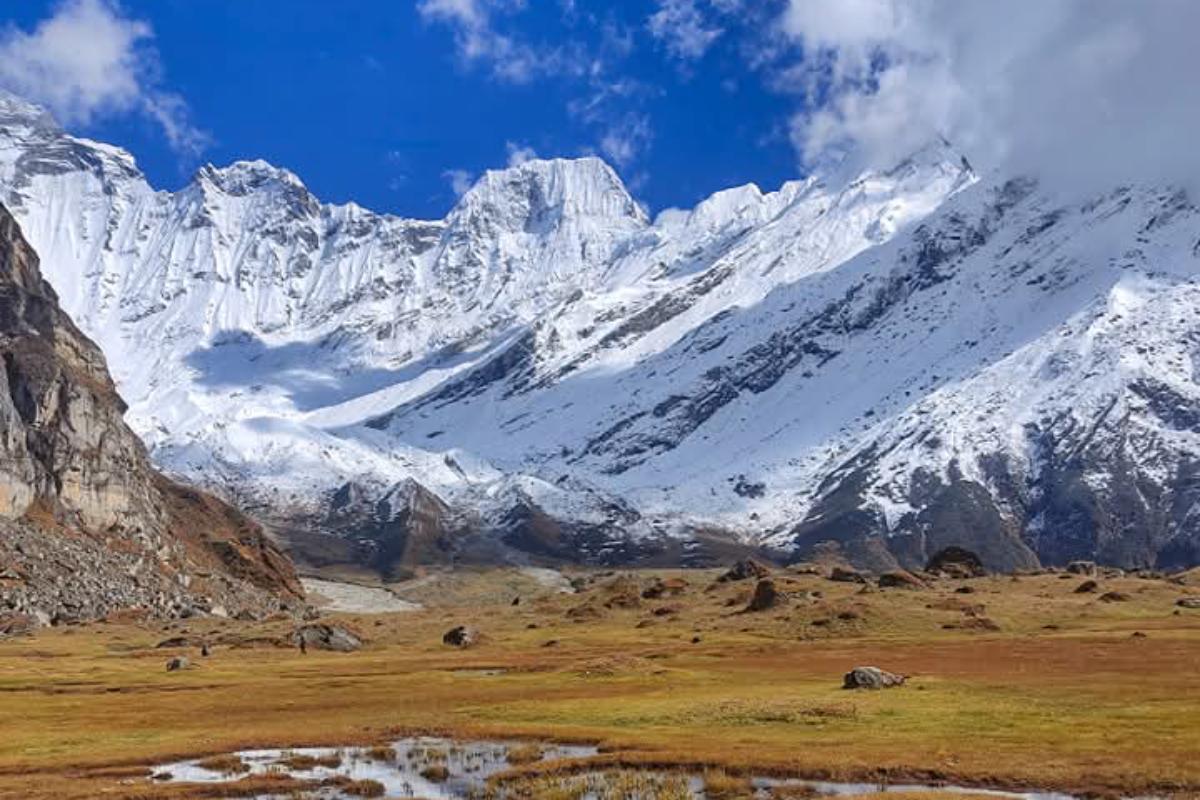
The mandatory licensed guide requirement — in force for all major Nepal trekking regions since 2023 — adds a further coordination dimension to trekking transport planning. The guide must be confirmed, licensed, and in possession of their own documentation before the group’s transfer departs, and in many cases the guide travels with the group in the private jeep from Kathmandu or Pokhara to the trailhead, making the vehicle hire sizing relevant to the total number of travelers including the guide. Nepal Vehicle Hiring Pvt Ltd routinely includes the guide in the vehicle manifest when trekking groups booking through our contact page specify their guide arrangement upfront.

Plan your Himalayan adventure with the Nepal Trekking Transport Guide. Book private 4WD jeeps, Scorpio SUVs, Hiace vans, and cars with experienced drivers for safe, comfortable, and reliable transfers to Nepal's major trekking regions.

Monsoon, Landslides, and the Weather That Changes Everything

No honest guide to Nepal trekking transport can avoid discussing the monsoon — the annual June-to-September rainfall period that transforms the character of every mountain approach road in the country and introduces the landslide risk factor that sits quietly behind every driving day in Nepal’s middle hills and mountain districts. Nepal receives between 80 and 90 percent of its annual rainfall during the monsoon months. This concentration creates a predictable but highly variable pattern of road surface damage that affects the Annapurna gorge road, the Manaslu approach beyond Arughat, the Langtang highway’s Ramche zone, and the Solukhumbu overland corridor toward Phaplu and Kharikhola on a seasonal basis.

The specific practical advice for monsoon-season trekking transport is not to avoid it categorically — many experienced trekkers and pilgrims travel these routes through June, July, and August with entirely successful outcomes — but to add one specific step to the planning process: a road condition check with Nepal Vehicle Hiring Pvt Ltd on the morning of any scheduled departure that includes an off-road mountain approach section. Our driver network provides real-time, current reports on the sections of the Manaslu approach road beyond Arughat, the Ramche zone on the Langtang highway, the Dumre-to-Besisahar hill section for the Annapurna Circuit approach, and the Okhaldhunga and Salleri approaches for the Solukhumbu transfers. If a specific section is reported closed or restricted, we proactively advise clients and offer schedule alternatives— delaying departure to a clearer forecast day or using an alternative route that avoids the affected section where one exists.

The broader ecology of Nepal’s post-monsoon trekking season — September and October specifically — is shaped directly by this road damage cycle: the first weeks of autumn trekking season often see Department of Roads crews actively repairing monsoon damage on approach roads simultaneously with the first wave of peak-season trekkers arriving at trailheads, meaning that early October departures on some corridors encounter more construction delays than mid-to-late October, when the main repair season has had more time to complete. Nepal Vehicle Hiring Pvt Ltd’s seasonal experience on all major trekking transport corridors allows us to advise clients on which specific departure dates within the early-autumn window are likely to encounter more versus fewer road complications — a detail that makes a genuinely meaningful difference to journey time on certain routes.

Plan your Himalayan adventure with the Nepal Trekking Transport Guide. Book private 4WD jeeps, Scorpio SUVs, Hiace vans, and cars with experienced drivers for safe, comfortable, and reliable transfers to Nepal's major trekking regions.

2026/27 Cost Guide — Nepal Trekking Transport by Region

The 2026/27 pricing landscape for Nepal trekking transport reflects a combination of fuel cost increases, road improvement investment, and growing demand for private 4WD jeep hire over shared and public transport options across all major trekking corridors. The following represents current Nepal Vehicle Hiring Pvt Ltd pricing for one-way private vehicle transfers:

Everest region: Kathmandu to Ramechhap Manthali Airport (for Lukla flight): NPR 8,000 to 13,000 (USD 60 to 98) by private jeep. Kathmandu to Phaplu or Salleri: NPR 18,000 to 28,000 (USD 135 to 210). Kathmandu to Kharikhola/Surke: NPR 24,000 to 35,000 (USD 180 to 265). All via our Solukhumbu route services.

Annapurna region: Pokhara to Nayapul: NPR 2,500 to 4,000 (USD 19 to 30). Kathmandu or Pokhara to Besisahar: NPR 7,000 to 22,000 (USD 53 to 165) depending on departure city. Besisahar to Manang extension: additional NPR 8,000 to 15,000 (USD 60 to 113).

Langtang region: Kathmandu to Syabrubesi: NPR 15,000 to 22,000 (USD 113 to 165). Kathmandu to Dhunche: NPR 13,000 to 20,000 (USD 98 to 150).

Manaslu region: Kathmandu to Soti Khola/Machha Khola: NPR 18,000 to 28,000 (USD 135 to 210). Full details are available in our Manaslu trek transport guide.

For all route-specific quotes and current pricing, contact Nepal Vehicle Hiring Pvt Ltd at +977-9851343204 via WhatsApp or through our plan trip page.

Combining Trekking Transport with Kathmandu and Pokhara Services

For most international travelers, the trekking transport booking sits within a broader Nepal itinerary that also includes Kathmandu airport transfer from Tribhuvan International, pre-trek Kathmandu sightseeing days covering the UNESCO-listed monument zones, Bhaktapur heritage visits, and the Nagarkot sunrise transfer for the classic pre-trek Himalayan panorama. In Pokhara, car hire covers the lakeside sightseeing circuit, the Sarangkot sunrise vehicle provides the finest city viewpoint over the Annapurna range, and post-trek transfers connect to Chitwan via Pokhara to Chitwan bus for the jungle safari extension that so many Annapurna Circuit completers add to their itinerary.

Nepal Vehicle Hiring Pvt Ltd coordinates all of these components — from airport arrival through to final airport departure — as a single, managed transport relationship. Our Nepal tour packages combine trekking transport, city sightseeing, wildlife extensions, and heritage visits into coordinated itineraries, bookable through our plan trip page. For the trekking component itself, our sister company Trek Nepal Himalayas provides fully guided packages for every major route — the Annapurna Circuit, Annapurna Base Camp, Ghorepani Poon Hill, Everest Base Camp, Langtang Valley, Manaslu Circuit, and Upper Mustang — coordinated alongside Nepal Vehicle Hiring Pvt Ltd’s vehicle hire service. For luxury trekking experiences, Alpine Luxury Treks provides premium-grade guiding and accommodation across the same routes.

Why Choose Nepal Vehicle Hiring Pvt Ltd for All Your Trekking Transport

Nepal Vehicle Hiring Pvt Ltd has built its reputation specifically on the trekking transport segment of Nepal’s vehicle hire market — the predawn Ramechhap transfers, the 9-hour Manaslu gorge runs, the Syabrubesi drop with the Ramche zone check, the Besisahar pickup after a 14-day Annapurna Circuit. Our drivers are not general-purpose highway drivers who occasionally do a mountain run — they are professional, experienced mountain transport specialists who know specific road conditions on specific corridors, who have driven the Chamche waterfall section and the Soti Khola approach and the Dhunche descent on dozens of separate occasions, and who bring to every jeep hire booking the kind of route-specific knowledge that is genuinely different from what a navigation app can provide.

Our fleet is verified and maintained: 4WD Scorpio and Hilux jeeps for all mountain approach transfers, Hiace vans for medium-sized groups on paved routes, tourist coasters and buses for large groups on highway corridors. Every booking includes hotel pickup from any location in Kathmandu or Pokhara, all-inclusive transparent pricing covering driver, fuel, and tolls, and direct driver contact details 24 hours before departure. Book through WhatsApp at +977-9851013196 via our plan trip page or the contact page.

Frequently Asked Questions — Nepal Trekking Transport

What vehicle do I need for Nepal trekking transport?

For any trekking trailhead approach that includes off-road sections — which includes Everest region overland, Manaslu, Langtang beyond Dhunche, and Annapurna gorge beyond Besisahar — a 4WD jeep is required. For fully paved transfers (Pokhara to Nayapul, Kathmandu to Pokhara, airport transfers), a sedan or Hiace is appropriate.

How do I get from Kathmandu to the Everest Base Camp trailhead?

The standard 2026 approach is a predawn transfer from Kathmandu to Ramechhap Manthali Airport (4 to 5 hours by private jeep), then the Manthali-to-Lukla domestic flight. Alternatively, the overland approach via Salleri, Phaplu, or Kharikhola bypasses the flight entirely for trekkers with extra time.

What is the cost of private jeep hire for Nepal trekking transport?

Costs vary by route. From NPR 2,500 (Pokhara to Nayapul) to NPR 35,000+ (Kathmandu to Kharikhola). See our region-by-region guide above or contact us via WhatsApp at +977-9851343204 for a specific quote.

Can I use public buses for Nepal trekking transport?

Yes, for budget trekkers. The Kathmandu to Besisahar bus and general bus services from Gongabu Bus Park reach many trekking approach towns. However, buses involve fixed departure times, multiple stops, and no hotel pickup — making private jeep hire the strongly preferred option for any group with fixed trek schedules.

How do I arrange my return transport from a trek?

Nepal Vehicle Hiring Pvt Ltd arranges pre-confirmed return pickups from all major trek exit points — Syabrubesi, Dhunche, Besisahar, Dharapani, Phaplu, Salleri — as part of the outward booking. Confirm your expected return date at booking; adjustments accepted via WhatsApp.

Which Nepal trekking regions need 4WD vehicles?

Everest region overland (Salleri, Phaplu, Kharikhola), Manaslu (Soti Khola, Machha Khola), Langtang (Syabrubesi), Annapurna gorge (beyond Besisahar toward Chame and Manang), and Rolwaling (Charikot approach) all require 4WD jeep hire. Pokhara to Nayapul and paved highway transfers can use a sedan or van.

Conclusion

Nepal trekking transport is the infrastructure that makes every Himalayan adventure possible — and in a country whose road network is still actively extending into previously roadless valleys, where the trailhead of today is further into the mountains than the trailhead of five years ago, this infrastructure is evolving faster than almost any other aspect of the Nepal trekking experience. Understanding which vehicle suits which approach, which roads require 4WD, which trailheads have moved, and how the Ramechhap airport transfer has changed the standard Everest approach is the foundation of any well-organized Nepal trekking trip.

Nepal trekking transport is not a footnote. It is the first and last chapter of every Himalayan adventure — and in a country where road construction is actively extending into previously roadless mountain valleys year by year, the transport options available today are meaningfully different from those of three years ago. They will be different again in three years. Staying current with these changes, matching the right vehicle to the right route, and booking with a professional operator whose drivers carry real, recent, route-specific experience is the foundation on which every great Nepal trek is built. Nepal Vehicle Hiring Pvt Ltd has been that foundation for hundreds of trekking groups across all of Nepal’s major mountain regions, and our team is ready to provide the same reliable, experienced, and transparent service for your own journey into the Himalaya.

Nepal Vehicle Hiring Pvt Ltd provides the complete spectrum of trekking transport across every region covered in this guide — from private jeep hire to Hiace van, from airport transfer to trek-end pickup. For luxury trekking packages above the trailhead, Alpine Luxury Treks and Trek Nepal Himalayas provide the guided experience that begins where our road ends. Book your Nepal trekking transport with Nepal Vehicle Hiring Pvt Ltd — call or WhatsApp +977-9851013196, visit vehiclehiringnepal.com, or plan your full journey through our plan trip page.

Sudurpaschim Tour Transportation

Book Sudurpaschim Tour Transportation with private cars, 4WD jeeps, Scorpio SUVs, Hiace vans, Coaster buses, and tourist buses for comfortable travel to Khaptad National Park, Api Himal, Shuklaphanta National Park, Mahendranagar, Dhangadhi, and other top destinations in Far Western Nepal.

Sudurpaschim Tour Transportation – Complete Vehicle Hire Guide for Far-West Nepal 2026

There is a section of Nepal that most travelers never see, most tour operators rarely include, and most guidebooks cover in a paragraph or two before moving on to the more familiar destinations of Kathmandu, Pokhara, and the Annapurna Circuit. It is a region that comprises nine districts, a geography ranging from subtropical Terai plains to peaks exceeding 7,000 mmeters two of Nepal’s finest national parks and wildlife reserves, ancient pilgrimage temples drawing hundreds of thousands of Hindu devotees annually, and some of the most genuinely remote and archaeologically rich trekking terrain in the entire Himalayan chain. This is Sudurpashchim ProvinceFar-West Nepal — and in 2026, it is undergoing a moment of genuine, government-supported transformation in its tourism infrastructure, making this precisely the right time to explore it.

Sudurpashchim Province sits at the extreme northwestern corner of Nepal, sharing a boundary with India’s Uttarakhand state to the south and west, and the Tibet Autonomous Region of China to the north. It encompasses nine districts — Achham, Baitadi, Bajhang, Bajura, Dadeldhura, Darchula, Doti, Kailali, and Kanchanpur — across a total area of approximately 19,539 square kilometers. Its capital, Dhangadhi in Kailali District, serves as the primary air and road gateway to the entire province.

The region is home to extraordinary natural and cultural treasures: Khaptad National Park and its ancient Shiva ashram, Shuklaphanta Wildlife Reserve with the largest population of swamp deer in Nepal, the Api Nampa Conservation Area sheltering Nepal’s westernmost 7,000-meter peaks, the sacred Badimalika Temple at high altitude in Bajura, the Ramaroshan religious lakes in Achham, and the Mahakali River forming the dramatic natural border with India for hundreds of kilometers.

In April 2026, in a development that signals a decisive shift in Nepal’s tourism strategy toward these long-neglected western regions, the national government’s 100-day governance reform action plan specifically included organizing trekking routes for Ramaroshan in Achham, Badimalika in Bajura, and Api Himal in Darchula as priority tourism development targets. The government has launched studies and planning processes to connect these destinations into a coherent trekking and tourism infrastructure—a recognition that Sudurpashchim’s tourism potential has been systematically underutilized and that correcting this represents both an economic opportunity for the province’s communities and a meaningful addition to Nepal’s overall adventure tourism portfolio.

However, one honest reality must be stated at the outset: transportation is the central challenge and defining factor of every Sudurpashchim tour. The sheer distance from Kathmandu — 20–24 hours by road, or a 65-minute domestic flight to Dhangadhi followed by further road travel — combined with the province’s limited internal road infrastructure, makes transport planning not a secondary logistical concern but the primary determinant of whether a Sudurpashchim tour is feasible, enjoyable, and safely managed.

This guide from Nepal Vehicle Hiring Pvt Ltd provides the complete, honest, current picture of what Sudurpashchim transportation actually involves in 2026 — the routes, the vehicles required, the realistic timeframes, the permits, and how professional private vehicle hire transforms what could be an exhausting, unpredictable journey into a memorable part of one of Nepal’s most extraordinary regional tourism experiences.

For trekking packages in this region, connect with Trek Nepal Himalayas — our sister company offering guided trekking across Nepal i, including Far-West destinations. For luxury itineraries, see Alpine Luxury Treks. For vehicle booking: vehiclehiringnepal.com | Call/WhatsApp: +977 9851013196

Book Sudurpaschim Tour Transportation with private cars, 4WD jeeps, Scorpio SUVs, Hiace vans, Coaster buses, and tourist buses for comfortable travel to Khaptad National Park, Api Himal, Shuklaphanta National Park, Mahendranagar, Dhangadhi, and other top destinations in Far Western Nepal.

Understanding Sudurpashchim – The Region’s Geography and Transport Context

Before planning any transport for Sudurpashchim, it is essential to understand the province’s extraordinary geographic diversity and how that diversity directly shapes every transport decision. Sudurpashchim is not a single landscape — it is a complete altitudinal and ecological transect of the Himalayan system compressed into a single provincial boundary, from the tropical Terai grasslands and forests of Kailali and Kanchanpur at near sea level to the permanent snow and glaciers of Api Himal (7,132 m) and Saipal (7,031 m) in the northern districts of Darchula and Bajhang.

The southern Terai districts — Kailali (capital: Dhangadhi) and Kanchanpur (capital: Mahendranagar) — are connected to the national road network via the Mahendra Highway (East-West Highway), which runs the length of Nepal’s Terai plains and provides the most reliable all-season road access to the province from both Kathmandu (from the east) and India’s Banbasa border crossing (from the south). These districts have reasonable road infrastructure, functioning fuel stations, reliable mobile phone coverage, and ATM access in their main centers. They are also home to Shuklaphanta Wildlife Reserve, Ghodaghodi Lake, and the Tharu cultural heartland — destinations that are genuinely accessible for day-trip and two-to-three day tour itineraries from Dhangadhi.

The middle hills — Dadeldhura, Doti, Achham, Baitadi — occupy the transitional zone between the Terai and the high Himalaya, with elevations ranging from approximately 800 meters to 3,000 meters. This band of territory contains Khaptad National Park, the Ramaroshan pilgrimage lakes, and much of the province’s most historically and culturally rich landscape. Road access in this zone is more variable — some district headquarters are connected by paved or gravel roads, while others remain accessible only by difficult mountain tracks or on foot. Mobile coverage thins considerably outside main centers.

The high Himalayan districts — Bajhang, Bajura, Darchula — contain the most remote and most dramatically spectacular terrain in the province. As one 2026 specialist transport guide confirms with admirable directness: in Api Himal Rural Municipality in Darchula district, the local unit’s headquarters is still not connected by a motorable road, and many localities have no access to electricity. This is not a criticism but a practical reality that shapes every transport plan for this area: reaching the northern districts of Sudurpashchim involves a flight, one or more long vehicle drives, and in many cases a multi-day walk before the destination is reached. Nepal Vehicle Hiring’s coverage in this zone extends to the last motorable road point in each district, from which onward travel transitions to trekking and porter support.

Book Sudurpaschim Tour Transportation with private cars, 4WD jeeps, Scorpio SUVs, Hiace vans, Coaster buses, and tourist buses for comfortable travel to Khaptad National Park, Api Himal, Shuklaphanta National Park, Mahendranagar, Dhangadhi, and other top destinations in Far Western Nepal.

Getting to Sudurpashchim – The Air-and-Road Strategy

Kathmandu to Dhangadhi by Air – The Only Practical Starting Point

For any visitor planning a Sudurpashchim tour of reasonable duration and comfort, the journey should begin with a domestic flight from Tribhuvan International Airport (TIA) in Kathmandu to Dhangadhi Airport in Kailali District. The flight takes approximately 65 minutes and is operated by Buddha Air, Yeti Airlines, and Shree Airlines on daily schedules. Dhangadhi is the province’s largest city and commercial hub, and its airport functions as the primary gateway not only for the city itself but for all further road and trekking travel into the province’s northern and western reaches.

The pricing reality of this flight is one that any honest Sudurpashchim transport guide must address directly, because it is the single most cited reason why foreign tourists avoid this province. Nepal’s dual-pricing system applies to domestic flights, and as the Kathmandu Post confirmed in April 2026, a round-trip ticket to Sudurpashchim for a foreigner can cost over NPR 60,000 — more than a flight from Kathmandu to Delhi. This is the dollar fare system applied to foreign nationals on domestic routes, which the article explicitly identifies as the primary reason foreign tourist visits to both Karnali and Sudurpashchim remain far below the region’s potential. Nepali nationals pay a substantially lower fare for the same seat on the same aircraft. While the government has acknowledged this barrier and there are ongoing discussions about reform, the dual-pricing system remains in place as of mid-2026. Nepal Vehicle Hiring recommends that international visitors planning Sudurpashchim tours budget NPR 30,000–35,000 per person one way for the Kathmandu–Dhangadhi flight and build this cost explicitly into their trip planning before arrival.

Alternatively, Nepalgunj Airport in Banke District (adjacent province) provides access to Sudurpashchim’s destinations via a further 4–5 hour road journey northward to Dhangadhi. Nepalgunj sometimes offers marginally lower domestic flight fares from Kathmandu and is a reasonable alternative starting point for itineraries focused on the Bajura and Bajhang districts rather than Kailali.


Kathmandu to Dhangadhi by Road – The Extreme Option

The overland road journey from Kathmandu to Dhangadhi is, in its complete form, a marathon 20–24 hour drive via the Prithvi Highway, BP Highway, and then the Mahendra East-West Highway westward through the Terai. This route passes through Bharatpur (Chitwan), Butwal, Kohalpur (near Nepalgunj), and then westward through Kailali District to Dhangadhi. While the Mahendra Highway is the most continuously paved of Nepal’s major roads, covering the full 700+ km in a single day is genuinely punishing for passengers and is not recommended without strategic overnight stops. For travellers with specific reasons to prefer road travel — extreme budget constraints, a dislike of flying, or a desire to experience the Terai crossing — Nepal Vehicle Hiring provides private vehicle hire for the full Kathmandu to Dhangadhi overland route, typically split as Kathmandu to Butwal (Day 1, approximately 7–8 hours) and Butwal to Dhangadhi (Day 2, approximately 8–9 hours). This two-day Terai crossing is in its own right a rewarding experience, passing through the heart of Nepal’s subtropical southern belt with its paddy fields, sal forests, and Tharu village communities.

Book Sudurpaschim Tour Transportation with private cars, 4WD jeeps, Scorpio SUVs, Hiace vans, Coaster buses, and tourist buses for comfortable travel to Khaptad National Park, Api Himal, Shuklaphanta National Park, Mahendranagar, Dhangadhi, and other top destinations in Far Western Nepal.

Dhangadhi – The Base for All Sudurpashchim Transportation

Every Sudurpashchim tour of any ambition begins and ends in Dhangadhi — not because Dhangadhi is itself the primary destination (though it has genuine character and interest), but because it is the transport, logistics, and services hub from which all provincial routes radiate. Understanding what Dhangadhi offers and what it connects to is essential for planning any effective Sudurpashchim tour.

Dhangadhi is the largest city in Sudurpashchim Province with a population exceeding 150,000. It has functioning ATMs, several mid-range hotels, fuel stations, vehicle repair workshops, and the domestic airport that connects to Kathmandu. The Mahakali Highway (also called the Mahendra Highway western extension) runs through the city, providing onward connections to Kanchanpur District (southeast) and northward toward Doti, Dadeldhura, and the higher districts. Nepal Vehicle Hiring’s Dhangadhi-based vehicle fleet is positioned here to coordinate all provincial tours—drivers familiar with the specific roads, conditions, and checkpoints of the entire Sudurpashchim region —combined with Kathmandu-dispatched vehicles and drivers for the initial air-and-road pickup that connects Dhangadhi Airport to the tour starting point.

The most important practical advice for any visitor arriving in Dhangadhi: complete all ATM withdrawals, fuel purchases, SIM card top-ups, and supply purchasing in Dhangadhi before heading north or west into the province’s more remote districts. As specialist transport guides confirm: reliable mobile signal and banking stop around Darchula on the northern routes, and equivalent service thresholds apply to the Achham, Bajura, and Bajhang routes heading into the high country. Dhangadhi is the last reliable services point for every destination in the province.

Book Sudurpaschim Tour Transportation with private cars, 4WD jeeps, Scorpio SUVs, Hiace vans, Coaster buses, and tourist buses for comfortable travel to Khaptad National Park, Api Himal, Shuklaphanta National Park, Mahendranagar, Dhangadhi, and other top destinations in Far Western Nepal.

Shuklaphanta Wildlife Reserve – The Southern Safari Circuit

The Shuklaphanta Wildlife Reserve, situated approximately 22 km west of Mahendranagar in Kanchanpur District, is the most immediately accessible of Sudurpashchim’s protected areas from Dhangadhi and one of the most ecologically significant reserves in Nepal. Covering 305 square kilometers of terai grassland, sal forest, and riverine habitat along the Mahakali River, Shuklaphanta is most famous as the home of the largest herd of swamp deer (Barasingha) in Nepal — with over 2,000 individuals recorded in recent counts — alongside Bengal tigers, one-horned rhinoceroses, wild elephants, leopards, sloth bears, four-horned antelopes, and over 500 bird species. It is, by most wildlife specialist assessments, one of the most biodiverse and least visited of Nepal’s major wildlife areas — offering a genuinely frontier safari experience with none of the crowds that characterize Chitwan and Bardiya in the peak season.

Nepal Vehicle Hiring provides private jeep and Land Cruiser hire from Dhangadhi to Shuklaphanta, covering the 75 km road distance via Mahendranagar in approximately 2–2.5 hours. The approach road is on the Mahendra Highway — paved and reliable in all seasons. Within the reserve itself, 4WD jeep hire for wildlife safari circuits is available through the reserve’s management infrastructure and through local operators coordinated by Nepal Vehicle Hiring. A standard two-day Shuklaphanta tour from Dhangadhi includes the Day 1 drive to Mahendranagar, check-in at reserve-adjacent accommodation, dawn jeep safari, canoe river float on the Shuklaphanta wetlands, and return on Day 2. The reserve’s relative remoteness from Nepal’s main tourism circuit means teahouse and lodge accommodation is limited, but genuine wilderness lodges exist; booking well in advance through Nepal Vehicle Hiring or our sister companies is strongly recommended for peak-season visits.

Shuklaphanta is also the most realistic single-day excursion from Dhangadhi for visitors who have arrived by flight and want to experience Far-West Nepal’s extraordinary wildlife without committing to a multi-day overland tour of the higher districts. A dawn departure from Dhangadhi, a morning safari in the reserve, and a return to Dhangadhi for an evening flight back to Kathmandu is logistically feasible with Nepal Vehicle Hiring’s door-to-door vehicle coordination — see Nepalgunj to Shuklaphanta vehicle service.

Book Sudurpaschim Tour Transportation with private cars, 4WD jeeps, Scorpio SUVs, Hiace vans, Coaster buses, and tourist buses for comfortable travel to Khaptad National Park, Api Himal, Shuklaphanta National Park, Mahendranagar, Dhangadhi, and other top destinations in Far Western Nepal.

Ghodaghodi Lake – The Ramsar Wetland Day Trip

Located just 28 km northeast of Dhangadhi in Kailali District, Ghodaghodi Lake is a Ramsar-listed wetland complex of extraordinary biodiversity, designated for international conservation significance as part of the Ghodaghodi Lake Conservation Area, covering 2,563 hectares of lake, marshland, and sal forest. The lake complex is home to 30+ fish species, numerous reptile species including gharial and mugger crocodile, over 140 bird species, and a resident population of wild elephants and deer that move through the sal forest surrounding the lake. The historical temples on the lakeshore, including the famous Ghodaghodi Temple, make this both a wildlife and cultural destination — pilgrims and birdwatchers sharing the same lakeside environment in the quiet Tharu community landscape surrounding the water.

Nepal Vehicle Hiring provides private car or jeep hire from Dhangadhi to Ghodaghodi Lake in approximately 45 minutes to 1 hour on the highway. This is Sudurpashchim’s most accessible nature destination and a natural pairing with a Dhangadhi city exploration on the same day. For birdwatching enthusiasts, the dawn boat trip on Ghodaghodi Lake is among the finest freshwater birding experiences in Far-West Nepal, with open-billed storks, painted storks, kingfishers, raptors, and migratory waterfowl in season. The Dhangadhi to Ghodaghodi Lake day trip vehicle service from Nepal Vehicle Hiring includes hotel pickup at any Dhangadhi accommodation and return delivery.

Book Sudurpaschim Tour Transportation with private cars, 4WD jeeps, Scorpio SUVs, Hiace vans, Coaster buses, and tourist buses for comfortable travel to Khaptad National Park, Api Himal, Shuklaphanta National Park, Mahendranagar, Dhangadhi, and other top destinations in Far Western Nepal.

Khaptad National Park – The Far West’s Himalayan Sanctuary

Khaptad National Park is, in the considered assessment of everyone who has visited it, one of Nepal’s most beautiful and most undervisited protected areas — a 225 square kilometre alpine sanctuary in the far-western hills at elevations between 1,400 and 3,300 metres, characterised by vast meadows (khaptads), dense temperate forests of oak, maple, and rhododendron, clear rivers, sacred lakes, and Himalayan wildlife including Himalayan black bear, musk deer, and over 270 bird species.

Its crowning cultural feature is the ashram of the revered saint Khaptad Baba (Swami Sachidananda Saraswati), who lived here for decades and whose influence transformed the park into both a wildlife sanctuary and a place of deep spiritual significance for Hindu pilgrims from across far-western Nepal and the adjacent Indian border region.

Reaching Khaptad National Park is one of the more logistically complex transport challenges in Sudurpashchim, and understanding the specific route is essential for realistic tour planning. The standard approach begins in Dhangadhi, from which Nepal Vehicle Hiring’s private jeep hire covers the road journey to the park entry points.

The most commonly used access route follows the Dhangadhi to Doti (Silgadhi) highway northward — approximately 120 km, taking 5–6 hours by 4WD vehicle — and then continues to Sanfebagar (Achham), the administrative base closest to the park’s main entry point. From Sanfebagar, a further 3–4 hour drive on increasingly rough mountain track leads to the park boundary, beyond which entry is on foot. The full Dhangadhi to Khaptad road journey therefore takes a minimum of two days by vehicle, with an overnight stop typically at Doti or Dadeldhura.

Nepal Vehicle Hiring’s 4WD vehicles — Scorpio, Bolero, and Land Cruiser — are the appropriate vehicle choices for the entire Dhangadhi–Doti–Sanfebagar approach route. Standard cars and highway vehicles are not suitable beyond Doti. The Land Cruiser, with its superior ground clearance and altitude performance, is particularly recommended for the Sanfebagar to park boundary section where the track deteriorates significantly, and 4WD low-range capability becomes operationally important. Nepal Vehicle Hiring coordinates the full Dhangadhi to Khaptad transport package, including overnight accommodation stops and return journey coordination. For trekking within the park, connect with Trek Nepal Himalayas for a licensed guide and trekking support.

Book Sudurpaschim Tour Transportation with private cars, 4WD jeeps, Scorpio SUVs, Hiace vans, Coaster buses, and tourist buses for comfortable travel to Khaptad National Park, Api Himal, Shuklaphanta National Park, Mahendranagar, Dhangadhi, and other top destinations in Far Western Nepal.

Darchula and the Api Himal Base Camp Approach – Nepal’s Most Remote Western Trek

The Api Himal Base Camp approach in Darchula District represents the most geographically remote and logistically demanding destination in Sudurpashchim Province — and in 2026, one of the most exciting emerging trekking destinations in all of Nepal, given its inclusion in the government’s 100-day tourism development action plan and the extraordinary scenery it offers around Api Himal (7,132 m), Nepal’s westernmost 7,000-metre peak and one of the most technically challenging unclimbed objectives in the Himalayan range. As one 2026 specialist expedition guide puts it with characteristic understatement: reaching Api Base Camp is, honestly, half the adventure.

The transport route to Api Himal Base Camp follows a precise multi-stage logic that Nepal Vehicle Hiring’s experienced western Nepal fleet handles as an integrated service. The journey begins with the Kathmandu to Dhangadhi flight (65 minutes), after which the Nepal Vehicle Hiring vehicle meets the party at Dhangadhi Airport for the road journey northward. The Dhangadhi to Darchula road distance is approximately 200–220 km via the Mahakali Highway, following the Mahakali River northward through a landscape that transitions from flat Terai plains through increasingly steep middle hill terrain as the road climbs toward Darchula’s position on the Indian border. This section takes 8–10 hours by private 4WD vehicle and is typically split into two days — Dhangadhi to Chainpur or Doti for Day 1, then Doti to Darchula for Day 2 — with overnight stops at available guesthouses in the intermediate towns.

The road conditions on this Mahakali Highway corridor have improved in recent years but remain significantly more demanding than Nepal’s main eastern highway network. As one 2026 Api Himal trek specialist describes the route: the drive is the trek before the trek — Dhangadhi to the Gokuleshwor and Darchula area runs roughly 8–10 hours and is usually split over two days, with a final off-road leg to the Makarighat trailhead. The final section from Darchula town to the Makarighat or Khalanga trailhead — where the actual trekking to Api Base Camp begins — is an off-road mountain track requiring 4WD and experienced driving. Nepal Vehicle Hiring deploys the Toyota Land Cruiser for the Darchula district routes, providing the ground clearance, mechanical reliability, and experienced high-altitude drivers that this remote frontier road demands.

At Darchula itself, Nepal Vehicle Hiring’s service reaches its road-end boundary. Beyond Makarighat trailhead, all transport transitions to trekking on foot with guide and porter support. The Api Himal Base Camp trek from Makarighat takes approximately 10–12 days round trip, through traditional Rai and Byansi community villages, rhododendron forests, and high alpine terrain before reaching the base camp at approximately 3,900–4,100 meters with Api Himal (7,132 m) towering above. Trek Nepal Himalayas provides complete trekking support for this route — licensed guides, porters, camping equipment, and food — as a coordinated service alongside Nepal Vehicle Hiring’s road transport.

No restricted area permit is required for Api Himal Base Camp, but an Api Nampa Conservation Area permit and TIMS card are mandatory. These should be obtained at NTB offices in Kathmandu before departure, as obtaining them in Darchula is significantly more complex and time-consuming.

Book Sudurpaschim Tour Transportation with private cars, 4WD jeeps, Scorpio SUVs, Hiace vans, Coaster buses, and tourist buses for comfortable travel to Khaptad National Park, Api Himal, Shuklaphanta National Park, Mahendranagar, Dhangadhi, and other top destinations in Far Western Nepal.

Badimalika Temple – The High-Altitude Pilgrimage of Bajura

Badimalika Temple in Bajura District is one of Nepal’s most important and least internationally known high-altitude Hindu pilgrimage sites — a Shakti temple perched at over 3,500 metres on a mountain ridge in the far-western hills, dedicated to Goddess Durga in her Badi Malika form, and drawing hundreds of thousands of Hindu pilgrims from Nepal and India’s Uttarakhand across the border every year during the main festival periods, particularly the Janaibhadra and Navaratri festivals. For the government’s 2026 tourism development action plan, Badimalika is one of the three specifically named priority destinations for route organization in Sudurpashchi, in  recognition of its significant existing pilgrimage traffic and its potential for organized cultural tourism beyond purely devotional visitors

The transport approach to Badimalika follows the Kathmandu to Nepalgunj or Dhangadhi flight, then road to Sanfebagar (Achham District) or Martadi (Bajura District). From Dhangadhi, the road to Martadi covers approximately 300 km and takes 2–3 days by road through Doti and Achham. From Nepalgunj, the route heads north through Kohalpur and Surkhet into Bajura, with the journey to Sanfebagar (the main access town for the Badimalika approach) taking approximately 8–10 hours by private 4WD from Nepalgunj.

Nepal Vehicle Hiring coordinates private jeep hire from Nepalgunj or Dhangadhi to the Badimalika approach roads, with the Scorpio and Bolero 4WD vehicles appropriate for the rough district roads of this section. The trek from the road-end point to Badimalika Temple itself takes 1–3 days depending on the specific access trail used.

Pilgrimage groups — which constitute the majority of Badimalika visitors — typically travel in large parties of 20–50 people, making Nepal Vehicle Hiring’s Coaster mini-bus or Tourist Bus hire the most appropriate vehicle for the highway sections of this journey, with a 4WD jeep convoy for the district road approach. Nepal Vehicle Hiring coordinates multi-vehicle logistics for large pilgrimage groups as a standard service — contact our operations team at +977 9851013196 for custom group pilgrimage transport quotations for Badimalika.

Book Sudurpaschim Tour Transportation with private cars, 4WD jeeps, Scorpio SUVs, Hiace vans, Coaster buses, and tourist buses for comfortable travel to Khaptad National Park, Api Himal, Shuklaphanta National Park, Mahendranagar, Dhangadhi, and other top destinations in Far Western Nepal.

Ramaroshan – The Sacred Lakes of Achham

Ramaroshan in Achham District is the third destination specifically named in Nepal’s 2026 Far-West tourism development initiative — a sacred high-altitude lake complex at approximately 3,200 meters that draws Hindu pilgrims for its associated temples and the ritual significance of bathing in the Ramaroshan lakes during specific auspicious calendar dates. The area’s landscape of rolling alpine meadows, traditional far-western hill community villages, and Himalayan viewpoints makes it an appealing trekking destination beyond its purely religious significance — one that the government’s 2026 action plan aims to connect into a coherent, way-marked trekking circuit comparable to the more established routes of the Annapurna or Langtang regions.

The transport approach to Ramaroshan begins from either Dhangadhi or Nepalgunj, with 4WD vehicle hire covering the Achham district roads to the nearest trailhead at Sanfebagar or Mangalsen. Nepal Vehicle Hiring’s Scorpio or Bolero 4WD service for Achham district handles this approach road reliably in dry season conditions. In monsoon, the Achham district roads carry significant landslide risk, and Nepal Vehicle Hiring monitors conditions daily before dispatching vehicles on this route. The trek from the road-end to Ramaroshan lakes takes 2–3 days through beautiful far-western hill country, with accommodation in basic community guesthouses and, increasingly, organized homestay programs developed with the support of the Provincial Tourism Board.


The Mahendranagar and Kanchanpur Circuit – Border Culture and Terai Nature

Mahendranagar, the headquarters of Kanchanpur District, sits at the extreme southwestern corner of Nepal, directly adjacent to the Indian border crossing at Banbasa. It is a significant commercial border town with a distinctly different cultural character from Dhangadhi, reflecting the centuries of trans-border cultural and economic exchange between Far-West Nepal and India’s Kumaon region. The surrounding Kanchanpur District contains Shuklaphanta Wildlife Reserve, the Mahakali River corridor, and a network of Tharu community villages whose traditional culture — architecture, festivals, agricultural practices, and forest management traditions — has been substantially better preserved in this far-western Terai than in more accessible regions closer to Kathmandu.

Nepal Vehicle Hiring’s Dhangadhi to Mahendranagar private transfer covers the 75 km Mahendra Highway journey in approximately 2–2.5 hours. For visitors entering Nepal from the Indian border at Banbasa, Nepal Vehicle Hiring provides Mahendranagar border pickup service — meeting arrivals at the Nepal immigration post and providing direct vehicle transfer to any Mahendranagar hotel, onward to Dhangadhi, or connecting directly into the provincial tour circuit. The Mahendranagar to Shuklaphanta Wildlife Reserve transfer covers approximately 22 km in under an hour, making Shuklaphanta the natural first or last stop on any Kanchanpur circuit.


Book Sudurpaschim Tour Transportation with private cars, 4WD jeeps, Scorpio SUVs, Hiace vans, Coaster buses, and tourist buses for comfortable travel to Khaptad National Park, Api Himal, Shuklaphanta National Park, Mahendranagar, Dhangadhi, and other top destinations in Far Western Nepal.

The Best Vehicles for Sudurpashchim Tours – What You Actually Need

Sudurpashchim’s extreme geographic range — from Terai highway to remote Himalayan district track — means that no single vehicle category covers every situation in a comprehensive provincial tour. Nepal Vehicle Hiking’s recommendation for any serious Sudurpashchim itinerary is to think in terms of transport stages, matching the vehicle to the specific demands of each stage rather than attempting a single-vehicle solution for the entire journey.

For the Terai highway sections — Dhangadhi city transfers, Ghodaghodi Lake day trips, Mahendranagar connections, and the Shuklaphanta approach — a private car or standard SUV is adequate and comfortable. The Mahendra Highway is paved and well-maintained throughout these sections and does not require 4WD. For groups of 8–13 on this highway section, the Toyota Hiace van provides the best per-head comfort and cost efficiency.

For the middle hills district roads — Doti, Dadeldhura, Achham, Bajura approaches — the Mahindra Scorpio 4WD or Bolero 4WD is the appropriate minimum specification. These roads combine unpaved gravel track, seasonal erosion, moderate river crossings, and gradients that standard vehicles cannot safely manage. The Scorpio and Bolero’s switchable 4WD, high ground clearance, and proven reliability on Nepali mountain district roads make them the operational standard for all middle-hills Sudurpashchim district driving.

For the most remote high-district sections — the Darchula Mahakali Highway approach to Api Himal, and the final approach tracks to Khaptad National Park — Nepal Vehicle Hiring recommends and deploys the Toyota Land Cruiser 4WD exclusively. As the Api Himal specialist guide confirms: road conditions can be rough and time-consuming in this region, and the Land Cruiser’s 225+ mm ground clearance, multi-terrain management, and comprehensive mechanical self-sufficiency provide a meaningfully larger safety margin on terrain where a breakdown is a genuinely consequential event rather than a minor inconvenience. The Land Cruiser is also significantly more comfortable on extended multi-day drives, which the Darchula approach inevitably involves.


Permits Required for Sudurpashchim Tour Destinations

Permit requirements across Sudurpashchim vary significantly by destination. They are best obtained in Kathmandu before departure rather than attempting to arrange them at provincial checkpoints, where processing is slower and in some cases not possible at all for foreign nationals.

For Shuklaphanta Wildlife Reserve, a reserve entry permit is required, payable at the reserve headquarters in Mahendranagar or at the main gate. Current fees for foreign nationals are significantly higher than for Nepali nationals under the dual-pricing system, and Nepal Vehicle Hiring advises confirming current fee levels with our operations team before travel as these have been subject to revision.

For Khaptad National Park, the Khaptad National Park Entry Permit (NPR 1,000 for Nepali nationals, higher for foreign nationals) is obtained at the park headquarters or through NTB in Kathmandu. TIMS cards are also required for trekking within the park.

For Api Nampa Conservation Area (covering the Api Himal approach in Darchula District), an Api Nampa Conservation Area permit and TIMS card are mandatory. These are obtained through NTB Kathmandu. No restricted area permit is currently required for Api Himal Base Camp, but a licensed guide is strongly advised given the remoteness of the terrain.

For Badimalika and Ramaroshan, specific temple entry fees and district conservation area permits may apply, and the requirements are evolving as the government’s 2026 tourism development action plan implements new tourism infrastructure. Nepal Vehicle Hiring advises all Sudurpashchim-bound clients to contact our operations team for the most current permit information specific to their planned destinations.

Book Sudurpaschim Tour Transportation with private cars, 4WD jeeps, Scorpio SUVs, Hiace vans, Coaster buses, and tourist buses for comfortable travel to Khaptad National Park, Api Himal, Shuklaphanta National Park, Mahendranagar, Dhangadhi, and other top destinations in Far Western Nepal.

Seasonal Considerations – When to Visit Sudurpashchim

Sudurpashchim’s geographic diversity means its travel seasons vary significantly by zone and destination, and understanding this variation is essential for any transport planning in the province.

The Terai destinations — Shuklaphanta Wildlife Reserve, Ghodaghodi Lake, Mahendranagar, and Dhangadhi city — are best visited between October and April. The Terai summer (May–September) brings intense heat (temperatures regularly exceeding 40°C in June–August), monsoon flooding of some grassland and wetland areas, and reduced wildlife visibility due to dense vegetation. Wildlife viewing at Shuklaphanta is at its finest between November and March, when grassland vegetation is lower, and the large swamp deer herds are most visible in the open meadows. Nepal Vehicle Hiring’s Dhangadhi to Shuklaphanta service operates year-round but recommends October to March as the optimal wildlife viewing season.

The middle hills destinations — Khaptad National Park, Ramaroshan, Badimalika — are most accessible and most rewarding between April–May (spring, with rhododendron bloom on approach roads) and October–November (autumn, with clear mountain views). The monsoon (June–September) makes the district roads to these destinations genuinely dangerous due to landslides and the high probability of temporary road closure. Nepal Vehicle Hiring does not recommend attempting the Achham, Bajura, or Khaptad approaches during the peak monsoon monthNepal Vehicle Hiring monitors district road conditions daily from June through September for clients with committed travel dates during this period.

The Api Himal approach in Darchula is best attempted between October–November and April–May. The Mahakali Highway from Dhangadhi to Darchula is accessible year-round in dry conditions. Still, it requires careful assessment during and immediately after heavy rainfall given the river crossings and unstable road sections in the upper stretches.

Book Sudurpaschim Tour Transportation with private cars, 4WD jeeps, Scorpio SUVs, Hiace vans, Coaster buses, and tourist buses for comfortable travel to Khaptad National Park, Api Himal, Shuklaphanta National Park, Mahendranagar, Dhangadhi, and other top destinations in Far Western Nepal.

Practical Tips for Sudurpashchim Tour Transportation 2026

  • Fly to Dhangadhi, Don’t Drive: The 20–24 hour overland journey from Kathmandu to Dhangadhi consumes two full days of tour time. Unless budget is the absolute primary constraint, the 65-minute domestic flight to Dhangadhi Airport is the correct starting strategy for any Sudurpashchim tour.
  • Complete All Services in Dhangadhi Before Heading North: ATMs, fuel, SIM card top-up, permit copies, and food supply purchases should all be completed in Dhangadhi. Reliable banking and connectivity cease around Darchula on the northern routes and around Martadi on the Bajura routes.
  • Budget Extra Buffer Days for Remote Routes: Specialist guides for both Api Himal and Badimalika consistently recommend building one to two extra contingency days into any Sudurpashchim itinerary, given the genuine probability of road delays, weather events, or vehicle issues on the province’s more remote district roads.
  • Choose 4WD for All Routes Beyond Dhangadhi City: Standard cars are appropriate only for the Mahendra Highway Terai sections. Any route north of Dhangadhi toward the hills and mountains — Doti, Dadeldhura, Achham, Darchula — requires genuine 4WD capability, with a Land Cruiser strongly preferred for Darchula and Khaptad routes.
  • Inform Nepal Vehicle Hiring of Your Complete Itinerary at Booking: The logistics of a Sudurpashchim tour — multiple vehicle stages, overnight stops in intermediate towns, permit requirements, and the coordination between road transport and trekking support — benefit enormously from being planned as a complete integrated service from the outset rather than booked stage by stage.
  • Connect Trekking Support With Road Transport Booking: For any destination beyond the road-end point — Api Himal Base Camp, Badimalika, Ramaroshan, Khaptad interior — Trek Nepal Himalayas provides licensed guides, porter support, and complete trek logistics that integrate directly with Nepal Vehicle Hiring’s road transport service.
  • Dual-Pricing Awareness: Foreign nationals will pay significantly higher fees than Nepali nationals for domestic flights, national park permits, and some other services in Sudurpashchim. Budget for this reality explicitly rather than discovering it at the time of payment.

Book Sudurpaschim Tour Transportation with private cars, 4WD jeeps, Scorpio SUVs, Hiace vans, Coaster buses, and tourist buses for comfortable travel to Khaptad National Park, Api Himal, Shuklaphanta National Park, Mahendranagar, Dhangadhi, and other top destinations in Far Western Nepal.


Frequently Asked Questions – Sudurpashchim Tour Transportation 2026

What is Sudurpashchim Province and why visit it?

Sudurpashchim Province (Far-West Nepal) is Nepal’s nine-district westernmost province, containing Khaptad National Park, Shuklaphanta Wildlife Reserve, Api Himal (Nepal’s westernmost 7,000 m peak), Badimalika Temple, Ramaroshan sacred lakes, and the Mahakali River corridor. In 2026, the government has specifically named Sudurpashchim tourism development as a national priority, with three new trekking route organizations underway. It offers Nepal’s most authentic frontier adventure tourism experience with none of the crowds of the better-known eastern circuits.

What is the best way to get from Kathmandu to Dhangadhi?

A 65-minute domestic flight to Dhangadhi Airport, operated by Buddha Air, Yeti Airlines, and Shree Airlines, is strongly recommended over the 20–24 hour overland option for any visitor with a meaningful itinerary in the province. Note that foreign nationals pay a significantly higher dollar fare than Nepali nationals — budget approximately NPR 30,000–35,000 per person one way. For the onward journey from Dhangadhi to provincial destinations, Nepal Vehicle Hiring provides complete 4WD and premium vehicle hire.

Which vehicle does Nepal Vehicle Hiring recommend for Sudurpashchim tours?

Vehicle choice depends on the specific destination. A private car is adequate for Terai highway sections (Ghodaghodi Lake, Shuklaphanta, Mahendranagar). Scorpio or Bolero 4WD is the minimum for all routes into the hills (Khaptad, Ramaroshan, Badimalika approaches). Toyota Land Cruiser is strongly recommended for Darchula-Mahakali Highway (Api Himal) and the most challenging district tracks.

Is Sudurpashchim safe for tourists in 2026?

Yes — Sudurpashchim is considered safe for tourists following standard Nepal travel precautions. The primary practical challenges are logistical rather than safety-related: distance, limited infrastructure, and variable road conditions rather than security concerns. Nepal Vehicle Hiring recommends using experienced local guides (connect with Trek Nepal Himalayas) for all trekking beyond the road-end points, and maintaining buffer days in the itinerary for the road delays that are a genuine feature of far-western district travel.

Can Nepal Vehicle Hiring arrange the complete Sudurpashchim tour transport?

Yes — Nepal Vehicle Hiring provides complete integrated transport coordination for Sudurpashchim tours: Dhangadhi Airport pickup, all inter-district road transfers, 4WD hire for district roads, overnight stop coordination, and return airport transfers. For trekking components, we connect clients with Trek Nepal Himalayas and for premium itineraries with Alpine Luxury Treks—contact: +977 9851013196 or vehiclehiringnepal.com.

Book Sudurpaschim Tour Transportation with private cars, 4WD jeeps, Scorpio SUVs, Hiace vans, Coaster buses, and tourist buses for comfortable travel to Khaptad National Park, Api Himal, Shuklaphanta National Park, Mahendranagar, Dhangadhi, and other top destinations in Far Western Nepal.

Book Your Sudurpashchim Tour Transport with Nepal Vehicle Hiring

Sudurpashchim Province is Nepal at its most frontier: a region of extraordinary natural beauty, ancient pilgrimage culture, some of the finest unvisited wildlife habitat in South Asia, and the westernmost Himalayan peaks of a country already defined by the world’s highest mountains. It is also, honestly, a region where the quality of your transport planning determines whether you reach these extraordinary places or whether the logistics defeat you before you arrive. The distances are real, the roads are challenging, and the rewards are — for those who plan correctly — completely unlike anything available elsewhere in Nepal.

Nepal Vehicle Hiring Pvt Ltd’s Sudurpashchim tour transport service provides the complete road logistics for Far-West Nepal — from Dhangadhi Airport pickup to the last motorable road point at Api Himal trailhead, Khaptad park boundary, or Badimalika approach — with experienced western-Nepal drivers, appropriate 4WD vehicles, and the 24/7 operational support that remote-region travel requires. Working with Trek Nepal Himalayas and Alpine Luxury Treks for the trekking and guided adventure components, we offer Nepal’s most complete Sudurpashchim tour support service in 2026.

Call / WhatsApp: +977 9851013196  |  vehiclehiringnepal.com  |  treknepalhimalayas.com  |  alpineluxurytreks.com


Nepal to All Border Vehicle Hire

Book Nepal Border Vehicle Hire with private cars, 4WD jeeps, Scorpio SUVs, Hiace vans, Coaster buses, and tourist buses for safe, comfortable, and reliable transfers to Sunauli, Birgunj, Kakarvitta, Rasuwagadhi (Kerung), Kodari (Tatopani), and Mahendranagar (Banbasa) border crossings.

Nepal Border Vehicle Hire – Complete 2026 Cross-Border Transport Guide

Nepal shares land borders with two countries only — India to the south, east, and west, and the Tibet Autonomous Region of China to the north — and across this compact geography sits a network of official border crossing points that serve everyone from Indian pilgrims visiting Pashupatinath and Muktinath, to Nepali traders carrying goods to and from the Indian plains, to international travelers continuing overland journeys into India or up toward Tibet and mainland China. For anyone needing to reach one of these border points from Kathmandu, Pokhara, Chitwan, or anywhere else in Nepal, understanding the routes, road conditions, vehicle requirements, and current border regulations is essential.

This complete 2026 guide covers vehicle hire to every significant Nepal border crossing — the major India border towns of Sunauli/Belahiya (for Uttar Pradesh and the Buddhist circuit), Kakarvitta (for West Bengal, Darjeeling, and Sikkim), Birgunj/Raxaul (Nepal’s busiest cargo and passenger crossing, for Bihar and onward to Kolkata or Delhi), Nepalgunj/Jamunaha (for far-western Nepal and Lucknow), Bhairahawa (near Lumbini, serving the same crossing as Sunauli), and Kodari/Rasuwagadhi (for the Tibet/China border) — along with distances, travel times, vehicle recommendations, prices, and the practical realities of border crossing logistics.

Nepal’s International Borders 

Total International Border Length: Approximately 1,850 km — 1,414 km with India, 439 km with China (Tibet Autonomous Region)

India Border Crossings (Open to Foreign Nationals): Sunauli/Belahiya, Kakarvitta, Birgunj/Raxaul, Nepalgunj/Jamunaha, Mahendranagar/Banbasa, Gaddachowki

China/Tibet Border Crossings: Kerung/Rasuwagadhi (currently the primary functioning crossing); Tatopani/Kodari (historically important, subject to periodic closure since the 2015 earthquake)

Visa Requirements: Indian nationals do not require a visa to enter Nepal (open border arrangement); most other foreign nationals require an Indian visa obtained in advance for India entry, and a Chinese visa obtained in advance for Tibet/China entry — neither is available at the border itself

Nepal’s open border arrangement with India — one of the most unusual and historically significant bilateral border arrangements in the world, formalized by the 1950 Treaty of Peace and Friendship — allows Indian and Nepali citizens to cross freely at any point along the border without passports or visas. For international travelers of other nationalities, however, all border crossings require standard passport and visa formalities, and it is essential to secure the necessary Indian or Chinese visa before arriving at the border, as visas are not issued on arrival at any Nepal land border crossing.

Book Nepal Border Vehicle Hire with private cars, 4WD jeeps, Scorpio SUVs, Hiace vans, Coaster buses, and tourist buses for safe, comfortable, and reliable transfers to Sunauli, Birgunj, Kakarvitta, Rasuwagadhi (Kerung), Kodari (Tatopani), and Mahendranagar (Banbasa) border crossings.

Sunauli / Belahiya — The Gateway to the Buddhist Circuit

Location: Belahiya, Rupandehi District, Nepal / Sunauli, Uttar Pradesh, India

Significance: Nepal’s most popular land border crossing for international tourists — the primary overland gateway to Varanasi, the Buddhist circuit (Kushinagar, Sravasti, Sarnath), and onward to Delhi or Kolkata

Distance from Kathmandu: Approximately 280–300 km

Distance from Pokhara: Approximately 200 km

Distance from Lumbini: Approximately 22 km — the closest border crossing to the Buddha’s birthplace

Nearest Airport: Gautam Buddha International Airport, Bhairahawa (22 km)

Sunauli is overwhelmingly the most-used land border crossing for foreign tourists entering or exiting Nepal, primarily because of its proximity to Lumbini and its position on the most direct overland route to Varanasi and the Buddhist pilgrimage circuit in Uttar Pradesh. Countless backpackers, Buddhist pilgrims, and overland travelers use this crossing every year. The border itself consists of adjacent immigration posts on each side with a short walk or vehicle transfer between them.

Kathmandu to Sunauli Vehicle Prices 2026: Sedan USD 90–130 | SUV USD 120–160 | Hiace USD 150–200 | Full-day journey 8–9 hours

Pokhara to Sunauli Vehicle Prices 2026: Sedan USD 70–100 | SUV USD 95–130 | Hiace USD 120–160 | Journey time 5–6 hours

Most travelers combine a Sunauli border crossing with a Lumbini visit — either stopping at Lumbini en route to the border, or making Lumbini the final Nepal destination before a short onward drive to Bhairahawa and the border itself. Vehicle Hiring Nepal frequently arranges combined Lumbini-plus-border-drop itineraries for travelers continuing into India.

Book Nepal Border Vehicle Hire with private cars, 4WD jeeps, Scorpio SUVs, Hiace vans, Coaster buses, and tourist buses for safe, comfortable, and reliable transfers to Sunauli, Birgunj, Kakarvitta, Rasuwagadhi (Kerung), Kodari (Tatopani), and Mahendranagar (Banbasa) border crossings.

Birgunj / Raxaul — Nepal’s Busiest Border Crossing

Location: Birgunj, Parsa District, Nepal / Raxaul, Bihar, India

Significance: Nepal’s single busiest border crossing by cargo and passenger volume — the primary artery for goods trade between Nepal and India, and a key crossing for travelers heading to Patna, Kolkata, or onward to Delhi by rail

Distance from Kathmandu: Approximately 135–145 km

Nearest Major Nepal City: Birgunj itself is a substantial industrial and commercial city

Birgunj-Raxaul is less used by international tourists than Sunauli but is critically important as Nepal’s primary commercial border crossing — a large percentage of Nepal’s imported goods (fuel, consumer products, construction materials) pass through this crossing from Kolkata port via Raxaul. For travelers, Birgunj is the most direct route if heading to Patna (Bihar’s capital) and onward by rail to Kolkata or Delhi. The crossing has excellent onward rail connectivity from Raxaul railway station.

Kathmandu to Birgunj Vehicle Prices 2026: Sedan USD 70–100 | SUV USD 90–125 | Hiace USD 110–150 | Journey time 5–6 hours

The Kathmandu to Birgunj road runs via the Tribhuvan Highway through Hetauda. This well-paved, well-maintained route is one of the more comfortable border approach drives in Nepal, without the gorge or mountain sections that complicate other routes.

Book Nepal Border Vehicle Hire with private cars, 4WD jeeps, Scorpio SUVs, Hiace vans, Coaster buses, and tourist buses for safe, comfortable, and reliable transfers to Sunauli, Birgunj, Kakarvitta, Rasuwagadhi (Kerung), Kodari (Tatopani), and Mahendranagar (Banbasa) border crossings.

Kakarvitta — Gateway to Darjeeling and Sikkim

Location: Kakarvitta, Jhapa District, Nepal / Panitanki, West Bengal, India

Significance: The primary border crossing for eastern Nepal, providing direct overland access to Darjeeling, Siliguri, Sikkim, and the northeastern Indian states

Distance from Kathmandu: Approximately 580–610 km

Distance from Ilam: Approximately 50 km — Kakarvitta is the natural continuation point for travelers who have visited Nepal’s eastern tea garden region.

Kakarvitta is the essential crossing for anyone combining a Nepal trip with a visit to Darjeeling, Sikkim, or India’s northeastern states — a popular combined itinerary given the cultural and geographic continuity between eastern Nepal’s hill country and neighboring Darjeeling’s own tea-growing Himalayan foothills. Many travelers who have explored Ilam and the eastern Nepal tea gardens continue naturally to Kakarvitta for onward travel into India’s equally famous Darjeeling tea district just across the border.

Kathmandu to Kakarvitta Vehicle Prices 2026: Sedan USD 220–280 | SUV USD 260–330 | Scorpio USD 240–300 | Hiace USD 280–360 | Journey 12–14 hours (2-day recommended)

Birtamod/Ilam to Kakarvitta: Approximately 25 km, 30–45 minutes — a simple short extension for those already in eastern Nepal

Given the substantial distance from Kathmandu, most travelers heading to Kakarvitta either fly to Bhadrapur (the nearest airport, approximately 20 km from the border) or combine the border crossing with an eastern Nepal tour of Ilam and the tea gardens rather than making a dedicated one-way drive from Kathmandu.

Book Nepal Border Vehicle Hire with private cars, 4WD jeeps, Scorpio SUVs, Hiace vans, Coaster buses, and tourist buses for safe, comfortable, and reliable transfers to Sunauli, Birgunj, Kakarvitta, Rasuwagadhi (Kerung), Kodari (Tatopani), and Mahendranagar (Banbasa) border crossings.

Nepalgunj / Jamunaha — Gateway to Far-Western Nepal and Lucknow

Location: Nepalgunj, Banke District, Nepal / Jamunaha, Uttar Pradesh, India

Significance: The main border crossing for far-western and mid-western Nepal, and a key route toward Lucknow and central Uttar Pradesh

Distance from Kathmandu: Approximately 530 km by road (most travelers fly to Nepalgunj rather than drive this distance)

Nearest Attraction: Bardia National Park, approximately 90 km — Nepal’s premier wildlife destination in the far west

Nepalgunj is less relevant for typical Kathmandu-based tourist itineraries but is important for travelers combining a Bardia National Park safari with onward travel into India, or for those specifically visiting far-western Nepal. Most international travelers reach Nepalgunj by domestic flight from Kathmandu (approximately 1 hour) rather than the long road journey, then arrange local vehicle hire for the short remaining distance to the border or to Bardia.

Nepalgunj to Jamunaha Border: Approximately 8 km, 15–20 minutes by local vehicle
Nepalgunj to Bardia National Park: Approximately 90 km, 2–2.5 hours by SUV or Hiace


Other India Border Crossings

Mahendranagar / Banbasa (Gaddachowki)

Located in the extreme far-western corner of Nepal in Kanchanpur District, this crossing connects to Banbasa in Uttarakhand, India. It serves travelers heading toward Delhi via the western route or visiting Shuklaphanta National Park. International tourists rarely use it given its remoteness from Kathmandu (approximately 600+ km), but it is significant for regional trade and travelers based in far-western Nepal.

Kodari / Tatopani (Historical Tibet Crossing)

The traditional Kathmandu-to-Tibet overland route via Kodari (Nepal side) and Zhangmu (Tibet side) was historically Nepal’s primary crossing to China but has been subject to periodic closure since the 2015 Gorkha earthquake caused significant damage to this section of the Araniko Highway and the Friendship Bridge. As of 2026, this crossing’s operational status should always be confirmed directly before planning any journey — it has alternated between closed and limited-operation status for cargo and diplomatic traffic in recent years.


Kerung / Rasuwagadhi — The Active Tibet/China Border Crossing

Location: Rasuwagadhi, Rasuwa District, Nepal / Kerung (Gyirong), Tibet Autonomous Region, China

Significance: Currently the primary functioning Nepal-China land border crossing, used for cargo, official travel, and — subject to current Chinese government policy — organized tourist groups traveling to Tibet

Distance from Kathmandu: Approximately 170–180 km

Road Condition: Paved to Syabrubesi, then improving mountain road to the border; 4WD recommended for the final section

Book Nepal Border Vehicle Hire with private cars, 4WD jeeps, Scorpio SUVs, Hiace vans, Coaster buses, and tourist buses for safe, comfortable, and reliable transfers to Sunauli, Birgunj, Kakarvitta, Rasuwagadhi (Kerung), Kodari (Tatopani), and Mahendranagar (Banbasa) border crossings.

The Kerung/Rasuwagadhi crossing has become the primary functioning Nepal-Tibet border point since the Kodari route’s earthquake-related disruptions. Chinese authorities tightly control access to Tibet through this crossing for foreign tourists. It requires a Tibet Travel Permit arranged in advance through a licensed agency, in addition to a Chinese visa — independent travel across this border is not permitted for foreign nationals. All Tibet-bound travel must be part of an organized, licensed tour group arrangement. Regulations affecting this crossing change periodically; always verify current requirements directly with a licensed Tibet tour operator before planning any journey.

Kathmandu to Rasuwagadhi Vehicle Prices 2026: Scorpio/Land Cruiser USD 150–200 | SUV USD 130–175 | Journey time 5–7 hours


Complete Price Comparison Table — All Border Crossings 2026


Border CrossingCountryDistance from KTMVehiclePrice (USD)Journey Time
Sunauli/BelahiyaIndia280–300 kmSedan/SUV/HiaceUSD 90–2008–9 hrs
Birgunj/RaxaulIndia135–145 kmSedan/SUV/HiaceUSD 70–1505–6 hrs
KakarvittaIndia580–610 kmSedan/Scorpio/HiaceUSD 220–36012–14 hrs (2 days)
Nepalgunj/JamunahaIndia530 km (fly recommended)N/A – fly + localUSD 80–140 (flight) + local1 hr flight + short drive
Mahendranagar/BanbasaIndia600+ kmSUV/HiaceUSD 250–32013–15 hrs (2 days)
Rasuwagadhi/KerungChina/Tibet170–180 kmScorpio/Land CruiserUSD 130–2005–7 hrs
Kodari/TatopaniChina/Tibet115 km (status varies)N/A – confirm current statusConfirm before bookingConfirm before booking

Book Nepal Border Vehicle Hire with private cars, 4WD jeeps, Scorpio SUVs, Hiace vans, Coaster buses, and tourist buses for safe, comfortable, and reliable transfers to Sunauli, Birgunj, Kakarvitta, Rasuwagadhi (Kerung), Kodari (Tatopani), and Mahendranagar (Banbasa) border crossings.

Vehicle Recommendations by Border Route

Because Nepal’s border approach roads vary enormously in terrain — from the flat, fully paved Terai highway to Birgunj and Sunauli, to the winding hill roads toward Kakarvitta, to the mountain approach toward Rasuwagadhi — the appropriate vehicle differs meaningfully by route:

  • Sunauli, Birgunj, Nepalgunj (Terai routes): Any standard vehicle — sedan, SUV, or Hiace — is fully suitable. These routes are entirely paved highway with no mountain sections.
  • Kakarvitta: A comfortable SUV, Scorpio, or Hiace is recommended given the long distance (requiring an overnight stop) and the eastern hill road sections near Ilam if combining with a tea garden visit
  • Rasuwagadhi (Tibet border): 4WD recommended — Scorpio or Land Cruiser — given the mountain road conditions beyond Syabrubesi
  • Mahendranagar/Banbasa: Given the substantial distance, an SUV or Hiace with an overnight stop en route is the practical choice


Border Crossing Logistics and Practical Requirements

Documentation

  • Valid passport with at least 6 months validity remaining
  • Valid visa for the destination country (India visa or China/Tibet visa) — obtained in advance; not available at the border
  • Nepal visa exit stamp — ensure your Nepal visa has not expired before crossing
  • For Indian nationals: no visa required for Nepal entry or exit under the open border arrangement, but carrying a valid photo ID (passport, voter ID, or equivalent) is recommended and sometimes requested
  • For Tibet/China: Tibet Travel Permit arranged through a licensed agency, Chinese visa, and group tour documentation — independent crossing is not permitted

Vehicle and Driver Logistics at the Border

Vehicle Hiring: Nepal drivers take you to the Nepal-side border post and assist with parking, luggage handling, and orientation, but do not cross into India or China themselves — Nepal-registered vehicles require separate permits to cross international borders, and this is not part of standard vehicle hire service. At the border, you will typically walk or take a short local transfer across the crossing point itself, then arrange separate onward transport on the other side (Indian taxi, Nepali return vehicle, or your own pre-arranged onward transport).

For travelers requiring vehicle service on both sides of the border (for example, a combined Nepal-India tour), this can be arranged through coordination between Vehicle Hiring Nepal and an Indian-side transport partner — contact us in advance to arrange this type of combined cross-border logistics.

Border Operating Hours

Most Nepal-India border crossings operate extended hours (typically 6:00 AM to 10:00 PM or similar, varying by crossing) given the high volume of daily cross-border movement. The Rasuwagadhi crossing to Tibet has more restricted hours and is subject to Chinese-side operational schedules — always confirm current hours with your Tibet tour operator.

Book Nepal Border Vehicle Hire with private cars, 4WD jeeps, Scorpio SUVs, Hiace vans, Coaster buses, and tourist buses for safe, comfortable, and reliable transfers to Sunauli, Birgunj, Kakarvitta, Rasuwagadhi (Kerung), Kodari (Tatopani), and Mahendranagar (Banbasa) border crossings.

Combining Border Crossings with Nepal Sightseeing

Kathmandu — LumbiniSunauli Border (India)

The most popular combined itinerary: explore Kathmandu Valley, drive to Lumbini for the Buddha’s birthplace pilgrimage, then continue the short additional distance to the Sunauli border for onward travel to Varanasi, Kushinagar, and the Buddhist circuit in India. This is a natural, well-traveled combined route requiring no backtracking.

Kathmandu — ChitwanBirgunj Border (India)

For travelers wanting a wildlife safari before crossing into India via the busiest commercial crossing, Chitwan National Park sits conveniently between Kathmandu and Birgunj, allowing a jungle safari stop before the final short drive to the border and onward rail connections from Raxaul.

Kathmandu — IlamKakarvitta Border (India, for Darjeeling/Sikkim)

For travelers combining Nepal’s eastern tea gardens with India’s equally famous Darjeeling tea district, the natural route is Kathmandu to Dharan/Birtamod, then Ilam for the tea garden experience, before the short final drive to Kakarvitta and across into West Bengal.

Kathmandu — Langtang/SyabrubesiRasuwagadhi Border (Tibet)

For organized Tibet tour groups, the drive from Kathmandu through the Langtang valley approach road to Syabrubesi and onward to the Rasuwagadhi border combines a scenic mountain drive with the international border crossing. Though, as noted, this crossing requires full Tibet tour group arrangements through a licensed agency.

Book Nepal Border Vehicle Hire with private cars, 4WD jeeps, Scorpio SUVs, Hiace vans, Coaster buses, and tourist buses for safe, comfortable, and reliable transfers to Sunauli, Birgunj, Kakarvitta, Rasuwagadhi (Kerung), Kodari (Tatopani), and Mahendranagar (Banbasa) border crossings.

What is Included in Your Border Crossing Vehicle Hire

  • Your chosen vehicle (sedan, SUV, Scorpio, Land Cruiser, or Hiace) — fully maintained and insured
  • Experienced driver familiar with the specific border route
  • Full fuel cost for the journey to the border
  • Vehicle insurance throughout the Nepal-side journey
  • Pickup from your Kathmandu, Pokhara, or other Nepal hotel
  • Drop-off at the Nepal-side border post with assistance for luggage and orientation
  • Overnight accommodation coordination for multi-day border journeys (Kakarvitta, Mahendranagar)
  • 24/7 WhatsApp support throughout your journey

Not included: Onward transport on the Indian or Chinese side of the border, Indian or Chinese visa fees, Tibet Travel Permit and tour costs, personal meals, and accommodation.

How to Book Your Nepal Border Crossing Vehicle

  1. Contact Vehicle Hiring Nepal via WhatsApp at +977 9851013196 or visit vehiclehiringnepal.com
  2. Specify which border crossing you need — Sunauli, Birgunj, Kakarvitta, Nepalgunj, Mahendranagar, or Rasuwagadhi.
  3. Confirm your travel date and group size.e
  4. Mention any combined sightseeing stops — Lumbini, Chitwan, Ilam, or Langtang.ng
  5. For Tibet border crossings, confirm your Tibet tour arrangement and permit status.
  6. Receive booking confirmation with driver details, vehicle information, and journey pla.n

Frequently Asked Questions

Which Nepal border crossing is best for reaching Varanasi, India?

Sunauli/Belahiya is the standard crossing for travelers heading to Varanasi and the Buddhist circuit in Uttar Pradesh. It is also the closest border crossing to Lumbini, making it easy to combine a visit to the Buddha’s birthplace with the crossing. From Sunauli, Varanasi is approximately 4 to 5 hours by road on the Indian side.

Do I need a visa to cross from Nepal into India?

Indian nationals do not need a visa to enter or exit Nepal, and Nepali nationals do not need a visa to enter or exit India, under the countries’ open border arrangement. All other foreign nationals require a valid Indian visa, obtained in advance through an Indian embassy or consulate — visas are not issued at the land border crossing itself. Ensure your Indian visa is arranged before traveling to any Nepal-India border point.

Can I drive my Nepal-hired vehicle across the border into India or Tibet?

No. Nepal-registered vehicles require separate cross-border permits to enter India or China, and standard Nepal vehicle hire does not include this service. Vehicle Hiring Nepal takes you to the Nepal-side border post; onward transport on the Indian or Chinese side must be arranged separately, either through local transport at the border or through advance coordination with an Indian or Chinese-side transport partner.

Is the Kathmandu to Tibet border crossing currently open?

The Rasuwagadhi/Kerung crossing is the currently functioning Nepal-China border point for organized tourist travel to Tibet, subject to Chinese government policy on foreign tourist access, which can change. The historical Kodari/Tatopani crossing has experienced periodic closures since the 2015 earthquake. Always confirm current crossing status and requirements directly with a licensed Tibet tour operator before planning any journey to either crossing, as regulations and operational status change without extensive advance notice.

How long does it take to drive from Kathmandu to the Kakarvitta border?

Kathmandu to Kakarvitta is approximately 580 to 610 km and takes 12 to 14 hours of driving, which should always be split over 2 days with an overnight stop in Dharan or Birtamod. Most travelers combine this journey with a visit to the Ilam tea gardens, making a 3 to 4-day itinerary from Kathmandu to the border via Ilam more practical than a direct one-way drive.


Final Thoughts

Nepal’s position between two of the world’s most significant countries — India to the south and China to the north — makes it a natural overland travel hub for a huge range of cross-border journeys, from short pilgrimage crossings at Sunauli to long combined tea-garden-and-border trips toward Kakarvitta and Darjeeling, to the tightly regulated but spectacular overland route toward Tibet through Rasuwagadhi. Whatever your border crossing needs, reliable vehicle transport on the Nepal side is the essential first step of the journey.

Vehicle Hiring Nepal provides experienced drivers and appropriate vehicles for every Nepal border route, with the route knowledge, timing understanding, and logistical support to get you to your crossing point smoothly and on schedule. Book your Nepal border crossing vehicle today.

WhatsApp: +977 9851013196 | Website: www.vehiclehiringnepal.com | Email: [email protected]

Eastern Border Vehicle Hire Service

Book Eastern Border Vehicle Hire with private cars, 4WD jeeps, Scorpio SUVs, Hiace vans, Coaster buses, and tourist buses for safe and comfortable travel to Kakarbhitta, Pasupatinagar, and other eastern border points.

Eastern Border Vehicle Hire Service – Best Kakarvitta & Eastern Nepal Border Crossing Guide

The eastern border of Nepal — anchored by the busy crossing point at Kakarvitta in Jhapa District — is one of the most distinctive and increasingly popular international gateways in the entire country, offering direct overland access from Nepal’s tea-growing eastern hills into West Bengal, Darjeeling, and Sikkim in India. For travelers who have explored Ilam’s rolling tea gardens, made the pilgrimage to Pathivara, or ventured toward the Kanchenjunga foothills, Kakarvitta represents a natural and rewarding continuation point. This short final drive carries you from Nepal’s own tea culture directly into the equally famous tea district of Darjeeling just across the Mechi River.

This complete 2026 guide is dedicated specifically to vehicle hire services for Nepal’s eastern border — covering the Kakarvitta crossing in full detail, the nearby Bhadrapur airport gateway, combined itineraries linking eastern Nepal’s tea gardens and pilgrimage sites with the India crossing, vehicle types and pricing, road conditions, and everything you need to plan a smooth journey to and across Nepal’s eastern frontier.

Understanding Nepal’s Eastern Border

Primary Crossing: Kakarvitta, Jhapa District, Nepal / Panitanki, West Bengal, India

Secondary Access Point: Bhadrapur Airport, approximately 20 km from Kakarvitta — Nepal’s easternmost domestic airport

Distance from Kathmandu: Approximately 580–610 km by road

Distance from Ilam: Approximately 50 km

Distance from Birtamod: Approximately 22–25 km

Onward Indian Destinations: Siliguri (23 km), Darjeeling (approximately 90 km), Gangtok/Sikkim (approximately 125 km), Bagdogra Airport (approximately 45 km)

Kakarvitta sits at the far eastern tip of Nepal, at the point where the flat Terai plains of Jhapa District meet the Mechi River — the international boundary with India’s West Bengal state. Unlike the mountainous border crossings elsewhere in Nepal, the approach to Kakarvitta is entirely flat, fast Terai highway, making it one of the more comfortable border journeys in the country despite the substantial distance from Kathmandu.

The crossing’s significance has grown considerably as more travelers combine a Nepal trip with a visit to Darjeeling and Sikkim — two of India’s most celebrated Himalayan hill destinations, both easily reached from Kakarvitta in 2 to 4 hours by Indian-side transport. For photographers, tea enthusiasts, and Himalayan culture travelers, the Ilam-to-Darjeeling corridor via Kakarvitta represents one of the most naturally complementary cross-border itineraries anywhere in South Asia — two great tea-growing Himalayan foothill regions, separated by a single short border crossing.

Book Eastern Border Vehicle Hire with private cars, 4WD jeeps, Scorpio SUVs, Hiace vans, Coaster buses, and tourist buses for safe and comfortable travel to Kakarbhitta, Pasupatinagar, and other eastern border points.

Bhadrapur Airport — The Fast Gateway to Eastern Nepal

Location: Bhadrapur, Jhapa District — approximately 20 km from Kakarvitta border

Flights from Kathmandu: Buddha Air, Yeti Airlines, and Shree Airlines operate multiple daily flights.

Flight Duration: Approximately 50 minutes

Ticket Price 2026: Approximately USD 90–120 per person one-way

For travelers who do not wish to undertake the full 12 to 14-hour road journey from Kathmandu, flying to Bhadrapur is overwhelmingly the more practical choice — cutting total travel time to under an hour and leaving only the short 20 km drive to the Kakarvitta border itself, or a slightly longer drive up to Ilam if combining with the tea garden region. Vehicle Hiring Nepal provides airport pickup service at Bhadrapur for onward transport to Kakarvitta, Birtamod, Ilam, or anywhere else in eastern Nepal.

Eastern border  Vehicle Hire Prices — Eastern Border Routes 2026

RouteVehiclePrice (USD)Journey TimeNotes
Kathmandu → Kakarvitta (direct)SedanUSD 220–28012–14 hrs (2 days)Overnight in Dharan/Birtamod recommended
Kathmandu → Kakarvitta (direct)SUV/ScorpioUSD 260–33012–14 hrs (2 days)Better comfort for the long journey
Kathmandu → Kakarvitta (direct)Hiace VanUSD 300–38012–14 hrs (2 days)Best for groups of 7+
Bhadrapur Airport → KakarvittaSedan/SUVUSD 15–2525–30 minSimple short transfer
Bhadrapur Airport → BirtamodSedan/SUVUSD 12–2020–25 minFor onward Ilam connection
Bhadrapur Airport → IlamScorpio/SUVUSD 55–852–2.5 hrsDirect to tea garden region
Birtamod → KakarvittaSedan/SUVUSD 15–2530–40 minShort local transfer
Ilam → Kakarvitta (via Birtamod)Scorpio/SUVUSD 60–902–2.5 hrsCombined tea-garden-to-border route
Kathmandu → Bhadrapur (flight) + localFlight + vehicleUSD 90–120 (flight) + USD 15–85 (local)50 min + localFastest and most practical option

All ground vehicle prices include driver, fuel, and vehicle insurance. For the direct Kathmandu to Kakarvitta road journey, an overnight stop in Dharan or Birtamod is strongly recommended rather than attempting the full distance in one day. Contact Vehicle Hiring Nepal for an exact 2026 quote for your specific travel dates and group size.


Book Eastern Border Vehicle Hire with private cars, 4WD jeeps, Scorpio SUVs, Hiace vans, Coaster buses, and tourist buses for safe and comfortable travel to Kakarbhitta, Pasupatinagar, and other eastern border points.

Route Guide: Kathmandu to Kakarvitta

Total Distance: Approximately 580–610 km

Main Route: Kathmandu – Tribhuvan Highway – East-West Highway – Itahari – Dharan/Birtamod – Kakarvitta

Recommended Overnight: Dharan or Birtamod, approximately 8–9 hours from Kathmandu

Day 2 Continuation: Dharan/Birtamod to Kakarvitta, approximately 1.5–2 hours

The route to Kakarvitta follows the same corridor described in our broader eastern Nepal guides — the Tribhuvan Highway south from Kathmandu to the Tera. The long flat East-West Highway runs the length of the Terai plains eastward through Narayangarh, Bharatpur, and the central Terai districts to Itahari junction, before the final stretch through Birtamod to Kakarvitta at the border itself. This entire route is paved highway throughout — no 4WD is required for the direct Kakarvitta journey.

Book Eastern Border Vehicle Hire with private cars, 4WD jeeps, Scorpio SUVs, Hiace vans, Coaster buses, and tourist buses for safe and comfortable travel to Kakarbhitta, Pasupatinagar, and other eastern border points.

Combining Kakarvitta with Eastern Nepal’s Tea Gardens and Pilgrimage Sites

Given the substantial distance involved, very few travelers make a dedicated one-way trip to Kakarvitta alone. The border crossing is almost always combined with a broader eastern Nepal itinerary:

Travelers explore Ilam’s tea estates, the Kanyam viewpoint, and Mai Pokhari before making the short 50 km drive down to Kakarvitta for the India crossing. This is the natural and most rewarding combination — pairing Nepal’s finest tea-growing region with the onward journey to Darjeeling’s equally celebrated tea district across the border.

Pathivara Pilgrimage + Kakarvitta Border Crossing

Pilgrims completing the Pathivara Devi temple pilgrimage near Taplejung can continue via Birtamod to Kakarvitta as a natural extension, particularly if planning onward travel into India or simply exiting Nepal from the east after the pilgrimage.

Koshi Tappu Wildlife Reserve + Kakarvitta

Birdwatchers and wildlife enthusiasts visiting Koshi Tappu Wildlife Reserve can continue east to Kakarvitta, combining Nepal’s premier wetland wildlife destination with the border crossing in a single eastern Nepal circuit.

Book Eastern Border Vehicle Hire with private cars, 4WD jeeps, Scorpio SUVs, Hiace vans, Coaster buses, and tourist buses for safe and comfortable travel to Kakarbhitta, Pasupatinagar, and other eastern border points.

What Awaits Across the Border — Darjeeling and Sikkim

For travelers continuing into India from Kakarvitta, the onward Indian-side destinations are among the most celebrated hill regions in South Asia:

  • Siliguri (23 km from the border) — the main Indian gateway town with rail and road connections throughout eastern India
  • Darjeeling (approximately 90 km, 3–4 hours) — India’s most famous hill station and tea-growing region, with its own Himalayan railway (a UNESCO World Heritage Site), colonial architecture, and world-renowned first-flush teas
  • Gangtok, Sikkim (approximately 125 km, 4–5 hours) — capital of the Himalayan state of Sikkim, gateway to Kanchenjunga’s eastern approaches from the Indian side and a culturally distinct Buddhist-influenced hill capital
  • Bagdogra Airport (approximately 45 km) — the nearest Indian airport for onward flights to Kolkata, Delhi, or elsewhere in India

Vehicle Hiring Nepal’s service concludes at the Nepal-side border post; onward transport into India (taxi or pre-arranged transfer) is arranged separately on the Indian side, either independently at the border or through advance coordination if you require a seamless combined booking.

Book Eastern Border Vehicle Hire with private cars, 4WD jeeps, Scorpio SUVs, Hiace vans, Coaster buses, and tourist buses for safe and comfortable travel to Kakarbhitta, Pasupatinagar, and other eastern border points.

Sample Itinerary: 5-Day Eastern Nepal to Darjeeling Circuit

  • Day 1: Fly Kathmandu to Bhadrapur (50 min) — drive to Ilam via Birtamod and Kanyam (2–2.5 hrs) — overnight Ilam
  • Day 2: Full Ilam day — tea gardens, Kanyam viewpoint, Shree Antu sunrise optional — overnight Ilam
  • Day 3: Ilam to Kakarvitta via Birtamod (2–2.5 hrs) — cross border to Panitanki — onward to Darjeeling (3–4 hrs) — overnight Darjeeling
  • Days 4–5: Darjeeling exploration — tea estates, Himalayan Railway, Tiger Hill sunrise — return via Bagdogra Airport or reverse route to Nepal

Vehicle Recommendations for the Eastern Border Region

  • Bhadrapur Airport transfers and short local hops (Kakarvitta, Birtamod): any sedan or SUV is fully suitable — flat, paved Terai roads throughout
  • Ilam and the tea garden hill roads: Mahindra Scorpio recommended — the standard vehicle for this specific hill terrain, as detailed in our dedicated Ilam vehicle guide
  • Direct Kathmandu to Kakarvitta long-distance journey: SUV or Hiace for comfort over the 12–14 hour distance; sedan acceptable for budget-conscious solo or couple travelers
  • Groups combining Ilam, Pathivara, and Kakarvitta in one circuit: Scorpio or Hiace depending on group size, given the mix of hill roads and flat highway involved

Book Eastern Border Vehicle Hire with private cars, 4WD jeeps, Scorpio SUVs, Hiace vans, Coaster buses, and tourist buses for safe and comfortable travel to Kakarbhitta, Pasupatinagar, and other eastern border points.

Border Crossing Practicalities at Kakarvitta

  • Indian and Nepali nationals cross freely without visa requirements under the open border arrangement — a valid photo ID is recommended
  • All other foreign nationals require a valid Indian visa obtained in advance — not available at the Kakarvitta border itself
  • The border crossing point involves a short walk or local transfer between the Nepal immigration post and the Indian immigration post at Panitanki
  • Operating hours are extended (generally early morning to late evening) given the high volume of daily cross-border movement
  • Vehicle Hiring Nepal drivers assist with luggage and orientation at the Nepal-side post but do not cross into India — onward Indian-side transport is arranged separately


What is Included in Your Eastern Border Vehicle Hire

  • Your chosen vehicle (sedan, SUV, Scorpio, or Hiace) — fully maintained and insured
  • Experienced driver familiar with the eastern Nepal and Kakarvitta border route
  • Full fuel cost and vehicle insurance for the journey
  • Pickup from your Kathmandu hotel or Bhadrapur Airport
  • Drop-off at the Nepal-side Kakarvitta border post, or at Ilam, Birtamod, or other eastern Nepal destinations as specified
  • Overnight stop coordination for the direct Kathmandu–Kakarvitta road journey
  • 24/7 WhatsApp support throughout

Not included: Indian visa fees, onward Indian-side transport, Bhadrapur flight tickets, personal meals, and accommodation.

Book Eastern Border Vehicle Hire with private cars, 4WD jeeps, Scorpio SUVs, Hiace vans, Coaster buses, and tourist buses for safe and comfortable travel to Kakarbhitta, Pasupatinagar, and other eastern border points.

How to Book Your Eastern Border Vehicle Hire

  1. Contact Vehicle Hiring Nepal via WhatsApp at +977 9851013196 or visit vehiclehiringnepal.com
  2. Specify your route — direct Kathmandu to Kakarvitta, or Bhadrapur Airport transfer, or combined Ilam/Pathivara circuit.
  3. Confirm your travel dates and group size
  4. Mention any flight details if arriving via Bhadrapur Airport
  5. Receive booking confirmation with driver details, vehicle type, and journey plan

Frequently Asked Questions

What is the fastest way to reach the Kakarvitta border from Kathmandu?

Flying from Kathmandu to Bhadrapur Airport (50 minutes) and then taking a short 25–30 minute local vehicle transfer to Kakarvitta is by far the fastest option — under 2 hours total compared to 12 to 14 hours for the direct road journey. This is the recommended approach for anyone not specifically wanting to explore eastern Nepal en route.

Can I combine a visit to Ilam with the Kakarvitta border crossing?

Yes — this is the most popular and most rewarding combination. Most travelers fly to Bhadrapur, drive up to Ilam for 1 to 2 days of tea garden exploration, then descend to Kakarvitta for the India crossing, continuing to Darjeeling or Sikkim. This pairs Nepal’s finest tea region with India’s equally famous Darjeeling district in a single, naturally flowing itinerary.

How far is Darjeeling from the Kakarvitta border?

Darjeeling is approximately 90 km from the Kakarvitta/Panitanki border crossing, a drive of approximately 3 to 4 hours on the Indian side. Onward transport from the border into India must be arranged separately from your Nepal vehicle hire, either at the border itself or through advance coordination with an Indian-side operator.

Do I need a visa to cross from Nepal to India at Kakarvitta?

Indian and Nepali nationals do not require a visa under the two countries’ open border arrangement. All other foreign nationals require a valid Indian visa obtained in advance through an Indian embassy or consulate — visas are not available at the Kakarvitta border crossing itself.

Final Thoughts

Nepal’s eastern border at Kakarvitta offers one of the most naturally rewarding cross-border journeys in the entire Himalayan region. This short final drive connects Nepal’s own beautiful eastern tea country with the equally celebrated tea gardens and hill stations of Darjeeling and Sikkim just across the Mechi River. Whether flying directly to Bhadrapur for a fast transfer or making the fuller overland journey via Ilam and Pathivara, Vehicle Hiring Nepal provides the reliable transport needed to make this eastern gateway journey smooth and enjoyable.

Book your eastern border vehicle hire today. WhatsApp: +977 9851013196 | Website: www.vehiclehiringnepal.com | Email: [email protected]

Besisahar Vehicle Hire | Pickup & Drop Guide

Book the best Besisahar vehicle hire with private cars, 4WD jeeps, Scorpio SUVs, Hiace vans, and buses. Enjoy reliable pickup and drop services for the Annapurna Circuit Trek, Dharapani, Chame, and nearby destinations.

Besisahar Vehicle Hire — Pickup, Drop-Off and Private Jeep Transfer Guide 

Every trekker embarking on the Annapurna Circuit trek passes through Besisahar. Every trekker completing the Manaslu Circuit trek via the Larkya La pass exits at Besisahar. Every group heading deeper into the gorge toward Chame, Pisang, and Manang by private 4WD jeep passes through Besisahar. And every trekker coming off the mountains and needing road transport back to Kathmandu or Pokhara converges on Besisahar as the most important junction in Nepal’s western Himalayan transport network. Besisahar is not a destination in itself — it is the gateway through which every major Annapurna region adventure must pass, and the quality and reliability of the vehicle hire service that carries trekkers to and from this gateway directly determines how those adventures begin and end.

Located at approximately 760 meters above sea level in Lamjung District, Gandaki Province, Besisahar sits at the confluence of road access from both Kathmandu and Pokhara — the Prithvi Highway feeding trekkers from the east and north, and the Pokhara-Besisahar road feeding them from the west and south. From Kathmandu, the distance is approximately 173 to 185 kilometers by road, typically covered in 5 to 7 hours by private jeep depending on traffic and conditions. From Pokhara, it is a far shorter 75 to 90 kilometers, achievable in 2 to 3 hours by private vehicle. This dual accessibility — from Nepal’s two major cities — makes Besisahar one of the most practically convenient trekking gateways in the country, even as the roads beyond it quickly become some of the most demanding off-road driving terrain in the Himalaya.

This complete 2026/27 guide covers every dimension of Besisahar vehicle hire: the full routes from Kathmandu and Pokhara, all transport options and current costs, what the road beyond Besisahar actually involves, all the trekking destinations this gateway opens access to, the return pickup service from Besisahar at trek’s end, permits, seasonal conditions, and why Nepal Vehicle Hiring Pvt Ltd is the right private vehicle partner for every leg of a Besisahar-centred trekking journey.


Book the best Besisahar vehicle hire with private cars, 4WD jeeps, Scorpio SUVs, Hiace vans, and buses. Enjoy reliable pickup and drop services for the Annapurna Circuit Trek, Dharapani, Chame, and nearby destinations.

Besisahar — The Most Important Junction Town in Nepal’s Western Himalayan Trek Network

Besisahar, the headquarters of Lamjung District, is a town that the trekking world has made considerably more important than its modest size might suggest. With a permanent population of a few thousand and the typical infrastructure of a Nepali hill district headquarters — government offices, a hospital, schools, fuel stations, ATMs, restaurants, and a growing range of trekking-oriented shops and guesthouses — Besisahar is a genuine small town rather than a village. Still, its significance in Nepal’s trekking geography is that of a major city. Every year during trekking season, thousands of people from across Nepal and dozens of countries transit through Besisahar in both directions — outward toward the Annapurna massif and inward toward the road network — making it the single busiest trekking gateway in the western Himalayan region.

The town sits at the point where the narrow road from Dumre Junction on the Prithvi Highway meets the Marsyangdi River valley, which it then follows northward for the Annapurna Circuit trek approach. The Marsyangdi is one of Nepal’s most powerful mountain rivers — its Marsyangdi Hydroelectric Projects have contributed significantly to Nepal’s electricity generation — and the gorge it has carved through the Himalayan foothills creates both the dramatic scenery and the challenging road conditions that define the Besisahar to Manang driving route beyond the town. Understanding Besisahar’s position in this geography — where the comfortable paved highway ends and the serious off-road mountain driving begins — is the essential starting point for planning any vehicle hire arrangement that includes it.

Besisahar also holds particular significance as the endpoint for trekkers completing the Manaslu Circuit trek: those who cross the Larkya La and descend through the Annapurna Conservation Area via Dharapani and Tal arrive at Besisahar having completed one of Nepal’s finest and most demanding high-altitude circuits, needing a private vehicle pickup for the road journey back to Kathmandu or Pokhara. Nepal Vehicle Hiring Pvt Ltd coordinates exactly this kind of end-of-trek pickup from Besisahar as part of our Kathmandu to Manaslu trek transport service, and the same pickup coordination is available for Annapurna Circuit trekkers descending from Jomsom or completing the circuit at Besisahar itself.

Book the best Besisahar vehicle hire with private cars, 4WD jeeps, Scorpio SUVs, Hiace vans, and buses. Enjoy reliable pickup and drop services for the Annapurna Circuit Trek, Dharapani, Chame, and nearby destinations.

Kathmandu to Besisahar — The Full Route

The Kathmandu to Besisahar road journey covers approximately 173 to 185 kilometers via the Prithvi Highway, taking 5 to 7 hours by private jeep depending on traffic, road conditions, and the number of rest stops. Nepal Vehicle Hiring Pvt Ltd recommends a 6:00 to 7:00 AM departure from Kathmandu for a comfortable day-trip arrival in Besisahar, with sufficient afternoon daylight for permit checking, accommodation arrangements, and rest before the trek begins the following morning.

Kathmandu to Mugling — The Prithvi Highway. The first section of the journey follows the Prithvi Highway westward from Kathmandu, passing through Nagdhunga and descending through the Chandragiri foothills before the highway levels out through Naubise and Malekhu toward the Trishuli River valley. The Mugling junction, at approximately 110 kilometers from Kathmandu, is the classic mid-journey rest stop on virtually every western Nepal road itinerary — a busy roadside town at the confluence of the Trishuli and Marsyangdi rivers with numerous restaurants serving the standard dal bhat and momo combination that fuels Nepal’s long-distance highway travelers. Nepal Vehicle Hiring Pvt Ltd drivers typically stop at Mugling for 20 to 30 minutes on any Kathmandu-to-Besisahar run.

For travelers departing from Kathmandu who would like to include a brief stop at the famous Manakamana Temple cable car station — about 2 kilometers before Mugling — this can easily be incorporated into the route on request. The cable car to Manakamana, one of Nepal’s most visited Hindu pilgrimage sites, is not included in the standard Kathmandu to Besisahar jeep transfer but can be added as a half-hour sightseeing detour at negligible extra driving time. Inform Nepal Vehicle Hiring Pvt Ltd when booking if you would like this included.

Mugling to Dumre — The Marsyangdi Junction. From Mugling, the Prithvi Highway continues westward toward Pokhara. Still, the route to Besisahar turns off at Dumre Junction — approximately 130 kilometers from Kathmandu — and heads northward along the Marsyangdi River valley. This turn marks a significant change in road character: the highway-grade dual-lane paving of the Prithvi Highway gives way to a narrower, hillier single-carriageway road that climbs steadily toward Besisahar through a progressively tighter river valley. The Dumre to Besisahar stretch of approximately 43 to 55 kilometers adds 1 to 1.5 hours to the journey and involves the kind of winding hill road — paved on most of its length but progressively affected by seasonal maintenance issues — that makes a 4WD vehicle noticeably more comfortable than a standard sedan.

Arriving in Besisahar. The appearance of fuel stations, pharmacy signs, and the first trekking gear shops of the Annapurna approach corridor announces Besisahar town itself. The Besisahar vehicle hire drop-off point for Nepal Vehicle Hiring Pvt Ltd is typically at the main bazaar area, within walking distance of the town’s guesthouses, permit verification office, ATMs, and restaurants. Trekkers who have not yet obtained their ACAP permit and TIMS card in Kathmandu can sometimes arrange them here. However, Kathmandu processing is strongly preferred to avoid uncertainty at the Besisahar checkpoint.

Book the best Besisahar vehicle hire with private cars, 4WD jeeps, Scorpio SUVs, Hiace vans, and buses. Enjoy reliable pickup and drop services for the Annapurna Circuit Trek, Dharapani, Chame, and nearby destinations.

Pokhara to Besisahar — The Faster Western Approach

For trekkers already based in Pokhara — Nepal’s second city, the tourism hub of the western Himalayan region, and the preferred base city for most Annapurna region adventures — the drive to Besisahar is considerably shorter than from Kathmandu: approximately 75 to 90 kilometers, typically completed in 2 to 3 hours by private jeep or private car hire from Pokhara Lakeside. This short drive makes a Pokhara departure particularly convenient for trekkers completing a multi-destination Nepal itinerary: a few days of Pokhara sightseeing followed by a comfortable 2 to 3 hour Pokhara to Besisahar transfer is a genuinely efficient and enjoyable way to begin the Annapurna Circuit or continue deeper toward Manang by private vehicle hire.

The Pokhara to Besisahar route follows the Prithvi Highway eastward from Pokhara toward Dumre Junction, then turns north onto the Marsyangdi Valley road — the reverse of the Kathmandu approach described above, sharing the same Dumre-to-Besisahar final section. Nepal Vehicle Hiring Pvt Ltd provides Pokhara to Besisahar jeep hire with door-to-door hotel pickup from any Pokhara Lakeside hotel, making this one of the most frequently booked short-distance 4WD vehicle transfers in our western Nepal fleet. Cost for a private Scorpio or Hilux from Pokhara to Besisahar: approximately NPR 7,000 to NPR 12,000 (USD 53 to 90) for the full vehicle, carrying 4 to 6 passengers with trekking luggage.

Travelers spending several days in Pokhara before the Besisahar transfer can make full use of Pokhara car hire for city and lakeside sightseeing, the Sarangkot sunrise vehicle service for the famous Annapurna-range sunrise panorama, or the Pokhara to Nayapul transfer for Ghorepani Poon Hill trek and Annapurna Base Camp trek trailhead access — all bookable through Nepal Vehicle Hiring Pvt Ltd as part of a coordinated Pokhara-based transport arrangement.

Private 4WD jeep, Scorpio SUV, and Hiace van providing vehicle hire service in Besisahar for Annapurna Circuit trekkers

Transport Options and 2026/27 Costs

Private 4WD Jeep — The Preferred Option. A private Scorpio or Hilux 4WD jeep from Nepal Vehicle Hiring Pvt Ltd is the most popular and most practical choice for any trekking group heading to Besisahar, and even more so for groups continuing beyond Besisahar deeper into the Marsyangdi gorge toward Chame and Manang. The private jeep provides hotel pickup from any location in Kathmandu or Pokhara, a fixed departure time, luggage space for full trekking equipment, the 4WD capability required for sections beyond Besisahar, and the flexibility to stop at any viewpoint or rest point the group wants along the way. From Kathmandu, the 2026/27 cost for a private Scorpio or Hilux to Besisahar is approximately NPR 13,000 to NPR 22,000 (USD 98 to 165) for the full vehicle one way. From Pokhara, the shorter distance costs approximately NPR 7,000 to NPR 12,000 (USD 53 to 90).

Shared Jeep. Shared jeep services from Kathmandu to Besisahar operate from the Gongabu Bus Park area, departing on a fill-and-go basis with up to 7 passengers per vehicle. The 2026/27 shared jeep fare from Kathmandu to Besisahar is approximately NPR 1,200 to NPR 1,800 per person (USD 9 to 14 per person). Journey time is broadly similar to a private jeep — 5 to 7 hours — but without hotel pickup, fixed departure time, or any control over co-passengers or intermediate stops. For budget-conscious solo trekkers with experience in Nepal’s shared transport network, this is workable. For families, groups with heavy luggage, or anyone with a fixed departure window, it is far less convenient.

Public Bus. The Kathmandu to Besisahar bus service runs daily from Gongabu Bus Park, with multiple morning departures. The 2026/27 fare is approximately NPR 1,000 to NPR 1,500 per person (USD 8 to 11). Journey time is typically 7 to 9 hours—considerably longer than a private vehicle due to the bus’s slower speed on the winding Marsyangdi Valley road section a, nd the multiple passenger stops along the way. The bus is the cheapest option and entirely workable for solo budget trekkers. Still, the combination of small seats, heavy luggage handling, and a significantly longer journey time makes it the least comfortable option for any group starting a demanding multi-week trek.

Hiace Van — For Medium-Sized Groups. For groups of 7 to 12 people, a Toyota Hiace van from Nepal Vehicle Hiring Pvt Ltd provides a comfortable and cost-effective alternative to either a jeep or multiple shared vehicles. The Hiace van handles the paved Prithvi Highway and Dumre-to-Besisahar sections comfortably and can reach Besisahar without difficulty in standard road conditions. For groups continuing beyond Besisahar on the rough off-road gorge road, the Hiace would transfer passengers to a 4WD jeep at Besisahar for the onward journey. A tourist coaster is available for very large groups (13 to 25 people) on the same arrangement — comfortable Besisahar delivery with a jeep shuttle for the beyond-Besisahar section.

Direct Transfer to Manang Bypassing Besisahar. For groups heading directly to Manang rather than starting the Annapurna Circuit trek on foot from Besisahar, Nepal Vehicle Hiring Pvt Ltd provides a complete Besisahar-to-Manang private vehicle transfer as a single booking with Kathmandu hotel pickup — meaning the full Kathmandu-to-Manang journey is arranged as one seamless trip rather than two separate legs. Full details and costs are covered in our dedicated Besisahar private vehicle guide.

Private 4WD jeep, Scorpio SUV, and Hiace van providing vehicle hire service in Besisahar for Annapurna Circuit trekkers

The Road Beyond Besisahar — What Happens After the Drop-Off

For most trekkers using Besisahar vehicle hire, the drop-off at Besisahar is not the end of the vehicle journey — it is the transition point between the paved highway approach and either the trailhead (for trekkers starting the Annapurna Circuit on foot from Besisahar) or the rough off-road jeep track (for those taking a private 4WD jeep deeper into the gorge toward Chame, Pisang, and Manang). Understanding what the road beyond Besisahar involves is essential for correctly planning both the vehicle hire and the overall trek itinerary.

The road from Besisahar northward through Bhulbhule, Ngadi, Syange, Jagat, Chamche, and Dharapani follows the Marsyangdi River gorge through some of Nepal’s most dramatic mountain terrain. The road surface transitions from paved (on the initial Besisahar-to-Bhulbhule section) to rough, unpaved off-road track — with river bank crossings, cliff-edge sections, steep gradients, and the accumulated surface damage of monsoon seasons and heavy vehicle traffic. A standard sedan or Hiace van cannot manage this road safely beyond the first few kilometers—a 4WD Scorpio or Hilux jeep is the only appropriate vehicle for the Besisahar-to-Manang gorge section, precisely why our Besisahar private vehicle service uses 4WD exclusively for all bookings that include travel beyond the town.

The key stops beyond Besisahar on the gorge road include: Bhulbhule (845 m, 10 km from Besisahar), the original standard Annapurna Circuit trek trailhead where many operators now recommend starting in place of Besisahar itself; Jagat (1,340 m), approximately 32 km from Besisahar through increasingly dramatic gorge scenery; Dharapani (1,860 m), where the Manaslu Circuit trek descends from the Larkya La and joins the Annapurna Circuit trail; Chame (2,670 m), the Manang District headquarters and a common overnight stop for two-day Besisahar-to-Manang vehicle itineraries; and Manang (3,519 m), the terminus of the drivable road and the acclimatization hub for the high Thorong La pass crossing. The Thorong La at 5,416 m is the Annapurna Circuit trek’s defining challenge, and the village of Manang is where every trekker spends at least one full acclimatization day before attempting it.

Beyond Manang, the road ends entirely, and the Annapurna Circuit trek continues on foot over Thorong La and down to Muktinath, Jomsom, and ultimately Pokhara via the Kali Gandaki valley. The Nar Phu Valley trek — a separate restricted-area trek branching from Koto village just beyond Chame — also begins from this same gorge road approach, making Besisahar vehicle hire the entry point for this increasingly sought-after remote Himalayan experience as well. The Tilicho Lake route branches from Manang itself, with the highest large lake in the world at 4,919 m accessible via a day’s walk from the jeep-accessible Manang road end.

Private 4WD jeep, Scorpio SUV, and Hiace van providing vehicle hire service in Besisahar for Annapurna Circuit trekkers

The Annapurna Circuit — The Trek That Besisahar Defines

The Annapurna Circuit trek is, by most measures, Nepal’s most scenically diverse trekking route: a 12 to 18 day loop around the Annapurna massif that moves through subtropical river valleys, temperate rhododendron forests, high-altitude Tibetan-influenced villages, the dramatic Manang valley, and the trans-Himalayan rain-shadow landscape of the Mustang approaches, before crossing the Thorong La at 5,416 metres and descending to the sacred pilgrimage site of Muktinath and the Kali Gandaki gorge — all within a single, continuous, deeply varied journey. From Besisahar outward, the standard Annapurna Circuit covers approximately 160 to 230 kilometers of trail, depending on exactly which sections are walked and which are covered by the increasingly drivable gorge road.

The trek’s cultural dimension is as rich as its physical one: the lower Annapurna valley communities of Gurung and Magar ethnicity give way to the increasingly Tibetan-influenced Sherpa and Manangba communities of the upper valley, while the village of Manang itself maintains a distinctive commercial and cultural tradition rooted in its historical role as a trans-Himalayan trading centrecenterManang valley’s cheese factories, apple orchards, and ancient monasteries — including the dramatically positioned Braga Gompa above the valley floor — reward extra exploration days that most competent Annapurna Circuit packages build into the standard acclimatization schedule.

Our sister company Trek Nepal Himalayas offers the Annapurna Circuit trek as a fully guided package with licensed English-speaking guides, comprehensive teahouse accommodation arrangements, and all permit management — coordinated alongside Nepal Vehicle Hiring Pvt Ltd’s Besisahar private vehicle service for the outward transfer from Kathmandu or Pokhara. For travelers specifically interested in a luxury Annapurna Circuit experience, our sister company Alpine Luxury Treks provides premium-grade guiding, exclusive accommodation arrangements, and the kind of fully catered Himalayan journey that combines the physical grandeur of the Thorong La crossing with the highest available standard of mountain comfort.

Private 4WD jeep, Scorpio SUV, and Hiace van providing vehicle hire service in Besisahar for Annapurna Circuit trekkers

The Manaslu Circuit — Besisahar as an Exit Point

One of the less widely understood roles of Besisahar in Nepal’s trekking transport network is as an exit point rather than an entry point: every trekker completing the Manaslu Circuit trek via the Larkya La descent reaches Besisahar at the conclusion of their journey through the Annapurna Conservation Area descent via Dharapani, Tal, and Ngadi. For these trekkers, Nepal Vehicle Hiring Pvt Ltd‘s pre-arranged pickup from Besisahar is the essential final logistics step — eliminating the need to negotiate with local transport at the end of a 14 to 18 day high-altitude circuit, and providing a confirmed, comfortable private jeep or Hiace van for the return journey to Kathmandu or onward to Pokhara.

The Kathmandu to Manaslu trek transport service from Nepal Vehicle Hiring Pvt Ltd routinely includes Besisahar exit pickup as a standard component of the combined outward-and-return booking — meaning that when a group departs Kathmandu for Soti Khola or Machha Khola at the start of the Manaslu Circuit, their return pickup from Besisahar at the circuit’s end is simultaneously confirmed as part of the same arrangement. This two-leg coordination, across a trek that can span 16 to 20 days, is one of the most logistically satisfying aspects of booking comprehensive Nepal vehicle hire through a single professional operator rather than arranging each transport leg separately.

For Manaslu Circuit trekkers who wish to continue from Besisahar directly to Pokhara rather than returning to Kathmandu, the Besisahar-to-Pokhara private jeep transfer covers approximately 75 to 90 km in 2 to 3 hours — one of the most convenient post-trek transfers available anywhere in Nepal’s western mountain circuit.

Book the best Besisahar vehicle hire with private cars, 4WD jeeps, Scorpio SUVs, Hiace vans, and buses. Enjoy reliable pickup and drop services for the Annapurna Circuit Trek, Dharapani, Chame, and nearby destinations.

Nar Phu Valley, Tilicho Lake, and Annapurna’s Hidden Corners

Beyond the Annapurna Circuit and Manaslu Circuit, the Besisahar vehicle hire gateway opens access to several less-celebrated but equally rewarding trekking destinations that branch from the main gorge road. The Nar Phu Valley trek — a restricted-area trek branching from Koto village at approximately 2,600 m, accessible via the private jeep route from Besisahar — leads to the remote, high-altitude valleys of Nar and Phu, inhabited by Tibetan-descended communities whose culture, language, and traditional way of life have remained remarkably intact given the region’s relatively recent opening to trekking tourism in 2002. The Nar Phu route requires its own Restricted Area Permit in addition to ACAP, and a licensed guide is mandatory — but for experienced trekkers specifically seeking a genuinely less-visited Himalayan destination, it is one of the most consistently recommended extensions of the standard Annapurna region approach.

Tilicho Lake, perched at 4,919 meters and recognized as one of the highest large lakes in the world, is accessible as a side trip from Manang village — itself reached via the Besisahar to Manang jeep route covered in detail in this guide. The Tilicho Base Camp trail leaves the main Annapurna Circuit route from a tea house at Shreekharka and climbs steeply for 2 days to reach the frozen lake at altitude — an experience that many experienced trekkers rate as one of the most visually striking single days available anywhere in Nepal’s western Himalayan region. The Muldai View Trek and the Gurung Heritage Trail also branch from the Annapurna approach corridor near Besisahar, offering shorter and more culturally focused alternatives for travelers with limited time or physical resources for a full Annapurna Circuit.

For the broader Annapurna region trekking network below Besisahar—the Ghorepani Poon Hill trek and the Annapurna Base Camp trek—Nepal Vehicle Hiring Pvt Ltd provides the Pokhara to Nayapul transfer as a separate, shorter vehicle hire that serves these southern Annapurna approaches. At the same time, the Kathmandu to Besisahar bus ticket covers the public transport option for budget-conscious trekkers who specifically want the cheapest available transfer.

Book the best Besisahar vehicle hire with private cars, 4WD jeeps, Scorpio SUVs, Hiace vans, and buses. Enjoy reliable pickup and drop services for the Annapurna Circuit Trek, Dharapani, Chame, and nearby destinations.

Return Pickup — How Nepal Vehicle Hiring Pvt Ltd Collects You From Besisahar

The return journey from Besisahar to Kathmandu or Pokhara is the most relief-inducing vehicle booking of any Nepal trekking itinerary — arriving at Besisahar after 12 to 16 days of high-altitude Himalayan trekking, to find a pre-confirmed private jeep waiting with a professional driver ready to take you home, is a logistical comfort that every experienced Nepal trekker remembers. Nepal Vehicle Hiring Pvt Ltd provides Besisahar pickup as a standard service through three booking formats.

The most common is the combined outward-and-return package. When you book your outward Kathmandu-to-Besisahar jeep transfer or Pokhara-to-Besisahar transfer, you simultaneously confirm the return pickup date and time. Driver details are shared 24 hours before the return date, and adjustments to the return date—if the trek schedule changes, as it sometimes does—are made via WhatsApp message to our team, with typically 24 to 48 hours’ advance notice required for rebooking. The return journey from Besisahar to Kathmandu takes 5 to 7 hours; Besisahar to Pokhara takes 2 to 3 hours.

For trekkers completing the Annapurna Circuit who exit via Jomsom and Pokhara rather than descending back to Besisahar, the Pokhara exit arrangement coordinates the return from Pokhara instead — combining the Annapurna Circuit trek outward transfer from Kathmandu to Besisahar with a return from Pokhara to Kathmandu by private vehicle or tourist bus, depending on the group’s preference. This is one of the most common combined transport arrangements in Nepal’s western Himalayan trekking circuit.

For Manaslu Circuit trekkers exiting at Besisahar specifically, as covered in Section 7, the return pickup is confirmed as part of the Kathmandu to Manaslu trek transport package. Contact Nepal Vehicle Hiring Pvt Ltd at +977-9851343204 via WhatsApp or through our plan trip page to arrange any variation of Besisahar pickup and return transfer.


Permits Required — What You Need Before Besisahar

The ACAP (Annapurna Conservation Area Permit) and TIMS Card are the two mandatory permits for all trekkers entering the Annapurna region beyond Besisahar. The ACAP costs NPR 3,000 (approximately USD 22 to 25) per person for foreign nationals and is the primary entry permit for the entire Annapurna Conservation Area, covering the Annapurna Circuit, Annapurna Base Camp, Tilicho Lake, and the Nar Phu Valley approaches. The TIMS Card costs USD 10 to 20 per person. Both permits must be obtained in Kathmandu or Pokhara before departure — the Besisahar checkpoint verifies both documents for every passenger in every vehicle, and trekkers without valid permits are not permitted to proceed.

Additionally, for the Nar Phu Valley trek specifically, a Restricted Area Permit (RAP) at USD 90 per person for the first seven days (peak season) or USD 75 off-season is required alongside the ACAP. This permit is also obtained in Kathmandu before departure through a registered trekking agency and cannot be arranged at the Besisahar or Koto checkpoints. A licensed guide is mandatory for all Annapurna region trekking under Nepal’s 2023 trekking guide regulation.

WARNING: ATM advisory: The Besisahar bazaar has functioning ATMs — these are the last reliable cash machines before the gorge road toward Manang. The ATMs in Chame and Manang exist but are less reliable and sometimes out of cash during peak trekking season. Withdraw generous NPR cash at Besisahar or, preferably, in Kathmandu or Pokhara before departure.

Private 4WD jeep, Scorpio SUV, and Hiace van providing vehicle hire service in Besisahar for Annapurna Circuit trekkers

Road Conditions — Seasonal Guide to Besisahar Vehicle Hire

The Kathmandu and Pokhara to Besisahar sections of the vehicle hire route are on paved national highways — the Prithvi Highway and the Marsyangdi valley connecting road — and are generally reliable in all seasons. However,h monsoon rainfall from June to September can create temporary closures at specific landslide-prone sections, particularly on the Dumre-to-Besisahar hill section. The road beyond Besisahar, on the other hand, varies dramatically by season.

Autumn (October to November) delivers the best overall conditions for Besisahar vehicle hire and the trekking above: stabilized road surfaces after monsoon’s end, exceptional mountain visibility for the dramatic gorge driving section, and the peak-season trail atmosphere of the Annapurna Circuit above. Book private jeep hire at least 1 to 2 weeks in advance during October and November — this is Nepal’s single busiest trekking period and demand for Besisahar transfers peaks sharply.

Spring (March to May) is the second finest season: rhododendron forests in spectacular bloom on the lower Annapurna approach, good road conditions, and the active mountaineering season making the high camps above Manang more visible. Annapurna Circuit trek packages and luxury Annapurna trekking experiences through Trek Nepal Himalayas and Alpine Luxury Treks are particularly popular in April and early May.

Winter (December to February) is manageable for Besisahar jeep transfer — the Kathmandu and Pokhara to Besisahar road sections remain open throughout winter in normal years. Beyond Besisahar, snow above Chame and Pisang can affect the gorge road, and the Thorong La itself is sometimes closed by heavy snowfall. Winter Annapurna Circuit trekkers should confirm current high-altitude conditions before departure.

Monsoon (June to August) is the most challenging season for the approach road and the most demanding for the trek above. Landslide risk on the Dumre-to-Besisahar section and the gorge road beyond are elevated; trail sections are wet and slippery; leeches are active in the forest zones below 2,000 m. Nepal Vehicle Hiring Pvt Ltd monitors road conditions through our Lamjung district driver network before any monsoon-season Besisahar transfer and proactively advises clients on any day when conditions warrant a schedule adjustment.

Private 4WD jeep, Scorpio SUV, and Hiace van providing vehicle hire service in Besisahar for Annapurna Circuit trekkers

Combining Besisahar With Kathmandu, Pokhara, Chitwan and Lumbini

The Besisahar vehicle hire sits naturally within a broader Nepal itinerary that includes Kathmandu city sightseeing, Pokhara lakeside time, and wildlife or heritage extensions before or after the Annapurna region trekking section. Nepal Vehicle Hiring Pvt Ltd provides all of the transport connections for a complete Nepal multi-destination circuit.

From Kathmandu, pre-trek days can include Kathmandu sightseeing packages covering Pashupatinath, Boudhanath, Swayambhunath, and Patan, the Bhaktapur heritage day tour, and the Nagarkot sunrise vehicle transfer for a panoramic Himalayan view before departure. Airport arrivals are handled through our Kathmandu airport transfer service, ensuring seamless hotel delivery from any international or domestic arrival.

Post-trek, travelers returning to Pokhara from the Annapurna Circuit’s Jomsom exit can continue to Chitwan National Park via Pokhara to Chitwan bus for a jungle safari extension before the journey home. Travelers wanting to add Lumbini — Buddha’s birthplace and one of Nepal’s UNESCO heritage sites — to their itinerary can use our Kathmandu to Lumbini bus service. Complete multi-destination Nepal tour packages combining Kathmandu, Pokhara, Chitwan, Lumbini, and Annapurna are available through Nepal Vehicle Hiring Pvt Ltd’s plan trip service.

For travelers adding the Everest region before or after the Annapurna Circuit, our Everest Base Camp trek page and our sister company’s EBC trekking packages, luxury EBC lodge trek, and Everest helicopter return packages provide comprehensive options across every budget and comfort preference. The Jiri to Everest overland trek and Gokyo Lakes trek are available for adventurous travelers wanting the less-traveled Everest alternatives. In contrast, our Langtang Valley trek and Helambu trek packages cover the best of Nepal’s central Himalayan trekking from Kathmandu.

Private 4WD jeep, Scorpio SUV, and Hiace van providing vehicle hire service in Besisahar for Annapurna Circuit trekkers

Practical Tips — Getting the Most From Your Besisahar Transfer

  • Depart Kathmandu by 6:00 to 7:00 AM for a single-day Besisahar transfer — this ensures arrival before 1:00 to 2:00 PM, with sufficient afternoon time for permit checking, ATM withdrawal, and teahouse check-in before your first trekking morning.
  • Obtain ACAP and TIMS permits in Kathmandu or Pokhara before departure — the Nepal Tourism Board offices in both cities process these quickly. Besisahar permits are possible but not guaranteed.
  • Withdraw NPR cash at Besisahar’s ATM before proceeding beyond — this is the last fully reliable ATM on the Annapurna Circuit approach.
  • For groups of 4 to 6 sharing a private Scorpio or Hilux, the per-person cost of Kathmandu-to-Besisahar private jeep compares very favorably to shared options once total comfort and time savings are considered.
  • Book your return pickup from Besisahar at the same time as the outward booking — Nepal Vehicle Hiring Pvt Ltd confirms both legs simultaneously.
  • Carry motion sickness medication if you are susceptible — the Dumre-to-Besisahar section involves continuous winding that some passengers find challenging, particularly those sitting in rear seats.
  • Keep essential permits, passports, and permits in cabin luggage rather than roof-rack bags for quick access at the Besisahar checkpoint.
  • Contact Nepal Vehicle Hiring Pvt Ltd at +977-9851013196 via WhatsApp to confirm the latest road conditions on the morning of any monsoon-season departure — our driver network provides real-time updates on the Lamjung district approach roads.

Private 4WD jeep, Scorpio SUV, and Hiace van providing vehicle hire service in Besisahar for Annapurna Circuit trekkers

The Gorge Road’s Greatest Moments — What Makes This Drive Remarkable

The Besisahar to Manang gorge road is, for groups who choose to travel deeper than the Besisahar drop-off by private 4WD jeep, one of Nepal’s most dramatic and most underrated overland driving experiences — a sequence of visual and physical moments that experienced travelers consistently rate alongside the much more publicized drives of Mustang and the Annapurna Circuit’s off-road sections. The first remarkable section begins almost immediately beyond Bhulbhule: the road enters the narrowing Marsyangdi gorge and begins hugging the river cliff at a height that, on exposed sections, places the vehicle meters above the churning white water below, with sheer rock walls rising hundreds of meters on both sides and waterfalls visible on the opposing canyon face. The combination of the river’s roar, the confined space, and the physical exposure of cliff-edge driving on a road barely wide enough for two vehicles to pass creates a visceral sense of entering the mountains rather than simply approaching them.

By Jagat at 1,340 meters, the gorge has narrowed to its most dramatic configuration: the Marsyangdi is forced into a series of cascades that have given several gorge sections their local names, and the road crosses and recrosses the river on a sequence of bridges whose construction itself represents a remarkable engineering achievement in terrain this challenging. Chamche’s waterfall — one of Nepal’s most photographed roadside natural features, visible directly from the vehicle as it approaches — falls in an unbroken single drop of over 100 meters from the cliff face directly beside the road, creating a permanent rainbow in the spray zone that extends across the track itself in certain light conditions. For trekkers who have specifically chosen the private jeep option over walking this section of the Annapurna Circuit, Chamche is the moment that most consistently makes them feel the gorge road was worth choosing rather than merely tolerating.

Beyond Dharapani at 1,860 meters, the Manaslu Circuit trek descends to join the Annapurna Circuit trail, and where the ACAP permit checkpoint is stationed — the gorge begins to open, and the character of the landscape shifts fundamentally. Pine and juniper replace the subtropical and temperate forest of the lower gorge; stone-built villages with flat roofs and prayer flag-strung edges begin to appear in place of the thatched or corrugated-roof Gurung and Magar settlements below; and the peaks above grow progressively taller, sharper, and more immediately imposing as the valley rises toward the Annapurna summits. By Chame at 2,670 m, the air has a perceptible highland quality — cleaner, thinner, and noticeably cooler than the gorge below — and Annapurna II’s north face, at 7,937 metres one of the most technically demanding faces in the Himalaya, becomes the dominant visual feature of the valley, its enormous scale comprehensible only because the valley floor is itself high enough that the peak does not disappear into clouds before its summit is reached. The Besisahar private vehicle service from Nepal Vehicle Hiring Pvt Ltd can be extended to Chame or Manang for groups specifically wanting to experience this full gorge-to-alpine transition by vehicle.

Book the best Besisahar vehicle hire with private cars, 4WD jeeps, Scorpio SUVs, Hiace vans, and buses. Enjoy reliable pickup and drop services for the Annapurna Circuit Trek, Dharapani, Chame, and nearby destinations.

Besisahar as a Day Trip from Pokhara — The Overlooked Option

One of the most underutilized options for Besisahar vehicle hire from Nepal Vehicle Hiring Pvt Ltd is the round-trip day excursion from Pokhara. This 150 to 180 km trip can be completed comfortably within a single day, delivering a genuine Himalayan gateway experience without any commitment to a multi-week trek. At just 75 to 90 km from Pokhara, Besisahar is closer to the lakeside city than many travelers assume, and the drive through the Marsyit Valley offers a quality cultural landscape in its own right, without demanding any trekking ambition.

A Pokhara-to-Besisahar day trip by private jeep typically departs Pokhara Lakeside at 7:00 to 8:00 AM, reaches Besisahar by mid-morning for a two-to-three-hour exploration of the town, the ACAP permit office, the local bazaar, and the first stretches of the Marsyangdi gorge approach, and returns to Pokhara by early to mid-afternoon — comfortably within a single day’s schedule. For travelers who want to go slightly further and experience the dramatic gorge entry section beyond Besisahar before returning, the round trip to Bhulbhule or even Jagat and back is achievable within an extended day. Nepalle Hiring Pvt Ltd provides car hire in Pokhara for exactly this flexible, half-day or full-day Annapurna region exploration from Pokhara base.

This day trip option is particularly valuable for travelers in Pokhara who have already completed the Annapurna Base Camp trek or Ghorepani Poon Hill trek and want to see the northern Annapurna Circuit approach without committing to a full circuit itinerary, or for those with a rest day between trekking experiences who want to extend their Annapurna region exploration without the physical commitment of another multi-day walk. The Sarangkot sunrise vehicle service can be combined with this day trip by including an early Sarangkot morning stop before heading toward Besisahar—capturing the Annapurna range panorama at sunrise above Pokhara and then driving into the range itself on the same day.

Book the best Besisahar vehicle hire with private cars, 4WD jeeps, Scorpio SUVs, Hiace vans, and buses. Enjoy reliable pickup and drop services for the Annapurna Circuit Trek, Dharapani, Chame, and nearby destinations.

Why Choose Nepal Vehicle Hiring Pvt Ltd for Besisahar Transfer

Nepal Vehicle Hiring Pvt Ltd has been providing Besisahar private vehicle hire as one of our core trekking transfer services. Our Urna region jeep fleet and driver team have specific, repeated personal experience on the full route — from Kathmandu’s Thamel hotels through Mugling, Dumre, and the Marsyangdi valley road to Besisahar — as well as on the demanding off-road gorge section beyond toward Chame and Manang. Our drivers know exactly where the ATMs are,exactly which tea houses have reliable toilets, exactly where the Besisahar checkpoint is located, and the current surface conditions on the gorge road section in terms of driving technique.

Every Besisahar vehicle hire booking through Nepal Vehicle Hiring Pvt Ltd includes: door-to-door hotel pickup from any Kathmandu or Pokhara location; a verified and regularly maintained 4WD Scorpio or Hilux jeep for the full journey; an experienced, licensed local driver; fuel and road tolls included in the quoted price; and the ability to make driver contact 24 hours before departure for any last-minute questions or adjustments. Larger groups are accommodated through our Hiace van, tourist coaster, and bus hire options. Book through WhatsApp at +977-9851343204, through our plan trip page, or through the contact page.

Book the best Besisahar vehicle hire with private cars, 4WD jeeps, Scorpio SUVs, Hiace vans, and buses. Enjoy reliable pickup and drop services for the Annapurna Circuit Trek, Dharapani, Chame, and nearby destinations.

Frequently Asked Questions — Besisahar Vehicle Hire

How far is Besisahar from Kathmandu, and how long does the drive take?

Besisahar is approximately 173 to 185 km from Kathmandu via the Prithvi Highway and Marsyangdi Valley road. A private 4WD jeep from Nepal Vehicle Hiring Pvt Ltd takes 5 to 7 hours depending on traffic and conditions. A 6:00 to 7:00 AM departure from Kathmandu is recommended.

What is the 2026/27 cost of a private jeep from Kathmandu to Besisahar?

Approximately NPR 13,000 to NPR 22,000 (USD 98 to 165) for a full private Scorpio or Hilux, including hotel pickup, driver, and fuel. For Pokhara to Besisahar, approximately NPR 7,000 to NPR 12,000 (USD 53 to 90). Contact us via WhatsApp for a specific quote.

Can I get from Pokhara to Besisahar by private jeep?

Yes — this 75 to 90 km journey takes just 2 to 3 hours by private jeep from Pokhara and is one of Nepal Vehicle Hiring Pvt Ltd’s most frequently booked short-distance Annapurna region transfers.

Do you provide pickup from Besisahar at the end of the trek?

Yes — pre-arranged return pickup from Besisahar is standard for all our Besisahar vehicle hire bookings. Confirm your return date at the time; adjustments are accepted via WhatsApp with reasonable advance notice.

Is a 4WD vehicle necessary for Kathmandu to Besisahar?

For Kathmandu to Besisahar only, a standard vehicle can manage in good conditions, as most of the route is paved. However, for any group continuing beyond Besisahar toward Bhulbhule, Jagat, Chame, or Manang, a 4WD jeep is essential for the rough gorge road section.

What permits are required before Besisahar?

An ACAP permit (NPR 3,000 / USD 22-25 per person) and TIMS card (USD 10-20 per person) are mandatory and can be obtained in Kathmandu or Pokhara. A licensed guide is also required under Nepal’s 2023 regulation. Our contact team advises on current requirements when booking.

Can I combine Besisahar transfer with Kathmandu sightseeing?

Yes — Nepal Vehicle Hiring Pvt Ltd provides Kathmandu sightseeing, Bhaktapur tours, Nagarkot sunrise transfers, and airport transfers all coordinated through a single booking relationship alongside your Besisahar transfer.

Conclusion

Besisahar is the gateway through which every Annapurna Circuit trek adventure begins and where every Manaslu Circuit trek ends its road journey. It is the last ATM, the last fuel station, the last permit checkpoint, and the last point of reliable mobile network coverage before the world reduces itself to the trail, the river gorge, and the mountains above. The vehicle hire service that carries trekkers to and from this junction is not a logistical footnote — it is the first and last chapter of one of Nepal’s finest trekking experiences, and it deserves the same care and professionalism that every other part of the journey receives.

Nepal Vehicle Hiring Pvt Ltd provides pre-jeep transfers and bus services that connect every Kathmandu and Pokhara hotel to this gateway — and the return pickup that brings trekkers home. Book your Besisahar vehicle hire by calling or messaging us on WhatsApp at +977-9851013196, visiting vehiclehiringnepal.com, or contacting our team through the plan trip page.