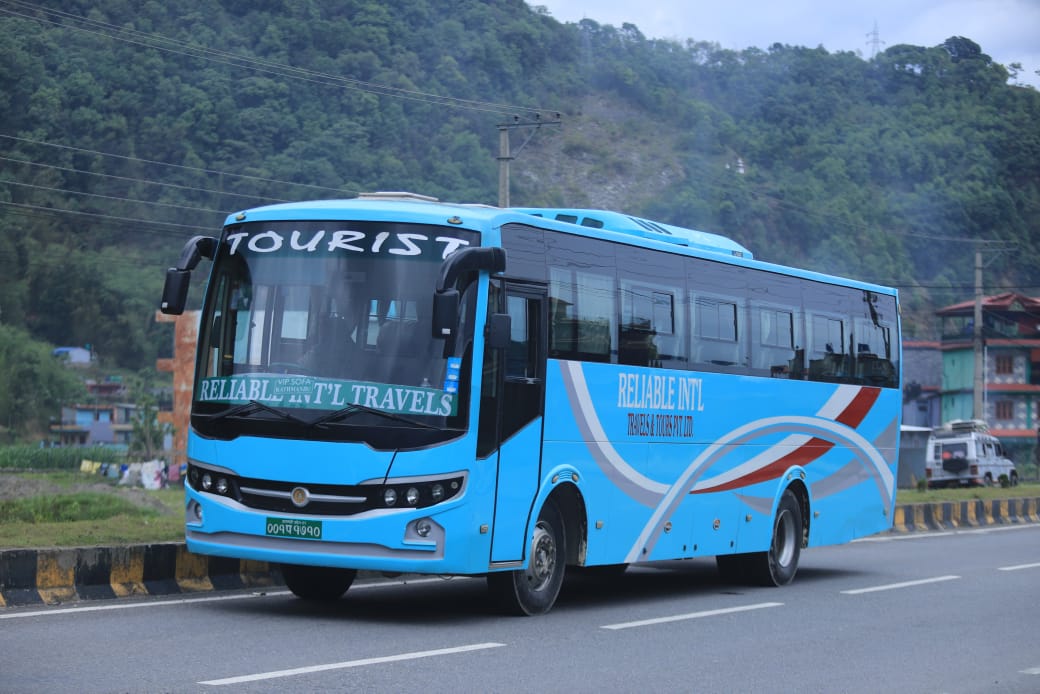
Private car vs tourist bus to Pokhara: Why a Private Car is Secretly Cheaper Than the Tourist Bus
Planning your trip from Kathmandu to Pokhara? Most travelers instinctively head to the Kantipath bus stand at 7:00 AM to board a tourist bus. They assume it’s the most budget-friendly way to see the Himalayas.
But at Nepal Vehicle Hiring, we believe in looking at the “True Cost” of travel. When you factor in time, comfort, and hidden expenses, the private car rental doesn’t just outperform the bus—it often costs less per person.
Here is why savvy travelers are ditching the crowded coaches for a private steering wheel.
1. The Math: Breaking Down the “Hidden” Costs of a private car vs. a tourist bus to Pokhara
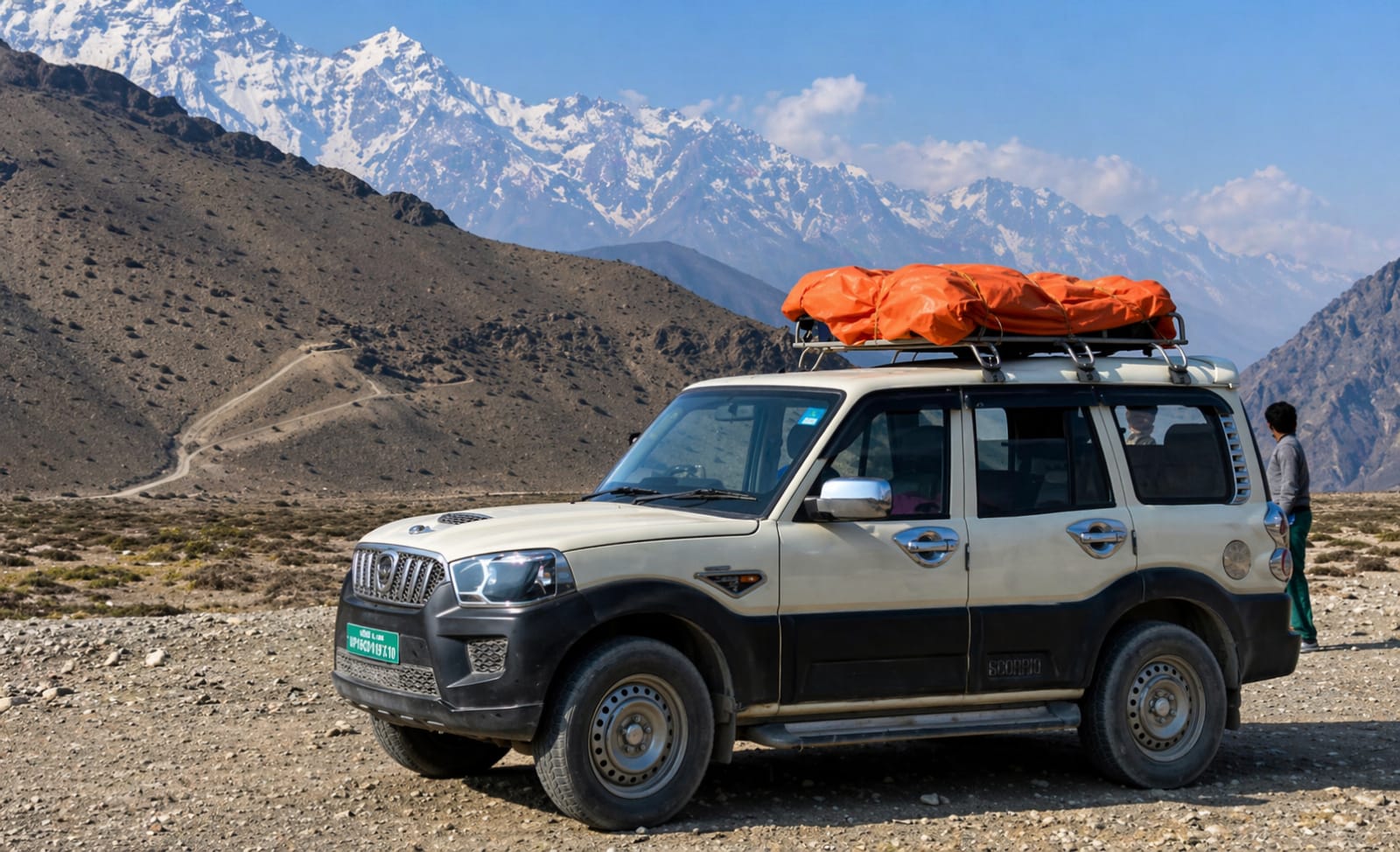
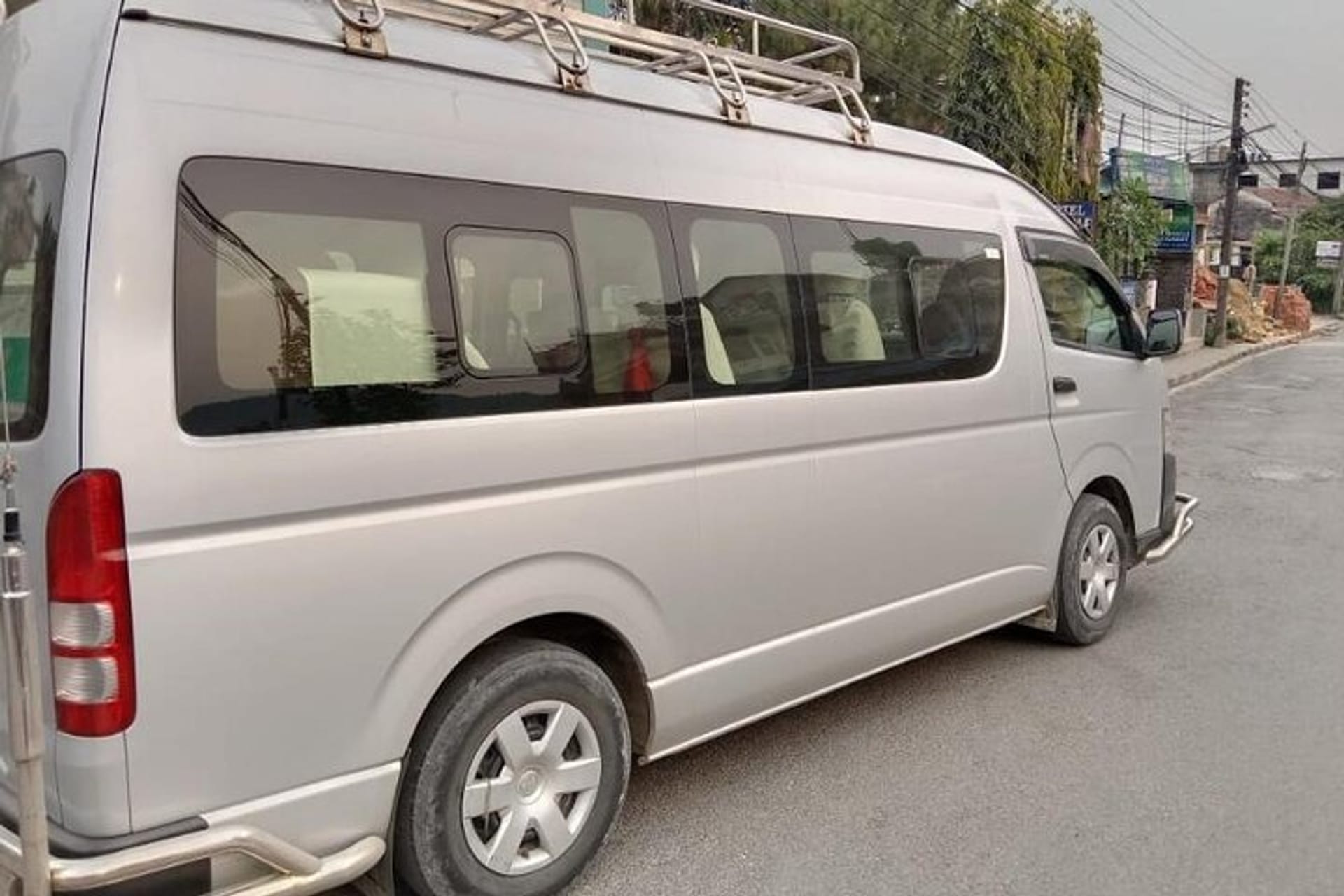
On paper, a “VIP Sofa Bus” ticket costs about $14. A private SUV (such as a Toyota Fortuner or Mahindra Scorpio) costs $120.
2. Freedom vs. The “Committee Vote.”
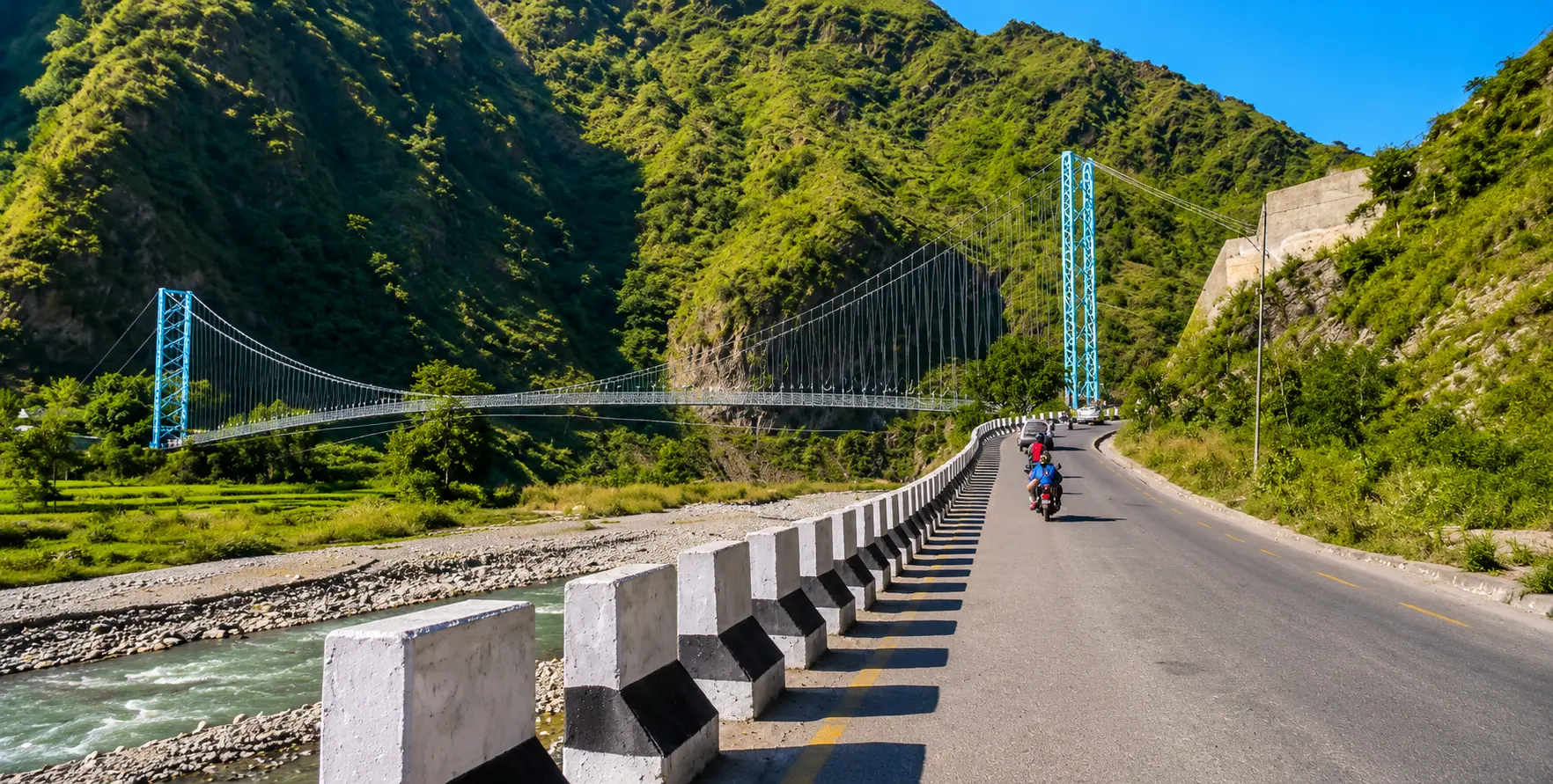
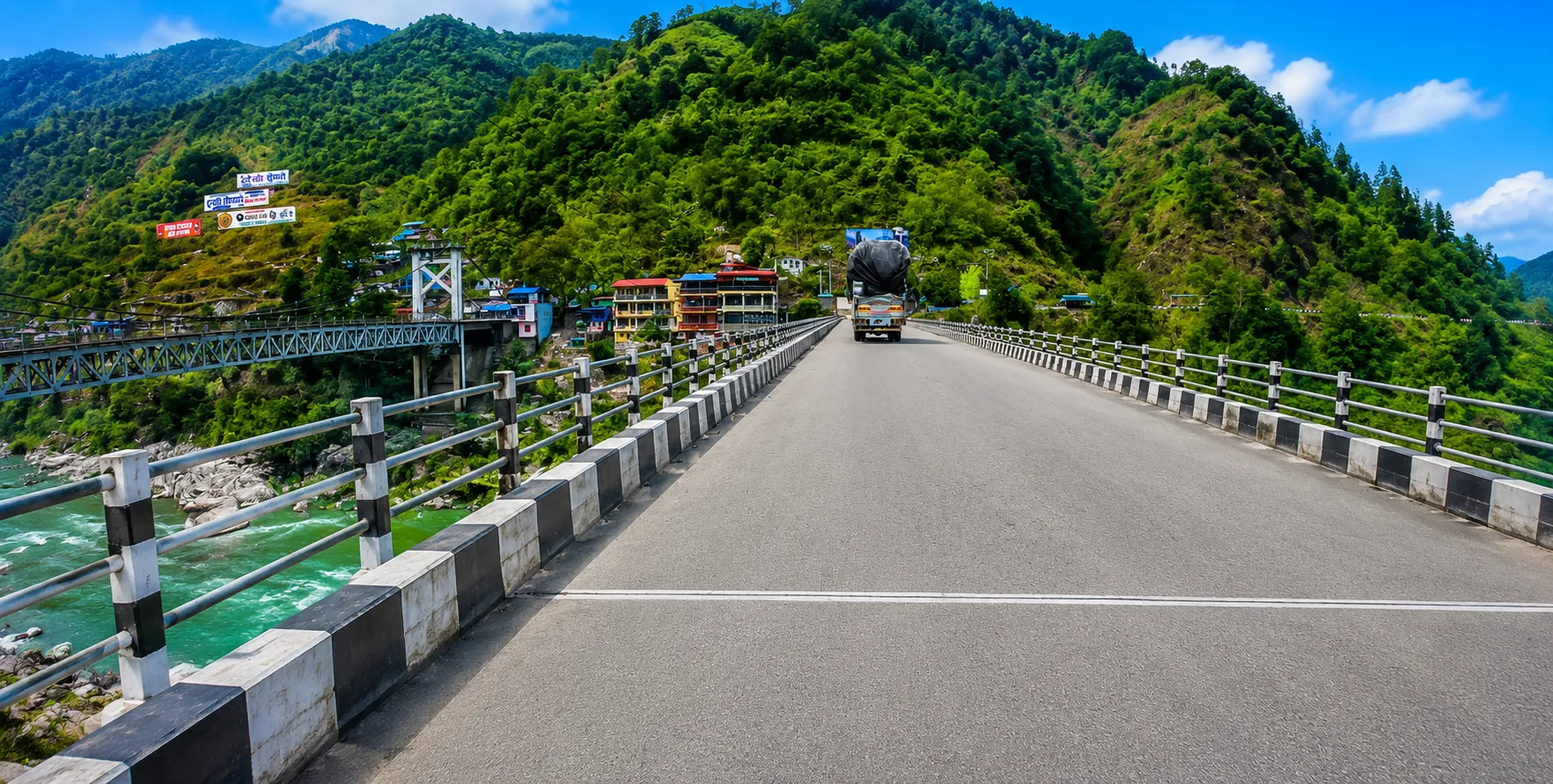
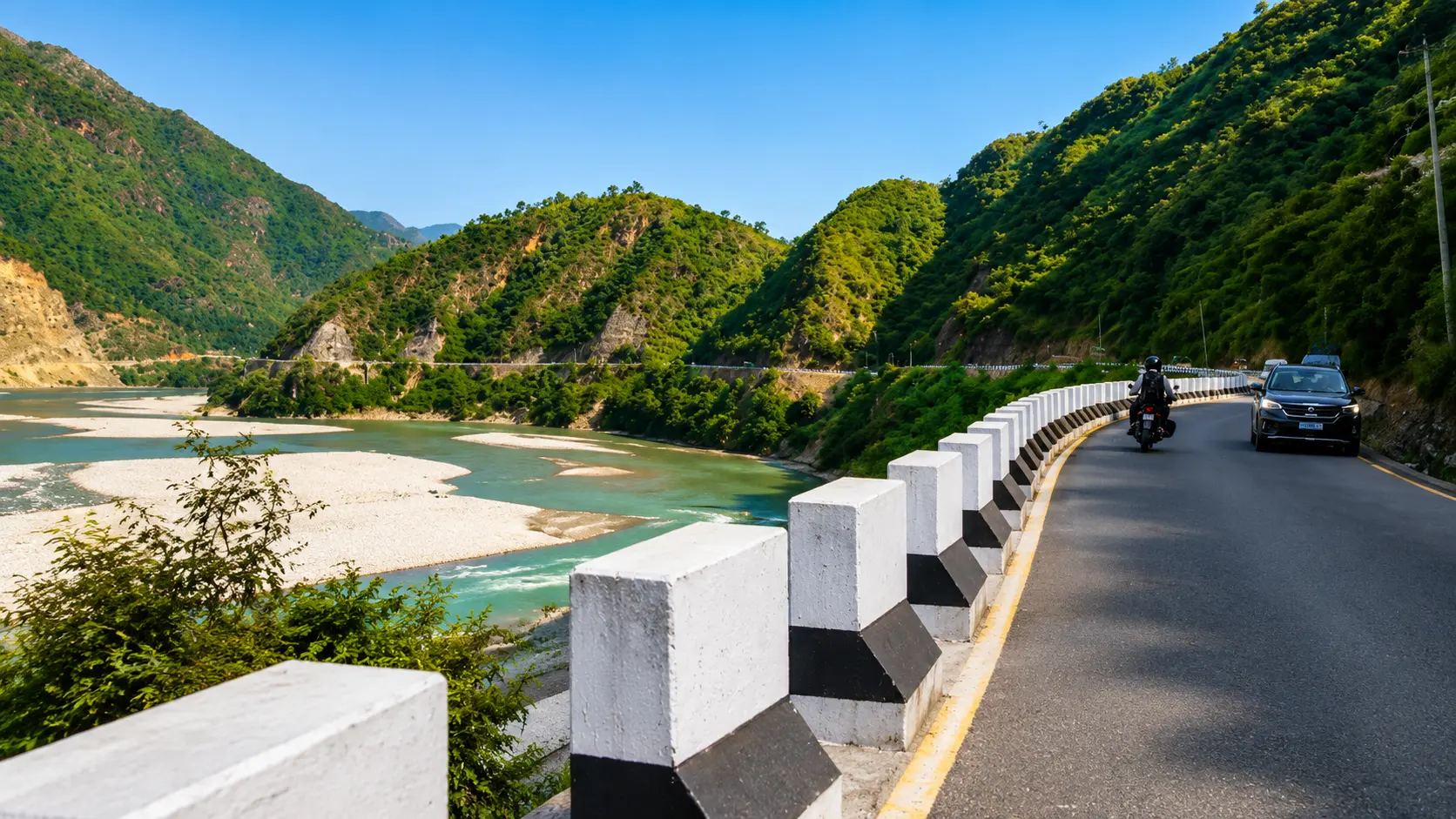
The Kathmandu-Pokhara highway is one of the most scenic drives in Nepal. However, on a tourist bus, you are a passenger in a moving box.
The Bus Experience: You stop when the driver stops. You eat where the bus company gets a commission. See a beautiful waterfall? You’ll have to view it through a dusty window at 40 km/h.
The Private Experience: You are the boss. Want to stop for a photo of the Trishuli River? Done. Want to take a 2-hour detour to the ancient town of Bandipur? Your driver is ready.
Traveler Tip: Private rentals turn a “transit day” into a “sightseeing day,” saving you from booking a separate tour later.
3. Safety and Maintenance Standards
In Nepal’s terrain, safety is priceless. Large bus fleets often prioritize volume and tight schedules. At Nepal Vehicle Hiring, our philosophy is different:
Expert Drivers: Our team is trained in defensive driving on mountain roads.
No Night Driving: We schedule departures to ensure maximum visibility and safety.
Mechanical Integrity: Our SUVs undergo rigorous multi-point inspections before every long-haul trip.
4. The “Sanity” Factor (Families & Groups)
If you are traveling with children, the 7-8-hour bus journey can be exhausting.
On the Bus: Cramped legs, limited bathroom breaks, and the stress of a crying child in a room full of strangers.
In a Private Car: Climate control at your fingertips, plenty of legroom, and the ability to stop for a “stretch break” whenever the kids get restless. It turns a stressful ordeal into a family road trip.
Which Option is Right For You?
Choose the Tourist Bus if:
You are a solo backpacker on a strict “shoestring” budget.
You enjoy the social atmosphere of meeting 40 other travelers.
You have no time constraints and don’t mind arriving in Pokhara exhausted.
Choose a Private Rental if:
You are a couple, family, or group of 3 or more.
You are a Digital Nomad who needs to reach Pokhara quickly to get back to work.
You want a door-to-door service (Hotel pickup and drop-off).
You value your health and comfort (clean air, quiet cabin).
Book Your Journey with Nepal Vehicle Hiring
For same-day Kathmandu-to-Pokhara Bus Tickets with a trusted, friendly service, choose Nepal Vehicle Hiring Pvt Ltd. We have daily departures with instant e-ticket confirmation. Our checkout is SSL-secure. You can reach our 24/7 WhatsApp support at +977 98142 27 196.
That means you can book even at the last minute and still count on a confirmed seat on the same day. Our comfortable coaches and reliable team ensure your Kathmandu-to-Pokhara bus tickets are stress-free. When you book with us, you choose an easy experience from start to finish.
Read on to see why travelers trust us for a smooth, safe journey to Pokhara. Visit our sister company, Trek Nepal Himalayas & Alpine Luxury Treks, for luxury vacation packages and trekking journeys. There, you may choose from a variety of carefully planned itineraries.
The Easiest Way to Meet the Highest Mountain on Earth
The Everest mountain flight is the simplest way to face the highest mountain on Earth. In roughly one hour, a small turboprop aircraft lifts off from Kathmandu, turns east along the great Himalayan wall, and carries you level with Everest, Lhotse, Makalu and a long procession of snow giants before returning you to the capital while most visitors are still finishing breakfast.
No trekking permit to arrange, no altitude to acclimatise to, and no multi-week itinerary to protect. All it asks of you is an early alarm, a window seat and a reasonably clear morning.
Yet the flight itself is only the middle of the story. The beginning is a quiet pre-dawn pickup from your hotel in Thamel, a short drive through empty streets to the domestic terminal, and a check-in queue that moves faster when you arrive on time and relaxed.
The end is the part many travellers forget to plan: what you do with the rest of a morning that has already delivered the trip’s most spectacular view. This guide covers both halves.
It explains how the flight works, which airlines operate it, what it costs in US dollars, which seat to request, when to go, and how to avoid small mistakes that cost people their best views. It also shows how a punctual private vehicle from Nepal Vehicle Hiring Pvt. Ltd. makes the whole morning smooth and unhurried, from your hotel door to the last temple on your Kathmandu tour.
Everything here is written to stay useful for years. Fares and schedules move slightly with seasons and airline policies, so treat every number as a realistic range and confirm the final figure when you book.
The principles — go early, choose the right season, understand the seating, protect your timing on the ground — never change. If you would like help planning the road side of your morning, message us on WhatsApp or write to [email protected], and our team will build the plan around your flight reporting time.
What Exactly Is the Everest Mountain Flight Nepal?
A Scenic Flight, Not a Landing
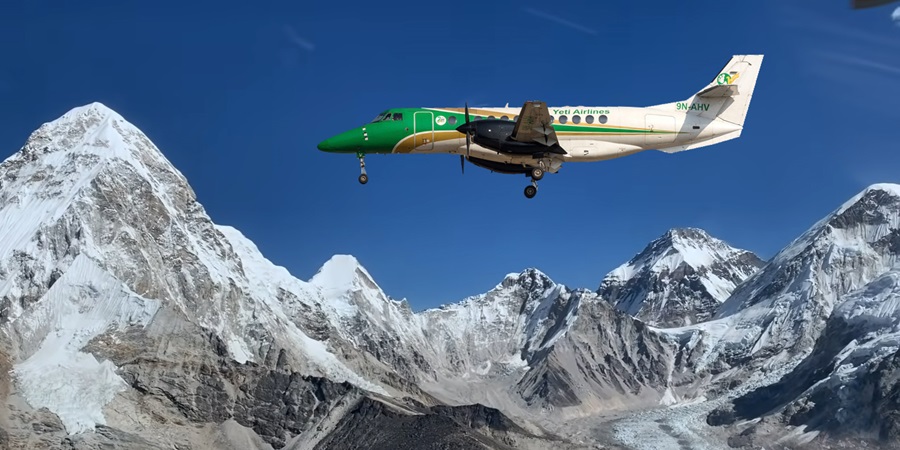
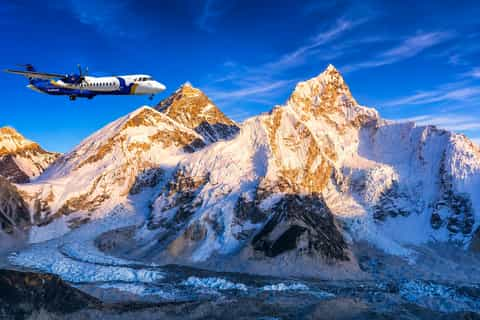
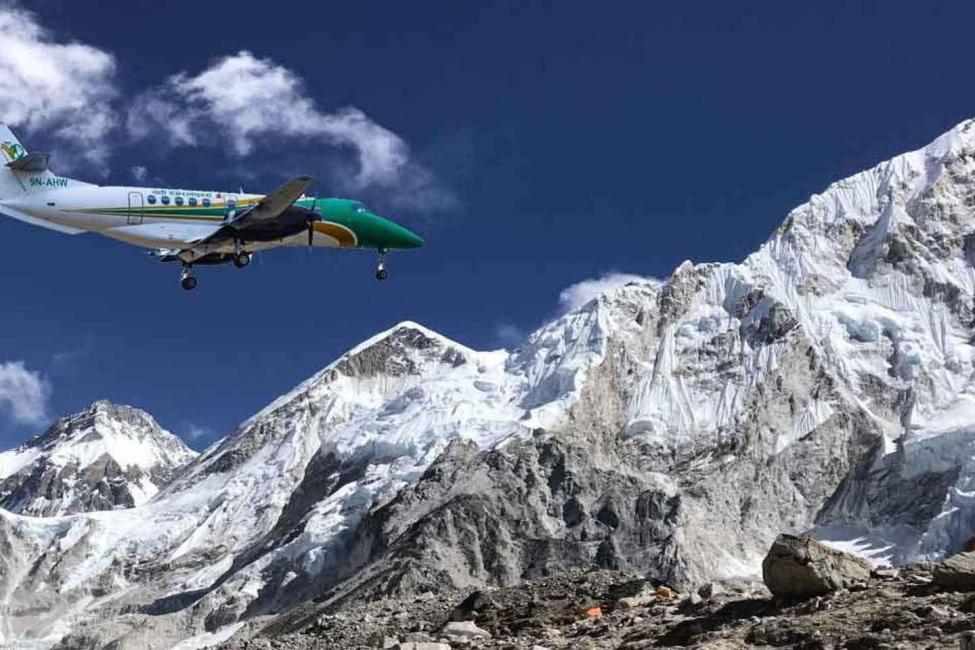
The Everest mountain flight is a dedicated scenic flight, not a regular transport service. It takes off from Tribhuvan International Airport in Kathmandu, flies east parallel to the Himalayan range, approaches the Everest region, turns, and flies back along the same line. It does not land anywhere in the mountains.
The aircraft stays well clear of the peaks while still getting close enough that Everest, its neighbours and the long glacial valleys below are clearly visible from the cabin windows. Think of it as a one-hour guided tour of the Himalaya, delivered from the air, with the pilots and cabin crew acting as your hosts and spotters.
Because it is purely scenic, the flight has a different rhythm from a normal domestic hop. Passengers sit so everyone has a window. The crew gives a short briefing about which side of the aircraft sees what at each stage.
A map or peak identification card is commonly handed out so you can match the white summits to their names, and many operators add a small certificate of completion after landing. On good mornings, the captain may also invite passengers to the cockpit one at a time for a few moments of the pilot’s own view, although this is always at the crew’s discretion and never guaranteed.
The Aircraft, the Altitude and the Terminal
Mountain flights use small turboprop aircraft whose slim cabins make a guaranteed window seat for everybody possible. Depending on the airline and the day, this can be a smaller Beechcraft-class aircraft carrying around eighteen passengers or a slightly larger ATR turboprop.
Cruising altitude is high enough to clear the foothills and give a sweeping perspective on the range. The aircraft stays comfortably pressurised, so you don’t need oxygen or worry about altitude sickness. You remain in an ordinary air-conditioned cabin throughout.
Departures leave from the domestic terminal of Tribhuvan International Airport, not the international terminal. This matters more than it sounds, because the two buildings are separate, and an arrival at the wrong entrance on a 5:30 AM taxi ride has ruined more than one morning.
Your driver should know the exact drop-off point for scenic flight passengers, which is one of the small advantages of using a transport company that handles early airport runs every week rather than an occasional taxi. Our airport and city transfer drivers are briefed on the domestic terminal approach, the parking area and the best waiting position so that your pickup after landing is as quick as your drop-off before departure.
The Flight Minute by Minute
Before Take-Off: Pickup, Check-In and Boarding
Most scenic flights depart between roughly 6:30 and 7:30 in the morning, because the Himalayan air is calmest and clearest soon after sunrise and clouds tend to build from mid-morning onward. Working back from that, hotel pickups are usually arranged between about 5:15 and 6:00 AM.
The drive from the heart of Thamel to the domestic terminal takes only fifteen to twenty-five minutes at that hour, but you want a cushion for check-in, security screening and the walk to the departure gate. Arriving about an hour before the scheduled departure is the standard guidance, and arriving earlier on your first Nepal morning removes the stress of an unfamiliar airport.
Boarding is orderly but quick. You’ll be seated in your window seat, the crew will check the cabin, and the aircraft will taxi to the runway. Because mountain flights are scenic services, the operators watch the weather closely before departure.
If visibility to the east is poor, flights can be held, delayed or cancelled, which is why the earliest departures of the day are the most reliable. A flexible attitude and a vehicle that can wait or reschedule easily are real assets on a morning like this, and they’re part of why a private transfer beats a quick taxi.
In the Air: The Outbound and Return Legs
Shortly after take-off, the aircraft climbs over the Kathmandu Valley rim and turns east. In the first half of the flight, the mountains appear on the left-hand side of the cabin, beginning with the Langtang and Jugal ranges and moving through the great peaks of the Rolwaling and then the Khumbu region.
Around the turning point near the Everest region,n the crew announces the closest approach to the highest peaks. The aircraft then turns, and on the return leg the mountains appear on the right-hand side of the cabin, giving passengers on that side their close-up views.
Over the course of the flight, both sides see the whole range, but each side sees different sections up close.
On a good morning, the sequence feels almost theatrical. Foothills glow with early light, white ridges line up on the horizon, and the peaks gradually separate into individual summits as the aircraft draws closer.
Passengers move toward the cockpit one by one when invited, cameras come out, and the cabin falls into a delighted, slightly breathless quiet. Within an hour, the aircraft is back above the valley, the Kathmandu skyline reappears, and the landing is as smooth as any domestic arrival.
By the time you collect your belongings, the morning has barely begun.
Which Peaks Will You See?
The Great Names of the Himalaya From One Window
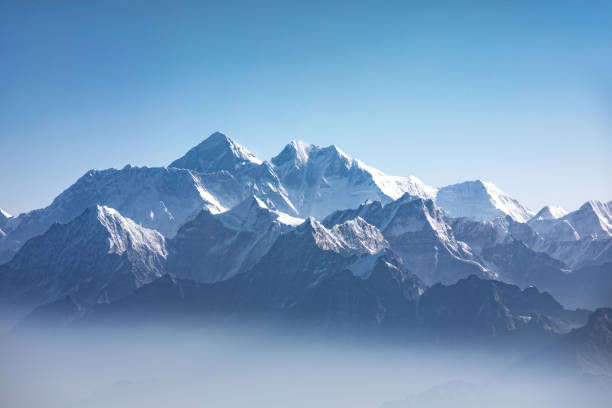
One of the joys of the flight is how many famous mountains appear in a single morning. Commonly seen peaks include Gaurishankar, the twin-summited sacred mountain on the border region; Dorje Lhakpa and the Langtang group near the start of the route; Cho Oyu, the sixth-highest mountain in the world; Nuptse and Lhotse, the immense walls that surround the approach to Everest; Pumori, the elegant pyramid above the Khumbu glacier; Ama Dablam, often named the most beautiful mountain in the Himalaya; Makalu, the fifth-highest mountain on Earth; and, on clear days, Mount Everest itself at about 8,849 metres. Operators often describe the line-up as twenty or more recognisable summits.
What surprises many first-time flyers is that Everest does not dominate the skyline as a postcard suggests. Because the neighbouring peaks are also enormous and some, like Nuptse and Lhotse, stand directly in front of it, Everest can appear as a dark, modest summit behind a white wall.
That is exactly why the crew’s briefing and the identification card matter. Once you know to look for Everest’s black pyramid beside the long wall of Lhotse, the identification clicks into place, and the mountain’s true scale sinks in.
The same is true of Makalu, whose sharp four-sided shape stands apart to the east, and of Ama Dablam, instantly recognisable by its pointed summit and hanging glacier.
If the peaks you see on your flight whet your appetite for the mountains on the ground, you can explore the region by road. Overland approaches such as the classic Jiri trailhead or the higher starting points of Salleri and Phaplu are reached by four-wheel-drive jeep from Kathmandu, and our jeep and trekking transfers cover them with a Scorpio or Bolero jeep and an experienced driver.
For a shorter taste of Himalayan scenery near Kathmandu, the Nagarkot sunrise tour is a classic add-on, and many travellers book it on a different morning from their mountain flight to double their dawn views.
Left Side or Right Side: Choosing Your Seat
How the Seating Really Works
Every passenger on a dedicated scenic aircraft has a window seat, the biggest difference from an ordinary flight. The question that sparks the most debate among travellers is whether the left or the right side is better. The honest answer is that it depends on what you want from the flight.
Because the aircraft flies east with the Himalaya to the north, the left side sees the range first and, on the outbound leg, the broader panorama. After the turning point, the aircraft reverses direction, and the right side gets its turn.
Both sides see the full range during the flight, and on many mornings passengers swap places or lean across during the turn at the crew’s invitation.
A useful rule of thumb that experienced flyers share is to ask for the left side if you want the sweeping, whole-range view and the first sight of Everest, and the right side if you want closer, more detailed views on the return. If you are travelling as a couple or a family, booking one seat on each side lets you share photos afterwards.
Whatever seat you get, follow the crew’s guidance, since they know the day’s routing. Sitting behind the propeller line, when you can, also keeps the blades out of your photographs. None of these choices will make or break the flight, because most passengers come away delighted regardless of seat number.
Window Etiquette and Cockpit Visits
A little cabin etiquette makes the flight better for everyone. Move slowly and calmly during cockpit visits, remove lens hoods or reflections when photographing through the window, and take turns so those on the opposite side can see.
When offered, the cockpit visit lasts only a few minutes per person, so have your camera ready and your photos planned. Remember, this is a courtesy extended by the crew rather than a guaranteed part of the ticket, so don’t be disappointed if the schedule or weather makes it impossible on your particular morning.
Everest Mountain Flight Airlines: Who Flies and How to Compare
The Main Operators
Several Nepali airlines operate scenic Everest flights from Kathmandu. The carriers most commonly associated with the regular morning departures are Buddha Air, Yeti Airlines and Shree Airlines, and some seasons or travel agents also list departures with other operators such as Simrik Air.
Each flies the same basic route along the Himalayan wall and back, so the central experience — a window seat, an hour in the air, and a line-up of the world’s greatest peaks — is shared across all of them. What differs is the detail: the exact aircraft type, the number of departures each morning, the cabin service style, the extras included in the ticket, and the policy for weather delays and cancellations.
Because those details change over time, the most reliable way to choose is to compare a few practical questions rather than rely on any ranking. How many departures does the airline run each morning, and what is the earliest?
More departure slots mean a better chance of rescheduling onto another flight on the same trip if weather interferes. Is the ticket sold with a printed peak map, in-flight commentary and a certificate? What is the stated policy if the flight is cancelled for weather, and what is the policy if you cancel yourself?
And does the quoted price include airport taxes and a private hotel transfer, or are those extras? Answering these questions takes ten minutes and prevents the surprise charges and misunderstandings that give the whole experience a bad start.
Direct Airline Booking Versus Agent Packages
You can buy a mountain flight ticket directly from an airline or its sales channels, through your hotel, or through a travel agency that sells a package including the transfer. Direct tickets can look cheaper on paper, but the flight-only price rarely includes the pre-dawn ride to the domestic terminal or the ride back.
Agent packages bundle the ticket with a hotel pickup and often a guaranteed seating arrangement, which suits travellers who want a single point of contact. Neither approach is universally better. What matters is that the reporting time, pickup time, and transfer details are written down clearly before the day of the flight.
Nepal Vehicle Hiring Pvt. Ltd. concentrates on the ground side of the morning. If you already have a flight ticket from an airline, hotel, or agent, send us your reporting time and hotel location, and we will plan a punctual pickup and a driver who waits for your return.
If you prefer to arrange everything in one conversation, message us on WhatsApp, and our team will explain how we coordinate with your flight booking. Private vehicle options range from a comfortable car for a couple to a Hiace van or Coaster bus for a group so that the same company can handle your airport transfer and onward sightseeing.
Everest Mountain Flight Price in US Dollars
What the Flight Typically Costs
For foreign nationals, the Everest mountain flight typically costs roughly USD 170 to USD 280 per person, depending on the airline, the season, and whether the price includes a private hotel transfer, airport taxes and extras such as a flight certificate. Entry-level flight-only fares sit at the lower end of that range, while packages that include a private pickup, a guaranteed seat arrangement and assistance at the terminal sit toward the middle or upper end.
Indian nationals commonly pay a lower fare when they present valid identification at booking. Children’s fares and infant policies differ by airline, so always confirm them in advance rather than assuming a discount.
These figures are indicative, not fixed. Airlines revise fares from time to time, and taxes and fuel components can shift the final amount. The constant is that the flight is excellent value compared with the cost and effort of seeing the same mountains by any other route.
A helicopter tour that lands in the Everest region costs several times more per person, and a trek to Everest Base Camp takes weeks. One morning and a modest ticket give you the full Himalayan panorama, which is why mountain flights remain the most popular scenic experience for visitors with limited time.
What Is Usually Included and What Is Not
A typical mountain flight ticket includes the flight itself, domestic airport taxes, and the seat. Many packages also include hotel transfers, an Everest flight certificate, and a printed peak identification map. Meals and drinks, personal expenses, entrance fees at any monuments you visit afterwards, and travel insurance are usually not included.
Read the inclusion list carefully, because a cheaper headline price with no transfer can end up costing more than a package that includes everything once you add a taxi to and from the terminal at pre-dawn rates.
Our Ground Transport Prices at a Glance
If you arrange your own flight ticket, Nepal Vehicle Hiring Pvt. Ltd. can help with the ground side. For the hotel-to-terminal-and-back run with the driver waiting during your flight, indicative prices are from about USD 30 to USD 35 by car for up to four passengers, USD 45 to USD 50 by jeep (Scorpio or Bolero) for up to five, USD 65 to USD 70 by Hiace van for groups of up to fourteen, and USD 90 to USD 120 by Coaster bus for groups of fifteen to twenty-two.
If you add a half-day Kathmandu sightseeing tour after landing, the combined morning-to-afternoon service is roughly USD 80 to USD 90 by car, USD 110 to USD 115 by jeep, USD 150 to USD 160 by Hiace and USD 230 to USD 240 by Coaster. These ranges depend on pickup location, waiting time, and the exact route, and we confirm the final price in writing when you book.
Our rates sit slightly above the cheapest budget transport in Nepal, and we explain why in the pricing and value section below.
Best Time of Year and Best Time of Day
The Two Best Seasons
Everest mountain flights operate year-round, but view quality changes dramatically with the season. The two outstanding periods are October to December and March to May. After the monsoon washes dust from the air, autumn air is transparent, peaks stand out in sharp detail, and mornings are cool and calm.
October and November are the clearest of all, and December adds crisp, snowy views with colder mornings. Spring brings warmer air, blooming valleys and generally good views in March and April, though haze can build by May as the pre-monsoon heat rises.
September can be excellent on certain mornings, as the monsoon retreats and the air begins to clear, but it is more weather-dependent. January and February are often very clear but colder and occasionally affected by winter fog around Kathmandu, which can delay the first departures.
The summer monsoon months from June to August bring cloud and rain to much of the Himalaya, reducing the chances of seeing Everest clearly. However, flights still operate and some mornings are surprisingly bright.
If your dates are flexible, plan your Kathmandu stay around the autumn and spring windows, and reserve your mountain flight for your first or second morning so that you can reschedule if the weather misbehaves.
Why Mornings Matter
Mountain flights fly early for a good reason. The Himalayan air is usually calmest and clearest between sunrise and about mid-morning. As the sun heats the lowlands and valleys, convective cloud begins to build, and by late morning the great peaks can disappear behind rising haze or cumulus.
The earliest scheduled departure therefore has the best statistical chance of delivering a clear view, which is why experienced travellers prefer the first slot even though it means a very early start. If your airline offers several departures, choose the earliest one and confirm your pickup accordingly.
Being on time is equally important. If your vehicle is late, check-in can become rushed, boarding can be missed, and operators do not hold scenic flights for latecomers in the way that long-haul airlines might. A punctual, experienced driver is therefore part of the flight experience, not an optional extra.
The drivers at Nepal Vehicle Hiring Pvt. Ltd. plan the pre-dawn run by arriving before the agreed time, knowing the quietest route to the domestic terminal, and keeping a clear line of communication open with you on WhatsApp.
How to Book: Timing, Documents and Practical Steps
How Far in Advance to Book
In the busy autumn and spring seasons, booking your Everest mountain flight two to three days ahead is a sensible minimum, and a week or more is wiser if you have fixed dates or are travelling as a group. Outside peak seasons, same-day or next-day bookings are often possible, but the earliest departures fill first.
Booking early also improves your odds of reserving a preferred seat side, and it gives you time to reschedule if a morning is cancelled for weather. When you travel in a group or with family, book all seats together so that you fly on the same departure.
Documents and What to Bring
Carry your passport or valid photo ID as required by the airline for domestic check-in, along with your ticket confirmation and your driver’s your driver’s contact number. Bring a light jacket or fleece, because early mornings in Kathmandu can be cool, particularly from October to March.
Wear comfortable clothing and shoes, because you will be walking through the terminal and possibly standing in line. Bring a camera or phone with plenty of battery and memory, a soft cloth to wipe the window if needed, and a small bag for belongings.
Leave bulky luggage at the hotel, since cabin space on small aircraft is limited and security checks are quicker with less baggage.
The Role of Your Driver on Flight Morning
A good driver does far more than steer. On a mountain flight morning, the driver confirms the pickup time the night before, arrives early, loads your belongings, takes the quickest route to the right terminal entrance, and waits nearby so you can walk out and find your vehicle immediately after landing.
If your flight is delayed or cancelled, the driver adjusts rather than disappears, which is exactly why a pre-booked private service beats a spontaneous taxi. Our drivers are accustomed to early airport runs, understand the domestic terminal layout, and stay in touch via WhatsApp and phone so they can handle any change in your flight plan calmly.
Weather, Delays and Cancellations
Why Flights Are Sometimes Cancelled
Scenic flights operate in clear-visibility conditions, because the whole point is to see the mountains. If visibility to the east is poor, low cloud covers the foothills, or airport conditions are unsuitable, the operator may delay or cancel the flight.
This is a safety-first decision and a normal part of mountain flying in Nepal, not an airline failure. Early morning departures have the best on-time record, which is another reason to choose the first slot of the day.
What Usually Happens If Your Flight Is Cancelled
Major operators and many agents say that a weather cancellation leads to either a refund or a free reschedule to another available departure. Policies differ, however, and a few products state that a flight that does operate will not be refunded merely because clouds limited the views on the day.
Read the terms before you pay, ask specifically what happens if the flight is cancelled and what happens if it flies in poor visibility, and keep a spare day in your itinerary. If you are cancelled, rebooking for the following morning is usually the quickest solution, and a flexible driver can adjust your pickup time with a message.
Customer cancellations follow different rules from weather cancellations. Some packages refund fully when cancelled more than twenty-four hours before departure, others refund only a portion, and no-shows are generally not refunded. If your plans are uncertain, choose a product with a flexible policy, and tell your driver and transport provider as soon as your plans change so that the vehicle can be rescheduled without penalty on the ground side.
Photography Tips for the Everest Mountain Flight
Getting Sharp, Reflection-Free Photos Through the Window
Photographing through an aircraft window rewards a few simple habits. Turn off the flash, because it reflects off the glass and ruins the shot. Get close to the window without pressing the lens against it, because engine vibration transfers through contact and softens the image.
If the glass is dirty or scratched, wipe the inside gently and choose a slightly different angle to reduce glare. Avoid wearing bright clothing that reflects in the window, and shoot with a fast shutter speed because the aircraft is moving and vibrating.
If you use a phone, tap on the mountains to set focus and exposure, and take several frames rather than just one.
Capturing the Memory and Not Just the Image
Many travellers spend the whole flight behind the lens and miss the experience itself. A better balance is to take a burst of photographs at the key moments — the first appearance of the range, the closest approach to Everest, the cockpit visit — and then put the camera down and look.
The scale of the Himalaya is difficult for any lens to capture, and the memory of seeing it directly is worth more than a hundred identical photographs. Share the view with your companions, point out peaks to each other, and let the experience settle.
After landing, you’ll still have a full morning ahead, and photos of Kathmandu’s heritage sites will complement your mountain pictures.
Getting to the Domestic Terminal: Your Private Vehicle Plan
Choosing the Right Vehicle for Your Group
Four vehicle types cover every mountain flight morning. A car suits solo travellers, couples and small families of up to four, offering comfortable air-conditioned seating and ample space for day bags.
A jeep — a Scorpio or Bolero — suits up to five passengers who want extra headroom, a higher seating position and a more relaxed ride, and it is also the right choice when your wider itinerary includes hill roads. A Hiace van carries up to fourteen passengers and is ideal for family gatherings, friends travelling together and small tour groups.
A Coaster bus carries fifteen to twenty-two and keeps larger groups, corporate teams and school parties together in one vehicle. You can see the whole selection on our vehicle hire page.
For most mountain flight passengers, the decision is simple. Two or three people take a car. A family of five takes a jeep.
A group of ten takes a Hiace. Twenty colleagues on an incentive trip take a Coaster. The price per person falls as the group grows, so shared vehicles are increasingly economical for larger parties.
Because all four vehicle types are maintained to the same standard and driven by experienced professionals, the only question is how many seats you need and how much space your belongings take.
Around 5:15 to 5:45 AM your driver picks you up, loads your small bag and drives you 15 minutes to the domestic terminal for check-in, security and boarding. You board for a departure around 6:30 to 7:30. The driver parks nearby and waits.
After landing, around 8:00 to 9:00 AM, you walk out to find the same vehicle ready, and you either return directly to your hotel for breakfast or continue on a sightseeing tour. The whole sequence flows without a single negotiation, because everything has been arranged in advance.
We handle weather or schedule changes just as smoothly. If your flight is delayed, the driver waits and keeps you informed. If it is cancelled, you message us, and we either take you back to the hotel or reschedule the pickup for the next morning at no additional hassle.
This flexibility is why many travellers prefer a pre-booked vehicle to a taxi flagged at dawn. Message us on WhatsApp or [email protected], and we will prepare the plan.
Why Not Just Take a Taxi?
A taxi can get you to the airport, but it cannot promise to be at your door at 5:15 AM, wait for three hours, and be at the exit when you land. Pre-dawn taxis in Kathmandu are scarce, fares are negotiated on the spot, and a driver who leaves after dropping you gives you no easy way back.
If you arrange a taxi for the return, you may stand outside with other travellers hunting for the same limited cars. A scheduled private vehicle removes those uncertainties and gives you a named driver, a confirmed price and a direct phone number.
The small extra cost buys a smooth start to a morning you have spent real money and planning on.
Combining the Flight With Kathmandu Sightseeing
The Classic Mountain Flight and UNESCO Tour Morning
The most popular combination is to follow the mountain flight with a Kathmandu sightseeing tour covering the valley’s four great heritage sites. After landing at about 8:30 to 9:00 AM, you return to your hotel for a quick breakfast and refresh, then head out with the same driver at a relaxed pace.
The tour includes Pashupatinath Temple, Nepal’s most sacred Hindu shrine on the Bagmati River; Boudhanath Stupa, one of the world’s largest Buddhist stupas; Swayambhunath, the hilltop Monkey Temple with views over the valley; and Patan Durbar Square, the finest concentration of Newari temple architecture in Kathmandu. Entrance fees are paid separately at each site, and the driver handles parking and timing so that you spend your energy on the sights rather than logistics.
Doing the flight first and the temples second works well because the mountain view is time-critical. If the sky is clear, you have captured it before the weather changes, and the cultural sites are available all day.
The morning mood also flows naturally: a pre-dawn flight over the abode of snow, followed by incense, prayer flags, and ancient courtyards below. A single vehicle booking for the whole morning avoids waiting for separate cars and gives you a driver who has been with you since the first pickup and understands your pace.
Adding Bhaktapur and Nagarkot
Travellers with a few extra days can add the Bhaktapur Durbar Square day tour to see the best-preserved medieval city in the valley, with its pottery square, five-storey temple, and stepped palace courtyards. The Nagarkot sunrise tour is the natural companion to the mountain flight for travellers who want to see the Himalaya twice, once from the air and once from a ridge-top viewpoint, with a very different perspective each time.
Because both trips start before dawn or early in the morning, schedule them on different days from your flight so you aren’t exhausted. A sensible plan is to fly on your first clear morning, tour the temples the same day, and keep Bhaktapur or Nagarkot for the following morning.
Our drivers know the roads, timings and parking at all of these sites, and they can adjust the order if a particular morning looks clearer than expected. For example, if the sky is brilliant at Nagarkot at sunrise, they can advise you to book the mountain flight for the same dawn window instead of waiting.
This kind of day-by-day flexibility is easy to manage when a single transport company coordinates your whole stay, and it is one of the main advantages of building your Kathmandu programme through Nepal Vehicle Hiring Pvt. Ltd..
Beyond Kathmandu: Extending Your Himalayan Journey
Pokhara, Chitwan and Lumbini
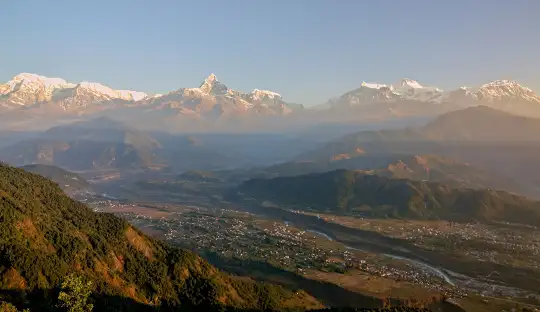
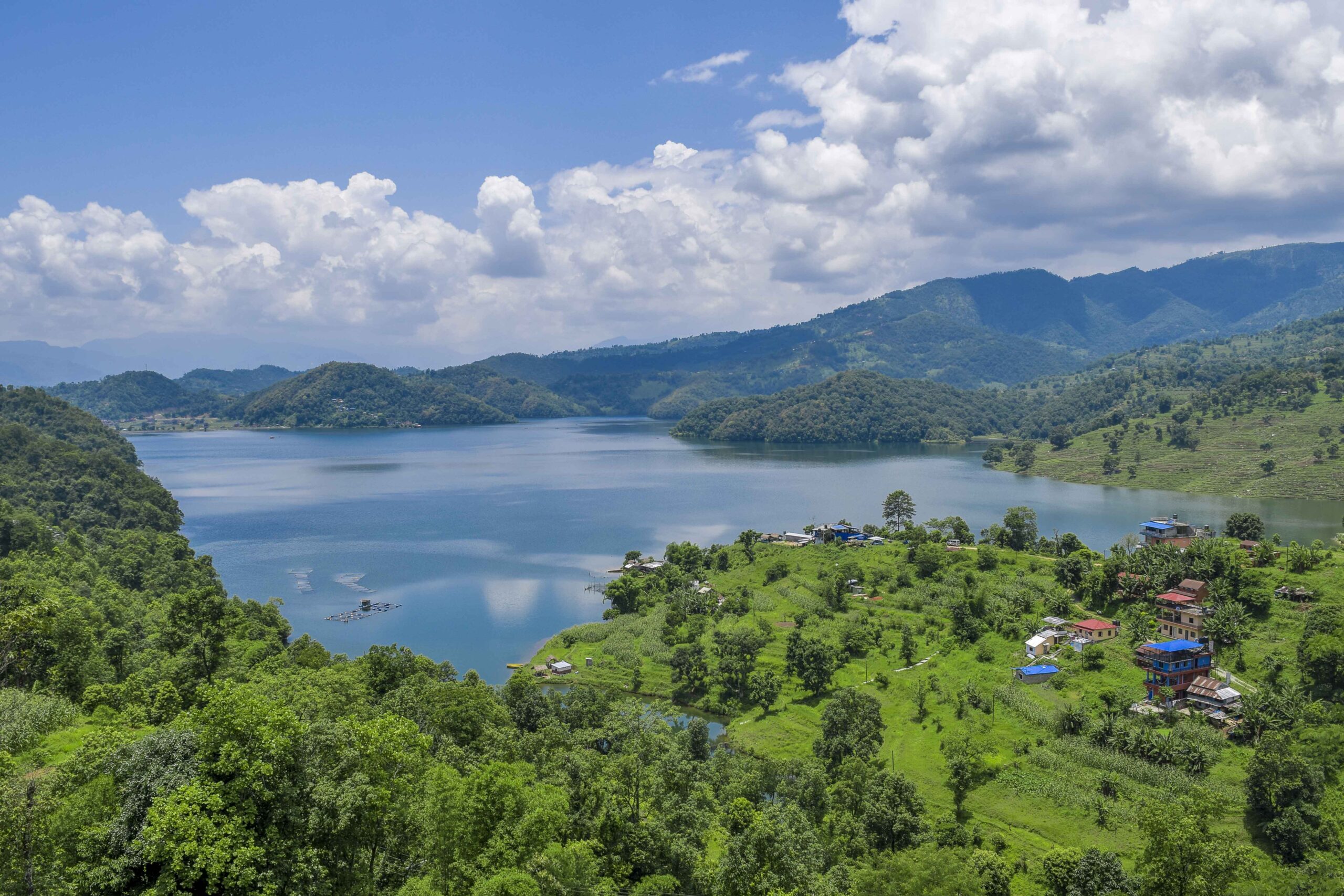
Many travellers use the mountain flight as the opening scene of a longer Nepal journey. From Kathmandu, a private transfer to Pokhara takes about five to six hours on the Prithvi Highway and delivers you to a lakeside city with its own spectacular Annapurna panorama.
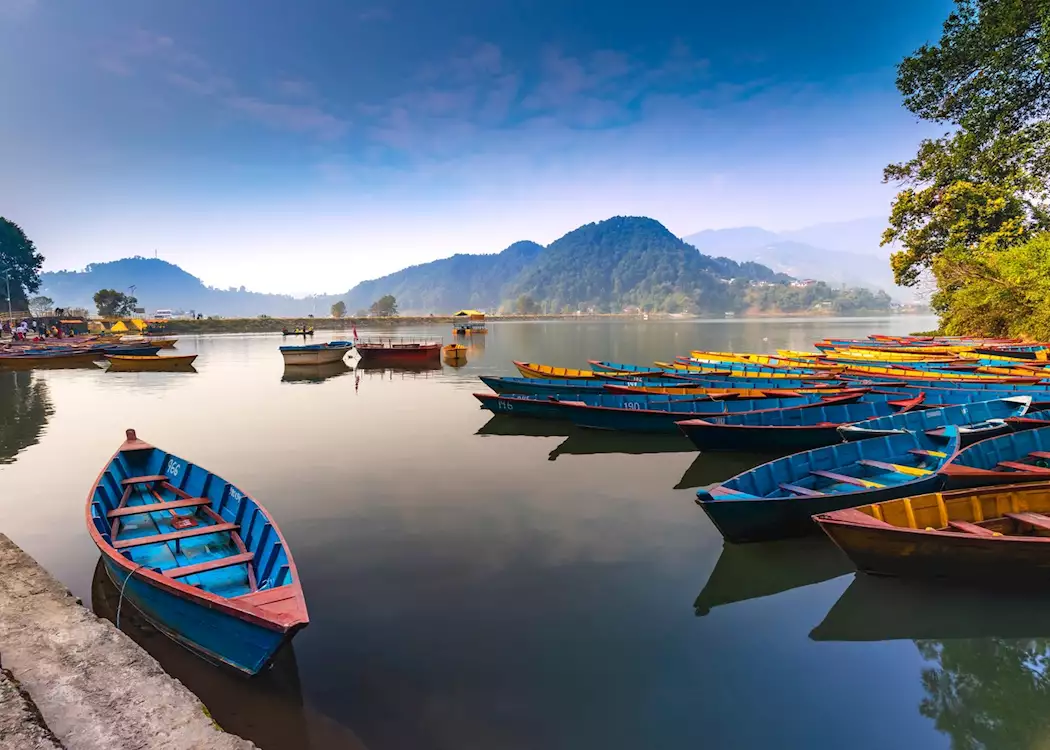
The car hire in Pokhara service covers Sarangkot sunrise, Phewa Lake, the World Peace Pagoda and the lakeside neighbourhoods. From there, the road leads onward to the Terai: the Buddhist birthplace at Lumbini, which our Lumbini to Chitwan car service connects with Chitwan National Park and its famous rhinoceros and tiger habitat.
A typical sequence is mountain flight and Kathmandu heritage, then Pokhara for lakes and mountains, then Chitwan for wildlife, then Lumbini for pilgrimage, all linked by private vehicles.
Heritage Hill Towns and the India Border
Travellers who enjoy quieter, older Nepal can add the heritage hill town of Bandipur. Our Kathmandu to Bandipur heritage day trip climbs to a car-free Newari bazaar with a mountain-view ridge, and it makes an excellent overnight between Kathmandu and Pokhara.
If you are entering Nepal overland from India, the Sunauli to Pokhara car service delivers you from the border to Pokhara through the Palpa hills, and a mountain flight from Kathmandu then becomes the grand finale of your Nepal journey rather than the introduction. Whichever order you choose, our team can coordinate all the transfers through one WhatsApp conversation so that every vehicle is waiting when you arrive.
Trekking Roadheads for the Inspired
For some travellers, seeing Everest from the air sparks a longer ambition. If you are tempted to walk in the Himalaya after your flight, the road journeys to the trailheads are some of the most scenic and demanding in the country.
The Syabrubesi jeep guide explains the Langtang approach in detail, and our jeep transfers to other trailheads cover the Annapurna, Manaslu and Everest region roadheads with Scorpio and Bolero jeeps driven by experienced mountain drivers. Even if you do not trek this time, the flight gives you a memorable preview of what the trails lead to.
Families, Seniors, Children and First-Time Flyers
Is the Mountain Flight Suitable for Everyone?
The mountain flight is one of Nepal’s most accessible adventures. No physical exertion beyond walking through the terminal and boarding the aircraft, no altitude to adjust to, and no technical skill required.
That makes it suitable for most families with children, for older travellers who cannot trek, and for visitors with limited mobility who want to see the Himalaya without climbing a single step on a trail. The cabin is comfortable, the flight is short, and the crew is accustomed to assisting passengers of all ages.
If anyone in your party has a medical condition or special need, mention it when booking and discuss it with the airline.
Tips for Nervous Flyers and Young Children
First-time or nervous flyers often find the mountain flight gentler than expected because the aircraft flies smoothly in the calm morning air and the views hold your attention. Choose the earliest departure, when conditions are most stable, sit with a companion, and listen to the crew briefing.
Children usually enjoy the window seat, the cockpit visit when offered, and the simple wonder of seeing real mountains from above. Bring a small snack, a light layer for the terminal, and any comfort items that help younger passengers.
A private vehicle with a patient driver reduces stress on the ground, since there is no rush to find a taxi and no negotiation with children waiting beside you.
Families travelling together often fit well in a jeep or Hiace van, with room for strollers, day bags, and a comfortable, unhurried ride. Grandparents appreciate the higher seating of a jeep for easy entry, while a car offers the most economical choice for a small group.
If you are unsure which vehicle suits your family, message our team with the ages and number of people in your party, and we will recommend the right size.
Mountain Flight, Helicopter, Lukla Flight or Trek: Which Is Right for You?
Mountain Flight Versus Helicopter Tour
The two aerial options differ in character, not quality. The fixed-wing mountain flight is a one-hour panoramic flight that takes in the whole range from the cabin of a small passenger aircraft, with every passenger in a window seat and a price within reach of most travellers.
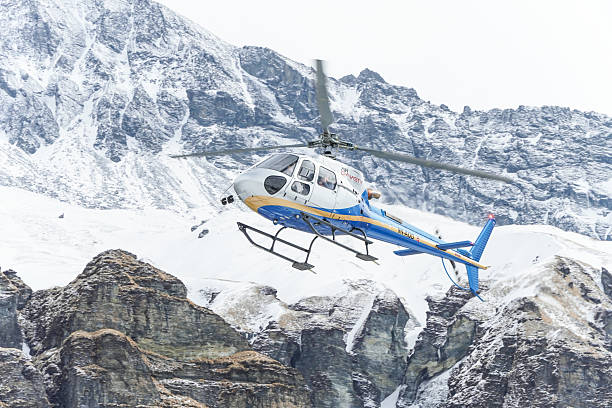
A helicopter tour is a more flexible, more expensive experience that can fly to specific locations, hover for photographs and, in some cases, land at viewpoints in the Everest region. Still, it carries only a handful of passengers and costs several times more per person.
If your budget is limited, if you want to see the whole range, or if you are travelling with a larger group, the mountain flight is the sensible choice. If you want a specific landing or a private charter experience, the helicopter is a better fit.
Mountain Flight Versus the Lukla Flight and Trekking
The Lukla flight is a different kind of journey entirely. It is a short flight to a mountain airstrip that serves as the gateway for the Everest Base Camp trek, and it is a transport service rather than a sightseeing flight.
Trekking to Everest Base Camp takes around two weeks and delivers a profound, physically demanding experience that no flight can match. For travellers with only a few days in Nepal, a mountain flight offers the most Himalaya for the least time.
For travellers with three weeks and the fitness for trekking, the mountain flight can still be a worthwhile first day, giving you a preview from the air before you arrive on the ground.
Mountain Flight Versus Nagarkot Sunrise
The Nagarkot sunrise tour is a ridge-top viewpoint experience about an hour from Kathmandu, offering a long, distant panorama of the eastern Himalaya at dawn. It is cheaper than the mountain flight, requires no airport procedures, and suits travellers who prefer to stay on the ground.
The mountain flight, by contrast, takes you far closer to the peaks and offers a perspective that no viewpoint on the valley rim can match. Many visitors do both, treating them as complementary rather than competing: Nagarkot for a tranquil dawn view with tea in hand, and the mountain flight for the closer, more dramatic encounter. Our transport can cover either or both on separate mornings.
Sample Itineraries Built Around the Mountain Flight
Three Days in Kathmandu
On Day 1, arrive at Tribhuvan Airport, settle into your hotel, and rest. On Day 2, take the early mountain flight, return for breakfast, and spend the late morning and afternoon on a Kathmandu UNESCO sightseeing tour covering Pashupatinath, Boudhanath, Swayambhunath and Patan.
On Day 3, choose between the Bhaktapur day tour and the Nagarkot sunrise before your onward journey. A single car or jeep and one driver can cover all three days, with airport transfers bookending the stay.
Five Days: Kathmandu and Pokhara
Spend your first two days as above, then take a private transfer to Pokhara on Day 3 with a stop at a riverside restaurant. On Day 4, enjoy Sarangkot sunrise, Phewa Lake and the old bazaar using Pokhara car hire.
On Day 5, return to Kathmandu by road or fly, ending your trip with either a final evening in Thamel or a departure transfer. This itinerary gives you the Himalaya from the air, from a ridge, and from a lakeshore, plus the cultural contrasts of the capital and the lake city.
Eight to Ten Days: Mountains, Wildlife and Pilgrimage
Begin with the mountain flight and Kathmandu heritage, then travel to Pokhara for lakes and mountain viewpoints. Continue to Chitwan for a jungle safari, then to Lumbini for the birthplace of the Buddha, and finally return to Kathmandu for your departure.
A single transport partner coordinating all these legs means one booking conversation, one payment structure and a consistent standard of vehicle and driver across the whole trip.
Groups, Families and Corporate Travellers
Hiace Vans and Coaster Buses for Group Flights
Group travel is where a well-organised ground plan makes the largest difference. A group of eight to fourteen arrives together in one Hiace van, checks in together and returns together after landing, which keeps everyone on schedule and in good spirits.
A group of fifteen to twenty-two uses a Coaster bus for the same smooth flow. Both vehicle types suit early pre-dawn runs, the waiting period during the flight, and the sightseeing tours afterwards; the price per person drops sharply as the group size rises.
For very large groups that must be split across several flights, we can coordinate multiple vehicles with synchronised timing through one WhatsApp contact.
Corporate Incentives, Conferences and Wedding Parties
Businesses use the mountain flight as an incentive reward, a conference excursion or a team-building morning. Wedding parties and family reunions use it as a shared adventure that guests remember for years.
In every case, the key to success is a clear, written timeline: pickup times by vehicle, reporting times at the terminal, expected return times and the sightseeing or lunch plan afterwards. Our team prepares that timeline and shares it with the group organiser in advance.
If you are planning a group event, email [email protected] with your numbers and dates, and we will respond with a proposal.
Pricing and Value: Why Our Rates Sit Slightly Above the Cheapest Options
An Honest Note on Price
You will find cheaper transport in Kathmandu, and we want to be straightforward about that. Our prices sit slightly above the lowest budget quotes you may see online or on the street.
The difference reflects what you actually receive: regularly serviced, clean vehicles; experienced, courteous drivers; fuel, tolls, and parking included in the quoted price; built-in waiting time; and a team that answers WhatsApp messages around the clock. On a morning as time-sensitive as a mountain flight, a vehicle that arrives early, a driver who knows the terminal, and a plan that survives a delay are worth more than the small extra cost.
The prices in this guide are shown as ranges in US dollars because the final figure depends on pickup location, number of passengers, waiting time and any extra stops. We confirm the exact amount in writing before you travel, and the quoted price is the price you pay, with no surprise additions at the end.
If you compare quotes, compare what is included — fuel, tolls, waiting time, a named driver, a direct contact number — rather than just the headline price. Many travellers find that a slightly higher, clearly inclusive price is better value than a lower price with hidden extras.
Frequently Asked Questions About the Everest Mountain Flight
Q: How long is the Everest mountain flight?
The flight lasts about 50 to 60 minutes, and the whole experience takes around 3 hours from hotel pickup to hotel return, including transfers, check-in, and boarding. You can then fill the rest of the morning with a Kathmandu sightseeing tour.
Q: How much does the Everest mountain flight cost?
For foreign nationals, it is typically around USD 250 to USD 280 per person, depending on the airline and whether the price includes a private transfer. Indian nationals often pay a lower fare with valid identification. Always confirm the total price and inclusions at booking, and compare what is covered rather than only the headline number.
Q: Will I actually see Mount Everest?
On a clear morning, yes. Everest is often not the most prominent peak because Lhotse and Nuptse stand in front of it, but the crew points it out, and the identification card helps. The earliest departures and the autumn and spring seasons give the best chances.
If the weather prevents a clear view, the flight may be cancelled, delayed or rescheduled according to the airline’s policy.
Q: Does every passenger get a window seat?
Yes, on the dedicated scenic aircraft, every passenger has a window seat. On the outbound leg, the left side sees the range first; on the return, the right side does. Both sides see the whole range over the flight.
You can request a preferred side when booking, though it is not always guaranteed.
Q: Can I visit the cockpit?
Often, but not always. Crews often invite passengers to the cockpit one at a time for a brief look, subject to the captain’s discretion and the day’s conditions. Treat it as a bonus, not a promise.
Q: What is the best time of year for the flight?
October to December and March to May are the best seasons, with October and November the clearest. Always choose the earliest departure of the day, because mornings are calmest and clearest. The monsoon months are hazier, but some mornings are still bright.
Q: What happens if the flight is cancelled for weather?
The usual practice is a refund or a free reschedule to another departure, but policies differ by operator and package. Read the terms, ask how poor-visibility flights are handled, and keep a spare day in your schedule. Tell your driver promptly so that we can adjust your pickup.
Q: How do I get to the airport at that hour?
Arrange a private transfer in advance. We offer cars, jeeps, Hiace vans and Coaster buses with a driver who picks you up early, waits during the flight and brings you back. Contact us on WhatsApp or by email at [email protected].
Q: Is the flight suitable for children and older travellers?
Yes. It requires no trekking, no altitude adjustment and very little walking. Mention any medical needs when booking, and consider a jeep or Hiace for easy seating and a calm ride on the ground.
Q: Can I combine the flight with other tours?
Absolutely. The most popular combination is the flight followed by Kathmandu UNESCO sightseeing, and many travellers add the Bhaktapur tour or Nagarkot sunrise on other days. We can also arrange onward transfers to Pokhara, Chitwan and Lumbini through one booking.
Conclusion: One Morning, One Memorable View
The Everest mountain flight compresses a lifetime wish into a single morning. In an hour, you see the highest mountains on Earth from a window seat, with no trek, no altitude and no complicated planning, and you are back in time to explore the temples, courtyards and cafes of Kathmandu.
The difference between a good morning and a great one lies in the details: choosing the earliest departure, understanding the seating, reading the weather policy, and having a reliable vehicle waiting at your door at the right time. Those details are small, but together they determine whether you arrive calm and early or flustered and late.
That is where Nepal Vehicle Hiring Pvt. Ltd. fits in. We provide the car, jeep, Hiace van, or Coaster bus; an experienced driver; a clear USD price range; and an always-open WhatsApp line to make your mountain-flight morning smooth from first pickup to last temple.
Introduction: Why Best Car Hire in Nepal is the Smart Way to Travel in Our Beautiful Country
Nepal is a country of dramatic contrasts—snow-capped Himalayan peaks, winding hill roads, bustling cities, and remote villages. This diversity makes travel extraordinary, but it also makes transportation a critical decision. Public transport exists, but it is often crowded, time-consuming, and unpredictable.
For travellers who value comfort, flexibility, and efficiency, hiring a car in Nepal is not just a luxury—it’s a practical solution.
Car hire services in Nepal have evolved significantly over the past decade. Today, travellers can choose from a wide range of vehicles, from compact sedans for city travel to rugged SUVs for mountainous terrain. Whether you are a tourist exploring scenic destinations, a business traveller attending meetings, or a family on vacation, car rental services offer a tailored experience that public transport cannot match.
This complete guide will walk you through everything you need to know about hiring a car in Nepal—from vehicle options and pricing to routes, booking tips, and expert recommendations.
Overview of Car Hire in Nepal
Car hire in Nepal typically comes with a professional driver. Self-drive options are extremely limited and generally not recommended because of road conditions, traffic patterns, and local driving practices.
Key Features of Car Hire in Nepal:
Chauffeur-driven vehicles
Flexible pickup and drop-off locations
Daily, hourly, and long-distance rental options
Wide range of vehicle categories
Availability for both city tours and multi-day trips
Who Should Hire a Car?
International tourists unfamiliar with local transport
Families and small groups
Business professionals
Travellers with tight schedules
Luxury and comfort seekers
Types of Cars Available for Hire in Nepal
Choosing the right vehicle is essential for a smooth travel experience. The type of car you hire should depend on your group size, route, budget, and comfort expectations.
Sedan Cars (Economy & Standard)
Sedans are ideal for city travel and smooth highways.
Examples: Toyota Etios, Hyundai Accent, Skoda Rapid
Capacity: 1–3 passengers
Best For: Airport transfers, city tours, short highway trips
Advantages:
Affordable
Fuel-efficient
Comfortable for paved roads
Limitations:
Not suitable for rough or mountainous terrain
SUV / 4WD Vehicles
SUVs are among the most popular choices in Nepal due to their versatility.
Examples: Scorpio, Toyota Land Cruiser, Nissan Patrol
Capacity: 4–7 passengers
Best For: Long-distance travel, hill roads, off-road routes
Advantages:
Strong suspension for rough roads
Higher ground clearance
Suitable for trekking routes and remote areas
Vans and Hiace
Perfect for medium-sized groups.
Examples: Toyota Hiace, Nissan Caravan
Capacity: 7–14 passengers
Best for: Group tours, family travel, corporate trips
Advantages:
Spacious interiors
Good luggage capacity
Comfortable for long journeys
Luxury Cars
For top-end travel experiences.
Examples: Toyota Prado, BMW, Mercedes-Benz
Capacity: 2–4 passengers
Best For: VIP travel, weddings, corporate use
Popular Routes for Car Hire in Nepal
Car hire services are commonly used for both short and long-distance travel. Here are the most in-demand routes:
Pricing varies depending on several factors. Unlike fixed taxi meters, most rentals are negotiated or quoted based on route and duration.
Key Pricing Factors:
Vehicle type
Distance and duration
Fuel inclusion
Road condition
Season (peak vs off-season)
Average Price Range (General Guide)
Vehicle Type Daily Rate (Approx)
Sedan $40 – $70
SUV/Jeep $80 – $150
Hiace $120 – $180
Luxury Car $150 – $300+
What’s Usually Included:
Driver salary
Fuel (in most packages)
Parking fees
Basic insurance
What’s Not Included:
Accommodation for the driver (on long trips)
Meals for the driver
Entry permits (restricted areas)
Road Conditions in Nepal: What to Expect
Understanding Nepal’s road conditions is essential before hiring a car.
Urban Areas (Kathmandu, Pokhara)
Busy traffic
Narrow streets
Moderate road quality
Highways
Mixed conditions
Ongoing construction in many sections
Occasional delays
Mountain Roads
Narrow and winding
Gravel and off-road sections
Landslide-prone during the monsoon
This is why hiring an experienced driver is crucial.
Benefits of Hiring a Car in Nepal
1. Comfort and Convenience
Travel in a private vehicle eliminates the stress of crowded buses and long waits.
2. Flexible Itinerary
Stop wherever you want—viewpoints, restaurants, or photo spots.
3. Time Efficiency
Reach destinations faster compared to public transport.
4. Safety
Professional drivers understand local road conditions and risks.
5. Personalised Experience
Customise your journey according to your needs.
When Should You Hire a Car?
Ideal Situations:
Travelling with family or elderly members
Carrying heavy luggage
Visiting multiple destinations
Tight travel schedule
When Public Transport Might Work
Solo budget travellers
Short city commutes
Flexible schedules
Booking Process for Car Hire in Nepal
Booking a car is simple and usually follows these steps:
Step 1: Choose Your Vehicle
Select based on group size and route.
Step 2: Share Trip Details
Provide pickup location, destination, and dates.
Step 3: Get a Quote
The company will offer pricing.
Step 4: Confirm Booking
An advance payment may be required.
Step 5: Travel
The driver arrives at your location on time.
Tips for Choosing the Right Car Rental Company
Not all providers offer the same level of service. Here’s what to check:
1. Experience and Reputation
Choose companies with strong local experience.
2. Vehicle Condition
Ensure vehicles are well-maintained and clean.
3. Driver Professionalism
Experienced drivers make a huge difference.
4. Transparent Pricing
Avoid hidden charges.
5. Customer Support
24/7 assistance is a big advantage.
Car Hire vs Other Transport Options
Car Hire vs Tourist Bus
Factor Car Hire Tourist Bus
Comfort High Medium
Flexibility: ty Fuvs ll Fixed schedule
Speed Faster Slower
Privacy Private Shared
Car Hire vs Domestic Flights
Factor Car Hire Flight
Cost is lower for groups, higher
Scenic Experience: Yes Limited
Flexibility High Low
Safety Tips for Travelers
Always hire vehicles with drivers
Avoid night travel in remote areas
Check weather conditions (especially during the monsoon)
Keep emergency contacts handy
Confirm vehicle condition before departure
Best Time to Hire a Car in Nepal
Peak Seasons:
Spring (March–May)
Autumn (September–November)
Off-Season:
Monsoon (June–August)
Winter (December–February, for high-altitude routes)
Car Hire for Special Purposes
1. Airport Transfers
Reliable pickup and drop-off services.
2. Corporate Travel
Professional service for meetings and events.
3. Wedding Transportation
Luxury vehicles and decorated cars.
4. Trekking Transfers
Access to trailheads and remote regions.
Frequently Asked Questions (FAQs)
Is self-drive car rental available in Nepal?
Very limited. Most services are chauffeur-driven.
Can I hire a car for multiple days?
Yes, multi-day rentals are common.
Is fuel included in the price?
Usually yes, but always confirm.
Are drivers English-speaking?
Most professional drivers understand basic English.
What is the best car for mountain travel?
A 4WD SUV or Jeep is highly recommended.
Final Thoughts: Is Car Hire Worth It?
If your goal is to explore Nepal comfortably, safely, and efficiently, hiring a car is one of the best decisions you can make. It transforms your journey from a logistical challenge into a smooth travel experience.
Nepal’s terrain, road conditions, and transport limitations make private vehicle hire not just convenient—but often essential. Whether you are heading to Pokhara, Chitwan, Lumbini, or the Himalayas, the right vehicle ensures your journey is as memorable as the destination itself.
Call to Action
Ready to explore Nepal with comfort and flexibility?
Choose the right vehicle for your journey, plan your route, and book your car hire today. Whether you need a sedan for city travel or a rugged jeep for mountain adventures, the right choice will define your entire travel experience.
4WD Himalayan Jeep in Nepal 2026: Hire Guide, Routes, Cost & Expert Tips
Nepal is one of the most extraordinary overland travel destinations on earth. Home to eight of the world’s fourteen 8,000-meter peaks, more than 4,000 kilometers of trekking trails, and some of Asia’s most dramatic mountain road networks, Nepal rewards those who venture into its high-altitude wilderness with experiences found nowhere else on the planet.
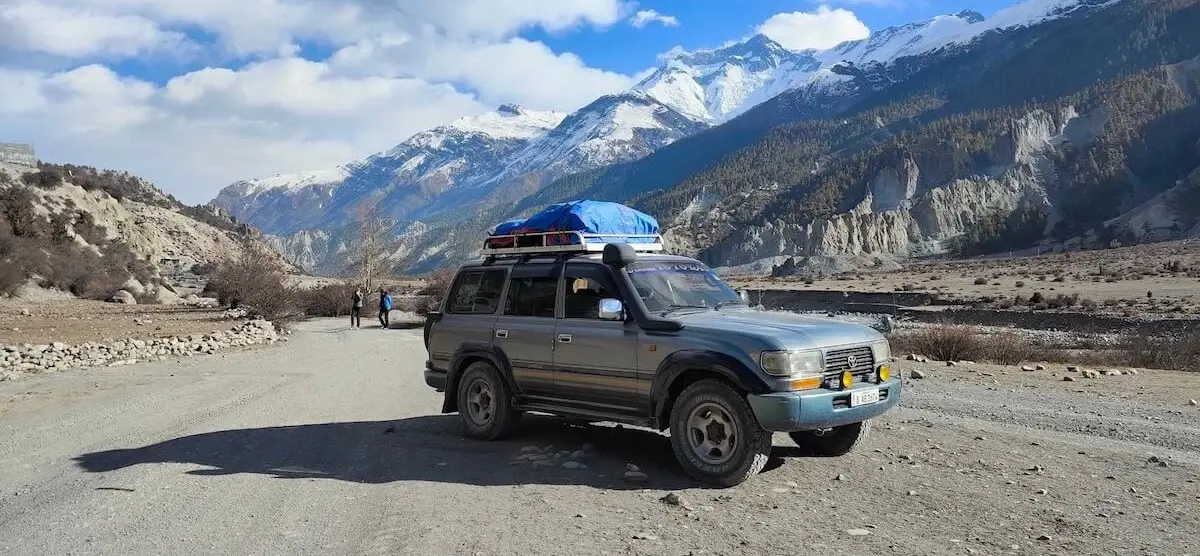
But Nepal’s most spectacular destinations — Upper Mustang, Manang, Rara Lake, Gosaikunda, Muktinath, Syabrubesi, Salleri, Phaplu, and the high passes of the Himalayan range — are not accessible by ordinary vehicles. The roads that lead to these places are off-road mountain tracks, river crossings, narrow cliff-edge paths, and high-altitude gravel routes that demand one thing above all else: a powerful, reliable, well-maintained 4WD jeep driven by an experienced Himalayan road driver.
At Nepal Vehicle Hiring Pvt Ltd, we operate Nepal’s most trusted fleet of 4WD Himalayan jeeps. This comprehensive 2026 guide tells you everything you need to know about hiring a 4WD jeep in Nepal — the vehicles available, the routes they cover, the costs, and exactly why a proper 4WD jeep is the only responsible choice for serious Himalayan travel.
Why a 4WD Jeep is Essential for Himalayan Travel in Nepal
Nepal’s Mountain Roads Are Unlike Any Other
The roads leading into Nepal’s Himalayan regions are among the most challenging in the world. Beyond the main highways, mountain roads rapidly transition into unpaved tracks — rocky riverbeds, eroded gravel paths, steep switchbacks, mud-covered cliff edges, and river crossings that change completely with the seasons. A standard 2WD sedan or SUV lacks the ground clearance, torque distribution, or traction to handle these conditions safely.
High Ground Clearance for Rocky and Rutted Roads
4WD jeeps used for Himalayan travel in Nepal have a minimum ground clearance of 200mm and, in many models, 220mm or more. This is essential for clearing the deep ruts, protruding rocks, and uneven surfaces characteristic of off-road mountain tracks in regions such as Mustang, Manang, Solukhumbu, and Rasuwa. A vehicle with insufficient clearance risks becoming grounded in remote areas with no recovery options.
Four-Wheel Drive Traction on Loose and Slippery Surfaces
The hallmark of a true 4WD system is the ability to distribute engine torque to all four wheels simultaneously. On loose gravel, wet mud, sandy riverbeds (particularly in the Kali Gandaki valley approaching Jomsom), snow-covered passes, and steep descents, 4WD traction is the difference between a vehicle that maintains controlled progress and one that dangerously loses grip.
For routes such as Pokhara to Jomsom, Kathmandu to Syabrubesi, and Kathmandu to Manang, 4WD is not a luxury but a requirement.
Engine Power for High-Altitude Climbs
Nepal’s highest jeep-accessible roads reach altitudes over 5,000 meters in areas such as Upper Mustang and the Thorong La approach. At these altitudes, naturally aspirated engines lose significant power due to thin air. The turbocharged diesel engines in purpose-built 4WD Himalayan jeeps are specifically designed to maintain adequate power output at altitude, ensuring reliable hill-climbing performance even on the steepest Himalayan gradients.
Passenger Safety in Remote Terrain
When you are deep in a remote Himalayan valley — three hours from the nearest town with no phone signal and no passing vehicles — the mechanical reliability of your jeep is directly connected to your personal safety. Nepal Vehicle Hiring uses only regularly serviced, well-maintained 4WD jeeps for Himalayan routes. Our vehicles carry basic tools, emergency supplies, and our drivers are trained in basic roadside maintenance for remote situations.
Driver Experience and Route Knowledge
A 4WD jeep is only as safe as the person driving it. Nepal Vehicle Hiring employs only licensed, experienced Himalayan road drivers who have traveled dozens or hundreds of times along the Kathmandu-to-Mustang, Pokhara-to-Jomsom, Kathmandu-to-Manang, and other high-altitude routes. They know where the road narrows, where the landslide zones are, and where to stop for fuel, food, and rest.
Nepal Vehicle Hiring 4WD Himalayan Jeep Fleet.
Nepal Vehicle Hiring Pvt Ltd maintains a fleet of the most capable and trusted 4WD vehicles available for Himalayan road travel in Nepal. Here is a detailed guide to our fleet:
1. Toyota Land Cruiser (LC70 / LC200 Series)
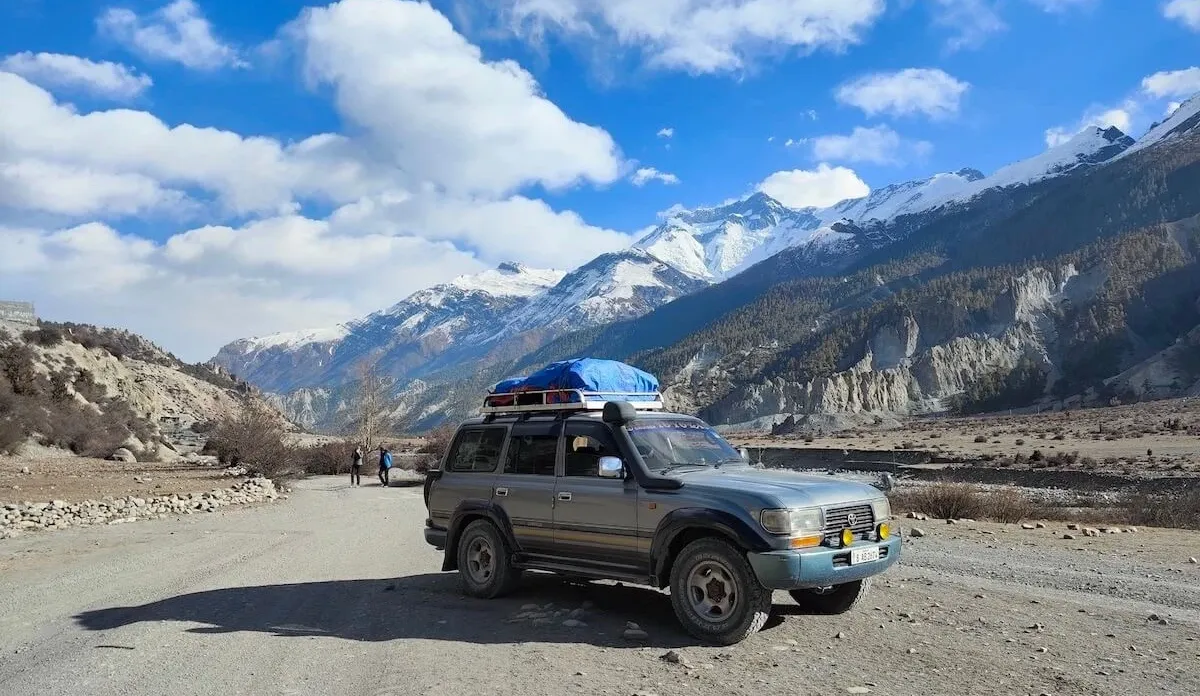
The Toyota Land Cruiser is the gold standard of Himalayan overland travel worldwide. In Nepal, the Land Cruiser is the most respected and most capable 4WD vehicle available. It combines legendary off-road capability with relative passenger comfort, making it the preferred choice for serious high-altitude routes such as Upper Mustang, Manang, and Rara Lake circuits.
Spec
Detail
Engine
4.5L V8 Turbo Diesel (LC200) / 4.2L Diesel (LC70)
Ground Clearance
Up to 225mm
4WD System
Full-time 4WD with low-range transfer case
Seating
5–7 passengers comfortably (4 recommended with luggage)
Luggage Capacity
Large boot + roof rack
Best Routes
Upper Mustang, Manang, Rara Lake, Salleri, Phaplu
Daily Hire Cost (NPR)
NPR 18,000–30,000 per day (depending on route)
One-Way Route Cost
NPR 28,000–65,000 depending on destination
2. Toyota Hilux (Double Cab 4WD)
The Toyota Hilux is one of the most popular 4WD vehicles in Nepal’s high-altitude regions. Its combination of high ground clearance, proven 4WD reliability, spacious double-cab seating, and large load bed for luggage and equipment makes it ideal for trekking group transfers and mid-range Himalayan routes.
Spec
Detail
Engine
2.4L / 2.8L Turbodiesel 4-cylinder
Ground Clearance
280mm (one of the highest in class)
4WD System
Part-time 4WD with locking rear differential
Seating
4–5 passengers comfortably
Luggage Capacity
Large load bed + roof rack
Best Routes
Syabrubesi, Jomsom, Salleri, Phaplu, Besisahar
Daily Hire Cost (NPR)
NPR 14,000–22,000 per day
One-Way Route Cost
NPR 18,000–40,000 depending on destination
3. Toyota Fortuner (4WD)
The Toyota Fortuner 4WD is the ideal balance between off-road capability and passenger comfort. It is the most popular vehicle for families, pilgrim groups, and trekking parties who want a capable Himalayan jeep with a more refined interior than a work-spec Land Cruiser or Hilux.
Spec
Detail
Engine
2.8L Turbodiesel 4-cylinder
Ground Clearance
221mm
4WD System
Part-time 4WD with low-range
Seating
7 passengers (5 recommended with luggage for long routes)
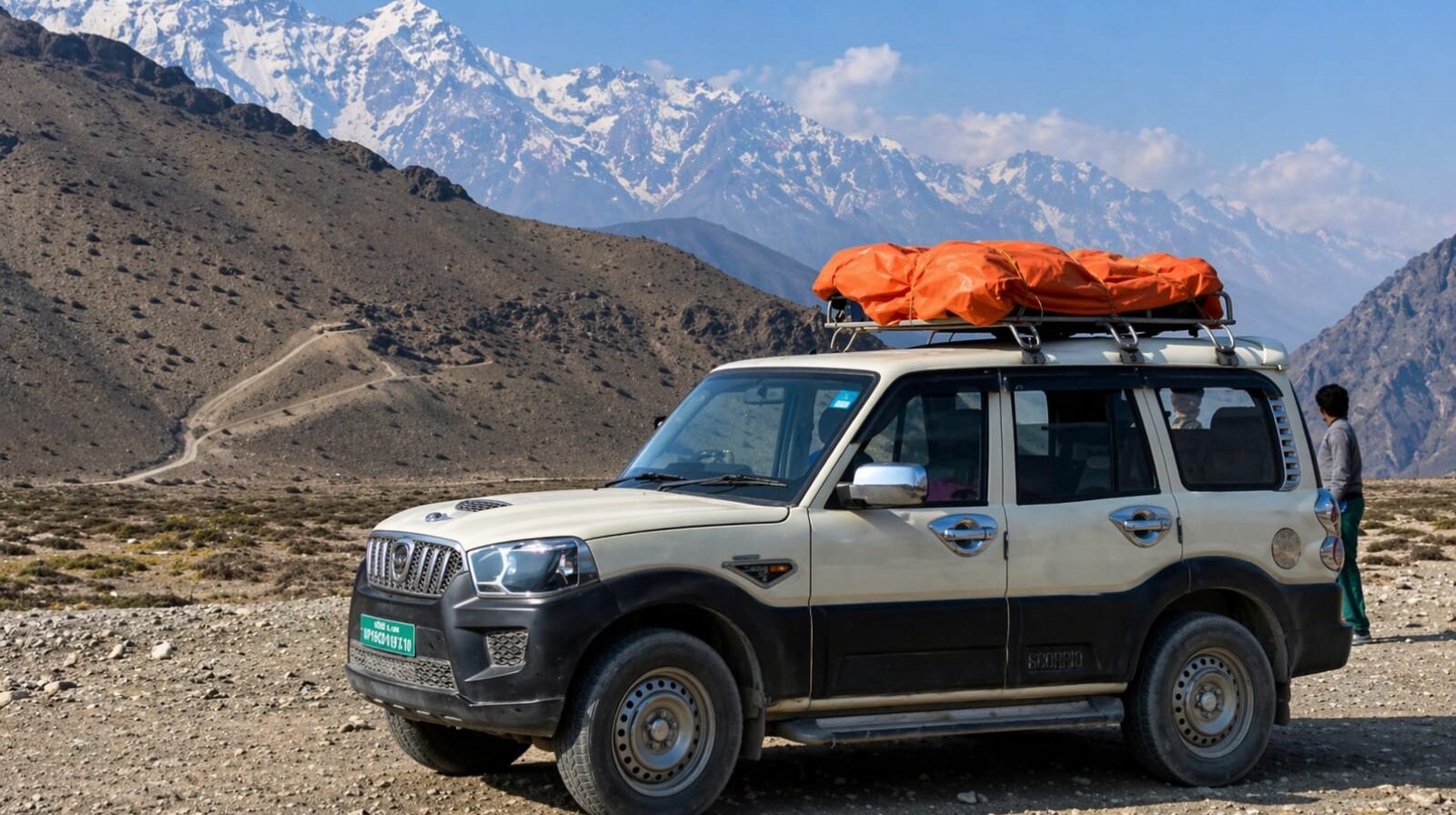
The Mahindra Scorpio is Nepal’s most widely used 4WD jeep for Himalayan routes. It is robust, reliable, capable on off-road terrain, and more economically priced than Japanese alternatives. The Scorpio is the vehicle of choice for sharing jeeps across almost every mountain route in Nepal, from the Langtang region to the Mustang valley.
Spec
Detail
Engine
2.2L mHawk Turbodiesel
Ground Clearance
180–200mm
4WD System
Part-time 4WD (Scorpio-N: AWD option)
Seating
7 passengers (5–6 recommended with gear)
Luggage Capacity
Rear boot + roof rack
Best Routes
All major Himalayan routes – Syabrubesi, Jomsom, Salleri, Manang
Daily Hire Cost (NPR)
NPR 9,000–15,000 per day
One-Way Route Cost
NPR 12,000–28,000 depending on destination
5. Mitsubishi Pajero / Montero (4WD)
The Mitsubishi Pajero is a legendary off-road vehicle favored by experienced overlanders and expedition teams in Nepal. With exceptional low-range 4WD capability, high ground clearance, and a smooth highway ride, the Pajero is versatile enough for both Kathmandu day tours and serious multi-day Himalayan expeditions.
Spec
Detail
Engine
3.2L DI-D Turbodiesel V6
Ground Clearance
215mm
4WD System
Super-Select 4WD with center differential lock
Seating
5–7 passengers
Best Routes
Upper Mustang, Manang, Rara Lake, Jomsom, Syabrubesi
Daily Hire Cost (NPR)
NPR 14,000–22,000 per day
4WD Himalayan Jeep Fleet Comparison
Vehicle
Ground Clearance
Capacity
Daily Cost (NPR)
Best For
Toyota Land Cruiser
225mm
4–5 (comfort)
NPR 18,000–30,000
Upper Mustang, Rara Lake, extreme routes
Toyota Hilux
280mm
4–5
NPR 14,000–22,000
Syabrubesi, Jomsom, Salleri, Phaplu
Toyota Fortuner
221mm
5–7
NPR 12,000–20,000
Jomsom, Syabrubesi, families, and pilgrim groups
Mahindra Scorpio
180–200mm
5–6
NPR 9,000–15,000
All Himalayan routes – best value
Mitsubishi Pajero
215mm
5–7
NPR 14,000–22,000
Mustang, Manang, multi-day expeditions
4WD Himalayan Jeep Hire Cost in Nepal 2026
Jeep hire costs in Nepal depend on the vehicle type, route distance, number of days, road conditions, and season. Here is a comprehensive price guide for the most popular Himalayan routes:
Route
Distance (Approx.)
Vehicle Type
One Way (NPR)
Round Trip (NPR)
Kathmandu to Nagarkot
32 km
Scorpio/Fortuner
NPR 5,000–8,000
NPR 8,000–14,000
Kathmandu to Dhulikhel
30 km
Scorpio/Fortuner
NPR 5,000–7,000
NPR 8,000–12,000
Kathmandu to Syabrubesi
122 km
Scorpio/Hilux
NPR 18,000–25,000
NPR 30,000–42,000
Kathmandu to Besisahar
175 km
Scorpio/Hilux
NPR 18,000–25,000
NPR 30,000–42,000
Kathmandu to Salleri
267 km
Scorpio/Hilux
NPR 25,000–35,000
NPR 42,000–58,000
Kathmandu to Phaplu
290 km
Scorpio/Hilux
NPR 28,000–38,000
NPR 48,000–65,000
Pokhara to Jomsom
160 km
Scorpio/Land Cruiser
NPR 22,000–35,000
NPR 38,000–58,000
Pokhara to Muktinath
180 km
Scorpio/Land Cruiser
NPR 28,000–40,000
NPR 48,000–70,000
Kathmandu to Manang
230 km
Land Cruiser/Hilux
NPR 30,000–45,000
NPR 55,000–80,000
Kathmandu to Upper Mustang (Lo Manthang)
430 km
Land Cruiser
NPR 65,000–95,000
NPR 120,000–165,000
Kathmandu to Rara Lake
600+ km
Land Cruiser
NPR 80,000–120,000
NPR 150,000–210,000
Daily City Tour (Kathmandu Valley)
Varies
Any 4WD
NPR 9,000–18,000/day
–
Note: All prices include driver, fuel, tolls, and parking. Prices are approximate and may vary by season, vehicle availability, fuel prices, and road conditions. Contact Nepal Vehicle Hiring for confirmed quotes for your specific route and dates.
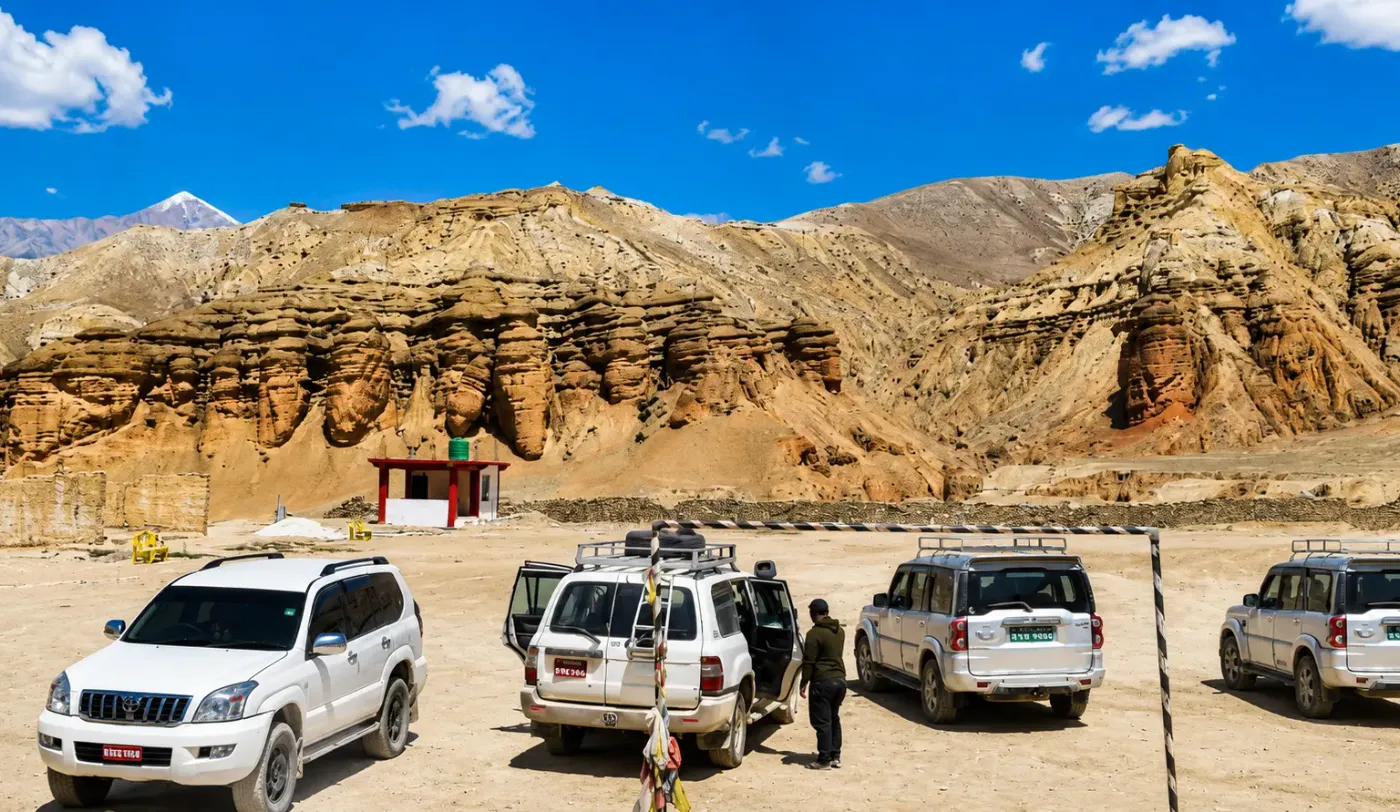
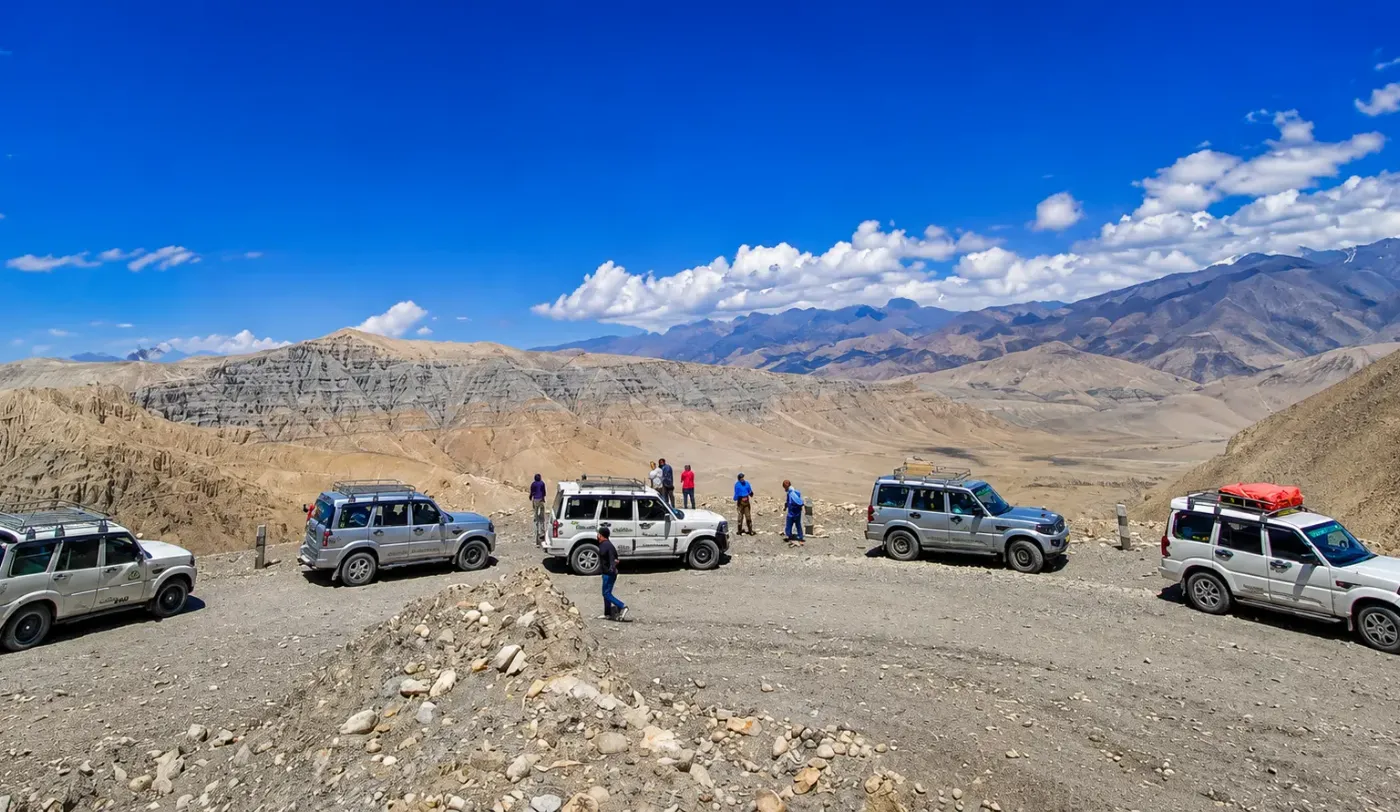
The Upper Mustang jeep tour is widely considered the greatest 4WD overland adventure in Nepal. Beginning in Pokhara, the route follows the Kali Gandaki gorge through Beni, Tatopani, Ghasa, Marpha, and Jomsom before crossing into the restricted zone of Upper Mustang and ending at Lo Manthang — the ancient walled capital of the former Kingdom of Mustang at 3,840 meters above sea level.
The landscape of Upper Mustang is unlike anything else in Nepal — a Tibetan plateau wilderness of eroded red cliffs, ancient cave monasteries, wind-sculpted rock formations, and medieval villages untouched by the modern world. The entire route is only accessible by a 4WD jeep. A Toyota Land Cruiser or equivalent is mandatory.
Detail
Information
Total Distance
430 km (Pokhara to Lo Manthang)
Duration
8 to 13 days round trip
Maximum Altitude
3,840 m (Lo Manthang)
Road Type
Paved to Beni, off-road gravel and rocky tracks beyond
Vehicle Required
Toyota Land Cruiser or equivalent high-clearance 4WD
Permit Required
ACAP + Upper Mustang Restricted Area Permit (USD 500/10 days)
The drive from Kathmandu to Manang via Besisahar follows the Marsyangdi River valley deep into the Annapurna Conservation Area. Manang sits at 3,519 meters and is the main acclimatization stop on the Annapurna Circuit Trek.
The road from Besisahar to Chame and onward to Manang follows a spectacular river gorge through dense forest, past hanging glaciers and waterfalls, and along cliff-edge tracks that are among the most dramatic jeep roads in all of Nepal.
Detail
Information
Total Distance
230 km (Kathmandu to Manang)
Duration
2 to 3 days each way
Maximum Altitude
3,519 m (Manang)
Road Type
Paved to Besisahar, rough off-road to Chame and Manang
The 122 km drive from Kathmandu to Syabrubesi is the gateway to the Langtang Valley Trek, Tamang Heritage Trail, and Gosaikunda Lake Trek. The route follows the Pasang Lhamu Highway through Trishuli and Dhunche before descending to the Bhote Koshi river valley at Syabrubesi. The notorious Ramche landslide zone near Dhunche makes a true 4WD vehicle essential for the final approach.
Detail
Information
Total Distance
122 km
Travel Time
5 to 6 hours (private 4WD)
Road Challenges
Ramche landslide zone – rough, unpaved 3 km section
The overland jeep route from Kathmandu to Salleri or Phaplu in the Solukhumbu District is the classic alternative to the Lukla flight for trekkers heading to Everest Base Camp. The 267-290 km route passes through Dhulikhel, Khurkot, Okhaldhunga, and Salleri before reaching Phaplu. The road becomes progressively rougher and more demanding beyond Okhaldhunga, where 4WD is essential.
The Pokhara-to-Jomsom jeep route through the world’s deepest river gorge is one of Asia’s most dramatic overland drives. The route follows the Kali Gandaki River through Beni, Tatopani, Ghasa, Kalopani, and Marpha before reaching Jomsom at 2,720 meters.
The road from Beni onward is an off-road track that requires 4WD, high clearance, and an experienced driver. Powerful afternoon winds in the valley add a unique challenge to this route.
Detail
Information
Total Distance
160 km
Travel Time
6 to 8 hours
Road Challenges
Off-road track from Beni, sandy Kali Gandaki riverbed, strong afternoon winds
Vehicle Required
4WD jeep – mandatory from Beni onward
Best Season
Spring and Autumn (depart early AM always)
Jeep Cost (Approx.)
NPR 22,000–35,000 one way
6. Rara Lake Jeep Expedition – Nepal’s Hidden Himalayan Jewel
Rara Lake, Nepal’s largest and most pristine freshwater lake, sits at an elevation of 2,990 meters in the Mugu District of far-western Nepal. The overland jeep expedition to Rara Lake from Kathmandu covers over 600 kilometers each way, passing through the Mid-Hill Highway, Surkhet, Jumla, and Gamgadhi.
The route includes some of the most remote and challenging jeep roads in the country — a true Himalayan overland expedition requiring a top-specification 4WD vehicle and a highly experienced driver.
Detail
Information
Total Distance
600+ km each way from Kathmandu
Duration
7 to 10 days round-trip
Maximum Altitude
2,990 m (Rara Lake)
Road Type
A mix of paved Mid-Hill Highway and very rough mountain tracks
What to Look for When Hiring a 4WD Himalayan Jeep in Nepal
Verified 4WD Capability
Not all vehicles marketed as jeeps in Nepal are true 4WD. Always confirm that the vehicle has a genuine 4WD system with a low-range transfer case — not just an AWD or 2WD with cosmetic styling. Nepal Vehicle Hiring uses only verified 4WD vehicles for all Himalayan routes.
Ground Clearance
Confirm the vehicle’s ground clearance before booking. For routes such as Upper Mustang, Manang, and Rara Lake, a minimum of 200mm ground clearance is required. The Toyota Hilux (280mm) and Land Cruiser (225mm) are the best in class.
Vehicle Maintenance and Age
Ask about the vehicle’s maintenance record and age. A well-maintained 5-year-old Scorpio is far more reliable than a poorly maintained 2-year-old Fortuner. Nepal Vehicle Hiring maintains a strict vehicle servicing schedule with records available on request.
Driver Experience and Licensing
For Himalayan routes, driver experience is as important as vehicle specification. Your driver should be licensed, have made the specific route multiple times, and be familiar with the seasonal hazards — landslide zones, river crossings, weather windows, and overnight stop options. All Nepal Vehicle Hiring drivers are licensed and experienced on their routes.
What is Included in the Price
Always confirm exactly what is included in the quoted price. With Nepal Vehicle Hiring, all private 4WD jeep hires include the driver, fuel, toll charges, parking fees, and the vehicle itself. Driver accommodation on multi-day trips is also typically included.
Meals, passenger accommodation, and trekking permits are passenger expenses.
Insurance Coverage
Confirm that the vehicle carries comprehensive insurance, including third-party liability. All Nepal Vehicle Hiring vehicles are fully insured for the Himalayan routes.
Best Season for 4WD Himalayan Jeep Travel in Nepal
Autumn (September to November) – Best Overall
Autumn is the finest season for 4WD jeep travel in Nepal’s Himalayan regions. The monsoon has cleared, roads have been washed clean (and in many cases newly graded), skies are crystal clear, and the mountain views are at their absolute peak. October and November are the most popular months.
Roads are dry, the high passes are free of snow, and the weather is reliable.
Spring (March to May) – Excellent
Spring is the second peak season. Roads are generally dry, rhododendrons are in bloom, and the weather is stable. April is especially fine for Himalayan jeep travel.
Note that pre-monsoon haze can reduce visibility in the mountains in May. The Mustang and Manang regions are at their most colorful in spring.
Winter (December to February) – Good for Lower Routes, Challenging for High Altitude
Winter jeep travel is excellent for routes up to about 2,500 meters — including Nagarkot, Dhulikhel, Syabrubesi, Jomsom, Salleri, and Phaplu. For higher routes such as Manang and Upper Mustang, snowfall can close passes and road sections. A Land Cruiser with winter-capable tires and an experienced driver is essential.
Nepal Vehicle Hiring advises on the viability of routes in winter upon request.
Monsoon (June to August) – Mostly Not Recommended
The summer monsoon season brings heavy rain, frequent landslides, swollen river crossings, and extremely slippery off-road surfaces. Most high-altitude jeep routes are significantly more hazardous during the monsoon. The notable exception is the Upper Mustang and Manang regions, which lie in a rain shadow north of the main Himalayan range and receive far less rain, making monsoon jeep trips to these areas possible with appropriate precautions and an experienced driver.
Permits Required for 4WD Himalayan Jeep Routes in Nepal
Permit
Cost
Required For
Where to Obtain
ACAP – Annapurna Conservation Area Permit
NPR 3,000 (foreigners)
Jomsom, Muktinath, Manang, Upper Mustang
Nepal Tourism Board, Kathmandu or Pokhara
TIMS Card
NPR 2,000 (foreigners)
All trekking routes
Nepal Tourism Board
Upper Mustang Restricted Area Permit
USD 500 (10 days)
Lo Manthang and Upper Mustang
Nepal Tourism Board (min. group of 2 with guide)
Langtang National Park Permit
NPR 3,000 (foreigners)
Syabrubesi, Gosaikunda
Nepal Tourism Board
DNPWC Permit (Rara)
NPR 3,000 (foreigners)
Rara Lake
Nepal Tourism Board
Local Municipality Fees
Varies
Various checkpoints
Paid at the checkpoint on the route
Note: All permits must be arranged in Kathmandu or Pokhara before departure. Nepal Vehicle Hiring can advise on the specific permits required for your chosen route.
What to Pack for a 4WD Himalayan Jeep Journey in Nepal
Warm layers and a down jacket – temperatures drop significantly at high altitude, particularly on Mustang, Manang, and Rara routes.
Windproof and waterproof outer layer – Kali Gandaki valley winds and mountain rain squalls
Face mask, buff scarf, or balaclava – off-road dust is severe on rocky Himalayan tracks.
Sunglasses (polarised) and sunscreen SPF 50+ – UV intensity at high altitude is extreme
Altitude sickness medication (Diamox) for routes above 3,000 meters – consult your doctor.
Water purification tablets or a filter bottle – clean water is limited beyond major towns
Emergency snacks – energy bars, nuts, dried fruit for remote sections between food stops
First aid kit including blister treatment, pain relief, antiseptic, and bandages
Cash in Nepali Rupees (small denominations) – ATMs do not exist beyond major towns
Power bank and extra camera batteries – charging facilities are limited at remote stops.
All trekking and area permits are arranged before departure from Kathmandu or Pokhara
Offline maps (download Maps.me or similar) – mobile coverage is absent on many mountain routes
Sleeping bag liner or lightweight sleeping bag for remote overnight stops in cold guesthouses
Expert Tips for 4WD Himalayan Jeep Travel in Nepal
Always confirm 4WD capability with a low-range transfer case before booking – not all Nepal jeep rentals are true 4WD
Book well in advance for autumn (October–November) and spring (March–May) – quality vehicles are booked months ahead during peak season.
For multi-day Himalayan routes, plan your itinerary with contingency days – mountain roads can be closed by landslides, weather, or seasonal flooding
Depart as early as possible on driving days – afternoon weather deteriorates on many Himalayan routes, and early starts beat dangerous conditions.
Never rush a Himalayan jeep driver – the roads demand full attention and a steady pace; impatience is genuinely dangerous
Acclimatize properly on high-altitude routes (Manang, Upper Mustang) – spend extra nights at intermediate altitudes and ascend gradually.
Sit in the front passenger seat or second row for the best views and fewest bumps on rough roads
Confirm road conditions with your driver on the morning of each travel day – a brief phone call to local contacts ahead can save hours of delay
Always carry more cash than you think you will need – unexpected overnight stops, extra fuel, or emergency accommodation are realities of remote Himalayan travel
Photograph the scenery freely but ask permission before photographing local people, especially in culturally sensitive Mustang and Manang villages.
How to Book a 4WD Himalayan Jeep with Nepal Vehicle Hiring
Booking your 4WD Himalayan jeep with Nepal Vehicle Hiring Pvt Ltd is simple:
Step 1: Contact us via phone, WhatsApp, or at vehiclehiringnepal.com
Step 2: Share your route, travel dates, number of passengers, and preferred vehicle type
Step 3: Receive a detailed quote including vehicle, driver, fuel, and all inclusions
Step 4: Confirm your booking with a deposit. We will assign your vehicle and driver
Step 5: Receive your driver’s contact details and vehicle information before departure
Step 6: Your driver picks you up from your hotel at the agreed time and takes you on your Himalayan adventure
We recommend booking at least 7 to 14 days in advance for multi-day routes and 3 to 5 days in advance for day and short-distance transfers during peak seasons.
Frequently Asked Questions (FAQ)
What is the best 4WD jeep for Himalayan travel in Nepal?
The Toyota Land Cruiser is the gold standard for extreme Himalayan routes such as Upper Mustang and Rara Lake. For most other Himalayan routes, including Jomsom, Syabrubesi, Salleri, and Manang, the Toyota Hilux, Fortuner, or Mahindra Scorpio is an excellent and more economical choice.
How much does it cost to hire a 4WD jeep in Nepal per day?
Daily 4WD jeep hire in Nepal costs between NPR 9,000 and NPR 30,000 (approximately USD 65 to USD 225) per day, depending on the vehicle type and route. One-way transfers to specific Himalayan destinations are more commonly priced by route than by the day.
Do I need a 4WD for all Himalayan routes in Nepal?
Yes, for most routes beyond the main highways. Routes such as Pokhara to Jomsom (beyond Beni), Kathmandu to Syabrubesi (Ramche section), Kathmandu to Salleri or Phaplu (beyond Okhaldhunga), and all Upper Mustang and Manang routes absolutely require a 4WD vehicle with high ground clearance. Standard 2WD vehicles should not attempt these routes.
Can I hire a self-drive 4WD jeep in Nepal?
Self-drive vehicle hire is generally unavailable to foreign tourists in Nepal due to local licensing regulations. All vehicle hire through Nepal Vehicle Hiring includes a professional driver. This is actually advantageous — local drivers know every road condition, shortcut, fuel stop, and seasonal hazard on the routes they drive.
Is a 4WD jeep necessary in winter in Nepal?
In winter (December to February), 4WD is especially important for routes above 1,500 meters where frost, ice, and occasional snow can create extremely slippery conditions. A vehicle with good cold-weather tires and an experienced winter-driving driver is essential.
Do 4WD jeep prices in Nepal include fuel?
With Nepal Vehicle Hiring, all private jeep hire prices include fuel for the quoted route. There are no hidden charges. For significantly extended itineraries or additional stops beyond the original quote, a fuel supplement may apply.
How many passengers can a 4WD Himalayan jeep accommodate?
Most 4WD jeeps accommodate 5 to 7 passengers, depending on seating specifications. For long Himalayan routes with luggage, a comfortable recommendation is 4 to 5 passengers to allow adequate space for trekking gear and personal bags.
What happens if the jeep breaks down on a remote route?
Nepal Vehicle Hiring drivers carry basic tools and supplies for roadside maintenance. For major mechanical issues, our team coordinates the dispatch of a replacement vehicle from the nearest accessible point. All vehicles carry full insurance, and our operations team is reachable by phone or satellite communicator on remote routes.
Book Your 4WD Himalayan Jeep with Nepal Vehicle Hiring.
Nepal’s greatest destinations do not come to those who wait at the roadside for a bus. They reveal themselves to those who venture into the mountains with the right vehicle, the right driver, and the right spirit of Himalayan adventure.
Whether you are heading to the ancient cave monasteries of Upper Mustang, the crystal shores of Rara Lake, the Everest region trailheads of Salleri and Phaplu, or the dramatic gorge road to Jomsom, a 4WD Himalayan jeep from Nepal Vehicle Hiring Pvt Ltd is your most essential companion.
Our fleet of Land Cruisers, Hilux, Fortuners, Scorpios, and Pajeros — each maintained to the highest standard, each driven by an experienced Himalayan road professional — is ready to take you wherever the mountains call.
Contact Nepal Vehicle Hiring Pvt Ltd today at vehiclehiringnepal.com to hire your 4WD Himalayan jeep and begin the Nepal adventure of a lifetime.
Travelling in a group is one of the most rewarding ways to experience Nepal—whether you are a family on a cultural tour, a trekking team heading to the Annapurna region, a corporate group on an incentive trip, or pilgrims journeying to sacred sites. But coordinating group transport can quickly become one of the most stressful parts of the journey.
The solution is simple: hire a Toyota Hiace van. Nepal’s most popular group transport vehicle, the Toyota Hiace is the gold standard for comfortable, reliable, and cost-effective group travel across the country.
With seating for up to 14 passengers, a rooftop luggage carrier, air conditioning, and the reliability of the world’s most trusted van, a Hiace hire from Nepal Vehicle Hiring Pvt Ltd transforms group travel from a logistical challenge into a smooth, enjoyable experience.
This complete guide covers everything you need to know about hiring a Hiace in Nepal — vehicle specifications, 2026 pricing, popular routes, use cases, booking tips, and why Nepal Vehicle Hiring Pvt Ltd is the most trusted name for Hiace hire across the country.
What is a Toyota Hiace? — Nepal’s Most Popular Group Vehicle
The Toyota Hiace is a full-size van manufactured by Toyota, widely regarded as the most reliable and versatile passenger van ever built. First introduced in 1967, the Hiace has undergone decades of engineering refinement and today represents the pinnacle of comfort, durability, and value in the van category.
In Nepal, the Toyota Hiace — particularly the long-body ‘Jumbo Hiace’ variant — has become the definitive group travel vehicle. From Kathmandu’s narrow city streets to the winding highways between Kathmandu and Pokhara, from the teahouse roads of the Annapurna foothills to the pilgrimage routes of the Terai, the Hiace handles Nepal’s diverse road network with quiet authority.
Why is the Toyota Hiace Nepal’s Favourite Group Vehicle?
14-seat capacity: The Jumbo Hiace comfortably seats up to 14 passengers — the sweet spot for most trekking groups, tour parties, families, and corporate teams.
Powerful diesel engine: The high-torque diesel engine handles Nepal’s steep highway gradients, mountain passes, and fully-loaded passenger capacity without strain.
Rooftop carrier: A standard rooftop luggage rack provides ample extra storage for trekking bags, duffels, camping gear, and equipment — essential for trekking group transfers.
Air conditioning: Both standard and Jumbo Hiace models are fitted with air conditioning — critical for comfort on Nepal’s hot Terai roads and long highway journeys.
Smooth ride quality: The Hiace’s independent front suspension and coil-spring rear axle deliver a noticeably smoother ride than most vans—even on Nepal’s rural highways.
Fuel efficiency: The diesel engine delivers excellent fuel economy for a 14-seat vehicle, keeping per-person travel costs remarkably low.
Proven reliability: In Nepal’s demanding road conditions, the Hiace’s legendary reliability means fewer breakdowns, fewer delays, and more predictable journey times.
Toyota Hiace Vehicle Specifications
Feature
Toyota Hiace (Standard)
Toyota Jumbo Hiace
Seating Capacity
Up to 12 passengers + driver
Up to 14 passengers + driver
Luggage Space
Rooftop carrier + rear compartment
Rooftop carrier + large rear compartment
Air Conditioning
Yes — front & rear vents
Yes — dual-zone A/C
Engine
2.5L / 3.0L diesel
3.0L diesel — high torque
Ground Clearance
Moderate — highway travel
Moderate — highway & light gravel
Fuel Type
Diesel — economical long-range
Diesel — economical long-range
Best For
Groups of 8–12
Groups of 10–14
Nepal Vehicle Hiring Pvt Ltd maintains a fleet of Standard and Jumbo Toyota Hiace vans, all regularly serviced, mechanically inspected, and kept clean and well presented. All vehicles are fitted with seatbelts for all passengers, functional air conditioning, rooftop luggage carriers, and comprehensive insurance.
Who Should Hire a Hiace in Nepal?
A Hiace is the perfect transport solution for a wide range of group travel scenarios in Nepal. Here are the primary use cases where a Hiace hire from Nepal Vehicle Hiring Pvt Ltd delivers exceptional value:
Travel Type
Group Size
Why Hiace Works Perfectly
Family Holiday Tours
8–14 family members
Spacious cabin, luggage room, air-con comfort for all ages
Trekking Group Transfers
6–14 trekkers + gear
Rooftop carrier for duffel bags, highway & light-road capable
Comfortable, dignified, door-to-door hotel service
Pilgrimages (Religious)
8–14 pilgrims
Comfortable long-distance travel to Muktinath, Janakpur, Lumbini
Airport Group Transfers
8–14 passengers
Single vehicle for whole group — cost-effective vs multiple taxis
Filming & Media Crews
8–14 crew + equipment
Cargo space for equipment, reliable scheduling for shoots
Family Holiday Tours
Nepal offers extraordinary family travel experiences — from the ancient temples of Kathmandu Valley to the wildlife of Chitwan National Park, the lakeside serenity of Pokhara, and the spiritual peace of Lumbini. For families of 8 or more, a private Hiace hire is the most comfortable, flexible, and economical way to experience these destinations together.
Children can move around, luggage fits easily on the roof, and everyone travels in a single vehicle — no splitting into multiple taxis or fighting for seats on a crowded tourist bus.
Trekking Group Transfers
For trekking groups heading to Besisahar (Annapurna Circuit), Syabrubesi (Langtang Valley), Ramechhap (Manthali Airport for Lukla flights), or Nayapul (Annapurna Base Camp route), a Hiace is the most practical option. The rooftop carrier handles the heaviest duffel bags and trekking packs without compromising interior space.
All 14 passengers travel together, building team spirit from the very start of the expedition. The Hiace is ideal for the paved highway sections leading to most Nepal trekking trailheads.
School and College Trips
Educational excursions to Chitwan for wildlife studies, Lumbini for Buddhist heritage learning, Pokhara for geography fieldwork, or Kathmandu Valley heritage sites are a fundamental part of Nepal’s educational calendar. The Hiace provides a safe, supervised, and cost-effective transport solution for teachers and students — with a professional driver, door-to-door school pickup, and the capacity to keep the group together throughout the journey.
Corporate Outings and Incentive Tours
Nepal’s growing corporate sector regularly organises outings to Nagarkot for sunrise views and team-building retreats, Dhulikhel for mountain resorts, Chitwan for wildlife safaris, and Pokhara for adventure activities. A private Hiace hire provides the professional, comfortable, and punctual transport corporate groups expect—with a licensed driver in a clean, well-maintained vehicle that reflects positively on the organising company.
Wedding and Event Transport
The Toyota Hiace is widely used in Nepal for wedding processions, transporting bridal parties and guests between venues, hotels, and ceremony locations. Its spacious interior comfortably accommodates formal attire and gifts, and Nepal Vehicle Hiring Pvt Ltd offers decorated Hiace hire for special events upon request.
Religious Pilgrimages
Nepal is home to some of Asia’s most sacred pilgrimage destinations — Muktinath (Mustang), Janakpur (Maithili cultural heartland, Ram Janaki Temple), Lumbini (birthplace of Lord Buddha), Manakamana (goddess temple, Gorkha), Gosaikunda (sacred lake), and Pashupatinath (Kathmandu). Many pilgrim groups travel in large family or community parties of 10 to 14 people — making the Hiace the most economical and dignified way to complete these spiritual journeys together.
Airport Group Transfers
For international tour groups, conference attendees, or trekking expeditions arriving at Tribhuvan International Airport (TIA) in Kathmandu, a single Hiace transfer handles the entire group in one vehicle — far more cost-effective and logistically simple than multiple taxis or private cars. Nepal Vehicle Hiring Pvt Ltd offers airport pickup service, with the driver holding a name board and assisting with luggage.
Popular Hiace Hire Routes in Nepal — Guide
The Toyota Hiace is best suited for Nepal’s paved and well-maintained highways. Here are the most popular Hiace hire routes from Kathmandu, with 2026 costs and travel times:
Route
Distance
Travel Time
2026 Hiace Cost
Highlights
KTM → Pokhara
200 km
6–7 hours
USD 180–220
Prithvi Highway, Trishuli River, Annapurna views
KTM → Chitwan
147 km
5–6 hours
USD 150–190
BP Highway, subtropical forests, wildlife
KTM → Lumbini
280 km
7–8 hours
USD 220–260
Birthplace of Lord Buddha, sacred pilgrimage
KTM → Nagarkot
32 km
1.5–2 hours
USD 80–120
Himalayan sunrise viewpoint near Kathmandu
KTM → Bandipur
145 km
4 hours
USD 140–170
Preserved hilltop Newari town, mountain views
KTM → Dhulikhel
35 km
1.5 hours
USD 70–100
Himalayan hill station, cultural town
KTM → Ramechhap
132 km
4–5 hours
USD 200–260
Manthali Airport — Lukla flight gateway
KTM → Besisahar
175 km
5–6 hours
USD 200–250
Annapurna Circuit trailhead
KTM → Syabrubesi
122 km
6–7 hours
USD 220–280
Langtang Valley trek trailhead
KTM → Janakpur
227 km
6–7 hours
USD 220–270
Hindu pilgrimage city, Ram Janaki Temple
Kathmandu to Pokhara — Nepal’s Most Popular Hiace Route
The Kathmandu-to-Pokhara route via the Prithvi Highway is Nepal’s most travelled highway and the most popular Hiace hire route in the country. The 200 km journey takes 6 to 7 hours, passing through the Trishuli River gorge, the Marsyangdi valley junction at Dumre, and the lush western hills before descending into the Pokhara Valley with its stunning Annapurna panorama.
Tour groups, trekking teams, family tours, and corporate outings regularly use this route. Nepal Vehicle Hiring Pvt Ltd operates daily Hiace services on this route year-round.
Kathmandu to Chitwan — Wildlife Safari Gateway
Chitwan National Park, Nepal’s first UNESCO World Heritage natural site and home to one-horned rhinoceros, Bengal tigers, gharial crocodiles, and hundreds of bird species, is approximately 147 km from Kathmandu. The 5 to 6 hour drive via Mugling and Narayanghat takes groups through the scenic Trishuli River valley before descending into the subtropical Terai lowlands.
A Hiace hire is ideal for wildlife tour groups and family nature holidays heading to Sauraha, Chitwan’s main tourist hub.
Kathmandu to Lumbini — Sacred Pilgrimage Route
Lumbini, the birthplace of Lord Gautam Buddha and a UNESCO World Heritage Site, lies about 280 km southwest of Kathmandu. The 7- to 8-hour journey is one of Nepal’s longest highway routes, passing through the Terai plains and the culturally rich towns of Butwal and Bhairahawa. For Buddhist pilgrimage groups, family cultural tours, and international dharma travellers, a Hiace hire provides the most comfortable and direct way to complete this sacred journey.
Kathmandu to Ramechhap (Manthali Airport) — Everest Trekker Transfer
During peak trekking seasons (March–May and October–November), flights to Lukla operate from Ramechhap’s Manthali Airport rather than Kathmandu. For trekking groups of 10 to 14 heading to Everest Base Camp, Gokyo, or the Three Passes, a Hiace hire is the most economical and organised option. The 132 km journey takes about 4 to 5 hours, with a predawn 1:00–2:00 AM departure — Nepal Vehicle Hiring Pvt Ltd specialises in these early-morning airport transfer services.
Kathmandu Valley Sightseeing — Heritage Circuit
For day tours within the Kathmandu Valley, a Hiace hire allows groups to visit all seven UNESCO World Heritage Sites — Pashupatinath Temple, Boudhanath Stupa, Swayambhunath (Monkey Temple), Kathmandu Durbar Square, Patan Durbar Square, Bhaktapur Durbar Square, and Changu Narayan Temple — in a single comfortable day, with the flexibility to adjust timing and add stops as the group wishes.
Hiace Hire Costs in Nepal — 2026 Complete Pricing Guide
Route / Service
Duration
2026 Hiace Cost (approx.)
Kathmandu Valley Sightseeing
Full day (8–9 hrs)
USD 60- 70
Kathmandu → Pokhara
One way (6–7 hrs)
USD 180–220
Kathmandu → Chitwan
One way (5–6 hrs)
USD 150–190
Kathmandu → Lumbini
One way (7–8 hrs)
USD 220–260
Kathmandu → Nagarkot
Half/full day
USD 80–120
Kathmandu → Bandipur
One way (4 hrs)
USD 140–170
Kathmandu → Ramechhap (Manthali)
One way (4–5 hrs)
USD 200–260
Kathmandu → Besisahar
One way (5–6 hrs)
USD 200–250
Kathmandu → Syabrubesi
One way (6–7 hrs)
USD 220–280
Airport Transfer (TIA)
Single trip
USD 50–80
Wedding / Event (Kathmandu)
Per day
USD 120–180
Multi-Day Tour Package
Per day rate
USD 140–200 / day
Notes on 2026 pricing: All costs are for full private Hiace hire (14-seat Jumbo Hiace) and include driver, fuel, tolls, and parking unless otherwise stated. Prices may vary by season — peak season (March–May and October–November) rates may be 10–15% higher. Multi-day tour packages include daily driver allowance.
Overnight charges for the driver (accommodation and meals) may apply for multi-day trips. Contact Nepal Vehicle Hiring Pvt Ltd for custom quotes for your specific itinerary.
Hiace vs Other Group Transport Options
Hiace vs Tourist Bus
Tourist buses are the most budget-friendly option for groups, but they run on fixed departure schedules, stop only at designated points, and cannot provide door-to-door hotel pickup. A Hiace hire gives your group full schedule flexibility, door-to-door service, and the ability to stop anywhere along the route at viewpoints, restaurants, or cultural sites without time pressure.
Hiace vs Multiple Private Cars
For a group of 10 or more, booking multiple private cars or taxis is both expensive and logistically complicated — different vehicles may arrive at different times, groups get separated, and coordination becomes stressful. A single Hiace hire keeps the entire group together, simplifies logistics, costs considerably less overall, and creates a more enjoyable group travel experience.
Hiace vs Coaster Bus
A coaster bus (seating 20–25 passengers) is ideal for very large groups but is oversized and more expensive for groups of 10 to 14 people. A Hiace is the perfect mid-size solution — large enough for groups of up to 14, agile enough to navigate Nepal’s narrower mountain roads, and far more economical per person for medium-sized groups.
Hiace vs Jeep (4WD)
A 4WD jeep is the better choice for off-road routes beyond Besisahar, on the Ramche landslide zone near Syabrubesi, or on any rough mountain track. The Hiace is designed for Nepal’s paved highways and well-maintained provincial roads. For routes that remain on tarmac — Kathmandu to Pokhara, Chitwan, Lumbini, Ramechhap, Bandipur — the Hiace is more comfortable, more spacious, and more economical than a jeep.
Rule of Thumb: For paved highway routes with a group of 8–14 people, choose the Hiace. For off-road mountain tracks or routes requiring 4WD, choose a jeep. Nepal Vehicle Hiring Pvt Ltd can advise you on the best vehicle for your specific route.
What is Included in a Nepal Vehicle Hiring Hiace Package?
When you hire a Hiace through Nepal Vehicle Hiring Pvt Ltd, the following is always included as standard:
Professional, licensed driver with extensive knowledge of Nepal’s road network
Fuel for the entire journey — no hidden fuel surcharges
Road tolls and parking fees for all standard highway routes
Rooftop luggage carrier with securing ropes for trekking bags and duffels
Air conditioning — full cabin cooling for passenger comfort
Comfortable reclining seats with seatbelts for all passengers
Door-to-door hotel pickup and drop-off in Kathmandu
WhatsApp contact with driver throughout the journey for communication
Vehicle comprehensive insurance covering all passengers
Optional add-ons available on request:
Return transfer booking (outward + return in a single booking)
Multi-day tour with overnight driver accommodation included
Permit and entry fee assistance for national parks and heritage sites
Vehicle decoration for weddings and special events
Audio guide / local commentary from driver on request
Road Suitability — Where Can a Hiace Travel in Nepal?
Understanding road suitability helps you choose the right vehicle for your journey. Here is a clear guide to where the Hiace performs best and where its limitations apply:
Syabrubesi road (Rasuwa landslide zone near Dhunche): Unpaved, narrow — 4WD jeep recommended
Upper Mustang (Jomsom to Lo Manthang): Fully off-road — 4WD jeep mandatory
Tsum Valley and remote Manaslu Circuit roads: Off-road — 4WD jeep only
Nepal Vehicle Hiring Pvt Ltd will always advise you honestly on whether your destination requires a jeep or Hiace, ensuring you have the right vehicle for your specific journey.
Hiace Hire for Trekking Groups — Special Considerations
Trekking groups have specific transport requirements that differ from general tourism travel. Here is how Nepal Vehicle Hiring Pvt Ltd’s Hiace service is tailored for trekking teams:
Pre-Trek Transfers (Kathmandu to Trailhead)
Most Annapurna region and Langtang region treks begin with a drive from Kathmandu to the trailhead. A Hiace hire covers these key trekking trailhead transfers on paved highways:
After completing a trek, tired trekkers want to avoid navigating complex public transport. Nepal Vehicle Hiring Pvt Ltd offers post-trek Hiace pickups from Pokhara, Besisahar, Jomsom, and other trek endpoints back to Kathmandu, allowing the group to return together in comfort.
Luggage Transport
Trekking groups often carry more luggage than typical tourists — duffel bags, sleeping bags, trekking poles, crampons, and personal kit. The Hiace’s rooftop carrier comfortably holds 14 large trekking duffel bags, plus day packs stored inside the cabin.
Booking Your Hiace — Step by Step
Step 1 — Contact Nepal Vehicle Hiring Pvt Ltd
Reach out via WhatsApp, phone call, or email with your group size, travel dates, pickup location, destination, and any special requirements. Our team responds within minutes during business hours and typically within 2 hours at all other times.
Step 2 — Receive Your Custom Quote
We provide a clear, all-inclusive quote with no hidden fees, covering the driver, fuel, tolls, and parking for your specific route. If you are unsure whether a Hiace or a jeep is better for your route, our team will advise you honestly.
Step 3 — Confirm Your Booking
Confirm your booking by WhatsApp or email with your travel details and hotel address for pickup. We accept payment in USD cash, Nepali Rupees (NPR), or via bank transfer.
Step 4 — Meet Your Driver
Your professional, licensed driver arrives at your hotel at the agreed time — punctual, in a clean, well-maintained Hiace, ready to assist with luggage loading.
Step 5 — Enjoy Your Journey
Relax and enjoy the scenery. Your driver handles all navigation, road tolls, and vehicle logistics. You can stop at viewpoints, tea houses, or anywhere along the route simply by asking your driver.
Booking Tip:Book at least 48–72 hours in advance during peak seasons (October–November and March–May). Same-day bookings are available but availability cannot always be guaranteed for large groups.
Practical Tips for Group Hiace Travel in Nepal
Agree on a meeting time and pickup point the evening before departure — this avoids morning confusion within the group.
Load heavy duffel bags onto the rooftop carrier before passengers board — this is faster and avoids blocking the cabin aisle.
Assign seating before departure for groups that include elderly passengers or those prone to motion sickness — front seats are best for motion sickness sufferers.
Carry snacks and water for the journey — rest stops on Nepal’s highways occur every 2 to 3 hours at reliable roadside restaurants.
Keep passports and travel documents in day bags rather than roof luggage for easy access at police checkpoints.
For early morning departures (Ramechhap transfers at 1:00–2:00 AM), prepare bags the night before and set multiple alarms.
Confirm with Nepal Vehicle Hiring Pvt Ltd whether your quoted price includes fuel, tolls, and driver accommodation.
For multi-day Hiace tours, your driver will need accommodation — this is typically arranged and covered by Nepal Vehicle Hiring Pvt Ltd in the package price.
Tipping your driver is customary in Nepal for good service — NPR 500 to NPR 1,000 per day is a typical and appreciated amount.
Carry a portable power bank — long highway journeys may drain phone batteries, and in-vehicle charging points may not have enough capacity for a full group.
Why Choose Nepal Vehicle Hiring Pvt Ltd for Hiace Hire?
Nepal Vehicle Hiring Pvt Ltd is Kathmandu’s most trusted vehicle hire company, with a proven track record of reliable, professional, and affordable Hiace hire services across Nepal. Here is what sets us apart:
Our Fleet
Well-maintained Toyota Jumbo Hiace (14-seat) and Standard Hiace (12-seat) vans
All vehicles regularly serviced with documented maintenance history
Clean, sanitised interiors before every trip
Functioning air conditioning, rooftop carriers, and passenger seatbelts as standard
Comprehensive vehicle insurance covering all passengers
Our Drivers
All drivers hold valid Nepali commercial driving licenses
Extensive knowledge of Nepal’s national highways and regional roads
Professional, courteous, and respectful of passenger comfort and preferences
Fluent in basic English for communication with international guests
Experienced in early morning departures — including 1:00 AM Ramechhap airport transfers
Our Service Promise
Transparent all-in, all-inclusive— the price includes fuel and tolls—no hidden fees
24/7 booking available via WhatsApp, phone call, or email
Door-to-door hotel pickup from anywhere in Kathmandu — Thamel, Boudha, Patan, or airport area
Confirmation within minutes of booking — real-time availability check
Flexible cancellation policy — contact us to discuss options for plan changes
Return bookings available — arrange both outward and return Hiace at the same time
Frequently Asked Questions — Hiace Hire in Nepal 2026
How many people can travel in a Toyota Hiace in Nepal?
The Toyota Jumbo Hiace comfortably seats up to 14 passengers plus the driver. The standard Hiace seats up to 12 passengers. For groups of 8 to 14 people, the Hiace is the ideal vehicle choice in Nepal.
How much does it cost to hire a Hiace in Nepal in 2026?
Hiace hire costs vary by route. For popular routes: Kathmandu to Pokhara costs approximately USD 180–220; Kathmandu to Chitwan costs approximately USD 150–190; Kathmandu Valley sightseeing (full day) costs approximately USD 60- 90. All prices include driver, fuel, and tolls. Contact Nepal Vehicle Hiring Pvt Ltd for a custom quote for your specific route.
Is a Hiace suitable for mountain roads in Nepal?
A Hiace is ideal for Nepal’s paved national and provincial highways. We don’t recommend it for off-road mountain tracks beyond Besisahar, the Ramche landslide zone, or routes in Upper Mustang. For off-road sections, you need a 4WD jeep.
Nepal Vehicle Hiring Pvt Ltd will always advise you on the right vehicle for your specific route.
Is there luggage space in a Toyota Hiace?
Yes. All Toyota Hiace vans in Nepal have a rooftop luggage carrier that can accommodate large trekking duffel bags and equipment. You can store additional luggage in the rear compartment.
For groups of 14 with large trekking bags, the rooftop carrier comfortably handles all luggage.
Can I hire a Hiace for multiple days?
Absolutely. Nepal Vehicle Hiring Pvt Ltd offers multi-day Hiace hire packages for tours, trekking transfers, and extended travel across Nepal. Multi-day packages include a daily driver allowance and may include driver accommodation.
Do I need to pay for fuel separately?
No. Nepal Vehicle Hiring Pvt Ltd’s Hiace hire pricing is all-inclusive — fuel is included in the quoted price. There are no hidden fuel surcharges. The price you are quoted is the price you pay.
Can I book a Hiace for a wedding or special event?
Yes. Nepal Vehicle Hiring Pvt Ltd provides Hiace hire for weddings, celebrations, corporate events, and special occasions. We can arrange vehicle decoration on request.
Contact us in advance to discuss your event requirements.
How do I book a Hiace with Nepal Vehicle Hiring Pvt Ltd?
Call or message us on WhatsApp with your travel dates, group size, pickup location, and destination. We respond quickly with a confirmation and all-inclusive quote. Same-day booking is also available subject to vehicle availability.
Is the Hiace air-conditioned?
Yes. All Toyota Hiace vans in the Nepal Vehicle Hiring Pvt Ltd fleet are fitted with air conditioning for passenger comfort — essential on Nepal’s hot Terai routes and long summer highway journeys.
What is the difference between a standard Hiace and a Jumbo Hiace?
The standard Toyota Hiace seats up to 12 passengers and has a slightly shorter body. The Jumbo Hiace (also called the long-body Hiace) seats up to 14 passengers and has a larger rear compartment for luggage. For most trekking groups and tour parties in Nepal, the Jumbo Hiace is the recommended option.
Conclusion
For group travel in Nepal, the Toyota Hiace is simply unbeatable. Whether you are a family on a cultural holiday, a trekking team heading to the Annapurna or Langtang region, a corporate group on an incentive tour, or pilgrims journeying to Nepal’s sacred sites, the Hiace delivers the perfect combination of space, comfort, reliability, and value.
With seating for up to 14 passengers, air conditioning, a rooftop luggage carrier, a powerful diesel engine, and the legendary Toyota reliability, the Hiace handles everything Nepal’s diverse road network can offer — from the smooth Prithvi Highway between Kathmandu and Pokhara to the winding BP Highway to Chitwan and the predawn transfers to Ramechhap Airport for Lukla flights.
Nepal Vehicle Hiring Pvt Ltd makes hiring a Hiace effortless. With transparent all-inclusive pricing, door-to-door hotel pickup, professional licensed drivers, 24/7 booking, and a well-maintained fleet of Jumbo Hiace vans, we are your most trusted group transport partner in Nepal. Group travel has never been this easy.
Jeep Hire in Nepal – Best Vehicle for Mountain Roads
Nepal is a country of extraordinary contrasts — ancient cities and pristine wilderness, smooth national highways and rugged mountain tracks that test every vehicle to its absolute limits. To truly reach Nepal’s most spectacular and remote destinations, one vehicle stands above the rest: the 4WD jeep.
From the dramatic gorge roads of the Annapurna Circuit beyond Besisahar, to the high-altitude desert tracks of Upper Mustang, to the early morning transfers to Ramechhap Airport for Lukla flights, to the sacred pilgrimage roads leading to Muktinath at 3,710 meters — Nepal’s most rewarding journeys demand a vehicle with the power, ground clearance, traction, and reliability that only a proper 4WD jeep can deliver.
This complete 2026 guide covers everything you need to know about jeep hire in Nepal — the best 4WD vehicles available, a full route cost guide, Nepal’s top off-road destinations, use cases, expert travel tips, and why Nepal Vehicle Hiring Pvt Ltd is your most trusted jeep hire partner across the country.
Why Nepal Demands a 4WD Jeep
Nepal’s geographical diversity creates road conditions unlike anywhere else in the world. The country shifts from the subtropical Terai plains at 60 meters above sea level to Himalayan passes above 5,000 meters—often within a single day’s drive. Extreme elevation changes, monsoon-related road damage, narrow cliff-face roads, river crossings, landslide zones, and thousands of kilometres of unpaved mountain tracks combine to create a transport environment that challenges even the most capable vehicles.
Nepal’s Road Reality
Nearly half of Nepal’s road network is unpaved — requiring vehicles with genuine off-road capability for most mountain destinations.
Monsoon season (June–September) causes regular landslides, road washouts, and flood damage on mountain routes.
Beyond Besishahar on the Annapurna Circuit, the road is entirely off-road for 75–83 km — no sedan or van can proceed safely.
Narrow cliff-face roads, steep gradients, river crossings, and gravel surfaces demand high ground clearance and 4WD traction.
High altitude above 3,500 m reduces engine performance — only high-torque diesel 4WD engines maintain power for steep mountain climbs.
Remote destinations like Upper Mustang, Tsum Valley, Rara Lake, and Dolpo are completely inaccessible without a properly equipped 4WD jeep.
Why 4WD Technology is Essential on Nepal’s Mountain Roads
4-Wheel Drive System: Distributes engine torque to all four wheels simultaneously — maximising traction on loose gravel, mud, wet rock, and snow.
High Ground Clearance (180–225 mm): Lets you clear boulders, stream beds, and rocky track irregularities that would ground a standard vehicle.
Locking Differentials: Prevents wheel spin when traction is lost on one side — critical on Nepal’s slippery river crossings and wet cliff roads.
High-Torque Diesel Engine: Generates strong pulling power at low RPM for steep mountain ascents with a full passenger load.
Heavy-Duty Suspension: Absorbs constant off-road impacts without fully transmitting them to passengers — for comfort on rough terrain.
Proven Durability: 4WD jeeps are built to withstand repeated exposure to harsh terrain far from service facilities — essential for reliable remote mountain journeys.
Nepal’s 4WD Jeep Fleet — Full Vehicle Comparison
Nepal Vehicle Hiring Pvt Ltd operates Nepal’s most trusted and capable 4WD vehicles. Here is a complete comparison to help you choose the right jeep for your journey:
Feature
Mahindra Scorpio 4WD
Toyota Hilux 4WD
Toyota Land Cruiser
Toyota Prado 4WD
Seating
6–7 passengers
5–6 passengers
6–7 passengers
5–7 passengers
4WD System
Part-time 4WD
Part-time + locking diff
Full-time + crawl control
Full-time 4WD (KDSS)
Ground Clearance
180 mm
220 mm
225 mm
218 mm
Engine
2.2L mHawk diesel
2.8L GD diesel
4.5L V8 / 4.0L V6
3.0L D-4D diesel
Off-Road Rating
Good
Excellent
Outstanding
Excellent
Comfort Level
Good
Very Good
Top-end / Luxury
Very Good
Daily Rate
USD 100–140/day
USD 200–300/day
USD 300–700/day
USD 300–800/day
Best For
Budget off-road groups
All mountain routes
Remote + luxury routes
Corporate + top-end tours
Mahindra Scorpio 4WD — Most Popular Budget Jeep
The Mahindra Scorpio has earned its place as Nepal’s most widely used tourist jeep. Its genuine 4WD capability, 7-passenger seating, reasonable ground clearance, and significantly lower hire cost than Japanese alternatives make the Scorpio the preferred choice for budget-conscious trekking groups and tour parties.
4WD: Part-time 4WD with high and low range — engages when needed for rough terrain
Ground clearance: 180 mm — handles rough tracks, loose gravel, and moderate crossings
Capacity: 4–5 passengers comfortably; up to 6–7 with luggage on the roof rack
2026 hire rate: USD 100–150 per day, including driver and fuel
Best for: Annapurna Circuit jeep transfers, Langtang trekking, general mountain touring
Toyota Hilux 4WD — The Off-Road Workhorse
The Toyota Hilux is one of the world’s most celebrated off-road vehicles, known for extraordinary mechanical reliability and exceptional 220 mm ground clearance. In Nepal, the Hilux has become the benchmark for mountain-road performance — especially on the Annapurna Circuit’s off-road sections.
4WD: Part-time 4WD with locking rear differential — superior traction on loose and wet surfaces
Ground clearance: 220 mm — significantly higher than the Scorpio; handles larger obstacles
Capacity: 5–6 passengers comfortably, with a generous roof rack for all trekking luggage
2026 hire rate: USD 200–300 per day, including driver and fuel
Best for: Besisahar to Manang off-road, Langtang jeep route, all challenging mountain terrain
Toyota Land Cruiser — King of Nepal’s Mountain Roads
The Toyota Land Cruiser is the undisputed king of Nepal’s high-altitude mountain roads. With maximum ground clearance (225 mm), the most sophisticated 4WD system available, a top-end interior, and Toyota’s legendary reliability, the Land Cruiser is the vehicle of choice for discerning travellers and anyone venturing into Nepal’s most remote and extreme terrain.
Engine: 4.5L V8 or 4.0L V6 diesel — enormous torque reserve for any gradient or altitude
4WD: Full-time 4WD with active traction control, locking centre differential, and crawl control
Ground clearance: 225 mm — the highest in Nepal’s jeep hire fleet
Capacity: 6–7 passengers in a top-end leather interior with dual-zone air conditioning
2026 hire rate: USD 300–700 per day including driver and fuel
Best for: Upper Mustang, Tsum Valley, remote extreme routes, luxury mountain touring
Toyota Land Cruiser Prado — Top-end Comfort + Off-Road
The Prado sits at the ideal intersection of luxury comfort and genuine off-road performance. Full-time 4WD, 218 mm of ground clearance, and a beautifully appointed interior make the Prado the preferred choice for corporate groups, VIP tours, and anyone who wants top-end travel without sacrificing mountain-road capability.
Engine: 3.0L D-4D turbocharged diesel with Kinetic Dynamic Suspension System (KDSS)
4WD: Full-time 4WD — always engaged for consistent performance on mixed terrain
Ground clearance: 218 mm — excellent for mountain routes and lighter off-road conditions
Capacity: 5–7 passengers in a top-end, well-appointed cabin
2026 hire rate: USD 300–800 per day, including driver and fuel
All prices below are for full private jeep hire including driver, fuel, and road tolls. Prices shown are one-way unless otherwise noted:
Route
Distance
Time
Scorpio
Land Cruiser / Prado
Kathmandu → Pokhara
200 km
5–6 hrs
USD 160–200
USD 300–700
Kathmandu → Chitwan
147 km
4–5 hrs
USD 140–180
USD 300–700
Kathmandu → Nagarkot
32 km
1.5 hrs
USD 80–110
USD 200–300
Kathmandu → Besisahar
175 km
5–6 hrs
USD 180–220
USD 300–500
Kathmandu → Syabrubesi
122 km
5–6 hrs
USD 160–200
USD 250–800
Kathmandu → Manang
250 km
2 days
USD 450–550
USD 600–1100
Kathmandu → Ramechhap
132 km
4–5 hrs
USD 160–200
USD 300–700
Kathmandu → Lumbini
280 km
7–8 hrs
USD 220–300
USD 400–700
Kathmandu → Muktinath
360 km
9–10 hrs
USD 280–350
USD 500–1000
Pokhara → Jomsom
150 km
5–6 hrs
USD 200–260
USD 400–700
Pokhara → Muktinath
180 km
6–7 hrs
USD 220–280
USD 400–700
Kathmandu → Bandipur
145 km
4 hrs
USD 140–180
USD 300–500
Kathmandu → Jiri
182 km
5–6 hrs
USD 170–350
USD 300–500
Note:Peak season (March–May and October–November) rates may be 10–15% higher. Land Cruiser Prado pricing falls between Hilux and Land Cruiser rates. Multi-day packages with overnight driver accommodation are available from Nepal Vehicle Hiring Pvt Ltd — contact us for a custom all-inclusive quote.
Nepal’s Best Off-Road Jeep Routes — Where 4WD is Mandatory
This legendary 75–83 km stretch is Nepal’s most famous mountain jeep route. The paved road ends at Besisahar, and the track transitions to a rough, narrow river-gorge road that passes through deep-cliff sections at Chamche, the army checkpoint at Jagat, a steep pine-forest ascent from Dharapani to Chame, and finally the arid Manang valley.
This route requires a 4WD jeep and an experienced driver. The Toyota Hilux or Land Cruiser is highly recommended for this section.
The Langtang Valley trailhead route includes the notorious Ramche landslide zone — 3 km of narrow, unpaved, rocky road that is impassable without 4WD. The route via the Pasang Lhamu Highway is mostly paved but narrows significantly after Trishuli toward Dhunche. A Scorpio or Hilux handles this route confidently year-round.
The 28 km climb from Jomsom (2,720 m) to Muktinath (3,710 m) passes through windswept desert terrain with steep switchbacks, loose gravel surfaces, and dramatic panoramas of the Annapurna massif and Dhaulagiri. This section requires a 4WD vehicle and marks the spiritual high point of the entire Annapurna region road network.
Upper Mustang — Lo Manthang Expedition
The road from Jomsom north through Kagbeni, Chele, and the ochre-canyon landscape of Upper Mustang to the ancient walled city of Lo Manthang (3,840 m) is Nepal’s most adventurous and culturally distinctive jeep journey. The landscape beyond Kagbeni resembles Tibet more than Nepal — wind-sculpted cliffs, cave dwellings, and ancient monasteries.
This route requires a Toyota Land Cruiser, a restricted area permit (USD 500 per person for 10 days), and our most experienced high-altitude drivers.
Rara Lake — Nepal’s Most Remote Jeep Journey
Rara Lake (2,990 m) in remote Mugu District is Nepal’s largest and most pristine lake — accessible only by multi-day 4WD jeep travel from Nepalgunj or Jumla on extreme off-road tracks. This is strictly Land Cruiser territory. The reward is Nepal’s most untouched wilderness, completely free of tourist crowds — one of the greatest remaining wilderness experiences in Asia.
Jeep Hire Use Cases — Who Needs a Jeep in Nepal?
Use Case
Best Jeep
Group Size
Why It Fits
Annapurna Circuit trekking
Toyota Hilux / Scorpio
4–6 people
Off-road Besisahar–Manang section
Langtang / Gosaikunda trek
Scorpio / Hilux
4–6 people
Handles the Ramche zone comfortably
Everest region transfer
Hilux / Land Cruiser
4–6 people
Reliable early morning Ramechhap run
Upper Mustang / Muktinath
Land Cruiser / Prado
4–7 people
High altitude desert roads
KTM Valley sightseeing
Scorpio / Prado
4–6 people
Comfortable, flexible, no off-road needed
Corporate / VIP tour
Prado / Land Cruiser
3–5 people
Top-end interior + professional image
Pilgrimage tour
Scorpio / Hilux
4–6 pilgrims
Reliable, spacious, long-distance capable
Wedding / special event
Prado / Land Cruiser
4–6 guests
Elegant, spacious, top-end finish
Adventure off-road tour
Land Cruiser
3–5 people
Maximum clearance for any terrain
Trekking Groups — The Core Jeep Hire Market
Most jeep hire services in Nepal serve trekking groups transferring from Kathmandu to their trailheads. A private jeep departs from your hotel at any time, carries large trekking bags on the roof rack, reaches the trailhead faster than any public transport, and provides access to destinations completely beyond the reach of buses.
Nepal’s major pilgrimage destinations require long-distance or high-altitude travel — often both. A private jeep provides the reliability and comfort that pilgrim groups need for these meaningful journeys:
Muktinath Temple (3,710 m): Sacred Vaishnava site — requires a jeep from Jomsom
Gosaikunda Lake (4,380 m): Sacred glacial lake — jeep to Syabrubesi, then trek
Pathibhara Temple (3,794 m): Sacred goddess temple in eastern Nepal near Taplejung
Janakpur — Ram Janaki Temple: Long highway journey from Kathmandu
Lumbini — Birthplace of Lord Buddha: Full Kathmandu to Lumbini jeep hire available
Corporate and VIP Travel
For corporate delegations, government officials, film production teams, and high-profile visitors, Nepal Vehicle Hiring Pvt Ltd’s Toyota Land Cruiser and Prado fleet delivers the comfort, reliability, and professional presentation business travel demands—even on Nepal’s most challenging mountain roads.
Road Conditions by Season — Jeep Travel Guide
October to December — Post-Monsoon (Best Season)
Nepal’s best jeep travel season. Roads are dry, views are crystal clear, and the autumn colours of the Annapurna foothills make every journey visually spectacular. All routes — including Upper Mustang, Manang, and Muktinath — are in their best annual condition.
Highly recommended for all jeep hire routes.
March to May — Spring (Excellent Season)
Rhododendron forests line the mountain roads in vivid red, pink, and white blooms. Dry roads, excellent visibility, and stable weather make spring the second-best season for jeep travel. Peak booking season — reserve your jeep 3–5 days in advance.
December to February — Winter
Lower altitude routes remain fully open year-round. Routes above 3,000 m (Manang, Muktinath, Upper Mustang) may be affected by snowfall, with passes temporarily blocked. Generally passable with a Land Cruiser,r but flexible scheduling is recommended.
Fewer tourists and lower rates.
June to September — Monsoon Season
Experienced jeep operators complete most mountain routes throughout the monsoon with proper planning. The landscape is extraordinarily green. Key principles: use a well-maintained 4WD, be an experienced monsoon-road driver, check morning road reports, and build flexibility into your schedule.
Jeep. Other Nepal Transport Options
Jeep vs. Public / Tourist Bus
Public and tourist buses follow fixed schedules on paved routes only. They cannot access trailheads beyond Besisahar or any off-road destination. A private jeep provides door-to-door hotel pickup, flexible departure times, the freedom to stop anywhere, and access to all destinations, regardless of road type.
Jeep vs. Hiace Van
A Hiace is excellent for paved highway routes with groups of 8–14. However, the Hiace’s limited ground clearance and absence of 4WD mean it cannot safely navigate off-road mountain tracks. Choose a jeep whenever your route includes off-road sections.
Shared Jeep vs Private Jeep Hire
Shared jeeps operate on fixed early-morning schedules, depart only when full, charge per seat (USD 15–35), and offer no flexibility for stops. A private hire gives you the entire vehicle, hotel pickup, flexible departure times, and the freedom to create your own journey a strong preference of most international trekkers.
What is Included in Nepal Vehicle Hiring Pvt Ltd Jeep Hire?
Professional licensed driver experienced on Nepal’s mountain roads
Fuel for the entire journey — no hidden fuel surcharges
All road tolls and parking fees covered
Roof rack with securing ropes for trekking bags and duffels
Air conditioning — functional in all vehicles
4WD engaged by driver based on terrain conditions
Door-to-door hotel pickup from anywhere in Kathmandu
WhatsApp driver contact throughout the journey
Comprehensive vehicle insurance for all passengers
Optional extras available on request:
Multi-day packages with overnight driver accommodation included
Return transfer booking — outward and return in a single reservation
Second driver for very long, multi-day, extreme mountain routes
Vehicle decoration for weddings and special events
Expert Tips for Jeep Travel on Nepal’s Mountain Roads
Book 3–5 days in advance during peak seasons (March–May and September–November) — 4WD jeeps are in very high demand.
Always confirm 4WD: Verify you are getting a genuine 4WD vehicle — not a 2WD Scorpio or sedan — for any mountain route.
Start early: Morning departures mean less traffic, better lighting for photography, and arriving before afternoon cloud build-up.
Carry adequate cash (NPR): ATMs disappear beyond Besisahar — withdraw enough for your full mountain journey before departing Kathmandu.
Pack motion sickness medication: Nepal’s mountain roads have hundreds of hairpin bends — essential for sensitive travellers
Wear layers: Temperature drops dramatically with altitude — carry a warm fleece even if departing from warm lowlands.
Secure luggage on the roof rack: Loose bags on rough mountain roads are a safety hazard and can lead to equipment loss.
Obtain permits before departure: Arrange ACAP, TIMS, and park permits in Kathmandu to avoid delays at checkpoints.
Carry drinking water: Mountain road rest stops are 2–3 hours apart — carry your own supply.
Build schedule flexibility: Mountain road conditions can change rapidly — leave buffer time in your itinerary.
Inform your driver if you feel unwell at altitude: Altitude sickness symptoms demand immediate attention — descent is the treatment.
Tip your driver: NPR 500–1,000 per day is customary and greatly appreciated for good service on mountain roads.
Nepal’s Most Iconic Jeep Journeys
Kathmandu to Manang — The Annapurna Circuit Drive
The 250 km jeep journey from Kathmandu to Manang is Nepal’s most celebrated mountain road trip. Transitioning from the Prithvi Highway to the dramatic off-road Marsyangdi gorge, passing through nine distinct ecosystems and gaining 3,500 meters of altitude, this two-day drive is an adventure that matches the trek itself in visual drama and physical excitement.
Pokhara to Lo Manthang — The Upper Mustang Expedition
The road from Pokhara through Beni and Jomsom, then north through the windswept desert-canyon landscape of Upper Mustang to the ancient walled city of Lo Manthang (3,840 m), is Nepal’s most adventurous and culturally unique jeep journey. Beyond Kagbeni, the landscape looks more like Tibet than Nepal — ochre cliffs, cave dwellings, ancient monasteries, and barely a tree in sight. Requires a Land Cruiser and a restricted area permit (USD 500 for 10 days).
Kathmandu to Muktinath — The Pilgrim’s Great Road
Combining the Prithvi Highway, Siddhartha Highway, and the Mustang road, this 360 km journey is one of Nepal’s great overland adventures. The final climb from Jomsom to Muktinath (3,710 m) rises through windswept high-altitude desert with Annapurna and Dhaulagiri towering on both sides — one of Nepal’s most powerful mountain experiences.
Kathmandu Valley Heritage Circuit — Day Jeep Tour
For travellers based in Kathmandu, a full-day private jeep hire covers all seven UNESCO World Heritage Sites: Pashupatinath, Boudhanath, Swayambhunath, Kathmandu Durbar Square, Patan Durbar Square, Bhaktapur Durbar Square, and Changu Naraya, plus a sunset drive to Nagarkot or Dhulikhel. A Scorpio or Prado is perfect for this flexible cultural day tour.
Why Choose Nepal Vehicle Hiring Pvt Ltd?
Our Fleet
Mahindra Scorpio 4WD: Nepal’s most popular budget mountain jeep — reliable, spacious, economical
Toyota Hilux 4WD: The off-road workhorse — 220 mm clearance, proven Annapurna Circuit performance
Toyota Land Cruiser: Nepal’s top-end mountain vehicle — maximum clearance, advanced 4WD, luxury interior
Toyota Prado: Top-end comfort with full-time 4WD — ideal for corporate and VIP mountain travel
Valid Nepali commercial driving licenses and extensive mountain road experience
Trained in 4WD engagement and terrain-appropriate mountain driving techniques
Altitude awareness — recognise and respond to passenger symptoms of altitude sickness.
Basic English communication — fluent enough to share route insights with international guests
Experienced in early morning departures, including 1:00–2:00 AM Ramechhap transfers
Our Service Promise
Transparent all-inclusive pricing: Driver, fuel, tolls, parking — the quoted price is the final price
24/7 booking: WhatsApp, phone, or email — instant confirmation at any hour
Door-to-door hotel pickup from Thamel, Boudha, Patan, or the airport — anywhere in Kathmandu
Real-time road monitoring: Daily updates on mountain road and weather conditions
Permit assistance for ACAP, TIMS, National Park, and Upper Mustang permits
Full Nepal coverage: Return and onward transfers across Nepal — one company for your entire journey
Frequently Asked Questions — Jeep Hire in Nepal 2026
What is the best 4WD jeep for Nepal mountain roads?
The Toyota Hilux 4WD is the best all-round choice — excellent off-road capability, 220 mm clearance, and proven reliability on the Annapurna Circuit and Langtang routes. The Toyota Land Cruiser is the best for extreme remote routes like Upper Mustang, Tsum Valley, and Rara Lake. The Mahindra Scorpio is the best budget option for standard mountain trekking transfers.
How much does jeep hire cost in Nepal in 2026?
Daily rates range from USD 100–160 for a Scorpio, USD 140–180 for a Hilux, USD 300–500 for a Land Cruiser, and USD 300–700 for a Prado. All prices include driver and fuel. See Section 3 for full route-by-route pricing.
Is a 4WD jeep really necessary in Nepal?
For paved highway routes (Pokhara, Chitwan, Lumbini), a 4WD is comfortable but not mandatory. For any off-road route — Besisahar to Manang, the Ramche zone, Jomsom to Muktinath, or Upper Mustang — a 4WD jeep is absolutely mandatory. Attempting these in a sedan is impractical and potentially dangerous.
Can I hire a jeep without a driver in Nepal?
Self-drive hire is uncommon in Nepal because of road conditions, permit requirements at checkpoints, and legal restrictions on foreign drivers. Nepal Vehicle Hiring Pvt Ltd provides all jeeps with professional, licensed local drivers — a strong recommendation for all mountain road travel.
How many people fit in a jeep in Nepal?
A Hilux or Scorpio comfortably seats 5–6 passengers with luggage on the roof rack. Up to 7 with minimal luggage. For 8 or more on paved highway routes, consider a Hiace van.
For 8 or more on off-road mountain routes, book two jeeps.
What is the difference between a shared jeep and a private jeep hire?
A shared jeep charges per seat (USD 15–35), operates on a fixed schedule, and departs only when full. A private hire gives you the entire vehicle with hotel pickup, flexible departure, and complete itinerary freedom. Private hire is strongly recommended for international visitors.
How far in advance should I book?
During peak seasons (March–May, October–November), book 3–5 days ahead. Off-season, 24–48 hours is usually sufficient. Same-day bookings available, subject to availability.
Nepal Vehicle Hiring Pvt Ltd also organises multi-day jeep expeditions with full planning.
Can Nepal Vehicle Hiring arrange Upper Mustang jeep tours?
Yes. Nepal Vehicle Hiring Pvt Ltd organises complete Upper Mustang jeep expeditions, including Land Cruiser hire, an experienced high-altitude driver, Upper Mustang restricted area permit (USD 500 per person for 10 days), and accommodation arrangements throughout the route.
Conclusion
Nepal’s mountains are extraordinary. The gorge roads, cliff-face tracks, river crossings, high passes, and remote Himalayan valleys that define the country’s most spectacular destinations are also its greatest transport challenges. Only one vehicle category is truly built for this environment: the 4WD jeep.
Whether you choose the economical Mahindra Scorpio for an Annapurna Circuit trekking transfer, the reliable Toyota Hilux for the Langtang jeep route, the legendary Land Cruiser for Upper Mustang’s desert tracks, or the top-end Prado for a VIP mountain tour, a 4WD jeep turns Nepal’s mountain roads from obstacles into adventures.
Nepal Vehicle Hiring Pvt Ltd is Kathmandu’s most trusted jeep hire company. With a carefully maintained fleet of Scorpios, Hiluxes, Land Cruisers, and Prados 4WD vehicles, experienced altitude-aware drivers, transparent all-inclusive pricing, and 24/7 booking support, we ensure your jeep hire experience is as memorable as the destination itself.
When Nepal’s roads get rough — and the best ones always do — you will be glad you chose a 4WD jeep from Nepal Vehicle Hiring Pvt Ltd.
Coaster and Tourist Bus Hire in Nepal 2026: Complete Guide to Fleet, Cost & Routes
Nepal is a country built for group travel. Whether you are a family exploring the Kathmandu Valley’s UNESCO heritage sites, a corporate team heading to a Chitwan resort for a company retreat, a school group trekking to the Annapurna foothills, a pilgrimage party traveling to Muktinath, or a large international tour group making the Nepal circuit — the right vehicle makes all the difference between a smooth, enjoyable journey and a chaotic, stressful one.
For groups of 10 to 45 people, Nepal’s two most practical and popular private group transport options are the Toyota Coaster (also known as the minibus) and the full-size tourist bus. Both offer private group travel, professional drivers, air conditioning, and the flexibility of hotel-to-hotel service that public buses can never provide. The choice between them comes down to group size, route, and comfort requirements.
At Nepal Vehicle Hiring Pvt Ltd, we operate Nepal’s most reliable fleet of coaster buses and tourist buses for private hire. From short Kathmandu Valley day tours to full multi-day Nepal circuits, our vehicles are maintained to the highest safety standard and driven by experienced, licensed professionals.
This comprehensive 2026 guide covers every aspect of coaster and tourist bus hire in Nepal — the fleet, costs, routes, booking process, and expert tips to make your group transport experience smooth.
Nepal Vehicle Hiring Fleet: Coaster and Tourist Bus Options
Nepal Vehicle Hiring Pvt Ltd maintains a full range of group transport vehicles. Here is a complete overview of all available bus and coaster types:
Vehicle Type
Seating
AC
Best Group Size
Daily Rate (NPR)
Best For
Toyota Coaster (Standard)
16–20 seats
Yes
12–18 passengers
NPR 18,000–28,000
Families, small corporate groups, short tours
Toyota Coaster (Deluxe)
17 seats (2+1 layout)
Yes
12–17 passengers
NPR 22,000–32,000
Top-end small groups, VIP tours
Isuzu / Nissan Coaster
18–22 seats
Yes
15–20 passengers
NPR 20,000–30,000
Medium groups, city tours, and pilgrimage
Mini Bus (25–30 seats)
25–30 seats
Yes
20–28 passengers
NPR 28,000–42,000
Medium tour groups, school trips
Deluxe Tourist Bus
35–40 seats
Yes
30–38 passengers
NPR 35,000–55,000
Large tour groups, trekking parties
Sofa Bus (VIP)
25–30 seats (2+1 sofa)
Yes
20–28 passengers
NPR 40,000–65,000
Top-end group travel, long-distance comfort
Full Tourist Bus (Standard)
45–50 seats
Sometimes
38–48 passengers
NPR 40,000–65,000
Largest groups, school/corporate events
Super Deluxe / Volvo Bus
35–45 seats
Yes – top-end
30–42 passengers
NPR 55,000–85,000
Long-distance luxury group travel
Note: All private hire prices include driver, fuel, and toll charges. Prices are per vehicle per day and may vary by route distance, season, and vehicle availability. Contact Nepal Vehicle Hiring for confirmed quotes.
Toyota Coaster Bus – Nepal’s Most Popular Group Vehicle
The Toyota Coaster is the most trusted and most widely used group transport vehicle in Nepal. Built on the Toyota B-platform, the Coaster combines the agility of a large van with the passenger capacity of a small bus, making it ideal for Nepal’s mountain roads, narrow city lanes, and heritage-site access roads where full-size buses cannot maneuver.
Why the Toyota Coaster Dominates Nepal Group Travel
Compact dimensions allow access to narrow roads, heritage-site parking areas, and mountain-town lanes where full buses cannot enter.
Toyota reliability and the widespread availability of spare parts throughout Nepal — essential for remote-area group tours
The comfortable 2+1 seating configuration in the deluxe variant provides significantly more personal space than the standard 2+2 bus seating.
Full air conditioning keeps passengers comfortable on Nepal’s warm Terai routes (Chitwan) and the urban Kathmandu tour.s
Agile enough for the winding roads to Nagarkot, Dhulikhel, Bandipur, and other hill destinations
Professional drivers with Toyota Coaster-specific mountain driving experience
Perfect size for the most common Nepal tour group size of 12 to 18 passengers
Toyota Coaster Specifications
Specification
Standard Coaster
Deluxe Coaster (2+1)
Seating Capacity
16–20 passengers
17 passengers (2+1 layout)
Air Conditioning
Full A/C
Full A/C
Luggage Storage
Overhead racks + rear boot
Overhead racks + rear boot
Legroom
Standard
Extended (2+1 layout)
Window Type
Standard clear glass
Tinted glass – some variants
Onboard PA System
Basic
Yes
Vehicle Make/Model
Toyota Coaster B50/B70
Toyota Coaster – Deluxe variant
Daily Hire Rate (NPR)
NPR 18,000–28,000
NPR 22,000–32,000
Long-Route Rate (per km)
NPR 60–80/km
NPR 75–100/km
Best Group Size
12–18 passengers
12–17 passengers
Mini Bus Hire in Nepal (25–30 Seats)
Thminibusus (-o 30 seats) bridges the gap between the Toyota Coaster and the full-size tourist bus. It is the ideal choice for medium-sized groups of 20 to 28 passengers who need more capacity than a Coaster but want the flexibility of a smaller vehicle compared to a full tourist bus. Nepal Vehicle Hiring operates Tata, Ashok Leyland, and Sutlej minibusses for private hire across all major routes in Nepal.
Mini Bus Key Details
Detail
Information
Seating Capacity
25 to 30 passengers
Air Conditioning
Full A/C (most models)
Luggage Space
Underfloor storage + overhead racks
Daily Hire Rate
NPR 28,000–42,000
Per Day (Long Distance)
NPR 32,000–48,000 (includes driver overnight)
Best Group Size
20–28 passengers
Vehicle Models
Tata LP, Ashok Leyland, Sutlej, JNMC
Best For
School groups, corporate teams, medium tour groups
Nepal Routes
All major routes – Kathmandu, Pokhara, Chitwan, Lumbini
Tourist Bus Hire in Nepal (35–50 Seats)
The full-size tourist bus is Nepal’s premier large-group transport vehicle, operating on all the country’s main tourism corridors. Nepal Vehicle Hiring operates a range of tourist bus models from standard 35-seaters to full 50-passenger coaches, all equipped with air conditioning, reclining seats, and modern safety features. Private tourist bus hire ensures your group travels exclusively together, on your schedule, with hotel-to-hotel service.
Types of Tourist Buses Available
Bus Type
Seats
A/C
Key Features
Daily Rate (NPR)
Best For
Standard Tourist Bus
35–40
Yes
Reclining seats, overhead storage, basic A/C
NPR 35,000–55,000
Large tour groups, pilgrimage groups
Deluxe Tourist Bus
35–38
Yes – strong
Push-back seats, curtains, music system
NPR 42,000–62,000
Top-end group tours, corporate travel
Sofa Bus (VIP)
25–30 (2+1)
Yes – top-end
Wide sofa seats, extra legroom, and reading lights
NPR 40,000–65,000
Long-distance comfort, senior groups
Super Deluxe / Volvo
35–45
Top-end A/C
Fully reclining, USB charging, top-end finish
NPR 55,000–85,000
Luxury group travel, extended tours
Full Coach (50 seats)
45–50
Standard A/C
Maximum capacity, basic comfort
NPR 40,000–65,000
School/college events, large parties
Sofa Bus – Nepal’s Top-end Group Travel Option
The Sofa Bus (also called VIP Bus or Super Coach) is the top-end choice for groups prioritizing comfort on long-distance routes. With a 2+1 seating configuration of wide, sofa-style reclining seats, extra legroom, and top-end air conditioning, the Sofa Bus offers a business-class style group travel experience that is dramatically more comfortable than a standard tourist bus for long journeys such as Kathmandu to Pokhara, Kathmandu to Chitwan, or the full Nepal circuit.
Wide sofa-style reclining seats with armrests — significantly more comfortable than standard bus seats
2+1 seating layout — no middle seat, everyone has window access on at least one side
Extra legroom — designed for long-distance journeys without passenger fatigue
Top-end air conditioning with individual vents above each seat
Reading lights, window curtains, and USB charging ports in some models
Maximum capacity: 25 to 30 passengers — ideal for groups wanting private, spacious travel
Best for: senior travel groups, pilgrimage parties, corporate retreats, extended Nepal tour circuits
Complete Bus and Coaster Comparison: Nepal Vehicle Hiring 2026
Feature
Coaster (16–20)
Mini Bus (25–30)
Tourist Bus (35–40)
Sofa Bus (25–30)
Full Coach (50)
Capacity
16–20 pax
25–30 pax
35–40 pax
25–30 pax
45–50 pax
Daily Rate (NPR)
NPR 18K–32K
NPR 28K–42K
NPR 35K–62K
NPR 40K–65K
NPR 40K–65K
A/C
Full A/C
Full A/C
Full A/C
Top-end A/C
Standard A/C
Seat Layout
2+2
2+2
2+2
2+1 sofa
2+2
Legroom
Standard
Standard
Standard-Good
Excellent
Standard
Luggage
Overhead+boot
Underfloor+racks
Underfloor+racks
Underfloor+racks
Underfloor+racks
Narrow Road Access
Excellent
Good
Limited
Good
Limited
Best Route Length
Day tours, short
Short-medium
Long distance
Long distance
Mass transport
Best For
Small groups/family
School/corporate
Large tour groups
Top-end comfort
Largest groups
All Major Nepal Routes: Coaster and Tourist Bus Hire Costs 2026
Here is a comprehensive price guide for coaster and tourist bus hire on all major Nepal tourism routes:
Route
Distance
Coaster (NPR)
Mini Bus (NPR)
Tourist Bus (NPR)
Sofa Bus (NPR)
Kathmandu to Pokhara
200 km
NPR 22,000–32,000
NPR 30,000–42,000
NPR 38,000–55,000
NPR 45,000–65,000
Pokhara to Kathmandu
200 km
NPR 22,000–32,000
NPR 30,000–42,000
NPR 38,000–55,000
NPR 45,000–65,000
Kathmandu to Chitwan
155 km
NPR 18,000–26,000
NPR 25,000–36,000
NPR 32,000–48,000
NPR 38,000–58,000
Pokhara to Chitwan
155 km
NPR 18,000–26,000
NPR 25,000–36,000
NPR 32,000–48,000
NPR 38,000–58,000
Kathmandu to Lumbini
275 km
NPR 28,000–40,000
NPR 36,000–52,000
NPR 45,000–65,000
NPR 52,000–75,000
Kathmandu to Pokhara to Chitwan (circuit)
350+ km
NPR 45,000–65,000
NPR 58,000–82,000
NPR 75,000–110,000
NPR 85,000–125,000
Kathmandu Valley Day Tour
60–80 km
NPR 18,000–26,000
NPR 24,000–34,000
NPR 30,000–44,000
NPR 36,000–55,000
Nagarkot / Dhulikhel Day Tour
60 km
NPR 16,000–24,000
NPR 22,000–32,000
Not recommended*
Not recommended*
Kathmandu to Muktinath (full circuit)
850+ km
Jeep better*
Jeep better*
NPR 110,000–155,000
NPR 125,000–175,000
Kathmandu to Bhairahawa/Lumbini
275 km
NPR 28,000–40,000
NPR 36,000–52,000
NPR 45,000–65,000
NPR 52,000–75,000
Kathmandu to Janakpur
225 km
NPR 25,000–36,000
NPR 32,000–46,000
NPR 40,000–58,000
NPR 48,000–70,000
*Full-size tourist buses and sofa buses are not recommended for narrow mountain roads such as Nagarkot, Dhulikhel, Bandipur, or the Pokhara to Jomsom route. A Toyota Coaster or a 4WD jeep is recommended for hill destinations. For the Muktinath circuit, a coaster/bus works for the highway legs but requires a separate 4WD jeep for the Beni-to-Jomsom off-road section.
Who Should Choose Which Vehicle?
Group Type
Group Size
Recommended Vehicle
Reason
Family reunion / joint family
10–18 pax
Toyota Coaster (Deluxe)
Compact, access to narrow roads, 2+1 comfort
School trekking group
20–30 pax
Mini Bus
Cost-effective, sufficient capacity, reliable
Corporate team outing
15–25 pax
Coaster or Mini Bus
Professional image, flexible schedule
Pilgrimage group (Muktinath/Lumbini)
25–40 pax
Tourist Bus or Sofa Bus
Comfort on long distances, group cohesion
International tour group
30–45 pax
Deluxe Tourist Bus / Sofa Bus
Top-end comfort, organized tour experience
College group/college trip
35–50 pax
Full Tourist Bus
Maximum capacity, cost-effective per head
Wedding party transport
20–35 pax
Sofa Bus or Deluxe Tourist Bus
Top-end image, comfortable for formal dress
Sports team
20–30 pax
Mini Bus or Tourist Bus
Equipment storage, group cohesion
Senior travel group
15–25 pax
Coaster (Deluxe) or Sofa Bus
Comfortable seats, easy boarding/alighting
NGO / humanitarian team
20–40 pax
Tourist Bus / Mini Bus
Reliable, cost-effective, group logistics
Popular Route Guides for Coaster and Tourist Bus Hire
Kathmandu to Pokhara by Coaster or Tourist Bus
The Kathmandu-to-Pokhara route along the Prithvi Highway is the most popular tourist bus route in Nepal. The 200 km journey takes 6 to 7 hours by private coaster or tourist bus, following the Trishuli River gorge, the Marsyangdi valley, and the spectacular approach to Pokhara with the Annapurna range visible ahead.
A private coaster or tourist bus departs from your Kathmandu hotel and delivers your group directly to your Pokhara hotel, with a lunch stop at Mugling midway.
KTM to Pokhara Details
Information
Distance
200 km
Travel Time
6 to 7 hours
Coaster Cost (One Way)
NPR 22,000–32,000
Tourist Bus Cost (One Way)
NPR 38,000–55,000
Sofa Bus Cost (One Way)
NPR 45,000–65,000
Recommended Stop
Mugling riverside lunch (~midway)
Scenic Highlight
First Annapurna views on the final approach to Pokhara
Departure Time
7:00 AM – 8:00 AM recommended
Kathmandu to Chitwan by Coaster or Tourist Bus
The Kathmandu-to-Chitwan transfer is the second-most popular tourist bus route in Nepal. The journey covers approximately 155 km from Kathmandu to Sauraha (the main tourist village of Chitwan National Park), taking 4 to 5 hours along the East-West Highway. A private coaster or tourist bus provides hotel-to-resort service, with a stop at Mugling or Narayanghat for refreshments.
KTM to Chitwan Details
Information
Distance
155 km
Travel Time
4 to 5 hours
Coaster Cost (One Way)
NPR 18,000–26,000
Tourist Bus Cost (One Way)
NPR 32,000–48,000
Sofa Bus Cost (One Way)
NPR 38,000–58,000
Recommended Stop
Narayanghat or Mugling for lunch
Arrival
Resort entrance in Sauraha, Chitwan
Best Departure Time
7:30 AM – 8:30 AM
Kathmandu to Lumbini by Coaster or Tourist Bus
Lumbini — the birthplace of Lord Buddha and a UNESCO World Heritage Site — is located approximately 275 km southwest of Kathmandu. The journey by private coaster or tourist bus takes 6 to 8 hours, following the East-West Highway through the Terai lowlands.
Lumbini is a popular pilgrimage destination for Buddhist groups from Nepal, India, Southeast Asia, East Asia, and beyond. Nepal Vehicle Hiring regularly provides coaster and tourist bus hire for Buddhist pilgrimage groups visiting Lumbini.
KTM to Lumbini Details
Information
Distance
275 km
Travel Time
6 to 8 hours
Coaster Cost (One Way)
NPR 28,000–40,000
Tourist Bus Cost (One Way)
NPR 45,000–65,000
Sofa Bus Cost (One Way)
NPR 52,000–75,000
Pilgrimage Connection
Sacred Garden of Lumbini, Maya Devi Temple, Ashoka Pillar
Often Combined With
Chitwan (nearby) for wildlife + Lumbini combined circuit
Kathmandu Valley Heritage Day Tour by Coaster
The Toyota Coaster is the perfect vehicle for the Kathmandu Valley heritage day tour — visiting the seven UNESCO World Heritage Sites of the valley, including Pashupatinath Temple, Boudhanath Stupa, Swayambhunath (Monkey Temple), Patan Durbar Square, Bhaktapur Durbar Square, Changu Narayan, and Budhanilkantha Temple. The Coaster’s compact size allows access to narrow lanes near heritage sites where full buses cannot maneuver, and its full AC keeps the group comfortable between outdoor temple visits.
Toyota Coaster – best access to narrow heritage site roads
Group Size
12–18 passengers
Occasions and Group Types for Coaster & Tourist Bus Hire
Tour Groups and Travel Agencies
Nepal Vehicle Hiring works closely with inbound and outbound tour operators, providing coaster and tourist bus hire on wholesale (B2B) rates. Tour operators can book our vehicles for standard circuits (Kathmandu–Pokhara–Chitwan), heritage tours, pilgrimage circuits, and customized multi-day itineraries. We maintain B2B rates for registered travel agencies and consistent booking partners.
Corporate Group Travel and Team Outings
Corporate group outings to Chitwan for team-building safaris, Nagarkot for sunrise corporate retreats, Dhulikhel for mountain-view resorts, or Pokhara for corporate lakeside programs are a popular and growing segment of Nepal’s group travel market. Nepal Vehicle Hiring provides professional, reliable, and branded coaster and bus hire for corporate groups of all sizes, with punctual departure times, uniformed drivers, and complete vehicle documentation.
School and College Trekking Trips
School and college groups making educational treks to Nagarkot, Chisapani, Shivapuri, or Kakani, or traveling to Chitwan for wildlife Education programmes, are among the most regular users of Nepal Vehicle Hiring’s mini bus and tourist bus fleet. We maintain comprehensive vehicle insurance and safety records that meet school group transport requirements, and our drivers are experienced in handling passenger groups, including minors.
Pilgrimage Groups – Muktinath, Lumbini, Pashupatinath
Nepal is one of the world’s great pilgrimage destinations. Hindu pilgrims travel from across Nepal and India to Muktinath, Pashupatinath, Janakpur, and other sacred sites. Buddhist pilgrims visit Lumbini, Boudhanath, Swayambhunath, and Kopan Monastery.
Nepal Vehicle Hiring has extensive experience providing coaster and tourist bus hire for pilgrimage groups, understanding the specific needs of pilgrims—early-morning departures, flexible stop schedules, and respectful, patient drivers.
Wedding and Event Transport
Wedding parties, anniversary celebrations, and special-event groups hire Nepal Vehicle Hiring’s coasters and tourist buses for guest transportation between venues, from hotels to event halls, and for multi-day event-related travel programs. Decorated coasters and buses can be arranged on request for wedding convoys and celebration travel.
NGO and Development Organization Transport
Nepal’s large NGO and development sector regularly requires reliable group transport for project site visits, training workshop participant transfers, and field program logistics. Nepal Vehicle Hiring provides NGO and development organizations with transport at transparent rates, with complete vehicle documentation, driver background verification, and reliable service across all districts.
What is Included in Nepal Vehicle Hiring Coaster and Tourist Bus Hire
Experienced, licensed professional driver with full knowledge of the hired route
Well-maintained, regularly serviced vehicle with a current roadworthiness certificate
Full vehicle insurance coverage for all passengers
Fuel for the agreed route (additional charges apply for significant route extensions)
Toll charges on all highways are covered
Driver accommodation for multi-day hire (driver overnight expenses not charged separately)
Hotel-to-hotel pickup and drop-off service on all routes
Flexible stop scheduling — the vehicle stops where and when your group needs
24-hour Nepal Vehicle Hiring operations contact for any mid-journey support requirements
Best Season for Coaster and Tourist Bus Hire in Nepal
Autumn (September to November) – Peak Season
Autumn is the busiest and most rewarding season for group travel in Nepal. Clear skies, comfortable temperatures (cool in Kathmandu and Pokhara, warm in Chitwan), and perfect mountain views make this the ideal time for Nepal’s most popular group tour circuits. Booking of coasters and tourist buses is strongly recommended — fleet availability is limited during October and November.
Spring (March to May) – Excellent
Spring offers warm, comfortable conditions for group travel across Nepal. Rhododendrons bloom along the highway hillsides, mountain views are excellent, and the Chitwan wildlife is active and visible. March and April are particularly fine months.
Book vehicles 2 to 3 weeks ahead for spring group travel.
Winter (December to February) – Good
Winter group travel in Nepal is comfortable on all highway routes. Coasters and tourist buses operate normally year-round on paved roads. Chitwan is excellent for wildlife.
Kathmandu’s heritage sites and Pokhara’s lakeside are peaceful, and the mountain views can be spectacular in the crisp winter air.
Monsoon (June to August) – Possible with Caution
Group bus travel is possible during the monsoon on the main highways (Kathmandu–Pokhara–Chitwan). Occasional landslides near Mugling can cause delays on the Prithvi Highway. The Kathmandu Valley day tours and heritage site visits are fine year-round.
For groups visiting Chitwan during the monsoon, the wildlife is active, but the jungle is hot and leech-active. Nepal Vehicle Hiring monitors road conditions and advises groups accordingly.
Expert Tips for Coaster and Tourist Bus Group Hire in Nepal
Book at least 7 to 14 days in advance during autumn (Oct–Nov) and spring (Mar–May) peak seasons — our fleet books out quickly for popular routes
For groups of 12 to 18, the Toyota Coaster Deluxe (2+1 seating) is significantly more comfortable than a standard Coaster — ask specifically for the Deluxe variant.
For groups of 25 or more on long-distance routes (Pokhara, Chitwan, Lumbini), the Sofa Bus offers dramatically superior comfort vs a standard tourist bus at a modest price top-end.
Always confirm the departure time with Nepal Vehicle Hiring the evening before — our operations team will contact you to reconfirm
For full-day Kathmandu Valley heritage tours, choose a Toyota Coaster over a mini bus or tourist bus — the Coaster’s smaller size gives much better access to sites like Bhaktapur’s lanes and Changu Narayan’s approach road.
Seat assignments on coasters and tourist buses are at the group leader’s discretion — Nepal Vehicle Hiring drivers leave seating arrangements entirely to your group.
Request front or second-row seats for group members prone to motion sickness — the mountain roads to Pokhara and Chitwan are winding.
For pilgrim groups, inform Nepal Vehicle Hiring of any specific stop requirements (roadside temples, ghats, shrines) along the route — our drivers are experienced with pilgrimage itineraries and will accommodate reasonable stop requests.
For school groups, share the complete passenger list, school name, and emergency contact with Nepal Vehicle Hiring when booking — this is required for vehicle documentation and our driver briefing.
Nepal Vehicle Hiring provides vehicle spotting service — your group leader receives the driver’s name, vehicle registration number, and driver photo before the pickup day.
B2B and Travel Agency Partnership – Wholesale Bus Hire Rates
Nepal Vehicle Hiring Pvt Ltd is a preferred vehicle partner for inbound tour operators, trekking agencies, and hotel groups across Nepal. We offer competitive wholesale (B2B) rates for registered travel and tour companies, with the following partnership advantages:
Dedicated B2B account manager at Nepal Vehicle Hiring for all agency bookings
Priority fleet allocation during peak seasons for confirmed agency partners
Wholesale rates are significantly below retail pricing for regular volume bookings
Consolidated monthly invoicing for high-frequency booking agencies
Branded vehicle and driver service standards meeting international tour operator requirements
Full documentation (vehicle registration, insurance, driver’s license) available on request for any vehicle
Flexible vehicle mix arrangements — combining coasters, jeeps, and tourist buses for large incoming groups
Contact Nepal Vehicle Hiring at vehiclehiringnepal.com to discuss our B2B partnership terms and wholesale fleet hire rates for your agency.
How to Book Your Coaster or Tourist Bus with Nepal Vehicle Hiring
Booking a coaster or tourist bus from Nepal Vehicle Hiring Pvt Ltd is simple and efficient:
Step 1: Contact us via phone, WhatsApp, or at vehiclehiringnepal.com
Step 2: Share your travel date(s), route, group size (exact passenger count), pickup hotel/location, and drop-off hotel/location
Step 3: Specify vehicle preference – Coaster, Mini Bus, Tourist Bus, Sofa Bus, or Super Deluxe
Step 4: Mention any special requirements – early morning departure, specific stops, pilgrimage needs, child passengers, accessibility needs
Step 5: Receive your detailed quote with vehicle type, seating capacity, cost, and driver information
Step 6: Confirm booking with a deposit. Receive driver details, vehicle registration number, and pickup confirmation.
Step 7: Your driver arrives at your hotel at the confirmed time with the confirmed vehicle
We recommend booking at least 7 days in advance for peak season (October–November, March–April) and 2-3 days in advance for off-peak dates. Same-day bookings are sometimes possible for short-notice requirements — contact us to check availability.
Frequently Asked Questions (FAQ)
What is the difference between a Toyota Coaster and a Tourist Bus in Nepal?
The Toyota Coaster is a compact Japanese minibus that seats 16 to 20 passengers. It is smaller, more maneuverable, and better suited to mountain roads and access to heritage sites. A tourist bus is a full-size bus that seats 35 to 50 passengers and is better suited to large groups on major highway routes, but not suitable for narrow mountain lanes.
How much does it cost to hire a coaster bus in Nepal in 2026?
A standard Toyota Coaster costs NPR 18,000 to 28,000 per day, including driver and fuel. A deluxe coaster (2+1 seating) costs NPR 22,000 to 32,000 per day. For specific routes such as Kathmandu to Pokhara (one way), a coaster costs approximately NPR 22,000 to 32,000.
How many people can a Toyota Coaster carry?
A standard Toyota Coaster seats 16 to 20 passengers. A deluxe variant with a 2+1 seating layout seats 17 passengers and offers more personal space. For groups larger than 20, a minibus(25 to 30 seats) or a tourist bus (35 to 50 seats) is recommended.
Is a tourist bus suitable for mountain routes in Nepal?
Full-size tourist buses (35 to 50 seats) are suitable for Nepal’s major paved highways: Kathmandu to Pokhara, Kathmandu to Chitwan, and Kathmandu to Lumbini. They are NOT recommended for narrow mountain roads such as Nagarkot, Dhulikhel (winding access), Bandipur, or the Pokhara-to-Jomsom route. A Toyota Coaster or a 4WD jeep is better for accessing mountain destinations.
What is a Sofa Bus in Nepal?
A Sofa Bus (also called VIP Bus) is a tourist bus with a top-end 2+1 seating configuration of wide, sofa-style reclining seats. It seats 25 to 30 passengers with significantly more comfort and legroom than a standard tourist bus. The Sofa Bus is the top-end group transport option for long-distance routes such as Kathmandu to Pokhara or Kathmandu to Chitwan.
Can I hire a tourist bus for a single day in Kathmandu?
Yes. Nepal Vehicle Hiring provides daily hire of all vehicle types, including the Toyota Coaster and minibus, for single-day Kathmandu Valley heritage tours. Daily hire includes driver, fuel, and 8 to 10 hours of vehicle availability within the valley.
Contact us for a day tour coaster hire.
Do Nepal Vehicle Hiring buses have air conditioning?
Yes. All Nepal Vehicle Hiring coasters, mini buses, tourist buses, and sofa buses are equipped with air conditioning. The Toyota Coaster and sofa bus have the most effective A/C systems because of their smaller cabin volumes.
Full-size tourist buses on long routes maintain comfortable cabin temperatures on all major Nepal highway routes.
Can Nepal Vehicle Hiring arrange a tourist bus for a multi-day circuit?
Yes. Nepal Vehicle Hiring arranges coaster and tourist bus hire for multi-day circuits, including the popular Kathmandu–Pokhara–Chitwan circuit (3 to 4 days), the Nepal heritage circuit, and custom group tour itineraries. Multi-day hire includes driver accommodation and all fuel for the full circuit.
Is there a minimum hire period for coasters and tourist buses?
For full-day city tours and single-route transfers, there is no minimum stay requirement. For multi-day circuits, we typically quote by route and destination rather than by daily rate. Contact Nepal Vehicle Hiring to discuss the most appropriate pricing arrangement for your group’s specific itinerary.
Book Your Coaster or Tourist Bus with Nepal Vehicle Hiring
Nepal is best experienced together — with family, colleagues, fellow pilgrims, school classmates, or travel companions who share the journey and the memories. The right group vehicle makes every kilometer of that shared experience more comfortable, more organized, and more enjoyable.
Whether your group is 12 people in a deluxe Toyota Coaster discovering the Kathmandu Valley’s ancient temples, 25 pilgrims in a VIP Sofa Bus making the sacred journey to Lumbini, or 40 international travelers in a deluxe tourist bus completing the classic Pokhara–Chitwan Nepal circuit, Nepal Vehicle Hiring Pvt Ltd has the perfect vehicle, the experienced driver, and the reliable service your group deserves.
Our fleet of Toyota Coasters, minibusses, deluxe tourist buses, and sofa buses is maintained to the highest standards of Nepal road transport safety, driven by licensed professionals who understand group travel logistics, and backed by our 24-hour operations team. From a single valley day tour to a full multi-week Nepal group circuit, we deliver.
Contact Nepal Vehicle Hiring Pvt Ltd today at vehiclehiringnepal.com to book your coaster or tourist bus and give your group the Nepal travel experience they deserve.