Pokhara Airport to Lakeside Transfer: Complete Guide

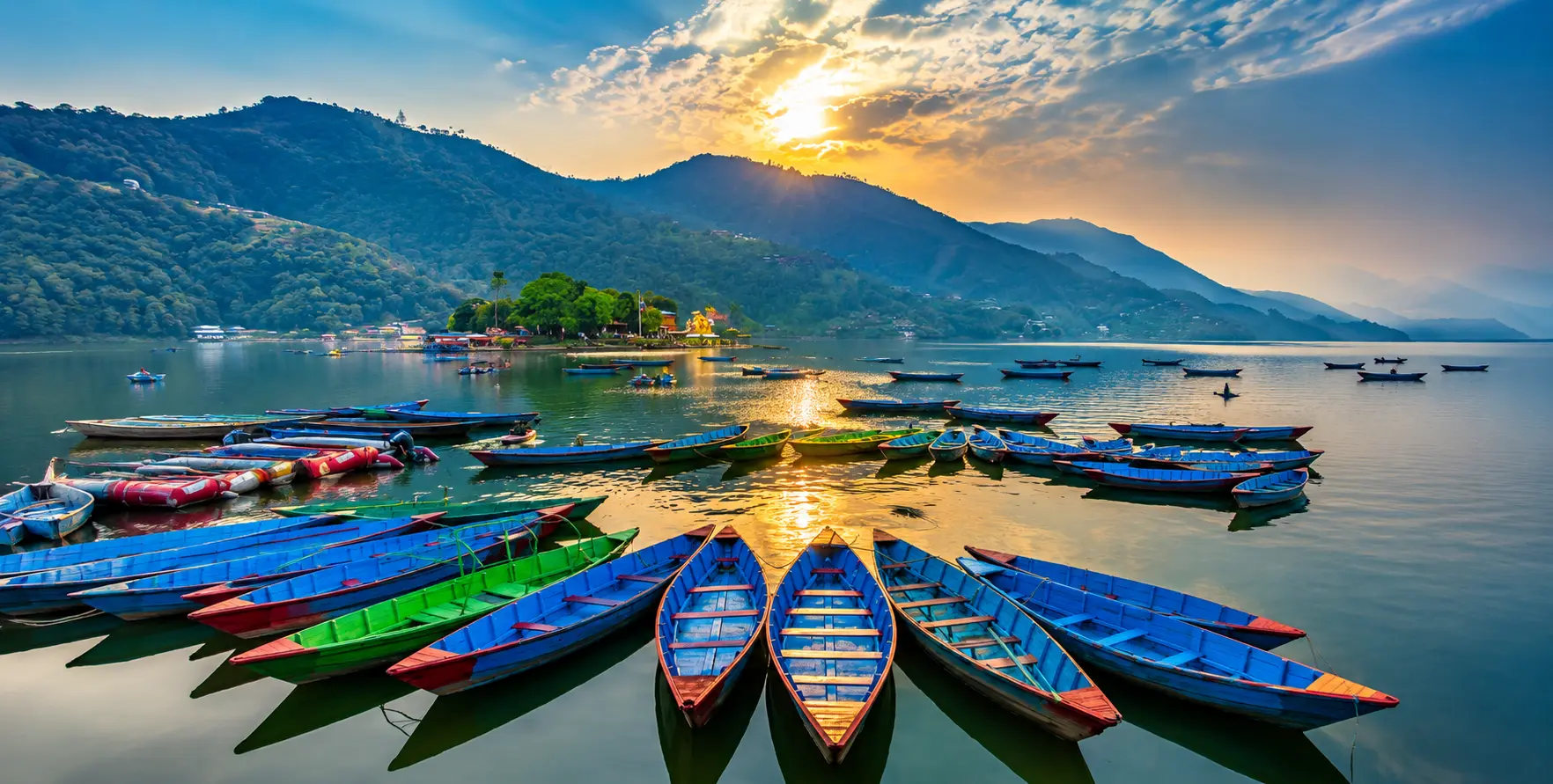
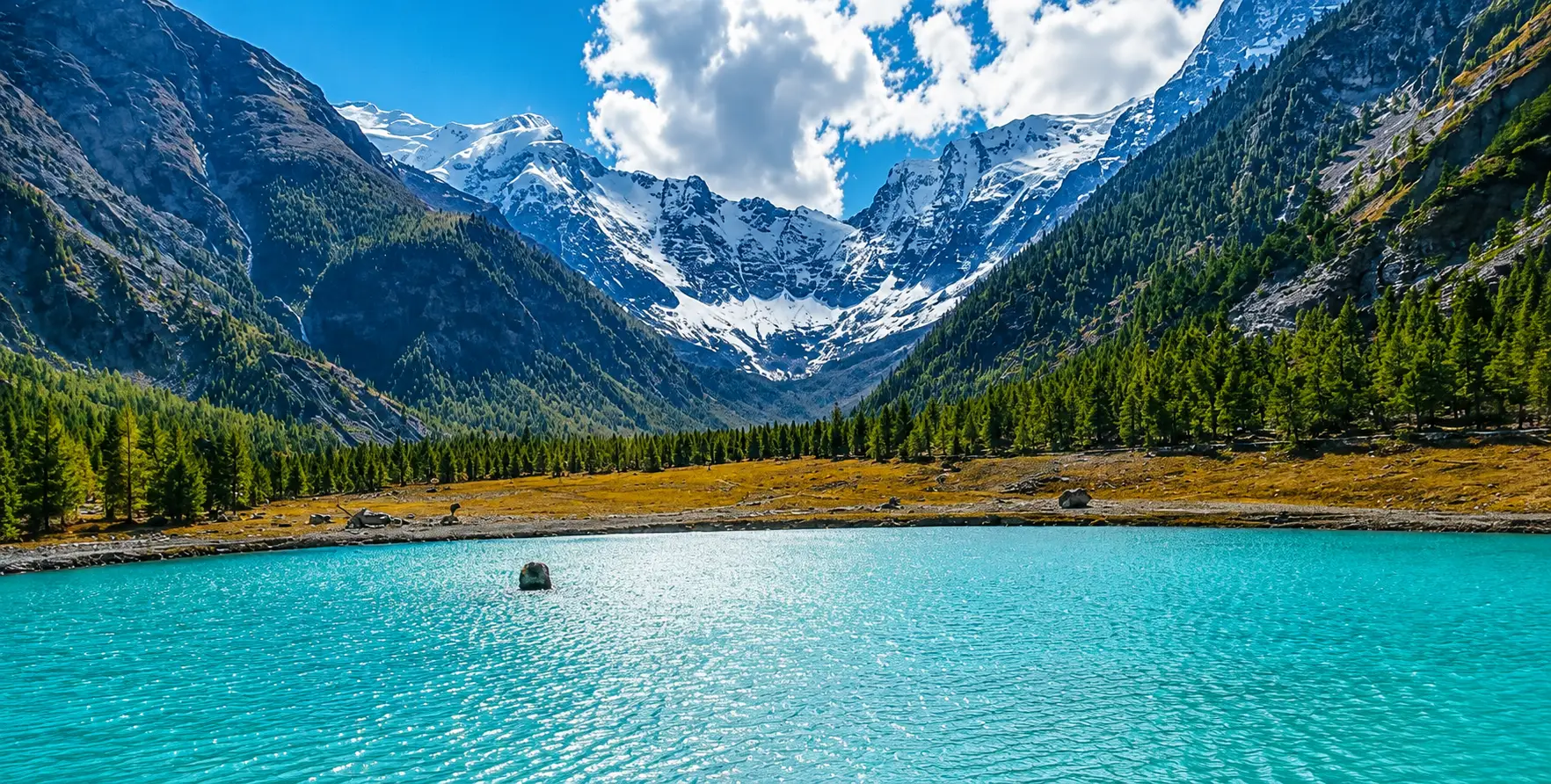
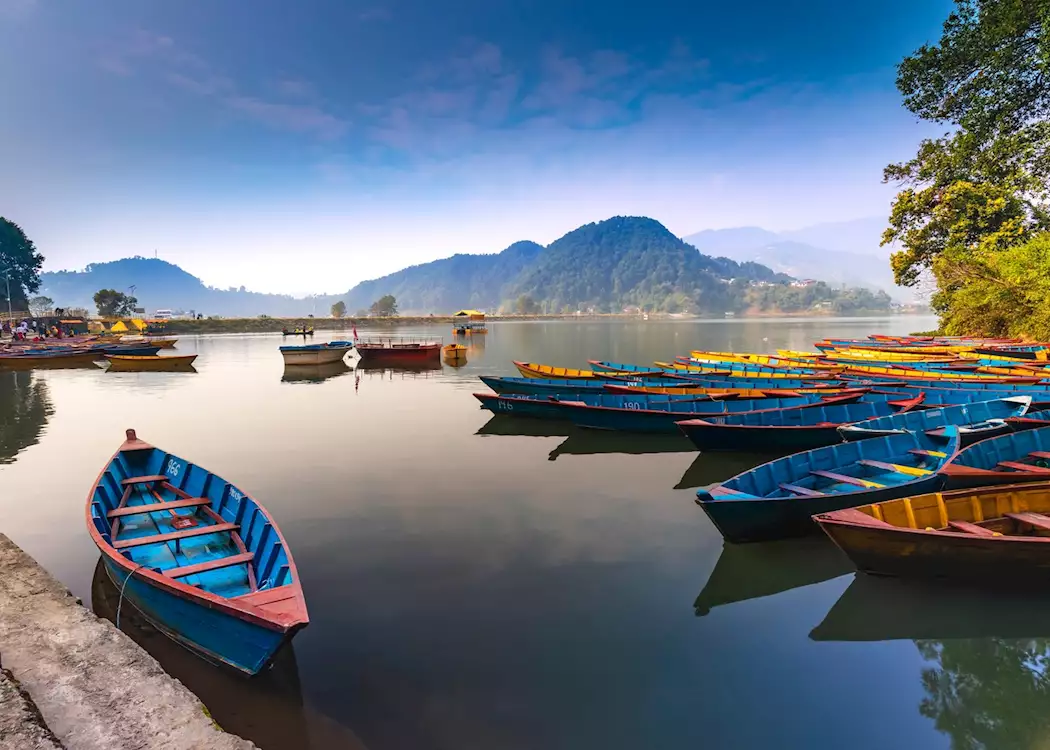
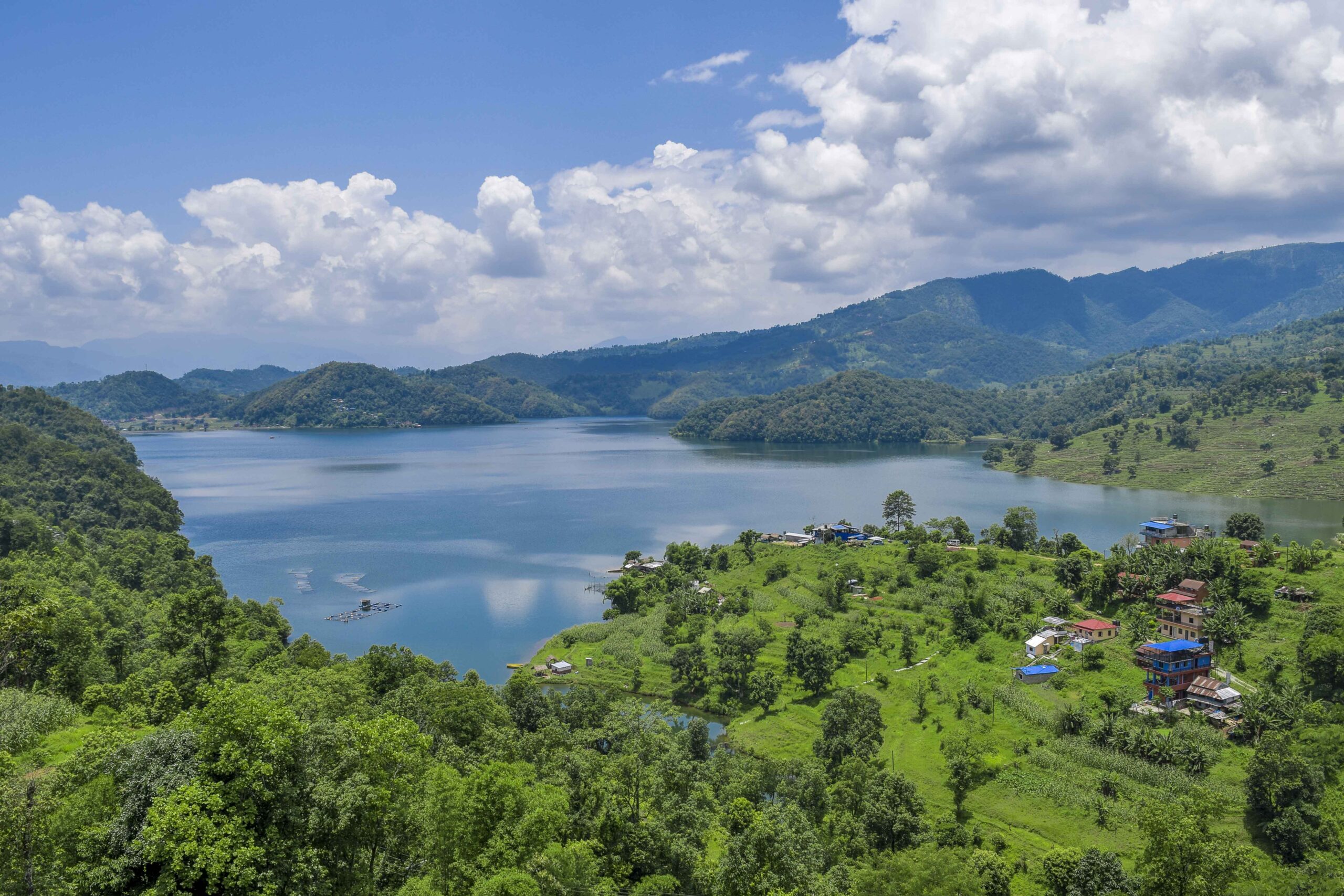
Begnas Lake Pokhara

Pokhara Airport to Lakeside Transfer – Complete Guide

Arriving at Pokhara Airport for the first time, I was wondering how to get to the Lakeside hotel area. You are not alone. Every year, thousands of travellers – trekkers, pilgrims, honeymooners, and adventure seekers – land at Pokhara Airport and need a reliable, affordable, and comfortable transfer to the Lakeside tourist district.

Whether you have just flown in from Kathmandu on a 25-minute domestic flight or arrived on one of the new international routes, getting from Pokhara Airport to Lakeside is straightforward when you know your options.

This complete 2026 guide covers every transport option from Pokhara Airport to Lakeside – private car transfer, pre-booked taxi, metered taxi, and more – with prices, travel times, tips for avoiding overcharging, and how to book a reliable vehicle with Vehicle Hiring Nepal before you even board your flight.

Pokhara Airport – Key Facts

Official Name: Pokhara Regional International Airport (PRN)

Location: Pokhara-24, Ranipauwa, Kaski District, Gandaki Province

Distance to Lakeside: Approximately 4 to 6 km, depending on your hotel location within Lakeside

Travel Time to Lakeside: 10 to 20 minutes by car or taxi (traffic dependent)

Airport Type: International airport – opened for international operations in 2023; domestic flights continue

Airlines Operating: Yeti Airlines, Shree Airlines, Tara Air, Summit Air, Buddha Air (domestic) + select international charters

Airport Facilities: Arrivals hall, baggage claim, small café, currency exchange counter, taxi desk

Pokhara’s new Regional International Airport opened in 2023 and represents a significant upgrade from the old Pokhara airport. The new terminal is modern, spacious, and well-organised. However, the area immediately outside the terminal can be chaotic with taxi touts and unofficial transport offers – knowing your options in advance makes the experience much smoother.

Distance and Travel Time: Pokhara Airport to Lakeside

Lakeside (also called Baidam or Lakeside Pokhara) is Pokhara’s main tourist district, along the eastern shore of Phewa Lake. Here is what to expect for the transfer:

RouteDistanceTravel TimeNotes
Airport to Lakeside (Baidam) North4 km10–12 minClosest Lakeside hotels to the airport
Airport to Lakeside (Central)5 km12–15 minMain Lakeside strip, most hotels
Airport to Lakeside (South end)6 km15–20 minFurthest hotels, near Pame Bazaar
Airport to Pokhara Bus Park7 km15–20 minFor onward bus connections
Airport to Pokhara Old Bazaar8 km20–25 minCity centre, local area
Airport to Sarangkot12 km25–35 minSunrise viewpoint hotels

Traffic in Pokhara is generally lighter than in Kathmandu. The transfer from the airport to Lakeside rarely takes more than 20 minutes except during special events, festivals, or occasional road construction.
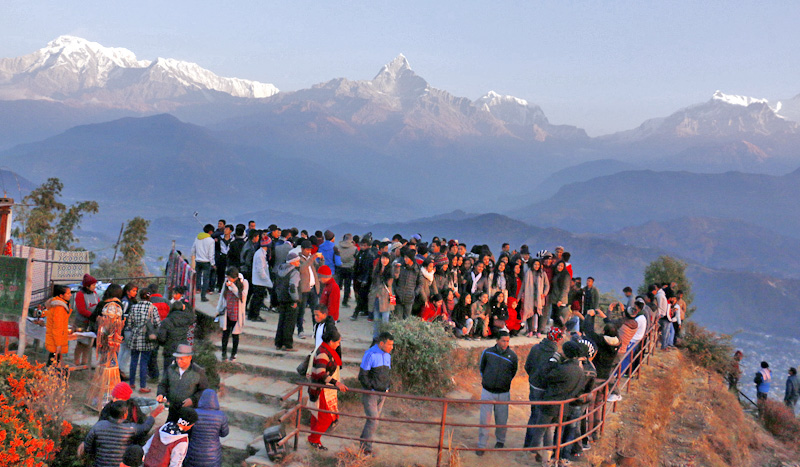
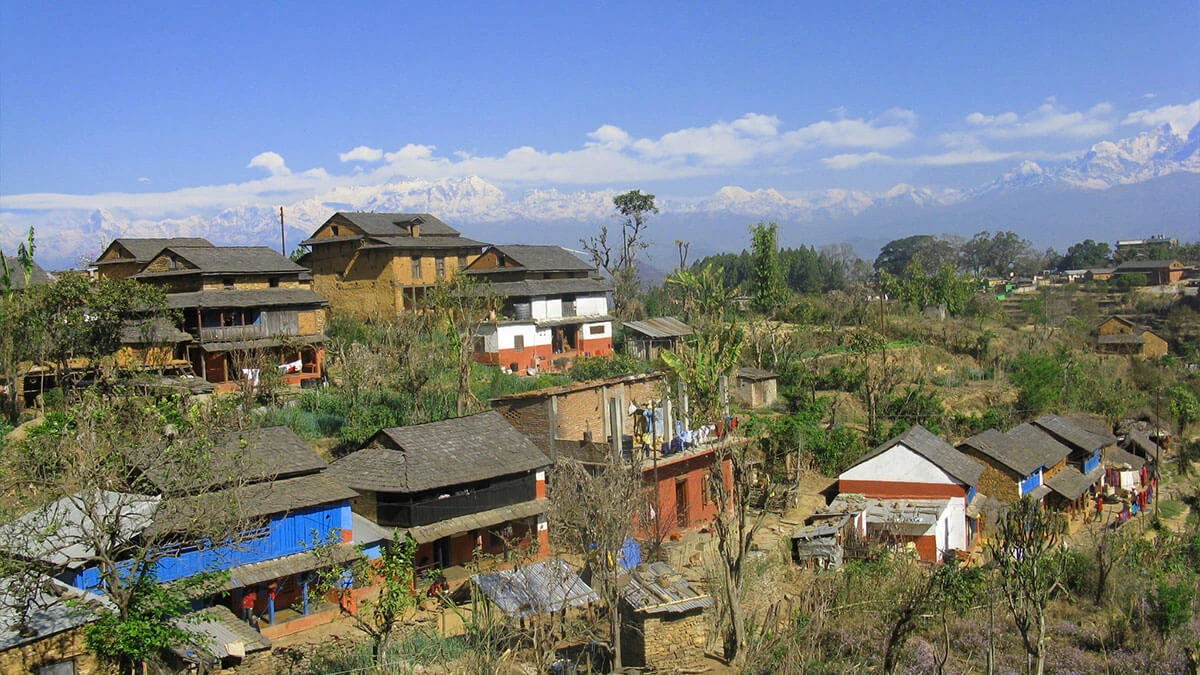
Sarangkot Pokhara

Transport Options: Pokhara Airport to Lakeside

There are four main ways to get from Pokhara Airport to Lakeside. Each has different advantages in terms of cost, convenience, comfort, and reliability:

Transport OptionPrice (NPR)Price (USD)Travel TimeBest For
Pre-booked Private Car (Vehicle Hiring Nepal)NPR 800–1,200USD 6–910–15 minReliability, comfort, groups, families
Airport Prepaid Taxi (from taxi desk)NPR 600–900USD 5–710–20 minSolo travellers, quick and easy
Metered Taxi (negotiate at exit)NPR 500–800USD 4–610–20 minBudget, be prepared to negotiate
Ride Share (inDriver / Pathao)NPR 400–600USD 3–510–20 minBudget, app required, signal needed
Local Tempo / Electric RickshawNPR 100–200/seatUSD 1–1.520–30 minUltra budget, shared, slow
Hotel Pickup (pre-arranged with hotel)Free or NPR 500Free–USD 410–20 minConvenience if the hotel offers service

Our recommendation: For most travellers, a pre-booked private car through Vehicle Hiring Nepal is the best option. You exit the airport knowing your driver is waiting with a name sign, the price is agreed in advance, and you go directly to your hotel with no negotiation or uncertainty. The small additional cost over a taxi is worth every rupee after a long flight.

Pre-Booked Private Car Transfer – The Best Option

Why Pre-Book with Vehicle Hiring Nepal?

Booking your airport transfer in advance with Vehicle Hiring Nepal is the smoothest and most stress-free way to arrive in Pokhara. Here is why our pre-booked service stands out:

  • Your driver is waiting at the arrivals exit with a sign bearing your name – no searching, no confusion
  • Price agreed before travel – no negotiation at the airport, no risk of overcharging
  • Flight tracking – your driver monitors your flight arrival time and adjusts for delays automatically
  • Air-conditioned, clean, well-maintained vehicle – not an ageing taxi
  • Luggage assistance – driver helps with trekking packs and heavy bags
  • Direct to your hotel door – driver knows all Lakeside hotels and guesthouses
  • Available 24 hours a day – early morning and late-night arrivals fully covered
  • WhatsApp communication with the driver before and during arrival

Private Transfer Price: Airport to Lakeside 2026/2027

VehicleCapacityPrice (USD)Price (NPR)Notes
Sedan Car (Toyota Corolla / Suzuki)1–3 paxUSD 6–9NPR 2000Most popular transfer vehicle
SUV / Toyota Fortuner4–5 paxUSD 9–13NPR 4000Families with luggage, comfort
Toyota Hiace Van7–14 paxUSD 14–20NPR 5000Groups, trekking teams
Coaster Bus (for large groups)15–22 paxUSD 25–35NPR 6000Arrival of large groups or tours

All prices are door-to-door from Pokhara Airport arrivals exit to your hotel in the Lakeside area. Prices are fixed and agreed at the time of booking – no hidden charges or surprises.
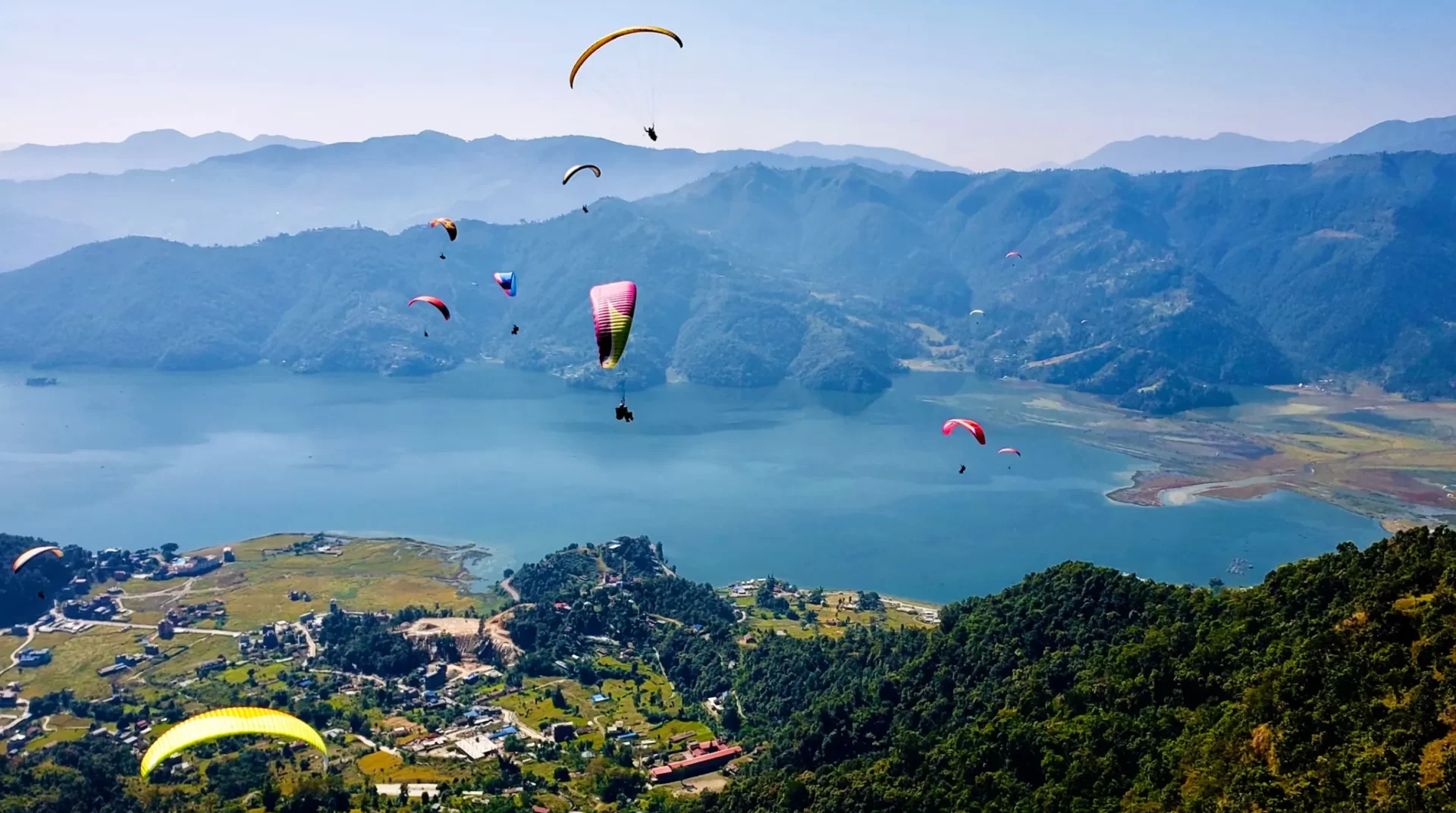
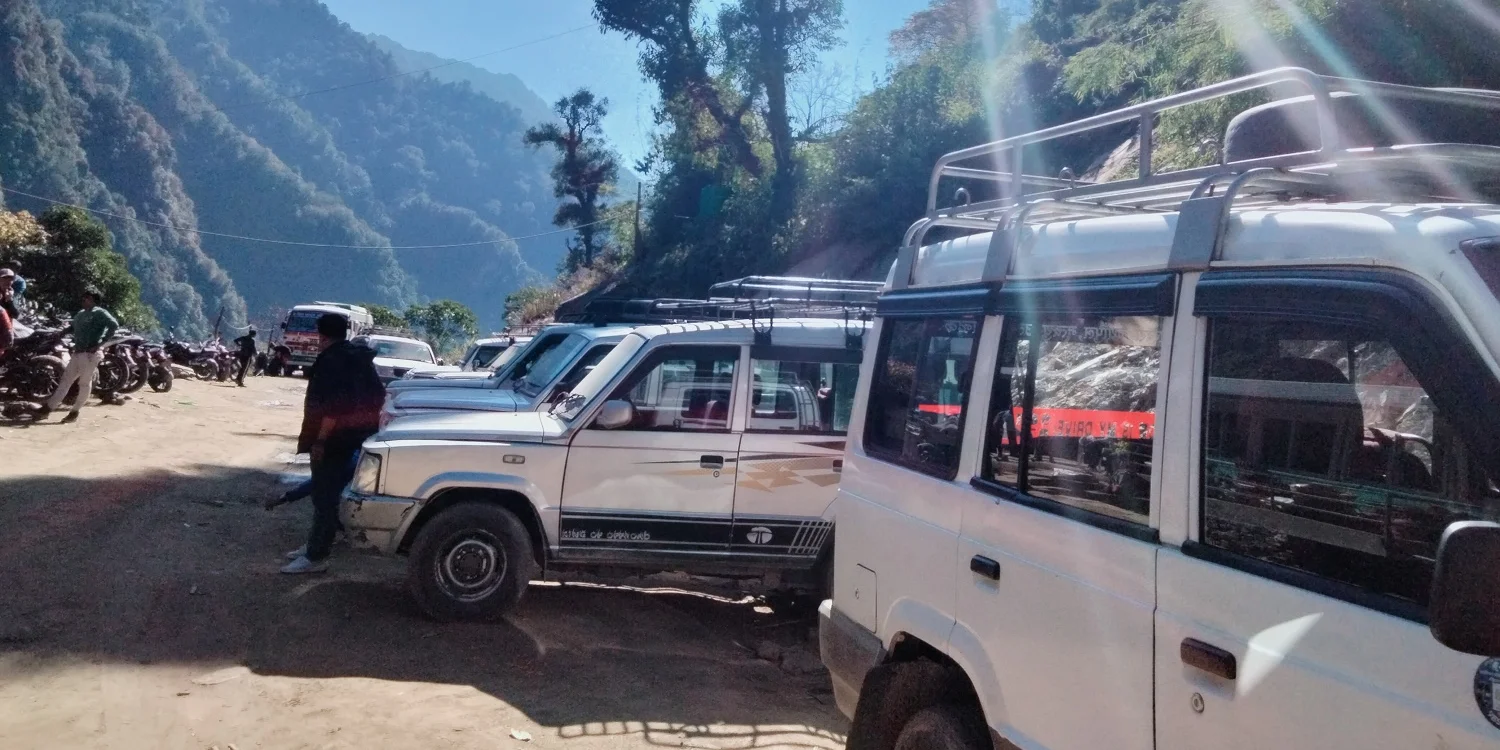
Pokhara to Sarangkot Jeep

Airport Prepaid Taxi – How It Works

If you have not pre-booked a private transfer, the next best option is the official prepaid taxi service inside Pokhara Airport arrivals. Here is how it works:

  1. Collect your baggage from the arrivals baggage carousel
  2. Before exiting through the main arrivals door, look for the official Taxi Booking Desk or Prepaid Taxi Counter inside the terminal.
  3. Tell the desk staff your destination – Lakeside North, Central Lakeside, or give your hotel name.
  4. The desk will quote you an official fixed price for the journey and issue a receipt.
  5. Pay the quoted price at the desk and collect your ticket/receipt
  6. Exit through the arrivals door and present your receipt to the taxi driver waiting outside
  7. The driver takes you directly to your destination – no meter, no negotiation

Official Prepaid Rate

estimate): NPR 600 to NPR 900 for most Lakeside destinations

The prepaid taxi system protects arriving passengers from overcharging and provides a receipt for accountability. Always use the official desk inside the terminal rather than accepting touts’ offers outside the exit.

What to Expect at Pokhara Airport Arrivals

Here is a step-by-step guide to the arrivals process at Pokhara Airport to help you navigate confidently:

Domestic Flight Arrival (from Kathmandu)

  1. The aircraft parks on the apron, and passengers walk across the tarmac to the arrivals terminal.
  2. Proceed to the domestic baggage claim area – luggage is usually available within 10 to 15 minutes of landing.
  3. Collect your bags and exit through the main arrivals door to the forecourt area.
  4. If pre-booked, your Vehicle Hiring Nepal driver will be waiting with a name board at the arrivals exit or in the designated meeting area.
  5. If using a prepaid taxi, the taxi booking desk is located inside, before the exit – use it before going outside.
  6. Avoid accepting transport offers from touts outside the terminal who approach you before you arrange a vehicle.

International Flight Arrival

  1. Proceed to immigration and present your passport and Nepal visa (or obtain a visa on arrival at the immigration counter)
  2. Collect your baggage from the international arrivals carousel
  3. Pass through customs (standard declaration process)
  4. Exit to the arrivals hall, where your pre-booked driver, travel agent representative, or hotel pickup will be waiting
  5. A currency exchange counter is available in the arrivals hall if you need Nepali Rupees

Tips to Avoid Common Airport Taxi Problems in Pokhara

Airport taxis and transport touts in Pokhara – as at most airports – can be persistent and sometimes charge well above the fair rate for unwary travellers. Here are our tips to ensure you pay a fair price and travel safely:

  • Always pre-book your transfer before arriving – eliminates all negotiation stress entirely
  • If using the taxi desk, always go to the official prepaid counter INSIDE the terminal before exiting
  • Do not engage with touts who approach you as you exit the terminal building – be politely firm and walk to the taxi desk or your pre-arranged driver.
  • Agree on the price BEFORE getting into any taxi without a meter or prepaid receipt.
  • The standard Lakeside transfer should not cost more than NPR 800-1,000 in a metered taxi – if quoted significantly more, decline and try another driver.
  • For metered taxis, the meter should start at NPR 14 per 100m – check that the meter is running if you agreed to use the meter.
  • Always confirm your destination clearly – say your hotel name and ‘Lakeside Baidam’ to avoid being taken to the wrong area of Pokhara.
  • If using a ride-share app, wait for the signal inside the terminal building before booking – the airport area has good mobile coverage.
  • Keep your luggage within sight at all times in the forecourt area.

Lakeside Pokhara – Arrival Guide

Once your vehicle drops you at Lakeside, here is what to know:

Lakeside Area Overview

Lakeside (Baidam) is a 2-km-long strip of hotels, restaurants, trekking agencies, souvenir shops, and cafés running along the eastern shore of Phewa Lake. It is divided into roughly three sections – Lakeside North (quieter, closer to the airport), Lakeside Central (busiest, with the most restaurants and shops), and Lakeside South (near Pame Bazaar, with a slightly more local feel). Almost all tourist hotels in Pokhara are within or just off this strip.

First Things to Do on Arrival

  • Check into your hotel and freshen up – most hotels allow early check-in if a room is available, or store luggage if you arrive before the standard check-in time.
  • Exchange currency or withdraw Nepali Rupees from one of the many ATMs on the Lakeside road
  • Visit a trekking agency if you need to purchase ACAP permits, TIMS cards, or arrange a guide for your trek.
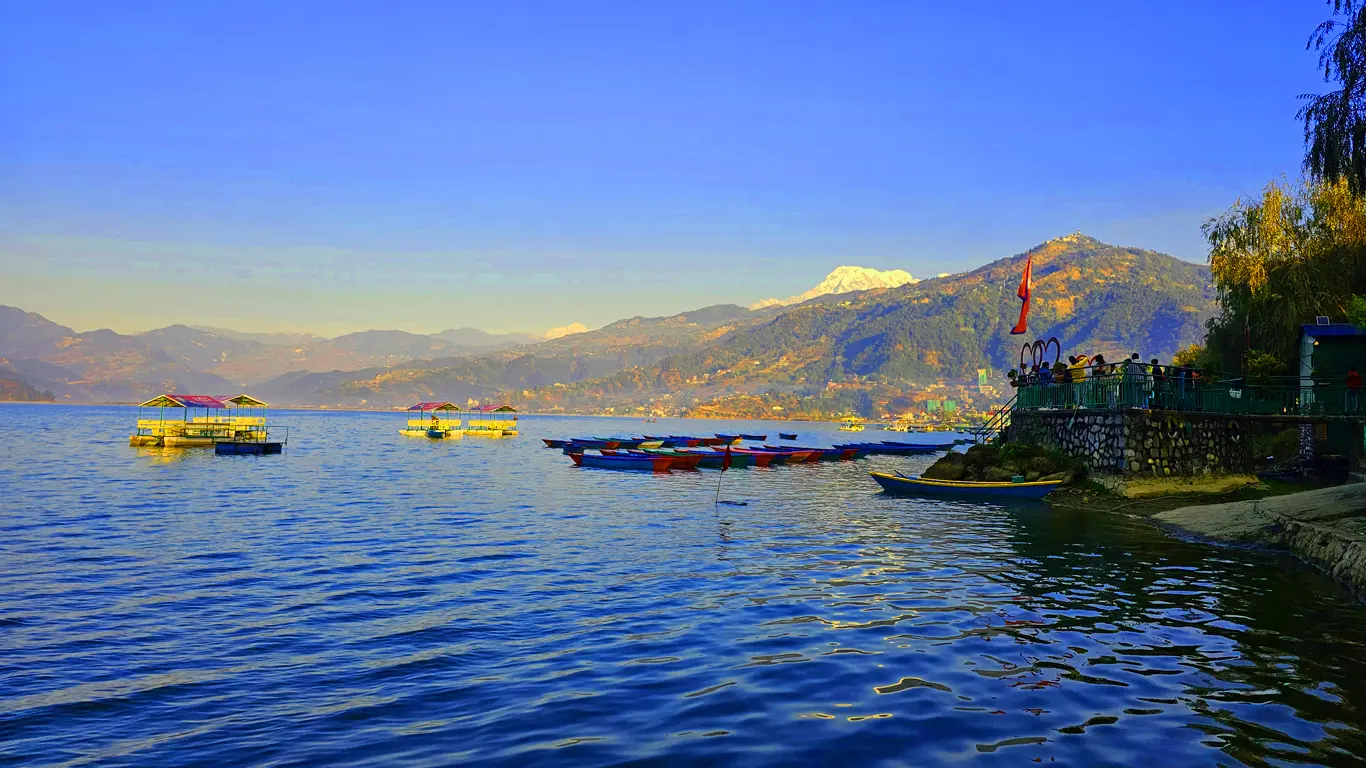
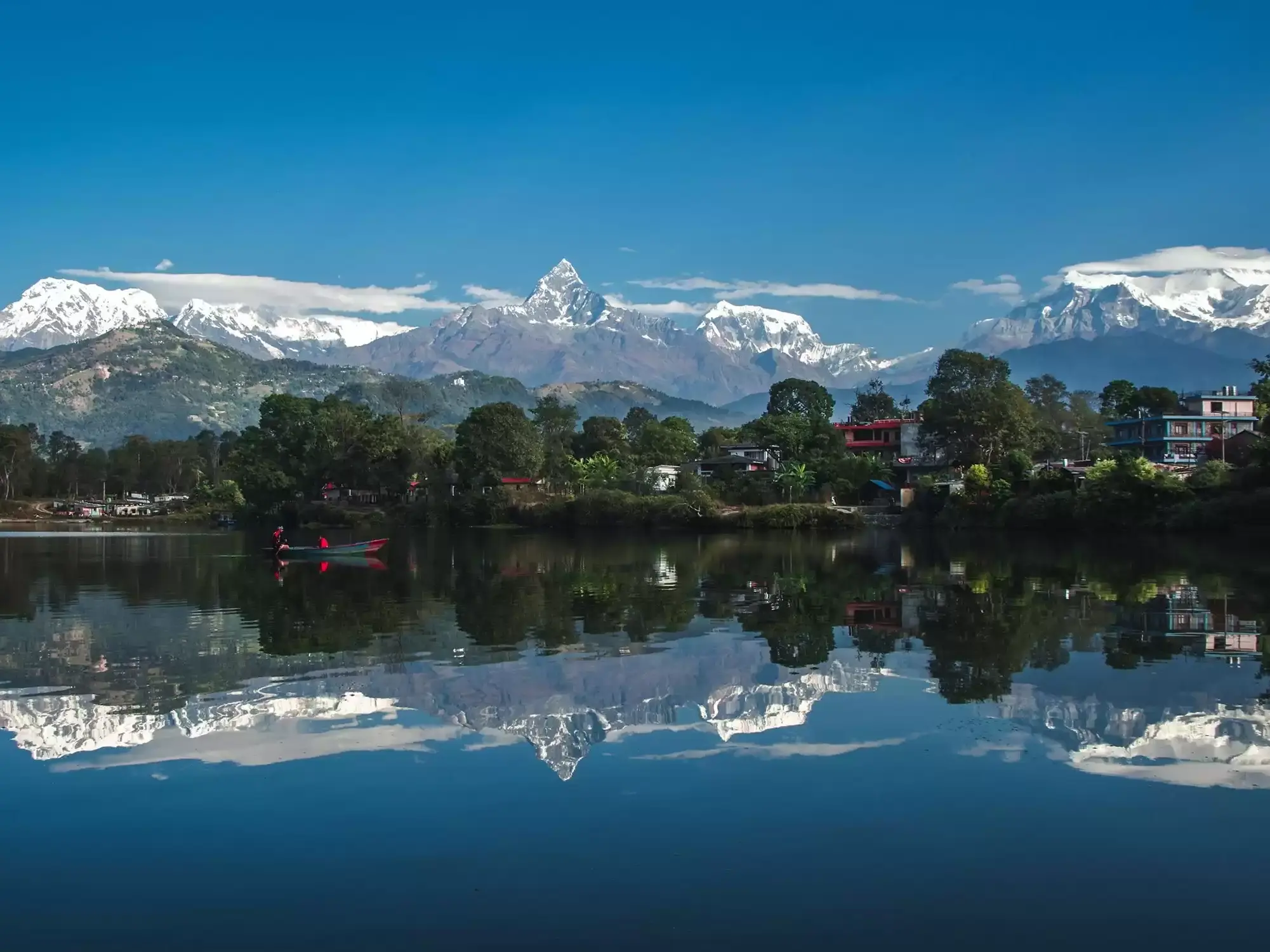
  • Walk to the Phewa Lake shore – just 2 to 5 minutes from most Lakeside hotels – for your first view of the lake and the Annapurna range reflected in the water.
  • Book your Sarangkot sunrise transport for the following morning if planned – arrange a taxi or vehicle for a 5:00 AM departure.
  • If continuing to Mustang, Muktinath, or Nayapul the following day, contact Vehicle Hiring Nepal to confirm your onward vehicle booking.

Key Landmarks Near Lakeside

  • Phewa Lake – the iconic blue lake with the Annapurna range reflection – 2 to 5 min walk from most hotels
  • Barahi Temple – an island temple in the middle of Phewa Lake, accessible by rowboat
  • Lakeside main road (Baidam Marg) – main strip with restaurants, cafés, and shops
  • International Mountain Museum – 20 min walk or 5 min drive from central Lakeside
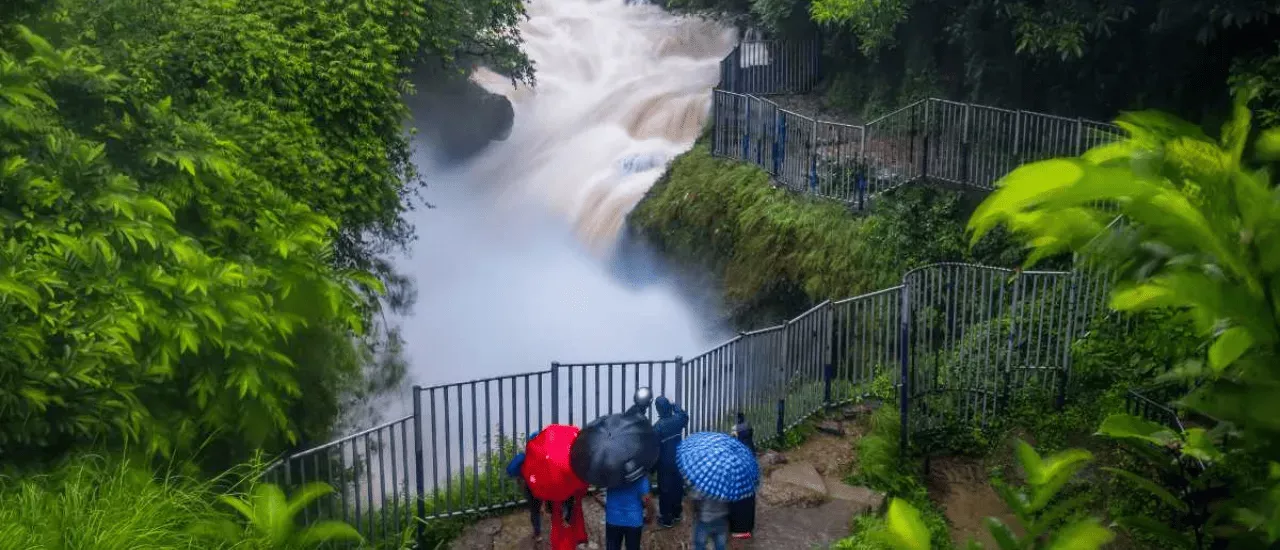
  • Devi’s Fall (Patale Chango) – 15 min drive southwest from Lakeside
  • World Peace Pagoda – visible from Lakeside across the lake, accessible by boat, foot, or by road
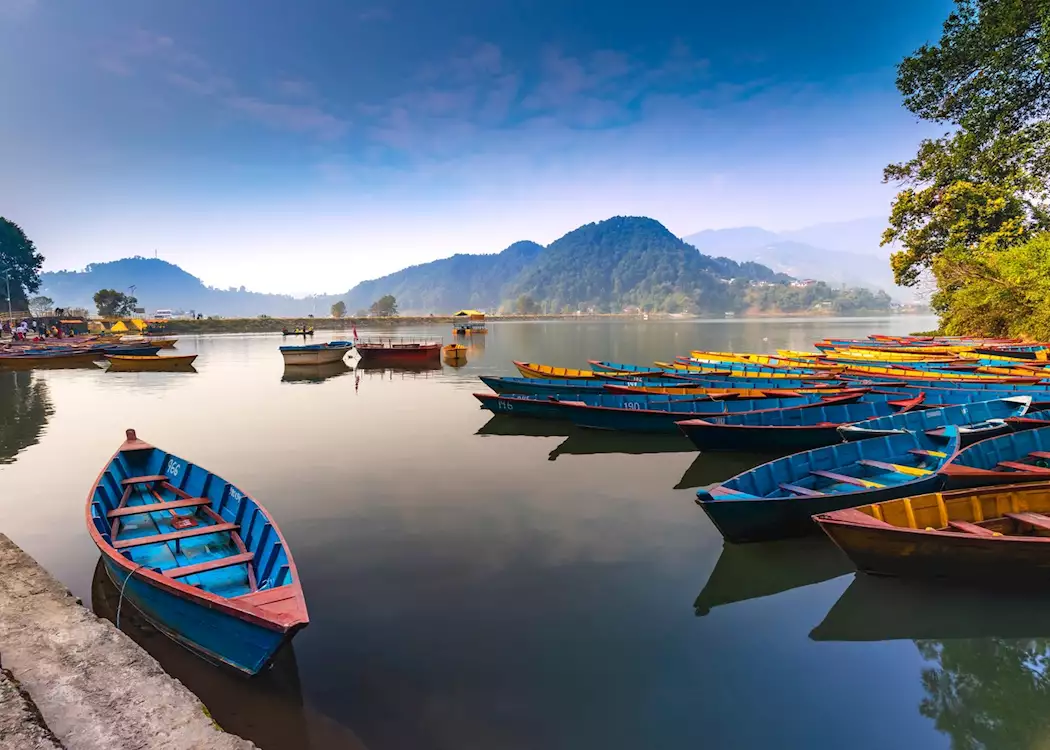
Pokhara

Transfer from Lakeside to Pokhara Airport – Return Journey

At the end of your Pokhara stay, you will need a transfer from Lakeside back to the airport for your departure flight. Here is what to know:

Flight TypeCheck-in DeadlineDepart Lakeside byJourney Time
Domestic flight (to Kathmandu)45 min before departure60–75 min before flight10–20 min drive
International flight2 hrs before departure2.5–3 hrs before flight10–20 min drive
Early morning flight (7–8 AM)45 min before departureDepart the hotel at 6:00 AM10–15 min – light traffic

Pokhara domestic flights are subject to weather delays and occasional early departures – always check your flight status on the airline app or website the evening before and morning of travel. Budget airlines in Nepal sometimes depart early if all passengers are checked in ahead of schedule.

Lakeside to Airport Transfer Price

The return transfer from Lakeside to Pokhara Airport costs the same as the inbound transfer – approximately USD 6 to USD 9 by a pre-booked private sedan, or NPR 600 to NPR 900 by a metered taxi. Book your return transfer with Vehicle Hiring Nepal at the same time as your arrival transfer for combined convenience and the best price.

Vehicle Hiring Nepal can arrange transfers from Pokhara Airport, not just to Lakeside but to any destination in or around Pokhara. Here are the most frequently requested airport transfer destinations:

DestinationDistance from AirportTravel TimeApprox. Price (USD)
Lakeside / Baidam (central)5 km12–15 minUSD 6–9
Sarangkot12 km25–35 minUSD 10–15
Pokhara Old Bazaar / City8 km20–25 minUSD 7–10
Begnas Lake area18 km30–40 minUSD 12–18
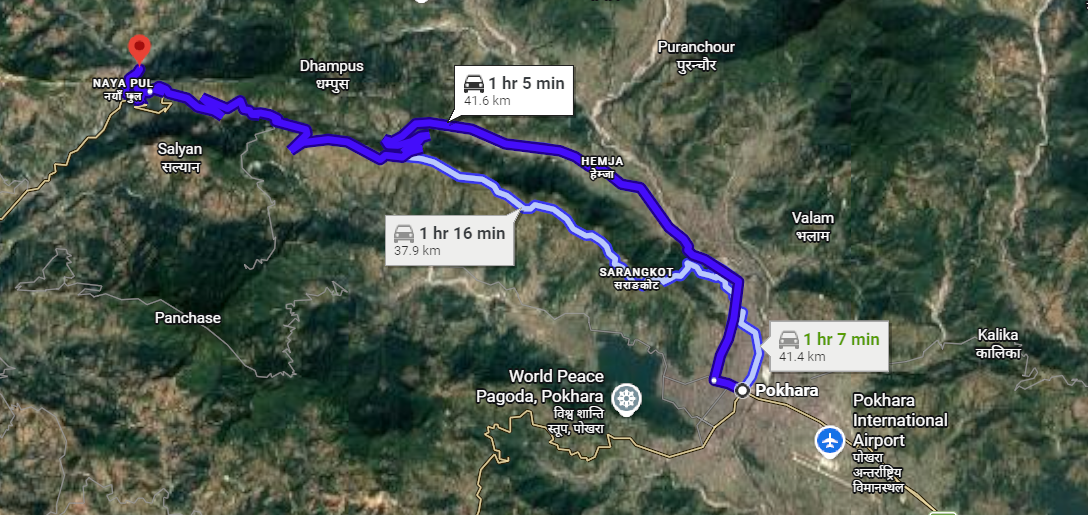
Nayapul (trek start)42 km60–75 minUSD 25–40
Beni (Mustang road start)62 km1.5–2 hrsUSD 60–100
Kathmandu (overland)200 km6–7 hrsUSD 100–160

Kathmandu to Pokhara tour

Airport Transfer for Trekkers – Special Considerations

Many travellers arriving at Pokhara Airport are trekkers heading immediately or the next day to Nayapul, Besisahar, Jomsom, or other trekking trailheads. Here is advice specific to trekkers:

  • If your trekking pack is large (70L+), inform Vehicle Hiring Nepal when booking so we dispatch a vehicle with adequate boot space – a sedan may not fit large packs for 3+ trekkers
  • If arriving on a morning flight and planning to start the trek the same day, pre-book a combined Pokhara Airport to Nayapul transfer – we can take you directly from the airport to the trailhead without going to Lakeside first.
  • Trekking permits (ACAP and TIMS) can be obtained at the Nepal Tourism Board office in Damside, Pokhara – ask your driver to stop there en route to Lakeside if you still need permits.
  • The Nepal Tourism Board Damside office is approximately 10 minutes from the airport and 5 minutes from central Lakeside – easily combined with your airport transfer.
  • If arriving for very early-morning trekking plans, confirm the night before that your permit office appointment is realistic – the NTB Damside office opens at 9:00 AM on weekdays.
  • Porter and guide hiring in Pokhara – your hotel trekking desk or the Lakeside trekking agencies can arrange guides and porters for the following morning. Arrive by early afternoon for same-day or next-day arrangements.

Combine Airport Transfer with Pokhara Sightseeing

If you arrive in Pokhara with time to spare before your hotel check-in or afternoon trekking commitment, Vehicle Hiring Nepal can combine your airport transfer with a brief city sightseeing tour. Popular add-ons to the airport transfer include:

  • Devi’s Fall (Patale Chango) – 15 min from the airport, dramatic underground waterfall, approximately 30 min visit
  • Gupteshwor Cave – directly across from Devi’s Fall, a sacred Hindu cave temple, 20 min visit
  • Bindabasini Temple – Pokhara’s most sacred Hindu temple in the old bazaar area, 15 min visit
  • Seti River George Viewpoint – dramatic narrow gorge where the Seti River runs underground, 15 min visit
  • International Mountain Museum – Nepal’s finest mountaineering museum with Himalayan climbing history, 1 to 1.5 hr visit

A combined airport transfer and 2-hour sightseeing tour by private car costs approximately USD 20-30, depending on the vehicle type and sites visited. Contact Vehicle Hiring Nepal to design your custom airport arrival experience.

Pokhara Airport Weather and Flight Delays

Pokhara Airport is in a mountain valley, and mountain weather can affect flight operations. Here is what travellers need to know:

  • Morning flights (7:00–10:00 AM) are most reliable – morning conditions in Pokhara are usually clear and calm
  • Afternoon flights face an increasing risk of cloud, haze, and wind as the day progresses
  • Monsoon season (June–September) has the highest rate of flight delays and cancellations at Pokhara – allow extra buffer days if flying during this period.
  • Peak trekking season (October–November and March–May) generally has excellent flying conditions.
  • Winter mornings (December–February) can have fog and low cloud that delays early flights – usually clears by 9:00–10:00 AM.
  • Always check your flight status the evening before travel and the morning of departure on the airline’s app or website.
  • Vehicle Hiring Nepal drivers track flight status in real time – if your flight is delayed, your driver will wait and adjust pickup timing automatically.
  • If your flight is cancelled, contact Vehicle Hiring Nepal immediately, and we will help reschedule your transfer to match the new flight time.

Pokhara airport to Lakeside transfer

Why Book Your Transfer with Vehicle Hiring Nepal?

With multiple transport options available at Pokhara Airport, here is why Vehicle Hiring Nepal is the most trusted choice for travellers in 2026:

  • 8,000+ happy customers served across Nepal’s most popular routes
  • Professional, English-speaking drivers who know every hotel in Lakeside
  • Real-time flight tracking – your driver automatically adjusts for early or late arrivals
  • Fixed, transparent pricing – the price agreed at booking is the price you pay, guaranteed
  • Clean, well-maintained air-conditioned vehicles – not like ageing airport taxis
  • 24/7 WhatsApp availability – contact us any time for booking, changes, or assistance
  • Flexible cancellation – life happens, contact us, and we will find a solution
  • Same service available for return transfer, Lakeside to the airport – book both ways together
  • Extend your transfer into Pokhara sightseeing, Nayapul drop-off, or onward Mustang journey

How to Book Your Pokhara Airport to Lakeside Transfer

  • Contact Vehicle Hiring Nepal via WhatsApp or visit vehiclehiringnepal.com
  • Provide your flight details – airline, flight number, and scheduled arrival time at Pokhara.
  • Give your hotel name and exact address in Lakeside (or we’ll look it up for you)
  • Confirm your group size and the number of luggage pieces/trekking packs
  • Choose your vehicle type – sedan for 1–3 pax, SUV for 4–5, Hiace for groups
  • Specify any additional stops required – NTB permit office, sightseeing, or direct to Nayapul
  • Receive instant booking confirmation with your driver’s name and WhatsApp number
  • Your driver will message you on the arrival day to confirm they are at the airport waiting

WhatsApp
Email: [email protected]
Website: www.vehiclehiringnepal.com

Frequently Asked Questions

How far is Pokhara Airport from Lakeside?

Pokhara Airport is approximately 4 to 6 km from the Lakeside tourist area, depending on your specific hotel location within Lakeside. By private car or taxi, it takes 10 to 20 minutes in normal traffic.

How much does a taxi from Pokhara Airport to Lakeside cost?

An official prepaid taxi from the airport taxi desk costs approximately NPR 600-900 to most Lakeside destinations in 2026. A pre-booked private car from Vehicle Hiring Nepal costs USD 6 to USD 9 (approximately NPR 800 to NPR 1,200) for 1 to 3 passengers, with the added benefits of a fixed price, nameplate pickup, flight tracking, and door-to-door service.

Is there a bus from Pokhara Airport to Lakeside?

No direct public bus runs from Pokhara Airport to Lakeside. Local tempos (electric three-wheelers) run on nearby roads and may get you close to Lakeside for NPR 100 to NPR 200 per seat, but are slow, crowded, and not practical with trekking luggage. We strongly recommend a taxi or pre-booked private car for airport transfers with luggage.

What if my flight is delayed – will my driver still be there?

Yes. Vehicle Hiring Nepal drivers track all flights in real time. If your flight is delayed by any amount of time, your driver will automatically adjust their waiting time and will be at the arrivals exit when you land.

You will receive a WhatsApp update from your driver confirming they are aware of the delay and are still waiting.

Can I book a transfer for a very early-morning or late-night arrival?

Yes. Vehicle Hiring Nepal operates 24 hours a day, 7 days a week. Domestic flights to Pokhara typically operate from approximately 6:30 AM to 6:00 PM.

For any flight in this window, our drivers are available. International charter flights may operate at different hours – contact us with your specific flight time, and we will confirm availability.

Can I get a vehicle from the airport directly to Nayapul or Beni for my trek?

Yes. This is a popular option for trekkers arriving on morning flights who want to reach the trailhead the same day. We can arrange a direct airport-to-Nayapul transfer (approximately 42 km, 60 to 75 minutes) or an airport-to-Beni transfer (approximately 62 km, 1.5 to 2 hours).

Please let us know at the time of booking if you need a direct trailhead transfer, and we will dispatch the appropriate vehicle.

What vehicles are available for group airport transfers?

Vehicle Hiring Nepal provides sedan cars for 1 to 3 passengers, SUVs and Jeeps for 4 to 6 passengers, Toyota Hiace vans for groups of 7 to 14, and Coaster buses for groups of 15 to 22. For trekking groups with large backpacks, we recommend an SUV or Hiace van to ensure adequate luggage space. Contact us with your group size, and we will recommend the most suitable vehicle.

Is the new Pokhara International Airport fully operational in 2026?

Pokhara Regional International Airport (the new airport) has been operational since 2023. In 2026, domestic flights from Kathmandu, Jomsom, and other destinations in Nepal will continue to operate from this airport. International flight operations are gradually increasing, with select airlines operating charter and scheduled international services. Check with your airline for the latest route information to the new Pokhara airport.

Final Thoughts

Arriving in Pokhara is the beginning of an extraordinary Nepal experience – and it should start smoothly from the very first moment you step off the aircraft. A pre-booked private transfer from Pokhara Airport to Lakeside with Vehicle Hiring Nepal ensures that the first impression of Pokhara is positive, comfortable, and free from the stress of negotiating with touts or searching for transport with a heavy trekking pack.

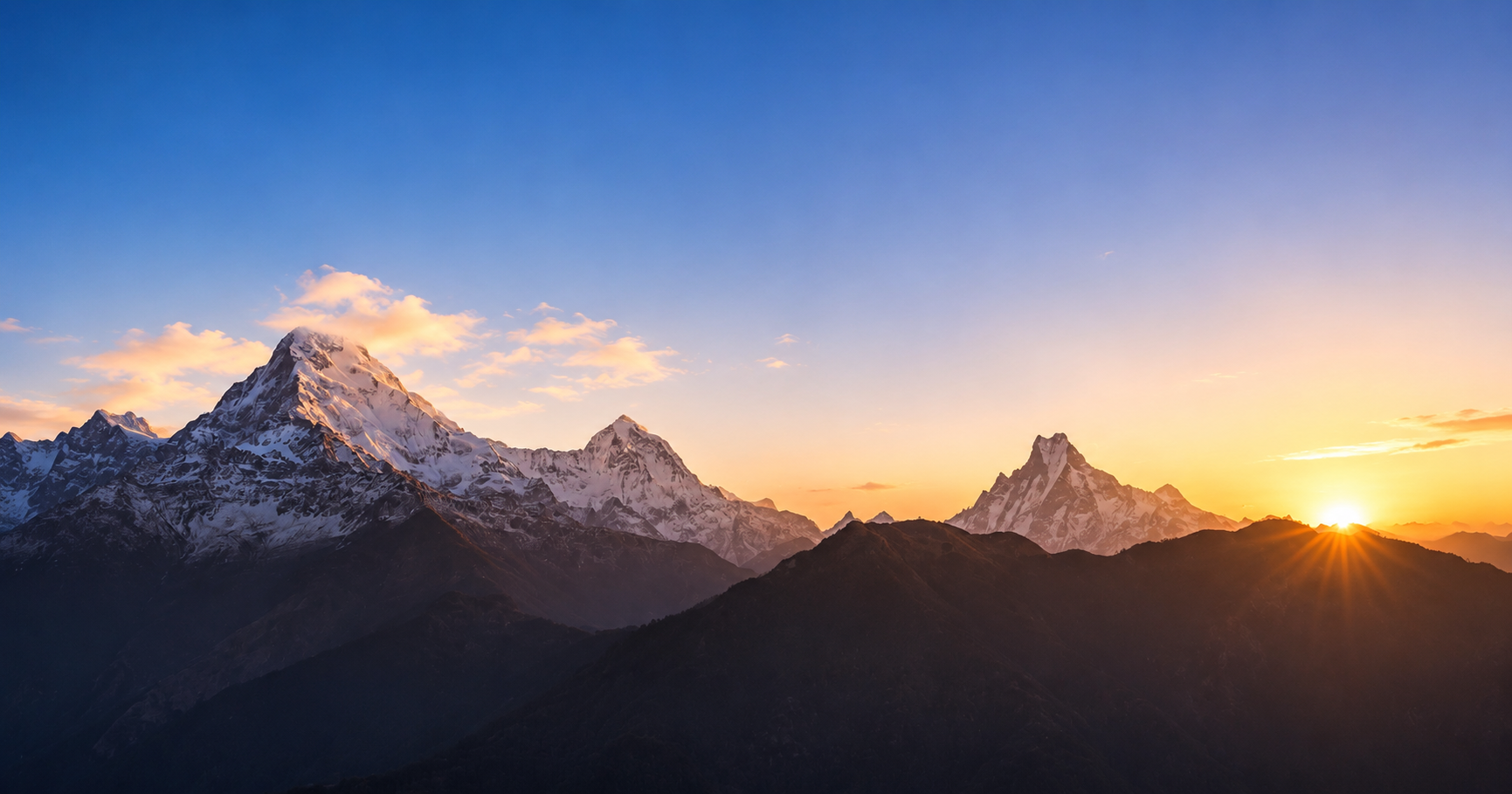
In just 10 to 20 minutes, your driver will have you at your Lakeside hotel, overlooking Phewa Lake, with the Annapurna range gleaming above the water – one of the world’s most beautiful hotel views. Let us handle the transfer so you can focus on what you came to Pokhara for.

Book your Pokhara Airport-to-Lakeside transfer today. Contact Vehicle Hiring Nepal on WhatsApp or visit vehiclehiringnepal.com. We also provide transfers from Lakeside to the airport for your departure – book both directions together for the best combined price.

For travellers who have completed their trek and plan to explore Kathmandu, we recommend continuing your journey with our trusted sister companies, Trek Nepal Himalayas and Alpine Luxury Treks. We specialise in organising a wide range of travel experiences across Nepal, from classic trekking adventures to cultural and wildlife tours.

Our top offerings include iconic journeys such as the Everest Base Camp Trek, in-depth Kathmandu sightseeing tours, striking Nagarkot sunrise experiences, and exciting Chitwan jungle safari and luxury packages. We can also arrange short hikes, heritage tours, mountain flights, and customised travel plans tailored to your schedule and interests.

Whether you are looking for a budget-friendly trip or a luxury trekking experience with top-end lodges, private guides, and high-end services, we manage every detail professionally. Our goal is to provide a smooth transition from your trekking adventure to a comfortable) and a memorable travel experience in Nepal.
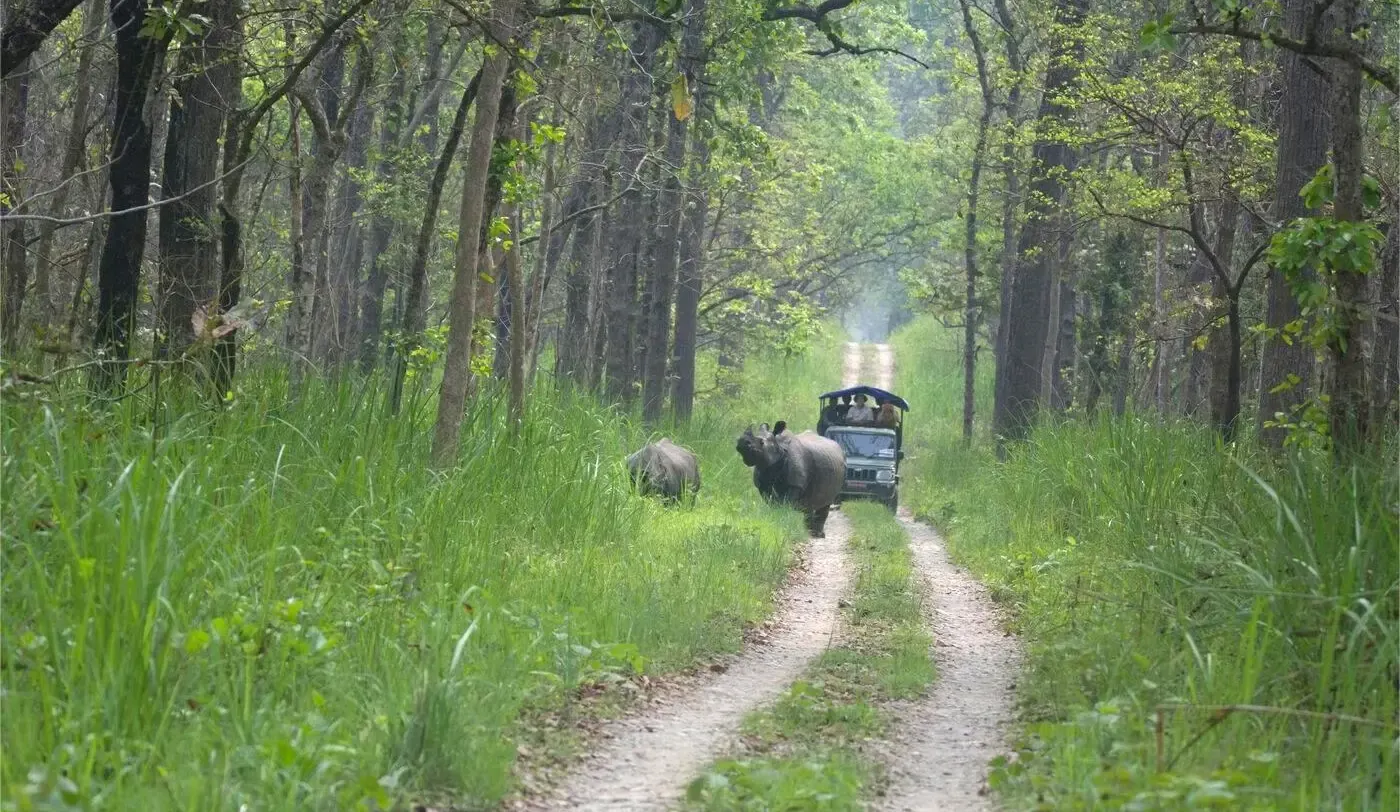
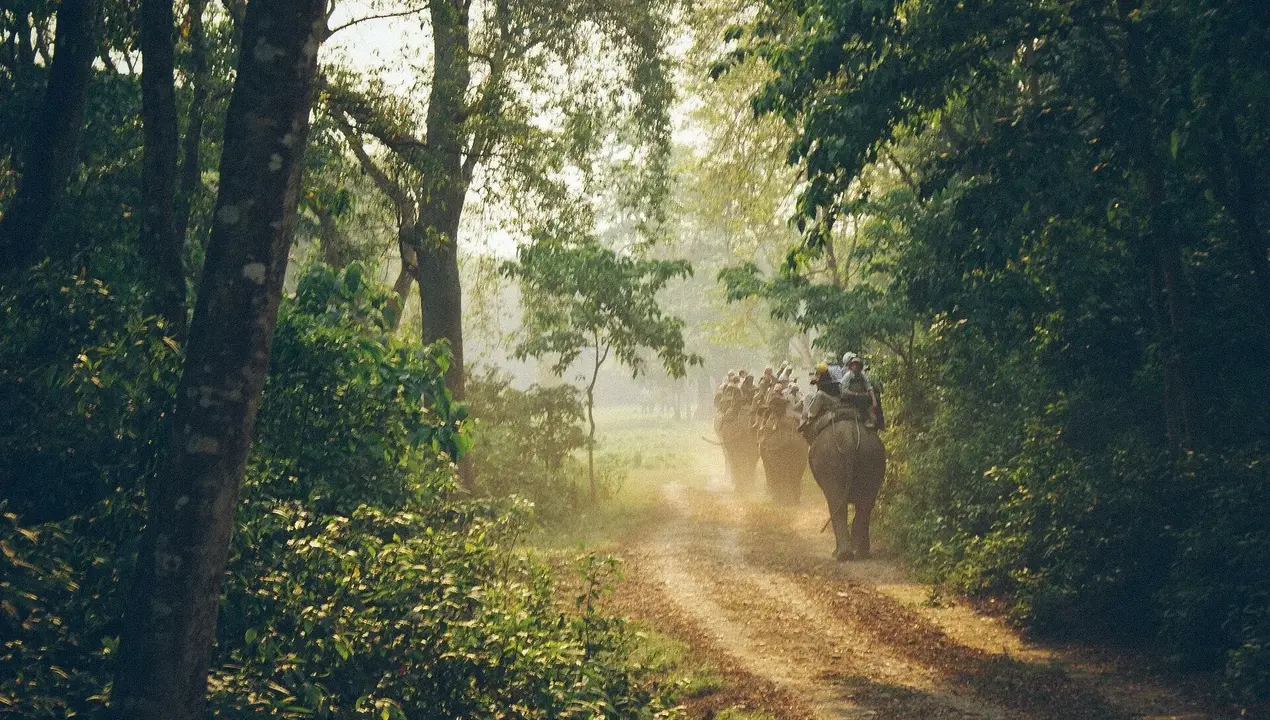
Chitwan to Pokhara Family Vehicle Hire

KTM to Chitwan

Chitwan to Pokhara Family Vehicle Hire: Complete Guide for Families

Nepal’s most beloved family travel circuit almost always includes two legendary destinations: Chitwan National Park and Pokhara. After the excitement of jungle safaris in Chitwan — spotting one-horned rhinoceroses, Bengal tigers, wild elephants, and gharial crocodiles in their natural habitat — most families continue their Nepal adventure to the beautiful lakeside city of Pokhara, gateway to the Annapurna Himalayan range.

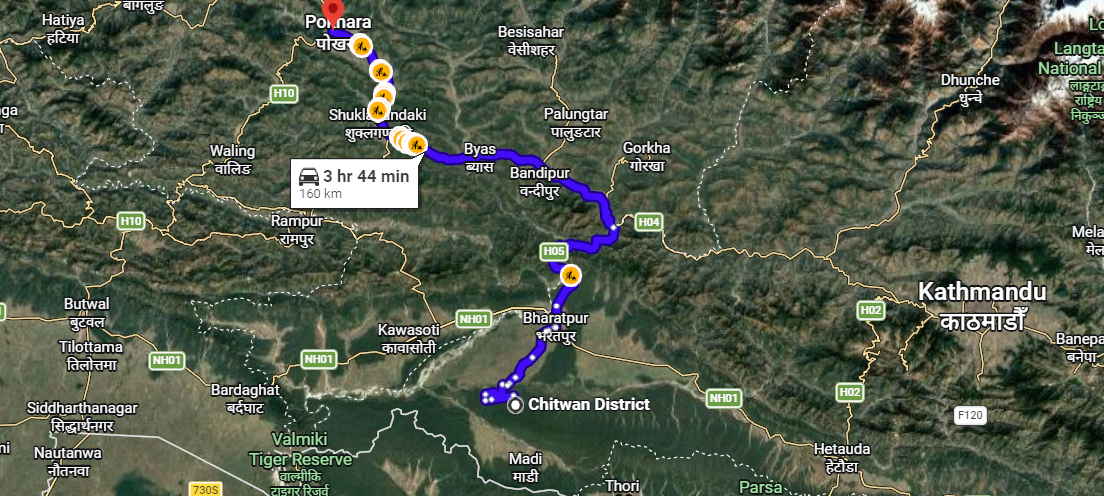
The journey from Chitwan to Pokhara is about 155 to 160 kilometres along Nepal’s well-maintained highway network, making it one of the country’s most popular and scenic road transfers. For families travelling together, the right vehicle makes the 4- to 6-hour journey comfortable, enjoyable, and stress-free for parents and children alike.

At Nepal Vehicle Hiring Pvt Ltd, we specialise in family private vehicle hire along the Chitwan-to-Pokhara route. From compact private cars for small families to spacious Toyota Hiace vans for larger groups, we provide safe, comfortable, professionally driven vehicles tailored to the needs of travelling families.

This comprehensive 2026 guide covers everything you need to know to choose and book the perfect family vehicle for your journey from Chitwan to Pokhara.

Why Private Vehicle Hire is the Best Choice for Families

Door-to-Door Hotel Pickup and Drop-off

With a private family vehicle from Nepal Vehicle Hiring, you don’t have to carry children and luggage to a public bus station in the early morning heat. Your driver arrives at your Chitwan resort or hotel at the agreed time and takes your family directly to your hotel in Pokhara Lakeside. This smooth door-to-door service makes a genuine difference when travelling with children.

Flexible Departure Time

Families with young children rarely travel according to a fixed schedule. A private vehicle from Nepal Vehicle Hiring departs when you are ready—whether that is 7:00 AM after an early breakfast or 9:00 AM after a final morning safari activity—no rushing to a bus park, no missed buses, and no frustrated children.

Comfortable, Air-Conditioned Space for Children

The journey from Chitwan to Pokhara passes through the warm Terai lowlands before climbing into the cooler hills. A private air-conditioned vehicle keeps children comfortable throughout, regardless of the outside temperature. Our family vehicles offer spacious seating with ample room for children to sit comfortably alongside their luggage and personal items.

Freedom to Stop When Families Need It

Children on long journeys need toilet stops, snack breaks, and occasional stretching. A private family vehicle from Nepal Vehicle Hiring stops wherever and whenever your family needs it — at a roadside teahouse, a scenic viewpoint, or a convenience store. Public buses offer none of this flexibility.

Safety and Peace of Mind

Nepal Vehicle Hiring employs only licensed, police-verified drivers with excellent safety records. We regularly service all our family vehicles and carry comprehensive insurance. When you are travelling with children in an unfamiliar country, knowing your vehicle is maintained to the highest standard and your driver is professionally vetted provides essential peace of mind.

Best Value When Shared by a Family

When a family of 4 to 6 shares the cost of a private car or Jeep, it typically costs about the same as, or only slightly more than, multiple individual bus tickets, while delivering a far superior experience in comfort, safety, and convenience.

Chitwan to Pokhara Family Journey – Quick Facts

DetailInformation
Road DistanceApproximately 155–160 km
Travel Time (Private Car/Jeep)4 to 5 hours
Travel Time (Hiace Van)5 to 6 hours
Travel Time (Coaster/Bus)5 to 6 hours
Pickup LocationResort or hotel in Sauraha or Bharatpur
Drop-off LocationHotel in Pokhara Lakeside or anywhere in Pokhara
Main RouteBharatpur → East-West Highway → Mugling → Prithvi Highway → Pokhara
Road ConditionMostly paved; occasional construction near Mugling
Recommended Departure Time7:00 AM – 9:00 AM for families
Child-Friendly StopsMugling (lunch/snacks), Bandipur (optional detour)

Chitwan

Family Vehicle Options: Chitwan to Pokhara 2026

Nepal Vehicle Hiring Pvt Ltd offers a carefully selected range of family-friendly vehicles for the Chitwan-to-Pokhara route. Here is a complete overview of every vehicle option:

VehicleSeatsTravel TimeCost (NPR)Cost (USD)Ideal Family Size
Private Car – Sedan2–3 children + 2 adults4–5 hrsNPR 10,000–15,000USD 10–120Family of 3–4
Private SUV/Crossover3–4 passengers comfortably4–5 hrsNPR 15,000–25,000USD 120- 1500Family of 4
Private Jeep (4WD)4–6 passengers4–5 hrsNPR 15,000–25,000USD 120–170Family of 4–6
Toyota Hiace Van7–10 passengers5–6 hrsNPR 20,000–30000USD 150–200Extended family of 6–10
Coaster Bus15–20 passengers5–6 hrsNPR 40,000–70,000USD 250–350Large family group/family reunion
Tourist Bus25–35 passengers5–7 hrsNPR 50,000–70,000USD 400–500Very large family/group tours

Note: All private vehicle prices include driver, fuel, and toll charges. Prices are for one-way journeys. Round-trip and multi-day packages are also available. Contact Nepal Vehicle Hiring for an exact quote.

Pokhara to Chitwan

Best Family Vehicle for 2 to 4 People: Private Car or SUV

For small families of 2 to 4 people — typically two parents with one or two younger children — a private car is the most practical, affordable, and comfortable option for the journey from Chitwan to Pokhara.

Why a Private Car is Perfect for Small Families

  • Most affordable private vehicle option — NPR 10,000 to 15,000 for a sedan
  • Air-conditioned interior keeps children comfortable throughout the journey
  • Compact size means faster, more nimble driving through traffic near Mugling
  • Comfortable boot space for family luggage, car seats (on request), and children’s bags
  • Professional driver — completely familiar with the Chitwan to Pokhara route
  • Ideal for a family who wants door-to-door service at the Cost of a larger vehicle

Private Car Cost Chitwan to Pokhara 2026

Car TypeOne Way (NPR)One Way (USD)PassengersChild-Friendly Features
Standard Sedan (Dzire, Etios)NPR 10,000–15,000USD 90–1002–3AC, comfortable rear seat, boot storage
SUV / CrossoverNPR 15,000–25,000USD 100–1603–4Higher ride, more boot space, AC
Top-end SUVNPR 15,000–25,000USD120–1504Maximum comfort, large boot, smooth suspension

Best Family Vehicle for 4 to 6 People: Private 4WD Jeep

For families of 4 to 6 people — two parents with multiple children, or a family with grandparents — a private 4WD Jeep is the ideal vehicle. Jeeps offer more interior space than a standard sedan, more luggage capacity, and a higher, more commanding seating position that gives everyone — including children — better views of the passing scenery.

Why Families Love the Jeep for This Journey

  • A higher seating position gives children much better views of the countryside and mountains
  • More interior space for children to sit comfortably without feeling cramped
  • 4WD capability handles any road diversion or construction zone with ease
  • More boot and roof rack space for family luggage, strollers, and safari equipment
  • The extra ground clearance provides a smoother ride over the Mugling section road bumps
  • A more adventurous and exciting vehicle for children; jeep rides are memorable for young travellers

Chitwan Riverside Bamboo Huts and Reflections

Private Jeep Cost – Chitwan to Pokhara 2026

Jeep TypeOne Way (NPR)One Way (USD)Round Trip (NPR)Passengers
Standard Jeep (Scorpio/Bolero)NPR 15,000–20,000USD 90–140NPR 30,000–40,0004–5 pax
4WD JeepNPR 20000–30,000USD 112–200NPR 30,000–50,0005–6 pax
Top-end 4WDNPR 30,000–40,000USD 250–350NPR 60,000–80,0005–6 pax

Best Family Vehicle for 6 to 10 People: Toyota Hiace Van

For larger families, multi-generational groups, or families travelling with friends, the Toyota Hiace van is the most popular and practical private vehicle for the Chitwan-to-Pokhara journey. The Hiace is spacious, air-conditioned, extremely comfortable on long journeys, and offers ample luggage space for the bags and equipment that larger family groups inevitably carry.

Why the Hiace Van is the Ultimate Family Group Vehicle

  • Seats 7 to 10 passengers comfortably — perfect for extended family groups
  • High roofline and wide windows give children panoramic views of the scenery
  • Full front and rear air conditioning keeps the entire vehicle cool
  • Very large rear luggage space plus roof rack for all the family’s bags and equipment
  • Smooth, well-sprung ride — far more comfortable than a public bus for children
  • Everyone travels together in one vehicle — no splitting the family across multiple cars
  • The per-person cost, when costed with 8 to 10 people, is extremely economical

Toyota Hiace Van Key Details

DetailInformation
Seating Capacity7 to 10 passengers comfortably
Luggage SpaceLarge rear boot + roof rack
Air ConditioningFull front and rear AC
One-Way CostNPR 20,000–30,000 (USD 135–185)
Round Trip CostNPR 40,000–50,000 (USD 225–330)
Per Person Cost (9Cost)Approximately NPR 2,000–2,800 per Person
PickupHotel or resort anywhere in Sauraha or Bharatpur
Best ForExtended families, 3-generation family groups

Large Family Groups: Coaster Bus and Tourist Bus Hire

For large family gatherings—family reunions, extended clan trips, or travelling with friends—Nepal Vehicle Hiring offers coaster buses and full tourist buses for the Chitwan-to-Pokhara route. These vehicles ensure that the entire group travels together comfortably in a single private vehicle.

VehicleCapacityOne Way (NPR)One Way (USD)Best For
Coaster Bus15–20 passengersNPR 30,000–40,000USD 225–300Large family gatherings
Mini Bus20–25 passengersNPR 35,000–50,000USD 260–375Family + friends groups
Tourist Bus (Full)25–35 passengersNPR 45,000–60,000USD 335–450Very large family events

Complete Family Vehicle Comparison: Chitwan to Pokhara 2026

FeaturePrivate CarPrivate JeepHiace VanCoaster/Bus
Seats2–44–67–1015–35
One-way CostNPR10,000–15,000NPR 15,000–25,000NPR 18,000–30,000NPR 30,000–60,000
Per Person (filled)NPR 2,000–4,000NPR 2,000–4,500NPR 1,800–3,600NPR 1,500–3,000
Travel Time4–5 hrs4–5 hrs5–6 hrs5–6 hrs
Hotel PickupYesYesYesYes
Departure TimeFlexibleFlexibleFlexibleFlexible
ACYesYesYesYes
Luggage SpaceGoodExcellentExcellentExcellent
Child ComfortHighHighVery HighHigh
Stop FreedomFullFullFullFull
Child View from WindowGoodBetter (higher)Best (high, wide)Good
Best Family Size2–4 people4–6 people6–10 people10+ people

Chitwan to Pokhara Route – Family Journey Guide

The Chitwan-to-Pokhara route is one of Nepal’s finest road journeys for families. It transitions from the flat subtropical Terai lowlands of Chitwan through the dramatic Marsyangdi River gorge to the cool mountain city of Pokhara, with the Annapurna Himalayan range as a backdrop. Here is a stage-by-stage guide:

Stage 1: Sauraha / Bharatpur to Mugling – Approx. 70 km (1.5 to 2 hours)

The journey begins in the warm, lush Terai lowlands of Chitwan. The road heads northwest from Bharatpur along the flat East-West Highway through farmland, small towns, and riverside villages. This is the most relaxed section of the drive — smooth, flat, and easy on young passengers.

Children often enjoy seeing the rural Nepali landscape — farmworkers in the fields, bullock carts, and occasional glimpses of local wildlife near the road.

Mugling is a junction town on the banks of the Trishuli River and a classic midway stop on the Chitwan-to-Pokhara journey. It is an excellent place to stop for breakfast or a mid-morning snack. The Trishuli riverbank at Mugling is a lovely spot for children to stretch their legs briefly before the second half of the drive.

Stage 2: Mugling to Pokhara via Prithvi Highway – Approx. 86 km (2.5 to 3 hours)

After Mugling, the route turns west onto the Prithvi Highway — one of Nepal’s most scenically magnificent roads. The highway immediately enters the spectacular Marsyangdi River gorge, winding alongside the rushing turquoise river through steep forested hillsides. For children, this section of the drive is often the most memorable — the river is dramatic and beautiful, the road winds through tunnels and past waterfalls, and the landscape changes constantly.

As the road approaches Pokhara, the first views of the Annapurna range begin to appear on the northern horizon — a striking preview of the mountains that define the city. Children watching from the window are often the first to spot the snow-capped peaks through gaps in the hills.

Stage 3: Pokhara Entry and Hotel Drop-off

As you descend into Pokhara city and approach the Lakeside area, Phewa Lake comes into view with the Annapurna and Machhapuchhre (Fishtail) peaks reflecting in its still water. Your Nepal Vehicle Hiring driver will take your family directly to your hotel entrance. Total journey time: 4 to 5 hours by private car or Jeep, 5 to 6 hours by Hiace van.

Route Overview Table

StageSectionDistanceRoadFamily Highlight
1Sauraha → Bharatpur20 kmSmoothFinal glimpse of Chitwan’s Terai landscape
2Bharatpur → Mugling50 kmEast-West Hwy, goodTerai farmland, Trishuli River junction, lunch stop
3Mugling → Abu Khaireni30 kmPrithvi HwyMarsyangdi River gorge – most dramatic section
4Abu Khaireni → Damauli20 kmGoodTerraced hills, first mountain views in the distance
5Damauli → Pokhara35 kmGood. TheAnnapurna range appears, Phewa Lake, first glimpse

Pokhara to Bandipur Car

Family-Friendly Stops Along the Chitwan to Pokhara Route

Mugling Bazaar – Perfect Midway Lunch Stop

Mugling is the ideal midway break for families. Located at the junction of the Trishuli and Marsyangdi rivers, approximately 70 km from Chitwan, the town has numerous clean restaurants and teahouses serving fresh Nepali food, snacks, and drinks.

Children enjoy river views from the roadside restaurants, and there is plenty of space to walk around and stretch. Mugling is famous for its fresh fish curry and the riverside atmosphere. Allow 20 to 40 minutes here for lunch or snacks.

Bandipur – Optional Heritage Town Detour

Bandipur is one of Nepal’s best-preserved hill towns, located about 8 km off the main highway between Mugling and Pokhara. This cobblestone-paved Newari town, with its ancient architecture, mountain views, and traditional market, offers a wonderful family cultural experience. Adding Bandipur to the journey increases total travel time by about 1 to 1.5 hours, but it is genuinely memorable for families travelling with older children and teenagers.

Bandipur also has an excellent cave — the Siddha Cave — which is Nepal’s largest natural cave and a fascinating stop for children of all ages.

Siddha Cave

Located near Bandipur, the Siddha Cave is Nepal’s largest cave with impressive stalactite and stalagmite formations. A short guided walk through the cave takes approximately 30 to 45 minutes and is a truly memorable experience for children and adults alike. The cave is well-lit, and the path is manageable for older children—entry fee: approximately NPR 2 per person.

Damauli – Riverside Rest Stop

Damauli, the district headquarters of Tanahu, sits at the confluence of the Seti and Madi rivers and is an excellent rest stop about 35 km before Pokhara. The town has clean facilities and a pleasant riverside setting. For families who need a final toilet break and snack stop before arriving in Pokhara, Damauli is ideal.

First Annapurna Views from the Highway

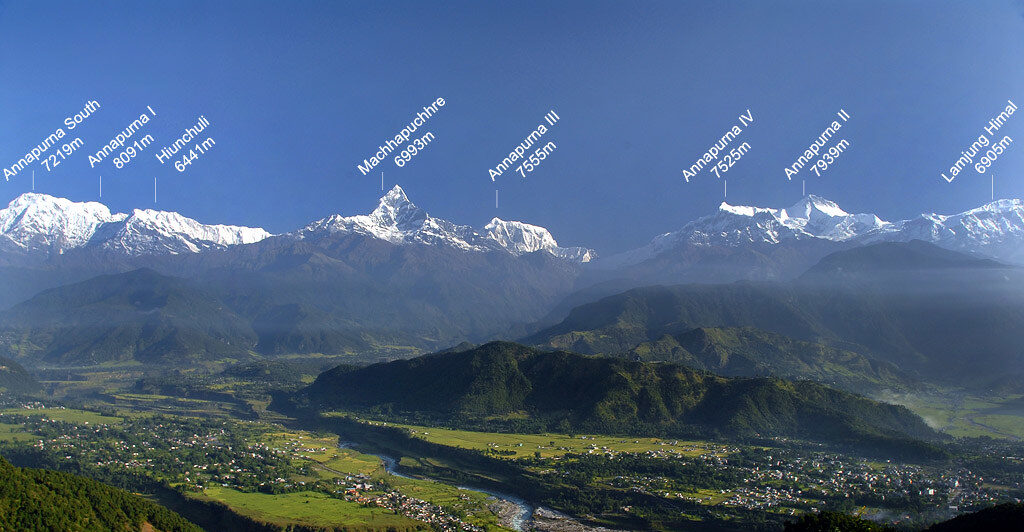
As the Prithvi Highway climbs the final section before descending to Pokhara, the Annapurna range comes into full, striking view. Annapurna South, Machhapuchhre (Fishtail), Hiunchuli, and on clear days, Dhaulagiri are all visible from the road.

For families visiting Nepal for the first time, this first full panoramic view of the Great Himalayan peaks is often described as one of the most spectacular moments of the entire trip. Ask your driver to pull over briefly for photos.

Expert Family Travel Tips for Chitwan to Pokhara

Packing the Family Vehicle Efficiently

Nepal Vehicle Hiring drivers are experienced at loading family vehicles efficiently. Place the main luggage in the boot or on the roof rack, and keep a small family bag inside the vehicle with essentials for the journey—snacks, water, medicines, wipes, entertainment for children, and important documents.

Keeping Children Comfortable on the Drive

  • Bring a tablet or smartphone with downloaded movies, cartoons, or audiobooks for the 4 to 5-hour journey.
  • Pack a variety of snacks and small treats to manage energy levels throughout — fruits, biscuits, dried mango.
  • Bring a small pillow or neck cushion for children who may sleep on the journey.
  • The Mugling-Pokhara section of the Prithvi Highway is winding — bring motion sickness tablets for children prone to car sickness.
  • Keep a small bag of wipes, hand sanitiser, and tissues handy for journey spills.
  • Children’s travel games, colouring books, or simple card games make excellent travel activities.

Best Departure Time for Families

For families with young children, a 7:30 AM to 8:30 AM departure from Chitwan is ideal. This allows children to have a proper breakfast, avoids the very early 5:00 AM bus park departures that are stressful for families, and still ensures you arrive in Pokhara by early afternoon with time to settle in and explore the lakeside before evening.

Child Safety in the Vehicle

Nepal Vehicle Hiring vehicles are equipped with standard seatbelts. For families travelling with young children or toddlers, we strongly recommend bringing your own portable car seat or travel booster seat from home, or arranging one in advance. Please let us know at the time of booking if you require a child seat arrangement.

Managing Toilet Stops

Young children on long journeys require more frequent toilet stops than adults. Your Nepal Vehicle Hiring driver is accustomed to family travel and will stop at clean roadside facilities whenever needed. Mugling, Damauli, and several points along the Prithvi Highway have adequate toilet facilities.

For journeys with very young children, pack a portable travel potty for the longer stretches.

Family Packing List for the Chitwan to Pokhara Journey

  • Children’s snacks and lunch box – fruits, biscuits, sandwiches, dried mango
  • Water bottles for every family member – the Terai section can be warm
  • Entertainment – tablet with downloaded content, colouring books, and small games
  • Children’s motion sickness tablets – the Prithvi Highway is winding
  • Small first aid kit – plasters, antiseptic wipes, paracetamol for children
  • Wipes, tissues, and hand sanitiser – essential for family journeys
  • Change of clothes for young children – accessible in the vehicle bag
  • Nepali cash for Mugling lunch stop and any roadside snack breaks
  • A camera or a smartphone for the Marsyangdi River gorge and Annapurna mountain views
  • Light fleece or jacket – Pokhara is noticeably cooler than Chitwan
  • Portable car seat or booster for young children (if required)
  • Small daypack – keep the family essentials bag separate from the main luggage in the boot

Pokhara

Family Activities Waiting for You in Pokhara

After the scenic drive from Chitwan, Pokhara offers a wonderful range of family-friendly activities that appeal to children and adults of all ages:

Phewa Lake Boating

Renting a colourful wooden rowing boat on Phewa Lake is one of Pokhara’s most beloved family experiences. Row across to the small Tal Barahi Temple island in the middle of the lake, or paddle around the peaceful shores with the Annapurna peaks reflected in the still water.

Boats are available for hire by the hour from the lakeside ghats. Children love the experience, and the mountain reflections make for outstanding photos.

Pokhara Regional Museum

The Pokhara Regional Museum offers a child-friendly introduction to the natural history, culture, and traditions of the Gandaki region. Displays of traditional costumes, agricultural tools, and cultural artefacts give older children meaningful context for the Nepal they have been experiencing throughout their journey.

International Mountain Museum

The International Mountain Museum near Prithvi Highway in Pokhara is one of the world’s finest mountain museums. The exhibits cover the history of Himalayan exploration, the culture of mountain peoples, and the ecology of the Himalayan range. The scale models of the great peaks are spectacular and a major hit with children interested in adventure and geography.

World Peace Pagoda

The gleaming white World Peace Pagoda sits high above Phewa Lake on the southern ridge. It offers spectacular panoramic views of the entire Pokhara valley, the lake, and the Annapurna range.

You can reach the pagoda by boat across the lake, then take a 45-minute uphill walk, or drive a short distance to the ridge road. The pagoda’s sunset views are among the finest in Nepal.

Paragliding (for Older Children and Adults)

Pokhara is one of the world’s premier paragliding destinations. Tandem paragliding flights from Sarangkot are available to participants who meet the minimum weight and health requirements. Children over approximately 12 years old who meet the requirements find the tandem flight over Phewa Lake, with the Annapurna peaks as a backdrop, one of the greatest experiences of their Nepal journey.

Best Time for a Family Chitwan to Pokhara Journey

Autumn is the finest season for family travel in Nepal. The weather is stable and cool, the roads are in excellent post-monsoon condition, and the mountain views on the approach to Pokhara are stunning. October and November temperatures are comfortable for children—warm enough in Chitwan for final safari activities and pleasantly mild in Pokhara.

This is peak season: book your family vehicle well in advance.

Spring (March to May) – Excellent

Spring offers warm weather, spectacular rhododendron blooms along the highway hillsides, and generally excellent road conditions. The mountain views on the approach to Pokhara are outstanding in March and April—a superb time for family travel. May can be slightly warmer and hazier, but it remains a good travel month for families.

Winter (December to February) – Good with Preparation

Winter travel on the Chitwan-to-Pokhara road is comfortable, as it is open year-round. Temperatures in Chitwan are pleasantly cool in winter, while Pokhara can be cold in the evenings. Pack warm clothes for everyone in the family; mountain views are exceptional in the crisp winter air.

Fewer crowds mean more relaxed safari experiences in Chitwan.

Monsoon (June to August) – Possible with Caution

The Prithvi Highway can experience occasional landslides during the monsoon season, particularly on the Mugling section. Travel is possible, but families should check road conditions before departure. Nepal Vehicle Hiring monitors the road situation and advises families accordingly.

Chitwan’s wildlife is active during the monsoon, but the jungle is very hot and humid.

How to Book Your Chitwan to Pokhara Family Vehicle

Booking your family vehicle with Nepal Vehicle Hiring Pvt Ltd is straightforward:

  • Step 1: Contact us via phone, WhatsApp, or at vehiclehiringnepal.com
  • Step 2: Share your travel date, total number of passengers (adults and children), resort/hotel name in Chitwan, and preferred drop-off hotel in Pokhara
  • Step 3: Choose a Jeepr family vehicle – private car, Jeep, Hiace van, or coaster bus
  • Step 4: Mention any special family requirements – child seat request, Bandipur stop, or specific timing needs
  • Step 5: Receive your booking confirmation with driver details, vehicle information, and exact pickup time
  • Step 6: Your driver arrives at your Chitwan resort at the confirmed time and takes your family comfortably to Pokhara

We recommend booking at least 2 to 3 days in advance for off-peak dates, and 5 to 7 days in advance during the October, November, March, and April peak family travel seasons.

Frequently Asked Questions (FAQ)

What is the best vehicle for a family of 4 travelling from Chitwan to Pokhara?

For a family of 4 (2 adults and 2 children), a private SUV or 4WD jeep is ideal. It offers comfortable seating for all four family members, ample luggage space, air conditioning, and a higher seating position that gives children excellent views of the journey scenery.

How long does the Chitwan-to-Pokhara journey take by jeep?

By private car or jeep: 4-5 hours, including a lunch stop in Mugling. By Toyota Hiace van: 5-6 hours. Budget an extra 30 to 60 minutes if adding a detour to Bandipur.

Family journeys with young children typically take slightly longer than solo traveller times because of extra stops.

How much does a family vehicle from Chitwan to Pokhara cost?

A private car costs US$120. A private jeep costs NPR 20,000-25,000 (USD120–160). A Toyota Hiace van for larger families costs NPR 20,000- 30,000 (USD 135–185). All prices include driver and fuel.

Can we stop at Bandipur on the way from Chitwan to Pokhara?

Yes. With a private family vehicle from Nepal Vehicle Hiring, you can stop at Bandipur, Siddha Cave, or anywhere along the route. Request the stop when booking.

Bandipur adds approximately 1 to 1.5 hours to the total journey time.

Are child seats available in Nepal Vehicle Hiring vehicles?

All our vehicles have standard seatbelts. For families with young children who require a car seat or booster seat, we recommend bringing a portable travel car seat. Please contact us when booking, and we will do our best to accommodate your child’s safety requirements.

Can we depart from Chitwan in mid-morning rather than early morning?

Yes. One key advantage of private family vehicle hire is the flexibility of departure time. Families can depart from Chitwan at 8:00 AM, 9:00 AM, or even 10:00 AM if needed.

Private vehicles have no fixed departure schedule.

Is the Chitwan-to-Pokhara road safe for families?

The main Chitwan-to-Pokhara route via the East-West Highway and the Prithvi Highway is one of Nepal’s principal and best-maintained road corridors. It is safe for family travel year-round, except for occasional monsoon-season landslides near Mugling. Nepal Vehicle Hiring drivers are trained for safe family travel and strictly adhere to speed limits.

Can Nepal Vehicle Hiring arrange a return journey from Pokhara to Chitwan?

Yes. Nepal Vehicle Hiring provides private family vehicle hire in both directions. You can book a one-way Chitwan-to-Pokhara family transfer, a Pokhara-to-Chitwan transfer, or a round-trip package at a combined price.

Contact us to discuss your complete family itinerary in Nepal.

Book your Chitwan-to-Pokhara family vehicle hire with Nepal Vehicle Hiring.

The journey from Chitwan to Pokhara is one of Nepal’s great family travel experiences — from the wildlife-rich Terai lowlands through the spectacular Marsyangdi River gorge to the striking first panoramic view of the Annapurna Himalayan range on the approach to Pokhara. Every kilometre offers something new and wonderful for families to discover together.

Nepal Vehicle Hiring Pvt Ltd makes this journey as comfortable, safe, and enjoyable as possible for every family member — from the youngest child to the eldest grandparent. Our private cars, jeeps, Hiace vans, and buses meet the highest safety standards; our drivers are professionally trained and experienced with families; and our door-to-door hotel service means your family never has to navigate an unfamiliar country with luggage and children in tow.

Our top offerings include iconic journeys such as the Annapurna Circuit, the in-depth Mardi Himal Trek, the striking Manaslu Circuit, the exciting Chitwan Jungle Safari, and luxury packages. We also offer treks, sightseeing tours, mountain flights, and customised travel tailored to your needs.

Whether you are looking for a budget-friendly trip or a luxury trekking experience with top-end lodges, private guides, and high-end services, we manage every detail professionally. Our goal is to provide a smooth transition from your trekking adventure to a comfortable) and a memorable travel experience in Nepal.
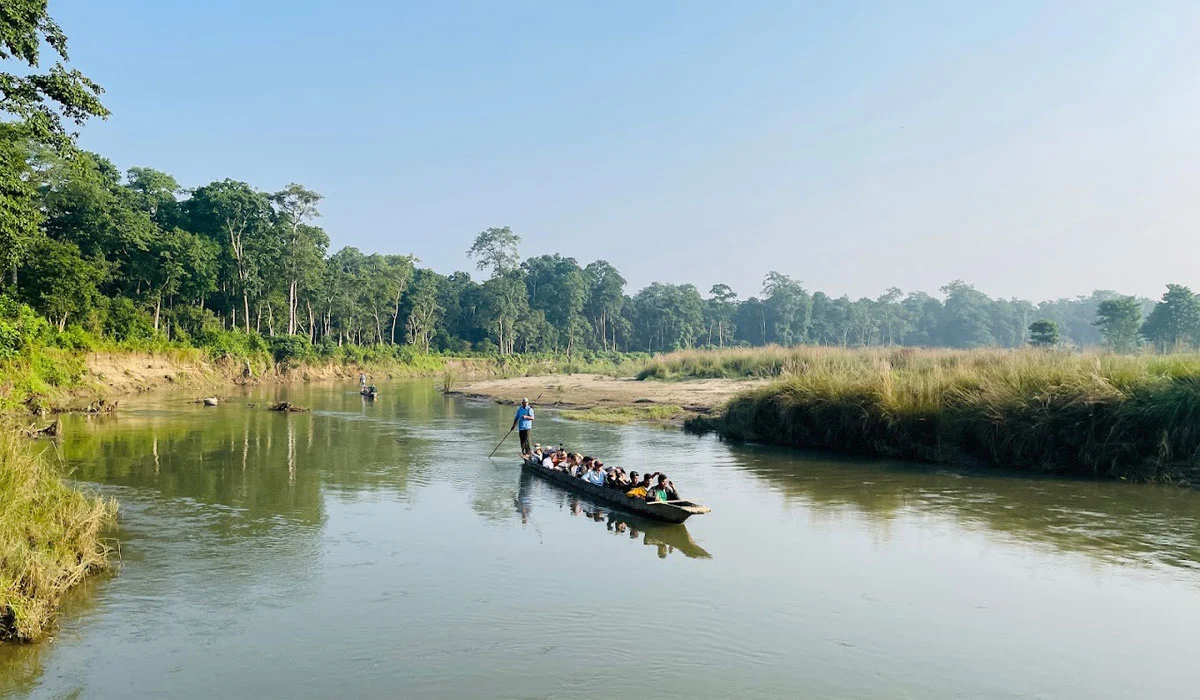
Book your Chitwan-to-Pokhara transport today. Contact us on WhatsApp or visit vehiclehiringnepal.com. We also arrange return pickups from Pokhara at the end of your trek and tour – one less thing to worry about on the trail.

WhatsApp
Email: [email protected]
Website: www.vehiclehiringnepal.com

Pokhara to Annapurna Base Camp Transport

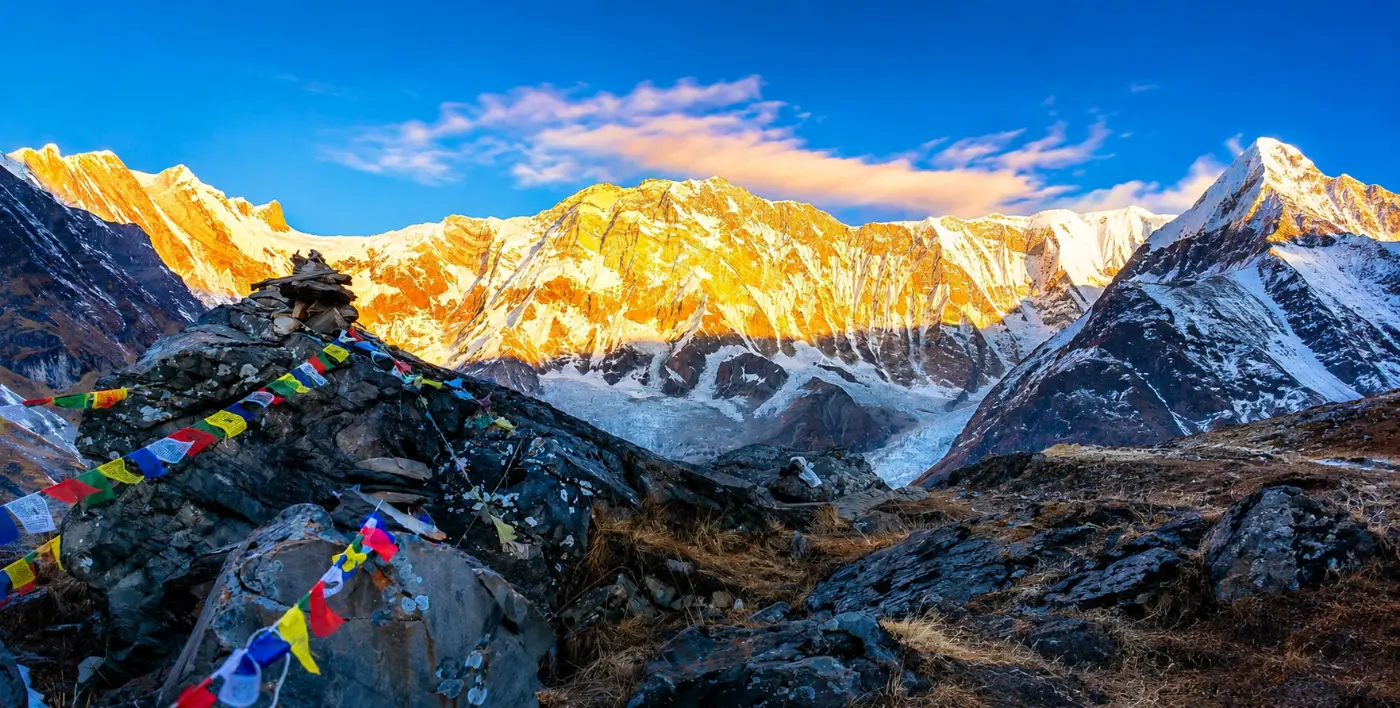
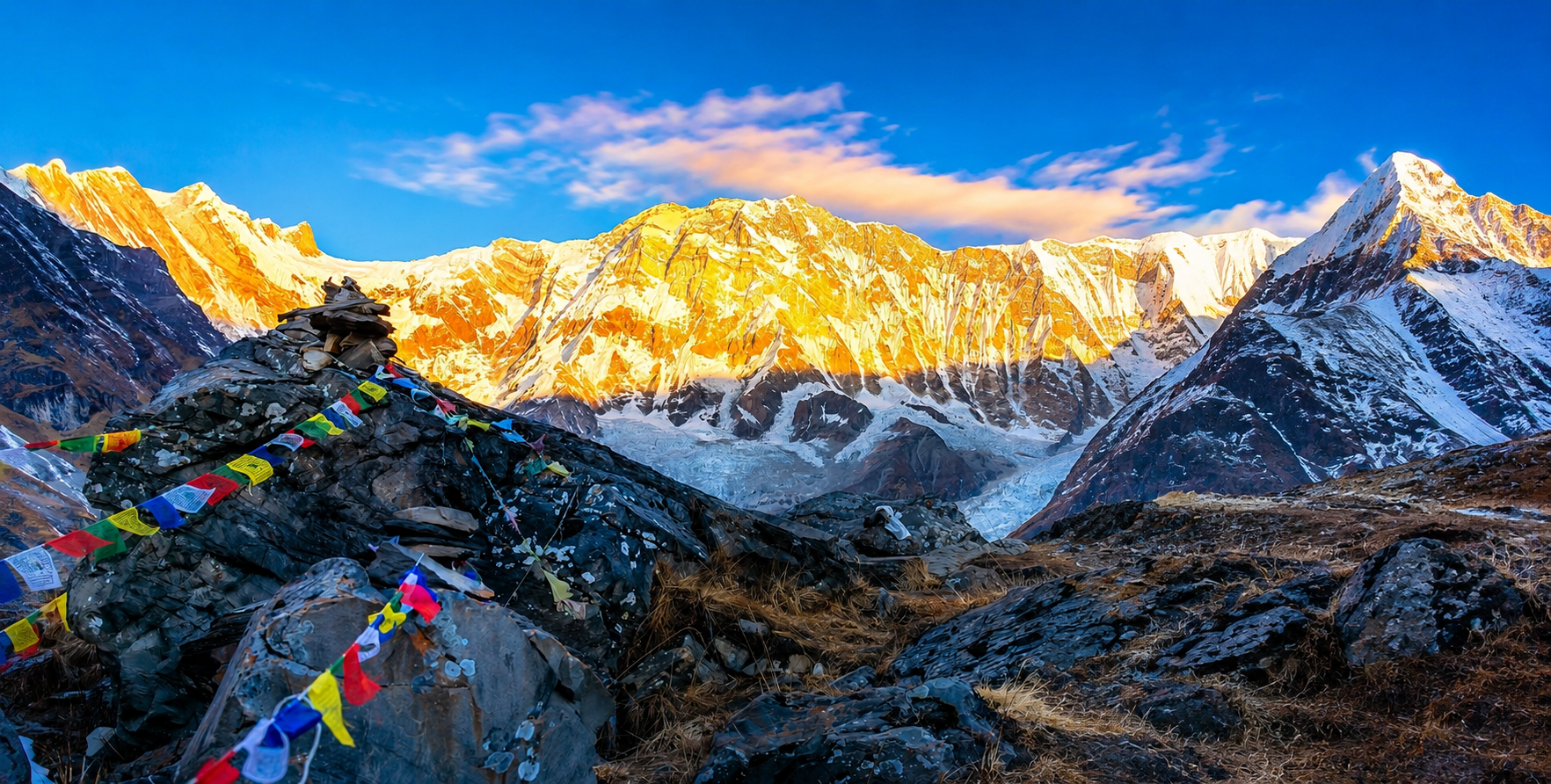
Annapurna Base Camp

Pokhara to Annapurna Base Camp Transport

Annapurna Base Camp (ABC) — the sacred glacial sanctuary cradled at 4,130 meters within a ring of some of the world’s highest and most beautiful mountains — is Nepal’s most iconic trekking destination. Every year, tens of thousands of trekkers from around the world journey to Pokhara, then take a vehicle to the Annapurna foothills to begin one of the most rewarding treks on earth.

But choosing the right trailhead, vehicle, and transport strategy is not as simple as it sounds. Seven trailheads are accessible by vehicle from Pokhara, ranging from the classic Nayapul trailhead to advanced off-road destinations like Jhinu Danda and Ghandruk. Your trailhead choice dramatically affects your trek distance, your time at altitude, and — most importantly — which sections of the ABC trail you experience on foot versus by vehicle.

This complete 2026 transport guide covers every vehicle option from Pokhara to the Annapurna Base Camp trailheads — all seven road-accessible starting points, full 2026 costs, road conditions for each route, the best trailhead for different trek durations and styles, and why Nepal Vehicle Hiring Pvt Ltd is the most trusted transport partner for your ABC adventure.

Annapurna Base Camp

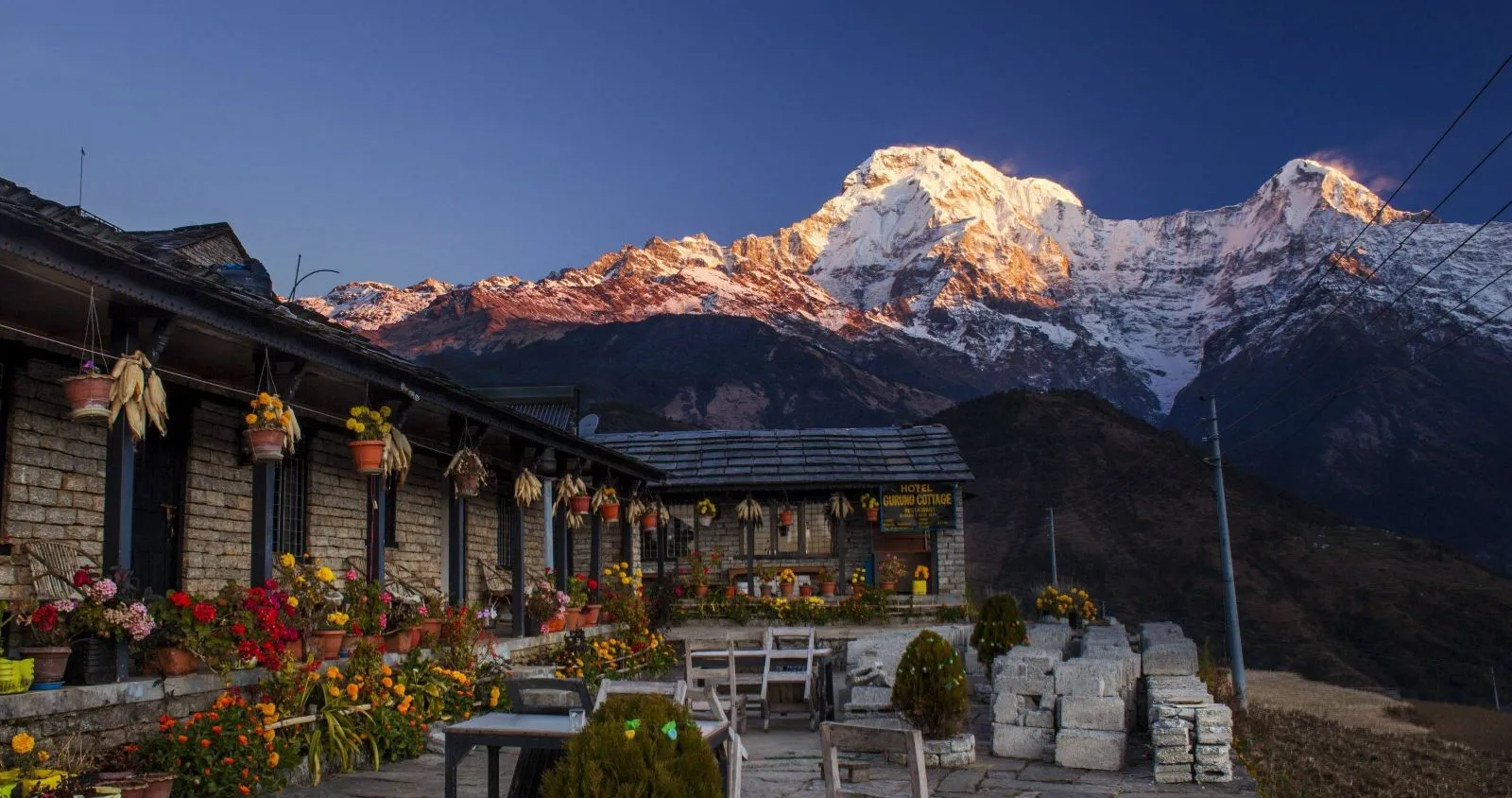
Annapurna Base Camp (4,130 m / 13,550 ft) lies at the heart of the Annapurna Sanctuary — a hidden glacial amphitheatre enclosed by thirteen Himalayan peaks exceeding 6,000 meters and four peaks exceeding 7,000 meters. The sanctuary’s centrepiece is Annapurna I (8,091 m), the tenth-highest mountain on Earth and, historically, the first 8,000-meter peak ever summited by humans (French expedition, 1950).

The Annapurna Base Camp Trek is a moderate-grade trek suitable for fit beginners through to experienced mountain trekkers. The full route typically takes 7 to 10 days from Pokhara. It involves no technical climbing, just walking on well-marked trails through diverse ecosystems,g from subtropical rice terraces at 1,000 meters to glacial moraines at 4,130 meters.

  • Maximum altitude: 4,130 m (Annapurna Base Camp)
  • Machhapuchhre Base Camp (MBC): 3,700 m — one day below ABC
  • Total trek distance: Approximately 50–60 km one way from Nayapul
  • Trek duration from Pokhara: 6 to 10 days, depending on pace and route
  • Key mountains visible: Annapurna I (8,091 m), Annapurna South (7,219 m), Machhapuchhre / Fishtail (6,993 m), Hiunchuli (6,441 m), Gangapurna (7,455 m)
  • Trek type: Teahouse trek — accommodation and meals available throughout
  • Best starting point: Pokhara (827 m) — Nepal’s second-largest city and closest major hub to the ABC trailheads

Key Transport Facts — Pokhara to ABC Trailheads 2026

Route DetailInformation
Total ABC Trek Distance81 km (Pokhara to ABC and return — road + trek combined)
Annapurna Base Camp Altitude4,130 m (13,550 ft) above sea level
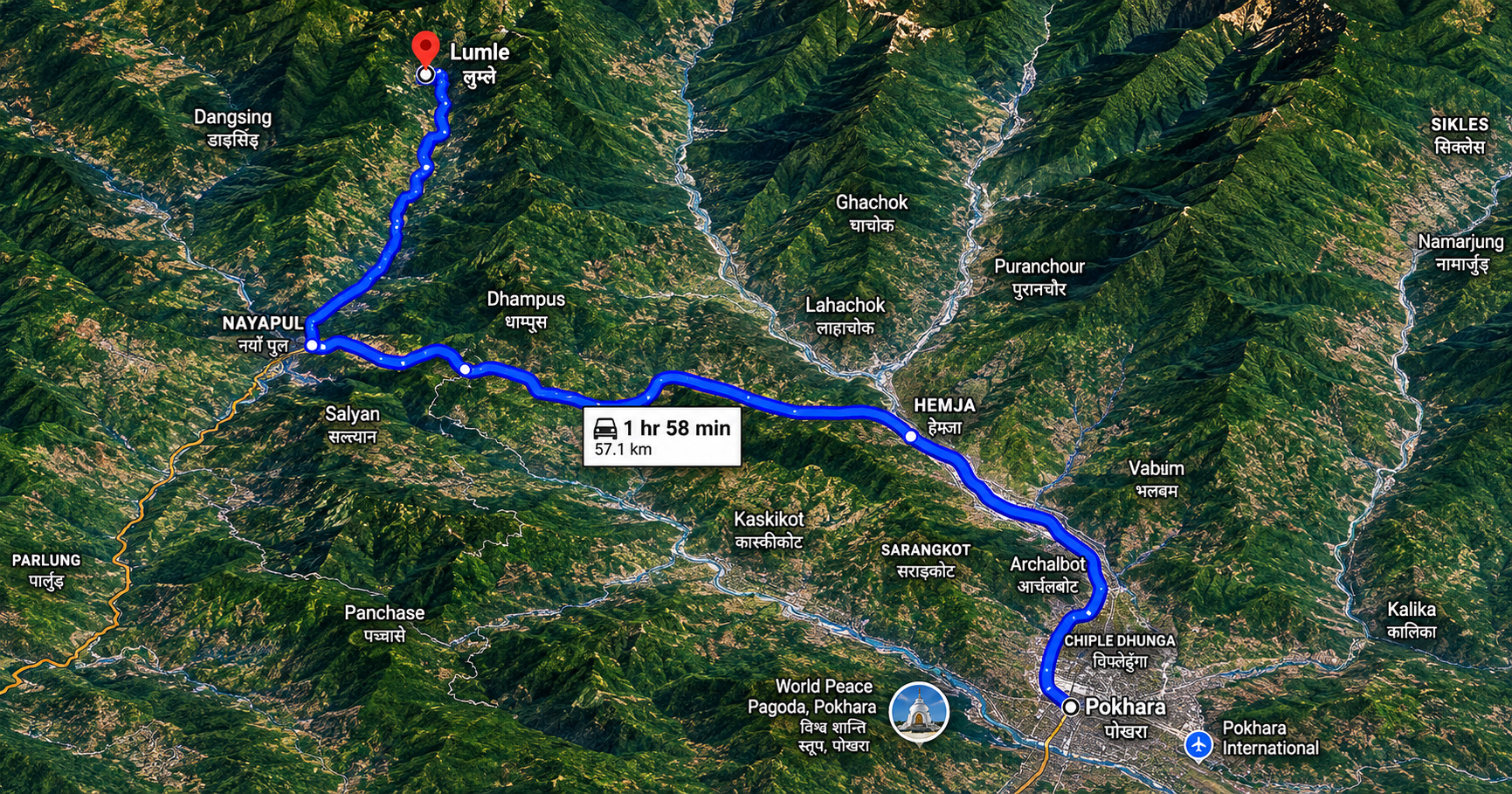
Pokhara to Nayapul (Road)42–46 km | 1 to 1.5 hrs | Paved highway
Pokhara to Jhinu Danda (Road)50–56 km | 3 to 4 hrs | Paved + off-road
Pokhara to Ulleri (Road)48–52 km | 2.5 to 3.5 hrs | Paved + steep off-road
Pokhara to Ghandruk (Road)55–61 km | 3 to 4 hrs | Paved + rough off-road
Best SeasonOctober–November (Autumn) and March–May (Spring)
Permits RequiredACAP + TIMS Card — both obtainable in Pokhara
Trek Duration6 to 10 days from Pokhara, depending on the route

Key Insight: There is NO single ‘Pokhara to Annapurna Base Camp’ vehicle route — the road takes you to one of several trailheads at the base of the Annapurna foothills. From there, ALL travel to ABC is on foot. Your trailhead choice determines how much walking you do on the lower sections and when the spectacular mountain scenery begins.

All Trailheads — Which Starting Point is Right for You?

One of the most important and least understood decisions in planning ABC transport is choosing which trailhead to use. Each trailhead offers a different entry point into the ABC trek, with different distances, road types, and trekking experiences:

TrailheadDistance from PokharaTravel TimeRoad TypeTrek Start AltitudeBest For
Nayapul42 km1–1.5 hrsPaved highway1,070 mTraditional start, all vehicles
Birethanti44 km1.5 hrsPaved → rough1,025 mSlightly deeper than Nayapul
Ulleri50–52 km2.5–3.5 hrsOff-road 4WD1,960 mSkip Tikhedhunga stone steps
Ghandruk55–61 km3–4 hrsOff-road 4WD1,940 mVia Gurung village, cultural start
Jhinu Danda50–56 km3–4 hrsOff-road 4WD1,760 mDirect to Chhomrong approach, hot springs
Kimche53 km3–3.5 hrsOff-road 4WD1,640 mGhandruk approach, shorter final walk
Siwai / Kyumi23 km1 hrPaved + light rough1,100 mBudget option, longer trek

Pokhara to Annapurna Base Camp Transport

Nayapul (1,070 m) — The Classic ABC Trailhead

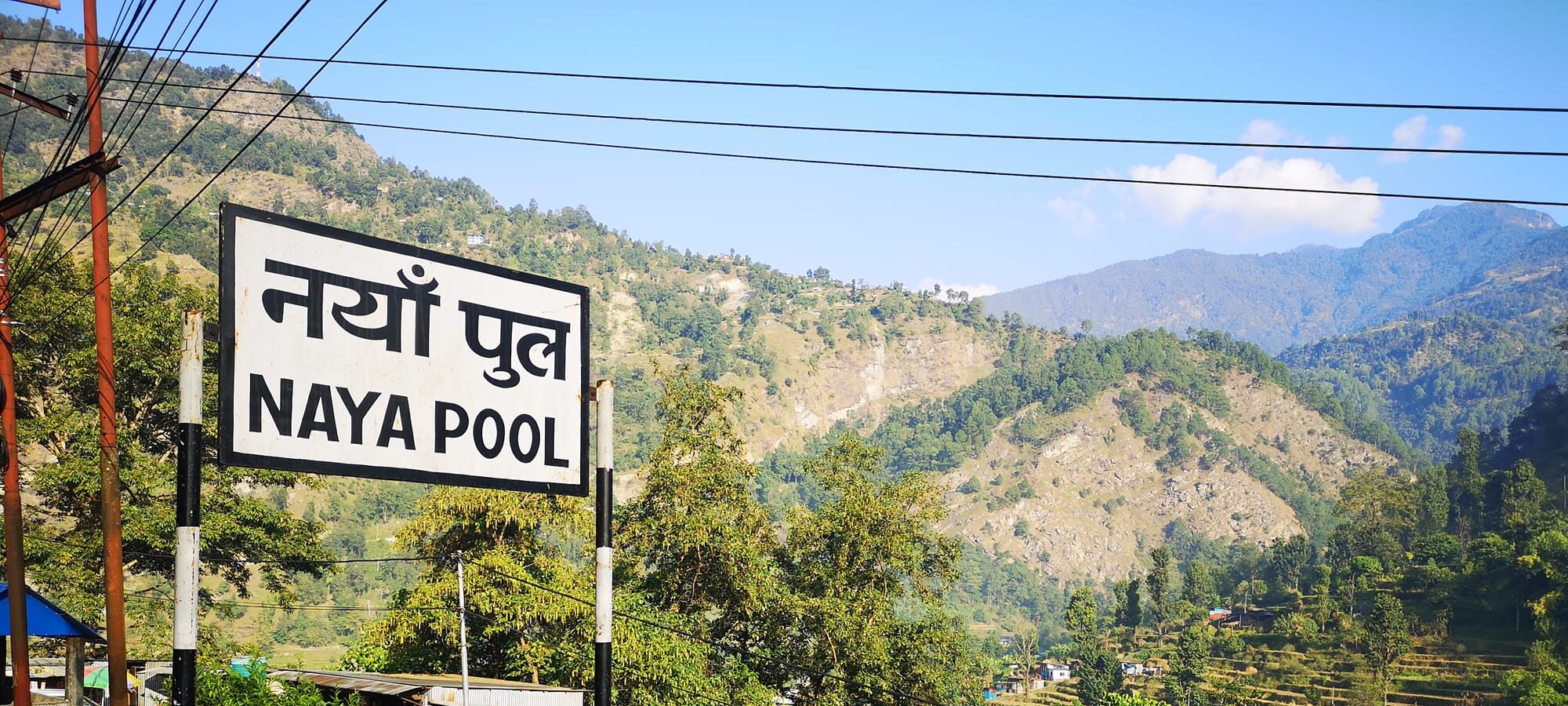
Nayapul is the most traditional and most commonly used ABC trailhead. It sits at the junction of the Bhurungdi and Modi rivers, approximately 42 km from Pokhara, on the fully paved Beni-Baglung Highway. From Nayapul, the classic ABC trail passes through Birethanti, Tikhedhunga (with the famous 3,300 stone steps to Ulleri), Ghorepani (optional Poon Hill detour), Tadapani, Chhomrong, and up through the Annapurna Sanctuary to ABC.

  • Road: Fully paved Beni Baglung Highway — suitable for all vehicles, including sedans and buses
  • Distance from Pokhara: ~42 km
  • Travel time: 1 to 1.5 hours by private vehicle
  • Trek from Nayapul to ABC: 7 to 10 days
  • Best for: Traditional full ABC experience, trekkers with 8+ days, first-time Nepal trekkers

Ulleri (1,960 m) — Skip the Stone Steps

A private jeep can reach Ulleri directly from Pokhara, bypassing the legendary 3,300 stone steps between Tikhedhunga and Ulleri, one of the most demanding sections of the lower ABC trail. By starting at Ulleri, trekkers save about 2 hours of steep climbing and begin with significantly more energy.

  • Road: Paved highway to Nayapul/Birethanti, then steep off-road 4WD track
  • Distance from Pokhara: ~50–52 km
  • Travel time: 2.5 to 3.5 hours — 4WD mandatory
  • Trek from Ulleri to ABC: 5 to 7 days
  • Best for: Trekkers with 6–8 days, older trekkers, families, anyone wanting to skip the stone steps

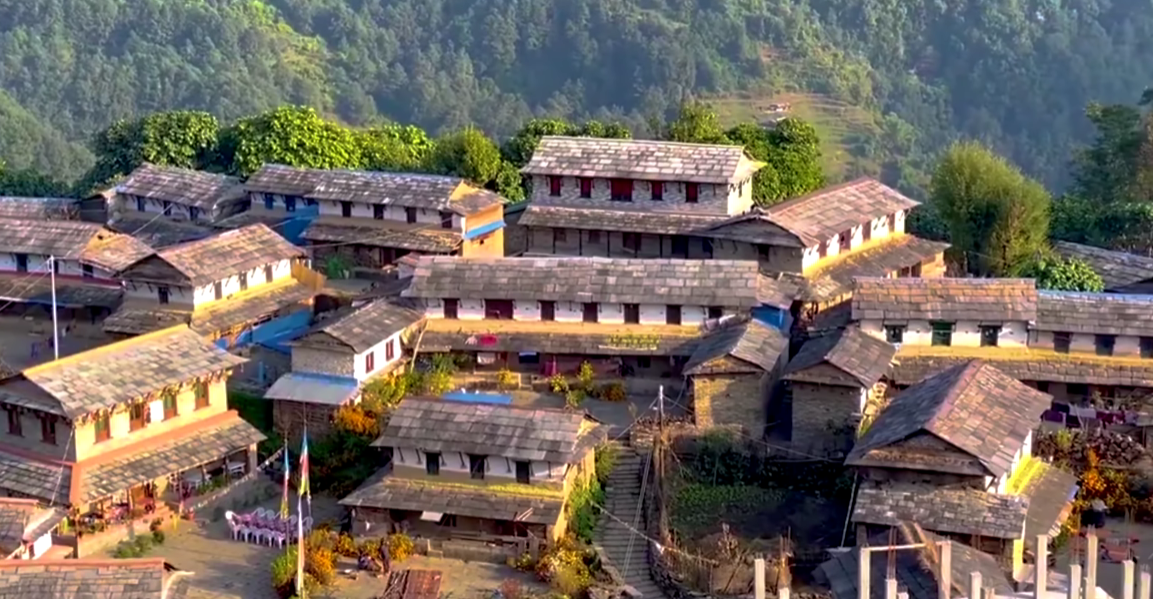
Ghandruk village

Ghandruk (1,940 m) — The Cultural Entry Point

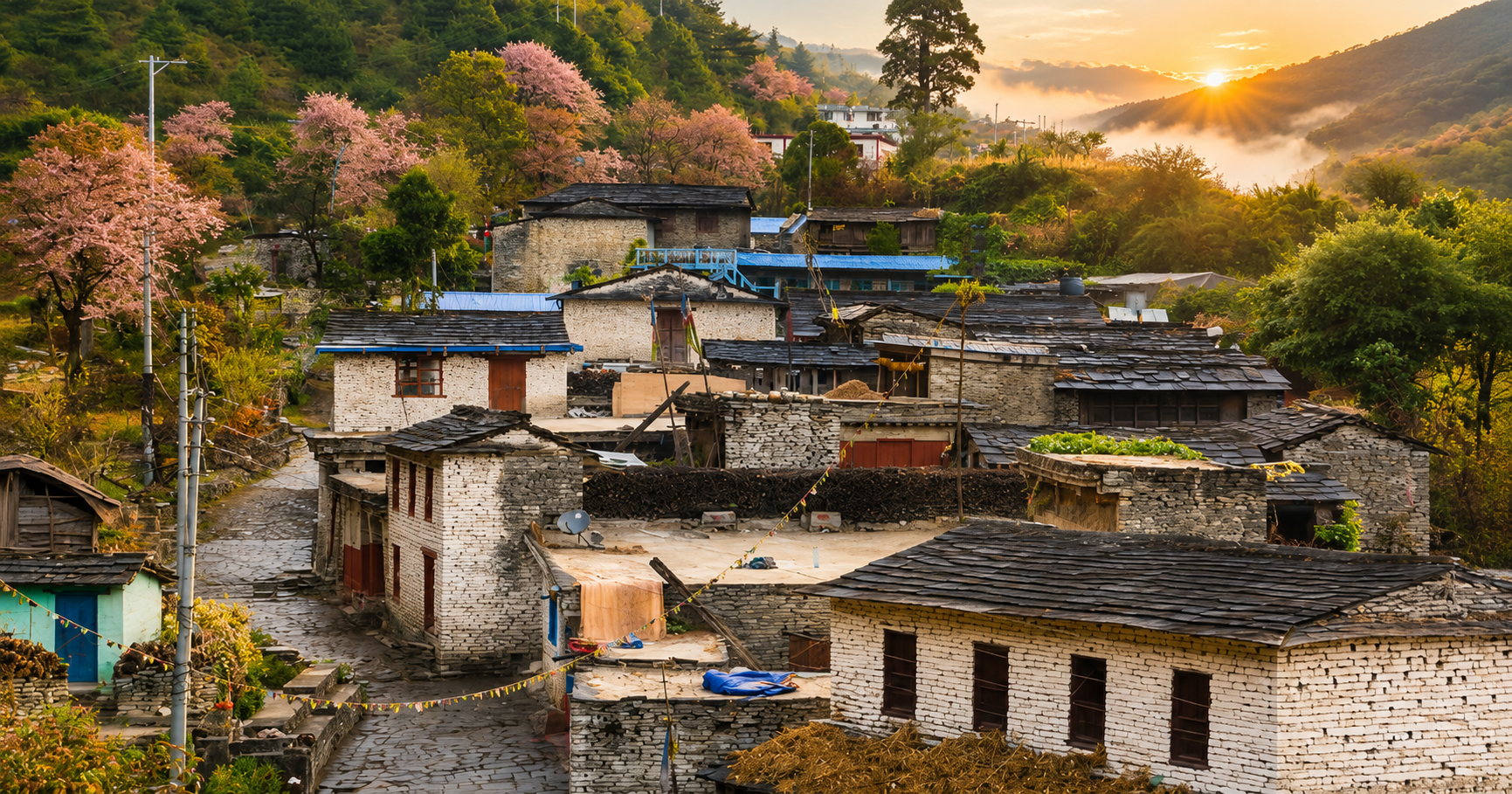
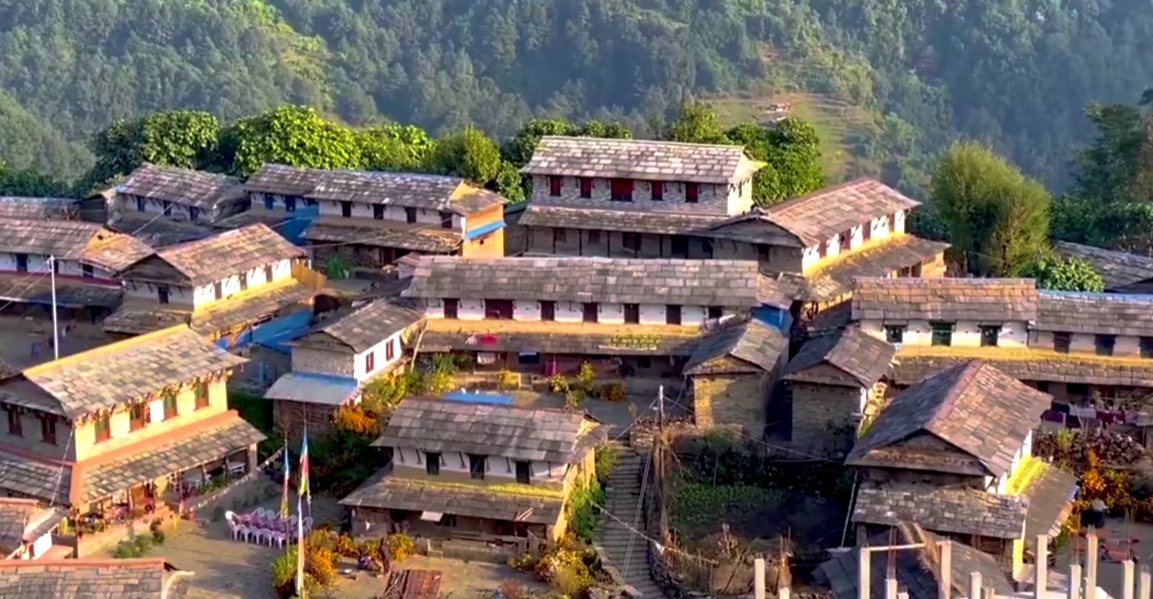
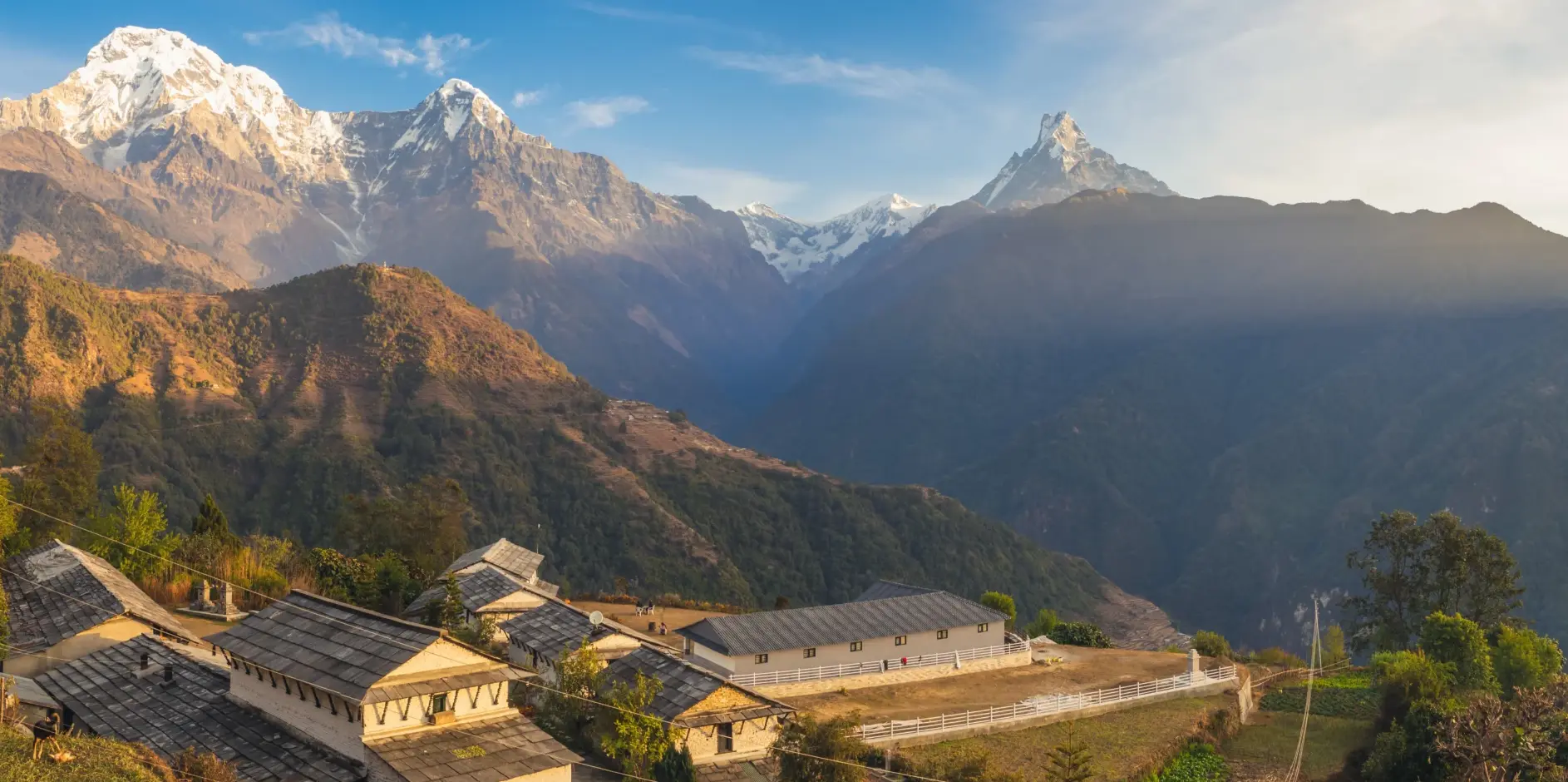
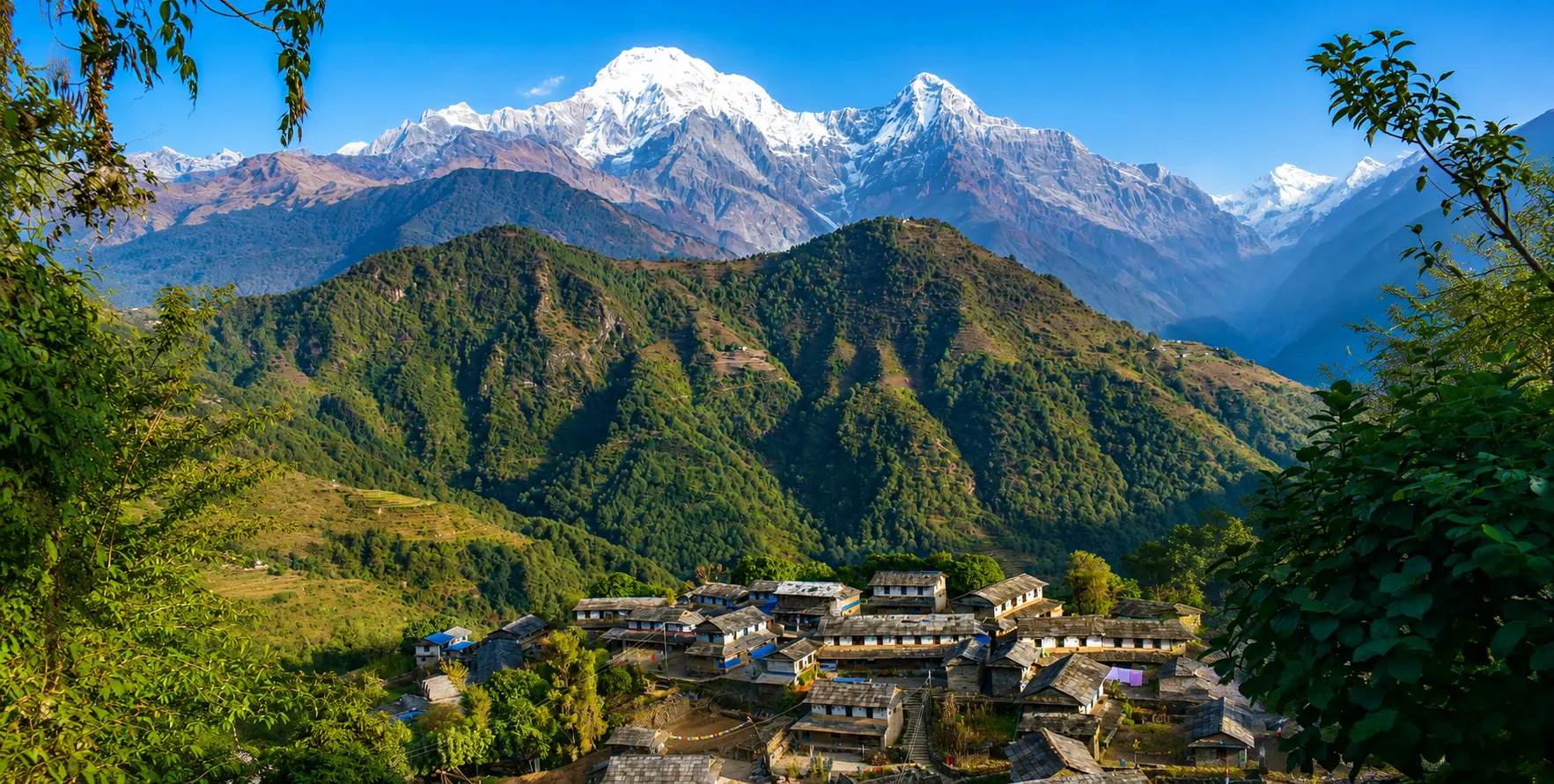
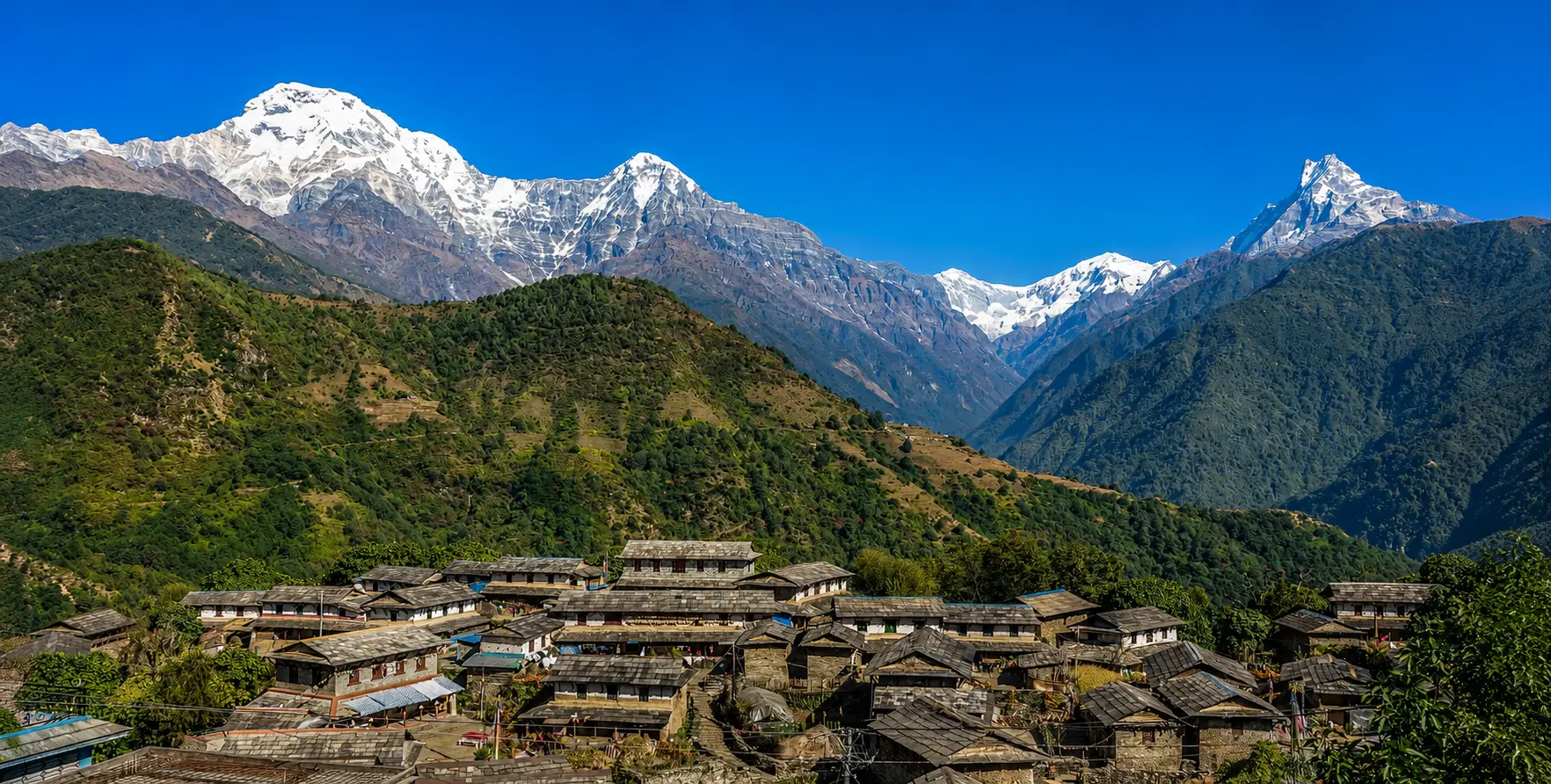
Ghandruk is the largest Gurung village in the Annapurna region, and you can reach it by 4WD jeep from Pokhara via Birethanti. Starting your ABC trek from Ghandruk immerses you immediately in authentic Gurung culture — cobblestone lanes, traditional stone houses, the Gurung Museum, and extraordinary close-up views of Annapurna South and Machhapuchhre. The Ghandruk-to-Chhomrong section is one of the most scenic on the entire ABC route.

  • Road: Beni Baglung Highway to Birethanti, then a rough off-road 4WD track
  • Distance from Pokhara: ~55–61 km
  • Travel time: 3 to 4 hours — 4WD mandatory
  • Trek from Ghandruk to ABC: 5 to 7 days
  • Best for: Cultural travellers, photographers, trekkers, combining the Ghandruk visit with the ABC

Jhinu Danda (1,760 m) — Hot Springs Start and Finish

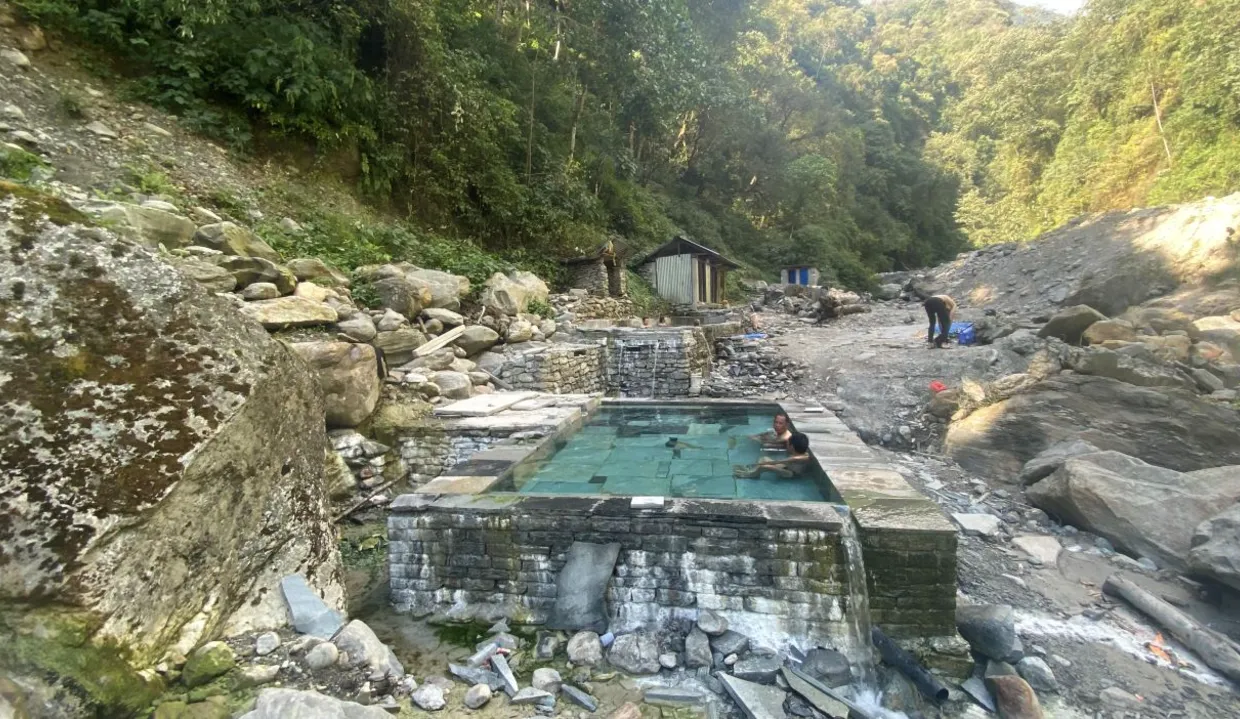
Jhinu Danda (also spelt Jhino) is the trailhead offering the most direct access to the Chhomrong approach to the ABC trek. It sits on the Modi Khola River and is famous for its natural hot spring pools—a perfect way to relax tired muscles at the end of the trek. Many ABC trekkers use Jhinu Danda as both their start and end point, creating a beautiful circular route through Chhomrong, the Annapurna Sanctuary, and back.

  • Road: Beni Baglung Highway to Siwai, then off-road track to Jhinu Danda
  • Distance from Pokhara: ~50–56 km
  • Travel time: 3 to 4 hours — 4WD strongly recommended
  • Trek from Jhinu Danda to ABC: 4 to 6 days
  • Best for: Trekkers wanting the most efficient ABC approach, a hot spring reward at the end

Siwai / Kyumi (1,100 m) — Budget Entry Point

Siwai and Kyumi are small roadside villages located approximately 23 km from Pokhara on the Beni-Baglung Highway. The road to these villages is mostly paved and accessible by standard vehicles. From Siwai, a 1- to 2-hour uphill hike leads to Jhinu Danda.

This is the most economical trailhead option — useful for budget travellers willing to add extra walking time.

  • Road: Mostly paved — accessible by sedan, bus, or Jeep
  • Jeep ride from Pokhara: ~23 km
  • Travel time: ~1 hour
  • Walk from Siwai to Jhinu Danda: 1 to 2 hours uphill
  • Best for: Budget travellers comfortable with extra walking time

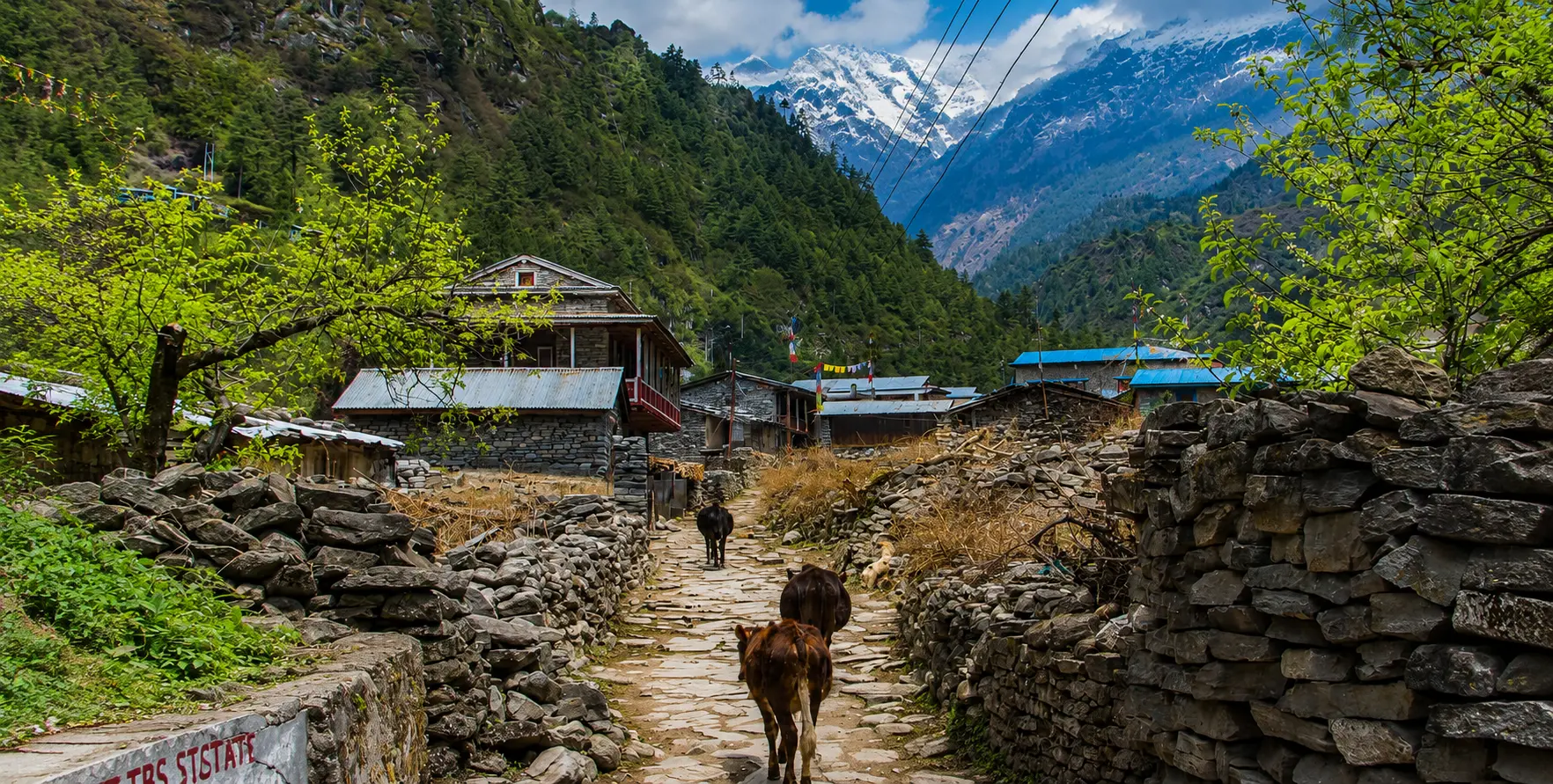
Dharapani trek start point of annapurna range

All Vehicle Hire Options — Pokhara to ABC Trailheads 2026

Transport OptionBest TrailheadCapacity2026 CostBest For
Private Jeep (Scorpio/Sumo)Any trailhead4–7 passengersUSD 90–160 (full vehicle)Groups of 2–6, trekkers with gear
Private Car (Sedan)Nayapul / Birethanti only2–3 passengersUSD 60–100 (full vehicle)Pairs/solo to Nayapul
Private Hiace VanNayapul / Birethanti8–14 passengersUSD 150–200 (full vehicle)Large trekking groups
Shared Jeep (per seat)Multiple trailheads7–9 totalUSD 10–20 per personBudget solo travellers
Local Bus to NayapulNayapulMany paxNPR 200–300 per personTightest budget option
Helicopter (return)ABC / MBC direct5 per heliUSD 450–650 per personLuxury/emergency return

Private Jeep — Best Transport Option for All Trailheads

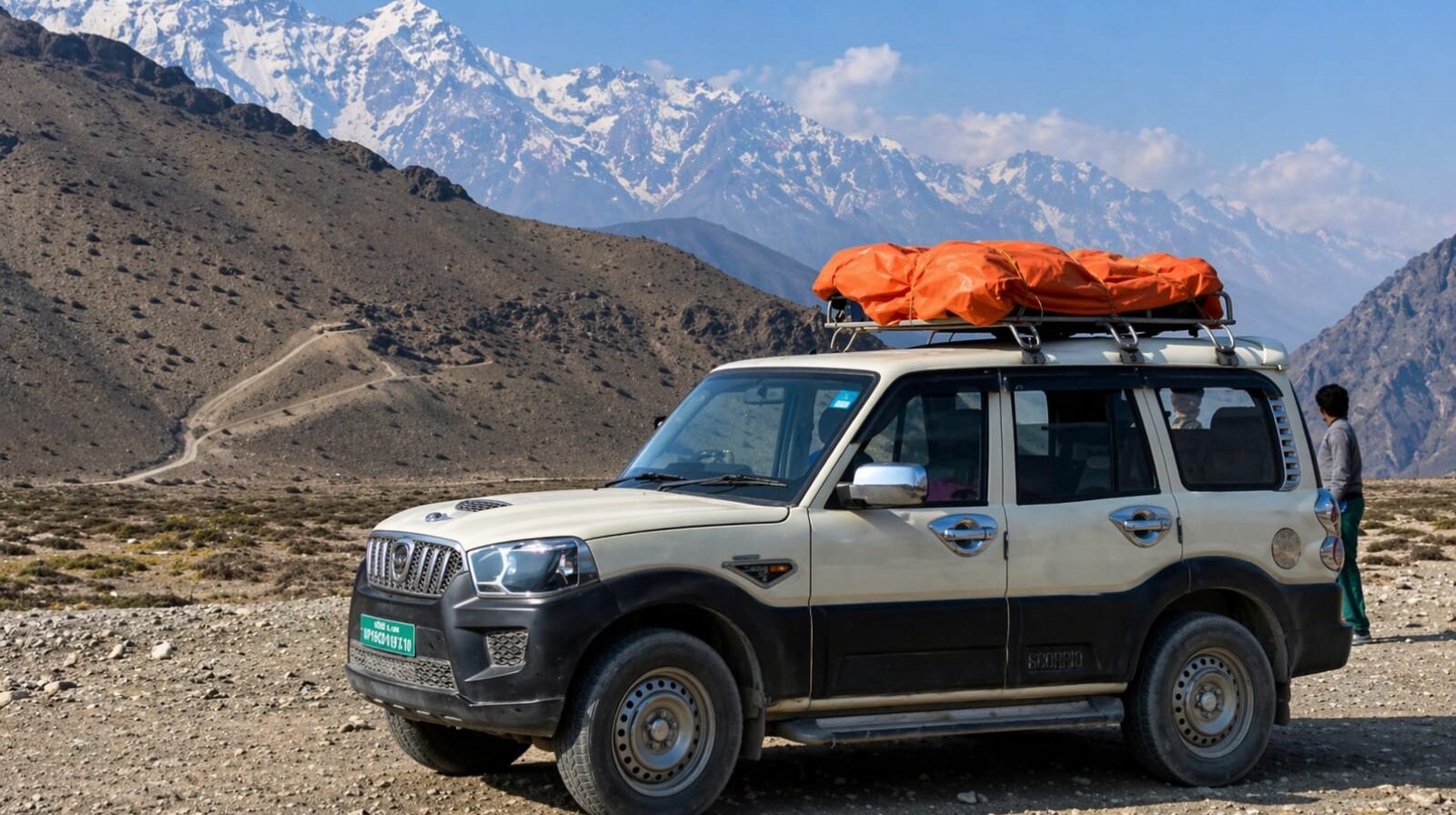
A private 4WD jeep is the recommended and most widely used transport option for trekkers heading from Pokhara to any ABC trailhead. It provides door-to-door hotel pickup in Pokhara, direct access to all seven trailheads, including the off-road endpoints (Ulleri, Ghandruk, Jhinu Danda), flexible departure time, and ample roof rack space for trekking luggage.

  • Vehicle types: Mahindra Scorpio 4WD, Toyota Hilux 4WD, or similar
  • Capacity: 4–6 passengers comfortably; up to 7 with luggage on the roof rack
  • 2026 Cost: USD 90–160 for the full vehicle (one way), depending on the trailhead
  • 4WD mandatory: For all trailheads beyond Nayapul / Birethanti on off-road sections
  • Pickup: Door-to-door from your hotel in Lakeside, Pokhara
  • Departure: Flexible — depart at any time to suit your trek start

Best Value: With 6 trekkers sharing a private jeep to Jhinu Danda for USD 160, the per-person cost is just USD 20—marginally more than a shared jeep but with major advantages in comfort, hotel pickup, and flexibility.

Shared Jeep — Budget Option for Solo Travellers

Shared jeeps depart from Baglung Bus Park and Hari Chowk in Pokhara and serve all major ABC trailheads. They are the most affordable motorised option and are widely available during peak trekking season.

  • 2026 Cost: USD 10–20 per person, depending on the destination trailhead
  • Departure point: Baglung Bus Park or Hari Chowk, Pokhara
  • Departure: Fill-and-go — typically 7:30–9:00 AM
  • Travel time: 30–45 minutes longer in a private jeep due to multiple stops
  • Limitation: No hotel pickup; crowded seating; no flexibility in stops

Annapurna range

Private Sedan Car — Nayapul and Birethanti Only

A private sedan is suitable only for Nayapul and Birethanti — the paved highway trailheads. Beyond Birethanti, the road becomes off-road and unsuitable for sedans. Ideal for trekkers who plan to walk the full traditional ABC trail from Nayapul.

  • 2026 Cost: USD 60–100 for a full vehicle from Pokhara to Nayapul
  • Travel time: 1 to 1.5 hours
  • Best for: Small groups (1–3 persons) starting the traditional ABC route from Nayapul

Private Hiace Van — Best for Large Groups to Nayapul

For large trekking groups of 8 or more, a private Hiace van is the most economical option for the paved Nayapul or Birethanti trailheads. The Hiace cannot access off-road trailheads (Ulleri, Ghandruk, Jhinu Danda) due to road-type limitations.

  • 2026 Cost: USD 150–200 for a full vehicle to Nayapul (one way)
  • Capacity: Up to 14 passengers
  • Suitable for: Paved highway trailheads only — Nayapul and Birethanti

Local Bus — Budget Option to Nayapul

Local buses run from Baglung Bus Park in Pokhara to Nayapul throughout the day. They are the cheapest option but the slowest, with multiple passenger stops.

  • 2026 Cost: NPR 200–300 per person to Nayapul (approximately USD 1.50–2.50)
  • Departure: Multiple daily — approximately every 30 minutes from 6:30 AM
  • Travel time: ~1.5 to 2 hours with stops
  • Limitation: Crowded, slow, no direct access to off-road trailheads

Helicopter Return from ABC — Luxury Option

An increasingly popular option for trekkers with limited time or physical fatigue is the helicopter return from Annapurna Base Camp (or Machhapuchhre Base Camp) directly to Pokhara airport. This saves 3 to 4 days of descent walking and provides extraordinary aerial views of the Annapurna massif.

  • Route: ABC (4,130 m) or MBC (3,700 m) → Pokhara
  • Flight time: Approximately 25–35 minutes
  • 2026 Cost: USD 450–650 per person (helicopter charter — typically 5 seats)
  • Charter a full helicopter: USD 2,500–3,500 for a full 5-seat helicopter
  • Best for: Trekkers with tight departure schedules, luxury travellers, and altitude sickness rescue
  • Booking: Arrange through Nepal Vehicle Hiring Pvt Ltd or a trekking agency in Pokhara — must be pre-arranged, not available on demand at ABC

Annapurna range mountain

Cost Guide by Trailhead — Pokhara to ABC

From Pokhara ToPrivate Jeep CostShared Jeep CostNotes
NayapulUSD 71–100USD 8–12 / personPaved road — any vehicle
BirethantiUSD 70–100USD 10–15 / personPaved + light rough
UlleriUSD 100–150USD 15–20 / person4WD essential — steep track
GhandrukUSD 100–140USD 15–18 / person4WD essential — off-road
Jhinu DandaUSD 110–160USD 15–20 / person4WD essential — off-road
KimcheUSD 100–140USD 13–18 / person4WD essential
Siwai / KyumiUSD 50–80USD 8–12 / personShorter off-road section

All private jeep costs are for the full vehicle (one-way) and include the driver, fuel, and road tolls. Shared jeep costs are per person. Peak season (October–November and March–May) rates may be 10–15% higher.

Nepal Vehicle Hiring Pvt Ltd provides all-inclusive pricing with no hidden charges.

The Complete ABC Trek Route — Stopping Points from Nayapul

Here is the complete ABC trek route from Nayapul to Annapurna Base Camp, showing all key stopping points with altitude and distance:

Trekking StopAltitudeDistance from NayapulKey Features
Nayapul1,070 mStartClassic ABC trailhead, bus/jeep junction
Birethanti1,025 m0.5 kmACAP checkpoint, Modi Khola riverside
Tikhedhunga / Hile1,480 m5 kmThe famous 3,300 stone steps start
Ulleri1,960 m8 kmMagar village, stone steps end, jeep endpoint
Ghorepani2,870 m18 kmPoon Hill gateway, rhododendron forests
Tadapani2,630 m22 kmRhododendron traverse, Annapurna views
Ghandruk1,940 m16 km altGurung village, Annapurna South views
Chhomrong2,170 m28 kmKey ABC junction, last major village
Bamboo / Sinuwa2,310 m32 kmDense forest, rhododendron zone
Dovan2,600 m37 kmSteep terrain, waterfall views
Himalayan Hotel2,920 m40 kmLast major facilities before MBC
Deurali3,230 m44 kmFrequent snow/cloud —acclimatise here
Machhapuchhre Base Camp (MBC)3,700 m48 kmFishtail Mountain views, glacier approach
Annapurna Base Camp (ABC)4,130 m52 kmUltimate destination — Annapurna Sanctuary

Lower Section — Nayapul to Chhomrong (1,070 m to 2,170 m)

The lower section of the ABC trek from Nayapul passes through some of Nepal’s most beautiful Gurung and Magar villages. The trail winds through terraced rice fields, the Modi Khola river gorge, rhododendron and oak forests, and traditional stone-paved village paths. This section, about 28 takes 2 to 3 days to walk and is the culturally richest part of the trek.

For trekkers using a private jeep from Pokhara to one of the advanced trailheads (Ulleri, Ghandruk, or Jhinu Danda), a significant portion of this lower section is bypassed by vehicle. The trade-off is saving 1 to 2 days of walking versus experiencing the lower village culture and landscape.

Middle Section — Chhomrong to Deurali (2,170 m to 3,230 m)

Above Chhomrong, the ABC trail enters a long, deep valley that channels through dense bamboo and rhododendron forest before emerging into an increasingly dramatic high-altitude landscape. The trail passes through Sinuwa, Bamboo, Dovan, and the Himalayan Hotel — each offering progressively more spectacular views of the surrounding peaks. Waterfalls, suspension bridges, and the constant roar of the Modi Khola below make this section one of the most atmospherically in-depth on the entire trail.

Upper Section — Deurali to ABC (3,230 m to 4,130 m)

Above Deurali, the trail emerges from the forest into open alpine terrain. The first views of Machhapuchhre (Fishtail) appear suddenly and dramatically as you round a corner above Deurali- a moment many trekkers describe as one of the most striking reveals in all of Himalayan trekking.

Machhapuchhre Base Camp (3,700 m) marks the final approach to the sanctuary. From MBC, the final 2-hour walk to Annapurna Base Camp (4,130 m) crosses glacial moraine and passes through increasingly surreal, high-altitude terrain surrounded by towering walls of ice and rock.

Off road annapurna range

Here are the two most popular ABC trek approaches from Pokhara, each using different transport strategies:

Option A — 7-Day ABC Trek via Jhinu Danda (Most Efficient)

DayRouteTransport / TrekKey Activity
Day 1Pokhara → Jhinu DandaJeep: 3–4 hrsTrek Jhinu → Chhomrong (4–5 hrs)
Day 2Chhomrong → DovanTrek: 5–6 hrsForest trail, bamboo groves
Day 3Dovan → Himalayan Hotel / DeuraliTrek: 5–6 hrsSteep climb, waterfall views
Day 4Deurali → MBC → ABCTrek: 6–7 hrsGlacier approach, Annapurna Sanctuary
Day 5ABC → MBC → BambooTrek: 6–7 hrsBegin descent, rhododendron forest
Day 6Bamboo → Chhomrong → Jhinu DandaTrek: 5–6 hrsHot springs at Jhinu Danda
Day 7Jhinu Danda → PokharaJeep: 3–4 hrsTransfer back to Pokhara

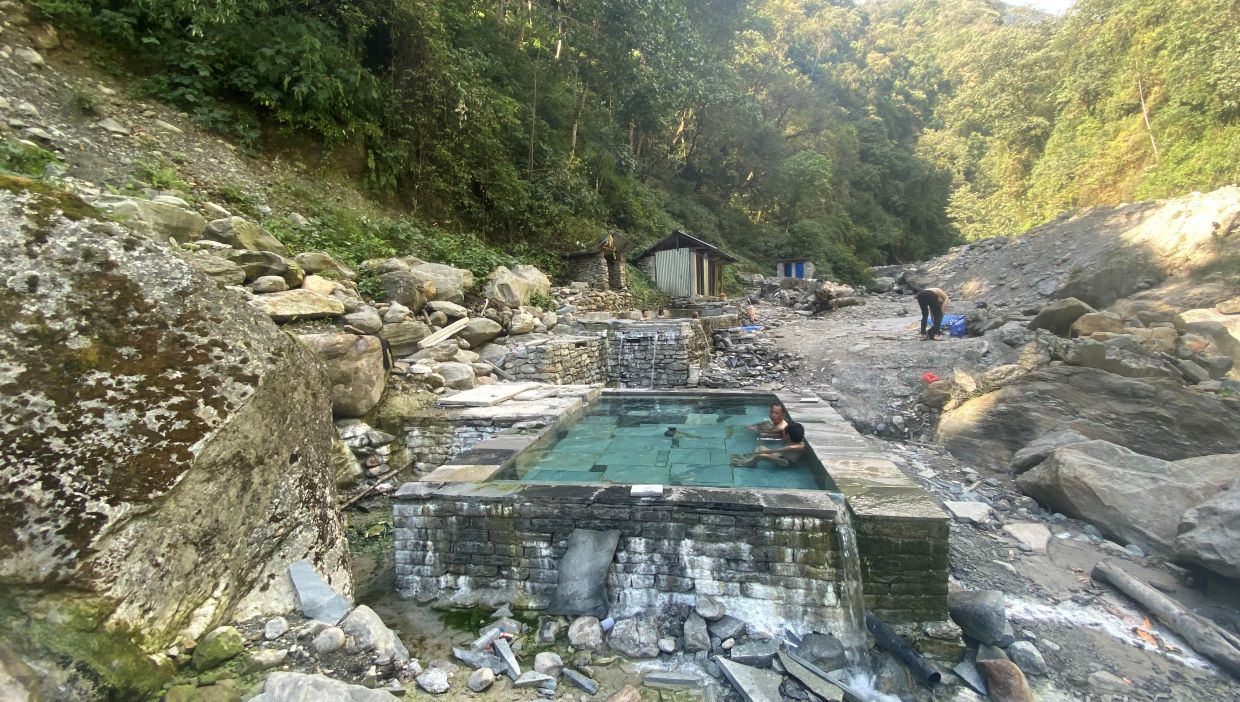
Hot Springs Reward: Jhinu Danda Hot Springs (natural rock pools on the Modi Khola riverbank) are among the most celebrated rewards on the entire ABC trek. After 5+ days of trekking, soaking in a natural hot spring with views of Annapurna is a memorable final evening before the jeep returns to Pokhara.
Pokhara to Annapurna Base Camp transport

Option B — 9-Day ABC Trek via Ghorepani–Poon Hill (Most Scenic)

For trekkers with 9+ days who want to combine the Poon Hill sunrise with the ABC trek, this is the classic Jejeep-dependent route:

  • Day 1: Pokhara → Ulleri by jeep (3 hrs) → trek to Ghorepani (4–5 hrs)
  • Day 2: Pre-dawn hike to Poon Hill (3,210 m) for sunrise → trek to Tadapani
  • Day 3: Tadapani → Ghandruk (2 hrs) → Bamboo via Chhomrong
  • Day 4: Bamboo → Dovan → Himalayan Hotel
  • Day 5: Himalayan Hotel → Deurali → MBC → ABC (6–7 hrs)
  • Day 6: ABC → MBC → Bamboo (6 hrs)
  • Day 7: Bamboo → Chhomrong → Sinuwa → Jhinu Danda (5–6 hrs)
  • Day 8: Jhinu Danda hot springs → drive to Pokhara by jeep (hrs)

This route is widely regarded as the finest combined Poon Hill + ABC trek in Nepal—offering both the Ghorepani sunrise panorama and the Annapurna Sanctuary in a single 8-day circuit.

Road Conditions — Pokhara to ABC Trailheads

Pokhara to Nayapul / Birethanti (Beni Baglung Highway)

Fully paved and well-maintained national highway throughout. Accessible for all vehicle types, including sedans, buses, and Hiace vans. Road quality has been consistently good with ongoing improvements.

This section is manageable year-round in all weather conditions.

Birethanti to Ulleri (Off-Road Track)

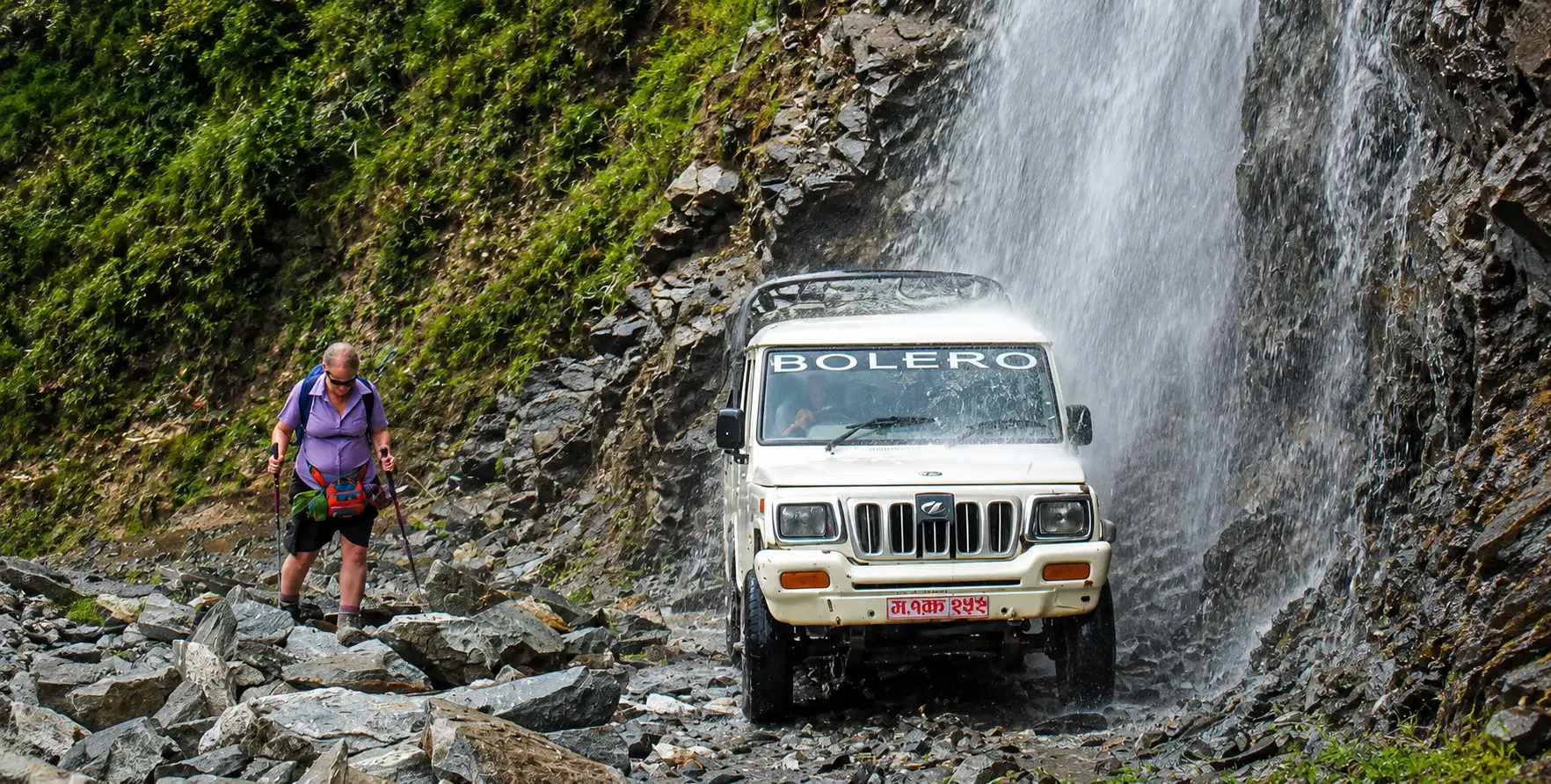
Beyond Birethanti, the road becomes a rough gravel-and-earth track that climbs steeply through the Modi Khola foothills. 4WD mandatory. The Hile to Ulleri section is the steepest and most technically challenging — a very rough, narrow, rocky track that requires low-range 4WD and an experienced driver.

Best condition: October to May (dry season). Avoid or verify carefully: June to September (monsoon).

Birethanti to Ghandruk (Off-Road Track)

The Birethanti to Ghandruk track follows a different route than Ulleri — heading north from Birethanti along the Modi Khola and then climbing steeply to Ghandruk village. 4WD mandatory. Road quality is rough but navigable for experienced drivers in the dry season.

The final approach to Ghandruk is very steep and narrow in sections.

Nayapul / Siwai to Jhinu Danda (Off-Road Track)

The jeep track from the Siwai junction to Jhinu Danda follows a rough riverside track along the Modi Khola. 4WD recommended throughout; mandatory in wet conditions. Some sections cross small stream beds.

Driver experience is important on this route.

Season-by-Season Road Conditions

SeasonMonthsRoad ConditionsTrek ConditionsRecommendation
Post-Monsoon / AutumnOct – NovDry, excellentCrystal clear, best visibilityBest — book early
SpringMar – MayDry, goodRhododendron bloom, warmExcellent — most popular
WinterDec – FebDry, coldSnow risk above DeuraliGood — quiet, cold
MonsoonJun – SepMuddy, riskyHeavy rain, leeches, limited viewsNot recommended for ABC

Monsoon Warning (June–September): All off-road trailhead tracks (Ulleri, Ghandruk, Jhinu Danda) are susceptible to landslides and road damage during heavy monsoon rainfall. Always verify road conditions with Nepal Vehicle Hiring Pvt Ltd before travel during the monsoon season. The Nayapul trailhead on the paved highway is always accessible year-round.

Permits Required — Pokhara to Annapurna Base Camp

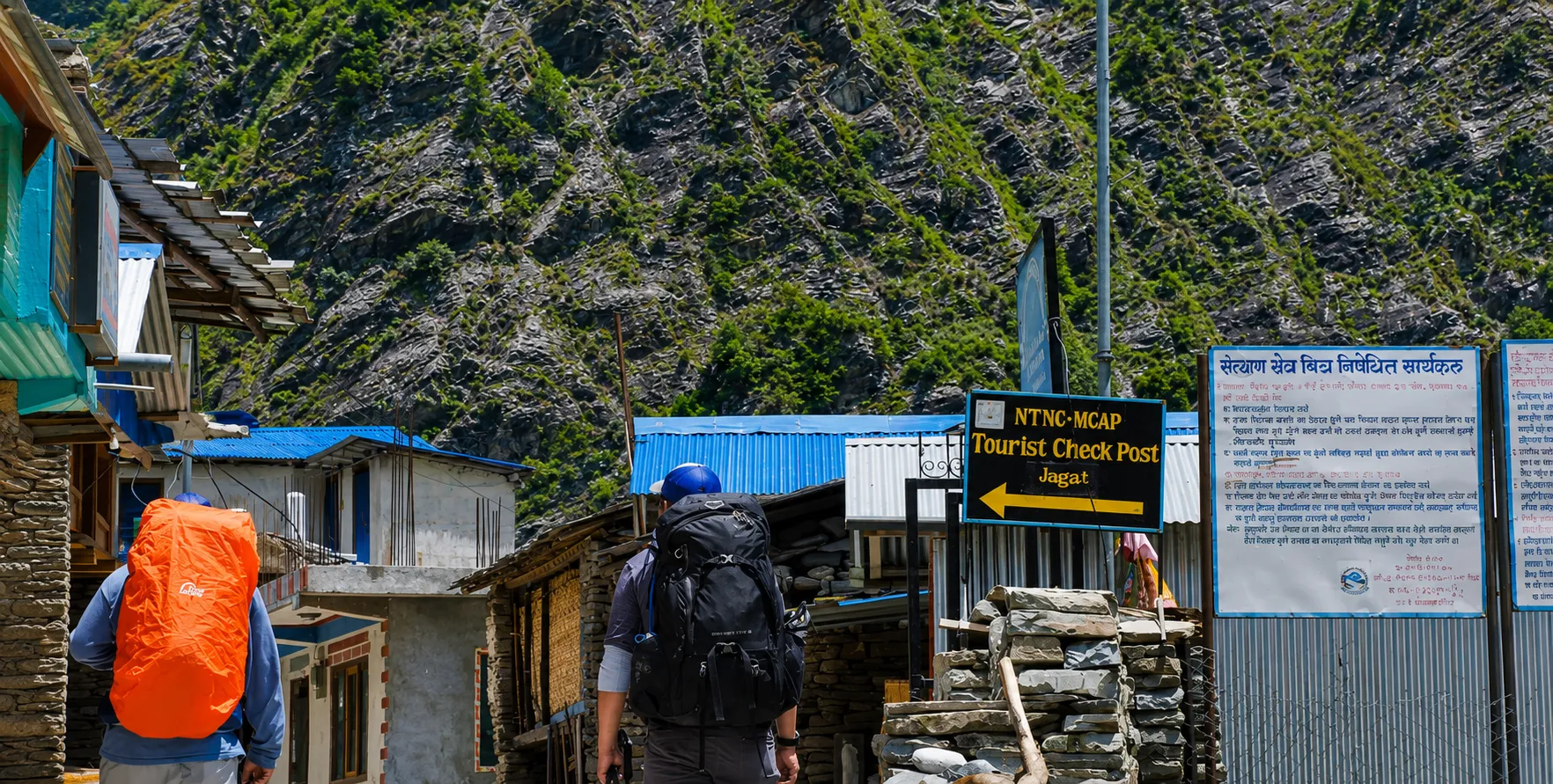
Two permits are required to trek in the Annapurna Conservation Area. Both are inspected at the ACAP checkpoint in Birethanti (on the jeep route) and at multiple points on the ABC trail:

ACAP — Annapurna Conservation Area Permit

  • Cost: NPR 3,000 per person for foreign nationals (approximately USD 22 — verify current rate before travel)
  • SAARC nationals: NPR 200 per person
  • Where to obtain: Nepal Tourism Board office in Lakeside or Damside, Pokhara (preferred), or at the Birethanti checkpoint
  • Checked at: Birethanti ACAP checkpoint, Ghorepani, Chhomrong, and multiple trail points

TIMS Card — Trekkers’ Information Management System

  • Cost: Approximately USD 10–20 per person for foreign nationals
  • Where to obtain: Nepal Tourism Board or TAAN office in Lakeside, Pokhara

Permit Tip: Obtain both permits at the Nepal Tourism Board office in Lakeside, Pokhara, on Day 1 before departing for the trailhead on Day 2. The office opens at 9:00 AM. Getting permits in Pokhara is faster and more reliable, and it helps you avoid delays or fines at the Birethanti checkpoint.

Choosing the Right Trailhead for Your Trek Duration

The single most practical question for most ABC trekkers is: ‘How many days do I have?’ Here is a clear guide to the best trailhead for each trek duration:

  • 10+ days available: Start from Nayapul — walk the full traditional ABC trail, including the complete lower section with stone steps, Ulleri, and the full village experience
  • 8–9 days available: Start from Ulleri by jeep; Jeep up the stone steps, begin trekking at a higher point, optionally include Poon Hill
  • 7–8 days available: Start from Ghandruk by jeep. Jeep in-depth Gurung village culture from Day 1, direct access to the Ghandruk–Chhomrong Jeep
  • 6–7 days available: Start from Jhinu Danda by jeep. Direct approach to Chhomrong and the upper ABC trail, hot springs return
  • 56-day Jeep (but challenging): Start from Jhinu Danda by jeep, jeep-paced itinerary with minimal rest days — experienced trekkers only
  • 3–4 days (express option): Helicopter to the ABC area, trek to ABC, then jeep return. Only for luxury or emergency rescue — not recommended for first-time high-altitude visitors

Practical Tips for Pokhara to ABC Transport

  • Book your vehicle 24–48 hours in advance during peak season (October–November, March–May) — private jeeps to ABC trailheads are in very high demand.
  • Obtain both permits (ACAP and TIMS) in Pokhara on Day 1 — do not leave this until the morning of the trek.
  • Depart Pokhara by 7:00–8:00 AM to arrive at your trailhead by mid-morning and begin trekking with maximum daylight.
  • Communicate your trailhead choice clearly to Nepal Vehicle Hiring Pvt Ltd — different trailheads require different route planning and jeep types.
  • Confirm with your driver whether the jeep reaches Ghandruk / Ulleri / Jhinu Danda directly or stops short — and plan accordingly.
  • Book your return vehicle at the same time as your outward transfer — this guarantees availability when you descend from the trek, especially for Jhinu Danda pickups.
  • For the Jhinu Danda route: Message your driver on WhatsApp about 24 hours before your return so the vehicle is ready at Jhinu Danda at the right time.
  • Carry cash (NPR): ATMs are available in Pokhara and Nayapul, but not on the trail. Carry at least NPR 20,000–30,000 per person for 7 days of tea house accommodation and meals.
  • Altitude sickness is real at 4,130 m — never rush to ABC. Follow the recommended acclimatisation pace: gain no more than 500 m of altitude per day above 3,000 m.
  • Pack trekking poles: The descent from ABC to Jhinu Danda is steep and knee-intensive — trekking poles are valuable on the way down.

Why Choose Nepal Vehicle Hiring Pvt Ltd for Your ABC Transport?

  • All 7 Trailheads Covered: We provide private jeep hire to every road-accessible ABC trailhead — Nayapul, Birethanti, Ulleri, Ghandruk, Jhinu Danda, Kimche, and Siwai.
  • Right Vehicle Every Time: 4WD jeeps for off-road trailheads (Ulleri, Ghandruk, Jhinu Danda), sedans or Hiace for Nayapul groups — always the right vehicle for the specific route.
  • Hotel Pickup in Pokhara: Door-to-door service from your hotel in Lakeside, Dam Side, or anywhere in Pokhara.
  • All-Inclusive Pricing: Includes driver, fuel, and tolls. The price quoted is the final price — no hidden charges.
  • Return Booking: Book both outward and return transfers in one reservation. We arrange post-trek pickup from Jhinu Danda, Ghandruk, or Nayapul at your convenience.
  • Route Advice: Not sure which trailhead best fits your trek duration and fitness level? Our team provides honest, expert advice based on your specific itinerary.
  • Road Condition Monitoring: Real-time monitoring of all off-road ABC trailhead routes — proactive alerts if any road is not passable on your travel day.
  • 24/7 Booking: WhatsApp, phone, or email — instant confirmation at any time.

Frequently Asked Questions — Pokhara to ABC Transport

How do I get from Pokhara to Annapurna Base Camp?

You cannot drive directly to Annapurna Base Camp — the road ends at one of several trailheads in the Annapurna foothills. From Pokhara, you can hire a private jeep or take a shared vehicle to your chosen trailhead (Nayapul, Ulleri, Ghandruk, Jhinu Danda, etc.), then trek to ABC over 4 to 7 days. The total distance from Pokhara to ABC combines approximately 42–56 km of road travel and 50–60 km of trekking.

Which is the best trailhead for the ABC trek?

It depends on your available time. For 10+ days, start from Nayapul for the full traditional experience. For 7–8 days, start from Ulleri or Ghandruk by jeep.

For the most efficient 6–7 day route, start from Jhinu Danda, the most direct approach to the Chhomrong trailhead— without springs, with hot springs on return.

What is the 2026 cost of a private jeep from Pokhara to Nayapul?

A private jeep or car hire from Pokhara to Nayapul costs approximately USD 60–100 for a full vehicle (one-way), including driver and fuel. For a group of 6, this is only USD 10–15 per person — excellent value.

What is the cost of a private jeep from Pokhara to Jhinu Danda?

A private jeep from Pokhara to Jhinu Danda costs approximately US$140 for the entire vehicle (one-way). This includes the driver, fuel, and road tolls. 4WD is essential for this route.

Can a regular car or sedan reach Ghandruk or Jhinu Danda?

No. Regular sedans can only reach Nayapul and Birethanti along the paved Beni Baglung Highway. Beyond Birethanti, all trailhead roads (Ulleri, Ghandruk, Jhinu Danda) are rough off-road tracks that require a 4WD jeep. Nepal Vehicle Hiring Pvt Ltd exclusively provides 4WD jeeps for all off-road trailhead routes.

Do I need permits for the Annapurna Base Camp Trek?

Yes. Two mandatory permits are required: ACAP (Annapurna Conservation Area Permit — approximately NPR 3,000 / USD 22 per person) and TIMS Card (approximately USD 10–20 per person). You can get both at the Nepal Tourism Board office in Lakeside, Pokhara.

Authorities inspect permits at Birethanti and at multiple points on the ABC trail.

Is a helicopter return from ABC possible?

Yes. Helicopter charter returns from Annapurna Base Camp (4,130 m) or Machhapuchhre Base Camp (3,700 m) to Pokhara are available, costing approximately USD 450–650 per person. Full helicopter charters (5-seat) cost USD 2,500–3,500. Nepal Vehicle Hiring Pvt Ltd can coordinate helicopter bookings in partnership with Pokhara helicopter operators.

When is the best time to hire a vehicle for the ABC trek?

October to November (post-monsoon autumn) and March to May (spring) are the best seasons, with clear skies, dry roads, and rhododendron blooms, respectively. Both are peak trekking seasons, so book vehicles 24–48 hours in advance. Winter (December–February) is quieter with good views.

Monsoon (June–September) is not recommended for ABC trekking.

Can I book a return vehicle from Jhinu Danda after the trek?

Yes. Nepal Vehicle Hiring Pvt Ltd arranges return private jeep transfers from Jhinu Danda, Ghandruk, or Nayapul to Pokhara after your ABC trek. Book at the same time as your outward transfer.

Contact your driver via WhatsApp approximately 24 hours before your planned return to confirm the pickup time.

Conclusion

The transport from Pokhara to the Annapurna Base Camp trailheads is the crucial first chapter of one of the world’s greatest trekking adventures. Choosing the right trailhead — Nayapul for the full traditional experience, Ulleri to skip the stone steps, Ghandruk for cultural immersion, or Jhinu Danda for the most efficient ABC approach — sets the tone and pace for your entire trek.

In 2026, a private 4WD jeep from Nepal Vehicle Hiring Pvt Ltd remains the gold standard for ABC trek transport from Pokhara. With all-inclusive pricing, hotel pickup, experienced drivers who know every kilometre of the Beni Baglung Highway and the off-road trailhead tracks, and the flexibility to reach any of the seven road-accessible ABC trailheads, we ensure your Annapurna adventure begins exactly the way you want it to.

Book your Pokhara to ABC trailhead transfer with Nepal Vehicle Hiring Pvt Ltd today — and take the first step toward one of the world’s most extraordinary trekking destinations.

Book your ABC transport today — Call or WhatsApp

Pokhara to Ulleri Jeep Service

Begnas Lake Pokhara

Pokhara to Ulleri Jeep Service

Ask any experienced Poon Hill trekker about the Ulleri stone steps, and watch their eyes go wide. More than 3,300 stone steps rise steeply from Tikhedhunga to Ulleri — a knee-punishing, lung-testing climb that many trekkers describe as the hardest two hours on the entire Ghorepani–Poon Hill circuit. For years, there was no choice but to climb every single step on foot.

That has all changed. Thanks to road development in the Annapurna foothills, a 4WD jeep can now reach Ulleri directly from Pokhara—skipping those legendary stone steps entirely and getting you to 1,960 meters in just 2.5 to 3.5 hours.

This is genuinely game-changing for families with children, older trekkers, time-limited visitors, and anyone who wants to start their Poon Hill or Annapurna Base Camp trek with energy r, not exhaustion.

This complete 2026 guide covers everything you need to know about the Pokhara to Ulleri jeep service — route details, costs, road conditions, the best stopping points, permit requirements, onward trek options, and why Nepal Vehicle Hiring Pvt Ltd is the most reliable jeep hire partner for this exciting off-road journey.

Ulleri — A Village at the Gateway of Poon Hill

Ulleri is a traditional Magar community village situated at an elevation of 1,960 meters (6,430 ft) in the Annapurna Conservation Area, Kaski District. One of the largest Magar settlements in the Annapurna foothills, Ulleri has long been a key waypoint on the Ghorepani–Poon Hill trekking route—the overnight stop after the notorious stone-step ascent from Tikhedhunga.

The Magar people of Ulleri have strong ties to Nepal’s Gurkha military tradition and maintain a deeply rooted culture of warm hospitality, traditional stone-built houses, and age-old farming practices on the terraced hillsides above the Modi Khola valley. From Ulleri, the Annapurna South, Hiunchuli, and Machhapuchhre (Fishtail) peaks fill the northern horizon in an extraordinary panorama.

  • Altitude: 1,960 m (6,430 ft) above sea level
  • District: Kaski District, Gandaki Province, Annapurna Conservation Area
  • People: Magar community — Gurkha heritage, warm hospitality, traditional culture
  • Mountain Views: Annapurna South (7,219 m), Hiunchuli (6,441 m), Machhapuchhre / Fishtail (6,993 m)
  • Famous For: Gateway to Ghorepani and Poon Hill; the legendary 3,300+ stone-step ascent from Tikhedhunga
  • Trek Connections: Ghorepani–Poon Hill Circuit, Annapurna Base Camp Trek, Tadapani–Ghandruk Loop
  • Facilities: Tea houses, guesthouses, basic dining, stunning mountain viewpoints

Key Facts at a Glance — Pokhara to Ulleri

DetailInformation
Total Distance48–52 km (Pokhara to Ulleri)
Ulleri Altitude1,960 m (6,430 ft) above sea level
Travel Time by Private Jeep2.5 to 3.5 hours total
Pokhara to Nayapul42 km | 1 hour | Paved Beni Baglung Highway
Nayapul to Hile / Tikhedhunga6 km | 45 min | Rough off-road track
Hello to Ulleri4 km | 30–45 min | Very rough, steep — 4WD essential
4WD Required?Mandatory from Nayapul onward
Famous Stone Steps BypassedYes — jeep skips the legendary 3,300+ stone steps to Ulleri
Best Season for JeepOctober to February (dry season) — road not passable in heavy monsoon
Permits RequiredACAP (Annapurna Conservation Area Permit) + TIMS Card
Trek ConnectionsGhorepani–Poon Hill, Annapurna Base Camp, Tadapani–Ghandruk Loop

The Big Advantage: Hiring a jeep from Pokhara to Ulleri saves you the famous 3,300+ stone-step climb from Tikhedhunga—about 2 hours of steep, knee-straining ascent that many trekkers find the most demanding section of the entire Poon Hill circuit. You arrive at Ulleri rested, ready, and with your knees intact for the real mountain trekking ahead.

The Route — Pokhara to Ulleri Step by Step

The Pokhara to Ulleri jeep route follows a clear two-phase journey: a smooth paved highway for the first 42 km, followed by a progressively rougher off-road mountain track for the final 10 km. Here is the complete route breakdown:

StopDistance from PokharaAltitudeRoad TypeKey Notes
Pokhara (Lakeside)Start827 mCity roadsDeparture point — hotel pickup available
Naudanda / Kande28 km1,440 mPaved highwayPanoramic Annapurna views — photo stop
Nayapul42 km1,070 mPaved highwayClassic ABC trek start, bus stop junction
Birethanti44 km1,025 mPaved → roughACAP checkpoint, Modi Khola riverside
Hile / Tikhedhunga47 km1,480 mRough off-roadCommon stopping point; walk option to Ulleri
Ulleri50–52 km1,960 mVery rough 4WD trackMagar village, Poon Hill gateway, stone steps start.

Phase 1 — Pokhara to Nayapul via Beni Baglung Highway (42 km, 1 hour)

Leaving Pokhara, the jeep follows the Beni Baglung Highway southward through the Modi Khola valley. The road is fully paved and in good condition — one of the better-maintained provincial highways in the Gandaki region. The journey passes through Naudanda and Kande, offering spectacular panoramic views of the Annapurna massif on clear mornings, before descending toward Nayapul.

  • Pokhara Lakeside → Naudanda / Kande (28 km, 40 min): Climbing hilltop with sweeping Annapurna Range views — prime photography stop
  • Kande → Nayapul (14 km, 20 min): Descending into the Modi Khola valley through terraced farmland
  • Nayapul → Birethanti (2 km, 5 min): Riverside village junction — ACAP checkpoint and permit inspection

Phase 2 — Nayapul / Birethanti to Hile / Tikhedhunga (~6 km, ~45 min)

Beyond Birethanti, the paved road gives way to a rough gravel-and-earth track that follows the Modi Khola upstream. This is where the off-road adventure begins. The track is manageable for a 4WD jeep, but noticeably rougher than the highway.

Views of the river gorge and terraced hillsides become increasingly dramatic as altitude increases.

  • Birethanti → Sudame: 3 km, 20–25 min — riverside track, initial off-road transition
  • Sudame → Hile / Tikhedhunga: 3 km, 20 min — steeper track, Modi Khola views, first mountain settlement

Phase 3 — Hile / Tikhedhunga to Ulleri (4 km, 30–45 min)

The section from Hile (Tikhedhunga) to Ulleri is the most challenging and exciting part of the entire jeep journey. The road is very rough, narrow, and steep — requiring genuine 4WD capability, low-range gear engagement, and an experienced driver. This section bypasses the famous 3,300+ stone steps that trekkers climb on foot between Tikhedhunga and Ulleri.

  • Hile / Tikhedhunga → Ulleri: 4 km, 30–45 min — extremely rough, rocky track, steep switchbacks, dramatic views

Important Distinction: Hile (also called Tikhedhunga) and Ulleri are different points on the route. Hile is at 1,480 m; Ulleri is at 1,960 m. Some jeeps stop at Hile rather than attempting the very steep Hile-to-Ulleri section.

On foot, Hile to Ulleri takes about 1.5 to 2 hours, still saving most of the stone steps. Confirm with your driver whether they will attempt the full drive to Ulleri or stop at Hile.

Nepal Vehicle Hiring Pvt Ltd’s experienced drivers assess road conditions on arrival in Hile and reach the closest accessible point to Ulleri village—maximising the value of your jeep service.

All Jeep Service Options — Pokhara to Ulleri 2026

Here is a complete comparison of all transport options for reaching Ulleri from Pokhara:

Service TypeCapacity2026 Cost (approx.)Notes
Private Jeep — Pokhara to Ulleri4–7 passengersUS$160 (full vehicle)Best — hotel pickup, flexible, direct
Private Jeep — Pokhara to Hile4–7 passengersUSD 80–150 (full vehicle)Slightly cheaper; 30-min walk to Ulleri
Private Jeep — Nayapul to Ulleri4–7 passengersUSD 100–200 (full vehicle)Take the local bus to Nayapul first
Shared Jeep — Pokhara to UlleriPer seat (7–9 total)USD 15–20 per personFrom Baglung Bus Park, fill-and-go
Shared Jeep — Nayapul to UlleriPer seatUSD 10–15 per personAvailable at Nayapul / Birethanti

Pokhara

Private Jeep — Pokhara to Ulleri (Best Option)

A private 4WD jeep (Mahindra Scorpio, Toyota Hilux, or similar) hired directly from Pokhara to Ulleri is the gold standard for this route. You get door-to-door hotel pickup from anywhere in Pokhara, complete flexibility to stop at viewpoints along the Beni Baglung Highway, and the most direct and comfortable route to Ulleri, with no vehicle transfers.

  • Vehicle types: Mahindra Scorpio 4WD, Toyota Hilux 4WD
  • Capacity: 4–6 passengers comfortably; up to 7 with minimal luggage
  • 2026 Cost: USD 100–200 for the full vehicle (one way — driver, fuel, tolls included)
  • Travel time: 2.5 to 3.5 hours from Pokhara to Ulleri
  • Pickup: Door-to-door from your hotel in Lakeside or anywhere in Pokhara
  • Advantage: No transfers, no waiting, hotel pickup, complete itinerary flexibility

Per-Person Value: With a group of 6 sharing a private jeep for USD 120, the per-person cost is just USD 20—barely more than a shared jeep, yet with major advantages in comfort, convenience, and service.

Private Jeep — Pokhara to Hile (Budget Alternative)

A slightly more economical option is to hire a private jeep from Pokhara to Hile (Tikhedhunga), then walk the 1.5 to 2 hours uphill from Hile to Ulleri. This avoids the most challenging jeep section (Hile to Ulleri) while still saving approximately 1.5 hours of the Nayapul-to-Hile walking section.

  • 2026 Cost: USD 80–150 for full vehicle hire from Pokhara to Hile
  • Walking from Hile to Ulleri: ~1.5 to 2 hours on foot — significantly less demanding than the full stone step climb from Tikhedhunga on the traditional trekking route
  • Best for: Trekkers who want to save money but still skip the worst of the lower approach walking

Shared Jeep — Budget Option for Solo Travellers. Shared jeeps depart from Baglung Bus Park in Pokhara on an irregular fill-and-go schedule. In peak season (October–November and March–May), shared jeeps are relatively easy to find. During the off-season, availability is more limited.

  • 2026 Cost: USD 15–20 per person from Pokhara to Ulleri
  • Departure: Baglung Bus Park, Pokhara — no hotel pickup
  • Departure time: Early morning (6:30–8:00 AM) — departs only when the vehicle is full
  • Travel time: 3 to 4 hours (additional stops en route)
  • Limitation: Crowded seating with 7–9 passengers; limited luggage space; no flexibility in stops or schedule

Road Conditions — Pokhara to Ulleri

Pokhara to Nayapul — Beni Baglung Highway

The Beni Baglung Highway is a well-maintained two-lane paved road in good overall condition. It is easily manageable for all vehicle types, including standard cars and Hiace vans. Road improvements are ongoing in this section, and the surface quality remains consistently good year-round.

Nayapul to Hile / Tikhedhunga — Off-Road Track

Beyond Nayapul, the tarmac gives way to a rough gravel track that follows the Modi Khola river upstream. The road is narrow — wide enough for one vehicle, with passing places for two vehicles to manoeuvre.

It is manageable for 4WD jeeps throughout the dry season (October–May), but can become muddy and difficult to navigate after heavy rain. This section requires 4WD traction and a driver experienced in narrow off-road mountain tracks.

Hile to Ulleri — The Steepest Section

This is the most technically demanding section of the Pokhara-Ulleri jeep route. The road is extremely steep, rocky, and very narrow — in some sections only slightly wider than the vehicle itself. Ground clearance is critical.

The driver must engage low-range 4WD and navigate carefully around large rocks and tight switchbacks. In good, dry conditions, an experienced driver in a well-maintained Scorpio or Hilux can reach Ulleri without difficulty. In wet or monsoon conditions, this section can become impassable.

Season-by-Season Road Conditions

SeasonMonthsRoad ConditionJeep Accessible?Recommendation
Post-Monsoon / AutumnOct – NovDry, goodYes — best conditionsBest — crystal-clear mountain views
WinterDec – FebDry, coldYes — dusty gravelGood — quiet trails, fewer tourists
SpringMar – MayMostly dryUsually yesGood — rhododendron forests in full bloom
MonsoonJun – SepMuddy, dangerousOften NOAvoid the jeep to Ulleri — landslide risk

Monsoon Season (June–September): The Nayapul to Ulleri off-road track is highly susceptible to landslides, mudslides, and track damage during heavy monsoon rainfall. The Hile to Ulleri section, in particular, becomes dangerous and is often completely impassable during the peak monsoon season.

Nepal Vehicle Hiring Pvt Ltd monitors daily road conditions and will proactively advise you if jeep service to Ulleri is not possible on your planned travel date. The dry season (October to February) is the recommended period for jeep service to Ulleri.

kathmandu to salleri jeep

Why Take a Jeep to Ulleri? — The 3,300 Stone Steps Question

This is the question every Poon Hill trekker faces: should I walk from Tikhedhunga to Ulleri on the traditional route, or hire a jeep?

The traditional trekking route from Tikhedhunga to Ulleri follows a famous (or infamous) stone staircase of more than 3,300 steps, rising approximately 500 vertical meters in about 2 hours. It is one of the most demanding short climbs on any Nepal trekking trail — steep, unrelenting, and exhausting, especially under the weight of a full trekking pack in warm conditions.

Strong Reasons to Take the Jeep

  • Save 2 hours of steep climbing before your trek even properly begins — arrive at Ulleri with full energy reserves for the days ahead.
  • Ideal for older trekkers or those with knee, hip, or joint concerns — the stone step descent on the return is equally punishing.
  • Perfect for families with young children — carrying children or keeping them motivated on 3,300 steps is genuinely difficult.
  • Time-efficient — particularly valuable for 2-day express Poon Hill itineraries where every hour matters
  • Heavy trekking luggage is much safer on a jeep roof rack than being carried on steep stone steps.
  • The jeep ride itself is a thrilling off-road adventure — the views of Annapurna, Machhapuchhre, and the Modi Khola gorge from the jeep track are spectacular.

When Walking is the Better Choice

  • If you have 4+ days for the Poon Hill circuit, the traditional walking route from Nayapul offers the complete trekking experience — riverside paths, village culture, and the satisfying sense of earning the altitude
  • The stone step climb, while demanding, is also a remarkable cultural experience — passing through Magar villages, meeting local porters, and experiencing the rhythm of traditional Himalayan trekking
  • During monsoon season, when the jeep road is unreliable, walking is the only option, and the trail is lush and vibrantly green

Treks Accessible from Ulleri

Trek / DestinationFrom UlleriDurationHighlights
Ghorepani VillageUlleri (start)4–5 hrs walkRhododendron forests, mountain lodges
Poon Hill Sunrise (3,210 m)Via Ghorepani+45 min from GhorepaniBest Himalayan panorama in the Annapurna region
Banthanti VillageUlleri (1 hr)1 hour above UlleriForest tea houses, green valley views
Ghandruk Loop (via Tadapani)Via Ghorepani2–3 day loopClassic Annapurna Circuit loop trek
Annapurna Base CampVia Ghorepani + Chhomrong6–8 days totalFull ABC journey from Ulleri
Mulde / Dobato ViewpointVia Ghorepani2–3 day optionOff-beat panorama, Dhaulagiri views

Pokhara to Ulleri Jeep Service

Ghorepani and Poon Hill (3,210 m) — The Primary Destination

From Ulleri, the trail climbs north through the charming village of Banthanti (2,250 m) and the cool rhododendron and oak forests above, reaching Ghorepani (2,870 m) in approximately 4 to 5 hours. Ghorepani is the overnight base for the famous Poon Hill sunrise hike.

At 3:30–4:30 AM the following morning, trekkers make the 45-minute climb to Poon Hill (3,210 m) to witness one of the most celebrated Himalayan panoramas on earth — a 180-degree arc of peaks including Dhaulagiri (8,167 m), Annapurna I (8,091 m), Annapurna South (7,219 m), Nilgiri (7,061 m), and Machhapuchhre (6,993 m), all lit by the rising sun in shades of gold and pink.

Banthanti Village (1 Hour Above Ulleri)

Just one hour above Ulleri, Banthanti is a small but charming village of tea houses set in dense forest. The transition from open terraced farmland to cool montane forest happens between Ulleri and Banthanti—a beautiful shift that signals your genuine entry into the high Annapurna foothills. Many trekkers on 2-day itineraries push through Banthanti to Ghorepani in a single day.

Ghorepani to Tadapani – Ghandruk Loop (3 Days)

One of the most rewarding loop treks in the Annapurna region combines the Poon Hill sunrise with a traverse from Ghorepani to Tadapani and descent to Ghandruk village before returning to Pokhara by jeep. After sunrise at Poon Hill, trekkers cross the ridge to Tadapani (2,630 m)—a beautiful traverse through rhododendron forests—then descend to the Gurung village of Ghandruk (1,940 m), with its cobblestone lanes and magnificent Annapurna South views.

From Ghandruk, a jeep takes you back to Pokhara. This loop avoids retracing the same route and is widely regarded as the finest 3–4 day trekking circuit in the western Annapurna foothills.

Annapurna Base Camp Trek (Via Ghorepani and Chhomrong)

For trekkers with 7 to 9 days available, Ulleri serves as a starting point for the full Annapurna Base Camp Trek. From Ghorepani, the route continues to Tadapani, Chhomrong, and the Annapurna Sanctuary — the glacial amphitheatre surrounded by Annapurna I, II, III, IV, South, Gangapurna, and Machhapuchhre — before returning via Jhinu Danda and Nayapul to Pokhara.

Starting this trek from Ulleri by jeep saves one full day of walking on the lower approach.

Permits Required — Pokhara to Ulleri

The Ulleri area falls within the Annapurna Conservation Area. Two mandatory permits are required and inspected at the ACAP checkpoint in Birethanti:

ACAP — Annapurna Conservation Area Permit

  • Cost: NPR 3,000 per person for foreign nationals (approximately USD 22 — verify current rate before travel)
  • SAARC nationals: NPR 200 per person
  • Where to obtain: Nepal Tourism Board office in Lakeside, Pokhara, or Bhrikuti Mandap, Kathmandu — OR at the Birethanti checkpoint
  • Inspected at: Birethanti ACAP checkpoint (mandatory vehicle stop) and multiple points on the trail

TIMS Card — Trekkers’ Information Management System

  • Cost: Approximately USD 10–20 per person for foreign nationals
  • Where to obtain: Nepal Tourism Board or TAAN office in Lakeside, Pokhara, or Thamel, Kathmandu

The Pokhara-to-Ulleri jeep itinerary offers an efficient 2-day Poon Hill experience that has become increasingly popular among time-limited travellers. Here is the recommended 2-day itinerary:

Day 1 — Pokhara to Ulleri by Itineraryek to Ghorepani

  • 7:00 AM: Depart Pokhara by private jeep — hotel pickup in Lakeside
  • 7:30 AM: Photo stop at Kande / Naudanda viewpoint — Annapurna Range panorama
  • 9:00 AM: Arrive Birethanti — ACAP permit check, brief rest stop
  • 9:30–10:00 AM: Arrive Ulleri (1,960 m) — start trek
  • Trek: Ulleri → Banthanti (2,250 m) → Nangethanti → Ghorepani (2,870 m) — approximately 4 to 5 hours walking
  • 2:30–3:30 PM: Arrive Ghorepani — check into tea house, rest, explore village
  • Evening: Tea house dinner, early bedtime — Poon Hill sunrise requires a 4:30 AM start

Day 2 — Poon Hill Sunrise, Trek Return to Ulleri, Jeep to Pokhara

  • 4:30–5:00 AM: Wake up and hike to Poon Hill (3,210 m) — approximately 45 minutes to 1 hour
  • 6:00–6:30 AM: Sunrise panorama — Dhaulagiri, Annapurna Range, Machhapuchhre in morning light
  • 7:30 AM: Return to Ghorepani for breakfast
  • 8:30 AM: Begin descent — Ghorepani → Nangethanti → Banthanti → Ulleri
  • 11:00–11:30 AM: Arrive Ulleri — board jeep for return to Pokhara
  • 1:30–2:00 PM: Arrive Pokhara — afternoon free

This 2-day itinerary is the most efficient way to experience the Poon Hill sunrise and return to Pokhara in a single overnight trip — perfect for travellers with limited time or those combining Poon Hill with other Nepal experiences.

What to Pack for the Pokhara to Ulleri Jeep Journey

  • ACAP permit and TIMS card: Easily accessible in your day bag — inspected at Birethanti checkpoint
  • Trekking boots: The trail above Ulleri is rocky and uneven — proper footwear is essential
  • Warm layers: Ghorepani at 2,870 m is significantly colder than Pokhara — pack a fleece and a down jacket
  • Rain gear: The Poon Hill area is prone to afternoon showers even in the dry season — a lightweight waterproof jacket is essential
  • Headlamp and spare batteries: The Poon Hill pre-dawn hike requires reliable light
  • Water bottle and water purification tablets or filter: Tea houses provide boiled water, but carry backup
  • Snacks and energy food for the trek: Tea houses are available every hour on the trail
  • Sunscreen, sunglasses, and lip balm: High altitude UV intensity is strong even on overcast days
  • Camera with full battery and extra storage: The Poon Hill panorama is one of Nepal’s greatest photography opportunities
  • Cash (NPR): Limited ATM access on the trail — carry enough for accommodation, meals, and tips
  • Motion sickness medication: The Beni Baglung Highway and off-road section to Ulleri have numerous winding switchbacks

pokhara

Practical Tips for Your Pokhara to Ulleri Jeep Service

  • Book your jeep at least 24–48 hours in advance during peak season (October–November and March–May) — vehicles are in high demand from Pokhara during the Poon Hill trekking season.
  • Depart Pokhara by 7:00–7:30 AM to arrive in Ulleri by 10:00–10:30 AM — giving you the full morning to trek to Ghorepani and arrive well before dark.
  • Obtain ACAP and TIMS permits at the Nepal Tourism Board in Lakeside, Pokhara, before departure — saves time and avoids delays at the Birethanti checkpoint.
  • Confirm with your driver whether the jeep will reach Ulleri directly or stop at Hile (Tikhedhunga) — and plan your trekking time accordingly.
  • Book your return jeep from Ulleri to Pokhara at the same time as your outward journey — this guarantees a vehicle is available when you descend from Ghorepani.
  • The Poon Hill sunrise hike is best done without a large trekking pack — leave main bags at your Ghorepani tea house and take only a day bag with camera, warm layers, and water.
  • Carry adequate NPR cash: There are no ATMs on the trail from Ulleri to Ghorepani — carry enough for two days of accommodation, meals, and tips (approximately NPR 4,000–6,000 per person).
  • During the monsoon season, always confirm road conditions with Nepal Vehicle Hiring Pvt Ltd before you leave — the Hile-to-Ulleri section is particularly susceptible to rain damage.
  • Check in advance which tea houses in Ghorepani you will stay at during peak season — popular lodges fill up fast and booking ahead is strongly recommended for October and November.
  • The jeep track to Ulleri becomes increasingly rough above Hile — a travel pillow or cushion makes the ride significantly more comfortable.

Return Journey — Ulleri to Pokhara

Nepal Vehicle Hiring Pvt Ltd arranges private jeep returns from Ulleri or Hile to Pokhara at the same rate as the outward journey. Book your return at the same time as the outward trip to ensure vehicle availability — especially critical during the busy October–November trekking season. Most trekkers complete the descent from Ghorepani to Ulleri by mid-morning and return to Pokhara by early afternoon.

Shared Jeep — Ulleri / Hile to Pokhara

Shared jeeps can be found at Ulleri and Hile in the mornings (typically 7:00 AM to 11:00 AM) heading back to Pokhara at approximately USD 10–15 per person. During peak season, these are reasonably easy to find. During off-peak times, availability can be uncertain.

Ask your Ghorepani tea house the evening before your descent to confirm availability.

Walk to Nayapul and take a bus to Pokhara.

The traditional descent from Ulleri follows the stone steps back down to Tikhedhunga, then continues along the riverside trail to Birethanti and Nayapul—about 3 to 4 hours of walking. From Nayapul, local buses and shared taxis return to Pokhara in approximately 1 hour at NPR 200–300 per person.

Why Choose Nepal Vehicle Hiring Pvt. Ltd. for the Pokhara to Ulleri Route?

  • Experienced 4WD Drivers: Our drivers have extensive knowledge of the Beni Baglung Highway and the challenging Nayapul-to-Ulleri off-road track — including the steepest Hile-to-Ulleri section. They know when to engage low-range 4WD, where to slow down, and how to navigate the narrow sections safely.
  • Right Vehicles for the Route: Mahindra Scorpio 4WD and Toyota Hilux 4WD — the ideal jeeps for Nepal’s Annapurna foothills off-road tracks. High ground clearance, reliable 4WD systems, and proven performance on steep rocky terrain.
  • Hotel Pickup in Pokhara: Door-to-door service from your hotel in Lakeside, Dam Side, or anywhere in Pokhara — no need to navigate to Baglung Bus Park.
  • All-Inclusive Pricing: The quoted price includes the driver, fuel, and road tolls. No hidden charges or fuel surcharges.
  • Flexible Stops: Ask your driver to pause at Kande viewpoint for morning mountain photos, or at Birethanti for tea — our drivers accommodate all reasonable requests along the route.
  • Return Booking: Book an outward and return jeep in a single reservation — guaranteed vehicle availability when you descend from Ghorepani.
  • Real-Time Road Monitoring: Our team tracks the Ulleri road condition daily during the monsoon season — we will proactively alert you to any road closures or safety concerns.
  • 24/7 Booking: WhatsApp, phone, or email anytime — instant confirmation.

Frequently Asked Questions — Pokhara to Ulleri Jeep Service

How far is Pokhara from Ulleri?

The road distance from Pokhara to Ulleri is approximately 48- 52 km. The first 42 km from Pokhara to Nayapul is a paved highway; the remaining 6 to 10 km from Nayapul to Ulleri via Hile is a rough off-road mountain track.

How long does the jeep journey from Pokhara to Ulleri take?

A private 4WD jeep takes approximately 2.5 to 3.5 hours from Pokhara to Ulleri, depending on road conditions and the number of stops. The Hile to Ulleri section is the slowest because of the extremely rough,d steep track.

What is the 2026 cost of a private jeep from Pokhara to Ulleri?

A private jeep hire from Pokhara to Ulleri costs approximately US$160 for the full vehicle (one-way), including driver and fuel. For a group of 6, this works out to about USD 17–25 per person—excellent value compared to the shared jeep alternative.

Does the jeep really skip the 3,300 stone steps?

Yes. The jeep track from Hile (Tikhedhunga) to Ulleri bypasses the famous stone step ascent that trekkers climb on the traditional trail. The jeep reaches Ulleri directly, saving approximately 2 hours of steep climbing.

This is why many trekkers—especially families, older travellers, and those on tight schedules—choose to hire a jeep rather than walk from Nayapul.

Does the jeep go all the way to Ulleri or stop at Hile?

This depends on road conditions and the driver’s assessment on the day. Nepal Vehicle Hiring Pvt Ltd’s drivers always attempt to reach the closest accessible point to Ulleri village. In good dry season conditions, the jeep typically reaches Ulleri directly.

Under certain conditions, the jeep stops at Hile (approximately a 1.5- to 2-hour walk below Ulleri). Confirm with us in advance.

When is the best time for the Pokhara-Ulleri jeep service?

October to February (dry season) is the best period for the jeep service. The Hile to Ulleri road is dry, manageable, and in its best condition during these months. Autumn (October–November) and spring (March–May) are the peak trekking seasons with the clearest mountain views at Poon Hill.

Jeep service is not recommended during the heavy monsoon season (June–September), when roads are prone to landslides and closures.

What permits do I need for the Ulleri and Poon Hill trek?

You need an ACAP (Annapurna Conservation Area Permit — approximately NPR 3,000 / USD 22 per person) and a TIMS Card (approximately USD 10–20 per person). Both are inspected at the Birethanti checkpoint on the jeep route. Get both permits at the Nepal Tourism Board office in Lakeside, Pokhara, before departure.

Can I book a return jeep from Ulleri to Pokhara?

Yes. Nepal Vehicle Hiring Pvt Ltd arranges return private jeep hire from Ulleri or Hile to Pokhara at the same rate as the outward journey. We strongly recommend booking the return at the same time as your outward trip to guarantee availability during peak trekking season.

Can I hire a jeep for just the Nayapul-Ulleri section?

Yes. If you prefer to travel independently by local bus from Pokhara to Nayapul, Nepal Vehicle Hiring Pvt Ltd can arrange a private jeep hire from Nayapul to Ulleri only, costing approximately USD 70–90 for the entire vehicle.

Conclusion

The Pokhara-to-Ulleri jeep service is one of the smartest transport decisions any Poon Hill trekker can make. By bypassing the legendary 3,300 stone steps of Tikhedhunga and arriving at Ulleri rested and ready, you preserve your energy for the beautiful rhododendron forest trail to Ghorepani and the magical pre-dawn climb to Poon Hill.

Whether you are starting the classic 2-day Poon Hill express itinerary, the 3–4 day Ghorepani–Tadapani–Ghandruk loop, or the full Annapurna Base Camp Trek, the Pokhara to Ulleri jeep service from Nepal Vehicle Hiring Pvt Ltd gives you the fastest, most comfortable, and most flexible start to your Annapurna adventure.

With experienced 4WD drivers, the right vehicles for Nepal’s off-road mountain tracks, transparent, all-inclusive pricing, hotel pickup in Pokhara, and 24/7 booking support, Nepal Vehicle Hiring Pvt Ltd makes the Pokhara-to-Ulleri journey as memorable and enjoyable as the trekking that follows.

Book your Pokhara to Ulleri jeep today — Call or WhatsApp: 977- WhatsApp
Email: [email protected]
Website: www.vehiclehiringnepal.com

Pokhara to Ghasa Jeep Service: Complete Transport Guide

Pokhara to Ghasa Jeep Service

Pokhara to Ghasa Jeep Service – Complete Transport Guide

Ghasa is a beautiful, forested village in the heart of the Kali Gandaki River valley – one of the deepest gorges on earth and the main corridor leading from the Annapurna foothills to the high-altitude desert of Mustang. Located at 2,010 m on the Annapurna Circuit route, Ghasa sits where the lush subtropical forest gives way to the stark, arid Tibetan-influenced landscape of Upper Mustang.

It is a key overnight stop for Annapurna Circuit trekkers and a gateway village for travellers heading further north to Tatopani, Marpha, Jomsom, Muktinath, and beyond.

This complete 2026 guide covers everything you need to know about the jeep service from Pokhara to Ghasa – route details, road conditions, prices, what to see along the way, trekking information, and how to book your private jeep with Vehicle Hiring Nepal.

Where is Ghasa, and Why Go There?

Location: Ghasa, Mustang District, Gandaki Province, Nepal

Altitude: 2,010 m above sea level

Distance from Pokhara: Approximately 110–120 km by road via Beni

Travel Time from Pokhara: 3.5 to 5 hours by 4WD jeep

Road Type: Paved road, Pokhara to Beni + rough Kali Gandaki gorge track from Beni onwards

Vehicle Required: 4WD Jeep mandatory from Beni – sedans cannot reach Ghasa

Trek Connection: Ghasa is on the Annapurna Circuit and a trail stop on the Annapurna Conservation Area route

Famous For: Dense forest, waterfalls, dramatic gorge scenery, gateway to Mustang

Ghasa marks the transition point in the Kali Gandaki valley, where the landscape shifts from the lush subtropical forests of the lower gorge to the increasingly arid, wind-sculpted terrain of the upper valley. The village is a significant rest stop on the Annapurna Circuit and one of the last places with dense forest before the treeless Mustang plateau begins.

The area around Ghasa is also known for its dramatic waterfalls and the chance to see and hear snow leopards in winter.

Why Book a Private Jeep from Pokhara to Ghasa?

Whether you are a trekker skipping the lower section of the Annapurna Circuit, a pilgrim on the way to Muktinath making an overnight stop, or a traveller exploring the Kali Gandaki Valley, a private jeep from Pokhara to Ghasa is the most comfortable and reliable option. Here is why:

  • Direct hotel pickup from your Pokhara Lakeside hotel – no need to navigate to the local bus park with a heavy trekking pack
  • Depart at your preferred time – early morning departures recommended to arrive in Ghasa before the famous Kali Gandaki afternoon wind begins
  • Full luggage space for trekking backpacks, sleeping bags, and gear – far more comfortable than local shared transport
  • Faster journey than local buses – private jeep takes 3.5 to 5 hours vs 5 to 7 hours by local shared vehicle
  • Skip the lower Annapurna Circuit section from Nayapul to Tatopani and begin trekking from Ghasa or above
  • Stop for photos, rest, and refreshments at your own pace along the stunning Kali Gandaki gorge
  • The driver can be pre-arranged to return you from Ghasa, Tatopani, or Jomsom at the end of your trek
  • 4WD capability essential from Beni onwards – private jeep hire guarantees the right vehicle for the road

Jeep Service Prices: Pokhara to Ghasa

Vehicle Hiring Nepal offers competitive 2026 pricing for private jeep service from Pokhara to Ghasa:

Vehicle TypeCapacityOne-Way Price (USD)Round Trip (USD)Notes
Toyota Land Cruiser4–6 pax$300 – $400$500 – $800Most recommended for the Kali Gandaki road
Toyota Land Cruiser Prado4–5 pax$300 – $600$600 – $1000Top-end comfort on rough terrain
Mahindra Bolero / Scorpio4–6 pax$150 – $250$400– $600Budget 4WD option, capable
Toyota Hiace Van7–14 paxTo Beni only – USD 200–300Not suitable beyond BeniCannot proceed on the Gorge Road to Ghasa

All prices include the driver, full fuel for the journey, and vehicle insurance. Round-trip pricing includes the driver staying in Ghasa or nearby Tatopani during your trek and returning you to Pokhara at the end. Contact us for exact 2026 pricing based on your travel date and specific requirements.

Route Guide: Pokhara to Ghasa

The journey from Pokhara to Ghasa follows the Kali Gandaki Highway through the Annapurna foothills and into the world’s deepest river gorge. The route has two distinct sections: the comfortable paved road to Beni and the dramatic mountain track into the gorge beyond.

StageDistanceRoad TypeTravel TimeKey Landmark
Pokhara to Naya Pul junction18 kmPaved – city & foothills road30 minAnnapurna range views begin
Naya Pul to Baglung25 kmPaved – Baglung Highway40 minModi Khola valley, terraced hills
Baglung to Beni19 kmPaved – good condition30 minMyagdi River confluence, last ATM
Beni to Tatopani45 kmRough gravel – Kali Gandaki gorge1.5 hrsHot springs, waterfall views
Tatopani to Ghasa25 kmVery rough – narrow gorge track1–1.5 hrsDense forest, cascading streams

Pokhara to Ghasa Jeep Service: Complete Transport Guide

Detailed Road Guide: Pokhara to Ghasa Stage by Stage

Pokhara Lakeside to Baglung Chowk Junction (18 km | ~30 min)

Depart from your Pokhara Lakeside hotel early—ideally between 6:00 and 6:30 AM—to maximise your driving time before the afternoon Kali Gandaki wind arrives. Head south through Pokhara city toward Baglung Chowk, Pokhara’s main southwest junction. The road passes through busy urban Pokhara traffic before clearing into the cleaner foothills road.

On clear mornings, the Annapurna range is brilliantly visible to the north.

Baglung Chowk to Baglung Town (25 km | ~40 min)

From Baglung Chowk, the road heads west through lush rice paddies and terraced hillsides, crosses the Modi Khola River, and climbs into the Baglung district. Baglung is a pleasant mid-sized town known as the ‘city of suspension bridges’ – the area has more suspension bridges than anywhere else in Nepal. The road is paved and in generally good condition through this section.

Baglung to Beni (19 km | ~30 min)

From Baglung, the road descends to Beni, the district headquarters of Myagdi District and the last major town before the Kali Gandaki gorge road begins. Beni sits at the confluence of the Kali Gandaki and Myagdi rivers at 830 m.

This is a crucial stop – the last ATM, the last reliable fuel station, and the last large market before Jomsom, far to the north. Stop in Beni for fuel, cash withdrawal, final supplies, and a tea break before the mountain road begins.

Beni to Tatopani (45 km | ~1.5 hrs by jeep)

Beyond Beni, the paved road ends, and the Kali Gandaki gorge track begins. The character of the journey changes completely – the road narrows, the river gorge deepens, and the landscape becomes more dramatic with every kilometre. The track follows the east bank of the Kali Gandaki River through a succession of small villages, including Shahasradhara, Titi, and Maldhunga.

The Kali Gandaki gorge is one of the world’s geological wonders. Flanked by Dhaulagiri (8,167 m) to the west and Annapurna I (8,091 m) to the east, it is statistically the world’s deepest gorge measured from peak to river level. The vertical scale of the landscape is almost incomprehensible – giant cliff walls, hanging waterfalls, and the fast-flowing green river below create an extraordinary natural drama.

Tatopani, at 1,190 m, is the most popular rest and overnight stop on the Pokhara-to-Jomsom route. The village is famous for its natural hot springs on the riverbank – a blessed relief for tired muscles after the rough road. Tatopani has numerous teahouses, restaurants, and lodges.

Tatopani to Ghasa (25 km | ~1 to 1.5 hrs)

The road from Tatopani to Ghasa climbs steadily through increasingly dramatic scenery. The Kali Gandaki gorge narrows further, and the river becomes louder and faster. Large waterfalls cascade down the cliff faces on both sides of the valley.

The road winds through Dana (1,400 m), Rupse Chhahara waterfall viewpoint, and Kokhethanti before reaching Ghasa at 2,010 m.

The Rupse Chhahara waterfall – visible from the road between Dana and Ghasa – is one of the most spectacular waterfalls in the Annapurna region, plunging dramatically into the gorge. Ask your driver to stop here for a few minutes.

Arrival at Ghasa. The village sits in a beautiful mixed forest of oak, rhododendron, and pine at the transition zone where the subtropical lower gorge meets the cooler, drier upper valley. The air is cooler and crisper than Tatopani below, and the scenery is markedly more alpine.

Several teahouses and lodges serve trekkers and travellers.

Road Conditions: Pokhara to Ghasa

Understanding road conditions on the Kali Gandaki route is essential for planning your jeep service from Pokhara to Ghasa:

SectionSurfaceDifficultySeason Notes
Pokhara to BeniPaved highwayEasyGood year-round – no 4WD needed
Beni to TatopaniRough gravel trackModerate–Hard4WD required – rocky, narrow gorge road
Tatopani to DanaVery rough trackHardNarrow with river-edge drops, rockfall risk
Dana to GhasaRocky Mountain trackHardSteep climbs, exposed sections above the gorge

The road from Beni to Ghasa is categorised as rough mountain terrain and is only suitable for well-maintained 4WD vehicles with high ground clearance. Do not attempt this section in a standard sedan or minivan. Vehicle Hiring Nepal only dispatches capable 4WD jeeps on this route.

Pokhara to Ghasa Jeep Service: Complete Transport Guide

The Kali Gandaki Afternoon Wind – Critical Travel Warning

The Kali Gandaki valley is famous – and notorious – for one of the world’s most powerful thermal wind systems. Every afternoon from about 12:00 to 1:00 PM, a fierce wind begins sweeping up the valley from south to north at 60 to 100 km/h or more. This wind:

  • Makes driving very difficult and dangerous on the exposed sections of the gorge road
  • Covers everything in thick dust and grit – vehicles, clothing, and eyes
  • It is bitterly cold even in the summer months at Ghasa altitude and above
  • Can reduce road visibility significantly on dusty, dry-season days
  • Forces the closure of Jomsom Airport every afternoon as aircraft cannot land safely

The golden rule for the Pokhara-Ghasa jeep service: depart Pokhara no later than 6:30 AM and aim to reach Ghasa by 11:00–11:30 AM at the latest. Arriving in Ghasa before noon means you have safely completed the exposed gorge section before the worst of the wind arrives. Attempting the Tatopani-Ghasa section after midday is strongly discouraged.

Best Time for Pokhara to Ghasa Jeep Service

October to November (Best Season)

The post-monsoon is the finest time for the Pokhara-to-Ghasa jeep journey. The gorge road has dried after the monsoon, skies are brilliantly clear, and the Dhaulagiri and Annapurna peaks appear impossibly close and sharp above the gorge walls. The Kali Gandaki forest around Ghasa is lush and green.

This is peak Annapurna Circuit season – book your jeep 2 to 4 weeks in advance. The morning drive through the gorge in October and November light is one of Nepal’s great travel experiences.

March to May (Excellent)

Spring is the second-best season for this route. Rhododendron forests on the lower gorge slopes (between Tatopani and Ghasa) bloom spectacularly in March and April – red, pink, and white against the grey gorge walls and blue sky. Morning mountain views are excellent.

The road is in good condition. Temperatures are warm and pleasant at Tatopani and comfortable at Ghasa.

December to February (Cold but Beautiful)

Winter travel to Ghasa is possible, and the gorge is dramatically beautiful in the cold, clear winter air. Temperatures in Ghasa drop to -5 to -10°C at night, and the upper gorge walls may carry snow.

The road from Beni to Ghasa is passable in dry winter conditions, but early-morning ice on rocky sections requires careful driving. The gorge is very quiet in winter, with far fewer trekkers and a more intimate experience of the landscape.

June to September (Monsoon – High Risk)

The monsoon season brings the highest risk to the Beni-Ghasa road. Heavy rainfall causes frequent landslides, particularly on the steep gorge walls between Tatopani and Ghasa. Road closures of several days are common after heavy rain.

Rivers flood and can cut the road at lower crossing points. We advise against attempting the Pokhara-Ghasa road during the active monsoon unless local road conditions have been confirmed on the day of travel.

If monsoon travel is necessary, the Beni to Tatopani section is generally more reliable than the Tatopani to Ghasa upper gorge section.

pokhara to kathmandu seorpio

What to See Along the Pokhara to Ghasa Route

Annapurna South and Machhapuchhre Views – Pokhara to Nayapul

On clear mornings, the first section of the drive from Pokhara offers spectacular views north of the Annapurna range and the iconic Machhapuchhre (Fishtail) peak at 6,993 m. The best views come as the road passes through the foothills west of Pokhara, then descends into the Modi Khola valley.

Baglung District – Suspension Bridge Country

The Baglung area contains more suspension bridges than any district in Nepal. As you drive through the Modi Khola valley and approach Beni, you will cross several of these bridges and see others spanning tributary gorges. The engineering of these bridges – many built with community labour – is remarkable.

Beni – River Confluence Town

Beni sits at the dramatic confluence of the Kali Gandaki and Myagdi rivers. From the bridge, you can look south down the Myagdi Valley and north up the narrowing Kali Gandaki Gorge. The busy market town is worth a brief walk through – local life here is a world away from Pokhara Lakeside tourism.

Tatopani Hot Springs

Tatopani’s natural hot springs are among the most welcome stops along the Kali Gandaki route. The springs emerge from the riverbank at a comfortable bathing temperature and have been developed into public bathing pools with facilities. A soak at Tatopani after the rough road from Beni is deeply restorative.

A small entry fee applies. Several excellent restaurants near the springs serve fresh meals.

Rupse Chhahara Waterfall

Between Dana and Ghasa, the Rupse Chhahara waterfall plunges in multiple cascades down the gorge wall directly beside the road. This is one of the most dramatic waterfalls visible from a vehicle in all of Nepal.

Ask your driver to stop here – the waterfall is powerful and thunderous in the wet season and still impressive in dry months. The spray reaches the road, creating a cool, refreshing mist on hot days.

Ghasa Village and Forest

Ghasa itself is a beautiful Thakali and Magar village surrounded by mixed oak, rhododendron, and pine forest – the densest and most lush forest on the entire Annapurna Circuit. The village features traditional Thakali architecture: flat-roofed stone houses, prayer flags, and carved wooden windows. The forest above Ghasa is one of the best areas in Nepal for sighting langur monkeys, Himalayan thar, and – in winter – snow leopards.

Ghasa as a Trekking Base – Annapurna Circuit

Many trekkers begin their Annapurna Circuit from Ghasa rather than Besisahar or Nayapul, arriving by jeep from Pokhara to skip the lower sections and start trekking in the more dramatic upper gorge. Here is what lies ahead from Ghasa on the Annapurna Circuit:

Stage from GhasaToDistanceAltitude GainHighlights
Day 1 from GhasaKalopani10 km2,010m → 2,530mDhaulagiri full view, Nilgiri North
Day 2Marpha20 km2,530m → 2,670mApple orchards, Tibetan monastery, brandy
Day 3Jomsom8 km2,670m → 2,720mJomsom town, airport, Kali Gandaki beach
Day 4Muktinath22 km2,720m → 3,710mSacred temple, 108 spouts, Kagbeni
Day 5Muktinath (rest/pilgrimage)–3,710mFull pilgrimage day at Muktinath
Day 6+Thorong La / Lo Manthang–5,416mAnnapurna Circuit high pass or Upper Mustang

Starting the Annapurna Circuit from Ghasa immediately puts you into the dramatic high-Himalayan landscape of the upper Kali Gandaki valley, with Dhaulagiri towering above Kalopani on your very first day of trekking. The lower gorge section from Tatopani to Ghasa, which many trekkers now skip by jeep, is the least scenic portion of the circuit – starting from Ghasa means you begin trekking in the finest scenery from Day 1.

Pokhara

Beyond Ghasa – Continuing by Jeep to Mustang

Vehicle Hiring Nepal provides jeep service beyond Ghasa for travellers continuing to Tatopani, Marpha, Jomsom, Kagbeni, Muktinath, and Upper Mustang. Here are the continuation options from Ghasa:

DestinationDistance from GhasaAdditional TimeAdditional Price (USD)Notes
Tatopani25 km south1 hr (return)Included in Pokhara–Ghasa priceHot springs – a popular rest point
Kalopani10 km north30 min$30–40 extraDhaulagiri views
Marpha30 km north1–1.5 hrs$40–50 extraApple orchards, monastery
Jomsom38 km north1.5–2 hrs$45–60 extraAirport, district HQ
Muktinath60 km north3–3.5 hrs$70–90 extraSacred pilgrimage site, 3,710 m
Lo Manthang140 km north6–7 hrs$150–200 extraUpper Mustang permit required

If you are planning to continue beyond Ghasa to Jomsom or Muktinath, it is more cost-effective to book a single Pokhara-to-Jomsom or Pokhara-to-Muktinath jeep hire rather than two separate bookings. Contact Vehicle Hiring Nepal to discuss the most economical option for your full itinerary.

Begnas Lake Pokhara

Trekking Permits for the Ghasa Area

All travellers entering the Ghasa area via the Kali Gandaki corridor must carry valid trekking permits. These are checked at the Beni checkpoint and again at Ghasa:

PermitCost 2026Where to ObtainRequired For
ACAP – Annapurna Conservation Area PermitNPR 3,000 (~USD 22)Nepal Tourism Board – Kathmandu or Pokhara (Damside office)All visitors to Ghasa and the Kali Gandaki valley within ACAP
TIMS Card – Trekkers Information Management SystemUSD 10Nepal Tourism Board / TAAN officeRequired for trekkers – confirm if required for vehicle-only pilgrims

Obtain all permits in Pokhara at the Nepal Tourism Board office in Damside (near the Phewa Lake dam) the day before your departure. The permit office opens at 9:00 AM. Allow 30 to 60 minutes for processing.

Permits are checked at the Beni entry checkpoint and again at various points along the Kali Gandaki. Carry all permits and present them at each checkpoint.

Accommodation at Ghasa

Ghasa has a small but functional selection of teahouse lodges for Annapurna Circuit trekkers and travellers. Here is what to expect:

  • Simple twin or dormitory rooms with basic foam mattresses and blankets – bring a sleeping bag liner for extra warmth
  • Shared bathrooms with cold water – hot showers available at most lodges at an extra charge (NPR 200–400)
  • Electricity from solar panels – charge devices in the morning before the afternoon wind arrives
  • Teahouse menus include dal bhat, noodle soup, fried rice, pasta, egg dishes, Tibetan bread, and hot drinks
  • Apple products begin appearing at Ghasa – apple juice, apple pie, and apple cider become staples from here northward
  • Mobile signal available in Ghasa – NTC is more reliable than Ncell in the upper gorge
  • No ATM in Ghasa – withdraw cash in Pokhara or Beni before arriving
  • Approximate cost per night: NPR 400–800 per person, including basic meals

Pokhara to Ghasa vs Pokhara to Tatopani – Which Stop is Right for You?

Many travellers debate whether to stop for the night at Tatopani (1,190 m) or continue to Ghasa (2,010 m). Here is how to decide:

FactorTatopani (1,190 m)Ghasa (2,010 m)
Drive time from Pokhara2.5–3.5 hrs3.5–5 hrs
Famous forNatural hot springsDense forest, dramatic gorge
Accommodation qualityBetter – more optionsBasic – fewer teahouses
TemperatureWarm and pleasantCool to cold at night
Altitude acclimatizationLow (1,190m) – gentleBetter (2,010m) – gradual
Trek Day 1 from hereLonger climb to GhasaShorter reach to Kalopani
Afternoon wind impactStrong from 1:00 PMStrong from 12:30 PM – arrive early
Best forRelaxation, pilgrims, hot soakTrekkers, Mustang-bound travellers

Our recommendation: If you depart Pokhara by 6:00 AM, you can reach Tatopani by 9:00–10:00 AM, enjoy the hot springs, have lunch, and continue to Ghasa, arriving by 12:00–1:00 PM before the afternoon wind picks up. This is the ideal one-day schedule for the Pokhara-to-Ghasa journey.

What to Bring for the Pokhara to Ghasa Jeep Journey

  • Trekking permits – ACAP and TIMS card – must be obtained in Pokhara before departure
  • Sufficient Nepali Rupees cash – withdraw in Pokhara or Beni, as no ATM at Ghasa
  • Water – 2 litres per person, minimum, for the journey. Ghasa teahouses provide drinking water.
  • Snacks for the road – the only proper meal stop is at Tatopani (halfway) or Beni
  • Windproof and warm jacket – Ghasa at 2,010 m is significantly cooler than Pokhara
  • Sunglasses and scarf/buff – dust from the dry gorge track can be intense on windy days
  • Motion sickness medication, if needed – the road from Beni onwards has many sharp bends
  • Camera with a charged battery – Rupse waterfall and gorge scenery deserve documentation.
  • Offline maps downloaded (Maps.me or Gaia GPS) – mobile signal can be patchy in the gorge.
  • Headlamp in case of unexpected delay and late arrival at Ghasa

What is Included in Your Jeep Service with Vehicle Hiring Nepal?

  • Private 4WD jeep (Toyota Land Cruiser or equivalent) with experienced Kali Gandaki route driver
  • Full fuel cost for the complete Pokhara to Ghasa journey
  • Vehicle insurance for the full journey duration
  • Hotel pickup from your Pokhara Lakeside hotel or guesthouse
  • Drop-off directly at your teahouse or lodge in Ghasa village
  • Rest stops at Beni for fuel and supplies, and Tatopani for hot springs and lunch
  • Pre-arranged return pickup from Ghasa, Tatopani, or onward Mustang destinations
  • 24/7 support during the journey and throughout your stay in the Kali Gandaki valley

Not included: Trekking permits (ACAP and TIMS), personal meals at stops, teahouse accommodation costs, hot spring entry fees at Tatopani, and any additional detour stops beyond the agreed route.

How to Book Your Pokhara to Ghasa Jeep Service

  1. Contact Vehicle Hiring Nepal via WhatsApp at 977- WhatsApp or visit vehiclehiringnepal.com
  2. Provide your travel date and preferred departure time from Pokhara (6:00–6:30 AM recommended)
  3. Give your pickup address or hotel name in Pokhara Lakeside
  4. Confirm your group size and number of trekking packs/luggage pieces
  5. Choose your vehicle type – Land Cruiser is strongly recommended for the Kali Gandaki road
  6. Specify if you need a return pickup from Ghasa or onward service to Tatopani, Jomsom, or Muktinath
  7. Receive booking confirmation with driver name, vehicle details, and departure plan
  8. Arrange your ACAP permit and TIMS card at the Nepal Tourism Board, Damside, Pokhara, the day before

WhatsApp: 977- WhatsApp
Email: [email protected]
Website: www.vehiclehiringnepal.com

Pokhara

Frequently Asked Questions

How long does it take to drive from Pokhara to Ghasa?

The journey from Pokhara Lakeside to Ghasa takes approximately 3.5 to 5 hours by private 4WD jeep, depending on road conditions and rest stops. Departing from Pokhara at 6:00 AM, you can expect to arrive in Ghasa between 10:00 and 11:00 AM, with brief stops at Beni and Tatopani.

Can a normal car or taxi reach Ghasa from Pokhara?

No. The road from Beni to Ghasa through the Kali Gandaki gorge is a rough mountain track that requires a 4WD with high ground clearance. Standard city taxis and sedans can only reach Beni on the paved road. Beyond Beni, a Toyota Land Cruiser or equivalent 4WD is the only reliable option.

Vehicle Hiring Nepal dispatches only capable 4WD jeeps on this route.

Is Ghasa a good place to start the Annapurna Circuit?

Yes – for trekkers who want to begin in the most dramatic section of the Annapurna Circuit, Ghasa at 2,010 m is an excellent starting point. By jeep from Pokhara to Ghasa, you skip the lower gorge section from Tatopani to Ghasa (now largely beside the jeep road and less scenic to walk).

From Ghasa, Day 1 of trekking takes you to Kalopani, with extraordinary views of Dhaulagiri – some of the finest mountain scenery on the entire circuit.

What happens if a landslide blocks the road?

The Kali Gandaki gorge road is prone to landslides, especially during and after the monsoon. Our drivers monitor road conditions daily and will inform you of any blockages before departure.

In the event of a landslide during the journey, your driver will assess the situation and communicate options – waiting for clearance, turning back to Tatopani, or finding an alternative approach. We maintain real-time contact with local road crews and will keep you updated via WhatsApp throughout the process.

Can I book a jeep from Ghasa back to Pokhara at the end of my trek?

Yes. Vehicle Hiring Nepal provides return jeep service from Ghasa, Tatopani, Marpha, Jomsom, and Muktinath back to Pokhara. If you book your return at the same time as your outward journey, we give a combined round-trip rate.

Alternatively, WhatsApp us from anywhere in the Kali Gandaki valley when you know your return date, and we will arrange a pickup within 24 to 48 hours of your message.

How much does it cost per person to travel from Pokhara to Ghasa by jeep?

A private jeep costs USD 120-155 for a full-vehicle one-way. For a group of 4 trekkers sharing, this works out to USD 30-39 per person – very competitive with local shared jeep rates, but with the huge advantage of private departure, door-to-door service, and full luggage space. For a group of 6, the cost is approximately USD 20-26 per person.

What is the Kali Gandaki gorge famous for?

The Kali Gandaki is statistically the world’s deepest gorge when measured from the river level (approximately 2,500 m) to the summits of the flanking peaks – Dhaulagiri (8,167 m) to the west and Annapurna I (8,091 m) to the east. The height difference between the river and the surrounding peaks exceeds 5,500 m.

The gorge is also famous for its Shaligram fossil stones – sacred black ammonite fossils found only in the Kali Gandaki riverbed and considered the living form of Lord Vishnu.

Final Thoughts

The jeep journey from Pokhara to Ghasa through the Kali Gandaki gorge is one of Nepal’s great road adventures – a 4 to 5 hour drive that takes you from the bustling Lakeside city of Pokhara deep into one of the world’s most dramatic river gorges, with Dhaulagiri and Annapurna towering 5,500 m above the river on either side. By the time you step out of the jeep in Ghasa’s cool, forested village, you are already deep inside the Annapurna Conservation Area and surrounded by some of the most extraordinary mountain terrain on earth.

Vehicle Hiring Nepal provides the most reliable and experienced jeep service for the Pokhara-Ghasa route in 2026. Our 4wd Land Cruiser drivers know every bend of the Kali Gandaki road, every landslide-prone section, and every timing consideration to ensure you arrive safely before the afternoon wind. Whether you are trekking the Annapurna Circuit, making a pilgrimage to Muktinath, or simply exploring the extraordinary Kali Gandaki valley, we are your most trusted transport partner.

Pokhara to Jhinu Danda Jeep Rental

Jhinu Danda to Pokhara Jeep

Pokhara to Jhinu Danda Jeep Rental: Complete Guide to Cost, Route & Tips

Jhinu Danda is one of the most rewarding destinations in Nepal’s Annapurna region. Perched at approximately 1,760 meters above sea level on a hillside above the Modi Khola river valley, this charming village is celebrated throughout the trekking world for two things: its famous natural geothermal hot springs on the banks of the Modi River, and its position as a key stopping point on the Annapurna Base Camp Trek route between Chhomrong and Nayapul.

For trekkers beginning or ending the ABC Trek, for pilgrims visiting the Annapurna region, and for travellers simply seeking the relaxation of natural hot springs in a Himalayan setting, the journey from Pokhara to Jhinu Danda begins with one essential decision: what vehicle to hire and how to get there efficiently, comfortably, and affordably.

At Nepal Vehicle Hiring Pvt Ltd, we specialise in professional jeep rental services from Pokhara to Jhinu Danda. This comprehensive 2026 guide covers everything you need — the route, the costs, the vehicle options, the road conditions, the hot springs, and the expert tips that make the difference between a stressful journey and a perfect start to your Annapurna adventure.

About Jhinu Danda – The Hot Spring Village of the Annapurna Region

Jhinu Danda (also written as Jhinudanda or Jhino Danda) is a small but internationally famous village in the Annapurna Conservation Area, in Kaski District, Gandaki Province. The village sits above the Modi Khola river gorge at 1,760 meters and is surrounded by the dense subtropical forests and terraced hillsides characteristic of the lower Annapurna region.

The village serves a dual role in the Annapurna trekking ecosystem. It is both a key point on the Annapurna Base Camp Trek — positioned between Chhomrong (2,170 m) above and Siwai/Nayapul below — and the location of Nepal’s most accessible and most loved natural hot springs. Trekkers returning from ABC routinely describe the Jhinu hot spring soak as one of the greatest rewards of the entire trek.

Jhinu Danda Key FactsDetails
Altitude1,760 meters (5,774 feet) above sea level
DistrictKaski District, Gandaki Province
Distance from PokharaApproximately 50–60 km by road
Drive Time by Private Jeep3.5 to 5 hours
Hot Spring Location15–20 minutes’ walk downhill from Jhinu village
Hot Spring Entry FeeNPR 200–300 per person
Trek connectionABC Trek – between Chhomrong (above) and Nayapul (below)
Nearest TownNayapul (~15 km by trail/road)
Famous ForNatural geothermal hot springs, ABC Trek gateway

Why Hire a Jeep from Pokhara to Jhinu Danda?

4WD is Essential Beyond Nayapul

The road from Pokhara to Nayapul follows the well-paved Pokhara-Baglung Highway and is comfortable for any vehicle. However, beyond Nayapul, the road to Siwai and Jhinu Danda becomes a rough, unpaved, narrow mountain track that winds steeply through the Annapurna foothills. This section requires a 4WD jeep with high ground clearance.

Standard passenger cars and 2WD vehicles are not suitable for this route.

Hotel Pickup from Pokhara Lakeside

With a private jeep from Nepal Vehicle Hiring, you don’t need to travel to a bus station or public terminal. Your driver arrives at your hotel in Pokhara Lakeside at the agreed time and drives you directly to Jhinu Danda. This door-to-door service saves time and removes the stress of navigating Pokhara early in the morning.

Fastest Route to the ABC Trek Starting Area

A private jeep to Jhinu Danda is significantly faster than taking a bus to Nayapul and then walking or taking a shared jeep onward. For trekkers on tight itineraries, the time saved by driving all the way to Jhinu Danda versus starting on foot from Nayapul can mean an extra full day of trekking in the Annapurna Sanctuary.

Ideal for ABC Trek Return Pickup

Jhinu Danda is the most common pickup point for trekkers finishing the ABC Trek. Most 7- and 8-day ABC itineraries end at Jhinu Danda (via Chhomrong) rather than walking all the way back to Nayapul. Arranging your return jeep pickup from Jhinu Danda before beginning the trek ensures your driver is waiting at the suspension bridge when you arrive.

Hot Springs Day Trip from Pokhara

Many travellers hire a jeep from Nepal Vehicle Hiring for a full-day round trip from Pokhara to Jhinu Danda to enjoy the natural hot springs. The combination of the scenic mountain drive, the Annapurna region atmosphere, and a long, relaxing soak in the geothermal pools makes this one of the best day trips available from Pokhara.

Pokhara to Jhinu Danda Jeep Rental

Pokhara to Jhinu Danda – Journey Quick Facts

DetailInformation
Road Distance (Pokhara to Jhinu Danda)Approximately 50–60 km
Drive Time (Private Jeep)3.5 to 5 hours
RoutePokhara → Pokhara-Baglung Highway → Nayapul → Birethanti → Siwai → Jhinu Danda
Road TypePaved to Nayapul (~42 km), rough unpaved track from Nayapul to Jhinu Danda (~15 km)
Vehicle Required4WD Jeep mandatory beyond Nayapul
Departure Point (Sharing Jeep)Hari Chowk / Baglung Bus Park, Pokhara
Departure Point (Private Jeep)Hotel pickup anywhere in Pokhara
Recommended Departure Time6:30 AM – 8:00 AM
Jhinu Danda Hot Springs Walk15–20 minutes downhill from Jhinu village

Pokhara to Jhinu Danda Route Breakdown

The route from Pokhara to Jhinu Danda is a scenic journey through the foothills of the Annapurna Conservation Area. Here is a stage-by-stage breakdown of what to expect on the drive:

Stage 1: Pokhara to Nayapul – Approx. 42 km (1.5 to 2 hours)

The journey begins in Pokhara and heads west-northwest along the Pokhara-Baglung Highway. The road is smooth and well-paved throughout this section. You pass through the lively junction of Phedi, climb through the ridge village of Naudanda (with panoramic Annapurna views on clear mornings), and descend through Kande before reaching Nayapul.

Nayapul, at 1,070 meters, is a small bazaar village at a river confluence and serves as the major trekking departure point for the Annapurna region. The ACAP permit checkpoint is located just past Nayapul in Birethanti. Your driver will stop briefly here if you need to present or obtain your ACAP permit.

Stage 2: Nayapul / Birethanti to Siwai – Approx. 8–10 km (1 to 1.5 hours)

From Nayapul, the road crosses the Modi Khola river and turns onto the Annapurna Conservation Area jeep track. The surface immediately becomes rough and unpaved. This section winds through the Modi Khola river valley, passing through the traditional village of Birethanti and then following the river upstream through subtropical forest and small farming communities toward Siwai (also called Syauli Bazaar).

The road from Nayapul to Siwai is narrow, winding, and frequently passes through active farmland and small settlements. Your 4WD jeep driver will navigate this section carefully. The scenery is beautiful — the river rushes below, terraced fields climb the hillsides above, and on clear days d the distant Annapurna peaks begin to appear.

Stage 3: Siwai to Jhinu Danda – Approx. 3–5 km (30 to 45 minutes)

From Siwai, the road continues on an even rougher track to the Jhinu Danda suspension bridge area. This final section is the most challenging drive of the entire route—steep, narrow, and deeply rutted in sections. The jeep descends into the Modi Khola gorge and reaches the vehicle drop-off point near the Jhinu Danda suspension bridge.

From the vehicle drop-off point, it is a short 5 to 10-minute walk across the famous Jhinu suspension bridge and up a short trail to reach Jhinu Danda village. The natural hot springs are a further 15 to 20 minutes downhill below the village on the riverbank.

Route Overview Table

StageSectionDistanceRoad TypeTimeKey Highlights
1Pokhara to Nayapul~42 kmPaved highway1.5–2 hrsNaudanda views, Kande junction, Annapurna foothills
2Nayapul to Siwai~8–10 kmRough unpaved jeep track1–1.5 hrsBirethanti village, Modi Khola valley, ACAP checkpoint
3Siwai to Jhinu Danda~3–5 kmVery rough, narrow track30–45 minSteep descent, Modi Khola gorge views, suspension bridge

Note: All private jeep prices include driver and fuel. Prices may vary by season, road conditions, and vehicle availability. Contact Nepal Vehicle Hiring Pvt Ltd for a confirmed quote for your travel date.

Jhinu danda

Private Jeep Rental: Pokhara to Jhinu Danda

A private 4WD jeep from Nepal Vehicle Hiring Pvt. Ltd. is the best choice for the journey from Pokhara to Jhinu Danda. Here is everything that is included with your private jeep rental:

  • Hotel pickup directly from your accommodation anywhere in Pokhara Lakeside
  • Well-maintained 4WD jeep – Mahindra Scorpio, Toyota Hilux, Fortuner, or Land Cruiser
  • Experienced driver fully familiar with the Pokhara to Jhinu Danda route, including all rough road sections
  • Flexible departure time – depart when you are ready
  • Freedom to stop at any viewpoint, village, or attraction along the Pokhara-Baglung Highway
  • Ample luggage space for full trekking bags, camera equipment, and personal belongings
  • The driver remains with the vehicle at the drop-off point or returns at an agreed pickup time
  • All fuel, toll charges, and driver expenses are included in the quoted price

Why a Scorpio or Hilux is Ideal for This Route

The Mahindra Scorpio and Toyota Hilux are the most popular and practical vehicles for the Pokhara-to-Jhinu Danda route. Both offer the 4WD capability and ground clearance necessary for the rough tracks beyond Nayapul, while providing comfortable seating for 4 to 6 passengers. The Hilux, in particular, with its 280mm ground clearance, handles the deeply rutted Siwai-to-Jhinu section with confidence.

Sharing a jeep from Pokhara to Jhinu Danda

For solo travelers and budget-conscious trekkers, sharing jeeps to Jhinu Danda are available from Pokhara. Here is the key information:

DetailInformation
Departure PointHari Chowk (near Bindhayabasini Temple) or Baglung Bus Park, Pokhara
Departure TimeApproximately 7:00 AM – 9:00 AM (departs when full)
Journey Time4 to 5 hours (sharing jeeps make more stops)
Cost Per SeatNPR 1,000–1,500 per person (approximately USD 7–11)
Capacity7 to 8 passengers per jeep
LuggageRoof rack available – confirm space for large trekking bags
AvailabilityDaily during trekking season; less frequent in off-season
BookingShow up at Hari Chowk early; no booking usually required

Pros of the Sharing Jeep

  • Most affordable option – NPR 1,000 to 1,500 per person
  • Departure during trekking season – no booking required
  • Good way to meet other trekkers heading to the ABC route
  • 4WD vehicle handles the rough road sections competently

Cons of the Sharing Jeep

  • Crowded – up to 7 or 8 passengers in one vehicle
  • No hotel pickup – you must travel to Hari Chowk yourself
  • Fixed departure time – departs only when all seats are filled
  • No freedom to stop along the route for views or photos
  • Less luggage space than a private vehicle

Hot spring by the river at Jhinu Danda

Private Jeep vs Sharing Jeep – Full Comparison

CategoryPrivate JeepSharing Jeep
CostNPR 10,000–18,000 (full vehicle)NPR 1,000–1,500 per person
Per person (group of 4)NPR 1,500–4,500 per personup to NPR 1,500 per person
DepartureHotel pickup anywhere in PokharaHari Chowk / Baglung Bus Park
Departure TimeFully flexible~7:00–9:00 AM (when full)
Journey Time3.5–4.5 hours4–5 hours
ComfortHigh – spacious, privateMedium – crowded (7–8 pax)
Luggage SpaceExcellentLimited (roof rack shared)
Stop FreedomFull – on demandNone
PrivacyCompleteNo (shared with strangers)
4WD CapabilityYes – all vehiclesYes – all sharing jeeps
Best ForGroups, families, trekkersSolo budget travellers

Jhinu Danda Natural Hot Springs – Everything You Need to Know

The Jhinu Danda hot springs are one of the most beloved natural attractions in the entire Annapurna region. The geothermal pools sit on the banks of the Modi River, approximately a 15-20-minute downhill walk from Jhinu Danda village. The springs are open year-round and accessible to all visitors, whether trekking or simply visiting for the day.

Location and Access

From Jhinu Danda village, a clear trail descends steeply to the Modi River gorge below. The hot springs are located right on the riverbank where geothermal water bubbles up from the ground alongside the cold glacial Modi River. The contrast between the warm spring pools and the rushing cool river beside them is remarkable.

The trail down to the springs takes approximately 15 to 20 minutes and requires careful footwork on the steep stone path.

Temperature and Facilities

The hot spring water temperature at Jhinu Danda is typically between 35°C and 45°C — warm enough to be deeply relaxing and therapeutic after days of trekking, but not uncomfortably hot. The springs have been developed with basic concrete bathing pools and changing facilities. The natural setting, with the roaring Modi River below the Annapurna peaks, is spectacular.

Entry Fee and Opening Hours

Entry to the Jhinu Danda hot springs costs approximately NPR 200-300 per person. The springs are generally open from early morning to late evening during trekking season. There is no fixed official closing time during peak season.

Why Trekkers Love the Jhinu Hot Springs

  • Perfect physical recovery after the steep Chhomrong descent and the full ABC trek circuit
  • One of the few natural geothermal hot springs in Nepal accessible without a multi-day trek
  • The view from the springs – deep gorge walls above, Modi River rushing past – is memorable.
  • Soaking in hot water at 1,760 meters with Himalayan peaks visible on clear days is a uniquely Nepalese experience.
  • Combined with a private jeep return to Pokhara, it makes for one of the best one-day excursions from the lakeside city

Pokhara to Jhinu Danda Jeep Rental

Jhinu Danda and the Annapurna Base Camp Trek

Jhinu Danda plays a central role in the Annapurna Base Camp Trek itinerary. Understanding how Jhinu fits into the ABC route helps you plan your jeep rental accordingly.

ABC Trek RoleDetails
Trek Starting Point OptionSome trekkers drive directly to Jhinu Danda and then walk up to Chhomrong – saving 1 full day compared to starting from Nayapul.
Trek End Point (Return)Most 7-day ABC itineraries end at Jhinu Danda – vehicle pickup arranged here for return to Pokhara.
Trek Stage LocationOn the ABC trail between Chhomrong (2,170 m) above and Siwai/Nayapul below
Walking Time Up to ChhomrongApproximately 2 to 3 hours steep uphill from Jhinu Danda
Walking Time Down to NayapulApproximately 3 to 4 hours from Jhinu Danda via Siwai and Birethanti
Hot Spring TimingBest visited on the last trekking day after descending from Chhomrong, before the jeep returns to Pokhara.

The most popular and most efficient transport arrangement for the 7-day ABC Trek is as follows:

  • Day 1 (Start): Private jeep from Pokhara hotel to Nayapul or Ghandruk – begin trekking toward ABC
  • Day 7 (End): Trek descends from Chhomrong to Jhinu Danda – soak in hot springs (1–2 hours)
  • Day 7 (Return): Pre-arranged private jeep picks you up at Jhinu Danda suspension bridge and returns to Pokhara hotel

This arrangement means you enjoy the hot springs as a reward at the end of your trek, and you arrive back at your Pokhara hotel the same evening rather than spending an extra night at Nayapul. Nepal Vehicle Hiring coordinates both the outbound drop-off and return pickup as part of a single booking.

Attractions Along the Pokhara to Jhinu Danda Route

Naudanda Ridge Viewpoint

Approximately 18 km from Pokhara on the Baglung Highway, the Naudanda ridge offers a sweeping panoramic view of Phewa Lake below and the Annapurna and Machhapuchhre peaks above. On clear mornings, this is one of the finest roadside mountain viewpoints near Pokhara. Ask your Nepal Vehicle Hiring driver to stop for 10 minutes — it is well worth it.

Kande Junction

Kande is a small roadside settlement at a junction on the highway where the trail to Pothana and the Australian Camp begins. For trekkers combining a Poon Hill circuit with the ABC Trek, Kande is where the Poon Hill trail departs from the road. The mountain views from the tea stalls at Kande are excellent.

Nayapul and Birethanti

Nayapul is the major trekking gateway for the entire Annapurna region. Just past Nayapul, the charming village of Birethanti sits at the confluence of the Bhurungdi and Modi Khola rivers. The ACAP permit checkpoint is located here.

The stone-paved village lanes, suspension bridge, and river views make Birethanti one of the most picturesque entry points to any trekking area in Nepal. Even if you are passing through by jeep, it is a beautiful spot for a brief stop.

Modi Khola Valley

The drive from Nayapul through Siwai to Jhinu Danda follows the Modi Khola river valley upstream. The turquoise-green river, the dense subtropical forest on the valley walls, the cascading side streams, and the distant white peaks visible at the head of the valley create a continuously spectacular series of views throughout this section of the drive.

Jhinu Suspension Bridge

The Jhinu Danda suspension bridge spans the Modi Khola gorge and provides the village’s final access. The bridge itself is a memorable highlight — swinging gently above the rushing river, with forested gorge walls above and the Annapurna peaks on the distant horizon. Crossing this bridge at the end of a successful ABC Trek, knowing the hot springs are minutes away, is one of the great small pleasures of Annapurna travel.

Pokhara

Permits Required for Jhinu Danda and the ACAP Area

Jhinu Danda lies within the Annapurna Conservation Area. All visitors — whether trekking or visiting only for the hot springs — are required to hold an ACAP permit. Trekkers additionally need a TIMS card.

PermitCostWho Needs ItWhere to Obtain
ACAP – Annapurna Conservation Area PermitNPR 3,000 (foreigners)All visitors to the ACAP area, including hot spring visitorsNepal Tourism Board, Pokhara Lakeside, or Kathmandu
TIMS CardNPR 2,000 (foreigners)Trekkers only (not required for hot spring day visitors)Nepal Tourism Board, Pokhara Lakeside

Note: Permits are checked at the Birethanti ACAP checkpoint, which all vehicles and trekkers pass through on the way to Jhinu Danda. Always carry your original permits with you.

Best Time to Hire a Jeep from Pokhara to Jhinu Danda

Autumn (September to November) – Best Season

Autumn is the finest season for the Pokhara-to-Jhinu Danda jeep journey. Post-monsoon skies are crystal clear, roads are in excellent condition after the summer grading, and the Annapurna views from the Baglung Highway and the Modi Khola valley are outstanding. October and November are the peak trekking months.

Book your private jeep well in advance.

Spring (March to May) – Excellent

Spring offers warm temperatures, blooming rhododendrons along the Modi Khola valley trail, and generally excellent road conditions. The Annapurna region is at its most colorful in March and April.—A superb time for the jeep journey to Jhinu Danda.

Winter (December to February) – Good

Winter offers clear skies and fewer fellow trekkers on the trail. The Pokhara to Jhinu Danda road is generally open in winter except after heavy snowfall above Nayapul. The hot springs are particularly enjoyable in winter — soaking in warm geothermal water on a cold Himalayan morning is a memorable experience.

The jeep track from Nayapul to Jhinu Danda is particularly vulnerable to monsoon damage. Heavy rainfall causes landslides, deep road rutting, and occasional complete blockages on this unpaved section. Nepal Vehicle Hiring does not recommend this route during the monsoon season.

What to Pack for the Pokhara to Jhinu Danda Journey

  • Swimwear or shorts – essential for enjoying the Jhinu hot springs
  • Quick-dry towel – pack a lightweight travel towel for the hot spring visit
  • Warm layers and a fleece – even in spring and autumn mornings t, the Modi Khola valley can be cool
  • Waterproof jacket – for the unpaved section from Nayapul onward, where rain can start suddenly
  • Sturdy trekking shoes – the path down to the hot springs from Jhinu village is steep and rocky
  • Camera – the Modi Khola valley drive and the hot springs setting are both outstanding photography subjects
  • Nepali cash – for ACAP permits (if not already obtained), hot spring entry fee, and lunch at Siwai or Jhinu teahouses
  • Water bottle – stay hydrated throughout the 3.5 to 5-hour journey
  • Motion sickness tablets – the road beyond Nayapul is winding and bumpy
  • Light snacks – energy bars and biscuits for the drive

Expert Tips for the Pokhara to Jhinu Danda Jeep Rental

  • Book your private jeep at least 2 to 3 days in advance – and 5 to 7 days ahead during October, November, March, and April peak seasons.
  • Obtain your ACAP permit from the Nepal Tourism Board office in Pokhara Lakeside on the morning of departure or the day before – do not leave it for the Birethanti checkpoint.
  • Depart from Pokhara by 7:00 AM or 7:30 AM to give yourself maximum time at Jhinu Danda, especially if planning a same-day return after the hot springs.
  • If ending your ABC Trek at Jhinu Danda, always pre-book your return jeep with Nepal Vehicle Hiring before beginning the trek – do not expect to find a vehicle available at the Jhinu suspension bridge without prior arrangement.
  • Tell your driver if you want to stop at Naudanda viewpoint – on a clear morning,s the Annapurna panorama from the ridge is spectacular and adds only 10 minutes to the journey
  • Carry small-denomination Nepali notes for the hot spring entry fee (NPR 200–300) and for any food or drinks at teahouses in Siwai or Jh.inu.
  • Wear sturdy footwear in the vehicle, even before the jeep ride – the walk from the vehicle drop-off point to the village and down to the hot springs involves uneven terrain
  • If visiting purely for the hot springs (no trekking), consider visiting on a weekday in the off-peak season for a quieter, more relaxed experience.
  • The hot spring pools can be busy with trekkers in the late afternoon during peak season – arriving in the morning for a day trip from Pokhara means you often have the pools to yourself.

How to Book Your Pokhara to Jhinu Danda Jeep Rental

Booking your private jeep from Pokhara to Jhinu Danda with Nepal Vehicle Hiring Pvt Ltd is quick and straightforward:

  • Step 1: Contact us via phone, WhatsApp, or at vehiclehiringnepal.com
  • Step 2: Share your travel date, departure time, group size, hotel name in Pokhara, and purpose of trip (trek, trek return pickup, or hot springs day trip)
  • Step 3: Choose your vehicle – standard jeep, 4WD Hilux/Fortuner, or top-end Land Cruiser
  • Step 4: Confirm one-way, round-trip, or return pickup arrangement (for ABC trekkers)
  • Step 5: Receive your booking confirmation with the driver’s name, vehicle details, and exact pickup time
  • Step 6: Your driver arrives at your Pokhara hotel at the agreed time and takes you to Jhinu Danda

For ABC Trek return pickups, we coordinate with your trek guide’s schedule to ensure your driver is at the Jhinu suspension bridge when your group arrives — even if your trek finishing time changes due to weather or pace.

WhatsApp
Email: [email protected]
Website: www.vehiclehiringnepal.com

Frequently Asked Questions (FAQ)

How far is Pokhara from Jhinu Danda?

The road distance from Pokhara to Jhinu Danda is approximately 50-60 kilometers. The exact distance varies depending on the specific road track used on the Siwai to Jhinu Danda section.

How long does the jeep ride from Pokhara to Jhinu Danda take?

A private jeep takes approximately 3.5 to 5 hours. A shared jeep typically takes 4 to 5 hours with additional stops. The time varies depending on road conditions, especially on the rough unpaved section beyond Nayapul.

How much does a private jeep from Pokhara to Jhinu Danda cost in 2026?

A one-way private jeep from Pokhara to Jhinu Danda costs approximately US$140 depending on the vehicle type. A round-trip costs NPR 10,000 to 24,000. All prices include driver and fuel.

Is a 4WD jeep necessary for this route?

Yes. The road from Nayapul to Jhinu Danda is a rough, unpaved mountain track that requires 4WD capability and high ground clearance. Standard passenger cars and 2WD vehicles are not suitable beyond Nayapul.

All jeeps provided by Nepal Vehicle Hiring are 4WD vehicles.

Can I visit the Jhinu Danda hot springs without trekking?

Yes. Many visitors hire a jeep from Pokhara specifically for a day trip to the Jhinu Danda hot springs with no trekking involved. The hot springs are accessible to all visitors with a valid ACAP permit.

Nepal Vehicle Hiring offers round-trip day tour packages for this purpose.

Where do shared jeeps to Jhinu Danda depart from in Pokhara?

Sharing jeeps to Jhinu Danda depart from Hari Chowk (near Bindhayabasini Temple) in Pokhara, approximately 15-20 minutes by taxi from Pokhara Lakeside. Departures are between 7:00 AM and 9:00 AM, depending on the jeep’s capacity.

How do I arrange a return jeep from Jhinu Danda to Pokhara after my ABC Trek?

Always pre-book your return jeep with Nepal Vehicle Hiring before beginning your trek. We coordinate with your trek guide via WhatsApp or radio to confirm your arrival time and ensure your driver is waiting at the Jhinu suspension bridge. Do not expect to find a vehicle available at the trailhead without prior arrangement.

What time do I need to leave Pokhara for a day trip to the hot springs in Jhinu Danda?

Departing from Pokhara between 7:00 AM and 7:30 AM allows you to arrive in Jhinu Danda between approximately 11:00 AM and 12:30 PM. After 1 to 2 hours at the hot springs and lunch at a local teahouse, you can depart for Pokhara by early afternoon and arrive back by evening.

Do I need a permit to visit Jhinu Danda?

Yes. Jhinu Danda is within the Annapurna Conservation Area. All visitors need an ACAP permit (NPR 3,000 for foreigners), available from the Nepal Tourism Board office in Pokhara Lakeside.

Trekkers also need a TIMS card (NPR 2,000). Hot spring day visitors need only the ACAP permit.

Book Your Pokhara to Jhinu Danda Jeep Rental with Nepal Vehicle Hiring

Whether you are beginning the adventure of a lifetime on the Annapurna Base Camp Trek, returning from the mountains to reward yourself with a long soak in the legendary Jhinu hot springs, or simply making the scenic drive from Pokhara into the Annapurna foothills for the day, the journey from Pokhara to Jhinu Danda by private jeep is one of the finest short vehicle journeys in all of Nepal.

Nepal Vehicle Hiring Pvt Ltd provides Pokhara’s most reliable, professional, and fairly priced jeep rental service for the Jhinu Danda route. Our 4WD fleet, experienced Annapurna-route drivers, flexible booking options, and door-to-door hotel service make every aspect of your journey from Pokhara to Jhinu Danda smooth, safe, and truly memorable.

Contact Nepal Vehicle Hiring Pvt Ltd today at vehiclehiringnepal.com to book your Pokhara-to-Jhinu Danda jeep rental and start your Annapurna adventure the right way.

WhatsApp
Email: [email protected]
Website: www.vehiclehiringnepal.com

Pokhara to ABC Trek Starting Point

Pokhara

Pokhara to ABC Trek Starting Point: Complete Vehicle Guide

The Annapurna Base Camp Trek — commonly known as the ABC Trek — is Nepal’s most beloved and most accessible high-altitude trekking experience. Starting in the beautiful lakeside city of Pokhara and climbing through lush rhododendron forests, traditional Gurung villages, and stunning alpine terrain to the spectacular glacial amphitheatre of Annapurna Base Camp at 4,130 meters, it is a journey that transforms everyone who completes it.

Before the trek begins, every trekker needs to answer one practical yet important question: how do I get from Pokhara to the starting point of the ABC trek? The answer depends on which trailhead you choose, your group size, your budget, and how much time you want to spend on the road versus on the trail.

This 2026 guide by Nepal Vehicle Hiring Pvt Ltd covers every aspect of the Pokhara to ABC trek starting-point vehicle journey—all trailhead options, vehicle types, costs, departure logistics, and expert tips to ensure your ABC trek adventure starts perfectly from the first kilometre.

About the Annapurna Base Camp Trek

The Annapurna Base Camp Trek is one of the world’s great Himalayan adventures. The trail leads into the heart of the Annapurna Sanctuary — a magnificent glacial basin encircled by thirteen peaks above 6,000 meters, including Annapurna I (8,091 m), the tenth highest mountain in the world, Machhapuchhre (Fishtail) (6,993 m), Annapurna South (7,219 m), Hiunchuli (6,441 m), and Gangapurna (7,455 m).

The trek combines outstanding natural beauty with rich cultural experiences in Gurung and Magar villages. It suits beginners and experienced trekkers alike, and with proper planning, you can complete it in as few as 7 days from Pokhara.

ABC Trek Key FactsDetails
Annapurna Base Camp Altitude4,130 meters (13,549 feet)
Total Trekking DistanceApproximately 76–97 km, depending on the starting point
Trek Duration7 to 14 days (most common: 10–12 days)
Difficulty LevelModerate (suitable for fit beginners)
Best Starting PointsNayapul, Ghandruk, Jhinu Danda, Kimche, Siwai
Main Peaks VisibleAnnapurna I, Machhapuchhre, Annapurna South, Hiunchuli, Gangapurna
Permits RequiredACAP + TIMS Card
Best SeasonSpring (Mar–May), Autumn (Sep–Nov)

All ABC Trek Starting Points from Pokhara

The Annapurna Base Camp Trek has five main starting points, each offering a different entry into the trail system. Nepal Vehicle Hiring provides vehicle services to all of these trailheads. The right choice depends on your itinerary, how many trekking days you have, and whether you want to include or skip certain trail sections.

Starting PointDistance from PokharaDrive TimeAltitudeBest For
Nayapul42 km1.5–2 hours1,070 mClassic route, most common trailhead
Ghandruk55 km2.5–3 hours1,940 mDirect Gurung village entry, shorter approach
Jhinu Danda50 km2–2.5 hours1,760 mReturn point or alternate start via Chhomrong
Kimche50 km2–2.5 hours1,640 mShorter approach to Ghandruk, less-trodden
Siwai / Syauli Bazaar45 km2–2.5 hours1,100 mAlternative entry to Ghandruk via Modi Khola valley

Starting Point 1: Pokhara to Nayapul

Nayapul is the most popular and most commonly used starting point for the ABC Trek. Located about 42 kilometres northwest of Pokhara at an altitude of 1,070 meters, Nayapul is a small roadside village at the confluence of the Bhurungdi and Modi rivers. Almost every standard ABC trek itinerary begins from Nayapul.

Why Trekkers Choose Nayapul

  • The most accessible trailhead — the easiest road to reach by any vehicle type
  • Starting point for both the classic ABC Trek route and the Ghorepani Poon Hill route
  • ACAP permit checkpoint at nearby Birethanti — required for all trekkers
  • Good first-day trekking options: Birethanti, Tikhedhunga, Ulleri, or Ghandruk
  • The trek from Nayapul to ABC and back is approximately 76 km total

Road and Vehicle Details

The Pokhara-Nayapul route follows the Pokhara-Baglung Highway through Phedi, Naudanda, and Kande. The road is mostly paved and in good condition for the majority of the route. A private jeep, van, or car handles this route comfortably.

DetailInformation
Distance from Pokhara42 km
Drive Time1.5 to 2 hours
Road ConditionMostly paved, some rough patches after Kande
Private Car CostNPR 2,500–6,000 one way
Private Jeep CostNPR 4,000–8,000 one way
Sharing Jeep CostNPR 500–800 per person
Local Bus CostNPR 200–350 per person
Return Vehicle from NayapulNPR 2,500–6,000, depending on vehicle

Begnas Lake Pokhara

Starting Point 2: Pokhara to Ghandruk

Ghandruk is one of Nepal’s most beautiful and famous Gurung villages, perched at 1,940 meters in the hills above the Modi Khola valley, with direct views of Annapurna South, Hiunchuli, and Machhapuchhre. Driving to Ghandruk rather than trekking from Nayapul saves a full day of walking and places you immediately in a rich cultural environment at altitude.

Why Trekkers Choose Ghandruk as Starting Point

  • Saves 1 to 1.5 days of walking compared to starting from Nayapul
  • Ideal for trekkers with limited time who want to maximise trail time at altitude
  • Ghandruk is itself one of the finest Gurung cultural villages in the Annapurna region
  • Direct mountain views from the village from the very first morning
  • From Ghandruk, the trail climbs directly to Chhomrong and then to the Annapurna Sanctuary

Road Conditions: Pokhara to Ghandruk

The road from Pokhara to Ghandruk goes via Nayapul, then leaves the main highway for a progressively rougher jeep track that climbs steeply into the hills. The road beyond Syauli Bazaar to Ghandruk is rough, unpaved in sections, and requires a 4WD jeep. A standard car is not recommended beyond Nayapul for the Ghandruk road.

DetailInformation
Distance from Pokhara55 km
Drive Time2.5 to 3 hours (can be longer in rain)
Road ConditionPaved to Nayapul, rough/unpaved jeep track to Ghandruk
Vehicle Required4WD Jeep mandatory beyond Nayapul
Private Jeep CostNPR 8,000–15,000 one way
Private Car CostNot recommended beyond Nayapul
Sharing Jeep CostNPR 1,000–1,500 per person
Return Vehicle from GhandrukNPR 6,000–10,000 (private jeep; booking essential)

Starting Point 3: Pokhara to Jhinu Danda

Jhinu Danda (sometimes called Jhinu) sits at about 1,760 meters. It is more commonly used as a return point after the ABC Trek and is particularly famous for its natural hot springs beside the Modi River. However, some trekkers also choose Jhinu Danda as a starting point, from where the trail climbs steeply to Chhomrong before heading toward the Annapurna Sanctuary.

Why Some Trekkers Start or End at Jhinu Danda

  • Famous for the natural Jhinu hot springs — the perfect reward after the ABC Trek
  • Return point for most 7-day ABC trek itineraries — vehicle pickup arranged here
  • Starting from Jhinu, the route cuts directly to Chhomrong, saving 1 day compared with starting from Nayapul.
  • The Jhinu suspension bridge crossing is a memorable highlight of the route
  • Vehicle pickup at the bridge means no extra hiking at the end of the trek
DetailInformation
Distance from Pokhara50 km
Drive Time2 to 2.5 hours
Road ConditionRough jeep track — 4WD recommended
Private Jeep Cost (One Way)USD 90- 100
Sharing Jeep CostNPR 900–1,300 per person
Popular UseReturn vehicle pickup after ABC Trek
Hot Spring Entry FeeNPR 200–300 per person

Pokhara

Starting Point 4: Pokhara to Kimche

Kimche is a small village at about 1,640 meters, located on the hillside trail between Nayapul and Ghandruk. Driving to Kimche rather than Nayapul saves approximately 1.5 to 2 hours of walking time, since the road bypasses the lower valley. From Kimche, it is a manageable 1-hour climb to Ghandruk village.

The road to Kimche is rough, and a 4WD jeep is required.

DetailInformation
Distance from Pokhara50 km
Drive Time2 to 2.5 hours
Road ConditionRough, unpaved; 4WD jeep required
Private Jeep Cost (One Way)USD 60-90
Walking Time from Kimche to Ghandruk1 hour
Best ForTrekkers shortcutting to Ghandruk

Starting Point 5: Pokhara to Siwai / Syauli Bazaar

Siwai (also spelt Samrung or Syauli Bazaar) is another alternative starting and finishing point used by some ABC trekkers. It sits at about 1,100 meters in the Modi Khola valley. Some trekking agencies use Siwai as the return vehicle pickup point rather than Nayapul, as it is accessible by jeep.

This is the full trail back to Nayapul.

DetailInformation
Distance from Pokhara45 km
Drive Time2 to 2.5 hours
Road ConditionRough, narrow jeep track
Private Jeep Cost (One Way)USD 60–90
Use CaseReturn vehicle pickup point after the ABC trek
Vehicle Required4WD Jeep

Vehicle Options: Pokhara to ABC Trek Starting Points 2026

Nepal Vehicle Hiring Pvt Ltd offers three main types of private vehicles for transfers from Pokhara to the ABC trek starting point. Here is a complete comparison:

VehicleCapacityNayapul CostGhandruk CostBest For
Private Car (Sedan/SUV)2–4 paxNPR 2,500–8,000Not recommended*Nayapul only – couples, small groups
Private Jeep (4WD)4–6 paxNPR 5,000–10,000NPR 8,000–15,000All trailheads – most popular
Toyota Hiace Van7–10 paxNPR 8,000–15,000NPR 10,000–20,000Larger trekking groups
Sharing Jeep (per person)7–8 paxNPR 500–800/paxNPR 1,000–1,500/paxBudget solo travellers
Local Bus (per person)OpenNPR 200–350/paxN/ACheapest option to Nayapul only

Private cars (2WD sedans) are not suitable beyond Nayapul because the jeep track to Ghandruk, Kimche, Jhinu Danda, and Siwai is rough and unpaved. A 4WD jeep is mandatory for all trailheads beyond Nayapul.

kathmandu to salleri jeep

Which Starting Point is Right for You?

Your SituationBest Starting PointReason
First-time trekker, 10–12 daysNayapulClassic route, full experience, easy road
Limited time (7–8 days)GhandrukSaves 1–1.5 days of walking, drives you to the altitude
Want Ghorepani Poon Hill + ABCNayapulOnly the Nayapul route accesses the Poon Hill circuit
Large group, shared vehicleNayapul (Hiace Van)Smooth road suitable for vans and larger vehicles
Solo budget trekkerNayapul (sharing jeep/bus)Cheapest and most frequent transport option
Return pickup after trekJhinu Danda or NayapulArrange in advance with Nepal Vehicle Hiring
Short on time, want direct ABCGhandruk or KimcheClosest road access to the Chhomrong trail

Why a Private Jeep is the Best Choice for ABC Trek Transport

For most trekkers heading to the ABC Trek starting points, a private 4WD jeep from Nepal Vehicle Hiring is the best choice. Here is why:

  • Hotel pickup from Pokhara Lakeside or anywhere in Pokhara — no early morning taxi to a bus station
  • 4WD capability handles the rough jeep tracks to Ghandruk, Kimche, Jhinu Danda, and Siwai with ease
  • Comfortable, spacious interior for 4 to 6 passengers with full trekking bags and gear
  • Flexible departure time — depart when you are ready, not according to a bus schedule
  • Freedom to stop for photos, mountain views, and tea breaks along the scenic Pokhara-Baglung Highway
  • Driver’s local knowledge of road conditions, checkpoints, and trailhead drop-off points
  • Return pickup service arranged in advance — your driver meets you at Nayapul, Jhinu Danda, or Siwai after your trek
  • When the cost is split among a group of 4 to 6 trekkers, a private jeep often works out very affordably per person

Toyota Hiace Van for ABC Trek Groups

For larger trekking groups of 7 to 10 people, the Toyota Hiace van is the most practical and economical private vehicle for the transfer from Pokhara to Nayapul. While the Hiace is not suitable for the rough roads beyond Nayapul, it is perfect for the well-paved Pokhara-to-Nayapul section, offering air-conditioned comfort for all group members.

DetailInformation
Capacity7 to 10 passengers comfortably
Route Suitable ForPokhara to Nayapul only (smooth paved road)
Beyond NayapulSeparate 4WD jeeps are required for the Ghandruk/Kimche routes
Cost from Pokhara to NayapulUSD 60-100
Air ConditioningFull front and rear AC
Luggage SpaceLarge rear storage for full trekking bags
Best ForGroups of 7–10 trekkers with Nayapul as start/end point

Departure Tips from Pokhara to the ABC Trek Starting Point

What Time to Depart from Pokhara

The recommended departure time from Pokhara for the ABC trek starting point transfer is between 7:00 AM and 8:30 AM. This gets you to Nayapul between 9:00 and 10:00 AM, giving you a full day of trekking to Ghandruk, or at least Ulleri, on the first day.

For Ghandruk departures, aim to leave Pokhara by 7:00 AM at the latest to arrive with enough daylight for a walk around and a comfortable first evening.

Where Vehicles Depart from in Pokhara

With a private vehicle from Nepal Vehicle Hiring, a jeep picks you up directly from your hotel or guesthouse in Pokhara Lakeside. You don’t need to travel to a bus station or public terminal. Confirm your hotel address when booking, and your driver will arrive at the agreed time.

For shared jeeps to Nayapul, the departure point is Baglung Bus Park in Pokhara, about a 15- to 20-minute taxi ride from Pokhara Lakeside.

Permit Checkpoint at Birethanti

All trekkers entering the Annapurna Conservation Area must show a valid ACAP permit and TIMS card at the Birethanti checkpoint, a short walk from Nayapul. You must obtain these permits before you depart from Pokhara or Kathmandu. The Nepal Tourism Board office in Pokhara Lakeside is the most convenient place to obtain both permits on the morning of your departure.

ACAP Permit fee: NPR 3,000 for foreign trekkers. TIMS Card fee: NPR 2,000 for foreign trekkers. Both are required without exception.

Return Transport: ABC Trek End Point Back to Pokhara

Most ABC Trek itineraries end at a different point than where they began. The most common return scenarios and vehicle arrangements are:

Return PointDistance to PokharaVehicle RequiredPre-BookingCost (NPR)
Nayapul42 kmAny private vehicle or a JeepRecommendedNPR 2,500–10,000
Jhinu Danda Bridge50 JeepWD Jeep mandatoryEssential – book before trekNPR 10,000–18,000
Siwai / Syauli Bazar45 JeepWD Jeep mandatoryEssential – book before trekNPR8,000–10,000
Ghandruk55 JeepWD Jeep mandatoryEssential – book before trekNPR 10000–15,000

Road Trip Highlights: Pokhara to Nayapul

The drive from Pokhara to Nayapul along the Pokhara-Baglung Highway is scenic and enjoyable. Here are the key highlights you will see along the way:

Phedi and the Annapurna Foothills

Shortly after leaving Pokhara, the road passes through Phedi, where the Annapurna foothills begin to rise dramatically. The Annapurna Range becomes increasingly visible behind the ridgelines as the highway climbs out of the Pokhara valley.

Naudanda Ridge Viewpoint

Naudanda offers a spectacular panoramic view of the Pokhara valley and Phewa Lake far below, with the Annapurna and Machhapuchhre peaks towering above. Many drivers stop here for a brief photo opportunity and a tea break at the ridgeline tea houses.

Kande Junction

Kande is the junction where the Poon Hill trekking trail departs from the road. If your ABC trek itinerary includes Poon Hill, your driver will point out where the trail begins. It is also a popular short hike from this road junction.

Birethanti Village

Just past Nayapul is the charming village of Birethanti at the confluence of the Bhurungdi Khola and Modi Khola rivers. The ACAP permit checkpoint is located here. The stone-paved village lanes, riverside teahouses, and beautiful river views make Birethanti one of the most welcoming entry points to Nepal’s trekking regions.

Permits Required for the ABC Trek

PermitCost (NPR)Cost (USD)Where to GetRequired For
ACAP – Annapurna Conservation Area PermitNPR 3,000USD 22Nepal Tourism Board, Pokhara or KathmanduAll visitors to the ACAP area
TIMS Card – Trekkers Information Management SystemNPR 2,000USD 15Nepal Tourism Board, Pokhara or KathmanduAll trekkers

Note: Both permits are mandatory and must be shown at the Birethanti checkpoint. Both are available at the Nepal Tourism Board office on Pokhara Lakeside, which is open daily from 9:00 AM to 5:00 PM. Obtain them on the morning of your departure or the day before.

Best Time to Travel from Pokhara to the ABC Trek Starting Point

Autumn (September to November) – Best Season

Autumn is the best season for the ABC Trek and the best time to drive from Pokhara to Nayapul/Ghandruk. Post-monsoon skies are clear, roads are in excellent condition, and the mountain views from the highway are spectacular. October and November offer the very best clarity for mountain panoramas.

This is peak trekking season — book your vehicle well in advance.

Spring (March to May) – Excellent

Spring is the second peak trekking season. Rhododendron forests along the trail are in full glorious bloom. The highway drive passes through spectacularly colourful hillsides in March and April.

Mountain views are generally excellent, and the weather is stable. May can see some pre-monsoon haze, but it remains a good trekking month.

Winter (December to February) – Good

Winter trekking on the ABC route is possible and rewarding. The Pokhara to Nayapul road is open year-round. Trail conditions above Chhomrong can involve snow, and Machhapuchhre Base Camp and ABC see heavy snowfall.

A warm sleeping bag and layered clothing are essential. Mountain views can be outstanding in the crisp winter air.

The ABC trail and the approach roads experience heavy monsoon rainfall. Landslides can affect the Pokhara-Nayapul highway and the jeep tracks to Ghandruk and Kimche. The trail itself becomes slippery and leech-infested above Chhomrong.

Travel is not recommended during the core monsoon months.

Pokhara to ABC Trek Starting Point

What to Pack for the Pokhara to ABC Starting Point Journey

  • Trekking permits (ACAP and TIMS) – obtain before departure from Pokhara
  • Small daypack – keep essentials accessible in the vehicle; main trekking bag goes in the boot
  • Water bottle – refill at teahouses in Birethanti at the start of the trek
  • Light layer or fleece – mornings can be cool on the drive to Nayapul, even in spring and autumn
  • Camera – the Naudanda ridge viewpoint and Birethanti river views are excellent photo opportunities
  • Nepali cash – for permits (if not obtained already), lunch at Birethanti, and first trail supplies
  • Motion sickness tablet if needed – the road to Ghandruk is winding and bumpy
  • Trekking poles,s if using them, are easier to have accessible from the start of the trail

Expert Tips for Pokhara to ABC Trek Starting Point Transport

  • Book your private vehicle at least 1 day before your trek departure; during October and November, book 3 to 5 days ahead.
  • Collect your ACAP permit and TIMS card at Pokhara Lakeside on the morning of departure or the previous afternoon — do not leave them at the checkpoint.
  • If driving to Ghandruk, confirm road conditions with your Nepal Vehicle Hiring driver that day, as heavy rain can make the track temporarily impassable.
  • For groups of 4 or more, a private jeep split between the group is the best value option for both comfort and cost.
  • Always pre-book your return vehicle before you start the trek — don’t expect to find one at the Jhinu Danda bridge or in Siwai without prior arrangement.
  • Ask your driver to stop at Naudanda ridge viewpoint for 10 minutes — the panorama of Phewa Lake and the Annapurna range from here is superb.
  • If your trek starts from Ghandruk, bring extra cash — there are no ATMs on the ABC trail after Pokhara.
  • Confirm your trek endpoint and return pickup location with your guide and Nepal Vehicle Hiring driver before you leave Pokhara.
  • Wear or carry your lightest trekking layer in the vehicle — you will want to start walking immediately upon arrival at the trailhead.

How to Book Pokhara to ABC Trek Starting Point Vehicle

Booking your Pokhara to ABC trek trailhead vehicle with Nepal Vehicle Hiring Pvt Ltd is simple:

  • Step 1: Contact us via phone, WhatsApp, or at vehiclehiringnepal.com
  • Step 2: Tell us your travel date, departure trailhead (Nayapul / Ghandruk / Jhinu Danda / other), group size, and hotel in Pokhara
  • Step 3: Choose your vehicle – private car (Nayapul only), Jeep, Hiace van or bus. Also confirm your return vehicle requirement – we arrange endpoint pickup at Jhinu Danda, Nayapul, or Siwai
  • Step 5: Receive booking confirmation with driver name, vehicle details, and pickup time
  • Step 6: Your driver picks you up from your hotel and takes you to the perfect start of your ABC Trek

We recommend booking at least 24 to 48 hours in advance for weekday departures and 3 to 5 days ahead during peak season (October, November, March, April).

Frequently Asked Questions (FAQ)

What is the starting point for the ABC Trek from Pokhara?

The most common starting point is Nayapul, approximately 42 km from Pokhara (1.5 to 2 hours by vehicle). Other popular starting points include Ghandruk, Jhinu Danda, and Kimche, all of which require a 4WD jeep and 2 to 3 hours of driving.

How much does a private jeep from Pokhara to Nayapul cost?

A private 4WD jeep from Pokhara to Nayapul costs approximately NPR 4,000- 10,000 (USD 30–70) one way, including driver and fuel.

How much does it cost to hire a jeep from Pokhara to Ghandruk?

A private 4WD jeep from Pokhara to Ghandruk costs approximately US$145 one way. A standard car is not suitable for this route.

Is a 4WD jeep necessary for the drive from Pokhara to Nayapul?

A standard car can reach Nayapul as the road is mostly paved. However, for any trailhead beyond Nayapul—Ghandruk, Kimche, Jhinu Danda, or Siwai —a 4WD jeep is mandatory because the tracks are rough and unpaved.

Can I get a shared jeep from Pokhara to Nayapul?

Yes. Shared jeeps depart from Baglung Bus Park in Pokhara and cost approximately NPR 500-800 per person to Nayapul. Departures start around:00 AM.

However, shared jeeps go only to Nayapul, not to Ghandruk or other trailheads.

How do I get back from the end of the ABC Trek to Pokhara?

Most ABC treks finish at Jhinu Danda or Nayapul. A pre-booked return vehicle from Nepal Vehicle Hiring is the most reliable option. We strongly recommend arranging return vehicle pickup before beginning your trek so your driver is waiting at the trailhead when you arrive.

Do I need to book a vehicle in advance for the BC trek transport?

For private vehicles, booking is strongly recommended — especially during October, November, March, and April peak seasons when vehicles are in high demand. Nepal Vehicle Hiring accepts bookings up to the day before departure for off-peak dates.

What time should I leave Pokhara for the ABC Trek starting point?

Departing from Pokhara between 7:00 AM and 8:00 AM is ideal. This allows you to arrive in Nayapul by 9:00 to 9:30 AM, leaving a full day to trek to Birethanti, Ulleri, or Ghandruk before dark on the first day.

Book Your Pokhara to ABC Trek Starting Point Vehicle with Nepal Vehicle Hiring

The Annapurna Base Camp Trek is one of Nepal’s greatest journeys — and it begins the moment your vehicle leaves Pokhara Lakeside. Whether you are heading to the classic trailhead at Nayapul for the full experience, driving directly to Ghandruk to save precious trekking days, or arranging a return pickup at Jhinu Danda after completing the circuit, Nepal Vehicle Hiring Pvt Ltd provides the most reliable, professional, and affordable vehicle service for every ABC Trek transport need.

Our private cars, 4WD jeeps, and Toyota Hiace vans are maintained to the highest standard. Our drivers know the Pokhara-to-Nayapul and Ghandruk roads as well as their own homes, and our booking process is designed to make your ABC Trek preparation completely stress-free.

Book your jeep— Call or WhatsApp
Website: www.vehiclehiringnepal.com
E-mail: [email protected]

Pokhara to Ghandruk Vehicle Hire

Ghandruk

Pokhara to Ghandruk Vehicle Hire

Ghandruk — the ancient cobblestone Gurung village draped across a terraced ridge at 1,940 meters in the Annapurna foothills — is one of Nepal’s most enchanting and rewarding destinations. Framed by the towering pyramids of Annapurna South (7,219 m), Hiunchuli (6,441 m), and the iconic fishtail peak of Machhapuchhre (6,993 m), Ghandruk offers some of the finest close-up Himalayan views available without crossing a single high pass.

A key stop on the Annapurna Base Camp Trek and a gateway to the Ghorepani–Poon Hill Circuit, Ghandruk attracts trekkers, cultural travellers, photographers, and day-trippers from Pokhara year-round. The most efficient, comfortable, and direct way to reach this remarkable Gurung village is by hiring a private vehicle from Pokhara.

This complete 2026 vehicle hire guide covers every transport option from Pokhara to Ghandruk — private jeeps, shared jeeps, local buses, and more — with full route details, 2026 costs, road conditions, key stops, permit information, and expert travel tips from Nepal Vehicle Hiring Pvt Ltd.

Ghandruk — An Introduction

Ghandruk (also spelt Ghandrung) is a large Gurung village situated at 1,940 meters in the Modi Khola valley of the Annapurna Conservation Area, Kaski District, Gandaki Province. It is one of Nepal’s largest Gurung settlements and an important cultural, historical, and trekking hub in the Annapurna region.

The Gurung people of Ghandruk have a long and proud heritage — historically known as Ghale Gurkhas, they provided many soldiers to the British and Indian Gurkha regiments. The village retains its traditional character with stone-paved paths winding between slate-roofed stone houses, ancient Buddhist and Hindu temples, prayer wheels, and the famous Ghandruk Gurung Museum, which celebrates this rich cultural legacy.

  • Altitude: 1,940 m (6,365 ft) above sea level
  • District: Kaski District, Gandaki Province, Annapurna Conservation Area
  • People: Gurung community — known for Gurkha heritage, traditional dress, and warm hospitality
  • Mountain Views: Annapurna South (7,219 m), Hiunchuli (6,441 m), Machhapuchhre / Fishtail (6,993 m), Gangapurna (7,455 m)
  • Trek Connections: Annapurna Base Camp Trek, Ghorepani–Poon Hill Circuit, Australian Camp day hike, Landruk Loop
  • Facilities: Guesthouses, tea houses, restaurants, Gurung Museum, monastery, basic medical post

Ghandruk village

Pokhara to Ghandruk — Key Facts at a Glance

DetailInformation
Total Distance55–61 km (Pokhara to Ghandruk)
Ghandruk Altitude1,940 m (6,365 ft) above sea level
Travel Time3 to 4 hours, depending on road conditions
Road Type — Pokhara to Nayapul/BirethantiPaved tarmac — Beni Baglung Highway (~42 km)
Road Type — Birethanti to GhandrukOff-road, gravel, steep and narrow (~15–19 km)
4WD Required?Mandatory from Birethanti / Syauli Bazar onward
Departure Point in PokharaLakeside / Prithvi Chowk / your hotel
Best SeasonOctober–November (Autumn) and March–May (Spring)
Permits RequiredACAP (Annapurna Conservation Area Permit) + TIMS Card

Quick Tip: A 4WD jeep is mandatory from Birethanti onward. Do not attempt the Birethanti-to-Ghandruk road section in a sedan car or standard vehicle — the steep, narrow gravel track requires genuine 4WD capability and an experienced driver.

The Route: Pokhara to Ghandruk — Step by Step

The Pokhara to Ghandruk route follows two distinct road types — a smooth, paved highway for the first 42 km, followed by an exciting off-road mountain track for the final 15-19 km. Understanding the route helps you plan your journey effectively and choose the right vehicle.

Phase 1 — Pokhara to Nayapul / Birethanti (Beni Baglung Highway, 42–44 km, ~1 hour)

Leaving Pokhara, the vehicle heads south on the Beni Baglung Highway — a well-maintained paved road that winds through the hills south of the Pokhara Valley. The route passes through Naudanda and Kande (offering spectacular Annapurna Range panoramas) before descending to Nayapul, the classic starting point for the Annapurna Base Camp Trek.

  • Pokhara (Lakeside) → Naudanda / Kande: ~28 km, 40–45 min — broad hilltop viewpoints, Annapurna Range in full view
  • Kande → Nayapul: 14 km, 20 min — descending through the Modi River valley, terrace farms
  • Nayapul → Birethanti: ~2 km, 5 min — riverside village, ACAP entry checkpoint, last paved section

Phase 2 — Birethanti to Ghandruk (Off-Road, 13–17 km, 2–3 hours)

Beyond Birethanti, the smooth highway ends, and the off-road adventure begins. The vehicle climbs steeply on a narrow, gravel-and-earth track through terraced farmland, dense rhododendron and oak forests, and Gurung villages. This section requires a 4WD jeep and an experienced driver familiar with the route.

The effort is well rewarded — every bend in the road reveals a more dramatic Himalayan panorama than the last.

  • Birethanti → Syauli Bazar: ~8 km, 1 hour — rough gravel track, Modi Khola views, initial steep climb
  • Syauli Bazar → Kimche: ~3 km, 30 min — narrowing track, rhododendron canopy, mountain views open up
  • Kimche → Ghandruk: ~2–6 km depending on route, 30–60 min — final steep approach, stone paths, Ghandruk village entrance

Note on the Kimche approach: Some jeeps stop at Kimche (from which Ghandruk is a 30-minute uphill walk) rather than driving directly to Ghandruk village. Confirm with your driver whether the vehicle will go directly to Ghandruk or stop at Kimche.

Nepal Vehicle Hiring Pvt Ltd’s drivers always aim to reach the closest accessible point to Ghandruk village, minimising your walking distance with heavy trekking bags.

Alternative Route — Pokhara via Landruk to Ghandruk

A longer but equally scenic alternative route approaches Ghandruk via Tolka and Landruk, passing through the New Bridge (Jhinu Danda) area. This route is less commonly used for vehicle hire but offers spectacular views of the Modi Khola gorge. It adds approximately 30–45 minutes to the journey.

Ghandruk to Pokhara Jeep

Key Stops Along the Route

StopDistance from PokharaRoad TypeHighlights
Pokhara (Lakeside)StartN/ATrek starting point, mountain views, and a lake
Naudanda / Kande28 kmPaved highwayPanoramic Annapurna Range viewpoint
Nayapul42 kmPaved highwayClassic Annapurna Base Camp trek starts
Birethanti44 kmPaved → roughModi Khola riverside village, ACAP checkpoint
Syauli Bazar50 kmOff-road gravelLast vehicle access point before steep climb
Kimche53 kmOff-road gravelAlternative route — 30-min walk to Ghandruk
Ghandruk55–61 kmOff-road mountain trackGurung village, Annapurna South, Machhapuchhre views

Naudanda / Kande (28 km from Pokhara)

Kande is a hilltop settlement on the Beni Baglung Highway offering one of the most spectacular roadside Himalayan panoramas in the Pokhara region. On a clear morning, the entire Annapurna massif — from Dhaulagiri in the west to Manaslu in the east — is visible from the roadside viewpoints here.

Most private jeep drivers pause here briefly for a photo stop. It is also the trailhead for the Australian Camp day hike.

Nayapul (42 km from Pokhara)

Nayapul is a busy trailhead village at the confluence of the Bhurungdi and Modi rivers. It is the classic starting point for both the Annapurna Base Camp Trek and the Ghorepani–Poon Hill Circuit when approaching on foot. For vehicle-hire travellers, Nayapul is a brief pass-through — though some trekkers choose to walk from Nayapul to Birethanti (15 minutes) and then take a vehicle from Birethanti to Ghandruk.

Birethanti (44 km from Pokhara)

Birethanti is a charming riverside village on the banks of the Modi Khola. This is where the ACAP (Annapurna Conservation Area Project) entry checkpoint is located — all trekkers must have their ACAP permit and TIMS card inspected here. After the checkpoint, the paved road ends, and the off-road track to Ghandruk begins.

Birethanti has tea houses, guesthouses, and a pleasant riverside atmosphere along the Modi Khola.

Syauli Bazar (50 km from Pokhara)

Syauli Bazar is the last significant settlement before the final steep approach to Ghandruk. A small collection of tea houses and local shops marks this point. Most jeep drivers stop here briefly for passengers to use the facilities before the steepest section of the off-road climb.

Kimche (53 km from Pokhara)

Kimche is the point at which many jeep journeys effectively end — the track becomes very steep and narrow in the final section, and some vehicles turn back here. From Kimche, a 30-minute uphill walk on stone steps leads to Ghandruk village. If you are travelling with a heavy trekking bag, ask your driver in advance whether they will attempt the full drive to Ghandruk to stop at Kimche.

Ghandruk (1,940 m — 55–61 km from Pokhara)

You have arrived! Ghandruk village welcomes you with its cobblestone lanes, slate-roofed traditional stone houses, prayer wheels, marigold garlands, and the overwhelming presence of Annapurna South towering directly above. The village’s southern aspect and relatively low altitude mean it enjoys a warm, sunny microclimate even in autumn and early winter, making it comfortable for exploration at any time of day.
Pokhara to Ghandruk Vehicle Hire

All Vehicle Hire Options — Pokhara to Ghandruk 2026

Here is a complete comparison of every vehicle hire option available for the Pokhara to Ghandruk route:

Vehicle TypeCapacity2026 Cost (approx.)Best For
Private Jeep (Scorpio / Hilux)4–6 passengersUSD 100–160 (full vehicle)Groups of 2–6, trekkers with luggage
Shared JJeep(per seat)7–9 totalUSD 15–20 per personSolo budget travelers
Local Bus to Nayapul + Shared JeepMultiple passengersNPR 500 (bus) + USD 12–15 (jeep)Budget backpackers
Private Car (Sedan)2–3 passengersUSD 70–90 (Pokhara to Nayapul only)Light day-trip travellers (not to Ghandruk direct)
Motorbike Hire1–2 personsUSD 15–25/day (self-drive)Experienced riders only — not for luggage

Private Jeep Hire — Best Option for Trekking Groups

A private 4WD jeep (Mahindra Scorpio, Toyota Hilux, or similar) is the most popular and recommended vehicle hire option for the Pokhara-to-Ghandruk route. It provides door-to-door hotel pickup in Pokhara, direct access to Ghandruk without transfers, comfortable seating for groups of 4 to 6 with trekking gear on the roof rack, and complete flexibility to stop at viewpoints along the way.

  • Vehicle types: Mahindra Scorpio 4WD, Toyota Hilux 4WD, or similar
  • Capacity: 4–6 passengers comfortably; up to 7 with luggage on the roof rack
  • 2026 Cost: USD 145–160 for the full vehicle (one way, including driver and fuel)
  • Travel time: 3 to 4 hours, Pokhara to Ghandruk
  • Pickup: Door-to-door from your hotel in Lakeside, Pokhara
  • Flexibility: Stop at Kande viewpoint, Nayapul, Birethanti, or anywhere along the route
  • Advantage: No vehicle changes, no waiting, direct hotel pickup, ample luggage space

Nepal Vehicle Hiring Pvt Ltd provides private 4WD jeep hire from Pokhara to Ghandruk with experienced drivers fully familiar with the Beni Baglung Highway and the off-road Birethanti–Ghandruk track. All-inclusive — driver, fuel, tolls, and door-to-door service.

Shared Jeep — Budget Option for Solo Travellers

Shared jeeps depart from Pokhara’s Baglung Bus Park and operate on a fill-up-and-go basis. They are the most affordable motorised option for solo travellers or pairs willing to trade comfort and flexibility for cost savings.

  • Departure point: Baglung Bus Park, Pokhara
  • 2026 Cost: USD 15–20 per person (one way)
  • Travel time: 3.5 to 4.5 hours (departs only when full, additional stops en route)
  • Capacity: 7–9 passengers crammed into the vehicle, including the front seat
  • Luggage: Limited space — large trekking bags are difficult to manage
  • Note: No hotel pickup — you must reach Baglung Bus Park independently

Tip for solo travellers: If travelling during peak season (Oct–Nov, Mar–May), shared jeeps are readily available at Baglung Bus Park from early morning. During off-peak times, you may wait 1–2 hours for the vehicle to fill.

Private Car (Sedan) — Pokhara to Nayapul Only

A private sedan car (Toyota Corolla, Hyundai Sonata, or similar) can comfortably drive from Pokhara to Nayapul on the paved Beni Baglung Highway. However, sedans cannot safely navigate the off-road Birethanti-to-Ghandruk track. If you prefer a sedan, the standard approach is to take a sedan from Pokhara to Nayapul or Birethanti, then transfer to a shared or private jeep for the off-road section.

  • Cost: USD 60–80 for a sedan from Pokhara to Nayapul / Birethanti
  • Plus: USD 12–20 per person for shared jeep from Birethanti to Ghandruk
  • Drawback: Requires vehicle transfer at Birethanti — inconvenient with heavy trekking luggage
  • Best for: Day-trip visitors or those travelling very light without trekking gear

Ghandruk village (1)

Road Conditions — Pokhara to Ghandruk

Pokhara to Birethanti (Beni Baglung Highway)

The Beni Baglung Highway from Pokhara to Nayapul and Birethanti is a well-maintained paved road in good condition. It is a two-lane tarmac road for most of its length, widening to broader sections in areas. This stretch is manageable for all vehicle types, including sedans and Hiace vans.

Road improvements have been ongoing, and surface quality has improved significantly over the last two years.

Birethanti to Syauli Bazar (Off-Road Section)

Beyond Birethanti, the paved road ends, and a gravel-and-earth track begins climbing steeply into the Annapurna foothills. The surface is rough with loose stones, ruts, and uneven sections. A high-clearance 4WD vehicle is essential on this section.

During the dry season (October–May), the track is manageable for experienced drivers in a 4WD Scorpio or Hilux. The views of the Modi Khola gorge and terraced hillsides from this section are outstanding.

Syauli Bazar to Ghandruk (Steepest Section)

The final 5 to 8 km of the jeep track above Syauli Bazar, through Kimche to Ghandruk, is the most challenging section of the entire route. The road is very narrow, steep, and rocky in places. Some vehicles stop at Kimche (a 30-minute walk to Ghandruk) rather than attempting the final section.

Nepal Vehicle Hiring Pvt Ltd’s experienced drivers assess conditions on the day and reach the closest accessible point to Ghandruk village.

Season-by-Season Road Conditions

SeasonMonthsRoad ConditionsVisibility / Trek ConditionsRecommendation
Autumn (Peak)Oct – NovDry, excellentCrystal-clear mountain viewsBest — book in advance
Spring (Peak)Mar – MayDry, goodRhododendron bloom, clear skiesExcellent — very popular
WinterDec – FebCold, occasional frostClear views, quiet trailsGood — fewer crowds, cold
MonsoonJun – SepMuddy, landslide riskLimited views, lush green4WD essential — verify daily

Monsoon Warning (June–September): The Birethanti-Ghandruk off-road track is prone to landslides, mudslides, and surface damage during heavy monsoon rains. Always verify road conditions the day before travel during the monsoon season. Nepal Vehicle Hiring Pvt Ltd monitors road conditions in real time and will advise if travel is not recommended on a specific day.

Ghandruk village

Ghandruk — What to See and Do

Ghandruk is far more than just a trekking transit point. The village is one of the richest cultural and scenic destinations in the Annapurna region — worthy of a dedicated stay of one to three nights. Here are the key attractions and activities:

Attraction / ActivityDistance from VillageBest For
Gurung MuseumVillage centerCultural history, Gurung heritage
Ghandruk Monastery5-min walkBuddhist/Hindu cultural visit
Annapurna South ViewVillage viewpointsSunrise/sunset panoramic photography
Annapurna Base Camp TrekStarts from GhandrukFull multi-day Annapurna Base Camp trekking
Ghorepani – Poon Hill CircuitVia upper trailClassic 4–5 day Poon Hill trek loop
Australian Camp Day Hike1.5–2 hrs from GhandrukHalf-day panoramic viewpoint hike
Modi Khola River ValleyBelow GhandrukScenic walk, river swimming, relaxation
Tadapani Village2–3 hrs walkRhododendron forests, mountain views

Gurung Museum — Heart of Ghandruk Culture

The Ghandruk Gurung Museum is one of the finest ethnic museums in the Annapurna Conservation Area. Located in the village centre, the museum displays traditional Gurung costumes, weapons used by Gurkha soldiers, household implements, agricultural tools, musical instruments, and photographs chronicling the village’s proud military history. Entry is free or carries a small donation.

This is a must-visit for any cultural traveller.

Mountain Views — The Ghandruk Panorama

Ghandruk’s position on a broad south-facing terrace at 1,940 meters gives it extraordinary mountain views in multiple directions. Looking north, Annapurna South (7,219 m) and Hiunchuli (6,441 m) rise directly above the village in an almost vertical wall of ice and rock.

To the northeast, the iconic double-summit pyramid of Machhapuchhre (Fishtail, 6,993 m) dominates the skyline. Early-morning and late-afternoon light on these peaks is absolutely striking — one of the finest Himalayan village viewpoints in all of Nepal.

Annapurna Base Camp Trek — The Gateway

Ghandruk is an important junction and resting point on the Annapurna Base Camp (ABC) Trek — one of Nepal’s most popular and spectacular trekking routes. From Ghandruk, the ABC trail continues north through Chhomrong, Dovan, Himalayan Hotel, and Deurali before ascending to the glacial sanctuary of the Annapurna Base Camp at 4,130 meters.

By starting your ABC trek from Ghandruk after a jeep transfer from Pokhara, you save one full day of walking on the lower approach trail.

Ghorepani – Poon Hill Circuit

The classic Ghorepani–Poon Hill loop trek is easily accessible from Ghandruk via the trail to Tadapani and Ghorepani. This 4- to 5-day circuit, culminating in the famous Poon Hill sunrise (3,210 m) with panoramic views of Dhaulagiri, Annapurna, and Machhapuchhre, is one of Nepal’s most beloved short treks.

Many trekkers hire a jeep from Pokhara to Ghandruk and begin the Poon Hill loop from there — creating a circular route that avoids repeating the same trail.

Australian Camp Day Hike

Australian Camp (2,060 m) is a popular viewpoint and tea house plateau above Pokhara, accessible on foot from Kande or Ghandruk in a 2- to 3-hour walk. The viewpoint offers some of the most accessible panoramic Himalayan views in the Annapurna region—perfect for travellers who want dramatic mountain scenery without a multi-day trek.

Pokhara to Ghandruk Vehicle Hire

Permits Required — Pokhara to Ghandruk

The Ghandruk area falls within the Annapurna Conservation Area, and two mandatory permits are required. Both are checked at the ACAP checkpoint in Birethanti:

ACAP — Annapurna Conservation Area Permit

  • Cost: NPR 3,000 per person for foreign nationals (approximately USD 22 — verify current rate)
  • For SAARC nationals: NPR 200 per person
  • Where to obtain: Nepal Tourism Board office in Pokhara (Lakeside), Kathmandu, or at the Birethanti checkpoint
  • Inspected at: Birethanti ACAP checkpoint and multiple points along the Annapurna trails

TIMS Card — Trekkers’ Information Management System

  • Cost: Approximately USD 10–20 per person for foreign nationals
  • Where to obtain: Nepal Tourism Board or TAAN office in Pokhara (Lakeside) or Kathmandu

Permit Tip: Obtain both permits in Pokhara before departing for Ghandruk — the Nepal Tourism Board office in Lakeside, Pokhara, issues both permits easily. This saves time at the Birethanti checkpoint and avoids any risk of being turned back without documents.

What to Pack for the Pokhara to Ghandruk Vehicle Journey

  • ACAP permit and TIMS card: Carry printed copies easily accessible — checked at Birethanti
  • Water and snacks: The vehicle journey takes 3–4 hours with limited stops
  • Camera or phone with a full battery: Kande viewpoint and the off-road approach to Ghandruk offer spectacular photography opportunities
  • Light jacket or fleece: Ghandruk at 1,940 m is noticeably cooler than Pokhara — especially early morning and evening
  • Motion sickness medication: The Beni Baglung Highway and off-road section have numerous switchbacks
  • Nepali Rupees (NPR): Limited ATM access in Ghandruk — carry cash for tea house accommodation and meals
  • Trekking boots or sturdy footwear: The cobblestone paths of Ghandruk can be slippery in wet conditions
  • Sunscreen and sunglasses: High altitude sunlight is intense — even on overcast days
  • Headlamp: Essential if you plan to do early sunrise viewpoint walks

Practical Tips for Your Pokhara to Ghandruk Vehicle Hire

  • Book your vehicle at least 24–48 hours in advance during peak season (October–November and March–May) — private jeeps fill up fast.
  • Depart from Pokhara by 7:00–8:00 AM to arrive in Ghandruk by mid-morning and maximise your time in the village.
  • Confirm with your driver whether the Jeep will reach Ghandruk directly or stop at Kimche; this affects how much walking you’ll do with luggage.
  • Arrange permits in Pokhara before departure — you’ll need ACAP and TIMS permits at the Birethanti checkpoint.
  • Communicate your trekking plan to Nepal Vehicle Hiring Pvt Ltd — if you need a return vehicle from Ghandruk to Pokhara after your trek, book it at the same time.
  • Ask your driver to pause at Kande viewpoint for morning mountain photos — on clear mornings, the Annapurna Range panorama from Kande is outstanding.
  • Pack a small day bag with essentials for the vehicle ride — keep permits, camera, water, and medication accessible, not in the roof rack luggage.
  • Verify road conditions during the monsoon season — the off-road section from Birethanti can become impassable after heavy rain. Nepal Vehicle Hiring Pvt Ltd monitors this route daily.
  • For groups of 8 or more, consider booking a Hiace van from Pokhara to Nayapul and a private jeep for the Birethanti-to-Ghandruk off-road section.

sunrise

Return Journey — Ghandruk to Pokhara

Most trekkers and visitors to Ghandruk need to plan their return journey to Pokhara. Here are the main options:

Nepal Vehicle Hiring Pvt Ltd can arrange a private jeep return from Ghandruk to Pokhara at the same price as the outward journey (US$145 for the full vehicle). This is the most comfortable and convenient return option — especially after a multi-day trek when you have heavy bags and are physically tired. Book the return at the same time as your outward journey to guarantee vehicle availability.

Shared Jeep from Ghandruk to Pokhara

Shared jeeps depart from Ghandruk toward Pokhara in the morning (typically 7:00–10:00 AM) at approximately USD 12–15 per person. These operate on a fill-and-go basis and are a reliable, affordable option during peak season, when many trekkers head back to Pokhara at the same time.

Trek Return — Walk to Nayapul and Bus or Car to Pokhara

Many trekkers prefer to walk the descent from Ghandruk to Birethanti and Nayapul (approximately 3–4 hours) and then take a local bus or car back to Pokhara. This is a pleasant and rewarding option for those whose legs feel strong after their trek — the walk through terraced farms and the Modi Khola valley is beautiful.

Combined Treks — Continue to Ghorepani or Annapurna Base Camp

Many visitors to Ghandruk do not return directly to Pokhara — instead, they continue their trek onward to Ghorepani–Poon Hill (2 days) or Annapurna Base Camp (4–5 days) and arrange a vehicle return from the endpoint of their trek (Nayapul or Pokhara). Nepal Vehicle Hiring Pvt Ltd can arrange pickup from any point on the Annapurna trekking network.

Why Choose Nepal Vehicle Hiring Pvt Ltd for Pokhara to Ghandruk?

  • Specialist 4WD Fleet: Mahindra Scorpio 4WD and Toyota Hilux 4WD — the best vehicles for the Birethanti to Ghandruk off-road section.
  • Experienced Drivers: Our drivers know every curve and condition of the Beni Baglung Highway and the Birethanti–Ghandruk jeep track — including the challenging Syauli Bazar-Kimche section.
  • Hotel Pickup in Pokhara: Door-to-door service from your hotel in Lakeside, Prithvi Chowk, or anywhere in Pokhara.
  • All-Inclusive Pricing: The quoted price includes the driver, fuel, and road tolls. No surprises.
  • Flexible Stops: Stop at Kande viewpoint, Nayapul, or Birethanti for photos or tea — your driver will accommodate any requests along the route.
  • Monsoon Monitoring: Our team tracks daily road conditions on the Ghandruk route and proactively communicates any risks or road closures.
  • Return Trip Booking: Book your outward and return Ghandruk transfers in a single booking — no logistics stress during your trek.
  • 24/7 Booking: WhatsApp, phone, or email — instant confirmation at any time.

Frequently Asked Questions — Pokhara to Ghandruk Vehicle Hire

How far is Pokhara from Ghandruk?

The road distance from Pokhara to Ghandruk is approximately 55-61 km, depending on the exact route taken. The first 42 to 44 km from Pokhara to Birethanti is a paved highway; the remaining 13 to 17 km from Birethanti to Ghandruk is an off-road mountain track.

How long does the vehicle journey from Pokhara to Ghandruk take?

A private jeep hire takes approximately 3 to 4 hours from Pokhara to Ghandruk. A shared jeep takes 3.5 to 4.5 hours. Road conditions — particularly on the off-road Birethanti to Ghandruk section — can add time in wet or monsoon conditions.

What is the 2026 cost of hiring a private jeep from Pokhara to Ghandruk?

A private 4WD jeep hire from Pokhara to Ghandruk costs approximately US$145 for the full vehicle (one-way). This includes driver, fuel, and road tolls. The cost per person for a group of 6 is therefore only USD 24-27 — excellent value compared to other transport options.

Is a 4WD jeep necessary for the Pokhara-Ghandruk route?

A 4WD jeep is necessary from Birethanti onward. The 13- 17 km off-road track from Birethanti to Ghandruk is steep, narrow, and rocky—completely unsuitable for a sedan, standard SUV, or Hiace van. The Pokhara-Birethanti section of the Beni-Baglung Highway is drivable in any vehicle.

Does the Jeep go directly to Ghandruk or stop at Kimche?

This depends on current road conditions and the driver’s assessment. Some jeeps reach Ghandruk village directly; others stop at Kimche (a 30-minute uphill walk to Ghandruk). Nepal Vehicle Hiring Pvt Ltd’s drivers always aim to reach the closest accessible point to Ghandruk village.

Confirm this with your driver before departure.

What permits do I need for Ghandruk?

You need an ACAP (Annapurna Conservation Area Permit — approximately NPR 3,000 / USD 22 per person) and a TIMS Card (approximately USD 10–20 per person). Both are inspected at the Birethanti ACAP checkpoint. Obtain both permits at the Nepal Tourism Board office in Lakeside, Pokhara, before departure.

Can I hire a vehicle directly from Kathmandu to Ghandruk?

Yes. Nepal Vehicle Hiring Pvt Ltd can arrange a private jeep hire from Kathmandu directly to Ghandruk — a journey of approximately 260 to 280 km taking 7 to 8 hours, including the off-road Birethanti to Ghandruk section. This is typically done in combination with a stopover in Pokhara.

Can I book a return vehicle from Ghandruk to Pokhara?

Yes. Nepal Vehicle Hiring Pvt Ltd arranges a private jeep hire from Ghandruk to Pokhara. We recommend booking your return vehicle at the same time as your outward journey to ensure availability—especially during peak trekking season.

What is the best time of year to hire a vehicle to Ghandruk?

October to November (autumn) offers the clearest skies and driest roads — the best season for mountain views and comfortable jeep travel. March to May (spring) is excellent with rhododendron forests in bloom. December to February is quiet with good views, but cold at altitude.

June to September (monsoon) requires extra caution on the off-road section — always verify conditions before travel.

Conclusion

Ghandruk is one of Nepal’s most genuinely rewarding village destinations — a living cultural monument set against the backdrop of some of the world’s highest and most beautiful mountains. Reaching it from Pokhara by private jeep turns what could be a difficult logistical challenge into an exciting, scenic adventure in its own right.

The 55 to 61 km route from Pokhara — starting on the smooth Beni Baglung Highway with sweeping Annapurna panoramas, then transitioning to the thrilling off-road jeep track through rhododendron forest above Birethanti — captures everything extraordinary about travel in the Nepal Himalaya.

Whether you are beginning a multi-day Annapurna Base Camp Trek, starting the Ghorepani–Poon Hill circuit, or simply seeking a memorable day or overnight visit to one of Nepal’s finest Gurung villages, Nepal Vehicle Hiring Pvt Ltd’s private Pokhara to Ghandruk jeep service is the most comfortable, convenient, and reliable way to get there.

Book your jeep today — Call or WhatsApp: +977 981-4227196
Website: www.vehiclehiringnepal.com
E-mail: [email protected]

Chitwan to Pokhara Private Vehicle Service Guide

KTM to Chitwan

Chitwan to Pokhara Private Vehicle Service: Car, Jeep, Van & Bus Options

Chitwan National Park is Nepal’s most celebrated wildlife destination and one of South Asia’s premier safari experiences. After days of jungle safaris, elephant encounters, and birding in the verdant Terai lowlands, most travellers continue their Nepal journey to Pokhara — the stunning lakeside city that serves as the gateway to the Annapurna region and some of the world’s finest trekking routes.

The journey from Chitwan (Sauraha) to Pokhara is approximately 155-160 kilometres and takes 4-6 hours by private vehicle. While public buses are available, a private vehicle service from Nepal Vehicle Hiring Pvt Ltd offers a far superior travel experience—door-to-door hotel transfers, flexible departure times, comfortable air-conditioned seating, and the freedom to stop at attractions along the way.

This comprehensive 2026 guide covers everything you need to know to book the right private vehicle from Chitwan to Pokhara for your group, budget, and travel preferences.

Why Choose a Private Vehicle from Chitwan to Pokhara?

Door-to-Door Hotel Transfer

A private vehicle from Nepal Vehicle Hiring picks you up directly from your resort or hotel in Sauraha or Bharatpur. It drops you off at your exact accommodation in Pokhara Lakeside or anywhere in Pokhara city—no taxi to a bus station, no crowded terminal, no luggage confusion.

Comfort and Air-Conditioned Travel

After the heat and dust of Chitwan jungle safaris, the cool comfort of a private air-conditioned vehicle makes the journey from Chitwan to Pokhara a genuine pleasure. Our well-maintained vehicles offer spacious seating, smooth suspension, and a clean, comfortable environment for the full journey.

Flexible Departure Time

Public buses to Pokhara depart only in the early morning. A private vehicle from Nepal Vehicle Hiring departs at a time that suits you—whether you want an early start to maximise your time in Pokhara or a mid-morning departure after a final breakfast safari in Chitwan.

Freedom to Stop Along the Way

The Chitwan to Pokhara route passes several worthwhile attractions, including Bandipur, the scenic Marsyangdi River valley, and the Prithvi Highway viewpoints. A private vehicle lets you stop at any of these on request—something a public bus can never offer.

Best Value for Groups

When you share the cost of a private car or Jeep among 3 to 6 passengers, it often comes out to be comparable to, or less expensive than, multiple individual bus tickets—while delivering a vastly superior experience in comfort, speed, and convenience.

Safe and Professional Service

Nepal Vehicle Hiring Pvt Ltd employs only licensed, experienced drivers who know the Chitwan-to-Pokhara route well. We regularly maintain all vehicles and keep them fully insured for complete peace of mind throughout your journey.

Chitwan to Pokhara – Journey Quick Facts

DetailInformation
Road DistanceApproximately 155–160 km
Travel Time (Private Car/Jeep)4 to 6 hours
Travel Time (Van/Hiace)5 to 6 hours
Travel Time (Public Bus)5 to 7 hours
Departure PointHotel/resort pickup in Sauraha or Bharatpur
Main RouteBharatpur → Mugling → Prithvi Highway → Pokhara
Road TypeMostly paved; some construction sections near Mugling
Chitwan Altitude~215 meters (Sauraha)
Pokhara Altitude~820 meters
Best Departure Time7:00 AM – 9:00 AM recommended

Pokhara to Chitwan

Private Vehicle Options: Chitwan to Pokhara

Nepal Vehicle Hiring Pvt Ltd offers a full fleet of private vehicles for the Chitwan-to-Pokhara route, suitable for groups of all sizes and budgets. Here is a complete breakdown of all options:

Vehicle TypeCapacityTravel TimeCost (NPR)Cost (USD)Best For
Private Car (Sedan/SUV)2–4 passengers4–5 hours  NPR 13000-        18000USD 90- 150Couples, small groups
Private Jeep (4WD)4–6 passengers4–5 hours  NPR 12,000–      18,000USD 90–200Groups, families
Toyota Hiace (Van)7–10 passengers5–6 hours  NPR 21,000–      25,000USD 140–250Medium groups
Coaster Bus15–20 passengers5–6 hours NPR 30,000–   40,000USD 225–400Larger groups
Tourist Bus25–35 passengers5–7 hoursNPR 45,000–60,000USD 335–600Large tour groups, bus
Air Bus (per seat)Open5–7 hoursNPR 1500–1800/personUSD 10–20/personBudget travellers

Note: All private vehicle prices include driver, fuel, and toll charges. Prices may vary by season, vehicle availability, and any additional stop requests. Contact Nepal Vehicle Hiring for an exact quote.

Chitwan Riverside Bamboo Huts and Reflections

Private Car Hire: Chitwan to Pokhara

A private car is ideal for solo travellers, couples, and small groups of up to 4 passengers. Nepal Vehicle Hiring offers well-maintained sedans and SUVs with air conditioning, comfortable seating, and ample boot space for luggage.

What Is Included in Your Private Car Hire

  • Hotel or resort pickup in Sauraha or anywhere in Chitwan / Bharatpur
  • Air-conditioned, well-maintained sedan or SUV
  • Professional, licensed driver experienced on the Chitwan–Pokhara route
  • Fuel and all toll charges included
  • Drop-off at your exact hotel in Pokhara Lakeside or Pokhara city
  • Flexible stops at attractions along the route on request

Private Car Cost – Chitwan to Pokhara 2026

Car TypeOne Way (NPR)One Way (USD)Capacity
Standard Sedan (Dzire, Etios)NPR 13,000–18,000USD 90- 1202–3 passengers
SUV / CrossoverNPR 18000–25,000USD 120- 1603–4 passengers
Top-end SUVNPR 25,000–27,000USD 160- 1804 passengers

Kathmandu to Chitwan Tour Package: Complete Travel Guide

Private Jeep Hire: Chitwan to Pokhara

A private 4WD jeep is the most popular vehicle choice for the Chitwan-to-Pokhara route among trekking groups, families, and adventure travellers. Jeeps offer greater ground clearance and durability on roads with construction detours or rough patches near Mugling.

  • Higher ground clearance handles road construction diversions and rough patches confidently
  • More spacious than a standard sedan – comfortable for 4 to 6 passengers with luggage
  • 4WD capability provides extra security on any unexpected off-road diversions
  • Ideal for groups carrying large trekking bags, camera equipment, or safari luggage
  • Professional 4WD mountain driver familiar with Nepal’s highways and mountain roads

Private Jeep Cost – Chitwan to Pokhara

Jeep TypeOne Way (NPR)One Way (USD)Round Trip (NPR)Capacity
Standard Jeep (Scorpio/Bolero)NPR18,000-26,000USD 140-160NPR 20,000-30,0004–5 pax
4WD Jeep (Hilux/Fortuner)NPR 25,000-27,000USD 160-180NPR 30,000-40,0005–6 pax
Top-end 4WD (Land Cruiser)NPR 27,000-30,000USD 180-200NPR 40,000-50,0005–6 pax

Toyota Hiace Van Hire: Chitwan to Pokhara

For groups of 7 to 10 passengers, the Toyota Hiace van is the most practical, comfortable, and economical private vehicle option. The Hiace offers ample seating, excellent luggage space, air conditioning, and a smooth ride on the well-paved Prithvi Highway.

Toyota Hiace Key Details

DetailInformation
Seating Capacity7 to 10 passengers comfortably
Luggage SpaceLarge rear boot plus roof rack
Air ConditioningYes – front and rear AC
Travel Time5 to 6 hours
One-Way CostNPR 26,000- 30,000 (USD 160- 300)
Round Trip CostNPR 40,000- 60,000 (USD 250–600
Best ForFamilies, trekking groups, tour parties

Coaster Bus and Tourist Bus Hire: Chitwan to Pokhara

For larger groups, Nepal Vehicle Hiring offers coaster buses (15- 200 passengers) and full tourist buses (25- 355 passengers) for the Chitwan-Pokhara route. These are popular choices for school groups, corporate tour parties, pilgrim groups, and large trekking expeditions.

VehicleCapacityOne Way (NPR)One Way (USD)Best For
Coaster Bus15–20 passengersNPR 30,000–40,000USD 225–300Medium tour groups
Mini Bus20–25 passengersNPR 35,000–50,000USD 260–375Mid-large groups
Tourist Bus (Full)25–35 passengersNPR 45,000–60,000USD 335–450Large tour groups

Complete Vehicle Comparison: Chitwan to Pokhara 2026

FeaturePrivate CarPrivate JeepToyota HiaceCoaster/BusPublic Bus
Capacity2–44–67–1015–35Open
One-way CostNPR13,000- 22,0000NPR 18,000- 30,000NPR 26,000- 35,000NPR 30,000–70,000NPR 700–1,200/seat
Travel Time4–5 hrs4–5 hrs5–6 hrs5–6 hrs5–7 hrs
Hotel PickupYesYesYesYesNo
Departure TimeFlexibleFlexibleFlexibleFlexibleFixed AM only
ACYesYesYesYesSometimes
Luggage SpaceGoodExcellentExcellentExcellentLimited
Stop FreedomFullFullFullFullNone
PrivacyCompleteCompleteCompleteGroup onlyNo
Best ForCouples/soloGroups/trekkersFamilies/groupsLarge groupsBudget solo

Chitwan to Pokhara Route Breakdown

The main route from Chitwan to Pokhara follows the East-West Highway from Bharatpur to Mugling, and then the Prithvi Highway from Mugling to Pokhara. Here is a detailed stage-by-stage breakdown:

Stage 1: Sauraha / Bharatpur to Mugling – Approx. 70 km (1.5 hours)

The journey begins in the lush Terai lowlands of Chitwan. From Sauraha, the route heads to Bharatpur (the major city near Chitwan) and then northwest along the East-West Highway toward Mugling. The landscape in this first section is flat, green, and distinctly Terai in character—a complete contrast to the hilly terrain that follows.

Mugling is a busy junction town on the banks of the Trishuli River and a popular stop for tea and breakfast.

Stage 2: Mugling to Pokhara via Prithvi Highway – Approx. 85 km (2.5 to 3 hours)

From Mugling, the route turns west onto the famous Prithvi Highway. This is the most scenic and memorable section of the entire journey. The road follows the Marsyangdi River upstream through a dramatic gorge, with the river tumbling below and green terraced hills rising steeply on either side.

The highway passes through several small towns, including Abu Khaireni and Damauli, before climbing up to Pokhara.

As you approach Pokhara, views of the Annapurna and Machhapuchhre (Fishtail) mountain ranges begin to appear from the highway —a spectacular preview of what awaits in the lake city.

Stage 3: Pokhara Entry and Hotel Drop-off

As you enter Pokhara, the road descends toward Phewa Lake and the Pokhara Lakeside area. The Nepal Vehicle Hiring driver will take you directly to your hotel. The entire journey from Sauraha to Pokhara Lakeside typically takes 4 to 5 hours by private car or Jeep in good road conditions.

Route Overview Table

StageRoute SectionDistanceRoad ConditionNotable Highlights
1Sauraha → Bharatpur~20 kmGood paved roadChitwan plains, wildlife views
2Bharatpur → Mugling~70 kmPaved, East-West HwyTerai flatlands, Trishuli River junction
3Mugling → Abu Khaireni~30 kmPrithvi Hwy, goodMarsyangdi River gorge scenery
4Abu Khaireni → Damauli~20 kmPrithvi Hwy, goodTerraced hills, river valley views
5Damauli → Pokhara~35 kmGood, some constructionFirst Himalayan views, Pokhara entry

Chitwan to Pokhara Private Vehicle Service Guide

Attractions and Stops Along the Chitwan to Pokhara Route

Bandipur – The Hilltop Heritage Village

Bandipur is one of Nepal’s most charming and perfectly preserved hilltop towns, located just off the Prithvi Highway between Mugling and Pokhara. The Newar trading town is a UNESCO-listed heritage candidate with cobblestone streets, traditional Newari architecture, and stunning panoramic views of the Annapurna and Manaslu mountain ranges.

A stop at Bandipur adds approximately 1 to 1.5 hours to the journey but is widely considered one of the most rewarding detours on any Chitwan-to-Pokhara road trip. With a private vehicle from Nepal Vehicle Hiring, you can make this stop entirely on request.

Siddha Cave – Nepal’s Largest Cave

Located near Bandipur, the Siddha Cave is Nepal’s largest and most impressive natural cave system. The cave features remarkable stalactite and stalagmite formations and extends approximately 415 meters into the hillside. A short guided walk through the cave is a memorable experience for all ages.

Mugling Bazaar and Trishuli River

Mugling sits at the confluence of the Trishuli and Marsyangdi rivers and is the classic midway refreshment stop on the Chitwan-to-Pokhara route. The Mugling bazaar is famous throughout Nepal for its fresh fish, Thakali dal bhat, and roadside snacks. The riverside setting, with green hills above and the crystal-clear Trishuli below, is scenic and refreshing.

Marsyangdi River Valley

The stretch of the Prithvi Highway between Mugling and Abu Khaireni follows the Marsyangdi River through one of central Nepal’s most beautiful river gorges. The turquoise river rushing below, the terraced fields clinging to the steep hillsides, and the distant snow-capped peaks create a series of continuously changing, striking views throughout this section.

Damauli

Damauli is the headquarters of Tanahu District and a pleasant stop on the road to Pokhara. The town sits at the confluence of the Seti and Madi rivers and has several good restaurants. From the higher sections of the road near Damauli, the first clear views of the Annapurna Himalayan range emerge on the northern horizon—a thrilling preview of the mountains that define Pokhara.

First Views of the Annapurna Range

As your vehicle climbs the final section of the Prithvi Highway toward Pokhara, stunning views of the Annapurna range—including Machhapuchhre (Fishtail), Annapurna South, and Hiunchuli—come into full view. On a clear day, this first glimpse of the great peaks is one of the most spectacular moments of the entire journey in Nepal.

Pokhara

Best Time to Travel from Chitwan to Pokhara by Private Vehicle

Spring is Nepal’s peak tourist season. The weather is warm, the roads are dry, and the mountain views on the approach to Pokhara are spectacular. Rhododendron forests bloom along the hillsides.

This is one of the best times for the private vehicle journey from Chitwan to Pokhara. Book in advance as demand for private vehicles is high.

Autumn is Nepal’s second peak travel season and arguably the finest time of year for mountain views. The air is clear after the monsoon; the skies are a deep, brilliant blue, and the Annapurna range is perfectly visible from the Prithvi Highway. Road conditions are excellent post-monsoon.

An outstanding time for the journey.

Winter (December to February) – Good

Winter offers clear skies and crisp air. Mountain views are excellent on clear days. The Chitwan-to-Pokhara highway is open year-round, and road conditions are generally good in winter.

Morning fog in the Terai near Chitwan can occasionally delay departure, but it clears by mid-morning. Bring warm layers for Pokhara, which can be cold in January and February.

Monsoon (June to August) – Possible with Caution

The Prithvi Highway can experience landslides during the monsoon season, particularly on the Mugling-to-Pokhara section, which passes through steep hill country. Travel is possible, but you should check road conditions before departure. Nepal Vehicle Hiring monitors road conditions and advises travellers accordingly.

The lush green monsoon landscapes are beautiful despite the weather risks.

Expert Tips for Your Chitwan to Pokhara Private Vehicle Journey

  • Depart between 7:00 AM and 9:00 AM to avoid heavy traffic near Mugling and arrive in Pokhara with time to explore
  • Request a stop at Bandipur if you are interested in Nepali heritage towns — it is the most rewarding detour on this route.
  • Stop at Mugling for breakfast — the fresh fish curry and dal bhat at the Mugling roadside restaurants are a genuine Nepali experience.
  • Book your private vehicle at least 2 to 3 days in advance; during peak seasons (March–May and September–November), book 5 to 7 days ahead.
  • Carry Nepali rupees in cash for food stops, tolls, and any incidental expenses along the route
  • Inform your Nepal Vehicle Hiring driver in advance if you want to stop at Bandipur, Siddha Cave, or any other attraction — all stops are flexible with private hire.
  • Keep a light layer or jacket accessible — Pokhara is noticeably cooler than Chitwan, especially in the evening.
  • If you are prone to motion sickness, take medication before departure — the Mugling to Pokhara section has winding curves.
  • Keep your camera accessible for views of the Marsyangdi River gorge and the Annapurna range on the approach to Pokhara.
  • For large groups, contact Nepal Vehicle Hiring early to confirm vehicle availability, particularly for coasters and tourist buses.

What to Pack for the Chitwan to Pokhara Journey

  • Light layers – the journey moves from the warm Terai to the cooler hills of Pokhara
  • Water bottles – stay hydrated throughout the 4 to 6-hour journey
  • Light snacks – fruits, biscuits, or energy bars for between stops
  • Camera and charger – outstanding scenery throughout, especially on the Prithvi Highway
  • Nepali cash – for meals, tolls, and any roadside purchases
  • Motion sickness tablets, if needed – useful for the winding Mugling to Pokhara section
  • Small day bag – keep essentials within easy reach inside the vehicle
  • Valid ID or passport – for any checkpoint or hotel check-in at the Pokhara end

Chitwan to Pokhara Private Vehicle Service Guide

What to Do When You Arrive in Pokhara

Pokhara Lakeside – The Heart of the City

Your private vehicle from Nepal Vehicle Hiring will drop you directly at your hotel in Pokhara Lakeside, the city’s main tourist area along the northern shore of the beautiful Phewa Lake. Lakeside is home to hundreds of hotels, restaurants, trekking agencies, and shops that cater to travellers from around the world.

Explore Phewa Lake

Phewa Lake is Pokhara’s most iconic feature. Rent a boat and row to the small Tal Barahi Temple island in the middle of the lake, or relax at a lakeside café with views of the Annapurna range reflected perfectly in the still water. Phewa Lake is particularly magical at sunrise and sunset.

Sarangkot Sunrise Viewpoint

Sarangkot Hill, a short drive or hike from Pokhara Lakeside, offers the most spectacular sunrise view of the Annapurna and Dhaulagiri ranges anywhere in Pokhara. The panorama includes Machhapuchhre, Annapurna South, Annapurna I, Hiunchuli, and Dhaulagiri. Most hotels in Pokhara can arrange a vehicle to Sarangkot for an early-morning departure.

Paragliding from Sarangkot

Pokhara is one of the world’s premier paragliding destinations. Tandem paragliding flights from Sarangkot over Phewa Lake with the Annapurna range as a backdrop are available daily from Pokhara’s many licensed paragliding operators. It is one of the most memorable experiences available anywhere in Nepal.

Start Your Annapurna Region Trek

Pokhara is the gateway to the entire Annapurna region. The Annapurna Base Camp Trek, Poon Hill Trek, Mardi Himal Trek, Annapurna Circuit Trek, and many other routes all begin from or near Pokhara. Nepal Vehicle Hiring can also arrange onward vehicle transfers from Pokhara to your desired trekking trailhead, such as Nayapul, Kande, or Phedi.

How to Book Your Chitwan to Pokhara Private Vehicle

Booking your private vehicle transfer with Nepal Vehicle Hiring Pvt Ltd is simple:

  • Step 1: Visit vehiclehiringnepal.com or contact us by phone or WhatsApp
  • Step 2: Share your travel date, number of passengers, pickup location in Chitwan/Sauraha, and drop-off location in Pokhara
  • Step 3: Choose your vehicle type – car, jeep, Hiace, Jeep Coaster, or tourist bus
  • Step 4: Receive your confirmed booking with driver name, vehicle details, and pickup time
  • Step 5: Relax and enjoy the scenic journey from Chitwan to Pokhara

We recommend booking at least 2 to 3 days in advance and 5 to 7 days in advance during peak seasons.

WhatsApp: +977 981-4227196
Email: [email protected]
Website: www.vehiclehiringnepal.com

Frequently Asked Questions (FAQ)

How far is Chitwan from Pokhara?

The road distance from Chitwan (Sauraha/Bharatpur) to Pokhara is approximately 155-160 kilometres.

How long does it take to travel from Chitwan to Pokhara by private vehicle?

A private car or jeep takes 5 hours. A Toyota Hiace or larger vehicle takes 5 to 6 hours. Public buses take 5 to 7 hours, depending on stops and traffic.

What is the cost of a private car from Chitwan to Pokhara?

A private sedan costs US$120.  A private jeep costs  USD 120-200. A Toyota Hiace for groups costs  USD 160-250. All prices include driver and fuel.

Is there a flight from Chitwan to Pokhara?

No scheduled domestic flight runs directly from Chitwan to Pokhara. Road transport by private vehicle or bus is the standard route between the two destinations.

Can I stop at Bandipur on the way from Chitwan to Pokhara?

Yes. With a private vehicle from Nepal Vehicle Hiring, you can stop at Bandipur, Siddha Cave, or any other attraction along the route. Inform the driver in advance or request stops during the journey.

Bandipur adds approximately 1 to 1.5 hours to the total travel time.

Where in Chitwan does the vehicle pick me up from?

Nepal Vehicle Hiring provides hotel or resort pickup from anywhere in Sauraha, Bharatpur, or the wider Chitwan area. You don’t need to travel to a bus station or departure terminal.

What is the best vehicle for a family travelling from Chitwan to Pokhara?

For families of up to 4 people, a private car is ideal. For families of 5 to 6 people, a private jeep offers more space. For larger families of 7 to 10 people, a Toyota Hiace is the most comfortable and practical option.

Is the road from Chitwan to Pokhara safe?

The Chitwan-to-Pokhara route via Mugling and the Prithvi Highway is one of Nepal’s major, well-maintained highways. It is generally safe year-round. During the monsoon season, occasional landslides near the Mugling area can cause temporary delays.

Nepal Vehicle Hiring monitors road conditions and keeps all clients informed.

Can I book a return trip from Pokhara to Chitwan?

Yes. Nepal Vehicle Hiring provides private vehicle services in both directions. You can book a one-way transfer from Chitwan to Pokhara or a round-trip package that includes both legs at a discounted combined price.

Book Your Chitwan to Pokhara Private Vehicle with Nepal Vehicle Hiring

The journey from Chitwan to Pokhara is one of Nepal’s classic road trips — transitioning from the wildlife-rich Terai lowlands through the lush Marsyangdi River gorge, past the charming hilltop village of Bandipur, and finally arriving at the lakeside paradise of Pokhara with the great Annapurna peaks rising above the horizon.

With a private vehicle from Nepal Vehicle Hiring Pvt Ltd, this journey is not just a transfer between two cities; it is a memorable part of your Nepal experience. Our professional drivers, comfortable air-conditioned vehicles, and door-to-door hotel service ensure you travel the kilometres from Chitwan to Pokhara in comfort, safety, and style.

Book your Pokhara-to-Nayapul transport today. Contact us on WhatsApp at +977 981-4227196 or visit vehiclehiringnepal.com. We also arrange return pickups from Nayapul at the end of your trek – one less thing to worry about on the trail.

Further information for adventure trekkers

Our top offerings include iconic journeys such as the Annapurna Circuit, the in-depth Mardi Himal Trek, the striking Manaslu Circuit, the exciting Muktinath Yatra, and luxury packages. We can also arrange short hikes, heritage tours, mountain flights, and customised travel plans tailored to your schedule and interests.

Whether you want a budget-friendly trip or a luxury trekking experience with top-end lodges, private guides, and high-end services, we manage every detail professionally. Our goal is to provide a smooth transition from your trekking adventure to a comfortable) and a memorable travel experience in Nepal.
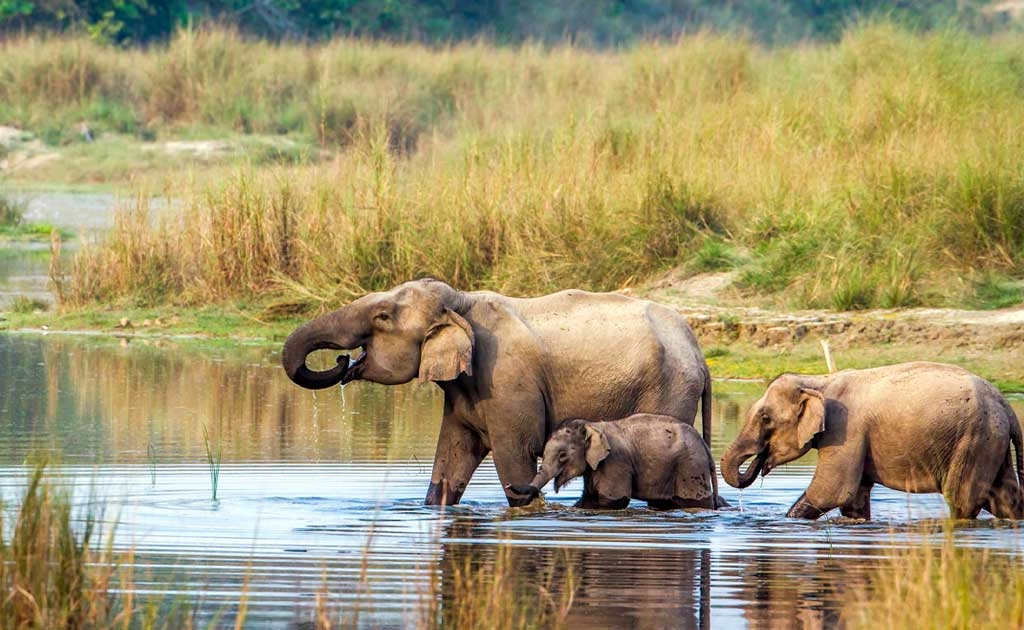
Vehicle Hiring Nepal specialises in trekker transport throughout the Annapurna, Manaslu, and Everest regions. We understand the importance of an early, reliable Day 1 departure, and our experienced drivers know exactly where to drop you off in Nayapul for the smoothest possible start to your journey.

Pokhara to Nayapul Trek Transport: Complete Guide for Trekkers

kathmandu to salleri jeep

Pokhara to Nayapul Transport – Complete Guide for Trekkers

Nayapul is the main trailhead for two of Nepal’s most beloved trekking routes – the Poon Hill Trek (Ghorepani-Poon Hill) and the Annapurna Sanctuary Trek (ABC Trek). Located approximately 42 km from Pokhara, Nayapul is where thousands of trekkers begin their Annapurna adventure each year. Getting from Pokhara to Nayapul quickly, comfortably, and reliably is the first step of your trekking journey.

This complete 2026 guide covers all transport options from Pokhara to Nayapul – private car, taxi, local bus, and Hiace van – with prices, departure times, road conditions, trekking permit tips, and everything you need to know to start your trek on the right foot.

Where is Nayapul, and why is it Important?

Location: Nayapul, Kaski District, Gandaki Province, Nepal

Distance from Pokhara: Approximately 42 km by road

Travel Time: 1 hour to 1.5 hours by private car or taxi

Altitude: 1,070 m above sea level

Road Type: Paved road from Pokhara to Nayapul via Birethanti

Treks Starting Here: Poon Hill Trek (Ghorepani), Annapurna Sanctuary Trek (ABC), Annapurna Circuit (partial start)

Nayapul sits at the confluence of the Modi Khola and Bhurungdi Khola rivers and serves as the official roadhead entry point for the Annapurna Conservation Area. Trekkers cross the suspension bridge at Nayapul, pass through Birethanti village (permit checkpoint), and begin climbing into the Annapurna foothills. It is one of Nepal’s busiest trekking trailheads.

Transport Options: Pokhara to Nayapul

Four main ways to get from Pokhara to Nayapul. Each has its own advantages depending on your group size, budget, schedule, and comfort preferences:

Transport TypeTravel TimeCostComfortBest For
Private Car / Taxi (full vehicle)1–1.5 hrsUSD 40- 60 (full carExcellentSolo, couples, small groups
Private Jeep / SUV1–1.5 hrsUSD 60-80full jeepExcellentGroups 4–6 with heavy gear
Hiace Van (private)1–1.5 hrsUSD 100- 120 full vanVery GoodGroups of 7–14 trekkers
Coaster Bus 14- 22 people1.5–2 hrsNPR  150-200Full busBasicGroups of 14- 22 trekkers
Tourist Bus1.5–2 hrsNPR 200-300 Full busModerateBackpackers, budget groups

For most trekkers, a private car or taxi is the best option. The cost is low (especially split between a group), the journey is fast and direct, and you can depart from your Pokhara hotel at any time – crucial for reaching Nayapul early enough to put in good trekking hours on Day 1.

NAYAPUL

Private Car from Pokhara to Nayapul – Full Details

Why a Private Car is the Best Choice

Most trekkers heading to Nayapul choose a private car or taxi. Here is why it is the best option for most:

  • Direct pickup from your Pokhara hotel or guesthouse – no walk to a bus stop with a heavy pack
  • Depart at your preferred time – early morning departures (6:00–7:00 AM) recommended to maximise Day 1 trekking
  • Fastest option – 1 to 1.5 hours vs 1.5 to 2 hours by local bus
  • Comfortable, air-conditioned vehicle for you and your full group
  • Full luggage space – essential for trekkers with large backpacks and gear
  • Driver drops you right at the Nayapul bridge – no confusion about where to start
  • The same driver can pick you up at Nayapul or Birethanti at the end of your trek
  • Cost split between group members is very affordable – USD 25–40 total for up to 4 people

Private Car Price: Pokhara to Nayapul 2026

VehicleCapacityOne-Way PriceReturn Trip PriceNotes
Sedan Car1–3 paxUSD 40- 60USD 70- 150Most popular choice
SUV / Jeep4–6 paxUSD 60- 100U100- 200200Best for groups with big packs
Hiace Van7–14 paxUSD 100-50US170- 27070Group trekking teams
Coaster Bus15–22 paxUSD 150- 200USD 260- 300Large trekking groups

All private vehicle prices are for the full vehicle – not per person. The driver, fuel, and insurance are included. For a group of 4 trekkers sharing a sedan, the cost works out to just USD 6–9 per person – far more convenient than the local bus, which costs very similarly.

Nayapul signboard at the trailhead

Local Bus from Pokhara to Nayapul – Full Details

Departure and Schedule

Local buses from Pokhara to Nayapul depart from the Baglung Bus Park located in Baglung Chowk, Pokhara – approximately 3 km from the Lakeside tourist area. A taxi from Lakeside to the bus park costs around NPR 300- 400.

First Departure: Around 7:00 – 7:30 AM (earliest recommended)

Last Departure: Around 4:00 – 5:00 PM

Frequency: Every 30 to 45 minutes during peak hours

Ticket Price: NPR 150 to NPR 200 per person (approximately USD 1.10 to USD 1.50)

Travel Time: Approximately 1.5 to 2 hours, including stops

Drop-off Point: Nayapul bus stop near the suspension bridge trailhead

What to Expect on the Local Bus

  • Basic seating with limited legroom – difficult with a large trekking backpack
  • No air conditioning – windows open for ventilation
  • Stops at multiple villages along the route – adds time to the journey
  • Luggage stored on the roof or in the aisle – watch your gear carefully
  • Can be crowded during peak trekking season (October–November and March–May)
  • Drops at the main road near Nayapul bridge – same trailhead as private vehicles

The local bus is a genuinely viable option for solo budget trekkers. However, if you are travelling in a group of 2 or more, splitting the cost of a private car is almost always a better value when you factor in the time, convenience, and comfort difference.

The Road: Pokhara to Nayapul Route Guide

The drive from Pokhara to Nayapul follows a well-paved road through the Annapurna foothills southwest of Pokhara. It is a beautiful, scenic drive that gives you the first taste of the mountain landscape you are about to trek into.

Pokhara Lakeside to Naya Pul Road Junction (15 km | 25 min)

Depart from the Lakeside area heading south through Pokhara city. The road passes through the busy Baglung Chowk area – the main junction for traffic heading southwest towards Beni, Baglung, and the Annapurna region. Traffic can be slow through central Pokhara in the early morning – departing before 6:30 AM helps.

Naya Pul Road Junction to Lumle (10 km | 15 min)

Beyond the city outskirts, the road climbs gently into the Annapurna foothills through rice paddies and mixed forest. The Annapurna South (7,219 m) and Machhapuchhre (6,993 m) peaks begin to dominate the northern skyline on clear mornings – a spectacular preview of the mountains you are heading towards. Lumle is known for its connections to British Gurkha training and its agricultural research station.

Lumle to Chandrakot (7 km | 10 min)

The road continues climbing with increasingly dramatic Annapurna views. Chandrakot is a popular alternative starting point for the Poon Hill trek and sits at 1,550 m with panoramic views of the Modi Khola valley below. Some trekkers begin from Chandrakot rather than Nayapul to add an extra day of walking.

Chandrakot to Nayapul (10 km | 15 min)

The road descends from Chandrakot down to the Modi Khola riverbed and follows the river to Nayapul. You can see Nayapul’s white suspension bridge and the first teahouses of Birethanti across the river. Your driver will drop you at the road end near the bridge where your trek officially begins.
Pokhara to Nayapul Trek Transport: Complete Guide for Trekkers

What to Do at Nayapul When You Arrive

Arriving at Nayapul can feel a little chaotic for first-time trekkers. Here is exactly what to do when your vehicle drops you off:

  1. Collect all your gear from the vehicle and thank your driver – confirm return pickup arrangements if pre-arranged
  2. Walk to the suspension bridge – it is visible from the road drop point, approximately 2 to 3 minutes on foot
  3. Cross the suspension bridge over the Modi Khola and enter Birethanti village on the other side
  4. Visit the ACAP checkpoint in Birethanti to register your permits (ACAP permit and TIMS card must be shown here)
  5. Stock up at Birethanti teahouses if needed – this is the last chance to buy snacks, water, chocolate, or forgotten supplies before the trek begins.
  6. Begin your trek from Birethanti – the trail to Tikhedhunga, Ulleri, and Ghorepani begins here.

Important: Do not start trekking until you have passed through the Birethanti ACAP permit checkpoint. They check all trekking permits here, and they must be valid and stamped before you proceed.

Trekking Permits Required for Nayapul Treks

All trekkers entering the Annapurna Conservation Area through Nayapul and Birethanti must carry valid permits. These must be arranged in Kathmandu or Pokhara BEFORE arriving at Nayapul:

PermitCost 2026Where to GetNotes
ACAP – Annapurna Conservation Area PermitNPR 3,000 (~USD 22)Nepal Tourism Board, Pokhara or KathmanduMandatory for all trekkers
TIMS Card – Trekkers Information Management SystemUSD 10 (free for some nationalities)Nepal Tourism Board / TAANRequired for all trekkers
Note: Children under 10 yearsFreeShow passport at checkpointNo permits needed for under 10s

In Pokhara, you can get ACAP permits and TIMS cards at the Nepal Tourism Board office in Damside, Pokhara (near the lake, about 15 minutes from Lakeside). Arrange permits the day before your trek so you can depart for Nayapul first thing in the morning without delay.

Nayapul serves as the gateway to some of Nepal’s most beloved trekking routes. Here is an overview of the main treks:

Poon Hill Trek (Ghorepani-Poon Hill Trek)

Duration: 4 to 5 days

Difficulty: Easy to Moderate – suitable for beginners

Max Altitude: Poon Hill viewpoint at 3,210 m

Highlights: Sunrise views of Dhaulagiri (8,167 m) and the Annapurna range from Poon Hill, rhododendron forests, and Gurung villages

Route: Nayapul – Tikhedhunga – Ulleri – Ghorepani – Poon Hill – Tadapani – Ghandruk – Kimche – Nayapul

The Poon Hill Trek is Nepal’s most popular short trek and one of the finest mountain viewpoint experiences in the world. The sunrise from Poon Hill with Machhapuchhre, Annapurna South, Hiunchuli, Nilgiri, and Dhaulagiri all glowing in the morning light is an image that stays with trekkers for a lifetime. Accessible for most fitness levels and perfect for first-time Nepal trekkers.

Pokhara to Nayapul Trek Transport: Complete Guide for Trekkers

Annapurna Sanctuary Trek (ABC Trek)

Duration: 10 to 13 days from Nayapul

Difficulty: Moderate to Strenuous

Max Altitude: Annapurna Base Camp at 4,130 m

Highlights: Annapurna Base Camp glacial amphitheatre, Machhapuchhre Base Camp, Chhomrong village, Modi Khola gorge

Route: Nayapul – Birethanti – Tikhedhunga – Ghorepani – Tadapani – Chhomrong – Sinuwa – Dovan – MBC – ABC – return

The Annapurna Sanctuary Trek is one of Nepal’s most dramatic trekking experiences. The route follows the narrow Modi Khola gorge deep into the heart of the Annapurna massif, emerging at a striking glacial amphitheatre surrounded by eight mountains above 6,000 m, including Annapurna I (8,091 m), Annapurna South (7,219 m), Gangapurna (7,454 m), and the iconic Machhapuchhre (Fishtail, 6,993 m).

Annapurna Circuit Trek (Partial Start from Nayapul)

Duration: 16 to 21 days full circuit from Besisahar

Difficulty: Strenuous

Notes: Most trekkers start the Annapurna Circuit from Besisahar (north of Pokhara) but end the circuit at Nayapul after crossing the Thorong La Pass and descending through Muktinath and Tatopani. A private vehicle from Nayapul back to Pokhara completes the circuit.
Annapurna Base Camp Trek

Ghandruk Village Trek (Short Cultural Trek)

Duration: 2 to 3 days

Difficulty: Easy to Moderate

Highlights: Ghandruk – Nepal’s largest Gurung village, Annapurna South close-up views, Gurung culture museum

A shorter and less crowded alternative to the full Poon Hill trek. Ghandruk offers stunning close-up views of Annapurna South and Hiunchuli, authentic Gurung village culture, and a relaxed pace ideal for families or travellers with limited time.

Best Time to Travel from Pokhara to Nayapul

October to November (Best Season)

The post-monsoon season is the finest time for Nayapul treks. The skies are crystal clear, rhododendron forests are vivid green after the rains, and the Annapurna views from Poon Hill and ABC are at their most spectacular. The road from Pokhara to Nayapul is in excellent condition.

Book your transport vehicle in advance as demand is very high during peak season.

March to May (Excellent for Rhododendrons)

Spring is the second-best season and is particularly famous for blooming rhododendron forests along the Ghorepani trail. The forests between Ulleri and Ghorepani turn brilliant red, pink, and white from March to April – one of the most beautiful trekking experiences in Nepal. Mountain views are generally good in the morning before afternoon haze develops.

December to February (Quiet and Cold)

Winter trekking on the Poon Hill route is possible and rewarding – the trail is quiet, the views are sharp, and the atmosphere is peaceful. However, Poon Hill itself can have snow in January, and Ghorepani experiences cold nights. The Annapurna Sanctuary Trek becomes significantly more challenging with snow on the upper sections.

The road from Pokhara to Nayapul remains clear and accessible throughout winter.

June to September (Monsoon – Difficult)

The Annapurna region receives very heavy monsoon rainfall from June to September. Trails become extremely muddy, and leeches are abundant below 2,500 m. Landslides occasionally affect sections of the Nayapul to Tikhedhunga trail.

The road from Pokhara to Nayapul remains passable. Some determined trekkers do attempt Poon Hill in monsoon – the rhododendron forests are lush and vivid green, crowds are non-existent, and teahouse prices drop significantly. However, clouds often obscure the views.

Timing your departure from Pokhara correctly is essential for a successful first day of trekking. Here is our recommended schedule:

Departure from PokharaArrival at NayapulTrekking Hours Day 1Recommended First Night Stop
5:30 – 6:00 AM6:45 – 7:30 AM6–7 hours of trekkingTikhedhunga (1,540 m) or Ulleri (1,960 m)
7:00 – 7:30 AM8:30 – 9:00 AM5–6 hours of trekkingTikhedhunga (1,540 m)
8:00 – 9:00 AM9:30 – 10:30 AM4–5 hours of trekkingBirethanti (1,025 m) or Tikhedhunga
After 10:00 AMAfter 11:30 AM2–3 hours of trekkingBirethanti only – short first day

We strongly recommend departing Pokhara no later than 7:00 AM to reach Nayapul by 8:30 AM. This gives you 5 to 6 hours of comfortable trekking before arriving at your first teahouse for the night. An earlier 5:30–6:00 AM departure lets you reach Ulleri and get a head start on the famous 3,000+ stone steps the next day.

Pokhara

Returning from Nayapul to Pokhara

At the end of your trek, most trekkers return to the roadhead at Nayapul or Birethanti and need transport back to Pokhara. Here are your options:

The most convenient and reliable return option. When booking your outward transport with Vehicle Hiring Nepal, please tell us your expected return date, and we will arrange a driver to meet you at Nayapul Bridge at a pre-agreed time. You walk down from your final teahouse, cross the bridge, and your vehicle is waiting—no waiting, no bargaining, no uncertainty.

Book Return Transport from Ghandruk or Nayapul

If your return date is uncertain (as it often is on mountain treks), you can contact Vehicle Hiring Nepal via WhatsApp from Ghandruk or Nayapul when you know your actual finish time. We can usually arrange a pickup vehicle from our Pokhara base within 2 to 4 hours of your message.

Local Bus Return from Nayapul to Pokhara

Local buses run from Nayapul to Pokhara’s Baglung Bus Park throughout the day, with the last bus typically departing between 4:00 and 5:00 PM. Tickets cost NPR 150-200. Arrive at the Nayapul bus stop early in the afternoon to ensure you catch a bus back on time. Note: After a full day of trekking descent, a comfortable private car is much more welcome than a crowded local bus.

Alternative Trailheads Near Nayapul

Depending on your trek itinerary, there are several other popular trailheads near Nayapul that Vehicle Hiring Nepal can transport you to from Pokhara:

TrailheadDistance from PokharaTrek It OpensVehicle Price (One-Way)
Nayapul42 km / 1–1.5 hrsPoon Hill, ABC, Ghandruk$ 40- 60 full car
Birethanti44 km / 1.5 hrsSame as Nayapul (500m further)$40-80 full car
Chandrakot35 km / 1 hrPoon Hill alternative start (+1 day)$40-100 full car
Phedi8 km / 20 minSarangkot, World Peace Pagoda day hike$20–25 full car
Kande12 km / 30 minAustralian Camp, Pothana hike$15–25 full car
Besisahar75 km / 2–2.5 hrsAnnapurna Circuit full trek starts$80–120 full car
Soti Khola140 km / 7–8 hrsManaslu Circuit trek starts$200–250 jeep only

What to Bring on the Drive to Nayapul

  • Trekking permits – ACAP and TIMS card (must be arranged in Pokhara the day before)
  • All trekking gear in your main backpack – pack the night before for an early departure
  • Daypack with snacks, water, and essentials for the first day of trekking
  • Cash in Nepali Rupees – take out extra from Pokhara ATMs, as there are no ATMs on the trail
  • Passport or identity document for permit checks at Birethanti checkpoint
  • Light layer or windproof jacket for the early morning drive – Pokhara mornings can be cool
  • Camera or phone fully charged and ready – mountain views begin on the drive to Nayapul
  • Trekking poles if using – keep them accessible rather than buried in your main pack
  • Emergency contact list and your travel insurance emergency number

What is Included When You Book With Vehicle Hiring Nepal?

  • Private vehicle (car, SUV, or Hiace) with an experienced, friendly driver
  • Direct pickup from your Pokhara hotel, guesthouse, or Lakeside location
  • Drop-off directly at the Nayapul suspension bridge trailhead
  • Fuel and vehicle insurance are included in the price
  • Flexible departure time – we accommodate early morning 5:30 AM departures for trekkers
  • Pre-arranged return pickup from Nayapul or Birethanti at the end of the trek (on request)
  • 24/7 support – contact us from anywhere on the trek to arrange or confirm return pickup

Not included: Trekking permits (ACAP and TIMS), personal meals, teahouse accommodation, porter or guide fees, and any additional stops or detours beyond Nayapul.

How to Book Your Transport from Pokhara to Nayapul

  1. Contact Vehicle Hiring Nepal via WhatsApp or visit vehiclehiringnepal.com
  2. Tell us your preferred travel date and departure time from Pokhara
  3. Provide your hotel or pickup address in Pokhara Lakeside
  4. Confirm your group size and luggage (backpack count)
  5. Choose your vehicle type – sedan, SUV, or Hiace for larger groups
  6. Inform us if you need a return pickup at the end of your trek and your estimated finish date
  7. Receive booking confirmation with driver name, contact number, and vehicle details
  8. Your driver will be at your hotel at the agreed departure time – no waiting, no rushing

WhatsApp: +977 981-4227196
Email: vehiclehiringnepal.com
Website: www.vehiclehiringnepal.com

Frequently Asked Questions

How far is Nayapul from Pokhara?

Nayapul is about 42 km from Pokhara’s Lakeside area by road. The journey takes 1 hour to 1.5 hours by private car or taxi, and 1.5 to 2 hours by local bus.

What time should I leave Pokhara to start trekking at Nayapul?

We recommend departing Pokhara between 5:30 and 7:00 AM. This gets you to Nayapul by 7:00 to 8:30 AM and allows 5 to 7 hours of trekking on Day 1 before dark. An early start is especially important if you plan to reach Ulleri (above Tikhedhunga) on Day 1, as the staircase climb takes 2 to 3 hours.

Can I get a shared taxi from Pokhara to Nayapul?

Shared taxis are available from the Baglung Bus Park in Pokhara heading towards Beni and Nayapul. The cost is around NPR 300-500 per seat. However, shared taxis only run when full, can be crowded with trekking packs, and do not depart from Lakeside.

A private vehicle is far more convenient and costs about the same when split between two or more trekkers.

Do I need permits before arriving at Nayapul?

Yes. All trekking permits – ACAP (Annapurna Conservation Area Permit) and TIMS card – must be obtained in Pokhara or Kathmandu before you arrive at Nayapul. The Birethanti checkpoint, immediately after the Nayapul bridge, strictly checks all permits.

Trekkers without valid permits will be turned back or fined. Arrange permits at the Nepal Tourism Board office in Damside, Pokhara, the day before your trek.

Can the driver drop us at Birethanti instead of Nayapul?

The road from Nayapul continues a short distance to Birethanti village (approximately 500 m further along a narrow track). Most drivers can take you directly to Birethanti upon request, saving a few minutes of walking. Confirm this with your driver when booking.

What if my trek takes longer than expected and I need a later pickup?

This is completely normal on mountain treks. WhatsApp our team when you know your actual descent date and expected arrival time at Nayapul, and we will arrange a vehicle accordingly. We can usually organise a pickup within 2 to 4 hours of your message.

There is no penalty for changing your return date.

Is the road from Pokhara to Nayapul paved?

Yes. The road from Pokhara to Nayapul via Lumle and Chandrakot is fully paved and generally in good condition. All standard vehicles, including sedans, can comfortably reach Nayapul year-round.

The road may have occasional potholes or rough patches, especially after the monsoon, but it is not a mountain track requiring a 4WD vehicle.

Can I combine a Pokhara sightseeing tour with a Nayapul drop-off?

Final Thoughts

Yes. If you want to do a quick Pokhara sightseeing stop before beginning your trek, we can arrange a vehicle that includes a visit to Sarangkot for sunrise, Devi’s Fall, or Bindabasini Temple before dropping you at Nayapul. Add approximately 2 to 3 hours to your journey for sightseeing.

This is a popular choice for trekkers flying directly into Pokhara who want to see the city highlights before heading to the trails.

If you are a trekker planning to reach the high altitudes of the Annapurna region, a private four-wheel-drive jeep has its advantages over public transport. Getting to Chame by mountain roads is a notorious bump-fest and unpaved, so the better suspension, climate control, and the necessary legroom of a private jeep are worth their weight in gold compared to crowded local buses.

Plus, you have complete freedom to travel at your own pace, stopping for lunch, a leg stretch, or to take photos of the striking scenery whenever you want.

A direct transfer saves valuable time and energy for the trek ahead by eliminating the hassle of changing vehicles mid-route. The private jeep transfer from Kathmandu to Chame is a worthwhile investment in your comfort and peace of mind, turning what could be a gruelling day of travel into a striking prelude to your Himalayan adventure.

Our top offerings include iconic journeys such as the Annapurna Circuit, the in-depth Mardi Himal Trek, the striking Manaslu Circuit, the exciting Chitwan Jungle Safari, and luxury packages. We can also arrange short hikes, heritage tours, mountain flights, and customised travel plans tailored to your schedule and interests.

Whether you want a budget-friendly trip or a luxury trekking experience with top-end lodges, private guides, and high-end services, we manage every detail professionally. Our goal is to provide a smooth transition from your trekking adventure to a comfortable) and a memorable travel experience in Nepal.
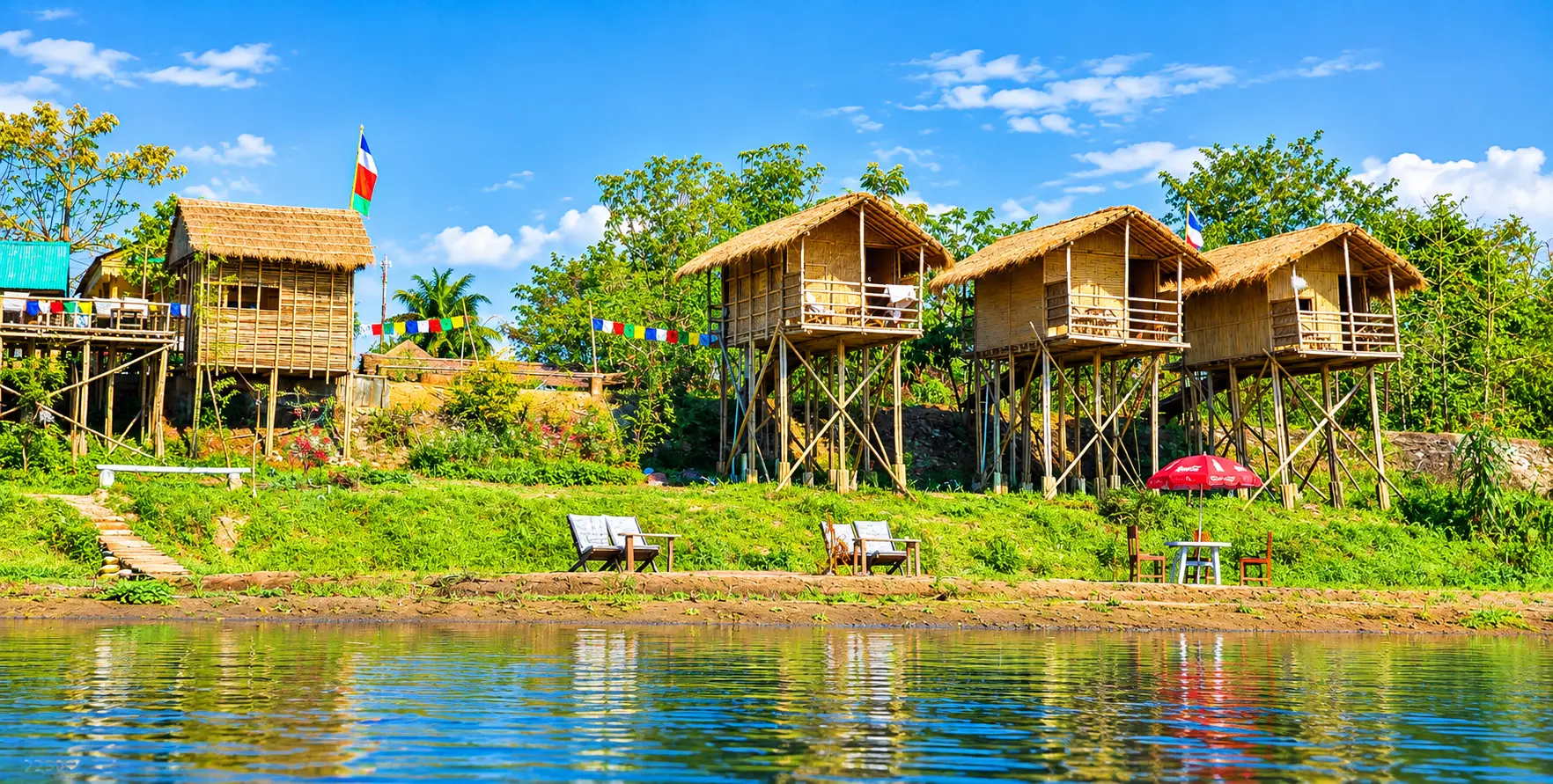
Getting from Pokhara to Nayapul is the very first step of your Annapurna adventure – and it deserves to be done right. A comfortable, timely, and direct private vehicle from your Pokhara hotel to the Nayapul bridge sets the perfect tone for the days of trekking ahead. You arrive fresh, on time, and ready to walk rather than tired from navigating local transport with a heavy backpack.

Vehicle Hiring Nepal specialises in trekker transport throughout the Annapurna, Manaslu, and Everest regions. We understand the importance of an early, reliable departure on Day 1 of your trek, and our experienced drivers know exactly where to drop you off in Nayapul for the smoothest possible start.

Book your Pokhara-to-Nayapul transport today. Contact us on WhatsApp or visit vehiclehiringnepal.com. We also arrange return pickups from Nayapul at the end of your trek – one less thing to worry about on the trail.
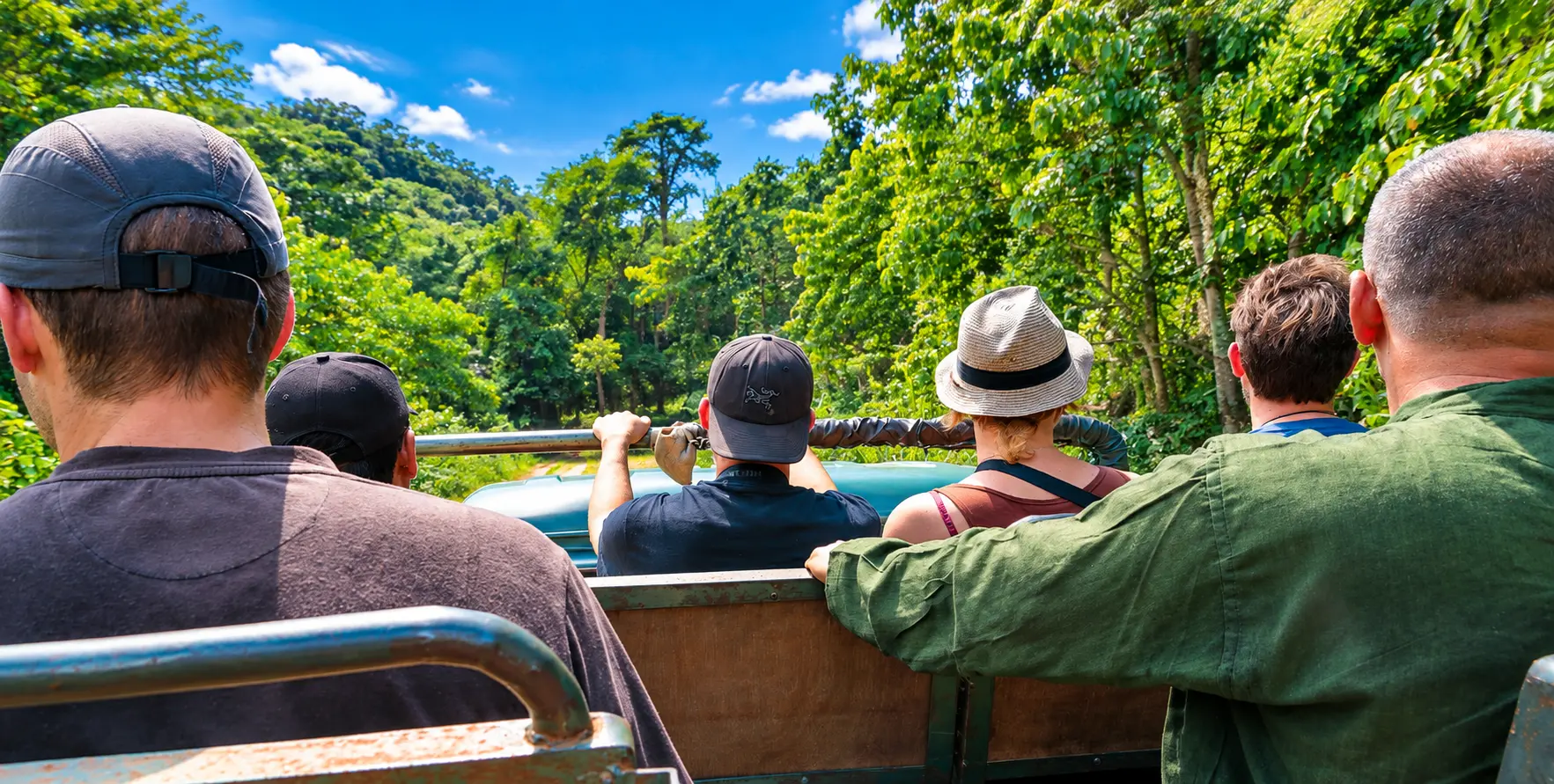
Chat with us