Plan a Trip


Best Vehicle for Rolwaling Valley
Best Vehicle for Rolwaling Valley Access: The Complete 2026/27 Guide
Few trekking approaches in Nepal punish the wrong vehicle choice as harshly as this one. Finding the best vehicle service for Rolwaling Valley access isn’t a minor convenience question here — it genuinely determines whether your first day is a manageable, if long, drive or a miserable ordeal on one of the roughest dirt roads leading to any major Nepali trekking region.
This guide covers the full road route from Kathmandu to Rolwaling’s trailhead villages, realistic travel times, vehicle comparisons, permits, cost, and every practical detail for planning your 2026 or 2027 trip into one of the most remote and least commercialized valleys in the Nepal Himalaya.
Why Vehicle Choice Matters So Much for This Route
Rolwaling sits roughly 196 kilometers east of Kathmandu by road, but that distance is deeply misleading if you’re used to thinking in highway terms. Much of the final stretch beyond Charikot runs on genuinely rough, unpaved dirt road, and the difference between a comfortable private 4WD and a crowded local bus on this specific stretch is enormous — not a matter of preference, but a genuine determinant of how exhausted you are before your trek has even started.
Our broader guide on why 4WD is best for Nepal explains this terrain logic in general terms; Rolwaling is one of the clearest real-world examples of exactly why that logic matters.
Understanding Rolwaling Valley
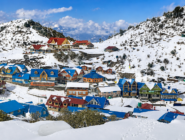
Rolwaling is a remote, glacially carved valley in Nepal’s east-central Himalaya, sitting west of the Khumbu (Everest) region and directly along the Tibetan border. The valley takes its name from a Sherpa term sometimes translated as ‘the furrow’ or, more evocatively, ‘the grave,’ reflecting its deep, steep-sided position between towering peaks. It remains one of Nepal’s least commercialized major trekking regions, both because it isn’t a technically restricted area and because its genuinely difficult access has kept visitor numbers low compared to Everest or Annapurna.
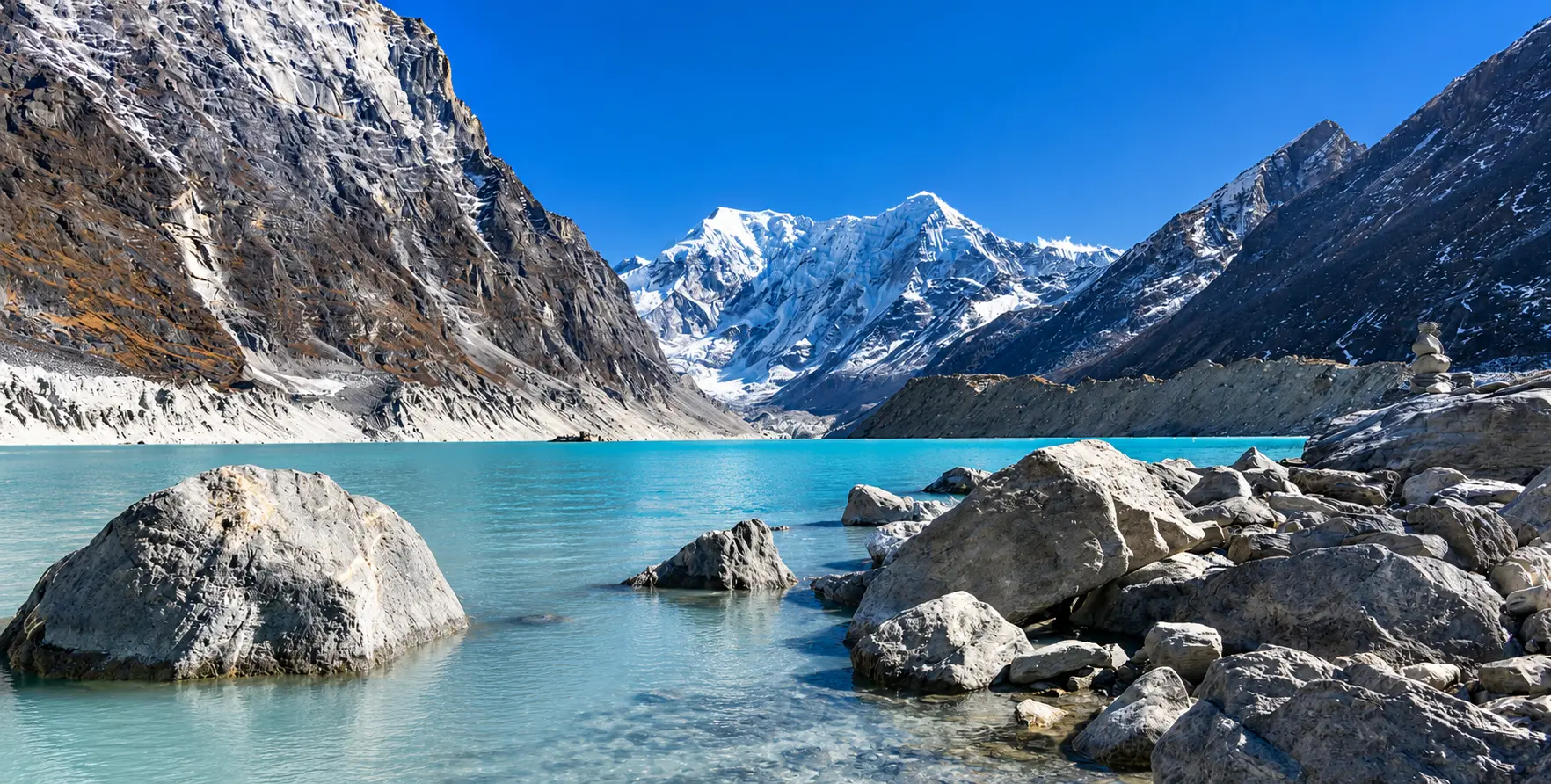
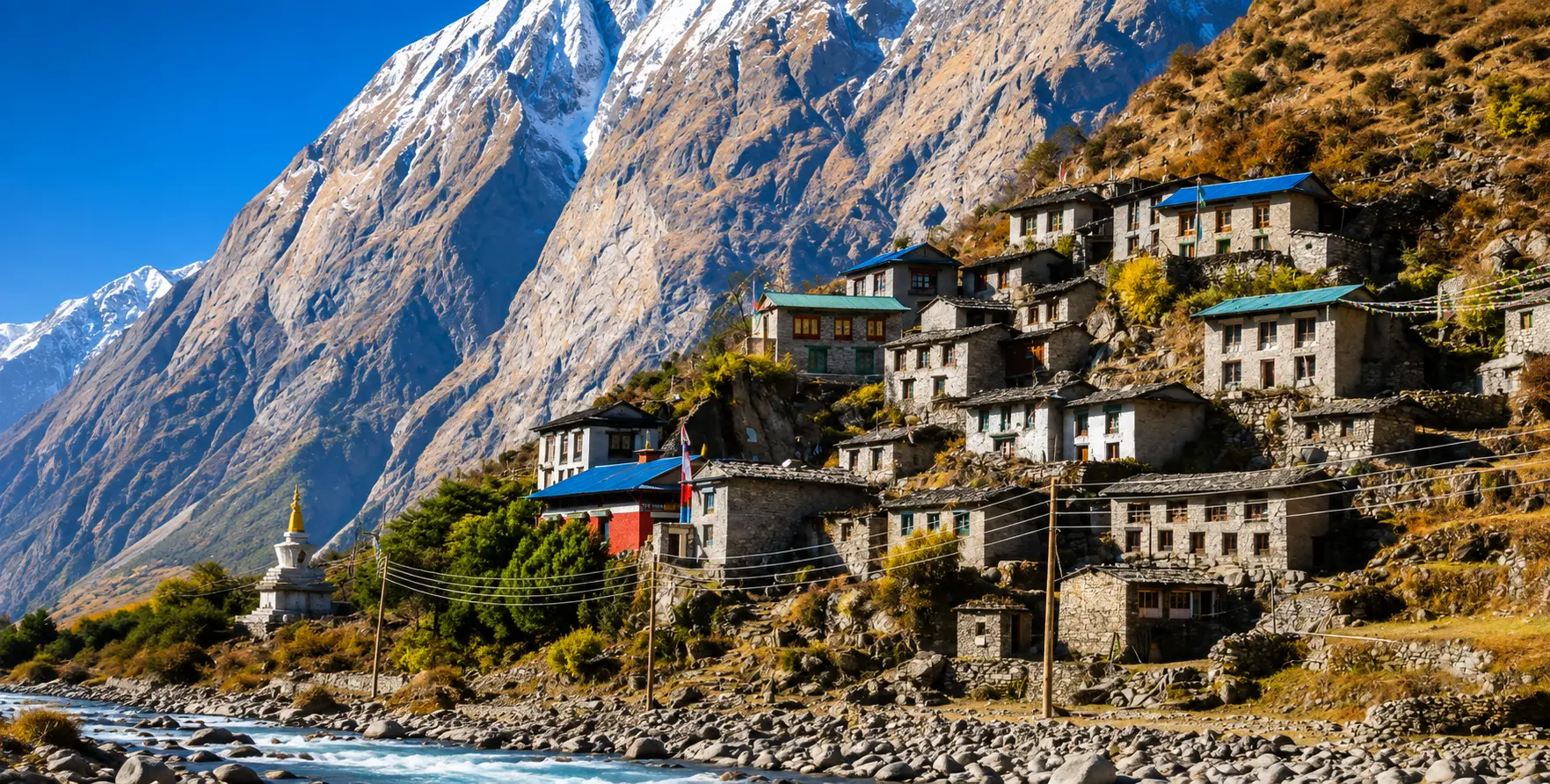
The valley’s main villages — Simigaon, Donga, Bedding, and Na — are home to Sherpa and Tamang communities with strong ties to Tibetan Buddhist culture, visible in the region’s monasteries, prayer flags, and chortens. The valley’s centerpiece, Tsho Rolpa, is one of Nepal’s largest glacial lakes at roughly 4,580 meters, sitting beneath the dramatic backdrop of Gaurishankar (7,145 meters), the peak that gives the wider Gaurishankar Conservation Area its name.
Local Sherpa oral tradition holds that the valley’s ancestors migrated into Rolwaling from Tibet generations ago, and the region’s isolation has helped preserve a distinctly traditional way of life, with subsistence farming, yak herding, and a slower pace of change than more heavily trekked valleys elsewhere in Nepal. This cultural preservation is, in many ways, a direct consequence of the same difficult road access covered throughout this guide — the valley’s remoteness has protected its character even as tourism has transformed other parts of the Nepal Himalaya.
Why This Route Remains So Underdeveloped
Unlike the Everest and Annapurna regions, which have seen decades of steady infrastructure investment driven by high trekking volumes, Rolwaling’s comparatively low visitor numbers have meant slower road and trail development. This is a genuine chicken-and-egg dynamic: the difficult access keeps visitor numbers low, and low visitor numbers reduce the economic case for faster infrastructure investment. For trekkers, the practical upshot is a route that demands more planning, patience, and vehicle-choice awareness than Nepal’s more commercialized trekking gateways — but also delivers a genuinely uncrowded, traditional Himalayan experience increasingly hard to find elsewhere in the country.
The Road From Kathmandu: Full Route Breakdown
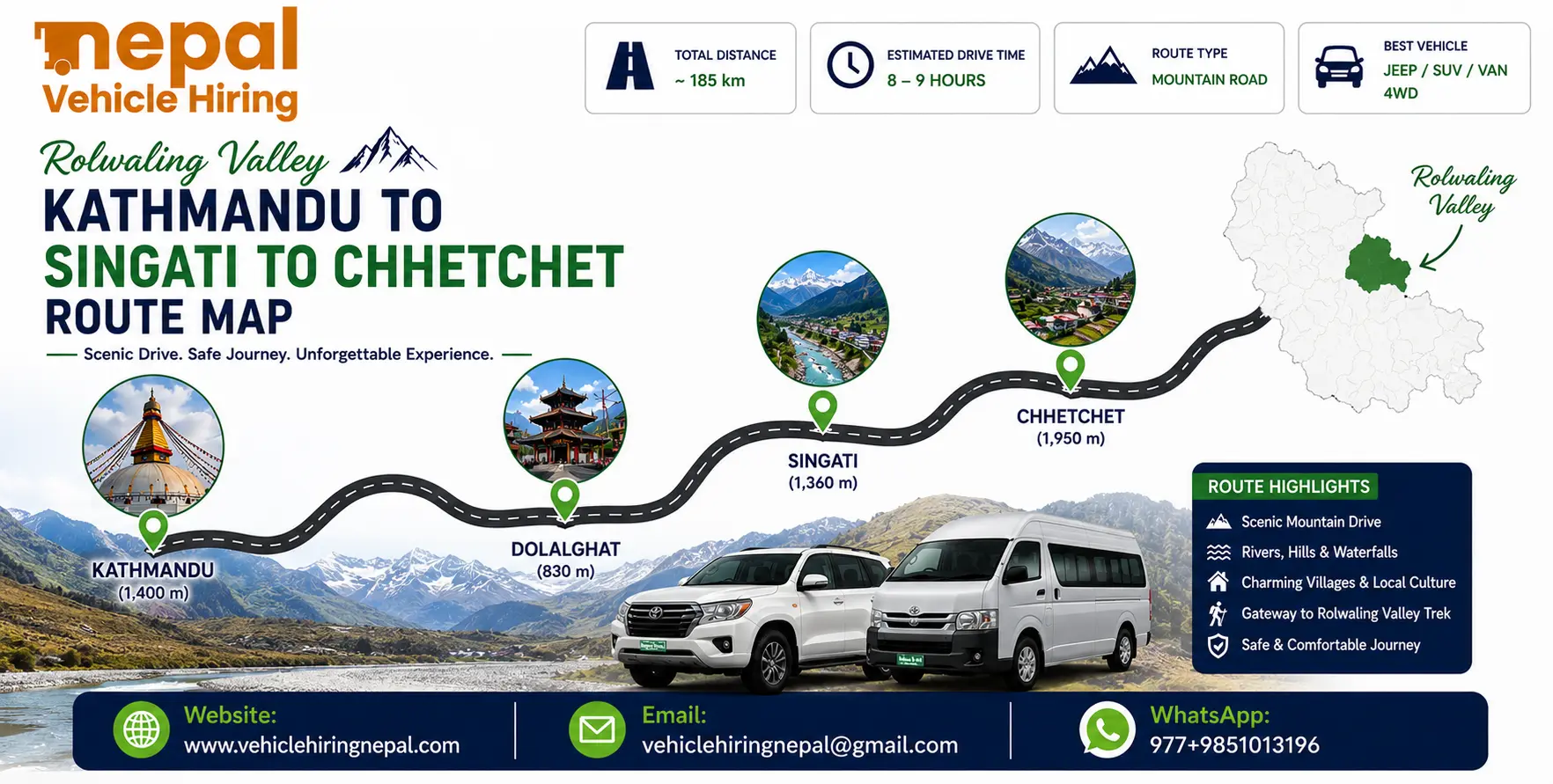
The standard overland route leaves Kathmandu on the Araniko Highway before turning off toward Dolakha district. Most operators break the journey into recognizable stages, each with a distinct road character.
Kathmandu to Lamosangu
The initial stretch follows the well-maintained Araniko Highway, generally smooth and fast by Nepali standards, sitting at roughly 750 meters elevation.
Lamosangu to Charikot
The road climbs into Dolakha district toward Charikot, the district headquarters, at around 1,980 meters. This stretch is paved for much of its length, though it winds through genuine hill terrain with the switchbacks and gradients typical of Nepal’s mid-hill road network.
Charikot to Singati
Beyond Charikot, the road descends toward Singati along the Bhote Koshi valley, with conditions becoming noticeably rougher and less consistently maintained than the Kathmandu-Charikot stretch.
Singati to Chhetchhet (Road End)
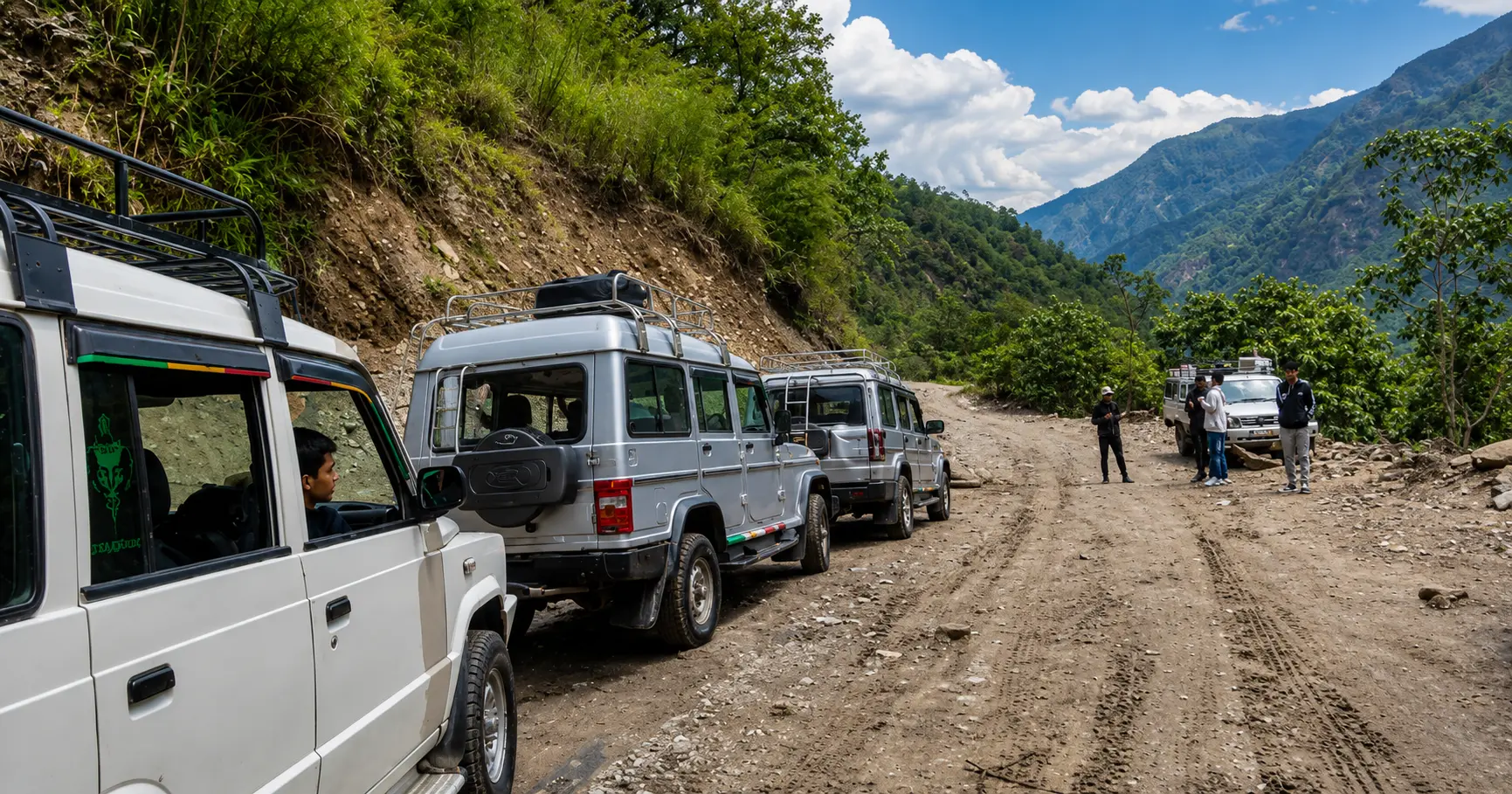
The final stretch continues through Gongar Khola to Chhetchhet, at roughly 1,377 meters — the official end of the motorable road and the true starting point of the Rolwaling trek itself. This section is where the journey earns its reputation: a genuinely rough, often dusty or muddy dirt road that demands a proper 4WD vehicle and an experienced driver rather than a standard car or an unfamiliar attempt at self-navigation.
Distance and Travel Time
The full road journey from Kathmandu to the Chhetchhet/Jagat road end covers approximately 196 kilometers, but takes 8 to 10 hours by vehicle given the dirt road conditions on the final stretch — a travel-time-to-distance ratio far higher than almost any other major trekking gateway route in Nepal. Some itineraries split this into two days, overnighting in Charikot or Singati, rather than attempting the full journey in one exhausting push, particularly if departing later in the day or traveling during monsoon season when road conditions slow travel further.
To put this ratio in perspective: the Kathmandu-Pokhara highway covers roughly 200 kilometers in 6-7 hours on mostly paved roads, while this Rolwaling approach covers a similar distance in significantly more time despite being, on paper, a shorter route. This single comparison captures why vehicle choice and road-condition awareness matter so much more here than on Nepal’s more established tourist corridors.
Best Vehicle Options Compared
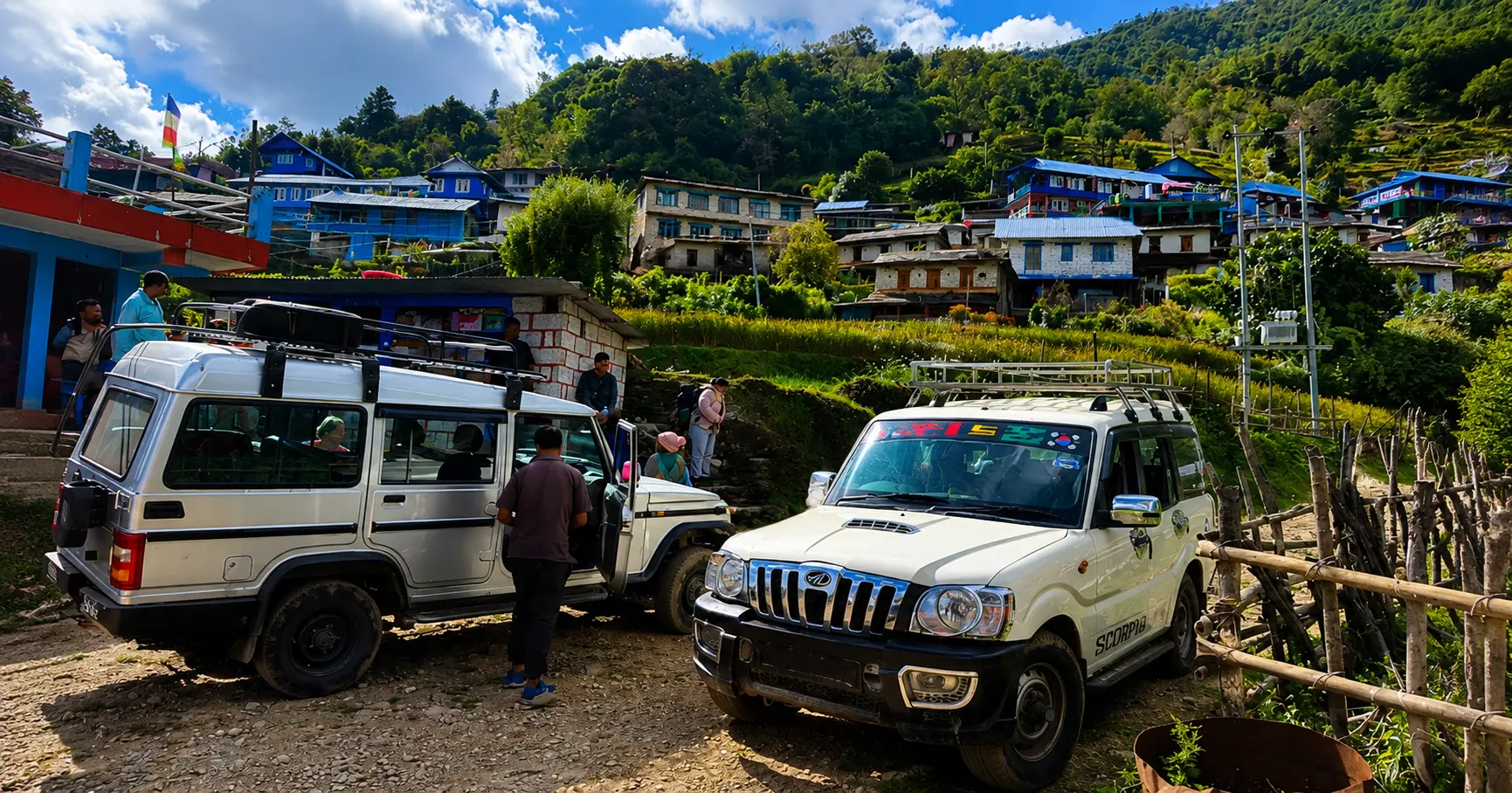
Private 4WD Jeep (Recommended)
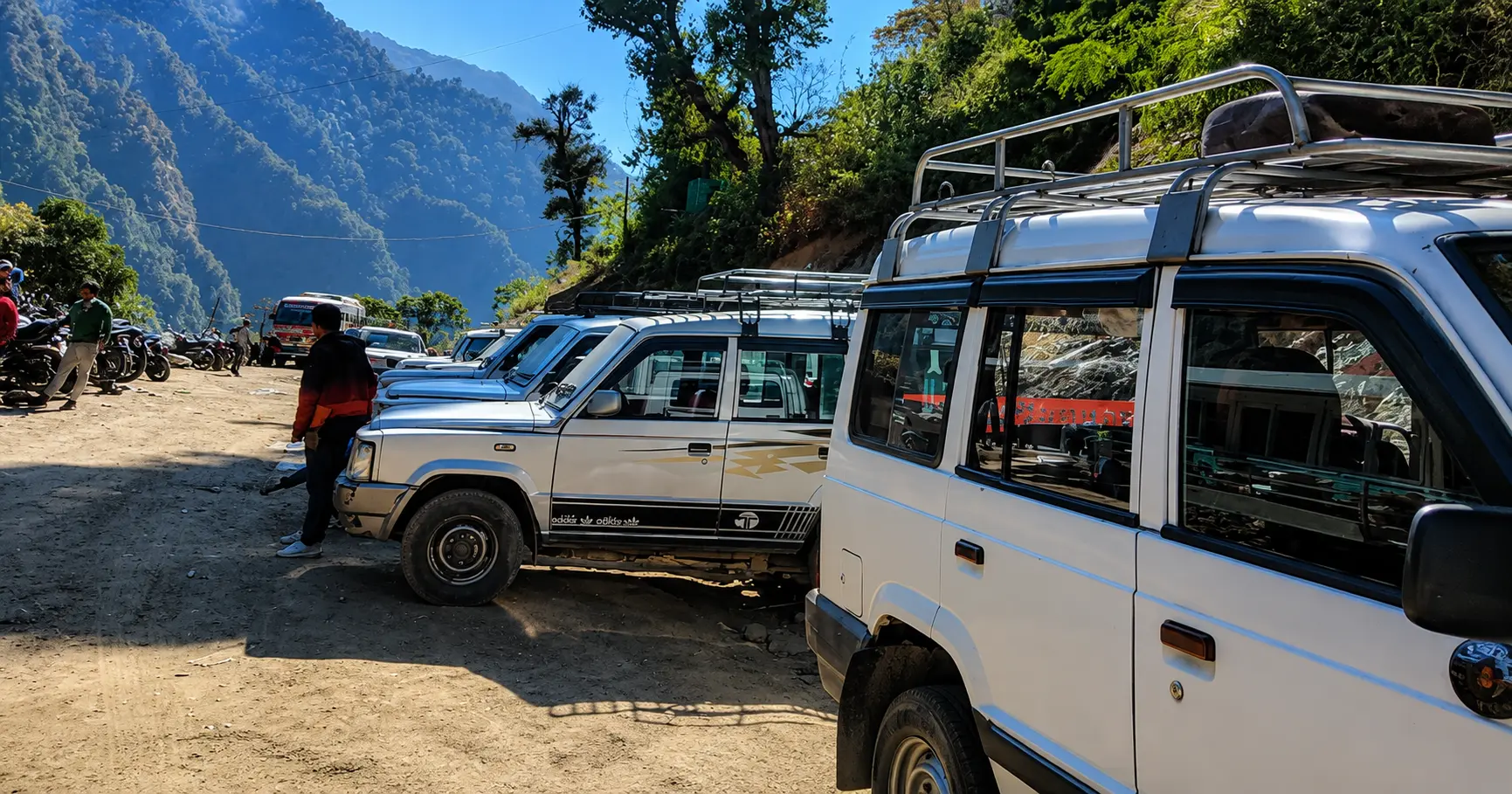
A genuine 4WD vehicle, such as a Scorpio jeep hire, is the standard recommendation for this route, and for good reason — the final Charikot-to-Chhetchhet stretch includes exactly the kind of rutted, unpaved terrain that a 4WD’s higher clearance and traction genuinely need to handle safely and comfortably. Several established trekking operators explicitly offer this as a paid upgrade over the standard local bus, typically in the range of USD 235 each way for a private vehicle — a meaningful cost, but one many trekkers consider worthwhile given what the alternative involves.
Local Bus (Budget Option)
The cheapest way to reach the trailhead, generally taking 9 to 11 hours and involving considerably more physical discomfort than a private vehicle — cramped seating, frequent stops, and no control over departure timing or route flexibility. Many trekking packages default to this option to keep costs down, with a private jeep offered as an optional upgrade.
Toyota Land Cruiser (Premium Comfort)
For trekkers wanting the most comfortable possible ride on this demanding route, a Toyota Land Cruiser 4WD hire offers genuine off-road capability paired with a considerably more refined ride than a standard jeep, worth considering for groups prioritizing comfort over cost on this specific journey.
Hiace Van (Group Travel, Partial Route Only)
A Hiace can comfortably handle the paved Kathmandu-to-Charikot stretch for larger groups, but is not recommended for the rough Charikot-to-Chhetchhet dirt road — groups using a Hiace for the early stage typically switch to jeeps for the final approach, similar to the two-stage vehicle strategy used on other remote Nepal trekking routes.
Vehicle Maintenance and What to Confirm Before Departure
Given how demanding this route is on a vehicle, it’s worth confirming your operator’s specific vehicle condition and maintenance history before departure, rather than assuming any jeep marketed for the route is equally well prepared. Ask about tire condition specifically, since the dirt road sections punish worn tires more than most routes, and confirm the vehicle has recently been serviced ahead of a journey this demanding on suspension and drivetrain components.
Driver Experience and Local Knowledge
Perhaps more than any other route in our full range of services, driver experience matters enormously here. A driver who regularly runs the Charikot-to-Chhetchhet stretch will know current road conditions, recent landslide activity, and the safest line through the roughest sections — knowledge that simply isn’t available to an unfamiliar driver attempting the route for the first time. Ask your operator directly about their driver’s specific experience on this route rather than assuming general Nepal driving experience translates automatically to this particular road’s unique demands.
Cost of Private Vehicle Hire for Rolwaling Access
Private jeep hire for this route commonly runs around USD 235 each way per vehicle, based on rates cited by several established trekking operators — a useful benchmark figure, though exact pricing varies by operator, season, and specific drop-off point (Chhetchhet versus the slightly different Jagat access point some itineraries use). This is priced per vehicle rather than per passenger, so the effective per-person cost drops meaningfully for groups of four to six sharing a single jeep.
Choosing Between Bus and Private Jeep
Local bus suits budget-conscious trekkers with flexible schedules and higher tolerance for physical discomfort, willing to trade comfort for cost savings on this specific leg of an otherwise expensive trekking trip.
Private jeep suits trekkers who want to arrive at the trailhead reasonably rested rather than already fatigued from a long, uncomfortable bus journey — a genuinely significant consideration given the demanding, multi-day trek that follows immediately after this road journey ends.
Permits Required
Rolwaling falls within the Gaurishankar Conservation Area, requiring a Gaurishankar Conservation Area Permit (GCAP), along with a TIMS (Trekkers’ Information Management System) card. Unlike Upper Mustang or other genuinely restricted areas, Rolwaling is not formally restricted, meaning solo trekking is technically permitted — though most operators and this guide alike recommend against trekking alone here specifically, given how remote and lightly trafficked the route remains compared to Nepal’s more commercialized trekking regions.
GCAP and TIMS permits are typically arranged in Kathmandu before departure, either directly through the relevant offices or through a registered trekking agency handling your broader itinerary. Unlike the ACAP system covering the Annapurna region, Gaurishankar Conservation Area’s permit infrastructure is less extensively documented online, making it especially worthwhile to confirm current requirements and fees directly with your operator rather than relying solely on older trip reports, which can understate or misstate current permit costs and procedures.
Bhimeshwor Temple: A Worthwhile Stop in Dolakha
Many itineraries build in a stop at the Bhimeshwor Temple in Dolakha en route, a significant Hindu pilgrimage site dedicated to Bhimsen, one of the Pandava brothers from the Mahabharata. This adds relatively little time to an already long journey while offering a genuine cultural landmark along a route that otherwise consists mostly of driving.
Road Conditions and Safety
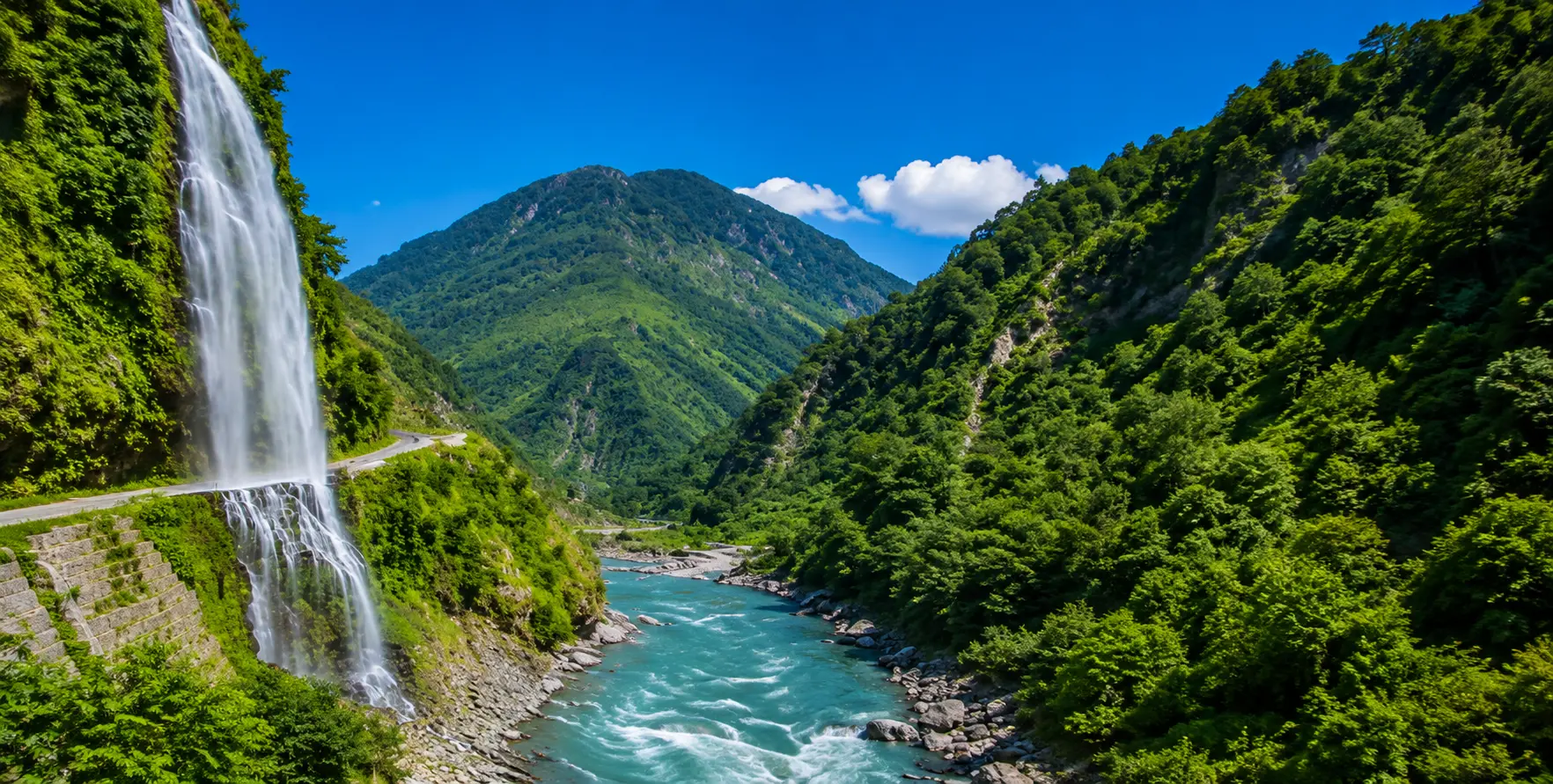
The Charikot-to-Chhetchhet stretch is genuinely demanding by any standard, with dust in the dry season and slippery, occasionally landslide-affected surfaces during monsoon. This is not a route for self-driving or an unfamiliar operator — an experienced local driver who knows current conditions on this specific stretch makes a meaningful safety difference, particularly given how remote this road becomes beyond Charikot, with limited support infrastructure if something goes wrong.
Our guide on why a genuine 4WD jeep matters covers this reasoning in more general terms, directly applicable to why this specific route demands the vehicle class it does.
Beyond the vehicle itself, basic road safety practices matter here as much as anywhere in Nepal: wear seatbelts where fitted, avoid unnecessary night driving on the unpaved sections given reduced visibility, and trust your driver’s judgment on pacing rather than pressuring a faster pace than current conditions safely allow. This is a route where patience genuinely pays off in both safety and comfort.
Best Time to Travel This Route
Autumn (September to November) and spring (March to May) offer the most stable road conditions and clearest mountain views, making them the strongest windows for this trip, consistent with the broader pattern across most Nepal trekking regions. Monsoon (June to August) brings a real risk of landslide-related delays on the unpaved sections beyond Charikot, while winter (December to February) can bring snow at higher points along the trek itself, though the road journey remains generally passable at these lower elevations.
Altitude Considerations Beyond the Road
While the road journey itself stays at relatively modest elevations — Charikot around 1,980 meters, Chhetchhet around 1,377 meters — the trek that follows climbs substantially higher, with Bedding at roughly 3,690 meters, Na at around 4,180 meters, and Tsho Rolpa itself at 4,580 meters. Trekkers should plan proper acclimatization days once the trek begins, regardless of how the road journey itself goes, since altitude sickness risk is entirely separate from the vehicle and road considerations covered throughout most of this guide.
What to Pack for the Journey
- Motion sickness medication if you’re sensitive to winding, rough roads — the Charikot-to-Chhetchhet stretch is genuinely bumpy
- Snacks and water, since reliable food stops become less frequent beyond Charikot
- Cash in Nepali rupees, since card and ATM access disappears well before the trailhead
- Dust protection (a light scarf or mask) for the dry-season dirt road sections
- Warm layers, given the elevation gain from Kathmandu’s roughly 1,300 meters to Charikot’s nearly 2,000 meters
Tsho Rolpa Lake and Valley Highlights
Once the road ends and the trek begins, Rolwaling rewards the difficult approach with genuinely spectacular terrain: dense rhododendron and bamboo forest around Simigaon and Donga, the wide, dramatic upper valley around Bedding and Na, and ultimately Tsho Rolpa itself, one of Nepal’s largest glacial lakes, framed by Gaurishankar and the surrounding Rolwaling Himal peaks. Advanced trekkers sometimes continue over the demanding Tashi Lapcha La (5,755 meters) into the Khumbu region, connecting Rolwaling directly to Everest-region trekking — a serious mountaineering-adjacent crossing rather than a standard trekking pass.
Tsho Rolpa itself carries additional significance as a subject of ongoing glacial lake outburst flood (GLOF) monitoring, given its size and the potential downstream risk it represents to villages in the valley below. This scientific and safety dimension adds an interesting layer to what is otherwise simply one of Nepal’s most visually striking high-altitude lakes, and various monitoring infrastructure is visible to trekkers reaching the lake’s vicinity.
Wildlife and Natural Features of the Valley
The Gaurishankar Conservation Area protecting Rolwaling hosts a range of Himalayan wildlife, including musk deer, Himalayan tahr, and various pheasant species in the lower forested sections, with the possibility of red panda sightings in the denser bamboo and rhododendron forest around Simigaon and Donga. Birdlife is similarly rich, reflecting the diverse elevation range the trek passes through, from subtropical forest near the road end to high alpine terrain approaching Tsho Rolpa.
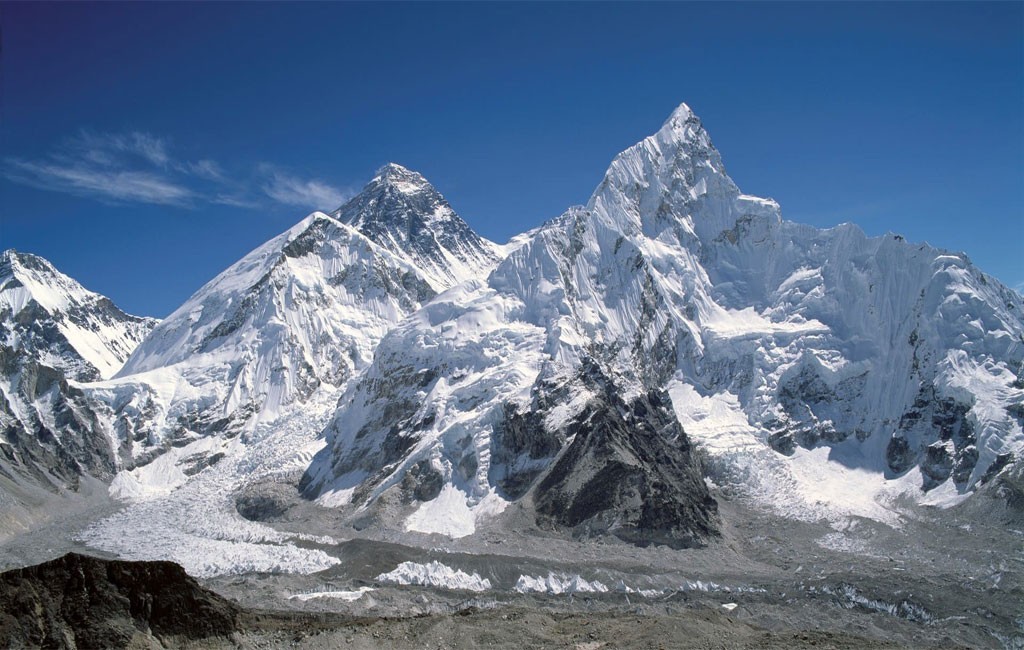
Connecting to the Everest Region
For very experienced trekkers, Rolwaling’s connection to the Khumbu via Tashi Lapcha La offers a genuinely rare way to link two of Nepal’s major Himalayan regions on foot. This crossing demands real mountaineering competence, proper equipment, and an experienced guide — it isn’t a standard trekking pass, and shouldn’t be attempted casually. Trekkers interested in this connection or in the wider Everest region afterward can see our Everest Base Camp trek page and our Kathmandu to Salleri-Phaplu route for other overland approaches into the Solukhumbu region.
Sample Itinerary: Standard 10-14 Day Rolwaling Trek
Day 1-2: Drive from Kathmandu to Charikot or Singati, with an overnight stop given the demanding road journey.
Day 2-3: Continue by road to Chhetchhet, then trek to Simigaon, crossing the Tamakoshi River.
Day 4: Trek from Simigaon to Donga, through dense rhododendron and bamboo forest.
Day 5: Trek from Donga to Bedding, entering the main Rolwaling Valley.
Day 6: Acclimatization day in Bedding.
Day 7: Trek from Bedding to Na, the highest permanent settlement in the valley.
Day 8-9: Explore Tsho Rolpa Lake and the surrounding high terrain, with additional acclimatization time as needed.
Day 10-14: Return journey retracing the same route back to Chhetchhet and by road to Kathmandu, or continue over Tashi Lapcha La for experienced mountaineering-capable trekkers.
Group Travel Options
For larger trekking groups, multiple Scorpio jeep hire vehicles remain the practical choice for the full journey, or a Hiace for the paved Kathmandu-Charikot stretch with a switch to jeeps beyond Charikot, similar to the two-stage approach commonly used on other remote Nepal trekking routes with a comparable paved-to-unpaved transition.
Historical Context: Rolwaling’s Place in Himalayan Exploration
Rolwaling has a notable, if lesser-known, place in Himalayan mountaineering and exploration history, having served as a route explored by early Everest expedition teams assessing alternative approaches into the Khumbu region before the Nepal-Tibet border fully opened to modern trekking routes. This historical dimension adds context to the valley’s enduring reputation among serious trekkers and mountaineers as a genuine ‘expedition-style’ destination, distinct from the more package-tour character of Nepal’s most popular routes today.
A Word on Camping vs Teahouse Trekking Options
Some Rolwaling itineraries, particularly those extending toward the more demanding upper valley or the Tashi Lapcha La crossing, use a camping-style approach with dedicated cooking and camping staff, rather than relying solely on teahouse accommodation throughout. This reflects the region’s less developed guesthouse infrastructure compared to Everest or Annapurna, where teahouse trekking has become the near-universal standard. Confirm with your operator which model your specific itinerary follows, since this affects both cost and the equipment list you’ll need to prepare.
The Role of a Local Guide Beyond Navigation
Given Rolwaling’s remoteness and comparatively undocumented trail network relative to Nepal’s more established routes, a local guide’s value extends well beyond simple route-finding. Guides familiar with this specific valley bring genuine cultural insight into the Sherpa and Tamang communities you’ll pass through, practical knowledge of current trail and weather conditions that don’t always make it into online trip reports, and — in a region with limited emergency infrastructure — a crucial safety resource if anything goes wrong during the trek itself.
Understanding GCAP’s Role in Conservation
The Gaurishankar Conservation Area, established to protect the region’s unique biodiversity and cultural heritage, functions similarly to the more widely known Annapurna Conservation Area, using permit revenue to fund local conservation and community development projects. Given the area’s proximity to the Tibetan border and its status as a genuine wildlife corridor, GCAP plays an important role in balancing growing trekking interest against the region’s ecological and cultural preservation, a tension familiar from more heavily visited conservation areas elsewhere in Nepal but still relatively fresh here given the valley’s low visitor numbers to date.
Weather Patterns Specific to the Rolwaling Region
Rolwaling’s position along the Tibetan border and its dramatic elevation range create genuinely varied weather conditions along the trek, from subtropical warmth near the road end at Chhetchhet to genuine high-alpine cold approaching Tsho Rolpa. Unlike Mustang’s rain-shadow climate, Rolwaling receives substantial monsoon precipitation given its more southerly, less-sheltered position, reinforcing why autumn and spring remain the strongest windows for both the road journey and the trek itself. Snowfall at higher elevations can begin as early as October and persist through April in a typical year, worth factoring into any late-autumn or early-spring planning specifically targeting the upper valley or Tsho Rolpa itself.
Planning Your Trip Timeline
Given the demanding road journey and multi-day trek that follows, plan at least 2-3 weeks for a Rolwaling trip, allowing time to arrange GCAP and TIMS permits, confirm your vehicle booking, and build appropriate fitness preparation into your pre-trip routine. This is not a route to plan on short notice, both because of the specialized vehicle and driver requirements covered throughout this guide and because of the genuine trekking fitness the route demands.
A Note on Seasonal Festival Traffic
Unlike Nepal’s more commercialized trekking routes, Rolwaling sees relatively little seasonal festival-driven traffic increase, given its low overall visitor volume. Dashain and Tihar in autumn may bring some increase in domestic travel along the Kathmandu-Charikot stretch specifically, as this road also serves general Dolakha district traffic beyond just trekkers, but the effect is considerably less pronounced than on major tourist corridors like the Kathmandu-Pokhara highway.
Traditional Sherpa and Tamang Cuisine in the Valley
Guesthouses along the Rolwaling trek serve the standard Nepali trekking staples — dal bhat, noodle soups, and simple fried dishes — alongside occasional Tibetan-influenced specialties reflecting the valley’s Sherpa heritage, such as thukpa and momos. Given the region’s remoteness, menu variety narrows considerably compared to more commercialized trekking routes, and travelers should expect simpler, more limited food options the further into the valley they travel, particularly beyond Bedding.
Documenting a Trip to a Rarely Visited Valley
For travelers interested in photography or trip documentation, Rolwaling offers something increasingly rare in Nepal: genuinely uncrowded trail and village shots, without the crowds that now define much of Everest Base Camp or the Annapurna Circuit’s more popular sections. The valley’s dramatic vertical terrain, traditional Sherpa architecture, and Tsho Rolpa’s striking glacial-lake setting all reward patient photographers willing to make the demanding journey to reach them.
Physical Fitness and Trekking Experience Required
Beyond the demanding road journey, the Rolwaling trek itself is genuinely challenging — steep ascents and descents, multiple consecutive days at increasing altitude, and basic teahouse or camping-style accommodation depending on your specific itinerary. This route suits trekkers with prior high-altitude trekking experience and solid physical fitness considerably more than Nepal’s more beginner-friendly routes. Travelers new to Himalayan trekking might consider building experience on a more established route first before attempting Rolwaling specifically.
What Makes This Route Worth the Effort
For all the logistical demands covered throughout this guide, Rolwaling rewards travelers who commit to the journey with something increasingly rare in Nepal’s Himalaya: a valley where the trail genuinely feels quiet, the villages feel unhurried, and the mountain views arrive without the crowds that now define much of Everest and Annapurna. Trekkers who complete this route consistently describe it as feeling like Nepal trekking did decades ago — a meaningful distinction for travelers who’ve perhaps already done the more commercialized routes and are specifically seeking something different.
Currency and Cash Considerations
Cash is essential for this entire trip beyond Kathmandu. Withdraw sufficient Nepali rupees before departure, since ATMs become unreliable past Charikot and disappear entirely beyond the road end. Budget for vehicle costs, permits, guesthouse accommodation along the trek, and porter or guide fees if using these services, all of which are typically settled in cash given the region’s limited banking infrastructure.
Choosing a Reliable Operator for This Route
- Confirm the operator has genuine, recent experience on the Charikot-to-Chhetchhet stretch specifically, not just general Nepal driving experience.
- Ask directly about vehicle condition, particularly tires and suspension, given how demanding this route is mechanically.y
- Request a clear quote covering the full journey, including whether an overnight stop in Charikot or Singati is built into the plan.
- Check whether GCAP and TIMS permit arrangement is included in your package or needs to be organized separately
- Ask about the operator’s contingency plan for monsoon-season delays or landslide-related route disruptions. ions
Booking Tips
- Confirm whether your operator’s quote includes private jeep transport or defaults to the cheaper local bus option
- Ask specifically about current road conditions beyond Charikot before departure, particularly during or after monsoon .season
- Consider splitting the journey over two days with an overnight in Charikot or Singati rather than attempting the full 8-10 hour drive in one push.
- Confirm your GCAP permit and TIMS card arrangements before departure, since they aren’t available at the roadhead itself.
- Pack for a genuinely long, rough travel day — this is not a route to underestimate based on the relatively modest total distance.
Cultural Etiquette in Rolwaling’s Villages
Rolwaling’s Sherpa and Tamang communities maintain strong Tibetan Buddhist traditions, and visitors should observe standard courtesies common throughout Nepal’s Buddhist mountain regions: circumambulate chortens and mani walls clockwise, dress modestly, and ask permission before photographing monasteries, religious ceremonies, or individuals directly. Given how few outside visitors reach this valley compared to Everest or Annapurna, local communities generally welcome respectful travelers warmly, and small gestures of courtesy go a long way in a region less accustomed to high tourist volumes.
Environmental and Responsible Travel Considerations
The Gaurishankar Conservation Area operates under a management model similar in spirit to ACAP, with permit fees supporting conservation and community development throughout the region. Given Rolwaling’s low visitor numbers and correspondingly limited waste and tourism infrastructure, responsible travel matters even more here than in more established trekking regions — pack out all waste, minimize single-use plastic, and support local guesthouses and porters directly where possible, since tourism income remains a meaningful but still-developing part of the valley’s economy.
Common Mistakes to Avoid
- Underestimating travel time based on the roughly 196-kilometer distance alone, without accounting for the dirt road’s effect on actual driving speed
- Booking the cheapest available transport without understanding what the local bus option actually involves on this specific route
- Attempting the full journey in one day without a buffer, particularly outside the reliable autumn and spring windows
- Forgetting GCAP and TIMS permits, mistakenly assuming Rolwaling requires no permits since it isn’t formally restricted
- Planning to trek solo without accounting for the region’s remoteness and limited trekker traffic compared to Everest or Annapurna
Comparing Rolwaling to Other Remote Nepal Treks
For travelers weighing Rolwaling against Nepal’s other major trekking regions, the comparison is instructive. The Everest Base Camp trek offers far more established infrastructure and a domestic flight option into Lukla, trading Rolwaling’s remoteness for convenience and higher visitor volumes. The Annapurna region, covered extensively across our Pokhara to Landruk jeep hire and related guides, similarly offers far better road and trail infrastructure. Rolwaling’s distinct appeal is precisely its lack of this development — a genuinely traditional, lightly visited Himalayan valley for trekkers specifically seeking that experience over convenience.
Insurance and Emergency Preparedness
Given Rolwaling’s remoteness, comprehensive travel insurance covering trekking activities and emergency evacuation is strongly recommended, arguably more important here than for more established, better-supported trekking regions. Medical facilities are minimal beyond Charikot, and any serious emergency in the valley itself would require a lengthy evacuation, whether overland or, in urgent cases, by helicopter from a suitable landing point. Confirm your policy covers the specific elevations and remote trekking activities involved before departure.
How This Route Fits Into a Broader Nepal Adventure
For travelers building a longer, more adventurous Nepal itinerary, Rolwaling pairs naturally with other off-the-beaten-path destinations covered across our guides — the Kathmandu to Gorkha jeep service route, the approach via Kathmandu to Soti Khola toward the Manaslu region, or the Kathmandu to Salleri-Phaplu gateway into Solukhumbu. Combining two or more of these remote regions on a single extended trip is increasingly popular among experienced trekkers seeking genuine Himalayan wilderness beyond Nepal’s most commercialized circuits, and our why private vehicle hire is the smartest way to travel Nepal guide explains why private vehicle logistics matter even more when stringing together several demanding, less-developed routes like these within one trip.
Traveling With Photography and Filming Equipment
Given the rough road conditions covered throughout this guide, trekkers carrying sensitive camera or filming equipment should pack it with extra padding and, where possible, keep it as carry-on rather than checked luggage in the vehicle, since the bumpy Charikot-to-Chhetchhet stretch can jostle poorly secured gear considerably more than a standard highway journey would. Drone operators should also confirm current Nepal regulations before bringing equipment, since rules around drone use in conservation areas and near international borders can be stricter than in more open parts of the country.
Why This Guide Focuses So Heavily on Vehicle Choice
Most Nepal trekking guides spend relatively little time on the approach transport, treating it as a logistical footnote before the real trek begins. Rolwaling genuinely warrants a different approach: the road journey here is demanding enough, and the vehicle-choice consequences significant enough, that getting this one decision right measurably changes the quality of your entire trip. That’s the core argument this guide has made throughout — not that vehicle choice matters everywhere in Nepal equally, but that for this specific route, it deserves the same careful planning attention most guides reserve only for the trek itself.
Trip Extensions Beyond the Standard Itinerary
Beyond the standard Bedding-Na-Tsho Rolpa itinerary, some trekkers with additional time and experience extend into the upper valley toward the Drolambau Glacier, or attempt peaks like Ramdung (5,930 meters) as an add-on climbing objective alongside the core trek. These extensions require genuine mountaineering equipment and experience well beyond standard trekking, and should only be attempted with a qualified guide and proper logistical support. Our luxury trek vehicle hire page covers higher-comfort transport options if you’re organizing a more elaborate expedition-style trip combining Rolwaling with these kinds of technical extensions.
Frequently Confused Terms for This Route
A few terms are worth clarifying for first-time Rolwaling planners: GCAP (Gaurishankar Conservation Area Permit) is the region-specific conservation permit, distinct from ACA, P which covers the separate Annapurna region. TIMS (Trekkers’ Information Management System) is a general trekker registration card used across most of Nepal’s trekking regions, required here alongside GCAP. Chhetchhet and Jagat are both used as road-end reference points in different itineraries — confirm with your specific operator which one your trip actually uses, since they sit close together but aren’t identical. And Rolwaling itself is sometimes spelled Rolwaling or Rolwalling in different sources; both refer to the same valley.
What First-Time Visitors Often Get Wrong
The single most common planning mistake for this route is treating it like a scaled-up version of a standard Kathmandu day-trip distance. A 196-kilometer journey sounds entirely manageable by ordinary road standards, and many first-time planners budget half a day for what actually takes a full, demanding day given the road conditions covered throughout this guide. Building in realistic time expectations from the very start of your planning process — rather than discovering the reality only once you’re on the road — makes the single biggest difference to how enjoyable your Rolwaling trip ultimately feels, and it costs nothing to plan for beyond a little extra research before you book.
A Note on Comparing Quotes Between Operators
When comparing quotes for this route, look carefully at what’s actually included rather than comparing headline prices alone. A cheaper quote might default to the local bus rather than a private jeep, exclude the Charikot or Singati overnight stop many trekkers find genuinely necessary for comfort, or omit GCAP and TIMS permit arrangement entirely. Ask each operator directly to itemize exactly what their price covers — vehicle type, driver, fuel, tolls, any overnight stops, and permit assistance — so you’re comparing genuinely equivalent packages rather than being misled by a lower number that excludes services you’ll need to arrange and pay for separately, often at a worse rate once you’re already on the road and have limited alternatives.
Preparing Mentally for a Demanding Journey
Beyond the physical and logistical preparation covered throughout this guide, it’s worth setting realistic mental expectations for this specific road journey. Even with the best available 4WD vehicle and an experienced driver, the Charikot-to-Chhetchhet stretch remains a genuinely long, bumpy, tiring day of travel. Trekkers who go in expecting this — rather than assuming a short 196-kilometer distance translates to a quick, easy drive — consistently report a better overall experience than those caught off guard by how demanding this particular approach actually is, both physically and mentally, especially on the first attempt.
Summary: Key Facts for This Route
- Distance: approximately 196 kilometers from Kathmandu to the Chhetchhet road end
- Travel time: 8-10 hours by vehicle, sometimes split over two days
- Recommended vehicle: genuine 4WD jeep, such as a Mahindra Scorpio
- Private jeep cost: around USD 235 each way per vehicle, as a common benchmark
- Permits required: Gaurishankar Conservation Area Permit (GCAP) and TIMS card
- Best seasons: autumn (September-November) and spring (March-May)
- Trek highlights: Simigaon, Donga, Bedding, Na, and Tsho Rolpa Lake at 4,580 meters
- Advanced extension: Tashi Lapcha La pass (5,755 meters) connecting to the Khumbu region
Final Thoughts on Planning a Rolwaling Trip
Rolwaling demands more planning and care than most Nepal trekking destinations, precisely because so much of its logistics — vehicle choice, road conditions, permit arrangements, and the trek itself — carry less margin for error than more established, well-supported routes. Approach this trip with realistic expectations about time, cost, and physical demand, book through an operator with genuine, specific experience on this exact route, and the reward is one of the most authentically remote, traditional Himalayan experiences still available in Nepal today.
The road journey covered throughout most of this guide is, in many ways, the first real test of a Rolwaling trip — get the vehicle choice right, and you arrive at the trailhead ready for the trek ahead rather than already depleted by the approach. That single decision, more than almost any other, shapes how the rest of your Rolwaling experience unfolds.
Few valleys in Nepal reward careful preparation as generously as this one, and few punish poor planning quite as directly either. Get the vehicle right, respect the road’s real demands, and Rolwaling delivers a genuinely rare kind of Himalayan trip — one still largely defined by the mountains and the people who live among them, rather than by the infrastructure built up around them.
As road development continues to reshape access to remote valleys throughout Nepal, routes like this one are likely to become progressively easier over time, following the same pattern already seen in parts of the Annapurna and Manaslu regions. For now, though, Rolwaling remains one of the last places where the journey itself still shapes the character of the trip as much as the destination does — a genuine test of preparation, patience, and vehicle choice that pays off handsomely for travelers willing to meet it on its own terms.
Why Book With Nepal Vehicle Hiring Pvt Ltd
We provide experienced 4WD drivers specifically familiar with the demanding Charikot-to-Chhetchhet stretch, not just general highway routes, along with transparent pricing agreed before departure. Every booking includes a genuine 4WD vehicle suited to this route’s real conditions, rather than a standard car marketed as capable of a journey it genuinely isn’t built for.
Reach out through our contact page to arrange your Rolwaling Valley vehicle service, whether you’re planning the standard Bedding-Na itinerary or the more demanding Tashi Lapcha La crossing into the Khumbu.
For groups or families weighing this trip alongside other demanding Nepal routes, our Toyota Land Cruiser 4WD hire and Scorpio jeep hire pages remain the starting point for comparing vehicle options specifically suited to this level of road difficulty.
Explore More Nepal Routes, Tours, and Vehicles
Rolwaling is one of many remote Nepal trekking gateways we cover. Here’s a fuller map of the routes, tours, and vehicle options across the rest of the country, in case your trip extends further. Many travelers combine a remote trek like this one with more established destinations elsewhere in Nepal, and the resources below cover most of the natural extensions.
Other Remote Trekking Gateways
See Kathmandu to Soti Khola, Kathmandu to Salleri-Phaplu, Kathmandu to Gorkha jeep service, Kathmandu to Besisahar bus ticket, Besisahar private vehicle hire, the Everest Base Camp trek, our general trekking services, why 4WD is best for Nepal, and why a genuine 4WD jeep matters.
Annapurna and Mustang Region
See Pokhara to Landruk jeep hire, Pokhara to Ghandruk jeep, Kathmandu to Ghandruk private jeep hire, Pokhara to Sikles jeep rental, Pokhara to Nayapul transportation, Sarangkot sunrise tour vehicle, Pokhara to Manang transport, Manang to Kathmandu private jeep hire, Kathmandu to Manang jeep, Besisahar to Chame and Upper Pisang, why Dharapani is the Annapurna Circuit’s most popular starting point, the ACAP permit guide, and the Annapurna Conservation Area overview.
Mustang and Muktinath Region
See Upper Mustang 4WD jeep, our jeep rental for Mustang tour guide, places to visit in Mustang, Kathmandu to Mustang private jeep, Pokhara to Beni jeep hire, Muktinath to Pokhara jeep, our Jomsom to Muktinath jeep rental guide, our best time to visit Muktinath guide, our Muktinath temple Hiace hire guide, the ACAP permit guide, and our SUV rental in Nepal guide.
Kathmandu and Pokhara Transport
See Kathmandu to Pokhara bus tickets, Kathmandu to Pokhara bus ticket, Pokhara to Kathmandu bus, Kathmandu to Pokhara road trip, Kathmandu to Pokhara vehicle rental, our Pokhara bus ticket price guide, VIP Sofa Bus hire in Nepal, and car hire in Pokhara.
Kathmandu Valley Sightseeing
Round out your trip with Kathmandu sightseeing, Kathmandu’s historical heritage sites, our Nepal UNESCO World Heritage Sites guide, Bhaktapur Durbar Square, Kathmandu to Nagarkot vehicle hire, the Nagarkot sunrise tour, Kathmandu airport transfers, our Thamel to airport private vehicle hire guide, our airport pickup to Thamel and hotel drop guide, and our airport to Patan private vehicle drop guide.
Chitwan, Lumbini, and Border Routes
See Pokhara to Chitwan bus, Chitwan to Kathmandu bus, our Chitwan VIP bus ticket price guide, Kathmandu to Lumbini bus, Lumbini to Kathmandu bus, Sunauli to Pokhara car, Lumbini to Chitwan car, our Muktinath tour from Sunauli border guide, and our Bhairahawa to Kathmandu private car guide.
Vehicle Fleet and Booking Resources
Compare our full fleet: jeep, car, Hiace, bus, coaster, car hire in Nepal, our alternate Hiace van hire listing, Toyota Land Cruiser 4WD hire, jeep and SUV comparison, why private vehicle hire is the smartest way to travel Nepal, and our ultimate Nepal vehicle rental guide.
Plan and Learn More
Use our plan your trip tool, browse our Nepal tour package options, learn more about us, read our luxury trek vehicle hire guide, our SUV rental in Nepal guide, our Bhairahawa to Kathmandu private car guide, or browse our blog for further route guides across the country.
Frequently Asked Questions
How far is Rolwaling Valley from Kathmandu? The road journey to the Chhetchhet trailhead covers roughly 196 kilometers, taking 8 to 10 hours given the dirt road conditions on the final stretch.
What’s the best vehicle for this route? A genuine 4WD jeep, such as a Mahindra Scorpio, is strongly recommended given the rough, unpaved Charikot-to-Chhetchhet stretch.
How much does private jeep hire cost for this route? Around USD 235 each way per vehicle is a common benchmark cited by established operators, though exact rates vary.
Do I need a permit for Rolwaling Valley? Yes, a Gaurishankar Conservation Area Permit (GCAP) and a TIMS card are both required.
Is Rolwaling a restricted area? No, it isn’t formally restricted, though solo trekking is discouraged given the region’s remoteness and light visitor traffic.
Can I fly instead of driving to Rolwaling? No domestic flights serve this route directly; the standard approach is entirely by road.
Is the road to Rolwaling paved? Only partially — the Kathmandu-to-Charikot stretch is largely paved, while the Charikot-to-Chhetchhet section is a rough, unpaved dirt road.
Should I split the journey over two days? Many trekkers do, overnighting in Charikot or Singati rather than attempting the full 8-10 hour journey in one push.
What’s the best season to travel this route? Autumn (September-November) and spring (March-May) offer the most stable road conditions and clearest views.
Can I visit Tsho Rolpa Lake on a short trip? No, reaching Tsho Rolpa requires a genuine multi-day trek beyond the road end at Chhetchhet; it isn’t accessible as a short excursion.
Is a local bus a viable option for this route? Yes, it’s considerably cheaper but slower and less comfortable than a private jeep, particularly on the rough final stretch.
Can Rolwaling be combined with the Everest region? Yes, via the demanding Tashi Lapcha La pass, though this crossing requires serious mountaineering competence and experienced guiding.
Is Rolwaling suitable for beginner trekkers? The road journey and trek both demand more resilience and remoteness tolerance than more commercialized routes like Annapurna or Everest Base Camp; it’s better suited to more experienced trekkers.
What should I pack for the road journey specifically? Motion sickness medication, snacks and water, cash, dust protection, and warm layers for the elevation gain toward Charikot.
Is there mobile phone coverage along the route? Coverage is generally reliable through Charikot but becomes increasingly patchy or absent beyond the road end and into the valley itself.
Can I hire a porter for this trek? Yes, porters can typically be arranged in Kathmandu, Charikot, or at the trailhead villages, and are widely used given the trek’s demanding terrain.
Is GLOF risk from Tsho Rolpa a concern for trekkers? Ongoing monitoring infrastructure manages this risk; trekkers visiting the lake area are not typically exposed to any different risk than standard high-altitude trekking conditions.
How does Rolwaling compare to Everest Base Camp in difficulty? The road approach is considerably more demanding, and the trek itself is generally considered comparably or more physically challenging, with far less infrastructure support along the way.
Do I need a specific type of travel insurance for this trek? Standard trekking insurance covering the relevant altitudes and emergency evacuation is strongly recommended given the region’s remoteness.
Can this route be done as a day trip from Kathmandu? No, the road journey alone takes 8-10 hours each way, making a same-day round trip impractical; this is a multi-day commitment at minimum.
Are there ATMs anywhere along the route? Limited ATM access exists in Charikot; beyond that point, cash is essential for the remainder of the trip.
What’s the elevation gain from Kathmandu to the road end? Kathmandu sits at roughly 1,300 meters, climbing to around 1,980 meters at Charikot before descending slightly to roughly 1,377 meters at Chhetchhet.
Can I book this route as part of a larger multi-destination Nepal itinerary? Yes, many operators can combine a Rolwaling trip with other regions like Everest, Annapurna, or Kathmandu Valley sightseeing as part of a broader trip.
Is there an alternative, easier road route to Rolwaling? No, the Charikot-to-Chhetchhet stretch is the standard and only practical road approach; there is no significantly easier alternative currently available.
Can I combine Rolwaling with a visit to the Kathmandu Valley’s cultural sites beforehand? Yes, many travelers spend a day or two exploring Kathmandu’s heritage sites before departing on the demanding road journey, giving a gentler start to an otherwise physically taxing trip.
Planning your trip into one of Nepal’s most remote valleys? Book your best vehicle service for Rolwaling Valley access through our contact page, and let an experienced driver handle the demanding road while you save your energy for the trek ahead.
Complete Your Nepal Journey with Trusted Travel Experiences
For travelers who have completed their trek and are planning to explore Kathmandu, we recommend continuing your journey with our trusted sister companies Trek Nepal Himalayas and Alpine Luxury Treks. We specialize in organizing a wide range of travel experiences across Nepal, from classic trekking adventures to cultural and wildlife tours.
Our top offerings include iconic journeys such as the Everest Base Camp Trek, immersive Kathmandu sightseeing tours, breathtaking Nagarkot sunrise experiences, and exciting Chitwan jungle safari and luxury packages. In addition, we can arrange short hikes, heritage tours, mountain flights, and customized travel plans tailored to your schedule and interests.
Whether you are looking for a budget-friendly trip or a luxury trekking experience with premium lodges, private guides, and high-end services, we ensure every detail is professionally managed. Our goal is to provide a seamless transition from your trekking adventure to a comfortable) and a memorable travel experience in Nepal.
- Best Vehicle for Rolwaling Valley Access: The Complete 2026/27 Guide
- Why Vehicle Choice Matters So Much for This Route
- Understanding Rolwaling Valley
- Why This Route Remains So Underdeveloped
- The Road From Kathmandu: Full Route Breakdown
- Distance and Travel Time
- Best Vehicle Options Compared
- Vehicle Maintenance and What to Confirm Before Departure
- Driver Experience and Local Knowledge
- Cost of Private Vehicle Hire for Rolwaling Access
- Choosing Between Bus and Private Jeep
- Permits Required
- Bhimeshwor Temple: A Worthwhile Stop in Dolakha
- Road Conditions and Safety
- Best Time to Travel This Route
- Altitude Considerations Beyond the Road
- What to Pack for the Journey
- Tsho Rolpa Lake and Valley Highlights
- Wildlife and Natural Features of the Valley
- Connecting to the Everest Region
- Sample Itinerary: Standard 10-14 Day Rolwaling Trek
- Group Travel Options
- Historical Context: Rolwaling's Place in Himalayan Exploration
- A Word on Camping vs Teahouse Trekking Options
- The Role of a Local Guide Beyond Navigation
- Understanding GCAP's Role in Conservation
- Weather Patterns Specific to the Rolwaling Region
- Planning Your Trip Timeline
- A Note on Seasonal Festival Traffic
- Traditional Sherpa and Tamang Cuisine in the Valley
- Documenting a Trip to a Rarely Visited Valley
- Physical Fitness and Trekking Experience Required
- What Makes This Route Worth the Effort
- Currency and Cash Considerations
- Choosing a Reliable Operator for This Route
- Booking Tips
- Cultural Etiquette in Rolwaling's Villages
- Environmental and Responsible Travel Considerations
- Common Mistakes to Avoid
- Comparing Rolwaling to Other Remote Nepal Treks
- Insurance and Emergency Preparedness
- How This Route Fits Into a Broader Nepal Adventure
- Traveling With Photography and Filming Equipment
- Why This Guide Focuses So Heavily on Vehicle Choice
- Trip Extensions Beyond the Standard Itinerary
- Frequently Confused Terms for This Route
- What First-Time Visitors Often Get Wrong
- A Note on Comparing Quotes Between Operators
- Preparing Mentally for a Demanding Journey
- Summary: Key Facts for This Route
- Final Thoughts on Planning a Rolwaling Trip
- Why Book With Nepal Vehicle Hiring Pvt Ltd
- Explore More Nepal Routes, Tours, and Vehicles
- Frequently Asked Questions
- Complete Your Nepal Journey with Trusted Travel Experiences

Related Blog & Articles
Kathmandu to Pikey Peak Trek Transport
Salleri & Phaplu Pickup Drop Service Round the Year
Surke Jeep Hire Nepal
Kathmandu to Kharikhola & Surke | Transfer Guide 2026
Kathmandu to Tumlingtar Private Jeep
Kathmandu to Dolakha Vehicle Rental 2026 – Car, Jeep, Van, Hiace & Bus Hire