Kathmandu to Sukute Private Vehicle Hire

Nepal Tour Package

Kathmandu to Sukute Private Vehicle Hire – Car, Jeep, Hiace and Bus Complete Guide

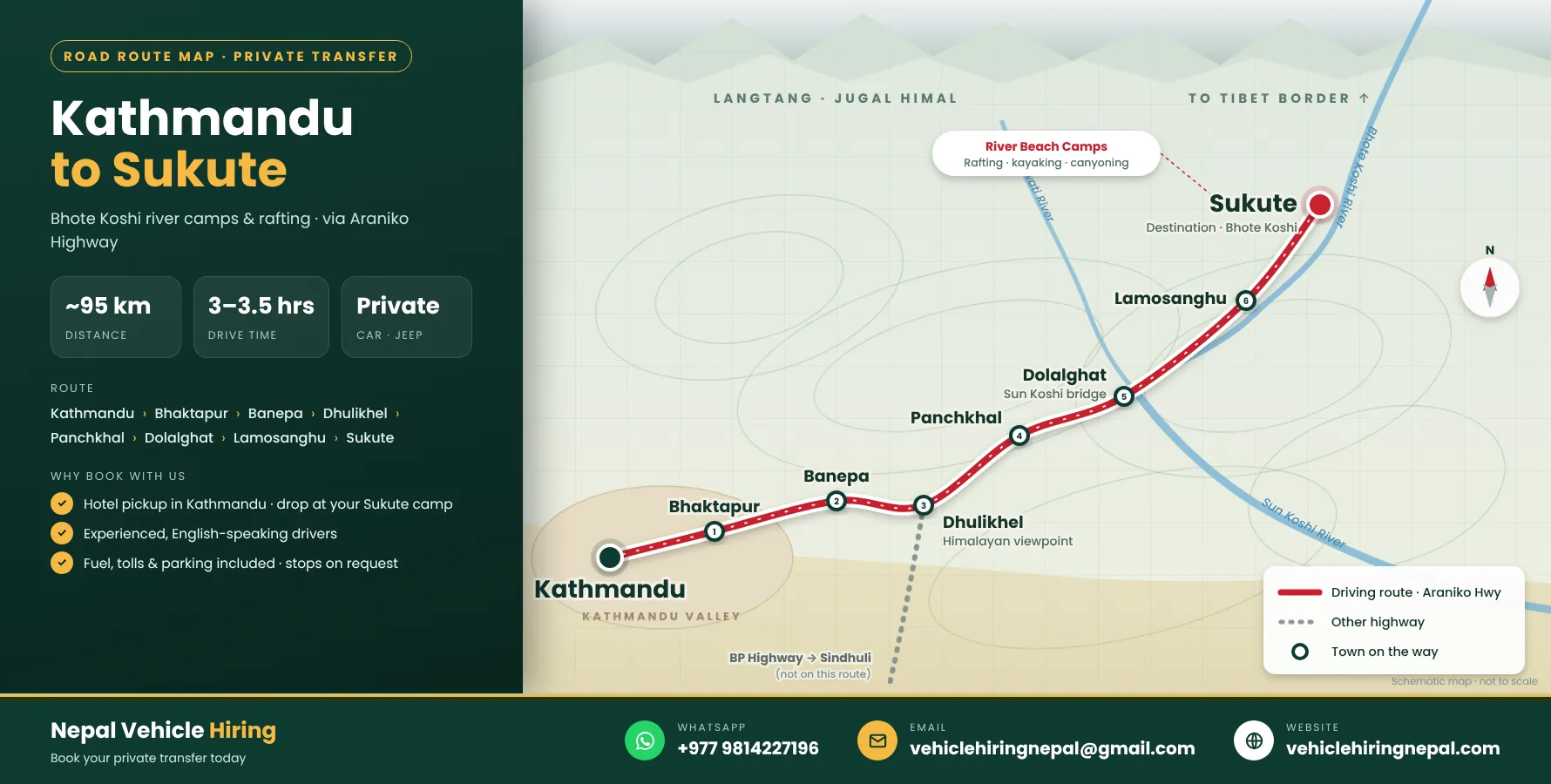
Sukute is one of the Kathmandu Valley’s best-kept escapes — a riverside destination on the banks of the Sun Koshi River in Sindhupalchowk District, approximately 83 km east of Kathmandu via the BP Highway, where Nepal’s most popular adventure resort concentration has grown around a sandy river beach, white-water rafting access, and the extraordinary landscape of the Sun Koshi River gorge. The cluster of adventure and eco-resorts at Sukute — most famously the Sun Koshi Beach Resort and related properties — has become the single most popular weekend and day-trip escape destination for Kathmandu’s residents and visitors, offering a genuinely different Nepal experience from the heritage sites of the valley and the trekking circuits of the high Himalaya: riverine recreation, sandy beach relaxation, riverside dining, zip-lining, rock climbing, bungee jumping access, and the in-depth sound and movement of one of Nepal’s great rivers in a narrow gorge setting.

For all of these reasons, the Kathmandu to Sukute private vehicle hire is one of Nepal Vehicle Hiring’s most frequently booked short-to-medium distance transfers — serving family weekend escapes, corporate team retreats, school and college adventure groups, trekking pre- and post-trip relaxation stays, and international visitors who want a river day-trip from the capital. The journey covers 83 km on the BP Highway in 2.5 to 3.5 hours — an entirely manageable drive that includes some of Nepal’s finest eastern valley and Sun Koshi gorge scenery — and the wide range of vehicle options available through Nepal Vehicle Hiring makes this transfer accessible and cost-effective for every group size, from a solo traveller in a private car to a forty-person corporate retreat in a VIP Sofa Bus.

This guide covers the complete Kathmandu to Sukute transfer in the detail it deserves: the route, the realistic journey time, every vehicle option with honest costs, the specific advantages of each vehicle for different group types, the activities awaiting at Sukute, how the transfer connects to broader Himalayan experiences through our partner companies, and the practical tips that make the journey as good as the destination.

Book: vehiclehiringnepal.com | Call/ WhatsApp
Kathmandu to Sukute Private Vehicle Hire | Best Car, Jeep, Hiace & Bus – Nepal Vehicle Hiring

Sukute – What Makes This Destination Worth the Drive

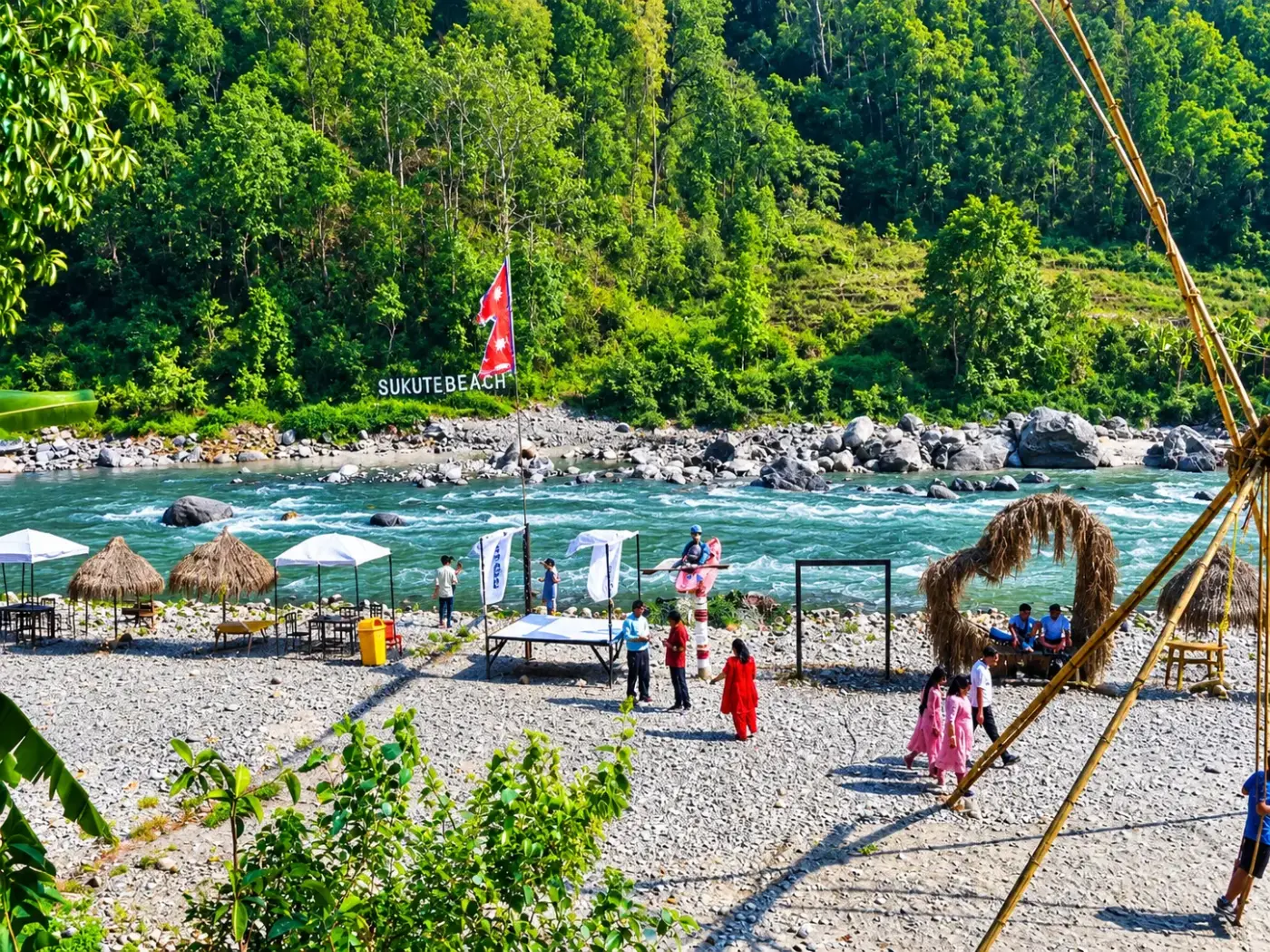
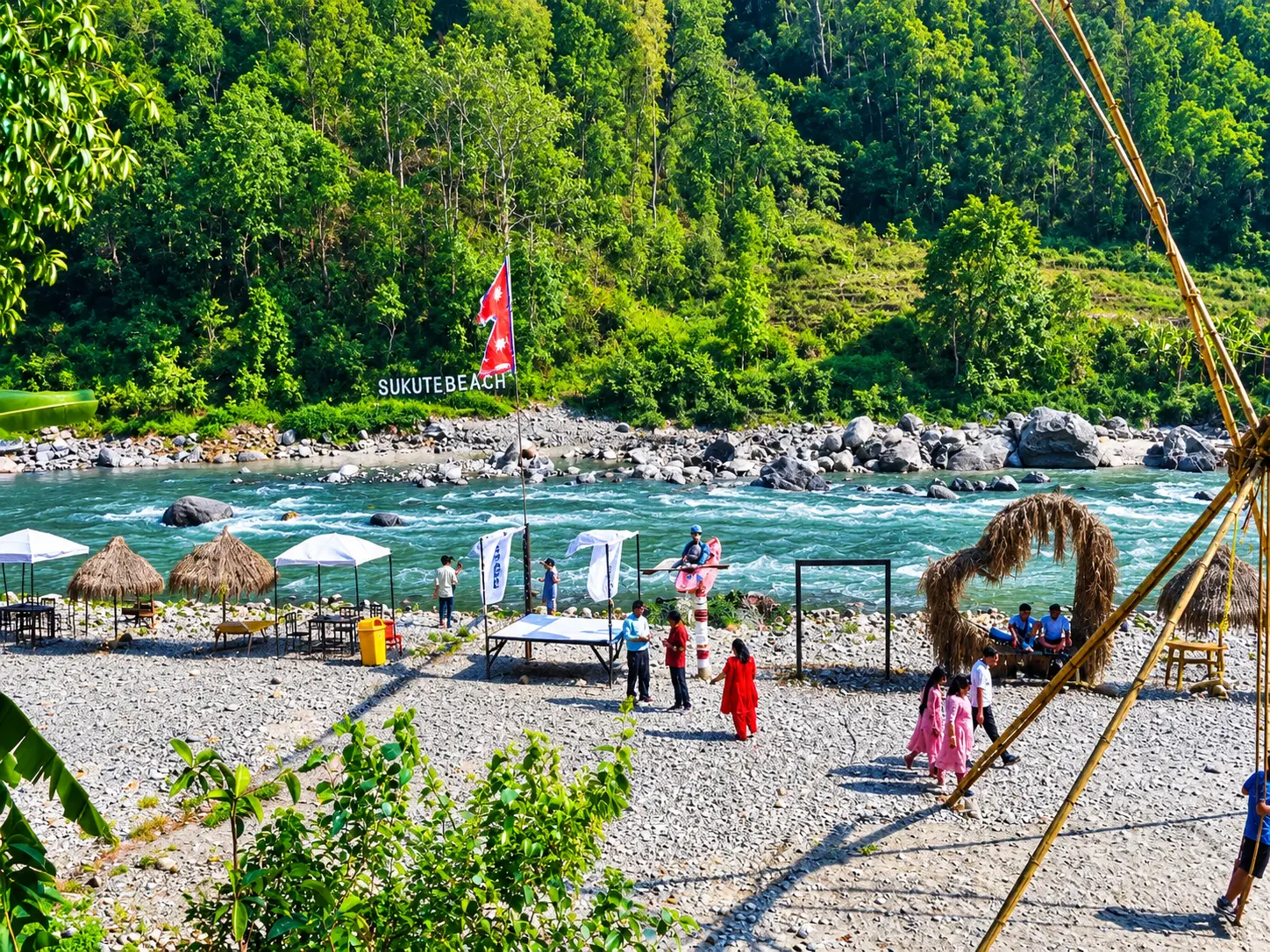
Sukute sits at approximately 750 metres above sea level in the Sun Koshi River gorge in Sindhupalchowk District, directly on the banks of the Sun Koshi River — one of Nepal’s seven major river systems, fed by the glaciers of the Rolwaling and Solu Khumbu Himalaya and carrying the extraordinary aquamarine-green colour of glacially sourced Himalayan water. The Sun Koshi at Sukute is a Grade III–IV white-water rafting river at standard water levels, making it accessible for adventure beginners while offering a genuine challenge for experienced paddlers.

The section past the Sukute beach resort zone is well-suited to half-day and full-day trips that start upstream and end at Sukute beach, offering a full white-water experience and a comfortable finish at a resort with beach chairs, cold drinks, and river views.

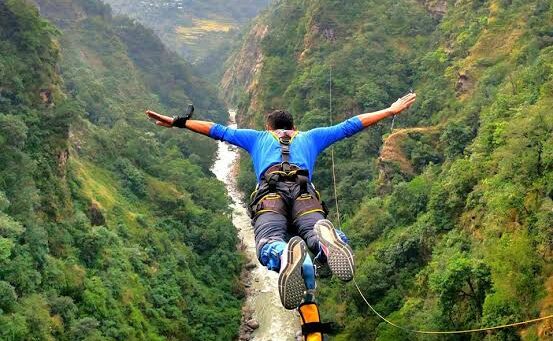
Beyond rafting, Sukute’s adventure portfolio has expanded considerably as the resort cluster has grown. It now includes: zip-lining across the Sun Koshi gorge, rock climbing on the gorge walls, kayaking, canyoning in side streams, mountain biking on surrounding trails, and the world-famous Last Resort bungee jump approximately 8 km further up the same highway.

For non-adventure visitors — and Sukute draws plenty — the beach itself (sandy, clean, and properly managed at the main resort properties), riverside dining on Nepal’s finest river-view terrace restaurants, swimming in the river’s calmer sections, and simply the visual and atmospheric experience of being in a deep Himalayan river gorge with the water moving past are all genuinely compelling reasons to make the 83 km journey from Kathmandu.

Sukute’s resort accommodation has improved dramatically in recent years, with properties now offering riverside tented camps, permanent riverside bungalows, standard resort rooms, and luxury glamping options that make overnight and multi-night stays comfortable for guests accustomed to international travel standards. For Alpine Luxury Treks clients completing a Himalayan trekking circuit through Trek Nepal Himalayas and wanting a final night of riverside relaxation before departure, Sukute offers the contrast and recovery a riverside luxury camp after a high-altitude trek delivers uniquely well.
Kathmandu to Sukute Private Vehicle Hire | Best Car, Jeep, Hiace & Bus – Nepal Vehicle Hiring

The Route – Kathmandu to Sukute via the BP Highway

Kathmandu to Bhaktapur – The Valley Exit

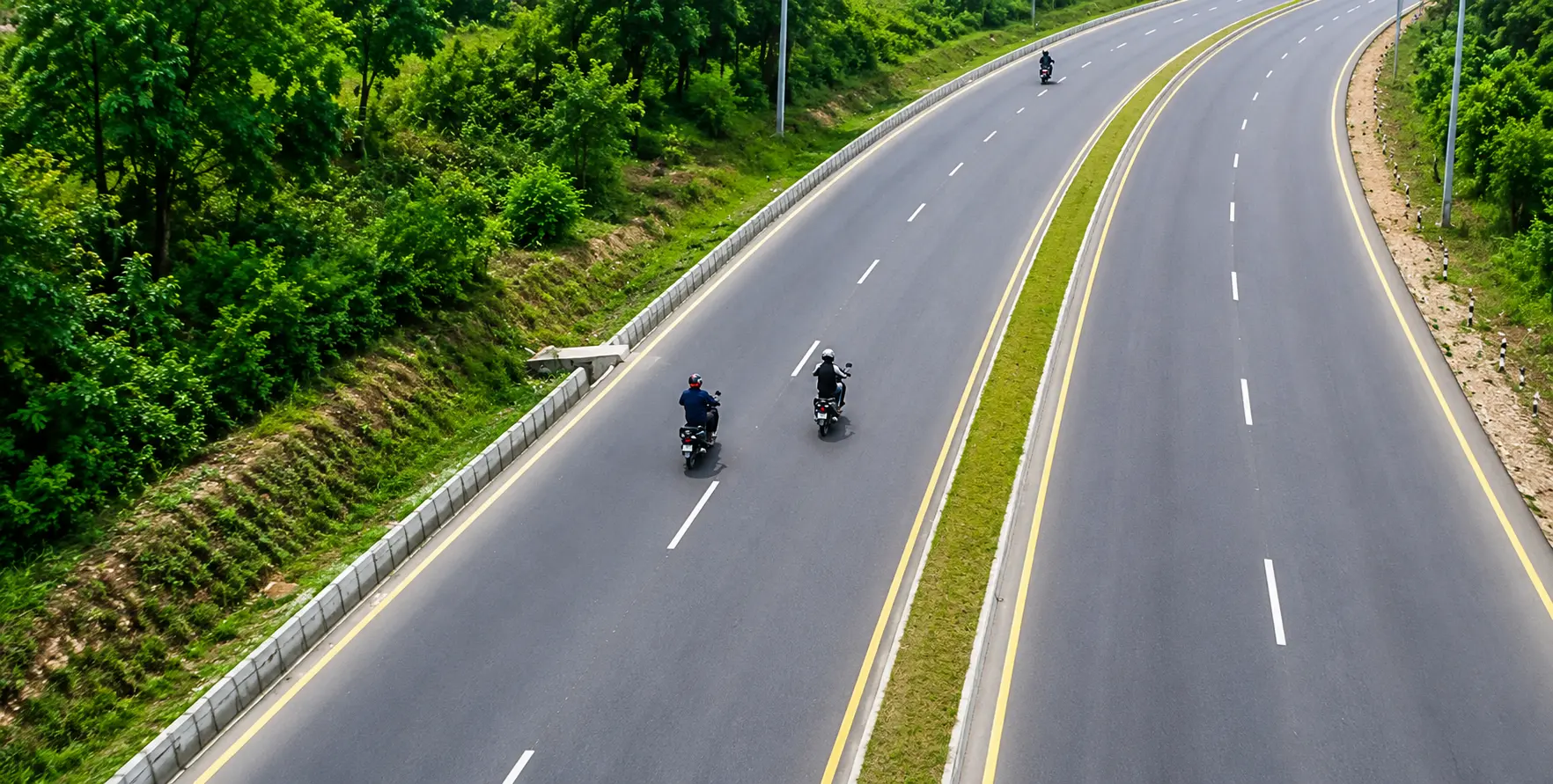
The Kathmandu to Sukute route follows the BP Highway (Banepa–Bardibas Highway) eastward from Kathmandu — the same highway used for the Kathmandu to Manthali Airport pre-dawn transfer, the Kathmandu to Jiri route, and the Kathmandu to Dhulikhel transfer. The first 25 km from Kathmandu through Koteshwor, Balkumari, and the Bhaktapur boundary carry the Kathmandu suburban traffic characteristic of this corridor- the most efficient exit routing from Kathmandu’s eastern side, bypassing the most congested central ring road intersections by using the Tinkune–Koteshwor corridor that takes vehicles directly toward the BP Highway without re-entering the city centre.

The optional Bhaktapur Durbar Square stop sits directly on this route for groups with time to include a heritage visit — described in detail in the optional stops section below.

Banepa to Dolalghat – The Valley Transition

From Banepa junction (approximately 30 km from Kathmandu), where the Dhulikhel and Jiri roads branch northward, the Sukute route continues eastward on the BP Highway toward Panchkhal. Then it descends toward the Sun Koshi River valley at Dolalghat. This Banepa to Dolalghat section is where the landscape transforms most dramatically on the Kathmandu to Sukute journey: the enclosed Kathmandu Valley gives way to increasingly open mid-hill country, the road climbs to the Lamosangu ridge before descending steeply into the Sun Koshi gorge, and the first views of the great river below begin to appear through the gorge vegetation — aquamarine water threading between steep forested walls with the occasional sandy beach visible at river bends.

For many Kathmandu weekenders, this section of the drive is the moment the city genuinely falls away, and the journey becomes an experience in itself.

Dolalghat to Sukute – Following the Sun Koshi

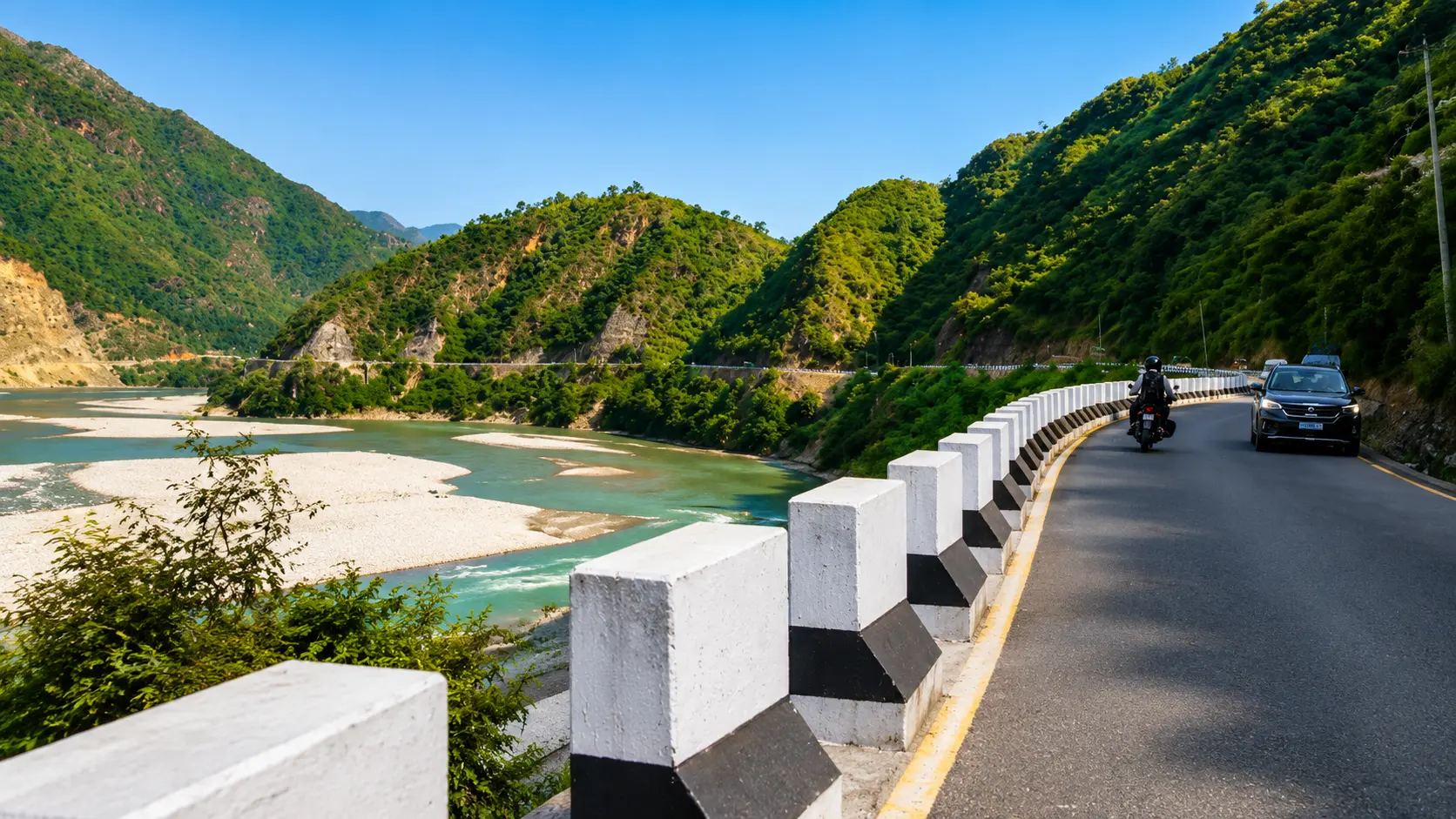
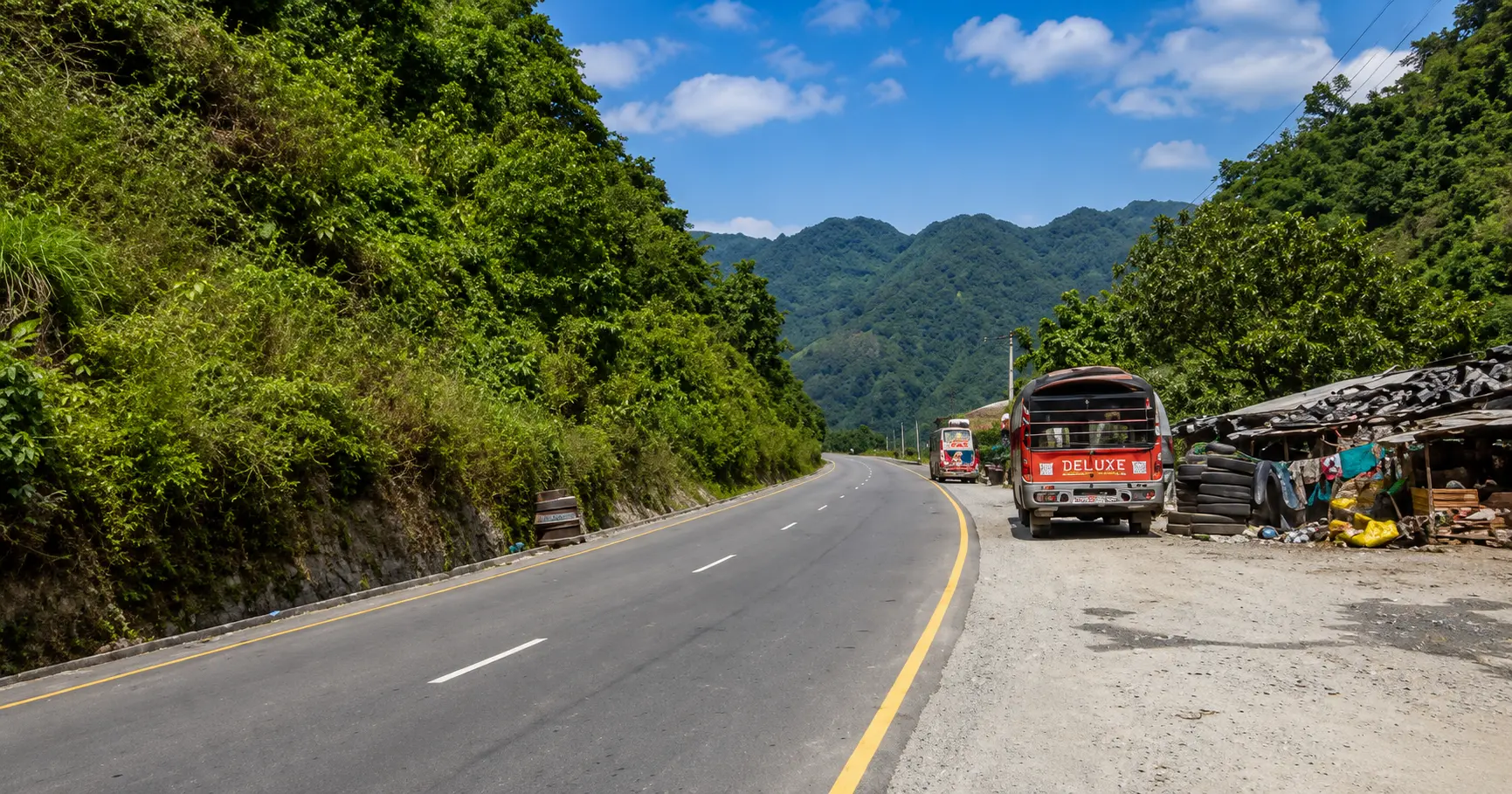
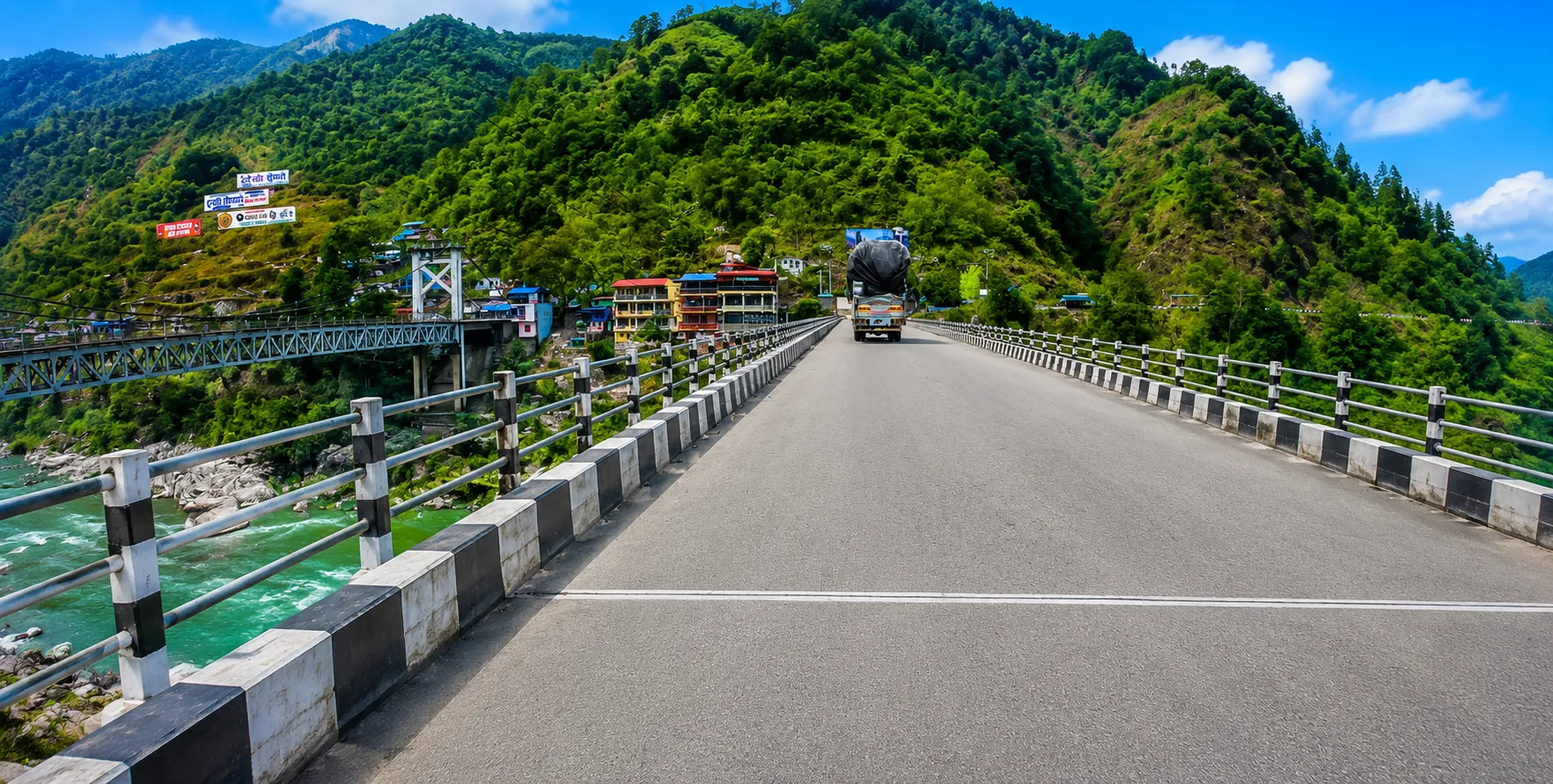
At Dolalghat, the road reaches the Sun Koshi River at about 580 metres elevation and follows the riverbank closely for the rest of the way to Sukute. This final 30 km section along the river is among the most scenic riverside driving in Nepal’s accessible road network — the aquamarine Sun Koshi visible on one side, the forested gorge walls rising steeply on the other, and the series of small Tamang and Newar villages on the riverside terraces providing a continuous window into the hill communities of Sindhupalchowk District.

The road passes through the well-known adventure destination zone, home to the Last Resort bungee jump, The Farm resort, and several other adventure properties, before reaching Sukute’s main resort cluster about 83 km from Kathmandu. Nepal Vehicle Hiring delivers to the entrance of any specific Sukute resort property — Sun Koshi Beach Resort, The Farm or any other riverside property — as a standard door-to-door service element.

Distance and Journey Time – Realistic Planning

The distance from  Kathmandu to Sukute is approximately 83 km via the BP Highway route. The realistic journey time ranges from 2.5 hours in ideal off-peak conditions to 3.5 hours in peak traffic.

The primary variable is the Kathmandu urban exit corridor — the 25 km from Kathmandu to the Bhaktapur boundary that carries the city’s eastern traffic. Once clear of Bhaktapur, the road moves efficiently through Banepa, Panchkhal, and the Sun Koshi descent with minimal congestion for most of the journey.

The Dolalghat to Sukute riverside section (approximately 30 km) is the most scenic and the most traffic-free, typically taking 45–60 minutes at a comfortable pace.

Nepal Vehicle Hiring recommends the following departure windows for the Kathmandu to Sukute transfer for day-trip and overnight groups: for day trips — depart by 7:30 AM to arrive at Sukute before 10:30 AM, maximising the available time at the resort; for overnight groups — a 9:00–10:00 AM departure avoids the worst peak traffic and arrives in time for lunch and a full afternoon of activities before overnight check-in. Both timings are significantly better than the post-peak midday departure many corporate and family groups default to, which results in a late-afternoon Sukute arrival that substantially cuts available resort time.

Swayambhunath visit during Kathmandu Pokhara Tour

Vehicle Options – Every Group Size Served

Private Car – For Small Groups and Couples

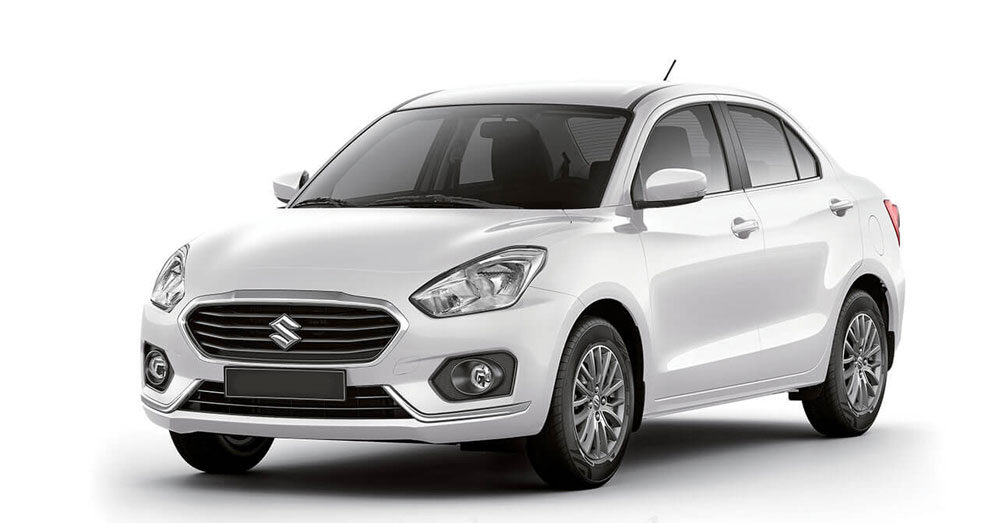
For solo travellers, couples, and small groups of up to three people, the private car is Nepal Vehicle Hiring’s most economical option for the Kathmandu to Sukute transfer. The BP Highway to Sukute is entirely paved — 4WD is not required, and a standard sedan or compact SUV handles every section comfortably.

The approximate cost for a private car from Kathmandu to Sukute is NPR 3,500–5,000 (approximately USD 26–37) one way, covering vehicle, driver, and fuel. For a couple sharing a day trip or overnight excursion to Sukute, a private car offers the most personalised experience—departing exactly when they want, stopping wherever they choose, and returning on their own schedule.

Nepal Vehicle Hiring also offers a full-day car hire option for Sukute day trips where the vehicle and driver wait at the resort and return the group to Kathmandu in the evening — the most flexible solution for groups who are not staying overnight and want complete timing freedom at the destination.

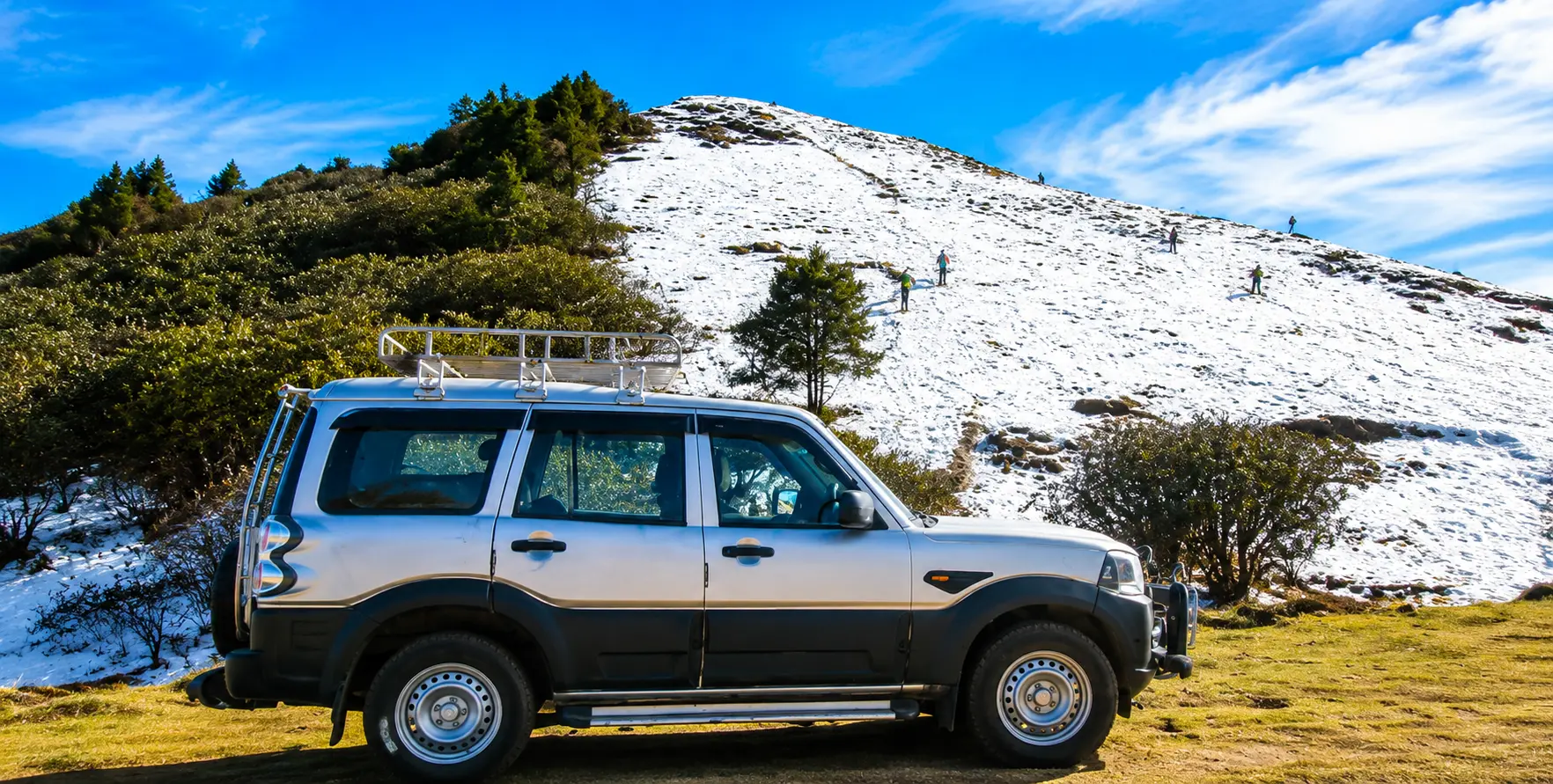
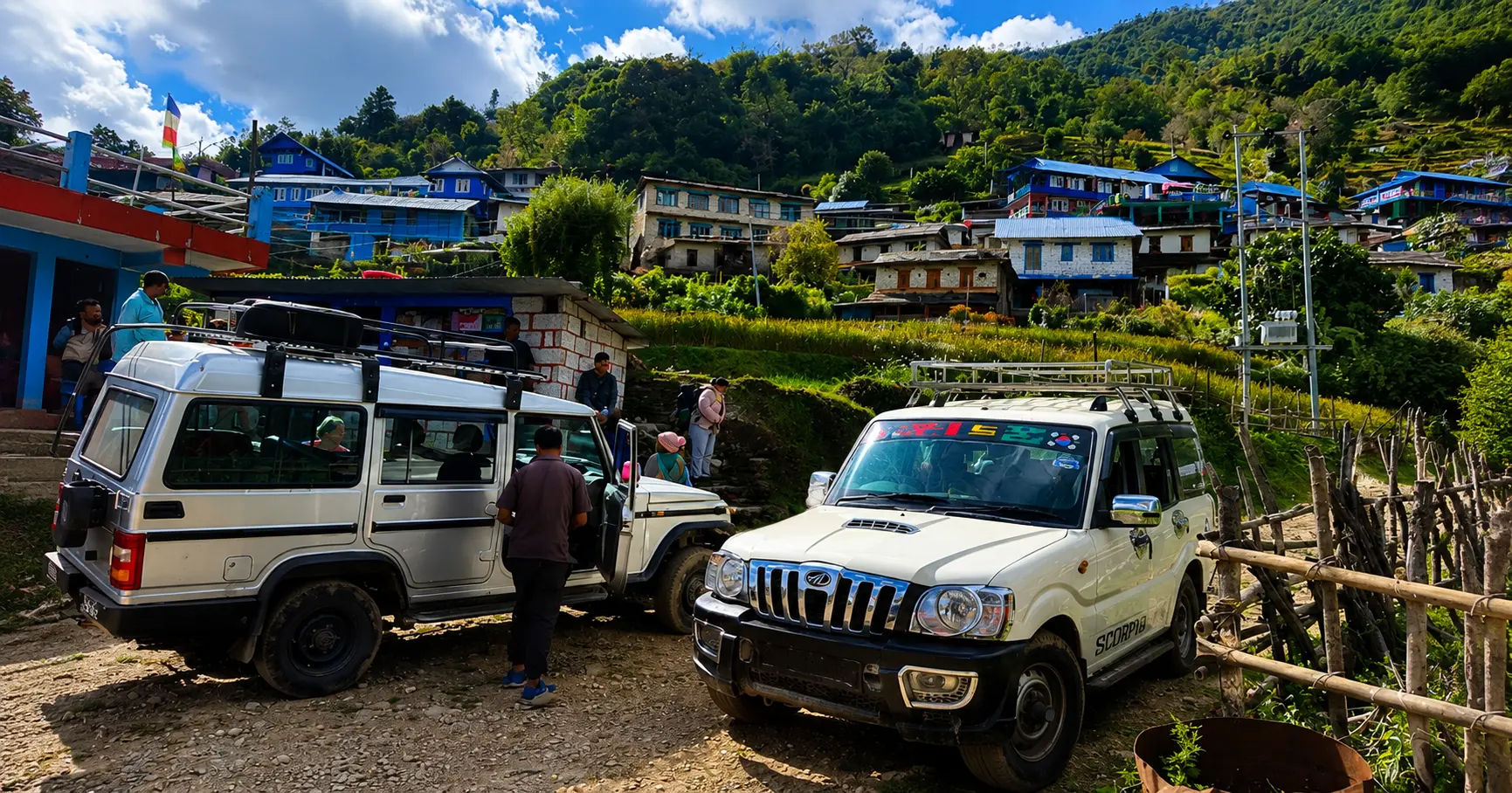
Mahindra Scorpio 4WD – The Standard Group Jeep

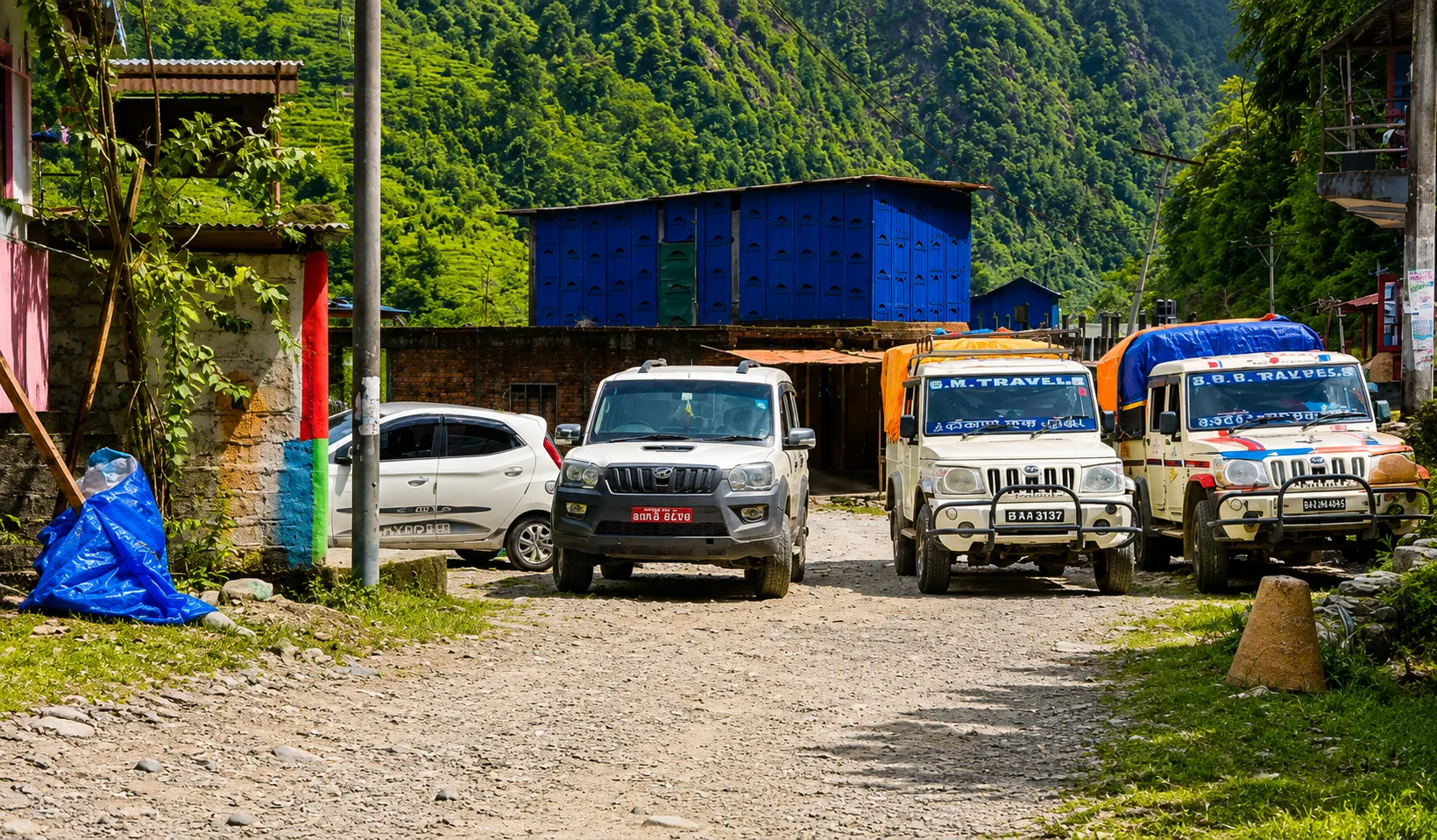
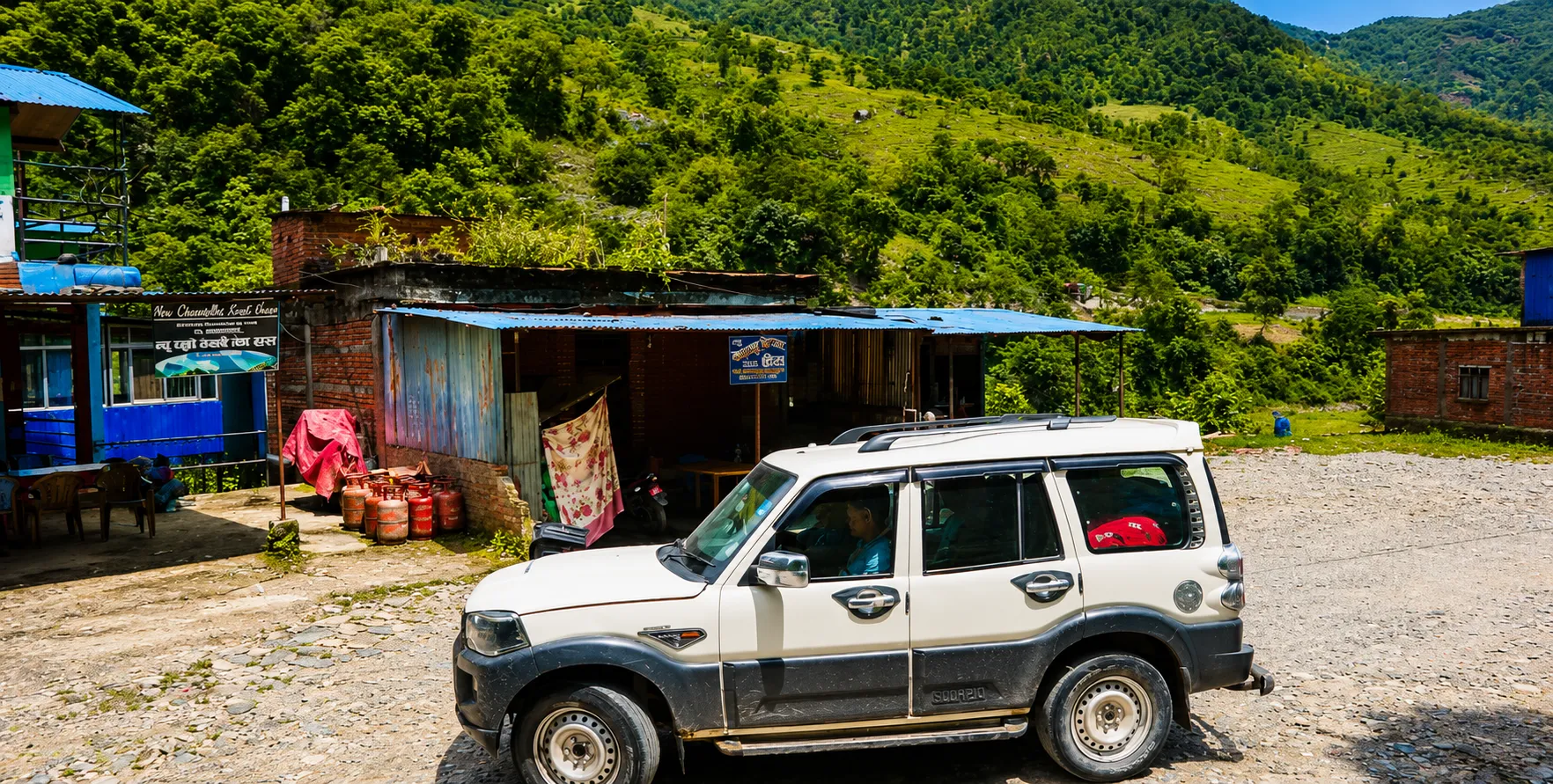
For groups of four to seven people, the Mahindra Scorpio 4WD is Nepal Vehicle Hiring’s most booked vehicle for the Kathmandu to Sukute group transfer. Comfortable and spacious enough for seven passengers, with luggage in the boot and a roof rack for larger bags, the fully air-conditioned Scorpio is driven by a professional, route-familiar driver.

It offers the best combination of comfort, capacity, and cost efficiency for the standard Kathmandu escape group. The approximate cost for a Mahindra Scorpio from Kathmandu to Sukute is NPR 5,500–8,000 (approximately USD 41–60) one way.

For corporate team outings of five to six people, the Scorpio is the natural single-vehicle solution — everyone in one vehicle, departing together, arriving together, with a professional presentation that matches the corporate standard Nepal Vehicle Hiring maintains across the fleet. The Bolero 4WD is a comparable budget alternative for the same group size at a marginally lower hire rate.

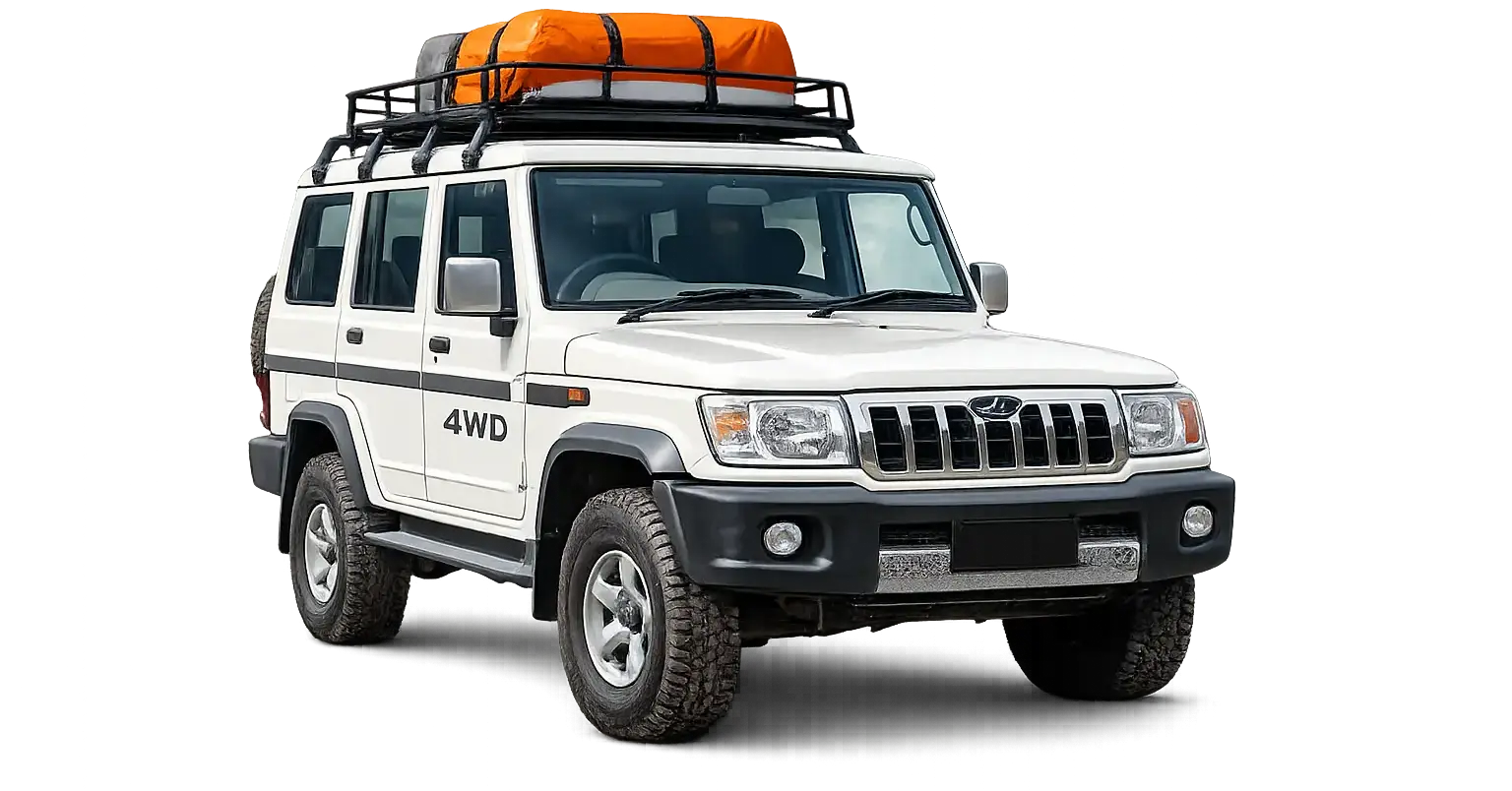
Mahindra Bolero 4WD – Budget Group Option

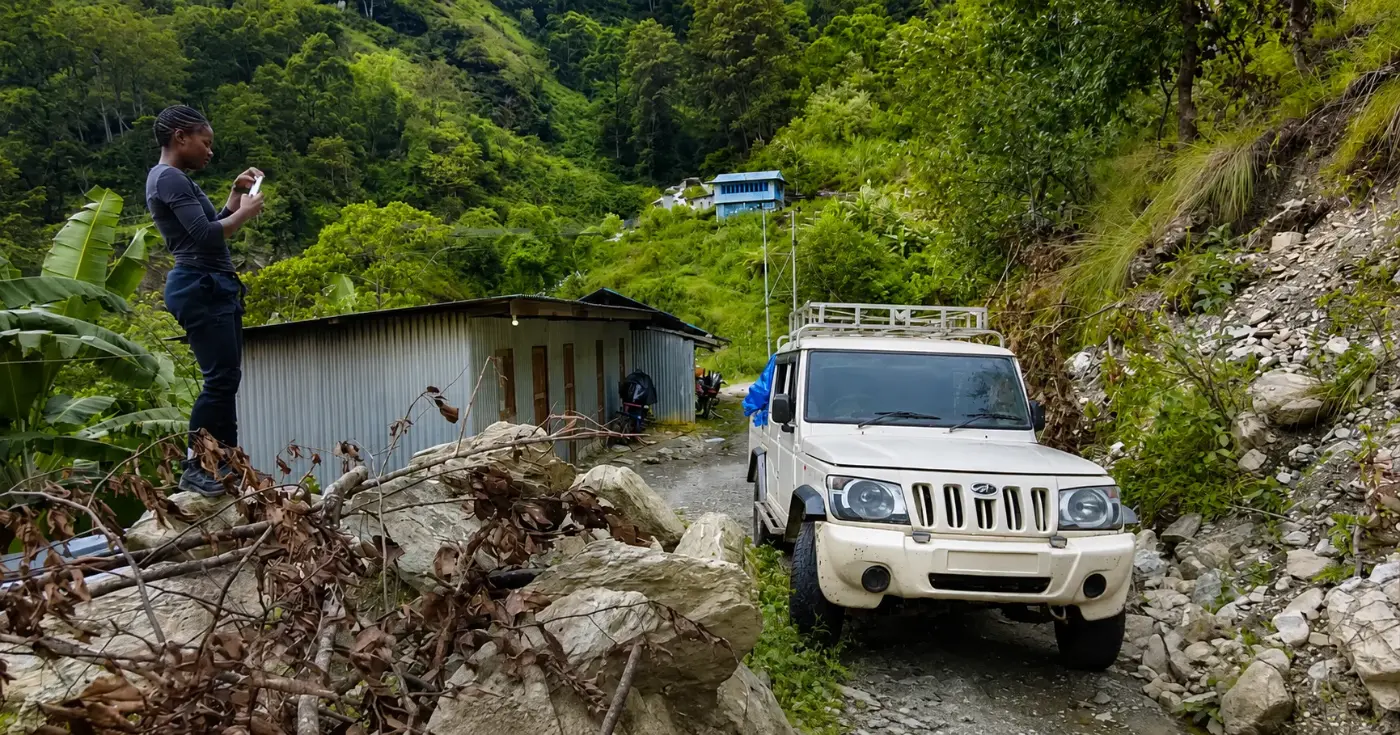
The Mahindra Bolero 4WD offers the same passenger capacity and essential capability as the Scorpio at a slightly lower price, making it the preferred option for budget-conscious groups of five to seven who prioritise cost efficiency over the Scorpio’s marginally superior interior refinement. The Bolero handles the BP Highway to Sukute without difficulty — the route’s paved surface means neither the Scorpio’s nor the Bolero’s 4WD capability is required for the journey itself, though it is available if the group plans any off-road extension beyond the main resort area.

The approximate cost for a Mahindra Bolero from Kathmandu to Sukute is NPR 5,000–7,000 (approximately USD 37–52) one way.

Nepal Tour Package

Toyota Hiace Van – The Corporate and School Group Standard

For groups of eight to thirteen people — corporate team outings, family groups, school adventure trips, NGO and development sector field days — the Toyota Hiace van is Nepal Vehicle Hiring’s most popular vehicle for the Kathmandu to Sukute group transfer. With full air conditioning, generous passenger space, a roof rack for larger bags and adventure equipment, and the professional presentation of a well-maintained minibus, the Hiace handles the BP Highway to Sukute as one of its most natural routes—smooth, fast highway driving that covers the 83 km efficiently.

The approximate cost for a Toyota Hiace from Kathmandu to Sukute is NPR 7,500–11,000 (approximately USD 56–82) one way. For corporate retreats, the Hiace offers a team arrival experience where all participants travel together—building team dynamics in the vehicle rather than splitting the group across multiple smaller cars.

Coaster Minibus For Medium-Large Groups

For groups of fourteen to twenty-five people, the Coaster minibus is Nepal Vehicle Hiring’s most appropriate single-vehicle solution for the Kathmandu to Sukute run. It’s comfortable and fully air-conditioned, with generous luggage space, while remaining compact enough to navigate the Sun Koshi riverside resort access roads that full-size tourist coaches occasionally find tight.

The approximate cost for a Coaster from Kathmandu to Sukute is NPR 12,000–18,000 (approximately USD 90–135) one way. For school adventure programme groups of 20–25 students, the Coaster is the standard vehicle recommended by Nepal Vehicle Hiring — large enough for the group, professional enough for the institution, and manageable enough for the resort arrival process.
Kathmandu to Sukute Private Vehicle Hire | Best Car, Jeep, Hiace & Bus – Nepal Vehicle Hiring

VIP Sofa Bus – Top-end Large Group Transport

For large corporate retreats, top-end group tours, and event groups of twenty to forty-five people, Nepal Vehicle Hiring’s VIP Sofa Bus transforms the Kathmandu to Sukute transfer into a top-end travel experience in its own right — individual reclining sofa seats, full AC, USB charging points, WiFi, air suspension for a smooth ride, and panoramic windows corporate team retreats where the quality of every element of the experience reflects the company’s investment in its people, the VIP Sofa Bus sets the tone from the moment the team boards in Kathmandu. The approximate cost for a VIP Sofa Bus from Kathmandu to Sukute is NPR 22,000–35,000 (approximately USD 165–260) one way- a significantly superior experience to any shared transport alternative at any group size.

Tourist Bus – Large Group Budget Option

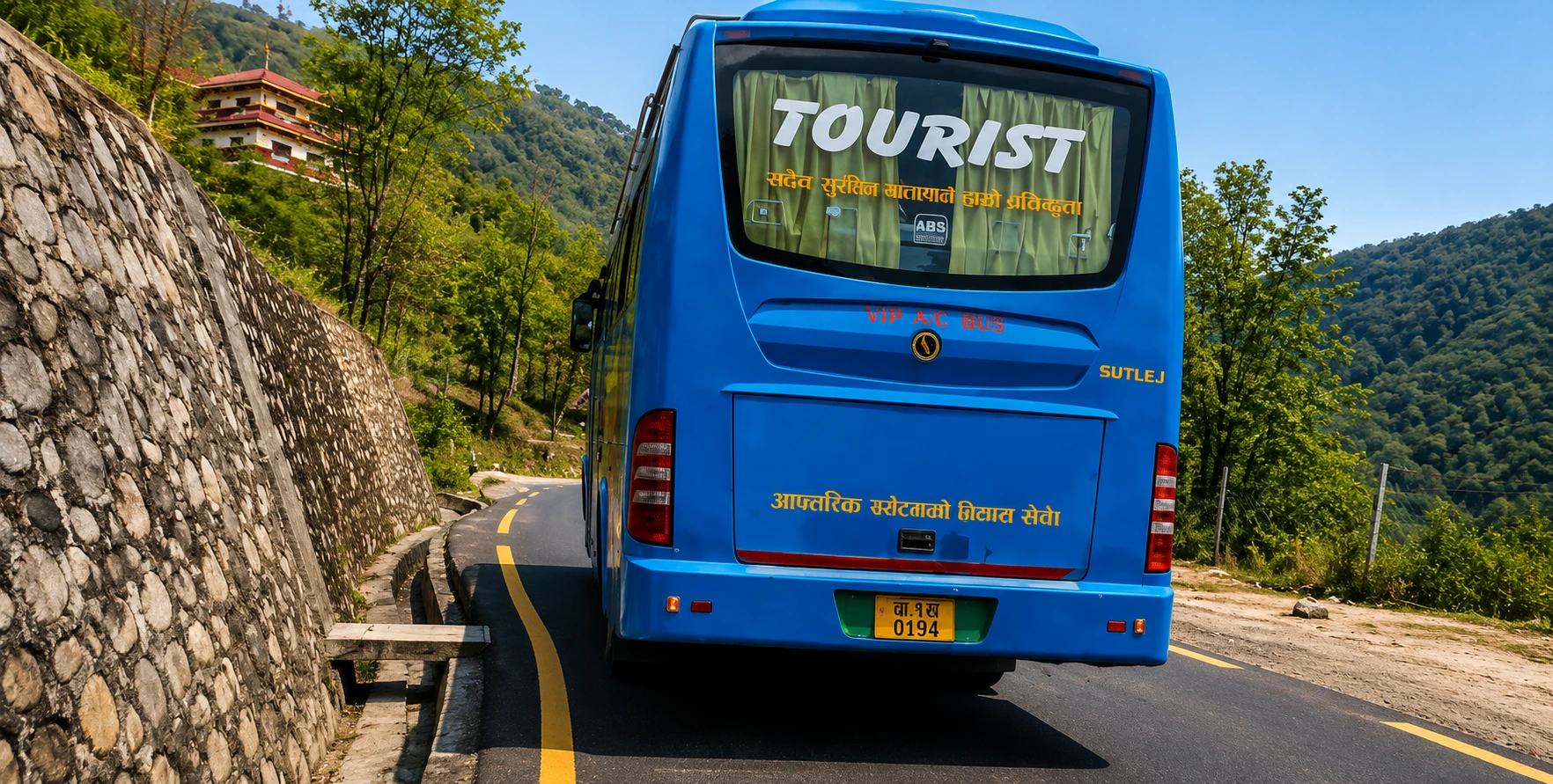
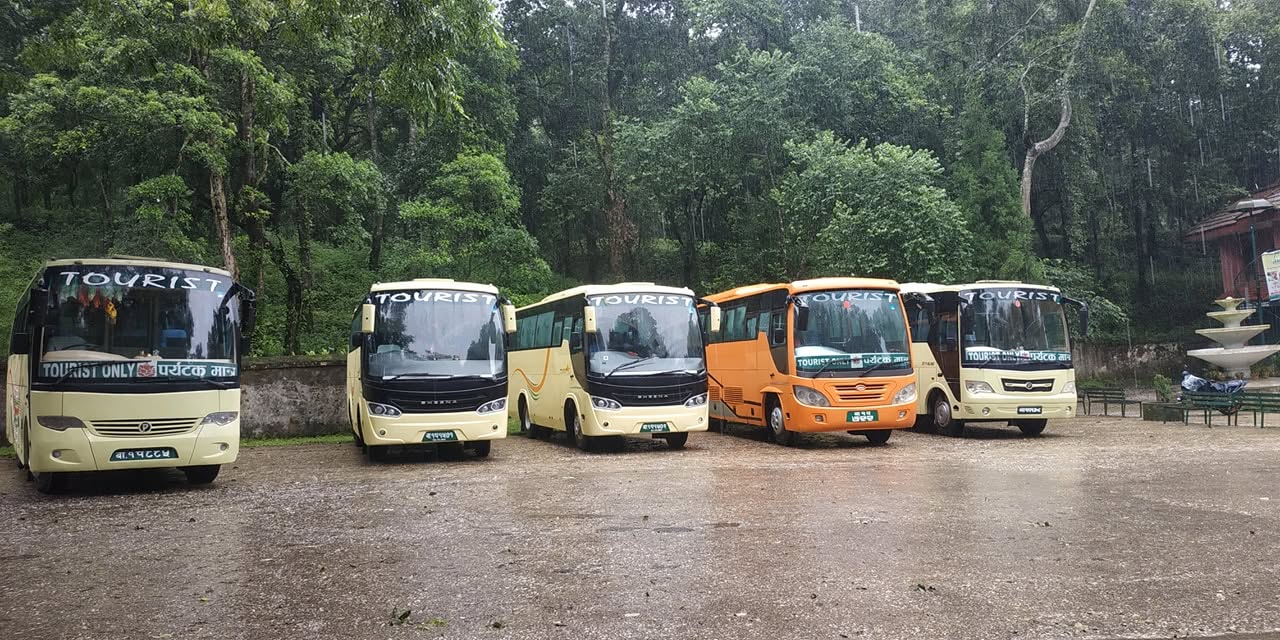
budget-conscious large groups of thirty to forty-five people — school trips, community outings, and larger NGO field days — Nepal Vehicle Hiring’s Deluxe Tourist Bus provides adequate comfort at the lowest per-head cost of any Nepal Vehicle Hiring vehicle option for this route. The approximate cost for a Tourist Bus from Kathmandu to Sukute is NPR 15,000–22,000 (approximately USD 112–165) one way, a purpose-built coach with 2×2 seating, AC, adequate luggage storage, and professional presentation — a significant improvement over public local buses, with a letter of vehicle registration and driver details for school administration records on request.

Corporate Retreats to Sukute – Nepal Vehicle Hiring’s Speciality

The corporate team retreat to Sukute is one of Nepal Vehicle Hiring’s highest-volume repeat-booking service categories. Nepal Vehicle Hiring has become the preferred operator for this specific use case.

Corporate retreat groups have specific transport requirements that differ from leisure travellers: confirmed departure times from office or hotel addresses (not flexible), professional vehicle presentation that reflects the company’s standards, driver punctuality and courtesy as part of the corporate arrival experience, capacity for laptop bags and professional equipment alongside leisure clothing, and simultaneous pickup from multiple Kathmandu locations — head office, resident representative’s house, airport for inbound colleagues. Nepal Vehicle Hiring’s corporate booking coordination service handles all of this as standard: confirmed departure times with named driver details sent to the company’s event coordinator, flexible multi-location pickup routing, professional vehicle presentation, and a 24/7 operations contact for any day-of adjustments.

For corporate retreat groups of twenty or more, a dedicated Hiace van or Coaster provides the cohesion of a single-vehicle corporate arrival at the resort. At the same time, smaller executive subgroups can travel in a separate Land Cruiser for senior leadership.

School and College Adventure Groups

Sukute’s adventure activities—particularly white-water rafting, zip-lining, rock climbing, and the combined adventure-day packages offered by the main resort operators —make it Nepal’s most popular school and college adventure destination within day-trip distance of Kathmandu. Nepal Vehicle Hiring has extensive experience coordinating transport for educational institution groups to Sukute, and understands the specific requirements these groups have: vehicle capacity that exactly matches the group count, a written transport confirmation that school administration can file, a driver who understands that school groups have chaperones and safety protocols, and departure and return timing coordinated with the resort’s activity schedule.

For school groups of 15–30 students, the Coaster minibus keeps the group together, maintains teacher oversight of all students in a single vehicle, and provides the professional presentation that school groups require. For larger school groups of 30+, the Tourist Bus or VIP Sofa Bus never splits school groups across multiple vehicles without a dedicated teacher or chaperone confirmed for each vehicle — a safety protocol that educational institutions consistently cite as one of the key reasons they return to Nepal Vehicle Hiring for Sukute school trips.

Kathmandu Durbar Square

The Bhaktapur Heritage Stop – Combining Culture and Adventure

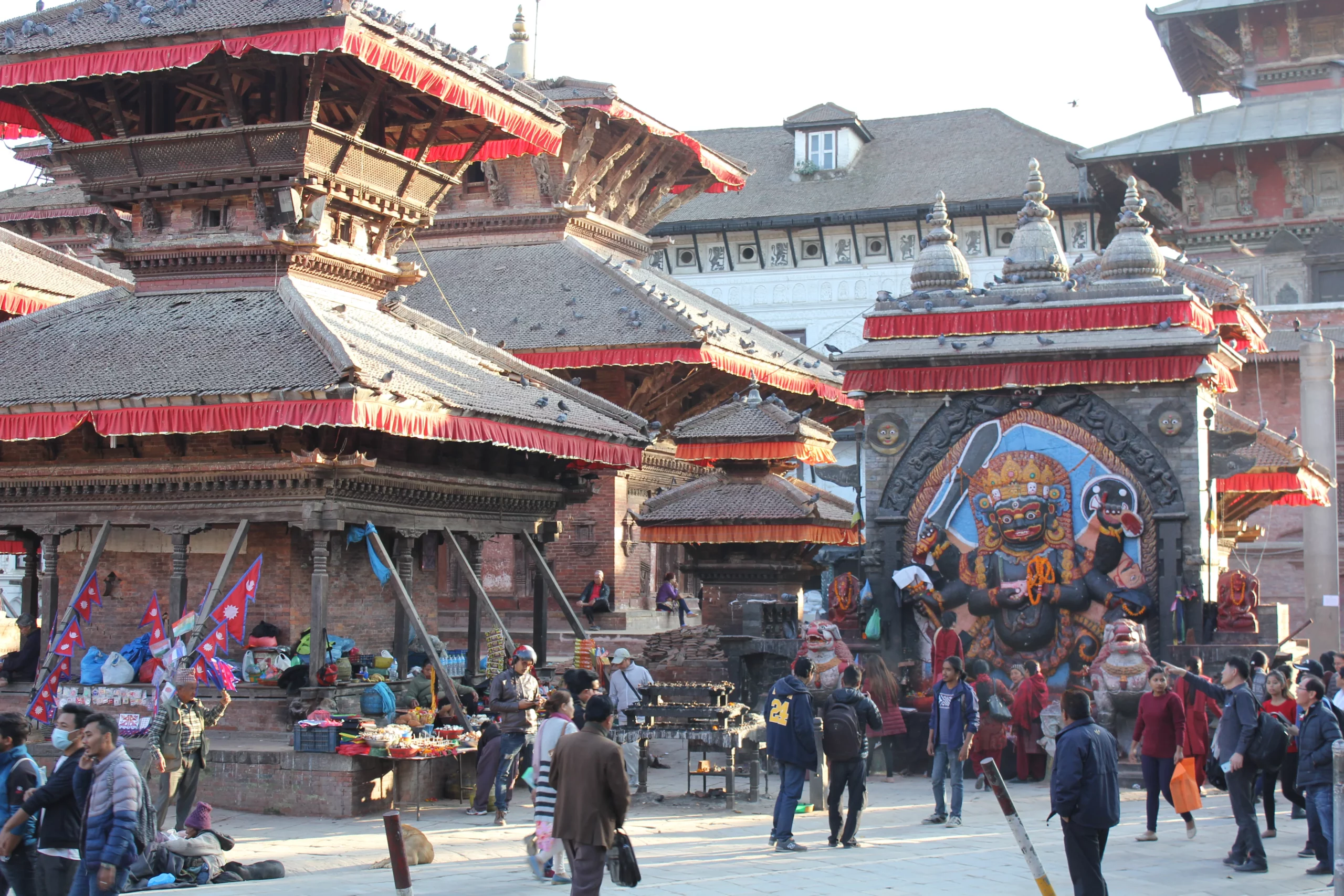
The Bhaktapur Durbar Square sits directly on the Kathmandu to Sukute BP Highway route, approximately 12 km from Kathmandu on the eastern corridor. For groups whose Sukute trip has an educational or cultural dimension alongside the adventure activities — school trips, NGO team days with a heritage component, international visitor groups combining city culture with river adventure — a Bhaktapur heritage stop on the way to Sukute adds approximately 1.5–2 hours to the journey (including the detour into the Bhaktapur heritage zone parking area) while delivering one of Nepal’s finest UNESCO heritage experiences55-window palace, Nyatapola Pagoda, pottery square, and peacock window of Bhaktapurcomplete introduction to Nepal’s medieval Newari urban culture that enriches the overall Nepal experience beyond what a pure adventure day provides.

Nepal Vehicle Hiring coordinates the Bhaktapur stop timing with the Sukute resort’s activity schedule, confirms the revised Sukute arrival time with the resort, and adjusts adventure activities and meals accordingly.
Kathmandu to Sukute Private Vehicle Hire | Best Car, Jeep, Hiace & Bus – Nepal Vehicle Hiring

The Last Resort Bungee – The Natural Extension Beyond Sukute

For adventure groups who want to pair a Sukute resort stay with Nepal’s most famous bungee jump, The Last Resort—home of the 160-metre-drop bungee jump over the Bhote Koshi River—lies about 8 km further up the BP Highway from Sukute. This additional 8 km takes approximately 15 minutes by vehicle from the Sukute resort zone.

Nepal Vehicle Hiring offers a combined Kathmandu-to-Sukute-to-Last-Resort itinerary: a bungee-plus-rafting day, Nepal’s most popular single-day adventure from Kathmandu, with flexible inter-site transport that public buses and shared taxis cannot replicate.

Returning from Sukute – Coordinating the Return Transfer

Nepal Vehicle Hiring books the Sukute-to-Kathmandu return transfer at the same time as the outward journey, including overnight and multi-night stays, confirmed resort check-out, and the return journey.

The return journey from Sukute to Kathmandu follows the same BP Highway route in reverse. It takes 2.5–3.5 hours depending on departure timing and traffic, and returns no later than 3:00 PM from Sukute for groups whose next commitment is in Kathmandu that evening. Later departures risk evening Bhaktapur–Ring Road traffic, which can extend the return to 4 hours in the worst case.

For groups with Kathmandu hotel commitments or airport connections that evening, plan backwards from the next fixed commitment with a comfortable buffer and communicate this to the resort contact on the morning of departure.

Sukute and the Broader Nepal Adventure Circuit

Sukute’s position on the BP Highway corridor makes it a natural component of several broader Nepal adventure circuits that Nepal Vehicle Hiring and its partner companies coordinate together. The most popular circuit combinations are: a Kathmandu–Sukute–Kathmandu day trip as a standalone Kathmandu Valley escape; a Kathmandu–Dhulikhel overnight–Sukute day combining the mountain view resort night with the river adventure day; and a Kathmandu–Sukute–Jiri or Kathmandu–Sukute–Ramechhap trekking connection for trekkers who start their Everest region trek with a pre-trek Sukute adventure night before the vehicle continues east to the trailhead.

For international visitors coordinating their Nepal visit with Trek Nepal Himalayas trekking packages, Sukute works as both a pre-trek warm-up day for Everest-bound trekkers who want to arrive at the trailhead with an adventure mindset already engaged, and a post-trek recovery and celebration day for groups returning from the high Himalaya who want to mark the completion of their circuit with a river day before flying home. Nepal Vehicle Hiring coordinates Sukute transfers as intermediate stops in multi-leg trekking itineraries, confirming onward connections whether the next stop is Kathmandu airport, Chitwan, or a Lumbini pilgrimage connection.

Practical Tips for the Kathmandu to Sukute Transfer

  • A 7:30–8:00 AM departure from Kathmandu avoids the worst eastern corridor traffic and arrives at Sukute by 10:30–11:00 AM — leaving a full morning and afternoon for resort activities before the return drive.
  • Book the Return Transfer at the same time: Book outward and return transfers simultaneously, and pre-calculate the return departure time against the group’s Kathmandu commitments.
  • Specify the Exact Resort Delivery Point: The Sukute resort cluster covers several properties along the Sun Koshi riverside. Confirm your specific resort name and access instructions to avoid confusion on arrival.
  • Consider the Bhaktapur Stop for Educational Groups: Bhaktapur Durbar Square on the outward journey. Confirm with the resort that activity scheduling can accommodate a 1–2 hour later arrival before finalising the Bhaktapur stop at booking.
  • Choose VIP Sofa Bus for Corporate Events: For corporate retreats where the vehicle experience reflects the event organiser’s quality standard, the VIP Sofa Bus is a strong option.
  • Check Activity Bookings Before Vehicle Departure: Book in advance directly with the resort or activity operator; coordinate the Sukute arrival time with the activity start time.

Frequently Asked Questions – Kathmandu to Sukute Private Vehicle Hire

How far is Sukute from Kathmandu and how long does the drive take?

Sukute is approximately 83 km from Kathmandu via the BP Highway through Bhaktapur, Banepa, Panchkhal, Dolalghat, and the Sun Koshi riverside road. The journey takes 2.5–3.5 hours depending on Kathmandu exit traffic conditions. Off-peak departures before 8:00 AM or mid-morning reach the faster end of this range; peak-hour departures in Kathmandu traffic in the morning or evening extend toward 3.5 hours.

What does a private vehicle from Kathmandu to Sukute cost?

Nepal Vehicle Hiring’s estimated one-way costs: private car NPR 3,500–5,000 (USD 26–37); Mahindra Scorpio NPR 5,500–8,000 (USD 41–60); Mahindra Bolero NPR 5,000–7,000 (USD 37–52); Toyota Hiace NPR 7,500–11,000 (USD 56–82); Coaster NPR 12,000–18,000 (USD 90–135); VIP Sofa Bus NPR 22,000–35,000 (USD 165–260); Tourist Bus NPR 15,000–22,000 (USD 112–165). All prices cover vehicle, driver, and fuel. Contact Nepal Vehicle Hiring on WhatsApp for a confirmed quotation for your group size.

What vehicle does Nepal Vehicle Hiring recommend for a corporate retreat to Sukute?

For corporate groups of 8–13 people, the Toyota Hiace van is the standard recommendation. For 20–30 people, the VIP Sofa Bus provides the top-end experience. For executive subgroups of 3–5 senior leaders, a Toyota Land Cruiser alongside the Hiace fleet provides a two-tier corporate arrival.

Can Nepal Vehicle Hiring combine Sukute with the Last Resort bungee in one trip?

Yes — the Last Resort is approximately 8 km beyond Sukute on the BP Highway, about 15 minutes from the Sukute resort zone. Nepal Vehicle Hiring offers a combined transfer from Kathmandu to Last Resort and back to Sukute. Book a Last Resort bungee time slot directly with The Last Resort in advance — Nepal Vehicle Hiring coordinates the vehicle timing around the confirmed activity schedule.

Does Nepal Vehicle Hiring provide a full-day hire option for Sukute day trips?

Yes — for groups doing a Sukute day trip without an overnight stay, Nepal Vehicle Hiring offers full-day vehicle hire, wait at the resort throughout the day, and return the group to Kathmandu in the evening, giving you complete timing freedom at the resort without needing to arrange a separate return vehicle. Full-day hire rates vary by vehicle and estimated waiting time at Sukute.

How do I book a private vehicle transfer from Kathmandu to Sukute?

Contact Nepal Vehicle Hiring on WhatsApp by WhatsApp or phone, or visit vehiclehiringnepal.com. Provide: your Kathmandu hotel or office pickup address, travel date and preferred departure time, group size, vehicle preference, specific Sukute resort name, and whether you need a return transfer or full-day hire. Nepal Vehicle Hiring provides a written quotation with vehicle type, driver details, and confirmed pricing before you finalise any booking.

Book Your Kathmandu to Sukute Transfer with Nepal Vehicle Hiring

The Kathmandu to Sukute private vehicle transfer is one of Nepal’s finest short-distance escapes from the capital—2.5–3.5 hours of BP Highway driving through the eastern valley hills and the Sun Koshi gorge, delivered with the professional, door-to-door comfort Nepal Vehicle Hiring provides across its full fleet. Whether the group is a corporate team heading for a riverside retreat, a school adventure group bound for their first white-water experience, a family escaping the city for a beach weekend, or a post-trek international group celebrating their Himalayan achievement with a river day — Nepal Vehicle Hiring has the exact vehicle for the group size, the professional driver for the route, and the operational coordination for the complete outward and return transfer.

For complete Nepal itineraries that combine the Sukute adventure with Himalayan trekking, partner with Trek Nepal Himalayas for Nepal’s finest guided mountain experiences, and Alpine Luxury Treks for top-end Himalayan journey design.

Call / WhatsApp  |  vehiclehiringnepal.com  |  Book Sukute Transfer  |  treknepalhimalayas.com  |  alpineluxurytreks.com
Kathmandu to Biratnagar Private Vehicle Hire

Patan Durbar Square in the Kathmandu Valley

Kathmandu to Biratnagar Private Vehicle Hire: Complete Guide

Kathmandu to Biratnagar Private Vehicle — Quick Reference
Distance: Kathmandu to Biratnagar — approximately 395-400 km via B.P. Koirala Highway and East-West Highway
Journey Time: 8 to 10 hours by private vehicle (day journey, early morning departure recommended)
Route: Kathmandu → Banepa → Sindhuli → Bardibas → Dhalkebar → East-West Highway → Itahari → Biratnagar
Sedan/Car Price: NPR 18,000-30,000 all-inclusive (Kathmandu to Biratnagar, door-to-door)
Scorpio/Bolero 4WD Price: NPR 20,000-40,000 | Fortuner/Land Cruiser: NPR 24,000-50,000
Hiace Van (up to 14 pax): NPR 28,000- 40,0000 | Coaster Bus (15-22 pax): NPR 35,000-45,000
Biratnagar: Nepal’s second-largest city — industrial hub, Koshi Province capital, eastern Nepal gateway
Book: Nepal Vehicle Hiring Pvt. Ltd. |WhatsApp | vehiclehiringnepal.com

Introduction: Kathmandu to Biratnagar by Private Vehicle

Kathmandu to Biratnagar private vehicle hire connects Nepal’s capital with its second-largest city—a 395 to 400 km journey along Nepal’s eastern highway corridor that takes 8 to 10 hours by private vehicle. Biratnagar, the capital of Koshi Province and Nepal’s second-largest city after Kathmandu, sits in the Morang District Terai near the Indian border with West Bengal.

The city is home to Nepal’s largest concentration of industrial enterprises—jute mills, sugar factories, pharmaceutical plants, and the eastern Nepal textile industry—and serves as the commercial gateway for eastern Nepal’s hill and mountain regions.

Business travellers use the Kathmandu to Biratnagar private vehicle transfer to connect the two cities, families to visit relatives in eastern Nepal, tour groups to explore the eastern Terai, and trekkers to access the Makalu Barun National Park, the Kanchenjunga Base Camp trek, and other eastern Nepal mountain destinations. Nepal Vehicle Hiring Pvt. Ltd. provides the complete private vehicle service for this route — from sedans for solo business travellers to Scorpio or Bolero 4WDs for families, Hiace vans for tour groups, and Coaster buses for larger parties—all at transparent, all-inclusive pricing. Book via WhatsApp or vehiclehiringnepal.com.

The Route: Kathmandu to Biratnagar

The recommended route for the Kathmandu to Biratnagar private vehicle transfer is via the B.P. Koirala Highway through Sindhuli — Nepal’s most scenic eastern highway route. Departing Kathmandu via Banepa and Dhulikhel, the highway descends dramatically southeastward through Sindhuli District — the forested hill terrain, river valleys, and terraced landscapes of eastern Nepal’s most beautifully routed highway corridor.

The route continues to Bardibas where it meets the East-West Highway (Mahendra Highway), then east to Dhalkebar, Siraha, Lahan, Rajbiraj, Itahari, and finally Biratnagar. This route is approximately 395 to 400 km and takes 8 to 10 hours.

The Sindhuli section of the B.P. Koirala Highway is particularly scenic — the road passes through Sindhuli Gadhi (the site of a famous 1767 Nepali military victory against the British East India Company), the Kamala River valley, and the Chure Hills foothills that form the transition between the Nepal middle hills and the Terai.

The Nepal Vehicle Hiring Pvt. Ltd. driver can stop at the Sindhuli viewpoint for a panoramic photograph on clear days before the final descent to the Terai.

Route Option 2 — Via Hetauda and East-West Highway

An alternative Kathmandu to Biratnagar route goes south via Hetauda on the Tribhuvan Highway — Nepal’s original overland road — and then east on the East-West Highway all the way to Biratnagar. This route is about 420 to 430 km and takes slightly longer than the Sindhuli route.

The advantage is a fully paved, consistently maintained East-West Highway for most of the distance—generally faster driving conditions on the flat Terai once you reach Hetauda. The disadvantage is less scenic interest than the Sindhuli hill section.

Nepal Vehicle Hiring Pvt. Ltd. can use either route depending on current road conditions and client preference — specify your routing preference at booking via WhatsApp.

Key Stops Along the Kathmandu to Biratnagar Route

Dhulikhel (30 min from Kathmandu): The historic Newari hill town on the Kathmandu Valley rim with its famous Himalayan sunrise viewpoints. Optional 20-minute stop for photographs of the eastern Himalaya panorama — Numbur, Gaurishankar, Everest on the clearest days.

Sindhuli (approximately 4 hours from Kathmandu): Natural lunch stop at the Sindhuli District headquarters — good local restaurants, basic facilities, fuel available. The Nepal Vehicle Hiring Pvt. Ltd. driver recommends a 30 to 45 minute lunch stop in Sindhuli to break up the 8 to 10 hour journey at the halfway point.

Itahari Junction (approximately 8-9 hours from Kathmandu): The junction town where the East-West Highway meets the Biratnagar approach road — the final 20 to 30 km to Biratnagar. Itahari has fuel stations, ATMs, and a range of restaurants for the final road stop before the city.

Nepal Tour Package

Vehicle Options — Complete Guide for Every Group

Sedan and Car — Solo and Small Group

The sedan car (Toyota Corolla, Hyundai, or similar) is the most economical option for solo business travellers, couples, and small groups of up to 3 passengers on the Kathmandu to Biratnagar private transfer. The all-inclusive price from Nepal Vehicle Hiring Pvt. Ltd. is NPR 18,000 to 30,000 for the full vehicle — driver, fuel, tolls, and door-to-door hotel service.

The Sindhuli B.P. Koirala Highway route is fully manageable for a standard sedan — no 4WD is required on this paved highway route.

At 3 to 4 passengers sharing, the per-person rate of NPR 4,500 to 7,300 is competitive with the tourist bus alternative while delivering a door-to-door private service that is 1 to 2 hours faster than shared transport.

Scorpio and Bolero 4WD — Families and Small Groups

The Mahindra Scorpio and Mahindra Bolero — Nepal’s most popular domestically assembled 4WD SUVs — are excellent choices for Kathmandu to Biratnagar private vehicle hire for families of 4 to 5 and small groups needing more luggage space than a standard sedan. Nepal Vehicle Hiring Pvt. Ltd. widely uses the Scorpio and Bolero on eastern Nepal routes—their robustness, comfortable ride on long highway journeys, and substantial boot space make them well-suited to the 8- to 10-hour Biratnagar transfer.

The all-inclusive price is NPR 20,000 to 35,000—a modest top-end over the sedan, with significantly more space and comfort for larger groups.

Toyota Fortuner and Land Cruiser 4WD — Top-end and Large Groups

The Toyota Fortuner 4WD and Toyota Land Cruiser are top-end private vehicle options for the Kathmandu to Biratnagar transfer—the Fortuner seats up to 6 passengers, and the Land Cruiser seats up to 7. Both vehicles deliver superior ride comfort on the long journey — the Fortuner at NPR 24,000 to 40,000 and the Land Cruiser at NPR 26,000 to 60,000. For groups of 5 to 7 passengers sharing, the per-person cost becomes extremely competitive.

The top-end 4WD fleet from Nepal Vehicle Hiring Pvt. Ltd.—maintained to professional standards and driven by experienced drivers—is the most reliable and comfortable option for the demanding 8 to 10-hour eastern Nepal highway journey.

Hiace Van — Group Tours and Large Families

The Toyota Hiace van, which carries up to 14 passengers, is ideal for group tours, large family gatherings, school and college groups, and corporate travel parties on the Kathmandu to Biratnagar private vehicle transfer. The Hiace’s spacious cabin, ample legroom for long journeys, large luggage compartment, and cost-effective sharing among 12 to 14 passengers make it the most efficient group transport option.

Nepal Vehicle Hiring Pvt. Ltd.‘s Hiace van for the Kathmandu to Biratnagar group transfer is priced at NPR 28,000 to 40,000 all-inclusive; with 14 passengers sharing, the per-person rate of NPR 2,000 to 2,430 is among the most economical private transport rates in Nepal.

Coaster Bus — Large Groups

For groups of 15 to 22 passengers — larger tour groups, extended family parties, school groups, and corporate events — the Coaster bus provides the most economical per-person rate for the Kathmandu to Biratnagar private bus hire. The Nepal Vehicle Hiring Pvt. Ltd. Coaster bus for this route is priced at NPR 35,000 to 80,000 all-inclusive — at 20 passengers sharing, the per-person rate of NPR 1,750 to 2,250 makes private charter bus travel genuinely competitive with public transport while delivering the enormous advantages of door-to-door service, flexible departure timing, and guaranteed seating.

The Coaster is particularly suited to the long B.P. Koirala Highway route; comfortable reclining seats, luggage storage below and above, and a professional driver make the 8- to 10-hour journey manageable for large groups.

Swayambhunath visit during Kathmandu Pokhara Tour

Kathmandu to Biratnagar Journey — What to Expect

Departure Timing and the Early Morning Advantage

The single most important planning decision for the Kathmandu to Biratnagar private vehicle journey is departure timing. Nepal Vehicle Hiring Pvt. Ltd. strongly recommends a 5:30 to 6:30 AM departure from Kathmandu — this early start clears the Kathmandu ring road and the Banepa-Dhulikhel section before the morning commuter traffic builds, reaches Sindhuli by approximately 10:00 to 10:30 AM for a comfortable mid-journey rest, and arrives in Biratnagar by 3:00 to 4:00 PM — in time for business meetings, hotel check-in, and early evening activities.

A 7:00 to 8:00 AM departure from Kathmandu — already a late start for this route — adds 45 to 90 minutes of Kathmandu ring road traffic delay and risks arriving in Biratnagar after 6:00 PM traffic. The Nepal Vehicle Hiring Pvt. Ltd. team is available for early morning departures from 4:30 AM — contact WhatsApp to arrange.

The Sindhuli Section — Nepal’s Most Beautiful Eastern Highway

The Sindhuli section of the B.P. Koirala Highway is the most visually rewarding part of the Kathmandu-to-Biratnagar road journey.

The road descends from the Kathmandu Valley rim through increasingly dramatic forested hill terrain — the Chisapani ridge, the Kamala River valley, and the Sindhuli Gadhi area provide a succession of landscape vistas that are among the finest accessible from any Nepal eastern highway route. The Sindhuli Forest, a dense mixed hardwood and conifer forest covering Sindhuli District’s hilly terrain, gives the road a green-tunnel feel in the monsoon season and a warm-toned autumn landscape in October and November.

On clear mornings, Himalayan peaks including Numbur and the eastern ranges are visible above the forested ridgelines from certain viewpoints on the descent. The Nepal Vehicle Hiring Pvt. Ltd. driver can slow at the best viewpoints for photos—the private vehicle’s flexibility to stop where and when the scenery demands is a key advantage over public bus transport on this route.

The East-West Highway — Bardibas to Biratnagar

From Bardibas junction, the Kathmandu-to-Biratnagar private vehicle joins the East-West Highway (Mahendra Highway) and heads east across the flat Terai lowlands toward Biratnagar. The East-West Highway section — approximately 250 km from Bardibas to Biratnagar — is flat, fast, and comparatively featureless compared to the Sindhuli hill section.

Still, it is well maintained and lets the vehicle make good time. The highway passes through the agricultural heartland of eastern Nepal’s Terai — the Dhanusha, Siraha, Saptari, Sunsari, and Morang districts — each with its own market towns, temples, and rural commercial activity.

The Dhalkebar substation — one of Nepal’s largest power stations serving the national grid — is visible from the highway near Dhalkebar. The Koshi Barrage crossing over the Sapta Koshi River, east of Rajbiraj, is one of the highway’s most impressive river crossings — the massive barrage structure controlling the Koshi’s flood-prone flow visible downstream from the road.

Itahari — The Eastern Nepal Junction

Itahari) — approximately 20 to 25 km west of Biratnagar — is the most important road junction in eastern Nepal, where the East-West Highway intersects with the Dharan road, the Hile road, and the Biratnagar approach road. The town is a busy commercial and transport hub, with ATMs, restaurants, and the service facilities travellers need for the final leg of the journey.

The Vehicle Hiring Pvt. Ltd. driver navigates the Itahari junction efficiently. The road from Itahari to Biratnagar is a straight, well-maintained 20 to 30 minute drive to the city centre and the destination hotel.

Biratnagar — Nepal’s Industrial Capital

The City and Its Significance. Biratnagar Significance. Biratnagar is Nepal’s second-largest city, a major urban and industrial centre with a population of approximately 250,000 in the city proper and significantly more in the greater metropolitan area. As the capital of Koshi Province, Bratnagar serves as the provincial government’s seat and the administrative hub for eastern Nepal’s seven districts. The city’s economic identity is defined by its industrial base) — the jute mills, sugar refineries, tobacco factories, pharmaceutical plants, and garment industries that have given eastern Nepal its commercial character since the mid-20th century.

The Biratnagar airport) — Biratnagar International Airport — serves domestic flights from Kathmandu) (approximately 55 minutes) and increasingly international flights from regional destinations. For business travellers) who need to be in Biratnagar for an early morning meeting and prefer to avoid the 8 to 10 hour road journey, the domestic flight is the standard option.

However, for travellers with luggage, groups, families, and those who prefer the door-to-door convenience) of the private vehicle hire) — or whose Biratnagar stay includes onward travel to eastern Nepal’s mountains or districts — the Nepal Vehicle Hiring Pvt. Ltd.) Kathmandu to Biratnagar private vehicle transfer) is the most practical and most cost-effective option.

Biratnagar’s Heritage and Culture

Beyond its industrial identity, Biratnagar) has a rich heritage and cultural character. The city is historically associated with B.P. Koirala) — Nepal’s first democratically elected Prime Minister (1959-1960), a Biratnagar native whose political career began in the city’s trade union movement.

The B.P. Koirala Institute of Health Sciences (BPKIHS), one of Nepal’s premier medical universities and teaching hospitals, is located in Biratnagar’s Dharan suburb and serves as the primary medical referral centre for eastern Nepal. The Biratnagar bazaar) — particularly the New Road and Main Road) commercial district — is one of Nepal’s most vibrant market areas, reflecting the city’s position as eastern Nepal’s primary commercial centre.

The Hanuman temple) and various community temples scattered through the city give Biratnagar its religious texture alongside its commercial identity.

Biratnagar as Eastern Nepal’s Tourism Gateway

Biratnagar) serves as the gateway city for several of eastern Nepal’s most significant tourism and adventure destinations. The Kanchenjunga Base Camp trek) — one of Nepal’s most remote and most spectacular trekking destinations, approaching the world’s third-highest mountain at 8,586 m — is most commonly accessed via Taplejung, reached by a connecting bus or jeep from Biratnagar via Birtamod.

The Makalu Barun National Park) — protecting the immediate environs of Makalu) (8,485 m, the world’s fifth-highest mountain) — is accessed via Numnd Tumlingtar with jeep connections from the eastern Terai. The Ilam tea gardens) — the finest tea-growing district in Nepal, producing some of the subcontinent’s most distinctive first-flush teas — are accessible from Biratnagar via Birtamod) and the Mechi Highway.

The Nepal Vehicle Hiring Pvt. Ltd.) Kathmandu to Biratnagar private vehicle transfer) is the standard first transport leg for travellers connecting to these extraordinary eastern Nepal destinations.

Nepal Tour Package

Kathmandu to Biratnagar — Pricing and Value Guide

What the All-Inclusive Price Covers

Every Nepal Vehicle Hiring Pvt. Ltd.‘std s standard (for the Kathmandu to Biratnagar private vehicle transfer) is fully all-inclusive: the driver, fuel) for the complete 395 to 400 km journey, all tolls) on the B.P. Koirala Highway and East-West Highway, hotel-to-hotel door service) from the Kathmandu) hotel to the Biratnagar destination address, and 24-hour support) via WhatsApp throughout the journey.

No fuel surcharges are added at journey end. No toll receipts are presented to the passenger. The quoted price is the paid price.

Comparing Private Vehicle with Public Bus

The Kathmandu to Biratnagar tourist bus takes approximately 10 to 12 hours (night bus typically) at a per-person fare of NPR 1,000 to 1,500. For 4 to 6 passengers sharing) a Nepal Vehicle Hiring Pvt. Ltd.) private Scorpio or Fortuner), the per-person cost of NPR 4,000 to 6,000 delivers: 2 hours faster journey time), door-to-door service) from a Kathmandu hotel to a Biratnagar hotel, luggage in the boot) rather than on the roof, private air-conditioned space, flexible departure timing) rather than the fixed night bus schedule, and the safety and comfort) of a maintained Nepal Vehicle Hiring Pvt. Ltd.) vehicle with a professional driver. The economics of private vehicle hire become compelling at 4 or more passengers sharing — the difference in per-person cost between bus and private is modest. In contrast, the difference in experience is substantial.

Best Season for Kathmandu to Biratnagar by Private Vehicle

Year-Round Accessibility

The Kathmandu to Biratnagar route) is accessible year-round — the B.P. Koirala Highway Sindhuli section and the East-West Highway Terai section are both paved and maintained throughout the year. The October to May dry season) delivers the most comfortable and most reliable travel conditions — clear roads, firm surfaces, predictable weather.

The monsoon season (June to September) brings the highest risk of minor delays on the Sindhuli section — occasional small landslides on the hill road require brief clearing — but the highway remains substantially reliable even during heavy monsoon rainfall. The Nepal Vehicle Hiring Pvt. Ltd. team monitors road conditions through its driver network and advises on any current disruptions before departure from Biratnagar. Contact WhatsApp  for current road status.

Winter Terai Fog — Seasonal Consideration

Between December and February) the Terai lowland winter fog— dense ground fog on cold, still mornings — affects the East-West Highway section of the Kathmandu to Biratnagar journey) The fog typically forms overnight and persists until 9:00 to 10:00 AM, reducing visibility on the flat Terai highway sections. An early morning departure from Kathmandu) at 5:30 to 6:00 AM reaches the Terai section at Bardibas by approximately 10:00 to 10:30 AM — the fog typically clearing before the vehicle reaches the worst-affected flat sections.

Nepal Vehicle Hiring Pvt. Ltd.) drivers on the Biratnagar route are experienced with the winter Terai fog pattern and adjust their driving approach accordingly.

Combining Biratnagar with Eastern Nepal Destinations

Dharan — The Mountain Gateway City

Dharan, approximately 25 km north of Biratnagar at the base of the Chure Hills, is eastern Nepal’s most attractive city. This planned British Gurkha recruitment centre retains its orderly layout and its distinctive hill-base character. The BPKIHS hospital campus) in Dharan is one of Nepal’s finest medical institutions.

Dharan serves as the trailhead town for several eastern Nepal mountain approach routes — jeep connections from Dharan go to Hile Basantapur, Chainpur, nd eventually the Taplejung) approaches to the Kanchenjunga trek. Travellers arriving in Biratnagar via the Nepal Vehicle Hiring Pvt. Ltd.) Kathmandu to Biratnagar private vehicle transfer) who need onward transport to Dharan can arrange this with the same team on WhatsApp)

Ilam — The Tea Capital of Nepal

Ilam District) in the Mechi Zone f eastern Nepal is Nepal’s most important tea-growing area — the high-altitude tea gardens at 1,000 to 2,100 m producing some of the subcontinent’s finest tea varieties. The Ilam tea gardens) are open to visitors, and the combination of the tea estate landscape, the cool hill climate, the Mai Pokhari) sacred lake, and the extraordinary eastern Himalaya views toward Kanchenjunga) makes Ilam District one of Nepal’s finest less-visited destinations.

Ilam is approximately 120 km from Biratnagar via Birtamod) — a 3 to 3.5 hour drive that Nepal Vehicle Hiring Pvt. Ltd.  can arrange as an extension of the Kathmandu-to-Biratnagar private vehicle hire. Contact WhatsApp for Biratnagar-to-Ilam vehicle hire rates.

Kanchenjunga Base Camp — The World’s Third Highest

The Kanchenjunga Base Camp trek) — one of Nepal’s most remote and most spectacular mountain trekking routes — approaches the 8,586 m Kanchenjunga massif) from the east via Taplejung in th Taplejung District. Access from Biratnagar is via the Birtamod-Taplejung road) — a long jeep journey of 7 to 9 hours through the eastern Nepal hills to the trailhead town.

The Kanchenjunga Base Camp trek requires the Kanchenjunga Conservation Area Permit and the IMS card, both available in Kathmandu) before departure. For trekkers using Biratnagar as the eastern Nepal gateway) for the Kanchenjunga approach, the Kathmandu to Biratnagar private vehicle transfer) from Nepal Vehicle Hiring Pvt. Ltd.) is the first road leg — the team can also arrange the Biratnagar to Taplejung jeep hire for the complete eastern Nepal transport chain.

Book Kathmandu to Biratnagar Private Vehicle — Nepal Vehicle Hiring Pvt. Ltd.
Website: www.vehiclehiringnepal.com
WhatsApp (24/7 — Early Morning Departures from 4:30 AM)
Email: [email protected]
Office: Bhagawatisthan, Thamel, Kathmandu, Nepal
Sedan/Car: NPR 18,000-30,000 | Scorpio/Bolero: NPR 20,000-40,000 (all-inclusive)
Fortuner 4WD: NPR 24,000-50,000 | Land Cruiser: NPR 26,000-60,000 (all-inclusive)
Hiace Van (14 pax): NPR 28,000-40,000 | Coaster Bus (15-22 pax): NPR 35,000-80,000
Via Sindhuli (scenic, recommended) OR via Hetauda — specify at booking
Biratnagar to Dharan | Biratnagar to Ilam | Biratnagar to Taplejung — all available
8,000+ Customers | 5.0 TripAdvisor | 200+ Reviews | Reg. No. 219204 | Best Price

Kathmandu to Biratnagar Private Vehicle Hire

Sindhuli District — Heart of the B.P. Koirala Highway

The Battle of Sindhuli Gadhi — Nepal’s Historic Victory

The B.P. Koirala Highway passes through Sindhuli Gadhi — the site of one of Nepal’s most celebrated military victories. In 1767, the British East India Company dispatched an army from Bengal to support Nepal’s competing rulers during Nepal’s unification wars.

Under Captain Kirtiman Singh Basnyat, Nepali forces ambushed and routed the British at Sindhuli Gadhi in a decisive engagement that halted British expansion into the Himalayan hill territories. The victory at Sindhuli Gadhi is studied as one of the earliest examples of successful Himalayan guerrilla warfare against a conventional European army.

The Nepali military tradition commemorates it n as a defining moment of national defence. A small Sindhuli Gadhi viewpoint and memorial is accessible from the highway — the Nepal Vehicle Hiring Pvt. Ltd.) driver can make a brief 10 to 15 minute stop at this historic site on the Kathmandu to Biratnagar private vehicle transfer) on request.

The Kamala River Valley

The Kamala River) drains the southern slopes of the Mahabharat Range in Sindhuli District and flows south to the Terai before joining the Sapta Koshi system. The B.P.

Koirala Highway follows the Kamala Valley through some of the most scenic sections of the Kathmandu to Biratnagar road journey — the river’s clear mountain flow, the forested riverbanks, and the occasional riverside settlements create a landscape of genuine natural beauty in the middle section of the Sindhuli descent. In the post-monsoon period, the Kamala runs full and powerful — the Nepal Vehicle Hiring Pvt. Ltd.) driver knows the best viewpoints where the Kamala River is visible from the road and can slow for photography on request during the Kathmandu to Biratnagar private jeep transfer.

Eastern Nepal’s Terai — The Landscape of the East-West Highway

The Koshi Barrage — Engineering and Ecology

The Koshi Barrage) — one of Nepal’s most significant hydraulic infrastructure projects — crosses the Sapta Koshi River) near the Nepal-India border in Sunsari District, east of Rajbiraj on the Kathmandu to Biratnagar route. Completed in 1964 as a joint Nepal-India project, the barrage controls the seasonal flooding of the Koshi River — historically one of South Asia’s most flood-prone rivers, responsible for massive inundations of Bihar in India downstream.

The barrage’s 56 sluice gates regulate the Koshi’s flow, and the structure creates the Koshi Tappu Wildlife Reserve)

Nepal’s most important wetland ecosystem for migratory birds. The Koshi Tappu reserve is a Ramsar Convention wetland) of international importance — over 500 bird species have been recorded, including massive flocks of migratory waterfowl during the October to April season.

For birdwatchers on the Kathmandu to Biratnagar private vehicle transfer, the Koshi Tappu area is an extraordinary bonus on the journey — the Nepal Vehicle Hiring Pvt. Ltd. driver can arrange a brief stop at the reserve periphery viewpoints on request.

The Madhesh Terai — Cultural Landscape of Eastern Nepal

The East-West Highway section) of the Kathmandu to Biratnagar journey) passes through the Madhesh region) — the flat Terai lowlands of eastern Nepal with their distinctive Maithili and Bhojpuri) cultural identity. The Madhesh is home to the Madheshi communities) whose culture, language, and traditions are closely related to the adjacent Indian states of Bihar and Uttar Pradesh.

The temples and shrines) that line the East-West Highway through the Madhesh reflect this cultural richness — elaborate painted Hindu temples in the distinctively North Indian style, Devi shrines) Masjids) serving the Muslim communities of the Madhesh, and community gathering platforms) under ancient pipal and banyan trees. The private vehicle transfer) allows the traveller to absorb these cultural details at the pace and attention level impossible in a public bus — a dimension of the Kathmandu to Biratnagar journey) that rewards attentive observation from the Nepal Vehicle Hiring Pvt. —Ltd. vehicle window.

Practical Guide for the Kathmandu to Biratnagar Journey

What to Pack and Prepare

  • Water and snacks — the 8 to 10 hour journey has adequate stops b, but carrying water for the vehicle is recommended
  • Warm layer for early morning Kathmandu departure — the 5:30 AM start can be cool, particularly in October to March
  • Sunscreen and sunhat for Biratnagar arrival — the Terai city is significantly hotter than Kathmandu, particularly in March to June
  • NPR cash for tolls (included in Nepal Vehicle Hiring Pvt. Ltd. price), Sindhuli lunch, and any fuel-stop purchases
  • Camera for the Sindhuli forest section, Dhulikhel viewpoint stop, and Koshi Barrage area if making that stop.
  • Business documents or equipment well-packed — the B.P. Koirala Highway Sindhuli section has some curves that can shift unsecured cargo.

Accommodation in Biratnagar

Biratnagar has a well-developed accommodation sector that serves the city’s large population of business and administrative visitors. The Hotel Namaskar) Hotel Ratna, Kantipur Temple House Biratnagar and various other mid-range and business hotels serve the Kathmandu to Biratnagar private vehicle transfer) market. The Nepal Vehicle Hiring Pvt. Ltd.  driver delivers to any Biratnagar hotel address — specify the hotel name and address at booking via WhatsApp or vehiclehiringnepal.com.

Biratnagar’s Industrial Heritage — Nepal’s Manufacturing Capital

The Jute Mills and Industrial Legacy

Biratnagar’s industrial identity dates to the 1930s and 1940s, when the city established its first jute mills, taking advantage of jute cultivation in the surrounding Terai lowlands and proximity to the Bengal jute processing market across the India border. The Biratnagar Jute Mills, established in 1936, were one of Nepal’s earliest large-scale industrial enterprises and the starting point for the organised labour movement that produced B.P. Koirala) — the future Prime Minister whose political career began as a labour organiser in the Biratnagar mills in the 1940s.

The jute industry’s decline in the late 20th century (replaced by synthetic fibres globally) has not erased its physical presence—the large mill compounds remain visible in the city’s industrial areas, and the labour culture the jute organiser continues to shape Biratnagar’s community character. Travellers arriving on Kathmandu-to-Biratnagar private vehicle transfers see this industrial landscape in the city’s southern and eastern quarters, a distinctly different urban character from Kathmandu’s heritage bazaars or Pokhara’s lakeside tourism environment.

Modern Biratnagar — SEZ and Future Development

Nepal Vehicle Hiring Pvt. Ltd.‘s Biratnagar client base includes the growing business community drawn to the city’s Special Economic Zone (SEZ)—a dedicated industrial zone established by the Government of Nepal to attract domestic and foreign investment in manufacturing, processing, and export-oriented industries.

The Biratnagar SEZ provides infrastructure, tax incentives, and streamlined regulatory processes for industrial enterprises—one of Nepal’s fastest-growing economic zones—and has attracted investment from India, China, and the Nepali private sector. Business travellers using Kathmandu-to-Biratnagar private vehicle hire from Nepal Vehicle Hiring Pvt. Ltd. increasingly include the SEZ executive community—door-to-door private vehicle service from Kathmandu that delivers directly to SEZ facilities, hotels, or business addresses with the professional reliability corporate travellers demand. Book via WhatsApp or vehiclehiringnepal.com.

The Eastern Terai — Nepal’s Biodiversity Heartland

Koshi Tappu Wildlife Reserve — A Ramsar Wetland

The Koshi Tappu Wildlife Reserve, adjacent to the Koshi Barrage on the Kathmandu to Biratnagar East-West Highway route, is one of South Asia’s most important wetland ecosystems. The reserve’s 175 km² of riverine grassland, wetland, and riparian forest protects the last surviving population of wild water buffalo (Arnav) in Nepal — one of the world’s most endangered large mammals — alongside significant populations of Gangetic dolphins, gharial crocodiles, and an extraordinary diversity of fish species in the Koshi River system.

For birdwatchers, Koshi Tappu is globally renowned — over 500 bird species have been recorded, making it one of the highest bird species counts for any protected area of its size in South Asia. The October to April season brings massive flocks of migratory waterfowl — bar-headed geese, various ducks, terns, and waders — creating one of Asia’s most spectacular bird migration displays.

A Koshi Tappu detour is easily incorporated into the Kathmandu to Biratnagar private vehicle transfer schedule — request this with Nepal Vehicle Hiring Pvt. Ltd. on WhatsApp when booking.

The Chure Hills — Terai Biodiversity Corridor

The Chure Hills (also called the Siwalik Range) — the lowest range of the Himalayan system, running parallel to the Terai lowlands — form the backdrop to the Kathmandu to Biratnagar East-West Highway journey through the Morang and Sunsari districts. The Chure Hills’ dense subtropical forest, the Sal (Shorea robusta), a characteristic tree species of Nepal’s lower Himalayan foothills, forms a continuous green wall above the flat Terai agricultural land.

The Chure forest is a critical biodiversity corridor connecting Nepal’s protected areas and providing habitat for leopards, elephants (occasional seasonal visitors from India), deer species, and the diverse avifauna of the transition zone between lowland and hill habitats. Travellers on the Kathmandu to Biratnagar private vehicle transfer in the late afternoon autumn light see the Chure Hills’ forested ridgeline in its most atmospheric quality — the golden light on the Sal forest canopy above the Terai fields is one of the eastern Terai’s most characteristic landscape compositions.

Kathmandu to Biratnagar Private Vehicle Hire

The B.P. Koirala Highway — A Road Named for a Visionary

B.P. Koirala and Nepal’s Democratic Tradition

The B.P. Koirala Highway — the road that carries every Kathmandu-to-Biratnagar vehicle transfer through the Sindhuli hills — is named after Bishweshwar Prasad Koirala, Nepal’s first democratically elected Prime Minister and one of the country’s most significant political figures of the 20th century. Born in Biratnagar in 1914, Koirala began his political life as a labour organiser in the city’s jute mills before founding the Nepali Congress party and leading Nepal’s democratic movement.

After the 1959 elections brought him to power as Prime Minister, King Mahendra’s 960 royal coup imprisoned him for years before he was exiled to India.

He returned to Nepal and continued to advocate for democracy until he died in 1982, and his birthplace, Biratnagar, remained a symbol of the democratic movement he spent his life advancing. The B.P. Koirala Highway, named in his honour, connects his birthplace to the national capital—a fitting memorial to a leader whose political life was defined by the journey between Biratnagar’s working-class origins and Kathmandu’s corridors of power.

Every Nepal Vehicle Hiring Pvt. Ltd. Kathmandu-to-Biratnagar private vehicle transfer on this road follows the same corridor that shaped Nepal’s modern democratic history.

The Highway’s Development Impact

Before the B.P. Koirala Highway was completed through the Sindhuli hills, the road link between Kathmandu and Biratnagar required a long detour through Hetauda and the East-West Highway — adding considerably to the journey distance and time.Completing the Sindhuli section created a direct, scenic connection that has transformed economic integration between Kathmandu and eastern Nepal, allowing agricultural products from Sindhuli and the eastern Terai to reach markets more efficiently.

In contrast, construction materials and consumer products reach the eastern districts faster. The highway has also opened the Sindhuli District to private vehicle tourism — the district’s Sindhuli Multiple Campus, Sindhuli Hospital), and the Sindhuli District headquarters) all benefit from the improved connection to the national capital.

Nepal Vehicle Hiring Pvt. Ltd.‘s Kathmandu to Biratnagar private vehicle service benefits from this highway development — a route that is now commercially viable and comfortable to travel because the Sindhuli section is complete and maintained.

Group Travel Tips — Kathmandu to Biratnagar

Organising a Group Transfer

For group travel on the Kathmandu to Biratnagar private vehicle hire, the key planning decisions are group size and luggage volume — these two factors determine the vehicle type and therefore the price. Nepal Vehicle Hiring Pvt. Ltd. recommends providing the organising information at booking: exact passenger count, number and size of luggage items) (particularly important for groups with trekking kit or business equipment), preferred departure time, any special stops requested) (Sindhuli viewpoint, Koshi Tappu birdwatching area), and Biratnagar destination address).

The team matches the vehicle to the group and confirms the all-inclusive price before the booking is finalised — no surprises at departure or arrival.

For tour groups) and corporate travel parties) requiring multiple vehicles — for example, a corporate group of 25 requiring a Coaster bus and a sedan for executives — Nepal Vehicle Hiring Pvt. Ltd) coordinates multi-vehicle convoys with finalised departure times and uses WhatsApp (WhatsApp) to manage vehicles. The entire group departs together from Kathmandu and arrives together in Biratnagar) — the coordination that a large group travel manager or corporate travel coordinator values: synchronised corporate travel— Kathmandu to Biratnagar

Business travel between Kathmandu) and Biratnagar is one of the most frequent private vehicle hire use cases on this route—executives, government officials, bank representatives, and business delegations connecting the national capital with eastern Nepal’s commercial and industrial hub. Nepal Vehicle Hiring Pvt. Ltd . serves corporate clients with the same professional standards applied to all bookings: confirmed departure times, named drivers, well-maintained vehicles, and all-inclusive invoice pricing that simplifies corporate expense reporting.

For corporate accounts requiring regular Kathmandu to Biratnagar private vehicle hire) — monthly or more frequent trips — the Nepal Vehicle Hiring Pvt. Lt .)team can discuss account arrangements via [email protected]) or WhatsApp.

Biratnagar to Kathmandu — The Return Journey

Planning the Return Transfer

The Biratnagar to Kathmandu private vehicle transfer is the reverse of the outward journey — the same 8 to 10 hours, the same scenic B.P. Koirala Highway Sindhuli route (recommended), and the same all-inclusive transparent pricing from Nepal Vehicle Hiring Pvt. Ltd..

The recommended departure time from Biratnagar for the return is 5:00 to 6:00 AM — reaching Sindhuli for a midmorning rest and arriving back in Kathmandu by 1:00 to 2:00 PM, well before the afternoon ring road traffic builds. Many business and family travellers book both the outward Kathmandu to Biratnagar and return Biratnagar to Kathmandu transfers simultaneously with Nepal Vehicle Hiring Pvt. Ltd. — a single booking covering the complete round trip for the most convenient management. Contact WhatsApp  to book both legs.

Connecting to the Kathmandu Heritage Circuit After Biratnagar: travellers finishing their stay who have remaining days in Nepal before an international departure often want to add Kathmanduu toraryheiitineraryehicle Hiring Pvt. Ltd. coordinates the Biratnagar to Kathmandu private vehicle return and the subsequent Kathmandu sightseeing tour — covering Boudhanath Stupa, Pashupatinath Temple, Swayambhunath, and Patan Durbar Square) — the Bhaktapur Durbar Square day tour) and the Nagarkot sunrise tour) — through the same trusted provider, the same transparent pricing, the same professional service. For every Nepal transport need, from Biratnagar to Kathmandu airport departure, book through a single WhatsApp.

Why Nepal Vehicle Hiring Pvt. Ltd. for Kathmandu to Biratnagar

Eight Reasons to Choose Nepal Vehicle Hiring Pvt. Ltd.

  • Transparent all-inclusive pricing — the quoted price is the paid price; no fuel surcharges, no toll additions, no hidden fees
  • Complete vehicle range — sedan, Scorpio, Bolero, Fortuner, Hilux, Land Cruiser, Hiace van, Coaster bus — all vehicles for every group size
  • Early morning availability — departures from 4:30 AM for the optimal Kathmandu to Biratnagar 8- 10-hour journey timing
  • Route choice — Sindhuli scenic route or Hetauda faster route as preferred, with current road condition assessment before each departure
  • Professional drivers — experienced on Nepal’s eastern highway network, familiar with the Sindhuli section’s seasonal conditions
  • 24-hour support on WhatsApp — booking confirmation, departure reminders, in-journey coordination
  • Hotel-to-hotel door service — from the Kathmandu hotel entrance to the Biratnagar destination address with no connections required
  • 8,000+ satisfied customers, 5.0 TripAdvisor rating, 200+ verified five-star reviews, Company Registration No. 219204

Nepal Vehicle Hiring Pvt. Ltd. — Eastern Nepal Highway Specialist

Nepal Vehicle Hiring Pvt. Ltd.‘s network covers every major Nepal highway route — from the Kathmandu to Pokhara transfer) on the Prithvi Highway to the Chitwan to Kathmandu private jeep), the Pokhara to Lumbini private vehicle), the Pokhara to Muktinath 4WD jeep hire), the Sunauli to Pokhara car service), the Lumbini to Chitwan car hire), and all trekking trailhead jeep transfers) across Nepal. The Kathmandu to Biratnagar private vehicle hire) extends this network to eastern Nepal.

completing the company’s coverage of Nepal’s complete private vehicle map from the India border at Sunauli in the west to Biratnagar and the eastern Nepal gateway in the east, and from the Kathmandu airport) arrival in the capital to the highest accessible mountain trailheads at Muktinath, Jomsom, Syabrubesi, and Besisahar. Every vehicle, every route, every destination — through a single trusted provider at transparent all-inclusive pricing.

The Kathmandu to Biratnagar private vehicle) joins the portfolio served by Nepal’s most experienced private vehicle hire company — 8,000+ satisfied customers, a 5.0 TripAdvisor rating from 200+ verified five-star reviews, Company Registration No. 219204, and 24-hour support on WhatsApp that handles every booking, every coordination need, and every in-journey support requirement. Book the Kathmandu to Biratnagar private car, Scorpio, Hiace, jeep or bus hire) at vehiclehiringnepal.com) or WhatsApp — Nepal’s most trusted private vehicle provider, from the Himalayas to the Terai.

Frequently Asked Questions — Kathmandu to Biratnagar Private Vehicle

Q: How long does Kathmandu to Biratnagar take by private vehicle?

The Kathmandu to Biratnagar private vehicle journey takes 8 to 10 hours via the B.P. Koirala Highway Sindhuli route (approximately 395 to 400 km). An early 5:30 to 6:30 AM departure from Kathmandu arrives in Biratnagar by 3:00 to 4:30 PM.

Q: What is the best vehicle for Kathmandu to Biratnagar?

For couples and small groups: the sedan (NPR 18,000-30,000). For families of 4-5: Scorpio or Bolero (NPR 20,000-40,000). For larger groups of 5-6: Toyota Fortuner 4WD (NPR 24,000-50,000).

For groups up to 14: Hiace van (NPR 28,000-70,000). For groups of 15-22: Coaster bus (NPR 35,000-90,000). All prices are all-inclusive from Nepal Vehicle Hiring Pvt. Ltd..

Q: Which route is better — Sindhuli or Hetauda?

The Sindhuli B.P. Koirala Highway route (approximately 395-400 km) is recommended for its scenic forested hill section through Sindhuli District — more interesting and slightly shorter than the Hetauda-East-West Highway alternative (approximately 420-430 km). Nepal Vehicle Hiring Pvt. Ltd. uses the Sindhuli route by default and the Hetauda route as an alternative if Sindhuli road conditions are disrupted. Specify your preference at booking via WhatsApp.

Q: Can Nepal Vehicle Hiring Pvt. Ltd. arrange Biratnagar to Kathmandu return?

Yes — the Biratnagar to Kathmandu private vehicle transfer is available at the same all-inclusive prices as the outward journey. Many travellers book both the Kathmandu to Biratnagar and the return at the same time. Contact WhatsApp to book the return.

Q: Is there a Biratnagar to Dharan or Ilam vehicle hire option?

Yes — Nepal Vehicle Hiring Pvt. Ltd. arranges onward private vehicle transfers from Biratnagar to Dharan (25 km, 30 min), Ilam (120 km, 3-3.5 hrs), Taplejung (Kanchenjunga approach, 7-9 hrs), and other eastern Nepal destinations. Book all legs simultaneously via WhatsApp or vehiclehiringnepal.com.

Conclusion: Eastern Nepal’s Gateway — In Nepal’s Best Private Vehicle

The Kathmandu to Biratnagar private vehicle hire from Nepal Vehicle Hiring Pvt. Ltd. connects Nepal’s two largest cities in a single day’s journey — the scenic B.P. Koirala Highway through Sindhuli’s forested hills, the Terai’s flat agricultural landscape on the East-West Highway, and the door-to-door delivery to Biratnagar’s hotel or business destination in the most comfortable, reliable, and professionally managed private vehicle service available on this route.

Whether you are travelling in a car, a Scorpio, a Fortuner 4WD, a Hiace van, or a Coaster bus, Nepal Vehicle Hiring Pvt. Ltd. has the right vehicle for your group size and a transparent, all-inclusive price that removes uncertainty. all-inclusive price

Book the Kathmandu to Biratna private vehicle transfer on WhatsApp via WhatsApp or at vehiclehiringnepal.com. With 8,000+ satisfied customers, a 5.0 TripAdvisor rating from 200+ verified five-star reviews, and Company Registration No. 219204, Nepal Vehicle Hiring Pvt. Ltd. is Nepal’s most trusted private vehicle hire service — from Kathmandu to Biratnagar and every eastern Nepal destination beyond.

Bandipur to Lumbini Private Car and Jeep

lubini

Bandipur to Lumbini Private Car and Jeep – Complete Transfer Guide

Introduction – From the Hill Town of Gods to the Birthplace of the Buddha

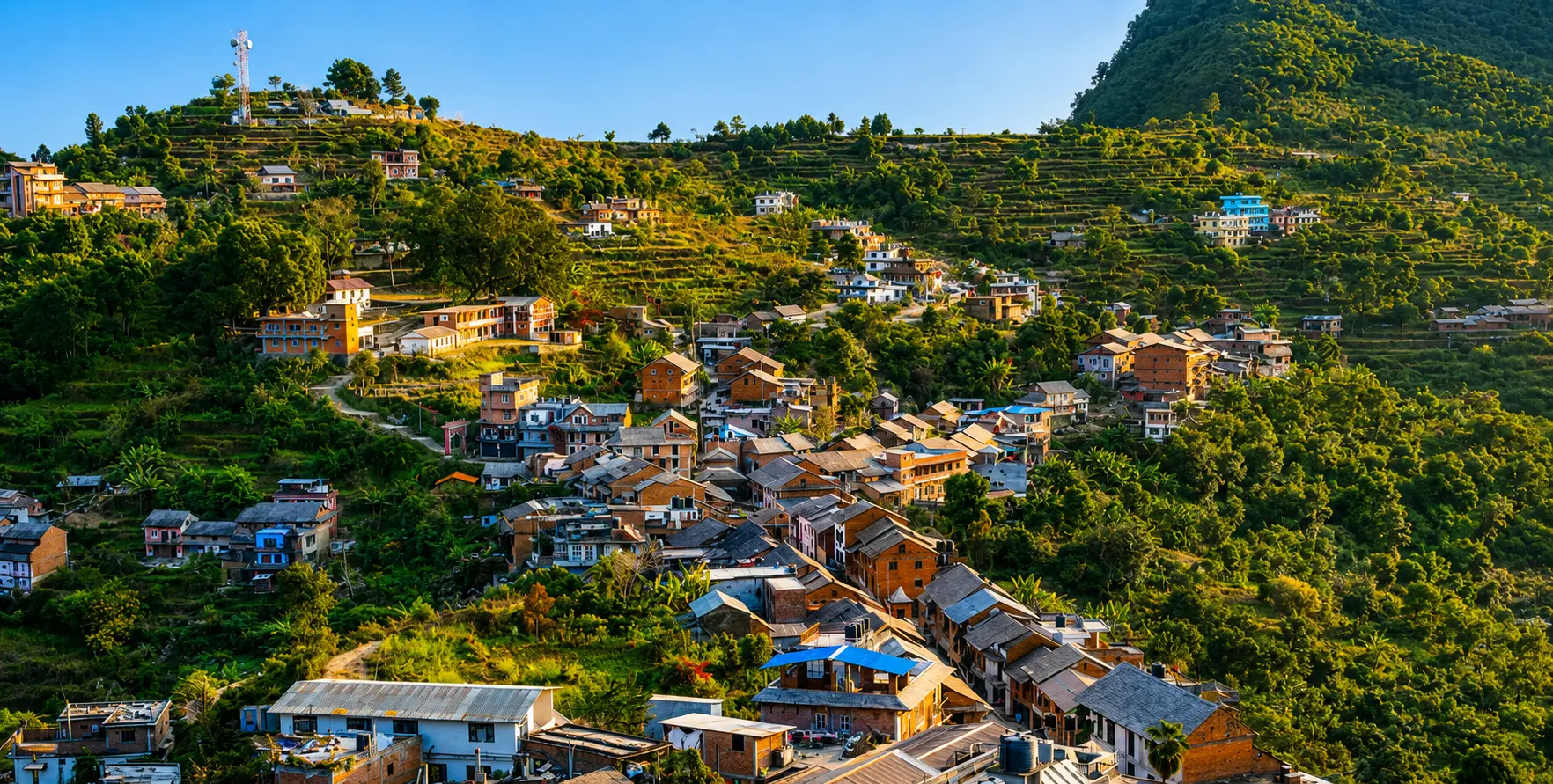
Some journeys in Nepal carry a weight of meaning that the road itself reinforces with every kilometre. The Bandipur to Lumbini transfer is one of these—a passage from one of Nepal’s best-preserved Newari hill towns, perched on a limestone ridge with Himalayan views stretching across the central range, to the birthplace of Siddhartha Gautama, the historical Buddha, in the flat, sacred garden of the southern Terai.

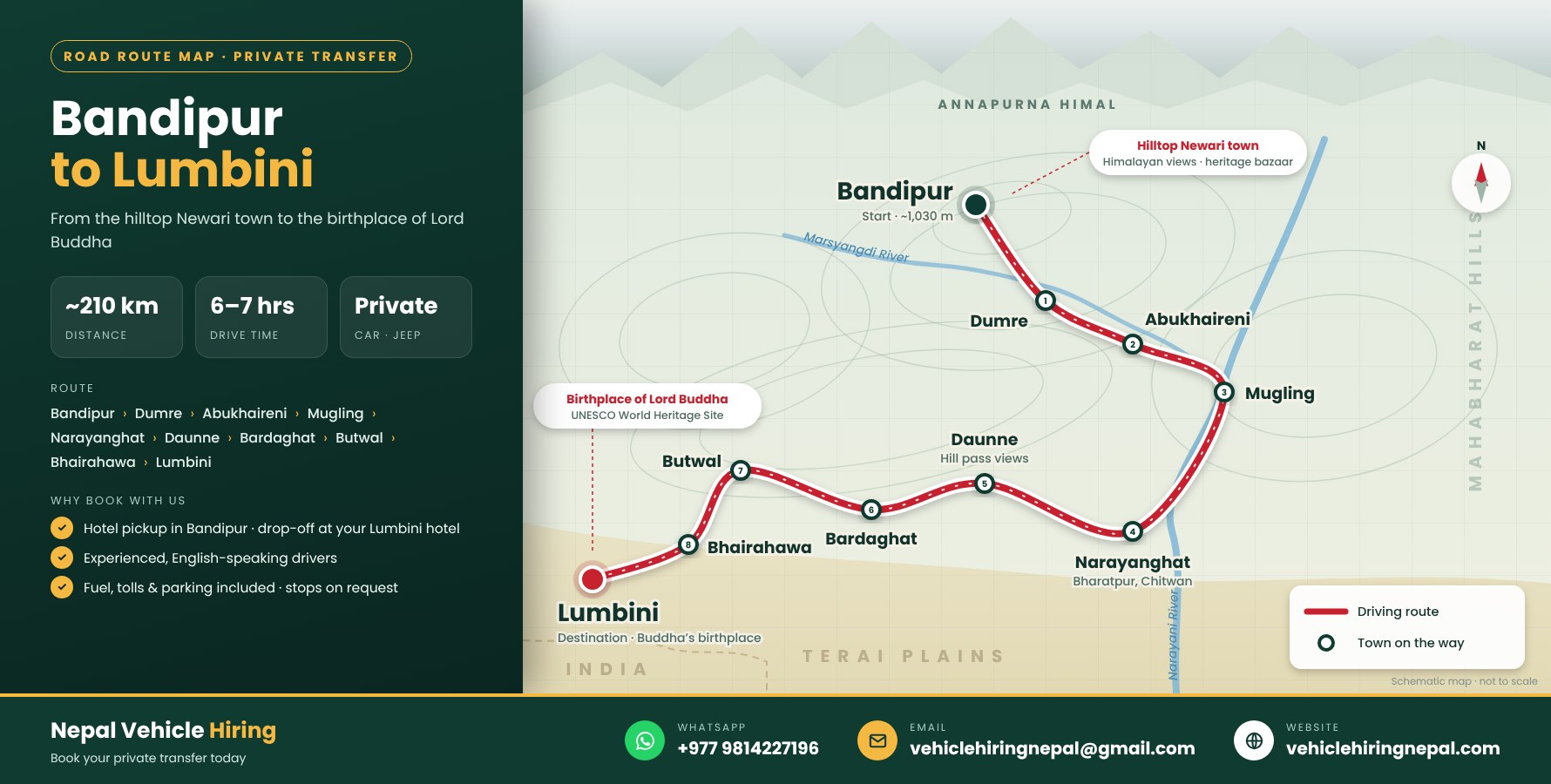
The two places could hardly be more different in character — Bandipur’s cool mountain air, cobblestone lanes, and terracotta-roofed traditional houses contrasting with Lumbini’s flat, contemplative garden landscape, its international monastery zone, and the stillness of the Maya Devi Temple compound — yet they connect naturally as consecutive chapters in a Nepal cultural and spiritual itinerary. The road between them, covering approximately 220–240 km in 5–7 hours, passes through some of Nepal’s most characteristic Terai-approach landscape and crosses the great Narayani River — one of Nepal’s most significant waterways — on its way south.

Nepal Vehicle Hiring Pvt Ltd offers a Bandipur-to-Lumbini private car and jeep transfer as a door-to-door service: pickup from any Bandipur hotel or guesthouse and delivery to any Lumbini hotel, monastery guesthouse, or pilgrimage accommodation. This guide covers the full route, realistic travel times, all vehicle options with honest costs, optional stops that make the transfer culturally richer, how the transfer fits the broader Nepal Golden Triangle circuit, and the reverse Lumbini-to-Bandipur direction for travellers moving the other way.

Book: vehiclehiringnepal.com | Call/ WhatsApp

Bandipur to Lumbini Private Car and Jeep

Bandipur – Nepal’s Most Perfectly Preserved Newari Hill Town

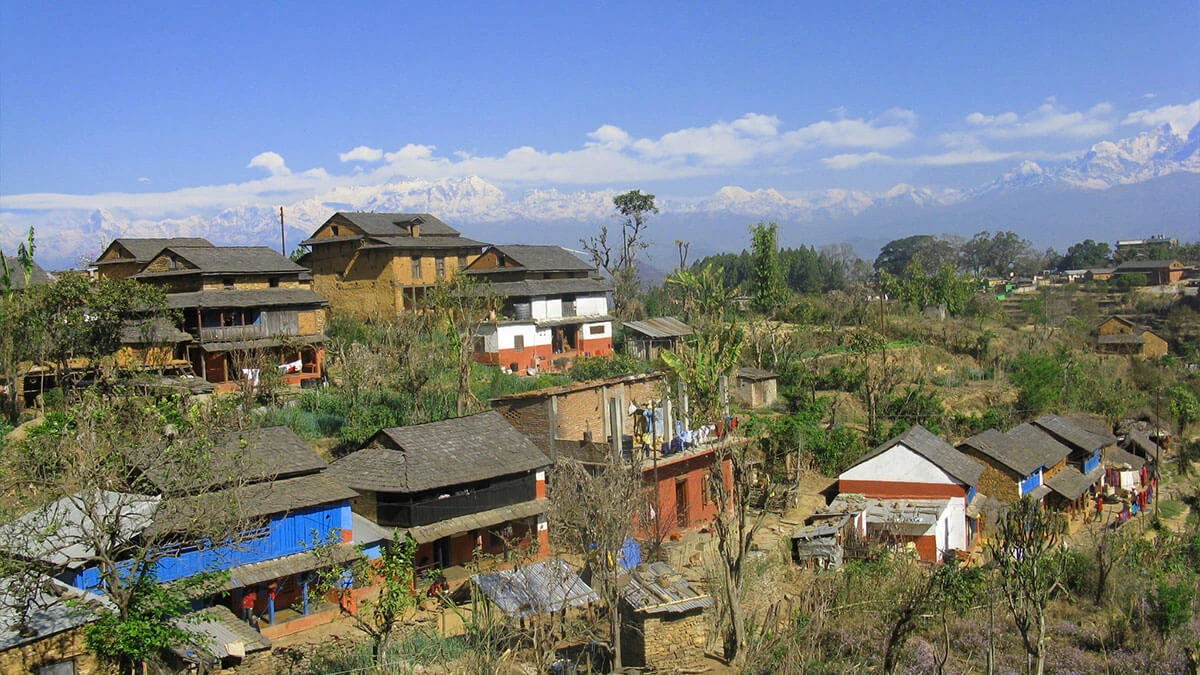
Bandipur sits at 1,030 metres above sea level on a limestone ridge in Tanahun District, approximately 140 km west of Kathmandu on the Prithvi Highway and then 8 km north on a winding hill road. It is one of Nepal’s most rewarding lesser-known destinations — a town that existed almost entirely outside the main tourist circuit for decades and whose very isolation has preserved its medieval Newari bazaar, traditional Himalayan-facing architecture, and car-free main street in a state of authenticity that Kathmandu’s more famous Durbar Squares can no longer replicate.

On clear mornings, Bandipur’s southern ridge viewpoint looks across the Prithvi Highway valley to the Annapurna range, with Machapuchhre’s distinctive fishtail shape and the Annapurna massif filling the northern horizon. Its Bindabasini Temple, Thani Mai Temple, Siddha Gufa limestone cave, and traditional artisan guesthouses make it a destination that rewards a night or two of genuine exploration rather than a rushed half-day stop.

Most travellers arrive at Bandipur from Kathmandu or Pokhara — it sits almost exactly at the midpoint of the Kathmandu to Pokhara Prithvi Highway route — and Bandipur to Lumbini is typically the next leg of a southward journey after exploring the hill town. For travellers on the Nepal Golden Triangle Plus circuit — Kathmandu, Pokhara, Bandipur, Lumbini, Chitwan — the Bandipur to Lumbini transfer is the link between the cultural mid-hill experience and the sacred southern Terai pilgrimage site.

Lumbini – The Sacred Garden and Why It Deserves More Than a Half-Day

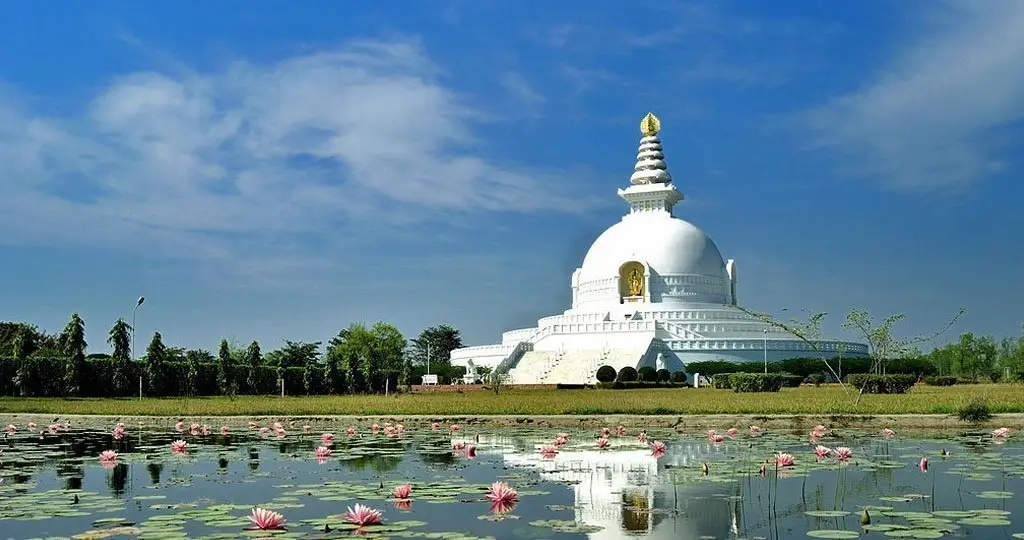
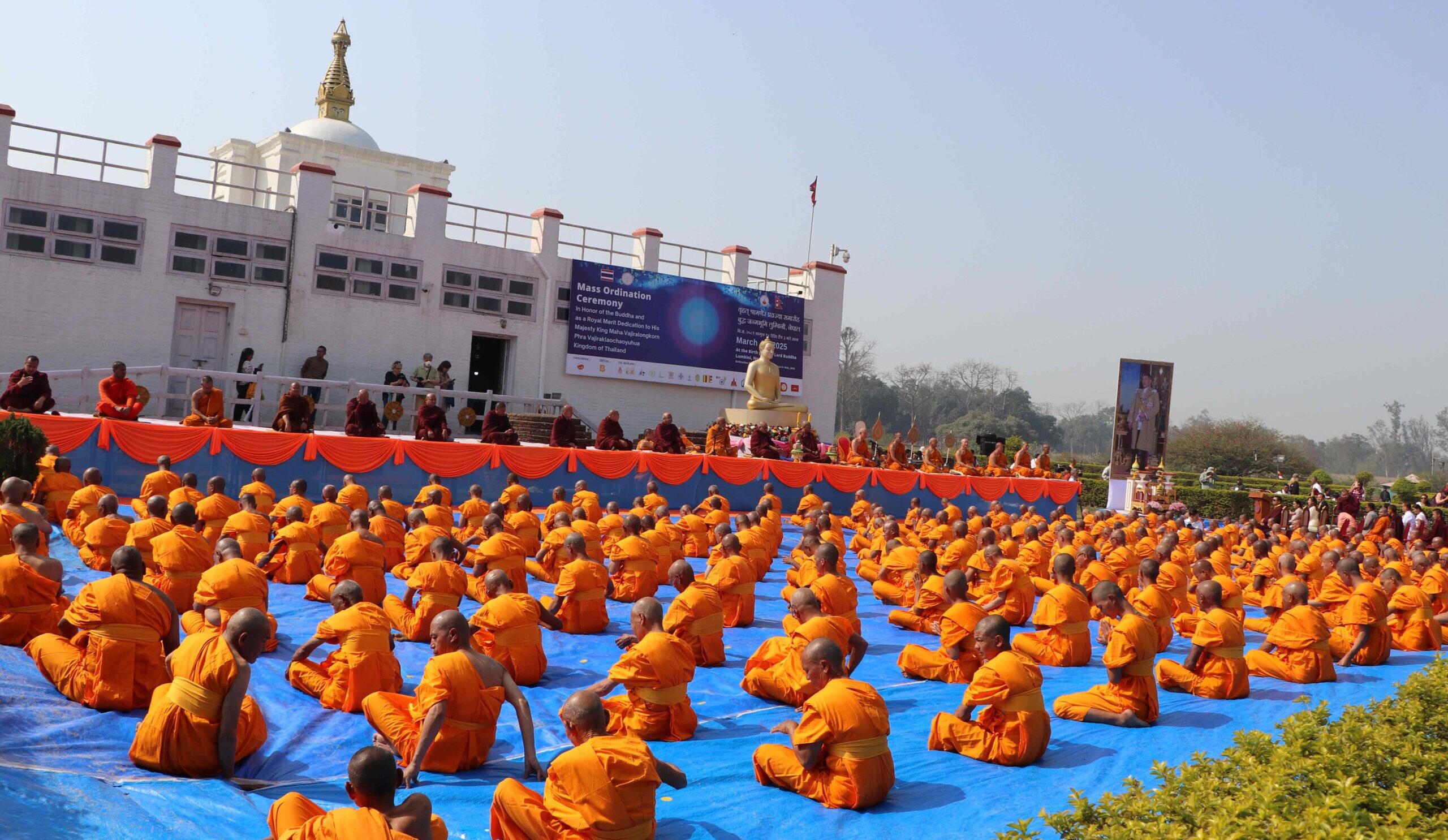
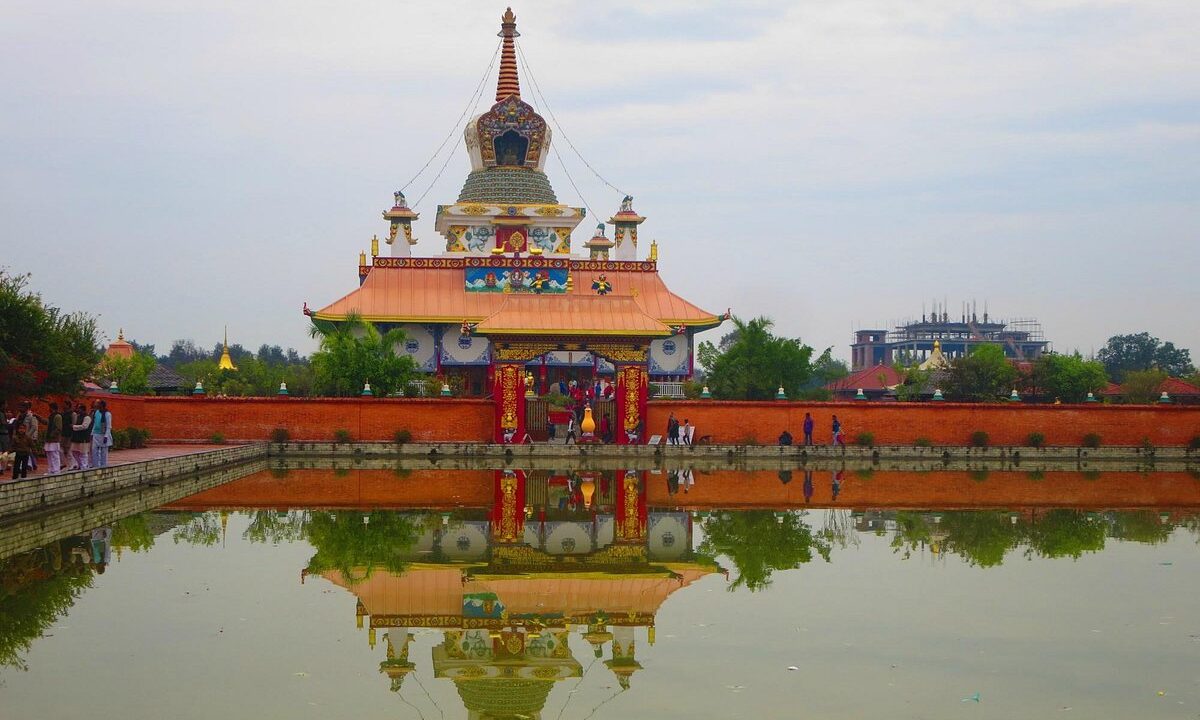
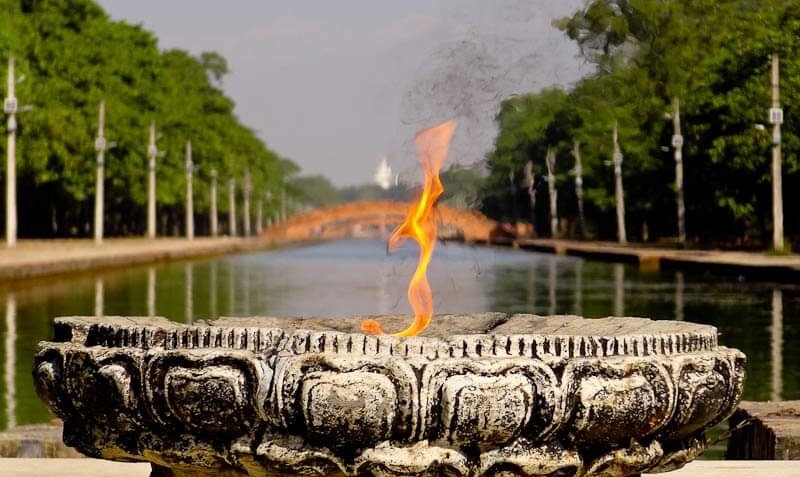
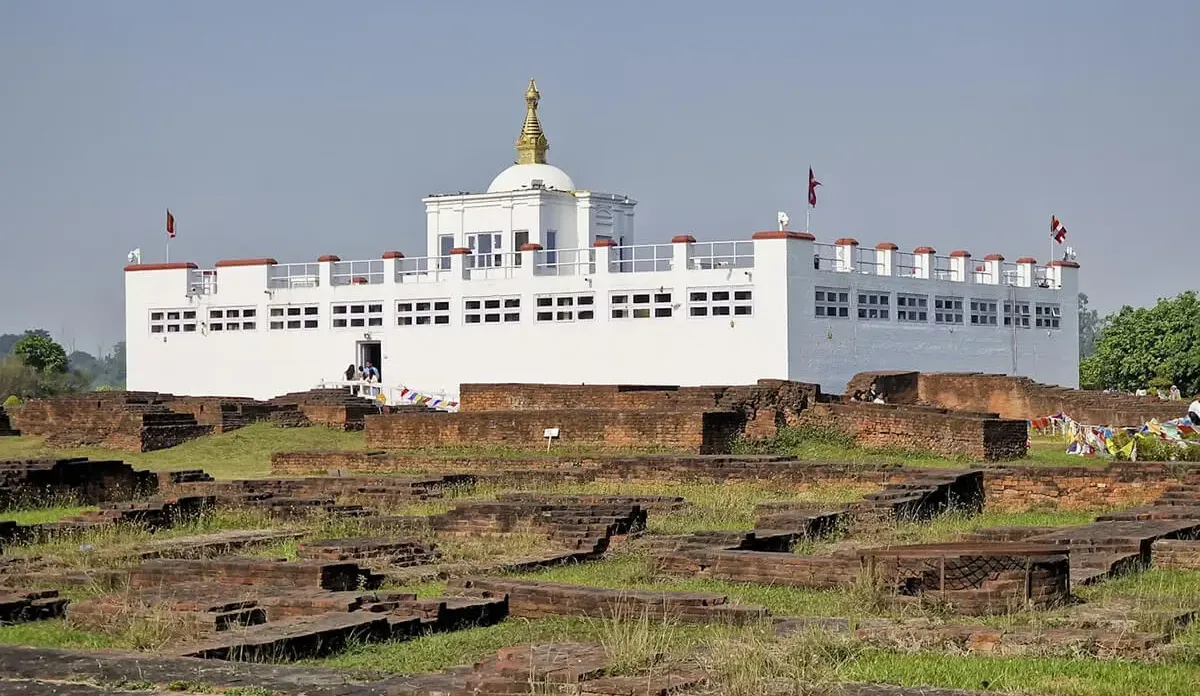
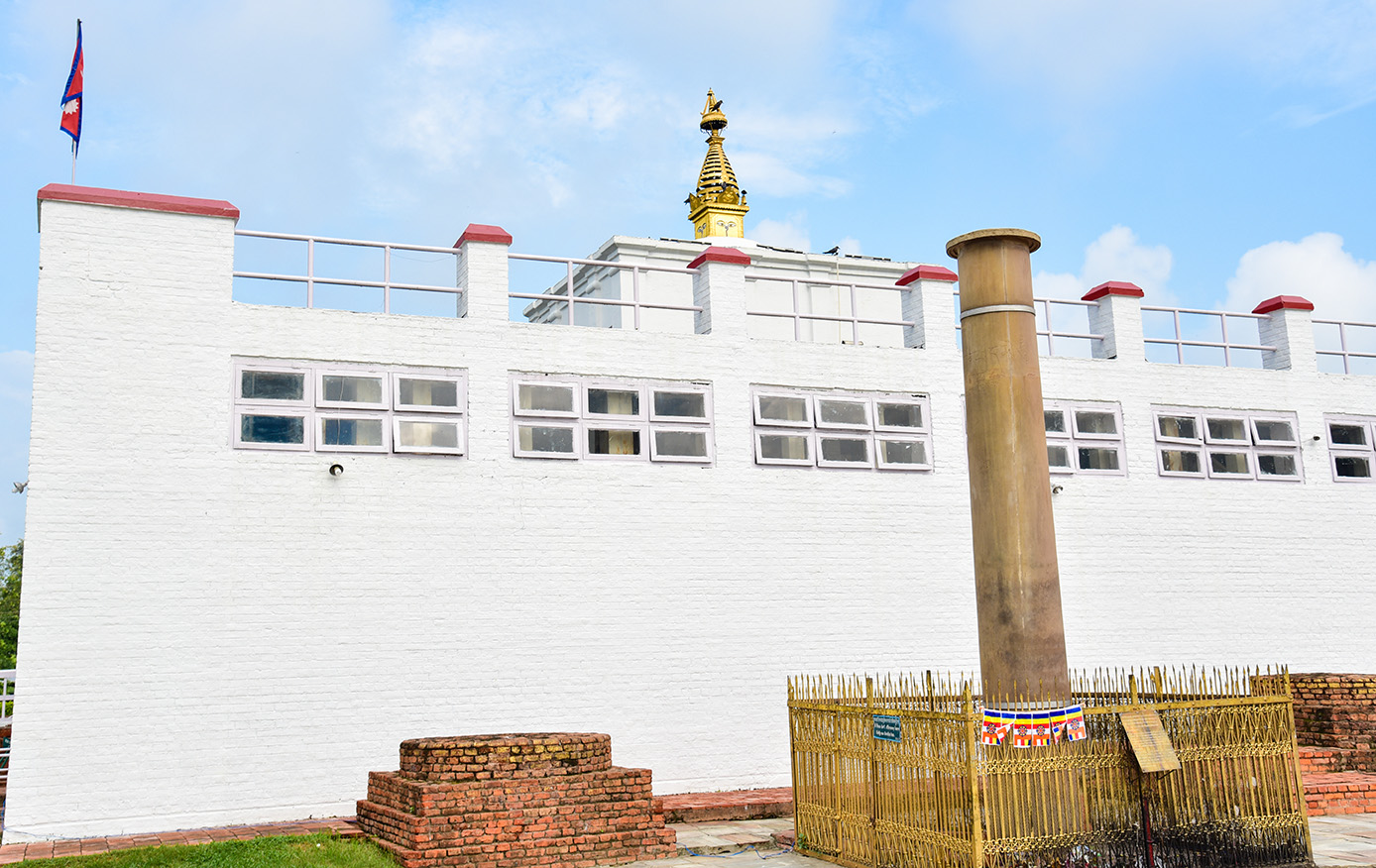
Lumbini is one of the world’s most significant sacred sites—the birthplace of Siddhartha Gautama (approximately 563 BCE), confirmed by the 249 BCE Ashoka Pillar inscription and archaeological excavations at the Maya Devi Temple that revealed the precise birth site. Inscribed as a UNESCO World Heritage Site, Lumbini encompasses the Sacred Garden with Maya Devi Temple, the Ashoka Pillar, the sacred pond (Puskarini), and the International Monastic Zone where over 25 countries have built monastery buildings in their national Buddhist architectural style — creating a mandala of world Buddhist culture around the birth site that is without parallel anywhere in the world.

For travellers coming from Bandipur’s mountain landscape, Lumbini provides a profound tonal shift — from the vertical Himalayan world to the flat, contemplative Terai garden. Standing at the exact birth site of one of history’s most influential human beings, in a garden of considerable beauty and silence, is one of Nepal’s most genuinely moving travel experiences, regardless of religious background.

Nepal Vehicle Hiring recommends a minimum two-night stay in Lumbini to do the Sacred Garden, the Monastic Zone, and the nearby archaeological sites of Tilaurakot and Devdaha justice. For spiritual itineraries managed by Alpine Luxury Treks, Lumbini forms the sacred centrepiece of Nepal pilgrimage and cultural journey packages.

Bandipur to Lumbini Private Car and Jeep

The Route – Bandipur to Lumbini in Complete Detail

Bandipur to Dumre – The Hill Descent

The Bandipur to Lumbini journey begins with an 8 km descent from Bandipur’s ridge to the Dumre junction on the Prithvi Highway—a winding, steep road that requires careful driving as you head down from the hill town. At Dumre, the route joins the Prithvi Highway heading west toward Pokhara and then south.

Nepal Vehicle Hiring’s private car or jeep handles this descent efficiently, though early morning mist on the hill road in cooler months requires an experienced driver’s caution.

Dumre to Mugling – Prithvi Highway Westward

From Dumre, the route follows the Prithvi Highway westward for approximately 45 km to Mugling — the major junction town at the confluence of the Trishuli and Marsyangdi rivers. This section of the Prithvi Highway is among the most scenic segments of Nepal’s road network, following the Marsyangdi River gorge, with the turquoise river visible below through the sal forest and the Himalayan foothills rising dramatically on both sides.

Mugling itself is a busy truck stop and highway service town — a natural quick fuel and comfort stop before the route turns south.

Mugling to Narayanghat – The South Turn

At Mugling, the route turns south on the Narayanghat–Mugling Highway, descending approximately 50 km from the middle hills to the flat Terai plains at Narayanghat (Bharatpur). This descent passes through the Chitwan National Park buffer zone — the forested corridor that connects the park’s core with the surrounding landscape — and provides a genuine possibility of wildlife encounters: wild elephants, deer, and in lucky moments a distant tiger crossing visible from the vehicle window in the forest sections.

Narayanghat is the largest city in Chitwan District and a major road junction where the East-West Highway (Mahendra Highway) joins. The Narayani River bridge at Narayanghat is one of the trek’s finest viewpoints — the wide, blue-grey river with its sandbanks and fishing boats providing a spectacular natural counterpoint to the mountain scenery of the upper route.

Narayanghat to Butwal – The East-West Highway

From Narayanghat, the route joins the East-West Highway (Mahendra Highway) heading westward toward Butwal — approximately 100 km of flat Terai highway through characteristic southern Nepal landscape: paddy and wheat fields, Tharu community villages with their distinctive painted mud-walled longhouses, sal forest corridors, and the occasional river crossing on bridges above braided Himalayan tributaries. This section of the journey is the most straightforwardly efficient — the East-West Highway is Nepal’s best-maintained long-distance road and the vehicle moves at consistent highway speeds through the Terai landscape.

Butwal to Lumbini – The Final Approach

From Butwal—Nepal’s rapidly growing western commercial hub—the route heads south, then southwest, about 22 km to Bhairahwa (Siddharthanagar), the nearest major city to Lumbini, and then the final 22 km from Bhairahwa to the Lumbini Sacred Garden zone. This final approach is a flat Terai highway through the Rupandehi District countryside, with the first UNESCO heritage boundary signs and the pilgrimage infrastructure of hotels, monasteries, and development zone facilities appearing as the vehicle approaches Lumbini town.

Nepal Vehicle Hiring delivers to any specific hotel, monastery guesthouse, or resort within the Lumbini Development Zone—a complete door-to-door service that turns the final kilometres of a long transfer into a smooth, direct arrival at the correct accommodation entrance.

Distance and Realistic Travel Time

The Bandipur to Lumbini road distance is approximately 220–240 km, depending on the route and the Bandipur pickup location. The realistic journey time is 5–7 hours in normal conditions, with the variance reflecting Kathmandu-direction traffic on the Prithvi Highway sections, the Narayanghat junction management, and whether one or two comfort stops are taken en route.

Nepal Vehicle Hiring recommends a 7:30–8:00 AM departure from any Bandipur hotel for a comfortable Lumbini arrival by 2:00–3:00 PM — allowing a late afternoon visit to the Maya Devi Temple at the most atmospheric time of day, when the crowds thin and the evening light falls across the Sacred Garden’s reflecting pool.

The Prithvi Highway sections are the most time-variable element — the Dumre to Mugling and Mugling to Narayanghat sections carry significant truck and highway traffic. Nepal Vehicle Hiring’s private cars and jeeps overtake this traffic comfortably where road geometry permits, while public buses spend more time behind slow-moving trucks.

The East-West Highway from Narayanghat to Butwal is the fastest section — flat, well-maintained, and free-flowing for private vehicles. The Bandipur descent (8 km of steep hill road) is the slowest per kilometre but the shortest overall.

Vehicle Options and Costs

Private Car – For Small Groups

For solo travellers and groups of up to three people, a private car (sedan or compact SUV) handles the Bandipur to Lumbini route comfortably—the entire journey is paved highway after the Bandipur descent, with no 4WD required. The approximate one-way cost from Bandipur to Lumbini in a private car is NPR 8,000–12,000 (approximately USD 60–90), including the vehicle, driver, and fuel.

The private car door-to-door service means pickup from the specific Bandipur hotel — Nepal Vehicle Hiring’s driver navigates the 8 km hill road up to Bandipur to collect the group at their accommodation entrance — and delivery to the Lumbini hotel door, with no secondary arrangements required at either end.

Mahindra Scorpio or Bolero – For Groups of Four to Seven

For groups of four to seven people, Nepal Vehicle Hiring recommends the Mahindra Scorpio or Bolero 4WD —offering 7-passenger capacity, generous luggage space with a roof rack, and the reassurance of 4WD capability on the steep Bandipur approach road. 4WD isn’t operationally required for most of the Bandipur-to-Lumbini journey.

Still, it provides an important safety margin on the steep Bandipur hill descent in wet or misty conditions. The approximate cost for a Mahindra Scorpio one-way from Bandipur to Lumbini is NPR 12,000–18,000 (approximately USD 90–135).

Toyota Hiace Van – For Groups of Eight to Thirteen

For medium-sized groups of eight to thirteen people, the Toyota Hiace van is the most cost-effective single-vehicle option for the Bandipur to Lumbini highway sections. The Hiace handles the Prithvi Highway and East-West Highway efficiently, with a full-length roof rack for luggage and a spacious, air-conditioned cabin.

The approximate cost for a Toyota Hiace one-way from Bandipur to Lumbini is NPR 18,000–26,000 (approximately USD 135–195). For the Bandipur hotel pickup specifically, Nepal Vehicle Hiring sends the Hiace up the 8 km hill road to the accommodation — the vehicle is compact enough to navigate Bandipur’s approaches without the access difficulties that would affect a full-size tourist coach.

Toyota Land Cruiser – Top-end Transfer

For VIP travellers, senior pilgrims, and those for whom the transfer experience is part of the top-end Nepal itinerary standard, the Toyota Land Cruiser delivers the finest available private transfer on this route — top-end leather seating, climate control, smooth suspension for the long highway sections, and the Land Cruiser’s authoritative handling on the Bandipur hill descent. For Alpine Luxury Treks clients whose spiritual Nepal pilgrimage itinerary connects Bandipur’s cultural heritage with Lumbini’s sacred significance, the Land Cruiser maintains the luxury standard throughout every transfer segment.

Pokhara to Bandipur Car

Optional Stops – Enriching the Bandipur to Lumbini Journey

Chitwan National Park Buffer Zone – Wildlife from the Vehicle

The Mugling to Narayanghat highway section passes through the Chitwan National Park buffer zone — the forested corridor that forms the park’s northern boundary. Wild elephants regularly cross the highway here, especially in the early morning and late afternoon, and deer, langur monkeys, and river otters are common roadside sightings.

No detour or park permit is required for this experience — it happens naturally on the main highway. It is simply a matter of timing the Bandipur departure to ensure the vehicle passes through this section during the most active wildlife hours.

Nepal Vehicle Hiring’s drivers know this section well, slow down, and point out wildlife when sightings occur. For travellers who want to add a full Chitwan National Park wildlife safari to their itinerary, a Chitwan overnight stop between Bandipur and Lumbini is Nepal Vehicle Hiring’s most commonly recommended circuit extension — converting the direct Bandipur–Lumbini transfer into a Bandipur–Chitwan–Lumbini three-stop circuit.

Tilaurakot – The Childhood Kingdom of Prince Siddhartha

For travellers arriving in Lumbini with a genuine interest in the Buddha’s biography, Tilaurakot—located about 27 km from Lumbini’s Sacred Garden and 3 km from Taulihawa—is an essential addition to the itinerary. Tilaurakot is the archaeological site of ancient Kapilavastu, the Shakya kingdom where Siddhartha Gautama grew up as a prince before leaving at age 29 on the quest that led to his enlightenment.

Excavated ruins of the royal palace, city walls, Eastern and Western gates, and associated monastery structures provide a direct physical connection to the world in which the Buddha was born. Nepal Vehicle Hiking includes Tilaurakot as a natural same-day extension from Lumbini or as a stop on the Lumbini to Bhairahwa return leg — the vehicle adds approximately 1–1.5 hours for the Tilaurakot detour.

Devdaha – Queen Maya Devi’s Birthplace

Approximately 10 km from Bhairahwa on the road toward Butwal, Devdaha is traditionally identified as the birthplace of Queen Maya Devi, mother of the historical Buddha. The associated archaeological site and pilgrimage temple make a natural companion stop to Lumbini for serious Buddhist pilgrims who want to complete the full Shakya kingdom heritage circuit. Nepal Vehicle Hiring can include the Devdaha stop on the Butwal-to-Lumbini approach road upon request.

Narayanghat Riverside Rest

The Narayani River bridge and riverside area at Narayanghat is the natural mid-journey rest and refreshment stop — approximately the halfway point of the Bandipur to Lumbini journey. Nepal Vehicle Hiring’s drivers use a 20–30 minute Narayanghat rest stop for fuel, facilities, and a chance to view the spectacular Narayani River landscape from the bridge approach to the wide blue-grey river below, with its braided channels, sandbanks, and the forested Chitwan buffer zone on the far bank.

The Reverse Journey – Lumbini to Bandipur

The Lumbini to Bandipur private transfer follows the same route in reverse and is Nepal Vehicle Hiring’s second most booked direction on this route — typically for travellers who have completed the Lumbini pilgrimage and are heading north toward Pokhara, with Bandipur as the most rewarding overnight stop on the Prithvi Highway route. For the return journey, we recommend departing Lumbini at 7:30–8:00 AM to arrive in Bandipur around 2:00–3:00 PM, with full afternoon light on the bazaar and the mountain viewpoint.

Nepal Vehicle Hiring’s Lumbini to Bandipur service also coordinates with onward Pokhara connections — a Bandipur overnight followed by a Bandipur to Pokhara transfer the next morning (approximately 50 km, 1.5 hours via Dumre) completes a Lumbini–Bandipur–Pokhara circuit that is one of Nepal’s finest three-stop cultural travel combinations. For Trek Nepal Himalayas clients heading to Annapurna trekking packages from Pokhara after a Lumbini pilgrimage visit, this Lumbini–Bandipur–Pokhara routing is Nepal Vehicle Hiring’s most recommended itinerary combination for this group.

How Bandipur and Lumbini Fit the Nepal Golden Triangle Plus Circuit

Bandipur and Lumbini are natural components of the Nepal Golden Triangle Plus circuit—a multi-destination Nepal tour connecting Kathmandu’s UNESCO heritage, Pokhara’s lakeside mountain culture, Bandipur’s mid-hill heritage, Lumbini’s sacred garden, and Chitwan’s wildlife sanctuary in a single coherent journey. Nepal Vehicle Hiring’s complete tour transport coordination service covers Kathmandu to Pokhara, Pokhara to Bandipur, Bandipur to Lumbini, Lumbini to Chitwan, and Chitwan to Kathmandu—all coordinated private, door-to-door transfers in the right vehicle for each leg.

For international visitors completing Nepal with Trek Nepal Himalayas trekking packages, the pre-trek Bandipur night provides a cultural and altitude preparation stop before Pokhara and the trekking circuit. The post-trek Lumbini visit adds a sacred, contemplative dimension to the overall Nepal experience that many returning trekkers cite as one of the most unexpectedly moving parts of their Nepal trip.

Alpine Luxury Treks includes the Bandipur-to-Lumbini transfer in its multi-stop spiritual Nepal luxury itineraries, with Nepal Vehicle Hiking providing top-end Land Cruiser service throughout.

Kathmandu to Lumbini

Practical Tips for the Bandipur to Lumbini Transfer

Kathmandu to Lumbini Tour Package

Frequently Asked Questions – Bandipur to Lumbini Private Car and Jeep

How far is Bandipur from Lumbini and how long does the drive take?

The road distance from Bandipur to Lumbini is approximately 220–240 km via the Dumre junction, Prithvi Highway to Mugling, south to Narayanghat, East-West Highway to Butwal, and then to Lumbini. The journey takes 5–7 hours in normal conditions. Nepal Vehicle Hiring recommends departing Bandipur at 8:00 AM for a comfortable arrival in Lumbini by early to mid-afternoon.

What does a private car or jeep from Bandipur to Lumbini cost?

Nepal Vehicle Hiring’s estimated one-way costs: private car NPR 8,000–18,000 (USD 60–120) for 1–3 passengers; Mahindra Scorpio NPR 12,000–26,000 (USD 90–150) for 4–7 passengers; Toyota Hiace NPR 18,000–30,000 (USD 135–200) for 8–13 passengers. All prices include vehicle, driver, and fuel. Contact Nepal Vehicle Hiring on WhatsApp for a confirmed quotation.

Does Nepal Vehicle Hiring pick up directly from Bandipur hotels?

Yes — Nepal Vehicle Hiring’s private car and jeep service collects directly from any Bandipur hotel or guesthouse, driving the 8 km steep hill road up to the Bandipur ridge for pickup. This door-to-door service eliminates the need for the group to arrange their own descent to the Dumre highway junction. Confirm the specific hotel name and address at booking.

Can I add a Chitwan stop between Bandipur and Lumbini?

Yes — Chitwan National Park is directly on the Bandipur to Lumbini route, approximately halfway between the two destinations. Nepal Vehicle Hiring coordinates the Bandipur-to-Chitwan transfer and the Chitwan-to-Lumbini transfer as a combined two-leg booking, with an overnight Chitwan wildlife safari adding a natural dimension to a cultural and spiritual southern Nepal circuit.

Is the Bandipur to Lumbini road suitable for a standard car?

Most of the Bandipur to Lumbini route—the Prithvi Highway, the Narayanghat corridor, and the East-West Highway—is suitable for a standard car. The Bandipur descent (8 km of steep hill road) is the only section that benefits from 4WD capability, particularly in wet or misty conditions.

Nepal Vehicle Hiring recommends the Mahindra Scorpio or Bolero for groups of 4–7 for added confidence on the descent, but a private car suits 1–3 passengers with a careful, experienced driver.

How do I book a private transfer from Bandipur to Lumbini?

Contact Nepal Vehicle Hiring on WhatsApp by WhatsApp or phone, or visit vehiclehiringnepal.com. Provide your Bandipur hotel name and address, travel date and preferred departure time, group size, vehicle preference, specific Lumbini accommodation, and any optional stops requested. Nepal Vehicle Hiring provides a written quotation with driver details and confirmed pricing before any payment.

Book Your Bandipur to Lumbini Private Transfer with Nepal Vehicle Hiring

The Bandipur to Lumbini private car and jeep transfer connects two of Nepal’s most distinctive and most memorable destinations in a single journey that is itself rich in scenery — the limestone ridge descent, the Prithvi Highway gorge, the Narayani River crossing, and the flat Terai approach to the world’s most sacred Buddhist garden. Nepal Vehicle Hiring’s door-to-door private vehicle service—hotel pickup in Bandipur, optional stops en route, and delivery to the Lumbini accommodation entrance—turns what could be a long day’s transit into a satisfying chapter of your Nepal journey.

For complete Nepal circuits, connect with Trek Nepal Himalayas for guided trekking packages and Alpine Luxury Treks for top-end spiritual and Himalayan journey itineraries.

Call / WhatsApp |  vehiclehiringnepal.com  |  Book Bandipur to Lumbini Transfer  |  treknepalhimalayas.com  |  alpineluxurytreks.com
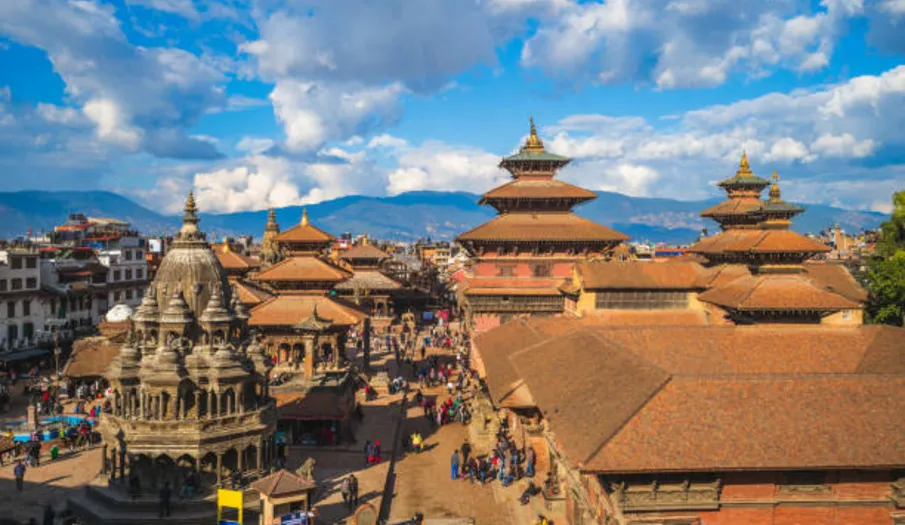
Lumbini to Bandipur Private Car Hire

Kathmandu to Bandipur Car

Lumbini to Bandipur Private Car — Quick Reference

Distance: Lumbini to Bandipur — approximately 135-145 km via Butwal and Prithvi Highway
Journey Time: 3 to 4.5 hours by private car (sedan or Scorpio)
Route: Lumbini → Bhairahawa → Butwal → Prithvi Highway → Dumre → Bandipur (1,030 m)
Vehicle: Sedan adequate for main highway; Scorpio recommended for Dumre-Bandipur ascent
Sedan Price: NPR 8,000-20,000 all-inclusive | Scorpio Price: NPR 10,000-30,000 all-inclusive
Bandipur: Nepal’s finest preserved Newari bazaar town — car-free heritage, Himalayan panorama
Journey Character: From the flat sacred Terai garden to the forested heritage hill ridge
Book: Nepal Vehicle Hiring Pvt. Ltd. | WhatsApp | vehiclehiringnepal.com
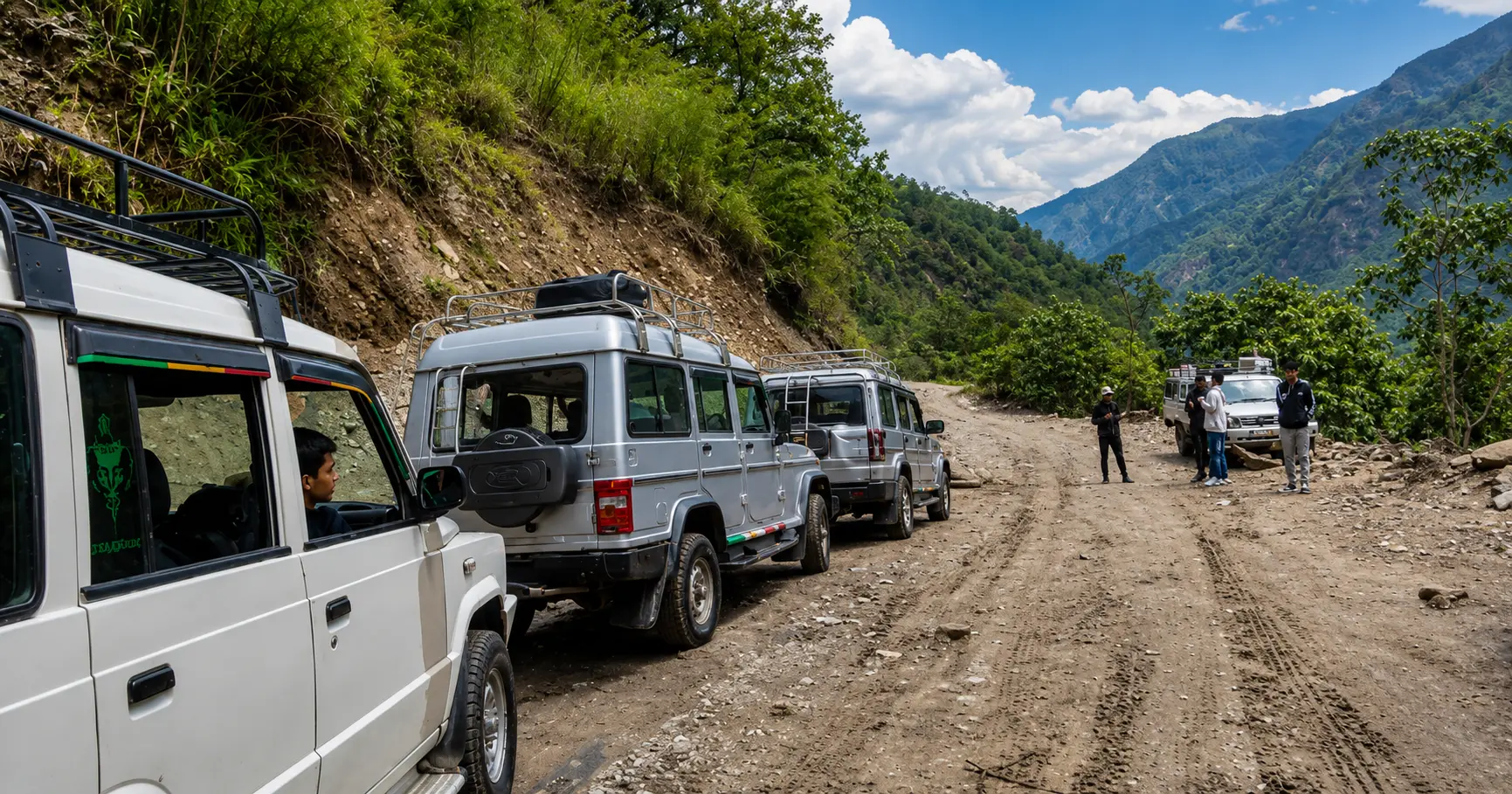
Introduction: From Sacred Garden to Heritage Ridge

The Lumbini to Bandipur private car hire is one of Nepal’s most spiritually and culturally resonant road journeys — connecting the birthplace of the Buddha in the flat sacred garden of Lumbini with the Newari heritage hill town of Bandipur on its limestone ridge at 1,030 m. The two destinations represent profoundly different dimensions of Nepal’s cultural richness: Lumbini, the sacred Buddhist and Hindu pilgrimage site of international significance, and Bandipur, the perfectly preserved Newari trading town whose architecture, temples, and Himalayan panorama offer one of the finest accessible examples of Nepal’s hill-town heritage tradition.

Together in a single day’s journey — 3 to 4.5 hours by private car via Bhairahawa and Butwal — they create one of Nepal’s most complete cultural contrasts.

This guide covers the Lumbini to Bandipur private car route in complete detail — the highway journey, the vehicle options, pricing, and the specific qualities of both destinations that make combining them in a single Nepal itinerary so rewarding. Nepal Vehicle Hiring Pvt. Ltd. provides Lumbini to Bandipur car hire with transparent, all-inclusive pricing; book via WhatsApp or vehiclehiringnepal.com.

Lumbini to Bandipur Private Car Hire

The Route: Lumbini to Bandipur via Butwal and Dumre

Lumbini to Bhairahawa — The Sacred Zone Departure

The Lumbini to Bandipur private car journey begins at the Lumbini Sacred Garden or the adjacent Lumbini Hotel Zone—the Nepal Vehicle Hiring Pvt. Ltd. driver picks you up at the hotel entrance and heads north toward Bhairahawa (Siddharthanagar). The 20 to 22 km from the Lumbini hotel zone to Bhairahawa is flat Terai road — the agricultural landscape of Rupandehi District, the roadside temples and shrines of the Lumbini area’s sacred geography, and the growing commercial activity as the road approaches Bhairahawa.

Bhairahawa is the main city of Rupandehi District — home to the Gautam Buddha International Airport, the district’s banks and ATMs, and the commercial infrastructure serving the Lumbini pilgrimage economy. The Nepal Vehicle Hiring Pvt. Ltd. driver will stop in Bhairahawa for 10 to 15 minutes on request for any practical needs before heading north to Butwal.

Bhairahawa to Butwal — The Terai to Hills Transition

From Bhairahawa, the Lumbini-to-Bandipur route continues north to Butwal (approximately 15 km) — the major city at the foot of the Siddhartha Highway, where the flat Terai ends and the hill terrain begins. Butwal is the junction where the Siddhartha Highway meets the East-West Highway—a busy commercial hub with fuel stations, banks, and the characteristic energy of a western Nepal trading centre.

The Lumbini to Bandipur private car continues north from Butwal, climbing through the Palpa hill foothills toward the Prithvi Highway junction. The route from Butwal to the Prithvi Highway can follow either the Siddhartha Highway northward to a Prithvi Highway junction or the Devchuli cut-off road, which connects more directly to the Dumre junction on the Prithvi Highway—the Nepal Vehicle Hiring Pvt. Ltd. driver uses the most efficient current routing based on road conditions.

lubini

The Prithvi Highway to Dumre Junction

The Prithvi Highway is Nepal’s most important east-west highway — connecting Kathmandu with Pokhara through the spectacular Trishuli River gorge. The Lumbini to Bandipur car hire route joins the Prithvi Highway heading east and then turns north at the Dumre junction) — the turning point for Bandipur.

Dumre) is a junction town on the Prithvi Highway where the road north to Besisahar) (Annapurna Circuit trailhead) and the road to Bandipur) both branch from the main highway. The Nepal Vehicle Hiring Pvt. Ltd. driver turns north at Dumre and begins the 12 km switchback ascent) to Bandipur — the final and most dramatic section of the Lumbini to Bandipur journey.

Dumre to Bandipur — The Switchback Climb

The Dumre to Bandipur road) climbs approximately 930 metres) over 12 km in a series of tight switchbacks through mixed forest — the Lumbini to Bandipur private car journey‘s most dramatic and most rewarding section. The temperature drops noticeably with every hundred metres of altitude gain — the cool ridge air of Bandipur at 1,030 contrasts sharply with the hot Terai climate of Lumbini at approximately 100 m.

The Marsyangdi valley) opens below as the road gains height, and on clear days the first Annapurna peaks) appear above the forested ridgeline before the road reaches Bandipur. The Scorpio 4WD from Nepal Vehicle Hiring Pvt. Ltd.) handles the switchback road with the engine torque and stability that makes the ascent comfortable — the paved but narrow road) with tight hairpin bends is most confidently navigated in a vehicle with strong low-gear power and an experienced driver who knows its specific challenging sections.

Kathmandu to Lumbini Tour Package

Vehicle Guide: Sedan vs Scorpio for Lumbini to Bandipur

When the Sedan Is Sufficient

The sedan is adequate for the Lumbini to Bandipur route) in dry conditions — the Lumbini to Butwal section is flat Terai highway, and the Butwal to Dumre section is hilly but paved. The Dumre to Bandipur switchback) is the section that requires the most from the vehicle — a standard sedan with a competent driver handles it in good weather, but the tight bends and steep gradient) are at the limit of what a sedan manages comfortably when carrying full luggage.

The Nepal Vehicle Hiring Pvt. Ltd. and price for the Lumbini to Bandipur transfer) is NPR 8,000 to 20,000all-inclusive — the most economical private vehicle option for this route.

The Mahindra Scorpio 4WD (Nepal Vehicle Hiring Pvt. Ltd.) is the recommended vehicle for the private car hire from Lumbini to Bandipur. The Scorpio’s stronger low-gear torque, higher ground clearance, and 4WD capability) make the Bandipur switchback ascent more confident — particularly for travellers with heavy pilgrimage or trekking luggage, and in wet or post-monsoon conditions when the paved switchback road may have surface moisture that reduces traction for a standard sedan. The all-inclusive Scorpio price) is NPR 10,000 to 20,000 —a modest top-end over the sedan that delivers meaningful capability and confidence advantages on the Bandipur approach road.

Toyota Fortuner — The Top-end Group Option

The Toyota Fortuner 4WD is available for the Lumbini to Bandipur car hire) for groups of 4 to 5 passengers or for those wanting the highest comfort level for the journey. The Fortuner’s spacious interior, superior ride quality, and maximum capability make it the best choice for this route. The all-inclusive price) is NPR 13,000 to 26,000 from Nepal Vehicle Hiring Pvt. Ltd.)Contact WhatsApp for current availability.

Lumbini temple

Lumbini — The Sacred Departure Point

Making the Most of the Lumbini Morning

The Lumbini to Bandipur private car transfer) works best when timed to complete the Lumbini Sacred Garden) morning visit before the midday departure. The optimal Lumbini schedule for a Bandipur-bound traveller: 6:00 to 7:00 AM—the Maya Devi Temple and the sacred pond (Puskarni) are most peaceful in the early morning, before day-visitor crowds arrive.

7:30 to 9:00 AM the Ashoka pillar and the archaeological excavation zone around the Maya Devi Temple and the archaeological excavation zone) around the Maya Devi Temple. 9:00 to 11:00 AM —a selected circuit of the International Monastery Zone) — the Myanmar Golden Pagoda, the Thai white wat, the Chinese ornate monastery, and the Japanese Peace Pagoda cover the most impressive international temples in approximately 2 hours by bicycle or electric vehicle (both available for hire within the monastery zone).

11:30 AM — epal Vehicle Hiring Pvt. Ltd.) private car departure from the Lumbini hotel for Bandipur, arriving at approximately 2:30 to 4:00 PM — ideal timing for the afternoon bazaar walk and sunset.

Kapilavastu Tilaurakot — The Optional Extension

Travellers staying more than one night in Lumbini before the Bandipur car hire departure) can add a Kapilavastu Tilaurakot visit) to the pre-departure morning — the archaeological site of ancient Kapilavastu (where Siddhartha Gautama grew up) is 25 km west of Lumbini and 30 to 40 minutes by private vehicle. The Nepal Vehicle Hiring Pvt. Ltd. can arrange the Lumbini to Tilaurakot to Bandipur) route on request — adding 1 to 1.5 hours to the total journey time and approximately NPR 1,500 to 2,500 to the vehicle price. Specify this extension at booking via WhatsApp.

Bandipur — The Heritage Destination

Why Bandipur After Lumbini Makes Perfect Sense

The pairing of Lumbini) and Bandipur in a single Nepal itinerary is one of the most thoughtfully complementary destination combinations available in Nepal. Lumbini delivers the flat sacred landscape) — the serene garden setting, the international Buddhist architecture, the ancient pilgrimage site energy, and the contemplative atmosphere of one of the world’s most important religious locations.

Bandipur delivers the elevated heritage landscape) — the dramatic hilltop position, the bustling Newari bazaar culture, the Hindu-Buddhist temple life of a living hill community, and the Himalayan panorama that the flat Lumbini Terai cannot offer. Moving from one to the other in a single day’s private car journey) creates one of Nepal’s most complete one-day cultural transitions — from Buddhism’s serene sacred garden to Nepal’s most vibrant surviving Newari trading town.
Lumbini to Bandipur Private Car Hire

Bandipur’s Newari Heritage Architecture

Bandipur is one of Nepal’s best-preserved Newari heritage towns—a car-free bazaar street lined with three- and four-storey merchant houses whose elaborately carved wooden windows, shuttered shopfronts, and stone-paved lanes represent the Newari architectural tradition at its most authentic and accessible. Unlike the Kathmandu Valley’s Durbar Squares — which require navigating through busy city traffic and commercial clutter — Bandipur’s heritage zone is a pedestrian environment) approached on foot from the parking area, immediately in-depth and immediately photogenic.

The Bindabasini Mandir) at the northern end of the bazaar, the Mahalaxmi Temple) mid-bazaar, and the Tindhara stone water taps) give the heritage walk its religious and functional texture. Above the town, the Thani Mai Temple viewpoint) provides the Himalayan panorama) — Annapurna, Manaslu, and Lamjung Himal visible on clear days in a composition of extraordinary quality.

Travellers arriving via the Lumbini to Bandipur private car hire from Nepal Vehicle Hiring Pvt. Ltd. in the early afternoon have 2 to 3 hours of perfect light for the bazaar walk and the viewpoint photography before the Bandipur sunset.

Bandipur’s Himalayan Panorama — The Evening and Sunrise View

The Bandipur sunset—seen from the Thani Mai viewpoint or from any ridge-edge position above the bazaar—is one of Nepal’s most accessible and rewarding mountain sunset experiences. The Annapurna range) to the northwest (Annapurna I at 8,091 m, Annapurna II, III, and IV, and the distinctive Machhapuchhre fishtail peak), Manaslu) (8,163 m) to the northeast, and the Lamjung Himal) and Himalchuli) all catch the last golden light while the Marsyangdi valley) below fills with evening shadow.

For travellers who arrive via the Lumbini to Bandipur car hire) with an overnight stay, the following morning’s Bandipur sunrise) from Thani Mai at 5:30 to 6:00 AM is the finest single experience that this extraordinary hilltop town offers — the snow peaks catching the first light in a sequence from gold to white while the valley remains dark and cool below. Nepal Vehicle Hiring Pvt. Ltd. can arrange the Bandipur to Pokhara car hire or Bandipur to Kathmandu private vehicle) for the morning after the ise, completing the Lumbini-Bandipur-Pokhara or Lumbini-Bandipur-Kathmandu heritage circuit.

Lumbini to Bandipur — Pricing and Booking

All-Inclusive Pricing from Nepal Vehicle Hiring Pvt. Ltd.

The Lumbini to Bandipur private car hire from Nepal Vehicle Hiring Pvt. Lt d.is fully all-inclusive: driver, fuel for the full Lumbini to Bandipur journey, all highway tolls, and door-to-Bandipur parking-area delivery. The prices are:

Sedan:) NPR 8,000 to 11,000 all-inclusive — adequate for most conditions on this route.

Scorpio 4WD (recommended):) NPR 10,000 to 13,000 all-inclusive — best vehicle for the Bandipur switchback ascent.

Toyota Fortuner 4WD:) NPR 13,000 to 17,00) all-inclusive — top-end group option.

All prices quoted at booking are the prices paid — no fuel surcharges, no toll additions, no hidden charges at destination. Contact Nepal Vehicle Hiring Pvt. Ltd. at +977WhatsApp for current rates and vehicle availability.

Booking the Lumbini to Bandipur Transfer

Booking the Lumbini to Bandipur private car hire) is straightforward — contact Nepal Vehicle Hiring Pvt. Ltd. via WhatsApp or [email protected]) with: your Lumbini hotel name and pickup address, your preferred departure time) (11:00 AM to 12:00 noon is recommended for a morning sacred garden visit and afternoon Bandipur arrival), your group size, your luggage description, and whether you want any onward transfer from Bandipur) (to Pokhara) or Kathmandu)) on the same day or the following morning. The team responds with a vehicle recommendation, an all-inclusive price, and a booking confirmation.

Lumbini to Bandipur Private Car Hire

The Lumbini-Bandipur-Pokhara Circuit — Nepal’s Finest Three-Destination Route

A Three-Day Nepal Heritage, Sacred, and Mountain Circuit

Combining Lumbini, Bandipur, and Pokhara) This three-day private car circuit offers one of Nepal’s finest short heritage journeys—the sacred Buddhist birthplace, the Newari heritage hill town, and the Annapurna mountain lake city—all connected by Nepal Vehicle Hiring Pvt. Ltd.’s private vehicle transfers. Day 1:) Lumbini Sacred Garden) — Maya Devi Temple, Ashoka Pillar, International Monastery Zone.

Day 2:) Lumbini to Bandipur private car hire) — morning sacred garden farewell, afternoon heritage bazaar exploration and Bandipur sunset from Thani Mai. Day 3 morning:) Bandipur sunrise at Thani Mai Temple.

Day 3:) Bandipur to Pokhara private car hire) (60 km, 1.5 to 2 hours via Dumre and Prithvi Highway) — arriving in Pokhara Lakeside by midday for the Sarangkot sunset and lake sightseeing. All three vehicle legs organised through Nepal Vehicle Hiring Pvt. Ltd.) via a single booking on WhatsApp

Extending to Chitwan — Four-Destination Southern Nepal

For travellers with more time in Nepal’s southern region, the Lumbini-Bandipur-Pokhara) circuit can be combined with Chitwan National Park) — either before Lumbini (Chitwan to Lumbini car service) or after Pokhara (Pokhara to Chitwan private vehicle)) The complete circuit — Chitwan) wildlife, Lumbini) sacred garden, Bandipur) heritage, Pokhara) mountain lake—covers the full range of Nepal’s southern and western experiences in a single private car circuit organised entirely through Nepal Vehicle Hiring Pvt. Ltd. on WhatsApp. The Lumbini to Chitwan car service) and the Chitwan to Kathmandu private jeep) complete the return to Kathmandu or the international departure.

Lumbini to Bandipur — Who Uses This Route

Buddhist and Hindu Pilgrims Seeking Heritage Immersion

The Lumbini to Bandipur private car hire) is a natural choice for pilgrimage travellers) who have completed the Lumbini sacred site visit and want to extend their Nepal cultural experience to include the living heritage of the Newari hilltop tradition, or Indian pilgrims completing the Buddhist circuit and moving toward Pokhara) and Kathmandu), Bndipur is an exceptional one-night detour that adds a dimension of Nepal’s living heritage culture) that the sacred garden sites — important as they are — cannot provide. The car-free bazaar, the temple life, the woodcarving tradition, and the mountain vista give the Lumbini pilgrim a Nepal encounter of genuine cultural breadth.

Nepal Heritage Circuit Travellers

International travellers doing the Nepal heritage circuit — connecting the Kathmandu Valley Durbar Squares), Bhaktapur, and the eastern Kathmandu) heritage sites with the Lumbini sacred garden) and Pokhara‘s mountain landscape — find Bandipur the perfect mid-circuit heritage stop) that bridges the gap between Lumbini’s sacred character and Pokhara’s mountain character. The Lumbini to Bandipur private car hire from Nepal Vehicle Hiring Pvt. Ltd.  takes heritage-focused travellers from one exceptional Nepal destination to another in a single, comfortable 3 to 4.5-hour journey.

Book Lumbini to Bandipur Private Car Hire — Nepal Vehicle Hiring Pvt. Ltd.

Website: www.vehiclehiringnepal.com
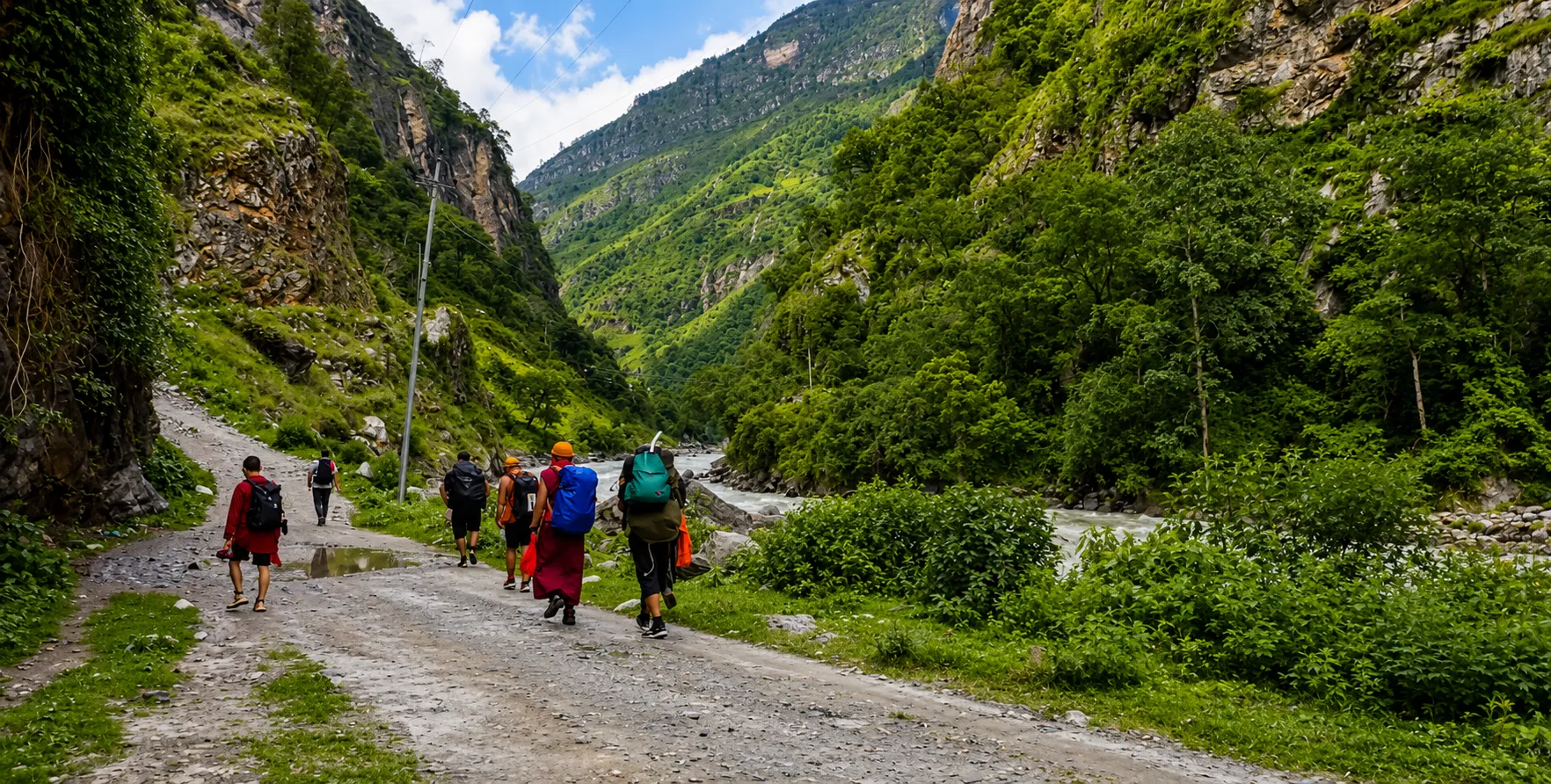
Phone / WhatsApp: +WhatsApp (24/7 — All Departure Times Available)
Email: [email protected]
Office: Bhagawatisthan, Thamel, Kathmandu, Nepal
Sedan: NPR 8,000-11,000 | Scorpio 4WD (recommended): NPR 10,000-26,000 all-inclusive
4WD: NPR 13,000-30,000 | All-inclusive, no hidden charges
Kapilavastu Tilaurakot extension: add NPR 1,500-2,500 for morning detour
Bandipur to Pokhara: US$100 | Bandipur to Kathmandu: US$100
Lumbini to Chitwan car service also available | Complete Nepal southern circuit covered
8,000+ Customers | 5.0 TripAdvisor | 200+ Verified Reviews | Reg. No. 219204

Frequently Asked Questions — Lumbini to Bandipur Private Car Hire

Q: How long is the Lumbini to Bandipur journey by private car?

The Lumbini to Bandipur private car journey takes 3 to 4.5 hours) covering approximately 135 to 145 km via Bhairahawa, Butwal, and Dumre. Departing Lumbini between 11:00 AM and 12:00 noon, you arrive in Bandipur between 2:00 PM and 4:30 PM for a half—day bazaar walk and a sunset.

Q: Is a Scorpio necessary, or will a sedan work?

A sedan works in dry conditions) on the Lumbini to Bandipur route, including the Bandipur switchback. The Scorpio 4WD is recommended) for its stronger engine torque on the steep ascent, higher ground clearance, and 4WD capability in wet conditions.

For travellers with heavy luggage or travelling in monsoon season, the Scorpio is the clear choice. Nepal Vehicle Hiring Pvt. Ltd. advises on the best vehicle for current road conditions at booking — contact WhatsApp.

Q: Can I add a Kapilavastu Tilaurakot visit before departing Lumbini?

Yes — the Kapilavastu Tilaurakot detour adds 1 to 1.5 hours and approximately NPR 1,500 to 2,500 to the vehicle price. Tilaurakot is 25 km west of Lumbini — the archaeological site of ancient Kapilavastu where Siddhartha Gautama grew up. Request at booking via WhatsApp.

Q: What is the best onward journey from Bandipur?
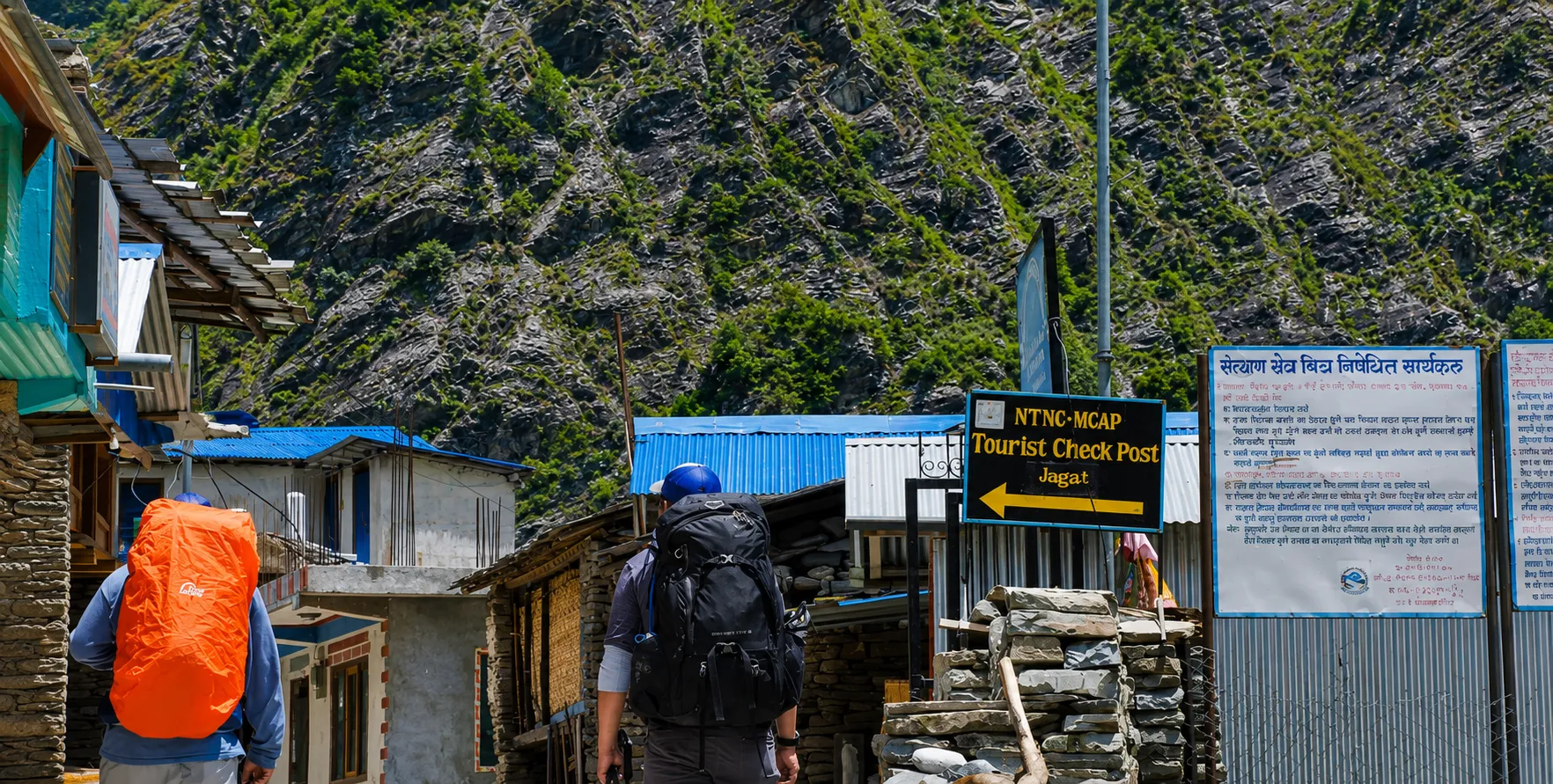
Bandipur to Pokhara) (60 km, 1.5 to 2 hours, US$100) is the most popular onward route — arriving in Pokhara by midday after the Bandipur sunrise. Bandipur to Kathmandu) (170 km, 4 to 5 hours, NPR 14,000-22,000) is also available. Book both transfers simultaneously via Nepal Vehicle Hiring Pvt. Ltd. on WhatsApp.

Q: Is there a direct bus from Lumbini to Bandipur?
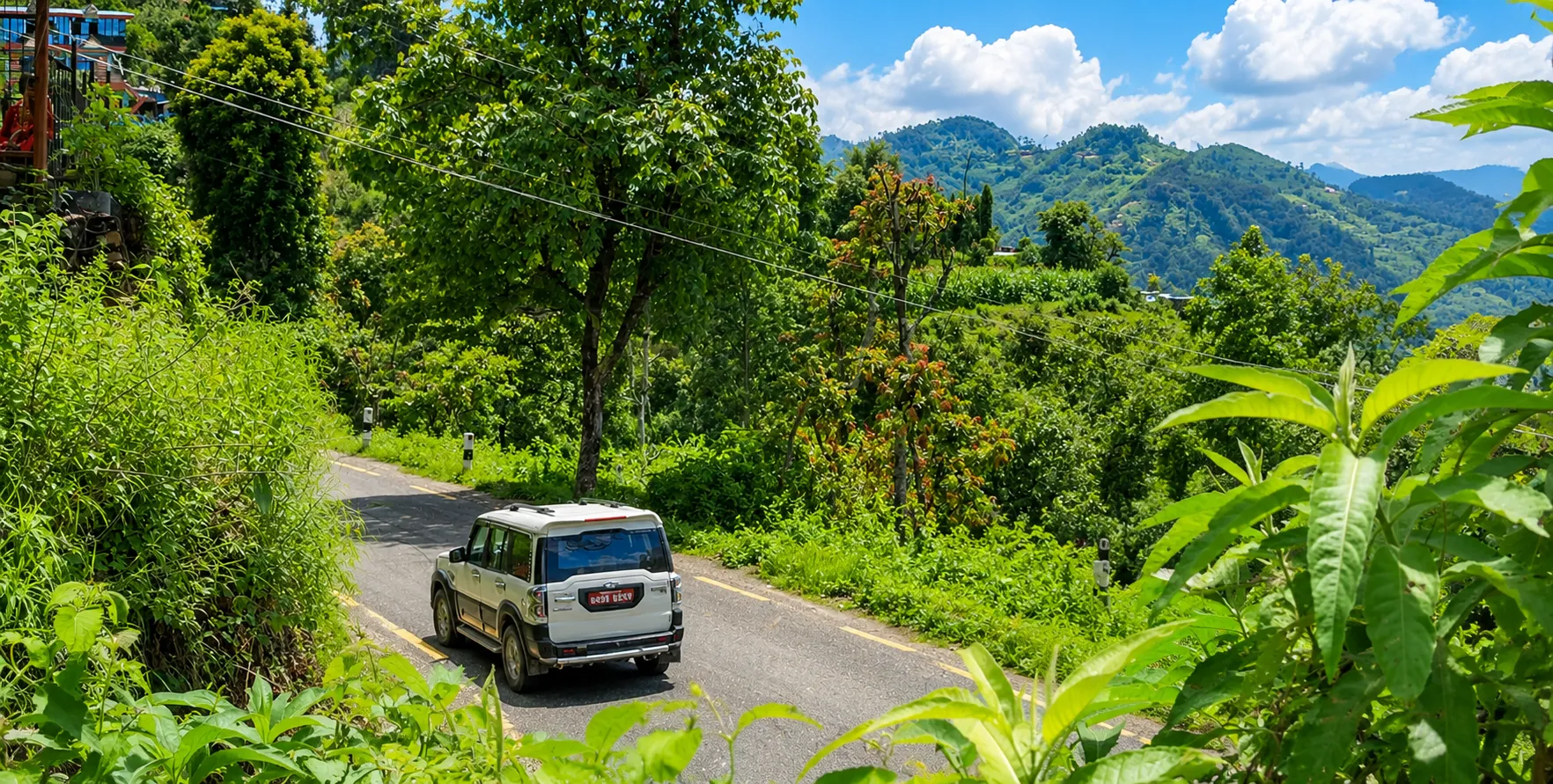
No direct public bus connects Lumbini and Bandipur — travellers using public transport would need to take a local bus to Bhairahawa, then to Butwal, then to Dumre, and finally arrange local transport up the Bandipur road — a 5 to 7 hour multi-connection journey. The Nepal Vehicle Hiring Pvt. Ltd. private car hire) completes the journey in 3 to 4.5 hours, door to door, at all-inclusive pricing.

Lumbini to Bandipur Private Car Hire

Conclusion: From the Buddha’s Garden to Nepal’s Heritage Ridge

The Lumbini to Bandipur private car hire from Nepal Vehicle Hiring Pvt. Ltd.) delivers one of Nepal’s most culturally meaningful journeys — from the serene flat sacred garden where the Buddha was born to the dramatic hilltop Newari heritage town where Nepal’s merchant culture built its finest architectural legacy. The 3 to 4.54.5-hour journey by private Scorpio or sedan connects two worlds, the Buddhist sacred Terai and the Hindu-Buddhist Newari hill tradition, in a single day that shows Nepal’s cultural range more powerfully than any single destination visit can.

Book the Lumbini to Bandipur private car hire from Nepal Vehicle Hiring Pvt. Ltd. via WhatsApp or at vehiclehiringnepal.com. With 8,000+ satisfied customers, a 5.0 TripAdvisor rating, and Company Registration No. 219204, Nepal Vehicle Hiring Pvt. Ltd. is Nepal’s most trusted private vehicle hire service — for the Lumbini to Bandipur heritage journey) and every Nepal destination beyond.

October to November — Post-Monsoon Peak Season

The October to November post-monsoon period is the finest season for the Lumbini to Bandipur private car hire — road conditions on all sections of the route are at their post-monsoon best, the air clarity is extraordinary for Himalayan panorama viewing from Bandipur’s Thani Mai viewpoint, and the festival season (Dashain in October, Tihar in November) adds cultural richness to both the Lumbini sacred site visits and the Bandipur bazaar atmosphere. The Annapurna and Manaslu peaks visible from Bandipur are most vivid in October’s post-monsoon atmosphere—snow-capped summits against the deep blue sky create the mountain photographs Nepal’s finest viewpoints are famous for.

Nepal Vehicle Hiring Pvt. Ltd. recommends booking the Lumbini to Bandipur private car hire photo 5 days in advance for October and November on WhatsApp or vehiclehiringnepal.com, as demand is highest during this peak season.

March to May — Spring Pilgrimage and Heritage Season

Spring from March to May is the second-best season for Lumbini to Bandipur car hire — the Lumbini sacred garden is most beautiful in March and April, when the sal forest within the UNESCO heritage zone is in fresh leaf, and pleasant spring temperatures enhance the garden’s contemplative atmosphere. Buddha Purnima (the full moon of Vaisakha month, typically in May) is the most auspicious time to visit Lumbini — tens of thousands of Buddhist pilgrims from across Asia converge on the birthplace to commemorate the Buddha’s birth, enlightenment, and parinirvana.

The Bandipur leg in spring benefits from the rhododendron blooms on the Dumre to Bandipur approach hillsides (March and April) and the pleasant ridge temperature that makes the bazaar walk and viewpoint visit genuinely comfortable. Book the spring season Lumbini to Bandipur private car hire via WhatsApp.

Lumbini to Bandipur Private Car Hire

The Prithvi Highway — Nepal’s Finest East-West Corridor

Understanding the Lumbini to Bandipur Road Character

The Lumbini to Bandipur private car route uses three distinct road types: the flat Terai road from Lumbini to Bhairahawa (20 km, fast and easy), the Siddhartha Highway hill section from Bhairahawa to Butwal and then to the Devchuli cut-off or Palpa approach to the Prithvi Highway (approximately 60 km, paved but hilly), and then the Prithvi Highway itself to Dumre (approximately 40 km, Nepal’s finest paved highway) before the final 12 km Dumre to Bandipur switchback. The 135-145 km journey uses the best road infrastructure in Nepal’s western region—the Terai highway, the Prithvi Highway, and the Bandipur road—making it efficient and comfortable despite the significant altitude gain from Lumbini’s 100 m to Bandipur’s 1,030 m.

Nepal Vehicle Hiring Pvt. Ltd.’s drivers on this route know each section’s character — Bhairahawa traffic navigation, Butwal junction management, the Prithvi Highway’s Dumre junction turn, and the Bandipur switchback’s tight bends — from regular service across the full Lumbini to Bandipur route.

Tansen (Palpa) — Optional Heritage Stop En Route

Travellers with extra time on the Lumbini-to-Bandipur car hire can add a Tansen heritage-town stop to the journey — the historic Newari hill town in Palpa District, famous for its dhaka fabric weaving tradition and its Tansen Durbar palace complex, sits about 30 km north of Butwal on the Siddhartha Highway. A 45- to 60-minute Tansen exploration adds a second Newari heritage town to the same journey as Bandipur—two distinctly different expressions of the Newari hill-town tradition in a single day’s private-car route.

At 1,370 m, Tansen sits higher than Bandipur (1,000 m) and offers panoramic views and traditional character. The Nepal Vehicle Hiring Pvt. Ltd. driver can route the Lumbini to Bandipur journey via Tansen on the Siddhartha Highway on request — adding approximately 1 to 1.5 hours to the journey time.

Contact WhatsApp to discuss the Tansen addition to the Lumbini to Bandipur car hire itinerary.

Comparing the Lumbini to Bandipur Route with Direct Routes

Lumbini to Bandipur vs Lumbini to Pokhara Direct

Travellers heading from Lumbini toward Pokhara face a choice: the direct Lumbini to Pokhara private car hire (approximately 200 km, 4 to 5 hours via the Siddhartha Highway and Prithvi Highway), or the Lumbini to Bandipur to Pokhara two-day heritage route. The direct route is efficient and pleasant — the Siddhartha Highway through the Palpa hills is genuinely scenic.

But the Bandipur route adds one of Nepal’s finest heritage experiences as a one-night stop between the two cities, delivering significantly more cultural richness for the additional 24 hours. For travellers with a tight Nepal schedule, the direct Lumbini-to-Pokhara car hire via Nepal Vehicle Hiring Pvt. Ltd. (NPR 12,000-16,000 all-inclusive) is the efficient choice.

For travellers who want the most from their Nepal journey, the Lumbini-to-Bandipur-to-Pokhara two-vehicle, two-day route is the clear recommendation. Nepal Vehicle Hiring Pvt. Ltd. covers both routes — contact WhatsApp to discuss the option that best suits your Nepal timeline.

Nepal’s Buddhist and Newari Cultural Heritage — Understanding the Connection

The Lumbini to Bandipur private car hire journey connects two of Nepal’s most significant cultural heritage dimensions—the Buddhist sacred landscape and the Newari architectural tradition—and highlights their deep interconnection in Nepali culture. Lumbini represents Nepal’s sacred Buddhist heritage in the Terai lowlands—the flat agricultural landscape where the historical Buddha’s birth legend is set, the ancient pilgrimage tradition inaugurated by Ashoka’s 249 BCE visit, and the continuing international Buddhist devotion that brings pilgrims from across the Buddhist world to the sacred garden.

Bandipur represents the Newari merchant heritage of Nepal’s middle hills — the commercial culture that connected the Indian plains with the Tibetan plateau, the architectural tradition that produced some of Asia’s finest domestic wooden architecture, and the syncretic Hindu-Buddhist religious life of Nepal’s most distinctively Nepali urban culture. The private car journey from one to the other—from the Buddha’s birthplace to the Newari merchant town—travels through Nepal’s cultural history in a single afternoon, with the landscape shifting from the flat, sacred Terai to the forested heritage ridge, mapping the shift between two equally extraordinary dimensions of what Nepal is and has been.

Nepal Vehicle Hiring Pvt. Ltd. provides the vehicle for this cultural journey — book at vehiclehiringnepal.com or via WhatsApp.

Practical Tips for the Lumbini to Bandipur Car Hire

  • Depart Lumbini between 10:00 AM and 12:00 noon after the morning sacred garden visit — this timing reaches Bandipur by 1:30 to 4:30 PM with the afternoon for heritage exploration and the Himalayan sunset.
  • Carry NPR cash for Bandipur teahouses, honey purchases, temple donations, and any Tansen craft purchases if making the optional stop. Dress in layers — Bandipur at 1,030 m is noticeably cooler than Lumbini at 100 m, particularly in the evening; a light jacket is advisable for the Thani Mai viewpoint visit at sunset or sunrise
  • Book the onward Bandipur to Pokhara or Bandipur to Kathmandu transfer simultaneously with the Lumbini to Bandipur booking — Nepal Vehicle Hiring Pvt. Ltd. coordinates all legs through a single WhatsApp
  • Allow 2 to 3 hours at Bandipur for the full heritage walking circuit — bazaar, Bindabasini Mandir, Thani Mai viewpoint — if making a same-day visit before the onward Pokhara transfer.
  • Request the Tansen en-route stop at booking if the 45-60 minute Palpa heritage town addition is desired — this must be confirmed in advance for the driver to plan the routing correctly.

Bandipur’s Siddha Gufa — Nepal’s Largest Cave

A Natural Wonder Below the Heritage Ridge

Below the Bandipur ridge, accessible by a 45-minute walking trail from the town centre, the Siddha Gufa is Nepal’s largest cave — extending approximately 415 metres into the limestone hillside with chambers large enough to walk through upright and containing impressive stalactite and stalagmite formations built over thousands of years of mineral-rich water seeping through the limestone. The cave’s inner reaches contain the Siddha Baba shrine—a Hindu sacred site where local devotees make offerings and where the geological formations have become part of the site’s religious landscape.

Local guides are available at the Siddha Gufa entrance — the 45-minute walk from Bandipur to the cave passes through pleasant forest with additional Marsyangdi valley views, and the cave itself takes 45 to 60 minutes to explore with a guide. For travellers arriving in Lumbini, a Bandipur private car hire with an overnight stay in Bandipur makes Siddha Gufa an excellent morning activity the day after arrival—combining a 5:30 AM sunrise at Thani Mai with a 9:00 to 10:00 AM cave visit.

The Bandipur to Pokhara or Bandipur to Kathmandu private car departure by 11:00 AM creates one of Nepal’s finest single-night itinerary combinations. Nepal Vehicle Hiring Pvt. Ltd. coordinates the Bandipur to Pokhara or Bandipur to Kathmandu onward transfer simultaneously with the Lumbini to Bandipur car hire booking — contact WhatsApp6 or vehiclehiringnepal.com to arrange the complete itinerary.

Lumbini to Bandipur Private Car Hire

Bandipur’s Viewpoints — Beyond Thani Mai

Tundikhel and the Panoramic Ridge Walk

Beyond the Thani Mai Temple viewpoint, Bandipur offers a series of ridge walks that provide continuously changing perspectives on the Himalayan panorama and the Marsyangdi valley landscape below. The Tundikhel — the open parade ground at the southern end of the Bandipur ridge — is the widest viewing point, where the full sweep from Manaslu in the northeast to the Annapurna range in the northwest is visible in a single panoramic composition.

The ridge walk from Tundikhel northward along the ridgeline above the bazaar, passing through forest with occasional openings onto the valley below, takes 30 to 45 minutes and offers the most complete immersion in Bandipur’s extraordinary topography. The walk ends near the Bindabasini Mandir at the bazaar’s northern end, creating a natural circuit that combines the temple visit, the ridge walk, and bazaar exploration into a single connected route.

For travellers arriving on a Lumbini-to-Bandipur private hire with 3 to 4 hours in Bandipur, this complete heritage and landscape circuit is achievable before onward departure.

The Marsyangdi Valley — Bandipur’s Geographical Setting

Understanding Bandipur’s Extraordinary Position

Bandipur’s position on the Marsyangdi Valley rim gives the town its extraordinary character—the ridge drops steeply on the eastern and western sides, creating a narrow hilltop setting that made it a natural defensive and commercial position for the Newari merchants who settled it. The Marsyangdi River — which the Annapurna Circuit Trek follows northward from Besisahar to Manang — drains the Annapurna massif’s eastern slopes and flows through the wide valley visible below Bandipur.

On clear days, Bandipur’s viewpoints reveal the Annapurna peaks rising above the upper Marsyangdi valley.

The trekking route that enters the gorge at Besisahar (the Annapurna Circuit trailhead, just 15 km north of Dumre on the Prithvi Highway) is visible as a conceptual line connecting Bandipur’s heritage viewpoint with the high mountain world above. Travellers arriving in Bandipur via a private car hire from Lumbini for Annapurna trekking can see their destination from Bandipur’s ridge—a motivating preview of the mountain world waiting above the valley.

Nepal Vehicle Hiring Pvt. Ltd. offers Kathmandu to Besisahar or Pokhara to Besisahar 4WD jeep rentals for the Annapurna Circuit trailhead transfer, as well as Lumbini to Bandipur car hire—the complete Nepal journey from sacred Terai to heritage ridge to mountain trailhead, organised through a single trusted provider at +977WhatsApp.

Nepal Vehicle Hiring Pvt. Ltd. — The Complete Southern Nepal Transport Network

Nepal Vehicle Hiring Pvt. Ltd. covers every private vehicle connection in Nepal’s southern and western heritage and pilgrimage circuit—the network of routes that connects the India border, Buddhist sacred sites, Newari heritage towns, and the mountain cities of Pokhara and Kathmandu. The Lumbini to Bandipur private car hire is one route within this complete network: the Sunauli to Pokhara car service brings travellers from the India border toward Pokhara via the Siddhartha Highway; the Sunauli to Lumbini transfer delivers pilgrims from the border to the birthplace of the Buddha; the Lumbini to Chitwan car service connects the sacred garden with the wildlife safari

the Lumbini to Bandipur private car hire carries heritage travellers from the Buddhist pilgrimage site to the Newari hill town; the Bandipur to Pokhara car hire completes the western circuit to the mountain lake city; and the Pokhara to Kathmandu private transfer returns to the heritage capital for the international departure. Nepal Vehicle Hiring Pvt. Ltd.’s professional private vehicle fleet serves every connection in this complete southern Nepal circuit, with transparent, all-inclusive pricing, experienced drivers, and 24-hour support on WhatsApp, earning the company 8,000+ satisfied customers and a 5.0 TripAdvisor rating from 200+ verified five-star reviews.

Book any leg of the southern Nepal circuit at vehiclehiringnepal.com or via WhatsApp at +WhatsApp — Company Registration No. 219204.

Lumbini to Bandipur Private Car Hire

Lumbini Sacred Garden — What to See Before Departure

The Maya Devi Temple Complex

The Maya Devi Temple is the spiritual heart of the Lumbini Sacred Garden — the temple built over the original nativity site where Queen Maya Devi gave birth to the future Buddha while grasping the branch of a sala tree. The current temple structure encloses archaeological layers of successive temple constructions dating back to the Ashokan period, with the exposed foundation stones of the earliest shrine visible through the modern building’s glass floor panels.

The Nativity Sculpture within the temple — a bas-relief showing Queen Maya Devi and the infant Siddhartha — is one of the most important Buddhist artefacts in South Asia.

The sacred pond (Puskarni) beside the temple, where the newborn Siddhartha was bathed and his mother purified, is a serene reflecting pool surrounded by the sal trees of the sacred garden. Morning prayers at the Maya Devi Temple—attended by monks in saffron and ochre robes, local pilgrims offering flowers and incense, and international visitors from across the Buddhist world—create one of Nepal’s most moving devotional atmospheres.

The Lumbini to Bandipur private car hire departure at 11:00 to 12:00 noon allows a full morning (6:00 to 11:00 AM) for the Maya Devi Temple, the Ashoka pillar, and a circuit of the closest international monastery gardens before the Nepal Vehicle Hiring Pvt. Ltd. private car carries the visitor northward to Bandipur’s heritage ridge.

The Ashoka Pillar — Direct Link to the Ancient World

The Ashoka pillar in the Lumbini Sacred Garden is one of Nepal’s most historically significant monuments: a sandstone column erected by the Mauryan Emperor Ashoka during his pilgrimage to Lumbini around 249 BCE, bearing an inscription that confirms the site as the Buddha’s birthplace. The pillar remains in situ at the location where Ashoka planted it more than two millennia ago — a direct physical connection to the historical period of the Buddha’s life and to the earliest documented royal pilgrimage to the birthplace.

The inscription reads (in translation): ‘Here the Buddha, the Sakya sage, was born.

The statement’s simplicity and directness, combined with the pillar’s physical presence in the sacred garden landscape, create one of Nepal’s most powerful archaeological and devotional experiences. Standing at the Ashoka pillar before the Lumbini to Bandipur private car hire departure connects the traveller to the ancient pilgrimage tradition Ashoka himself initiated.

This tradition continues today with millions of Buddhist visitors from across the world. Nepal Vehicle Hiring Pvt. Ltd. recommends allowing at least 30 minutes at the Ashoka Pillar area to read the inscription and take the contemplative moment this extraordinary monument invites.

Bandipur’s Connection to Pokhara and Annapurna Trekking

Bandipur sits at the geographical and experiential crossroads between Nepal’s sacred southern lowlands and its mountain northern wilderness—making it an ideal transit point for travellers moving between Lumbini’s sacred Terai and Pokhara’s Annapurna trekking base. The Bandipur to Pokhara private car hire from Nepal Vehicle Hiring Pvt. Ltd. takes only 1.5 to 2 hours via the Dumre Prithvi Highway junction, a short connection between Nepal’s finest heritage hill town and its finest mountain city.

From Pokhara, you can access the full Annapurna region trekking experience with private car hire to Nayapul for the Ghorepani Poon Hill and Annapurna Base Camp treks; 4WD jeep hire to Jomsom for the Upper Mustang and Muktinath pilgrimages; and a Besisahar jeep rental to start the Annapurna Circuit.

Nepal Vehicle Hiring Pvt. Ltd. provides all these Pokhara-based trekking and pilgrimage transfers, the same team that provides Lumbini-to-Bandipur car hire. A traveller who begins at the Sunauli border, visits Lumbini, hires the Nepal Vehicle Hiring Pvt. Ltd. car to Bandipur, and then continues to Pokhara for the Annapurna trek has experienced Nepal’s sacred, heritage, and mountain dimensions in a single coherent itinerary — the complete Nepal journey organised through a single trusted provide.

Bandipur Accommodation Options for Overnight Stays

Bandipur’s accommodation has grown significantly as the town’s profile rises as Nepal’s most accessible heritage hill town. The Old Inn Bandipur — housed in a restored traditional Newari building near the bazaar’s southern entrance — is the town’s most characterful heritage accommodation, with rooms featuring original wooden beams, stone floors, and the authentic atmosphere of a 200-year-old merchant house.

Set slightly above the main bazaar with garden terraces and valley views, the Bandipur Village Resort offers modern comfort while retaining the heritage character suited to the town’s setting. Several smaller guesthouses on the bazaar street provide basic but comfortable accommodation for budget travellers.

The common quality of all Bandipur accommodation is the morning mountain view — every guesthouse on the ridge has a perspective toward the Annapurna range that makes the sunrise alarm worthwhile. Travellers arriving in Bandipur via a private car hire from Lumbini with Nepal Vehicle Hiring Pvt. Ltd. should book accommodation in advance, particularly for the October to November peak season, when the town’s limited bed capacity fills quickly.

Nepal Vehicle Hiring Pvt. Ltd. on WhatsApp can recommend current accommodation options in Bandipur based on the driver team’s local knowledge of the town’s guesthouse quality.

The Lumbini to Bandipur Journey — A Personal Reflection

Travellers who have made the Lumbini to Bandipur private car journey consistently describe it as one of their most memorable Nepal experiences — not because of a single spectacular moment but because of the richness of the cultural transition the journey creates. Leaving the flat, serene, internationally sacred Lumbini garden in the morning — with its monks and pilgrims, its international monastery architecture, its atmosphere of contemplative devotion — and arriving at the hilltop Newari heritage town of Bandipur in the afternoon — with its carved wooden shophouses, its busy bazaar, its Himalayan panorama, its evening temple bells — creates a contrast that crystallises Nepal’s extraordinary cultural range in a single day.

The journey itself — through the Terai commercial reality of Bhairahawa and Butwal, up the Siddhartha Highway and Prithvi Highway through the Nepal middle hills, and then up the switchback road to the cool Bandipur ridge — maps the geographical and cultural transitions of Nepal’s western region in a way that no single destination visit can achieve. Nepal Vehicle Hiring Pvt. Ltd. provides the private car for this transition—the vehicle and driver who make the journey comfortable, organised, and reliably delivered.

Book the Lumbini to Bandipur private car hire at vehiclehiringnepal.com or via WhatsApp — from the Buddha’s birthplace to Nepal’s finest heritage ridge, with Nepal’s most trusted private vehicle provider.

Nepal Vehicle Hiring Pvt. Ltd. makes the Lumbini to Bandipur private car hire as simple and professional as any of its 8,000+ completed transfers — the booking confirmed via WhatsApp, the driver at the Lumbini hotel door at the agreed departure time, the Scorpio 4WD loaded with luggage and ready for the Bhairahawa to Butwal to Dumre to Bandipur journey, and the Bandipur parking area delivery in time for the afternoon heritage walk. The company’s 5.0 TripAdvisor rating, based on 200+ verified five-star reviews, reflects consistent professional standards on every transfer, from Lumbini to Bandipur and every other Nepal private vehicle route. Book at vehiclehiringnepal.com or contact the team directly.

Lumbini to Bandipur: Car, Jeep, Scorpio and Hiace Hire

Kathmandu to Bandipur Car

Lumbini to Bandipur: Car, Jeep, Scorpio And Hiace Hire

After the sacred atmosphere of Lumbini — the Buddha’s birthplace, the Maya Devi Temple, the international monastery zone — the journey north to Bandipur connects Nepal’s most important Buddhist sacred site with its finest mid-hills heritage town. Bandipur (1,030 m), perched on a Marsyangdi valley ridge with a perfectly preserved Newari bazaar and panoramic Himalayan views, is one of Nepal’s most rewarding single overnight stops.

Nepal Vehicle Hiring Pvt. Ltd. provides private cars, Mahindra Scorpio jeeps, Toyota Hiace vans, Coaster buses, and all vehicle types for the Lumbini-to-Bandipur journey—covering about 248 kilometres via Bhairahawa, Butwal, Narayanghat, Mugling, and the Dumre junction ascent in 4.5 to 6 hours.

Lumbini to Bandipur: Distance, Route and Drive Time

  • Lumbini to Bhairahawa: 22 km, 25–30 min (Siddhartha Highway west)
  • Bhairahawa to Butwal: 22 km, 25 min
  • Butwal to Narayanghat (Mahendra Highway): 115 km, 2–2.5 hours — flat Terai plains, sal forest, Deukhuri valley scenic section
  • Narayanghat to Mugling (NH44): 33 km, 35–40 min — Nepal’s finest highway section, newly widened
  • Mugling to Dumre (Prithvi Highway east): 40 km, 40–45 min — follows Marsyangdi River valley.
  • Dumre to Bandipur ascent: 16 km, 30–40 min — winding hill road, 930 m altitude gain to ridge

Total: approximately 248 km, 4.5 to 6 hours. A 9:00 AM departure from Lumbini with a Mugling fish lunch gets you to Bandipur by 3:30-4:30 PM, with time for a golden-hour bazaar walk and an evening temple visit.

All-In Vehicle Prices: Lumbini to Bandipur

  • Private car (2–4 pax): NPR 11,000–25,000
  • Mahindra Scorpio 4WD (4–7 pax): NPR 14,000–30,000
  • Toyota Land Cruiser (4–5 pax, top-end): NPR 18,000–80,000
  • Toyota Hiace van (8–14 pax): NPR 18,000–35,000
  • Coaster bus hire (15–25 pax): NPR 24,000–45,000

All prices include vehicle, driver, fuel, and all road charges. Contact Nepal Vehicle Hiring via   WhatsApp or visit the Plan Your Trip page for confirmed pricing.

lubini

Why Combine Lumbini and Bandipur

Lumbini (100 m) is globally managed, internationally Buddhist, flat and sacred — the UNESCO heritage birthplace confirmed by Ashoka’s 249 BCE inscription and modern archaeology. Bandipur (1,030 m) is locally lived, specifically Newari, and mountain-ridged — a 18th-19th century merchant heritage town preserved by the accident of the Prithvi Highway bypassing it below.

The two sites represent Nepal’s heritage at different scales and in entirely different idioms: Lumbini is the world coming to Nepal; Bandipur is Nepal being itself.

The Lumbini-to-Bandipur vehicle connects these complementary experiences in a single afternoon—the 930-metre altitude gain from the sacred Terai plains to the mountain heritage ridge compresses Nepal’s entire ecological and cultural transition into one drive.

Lumbini to Bandipur

Route Section by Section

Lumbini to Butwal (44 km, 55 minutes)

West on the Siddhartha Highway through Bhairahawa’s commercial centre (ATM, fuel stop) to Butwal junction. Butwal’s Tinau River gorge marks the northern edge of the flat plains. Standard 20-minute rest stop at Butwal before the Terai highway run.

Butwal to Narayanghat (115 km, 2 to 2.5 hours — Mahendra Highway)

Nepal’s western Terai artery — flat, fast blacktop through sal forest and agricultural plains. The Deukhuri valley (about 60 km from Butwal) is the most scenic mid-section: a forested mid-hills corridor where the highway briefly enters the hill country—birdlife in the sal forest patches: painted storks, adjutant storks, crested serpent eagles, bee-eaters.

Narayanghat to Mugling (33 km, 35 to 40 minutes — NH44)

Nepal’s finest highway section — recently widened dual carriageway following the Narayani River north. The optional Devghat sacred confluence (8 km from Narayanghat, confluence of Trishuli and Kali Gandaki rivers, Nepal’s most sacred tirtha) adds a 30-minute sacred river bath for Hindu pilgrims — directly on the northbound route and completely appropriate for Lumbini-departing pilgrim groups.

Mugling to Dumre (40 km, 40 to 45 minutes)

East on the Prithvi Highway following the Marsyangdi River. Mugling junction’s riverside fish restaurants — freshwater Mahseer (sahar) in mustard oil, riverside tables above the Trishuli rapids, NPR 300 to 600 per person, 40 to 45 minutes — are the journey’s finest food stop and fall directly on the route. Nepal Vehicle Hiring’s drivers always offer this stop.

Dumre to Bandipur (16 km, 30 to 40 minutes — the ascent)

The winding hill road from Dumre junction (190 m) to Bandipur’s ridge (1,030 m) climbs 840 metres in 16 kilometres through terraced farms, forested sections, and mid-hills villages before emerging at the ridge with the first Himalayan views. The temperature drops noticeably on the final ascent — arriving in Bandipur from the Terai heat, the ridge cool feels restorative. Nepal Vehicle Hiring drops you at the specific Bandipur guesthouse entrance.

Lumbini to Bandipur

The Bandipur Arrival Experience

The finest arrival window in Bandipur is 4:00 to 5:30 PM — the golden-hour light on the Newari carved wooden facades, the evening puja at the Khadga Devi Temple (5:00 to 6:30 PM bells, incense, lamp lighting), and the sunset view from the Bindyabasini Temple at the western ridge end are all accessible to groups arriving in this window. Lumbini groups departing at 9:00 AM reach Bandipur by 3:30 to 4:30 PM — perfectly timed.

The Tundikhel meadow mountain sunrise the following dawn — Manaslu (8,163 m), the entire Annapurna range, and Machhapuchhre (Fishtail, 6,993 m) in alpenglow — is the confirmation that the Bandipur overnight was worth it. It’s a 10-minute walk from any bazaar guesthouse, with no jeep ride or cable car required.

Vehicle Notes: Scorpio vs Car vs Hiace for This Route

The Mahindra Scorpio is the recommended vehicle for groups of 4 to 7 on the Lumbini-to-Bandipur route. The flat Terai highway sections (Butwal to Narayanghat, 115 km) suit any vehicle equally; the Dumre-to-Bandipur 16 km ascent road rewards the Scorpio’s higher clearance and 4WD stability on narrow and occasionally rough sections.

A private car suits 2 to 3 passengers in dry conditions. Hiace vans are ideal for the Terai sections; Nepal Vehicle Hiring assesses the Dumre-to-Bandipur ascent road suitability for Hiace on current conditions — some pilgrimage groups transfer to a Scorpio at Dumre for the final ascent while the Hiace waits.

Kathmandu to Lumbini

Optional Stops on the Route

  • Devghat sacred confluence (8 km from Narayanghat, 30 min): Trishuli-Kali Gandaki river junction — Nepal’s most sacred tirtha, old sadhus in riverside meditation, small temples along the ghats. Essential addition for Hindu pilgrims departing Lumbini.
  • Mugling fish lunch (at Mugling junction, 40 to 45 min): freshwater Mahseer from the Trishuli River, riverside restaurants, one of Nepal’s finest roadside food experiences. Directly on the route — ask the driver to include it.
  • Siddha Gufa cave (4 km past Dumre on the Bandipur ascent, 1.5 hrs total): Nepal’s largest cave (430 m long, 45 m high main chamber), stalactites, local guide at entrance. Adds 1.5 hours — allow for early Lumbini departure if including.

Onward from Bandipur: Where the Circuit Continues

  • Bandipur to Pokhara: 70 km west via Dumre (2 hours) — Phewa Lake, Sarangkot sunrise, world mountain views
  • Bandipur to Kathmandu: 130 km east via Dumre and Prithvi Highway (3.5 to 4 hours)
  • Bandipur to Sunauli India border: 200 km (4 to 5 hours via Narayanghat, Butwal, Bhairahawa, Belahiya gate)
  • Bandipur to Chitwan: 145 km via Narayanghat (3 to 3.5 hours)

Nepal Vehicle Hiring coordinates all onward legs from Bandipur as part of the complete circuit booking — contact us to pre-confirm both the Lumbini-to-Bandipur vehicle and all subsequent legs as a single managed arrangement.

Lumbini to Bandipur

Lumbini-to-Bandipur Seasonal Conditions

  • Spring (March to May): excellent in all sections. Terai warm (28–36°C) — AC essential. Mountain views at Bandipur clear before pre-monsoon haze. Book 3 to 7 days in advance.
  • Monsoon (June to September): Terai highway reliable. Dumre-to-Bandipur ascent road can be slippery — Scorpio preferred over car. Bandipur lush green in monsoon. Book 1 to 3 days in advance.
  • Post-Monsoon (October to November): finest season — crystal-clear Himalayan panorama from Bandipur Tundikhel, all roads at best post-repair condition. Book 7 to 14 days in advance — peak season.
  • Winter (December to February): comfortable in all sections, outstanding mountain clarity at Bandipur. Book 24 to 48 hours in advance in low season.

Circuit Routing: Lumbini and Bandipur in the Nepal Triangle

The standard India-origin Nepal circuit incorporating Lumbini and Bandipur: Sunauli → Lumbini → (north, this route) → Bandipur overnight → Pokhara → Kathmandu → return. Nepal Vehicle Hiring coordinates all legs: Sunauli-to-Lumbini, Lumbini-to-Bandipur (this guide), Bandipur-to-Pokhara (70 km), and Pokhara-to-Kathmandu. The Nepal holiday tour and Nepal tour package pages cover the complete circuit vehicle service.

The Nepal Nekhor tour — Nepal’s complete sacred pilgrimage circuit — routes the Lumbini-to-Kathmandu return via Bandipur for clients who want the heritage overnight addition. The Besisahar private vehicle service and Kathmandu-to-Manang jeep serve trekkers who continue from Bandipur to the Annapurna Circuit at Besisahar after the overnight.

Frequently Asked Questions

How far is Lumbini from Bandipur?

Approximately 248 km, taking 4.5 to 6 hours by private vehicle. A 9:00 AM departure with a Mugling fish lunch arrives in Bandipur between 3:30 and 4:30 PM.

Which vehicle is best for this route?

The Mahindra Scorpio (4–7 passengers, NPR 14,000–30,000) is the recommended choice — best balance of comfort on the 115 km Terai highway and capability on the Dumre-to-Bandipur ascent road. Private car hire in Nepal (NPR 11,000–25,000) for 2-3 passengers. Hiace van hire (NPR 18,000–35,000) for groups of 8 to 14 — confirm ascent road suitability when booking.

Can we do a dawn visit to Lumbini, then drive to Bandipur the same day?

Yes — Lumbini Sacred Garden 5:30 AM to 8:00 AM, vehicle departure 9:00 AM, Bandipur arrival 3:30 to 4:30 PM. This is Nepal Vehicle Hiring’s recommended schedule — it captures Lumbini’s finest early-morning Sacred Garden window before the day-tour groups arrive from Bhairahawa, then makes the full Bandipur afternoon available.

Is Bandipur on the way from Lumbini to Kathmandu?

Bandipur adds approximately 70 km and 1.5 hours versus the direct Lumbini-to-Kathmandu route. Most groups treat it as a two-day addition — Lumbini Day 1 evening, Bandipur overnight Day 2, Kathmandu Day 3 morning arrival (4 hours, 130 km from Bandipur via Dumre and Prithvi Highway).

Does Nepal Vehicle Hiring pick up from inside the Lumbini zone?

Yes — Nepal Vehicle Hiring collects from the Lumbini zone hotel entrance or the Sacred Garden car park. Confirm the specific pickup address when booking. Our driver is at the hotel entrance at the confirmed departure time.

Kathmandu to Lumbini Tour Package

Book the Lumbini to Bandipur Vehicle

Visit our Plan Your Trip page with your group size, Lumbini pickup location, and Bandipur arrival time. Nepal Vehicle Hiring confirms the all-in price and driver within 24 hours. From the Maya Devi Temple to the Tundikhel mountain sunrise — one vehicle, one afternoon’s drive, two of Nepal’s finest heritage encounters.

Lumbini’s Sacred Significance: Departure Context

Every journey from Lumbini begins at one of the world’s most historically documented sacred sites. Emperor Ashoka’s personal pilgrimage inscription from 249 BCE—the oldest dated stone epigraph in the Indian subcontinent— unambiguously confirms that the Buddha was born here.

Archaeological excavations since 1996 have uncovered a brick structure beneath the Maya Devi Temple that radiocarbon-dates to approximately the 6th century BCE, consistent with the traditional dating of Siddhartha Gautama’s birth. No other ancient sacred site in the world offers this combination of imperial contemporaneous documentation and modern archaeological confirmation.

For Buddhist pilgrims, departing from Lumbini carries the merit of a northward pilgrimage —the 108-spout sacred bath at Muktinath and the Lumbini birthplace darshan together constitute the two most powerful devotional acts available in Nepal. For Hindu pilgrims who venerate the Buddha as Vishnu’s ninth avatar, a visit to Lumbini completes a sacred arc that connects the divine in its cosmic (Muktinath) and human incarnate (Lumbini) expressions.

For secular cultural travellers, leaving Lumbini with Ashoka’s pillar still visible in the rearview mirror means leaving the oldest confirmed sacred site they will likely ever visit. All of these departures deserve a worthy next destination — and Bandipur, with its mountain ridge and its living Newari heritage, is precisely that.

The Terai Highway: What the Flat Road Reveals

The 115-kilometre Mahendra Highway section between Butwal and Narayanghat — the longest flat section of the Lumbini-to-Bandipur drive — carries more interest than its flat character suggests for observant passengers.

The western Terai along the Mahendra Highway is part of the Terai Arc Landscape — a 49,000 square kilometre transboundary conservation corridor connecting Nepal’s western reserves (Bardia National Park, Shuklaphanta Wildlife Reserve) with India’s Terai reserves. The sal forest patches visible from the highway are functional wildlife habitat where tiger and rhinoceros populations move between protected areas.

For groups who have visited Chitwan’s wildlife on their Nepal circuit, the Terai along the Mahendra Highway reminds them that Chitwan’s biodiversity is part of a much larger connected landscape.

The Deukhuri valley section — a forested mid-hills corridor where the Churia (Siwalik) Hills create a scenic backdrop north of the highway — is the most pleasant 25-kilometre stretch of the flat highway run. The occasional river crossing reveals the broad, gravelly Terai river character, and birdlife along the sal forest corridor rewards patient window-watchers: painted storks in wetland margins, adjutant storks (nearly 2 metres tall, one of Nepal’s most impressive birds) stalking the paddy field edges, and crested serpent eagles circling above the forest canopy.

Lumbini to Bandipur

Bandipur’s Newari Heritage: A Cultural Primer

For visitors arriving in Bandipur from Lumbini, understanding the Newari cultural tradition that shaped the town adds real depth to the bazaar walk. The Newar community is one of the oldest civilisations indigenous to the Kathmandu Valley, and established trading outposts along Nepal’s key mid-hills trade routes from the medieval period onward.

At 1,030 m, Bandipur is one of the most strategically positioned of these outposts: above the malarial Terai but accessible from the Marsyangdi valley trade corridor leading north toward Tibet.

The carved wooden windows, doorways, and struts that line Bandipur’s bazaar are the most visible expression of Newari material culture in the mid-hills. The torana (carved arch above the doorway) signals the house’s sacred allegiance through deity imagery—typically Vishnu, Ganesh, or the protective Bhairav—surrounded by attendant figures, floral motifs, and naga (serpent) imagery.

Each merchant house has its own torana whose iconographic programme repays study. The latticed window screens (tikijhya) encode auspicious geometric patterns that double as natural ventilation systems.

The corner struts of traditional buildings carry erotic imagery that serves an apotropaic (evil-averting) function in Newari religious understanding—a tradition directly related to the corner-strut carving visible at Kathmandu’s Durbar Squares.

Bandipur’s preservation is a historical accident. When the Prithvi Highway was built in the 1970s, it followed the Marsyangdi valley floor rather than the ridge where Bandipur sits. The road that would have brought modernisation and development passed 16 kilometres below the town, leaving Bandipur’s historic fabric intact while other Nepal mid-hills towns were transformed.

The bypass that impoverished Bandipur commercially is what made it Nepal’s finest heritage town. Visitors arriving in the afternoon from Lumbini find a town that has had decades of quiet to maintain its historical character — and the result is one of Nepal’s most rewarding heritage encounters.

The Lumbini-to-Bandipur-to-Kathmandu 3-Day Programme

For visitors on a tight Nepal schedule who want to include both Lumbini and Bandipur before reaching Kathmandu, the following 3-day programme is Nepal Vehicle Hiring’s optimal recommendation:

  • Day 1 PM: Arrive in Lumbini from Kathmandu, Pokhara, or the Sunauli border. Afternoon: Maya Devi Temple and Sacred Garden (2 hours). Evening international monastery zone walk (3 to 4 selected monasteries along the central canal, 1.5 hours). Overnight in a Lumbini zone hotel or Bhairahawa.
  • Day 2 Dawn to PM: 5:30 AM Sacred Garden dawn visit — Maya Devi Temple and Puskarini pool before day-tour groups arrive from Bhairahawa. Return for hotel breakfast. Nepal: Hire a vehicle at 9:00 AM. Mugling fish lunch at Trishuli riverside (40 minutes). Arrive in Bandipur between 3:30 and 4:30 PM. Evening golden-hour bazaar walk, Khadga Devi Temple puja (5:00 to 6:30 PM), Newari dinner at bazaar restaurant. Overnight at Bandipur heritage guesthouse.
  • Day 3 Dawn to KTM: 5:30 AM Tundikhel meadow mountain sunrise (Manaslu, Annapurna range, Machhapuchhre in alpenglow, 10-minute walk from any guesthouse). Return for hotel breakfast. Nepal Vehicle Hiring: vehicle at 9:00 AM — Bandipur to Kathmandu via Dumre and Prithvi Highway, arrival in Thamel by 1:00 to 2:00 PM.

This 3-day programme delivers both Lumbini’s finest hour (the Sacred Garden at dawn) and Bandipur’s finest hour (the Himalayan sunrise from the Tundikhel) without rushing either site. Nepal Vehicle Hiring pre-confirms all three vehicle legs — Sunauli/Kathmandu-to-Lumbini, Lumbini-to-Bandipur, and Bandipur-to-Kathmandu — as a single circuit booking.

Pilgrimage Groups on the Lumbini-to-Bandipur Route

Hindu pilgrim groups completing the Nepal Muktinath or Pashupatinath circuit often route south to Lumbini as a sacred addition before crossing the Sunauli border into India. For these groups, the Lumbini-to-Bandipur vehicle is an optional heritage addition on the circuit — the Bandipur overnight giving a mountain heritage night before the Sunauli border crossing the following morning via the Bandipur-to-Sunauli route (200 km, 4 to 5 hours).

Nepal Vehicle Hiring’s Hiace van is the standard vehicle for Hindu pilgrim groups of 8 to 14 on this circuit — spacious for puja materials, sacred items from Lumbini (butter lamps, temple prasad, monastery publications), and the luggage of a group that has been travelling Nepal for 7 to 14 days. Our Hiace drivers serving pilgrim groups on this route understand the devotional character of the journey — stopping at roadside temples on request, accommodating group prayer in the vehicle, and timing the Devghat sacred confluence detour for groups wanting this additional sacred stop between Lumbini and Bandipur.

Buddhist pilgrim groups from Sri Lanka, Myanmar, Thailand, Korea, Japan, and China who have visited Lumbini as the Nepal leg of the India-Nepal Buddhist pilgrimage circuit sometimes continue to Bandipur before flying from Pokhara or Kathmandu. For these groups, Bandipur’s gompa and Tibetan-Buddhist iconography connect them to Nepal’s living Buddhist heritage, complementing the internationally managed UNESCO site of Lumbini.

Practical Tips for the Lumbini-to-Bandipur Journey

  • Withdraw NPR at Bhairahawa before Butwal: Bhairahawa has the most reliable ATMs on the route — NIC Asia, Everest Bank, Nepal SBI. After Butwal, the next reliable ATMs are in Narayanghat. Withdraw sufficient NPR for Mugling lunch, Bandipur accommodation, and any onward journey cash needs before leaving Bhairahawa.
  • Confirm Devghat stop when booking: the Devghat sacred confluence detour (8 km from Narayanghat, 30 minutes) is not automatic — confirm with Nepal Vehicle Hiring when booking if the group wants this stop. Our driver adjusts the Butwal departure time to accommodate Devghat within the overall Bandipur arrival timing.
  • Request Mugling fish stop when booking: the Mugling fish lunch is the route’s finest food experience and falls directly on the way — but confirm it when booking so the driver paces the Butwal-to-Mugling section to arrive at the right time and allows the full 40 to 45 minutes.
  • Wear layers for the Bandipur ascent: the Terai sections of the route are warm (28 to 35°C in dry season), requiring light clothing and air conditioning. The Bandipur ridge at 1,030 m can be 8 to 12 degrees cooler — have a light layer accessible in the vehicle cabin for the Dumre ascent.
  • Siddha Gufa cave: if the group wants to visit Nepal’s largest cave (4 km past Dumre on the Bandipur road, 1.5 hours total), allow a 7:30 to 8:00 AM Lumbini departure for the extended journey day with cave stop included while still reaching Bandipur by 4:00 to 5:00 PM.

Pricing Summary: Lumbini to Bandipur All Vehicles

Nepal Vehicle Hiring’s all-inclusive one-way prices:

  • Private car (sedan/SUV, 2–4 pax): NPR 11,000–25,000
  • Mahindra Scorpio 4WD (4–7 pax): NPR 14,000–30,000
  • Toyota Land Cruiser (4–5 pax, top-end): NPR 18,000–80,000
  • Toyota Hiace van (8–14 pax): NPR 18,000–35,000
  • Coaster minibus (15–25 pax): NPR 24,000–45,000

All prices: vehicle, driver, fuel, road charges. Optional stops (Devghat, Mugling fish, Siddha Gufa) at no additional vehicle charge. Passenger entry fees and food are additional.

WhatsApp or email [email protected] to book. From Lumbini’s sacred plains to Bandipur’s mountain ridge — Nepal Vehicle Hiring makes the connection smooth.

Bandipur at Dusk: The Golden Hour the Lumbini Group Arrives Into

The best window to experience Bandipur’s bazaar is late afternoon—specifically 4:00 to 6:00 PM—and groups arriving from Lumbini by mid-afternoon reach Bandipur within this window. Golden-hour light transforms the Newari carved wooden facades in a way midday flat light cannot: the directional western sun catches the three-dimensional carved screen patterns of the tikijhya windows and the relief work of the torana doorway arches, casting shadows that give the carving full visual depth.

Photographers who have documented Bandipur consistently rate the late-afternoon bazaar as one of Nepal’s most rewarding heritage photography environments.

The Khadga Devi Temple evening puja—the daily worship ceremony at Bandipur’s principal temple, dedicated to the goddess Khadga Devi, whose image is paraded on a chariot during the town’s most important annual festival—begins between 5:00 and 6:30 PM, depending on the season. The ceremony includes bells, incense, lighting outer lamps in the temple shrine, and gathering local devotees for the evening prayer.

For Lumbini pilgrims arriving in the late afternoon, the Khadga Devi evening puja naturally continues the devotional mood from the morning’s Sacred Garden visit—a transition from the globally significant Buddhist sacred to the locally intimate Hindu sacred that Bandipur’s community has maintained continuously.

The walk from the bazaar’s eastern Tundikhel meadow to the Bindyabasini Temple at the western ridge end (approximately 700 metres along the main bazaar lane, 15 minutes at a leisurely pace) takes in the full bazaar streetscape. It ends at the hilltop Durga temple, with views over the valley and mountains.

In the late afternoon, the view from Bindyabasini’s stone platform extends west across the Marsyangdi valley toward the Pokhara basin — Machhapuchhre’s pyramid visible on clear days above the western ridgelines. This westward view at sunset is specific to Bindyabasini’s position and cannot be replicated from the Tundikhel’s eastward-facing panorama.

Together, the Tundikhel (morning, Manaslu-Annapurna panorama) and the Bindyabasini (evening, Marsyangdi valley-Machhapuchhre view) form Bandipur’s complete mountain view circuit.

The Lumbini-Bandipur Heritage Juxtaposition: What Travel Teaches

The specific experience of visiting Lumbini and Bandipur in sequence — in either order — is one of Nepal’s most instructive cultural encounters precisely because of the contrast between the two sites. No amount of reading about Nepal’s heritage diversity prepares a traveller for the visceral difference between the flat Terai Sacred Garden and the mountain-ridge Newari bazaar, experienced within 24 hours of each other.

At Lumbini, heritage is international, Buddhist, and carefully managed — the UNESCO development zone with its Kenzo Tange master plan, its 20-country monastery zone, its multilingual interpretive signage, and its controlled visitor movement is a heritage landscape designed for the global Buddhist community. The Maya Devi Temple at its centre is tended by priests whose service tradition predates the UNESCO designation by centuries, but the surrounding landscape is deliberate and planned. This is heritage as an international institution.

At Bandipur, heritage is local, Newari, and organically present — the bazaar that was not designed for visitors but preserved by economic circumstance, the temples served by the community’s own priests for the community’s own devotional needs, and the architectural fabric maintained (imperfectly, with visible decay alongside preservation efforts) by residents who live inside the heritage rather than administering it from outside. This is heritage as living community.

Travelling between these two expressions of Nepal’s heritage in a single afternoon — aboard a Nepal Vehicle Hiring private car or Scorpio that covers the 248-kilometre transition in 4.5 to 6 hours — gives the traveller a compressed understanding of Nepal’s cultural range that months of reading cannot replicate. In this sense, the Lumbini-to-Bandipur vehicle journey is more than a transport connection: it is a structured encounter with the full diversity of what Nepal means as a heritage landscape.

The Marsyangdi Valley: Bandipur’s Setting Explained

Bandipur’s extraordinary mountain view is a direct consequence of its position above the Marsyangdi River valley — the same valley that the Annapurna Circuit follows upstream from Besisahar to Manang and the Thorong La. Understanding the Marsyangdi valley’s geography helps travellers appreciate why Bandipur’s ridge offers the specific mountain panorama it does.

The Marsyangdi River originates from the glaciers on the eastern approaches to the Annapurna massif. It flows south through the dramatic Marsyangdi gorge (the valley that Nepal Vehicle Hiring’s Annapurna Circuit approach vehicles drive through) before spreading into the broader valley visible from Bandipur’s ridge.

The river joins the Trishuli at Mugling junction — the same Mugling where the Lumbini-to-Bandipur vehicle stops for the fish lunch. The entire upper Marsyangdi drainage is the Annapurna Conservation Area — the world’s most visited trekking destination.

From Bandipur’s Tundikhel meadow, the view north into the Marsyangdi valley reveals the specific mountain arrangement that makes the panorama so striking: Manaslu (8,163 m) to the northeast, rising above its own valley system; the Annapurna massif filling the northern horizon in a 50-kilometre sweep of snow peaks; and Machhapuchhre (Fishtail, 6,993 m) rising above the Pokhara basin to the northwest in its unmistakable twin-summit profile. This simultaneous view of Manaslu (world’s 8th highest), Annapurna I (10th highest), and Machhapuchhre (one of Nepal’s most beautiful mountains) is available from Bandipur’s Tundikhel in a single panoramic sweep — an extraordinary mountain geography concentration that the ridge position above the Marsyangdi valley uniquely enables.

For Lumbini-to-Bandipur travellers arriving from the flat Terai plains where no mountains are visible, the Tundikhel mountain panorama at dawn the following morning is a revelation. These snow peaks were invisible, suddenly filling the entire northern horizon from a ridge that is itself only 930 metres above the highway junction below.

This sudden mountain encounter, made possible by the Bandipur ascent road that Nepal Vehicle Hiring’s vehicle navigates the previous afternoon, is one of Nepal’s finest spatial surprises.

Nepal Vehicle Hiring: The Circuit Vehicle Partner from Lumbini to Bandipur and Beyond

Nepal Vehicle Hiring’s role in the Lumbini-to-Bandipur journey is straightforward: we provide the vehicle, driver, route knowledge, and coordination that make the connection between these two heritage sites smooth. But the vehicle service extends beyond this single leg — Nepal Vehicle Hiring coordinates the complete Nepal circuit vehicle service for clients who want a single operator managing every vehicle leg from their first Nepal arrival to their last Nepal departure:

  • Airport arrival: Nepal Vehicle Hiring’s Kathmandu airport transfer meets TIA arrivals at the terminal and delivers to a Thamel hotel. The Nepal circuit begins here.
  • Kathmandu sightseeing: the Kathmandu UNESCO heritage circuit — Pashupatinath, Boudhanath, Swayambhunath, Bhaktapur — by Nepal Vehicle Hiring’s private vehicle with a sightseeing-experienced driver.
  • Lumbini approach: from Kathmandu or from the Sunauli border, Nepal Vehicle Hiring’s Hiace van or private car delivers to the Lumbini zone.
  • Lumbini to Bandipur: this journey is confirmed and coordinated as part of the complete circuit booking.
  • Bandipur onward: to Pokhara (70 km, 2 hours), Kathmandu (130 km, 4 hours), Sunauli border (200 km, 4 to 5 hours), or Chitwan (145 km, 3 to 3.5 hours) — whichever the circuit requires.
  • Airport departure: Nepal Vehicle Hiring’s TIA airport transfer completes the Nepal circuit with the same confirmed, named-driver reliability as the arrival pickup.

One contact on WhatsApp. One operations team. Every vehicle leg confirmed before the circuit begins.

Nepal Vehicle Hiring is the circuit vehicle partner for Nepal travel — from the international airport to the heritage hilltop and back again.

Siddha Gufa: Nepal’s Largest Cave on the Bandipur Approach

Four kilometres above Dumre junction on the Bandipur ascent road, a signposted track leads to Siddha Gufa — Nepal’s largest known cave system. For groups arriving from Lumbini with an early enough departure, adding the cave visit to the Bandipur approach is one of the journey’s finest enrichments.

Siddha Gufa extends about 430 metres into the limestone hillside, with a main cavern rising to 45 metres. The geological formations — stalactites and stalagmites accumulated over tens of thousands of years — create a subterranean landscape of genuine drama.

Local sadhus and yogis have used the cave as a meditation site for generations; small shrines at the entrance acknowledge this sacred dimension. For pilgrims leaving Lumbini’s sacred outdoor landscape, the cave’s enclosed, sacred darkness offers a complementary encounter with Nepal’s devotional geography.

The cave visit adds approximately 1.5 hours to the Lumbini-to-Bandipur journey. Nepal Vehicle Hiring recommends a 7:30 to 8:00 AM departure from Lumbini for groups who want the cave and still want to reach Bandipur by 4:00 to 5:00 PM. Confirm the cave stop when booking — our driver knows the access road and parking area and will factor the cave timing into the day’s schedule.

The Mugling Fish Lunch: Not to Be Skipped

The Mugling riverside fish restaurants fall directly on the Lumbini-to-Bandipur route at precisely the right time — midday, approximately 3 hours after a 9:00 AM Lumbini departure. Freshwater Mahseer (sahar) from the Trishuli River, fried in mustard oil with ginger and garlic and served at riverside tables above the rapids, is one of Nepal’s finest casual food experiences.

Cost: NPR 300 to 600 per person, including rice or bread; 40 to 45 minutes. Nepal Vehicle Hiring’s drivers know the freshest-catch establishments on the Mugling strip — ask for the stop to be included when booking.

Lumbini to Bandipur: Car, Jeep, Scorpio and Hiace Hire

Bandipur Accommodation: Staying in a Heritage House

Bandipur’s guesthouses occupy former Newari merchant mansions — the carved wooden windows visible from the bazaar are the guesthouses’ interior windows, and upper-floor terraces look directly to the Annapurna range. Accommodation ranges from simple budget rooms (NPR 600 to 1,200 per room) to developed heritage lodge properties (NPR 2,000 to 5,000 per room with private bathroom and mountain view).

Nepal Vehicle Hiring’s operations team can recommend specific Bandipur guesthouses from current driver knowledge of the town’s properties — ask when booking the vehicle.

Book the Bandipur guesthouse in advance, especially during the October-November peak season. Book via WhatsApp with the guesthouse on the morning of your Lumbini departure to secure the room for an afternoon arrival.

The Ecological Arc: Lumbini to Bandipur in Five Zones

Lumbini to Butwal (100 to 206 m): Subtropical Terai

Flattest and warmest section — rice paddies, wheat fields, sal forest patches, temperature 30 to 38°C in dry season. The Lumbini development zone’s managed Bodhi and sal tree landscape gives way to western Terai agricultural plains passing through the outer buffer zones of Nepal’s western wildlife corridors.

Butwal to Narayanghat (206 to 190 m): Western Terai Highway

The 115 km Mahendra Highway maintains flat Terai character. The Deukhuri valley (forested mid-hills corridor, approximately 60 km from Butwal) is the most ecologically interesting section — mixed sal and secondary forest with notably richer birdlife than the open plains sections. By Narayanghat, the first foothills appear on the northern horizon.

Narayanghat to Mugling: The Transition Zone

NH44 north follows the Narayani River — a mountain-origin river whose character signals the approaching mid-hills. Devghat confluence (8 km from Narayanghat) marks the meeting of the Trishuli and Kali Gandaki rivers at the Terai edge—a sacred hydrological junction and an optional stop for Hindu pilgrims.

Mugling to Dumre: Mid-Hills Valley

The Prithvi Highway east follows the Marsyangdi River into the mid-hills. The valley is used for roads and agriculture; surrounding ridgelines rise high and are forested. Chestnut, oak, and rhododendron begin on upper slopes.

Occasional snow peaks visible through the valley head on clear days.

Dumre to Bandipur (190 to 1,030 m): The Ascent

840 metres of altitude gain in 16 kilometres — from dry lower agricultural slopes through increasingly forested mid-sections to the open ridge crest where Bandipur’s town appears with the Himalayan backdrop. Temperature drops 5 to 8 degrees Celsius between Dumre and the ridge. The transition from Terai heat to ridge cool physically confirms the journey’s ecological arc.

Why This Connection Deserves More Visitors

Despite the logical appeal of combining Lumbini’s sacred plains with Bandipur’s heritage ridge, this connection remains underutilised — most tour operators route the Lumbini-to-Kathmandu journey directly via the highway. Nepal Vehicle Hiring’s Lumbini-to-Bandipur private vehicle service makes this connection as easy to book as any other Nepal circuit leg: confirmed pickup from the Lumbini zone, hotel-door Bandipur delivery, optional stops coordinated in a single booking.

For India-origin visitors on the Nepal circuit, adding Bandipur to the Lumbini-exit routing adds one overnight and one 248 km vehicle journey—and delivers one of Nepal’s finest heritage town experiences as the circuit’s final statement before the Sunauli crossing.

WhatsApp or email [email protected] to book. From the Maya Devi Temple to the Tundikhel mountain sunrise — 248 kilometres, one private vehicle, two of Nepal’s finest heritage encounters. Nepal Vehicle Hiring makes the connection.

Bandipur’s Festivals: Timing the Visit for Celebration

Bandipur has a small but vibrant festival calendar that rewards visitors who plan; the most dramatic is the annual Khadga Devi chariot festival — the procession of the town deity on a wooden chariot through the bazaar lane, accompanied by traditional Newari dhime drums and sahanai horns, priests, and the entire community in traditional dress. This procession transforms the bazaar into a living expression of the same Newari processional culture that animates Kathmandu’s major festivals.

The chariot festival timing follows the lunar calendar; contact Nepal Vehicle Hiring’s operations team for current festival dates when planning the Lumbini-to-Bandipur routing around this event.

The annual Bandipur Mahotsav heritage festival—when the bazaar fills with cultural performances, traditional food stalls, and craft demonstrations—is another calendar highlight that draws visitors from Pokhara and Kathmandu. For groups whose Nepal circuit can be timed around either event, the festival adds a living-culture experience to Bandipur’s heritage architecture, making the town even more rewarding than its physical fabric alone would suggest.

Post-monsoon (October and November) is both Nepal’s finest trekking season and Bandipur’s most atmospheric period — the crystal-clear skies of the post-monsoon window give the Tundikhel mountain panorama its greatest visual clarity, the recently-washed landscape is intensely green against the snow-white peaks, and the Bandipur tourist season’s peak energy gives the bazaar a lively character that the quieter winter months lack. India-origin visitors completing their Nepal circuit in October or November, routing from Lumbini to Bandipur to Sunauli, arrive in Bandipur during this optimal window.

Lumbini to Bandipur

The Bandipur Sunrise: Validating the Overnight

The Tundikhel mountain sunrise from Bandipur’s ridge most consistently validates the decision to overnight in Bandipur rather than route directly through to Pokhara or Kathmandu. For groups arriving from Lumbini’s flat Terai who have not yet encountered the Himalayan range at close range, the dawn panorama from the Tundikhel — Manaslu (8,163 m) and the Annapurna massif filling the northern horizon in the first alpenglow — is a revelation that no photograph or description can fully prepare.

The Tundikhel is a 10-minute walk from any Bandipur bazaar guesthouse. The optimal timing: arrive at the meadow’s eastern edge approximately 20 minutes before sunrise, when the first alpenglow touches Manaslu’s summit. Over the following 40 minutes, the light sweeps across the entire Annapurna range as the sun rises above the eastern hills.

In the dry season, the Marsyangdi valley below Bandipur’s ridge fills with morning mist, giving the mountains an island-in-cloud quality that photographers consistently find most rewarding.

For Lumbini-to-Bandipur travellers who have already experienced the Lumbini Sacred Garden in the early-morning light — the Puskarini pool at dawn, the Ashoka Pillar in the first light, the monastery zone before the day-tour crowds — the Bandipur Tundikhel dawn is the second great early-morning Nepal experience of the circuit. Two dawn heritage experiences within 24 hours: the Buddha’s birthplace at 5:30 AM one morning, and the Himalayan panorama at 5:30 AM the following morning. Nepal Vehicle Hiring’s Lumbini-to-Bandipur private vehicle connects these two dawn experiences.

Comparing Lumbini-to-Bandipur with Direct Lumbini-to-Kathmandu

The direct Lumbini-to-Kathmandu highway route (approximately 300 km, 6 to 7 hours via Narayanghat and the Prithvi Highway) is the most commonly booked Nepal circuit leg between these two destinations. The Lumbini-to-Bandipur routing is 248 km to Bandipur plus 130 km from Bandipur to Kathmandu — approximately 378 km total, split across two days with a Bandipur overnight. The following comparison helps groups decide which routing is right for their Nepal schedule:

  • Direct Lumbini to Kathmandu (single day, 300 km, 6 to 7 hours): appropriate for groups with tight schedules, groups who have already visited Bandipur on the outbound journey, or groups prioritising maximum Kathmandu time. Nepal Vehicle Hiking’s Lumbini-to-Kathmandu service covers this direct route efficiently.
  • Lumbini to Bandipur to Kathmandu (two days, 378 km total, Bandipur overnight): appropriate for groups with one additional day in their Nepal schedule, groups who have not previously visited Bandipur, and groups whose Nepal circuit emphasises heritage depth over destination count. Adds one night accommodation cost (NPR 1,000 to 5,000 depending on guesthouse) and the vehicle hire difference (approximately NPR 3,000 to 8,000 more total for the split journey versus the direct route). The added cost is modest, but the experience is significant.

Nepal Vehicle Hiring coordinates both routing options — direct Lumbini-to-Kathmandu and the Lumbini-Bandipur-Kathmandu split — with equal ease as part of the complete Nepal circuit booking. Groups who are undecided between the two routings at the time of initial booking can leave the Bandipur decision open until the Lumbini morning, confirming the vehicle by WhatsApp as the Sacred Garden dawn visit concludes.

The NVH Advantage: Local Knowledge on the Lumbini-Bandipur Route

Nepal Vehicle Hiring’s specific advantages for the Lumbini-to-Bandipur private vehicle:

  • Lumbini zone pickup: Nepal Vehicle Hiring collects from the specific hotel or guesthouse inside the Lumbini development zone or at the Sacred Garden car park — not from the Bhairahawa bus park 22 km away. The driver is at the hotel entrance at the confirmed departure time.
  • Dumre ascent expertise: the 16 km Bandipur ascent road is narrow and requires knowledge of the passing points and the current road condition. Nepal Vehicle Hiring’s Bandipur approach drivers have made this ascent many times and navigate it with appropriate speed and confidence.
  • Devghat and Mugling coordination: both optional stops fall naturally on the route. Nepal Vehicle Hiring’s drivers time the Butwal departure to accommodate both (Devghat 8 km from Narayanghat, 30 minutes; Mugling 40 to 45 minutes) within the Bandipur arrival window. No separate arrangement needed — confirm the stops when booking and the driver handles the timing.
  • Bandipur hotel delivery: Nepal Vehicle Hiring delivers to the specific guesthouse entrance in Bandipur’s bazaar approach lanes — not to the Dumre junction below where informal vehicles may leave passengers to arrange their own local transport up the hill. All Bandipur guesthouses are accessible by vehicle via the approach lanes.
  • Single circuit booking: the Lumbini-to-Bandipur vehicle and all subsequent circuit legs (Bandipur-to-Pokhara, Bandipur-to-Kathmandu, or Bandipur-to-Sunauli) are pre-confirmed as a single booking — one WhatsApp contact, no last-minute vehicle arrangement at Bandipur.

Contact Nepal Vehicle Hiring on WhatsApp or email [email protected] to book the Lumbini-to-Bandipur private vehicle and any onward Nepal circuit legs. We confirm all-in pricing and driver details within 24 hours. The journey from the Buddha’s birthplace to Nepal’s finest hilltop heritage town is one of Nepal’s great private vehicle routes — Nepal Vehicle Hiring drives it for you.

How to Book a Jeep from Pokhara

How to Book a Jeep From Pokhara

How to Book a Jeep From Pokhara

Pokhara — Nepal’s second city, the gateway to the Annapurna region, and the base for the country’s most diverse range of trekking and adventure experiences — is also Nepal’s most active jeep hire hub outside Kathmandu. From Pokhara’s Lakeside district and Damside hotels, private 4WD jeeps serve an extraordinary range of destinations: the trekking trailheads of Nayapul, Ghandruk, and Ghorepani for the Annapurna Circuit and Poon Hill approaches; the Kali Gandaki Gorge road through Beni and Tatopani northward to Jomsom, Muktinath, and the Upper Mustang restricted zone; and the Pokhara Valley’s own scenic destinations of Sarangkot, Begnas Lake, and the World Peace Pagoda.

Understanding how to book a Pokhara jeep—what the process involves, what questions to ask, what costs to expect, and what separates professional operators from informal alternatives—is the first step in planning any Pokhara-based overland adventure.

Nepal Vehicle Hiring Pvt Ltd (vehiclehiringnepal.com) provides private 4WD jeep hire from Pokhara for all major destinations across the Annapurna region and beyond — our established Pokhara to Ghorepani Poon Hill jeep service, Pokhara to Ghandruk jeep hire, Pokhara to Nayapul transport, and Pokhara to Upper Mustang overland jeep serving the complete range of Pokhara departure jeep hire destinations. This complete guide covers the step-by-step booking process, every major destination reachable by jeep from Pokhara with current costs, what to look for in a Pokhara jeep hire operator, practical tips for booking and the journey, and seasonal considerations that affect Pokhara jeep availability and road conditions.

Whether you are a solo trekker looking for a seat in a shared jeep to Nayapul, a family of 6 wanting a private Land Cruiser to Ghorepani, a pilgrimage group of 12 in a Hiace heading to Muktinath, or an adventure traveller planning the full Upper Mustang overland circuit — this guide gives you everything you need to book the right jeep from Pokhara for your specific journey.

Step-by-Step: How to Book a Jeep From Pokhara

Step 1: Decide Your Destination and Journey Type

Your first booking decision is your destination, as it determines the vehicle type, route, required permits, and departure time for your Pokhara jeep hire. The most popular Pokhara jeep hire destinations are: Ghorepani and Poon Hill for the Ghorepani Poon Hill Trek; Ghandruk village for the Annapurna Base Camp Trek starting point; Nayapul for both ABC and Poon Hill trekkers approaching from the road; Upper Mustang and Jomsom for the Upper Mustang Trek and the Kali Gandaki overland circuit; Muktinath temple for the sacred pilgrimage site at 3,710 metres in the Mustang valley; and Pokhara Valley destinations including Sarangkot, Begnas Lake, and Australian Camp for day excursions.

Step 2: Choose Between Private Jeep and Shared Jeep

Pokhara jeep hire is available in two formats — private jeep hire and shared jeep. A private jeep hire books the entire vehicle for your exclusive use, departs at the confirmed time from your hotel door, carries only your group, and stops where and when you choose.

Nepal Vehicle Hiring Pvt Ltd’s private jeep hire service from Pokhara offers this option with Land Cruiser Prado and Mahindra Scorpio choices, accommodating 4 to 6 passengers plus luggage. Shared jeeps depart from Pokhara’s bus park or other fixed points when full (typically 6 to 9 passengers), at fixed departure times (usually 7:00 to 8:00 AM for the Nayapul and Ghorepani directions), at a lower per-person cost but with no departure flexibility, no hotel pickup, and no route customisation.

For most travellers planning a specific trekking departure with a guide, a fixed itinerary, and full trekking packs, the private jeep’s advantages over the shared jeep — hotel pickup, confirmed departure time, no waiting for other passengers to fill the vehicle, and the ability to stop for photography or permits without time pressure — justify the cost difference. For solo trekkers or couples on tight budgets with flexible departure times, the shared jeep from Pokhara’s old bus park is a viable, widely used option.

Step 3: Contact the Operator and Confirm Details

For Nepal Vehicle Hiring Pvt Ltd’s Pokhara jeep hire services, start by sending a WhatsApp message to WhatsApp or submitting a booking request through vehiclehiringnepal.com. Provide: your destination, your group size, your preferred departure date, your hotel name and location in Pokhara, your approximate luggage volume (full trekking packs vs day bags), and any special requirements (early morning departure, permit stop at ACAP checkpoint, particular stop requests on the route).

Our team responds within hours with an all-inclusive price quote, vehicle type confirmation, and availability.

The information that matters most for an accurate Pokhara jeep hire quote: (1) Exact destination — Ghorepani village vs Nayapul vs Ghandruk vs Jomsom vs Muktinath vs Lo Manthang involve completely different distances, road categories, and pricing. (2) Group size — 2 people share one jeep as efficiently as 6, but the per-person cost varies significantly.

(3) One-way vs return — most Pokhara jeep hires are one-way to the trekking trailhead, with the trekker returning on foot or by separate transport after the trek. Return jeep hire (collected from the trailhead or a road-accessible point after the trek) is also available.

Step 4: Confirm the Booking with Written Details

Once the quote is agreed, Nepal Vehicle Hiring Pvt Ltd confirms the booking in writing via WhatsApp — providing: the vehicle type (Land Cruiser Prado / Mahindra Scorpio), the driver’s name, the vehicle registration number, the confirmed departure time, the pickup location (your hotel gate or lobby), the all-inclusive price, and our 24-hour emergency contact number. This written confirmation is the minimum standard for any Pokhara jeep hire booking — never accept a verbal-only arrangement that cannot be referenced if the vehicle or driver does not appear at the confirmed time.

Contact Nepal Vehicle Hiring Pvt Ltd on WhatsApp to receive this confirmation for your Pokhara jeep booking.

Step 5: Departure Day — Hotel Pickup and ACAP Checkpoint

On departure day, Nepal Vehicle Hiring Pvt Ltd’s driver arrives at the confirmed hotel gate 5 to 10 minutes before the agreed pickup time. For early morning departures (the pre-dawn 4:30 AM departure for the Sarangkot sunrise vehicle hire, or the 6:00 AM departure recommended for Ghorepani and Upper Mustang), the driver confirms the next evening via WhatsApp with their direct contact number.

The vehicle carries the group from the hotel to the first checkpoint — typically the ACAP (Annapurna Conservation Area Project) permit checkpoint at Nayapul for most trekking approach routes. You must obtain the ACAP permit (NPR 3,000 for foreigners) before or at the checkpoint; Nepal Vehicle Hiring Pvt Ltd’s drivers know the checkpoint procedures and can advise on permit timing.

How to Book a Jeep From Pokhara

Destinations: Where Can You Go by Jeep From Pokhara?

Pokhara to Ghorepani and Poon Hill

The Pokhara to Ghorepani Poon Hill jeep hire is Nepal Vehicle Hiring Pvt Ltd’s most popular Pokhara departure jeep service—the route to the Ghorepani Poon Hill Trek‘s most famous sunrise viewpoint at 3,210 metres. In 2026, two routes are available from Pokhara to Ghorepani: Route 1 via Ulleri (69 to 70 km, 4 to 5 hours) — the shorter, newer route opened to 4WD jeep traffic in late 2025, following the traditional trek trail through Tikhedhunga and Ulleri to Ghorepani; and Route 2 via Beni and Tatopani (145 km, 6 to 8 hours) — the longer, scenic Kali Gandaki valley route.

Both routes require genuine 4WD vehicles with high ground clearance. 4WD is unconditionally mandatory — neither route is appropriate for a standard car or Hiace van. A 45-to-60-minute hike from Ghorepani reaches Poon Hill summit (3,210 m) — the vehicle takes trekkers to the village, not the summit.

Cost: NPR 12,000 to NPR 18,000 per vehicle, one way, via the Ulleri route. NPR 18,000 to NPR 26,000 per vehicle, one way, via the Beni-Tatopani route. Permits required: ACAP permit (NPR 3,000 for foreigners) and TIMS card (USD 20).

Obtain both permits before or at the Nayapul checkpoint.

Pokhara to Ghandruk

The Pokhara to Ghandruk jeep hire serves the famous Gurung cultural village at 1,940 metres — one of the Annapurna region’s most visited traditional villages and the starting point for the Annapurna Sanctuary approach via the Modi Khola valley. The Ghandruk route from Pokhara follows the Nayapul road to Birethanti, then continues on an unpaved 4WD track north through the Modi Khola valley to Ghandruk — 40 to 45 kilometres, approximately 2.5 to 3.5 hours by private 4WD jeep.

Ghandruk is accessible only by 4WD on the mountain track; no other vehicle type is appropriate. Cost: NPR 10,000 to NPR 16,000 per vehicle, one way.

The Annapurna Base Camp Trek passes through Ghandruk on its approach to the Annapurna Sanctuary — many ABC trekkers book the Pokhara to Ghandruk jeep to save 2 days of road-level walking before the genuine trail begins above Ghandruk.

Pokhara to Nayapul

The Pokhara to Nayapul transport service is the most straightforward and most frequently booked Pokhara jeep hire — the 42-kilometre sealed highway from Pokhara to the Nayapul trailhead where the Annapurna Base Camp Trek and the Ghorepani Poon Hill Trek both begin on foot. The road is a Category 1 sealed highway — any well-maintained vehicle can handle it, but a jeep provides the most comfortable ride for trekkers with heavy packs.

Journey time: approximately 45 minutes to 1 hour by private vehicle. Cost: NPR 6,000 to NPR 10,000 per vehicle. The Nayapul ACAP checkpoint requires the ACAP permit for all trekkers entering the Annapurna Conservation Area beyond Birethanti.

Pokhara to Upper Mustang and Jomsom

The Pokhara to Upper Mustang overland jeep hire is Nepal Vehicle Hiring Pvt Ltd’s most demanding and extraordinary Pokhara departure jeep service—a 200+ kilometre overland journey north through the Kali Gandaki Gorge to Jomsom at 2,720 metres, then on to the restricted-zone walled city of Lo Manthang at 3,840 metres. The Kali Gandaki Gorge road from Beni northward is Category 3 in multiple sections — a Toyota Land Cruiser is the only appropriate vehicle, and the driver must have specific experience on this corridor.

The Upper Mustang Trek requires an Upper Mustang Restricted Area Permit (USD 500 per person for the first 10 days) and an ACAP permit (USD 30 per person). Journey time from Pokhara to Lo Manthang: 8-10 hours, depending on road conditions and stops.

Cost: NPR 28,000 to NPR 50,000 per vehicle Pokhara to Jomsom; NPR 40,000 to NPR 70,000 per vehicle Pokhara to Lo Manthang.

Pokhara to Muktinath

The Muktinath pilgrimage temple at 3,710 metres is accessible from Pokhara via the same Kali Gandaki Gorge road as Jomsom and Upper Mustang — Jomsom at 2,720 metres serves as the intermediate point, and Muktinath is a further 22 kilometres north on the same road. Nepal Vehicle Hiring Pvt Ltd’s Kathmandu-to-Muktinath private jeep service serves pilgrims travelling from Kathmandu to Muktinath.

In contrast, our Pokhara-departure jeep service covers the direct Pokhara-to-Muktianath route. Journey time: 7-9 hours from Pokhara. Cost: NPR 28,000 to NPR 42,000 per Land Cruiser for the full Pokhara-to-Muktinath journey.

The Muktinath Tour serves both Hindu and Buddhist pilgrims—the Vishnu temple at Muktinath and the eternal flame (jwala mayi) are among Nepal’s most sacred pilgrimage sites outside the Kathmandu Valley.

Pokhara Sightseeing — Sarangkot and Pokhara Valley

For Pokhara Valley sightseeing, Nepal Vehicle Hiring Pvt Ltd’s Sarangkot sunrise vehicle hire offers a pre-dawn 4:30 AM hotel pickup for a dawn panorama of the Annapurna range from Sarangkot Hill (1,592 m) — one of Nepal’s finest mountain viewpoints and one of Pokhara’s most popular activities. Sarangkot is accessible by sealed road (Category 1) — any vehicle handles it — but the pre-dawn departure, the tight Sarangkot hill access road, and the parking requirements at the viewpoint all favour a jeep over a sedan.

Cost: NPR 4,000 to NPR 7,000 per vehicle for the pre-dawn round trip. Pokhara car hire for full-day city sightseeing (World Peace Pagoda, International Mountain Museum, Phewa Lake, Devi’s Fall): NPR 5,000 to NPR 8,000 per day.

Begnas Lake Pokhara

Complete Pokhara Jeep Hire Cost Guide

DestinationDistanceDrive Time4WD RequiredCost Per Vehicle (NPR)
Pokhara to Nayapul (Annapurna trailhead)42 km45–60 minRecommendedNPR 6,000–10,000
Pokhara to Ghandruk (Gurung village)40–45 km2.5–3.5 hrsYes — mandatoryUS$145
Pokhara to Ghorepani via Ulleri (new route)69–70 km4–5 hrsYes — mandatoryNPR 15,000–30,000
Pokhara to Ghorepani via Beni-Tatopani145 km6–8 hrsYes — mandatoryNPR 18,000–35,000
Pokhara to Jomsom (Kali Gandaki)155 km6–8 hrsYes — mandatoryUS$203
Pokhara to Muktinath (pilgrimage)177 km7–9 hrsYes — mandatoryUS$313
Pokhara to Lo Manthang (Upper Mustang)200+ km8–10 hrsYes — mandatoryNPR 40,000–70,000
Pokhara Sarangkot sunrise tour15 km round tripPre-dawn returnRecommendedNPR 4,000–7,000
Pokhara full-day city sightseeing50–80 km8–9 hrsNot requiredNPR 5,000–8,000 (car)
Pokhara to Kathmandu private vehicle200 km6–8 hrsRecommendedNPR 14,000–26,000

Private vs Shared Jeep From Pokhara: The Full Comparison

Private and shared jeeps from Pokhara serve fundamentally different traveller profiles — and understanding the comparison helps every traveller choose the right option for their situation.

Private jeep from Pokhara (Nepal Vehicle Hiring Pvt Ltd): Hotel door pickup at confirmed departure time. Your group only in the vehicle. Departs precisely when you want — 6:00 AM sharp for an early Ghorepani approach, 4:30 AM for the Sarangkot sunrise.

Stops for photography, permit processing, or meals, as requested. Driver confirmed the evening before, with name and registration. All-inclusive transparent pricing confirmed at booking.

Returns when you say. Best for: trekking groups with heavy packs and fixed itineraries, families, corporate groups, elderly pilgrims, and any traveller who values departure reliability over cost savings.

Shared jeep from Pokhara bus park: Departs from the old bus park or Lakeside area at a fixed time (typically 7:00 to 8:00 AM). Passengers share with other travellers until the vehicle is full — sometimes waiting 30 to 60 minutes for the jeep to fill before departure. No hotel pickup.

No route flexibility. Per-person cost is approximately 30 to 50 per cent less than private. Best for: solo trekkers and budget travellers with flexible departure times who are comfortable sharing a vehicle with unknown co-passengers.

Tip: For groups of 4 or more, the per-person cost of a private Nepal Vehicle Hiring Pvt Ltd jeep from Pokhara often approaches or matches the shared jeep rate—while delivering private vehicle flexibility, hotel pickup, and a guaranteed departure time—WhatsApp for an instant per-person private quote to compare against the shared rate.

How to Book a Jeep From Pokhara

Practical Tips: Booking a Pokhara Jeep Successfully

  • Book 1 to 2 weeks in advance during peak seasons (October, November, March, April) — Pokhara-departure Land Cruisers and experienced Ghorepani and Mustang drivers are in high demand during Nepal’s trekking peaks
  • Obtain permits before departure or confirm checkpoint arrangements — the ACAP permit for Ghorepani, Ghandruk, and Nayapul routes; the Upper Mustang RAP (USD 500) and ACAP (USD 30) for Mustang routes. Nepal Vehicle Hiring Pvt Ltd’s team advises on permit requirements for each specific route at booking.
  • Confirm all-inclusive pricing — Nepal Vehicle Hiring Pvt Ltd’s Pokhara jeep hire rates cover vehicle, driver, fuel, and applicable tolls with no hidden additions. Always verify what is included before comparing prices between operators.
  • Depart by 6:00 AM for Ghorepani and Mustang routes — early departures complete the most demanding road sections before afternoon weather development and traffic peaks on the Kali Gandaki Gorge road.
  • Carry NPR cash at Pokhara’s exchange before departure — permit checkpoints at Nayapul and Beni accept cash only, and the Kali Gandaki Gorge villages beyond Tatopani have limited or no ATM access.
  • Confirm the Ghorepani route at booking — in 2026, the shorter Ulleri route (69 to 70 .km, 4 to 5 hours) is now available and preferred over the longer Tatopani route for most trekkers; confirm which route your driver is familiar with
  • For Upper Mustang, confirm Land Cruiser Prado specifically — the Kali Gandaki Gorge’s Category 3 sections above Tatopani require the Land Cruiser’s specific suspension and 4WD low-range system; a Scorpio or standard SUV is not recommended for the Lo Manthang approach.
  • WhatsApp the return date from the trail — for trekking approach jeep hires where a return vehicle is also needed, WhatsApp Nepal Vehicle Hiking Pvt Ltd from the first town with mobile connectivity after the trek starts to confirm the return date and vehicle positioning.

Pokhara Jeep Hire for Trekking Approach: Route-Specific Guide

Annapurna Circuit Trek Approach from Pokhara

The Annapurna Circuit Trek begins at Besisahar (820 m) — primarily approached by vehicle from Kathmandu via our Kathmandu to Besisahar private vehicle service or from Pokhara by shared bus or private jeep. The Pokhara to Besisahar route covers approximately 75 kilometres (2.5 to 3 hours) on the Prithvi Highway and then the Marsyangdi River valley road—a pleasant, well-maintained approach on Category 1 to 2 roads that a standard vehicle handles well.

From Besisahar, trekkers continuing to Chame and Manang by jeep use our Kathmandu-to-Manang jeep service route. The road-accessible section of the Annapurna Circuit from Pokhara to Dharapani (the Chame-Manang upper valley) can be covered in a single private jeep day—opening the trek at its true high-altitude start above 2,500 metres.

Ghorepani Poon Hill Trek Approach from Pokhara

The Ghorepani Poon Hill Trek from Pokhara by jeep is now one of Nepal’s most accessible and rewarding jeep-assisted trekking approaches—the new Ulleri route opened in late 2025, cutting the Pokhara-to-Ghorepani jeep journey to 4 to 5 hours from 6 to 8 hours on the Tatopani road alternative. Trekkers who take the jeep to Ghorepani can reach the Poon Hill sunrise viewpoint (3,210 m) by hiking from Ghorepani the same morning they arrive—making a Pokhara-to-Poon Hill Sunrise itinerary achievable in a single demanding day for fit trekkers who depart Pokhara at 6:00 AM and arrive at Ghorepani by midday.

Most trekkers prefer to stay overnight at a Ghorepani guesthouse before the dawn Poon Hill hike, making it a 2-day round trip from Pokhara.

Annapurna Base Camp Trek Approach via Ghandruk

The Annapurna Base Camp Trek approach via Pokhara to Ghandruk jeep hire saves 2 days of road-level walking from Nayapul through Birethanti and Kimche to Ghandruk — placing trekkers directly in the Gurung cultural village at 1,940 metres where the genuine mountain trail begins. From Ghandruk, the ABC approach continues on foot through Chhomrong, Bamboo, Dovan, Himalaya Hotel, Machhapuchhre Base Camp (3,700 m), and Annapurna Base Camp (4,130 m).

The jeep to Ghandruk saves 2 full days on the approach while still delivering the complete high-altitude ABC trekking experience from the first day’s walking above Ghandruk.

Nepal Vehicle Hiring Pvt Ltd: The Pokhara Jeep Hire You Can Trust

Nepal Vehicle Hiring Pvt Ltd’s Pokhara jeep hire service follows the same safety standards, driver experience requirements, and all-inclusive, transparent pricing that characterise our complete Nepal vehicle hire network. Our Pokhara to Ghorepani Poon Hill jeep service, Pokhara to Ghandruk jeep hire, Pokhara to Nayapul transport, Pokhara to Upper Mustang overland jeep, and Pokhara car hire services are all coordinated from our Kathmandu headquarters with local Pokhara vehicle and driver deployment.

Our Pokhara-departure drivers are experienced on their assigned routes—the Ulleri Ghorepani approach driver knows the 2026 road extension’s specific technical demands; the Mustang overland driver knows the Kali Gandaki Gorge’s seasonal conditions and the Lo Manthang plateau’s altitude considerations.

Beyond Pokhara, our complete Nepal vehicle hire network covers every destination, including Kathmandu airport transfers. Kathmandu sightseeing. Bhaktapur day tour.

Nagarkot sunrise tour and Nagarkot vehicle hire. Kathmandu to Pokhara private vehicle. Kathmandu to Syabrubesi jeep for the Langtang Valley Trek.

Kathmandu to Besisahar vehicle and Kathmandu to Manang jeep for the Annapurna Circuit Trek. Kathmandu to Soti Khola jeep for the Manaslu Circuit Trek. Kathmandu to Salleri Phaplu for the Everest Base Camp Trek overland.

Kathmandu to Muktinath jeep. Our fleet of 4WD jeeps, private cars, Hiace vans, coasters, and buses serves groups of all sizes. Our Nepal tour packages and trekking transport services coordinate complete multi-stage journeys.

Plan your Nepal trip or contact us on WhatsApp. Visit vehiclehiringnepal.com to book.

How to Book a Jeep From Pokhara

Seasonal Guide: Best Time to Book a Pokhara Jeep

Pokhara’s four distinct seasons create meaningfully different conditions for jeep hire—affecting road quality, weather on mountain approach routes, vehicle availability, and the visual experience of the journey itself. Understanding the seasonal character of Pokhara jeep hire helps travellers plan their booking with advance notice and departure timing suited to their season.

Autumn, from September through November, is Pokhara’s finest season for jeep hire—post-monsoon skies of exceptional clarity deliver the year’s best Annapurna range views from the Sarangkot approach road, the Ghorepani ridge, and the Kali Gandaki Gorge lookout points. Road surfaces are at their annual best after the monsoon’s final rains, and the Ulleri Ghorepani track and the Upper Mustang road are in their most reliable condition of the year.

October is Pokhara’s busiest month for jeep hire — Land Cruiser Prados and experienced Ghorepani and Mustang drivers are in highest demand, and booking 2 to 3 weeks in advance eks is essential. November offers slightly lower demand while offering excellent road and weather conditions.

Nepal Vehicle Hiring Pvt Ltd specifically recommends autumn for first-time Pokhara jeep hire travellers — the road conditions and mountain visibility combine to deliver the most reliably spectacular overland experience.

Spring, from March through May, is Pokhara’s second-peak jeep hire season — the rhododendron bloom of March and April transforms the Ulleri approach road’s forested sections into a spectacular red-and-white flower corridor that no other Nepal travel season delivers. The Ghorepani Poon Hill Trek‘s rhododendron forests are at their finest in late March and April — the jeep approach through the Ulleri route passes through exactly these forests before arriving at Ghorepani.

Spring road conditions are generally good, and May’s pre-monsoon conditions are the main consideration for late-spring bookings on the most weather-sensitive mountain approach sections.

Monsoon from June through August creates the highest road disruption risk for Pokhara jeep hire — the Kali Gandaki Gorge road’s susceptibility to monsoon rainfall, the Ulleri Ghorepani track’s slippage risk in sustained wet conditions, and the Annapurna region’s general monsoon landscape of cloud, rain, and occasional route closures. Nepal Vehicle Hiring Pvt Ltd monitors monsoon conditions daily for all Pokhara departure routes and communicates current road status to clients planning monsoon-season bookings.

The Sarangkot sunrise vehicle hire operates through the monsoon on good-visibility mornings, but the Annapurna range view is less consistently available under the monsoon’s cloud cover. For trekkers targeting the Ghorepani Poon Hill or Ghandruk approaches during monsoon, Nepal Vehicle Hiring Pvt Ltd provides the most current road-condition assessment before confirming departure.

Winter, from December through February, is Pokhara’s quietest jeep hire season — with excellent short-notice vehicle availability at the year’s most competitive rates, and crisp winter air delivering clear mountain visibility for Sarangkot sunrise views. The Kali Gandaki Gorge road to Jomsom and Muktinath remains passable through winter for most Land Cruiser journeys.

However, the Lo Manthang plateau may see snow in January and February, affecting the final Upper Mustang section. Winter road conditions on the Ulleri Ghorepani track are generally passable during dry spells but require drivers to assess conditions after recent snowfall above 2,000 metres.

How to Book a Jeep From Pokhara

Pokhara Jeep Hire Safety Standards

Pokhara’s jeep hire market includes operators ranging from fully professional services with maintained fleets and experienced drivers to informal arrangements where private vehicle owners offer occasional hire with unknown mechanical standards and limited route experience. Understanding the safety standards that distinguish professional from informal Pokhara jeep hire operators matters for every traveller—especially on the Kali Gandaki Gorge routes to Jomsom, Muktinath, and Upper Mustang, where road conditions are genuinely demanding, and driver experience is a real safety factor.

Key safety standards for Pokhara jeep hire: Vehicle maintenance records demonstrating scheduled servicing (not just roadside repair). Tyre condition — mountain track driving puts higher stress on tyres than highway driving; operators who replace tyres at 60 per cent tread wear, rather than the legal minimum, provide a genuine safety margin.

4WD system reliability — the Kali Gandaki Gorge road’s river crossing sections and the Ulleri track’s steeper off-road sections require genuine 4WD low-range engagement that a poorly maintained 4WD system cannot always deliver reliably. Driver route experience — a driver who completes the Pokhara to Ghorepani route twice weekly for two years knows the Ulleri track’s specific technical points, the optimal timing for the ACAP checkpoint stop, and the best guesthouse stop in Ghorepani for an overnight before the Poon Hill dawn hike.

Nepal Vehicle Hiring Pvt Ltd assigns Pokhara departure drivers to route categories based on documented experience on each corridor.

For the Upper Mustang route specifically — the most demanding Pokhara jeep hire destination — Nepal Vehicle Hiking Pvt Ltd assigns only drivers with documented Upper Mustang experience for the Lo Manthang approach. The Kali Gandaki Gorge’s seasonal river crossings, the altitude gain from Pokhara (800 metres) to Lo Manthang (3,840 metres), and the high-altitude plateau driving in variable weather all require specific Upper Mustang route knowledge that general Pokhara drivers may not have.

Our Pokhara to Upper Mustang overland jeep service is served exclusively by drivers who have completed this route and know the current condition of the most demanding sections of the Upper Mustang Trek approach road.

Booking a Pokhara Jeep for Multi-Day Upper Mustang Tours

The Upper Mustang circuit from Pokhara is Nepal’s most complete overland jeep adventure. This multi-day journey combines the extraordinary Kali Gandaki Gorge scenery with the ancient Tibetan Buddhist cultural landscape of the Mustang kingdom’s walled villages, cave monasteries, and the medieval capital of Lo Manthang.

For travellers booking a multi-day Upper Mustang jeep tour from Pokhara, the booking process differs from a one-way trekking trailhead transfer in important ways that Nepal Vehicle Hiring Pvt Ltd’s team discusses during the enquiry.

Multi-day Upper Mustang jeep tour booking requirements: (1) Upper Mustang Restricted Area Permit (RAP) — USD 500 per person for the first 10 days, USD 50 per additional day. Arrange this permit through a registered Nepal trekking operator before departure from Pokhara; you cannot obtain it at any checkpoint along the route.

Nepal Vehicle Hiring Pvt Ltd can connect clients with registered Pokhara or Kathmandu operators who handle RAP procurement for the vehicle tour. (2) ACAP permit (USD 30 per person) — obtainable at the Beni or Tatopani checkpoint.

(3) Accommodation: Jomsom, Kagbeni, Chele, Syangboche, Ghami, Ghara, Lo Manthang — the standard Upper Mustang circuit itinerary covers 4 to 5 days in the restricted zone. Teahouse accommodation is available at all major stops; booking for Jomsom and Lo Manthang is recommended in October and November.

The standard Upper Mustang jeep tour itinerary from Pokhara: Day 1 — Pokhara to Jomsom (155 km, 7 to 8 hours). Day 2 — Jomsom to Lo Manthang via Kagbeni, Chele, and Ghami (approximately 80 km, 4 to 5 hours on the plateau road).

Day 3 — Lo Manthang exploration (Namgyal Gompa, Thugchen Gompa, the ancient cave complex at Luri Gompa, a 45-minute drive from Lo). Day 4 — Lo Manthang to Muktinath (return via plateau road, approximately 4 to 5 hours). Day 5 — Muktinath to Pokhara return (177 km, 7 to 9 hours).

Nepal Vehicle Hiking Pvt Ltd coordinates the complete 5-day vehicle arrangement as a single booking — one Land Cruiser, one experienced driver, one all-inclusive quote for the complete circuit. Plan your Upper Mustang jeep tour with our team, or contact us on WhatsApp to start the permit and vehicle arrangements.

Sarangkot Pokhara

Pokhara Jeep Hire vs Pokhara to Destination Flight

Pokhara has a domestic airport (Pokhara International Airport) with direct flights to Jomsom for Upper Mustang and Muktinath access — and many travellers weigh the Pokhara to Jomsom flight (approximately 25 minutes, NPR 4,000 to NPR 8,000 per person) against the Pokhara to Jomsom jeep (7 to 8 hours, NPR 22,000 to NPR 32,000 per vehicle). Knowing when the flight is better and when the jeep is better helps Pokhara-based travellers choose the right access option for their priorities.

Choose the Pokhara to Jomsom flight if: Time is the top priority and you want to reach Muktinath or the Mustang Valley with minimal transit time. The flight’s 25-minute duration is an incomparable time advantage over the 7-to-8-hour Kali Gandaki jeep.

If weather allows — Jomsom flights are notoriously weather-sensitive and cancel frequently in monsoon season and in afternoon wind conditions — the flight is the fastest access to Upper Mustang by a large margin.

Choose the Pokhara to Upper Mustang overland jeep if: You want to experience the Kali Gandaki Gorge’s extraordinary landscape — the world’s deepest river gorge, visible in full dramatic depth from the road between Beni and Tatopani, is one of Nepal’s finest overland journey experiences and one that the 25-minute Jomsom flight completely bypasses. If your group of 4 to 6 shares the vehicle cost, the per-person jeep cost (NPR 3,667 to NPR 6,667 for a group of 6) approaches or beats the per-person flight cost while delivering 8 hours of some of Nepal’s finest mountain and gorge scenery.

If the Jomsom flight has been cancelled and you need a reliable alternative access route — the jeep is Nepal’s most reliable alternative to weather-affected Jomsom flights.

Alternative Pokhara Departure Destinations: Beyond the Main Routes

Beyond the major Pokhara jeep hire routes covered in this guide, Nepal Vehicle Hiring Pvt Ltd serves several additional Pokhara-departure destinations that travellers with specific itineraries may require. Australian Camp (1,980 m, approximately 1.5 hours from Pokhara on the Hemja road) — a popular day hike viewpoint accessible by jeep on the approach road.

Dhampus (1,650 m, approximately 1.5 hours) — the Annapurna region village accessible by rough track from Phedi that provides the classic Annapurna panorama at moderate altitude. Ramdi (1,110 m) — the Seti River gorge viewpoint near Ramdi bridge, a shorter excursion from Pokhara.

Pokhara to Chitwan National Park via the Prithvi Highway (approximately 148 km, 4 to 5 hours) — our standard private car hire service covers this popular Pokhara-to-Chitwan transfer. And of course, the return Pokhara-to-Kathmandu private vehicle for travellers completing their Annapurna region itinerary and returning to the capital.

For all Pokhara departure jeep hire destinations—whether established major routes or more unusual itineraries—Nepal Vehicle Hiring Pvt Ltd’s team on WhatsApp can advise on vehicle requirements, current road conditions, permit needs, and all-inclusive pricing. Our Hiace van hire serves larger Pokhara-departure groups on Category 1 and suitable Category 2 routes.

Our Nepal tour packages coordinate your complete Pokhara stay vehicle arrangements—Sarangkot sunrise, city sightseeing, trekking trailhead approach, and Kathmandu return—as a single, well-organised booking. Contact us on WhatsApp or visit vehiclehiringnepal.com to book your Pokhara jeep hire today.

Pokhara to Sarangkot Jeep

Frequently Asked Questions: Booking a Jeep From Pokhara

The Pokhara jeep hire market is more competitive and more varied in quality than Kathmandu’s — the concentration of trekking operators, guesthouses, and informal vehicle owners in Lakeside creates a dense marketplace where professional operators and casual hire arrangements coexist. The FAQs below address the most specific and most commonly asked questions about booking a jeep from Pokhara.

Before the FAQ, a note on the Ghorepani Ulleri route update : the road extension from Nayapul via Ulleri to Ghorepani — which became accessible to 4WD jeep traffic in late — has transformed the Pokhara to Ghorepani jeep hire landscape. The previous standard route via Beni and Tatopani (145 km, 6 to 8 hours) served trekkers for decades as the only vehicle approach to Ghorepani from the Pokhara side.

The Ulleri route (69 to 70 km, 4 to 5 hours) now offers a faster, more direct approach that cuts journey time nearly in half, but requires a 4WD vehicle with genuine off-road capability for the upper section’s rough mountain track. Nepal Vehicle Hiring Pvt Ltd’s Ghorepani service specifically uses drivers who have completed the Ulleri route since its opening and know its specific technical demands.

These FAQs consolidate the guide’s key points into direct, searchable answers for travellers ready to book and who want quick confirmation of the most important facts.

How do I book a private jeep from Pokhara?

WhatsApp Nepal Vehicle Hiring Pvt Ltd onWhatsApp with your destination, date, group size, hotel name, and any special requirements. We provide an all-inclusive quote within hours, confirm the vehicle type and driver’s name, and secure the booking. Alternatively, submit a request through vehiclehiringnepal.com.

We provide written confirmation with the driver’s name and vehicle registration before departure day. Contact our team to begin the booking process.

How much does it cost to hire a jeep from Pokhara to Ghorepani?

Via the new Ulleri route (69 to 70 km, 4 to 5 hours): NPR 12,000 to NPR 25,000 per vehicle. Via the Beni-Tatopani route (145 km, 6 to 8 hours): NPR 18,000 to NPR 30,000 per vehicle. Both routes require a genuine 4WD jeep — no standard car or Hiace is appropriate.

The ACAP permit (NPR 3,000 for foreigners) and TIMS card (USD 20) are required additionally. Nepal Vehicle Hiring Pvt Ltd’s Pokhara to Ghorepani Poon Hill jeep service includes all vehicle, driver, and fuel costs.

Is a 4WD jeep mandatory for all routes from Pokhara?

4WD is mandatory for Ghandruk (unpaved mountain track), Ghorepani via Ulleri (off-road mountain track), Ghorepani via Beni-Tatopani (Category 3 sections), Jomsom and Upper Mustang (Kali Gandaki Gorge’s Category 3 road), and Muktinath (same Kali Gandaki approach). 4WD is recommended but not strictly mandatory for Nayapul (sealed highway) and Sarangkot (sealed road), and not required for Pokhara city sightseeing.

Nepal Vehicle Hiking Pvt Ltd’s 4WD jeep hire service assigns a Land Cruiser Prado for Category 3 destinations and can advise on the specific vehicle requirement for your route at booking.

Can I book a jeep from Pokhara to Muktinath?

Yes — the Pokhara to Muktinath jeep route follows the Kali Gandaki Gorge road through Beni, Tatopani, and Jomsom to Muktinath at 3,710 metres — 177 km, 7 to 9 hours in a Land Cruiser. Cost: NPR 28,000 to NPR 60,000 per vehicle.

Pilgrims can reach Muktinath from Pokhara or Kathmandu via our Kathmandu-to-Muktinath service. An ACAP permit and an Upper Mustang area permit are required.

What permits do I need for a Pokhara jeep hire?

Ghorepani, Ghandruk, Nayapul routes: ACAP permit (NPR 3,000 foreigners, NPR 100 Nepali) and TIMS card (USD 20 for organised group trekkers, USD 10 for independent trekkers) — obtainable from the TAAN/NTB office in Pokhara’s Lakeside or at the Nayapul checkpoint. Jomsom and Muktinath: ACAP permit (USD 30) only — no restricted area permit required for Jomsom-Muktinath.

Upper Mustang (Lo Manthang and above): ACAP permit (USD 30) plus Upper Mustang Restricted Area Permit (USD 500 per person for 10 days, USD 50 per additional day) — obtainable only through a registered Nepal trekking operator in Kathmandu or Pokhara before departure, not at any checkpoint.

Can I book a Pokhara jeep for a one-way trek and arrange a separate return vehicle?

Yes — most Pokhara trekking jeep hires are one-way to the trailhead, with the trekker returning by foot, by bus, or by a separately arranged return vehicle from the trail end. Nepal Vehicle Hiring Pvt Ltd coordinates return vehicles from any road-accessible point on the Annapurna region trail network — Pokhara to Nayapul one-way transport with return from Nayapul, Birethanti, or Siwai; Pokhara to Ghorepani jeep with return from Nayapul or Birethanti after the Poon Hill-Ghorepani-Tadapani-Chhomrong descent; and Pokhara to Ghandruk jeep with return from Phedi or Nayapul.

Book both legs with Nepal Vehicle Hiring Pvt Lty, and WhatsApp the return date confirmation from the trail once the descent date is clear. Contact WhatsApp to coordinate.

What should I check before confirming a Pokhara jeep hire?

Before confirming any Pokhara jeep hire booking: (1) Confirm all-inclusive pricing — vehicle, driver, fuel, tolls. (2) Confirm 4WD vehicle type (Land Cruiser Prado or Scorpio) for mountain destinations. (3) Get the driver’s name and vehicle registration in writing before departure day.

(4) Confirm the departure time and hotel pickup location precisely. (5) Ask about current road conditions on your specific route — particularly for the Ulleri Ghorepani track and the Kali Gandaki Gorge sections above Tatopani after recent rainfall.

Nepal Vehicle Hiking Pvt Ltd provides all five of these confirmations as standard for every Pokhara jeep hire booking.

When is the best time to book a jeep from Pokhara?

Autumn (October to November) and spring (March to May) are Pokhara’s peak seasons with the highest jeep demand — book 2 to 3 weeks in advance for these months, especially for Upper Mustang and Ghorepani routes where Land Cruiser availability is tightest. Monsoon (June to August) is low demand but carries a high risk of road disruption on the Kali Gandaki route and the Ulleri Ghorepani track — Necarries has a high risk of vehicle hiring; we monitor conditions daily and advise on current road status.

Winter (December to February) is quiet with best short-notice availability and lowest seasonal rates.

Kathmandu to Pokhara tour

Pokhara Jeep Hire: The Kathmandu Connection

Many travellers booking a Pokhara jeep hire arrive in Pokhara from Kathmandu — either by domestic flight (25 minutes) or by our Kathmandu to Pokhara private vehicle service on the Prithvi Highway (6 to 8 hours). Nepal Vehicle Hiring Pvt Ltd coordinates both the Kathmandu to Pokhara inter-city transfer and the subsequent Pokhara departure jeep hire as a single booking — so Sudip’s team can arrange the complete Kathmandu arrival, Pokhara city and sightseeing days, trekking trailhead approach jeep, and Kathmandu return in a single professional arrangement.

Our Kathmandu airport transfer picks up arriving travellers from Tribhuvan International. Our Kathmandu sightseeing vehicles, Bhaktapur day tour, and Nagarkot sunrise tour cover Kathmandu’s cultural days before your Pokhara departure.

Then, in Pokhara, Sarangkot sunrise, Kathmandu city sightseeing, and the trekking-approach jeep to Ghorepani, Ghandruk, Nayapul, or Upper Mustang complete your Nepal journey. Plan your complete Nepal trip, including every vehicle stage from Kathmandu arrival to Pokhara departure and all Annapurna region jeep hires — contact Nepal Vehicle Hiring Pvt Ltd on WhatsApp or visit vehiclehiringnepal.com to book today.

Pokhara is Nepal’s adventure capital — and the private jeep is the key to unlocking the Annapurna region’s most extraordinary destinations for travellers who want to reach trekking trailheads, pilgrimage temples, and mountain viewpoints with the comfort, reliability, and departure flexibility that only a professional private vehicle service provides. Nepal Vehicle Hiking Pvt Ltd’s Pokhara jeep hire network covers every destination from the 42-kilometre Nayapul sealed highway to the 200-kilometre-plus Lo Manthang plateau, from the 4:30 AM Sarangkot dawn drive to the 8-hour Kali Gandaki Gorge overland.

We confirm every booking the evening before with the driver’s name and vehicle registration, offer transparent, all-inclusive rates, and back every Pokhara departure with 24-hour support on WhatsApp. The Annapurna range is waiting — and Nepal Vehicle Hiring Pvt Ltd’s Pokhara jeeps are ready.

Conclusion: Book Your Pokhara Jeep with Nepal Vehicle Hiring Pvt Ltd

Booking a jeep from Pokhara with Nepal Vehicle Hiring Pvt Ltd is the simplest and most professionally managed way to access the Annapurna region’s extraordinary mountain landscapes — from the Poon Hill sunrise over the Annapurna range to the ancient walled city of Lo Manthang, from Ghandruk’s Gurung cultural village to Muktinath’s sacred eternal flame. Book your Pokhara to Ghorepani Poon Hill jeep hire, Pokhara to Ghandruk jeep service, Pokharto Nayapulul transport, and Pokhara to Upper Mustang overland jeed through a single contact on WhatsApp: with transparent pricing, Land Cruiser and Scorpio 4WD vehicles, and experienced Annapurna region drivers.

Contact our team today to book your Pokhara jeep hire or plan your complete Nepal journey, from Kathmandu arrival to Pokhara departure and back. Visit vehiclehiringnepal.com — Nepal’s most trusted Pokhara jeep hire service.

How Much Does It Cost to Hire a Car in Nepal?

How Much Does It Cost to Hire a Car in Nepal? Complete Price Guide

Muglin

Understanding Nepal Car Hire Costs

Nepal’s private vehicle hire market is one of the most important and most frequently misunderstood dimensions of travel planning in the country. For international visitors, domestic tourists, corporate clients, trekking groups, and pilgrims alike, the question of how much it costs to hire a car, jeep, Hiace van, or bus in Nepal is one of the first practical questions that arise when planning a Nepal journey — and the answer is more nuanced, and ultimately more favourable, than many first-time Nepal travellers expect.

The good news is that Nepal’s private vehicle hire is genuinely affordable compared with similar services in most other countries. A private car hire from Kathmandu for a full day’s sightseeing costs NPR 5,000 to NPR 10,000 — approximately USD 38 to USD 80. A 4WD jeep hire for a trekking trailhead transfer costs NPR 8,000 to NPR 28,000 depending on destination.

A Hiace van hire for a group of 12 costs NPR 7,500 to NPR 15,000 per day, about NPR 625 to NPR 1,000 per person —competitive with public bus fares while offering private-vehicle flexibility, hotel pickup, and comfortable seating. This complete cost guide from Nepal Vehicle Hiring Pvt Ltd explains what these prices include, what drives differences within each category, and how to compare prices accurately across Nepal’s diverse vehicle hire market.

This guide covers every vehicle type available for hire in Nepal — sedan cars, SUVs, 4WD jeeps (Land Cruiser and Scorpio class), Toyota Hiace vans, coasters, and full-size buses — with verified  NPR and USD pricing for all major hire purposes: city sightseeing, airport transfers, inter-city highway transfers, trekking trailhead approaches, mountain road services, and long-distance overnight journeys. It also covers what is and isn’t included in Nepal vehicle hire quotes—the difference between base-rate and all-inclusive pricing is the most important practical distinction in the Nepal vehicle hire market.

The Most Important Question: What Does the Rate Include?

Before any specific price matters, the most important question in Nepal vehicle hire is: what does the quoted rate include? The Nepal vehicle hire market includes operators whose quoted rates cover the vehicle, driver, fuel, parking, and tolls in a single all-inclusive figure, and operators whose quoted rates cover only the vehicle hire base rate, with fuel, driver’s salary, and other charges additional.

As current research confirms, reputable operators specifically state that their rates include fuel, driver, parking, and tolls. Nepal Vehicle Hiring Pvt Ltd’s rates are fully all-inclusive — one price covers vehicle, professional driver, fuel for the agreed itinerary, parking, and applicable road tolls, with no additional charges at settlement.

Base-rate operators quote lower apparent prices that conceal substantial additions: fuel calculated at per-kilometre rates that can double the base rate for longer journeys; driver’s daily food allowance of NPR 1,500 to NPR 2,500 per night for multi-day journeys; overnight vehicle parking fees; and service charges added at settlement. A base-rate quote of NPR 6,000 for a Kathmandu to Pokhara private car can rise to NPR 12,000 to NPR 15,000 at settlement once fuel, driver bhatta, and service charges are added—while an all-inclusive quote of NPR 10,000 from Nepal Vehicle Hiring Pvt Ltd covers everything with no surprises.

Note: Always confirm at booking: Is the quoted rate all-inclusive of vehicle, driver, fuel, parking, and tolls? Nepal Vehicle Hiring Pvt Ltd confirms this explicitly in every quote. Never accept a Nepal vehicle hire booking without written confirmation of what the rate includes.

Bg highway

Private Car Hire Costs in Nepal

Sedan Cars and Compact SUVs

The standard sedan car — Toyota Corolla, Hyundai Elantra, Suzuki Ertiga — is Nepal’s most economical private vehicle hire option for individuals and small groups. Current market pricing from Nepal Vehicle Rental is NPR 5,000 per day for a standard sedan (9 hours, with driver), while Tourist Vehicle Service charges NPR 6,000 per day for sedan car hire.

Nepal Vehicle Hiring Pvt Ltd prices sedans and compact SUVs at NPR 5,000 to NPR 10,000 per day (approximately USD 38 to USD 80), fully inclusive, and accommodating 3 to 4 passengers comfortably.

Hourly sedan rates: NPR 600 per hour with a minimum 5-hour booking requirement — total NPR 3,000 for the minimum hire period. After 5 hours, each additional hour is charged at the hourly rate. Full-day (8–10 hours) hire is almost always better value than the hourly minimum for any itinerary involving more than one destination.

Best uses for sedan car hire in Nepal: Kathmandu city sightseeing circuits (Pashupatinath, Boudhanath, Swayambhunath, Patan), airport transfers, Kathmandu Valley day trips to Nagarkot or Bhaktapur, Pokhara city excursions, and inter-city highway transfers on sealed national highway routes (Kathmandu to Pokhara, Kathmandu to Chitwan).

Top-end SUVs — BYD

The top-end SUV category—BYD, Hyundai Tucson, Mitsubishi Pajero Sport—offers the best balance of highway comfort, higher ground clearance, and fuel efficiency for Nepal’s varied road conditions. Current market pricing for top-end SUV daily hire ranges from NPR 8,000 to NPR 15,000 per day, depending on the specific vehicle and route.

Nepal Vehicle Hiring Pvt Ltd’s top-end SUV options, priced at NPR 8,000 to NPR 12,000 per day (USD 60 to USD 90), offer an ideal balance of cost and capability for Nepal’s Category 1 and Category 2 highway routes.

4WD Jeep Hire Costs in Nepal

Why Jeep Hire Differs from Car Hire

The 4WD jeep —Mahindra Scorpio — commands a higher daily hire rate than sedan cars for two concrete reasons: its significantly greater operational costs (fuel consumption 30 to 50 per cent higher than a sedan), and its unique capability for Nepal’s Category 2 and Category 3 mountain approach roads where no other vehicle type is appropriate. Knowing when a jeep is genuinely necessary (and therefore worth the cost top-end) versus when a car is adequate (and a jeep would be wasted money) is one of the most important practical vehicle hire decisions for Nepal travellers.

Nepal Vehicle Hiring Pvt Ltd’s route-matching philosophy matches the right vehicle to each journey’s road character—never unnecessarily upgrading to a jeep when a car suffices, and never compromising with a car when a jeep is genuinely required.

Current jeep hire pricing: Tourist Vehicle Service confirms NPR 10,000 per day for jeep hire for city use, while mountain road and trekking trailhead jeep hire runs higher at NPR 10,000 to NPR 20,000+ per day depending on destination and distance. Nepal Vehicle Hiring Pvt Ltd’s 4WD jeep hire service offers Land Cruiser Prado and Scorpio options at NPR 8,000 to NPR 15,000 per day for city and highway use, and NPR 15,000 to NPR 28,000 per day for dedicated mountain road and long-distance trekking trailhead transfers—all fully inclusive.

Specific Route Jeep Hire Costs

The following per-vehicle jeep hire costs represent Nepal Vehicle Hiring Pvt Ltd’s rates for the most frequently requested Nepal jeep hire routes. All rates are fully inclusive of vehicle, driver, fuel, and tolls:

RouteDistanceJeep Cost (NPR)Jeep Cost (USD)Best Vehicle
Kathmandu city sightseeing (full day)50–80 kmNPR 8,000–12,000USD 60–90Jeep or SUV
Kathmandu airport transfer15–20 kmNPR 2,000–3,500USD 15–26Car or Jeep
Kathmandu to Nagarkot day trip65 km round tripNPR 8,000–12,000USD 60–90Car or Jeep
Kathmandu to Pokhara (one way)200 kmNPR 14,000–22,000USD 105–165Car, Jeep or Hiace
Kathmandu to Syabrubesi130 kmNPR 20,000–28,000USD 150–2104WD Jeep
Kathmandu to Besisahar175 kmNPR 14,000–26,000USD 105–150Car or Jeep
Kathmandu to Soti Khola126 kmUS$250US504WD Jeep
Kathmandu to Salleri/Phaplu267 kmUS$350US$3504WD Jeep
Pokhara to Jomsom/Upper Mustang200 kmNPR 28,000–40,000USD 210–300Land Cruiser
Pokhara to Nayapul42 kmNPR 6,000–10,000USD 45–75Car or Jeep

Hiace Van Hire Costs in Nepal

The Toyota Hiace van is Nepal’s most important group private vehicle—a 12- to 14-seat van that serves medium groups across Nepal’s national highway network at the most economical per-person private transport rate available in the market. Tourist Vehicle Service confirms NPR 15,000 per day for Hiace van hire in Kathmandu; a cost guide places the Hiace at NPR 7,500 to NPR 10,000 per day for standard city and highway use.

Nepal Vehicle Hiring Pvt Ltd’s Hiace van hire service provides NPR 7,500 to NPR 12,000 per day (USD 56 to USD 90) for all-inclusive Hiace hire across Kathmandu and Nepal’s major highway corridors.

Hiace hourly rate: NPR 850 per hour with a minimum 5-hour booking — total NPR 4,250 minimum. For 12 passengers sharing a full-day Hiace at NPR 10,000, the per-person rate is NPR 833 (approximately USD 6.25) — one of the most economical private vehicle rates available anywhere in Nepal.

Best uses for Hiace van hire: Group trekking approach transfers where road conditions are Category 1 or Category 2 (Kathmandu to Pokhara, Kathmandu to Besisahar, East-West Highway travel); corporate group programs; educational institution day trips; festival-season group family travel; conference transport; and the Kathmandu to Pokhara private vehicle journey for groups of 8 to 14 where per-person economics strongly favour the Hiace over a shared jeep arrangement.

Coaster and Bus Hire Costs in Nepal

For groups of 20 or more, the Toyota Coaster (20–24 seats) and full-size bus (30–45 seats) provide the most economical per-person private vehicle rates in Nepal’s complete hire market. Tourist Vehicle Service confirms NPR 18,000 per day for Coaster hire, while bus hire is NPR 20,000 per day for a standard 35-seat bus—both confirmed as all-inclusive rates covering the vehicle, driver, and standard journey costs. Nepal Vehicle Hiring Pvt Ltd’s rates:

Coaster hire (20–24 passengers): NPR 15,000 to NPR 22,000 per day (USD 113 to USD 165). Per person for 22 passengers: NPR 682 to NPR 1,000. Best for corporate events, large family groups, and institutional day trips on Nepal’s national highway network.

Bus hire (30–45 passengers): NPR 18,000 to NPR 35,000 per day (USD 135 to USD 263). Per person for 35 passengers: NPR 514 to NPR 1,000. Best for the largest group programs — corporate annual events, university graduation trips, large pilgrimage groups, and festival travel across Nepal’s Terai and highway network.

Factors That Affect Car Hire Costs in Nepal

Vehicle Type

The most significant pricing variable is the vehicle type — the progression from sedan (NPR 5,000 to NPR 8,000) through top-end SUV (NPR 8,000 to NPR 12,000), 4WD jeep (NPR 8,000 to NPR 28,000+), Hiace van (NPR 7,500 to NPR 12,000), coaster (NPR 15,000 to NPR 22,000), and bus (NPR 18,000 to NPR 35,000) reflects both the vehicle’s operational costs and its capability level. Matching the vehicle to the route’s actual road character—not over-specifying where a simpler vehicle suffices and not under-specifying where a 4WD jeep is required—is the most important cost-optimisation decision in Nepal vehicle hire planning.

Route Distance and Road Type

Distance is the second major pricing factor—longer journeys covering more kilometres consume more fuel and cost more, regardless of vehicle type. Road type adds a secondary dimension: mountain approach roads (Category 2 and 3) that require low-range 4WD driving, reduced speed, and higher driver skill command higher rates than equivalent distances on sealed national highways (Category 1), where standard driving conditions apply.

The Kathmandu to Syabrubesi jeep rate (NPR 20,000 to NPR 28,000 for 130 km) is higher per kilometre than the Kathmandu to Pokhara car rate (NPR 14,000 to NPR 22,000 for 200 km) because the Syabrubesi route’s mountain road sections command a top-end over the Prithvi Highway’s sealed highway character.

Duration: Hourly vs Daily vs Multi-Day

Duration is the third major factor. Nepal Vehicle Rental’s 2026 hourly rates — Car NPR 600/hour, Jeep NPR 800/hour, Hiace NPR 850/hour — with a 5-hour minimum make the per-hour rate relatively expensive compared to the flat daily rate.

Full-day hire (8 to 10 hours) offers the best per-hour value for any itinerary involving multiple destinations. Multi-day hire (3 or more consecutive days) typically offers 10 to 15 per cent better daily rates than single-day bookings—Nepal Vehicle Hiring Pvt Ltd provides multi-day rate improvements for clients booking 3 or more days.

Monthly hire (30 consecutive days) brings a 20 to 30 per cent lower rate per day, relevant for NGO staff, embassy personnel and corporate expats based in Kathmandu.

Season and Demand

Nepal’s peak trekking and tourism seasons—October to November (autumn) and March to May (spring)—drive the highest vehicle demand and the lowest likelihood of last-minute availability for top-end vehicles like the Land Cruiser Prado and large buses. During peak season, Nepal Vehicle Hiring Pvt Ltd recommends booking standard vehicles at least 2 weeks in advance and top-end vehicles or specific large-capacity requirements 3 to 4 weeks in advance.

Off-season rates are generally 10 to 20 per cent lower than peak-season rates for standard vehicle types.

All-Inclusive vs Base-Rate Operators

The most practically important pricing factor is whether the operator quotes all-inclusive or base-rate pricing. Nepal Vehicle Hiring Pvt Ltd’s all-inclusive pricing eliminates settlement surprises—the quoted price is the final price. Base-rate operators’ lower quotes can hide fuel, driver bhatta, and service additions that routinely increase the final bill by 30 to 100 per cent.

Always compare operators on all-inclusive versus all-inclusive terms—not headline rate versus headline rate.

Hourly vs Daily vs Multi-Day: Which Hire Format Is Right?

Hourly hire is best for short, specific-purpose bookings where the minimum hire period (typically 5 hours at NPR 600 to NPR 850 per hour) is sufficient — a single airport transfer, a single temple visit with waiting time, or a short business meeting transfer. For any itinerary involving two or more destinations, the full-day hire rate provides better per-hour value than the hourly minimum calculation.

Daily hire (8 to 10 hours) is the most commonly booked Nepal vehicle hire format and the most versatile — accommodating the complete Kathmandu heritage circuit, a Bhaktapur-Nagarkot day combination, or any other multi-destination day program within a single flat daily rate. Nepal Vehicle Hiring Pvt Ltd’s daily rates are fully inclusive, with no overtime charges within the standard 8-to-10-hour window — clients are not penalised for spending an extra 30 minutes at a particularly engaging temple.

Multi-day hire (2 or more consecutive days) is the most economical format per day for Nepal itineraries requiring a vehicle daily — a 5-day Nepal tour combining Kathmandu, Pokhara, and Chitwan costs significantly less per day in a pre-negotiated multi-day booking than the same vehicles booked day by day. Nepal Vehicle Hiking Pvt Ltd provides consolidated multi-day pricing that rewards advance, multi-day bookings with improved daily rates across all vehicle types.

Vehicle Hire by Purpose: What Cost to Expect for Each Use Case

Airport Transfer Cost

A Kathmandu airport transfer by private car (1 to 4 passengers): NPR 1,500 to NPR 3,000. By private jeep: NPR 2,500 to NPR 4,000. By Hiace van: NPR 3,500 to NPR 5,500. The airport transfer is Nepal Vehicle Hiring Pvt Ltd’s most frequently booked service — the 20-to-40-minute journey from Tribhuvan International to Thamel hotels is quoted at transparent flat rates, with no metered surprises on arrival.

Kathmandu Sightseeing Cost

A full-day Kathmandu sightseeing by private car covering UNESCO heritage sites: NPR 6,000 to NPR 9,000 (USD 45 to USD 68). By jeep: NPR 8,000 to NPR 12,000. By Hiace van (group): NPR 9,000 to NPR 14,000. Half-day Kathmandu sightseeing: NPR 4,000 to NPR 6,000 for a private car covering 2 to 3 sites in 4 to 5 hours.

Nagarkot and Bhaktapur Day Trip Cost

Nagarkot sunrise tour vehicle (pre-dawn,4:30 a.m.M pickup, return by 9:00 a.m.): NPR 5,000 to NPR 8,000 by private car. Bhaktapur day tour vehicle: NPR 5,000 to NPR 8,000 by private car, 4 to 5 hours. Combined Bhaktapur plus Nagarkot full day: NPR 8,000 to NPR 12,000 by private car.

Nagarkot vehicle hire for sunset or custom timing: NPR 5,000 to NPR 9,000.

Pokhara Car Hire Cost

Pokhara car hire for city sightseeing (World Peace Pagoda, Phewa Lake, International Mountain Museum): NPR 5,000 to NPR 8,000 per day by private car. Sarangkot sunrise vehicle hire (pre-dawn, 4:30 a.m. pickup): NPR 4,000 to NPR 7,000 by private car. Pokhara to Nayapul transport for Annapurna Base Camp and Poon Hill Trek approach: NPR 6,000 to NPR 10,000. Pokhara to Ghandruk jeep: US$145.

Trekking Trailhead Transfer Costs

The biggest vehicle hire investments for Nepal travellers are typically trekking trailhead transfers—longer, more demanding journeys that use the vehicle’s full capability over 5 to 11 hours of driving. Nepal Vehicle Hiring Pvt Ltd’s complete trailhead transfer network covers: Kathmandu to Syabrubesi for Langtang Trek (NPR 20,000 to NPR 28,000); Kathmandu to Soti Khola for Manaslu Circuit (NPR 18,000 to NPR 26,000); Kathmandu to Besisahar for Annapurna Circuit (NPR 14,000 to NPR 20,000); Kathmandu to Manang jeep (US$558); Kathmandu to Salleri Phaplu for Everest overland (US$350); Kathmandu to Muktinath jeep (US$433); Pokhara to Ghorepani Poon Hill jeep for the Ghorepani Poon Hill Trek (US$175); and Pokhara to Upper Mustang overland jeep for the Upper Mustang Trek (NPR 28,000 to NPR 40,000).

Nepal Vehicle Hire vs Public Transport: When Does Private Win on Economics?

The economics comparison between private vehicle hire and public transport in Nepal is most meaningful on a per-person basis for specific group sizes. For a solo traveller or couple, public transport’s per-person cost is almost always lower than private vehicle hire.

For a group of three or more, the comparison narrows significantly—and for groups of four or five, private vehicle hire per person often matches or beats the public bus or shared jeep rate while delivering incomparably superior service.

Example: Kathmandu to Pokhara by tourist bus — NPR 1,500 per person. By private car (4 passengers sharing at NPR 16,000 total) — NPR 4,000 per person. In this example, the private car costs 2.7 times more per person, and the difference matters.

But the private car departs from the hotel door at the preferred time, delivers to the Pokhara hotel door, stops for photography at scenic points on request, and arrives 1 to 2 hours faster than the tourist bus. Whether that difference justifies the cost top-end depends on thetraveller’s priorities, and for most international visitors and comfort-oriented domestic travellers, it does.

Example: Kathmandu to Syabrubesi for a group of 6. Shared jeep — NPR 1,800 to NPR 2,500 per person, but no fixed departure; you must wait for the jeep to fill; no hotel pickup—private Land Cruiser at NPR 24,000 total — NPR 4,000 per person. The private jeep costs NPR 1,500 to NPR 2,200 more per person but departs from the hotel at 6:00 a.m. sharp, carries only the group, and arrives at Syabrubesi 1 to 2 hours faster.

For most Langtang trekkers beginning a 10-day adventure, this cost difference is immaterial.

How to Get the Best Car Hire Rate in Nepal

  • Book all-inclusive — always confirm the quoted rate covers vehicle, driver, fuel, parking, and tolls before comparing prices between operators.
  • Book in advance during peak season — October, November, March, and April see the highest vehicle demand; booking 2 to 3 weeks ahead secures availability and avoids last-minute top-end pricing
  • Match vehicle to route — don’t pay for a Land Cruiser on a route where a sedan is adequate; don’t compromise with a sedan on a route that needs a jeep.
  • Book multi-day if you need the vehicle multiple consecutive days — multi-day rates improve by 10 to 15 per cent over repeated single-day bookings for the same vehicle.
  • Book outbound and return together — Nepal Vehicle Hiring Pvt Ltd’s combined outbound-and-return bookings for open-jaw trekking itineraries provide coordinated pricing and guaranteed return availability.
  • Use WhatsApp for booking — Nepal Vehicle Hiring Pvt Ltd’s WhatsApp responds within hours with specific quotes for your exact dates, route, and group .size
  • Confirm group size at booking — vehicle type and rate depend on an accurate passenger count, and changing from 5 to 8 passengers after booking may require an upgrade to a Hiace, which changes the pricing.
  • Request written confirmation — always confirm the vehicle type, driver name, vehicle registration, departure time, and all-inclusive rate in writing (a WhatsApp message is sufficient) before the rental day begins.

Nepal Vehicle Hiring Pvt Ltd: Complete Rate and Service Network

Nepal Vehicle Hiring Pvt Ltd provides Nepal’s most comprehensive and most transparently priced private vehicle hire service. Our complete fleet covers private cars from NPR 5,000/day, 4WD jeeps from NPR 8,000/day, Hiace vans from NPR 7,500/day, coasters from NPR 15,000/day, and buses from NPR 18,000/day. Every rate is all-inclusive — vehicle, professional driver, fuel, parking, and tolls — with no hidden additions at settlement.

Our city services: Kathmandu airport transfer, Kathmandu sightseeing, Bhaktapur day tour, Nagarkot sunrise tour, Nagarkot vehicle hire, Pokhara car hire, Sarangkot sunrise vehicle, and Kathmandu to Pokhara private vehicle. Our trekking transfer network: Kathmandu to Syabrubesi jeep for the Langtang Valley Trek; Kathmandu to Besisahar and Kathmandu to Manang jeep for the Annapurna Circuit Trek; Kathmandu to Soti Khola for the Manaslu Circuit Trek; Kathmandu to Salleri Phaplu for the Everest Base Camp Trek overland; Kathmandu to Muktinath jeep for the Muktinath Tour; Pokhara to Nayapul for the Annapurna Base Camp Trek; Pokhara to Ghandruk jeep; Pokhara to Ghorepani Poon Hill jeep for the Ghorepani Poon Hill Trek; and Pokhara to Upper Mustang overland jeep for the Upper Mustang Trek.

Our Nepal tour packages and trekking transport services coordinate complete multi-stage journeys. Plan your Nepal trip or contact us on WhatsApp. Visit vehiclehiringnepal.com to book.

Nepal Car Hire Costs by Region: Kathmandu vs Pokhara vs Terai

Nepal’s vehicle hire costs vary by region, reflecting different road conditions, vehicle availability, and demand patterns across the country’s main tourist and commercial zones. Understanding these regional differences helps travellers budget more accurately for multi-destination Nepal vehicle hire itineraries.

Kathmandu Valley Car Hire Costs

Kathmandu is Nepal’s largest vehicle hire market and the base for Nepal Vehicle Hiring Pvt Ltd’s primary fleet. City sightseeing sedan car hire starts at NPR 5,000 per day; Kathmandu airport transfers range from NPR 1,500 to NPR 3,000 per trip; and Kathmandu sightseeing tours covering UNESCO heritage sites cost NPR 6,000 to NPR 9,000 per day.

A private car tour of Bhaktapur Durbar Square costs NPR 5,000 to NPR 10,000 for the 40-to-50-minute drive and 2-to-3-hour visit, including waiting time, while Nagarkot vehicle hire for the valley-rim viewpoint costs NPR 5,000 to NPR 9,000 depending on timing. Kathmandu’s higher vehicle density means sedan cars are more readily available for short-notice booking than in other Nepal regions — 24 to 48 hours’ advance notice is typically sufficient outside peak season.

Pokhara Car Hire Costs

Pokhara’s private car hire market prices sedans and SUVs at NPR 5,000 to NPR 10,000 per day for city use — comparable to Kathmandu rates. The city’s smaller geographic scale means most Pokhara sightseeing circuits require less total driving distance than the equivalent Kathmandu circuit.

Still, the per-day flat rate applies regardless of distance within the standard 8- to 10-hour window. The Sarangkot sunrise vehicle, NPR 4,000 to NPR 7,000, offers a pre-dawn mountain panorama and is one of Pokhara’s most popular and consistently satisfying private vehicle hire options—the Annapurna range’s dawn colours reflecting on Phewa Lake, visible from the ascent road as well as from the summit viewpoint.

Pokhara’s trekking approach vehicles — the jeeps that carry Annapurna Circuit trekkers northward to Besisahar and Manang, the Nayapul transport for ABC and Poon Hill approach, and the Ghandruk and Ghorepani direct jeeps — are priced at the same all-inclusive rates as Nepal Vehicle Hiring Pvt Ltd’s Kathmandu-based equivalents, with the vehicle originating from our Pokhara fleet rather than being transferred from Kathmandu. This local Pokhara fleet presence means faster availability response for Pokhara-based booking inquiries and no dead-mileage charges for vehicles that would otherwise need to be positioned from Kathmandu.

Terai and East-West Highway Car Hire

The Terai’s flat, sealed national highway character makes it Nepal’s most straightforward vehicle hire environment — standard sedan cars and Hiace vans handle East-West Highway travel comfortably, and 4WD jeep capability is rarely required except during monsoon season near river crossings. Terai vehicle hire rates are comparable to Kathmandu and Pokhara rates for equivalent vehicle types, with longer cross-Terai distances (Nepalgunj to Kathmandu, Biratnagar to Kathmandu) driving proportionally higher per-trip costs at standard per-kilometre fuel rates.

Corporate and Long-Term Car Hire: Monthly and Annual Rates

Nepal’s growing corporate sector—international NGOs, embassies and diplomatic missions, development organisations, and multinational company offices based in Kathmandu—drives significant demand for monthly and annual vehicle hire, structured differently from the tourist and trekking day-hire market. Understanding corporate hire rates helps business clients budget accurately for long-term vehicle needs.

Monthly sedan car hire (25 to 30 working days): NPR 80,000 to NPR 120,000 per month (approximately USD 600 to USD 900) for a standard sedan with a professional driver, fuel for standard city and district travel, and all applicable charges. Monthly jeep hire: NPR 120,000 to NPR 180,000 per month (USD 900 to USD 1,350).

These monthly rates offer a 20 to 30 per cent per-day improvement over single-day booking rates—making monthly hire the most cost-efficient option for clients who need a vehicle every working day. Nepal Vehicle Hiring Pvt Ltd’s corporate hire service offers the same professional, all-inclusive pricing for monthly arrangements as for single-day bookings, with a formal service agreement specifying the vehicle type, driver, monthly rate, and inclusions.

Annual vehicle hire — a 12-month contract for a dedicated vehicle and driver — is available for embassy, diplomatic mission, and large NGO clients with consistent, predictable vehicle requirements throughout the Nepal calendar year. Annual hire contracts include regular vehicle servicing, driver health and insurance coverage, and the vehicle replacement guarantee that ensures a substitute vehicle is available within 2 hours if the contracted vehicle requires repair or maintenance.

Nepal Vehicle Hiring Pvt Ltd maintains a dedicated corporate hire fleet for these long-term client arrangements — vehicles reserved specifically for contract clients rather than drawn from the general daily hire pool.

What to Expect: A Day in Nepal with a Private Hire Car

Understanding what a full day’s private car hire in Nepal looks like in practice—not just as a cost figure but as an experience—helps travellers make more informed booking decisions. A typical full-day Kathmandu sightseeing by private car begins with the driver arriving at the hotel at the confirmed time (typically 8:00 to 9:00 a.m. for a sightseeing day), with the vehicle clean, fuelled, and ready.

The driver answers any questions about the day’s itinerary, confirms the planned sequence of sites, and departs from the hotel entrance.

The first stop — typically Pashupatinath Temple on the Bagmati River — takes 1 to 1.5 hours of site time, with the driver waiting in the designated parking area. At Pashupatinath, the driver may briefly explain the temple’s significance and point out access routes for foreign visitors (who may not enter the inner sanctum).

The Boudhanath Stupa stop follows — 45 minutes to 1 hour for circumambulation of the kora and photography. The climb to Swayambhunath’s hilltop takes 30 minutes up and down via the 365-step staircase.

The Patan Durbar Square stop allows 1 to 1.5 hours for the UNESCO World Heritage complex’s extraordinary concentration of Newar architecture, courtyards, and the Patan Museum.

Through all of this — 6 to 8 hours of site visits — the driver waits patiently, keeps the vehicle ready, helps with luggage and purchases from temple market stalls, and navigates Kathmandu’s complex one-way street system and heavy traffic with the route familiarity that only daily professional driving builds. At the end of the day, the vehicle returns to the hotel and the agreed all-inclusive price settles the account — no meter running, no fuel discussion, no tip expectation beyond the client’s discretion.

This is what Nepal Vehicle Hiring Pvt Ltd’s private car hire service delivers for every booking, from the simplest airport transfer to the most complex multi-day trekking trailhead approach. Contact our team on WhatsApp or visit vehiclehiringnepal.com to book your Nepal vehicle hire today at transparent, all-inclusive rates.

Nepal Car Hire for Special Purposes

Beyond standard sightseeing, trekking, and city transfers, Nepal Vehicle Hiring Pvt Ltd’s vehicle hire service covers a range of special purposes, each with specific cost considerations. Wedding vehicle hire — private cars and jeeps decorated with flowers for wedding processions in Kathmandu and Pokhara — costs NPR 8,000 to NPR 20,000 per day depending on vehicle type and decoration requirements.

Film and photography production vehicle hire — private cars or jeeps used for location transport and equipment transport for commercial shoots and documentary productions — costs NPR 10,000 to NPR 25,000 per day, depending on the production’s specific requirements for vehicle type, standby time, and any location-specific driving demands.

Medical and emergency transfer vehicle hire — private cars or jeeps for hospital transfers, medical appointments, and health-related transport in Kathmandu or between Kathmandu and regional medical facilities — is available from Nepal Vehicle Hiking Pvt Ltd at standard vehicle hire rates, with priority booking available for urgent medical situations. Our 24-hour service on WhatsApp means medical transfer requests receive an immediate response,f day or night.

School and educational institution excursion vehicle hire — Hiace vans, coasters, and buses for school field trips and university excursions — is one of Nepal Vehicle Hiring Pvt Ltd’s most consistent institutional booking categories, with educational institution clients receiving the same transparent all-inclusive pricing as our tourist and corporate clients. Our Everest Base Camp Trek support, Gokyo Lake Trek approach, and Three Passes Trek coordination complete our specialist trekking vehicle portfolio for the Khumbu region’s most demanding adventures.

Find out How Much Does It Cost to Hire a Car in Nepal and compare private car, SUV, Scorpio, and 4WD jeep rental options for sightseeing, airport transfers, trekking, pilgrimage tours, and long-distance travel.

Nepal Car Hire Cost Comparison

Understanding how Nepal vehicle hire costs have changed in recent years helps travellers and operators set budget expectations and assess whether current quotes are reasonable compared with market trends. Nepal’s vehicle hire pricing has trended moderately upward, driven by fuel price inflation, vehicle import costs, and the post-pandemic normalisation of tourism pricing expectations.

Standardd sedan day hire in Kathmandu cost approximately NPR 4,500 to NPR 6,500 per day—with the lower end reflecting pre-season, off-peak pricing and the higher end reflecting peak autumn-season rates. Jeep hire for mountain approach routes was NPR 15,000 to NPR 25,000 per vehicle for most major trailhead transfers.

Hiace van hire ran NPR 7,000 to NPR 9,500 per day for standard highway routes. These baseline rates represent the pre-market benchmark from which rates have evolved.

Sedan day hire has moved to NPR 5,000 to NPR 8,000—an increase of approximately 10 to 20 per cent above 2024 rates, broadly tracking Nepal’s domestic fuel price increases and general inflation. Jeep hire for mountain approach routes has moved to NPR 18,000 to NPR 38,000 depending on destination.

This range reflects both higher fuel costs and improved road access to some destinations (Jagat via the road extension), which has added new top-end routes to the jeep hire network. Hiace van hire at NPR 7,500 to NPR 12,000 reflects a modest increase over previous levels and keeps the Hiace Nepal’s most economical per-person private vehicle option for medium groups.

Nepal Vehicle Hiring Pvt Ltd’s rates track these market movements while maintaining our commitment to all-inclusive transparent pricing — our clients pay the same rate at settlement as quoted at booking, regardless of any in-season fuel price fluctuations. Contact our team for rates tailored to your exact requirements.

Seasonal Cost Variations: When to Book for Best Rates

Nepal vehicle hire costs vary by season in two ways: demand-driven availability pressure during peak trekking months, and route-condition-driven surcharges during monsoon season for mountain approach roads. Understanding these seasonal cost dynamics helps travellers time their Nepal vehicle hire booking for the best combination of availability, rate, and road conditions.

Peak autumn season (October to November) is Nepal’s most expensive and most vehicle-demand-intensive period — the combination of peak international tourist arrivals, peak domestic festival travel (Dashain and Tihar), and peak trekking season demand across the Everest, Annapurna, Langtang, and Manaslu approach corridors creates the year’s highest vehicle hire prices and the shortest booking window before specific vehicle types are committed to other clients. During October, Nepal Vehicle Hiring Pvt Ltd recommends booking at least 2 to 3 weeks in advance for standard sedan and jeep hire, and 4 to 6 weeks for top-end vehicles (Land Cruiser Prado) and large buses.

Rates in October are at their annual peak—typically 10 to 15 per cent above the year’s average.

Peak spring season (March to May) is the second busiest period, with international trekkers targeting the spring Himalayan window and domestic pilgrimage travel intensifying toward Baisakh and Jestha festival months. Vehicle hire rates from March to May are broadly comparable to October rates, with slightly better availability because demand is lower than in autumn—book standard vehicles 1 to 2 weeks in advance.

Off-peak months (January, February, June through September excluding festival peaks) offer the best vehicle hire rates — typically 10 to 20 per cent below the autumn and spring peaks — and the easiest last-minute booking. January and February deliver Nepal’s finest mountain clarity for viewpoint vehicle hire (Nagarkot sunrise tours, Sarangkot sunrise vehicle hire) at lower demand-season rates, along with winter’s characteristically crystal-clear Himalayan panoramas.

June through September, the monsoon months,  see the lowest demand and lowest rates for city and highway vehicle hire. Still, monsoon-season mountain approach road hire may attract condition-assessment surcharges when seasonal road conditions affect routes like the Kathmandu to Syabrubesi jeep transfer or the Manaslu Circuit approach.

Nepal Vehicle Hiking Pvt Ltd advises on monsoon-season rates and conditions at the time of booking inquiry for any mountain approach route.

Frequently Asked Questions

Nepal’s vehicle hire market rewards informed, advance-booking travellers who understand the all-inclusive vs base-rate distinction, match the right vehicle to the road type, and book through professional operators with transparent pricing. Nepal Vehicle Hiring Pvt Ltd has built its reputation on exactly this foundation — transparent quotes, professional service, and complete honesty about what every rate includes. The following FAQ section answers the most common questions we receive about Nepal car hire costs.

How much does it cost to hire a car in Nepal per day?

A standard sedan car costs NPR 5,000 to NPR 10,000 per day (USD 38 to USD 80) for 8 to 10 hours with a driver. A 4WD jeep costs NPR 8,000 to NPR 20,000 per day for city and highway use. A Hiace van costs NPR 7,500 to NPR 15,000 per day.

All Nepal Vehicle Hiring Pvt Ltd rates are fully all-inclusive. Contact us on WhatsApp for a specific quote for your dates and route.

Does car hire in Nepal include fuel and driver?

Nepal Vehicle Hiring Pvt Ltd’s rates are fully all-inclusive of vehicle, driver, fuel, parking, and tolls. Always confirm this at booking — some Nepal operators quote base rates excluding fuel. Our private car hire service provides written confirmation of what the quoted rate includes before we confirm the booking.

What is the cheapest way to hire a private vehicle in Nepal?

A standard sedan hired for multiple consecutive days offers the lowest per-day private vehicle rate in Nepal—NPR 5,000 to NPR 7,000 per day in a multi-day arrangement. For groups, a Hiace van hire at NPR 7,500 to NPR 10,000 per day for 12 passengers gives a per-person rate of NPR 625 to NPR 833 — the most economical private vehicle rate available in Nepal at any group scale.

Is it cheaper to hire a car or take a bus in Nepal?

Public buses are cheaper per person for solo travellers and couples. For groups of 4 or more, private vehicle hire per person often approaches or matches public bus fares, especially on trekking trailhead routes where shared jeep or bus options have fixed departure times, no hotel pickup, and longer journey times. For groups of 6 or more sharing a Hiace van, private vehicle per-person cost is comparable to tourist bus fares on most routes.

How much does a jeep hire from Kathmandu to trekking areas cost?

Kathmandu to Syabrubesi (Langtang Trek): NPR 20,000 to NPR 28,000. Kathmandu to Soti Khola (Manaslu Circuit): NPR 18,000 to NPR 26,000. Kathmandu to Salleri/Phaplu (Everest overland): US$350. Pokhara to Jomsom/Upper Mustang: NPR 28,000 to NPR 50,000. All fully inclusive via Nepal Vehicle Hiring Pvt Ltd’s jeep hire service. See our route summary table in Section 4 for complete pricing across all major routes.

What is the difference between hiring a car and hiring a jeep in Nepal?

A sedan private car suits Category 1 sealed national highways: Kathmandu to Pokhara, city sightseeing, airport transfers, and Terai travel. A 4WD jeep is required for Category 2 and Category 3 mountain approach roads — Kathmandu to Syabrubesi, Manaslu Circuit approach, Upper Mustang overland, and any route involving significant unpaved mountain track.

The car costs NPR 5,000 to NPR 8,000/day; the jeep costs NPR 8,000 to NPR 28,000/day depending on route. Nepal Vehicle Hiring Pvt Ltd advises on the appropriate vehicle for each specific route at the time of booking.

How do I book a car hire in Nepal?

Contact Nepal Vehicle Hiring Pvt Ltd on WhatsApp or through vehiclehiringnepal.com with your vehicle type, date(s), pickup location, planned itinerary, and group size. We provide an all-inclusive quote within hours and confirm with the driver’s name, vehicle registration, and departure details. Contact us today to get an accurate quote for your Nepal journey.

Nepal’s vehicle hire market offers extraordinary value for informed travellers who understand what drives prices, what a quote should include, and how to match the right vehicle to the right road. From NPR 5,000 sedan day hire for Kathmandu sightseeing to NPR 40,000 Land Cruiser overland for the Upper Mustang Trek approach — Nepal Vehicle Hiring Pvt Ltd covers the complete spectrum with the same professional service, transparent all-inclusive pricing, and experienced driver assignment that makes every Nepal vehicle hire booking from our fleet a confident, surprise-free experience.

The next sections address the most common questions about Nepal car hire costs.

Whether you are an international tourist planning a 10-day Nepal adventure, a domestic traveller organising a family pilgrimage, a corporate client needing reliable daily executive transport, or a trekking group requiring a private jeep to the Khumbu overland — Nepal Vehicle Hiring Pvt Ltd has the vehicle, the driver, and the transparent all-inclusive rate that your specific purpose requires.

Conclusion: Transparent, All-Inclusive Nepal Car Hire from Nepal Vehicle Hiring Pvt Ltd

Understanding Nepal car hire costs starts with one principle: always work with all-inclusive quotes from professional operators, and match the vehicle to the road rather than defaulting to the cheapest or most expensive option available. Nepal Vehicle Hiring Pvt Ltd’s transparent pricing — private car from NPR 5,000/day, jeep from NPR 10,000/day, Hiace from NPR 15,000/day, coaster from NPR 15,000/day, bus from NPR 30,000/day — provides the clearest and most honest pricing in Nepal’s vehicle hire market, with no surprises at settlement and no compromise on vehicle quality or driver professionalism.

Plan your Nepal trip or contact our team on WhatsApp for a fast, all-inclusive quote for any Nepal vehicle hire need. Visit vehiclehiringnepal.com — Nepal’s most transparently priced vehicle hire service.

Pokhara to Ghatekhola Private Vehicle Hire: Full Guide

Begnas Lake Pokhara

Pokhara to Ghatekhola Private Vehicle Hire: Full Guide

Ghatekhola is a small village on the Budhi Gandaki River in Nepal’s Gorkha District — a settlement on the approach trail to the Manaslu Circuit Trek, one of Nepal’s most rewarding and remote trekking adventures. Located approximately 165 to 180 kilometres from Pokhara by road — via the Prithvi Highway east to the Gorkha turn-off, then north on the rough track to Arughat and the Budhi Gandaki valley — Ghatekhola represents the point where the vehicle road effectively ends, and the Manaslu mountain world begins in earnest.

For trekkers starting the Manaslu Circuit from the Pokhara side, reaching Ghatekhola or the nearby trailhead villages of Arughat, Soti Khola, and Maccha Khola by private vehicle is the essential first step in the Circuit.

The journey from Pokhara to Ghatekhola is not a simple highway drive. It combines sections of good national highway with progressively rougher provincial road and ultimately the Budhi Gandaki valley track—a mountain road that requires a capable 4WD vehicle and an experienced driver for its final stages.

To plan this approach correctly, you need to understand the full route, conditions on each section, vehicle requirements, and the logistics of combining a Pokhara departure with arrival at the Manaslu Circuit trailhead. Vehicle Hiring Pvt. Ltd., based in Thamel, Kathmandu, provides dedicated private vehicle hire for the Pokhara-to-Ghatekhola approach and all transport to the Manaslu Circuit trailhead.

Our 4WD jeep hire fleet and trekking transport services cover the full Manaslu approach from both Pokhara and Kathmandu, with experienced mountain-road drivers who know the Gorkha-Arughat-Budhi Gandaki corridor in every season. This complete guide covers the full route, vehicle options, costs, permits, seasonal advice, and everything trekkers need to plan the Pokhara-to-Ghatekhola private vehicle journey correctly.

Book Pokhara to Ghatekhola Private Vehicle Hire with a private 4WD jeep, Scorpio, or SUV for a comfortable and reliable journey. Enjoy flexible pickup, experienced drivers, luggage space, and convenient mountain-road transportation.

Where is Ghatekhola? Understanding the Manaslu Approach

Ghatekhola (also written as Ghate Khola, literally meaning ‘Ghate Stream’ in Nepali) is a small community in the Budhi Gandaki River valley in Gorkha District, Gandaki Province. It sits on the lower approach trail of the Manaslu Circuit trek, between Soti Khola and Maccha Khola on the classic Manaslu trek route—about 15 to 20 kilometres north of Arughat Bazaar along the Budhi Gandaki gorge.

The village sits at approximately 950 to 1,000 meters above sea level, in the subtropical lower gorge section of the Manaslu approach where the trail passes through forested hillsides, terraced farmland, and traditional Gurung and Chhetri communities before the valley narrows into the restricted zone above Jagat.

For trekkers, Ghatekhola is a key reference point on the Manaslu Circuit’s lower approach — it lies on the trail section from Arughat to Soti Khola that follows the Budhi Gandaki’s west bank, passing through small settlements and crossing several suspension bridges in the river gorge. The vehicle road from Arughat extends varying distances northward depending on the season and road conditions — in good dry-season conditions, private jeeps can reach Soti Khola or even Maccha Khola (approximately 25 to 30 km north of Arughat), potentially passing through the Ghatekhola area.

In monsoon or after heavy rain, the road becomes impassable beyond Arughat, or just above it, so trekkers must walk from Arughat.

The Manaslu Circuit trek is one of Nepal’s most rewarding trekking circuits — a 14- 17-day journey circling Manaslu (8,163 m), the world’s eighth-highest mountain, through the Budhi Gandaki gorge, past high-altitude Buddhist monasteries and Tibetan-influenced villages, over the dramatic Larkya La Pass (5,160 m), and down to the Annapurna Circuit’s Dharapani junction. The Circuit is a restricted area requiring a Manaslu Restricted Area Permit (RAP: USD 100 for the first week, USD 15 per day thereafter) and a mandatory licensed guide.

Nepal Vehicle Hiring coordinates transport to all Manaslu Circuit trailhead points from both Pokhara and Kathmandu.

Pokhara to Ghatekhola: Distance and Journey Time

The total journey from Pokhara to the Ghatekhola/Arughat area breaks into three distinct road sections:

  • Pokhara to Gorkha junction (Prithvi Highway): approximately 90 km, 2 to 2.5 hours — smooth national highway heading east toward Kathmandu, turning north at Abu Khaireni junction for Gorkha.
  • Gorkha to Arughat Bazaar: approximately 52 to 60 km, 2 to 3 hours — provincial road climbing through Gorkha District hills, descending to the Budhi Gandaki River at Arughat. Mix of blacktop and rough track.
  • Arughat to Ghatekhola/Soti Khola: approximately 15 to 25 km, 1 to 2 hours — rough mountain track along the Budhi Gandaki gorge. 4WD essential. Seasonal accessibility — may be impassable in monsoon.

Total road distance Pokhara to Ghatekhola area: approximately 160 to 180 kilometres. Total drive time: 6 to 8 hours in good dry-season conditions. In monsoon or poor road conditions, the Arughat-onwards section may add 1 to 2 hours or require the jeep to stop at Arughat with trekkers walking the final stage.

For comparison: the Kathmandu-to-Arughat journey is approximately 138 to 150 kilometres via the Prithvi Highway to Mugling then north — taking approximately 5 to 7 hours by private vehicle. Pokhara is slightly farther from Arughat than Kathmandu, but the approach is well established, and Nepal Vehicle Hiring’s drivers know both routes.

Book Pokhara to Ghatekhola Private Vehicle Hire with a private 4WD jeep, Scorpio, or SUV for a comfortable and reliable journey. Enjoy flexible pickup, experienced drivers, luggage space, and convenient mountain-road transportation.

Road Guide: Pokhara to Ghatekhola Section by Section

Section 1: Pokhara to Abu Khaireni Junction (85 km, 2 hours)

The journey from Pokhara’s Lakeside district heads east on the Prithvi Highway — the main Kathmandu-Pokhara artery — passing through Pokhara’s eastern outskirts and climbing through the Tanahun District hills before descending toward the Marsyangdi River valley. The road is a well-maintained national highway throughout this section.

The Abu Khaireni junction (85 km from Pokhara) is where the road to Gorkha branches north from the Prithvi Highway—a clearly marked junction with fuel stations and roadside restaurants, making it a natural first stop.

This section is comfortable for all vehicle types and takes approximately 2 hours in good traffic conditions. An early 6:30 a.m. departure from Pokhara Lakeside reaches Abu Khaireni by approximately 8:30 a.m. — good timing for a 20-minute breakfast stop before the Gorkha road begins. Nepal Vehicle Hiring’s drivers use this junction stop as the standard fuel and morning break point for the Pokhara-to-Arughat journey.

Section 2: Abu Khaireni to Gorkha (21 km, 45 to 60 minutes)

From Abu Khaireni, the road climbs north to Gorkha Bazaar (1,070 m) — the historic hill town and ancestral home of the Shah dynasty (the royal family that unified modern Nepal), and one of Nepal’s most significant historical towns. Gorkha Durbar — the ancestral palace on the ridge above the town, a 20-minute climb from the bazaar — is one of Nepal’s finest heritage sites and well worth a 30- to 45-minute detour for historically interested travellers passing through.

The Gorkha Kalika Temple, adjacent to the Durbar, is an active and important religious site—the road from Abu Khaireni to Gorkha climbs about 2 kilometres and is well-maintained on a paved road.

Section 3: Gorkha to Arughat Bazaar (30 to 40 km, 1.5 to 2 hours)

From Gorkha Bazaar, the road descends northward toward the Budhi Gandaki River and Arughat Bazaar (600 m) — the primary gateway to the Manaslu Circuit. This section covers 30 to 40 kilometres (the exact distance depends on the route taken through the Gorkha hills) on a provincial road that is partially paved and partially rough track.

The road descends from Gorkha’s ridge to the Budhi Gandaki valley floor at Arughat, passing through Gurung and Magar communities and offering views of the surrounding hills that become increasingly dramatic as the valley narrows approaching Arughat.

Arughat Bazaar is the last town with commercial infrastructure before the Manaslu mountain zone begins. It has teahouses and guesthouses for trekkers, basic supplies, a Manaslu trekking permit checkpoint, and the last reliable vehicle access point before the rough Budhi Gandaki track begins. Nepal Vehicle Hiring’s Manaslu approach service always includes a 30-minute stop in Arughat for permit verification, a meal, and the driver’s vehicle check before the rough track section begins.

Section 4: Arughat to Ghatekhola/Soti Khola (15 to 25 km, 1 to 2 hours)

North of Arughat, the road follows the Budhi Gandaki River upstream through the Budhi Gandaki gorge. This final section to Ghatekhola and Soti Khola is a rough, unpaved mountain track that runs along the riverbank, crossing the river at several points via suspension bridges or concrete crossings. The road passes through small settlements including the Arkhet River area and the approaches to Soti Khola before reaching the Ghatekhola vicinity.

This section is fully off-road and requires 4WD. Road quality varies significantly by season — in the post-monsoon dry period (October to May), the track is generally navigable by experienced 4WD drivers; in monsoon (June to September), landslides and river crossings can render sections impassable.

Nepal Vehicle Hiring’s drivers assess the section’s current status before departure and adjust the drop-off point accordingly: when Soti Khola is accessible, trekkers are dropped there; when only Arughat is reachable, trekkers walk the final 15 to 20 km to Soti Khola on the first day of the trek.

As the road extends northward from Arughat, Soti Khola (1,000 m) has become the most commonly used trailhead for Manaslu Circuit trekkers starting from the Pokhara or Kathmandu side—it saves about 5 to 6 hours of walking on the trail section between Arughat and Soti Khola, which is largely road-parallel and less rewarding. Nepal Vehicle Hiring’s drivers target Soti Khola or Maccha Khola (1,000 m, approximately 30 km from Arughat) as the vehicle endpoint when road conditions allow — giving trekkers the maximum head start on the trail.

Book Pokhara to Ghatekhola Private Vehicle Hire with a private 4WD jeep, Scorpio, or SUV for a comfortable and reliable journey. Enjoy flexible pickup, experienced drivers, luggage space, and convenient mountain-road transportation.

Vehicle Options for the Pokhara to Ghatekhola Journey

Nepal Vehicle Hiring’s private 4WD jeep hire is the only appropriate vehicle for the complete Pokhara-to-Ghatekhola/Soti Khola journey. Our Mahindra Scorpio (5 to 7 passengers) and Toyota Land Cruiser (4 to 5 passengers) provide the 4WD traction, high ground clearance, and robust suspension that the Gorkha-to-Arughat provincial road and the Arughat-to-Soti Khola gorge track both demand. Standard cars and Hiace vans cannot safely navigate the Arughat-onwards section.

Private 4WD jeep hire Pokhara to Arughat/Soti Khola/Ghatekhola: approximately NPR 20,000 to 28,000 per vehicle (USD 145 to 205) all-inclusive — vehicle, driver, fuel, and driver return costs. Per person for groups:

  • 3 passengers: NPR 6,667 to 9,333 per person
  • 4 passengers: NPR 5,000 to 7,000 per person
  • 5 passengers: NPR 4,000 to 5,600 per person — competitive with shared jeep fare
  • 6 passengers: NPR 3,333 to 4,667 per person — often cheaper than shared jeep

The private jeep advantage on this route: hotel-door pickup from Pokhara Lakeside at your chosen departure time (6:30 a.m. recommended), a Gorkha Durbar heritage stop option, guaranteed Arughat arrival for permit processing, and maximum road penetration toward Soti Khola to reduce day-one trekking distance. Contact Nepal Vehicle Hiring through our Plan Your Trip page for current pricing and a seasonal road-condition assessment before booking.

Shared Jeep (Budget Option — NPR 1,500 to 2,500 per person)

Shared jeeps for the Manaslu Circuit approach operate from Pokhara’s Prithvi Chowk Bus Park on an irregular, fill-and-depart basis. The standard shared transport configuration is: local bus Pokhara to Gorkha (NPR 250 to 350, 2.5 to 3 hours), then a connecting vehicle from Gorkha to Arughat (NPR 400 to 600 per person, 1.5 to 2 hours), then a local jeep from Arughat northward (NPR 500 to 800 per person depending on how far the road allows).

Total shared transport cost to the trailhead: approximately NPR 1,150 to 1,750 per person with uncertain connection times and potentially a full day of transit.

For groups of 4 or more trekkers, Nepal Vehicle Hiring’s private jeep hire typically offers better per-person economics than the shared jeep combination, while providing direct hotel pickup, flexible departure times, and maximum road penetration to the trailhead. For solo trekkers and pairs on the tightest budgets, the shared transport combination is the most economical option.

Hiace Van Hire (Pokhara to Gorkha Only)

Nepal Vehicle Hiring’s Hiace van hire suits larger groups (8 to 14 people) on the Pokhara-to-Gorkha highway section. At Gorkha or Arughat, the Hiace transfers to 4WD jeeps for the rougher sections.

Larger trekking groups use this hybrid configuration when the per-person economics of a single Hiace on the highway section outweigh the complexity of the transfer. Our trekking transport services can coordinate the Hiace-to-jeep transition as part of a single managed booking.

Book Pokhara to Ghatekhola Private Vehicle Hire with a private 4WD jeep, Scorpio, or SUV for a comfortable and reliable journey. Enjoy flexible pickup, experienced drivers, luggage space, and convenient mountain-road transportation.

Permits Required for the Manaslu Circuit from Pokhara

The Manaslu Circuit is a restricted trekking area that requires multiple permits, which you must arrange before reaching Arughat—the main checkpoint where they verify all documentation. Nepal Vehicle Hiring strongly recommends arranging all permits in Kathmandu or Pokhara before the vehicle departure:

Manaslu Restricted Area Permit (RAP)

The Manaslu Restricted Area Permit is the primary document allowing entry into the Manaslu Conservation Area above Jagat. 2026 fee: USD 100 per person for the first 7 days, USD 15 per person per day thereafter. The RAP must be arranged through a licensed Nepal trekking agency — it cannot be obtained independently.

A licensed guide must accompany all Manaslu Circuit trekkers. Nepal Vehicle Hiking coordinates RAP processing through our partner agencies as part of the Manaslu approach vehicle service — contact us through our plan your trip page for the full permit and vehicle package.

Manaslu Conservation Area Permit (MCAP)

The MCAP covers the Manaslu Conservation Area and is required for all trekkers. 2026 fee: NPR 3,000 per person (approximately USD 22-25). Obtainable at the Nepal Tourism Board office in Kathmandu or Pokhara, or at the Arughat checkpoint.

We recommend obtaining this in Kathmandu or Pokhara before departure to avoid Arughat checkpoint delays.

Annapurna Conservation Area Permit (ACAP) — For Circuit Completion

Trekkers completing the full Manaslu Circuit exit at Dharapani, which is within the Annapurna Conservation Area. The ACAP (NPR 3,000) is required for the Dharapani-and-beyond section. If you plan to exit at Dharapani and travel south through the Marsyangdi valley, arrange the ACAP in Kathmandu or Pokhara alongside the Manaslu RAP and MCAP.

Our Kathmandu-to-Manang jeep and Besisahar private vehicle service covers transport from Dharapani to the Annapurna-side exit.

Book Pokhara to Ghatekhola Private Vehicle Hire with a private 4WD jeep, Scorpio, or SUV for a comfortable and reliable journey. Enjoy flexible pickup, experienced drivers, luggage space, and convenient mountain-road transportation.

Gorkha: The Heritage Stop on the Pokhara-Ghatekhola Road

The road from Pokhara to Arughat passes through Gorkha town — and Gorkha deserves much more than a drive-through. This historic hill town is the birthplace of Nepal’s modern nationhood—the ancestral home of King Prithvi Narayan Shah, who launched his campaign from Gorkha Durbar in the 1740s to unify the fragmented kingdoms of the Kathmandu Valley and the surrounding hill states into the modern Nepal we know today.

Nepal’s famous Gurkha soldiers — the legendary mountain warriors who have served in the British and Indian armies for over two centuries — take their name from this very town.

The Gorkha Durbar — the ancestral royal palace perched on the ridge above the town at approximately 1,070 meters — is a remarkably well-preserved medieval palace and temple complex reached by a 20-minute climb of stone steps from the town below. The palace’s architecture, the Gorkha Kalika Temple with its golden roof, and the panoramic view from the ridge — Manaslu (8,163 m) directly north, Ganesh Himal to the east, Annapurna II to the west — make Gorkha Durbar one of Nepal’s finest but least-visited heritage experiences.

For Manaslu Circuit trekkers spending the next two weeks surrounded by the mountain world Gorkha’s kings once ruled, a 45-minute stop in Gorkha Durbar on the drive north adds a powerful historical and cultural layer to the trekking experience that begins the following day.

Nepal Vehicle Hiring’s private jeep hire for the Pokhara-to-Ghatekhola journey includes a flexible Gorkha Durbar stop on request—your driver will park at the town’s base, accompany you to the stairway entry point, and wait while you visit the heritage site. This stop adds approximately 1 to 1.5 hours to the total journey.

Still, it is highly recommended for trekkers with historical interests or for those who want a cultural anchor for the Manaslu mountain landscape ahead.

The Manaslu Circuit Trek: What Awaits Beyond Ghatekhola

Understanding the full Manaslu Circuit helps contextualise the journey from Pokhara to Ghatekhola/Soti Khola. The Circuit is one of Nepal’s finest and most demanding trekking experiences — but it is significantly less crowded than the Annapurna or Everest circuits, offering a more authentic wilderness experience for trekkers willing to accept the logistical demands of the restricted-area permit system.

The standard Manaslu Circuit from Soti Khola follows the Budhi Gandaki River north through: Maccha Khola (1,000 m) → Jagat (1,400 m) — the restricted-area entry checkpoint — → Deng (1,804 m) → Namrung (2,630 m) → Lho (3,180 m) (with dramatic Manaslu views) → Samagaon (3,520 m) → Samdo (3,875 m) → Larkya Phedi (4,460 m) → Larkya La Pass (5,160 m) → Bimtang (3,720 m) → Tilije (2,300 m) → Dharapani (1,860 m) — exit to Pokhara or Kathmandu by vehicle.

The total trekking distance from Soti Khola to Dharapani is about 155 to 177 kilometres, typically covered over 11 to 14 walking days. The Circuit’s highlights include the extraordinary Budhi Gandaki gorge in the lower section (narrow, forested, with frequent suspension bridge crossings); the high-altitude Tibetan Buddhist village of Samagaon with its nearby Manaslu Base Camp; the dramatic Larkya La Pass crossing with panoramic views of Manaslu, Kang Guru (6,981 m), and the surrounding Himalayan chain; and the descent through rhododendron and pine forests to the Annapurna Circuit junction at Dharapani.

At Dharapani, Manaslu Circuit trekkers can connect to Nepal Vehicle Hiring’s Kathmandu-to-Manang jeep (in reverse, for a Dharapani pickup) or our Besisahar private vehicle service for the Dharapani-to-Besisahar section, then take a Kathmandu-to-Besisahar bus ticket or hire a private jeep for the highway return to Pokhara or Kathmandu. Our trekking transport services coordinate the complete Pokhara-approach and Dharapani-exit vehicle logistics as a single managed booking.

Book Pokhara to Ghatekhola Private Vehicle Hire with a private 4WD jeep, Scorpio, or SUV for a comfortable and reliable journey. Enjoy flexible pickup, experienced drivers, luggage space, and convenient mountain-road transportation.

Seasonal Guide: When to Make the Pokhara to Ghatekhola Drive

Spring (March to May): Best Season

Spring is the finest season for the Pokhara-to-Ghatekhola drive and the Manaslu Circuit trek. After winter consolidation, the road from Gorkha to Arughat is in its best condition; rhododendrons bloom on the Gorkha District hillsides in March and April, and the Arughat-to-Soti Khola track is consistently accessible.

Manaslu’s massive north face is visible with extraordinary clarity from the upper circuit sections in spring’s pre-monsoon air. Nepal Vehicle Hiring’s 4WD jeep hire for the Manaslu approach is in peak demand from March to May — book 3 to 4 weeks in advance.

Autumn (September to November): Second Best

Post-monsoon autumn delivers Nepal’s finest trekking conditions and good road access to Arughat and Soti Khola. The Budhi Gandaki gorge is lush with post-monsoon vegetation, restricted-area trails are in excellent condition after the monsoon, and the Larkya La crossing is safe and stable.

Road conditions on the Arughat-to-Soti Khola track typically recover by October after the last monsoon events. Book Nepal Vehicle Hiring’s Manaslu approach jeep 3 to 4 weeks in advance for October and November.

Monsoon (June to September): Most Challenging

The monsoon brings significant challenges to the Pokhara-to-Ghatekhola road. Heavy rain makes the Gorkha-to-Arughat provincial road prone to landslides and surface damage, and the Arughat-to-Soti Khola gorge track is often impassable or severely deteriorated during peak monsoon.

Most experienced Manaslu guides advise against attempting the Circuit during monsoon because of road access issues and trail safety concerns in the gorge sections. Nepal Vehicle Hiring will advise on current road status before booking any monsoon-season Manaslu approach.

Winter (December to February): Possible at Lower Elevations

The lower approach road from Pokhara to Arughat is accessible year-round in winter. The Arughat-to-Soti Khola track is generally passable in dry winter conditions with a 4WD vehicle.

However, the upper Manaslu Circuit above 3,500 meters is snowbound from December through February, and the Larkya La Pass (5,160 m) may be closed or extremely dangerous in deep winter. Winter is only recommended for experienced high-altitude trekkers who are specifically prepared for snow and cold conditions on the upper Circuit.

The lower circuit sections (Arughat to Jagat) can be walked comfortably in winter’s clear, cool atmosphere.

Practical Tips for the Pokhara to Ghatekhola Private Vehicle Journey

  • Depart Pokhara by 6:30 a.m.: this timing gets you to Gorkha for a morning heritage stop (optional, 1 hour), Arughat for lunch and permit check (30 minutes), and Soti Khola or Ghatekhola by 3:00 to 4:00 p.m. — good timing for a first guesthouse night before the trek begins.
  • Arrange all permits in Pokhara or Kathmandu before departure: the Manaslu RAP, MCAP, and ACAP (for circuit completion) should all be in hand before leaving Pokhara. The Arughat checkpoint verifies these rigorously—missing permits mean waiting at Arughat while you arrange documents, potentially losing a full trekking day.
  • Carry cash in NPR from Pokhara: there are no reliable ATMs between Gorkha and Arughat. Arughat may have basic banking facilities, but they are unreliable. Carry enough NPR for the full Circuit —accommodation, food, guide fees, and emergency expenses. You’ll need a minimum of NPR 25,000 to 40,000 per person for a 14-day Manaslu Circuit.
  • Nepal Vehicle Hiring will advise on how far the road is currently accessible: the Arughat-to-Soti Khola track condition changes significantly by season and after any heavy rainfall. Our operations team checks road status before your departure and advises on the most practical vehicle endpoint. Online sources can’t reliably provide this information, but our Manaslu-route drivers update it daily.
  • Pack for immediate trekking on vehicle exit: your main trekking pack (60 to 70 litres sleeping bag, trekking poles, and everything for 14+ days should be ready for immediate deployment when the jeep drops you at Soti Khola or wherever the road currently ends. Nepal Vehicle Hiring’s jeep has sufficient luggage space for well-packed trekking gear for groups of up to 6 trekkers.
  • Download offline maps: mobile signal is available in Gorkha and Arughat but patchy to non-existent along the Budhi Gandaki gorge road and trail. Download Maps.me or Gaia GPS covering Gorkha District and the Manaslu Circuit before leaving Pokhara.

Book Pokhara to Ghatekhola Private Vehicle Hire with a private 4WD jeep, Scorpio, or SUV for a comfortable and reliable journey. Enjoy flexible pickup, experienced drivers, luggage space, and convenient mountain-road transportation.

Nepal Vehicle Hiring: Complete Manaslu Circuit Transport

Nepal Vehicle Hiring provides complete vehicle coordination for the Manaslu Circuit — from Pokhara approach to Dharapani exit — as a single managed service:

Frequently Asked Questions: Pokhara to Ghatekhola Vehicle Hire

How far is Pokhara from Ghatekhola?

The road distance from Pokhara to the Ghatekhola/Soti Khola area is approximately 160 to 180 kilometres via the Prithvi Highway to Abu Khaireni, then Gorkha, then Arughat, then the Budhi Gandaki gorge track. Drive time: 6 to 8 hours in good dry-season conditions.

What vehicle is required for the Pokhara-to-Ghatekhola journey?

The Pokhara-to-Gorkha section on the Prithvi Highway is accessible for all vehicles. The Gorkha-to-Arughat provincial road requires a capable vehicle in good condition — preferably 4WD. The Arughat-to-Soti Khola/Ghatekhola track requires 4WD.

Nepal Vehicle Hiring deploys exclusively from our 4WD jeep hire fleet for the complete Pokhara-to-Manaslu trailhead journey.

Do I need to go all the way to Ghatekhola, or can I start at Arughat?

Most trekkers target Soti Khola (approximately 15 km north of Arughat) as their vehicle endpoint rather than specifically Ghatekhola. Soti Khola is the more commonly referenced Manaslu Circuit starting point for vehicle-approach trekkers. The road from Arughat to Soti Khola passes through the Ghatekhola area.

Nepal Vehicle Hiring’s drivers will take you as far as the road currently allows — in good conditions, Soti Khola or even Maccha Khola (saving 5 to 6 hours of road-parallel trail walking).

How much does it cost to hire a private jeep from Pokhara to the Manaslu trailhead?

Approximately NPR 20,000 to 28,000 per vehicle, all-inclusive (vehicle, driver, fuel, return costs). For 5 passengers, this is NPR 4,000 to 5,600 per person — competitive with or cheaper than shared transport for groups, with hotel pickup and maximum road penetration included.

Can Nepal Vehicle Hiring also arrange the Dharapani pickup at the end of the Manaslu Circuit?

Yes — Nepal Vehicle Hiring coordinates both the Pokhara-approach vehicle and the Dharapani-exit pickup as a single managed booking. We schedule the return vehicle for your specific circuit completion date, so you don’t have to worry about finding shared transport at Dharapani when you are tired after 14 days of trekking.

Book Your Pokhara to Ghatekhola Private Vehicle Hire

Nepal Vehicle Hiring Pvt. Ltd., Thamel, Kathmandu — your specialist provider for Manaslu Circuit approach transport from Pokhara and Kathmandu. Hotel door pickup from Pokhara Lakeside, experienced Gorkha- Arughat route drivers, and maximum road penetration to your Manaslu Circuit trailhead.

Visit our Plan Your Trip page with your Manaslu Circuit start date, group size, and Pokhara hotel address. We respond within 24 hours with a vehicle proposal, an assessment of current road conditions, and all-in pricing. The Budhi Gandaki gorge is waiting — Nepal Vehicle Hiring will get you to the trailhead.

Book Pokhara to Ghatekhola Private Vehicle Hire with a private 4WD jeep, Scorpio, or SUV for a comfortable and reliable journey. Enjoy flexible pickup, experienced drivers, luggage space, and convenient mountain-road transportation.

The Budhi Gandaki: Understanding the River That Defines the Journey

The Budhi Gandaki River is the physical and spiritual backbone of the Manaslu Circuit trek and the defining feature of the vehicle approach from Arughat northward. Understanding this river helps both trekkers and vehicle hire clients appreciate what the road journey north of Arughat involves—and why vehicle access is so seasonal and variable.

The Budhi Gandaki originates from glaciers high on the flanks of the Manaslu massif at over 5,000 meters and descends about 4,000 meters over its 110-kilometre course to its confluence with the Trishuli River near Malekhu on the Prithvi Highway. This extreme gradient—even steeper than the Marsyangdi that forms the Annapurna Circuit approach—creates one of Nepal’s most powerful and erosive river systems.

In the monsoon, the Budhi Gandaki carries an enormous sediment load that reshapes its channel, undercuts roads, and can completely obliterate vehicle tracks in the lower gorge section between Arughat and Jagat.

This is why the road north of Arughat is so variable in its accessibility. The Budhi Gandaki’s seasonal behaviour directly determines whether the track to Soti Khola is navigable by a 4WD jeep or has been washed away, blocked by landslide debris, or undermined by high water.

Nepal Vehicle Hiring’s Manaslu-route drivers travel this section regularly and keep up to date on road conditions, similar to online sources or trekking operator websites, often updated weeks or months in advance. Our pre-departure road condition assessment is one of the most valuable services we provide for Manaslu Circuit trekkers—giving you an accurate picture of how far the vehicle can realistically go on your travel day.

The Budhi Gandaki’s gorge character also gives the lower Manaslu Circuit trail its distinctive atmosphere. The narrowness of the gorge, the forested valley walls rising steeply on both sides, the suspension bridges swaying above the fast-moving water, the sound of the river amplified by the stone walls — all of this begins in the section between Arughat and Jagat, where the vehicle road ends, and the trekking trail takes over.

Trekkers who reach Soti Khola by vehicle from Pokhara through the Gorkha hills step out of the jeep directly into this gorge world, which feels different from the Prithvi Highway and from any environment in Nepal.

Comparing the Pokhara and Kathmandu Approaches to the Manaslu Circuit

Most Manaslu Circuit trekking packages start in Kathmandu rather than Pokhara, reflecting Kathmandu’s historical dominance as the trekking industry’s operational base. However, the Pokhara approach offers genuine advantages for certain trekker profiles, worth understanding before choosing your circuit starting point.

The Kathmandu Approach: Standard and Well-Established

From Kathmandu, the Manaslu Circuit approach drives south on the Prithvi Highway to Mugling (about 110 km), then north on a direct road through Gorkha and Arughat (about 40 to 50 km from the highway junction). Total Kathmandu-to-Arughat distance: approximately 138 to 150 km, taking 5 to 7 hours by private vehicle.

Most Manaslu Circuit trekking packages use this approach, and trekking operators have long used it. Nepal Vehicle Hiring’s Kathmandu-based operations naturally support this approach—our cars, jeeps, and Hiace vans all cover the Kathmandu-to-Arughat-to-Soti Khola run as a standard service.

The Pokhara Approach: Longer but Viable

From Pokhara, the approach is 160 to 180 km total via the Prithvi Highway east to Abu Khaireni, then north through Gorkha and Arughat. This is approximately 20 to 40 km longer than the Kathmandu approach, adding 1 to 2 hours to the drive time.

The Pokhara approach makes sense for trekkers who have already been in Pokhara for the Annapurna region and want to add the Manaslu Circuit without returning to Kathmandu; are combining the Manaslu Circuit with a Pokhara-based Nepal holiday circuit; or are flying into or out of Pokhara International Airport rather than Kathmandu. For these trekkers, Nepal Vehicle Hiring’s private jeep hire from Pokhara Lakeside to Soti Khola is the most direct and efficient transport solution.

The Circuit Exit: Why the Dharapani Connection Matters

One of the Manaslu Circuit’s key logistical advantages is that it exits at Dharapani—the same point where the Annapurna Circuit’s vehicle approach road ends and trekkers transition to the trail. This means Manaslu Circuit trekkers exiting at Dharapani can immediately connect to the Annapurna Circuit road transport network: our Kathmandu-to-Manang jeep service (in reverse) picks up at Dharapani, and trekkers can be in Pokhara or Besisahar within 3 to 5 hours of completing the Circuit.

Nepal Vehicle Hiking’s operations team pre-books the Dharapani exit vehicle for the same date as the Pokhara-approach vehicle, ensuring the full circuit transport is coordinated before the trek begins.

Book Pokhara to Ghatekhola Private Vehicle Hire with a private 4WD jeep, Scorpio, or SUV for a comfortable and reliable journey. Enjoy flexible pickup, experienced drivers, luggage space, and convenient mountain-road transportation.

Sample 16-Day Manaslu Circuit Itinerary with Vehicle Plan

The following sample itinerary shows how Nepal Vehicle Hiring’s transport integrates with a complete Manaslu Circuit experience for a group departing from Pokhara:

  • Day 0: Arrive in Pokhara. Nepal Vehicle Hiring airport transfer (if flying in). Sarangkot sunrise tour the following morning if desired.
  • Day 1: Depart Pokhara at 6:30 a.m. by private 4WD jeep (Nepal Vehicle Hiring). Gorkha Durbar heritage stop (optional, 45 minutes). Arrive in Arughat for lunch and permit check. Continue to Soti Khola by jeep (road conditions permitting). First guesthouse night at Soti Khola (1,000 m).
  • Day 2: Trek Soti Khola to Maccha Khola (approximately 15 km, 5 to 6 hours). The trail follows Budhi Gandaki through forest and terraced farmland.
  • Day 3: Maccha Khola to Jagat (approximately 17 km, 6 to 7 hours). Restricted area entry checkpoint. Manaslu permit verified.
  • Day 4: Jagat to Deng (approximately 18 km, 6-7 hours). Trail enters pine and bamboo forest. Suspension bridge crossings.
  • Day 5: Deng to Namrung (approximately 20 km, 6 hours). Landscape transitions to alpine character.
  • Day 6: Namrung to Lho (approximately 11 km, 4 hours). First major Manaslu views from Lho (3,180 m). Ribung Gompa visit.
  • Day 7: Lho to Samagaon (approximately 10 km, 4 hours). Manaslu Base Camp side trip option (extra 2 hours). Acclimatisation: Day 8: rest and acclimatisation in Samagaon (3,520 m). Pungyen Monastery visit.
  • Day 9: Samagaon to Samdo (approximately 9 km, 3 hours). Tibetan refugee community. Rui La Pass excursion option.
  • Day 10: Samdo to Larkya Phedi (approximately 10 km, 4 hours). Final preparation for the pass.
  • Day 11: Larkya Phedi to Bimtang via Larkya La Pass (5,160 m) — the Circuit’s great day. 6 to 8 hours. Panoramic views of Manaslu, Himlung, and Kang Guru.
  • Day 12: Bimtang to Tilije (approximately 15 km, 5 hours). Descent through rhododendron forest.
  • Day 13: Tilije to Dharapani (approximately 12 km, 4 hours). Circuit ends at Annapurna Circuit junction.
  • Day 14: Nepal Vehicle Hiring: A pre-booked vehicle collects you in Dharapani. Drive to Pokhara (approximately 110 km via Besisahar, 3 to 4 hours) or Kathmandu (approximately 235 km, 8 to 10 hours).

This itinerary shows how Nepal Vehicle Hiring’s transport bookends the Manaslu Circuit experience: the jeep from Pokhara Lakeside on Day 1 and the return vehicle from Dharapani on Day 14 are pre-coordinated before the trek begins, giving trekkers total logistics certainty from the start.

Manaslu Circuit vs Annapurna Circuit: Choosing Your Pokhara-Based Trek

For trekkers based in Pokhara deciding between the Manaslu Circuit and the Annapurna Circuit, understanding the key differences helps you choose the right option — and Nepal Vehicle Hiring’s transport services cover both circuits from Pokhara equally well.

The Annapurna Circuit from Pokhara is significantly more accessible — Nepal Vehicle Hiring’s Pokhara to Manang jeep service or the Besisahar approach via Kathmandu to Manang jeep covers the approach in a single long drive, and the Jomsom-to-Pokhara return makes the Circuit a clean Pokhara-to-Pokhara loop. The Annapurna Circuit sees far more trekker traffic than Manaslu — particularly in the teahouse zone above Chame — which some trekkers find comforting.

Others find it too commercialised. The permit (NPR 3,000) is straightforward, and the Circuit doesn’t require a licensed guide or a restricted-area permit.

The Manaslu Circuit from Pokhara requires a longer vehicle approach to Arughat (160 to 180 km vs the Annapurna Circuit’s 85 to 178 km, depending on the start point), a more complex permit system (RAP + MCAP + optional ACAP), and a mandatory licensed guide. In exchange, it offers a far less crowded trail experience; some sections of the Manaslu Circuit retain genuine wilderness character that the Annapurna Circuit’s most popular sections have lost.

The restricted-area requirement adds complexity but also protection—the Manaslu Circuit’s permit system limits the number of trekkers and helps maintain the trail’s environmental quality.

Nepal Vehicle Hiring’s recommendation: if you have done the Annapurna Circuit and want the next level of Nepal trekking challenge, the Manaslu Circuit is the clear choice. If this is your first Nepal trek and you want the most established teahouse infrastructure, well-marked trails, and the least logistical complexity, the Annapurna Circuit is a better starting point.

Either way, Nepal Vehicle Hiking provides the approach vehicle from Pokhara — our Pokhara to Mustang jeep service and Kathmandu to Manang jeep for the Annapurna Circuit, and our dedicated Manaslu approach jeep service for the Budhi Gandaki route.

Book Pokhara to Ghatekhola Private Vehicle Hire with a private 4WD jeep, Scorpio, or SUV for a comfortable and reliable journey. Enjoy flexible pickup, experienced drivers, luggage space, and convenient mountain-road transportation.

What to Expect on the Pokhara to Gorkha to Arughat Road

For first-time travellers on the Pokhara-to-Arughat road, understanding what each section looks and feels like reduces the uncertainty of any long mountain road journey. Here is the honest, on-the-ground description of each section:

Pokhara to Abu Khaireni: Easy but Potentially Slow

This Prithvi Highway section is the most comfortable part of the journey. The road has been progressively widened over the last decade, and in 2026 it’s in its best-ever condition, with significant sections now dual carriageway.

The main challenge is traffic: the Prithvi Highway carries Nepal’s highest concentration of inter-city vehicles and can be congested, particularly at the Kathmandu exit end (less relevant here) and at market towns like Damauli. Landslides in the Trishuli gorge section can occasionally cause significant delays during monsoon—Nepal Vehicle Hiring monitors this section daily.

Average speed on this section: 50 to 70 km/h in normal conditions. The Pokhara-to-Abu Khaireni drive offers pleasant mid-hill landscape views and is generally relaxing.

Abu Khaireni to Gorkha: Steady Climb

The 21-kilometre Khaireni to Gorkha gains approximately 800 meters of altitude on a paved but narrow provincial road. The road is in reasonable condition and climbs steadily through switchbacks across terraced hillside farmland. The views across the Marsyangdi Valley widen as you gain altitude.

Average speed: 25 to 40 km/h. No significant technical driving challenges for an experienced driver, though the road is too narrow for larger vehicles to pass each other comfortably in some sections. Gorkha Bazaar at the top is a proper hill town with restaurants, shops, and Durbar above — worth the stop.

Gorkha to Arughat: Variable and Rough

The descent from Gorkha north to Arughat on the Budhi Gandaki is the most variable section of the pre-mountain approach. The upper portion near Gorkha is paved and in good condition. The lower portion approaching Arughat and the valley floor becomes rougher, with compacted gravel and dirt track sections alternating with paved stretches.

This section carries little tourist traffic and more local vehicle use — expect to share the road with tractors, motorbikes, and local goods vehicles. Average speed: 15-30 km/h on the rough sections.

The scenery is rewarding: the descent into the Budhi Gandaki valley reveals the distinctive deep gorge character that will define the next two weeks of trekking.

Arughat North to Soti Khola: Off-Road

North of Arughat, the road becomes a genuine off-road track along the Budhi Gandaki’s bank. This section passes through the Arkhet area and the approaches to Soti Khola, crossing several small tributaries and running close to the river in places. The road surface is rough compacted earth and gravel, with sections of exposed rock.

River crossing points vary by season — in low water (dry season), they are straightforward; in high water (monsoon and early post-monsoon), they require assessment and sometimes cannot be crossed. Average speed: 8 to 20 km/h.

This is classic Nepal mountain track driving — slow, purposeful, and requiring a driver who knows what they are doing.

Book Pokhara to Ghatekhola Private Vehicle Hire with a private 4WD jeep, Scorpio, or SUV for a comfortable and reliable journey. Enjoy flexible pickup, experienced drivers, luggage space, and convenient mountain-road transportation.

Accommodation at the Manaslu Circuit Trailhead

For trekkers arriving at Soti Khola or Maccha Khola in the late afternoon after the Pokhara-to-trailhead drive, understanding the accommodation options removes one layer of first-night uncertainty:

Soti Khola has several basic teahouses and guesthouses catering specifically to Manaslu Circuit trekkers — the start of the Circuit’s teahouse system that extends (with varying density) all the way to Dharapani. Room quality at Soti Khola is basic: simple beds, shared bathrooms, and a dining room serving dal bhat, noodle soups, and standard trekker fare.

The cost is low—about NPR 300 to 600 per room per night. Arriving by 4:30 to 5:00 p.m. for a 6:30 a.m.M Pokhara departure gives you first choice of rooms at Soti Khola, which matters more in peak season (October to November, April to May), when Manaslu Circuit trekker numbers peak.

Maccha Khola — the next settlement north of Soti Khola and the furthest point the Nepal Vehicle Hiring jeep can reach in good road conditions — also has basic teahouse accommodation. Its position slightly further along the Circuit means trekkers driven to Maccha Khola start the second day’s trek farther ahead, reaching Jagat (the restricted-area entry point) on Day 2 rather than Day 3.

Arughat Bazaar — for trekkers whose vehicle journey ends at Arughat due to road conditions — has the Circuit’s best accommodation before the trailhead, with proper hotel facilities, attached bathrooms, and restaurant options. Arughat is a genuine small town with commercial infrastructure, making it the most comfortable place to stay overnight before the trek begins, even if it adds 5 to 6 hours of walking to Day 1.

Manaslu Circuit: The Restricted Area Experience

The Manaslu Circuit’s restricted area status is one of its most important characteristics—both a logistical reality for permit planning and a quality-of-experience factor that sets it apart from Nepal’s more open trekking circuits. Understanding what the restricted area means in practice helps trekkers appreciate both the preparation required and the experience delivered.

The Manaslu Conservation Area above Jagat was designated a restricted area in 1992, requiring all foreign trekkers to obtain the Manaslu Restricted Area Permit and to be accompanied by a licensed guide. This requirement has two practical effects: it limits the total number of trekkers on the Circuit (as the permit cost and guide requirement exclude the budget solo-trekker market that dominates more open circuits), and it creates a permit revenue stream that funds conservation management in the Manaslu valley.

As a result, 30-plus years after the restriction was established, the Circuit has maintained better wildlife habitat, better trail infrastructure, and more authentic village communities than the Annapurna or Everest circuits.

The licensed guide requirement means that Manaslu Circuit trekkers travel with a local expert who provides cultural context, safety awareness on the Larkya La crossing, and emergency communication capability in a remote environment where rescue services are genuinely far away. Nepal Vehicle Hiring coordinates with partner licensed guide agencies for Manaslu Circuit guide assignment alongside the approach vehicle booking—contact us through our plan your trip page for complete vehicle-plus-guide coordination.

The restricted area also means that the teahouse system on the Manaslu Circuit, while adequate throughout the lower and middle sections, is less developed than on the Annapurna or Everest circuits. Trekkers should not expect the same range of menu options, accommodation quality, or access to charging facilities and Wi-Fi that has become standard on the Annapurna and Everest teahouse systems.

The Manaslu Circuit teahouse experience is more basic, more genuine, and, for many trekkers, more satisfying precisely because it lacks tourist infrastructure.

Best Time to Visit Lumbini

lubini

Best Time to Visit Lumbini: Complete Season-by-Season Guide

Lumbini — the birthplace of Siddhartha Gautama, who became the Buddha and founded one of the world’s great religions — is one of Asia’s most profound pilgrimage destinations and one of Nepal’s most visited UNESCO World Heritage Sites. Located in the southwestern Terai plains of Nepal’s Rupandehi District, just 22 kilometres east of the India-Nepal border at Bhairahawa/Sunauli, Lumbini draws millions of visitors annually from across the Buddhist and Hindu worlds — pilgrims, scholars, meditators, and curious travellers who want to stand at the spot where, in approximately 563 BCE, a child was born beneath a sal tree who would change the world.

When to visit Lumbini is more nuanced than a simple ‘peak vs off-peak’ calculation. Lumbini’s subtropical Terai climate means temperatures can soar above 40°C in summer and drop to near freezing on winter mornings; monsoon rains can make the Sacred Garden’s paths muddy and uncomfortable; and the extraordinary Buddha Jayanti festival — celebrated on the full moon of May — transforms the site into one of the most spiritually charged gatherings in Asia, but brings peak crowds and heat simultaneously.

Understanding each season’s trade-offs between weather, crowds, festival experiences, and transport conditions helps every type of visitor — from the solo meditator seeking solitude to the large pilgrim group seeking the festival atmosphere — plan the perfect Lumbini visit.

Nepal Vehicle Hiring Pvt. Ltd., based in Thamel, Kathmandu, provides transport to Lumbini from across Nepal — from Kathmandu airport transfers and Nepal tour packages to dedicated Hiace van hire for pilgrim groups and car hire in Nepal for individual travellers. This guide combines seasonal weather data, festival calendars, transport advice, and practical visitor information to give you a complete picture of the best time to visit Lumbini—whatever your purpose for this sacred journey.

Kathmandu to Lumbini Tour Package

Best Time to Visit Lumbini: The Quick Answer

The best months to visit Lumbini overall are October, November, February, and March — the sweet spots between the extreme heat of summer, the disruption of monsoon, and the cold fog of deep winter. These four months offer the most comfortable combination of temperature, road conditions, and site accessibility.

  • October to November (Autumn): Best overall. Cool, dry, clear skies, post-monsoon lush greenery. Temperatures: 15°C to 28°C. International monasteries at their most vibrant.
  • February to March (Late Winter/Early Spring): Excellent. Gardens begin blooming, temperatures warming pleasantly (18°C to 28°C), crowds moderate. Good for spiritual reflection.
  • April to May (Spring — Buddha Jayanti): Spiritually unmissable but hot (30°C to 38°C). Buddha Jayanti festival on the May full moon is Lumbini’s most extraordinary experience.
  • December to January (Peak Winter): Comfortable daytime temperatures but morning fog, cold nights (2°C to 8°C), and air quality concerns. Good for budget travel and solitude.
  • June to September (Monsoon): Least recommended. Heavy rain, high humidity, temperatures 30°C to 40°C, potential flooding. The site remains open,n but the outdoor experience is significantly compromised.

Autumn (October to November): The Best Overall Season for Lumbini

By near-universal agreement among Lumbini visitors, guides, and travel experts, autumn is the finest overall season to visit Lumbini. The monsoon rains have ended, leaving the Sacred Garden and surrounding monastery zone lush, green, and freshly washed. Temperatures have dropped from summer and monsoon extremes to a genuinely pleasant 15°C to 28°C during the day, with cool evenings that make outdoor exploration comfortable from dawn to dusk.

Weather in October

October is Lumbini’s transition month — the last of the monsoon rains have typically finished by early October (though a late monsoon tail can bring occasional showers in the first two weeks), and the gardens emerge into post-monsoon clarity with an extraordinary lushness. October temperatures range from about 18°C to 30°C, with clear blue skies and excellent visibility.

The air quality is at its best of the year in October — the monsoon rains have scrubbed the atmosphere of dust and particulates, and the Terai plains’ characteristic winter haze has not yet built up. For photography, October’s light — golden, clear, and warm — is the finest available for Lumbini’s stone monuments, carved pillars, and monastery facades.

October also coincides with Nepal’s Dashain festival — the country’s most important Hindu celebration. While Dashain is not specifically a Lumbini festival, its national presence means more Nepali visitors during this period, and some Nepali-run accommodation and restaurants in Lumbini may have reduced staffing or modified hours during the festival week.

International pilgrims from Buddhist countries (Japan, Korea, China, Sri Lanka, Myanmar) typically find October one of the most pleasant and uncrowded months at Lumbini.

Weather in November

November is arguably the single finest month to visit Lumbini. Temperatures have cooled further to 12°C to 25°C — genuinely comfortable for the extensive outdoor walking that a thorough Lumbini visit requires (the full circuit of the Sacred Garden and international monastery zone covers 5 to 8 kilometres on foot).

The sky is consistently clear, the garden vegetation is still lush from the monsoon, and the monastery compounds are in their most active state — monks in residence, prayer ceremonies visible, meditation halls open. Nepal’s Tihar festival (Festival of Lights) falls in November, adding another layer of colour and ceremony to the Nepali communities around Lumbini, while international monasteries celebrate their own autumn ceremonies with local communities.

November is also Nepal’s peak trekking season — meaning that travellers combining a Lumbini pilgrimage with Pokhara and the Annapurna region (the most common Nepal circuit for international Buddhist and Hindu pilgrims) will find the full Nepal tourism infrastructure operating at its finest simultaneously. Nepal Vehicle Hiring’s transport network — our Nepal Nekhor tour, Nepal holiday tours, and dedicated Hiace van hire — is in high demand in November; book 3 to 4 weeks in advance.

Winter (December to February): Peaceful and Budget-Friendly

Lumbini’s winter months offer a different but equally valid pilgrimage experience — one characterised by quiet contemplation, minimal crowds, and genuine spiritual solitude. International pilgrimage crowds thin dramatically in December, January, and February, and many monastery compounds become more accessible, intimate, and genuinely meditative without the tour-group traffic of autumn and spring.

Weather in December and January

December and January bring Lumbini’s coldest weather. Daytime temperatures reach 18°C to 22°C — comfortable for walking — but morning temperatures can drop to 2°C to 8°C, and the Terai plains experience heavy morning fog that can persist until 9 or 10 AM.

This fog — a characteristic feature of the Nepali and North Indian plains in winter — is thick, low-lying, and can reduce visibility to 50 to 100 metres. It clears as the sun gains strength, but early morning starts (the traditional approach for devout pilgrims visiting the Maya Devi Temple at dawn) are significantly affected.

Plan any dawn visit knowing the fog may limit the visual experience in December and January.

Air quality is also a genuine concern in winter. The Terai plains’ still winter air, combined with agricultural burning across the north Indian plains from November to February, creates significant particulate pollution that affects Lumbini and the surrounding area.

Visitors with respiratory sensitivities — asthma, chronic respiratory conditions — should factor this into their planning and consider visiting in October or February when conditions are better. Air quality is at its worst in January and February.

Winter’s compensation is real: room rates at Lumbini’s guesthouses and hotels drop 20 to 40 per cent from peak season, and the monastery compounds are dramatically quieter and more accessible. Walking through the Sacred Garden in December with no tour groups in sight, hearing birdsong clearly, and spending unhurried time at the Maya Devi Temple is an experience that peak-season visitors rarely have.

Weather in February

February marks the turning point of Lumbini’s winter — daytime temperatures climb back toward 22°C to 28°C, morning fog thins and clears earlier, and the first signs of spring vegetation appear in the Sacred Garden. February is one of Lumbini’s most underrated visiting months—quieter than autumn and spring, still uncrowded, with improving weather and the garden beginning its annual greening.

For spiritual travellers and meditators specifically seeking Lumbini’s contemplative quality without the crowd pressure of peak months, February is an excellent choice. Nepal Vehicle Hiring’s car hire in Nepal and Hiace van hire are readily available in February with minimal booking required.

Spring (March to May) and Buddha Jayanti: Spiritually Unmissable

Spring is Lumbini’s most spiritually charged season — and its most practically challenging. The weather warms steadily from March’s comfortable 20°C to May’s 30°C—the garden blooms with colour in March and April.

In April or May (the date varies by year according to the lunar calendar), the Buddha Jayanti festival, which celebrates the Buddha’s birth, enlightenment, and death on the full moon of the month of Vaishakha, transforms Lumbini into one of Asia’s most extraordinary spiritual gatherings.

March and April: Garden in Bloom

March and April bring Lumbini’s most visually beautiful conditions. The Sacred Garden’s trees and plantings are in full spring bloom—jasmine, bougainvillaea, and seasonal flowering plants frame the ancient ruins and the Maya Devi Temple in vivid colour. The temperature in March ranges from 20°C to 30°C — warm but very manageable for outdoor exploration.

April temperatures rise further to 25°C to 35°C, making early morning (6:00 to 10:00 AM) and late afternoon (4:00 to 6:30 PM) the most comfortable times to visit, with a midday break in the relative cool of a monastery or the Sacred Garden’s shaded inner areas.

March also sees the Hindu festival of Chaite Purnima — typically falling in March or April — when Hindu devotees gather at Lumbini to offer prayers for their children’s health and well-being. This festival adds a Hindu pilgrimage dimension to what is primarily a Buddhist sacred site, reflecting Lumbini’s syncretic sacred geography that honours both traditions.

Seeing Hindu pilgrims performing puja alongside Buddhist monks circumambulating the stupa is one of the most distinctive aspects of Lumbini’s living religious character.

Buddha Jayanti (April/May Full Moon): The Spiritual High Point

Buddha Jayanti is Lumbini’s most important and most extraordinary event — the annual celebration on the full moon of Vaishakha (which falls in April or May depending on the lunar calendar) of the three pivotal events of the Buddha’s life: his birth at Lumbini, his enlightenment at Bodh Gaya, and his final passing at Kushinagar. Theravada Buddhism holds that all three events occurred on the same full moon, making this date the holiest in the Buddhist calendar.

At Lumbini, Buddha Jayanti is celebrated with: morning processions through the Sacred Garden and international monastery zone, with monks from every Buddhist nation in residence marching in their distinctive robes; cultural programmes running through the day at the various national monastery compounds; lamp offerings (dipamala) after dark around the Maya Devi Temple, when thousands of small oil lamps are placed along the pathways and around the monument, creating an extraordinarily beautiful visual effect in the still evening air; and religious discourses (dhamma talks) given by senior monks from various Buddhist traditions in the monastery courtyards.

The atmosphere at Lumbini during Buddha Jayanti is like nothing available at the site at any other time of year — the energy of tens of thousands of devout pilgrims from Nepal, India, Sri Lanka, Myanmar, Thailand, Japan, Korea, China, and beyond, all converging on the same small sacred site in a shared act of devotion, creates a collective spiritual intensity that even non-Buddhist visitors consistently describe as one of the most moving experiences of their Nepal journey. Nepal Vehicle Hiring’s transport demand during Buddha Jayanti peaks significantly — book 4 to 6 weeks in advance for Buddha Jayanti transport.

Our Hiace van hire, Coaster bus hire, and car hire in Nepal all book out quickly for this period.

The practical trade-off for Buddha Jayanti is heat and crowds. The May full moon falls during Lumbini’s hottest period — daytime temperatures of 33°C to 38°C make midday outdoor walking genuinely uncomfortable.

Bring very lightweight clothing, wide-brimmed sun protection, water (at least 2 litres per person for a full day visit), and sunscreen with SPF 50 or higher. Plan your day around the early morning (6:00 to 10:00 AM) for outdoor site exploration and the evening (6:00 PM onward) for the lamp ceremony and night processions — rest in the shade of a monastery or your accommodation during the 11:00 AM to 4:00 PM heat peak.

The monsoon season brings Lumbini’s most challenging conditions. Heavy rainfall, high humidity (often above 80 per cent), and temperatures of 30°C to 40°C combine to make extended outdoor exploration genuinely uncomfortable. The Sacred Garden’s paths can become waterlogged, the Maya Devi Temple’s access paths muddy, and the overall atmosphere of the site — which is at its finest in clear, comfortable conditions — is compromised by the constant wet heat.

That said, the monsoon has its own rewards for those who must visit during this period. The Sacred Garden is explosively lush in monsoon — the sal trees, flowering plants, and surrounding vegetation reach their most vivid green, and the light through the rain-freshened leaves takes on a quality unique to this season.

The site is least crowded during monsoon — international Buddhist pilgrims typically avoid this period, and even domestic Indian pilgrim groups are fewer, making the Maya Devi Temple and the international monastery compounds more accessible for extended private visits.

Monsoon is also Lumbini’s most budget-friendly period. Accommodation rates drop to their annual low—sometimes 30 to 50 per cent below peak season rates—and Nepal Vehicle Hiring’s transport services are most readily available, with minimal booking required.

For travellers with fixed schedules who cannot choose their month, monsoon travel to Lumbini is manageable with the right preparation: waterproof footwear, lightweight rain gear, and a flexible daily schedule that avoids the heaviest rainfall periods (typically late afternoon and evening in the Terai monsoon).

Month-by-Month Guide: Lumbini Weather and Visitor Experience

  • January: Temperature 8°C to 20°C. Heavy morning fog, cold nights. Air quality concerns. Very quiet — best for solitary spiritual visits. Budget accommodation rates.
  • February: Temperature 10°C to 25°C. Fog lifting earlier, first spring signs. Quiet and contemplative. Excellent for meditators and photographers seeking solitude.
  • March: Temperature 15°C to 30°C. Gardens in spring bloom. Comfortable weather. Chaitra Purnima Hindu festival. Moderate crowds building.
  • April: Temperature 20°C to 35°C. Very beautiful gardens. Heat building. Buddha Jayanti may fall in April (lunar calendar dependent — check annual date).
  • May: Temperature 25°C to 38°C. Hot. Buddha Jayanti full moon — the spiritual high point of the Lumbini calendar. Peak pilgrim crowds. Book well in advance.
  • June: Temperature 28°C to 38°C. Monsoon begins. Humidity rising. Less recommended. Very quiet site.
  • July: Temperature 28°C to 38°C. Peak monsoon. Heavy rain. High humidity. Not recommended for most visitors.
  • August: Temperature 28°C to 38°C. Monsoon continues. Lush green gardens. Very few visitors. Budget rates.
  • September: Temperature 25°C to 35°C. Monsoon easing. Late September is a sweet spot — green gardens, improving weather, still quiet. Excellent value.
  • October: Temperature 18°C to 30°C. Post-monsoon clarity. Gardens lush and freshly washed. Clear skies. One of the two finest months.
  • November: Temperature 12°C to 25°C. Finest overall conditions. Cool, clear, vibrant. Peak season begins. Book transport in advance.
  • December: Temperature 8°C to 22°C. Pleasant days, cold mornings. Morning fog building. Quiet and peaceful. Budget season.

Discover the Best Time to Visit Lumbini for comfortable sightseeing, peaceful Buddhist pilgrimage, and exploring Maya Devi Temple, monasteries, sacred gardens, and other important heritage sites.

Who Should Visit Lumbini When: A Visitor-Type Guide

For Buddhist Pilgrims and Devotees

The absolute priority month is the Buddha Jayanti full moon (April or May) — the most sacred festival at the most sacred Buddhist site in Nepal, with the most concentrated devotional energy of any moment in the Lumbini calendar. The heat is a real challenge,e but it is worth bearing for the lamp ceremonies, the morning processions, and the collective devotional atmosphere that is genuinely unlike any other experience at the site.

The second-best window for pilgrims is October to November — cool weather, active monastery communities, and the peaceful post-monsoon clarity that makes extended meditation and prayer sessions in the monastery compounds genuinely nourishing.

For Photographers

Photographers seeking the best conditions at Lumbini should target late October to early November for clear light, lush post-monsoon garden greenery, and the golden-hour quality the autumn sun casts on the ancient stone pillars and monastery facades. Early morning in October — arriving at the Sacred Garden gate at 6:00 AM to catch the sunrise light on the Ashoka Pillar and the Maya Devi Temple before the first tour groups arrive — produces some of the finest photographs available at any Nepal heritage site.

March and April are excellent for garden photography when the flowering plants frame the monuments in colour.

For Budget Travellers

The best budget months to visit are January, February, and September. January and February offer the lowest accommodation rates (sometimes 40 to 50 per cent below peak prices) and the most readily available transport. September,r the late-monsoon sweet spot, combines improving weather, lush green gardens, and very low prices with an extraordinarily quiet site.

Nepal Vehicle Hiring’s car hire in Nepal and Hiace van hire are most readily available and often at their most flexible pricing in these off-peak months.

For Families with Children

Families visiting Lumbini with children should avoid May, June, July, and August — the combination of extreme heat and humidity makes outdoor Lumbini exploration genuinely difficult for children, and the absence of indoor entertainment options means that the heat period (11 AM to 4 PM) requires significant management. October, November, and March are the family-friendly months—comfortable temperatures, interesting monastery compounds with colourful Buddha imagery that engages younger visitors, tricycle rentals to cover the large site without fatigue, and grassy areas for children to explore between the formal heritage sites.

For Spiritual Retreats and Meditation

For travellers visiting Lumbini specifically for meditation retreats, spiritual study, or extended contemplative time at the site, January, February, and September offer the quietest conditions. Several international monastery compounds in the northern zone offer short-stay meditation retreats for serious practitioners—the Myanmar and Sri Lankan monasteries in particular run year-round retreat programmes—and the winter months’ peaceful atmosphere and the late-September post-monsoon quiet create the most conducive conditions for extended practice.

Nepal Vehicle Hiring can arrange multi-day Lumbini vehicle access for retreat participants who want day trips to nearby sacred sites (Kapilavastu, Tilaurakot) while based in the Lumbini monastery zone.

Historical Place Sagarhawa lumbini

Getting to Lumbini: Transport Options by Season

The best time to visit Lumbini is also shaped by transport availability — peak months see higher demand for vehicles, es and booking becomes more important. Nepal Vehicle Hiring provides comprehensive transport to Lumbini from every major Nepal hub:

From Kathmandu

The Kathmandu-to-Lumbini journey covers approximately 300 kilometres and takes 6 to 8 hours by private vehicle via the Prithvi Highway and Terai roads. Nepal Vehicle Hiring’s car hire in Nepal for small groups and Hiace van hire for medium groups cover this route directly.

Alternatively, our Kathmandu-to-Pokhara bus or private highway vehicle reaches Pokhara, from where our Lumbini approach continues. Our Nepal tour packages and holiday tour services coordinate full Kathmandu-Lumbini transport within a broader Nepal circuit.

From Pokhara

Pokhara to Lumbini is approximately 200 kilometres and takes 4 to 5 hours via Butwal and Bhairahawa. Nepal Vehicle Hiring’s Hiace van hire, Coaster bus hire, and car hire in Nepal all serve this route. The Pokhara-to-Lumbini journey is part of the classic Nepal triangle circuit (Kathmandu-Pokhara-Lumbini-Kathmandu) covered by our Nepal Nekhor tour service.

From Bhairahawa/Sunauli Border

For Indian pilgrims and travellers entering Nepal at Sunauli, Lumbini is only 22 kilometres east of Bhairahawa — a 30 to 45 minute drive by car hire in Nepal or Hiace van hire. Nepal Vehicle Hiring can arrange border pickup vehicles that proceed directly to Lumbini.

This is the most common configuration for Indian Buddhist pilgrim groups whose primary Nepal destination is Lumbini before continuing to Pokhara, Kathmandu, or Muktinath on our broader Nepal sacred circuit services.

Contact Nepal Vehicle Hiring through our plan your trip page for Lumbini transport in any season — we respond within 24 hours with vehicle options, current seasonal advice, and all-in pricing. Our operations team is available on WhatsApp seven days a week.

Discover the Best Time to Visit Lumbini for comfortable sightseeing, peaceful Buddhist pilgrimage, and exploring Maya Devi Temple, monasteries, sacred gardens, and other important heritage sites.

What to See at Lumbini: Making the Most of Your Visit

Maya Devi Temple and the Sacred Garden

The Maya Devi Temple at the centre of the Sacred Garden marks the Buddha’s birthplace — confirmed by the Ashoka Pillar inscription of 249 BCE and the Marker Stone within the temple that identifies the birth spot. The temple contains the ruins of multiple historical monasteries built over the site over 2,500 years of pilgrimage, and the Marker Stone itself—visible through a glass floor panel within the temple—is the most sacred object at this UNESCO World Heritage Site.

Shoes must be removed before entering. Silent and respectful behaviour is expected. Morning visits (6:00 to 8:00 AM) offer the most contemplative experience before the day’s tour groups begin arriving.

Ashoka Pillar

Erected in 249 BCE by Emperor Ashoka of the Maurya dynasty during his personal pilgrimage to Lumbini, the Ashoka Pillar stands adjacent to the Maya Devi Temple and bears the oldest historical inscription confirming the site’s sacred identity. The inscription reads (in Brahmi script): ‘Here the Lord Buddha was born.

A stone railing was built and a stone pillar erected. Here at Lumbini village, the Blessed One was born.’ The pillar — broken at the top and visible at approximately 6 metres of its original height — is one of the most important historical inscriptions in all of Asia.

The German archaeologist Anton Fuhrer rediscovered it in 1896, after centuries of being obscured by jungle growth.

The International Monastery Zone

The northern section of the Lumbini Sacred Garden contains one of the most extraordinary collections of Buddhist architecture in the world — the international monastery compounds built by Buddhist nations from across Asia and beyond. The central canal divides the zone into two sections: the eastern zone (Theravada Buddhist monasteries from Myanmar, Thailand, Sri Lanka, Cambodia, and Bangladesh) and the western zone (Mahayana and Vajrayana Buddhist monasteries from China, Japan, Korea, Tibet, Vietnam, Germany, and other countries).

Exploring the full international monastery zone on foot covers approximately 4 to 5 kilometres and takes 3 to 4 hours at a comfortable pace. An electric bicycle rental service (available at the Lumbini Development Trust office) is available for visitors who prefer a faster circuit.

Puskarini Sacred Pool

Adjacent to the Maya Devi Temple, the Puskarini (Sacred Pool) is the bathing tank where, according to Buddhist tradition, Maya Devi purified herself before giving birth to Siddhartha, and where the infant was given his first ritual bath. The pool is surrounded by the ruins of ancient monastic buildings from multiple historical periods and is one of the earliest elements of the Lumbini sacred site’s archaeological record.

In autumn and spring, the pool reflects the surrounding trees and the Maya Devi Temple, creating some of the site’s finest photographs.

Lumbini Museum

The Lumbini Museum at the southern entrance to the Sacred Garden houses an important collection of Buddhist sculptures, architectural fragments, coins, and historical documents related to the site’s 2,500-year history—entry fee: NPR 150 for foreign nationals (2026). Allow 1 to 1.5 hours for a thorough visit.

The museum’s collection of Licchavi and Malla-period Buddhist sculpture is particularly valuable — many of the finest pieces from Lumbini’s archaeological excavations are housed here, providing important context for the ruins visible in the Sacred Garden above.

Discover the Best Time to Visit Lumbini for comfortable sightseeing, peaceful Buddhist pilgrimage, and exploring Maya Devi Temple, monasteries, sacred gardens, and other important heritage sites.

Frequently Asked Questions: Best Time to Visit Lumbini

What is the absolute best month to visit Lumbini?

For overall comfort and experience: November. For spiritual significance and festival atmosphere: Buddha Jayanti full moon (April or May). For budget and solitude: January or September.

For garden photography: October or March.

When is Buddha Jayanti at Lumbini in 2026?

Buddha Jayanti in 2026 falls on the full moon in the month of Vaishakha; check current-year dates, as the precise date shifts annually with the lunar calendar. In recent years,s it has fallen between late April and mid-May. Nepal Vehicle Hiring recommends booking Lumbini transport 6 to 8 weeks in advance for Buddha Jayanti, as vehicles book out quickly during this peak period.

Is Lumbini worth visiting in winter?

Yes — winter (December to February) offers a quieter, more contemplative Lumbini experience with lower accommodation rates and more accessible monastery compounds. The main challenges are morning fog (clearing by 9-10 AM) and cold nights (2°C to 8°C). Daytime temperatures of 18°C to 22°C are comfortable for outdoor exploration.

Air quality concerns in January and February may affect visitors with respiratory sensitivities.

Can I visit Lumbini during monsoon?

Yes, but it is the least recommended period for most visitors. Heavy rain, high humidity, and temperatures of 30°C to 40°C make outdoor exploration uncomfortable. Late September — the tail of the monsoon — is a better option within this season, with improving weather and lush green gardens.

If you must travel during monsoon, Nepal Vehicle Hiring’s Hiace van hire and car hire in Nepal operate year-round with flexible scheduling.

How many days do I need in Lumbini?

One full day covers the Maya Devi Temple, Ashoka Pillar, Sacred Garden, and a selection of international monastery compounds. Two days allow a thorough visit of the full international monastery zone, the museum, and day trips to nearby Tilaurakot (ancient Kapilavastu, approximately 2 km west) and Devdaha (the birthplace of Maya Devi, approximately 8 km east).

For retreat visitors and serious pilgrims, a 3 to 5 day Lumbini stay allows for extended meditation practice, monastery hospitality, and deeper engagement with the site’s historical and spiritual dimensions.

How do I get to Lumbini from Kathmandu?

Nepal Vehicle Hiring provides direct private vehicle transport from Kathmandu to Lumbini — approximately 300 km, 6 to 8 hours, by our car hire in Nepal or Hiace van. Domestic flights from Kathmandu to Bhairahawa (Gautam Buddha International Airport) take 25 minutes and cost approximately NPR 8,000 to 14,000 per person — with Lumbini then 22 km from the airport.

The Nepal tour package and Nepal Nekhor tour coordinate both transport and accommodation for Lumbini within a broader Nepal circuit. Visit our plan your trip page to book.

Maya Devi Temple in Lumbini

Book Your Lumbini Transport with Nepal Vehicle Hiring

Nepal Vehicle Hiring Pvt. Ltd., based in Thamel, Kathmandu, provides complete transport for every Lumbini visit — whatever the season, whatever your group size, and whatever the broader Nepal circuit your Lumbini pilgrimage forms part of:

Lumbini rewards careful timing. Choose the season that matches your purpose — whether the cool clarity of November, the spiritual fire of Buddha Jayanti, the contemplative quiet of February, or the post-monsoon sweetness of late September. Nepal Vehicle Hiring will get you there in comfort, whatever month you choose.

Discover the Best Time to Visit Lumbini for comfortable sightseeing, peaceful Buddhist pilgrimage, and exploring Maya Devi Temple, monasteries, sacred gardens, and other important heritage sites.

Lumbini’s Sacred Landscape: A Deeper Understanding

Most first-time visitors to Lumbini arrive expecting a single monument—the birthplace of the Buddha—and instead discover a sacred landscape of extraordinary richness and complexity. The UNESCO World Heritage Site encompasses 2.56 square kilometres of protected land that contains not just the Maya Devi Temple and the Ashoka Pillar but layers of archaeological history spanning 2,500 years, a living international Buddhist community of remarkable diversity, and a natural environment of sal trees, water channels, and gardens that has been continuously maintained as a sacred space since antiquity.

Understanding the three zones of the Lumbini Sacred Garden helps visitors plan their time regardless of the season. The southern Sacred Garden zone contains the Maya Devi Temple, the Ashoka Pillar, the Puskarini Pool, and the earliest archaeological remains.

The central zone includes the Lumbini Museum and broad lawn areas used for large gatherings during Buddha Jayanti and other festivals. The northern zone — the international monastery corridor — extends approximately 1.5 kilometres north from the central area and contains the two parallel rows of national monastery compounds separated by the central Eternal Peace Flame canal.

An electric trolley service and bicycle rentals connect these zones, making the full site accessible even for elderly visitors and those with limited walking ability.

The best time of day to visit Lumbini is as important as the best season. The Maya Devi Temple and the Sacred Garden area are most magical in the early morning — the 6:00 to 8:00 AM window when the first light catches the ancient stone and the devout pilgrims who have been doing kora (circumambulation) since before dawn create a genuine atmosphere of devotion that the midday tourist-group hours cannot replicate.

Visit the international monastery zone in the mid-morning (9:00 to 11:00 AM) and late afternoon (3:00 to 6:00 PM), when the monasteries are active and welcoming to visitors. The evening lamp ceremony — small oil lamps placed around the Maya Devi Temple compound — is available on auspicious days and during Buddha Jayanti, transforming the site after dark into one of Nepal’s most visually extraordinary sacred experiences.

Nearby Sacred Sites: Extending Your Lumbini Visit

For visitors spending two or more days in the Lumbini area, several nearby sacred sites dramatically enrich the pilgrimage experience. Nepal Vehicle Hiring’s car hire in Nepal and Hiace van hire services cover day trips from Lumbini to all of these locations:

Tilaurakot (Kapilavastu) — 25 West

Tilaurakot, about 25 kilometres west of Lumbini near the town of Taulihawa, is identified by Nepali and international archaeologists as the site of ancient Kapilavastu. In this Shakya capital, Siddhartha Gautama grew up as Prince Siddhartha before leaving home to seek enlightenment.

The site contains the excavated ruins of the royal palace compound, ancient city walls, gateways, and associated monastery remains, all dating to the Shakya period (6th to 4th centuries BCE). A small museum at the site houses archaeological finds from the excavations.

Tilaurakot is one of Nepal’s most important archaeological sites and an essential extension of the Lumbini pilgrimage for serious Buddhist pilgrims and scholars. Nepal Vehicle Hiring’s car hire in Nepal makes the 25-kilometre Lumbini-to-Tilaurakot journey straightforward—about 40 minutes by private vehicle —and easily combines into a single Lumbini day or a half-day excursion.

Devdaha — 7 km East

Devdaha, about 7 kilometres east of Lumbini, is traditionally identified as the birthplace of Maya Devi, the mother of the Buddha, and as the capital of the Koliya kingdom from which she came. An ancient stupa mound and a small temple mark the traditional site.

The Devdaha visit is a natural add-on to the main Lumbini circuit for pilgrims interested in the broader sacred geography of the Buddha’s family and early life. The short 7-kilometre drive by Nepal Vehicle Hiring’s private car hire takes 15 to 20 minutes from the Lumbini garden gate.

Niglihawa and Kudan — 25 to 30 km

Further afield, the villages of Niglihawa (25 km from Lumbini) and Kudan (30 km) contain additional Ashoka Pillars — the stone pillars erected by Emperor Ashoka during his 249 BCE pilgrimage through the Buddhist sacred sites of the Terai. The Niglihawa pillar records Ashoka’s visit to Kanakamuni’s birthplace, one of the previous Buddhas in the Buddhist cosmological tradition.

The Kudan pillar records his visit to the site where Ashoka met and conversed with the Buddhist sangha. Both sites are far less visited than Lumbini and offer a genuinely archaeological atmosphere with almost no tourist infrastructure.

Nepal Vehicle Hiking’s car hire in Nepal covers the full Lumbini-Tilaurakot-Niglihawa-Kudan sacred geography circuit as a single day trip for historically motivated visitors.

Discover the Best Time to Visit Lumbini for comfortable sightseeing, peaceful Buddhist pilgrimage, and exploring Maya Devi Temple, monasteries, sacred gardens, and other important heritage sites.

Lumbini’s International Buddhist Community: Who Lives Here

One of Lumbini’s most distinctive and underappreciated aspects is its character as a living international Buddhist community—not merely a heritage site with monastery buildings, but an active religious settlement where monks, nuns, scholars, and lay practitioners from dozens of countries maintain continuous Buddhist practice at the Buddha’s birthplace. Understanding this community adds depth to the visit, no matter what season you come.

The Lumbini Development Trust, established by the Government of Nepal and UNESCO, manages the site and develops the monastery zone. Each national monastery compound is administered by its sponsoring country’s Buddhist community—typically a Buddhist council or foundation that raises funds internationally, manages construction, and provides resident monastics who maintain the compound and welcome visiting pilgrims from their home country.

The result is a community of several hundred resident monks, nuns, and lay practitioners from Myanmar, Thailand, Sri Lanka, Japan, Korea, China, Vietnam, Germany, France, and many other countries, all living and practising within a few hundred metres of each other in the northern monastery zone.

During October and November — Lumbini’s finest visiting season — this community is at its most active. Resident monks are visible in the monastery courtyards performing daily rituals, teaching visiting pilgrims, and maintaining the monastery buildings. Prayer sessions are audible throughout the monastery zone at dawn and dusk.

The contrast between the quiet natural path connecting one monastery to the next and the sounds of different Buddhist liturgical traditions emerging from each compound — Pali chanting from the Theravada temples, Sanskrit mantras from the Tibetan, melodic Japanese sutra recitation from the Nichiren compound — creates a soundscape that is one of the most extraordinary ambient experiences at any sacred site in Asia.

Discover the Best Time to Visit Lumbini for comfortable sightseeing, peaceful Buddhist pilgrimage, and exploring Maya Devi Temple, monasteries, sacred gardens, and other important heritage sites.

Practical Information for Lumbini Visitors

Entry Fees

Lumbini charges a Sacred Garden entry fee of NPR 200 for foreign nationals (2026 rate, subject to change). This fee covers entry to the Sacred Garden, the Maya Devi Temple, and the surrounding monument zone.

The Lumbini Museum has a separate entry fee of NPR 150. The international monastery zone (the northern corridor) is free to access, and individual monastery compounds welcome visitors without charge, though donations are appreciated. Electric bicycle rental within the site costs approximately NPR 200 per hour.

Accommodation in Lumbini

Lumbini’s accommodation ranges from very basic guesthouse rooms near the Sacred Garden entrance (NPR 500 to 1,200 per night) to mid-range hotel options in the Lumbini Tourism Development Area (NPR 2,000 to 5,000 per night) to the comfortable Hotel Lumbini Garden New, Hotel Nirvana, and Kasara Resort options that serve international visitors who want reliable air-conditioning and attached bathroom facilities (NPR 4,000 to 12,000 per night).

Several international monastery compounds also offer simple accommodation for serious Buddhist pilgrims—the Myanmar, Korean, and Sri Lankan monasteries all have guest rooms available for practitioners on extended pilgrimage stays. Book accommodation 2 to 4 weeks in advance for peak season (October, November, April, May, Buddha Jayanti) and well in advance specifically for the Buddha Jayanti full moon, when every room within 20 kilometres of Lumbini fills up.

Food in Lumbini

Food in Lumbini ranges from standard Nepali fare, dal bhat, fried rice, and noodle soup, in local restaurants near the Sacred Garden entrance to more elaborate menus at better hotels in the tourism development area. The monastery zone itself has no food facilities for visitors.

Bring water and snacks for a full-day site visit — 2 litres of water minimum per person in any season, more in the hot months (April through September). Several restaurants near the Maya Devi Temple entrance serve standard Nepali, Indian, and Continental menus at reasonable prices.

The Hotel Lumbini Garden New restaurant is generally the best-quality option within the site area.

Getting Around Within Lumbini

The Lumbini Sacred Garden and international monastery zone is approximately 3 kilometres from the southern entrance gate to the northern end of the monastery corridor — too far for elderly or mobility-limited visitors to cover comfortably on foot. Options for getting around within the site: electric bicycle rental (NPR 200 to 300 per hour, available near the entrance) is the most popular option; electric golf cart taxis run between the Sacred Garden entrance and the northern monastery zone (NPR 50 to 100 per trip, fixed route); private vehicle parking is available at the southern entrance for Nepal Vehicle Hiring’s car hire and Hiace van hire clients — the vehicle and driver can wait at the entrance and provide transport between the southern and northern zones as needed, avoiding the full on-foot circuit for group members who need vehicle assistance.

Dress Code and Site Etiquette

Shoes must be removed before entering the Maya Devi Temple — leave footwear at the entrance and enter in socks. Modest dress is expected throughout the Sacred Garden and monastery zone — shoulders and knees covered for both men and women.

Silence is requested within the Maya Devi Temple and encouraged near the Marker Stone area. Photography is permitted in most areas of the site but should be done respectfully without interrupting prayer or ritual activities. Some individual monastery compounds have specific photography policies — ask before raising your camera inside any prayer hall.

Mobile phones should be silenced or switched off within the Maya Devi Temple.

Lumbini in Nepal’s Broader Travel Context

Lumbini does not exist in isolation as a travel destination — it sits within a broader Nepal travel context that shapes when and how most visitors approach it. Understanding this context helps visitors plan their Lumbini visit as part of a coherent Nepal itinerary rather than a disconnected, standalone experience.

The classic Nepal tourist circuit—Kathmandu, Pokhara, Chitwan, and Lumbini—is the most common itinerary for first-time international visitors to Nepal, and the optimal sequencing of this circuit directly affects the best time to visit each element. For visitors beginning in Kathmandu, the natural circuit flows: Kathmandu (3 to 4 days) → Pokhara (3 to 4 days) → Lumbini (2 days) → return to Kathmandu or border exit.

This sequence puts Lumbini at the end of the circuit, which works well for the October-to-March period when Terai temperatures are comfortable. During the May Buddha Jayanti period, some visitors prefer starting in Lumbini to catch the festival before temperatures peak later in the summer.

For Indian pilgrims making the Nepal sacred circuit from the Indian side, the natural entry at Sunauli-Bhairahawa puts Lumbini as the first Nepal destination — visited immediately after crossing the border — before continuing north to Pokhara (via Nepal Vehicle Hiring’s Bhairahawa-to-Pokhara vehicle hire service), then to Muktinath (via our Muktinath Yatra itinerary), and finally to Kathmandu (via our Kathmandu to Pokhara bus service in reverse).

This sequence is the most geographically efficient circuit for India-entry pilgrims, and its timing is not significantly season-dependent for the Lumbini portion — the border proximity means the Lumbini visit can be kept to a single morning regardless of which month is chosen.

Nepal Vehicle Hiring’s Nepal Nekhor tour, Nepal tour packages, and Nepal holiday tours all include Lumbini in a coordinated full-circuit itinerary, with transport, timing, and seasonal advice built into the planning from the start. For visitors who want the certainty of pre-planned transport without the effort of assembling each element independently, these packages provide the most straightforward path to the best possible Lumbini visit experience.

Lumbini’s Transformation: The Development Vision

Lumbini is not a static heritage site but one undergoing active and significant transformation. The Lumbini Development Trust’s master plan — endorsed by UNESCO and supported by the Government of Nepal, the Government of India, and international Buddhist organisations — envisions Lumbini as a fully developed international Buddhist pilgrimage and cultural centre with first-rate infrastructure alongside its ancient sacred core.

Significant investments in the last decade have included: the expansion and improvement of the international monastery zone’s infrastructure; the construction of the Lumbini International Research Institute’s expanded library and documentation centre; improvements to the Sacred Garden’s path network and visitor facilities; and the opening of Gautam Buddha International Airport in Bhairahawa in 2022, which dramatically improved air access to the region.

Ongoing projects as of 2026 include additional international monastery construction (Vietnam, France, and several other countries have compounds under development in the northern zone), expanded museum facilities, and continued archaeological excavation of the Sacred Garden’s deeper historical layers.

For visitors planning future return visits to Lumbini, the site will continue to expand and improve in the coming years—with each year’s development adding new monastery compounds, improved visitor infrastructure, and potentially new archaeological discoveries from the ongoing excavations beneath the Sacred Garden. The best time to visit Lumbini, and beyond, remains October through November and February through March for the weather, with Buddha Jayanti remaining the spiritual calendar’s unmissable annual event despite the practical challenges its timing brings.

Lumbini Safety and Travel Tips

Lumbini is one of Nepal’s safest destinations for international visitors — the site’s sacred character and the presence of multiple national monastery communities create a secure, peaceful environment with virtually no petty crime or tourist-targeting behaviour. Basic sensible travel precautions apply as anywhere: keep valuables secure, stay on established paths within the Sacred Garden (particularly after dark when some paths are unlit), and maintain the respectful behaviour expected at a major religious site.

The main practical safety concern in Lumbini is heat-related illness during April to September. The Terai’s flat, shade-limited landscape and high summer temperatures create a genuine heat-stress risk for visitors doing extended outdoor walking without adequate water and shade breaks.

Nepal Vehicle Hiring recommends: carrying a minimum of 2 litres of water per person per day in the hot months (3 litres recommended in May through August); starting outdoor exploration before 9:00 AM; taking a full midday break (11:00 AM to 4:00 PM) in the shade of a monastery or accommodation facility; restarting outdoor exploration after 4:30 PM for the cooler evening hours; and wearing lightweight, light-coloured, loose-fitting clothing with wide-brimmed sun protection.

For visitors arriving from high-altitude Nepal destinations (Kathmandu at 1,350 m, Pokhara at 827 m), the descent to Lumbini’s Terai altitude of approximately 90 to 110 metres above sea level can feel oppressively warm and humid in the warmer months — the temperature difference between Kathmandu and Lumbini in May can be 15°C or more. Plan your first Lumbini day with this adjustment in mind, keeping outdoor activity to the coolest morning hours and using air-conditioned accommodation for the midday rest period.

Pokhara to Darchula Jeep Hire: Complete Travel Guide

Pokhara to Darchula Jeep Hire: Complete Travel Guide

Pokhara to Darchula Jeep Hire

At Nepal’s far northwestern tip, where the wide Mahakali River separates the country from India and, further upstream, the historic trade routes leading toward the Tibetan plateau, sits Darchula, the headquarters of Nepal’s most remote far-western hill district. Directly across the river from its twin town of Dharchula in India’s Uttarakhand state, and serving as the gateway to the Api Nampa Conservation Area and the historic Byas Valley trade route, Darchula remains one of the country’s least-visited yet most strategically significant corners.

This guide covers everything travellers need to know to plan their trip.

Pokhara to Darchula jeep hire: the geography and significance of this remote frontier district, realistic route options given the considerable distance and terrain involved, the Api Nampa Conservation Area and its Himalayan peaks, the historic Byas Valley trade culture, the district’s connection to the Lipulekh Pass and Kailash pilgrimage history, and how to plan a realistic itinerary for this genuinely remote part of Nepal.

Pokhara to Darchula Jeep Hire: Complete Travel Guide

Where Is Darchula

Darchula district sits in Nepal’s extreme northwestern corner within the broader Sudurpashchim Province, bordered by India to the west and south across the Mahakali River and reaching the Tibetan plateau at its northern extent. Darchula town itself, sometimes called Khalanga, serves as the district headquarters and sits directly across the river from Dharchula in India’s Pithoragarh district; a bridge connects the two towns, and they share a closely intertwined history and culture despite being in different countries.

This far-northwestern position makes Darchula one of Nepal’s most remote district headquarters, considerably harder to reach than the far-western Terai gateway cities of Mahendranagar or Nepalgunj covered in our companion guides, given the mountainous terrain and limited road infrastructure connecting this district to the rest of the country.

The Journey From Pokhara to Darchula

Reaching Darchula overland from Pokhara is one of the country’s most demanding journeys, given the distance and the limited highway infrastructure connecting central Nepal to this remote far-western hill district. The most practical overland route follows the Terai highway network west from Pokhara toward Mahendranagar or Dhangadhi, then turns then turns north onto much rougher mountain roads that climb through Baitadi district to Darchula.

This journey typically takes two to three days of driving given the distance and road conditions, and most travellers instead fly at least part of the way, connecting through Kathmandu or Dhangadhi before completing the final, most difficult stretch by road.

Given the considerable distance and demanding road conditions on the northern sections of this route, a properly equipped four-wheel-drive vehicle and a driver with specific experience on this far-western mountain corridor are essential, not optional. Our

Jeep Hire in Nepal service can help coordinate this journey. However, we recommend discussing realistic timelines and route options directly with our team given the specific challenges this particular corridor presents.

Book Pokhara to Darchula Jeep Hire with a private 4WD jeep or Scorpio SUV for a safe, comfortable, and reliable long-distance journey to Darchula and Nepal's Far Western region.

Realistic Alternatives: Combining Flights With Ground Transport

Given the considerable time a full overland journey from Pokhara to Darchula requires, most practical itineraries combine domestic flights with ground transport for the final legs of the journey. A common pattern involves flying from Pokhara to Kathmandu, then onward to Dhangadhi, before continuing by jeep along the rough mountain road north toward Darchula itself.

This combined approach, while still requiring a demanding final overland stretch, considerably reduces total journey time compared to driving the entire distance from Pokhara.

Vehicle Options for This Remote Corridor

Toyota Land Cruiser and Prado

Given the genuinely challenging road conditions on the northern stretches of this route, a Land Cruiser or Prado remains the most dependable option, offering the ground clearance and mechanical reliability this remote corridor demands.

Local Jeeps for the Final Mountain Stretch

The final stretch of road climbing from Baitadi toward Darchula is often best handled by local jeeps driven by drivers with direct, specific experience on this exact mountain corridor, given how much local knowledge matters here compared to Nepal’s more established highway routes.

Book Pokhara to Darchula Jeep Hire with a private 4WD jeep or Scorpio SUV for a safe, comfortable, and reliable long-distance journey to Darchula and Nepal's Far Western region.

The Api Nampa Conservation Area

Darchula town is the primary gateway to the Api Nampa Conservation Area, established in 2010 to protect the region around Api (7,132 meters) and Nampa (6,757 meters), the westernmost major peaks in the Nepal Himalaya. This conservation area protects a genuinely remote, little-visited high-altitude landscape, offering trekkers willing to make the considerable journey an experience of Himalayan wilderness largely untouched by the tourism development seen in Everest, Annapurna, or even Manaslu further east.

The Byas Valley and Its Historic Trade Culture

Immediately north of Darchula town, the Byas Valley, home to the distinctive Byansi or Rung community,h has a unique cultural history tied to the historic salt trade route connecting the Indian plains to the Tibetan plateau. This trade network operated for centuries before the 1962 closure of the Nepal-Tibet border in this region disrupted these traditional trade patterns.

The Byansi community’s culture, language, and historical livelihood reflect this unique position straddling three distinct cultural and political zones: Nepal, India, and Tibet, making the Byas Valley one of the more culturally distinctive, if genuinely remote, destinations accessible from Darchula.

Darchula and the Lipulekh Pass Connection

Darchula district’s geographic position near the historically significant Lipulekh Pass, a crossing point used for generations by traders and pilgrims moving between India, Nepal, and Tibet, links this remote district to the broader history of the Kailash Mansarovar pilgrimage. Indian pilgrims have historically used a route through Uttarakhand and the Lipulekh Pass as one of the traditional approaches to Kailash, a route geographically distinct from both the Rasuwagadhi-Kerung overland route from Kathmandu and the Simikot-Hilsa western route covered in our companion guides.

However, Nepal and India have been discussing the territorial status of the Lipulekh area in recent years.

Book Pokhara to Darchula Jeep Hire with a private 4WD jeep or Scorpio SUV for a safe, comfortable, and reliable long-distance journey to Darchula and Nepal's Far Western region.

Best Time of Year for This Region

Spring and Autumn

These seasons generally offer the most stable road and trekking conditions for both the journey to Darchula and any onward trekking toward the Api Nampa Conservation Area.

Monsoon

Heavy rainfall significantly increases landslide risk on the already challenging mountain roads north of Baitadi, making this the least reliable season for this journey.

Winter

Snow at higher elevations can affect trekking access toward Api and Nampa, though the lower Darchula town area generally remains accessible.

Cost Factors and Practical Planning

Given this route’s considerable distance and the specialised local knowledge required for the northern mountain sections, vehicle hire costs reflect the genuine logistical demands involved rather than standard highway transport pricing. Our team is happy to discuss realistic planning and cost expectations for travellers seriously considering this remote, far-western journey.

How to Book This Journey

Given the specialised nature of this route, we strongly recommend contacting our team well in advance to discuss a realistic itinerary, current road conditions, and whether a combined flight-and-ground-transport approach suits your travel dates better than a full overland journey from Pokhara.

Travellers interested in Nepal’s far-western region may find these related guides useful:

Frequently Asked Questions

How long does the journey from Pokhara to Darchula take?

A full overland journey typically takes two to three days because of the distance and road conditions, though most travellers combine flights with ground transport to reduce total travel time.

Is Darchula accessible year-round?

The lower town area generally remains accessible year-round, though winter snow can affect higher trekking routes toward Api and Nampa.

What makes Darchula significant beyond its remote location?

Darchula serves as the gateway to the Api Nampa Conservation Area, the historic Byas Valley trade culture, and sits near the historically significant Lipulekh Pass connected to Kailash pilgrimage history.

Do I need a 4WD vehicle for this journey?

Yes. The northern sections of this route beyond Baitadi involve genuinely rough mountain roads requiring a proper four-wheel-drive vehicle and an experienced local driver.

Can I fly closer to Darchula to cut down on road time?

Yes. Flying to Dhangadhi and continuing by road significantly reduces total journey time compared to a full overland trip from Pokhara.

Final Thoughts: Nepal’s Remote Northwestern Frontier

Darchula is one of Nepal’s most genuinely remote and least-visited corners, offering a rare glimpse of far-western frontier culture, historic trans-Himalayan trade routes, and the little-visited peaks of the Api Nampa Conservation Area for travellers willing to undertake the considerable journey required to reach it. Careful planning, realistic expectations, and an experienced local vehicle provider all matter considerably for anyone seriously considering this remote far-northwestern journey.

Please do get in touch directly with our team at Nepal Vehicle Hiring today on WhatsApp or visit

vehiclehiringnepal.com to discuss your travel plans toward Darchula and Nepal’s remote far-northwestern frontier, including realistic route options, current road conditions, and how best to combine flights with ground transport for this genuinely demanding journey.

The History of Darchula District

Darchula district’s history reflects its position as a genuine crossroads between Nepal, India, and the Tibetan plateau, with the Byas Valley’s historic salt and wool trade route operating for centuries before Chinese control over Tibet from the mid-twentieth century onward. The 1962 India-China border conflict disrupted the traditional cross-border trade patterns that had long defined this region’s economy.

Before this disruption, communities throughout Darchula district maintained active trading relationships across all three neighbouring regions, trading Tibetan salt and wool for grains and manufactured goods from the Indian plains. This pattern shaped the district’s cultural and economic character for generations.

After this traditional trans-Himalayan trade was disrupted, Darchula district’s economy gradually shifted toward alternative livelihoods, including agriculture, seasonal labour migration, and, more recently, the beginnings of tourism development connected to the Api Nampa Conservation Area. However, the tourism sector remains genuinely nascent compared to Nepal’s more established trekking regions.

Twin Towns: Darchula and Dharchula

The relationship between Darchula on the Nepali side and Dharchula on the Indian side of the Mahakali River reflects a genuinely close cross-border community relationship, with residents on both sides sharing family ties, language, and cultural practices that predate the modern international border separating them. This kind of close cross-border community relationship, while not unique to this particular crossing, is particularly pronounced given the towns’ physical proximity and their shared position at the edge of both countries’ respective road networks, making this an area where the formal international border coexists with a genuinely integrated local community life spanning both sides.

Geography of the Api Nampa Conservation Area

The Api Nampa Conservation Area spans a wide range of elevations, from the district’s lower valleys to the summits of Api and Nampa, protecting a genuinely diverse ecological range within a single conservation area. This geographic diversity supports wildlife and vegetation zones ranging from subtropical forest at lower elevations to high alpine terrain near the peaks.

However, the conservation area’s remote location and limited tourism infrastructure mean far less is documented about its specific wildlife populations than in Nepal’s better-studied protected areas further east.

Book Pokhara to Darchula Jeep Hire with a private 4WD jeep or Scorpio SUV for a safe, comfortable, and reliable long-distance journey to Darchula and Nepal's Far Western region.

Trekking Toward Api and Nampa Base Camps

For the few trekkers who make the considerable journey to Darchula specifically to explore the Api Nampa Conservation Area, base camp treks toward either peak offer a genuinely remote, high-altitude experience largely free of the crowds on Nepal’s more established trekking routes. These treks typically require much more self-sufficiency and planning than routes like Everest Base Camp or the Annapurna Circuit, given the limited teahouse infrastructure and guide availability in this remote region; trekkers should generally arrange a fully supported expedition with porters and camping equipment rather than expecting the established teahouse network found further east.

The Byansi or Rung Community

The Byansi people, also widely known as Rung, inhabit the Byas Valley north of Darchula and maintain a distinct language and cultural identity shaped by their historic position along the trans-Himalayan trade route connecting Tibet, Nepal, and India. Traditionally practising a form of transhumance tied to the seasonal trade patterns discussed above, moving between lower winter settlements and higher summer villages closer to the historic trade routes, the Byansi community’s cultural practices offer a distinctive window into a way of life shaped by this unique trans-border geography.

However, the disruption of traditional trade after the 1962 border closure has required considerable economic adaptation in the decades that followed.

Understanding the Lipulekh Territorial Context

The Lipulekh Pass area itself, near Darchula district’s far northern reaches, has been the subject of ongoing territorial discussion between Nepal and India in recent years, given differing historical claims regarding the exact boundary in this specific area. Travellers researching this region should note that this remains an active diplomatic issue between the two countries.

Travel plans involving the immediate Lipulekh area should reflect the current political sensitivity around that location, distinct from travel to Darchula town and the broader district, which does not carry the same territorial complexity.

Road Infrastructure Development in Far-Western Nepal

The road connecting Baitadi district to Darchula has gradually improved in recent years, as part of a broader pattern of infrastructure investment that extends Nepal’s road network into its most remote hill districts. However, this development remains considerably less advanced than the road networks in central and eastern Nepal.

Travellers should expect genuinely rough, sometimes unpaved conditions on significant sections of this route and build considerable flexibility into any itinerary, given the possibility of weather-related delays or temporary road closures on this still-developing corridor.

Why So Few Travellers Make This Journey

Darchula district’s distance from both Kathmandu and Pokhara, demanding road conditions, and limited tourism infrastructure mean it sees only a small fraction of the visitor numbers found in Nepal’s more established trekking and touring regions. For many travellers who do make the journey, this low volume is precisely the point, offering a genuine sense of remote frontier exploration that’s hard to find elsewhere in a country whose more famous destinations have grown considerably busier in recent decades.

Travellers considering this journey should recognise, however, that this remoteness comes with genuinely limited infrastructure, requiring more self-sufficiency and flexibility than a standard Nepal trekking or touring itinerary.

A Realistic Itinerary Framework

Given the considerable distance and time involved, a realistic itinerary for a Darchula visit from Pokhara might span seven to ten days at minimum, including flights connecting through Kathmandu and Dhangadhi, the demanding overland stretch from Dhangadhi through Baitadi to Darchula itself, time in the district exploring Darchula town and, for well-prepared trekkers, a base camp excursion toward Api or Nampa, and the return journey. Travellers with less time should focus on Darchula town and the immediate surrounding area rather than attempting a full high-altitude trek, which would require additional days.

Health and Safety Considerations for This Remote Region

Given Darchula’s considerable distance from major medical facilities and the genuinely limited emergency response infrastructure in this remote district, travellers should carry comprehensive travel insurance covering remote-area travel and, ideally, emergency evacuation, along with a well-stocked first aid kit and any required personal medication. The self-sufficiency required for this journey goes beyond physical preparation to genuine contingency planning for medical or logistical emergencies that would be easier to handle in Nepal’s more developed trekking regions.

What to Pack for a Darchula Journey

  • Warm, layered clothing given the range of elevations and genuinely cold conditions possible at higher points in the district.
  • A comprehensive first aid kit and any personal medication, given the region’s distance from major medical facilities.
  • Sufficient cash in Nepali rupees, since banking and card payment infrastructure remains extremely limited throughout this remote district.
  • Camping equipment if planning any trek toward Api or Nampa base camps, given the lack of established teahouse infrastructure.
  • A genuine buffer of extra days in your overall itinerary, given the real possibility of weather or road-related delays on this developing corridor.

Why Choose an Experienced Local Vehicle Provider for This Journey

Given the specialised and demanding road conditions north of Baitadi toward Darchula, working with a vehicle provider with direct, current knowledge of this corridor matters more here than almost anywhere else in Nepal covered in our guides. Drivers without recent, specific experience on this exact route may struggle with both the technical driving demands and the practical logistics of fuel availability, rest stops, and realistic timing across this remote corridor.

Our team coordinates with locally based drivers who maintain current, specific knowledge of the Darchula approach road.

Combining Darchula With Broader Far-Western Exploration

Travellers with genuinely substantial time available sometimes choose to combine a Darchula visit with broader exploration of Sudurpashchim Province, potentially including stops in Dhangadhi, Mahendranagar, or the wildlife-focused destinations covered in our companion guides to this broader region. This extended far-western itinerary requires careful planning, given the considerable distances and variable road conditions across districts. Still, it rewards travellers with a genuinely comprehensive view of Nepal’s least-visited region.

Seasonal Trade Fairs and Cultural Events

The Byas Valley and the broader Darchula district historically hosted seasonal trade fairs tied to the trans-Himalayan trade patterns discussed above, and some of these traditions continue today in modified form, offering occasional cultural events for travellers whose visits coincide with these traditional gathering periods. Travellers interested in attending such events should check with local contacts or a knowledgeable guide about current schedules, since these traditional gatherings do not follow a fixed, widely publicised annual calendar like major festivals in Kathmandu or Pokhara.

The Broader Context of Nepal’s Least-Developed Districts

Darchula district ranks among Nepal’s least-developed districts by most standard socioeconomic measures, a reality tied to its remote location, difficult terrain, and the disruption of its historic trans-Himalayan trade economy following the 1962 border closure discussed above. This development context shapes the practical realities travellers should expect, including limited accommodation options, basic infrastructure, and a genuine need for self-sufficiency compared to Nepal’s more developed regions, while also reflecting the broader national conversation around balanced regional development touched on in our companion guides covering Nepal’s far-western Terai gateway cities.

Additional Frequently Asked Questions

Is Darchula safe for foreign travellers to visit?

Yes, generally, but travellers should recognise the genuine remoteness and limited infrastructure, and avoid the immediate Lipulekh Pass area given its ongoing territorial sensitivity between Nepal and India.

What accommodation is available in Darchula town?

Darchula town offers basic guesthouse accommodation, though standards remain considerably more basic than in Nepal’s more developed tourist destinations.

Do I need a special permit to visit Darchula or the Api Nampa Conservation Area?

A conservation area entry permit is required for the Api Nampa Conservation Area specifically, arranged through the relevant conservation office. However, Darchula town itself does not require special permits beyond standard travel documentation.

Can I trek to Api Base Camp independently?

Given the limited infrastructure and guide availability in this remote region, we strongly recommend a fully supported trek with local guides and porters rather than an independent trek without local support.

How does this journey compare in difficulty to Nepal’s other remote trekking regions?

The Darchula approach and any onward trek toward Api or Nampa generally demand more self-sufficiency and logistical planning than even Nepal’s more remote, established trekking regions such as Manaslu or Upper Mustang, given the genuinely limited tourism infrastructure in this district.

Comparing Darchula to Nepal’s Other Remote Districts

Darchula’s remoteness puts it in the same category as a handful of Nepal’s other genuinely hard-to-reach districts, including Humla, with our companion guide to Nepalgunj as the gateway to that district, and parts of Dolpo further east. Each of these remote districts shares a broadly similar profile: limited road access, genuinely small visitor numbers, and a distinct cultural and geographic character shaped by proximity to the Tibetan plateau and historic trans-Himalayan trade routes.

Darchula’s distinction lies in its position in the country’s far northwestern corner, its twin-town relationship with India across the Mahakali River, and its connection to the historically significant Lipulekh Pass.

Photography and Documentation of This Remote Region

Given the limited number of visitors who make the journey to Darchula, the district remains relatively undocumented compared to Nepal’s more established tourist destinations, offering photographers and documentarians a genuine opportunity to capture scenes and cultural practices with far less existing visual documentation than found elsewhere in the country. This same limited documentation, however, means travellers should plan trips with realistic expectations about available information and rely more on local knowledge and experienced guides than on the extensive trip reports and guidebooks available for Nepal’s more popular routes.

Environmental Considerations in This Remote Ecosystem

The Api Nampa Conservation Area’s relatively undisturbed ecosystem, a direct result of the region’s limited visitor numbers and difficult access, represents a genuinely valuable conservation asset within Nepal’s protected area network. Travellers visiting this region should take particular care to minimise their environmental impact, carry out all waste, given the limited waste management infrastructure, and treat this little-visited wilderness with the same, if not greater, environmental care expected throughout Nepal’s more established protected areas.

The Value of Local Guides in This Specific Region

Given the genuinely limited documentation and infrastructure for independent travel planning in Darchula district, a local guide with current, direct knowledge of the region offers far more value here than in Nepal’s more established trekking areas, where independent travel based only on guidebook research remains genuinely feasible. Local guides in this region typically combine practical route knowledge with genuine cultural insight into the Byansi community and the district’s historic trade heritage, adding considerable depth to what would otherwise be a purely transit-focused visit for travellers unfamiliar with the area’s specific history and culture.

Book Pokhara to Darchula Jeep Hire with a private 4WD jeep or Scorpio SUV for a safe, comfortable, and reliable long-distance journey to Darchula and Nepal's Far Western region.

Combining Vehicle Hire With Our Wider Nepal Network

While Darchula sits far from our core Kathmandu- and Pokhara-based operating areas, travellers whose broader itinerary spans this remote far-northwestern district and Nepal’s more established destinations can still coordinate their overall trip planning through a single point of contact. Our core services cover:

Kathmandu sightseeing,

Kathmandu airport transfer, and

car hire in Pokhara, which can be coordinated alongside your Darchula plans, even when the most remote leg of your journey is arranged through locally based partners more familiar with that specific corridor.

A Note on Realistic Trip Planning Timeframes

Travellers seriously considering a Darchula visit should start planning well in advance, given the specialised logistics and the value of consulting a knowledgeable local operator before finalising travel dates. Unlike a standard Kathmandu- or Pokhara-based booking, which can often be arranged on short notice, a Darchula journey benefits from weeks of planning, allowing time to confirm current road conditions, arrange any necessary conservation area permits, and coordinate a realistic itinerary given this route’s logistical demands.

Business and Administrative Travel to Darchula

Beyond the small number of adventure travellers and trekkers who visit Darchula for its conservation area and cultural heritage, the district also sees government and administrative travel connected to its role as district headquarters, alongside occasional NGO and development worker travel given the region’s development needs already discussed. This administrative and development-focused travel forms a distinct segment of transport demand in this remote district, generally requiring the specialised vehicle and driver expertise already discussed for this challenging corridor.

What Previous Visitors Say About This Remote Journey

The few travellers who have made the journey to Darchula consistently describe the experience as genuinely distinct from anywhere else in Nepal, citing both the journey’s demanding nature and the reward of reaching a truly remote frontier largely untouched by the tourism development seen elsewhere in the country. This feedback consistently emphasises the need for realistic expectations and thorough preparation, rather than treating the journey as simply a more remote version of Nepal’s standard trekking and touring experiences.

The Historical Salt Trade in Greater Detail

The historic salt trade route through the Byas Valley connected Tibetan salt sources to the grain-producing lowlands of the Indian Terai and Nepali plains, with Byansi traders traditionally leading pack-animal caravans across high mountain passes for this seasonal exchange. This trade pattern, common across much of the Himalayan borderland before the mid-twentieth-century political changes already discussed, gave communities like the Byansi a genuinely important economic and cultural role as intermediaries between distinct highland and lowland economies.

This role has necessarily evolved considerably since the 1962 border disruption closed the traditional trade routes.

Comparing Overland and Flight-Based Approaches in Detail

Travellers weighing a full overland journey from Pokhara against a combined flight-and-ground-transport approach should carefully consider the time savings and cost implications of each option. A full overland journey, while offering a genuinely comprehensive view of Nepal’s changing landscape from the Pokhara valley through the Terai and into the far-western hills, demands considerably more time and physical endurance than most travellers can reasonably allocate to a single leg of their journey.

For most travellers, combining flights with a shorter overland stretch from Dhangadhi remains the more practical choice for this remote destination, reserving the full overland option for those who want to experience the complete geographic transition by road.

Book Pokhara to Darchula Jeep Hire with a private 4WD jeep or Scorpio SUV for a safe, comfortable, and reliable long-distance journey to Darchula and Nepal's Far Western region.

Local Cuisine in Darchula District

Food options in Darchula town and the surrounding district reflect the region’s remote hill setting, with simple, locally produced fare based on grains, potatoes, and other crops suited to this hill agricultural environment. Given the district’s limited tourism infrastructure, travellers should expect much more basic dining options than in Nepal’s more developed trekking and touring regions, and those planning any extended trek toward Api or Nampa should arrange appropriate food supplies through their guide or expedition support team, given the lack of teahouse infrastructure along these routes.

Weather Patterns Specific to This Far-Northwestern Region

Darchula district’s weather reflects its position at the western extent of the Nepal Himalaya, with monsoon patterns and general climate characteristics broadly similar to other far-western hill districts, though local variation tied to the district’s specific elevation range and proximity to the high peaks of the Api Nampa Conservation Area produces its own distinct microclimate effects, particularly at higher elevations approaching the conservation area itself.

Reflecting on the Value of Genuinely Remote Travel

In an era when much of Nepal’s more famous trekking and touring destinations have seen considerable tourism development and rising visitor numbers, Darchula offers a genuinely different kind of travel experience, defined by remoteness, limited infrastructure, and a real sense of frontier exploration increasingly hard to find elsewhere in the country. This kind of travel is not for everyone.

It demands more preparation, flexibility, and tolerance for uncertainty than a standard Nepal itinerary. Still, for travellers seeking this experience, few destinations in the country deliver it as genuinely as Darchula and the surrounding Api Nampa Conservation Area.

Final Practical Tips Before You Go

  • Contact our team well in advance to discuss realistic route planning and current road conditions for this specialised corridor.
  • Consider combining flights with ground transport rather than attempting a full overland journey from Pokhara.
  • Arrange any necessary Api Nampa Conservation Area permits well before your planned trekking dates.
  • Work with an experienced local guide, particularly for any trek toward Api or Nampa base camps.
  • Build significant flexibility into your itinerary, given the real possibility of weather- or road-related delays.
  • Arrange comprehensive travel insurance covering remote area travel and emergency evacuation.

The Broader Significance of Documenting Remote Nepal

Guides covering genuinely remote destinations like Darchula serve a purpose somewhat different from those covering Nepal’s more established routes, less about providing exhaustive, turn-by-turn trip planning detail, and more about helping travellers understand what a journey to this kind of destination genuinely involves, so they can make an informed decision about whether this particular kind of remote frontier travel suits their own interests, physical capability, and tolerance for uncertainty. We hope this guide has served that purpose honestly, without overselling Darchula’s tourism readiness or discouraging genuinely interested travellers from considering this remarkable, little-visited corner of Nepal.

Understanding Nepal’s Full Geographic and Cultural Range

Darchula district’s genuine remoteness and distinct cultural character, shaped by its historic position at the crossroads of Nepali, Indian, and Tibetan influence, remind us how much geographic and cultural diversity exists within Nepal’s relatively modest area. From the high-altitude Sherpa Buddhist culture of the Everest region in the east, to the Hindu and Buddhist pilgrimage traditions of the central hills, to the Byansi trans-Himalayan trade culture of this remote far-northwestern corner, Nepal’s cultural landscape defies any single, simple characterisation, and destinations like Darchula play a genuine role in illustrating this full range for travellers willing to venture beyond the country’s more famous and heavily documented regions.

Coordinating Multi-Region Nepal Itineraries: T Travellers whose interests span Nepal’s full geographic and cultural range, from mainstream trekking destinations to remote frontier districts like Darchula, benefit from a transport and travel-planning partnership that can coordinate across these regions and logistical requirements. While Darchula itself demands specialised local expertise beyond what any single Kathmandu- or Pokhara-based operator can provide directly, coordinating the broader itinerary planning, including flights, core-region ground transport, and connections to locally specialised partners for the most remote legs, through a single point of contact considerably simplifies the overall planning process for travellers pursuing this kind of comprehensive Nepal exploration.

A Final Word on Responsible Travel to This Region

Given Darchula district’s limited tourism infrastructure and the genuine economic needs of communities in this remote region, travellers visiting should approach their trip with particular attention to responsible travel practices, including fair compensation for local guides and services, respectful engagement with Byansi and other local communities, and general awareness that their visit, however modest in scale compared to Nepal’s more famous destinations, represents a genuine economic and cultural interaction with communities who have historically had limited exposure to international tourism compared to much of the rest of the country.

Connectivity and Communication in This Remote District

Mobile network coverage in Darchula is generally available, given its role as the district headquarters. However, coverage becomes considerably more limited or absent in the more remote sections of the district, including much of the Byas Valley and the higher reaches of the Api Nampa Conservation Area.

Travellers should not expect reliable connectivity throughout this journey. Before departure, they should inform family or travel companions of their general itinerary and expected timeline, given the real possibility of extended periods without communication access in this remote region.

Currency and Financial Logistics

Cash in Nepali rupees remains essential throughout Darchula district, with banking and card payment infrastructure far more limited than in other remote regions covered in our guides. Travellers should carry enough cash for their entire planned stay before leaving more developed areas, given the real difficulty of accessing additional funds once deep in this remote district.

The Road Ahead for Darchula’s Development

As with many of Nepal’s remote far-western districts, continued investment in road infrastructure, potential tourism development linked to the Api Nampa Conservation Area, and broader efforts at balanced regional development all represent possible future directions for Darchula district. However, the pace and nature of this development remain genuinely uncertain, given the district’s remoteness and the complex logistical challenges of extending infrastructure investment this far from Nepal’s more developed central regions.

Travellers visiting now are, in a genuine sense, experiencing this district in a relatively unchanged state compared to how it might appear after future development, adding particular value to visiting sooner rather than later for travellers specifically interested in this remote frontier character.

Comparing Darchula to the Historical Jiri Approach to Everest

Interestingly, Darchula’s current character in some ways mirrors what the Jiri approach to Everest once represented decades ago, before road development gradually extended access closer to the Everest region and Lukla’s airstrip became the dominant entry point, discussed in detail in our companion guide to the evolving Salleri, Phaplu, Thamdanda, and Surke corridor. Darchula, and Nepal’s far-western remote districts more broadly, may see a similar gradual transformation over the coming decades as road infrastructure continues to develop, making this a genuinely interesting moment in the region’s ongoing development story for travellers visiting now.

Insurance and Emergency Evacuation for This Remote Journey

Given Darchula’s considerable distance from major medical facilities and the genuinely limited emergency response infrastructure throughout this remote district, comprehensive travel insurance covering remote-area travel and emergency evacuation is essential, not optional, for this journey. Unlike Nepal’s more established trekking regions, such as Everest, where helicopter rescue services are well developed and rapidly deployable, emergency response in Darchula district remains considerably more limited, and travellers should discuss realistic expectations for emergency evacuation with their guide or vehicle provider before departure.

A Note on Group Travel Versus Solo Exploration

Given the genuine logistical challenges and limited infrastructure in Darchula district, group travel with an experienced guide generally offers a more practical and safer approach than solo, fully independent exploration, particularly for travellers without extensive prior experience in genuinely remote, low-infrastructure regions. Solo travellers with significant remote travel experience may still choose to go it alone.

Still, they should do so with realistic awareness of the limited support infrastructure available should complications arise during their journey.

Combining This Journey With Photography and Documentary Projects

Given the limited existing documentation of Darchula district and its Byansi cultural heritage, some travellers approach this journey specifically as a photography or documentary project, seeking to capture and share a region of Nepal that remains genuinely underrepresented in the country’s broader tourism and cultural documentation. Travellers pursuing this kind of project should approach their work with cultural sensitivity and, wherever possible, genuine collaboration with local community members rather than a purely extractive documentary approach, recognising the value of building respectful, mutually beneficial relationships with the communities whose culture and homeland form the subject of such projects.

Thank You for Reading

We hope this guide has provided a genuinely honest and useful overview of what a journey to Darchula actually involves, from the considerable logistical demands of reaching this remote district to the genuine cultural and natural rewards awaiting travellers who make the journey. We look forward to helping coordinate whatever portion of this journey falls within our network, and connecting you with the right local partners for the most specialised remote sections of this remarkable far-northwestern Nepal adventure.

A Closing Perspective

Darchula will likely never become one of Nepal’s mainstream tourist destinations, and this guide aims to present that reality honestly rather than oversell the district’s current tourism readiness. For the right kind of traveller, however, one genuinely drawn to remote frontier exploration, historic trans-Himalayan trade culture, and little-visited high-altitude wilderness, few places in Nepal, or arguably anywhere in the Himalaya, offer quite the same combination of genuine remoteness and cultural depth found in this far-northwestern corner of the country.

A Word on Managing Expectations

Perhaps the most important advice for any traveller seriously considering a Darchula journey is to manage expectations honestly from the outset. This is not a destination that offers the polished, well-signposted trekking infrastructure found on the Everest Base Camp Trek or Annapurna Circuit, nor the relatively straightforward highway access found on routes like Kathmandu to Pokhara or Kathmandu to Hetauda.

It demands genuine flexibility, tolerance for uncertainty, and a willingness to rely heavily on local knowledge and guidance rather than fixed, predictable itineraries. Travellers who embrace this reality, rather than fighting against it, consistently report the most rewarding experiences from this remarkable but genuinely demanding journey.

Supporting Sustainable Tourism Growth in Darchula

As interest in genuinely remote, off-the-beaten-path destinations grows among a segment of experienced travellers, Darchula district stands to benefit from careful, sustainable tourism development that respects both the region’s fragile high-altitude ecosystem and the cultural integrity of Byansi and other local communities. Travellers who visit responsibly, support local guides and services fairly, and engage respectfully with local culture help build the foundation for sustainable tourism growth, rather than the more extractive, poorly managed tourism development sometimes seen when remote destinations experience sudden, unmanaged visitor growth.

Final Summary

This guide has covered Darchula district’s remote geography and history, realistic route planning from Pokhara given the considerable distance and challenging road conditions involved, the Api Nampa Conservation Area and its little-visited peaks, the historic Byas Valley trade culture and Byansi community, the district’s connection to the Lipulekh Pass and Kailash pilgrimage history, and practical guidance for travellers seriously considering this genuinely demanding but deeply rewarding far-northwestern Nepal journey.

Wishing You Safe and Rewarding Travels

From the twin towns of Darchula and Dharchula straddling the Mahakali River, to the little-visited peaks of Api and Nampa, to the historic trade paths once walked by Byansi traders carrying salt and wool between Tibet and the Indian plains, this remote corner of Nepal offers a genuinely rare glimpse of frontier life largely unchanged by the tourism development seen elsewhere in the country. We wish you safe, well-prepared, and deeply rewarding travels on this remarkable journey, whenever you choose to undertake it.

One Last Practical Note

Before finalising any travel plans to this remote district, we recommend confirming current conditions and requirements directly with our team or a locally based partner, given the genuinely limited general information available online for this far-northwestern corner of Nepal compared to the country’s more established destinations, and the seasonal variability of road conditions on this still-developing corridor.

Getting in Touch

Whatever stage of planning you are at for a Darchula journey, whether you’re curious or planning a trip, we’re happy to share what we know and connect you with the right local expertise for whichever legs of the journey you need.

Chat with us