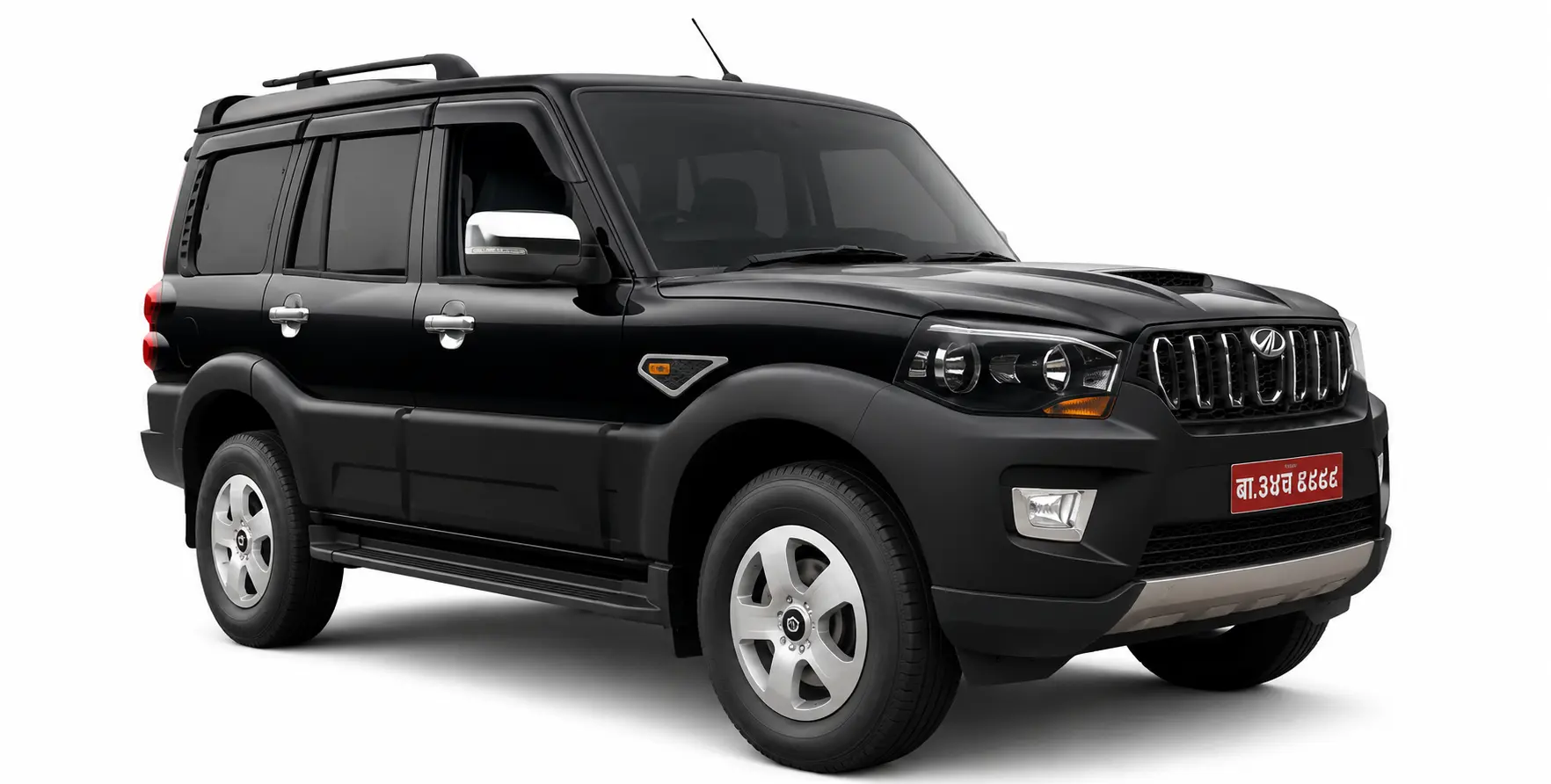
Jeep Rental with Camping Equipment in Nepal: 4WD Hire Guide

Jeep Rental Camping Equipment Nepal

Jeep Rental Camping Equipment Nepal— Complete 4WD Hire Guide

Nepal’s mountain camping circuit — from the Annapurna Conservation Area’s high campsites to the Manaslu Circuit’s glacier-edge overnight locations, from the Everest region’s classic Khumbu camping grounds to the Rolwaling Valley’s remote lakeside — offers some of the world’s finest wilderness sleeping experiences. They all share the same logistics challenge: getting camping equipment from Kathmandu or Pokhara to the trailhead road-end, where the porter team receives it for the onward carry.

Private 4WD jeep rentals for camping equipment transport are the solution professional camping operators, self-organised camping groups, scientific expeditions, and filming crews have relied on across Nepal’s camping corridors for decades.

Nepal Vehicle Hiring Pvt Ltd provides dedicated camping equipment jeep rentals across Nepal’s trekking road network—all major camping corridors, all vehicle sizes from the 4WD Scorpio to the Toyota Hiace van, roof rack provision, and return-vehicle coordination. This guide covers vehicle options and cargo capacities, route-by-route pricing, load-management best practices, camping permits, trek support vehicle concepts, and return-vehicle coordination—everything you need to plan the camping-equipment transport leg of a Nepal camping expedition.

Why Camping Equipment Needs Dedicated Jeep Rental

A full camping kit for 10 people typically includes: 3 to 5 dome or mountain tents, sleeping bags, sleeping mats, a cook tent, cooking stoves and fuel, pots and kitchen supplies, a food box, water purification, first aid, personal packs, and group safety equipment. Total volume: 300 to 500 kg packed into 15 to 25 separate bags and boxes.

This volume cannot be carried on public transport, won’t fit in a standard taxi, and requires a vehicle with enough cargo space, roof-rack capacity, 4WD capability for rough mountain approach roads, and a driver who loads fragile equipment with the care vibration-prone mountain tracks demand.

Nepal Vehicle Hiring Pvt Ltd’s camping equipment jeep rental meets all these requirements: our Scorpio and Hilux 4WD jeeps carry camping loads on all major Nepal approach roads, including the rough, unpaved sections of the Soti Khola approach, the Besisahar gorge road, and the Salleri-Phaplu BP Highway. Contact our team on WhatsApp to confirm vehicle capacity for your camping equipment volume.
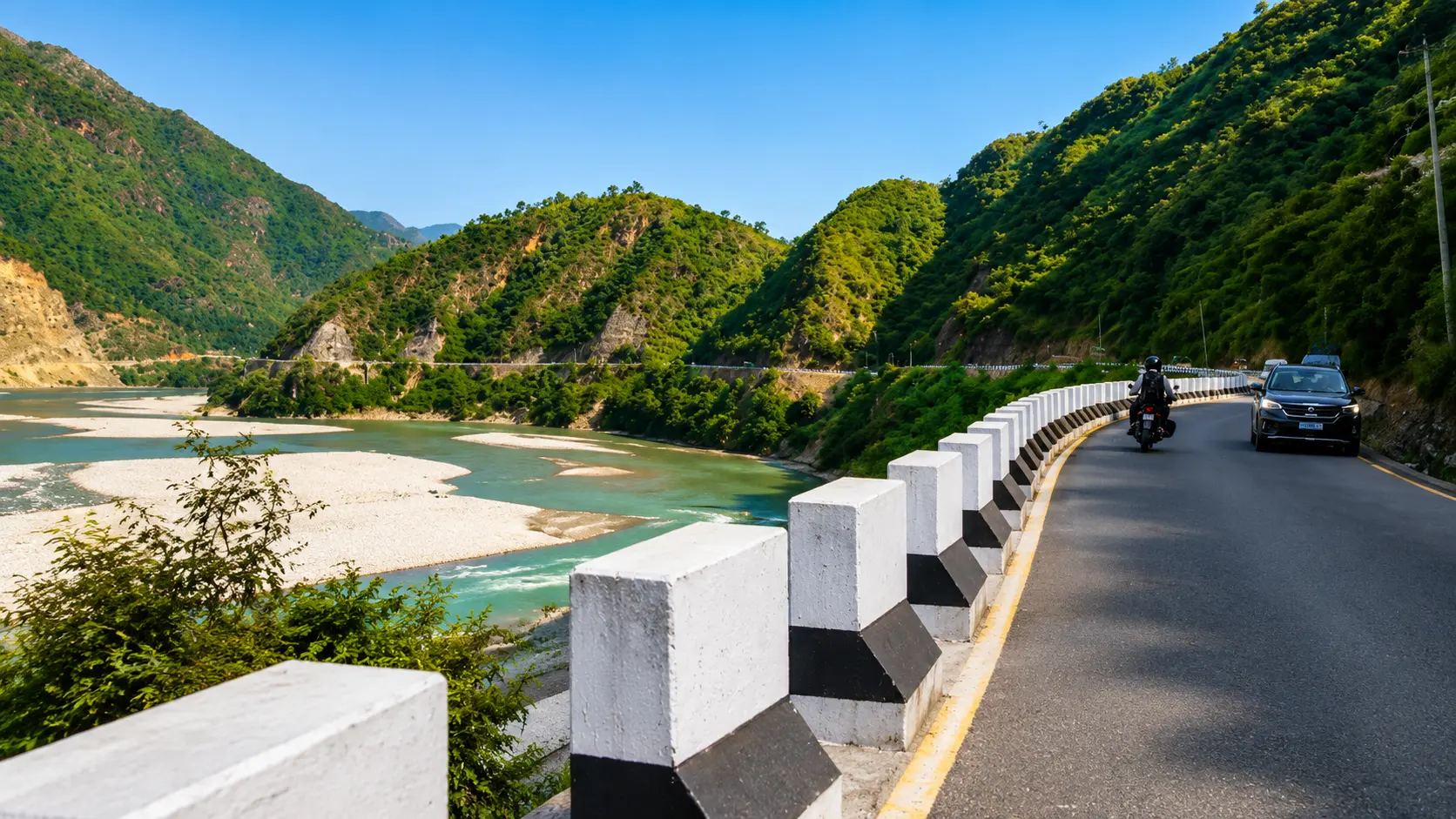
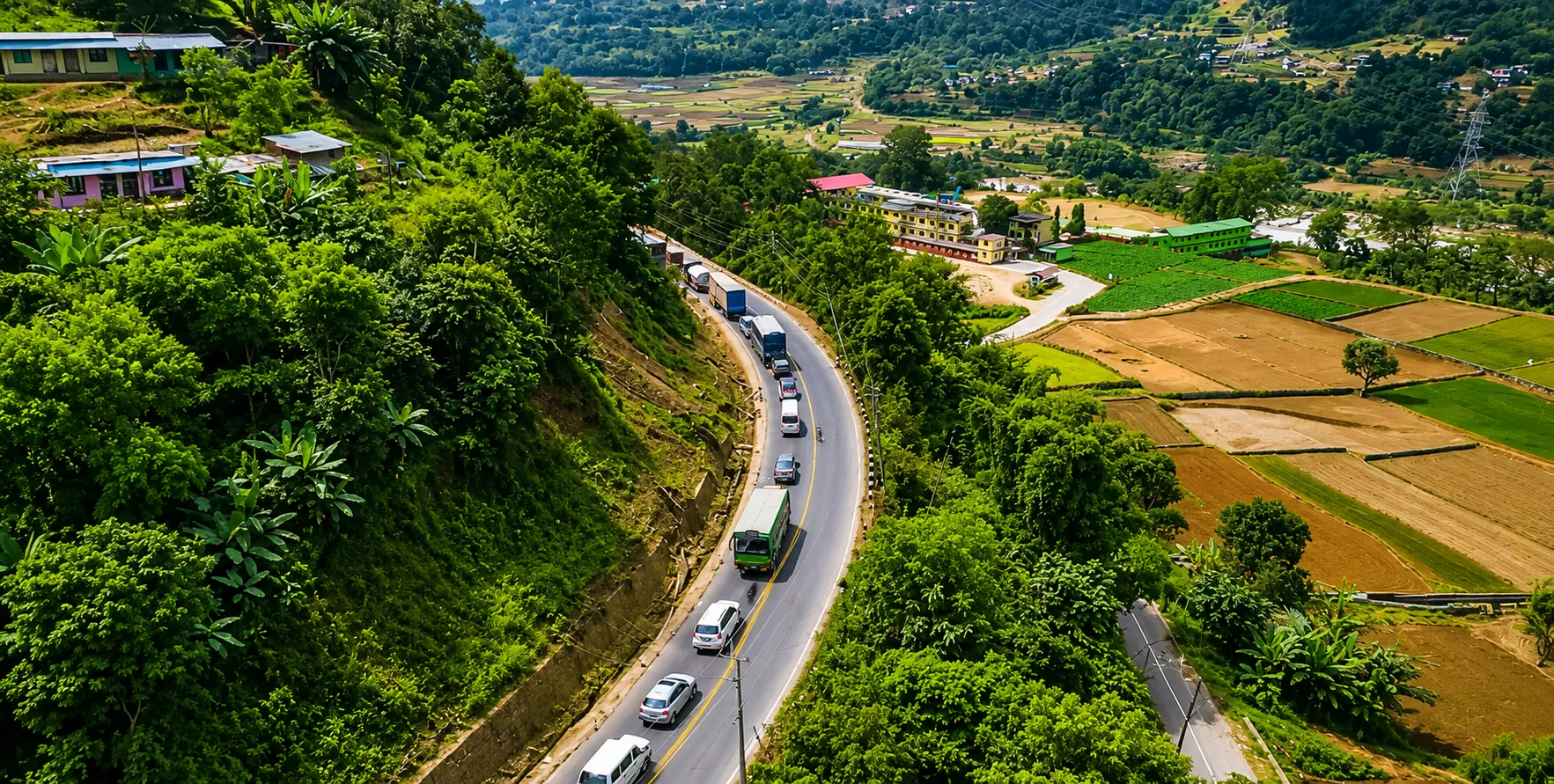
Siddhartha Highway

Nepal Camping Culture — Who Uses Camping Equipment Jeep Rentals

Nepal’s camping equipment transport market serves a diverse and growing range of client types — from the classic commercial camping trek operator who has run fully-equipped camping programmes for international clients for decades, to the new generation of domestic Nepal adventure enthusiasts who camp in their own equipment on weekend escapes from Kathmandu, to the international expedition teams who carry high-altitude climbing equipment alongside camping supplies for Himalayan peak attempts.

International commercial camping trek operators are the largest segment of Nepal Vehicle Hiring Pvt Ltd’s camping equipment jeep rental bookings. Based in Thamel, Kathmandu, and Pokhara, these operators serve clients from Europe, North America, Australia, and Asia and run multiple camping treks per season across Nepal’s major trekking corridors.

Their vehicle requirements are consistent and professionally specified: confirmed vehicle types, confirmed departure times, pre-arranged porter team coordination, and return vehicle booking for the post-trek equipment collection. Nepal Vehicle Hiking Pvt Ltd serves these operators as a reliable, consistent partner for transporting camping equipment across all seasons.

Domestic Nepal camping groups — Kathmandu-based adventure enthusiasts, university trekking clubs, corporate team-building groups, and outdoor sports communities — represent a growing segment of Nepal’s camping market. These groups typically own lightweight camping equipment (single-skin tent, down sleeping bag, lightweight stove) and need a vehicle for the approach road to their chosen camping destination.

Nepal Vehicle Hiring Pvt Ltd’s Kathmandu sightseeing car hire and private car hire serve the shorter camping approach roads domestic groups use (Nagarkot-area camping, Kakani camping, Shivapuri National Park camping approaches).

High-altitude mountaineering expeditions require the largest camping equipment loads in Nepal’s expedition market—base camp tents, advanced camp tents, fixed rope equipment, supplemental oxygen, high-altitude food, and technical climbing gear, combined with standard support-team camping supplies. Nepal Vehicle Hiking Pvt Ltd’s 4WD Hilux hire and convoy arrangements serve as expedition approach transport for Manaslu (8,163 m), Pumori (7,161 m), Island Peak (6,189 m), and other commercial mountaineering objectives.

Alpine Luxury Treks coordinates the top-end mountaineering expedition experience alongside Nepal Vehicle Hiring Pvt Ltd’s expedition transport approach.
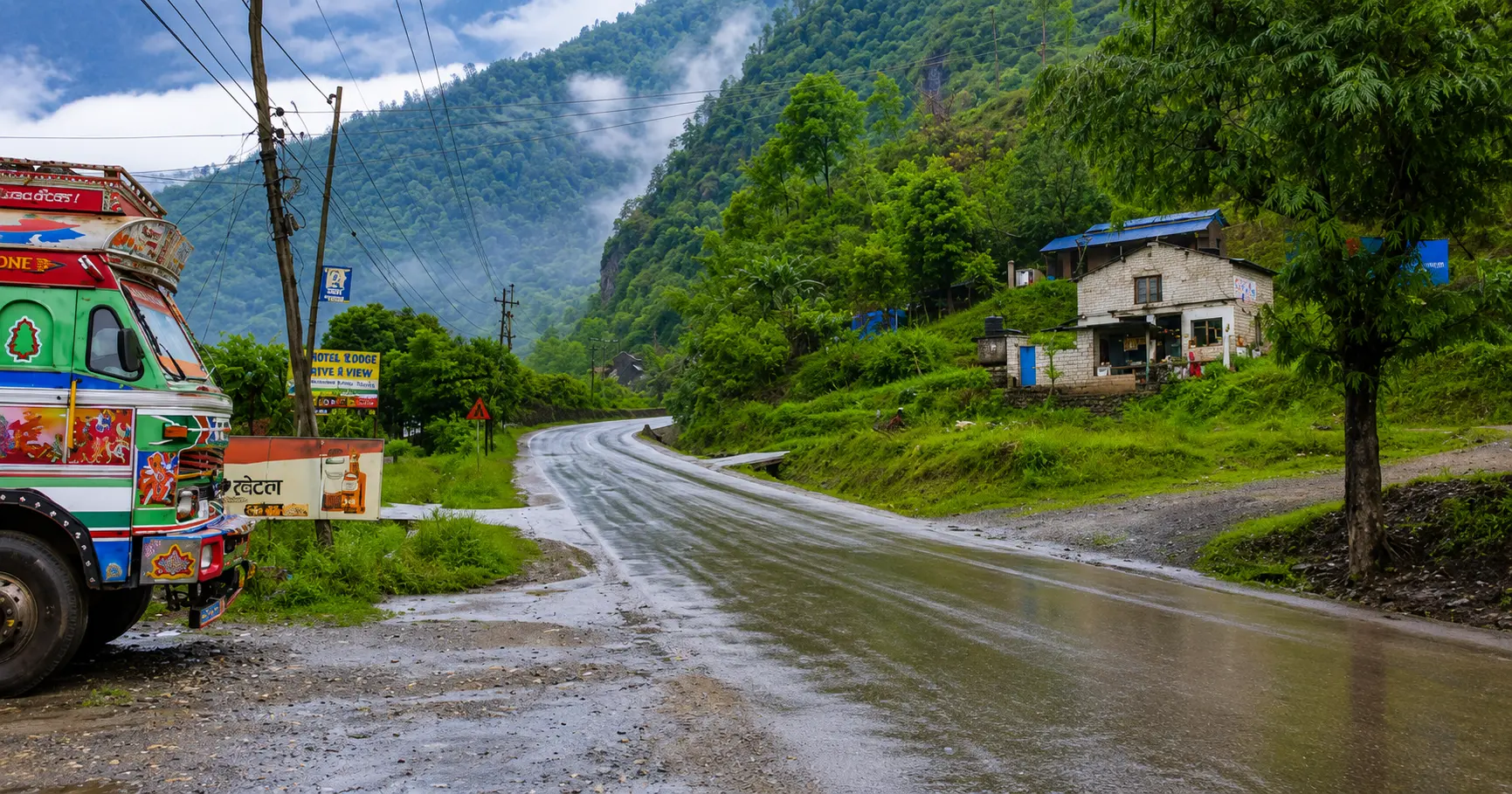
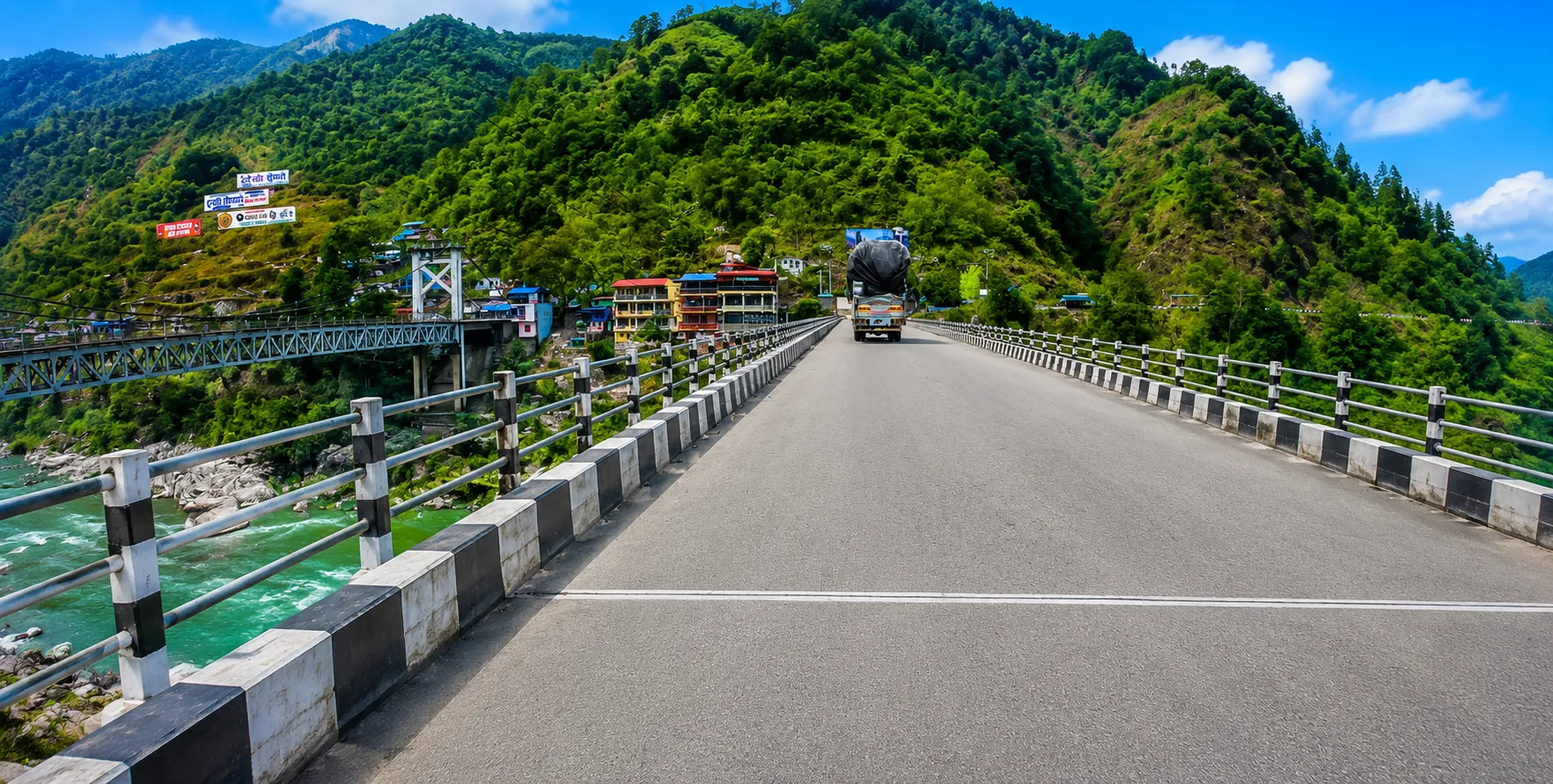
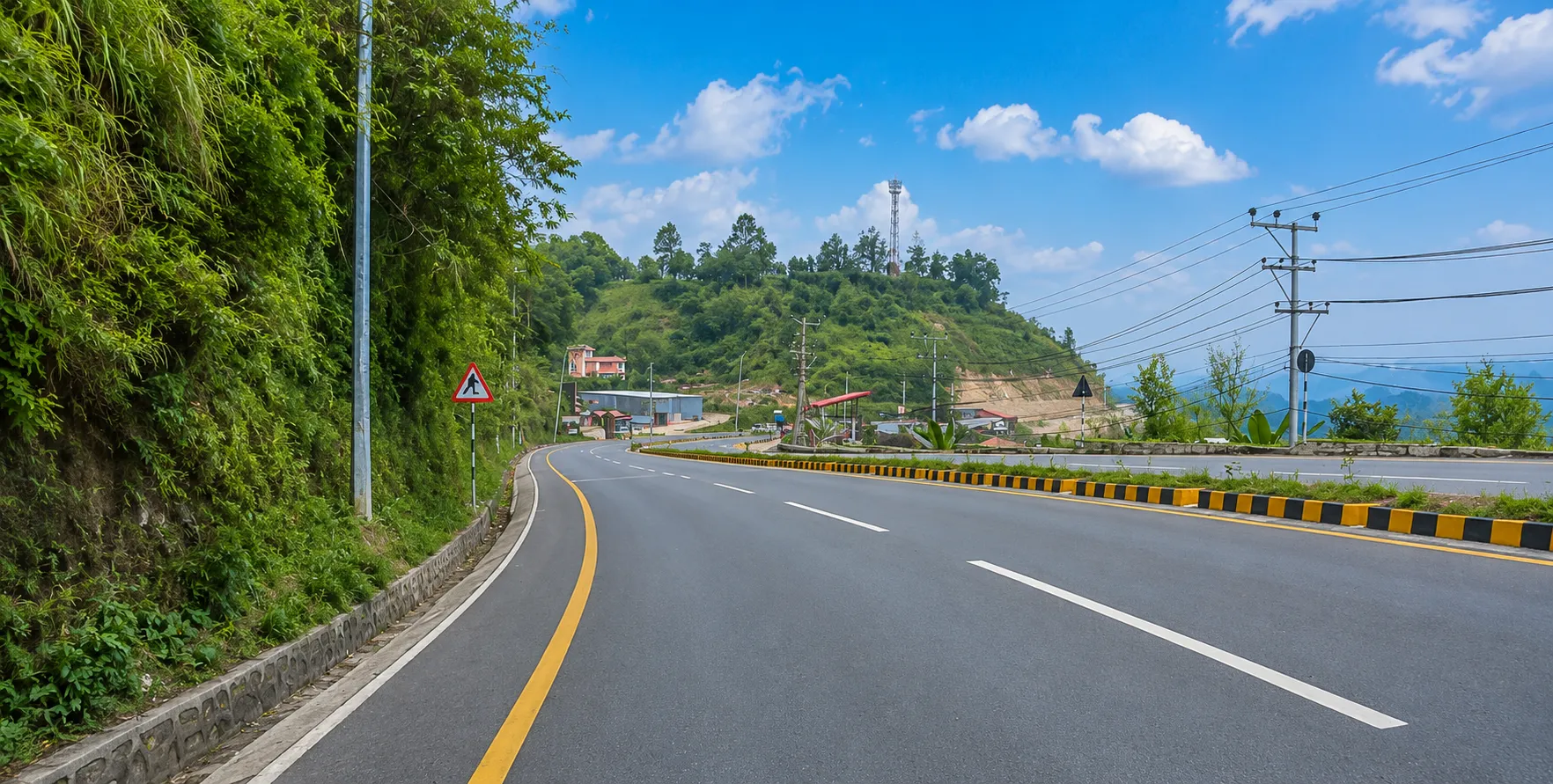
Prithivi highway road png

Vehicle Options for Camping Equipment Transport

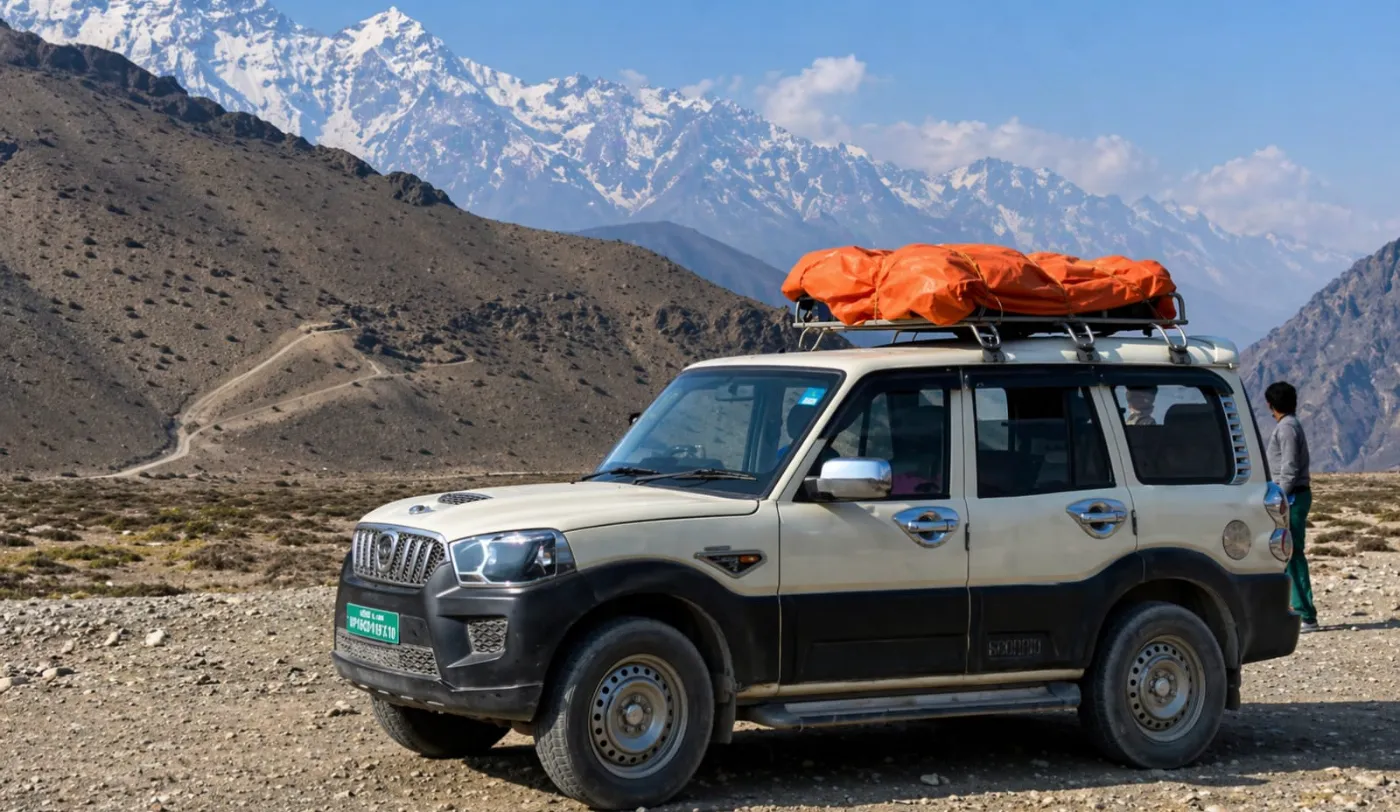
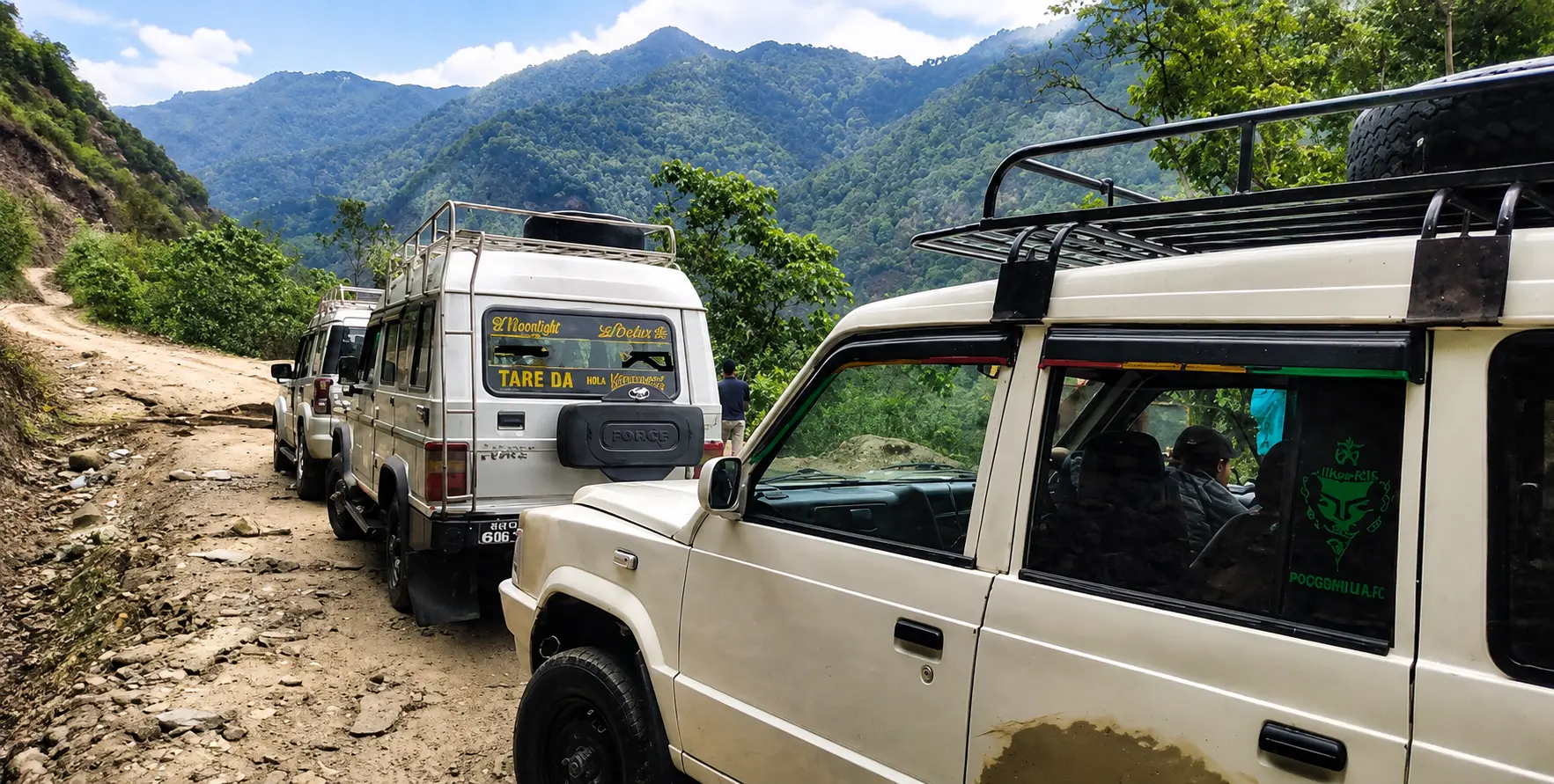
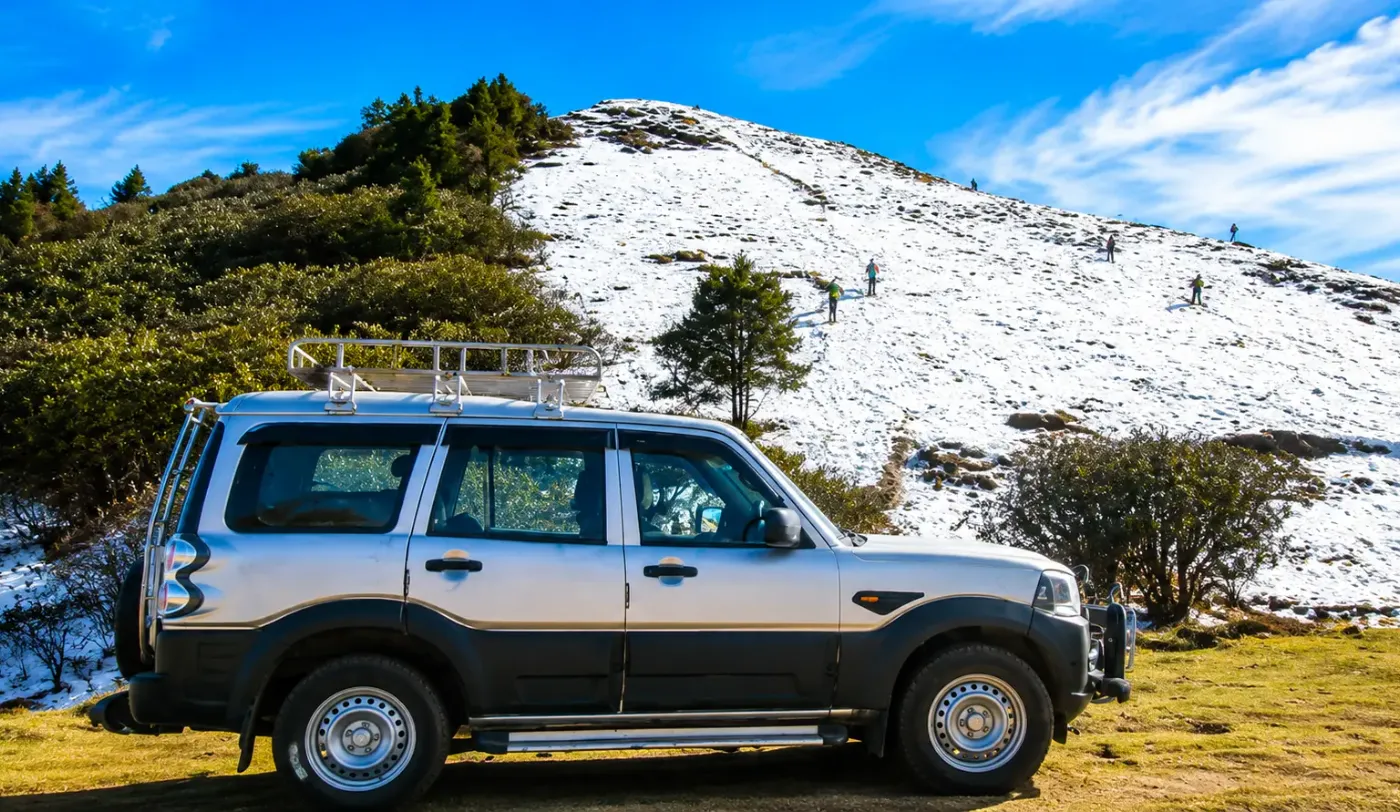
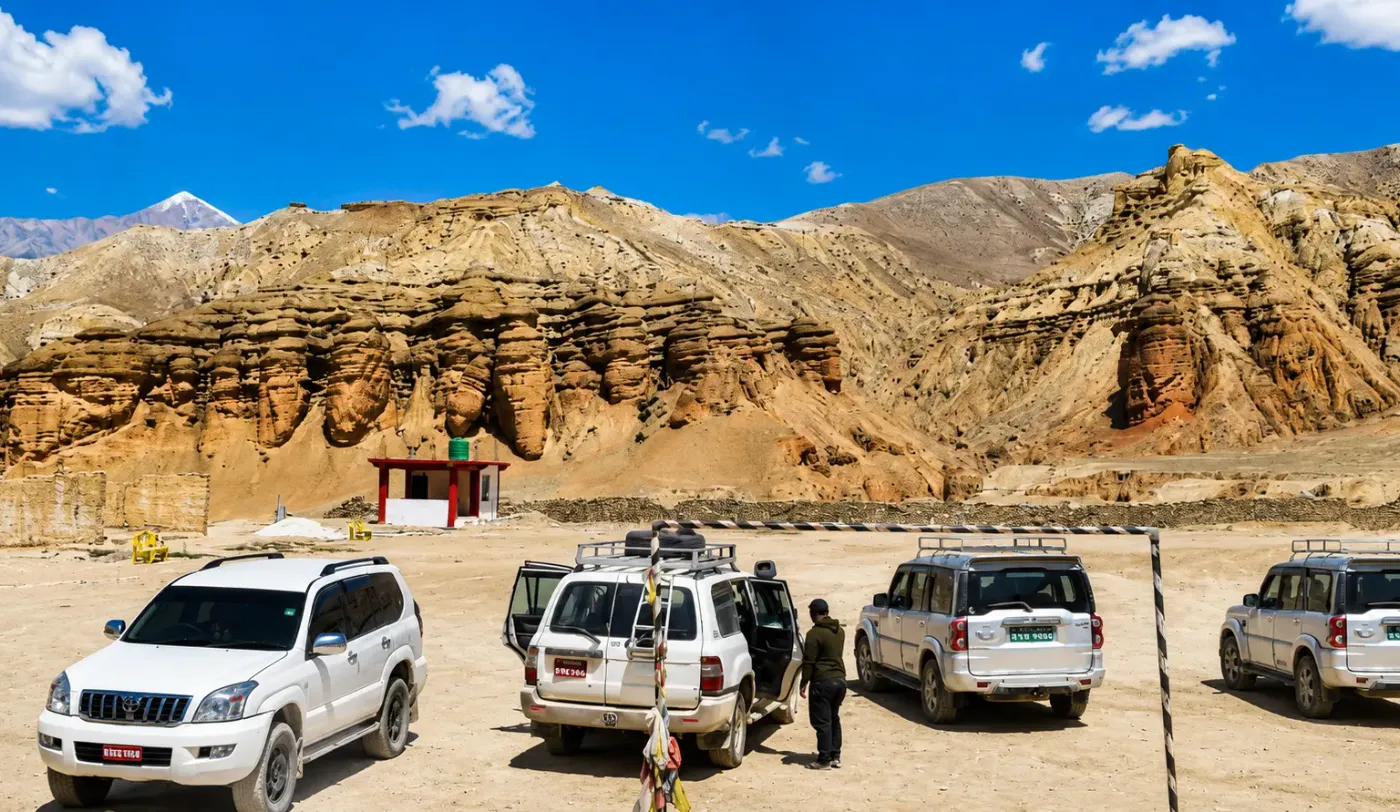
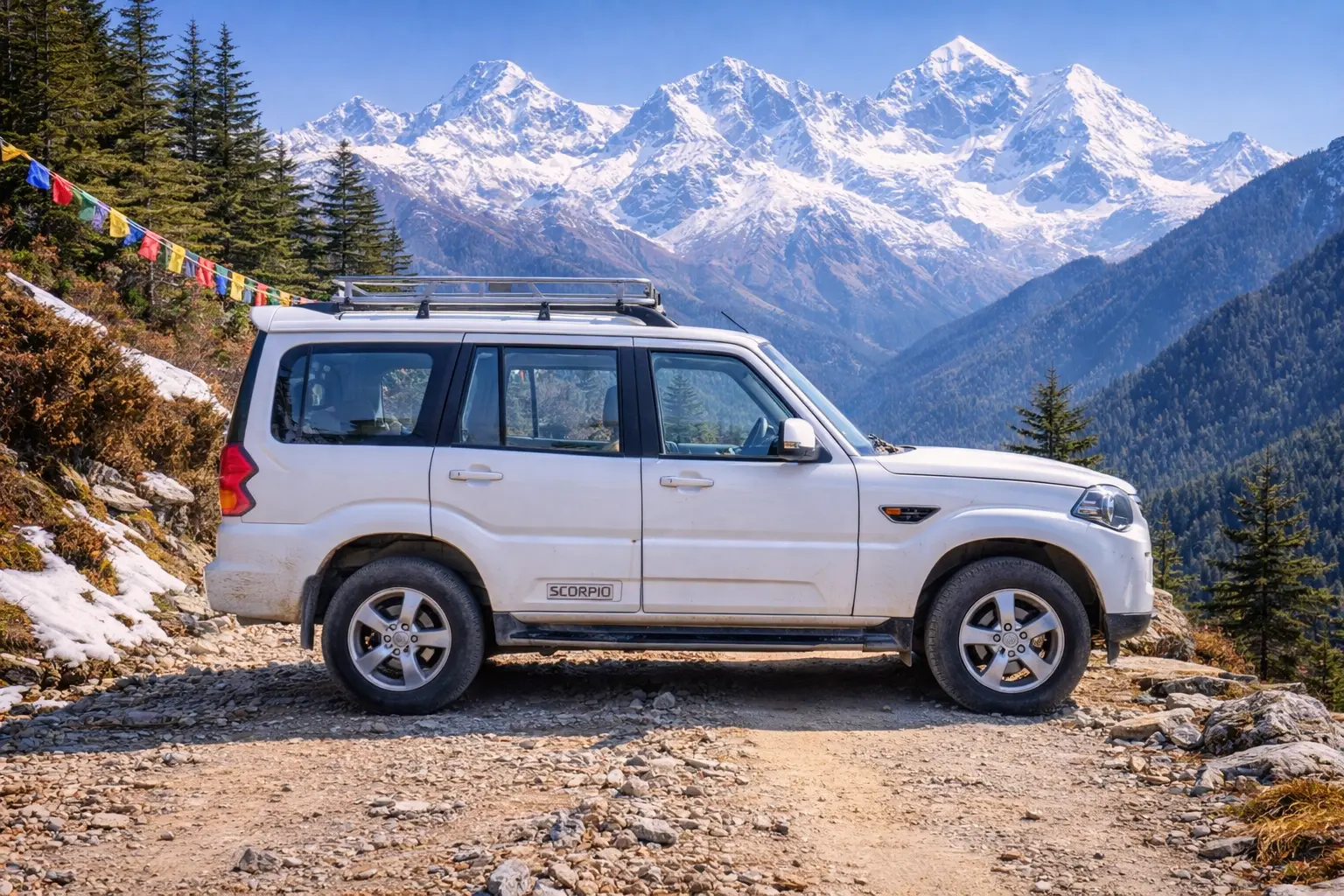
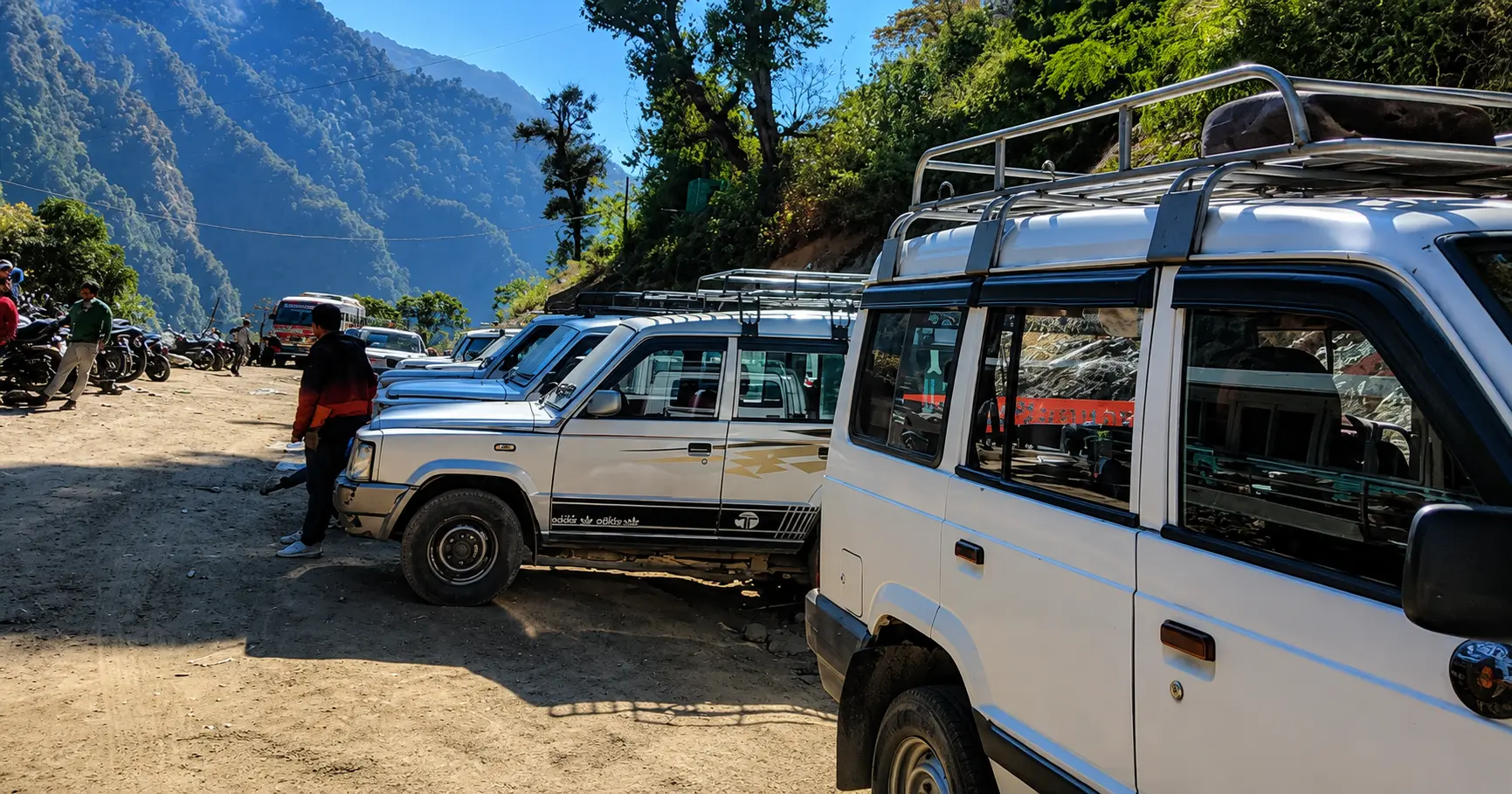
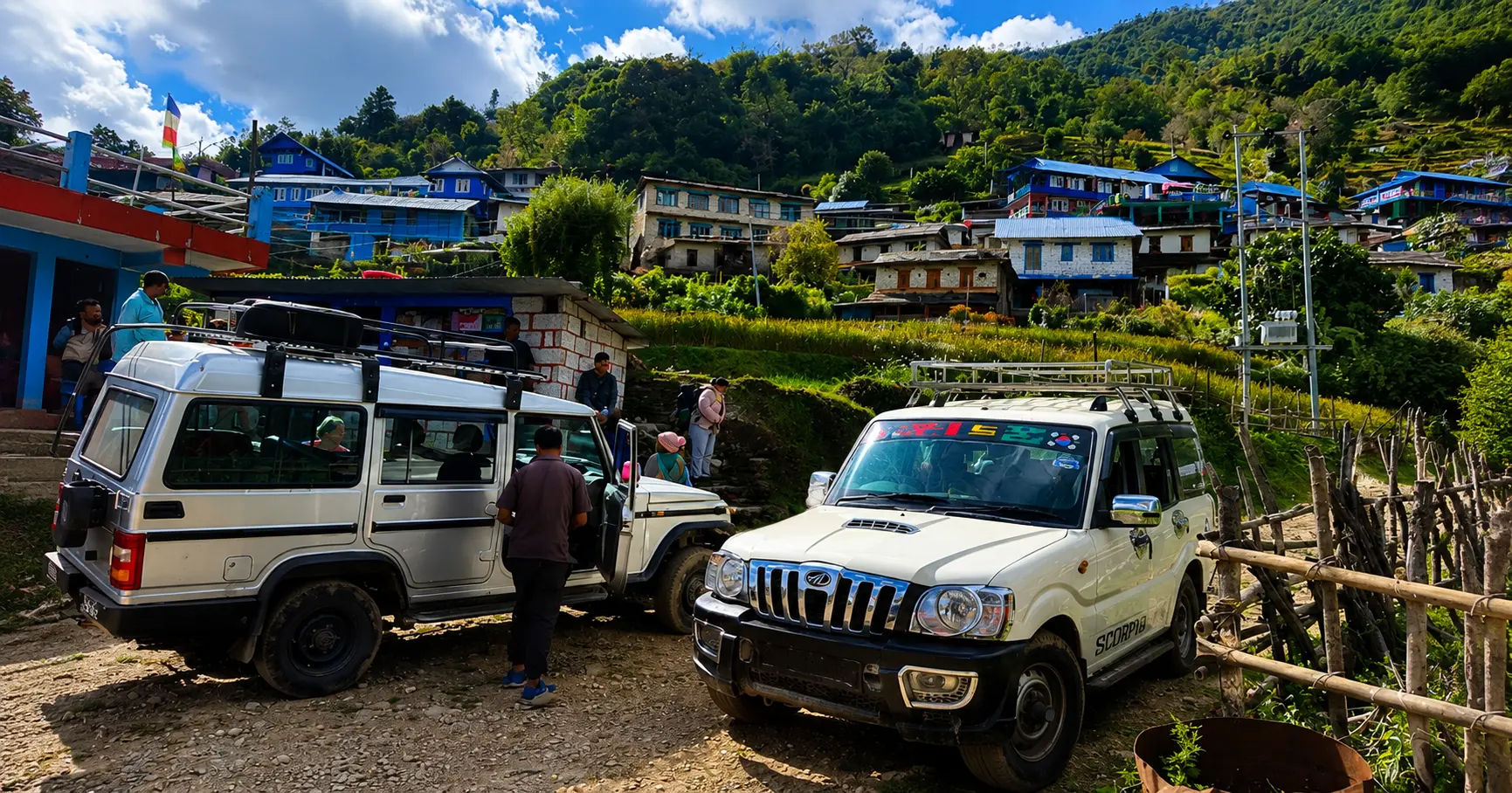
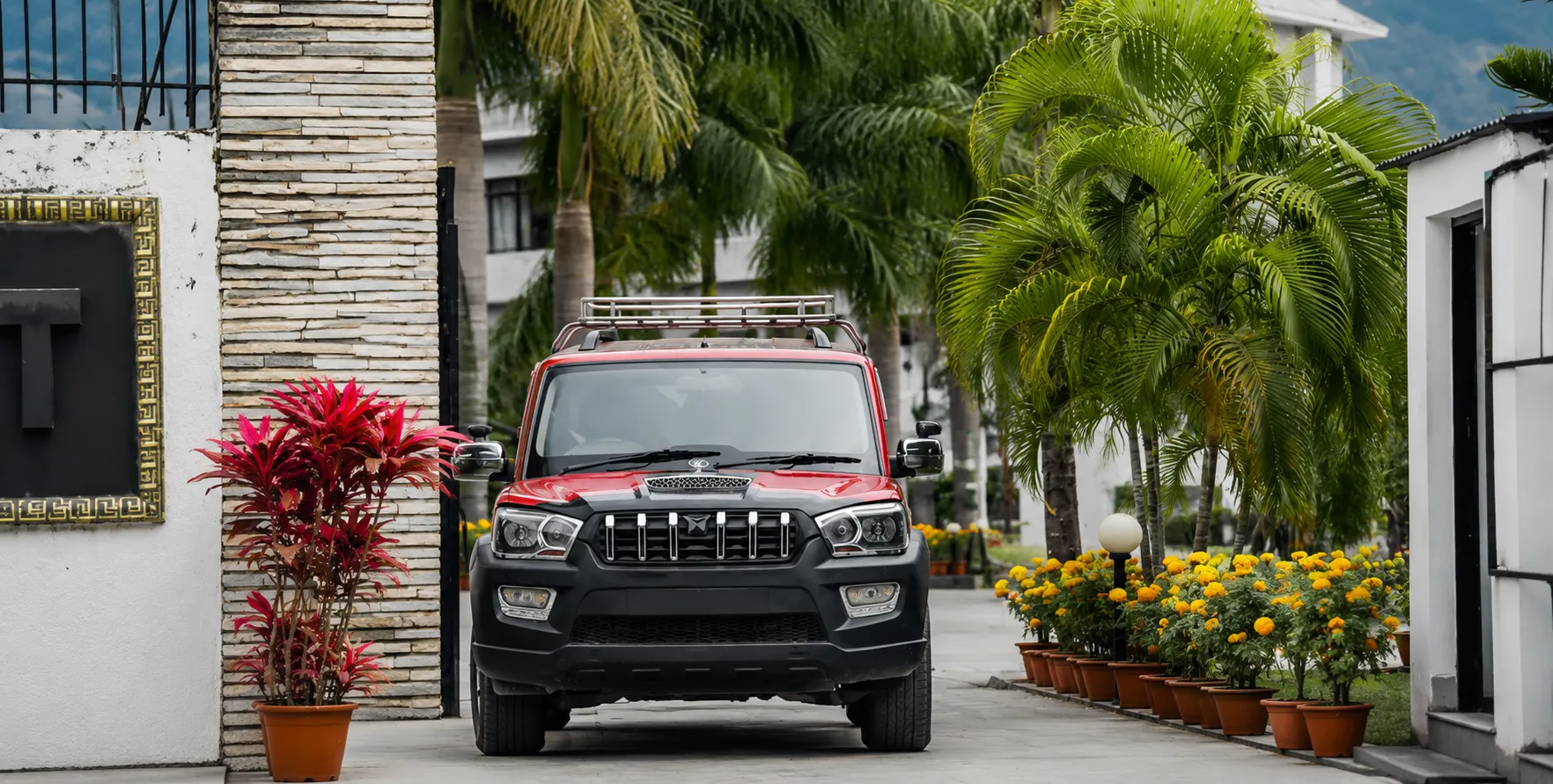
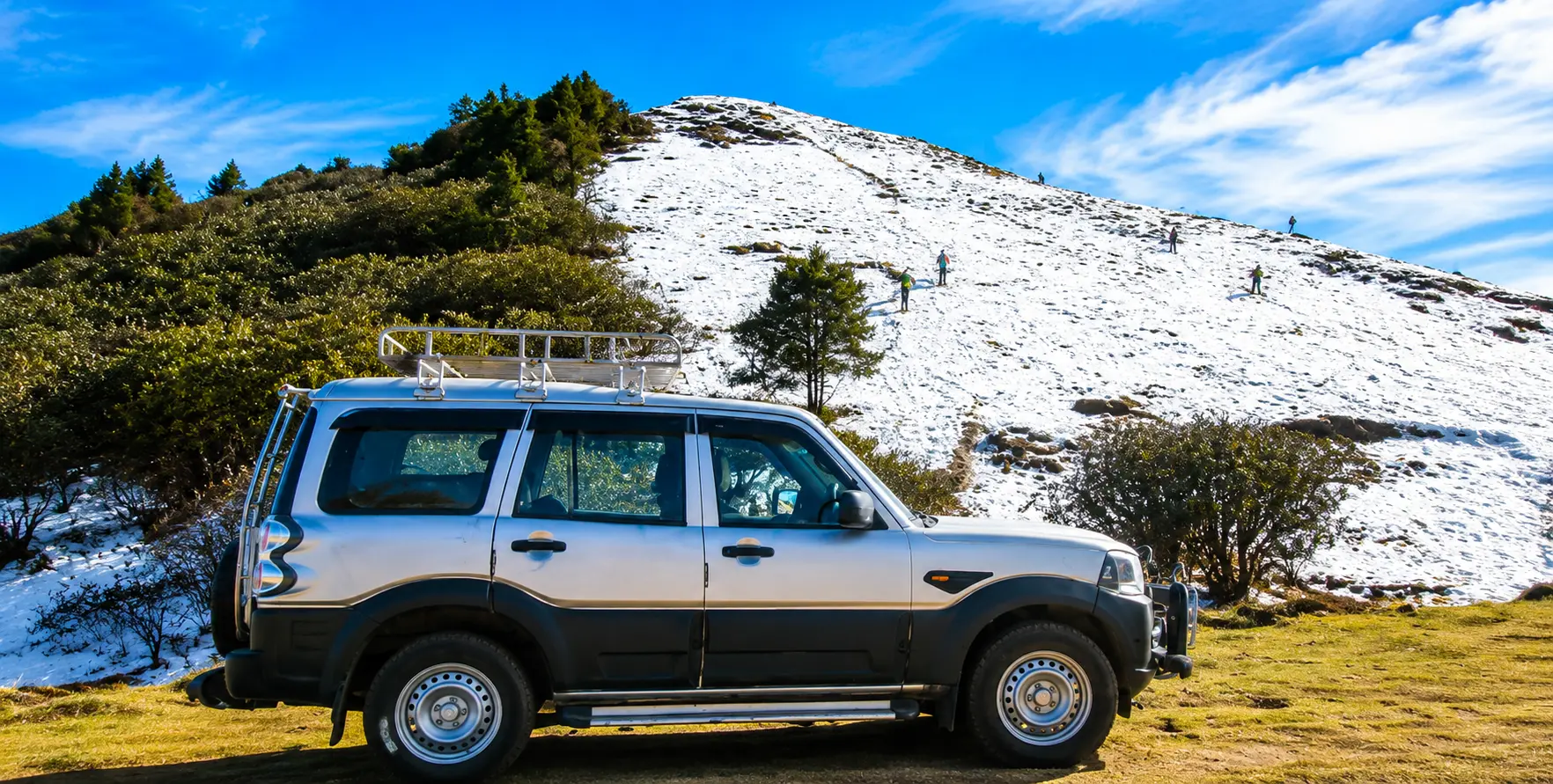
4WD Scorpio — Standard Camping Equipment Jeep. The Scorpio 4WD accommodates 8 to 10 medium duffel bags in the rear cargo area plus 150 to 200 kg on the roof rack. Best for camping groups of 4 to 6 who share one vehicle. Available on all approach roads.

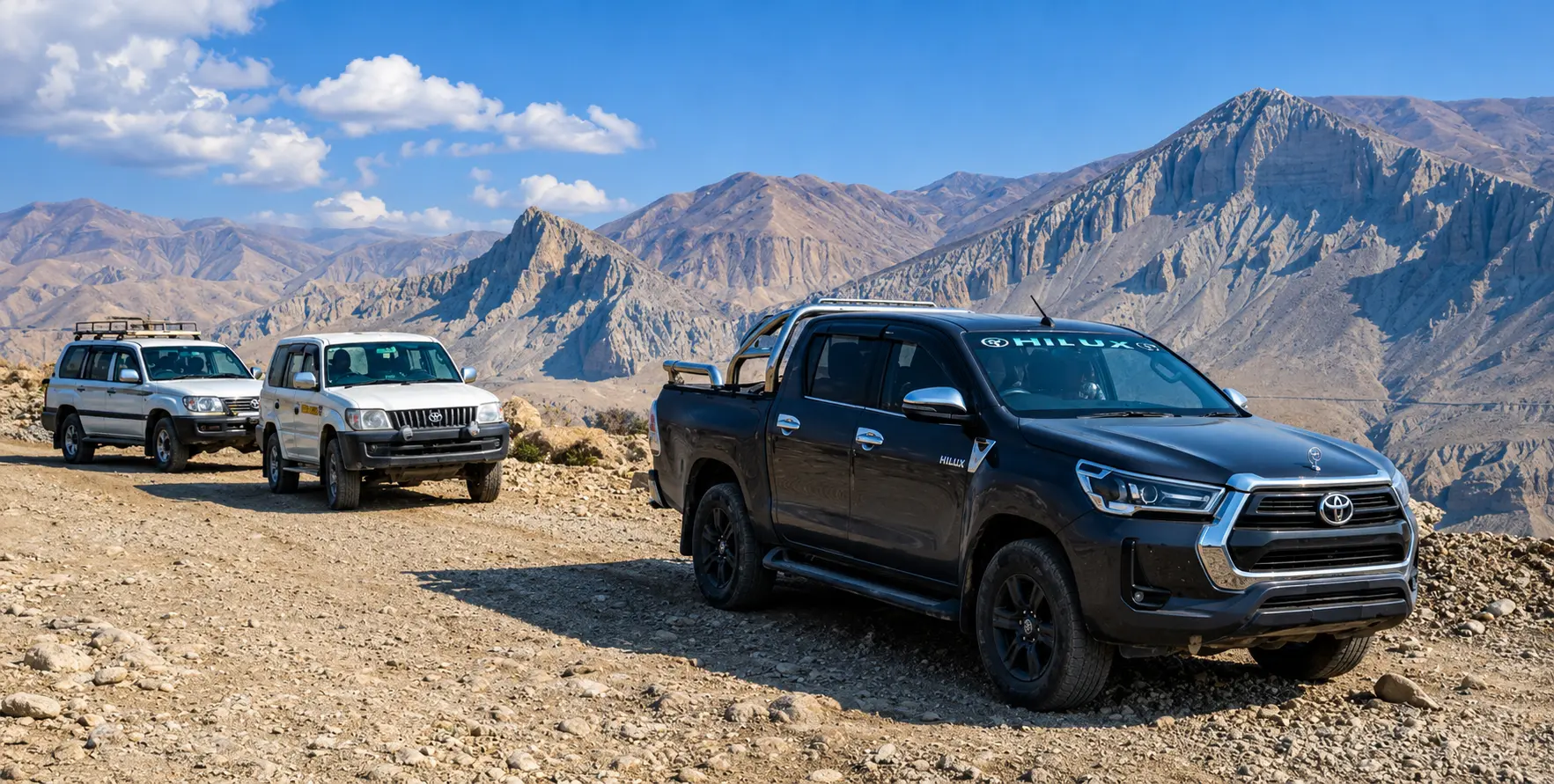
Toyota Hilux 4WD — Heavy Expedition Load. The Hilux 4WD load bed (1.5 m x 1.5 m on double cab) carries 800 to 1,000 kg — 15 to 20 standard camping duffel bags plus roof rack. Best for equipment-heavy base camp expeditions or when the camping load and passengers travel in separate vehicles.

Toyota Hiace Van — Group Camping All-in-One. The Hiace van hire with rear seats folded accommodates 10 to 12 people’s full camping equipment plus 8 to 10 seated passengers. The most cost-efficient arrangement for medium camping groups. Suitable for paved approach roads — 4WD jeep recommended for rough unpaved sections.

Multi-Vehicle Convoy. For large expeditions of 15 to 30 people, Nepal Vehicle Hiking Pvt Ltd coordinates a Hiace or coaster for passengers plus a dedicated Hilux or Scorpio for equipment — both departing together, single booking, single contact on WhatsApp.

Camping Equipment Transport Routes — All Major Nepal Camping Corridors

Annapurna Conservation Area

The Annapurna Circuit camping approach uses Kathmandu to Besisahar jeep hire (175 km, 5-7 hrs). For Annapurna Base Camp camping via Modi Khola and Ghorepani Poon Hill, the Pokhara to Nayapul transport (42 km) carries equipment. ACAP permit USD 30 required.

Manaslu Conservation Area

The Manaslu Circuit camping approach and Tsum Valley approach use Kathmandu to Soti Khola jeep hire (162 km, 7-10 hrs). 4WD mandatory on rough Arughat-to-Machha Khola section. MCAP permit USD 30 + Restricted Area Permit required for Manaslu trekkers.

Everest Region

Overland approach uses Kathmandu to Salleri-Phaplu jeep hire (280 km, 2 days). For Everest Base Camp camping expeditions and the luxury Everest lodge trek. Sagarmatha National Park permit: USD 30 required.

Langtang National Park

Camping approach via Pasang Lhamu Highway to Dhunche/Syabrubesi using Kathmandu to Dhunche jeep (117 km). Langtang Valley camping and Helambu circuit — confirm current road status afterwards. Langtang NP permit US:D 30.

Rolwaling Valley

The Rolwaling Valley camping approach via BP Highway and Tamakoshi via Valleyo Shigati (135-145 km, 5-7 hrs by private jeep)—restricted Area Permit required.

Upper Mustang and Muktinath

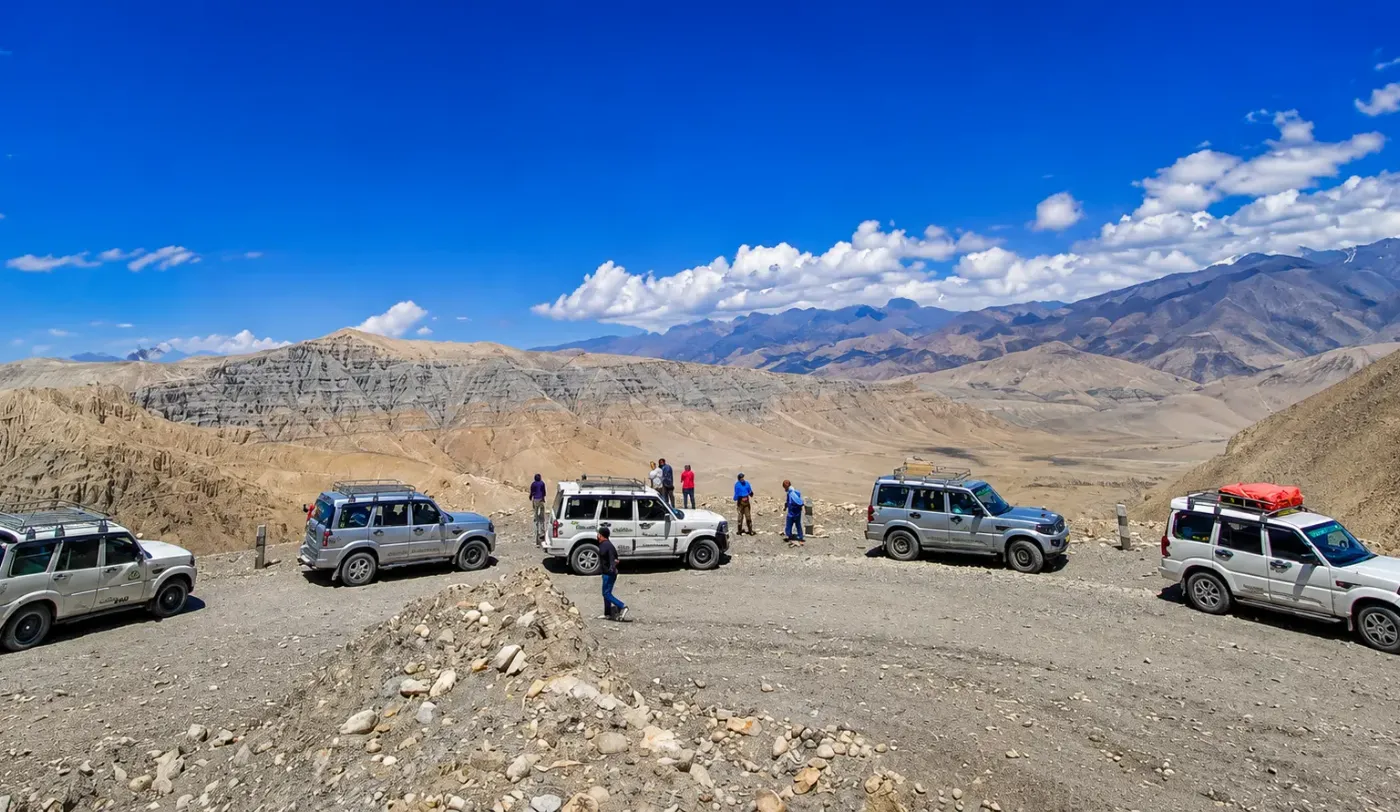
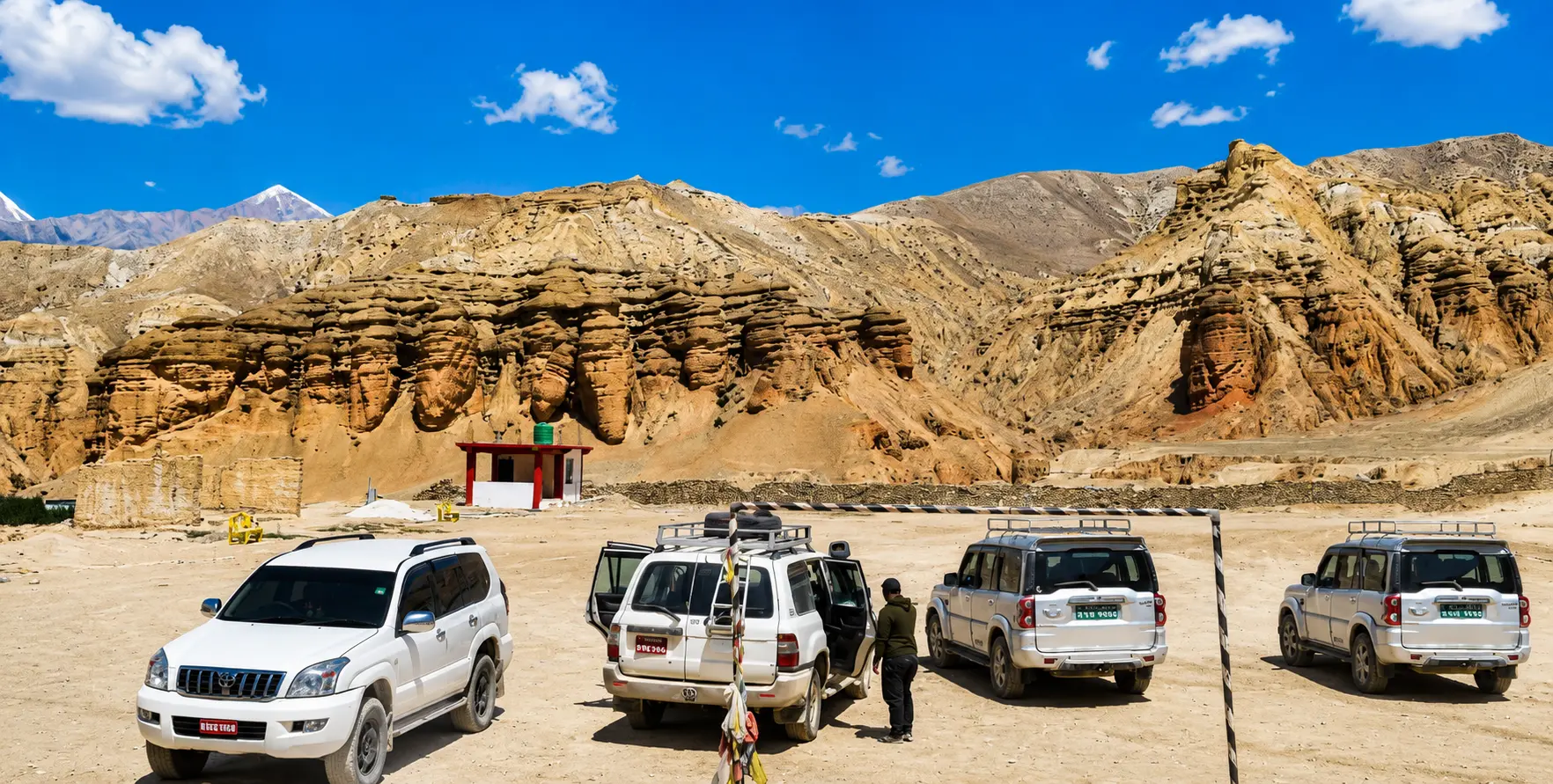
The Upper Mustang camping approach uses a Pokhara to Jomsom jeep hire (145 km, 7-9 hrs through the Kali Gandaki Gorge). Upper Mustang RAP USD 500 per 10 days. Licensed guide mandatory.

Kanchenjunga Base Camp

The Kanchenjunga Base Camp camping approach via BP Highway to Taplejung (540-640 km, 2-3 days) uses Nepal Vehicle Hiring Pvt Ltd’s eastern Nepal private jeep hire — one of the longest camping equipment transport routes in Nepal.

Cargo Capacity — Practical Numbers for Planning

Scorpio 4WD with roof rack: Interior cargo: approx. 560 litres. Roof rack: 150-200 kg of weatherproof bags. Max camping load (3-4 passengers): 10-13 duffel bags + roof items.

Book Scorpio jeep hire.

Hilux 4WD load bed: Open load bed: 1.5 m x 1.5 m. Total capacity: 800-1,000 kg (15-20 camping duffels). Ideal for equipment-only deployment when passengers travel in a separate Hiace van.

Hiace Van (rear-converted): Full interior floor space: approx 8,000-9,000 litres. Accommodates full camping kit for 10-12 people plus 8-10 seated passengers—best value for medium groups on paved approach roads—Book Hiace van hire.

For volume beyond a single vehicle’s capacity, Nepal Vehicle Hiring Pvt Ltd coordinates a convoy of Hiace and Scorpio as one booking. Contact our team on WhatsApp.

Load Management — Protecting Camping Equipment on Nepal Roads

Loading sequence: Heavy base items first (kitchen boxes, food supplies, water containers). Tent bags and sleeping bag sacks on top — they compress into irregular spaces; fragile items (electronics, solar panels, cameras) in the cabin, not the cargo area.

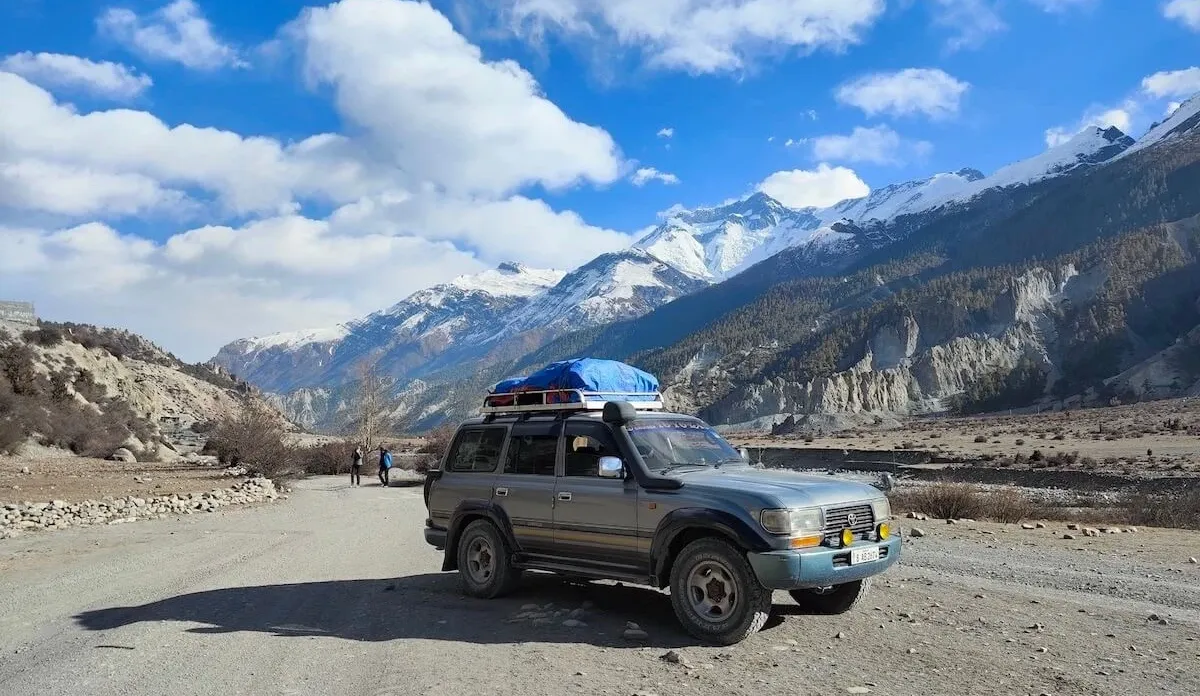
Roof rack discipline: Only waterproof bags and weatherproof duffels on the roof rack — mountain roads pass through unpredictable weather. Nepal Vehicle Hiring Pvt Ltd’s 4WD jeep fleet includes ratchet tie-down straps — confirm at booking.

Fuel canister handling: Pressurised fuel canisters (for camping stoves) should be stored upright in ventilated bags rather than compressed between other items. Our drivers are briefed on the specific handling requirements of fuel and pressurised camping equipment.

Driver briefing: All Nepal Vehicle Hiring Pvt Ltd camping equipment transport drivers receive a pre-departure briefing on the load’s fragile items and the approach-road sections where vibration management (speed reduction on rough sections) protects equipment integrity.

Camping Equipment Jeep Rental Price Guide

Kathmandu to Besisahar (Annapurna Circuit, 175 km): Private Scorpio with camping load: NPR 18,000-25,000 (USD 135-188). Hiace with passengers + equipment: NPR 22,000-30,000. Convoy (Hiace + Scorpio): NPR 38,000-50,000.

Kathmandu to Soti Khola (Manaslu/Tsum Valley, 162 km): Private 4WD jeep with camping load: NPR 22,000-32,000 (USD 165-240). Rough road top-end applies from Arughat.

Kathmandu to Salleri-Phaplu (Everest, 280 km, 2 days): Private Scorpio per day: NPR 22,000-45,000 (USD 165-300). 2-day total: NPR 44,000-70,000.

Pokhara to Nayapul (ABC/Poon Hill, 42 km): Private jeep with camping load: NPR 5,000-9,000 (USD 37-68).

Pokhara to Jomsom (Mustang, 145 km): Private jeep with camping equipment: NPR 22,000-40,000 (USD 165-280).

Per-day jeep hire with full camping load: Scorpio: NPR 16,000-26,000 (USD 120-195). Hiace van: NPR 22,000-32,000 (USD 165-240). All prices include driver, fuel, and tolls.

Contact Nepal Vehicle Hiking Pvt Ltd on WhatsApp for a specific quote.

Camping Equipment Jeep Rental for Different Expedition Types

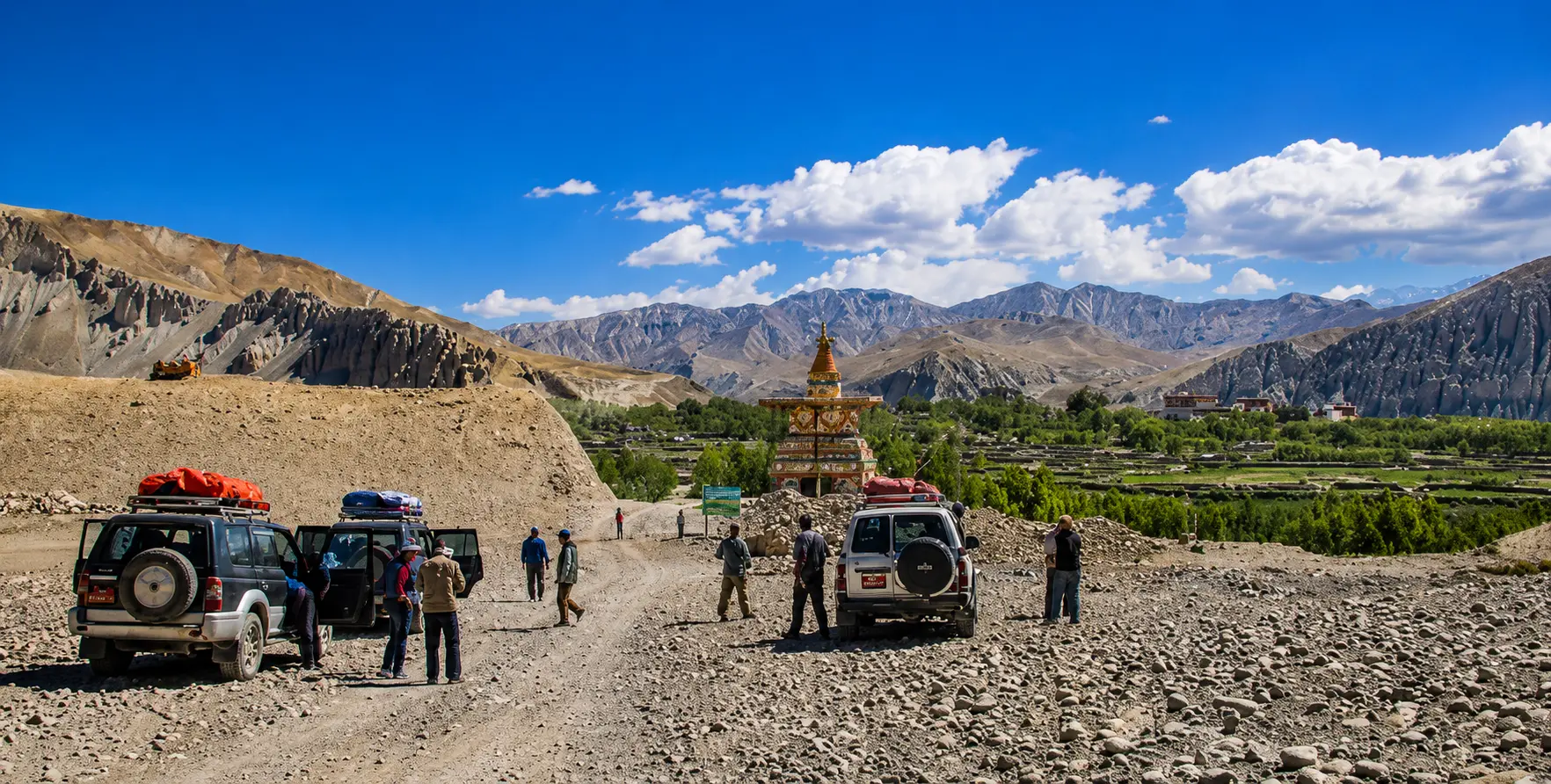
Commercial Camping Trek Operators. Nepal trekking agencies running camping programmes use Nepal Vehicle Hiking Pvt Ltd’s jeep rental as their standard approach-day vehicle for camping equipment. We load kitchen boxes and tent bags at Thamel storage and deliver them to the road-end for porter handover.

Repeat operator bookings are managed through our plan trip page. Alpine Luxury Treks and Trek Nepal Himalayas’ Manaslu Circuit and Annapurna Circuit camping packages use Nepal Vehicle Hiring Pvt Ltd transport.

Self-Organised Camping Groups. Independent groups with their own equipment use our camping jeep rental for transfers from hotel to trailhead. Our team advises on the right vehicle size for your equipment volume and confirms current road conditions.

Film and Documentary Production. Camera crews need to transport camping gear alongside fragile production equipment—a load mix our vibration-aware 4WD Hilux hire handles specifically, with cabin placement for electronics and careful descent-speed management on rough sections.

Scientific and Research Expeditions. Glaciological teams, biodiversity surveys, and geological field parties combine camping supplies with instrument loads—our Hilux cargo capacity and multi-week deployment reliability support extended remote expeditions.

Camping Permits for Nepal’s Protected Areas

Sagarmatha National Park (Everest): USD 30 per person. Required for all Everest region camping. Obtainable in Kathmandu or at Monjo checkpoint.

Annapurna Conservation Area (ACAP): USD 30 per person. Required for all Annapurna Circuit and ABC camping. Obtainable at Besisahar or Pokhara ACAP office.

Manaslu Conservation Area (MCAP): USD 30 per person + Restricted Area Permit USD 100/week (high season). Required for all Manaslu Circuit camping. Licensed guide mandatory.

Langtang National Park: USD 30 per person. Required for Langtang, Gosaikunda, and Helambu camping zones.

Upper Mustang RAP: USD 500 for 10 days, USD 50 per additional day. Nepal’s most expensive camping permit for the Upper Mustang restricted zone north of Kagbeni. Licensed guide mandatory.

Nepal Vehicle Hiring Pvt Ltd’s contact team advises on permit requirements for any camping corridor at booking. All permits should be obtained in Kathmandu before the vehicle departs — no permits available at field checkpoints.
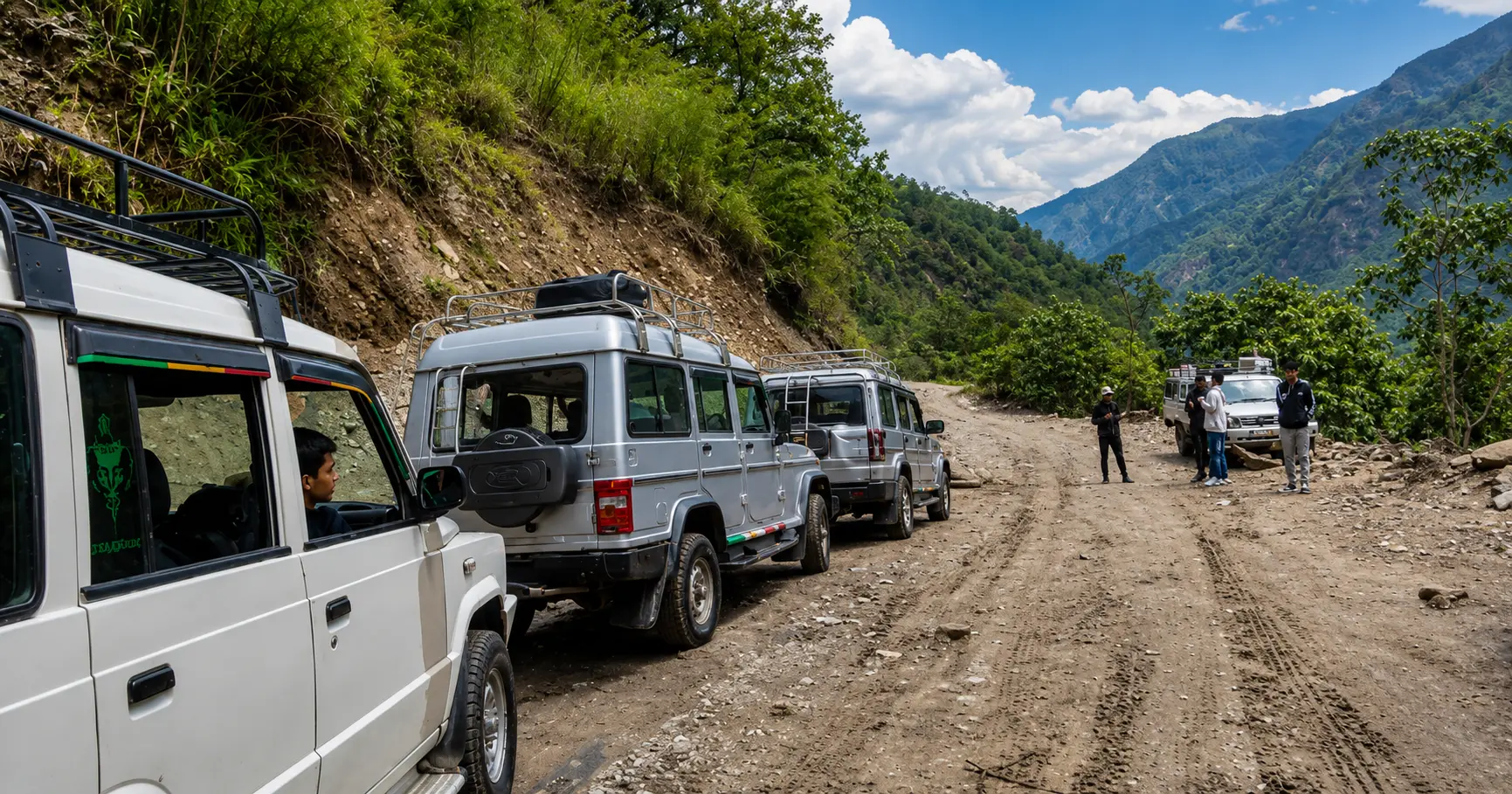
Jeep Rental Camping Equipment Nepal

Trek Support Vehicles — The Camping Jeep as Base Camp Logistics

For fully supported camping treks where the operator provides the complete camping kit, the trek support vehicle concept extends beyond a simple road-end drop: the jeep may serve as an advance vehicle (kitchen team departs one day early to establish the first camp), a mid-trek resupply vehicle, or an emergency evacuation vehicle positioned at the road-end throughout the expedition.

Alpine Luxury Treks uses Nepal Vehicle Hiring Pvt Ltd’s dedicated trek support jeep hire for all its camping programmes—the support vehicle stays at the road end from trek start to end for both kitchen team advance deployment and emergency evacuation backup. Trek Nepal Himalayas’ camping-supported trekking packages similarly coordinate all equipment transport through Nepal Vehicle Hiring Pvt Ltd.

Camping in Nepal’s National Parks — Zone-Specific Guidance

Nepal’s national parks and conservation areas each have designated camping zones—locations where overnight camping by trekking groups is officially permitted and where facilities (water sources, fire rings, toilet zones) are established by park management. Knowing the camping zone locations for your route ensures you unload your camping equipment at the correct road end for the designated campsite approach trail.

In Sagarmatha National Park, the designated camping sites include Namche Bazaar campground (for groups entering the Khumbu on the standard Everest Base Camp route), the Tengboche camping area, and the Base Camp zone itself. Camping at Base Camp and above requires the Sagarmatha National Park high-altitude camping permit in addition to the standard entry permit.

Equipment for the Base Camp zone travels from Kathmandu to Salleri-Phaplu by jeep hire to the overland road end, or by Lukla flight for groups using the air approach, with Nepal Vehicle Hiking Pvt Ltd covering the Kathmandu airport transfer and the Kathmandu sightseeing pre-trek days for all Everest camping groups.

In the Annapurna Conservation Area, the official camping sites on the Annapurna Circuit trek include the Marsyangdi riverside sites in the lower gorge, the Manang camping area at 3,519 m, the Thorong Phedi high camp, and the descent valley sites on the Mustang side. For Annapurna Base Camp camping groups, the designated camping sites run from Chhomrong through the Modi Khola valley to the Annapurna Base Camp glacier area at 4,130 m.

All ABC camping equipment travels via Pokhara to Nayapul private vehicle hire — our most frequently booked short-distance camping equipment transport route.

In Manaslu Conservation Area, the permitted camping zones on the Manaslu Circuit run from Soti Khola northward through Machha Khola, Jagat, Deng, Namrung, Sama Gaon, and the Larkya La approach at Dharamsala (4,460 m). The Soti Khola camping equipment jeep hire delivers you to the trailhead, from which the full Manaslu camping corridor is accessible on foot with a porter team.
Jeep Rental Camping Equipment Nepal

Camping Equipment Transport for Filming and Photography Expeditions

Nepal’s extraordinary mountain landscape has drawn professional photographers, documentary filmmakers, and content production teams for decades — and transporting professional equipment alongside camping gear requires specific vehicle and handling arrangements that Nepal Vehicle Hiring Pvt Ltd provides for production clients.

A typical documentary production camping package includes: camping equipment for the crew (10 to 15 people), production cases for camera bodies, lenses, and accessories, sound equipment cases, lighting equipment for interview setups, drone equipment (batteries, controllers, spare propellers), satellite communication equipment, portable solar charging arrays, and editing equipment for rough-cut review in the field. Combined equipment value of USD 100,000 to 500,000 or more — a load that requires not just the cargo volume of a Hilux 4WD or Toyota Hiace but the specific vibration-aware driving technique that protects high-value electronics on Nepal’s rough mountain roads.

Nepal Vehicle Hiring Pvt Ltd’s production equipment transport approach includes: keeping all electronics in padded cases in the cabin rather than the cargo area; reducing speed on the rough sections of each approach road where vibration is highest; and briefing the driver before departure on the specific production equipment categories and their handling requirements. Production clients also use our Kathmandu airport VIP transfer service for initial equipment arrival from international flights, coordinating cargo customs clearance timing with private vehicle hire for same-day airport-to-production-base transfer. The Kitchen Tent and Cook Team — First Vehicle Priority

In a fully supported camping trek, the kitchen team—the cook, assistant cook, and kitchen hand—are the most time-critical members of the expedition. They need to arrive at the road end and reach the first campsite before the main trekking group, giving them enough time to pitch the cook tent, set up the kitchen station, prepare the evening meal, and have it ready when the trekking group arrives.

The advance camping equipment jeep hire for the kitchen team—departing Kathmandu one day or a half-day before the main group—is one of Nepal Vehicle Hiking Pvt Ltd’s most precisely timed transport bookings.

The advance kitchen jeep carries: cook tent, kitchen box, food supplies for the first several days, stoves and fuel, washing-up equipment, and the kitchen team’s personal bags. This vehicle departs on a tighter timeline than the main equipment vehicle — the kitchen team must arrive at the road end early enough to reach the first campsite, set up the kitchen, and begin cooking before the trekking group arrives in the late afternoon.

Our team coordinates the kitchen advance vehicle departure time as part of the complete camping equipment transport booking — confirming the departure time based on the trek group’s first-day walking distance to the first campsite. Contact us on WhatsApp to arrange the kitchen vehicle in advance.
Jeep Rental Camping Equipment Nepal

The Return Equipment Vehicle — Don’t Forget the Trek Out

The return equipment vehicle — collecting the camping gear from the road-end after the trek completes — is the most commonly overlooked element of the camping jeep rental arrangement. A group that pre-arranged the outward equipment vehicle but not the return faces the real problem of finding transport at a remote trailhead after a long trek.

Nepal Vehicle Hiking Pvt Ltd pre-arranges the return vehicle as standard — the same all-inclusive pricing covers equipment collection on the confirmed return date.

Our team stays in WhatsApp contact with the trek leader throughout the expedition, confirming the actual return date and adjusting the return vehicle timing accordingly — no additional charge for date adjustments within reason. For circuit treks exiting at a different road-end (e.g. Annapurna Circuit exit at Jomsom after Besisahar entry, or Manaslu exit at Besisahar/Dharapani after Soti Khola entry), we coordinate the exit vehicle at the correct road-end as part of the outward booking.

Seasonal Planning for Camping Equipment Jeep Rentals

Nepal’s camping season follows the same weather pattern as the trekking season — with specific implications for camping equipment transport vehicle hire that differ from standard passenger transport timing.

Spring (March to May) — Peak Camping Season. Nepal’s prime camping season is spring — stable weather between the winter cold and the pre-monsoon cloud build-up produces the clearest mountain views and the most comfortable camping nights across all altitude ranges. Annapurna Circuit camping groups peak in April, Manaslu Circuit camping expeditions peak in April and May, and Everest Base Camp camping expeditions — particularly commercial mountaineering expeditions aiming for the May summit window — peak from late March through May.

For camping equipment jeep rental during this period, book at least 2 weeks ahead — multiple camping groups departing on the same trailhead approach road on the same day create vehicle competition that late bookings cannot always resolve.

Autumn (October to November) — Second Peak and Finest Weather. Post-monsoon clarity creates the finest camping weather of the year — clear cold nights, superb mountain views from high campsites, and the most stable weather patterns for multi-week expeditions. The Rolwaling Valley camping and Kanchenjunga Base Camp expeditions are particularly fine in October-November. Camping equipment and jeep hire for the autumn season — book 1 to 2 weeks ahead.

Monsoon (June to September) — Special Considerations. A small number of specialist operators offer monsoon camping in Nepal—particularly those serving scientists and researchers whose fieldwork cannot wait for the dry season. Transporting monsoon camping equipment by private jeep requires morning confirmation of road conditions on all mountain approach roads.

Nepal Vehicle Hiking Pvt Ltd does not dispatch camping equipment vehicles on monsoon mountain roads without current confirmation—morning landslide checks are mandatory from June to September. Contact our team on WhatsApp for monsoon camping transport status.

Winter (December to February) — Cold Camping, Reliable Roads. The main highway routes remain reliable in winter for camping equipment transport — the Besisahar approach and the Nayapul route are accessible for Hiace van and private jeep hire throughout winter. High-altitude winter camping requires specific equipment—4-season tents and down sleeping bags rated to -20°C—which adds weight and bulk to the camping load. Our team advises on vehicle size adjustments for winter-specification camping loads.

Coordinating Camping Equipment Transport with Porter Teams

The camping equipment jeep rental and the porter team are two legs of the same logistics operation—the vehicle carries the equipment to the road-end, and the porter team carries it from the road-end to the campsite. Coordinating these two legs so that the vehicle arrives at the road-end at the same time as the porter team is the most practically important logistics task for any camping expedition.

The standard coordination approach: the camping equipment jeep hire is booked to arrive at the road-end at approximately 10:00 to 11:00 AM — after a 5:30 to 6:00 AM departure from Kathmandu for the Besisahar corridor (5 to 7 hours’ drive), or a 7:00 AM departure for the Soti Khola corridor (7 to 10 hours). The porter team gathers at the road end from 9:00 AM onward for load distribution before starting the trail walk.

This timing synchronisation — vehicle arrives, porter team receives loads, distribution and weighing completed by noon — ensures the porter team can walk the first section to the initial campsite and arrive before dark.

Nepal Vehicle Hiking Pvt Ltd’s camping equipment transport drivers are specifically briefed on porter team coordination requirements — the driver’s arrival at the road-end is not the end of the service but the start of the load transfer. Our drivers assist with the equipment unloading sequence, confirm the total load count with the porter team leader or the camping operator’s representative, and hold the vehicle at the road-end until the porter team has received and confirmed all loads before departing.

This final confirmation — ensuring nothing has been left in the vehicle — is a specific service step that prevents the equipment shortage problem that arises when a single item (typically a critical cooking item or the group’s medication kit) remains in the vehicle as it drives back to Kathmandu. Contact our team to confirm porter team coordination requirements at booking.
Jeep Rental Camping Equipment Nepal

WD vs 2WD for Camping Equipment — Why 4WD Matters on Approach Roads

Whether a 4WD jeep hire is strictly necessary to transport camping equipment —or whether a 2WD Hiace or sedan can manage—is one of the most common questions Nepal Vehicle Hiring Pvt Ltd addresses at booking. The answer depends on the specific approach road, not a blanket policy.

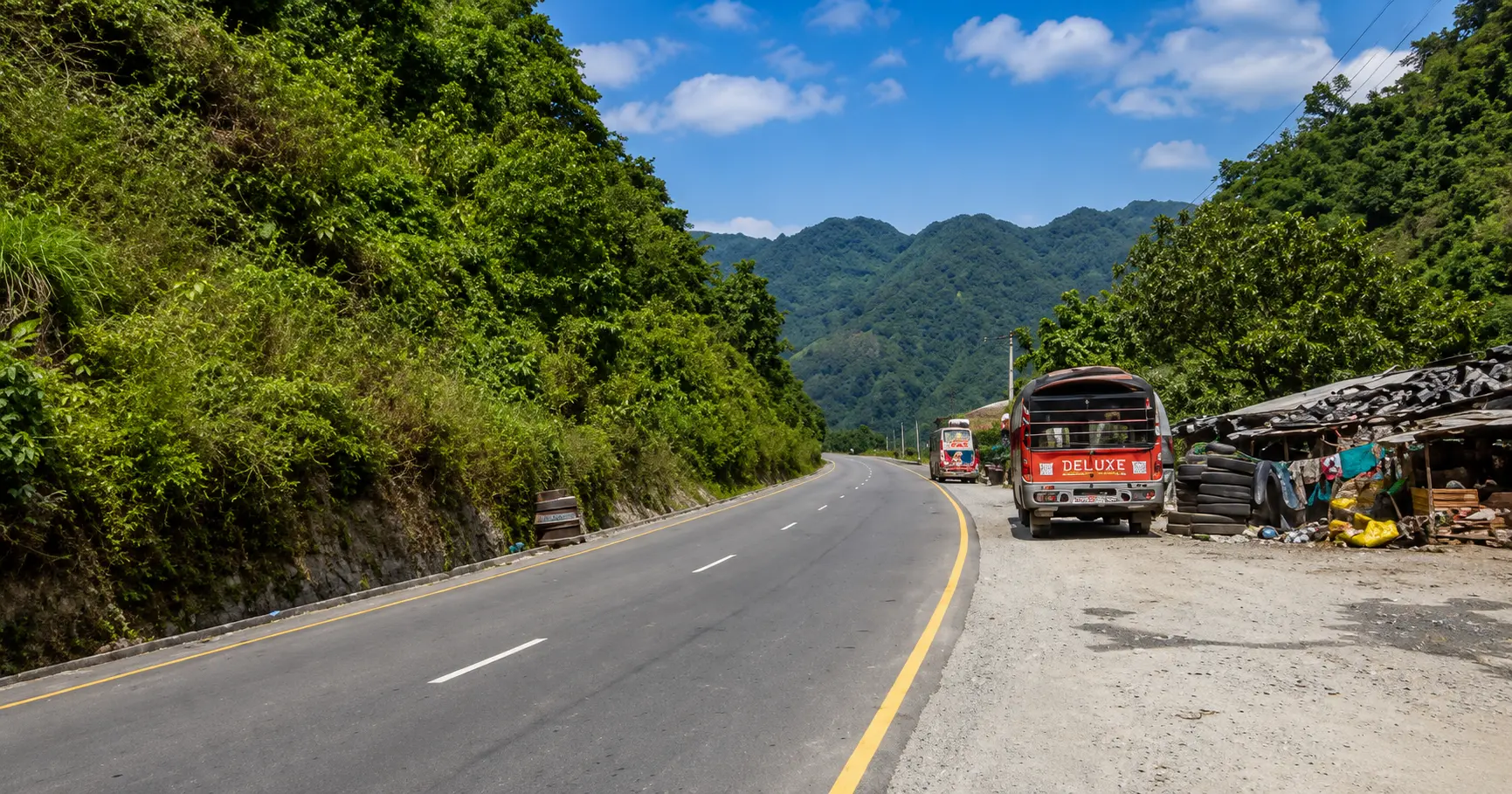
For approach roads entirely on paved national highways—Kathmandu to Narayanghat for Chitwan camping, the main Prithvi Highway section to the Besisahar junction at Dumre, and the Pokhara-to-Nayapul road—a Toyota Hiace van hire or even a private car hire can carry camping equipment without 4WD. The road surface, gradient, and width are all manageable for 2WD vehicles with adequate ground clearance.

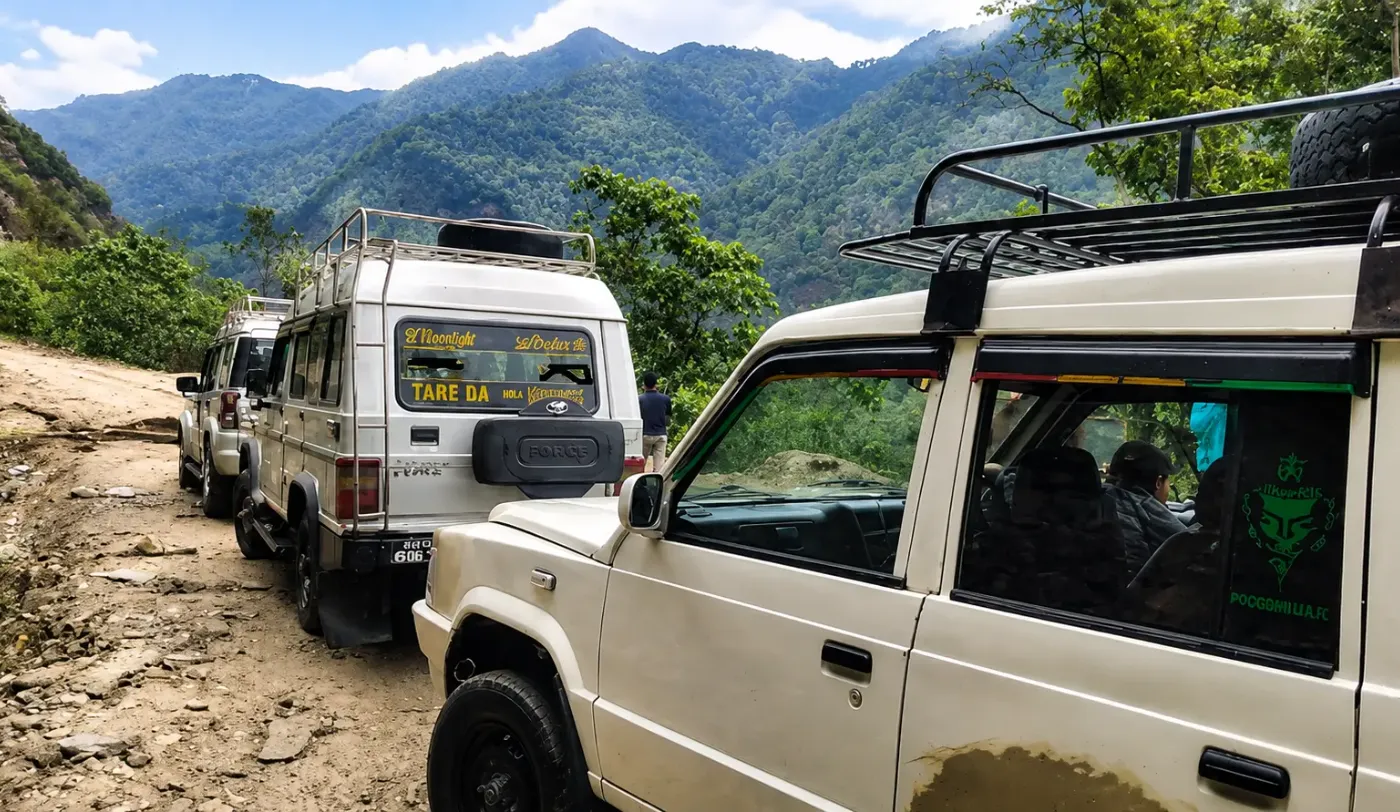
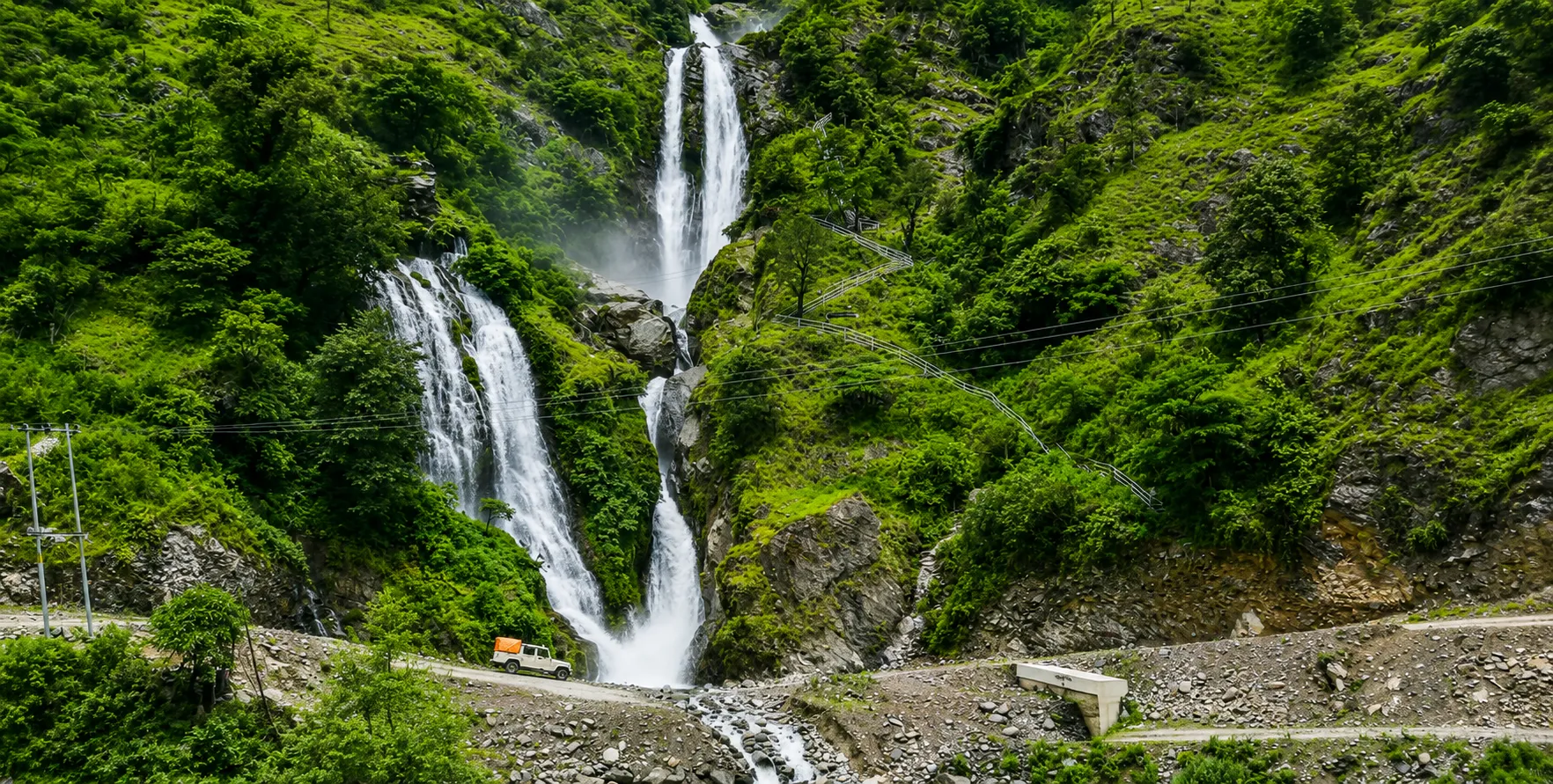
For approach roads that include any unpaved section — the Besisahar-to-Machha Khola gorge road for Annapurna Circuit camping approaches, the Soti Khola approach from Arughat for Manaslu camping, the Salleri road’s BP Highway sections for Everest overland camping, and the Tamakoshi valley road toward Rolwaling — a 4WD Scorpio or Hilux jeep hire is the required vehicle. The reason is specific: a fully loaded camping-equipment vehicle on an unpaved mountain-road section creates a weight-and-traction combination that can make 2WD drive-wheel slip dangerous on steep or wet unpaved grades.

The 4WD system’s ability to distribute torque across all four wheels is what makes loaded mountain-road transit safe and reliable.

Nepal Vehicle Hiring Pvt Ltd’s team advises on the specific 4WD requirement for each camping corridor at the time of booking — never recommending an upgrade beyond what the road genuinely requires, and always confirming when a 2WD Hiace van hire or car hire is sufficient.

Nar Phu Valley and Other Restricted Area Camping Approaches

Beyond the main camping corridors, Nepal Vehicle Hiring Pvt Ltd supports several specialist restricted-area camping approaches that experienced camping operators and mountaineering expedition agencies use regularly.

The Nar Phu Valley camping approach — a branch of the Annapurna Circuit diverging at Koto village — uses the same Kathmandu to Besisahar private jeep hire for the initial approach, with equipment transferred to porters at Besisahar or Chame for the Nar Phu divergence. The Nar Phu Restricted Area Permit (USD 75 per week) and licensed guide requirement must be in hand before the vehicle departs.

The Helambu circuit camping approach from Sundarijal (10 km northeast of Kathmandu) uses our Kathmandu private car hire for the short 20 to 30-minute trailhead transfer — making Helambu the closest Nepal camping corridor to the capital and the most accessible for equipment-light weekend camping groups. No restricted-area permit is required for the standard Helambu circuit, though the Langtang National Park entry fee applies.

The Panch Pokhari sacred lake camping approach in the Sindhupalchok District uses a vehicle transfer to the Helambu or Bhotekoshi valley approach areas — accessible from Kathmandu in 2 to 4 hours by private jeep hire via the Araniko Highway. Our Panch Pokhari trek transport guide covers all Panch Pokhari camping approach options.

Camping Equipment Jeep Hire — What the Driver Provides Beyond Driving

The Nepal Vehicle Hiring Pvt Ltd driver on a camping equipment transport assignment contributes more to the expedition’s success than simply driving the vehicle to the road end. Several driver responsibilities are specific to camping equipment transport and distinguish professional vehicle hire from informal arrangements.

Equipment count verification at loading. Before departing Kathmandu, our camping equipment transport driver counts the total number of bags, boxes, and cases loaded and confirms the count with the expedition leader. This count becomes the reference number for road-end unloading verification, ensuring every item loaded in Kathmandu arrives at the trailhead.

Securing vulnerable items before mountain sections. On departure from Kathmandu, the road to the first mountain junction (typically the Prithvi Highway gorge section or the BP Highway climb from the valley) is paved and relatively smooth. Before the road transitions to rougher mountain track, our drivers briefly stop to check and re-tighten roof rack straps, resecure any items that have shifted in transit, and confirm the heaviest items in the rear cargo area are still seated against the forward wall, where vibration impact is lowest.

Weather monitoring during the journey. Nepal’s mountain weather changes during a day’s drive—a clear morning departure from Kathmandu can turn into afternoon cloud and rain by the time the approach road reaches the mountain section. Our drivers monitor conditions throughout the journey and adjust speed on wet, unpaved sections, where softening surfaces and reduced traction require a more cautious descent than dry conditions.

Thisreal-time weather management is the driver quality dimension that protects camping equipment and vehicle safety simultaneously.

Local road condition intelligence. Our drivers on all major camping approach roads stay in contact with other drivers on the same corridor throughout the day—a WhatsApp-based road condition network that provides real-time information about any landslide, road closure, or flood event that may affect the approach before the vehicle reaches the affected section. This intelligence network helps Nepal Vehicle Hiking Pvt Ltd provide the morning-of road-condition confirmation you need before dispatching mountain camping equipment.

Contact our team for current road status on any camping approach road before booking.
Jeep Rental Camping Equipment Nepal

Camping Equipment Jeep Hire with Kalapatthar Day Trip

One of Nepal’s most popular camping-adjacent experiences is the day trip from a Khumbu teahouse to the Kala Patthar viewpoint (5,545 m) — not a camping experience itself, but one that trekkers on camping expeditions in the Khumbu frequently combine with their base camp visit. For Everest Base Camp camping groups who have walked up the valley and whose camping equipment is already at base camp via porters from the road-end, the camping jeep rental’s role is complete — but the vehicle’s positioning for the return journey at Lukla or Phaplu remains important.

Nepal Vehicle Hiking Pvt Ltd coordinates the complete Everest camping transport chain: Kathmandu airport transfer on arrival, Kathmandu sightseeing car hire for pre-expedition heritage days, Salleri-Phaplu 2-day jeep hire with camping equipment, return Phaplu road vehicle hire for equipment collection at the expedition end, and final Kathmandu airport departure transfer for the international flight home. The luxury Everest lodge trek and standard EBC trek packages, both available through Trek Nepal Himalayas, use Nepal Vehicle Hiking Pvt Ltd transport for the complete Everest approach and return.

Camping Equipment Damage Prevention — Specific Nepal Road Hazards

Nepal’s camping approach roads present specific equipment-damage risks that differ from the vibration risks of standard paved-road transport. Understanding these risks lets camping groups and operators pack equipment to prevent the most common damage patterns.

Impact damage from sharp and road edges. The unpaved sections of the Soti Khola approach and the Besisahar gorge road occasionally have edge-drop sections where the road surface has eroded, and the wheel passes over a sharp rock edge. This vibration, a single-axle impact rather than continuous vibration, is most damaging to rigid-case equipment like camera hard cases and electronics.

Pack rigid cases in the cabin rather than the cargo area on mountain approach routes.

Dust infiltration on dry season approaches. Nepal’s spring camping season (March-May) often produces significant road dust on unpaved approach sections — fine particulate that, over a 6 to 10-hour drive, infiltrates imperfectly sealed equipment bags and cases. Use dust bags or sealed cases for camera lenses, electronic components, and any equipment with sensitive mechanisms.

Moisture from river-adjacent track sections. The Soti Khola approach and sections of the Besisahar gorge road pass close to river level where spray from high-water rivers can reach the vehicle exterior and penetrate imperfect roof rack covers. Waterproof all roof rack items — dry bags over duffel bags, not just the outer duffel.

Nepal Vehicle Hiking Pvt Ltd briefs drivers on the specific risk sections of each camping approach road and manages speed and positioning to minimise all three damage factors. Our camping equipment jeep hire service delivers camping gear in the same condition it was loaded— with a pre-departure equipment count, careful loading, and damage-prevention driving throughout the mountain approach.

Contact our team on WhatsApp or book through our plan trip page.

The Camping Experience the Jeep Makes Possible

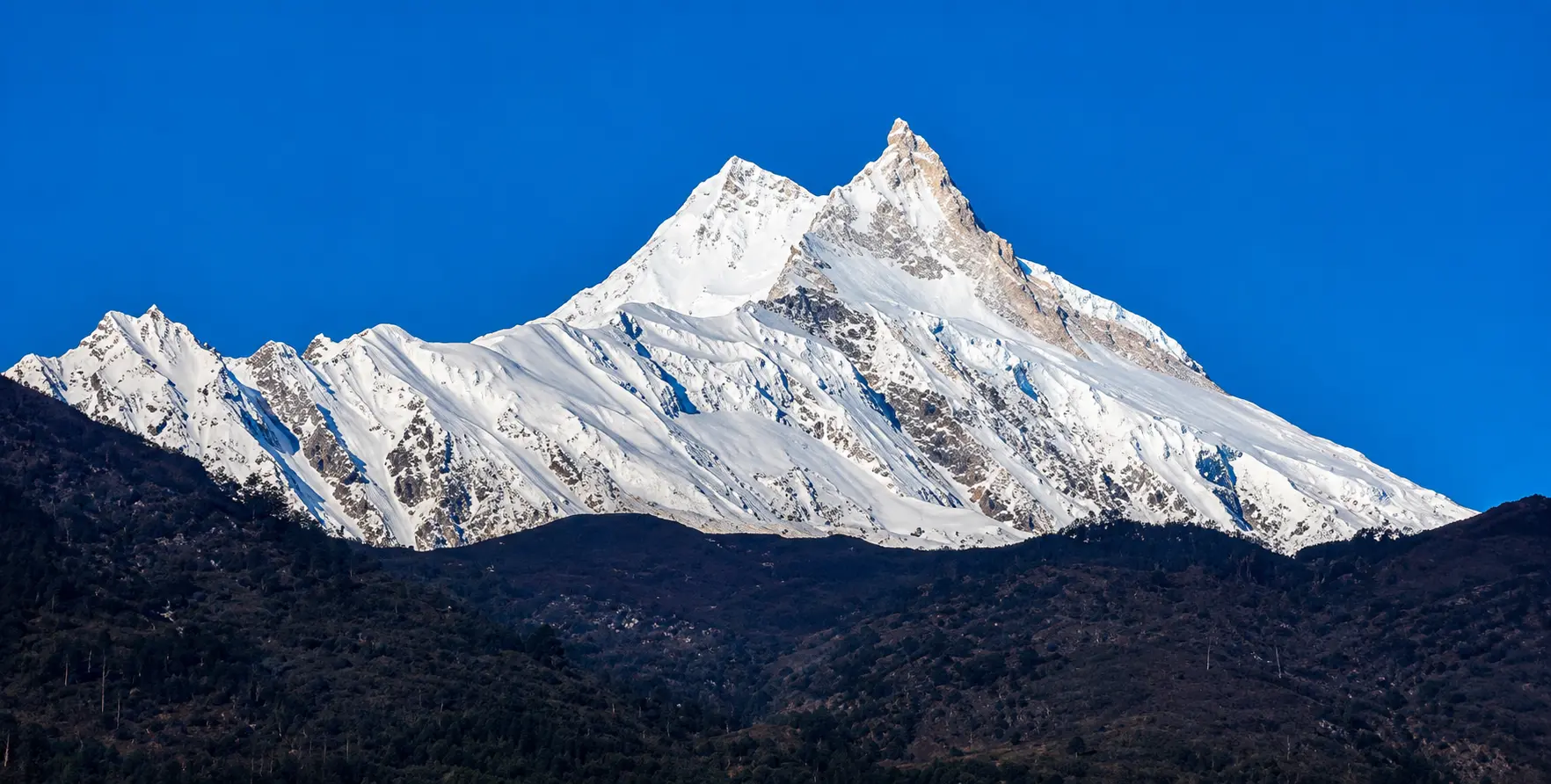
Nepal’s mountain camping — sleeping at 4,000 metres with the Manaslu north face filling the northern sky, waking at the Annapurna glacier’s edge, cooking on a camp stove while Machhapuchhre glows at sunrise — is one of the world’s finest outdoor sleeping environments. Manaslu Circuit camping at Samdo, Annapurna Circuit camping at Thorong Phedi, Rolwaling Valley camping at Tsho Rolpa, and Kanchenjunga base camp camping are among the world’s finest.

None of it happens without equipment arriving at the road end in good condition and on time. The camping equipment jeep rental from Nepal Vehicle Hiring Pvt Ltd is the logistics foundation of every Nepal camping expedition.

When the trekking group arrives at the first campsite after the first day’s walk, the kitchen tent is up, the cook is at work, and the sleeping tents are pitched — because the private 4WD jeep arrived at the road-end on time with everything intact. Book through our plan trip page or WhatsApp.
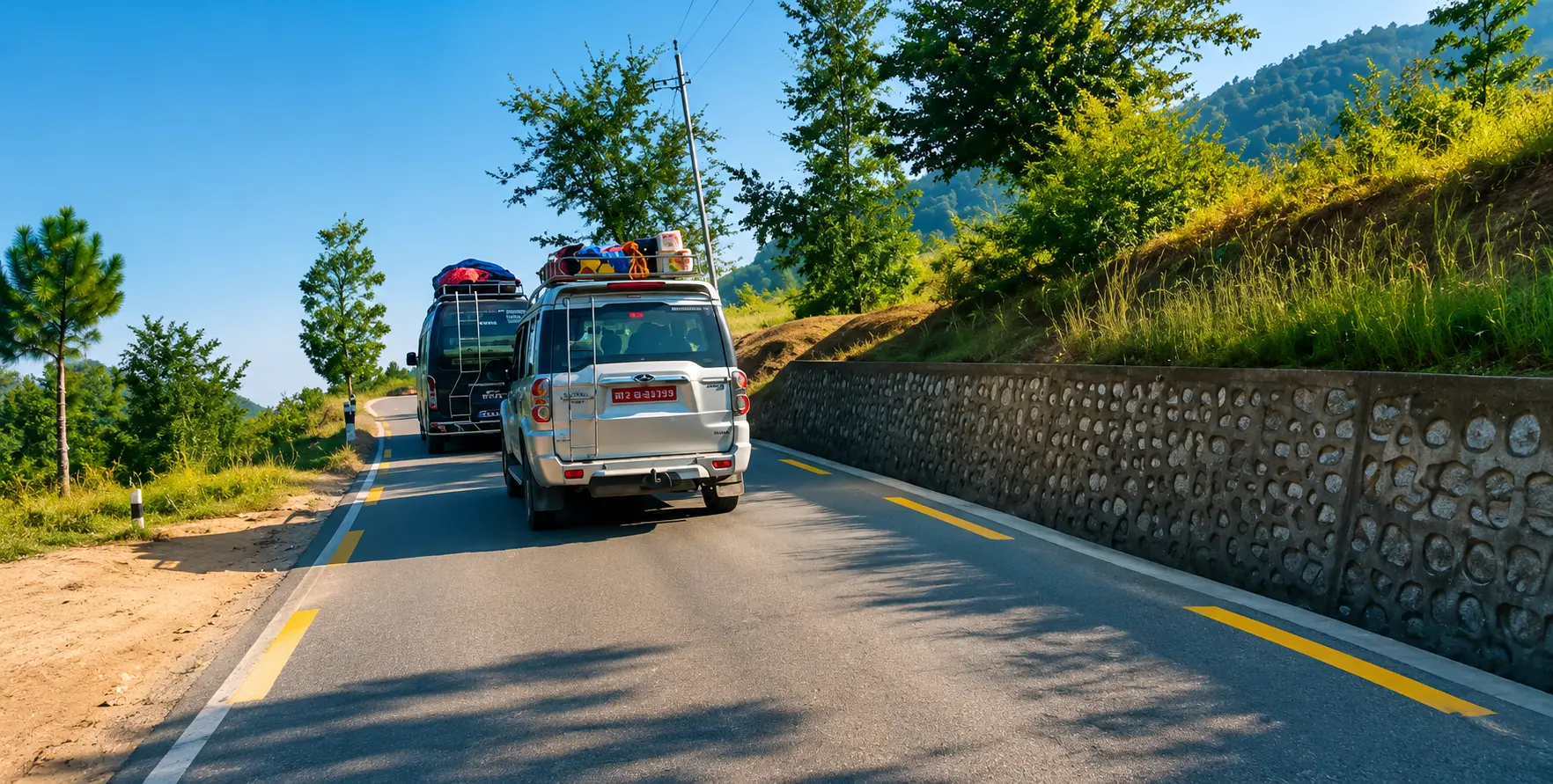
Jeep Rental Camping Equipment Nepal

Why Choose Nepal Vehicle Hiring Pvt Ltd

  • Route-specific driver: Every camping equipment jeep is assigned a driver with personal experience on that approach road.
  • Roof rack + tie-down straps: Confirmed at booking for all camping equipment loads.
  • Return vehicle pre-arranged: Equipment collection at the road end on the confirmed return date, with WhatsApp adjustments for date changes.
  • Multi-vehicle convoy: Hiace or Coaster + Scorpio or Hilux — single booking.
  • Permit advisory: Current requirements for all camping protected areas confirmed at booking.
  • All-inclusive pricing: Driver, fuel, tolls. No additions at road-end.
  • 24/7 on WhatsApp or plan trip page.

Multi-Day Camping Circuits — Planning the Full Vehicle Requirement

A multi-day camping circuit in Nepal typically involves not just one vehicle transfer but a complete ground transport chain — the outward equipment vehicle, possibly a resupply vehicle mid-trek, and the return equipment collection. Planning the full vehicle requirement for a multi-day camping circuit helps camping operators and self-organised groups budget accurately and avoid mid-expedition logistics gaps.

For a 14-day Annapurna Circuit camping trek with 10 participants: Day 1 transport — Kathmandu to Besisahar camping equipment jeep hire (NPR 22,000 to 30,000). Day 14 return transport — Jomsom to Pokhara private vehicle for the equipment (NPR 20,000 to 28,000) and Pokhara to Kathmandu bus or vehicle for the group.

Total vehicle budget for equipment transport: approximately NPR 42,000 to 58,000 (USD 315 to 435) for the full circuit. All pre-arranged through Nepal Vehicle Hiring Pvt Ltd as a single booking.

For a 21-day Manaslu Circuit with Tsum Valley camping trek with 8 participants: Outward Kathmandu to Soti Khola camping jeep hire (NPR 24,000 to 32,000). Return Besisahar to Kathmandu exit vehicle via the Manaslu Circuit exit at Dharapani (NPR 18,000 to 24,000). Total vehicle budget: NPR 42,000 to 56,000 (USD 315 to 420).

Nepal Vehicle Hiring Pvt Ltd coordinates both the Soti Khola outward and the Besisahar return as a single multi-destination booking—one contact number, one quoted price, and one WhatsApp thread for complete circuit coordination. Book through our plan trip page or WhatsApp.

FAQs — Camping Equipment Jeep Rental Nepal

What vehicle is best for 10 people and their camping equipment?

A Toyota Hiace van carries passengers and equipment together. A Hilux 4WD carries equipment only, with passengers in a separate vehicle. The right choice depends on whether you want to travel together or in convoy.

Can camping equipment be transported to all major Nepal trailheads?

Yes — Nepal Vehicle Hiring Pvt Ltd covers all major camping approach roads: Besisahar, Soti Khola, Phaplu, Nayapul, Jomsom, Shigati, Taplejung, and all other road-ends.

What is the price for a camping equipment jeep in Nepal?

NPR 18,000 to 40,000 (USD 135-300) one way for major approach routes. Contact Nepal Vehicle Hiring Pvt Ltd on WhatsApp for a route-specific quote.

Do I need to book the return equipment vehicle separately?

No — Nepal Vehicle Hiring Pvt Ltd pre-arranges the return vehicle as part of the outward booking. Our team confirms the return date via WhatsApp during the trek and adjusts timing as needed.

Post-Expedition Equipment Storage in Kathmandu

For international camping groups planning multiple Nepal camping expeditions over several years—particularly mountaineering teams returning to the same peak repeatedly—camping equipment storage in Kathmandu between expeditions is a practical logistics consideration that ties directly to the camping equipment jeep rental service.

Nepal Vehicle Hiring Pvt Ltd works with partner storage facilities in Kathmandu — bonded warehouses and expedition storage companies in the Thamel and Balaju areas — that store camping and expedition equipment between seasons for returning international groups. This storage arrangement lets expedition teams leave heavy camping equipment in Kathmandu instead of shipping it internationally between expeditions, then retrieve it and load it onto a private jeep for the road-end transfer when they return for the next expedition.

Our Kathmandu airport transfer service for returning expedition teams includes logistics coordination between international flight arrival and storage-facility collection—so the camping equipment is loaded, counted, and ready for the approach-road departure the morning after arrival.

For domestic camping groups in Nepal who keep their equipment in Kretrieveandus or load it for storage, Nepal Vehicle Hiking Pvt Ltd’s private car hire or Hiace van hire for the Kathmandu collection-and-approach-road service covers the full journey from the storage address to the trailhead. Our contact team on WhatsApp coordinates the collection address, loading assistance, and approach-road departure time as a single booking through our plan trip page.

Nepal’s camping expeditions — whether the straightforward Annapurna Circuit camping approach of a 10-person commercial trek group or the complex multi-vehicle convoy of a full Himalayan mountaineering expedition to Manaslu’s north face — all share the same foundational logistics requirement: a reliable, route-experienced 4WD jeep hire that carries the camping equipment from Kathmandu or Pokhara to the trailhead road-end safely, on time, and with every item intact. The camping experience itself — the mountain stars, the glacial soundscape, the cook’s morning tea at 4,500 metres, the summit panorama from the high camp — begins with this logistics service, and it begins well when the service is professional.

Nepal Vehicle Hiring Pvt Ltd provides professional camping equipment jeep rental for every Nepal camping corridor, in every vehicle size, for every expedition type, across all seasons. From the Nayapul short hop for the Annapurna Base Camp camping group to the 2-day Phaplu overland for the Everest Base Camp expedition, and the Soti Khola 10-hour mountain drive for the Manaslu camping circuit — we cover them all.

Plan your complete Nepal camping expedition transport through our plan trip page or WhatsApp.

Conclusion

Camping equipment jeep rental is the invisible logistics service that makes Nepal’s finest mountain camping experiences happen — the 4WD Scorpio or Hilux that carries tents, sleeping bags, cook tents, and food from Kathmandu to the trailhead road-end so the porter team can carry them to where the stars are brightest. Nepal Vehicle Hiring Pvt Ltd provides this service across all Nepal camping corridors with route-experienced drivers, roof rack provision, all-inclusive pricing, and return vehicle coordination through a single professional booking.

Book your camping equipment jeep rental — call or WhatsApp, visit vehiclehiringnepal.com, or plan through our trip planning page.
Nepal Vehicle Rental with Roof Luggage Space

Nepal Vehicle Rental With Roof Luggage Space

Nepal Vehicle Rental With Roof Luggage Space – Complete Guide

It happens with remarkable regularity on Nepal’s mountain roads: a trekking group arrives at the trailhead after a long jeep journey, opens the vehicle’s boot, and discovers what they already suspected but hoped would not be true — there is genuinely not enough space for everyone’s trekking pack, sleeping bag, and porter duffel to travel together in a single vehicle. The overflow bags that ended up on laps, wedged between seats, or strapped to the outside of the vehicle with bungee cords are damp, misshapen, and, in the case of camera equipment and sensitive electronics, subtly damaged by five hours of mountain-road vibration.

The group’s porter duffels, each containing 15–25 kg of trekking supplies, have been stacked in a configuration that blocks the rear view, makes emergency access to any bag during the journey impossible, and has left two passengers sitting bolt upright for the entire drive because the seat recline was blocked by the bag behind them. This scenario is not unusual — it is the predictable result of booking a vehicle based purely on passenger count without giving equivalent attention to luggage volume.

The luggage problem is Nepal’s most consistently underestimated vehicle hire planning challenge, and it has a specific character that makes it more acute in Nepal than in most other trekking destinations: Nepal trekkers carry more gear per person than almost any other category of traveller. A trekking group of six people heading to Everest Base Camp via the Salleri road or the Annapurna Circuit via Besisahar will typically be carrying, per person: one large trekking backpack or duffel (60–80 litres), one day pack, sleeping bag in compression sack, trekking poles, and shared camping or expedition equipment — plus the equipment of hired porters and guides who are often travelling in the same vehicle to the trailhead.

The total luggage volume for six adequately equipped trekkers can easily exceed 400–500 litres, a load that challenges even the largest standard jeep configuration and makes roof luggage space not a nice-to-have supplement but an operational necessity.

This guide from Nepal Vehicle Hiring Pvt Ltd provides the complete, practically researched 2026 picture of Nepal vehicle rental with roof luggage space — covering every vehicle in our fleet that provides roof or bed-mounted luggage capacity, the specific trekking routes and group configurations for which each vehicle is best suited, how roof luggage is safely secured and what protection measures apply in different weather conditions, the combined vehicle configurations for large expedition groups whose luggage exceeds single-vehicle capacity, and the specific links to the trekking packages and tour services that most commonly require this specific capability. For trekking packages requiring heavy expedition gear transport, contact Trek Nepal Himalayas; for top-end lightweight-luggage luxury trekking, contact Alpinee Luxury Treks.

Book Nepal Vehicle Hiring: vehiclehiringnepal.com | Call/ WhatsApp

Nepal Vehicle Rental With Roof Luggage Space

Understanding Nepal’s Luggage Challenge – What Trekkers Actually Carry

The starting point for any honest guide to Nepal vehicle rental with roof luggage space is an accurate accounting of what Nepal trekkers and tour groups actually carry — because the scale of luggage in a typical Nepal trekking group is systematically larger than what most travellers assume when booking transport and far larger than what the nominal seating capacity of a vehicle implies about its luggage accommodation.

A typical participant on a Trek Nepal Himalayas Annapurna Circuit Trek or Everest Base Camp Trek will carry a main trekking duffel of 60–90 litres (carried by the hired porter on the trail) and a day pack of 20–30 litres (carried personally on the trail). The duffel, when packed for a 14–18 day high-altitude trek, typically weighs 12–20 kg — clothing layers for temperatures ranging from 25°C at the trailhead to -10°C or below at high camp, sleeping bag rated to -20°C, down jacket, trekking boots, water purification equipment, first aid supplies, and personal hygiene items.

For a group of six trekkers, the combined luggage load includes six main duffels, six day packs, plus shared equipment for two to three porters and a guide—the guide’s personal pack and the porters’ loads are often transported in the jeep to the trailhead.

Photography and videography equipment adds a further dimension to the luggage calculation for the growing segment of Nepal adventure travellers who carry serious camera gear: a DSLR or mirrorless camera system with multiple lenses, drone and controller, tripod, and associated accessories can represent 15–25 kg of additional load in hard cases or padded backpacks that require specific positioning — ideally inside the vehicle or in a covered roof compartment rather than on an open rack. For Alpine Luxury Treks top-end clients, whose luxury Nepal trekking packages often include filming and photography services, the Land Cruiser’s generous rear cargo area, combined with a roof rack, provides the most complete camera-gear accommodation available in Nepal’s hire fleet.

Expedition-grade trekking — routes like Manaslu Circuit, Kanchenjunga Trek, and Upper Mustang Trek — adds more volume through high-altitude camping equipment, technical climbing gear, supplementary oxygen cylinders, and expedition-grade cold-weather clothing that can double or triple per-person luggage volume compared to standard teahouse trekking. For these routes, calculate luggage needs before selecting a vehicle, not after — and Nepal Vehicle Hiring’s operations team can help match capacity to any expedition group’s specific gear list.

Muglin

The Toyota Hilux – Nepal’s Premier Roof Luggage Vehicle

The Toyota Hilux 4WD holds a unique and highly valuable position in Nepal’s vehicle hire market — a dual-cab pickup truck whose bed and rooftop carrier configuration offers more usable luggage capacity than any other single vehicle in Nepal’s tourist hire fleet. As Nepal Vehicle Hiring’s own Toyota Hilux, Fortuner and Land Cruiser comparison guide notes, the Hilux’s dual-cab pickup body means the bed and rooftop carrier provide generous luggage space for full trekking expeditions — more space than any comparable single vehicle at the same price point.

The Toyota Hilux bed — the open cargo area behind the passenger cab — provides approximately 1.5 cubic metres of unobstructed cargo space in the standard dual-cab configuration. This single space accommodates the entire luggage load of a four-to-five person trekking group without compression or compromise: main trekking duffels, porter loads, shared expedition equipment, and day packs all fit side by side with full accessibility.

The bed’s waterproof liner and aluminium side rails protect the load from surface damage, and a weatherproof tonneau cover or lockable hard canopy — standard on Nepal Vehicle Hiring’s Hilux fleet — provides rain and dust protection that open roof racks cannot match. For the Annapurna Circuit Besisahar to Chame jeep transfer, the Langtang Valley trek Syabrubesi transfer, and the Salleri Everest road access route, the Hilux bed provides a completely protected luggage solution for a full expedition group across Nepal’s most demanding off-road sections.

The Toyota Hilux rooftop carrier — mounted above the cab on a steel frame — provides an additional 0.5–0.8 cubic metres of supplementary luggage capacity for items that can tolerate open-air transport: empty porter duffels, rolled sleeping mats, tent poles and carry bags, and lightweight bulky items that do not require weather protection. All Nepal Vehicle Hiring Hilux operations secure the rooftop carrier with ratchet straps and a cargo net as standard practice.

Together, the Hilux bed and rooftop carrier deliver a total luggage capacity that rivals a small truck, while the enclosed dual-cab passenger compartment comfortably seats five to six passengers.

The Hilux’s 2026 hire rate is NPR 15,000–22,000 per day, including driver and fuel—positioning it as the most cost-effective professional expedition luggage solution in Nepal’s hire market, roughly comparable to the Mahindra Scorpio’s daily rate while delivering substantially more cargo capacity. As Nepal Vehicle Hiring’s Hilux guide states, the Hilux’s bed and rooftop carrier handle the largest trekking duffel bags and expedition equipment without compromise, and the hire cost savings compared to a Land Cruiser are approximately NPR 8,000–15,000 per day.

For Trek Nepal Himalayas trekking expedition groups that need the highest luggage-to-passenger ratio in a single vehicle, the Hilux is the professional’s first choice.

Bg highway

The Toyota Hiace Van – The Group Roof Rack Standard

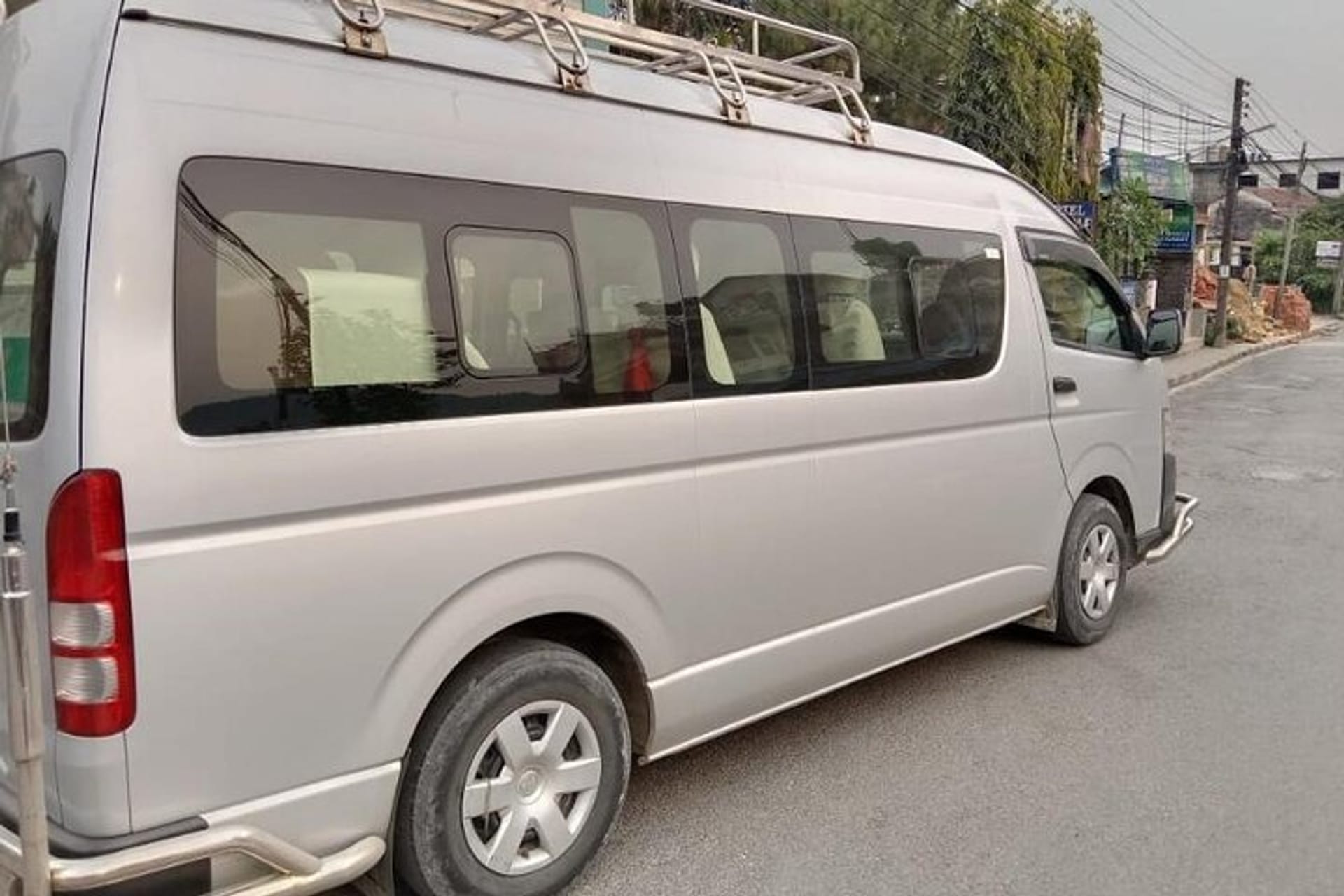
The Toyota Hiace van is Nepal Vehicle Hiring’s most popular group highway vehicle and the standard choice for medium-sized trekking groups of eight to thirteen people on paved highway routes. Its roof luggage rack capacity for trekking gear and large bags — documented across multiple 2026 Nepal vehicle hire operators — makes it the group roof luggage standard for Terai Highway, Prithvi Highway, and all Category 1 paved road routes.

The Hiace’s roof rack is a factory-fitted or professionally installed steel tube frame running the full length of the vehicle’s roof, providing approximately 2.5–3 metres of rack length and 1.2–1.4 metres of rack width — a total surface area of approximately three square metres. This accommodates eight to ten large trekking duffels and day packs side by side in a single layer, providing complete main luggage accommodation for a group of eight trekkers without any bags inside the passenger cabin.

Nepal Vehicle Hiking’s Hiace van fleet is equipped with cargo nets, ratchet strap tie-downs, and waterproof tarpaulin covers for all roof rack loads — the tarpaulin cover being particularly critical on routes that pass through rain-prone sections such as the Pokhara approach or the Chitwan corridor where afternoon monsoon showers are common even outside the main monsoon season.

The practical advantage of the Hiace roof rack over interior luggage stacking for medium groups is not merely space — it is the fundamental improvement in passenger comfort and safety that comes from keeping the passenger cabin clear. A Hiace carrying thirteen passengers with all luggage inside the cabin is a genuinely uncomfortable, claustrophobic, and, in an emergency, potentially dangerous environment—bags blocking emergency exit aisles, passengers unable to recline seats, and the collective ambient temperature of a full cabin making the AC system struggle.

The same Hiace with all luggage on the roof rack carries thirteen passengers in genuine comfort across a twelve-seat configuration with full aisle access and proper seat space — a categorically different experience for the same group.

The Hiace roof rack is appropriate for highway routes including Kathmandu to Pokhara group transfer, Kathmandu to Chitwan Hiace hire, Kathmandu to Lumbini group transfer, and Pokhara to Chitwan Hiace service. For off-road mountain routes, the Hiace is not an appropriate vehicle—the roof rack load raises the vehicle’s centre of gravity in ways that are not problematic on flat highways but create genuine stability concerns on steep, rough mountain tracks, where the Scorpio and Land Cruiser are deployed.

For combined itineraries where a group travels by Hiace on the highway section and transfers to a 4WD Scorpio or Bolero for the off-road mountain approach, Nepal Vehicle Hiring coordinates the two-vehicle transfer as a single integrated service.

The Mahindra Scorpio – Roof Rack for the Mountain Off-Road Standard

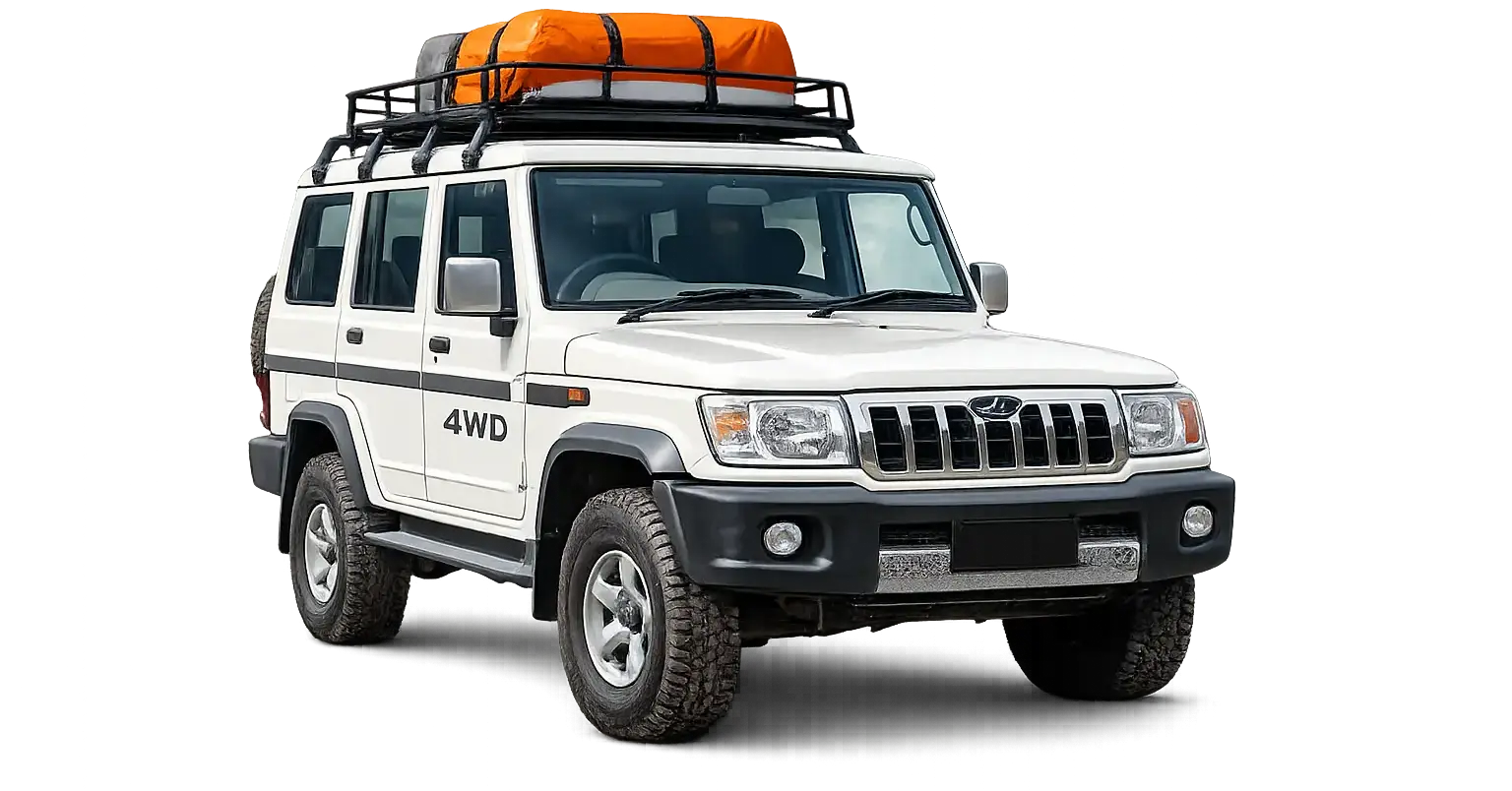
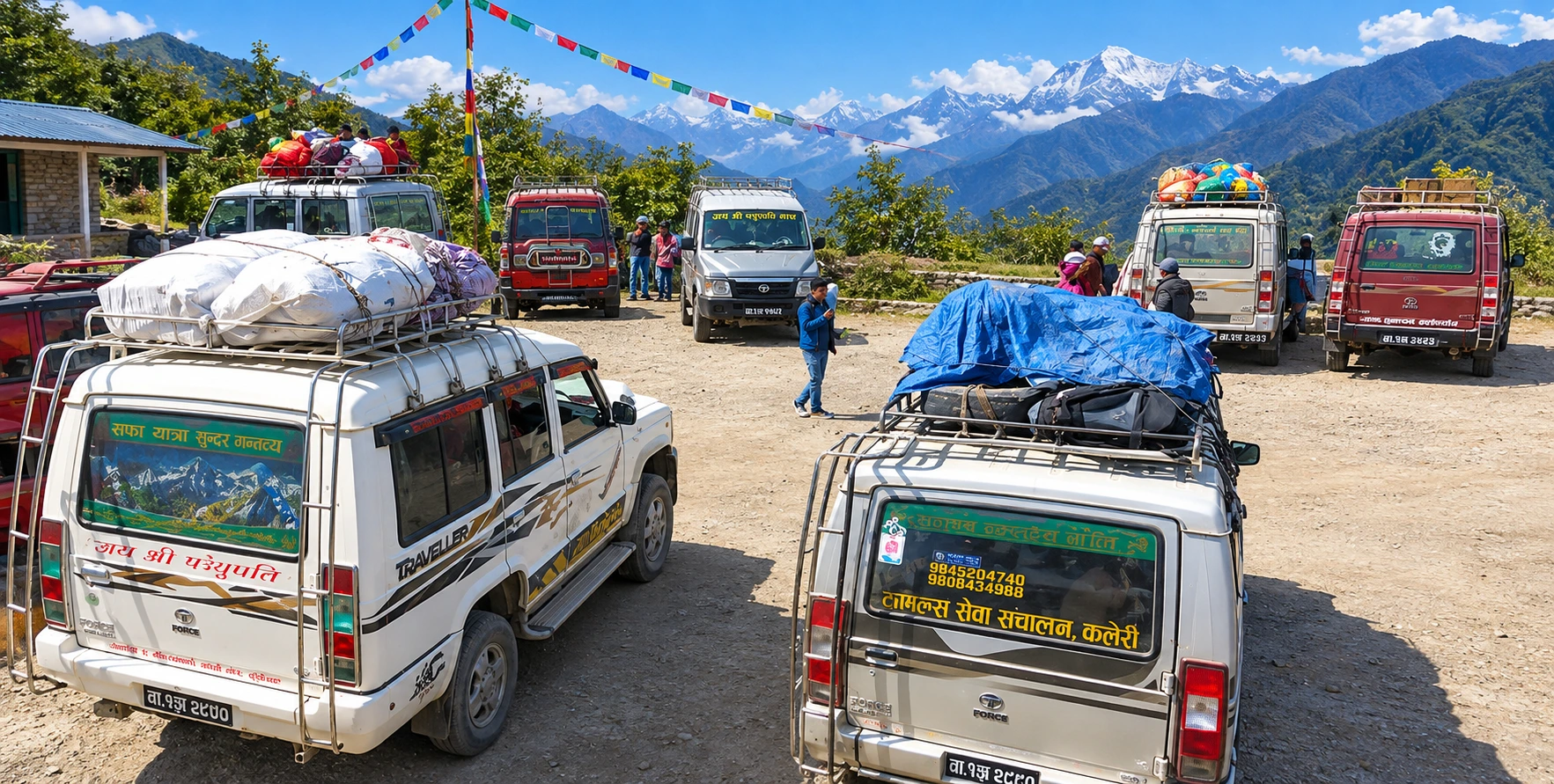
The Mahindra Scorpio 4WD is Nepal’s most widely used private trekking transfer vehicle. Its standard roof rack is one of the most important practical features for mountain trekking transfers. The Scorpio’s OEM-standard or aftermarket roof rack — a steel tube frame mounted on the vehicle’s roof rails, covering an area of approximately 1.6 metres long by 1.2 metres wide — provides supplementary luggage capacity that allows a vehicle configured for six passengers to carry six full trekking duffels plus day packs without any compression of passenger space. Without the roof rack, a Scorpio carrying six passengers and their full trekking gear forces a genuinely difficult choice between adequate passenger seating and adequate luggage accommodation — a choice that the roof rack eliminates.

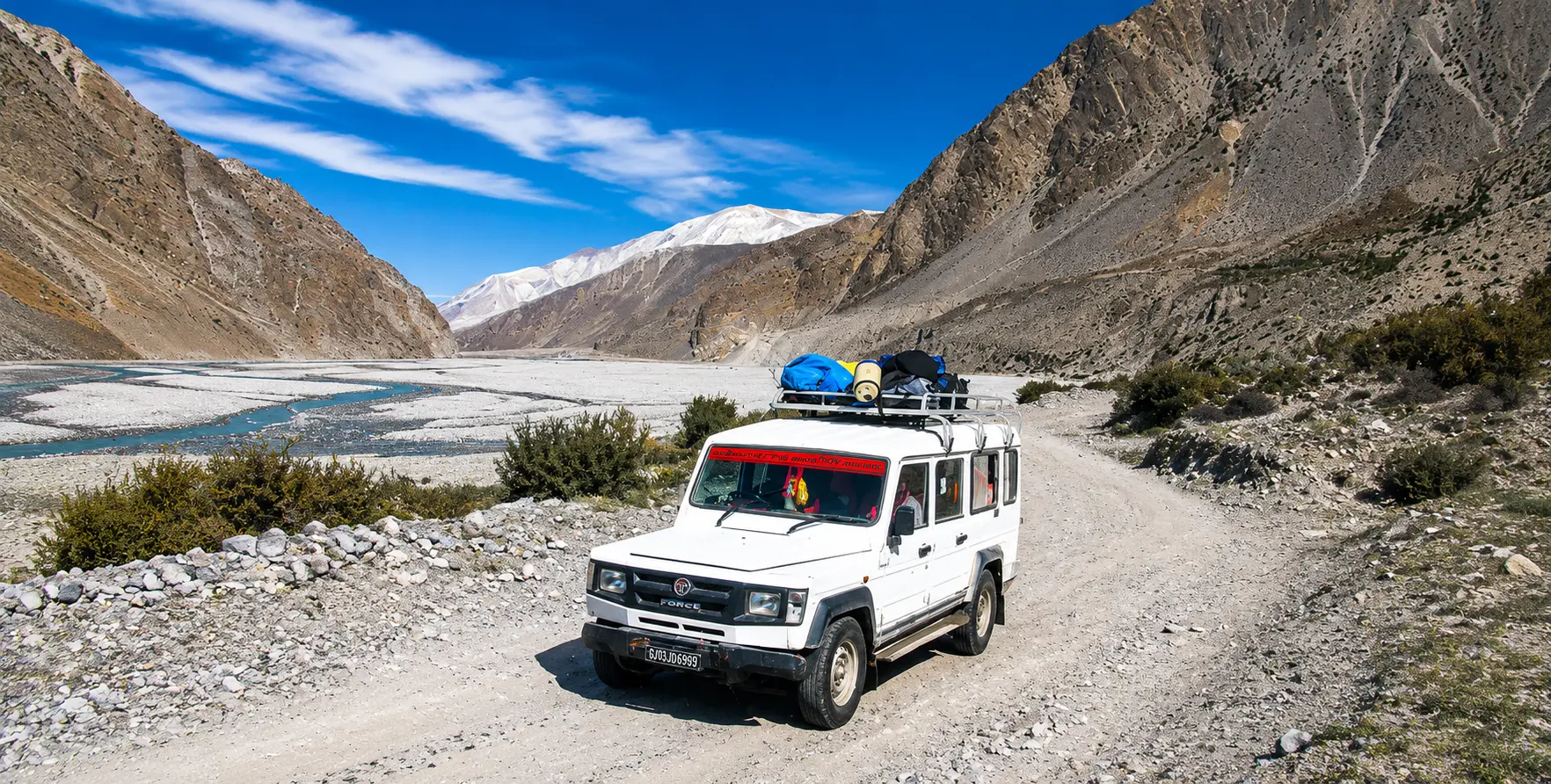
For the routes most commonly served by the Mahindra Scorpio hire fleet — Besisahar to Dharapani on the Annapurna Circuit, Kathmandu to Syabrubesi for the Langtang Valley Trek, Pokhara to Ulleri for the Poon Hill Trek, and Pokhara to Ghorepani Jeep transfer — the roof rack is loaded with main trekking duffels, porter carry bags, and shared group equipment. At the same time, day packs travel inside with passengers for easy access during rest stops. Nepal Vehicle Hiring’s Scorpio fleet carries ratchet strap tie-downs and cargo nets as standard equipment for all roof rack loads, and the pre-departure load check includes confirmation that the roof rack load is within the vehicle’s safe roof load capacity, straps are tensioned correctly on all four attachment points, and the cargo net is secured.

One specific consideration for Scorpio roof rack loads on Nepal’s mountain roads deserves explicit mention: loose gravel surfaces, continuous vibration, and the physical dynamics of mountain switchbacks can cause improperly secured roof rack loads to shift, loosen, or, in extreme cases, partially dislodge during a long mountain drive. Nepal Vehicle Hiring’s drivers inspect roof rack loads at every major stop on mountain route transfers—typically at Trishuli Bazaar on the Syabrubesi route, at Besisahar on the Annapurna Circuit approach, and at any intermediate stop of twenty minutes or more.

Clients are encouraged to keep valuables and fragile items inside the passenger cab, not on the roof rack, on any route involving extended off-road driving.

For trekkers using Trek Nepal Himalayas for the Ghorepani Poon Hill Trek or the Mardi Himal Trek from Pokhara, the Scorpio roof rack typically carries the guide’s personal pack, porter loads, and group equipment in addition to the trekkers’ main duffels, with the configuration pre-arranged by Trek Nepal Himalayas’ operations team so that the vehicle is loaded correctly before departure rather than requiring reorganisation at the trailhead. This guide-agency coordination of vehicle loading is one practical advantage of booking transport through Nepal Vehicle Hiring as part of a Trek Nepal Himalayas coordinated trekking package.

The Mahindra Bolero – Budget Roof Rack for Mountain Routes

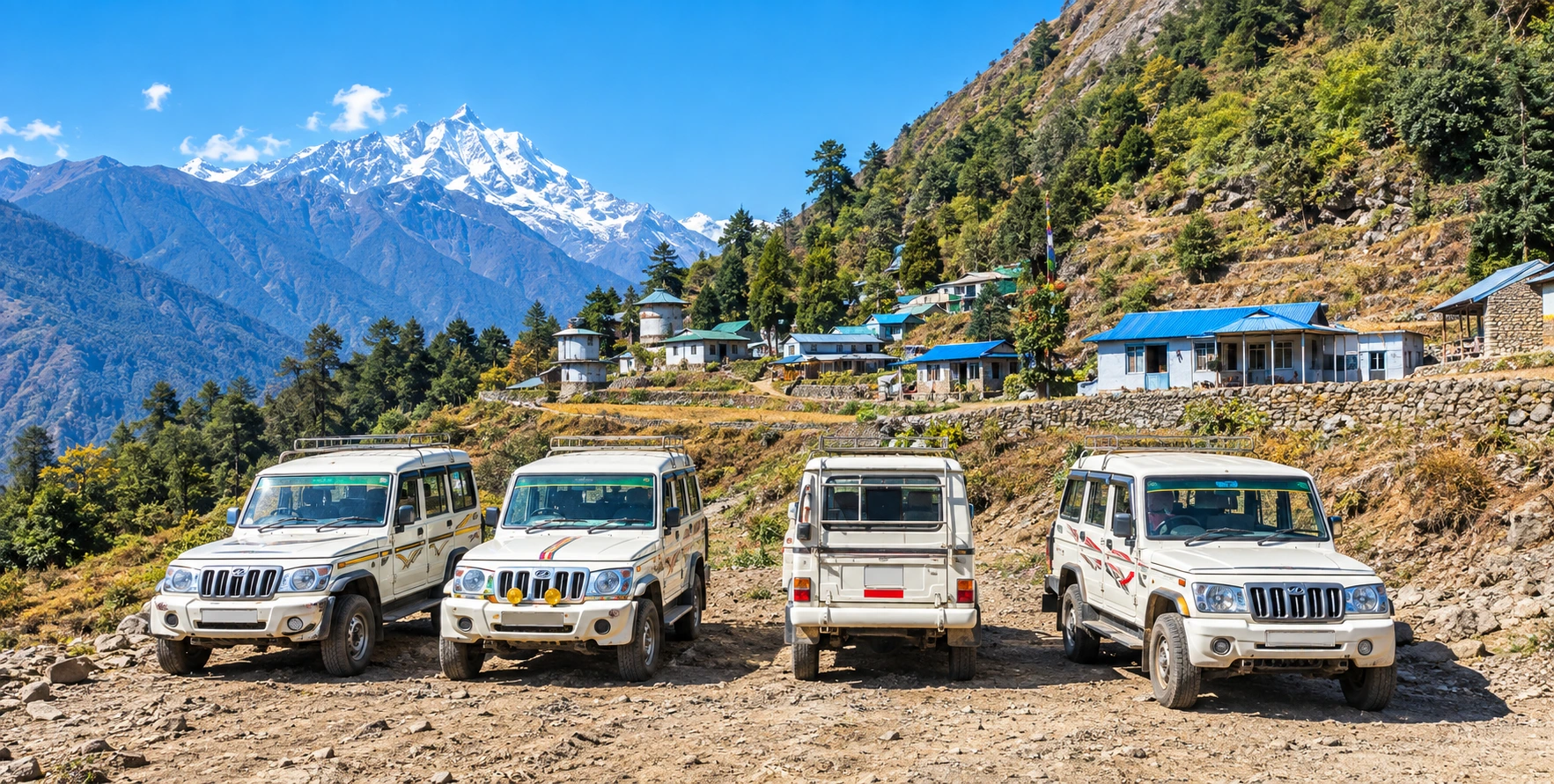
The Mahindra Bolero 4WD is Nepal Vehicle Hiring’s budget-category mountain vehicle with genuine 4WD capability, and its roof rack configuration provides essentially the same supplementary luggage capacity as the Scorpio at a lower daily hire rate. As multiple Nepal vehicle hire sources document, the Bolero’s roof rack covers a similar surface area to the Scorpio—about 1.5 metres long by 1.2 metres wide—and carries the same maximum load.

For budget-conscious trekking groups of five to seven people on routes like the Tamang Heritage Trail Syabrubesi transfer, the Manaslu Circuit Arughat approach, and the Besisahar to Dharapani off-road track, the Bolero roof rack delivers the same practical luggage solution as the Scorpio.

The Bolero’s key advantage for roof rack use on remote mountain routes is its nationwide spare-parts availability—mentioned throughout Nepal Vehicle Hiring’s transport companion guides as one of the most practical factors for remote-area operation. A roof rack attachment bracket that fails on the Rasuwagadhi Kerung border route or on the Salleri Phaplu Everest road approach can be sourced and repaired locally with Bolero parts at any district workshop.

This practical redundancy turns minor mechanical failures in remote areas into an inconvenience rather than a journey-ending event.

Nepal Vehicle Rental With Roof Luggage Space

The Toyota Land Cruiser – Top-end Cargo for the Most Demanding Routes

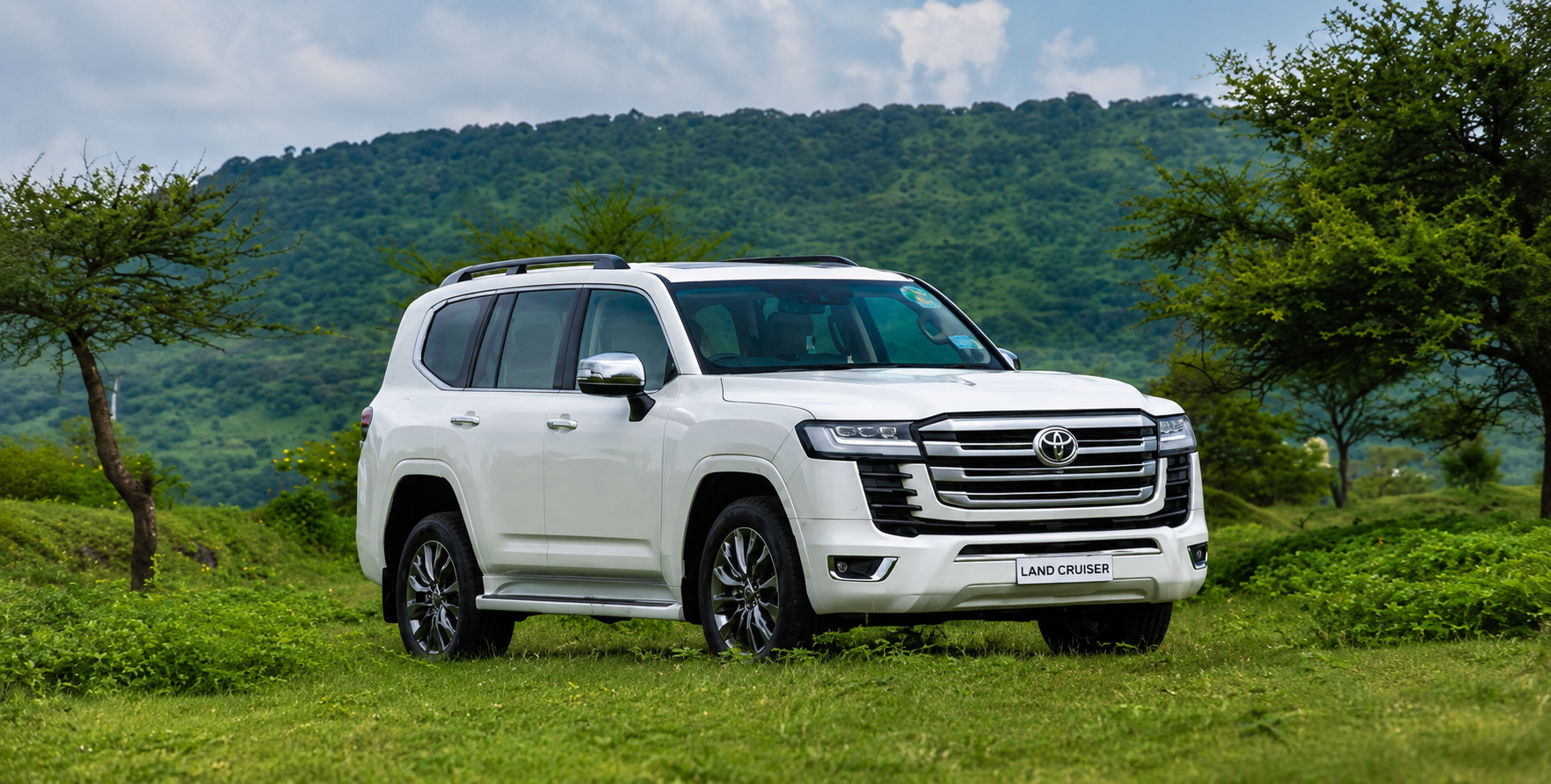
The Toyota Land Cruiser 4WD approaches the luggage capacity question differently from the Hilux or Hiace — rather than relying primarily on roof-mounted cargo, the Land Cruiser’s main luggage solution is its expansive rear cargo area within the vehicle’s protected interior. The Land Cruiser’s rear cargo hold, when the third-row seats are folded flat, provides approximately 1.9–2.1 cubic metres of protected interior cargo space — more protected volume than the Hilux bed under a tonneau cover, and accessible from the rear through the full-width tailgate that makes loading and unloading significantly easier than the Hilux’s side-access bed configuration.

However, Nepal Vehicle Hiring also fits factory or aftermarket roof racks on its Land Cruiser fleet units—particularly the LC200 and LC300 series used for Upper Mustang jeep hire, Korala Tibet border vehicle service, and the Api Himal Darchula route in Sudurpashchim. The Land Cruiser roof rack adds 0.8–1.0 cubic metres of extra capacity—typically used for lightweight expedition items, tent bags, or rolled sleeping pads—on top of the already generous interior cargo space.

This combination of interior cargo area plus roof rack makes the Land Cruiser the vehicle with the highest absolute luggage capacity in Nepal Vehicle Hiring’s 4WD fleet for routes where both passenger comfort and full expedition gear transport must be achieved in a single top-end vehicle.

For Alpine Luxury Treks clients whose custom Nepal Himalayan journeys involve the Land Cruiser as standard transport between luxury lodges and trailheads, the luggage profile is typically lighter per person than a standard trekking group — luxury trekking packages provide porter services that remove the heaviest gear from the vehicle luggage equation, leaving the Land Cruiser’s interior to accommodate soft duffel bags, day packs, camera equipment, and personal valuables in protected, accessible comfort. The Land Cruiser service page documents the vehicle’s rear cargo plus roof rack configuration as standard for all mountain route operations.

The VIP Sofa Bus and Coaster – Roof Luggage for Pilgrimage and Tour Groups

For large group tours of twenty to forty-five people—Buddhist pilgrimage circuits, corporate Nepal tours, school and university groups, and international adventure travel parties—the VIP Sofa Bus and Coaster provide a group roof-luggage solution that matches their passenger scale. Both vehicles carry factory-fitted or professionally installed roof racks that can accommodate the full luggage of their respective passenger capacities in a single loading.

The VIP Sofa Bus roof rack — spanning the full length of the bus roof at approximately seven to eight metres — accommodates twenty to thirty large bags in a single layer with full tie-down coverage. For the Kathmandu to Lumbini VIP Sofa Bus pilgrimage service, where groups of twenty to thirty Indian pilgrims carry personal luggage, ritual items, prasad, and shared devotional equipment, the VIP Sofa Bus roof rack accommodates the full load.

At the same time, passengers travel in the bus’s individually reclining 2×1 sofa seats in genuine comfort for the eight- to ten-hour journey. Similarly, the Kathmandu to Pokhara VIP Sofa Bus service and the Pokhara to Chitwan group transfer use the roof rack to maintain cabin quality for passengers on long highway journeys.

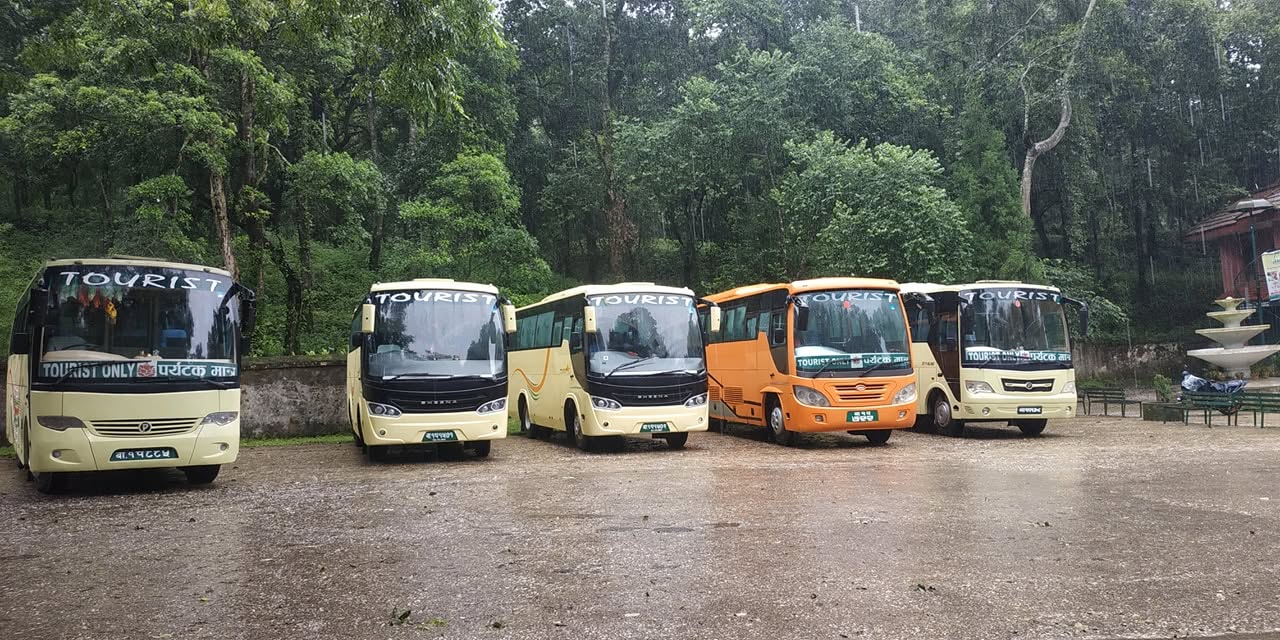
The Coaster minibus — Nepal Vehicle Hiring’s main minibus for groups of eighteen to twenty-five — carries a proportionally scaled roof rack that accommodates fifteen to twenty bags in a single loading. The Coaster is particularly valued for its ability to navigate secondary roads and narrow mountain access routes that full-size buses cannot manage, while still providing roof-rack luggage capacity that far exceeds any jeep or SUV configuration.

For groups visiting Chitwan National Park after a Lumbini-to-Chitwan private transfer or connecting from a Trek Nepal Himalayas group trekking package, the Coaster offers the right size and roof capacity for a group that outgrows the Hiace but doesn’t fill a full-size tourist bus.

Nepal Vehicle Rental With Roof Luggage Space

Roof Luggage Safety – Protection, Security and Weather Management

Roof-mounted luggage on Nepal’s mountain roads isn’t just about placing bags on a rack and hoping for the best—it requires specific protection measures that address three distinct challenges: weather exposure, physical security against movement and falls, and protection of contents from dust and vibration damage. Nepal Vehicle Hiring’s roof luggage protocols address all three.

Weather Protection – Tarpaulin Covers on All Roof Racks

Nepal’s weather is among the most variable and rapidly changing in the world. A journey that begins in clear sunshine in Kathmandu can encounter afternoon monsoon showers in the Trishuli Valley, winter hailstorms at Dhunche, and cold fog in the final approach to Syabrubesi Hill on the same day, in different seasons.

Without weather protection, roof-mounted luggage on this route would be soaked, partially frozen, or penetrated by dust before arrival. Nepal Vehicle Hiring’s roof rack vehicles carry heavy-duty waterproof tarpaulin covers secured to the rack frame with ratchet clips and elastic cord, providing complete protection against rain, dust, and moderate hail.

For the Toyota Hilux bed configuration, a lockable hard canopy or weatherproof tonneau cover offers superior protection compared with any tarpaulin. It is standard on Nepal Vehicle Hiring’s Hilux fleet for mountain-route operations.

Physical Security – Ratchet Straps and Cargo Nets

Nepal Vehicle Hiring uses ratchet straps and cargo nets as its standard roof-rack securing system. Ratchet straps — minimum two, ideally four per standard roof rack load — are tensioned to the rack rails and create a primary restraint system that prevents lateral and longitudinal shifting of the luggage during the acceleration, braking, and cornering of mountain road driving.

A full-coverage cargo net layered over the ratchet-strapped load provides secondary restraint, preventing any individual bag from working free even if the primary straps loosen during a particularly rough road section. Nepal Vehicle Hiring’s drivers perform a strap and net tension check at every major stop — at Trishuli on the Syabrubesi route, at Besisahar on the Annapurna approach, at Butwal on the Lumbini circuit — and re-tension as required.

Contents Protection – What Should and Should Not Travel on the Roof

Not every category of luggage is appropriate for roof rack transport in Nepal’s mountain conditions, and being clear with the Nepal Vehicle Hiring booking team about the contents of roof-bound bags is the most direct way to ensure appropriate handling. Items appropriate for roof rack transport in weatherproof bags: main trekking duffels in waterproof roll-top bags, porter loads in sealed duffel bags, tents and sleeping bags in compression sacks inside waterproof bags, empty carry bags and lightweight bulky items.

Items that should travel inside the vehicle: camera bodies and lenses, laptops and tablets, passports and travel documents, medications, smartphones and charging equipment, any fragile or moisture-sensitive items. The day pack that each trekker carries personally on the trail should always travel inside the vehicle — it is the bag most immediately needed at the trailhead and should be the last bag loaded and the first bag unloaded.

Nepal Vehicle Rental With Roof Luggage Space

Matching Vehicle to Group and Luggage – The Decision Framework

The most useful planning tool for Nepal vehicle rental with roof luggage space is a clear decision framework that matches group size and luggage volume to the right vehicle configuration—and you should apply it before booking, not at the vehicle loading point.

For one to four passengers with standard trekking luggage, the private car or standard SUV with roof rack is adequate for highway routes. For mountain off-road routes, the Mahindra Scorpio 4WD with roof rack handles the passenger plus luggage load comfortably. Contact Nepal Vehicle Hiring to confirm whether the planned route qualifies for a standard car or requires 4WD.

For five to seven passengers with full trekking gear including porter loads, the Mahindra Scorpio or Bolero 4WD with roof rack provides the most cost-effective single-vehicle solution for mountain routes. The Toyota Hilux with bed and rooftop carrier is the preferred alternative when luggage volume is particularly high — expedition-grade routes like Manaslu Circuit or Kanchenjunga Trek where per-person gear load is at its maximum.

For eight to thirteen passengers on highway routes, Nepal Vehicle Hiring’s standard recommendation is the Toyota Hiace van with roof rack, which seats the full group comfortably. In contrast, the roof rack carries all luggage outside the cabin. For off-road mountain routes at this group size, the standard configuration is two Scorpio 4WDs or one Hiace to the highway endpoint, plus Scorpios for the off-road section.

For 14 to 25 passengers, a minibus with a roof rack or two Toyota Hiace vans are the right configuration for highway travel. For twenty to forty-five passengers, the VIP Sofa Bus or Tourist Bus with a roof rack handles the full group and luggage as a single vehicle.

The crucial caveat for any group larger than seven on mountain off-road routes: no single vehicle in Nepal’s standard hire fleet combines fourteen-plus passenger capacity with Category 3 off-road capability. Large groups on mountain trekking transfers always involve a multi-vehicle convoy configuration — highway vehicles to the Category 1 road endpoint, then a fleet of 4WD Scorpios or Boleros for the off-road approach.

Nepal Vehicle Hiring coordinates these multi-vehicle convoy transfers as a standard service for Trek Nepal Himalayas group trekking departures and Alpine Luxury Treks expedition groups.

Nepal Vehicle Rental With Roof Luggage Space

Route-by-Route Roof Luggage Planning Guide

Kathmandu to Besisahar and Dharapani – Annapurna Circuit Trekking Transfer

The Besisahar to Dharapani Annapurna Circuit jeep transfer is Nepal Vehicle Hiring’s highest-volume mountain trekking transfer route, and roof luggage configuration is the most important vehicle planning element for this transfer. A typical Annapurna Circuit group of six trekkers with a guide and two porters carries nine to ten bags of varying sizes plus trekking poles, crampons, bags, and shared group equipment.

The Scorpio roof rack accommodates the six main trekker duffels and the two porter loads — eight bags total — while day packs travel inside. For Annapurna Circuit Trek group departures, Nepal Vehicle Hiring pre-loads the vehicle at the Kathmandu hotel under the supervision of a Trek Nepal Himalayas guide to ensure all equipment is correctly positioned before the six- to seven-hour highway section and the four- to five-hour off-road section.

Kathmandu to Syabrubesi – Langtang and Tamang Heritage Trail

For the Kathmandu to Syabrubesi Langtang transfer serving the Langtang Valley Trek and Tamang Heritage Trail, the seven- to nine-hour drive, with its Ramche zone challenge, makes roof rack load security particularly important. Nepal Vehicle Hiring adds an extra strap inspection on the rough section between Dhunche and Syabrubesi, and always moves camera bags and electronics inside the vehicle before this section begins.

Pokhara to Ulleri and Ghorepani – Poon Hill and ABC Trekking

The Pokhara to Ulleri jeep service for the Ghorepani Poon Hill Trekincludes the 4WD track from Tikhedhunga to Ulleri, a rough, steep off-road climb that generates significant vehicle vibration and lateral movement. On this section, Nepal Vehicle Hiring’s Pokhara-based drivers secure roof rack loads with maximum strap tension and double cargo-net coverage, drawing on specific experience with the Tikhedhunga-Ulleri track’s luggage-securing demands.

The Annapurna Base Camp Trek trailhead transfer to Nayapul follows a comparatively gentler road and standard roof rack securing applies.

Kathmandu to Salleri / Phaplu – Everest Road Access

The Salleri Phaplu Everest road access route is one of Nepal’s longest continuous mountain road journeys — 270 km, eight to ten hours — and the roof rack configuration for this route prioritises waterproof bag selection over everything else, since the Madhya Pahadi Highway passes through multiple climate zones and afternoon moisture is common even in the dry season. All Nepal Vehicle Hiring Scorpio and Bolero roof rack loads on the Salleri route travel under full tarpaulin cover from departure.

Trek Nepal Himalayas Everest Base Camp Trek groups using the Salleri road alternative receive a pre-departure briefing on roof pack waterproofing from the guide team as a standard part of the Salleri road departure protocol.

Two-Vehicle and Multi-Vehicle Configurations for Large Expedition Groups

For expedition-scale trekking groups—whether Trek Nepal Himalayas Manaslu Circuit expeditions, Alpine Luxury Treks custom Himalayan journeys, or international adventure travel group departures—a single vehicle rarely provides enough combined passenger and luggage capacity. Nepal Vehicle Hiring’s standard solution for groups where passenger count and luggage volume exceed single-vehicle capacity is a coordinated two-vehicle or multi-vehicle convoy, designed to distribute the load optimally between vehicles of the appropriate type for the route.

The most common two-vehicle configuration for mountain trekking groups is a Toyota Hilux carrying all expedition equipment and porter loads in the bed and on the roof rack, combined with a Mahindra Scorpio carrying the trekking group and guide, with day packs inside and individual main duffels split between the Scorpio roof rack and the Hilux bed. This configuration delivers genuine comfort for all passengers, fully secured and weather-protected luggage, no compromise on seating quality, and an organised luggage management system that makes trailhead unloading fast and efficient.

Both vehicles travel in convoy on mountain routes, maintaining radio or phone contact on sections where convoy separation could occur on single-lane mountain tracks.

For the largest expedition departures — Nepal group trekking packages of fifteen or more people — Nepal Vehicle Hiring deploys a Toyota Hiace for the highway section combined with two to three Scorpio 4WDs for the off-road mountain approach. The Hiace carries all passengers comfortably on the highway sections, with all luggage on the roof rack.

At the Category 2 to Category 3 road transition point — Besisahar, Syabrubesi junction, or the Salleri turning — the group transfers to the waiting Scorpio fleet for the mountain approach, and luggage is redistributed between the Scorpio roof racks for the off-road section. After the transfer, the Hiace driver returns to the Kathmandu or Pokhara base.

On the return, the process reverses: the Scorpios bring the group and luggage back to the Category 2 road endpoint, where the Hiace is pre-positioned for the highway return journey.

Booking Tips – How to Get the Right Vehicle for Your Luggage

  • Provide a Complete Luggage Inventory at Booking, Not on the Day: When contacting Nepal Vehicle Hiring on WhatsApp, provide the number of passengers, number and approximate size of main bags, porter loads to be transported, any specialist equipment (tents, photography gear, climbing equipment), and whether any items require inside-cabin protection. This information lets the booking team match the right vehicle or vehicle combination to the group’s needs.
  • Use Waterproof Bags for All Roof Rack Items: Nepal Vehicle Hiring provides tarpaulin covers on all roof racks but recommends that clients carry their main trekking luggage in waterproof roll-top duffels rather than relying on the tarpaulin alone for moisture protection. Gear shops in Thamel, Kathmandu, and Lakeside, Pokhara, offer waterproof duffel bags before departure.
  • Consider the Toyota Hilux for Six-Person Expedition Groups: The Toyota Hilux bed and roof carrier can handle the full luggage load of a six-person expedition group in a single vehicle, eliminating the need for a two-vehicle configuration on routes like Besisahar to Dharapani or Kathmandu to Syabrubesi, where the Hilux’s off-road capability is adequate.
  • Pre-Agree Loading Order With Your Trek Guide: For trekking groups using Trek Nepal Himalayas guide services, coordinate with the guide the night before departure on which bags go on the roof rack, which go inside the vehicle, and the order in which bags will be unloaded at the trailhead. This saves 15 to 20 minutes of trailhead confusion and keeps valuable items accessible without moving the entire load.
  • Book Roof Rack Vehicles Through Nepal Vehicle Hiring’s Operations Team: Not all Nepal vehicle hire operators include proper cargo nets, ratchet straps, and waterproof tarpaulin covers as standard on roof rack vehicles. Nepal Vehicle Hiring confirms its complete roof rack equipment standard—straps, net, and cover on every deployment at booking and verifies it at the pre-departure vehicle check.

Frequently Asked Questions – Nepal Vehicle Rental With Roof Luggage Space

Which Nepal vehicle has the most roof luggage space?

The Toyota Hilux 4WD has the most total luggage capacity of any Nepal Vehicle Hire vehicle, combining a 1.5 cubic metre bed with a 0.5–0.8 cubic metre rooftop carrier for about 2 cubic metres of protected cargo space—enough for a six-person expedition group. For highway group routes, the VIP Sofa Bus and Toyota Hiace van carry full-length roof racks that accommodate up to thirty and ten bags, respectively.

Is luggage secure on a roof rack on Nepal mountain roads?

Yes — when properly secured with ratchet straps at all four attachment points, plus a full-coverage cargo net, and covered with a waterproof tarpaulin. Nepal vehicle-hiring drivers inspect the roof rack load at every major stop and re-tension it as needed. The Toyota Hilux bed under a lockable hard canopy provides superior protection for sensitive equipment compared with any open roof rack configuration.

Should camera equipment travel on the roof rack?

No — camera bodies, lenses, laptops, tablets, passports, medications, and any moisture-sensitive or fragile item should travel inside the passenger cabin, not on the roof rack. Nepal Vehicle Hiring recommends day packs containing cameras and electronics always travel inside the vehicle on all Nepal mountain routes, regardless of how generous the roof rack capacity is.

Can Nepal Vehicle Hiring arrange a vehicle specifically for large expedition luggage?

Yes — Nepal Vehicle Hiring provides the Toyota Hilux with a bed and roof carrier, multi-vehicle convoy configurations, and dedicated expedition luggage vehicles for groups whose gear volume exceeds standard jeep capacity. Provide your complete luggage inventory at booking, and Nepal Vehicle Hiring’s team will design the optimal single- or multi-vehicle configuration—contact: WhatsApp or vehiclehiringnepal.com.

Does the Toyota Hiace have roof luggage space?

Yes — all Nepal Vehicle Hiring Toyota Hiace vans have roof luggage rack capacity for trekking gear and large bags, secured with cargo nets and ratchet straps. The Hiace roof rack is appropriate for highway routes (Kathmandu-Pokhara, Kathmandu-Chitwan, Kathmandu-Lumbini). For off-road mountain routes requiring 4WD, a Scorpio or Bolero with a roof rack replaces the Hiace.

Book Nepal Vehicle Rental With Roof Luggage Space

Getting your luggage to the trailhead — all of it, undamaged, dry, and accessible — is the foundation of every successful Nepal trekking departure. Nepal Vehicle Hiring Pvt Ltd’s roof luggage-equipped vehicle fleet — from the Toyota Hilux’s bed and rooftop carrier to the Hiace’s full-length roof rack and the Scorpio’s mountain-proven roof rack system — ensures that no group, regardless of luggage volume or route type, faces the compromised loading scenarios that poor vehicle selection produces.

Working with our sister companies Trek Nepal Himalayas and Alpine Luxury Treks, Nepal Vehicle Hiring coordinates the complete pre-departure loading plan for every trekking group transfer, ensuring the right vehicle for the right load on the right route — before the vehicle arrives at the hotel, not after.

Call / WhatsApp  |  vehiclehiringnepal.com  |  Book Your Roof Luggage Vehicle  |  treknepalhimalayas.com  |  alpineluxurytreks.com

Your Safe Travel Partner in Nepal

Private jeeps on a mountain road in Nepal

Safe Travel Partner Nepal: Why Nepal Vehicle Hiring Pvt Ltd Is Your Safest Choice

Nepal is one of the world’s most extraordinary travel destinations—a country whose Himalayan landscapes, ancient temple cities, diverse cultural communities, and legendary trekking routes have drawn millions of visitors from around the world for decades. But Nepal is also a country where road conditions, mountain terrain, weather variability, and the physical demands of high-altitude travel create genuine safety considerations that inform every vehicle hire decision a traveller makes.

Choosing the right travel partner—a vehicle hire operator whose commitment to safety is built into fleet maintenance standards, driver training, route planning, and 24-hour client support—is one of the most important decisions any Nepal traveller makes before their journey begins.

Nepal Vehicle Hiring Pvt Ltd (vehiclehiringnepal.com) is built on a foundation of safety-first operations across every dimension of the private vehicle hire service we provide. From the pre-journey mechanical checks that every vehicle in our fleet undergoes before any road assignment, to the route-specific driver experience requirements that ensure only drivers with proven track records on specific Nepal highway corridors are assigned to those routes, to the 24-hour support on WhatsApp that keeps every client connected to our team throughout their Nepal journey — safety is the first consideration in every Nepal Vehicle Hiring Pvt Ltd booking, not an afterthought.

This complete guide explains what a a fe travel partnership means in the Nepal vehicle hire context, what distinguishes safe operators from unsafe ones, and why Nepal Vehicle Hiring Pvt Ltd provides the safest, most professionally managed private vehicle hire service available in Nepal.

Whether you are an international tourist navigating Nepal’s complex road network for the first time, a corporate client whose personnel safety standards demand verified vehicle and driver standards, a trekking group whose mountain approach road transfer safety requires genuine 4WD capability and route-experienced drivers, or a pilgrimage party whose sacred journey deserves the most respectful and reliable ground transport available — this guide explains what Nepal Vehicle Hiring Pvt Ltd’s safe travel partnership means for your specific Nepal journey.

What Makes Nepal Road Travel Require a Safe Partner?

Nepal’s Road Environment: Understanding the Challenges

Nepal’s road network ranges from smooth sealed national highways to unpaved, narrow, cliff-side mountain tracks — sometimes within a single day’s journey. The Prithvi Highway from Kathmandu to Pokhara is a 200-kilometre sealed national highway with generally good surfaces and moderate traffic.

The Kathmandu-to-Syabrubesi jeep transfer on the Pasang Lhamu Highway adds the demanding Dhunche-to-Syabrubesi descent. In this narrow, less-maintained final section, road quality deteriorates, and 4WD capability becomes genuinely important.

The Pokhara to Upper Mustang overland jeep route traverses the Kali Gandaki Gorge—one of the world’s deepest river gorges—on an unpaved, narrow track where a driver without specific experience on this corridor poses a genuine safety risk. Understanding which Nepal roads demand which vehicle capabilities and which driver experience levels is the most fundamental safety competency any Nepal vehicle hire operator must possess.

Traffic conditions in Kathmandu present their own safety challenges—the capital’s combination of dense vehicle traffic, narrow lanes, frequent road works, and interactions among motorcycles, pedestrians, three-wheelers, and larger vehicles creates a demanding urban driving environment that rewards experienced local drivers over international visitors attempting self-drive navigation. Kathmandu’s one-way street network, restricted zones around heritage sites, and parking protocols at major temple destinations all require driver familiarity that only regular operation in the city provides.

Monsoon season from June through August adds the year’s highest road safety risk — landslides affecting mountain approach roads, flooding at low-lying river crossings on the East-West Highway and BP Highway, and reduced visibility affecting all driving. Nepal Vehicle Hiring Pvt Ltd’s monsoon-season operations include daily road-condition monitoring for every mountain approach route, real-time communication with local contacts about current conditions, and the authority to recommend departure-time adjustments when specific conditions make a standard departure time inadvisable.

Vehicle Condition: The Most Critical Safety Factor

A vehicle’s mechanical condition is the single most critical safety factor on Nepal’s roads—more important than driver skill in many circumstances —because even the most experienced driver cannot compensate for brake failure on a mountain descent or tyre failure on a cliff-side track. Nepal Vehicle Hiring Pvt Ltd maintains all fleet vehicles on a scheduled servicing program that exceeds Nepal’s minimum regulatory requirements, with specific pre-journey checks for every booking involving mountain road driving.

Our 4WD jeep fleet undergoes tyre tread depth and pressure assessment before every mountain road assignment, brake system performance verification before every descent-intensive route, 4WD system engagement testing before every off-road or rough-track section, and undercarriage clearance inspection for routes with known surface irregularity risk. These are not token checks but genuine mechanical safety evaluations conducted by qualified technicians — not by drivers performing a visual walk-around.

Tire condition is a specific safety concern on Nepal’s mountain roads that many operators overlook. The loose rock surfaces of the Kali Gandaki Gorge road, the rough gravel of the Syabrubesi approach’s final section, and the unpaved track sections of the Manaslu Circuit’s Jagat extension all place significantly higher tyre stress demands than sealed highway driving.

Nepal Vehicle Hiking Pvt Ltd’s policy of replacing tyres at 60 per cent tread wear, rather than the legal minimum of 30 per cent, provides a genuine safety margin over operators who maintain only minimum regulatory compliance.

Safe Travel Partner Nepal

Driver Experience and Route Knowledge

Driver experience is Nepal’s most underappreciated vehicle hire safety factor—and the dimension where quality varies most between Nepal’s many vehicle hire operators. A driver who completes the Kathmandu to Syabrubesi route twice per week for three years develops an intimate knowledge of the road’s specific hazard points, current construction-affected sections, optimal overtaking locations, and the timing of the narrow sections’ one-way traffic flows that a driver making the journey for the first time won’t have.

Nepal Vehicle Hiring Pvt Ltd assigns drivers to route categories based on documented experience — our Syabrubesi drivers have specifically completed this route many times, our Mustang overland drivers know the Kali Gandaki Gorge’s seasonal wind patterns, and our Manaslu Circuit approach drivers know the Ramche Landslide Zone’s current condition better than any single-journey driver can.

Route-specific experience matters differently across Nepal’s driving environments. In Kathmandu city, safety-relevant driver knowledge includes familiarity with traffic patterns, heritage-site access protocols, and efficient routing through the city’s complex one-way network—skills our Kathmandu sightseeing service drivers develop through daily city operations.

On the Prithvi Highway to Pokhara, the safety-relevant knowledge is the specific hazard points on the gorge section near Malekhu, the optimal timing for the narrow cliff-face sections, and the current maintenance condition of sections affected by past monsoon damage — knowledge our Kathmandu to Pokhara private vehicle service drivers accumulate through regular operation on this specific corridor.

The Five Pillars of Nepal Vehicle Hiring Pvt Ltd’s Safety Philosophy

Route-Matched Vehicle Assignment

Nepal Vehicle Hiring Pvt Ltd’s most fundamental safety practice is matching the vehicle to the route’s actual road character rather than assigning whatever vehicle is available. A sealed Category 1 national highway that a sedan handles adequately does not warrant a Land Cruiser.

An unpaved Category 3 mountain track that requires genuine 4WD capability does not get a sedan. Our private car hire for city and highway use, 4WD jeep hire for mountain approach roads, Hiace van hire for group highway travel, and bus hire for large group programs are not arbitrarily interchangeable — each is matched to the road conditions for which it is mechanically appropriate.

This matching discipline, applied consistently across every booking, underpins safe Nepal vehicle hire.

Pre-Journey Vehicle Checks

Every Nepal Vehicle Hiring Pvt Ltd vehicle assigned to a booking undergoes a pre-journey check before departure, tailored to the journey’s specific demands. City transfers receive a standard mechanical readiness check covering the engine, brakes, tyres, and climate control.

Mountain approach transfers receive the extended check, covering all standard items plus the 4WD system, ground-clearance suitability for the specific route’s surface character, and emergency equipment (tow rope, basic tool kit, hydraulic jack, first aid kit). Long-distance overnight transfers also include an additional fuel and cooling system check, along with the extended mountain-road protocol.

These pre-journey checks are a built-in operational requirement — not a client-requested optional service.

24-Hour Client Communication

Nepal Vehicle Hiring Pvt Ltd’s WhatsApp number is a genuine 24-hour communication channel—not a business-hours line that goes unanswered at 2:00 a.m. when a pilgrim group needs pre-dawn confirmation of their Simikot flight departure airport transfer. Our pre-dawn operation capability—specifically serving the Ramechhap Airport transfer for peak-season Lukla flights (departures at 1:30 to 2:20 a.m. from Kathmandu) and the Gosaikunda helicopter tour hotel-to-airport transfers at 4:30 to 5:00 a.m.—relies on a 24-hour team that answers every client communication within the response window that matters.

Real-time communication is a safety factor because it lets clients report changed conditions, request timing adjustments, or confirm driver positioning at remote pickup points—all without the logistical anxiety that unanswered communication creates on a demanding travel day.

Transparent All-Inclusive Pricing

Financial transparency is a safety factor in Nepal vehicle hire for a specific and important reason: billing surprises at journey’s end — unexpected fuel charges, driver bhatta not mentioned at booking, service surcharges added after the trip — create the kind of adversarial relationship between client and operator that undermines the trust and cooperation that a safe journey requires. When a client knows exactly what they are paying before the vehicle departs, and pays exactly that amount at journey’s end, the driver-client relationship operates on a foundation of mutual trust that directly benefits safety — the client communicates openly about any concerns, the driver operates in an atmosphere of confidence rather than anxiety about billing disputes, and both parties are focused on the journey rather than the eventual settlement negotiation.

Return Journey Confirmation

Pre-confirming return vehicle arrangements before the outbound journey begins is as much a safety practice as a convenience — because a trekker who descends from the Larkya La after 15 days without a confirmed return vehicle from Dharapani is in a genuinely vulnerable logistical position at the end of a physically demanding circuit. Nepal Vehicle Hiring Pvt Ltd’s recommendation to pre-book both outbound and return vehicles simultaneously — the Kathmandu to Soti Khola outbound jeep and the Dharapani return vehicle for the Manaslu Circuit Trek; the Kathmandu to Syabrubesi outbound and the Syabrubesi return for the Langtang Valley Trek — ensures that every client has a confirmed return transport before they step onto any trail, and that the return driver’s WhatsApp contact details are in their phone before departure from Kathmandu.

Private jeep on the road to Manang

Safety Across Nepal’s Major Vehicle Hire Routes

Safe Kathmandu City Travel

Kathmandu’s city vehicle hire safety concerns are urban rather than mountain — traffic density, pedestrian interactions, and the specific navigation demands of the UNESCO heritage site circuit. Nepal Vehicle Hiring Pvt Ltd’s Kathmandu airport transfer service meets arriving travellers at Tribhuvan International with a driver holding a name card, helps with luggage, and navigates the airport’s complex exit and city-approach traffic in a vehicle maintained to urban safety standards.

Our Kathmandu sightseeing vehicles cover the heritage circuit with drivers who know the specific access and parking protocols at Pashupatinath, Boudhanath, Swayambhunath, and Patan, eliminating the navigation errors and parking violations unfamiliar drivers create at these high-traffic sites. Our Bhaktapur day tour vehicle and Nagarkot sunrise tour service use drivers with specific experience on these valley approach roads.

Safe Highway Travel

The Prithvi Highway to Pokhara, Nepal’s most travelled tourist road, is generally safe for well-maintained vehicles with experienced drivers. Still, the Ishuli Gorge section near Malekhu and the gorge approach near Mugling have specific narrow-section hazards that reward driver familiarity over first-time navigation.

Nepal Vehicle Hiring Pvt Ltd’s Kathmandu to Pokhara private vehicle service uses drivers who complete this route regularly—knowing the current condition of the gorge sections, the best timing for the narrow pinch points, and the precise locations of the most recent construction-affected areas. In Pokhara, our Pokhara car hire service and Sarangkot sunrise vehicle hire use experienced local drivers for the lakeside city and the pre-dawn Sarangkot ascent road.

Safe Mountain Road Travel

Mountain road safety is Nepal Vehicle Hiring Pvt Ltd’s most technically demanding operational domain — the domain where route-matched vehicles, pre-journey mechanical checks, and driver route experience most directly determine client safety outcomes. Our 4WD jeep hire service for the Kathmandu to Syabrubesi jeep transfer, the Kathmandu to Soti Khola approach for the Manaslu Circuit Trek, the Kathmandu to Manang jeep for the Annapurna Circuit Trek, and the Pokhara to Upper Mustang overland jeep for the Upper Mustang Trek all use vehicles specifically prepared for mountain road conditions and drivers with documented experience on each specific corridor.

Our Kathmandu to Salleri Phaplu service for the Everest Base Camp Trek overland approach, our Kathmandu to Besisahar vehicle, and our Kathmandu to Muktinath jeep for the Muktinath Tour all follow the same safety-first vehicle-and-driver matching protocol.

What to Look for in a Safe Nepal Vehicle Hire Partner

Not all Nepal vehicle hire operators maintain the safety standards that travellers have a right to expect — and the variation in operational quality between the market’s best and least professional operators is significant enough to create genuine safety risk for travellers who choose purely on price or convenience without considering the quality factors that determine actual journey safety. The following criteria distinguish safe, professional Nepal vehicle hire operators from those with inadequate safety standards a

  • All-inclusive transparent pricing confirmed in writing before departure — operators who refuse to commit to a final price at booking or who add unexplained charges at settlement are demonstrating operational practices that extend to safety as well as billing
  • Written confirmation of vehicle type, driver name, and vehicle registration before the rental day — operators who cannot provide these basic details before the journey begins are operating without the organisational infrastructure that safety-conscious operations require
  • Route-specific driver experience confirmed at booking — ask specifically whether the driver assigned to your route has completed this specific road before, and how recently
  • Pre-journey vehicle check confirmation — ask what mechanical checks are performed before the vehicle is assigned to your booking, and for mountain road journeys, ask specifically about tyre condition and 4WD system testing
  • 24-hour communication availability confirmed — test the operator’s WhatsApp response time before booking: send a booking inquiry at an off-hours time and assess how quickly and how professionally the response arrives
  • Clear monsoon-season policy — for any journey during June through August, ask specifically how the operator monitors and communicates about road conditions on your specific route, and what their policy is if conditions make the standard departure time inadvisable
  • Emergency protocol documentation — ask what the operator’s protocol is if a vehicle has a mechanical issue on a remote mountain road section. Does the operator carry a tow rope and basic tool kit? Is there a backup vehicle arrangement?

Nepal Vehicle Hiring Pvt Ltd: The Safe Travel Partner Difference

Nepal Vehicle Hiring Pvt Ltd’s safe travel partner commitment shows not only in the safety standards described above, but also in the specific service dimensions that distinguish our operation from less professional Nepal vehicle hire providers. We maintain our private cars, 4WD jeeps, Hiace vans, coasters, and buses to standards above minimum regulatory requirements.

We assign drivers to route categories based on documented experience and brief them on each booking’s specific requirements before departure. Our airport transfer service, city Kathmandu sightseeing vehicles, Nagarkot vehicle hire, Bhaktapur day tour, and Nagarkot sunrise tour all use drivers who regularly run these routes.

Our trekking safety network covers Kathmandu to Syabrubesi, Kathmandu to Besisahar, Kathmandu to Manang jeep, Kathmandu to Soti Khola, Kathmandu to Salleri Phaplu, Pokhara to Nayapul, Pokhara to Ghandruk jeep, Pokhara to Ghorepani Poon Hill jeep for the Ghorepani Poon Hill Trek, and Pokhara to Upper Mustang overland jeep — all with route-matched vehicles, pre-journey safety checks, and route-experienced drivers. Our Nepal tour packages and trekking transport services coordinate complete multi-stage journeys, maintaining the same safety standards on every leg.

Plan your safe Nepal journey or contact us on WhatsApp. Visit vehiclehiringnepal.com to book Nepal’s safest private vehicle hire.

Safety for Special Traveller Categories

Safe Travel for Solo Travellers in Nepal

Solo travellers make up a significant and growing share of Nepal’s international visitors—independent travellers who value the freedom to manage their own itinerary but face specific safety considerations that group travel naturally mitigates. For solo travellers, a private vehicle hire relationship with Nepal Vehicle Hiring Pvt Ltd provides a built-in safety layer that solo public transport use cannot replicate.

Our drivers know the client’s name, hotel, planned itinerary, and expected return time, creating an informal check-in structure that public transport lacks. For solo trekkers booking the Kathmandu to Syabrubesi jeep transfer for the Langtang Valley Trek or the Kathmandu to Salleri Phaplu overland service for the Everest Base Camp Trek overland approach, Nepal Vehicle Hiring Pvt Ltd’s pre-booking confirmation — including driver name and vehicle registration sent to the client before departure — provides documentary accountability that a solo traveller travelling in a public vehicle cannot access.

Solo female travellers benefit significantly from Nepal Vehicle Hiring Pvt Ltd’s professionally screened driver pool — all our drivers are vetted through a recruitment process that includes character references, driving record verification, and an initial supervised driving assessment on the specific route category they are assigned to. We do not use casual hires.

Our female-traveller-specific commitment includes providing the driver’s name and registration before every pickup, confirming pickup time with the client’s mobile the evening before, and maintaining a 24-hour emergency contact for any client who feels unsafe at any point during their Nepal journey.

Safe Travel for Families with Children

Families travelling to Nepal with children—particularly first-timers—face specific safety considerations that Nepal Vehicle Hiring Pvt Ltd’s service model directly addresses. Child seat availability (confirm with Nepal Vehicle Hiring Pvt Ltd at booking for vehicles supporting young children), driver patience at the longer stops that children require, cabin climate control reliability in Nepal’s temperature-variable road environments, and the vehicle’s luggage capacity for the additional equipment that family travel generates — all of these are safety and comfort dimensions that a professional private vehicle hire service manages in ways that public transport cannot.

Our Hiace van hire for family groups of 6 to 14 provides the most spacious and comfortable Nepal travel experience for families where children need room to move, rest, and manage the inevitable restlessness of long Nepal road journeys. Our Bhaktapur day tour vehicle, Nagarkot sunrise tour, and Kathmandu sightseeing service all operate on the same family-safe driver and vehicle standards.

Safe Travel for Senior Citizens and Elderly Pilgrims

Senior citizens and elderly pilgrims are among Nepal Vehicle Hiring Pvt Ltd’s most important traveller categories—a group whose physical limitations require maximum vehicle comfort and reliability, and whose sacred journeys deserve the most respectful and patient ground transport service available. Elderly Kailash Yatra pilgrims transiting Nepal from Sunauli to the Kerung border, senior Indian tourists visiting Nepal’s UNESCO heritage sites for the first time, and elderly Nepali travellers making annual festival journeys to their home districts all benefit from Nepal Vehicle Hiring Pvt Ltd’s commitment to the vehicle quality and driver patience that senior travellers require.syota Land Cruiser Prado Land Cruiser VX options provide the most comfortable boarding for travellers with limited mobility: the elevated cabin height and step-in design make entry and exit significantly easier than in sedan cars for passengers whose knees and hips are less flexible.

Drivers are specifically briefed on the patience required for senior travellers at sacred site stops: waiting without time pressure while elderly devotees complete their pujas, assisting with luggage, and keeping a cabin temperature suited to senior passengers. Contact Nepal Vehicle Hiring Pvt Ltd on WhatsApp to discuss specific requirements for senior travellers.

Safe Travel Partner Nepal

Safety Standards vs Nepal’s Informal Vehicle Hire Market

Nepal’s vehicle hire market spans from fully professional operators with structured safety standards to informal arrangements where private car owners occasionally drive for no organisational structure. Understanding this spectrum helps travellers make informed choices that genuinely prioritise safety over apparent cost savings that may not exist after all factors are considered.

The informal market’s primary appeal is apparent low cost — a private car owner offering a Kathmandu to Pokhara transfer at NPR 8,000 versus Nepal Vehicle Hiring Pvt Ltd’s NPR 14,000 to NPR 22,000 all-inclusive rate appears to offer significant savings. But the informal operator’s vehicle may have no recent mechanical inspection, their insurance may not cover commercial passenger transportation, their driving history is unknown to the client, and their operational accountability — the ability to contact a responsible party if something goes wrong during the journey — is limited to a single mobile number that may or may not be answered in a situation requiring immediate support.

For city sightseeing or short transfers where road conditions are benign and the stakes of a problem are modest, cost-conscious travellers may find the informal market’s risks acceptable. Kathmandu to Syabrubesi approach, the Manaslu Circuit trailhead transfers, the Upper Mustang overland — the informal market’s safety risk differential from a professional operator becomes genuinely consequential.

Nepal Vehicle Hiring Pvt Ltd’s Driver Training and Selection

Nepal Vehicle Hiring Pvt Ltd’s driver selection and ongoing training process is our most significant operational safety investment —more impactful than any vehicle specification — because the driver’s decisions in every road situation ultimately determine safety outcomes more than any mechanical specification. Our driver recruitment requires a minimum 3-year Nepal commercial driving history with no major accident record, route category experience documentation (city drivers must have completed city routes commercially, mountain road drivers must have completed the specific mountain corridors they are assigned to), and an initial supervised assessment drive on the relevant route category with a senior Nepal Vehicle Hiring Pvt Ltd driver providing real-time evaluation.

Ongoing driver quality management includes client feedback integration. Every completed Nepal Vehicle Hiring Pvt Ltd booking includes an optional client satisfaction input that specifically covers driver behaviour, vehicle condition, and timing reliability.

Our operations team reviews this feedback and directly influences driver assignment decisions — drivers whose client feedback consistently identifies safety concerns are reassigned to lower-demand route categories. In contrast, we investigate and address the concern.

Nepal Vehicle Hiring Pvt Ltd’s commitment to this feedback loop is a genuine operational safety practice, not a customer service formality. Our contact page and WhatsApp are the channels through which post-journey feedback reaches our operations team — we encourage every client to share their experience, positive or negative, to help maintain the service standards that make Nepal Vehicle Hiring Pvt Ltd Nepal’s safest travel partner.

Safe Travel Partner Nepal

Seasonal Safety Guide: Nepal Vehicle Hire Through the Year

Nepal’s four distinct seasons create genuinely different safety profiles for vehicle hire across the complete highway network. Understanding seasonal safety helps travellers book in advance, choose the right vehicle type, and time their departure to maximise safety margins throughout their Nepal journey.

Autumn (September to November): Nepal’s finest road conditions and safest vehicle hire season. Post-monsoon surfaces are newly stable, with excellent mountain visibility, and the Ramche Landslide Zone and similar seasonal hazard points are in their most consistent annual state.

In autumn, safety-relevant booking priority is booking—peak demand pressures top-end vehicle availability, and last-minute bookings may lead to vehicles or drivers from less professional providers that do not meet Nepal Vehicle Hiring Pvt Ltd’s quality standards. Book 2 to 3 weeks in advance for all autumn vehicle hire.

Spring (March to May): Good road conditions and generally safe vehicle hire season, with rhododendron bloom adding visual beauty to mountain approach drives. In late spring (late May), pre-monsoon rainfall begins to affect the most landslide-susceptible mountain road sections.

Nepal Vehicle Hiring Pvt Ltd monitors pre-monsoon conditions from mid-May onward and advises clients on departure timing for routes like the Langtang Valley Trek approach and the Gosaikunda Lake circuit that cross landslide-susceptible terrain.

Monsoon (June to August): The most demanding season for Nepal vehicle hire safety management. Landslides affect mountain approach roads, river crossings on the East-West Highway can be temporarily flooded, and reduced visibility affects all driving.

Nepal Vehicle Hiking Pvt Ltd’s monsoon-season vehicle hire includes daily road-condition assessments for every mountain approach route and clear communication with clients about any conditions that affect the standard booking. For monsoon trekking approach transfers, Nepal Vehicle Hiring Pvt Ltd recommends departing by 6:00 a.m. to complete mountain road sections before afternoon rainfall peaks.

Winter (December to February): Cold but generally safe road conditions on the main national highway network. The main winter safety consideration is early-morning frost on high-altitude approach road sections—the Dhunche-Syabrubesi descent and the Ramche section can have icy patches in January and February that require reduced speed and heightened attention.

Nepal Vehicle Hiking Pvt Ltd briefs its winter mountain road drivers on frost-affected sections and equips them with snow chains for the highest-risk winter approach routes.

Client Safety Tips: How to Be a Safe Nepal Traveller

  • Book through operators who provide written booking confirmation with vehicle type, driver name, vehicle registration, departure time, and all-inclusive rate — verbal confirmations are not adequate for Nepal vehicle hire safety purposes.
  • Always confirm the pickup time the evening before — Nepal Vehicle Hiring Pvt Ltd sends confirmation WhatsApp messages the evening before every booking, and we recommend confirming pickup location details then.
  • For pre-dawn pickups (Ramechhap Airport, Gosaikunda helicopter, Sarangkot and Nagarkot sunrise tours): confirm the driver’s name and vehicle registration at the evening-before check-in, and make sure the driver has your hotel’s gate/entrance details.
  • Share your Nepal journey plan with someone at home — for trekking approach transfers specifically, ensure family/friends know your Kathmandu departure date, your vehicle’s destination (Syabrubesi, Soti Khola, Salleri, etc.), and your expected return date to Kathmandu.
  • Carry adequate NPR cash for unexpected situations — if a vehicle has a mechanical issue on a remote mountain road, you may need cash for a local taxi or guesthouse while a replacement vehicle is arranged.
  • Motion sickness preparation for mountain road sections — the Pasang Lhamu Highway and the Prithvi Highway gorge sections are among Nepal’s most winding roads; carry appropriate medication if susceptible.
  • Trust your instincts about driver behaviour — if a driver exceeds the appropriate speed for road conditions, is using their mobile phone while driving, or shows other unsafe behaviours, speak up immediately. Nepal Vehicle Hiring Pvt Ltd drivers are specifically instructed to accept and respond to client speed and safety feedback.
  • In a genuine emergency — contact Nepal Vehicle Hiring Pvt Ltd on WhatsApp immediately. Our team provides 24-hour emergency support and can coordinate replacement vehicles, local assistance, or emergency service contacts in any location in Nepal.

Nepal Road Safety: Context and Statistics

Nepal’s road network carries tens of millions of vehicle journeys annually across terrain ranging from flat Terai plains to mountain passes exceeding 5,000 meters, and most are completed without incident by drivers and vehicles operating within their competence parameters. Nepal’s highest-risk categories include heavily loaded commercial freight trucks on mountain passes, overcrowded public buses speeding on winding hill roads, and privately owned vehicles driven by inexperienced operators on roads beyond their capability.

The lowest-risk category—where Nepal Vehicle Hiring Pvt Ltd operates—is private passenger vehicles driven by experienced drivers on appropriately matched routes, with well-maintained mechanical systems and no time pressure encouraging unsafe speed.

For trekking approach transfers specifically — the Kathmandu to Syabrubesi jeep for the Langtang Valley Trek, the Salleri overland for the Everest Base Camp Trek, the Soti Khola approach for the Manaslu Circuit Trek, and the Pokhara to Upper Mustang route for the Upper Mustang Trek — Nepal Vehicle Hiking Pvt Ltd’s mountain road safety protocol is the single most consequential operational difference between our service and less professional providers. A trekker beginning the Three Passes Trek or the Gokyo Lake Trek spends 14 to 21 days on the trail after the approach-vehicle transfer—any incident during the approach affects not just the transfer itself, but the entire Nepal adventure it was meant to begin.

Pre-Journey Communication: Safety Information Before Every Departure

Nepal Vehicle Hiring Pvt Ltd provides standard pre-journey communications for every booking: evening-before confirmation of driver name, vehicle registration, and vehicle type via WhatsApp; departure time re-confirmation; route briefing for mountain road transfers noting current conditions on variable sections; emergency contact confirmation on WhatsApp; and return journey reminder for trekking transfers with the return driver contact details provided before outbound departure.

This pre-journey communication protocol turns a vehicle hire booking into a genuine travel partnership. Clients know who is picking them up, what vehicle they’ll ride in, how to reach us in any situation, and what to do to ensure a smooth return journey. These communications are standard for every booking — not top-end additions.

Contact Nepal Vehicle Hiring Pvt Ltd on WhatsApp to experience Nepal’s safest private vehicle hire from your first booking onwards.

Complete Safe Travel Network: Every Nepal Destination

Nepal Vehicle Hiring Pvt Ltd’s safe travel partnership covers every Nepal destination, including Kathmandu airport transfers. Kathmandu transfers and sightseeing. Bhaktapur day tour.

Nagarkot vehicle hire and Nagarkot sunrise tour. Kathmandu to Pokhara private vehicle. Pokhara car hire.

Sarangkot sunrise vehicle. Kathmandu to Besisahar and Kathmandu to Manang jeep for the Annapurna Circuit Trek. Pokhara to Nayapul transport and Pokhara to Ghandruk jeep for the Annapurna Base Camp Trek.

Pokhara to Ghorepani Poon Hill jeep for the Ghorepani Poon Hill Trek. Pokhara to Upper Mustang overland jeep for the Upper Mustang Trek. Kathmandu to Salleri Phaplu for the Everest Base Camp Trek overland.

Kathmandu to Syabrubesi jeep for the Langtang Valley Trek. Kathmandu to Soti Khola jeep for the Manaslu Circuit Trek. Kathmandu to Muktinath jeep for the Muktinath Tour.

Fleet of private cars, 4WD jeeps, Hiace vans, coasters, and buses. Nepal tour packages and trekking transport services. Plan your safe Nepal trip, or contact us on WhatsApp.

Visit vehiclehiringnepal.com.

Safe Travel for Special Nepal Journey Types

Nepal’s diverse travel purposes each present specific safety considerations that Nepal Vehicle Hiking Pvt Ltd’s service model addresses through purpose-matched operational protocols.

Corporate and NGO travel: International organisations operating in Nepal require vehicle hire that meets institutional safety and accountability standards—documented driver credentials, verified vehicle registration, confirmed insurance, and formal service agreements. Nepal Vehicle Hiring Pvt Ltd provides corporate service agreements specifying all vehicle safety standards, driver credentials, and operational protocols for clients whose institutional travel policies require formal documentation.

Our private car hire and 4WD jeep hire services serve international NGO, embassy, and development organisation clients in Kathmandu and Pokhara, meeting the documentation standards required by their travel policies.

Educational institution excursions: Schools and universities running field trips in Nepal need vehicles that meet the institution’s duty-of-care obligations to students. Nepal Vehicle Hiring Pvt Ltd’s Hiace van hire, coaster hire, and bus hire serve educational institution excursion programs with the same pre-journey vehicle checks and driver experience standards that apply to all our bookings.

Our Kathmandu sightseeing service and Bhaktapur day tour vehicle are widely used for international school heritage excursions in the Kathmandu Valley.

Medical and humanitarian transport: Nepal Vehicle Hiring Pvt Ltd provides priority booking and 24-hour availability for medical transfers—hospital transfers within Kathmandu, inter-city medical patient transport between Kathmandu and regional hospitals, and emergency vehicle positioning for clients who need immediate transport in a medical situation. Our 24-hour WhatsApp receives medical transport requests and responds immediately, day or night.

Building Long-Term Safe Travel Partnerships

Nepal Vehicle Hiring Pvt Ltd’s most valued client relationships are long-term partnerships—organisations and individuals who return to our service season after season because the safety, reliability, and transparent pricing we deliver consistently meet or exceed their expectations. Our returning corporate clients — international NGOs, diplomatic missions, and development organisations based in Kathmandu — value the safety consistency that a long-term operator relationship provides: the same vetted drivers they have come to trust, the same vehicle standards they have verified through experience, and the same transparent billing that eliminates the financial uncertainty that new-operator relationships introduce.

Our returning trekking group clients—expedition organisers, trekking agency partners, and private groups who complete one Nepal circuit and return for the next—value the accumulated route knowledge that repeat bookings build. A client who books the Kathmandu to Syabrubesi jeep with Nepal Vehicle Hiking Pvt Ltd for the Langtang Valley Trek this year and returns for the Manaslu Circuit Trek next year benefits from our accumulated knowledge of both routes — the driver selection, the timing recommendations, and the current road condition intelligence that a single-booking relationship cannot develop.

Plan your Nesafe travel journey in Nepal with Nepal Vehicle Hiring Pvt Ltd and begin a long-term safe travel partnership that improves with every Nepal adventure you undertake. Contact our team on WhatsApp to start.

Nepal’s private vehicle hire market offers travellers a great choice between professional, safety-focused operators and informal arrangements with unknown, unverifiable safety standards. Ne l Vehicle Hiring Pvt Ltd has built its safe travel partner reputation on a straightforward principle: every client who travels in one of our vehicles deserves to arrive at their destination safely, in the right vehicle for the road, with a driver who knows that road, and with complete information about what their hire includes before departure.

This principle guides every booking, vehicle assignment, driver selection, and pre-journey communication our team delivers. The Nepal adventure is extraordinary — from the ancient temples of the Kathmandu Valley to the glaciated peaks of the Khumbu and the Annapurna Sanctuary, from the sacred waters of Gosaikunda Lake to the forbidden city of Lo Manthang, from the remote Manaslu Circuit’s Nubri Valley communities to the Kailash Mansarovar Yatra’s approach through Nepal’s sacred landscape.

Nepal Vehicle Hiring Pvt Ltd is proud to serve every dimension of this extraordinary country’s travel landscape as Nepal’s most trusted, safety-focused private vehicle hire partner. Contact our team on WhatsApp or visit vehiclehiringnepal.com to book your safe Nepal journey today.

Safe travel in Nepal comes from deliberate choices—choosing the right vehicle for the road, the right driver for the route, and the right operator for the journey. Nepal Vehicle Hiking Pvt Ltd makes these choices every time.

From the first Tribhuvan International Airport pickup to the last trekking trailhead delivery, from Kathmandu’s ancient heritage sites to the high passes of the Himalaya, every kilometre of every Nepal Vehicle Hiring Pvt Ltd journey is driven by a professional who knows the road, in a vehicle that has been prepared for it, with a client who has been fully informed about every dimension of the service they are receiving. This is what safe Nepal travel looks like — and it is what Nepal Vehicle Hiring Pvt Ltd delivers every day.

Safe Travel Partner Nepal: Frequently Asked Questions

Is private vehicle hire safe in Nepal?

Yes — private vehicle hire with a professional, safety-focused operator like Nepal Vehicle Hiring Pvt Ltd is significantly safer than public bus or shared jeep alternatives on most Nepal routes. Our pre-journey mechanical checks, route-experienced drivers, transparent all-inclusive pricing, and 24-hour client communication combine to deliver the safest available private vehicle hire experience in Nepal.

The safety differential between professional and non-professional private vehicle operators is real and significant — always choose an operator who confirms vehicle type, driver name, and all-inclusive pricing in writing before departure.

What is the safest vehicle for Nepal mountain roads?

A properly maintained 4WD jeep—Toyota Land Cruiser Prado or Mahindra Scorpio—is the safest option for Nepal’s Category 2 and Category 3 mountain approach roads. The Land Cruiser’s genuine 4WD low-range capability, high ground clearance, robust suspension, and proven durability on extended mountain-road use offer the best safety margin of any available Nepal hire vehicle for the Syabrubesi approach, the Manaslu Circuit trailheads, and the Upper Mustang overland route.

Nepal Vehicle Hiring Pvt Ltd maintains its jeep fleet above minimum standards and conducts specific pre-journey checks for mountain road assignments.

How do I verify that a Nepal vehicle hire operator is safe and reputable?

Key verification steps: (1) Request written confirmation of vehicle type, driver name, and vehicle registration before booking. (2) Confirm the all-inclusive rate in writing before departure. (3) Ask specifically about driver experience on your planned route.

(4) Test WhatsApp response time before booking — send an inquiry and assess speed and professionalism of response. (5) Check that the operator has a physical address and established business presence in Nepal. Nepal Vehicle Hiking Pvt Ltd meets all these criteria and can be contacted on WhatsApp to provide any verification information clients require.

Is Nepal safe for tourists?

Nepal is a safe and welcoming tourist destination. The country’s political stability, active tourism infrastructure, and generally positive attitude toward international visitors create a fundamentally safe environment for travellers.

Road conditions and mountain weather are the primary safety considerations — both of which are managed effectively by choosing a professional vehicle hire partner with appropriate vehicle types, experienced drivers, and real-time road condition monitoring. Nepal Vehicle Hiring Pvt Ltd’s complete safety protocol addresses both road and weather safety factors across every route in our operational network.

What should I do if my Nepal hire vehicle has a problem?

Contact Nepal Vehicle Hiring Pvt Ltd immediately on WhatsApp. Our 24-hour team coordinates replacement vehicles, local assistance contacts, and emergency service connections in any location in Nepal. Every Nepal Vehicle Hiring Pvt Ltd mountain road vehicle carries a basic emergency kit, including a tow rope, hydraulic jack, and tool kit.

For genuine medical emergencies, Nepal Vehicle Hiring Pvt Ltd drivers are briefed on the nearest medical facility locations along every major route. They can initiate emergency response coordination through our team.

Conclusion: Your Journey Is Safe with Nepal Vehicle Hiring Pvt Ltd

Safe travel in Nepal is not luck or good fortune—it is the deliberate result of choosing a vehicle hire partner whose safety standards, vehicle maintenance practices, driver experience requirements, transparent pricing, and 24-hour client support are built into every operation from the ground up. Nepal Vehicle Hiring Pvt Ltd is the Nepal vehicle hire service that puts your safety first in every booking, vehicle assignment, driver selection, and journey our fleet undertakes.

From the first Kathmandu airport transfer to the last mountain approach jeep reaching its trekking trailhead destination, Nepal Vehicle Hiring Pvt Ltd delivers Nepal’s safest private vehicle hire experience to every client—individual travellers, family groups, corporate clients, trekking parties, and pilgrimage groups alike. Contact our team on WhatsApp to book your safe Nepal journey today.

Plan your complete Nepal trip with our safety-first vehicle hire network, or visit vehiclehiringnepal.com — Nepal’s most trusted safe travel partner.

Explore Hidden Destinations in Nepal: Private Transport

Scorpio jeeps on the road in Mustang

Explore Hidden Destinations in Nepal with Private Transport — Complete

Nepal’s most celebrated destinations — Everest Base Camp, the Annapurna Circuit, Chitwan National Park, Pokhara’s lakeside, and Kathmandu’s UNESCO heritage zones — attract most international visitors for one obvious reason: they are genuinely extraordinary. But Nepal spans 147,181 square kilometres across three distinct ecological zones — the Himalayan heights, the mid-hill country, and the Terai plains — and destinations outside the major trekking and tourist circuits offer a parallel Nepal of equal depth, beauty, and cultural richness that most visitors never encounter.

The single most important enabler of Nepal’s hidden destination experience is private transport hire — the private car or 4WD jeep that departs from the hotel door at a time chosen by the traveller, stops where and when the traveller wants, and reaches destinations that public transport does not serve or serves only on inconvenient schedules. Bandipur’s hilltop medieval bazaar, Bardia’s uncrowded wildlife wilderness, Tansen’s exquisite woodcarving tradition, Daman’s panoramic Himalayan viewpoint, and Rara Lake’s extraordinary high-altitude blue—none of these is fully accessible on fixed-schedule public transport.

All of them are fully open to private-vehicle-hire travellers who arrive at their own pace, explore without time pressure, and depart when they are ready, not when the bus schedule decides. Nepal Vehicle Hiring Pvt Ltd is the private transport partner that makes Nepal’s hidden destinations accessible — across the full country, in every season, for every group size.

Explore Hidden Destinations in Nepal

Bandipur — The Newari Hilltop Town That Stopped in Time

Bandipur is the finest example of a Newari market town that has preserved its traditional character against the commercial modernization that has changed most of Nepal’s accessible mid-hill towns — a ridge-top settlement at 1,030 meters in Tanahun District that overlooks the Marsyangdi valley with a Himalayan panorama stretching from Dhaulagiri to Himalchuli, and whose main bazaar street, the Adarsha Tole, is lined with traditional Newari houses whose carved wooden windows and ground-floor shops maintain the aesthetic and functional character of a nineteenth-century mountain trading town.

Bandipur sits about 144 kilometres from Kathmandu and 56 kilometres from Pokhara — within reach of both cities for a day trip or as a natural midpoint stop on the Kathmandu to Pokhara private vehicle journey. The access road climbs about 8 kilometres from the Prithvi Highway at Dumre.

This narrow, scenic hill road rises from the valley floor to the ridge in a series of curves, delivering travellers to a town where the only motor traffic comes from private vehicles that have deliberately chosen to detour. No through-traffic, no commercial bus stops, no tourist souvenir strip — Bandipur’s preservation is partly due to its deliberate separation from the highway most travelers drive past.

Nepal Vehicle Hiring Pvt Ltd‘s Kathmandu to Pokhara private vehicle hire includes the Bandipur detour as a confirmed optional stop for any group that requests it — our standard fleet of private cars and 4WD jeeps can access the roads. The driver waits in Dumre or at the Bandipur parking area while the group explores the town at their own pace.

The Bindyabasini Temple on the hilltop, the Thani Mai Temple on the eastern ridge, and the Siddha Cave system below the town add depth to a visit that the typical Prithvi Highway transit traveller never discovers. Contact our team on WhatsApp to confirm a Bandipur stop.

Explore Hidden Destinations in Nepal

Bardia National Park — Nepal’s Wilderness Without the Crowds

Bardia National Park in the far-western Terai — covering 968 square kilometres of pristine Sal forest, grassland, and river habitat in Bardiya District — is Nepal’s largest national park in the Terai and its finest wildlife wilderness experience for travellers who specifically want the safari depth that Chitwan’s extraordinary popularity has made increasingly difficult to find there. Bardia’s visitor numbers are about one-tenth of Chitwan’s — a ratio that translates directly into a wildlife experience of genuine wilderness character: tiger sightings without another jeep in sight, elephant encounters without a convoy of tourist vehicles, and the specific quietness of a landscape that absorbs human presence rather than managing it.

The vehicle approach to Bardia from Kathmandu follows the Prithvi Highway to Narayanghat. The Mahendra Highway runs westward through Kohalpur to the Bardia entry point at Thakurdwara—a total road distance of about 500 kilometres, taking 8 to 10 hours by private vehicle from Nepal Vehicle Hiring Pvt Ltd.

The journey’s length, which puts off most Kathmandu-based day-trippers and even many multi-day visitors, is the main reason for Bardia’s extraordinary wildlife encounter quality. Travellers willing to make the long-distance vehicle-hire journey from Kathmandu to Bardia often find Nepal’s finest tiger habitat largely to themselves.

Nepal Vehicle Hiking Pvt Ltd offers Kathmandu to Bardia private vehicle hire as a single coordinated booking—vehicle, driver, all-inclusive—through our plan trip page.
Tansen — The Woodcarver’s City of the Western Hills

Tansen, the district headquarters of Palpa District in the western mid-hills, is Nepal’s finest example of a traditional Newari trading town that flourished on the trans-Himalayan salt-and-grain trade routes connecting the Terai to Tibet — and has survived the collapse of that trade-route economy with its architectural character remarkably intact. The town sits at 1,372 meters on a ridge above the Kali Gandaki valley, accessible by road from Butwal (approximately 50 kilometres, 1.5 hours) or from Pokhara (approximately 128 kilometres, 3.5 to 4 hours by private vehicle hire).

Tansen is specifically known throughout Nepal and the wider Himalayan craft world for dhaka weaving — the traditional hand-woven fabric of geometric patterns that Tansen’s weavers have practised for centuries and that is still produced on hand looms in workshops throughout the old bazaar — and for metalwork, particularly the distinctive Tansen dhungro (water vessels) and the decorative metalwork whose designs draw on the same Central Asian trade route influences that shaped Tansen’s wider cultural character. A private vehicle stop in Tansen’s old bazaar — the Shitalpati square, the Tansen Durbar, and the narrow lanes connecting them — reveals a Nepal of extraordinary completeness that the Pokhara-to-Chitwan tourist circuit bypasses entirely.

Nepal Vehicle Hiring Pvt Ltd can include Tansen as a stop on the Pokhara-to-Lumbini route or as a dedicated hill-town day trip by private car hire.

The Kali Gandaki Gorge — The World’s Deepest Gorge by Road

The Kali Gandaki Gorge — the world’s deepest river gorge by the vertical differential between the river and adjacent peaks, running between Dhaulagiri (8,167 m) and Annapurna I (8,091 m) — is one of Nepal’s most spectacular geological environments, and one that the road traveller experiences from a unique perspective: driving at river level through the gorge separating the world’s seventh and tenth highest mountains. The Pokhara-to-Jomsom private jeep hire through the Kali Gandaki gorge is not merely transport to the Upper Mustang trailhead;  it is one of Nepal’s finest hidden road-journey experiences.

The gorge sections between Ghasa and Tukuche — where the Kali Gandaki cuts through the deepest geological structure separating the two massifs — are the most dramatic: cliff walls rising hundreds of meters above the road, the river’s white water visible and audible from the window, and the famous afternoon wind channelling through the gorge with the force to visibly bend vegetation. The Annapurna Circuit trek follows the gorge on foot from the north and takes 3 to 4 days to traverse what the private jeep hire covers in a single extraordinary morning of driving.

Nepal Vehicle Hiring Pvt Ltd’s Pokhara car hire and private jeep service through the Kali Gandaki makes this extraordinary hidden-road experience a transport destination in its own right.

Explore Hidden Destinations in Nepal

Daman — The Himalayan View That Outperforms Nagarkot

Daman, at 2,322 meters in Makwanpur District on the northern edge of the Terai, is Nepal’s finest Himalayan viewpoint that most visitors to Kathmandu never discover. The panoramic mountain vista from Daman’s viewpoint hill is arguably superior in breadth and clarity to the famous Nagarkot sunrise view — covering the complete Himalayan range from Dhaulagiri (8,167 m) in the far west through the Annapurna massif, Manaslu, Himalchuli, the Ganesh Himal, Langtang Lirung, the Jugal Himal, and the Everest group in the east in an unbroken skyline of approximately 350 kilometres.

On the clearest winter mornings — November to February — the full panorama is visible, with enough detail to identify individual summits and ridges that Nagarkot’s higher-elevation cloudiness sometimes obscures.

Daman is accessible by private vehicle from Kathmandu via the Tribhuvan Highway — the original road connecting Kathmandu to the Terai. This spectacular mountain road climbs and descends through the Chitlang Valley and the Chandragiri Range before reaching the Daman Ridge—total distance from Kathmandu: approximately 80 kilometres, 2 to 2.5 hours.

Daman’s guesthouses provide a simple overnight for those who want the full Himalayan sunrise rather than the drive-return format. Nepal Vehicle Hiring Pvt Ltd’s Kathmandu sightseeing car hire covers the Daman day trip or overnight on request—a genuinely hidden destination reachable from the capital in the morning, but only private transport makes it practical.

Panauti — The Ancient Newari Confluence Town

Panauti, at the confluence of the Roshi and Punyamati rivers approximately 32 kilometres southeast of Kathmandu in Kavrepalanchok District, is one of the finest and least visited Newari heritage towns in Nepal — a living historic settlement whose Indreshwar Mahadev Temple complex at the river confluence is one of Nepal’s most important surviving examples of Nepali pagoda architecture. The main temple, believed to date from the early fourteenth century, rises in five diminishing roofed tiers above the sacred confluence — a composition of architectural complexity and spiritual significance that rivals Bhaktapur’s Nyatapola in historical importance but receives a fraction of the visitors.

Panauti’s relative obscurity — even among Kathmandu Valley cultural travellers — stems from its position 10 kilometres off the main BP Highway, reachable only via a road junction with no obvious signage for the casual tourist and no public transport connection that makes a day trip feasible without a private vehicle. Nepal Vehicle Hiring Pvt Ltd’s Kathmandu sightseeing car hire includes Panauti as a specific heritage destination available alongside Bhaktapur and the standard heritage circuit.

A private car  Panauti-Bhaktapur combined heritage day tour covers both towns in a single day. It offers a deeper Newari heritage experience that the standard Kathmandu-Swayambhunath-Boudhanath-Pashupatinath circuit cannot match.

Explore Hidden Destinations in Nepal

The Rolwaling Valley — Nepal’s Most Dramatic Hidden Trek Approach

The Rolwaling Valley trek in Dolakha District — reaching Tsho Rolpa glacial lake at 4,580 meters and the sacred Gauri Shankar (7,134 m) base areas — is one of Nepal’s finest restricted trekking areas and one of its least visited. The approach from Kathmandu by private jeep hire follows the BP Highway eastward through the Sunkoshi Valley to Dolalghat, then the Tamakoshi Valley road through Charikot and Dolakha town to the Shigati/Chetchet area at approximately 2,900 meters—the road end for the Rolwaling approach.

Total distance from Kathmandu: approximately 135 to 145 kilometres, 5 to 7 hours on a road that becomes increasingly rough and scenic as it climbs.

The Rolwaling approach road’s final sections beyond Charikot — through the Tamakoshi gorge and up the Rolwaling Khola valley — are among the finest drive experiences in eastern Nepal’s middle hills: a road that climbs from the subtropical Tamakoshi gorge at 800 metres through terraced agricultural mid-hills to the temperate forest approaches of the Rolwaling at 2,500 to 3,000 metres, with the increasing appearance of snow on the ridgelines above and the Gauri Shankar-Melungtse massif beginning to dominate the northern skyline as the road end is approached. Nepal Vehicle Hiring Pvt Ltd offers private jeep hire for the full Kathmandu-to-Shigati transfer for Rolwaling Valley trekkers, and Alpine Luxury Treks coordinates the top-end-tier guided Rolwaling trek experience. Contact our team for booking.

Explore Hidden Destinations in Nepal

Namo Buddha — The Meditation Hill Above Kathmandu

Namo Buddha, at 1,750 meters on the Kavrepalanchok ridge system approximately 38 kilometres east of Kathmandu, is one of the three most sacred Buddhist pilgrimage sites in Nepal — a hilltop monastery and stupa complex commemorating the site where, according to Tibetan Buddhist tradition, a young prince gave his flesh to feed a starving tigress and her cubs, an act of compassion that is understood as a past life of the historical Buddha. The site’s extraordinary spiritual significance to the Tibetan Buddhist world — it is visited by practitioners from Nepal, Tibet, Bhutan, India, and international Buddhist communities throughout the year — stands in striking contrast to its near-complete absence from the standard Kathmandu tourist itinerary.

The Namo Buddha day trip from Kathmandu — 38 kilometres by private car hire via the Araniko Highway and Kavrepalanchok connecting road, approximately 1.5 to 2 hours — is one of the finest and most accessible hidden destinations in the Kathmandu Valley day trip range. The approach road through the Kavrepalanchok District’s terraced hillsides and rhododendron forests is beautiful in its own right.

The Thrangu Tashi Yangtse Monastery complex at the summit — one of Nepal’s finest examples of contemporary Tibetan Buddhist architecture — offers both a sacred-site experience and the sweeping valley panorama that makes the hilltop position meaningful in religious and aesthetic terms. Nepal Vehicle Hiring Pvt Ltd’s Kathmandu sightseeing car hire covers Namo Buddha as a specific available destination alongside or instead of the standard heritage circuit.

Explore Hidden Destinations in Nepal

Begnastal and Rupa Lake — Pokhara’s Hidden Waters

While Pokhara’s Phewa Lake is one of Nepal’s most photographed landscapes and one of its most visited destinations, the smaller twin lakes of Begnastal and Rupa Lake to the east of the city are among the finest hidden destinations in the entire Pokhara valley — a pair of natural freshwater lakes whose lack of commercial development relative to Phewa provides the still water, bird life, and village atmosphere that the main lake’s busy tourist strip has long since traded for restaurants and kayak rental shops.

Begnastal, at 742 meters, about 15 kilometres east of Pokhara city, is Nepal’s second-largest natural lake after Phewa — a 3-kilometre-long lake set in rice terraces and forested hills, with the Annapurna range visible across the northern horizon. The lake’s eastern shore is accessible by private car hire from Pokhara — a 30 to 40-minute drive on the BP Highway followed by a short connecting road — and the lakeside walk from the ghat at the main village to the forest sections on the southern bank provides a quality of quiet immersion in the Pokhara Valley landscape that no Phewa lakeside experience can replicate.

Rupa Lake, 3 kilometres east, is smaller and more intimate—a bird-rich wetland with purple swamphen, open-billed stork, and kingfisher populations that reward a quiet early-morning visit by private vehicle from Pokhara. Both lakes are available as an extension to the Sarangkot sunrise vehicle hire for visitors who want to combine the Annapurna morning light with an afternoon lake discovery.

Dhorpatan — Nepal’s Remote Hunting Reserve

Dhorpatan Hunting Reserve in the mid-western hills of Myagdi and Rukum districts is Nepal’s only designated hunting reserve and one of its most genuinely remote accessible destinations — a high-altitude alpine area at 3,500 to 4,000 metres that supports populations of blue sheep (bharal), tahr, and musk deer in a landscape of extraordinary mountain grandeur. The reserve is not marketed or documented to the extent of Nepal’s more famous national parks — its visitor numbers are among the lowest of any protected area in Nepal — and its access by vehicle (a long drive from Pokhara through the Myagdi District roads to the reserve approach) is itself an adventure that most Nepal itineraries do not include.

The approach from Pokhara to Dhorpatan covers approximately 130 to 150 kilometres via Baglung and the Myagdi valley road to Beni, then the district road toward the reserve — taking 5 to 7 hours by private 4WD jeep hire to the nearest road access point. Nepal Vehicle Hiring Pvt Ltd offers private jeep hire for the Pokhara-to-Dhorpatan transfer on request through our plan trip page—one of our most specific and least-documented Nepal vehicle hire services, and one that delivers some of the country’s finest undiscovered mountain landscapes to travellers willing to make the journey.

Explore Hidden Destinations in Nepal

Ilam — Nepal’s Tea Garden Paradise

Ilam District in far-eastern Nepal — on the Sikkim border at altitudes ranging from 1,000 to 2,000 meters — is Nepal’s finest tea-growing region and one of its most visually distinctive landscapes: rolling green hillsides entirely covered in the organised geometry of tea garden rows, with the Kanchenjunga range (the world’s third-highest mountain) visible to the north on clear days. The Ilam tea garden landscape has been compared to Darjeeling in its visual character.

Still, it remains largely outside Nepal’s mainstream tourism circuit — attracting visitors who specifically seek it out rather than those directed there by standard tourism infrastructure.

The approach from Kathmandu to Ilam follows the Mahendra Highway eastward to Itahari (approximately 400 kilometres, 7 to 8 hours) and then northward on the Ilam road (a further 80 kilometres, 2 to 3 hours) — a 2-day journey that requires an overnight in Biratnagar or Dharan. Nepal Vehicle Hiring Pvt Ltd’s eastern Nepal private vehicle hire covers the complete Kathmandu-to-Ilam transfer, coordinated through our contact team.

Travellers can combine the Ilam approach with the Kanchenjunga Base Camp trek to pair the tea garden cultural experience with the Kanchenjunga trek in a single eastern Nepal circuit.

Explore Hidden Destinations in Nepal

Manaslu Base Camp — The Hidden Giant

While Mount Manaslu (8,163 m — the world’s eighth-highest mountain) is the centrepiece of the celebrated Manaslu Circuit trek, the mountain’s base camp area and the northern Budhi Gandaki valley above Sama Gaon are among the least-visited base camp environments of any 8,000-meter peak. The combination of the Manaslu Conservation Area permit requirement, the physical commitment of the approach walk from Soti Khola, and the general preference among Nepal trekkers for the more famous Everest and Annapurna circuits keeps the Manaslu valley’s upper reaches genuinely uncrowded in the way that Everest Base Camp and Annapurna Base Camp no longer are.

The approach from Kathmandu by private jeep hire to Soti Khola — 162 kilometres, 7 to 10 hours — is the essential first transport leg for the Manaslu Base Camp trek and the Manaslu Circuit that takes trekkers past it. Our Manaslu trek transport service covers both the Soti Khola approach and the Besisahar exit for groups completing the full Manaslu Circuit from Soti Khola to Dharapani.

Alpine Luxury Treks offers a top-end guided Manaslu Circuit experience, and Trek Nepal Himalayas’ Manaslu Circuit package includes guided trekking with transport from Nepal Vehicle Hiring Pvt Ltd.

Scorpio jeep beside a snow-covered hillside

Chitwan’s Lesser-Known Western Sector — The Elephant Grass Wilderness

Chitwan National Park is Nepal’s most visited wildlife destination—but within its 952-square-kilometre boundary lies a western sector that receives a fraction of the visitors concentrated in the Sauraha and Kasara areas. The areas around Amaltari, Bis Hajaar Tal (the 20,000 Lakes wetland complex), and the Narayani River’s western bank provide rhinoceros, elephant, and bird encounters of extraordinary quality in a setting where the safari jeep is often alone in the landscape — a wilderness character that the most popular zones of Chitwan have lost to the volume of wildlife vehicle traffic.

Nepal Vehicle Hiking Pvt Ltd’s Pokhara to Chitwan private vehicle hire serves both the main Sauraha area and the western sector entry points — the vehicle hire approach to the western sector’s Chitwan jungle safari experience uses the same professional driver and all-inclusive pricing as the main circuit transfer, with the added value of connecting travellers to the national park’s finest hidden wildlife encounter zone. Our Hiace van hire serves larger groups for the Chitwan western sector approach, and our private jeep hire suits smaller wildlife photography groups that want maximum flexibility for wildlife encounters.

The Upper Mustang Villages — Hidden Cities of the Tibetan Plateau

The Upper Mustang trek is Nepal’s most celebrated restricted-area trekking destination — and within the Mustang restricted area, the kingdom’s ancient villages offer some of the world’s finest surviving Tibetan-influenced settlement architecture. Beyond the well-documented Lo Manthang walled city, the villages of Chhoser (known for its ancient cave complex), Ghami (with its longest mani wall in Tustang), Tsarang (the second-largest walled settlement in Mustang), and the ochre-cliff-carved ancient settlements of the Kali Gandaki gorge above Kagbeni are among the finest hidden destinations within an already extraordinary restricted area.

Nepal Vehicle Hiring Pvt Ltd’s private jeep hire from Pokhara to Jomsom covers the Kali Gandaki Gorge approach to Kagbeni—the gateway to the Mustang restricted area. Groups trekking Upper Mustang with Alpine Luxury Treks or Trek Nepal Himalayas can reach Jomsom and the Mustang approach via our Pokhara car hire and private Kali Gandaki Gorge vehicle service. Contact our team on WhatsApp to hire a vehicle for the Mustang approach.

The Panch Pokhari — Five Sacred Alpine Lakes

The Panch Pokhari — five sacred alpine lakes at about 4,100 meters in Sindhupalchok District’s Jugal Himal — is one of Nepal’s most significant Shaivite pilgrimage destinations and among its least-visited high-altitude natural wonders. The lakes are the object of a major annual pilgrimage on Janai Purnima (typically in August), when tens of thousands of devotees walk from the Helambu valley and the Bhotekoshi valley to the sacred lake complex — but outside the festival period, the Panch Pokhari receive a tiny fraction of the visitors who attend festivals at comparable Kathmandu Valley sacred sites.

Explore Hidden Destinations in Nepal

The vehicle approach to the Panch Pokhari trek starts on the Araniko Highway and the Sindhupalchok connecting roads to the Helambu or Bhotekoshi Valley approach areas. Nepal Vehicle Hiring Pvt Ltd’s Panch Pokhari trek transport guide covers all approach options—from private jeep hire for the road-end transfer to coordinating the return vehicle when the trek ends.

The Helambu circuit trek approach via Sundarijal or Melamchi also uses the connecting roads that Nepal Vehicle Hiring Pvt Ltd serves.

Explore Hidden Destinations in Nepal

The Tsum Valley — The Valley of Happiness

The Tsum Valley in Gorkha District — a restricted area Tibetan Buddhist valley that was only opened to international trekkers in 2008 — is one of Nepal’s most extraordinary hidden destinations: a high-altitude valley of ancient monastery culture, preserved traditional communities, and spectacular Himalayan scenery that the restricted area permit system has successfully protected from the commercial tourism development that has transformed Nepal’s more accessible trekking destinations. Our Kathmandu-to-Soti Khola jeep hire provides trailhead transfers for all Tsum Valley trekkers—the 16162-kilometre road journey to the Soti Khola or Machha Khola trailhead that begins one of Nepal’s finest hidden trekking experiences.

Godavari — Kathmandu’s Hidden Botanical Sanctuary

Godavari, at the southern edge of the Kathmandu Valley at 1,600 meters in Lalitpur District, is one of the valley’s finest and most undervisited natural destinations — a combination of the Nepal Government Botanical Garden, the sacred Godavari Kunda springs, the St. Xavier’s College forest campus, and the forested slopes of Phulchowki Hill (2,762 m) that together create a green retreat of remarkable richness just 20 kilometres from the capital. The botanical garden’s extraordinary plant diversity—more than 1,500 species of Nepal’s flora represented in a 15-hectare landscaped garden—makes it Nepal’s finest ground-level introduction to the botanical range trekkers encounter progressively on mountain trails.

Phulchowki Hill above Godavari is the highest point on the Kathmandu Valley rim and one of Nepal’s premier bird-watching destinations — over 280 species recorded on its forested slopes, including Nepal’s most diverse concentration of pheasant species. The private car hire from Nepal Vehicle Hiring Pvt Ltd to Godavari takes 30 to 40 minutes from central Kathmandu via the Ring Road and the Godavari connecting road.

Our Kathmandu sightseeing car hire includes Godavari as a specific destination option—bookable as a morning half-day addition to any Kathmandu sightseeing program, or as a dedicated bird-watching and botanical day trip with a pre-dawn departure for the peak Phulchowki bird activity hours. The combination of the Aavari Botanical Garden and the forested Phulchowki approach is one of the finest hidden Kathmandu Valley experiences, and almost no standard tourist itinerary includes it.

Begnas Lake Village Circuit — The Walk the Jeep Makes Possible

The Begnastal and Rupa Lake area east of Pokhara includes not only the lakes themselves but a series of small agricultural villages on the lake shores and the connecting ridgelines — Begnas Bazaar, Sundari Danda, Rupakot — whose daily life of fishing, rice cultivation, and traditional Gurung and Brahmin-Chhetri social structures provides a quality of rural Nepal encounter that the Pokhara lakeside tourist strip has entirely displaced in the main city area. Private car hire from Pokhara to Begnastal takes 30 to 40 minutes.

It connects the lake’s perimeter villages via a mix of drivable tracks and short walking sections—a flexible drive-and-walk lake circuit when you have a private vehicle.

Nepal Vehicle Hiring Pvt Ltd’s Pokhara car hire service covers the Begnastal and Rupa Lake circuit as a full-day or half-day excursion from any Pokhara Lakeside hotel. Combine the circuit with Sarangkot sunrise vehicle hire for a complete Pokhara hidden destinations day: pre-dawn Sarangkot for the Annapurna sunrise, Pokhara Lakeside breakfast, a morning drive to Begnastal for a quiet lake walk, and an afternoon return to Rupa Lake for bird-watching.

This Pokhara experience runs parallel to the standard lakeside boat and paragliding circuit, and most Pokhara visitors never discover it because they don’t have a private vehicle to reach it.

The Helambu Circuit — A Trek So Close to Kathmandu

The Helambu circuit trek — a 7 to 10-day loop through the Hyolmo Buddhist communities of the Melamchi valley north of Kathmandu — is Nepal’s most underrated short trek relative to its quality. The Helambu region, within 50 kilometres of Kathmandu’s Ring Road, includes some of Nepal’s finest traditional Hyolmo Buddhist villages: Melamchi Ghyang, Shermathang, and Tarke Ghyan, with monastery complexes as culturally deep as those on the Everest approaches but visited by a fraction of trekkers.

The Langtang Valley trek, beginning just west of the Helambu region, is more celebrated but shares the same Tamang and Hyolmo cultural landscape.

The Helambu trek starts at Sundarijal — 10 kilometres northeast of Kathmandu — and is accessible by private car hire from Nepal Vehicle Hiring Pvt Ltd in 25 to 35 minutes, making Helambu uniquely accessible among Nepal’s multi-day treks: the vehicle drops the group at the trailhead in under an hour of driving. It picks up the returning group at Melamchi Pul Bazaar or Kiul at the end of the trek.

Our Kathmandu sightseeing car hire includes a private car hire from any hotel to the Sundarijal trailhead. The Helambu trek package includes a trailhead transfer with Nepal Vehicle Hiring Pvt Ltd as part of the guided experience.

Lumbini’s Monastic Zone — Beyond the Maya Devi Temple

Most visitors to Lumbini — the birthplace of Lord Buddha in Rupandehi District — visit the Maya Devi Temple, the sacred pond, and the Ashoka Pillar before heading to their next Nepal destination. What most miss is the Lumbini Development Zone’s extraordinary monastic zone — a UNESCO master-planned international monastery complex north of the sacred garden where Buddhist countries from across Asia have built national monasteries of remarkable architectural diversity and quality.

The Thai monastery, Chinese monastery, Korean temple, Japanese Peace Pagoda, Sri Lankan monastery, German Dhamma Dinna centre, and dozens more create an architectural world tour of Buddhist architecture from Southeast Asia, East Asia, and Europe on a 22-kilometre walking circuit.

The monastic zone visit extends the standard Lumbini experience from a 2-hour sacred site visit to a full-day cultural and architectural exploration — and requires a private vehicle for the 3 to 4 kilometres between the main sacred garden and the monastic zone’s international monastery circuit. Nepal Vehicle Hiking Pvt Ltd’s Kathmandu to Lumbini bus service and private vehicle hire for the Lumbini visit include the monastic zone circuit as a specific included stop — our drivers know the specific parking points for each monastery cluster and the walking routes that connect the sacred garden to the international zone most efficiently.

Contact Nepal Vehicle Hiring Pvt Ltd on WhatsApp or visit our plan trip page to arrange your Lumbini visit.

Nar Phu Valley — The High Plateau Hidden Within the Annapurna

The Nar Phu Valley trek — branching from the Annapurna Circuit above Koto at approximately 2,600 meters — accesses two remote Tibetan-Buddhist highland communities (Nar village at 4,110 m and Phu village at 4,150 m) in a restricted area of dramatic high-altitude plateau landscape that lies completely hidden behind the Annapurna range from any standard trekking viewpoint. Thousands of trekkers pass the Koto junction annually on the Annapurna Circuit without turning north into the Nar Phu valley — a left turn that delivers one of Nepal’s most extraordinary off-circuit experiences.

The Nar Phu approach uses the same Kathmandu to Besisahar private vehicle hire that serves the Annapurna Circuit — the valley diverges from the main circuit at Koto, a point accessible on foot from Besisahar in 2 to 3 trekking days. Nepal Vehicle Hiking Pvt Ltd’s Besisahar jeep hire service serves both the standard Annapurna Circuit and the Nar Phu approach with the same professional, all-inclusive private vehicle hire.

Explore Hidden Destinations in Nepal

Khokana and Bungamati — Kathmandu’s Living Heritage Villages

Khokana and Bungamati — two traditional Newari villages at the southern edge of the Kathmandu Valley, approximately 10 and 12 kilometres from the city respectively — are two of the finest surviving examples of the traditional Newari agricultural village form that once characterized the entire valley floor before Kathmandu’s urban expansion absorbed or transformed most such settlements. Both villages are built around a central square with a major temple at the heart — Khokana’s Shekali Mai Temple and Bungamati’s Rato Machhendranath Temple (the red deity whose chariot festival is one of the valley’s most spectacular events) — with densely packed traditional brick-and-timber Newari houses arranged in the concentric ring pattern of classic Newari urban planning.

The most remarkable aspect of these two villages is that they remain genuinely alive—not heritage museum replicas but working agricultural communities whose residents press mustard oil from Khokana’s famous sesame crop, weave traditional fabrics on wooden looms, and maintain religious ceremonies and community institutions that predate Nepal’s unification. Accessible from Kathmandu by private car hire in 20 to 30 minutes via the Ring Road and the Bungamati connecting road, both villages can be combined with the Bhaktapur heritage tour and Kathmandu sightseeing into a single extraordinary Newari heritage day that no public transport arrangement could replicate.

Nepal Vehicle Hiring Pvt Ltd’s drivers on the Kathmandu Valley sightseeing car hire know both villages and the specific vehicle access points for each.

Explore Hidden Destinations in Nepal

Private Transport and the Slow Travel Philosophy

The philosophy that connects all of Nepal’s hidden destinations is a slow travel approach —the deliberate choice to spend more time in fewer, less-visited places rather than rushing between the flagship attractions on the standard tourist circuit. Private transport is the physical infrastructure of slow travel in Nepal: the vehicle that stops when the view demands it, waits while the traveller explores a roadside monastery that no guidebook mentions, allows the detour into the village that appeared unexpectedly on the hillside, and departs from the destination when the traveller is ready rather than when the schedule requires.

The private car hire or 4WD jeep hire from Nepal Vehicle Hiring Pvt Ltd suits this slow approach through its flexibility: drivers are briefed to accommodate unscheduled stops, extended visit times and route changes suggested by the traveller’s curiosity. private car hire who decide at Mugling that they want to spend 30 minutes watching the river from the famous roadside chai stalls, or who ask the driver at Dumre whether the access road to Bandipur is currently clear for a spontaneous detour, will find our driver accommodating rather than schedule-constrained.

This flexibility—the capacity for Nepal travel to become what the journey suggests rather than what a fixed schedule dictates—is the hidden-destination philosophy in practice. It separates the Nepal Vehicle Hiring Pvt Ltd private-hire experience from every fixed-schedule public-transport alternative. Book through our plan trip page or WhatsApp.

Explore Hidden Destinations in Nepal

Private Transport — The Key to Nepal’s Hidden Destinations

The common thread connecting every hidden destination in this guide, from Bandipur’s hilltop to Bardia’s wilderness to Daman’s panorama to Ilam’s tea garden, is that none are fully accessible without private vehicle hire. Public transport serves Nepal’s main tourist circuit efficiently and cheaply.

Still, it doesn’t turn off the Prithvi Highway at Dumre for Bandipur, continue past Dharan for Ilam, divert through Makwanpur for Daman, or deliver a pilgrim group to the Panch Pokhari trailhead at a time of their choosing. Private transport does all of this—and the flexibility, timing control, and route customisation it offers turn a standard Nepal tour into one that captures the country’s full, extraordinary range.

Nepal Vehicle Hiring Pvt Ltd provides private car hire, private 4WD jeep hire, Hiace van hire, tourist coaster hire, and bus hire for every Nepal destination—from the famous circuit to hidden destinations. Our drivers know Nepal’s full road network — from the Prithvi Highway’s gorge sections to the Tamakoshi Valley road toward Rolwaling, from the Kavrepalanchok ridge roads to Namo Buddha to the Sindhupalchok approaches to Panch Pokhari.

Our plan trip page accepts destination requests for any Nepal location — if a road reaches it, Nepal Vehicle Hiring Pvt Ltd can take you there. Contact our team on WhatsApp or visit our plan trip page to start planning your Nepal hidden-destination adventure today.

The standard Nepal tourist circuit sees about 85 to 90 per cent of international visitors clustering around the same 6 to 8 destinations—Kathmandu, Pokhara, Chitwan, EBC, Annapurna Base Camp, Lumbini, Poon Hill, and the Langtang Valley. The remaining 10 to 15 percent who venture beyond this cluster consistently report the most distinctive and memorable Nepal experiences: the Bardia tiger sighting with no other vehicle present, the Bandipur sunset with the Himalayan panorama, the Tansen metalwork workshop visit arranged through the hotel owner’s neighbour, the Panch Pokhari pilgrim encounter at 4,100 metres.

These experiences are not more difficult to reach than the standard circuit; they require only the decision to use private transport from Nepal Vehicle Hiring Pvt Ltd and the freedom of schedule that private hire provides. Our complete Nepal vehicle hire network — private car, 4WD jeep, Hiace van, coaster, and bus — covers every Nepal destination on every Nepal road.

Plan your hidden-destination Nepal journey through our plan trip page, or contact us on WhatsApp

Planning Your Hidden Nepal Journey — Practical Tips

  • Research access roads before booking: Some hidden destinations have seasonal road access limitations—monsoon landslides affect the Tamakoshi Valley road toward Rolwaling, and the Makwanpur-Daman road has specific maintenance requirements. Our team confirms current access status for any destination.
  • Allow buffer days for detours: Hidden destinations reward the traveller with itinerary flexibility. Build at least one unscheduled day into any Nepal circuit that includes hidden destination exploration — the best discoveries happen when the schedule allows the unexpected stop.
  • Morning departures for viewpoints: Daman, Nagarkot, Bandipur, and all Himalayan viewpoints reward early arrival before mid-morning cloud builds on the peaks. Our pre-dawn vehicle hire covers any viewpoint with a confirmed early-morning pickup.
  • 4WD for hill stations and remote approaches: Bandipur, Daman, and eastern Nepal hill approaches benefit from a 4WD Scorpio or Hilux jeep over a standard sedan, given the gradient of the access roads.
  • Combine with the main circuit: Most hidden destinations are reachable as detours from the standard Nepal tourist circuit — Bandipur from the Prithvi Highway, Panauti from the Kathmandu Valley circuit, Begnastal from Pokhara, Namo Buddha from the BP Highway. Private transport makes all combinations possible.
  • Plan through Nepal Vehicle Hiring Pvt Ltd: Nepal Vehicle Hiring Pvt Ltd coordinates all hidden destination vehicle hire through our plan trip page or on WhatsApp— one contact, all Nepal, all destinations.

Nepal’s hidden destinations share one further quality worth naming: the quality of the encounter. When the Annapurna Circuit trek approach reaches Manang on a clear October morning, hundreds of trekkers arrive at once from multiple tea houses, and the village absorbs them efficiently.

When a private vehicle from Nepal Vehicle Hiring Pvt Ltd arrives at Bandipur’s Adarsha Tole on a Tuesday afternoon, the group is among the handful of visitors the town receives that week — and the old craftsman who carves window frames in the light from his ground-floor workshop looks up with genuine curiosity rather than tourist fatigue. This difference—being one of hundreds versus one of a few—is the essence of what Nepal’s hidden destinations offer, and why private transport is not just a practical way to reach them, but the philosophical choice that makes all the difference.

Contact Nepal Vehicle Hiring Pvt Ltd on WhatsApp or our plan trip page to begin planning today.

Conclusion

Nepal is far larger and far richer than its famous destinations suggest. The Annapurna range, Everest, Chitwan, and Kathmandu’s heritage zones are genuine wonders—and they are surrounded by a country of equal depth and beauty that most visitors never discover because standard tourist infrastructure does not take them there.

Private transport hire from Nepal Vehicle Hiring Pvt Ltd is the key that unlocks Bandipur’s carved windows, Bardia’s tiger grass, Tansen’s dhaka looms, Daman’s Himalayan panorama, Panauti’s river confluence temples, and the full extraordinary range of Nepal’s hidden destinations — each one reachable by private car or 4WD jeep from Kathmandu or Pokhara, each one deserving the professional, route-experienced driver who knows the access road and the arrival time that delivers the best of what that destination offers.

Plan your Nepal hidden destinations tour with Nepal Vehicle Hiring Pvt Ltd — call or WhatsApp, visit vehiclehiringnepal.com, or submit your complete Nepal itinerary through our plan trip page.
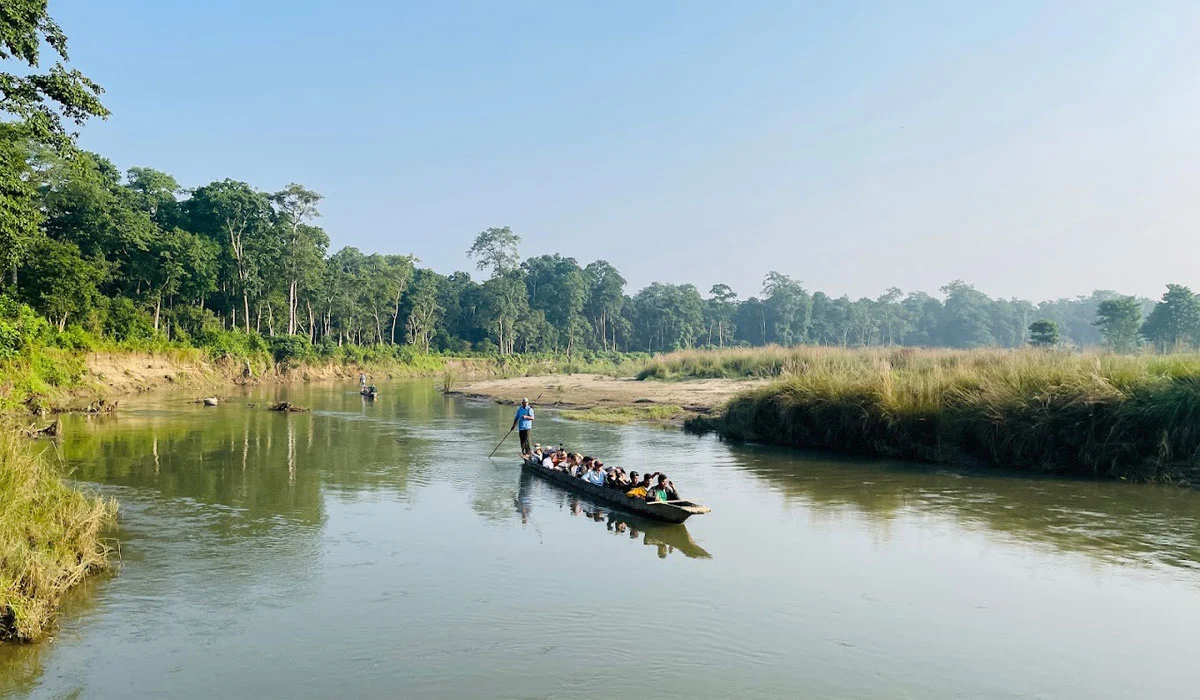
Safe Transportation for Nepal Tours: Vehicle Hire Guide

Safe Transportation Nepal Tours | Vehicle Hire Guide

The Importance of Safe Transportation Nepal Tours — Complete Guide

Nepal offers some of the world’s most extraordinary travel experiences — Himalayan trekking routes that reach the base of the highest mountains on earth, UNESCO World Heritage cities of medieval artistry, wildlife sanctuaries of global significance, and pilgrimage circuits of ancient spiritual tradition. What connects all of these experiences is transportation — the vehicles and drivers that carry travellers from Kathmandu’s international airport to the Annapurna trailhead, from Pokhara’s lakeside to the Chitwan jungle, from the Sunauli border to Muktinath’s sacred altitude.

In a country whose road network ranges from well-maintained national highways to narrow, unpaved, cliff-edge mountain tracks, transportation choice is not merely a comfort decision but a genuine safety decision—one that affects the outcome of your Nepal tour at its most fundamental level.

Safe transportation during Nepal tours is not a luxury supplement to the travel experience — it is the invisible foundation on which every other experience is built. The Kathmandu sightseeing day tour arrives in Bhaktapur as planned only if the vehicle is mechanically reliable and the driver knows the approach road to the heritage city.

The Annapurna Circuit trek starts on time only if the Besisahar private jeep transfer leaves the hotel door at the confirmed time. The Manaslu Circuit trekking group reaches the Soti Khola trailhead safely only if the 4WD jeep driver has specific experience on the Budhi Gandaki approach road.

Nepal Vehicle Hiring Pvt Ltd was founded on the understanding that safe transportation is the most important service a Nepal vehicle hire company provides — and this guide explores exactly what safe transportation means in the Nepal context, why it matters so much, and how to ensure that every vehicle hire decision on a Nepal tour delivers the safety standard the experience deserves.

Safe Transportation Nepal Tours | Vehicle Hire Guide

Nepal’s Road Environment — Why Safety Standards Matter More Here

Nepal’s road network cannot be understood through the lens of European or North American driving experience. The contrast is fundamental, not merely a matter of road quality.

Nepal’s mountain road network climbs from the Terai plains at approximately 60 meters above sea level to the highest motorable points at 3,500 to 4,000 meters — a vertical range that most route segments must negotiate within a few dozen kilometers of road, creating sustained gradients, tight hairpin curves, and the exposed cliff-edge sections that define mountain driving in a way that no flat-terrain country can replicate.

The specific hazards that Nepal’s road environment creates for vehicles and passengers include: exposed cliff-edge sections where the outer edge of a narrow mountain road drops hundreds of metres to a river gorge below — sections where driver concentration and route-specific knowledge are genuine safety requirements; unpaved mountain sections where road surface quality changes suddenly from paved to loose gravel or soft soil, requiring immediate vehicle response from a driver who knows the section; landslide zones where recent geological activity has deposited rock debris on the road surface or created soft-shoulder instability that an inexperienced driver might not recognise; river-adjacent tracks near the Besisahar gorge road, the Soti Khola approach, and the Trishuli gorge sections where the road and river coexist at the same valley level; and one-lane passing sections requiring the kind of cooperative negotiation with oncoming vehicles that only drivers with specific route experience manage confidently.

These hazards exist on virtually every trekking approach road in Nepal and on significant sections of the main national highways. They do not make Nepal’s roads unnavigable — thousands of vehicles navigate them safely every day — but they require vehicles and drivers of a specific standard that is not universal across Nepal’s transport market.

Nepal Vehicle Hiring Pvt Ltd maintains this standard through verified vehicle maintenance, route-assigned drivers with specific road experience, and pre-departure checks and monitoring that turn route hazards into managed conditions.

Safe Transportation Nepal Tours | Vehicle Hire Guide

The Three Core Elements of Safe Nepal Transportation

Safe transportation during Nepal tours rests on three core elements that must all be present simultaneously—a failure in any one compromises the safety of the whole arrangement.

Element 1: A Mechanically Reliable, Maintained Vehicle. The vehicle itself is the primary safety instrument. A 4WD Scorpio or Hilux jeep with verified brakes, correct tyre pressure, functioning 4WD engagement, and a pre-departure engine check provides the mechanical platform on which route safety rests.

Nepal Vehicle Hiking Pvt Ltd performs pre-departure mechanical checks on all vehicles assigned to mountain road transfers—brake verification, tyre inspection, 4WD system testing, and coolant and oil levels. These checks are not a paperwork compliance exercise: they genuinely assess whether the specific vehicle is in safe condition for the specific route it is about to travel.

A faulty brake on the Besisahar-to-Manang gorge descent is a different safety failure from the same fault on a paved urban street — the mountain road context amplifies mechanical failure from inconvenience to catastrophe.

Element 2: A Professional, Route-Experienced Driver. The driver is the active safety agent throughout the Nepal tour journey. Nepal Vehicle Hiring Pvt Ltd’s key differentiator in the Nepal vehicle hire market is assigning route-experienced drivers—drivers whose road knowledge comes from years of repeated personal experience, not from reading a GPS map.

The driver who has navigated the Ramche Landslide Zone before Dhunche forty times in multiple seasons knows the specific narrowing where vehicles have historically had difficulty passing, the soft-shoulder section where rain has undermined the road edge, and the correct approach angle for the tightest hairpin that saves three-point turning time and reduces exposure on the exposed section. This knowledge isn’t transferable from a map or a training manual — it is built through miles.

Element 3: Real-Time Road Condition Monitoring. Nepal’s mountain roads change with weather in ways you can’t predict from Kathmandu before departure — a landslide that blocks the Soti Khola approach, an overnight monsoon event that softens the Ramche Zone surface, a flash flood that covers a river-adjacent track section on the Phaplu road. Nepal Vehicle Hiring Pvt Ltd maintains a driver network on all major trekking approach roads that provides morning-of-departure road-condition information before any vehicle leaves Kathmandu.

If the road is not confirmed as currently safe, the vehicle does not depart — and the client is contacted immediately with the situation and options. This proactive monitoring turns Nepal’s variable road conditions from a departure-day gamble into a managed, informed decision.

Safe Transportation Nepal Tours | Vehicle Hire Guide

Nepal Road Safety — The Statistics Context

Nepal’s road safety statistics provide the quantitative context for why professional vehicle hire matters: Nepal’s road fatality rate per vehicle is among the highest in South Asia, with most serious accidents concentrated in the commercial and public transport sector. Nepal’s Department of Roads and international road safety organisations have well documented the factors driving this elevated accident rate: driver fatigue from long commercial routes with inadequate rest, vehicle overloading beyond certified capacity, speeding on mountain descent sections, and technical failures in poorly maintained commercial vehicles.

Each of these factors is directly addressed by Nepal Vehicle Hiking Pvt Ltd’s private hire model: our drivers operate one booking at a time with confirmed rest between assignments (eliminating the fatigue accumulation of commercial route drivers); our vehicles operate within certified passenger and cargo capacity (eliminating overloading); our mountain descent sections are specifically covered by driver briefing on speed management (eliminating the speed excess pattern); and our pre-departure mechanical checks verify vehicle condition before every mountain assignment (addressing mechanical failure). The private vehicle hire model eliminates the primary risk factors that the public and commercial transport sector cannot control at the individual booking level.

For international travellers accustomed to the safety standards of European or North American public transport, they often assume Nepal’s public transport is equivalent to what they know at home. This equivalence does not hold in Nepal’s road-safety context.

Private vehicle hire from a verified professional operator like Nepal Vehicle Hiring Pvt Ltd is categorically safer than Nepal’s public and commercial transport on mountain approach roads—not as a luxury, but as a measurable safety upgrade driven by the specific factors that shape Nepal’s road accident patterns.

Safe Transportation for Trekkers — Trailhead Approach Safety

Trekkers arriving at Nepal’s major trekking trailheads by safe private vehicle hire are in better physical and psychological condition to begin their trek than those who have spent the same journey in a crowded shared jeep or public bus. This is not a trivial observation: the trailhead approach is the final pre-trek physical experience, and the quality of that experience — rested vs fatigued, arrived on time vs delayed, luggage intact vs damaged in overcrowded conditions — directly affects the first days of the trek.

Beyond the comfort advantage, a safe private jeep hire for the trailhead transfer provides specific safety features the shared alternative cannot. The Besisahar gorge road approach for the Annapurna Circuit trek requires 4WD engagement on specific rough sections. The Soti Khola approach for the Manaslu Circuit trek includes river-adjacent sections that demand route familiarity.

The Salleri-Phaplu 2-day overland approach to Everest Base Camp involves sustained mountain driving that rewards a driver with specific BP Highway experience. Each trailhead approach carries a road-safety top-end that Nepal Vehicle Hiring Pvt Ltd’s route-assigned driver provides.

Trek Nepal Himalayas’ guided packages — including the luxury Everest Base Camp lodge trek, the Annapurna Base Camp trek, the Ghorepani Poon Hill trek, and the Langtang Valley trek — all coordinate their trailhead transfers through Nepal Vehicle Hiring Pvt Ltd specifically because the safety standard of the trailhead approach vehicle is a recognised component of the guided trek’s overall quality. Alpine Luxury Treks extends this standard to the top-end comfort and VIP service tier.

Private jeep on the road to Manang

Safe Transportation for Pilgrims — Sacred Journeys Deserve Safe Vehicles

Nepal’s pilgrimage routes—to Muktinath, Pashupatinath, Lumbini, Gosaikunda, and the Kailash Mansarovar approach via the Hilsa route—carry an added dimension of sacred purpose that amplifies the importance of safe transportation. A pilgrimage journey disrupted by a vehicle breakdown, a road accident, or the stress of poor transport management is not merely an inconvenient logistics failure: it interrupts a sacred undertaking that deserves the highest level of care and reliability.

The Muktinath yatra vehicle hire — whether from the Sunauli border through the Kali Gandaki gorge or from Pokhara by private jeep — carries pilgrim groups through some of Nepal’s most challenging road terrain: the gorge sections south of Tukuche, the Jomsom wind corridor that makes afternoon driving genuinely difficult, and the Kagbeni-to-Ranipauwa ascent that rewards 4WD mechanical confidence. Our drivers on this route know the Jomsom wind timing — critical for morning departure planning — and the specific approach timing to the Kagbeni checkpoint that avoids the peak afternoon wind period on the exposed gorge sections above.

For Lumbini pilgrimage bus hire and the Kathmandu-Lumbini private vehicle service, Nepal Vehicle Hiring Pvt Ltd provides the highway transfer standard that the Buddhist sacred site’s international significance deserves — professional, on-time, and with the vehicle condition that large pilgrimage groups from Thailand, Korea, Japan, and China bring their own expectations to when they arrive at the birthplace of Lord Buddha. For the Kailash Mansarovar yatra via Hilsa, our Nepalgunj-to-border private vehicle service provides the final Nepal ground-transport leg of a sacred journey that has traversed some of the world’s highest and most remote terrain.

Private jeeps parked in Mustang

Safe Transportation for Heritage Tourists — Kathmandu and Beyond

Safe transportation during Nepal heritage tours — the Kathmandu Valley UNESCO sites, the Newari cities of Bhaktapur and Patan, the mountain viewpoints of Nagarkot and Sarangkot — may seem less critical than the mountain road safety concerns of trekking transfers. Heritage-site vehicle hire is shorter, mostly on paved roads, and avoids the mountain-road hazards that increase safety requirements on approach roads.

Yet the safe transportation principles apply equally — and are equally important — in the urban heritage context.

The Kathmandu Valley’s road environment presents its own specific challenges: urban traffic density, complex navigation through narrow heritage city lanes, the pedestrian-rich approach roads to major temple complexes, and the early morning pre-dawn requirements of sunrise viewpoint visits that require a driver in position before dawn without relying on street lighting or road markers in unfamiliar terrain. Nepal Vehicle Hiring Pvt Ltd’s Kathmandu sightseeing car hire assigns drivers with specific Kathmandu Valley route knowledge — including the correct vehicle drop-off point for the Bhaktapur heritage tour (where heritage city lanes narrow beyond vehicle width), the pre-dawn approach to the Nagarkot sunrise viewpoint that arrives with enough buffer before dawn, and the Sarangkot sunrise vehicle from Pokhara that navigates the steep access track in darkness with the specific headlight and approach management that pre-dawn mountain access requires.

The Kathmandu airport transfer — the first Nepal transportation experience for any international visitor — sets the standard for safe transportation. A professional private car hire from Tribhuvan International Airport, with a uniformed driver holding a personalised name board in the arrivals hall, immediately signals that your Nepal visit’s transportation is organised and reliable.

A chaotic taxi negotiation at the airport arrivals gate communicates the opposite—and that first impression, once formed, colours the visitor’s confidence in their entire Nepal transport arrangement.

What Safe Transportation Is NOT — Recognising Unsafe Options

Understanding what safe transportation during Nepal tours looks like requires understanding what it does not look like — the specific patterns that signal inadequate safety standards in the Nepal vehicle hire market.

Unmarked vehicles without confirmed driver identity. Booking/hiring a vehicle through a casual guesthouse or street-side intermediary without a confirmed driver name, vehicle type, and license plate number before the travel day is an unverified arrangement. Nepal Vehicle Hiring Pvt Ltd confirms these details via WhatsApp the evening before every departure—the driver’s name and mobile number, the vehicle registration, and the confirmed departure time.

Abnormally low prices. Nepal vehicle hire prices below market rate by 30 to 50 per cent typically indicate underfunded vehicle maintenance; a driver without the specific route experience for the booking; fuel not included (to be added at journey end); or the operator’s intention to renegotiate mid-journey. The market rate for a verified, route-experienced 4WD private jeep hire in Nepal reflects the genuine cost of delivering the safety standard the mountain roads require.

An offer significantly below this rate is not a bargain — it is a signal that something in the safety standard has been compromised.

No road condition monitoring. An operator who confirms a monsoon-season mountain road departure without a morning-of condition check is either uninformed about current road status or commercially motivated to complete the booking regardless of road safety. Nepal Vehicle Hiring Pvt Ltd does not dispatch on mountain routes without current road confirmation. This policy sometimes delays departures — and it has never sent a vehicle into an unsafe condition.

Overloaded vehicles. Public jeeps and buses in Nepal’s shared transport sector frequently carry 20 to 30 per cent more passengers than certified capacity. Overloading affects braking performance, tyre load ratings, and the vehicle’s dynamic stability on descents.

All Nepal Vehicle Hiring Pvt Ltd private hire bookings operate within certified vehicle capacity—a Scorpio jeep carries a maximum of 6 passengers plus driver —and our booking system confirms group size at the time of booking to ensure the right vehicle is allocated.

Safe Transportation for Different Nepal Tour Types

Cultural Tours. For the heritage city circuit, UNESCO site visits, and Buddhist monastery tours, private car hire or Kathmandu sightseeing car hire by Nepal Vehicle Hiring Pvt Ltd provides a safe, comfortable, river-navigated urban heritage experience. Our drivers know the specific vehicle access routes, parking points, and timing for the Bhaktapur heritage tour and Patan Durbar Square visits.

Wildlife and Nature Tours. For Chitwan jungle safaris and access to Bardia National Park, our private vehicle hire and Pokhara-to-Chitwan bus cover the highway transfer safely and professionally. The late-evening return from Chitwan—when tired groups re-board the vehicle after a full day of wildlife activities—benefits from a rested, professional driver whose alertness isn’t compromised by a long day.

Adventure and Trekking Tours. All trekking trailhead transfers — from the Besisahar approach for the Annapurna Circuit to the Phaplu jeep hire for the Everest overland approach to the Manaslu trek transport — require the 4WD vehicle and route-experienced driver that Nepal Vehicle Hiring Pvt Ltd specifically provides.

Pilgrimage Tours. Sacred journey transport — Muktinath, Lumbini, Gosaikunda, Pashupatinath circuit — carries the added reliability required by the sacred purpose of pilgrimage. Our Nepal pilgrimage tour packages are designed around the route requirements of each sacred destination.
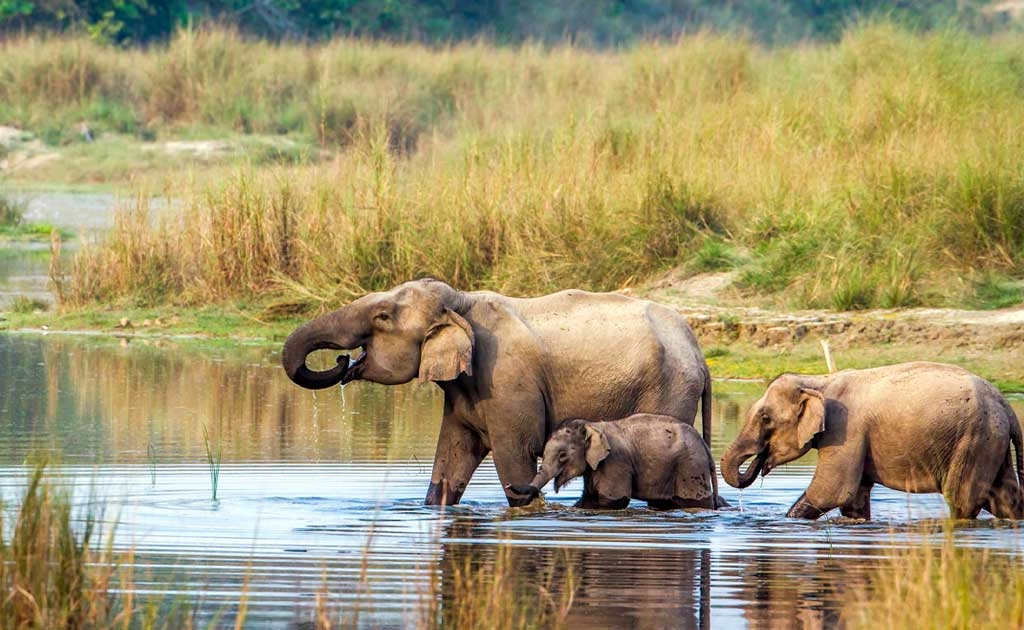
MICE and Corporate Tours. Conference delegates, corporate incentive groups, and business delegations require VIP service standards, convoy coordination, and professional driver presentation that reflects the group’s organisational level. Our Hiace van hire, tourist coaster hire, and full bus hire, plus VIP airport transfers, cover all MICE transportation needs.

Nepal’s Road Accident Pattern — Where Risk Is Concentrated

Nepal’s road accident data — compiled by the Metropolitan Traffic Police Division and the Department of Roads — reveals a specific, consistent pattern: the commercial bus and shared vehicle sector accounts for a disproportionate share of fatal road accidents relative to its share of total vehicle kilometres. Private car and private hire vehicle accidents are significantly less frequent per vehicle kilometre than commercial passenger transport accidents.

This pattern holds across Nepal’s major road categories and is consistent with road safety research from comparable developing-economy mountain countries.

The routes with the highest historical accident concentration in Nepal’s mountain network combine the three primary risk factors: sustained gradient descent, narrow single-lane character, and high commercial traffic volume. The Narayanghat-to-Hetauda section of the Mahendra Highway, portions of the Prithvi Highway gorge south of Malekhu, and the Kathmandu-Nagarkot approach road have all seen concentrated accident histories that reflect the specific combination of these factors.

Nepal Vehicle Hiring Pvt Ltd’s private vehicle hire eliminates the commercial traffic volume factor — our drivers operate one booking at a time, without the schedule pressure that compresses commercial bus turnaround times on these sections — and our pre-departure route briefings specifically address the sections of greatest historical concern on each route assignment.

On the Kathmandu to Pokhara route, the gorge descent sections between Malekhu and Mugling have historically accounted for most serious bus accidents, due to the descent gradient, the gorge’s tight curves, and the high volume of commercial buses on a time-pressure schedule. Our private car hire on this route operates without schedule pressure, with a rested professional driver and pre-briefed awareness of these specific sections.

On the Besisahar gorge road, the narrow single-lane cliff sections have historically posed the highest risk for shared, overloaded jeeps. Our private 4WD jeep hire on this section uses a correctly loaded vehicle and a route-experienced driver whose familiarity with the gorge passing points is his most important safety qualification.

Safe Transportation Nepal Tours | Vehicle Hire Guide

Safe Transportation for Nepal’s Heritage Roads — The Prithvi Highway Experience

The Prithvi Highway from Kathmandu to Pokhara is Nepal’s busiest and most travelled tourist road. In a single day, this route carries private vehicles, tourist buses, local public buses, heavy freight trucks, and the full spectrum of Nepal’s vehicular diversity across 200 kilometres of mountain highway. Understanding the specific safety requirements of this most-used tourist road in Nepal helps travellers choose the right vehicle hire for the journey.

The Kathmandu to Pokhara private vehicle hire from Nepal Vehicle Hiking Pvt Ltd on the Prithvi Highway provides: a rested professional driver who manages the Trishuli gorge descent sections with the specific technique that tight mountain highway curves require; the flexibility to stop at the Manakamana cable car station for the hilltop temple visit without a shared bus’s fixed schedule; the Mugling roadside rest stop at the most famous fish curry restaurants on the highway; and the early morning departure timing from Kathmandu (typically 6:00 to7:00 a.m.M) that avoids the peak commercial truck traffic of the late morning on the gorge sections.

The Pokhara to Kathmandu return vehicle hire covers the identical route in reverse — and the return journey from Pokhara toward Kathmandu in the late afternoon hours specifically benefits from the professional driver’s approach to the gorge ascent sections, which in the mid-afternoon carry the highest concentration of descending commercial truck traffic. Nepal Vehicle Hiring Pvt Ltd drivers on the Prithvi Highway route know the specific points where sustained ascending in a heavy vehicle requires predictive passing planning — the kind of route intelligence that removes uncertainty from the most demanding sections and converts the highway into the scenic pleasure journey that the Trishuli gorge and Marsyangdi confluence are meant to provide.

Safe Transportation Innovations  — WhatsApp Coordination and Real-Time Updates

Nepal Vehicle Hiring Pvt Ltd’s safe transportation service is significantly enhanced by WhatsApp’s real-time communication capabilities—a tool whose penetration across Nepal’s driver network, client base, and operations team creates a coordination infrastructure that wasn’t available even five years ago.

The specific safe transportation functions that WhatsApp enables for Nepal Vehicle Hiring Pvt Ltd‘s clients: Evening-before confirmation — WhatsApp sends the driver name, vehicle registration, and confirmed departure time the evening before every booking, allowing clients to verify and confirm. Morning-of road condition update — for mountain road departures, current road condition status sent before the vehicle leaves, with any adjustment to departure time or route confirmed in the same message.
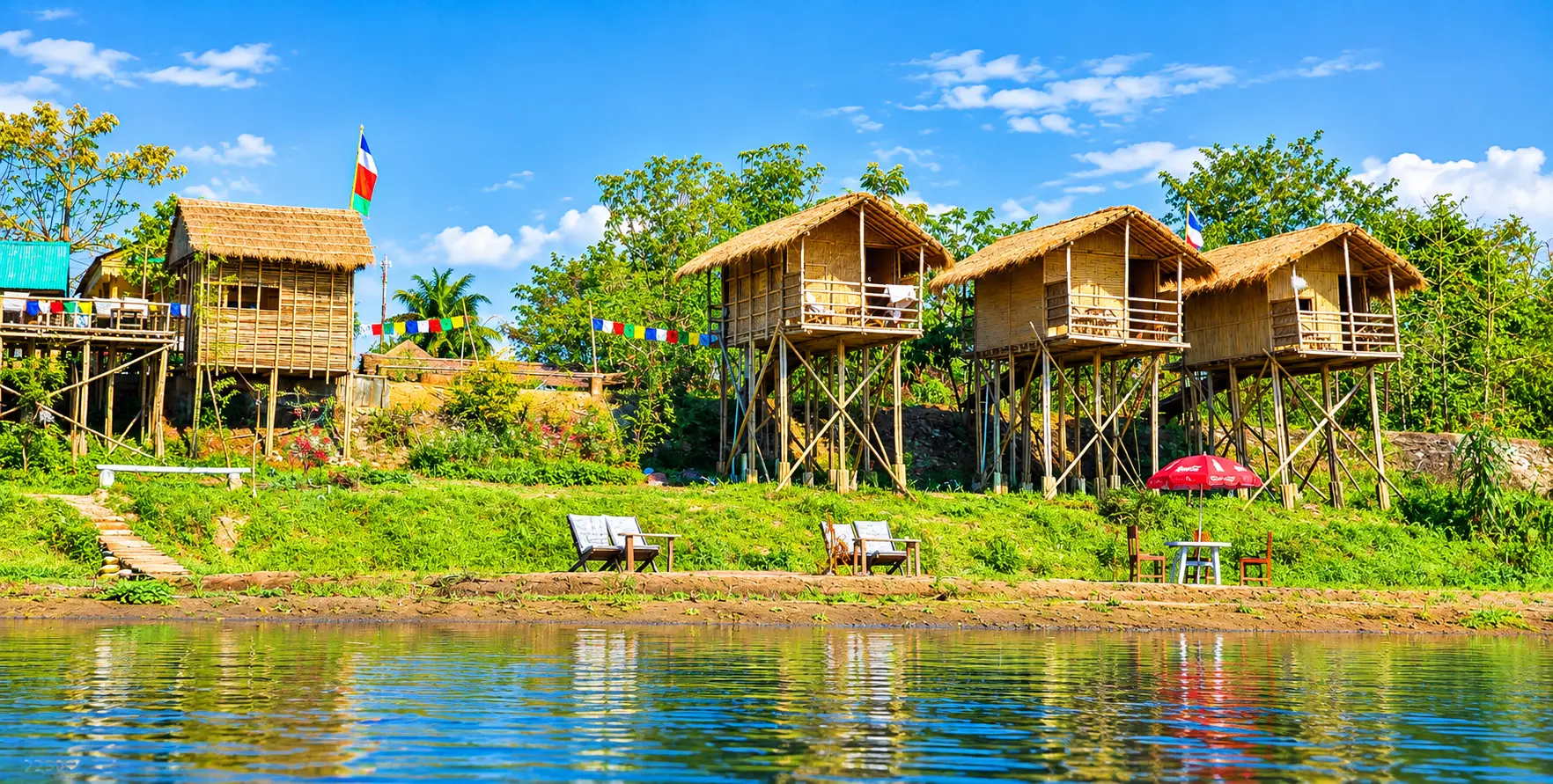
Real-time arrival updates — for airport transfer pickups, the driver sends a WhatsApp when positioned at the arrivals hall, with a photo of the name board — eliminating airport arrival anxiety about whether the driver has received flight-delay information. Post-trek return confirmation — for trekking groups whose return date from the trailhead may shift by 1 to 2 days, our team stays in WhatsApp contact throughout the trek for real-time exit date confirmation, adjusting the return vehicle accordingly.

All these communications happen through a single WhatsApp number — WhatsApp — which we monitor around the clock during active booking periods.

Safe Transportation Nepal Tours | Vehicle Hire Guide

Safe Transportation During Monsoon — Nepal’s Most Challenging Season

Nepal’s monsoon season (June to September) presents the year’s most demanding transportation safety challenge —when the factors that make Nepal’s mountain roads manageable in dry conditions combine into the country’s most complex and variable road environment. Landslides — the defining transport safety hazard of the monsoon — occur on Nepal’s mountain roads with a frequency and unpredictability during June to September that require daily monitoring and the willingness to postpone or reroute when conditions indicate risk.

Nepal Vehicle Hiring Pvt Ltd’s monsoon protocol is specific and non-negotiable: no mountain road departure without current morning-of road condition confirmation from our driver network; immediate client notification when a confirmed departure cannot proceed due to road conditions; and a rerouting or rescheduling option provided in writing at the time of any cancellation. Rerouting along the Lhamu Highway to Syabrubesi, the Soti Khola approach, and several other trekking approach roads are especially high-risk during monsoon—the August 2026 GLOF event that destroyed Syabrubesi and the Rasuwagadhi border is an extreme manifestation of the same geological vulnerability that makes monsoon road conditions and rerouting essential for all mountain routes.

The monsoon season’s specific safe transportation advice for Nepal tour planners: always build 1 to 2 buffer days into any monsoon-season itinerary that includes mountain road transfers; always confirm vehicle departure on the morning of the planned travel day; and always book through Nepal Vehicle Hiring Pvt Ltd — whose honest assessment of road conditions is based on our driver network’s on-the-ground information rather than on commercial pressure to complete a booking regardless of safety.

The Driver — Nepal’s Most Important Safety Asset

Of the three core elements of safe Nepal transportation, the driver is most directly and immediately responsible for on-the-road safety outcomes. A well-maintained vehicle with an inexperienced driver on the Besisahar gorge road is more dangerous than a merely adequate vehicle with a driver who has completed that road fifty times in multiple seasons.

The vehicle’s mechanical reliability is the platform; the driver’s judgment, technique, and route knowledge are the active safety layer that turns the road’s challenges into successfully navigated passages.

Nepal Vehicle Hiring Pvt Ltd’s driver assignment policy is the most consequential part of our safe transportation standard: we assign every driver based on specific route experience rather than availability. This means that the driver who takes a trekking group to Besisahar for the Annapurna Circuit has personal, repeated experience on the Besisahar gorge road — not the Prithvi Highway, not the Kathmandu Valley, but that specific road.

The driver assigned to the Soti Khola Manaslu approach has driven the Arughat-to-Machha Khola section in multiple seasons, through different post-monsoon surface conditions, and with the first-hand knowledge of where the road changes character and demands 4WD engagement. The driver on the Salleri-Phaplu 2-day transfer has specific BP Highway experience and knows the overnight-stop logistics the 2-day format requires.

Beyond route knowledge, Nepal Vehicle Hiring Pvt Ltd monitors driver fatigue through our booking management system—no driver is double-assigned to the point where rest between bookings is inadequate. Fatigue monitoring is not a driver’s personal responsibility to report accurately under commercial pressure; it is a booking-system constraint that prevents assigning a driver who has been on a long road the previous day to a mountain-road departure the following morning.
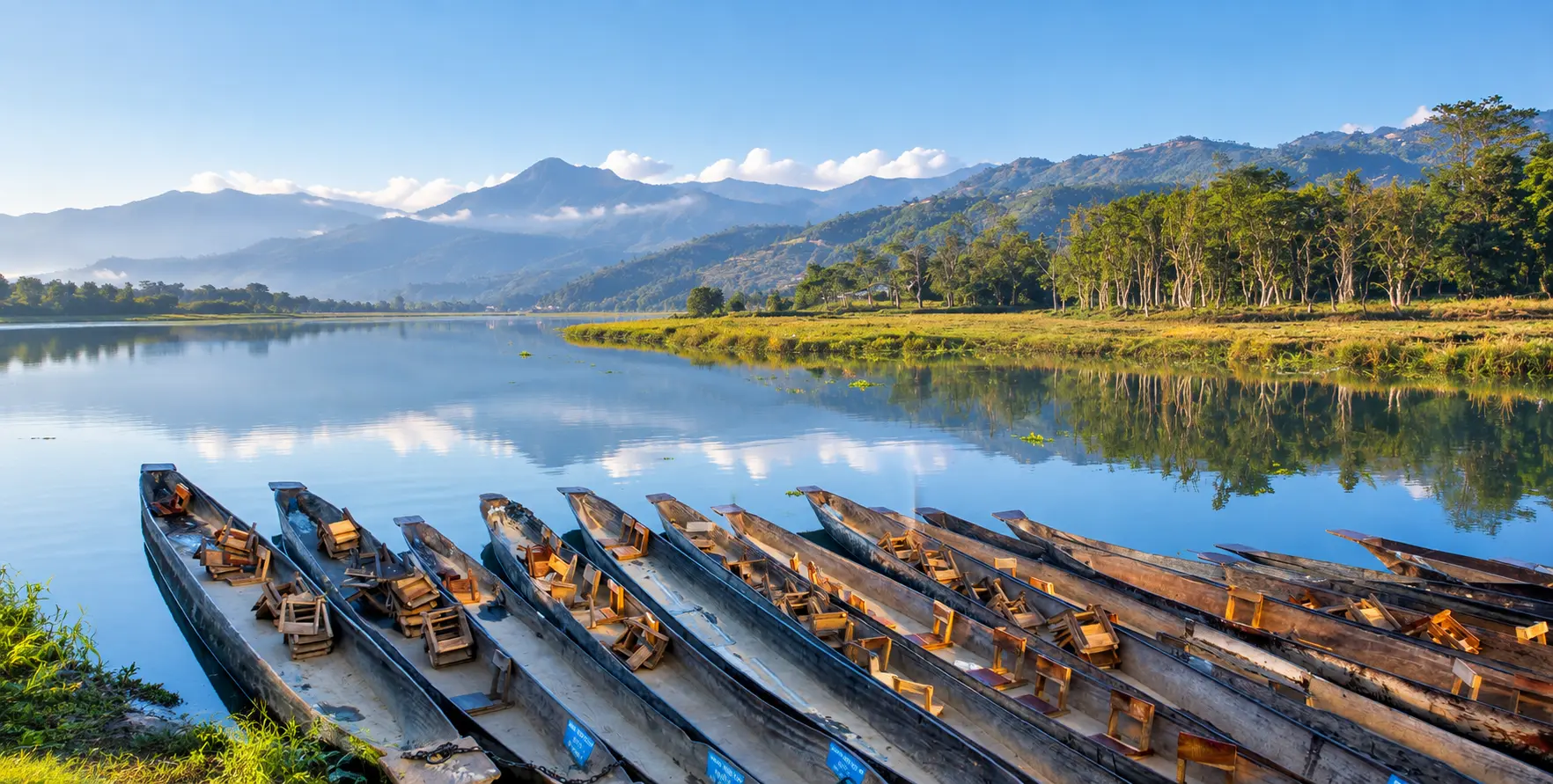
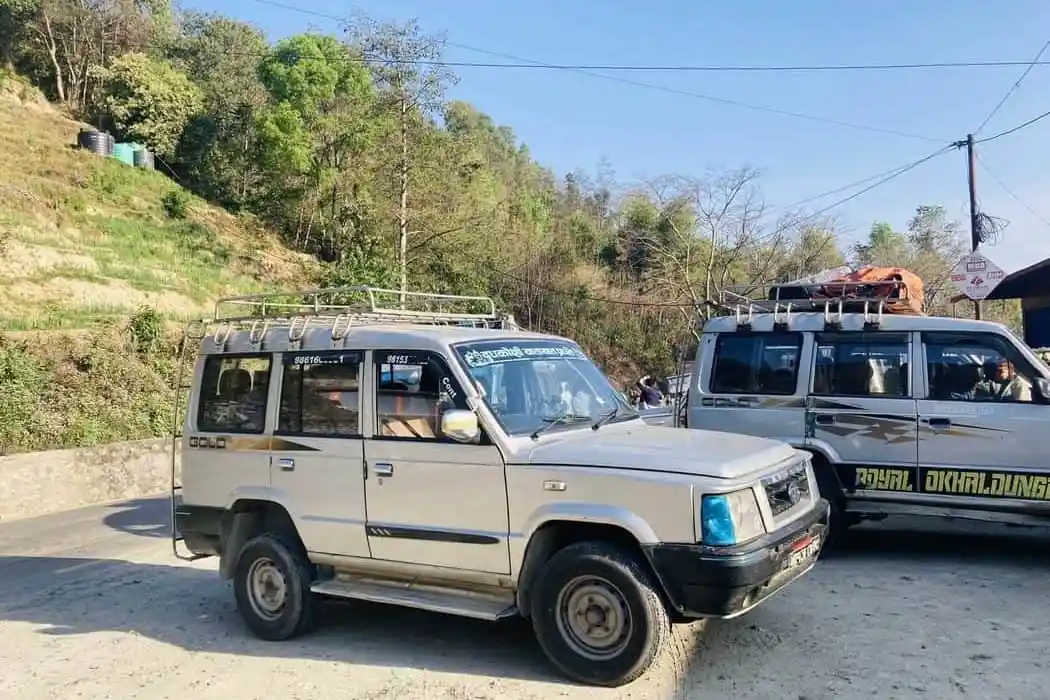
This system-level fatigue management is one of the operational features that distinguish Nepal Vehicle Hiking Pvt Ltd from informal vehicle hire arrangements, where driver fatigue is entirely unmanaged.

Safe Transportation for Families — Children and Elderly Travellers

Families travelling to Nepal with children and multi-generational groups, including elderly members, have specific safe transportation requirements that standard trekking or adventure travellers do not include—and that Nepal Vehicle Hiring Pvt Ltd specifically accommodates.

For families with young children, the safe transportation priorities include: vehicle interior configured for child comfort (working air conditioning, sufficient seat space, proximity to windows without exposed door mechanisms), a driver who maintains a speed and smoothness appropriate for children’s motion sickness sensitivity (a real factor on Nepal’s mountain road curves), and the flexibility to stop when a child needs a break without the schedule pressure of a shared transport arrangement. Our private car hire and private Hiace van hire for family groups accommodate child seat requests—confirm the requirement at booking.

The Kathmandu sightseeing car hire for family groups covers the UNESCO heritage circuit with the pacing flexibility that children’s attention spans and energy levels require.

For elderly travellers, safe transportation priorities include vehicle step height and interior access (a higher 4WD Scorpio requires a step-in that a sedan does not), road smoothness for joint and back comfort on longer journeys, and more frequent stops than a standard itinerary schedules. Nepal Vehicle Hiring Pvt Ltd’s drivers on all private hire bookings are briefed to accommodate passenger comfort requests—including more frequent rest stops —without requiring the group to justify the request.

Our private vehicle hire for elderly pilgrim groups visiting Muktinath, Lumbini, and other sacred sites is designed around older passengers’ comfort and safety needs, ensuring the safest and most comfortable Nepal transportation available, especially since their Nepal visit may be a once-in-a-lifetime journey. Contact Nepal Vehicle Hiring Pvt Ltd on WhatsApp for family and elderly group transport requirements.

Safe Transportation and Nepal’s Natural Disaster Context

Nepal’s location in one of the world’s most seismically and hydrologically active mountain environments means natural events (earthquakes, glacial lake outburst floods, monsoon landslides and flash floods) periodically disrupt road networks, requiring careful, safe transport decisions from both operators and travellers. The August 26, 2026 glacial lake outburst flood that destroyed the Syabrubesi bridge, the Timure and Rasuwagadhi border crossing and the Pasang Lhamu Highway corridor toward Tibet is the most dramatic recent example of Nepal’s vulnerability to sudden road network disruption.

A single event destroyed both the Kathmandu-to-Syabrubesi jeep route for Langtang Valley trekkers and the Kerung border crossing that many Kailash Mansarovar pilgrims used to enter Tibet. The Kathmandu-to-Dhunche road and the Besisahar approach road were unaffected; the disaster was geographically specific, not universal.

Nepal Vehicle Hiking Pvt Ltd’s response to natural disaster events follows a specific protocol: immediate suspension of all bookings on affected routes; direct client notification for any booking impacted; transparent communication about the current extent of the disruption and our best available estimate of restoration; and alternative routing or rescheduling provided as the disruption allows. We do not accept bookings on routes we cannot confirm as currently passable, and we do not provide estimated reopening dates that are not based on confirmed information from our driver network or the Department of Roads.

Our contact team on WhatsApp provides real-time status on all affected routes during active natural disaster events. For the most current road status on any Nepal trekking approach, contact us directly before confirming any mountain road vehicle booking.

How to Verify Safe Transportation Before Booking

Every Nepal tour traveller can take specific steps to verify the safety standards of their vehicle-hire arrangement before committing to a booking.

  • Ask specifically about driver route experience: How many times has the assigned driver driven the specific route? If the operator cannot answer this question specifically, the driver’s route experience is not being managed. Nepal Vehicle Hiring Pvt Ltd can confirm the assigned driver’s route experience for any booking.
  • Confirm all-inclusive pricing in writing: A quote that excludes fuel, tolls, or driver meals creates the conditions for mid-journey requests for additional payment. Our transparent pricing includes all costs.
  • Ask about pre-departure vehicle checks: Reputable operators perform pre-departure mechanical checks on mountain road vehicles. Ask specifically what they check before a mountain-road departure.
  • Confirm the vehicle type: For any route including unpaved sections or sustained mountain gradients, a 4WD jeep is the appropriate vehicle. A sedan or 2WD SUV on these routes reduces the safety margin.
  • Verify road condition monitoring policy: Ask how the operator handles monsoon-season road closures or morning-of conditions that make the planned departure unsafe. Nepal Vehicle Hiring Pvt Ltd’s policy is not to dispatch and to notify the client immediately — confirm this is the operator’s stated policy.
  • Check for 24/7 contact: A safe transportation provider is reachable at any hour during the travel day. Our WhatsApp is monitored around the clock for any client contact during active bookings.

Safe Transportation as the Foundation of a Good Nepal Review

The link between safe transportation and Nepal tour satisfaction is more direct than most travellers realise before their visit. Post-tour reviews of Nepal travel experiences consistently show that transportation—its reliability, comfort, and the confidence it instils or undermines—is one of the most frequently mentioned elements of the overall experience, positively or negatively.

A traveller who arrives at the Besisahar trailhead on time, in a reliable private 4WD jeep with a professional driver, starts the Annapurna Circuit trek confident their Nepal tour is well organised. A traveller who spent the approach in a crowded, delayed shared jeep with uncertain road management begins the same trek with their confidence in the entire Nepal arrangement already undermined.

The trek experience is identical — the mountains are the same, the teahouses are the same, the views are the same — but the baseline trust in the logistics that enables full immersion is fundamentally different.

Nepal Vehicle Hiring Pvt Ltd‘s safe transportation service is built around the understanding that transport is not peripheral to the Nepal tour experience — it is its foundation. Every airport transfer, every sightseeing car hire, every trailhead jeep transfer, and every inter-city private vehicle that we deliver on time, safely, and at the promised standard is one more element of the Nepal visit that goes right — and the accumulation of elements that go right is what a great Nepal tour review is built from.

Contact us on WhatsApp or through our plan trip page to begin planning your safe Nepal transportation today.

Safe Transportation Pricing — What the Safety Standard Costs

Safe transportation during Nepal tours is not the cheapest option on the market — and the cost top-end over informal hire is real and justified. The following price ranges apply to Nepal Vehicle Hiring Pvt Ltd’s professional safe transportation service in 2026:

Kathmandu heritage sightseeing (full day): NPR 8,000 to 15,000 (USD 60 to 113) by private car or jeep.

Airport transfer (international, one way): NPR 1,500 to 4,500 (USD 11 to 34). Kathmandu airport transfer.

Kathmandu to Pokhara (full vehicle, one way): NPR 12,000 to 22,000 (USD 90 to 165). Private vehicle or bus hire.

Kathmandu to Besisahar (Annapurna Circuit approach): NPR 13,000 to 22,000 (USD 98 to 165). Besisahar private vehicle hire.

Kathmandu to Soti Khola (Manaslu/Tsum Valley approach): NPR 20,000 to 28,000 (USD 150 to 210). Soti Khola jeep hire.

Per-day 4WD jeep hire (mountain road): NPR 14,000 to 25,000 (USD 105 to 188). Nepal Vehicle Hiring Pvt Ltd jeep hire.

These prices are all-inclusive — driver, fuel, road tolls — and reflect the genuine cost of operating safe transportation in Nepal’s road environment. Contact our team on WhatsApp or via our plan trip page for a specific quote for any route, group size, and date.

For adventure planning, whether you’re planning an Annapurna Circuit trek, a Kanchenjunga Base Camp trek in far-eastern Nepal, a Rolwaling Valley trek, or a Helambu circuit, Nepal Vehicle Hiring Pvt Ltd provides the safe trailhead transfers for every Nepal trekking corridor — from the Panch Pokhari approach and Manaslu trek transport to every trekking corridor that requires a verified private jeep hire. Alpine Luxury Treks and Trek Nepal Himalayas coordinate their guided programs with Nepal Vehicle Hiring Pvt Ltd to deliver the safe transport standard every guided Nepal trekking client deserves.

Plan your complete Nepal tour transport — safe, professional, all-inclusive — through our plan trip page or call us on WhatsApp.

Why Nepal Vehicle Hiring Pvt Ltd — The Safe Transportation Specialist

Nepal Vehicle Hiring Pvt Ltd was built on the principle that transportation safety is the most important service a Nepal vehicle hire company provides — not an optional upgrade but the foundational commitment of every booking. Our safe transportation standard is delivered through:

  • Verified, maintained vehicle fleet: 4WD jeeps, private cars, Hiace vans, tourist coasters, and buses — all maintained to a pre-departure inspection standard for mountain road assignments.
  • Route-experienced drivers: Assigned based on specific road experience rather than availability.
  • Real-time road monitoring: Morning-of departure condition checks for all mountain routes — no dispatch on unsafe roads.
  • All-inclusive transparent pricing: Driver, fuel, and tolls — confirmed at booking, with no additions at the end of the journey.
  • Hotel-to-hotel service: Every private hire includes hotel door pickup.
  • 24/7 contact: WhatsApp — reachable throughout every active booking day.
  • Sister company coordination: Trek Nepal Himalayas’ guided trekking packages and Alpine Luxury Treks‘ top-end experiences are coordinated with Nepal Vehicle Hiring Pvt Ltd transport for end-to-end tour safety.

Nepal’s transportation landscape in 2026 is more complex than in previous years — the August 2026 GLOF that destroyed the Syabrubesi corridor and the Rasuwagadhi-Kerung border has reshaped routing for Langtang trekkers and Kailash pilgrims, increasing demand for alternative routes and making current road-condition information more valuable than ever. The safe private vehicle hire from Nepal Vehicle Hiring Pvt Ltd — backed by our live driver network’s morning-of road condition intelligence — is the transportation arrangement that adapts to this changed landscape intelligently, rerouting when conditions require, communicating transparently when they change, and always prioritising the safety of the passengers above the commercial interest in completing the booking at any cost.

Book your safe Nepal tour transportation with Nepal Vehicle Hiking Pvt Ltd on WhatsApp or our plan trip page.

Frequently Asked Questions — Safe Transportation Nepal Tours

Why is safe transportation routing in Nepal more challenging and a bigger concern than in other countries?

Nepal’s mountain road environment — sustained gradients, unpaved sections, cliff-edge tracks, monsoon landslide risk, and the need for route-specific driver knowledge — creates genuinely higher safety requirements than flat-terrain road environments. Professional private vehicle hire from Nepal Vehicle Hiring Pvt Ltd is specifically designed for these requirements.

Is a 4WD jeep always necessary in Nepal?

For highway-only routes (Kathmandu-Pokhara, Pokhara-Chitwan, Kathmandu-Lumbini), a private sedan car hire is appropriate. For any route including unpaved mountain sections — Besisahar, Soti Khola, Phaplu, Syabrubesi — a 4WD jeep is the recommended vehicle.

How do I verify that a Nepal vehicle hire is safe?

Ask for the driver’s name, vehicle registration, and route experience before the travel day. Confirm all-inclusive pricing in writing. Ask about pre-departure vehicle checks and the monsoon road-condition monitoring policy.

Book through Nepal Vehicle Hiring Pvt Ltd for verified, professional, safe transportation.

What happens if road conditions are unsafe on the travel day?

Nepal Vehicle Hiring Pvt Ltd does not dispatch vehicles on routes we cannot confirm as safe. We contact the client immediately and provide rescheduling or rerouting options. Contact us on WhatsApp.

Conclusion

Transportation safety during Nepal tours is not a peripheral consideration — it is the foundation of every Nepal travel experience. The Annapurna Circuit trek begins with a safe jeep transfer to Besisahar. The Kathmandu heritage circuit is experienced through a reliable sightseeing car hire.

The Muktinath pilgrimage reaches its destination because the Kali Gandaki Gorge jeep driver knows the road. The entire Nepal tour experience, from the airport transfer on arrival to the departure drop on the final day, relies on transportation that connects each moment.

Nepal Vehicle Hiring Pvt Ltd provides a safe transportation standard that makes Nepal’s extraordinary experiences safely reachable for every traveller, on every route, in every season.

Book safe Nepal tour transportation with Nepal Vehicle Hiring Pvt Ltd — call or WhatsApp, visit vehiclehiringnepal.com, or plan your complete Nepal tour transport through our plan trip page.

Why Choosing a Reliable Vehicle Makes Your Nepal Trip Better

Way to manthali airport bp highway

Why Choosing a Reliable Vehicle Makes Your Nepal Trip Better

Nepal is one of the world’s most geographically extreme travel destinations. In a country smaller than England, the terrain spans from the flat Terai plains at 60 meters above sea level to Everest’s summit at 8,849 meters—a vertical range unmatched anywhere on Earth.

The roads connecting these worlds are equally varied: smooth national highways, rough provincial tracks, dramatic mountain gorge roads, and off-road terrain beyond the tarmac. The vehicle you choose for Nepal is not just a comfort decision — it is a safety decision, a scheduling decision, an experience decision, and ultimately the single most controllable factor in whether your Nepal trip unfolds as planned or as a series of avoidable disruptions.

Most Nepal trip disruptions that experienced travel writers document — the missed flight because the airport taxi did not arrive, the trekking group that spent a day waiting in a roadside town because their vehicle broke down on the Prithvi Highway, the Nagarkot sunrise that became a Nagarkot 9 a.m. because the driver could not find the pre-dawn hotel pickup — share a common root: an unreliable vehicle and driver arrangement that was made cheaply and quickly rather than carefully and properly. These stories are preventable. Nepal Vehicle Hiring Pvt. Ltd. exists specifically to prevent them.

This guide explains, specifically and concretely, why choosing a reliable vehicle improves every part of your Nepal trip — from the airport transfer that begins your journey to the final departure drop that ends it. Each section addresses a real dimension of Nepal travel where vehicle reliability directly affects the experience.

Mountain Road Safety — Where Vehicle Reliability Is Literally Life-Critical

Nepal has some of the world’s most spectacular and most demanding mountain roads. The Kali Gandaki gorge road to Muktinath and Jomsom, the Marsyangdi gorge road to Manang and the Annapurna Circuit, the Betrawati-to-Syabrubesi road to Langtang and the Tibet border, and the countless other mountain approach roads that serve Nepal’s trekking regions are not highways where vehicle failure is merely inconvenient.

They are roads where a blown tyre on a cliff-face section, a brake failure on a steep descent, or an engine cutting out in the middle of a river crossing can have consequences that go beyond inconvenience.

A reliable vehicle for Nepal’s mountain roads means:

  • Recent service history: Nepal Vehicle Hiring’s vehicles complete their manufacturer-recommended service schedule before deployment on mountain approach routes. We check and verify the brakes, tyres, engine systems, and 4WD drivetrain. A vehicle that hasn’t been serviced recently is a significant risk on the sustained downhill sections of the Kali Gandaki gorge road and the steep switchbacks of the Annapurna approach.
  • Appropriate vehicle type: the 4WD jeep hire requirement for routes beyond Besisahar, beyond Beni, and beyond Syabrubesi is not an upsell — it is a genuine minimum standard. A standard car attempting the Besisahar-to-Manang mountain road is not merely uncomfortable; it is potentially dangerous. We check the brakes, tyres and ground clearance before every mountain trip. Experienced mountain road drivers: Nepal’s mountain approach roads have specific hazards—the oncoming vehicle in the blind curve, the loose rockfall area where the speed must slow regardless of schedule, and the river-crossing depth assessment that requires a driver who has crossed this point before. Nepal Vehicle Hiring’s mountain route drivers are specifically experienced on the routes they serve.
  • Vehicle insurance: every Nepal Vehicle Hiring vehicle carries current third-party liability insurance. In the event of an accident or incident, our vehicles are insured—unregistered or uninsured informal vehicles on Nepal’s tourist routes are not.

When you choose Nepal Vehicle Hiring’s 4WD jeep hire for a Muktinath or Manang approach, you choose a vehicle that has passed pre-deployment mechanical checks, is driven by a driver who knows the route, and is insured for the journey. When tourists choose the informal jeep at the Pokhara bus park because it is NPR 3,000 cheaper per vehicle, they are choosing none of these things.

Schedule Certainty — How Reliable Transport Protects Your Entire Itinerary

Nepal travel operates on tighter schedule interdependencies than most travellers expect. The Lukla domestic flight departs at 6:16:15 a.m.—missing it by 10 minutes means you miss the start of that day; a full itinerary can collapse if the next available flight is 2 days later.

Nagarkot Sunrise Viewpoint is worth visiting only between 5:45 a.m. and 7:30 a.m.—arriving at 8:00 a.m. means the clouds have already formed. The Pashupatinath evening Aarti starts at 5:00 p.m. — arriving at 5:45 p.m. means half the ceremony has concluded.

The Muktinath temple closes at 7:00 p.m. — arriving at 6:30 p.m. after a long day’s drive means you get 30 minutes at Nepal’s most sacred temple instead of 2 hours.

Reliable vehicle hire protects every one of these time-sensitive moments:

  • Confirmed pickup time is honoured: Nepal Vehicle Hiring’s drivers arrive on time. The 3:3:00 a.m. vehicle for the EBC Lukla flight arrives at 3:00 a.m., not 3:45 a.m. The 4:30 a.m. Nagarkot departure vehicle is there at 4:30 a.m., not absent at 5:00 a.m., when the best light is already beginning.
  • Driver knows the timing requirements: our Nagarkot drivers know the drive time from Thamel to the best Nagarkot viewpoint (approximately 70 minutes at pre-dawn) and depart with sufficient margin for the current road conditions. Our Muktinath approach drivers know the temple closing time and pace the journey to allow adequate time at the temple.
  • Vehicle reliability prevents schedule-destroying breakdowns: a well-maintained vehicle won’t break down on the Prithvi Highway 3 hours before your trekking guide is waiting for the Kathmandu-to-Pokhara connection in Pokhara. Vehicle maintenance is scheduled assurance.
  • No last-minute vehicle substitutions: when you book Nepal Vehicle Hiring’s car hire in Nepal or Hiace van hire for a specific journey, the confirmed vehicle arrives—not a different, smaller, or less appropriate substitute arranged when the original vehicle becomes unavailable.

Driver Expertise — The Local Knowledge That GPS Won’t Provide

Navigation in Nepal is more complex than a GPS app suggests. Kathmandu’s narrow network changes one-way directions by the time of day, and the app’s route may take a foreign-registered tourist vehicle down a street that experienced local drivers know is practically inaccessible at 6:00 a.m. The Bhaktapur east gate approach for tourist vehicles differs from the main road approach the GPS routes toward, and a driver who parks at the main gate rather than the east gate adds 15 minutes of unnecessary walking to the heritage visit.

The Manakamana cable car queue at 11:00 a.m. is 45 minutes longer than the queue at 9:30 a.m., and a driver who knows this times the Prithvi Highway departure accordingly.

Nepal Vehicle Hiring’s driver expertise adds value at every stage of the Nepal trip:

  • Heritage site sequencing: our Kathmandu Valley sightseeing drivers sequence the seven UNESCO sites in a different order — not alphabetical as they appear on a map, but in the order that uses the morning light for photography, catches the Boudhanath kora at its peak before the tour groups arrive, and delivers the Pashupatinath Aarti as the final site of the day when the ceremony is at its most powerful.
  • Mountain route knowledge: our Pokhara to Mustang jeep drivers know the Tatopani hot spring timing, the Kalopani Dhaulagiri viewpoint stop, the Marpha apple village stroll, and the Kagbeni medieval monastery visit — not because we programmed these into a route, but because our drivers have made this journey dozens of times and know what makes it extraordinary versus merely functional.
  • Current road conditions: no GPS or travel blog has today’s road conditions between Besisahar and Manang. Our drivers talk to other drivers and have up-to-date intelligence on sections damaged in last week’s rain and sections where a recent rockfall requires slow travel.l This real-time knowledge prevents schedule-destroying road-condition surprises.
  • Emergency protocol knowledge: if a tyre blows on the Kali Gandaki gorge road, a reliable driver knows the nearest flat section to pull over safely, has a functional spare, and knows the nearest mechanical assistance point. An inexperienced, unconditionally prepared driver does not.

Cost Transparency — What ‘All-Inclusive’ Actually Means

Nepal’s informal vehicle hire market has a well-documented pattern of end-of-journey additions that turn a seemingly good initial price into a frustrating final reckoning. The NPR 8,000 Kathmandu-to-Pokhara jeep becomes NPR 10,500 when the driver adds a ‘fuel supplement’ for the mountain sections, a ‘driver meal charge’ that was not mentioned at booking, and an ‘extra hour waiting fee’ for the Manakamana stop.

The NPR 15,000 per-vehicle Kathmandu-to-Mustang quote becomes NPR 20,000 when the ‘road toll’ and ‘permit fee’ are added at the Mustang checkpoint.

Nepal Vehicle Hiring’s all-inclusive pricing eliminates every one of these additions:

  • Fuel is included: the quoted price covers fuel for the entire journey. No fuel supplements, no surcharges for mountain road fuel consumption.
  • Driver accommodation and meals are included for multi-day journeys: the driver’s overnight expenses in Jomsom, Manang, and Chitwan are included—no end-of-journey driver expense addition.
  • Road and bridge tolls are included: Nepal’s highway tolls, bridge crossing fees on mountain roads, and all applicable vehicle permits are included in the quoted price.
  • Waiting time at stops is included: the Manakamana cable car stop (2 to 2.5 hours), the Tatopani hot spring stop, and the Mugling fish lunch—no hourly waiting charges apply when our drivers wait while guests enjoy scheduled stops.
  • The quoted price is the price paid: Nepal Vehicle Hiring provides prices in writing (via WhatsApp confirmation or our plan your trip page booking) before any journey begins. The confirmed price is the price paid at the end. No negotiation at the destination, no pressure to add gratuities above what the guest chooses.

This transparency is not merely convenient — it is budget-protective. For travellers on structured Nepal trip budgets, knowing vehicle costs before departure from Kathmandu lets you allocate the remaining NPR cash accurately for trekking fees, accommodation, food, and activities. Surprise vehicle additions eat into activity budgets that you can’t easily recover mid-trip.

Private Scorpio jeep with luggage on the roof

Vehicle Quality — How the Right Vehicle Changes the Experience

The vehicle’s physical condition affects the Nepal trip experience in ways that are easy to underestimate when booking from abroad on a website. The difference between a well-maintained Toyota Land Cruiser on the Kathmandu-to-Pokhara Prithvi Highway and a tired, high-mileage microvan on the same road isn’t just about comfort—it is a sensory difference that shapes how the journey feels and what you notice.

In a well-maintained vehicle:

  • The windows open smoothly for photography—the Trishuli gorge views, the first Annapurna views approaching Pokhara, the Dhaulagiri panorama from the Kali Gandaki gorge — are all photographed through open windows, not dirty fixed glass.
  • The suspension absorbs the rough sections of mountain tracks rather than transmitting them directly to passengers—the Besisahar-to-Manang road is rough regardless of the vehicle. Still, the difference between a Land Cruiser’s suspension and a worn-out vehicle’s suspension is the difference between ‘adventurously bumpy’ and ‘genuinely exhausting’.
  • The air conditioning works in the Terai heat — the Kathmandu-to-Chitwan drive in October (32°C in the Chitwan lowlands) in a vehicle with non-functioning air conditioning is far less pleasant than the same drive in a properly climate-controlled vehicle.
  • The engine climbs consistently — the sustained gradient sections of the Kali Gandaki approach road and the Annapurna Circuit mountain track require an engine that maintains power at altitude. A poorly maintained vehicle that struggles on gradients creates both schedule uncertainty and, on certain mountain road sections, genuine safety concerns.

Nepal Vehicle Hiring’s fleet — private car hire, 4WD jeep hire, Hiace van hire, Coaster bus hire, and full bus hire — meets consistent mechanical and comfort standards across all vehicle types. Our monthly service schedule ensures every vehicle deployed on tourist circuit duty meets the standards Nepal’s demanding terrain requires.

How Vehicle Reliability Affects Different Nepal Trip Types

For Trekkers: The Approach Vehicle Sets the Trek’s Tone

For trekkers, the vehicle is not the adventure — the trek is. But the approach vehicle shapes how the trekker arrives at the trailhead: tired and frustrated after a breakdown, a late start, and wrong-vehicle confusion, or rested, on schedule, and oriented after a smooth, well-paced drive with a knowledgeable driver who has explained what the first day’s trail entails.

Vehicle H’s trekking transport services are designed around this understanding—the approach vehicle is the first chapter of the trekking story, and it matters.

The Kathmandu to Manang jeep, Pokhara to Mustang jeep, Besisahar private vehicle service, and Everest Base Camp trek transport—all of these are approach services where vehicle quality and driver knowledge set up the trekking days that follow. A trekker who arrives at Jomsom tired from a broken-down jeep that lost 3 hours on the Kali Gandaki has less energy for Day 1 of the Muktinath approach than a trekker who arrived in a comfortable, on-schedule vehicle with the right information about the trail ahead.

For Pilgrims: The Vehicle Is Part of the Sacred Journey

For Hindu and Buddhist pilgrims making the Muktinath Yatra, the Kailash Mansarovar pilgrimage, or the Lumbini-Janakpur sacred circuit, the vehicle is not merely logistics — it is part of the pilgrimage itself. Pilgrims carrying puja materials (flowers, coconuts, sweets, incense, shaligram collections) need a vehicle that accommodates them respectfully.

Pilgrims on the Muktinath Yatra itinerary need to arrive at the temple before 7:00 p.m. and ideally before 8:00 a.m. for auspicious morning darshan—schedule reliability is not just convenient; it is devotionally significant.

Nepal Vehicle Hiring provides pilgrimage vehicle services with cultural awareness of these requirements. Our drivers are briefed on temple protocols, arrival timing requirements, and the journey’s devotional purpose. The Nepal Nekhor tour vehicle coordination reflects this understanding at every stage.

For Holiday Tourists: The Vehicle Is the Connection

For holiday tourists doing the Nepal triangle or a broader circuit, the vehicle is the connective tissue of the entire experience. This element connects Kathmandu’s heritage, Pokhara’s mountain scenery, and Chitwan’s wildlife into a coherent, comfortable journey. A reliable vehicle means transitions between these extraordinary places are smooth, not stressful gaps in the journey.

Nepal Vehicle Hiring’s Nepal holiday tour and Nepal tour package services coordinate every vehicle in the circuit, ensuring the connective tissue between Nepal’s finest destinations is as reliable and rewarding as the destinations themselves.

For Business Travellers and Corporate Groups

Corporate travellers and incentive tour groups visiting Nepal have specific requirements that informal vehicle arrangements rarely meet: confirmed vehicle allocations documented before departure, drivers with strong English communication skills, vehicles that arrive on time for airport connections with zero tolerance for delay, and a single point of accountability for the complete vehicle service. Nepal Vehicle Hiring’s corporate vehicle service provides all of these—with written confirmation for every vehicle, 24/7 WhatsApp contact, and the professionalism business travel demands.

What Goes Wrong When You Choose an Unreliable Vehicle in Nepal

The strongest argument for reliable vehicle hire in Nepal is the catalogue of things that go wrong with unreliable arrangements. Nepal Vehicle Hiring’s operations team has seen or heard of every one of the following from tourists who contacted us after a problematic informal vehicle experience:

  • The 3:00 a.m. Ramechhap driver who did not appear: the trekking group woke at 2:30 a.m. for the pre-arranged 3:00 a.m. pickup, waited until 4:00 a.m., and then found that the informal driver had found a better-paying job that night. They missed the Lukla flight and lost a day of trekking.
  • The wrong vehicle for the mountain road: a group of 6 hired a standard Hiace van for the Besisahar-to-Manang mountain track. The van’s clearance was insufficient for one river crossing; the vehicle had to turn back, and the group lost a day, missing the Thorong La Pass crossing before their scheduled international flight.
  • The end-of-journey addition: a couple hired an informal jeep for the Kathmandu-to-Pokhara journey at a quoted NPR 9,000. On arrival in Pokhara, the driver requested an additional NPR 4,000 for ‘fuel, toll, and waiting time’. The couple paid under pressure — the alternative was a confrontation at 7:00 p.m. on an unfamiliar Pokhara street with their luggage in the jeep.
  • The vehicle breakdown on the Prithvi Highway: a group’s hired van broke down near Mugling at 11:30 a.m. on the Kathmandu-to-Chitwan journey. The informal operator had no replacement vehicle available. The group waited 4 hours for a repair attempt that ultimately failed, then arranged their own shared taxis for the rest of the journey, arriving at Sauraha at 8:00 p.m.—too late for the afternoon jeep safari they had booked and paid for.
  • The Pashupatinath Aarti miss: a family hired a local Kathmandu taxi for a self-arranged sightseeing day. The driver didn’t know the evening Aarti start time (5:00 p.m.) and brought the family to Pashupatinath at 5:40 p.m.—40 minutes into the ceremony, after the most powerful opening sequence had concluded.

Every one of these stories has a Nepal Vehicle Hiring version where nothing went wrong — because the vehicle was confirmed, the driver was experienced, the timing was understood, and the price was agreed before the journey began.

How to Identify a Reliable Vehicle Provider in Nepal

For tourists who want to verify that any Nepal vehicle hire provider meets the minimum reliability standard, the following checklist covers the most important indicators:

  • Written confirmation: does the provider confirm the vehicle, driver name, pickup time, and all-in price in writing (WhatsApp message, email, or booking form) before the journey? No written confirmation is a significant red flag.
  • Vehicle registration: can the provider show you the vehicle’s Department of Transport Management registration certificate? Legitimate operators have it immediately available.
  • Driver license class: is the driver licensed for the specific vehicle class (commercial passenger vehicle, heavy vehicle) and route? Route-specific licensing matters on Nepal’s mountain approaches.
  • Service history: when was the vehicle last serviced? A legitimate operator knows the answer. ‘I don’t know’ is a significant reliability concern.
  • 24/7 contact: is there a direct phone or WhatsApp number that connects to the operations team throughout the journey? If the only contact is the driver’s personal number, there is no operational backup if the driver is incapacitated.
  • Clear refund and cancellation policy: what happens if the journey must be cancelled due to road closure, weather, or personal emergency? A reliable provider has a clear, stated policy. An informal arrangement has no policy.

Nepal Vehicle Hiring meets all six criteria for every booking. Contact us via WhatsApp or our plan your trip page — our operations team provides written confirmation, vehicle documentation, all-in pricing, and 24/7 support for every Nepal journey we coordinate.

The Bigger Picture: Why Transport Investment Pays for Itself in Nepal

The decision between reliable and unreliable vehicle hire in Nepal is ultimately an investment decision. The top-end charged by Nepal Vehicle Hiring over informal market alternatives — typically NPR 2,000 to 5,000 per vehicle journey on the main tourist circuits — buys specific, quantifiable value:

  • One avoided missed flight: a Lukla domestic flight costs NPR 18,000 to 25,000 per person. Missing it due to an unreliable 33:00 a.m. vehicle costs the price of the next available flight, plus potentially a full trekking day lost. The Nepal Vehicle Hiring reliability top-end is considerably cheaper than one missed flight.
  • One avoided end-of-journey price addition: informal vehicle end-of-journey additions in Nepal average NPR 2,000 to 5,000 per vehicle based on commonly reported experiences. The Nepal Vehicle Hiring all-inclusive price eliminates this.
  • One avoided breakdown delay: a Prithvi Highway breakdown that costs 4 hours can cost NPR 2,000 to 4,000 in alternative transport arrangements, plus the value of lost time—a missed safari slot, missing the Manakamana cable car’s last entry time, or arriving at the hotel after dinner service ends.
  • One wrong vehicle on a mountain road: turning back from the Besisahar-to-Manang road with the wrong vehicle costs 1 lost trekking day, paid accommodation in Besisahar, and booking the correct vehicle separately for at least NPR 8,000 to 17,000.

The Nepal trip is an investment in the first place — international flights, accommodation, permits, guides, activities. Protecting this investment with reliable vehicle transport, at a top-end of NPR 2,000 to 5,000 per journey, is one of the highest-return spending decisions a Nepal traveller makes.

Why Choosing a Reliable Vehicle

Nepal Vehicle Hiring: Every Vehicle You Need for a Reliable Nepal Trip

Nepal Vehicle Hiring Pvt. Ltd., Thamel, Kathmandu, provides every tourist vehicle service needed for a reliable Nepal trip:

Visit our Plan Your Trip page to plan every vehicle element of your Nepal journey. Reliable transport is the foundation of a great Nepal trip — and Nepal Vehicle Hiring is the foundation of reliable transport in Nepal.

Nepal’s Roads: Understanding the Terrain Your Vehicle Must Handle

Nepal’s road network is significantly better than it was a decade ago, but it remains one of the world’s most challenging for vehicle operation. Understanding what the roads are actually like, not the idealised map version, but the physical reality, puts the vehicle reliability argument in the most concrete terms possible.

The Prithvi Highway (Kathmandu to Pokhara)

Nepal’s busiest tourist highway is undergoing a multi-year widening program that has improved significant sections to dual-carriageway standard. In 2026, about 40 to 50 per cent of the highway is newly widened and in excellent condition.

The remaining sections include construction zones with rough surfaces, single-lane passages, and periodic narrow gorge sections where the original road width is unchanged. The Nagdhunga-Sisnekhola Tunnel—Nepal’s first modern highway tunnel—has dramatically improved the Kathmandu Valley exit.

Overall, the Prithvi Highway is the easiest Nepal road for tourist vehicles but still rewards vehicle maintenance and driver experience, particularly on the construction transition sections.

The BP Highway (Kathmandu to Salleri and Eastern Nepal)

East from Kathmandu, the BP Highway runs smoothly and is well maintained through the Sun Koshi Valley section. Beyond Khurkot, the road becomes progressively more provincial in character — narrower, with more traffic, and more susceptible to monsoon damage in the Okhaldhunga hills section. The Salleri-and-beyond off-road sections require genuine 4WD capability and driver experience.

For EBC trekkers using the Paiya/Surke approach, the BP Highway section is comfortable, but vehicle quality and driver experience matter most on the mountain road beyond Salleri.

Mountain Approach Roads

Nepal’s mountain approach roads — Besisahar to Manang, Beni to Jomsom, Betrawati to Syabrubesi, Arughat to the Manaslu Circuit trailhead — are all at various stages of improvement and all require proper 4WD vehicles and route-experienced drivers. International off-road standards do not technically complicate these roads.

Still, they present specific Nepal challenges: the combination of altitude, narrow passing sections, occasional loose surface, and loaded commercial vehicles and local motorcycles creates a driving environment where experience and vehicle quality matter far more than on a standard highway.

Terai Highways

Nepal’s Terai highways — the east-west Mahendra Highway and the connecting roads to Chitwan, Lumbini, and the India border crossings — are predominantly well-maintained blacktop suitable for all vehicle types. The Terai is Nepal’s easiest driving environment, and vehicle reliability is less critical here than on mountain roads. However, Terai roads in monsoon season carry heavy-vehicle traffic and occasional flooding risks, so driver experience and a vehicle in good mechanical condition still matter.

The Nepal Vehicle Hiring Difference: Seven Commitments

Nepal Vehicle Hiring’s service model is built on seven specific commitments that distinguish our tourist vehicle hire from the informal alternatives:

  • Commitment 1 — Written confirmation for every booking: every Nepal Vehicle Hiring booking receives a WhatsApp or email confirmation stating the vehicle type, driver name, pickup time, pickup location, destination, and all-in price. No verbal-only arrangements, no ‘trust me’ pricing.
  • Commitment 2 — Registered and insured vehicles: every vehicle in our fleet is registered with Nepal’s Department of Transport Management and carries current third-party liability insurance. Documentation available on request.
  • Commitment 3 — Licensed and experienced drivers: every driver holds a license for their specific vehicle class. Mountain approach drivers are specifically experienced on the routes they serve. Kathmandu Valley sightseeing drivers know heritage-site sequences, parking, and timing.
  • Commitment 4 — Monthly vehicle service schedule: every tourist circuit vehicle completes its manufacturer-recommended service before deployment; pre-deployment checks cover brakes, tires, engine, 4WD system, and all safety systems. We do not deploy vehicles with outstanding service items on tourist routes.
  • Commitment 5 — All-inclusive pricing with no end-of-journey additions: the quoted price includes vehicle, driver, fuel, driver accommodation and meals on multi-day journeys, and all road and bridge charges: no supplements, no additions, no pressure.
  • Commitment 6 — 24/7 WhatsApp operations: our operations team is available on WhatsApp throughout every Nepal journey we coordinate. Real-time support for schedule changes, road-condition queries, additional vehicle needs, and any operational issue that arises mid-journey.
  • Commitment 7 — One provider, complete circuit: Nepal Vehicle Hiring coordinates every vehicle from the airport transfer on arrival to the final departure drop: no handoffs to partner operators, no quality inconsistency between vehicles, no gaps between destinations.

Real Nepal, Real Roads: A Day-by-Day Reliability Example

To make the vehicle reliability argument concrete, consider how it operates across a typical 8-day Nepal holiday tour circuit:

Day 1 (Arrival): Nepal Vehicle Hiring confirms a driver at TIA with a name sign, then drives you directly to your Thamel hotel in a private car. Reliability matters: the first 30 minutes of a Nepal trip set the tone for everything that follows. A smooth, confirmed pickup versus a non-panic taxi negotiation in the TIA arrival hall is a meaningful quality difference.

Day 2 (Kathmandu sightseeing): Nepal Vehicle Hiring sightseeing car departs at 7:30 a.m., reaches Boudhanath for the 8:00 a.m. morning kora, sequences all seven UNESCO sites, and ends at Pashupatinath for the 5:00 p.m. Aarti. Reliability matters: every timing in this sequence depends on drive times between sites, parking at each, and the optimal sequence.

An inexperienced driver improvising the sequence adds 40 minutes of inefficiency and will likely miss the Aarti timing.

Day 3 (Nagarkot): Nepal Vehicle Hiring car departs at 4:30 a.m. and reaches Nagarkot by 6:00 a.m. for sunrise. Reliability matters: the sunrise window lasts 25 to 35 minutes. Missing the timing means an ordinary morning landscape instead of a first-rate Himalayan dawn photograph.

Day 4 (Kathmandu to Pokhara): Nepal Vehicle Hiring Hiace van departs 7:00 a.m., Manakamana stop 9:30 a.m. (avoiding the midday queue), Mugling fish lunch, arrives Pokhara Lakeside by 3:00 p.m. for afternoon boat. Reliability matters: Manakamana timing (cable car closes at noon for maintenance until 2 p.m.) requires a Kathmandu departure by 7:00 a.m. at the latest for the 9:30 a.m. arrival window.

Day 5 (Sarangkot sunrise and Pokhara): Nepal Vehicle Hiring van departs at 5:00 a.m. for Sarangkot for Annapurna dawn, then returns for breakfast. Reliability matters: Sarangkot sunrise is the Pokhara highlight—missing it by 30 minutes means missing the point of the dawn departure.

Day 6 (Pokhara to Chitwan): Nepal Vehicle Hiring: Hiace van, Pokhara to Sauraha, arrives in the afternoon for a canoe trip. Reliability matters: the afternoon canoe timing (3:30 p.m. to 6:00 p.m.) is the most productive wildlife window on the first day in Chitwan.

Day 7 (Chitwan activities): local Chitwan safari vehicles arranged through Jungle Lodge. Nepal Vehicle Hiring is not involved for park activities.

Day 8 (Chitwan to Kathmandu and departure): Nepal Vehicle Hiring Hiace van, confirmed departure from Sauraha, arrives Kathmandu by 1:1:00 p.m.or afternoon international flight. Reliability matters: missing the international departure flight because the return vehicle from Chitwan was late is one of Nepal’s most painful and expensive trip-ending experiences. Nepal Vehicle Hiring’s confirmed departure time protects the international connection.

Eight days, eight reliability moments, one provider, zero disruptions. This is what a reliable Nepal vehicle hire delivers—not just comfort, but protection for every timing-sensitive element that makes the Nepal trip the extraordinary experience it is meant to be.

Frequently Asked Questions: Reliable Vehicle Hire for Nepal

How do I verify that a Nepal vehicle hire provider is reliable?

Ask for: written booking confirmation (WhatsApp message with vehicle, driver name, price, and pickup time), vehicle registration documentation, driver’s license, and the operator’s 24/7 contact number. A reliable provider provides all of these immediately. An informal provider provides none of them.

Is Nepal Vehicle Hiring more expensive than local alternatives?

Nepal Vehicle Hiring’s prices are competitive with the established Nepal tourist vehicle market — typically NPR 2,000 to 5,000 per vehicle journey above the cheapest informal alternatives. This top-end buys written confirmation, registered vehicles, experienced route-specific drivers, all-inclusive pricing, and 24/7 support. Compared with the cost of a missed Lukla flight or a Prithvi Highway breakdown, this top-end is excellent value.

Can I book Nepal Vehicle Hiring from abroad before arriving?

Yes — Nepal Vehicle Hiring accepts bookings via WhatsApp, email ([email protected]), and our Plan Your Trip page on vehiclehiringnepal.com. Pre-arrival booking ensures your airport transfer is confirmed before you land in Kathmandu—the most important single reliability step for any Nepal trip.

What happens if a Nepal Vehicle Hiring vehicle breaks down?

Nepal Vehicle Hiring’s well-maintained fleet makes breakdowns extremely rare. If a mechanical issue occurs, our 24/7 operations team coordinates a replacement vehicle. Our drivers carry basic tool kits and follow emergency contact protocols for every major route in Nepal.

The operations team tracks long-distance journeys and initiates backup protocols proactively if a driver reports any mechanical concern.

Does Nepal Vehicle Hiring operate year-round, including monsoon?

Yes — Nepal Vehicle Hiring operates 365 days a year. Monsoon brings specific road condition challenges (landslide risk on mountain approach roads, flooding risk on Terai routes) that our operations team monitors daily. We advise clients on current road conditions before every monsoon-season departure and adjust endpoints or timing when conditions warrant.

We do not deploy vehicles on routes with active safety concerns — client safety is the first reliability principle.

Vehicle Reliability and Mental Rest: The Psychological Dimension

There is a dimension of the reliable vehicle argument that is rarely discussed but that every experienced traveller recognises:

Mental energy saved by not worrying about transport logistics lets the Nepal trip experience take up the attention it deserves.

Nepal is a genuinely demanding travel destination — the altitude, the unfamiliar cultural landscape, the physical demands of trekking approaches, the logistics of permits, guides, and accommodation booking — all of these place real cognitive and physical demands on the traveller. Adding transport uncertainty to this load — Will the vehicle be there?

Will it be the right type? Will the driver know the way? Will the price change? — compounds the demand unnecessarily.

When transport is pre-confirmed, appropriately equipped, reliably operated, and clearly priced, it becomes a background element of the journey rather than a foreground concern. The mental energy that would have been spent managing transport uncertainty is instead available for what the Nepal trip is actually for: watching the Annapurna range catch the first morning light from Sarangkot, hearing the Pashupatinath evening Aarti through the Bagmati River air, feeling the altitude change as the jeep climbs from the Kali Gandaki valley floor to the Muktinath plateau, or photographing the one-horned rhinoceros from a Chitwan canoe without the distraction of wondering how you are getting back to Sauraha.

Nepal Vehicle Hiring’s service model is designed to create exactly this mental rest. The WhatsApp confirmation the night before the pre-dawn Nagarkot departure, the driver’s name and vehicle type confirmed in writing, and the all-inclusive price that removes any financial uncertainty at the journey’s end are, at their core, anxiety-reduction services. In a country where so many elements of the travel experience are genuinely unpredictable, having transport managed predictably is a significant quality-of-experience contribution.

First-Time Nepal Visitors: What to Know About Transport Before You Land

For first-time Nepal visitors, the transport landscape on arrival can be one of the most disorienting aspects of the journey. Knowing what to expect—and having a Nepal Vehicle Hiring confirmation arranged in advance— makes the transition from international flight to Nepal as smooth as it should be.

At Tribhuvan International Airport (TIA)

TIA’s international arrivals hall exits directly onto a chaotic forecourt where taxi touts, prepaid taxi counters, and confirmed private vehicle drivers all compete for incoming passengers’ attention. Without a pre-arranged confirmed pickup, navigating this forecourt—jet-lagged, carrying trekking packs, unfamiliar with the NPR exchange rate, and unsure of the right Thamel hotel approach route—is the single most stressful 10 minutes of the average Nepal trip.

A Nepal Vehicle Hiring confirmed driver with a name sign in the arrivals hall eliminates this stress. Our drivers wait at the meeting point, help with luggage, and have the vehicle ready immediately.

Currency and Payment

Nepal Vehicle Hiring’s all-in price is payable in NPR at the end of the journey (or in advance for pre-booked circuits via bank transfer). The current NPR exchange rate for major currencies is approximately NPR 133 to 135 per USD, NPR 160 to 165 per Euro, and NPR 170 to 175 per GBP as of September 2026 (rates fluctuate — confirm at time of travel).

First-time visitors should exchange sufficient NPR at TIA’s currency exchange counters on arrival for airport transfer payment and the first day’s expenses. Nepal Vehicle Hiring’s confirmed all-in price eliminates exchange rate uncertainty for the vehicle cost — the NPR amount is fixed at booking.

Thamel Orientation

Thamel is a compact, walkable district of about 1.5 square kilometres. Still, its dense network of narrow lanes, lack of clear signposting, and the sensory intensity of a busy Nepal tourist market can disorient first-time visitors. Nepal vehicle-hiring drivers know every hotel in Thamel.

They will drop you directly at the hotel entrance—often using delivery lanes and approaches the hotel’s signage doesn’t clearly indicate. The driver handles the first Thamel navigation, not the guest.

Mobile Connectivity

First-time Nepal visitors should get a Nepal SIM card (NCell or NTC, available at TIA arrivals) as soon as possible after landing—a local SIM enables WhatsApp communication with Nepal Vehicle Hiring’s operations team throughout the trip. Data rates in Nepal are inexpensive, and coverage is good in all major tourist areas and most trekking routes up to approximately 3,500 meters. WhatsApp is Nepal Vehicle Hiring’s primary communication channel for all real-time trip support.

What Nepal’s Finest Experiences Have in Common: Timing

The most iconic Nepal experiences — the Annapurna dawn from Sarangkot, the Everest sunrise from Kala Patthar, the Pashupatinath evening Aarti, the Boudhanath morning kora, the Chitwan morning rhino sighting — share a common characteristic: they are

available only at a specific time of day and for a specific duration. Unlike a museum or heritage site open 8 hours a day, Nepal’s finest experiences are time windows that open briefly and then close completely.

This time dependence is why vehicle reliability matters for travel in Nepal. The Sarangkot sunrise is available between approximately 5:45 and 7:30 a.m. (seasonal variation) and at no other time of day. The Pashupatinath Aarti begins at 5:00 p.m., and its most powerful sequence is the opening 30 minutes.

The Muktinath Temple closes at 7:00 p.m. The Chitwan morning jeep safari slot (the highest wildlife activity probability) requires you to be at the park gate at 5:30 a.m. Missing any of these windows by 30 to 45 minutes because of a late vehicle departure or breakdown significantly diminishes the Nepal experience in ways no amount of extra time at the site can recover.

A Nepal Vehicle Hiring driver who leaves your Pokhara Lakeside hotel at 55:00 a.a.m. for the Sarangkot sunrise, knowing that 50 minutes of driving time is required and that arriving at 6:00 a.m. gives a 15-minute buffer before the sunrise window opens — this is vehicle reliability translated into experience quality. The driver who promises to leave ‘around 5:00 a.m.’ and actually departs at 5:30 a.m. has cost his passengers the sunrise and delivered an ordinary morning mountain view instead.

Nepal Vehicle Hiring’s operations team briefs every driver on the timing requirements of their specific journey before departure. The Nagarkot driver knows the pre-dawn drive time and the departure time needed to arrive on time.

The Pashupatinath sightseeing driver knows that the last site of the day must be Pashupatinath and the arrival must be before 5:00 p.m. The Ramechhap driver knows the flight check-in time and the required Kathmandu departure time. This briefing is the operational mechanism that translates reliable vehicles into reliable experiences.

Choosing Nepal Vehicle Hiring: The Practical Steps

For travellers who have read this guide and want to book Nepal Vehicle Hiring for their trip, the practical steps are straightforward:

  • Step 1 — WhatsApp or contact us before your trip: send a WhatsApp message to WhatsApp or complete the Plan Your Trip form on vehiclehiringnepal.com with your Nepal travel dates, group size, Kathmandu hotel, and planned circuit (Kathmandu sightseeing, Pokhara transfer, Chitwan, trekking approach, etc.).
  • Step 2 — Receive a written vehicle proposal: within 24 hours during Nepal business hours, our operations team responds with a complete vehicle plan covering every leg of your Nepal circuit — vehicle type, all-in price per leg, and departure timing recommendations.
  • Step 3 — Confirm the booking: respond with your agreement to the vehicle plan. Nepal Vehicle Hiring confirms the booking in writing, including driver name, vehicle type, pickup time, and all-in price for each leg.
  • Step 4 — Receive pre-departure reminders: for pre-dawn departures (Nagarkot, Ramechhap, Sarangkot), our operations team sends a WhatsApp reminder the previous evening confirming the pickup time and driver name.
  • Step 5 — Travel: your confirmed driver arrives at your hotel door at the confirmed time. The journey proceeds as planned, with our 24/7 WhatsApp team available for any real-time adjustments needed.
  • Step 6 — Post-journey feedback: Nepal Vehicle Hiring welcomes feedback on every journey. This feedback helps us maintain and improve service quality — we review driver performance, vehicle condition, and timing accuracy against client feedback.

This process takes approximately 24 to 48 hours from first contact to confirmed booking — the most important pre-travel Nepal preparation investment a visitor can make. Book Nepal Vehicle Hiring before your flights, before your accommodation, before your trekking permits. The transport that connects all these elements deserves to be confirmed first.

What Nepal Travellers with Experience Say About Vehicle Reliability

The value of reliable vehicle hire becomes clearest when you compare experiences—trips where transport worked and trips where it didn’t. Nepal’s travel community generates a steady stream of trip reports, forum posts, and social media accounts documenting both. The pattern in experienced Nepal travellers’ advice is consistent: transport reliability is the single most frequently cited factor separating a great Nepal trip from a frustrating one.

Experienced Nepal travellers who have made multiple visits consistently report that their first trip — often arranged with informal or budget transport — included at least one transport-related disruption: a missed sunrise, a missed domestic flight connection, a breakdown delay, or an end-of-journey price dispute. On subsequent trips, those who book with established operators like Nepal Vehicle Hiring report no such disruptions.

The learning curve from first-trip transport problems to subsequent-trip reliability is one every experienced Nepal visitor has some version of — and one you can skip entirely by choosing reliable vehicle hire from the first trip.

First-time Nepal visitors who pre-book Nepal Vehicle Hiring before arrival — rather than discovering transport reliability the hard way on their first trip — experience Nepal at its best from day one. The Nagarkot sunrise their less-prepared fellow hotel guests missed because their informal taxi was 30 minutes late is the sunrise Nepal Vehicle Hiring delivered on time, with the photographs and experience that define the Nepal you.

This is the concrete, specific, experiential difference that reliable vehicle hire makes.

Responsible Tourism and Vehicle Reliability

Choosing a tourist vehicle provider in Nepal has implications beyond the individual trip experience. Choosing a licensed, registered, insured, and fairly compensating vehicle operator — rather than informal operators whose registration, insurance, and labour practices may be less regulated — is a responsible tourism choice that has real effects on Nepal’s transport and labour ecosystem.

Nepal Vehicle Hiring’s operating model includes specific responsible tourism commitments: fair driver compensation that includes accommodation and meal allowances for multi-day journeys (not transferred to the driver as an unexpected expense); vehicles maintained to roadworthiness standards that protect both driver and passenger safety; compliance with Nepal’s transport licensing and insurance regulations; and driver working hour limits that prevent the fatigue-related driving risk that informal operators often ignore by demanding drivers complete very long single-day runs without adequate rest.

For travellers who prioritise responsible tourism choices and their travel purchases, choosing Nepal Vehicle Hiring over informal alternatives is a concrete expression of that priority. The NPR 2,000 to 5,000 per-vehicle top-end Nepal Vehicle Hiring charges over informal alternatives largely reflects the cost of doing it right—fair driver pay, proper vehicle maintenance, legal compliance, and insurance.

The informal alternative is cheaper precisely because it does not bear these costs — costs that exist whether or not the informal operator acknowledges them.

Nepal Travel: Why Reliability Matters More Than Ever

Nepal’s tourism sector in 2026 is experiencing its strongest recovery and growth period since the 2015 earthquake disrupted the industry. International visitor numbers have returned to, and now exceeded, pre-earthquake and pre-pandemic highs, driven by strong growth in Indian tourist arrivals, recovering international trekking demand, and Nepal’s growing profile as a spiritual pilgrimage destination for Hindu and Buddhist communities worldwide.

This growth has created specific challenges for the Nepal tourist vehicle rental market. The increased demand—particularly in the October to November and March to May peak seasons—has stretched vehicle and driver availability to new limits, increasing pressure on informal operators to deploy vehicles that are not fully ready and drivers who are not fully rested.

The same peak demand that fills Nepal’s jungle lodges and hotels raises the informal vehicle market’s reliability risks during the periods when the most tourists are present.

Nepal Vehicle Hiring has responded to this demand increase with fleet expansion and driver-training investment—ensuring our capacity grows to meet demand without compromising the standards our clients expect. Our booking requirements (4 to 6 weeks for peak-season tourist vehicles) reflect the real demand in Nepal travel, and our recommendation to book well in advance is a practical way to protect service quality, not a sales tactic.

In 2026 Nepal, the gap between reliable and unreliable vehicle hire is wider than ever. Choosing reliable, peak-season service is also choosing between a real trip and a Nepal trip with preventable disruptions. Nepal Vehicle Hiring delivers the former.

A Final Word: The Vehicle Is How Nepal Reaches You

Nepal’s extraordinary landscapes — the Himalayan peaks that dwarf every other mountain range on Earth, the sacred rivers and temple cities of the Kathmandu Valley, the wildlife-rich sal forests of Chitwan, the ancient walled cities of Mustang — do not reach you passively. They require the physical journey to reach them: the hours of driving through the Trishuli gorge before the Annapurna range reveals itself above the valley wall; the pre-dawn kilometres on the Nagarkot road before the first Himalayan light; the long approach through the Kali Gandaki gorge before the Muktinath plateau opens above; the gentle Terai highway that delivers you to Chitwan’s jungle boundary.

The vehicle that carries you through these journeys is not a container for your Nepal experience — it is the vehicle of the experience itself. The gorge views from the window, the mountain profile that appears above the road horizon, the rhododendron forests that open above Bhaktapur, the gradual colour change of the landscape as the altitude changes and the vegetation shifts — all of these are experienced through and in the vehicle.

A reliable,well-maintained, appropriately equipped, and expertly driven vehicle makes these landscape transitions a continuous part of the Nepal experience. An unreliable vehicle that demands attention for mechanical anxiety, driver uncertainty, or pricing disputes interrupts the landscape reception that is the journey’s fundamental purpose.

Nepal Vehicle Hiring’s purpose is to ensure the vehicle never demands your attention on a Nepal journey—only Nepal itself. The confirmed pickup that requires no anxious checking, the all-inclusive price that requires no end-of-journey calculation, the experienced driver who manages the road so you can watch the mountains these are the conditions under which Nepal reaches you fully.

And when Nepal reaches you fully, it’s one of the most extraordinary places on Earth.

Nepal Vehicle Hiring on WhatsApp, email [email protected], or visit vehiclehiringnepal.com to begin planning your Nepal journey with the transport foundation it deserves.

Tourist Vehicle Rental in Chitwan

Jeep safari track in Chitwan National Park

Best Tourist Vehicle Rental in Chitwan

Chitwan National Park — Nepal’s most celebrated wildlife destination and one of Asia’s finest tiger and rhinoceros reserves — sits at the centre of Nepal’s most popular tourist triangle, connecting Kathmandu’s cultural heritage and Pokhara’s mountain lakeside beauty with the extraordinary sal forest and grassland ecosystem of the inner Terai. Nearly every Nepal tourist itinerary includes Chitwan, and choosing the right vehicle to and from the park shapes both the journey experience and the budget.

Tourist vehicle rental in Chitwan covers two distinct requirements: the inter-city highway vehicle that brings tourists from Kathmandu (200 km, 4 to 5 hours) or Pokhara (150 km, 3 to 4 hours) to the park gate area; and the local Chitwan activity transport within and around the park — the jeep safari vehicles, elephant-back rides, and local taxis that serve the wildlife activities inside the park boundary. Nepal Vehicle Hiking Pvt. Ltd. specialises in the inter-city highway vehicle component — providing private tourist vehicles for the Kathmandu-to-Chitwan and Pokhara-to-Chitwan connections as part of the Nepal tourist triangle and broader Nepal circuit.

This complete guide covers every aspect of tourist vehicle rental in Chitwan — the right vehicle for every group size and budget, the Kathmandu-to-Chitwan and Pokhara-to-Chitwan route details, the Chitwan park entrance logistics, the wildlife activities requiring vehicle access, the cost structure, and how Nepal Vehicle Hiring’s complete service connects Chitwan within the broader Nepal tour.

Chitwan Tourist Vehicle Rental: Quick Reference

VehicleCapacityKathmandu–ChitwanPokhara–ChitwanBest For
Private Car (Sedan/SUV)2–4 paxNPR 7,000–25,000NPR 6,000–25,000Couples, solo, small families
4WD Jeep (Scorpio/LC)4–7 paxNPR 11,000–26,000NPR 9,000–26,000Top-end groups, mountain-approach combo
Hiace Van8–14 paxNPR 16,000–30,000NPR 13,000–30,000Group tours, families, trekking groups
Coaster Bus15–25 paxNPR 22,000–40,000NPR 18,000–40,000Corporate, pilgrim, large family groups
Full Tourist Bus25–45 paxNPR 30,000–60,000NPR 25,000–60,000Large tour groups, schools, institutions

All prices are all-inclusive — vehicle, licensed driver, fuel, and road charges. Contact Nepal Vehicle Hiring via our Plan Your Trip page for confirmed 2026/27 pricing.

Private jeeps parked in Mustang

Why Private Tourist Vehicle is the Best Chitwan Transport Choice

Chitwan is one of Nepal’s few tourist destinations with a genuine alternative transport option: the tourist bus service that runs daily between Kathmandu and Sauraha (Chitwan’s main tourist village). For budget solo travellers, the tourist bus (approximately NPR 800 to 1,200 per seat) is a viable option. For everyone else, private tourist vehicle rental wins on every meaningful dimension:

  • Door-to-door delivery: tourist buses depart from specific Kathmandu bus parks (far from Thamel hotels) and arrive at Sauraha’s tourist bus stand (requiring a short local tuk-tuk or vehicle to individual jungle lodges). Private vehicle picks you up at your Thamel hotel door and drops you at your specific jungle lodge gate.
  • Schedule control: tourist buses depart at fixed times (typically 7:00 a.m. and 7:30 a.m.) regardless of your preferred start time. Private vehicles depart when you do — 6:00 a.m. for groups wanting an early Chitwan arrival, or 8:30 a.m. for a more relaxed start with a Manakamana stop en route.
  • En-route flexibility: the Kathmandu-to-Chitwan private vehicle can include a Manakamana Temple cable car stop (2 to 2.5 hours, the most popular en-route attraction), a Mugling fish restaurant lunch, or any other roadside attraction the group prefers.
  • Group economics: for groups of 4 or more, private vehicle per-person costs are competitive with tourist bus fares while delivering all of the above advantages. At 6 passengers in a Hiace van, per-person costs are often lower than a tourist bus seat.
  • Luggage comfort: Chitwan tourists typically carry significant luggage — jungle clothing, binoculars, camera equipment, and often trekking gear for onward travel to Pokhara. Private vehicles accommodate full-sized luggage; tourist buses charge extra for large bags and may not accommodate all gear comfortably.

Kathmandu to Chitwan Tourist Vehicle: The Route in Detail

The Kathmandu-to-Chitwan journey is approximately 200 kilometres on the Prithvi Highway and Narayanghat road, taking 4 to 5 hours by private vehicle (5 to 6 hours with the Manakamana stop). Nepal Vehicle Hiring’s vehicles depart from your Thamel hotel at the agreed time and deliver you to your specific Chitwan jungle lodge.

SectionDistanceRoadDrive TimeKey Notes
Kathmandu to Mugling110 kmPrithvi Hwy2–2.5 hrsTrishuli River gorge; Manakamana cable car at Mugling
Mugling to Narayanghat33 kmNH44 (blacktop)30–40 minFastest, widest highway section; Narayanghat is Chitwan gateway
Narayanghat to Sauraha30 kmProvincial road40–50 minFinal approach to Chitwan; road through Bharatpur city
Sauraha to jungle lodges1–10 kmLocal road5–20 minDepends on specific lodge location near park buffer zone

The Manakamana Temple Stop

The Manakamana Temple cable car at Mugling junction is the most popular en-route attraction on the Kathmandu-to-Chitwan journey. The cable car carries visitors up a dramatic 2.8-kilometre aerial ropeway (one of Asia’s longest) to the Manakamana Bhagwati Temple (1,302 m) — a major Hindu sacred site dedicated to the goddess Manakamana, believed to fulfil the wishes (mana = heart, kamana = wish) of devout visitors.

Cable car operating hours: 9:00 a.m. to 12:00 noon and 2:00 p.m. to 5:00 p.m.;; closed Tuesdays. Ticket: approximately NPR 1,200 return per person. Total stop time including cable car ride (10 minutes each way), temple visit, and a meal at the top: approximately 2 to 2.5 hours.

Nepal Vehicle Hiring includes the Manakamana stop on all Kathmandu-to-Chitwan journeys on request — our driver waits at the cable car base while guests make the ascent.

The Mugling Fish Restaurant Stop

At Mugling junction (about 3.5 hours from Kathmandu), Trishuli River riverside restaurants serve Nepal’s most famous roadside lunch—fresh Mahseer fish (sahar) caught from the Trishuli River and prepared in a simple mustard-oil and spice preparation that is one of Nepal’s finest roadside food experiences. The Mugling fish lunch is a standard stop on all Nepal Vehicle Hiring Kathmandu-to-Chitwan journeys when time allows (approximately 45 minutes for a proper lunch).

This stop works well with the Manakamana cable car visit—fish lunch after the cable car descent, before continuing to Chitwan.

Pokhara to Chitwan Tourist Vehicle

The Pokhara-to-Chitwan connection is about 150 kilometers and takes 3 to 4 hours by private vehicle—a straightforward, comfortable drive through the Terai plains and the Narayanghat junction. Most tourists make this journey as part of the Nepal Triangle circuit (Kathmandu → Pokhara → Chitwan → Kathmandu) or the reverse direction.

Nepal Vehicle Hiring’s car hire in Nepal, Hiace van hire, and Coaster bus hire all serve this route, with all-inclusive pricing that includes pickup at your Pokhara hotel.

Route: Pokhara → Prithvi Chowk (east Pokhara) → BP Highway east → Mugling junction → Narayanghat → Sauraha. The journey descends from Pokhara’s 827 m to Chitwan’s approximately 150 m — a tropical heat increase that Chitwan visitors should factor into their clothing preparation (Chitwan is significantly warmer than Pokhara, particularly in the October to April dry season when days reach 28°C to 35°C).

Chitwan National Park: What the Tourist Vehicle Connects You To

Understanding Chitwan National Park’s wildlife and activities helps tourists choose the right vehicle and stay duration.

One-Horned Rhinoceros

Chitwan National Park is home to one of the world’s most important populations of the greater one-horned rhinoceros (Rhinoceros unicornis) —approximately 700 individuals —making it one of the largest single populations of this endangered species on Earth. The rhino’s recovery from near extinction in the early 20th century (when fewer than 100 individuals survived) to its current robust population is one of Nepal’s conservation success stories.

Rhinos are most commonly seen in the grasslands near the Rapti River, in the Sauraha buffer zone, and on jeep safaris in the core park. The morning jeep safari (departing 5:30 to 6:00 a.m6:00 a.m.) offers the highest chance of seeing rhinos, as animals are active in the early morning.

Bengal Tiger

Chitwan’s tiger population—estimated at 100 individuals in the most recent survey—represents one of Nepal’s greatest conservation achievements. Tigers are far less common than rhinos (sighting a tiger in Chitwan is a genuine wildlife event, not a guarantee). Still, the park’s core zone jeep safari offers the best chance of seeing a wild tiger in Nepal.

During safaris, you often see tiger pugmarks, scrapes, and scent markings, even when the tiger remains hidden in the sal forest.

Wildlife Activities Requiring Local Transport

Within and around Chitwan National Park, tourist activities that require local transport (separate from the Nepal Vehicle Hiring inter-city vehicle) include:

  • Jeep safari in the core zone: open-top 4WD jeep operated by park-licensed safari operators from Sauraha. Price: approximately NPR 5,000 to 8,000 per person for a 3-hour morning or afternoon safari
  • Elephant-back safari: traditional elephant safari in the buffer zone grasslands — morning is the prime time for rhino sightings from elephant back. Price: approximately NPR 1,500 to 2,500 per person
  • Canoe trip on the Rapti River: dugout canoe safari along the Rapti River boundary — excellent for crocodile (mugger and gharial), river birds, and riverside wildlife sightings
  • Elephant breeding centre: the government-managed elephant facility 3 km from Sauraha where park elephants are cared for, accessible by local tuk-tuk or walking
  • Tharu cultural show: traditional Tharu dance and cultural performance at village cultural centres in the Sauraha area, accessible by local transport or a 10 to 20 minute walk from most lodges

Nepal Vehicle Hiring provides inter-city transport to Sauraha; local park activities are arranged separately through Chitwan jungle lodges, with activity packages included in their accommodation pricing. Our Nepal holiday tour and Nepal tour package services coordinate Chitwan inter-city transport alongside Kathmandu and Pokhara for a complete Nepal circuit booking.

Best tourist vehicle rental in Chitwan with private cars, Scorpio jeeps, Hiace vans and professional drivers for safari tours, sightseeing and comfortable transfers.

Sauraha: Chitwan’s Tourist Village — Vehicle Access Guide

Sauraha is the primary tourist village on the northern boundary of Chitwan National Park—a strip of jungle lodges, restaurants, activity booking offices, elephant facilities, and Tharu cultural centres that has developed organically around the park’s main tourist gateway. Understanding Sauraha’s geography helps tourists and their drivers navigate the lodge delivery logistics.

Sauraha is located approximately 30 km south of Narayanghat (the Chitwan gateway city) on the north bank of the Rapti River — the river that forms the northern boundary of Chitwan National Park’s buffer zone. The road from Narayanghat to Sauraha passes through Bharatpur (the Chitwan district capital with its own domestic airport for Kathmandu-Bharatpur flights) and then the market town of Tadi Bazaar before reaching the Sauraha tourist strip.

Within Sauraha, individual jungle lodges range from the main Sauraha road (closest to the village amenities) to the riverside lodge locations directly above the Rapti River and the park boundary (most wildlife-adjacent, best for dawn rhino sightings from the lodge terrace, but furthest from Sauraha’s restaurants and shops). Nepal Vehicle Hiring d: Drivers know the Sauraha lodge layout and will navigate to the correct gate for each lodge — confirm your specific lodge name and gate location with us at the time of booking.

Chitwan in the Nepal Tourist Triangle: The Vehicle Connection

Chitwan is most commonly visited as part of the Nepal tourist triangle — the classic circuit connecting Kathmandu (culture), Pokhara (mountain scenery), and Chitwan (wildlife). This three-destination circuit is Nepal’s most popular tourist itinerary and Nepal Vehicle Hiring’s most booked complete vehicle service. The triangle can be approached in three sequences:

  • Kathmandu → Pokhara → Chitwan → Kathmandu: the most popular clockwise circuit. Begins with Kathmandu’s cultural heritage, transitions to Pokhara’s mountain lakeside for 2 to 3 days, then connects south to Chitwan for 2 days before returning to Kathmandu for international departure.
  • Kathmandu → Chitwan → Pokhara → Kathmandu: begins with Chitwan wildlife before moving to Pokhara’s mountain scenery, ending in Kathmandu. Good for travellers who want wildlife before altitude.
  • Pokhara → Chitwan → Kathmandu: for travellers arriving in Pokhara and departing from Kathmandu. Connects Pokhara, Chitwan, and Kathmandu in a linear southeast direction.

Nepal Vehicle Hiring’s Nepal holiday tour and Nepal tour package services coordinate all three triangle vehicle sequences as a single managed booking. Every vehicle confirmed, every pickup arranged, every lodge delivery handled.

Our car hire in Nepal for small groups, Hiace van hire for medium groups, and Coaster bus hire or full bus hire for large groups cover the three-triangle tourist parties of every size. The Tharu People: Chitwan’s Indigenous Cultural Heritage

Alongside its wildlife, Chitwan is the homeland of the Tharu people—one of Nepal’s most distinctive indigenous ethnic communities—with a unique cultural heritage that predates the park’s establishment and coexists with Chitwan’s conservation mission in a complex, fascinating relationship. Understanding the Chitwan Tharu cultural dimension of the tourist vehicle journey from Kathmandu adds a layer of significance.

The Tharu are an indigenous community of the inner Terai plains — historically resistant to malaria (a genetic adaptation that protected them from the disease that kept most other ethnic groups out of the lowland forests); they lived in the Chitwan area for centuries before the government’s malaria eradication program in the 1950s opened the region to settlement from the hills. The Tharu’s traditional lifestyle—communal longhouses, rice agriculture, fishing and foraging at forest margins, and a rich tradition of dance, music, and craftsmanship—is both a living cultural heritage and a growing tourist attraction.

The Tharu Cultural Village Program in Sauraha allows tourists to visit traditional Tharu longhouses, observe traditional craft-making (particularly the intricate dhikki (rice pestle) and madhu (beer pot) pottery), and attend the Tharu cultural dance show — a performance of traditional dances including the Stick Dance (Deuda) and the Fish Dance that represent Tharu village social life. Nepal Vehicle Hiring’s Chitwan tourist vehicle service connects Kathmandu and Pokhara tourists directly to this cultural experience — the Sauraha delivery includes proximity to the Tharu cultural program venues as a standard feature.

Best Time to Visit Chitwan and Book Tourist Vehicles

SeasonMonthsChitwan ConditionsWildlife ViewingVehicle Booking Lead
SpringMar–MayHot, 30–38°C, dryGood — water scarce, animals at rivers3–4 weeks
MonsoonJun–SepHeavy rain, humidity, 30–38°CPark partially closed; wildlife concentrated1–2 weeks
Post-MonsoonOctWarm, lush, clearExcellent — lush grasslands, animals active3–5 weeks
Autumn PeakOct–Nov28–32°C days, cool nightsBest overall — peak season5–7 weeks
WinterDec–Feb18–25°C days, cold nightsExcellent visibility, active rhinos & tigers2–3 weeks
Late Winter/SpringFeb–AprWarming, dry, grass burningGood visibility when grass is burned — prime tiger viewing2–4 weeks

The October to March window is Chitwan’s finest tourist vehicle period — comfortable temperatures, operational park access, and peak wildlife visibility. The grass-burning period (February to March), when park management deliberately burns tall elephant grass to encourage new growth, dramatically increases wildlife visibility—historically the best period for tiger sightings, as animals are no longer hidden in the tall grass.

Best tourist vehicle rental in Chitwan with private cars, Scorpio jeeps, Hiace vans and professional drivers for safari tours, sightseeing and comfortable transfers.

Chitwan National Park Fees and Permits

Fee / PermitCost Who PaysWhere
CNP Entry Permit (foreign national)NPR 1,500 per dayEach visitorPark entry gate or online
CNP Entry Permit (SAARC national)NPR 750 per dayEach visitorPark entry gate
Jeep safari vehicle permitNPR 4,000–6,000 per jeepSafari operatorIncluded in safari price
Elephant safari permitNPR 800–1,200 per elephantGovernment elephant centreIncluded in elephant activity price

Nepal Vehicle Hiring’s tourist vehicles do not enter the Chitwan National Park core zone — we deliver tourists to their jungle lodge gates in the Sauraha buffer zone area. Jungle lodges and local safari operators arrange park entry permits and safari vehicle permits. Our Plan Your Trip page provides Chitwan jungle lodge recommendations and contact details, along with inter-city vehicle booking.

Frequently Asked Questions: Tourist Vehicle Rental Chitwan

How long does it take to drive from Kathmandu to Chitwan?

Approximately 4 to 5 hours by private vehicle without stops, or 6 to 7 hours with a stop at the Manakamana cable car and a Mugling fish lunch. Nepal Vehicle Hiring departs from your Thamel hotel at the agreed time — a 7:00 a.m. departure typica7:00 a.m.es Chitwan by 12:00 noon (without Manakamana) or 2:00 p.m. (with Manakamana2:00 p.m. Manakamana stop worth adding?

For most tourists, yes — the Manakamana cable car is one of Nepal’s most memorable short experiences and a significant Hindu sacred site. It adds 2 to 2.5 hours to the Kathmandu-to-Chitwan journey but delivers a genuinely distinctive experience.

The main reason to skip it: if you are arriving in Chitwan in time for an afternoon wildlife activity that requires a specific early arrival time, the Manakamana stop may conflict with your lodge’s afternoon safari schedule.

What is the best vehicle for a family of 4 visiting Chitwan?

Our private car hire in Nepal (sedan or SUV) comfortably seats a family of 4 with luggage for the Kathmandu-to-Chitwan highway. For families of 5 to 7, our 4WD jeep hire (Mahindra Scorpio) is the right vehicle — more space and a higher ride position for better views of the Trishuli gorge landscape en route. For families of 8 or more, our Hiace van hire is the most comfortable configuration.

Can Nepal Vehicle Hiring also arrange the return from Chitwan?

Yes — Nepal Vehicle Hiring pre-books the return vehicle (Chitwan-to-Kathmandu or Chitwan-to-Pokhara) as part of the original circuit booking. We confirm the return before departure from Kathmandu, so your lodge knows the pickup time and the driver is confirmed for your specific return date. No improvised arrangements at Chitwan — everything is pre-arranged.

Do your vehicles go inside Chitwan National Park?

No — Nepal Vehicle Hiring’s highway vehicles deliver tourists to their jungle lodge gates in the Sauraha buffer zone. Access to the CNP core zone requires a park-licensed open-top safari jeep operated by Sauraha-based safari operators (arranged through your jungle lodge). Our vehicles serve the inter-city approach; the jungle lodge provides the park activity vehicles.

Can I combine the Chitwan visit with Lumbini?

Yes — Lumbini (birthplace of the Buddha) is approximately 150 km west of Chitwan on the Terai highway, about 2.5 to 3 hours by private vehicle. Nepal Vehicle Hiring’s Hiace van hire or car hire in Nepal connects Chitwan and Lumbini directly as part of the Nepal circuit. Our Nepal Nekhor tour coordinates Lumbini and Chitwan as part of the complete Nepal pilgrimage and wildlife circuit.

Book Your Chitwan Tourist Vehicle with Nepal Vehicle Hiring

Nepal Vehicle Hiring Pvt. Ltd., Thamel, Kathmandu — your specialist for tourist vehicle rental from Kathmandu and Pokhara to Chitwan National Park. Hotel door pickup, all-inclusive pricing, experienced drivers, 24/7 support:

Visit our Plan Your Trip page with your group size, Chitwan dates, departure city (Kathmandu or Pokhara), and jungle lodge name. We respond within 24 hours with a confirmed vehicle, driver, all-in price, and departure time. Chitwan’s one-horned rhinos, Bengal tigers, and Tharu hospitality are waiting — Nepal Vehicle Hiring drives you there.

Best tourist vehicle rental in Chitwan with private cars, Scorpio jeeps, Hiace vans and professional drivers for safari tours, sightseeing and comfortable transfers.

Chitwan National Park: Conservation Story and Ecological Significance

Understanding Chitwan National Park’s conservation history and ecological significance turns a wildlife visit into a genuinely meaningful encounter with one of Asia’s greatest conservation achievements. Nepal Vehicle Hiring’s drivers often share this context with tourist clients on the Kathmandu-to-Chitwan journey — the approximately 4-hour drive provides ample time to understand what makes Chitwan so extraordinary.

Chitwan was declared a Rhinoceros Sanctuary in 1963 and a National Park in 1973, becoming Nepal’s first protected area. UNESCO inscribed the park as a World Heritage Site in 1984, recognising its outstanding value as one of the few remaining undisturbed areas of the Terai-Duar savanna and grassland ecosystem that once extended across the entire length of the Indian subcontinent’s southern flank.

Today, only scattered fragments of this ecosystem survive, and Chitwan is the finest and best-managed of them.

The park covers 952 square kilometres of core zone, surrounded by a 750-square-kilometre buffer zone that includes the Sauraha tourist area. This total protected landscape — approximately 1,700 square kilometres — is part of the larger Terai Arc Landscape, a transboundary conservation initiative connecting Chitwan with India’s Valmiki Tiger Reserve across the Gandak River border, and with other Nepal protected areas (Bardia, Shuklaphanta) in a network that allows wildlife movement across a 49,000 square kilometre connectivity corridor.

The one-horned rhinoceros population in Chitwan — approximately 700 individuals as of the most recent survey — has recovered from fewer than 100 animals in the early 20th century to a thriving population that is gradually expanding its range. Nepal has achieved zero rhinoceros poaching incidents for several years running—a conservation achievement that requires the continuous vigilance of Nepal Army soldiers and park rangers who patrol Chitwan’s borders.

Tourist vehicles that bring visitors to Chitwan,  and the park entry fees they generate, are a direct and important funding source for this protection system.

Best tourist vehicle rental in Chitwan with private cars, Scorpio jeeps, Hiace vans and professional drivers for safari tours, sightseeing and comfortable transfers.

The Rapti River: Chitwan’s Ecological and Visual Heart

The Rapti River — which forms the northern boundary of Chitwan National Park’s buffer zone and flows along the Sauraha tourist area’s southern edge — is both an ecological boundary and one of the park’s most productive wildlife observation zones. Understanding the Rapti’s role in Chitwan’s ecosystem gives tourist vehicle clients a richer appreciation of what they are approaching.

The Rapti is a Terai river—braided, shallow, and seasonally flooding—that creates a mosaic of riverside grassland, oxbow lakes, and riverine forest that the one-horned rhinoceros, Bengal tiger, mugger crocodile, gharial, and Gangetic river dolphin all depend on. The river with riverbanks near Rahas is among Nepal’s most reliable rhino-spotting zones— the animals come to drink and wallow in the morning and evening hours, and tourists stay at riverside lodges.

They can sometimes spot them from their lodges without leaving the property.

The Rapti also supports a remarkable waterbird population: grey-headed fish eagle, brown fish owl, great thick-knee, river lapwing, small pratincole, Eurasian and Asian openbill storks, Indian spot-billed pelican, and various kingfisher species are all commonly seen along the riverside in the October-to-March dry season. The canoe safari on the Rapti—one of Chitwan’s most affordable and rewarding wildlife activities—gives tourists a water-level perspective on this riverside ecology that no jeep safari can replicate.
Best tourist vehicle rental in Chitwan with private cars, Scorpio jeeps, Hiace vans and professional drivers for safari tours, sightseeing and comfortable transfers.

Chitwan Beyond Wildlife: Cultural and Historical Context

Chitwan’s history as a tourist destination predates Nepal’s tourism industry. The inner Terai (Dang and Chitwan valleys) was historically the winter hunting ground of Nepal’s Rana prime ministers—the hereditary autocrats who ruled Nepal from 1846 to 1951—who organised spectacular royal hunts (shikars) in which hundreds of elephants were deployed to drive game through the forests toward waiting hunters.

These royal shikars also hosted international guests, including King George V of Britain in 1911, making the Chitwan wildlife experience one of Nepal’s earliest internationally promoted tourist activities.

Established in 1964 in the heart of what became Chitwan National Park, the Tiger Tops Jungle Lodge was Nepal’s first tourist jungle lodge and one of the world’s pioneering ecotourism ventures. This model influenced the development of the modern African safari lodge concept.

Although Tiger Tops operated within the park boundary (a privilege that ended when the park established its current strict zoning), its success demonstrated that wildlife tourism could generate the economic incentives that sustain conservation. This economic logic underpins Chitwan’s entire conservation model today.

For tourists approaching Chitwan by private vehicle from Kathmandu, these historical layers—the Rana hunting grounds, the royal shikars, the pioneering eco-lodge—give the landscape depth beyond the immediate wildlife excitement. The sal forest visible from the Chitwan highway approach is the same forest that once echoed with shikar elephants trumpeting and the reports of the Rana rulers’ rifles.

Its current status as a UNESCO World Heritage Site—protected, recovering, and supporting one of South Asia’s most important wildlife populations—reflects a conservation journey as remarkable as any Nepal trekking route.

Best tourist vehicle rental in Chitwan with private cars, Scorpio jeeps, Hiace vans and professional drivers for safari tours, sightseeing and comfortable transfers.

Chitwan Jungle Lodge Selection Guide: What the Vehicle Delivery Means

The jungle lodge a tourist chooses in Chitwan directly affects what the Nepal Vehicle Hiring tourist vehicle delivery involves — and choosing the right lodge is one of the most important Chitwan planning decisions.

Riverside Lodges (Top-end Wildlife Position)

The riverside lodges along the Rapti River — within direct sight or sound of the national park boundary — are Chitwan’s most desirable wildlife positions. Guests at riverside lodges can watch rhinos wading in the Rapti from their breakfast terrace, hear tigers calling across the river at dawn, and observe the Rapti’s waterbird community without leaving the property.

These lodges are also farthest from Sauraha’s restaurant and shop strip — guests enjoy a quieter, more wildlife-rich environment. Nepal Vehicle Hiring drivers know the access roads to all riverside lodge gates — confirm the specific lodge address at booking time.

Sauraha Village Lodges (Budget and Mid-Range)

Lodges within and adjacent to Sauraha village offer easy walking access to the village’s restaurants, cultural show venues, elephant breeding centre, and the Sauraha informal wildlife viewing area on the riverbank. These lodges are less in-depth for wildlife than riverside options but more convenient for tourists who want flexibility in choosing evening meals and activities from Sauraha’s options. Good budget-to-mid-range accommodation is available within 5 to 10 minutes’ walk of Sauraha’s main street.

The Kasara Resort Area (Luxury)

The Kasara Resort and similar luxury properties in the western Chitwan area offer the highest-end Chitwan accommodation—private villas, infinity pools with Rapti River views, and exclusive safari arrangements with dedicated naturalists. Nepal Vehicle Hiring’s Land Cruiser private hire is the right vehicle for guests at Kasara and similar luxury properties—matching the top-end experience from highway to lodge gate.

Confirm the Kasara access road with Nepal Vehicle Hiring at booking time, as the approach from the Narayanghat highway differs from the main Sauraha road.

Practical Packing Tips for the Kathmandu-to-Chitwan Tourist Vehicle Journey

The tourist vehicle journey from Kathmandu to Chitwan is approximately 4 to 5 hours — long enough to require some preparation for comfort, and the destination’s tropical climate is very different from Kathmandu’s higher-altitude character:

  • Lightweight clothing for Chitwan: the park is hot (28°C to 38°C in most months) and humid. Carry lightweight, breathable clothing in neutral or earth-toned colours for wildlife activities — bright colours startle wildlife, and dark colours attract insects. Do not pack all your Chitwan clothing in checked luggage on top of the vehicle—carry a small day bag with your immediate Chitwan needs accessible in the vehicle cabin.
  • Insect repellent: Chitwan is a mosquito zone, particularly at dawn and dusk safari times. DEET-based repellent (per cent or higher) is strongly recommended. Pack it in your accessible day bag, not in the roof luggage.
  • Binoculars: for wildlife viewing, 8×42 or 10×42 binoculars transform the experience — rhinos in distant grassland, birds in the riparian forest, deer in the sal woodland margin are all better appreciated through quality optics. Pack binoculars in your lap bag for the vehicle journey rather than in checked luggage.
  • Sun protection: Chitwan’s flat terrain and open grasslands provide less shade than Nepal’s mountain destinations. SPF 50 sunscreen, sunglasses, and a wide-brimmed hat are essential for morning jeep safaris and canoe trips.
  • Cash in NPR: Sauraha has ATMs, but they are not always reliable. Carry adequate NPR from Kathmandu for park entry fees, safari activities, meals, cultural shows, and tips. Budget NPR 5,000 to 8,000 per person per day for the Chitwan stay.
  • Water: The vehicle can stop for water en route, but carry at least a litre per person for the journey. Chitwan’s heat requires higher hydration than Kathmandu’s cooler altitude.

Nepal’s Conservation Success: Why Chitwan Matters Globally

For international tourists visiting Chitwan, understanding Nepal’s broader conservation achievement puts the experience in context as one of the world’s most inspiring wildlife recovery stories. Nepal is one of the few countries where tiger and rhinoceros populations are increasing — a counterpoint to the global narrative of wildlife decline that is both genuinely encouraging and an argument for the economic value of wildlife tourism as a conservation funding mechanism.

Nepal’s wild tiger population has more than doubled, from about 121 individuals in 2009 to over 355 in the most recent national survey—one of the most dramatic wild tiger population recoveries in the world. Chitwan National Park accounts for the largest single share of this population.

Nepal’s conservation approach — combining strict law enforcement (zero tolerance for poaching, with significant penalties), community buffer zone programs that give local communities an economic stake in conservation, and wildlife tourism revenue that funds park management — is increasingly studied as a model for conservation in high-biodiversity, high-human-pressure landscapes globally.

The tourist vehicle that carries visitors from Chitwan plays a real role in this conservation equation. Each tourist’s park entry fee, the jungle lodge revenue that sustains local employment, and the guide and safari activity fees that circulate through the Sauraha community all contribute to the economic case for conservation that keeps Chitwan’s wildlife intact.

Nepal Vehicle Hiring’s tourist vehicle clients are not merely tourists visiting a wildlife area — they are, in a small but genuine way, participants in one of the world’s most successful conservation outcomes.

Chitwan to Other Destinations: Onward Vehicle Services from Nepal Vehicle Hiring

After Chitwan, most Nepal tourist circuits continue to one of three destinations — and Nepal Vehicle Hiring provides confirmed onward vehicles for all of them:

  • Chitwan to Kathmandu (return): 4 to 5 hours, same route as the inbound journey. Pre-booked at the time of the Kathmandu-to-Chitwan booking. Our driver returns on the confirmed date at the confirmed pickup time from your jungle lodge gate.
  • Chitwan to Pokhara: approximately 3 to 4 hours on the Narayanghat-Mugling-Pokhara highway. Our Hiace van and Coaster bus serve this route as part of the Nepal triangle circuit, with a drop-off at your hotel in Pokhara Lakeside.
  • Chitwan to Lumbini: 2.5 to 3 hours west on the Terai highway through Butwal and Bhairahawa. Our Hiace van hire and car hire connect Chitwan directly to the birthplace of the Buddha without returning to Kathmandu — ideal for pilgrims combining wildlife with the Lumbini sacred circuit.
  • Chitwan to Kathmandu via Narayanghat and Mugling with Manakamana stop: the return option adds the Manakamana cable car on the homeward journey for tourists who skipped it on arrival.

Nepal Vehicle Hiring pre-books all onward vehicles from Chitwan at the time of the original circuit booking — ensuring that your jungle lodge departure is as smooth and confirmed as your arrival. No improvised taxi negotiations in Sauraha when you are tired and ready to move on — your Nepal Vehicle Hiring driver is confirmed, on time, and ready at your gate.

Best tourist vehicle rental in Chitwan with private cars, Scorpio jeeps, Hiace vans and professional drivers for safari tours, sightseeing and comfortable transfers.

Chitwan National Park Wildlife: The Complete Species Guide

Chitwan’s wildlife richness extends well beyond the headline species of rhinoceros and tiger. Understanding the full range of wildlife the park’s sal forest, grassland, and riverine ecosystem supports helps tourists appreciate every element of the jeep safari experience—not just the iconic megafauna moments, but the hundreds of smaller sightings that make up a Chitwan wildlife day.

Mammals

One-horned rhinoceros (approximately 700 individuals) — the park’s most reliably seen large mammal, particularly in the Sauraha buffer zone grasslands and along the Rapti River. Bengal tiger (approximately 100 individuals) — present but secretive; most commonly detected by pugmarks, alarm calls of deer and langur, and occasionally in the early morning core zone safari.

Sloth bear — nocturnal but occasionally seen; omnivorous and potentially aggressive if surprised. Wild elephant — small resident population in the western Chitwan forests.

Gharial crocodile — critically endangered; the Narayani River (Chitwan’s western boundary) supports one of the world’s most important gharial populations, with the Gharial Conservation Breeding Centre at Kasara as a key recovery facility. Mugger crocodile — abundant on the Rapti River banks; readily seen on morning canoe trips.

Spotted deer (chital) — by far the most numerous large mammal, seen in herds of 20 to 200 in grassland clearings. Sambar deer — larger, more solitary, seen at forest edges in evening hours. Barking deer (muntjac) — small, shy, forest interior species.

Gaur (Indian bison) — large bovid, occasionally seen near the Sat River; common langur and rhesus macaque — primate species active in the park’s sal canopy.

Birds

Chitwan’s bird list exceeds 650 species — one of the highest counts for any protected area in Asia. Key species for visiting birders: the giant hornbill (great hornbill), pied kingfisher, common kingfisher, stork-billed kingfisher, and Himalayan pied kingfisher along the waterways; the red jungle fowl (ancestor of the domestic chicken) in the forest floor; the Bengal florican (critically endangered bustard) in the tall grasslands; the grey-headed fish eagle and Pallas’s fish eagle above the rivers; the red-wattled lapwing and river lapwing on exposed sandbars; and the osprey, greater flameback, and lineated barbet among the dozens of species that make Chitwan one of Asia’s premier birding destinations.

Nepal Vehicle Hiring’s tourist vehicle clients who are birders should ask their driver to include a Rapti River crossing and a stop at dawn to maximise Chitwan’s bird species count on the journey to Sauraha.

Reptiles

Beyond crocodiles, Chitwan’s reptile fauna includes the Indian python (found near grassland waterholes), monitor lizard (Bengal monitor — common on riverbanks), rat snake, and king cobra. The Gharial Conservation Breeding Centre at Kasara breeds critically endangered gharials for release into the Narayani River — a visit to the centre (approximately 7 km west of Sauraha) is one of Chitwan’s most educationally rewarding excursions.

Narayanghat: The Chitwan Gateway City

Narayanghat is the city through which all tourist vehicles approach Chitwan — a Terai junction city of approximately 150,000 people at the confluence of the Narayani and Trishuli Rivers, approximately 30 km north of Sauraha. Understanding Narayanghat’s role helps tourists and Nepal Vehicle Hiring drivers plan the Chitwan approach efficiently.

For tourist vehicles coming from Kathmandu on the Prithvi Highway, the Mugling junction (where the Prithvi Highway meets the Narayanghat road) is the key decision point—turn south for Narayanghat and Chitwan, or continue west for Pokhara. Narayanghat has fuel stations, ATMs (more reliable than Sauraha’s), pharmacies, and restaurants — Nepal Vehicle Hiring drivers use Narayanghat as the standard final fuel stop before the Sauraha approach.

The city is also the nearest town to Bharatpur Airport — tourists flying Kathmandu-to-Bharatpur (approximately 30 minutes) and then taking a vehicle to Sauraha can be collected at Bharatpur Airport by Nepal Vehicle Hiring for the 30 to 40 minute drive to their jungle lodge.

From Narayanghat, the road to Sauraha passes through Bharatpur city (Chitwan District headquarters) and Tadi Bazaar before reaching the Sauraha turn-off. This final section takes approximately 40 to 50 minutes. It passes through flat Terai farmland and buffer-zone communities surrounding the park.

This landscape shows the human side of Chitwan’s conservation challenge: communities live adjacent to a national park whose wildlife (particularly elephants) occasionally damages crops, and conservation’s economic benefits must be distributed broadly enough to sustain community support.

Bharatpur Airport: The Flight Alternative to Kathmandu-Chitwan Road

For tourists whose schedule or budget makes the 4 to 5 hour Kathmandu-to-Chitwan road journey impractical,

Bharatpur Airport (BHR) offers domestic flights from Kathmandu in approximately 25 minutes on Buddha Air, Yeti Airlines, or similar. Ticket cost: approximately NPR 6,000 to 10,000 per person, one way. Nepal Vehicle Hiring’s car hire, Hiace van, or Coaster bus meets flight arrivals at Bharatpur Airport.

It drives 30 to 40 minutes to Sauraha Jungle Lodges — a total Kathmandu-to-Sauraha time of about 2 hours, including airport check-in. The flight costs more per person than road travel for groups of 4 or more, but for solo travellers and couples where per-person cost matters less, the time savings are significant.

For the return journey, tourists staying at Chitwan jungle lodges can book a Nepal Vehicle Hiring Sauraha-to-Bharatpur-Airport transfer (40 minutes) for the Bharatpur-to-Kathmandu domestic flight. Contact us via WhatsApp or visit our Plan Your Trip page to book Bharatpur airport transfers as part of any Chitwan vehicle package.

Sample Chitwan Tourist Itineraries with Vehicle Plans

Day 1: Nepal Vehicle Hiring: private car/Hiace departs Kathmandu Thamel at 7:00 AM. Manakamana cable car stop (optional, 2.5 hours at Mugling). Mugling fish lunch.

Arrive Sauraha/ju7:00 a.m. and arrive by 2:00 to 3:00 p.m. Afternoon: welcome cultural walk, rhino spotting from the Rapti River bank, and an evening Tharu cultural show.

Day 2: Early morning jeep safari in CNP core zone (5:30 a.m. departure, 3 hours). Return to the lodge for breakfast. Elephant breeding centre visit.

Afternoon: d5:30a.m. trip on the Rapti River (rhinos, crocodiles, birds). Late afternoon free for lodge pool/relaxation. Next morning: Return to Kathmandu or Pokhara; vehicle departs at 7:00 AM.

Day 1: Arrive as above. Afternoon canoe trip on the Rapti River. 7:000a.m..2: Early morning jeep safari (core zone).

After breakfast: elephant breeding centre, Gharial Conservation Centre at Kasara (7 km west). Afternoon: guided nature walk in the buffer zone.

Day 3: Dawn bird walk along the Rapti (for birders: 40+ species possible in 2 hours)—Tharu village cultural program. Nepal Vehicle Hiring: return vehicle departs early afternoon.

Nepal Triangle (Kathmandu-Pokhara-Chitwan-Kathmandu), 8 Days

Day 1: Kathmandu arrival. Nepal vehicle hire; airport transfer. Valley sightseeing.

Day 2: Kathmandu to Pokhara. Manakamana stop (optional). Pokhara Lakeside.

Day 3: Sarangkot sunrise. Pokhara activities (Phewa Lake, Peace Stupa, Bindabasini Temple).

Day 4: Pokhara to Chitwan by hired Hiace van (3 to 4 hours). Afternoon: Rapti River canoe.

Day 5: Full-day Chitwan — morning jeep safari, elephant centre, nature walk, Tharu cultural show.

Day 6: Chitwan to Kathmandu by Nepal Vehicle Hiring Hiace van (4 to 5 hours, lunch of Mugling fish).

Day 7: Kathmandu Nagarkot sunrise tour + Bhaktapur day tour.

Day 8: Nepal Vehicle Hiring airport transfer. International departure.

Nepal Vehicle Hiring coordinates every vehicle across all 8 days of this circuit — one booking, one provider, one contact throughout. Book via our Nepal holiday tour service page or WhatsApp.

Why Nepal Vehicle Hiring is the Best Choice for Chitwan Tourist Transport

The Kathmandu-to-Chitwan tourist vehicle route is Nepal’s most frequently booked inter-city tourist transfer — and the quality difference between providers is significant. Nepal Vehicle Hiring’s Chitwan service stands out for specific operational reasons:

  • Route-experienced drivers: our Kathmandu-to-Chitwan drivers know the Manakamana cable car timing (avoiding the midday queue by arriving at 9:30 a.m.), the best Mugling fish restaurant (we have specific recommendations from years of client feedback) and the Narayanghat fuel stop.m.every jungle lodge access road in Sauraha. This isn’t generic Nepal highway driving knowledge—it is Kathmandu-to-Chitwan circuit knowledge built over years of operating the route.
  • All vehicle types on the same route: whether you are a solo traveller driving a private car or a 35-person corporate group needing a full tourist bus, Nepal Vehicle Hiring’s fleet covers it. No handoffs to partner operators, no quality inconsistency between vehicle types — our full fleet operates the Kathmandu-to-Chitwan route under the same service standards.
  • Return trip pre-booked at first booking: Nepal Vehicle Hiring confirms the return vehicle (Chitwan-to-Kathmandu or Chitwan-to-Pokhara) at the same time as the outbound booking. Your jungle lodge receives a confirmed pickup time from our driver, with no uncertainty about when and how you leave Chitwan.
  • Integration with the complete Nepal circuit: for tourists doing the Nepal triangle (Kathmandu-Pokhara-Chitwan or any sequence), Nepal Vehicle Hiring’s single booking covers every vehicle leg. The Pokhara-to-Chitwan vehicle and the Chitwan-to-Kathmandu return are confirmed at the same time as the initial booking—total logistics certainty from arrival to departure.
  • 24/7 WhatsApp operations: if the Prithvi Highway has a landslide causing delays, or if your Sauraha jungle lodge pickup needs to be rescheduled by an hour, Nepal Vehicle Hiring’s operations team is available on WhatsApp to manage the adjustment in real time—no phone tag, no email delays — instant WhatsApp coordination for any itinerary change.

Jeep Hire Cost in Nepal: Private Jeep Price Guide

Compare Jeep Hire Cost in Nepal 2026 and find the best private 4WD jeep for trekking, sightseeing, mountain routes, and long-distance travel.

How Much Does a Jeep Hire Cost in Nepal? — Complete  Price Guide

Every Nepal traveller eventually asks: how much does it cost to hire a jeep in Nepal, whether you’re planning a trek approach, a pilgrimage circuit, a multi-city tour, or a Himalayan road adventure. The answer, like most honest answers to Nepal travel questions, is: it depends.

It depends on the route, vehicle type, distance, road conditions, season, and whether you’re booking a private full-vehicle hire or a per-seat shared booking. Nepal Vehicle Hiring Pvt Ltd has operated private jeep hire services across Nepal’s complete road network for years.

This complete price guide provides the most accurate, up-to-date, and clearly explained jeep hire cost information for Nepal’s major routes—from the Kathmandu to Pokhara highway transfer to the most remote trekking trailhead approaches, and from Kathmandu city sightseeing car hire to the overnight mountain road expedition.

This guide covers: the private jeep hire price for every major Nepal route; the factors that determine cost; what is and is not included in quoted prices; the per-day hire rate for extended trips; how to calculate whether private jeep hire is right for your group size and budget; and how to book with confidence through Nepal Vehicle Hiring Pvt Ltd at a price that is transparent, all-inclusive, and professionally delivered.

The Short Answer — Nepal Jeep Hire Prices at a Glance

For travellers who need a quick overview, the following ranges apply to private 4WD Scorpio or Hilux jeep hire from Nepal Vehicle Hiring Pvt Ltd in 2026. All prices are for the full vehicle (not per seat) and include the driver, fuel, and road tolls.

City transfers and short day trips (within Kathmandu Valley): NPR 4,000 to 10,000 (USD 30 to 75) for a half-day or single destination. Full Kathmandu sightseeing day jeep or car hire: NPR 8,000 to 15,000 (USD 60 to 113).

Highway routes (Kathmandu to Pokhara, Pokhara to Chitwan): US$120 one way.

Trekking trailhead transfers (Besisahar, Soti Khola, Syabrubesi, Phaplu): NPR 13,000 to 35,000 (USD 98 to 263) one way depending on distance and road character.

Per-day full-day jeep hire (driver, fuel, unlimited km within Nepal): NPR 14,000 to 25,000 (USD 105 to 188) per day.

VIP and luxury SUV (Land Cruiser Prado, Fortuner): NPR 40,000 to 65,000 (USD 200 to 500) per day or transfer, depending on route.

Contact Nepal Vehicle Hiring Pvt Ltd on WhatsApp or through our plan trip page for a specific quote for any route, group size, and travel date.

Compare Jeep Hire Cost in Nepal 2026 and find the best private 4WD jeep for trekking, sightseeing, mountain routes, and long-distance travel.

What Type of Jeep Does Nepal Vehicle Hiring Pvt Ltd Use?

The Nepal jeep hire market uses the word ‘jeep’ loosely to refer to any 4WD SUV, but the specific vehicles matter significantly for the character of Nepal’s mountain approach roads. Nepal Vehicle Hiring Pvt Ltd‘s 4WD fleet includes the following primary vehicles.

Mahindra Scorpio. The Mahindra Scorpio is Nepal’s most widely used mountain trekking trailhead vehicle—a diesel 4WD SUV with about 200 mm of ground clearance, seating for 7 to 9 passengers (including the driver), and the mechanical robustness of a purpose-built mountain-terrain vehicle. Its 22.2-litre diesel engine provides the low-range torque needed for sustained mountain-gradient driving on the Kathmandu-to-Besisahar gorge road, the Soti Khola approach, and the Phaplu district road.

Nepal Vehicle Hiring Pvt Ltd uses the Scorpio as its standard vehicle for jeep transfers to trekking trailheads on mountain roads.

Toyota Hilux 4WD. The Toyota Hilux double cab 4WD is the top-end mountain-road vehicle in Nepal’s jeep hire market, offering higher mechanical reliability than the Scorpio, superior build quality, and a global reputation for durability from use in the world’s most demanding off-road environments. The Hilux’s ground clearance (210 to 230 mm, depending on suspension specification) and advanced 4WD system make it ideal for Nepal’s most demanding approach roads.

Nepal Vehicle Hiring Pvt Ltd uses the Hilux for long-distance mountain-road assignments that demand the highest mechanical reliability.

Toyota Land Cruiser Prado. The Land Cruiser Prado is Nepal’s premier VIP and luxury jeep — used for diplomatic guest transfers, corporate executive hire, and the top-end Nepal tour package market. Its leather interior, dual-zone climate control, and universally recognised status as the vehicle of choice for senior officials and luxury travellers across South Asia command a higher price than the Scorpio and Hilux.

Our VIP vehicle hire covers the Prado and Toyota Fortuner for this top-end segment.

Compare Jeep Hire Cost in Nepal 2026 and find the best private 4WD jeep for trekking, sightseeing, mountain routes, and long-distance travel.

The Detailed  Nepal Jeep Hire Price Guide by Route

Kathmandu Valley Day Trips and City Transfers

Kathmandu airport transfer (one way): NPR 1,500 to 3,000 (USD 11 to 22) by private car. Airport transfer with jeep or SUV: NPR 2,500 to 4,000 (USD 19 to 30).

Kathmandu heritage sightseeing (full day, all major sites): NPR 8,000 to 15,000 (USD 60 to 113) by private car or jeep hire.

Bhaktapur day tour by private vehicle: NPR 5,000 to 8,000 (USD 37 to 60) for a Bhaktapur heritage day tour by private car.

Nagarkot sunrise transfer (pre-dawn, return): US$51 to US$145 for a Nagarkot sunrise tour by private vehicle.

Kathmandu to Nagarkot (one way): US$40 by private vehicle.

Main Highway Transfers — Kathmandu to Major Tourist Destinations

Kathmandu to Pokhara (one way, 200 km, 6-7 hours): NPR 12,000 to 25,000 (USD 90 to 165) by private 4WD jeep. Budget option: Kathmandu to Pokhara bus, NPR 800 to 2,500 per seat.

Pokhara to Kathmandu (one way, return): Same price range as outward — Pokhara to Kathmandu bus covers the budget option.

Kathmandu to Chitwan Sauraha (one way, 150 km, 4-5 hours): NPR 15,000 to 26,000 (USD 80 to 160) by private jeep.

Kathmandu to Lumbini (one way, 300 km, 6-8 hours): NPR 20,000 to 35,000 (USD 150 to 250) by private jeep. The Kathmandu-to-Lumbini bus fare per seat is within the budget.

Pokhara to Chitwan (one way, 150 km, 3-4 hours): NPR 12,000 to 25,000 (USD 90 to 150). Pokhara to Chitwan (bus, per seat): NPR 700 to 1,200.

Pokhara to Nayapul (one way, 42 km, 1-1.5 hours): NPR 4,000 to 8,000 (USD 30 to 60) by private Pokhara to Nayapul transport.

Compare Jeep Hire Cost in Nepal 2026 and find the best private 4WD jeep for trekking, sightseeing, mountain routes, and long-distance travel.

Trekking Trailhead Transfers — Mountain Road Jeep Hire

Kathmandu to Besisahar (Annapurna Circuit, 175-185 km, 5-7 hrs): NPR 13,000 to 22,000 (USD 98 to 165). Besisahar private vehicle. Besisahar bus ticket: NPR 500-800 per seat.

Kathmandu to Soti Khola (Manaslu/Tsum Valley, 162 km, 7-10 hrs): NPR 20,000 to 35,000 (USD 150 to 210). Soti Khola jeep hire. Our Manaslu trek transport guide covers all options.

Kathmandu to Salleri/Phaplu (Everest overland, 280 km, 2 days): NPR 25,000 to 45,000 (USD 180 to 290) per day. Salleri Phaplu jeep hire.

Kathmandu to Syabrubesi (Langtang, 120 km, 6-9 hrs): NPR 14,000 to 22,000 (USD 105 to 165). The August 2026 flood disrupts road access—contact our team for the current status.

Pokhara to Jomsom (Mustang approach, 145 km, 7-9 hrs): NPR 18,000 to 28,000 (USD 135 to 210). For the Upper Mustang trek and Muktinath approach.

Jomsom to Muktinath (19- 22 km, 45 mins- 1.5 hrs): NPR 4,000 to 6,000 (USD 30 to 45) by private jeep. Round trip: NPR 7,500 to 11,000.

Kathmandu to Panch Pokhari / Helambu approaches: NPR 8,000 to 14,000 (USD 60 to 105). Panch Pokhari trek transport.

Pilgrimage Route Jeep Hire Prices

Nepal’s sacred pilgrimage sites draw visitors from across India, South Asia, and the global Hindu and Buddhist communities, and pilgrimage groups have specific vehicle-hire needs that Nepal Vehicle Hiring Pvt Ltd meets through dedicated pilgrimage vehicle packages.

Kathmandu to Muktinath round trip (via Pokhara and Kali Gandaki): NPR 45,000 to 65,000 (USD 263 to 413) for the complete circuit — Kathmandu to Pokhara by private jeep, Pokhara to Jomsom-Muktinath by private jeep through the gorge, and return. This is the standard Muktinath yatra vehicle package for Hindu pilgrimage groups from Nepal and India.

Kathmandu to Lumbini return (Buddha’s birthplace, 300 km): NPR 35,000 to 60,000 (USD 225 to 338) for a round-trip jeep. For large groups, the Kathmandu-to-Lumbini bus option offers a budget-friendly approach. Many Buddhist pilgrimage groups from Thailand, Korea, and Japan combine Lumbini with Kathmandu sightseeing and a Chitwan wildlife extension through Nepal Vehicle Hiring Pvt Ltd’s complete pilgrimage circuit arrangement.

Kathmandu to Janakpur (Goddess Sita’s birthplace, 225 km): NPR20,000 to 30,000 (USD 135 to 250) one way by private jeep. Janakpur’s Janaki Mandir — the most important temple to Goddess Sita in the world — is a major pilgrimage destination for Hindu communities from across the Terai and neighbouring India. Our plan trip page covers the complete Janakpur pilgrimage circuit

Indian pilgrims from Sunauli border to Muktinath: This India-Nepal cross-border pilgrimage route — one of Nepal’s highest-volume vehicle hire corridors — runs from the Sunauli/Belahiya border crossing in Rupandehi District northward through Butwal, Pokhara, and the Kali Gandaki gorge to Muktinath. Full Sunauli-to-Muktinath private jeep hire: NPR 30,000 to 45,000 (USD 225 to 338) one way from the border to Ranipauwa. Contact Nepal Vehicle Hiring Pvt Ltd on WhatsApp for group pricing.

Compare Jeep Hire Cost in Nepal 2026 and find the best private 4WD jeep for trekking, sightseeing, mountain routes, and long-distance travel.

The Per-Day Jeep Hire Rate — Full-Day Private Hire

For travellers planning multi-day itineraries within Nepal, not single-route transfers, Nepal Vehicle Hiring Pvt Ltd offers flexible, transparent per-day private jeep hire rates.

Standard 4WD Scorpio (per day, 8 hours, within 100 km): NPR 14,000 to 18,000 (USD 105 to 135). This is the daily rate for sightseeing, multi-stop day trips within the Kathmandu Valley or Pokhara Valley, and short-distance trekking approach sections.

Standard 4WD Scorpio (per day, extended km and mountain road): NPR 18,000 to 25,000 (USD 135 to 188). Applied to long mountain road days — Kathmandu to Besisahar, Pokhara to Jomsom — where the road character creates higher driver time and vehicle wear than standard day hire.

Toyota Hilux 4WD (per day): NPR 30,000 to 40,000 (USD 150 to 250). This is a top-end over the Scorpio, reflecting the Hilux’s higher operating cost and mechanical quality.

Land Cruiser Prado / Fortuner (per day): NPR 40,000 to 60,000 (USD 188 to 300). VIP standard for diplomatic, corporate, and luxury tourism clients through our VIP vehicle hire service.

Multi-day package discounts: Nepal Vehicle Hiring Pvt Ltd offers multi-day package pricing for the complete Nepal circuit. Kathmandu—to—Pokhara—to—Chitwan—return itineraries booked as a single package are priced more efficiently than individual day rates. Contact our team for multi-day circuit pricing.

Prithivi highway road png

Pokhara Region Jeep Hire Prices — Annapurna and Mustang Routes

Pokhara is the departure point for several of Nepal’s most important trekking trailhead jeep transfers — the gateway to the Annapurna region, the Mustang district, and the Muktinath pilgrimage circuit. Pokhara car hire rates from Nepal Vehicle Hiring Pvt Ltd for the Pokhara-based routes:

Pokhara to Nayapul (Annapurna Base Camp and Poon Hill trailhead, 42 km): NPR 4,000 to 8,000 (USD 30 to 60). Transport from Pokhara to Nayapul for the Annapurna Base Camp and Ghorepani Poon Hill treks.

Pokhara to Beni (Annapurna Circuit start and Kali Gandaki approach, 65 km): NPR 6,000 to 10,000 (USD 60 to 100).

Pokhara to Jomsom (Upper Mustang and Muktinath approach, 145 km, 7-9 hours): NPR 18,000 to 28,000 (USD 135 to 210). For the Upper Mustang trek and Muktinath yatra.

Sarangkot sunrise vehicle (pre-dawn round trip from Pokhara Lakeside): NPR 3,000 to 6,000 (USD 22 to 45). Sarangkot sunrise tour vehicle.

Pokhara city full day (lakeside sightseeing, temples, viewpoints): NPR 7,000 to 12,000 (USD 52 to 90). Pokhara car hire.

All Pokhara-based private jeep hire includes hotel pickup from any Pokhara Lakeside hotel and all-inclusive pricing. Contact Nepal Vehicle Hiring Pvt Ltd on WhatsApp for same-day and advance Pokhara jeep hire bookings.

What Is Included in Nepal Jeep Hire Price?

Understanding what Nepal Vehicle Hiring Pvt Ltd’s jeep hire price includes—and what it does not—prevents surprise additions at the end of your journey, a common source of traveller frustration with vehicle hire in Nepal.

INCLUDED in all Nepal Vehicle Hiring Pvt Ltd jeep hire prices:

  • Driver: A licensed, route-experienced professional driver for the complete duration of the hire. The driver manages all navigation, checkpoint stops, and vehicle positioning—no additional driver cost at any point.
  • Fuel: All fuel required for the complete journey from the confirmed Kathmandu or Pokhara departure point to the confirmed destination and return (if return is part of the booking). No fuel surcharge at journey end.
  • Road tolls: All Nepal highway and road tolls on the route. No toll charge at journey end.
  • Hotel pickup: From the door of any hotel in Kathmandu or Pokhara for all private vehicle bookings.
  • Vehicle maintenance: All routine maintenance and pre-departure safety checks. If a vehicle breaks down due to mechanical failure, we will replace it at no additional charge to the client.

NOT included in Nepal Vehicle Hiring Pvt Ltd jeep hire prices:

  • National park and conservation area entry fees: ACAP, TIMS, Langtang National Park, Manaslu Conservation Area permits — all are the client’s personal permit cost, not the vehicle hire cost.
  • Driver meals and accommodation: On multi-day trips, the driver’s food and overnight accommodation are the client’s responsibility at a standard rate (typically NPR 500 to 800 per day for driver meals, NPR 500 to 1,500 for driver accommodation at local guesthouses).
  • Personal spending: Rest stop food and drink, personal purchases.
  • Extended waiting time: If a day hire runs significantly beyond the agreed hours without prior arrangement, an overtime rate (typically NPR 1,000 to 1,500 per additional hour) may apply.

Muglin

Private Jeep Hire vs Shared Jeep — The Cost Calculation

The Nepal jeep hire market offers both private full-vehicle hire and shared per-seat arrangements on most major routes. The right choice depends on group size and budget.

Shared jeep per-seat rates: Kathmandu to Pokhara: NPR 1,500 to 2,500 per seat. Kathmandu to Besisahar: NPR 500 to 800 per seat. Kathmandu to Soti Khola: NPR 2,500 to 3,500 per seat.

Jomsom to Muktinath: NPR 500 to 800 per seat.

The break-even calculation for private vs shared is straightforward: when the private jeep hire total price divided by group size equals or is below the shared per-seat rate, private hire is the obvious choice — providing all of its service advantages (hotel pickup, departure time control, no strangers sharing the vehicle) at no cost top-end. For the Kathmandu-to-Besisahar route, a private jeep at NPR 16,000 divided by 6 passengers = NPR 2,667 per person, compared to a shared seat at NPR 500 to 800 — the private option is approximately 3 times the shared price per person but provides hotel pickup, chosen departure time, and the full vehicle for the group.

For smaller groups of 2 to 3, the top-end is larger; for groups of 5 to 6, it narrows considerably.

When private hire is definitively worth the top-end: Any trekking trailhead transfer with full expedition luggage (shared jeeps have minimal secure luggage space); any journey requiring a specific departure time; any group with elderly, mobility-limited, or young child passengers for whom shared vehicle crowding is uncomfortable; any pilgrimage or family group where privacy and cohesion matter; and any mountain road journey where the driver’s specific route experience — confirmed through our professional booking service — provides a safety advantage over an unknown shared vehicle driver.

Understanding Nepal Jeep Hire Price Components

A professionally quoted Nepal jeep hire price from Nepal Vehicle Hiring Pvt Ltd reflects four genuine cost components worth understanding separately, because they explain why professional hire costs what it does and what distinguishes honest pricing from artificially low quotes that ultimately disappoint.

The first component is fuel. Nepal Oil Corporation regulates Nepal’s diesel price, which is significantly higher than in neighbouring India—approximately NPR 165 to 180 per litre in 2026. The Kathmandu-to-Besisahar jeep transfer consumes about 30 to 40 litres of diesel for the 175-kilometre journey, including the low-range, fuel-intensive sections of the gorge road.

Fuel alone accounts for NPR 5,000 to 7,000 of the total Besisahar private vehicle hire price.

The second component is the driver’s daily rate. Nepal’s professional mountain road driver daily rate ranges from NPR 2,500 to 5,000 (USD 19 to 37) depending on the operator’s employment standard and the route assignment’s specific technical requirements.

The mountain road top-end — paid to drivers with verified experience on specific difficult routes — reflects the genuine skill differential that separates a Soti Khola jeep hire driver from a standard city taxi driver.

The third component is vehicle depreciation and maintenance. A Scorpio or Hilux 4WD operating on Nepal’s mountain roads depreciates at approximately 15 to 25 per cent per year—significantly faster than the same vehicle on paved urban roads.

Operators must recover this accelerated depreciation through per-trip and per-day hire rates that support vehicle fleet renewal cycles. Operators who price below cost either don’t maintain their vehicles or don’t renew them—with direct implications for the mechanical reliability and safety of the vehicles their clients are sitting in.

The fourth component is operator overhead: the cost of maintaining a booking office, employing a coordination team that monitors road conditions and communicates with drivers, carrying the vehicle insurance required for commercial passenger transport, and maintaining the WhatsApp availability and permit advisory service that makes Nepal Vehicle Hiring Pvt Ltd‘s booking experience significantly different from a roadside taxi negotiation. These overheads distinguish a professional private jeep hire service from informal arrangements and account for a real, legitimate portion of the price difference between market-rate professional operators and the cheapest available informal alternatives.

Compare Jeep Hire Cost in Nepal 2026 and find the best private 4WD jeep for trekking, sightseeing, mountain routes, and long-distance travel.

The Per-Person Jeep Hire Cost — Group Size Calculation

The most important single calculation in Nepal jeep hire cost planning is the per-person breakdown as group size changes. Because private jeep hire is priced per vehicle rather than per seat, the effective per-person cost changes dramatically with group size — and this calculation often reveals that private jeep hire is far more competitive than it first appears.

For the Kathmandu to Besisahar route at NPR 22,000 for the full private jeep: 2 people = NPR 9,000 per person (3x shared rate). 3 people = NPR 6,000 per person (2x shared rate). 4 people = NPR 4,500 per person (1.5x shared rate).

5 people = NPR 3,600 per person (comparable to shared rate, with hotel pickup and chosen departure time). 6 people = NPR 3,000 per person (below shared rate, with all private advantages).

For the Kathmandu to Pokhara route at NPR 22,000 for the full private jeep or car: 2 people = NPR 9,000 per person (4x tourist bus seat). 4 people = NPR 4,500 per person (2x tourist bus seat).

5 people = NPR 3,600 per person (1.5x tourist bus seat — for hotel pickup, chosen departure time, and Manakamana stop option). 6 people = NPR 3,000 per person (competitive with tourist bus at top-end seat prices).

The practical conclusion: for solo travellers and couples, shared jeep or bus is the cost-efficient choice unless the specific advantages of private hire (hotel pickup, departure time, medical or mobility accommodation) justify the top-end. For groups of 4 or more with trekking luggage, private jeep hire from Nepal Vehicle Hiking Pvt Ltd is the best value on most Nepal routes. Book through our plan trip page for a group-size-specific quote on any Nepal route.

Factors That Affect Jeep Hire Cost in Nepal

Jeep hire prices in Nepal vary by operator and season. Understanding the factors that legitimately drive price variation—and the ones that should raise red flags—helps travellers evaluate quotes intelligently.

Distance and Road Character. The primary legitimate cost driver: longer routes and rougher roads cost more. The Kathmandu to Salleri Phaplu jeep hire costs more per kilometre than the Kathmandu to Pokhara highway transfer because the mountain road sections add driver time, vehicle wear, and fuel consumption that straight highway driving does not.

Season. Peak trekking season (October-November and March-May) creates higher demand for private jeep hire than the off-season (December-February and June-August). Nepal Vehicle Hiring Pvt Ltd’s pricing is consistent year-round — we do not apply surge pricing during peak season — but late bookings during peak season may find preferred vehicle types already allocated. Book early for October-November and March-May travel.

Fuel Price Fluctuation. The Nepal Oil Corporation regulates Nepal’s domestic fuel prices and adjusts them periodically. Significant fuel price increases between booking and travel day result in a supplementary fuel charge from some operators. Nepal Vehicle Hiking Pvt Ltd’s pricing is all-inclusive at the time of booking, and we absorb any fuel price changes rather than passing them to the client.

Vehicle Upgrade. A Hilux or Land Cruiser Prado costs more than a Scorpio. Our contact team advises on the right vehicle for each route and whether the upgrade adds real value for the specific journey.

Red Flags in Nepal Jeep Hire Pricing. Abnormally low prices (30-50% below market) typically indicate unverified vehicle condition, an unlicensed or inexperienced driver, fuel not included (to bd at the end of the journey), or the operator intent on renegotiating the journey. Nepal Vehicle Hiring Pvt Ltd’s pricing is at market rate because it reflects the genuine cost of operating a verified, maintained private jeep hire service with professional drivers.

Kathmandu City Jeep and Car Hire Rates — Urban Nepal

Within the Kathmandu Valley, private vehicle hire rates reflect urban and semi-urban road conditions rather than the mountain-road top-end.

Half-day city hire (4 hours, within Ring Road): NPR 4,000 to 7,000 (USD 30 to 52) by private car. NPR 6,000 to 10,000 (USD 45 to 75) by private jeep.

Full-day Kathmandu sightseeing (8 hours): NPR 8,000 to 15,000 (USD 60 to 113). Covers the complete heritage circuit — Pashupatinath, Boudhanath, Swayambhunath, Patan Durbar Square, Kathmandu sightseeing car hire.

Kathmandu to Bhaktapur and return (half-day): NPR 5,000 to 8,000 (USD 37 to 60) Bhaktapur heritage day tour.

Kathmandu airport to hotel (one way): NPR 1,500 to 3,000 (USD 11 to 22) by private car hire. NPR 2,500 to 4,500 (USD 19 to 34) by jeep. Airport transfer service.

Pokhara city hire (full day): NPR 7,000 to 12,000 (USD 52 to 90). Pokhara car hire covers lakeside sightseeing, Sarangkot sunrise vehicle, and Pokhara Valley day trips.

Jeep Hire for Multi-Day Nepal Circuits — Package Pricing

The most cost-efficient Nepal jeep hire arrangement for travellers covering multiple destinations is the multi-day circuit package — a single booking covering all vehicle legs of a complete Nepal itinerary at a per-day rate that reflects the sustained hire relationship.

Kathmandu-Pokhara-Chitwan-Kathmandu (7 days with vehicles): Kathmandu sightseeing Day 1-2 by private car hire; Kathmandu to Pokhara Day 3 by private jeep; Pokhara days 4-5 by Pokhara car hire with Sarangkot sunrise; Pokhara to Chitwan Day 6 by private vehicle; Chitwan return Day 7. Total vehicle cost for private hire: approximately NPR 75,000 to 110,000 (USD 563 to 825) for 4 to 6 passengers — significantly better per-day value than individual day bookings.

Trekking Circuit — Kathmandu to Besisahar and Jomsom exit: Outward Besisahar private jeep for the Annapurna Circuit entry, return from Jomsom via Pokhara to Kathmandu by bus or private vehicle. Complete Annapurna Circuit vehicle transport: NPR 30,000 to 60,000 (USD 250 to 400).

Pilgrimage Circuit — Kathmandu, Lumbini, Muktinath, return: Kathmandu sightseeing car hire; Kathmandu to Lumbini private vehicle; Lumbini to Pokhara; Pokhara to Jomsom-Muktinath; return to Kathmandu. Full pilgrimage circuit: NPR 65,000 to 95,000 (USD 488 to 713) total, all-inclusive, through Nepal Vehicle Hiring Pvt Ltd.

Caption: Compare Jeep Hire Cost in Nepal 2026 and find the best private 4WD jeep for trekking, sightseeing, mountain routes, and long-distance travel.

How to Book and Get the Best Nepal Jeep Hire Price

  • Book early: Demand for private jeep hire is high during peak season (October-November, March-May). Booking 1 to 2 weeks ahead secures the specific vehicle type and driver you want.
  • Specify your exact group size: Vehicle recommendations — Scorpio for 4-6 pax, Hilux for small-group top-end quality, Hiace for 7-13 pax—depend on group size. Our contact team advises the right vehicle at booking.
  • Confirm all-inclusive pricing: Nepal Vehicle Hiring Pvt Ltd’s prices include the driver, fuel, and tolls. Confirm this at booking for any vehicle hire.
  • Compare per-person cost against shared alternatives: For groups of 4 or more, private jeep hire per person is often competitive with shared options while offering hotel pickup and control over departure times.
  • WhatsApp or plan trip page: Contact Nepal Vehicle Hiring Pvt Ltd on WhatsApp for an immediate response, or submit your requirements through our plan trip page for a detailed quote.

Why Choose Nepal Vehicle Hiring Pvt Ltd

  • Complete route coverage: Every Nepal jeep hire route from city transfers to the most remote mountain trailheads — Besisahar, Soti Khola, Phaplu, Manaslu transport, and Panch Pokhari.
  • Verified 4WD fleet: Scorpio, Hilux, Land Cruiser Prado, Hiace van, Coaster or bus — every vehicle type for every group size.
  • All-inclusive transparent pricing: Driver, fuel, tolls — no additions at journey end.
  • Route-experienced drivers: Assigned based on specific road knowledge, not availability.
  • Hotel-to-hotel service: All private hire includes door-to-door hotel pickup.
  • Real-time road monitoring: Morning-of departure checks for all mountain routes.
  • 24/7 booking: WhatsApp or the plan trip page.

Why Nepal’s Mountain Roads Justify the Jeep Premium: Travellers comparing Nepal’s private jeep hire prices to vehicle rental rates in Europe or North America sometimes feel Nepali rates are high for a developing-country context. The confusion clears immediately once you understand the specific road environment. A sedan rental in France for USD 50 per day drives on motorways with consistent lane width, rest stops every few kilometres, and breakdown services accessible within 30 minutes of any location. A private 4WD jeep hire on the Kathmandu to Besisahar gorge road encounters single-lane cliff-edge tracks above 200-meter river gorges. These unpaved sections require 4WD low-range engagement, checkpoint stops for permit verification, and negotiation with oncoming vehicles at narrow passing points, requiring the calm judgment of a driver who has done this hundreds of times. The jeep hire price in Nepal reflects the vehicle’s actual operating cost in an environment that is categorically more demanding than any European motorway.

The mechanical wear cost of operating on Nepal’s mountain roads is substantially higher per kilometre than on paved highways. Tire wear on the unpaved Soti Khola approach is approximately 3 to 4 times greater than on the Prithvi Highway. Brake pad wear on the sustained descent sections of the Besisahar gorge road is similarly accelerated.

Suspension wear on the rough unpaved approach sections adds significantly to vehicle operating costs that operators must recover through their daily and per-transfer rates. Nepal Vehicle Hiring Pvt Ltd’s jeep hire pricing for mountain road routes accurately reflects these genuine operating costs rather than market opportunism.

A price significantly below market rate on Nepal mountain road routes typically indicates underfunded vehicle maintenance—a specific safety risk travellers should understand before accepting an attractively priced quote from an unverified operator.

The driver’s expertise also costs money. A Nepal Vehicle Hiring Pvt Ltd driver with five years of specific experience on the Besisahar gorge road or the Soti Khola approach has accumulated knowledge — of the specific narrow passing points, the sections most prone to surface deterioration in monsoon, the optimal approach lines through the worst rough sections — that a new or inexperienced driver genuinely does not have.

This knowledge has real safety value, and it costs real money to acquire and to retain within a professional vehicle hire company‘s operations. The market rate for verified, route-experienced Nepal jeep hire drivers is not negotiable without genuinely compromising the quality of what is being delivered.

Jeep Hire Cost for Nepal’s Remote Far-Western and Eastern Routes

The most remote Nepal jeep hire routes—those serving destinations in the far-western Karnali and Sudurpashchim provinces and the far-eastern regions bordering Sikkim—carry the highest per-kilometre costs of any Nepal private vehicle hire because they combine the greatest distances with the most demanding road conditions and the least frequently maintained road surfaces.

Kathmandu to Nepalgunj (Far Western Nepal, 520 km, 2 days): NPR 30,000 to 45,000 (USD 225 to 338) for the full private jeep over 2 days, all-inclusive. This route serves travellers connecting to domestic flights from Nepalgunj to Simikot, Dolpo, and the Kailash Mansarovar Hills approach.

The Mahendra Highway section from Butwal westward to Nepalgunj is flat and manageable, but the total distance requires the 2-day format with a Kohalpur or Chisapani overnight.

Kathmandu to Surkhet / Birendranagar (500 km, 2 days): NPR 28,000 to 42,000 (USD 210 to 315) for the full private 4WD hire. Surkhet is the gateway for the Rara Lake approach — the connecting point for the further Jumla road (also by jeep) and eventually the Rara trek starting point.

Kathmandu to Taplejung (Far Eastern Nepal, Kanchenjunga approach, 640 km, 2-3 days): NPR 40,000 to 60,000 (USD 300 to 450) for the full private vehicle over 2 to 3 days. The Kanchenjunga Base Camp trek approach via the BP Highway and the eastern Nepal hill districts is one of Nepal’s most time-consuming jeep approaches — compensated by the extraordinary remoteness and pristine trekking quality that few Nepal itineraries match.

Kathmandu to Biratnagar (540 km, 2 days): NPR 28,000 to 40,000 (USD 210 to 300) for the full private jeep hire. Biratnagar is eastern Nepal’s largest city and the gateway for the Taplejung approach to Kanchenjunga, the Ilam tea gardens, and the eastern Terai circuit.

The route follows the BP Highway and the Mahendra Highway eastward, passing through Dharan (the hillside market city above Biratnagar) and descending to the Terai plains.

Nepal Vehicle Hiring Pvt Ltd provides private jeep hire for all of the far-western and eastern Nepal routes through our contact team and page. Planning: We offer multi-day package pricing on request, based on your specific routes, dates, and group size.

Jeep Hire vs Car Hire in Nepal — When to Choose Which

Nepal Vehicle Hiring Pvt Ltd provides both private jeep hire (4WD) and private car hire (2WD sedan) — and the choice between them, often asked at booking, has a clear, practical answer based on the roads the vehicle will actually travel.

Choose the private car hire (sedan) when: The journey is entirely on paved national highways — Kathmandu to Pokhara, Pokhara to Chitwan, Kathmandu to Lumbini — and the group is 2 to 4 people without heavy trekking luggage that requires the Scorpio’s larger cargo area. When journey comfort is the priority at the lowest appropriate price, the sedan’s lower operating cost translates directly into a lower hire price on highway routes.

Our car hire in Nepal service covers all highway routes with a professional, licensed driver and all-inclusive pricing.

Choose the private 4WD jeep hire when: The journey includes any unpaved section—Besisahar gorge road, Soti Khola approach, Phaplu district road, the Ramche Landslide Zone before Dhunche — or when the group has 4 to 6 passengers plus full trekking luggage (the jeep’s cargo capacity significantly exceeds the sedan’s). When the destination is a trekking trailhead that involves any mountain road section beyond the main paved highway network, and when the season is monsoon or immediately post-monsoon, and when road surface softening creates conditions the sedan cannot reliably navigate.

Our 4WD jeep hire is the right choice for all of these situations.

The hybrid approach for multi-city itineraries: For circuits that combine highway legs (Kathmandu to Pokhara by car hire) with mountain approach legs (Pokhara to Jomsom by jeep hire), Nepal Vehicle Hiring Pvt Ltd coordinates the right vehicle for each leg within a single booking rather than requiring clients to manage separate operators. This coordination efficiency—the full circuit, all vehicles, one contact, one booking—is a core service advantage of booking through Nepal Vehicle Hiring Pvt Ltd rather than independently.

Jeep Hire Cost Comparison — Nepal vs Bhutan and India

For travellers who have visited neighbouring Himalayan countries, understanding how Nepal’s jeep hire costs compare to Bhutan’s and India’s equivalent services provides useful context for evaluating Nepal’s market rate.

In Bhutan, vehicle hire is bundled into the mandatory tourist package — the USD 250 per person per day covers accommodation, guide, and vehicle for all foreign tourists as a single integrated package. Bhutan does not price the vehicle hire component separately, but the total per-day cost is substantially higher than Nepal’s equivalent.

Nepal’s free individual travel policy, no mandatory package, no per-day levy, and straightforward private jeep hire at market rate mean Nepal’s total jeep hire cost is significantly lower than Bhutan’s equivalent for the same mountain-road terrain.

In India (specifically Sikkim, Himachal Pradesh, and Uttarakhand — the most comparable Himalayan tourism states), a private 4WD Innova or Scorpio hire for a full mountain day with driver typically runs INR 4,000 to 7,000 (approximately NPR 5,500 to 9,500 at current exchange rates) — below Nepal’s equivalent rate for comparable mountain road terrain. The comparison is complicated, however, by the significantly higher road infrastructure quality in Indian Himalayan states (Manali and Spiti roads are maintained to a higher standard than Nepal’s mountain approach roads) and the r fuel prices in India relative to Nepal.

Overall, Nepal’s private jeep hire costs are higher than India’s equivalent per-day rate and significantly lower than Bhutan’s all-inclusive daily package cost. Within Nepal, market rates are consistent across professional operators and reflect real operating costs rather than tourist-top-end pricing.

Nepal Vehicle Hiring Pvt Ltd’s commitment to transparent, all-inclusive, market-rate pricing means you pay what the professional jeep hire service genuinely costs to deliver at the standard our clients receive. Book through WhatsApp or our plan trip page.

Caption: Compare Jeep Hire Cost in Nepal 2026 and find the best private 4WD jeep for trekking, sightseeing, mountain routes, and long-distance travel.

Jeep Hire for Nepal Trekking Groups — Logistics and Cost Planning

For trekking groups planning the full Nepal transport chain—international arrival, pre-trek Kathmandu sightseeing, trailhead transfer, and post-trek exit vehicle—understanding the total jeep hire cost across all legs is the foundation of accurate budget planning.

A complete Annapurna Circuit transport budget for a group of 6 people: Kathmandu airport transfer NPR 3,000; 2 days Kathmandu sightseeing car hire NPR 20,000; Besisahar private jeep NPR 22,000; post-trek Jomsom to Pokhara private vehicle NPR 25,000; Pokhara car hire for 2 days NPR 16,000; Pokhara to Kathmandu bus NPR 7,200 (NPR 1,200 x 6); final airport transfer NPR 3,000. Total vehicle budget: approximately NPR 87,200 (USD 655) for 6 people — NPR 14,533 (USD 109) per person for all ground transport across a 3-week Nepal visit.

A complete Everest Base Camp overland transport budget for a group of 5 people: Kathmandu airport transfer NPR 3,000; Kathmandu heritage sightseeing 2 days NPR 18,000; Salleri-Phaplu 2-day jeep hire NPR 50,000; post-trek Lukla to Kathmandu helicopter (not vehicle hire, separate booking) NPR 50,000 approximately; airport departure transfer NPR 3,000. Vehicle budget excluding helicopter: NPR 74,000 (USD 556) for 5 people — NPR 14,800 (USD 111) per person. This shows that even the most demanding Nepal vehicle approach (Salleri 2-day overland) is a modest fraction of the overall trekking cost and is well justified by the experience it enables.

Nepal Vehicle Hiking Pvt Ltd provides complete multi-leg trekking circuit vehicle coordination through our plan trip page — one submission, all vehicle legs planned and quoted, single booking contact for the complete Nepal journey.

Caption: Compare Jeep Hire Cost in Nepal 2026 and find the best private 4WD jeep for trekking, sightseeing, mountain routes, and long-distance travel.

The Manaslu Circuit trek vehicle cost breakdown for a group of 5 people demonstrates how professional Nepal Vehicle Hiring Pvt Ltd jeep hire integrates across a complete trekking itinerary: Kathmandu airport transfer arrival NPR 3,000; 2 days Kathmandu heritage sightseeing NPR 18,000; Soti Khola private jeep NPR 30,000; post-Manaslu Besisahar exit vehicle NPR 16,000; Besisahar to Kathmandu via private jeep NPR 18,000; Kathmandu airport departure transfer NPR 3,000. Total vehicle cost NPR 80,000 (USD 600) for 5 pax — NPR 16,000 (USD 120) per person. A complete Manaslu Circuit Nepal visit transport budget represents excellent value for the hotel-to-trailhead service quality delivered.

All booked through a single contact via our plan trip page.

For travellers who prefer to plan online, our plan trip page accepts full itinerary submissions with travel dates, group size, origin and destination for each leg, and any special vehicle or service requirements. Our team reviews all submissions within 2 hours during business hours.

It provides a complete vehicle hire cost breakdown for every leg of the Nepal journey — from the initial Kathmandu airport transfer to the final departure transfer, with all private jeep hire, car hire, Hiace van, and Coaster bus hire costs itemised, all-inclusive, and confirmed in writing before any payment or commitment is required.

Frequently Asked Questions — Jeep Hire Cost in Nepal

How much does it cost to hire a jeep for a full day in Nepal?

NPR 14,000 to 25,000 (USD 105 to 188) per day for a standard 4WD Scorpio, including the driver, fuel, and road tolls.

What is the cheapest way to hire a jeep in Nepal?

Shared jeep seats on major routes — NPR 500 to 3,500 per person one way. For groups of 4 or more, private jeep hire becomes cost-competitive per person, with the advantage of hotel pickup and control over departure times.

How much does a Kathmandu-to-Besisahar jeep cost?

NPR 13,000 to 25,000 (USD 98 to 165) for a full private Besisahar vehicle, one way, for 4 to 6 passengers, all-inclusive.

Does fuel cost include Nepal jeep hire prices?

Yes — all Nepal Vehicle Hiring Pvt Ltd jeep hire prices include driver and fuel. Always confirm this with any operator before booking.

How much does a private jeep from Kathmandu to Pokhara cost?

NPR 15,000 to 22,000 (USD 113 to 165) for a one-way private 4WD jeep. Contact Nepal Vehicle Hiring Pvt Ltd on WhatsApp.

How far in advance should I book a private jeep in Nepal?

5 to 7 days ahead for peak season (October-November, March-May). 2 to 3 days ahead for off-peak. Book through our plan trip page or WhatsApp.

Conclusion

Nepal jeep hire costs range from NPR 4,000 for a short Kathmandu city transfer to NPR 35,000 per day for the most remote mountain approach roads. This range reflects the real variation in distance, road character, vehicle type, and service standard across Nepal’s extraordinary geography.

Understanding this range, knowing what is included, and booking through a verified professional operator are the three elements of a Nepal private jeep hire decision that delivers exactly what the booking promises. Nepal Vehicle Hiking Pvt Ltd offers all-inclusive, transparent jeep hire pricing for every Nepal route—from Kathmandu airport transfers to the most remote trekking trailheads.

Get a specific quote for your Nepal jeep hire — call or WhatsApp, visit vehiclehiringnepal.com, or submit your requirements through our plan trip page.

Tourist Vehicle Rental in Kathmandu

Patan Durbar Square in the Kathmandu Valley

Best Tourist Vehicle Rental In Kathmandu

Kathmandu is the starting and ending point of almost every Nepal journey—the city where international visitors arrive, where trekking permits are arranged, where the cultural heritage of the Kathmandu Valley awaits exploration, and from which every major Nepal destination is accessed by vehicle, flight, or trail. Having the right tourist vehicle rental in Kathmandu from arrival transforms the Nepal experience: no taxi queues at the airport, no fare negotiations on unfamiliar streets, no uncertainty about which vehicle suits which route, and no gaps between destinations as the itinerary shifts from valley sightseeing to mountain approaches.

Nepal Vehicle Hiring Pvt. Ltd., based in Thamel, Kathmandu — Nepal’s primary tourist district — is the city’s specialist tourist vehicle rental provider, offering the complete range of vehicles for every type of Kathmandu and Nepal tourist need: private car hire for individuals and small groups, 4WD jeep hire for mountain approaches and top-end highway travel, Hiace van hire for groups of 8 to 14, Coaster bus hire for groups of 15 to 25, and full bus hire for large tour parties of 25 to 45. Every vehicle includes an experienced, licensed driver, all-inclusive pricing, and hotel door service from any address in Kathmandu.

This complete guide covers everything tourists and travel planners need to know about vehicle rental in Kathmandu — the right vehicle for every use case, the prices, the key tourist routes, the most important Kathmandu Valley sites, and the connections from Kathmandu to every major Nepal destination.

Kathmandu Tourist Vehicle Rental: Quick Reference Guide

Vehicle TypeCapacityBest ForPrice Range (per day)Advance Booking
Private Car (Sedan/SUV)2–4 passengersAirport transfer, valley sightseeing, couplesNPR 4,000–10,00024–48 hours
4WD Jeep, Scorpio)4–7 passengersMountain routes, top-end highway, small groupsNPR 8,000–15,0002–5 days
Hiace Van8–14 passengersGroup tours, airport runs, highway transferNPR 10,000–16,0003–7 days
Coaster Bus15–25 passengersMid-size group tours, corporate, pilgrim groupsNPR 18,000–28,0005–10 days
Full Tourist Bus25–45 passengersLarge group tours, pilgrimage, school/corporateNPR 28,000–45,0007–14 days

All prices are all-inclusive — vehicle, licensed driver, fuel, and all applicable road charges. Multi-day prices include driver accommodation and meal allowance. Contact Nepal Vehicle Hiring via our Plan Your Trip page for confirmed rates.

Nepal Tour Package

Kathmandu Airport Transfer — Your First Nepal Vehicle

Kathmandu visitors’ first tourist vehicle rental need is a Kathmandu airport transfer. This private vehicle picks you up at Tribhuvan International Airport (TIA) and takes you to your hotel in Thamel.

Nepal Vehicle Hiring’s airport transfer service sets the first impression of Nepal transport quality: a confirmed vehicle, a named driver holding your sign in the arrivals hall, and a direct route to your hotel, without the haggling and uncertainty of the unregulated taxi queue outside TIA.

Airport transfer pricing (TIA to Thamel, one way, all-inclusive):

  • Private car: NPR 1,200 to 1,800
  • 4WD jeep/SUV: NPR 1,800 to 2,500
  • Hiace van (groups): NPR 2,500 to 3,500

Nepal Vehicle Hiring offers airport transfers 24 hours a day, 7 days a week—including early morning and late-night international arrivals. Our driver tracks your flight status and adjusts pickup times for delays at no extra charge. Book via WhatsApp with your flight number, arrival date, and hotel name — confirmation within 2 hours.

Kathmandu Valley Sightseeing — The Tourist Vehicle Essential

The Kathmandu Valley’s seven UNESCO World Heritage monument zones span a 330-kilometer-diameter valley — close enough for an energetic walker to cover in multiple days. Still, a private tourist vehicle is best, letting you control timing, sequence, and duration at each site.

Nepal Vehicle Hiring’s Kathmandu sightseeing service is the dedicated valley-circuit vehicle—covering all seven UNESCO sites in a single efficient day with an experienced driver who knows the best parking, checkpoint timings, and optimal photo spots at each monument.

Book the Best Tourist Vehicle Rental in Kathmandu for sightseeing, airport transfers, trekking pickups, pilgrimage tours, and long-distance journeys. Choose a private car for couples, an SUV or Scorpio for families, a 4WD jeep for mountain routes, or a Hiace, Coaster, or tourist bus for groups.

The Seven UNESCO World Heritage Sites

  • Pashupatinath Temple: the most sacred Shiva temple in the world, on the Bagmati River bank. Most powerful at the evening Aarti ceremony (5:00 to 6:30 p.m.). Hindu-only inner sanctum; full riverside access for all visitors.
  • Boudhanath Stupa: Nepal’s largest stupa and one of Asia’s most important Buddhist pilgrimage sites. Morning kora (circumambulation) with the resident Tibetan Buddhist community is the defining experience.
  • Swayambhunath: the ancient hilltop stupa (‘Monkey Temple’) with panoramic valley views and 365 stone steps. Best visited in morning light for the valley panorama.
  • Patan Durbar Square: the finest collection of Newari architecture in Nepal, just across the Ring Road from Kathmandu. Patan Museum (in the former royal palace) is Nepal’s best museum.
  • Kathmandu Durbar Square: the historic royal palace square of the old city, with the living goddess Kumari’s palace and the Taleju Temple.
  • Bhaktapur Durbar Square: Nepal’s most perfectly preserved medieval city, 13 km east of Kathmandu. Nyatapola Temple, 55-Window Palace, pottery and wood-carving quarters. Deserves a dedicated half-day or full day.
  • Changu Narayan: Nepal’s oldest dated temple (464 CE inscription), on a forested ridge above the Bhaktapur valley. Often bypassed by busy tourists — one of the Valley’s finest heritage rewards.

Nepal Vehicle Hiring’s Kathmandu sightseeing service typically follows this sequence: Pashupatinath (morning) → Boudhanath (mid-morning) → Swayambhunath (late morning) → Pata (afternoon) → Kathmandu Durbar Square (late afternoon), allowing the final sunset light on the palace. We offer the Bhaktapur Durbar Square day tour as a separate dedicated vehicle for those who want a full Bhaktapur experience.

Book the Best Tourist Vehicle Rental in Kathmandu for sightseeing, airport transfers, trekking pickups, pilgrimage tours, and long-distance journeys. Choose a private car for couples, an SUV or Scorpio for families, a 4WD jeep for mountain routes, or a Hiace, Coaster, or tourist bus for groups.

Nagarkot Sunrise Tour — The Essential Himalayan Dawn Experience

The Nagarkot sunrise tour via Nepal Vehicle Hiring’s Kathmandu to Nagarkot vehicle is one of the most popular single tourist vehicle experiences in Kathmandu — a pre-dawn drive from Thamel to the Nagarkot ridge (2,175 m), arriving in time for the first light on the Himalayan panorama: Manaslu (8,163 m), Ganesh Himal, Langtang Lirung (7,227 m), Dorje Lakpa, Jugal Himal, and on the clearest days, Everest itself at the eastern horizon. Nagarkot offers the finest accessible Himalayan view in the Kathmandu Valley and is one of Nepal’s most photographed sights.

Vehicle departs Thamel at approximately 4:30 to 5:00 a.m., reaching Nagarkot (32 km) by 6:00 a.m. for the sunrise viewing (duration varies by season — December sunrise is at approximately 6:45 a.m., May sunrise at approximately 5:15 a.m.). The most popular circuit combines the Nagarkot sunrise with the return route through Bhaktapur Durbar Square—arriving in Bhaktapur as the medieval city wakes for the morning, before day-tour groups arrive from Kathmandu. Nepal Vehicle Hiring offers this combination as a single-vehicle booking.

Kathmandu to Major Nepal Destinations — Tourist Vehicle Highway Services

Kathmandu to Pokhara

The Kathmandu to Pokhara bus service and private car/Hiace/Coaster hire cover Nepal’s most travelled tourist highway — 200 km on the Prithvi Highway, 6 to 8 hours by private vehicle. All types of tourist vehicles are available for this route: private car for couples, 4WD jeep for small top-end groups, Hiace van for 8 to 14 passengers, Coaster for 15 to 25, and a full bus for large groups.

The Manakamana Temple cable car stop (approximately 3 hours from Kathmandu) is the standard midpoint cultural break on the Kathmandu-Pokhara tourist vehicle journey.

Kathmandu to Chitwan

The Kathmandu-to-Chitwan highway (approximately 150 km, 4 to 5 hours) connects Kathmandu to Nepal’s premier wildlife destination. All Nepal Vehicle Hiring vehicle types serve this route on the Prithvi Highway and Narayanghat road. Most tourists combine Chitwan with Pokhara and Kathmandu in a Nepal tour package or holiday circuit.

Kathmandu to Lumbini

Kathmandu to Lumbini (birthplace of the Buddha, UNESCO World Heritage Site) is approximately km and takes 6 to 8 hours on the Terai highway. Nepal Vehicle Hiring’s Hiace van hire, Coaster bus hire, and full bus hire serve this pilgrim route. Our Nepal Nekhor tour covers the full Nepal pilgrimage circuit, including Lumbini.

Kathmandu to Muktinath via Pokhara

The Muktinath Yatra — one of Nepal’s most popular pilgrimage circuits — departs from Kathmandu for Pokhara, then continues by 4WD jeep via the Kali Gandaki gorge to Muktinath Temple (3,710 m). Nepal Vehicle Hiring’s Muktinath Yatra itinerary and Kathmandu-to-Mustang private jeep coordinate the complete Kathmandu-to-Muktinath tourist vehicle service.

Swayambhunath visit during Kathmandu Pokhara Tour

Tourist Vehicle Types: Which One Do You Need?

Private Car Hire (2 to 4 Passengers)

Our private car hire in Nepal is ideal for couples, solo travellers, and small families based in Kathmandu. Sedans for the smooth Kathmandu Valley roads and Prithvi Highway;4WD SUVs for mountain approach sections. Best for: airport transfers, valley sightseeing circuits, Nagarkot sunrise tour, Kathmandu-Pokhara highway.

Price range: NPR 4,000 to 7,000 per day within the Valley; NPR 8,000 to 12,000 Kathmandu to Pokhara one way.

4WD Jeep Hire (4 to 7 Passengers)

ValleyD jeep hire — Mahindra Scorpio and Toyota Land Cruiser — is the essential vehicle for mountain approach routes (Manang, Mustang, Gosaikunda, Syabrubesi) and the top-end highway option for tourists who want the finest available vehicle for the Kathmandu-Pokhara journey. The Land Cruiser is Nepal’s ultimate tourist vehicle — leather interior, advanced climate control, the finest suspension available on Nepal roads.

Price: NPR 8,000 to 15,000 per day for Valley and highway use; NPR 22,000 to 38,000 for Kathmandu-Manang or Kathmandu-Mustang multi-valley approaches.

Hiace Van Hire (8 to 14 Passengers)

Our Hiace van hire is the most frequently booked tourist vehicle in Kathmandu for group tours. Comfortable, air-conditioned, and economical for groups of 8 to 14 on all highway routes in Nepal. Standard vehicle for: group airport transfers, family tour circuits, school cultural trips, corporate Kathmandu visits.

Price: NPR 10,000 to 16,000 per day within the Valley; NPR 18,000 to 25,000 one way from Kathmandu to Pokhara.

Coaster Bus Hire (15 to 25 passengers) Valley

Our Coaster bus hire serves mid-size tourist groups — corporate incentive tours, extended family groups, educational institution visits, pilgrim parties. Individual reclining seats with air-conditioning, suitable for all Nepal highway corridors. Price: NPR 18,000 to 28,000 per day for highway use.

Full Tourist Bus Hire (25 to 45 Passengers)

Our full tourist bus hire serves Nepal’s largest tourist groups. Covers all major highway corridors; air-conditioned; experienced drivers. Most commonly used for: large pilgrim groups, corporate incentive tours, school and university trips.

Price: NPR 28,000 to 45,000 per day for highway use.

Nepal Tour Package

What Makes a Good Tourist Vehicle Rental in Kathmandu?

Kathmandu’s tourist vehicle rental market ranges from professionally managed services to informal arrangements assembled on the day of travel. Understanding what distinguishes quality service helps tourists make the right choice:

  • Licensed and registered vehicles: Every Nepal Vehicle Hiring vehicle is fully registered with the Department of Transport Management and carries current roadworthiness and insurance certification. Ask any vehicle rental provider for their vehicle registration documentation — legitimate operators provide it immediately.
  • Licensed drivers: Nepal Vehicle Hiring drivers are licensed by Nepal’s transport authority for their specific vehicle class. Mountain road drivers (Mustang, Manang, Gosaikunda) receive route-specific orientation before being deployed on client journeys.
  • All-inclusive pricing confirmed in writing: Nepal Vehicle Hiring quotes all-in prices covering vehicle, driver, fuel, and all road charges before the journey begins: no end-of-journey additions, no fuel supplements, no unexpected checkpoint fees.
  • Hotel door pickup: our vehicles collect from your specific Thamel hotel address ot from a central pickup point that requires a taxi to reach. This seems minor but saves 20 to 40 minutes and NPR 300 to 500 per journey.
  • 24/7 WhatsApp operations: our team is available on WhatsApp throughout your Nepal stay for any schedule change, road condition query, or additional vehicle requirement.
  • Route-specific driver expertise: our Nagarkot drivers know the best sunrise viewpoints; our Bhaktapur drivers know the parking, the entry sequence, and the best photography light timing; our mountain drivers know the Marsyangdi gorge and Kali Gandaki approach roads in all seasons.

Kathmandu Tourist Area Vehicle Guide

Thamel — The Tourist Hub

Thamel is Kathmandu’s main tourist district—a hub of hotels, restaurants, trekking equipment shops, travel agencies, and cultural attractions that serves as the base for most international visitors. Nepal Vehicle Hiring’s operations office is based in Thamel, making hotel door pickup from any Thamel address straightforward. Thamel’s narrow, often-congested streets are best navigated by our drivers who know which approach roads are accessible at different times of day.

Patan/Lalitpur — The City of Fine Arts

Patan (Lalitpur), just across the Ring Road from Kathmandu, is a UNESCO-listed medieval city with some of the finest Newari architecture and Buddhist heritage. Patan Durbar Square, Patan Museum (rated the best museum in Nepal by multiple travel publications), the Golden Temple (Hiranya Varna Mahavihar), and the dozens of Buddhist bahals (monastery courtyards) that make Patan the most concentrated Buddhist sacred space in the Valley are all within 1 kilometre of the main square.

Nepal Vehicle Hiring’s Kathmandu Valley service includes Patan as a standard circuit stop.

Bhaktapur — Nepal’s Medieval City

Bhaktapur (13 km east of Kathmandu) deserves more time than most tour itineraries allow. The city’s four main squares — Durbar Square, Taumadhi Square (dominated by the 30-meter Nyatapola Temple), Dattatreya Square, and Pottery Square — plus the exceptional Peacock Window and the 55-Window Palace represent the fullest surviving expression of Newari medieval urban culture anywhere in the world.

Nepal Vehicle Hiring’s dedicated Bhaktapur Durbar Square day tour vehicle lets you spend a full morning in Bhaktapur before the day-tour crowds arrive from Kathmandu — arriving at 8:00 a.m. gives 2 to 3 hours of relatively crowd-free exploration of Nepal’s finest medieval architecture.

Boudhanath — The Tibetan Quarter

Boudhanath Stupa — 10 km east of Thamel on the Ring Road — is Nepal’s largest stupa and the most important Buddhist pilgrimage site in South Asia outside India. The stupa’s surrounding community of Tibetan Buddhist monasteries, shops, restaurants, and guesthouses makes it a genuinely distinct cultural zone within Kathmandu — more Tibet than Nepal in atmosphere.

Morning kora (6:30 to 9:00 a.m.) is the defining experience: hundreds of Tibetan Buddhist practitioners circumambulating the stupa with prayer beads, prostrations, and the steady rhythm of a living devotional practice. Nepal Vehicle Hiring’s Kathmandu sightseeing service always includes Boudhanath as an early morning stop.

Pashupatinath — The Sacred Ghats

Pashupatinath Temple on the Bagmati River is one of the world’s most important Shiva temples and Nepal’s most sacred Hindu site. The temple’s inner sanctum is restricted to Hindus. Still, the river ghats and surrounding complex—including the cremation platforms, sadhus in meditation, and the evening Aarti ceremony—are accessible to all respectful visitors.

The evening Aarti (5:00 to 6:30 p.m.) is the single most powerful and moving ceremony in Kathmandu’s cultural calendar. Nepal Vehicle Hiring schedules the Pashupatinath visit for the evening Aarti whenever the itinerary allows.

Seasonal Guide for Tourist Vehicle Rental in Kathmandu

SeasonMonthsValley ConditionsHighway ConditionsBooking Lead Time
SpringMar–MayClear, warm, rhododendronsExcellent on all routes3–5 weeks for peak dates
MonsoonJun–AugLush, humid, occasional rainPrithvi Hwy reliable; mountain roads variable1–2 weeks
Post-MonsoonSep–OctClear skies, lush greenBest overall clarity4–6 weeks
Autumn PeakOct–NovFinest conditionsPeak traffic on all tourist routes5–7 weeks
WinterDec–FebClear, cold morningsPrithvi Hwy fine; mountain roads cold1–2 weeks

Top 10 Tourist Vehicle Rental Uses in Kathmandu

Tourist Vehicle Rental Prices Kathmandu

ServiceVehiclePrice (all-in)Notes
Airport transfer (TIA to Thamel)Private carNPR 1,200–3,00024/7 service, flight tracking
Full-day Kathmandu sightseeingPrivate carNPR 5,000–10,000All 7 UNESCO sites in one day
Bhaktapur Durbar Square tourPrivate carNPR 3,000–4,500Half or full day
Nagarkot sunrise + Bhaktapur returnPrivate carNPR 5,500–150004:30 a.m. departure
Kathmandu to Pokhara (1-way)Private carUS$120Manakamana stop included
Kathmandu to Pokhara (1-way)Hiace vanNPR 18,000–30,000For groups of 8–14
Full-day group sightseeingHiace vanNPR 10,000–16,0008–14 passengers, all valley sites
Kathmandu to Manang (2 days)4WD Jeep (Scorpio)NPR 22,000–60,000Annapurna Circuit approach
Kathmandu to Muktinath (3–4 days)4WD JeepNPR 40,000–60,000Via Pokhara and Kali Gandaki

Frequently Asked Questions: Tourist Vehicle Rental Kathmandu

What is the best tourist vehicle for a couple visiting Kathmandu?

For 2 to 3 people, our private car hire in Nepal is ideal—comfortable, economical, and suitable for Kathmandu Valley sightseeing, the Nagarkot sunrise tour, and the Kathmandu-to-Pokhara highway leg. For a couple wanting the most comfortable Nepal experience, our 4WD jeep hire with a Toyota Land Cruiser is the top-end upgrade—especially for the Pokhara and Muktinath highway sections.

How much does tourist vehicle rental cost in Kathmandu?

Day rates within the Kathmandu Valley: private car NPR 4,000 to 10,000; Hiace van NPR 10,000 to 20,000; 4WD jeep NPR 8,000 to 20,000; Coaster bus NPR 18,000 to 28,000. All prices are all-inclusive — vehicle, driver, fuel, and road charges. Multi-day journeys include driver accommodation and meals. We provide confirmed pricing in writing before any journey begins — contact us via our plan your trip page.

Can I hire a vehicle for just one site, or do I need a full-day booking?

Nepal Vehicle Hiring offers both point-to-point transfers (e.g., hotel to Pashupatinath and return — NPR 1,800 to 2,500 by private car) and full-day circuit bookings. The Kathmandu airport transfer is a single journey; the Kathmandu sightseeing service is a full-day booking. Contact us for any specific configuration—we customise your vehicle arrangement to your exact requirements.

Do your tourist vehicles include a guide, or just the driver?

Nepal Vehicle Hiring provides vehicles and professional drivers — not licensed tour guides. Our drivers have extensive knowledge of the Kathmandu Valley and will advise on the best sequence, parking, and timing at each site. For a licensed Kathmandu tour guide (recommended for visitors who want in-depth heritage explanation at each site), Nepal Vehicle Hiring can recommend partner guide services — ask at the time of vehicle booking.

What is the minimum booking notice for Kathmandu tourist vehicle rental?

Airport transfers: 4 to 8 hours (24 hours preferred). Kathmandu sightseeing: 24 to 48 hours. Nagarkot sunrise tour: 24 hours (book the evening before).

Kathmandu to Pokhara or other highway journeys: 2 to 5 days. Mountain approach vehicles (Manang, Mustang, Gosaikunda): 3 to 7 days. For October and November peak season, book all tourist vehicles 4 to 6 weeks in advance.

Can Nepal Vehicle Hiring manage my complete Nepal circuit vehicle?

Yes — our Nepal holiday tour and Nepal tour package services coordinate every vehicle from the airport transfer on arrival to the final airport drop-off for international departure. One booking, one provider, one contact throughout—visit our Plan Your Trip page.

Book Your Kathmandu Tourist Vehicle with Nepal Vehicle Hiring

Nepal Vehicle Hiring Pvt. Ltd., Thamel, Kathmandu — the city’s specialist tourist vehicle rental provider for 2026 and 2027. Hotel door pickup from any Kathmandu address, all-inclusive pricing, experienced licensed drivers, 24/7 support:

Visit our Plan Your Trip page with your Kathmandu arrival date, group email, hotel name, and planned Nepal destinations. We respond within 24 hours with a complete vehicle plan and all-in pricing for your entire stay in Nepal.

Why Private Tourist Vehicle Beats Public Transport in Kathmandu

Many first-time Nepal visitors consider public transport or apps to get around Kathmandu before discovering that private tourist vehicle rental is a more practical choice for sightseeing in the city. Understanding the key differences helps tourists decide with confidence.

Kathmandu’s public transport system—local buses, tempos (electric three-wheelers), and ride-hailing apps—works well for residents commuting on fixed routes. For tourists moving between heritage sites spread across the Valley with luggage, camera equipment, and specific timing requirements for dawn visits and Valleyg-time attractions, public transport presents several challenges: routes do not directly connect heritage sites to schedules; schedules are not aligned with sunrise viewpoints or Aarti timings; luggage is difficult to manage on crowded local buses; and the language barrier for navigating Kathmandu’s route system is a genuine obstacle for first-time visitors.

Private tourist vehicle rental solves all of these specifically: Nepal Vehicle Hiring collects from your Thamel hotel door, sequences the heritage sites in optimal order, arrives at Pashupatinath for the Aarti at 5:15 p.m., reaches Nagarkot for the sunrise at 6:00 a.m., parks at the Bhaktapur east gate (not the tourist bus park 500 meters away), and returns you to your hotel precisely when you choose to leave each site. The driver’s local knowledge — of traffic patterns, which Kathmandu roads are congested at which hours, and back routes that bypass Ring Road traffic jams — is a significant service that no app-based or public transport alternative provides.

For tourists combining Kathmandu sightseeing with onward Nepal travel to Pokhara, Chitwan, trekking trailheads, or pilgrimage sites, private vehicle rental provides a single continuous service that transitions from city to highway to mountain road without rebooking, renegotiating, or finding new transport at each destination junction. Nepal Vehicle Hiring’s integrated service model—one booking, one provider, one contact—is designed for this multi-destination Nepal tourist circuit.

Kathmandu’s Cultural Heritage: A Vehicle Guide to the Valley’s Depths

Beyond the seven UNESCO sites that make up the primary Kathmandu Valley tourist circuit, the Valley offers a rich heritage landscape that rewards tourists with a vehicle and a flexible schedule. Nepal Vehicle Hiring’s drivers know these secondary sites and can incorporate them into a customised Valley circuit on request:

Budhanilkantha — The Sleeping Vishnu

Budhanilkantha (8 km north of Thamel) is one of Nepal’s most extraordinary religious monuments—a 5-meter reclining Vishnu figure carved from a single piece of black basalt, lying in a water tank fed by natural springs. The sculpture is considered one of Nepal’s finest examples of Licchavi-period stone carving (approximately 7th to 9th century CE).

It is among the country’s most sacred images of Vishnu. The Nepal Vehicle Hiring private car reaches Budhanilkantha in 20 to 30 minutes from Thamel — a convenient addition to any Kathmandu Valley sightseeing day.

Dakshinkali Temple

Dakshinkali (22 km southwest of Kathmandu) is Nepal’s most important Kali temple — an active, dramatically atmospheric site where animal sacrifices are performed on Tuesdays and Saturdays, drawing thousands of Hindu devotees from across the country. The drive to Dakshinkali passes through the forested Pharping area with its Buddhist cave hermitages and the ancient Vajrayogini temple.

Dakshinkali, Pharping cave monasteries, and the scenic Kirtipur medieval town make a superb full-day Kathmandu south circuit by private vehicle.

Kirtipur — The Fortified Hilltop City

Kirtipur (5 km southwest of Kathmandu) is the Valley’s least-visited major historic city — a compact medieval hilltop town with two ancient Valley ponds, the Chilancho Stupa (a rare Licchavi-period Buddhist monument), and a network of narrow lanes between traditional Newar houses. Kirtipur’s relative obscurity among tourists gives it a genuinely untouristed character that the more famous Bhaktapur has largely lost, and its rampart views across the Kathmandu Valley toward the Himalayan range are among the Valley’s finest accessible panoramas.

Panauti and Namo Buddha

East of Bhaktapur, the historic valley town of Panauti (32 km from Kathmandu) sits at the sacred confluence of three rivers. It contains some of Nepal’s finest medieval Newari temple architecture, including the extraordinary Indreshwor Mahadev temple.

Continuing east to Namo Buddha (40 km from Kathmandu) takes visitors to one of Nepal’s most sacred Buddhist pilgrimage sites— a hilltop stupa marking the spot where, in Buddhist tradition, the Bodhisattva offered his body to a starving tigress to save her cubs. Nepal Vehicle Hiring’s private car makes the Panauti-Namo Buddha circuit a comfortable half-day excursion from Kathmandu.

Kathmandu to Pokhara: The Tourist Highway in Detail

The Kathmandu-to-Pokhara highway is Nepal’s most-travelled vehicle route, connecting the country’s largest cities and tourist hubs in a 6- to 8-hour drive through some of Nepal’s mid-hill landscape. Understanding this route in detail helps tourists choose the right vehicle and plan the journey optimally.

The standard Kathmandu-to-Pokhara tourist vehicle route follows the Prithvi Highway west from Kathmandu through Thankot (Kathmandu Valley rim), descends through the Mahesh Khola valley to Naubise junction, then follows the Trishuli River gorge through Malekhu, Benighat, and the increasingly dramatic canyon landscape to Mugling junction. At Mugling, the highway turns west, leaves the Trishuli, and crosses to the Marsyangdi River valley before ascending through Damauli and descending to Pokhara’s eastern outskirts.

Key tourist vehicle stops on the Kathmandu-to-Pokhara highway: Manakamana Temple cable car at Mugling junction (the most popular stop — a 20-minute cable car ride to the hilltop Bhagwati temple, total stop time approximately 2 to 2.5 hours); Mugling fish restaurant for lunch (the famous freshwater fish restaurants on the Trishuli riverside, approximately 3.5 hours from Kathmandu); and the first Annapurna range views as the highway approaches Pokhara from the east in the final hour of the journey.

Nepal Vehicle Hiring offers private car hire, Hiace van hire, and Coaster bus hire on the Kathmandu-to-Pokhara route. Our Kathmandu to Pokhara bus service also offers individual seat bookings at competitive rates for solo travellers and small groups. All vehicle types include the Manakamana stop option and the Mugling fish lunch stop — discuss your preferred timing with our driver at departure.

Tourist Vehicle Rental for Specific Trip Types

Honeymoon and Anniversary Trips

Kathmandu offers some of Nepal’s most romantic tourist vehicle experiences. Nepal Vehicle Hiring’s Toyota Land Cruiser — Nepal’s finest available private vehicle — transforms every leg of a honeymoon itinerary: the private Nagarkot sunrise with no other vehicles at the viewpoint, the Bhaktapur medieval city in the golden morning light before the tourist buses arrive, the Pokhara Himalayan panorama through the Land Cruiser’s panoramic windows, the private jeep journey through the Kali Gandaki gorge to Muktinath.

For honeymoon and anniversary travel, the Land Cruiser is the vehicle choice — book via WhatsApp.

Family Tours with Children

Family tours in Kathmandu benefit most from the flexibility of private vehicle rental — the ability to stop when a child needs a break, skip a site that isn’t engaging the younger members, and manage the day’s pace around the family’s energy rather than a fixed group schedule. Nepal Vehicle Hiring’s Hiace van hire is the most practical family vehicle for Kathmandu: spacious, comfortable, and able to accommodate strollers, camera bags, and the accumulated shopping from a Thamel trekking-gear spree.

Our most popular family booking is the full-day Kathmandu sightseeing circuit with the Hiace van.

Corporate Groups and Incentive Tours

Nepal is an increasingly popular corporate incentive destination — the combination of Himalayan adventure, cultural heritage, and the team-building potential of shared challenging experiences attracts corporate groups from India, Southeast Asia, and beyond. Nepal Vehicle Hiring’s Coaster bus hire and full bus hire support corporate Kathmandu and Nepal circuit programs with the professionalism and operational reliability business travel demands: confirmed pickup times, specific vehicle allocations, a single operations contact, and documentation for corporate travel approval processes.

Educational and School Groups

School and university groups visiting Kathmandu for cultural immersion programs, UNESCO heritage studies, or Nepal development and geography studies use Nepal Vehicle Hiring’s full bus hire and Coaster bus hire for group valley sightseeing. Our trekking transport services also serve educational institutions running Himalayan trekking programs in the Annapurna, Everest, or Langtang regions. Nepal Vehicle Hiring’s vehicles meet institutional safety and insurance standards — documentation available on request.

Pilgrim Groups

Hindu and Buddhist pilgrim groups from India and abroad make up a significant part of Nepal’s tourist vehicle rental market. Nepal Vehicle Hiring’s complete pilgrimage vehicle service covers: Pashupatinath in Kathmandu (the world’s most sacred Shiva temple); Muktinath in Mustang (Nepal’s most sacred Vishnu temple); Lumbini in the Terai (birthplace of the Buddha); Janakpur in Mithila (birthplace of Goddess Sita); and the Gosaikunda alpine lake pilgrimage.

Our Nepal Nekhor tour coordinates transport for the complete Nepal sacred circuit. Our Kailash Mansarovar Yatra alternative route vehicle services cover the Simikot-Hilsa and Kathmandu-Lhasa approaches.

Understanding Kathmandu’s Road Network for Tourist Vehicle Hire

Kathmandu’s road network is far more complex for tourist vehicle navigation than it appears on a map. Understanding the key features of the city’s road system helps tourists appreciate why an experienced local driver is genuinely valuable, not merely convenient.

The Kathmandu Valley road network radiates from the historic city core in multiple directions, connecting to the surrounding districts via passes over the valley rim. The key road for tourist vehicles: the Ring Road (a roughly circular highway around the Valley at mid-radius) connects the main access roads; the Arniko Highway heads northeast toward Valleyaktapur and the Tibet border; the BP Highway heads east toward Salleri and the Everest region; the Prithvi Highway heads west toward Pokhara; the Tribhuvan Highway (the old road) heads south toward the Terai; and the Dakshinkali Road heads southwest toward Pharping and the Valley’s southern pilgrim sites.

Within the city, Kathmandu’s narrow lanes and the Ring Road Valley’s patterns create daily navigational complexity that requires local knowledge to manage efficiently. The Thamel district — where most tourists stay — has a particularly confusing internal lane network that changes one-way directions based on road widths and daily traffic management decisions.

Nepal Vehicle Hiring’s drivers navigate Thamel’s lanes daily and know the correct approach road to every hotel in the district — saving the first-day confusion that GPS alone cannot resolve in Kathmandu’s complex urban geography.

Nepal Vehicle Hiring vs Other Kathmandu Vehicle Rental Options

The Kathmandu tourist vehicle rental market includes several types of providers — understanding the differences helps tourists choose appropriately:

Hotel-Arranged Vehicles

Many Thamel hotels offer a range of tourist vehicles for guests through their own contacts. This is convenient but often more expensive than booking directly with a vehicle specialist, and the hotel’s vehicle quality and driver experience standards may be less controlled than those of a specialist operator. Nepal Vehicle Hiring partners with hotels—our vehicles are available to hotel guests through direct booking or hotel recommendation.

Street-Level Taxi and Jeep Touts

The street outside TIA’s arrival hall and in Thamel’s main lanes has informal taxi and jeep touts offering tourist vehicle hire. These arrangements are typically cheaper on the surface but carry significant risks: unmetered fares negotiated in the confusion of arrival; vehicles that may not be properly registered or insured; drivers whose route knowledge may not extend beyond Thamel; and no accountability if service quality is poor. Nepal Vehicle Hiring’s pre-booked, confirmed service eliminates all of these risks.

App-Based Ride Services

Nepal has ride-hailing services (InDrive and others) that work within Kathmandu city. These are excellent for short urban point-to-point trips but aren’t suitable for full-day heritage circuits, Nagarkot sunrise tours, or any journey outside the Kathmandu Ring Road. App services don’t offer the Manakamana stop option on the Prithvi Highway; guidance on optimal heritage-site sequencing; overnight, multi-day mountain-approach driving; or the all-inclusive pricing that Nepal Vehicle Hiring’s confirmed bookings provide.

Nepal Vehicle Hiring: The Specialist

Nepal Vehicle Hiring is built specifically for the tourist vehicle rental market — our entire fleet, driver training, and operations model are designed for international tourist clients making Nepal’s most significant journeys. We are not a taxi company, a local commute service, or a general transport business.

Every driver in our fleet is deployed on the tourist circuit routes their vehicle covers; every vehicle is maintained to the standards Nepal’s mountain and highway roads demand; and our Kathmandu operations team is staffed specifically to support the English-language communication international visitors require. This specialisation shows in both the quality of service and the peace of mind that comes from booking with a provider that knows exactly what Nepal tourist vehicle rental requires.

Kathmandu Tourist Vehicle Hire: Practical Tips for Getting It Right

First-time visitors to Kathmandu often run into preventable problems with tourist vehicle hire that a few preparation steps can eliminate. Nepal Vehicle Hiring’s operations team has distilled these into a practical checklist:

  • Book your airport transfer before you land: the TIA arrival hall has confirmed private-vehicle drivers holding name signs—Nepal Vehicle Hiring’s driver will be there. Alternatives include negotiating with unregulated taxis in the confusion of a jet-lagged arrival. WhatsApp with your flight number and arrival time before you leave your home country.
  • Confirm your hotel address before booking: Thamel has dozens of hotels with similar names, and Kathmandu addresses aren’t always GPS-reliable. Give your driver the hotel name, the nearest intersection or landmark, and your mobile number for the arrival call. Nepal Vehicle Hiring’s drivers know every Thamel hotel address, but you must confirm the specific hotel name in advance.
  • Book the Nagarkot sunrise the evening before: the Nagarkot tour requires a 4:30 to 5:00 a.m. departure — WhatsApp confirmation the previous evening is the most reliable booking method. Don’t rely on WhatsApp at the pre-dawn wake-up.
  • Schedule the Pashupatinath Aarti for the last stop of the day: the evening Aarti (5:00 to 6:30 p.m.) is Kathmandu’s most powerful experience and a natural end to any sightseeing day. For this reason, Nepal Vehicle Hiring makes Pashupatinath the final stop on its Kathmandu sightseeing service.
  • Bring NPR cash for site entry fees: Kathmandu’s UNESCO sites charge foreign national entry fees (NPR 1,000 to 1,500 per site) payable in NPR. Nepal Vehicle Hiring’s vehicles do not carry entry fees — carry NPR 5,000 to 10,000 per person for a full-day valley circuit. ATMs in Thamel are reliable.
  • Allow time for photography: Nepal Vehicle Hiring’s all-day sightseeing bookings include stops at all key sites for photos. Tell your driver at departure which sites you want the most time at — our drivers will adjust the pace accordingly rather than rushing the circuit on a fixed schedule.

Book the Best Tourist Vehicle Rental in Kathmandu for sightseeing, airport transfers, trekking pickups, pilgrimage tours, and long-distance journeys. Choose a private car for couples, an SUV or Scorpio for families, a 4WD jeep for mountain routes, or a Hiace, Coaster, or tourist bus for groups.

Kathmandu’s Living Culture: What Makes the City’s Heritage Different

One of the biggest surprises for first-time visitors to Kathmandu is that its UNESCO World Heritage Sites are not archaeological ruins or preserved museum pieces—they are living, active sacred spaces where religious practice has continued without interruption for over a thousand years. Understanding this living character of Kathmandu’s heritage makes the tourist vehicle circuit a genuinely different experience from a European heritage tour.

Pashupatinath Temple has been in continuous religious operation since at least the 5th century CE — the burning ghats on the Bagmati River have seen cremation ceremonies daily for over 1,500 years. The Aarti ceremony, performed every evening by temple priests, follows the same ritual form it has for centuries.

The sadhus who sit in meditation in the temple’s outer courtyards are not performers for tourist camera; ty; they are ascetic practitioners who have renounced householder life for the spiritual path, choosing Pashupatinath as their sacred residence, as their predecessors did in the Licchavi and Malla periods.

The Tibetan Buddhist exile community, which has made Kathmandu their home since the Chinese annexation of Tibet in 1959, performs the Boudhanath Stupa’s morning kora. The monasteries surrounding the stupa are genuine monastic institutions with resident monks, daily puja schedules, and the full complement of Tibetan Buddhist practice — not heritage displays.

Visitors who arrive at Boudhanath at 6:30 a.m. walk the kora alongside these practitioners, inadvertently participating in a living tradition.

Bhaktapur’s streets and squares are still inhabited by Newari families who have lived in these medieval buildings for generations; the pottery quarter’s wheels spin daily, with working potters producing the same black-clay water pots the town has made for centuries. The sweet-makers of Taumadhi still sell Juju Dhau (the famous Bhaktapur curd, pronounced ‘king curd’) from earthenware pots as their grandparents did.

Nepal Vehicle Hiring’s Bhaktapur day tour offers access to this living culture, arriving early enough to see the morning market, the daily ritual washing at the Siddha Pokhari tank, and the artisan workshops opening for the day before the heritage-site crowds arrive.

Post-COVID Nepal Tourism: The Present Landscape

Nepal’s tourism industry recovered strongly after the COVID-19 pandemic disruptions of 2020 to 2022, with visitor numbers in 2023, 2024, and 2025 returning to and then exceeding pre-pandemic levels. In 2026, Nepal’s tourism landscape has several characteristics that directly affect tourist vehicle rental in Kathmandu:

Peak season demand is stronger than ever: October and November 2026 have seen the highest booking volumes for Kathmandu tourist vehicles since record-keeping began, reflecting both pent-up demand and Nepal’s growing profile as a destination for the South Asian outbound market (particularly Indian tourists, who now represent Nepal’s single largest foreign visitor nationality). Nepal Vehicle Hiring’s fleet was fully booked in November; book 4 to 6 weeks in advance for a peak-season tour vehicle in Kathmandu.

New tourism infrastructure: ongoing improvements to Tribhuvan International Airport — including expanded international terminal capacity and improved road connections to the city — have reduced airport-to-Thamel transfer times and improved the overall arrival experience. Nepal Vehicle Hiring’s airport transfer service benefits from these improvements, and our drivers know the current TIA layout, including the new arrivals hall and the designated private vehicle pickup area.

Digital booking: Nepal Vehicle Hiring’s WhatsApp-based booking system is fully operational  — tourists can WhatsApp their vehicle requirements from anywhere in the world and receive confirmed bookings within 2 to 4 hours during Nepal business hours. Our Plan Your Trip page on vehiclehiringnepal.com provides the same booking functionality via a web form for those who prefer not to use WhatsApp.

This digital accessibility is a significant improvement over the in-person or email booking processes that dominated Nepal’s vehicle rental market just five years ago.

Book the Best Tourist Vehicle Rental in Kathmandu for sightseeing, airport transfers, trekking pickups, pilgrimage tours, and long-distance journeys. Choose a private car for couples, an SUV or Scorpio for families, a 4WD jeep for mountain routes, or a Hiace, Coaster, or tourist bus for groups.

Planning Your Kathmandu Days: A Vehicle-by-Vehicle-by-Email Framework. For those spending 3 to 5 days in Kathmandu before or after a trekking or regional circuit, the following day-by-day tourist vehicle framework optimises the valley experience:

Day 1 (Arrival Day)

Nepal Vehicle Hiring: airport transfer from TIA to Thamel hotel. Afternoon: light recovery walk around Thamel. Evening: Pashupatinath evening Aarti by private car (20 minutes from Thamel) — the most powerful Kathmandu experience and a perfect first-evening introduction to Nepal’s living sacred culture.

Return to Thamel for dinner.

Day 2 (Full Valley Circuit)

Full-day Kathmandu sightseeing service by private car or Hiace (depending on group size). Sequence: Boudhanath 6:30 a.m.M kora) → Pashupatinath morning (optional second visit) → Swayambhunath → Kathmandu Durbar Square → Patan Durbar Square + Patan Museum (2 hours). Return to Thamel by 6:00 p.—best day for ticking all seven UNESCO sites in a single managed circuit.

Day 3 (Nagarkot and Bhaktapur)

Depart Thamel at 4:30 a.m. by private car for Nagarkot sunrise—full Himalayan panorama at first light. Return via Bhaktapur Durbar Square, arriving at 8:00 a.m. before the tourist buses — 2 to 3 hours in the medieval city. Optional Changu Narayan temple visit on the return.

Arrive in Thamel by 2:00 p. m. Afternoon free for Thamel shopping or rest.

Day 4 (South Valley Circuit)

Dakshinkali Temple pilgrimage visit (Tuesday or Saturday for the most atmospheric atmosphere) via private car (40 minutes from Thamel). Add the Pharping cave monastery complex and Vajrayogini Temple en route. Return via Kirtipur hilltop medieval town (30 minutes from Dakshinkali).

Return to Thamel by 4:00 p.m.

Day 5 (Departure or Onward Journey)

Nepal  Vehicle Hiring: Airport transfer for international departure, or private car/Hiace for the Kathmandu-to-Pokhara highway journey with Manakamana Temple cable car stop. If you depart on an afternoon international flight, a morning visit to Budhanilkantha (the Sleeping Vishnu, 20 minutes from Thamel) makes an excellent final Kathmandu cultural experience before the airport transfer.

This 5-day framework delivers a comprehensive Kathmandu experience covering all seven UNESCO sites, the Nagarkot sunrise, the Pashupatinath Aarti, the Bhaktapur medieval city, the Dakshinkali pilgrimage circuit, and the south valley cultural heritage — all via Nepal Vehicle Hiring’s private tourist vehicle service. Customise your day’s itinerary, or add/remove sites, based on your group’s specific interests and energy levels.

Nepal Vehicle Hiring’s Commitment to Tourist Vehicle Quality

Nepal Vehicle Hiring has served Kathmandu’s international tourist market for many years, and our core principles have remained consistent: licensed, roadworthy vehicles; professional, experienced drivers; all-inclusive, transparent pricing; and the operational reliability Nepal’s tourist vehicle market demands but often fails to deliver.

Our fleet maintenance program ensures that every vehicle deployed on tourist circuit duty in Kathmandu has completed its scheduled service within the previous month, carries current roadworthiness certification, and is fully insured for both the driver and all passengers. We withdraw vehicles overdue for service or showing any mechanical concern until they are returned to standard — we do not deploy tourist vehicles we would not be comfortable recommending to our own families.

Our driver selection and training program prioritises all others: route knowledge and communication ability. A driver who knows the Kathmandu Valley heritage circuit but cannot tell an international tourist the next stop is 20 minutes away is only half the service.

A driver who communicates well but is unsure about Bhaktapur parking options and east-gate approach timing is the other half. Nepal Vehicle Hiring selects and deploys tourist circuit drivers based on the routes they know best—valley sightseeing drivers for Kathmandu, mountain-approach drivers for trekking transport, and highway drivers for the Prithvi and BP Highway circuits.

This route specialisation is what makes our service consistently better than general-purpose vehicle rental providers in Kathmandu.

For tourists planning Kathmandu visits and Nepal circuits, Nepal Vehicle Hiring is ready to meet every vehicle need, from TIA arrival transfers to final departure drops. WhatsApp, email [email protected], or visit vehiclehiringnepal.com to begin planning your Nepal tourist vehicle requirements. Namaste — we look forward to being your Nepal vehicle partner.

Long-Distance Vehicle Hire in Nepal

Bus hire

Long Distance Vehicle Hire in Nepal — Complete Guide

Nepal’s most rewarding travel experiences span a country roughly the size of England. Still, its mountain road network makes every kilometre take longer, demand more from the vehicle, and offer travellers more than any equivalent highway distance in a flat-terrain country.

The 200-kilometre Kathmandu-to-Pokhara journey on the Prithvi Highway takes 6 to 7 hours — not because the road is poor, but because it crosses two major river gorges, climbs and descends through mid-hill terrain of extraordinary beauty, and passes through the kind of Nepal that no domestic flight shows. The 300-kilometre Kathmandu-to-Lumbini journey on the Mahendra Highway takes 6 to 8 hours—not because it is a mountain road, but because Nepal’s Terai highway network moves at a pace suited to its traffic complexity.

Long-distance vehicle hire in Nepal underpins every comprehensive Nepal itinerary that reaches beyond Kathmandu. This transport option connects the capital’s heritage culture to Pokhara’s mountain lakes, Chitwan’s wildlife jungles, Lumbini’s sacred Buddhist sites, and the dozens of trekking trailheads that start Nepal’s greatest mountain walks.

Nepal Vehicle Hiring Pvt Ltd provides long-distance private vehicle hire across Nepal’s entire road network—all major routes, all vehicle types, all-inclusive transparent pricing, and the professional driver standard that makes Nepal’s long highway days a pleasure, not an ordeal. This complete 2026 guide covers every major long-distance route in Nepal, the right vehicle for each, 2026 price ranges, and everything a traveller needs to plan their Nepal road journey intelligently.

Nepal’s Major Long-Distance Road Network — The Essential Context

Nepal’s national highway system is built on three primary road corridors that connect the three main zones of the country: the East-West Mahendra Highway across the Terai plains, the Prithvi Highway connecting Kathmandu westward to Pokhara, and a series of north-south connecting roads linking the Terai highway with the hill districts and the Kathmandu Valley. Most major long-distance journeys in Nepal use some combination of these three corridor types — and understanding each helps travellers choose the right vehicle and set realistic expectations for journey times.

The Prithvi Highway — Kathmandu to Pokhara. Nepal’s finest highway experience: 200 kilometres of paved, well-maintained road through the Trishuli River gorge, the Mugling riverside section, and the mid-hill country of Gandaki Province. Journey time by private vehicle: 5 to 7 hours depending on traffic and stops.

The East-West Mahendra Highway. Nepal’s longest road, running approximately 1,028 kilometres across the Terai from Mechi in the east to Mahakali in the west. This is the primary access highway for all major Terai destinations: Chitwan, Lumbini, Nepalgunj, Biratnagar, Janakpur. The Mahendra Highway is the flattest and most consistently paved of Nepal’s major roads, but traffic—a mix of heavy trucks, public buses, and Indian border-crossing vehicles—makes journey times variable.

North-South Connecting Roads. The BP Highway connecting Kathmandu to Hetauda and the Terai, the Tribhuvan Highway (the original Kathmandu-Terai link), and the various district connecting roads into the hill areas are the roads most likely to require 4WD jeep hire rather than standard sedans — narrower, steeper, and with more variable surface quality than the main national highways.

Private Scorpio jeep with luggage on the roof

Kathmandu to Pokhara — Nepal’s Premier Long Distance Route

Kathmandu to Pokhara private vehicle hire is Nepal’s most frequently booked long-distance journey — and for good reason. The 200-kilometre Prithvi Highway route delivers 5 to 7 hours of the finest Himalayan highway scenery in the country: the Nuwakot lowlands north of Kathmandu, the descent to the Trishuli River gorge at Malekhu, the famous Mugling riverside restaurant strip at the confluence with the Marsyangdi, and the final approach through the mid-Gandaki hills into the Pokhara valley with the Annapurna range dominating the northern horizon.

This is a road journey that rewards the traveller who takes it in a private vehicle rather than a bus — with the flexibility to stop at the Manakamana cable car station for the hilltop temple visit, to photograph the Trishuli River rapids from the roadside, and to arrive at the Pokhara hotel door without a bus park detour.

Kathmandu to Pokhara  Private Vehicle Prices: Sedan (Toyota Corolla/Hyundai): NPR 12,000 to 18,000 (USD 90 to 180) for the full vehicle, up to 4 passengers. 4WD Jeep (Scorpio/Hilux): NPR 15,000 to 22,000 (USD 113 to 165) for the full vehicle, up to 6 passengers.

Toyota Hiace Van: NPR 22,000 to 32,000 (USD 165 to 240) for the full vehicle, up to 13 passengers. Tourist Coaster: NPR 28,000 to 40,000 (USD 210 to 300) for the full vehicle, 15 to 22 passengers. Tourist Bus (per person): NPR 800 to 1,500 (USD 6 to 11) for a tourist bus seat.

VIP Sofa Bus (per person): NPR 2,000 to 3,000 (USD 15 to 23) for a reclining sofa seat.

Nepal Vehicle Hiring Pvt Ltd offers private vehicle hire and tourist bus bookings on the Kathmandu to Pokhara route. The Pokhara to Kathmandu return service covers both directions with equal professional standards.

Kathmandu to Chitwan — The Wildlife Approach

The Kathmandu to Chitwan National Park vehicle hire covers about 145 to 165 kilometres, depending on the specific Chitwan zone hotel (Sauraha, Kasara, or Meghauli), and typically takes 4 to 5.5 hours. The route follows the Prithvi Highway to Mugling, then branches south on the Mugling-to-Narayanghat highway through Narayanghat — Chitwan District’s commercial centre — and into the national park buffer zone.

Unlike the Pokhara journey, the Chitwan route is valued more as a logistics transfer than a scenic experience — the final destination’s wildlife appeal is the draw, not the road — which makes private vehicle hire mainly a comfort and timing decision.

Kathmandu to Chitwan  Private Vehicle Prices: Sedan: US$120. 4WD Jeep: NPR 12,000 to 26,000 (USD 90 to 170). Toyota Hiace Van: NPR 18,000 to 30,000 (USD 135 to 220). Tourist Bus seat: NPR 700 to 1,200 (USD 5 to 9) per person.

The Chitwan jungle safari from Trek Nepal Himalayas includes vehicle hire for transport to and from the park.

For groups combining Pokhara and Chitwan — the most common Nepal circuit — our Pokhara to Chitwan bus covers the inter-city leg directly, saving the Kathmandu return. The Pokhara-to-Chitwan route takes approximately 3 to 4 hours by private vehicle or public Bus via Narayanghat — one of Nepal’s most efficient circuit connections.

Kathmandu to Lumbini — The Pilgrim’s Long Distance Journey

The Kathmandu to Lumbini private vehicle hire covers approximately 285 to 300 kilometres. It takes 6 to 8 hours via the Prithvi Highway to Narayanghat, then the Mahendra Highway westward through Butwal to Bhairahawa, and on to Lumbini—the UNESCO World Heritage Site birthplace of Lord Buddha—about 22 kilometres from the Sunauli India border.

Lumbini is one of Nepal’s most important pilgrimage destinations and its most significant Buddhist sacred site. A growing number of international Buddhist pilgrimage groups from Thailand, Sri Lanka, Myanmar, Japan, Korea, and China take the long-distance vehicle journey from Kathmandu to Lumbini as part of coordinated pilgrimage circuits.

Kathmandu to Lumbini  Private Vehicle Prices: Sedan: US$220. 4WD Jeep: NPR 18,000 to 30000 (USD 135 to 230). Toyota Hiace Van: NPR 24,000 to 40,000 (USD 180 to 300). Tourist Coaster: NPR 32,000 to 50,000 (USD 240 to 338).

Tourist Bus (per person): NPR 800 to 1,800 (USD 6 to 14). Nepal Vehicle Hiring Pvt Ltd offers private vehicle hire and Kathmandu-to-Lumbini bus booking for individual travellers and large pilgrimage groups.

The long-distance journey to Lumbini is one of the few Nepal routes where the destination, not the road, is the primary reason for travel—the Mahendra Highway from Narayanghat westward is functional highway driving rather than spectacular scenery. Nepal Vehicle Hiring Pvt Ltd’s private vehicle hire from Kathmandu to Lumbini includes an optional Manakamana Temple cable car stop at Mugling for groups who want to combine the pilgrimage journey with a visit to this famous hilltop shrine.

Pokhara to Chitwan — The Triangle Completion

Nepal’s most popular three-city circuit—Kathmandu, Pokhara, Chitwan—requires the Pokhara-to-Chitwan vehicle hire as the circuit’s final link before the Chitwan-to-Kathmandu return. The Pokhara-to-Chitwan route covers approximately 150 kilometres via the Prithvi Highway eastward to Mugling, then the Narayanghat approach and the Terai buffer zone approach to Sauraha — taking approximately 3 to 4.5 hours.

This is an efficient, well-paved route without the scenic drama of the Prithvi Highway’s gorge sections. Still, it is fast and reliable—one of Nepal’s most consistently predictable long-distance transfers in terms of journey time.

Pokhara to Chitwan Prices: Tourist bus (per person): NPR 700 to 1,200 (USD 5 to 9). Private car (full vehicle): NPR 10,000 to 20,000 (USD 75 to 180). Toyota Hiace Van: NPR 18,000 to 30,000 (USD 135 to 260).

Our Pokhara to Chitwan bus service and private vehicle hire both cover this route with hotel pickup from any Pokhara Lakeside hotel.

Book Long Distance Vehicle Hire in Nepal for comfortable and reliable travel between Kathmandu, Pokhara, Chitwan, Lumbini, Mustang, border points, and remote destinations. Choose a private car, SUV, 4WD jeep, Hiace, Coaster, or tourist bus according to your group size and route.

Trekking Trailhead Long Distance Transfers — The Mountain Road Network

Beyond the main inter-city tourist routes, Nepal’s long-distance vehicle hire market is defined by the trekking trailhead transfer network — the journeys from Kathmandu to the starting points of Nepal’s greatest mountain treks. These transfers differ from highway tourist routes: they take longer per kilometre, often require 4WD on many sections, depart earlier (typically 5 to 6 a.m.), and serve travellers who need reliable arrival more than scenic enjoyment.

Kathmandu to Besisahar (Annapurna Circuit Trailhead). 173 to 185 km, 5 to 7 hours via the Prithvi Highway and the Dumre junction, north through the Marsyangdi valley. Besisahar private vehicle hire from Nepal Vehicle Hiring Pvt Ltd: NPR 13,000 to 26,000 (USD 98 to 165) for a 4WD jeep. Our Kathmandu to Besisahar bus ticket covers the public bus option.

Kathmandu to Soti Khola (Manaslu Circuit Trailhead). Approximately 175 km, 6 to 8 hours via the Prithvi Highway and the Arughat connector road. Soti Khola jeep hire from Nepal Vehicle Hiring Pvt Ltd covers the approach to the Manaslu Circuit trek. Our Manaslu trek transport guide covers all approach options.

Kathmandu to Salleri and Phaplu (Everest Overland Trailhead). Approximately 280 km via the BP Highway and Solukhumbu district roads, typically done in 2 days with an overnight stop at Salleri. Kathmandu to Salleri Phaplu jeep hire from Nepal Vehicle Hiring Pvt Ltd: NPR 22,000 to 35,000 (USD 165 to 263) per day for the private 4WD.

Kathmandu to Syabrubesi (Langtang Valley Trailhead). 117 to 122 km via the Pasang Lhamu Highway, 6 to 9 hours. Private jeep hire from Nepal Vehicle Hiring Pvt Ltd: NPR 14,000 to 26,000 (USD 105 to 165). Note: Road access to Syabrubesi is currently disrupted following the August 2026 flood—contact our team for the current status.

Pokhara to Nayapul (Annapurna Base Camp and Poon Hill Trailhead). Approximately 42 km from Pokhara Lakeside, 1 to 1.5 hours. Pokhara to Nayapul transport from Nepal Vehicle Hiring Pvt Ltd covers the Annapurna Base Camp trek and the approach to Ghorepani Poon Hill.

The Long Distance Vehicle Fleet — Choosing the Right Vehicle

Selecting the right vehicle for a long-distance journey in Nepal means matching the vehicle’s capacity, road capability, and cost structure to the route’s requirements, group size, and the road character of each section.

Private Sedan (Toyota Corolla, Hyundai Sonata). The private sedan is a good choice for long-distance Nepal journeys on paved national highways for groups of 2 to 4 people—comfortable, air-conditioned, and cost-efficient for small groups. The sedan’s limitation is its ground clearance: on unpaved sections of trekking trailhead approach roads (Ramche Landslide Zone, rougher sections of the Dumre-to-Besisahar route, BP Highway hill sections), the sedan’s lower clearance can cause discomfort and occasional difficulty.

For highway-only journeys — Kathmandu to Pokhara, Pokhara to Chitwan, Kathmandu to Lumbini — the private car hire is entirely appropriate.

4WD Scorpio or Hilux Jeep. The 4WD private jeep is Nepal’s definitive long-distance mountain-road vehicle — suitable for both highway routes and the full range of trekking trailhead approaches. Its 4WD capability, high ground clearance, and powerful diesel engine handle every Nepal road surface with confidence, making it the standard recommendation for any itinerary that includes mountain approach roads alongside highway sections.

For groups of 4 to 6 with full trekking luggage, the private Scorpio or Hilux jeep is the most cost-effective top-end option — the per-person cost at 5 to 6 passengers competes favourably with individual public transport tickets while providing door-to-door private service.

Toyota Hiace Van. The Toyota Hiace van hire serves groups of 7 to 13 on Nepal’s paved highway network — the ideal long-distance vehicle for medium-sized trekking groups, family reunions, conference delegates, and any group that travels more comfortably together in a single vehicle. The Hiace’s lower ground clearance limits it to paved, well-maintained roads.

For trekking approach roads with rough sections, Nepal Vehicle Hiring Pvt Ltd recommends transferring Hiace passengers to 4WD jeeps for the mountain portion and returning them to the Hiace for the highway legs.

Tourist Coaster. The tourist coaster (14 to 22 passengers, reclining seats, air conditioning) is Nepal’s finest mid-size group long-distance vehicle—carrying 15 to 20 in significantly more comfort than an equivalent number of public bus seats, with door-to-door hotel service that public buses cannot match.

Tourist Bus. The full-size tourist bus (25 to 45 passengers) handles large pilgrimage groups, conference delegates, and school trekking parties on Nepal’s major highway routes. Nepal Vehicle Hiring Pvt Ltd’s bus hire includes private charters for large groups on the Kathmandu to Pokhara, Kathmandu to Lumbini, and Pokhara to Chitwan routes.

Private Vehicle vs Public Transport —Bus Long-Distance Decision

Nepal’s long-distance travel market offers both private vehicle hire and public transport on every major route—and the choice between them depends on the traveller profile and a genuine calculation of cost, comfort, timing, and logistics.

Timing Control. Public buses on Nepal’s main routes depart at fixed times from central bus parks — Gnabu in Kathmandu, Baglung in Pokhara — requiring passengers to reach the bus park with full luggage and depart on the fixed schedule, regardless of the traveller’s preference. A private vehicle from Nepal Vehicle Hiring Pvt Ltd departs from the hotel door at the time confirmed at booking.

Hotel-to-Hotel Service. Public buses travel from bus park to bus park. Private vehicle hire provides hotel-to-hotel door service — no bus park navigation with full trekking luggage at either end.

Group Cost Calculation. For groups of 4 or more passengers, private vehicle hire per person becomes cost-competitive with individual public bus tickets on many Nepal long-distance routes, while offering the advantages of a private vehicle. A group of 5 people taking a private jeep from Kathmandu to Pokhara at NPR 18,000 divides to NPR 3,600 per person — comparable to a mid-range tourist bus seat, with private service.

Journey Time. Private vehicles typically complete long-distance journeys in Nepal faster than public buses on the same route—partly because they make fewer stops, and partly because they don’t face the additional passenger-pickup delays public services experience at roadside stops.

Safety. Nepal Vehicle Hiring Pvt Ltd verifies drivers, issues licenses, and assigns them by route experience. Passengers do not individually verify the standards of public transport drivers. Nepal’s road accident statistics concentrate in the public and commercial transport sector—a product of driver fatigue on long routes and scheduling pressure that private vehicle hire eliminates.

Eastern Nepal Long Distance Routes — Biratnagar, Janakpur, Kanchenjunga

Eastern Nepal — the districts east of Kathmandu stretching to the Sikkim border — is served by long-distance vehicle hire routes that most Nepal travel plans overlook in favour of the more celebrated western and central destinations. For travellers planning the Kanchenjunga Base Camp trek, eastern Nepal cultural circuits, or visits to the Janakpur Dham pilgrimage city, Nepal Vehicle Hiring Pvt Ltd provides the full eastern Nepal vehicle hire service.

Kathmandu to Biratnagar — the largest city in eastern Nepal, approximately 100 km from Kathmandu — is typically done in 2 days via the BP Highway and the Mahendra Highway eastward through Dharan. The journey takes approximately 10 to 12 hours total.

A private jeep or Hiace van hire for this route carries a trekking group to the Taplejung or Phidim junction for the Kanchenjunga approach trail. Nepal Vehicle Hiring Pvt Ltd’s price for a Kathmandu-to-Biratnagar private jeep is approximately NPR 28,000 to 40,000 (USD 210 to 300) for the full vehicle, one way, typically split across two driving days.

Kathmandu to Janakpur — the sacred Hindu city of 450,000 that is the birthplace of Goddess Sita and one of Nepal’s most important pilgrimage destinations — covers approximately 225 kilometres via the Araniko Highway and the Janakpur connecting road. The journey takes 6 to 8 hours by private vehicle.

Janakpur’s Janaki Mandir—the most important temple to Goddess Sita in the world, with ornate Maithili architecture unlike any other temple complex in Nepal—draws pilgrims from across India and Nepal’s Terai year-round, with Ram Navami and Vivah Panchami festivals bringing hundreds of thousands of devotees. Nepal Vehicle Hiring Pvt Ltd offers private vehicle hire from Kathmandu to Janakpur through our plan trip page.

Book Long Distance Vehicle Hire in Nepal for comfortable and reliable travel between Kathmandu, Pokhara, Chitwan, Lumbini, Mustang, border points, and remote destinations. Choose a private car, SUV, 4WD jeep, Hiace, Coaster, or tourist bus according to your group size and route.

Western Nepal Long Distance Routes — Nepalgunj, Surkhet, Rara

Western Nepal — the vast Mid-Western and Far-Western regions stretching from the Gandaki hills to the India and Tibet borders — is served by long-distance vehicle routes that run westward along the Mahendra Highway from Narayanghat through Butwal, Kohalpur, and Nepalgunj toward the far-western districts. These are the longest long-distance Nepal routes: Kathmandu to Nepalgunj (approximately 520 km, 10 to 12 hours via the Prithvi Highway and Mahendra Highway) and Kathmandu to Surkhet (approximately 490 km, 10 to 12 hours via a similar corridor with a different final approach).

Travellers most commonly book a Kathmandu-to-Nepalgunj long-distance private jeep hire or Hiace van hire when connecting to the Nepalgunj domestic flight for Simikot (the Kailash Mansarovar Hilsa approach) or Dolpo. At NPR 30,000 to 45,000 (USD 225 to 338) for the full vehicle one way over two driving days, the overland approach is cost-competitive with domestic flight tickets for groups of 4 to 6. The Surkhet approach — gateway for the Rara Lake trek and the mid-western Nepal circuit — uses a similar price range.

For the Rara Lake approach by private vehicle, Kathmandu to Jumla (the district headquarters nearest Rara, approximately 520 km) is a two-day jeep journey that covers some of Nepal’s least-visited and most beautiful mid-western highland terrain — the Surkhet and Dailekh districts, the Karnali River approaches, and the forest country of the Rara National Park buffer zone. Nepal Vehicle Hiking Pvt Ltd provides long-distance vehicle hire in western Nepal, including the Kathmandu-to-Surkhet and Surkhet-to-Jumla sections, through our contact team.

Book Long Distance Vehicle Hire in Nepal for comfortable and reliable travel between Kathmandu, Pokhara, Chitwan, Lumbini, Mustang, border points, and remote destinations. Choose a private car, SUV, 4WD jeep, Hiace, Coaster, or tourist bus according to your group size and route.

The Kali Gandaki Gorge Road — Pokhara to Muktinath Long Distance

One of Nepal’s most spectacular long-distance road experiences is the Pokhara-to-Muktinath private vehicle journey through the Kali Gandaki Gorge—the world’s deepest river gorge, running between Dhaulagiri (8,167 m) and Annapurna I (8,091 m). The route from Pokhara covers about 145 kilometres to Jomsom (2,720 m) and a further 22 kilometres to Ranipauwa/Muktinath (3,690 m), taking 7 to 9 hours by private jeep hire.

This is categorically a mountain road experience rather than a highway transfer: the Kali Gandaki gorge road narrows significantly north of Beni, passes through the wind-exposed sections near Dana and Ghasa where the famous Jomsom wind creates a genuine driving challenge in the afternoon, and climbs steadily from the gorge floor to the Mustang plateau at Jomsom.

The journey’s rewards are extraordinary: the Myagdi gorge south of Tatopani, the Tatopani hot springs village where trekkers traditionally soak post-Thorong-La crossing, the dramatic entrance to the upper gorge at Ghasa where the trail and road share the same narrow shelf above the river, the apple orchards of Tukuche and Marpha in October harvest, and the sudden visual opening of the Jomsom plain with Nilgiri (7,061 m) dominating the western skyline. This route serves Upper Mustang trekkers reaching Kagbeni, Muktinath pilgrims taking the road yatra instead of flying, and Annapurna Circuit trekkers descending from Thorong La who need the Jomsom-to-Pokhara vehicle exit.

Nepal Vehicle Hiring Pvt Ltd provides private jeep hire on the Pokhara to Muktinath corridor with drivers specifically experienced in the gorge road’s wind conditions, narrow sections, and Jomsom-approach timing.

Long Distance Vehicle Hire for Corporate and MICE Groups

Nepal’s growing MICE (meetings, incentives, conferences, and exhibitions) tourism sector creates specific long-distance vehicle hire requirements that individual tourist travel does not: coordinated fleet movements of 20 to 200 delegates across multiple days, with matching vehicles, timed departures, and the kind of professional group logistics management that conference organisers need alongside all the other event management responsibilities they carry.

Nepal Vehicle Hiring Pvt Ltd provides long-distance MICE vehicle hire packages for the Kathmandu-Pokhara-Chitwan circuit that most conference groups combine with their Kathmandu event: tourist bus fleet for the full delegate group movement, Hiace van fleet for sub-group sightseeing excursions, private jeep fleet for VIP speaker transfers, and private car hire for individual executive transfers. A single dedicated logistics contact from Nepal Vehicle Hiring Pvt Ltd coordinates the full long-distance MICE transport program—from VIP arrivals at Kathmandu airport to the Pokhara lakeside extension and the return to Kathmandu for international departure.

For conference groups choosing the Kathmandu to Pokhara bus service, our fleet includes the top-end VIP Sofa Bus, with reclining seats, USB charging, and air conditioning for corporate delegate comfort. Contact our team on WhatsApp for MICE long-distance transport quotations.

Multi-Day Long Distance Vehicle Hire — Packages and Circuits

Many long-distance journeys in Nepal aren’t single-route transfers but multi-day circuits that combine several destinations in a single vehicle hire arrangement. Nepal Vehicle Hiring Pvt Ltd’s multi-day Nepal tour packages cover the most popular circuits.

The Nepal Triangle — Kathmandu, Pokhara, Chitwan. Day 1: Kathmandu to Pokhara by private vehicle. Day 2-3: Pokhara Lakeside with Pokhara car hire and Sarangkot sunrise vehicle. Day 4: Pokhara to Chitwan by private vehicle.

Day 5-6: Chitwan jungle safari. Day 7: Return to Kathmandu by private vehicle.

The Pilgrimage Circuit — Lumbini, Muktinath, Pashupatinath. Kathmandu sightseeing covering Pashupatinath. Travel from Kathmandu to Lumbini by private vehicle to visit the Buddhist sacred site. Lumbini to Pokhara by private vehicle.

Pokhara to Jomsom for Muktinath via private jeep hire through the Kali Gandaki gorge. Return to Kathmandu by bus or private vehicle.

The Trekker’s Approach Circuit. Kathmandu arrival airport transfer. Pre-trek Kathmandu heritage sightseeing by car hire. Private jeep to Besisahar for the Annapurna Circuit trek.

Post-trek Jomsom exit by private vehicle to Pokhara. Return from Kathmandu to Pokhara by bus or private vehicle. All coordinated through a single booking with Nepal Vehicle Hiring Pvt Ltd.

The Prithvi Highway in Detail — Nepal’s Finest Road Experience

Commissioned in 1973 as a joint Nepal-Chinese construction project and progressively improved since, the Prithvi Highway offers Nepal’s finest sustained highway driving experience. This road combines good surface quality with extraordinary landscape variety across its 200-kilometre length from Kathmandu’s western Ring Road to Pokhara’s lakeside boulevard. Understanding the highway’s character section by section helps long-distance private vehicle hire clients plan their journey with realistic expectations and appreciate what each section offers.

The highway departs Kathmandu through Naubise and Thankot — the point where the road begins its descent from the valley rim — before entering the Trishuli River corridor that it follows for the next 120 kilometres westward. The descent from Naubise to Malekhu is one of the highway’s most spectacular sections: the road drops about 1,200 vertical meters in 30 kilometres, with the Trishuli gorge appearing in full depth as the road reaches the river valley floor.

This section is the one most often photographed from the vehicle window — the gorge walls, the river rapids visible far below, and the occasional suspension bridges spanning tributary gorges create a visually dramatic sequence. Nepal Vehicle Hiring Pvt Ltd’s Kathmandu-to-Pokhara private vehicle drivers know the best pullouts on this section for safe photo stops.

Mugling, at the confluence of the Trishuli and Marsyangdi rivers about 110 kilometres from Kathmandu, is the Prithvi Highway’s most famous rest stop—a strip of riverbank restaurants whose fish curry, made from freshwater fish caught in the confluence rivers, has become one of Nepal’s most famous roadside food traditions. Every private vehicle hire on the Kathmandu to Pokhara route includes a Mugling rest stop as standard, and visitors consistently mention the quality of the riverside lunch at Mugling in accounts of the Prithvi Highway journey.

The Manakamana Temple cable car station, visible on the hillside 3 kilometres above the Mugling junction, is the standard optional stop for Kathmandu to Pokhara private vehicle clients who want to combine the pilgrimage visit with the highway journey — 2 to 3 hours for the cable car, temple darshan, and return adds meaningfully to the journey time but adds a genuinely memorable experience.

Beyond Mugling, the highway continues westward through Dumre junction — the branch point for the Besisahar road used by Annapurna Circuit trekkers — and climbs into the Gandaki hill country that forms the final approach to Pokhara. The terrain is less dramatic than the gorge sections but more varied: rice terraces, small bazaar towns, and the occasional river crossing punctuate a road that is wider and more consistently paved than the gorge section below.

Arriving in Pokhara from the east offers the famous first view of the Annapurna range on clear mornings — Machhapuchhre’s fishtail peak appearing suddenly above the ridge as the road descends to the valley — which many visitors describe as one of the most satisfying single moments of any Nepal road journey.

Book Long Distance Vehicle Hire in Nepal for comfortable and reliable travel between Kathmandu, Pokhara, Chitwan, Lumbini, Mustang, border points, and remote destinations. Choose a private car, SUV, 4WD jeep, Hiace, Coaster, or tourist bus according to your group size and route.

The Bandipur Heritage Stop — Midway Between Kathmandu and Pokhara

Bandipur — a beautifully preserved Newari hill town at 1,030 meters above the Prithvi Highway between Dumre and Abu Khaireni — is one of Nepal’s finest and most photogenic heritage settlements, and most Kathmandu-to-Pokhara private vehicle hire groups pass within 10 kilometres of it without knowing it exists. The hill town, whose traditional Newari architecture has been remarkably well preserved compared to the commercial transformation that has affected most of Nepal’s accessible mid-hill heritage towns, sits on a ridgeline overlooking the Marsyangdi valley with a wide Himalayan panorama from Dhaulagiri to Himalchuli visible on clear days.

Nepal Vehicle Hiring Pvt Ltd’s Kathmandu to Pokhara private vehicle service includes Bandipur as an optional stop for clients who request it — adding about 1.5 to 2 hours to the journey for the short access-road climb, town exploration, and return to the main highway.

Bandipur’s Bindyabasini Temple — perched on the hilltop with the best panoramic views of the town’s ridge — and the main Adarsha Tole bazaar street, lined with traditional Newari houses whose carved windows and ground-floor shops maintain the functional character of a living heritage town rather than a museum, provide a quality of authentic Nepal mountain town experience that the main highway bypasses entirely. For travellers whose long-distance vehicle hire Nepal itinerary allows a 2-hour detour, the Bandipur stop is the most rewarding addition to the standard Prithvi Highway route. Confirm the Bandipur stop request with our team when you book.

The Kathmandu Valley Day Trip Circuit — Short Long Distance Journeys

Not all Nepal long-distance vehicle hire involves multi-hour highway journeys. Within a 50 to 80 kilometre radius of Kathmandu, a rich collection of day trip destinations offers a shorter-scale private vehicle hire experience —journeys of 1 to 3 hours that deliver extraordinary heritage, nature, and viewpoint experiences within a single day from the capital. Nepal Vehicle Hiring Pvt Ltd’s Kathmandu sightseeing car hire and car hire in Nepal cover all of these destinations.

Nagarkot (32 km from Kathmandu). A famous hill viewpoint at 2,175 meters on the Kathmandu Valley’s eastern rim, with panoramic views of the Himalayan range from Langtang to the Everest group. Our Nagarkot sunrise tour vehicle provides the pre-dawn transfer, and our Kathmandu-to-Nagarkot vehicle covers the evening viewpoint visit.

Bhaktapur (13 km from Kathmandu). The finest medieval Newar city in the valley, with the 55-Window Palace and the extraordinary potters’ quarter. Our private-car Bhaktapur heritage day tour offers a full Bhaktapur exploration at your own pace.

Dhulikhel (30 km from Kathmandu). The hill town on the valley’s eastern rim with a famous mountain panorama and traditional Newari heritage. Dhulikhel is the starting point for the popular Namobuddha circuit trek and is a 45- to 60-minute drive from Kathmandu.

Panauti (35 km from Kathmandu). One of Nepal’s finest and least commercialised Newari heritage towns, with its extraordinary Indreshwar Mahadev temple complex at the river confluence — accessible by private car from Kathmandu in 50 to 70 minutes. Nepal Vehicle Hiring Pvt Ltd’s car hire in Nepal covers all Kathmandu Valley day trip destinations through our plan trip page.

Book Long Distance Vehicle Hire in Nepal for comfortable and reliable travel between Kathmandu, Pokhara, Chitwan, Lumbini, Mustang, border points, and remote destinations. Choose a private car, SUV, 4WD jeep, Hiace, Coaster, or tourist bus according to your group size and route.

Road Safety in Nepal — What Professional Long Distance Vehicle Hire Provides

Nepal’s road safety statistics present a genuine concern for travellers evaluating their transport options: the country’s accident rate on public and commercial transport is significantly higher than on private hired vehicles, and the specific factors that contribute to Nepal’s road accident pattern are precisely the factors that Nepal Vehicle Hiring Pvt Ltd’s professional long-distance vehicle hire service addresses.

Driver fatigue is the leading contributing factor in Nepal’s serious road accidents—a product of long commercial transport routes (Kathmandu to Birgunj, Kathmandu to Pokhara, multiple daily return trips) that drivers complete with insufficient sleep breaks under commercial scheduling pressure. Nepal Vehicle Hiring Pvt Ltd’s private vehicle hire drivers operate one booking at a time, with confirmed rest between assignments and a maximum daily driving time policy that prevents the fatigue accumulation created by commercial route schedules c

Vehicle overloading is the second major factor—public buses and shared jeeps that carry 30 per cent more passengers than their certified capacity, affecting both braking performance and tyre load rating. Nepal Vehicle Hiking Pvt Ltd‘s private vehicle hire operates within each vehicle’s certified passenger and cargo capacity, with no commercial incentive to exceed these limits.

Speed excess on mountain descents is the third factor — particularly on the post-Mugling Trishuli gorge sections and the hill road descents into Chitwan and Lumbini, where commercial vehicle drivers sometimes exceed safe descent speeds under schedule pressure. Nepal Vehicle Hiring Pvt Ltd specifically briefs drivers on speed management for Nepal’s mountain descents, and our contact team receives client feedback on driver performance, creating accountability absent from commercial transport.

These three safety improvements—managed driver fatigue, proper vehicle loading, and speed discipline—are the concrete reasons professional long-distance private vehicle hire in Nepal is a safety upgrade, not just a comfort upgrade, over public transport.

Price Guide — All Major Long Distance Routes

Kathmandu to Pokhara: Sedan NPR 12,000-18,000 | Jeep NPR 15,000-26,000 | Hiace NPR 22,000-32,000 |Buss per seat NPR 800-2,500.

Kathmandu to Chitwan (Sauraha): Sedan NPR 9,000-18,000 | Jeep Bus NPR 12,000-25,000 | Hiace NPR 18,000-30,000 | Bus per seat NPR 700-1,200.

Kathmandu to Lumbini: Sedan NPR 14,000-30,000 | Jeep NPR 18,000-35,000 | Hiace NPR 24,000-40,000 |Buss per seat NPR 800-1,800.

Pokhara to Chitwan: Sedan Bus NPR 10,000-18,000 | Jeep NPR 13,000-26,000 | Hiace NPR 18,000-30,000 |Buss per seat NPR 700-1,200.

Pokhara to Kathmandu: Same as Kathmandu to Pokhara — bidirectional pricing.

Kathmandu to Besisahar (Annapurna Circuit): Jeep NPR 13,000-26,000 | Hiace NPR20,000- 40,0000.

Kathmandu to Soti Khola (Manaslu): Jeep NPR 14,000-30,000.

Kathmandu to Salleri/Phaplu (Everest overland): Jeep NPR 22,000-45,000 per day (2-day journey).

Kathmandu to Nepalgunj: Jeep/Hiace NPR 30,000-60,000 total (2 days).

All Nepal Vehicle Hiring Pvt Ltd prices include driver, fuel, and road tolls—no hidden additions. Contact our team on WhatsApp or through our plan trip page for a specific quote for any route and group size.

Long Distance Travel Comfort Tips — Making the Most of Nepal’s Road Journeys

  • Depart early: Most Nepal long-distance journeys are best started between 6:00 and 8:00 a.m. — early enough to complete the journey in daylight with time for rest stops, and before midday traffic builds on the Prithvi Highway approaches to Kathmandu and Pokhara.
  • Motion sickness medication: The Prithvi Highway, Pasang Lhamu Highway, and most mountain approach roads have sustained curve sequences that affect many passengers. Carry anti-nausea medication and take it before departure.
  • Pack snacks and water: Our drivers know the best rest stops on every route, but journey times vary, and snacks in the vehicle reduce hunger stress on long days.
  • Dress in layers: Air conditioning in private vehicles can be cold on highway sections. Mountain approach roads at altitude are cool to cold. You may experience both temperature extremes in a single day of long-distance travel in Nepal.
  • Confirm departure time the evening before: Nepal Vehicle Hiring Pvt Ltd confirms all private vehicle departures the evening before through WhatsApp, providing the driver’s name and mobile number for morning contact.
  • For trekking trailhead transfers — confirm permits before departure: ACAP (Besisahar), Langtang National Park (Syabrubesi), Manaslu Conservation Area (Soti Khola) — permits must be obtained in Kathmandu before the vehicle departs. Our contact team advises on permit requirements when you book.
  • For long-distance routes with overnight stops, Nepal Vehicle Hiring Pvt Ltd recommends and can book hotels at midpoint stops for 2-day journeys. The Salleri hotel for the Phaplu approach and the Butwal hotel for the Lumbini western approach are the most commonly used.

Seasonal Considerations for Nepal Long Distance Travel

Nepal’s long-distance road conditions follow a clear seasonal cycle that affects journey times, vehicle requirements, and route availability in predictable ways that experienced private vehicle hire operators like Nepal Vehicle Hiring Pvt Ltd factor into their client advice.

October to November (Best season). Post-monsoon road repairs are completed by October, delivering the year’s most stable and predictable surface conditions on all major routes. Traffic on the Prithvi Highway is high during peak trekking season but manageable.

All mountain approach roads for Annapurna, Manaslu, and Everest overland transfers are in their best condition. Book private vehicles at least 5 to 7 days ahead during October.

March to May (Spring — good conditions). Dry, consolidated roads after winter. The Kathmandu to Pokhara route and Pokhara to Chitwan bus service operate at full capacity.

June to August (Monsoon — exercise caution). Landslide activity increases on mountain roads and approach sections. The Prithvi Highway remains generally open, but the Pasang Lhamu Highway and other mountain approach roads have a higher risk of cancellation. Nepal Vehicle Hiking Pvt Ltd does not dispatch on routes we cannot confirm as currently safe — contact us morning-of for all monsoon mountain road bookings.

December to February (Winter — cool but open). The main highway routes remain open throughout winter—private car hire and bus hire available year-round. The Kathmandu to Lumbini bus serves the winter pilgrimage season. Contact our team for current road status on any route before you depart in winter.

Why Choose Nepal Vehicle Hiring Pvt Ltd for Long Distance Travel

  • Complete route coverage: Every major Nepal long-distance route from the main tourist circuit to remote far-western and eastern approaches.
  • Full vehicle range: Private car, 4WD jeep, Hiace van, tourist coaster, tourist bus — the right vehicle for every group size.
  • Hotel-to-hotel service: All private vehicle hire includes hotel pickup from any address in Kathmandu or Pokhara.
  • Route-experienced drivers: Assigned by specific route experience, not by availability.
  • All-inclusive transparent pricing: Driver, fuel, and road tolls — no additions at journey end.
  • Real-time road monitoring: Morning-of departure road status checks for all mountain routes.
  • 24/7 booking: WhatsApp or the plan trip page.

Frequently Asked Questions — Long Distance Vehicle Hire Nepal

What is the cheapest way to travel long distance in Nepal?

Public buses are the cheapest option at NPR 700 to 2,500 per seat. For groups of 4 or more, private vehicle hire becomes cost-competitive per person while providing hotel-to-hotel service.

How long does it take to drive from Kathmandu to Pokhara?

5 to 7 hours by private vehicle, depending on traffic and rest stops. 7 to 8 hours by tourist bus.

Is a 4WD jeep necessary for all long-distance routes in Nepal?

No — for highway routes (Kathmandu-Pokhara, Pokhara-Chitwan, Kathmandu-Lumbini), a sedan is appropriate. For trekking trailhead approaches (Besisahar, Soti Khola, Phaplu), a 4WD jeep is recommended.

What does a private jeep from Kathmandu to Pokhara cost?

NPR 15,000 to 26,000 (USD 113 to 165) for the full 4WD jeep, all-inclusive. Contact Nepal Vehicle Hiring Pvt Ltd on WhatsApp  for a specific quote.

Can I book a vehicle for a multi-day Nepal circuit?

Yes — Nepal Vehicle Hiring Pvt Ltd coordinates complete multi-day circuits through our plan trip page covering all vehicle legs, rest stops, and permit requirements.

Conclusion

Nepal’s long-distance road network connects the country’s most extraordinary experiences — the cultural heritage of Kathmandu, the mountain lakes of Pokhara, the wildlife of Chitwan, the sacred sites of Lumbini, and the trekking trailheads of the Himalayan approach roads — in a transport chain that Nepal Vehicle Hiring Pvt Ltd covers comprehensively: every route, every vehicle type, professional drivers, all-inclusive transparent pricing, and the 24-hour WhatsApp contact that makes long-distance Nepal travel planning as straightforward as it can be. Whether you need a private car on the Prithvi Highway, a 4WD jeep to the Annapurna trailhead, a Hiace van for a pilgrimage group, or a full tourist bus for a conference delegation, Nepal Vehicle Hiring Pvt Ltd delivers the right vehicle for the journey.

Book your Nepal long-distance vehicle hire with Nepal Vehicle Hiring Pvt Ltd — call or WhatsApp, visit vehiclehiringnepal.com, or plan your complete Nepal road itinerary through our plan trip page.

Chat with us