Why the Sunauli Border to Kathmandu Jeep Is the Smart Choice for Nepal Travelers in 2026
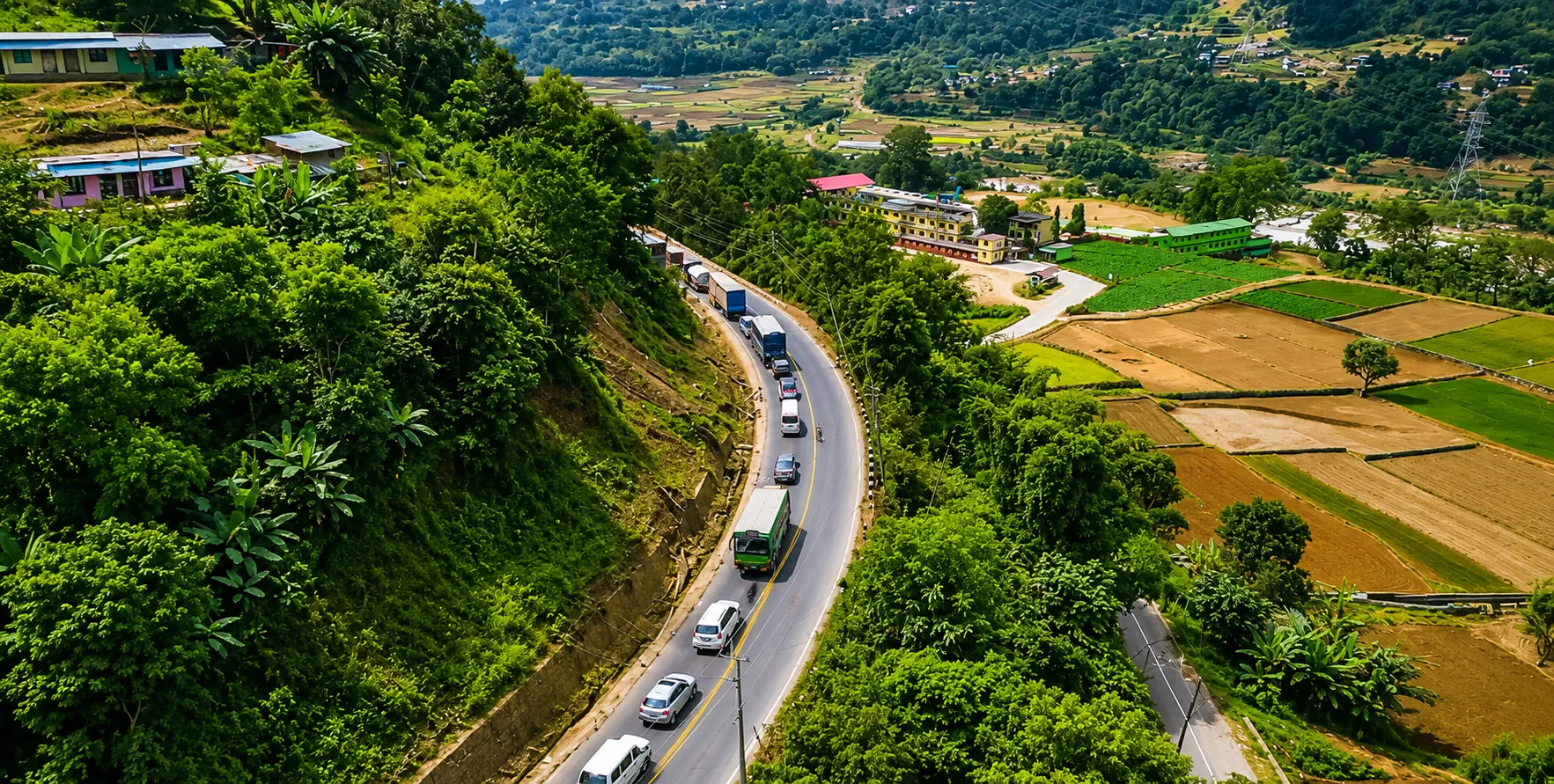
The Sunauli border stands as one of the busiest and most important entry points between Nepal and India, welcoming thousands of tourists, pilgrims, traders, and business travelers daily. Whether you have just crossed from India after clearing immigration or are returning home, reaching Kathmandu from Sunauli requires more than a standard car. The route winds through the hilly Kathmandu Valley, passes scenic river gorges, climbs and descends significant passes, and ends on the flat, fertile Terai plains. A professional Sunauli border to Kathmandu jeep with high ground clearance, 4WD capability, and experienced Himalayan drivers ensures safety, comfort, and peace of mind.
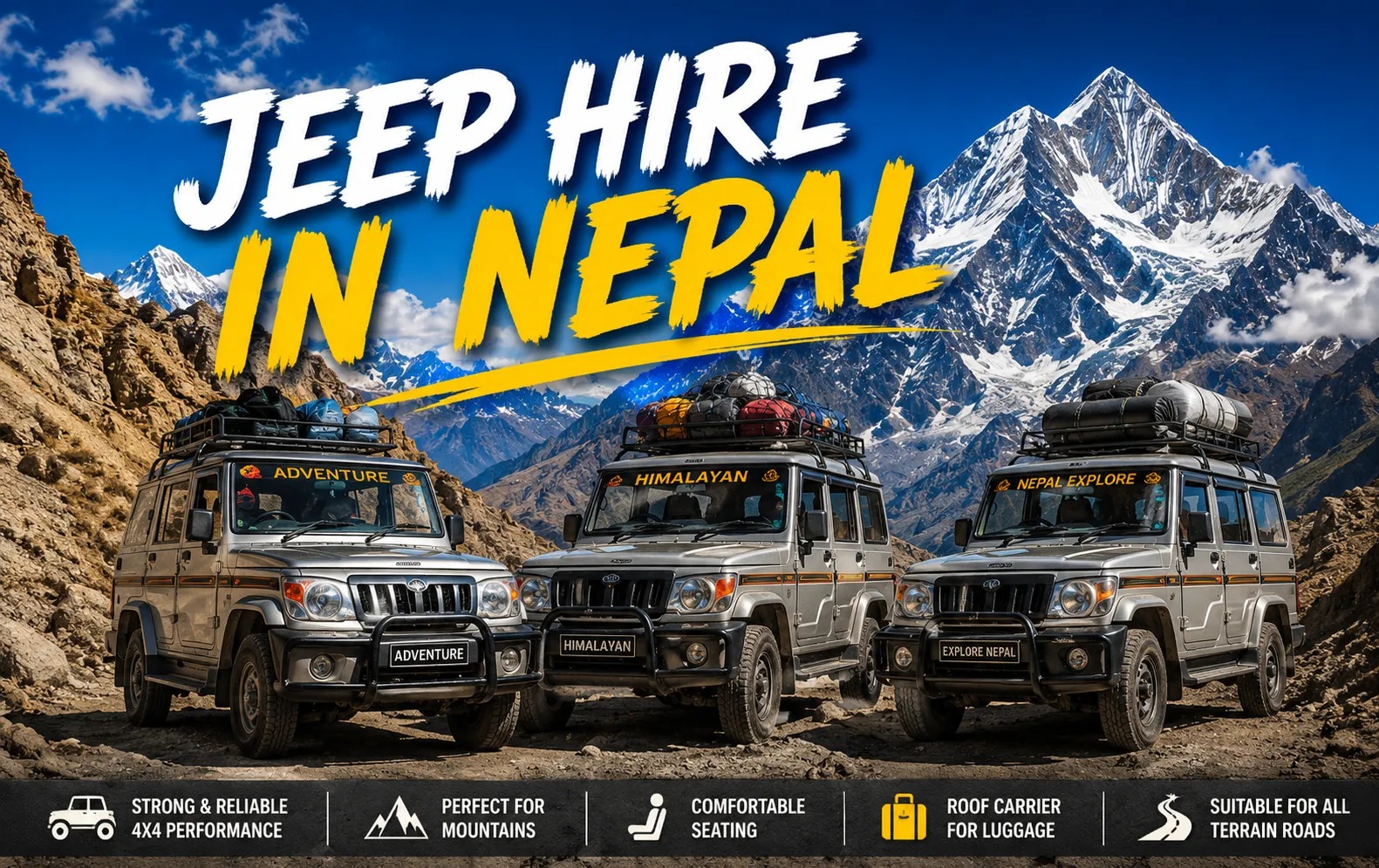
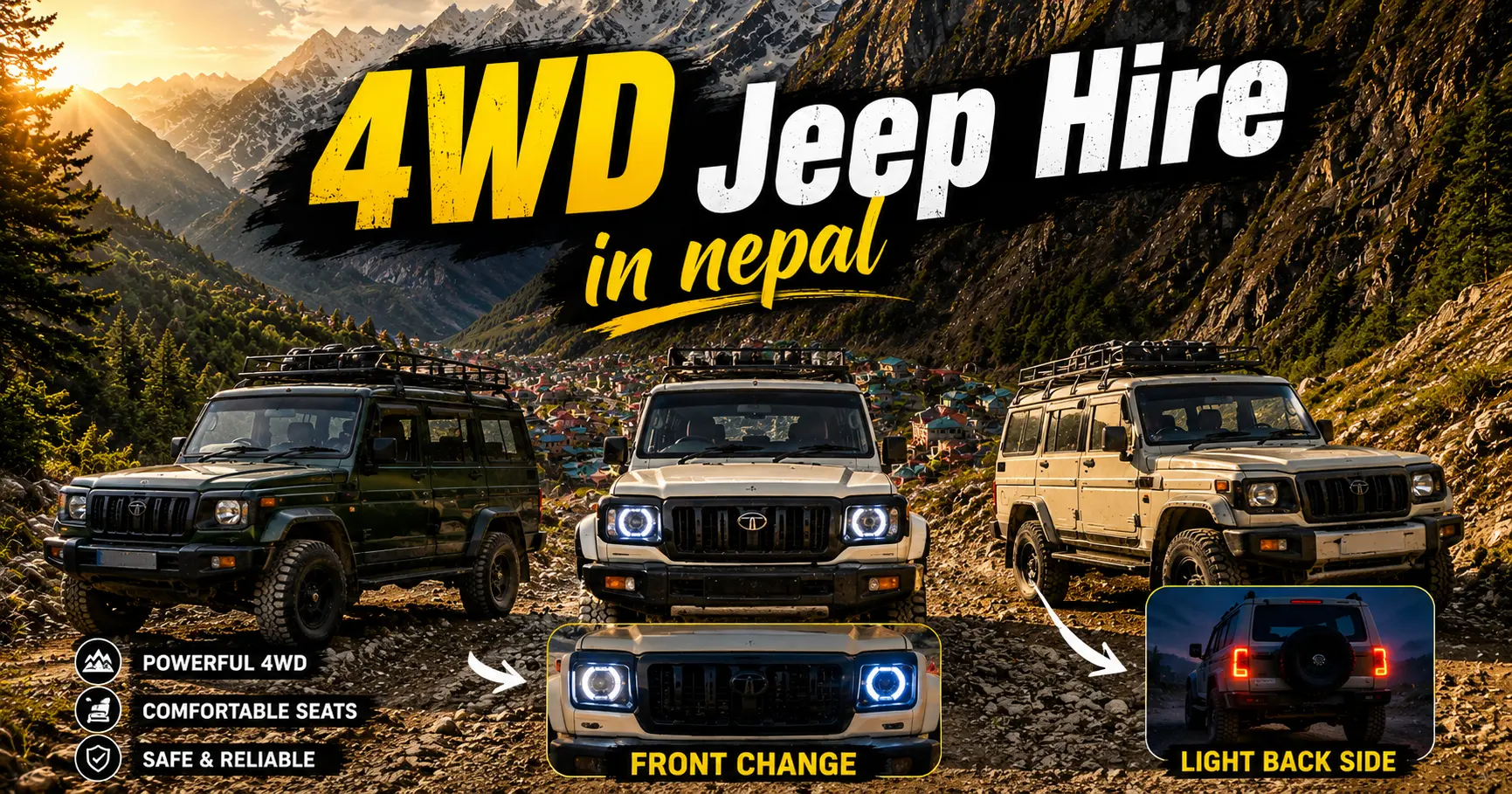
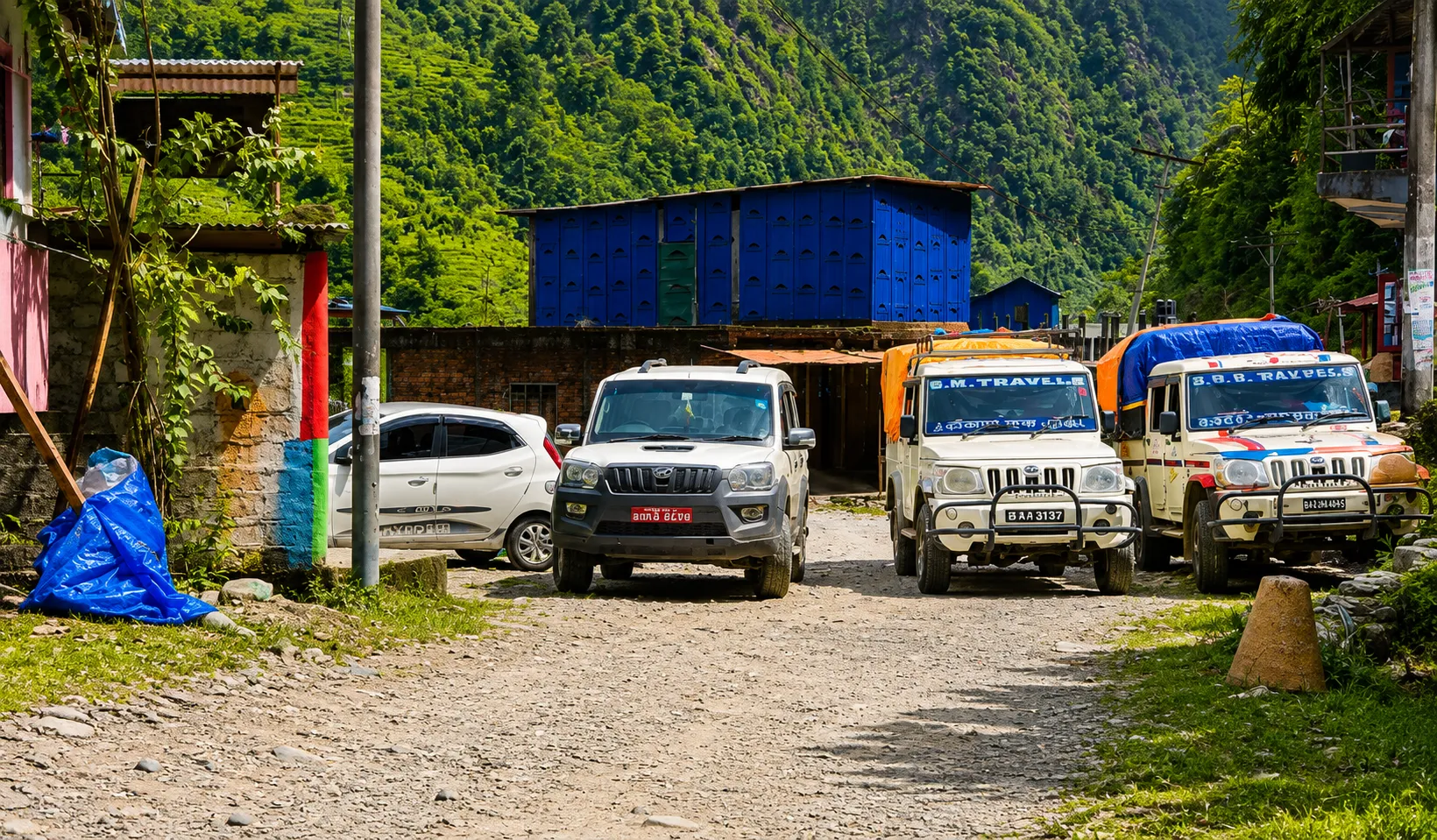
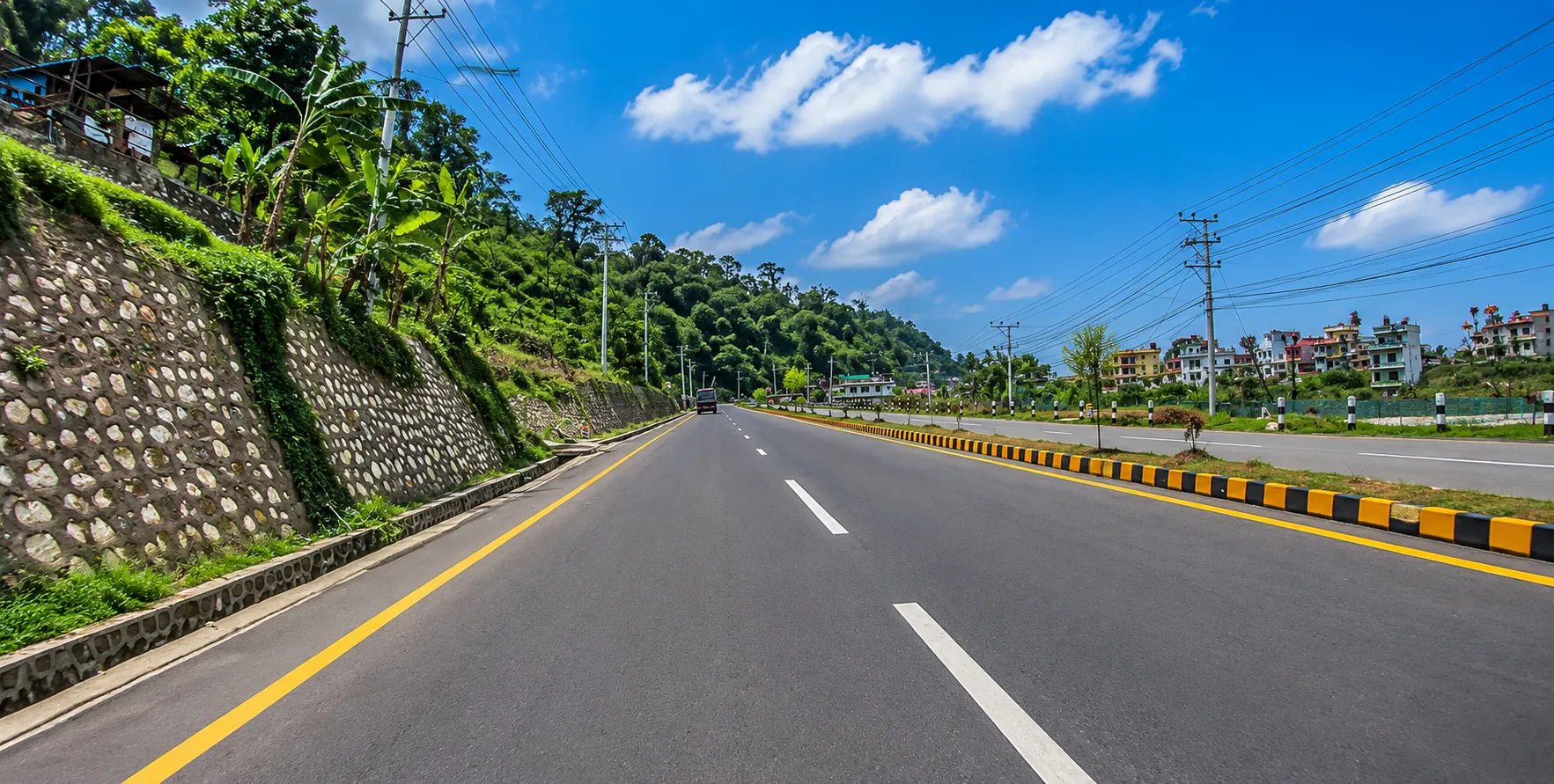
At vehiclehiringnepal.com, we specialize in Sunauli border to Kathmandu jeepservices using our carefully maintained fleet of Toyota Land Cruisers, Hiluxes, Fortuners, and Mahindra Scorpios. These vehicles are purpose-built for Nepal’s diverse road conditions — from the winding Prithvi Highway to the flat East-West Highway and the final descent into Siddharthanagar. Our battle-hardened drivers know every twist, temporary construction zone, and real-time update from the Department of Roads. In 2026, with ongoing highway widening projects and occasional monsoon disruptions, a professional Sunauli border-to-Kathmandu jeep remains the safest, most comfortable option for anyone wanting a private, flexible transfer rather than crowded public buses or shared vans.
The beauty of these journeys lies in the variety of landscapes. You start in the bustling border area of Bhairahawa and Butwal, climb into the Mahabharat hills, enjoy breathtaking views of the Trishuli River, and finally descend into the green Terai plains. Many travelers combine a Sunauli border-to-Kathmandu jeep with short treks or luxury packages from sister companies like treknepalhimalayas.com and alpineluxurytreks.com, making it the perfect gateway to Nepal’s Himalayan adventures.
Current Sunauli Border to Kathmandu Road Conditions in 2026
The route from Sunauli (Belahiya) to Kathmandu covers approximately 260–285 km and usually takes 8–12 hours depending on traffic, weather, and road conditions. In 2026, the road is generally well-maintained but features a mix of paved highways, ongoing widening projects, and occasional seasonal challenges.
Recent Department of Roads updates highlight that while major sections remain operational, the Prithvi Highway (especially Mugling–Naubise) experiences periodic landslides and dry landslides after heavy rains. The East-West Highway sees slower expansion progress, with temporary gravel patches and construction diversions. Our4WD hire in Nepal drivers monitor these conditions daily and provide live GPS updates to every client, ensuring smooth transfers even during disruptions.
What Makes Professional 4WD Hire in Nepal Essential for Sunauli to Kathmandu Jeep
Without a proper Sunauli-Kathmandu jeep, the journey becomes stressful. The Prithvi Highway features narrow sections, sharp curves, and cliff-edge drops. The East-West Highway has construction zones and seasonal mud after rains. Mahindra Scorpios and Toyota Fortuners with 180–221mm ground clearance, locking differentials, and reinforced chassis are ideal. Our drivers, who have logged thousands of kilometers on this exact route, adjust speed, stop at safe viewpoints, and ensure your safety.
Many travelers report that switching from a regular car to a professional jeep reduces discomfort significantly, especially on the Daunne Hill section where mud and potholes appear during upgrades. The private nature means you control your pace, stop for photos, and enjoy authentic local food instead of crowded highway parks.
The Best Vehicles for Sunauli Border to Kathmandu Jeep Services
At vehiclehiringnepal.com, every Sunauli border to Kathmandu jeep is selected for reliability:
Mahindra Scorpio: Our most popular choice — 180–200mm clearance, powerful engine, and excellent value. Ideal for families and groups wanting balance of power and comfort on the hilly sections.
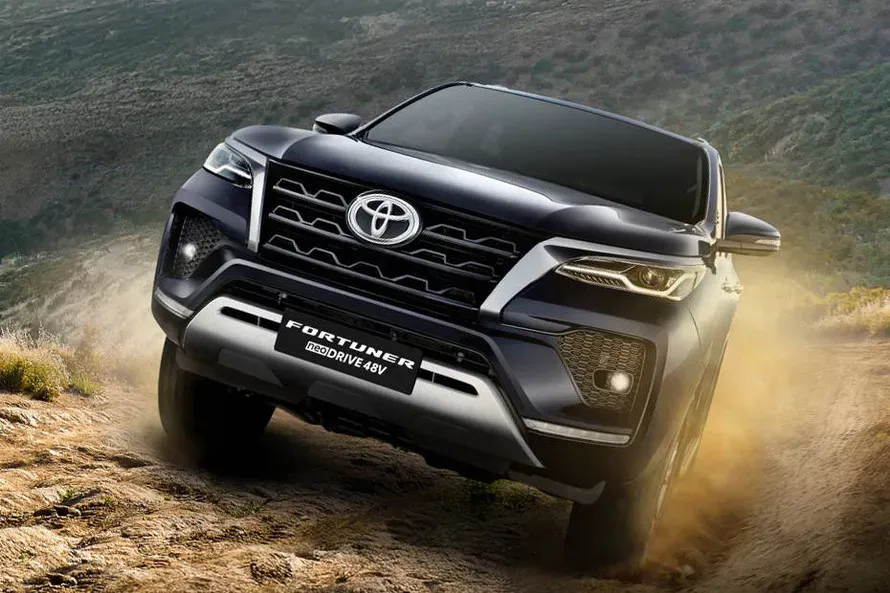
Toyota Fortuner: 221mm clearance, spacious seating for 5–7 passengers, and refined AC. Perfect for longer journeys with luggage.
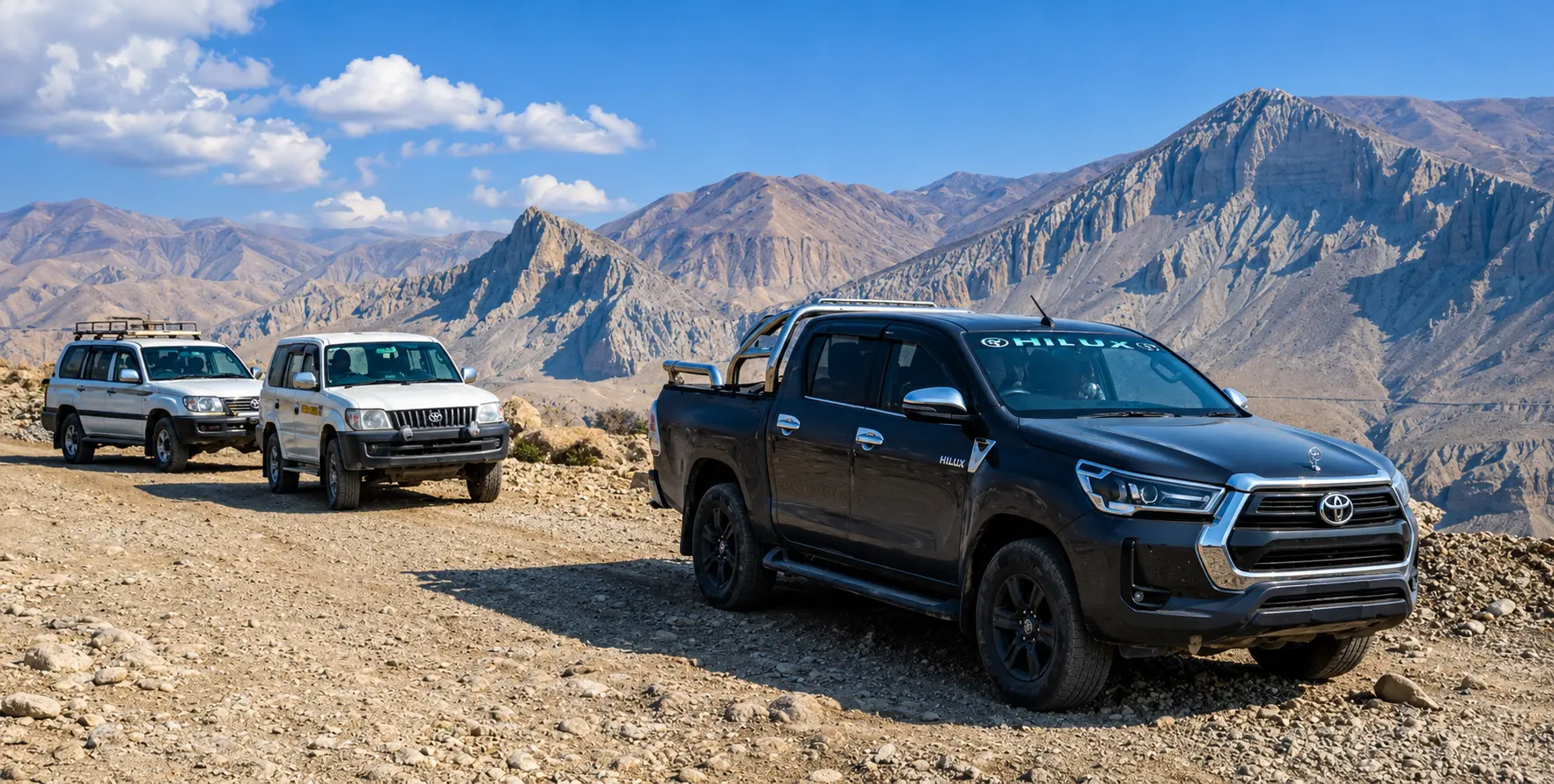
Toyota Hilux: 280mm ground clearance and strong off-road credentials make it the go-to for any rough patches or monsoon conditions.
Toyota Land Cruiser: Legendary durability for the toughest stretches, with 225mm clearance and full-time 4WD.
All vehicles come with professional drivers, full fuel, driver allowance, tolls, parking, and basic first-aid kits. We offer one-way transfers, multi-day rentals, and customized itineraries.
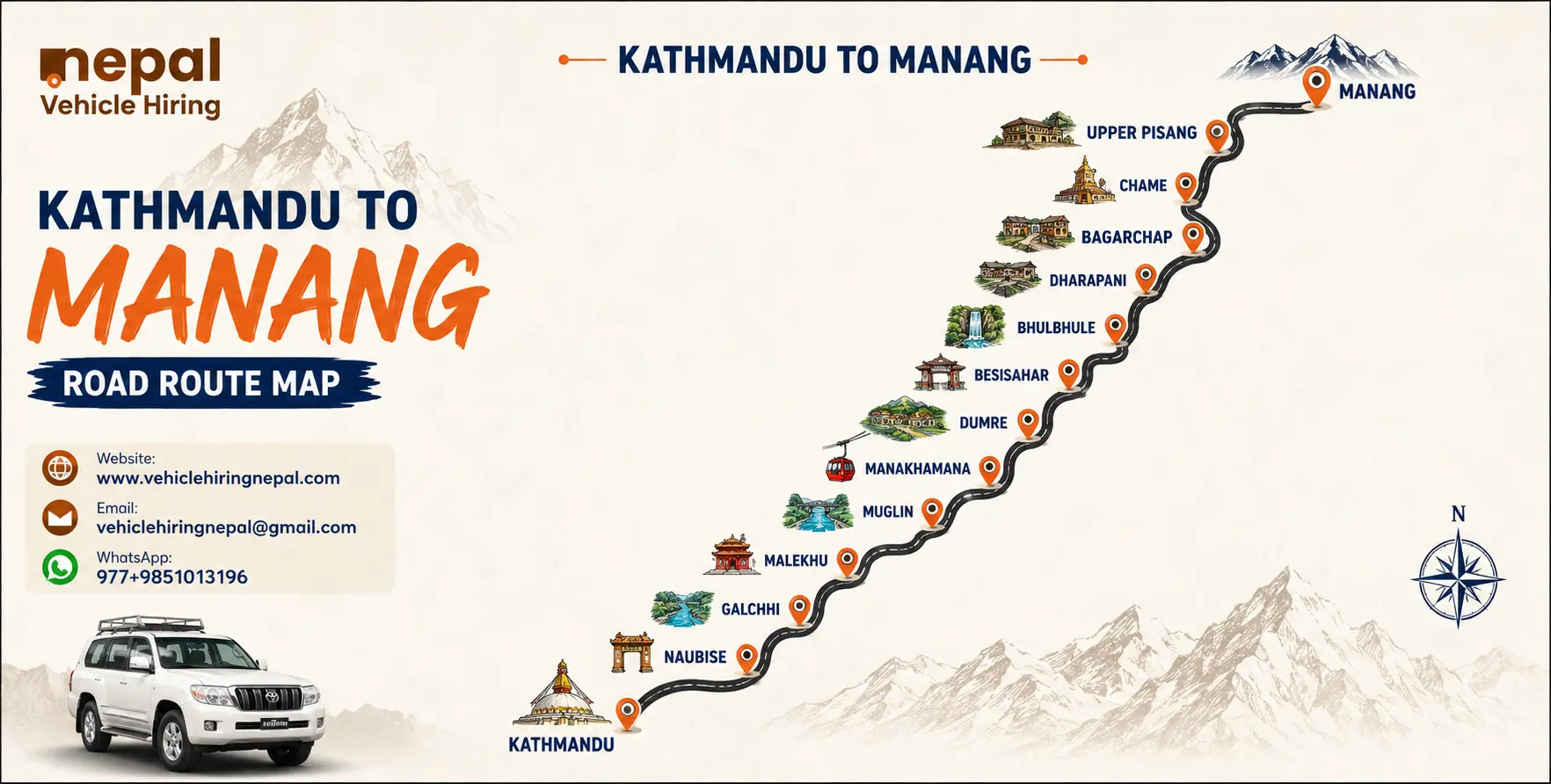
Detailed Route Breakdown for Sunauli to Kathmandu Jeep
Sunauli to Butwal (Siddhartha Highway): The final Nepal entry is flat and scenic. Pass through rural villages and rice paddies. Our drivers recommend early departures to avoid border queues.
Butwal to Mugling (East-West Highway): The main highway section. Ongoing widening projects create temporary diversions. Enjoy the contrast from tropical plains to approaching hills.
Mugling to Naubise (Prithvi Highway): The highlight. Follow the Trishuli River through pine forests and terraced farms. Stop at scenic viewpoints and the famous Malekhu river fish restaurant.
Naubise to Kathmandu (Tribhuvan Highway): Descent into the valley. Traffic is heavier here, but professional drivers and early starts keep you on schedule.
Final Arrival in Kathmandu: Drop-off at your hotel in Thamel, Kathmandu, or anywhere you specify. Flexible timing is standard.
Expert Tips for a Comfortable Sunauli Border to Kathmandu Jeep Journey
Best Departure Time: Leave Kathmandu at 5:00–6:00 AM to beat valley traffic.
Best Season: September–April for clear skies and stable roads. Avoid heavy monsoon (June–August) unless flexible rebooking is available.
What to Pack: Comfortable clothes, motion-sickness remedies (for the hilly section), rain gear, and snacks. All vehicles are air-conditioned.
Permits & Border Logistics: Our drivers handle drop-off directly at the Belahiya immigration gate and assist with luggage.
Acclimatization & Comfort: The temperature drops in the hills and rises in the Terai — the jeep’s climate control keeps you comfortable.
Group & Luggage: Most vehicles seat 4–7 comfortably with ample roof rack space.
How to Book Professional Sunauli Border to Kathmandu Jeep with Us
Booking is straightforward. Visit vehiclehiringnepal.com, select your dates and group size, and receive an instant quote. We confirm availability, provide detailed itineraries, and offer 24/7 WhatsApp support (+977 9851013196). Payment is secure, and we provide real-time road updates.
Many clients also combine a Sunauli border to Kathmandu jeep with accommodation, meals, or onward travel to Pokhara or Lumbini for full packages.
Why Choose Professional Sunauli Border to Kathmandu Jeep Over Public Options
Public buses take 10–12+ hours, share space, and lack flexibility. Private Sunauli border to Kathmandu jeep offers door-to-door service, climate-controlled comfort, scenic stops, and safety on Nepal’s challenging highways. It is the smart choice for busy travelers, families, and anyone returning from India after crossing the border.
The Scenic Beauty Along Sunauli Border to Kathmandu Jeep Routes
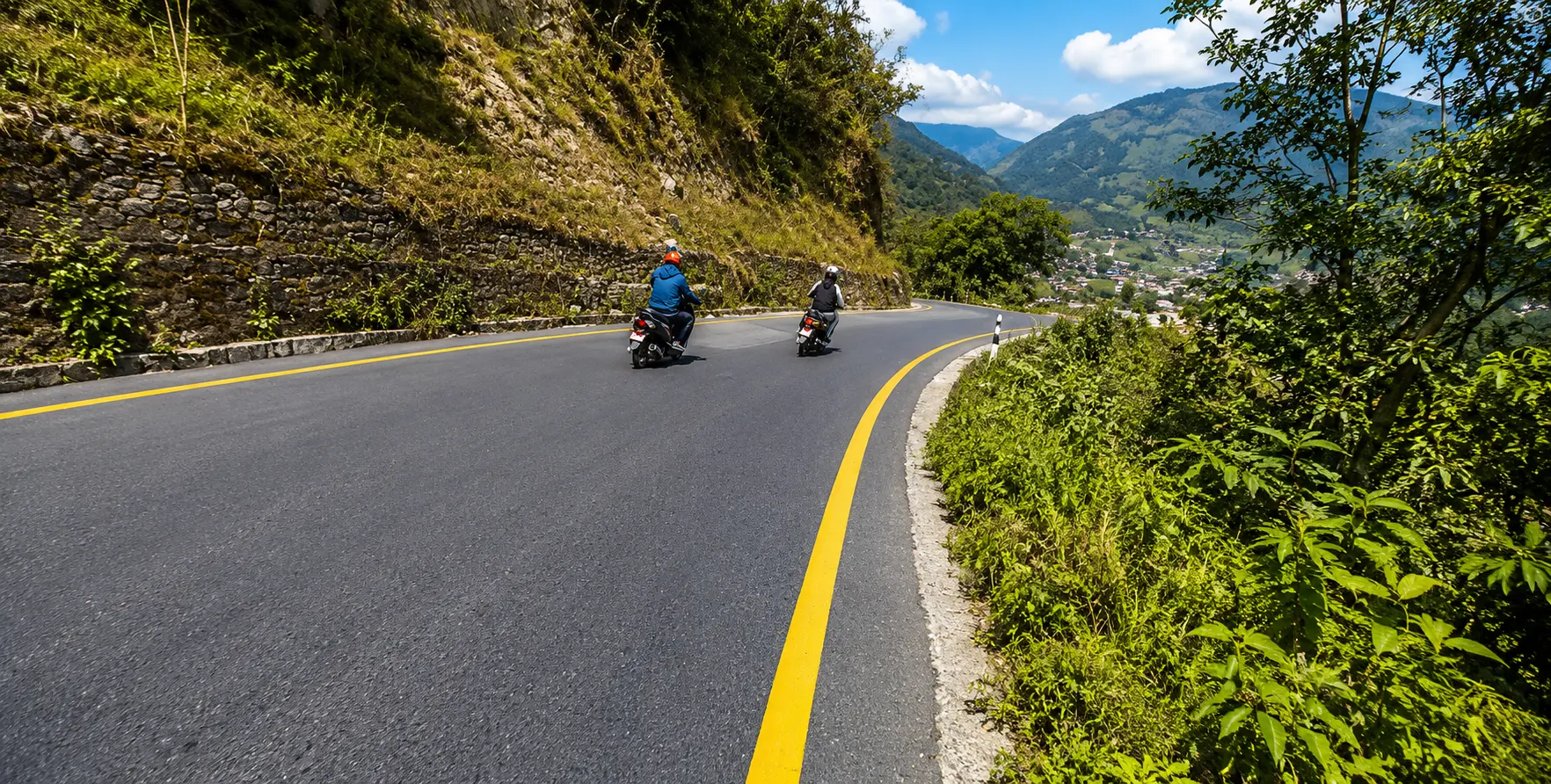
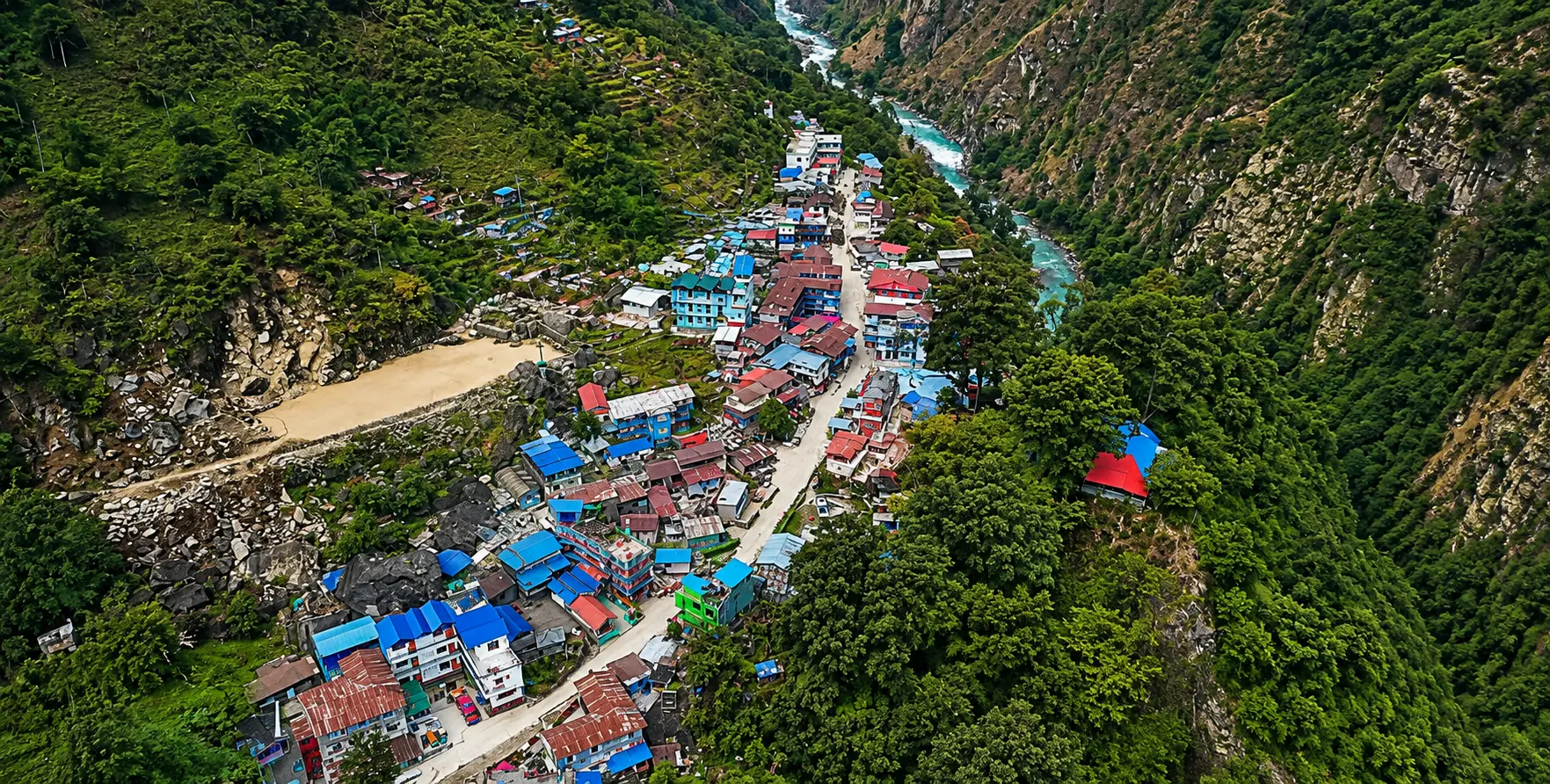
The journey transforms from the flat, fertile Terai plains to the green hills of the Kathmandu Valley. You will see the Trishuli River, the Mahabharat mountain range, and lush countryside. Photography stops are encouraged, and our drivers know the best viewpoints without rushing you.
How Recent Monsoon Disruptions in 2026 Have Impacted Sunauli to Kathmandu Jeep Travel
In 2026, the Prithvi Highway has faced multiple disruptions from dry landslides and heavy rains, including blockages near Mugling and Naubise. The Department of Roads has deployed hundreds of excavators, and many sections have reopened after debris clearance. However, occasional nighttime closures and one-way restrictions can extend travel time. Professional 4WD hire in Nepal drivers with real-time updates keep clients informed and prevent unnecessary delays.
The Role of Professional Drivers in Handling Sunauli to Kathmandu Jeep Road Conditions
Our drivers have logged thousands of kilometers on this exact route and are trained to recognize landslide-prone areas. They monitor weather forecasts, communicate with ACAP and Department of Roads authorities, and make split-second decisions on safe stopping points. This expertise turns potentially dangerous road conditions into smooth, stress-free transfers.
Seasonal Considerations and Road Conditions for Sunauli to Kathmandu Jeep in 2026
Spring (March–May) and autumn (September–November) offer the clearest skies, driest roads, and most reliable conditions. Spring brings blooming landscapes, while autumn provides crisp air and fewer crowds. Monsoon (June–September) brings the highest risk of landslides, especially on the Prithvi Highway, but our flexible policies and experienced drivers ensure safety when travel is necessary.
What to Expect During a Typical Sunauli Border to Kathmandu Jeep Tour
A typical day on our Sunauli border to Kathmandu jeep follows a relaxed yet exciting rhythm. After a comfortable night in Kathmandu, you are picked up early and driven along the Prithvi Highway to Besisahar. From there, the journey becomes more adventurous as you enter the Marsyangdi Valley. Expect stops at local viewpoints, quick visits to villages for cultural interaction, and plenty of time to enjoy the scenery from the air-conditioned comfort of the vehicle.
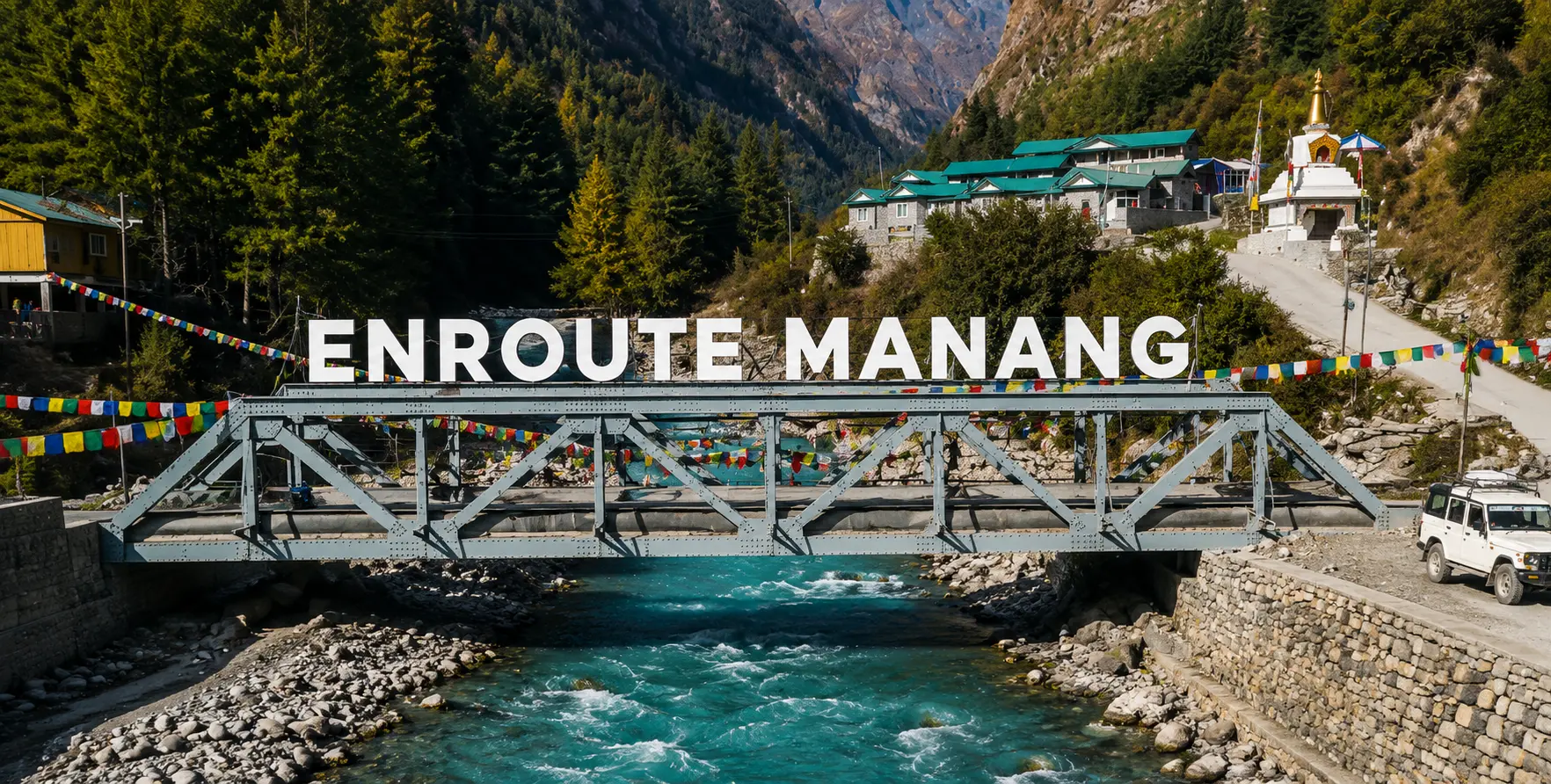
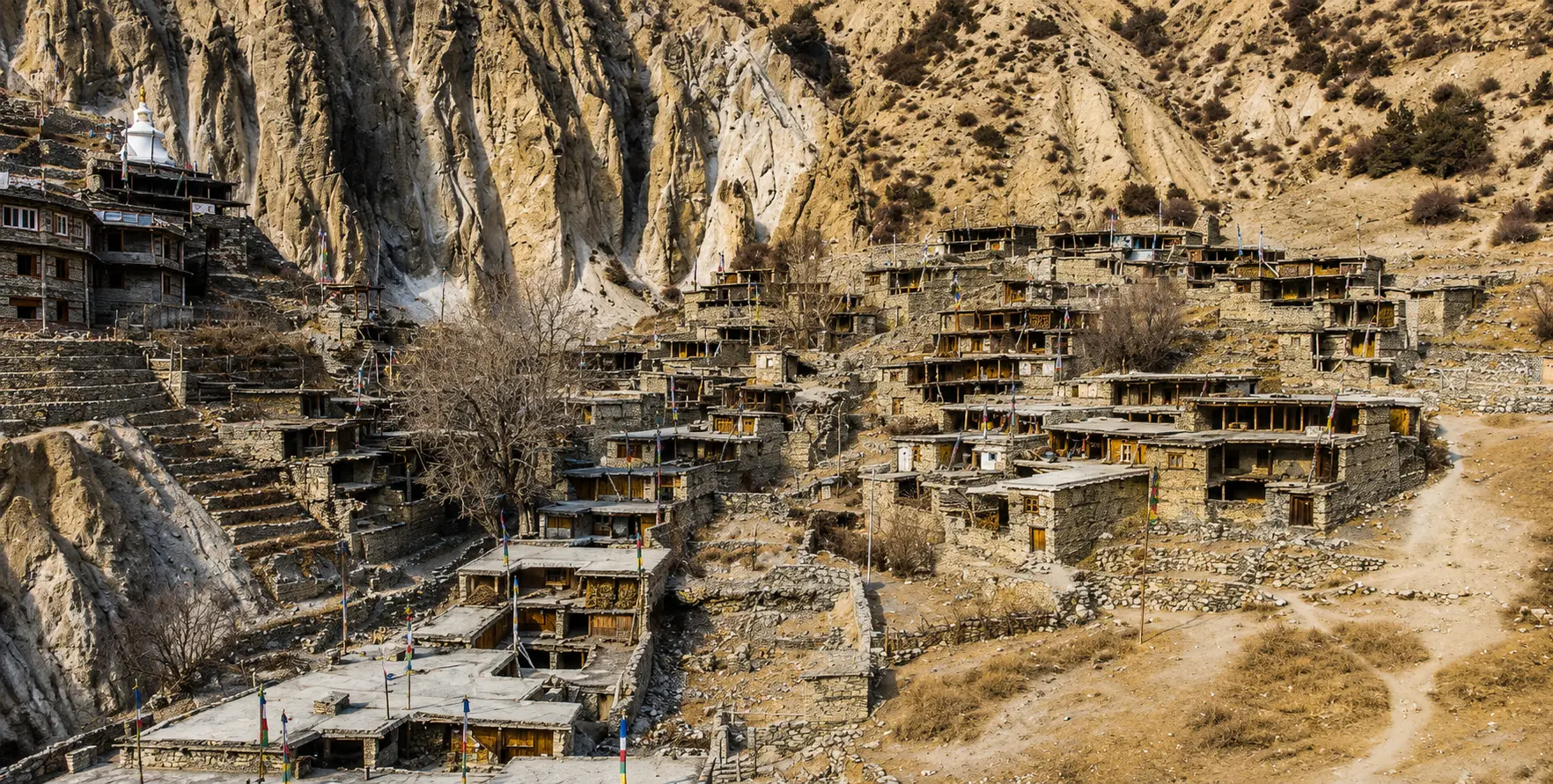
By the time you reach Manang, you will have covered hundreds of kilometers and gained a real appreciation for the scale of the Himalayas. The high trails ahead will reward you with solitude and fresh air, while the descent back offers the most dramatic scenery of all. Throughout the tour, our drivers ensure your safety, provide cultural insights, and keep the journey enjoyable with music and stories of the region.
How Professional 4WD Hire in Nepal Ensures Safe Annapurna Circuit Road Conditions
At vehiclehiringnepal.com, every 4WD hire in Nepal is equipped with locking differentials, a reinforced chassis, and professional drivers with thousands of hours on these exact routes. We monitor conditions in real time and adjust routes accordingly. For example, during recent monsoon disruptions in July 2026, we kept clients informed via WhatsApp and offered alternatives where possible.
Tips for Safe Sunauli Border to Kathmandu Jeep Travel
Always travel with a licensed, experienced 4WD hire-in-Nepal driver.
Carry extra water, snacks, and a first-aid kit.
Choose vehicles with high ground clearance (200mm+).
Book 4–6 weeks in advance during peak season.
Combine with luxury trekking packages from treknepalhimalayas.com for the best hybrid experience.
Expert Insights: Is the Sunauli to Kathmandu Jeep Route Ruined by Construction in 2026?
Many travelers ask whether ongoing widening projects have ruined the journey. The honest answer is no — when planned smartly. The high sections remain spectacular and untouched. Many trekkers now start at Chame, trek the NATT high route, and exit by flight from Jomsom. This approach delivers the classic experience with modern convenience.
Frequently Asked Questions About Sunauli Border to Kathmandu Jeep
How long does the Sunauli to Kathmandu jeep take? 8–12 hours depending on conditions and traffic.
Is the vehicle private? Yes — fully private for your group.
What vehicles do you offer? Mahindra Scorpio, Toyota Fortuner, Hilux, and Land Cruiser.
Can I stop for meals? Yes — we suggest authentic local stops like Malekhu fish restaurant.
Do you handle border drop-off? Yes — direct to Belahiya gate.
Is it safe during monsoon? Yes, with professional 4WD and real-time updates.
Can families travel comfortably? Absolutely — Fortuner and Scorpio are ideal.
What about luggage? Ample space with roof racks.
When should I book? At least 3–4 weeks in advance during peak season.
Are fuel and tolls included? Yes — full fuel and all tolls included.
Why Annapurna Circuit Road Conditions 2026 Are More Relevant Than Ever
The Annapurna Circuit has always been legendary, but in 2026 the addition of motorable jeep roads from Besisahar to Chame and beyond has permanently changed how we experience it. Roads now reach Manang and Upper Manang, while the western descent via Muktinath remains fully motorized. This evolution has saved thousands of trekkers days of walking. Yet, it has also introduced new realities: dusty lower sections, frequent monsoon disruptions, and the need for smart alternatives like NATT (Natural Annapurna Trekking Trails).
At vehiclehiringnepal.com, our battle-hardened 4WD hire in Nepal drivers monitor these conditions daily through local road offices, ACAP updates, and real-time GPS. Whether you are planning a luxury Annapurna Circuit jeep touror a hybrid adventure, professional 4WD hire in Nepalvehicles with 225–280mm ground clearance and experienced Himalayan drivers guarantee safety. This deep 2026 guide breaks down every section, recent disruptions, NATT solutions, and practical tips so you can travel confidently.
The Rapid Evolution of Annapurna Circuit Road Conditions Since 2012
The Besisahar to Chame jeep road opened in 2012 after decades of construction. By 2025–2026 it had expanded to Upper Manang, reducing the old 5–7 day foot journey to just 4–6 hours. The western Jomsom to Muktinath road was completed years ago. This shift has made Annapurna Circuit jeep tours accessible for families and busy travelers.
However, the lower sections now share space with jeep traffic, leading to dust, construction dust, and occasional complaints about walking on the road. ACAP has responded by developing NATT alternatives—marked high trails that bypass much of the dusty road. The core high sections from Manang over Thorong La remain completely road-free, preserving the original magic at altitudes above 4,000 meters.
Current Kathmandu to Besisahar Road Conditions in 2026
The Prithvi Highway from Kathmandu to Dumre and Besisahar is fully paved and in excellent condition year-round. Recent widening projects have improved traffic flow. From Dumre, the secondary track to Besisahar (22 km) is well-maintained. This paved start gives you a comfortable arrival before the real Annapurna Circuit road conditions challenge begins on the off-road section.
Besisahar to Chame: The Heart of Annapurna Circuit Jeep Routes in 2026
This 63 km rough mountain track is the most iconic and challenging part of Annapurna Circuit road conditions. It follows the Marsyangdi River through dramatic gorges, narrow cliff-edge tracks, and seasonal river crossings. Key stages include:
Besisahar to Bahundanda (15 km): Packed dirt and gravel, mostly passable but slippery in rain.
Bahundanda to Chamje (10 km): Rocky mountain track with sheer drops — 4WD essential.
Chamje to Tal (8 km): Very rough with frequent river crossings and rockfall risk.
Tal to Dharapani (12 km): Improving track through pine forests and waterfalls.
Dharapani to Chame (15 km): Mixed surface, gaining ~800 m altitude — the longest continuous climb.
In 2026, this section remains demanding. Recent landslides (e.g., July 2026 closures at Kharkhare and Hawadanda) have caused 3–5-day disruptions. Our Land Cruisers and Hiluxes handle every hairpin turn safely.
The Marsyangdi Gorge features narrow tracks carved into vertical cliffs, 500+ meters above the river. Rockfalls after rain and seasonal flooding are common. Night travel is often restricted during monsoon. ACAP maintains the road, but conditions can change overnight — daily WhatsApp updates from our drivers are standard for every 4WD hire in Nepal client.
Chame to Manang Road Conditions: Improved but Still Rough in 2026
The 30 km Chame to Manang track (via Pisang) has improved with some blacktopping. It remains off-road but bumpier and higher altitude. Manang (3,519 m) is the perfect acclimatization stop. Recent upgrades have made parts more reliable, yet steep ascents and occasional snow patches in winter require caution.
Manang to Muktinath via Thorong La: The Unchanged High-Pass Section
No vehicles reach the high passes, but many Annapurna Circuit jeep tours combine the road to Manang with a short high-altitude trek over Thorong La (5,416 m). The trail from Manang to Thorong Phedi is excellent and remains 100% road-free. Spring and autumn are ideal; winter snow can close the pass.
Western Descent: Muktinath to Tatopani and Pokhara Road Conditions
The dramatic 5–6 hour descent through the Kali Gandaki Gorge is spectacular. Apple orchards, hot springs, and sheer rock walls make this the perfect end. Conditions are generally reliable year-round, though monsoon dust can be heavy lower down.
Monsoon Season Road Conditions 2026: Highest Risk Period
June to September is peak monsoon season and brings the most challenging Annapurna Circuit road conditions. Landslides at Kharkhare, Hawadanda, and Myagde Bhir have blocked sections for days or weeks (as seen in July 2026). The Department of Roads deploys hundreds of excavators, but repairs take time. We strongly recommend waiting for clearer weather or using flexible rebooking. The high trails above Manang remain more forgiving due to the rain shadow effect.
Best Seasons for Annapurna Circuit Road Conditions in 2026
Spring (March–May) and autumn (September–November) offer the clearest skies, driest roads, and most reliable Annapurna Circuit road conditions. Spring brings blooming rhododendrons and stable temperatures. Autumn provides crisp air, fewer crowds, and better views of the Annapurna massif. These are peak seasons when our fleet operates at maximum reliability.
How NATT Trails Solve the Road Conditions Issue on the Annapurna Circuit
ACAP’s NATT system provides marked alternatives that bypass much of the dusty jeep road. Key sections include:
Tal to Dharapani alternative: Follows the east bank of the Marsyangdi River — quieter and more scenic.
Chame to Upper Pisang: Take the ridge trail instead of the lower road.
Upper Pisang to Ghyaru to Ngawal: The best high route — views of Annapurna II and III that jeeps never see.
Starting at Chame and trekking the NATT high route transforms any Annapurna Circuit jeep tours into a genuine road-free adventure while still using professional 4WD hire in Nepal for the lower sections.
Why Professional 4WD Hire in Nepal Is Essential for Annapurna Circuit Road Conditions
Without a proper 4WD hire in Nepal vehicle, many parts of the Annapurna Circuit cannot be accessed. Our vehicles feature locking differentials, reinforced chassis, and drivers who know exactly when to adjust speed or take safer routes. Recent monsoon disruptions (July 2026) showed why: only experienced operators with real-time updates can keep clients safe and informed.
Expert Tips for Safe Annapurna Circuit Road Conditions Travel
Always travel with a licensed, experienced 4WD hire-in-Nepal driver.
Carry extra water, snacks, and a first-aid kit.
Choose vehicles with high ground clearance (200 mm+).
Book 4–6 weeks in advance during peak season.
Combine with luxury trekking packages from treknepalhimalayas.com for the best hybrid experience.
Does Road Construction ruin the Annapurna Circuit in 2026?
The honest answer is no — when planned smartly. The high sections from Manang over Thorong La remain spectacular and untouched. Many trekkers now start at Chame, trek the NATT high route, and exit by flight from Jomsom. This approach delivers the classic experience with modern convenience.
Deep Insights: Recent 2026 Road Disruptions and Recovery
In July 2026, landslides at Kharkhare and Hawadanda blocked the Besisahar–Chame road for three days, stranding vehicles and supplies. Repairs by the Dumre–Besisahar–Chame Road Project Office restored service quickly, but authorities note ongoing risks. Similar blockages occurred at Myagde Bhir in late July. Our 4WD hire in Nepal fleet and driver networks have consistently provided real-time updates, ensuring zero downtime for clients.
What to Expect During a Typical Annapurna Circuit Jeep Tour in 2026
A typical day follows a relaxed yet exciting rhythm. After a comfortable night in Kathmandu, you are picked up early and driven along the Prithvi Highway to Besisahar. From there, the journey becomes adventurous as you enter the Marsyangdi Valley. Expect stops at local viewpoints, quick village visits, and time to enjoy the scenery from the air-conditioned comfort of the vehicle.
By Manang, you will have covered hundreds of kilometers and gained appreciation for the scale of the Himalayas. The high trails ahead reward you with solitude and fresh air, while the descent offers dramatic scenery. Throughout, our drivers ensure safety, provide cultural insights, and keep the journey enjoyable.
How Professional Drivers and Vehicles Overcome Annapurna Circuit Road Conditions
Our drivers have logged thousands of kilometers on these exact routes. They monitor weather via local stations, adjust speed on steep sections, and communicate with ACAP authorities. Every vehicle undergoes daily inspections. This combination of technology and experience turns potentially dangerous Annapurna Circuit road conditions into safe, luxurious journeys.
Frequently Asked Questions About Annapurna Circuit Road Conditions 2026
Are the roads safe for families on Annapurna Circuit jeep tours? Yes — our Fortuner and Land Cruiser models are ideal with ample safety features and professional drivers.
Can I do Annapurna Circuit jeep tours during monsoon? Only with extreme caution and updated road conditions. We recommend spring or autumn for the safest experience.
What is the best 4WD for Annapurna Circuit road conditions? Toyota Land Cruiser with maximum ground clearance handles every challenge.
Do I need to walk on the jeep road? Many travelers deliberately avoid the dusty lower sections by trekking from Chame upward or using NATT alternatives.
How do I get real-time Annapurna Circuit road updates? Contact us via WhatsApp — our drivers share live GPS and weather reports daily.
Is night travel allowed on Besisahar–Chame? Generally not recommended during monsoon; check with us for current restrictions.
Can I combine a jeep tour with trekking? Yes! Many of our clients combine Annapurna Circuit jeep tours with short treks or book luxury trekking packages through treknepalhimalayas.com or alpineluxurytreks.com.
What about luggage? Our vehicles are equipped with roof racks and extra boot space to accommodate all gear safely.
Why Annapurna Circuit Jeep Tours Nepal Are the Perfect Hybrid Adventure for Nepal Travelers
The Annapurna Circuit remains one of the world’s most iconic trekking routes, celebrated for its dramatic landscapes, cultural villages, and breathtaking mountain views. Yet with the rise of jeep accessibility, many travelers now opt forAnnapurna Circuit jeep tours that combine the thrill of off-road driving with the comfort of modern 4WD vehicles. These tours let you skip the most exhausting lower sections of the trek while still experiencing the full magic of the Annapurna range.
At vehiclehiringnepal.com, we specialize in professional Annapurna Circuit jeep tours using our reliable fleet of Toyota Land Cruisers, Hiluxes, Fortuners, and Mahindra Scorpios. Our drivers are battle-hardened Himalayan veterans who know every twist, turn, and checkpoint on the routes from Besisahar to Chame, Chame to Manang, and the dramatic descent via Muktinath to Tatopani. Whether you are a first-time visitor seeking a luxury jeep safari or an experienced trekker wanting a quick entry point to the higher sections, our Annapurna Circuit jeep tours deliver safety, comfort, and unforgettable scenery.
The beauty of these tours lies in their flexibility. You can book a simple one-way transfer from Kathmandu to Chame or Manang, or a full multi-day Annapurna Circuit jeep safari that includes permits, driver allowance, and fuel. Many of our clients combine a 4WD hire in Nepal drop-off at Besisahar with a short trek from Ghorepani (just a short jeep ride away) to Poon Hill for sunrise views — the ultimate hybrid adventure. For those craving even more luxury, we partner with sister companies like treknepalhimalayas.com and alpineluxurytreks.com to create fully customized packages that blend jeep comfort with guided trekking segments.
In 2026, with ongoing ACAP trail improvements and better road access through the Marsyangdi Valley, Annapurna Circuit jeep tours have never been more accessible or rewarding. Roads now reach Chame and beyond, yet the high trails from Upper Pisang to Manang remain spectacular road-free gems. This balance makes these tours ideal for busy travelers, families, or anyone who wants to experience the luxury of motor vehicles while savoring the soul of the Annapurna Circuit.
What Makes Annapurna Circuit Jeep Tours in Nepal Unique
Traditional Annapurna Circuit jeep tours in Nepal focus on the lower Annapurna Conservation Area (ACAP) sections where motor vehicles dominate. These include the paved Prithvi Highway from Kathmandu to Besisahar, followed by the thrilling off-road track through the Marsyangdi River gorge. You will pass through villages like Jagat, Dharapani, Ngadi, Timang, and Tal, crossing seasonal riverbeds, dodging narrow cliff-edge tracks, and stopping for breathtaking views of Annapurna II, III, and Gangapurna.
What sets professional Annapurna Circuit jeep tours apart is the combination of comfort and capability. Our vehicles feature 200–280mm ground clearance, air conditioning, spacious seating for 5–7 passengers, roof racks for luggage, and professional drivers who monitor road conditions in real time. You travel in climate-controlled luxury while absorbing the raw beauty of the Himalayas — from lush subtropical forests and cascading waterfalls in the lower valleys to the stark, arid landscape around Manang at 3,519 meters.
For those who want the full experience, many operators offer hybrid Annapurna Circuit jeep tours where you spend one or two nights trekking the road-free high trails from Chame to Manang (via Upper Pisang, Ghyaru, and Ngawal). This allows you to enjoy both the convenience of the jeep for the dusty lower sections and the meditative solitude of the higher circuit. Side excursions are common, such as a short hike to Gangapurna Lake or a cultural visit to Braga Monastery.
Annapurna Circuit jeep tours are also perfect for couples, families, and first-time international visitors who prefer minimal physical exertion but maximum scenic reward. The professional service includes everything from pickup in Kathmandu to toll and parking arrangements, plus flexible extensions for accommodation or additional treks.
The Legendary Routes of Annapurna Circuit Jeep Tours Nepal
Our fleet excels on every major Annapurna Circuit jeep tour route:
Kathmandu to Besisahar (Prithvi Highway): A scenic 175km paved drive (5–7 hours) where most passengers sleep comfortably. Ideal starting point for all Annapurna Circuit jeep tours.
Besisahar to Chame (Marsyangdi Gorge): The highlight 66–75km off-road section. Narrow, winding tracks carved into cliffs, waterfalls, pine forests, and constant views of the Annapurna massif. Our Land Cruisers and Hiluxes handle this section effortlessly.
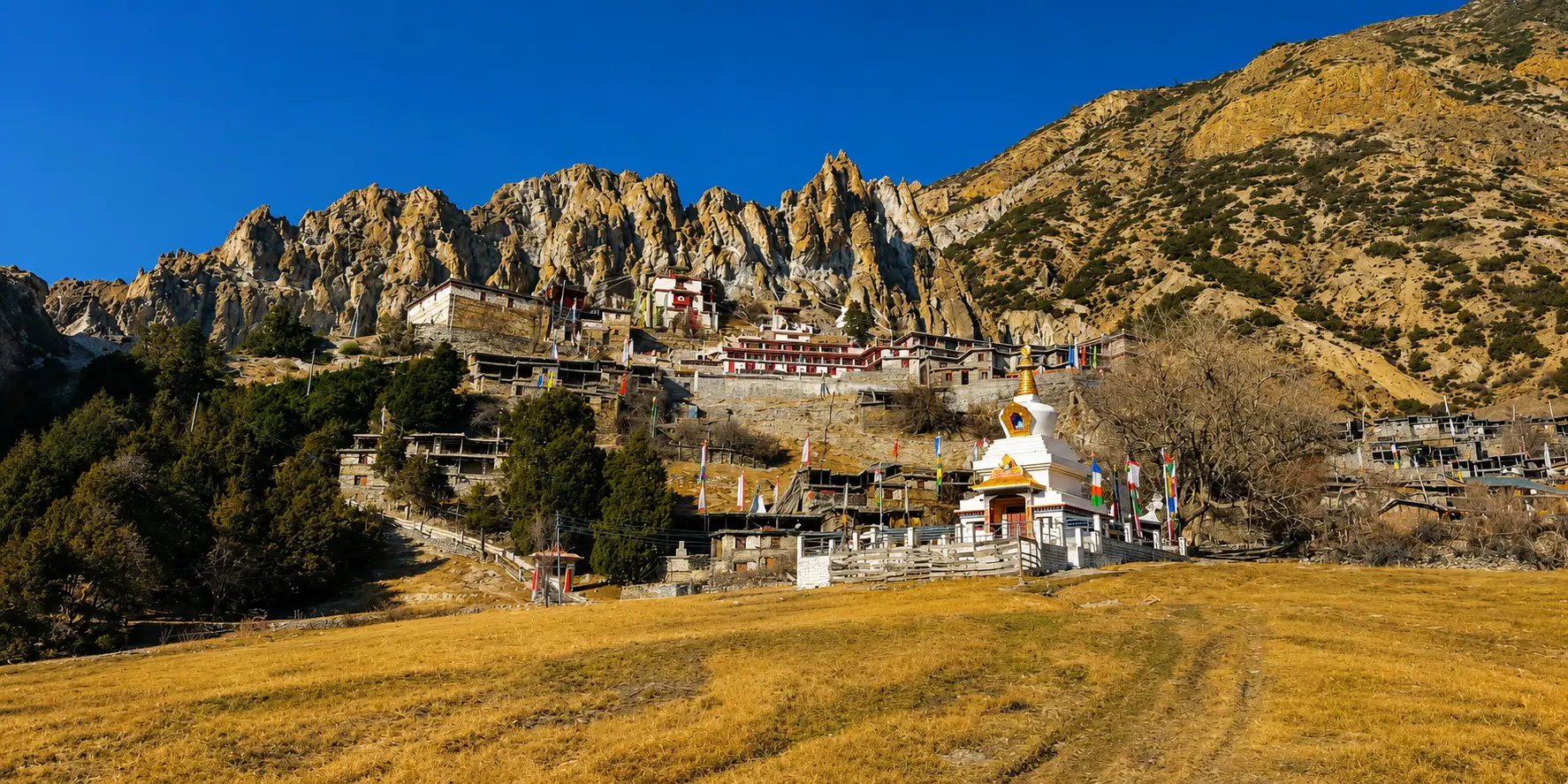
Chame to Manang: 30km of high-altitude rough tracks (via Pisang). Manang at 3,519m is the perfect acclimatization stop for any Annapurna Circuit jeep tour. Spend a night here before heading up the road-free high trails.
Manang to Muktinath (via Thorong La): For advanced adventurers, our multi-day Annapurna Circuit jeep tours can continue with a short high-pass trek or return by vehicle to Muktinath for a dramatic 4WD descent through the Kali Gandaki Gorge.
Muktinath to Tatopani to Pokhara: A stunning 5–6 hour descent through the world’s deepest gorge, apple orchards of Marpha, and hot springs at Tatopani. Many travelers end their Annapurna Circuit jeep tours here before flying or driving back to Pokhara.
We also offer specialized routes like Annapurna Circuit jeep tours to Ghorepani/Poon Hill, where a quick jeep transfer from Nayapul or Pokhara lets you combine jeep comfort with one of Nepal’s finest sunrise viewpoints. For a full luxury experience, these tours pair beautifully with guided trekking packages from our sister company, treknepalhimalayas.com.
Our Fleet: The Most Reliable Vehicles for Annapurna Circuit Jeep Tours Nepal
At vehiclehiringnepal.com, every vehicle for Annapurna Circuit jeep tours is rigorously maintained for 2026 conditions:
Toyota Land Cruiser (LC70/LC200): The ultimate for extreme sections — 225mm ground clearance, full-time 4WD, and legendary durability. Perfect for the full Besisahar–Manang–Muktinath loop.
Toyota Hilux (Double Cab 4WD): 280mm ground clearance and powerful engine make it ideal for the roughest Annapurna tracks. Spacious load bed for trekking gear.
Toyota Fortuner: Excellent balance of power and passenger comfort (221mm clearance, AC, seating for 5–7). Our most popular choice for families and groups on Annapurna Circuit jeep tours.
Mahindra Scorpio: The value king — 180–200mm clearance, torquey engine, and affordable pricing. Still handles every Annapurna road safely and is the first choice for budget-conscious adventurers.
All vehicles come with professional drivers, full fuel, driver allowance, tolls, and basic first-aid kits. One-way transfers, multi-day rentals, and customized itineraries are standard. Road condition updates are provided daily via our WhatsApp support line (+977 9851013196).
Expert Tips for an Unforgettable Annapurna Circuit Jeep Tour
Best Seasons: March–May and September–November offer dry roads, clear skies, and blooming rhododendrons. Avoid monsoon (June–August) due to landslides and dust.
Permits: ACAP permit (NPR 3,000) is essential for all Annapurna Circuit jeep tours entering the conservation area. We assist with applications and handle vehicle red-number-plate logistics.
Acclimatization: Spend at least one night in Manang or at Chame before any high-altitude trekking. The road-free sections from Upper Pisang onward reward careful pacing.
What to Pack: Layered clothing, rain gear, sunscreen, snacks, and a light down jacket for high-altitude stops. All our vehicles are equipped for comfort.
Group & Luggage: Most vehicles seat 4–7 comfortably with ample luggage space. For larger groups, our Hiace options are available.
Hybrid Experience: Many travelers combine Annapurna Circuit jeep tours with short treks (e.g., Ghorepani sunrise) or side hikes to Gangapurna Lake. Our luxury trekking packages from alpineluxurytreks.com make the perfect seamless adventure.
How to Book Your Annapurna Circuit Jeep Tour with Us
Booking is simple and transparent. Visit vehiclehiringnepal.com, select your route and dates, and receive an instant quote. We confirm availability, provide detailed itineraries, and handle all logistics — including permits and road updates. Payment is secure, and our 24/7 support ensures peace of mind.
Whether you need a quick Kathmandu-to-Chame transfer, a multi-day Annapurna Circuit jeep safari, or a fully customized luxury package, we are here to make your journey effortless. Many of our clients also book accommodation and meals through our sister sites for a complete trip.
Ready to discover the Annapurna Circuit like never before? Let vehiclehiringnepal.com turn your travel dreams into reality with professional Annapurna Circuit jeep tours that you can trust.
Why Choose Professional 4WD Hire in Nepal for Annapurna Circuit Jeep Tours?
Choosing the right operator is everything when it comes to Annapurna Circuit jeep tours. At vehiclehiringnepal.com, we only use vehicles that are regularly serviced and driven by professionals who have logged thousands of kilometers on these exact routes. Our drivers speak English, Nepali, and basic Hindi, understand altitude physiology, and are equipped with radios and emergency kits. This level of expertise gives you total peace of mind whether you’re traveling solo, with a family, or as part of a large group.
Many travelers combine a 4WD hire in Nepal drop-off with accommodation at Besisahar or Chame, making the journey even smoother. We also offer seamless connections to luxury trekking packages from our sister company treknepalhimalayas.com and alpineluxurytreks.com. For example, you can arrive by jeep, stay one night in a cozy lodge, and then join a guided luxury trek to Upper Pisang or Gangapurna Lake — the perfect way to experience both the convenience of modern travel and the soul of the Himalayas.
The Incredible Scenery Along Annapurna Circuit Jeep Tours
One of the greatest joys of Annapurna Circuit jeep tours is the constant change in landscape. Starting from the subtropical valleys of the lower Marsyangdi, you climb into pine forests, cross rushing rivers, and eventually enter the high alpine zone around Manang. Every kilometer brings new surprises: waterfalls cascading into the river, ancient wooden bridges, traditional Tibetan prayer flags, and panoramic views of the Annapurna range that feel almost unreal.
The descent from Manang to Muktinath is particularly dramatic, passing through the Kali Gandaki Gorge — the deepest in the world — with sheer rock walls, ancient monasteries, and the sacred pilgrimage site of Muktinath at 3,800 meters. From here, the journey continues through the apple orchards of Marpha and the hot springs of Tatopani, providing the perfect relaxation stop before returning to Pokhara or Kathmandu.
For those seeking even more variety, we offer extended Annapurna Circuit jeep tours that include stops at Jomsom for fossil hunting or side trips to the ancient monastery of Muktinath. All these experiences are made possible by our expert 4WD hire in Nepaldrivers who know exactly when and where to stop safely.
Why 4WD Hire in Nepal Is Essential for Annapurna Circuit Jeep Tours
Without a proper 4WD hire in Nepal vehicle, many parts of the Annapurna Circuit cannot be accessed by car. The rough sections between Besisahar and Chame, the high tracks around Pisang, and the narrow paths leading to remote viewpoints all require serious ground clearance and four-wheel-drive capability. Our Land Cruisers and Hiluxes are purpose-built for these conditions — they feature full-time or part-time 4WD systems, locking differentials, and high ground clearance that keeps you safe even in slippery mud or heavy rain.
Many of our regular clients have told us that the difference between a standard car and a professional 4WD hire in Nepal is night and day. The latter transforms a stressful drive into a comfortable, enjoyable journey filled with laughter, stunning photos, and unforgettable memories. Whether you are heading to the Annapurna Circuit or any other Himalayan destination, investing in professional 4WD hire in Nepal is the smartest choice for safe and luxurious travel.
Seasonal Considerations and Road Conditions for Annapurna Circuit Jeep Tours
The Annapurna region is heavily weather-dependent, which is why road conditions and our Annapurna Circuit jeep tours require careful planning. During the spring (March to May) and autumn (September to November) seasons, the roads are generally dry and clear, making for the most enjoyable jeep tours. However, the monsoon months (June to August) bring heavy rains, increased landslides, and dust — conditions that our drivers monitor daily using local weather stations and road reports.
We always advise travelers to book Annapurna Circuit jeep tours at least 4–6 weeks in advance during peak season to ensure vehicle and driver availability. In case of adverse weather, we offer flexible rebooking options and alternative routes such as the safer high-altitude passes if conditions allow. Our team provides real-time updates via WhatsApp, so you always know the current status of the Marsyangdi Gorge or any upcoming passes.
What to Expect During a Typical Annapurna Circuit Jeep Tour
A typical day on our Annapurna Circuit jeep tours follows a relaxed yet exciting rhythm. After a comfortable night in Kathmandu, you are picked up early and driven along the Prithvi Highway to Besisahar. From there, the journey becomes more adventurous as you enter the Marsyangdi Valley. Expect stops at local viewpoints, quick visits to villages for cultural interaction, and plenty of time to enjoy the scenery from the air-conditioned comfort of the vehicle.
By the time you reach Manang, you will have covered hundreds of kilometers and gained a real appreciation for the scale of the Himalayas. The high trails ahead will reward you with solitude and fresh air, while the descent back offers the most dramatic scenery of all. Throughout the tour, our drivers ensure your safety, provide cultural insights, and keep the journey enjoyable with music and stories of the region.
Frequently Asked Questions About Annapurna Circuit Jeep Tours
How long does an Annapurna Circuit jeep tour typically take? A basic one-way transfer from Kathmandu to Chame takes 10–12 hours, while a full loop to Muktinath via Manang takes 3–4 days with overnight stays.
Do I need a permit for Annapurna Circuit jeep tours? Yes, an ACAP permit is mandatory. We handle all applications and paperwork for you.
Can families travel comfortably on these tours? Absolutely. Our Fortuner and Land Cruiser models are ideal for families, with ample space and safety features.
What is the best jeep for Annapurna Circuit jeep tours? The Toyota Land Cruiser or Hilux with maximum ground clearance for the roughest sections.
Can I combine a jeep tour with trekking? Yes! Many of our clients combine Annapurna Circuit jeep tours with short treks or book luxury trekking packages through treknepalhimalayas.com or alpineluxurytreks.com.
Is the driver included? Yes, professional drivers with multiple years of experience are included in every package.
Can I do one-way or return transfers? Both options are available — let us know your preferred itinerary.
What about luggage? Our vehicles are equipped with roof racks and extra boot space to accommodate all your gear safely.
Do you offer private or group tours? Both are available. We can also arrange private 4WD hire in Nepal for larger groups.
When should I book my Annapurna Circuit jeep tour? At least 4–6 weeks in advance, especially during March–May and September–November seasons.
Kathmandu to Bandipur Day Trip Transport Guide (2026/27)
Somewhere between Kathmandu and Pokhara, perched on a long forested ridge at 1,030 meters above the Marsyangdi River valley, sits a town that almost nobody planned to preserve and that ended up, by historical accident, becoming one of the most extraordinary living heritage sites in all of Nepal. Bandipur was never declared a UNESCO World Heritage Site. It was never the deliberate object of a conservation campaign in the way that Bhaktapur or Patan have been.
It survived in its present, breathtaking, time-capsule condition for one simple and almost ironic reason: in the early 1970s, when the new Prithvi Highway was built to connect Kathmandu and Pokhara, the engineers chose a route through the valley floor rather than over the ridge where Bandipur sat. The town that had thrived for nearly two centuries as the single most important commercial crossroads of central Nepal was, in an instant, bypassed by the modern world — and in being bypassed, it was saved.
What survived as a result of this historical accident is genuinely extraordinary: a complete, intact, traffic-free Newari trading town, its main bazaar street paved in flagstone and lined on both sides with two- andthree-storyy brick buildings, their carved wooden windows and balconies undisturbed by the concrete development that has transformed almost every other Newari settlement in Nepal over the past half-century. Bandipur today is frequently and accurately described as a living museum — not a recreation, not a heritage park, but an actual functioning town whose residents still live, trade, worship, and celebrate festivals within the same architectural fabric that their merchant ancestors built in the eighteenth and nineteenth centuries.
For a traveller based in Kathmandu, Bandipur represents one of the single best day-trip opportunities available anywhere in central Nepal — a genuine heritage immersion, framed by some of the finest mountain panorama views in the country, reachable in a comfortable four to five hours of driving and offering an experience that, in the words of one well-known Nepal travel writer, feels ‘as if someone took the best of Kathmandu and placed it high up in the mountains, away from the modern world.’ Yet despite its extraordinary character, Bandipur remains relatively unknown to many first-time Nepal visitors, who fly past it on the Prithvi Highway without realizing that, just a few kilometers up the ridge above them, an entire intact eighteenth-century trading town is going about its quiet daily life.
This deep-research guide is dedicated to making the Kathmandu to Bandipur journey—as a focused day trip or the foundation for a longer two-day visit—as informed, comfortable, and rewarding as possible. We will trace the route in detail, explore the extraordinary history of how a Magar forest clearing became one of the great trading towns of the Himalayan foothills, walk through what to actually see and do once you arrive, and provide the complete, honest, practical transport guidance that turns a good idea into a smoothly executed day of genuine discovery.
And throughout, Nepal Vehicle Hiring Pvt. Ltd. — Nepal’s trusted private vehicle hire partner with thousands of satisfied travelers and a five-star reputation — stands ready to be the transport backbone of your Bandipur journey, with experienced drivers who know this exact route intimately and a fleet built for exactly this kind of comfortable, flexible, single-day Himalayan excursion.
The Extraordinary History of Bandipur — From Magar Forest to Mercantile Crown Jewel
Origins in the Magar Hills
Long before the Newari merchants who gave Bandipur its present character ever arrived, the ridge and surrounding hills of what is now the Tanahun District were the territory of the Magar people — one of the indigenous ethnic groups of the Nepali mid-hills, whose chieftains historically governed several small republics and principalities across what is now central Nepal. The very name ‘Bandipur’ is widely believed to derive from Magar language roots: ‘Ban’ meaning forest, ‘Di’ relating to water, and ‘Pur’ meaning place — a name that speaks plainly of the forested, water-fed hillside that the Magar communities knew and worked long before it became anything resembling a town.
The Magar kingdom of Tanahun, of which the Bandipur area formed a part, was not an easy territory for outside powers to absorb. When Prithvi Narayan Shah, the ambitious king of the small hill state of Gorkha, began his historic campaign in the mid-eighteenth century to unify the fractured patchwork of Himalayan principalities into what would become the modern nation of Nepal, Tanahun proved to be one of his most stubborn and dangerous adversaries. This kingdom could only be subdued after a long and difficult military campaign. It was only in the aftermath of this conquest and the broader Gorkha unification of the Kathmandu Valley in 1768 that the conditions were created for Bandipur’s transformation into something entirely new.
The Newari Exodus and the Birth of a Trading Town
When Prithvi Narayan Shah’s forces captured the Kathmandu Valley in 1768, the political and economic shock to the valley’s long-established Newar mercantile and artisan communities was profound. Many Newar families, accustomed to the relative autonomy and prosperity of the independent Malla city-states, found themselves displaced from positions of privilege and opportunity within the newly centralized Gorkha kingdom. In response, in the years and decades that followed, significant numbers of Newar traders — particularly, according to local tradition, families originating from Bhaktapur — began spreading outward from the valley to establish new trading settlements throughout the Nepali hills, seeking fresh commercial opportunities along the ancient routes that had long connected the Indian plains to Tibet.
Bandipur’s ridge-top position made it an almost perfect location for exactly this kind of settlement. It sat directly on one of the natural corridors along which goods moved between the lowland Terai region near the Indian border and the high Himalayan passes leading toward Tibet. Its elevated position offered the further advantage of escaping the malaria that made the lower Terai plains a genuinely dangerous place to live and trade for much of the year — a serious and often deadly hazard in pre-modern Nepal that drove much of the hill-settlement pattern across the country’s middle elevations. The Newar merchants who settled at Bandipur in the late eighteenth and through the nineteenth centuries found, in this breezy, malaria-free, strategically positioned ridge, an outstanding location from which to build a commercial empire.
And build it they did. Throughout the nineteenth century, Bandipur grew into one of the most important commercial centers in all of central Nepal. In this bazaar town, the trade routes from Kathmandu, from the high Himalayan regions, and from Tibet to the north all converged before continuing southward, crossing the great Narayani River and passing through the Chitwan jungle lowlands toward the Indian railhead at Narkatiaganj.
Through this single mountain crossroads passed an extraordinary flow of goods: musk pods, valuable mountain herbs, animal skins, and horses arriving from Tibet in the north; calico cloth, cigarettes, glassware, and kerosene supplied by British India in the south. The wealth generated by this trade transformed Bandipur physically—its merchant families used their fortunes to build grand, elaborately carved brick townhouses, temples, and public buildings whose remains visitors marvel at today.
The Architecture of Mercantile Prosperity
What makes Bandipur’s architecture so visually and historically distinctive—and what repeatedly draws comparisons to Bhaktapur, even though Bandipur sits far outside the Kathmandu Valley—is the specific way Bandipur’s merchant families adapted Newar building traditions to both the hill climate and their direct commercial and cultural connections to British India. The buildings of Bandipur’s main bazaar street are predominantly built from exposed red brick with deep-set windows that keep interiors cool during the hot months — a sensible hill-climate adaptation of the classic Newari urban townhouse form. Where Kathmandu Valley Newari buildings traditionally use fired clay tile roofing, many of Bandipur’s structures instead employ local slate, a material more readily available in the surrounding hills and well suited to the slightly different climate and rainfall pattern of this particular ridge.
The wood carving on display throughout Bandipur’s bazaar is the town’s true artistic crown jewel and a direct expression of the same UNESCO-recognized Newari craft tradition found in Bhaktapur and Patan, transplanted to and flourishing within this hill town. Look closely at the windows and balconies of the better-preserved merchant houses. You will find gods, goddesses, mythical creatures, and intricate floral motifs carved with extraordinary precision into wooden lattice screens and door frames — craftsmanship of a quality that rivals anything found in the Kathmandu Valley’s more famous Durbar Squares, executed here by artisans who carried the techniques of their Bhaktapur ancestors into the hills and continued to practice and refine them across generations.
Equally distinctive — and a detail that immediately signals Bandipur’s particular historical character to anyone who has spent time in the Kathmandu Valley’s Newari heritage towns — is the clear colonial-era British Indian influence visible in some of the bazaar’s grander structures. Bandipur’s merchant elite, who grew wealthy through direct and sustained trade with British India, built homes and commercial buildings that blend their inherited Newari architectural vocabulary with stylistic elements absorbed from their trading partners to the south — a synthesis found nowhere else in Nepal’s Newari heritage landscape in quite the same combination, and one of the features that gives Bandipur its unique identity as distinct from, even as it echoes, the heritage towns of the Kathmandu Valley.
The Bypass That Became a Blessing
Bandipur’s commercial golden age could not last forever, and the engine of its eventual eclipse was the same broader process of national modernization that transformed so much of Nepal in the mid-twentieth century. As Nepal opened itself to the wider world following the political changes of the early 1950s, Pokhara — equipped with an airfield and positioned to become the gateway to the increasingly popular Annapurna trekking region — grew rapidly in strategic and commercial importance. The decisive blow to Bandipur’s centrality came in 1972, with the completion of the new Prithvi Highway connecting Kathmandu and Pokhara along the valley floor far below Bandipur’s ridge, bypassing the town that had for nearly two centuries been the essential crossroads of central Nepali trade.
The economic consequences for Bandipur in the years that followed were significant and, at the time, surely felt by its residents as a genuine loss: the district administrative headquarters relocated to the new highway town of Damauli, trade volumes collapsed as merchants and transport shifted to the new road, and many of Bandipur’s wealthiest families gradually relocated to the plains or to Kathmandu in search of continued economic opportunity, in some cases abandoning generations-old family properties whose ornately carved doors and windows still stand today, their original owners’ descendants scattered across Nepal and the wider world.
Yet this same economic eclipse produced, by a kind of historical irony that heritage conservationists the world over would recognize, the single greatest gift that could have been given to Bandipur’s long-term preservation. Because no new investment, no road-widening, no modern concrete redevelopment ever came to disturb Bandipur’s bazaar after the highway bypassed it, the town’s nineteenth-century character was effectively frozen in place.
While so many other Newari hill settlements across Nepal lost their traditional architecture and urban character once they were incorporated into the country’s expanding road network — their main streets widened for vehicle traffic, their traditional buildings replaced by modern concrete construction — Bandipur, precisely because it was left behind, survived essentially intact. Today it stands as what is widely and accurately described as Nepal’s best-preserved Newari hill town, a place where the absence of motorized traffic on its central stone-paved street is not a tourism gimmick but simply the continuation of a quiet rural reality that has prevailed, uninterrupted, for half a century.
The Route: Kathmandu to Bandipur in Detail
Understanding the Geography of the Journey
Bandipur sits in Nepal’s Tanahun District, approximately 143 kilometers west of Kathmandu and roughly 76 kilometers east of Pokhara — making it, quite literally, the natural midpoint stopover on the journey between Nepal’s two largest tourist hubs. For a traveler approaching specifically from Kathmandu, however, Bandipur functions perfectly well as a dedicated single-day round trip, with a typical one-way driving time by private vehicle of approximately four to five hours, depending on traffic conditions through the Kathmandu Valley exit, the time of departure, and the specific route taken in the final approach to the town itself.
The journey follows, for the vast majority of its length, the same Prithvi Highway corridor used by all Kathmandu to Pokhara road traffic — meaning that travelers heading to Bandipur experience precisely the same spectacular sequence of Himalayan foothill scenery that has made this highway one of the most celebrated road journeys in Nepal. From Kathmandu, the route descends out of the valley through the Nagdhunga pass area, then follows the Trishuli River along a dramatic gorge section where the road clings to cliff faces above rushing glacial water, before reaching the riverside settlements of Malekhu and continuing to the busy junction town of Mugling, where the Trishuli and Marsyangdi rivers meet and where most travelers pause for the famous local curd and a change of scenery as the highway turns to follow the Marsyangdi valley westward.
It is in this final stretch beyond Mugling — along the Marsyangdi and then briefly along the route that also serves Besisahar, the starting point of the Annapurna Circuit trek — that the turn-off for Bandipur is reached. The junction town of Dumre, situated directly on the Prithvi Highway, is the critical waypoint for the entire journey: this is where travelers leave the main Kathmandu–Pokhara highway and begin the final ascent toward Bandipur’s ridge-top position. From Kathmandu to Dumre is the great majority of the total journey’s distance and time; the final segment from Dumre up to Bandipur itself, while shorter in absolute distance, involves a steady climb of switchbacking hill road that delivers, in its final kilometers, some of the most rewarding scenery of the entire trip.
The Final Ascent — Dumre to Bandipur
From the highway junction at Dumre, the road to Bandipur climbs steadily up the forested ridge that the town occupies, gaining several hundred meters of elevation over a relatively short distance through a landscape of pine and broadleaf forest, scattered farming terraces, and small roadside settlements. This final approach road has been progressively improved in recent years. It is now paved for the great majority of its length, a substantial improvement over the rougher unpaved conditions that characterized the route in earlier decades and that some older travel accounts still describe. A private vehicle in good condition, driven by an experienced driver familiar with the route, covers this final ascent comfortably, typically in well under an hour from the Dumre junction.
What makes this final stretch of the journey particularly special — and a genuine reward for travelers who have already spent several hours on the road from Kathmandu — is the progressive emergence of the Himalayan panorama as the road climbs. Bandipur’s elevated ridge-top position, at approximately 1,030 to 1,317 metres above sea level depending on the precise point measured, places it at exactly the right elevation and orientation to command sweeping views across the Marsyangdi River valley toward an extraordinary concentration of major Himalayan peaks: the Annapurna range, Dhaulagiri, the unmistakable fishtail silhouette of Machhapuchhre, Manaslu, Langtang Lirung, and Ganesh Himal are all visible from various viewpoints in and around the town on clear days — a mountain panorama of a breadth and quality that few other easily accessible hill towns in Nepal can rival.
Travelers arriving by private vehicle have the further advantage of being delivered essentially to the edge of Bandipur’s pedestrianized core. Because the main bazaar street itself is entirely free of vehicle traffic — one of its most cherished and defining characteristics — private vehicles park at a designated area at the edge of the old town, from which the historic bazaar street and its surrounding lanes are explored entirely on foot. This short final walk into the traffic-free heart of Bandipur is itself part of the experience’s particular magic: the transition from the ordinary world of roads and engines to the hushed, stone-paved, centuries-old streetscape of the bazaar happens within the space of just a few minutes’ walk.
Alternative Routing and Combination Stops
One of the great practical strengths of a private vehicle hire for the Kathmandu to Bandipur journey, as opposed to relying on scheduled public transport, is the freedom it gives travelers to incorporate worthwhile stops along the route without being bound to a bus timetable. The single most popular and rewarding combination stop on this corridor is the Manakamana Temple, accessible via Nepal’s first cable car system at Kurintar, roughly midway along the Prithvi Highway portion of the journey. The cable car ride to this famous wish-fulfilling goddess temple takes approximately ten minutes each way.
It adds three hours to the total day’s itinerary, but for travelers with a full day available and a private vehicle at their disposal, combining Manakamana with Bandipur creates an exceptionally rich single-day cultural circuit that touches both a major living pilgrimage site and an extraordinary preserved heritage town.
Other practical stopping points along the route, well known to experienced drivers on this corridor, include the riverside restaurants near Malekhu, popular for breakfast or an early lunch beside the rushing Trishuli River, and the curd vendors and restaurants clustered around Mugling junction, where the local yogurt — thick, tangy, and served in small clay pots — is considered among the finest in Nepal and makes for a genuinely memorable roadside refreshment stop partway through the journey.
What to See and Experience in Bandipur
Walking the Bazaar — A Street Frozen in Time
The single defining experience of any Bandipur visit is simply walking the length of its main bazaar street — a flagstone-paved, entirely pedestrianized thoroughfare lined on both sides with two and three-storey brick merchant houses, their wooden balconies often draped in flowering plants, their ground floors now occupied by a mixture of boutique guesthouses, small cafes, souvenir shops selling local handicrafts, and a scattering of buildings still serving the everyday domestic functions of the families who have lived in them for generations.
The complete absence of vehicle traffic and the accompanying absence of engine noise, exhaust, and the general urgency of modern road traffic is, for many visitors, the first and most immediately striking sensory feature of arriving in Bandipur — a stillness and quiet that feels genuinely unusual after even a short time spent in Kathmandu’s traffic-dense streets.
Walking slowly along this street, it is worth pausing to look closely at the architectural details on the older and better-preserved buildings — the carved wooden window lattices, the elaborately decorated doorframes, the subtle variations in brickwork and roofline that distinguish the wealthiest merchant houses from more modest neighboring structures. Among the historic buildings most frequently pointed out to visitors is the old Padma Library, an eighteenth-century structure with finely carved windows and beams that today houses a modest collection of books, including some in English, and stands as a quiet testament to the cultural aspirations of Bandipur’s prosperous merchant community even at the height of its commercial wealth.
Local guides and longtime residents can point out other notable historic houses — including grand old merchant residences whose intricately carved doors, bearing symbols and motifs that have intrigued visiting scholars without yet being definitively studied or explained, hint at stories largely lost as the original owning families relocated away from Bandipur over the past century.
Tundikhel — The Historic Parade Ground and Premier Viewpoint
At the heart of Bandipur’s public space lies Tundikhel, a broad open ground that served historically as a military parade ground for Gurkha soldiers and, simultaneously, as one of the key gathering and trading points for merchants during the town’s commercial golden age. Today Tundikhel functions as Bandipur’s primary communal space and, for visitors, as one of its two essential mountain viewpoints — a place to gather in the late afternoon and evening to watch the Himalayan panorama catch the changing light as the sun sets, with the Annapurna, Dhaulagiri, and Manaslu ranges arrayed along the northern horizon in a sweep of snow and rock that, on a genuinely clear day, ranks among the finest easily accessible mountain views in all of Nepal.
Tundikhel’s appeal is not limited to sunset hours, however; it functions throughout the day as a relaxed picnic and gathering spot, and many visitors find that simply sitting on the open grass with a coffee from one of the nearby cafes, watching the slow rhythm of village life and the shifting mountain light, is among the most genuinely restorative experiences that Bandipur has to offer — a deliberate, unhurried counterpoint to the more structured sightseeing itineraries of Kathmandu’s Durbar Squares.
Thani Mai Temple and the Sunrise Hike — Bandipur’s Most Rewarded Early Start
For travelers willing to rise before dawn — a genuinely worthwhile sacrifice for anyone visiting Bandipur — the hike up to Thani Mai Temple on the crest of Gurungche Hill is widely regarded as offering the single finest mountain panorama available anywhere in or around the town. The trail begins near the school at the southwest end of the bazaar and climbs steeply for approximately thirty minutes to the temple at the hilltop.
On a clear morning, the reward for this short but genuinely demanding ascent is extraordinary: a full 360-degree panorama in which the Himalayan range stretches unbroken along the northern horizon while, below, the valley is frequently blanketed in a sea of morning fog that gives the entire scene the appearance of a vast white lake from which only the highest ridgelines and the distant snow peaks emerge — one of the most photographed and most memorable sunrise scenes available anywhere in the central Nepal hills.
For travelers undertaking Bandipur strictly as a single day trip from Kathmandu rather than staying overnight, the sunrise hike to Thani Mai is, by definition, not accessible — a genuine and honest limitation of the day-trip format that is worth acknowledging directly. Those who can extend their visit to include an overnight stay in one of Bandipur’s heritage guesthouses gain access to this experience, and to the broader, more contemplative rhythm of a town best appreciated at something other than rushed daytime pace; for those constrained to a single day, the Tundikhel viewpoint and the late-afternoon mountain light remain an entirely worthwhile and achievable substitute.
Bindhyabasini Temple — The Spiritual Anchor of the Bazaar
At the northern end of Bandipur’s main bazaar street stands the Bindhyabasini Temple, the town’s most significant religious structure and a genuine architectural and devotional landmark in its own right. Dedicated to the goddess Durga in her Bindhyabasini manifestation, this two-tiered temple, now well over two centuries old, is decorated with the same finely detailed woodcarving and stonework traditions found throughout Bandipur’s residential architecture, applied here to overtly sacred rather than commercial purpose.
Within the temple, a statue of the goddess adorned with gold and silver ornaments occupies the central shrine, surrounded by a scattering of smaller shrines dedicated to other deities, including Bhairav and Ganesh — a microcosm of the broader Hindu-Newari devotional landscape that the merchant families who built Bandipur carried with them from the Kathmandu Valley and reconstituted, in full, on this remote hilltop.
Bindhyabasini Temple is also the focal point for several of Bandipur’s most significant annual festivals, and the temple precinct — a broad open courtyard fronting the temple itself — functions as a natural gathering point both for daily devotional visits by residents and for the larger public celebrations that animate the town’s festival calendar throughout the year, discussed in more detail below.
Khadga Devi Temple and the Town’s Wider Sacred Geography
Beyond Bindhyabasini, Bandipur’s bazaar and surrounding lanes contain a scattering of smaller but historically significant shrines and temples, among which the Khadga Devi Temple holds particular local importance, housing a sacred sword (khadga) associated with the goddess and central to specific annual ritual observances. Exploring this wider sacred geography — generally most rewarding in the company of a local guide who can explain the specific stories and ritual functions attached to each shrine — reveals the degree to which Bandipur’s Newar founders successfully transplanted not merely the architectural forms but the full devotional and ritual infrastructure of their Kathmandu Valley origins onto this hilltop, creating a complete and self-sufficient sacred landscape in miniature.
Siddha Cave — Nepal’s Most Accessible Major Cave System
A short distance from the main bazaar, reachable by a combination of a brief vehicle transfer and a walking approach, lies Siddha Cave (Siddha Gufa), reputed to be the largest cave in Nepal and one of the most popular half-day excursions from Bandipur. The cave’s vast interior chamber — accessed via a steep stairway descent — contains dramatic limestone formations, including stalactites and stalagmites that local guides point out in shapes evocative of various natural and mythological forms, and the scale of the main chamber, large enough that its full extent is not immediately apparent from the entrance, gives the visit a genuine sense of subterranean adventure that contrasts pleasingly with the more contemplative, architecture-focused experience of the bazaar itself.
Visiting Siddha Cave requires sturdy footwear and a reasonable level of physical comfort with steep, sometimes slippery stone stairways in low-light conditions; headlamps or torches, while sometimes available for hire on-site, are best brought independently to ensure a comfortable visit. For travelers on a tightly timed single-day itinerary from Kathmandu, a visit to Siddha Cave can be included. Still, it will meaningfully extend the time required in Bandipur — a worthwhile trade-off for those with sufficient daylight hours remaining, but one that should be planned explicitly when arranging vehicle timing for the day.
Ramkot Village and the Hill Trail — For Those With Extra Time
For visitors extending their stay beyond a single day, or for those on a day trip with particular energy and time to spare, the walking trail to Ramkot village offers a further dimension of Bandipur’s surrounding landscape. Ramkot is a traditional Magar and Gurung settlement characterized by distinctive round, thatched-roof houses quite different in form from the brick Newari architecture of Bandipur’s own bazaar, and the roughly eight to nine kilometer round-trip walk to reach it, taking approximately two and a half to three hours, passes through terraced farmland and forest with consistently excellent mountain views along the ridge. This excursion is generally treated as a half-day or full second-day activity rather than something easily folded into a single-day Kathmandu round trip. Still, it is worth knowing about for travelers considering whether a one-night stay might better serve their interests than a strict day trip.
Newari Cuisine in the Hills — Eating Well in Bandipur
One of the unexpected pleasures of a Bandipur visit, for travelers with any interest in food, is the opportunity to sample genuine Newari cuisine prepared in a hill-town context distinct from, yet clearly continuous with, the culinary traditions of Bhaktapur and Patan. The classic Newari ceremonial platter, samay baji — featuring beaten rice, spiced meat, lentil preparations, and pickled accompaniments — is available at several of the bazaar’s restaurants and cafes, alongside other Newari specialties such as yomari (the sweet steamed rice-flour dumpling), bara (the savory lentil pancake), and chatamari (often described as Newari-style rice flour ‘pizza’).
Local hill cuisine, drawing on the surrounding terraced farms, supplements these Newari dishes with fresh seasonal vegetables, free-range chicken prepared in distinctly Nepali style, and, for travelers staying overnight, often homemade raksi — the traditional distilled spirit served as part of a complete evening meal experience in many of the town’s guesthouses.
Bandipur’s main street is also, somewhat unexpectedly for such a historically remote hill town, home to a genuinely good cafe culture, with balcony seating overlooking the bazaar street offering travellers the chance to sit with a coffee or a slice of locally baked cake, enjoying free Wi-Fi and the gentle rhythm of the pedestrianized street below — a contemporary comfort layered gently onto the town’s nineteenth-century architectural fabric without disrupting its essential historic character.
Bandipur’s Living Festival Calendar
Because Bandipur’s Newar founders brought with them the full devotional and festival traditions of the Kathmandu Valley, the town’s annual calendar remains animated by many of the same major celebrations that define cultural life in Bhaktapur and Patan, even though Bandipur itself sits a considerable distance from the valley and its population today is a smaller, more rural mixture of Newar, Gurung, and Magar communities.
Dasain, the great fifteen-day autumn festival central to the Nepali Hindu calendar, fills Bandipur’s streets and courtyard shrines each year with ritual observances, family gatherings, and the traditional sacrificial offerings that mark this most significant annual celebration nationwide.
During the monsoon month that brings Janai Purnima, Bandipur’s streets see their own distinctive local expression of this sacred thread-changing festival, while Tihar — the festival of lights that follows Dasain — and the boisterous, joyful celebration of Holi in spring both animate the town with color, music, and the kind of cross-community celebration that briefly erases the usual boundaries of daily routine.
Perhaps most distinctively, the Maghe Sankranti festival in mid-January is associated in Bandipur with a notable local celebration at the town’s own Nyatapola-style tiered temple architecture, drawing crowds for what is described as one of the largest such gatherings in the wider region — a genuine point of local pride and an opportunity for visitors whose travel dates happen to coincide with it to witness Bandipur’s living culture at its most vivid and public.
Travelers planning a Bandipur visit around any of these major festival dates should anticipate significantly higher visitor numbers, both domestic and international. They should arrange transport and any overnight accommodation well in advance through Nepal Vehicle Hiring Pvt. Ltd. and the relevant guesthouse operators respectively, as the town’s modest guest capacity and its single main access road can both become genuinely constrained during peak festival periods.
The Complete Transport Guide — Getting to Bandipur from Kathmandu
Why Private Vehicle Hire Is the Right Choice for This Journey
Bandipur can technically be reached by public transport — travelers can take a regular tourist or local bus from Kathmandu’s bus park toward Pokhara, disembark at the Dumre junction after roughly five to six hours, and then transfer to one of the local buses or shared jeeps that make the final ascent up to Bandipur itself. This option exists, is used by budget-conscious independent travelers, and can be made to work with sufficient patience. But for the specific purpose of a focused day trip from Kathmandu — where time efficiency, schedule control, and the ability to incorporate worthwhile stops along the route all matter enormously — the practical case for private vehicle hire is considerably stronger here than for almost any other Nepal day-trip destination.
The reasoning is straightforward. A public bus journey to Dumre, followed by a transfer wait and a second vehicle for the final ascent, introduces multiple points of unpredictable delay into a journey that already consumes the majority of a single day in each direction. A private vehicle, by contrast, departs precisely when you are ready, drives the full route from your Kathmandu hotel directly to Bandipur’s parking area without any transfer or waiting period, and — critically for a true day-trip itinerary — allows the driver to adjust departure and return timing flexibly based on how much time you actually want to spend exploring the bazaar, the viewpoints, and any combination stops such as Manakamana, rather than being locked into the fixed schedule of a public bus service back to Kathmandu.
For a day trip specifically — as opposed to an overnight stay — this flexibility is not a luxury but close to a practical necessity. Bandipur sits at the end of a meaningful drive from Kathmandu; arriving with a fixed, inflexible return bus schedule risks either cutting your time in the town uncomfortably short or, worse, missing the return transport altogether and being forced into an unplanned overnight stay. A private vehicle from Nepal Vehicle Hiring Pvt. Ltd., with a driver who waits in Bandipur (or returns to collect you from Dumre or another agreed point) for the agreed return time, removes this entire category of risk and allows a true single-day round trip to be planned and executed with confidence.
Vehicle Selection for the Bandipur Route
The Kathmandu to Bandipur route, including its final unpaved-to-paved ascent sections above Dumre, is comfortably manageable by a standard private car or SUV for the great majority of the year, and does not generally require the heavier 4WD jeep vehicles that some of Nepal’s more remote mountain routes demand.
That said, Nepal Vehicle Hiring Pvt. Ltd. recommends a capable SUV or compact 4WD vehicle as the optimal choice for this specific journey, both for the genuinely improved comfort it offers on the final winding ascent road to Bandipur and for the additional margin of safety and confidence it provides during the monsoon season, when heavy rainfall can occasionally affect road surface conditions on the steeper sections above Dumre.
For larger groups or families, a Hiace-style van comfortably accommodates the journey on the main highway sections, with a transfer to a smaller vehicle arranged if needed for the final approach during periods of less favorable road conditions — though in good dry-season conditions, larger vehicles generally complete the full journey to Bandipur’s parking area without difficulty.
Whatever vehicle category is selected, the single most important factor in a successful Bandipur day trip by private vehicle is driver experience with this specific route. The Prithvi Highway sections are well known to virtually any experienced Nepal driver, but the final approach road from Dumre to Bandipur — with its switchbacks, its periodic traffic of local vehicles and pedestrians moving between the highway and the hill villages, and its more variable surface conditions compared to the main highway — genuinely benefits from a driver who has made this specific run before and understands its particular character.
Nepal Vehicle Hiring Pvt. Ltd.’s driver team includes individuals with direct, repeated experience on the Bandipur route, ensuring that clients benefit from this local route knowledge rather than relying on a driver navigating the final ascent for the first time.
Timing Your Day Trip for Maximum Reward
Given the four-to-five-hour one-way driving time involved, a successful single-day Kathmandu to Bandipur round trip by private vehicle requires a genuinely early departure from Kathmandu — ideally no later than 6:00 to 6:30 AM. This early start serves multiple purposes simultaneously: it avoids the worst of Kathmandu’s own morning traffic congestion on the city’s exit roads, it positions the vehicle to clear the periodically congested Mugling junction area before the busiest midday traffic period, and it maximizes the actual usable daylight time available for exploring Bandipur itself once the long outbound drive is complete.
A realistic timing structure for a focused single-day trip looks approximately as follows: departure from Kathmandu by 6:00–6:30 AM, with an early breakfast stop at one of the riverside restaurants near Malekhu approximately ninety minutes into the journey; arrival at the Mugling junction area, with an optional brief stop for the famous local curd, at roughly the journey’s midpoint; arrival at Dumre and the beginning of the final ascent to Bandipur in the late morning; and arrival in Bandipur itself, ready to begin exploring the bazaar, by approximately 11:00 AM to noon, depending on the exact pace of the journey and any stops taken.
This timing structure leaves a genuinely useful four to five hours for exploring Bandipur’s bazaar, visiting Bindhyabasini Temple, walking to the Tundikhel viewpoint for at least the earlier, still-attractive stages of the afternoon light, and — for those with sufficient remaining time and energy — a visit to Siddha Cave, before a return departure from Bandipur in the mid-to-late afternoon that allows the return drive to Kathmandu to be completed before or shortly after nightfall.
Travellers who find this single-day structure too rushed, or who specifically want to experience the celebrated Thani Mai sunrise hike or prefer a more unhurried pace, should seriously consider converting the trip into a one-night stay, departing Kathmandu in the morning, spending the afternoon and evening exploring Bandipur at a relaxed pace, overnighting in one of the town’s heritage guesthouses, rising before dawn for the Gurungche Hill sunrise hike, and returning to Kathmandu the following day — an itinerary that the great majority of experienced Bandipur visitors and travel writers specifically recommend over the more compressed single-day version, while acknowledging that a well-organized day trip with private vehicle hire remains an entirely legitimate and rewarding option for travellers whose schedule genuinely cannot accommodate an overnight stay.
Combining Bandipur with an Onward Journey to Pokhara
Because Bandipur sits almost exactly midway along the Kathmandu–Pokhara corridor, one of the most popular and practically efficient ways to incorporate a Bandipur visit into a broader Nepal itinerary is not as a round-trip day excursion from Kathmandu at all, but as a one-way stopover en route to Pokhara — departing Kathmandu in the morning, spending several hours or an overnight stay exploring Bandipur, and then continuing onward to Pokhara (a further two to three hours of driving from Bandipur) rather than returning to Kathmandu at all. Nepal Vehicle Hiring Pvt. Ltd. readily accommodates this one-way routing.
For travelers whose broader Nepal itinerary already includes a transition from Kathmandu to Pokhara, this approach allows the Bandipur visit to be folded into a journey that the traveler needed to make in any case, rather than requiring a dedicated separate round trip from Kathmandu — often the single most time-and-cost-efficient way to experience Bandipur for travelers with a Pokhara leg already planned.
Practical Tips for Your Bandipur Visit
Comfortable, sturdy walking shoes are essential for any Bandipur visit — the bazaar’s flagstone paving, while charming, is uneven in places, and any excursion to Tundikhel, Thani Mai, or Siddha Cave involves genuine uphill or stair-based walking that rewards proper footwear over casual sandals. Given Bandipur’s elevation of just over 1,000 meters, mornings and evenings can be noticeably cooler than Kathmandu, particularly outside the warmer months, so a light layer for early morning or evening viewpoint visits is well worth packing even when daytime temperatures in the bazaar itself feel entirely comfortable.
Cash should be carried in adequate quantity, as while Bandipur’s tourism infrastructure has developed considerably in recent years, reliable card payment acceptance and ATM access remain less consistent than in Kathmandu or Pokhara, and many of the town’s smaller cafes, shops, and guesthouses continue to operate primarily or exclusively on a cash basis. As with any of Nepal’s traditional heritage towns, modest dress is appreciated, particularly around the temple precincts, and visitors who take the time to learn even a few basic Nepali greetings tend to find this small effort warmly and genuinely reciprocated by Bandipur’s residents, many of whom retain a strong sense of pride in their town’s history and are happy to share it with visitors who show real interest rather than treating the bazaar as a simple photo backdrop.
The best months for a Bandipur visit, as for most of central Nepal’s hill and mountain viewpoints, are the spring period from March through May and the post-monsoon autumn period from September through November, when skies are at their clearest, and the Himalayan panorama from Tundikhel and Thani Mai is most reliably visible in its full, snow-draped glory. Visits during the summer monsoon months remain entirely possible and have their own particular charm—lush green terraced hillsides and a quieter, more contemplative atmosphere with far fewer visitors—but mountain visibility becomes considerably less reliable, and travelers should adjust their expectations and road-condition planning with their vehicle hire provider accordingly.
Why Choose Nepal Vehicle Hiring Pvt. Ltd. for Your Bandipur Day Trip
A journey to Bandipur asks a good deal of its transport arrangements: a genuinely long single day on the road, a route that combines fast highway driving with a more technical final ascent, the practical need for real flexibility around timing and stops, and — for travellers attempting the trip as a single day excursion — very little margin for the kind of unpredictable delay that an unreliable vehicle or an inexperienced driver can introduce. Nepal Vehicle Hiring Pvt. Ltd. has built its reputation, reflected in thousands of satisfied clients and a five-star average rating, specifically on the kind of dependable, well-maintained vehicles and genuinely experienced, professional drivers that a journey of this character demands.
Every vehicle dispatched for a Bandipur route undergoes the same rigorous maintenance standard applied across Nepal Vehicle Hiring Pvt. Ltd.’s entire fleet, and drivers assigned to this route are selected specifically for their familiarity with the Prithvi Highway corridor and the particular character of the final Dumre-to-Bandipur ascent. The company’s approach to a day trip of this kind is built around genuine flexibility: clients set their own departure time from their Kathmandu hotel, decide in real time how long they wish to spend exploring the Bandipur bazaar and its viewpoints, and can request combination stops — Manakamana Temple chief among them — without any of the rigidity that a fixed-schedule group tour or public bus journey would impose.
Booking is handled directly and responsively through Nepal Vehicle Hiring Pvt. Ltd.’s WhatsApp line and website, with the company’s team able to advise on the optimal vehicle choice for a given group size, the most sensible departure timing given the traveler’s specific interests within Bandipur, and any seasonal road-condition considerations relevant to the planned travel date. For travelers who decide, after researching the destination, that the richer experience of an overnight stay better suits their interests than a compressed single-day round trip, Nepal Vehicle Hiring Pvt. Ltd. equally accommodates one-way drop-off and later pickup arrangements, or full multi-day vehicle hire that keeps a driver and vehicle available throughout an extended Bandipur stay or an onward continuation to Pokhara.
Conclusion: A Day Trip Worth Every Kilometer
Bandipur occupies a genuinely unusual place in Nepal’s heritage landscape — a town preserved not by deliberate conservation policy but by historical accident, surviving in its present extraordinary condition precisely because the modern road network passed it by half a century ago. The result, for today’s traveler, is a destination that delivers an experience genuinely comparable in architectural and cultural depth to the famous Durbar Squares of the Kathmandu Valley, wrapped in a setting of complete pedestrian tranquility and framed by one of the finest accessible Himalayan mountain panoramas in the entire country — all within a single comfortable day’s reach of Kathmandu by private vehicle.
Walking Bandipur’s flagstone bazaar street beneath its carved wooden balconies, standing on Tundikhel as the afternoon light moves across the distant Annapurna and Manaslu ranges, and tasting genuine Newari cuisine prepared by a community whose ancestors carried this entire cultural world over a mountain ridge nearly two and a half centuries ago — this is a day trip that rewards every kilometer of the journey required to reach it. Nepal Vehicle Hiring Pvt. Ltd. is ready to be the trusted, experienced, and genuinely flexible transport partner that makes this remarkable day achievable in comfort, on your own schedule, and without compromise. Contact our team today to begin planning your Kathmandu to Bandipur heritage day trip.
Book Your Kathmandu to Bandipur Day Trip with Nepal Vehicle Hiring Pvt. Ltd.
Kathmandu to Kharikhola and Surke — Your Complete 2026 Jeep Transfer Guide
There are two ways to reach the Everest region of Nepal. Most travelers know the first: a short and often weather-delayed domestic flight from Kathmandu — or, increasingly during peak seasons, from Ramechhap’s Manthali Airport — landing at the famously steep Lukla airstrip at 2,860 meters, from where the Everest Base Camp trek begins on foot. The second route is far older, far less crowded, and far more rewarding for travelers who want their Himalayan journey to begin exactly where the mountain itself begins: at the roadside, in a properly equipped 4WD jeep, winding through Solukhumbu District’s extraordinary hill terrain on an overland drive that ends at the villages of Kharikhola and Surke — two of the most important waypoints on the traditional overland approach to the Khumbu valley and, beyond it, to Everest itself.
Kharikhola sits at approximately 2,100 meters in Solukhumbu District, roughly 230 to 280 kilometers from Kathmandu by road depending on the exact routing taken. Surke, a smaller village slightly higher on the same general approach corridor at around 2,300 metres, sits so close to Lukla that a short, well-marked trail connects the two — making Surke, specifically, the preferred drop-off point for trekkers wishing to join the standard Lukla-based Everest trail without taking the flight, entering the trail system from below rather than from the air and gaining every metre of altitude on foot. Both villages have historically functioned as key overnight stops on the Jiri to Everest overland trek that, before the construction of Lukla’s airstrip in 1964, was the standard approach every mountaineering expedition used to reach the Khumbu Valley.
This guide is written for travelers planning a private jeep transfer from Kathmandu to Kharikhola or Surke in 2026: the full route, current road conditions, costs, what the drive actually looks like on the ground, what happens when you step out at the trailhead, which trekking routes these two villages give access to, and why Nepal Vehicle Hiring Pvt Ltd is the right private vehicle partner for one of Nepal’s most demanding and most rewarding overland transfers.
Kharikhola and Surke — Understanding Where You Are Going and Why
Kharikhola, whose name translates roughly as ‘black river’ from the Nepali words khari (a dark variety of fig tree) and khola (river or stream), is a Sherpa and Rai community village in Solukhumbu District’s lower hills, sitting well below the famous high-altitude Khumbu settlements of Namche Bazaar and Tengboche but on the same continuous walking trail that links the lowland road network to the world’s highest mountain. The village has a well-established small bazaar with teahouses and basic guesthouses, a functioning medical post, and the kind of mixed Hindu-Buddhist cultural landscape typical of Solukhumbu’s lower altitudes before the trail climbs high enough for the purely Sherpa-Buddhist character of the upper Khumbu to become dominant.
Surke, a smaller settlement positioned higher on the ridge system between Kharikhola and Lukla, occupies a position of particular strategic importance for the overland Everest trekker: it is close enough to Lukla to be joined to it by a direct trail of just two to three hours walking, meaning that a traveler dropped at Surke by private vehicle can reach the Lukla junction point — and thus the beginning of the high-traffic Everest Base Camp trail — within a comfortable morning’s walk, effectively bypassing the flight dependency that defines almost every other approach to the Khumbu. This connection makes Surke the preferred endpoint for vehicle transfers from Kathmandu aimed specifically at joining the standard EBC trekking route without flying. At the same time, Kharikhola serves those beginning the longer, more immersive overland walk from the lower-altitude entry point.
The region these two villages sit in — lower Solukhumbu, before the altitude rises into the dramatic Sherpa heartland — has a character quite different from the high Khumbu that international trekkers most commonly associate with the Everest area. Mixed communities of Sherpa, Rai, Magar, and Chhetri households farm steep terraced hillsides, trade with both the higher villages and the lower road networks of Okhaldhunga and Salleri, and maintain the same blend of Hindu and Buddhist domestic religious practice that characterizes so much of Nepal’s middle hill belt. Walking through this zone — which trekkers approaching by jeep to Kharikhola or Surke will begin doing immediately after arrival — gives context for what the Khumbu above was like before the commercial Everest trekking economy developed it into one of the world’s most recognizable adventure tourism corridors.
The Historic Overland Route — Why Kharikhola and Surke Matter to Everest History
Before Lukla Airport was constructed in 1964 with funding organized by Sir Edmund Hillary through his Himalayan Trust, every mountaineering expedition that ever reached Everest Base Camp traveled through the villages now covered in this guide. The Jiri to Everest overland route — which continues to be offered as a premium, historically immersive trekking itinerary by specialist operators today — passes through Kharikhola as a standard overnight stop, typically reached on Day 8 or 9 of the walk from Jiri, after crossing a sequence of high ridges and river valleys that define one of the most demanding approach marches anywhere in the Himalaya.
Edmund Hillary and Tenzing Norgay themselves passed through this exact terrain in 1953 during the build-up to their historic first ascent of Everest. The trail they walked — carrying expedition supplies across the same Solukhumbu ridge-and-valley terrain that private jeep transfers today reach by road to within a few hours’ walk — is the same route that adventurous trekkers still follow today when they specifically choose the overland approach over the flight option. For a traveler arriving at Kharikhola or Surke by 4WD vehicle from Kathmandu, stepping out at the trailhead means beginning a walk at the same altitude level where 1950s Everest expeditions were already halfway through their approach — a genuinely powerful piece of mountain history to carry with you as your boots touch the trail.
This historical richness is one of the primary reasons the overland Kathmandu-Kharikhola-Surke approach continues to attract a specific and dedicated category of Everest region trekkers: those who want a more continuous, immersive, and historically grounded journey rather than the instantaneous altitude gain of the Lukla flight. For this same reason, it is also strongly recommended by experienced guides for trekkers with a history of altitude sensitivity, since the gradual ascent through lower Solukhumbu terrain allows the body meaningful time to begin adapting to altitude before the high Khumbu’s demands become the dominant physical challenge.
The Complete Route — Kathmandu to Kharikhola and Surke
The road journey from Kathmandu to Kharikhola or Surke follows the same general eastern Nepal highway corridor used by several of the routes covered elsewhere in our blog series, including the Kathmandu to Salleri and Phaplu jeep transfer. The route heads northeast from Kathmandu via the Araniko Highway through Dhulikhel and Banepa, then transitions onto the BP Highway — the Bharatpur-Pathlaiya Road more commonly known as the Sindhuli Highway or the BP Prithvi Highway — which runs east through the hilly midlands of Kavrepalanchok, Sindhuli, and Ramechhap districts before the turn north toward Okhaldhunga and the Solukhumbu road network.
Kathmandu to Dhulikhel — The Familiar Start. The journey begins on the familiar Araniko Highway heading east from Kathmandu, the same route used for the Kodari border transfer and several eastern Nepal destinations covered in our wider blog series. Dhulikhel, reached at approximately 35 km from central Kathmandu, is the classic first viewpoint stop — the hilltop town offers one of the finest Himalayan panoramas available within an hour’s drive of Kathmandu on a clear morning, with the snow-covered ridgeline from Langtang to the Rolwaling range and the more distant Everest massif all visible across the eastern horizon. Our 4WD jeep hire service includes a brief stop here on request.
Dhulikhel to Khurkot — The BP Highway Descent. From Dhulikhel, the BP Highway drops dramatically into the Sunkoshi river valley through a series of well-engineered switchbacks, reaching Khurkot at approximately 105 km from Kathmandu — the standard mid-morning breakfast stop on most eastern Nepal transfer itineraries run by Nepal Vehicle Hiring Pvt Ltd. The Sunkoshi River crossing at Khurkot offers one of the journey’s most dramatic visual moments: a wide, fast-flowing river flanked by steep forested hills. From Khurkot, the highway continues east toward the Sindhuli District heartland.
Khurkot to Ghurmi and the Okhaldhunga Turn. The BP Highway continues east through Sindhuli to the Ghurmi junction, where the route for Kharikhola and Surke turns north rather than continuing east toward the Terai. This turn at Ghurmi — roughly 150 to 160 km from Kathmandu — is the point where the character of the road changes significantly: the comparatively smooth, wider BP Highway gives way to a hill road that climbs toward Okhaldhunga District, the administrative gateway to Solukhumbu, through terrain that grows progressively steeper, narrower, and more dramatically scenic as it ascends.
Okhaldhunga to Salleri — The Final Paved Section. Okhaldhunga District headquarters town, reached at approximately 180 to 200 km from Kathmandu, has functioning ATMs, fuel stations, and restaurants — and is the last place where all of these services can be relied upon before the road continues toward Salleri (the Solukhumbu District headquarters) and then to the track toward Kharikhola. Our private jeep service always includes a fuel top-up and driver rest stop at Okhaldhunga or Salleri to ensure the vehicle is properly serviced for the rougher final approach.
Salleri to Kharikhola and Surke — The Off-Road Final Approach. From Salleri, a rough track continues northward through increasingly dramatic Solukhumbu scenery toward Kharikhola. This section — variable in surface quality and subject to seasonal monsoon damage — is where the 4WD capability of a properly equipped Scorpio or Hilux from our fleet becomes not a preference but a genuine necessity. River crossings, cliff-edge sections, and surface deterioration from landslide activity make a standard sedan categorically unsuitable for this final approach. Nepal Vehicle Hiring Pvt Ltd recommends — and exclusively provides — 4WD jeep hire for any transfer beyond Salleri on this corridor.
Total distance from Kathmandu: approximately 230 to 280 km depending on exact routing and final approach conditions. Total drive time by private 4WD jeep: 8 to 11 hours. Nepal Vehicle Hiring Pvt Ltd recommends a 5:30 to 6:30 AM departure from Kathmandu to ensure daylight arrival. For an overnight split, Okhaldhunga or Salleri makes the most comfortable midpoint.
Transport Options and 2026 Costs
There is effectively one viable option for reaching Kharikhola or Surke from Kathmandu comfortably and safely: a private 4WD jeep booked through a reputable vehicle hire operator in Kathmandu. The reason is straightforward: local buses serve the BP Highway corridor toward Okhaldhunga but require multiple transfers to reach Salleri, and from Salleri onward the only practical motorised transport is a shared jeep that departs on a fill-and-go basis with no predictable schedule — meaning a traveler using public transport faces a journey of 12 to 15 hours involving at minimum three separate vehicle changes, with no control over departure times at any intermediate stage.
A private jeep from Nepal Vehicle Hiring Pvt Ltd covers the entire journey door-to-door from your Kathmandu hotel to the Kharikhola or Surke trailhead, with hotel pickup, a single pre-agreed departure time, one vehicle and one driver for the full journey, and the 4WD capability required for the final off-road section — all included in a single transparent quote. The 2026 cost for a private Scorpio or Hilux 4WD from Kathmandu to Kharikhola or Surke ranges from approximately NPR 24,000 to NPR 35,000 (USD 180 to 265) for the full vehicle one way, carrying 4 to 6 passengers comfortably with full trekking luggage on the roof rack. For groups of 7 to 12, a Hiace van can be arranged as far as Salleri, with a separate 4WD jeep covering the final section from Salleri to the trailhead.
A round-trip booking — Kathmandu to Kharikhola or Surke outward, and return from Phaplu, Salleri, or Kharikhola at the trek’s conclusion — is available as a single coordinated package, exactly as described for the Kathmandu to Salleri Phaplu jeep transfer. Trekkers who plan to exit the Everest region by a different route — for example, completing the Everest Base Camp trek and flying back from Lukla to Kathmandu — can book a one-way outward transfer without a return leg, and Nepal Vehicle Hiring Pvt Ltd accommodates this straightforwardly. Contact our team on WhatsApp at +977-9851343204 or through our plan trip page to confirm current pricing and availability.
The most economical public transport combination available in 2026 runs as follows: a tourist bus or local bus from Kathmandu to Okhaldhunga (approximately NPR 600 to 1,000 per person, 6 to 8 hours), followed by a shared jeep from Okhaldhunga toward Salleri (NPR 400 to 700 per person, 2 to 3 hours), and a further shared jeep from Salleri toward Kharikhola (NPR 500 to 1,000 per person, 2 to 3 hours). Total public transport cost per person: approximately NPR 1,500 to 2,700. Total time: 12 to 16 hours with waiting time at transfer points. This option is viable for solo budget travelers with maximum time flexibility. Still, it is not appropriate for trekking groups with fixed itineraries or for travelers who have not previously navigated Nepal’s rural shared transport network independently.
Road Conditions — What the Kathmandu to Kharikhola Route Actually Looks Like
Understanding what the road actually looks and feels like across its full length helps travelers plan the journey with realistic expectations. The BP Highway section — from Kathmandu through Dhulikhel, Khurkot, Sindhuli, and toward the Ghurmi junction — is a genuinely good paved highway by Nepal’s standards: wide enough for two-way traffic throughout, freshly resurfaced on many sections as recently as 2023, and providing the kind of smooth, comfortable driving that makes the first three to four hours of the journey more relaxing than demanding. This section covers roughly 150 to 160 kilometers and is completed in approximately three and a half to four hours of continuous driving.
The Ghurmi-to-Okhaldhunga section, climbing north from the BP Highway junction into Okhaldhunga District, is where the road character begins to change: still paved on the majority of its length, but progressively narrower, steeper, and more winding, with the switchback gradients and occasional construction zones typical of Nepal’s hill district connecting roads. This section adds approximately 40 to 50 kilometers and a further one and a half to two hours to the journey. It is the section most affected by seasonal road closures or degradation—monsoon landslides, in particular, can damage several recurring problem sections on this hill approach. Nepal Vehicle Hiring Pvt Ltd monitors these sections through our driver network before any scheduled departure.
From Salleri northward toward Kharikhola, the road transitions fully into unpaved, rough off-road terrain — the kind of surface that makes a 4WD jeep from our fleet not simply comfortable but genuinely necessary for safe completion of the journey. This final section of approximately 30 to 50 kilometers (depending on current road extension and condition) involves steep climbs, loose surface material, and exposure to river-bank crossings and cliff-edge driving that characterize Nepal’s most remote mountain approach roads. Drive time for this final section varies enormously by conditions: 1.5 to 2 hours in dry season with good surface, up to 3 to 4 hours or more if monsoon damage has affected specific sections. All of Nepal Vehicle Hiring Pvt Ltd’s 4WD jeep hire for this route uses Scorpio and Hilux vehicles specifically for their ground clearance and low-range capability on exactly this kind of terrain.
No fuel stations exist beyond Salleri on the Kharikhola approach. Nepal Vehicle Hiring Pvt Ltd tops up at Okhaldhunga and Salleri as a standard procedure. Drivers carry emergency reserve fuel. Do not accept transfers on this route from operators whose vehicles have not been refueled before Salleri; a fuel-stranded vehicle on the Salleri-to-Kharikhola track has very limited recovery options.
One specific logistical consideration worth understanding: the road’s current condition toward Kharikhola and Surke changes continuously. At various points since 2020, road construction has extended the drivable track beyond its previous endpoint, while monsoon seasons have simultaneously damaged earlier extensions in ways that require significant repair time. As of 2026, Nepal Vehicle Hiring Pvt Ltd confirms conditions with our Solukhumbu-corridor drivers on the morning of any scheduled departure, and advises clients if the available road extension has changed significantly since their booking — either beneficially (road extended, saving walking time) or adversely (section closed, earlier drop-off point necessary).
Trekking Trails from Kharikhola and Surke — Your Himalayan Options
Arriving at Kharikhola or Surke by private jeep from Kathmandu opens access to an extraordinarily rich set of trekking options, ranging from the legendary Everest Base Camp classic trail to quieter, less crowded alternatives that traverse the same dramatic Solukhumbu terrain without the heavy foot traffic of the main Khumbu corridor.
The Jiri to Everest Route — Walking Where the Legends Walked
For trekkers specifically choosing to follow the complete historical overland approach, the journey from Kharikhola joins the Jiri to Everest trek at approximately its midpoint — having covered the road sections (Kathmandu to Jiri, Jiri to Salleri, and onward to Kharikhola) by 4WD jeep rather than on foot. From Kharikhola, the walking trail continues through Bupsa, Khari La pass, Surkhe (Surke), and Lukla, before joining the standard Everest Base Camp trail toward Namche Bazaar, Tengboche, and the Khumbu glacier. Several specialist trekking operators offer this combined jeep-and-walk approach as a way to experience the historical depth of the overland approach while compressing the journey time to a manageable 16- to -20-day total.
Joining the Standard EBC Trail at Lukla via Surke
Trekkers dropped at Surke specifically by Nepal Vehicle Hiring Pvt Ltd jeep transfer have the option of walking directly to Lukla in two to three hours on a clear, well-marked trail — then joining the standard Everest Base Camp trekking route at Lukla and proceeding through Phakding, Namche Bazaar, Tengboche, Dingboche, Lobuche, and Gorak Shep to the base camp itself at 5,364 meters. This option gives trekkers all the cultural depth of a vehicle-based overland approach combined with the well-established teahouse infrastructure and guided route clarity of the main Khumbu trail — arguably the best of both worlds for travelers with 12 to 16 days available for the trek itself.
For travelers with a preference for luxury trekking rather than basic teahouse accommodation, the upper Khumbu section of this route is now served by an established luxury lodge Everest Base Camp trek itinerary. Similarly, those wanting the combined experience of overland approach and helicopter return can arrange the Everest Base Camp with helicopter return package through our sister company Alpine Luxury Treks — combining the vehicle transfer from Kathmandu to Surke by Nepal Vehicle Hiring Pvt Ltd with the luxury heli-return from Base Camp.
The Pikey Peak Trek — A Quieter Everest Panorama
Trekkers arriving at Phaplu or the Salleri area via the same general vehicle route used for Kharikhola can branch off toward the Pikey Peak trek, reaching a 4,065-meter viewpoint that Sir Edmund Hillary reportedly described as offering the finest panoramic view of the Everest range available anywhere. Pikey Peak remains dramatically undervisited compared to the main Khumbu corridor — a characteristic that, for many experienced trekkers who have already completed the standard EBC route, makes it one of Nepal’s most compelling return-visit destinations.
Gokyo Lakes and the Three Passes
For trekkers who reach the Khumbu via the Surke overland approach and want to explore beyond the standard Everest Base Camp trail, the Gokyo Lakes trek branches off the main Namche-to-Dingboche corridor toward the stunning Gokyo valley and its glacially fed turquoise lakes, while the Three Passes circuit — crossing Kongma La, Cho La, and Renjo La — provides the most comprehensive and demanding version of the Khumbu trekking experience available without technical mountaineering equipment. Our Nepal tour packages page includes details on combined vehicle and trekking itineraries for the Solukhumbu region.
Everest View Trek — A Shorter Alternative
Not every traveler approaching Kharikhola by jeep transfer has the time or fitness for a full 14-16 day EBC experience. The Everest View Trek — reaching the dramatic viewpoint at Syangboche and the world-famous Everest View Hotel above Namche — delivers a genuine Everest panorama in as little as 7 to 8 days from Lukla, and is entirely within reach for anyone arriving at Surke by private vehicle and walking the short connecting trail to the main Khumbu trail network.
What You See Along the Way — The Journey as Part of the Experience
One of the most consistently underrated aspects of the Kathmandu to Kharikhola / Surke jeep transfer is the quality of the journey itself. Unlike the Kathmandu-to-Lukla flight — which delivers trekkers from urban airport chaos directly into mountain village chaos in under 30 minutes, with no transitional experience of the landscape between — the overland drive covers a remarkable range of Nepali terrain, cultural context, and visual drama across its full 230 to 280 kilometers.
The Kathmandu Valley exit through Bhaktapur and Banepa, on the way to the Araniko Highway, passes the medieval temple squares and ancient pottery towns that Kathmandu sightseeing itineraries typically devote a full day to. Our drivers are happy to include a brief photo stop at the Bhaktapur Durbar Square viewpoint for groups who want to capture the city’s medieval roofscape before the highway leaves the valley behind. Dhulikhel’s famous mountain panorama — viewable from the road with Langtang, Rolwaling, and the Everest massif all visible on clear mornings — offers a natural early photo stop that experienced Nepal Vehicle Hiring Pvt Ltd drivers include as a standard brief pause on this route.
The BP Highway descent from Dhulikhel toward the Sunkoshi River provides some of Nepal’s finest mid-altitude driving scenery: terraced hillsides falling steeply to river valley floors, traditional Tamang and Rai villages visible on opposing ridgelines, and the characteristic mid-hill forest belt — oak, rhododendron, and pine — that covers much of Kavrepalanchok and Sindhuli districts. The Sunkoshi crossing at Khurkot is a significant visual marker: a wide, powerful river whose geography explains why the BP Highway was engineered at this specific crossing point rather than either higher or lower in the gorge.
Beyond Ghurmi and into Okhaldhunga District, the landscape gains additional drama as the route climbs through increasingly steep hill terrain toward the Solukhumbu border. Small bazaar towns — Salleri most notably, with its modest but functional district-center infrastructure — provide the last clear markers of formal town life before the trail and the high mountains take over entirely from Kharikhola onward. The overall visual narrative of the drive, from Kathmandu’s urban density to lower Solukhumbu’s dramatic trail-culture landscape in a single day’s private jeep journey, is one of Nepal’s finest and least-celebrated overland sequences.
Altitude and Acclimatization — Getting the Approach Right
Kharikhola (approximately 2,100 m) and Surke (approximately 2,300 m) are at a manageable altitude that presents minimal direct AMS risk for most travelers — lower than Namche Bazaar, lower than any significant Annapurna trekking destination, and well within the range where a healthy adult traveler arriving from Kathmandu’s 1,400 meters can function normally without acclimatization concern. The jeep transfer itself, in other words, is not an altitude risk in the way that, for example, driving to Manang from Pokhara — which reaches 3,519 meters — requires careful acclimatization planning.
Altitude management becomes genuinely critical in the walking itinerary that begins at the trailhead. Trekkers joining the Everest Base Camp trail from Surke and walking directly through Phakding to Namche Bazaar on Day 1 — a common itinerary among trekkers who want to maximize their available time — are gaining nearly 1,200 meters of altitude in a single day’s walk from Surke to Namche, reaching 3,440 meters at the end of this first walking day. This is a significant altitude gain that warrants a planned rest day at Namche before continuing higher. The Everest Base Camp trek package itineraries offered by our sister company Trek Nepal Himalayas consistently build this Namche rest day into the schedule, and we strongly recommend that any traveler using the Surke overland entry point follow the same pattern.
Trekkers using the Kharikhola entry point and beginning the full Jiri to Everest overland walk from here have a natural acclimatization advantage over the Lukla flight-in approach: the multi-day walk from Kharikhola through Bupsa, Khari La, and Surke before reaching Lukla gains altitude gradually across several trekking days rather than instantaneously, allowing the body meaningful adaptation time before the high Khumbu’s demands begin. This is precisely why the overland approach remains the preferred entry route for high-altitude guides with clients who have a history of altitude sensitivity or limited previous high-altitude experience.
Permits and Documentation for the Kharikhola / Surke Approach
The permit requirements for trekking from Kharikhola or Surke into the Everest region follow the standard Solukhumbu trekking framework. The Everest Base Camp trek specifically requires a Sagarmatha National Park permit (NPR 3,000 / USD 22 for foreign nationals) and a TIMS card (USD 10-20 per person), both obtained in Kathmandu before departure — either through the Nepal Tourism Board office in Kathmandu or through your registered trekking agency. There is no facility to obtain these permits at Kharikhola or Surke themselves, and checkpoint enforcement at Monjo (the entry checkpoint for Sagarmatha National Park, reached after several days of walking from Surke) is genuine and consistently applied.
Trekkers using the Surke-to-Lukla walking connection and joining the main EBC trail may also be asked to show a valid Khumbu Pasang Lhamu Rural Municipality entry permit, a local permit system introduced by the Khumbu’s own local government body and in addition to the standard Sagarmatha NP permit. This local permit costs NPR 2,000 per person. It can be arranged at the local government office in Lukla after the Surke-to-Lukla walk — though confirming current permit requirements with your trekking agency in Kathmandu before departure is always advisable, as Nepal’s trekking permit framework evolves regularly.
A licensed guide is mandatory under Nepal’s 2023 trekking regulation for all routes in the Solukhumbu region, including the approach via Kharikhola and Surke. This requirement applies regardless of group size or individual trekking experience. Arrange your licensed guide through a registered Kathmandu trekking agency alongside your jeep transfer booking, and ensure your guide’s credentials are confirmed before the transfer date — permit checkpoints on both the vehicle road approach and the walking trail check guide documentation as well as trekker permits.
Do not carry undeclared cash above the NPR 100,000 limit through road checkpoints in Solukhumbu District. Vehicle passengers are occasionally subject to document checks at district entry points. Nepal Vehicle Hiring Pvt Ltd drivers carry all required vehicle documentation and are experienced with checkpoint procedures on this specific corridor.
Season Guide — Best Time for the Kathmandu to Kharikhola / Surke Transfer
The Kathmandu to Kharikhola / Surke road transfer is viable in all seasons but varies significantly in both road conditions and trekking experience quality across the year.
Autumn (September to November) is the single finest window for this transfer and the Everest trekking that follows it. Post-monsoon road conditions on the BP Highway and the Okhaldhunga-to-Salleri approach are at their most consolidated and manageable, the air clarity above Solukhumbu is exceptional, and the Everest Base Camp trail above is at its annual peak of trail atmosphere and mountain-view quality. This is also the peak demand period for private 4WD jeep hire in eastern Nepal — book at least 2 to 3 weeks in advance.
Spring (March to May) is the second peak trekking season and the preferred time for summit attempts on Everest itself, making the approach trails and the Khumbu above correspondingly busy. Road conditions are generally good, and the rhododendron forests of Solukhumbu’s middle hills are in spectacular bloom through March and April—adding a layer of visual richness to the drive itself. Luxury Everest Base Camp Lodge Trek itineraries are particularly popular in spring for travelers who want the combination of reliable mountain views and the lodge-level comfort increasingly available on the high Khumbu trail.
Winter (December to February) offers the quietest trails in the Everest region and clear, cold skies with excellent mountain visibility. The road to Kharikhola via Salleri is generally passable in winter, though pre-dawn frost on the Okhaldhunga hill sections warrants careful driving on early morning departures. Winter trekkers in the upper Khumbu should be prepared for genuine sub-zero night temperatures. Our 4WD jeep hire is available year-round for this corridor.
Monsoon (June to August) is the most challenging period for the Kathmandu-to-Kharikhola road transfer specifically. The BP Highway itself remains passable throughout monsoon. Still, the Ghurmi-to-Okhaldhunga hill section and the Salleri-to-Kharikhola off-road approach carry real landslide risk during heavy rainfall events. If a monsoon-season transfer is planned, Nepal Vehicle Hiring Pvt Ltd requires an explicit current road status check on the morning of departure and will advise clients proactively if conditions are unsuitable on the scheduled day.
Accommodation Options Along the Route and at the Trailhead
The Kathmandu to Kharikhola / Surke transfer is long enough that many groups, particularly those using the recommended two-day split approach, require overnight accommodation at a midpoint. Salleri, the Solukhumbu District headquarters at approximately 2,400 meters, is the most comfortable and best-serviced overnight option on the route: it has a growing range of guesthouses and small hotels catering to both government workers, traders, and trekkers passing through, with hot shower facilities, reliable electricity, and mobile network coverage that gradually weakens beyond this point toward Kharikhola.
Okhaldhunga, slightly lower on the approach at approximately 1,700 meters, offers a similarly reasonable range of overnight options — somewhat smaller and less developed than Salleri but perfectly adequate for a single night, with the advantage of putting vehicles in a more comfortable, lower-altitude sleeping position before the higher-altitude final section the following morning. Nepal Vehicle Hiring Pvt Ltd 4WD jeep hire packages for the two-day itinerary can include driver accommodation arrangements at both Okhaldhunga and Salleri as a standard part of the booking.
At the trailhead itself — Kharikhola and Surke — basic teahouse accommodation is available in both villages, ranging from simple private or shared rooms with attached or common toilet facilities to slightly more comfortable guesthouses that have been progressively upgraded to serve the small but growing flow of trekkers using the overland approach. Neither village should be expected to match the teahouse comfort levels of Namche Bazaar or Tengboche — the infrastructure here remains genuinely basic and is an honest reflection of the trailhead-level service provision appropriate to villages at this point on the approach corridor.
Combining the Kharikhola / Surke Transfer With Other Nepal Adventures
One of the most compelling aspects of planning a Nepal itinerary around the Kathmandu to Kharikhola / Surke overland approach is how naturally it combines with other Nepal destinations before or after the Everest trekking section. Travelers typically spending 3 to 5 days in Kathmandu before their trekking itinerary begins can make excellent use of Kathmandu city sightseeing packages, Bhaktapur day tours, or the dramatic Nagarkot sunrise experience — all of which Nepal Vehicle Hiring Pvt Ltd provides through our car hire and jeep hire services — before the longer transfer to Kharikhola begins.
For travelers specifically interested in multi-destination Himalayan adventures beyond Nepal, our sister company Trek Nepal Himalayas offers combined Nepal Tibet Bhutan tour packages that pair an Everest region experience with Tibet and Bhutan extensions, and luxury Nepal Tibet tours for travelers seeking the highest-comfort version of this multi-country Himalayan itinerary. Alpine Luxury Treks similarly provides premium-grade guiding and lodge accommodation for travelers who want a luxury trekking experience in the Khumbu region above Surke.
For visitors extending their Nepal stay to the Terai region, the Kathmandu to Lumbini bus and the Nepal tour package covering Kathmandu, Pokhara, Chitwan, and Lumbini together provide a comprehensive introduction to all of Nepal’s UNESCO-listed heritage sites alongside the Himalayan adventure of the Everest region approach.
Practical Tips for the Kathmandu to Kharikhola / Surke Transfer
Book your transfer at least one week in advance during peak trekking season (October–November and March–May). Demand for private 4WD jeep hire for eastern Nepal Everest region transfers is high during these windows, and last-minute booking may result in unavailability of preferred vehicle types. Contact Nepal Vehicle Hiring Pvt Ltd through WhatsApp at +977-9851343204 or through our plan trip inquiry page well ahead of your departure date.
Depart Kathmandu by 5:30 to 6:30 AM for any single-day transfer. The full Kathmandu to Kharikhola distance takes 9 to 11 hours in good conditions, and a late departure risks arriving at the Salleri-to-Kharikhola rough section after dark — a situation our experienced drivers will not attempt given the safety implications of cliff-edge off-road driving at night.
Obtain all permits in Kathmandu before departure. Sagarmatha National Park permits, TIMS cards, and the Khumbu local permit (if applicable) are all obtained from the Nepal Tourism Board office in Kathmandu or through your registered trekking agency. None of these can be arranged at Kharikhola or Surke. Our contact team can advise on current permit requirements when you make your transfer booking.
Withdraw sufficient NPR cash in Kathmandu. ATMs are available at Okhaldhunga and Salleri but become unreliable beyond these points. Cash is the only payment method at teahouses and for porter hire in the lower Solukhumbu area. Budget generously for the full trekking section, including unexpected overnight stops if weather delays your schedule.
Pack motion sickness medication if you are susceptible. The Ghurmi-to-Okhaldhunga hill section and the Salleri-to-Kharikhola off-road approach both involve continuous winding at moderate to steep gradients, and the combination of altitude change and vehicle motion can affect passengers who do not normally experience car sickness.
Keep trekking gear accessible in the vehicle cabin rather than loading everything onto the roof rack. The Kathmandu to Kharikhola transfer involves significant temperature change — from Kathmandu’s warmth to the cooler conditions at Salleri and Kharikhola — and layering up during the journey is more comfortable than digging through a fully packed roof rack bag.
Confirm your trek guide and porter arrangements before departure day. Nepal Vehicle Hiring Pvt Ltd provides the vehicle transfer component of the Solukhumbu approach — your trekking guide, porter, and broader trekking logistics should be confirmed with a registered trekking agency beforehand. Our sister company Trek Nepal Himalayas provides fully guided EBC trek packages that include both the trekking and can be coordinated alongside our vehicle transfer service.
Why Choose Nepal Vehicle Hiring Pvt Ltd for This Transfer
Nepal Vehicle Hiring Pvt Ltd has specific and repeatedly proven experience on the Kathmandu to eastern Solukhumbu road corridor — the same general route used for our Kathmandu to Salleri Phaplu jeep transfer and Kathmandu to Soti Khola jeep services, extended further north to the Kharikhola and Surke trailhead approach. Our drivers have personal, trip-specific knowledge of the road from Ghurmi through Okhaldhunga to Salleri and beyond, including the sections that require careful line selection and the recurring seasonal problem points that can catch unfamiliar drivers by surprise.
Every Kathmandu to Kharikhola or Surke transfer is conducted in a verified 4WD Scorpio or Hilux from our maintained fleet — no exceptions, no last-minute substitution of 2WD vehicles regardless of current road reports. If you need to carry a larger group (7 to 14 people), our Hiace van covers the paved sections to Salleri with a 4WD jeep transfer for the final off-road approach. For very large groups requiring a full tourist coaster or bus, we coordinate combined vehicle arrangements for the paved section with our standard 4WD fleet for the final approach.
Our pricing is transparent and all-inclusive: driver, fuel, and road tolls are included in every quote. You pay the agreed amount — nothing is added for fuel stops, river crossing fees, or the informal charges that occasionally appear on remote mountain roads when drivers are less transparent about what is included in their arrangement. To get a personalized quote or to discuss your specific itinerary and group size, reach our booking team at +977-9851343204 via WhatsApp, or visit our plan trip page for a written inquiry.
We also coordinate the return pickup from Phaplu, Salleri, or Kharikhola at the end of your trek — or from Lukla/Phaplu for trekkers who fly back to the Solukhumbu area from the Khumbu and need a road connection back to Kathmandu. Book both legs as a single arrangement through our contact team, and your end-of-trek transport is confirmed before you even begin walking — removing the uncertainty of local transfer negotiations after a long, demanding multi-week Everest trekking experience.
Frequently Asked Questions — Kathmandu to Kharikhola and Surke
How far is Kharikhola from Kathmandu, and how long does the drive take?
Kharikhola is approximately 230 to 280 km from Kathmandu by road via the BP Highway, Okhaldhunga, and Salleri. A private 4WD jeep takes 8 to 11 hours in good conditions. Nepal Vehicle Hiring Pvt Ltd recommends a two-day split with an overnight at Okhaldhunga or Salleri for maximum comfort and safety.
What is the 2026 cost of a private jeep from Kathmandu to Kharikhola or Surke?
A private Scorpio or Hilux 4WD from Nepal Vehicle Hiring Pvt Ltd costs approximately NPR 24,000 to 35,000 (USD 180 to 265) for the full vehicle one way. Contact us on WhatsApp at +977-9851343204 or via our plan trip page for a specific quote based on your dates and group size.
Is a 4WD vehicle necessary for the Kathmandu to Kharikhola transfer?
Yes — the Salleri to Kharikhola final approach is an unpaved off-road track, so 4WD is not optional but essential. Nepal Vehicle Hiring Pvt Ltd exclusively provides 4WD jeep hire for this route and does not send 2WD vehicles or standard sedans beyond Salleri.
Can I combine this transfer with an Everest Base Camp trek?
Yes — arriving at Surke by private vehicle and walking the 2 to 3 hour connecting trail to Lukla is one of the most popular ways to join the Everest Base Camp trail without taking the Lukla flight. Our sister company Trek Nepal Himalayas provides fully guided EBC trek packages that coordinate with the overland approach.
What permits do I need for trekking from Kharikhola or Surke?
A Sagarmatha National Park permit, TIMS card, and (for the Khumbu above Lukla) a Khumbu Pasang Lhamu Rural Municipality permit are required. A licensed guide is mandatory. All permits must be obtained in Kathmandu before departure. Contact our team for current permit guidance when booking your transfer.
What is the best time of year for the Kathmandu to Kharikhola jeep transfer?
October to November (autumn) offers the best road and trail conditions combined with peak mountain visibility. March to May (spring) is the second best window. Monsoon (June to August) carries significant landslide risk on the Salleri-to-Kharikhola approach and is generally not recommended for this specific transfer.
Conclusion
The Kathmandu to Kharikhola and Surke jeep transfer is, for a very specific and very rewarding category of traveler, the finest way to begin an Everest region journey: overland, through some of Nepal’s most dramatic and least-touristed hill terrain, arriving at a trailhead that connects directly to the historical approach route that Tenzing, Hillary, and every Everest expedition before 1964 actually walked. It is not the quickest way to reach the Khumbu. It is not the most convenient. But it is unquestionably the most complete — delivering the kind of contextual depth, gradual altitude gain, and immersive transitional experience between Kathmandu and the world’s highest mountain that a 25-minute flight to Lukla, however dramatic, fundamentally cannot provide.
Nepal Vehicle Hiring Pvt Ltd provides the private 4WD jeep transfer that begins this journey properly — from your Kathmandu hotel door, through the BP Highway’s fine midland scenery, over the Okhaldhunga hills, and onto the Solukhumbu off-road approach to the trailhead. For luxury trekking options above Surke, guided Everest Base Camp packages, or any combination of vehicle transfer and Nepal tour package, our team is ready to help you plan the journey in full.
Kathmandu to Birgunj Vehicle Prices – Complete 2026 Border Transport Guide
Birgunj is Nepal’s single busiest border crossing by both cargo and passenger volume—the primary commercial artery connecting Nepal to India via Raxaul in Bihar and one of the most direct and comfortable overland routes out of Kathmandu, given its short distance and fully paved highway. For business travelers, cargo logistics coordinators, pilgrims heading toward Patna and the Bihar sacred sites, and international travelers continuing onward to Kolkata or Delhi by rail, understanding current 2026 vehicle prices, road conditions, and vehicle options for the Kathmandu to Birgunj journey is essential trip-planning knowledge.
This complete 2026 guide, brought to you by Vehicle Hiring Nepal, covers everything about the Kathmandu to Birgunj route — distances, the Tribhuvan Highway road guide, current vehicle prices for every vehicle class, the Raxaul border crossing itself, onward Indian rail connections, and how to book reliable private transport. For travelers whose Nepal trip also includes trekking elsewhere in the country, our sister company Trek Nepal Himalayas provides licensed guiding services that pair naturally with our nationwide vehicle network.
Birgunj and Raxaul — Understanding Nepal’s Busiest Border
Birgunj: A major industrial and commercial city in Parsa District, Madhesh Province, Nepal — often called Nepal’s ‘gateway city’ given its role in cross-border trade
Raxaul: The corresponding Indian town in East Champaran District, Bihar, directly across the border from Birgunj
Significance: Nepal’s single busiest land border crossing by cargo volume — a substantial share of Nepal’s imported goods (fuel, consumer products, construction materials, machinery) pass through this crossing from Kolkata port via the Indian rail and road network to Raxaul and onward into Nepal
Distance from Kathmandu: Approximately 135–145 km
Rail Connectivity: Raxaul railway station provides direct connections to Patna, and onward to Kolkata or Delhi — making Birgunj a practical overland gateway for travelers continuing deep into India by train rather than flying
Unlike the more tourist-oriented Sunauli border crossing near Lumbini, Birgunj-Raxaul is primarily a commercial and logistics corridor. However, it remains an entirely viable and often more comfortable route for independent travelers heading toward Patna, Bodh Gaya, Varanasi via Bihar, or onward to Kolkata. The Kathmandu-Birgunj road itself is widely regarded as one of the more comfortable border approach drives in Nepal, without the demanding gorge or mountain sections that complicate journeys to other crossings covered in our broader Nepal to all border vehicle hire guide.
Road Type: Fully paved throughout — no 4WD required at any point
Highest Point: Daman viewpoint area on the Tribhuvan Highway, approximately 2,322 m — offering exceptional Himalayan panorama views on clear days before the road descends into the Terai
The Tribhuvan Highway is Nepal’s oldest highway, built in the 1950s with Indian assistance as the country’s first road connection between Kathmandu and the Indian border, predating even the Prithvi Highway to Pokhara by over a decade. Despite its age, the highway remains a well-maintained and scenic route, climbing over the Mahabharat range via the Daman ridge before descending through Hetauda into the flat Terai plains toward Birgunj.
Stage-by-Stage Road Guide
Stage 1: Kathmandu to Daman (65 km | ~2–2.5 hrs)
Depart Kathmandu heading south via Kalanki and Thankot, climbing steadily into the Mahabharat hills. This section is winding but well-paved, passing through forested hill terrain and small settlements. Daman, at approximately 2,322 m, is the highest point on the entire route and offers one of Nepal’s most celebrated roadside Himalayan panoramas — on a clear morning, the view extends from Dhaulagiri in the west to Everest in the east, a rare single-point vista of this breadth accessible directly from a highway rest stop.
Stage 2: Daman to Hetauda (35 km | ~1–1.5 hrs)
From Daman, the road descends dramatically through pine and rhododendron forest into the Terai basin, arriving at Hetauda — a substantial Terai industrial town and a natural rest stop for breakfast, fuel, or a comfort break before the final flat run to Birgunj.
Stage 3: Hetauda to Birgunj (45 km | ~1–1.5 hrs)
The final section is flat, fast, fully paved Terai highway running through Simra and the agricultural plains of Parsa District directly into Birgunj city. This section shares its general character with the flat highway sections described in our guides to Kathmandu to Chitwan and the wider Terai network.
Complete Distance and Time Table
Stage
From – To
Distance
Drive Time
Road Type
1
Kathmandu → Daman
65 km
2–2.5 hrs
Paved mountain road — Tribhuvan Highway
2
Daman → Hetauda
35 km
1–1.5 hrs
Paved descent through forest
3
Hetauda → Simra
30 km
45 min
Paved flat Terai highway
4
Simra → Birgunj
15 km
20–30 min
Paved flat highway
TOTAL
Kathmandu → Birgunj
135–145 km
5–6 hrs
Fully paved throughout
Kathmandu to Birgunj Vehicle Prices 2026
Vehicle Type
Capacity
One-Way Price (USD)
Round Trip (USD)
Notes
Sedan Car
1–3 pax
USD 70–100
USD 120–170
Fastest, most economical for small groups
SUV / Toyota Fortuner
4–5 pax
USD 90–125
USD 155–210
Comfortable for families
Toyota Hiace Van
7–14 pax
USD 110–150
USD 185–250
Best for groups and business delegations
Toyota Coaster Bus
15–22 pax
USD 160–210
USD 270–350
Large groups, cargo-industry delegations
Full Size Bus
23–45 pax
USD 220–300
USD 370–480
Very large groups
All prices include the driver, fuel, and vehicle insurance for the full one-way or round-trip journey. Because the Kathmandu to Birgunj road is fully paved, any vehicle class is suitable — no 4WD premium applies as it does on our mountain routes such as the Besisahar to Manang road or Muktinath jeep hire. Contact Vehicle Hiring Nepal for an exact 2026 quote based on your specific travel dates and group size.
Best Vehicle for the Kathmandu to Birgunj Journey
Solo Traveler or Couple: A private sedan is the most economical and comfortable choice, or consider a shared tourist bus/local bus for the lowest cost if budget is the primary concern.
Small Family or Group of 4–5: An SUV or Toyota Fortuner offers good comfort and luggage space for the 5–6 hour journey.
Business Delegations and Cargo Coordinators: A Toyota Hiace van is popular with logistics teams and business travelers making regular Birgunj crossings, offering space for documentation, samples, and multiple team members.
Large Groups or Pilgrimage Parties: A Coaster bus or full-size bus for groups heading toward Patna, Bodh Gaya, or other Bihar pilgrimage sites via Raxaul.
The Raxaul Border Crossing and Onward India Travel
Border Crossing Process: Nepal-side immigration and customs formalities at Birgunj, followed by a short transfer to the Indian-side immigration post at Raxaul
Rail Connections from Raxaul: Direct trains to Patna (Bihar’s capital, approximately 5 hours by rail), with onward connections to Kolkata, Delhi, and the wider Indian rail network
Popular Onward Destinations: Patna, Bodh Gaya (a major Buddhist pilgrimage site, birthplace of Buddhist Enlightenment), Varanasi, and Kolkata
For pilgrims specifically interested in the Buddhist circuit, Birgunj-Raxaul offers a practical alternative gateway to Bodh Gaya compared with the more commonly used Sunauli crossing near Lumbini—some pilgrimage itineraries combine a Lumbini visit with an exit via Birgunj to access the Raxaul rail network toward Bodh Gaya and Varanasi.
As with all Nepal border crossings, Vehicle Hiring Nepal’s service concludes at the Nepal-side border post; onward transport into India (taxi, rail, or pre-arranged transfer) must be arranged separately, either independently at the border or through advance coordination if a seamless combined booking is required.
Birgunj City and the Wider Parsa Region
Birgunj itself is worth understanding beyond its role as a transit point. As Nepal’s leading industrial city in the eastern-central Terai, it hosts major manufacturing, the Birgunj Dry Port (Nepal’s primary inland customs clearance facility for containerized cargo arriving via Kolkata), and a substantial population engaged in cross-border trade. For business travelers, understanding this commercial context clarifies why Birgunj demands more frequent and more time-sensitive vehicle bookings than purely tourist-oriented border routes.
The city also serves nearby attractions in Parsa District, including Thraa National Park, a lesser-visited wildlife reserve adjoining Chitwan National Park’s ecosystem and home to similar wildlife populations, including tigers, rhinos, and diverse birdlife, but with far fewer visitors than the more famous Chitwan National Park to the west.
Comparing Birgunj with Nepal’s Other Major India Border Crossings
Crossing
Distance from KTM
Best For
Guide
Birgunj/Raxaul
135–145 km
Fastest, most comfortable — business, rail connections to Patna/Kolkata
This guide
Sunauli/Belahiya
280–300 km
Lumbini pilgrims, Buddhist circuit, Varanasi
See our Kathmandu to Lumbini and Nepal border guides
Kakarvitta
580–610 km
Darjeeling and Sikkim access via eastern Nepal tea gardens
Valid passport with at least 6 months validity remaining
Valid Indian visa obtained in advance — not available at the Raxaul border itself
Nepal visa exit stamp — confirm your Nepal visa has not expired before crossing
Indian and Nepali nationals cross freely without visa requirements under the two countries’ open border arrangement, though carrying valid photo identification is recommended
Business travelers carrying commercial samples or documentation should carry appropriate customs paperwork, particularly relevant given Birgunj’s role as Nepal’s primary commercial crossing
Combining Birgunj with a Wider Nepal Itinerary
Chitwan National Park plus Birgunj: Chitwan sits conveniently between Kathmandu and Birgunj, allowing travelers to combine a wildlife safari with the border crossing in a single itinerary. See our guides to Kathmandu to Chitwan and Chitwan to Pokhara for related route planning.
Kathmandu Valley plus Chitwan plus Birgunj (4 days): Explore Kathmandu’s heritage sites, drive to Chitwan National Park for a 2-day safari, then continue to Birgunj for the border crossing and onward rail travel to Patna or Kolkata.
Lumbini plus Birgunj Pilgrimage Circuit (5–6 days): Fly or drive to Lumbini via Gautam Buddha Airport or by road using our Kathmandu to Lumbini vehicle guide, then continue east to Birgunj rather than exiting via the closer Sunauli crossing, allowing direct rail access to Bodh Gaya and Varanasi from Raxaul.
Full Grand Circuit (14+ days): Combine mountain trekking (see Kathmandu to Besisahar and Muktinath jeep hire) with lowland wildlife and pilgrimage (Chitwan and Lumbini) before a final Birgunj border exit — Vehicle Hiring Nepal coordinates every leg as a single continuous booking, with Trek Nepal Himalayas providing guided support for any trekking sections.
Why Book Ground Transport in Advance for Birgunj
Because Birgunj carries such heavy commercial traffic — trucks, cargo vehicles, and business travelers moving in continuous flow — advance vehicle booking ensures you are not competing for last-minute availability with the substantial volume of routine commercial travel on this corridor. This is a meaningfully different traffic environment from more purely tourist-oriented routes, and experienced drivers who know the specific rhythms of Birgunj commercial traffic, the Dry Port area congestion patterns, and the optimal border approach timing add real value beyond what a generic driver unfamiliar with this specific commercial corridor could provide.
Best Time to Travel the Kathmandu to Birgunj Route
October to February — Best Season
Clear skies make the Daman viewpoint especially rewarding during this period, with the Himalayan panorama at its sharpest. Cool, comfortable travel temperatures throughout.
March to May — Warming Season
Good road conditions continue, though Terai temperatures rise significantly by May, making vehicle air conditioning increasingly important for the Hetauda to Birgunj section.
June to September — Monsoon
The Tribhuvan Highway remains passable but can experience localized landslide risk on the Daman descent section during heavy rain. The flat Terai sections (Hetauda to Birgunj) are rarely affected. Journey times may extend by 30 to 60 minutes.
Your chosen vehicle — fully maintained and insured
Experienced driver familiar with the Tribhuvan Highway and Birgunj border approach
Full fuel cost and vehicle insurance for the journey
Pickup from your Kathmandu hotel or address
Drop-off at the Nepal-side Birgunj border post, with assistance for luggage and orientation
Optional Daman viewpoint photo stop
24/7 WhatsApp support throughout
Not included: Indian visa fees, onward Indian rail tickets, personal meals, and accommodation.
For Indian visa and onward Indian-side travel, plan independently or coordinate with your India-based travel agent — Vehicle Hiring Nepal’s service, along with all our route guides such as Nepal to all border vehicle hire, covers the Nepal-side journey only.
How to Book Your Kathmandu to Birgunj Vehicle
Contact Vehicle Hiring Nepal via WhatsApp at +977 9851013196 or visit vehiclehiringnepal.com
Confirm your travel date and group size
Choose your vehicle type based on group size and luggage needs
Mention any combined stops — Chitwan, Lumbini, or Daman viewpoint
Receive booking confirmation with driver details and journey plan
Trekking and Expedition Partners for Your Wider Nepal Journey
If your Nepal trip combines a Birgunj border crossing with trekking elsewhere in the country, we recommend two trusted partners: our sister company Trek Nepal Himalayas, offering licensed guides and full trekking packages across the Annapurna, Everest, Manaslu, and Mustang regions with permit processing support coordinated directly with Vehicle Hiring Nepal’s transport bookings; and Alpine Luxury Treks, a premium expedition service specialising in high-altitude and remote journeys including the Dhaulagiri Circuit and Kanchenjunga Circuit. Both agencies coordinate smoothly with our nationwide vehicle network for a seamless combined itinerary.
Full Nepal Trekking Region Overview for Birgunj-Bound Travelers
How much does a private vehicle from Kathmandu to Birgunj cost in 2026?
A private sedan costs approximately USD 70 to 100 one-way, an SUV USD 90 to 125, and a Toyota Hiace van USD 110 to 150, all including driver, fuel, and insurance. Prices vary based on exact travel dates and vehicle availability — contact Vehicle Hiring Nepal for a precise quote.
How long does the drive from Kathmandu to Birgunj take?
The journey takes approximately 5 to 6 hours over the fully paved Tribhuvan Highway, covering roughly 135 to 145 km via Daman and Hetauda.
Is 4WD required for the Kathmandu to Birgunj road?
Can I take a train from Raxaul to other parts of India?
Yes. Raxaul railway station, just across the border from Birgunj, offers direct rail connections to Patna and onward to Kolkata, Delhi, and the wider Indian rail network — making Birgunj a practical overland gateway for travelers continuing deep into India.
Can Vehicle Hiring Nepal arrange transport for onward trekking regions before I head to Birgunj?
Yes. We provide connecting transport from any of our mountain and lowland routes back to Kathmandu before your Birgunj departure — including from Pokhara, Chitwan, Lumbini, or any of our trekking region approach roads. Outline your full itinerary when booking.
Does Vehicle Hiring Nepal serve Parsa National Park near Birgunj?
We can arrange transport to Parsa National Park as an extension of your Birgunj-bound journey, offering an alternative or complementary wildlife experience to the more visited Chitwan National Park nearby. Mention this interest at booking.
Can Vehicle Hiring Nepal combine a Birgunj crossing with a Chitwan safari?
Yes. Chitwan sits conveniently between Kathmandu and Birgunj, and we regularly arrange combined itineraries visiting Chitwan National Park before continuing to the border. Specify this when booking, and we will plan the full route.
The Kathmandu to Birgunj route offers one of Nepal’s most comfortable and reliable border crossings — a fully paved highway journey through some of the country’s oldest and most historic road infrastructure, culminating in direct rail access into the heart of India via Raxaul and Patna. Whether you are a business traveler, a pilgrim heading toward Bodh Gaya and Varanasi, or simply seeking the most efficient overland exit from Nepal, Vehicle Hiring Nepal provides reliable vehicles and experienced drivers for the full journey. For the trekking portion of any broader Nepal itinerary, our sister company Trek Nepal Himalayas is ready to help.
Surkhet to Rara Lake Jeep Rental — Your Complete 2026 Guide to Nepal’s Most Remote Lake
There is a lake in the far west of Nepal that almost nobody outside the country knows about — and very few within it have actually visited. Rara Lake, sitting at 2,990 meters in the remote Mugu District of Karnali Province, is Nepal’s largest lake by surface area, covering 10.8 square kilometers of crystalline mountain water so clear that the rocky lake bed is visible at depths that, in most mountain lakes, would be completely opaque with suspended sediment. Ringed by dense coniferous forest of pine, spruce, and juniper rising to snow-capped ridges on every side, and home to a national park that harbours hangul (Kashmiri red deer), Himalayan black bear, grey wolf, and the bar-headed goose on its annual migration across the Himalayan range, Rara Lake and its surrounding national park represent one of the purest, least-disturbed natural environments accessible anywhere in the Himalaya — and one of the most logistically demanding destinations in the entire country actually to reach.
The most common gateway for the overland journey to Rara Lake is Surkhet, officially known as Birendranagar, the provincial capital of Karnali Province and a city of moderate size in Nepal’s far western hills at approximately 720 meters altitude. Surkhet is reachable from Kathmandu by a 13 to 15 hour road journey along the Prithvi and Mahendra highways, or by a 50 to 60 minute domestic flight to Surkhet Airport — making it the practical entry point into the Karnali province road network that connects, via some of Nepal’s most demanding mountain driving, all the way northward to Rara’s remote basin. From Surkhet, the distance to Rara Lake is approximately 280 to 330 kilometers by road, depending on the exact routing, taking 14 to 30 hours of driving spread across two to three days through Dailekh, Kalikot, Manma, Jumla, and Gamgadhi before the final push into the Rara National Park approaches.
This guide covers everything a traveler planning a Surkhet to Rara Lake jeep rental needs to know: the full route and its road characters, the alternative approaches from Jumla and Nepalgunj, the 2026 road upgrade status on the Karnali Highway, what the terrain actually involves, the permits and logistics specific to Rara National Park, the wildlife and ecology that makes the journey worthwhile, and how Nepal Vehicle Hiring Pvt Ltd provides the private 4WD jeep hire that handles this demanding and spectacular remote Nepali drive.
Rara Lake — Why the Difficulty Is Worth Every Kilometer
Nepal’s most famous lakes — Phewa Lake in Pokhara, Gosaikunda in the Langtang region, the Gokyo lakes in the Khumbu — are beautiful. But Rara Lake is categorically different from all of them, in a way that visitors who make the considerable effort to reach it consistently struggle to articulate but universally agree upon: it is genuinely wild. While hotels and kayak rental stalls ring Phewa Lake, and Gosaikunda is crowded with pilgrims during Janai Purnima season, Rara receives only a few thousand visitors per year — making it one of the most lightly visited natural sites of this quality anywhere in South Asia. On any given weekday outside the very brief peak visitor windows, a traveler sitting on Rara’s shore may be the only person within several kilometers in any direction, with nothing between them and the reflection of the Mugu Karnali peaks in the water but undisturbed alpine silence.
The lake’s physical characteristics compound this impressiveness at every scale. At 10.8 square kilometers, it is larger than Kathmandu’s Phewa Lake and considerably larger than any of the Gokyo lake group in the Everest region. At a maximum depth of 167 meters, it is one of the deepest mountain lakes in the Himalayan chain. And at 2,990 meters above sea level, it sits at an altitude high enough to be surrounded by the subalpine forest belt — primarily Himalayan pine, West Himalayan spruce, and Himalayan silver fir — that gives the lake its most distinctive visual character: the deep green of the surrounding hillsides rising from the water’s edge to the treeline and beyond. This setting differs completely from the typically bare rock and moraine environment of most Himalayan lakes at comparable altitude.
Rara National Park, established in 1976 as Nepal’s smallest national park by area at 106 square kilometers, was created specifically to protect this lake and its surrounding watershed ecosystem. The park’s small size relative to its ecological importance reflects both the extraordinary biodiversity concentrated around the lake itself and the relatively small catchment area that drains into Rara — the lake has no significant river inflow, being fed primarily by direct rainfall and underground springs. This characteristic contributes to its exceptional water clarity, which requires correspondingly strict catchment protection. The hangul or Kashmiri red deer — a subspecies listed as Critically Endangered globally — is one of the park’s most significant wildlife inhabitants. Bar-headed geese, which make the extraordinary annual migration directly over the highest Himalayan peaks at altitudes exceeding 8,000 meters, rest on Rara Lake during both their spring northward and autumn southward migrations. The grey wolf, Himalayan black bear, common leopard, and several species of Himalayan pheasant round out a wildlife community that, thanks to the park’s restricted visitor numbers and remote location, shows the kind of relative habituation to human presence that characterizes places where hunting pressure has been consistently low for generations. Nepal Vehicle Hiring Pvt Ltd provides private 4WD jeep hire for the full overland approach to this extraordinary national park, coordinated alongside Nepal trekking packages and Nepal tour packages from our plan trip page.
Surkhet — The Gateway City of Karnali Province
Surkhet, or Birendranagar, sits at approximately 720 meters in the broad, fertile Surkhet Valley — one of the few genuinely flat valleys in Nepal’s western hills, bounded on all sides by forested ridges and known locally for its pleasant climate, which avoids both the extreme cold of the higher Karnali mountain districts and the intense lowland heat of the Terai below. As the provincial capital of Karnali Province since Nepal’s 2015 federal restructuring, Surkhet has grown substantially in governmental and commercial importance. Its infrastructure now includes a functioning domestic airport with scheduled flights from Kathmandu and Nepalgunj, a range of hotels across all budget categories, functioning ATMs and banking facilities, fuel stations, and a well-supplied bazaar — all of which matter enormously to travelers preparing for the long, equipment-demanding jeep journey northward toward Rara.
For travelers arriving from Kathmandu, Surkhet is accessible by two routes. The direct road journey follows the Prithvi Highway westward from Kathmandu to Narayangarh, then the East-West Mahendra Highway westward through Butwal, Kohalpur, and Chisapani to Surkhet — a total distance of approximately 520 to 600 kilometers taking 13 to 15 hours by private vehicle, or longer by public bus. Nepal Vehicle Hiring Pvt Ltd provides Kathmandu-to-Surkhet private jeep hire as a two-day road journey with an overnight stop at Butwal or Kohalpur, ensuring drivers are properly rested before the far more demanding Surkhet-to-Rara section begins the following day. Alternatively, a 50 to 60 minute domestic flight from Kathmandu to Surkhet Airport eliminates the road journey, and our Kathmandu airport transfer service connects travelers from Tribhuvan International to the Surkhet flight departure for a coordinated end-to-end arrangement. Our car hire in Nepal page covers all vehicle options for the Kathmandu-to-Surkhet highway leg, while the Hiace van hire serves larger groups of 7 to 12 passengers on the paved Terai highway section.
Surkhet is where all final preparations for the Rara Lake journey should be completed: fuel top-up at Surkhet’s fuel stations (the last reliably functioning fuel point before Gamgadhi); cash withdrawal at Surkhet’s ATMs (the last functioning ATMs on the Rara approach, as Jumla and Gamgadhi have limited and unreliable cash facilities); food and supply purchase for the driving days ahead; and any remaining permit documentation that has not been arranged in Kathmandu. Nepal Vehicle Hiring Pvt Ltd’s drivers on this route factor a Surkhet preparation stop into the standard schedule, typically spending the afternoon of the Surkhet arrival day on these logistics tasks before an early morning departure toward Rara the following day.
The Route — Surkhet to Rara Lake Step by Step
The Surkhet to Rara Lake road journey follows the Karnali Highway northward from the provincial capital, climbing steadily through the successive district capitals and river valleys of western Nepal’s inner Himalayan hill belt. In 2026, the route covers approximately 280 to 330 kilometers depending on road conditions and whether it goes via Jumla or proceeds more directly via Kalikot and Gamgadhi. The journey is consistently described as one of Nepal’s most demanding extended overland drives — not because any single section is uniquely difficult, but because the cumulative effect of two to three days of rough, winding, high-altitude mountain road driving through terrain with minimal services, limited communication infrastructure, and genuinely remote emergency response capacity makes it a journey that rewards extensive preparation and severely punishes casual planning. Nepal Vehicle Hiring Pvt Ltd’s jeep hire service provides a private 4WD vehicleand an experienced driver for every section of the journey, from the initial Kathmandu airport transfer to the final Gamgadhi drop-off. Details of all our Nepal transport packages are available through our plan trip page.
Surkhet to Dailekh and Guranshe. The first section from Surkhet climbs northward into the forested hills of Dailekh District, with the road rising quickly from the flat Surkhet Valley into the characteristic folded terrain of Nepal’s mid-western hills. Guranshe, approximately 20 kilometers from Surkhet at a higher elevation, is a small hill settlement noted locally for its rhododendron forests — in spring, the slopes around Guranshe are covered with blooming rhododendrons that transform what would otherwise be a simply scenic drive into something more visually spectacular. The Dailekh section of the drive also passes through religious territory of some significance: several sites in Dailekh District are associated with the mythological narrative of Sati Devi, with local tradition identifying specific locations where different parts of the goddess’s body fell after Shiva carried her away from the divine intervention of Vishnu — shrines at Shirsthan, Navisthan, Padukasthan, Duleshwor, and Kotila each commemorating this Shakta tradition that, like the Gosaikunda sacred lake narrative and the Muktinath pilgrimage, layers deep religious significance over a physically dramatic landscape.
Dailekh to Kalikot — The Deepening Remote. The Kalikot District section of the journey, continuing north from Dailekh, marks the transition from the relatively accessible western hills into the genuinely remote inner Himalayan terrain that characterizes the Karnali basin. The road from Dailekh to Manma (Kalikot District headquarters) covers approximately 150 kilometres of what is described in multiple recent traveler and operator accounts as genuinely challenging off-road driving — unpaved for significant stretches, subject to active construction and surface repair in 2026 as the Karnali Highway blacktopping programme progresses northward, and involving the kind of exposed cliff-edge mountain road sections that make a 4WD Scorpio or Hilux not merely comfortable but genuinely necessary. The distance from Surkhet to Kalikot headquarters at Manma covers approximately 150 kilometers and typically consumes 7 to 9 hours of driving.
The Karnali Highway and the 2026 Blacktopping Progress. One of the most significant road network developments in western Nepal in recent years is the ongoing blacktopping of the Karnali Highway from Surkhet northward toward Gamgadhi and eventually Rara. As of 2026, major sections of the road from Nagma to Gamgadhi are reportedly under an active blacktopping program, with work progressing at a rate that has made sections that were rough gravel roads in 2023 considerably more drivable today, even if the overall route remains characterized by challenging, narrow mountain roads requiring experienced drivers. This means that the Surkhet to Rara Lake jeep rental experience in 2026 is measurably more accessible than it was even two years ago — while still demanding enough to categorically require the full 4WD hire approach rather than any lighter vehicle option. Nepal Vehicle Hiring Pvt Ltd monitors the Karnali Highway’s progress and advises clients on current road conditions before any scheduled departure.
Kalikot to Jumla. From Kalikot, the route continues northwest toward Jumla—Jumla District headquarters, historically one of Nepal’s most important inner Himalayan commercial centers and the gateway from which the classic Rara Lake trek departs for those who choose the walking approach. Jumla is also notable as the location of the Chandannath Temple, one of the most important Hindu pilgrimage sites in western Nepal, and as the historical heartland of the Khasa Kingdom — the medieval polity whose cultural and administrative legacy shaped the western Himalayan region’s development and whose ancient capital at Sinja Valley, accessible on a side trip from Jumla, represents one of Nepal’s most historically significant and most undervisited archaeological sites. Jumla is the standard overnight stop for two-day Surkhet-to-Rara road itineraries, with basic but adequate guesthouse accommodation and the last slightly more developed services point before the final push to Gamgadhi and the lake.
Jumla to Gamgadhi and Rara Lake. The final section from Jumla to Gamgadhi — the headquarters of Mugu District and the last town before the Rara National Park approach — covers approximately 108 kilometers of road that passes through the Sinja and Nagma valleys, along sections of the Karnali River gorge, and through forest and village terrain that becomes progressively more remote and more dramatically beautiful as the distance from any larger population center increases. From Gamgadhi (also called Chhopra), the approach to Rara Lake continues via Talcha, where Talcha Airport sits. This small, weather-dependent airstrip provides the direct flight alternative for those arriving by the Kathmandu-Nepalgunj-Jumla or Kathmandu-Nepalgunj-Talcha flight chain. From Talcha, a private jeep can continue for approximately 20 to 25 minutes to the Milichaur entry point of Rara National Park, from where the lake shore is a short walk — or a 3-hour walk from Talcha for those who wish to approach on foot.
Transport Options — What Works for This Route and What Does Not
The Surkhet to Rara Lake route is one of the clearest cases anywhere in Nepal’s trekking transport network where the gap between appropriate and inappropriate vehicle choice has real safety implications rather than simply comfort consequences. Local microbus and shared jeep services do operate on this corridor — connecting Surkhet to Kalikot, Kalikot to Jumla, and Jumla to Gamgadhi in separate shared legs — but doing so requires navigating multiple transfer points in a road network where departure times are extremely unpredictable, available seats are severely limited, and vehicle condition is not standardized to anything resembling the maintained, inspected fleet that Nepal Vehicle Hiring Pvt Ltd provides through its 4WD jeep hire service.
Private 4WD Jeep (Scorpio or Hilux) — The Only Appropriate Choice. A private 4WD Scorpio or Hilux jeep from Nepal Vehicle Hiring Pvt Ltd provides the ground clearance, low-range differential, engine power, and cabin space for 4 to 6 passengers with luggage that this route demands. The vehicles used for the Karnali region are specifically selected for demonstrated reliability on long, rough mountain road journeys — fuel capacity is verified before departure, spare tire and basic toolkit are standard inclusions, and drivers assigned to this route have personal experience on the full Surkhet-to-Rara-and-return itinerary rather than general-fleet drivers unfamiliar with the specific challenges of Karnali Province’s mountain roads.
The 2026 cost for a private 4WD jeep rental from Surkhet to Rara Lake (round trip, covering all stages from Surkhet to the Rara National Park entry and return to Surkhet) is approximately NPR 55,000 to NPR 85,000 (USD 413 to 638) for the full vehicle over the multi-day round trip, depending on the exact duration, number of days at the lake, and route variations. This all-inclusive price from Nepal Vehicle Hiring Pvt Ltd covers driver fees, fuel for the entire round trip, and road tolls — there are no separate fuel charges or hidden additions. For a group of 4 to 6 sharing the vehicle, this represents a per-person cost of approximately USD 69 to 160 for the complete round-trip transport — genuinely reasonable given the distance, terrain, and multi-day driving commitment involved.
The Flight-and-Drive Hybrid Approach. A popular and time-efficient approach for visitors with limited road journey tolerance combines a domestic flight from Kathmandu via Nepalgunj to either Jumla Airport or Talcha Airport (the small airstrip near Rara itself), with private jeep hire for local transfers at the destination. Jumla flights, operated by Twin Otter aircraft on the Nepalgunj-Jumla sector, provide the most reliable flight option and place trekkers at the standard starting point for the Rara Lake trekking approach; Talcha flights, landing at an airstrip even closer to the lake, are considerably more weather-dependent and have a higher cancellation rate. Nepal Vehicle Hiring Pvt Ltd provides the Kathmandu airport transfer for the Kathmandu-to-Nepalgunj connection as part of a coordinated multi-leg arrangement.
The Full Kathmandu to Rara Lake Overland Drive. For the most adventurous and immersive approach — and for road journey enthusiasts who want to experience the full sweep of Nepal’s western geography by land — Nepal Vehicle Hiring Pvt Ltd coordinates the complete Kathmandu-to-Rara Lake overland journey as a private jeep tour covering approximately 600+ km from Kathmandu to Surkhet (overnight) and then the full Surkhet-to-Rara route over the following two to three driving days. The total itinerary for a round-trip overland Rara Lake journey from Kathmandu by private 4WD vehicle typically runs 8 to 10 days, combining the best of Nepal’s western midlands scenery, the extraordinary inner Himalayan terrain of Karnali Province, and the remote alpine splendor of the lake itself.
Road Conditions in Detail — What the Karnali Highway Actually Demands
The Karnali Highway — the official designation of the main road connecting Surkhet to Jumla and beyond toward Gamgadhi — has a reputation, consistently repeated in traveler accounts spanning two decades, as one of Nepal’s most challenging paved and semi-paved mountain roads. This reputation is well-earned and, as of 2026, partially but not fully ameliorated by the ongoing blacktopping work that has improved specific sections while leaving the overall route character as demanding as ever. Understanding what the road actually requires — section by section — is essential for setting appropriate expectations for both the journey and the private jeep hire specification needed to complete it.
The Surkhet-to-Dailekh section, approximately 40 to 50 kilometers, is the most manageable portion: newly improved in parts and mostly navigable at a normal mountain-road pace. Beyond Dailekh toward Kalikot, the road narrows. The gradient intensifies, with sections of active construction where travelers in 2025 and 2026 report encountering bulldozers and road crews actively working on the surface—meaning that detour routing around construction zones, temporary closure waiting periods, and fresh-cut road surface with poor compaction are all realistic possibilities on any given travel day. The standard advice from drivers familiar with this corridor is to carry patience as well as equipment: a one-hour construction delay on an otherwise 8-hour driving day is not an exception but a normal expectation.
The Kalikot-to-Jumla section covers approximately 100 kilometres through the increasingly remote interior of the Karnali basin, with the road following river valleys and crossing ridge lines in a pattern that delivers spectacular scenery alongside the genuine off-road challenge of a surface that, in its less-improved sections, combines deep potholes, exposed rock, and the kind of soft shoulder that gives a Scorpio or Hilux 4WD its essential advantage over any 2WD vehicle. The Karnali River itself is crossed on this section — a dramatically powerful mountain river, one of Nepal’s longest and most hydrologically significant waterways, whose gorge sections provide some of the most visually arresting moments of the entire Karnali Highway journey.
The Jumla-to-Gamgadhi final section has historically been the most challenging of the three, with sections described in multiple accounts as requiring careful low-range 4WD driving on steep gradients, river-adjacent tracks where road width narrows to barely vehicle-plus margin, and occasional seasonal damage from landslide or river erosion that creates temporary obstacles. Recent improvement work has, according to 2025 and 2026 traveler reports, made the Nagma-to-Gamgadhi section particularly more accessible than it was previously—with the blacktopping program specifically targeting this upper section as a priority stretch. Nepal Vehicle Hiring Pvt Ltd’s drivers on this route are fully aware of current conditions, and our contact team advises all Karnali-bound clients on the specific road status report for their planned travel dates.
NOTE: Monsoon season (June to August) adds significant additional risk to the Karnali Highway, with landslide frequency and road closure probability substantially higher than in dry season. Nepal Vehicle Hiring Pvt Ltd does not recommend the Surkhet to Rara route during peak monsoon months and requires explicit current road confirmation before any planned June-to-August departure.
The Karnali Region — A Landscape and Culture Outside the Tourist Map
One of the defining experiences of the Surkhet to Rara Lake jeep journey is passing through Nepal’s least-visited and least-developed provincial landscape — the Karnali Province, which spans a vast area of the mid-western Himalayan interior and is home to communities whose way of life, cultural traditions, and material circumstances differ substantially from the more accessible and more tourism-familiar regions that most Nepal visitors experience. The Thakuri, Brahmin, Chhetri, and Magar communities of Dailekh and Kalikot districts, and the more ethnically mixed communities of Jumla and Mugu, maintain agricultural and pastoral traditions adapted to high-altitude, limited-resource environments in ways that have been largely undisturbed by the commercial tourism economy that has reshaped so much of the Annapurna, Everest, and Langtang regions.
Jumla District, in particular, holds a distinctive historical significance that most international travelers passing through have no awareness of: the Sinja Valley, a 30 to 40 kilometre detour from the main Jumla bazaar, was the capital of the Khasa Kingdom (also called the Khasa Malla Kingdom), a medieval polity that held sway over much of western Nepal, Kumaon, and western Tibet between roughly the 10th and 14th centuries. The Sinja Valley ruins — stone palace foundations, temple remains, and the inscription-bearing archaeological record of a sophisticated mountain civilization that maintained diplomatic and trade relations across the Himalayan range — represent one of Nepal’s most genuinely significant and most completely overlooked historical sites. The Nepali language itself, in its earliest recorded written form, appears in Sinja Valley inscriptions — making this remote western Himalayan valley nothing less than the birthplace of the national language that 17 million people speak as their mother tongue today.
The communities visible from the Karnali Highway — roadside villages, farmers working terraced fields at steep gradients, shepherds moving livestock between seasonal grazing grounds — offer a quality of encounter with traditional Nepali hill life that the more heavily touristed Annapurna Circuit, Langtang Valley, and Everest Base Camp trails can no longer provide without significant deliberate effort to get off the main trail corridors. Children wave from doorways. Elderly residents sit in the morning sun outside stone houses that have not fundamentally changed in design for generations. The occasional monastery or temple on a hillside ridge-top has none of the tourist-accessible signage and teahouse crowd of its counterparts in Namche Bazaar or Ghorepani—it is simply a place of worship, functioning as it always has, visited by the community that belongs to it. This cultural immersion, available on no other Nepal trekking transport route in quite the same form, is one of the most compelling reasons experienced Nepal travelers consistently rate the Karnali overland approach as one of the country’s finest journeys. Nepal Vehicle Hiring Pvt Ltd is proud to be the private vehicle hire partner that makes this journey possible.
Rara National Park — Entry, Permits, and What to Do at the Lake
Entry to Rara National Park requires a national park entry permit, available at the park checkpost in the Gamgadhi or Talcha area. The 2026 entry permit fee is NPR 3,000 (approximately USD 22 to 25) per person for foreign nationals — the same fee structure that applies to Nepal’s other national parks including Sagarmatha, Langtang, and Chitwan. A TIMS card is also recommended for the trekking section. Because Rara sits within Mugu District, which borders the Tibet Autonomous Region, additional restricted area permit requirements apply for some specific sections beyond the main lake area: travelers planning to explore the upper reaches or border-adjacent areas of Mugu District should confirm current permit requirements with a registered trekking agency in Kathmandu before departure. Our contact team advises on current permit costs and documentation requirements at the time of every jeep hire booking for this corridor. Full Nepal trekking and tour packages including Rara Lake can be planned through our plan trip page.
At the lake itself, the activities available to visitors are deliberately limited in scope — a management approach consistent with the park’s philosophy of minimal infrastructure and maximum conservation. The most rewarding and most commonly undertaken activity is simply walking the circuit around the lake’s perimeter: a trail of approximately 16 kilometers that can be completed in one full day, passing through all the main forest and shoreline habitat types and providing views of the lake from multiple angles and elevations. The northwest and northeast shores, in particular, offer viewpoints where the full length of the lake is visible alongside the encircling forested ridgelines, a visual composition that several experienced Nepal photographers have described as the finest pure nature landscape in the entire country.
Wildlife observation is a genuine activity at Rara rather than a hope: the hangul deer are visible particularly in the early morning and late afternoon hours at the lake’s eastern shore areas; bar-headed geese and other waterfowl are present at the lake surface throughout the day during migration season; and the forest circuits above the main trail provide good birdwatching opportunities for Himalayan pheasant species including the monal, the crimson tragopan, and the kalij pheasant. Boating on the lake—with manual rowing boats available through the national park authorities—provides a different perspective on the surrounding topography and is particularly recommended for the late afternoon light that turns the lake’s surface from blue-green to a spectrum of reflected mountain colors as the sun drops toward the western ridgeline.
Accommodation at Rara is basic but genuine: several small teahouses and a national park accommodation facility operate near the lake’s main entry area, providing simple dal bhat and rice-based meals alongside basic dormitory or double room accommodation. This is emphatically not a luxury tourism destination in any conventional sense — and that is, for the traveler specifically seeking what Rara offers, precisely its appeal. Alpine Luxury Treks provides premium-grade camping and guided service for the Rara Lake area for travelers who want a higher comfort standard than the local teahouse infrastructure provides, coordinated through advaing from Kathmandu.
Season Guide — When to Make the Journey
The best time for the Surkhet to Rara Lake jeep rental journey follows broadly similar seasonal logic to other high-altitude Himalayan destinations, but with specific western Nepal characteristics that make the timing windows somewhat different from the better-known patterns of the Annapurna or Everest regions.
Spring (March to May) is the most reliably recommended season for both the road journey and the lake experience: rhododendron forests along the Dailekh and Kalikot sections of the Karnali Highway bloom spectacularly through March and April, the road surface is at its most consolidated after winter drying, and the vivid green of new forest growth surrounds the lake itself. This is also when migratory birds including bar-headed geese are most likely to be present at the lake, making it the best season for birdwatching. The April and early May window specifically avoids both the winter cold and the approaching monsoon heat of the Terai below. This is the same period that drives peak demand for private jeep hire across Nepal’s major trekking regions — including Annapurna Circuit transport and Manaslu Circuit jeep hire. Book well in advance.
Autumn (September to November) is the second peak season: post-monsoon air clarity delivers exceptional views of the surrounding Mugu Karnali peaks, and temperatures at the lake are comfortable rather than cold for most of September and October. November brings increasingly cold nights at the lake’s 2,990-meter altitude — maximum daytime comfort in early autumn, with increasing cold requiring preparation as November progresses. This is the same season that drives peak demand for Everest Base Camp trekking, Annapurna Circuit, and Langtang Valley trekking — but Rara sees none of the crowding that peak season brings to those routes. The Ghorepani Poon Hill trek and Manaslu Circuit trek are equally popular alternatives during this window for travelers choosing between Nepal’s classic routes and the remote western Nepal circuit.
Winter (December to February) is challenging and generally not recommended: snowfall at altitude blocks sections of the Karnali Highway from Jumla onward, the lake itself may have ice at its edges, and temperatures at the lake overnight can fall well below -15 Celsius. Winter visits by properly equipped, experienced mountaineering groups with appropriate shelter are possible, and some operators specifically market winter Rara as a uniquely beautiful destination—the snow-covered forest surrounding the lake in winter creates a landscape quite different from the summer and autumn appearance. Our coaster hire and bus services support larger winter expedition groups on the Terai highway sections.
Monsoon (June to August) is not recommended for road travel. However, the lake itself receives less rainfall than might be expected given Rara’s location in the rain shadow of the main Himalayan range. The primary monsoon concern is road condition: the Karnali Highway’s untarred sections become significantly more prone to landslides and surface washout during heavy monsoon rainfall. Nepal Vehicle Hiring Pvt Ltd does not recommend Karnali jeep hire during peak monsoon months without explicit current road confirmation. Contact our team for up-to-date conditions before any monsoon booking.
Comparing Approaches — Road vs Flight vs Trek
Three distinct approaches to reaching Rara Lake each have their own specific character, time requirements, cost profile, and experiential quality, and the right choice depends significantly on what a traveler specifically wants from their Rara Lake journey.
The overland road approach via Surkhet — the primary focus of this guide — delivers the most complete immersion in western Nepal’s geography and culture, passing through terrain, communities, and historical sites that no other approach reveals. It is also the most demanding, requiring 2 to 3 days of 4WD driving on roads that are challenging by any standard, and the most time-consuming overall. For travelers with a week or more, interested in the journey as part of the experience rather than simply as a means of reaching the destination, and who want to see western Nepal’s extraordinary Karnali Province interior with their own eyes, this is unambiguously the right choice.
The flight-and-trek approach via Jumla — flying Kathmandu to Nepalgunj to Jumla, then trekking to Rara in 2 to 3 days — is the most popular approach among international visitors and guided trekking groups. The Rara Lake trekking route from Jumla passes through the historically significant Sinja Valley (the ancient Khasa Kingdom capital mentioned above), traditional western Himalayan village communities, and forest and high-pasture terrain that is among the finest trekking landscapes in Nepal’s western region. Our sister company Trek Nepal Himalayas offers guided western Nepal trekking packages coordinated with Nepal Vehicle Hiring Pvt Ltd’s transport services. The limitations of this approach are the flight cost and, more significantly, the weather-dependent flight reliability: both Jumla and Talcha airports are small, high-altitude airstrips where weather cancellations are considerably more frequent than at Kathmandu’s main international airport.
The direct road approach from Kathmandu — taking the Prithvi and Mahendra Highway to Surkhet in two days, then continuing to Rara in a further two to three days, creating a total of 4 to 5 days one way by private jeep — is the most adventurous and most geographically comprehensive option, and the one that experienced Nepal travel enthusiasts who have already visited the standard trekking regions most consistently recommend. Nepal Vehicle Hiring Pvt Ltd provides the complete Kathmandu-to-Rara-and-back private vehicle package as a coordinated, multi-day arrangement with accommodation recommendations, fuel planning, and driver rotation where appropriate for the total distance involved.
Practical Tips for the Surkhet to Rara Lake Jeep Journey
Cash in Surkhet: Withdraw generous NPR cash at Surkhet’s ATMs before departure — the last reliably functioning ATMs on the route. Jumla has limited ATM infrastructure, and Gamgadhi has none, essentially. Budget for at least 5 to 7 days of daily expenditure plus a significant emergency buffer.
Fuel confirmation: Nepal Vehicle Hiring Pvt Ltd tops up fuel in Surkhet before departure and verifies the vehicle’s fuel capacity is sufficient for the full Surkhet-to-Gamgadhi section. There are no reliable fuel stations beyond Surkhet on the standard route.
Permits in Kathmandu: Arrange the Rara National Park entry permit before departure through our trekking team or a registered trekking agency — the Gamgadhi checkpoint does issue permits, but arranging them in Kathmandu reduces uncertainty at the checkpoint itself.
Two-day minimum Surkhet to Rara: The distance from Surkhet to Rara is 280 to 330 km on difficult roads — this is a genuine two-day minimum journey, with a comfortable overnight stop at Jumla or Manma strongly recommended to keep driving days at a manageable 7 to 9 hours each.
Weather window booking: Contact Nepal Vehicle Hiring Pvt Ltd at +977-9851343204 via WhatsApp at least 2 to 3 weeks before your planned departure to confirm 4WD jeep availability and current road conditions on the Karnali Highway. Reach us through our contact page or plan trip form.
Cold gear at the lake: Even in spring and autumn, temperatures at Rara’s 2,990meterss drop below freezing overnight. Pack accordingly, just as you would for any high-altitude Nepal trek.
Communication: Mobile network coverage becomes very limited beyond Surkhet on the Karnali Highway. Ensure your trekking agency, guide, and family members have your full planned itinerary before departure.
Combining Rara Lake with Other Nepal Destinations
The Rara Lake journey from Surkhet naturally combines with several other western and central Nepal destinations for travelers with sufficient time to build a comprehensive Nepal itinerary around this remote northwestern destination. The most logical pre-Rara combination is a Lumbini visit — reachable via the Kathmandu-to-Lumbini bus and situated on the Terai highway corridor that Kathmandu-to-Surkhet road travelers pass close to — allowing a UNESCO heritage site addition to the western Nepal circuit before heading north to Karnali Province. A Chitwan jungle safari extension is equally logical given the Terai highway routing: the Pokhara-to-Chitwan bus or a private vehicle transfer slots naturally between Pokhara and the Surkhet-bound Terai highway. A post-Rara Pokhara extension is equally natural: returning from Surkhet via the Mahendra Highway and then north to Pokhara via Butwal provides an efficient routing that positions travelers in Pokhara for the Ghorepani Poon Hill trek, the Annapurna Base Camp trek, or the Annapurna Circuit as a second major Nepal adventure immediately following the Rara experience. From Pokhara, our Pokhara to Nayapul transportation and Besisahar private vehicle service cover all Annapurna trailhead approaches. The Kathmandu to Pokhara bus and Sarangkot sunrise tour complete the Pokhara-based extension package.
For adventurous western Nepal enthusiasts specifically drawn to the Karnali-Dolpo-Mustang remote region, the broader Upper Mustang trek and the Dolpo region — accessible from Jumla by trekking over high passes — represent extensions that, combined with Rara, create one of Nepal’s finest and most immersive far-western adventure circuits. The Nar Phu Valley trek in the Annapurna-Manaslu border region is another option for experienced trekkers wanting to combine Rara with a second remote and restricted-area destination in the same extended Nepal visit. Alpine Luxury Treks provides premium-grade guidance and support for multi-destination western Nepal circuits that include Rara alongside Dolpo or Mustang, and Trek Nepal Himalayas offers coordinated western Nepal trekking packages that include the flight-and-trek approach to Rara as part of a broader regional circuit.
Why Choose Nepal Vehicle Hiring Pvt Ltd for Your Rara Lake Transfer
The Surkhet to Rara Lake private jeep rental is one of the most demanding bookings in Nepal Vehicle Hiring Pvt Ltd’s service portfolio — and it is one we accept specifically because we have the driver experience, the vehicle specification, and the Karnali region route knowledge to execute it properly. Our drivers on the Karnali corridor have personal, recent experience on the full Surkhet-to-Gamgadhi route in both dry-season and transitional-season conditions, including specific familiarity with the recurring problem sections, the construction zones currently active on the Nagma-to-Gamgadhi section, and the fuel and accommodation logistics that make the difference between a well-managed two-day Surkhet-to-Rara transfer and a poorly organized one.
Our 4WD Scorpio and Hilux fleet is maintained to a standard appropriate for this demanding multi-day off-road journey—not simply road-legal, but specifically checked for the fuel capacity, tire condition, spare equipment, and mechanical reliability that a 280-kilometer round trip on Nepal’s most demanding provincial highway requires. Every Rara Lake booking includes pre-departure vehicle inspection, full fuel top-up in Surkhet, driver accommodation at overnight stops in Jumla or Manma, and daily driver contact confirmation so you know at every stage of the journey that communication with the Nepal Vehicle Hiring Pvt Ltd team is maintained.
Book your Surkhet to Rara Lake jeep rental by contacting our team at +977-9851343204 via WhatsApp, through our plan trip page, or via the contact page on our website. Given the limited vehicle availability on this specific corridor and the planning required for fuel, driver, and route logistics, we recommend booking at least 2 to 3 weeks ahead for any Rara Lake transfer during peak trekking season.
Frequently Asked Questions — Surkhet to Rara Lake
How far is Surkhet from Rara Lake, and how long does the journey take?
Surkhet to Rara Lake is approximately 280 to 330 km by road via Dailekh, Kalikot, Jumla, and Gamgadhi. By private 4WD jeep, the journey takes 14 to 30 hours of total driving time spread across two days minimum, with an overnight stop in Jumla or Manma strongly recommended.
What vehicle is required for the Surkhet to Rara Lake journey?
A 4WD Scorpio or Hilux jeep is essential — not optional. The Karnali Highway, particularly the Kalikot-to-Jumla and Jumla-to-Gamgadhi sections, has unpaved, steep, and technically demanding sections that are unsuitable for any 2WD or standard sedan vehicle. Nepal Vehicle Hiring Pvt Ltd provides 4WD jeep hire exclusively for this route.
What permits are needed for Rara National Park?
A Rara National Park entry permit (NPR 3,000 / USD 22-25 per person for foreign nationals) is required. A TIMS card is also recommended. Arrange both in Kathmandu before departure through a registered trekking agency.
What is the best time to visit Rara Lake?
Spring (March to May) and autumn (September to November) are the best seasons. Spring offers rhododendron bloom and bird migration; autumn offers post-monsoon clarity. Winter is cold and potentially road-blocked; monsoon is not recommended for the road journey.
Can I fly to Rara Lake instead of driving?
Yes — flights from Kathmandu via Nepalgunj to Jumla or directly to Talcha Airport provide the flight-based approach. Jumla is more reliable; Talcha is closer to the lake but more weather-dependent. From Jumla, the lake is a 2 to 3 day trek or a combined jeep and walk arrangement.
How do I reach Surkhet from Kathmandu?
By a 50 to 60 minute domestic flight to Surkhet Airport, or by private vehicle along the Prithvi and Mahendra highways (13 to 15 hours, usually split across two days). Nepal Vehicle Hiring Pvt Ltd provides the Kathmandu to Surkhet jeep transfer as part of a coordinated Rara Lake tour arrangement.
Conclusion
Rara Lake is, without reasonable dispute, Nepal’s most extraordinary natural destination that almost no visitor actually reaches. In a country internationally famous for its mountains, its trekking routes, and its natural beauty, the existence of a lake this pristine, this large, and this completely undisturbed by mass tourism infrastructure — sitting only a few days’ overland journey from the provincial capital — remains one of Nepal’s best-kept and most genuinely deserved secrets. The Surkhet to Rara Lake jeep rental that makes the overland approach possible is not a simple logistics booking — it is a commitment to one of the most remote and most rewarding drives in the entire Himalayan region, through a landscape of medieval history, extreme natural beauty, and living cultural tradition that the more accessible parts of Nepal cannot provide.
Nepal Vehicle Hiring Pvt Ltd provides the private 4WD jeep hire that makes this journey possible — with verified vehicles, experienced Karnali corridor drivers, transparent all-inclusive pricing, and the kind of specific route knowledge that distinguishes a safe, well-managed remote Nepal transfer from an ill-prepared one. For luxury trekking extensions once you reach the lake, and for guided western Nepal trekking packages combining Rara with Dolpo or Mustang, our sister companies Alpine Luxury Treks and Trek Nepal Himalayas are ready to complete the picture. Book your Surkhet to Rara Lake jeep rental by reaching us at +977-9851013196 via WhatsApp, through vehiclehiringnepal.com, or via our plan trip page.
Bhadrapur’s Chandragadhi Airport — officially coded BDP by IATA and VNCG by ICAO — sits at the heart of Nepal’s eastern Terai, serving as the primary air gateway for Jhapa District and the wider eastern Nepal region that encompasses the trekking corridors leading to Kanchenjunga, the world’s third-highest mountain, and the tea-garden landscapes of Ilam that draw visitors from across the country. Established in November 1963, making it one of Nepal’s oldest domestic airports, Chandragadhi Airport has a 5,000-foot asphalt runway at an elevation of just 300 feet above sea level — the flat Terai terrain making it one of the easiest domestic airports in Nepal to operate from a weather perspective, in sharp contrast to the high-altitude, weather-sensitive airstrips of the Himalayan region.
The moment passengers step off a domestic flight at Bhadrapur Airport, the question of onward transport becomes the immediate practical priority. Some arrivals are heading into the Jhapa district — Birtamod, Damak, Kakarbhitta, or the surrounding towns — and need only a short local transfer. But a significant proportion of Bhadrapur Airport arrivals are travelers whose ultimate destination is Kathmandu, making the road between Chandragadhi Airport and the national capital one of the region’s most important private vehicle hire corridors.
This comprehensive guide covers everything relevant to the Bhadrapur Airport to Kathmandu jeep hire and private vehicle service — the route, the distance and journey time, the vehicle options and their specific advantages, accurate 2025/26 costs in NPR and USD, seasonal road condition guidance, the comparison between private vehicle hire and the domestic flight alternative, practical preparation tips, and the broader Nepal vehicle hire network that continues the journey for travellers heading beyond Kathmandu to the country’s extraordinary trekking and tourism destinations.
Whether you are a traveler arriving at Bhadrapur Airport from a domestic connection and continuing overland to Kathmandu, a Jhapa resident with business in the capital, or a trekker beginning a Kanchenjunga circuit adventure in eastern Nepal before continuing to Kathmandu, this guide provides the complete picture.
Bhadrapur / Chandragadhi Airport: Key Facts for Travelers. Chandragadhi Airport, locally known as Bhadrapur Airport, is located 4.6 kilometers from Bhadrapur municipality in Jhapa District, Koshi Province, Nepal. Buddha Air’s official airport information confirms the airport’s IATA code as BDP and ICAO code as VNCG, with a 5,000-foot paved asphalt runway at 300 feet (91 meters) above sea level positioned in the flat Terai terrain, making all-weather domestic operations considerably more reliable than Nepal’s mountain airstrips.
The airport primarily serves Jhapa and Ilam districts. It is described as the entry point for trekkers approaching the Kanchenjunga Base Camp trek, Nepal’s most remote and least-visited of the major Himalayan trekking routes. Makalu Barun National Park and the famous Ilam tea gardens also fall within the airport’s natural catchment area, making Bhadrapur BDP a gateway to some of eastern Nepal’s finest natural and cultural attractions.
Domestically, Buddha Air operates more than 5 flights daily from Bhadrapur to Kathmandu, making it one of the airline’s most frequently served domestic routes. Yeti Airlines, Shree Airlines (operating approximately 60 monthly flights according to Expedia data), and Nova Airlines also operate on the BDP-KTM route, with flights every 2 hours according to Rome2Rio. The flight from Bhadrapur Airport to Tribhuvan International Airport in Kathmandu takes approximately 40 minutes of actual flying time — short enough, as one booking platform notes, that you barely have time to listen to a few songs before landing. The one-way flight costs approximately USD 110 to USD 160 per person (around NPR 15,000 to NPR 21,000), making it the fastest and often the first-choice option for individual travelers with flexible budgets and time-sensitive schedules.
However, the domestic flight option—despite its obvious speed advantage—comes with constraints that make the overland jeep hire genuinely competitive for specific traveler categories. Weather-related cancellations, while less frequent at Bhadrapur than at mountain airports, do occur on this route during monsoon season and periods of dense Terai fog in winter. The combined cost of flights for families or groups of three or more significantly exceeds the cost of a shared private vehicle.
Luggage allowances on domestic flights are limited (typically 15 kg checked plus 5 kg cabin), creating difficulties for families with large loads, traders, and returning residents with substantial possessions. And the overland route through Nepal’s Terai heartland and the Prithvi Highway mountain gorge offers a scenic and cultural journey of genuine quality that no 40-minute flight can begin to replicate. For all these reasons, the private jeep and car hire option from Bhadrapur Airport to Kathmandu is not simply a budget alternative to the flight—it is a legitimately superior choice for a defined range of travelers and circumstances.
The Route: Bhadrapur Airport to Kathmandu in Full Detail
Distance, Duration and Highway Overview
The road from Bhadrapur Airport to Kathmandu follows two principal highway segments in sequence. The total road distance is approximately 430 to 450 kilometers depending on the exact routing and the specific Bhadrapur pickup point, with the journey taking 12 to 16 hours by private vehicle. This extended journey time reflects both the distance — the longest regular point-to-point private vehicle hire that Nepal Vehicle Hiring Pvt Ltd operates — and the character of the East-West Highway, which, while well-sealed on its main sections,s requires careful pacing rather than sustained high speeds due to regular traffic encounters and occasional surface variation. Most Bhadrapur to Kathmandu private vehicle journeys are structured as overnight trips, departing Bhadrapur in the late afternoon or evening and arriving in Kathmandu the following morning, or as two-stage journeys with an overnight rest at a midpoint town such as Dhalkebar or Narayanghat.
The route exits Bhadrapur Airport heading westward toward Birtamod (approximately 18 kilometers), joining the East-West Highway (Mahendra Highway, NH1) at Birtamod and continuing westward across Nepal’s Terai lowlands through Biratnagar (approximately 100 kilometers), Itahari, Dharan (100 to 130 kilometers), Dhalkebar (approximately 200 kilometers), Hetauda (approximately 280 kilometers), and Narayanghat in Chitwan (approximately 330 kilometers). From Narayanghat, the route turns northward onto the Prithvi Highway (Prithvi Rajmarg, NH16), climbing from the Terai plains through the dramatic Trishuli River gorge and the Mugling junction before reaching Kathmandu (approximately 430 to 450 kilometers total). Each segment has its own character, road quality profile, and contribution to the overall journey.
The East-West Highway: Nepal’s Terai Artery
The East-West Highway section from Bhadrapur to Narayangarh covers approximately 330 kilometers through the most productive agricultural landscape in Nepal — a landscape of paddy fields, mustard, jute, and sugarcane cultivation punctuated by market towns, river crossings, sal forest reserves, and the occasional glimpse of the Himalayan foothills rising to the north.
The highway itself is Nepal’s longest road, running approximately 1,027 kilometers from Mechi Zone in the east to Mahakali Zone in the west, and was constructed with Indian government assistance in the 1960s to 1980s. The Bhadrapur to Narayaghat section is a two-lane sealed road of variable but generally adequate quality, carrying significant freight traffic alongside passenger vehicles and requiring patient, experienced driving from operators familiar with its seasonal variations and traffic patterns.
The most celebrated stop on the East-West Highway section of the Bhadrapur to Kathmandu journey is the Chitwan National Park buffer zone approach near Narayaghat. In this section, one-horned rhinoceros sightings from the highway are not uncommon in the early morning hours when these remarkable animals graze in the grasslands between the park boundary and the road.
For first-time visitors to this part of Nepal, the sudden appearance of a wild rhino at the roadside is one of the journey’s most memorable and most joyful surprises — an encounter that the equivalent flight over the same territory at 10,000 feet makes entirely impossible. Nepal Vehicle Hiring Pvt Ltd drivers for this route know the areas most likely to offer rhino sightings and typically slow to give passengers the best viewing opportunity when conditions suggest the animals may be visible.
Narayanghat to Kathmandu: The Mountain Transition
From Narayaghat, the Prithvi Highway turns northward, and the character of the journey changes dramatically—from the flat, agricultural Terai to the winding mountain-gorge scenery that makes the final 150 kilometers to Kathmandu one of Nepal’s most visually compelling highway sections. The road follows the Trishuli River through sections of cliff-side driving where the gorge walls rise hundreds of meters above the road, passes through the famous Mugling junction — renowned throughout Nepal for its freshwater fish restaurants where the Trishuli and Marsyangdi rivers converge — and continues climbing through Malekhu and the final switchback approach to the Kathmandu Valley.
This section corresponds exactly to the eastern portion of the Kathmandu to Pokhara scenic drive and shares the dramatic gorge scenery and mountain-transition character that make the Prithvi Highway one of Nepal’s finest road journeys. Arriving in Kathmandu via this route — having crossed Nepal’s entire Terai breadth and then climbed through the mountain gorge system — produces a genuine sense of journey completed that no 40-minute domestic flight can generate.
Vehicle Options for Bhadrapur Airport to Kathmandu
Private Jeep — The Standard Choice for Most Travelers
A private 4WD jeep is the most popular and most practical vehicle for the Bhadrapur Airport to Kathmandu journey, combining passenger capacity (typically 6 to 7 seats), luggage space, and the road-going versatility that a 12-to-16-hour inter-city journey on Nepal’s highway network demands. The Toyota Land Cruiser Prado is the premium option — its spacious, well-insulated interior, effective climate control, and smooth suspension delivering the kind of sustained comfort that distinguishes an enjoyable long-distance journey from an exhausting one.
The Mahindra Scorpio and Toyota Fortuner provide more economical alternatives within the jeep category while maintaining adequate passenger comfort and luggage capacity for groups of four to six. Private jeep hire from Bhadrapur Airport to Kathmandu costs approximately NPR 28,000 to NPR 40,000 for the full vehicle—excellent value for a group of five or six travelers compared to the combined flight cost of USD 110 to USD 160 per person (NPR 15,000 to NPR 21,000 per person).
The private jeep’s advantages on this specific route extend beyond general comfort considerations to address the particular practical demands of a journey of this length and importance. A jeep’s higher ground clearance handles the occasional rough sections of the East-West Highway with greater composure than a standard sedan. Its 4WD capability provides valuable reserves of vehicle security during monsoon-season travel when some highway sections present wet or unstable surface conditions.
Its luggage capacity—both in the boot and in roof storage arrangements —accommodates the substantial loads that Bhadrapur Airport travelers carry, whether returning Jhapa residents bringing goods from regional markets, business travelers with product samples, or trekkers with full expedition kits heading toward Kathmandu’s trekking departure infrastructure.
Private Car — Fast and Economical for Small Groups
For solo travelers, couples, and groups of up to four passengers with moderate luggage, a private car hire provides the most economical private vehicle option for the Bhadrapur Airport to Kathmandu route. The Toyota Corolla, Hyundai Elantra, and similar sedan-class vehicles handle the sealed highway sections of the East-West Highway and the Prithvi Highway gorge with complete adequacy.
Their lower hire rate — approximately NPR 22,000 to NPR 30,000 for the full vehicle — makes them the most cost-effective per-person option for small groups where the jeep’s additional capacity is unnecessary. The primary consideration is luggage: a standard sedan’s boot accommodates three to four normal-sized bags comfortably but can be stressed by the larger loads that some travelers carry on this corridor. Nepal Vehicle Hiring Pvt Ltd’s team discusses luggage volume at the time of booking to confirm whether a car or a jeep better suits each specific group’s needs.
Hiace Van — The Group Transport Solution
For groups of 8 to 14 passengers — family groups, corporate delegations, educational institution parties, and pilgrimage groups — a Hiace van hire provides the most cost-effective and practically appropriate group transport for the Bhadrapur Airport to Kathmandu route. The Hiace’s 12 -to 14-seat configuration accommodates a standard medium-sized group with their luggage in a single vehicle, and the van’s height advantage over a standard sedan allows for better luggage storage and slightly more comfortable headroom during a journey that involves many hours of seated travel.
Hiace van hire for the complete Bhadrapur Airport to Kathmandu route costs approximately NPR 35,000 to NPR 50,000 for the full vehicle—per-person cost for a group of 12 runs approximately NPR 2,917 to NPR 4,167, considerably below the domestic flight fare of NPR 15,000 to NPR 21,000 per person while delivering private-vehicle advantages.
Coaster and Bus — For Large Groups and Organizations
For institutional groups, corporate events, and large family gatherings, Nepal Vehicle Hiring Pvt Ltd provides coaster hire (20 to 22 passengers) and full bus hire (30 to 45 passengers) for the Bhadrapur Airport to Kathmandu corridor. These larger vehicles are particularly relevant during Dashain and Tihar festival travel peaks when entire extended family groups travel together, and for school or university groups returning from field trips or events in eastern Nepal.
A coordinated private bus from Bhadrapur Airport eliminates the logistical complexity of managing multiple smaller vehicle bookings and ensures the entire group travels together with consistent departure timing and arrival coordination.
Complete Cost Guide: Bhadrapur Airport to Kathmandu 2026/27
The following cost figures represent current 2025/26 market rates for private vehicle hire from Bhadrapur Airport (Chandragadhi Airport, BDP) to Kathmandu. All Nepal Vehicle Hiring Pvt Ltd rates are fully inclusive of vehicle, professional driver, fuel for the complete route, and all applicable road tolls — with no additional charges at settlement.
Private car (3–4 passengers): NPR 22,000 to NPR 30,000 per vehicle (approximately USD 165 to USD 225). Per-person cost for a group of 4: NPR 5,500 to NPR 7,500. Ideal for small groups with moderate luggage on a budget. Book private car hire through Nepal Vehicle Hiring Pvt Ltd.
Private jeep (5–7 passengers): NPR 28,000 to NPR 40,000 per vehicle (approximately USD 210 to USD 300). Per-person cost for a group of 6: NPR 4,667 to NPR 6,667. Best all-round option for groups, family travel, and those with substantial luggage—book private jeep hire.
Hiace van (8–14 passengers): NPR 35,000 to NPR 50,000 per vehicle (approximately USD 263 to USD 375). Per-person for 12: NPR 2,917 to NPR 4,167. Most economical per-person rate for medium groups—Book a Hiace van.
Coaster (20–22 passengers): NPR 48,000 to NPR 65,000 per vehicle (approximately USD 360 to USD 488). Book coaster hire for medium-large groups.
Full bus (30–45 passengers): NPR 60,000 to NPR 85,000 per vehicle (approximately USD 450 to USD 638). Book bus hire for large institutional groups.
Domestic flight comparison: One-way flight from Bhadrapur (BDP) to Kathmandu (KTM) costs approximately NPR 15,000 to NPR 21,000 per person (USD 110 to USD 160). For a family of five, the combined flight cost of NPR 75,000 to NPR 105,000 (USD 550 to USD 800) compares with a private jeep hire of NPR 28,000 to NPR 40,000 (USD 210 to USD 300) — a saving of NPR 35,000 to NPR 65,000 in favour of the private jeep, at the cost of approximately 12 to 16 hours of road travel versus 40 minutes in the air. For groups of three or more, the private vehicle economics are consistently and often dramatically superior to the domestic flight option.
Tip: For families of four or more traveling from Bhadrapur Airport to Kathmandu, the private jeep hire saves NPR 28,000 to NPR 44,000 compared to equivalent domestic flights. That saving is enough to cover a night’s hotel in Kathmandu and a full day of Kathmandu sightseeing by private car—makingg the overland journey not just a transport option but a gateway to a richer, more cost-effective travel experience.
Why Private Jeep Hire Is the Right Choice from Bhadrapur Airport
The case for private jeep hire over domestic flight for the Bhadrapur Airport to Kathmandu journey rests on four interconnected arguments that together produce a compelling case for most traveler categories outside the solo professional with a tight schedule and deep pockets.
The cost argument is the most immediately apparent. As the figures above demonstrate, for any group of three or more passengers, the private vehicle hire delivers the same origin-to-destination journey at a fraction of the combined flight cost — with the per-person saving increasing with group size. A family of five choosing the private jeep hire over five domestic flights saves enough money to cover multiple additional Nepal experiences. For budget-conscious travelers, this cost differential is often determinative.
The luggage freedom argument matters most for the specific travel categories that most frequently make the Bhadrapur Airport to Kathmandu journey — returning residents with goods, traders with samples, trekkers with expedition equipment, and families with the substantial combined luggage that multi-person domestic travel inevitably involves. Domestic flights impose strict weight limits (15 kg checked plus 5 kg cabin per person) with significant excess charges. A private vehicle carries whatever luggage the group brings, within the vehicle’s reasonable physical limits, with no weight-based surcharges and no risk of checked luggage being bumped or delayed on a busy domestic route.
The scenery and experience argument may seem secondary to cost and convenience. Still, for travelers making their first or only visit to this part of Nepal, the overland journey through the Terai heartland and the Prithvi Highway gorge is a genuinely enriching experience that adds a cultural and landscape dimension to the trip that the 40-minute domestic flight entirely bypasses. The Chitwan rhino sighting from the highway, the famous fish lunch at Mugling, the dramatic gorge approach to Kathmandu through the Trishuli River corridor — these are not compensations for the road journey’s length but genuine rewards for choosing it.
The flexibility argument is perhaps the most practically significant for travelers whose Kathmandu itinerary involves specific timing requirements. A domestic flight from Bhadrapur to Kathmandu operates on fixed departure times — the next available flight may be hours away if timing does not align — while a private vehicle departs from the airport the moment the passengers are ready. For travelers who land at Bhadrapur on one domestic connection and need to reach Kathmandu on a specific schedule, the private vehicle’s departure flexibility is often the decisive advantage. Nepal Vehicle Hiring Pvt Ltd’s vehicle hire service can have a private car, jeep, or Hiace van waiting at Bhadrapur Airport for any confirmed arrival, regardless of time of day or season.
The Overnight Journey Option: Best Practice for Long-Distance Comfort
Given the 12-to-16-hour drive from Bhadrapur Airport to Kathmandu, most travelers choosing the private vehicle option face a decision between a continuous overnight journey—arriving late afternoon or evening and arriving in Kathmandu the following morning— or a split journey with an overnight rest at a midpoint town. Both options have their advocates and their specific appropriate use cases, and Nepal Vehicle Hiring Pvt Ltd discusses these alternatives with clients at the time of booking to ensure the chosen approach best matches each group’s specific needs.
The overnight continuous journey is the choice most favored by business travelers and those with a specific Kathmandu arrival requirement for the following morning. Departing Bhadrapur Airport at approximately 6:00 to 7:00 PM, the vehicle reaches Narayaghat at approximately midnight and Kathmandu at approximately 8:00 to 10:00 AM the following morning — an arrival time that suits most business and institutional schedules.
The primary challenge is passenger comfort during the overnight section: the seats must be adequate for sleeping, the vehicle must be maintained at a comfortable temperature through the varying climate zones from warm Terai to cooler Kathmandu, and the driver must be rested and safe. Nepal Vehicle Hiring Pvt Ltd schedules overnight Bhadrapur-Kathmandu journeys with driver rest provisions and vehicle checks that specifically address the fatigue management requirements of this extended night drive.
The split journey with an overnight rest is preferred by families with young children, elderly passengers, and travelers for whom sleep quality is important enough to justify the additional time investment of an overnight stop. Narayanghat in Chitwan is the most natural and most commonly chosen overnight stop — positioned roughly 330 kilometers from Bhadrapur Airport, it offers a range of comfortable hotels, from standard guesthouses to more established properties that serve this key highway junction city.
A 6:00 PM departure from Bhadrapur Airport reaches Narayanghat at approximately midnight, with an overnight in Narayanghat and an early 6:00 AM departure for Kathmandu, arriving in the capital at approximately 10:00 to 11:00 AM. This structured approach is particularly recommended for families with children who would struggle with a continuous overnight road journey of this duration, and Nepal Vehicle Hiring Pvt Ltd can assist with Narayanghat hotel recommendations appropriate to different budget levels.
Seasonal Considerations: Bhadrapur Airport to Kathmandu Year-Round
The Bhadrapur to Kathmandu road journey’s character varies meaningfully by season, with the East-West Highway’s Terai sections particularly sensitive to monsoon-season conditions and the Prithvi Highway gorge section prone to occasional landslide disruption during heavy rainfall periods. Understanding these seasonal variations helps travelers choose the most appropriate vehicle and plan appropriate journey contingencies for their specific travel dates.
The winter months from December through February bring Terai fog. This thick, low-lying mist settles over Nepal’s flat southern plains in the pre-dawn and early morning hours and can reduce visibility to near-zero on sections of the East-West Highway. This phenomenon is most intense in January and February, and most affects sections of the highway between Biratnagar and Dhalkebar where the flat terrain and dense agricultural landscape create ideal conditions for radiation fog formation.
Nepal Vehicle Hiring Pvt Ltd drivers scheduled for winter overnight Bhadrapur-Kathmandu journeys are briefed specifically on fog driving protocol: reduced speed, headlight management, and, where necessary, a brief roadside stop during the densest fog periods rather than pressing on with compromised visibility. The fog typically lifts completely by 9:00 to 10:00 AM, and travelers who depart Bhadrapur Airport at 5:00 to 6:00 PM will find that the worst of the fog affects only the final sections of their overnight journey before Kathmandu’s elevation clears the horizon.
Monsoon season from June through August brings the highest road disruption risk on this corridor, with the East-West Highway subject to periodic flooding at low sections near river crossings and the Prithvi Highway gorge section experiencing elevated landslide risk at several historically problematic points including the Krishna Bhir section in Dhading District. Nepal Vehicle Hiring Pvt Ltd monitors road conditions on both the East-West Highway and the Prithvi Highway throughout the monsoon period and provides clients with accurate pre-departure status updates for their specific travel date.
The private vehicle’s flexibility advantage is most significant during monsoon travel — a private jeep can adjust its route timing in response to current road conditions in ways that a fixed-schedule bus or shared vehicle cannot, and the driver’s direct communication with our operations team provides real-time route guidance if conditions change during the journey.
The festival travel peaks of Dashain in October and Tihar in November create the highest demand periods on this corridor, with vehicle availability tightest and advance booking most essential. Dashain-season travel from Jhapa to Kathmandu and back involves the annual migration of hundreds of thousands of Nepalis working or studying in the capital returning to their eastern home districts for the most important festival in the calendar.
The outbound Kathmandu-to-Jhapa direction peaks in the week before Dashain Tika, while the return Jhapa-to-Kathmandu direction peaks in the week after Tihar — and the East-West Highway carries volumes during these peaks that can significantly extend journey times beyond normal estimates. Nepal Vehicle Hiring Pvt Ltd recommends booking festival-season Bhadrapur Airport transfers at least two to three weeks in advance.
Bhadrapur Airport: The Gateway to Eastern Nepal Adventures
For trekkers and adventure travelers whose Nepal itinerary begins in eastern Nepal rather than in Kathmandu, Bhadrapur Airport’s role as the regional gateway is particularly significant. The airport’s official information describes it as the entry point for trekkers approaching Kanchenjunga Base Camp—Nepal’s most remote, most challenging, and most rewarding major trekking destination —culminating at the base camp of the world’s third-highest mountain.
Travelers flying into Bhadrapur for the Kanchenjunga trek access the trailhead via Taplejung in the far east, typically combining the Bhadrapur arrival with a local vehicle transfer northward — an arrangement that Nepal Vehicle Hiring Pvt Ltd can coordinate on request for trekkers who want consistent, professionally managed transport from Bhadrapur Airport to the Taplejung approach road.
The Ilam tea district, approximately 60 kilometers north of Bhadrapur Airport via the hill road toward Ilam Bazaar, is another eastern Nepal destination that draws a growing number of cultural and agro-tourism visitors. The Ilam tea gardens, producing some of Nepal’s finest orthodox teas in the terraced hillsides above the Jhapa plains, are accessible by local vehicle from Bhadrapur Airport in approximately 2 to 3 hours.
Nepal Vehicle Hiring Pvt Ltd provides local vehicle hire for the Bhadrapur-to-Ilam connection, and for travelers who want to combine an Ilam tea garden visit with the onward journey to Kathmandu, a two-stage arrangement — Bhadrapur to Ilam for an overnight tea estate experience, then Ilam to Kathmandu via the BP Highway — creates one of eastern Nepal’s most distinctive and culturally rich travel sequences.
The Makalu Barun National Park, which also lies within the eastern Nepal region accessible from Bhadrapur Airport, is home to some of the Himalayan world’s finest wilderness — the Barun Valley approach to Makalu Base Camp offers high-altitude trekking of exceptional remoteness and natural quality, accessible to determined trekkers willing to invest the additional logistical effort that this corner of Nepal demands. Nepal Vehicle Hiking Pvt Ltd can assist with the vehicle coordination for Makalu Barun approach routes on request, drawing on our knowledge of the eastern Nepal road network that extends northward from Bhadrapur through the increasingly hilly terrain toward the park’s access points.
Arriving in Kathmandu: What Happens After the Bhadrapur Journey
Nepal Vehicle Hiring Pvt Ltd’s service for Bhadrapur Airport travelers does not end at the Kathmandu city limits. Our private vehicle delivers passengers to any specific Kathmandu hotel, residence, or address — the driver is briefed at the time of booking on the final destination within the city and is familiar with the most efficient routing to any Kathmandu district. From this arrival point, our Kathmandu-based service network provides every subsequent vehicle hire need — from the airport transfer to Tribhuvan International for onward international departure, through comprehensive Kathmandu sightseeing by private vehicle covering Pashupatinath, Boudhanath, Swayambhunath, and Patan Durbar Square, to the Bhaktapur Durbar Square day tour for the medieval Newar city experience.
For travelers who want to explore Kathmandu’s cultural heritage before continuing to trekking destinations, the Nagarkot sunrise tour provides the Himalayan dawn panorama from the valley rim, the Nagarkot vehicle hire covers the valley-rim viewpoint at any hour, and the Bhaktapur day tour delivers the most concentrated medieval heritage experience in Nepal. Our comprehensive Nepal tour packages combine the Bhadrapur Airport to Kathmandu transfer with Kathmandu sightseeing, onward inter-city travel, and trekking trailhead logistics in coordinated multi-stage arrangements with a single point of contact across the complete journey. Plan your complete Nepal trip with our team, or contact us directly to book any individual stage of your Nepal journey.
Kathmandu to Bhadrapur Airport: The Return Journey
Nepal Vehicle Hiring Pvt Ltd provides the return Kathmandu to Bhadrapur Airport transfer as the symmetric counterpart of the inbound service—with identical vehicle options, the same all-inclusive pricing transparency, and the option of hotel pickup from any Kathmandu address at the agreed departure time. The Kathmandu to Bhadrapur Airport journey follows the same route in reverse, with the departure typically scheduled for late afternoon or evening to allow morning arrival in Jhapa after the overnight drive through the Terai corridor.
According to Rome2Rio, the road distance from Kathmandu to Chandragadhi Airport Bhadrapur is 267 miles (approximately 430 kilometers) with a driving time of approximately 7 hours — though actual journey time on this specific route by private vehicle runs 12 to 16 hours, reflecting the road’s real-world driving pace rather than the optimistic straight-line estimates that some distance calculators produce.
The return journey from Kathmandu to Bhadrapur is particularly valued by travelers who have completed aKathmandu-centeredd Nepal itinerary and are flying home from Bhadrapur Airport, or by Jhapa residents returning to their home district after completing their Kathmandu business.
In both cases, the departure timing from Kathmandu should be calculated backward from the Bhadrapur Airport departure or arrival time, adding the 12-to-16-hour journey time plus a comfortable buffer of at least 2 hours for tirport check-in and security Nepal Vehicle Hiring Pvt Ltd provides specific departure time recommendations for the Kathmandu to Bhadrapur direction based on the client’s Chandragadhi Airport departure time, ensuring that the road journey is timed to arrive at the airport with adequate preparation time rather than a last-minute rush.
Booking the return Kathmandu to Bhadrapur vehicle simultaneously with the inbound Bhadrapur to Kathmandu transfer — in a single Nepal Vehicle Hiring Pvt Ltd arrangement — is the most reliable approach for travelers whose Nepal visit involves a round trip on this corridor. This simultaneous booking confirms vehicle availability for both legs before either journey begins, provides a single point of contact for any schedule adjustments during the Nepal visit, and often results in better combined pricing than two separately booked one-way transfers. Visit vehiclehiringnepal.com or contact our team to book both legs of the Bhadrapur Airport to Kathmandu round trip in a single confirmed arrangement.
Practical Tips for Bhadrapur Airport to Kathmandu Vehicle Hire
Book in advance — particularly during Dashain and Tihar festival seasons (October and November) when vehicle demand on this corridor peaks dramatically. Book at least two to three weeks ahead for festival-season travel and five to seven days ahead during normal periods
Decide between an overnight continuous journey and a split journey with Narayaghat overnight before booking — the choice affects driver scheduling and may affect vehicle pricing slightly.
Confirm luggage volume at the time of booking — specify the number and approximate size of bags so Nepal Vehicle Hiring Pvt Ltd can confirm whether a car, jeep, or van best suits the group’s actual needs.
For the overnight continuous journey, bring personal comfort items: neck pillow, light blanket, water bottle, snacks, and any sleep aids that help you rest in a moving vehicle.
Carry NPR cash for the journey — the East-West Highway has ATMs at Biratnagar and Dhalkebar, and Narayangarh is well-banked, but having NPR 3,000 to NPR 5,000 per person for meals and contingencies avoids any dependency on highway ATM availability.
Motion sickness medication should be prepared for the Prithvi Highway section — the Narayangarh to Kathmandu gorge road involves sustained winding mountain driving that affects some travelers, particularly in the early morning hours of an overnight journey when resistance to motion sickness is typically lower.
For travelers exiting at Bhadrapur Airport to catch a domestic flight, factor the Bhadrapur Airport domestic check-in requirement of at least 45 to 60 minutes before departure into your Kathmandu departure time calculation, adding this to the 12-to-16-hour journey time.
All Nepal Vehicle Hiring Pvt Ltd Bhadrapur Airport to Kathmandu transfers are fully confirmed in writing with a specific driver name, vehicle registration, and contact number provided before departure — keep this documentation accessible throughout the journey.
Eastern Nepal Travel Ecosystem: Beyond the Airport Transfer
The Bhadrapur Airport to Kathmandu jeep hire sits within a broader eastern Nepal travel ecosystem that Nepal Vehicle Hiring Pvt Ltd supports across multiple interconnected vehicle hire services. Understanding this ecosystem helps travelers arriving at Bhadrapur Airport — or departing from it — plan not just the immediate airport transfer but the complete vehicle logistics of a Nepal journey that may extend from the far eastern Terai to the high Himalayan passes of the west. Nepal Vehicle Hiring Pvt Ltd’s role in this ecosystem is to provide a single, reliable, professionally managed transport partner whose service quality is consistent from the Bhadrapur Airport terminal exit to the final vehicle stop of whatever Nepal adventure follows.
For trekkers arriving at Bhadrapur Airport specifically for the Kanchenjunga Base Camp trek — one of Nepal’s most challenging and most rewarding Himalayan adventures, reaching the southern base camp at 5,143 meters beneath the world’s third-highest mountain — the vehicle logistics begin the moment the domestic flight touches down at Chandragadhi. The standard Kanchenjunga approach involves an onward vehicle transfer from Bhadrapur northward to Taplejung, the last major town before the Kanchenjunga trail begins, covering approximately 180 to 220 kilometers of increasingly mountainous road over 5 to 7 hours. Nepal Vehicle Hiring Pvt Ltd coordinates this Bhadrapur to Taplejung transfer on request for Kanchenjunga-bound trekkers, providing a 4WD jeep appropriate to the hill roads north of Birtamod and an experienced driver familiar with this specific eastern Nepal corridor.
For travelers making the Bhadrapur to Kathmandu journey as part of a broader Nepal itinerary that will continue to the country’s western trekking and tourism destinations, Nepal Vehicle Hiring Pvt Ltd’s complete network ensures seamless vehicle continuity beyond the capital. The Kathmandu to Pokhara scenic drive via the Prithvi Highway is the natural next leg for travelers heading to the Annapurna region. From Pokhara, the Pokhara to Nayapul jeep opens the Ghorepani Poon Hill circuit and the Annapurna Base Camp trek.
In contrast, the Pokhara to Ghandruk jeep serves the Annapurna foothills cultural circuit. For the most dramatic western adventure, the Pokhara to Upper Mustang overland jeep carries travelers through the world’s deepest gorge to the ancient walled city of Lo Manthang. This journey, for east Nepal arrivals, includes the Bhadrapur Airport to Kathmandu transfer that is the subject of this guide.
For travelers who specifically want to experience Nepal’s complete geographic range in a single journey — from the flat Terai of eastern Nepal through the central Himalayan highlands to the high desert of the west — Nepal Vehicle Hiring Pvt Ltd’s coordinated Nepal tour packages make this possible with a single booking that covers every vehicle stage.
Our Everest Base Camp Trek approach from Kathmandu, either via the Ramechhap Airport transfer for the Lukla flight or the overland Kathmandu to Salleri-Phaplu route, adds the Himalayan world’s most famous destination to any eastern Nepal arrival itinerary that passes through Kathmandu.
The complete vehicle picture for a Bhadrapur-arriving traveler planning a comprehensive Nepal journey might look like this: private jeep from Bhadrapur Airport to Kathmandu (overnight), Kathmandu sightseeing by private car, onward private vehicle to Besisahar for the Annapurna Circuit approach, 4WD jeep from Besisahar to Manang for the high-valley start, return vehicle from Dharapani to Kathmandu post-trek, Kathmandu to Pokhara for the second phase, and Pokhara car hire for Sarangkot and lakeside excursions. Each of these stages is bookable through Nepal Vehicle Hiring Pvt Ltd as a unified itinerary with consistent service, transparent pricing, and a single point of contact—eliminating the complexity of coordinating multiple separate vehicle hire providers across different Nepal regions and transport corridors.
Nepal Vehicle Hiring Pvt Ltd: The Complete Private Vehicle Network
Nepal Vehicle Hiring Pvt Ltd provides the most comprehensive private vehicle hire network in Nepal, covering every airport, every major city, and every trekking trailhead in the country. From the Kathmandu airport transfer at Tribhuvan International, through city sightseeing in Kathmandu by private vehicle and Pokhara car hire, to the most remote mountain trailheads accessible by road, our fleet of private cars, 4WD jeeps, Hiace vans, coasters, and buses serves every group size and every travel purpose across all of Nepal’s vehicle hire needs.
How long is the drive from Bhadrapur Airport to Kathmandu?
The drive from Bhadrapur Chandragadhi Airport to Kathmandu covers approximately 430 to 450 kilometers by road. Kathmandu Car Services confirms approximately 634 km for the Kathmandu-to-Bhadrapur route with a driving time of 14 to 16 hours, while optimized private vehicle hire typically achieves the Bhadrapur Airport to Kathmandu journey in 12 to 14 hours under good road conditions. Most journeys are structured as overnight drives departing late afternoon and arriving the following morning.
What is the cost of private vehicle hire from Bhadrapur Airport to Kathmandu?
Private car: NPR 22,000 to NPR 30,000. Private jeep: NPR 28,000 to NPR 40,000. Hiace van: NPR 35,000 to NPR 50,000. All rates through Nepal Vehicle Hiring Pvt Ltd are fully inclusive of vehicle, driver, fuel, and tolls. These rates compare very favorably with domestic flight costs of NPR 15,000 to NPR 21,000 per person for groups of three or more.
Is it better to fly or drive from Bhadrapur to Kathmandu?
It depends on group size, budget, and priorities. Buddha Air operates more than 5 daily flights with a 40-minute flight time, costing USD 110 to USD 160 per person. For solo travelers and couples with time constraints and moderate budgets, flying is usually the better choice. For families and groups of three or more, private vehicle hire delivers comparable or better total cost, with the added benefit of luggage freedom, departure flexibility, and the scenic Terai and gorge journey experience.
Does Nepal Vehicle Hiring Pvt Ltd pick up directly from the airport terminal?
Yes — Nepal Vehicle Hiring Pvt Ltd’s driver meets arriving passengers at the Bhadrapur Chandragadhi Airport terminal exit with a name board, assists with luggage, and proceeds immediately to the vehicle. There is no need to pre-arrange a separate taxi to a meeting point. Contact us with your arrival flight details to confirm the pickup arrangement.
Can I book a return trip from Kathmandu to Bhadrapur Airport?
Yes — Nepal Vehicle Hiring Pvt Ltd provides the complete Kathmandu to Bhadrapur Airport return service with the same vehicle options, all-inclusive pricing, and professional driver standards as the inbound journey. Booking both legs simultaneously through vehiclehiringnepal.com ensures availability and may provide better combined pricing than two separate one-way bookings.
What onward Nepal travel is available after reaching Kathmandu?
Conclusion: Eastern Nepal’s Best Connection to the Capital
Bhadrapur Airport’s Chandragadhi facility — established in 1963, serving the gateway to Kanchenjunga, Ilam’s tea gardens, and one of Nepal’s most economically dynamic Terai districts — connects eastern Nepal to the national capital through a network of daily domestic flights and through the 430-kilometer overland journey that Nepal Vehicle Hiring Pvt Ltd’s private vehicle hire service covers with professional competence and transparent pricing. Whether you choose the 40-minute flight or the 12-to-16-hour road journey, the decision that follows landing at Bhadrapur Airport — or departing from it — is the transport arrangement that will carry you toward Kathmandu’s ancient temples, vibrant markets, extraordinary cultural heritage, and the gateway to the Himalayan world that lies beyond the capital in every direction.
Nepal Vehicle Hiring Pvt Ltd is the private vehicle hire partner that makes the overland journey from Bhadrapur Airport to Kathmandu as comfortable, as reliable, and as professionally managed as the destination deserves. Our private cars, 4WD jeeps, Hiace vans, coasters, and buses serve every group size and every budget, with airport terminal pickup, all-inclusive pricing, experienced drivers, and 24/7 customer support throughout the journey. Contact us today to book your Bhadrapur Airport to Kathmandu vehicle hire, explore our complete Nepal tour packages for combined journey arrangements, or plan your full Nepal trip from arrival at Bhadrapur to every onward destination across Nepal’s extraordinary geographic and cultural landscape.
Nepal 4WD jeep hire costs 2026/27: Land Cruiser, Fortuner & Hilux rates by route.
One of the most common questions asked by travelers, trekkers, and adventure-seekers planning a trip to Nepal is a straightforward one: how much does it actually cost to hire a 4WD jeep in Nepal? The answer, as with most things in a country of Nepal’s geographic complexity and pricing diversity, is more nuanced than a single number can capture — it depends on the vehicle model, the route, the duration of hire, the season, the specific service inclusions, and the quality and professionalism of the hire provider. Understanding all of these variables is the difference between confidently booking the right vehicle at a fair price and arriving in Nepal confused by wildly different quotations that you cannot properly evaluate.
This comprehensive 2026/27 guide covers every dimension of 4WD jeep hire costs in Nepal — the verified market rates for each major vehicle model, the cost structure for different route types, the factors that cause prices to vary, what is and is not included in different pricing approaches, how to evaluate quotations, and how the all-inclusive pricing of Nepal Vehicle Hiring Pvt. Ltd. compares to the market. Whether you are planning a single-day Kathmandu Valley sightseeing tour, a multi-day expedition to Upper Mustang, a trailhead transfer for the Annapurna Circuit, or a return pickup from Syabrubesi after the Langtang Trek, this guide gives you the verified 2026/27 cost information you need to plan and budget your Nepal vehicle hire with confidence.
Throughout this guide, internal links point to specific Nepal Vehicle Hiring Pvt. Ltd. service pages where you can get exact quotations for your specific route, dates, and vehicle requirements. The company’s 24-hour WhatsApp line at +977 9851013196 provides instant quotations for any route combination, and all rates quoted are fully transparent and all-inclusive — no hidden fuel surcharges, no undisclosed toll fees, no driver meal charges added at the journey’s end.
4WD Jeep Hire Cost Nepal — Quick Reference 2026/27
Pokhara to Muktinath: NPR 25,000–35,000 one-way (4WD essential)
Upper Mustang full expedition jeep: NPR 35,000–55,000/day (Land Cruiser)
All rates from Nepal Vehicle Hiring Pvt. Ltd. are ALL-INCLUSIVE: driver + fuel + tolls
Get an exact quote: +977 9851013196 | vehiclehiringnepal.com
Why 4WD Jeep Hire Costs Vary — The Key Pricing Factors
Vehicle Model — The Primary Cost Driver
The single most important factor determining 4WD jeep hire cost in Nepal is the vehicle model. Nepal’s 4WD hire market offers a clear hierarchy of models — from the Toyota Fortuner at the accessible end to the Toyota Land Cruiser 200 series at the premium end — with pricing that reflects both the purchase cost and running cost of each model, as well as the capability and comfort it delivers. The Toyota Fortuner is Nepal’s most popular mid-range 4WD and offers the best value combination of genuine off-road capability and comfortable cabin for most standard Nepal routes. The Toyota Land Cruiser commands a premium of 40 to 60 percent above Fortuner rates for the same route, reflecting its V8 engine power, larger cabin, superior off-road electronics, and higher overall capability on the most demanding mountain roads. The Toyota Hilux 4WD sits between these two in price for most routes. It is specifically recommended for heavy gear loads, rough track sections, and clients who prioritize mechanical robustness over passenger comfort.
Route Type — Highway vs Mountain Track
The type of road on the planned route is the second major cost variable in Nepal 4WD jeep hire pricing. Nepal’s operators — and Nepal Vehicle Hiring Pvt. Ltd. specifically — use a clear route-based pricing structure that reflects the different demands placed on the vehicle and driver across different road types. A Kathmandu to Pokhara private jeep transfer on the smooth Prithvi Highway is priced differently from a Kathmandu to Besisahar transfer that includes the rougher Marsyangdi Valley road, which is again priced differently from a Pokhara to Muktinath jeep hire that involves the demanding Kali Gandaki gorge route, which is different again from an Upper Mustang expedition jeep rental on the remote desert plateau tracks that represent Nepal’s most technically demanding road.
The reasoning behind route-based pricing is practical: rough mountain tracks cause significantly greater vehicle wear than highway driving, consume more fuel per kilometer due to lower average speeds and more demanding gradient work, and require drivers with specific route knowledge and higher concentration levels — all of which represent real costs that responsible operators reflect in their pricing. A provider offering identical 4WD jeep hire rates for both a Kathmandu Valley day tour and an Upper Mustang expedition is either underpricing the expedition (and cutting corners on vehicle maintenance or driver quality) or overpricing the city tour — neither of which serves clients well.
Duration — Day Rate vs Multi-Day Rate
The duration of the 4WD jeep hire significantly affects the per-day cost. Standard single-day rates — which assume up to approximately 10 hours of vehicle use within one calendar day — are quoted for most Nepal Vehicle Hiring Pvt. Ltd. bookings. For multi-day hires of three or more consecutive days, Nepal Vehicle Hiring Pvt. Ltd. offers reduced per-day rates that reflect the economies of scale of sustained vehicle deployment and the reduced repositioning costs. Multi-day 4WD jeep hire packages for specific trekking circuits — the Annapurna Circuit support vehicle service, the Upper Mustang expedition package, or a combined Kathmandu-Pokhara-Besisahar circuit — are priced on a total journey basis rather than per-day, with Nepal Vehicle Hiring Pvt. Ltd. quoting a fully inclusive figure that covers all days of vehicle deployment.
Season — Peak vs Off-Peak Pricing
Nepal’s 4WD jeep hire costs vary modestly by season, driven by demand rather than by any fundamental change in operating costs. The peak seasons of October–November and March–May see the highest demand for private jeep hire — particularly for the trekking trailhead transfers that are most in demand when trails are at their most popular — and operators respond to this demand with rates at the top of their range. The off-peak seasons of December–February and June–September see lower demand and correspondingly better value pricing, with Nepal Vehicle Hiring Pvt. Ltd. offering its most competitive rates during these periods. Trekkers with flexible timing who plan Nepal jeep hire during November (after the October peak) or in the first two weeks of October before the absolute peak can often secure better rates while still enjoying excellent conditions.
All-Inclusive vs Exclusive Pricing — The Critical Distinction
Perhaps the most important factor for travelers comparing 4WD jeep hire quotations in Nepal is understanding whether the quoted rate is all-inclusive or exclusive and, specifically, what is and is not included. Two quotations for the same route and vehicle can appear to be NPR 5,000 apart but actually differ by NPR 15,000 when hidden extras are revealed. Nepal Vehicle Hiring Pvt. Ltd.‘s rates are explicitly and always all-inclusive: every quotation covers the driver, fuel for the complete route, vehicle insurance, all road tolls and permit checkpoints, and hotel pickup from anywhere in Kathmandu or Pokhara. There are no fuel surcharges added at the end of the journey, no toll fees presented as extras, and no driver meal costs transferred to the client.
Some Nepal vehicle hire operators quote a base rate that covers the vehicle only and add fuel separately—often at a per-kilometer charge that can substantially increase the total cost on longer routes. Others quote rates that exclude road tolls, which on Nepal’s major highway routes can add NPR 2,000 to 5,000 to a single journey. Still others charge separately for driver accommodation on multi-day routes — a legitimate cost but one that should be disclosed upfront. When comparing Nepal jeep hire quotations, always ask explicitly: is fuel included? Are tolls included? Are driver meals and accommodation for overnight routes included? Only after clarifying these inclusions can you meaningfully compare two rates.
Toyota Fortuner 4WD Hire Cost — Nepal’s Most Popular Vehicle
Why the Fortuner Dominates Nepal’s 4WD Hire Market
The Toyota Fortuner 4WD is Nepal’s single most popular vehicle for private hire across the full range of routes and client types — the vehicle that appears most frequently in Nepal Vehicle Hiring Pvt. Ltd.’s booking records, the one most recommended by experienced Nepal travel operators, and the one whose combination of genuine 4WD capability, premium cabin comfort, adequate luggage space, and competitive pricing makes it the best overall value in the Nepal jeep hire market for the vast majority of route types. The Fortuner’s 2.2.8-literurbodiesel engine, 279 mm ground clearance, and part-time 4WD system with low-range capability handle everything from Kathmandu Valley sightseeing to the demanding approach roads of the Annapurna Circuit trailheads and the Langtang National Park gateway at Syabrubesi with consistent confidence.
Kathmandu to Nagarkot Sunrise Tour (Fortuner): NPR 8,000–12,000. The Nagarkot sunrise tour is a popular half-day service departing Kathmandu at 4:30–5:00 AM for the mountain panorama at dawn and returning by mid-morning. Fortuner rates for this service reflect the shorter duration and the straightforward road to Nagarkot on the paved Bhaktapur-Nagarkot road.
Kathmandu to Pokhara (Fortuner, one-way): NPR 22,000–28,000. The most popular long-distance private jeep hire route in Nepal — 200 km along the Prithvi Highway taking 5–7 hours—all-inclusive rate covering hotel pickup in Kathmandu, all fuel, tolls, and hotel delivery in Pokhara.
Pokhara car hire per day (Fortuner): NPR 10,000–14,000. Car hire in Pokhara for Lakeside sightseeing, Sarangkot sunrise, Phewa Lake area, and day trips in the Annapurna foothills.
Kathmandu to Besisahar (Annapurna Circuit trailhead): NPR 18,000–22,000 one-way. The Besisahar jeep transfer for Annapurna Circuit trekkers — 170 km on the Prithvi Highway plus the Marsyangdi Valley road approach. All-inclusive from Kathmandu hotel.
Pokhara to Muktinath (Fortuner, one-way): NPR 25,000–32,000. The famous Muktinath jeep hire from Pokhara through the Kali Gandaki gorge — one of Nepal’s most scenic and rewarding day drives, 165 km to the sacred temple at 3,800 m.
Kathmandu to Salleri/Phaplu (Everest region road access): NPR 28,000–35,000 one-way. The Salleri jeep transfer for the Everest region road approach alternative to the Lukla flight — 267 km on the BP Koirala Highway, 8–9 hours.
Toyota Land Cruiser 4WD Hire Cost — Nepal’s Premium Choice
When the Land Cruiser Is Worth the Premium
The Toyota Land Cruiser 4WD costs approximately 40 to 60 percent more than the Fortuner for equivalent routes. This premium is fully justified for specific use cases, but it represents unnecessary expenditure for others. The Land Cruiser is specifically worth its premium for: groups of five to seven passengers who need the larger cabin and third-row seating; routes involving the most demanding off-road sections (Upper Mustang, Rara Lake, Api Himal approach); multi-day expeditions where the superior long-distance comfort of the Land Cruiser cabin significantly reduces passenger fatigue; and VIP, corporate, or luxury travel contexts where the vehicle’s prestige and premium cabin finish are part of the service package.
Toyota Land Cruiser Hire Rates — 2026/27
Kathmandu Valley Day Hire (Land Cruiser): NPR 18,000–25,000 per day. For groups of 5–7 using Kathmandu sightseeing tours, the Land Cruiser per-person cost is competitive with or lower than individual taxi rates while delivering a single, unified private vehicle experience.
Kathmandu to Pokhara (Land Cruiser, one-way): NPR 28,000–38,000. The premium Kathmandu to Pokhara private vehicle — perfect for large families, corporate groups, or VIP clients who want the most comfortable and prestigious road vehicle available on Nepal’s most-traveled tourist route.
Pokhara to Muktinath (Land Cruiser): NPR 32,000–42,000 one-way. The Land Cruiser’s V8 engine provides significantly better high-altitude performance than the Fortuner on the Jomsom to Muktinath climb section at 3,500–3,800 m. For groups of 5–7 on the Muktinath pilgrimage jeep hire, the per-person cost is very similar to the Fortuner.
Upper Mustang Expedition (Land Cruiser per day): NPR 35,000–55,000 per day. The Upper Mustang jeep expedition is the most expensive and most demanding 4WD hire service in Nepal’s standard portfolio — a multi-day journey on rough desert plateau tracks requiring the Land Cruiser’s full capability, an experienced expedition driver, and the full-time 4WD system that the Land Cruiser’s permanent AWD provides.
Kathmandu to Machha Khola (Manaslu Circuit gateway): NPR 24,000–32,000 one-way. The Machha Khola jeep transfer for Manaslu Circuit trekkers — 160 km to the Budhi Gandaki gorge trailhead via Dhading Besi and Arughat.
Kathmandu to Gokuleshwor (Api Himal Trek gateway): NPR 55,000–80,000 (multi-day, Dhangadhi to trailhead). The most remote and most expensive standard Nepal 4WD transfer route — requiring a Land Cruiser for the demanding far-western road conditions.
Toyota Hilux 4WD Hire Cost — The Workhorse Option
The Toyota Hilux 4WD occupies a distinctive pricing position in Nepal’s jeep hire market — typically priced between the Fortuner and Land Cruiser for standard routes, but specifically recommended for routes where its pickup truck configuration and exceptional 310 mm ground clearance provide functional advantages over the SUV-bodied alternatives. The Hilux is the vehicle of choice for: heavy gear loads where the open truck bed provides cargo capacity that an SUV boot cannot match; the roughest mountain tracks where maximum ground clearance is needed; trekking team support vehicles where a combination of passenger cabin and gear-carrying load bed is the optimal configuration; and any itinerary where mechanical robustness and ease of roadside repair are prioritized above passenger comfort.
Toyota Hilux 4WD Day Hire (mountain routes): NPR 14,000–20,000. Competitive with the Fortuner for most standard routes while providing superior cargo capacity and ground clearance. Particularly popular for trekking team support vehicle hire, adventure bike support jeep, and any booking where large equipment loads need to be carried.
Hilux for Extreme Routes (Manaslu, Rara, Api Himal): NPR 20,000–32,000 per day. The Hilux’s exceptional mechanical robustness makes it specifically preferred for the most remote and demanding routes in Nepal’s vehicle hire network — the Machha Khola transfer beyond Arughat, the Rara Lake overland, and the Api Himal access road beyond Gokuleshwor.
Route-by-Route Cost Breakdown — Every Major Nepal Jeep Hire Route
For groups exploring the valley independently, a full-day private Fortuner hire with a flexible itinerary — stopping at the sites that interest the group for as long as they choose — represents exceptional value compared to taxi-by-taxi navigation. The per-person cost for a group of five sharing a Fortuner at NPR 14,000 is only NPR 2,800 — less than most individual taxi fares for a single heritage site visit.
Kathmandu to Pokhara — Nepal’s Busiest Route
The Kathmandu to Pokhara private jeep hire is Nepal’s single most frequently booked vehicle transfer service — the 200 km Prithvi Highway journey between the country’s two largest cities. Nepal Vehicle Hiring Pvt. Ltd.‘s all-inclusive rate for a Toyota Fortuner one-way transfer is NPR 22,000–28,000; for a Land Cruiser, NPR 28,000–38,000. For groups of four to six trekkers sharing the vehicle, the Fortuner per-person cost of approximately NPR 4,000–6,000 competes directly with VIP bus rates while delivering hotel-to-hotel service, flexible timing, and the freedom to stop at Malekhu riverside restaurants, the famous Mugling curd vendors, and any roadside viewpoint along the route.
For travelers also planning a Bhaktapur day tour before departing for Pokhara, Nepal Vehicle Hiring Pvt. Ltd. offers a combined heritage sightseeing and highway transfer arrangement that picks up from a Kathmandu hotel, visits Bhaktapur in the morning, and continues to Pokhara in the afternoon — a seamless single-vehicle arrangement at a combined rate that represents better value than two separate bookings.
Trekking Trailhead Transfers — Cost by Route
Nepal’s trekking trailhead transfers represent a distinct category of 4WD jeep hire with specific pricing logic. Unlike city day hire or highway transfers, trailhead transfers involve a one-way journey to a destination where the client begins walking — meaning the vehicle must also return empty (or with a return booking), which is reflected in the pricing. Nepal Vehicle Hiring Pvt. Ltd. prices these as point-to-point transfers rather than day rates, providing clear all-inclusive pricing for each specific origin-to-destination combination.
Kathmandu to Besisahar (Annapurna Circuit): NPR 18,000–22,000 (Fortuner) | NPR 22,000–28,000 (Land Cruiser). 170 km, 5–6 hours. The Annapurna Circuit trailhead transfer is one of Nepal’s most frequently booked trekking jeep hires.
Pokhara to Nayapul (Poon Hill/ABC trailhead): NPR 4,000–7,000 (Fortuner). 42 km from Pokhara — the starting point for the Ghorepani Poon Hill Trek and the Annapurna Base Camp Trek—short distance but 4WD useful for the final road section.
Kathmandu to Machha Khola (Manaslu Circuit): NPR 20,000–28,000 (Fortuner) | NPR 26,000–34,000 (Land Cruiser). 160 km via Dhading Besi and Arughat — 7–8 hours. 4WD essential beyond Arughat.
Kathmandu to Salleri/Phaplu (Everest road approach): NPR 28,000–35,000 (Fortuner) | NPR 35,000–45,000 (Land Cruiser). 267 km on the BP Highway — 8–10 hours. The Everest region road-access transfer replaces the Lukla flight.
Pokhara Region Jeep Hire Costs — The Adventure Hub
Pokhara to Sarangkot (paragliding viewpoint): NPR 1,500–3,000 return. Short but popular — the sunrise run to Sarangkot for paragliding launch or the famous Annapurna panorama.
Pokhara to Jomsom (Mustang gateway, one-way): NPR 22,000–30,000 (Fortuner). 150 km along the Kali Gandaki gorge to the Mustang District headquarters — one of Nepal’s most dramatic road drives.
Pokhara to Muktinath (sacred temple, one-way): NPR 25,000–35,000 (Fortuner) | NPR 32,000–42,000 (Land Cruiser). The Muktinath pilgrimage jeep hire — the most popular long-distance Pokhara vehicle hire route.
Pokhara to Ghandruk/Chhomrong (Annapurna foothills): NPR 8,000–14,000 (Fortuner). 4WD required for the steep hill roads above Nayapul toward the traditional Gurung village.
Pokhara full-day sightseeing (lake, temples, viewpoints): NPR 10,000–14,000 (Fortuner). The comprehensive Pokhara city circuit including Phewa Lake, Bindhabasini Temple, World Peace Pagoda, Seti Gorge, and International Mountain Museum.
Group Cost Economics — When 4WD Hire Beats Every Alternative
The Per-Person Maths That Changes Everything
One of the most important and most frequently underestimated aspects of 4WD jeep hire costs in Nepal is the group economics — the way that a vehicle rate that looks expensive for a solo traveler becomes excellent value when shared among three, four, five, or six travelers. Thpal Vehicle Hiring Pvt. Ltd., like most professional Nepal vehicle hire providers, charges for the vehicle rather than the passenger —meaning that whether one or six people ride in a Fortuner, the vehicle rate is the same.
Consider the Kathmandu to Pokhara private Fortuner hire at NPR 25,000 all-inclusive. For a solo traveler, this compares with a VIP bus ticket at NPR 2,500 — an apparent 10x price difference that makes the bus seem obviously better value. But for a group of five travelers sharing the Fortuner, the per-person cost is NPR 5,000 — twice the VIP bus fare but with hotel-to-hotel door service, chosen departure time, the flexibility to stop at Malekhu and Mugling, a 5–7 hour journey instead of 8–10 hours, and a private cabin. For many groups, this calculation makes the private Fortuner hire not merely a luxury option but the clearly sensible choice.
The group economics become even more compelling on trekking trailhead transfers. A Kathmandu to Besisahar Fortuner hire at NPR 20,000 shared among six trekkers costs NPR 3,333 per person — comparable to the shared jeep alternatives available from Kathmandu bus parks, but with the private-vehicle advantages of hotel pickup, a chosen departure time, and direct delivery to the trailhead rather than the main bus stop.
What Is Included in Nepal Vehicle Hiring Pvt. Ltd. Rates
Professional driver — experienced, licensed, and route-familiar. For mountain routes, drivers are specifically assigned based on documented route experience.
Fuel for the complete journey — there is no per-kilometer fuel charge added after the journey. The rate quoted is the rate paid.
All road tolls and checkpoint fees along the agreed route — Nepal’s highways have multiple toll points; these are included in every Nepal Vehicle Hiring rate.
Hotel pickup from anywhere in Kathmandu (for Kathmandu-origin bookings) or from any Pokhara hotel (for Pokhara-origin bookings).
Hotel delivery at the destination — for city-to-city transfers, the driver delivers passengers directly to their hotel, not to a general drop point.
Vehicle insurance for the journey.
24-hour WhatsApp support throughout the journey — the driver’s number and the Nepal Vehicle Hiring operations team number are both provided at booking confirmation.
What is not included (and transparently stated at booking): passenger meals and entry fees for tourist sites visited during the journey; driver accommodation costs for multi-day routes (quoted separately as a daily allowance of NPR 800–1,200); and any significant route extension beyond the agreed itinerary (priced and agreed before extension).
How to Get the Best 4WD Jeep Hire Value in Nepal
Book Early During Peak Season
During Nepal’s peak trekking seasons of October–November and March–May, quality 4WD jeeps from reputable providers like Nepal Vehicle Hiring Pvt. Ltd. are in high demand and can be fully booked days or even weeks in advance. Booking at least one week ahead during these peak periods ensures vehicle availability and the best rate — last-minute bookings may find reduced availability or premium pricing. During off-peak periods (December–February and June–September), same-day or next-day bookings are usually possible at the best available rates.
Travel in a Group for Maximum Value
As the group economics section above demonstrates, the per-person cost of private 4WD jeep hire falls dramatically as group size increases. Solo travelers who can coordinate timing with others — family members, trekking companions, other guests at the same Thamel hotel — to fill a Fortuner to four or five passengers transform the economics entirely. Nepal Vehicle Hiring Pvt. Ltd. can sometimes connect travelers with similar routes and timing who want to share vehicle costs — contact the team via WhatsApp at +977 9851013196 to enquire about this possibility.
Choose All-Inclusive Pricing Over Headline Rates
When comparing Nepal jeep hire quotations, always verify that the comparison is like-for-like on inclusions. A 4WD jeep hire rate of NPR 15,000 that excludes fuel (adding NPR 6,000–8,000 on a long route), tolls (adding NPR 2,000–4,000), and driver meals (adding NPR 600–1,000) may be more expensive in total than Nepal Vehicle Hiring Pvt. Ltd.’s all-inclusive rate of NPR 22,000. Always ask: is this rate all-inclusive?
The Kathmandu to Pokhara private jeep hire costs NPR 22,000–28,000 (Fortuner) or NPR 28,000–38,000 (Land Cruiser) one-way, all-inclusive. For a group of four to six people, the per-person Fortuner cost of NPR 4,000–6,000 is competitive with VIP bus alternatives while delivering hotel-to-hotel service and full schedule flexibility.
Is the jeep hire rate per vehicle or per person?
Nepal Vehicle Hiring Pvt. Ltd. quotes 4WD jeep hire rates per vehicle, not per person. The same vehicle rate applies whether one or six passengers are traveling. This means the more people share the vehicle, the lower the per-person cost—making private jeep hire particularly good value for families and groups of four or more.
What is the most expensive jeep hire route in Nepal?
The most expensive 4WD jeep hire routes in Nepal are the multi-day expeditions to the most remote destinations: Upper Mustang (NPR 35,000–55,000 per day in a Land Cruiser), Rara Lake overland, and the Api Himal trailhead transfer through far-western Nepal. These rates reflect the exceptional route demands, fuel consumption, driver expertise, and vehicle wear of Nepal’s most challenging road environments.
Does the jeep hire rate include fuel in Nepal?
Nepal Vehicle Hiring Pvt. Ltd.‘s rates always include fuel. Every jeep hire quotation is all-inclusive: driver + fuel + tolls + hotel pickup. However, some Nepal operators quote base rates that exclude fuel — always confirm inclusions before comparing quotations. Contact Nepal Vehicle Hiring Pvt. Ltd. at +977 9851013196 for a transparent all-inclusive quotation for your specific route.
How do I get the best rate for 4WD jeep hire in Nepal?
For the best value on Nepal 4WD jeep hire: travel in a group of 4+ to share vehicle costs; book at least one week ahead during October–November and March–May peak seasons; ask explicitly whether rates are all-inclusive; and compare total cost (including fuel, tolls, and extras) rather than headline rates. Nepal Vehicle Hiring Pvt. Ltd. provides instant all-inclusive quotations via WhatsApp at +977 9851013196 — the quickest way to get a verified, transparent rate for your specific route and dates.
Conclusion: Know Your Numbers, Travel with Confidence
Understanding 4WD jeep hire costs in Nepal before you arrive in Kathmandu or Pokhara gives you the confidence to evaluate quotations fairly, recognize good value when you see it, and avoid the overcharging that targets uninformed visitors. The rates in this guide reflect the 2026/27 all-inclusive pricing of Nepal Vehicle Hiring Pvt. Ltd. — a company whose 8,000+ satisfied clients and 5.0 TripAdvisor rating reflect a consistent commitment to transparent, fair, and genuinely high-quality 4WD vehicle hire across every route in Nepal.
Manang — the high-altitude district headquarters at 3,519 to 3,540 meters that serves as the essential acclimatization stop before the Annapurna Circuit crossed Thorong La Pass — has become one of Nepal’s most accessible high-mountain destinations thanks to the progressive extension of a jeep road up the Marsyangdi valley from Besisahar. What once required 4 to 6 days of continuous trekking from the roadhead can now be covered by vehicle in a single long, demanding day — or more comfortably, over two days with an overnight stop. Understanding exactly what this road involves, however, is essential before committing to it: the drive from Besisahar to Manang is consistently described by experienced operators and trekkers alike as rough, narrow, bumpy, and genuinely adventurous in its own right, not a shortcut to be taken lightly.
This complete 2026 guide, brought to you by Vehicle Hiring Nepal, covers the full Kathmandu to Manang road journey in detail — distances, the Kathmandu to Besisahar paved highway section, the demanding Besisahar to Chame and Chame to Manang mountain sections, realistic travel times, 2026 jeep prices, vehicle recommendations, road conditions by season, and how to plan your journey. For travelers who want guided trekking support once you reach the trailhead, our sister trekking company Trek Nepal Himalayas provides licensed guides and full Annapurna Circuit trekking packages that pair naturally with our vehicle transport.
Manang — Overview and Why the Road Matters
Manang Village Altitude: 3,519–3,540 m
District: Manang District, Gandaki Province
Significance: The primary acclimatization stop on the Annapurna Circuit before the Thorong La Pass crossing (5,416 m); base for Tilicho Lake and Ice Lake side treks
Total Road Distance from Kathmandu: Approximately 230–250 km
Total Road Distance from Pokhara: Approximately 180 km
Before the jeep road existed, reaching Manang required trekkers to walk the full traditional Annapurna Circuit route from Besisahar through Bhulbhule, Bahundanda, Chamje, Tal, and Dharapani — a journey of 3 to 4 days on foot before even beginning the ascent toward Manang itself. The progressive construction of the jeep road up the Marsyangdi valley over roughly the past two decades has fundamentally changed this, offering travelers with limited time the option of driving directly to Chame or even Manang and beginning their trekking experience in the higher, more dramatic sections of the circuit — while those who prefer the traditional full walking experience can still do so.
If you are still deciding between the classic Besisahar start and a jeep-assisted approach, our colleagues at Trek Nepal Himalayas can advise on guided itineraries that match your fitness level and time budget. At the same time, Vehicle Hiring Nepal handles every leg of the ground transport.
Route Overview: Kathmandu to Manang
Stage 1 — Kathmandu to Besisahar: Approximately 175–185 km, 6–8 hours by tourist bus or private jeep, via the Prithvi Highway and the Marsyangdi valley road from Dumre
Stage 2 — Besisahar to Chame: Approximately 63–66 km, 4–6 hours by 4WD jeep, rough mountain road
Stage 3 — Chame to Manang: Approximately 20–25 km, 3–4 hours by 4WD jeep, via Humde and Braga
Total Kathmandu to Manang: Approximately 230–250 km, 14–18 hours of total driving — always done over 2 days minimum
Maximum Altitude on Route: Manang itself at 3,519–3,540 m — no high passes crossed by vehicle
Stage 1: Kathmandu to Besisahar (175–185 km | 6–8 hours)
The first stage of the journey follows the same route described in our dedicated Kathmandu to Besisahar Hiace guide — the Prithvi Highway west from Kathmandu through Naubise, Malekhu, and Mugling, before turning north at Dumre to follow the Marsyangdi River valley road to Besisahar. This entire section is paved, though narrow and winding in the Dumre to Besisahar segment as the road climbs into the Lamjung hills through rural farmland and villages. For general background on this highway’s current condition, see our Kathmandu to Pokhara road condition 2026/27 guide, since both routes share the same Prithvi Highway corridor as far as Dumre.
Besisahar (760 m), the district headquarters of Lamjung District, is the official starting point of the Annapurna Circuit and the point at which travelers transfer from their Kathmandu vehicle into a dedicated 4WD jeep for the mountain sections ahead. Besisahar has hotels, restaurants, an ACAP permit checkpoint, ATMs, and shops — the last point with reliably good facilities before the rough mountain road begins.
Stage 2: Besisahar to Chame (63–66 km | 4–6 hours)
This is the section that defines the character of the entire Kathmandu to Manang journey. The road from Besisahar to Chame is consistently described by experienced drivers and trekking operators as rough, narrow, and partially unpaved — not a comfortable drive, with the final stretch often slow, particularly in wet or unstable conditions. Built gradually over roughly two decades, this 63 km mountain road connects the roadhead town of Besisahar (760 m) with Chame, the district headquarters of Manang at 2,670–2,710 m, following the dramatic Marsyangdi River valley through gorges, past traditional villages, and alongside cliffs.
Before this road existed, every trekker walked the entire distance from Besisahar, taking 3 to 4 days to reach Chame through villages including Bhulbhule, Bahundanda, Chamje, Tal, and Dharapani. The road now offers genuine flexibility — travelers can drive the full distance to save time, walk sections while using vehicles for others, or still choose to walk the complete traditional route on foot.
Key villages passed en route: Bhulbhule, Ngadi, Jagat, Tal, Dharapani, Bagarchhap, Timang — each a potential jeep stop or trek-starting point depending on itinerary preference
Road Surface: Rough gravel and rock with sections of compacted earth; landslide-prone in monsoon; narrow with limited passing places
4WD Requirement: Essential — this section is not suitable for any 2WD vehicle at any time of year. See our detailed explainer on
From Chame (2,670–2,710 m), the road continues up the valley via Humde and Braga to Manang village (3,519–3,540 m). This final section, while shorter in distance than the Besisahar to Chame stage, still takes 3 to 4 hours given the continued rough surface and progressively higher altitude. From Chame onward, the forest thins, the air becomes cooler and drier, and the high-mountain environment asserts itself more clearly — trekkers and vehicle passengers alike notice the shift from the forested lower valley into the more open, arid high-altitude terrain characteristic of the Manang valley.
Humde, roughly midway between Chame and Manang, has a small STOL airstrip occasionally used for emergency evacuation and limited chartered flights. Braga, just before Manang, is renowned for its dramatic cliff-side monastery — one of the most striking Buddhist monastic sites on the entire Annapurna Circuit — well worth a brief stop if your schedule allows.
Complete Distance and Time Table
Stage
From – To
Distance
Drive Time
Road Type
1
Kathmandu → Dumre
150 km
4–5 hrs
Paved — Prithvi Highway
2
Dumre → Besisahar
25–35 km
1–2 hrs
Paved but narrow, winding hill road
3
Besisahar → Bhulbhule/Ngadi
10 km
30–45 min
Improved gravel — moderate
4
Ngadi → Jagat → Tal
25 km
1.5–2 hrs
Rough gorge track — 4WD required
5
Tal → Dharapani → Bagarchhap
15 km
1–1.5 hrs
Rough mountain track
6
Bagarchhap → Chame
13 km
1–1.5 hrs
Rough track, steep sections
7
Chame → Humde → Braga
15 km
2–2.5 hrs
Rough high-altitude track
8
Braga → Manang
5–10 km
1 hr
Rough track — final approach
TOTAL
Kathmandu → Manang
230–250 km
14–18 hrs (2 days)
Paved + rough mountain track
Jeep and Vehicle Prices: Kathmandu to Manang 2026
Route / Service
Vehicle
Price (USD)
Duration
Kathmandu → Besisahar
Hiace/SUV
USD 120–170
6–8 hrs
Besisahar → Chame
4WD Jeep/Scorpio
USD 150–210
4–6 hrs
Chame → Manang
4WD Jeep/Scorpio
USD 70–100
3–4 hrs
Besisahar → Manang (direct, full)
Land Cruiser 4WD
USD 200–290
7–10 hrs
Kathmandu → Manang (combined, 2 days)
Land Cruiser 4WD
USD 350–460
2 days
Pokhara → Besisahar → Manang
Land Cruiser 4WD
USD 280–380
1.5–2 days
Return: Manang → Besisahar → Kathmandu
Land Cruiser 4WD
USD 350–460
2 days
All prices include the driver, fuel, and vehicle insurance. Shared local jeeps also operate on the Besisahar to Chame and Chame to Manang sections without fixed schedules or booking — departing when full — but a private vehicle booking through Vehicle Hiring Nepal guarantees your departure time, vehicle condition, and driver quality, which is particularly valuable given the demanding nature of this specific road. If you also need a companion vehicle continuing to Pokhara to Jomsom or Muktinath after your Annapurna Circuit trek, we can arrange the full multi-leg booking in one call.
Best Vehicle for the Kathmandu to Manang Journey
A 4WD vehicle is not optional for any section beyond Besisahar — this point is emphasized consistently by every experienced operator on this route given the rough, narrow, landslide-prone character of the road.
Toyota Land Cruiser: The best and most capable vehicle for the full journey, particularly for the Besisahar to Chame and Chame to Manang sections. Recommended for groups wanting maximum comfort and reliability on this demanding road.
Mahindra Scorpio: A popular and more budget-friendly 4WD alternative widely used by local operators on this specific route — powerful, capable, and appropriately sized for groups of 6 to 9.
Toyota Hiace: Suitable only for the Kathmandu to Besisahar paved section. Not appropriate beyond Besisahar given the rough terrain.
Standard Sedan or 2WD SUV: Not suitable beyond Besisahar under any circumstances.
Should You Drive All the Way, or Drive Partially and Trek?
The jeep road has created several distinct itinerary strategies for reaching Manang, each with different trade-offs:
Option A: Drive the Full Distance to Manang
Maximizes time efficiency — reaching Manang in 2 days from Kathmandu rather than the 6 to 8 days required on foot from Besisahar. Best for travelers with limited vacation time who specifically want to focus their trekking days on the higher, more dramatic sections of the circuit (Manang to Thorong La to Muktinath) and side treks like Tilicho Lake or Ice Lake.
Option B: Drive to Chame, Trek from There
A popular middle option — driving the roughest and most time-consuming lower section (Besisahar to Chame) while preserving several days of trekking through the beautiful upper Marsyangdi valley from Chame to Manang, including Pisang’s cultural sites and monastery.
Option C: Drive to Jagat or Dharapani, Trek the Rest
For travelers wanting more trekking days while still saving the longest lower section, driving to Jagat or Dharapani and walking from there through Bagarchhap, Chame, Pisang, and on to Manang preserves much of the traditional trekking experience.
Option D: Walk the Complete Traditional Route
For purists and those with sufficient time, walking the complete traditional route from Besisahar remains entirely possible and offers the fullest immersion in the valley’s villages and gradual altitude transition. Our sister company Trek Nepal Himalayas offers fully guided packages for any of these four strategies, with licensed guides who can advise on acclimatization pacing regardless of which combination of driving and walking you choose.
Road Conditions by Season
October to November — Best Season
Post-monsoon conditions offer the most stable road surface of the year, with landslide damage repaired and the route in its best annual condition. This is also peak Annapurna Circuit season — book your jeep 2 to 4 weeks in advance.
March to May — Good Spring Season
Generally good conditions with occasional early monsoon rain by late May. Rhododendron forests bloom spectacularly in the lower valley sections around Bahundanda and Chamje.
June to September — Monsoon, Caution Required
The Besisahar to Chame section is the most landslide-prone of the entire route during monsoon, with occasional temporary blockages. Travel is possible with an experienced 4WD driver but requires flexibility and buffer time.
December to February — Cold but Passable
The road remains passable through winter, though Manang and the upper sections experience genuine cold. Snow can occasionally affect the highest sections near Manang itself.
What Awaits in Manang
Acclimatization base for the Thorong La Pass (5,416 m) crossing — most itineraries include a mandatory rest day here.
Base for the Ice Lake day hike and the Tilicho Lake side trek — one of the highest lakes in the world
Braga Monastery — a dramatic cliff-side Buddhist monastery just before Manang, among the finest on the circuit
Himalayan Rescue Association post — providing altitude sickness briefings and medical support during peak season
A well-developed teahouse and lodge infrastructure — Manang has some of the best facilities of any village on the Annapurna Circuit given its role as a key acclimatization stop.
Continuing Beyond Manang — Thorong La and Muktinath
Most travelers who reach Manang are continuing over the Thorong La Pass (5,416 m) to Muktinath and the Kali Gandaki valley — completing the classic Annapurna Circuit. For the return vehicle journey from that side, see our dedicated guides on Muktinath jeep hire and Muktinath to Pokhara and Kathmandu return jeep. For travelers wanting a licensed guide for the pass crossing itself, Trek Nepal Himalayas offers experienced Annapurna Circuit guiding teams familiar with the acclimatization requirements around Manang and the pass.
Manang Valley in Depth — Villages, Culture, and Side Treks
The upper Marsyangdi valley between Chame and Manang, now reachable by the jeep road described in this guide, passes through some of the most culturally rich high-altitude villages on the entire Annapurna Circuit. Understanding what each stop offers helps you decide how much of this section to drive versus walk, and pairs well with the itinerary planning support available from Trek Nepal Himalayas.
Pisang (3,200 m): Split into Upper and Lower Pisang, with Upper Pisang retaining more traditional Tibetan-influenced architecture and a small but atmospheric monastery. Many trekkers who drove from Besisahar to Chame choose to walk the Chame to Pisang to Manang section specifically to experience this village on foot.
Humde (3,280 m): A small settlement with Manang’s original STOL airstrip, occasionally used for emergency evacuation flights—a useful landmark roughly midway between Chame and Manang on the jeep road.
Braga / Bragagaun (3,475 m): Home to the remarkable Braga Monastery (also spelled Braka), one of the oldest and most dramatically situated Buddhist monasteries in the Manang region, built into the cliff face above the village. Well worth a stop even for those driving the full route rather than walking it.
Manang Village (3,519–3,540 m): The valley’s main settlement and district headquarters, with the widest range of teahouses, bakeries, and services on this section of the circuit, reflecting its role as the mandatory acclimatization stop before Thorong La.
Side treks from Manang extend the region’s appeal considerably. The Ice Lake day hike (approximately 4,600 m) offers a demanding but rewarding acclimatization hike with spectacular Annapurna and Gangapurna views. The Tilicho Lake trek, a 3 to 4-day round trip from Manang, reaches one of the highest lakes in the world at approximately 4,919 m and has become one of the most sought-after side trips on the entire Annapurna Circuit.
Combining the Manang Road Journey with a Wider Nepal Circuit
For travelers whose Nepal itinerary extends well beyond the Annapurna Circuit, Vehicle Hiring Nepal’s full route network can be combined with your Manang journey into a single coordinated booking. Popular combinations include:
Lumbini and the Terai plus Annapurna: Many travelers begin in the Terai with a pilgrimage to Lumbini before heading north to the mountains. See our guides to Gautam Buddha Airport to Lumbini, Bhairahawa Airport to Chitwan, and Lumbini to Chitwan vehicle hire for the lowland legs of a combined circuit before continuing to Pokhara and Besisahar for the Annapurna Circuit and Manang.
Chitwan Safari plus Annapurna Circuit: See Chitwan to Pokhara vehicle hire for the connecting leg between a jungle safari and your Besisahar-Manang jeep journey.
Permits Required for the Annapurna Circuit via Manang
ACAP (Annapurna Conservation Area Permit): NPR 3,000 for foreign nationals, obtained at the Nepal Tourism Board office in Kathmandu or Pokhara, or at the Besisahar checkpoint itself
TIMS Card (Trekkers Information Management System): USD 10 per person, obtained alongside the ACAP permit
Both permits are checked at the Besisahar entry checkpoint and at subsequent points along the route,e including Chame and Manang itself. Arrange these before departing Kathmandu or Pokhara wherever possible — our drivers can advise on the fastest permit office to visit, and Trek Nepal Himalayas can process permits on your behalf as part of a guided package.
Weather, Altitude, and Safety Preparation for the Manang Road
AMS (Acute Mountain Sickness) risk begins to be relevant from Chame onward given the altitude gain to Manang at 3,519–3,540 m — even vehicle passengers who have not exerted themselves physically can experience mild symptoms and should acclimatize with a rest day at Manang before continuing higher toward Thorong La
Carry warm layers regardless of season — the temperature differential between Besisahar (760 m, often 25–30°C) and Manang (3,519 m, frequently below 10°C even in daytime) is substantial. It arrives quickly given the speed of vehicle ascent compared to gradual trekking.ng
Motion sickness medication is recommended for the Besisahar to Chame section specifically, given its sustained winding, bumpy charac. ter
Comprehensive travel insurance covering high-altitude evacuation is strongly recommended for anyone continuing beyond Manang toward Thorong La. Pass
The Himalayan Rescue Association post in Manang provides daily altitude sickness briefings during peak trekking season. It is an excellent resource regardless of whether you drove or walked to reach the village.e
Practical Tips for the Kathmandu to Manang Drive
Always plan 2 days minimum for the full journey — attempting Kathmandu to Manang in a single day means 14 to 18 hours of driving, which is both exhausting and unsafe on this specifi.c road
Book your 4WD vehicle in advance, especially in October–November peak season — demand for Land Cruisers and Scorpios on this route is high.
Carry motion sickness medication — the Besisahar to Chame section has sustained winding, bumpy sections.s
Dress in layers — temperature differences between Besisahar (760 m) and Manang (3,519 m) are substantial.
Confirm your ACAP permit and TIMS card are arranged before departing Besisahar — checkpoints along the route verify these
If prioritizing comfort over cost, choose the Land Cruiser over the Scorpio for this specific rough route.
Consider the Option B or C itinerary strategies in Section 9 if you want to balance time efficiency with trekking experience.e
How to Book Your Kathmandu to Manang Vehicle
Contact Vehicle Hiring Nepal via WhatsApp at +977 9851013196 or visit vehiclehiringnepal.com
Confirm your travel dates and group size.
Choose your strategy — full drive to Manang, drive to Chame and trek, or drive to Besisahar only
Select your vehicle — Land Cruiser recommended, Scorpio as a budget alternative.e
If you need a licensed trekking guide for the Annapurna Circuit itself, ask us for an introduction to Trek Nepal Himalayas
Receive booking confirmation with driver details and journey plan
Quick Reference Directory — All Vehicle Hiring Nepal Route Guides
For travelers planning a Manang trip as part of a wider Nepal journey, here is a consolidated directory of every route guide published by Vehicle Hiring Nepal:
Whatever combination of these routes your Nepal itinerary requires, Vehicle Hiring Nepal can coordinate the full journey as a single, continuous booking — and for the guided trekking portion of any of these circuits, our sister company Trek Nepal Himalayas is ready to help with licensed guides and full logistical support.
Trek Nepal Himalayas — Your Guided Trekking Partner for the Annapurna Circuit
Trek Nepal Himalayas is Vehicle Hiring Nepal’s sister trekking company, offering licensed guides and fully organized trekking packages across Nepal’s major circuits including the Annapurna Circuit via Manang, Everest Base Camp, Upper Mustang, Manaslu, Langtang, and more. While Vehicle Hiring Nepal handles every leg of your ground transport — from Kathmandu to Besisahar, up the demanding Besisahar-Chame-Manang road, and back again after your trek — Trek Nepal Himalayas can provide the guide, porter, permit processing, and daily trekking logistics once you leave the vehicle behind and start walking.
Licensed guides with specific experience on the Annapurna Circuit and Thorong La Pass crossing
Permit processing support for ACAP and TIMS, coordinated with your Vehicle Hiring Nepal transport schedule
Porter arrangements for trekkers who prefer not to carry a full pack over the pass
Acclimatization guidance specific to the Manang rest-day requirement and the approach to Thorong La
Combined itinerary planning for trekkers wanting to add Tilicho Lake, Ice Lake, or an onward Mustang extension
Visit www.treknepalhimalayas.com directly, or ask your Vehicle Hiring Nepal booking contact for an introduction — we coordinate closely with our sister company to ensure your vehicle and your guide arrive on the same schedule.
Seasonal Trekking Partner Recommendations by Route
Depending on which onward route you choose from Manang, Trek Nepal Himalayas and Vehicle Hiring Nepal recommend the following combined transport-and-guide pairings:
Classic Annapurna Circuit (Manang → Thorong La → Muktinath): Vehicle to Besisahar and Manang as covered in this guide, guided pass crossing with Trek Nepal Himalayas, then vehicle pickup at Muktinath via our Muktinath jeep hire service for the return to Pokhara or Kathmandu.
Annapurna Circuit plus Tilicho Lake Extension: An extra 3 to 4 days from Manang, guided by Trek Nepal Himalayas, before rejoining the standard Thorong La route — no additional vehicle booking required beyond your original Manang transport.
Annapurna Circuit plus Upper Mustang: After Muktinath, continue with our Pokhara to Lo Manthang jeep service or Upper Mustang 4WD jeep hire for the restricted-area extension into Lo Manthang, guided by Trek Nepal Himalayas’ licensed Upper Mustang team.
Annapurna Circuit plus Poon Hill: A popular add-on for trekkers who exit the circuit at Muktinath and travel down through the Kali Gandaki via Pokhara to Ghasa jeep before a short Poon Hill trek near Pokhara, guided by Trek Nepal Himalayas.
Why Book Ground Transport and Trekking Guides Together
Coordinating your Vehicle Hiring Nepal transport booking with your Trek Nepal Himalayas guide booking offers real practical advantages: a single point of contact for schedule changes, a driver and guide who communicate directly about pickup timing at Besisahar, Chame, or Manang, and consistent contingency planning if weather or road conditions (see our notes on monsoon risk on the Besisahar to Chame section in Section 4 above) affect your itinerary. Travelers who book both services together consistently report smoother transitions between the driving and trekking phases of their Annapurna Circuit adventure than those who arrange each independently through different operators.
This coordinated approach applies equally to our other combined routes—whether you are heading to Everest via Salleri and Phaplu, the Manaslu Circuit, or the Dhaulagiri Circuit —and the same Vehicle Hiring Nepal plus Trek Nepal Himalayas partnership model applies throughout Nepal’s major trekking regions.
Frequently Asked Questions
How long does it take to drive from Kathmandu to Manang?
The total journey takes 14 to 18 hours of driving, covering approximately 230 to 250 km, and should always be split over 2 days minimum — Kathmandu to Besisahar or partway up the valley on Day 1, then continuing to Chame and Manang on Day 2.
Is 4WD really necessary for the Besisahar to Manang road?
Yes, without exception. The road beyond Besisahar is rough, narrow, landslide-prone, and includes steep, unpaved sections that no 2WD vehicle can safely manage. A Toyota Land Cruiser or Mahindra Scorpio is the standard and required vehicle choice — see our full explanation in Why Choose a 4WD Jeep for Mountain Roads in Nepal.
Can I drive all the way to Manang, or do I need to walk part of the way?
You can drive the entire distance from Kathmandu to Manang by 4WD jeep. Many trekkers choose instead to drive to Chame or an intermediate point and walk the remaining section, preserving some of the traditional trekking experience while saving time on the lowest, least dramatic section of the valley. Trek Nepal Himalayas can help design the right balance of driving and trekking for your fitness level and schedule.
What is the cost of a jeep from Besisahar to Manang?
A private 4WD jeep from Besisahar to Manang costs approximately USD 200 to 290 for the full vehicle in 2026, covering the Besisahar to Chame and Chame to Manang sections combined. Shared local jeeps are available at a lower per-seat cost but operate without fixed schedules.
Does Vehicle Hiring Nepal also serve the Pokhara side of this route directly?
Yes — many travelers prefer starting from Pokhara rather than Kathmandu for the Besisahar and Manang journey. See our dedicated Pokhara to Manang guide for that specific routing, which shares the same Besisahar-Chame-Manang mountain section covered in detail throughout this guide, and pairs equally well with Trek Nepal Himalayas‘ guided Annapurna Circuit packages departing from Pokhara.
Is the road dangerous?
The road carries genuine risk factors typical of Nepal’s mountain jeep tracks — narrow width, cliff-edge sections, and landslide exposure, particularly in monsoon. With an experienced driver, a properly maintained 4WD vehicle, and sensible seasonal timing, the road is regularly and safely traveled by thousands of trekkers and jeep passengers each year.
Can Vehicle Hiring Nepal arrange my full Nepal circuit, not just the Manang road?
Yes. We coordinate multi-leg bookings across our entire route network — from Kathmandu to Pokhara and Besisahar through to Muktinath, Upper Mustang, Lumbini, Chitwan, and beyond. Please tell us your full itinerary when booking, and we will arrange each leg with continuity of vehicle and driver wherever practical.
Can I get a guide for the Annapurna Circuit through Vehicle Hiring Nepal?
Vehicle Hiring Nepal provides transport only. For a licensed guide, porter, and full trekking logistics for the Annapurna Circuit via Manang, contact our sister company Trek Nepal Himalayas, who can coordinate their guiding schedule directly with our vehicle bookings for a seamless combined trip.
What should I see on the way if I choose to drive rather than walk the lower valley?
Even driving the full distance, consider brief stops at Bahundanda for its terraced hillside views, Tal for its waterfall and wide valley floor, Dharapani for its Tibetan-influenced architecture, and Braga for its cliff-side monastery just before Manang. Our driver can build in short stops at any of these points — request them at booking. For deeper cultural and historical context on Nepal’s rural mountain heritage more broadly, see our guides to Nuwakot’s historical and spiritual sites and Pokhara’s historical and spiritual places, which cover similar themes of tradition meeting modern road access elsewhere in Nepal.
The road from Kathmandu to Manang has transformed access to one of Nepal’s most spectacular high-altitude regions. Still, it remains, by every honest account, a genuinely rough and adventurous drive rather than a simple shortcut. Understanding the road’s real character — the 4WD requirement, the realistic travel times, and the seasonal variations — is the foundation of a safe and well-planned journey to this remarkable acclimatization village beneath the Annapurna massif.
Vehicle Hiring Nepal provides experienced 4WD drivers and well-maintained Land Cruisers and Scorpios for the full Kathmandu to Manang journey, whatever combination of driving and trekking your itinerary requires. For the trekking and guiding side of your Annapurna Circuit adventure, our sister company Trek Nepal Himalayas is ready to help. Book your vehicle today.


 Plan a Trip
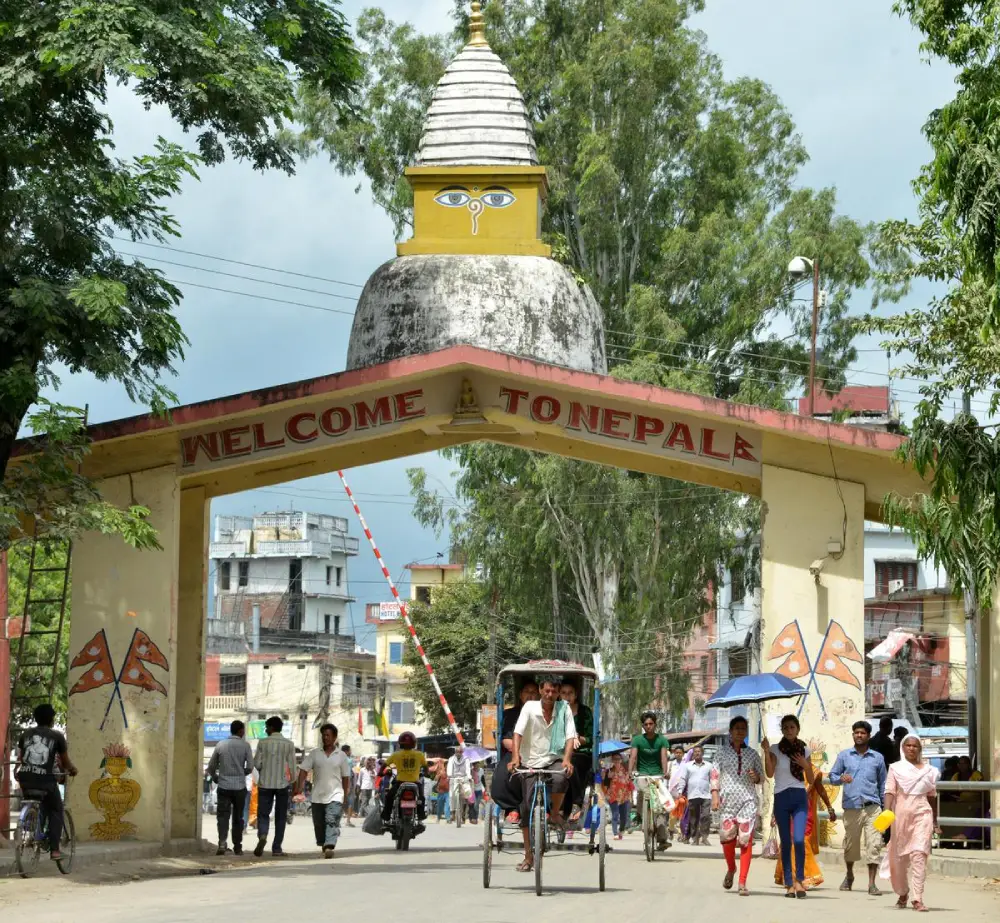
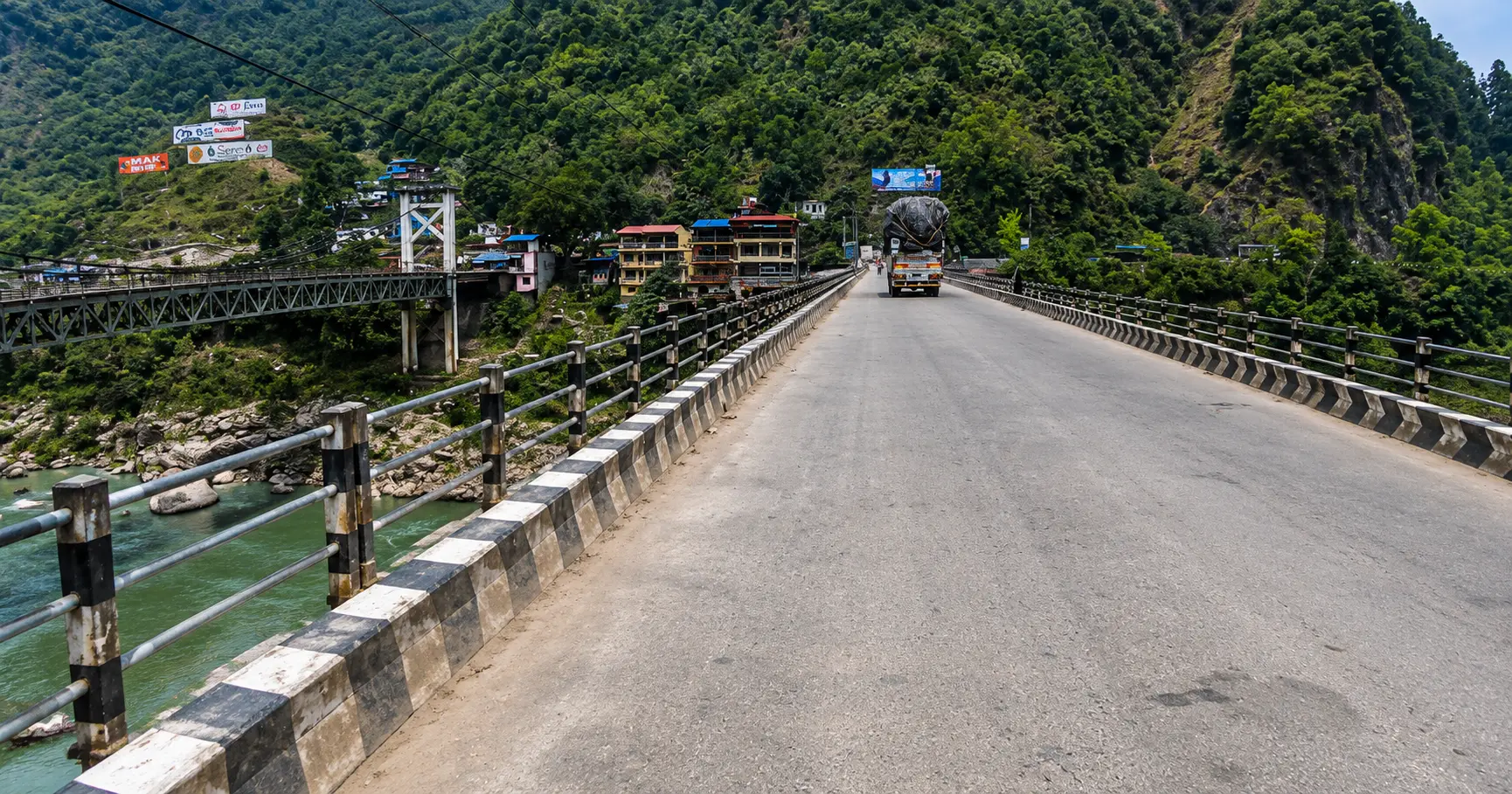

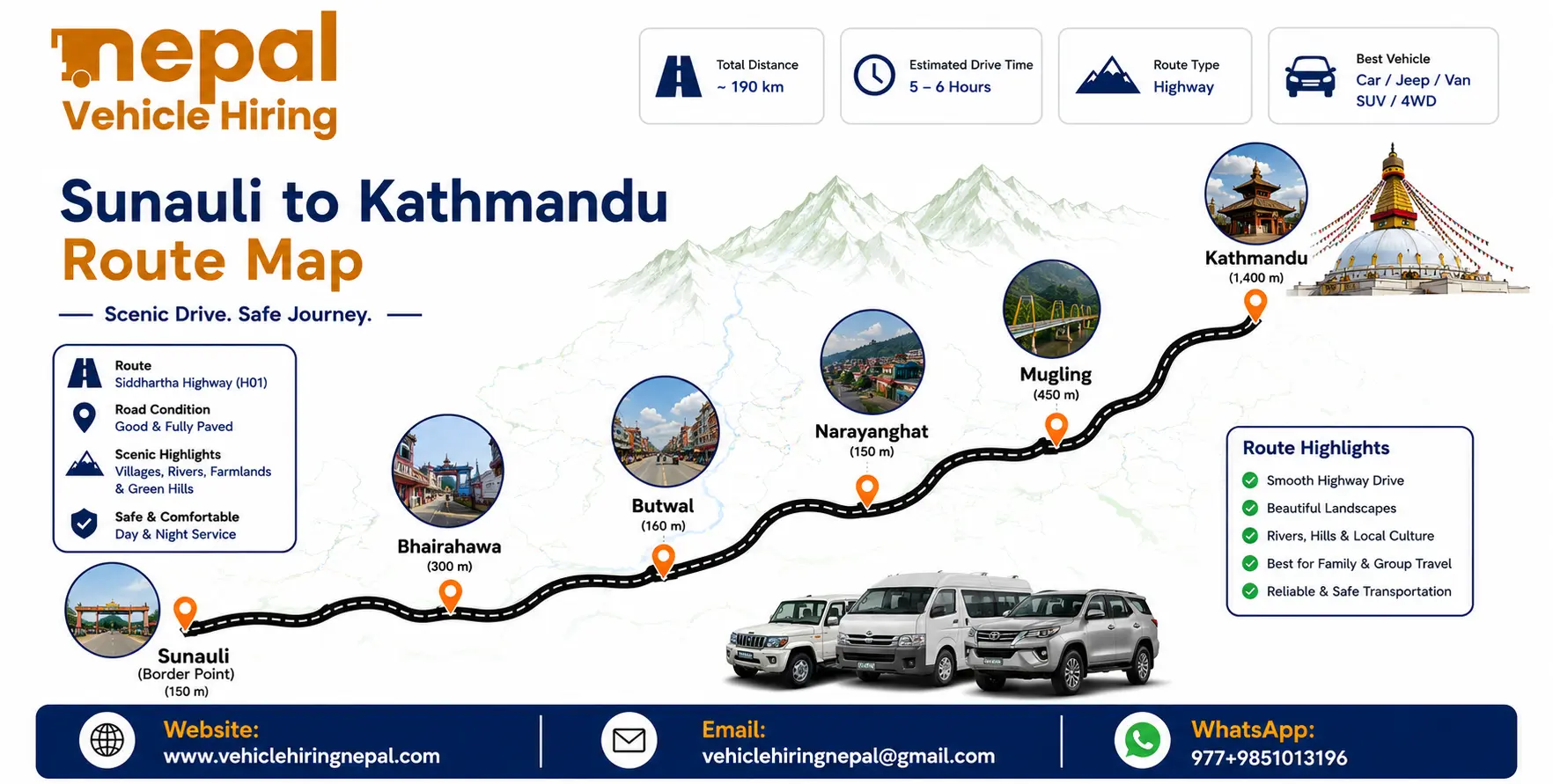
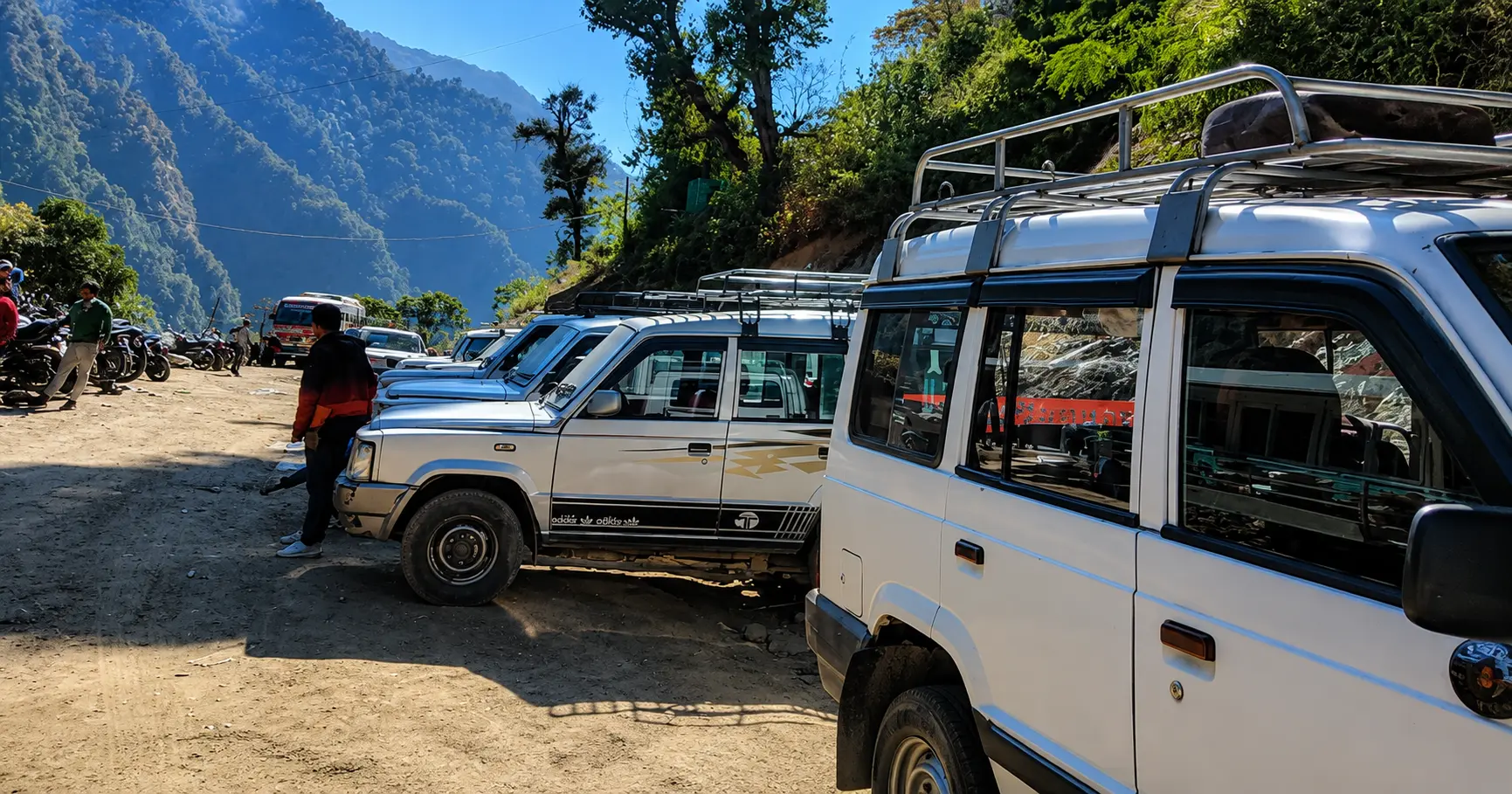
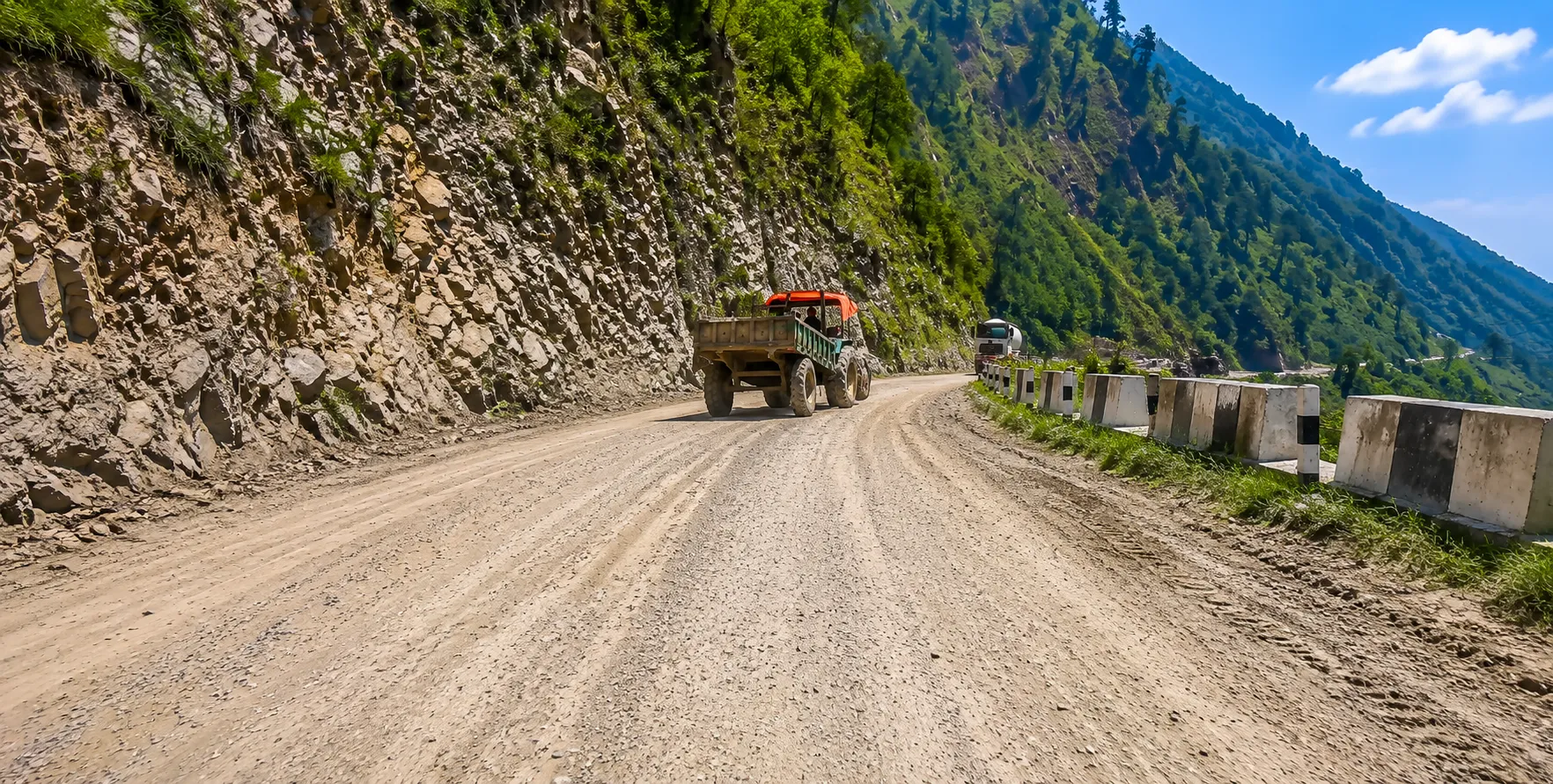
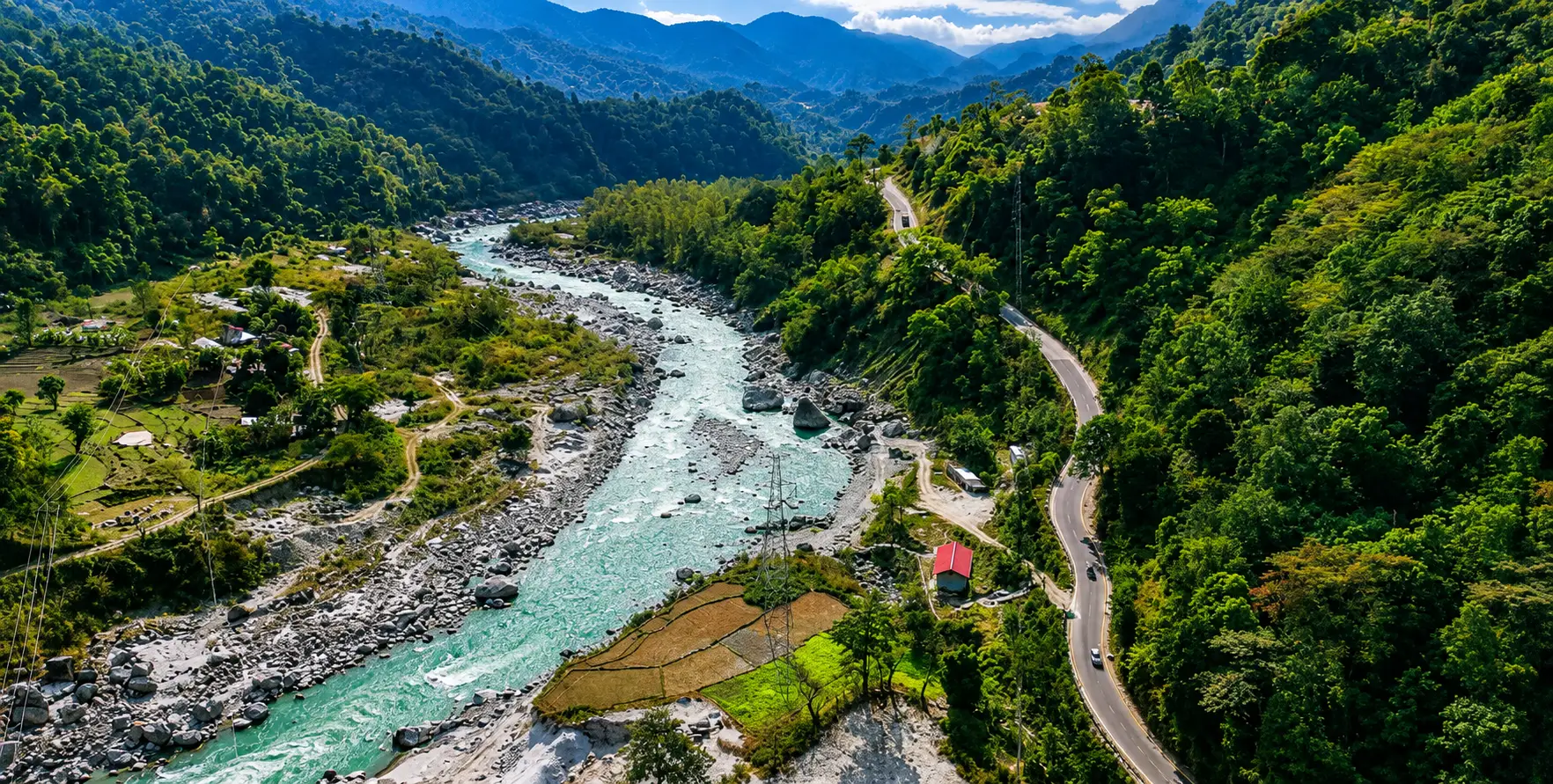
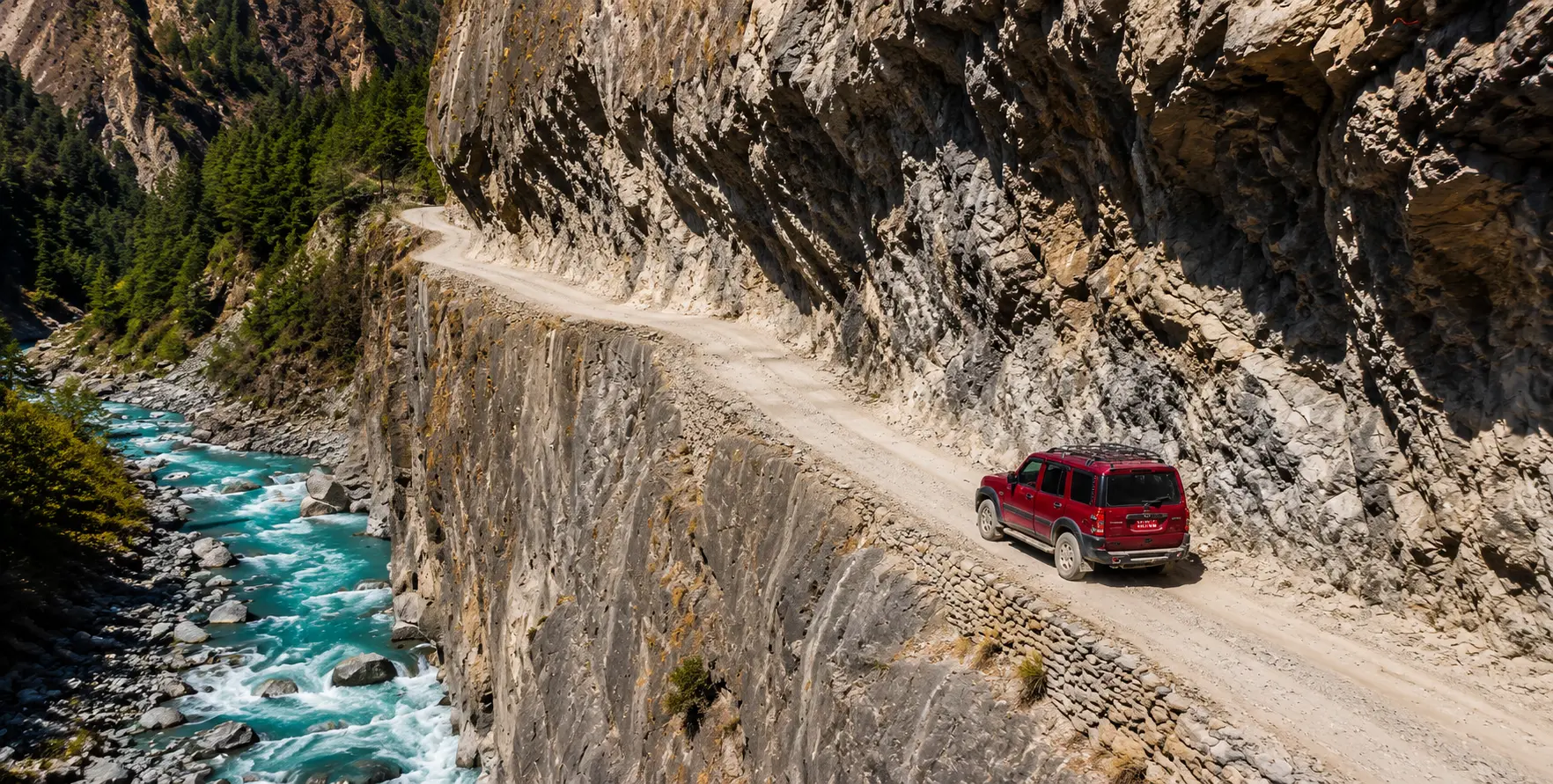 Why Annapurna Circuit Road Conditions 2026 Are More Relevant Than Ever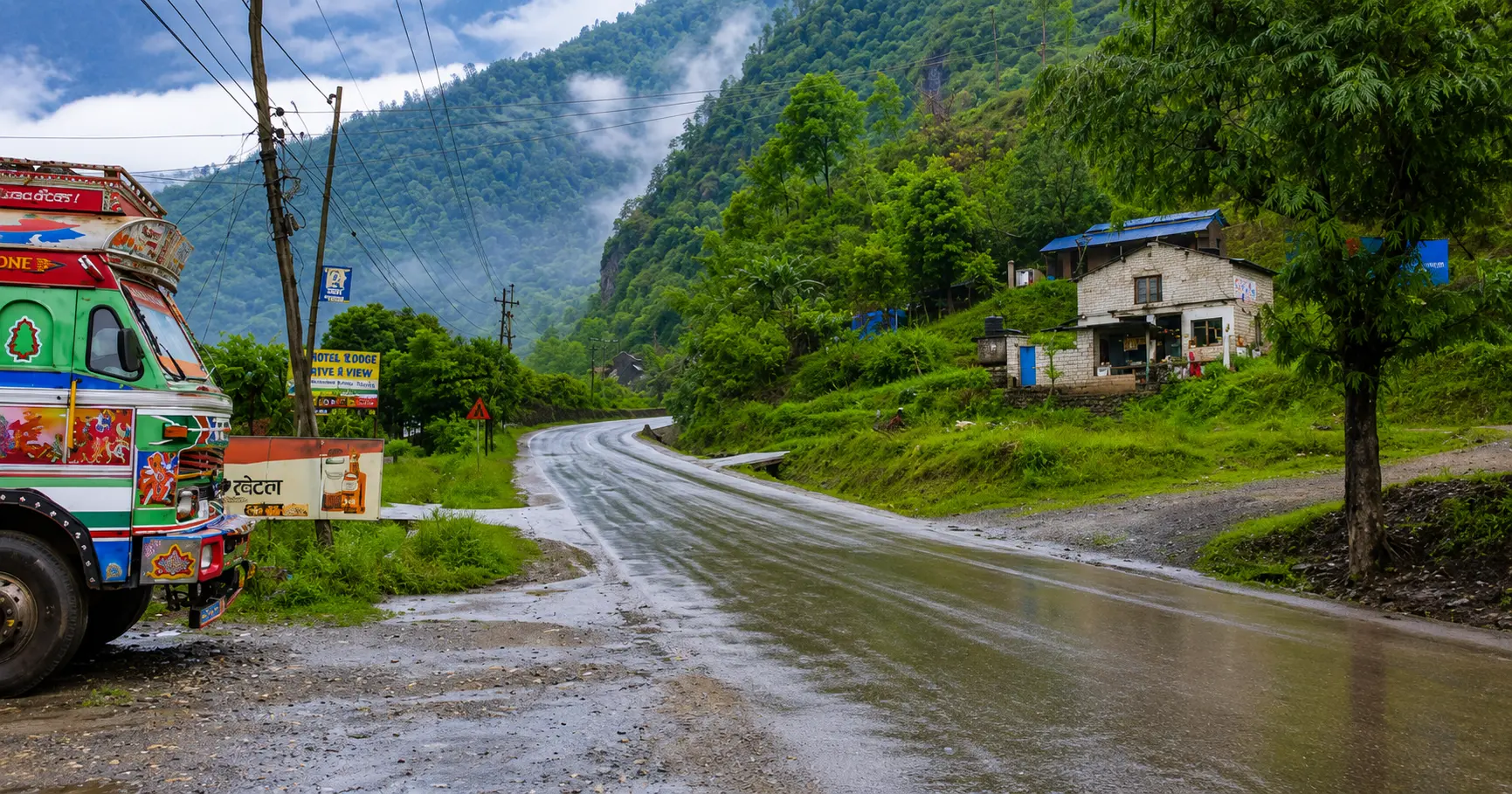
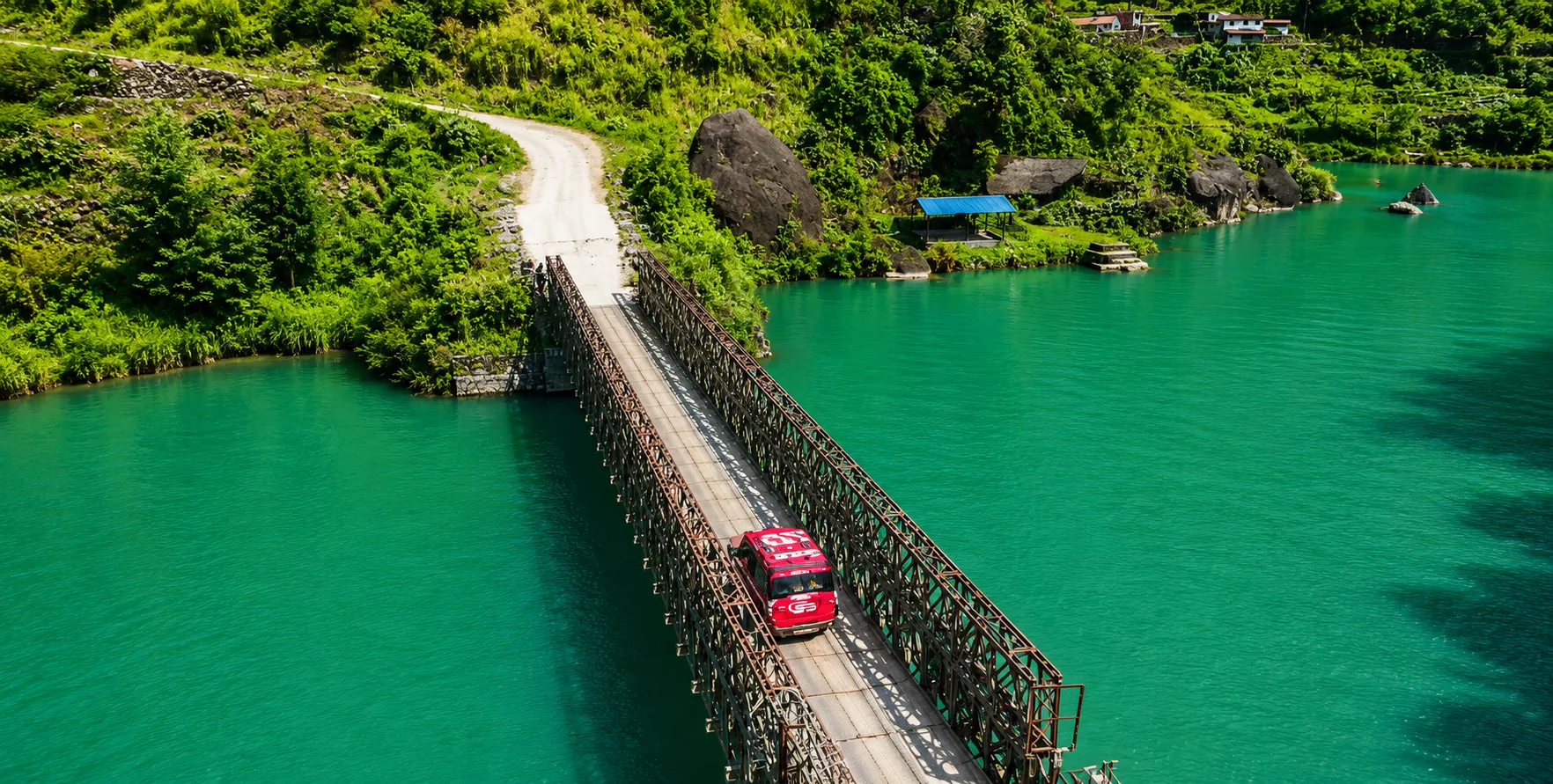
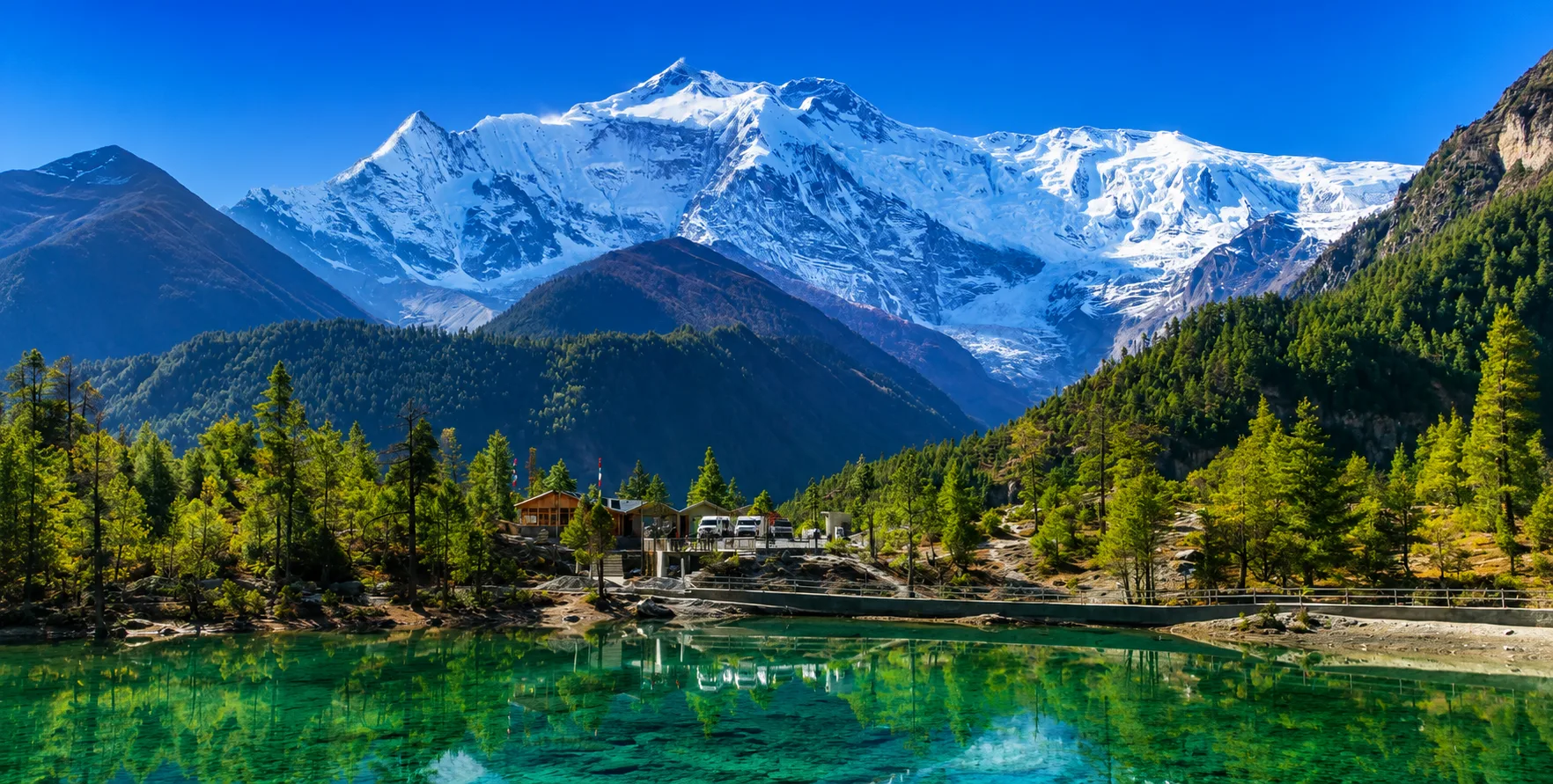
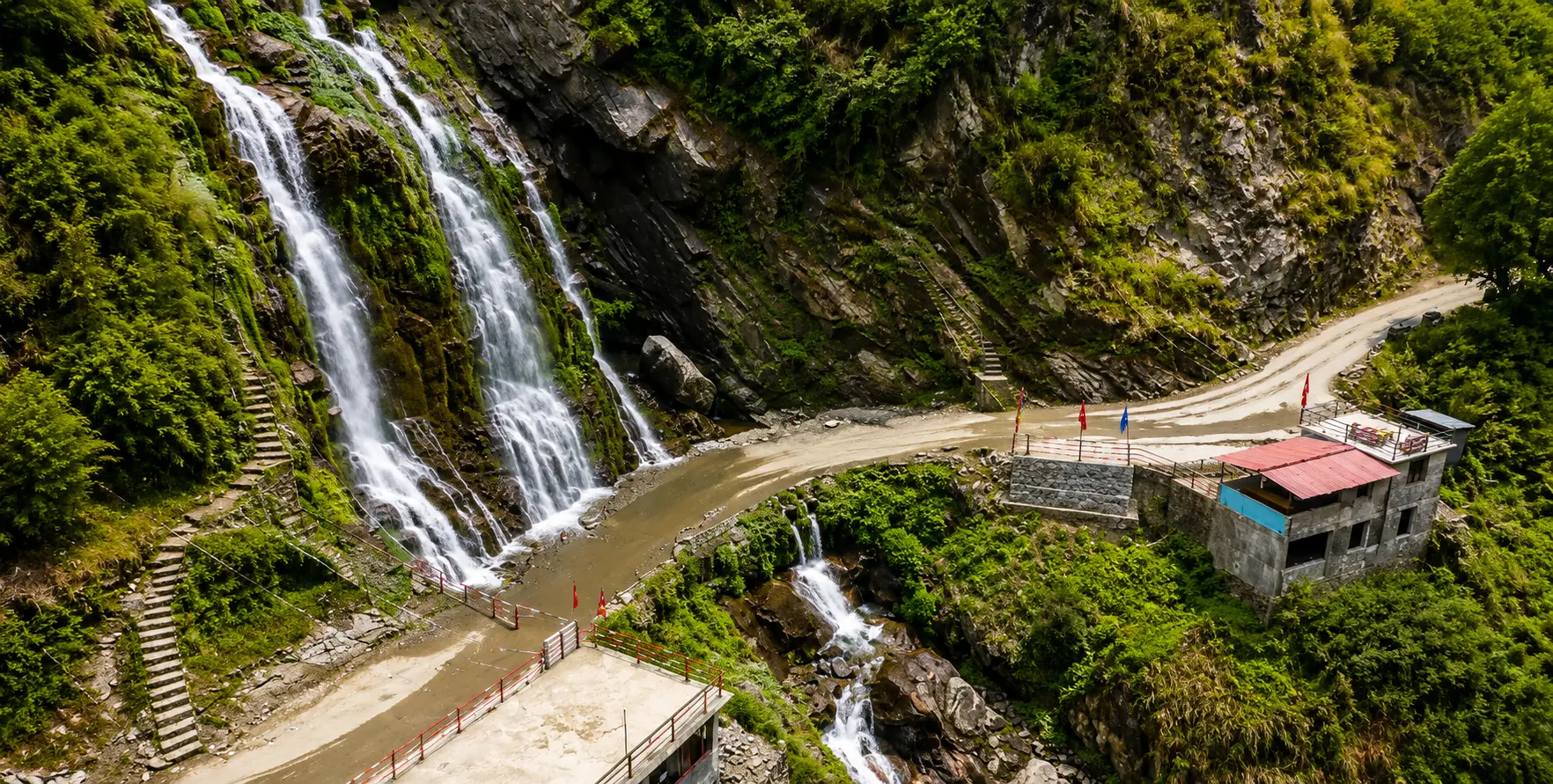
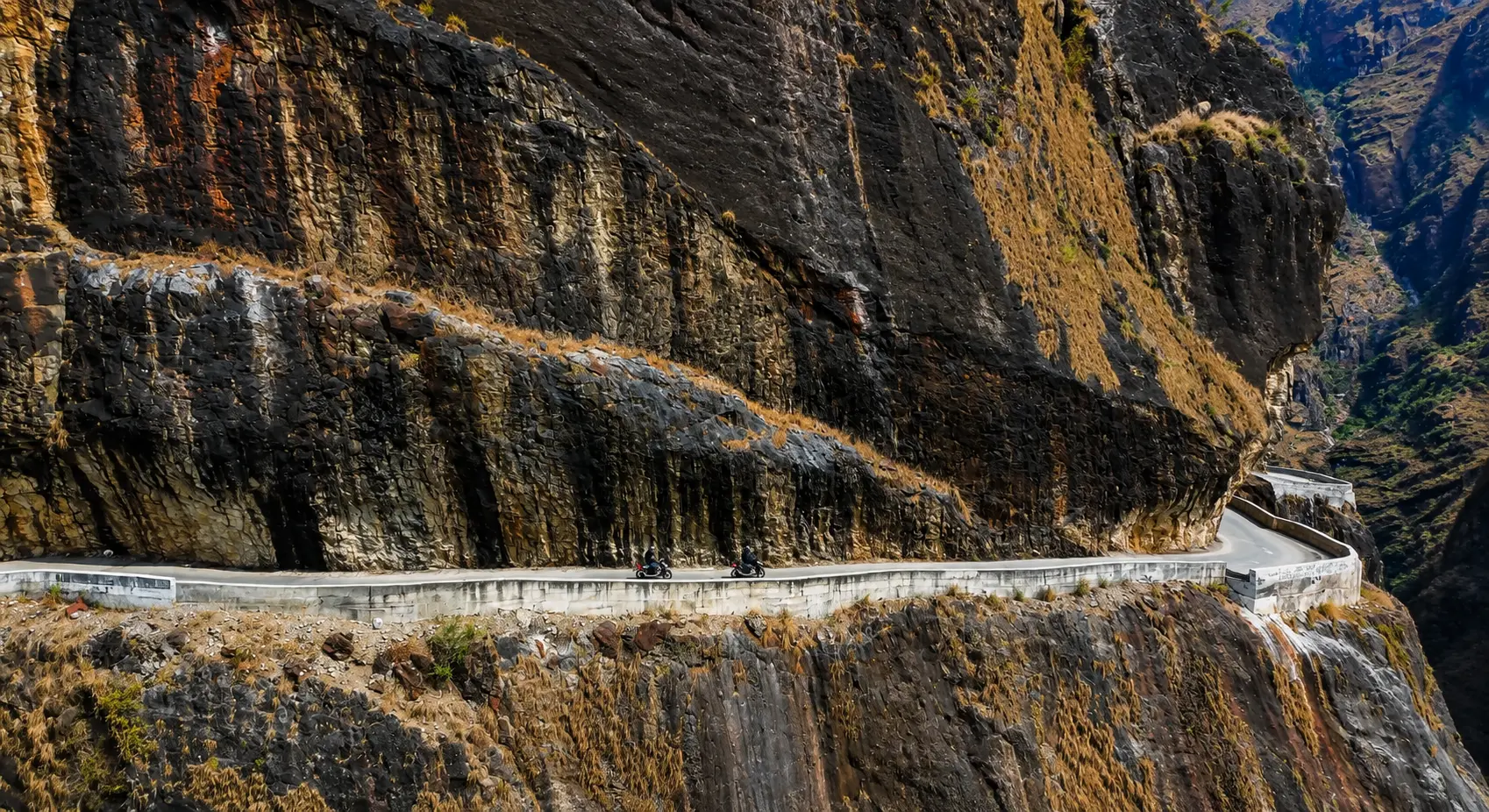
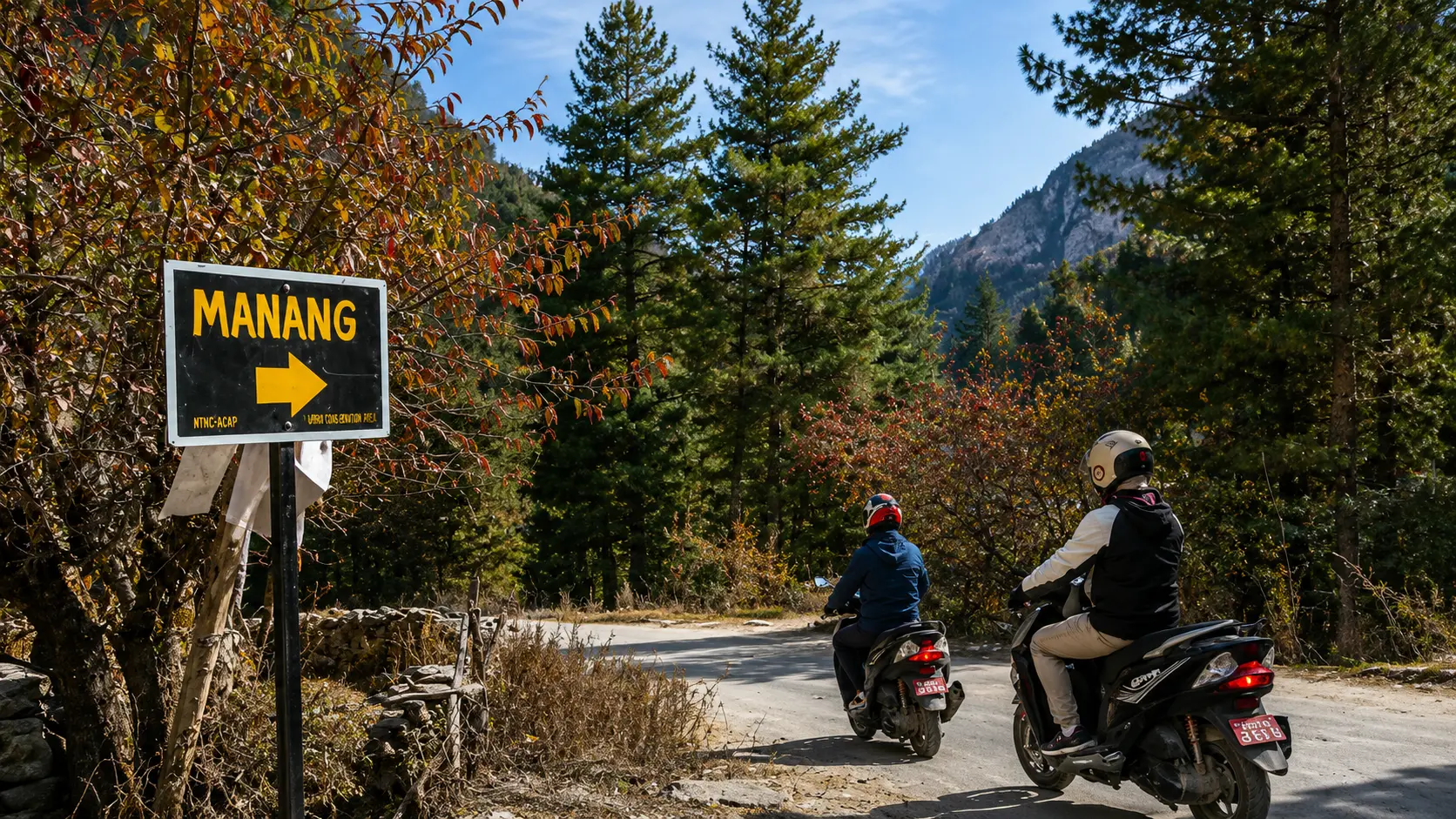
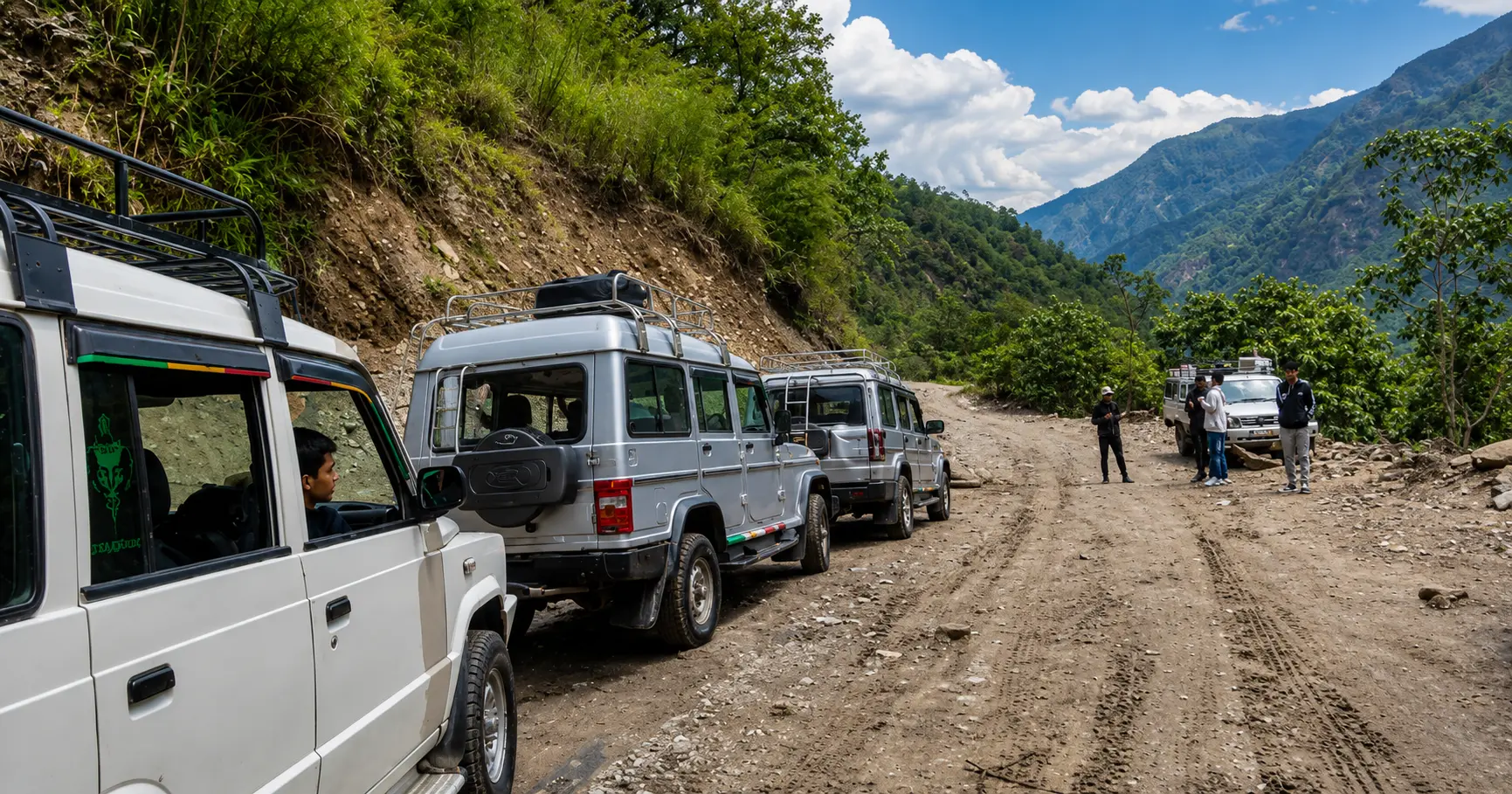
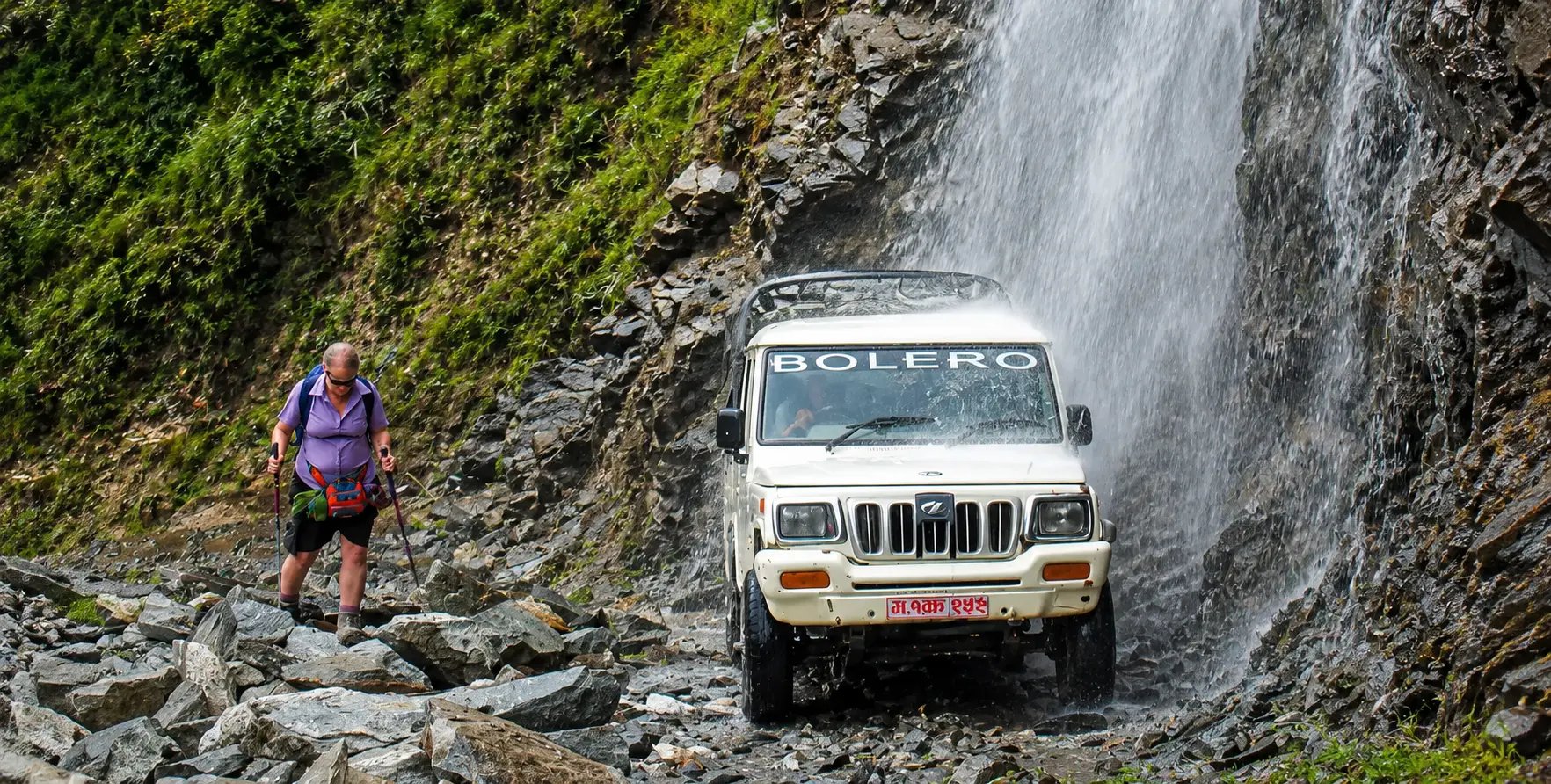
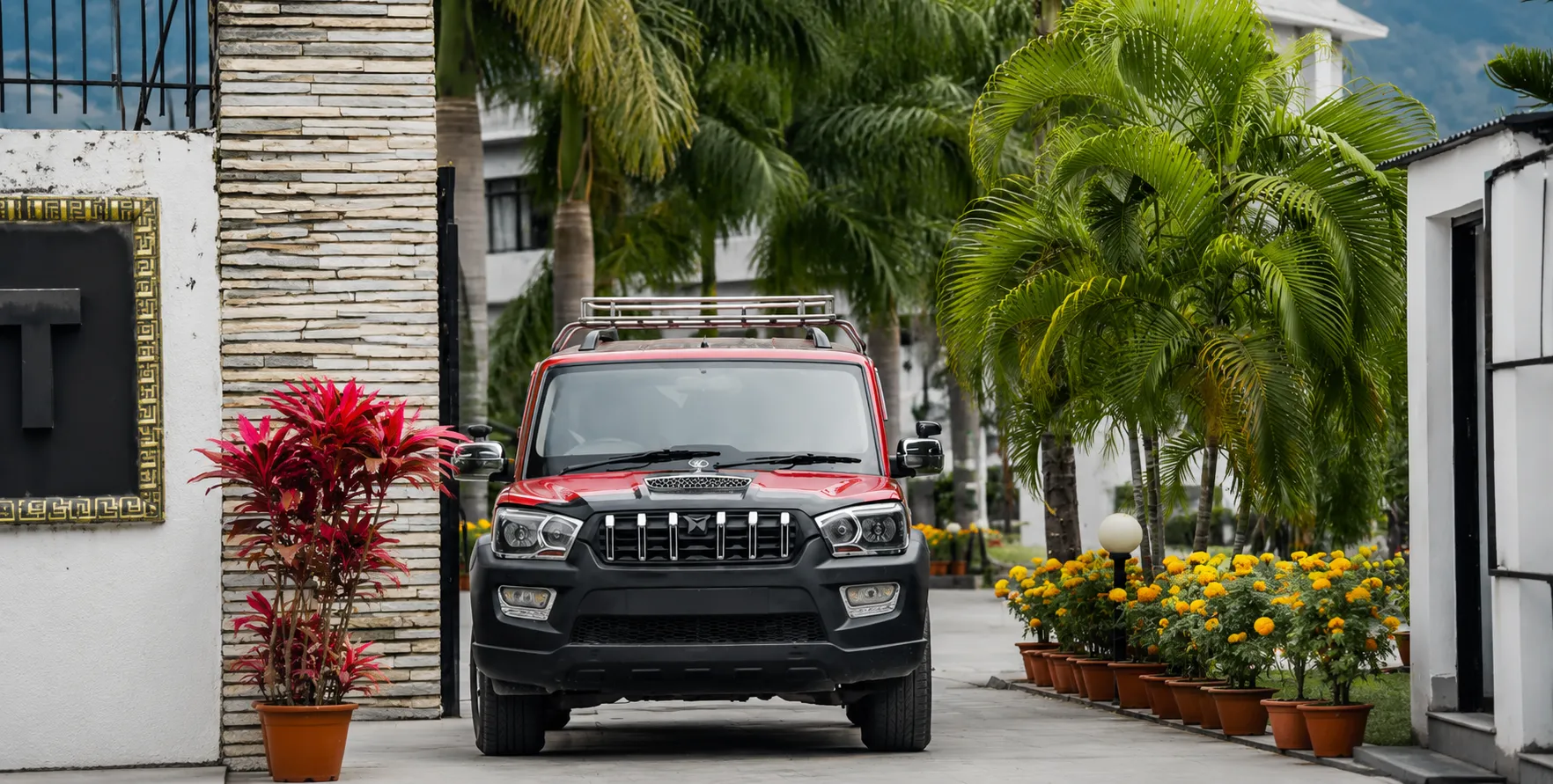
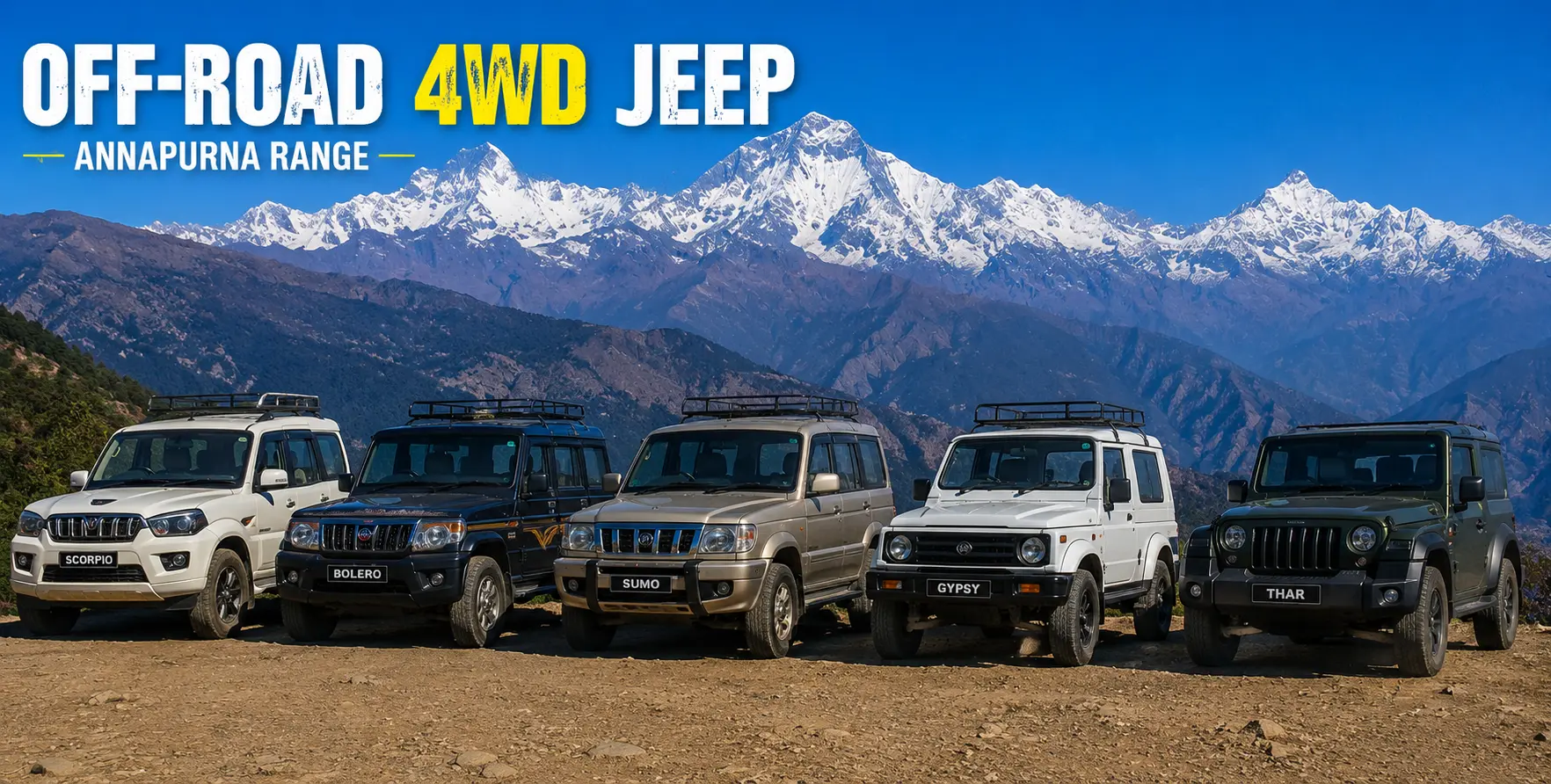
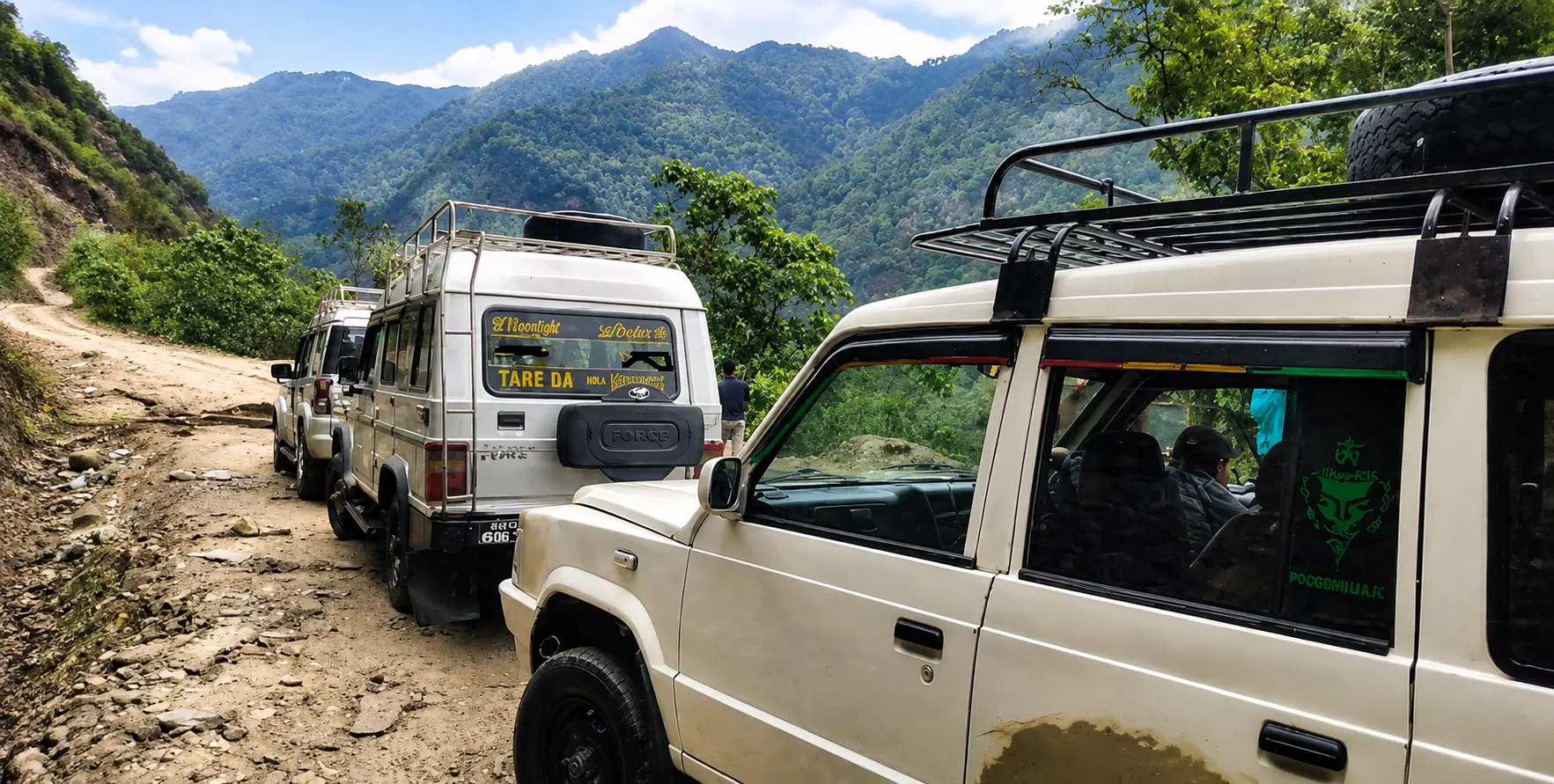

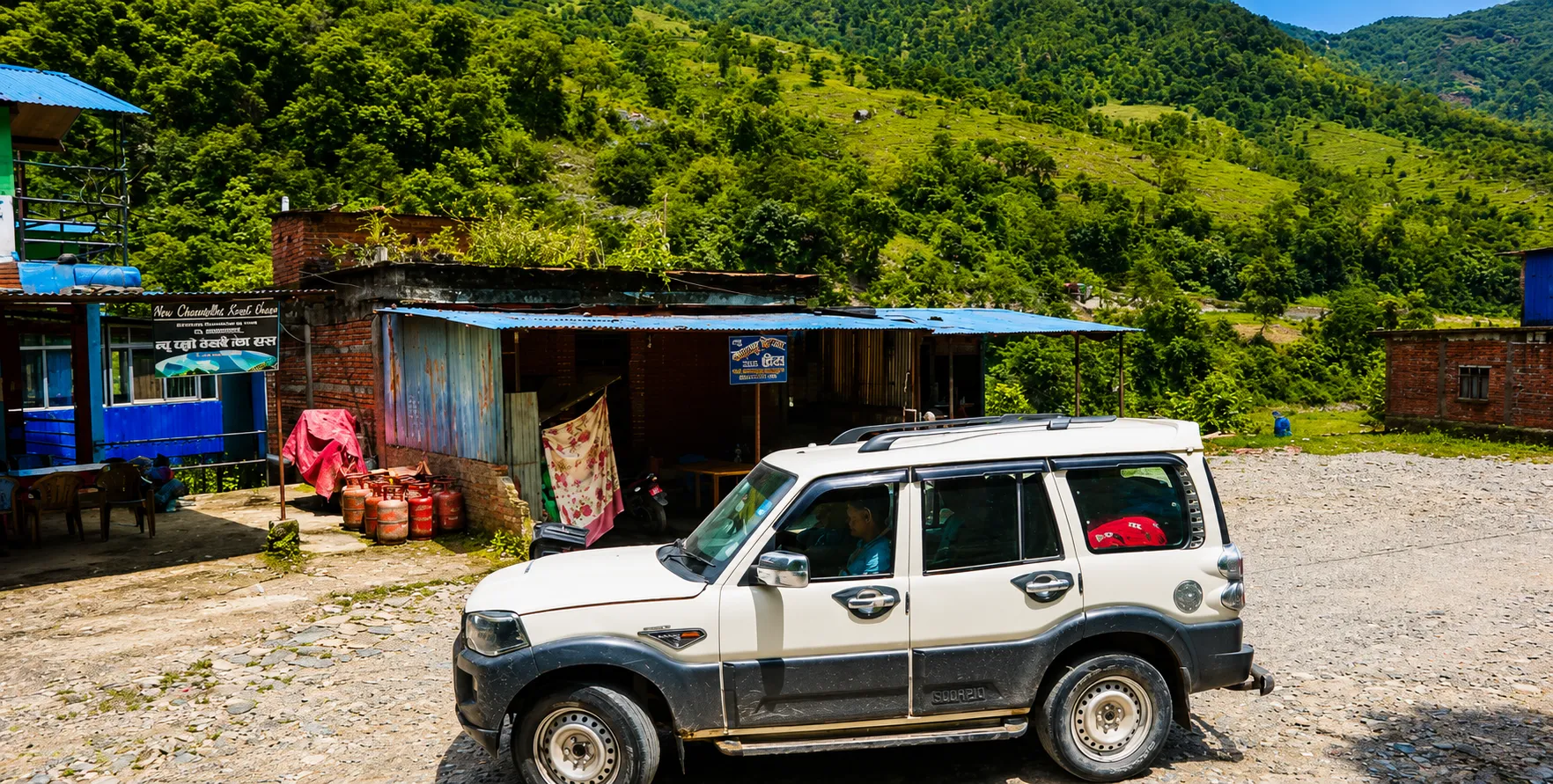
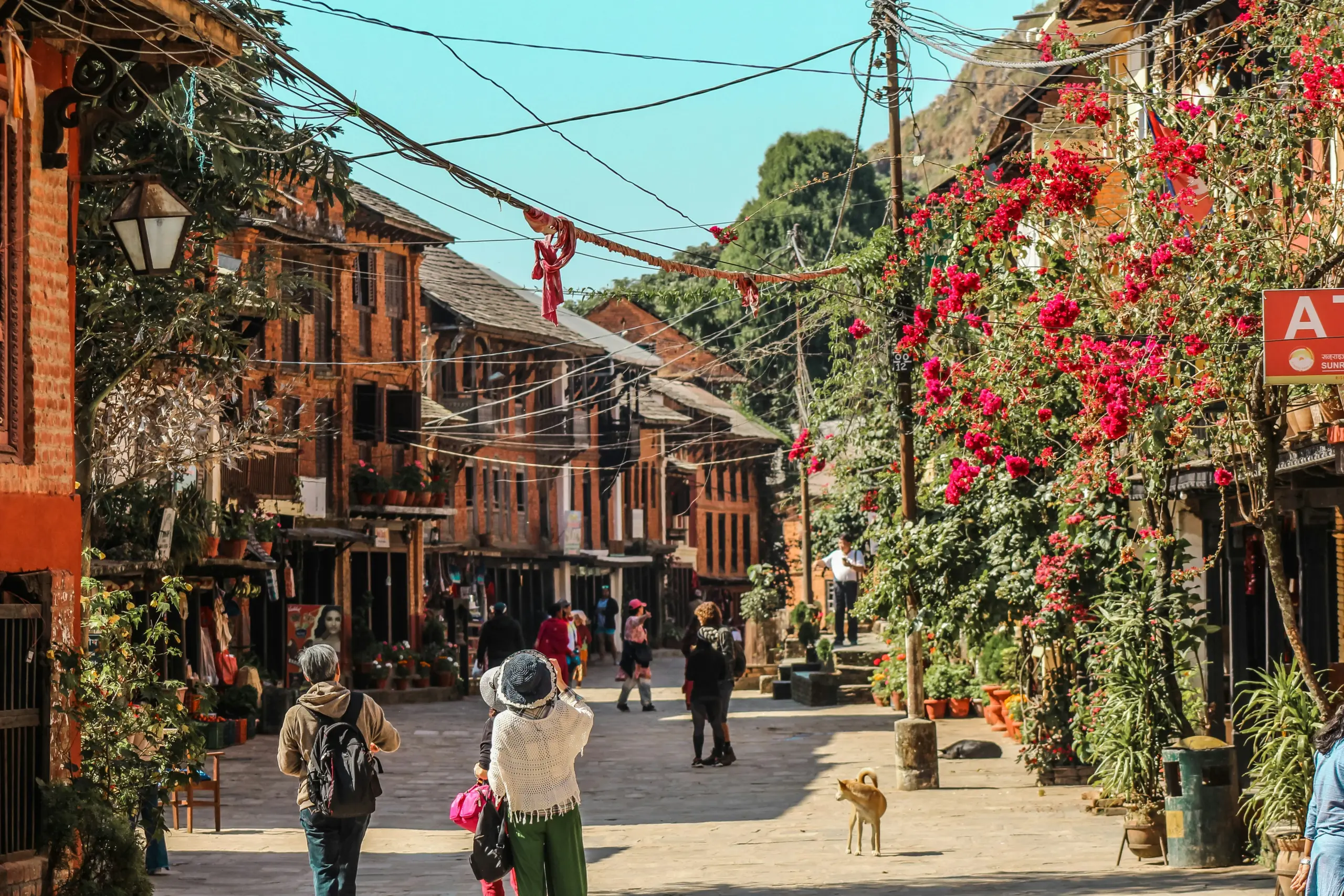
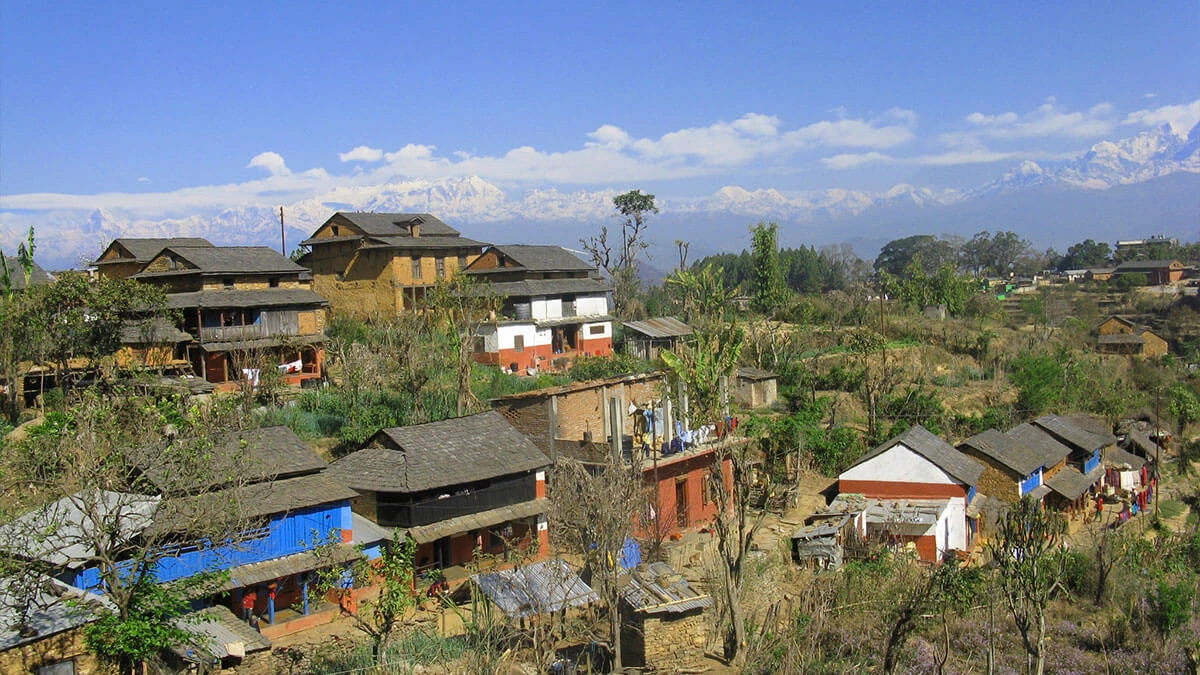
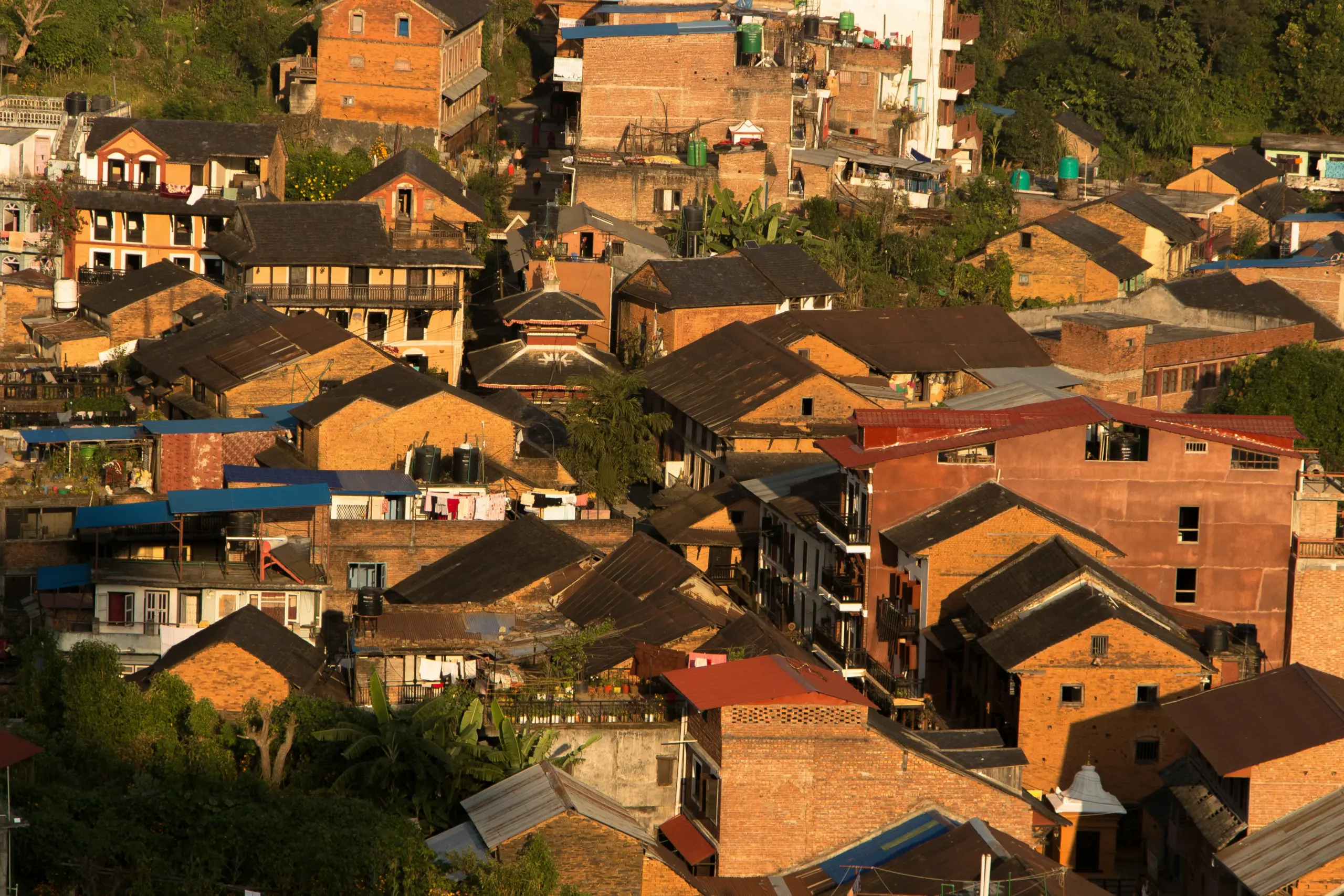
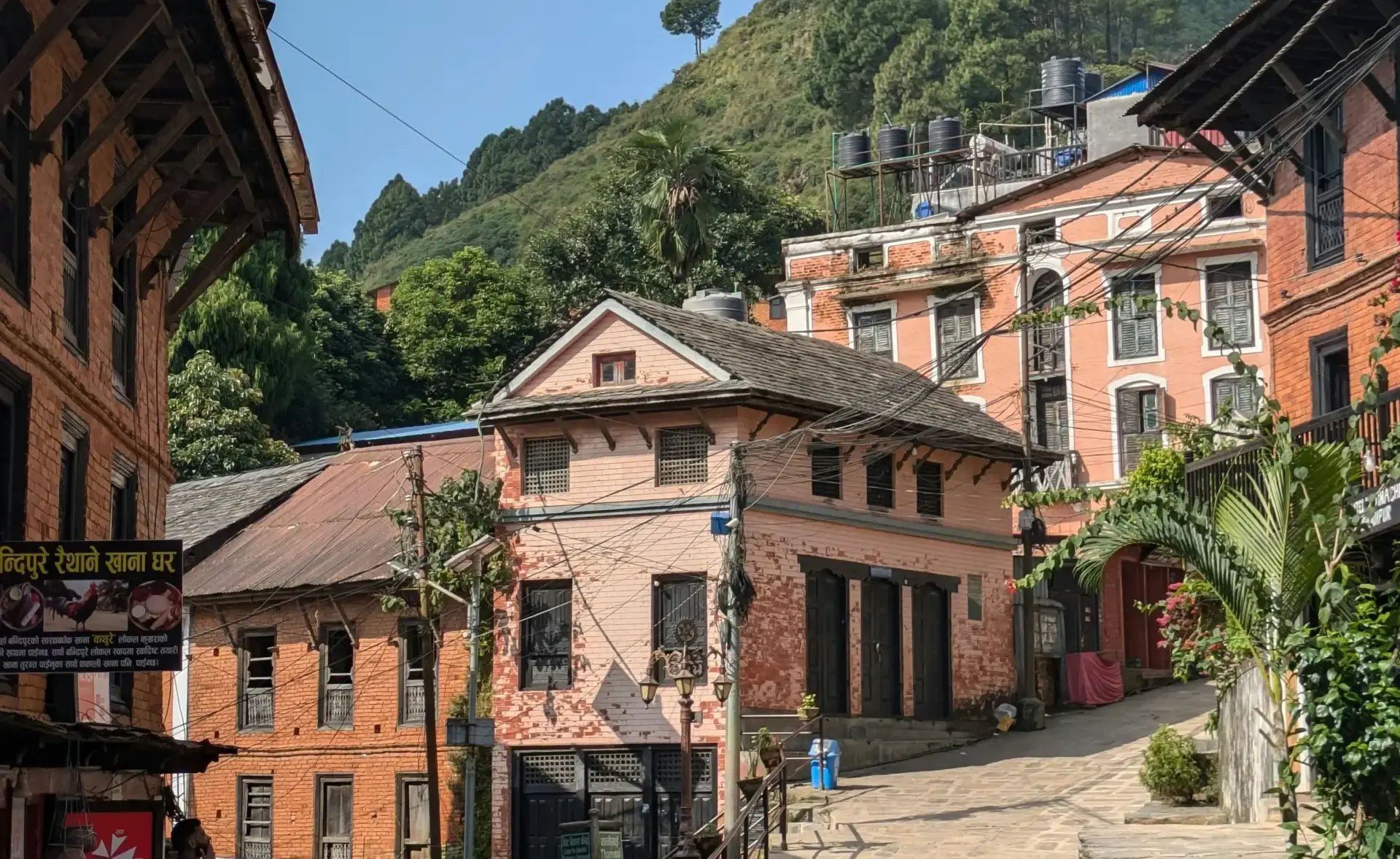
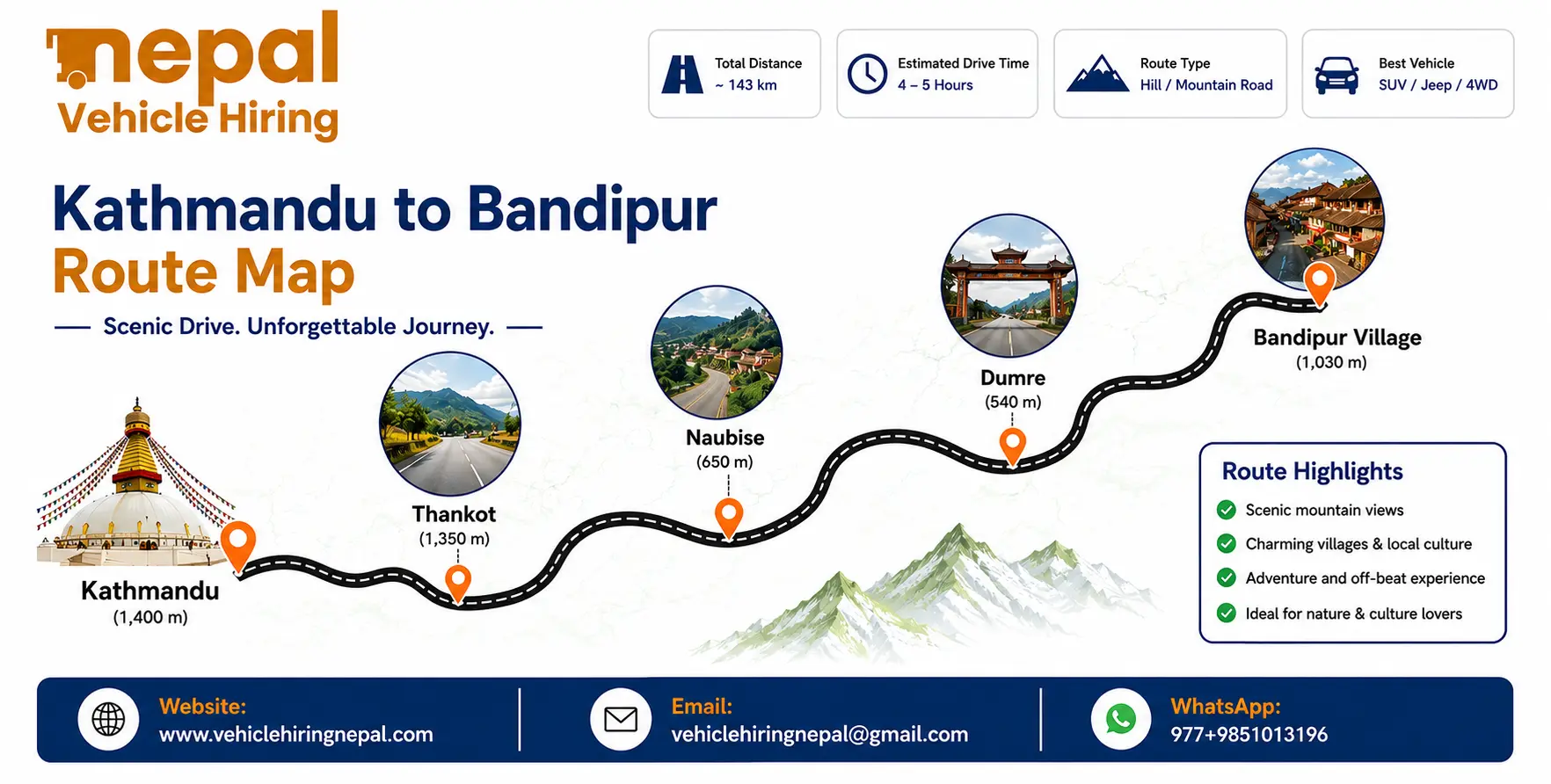
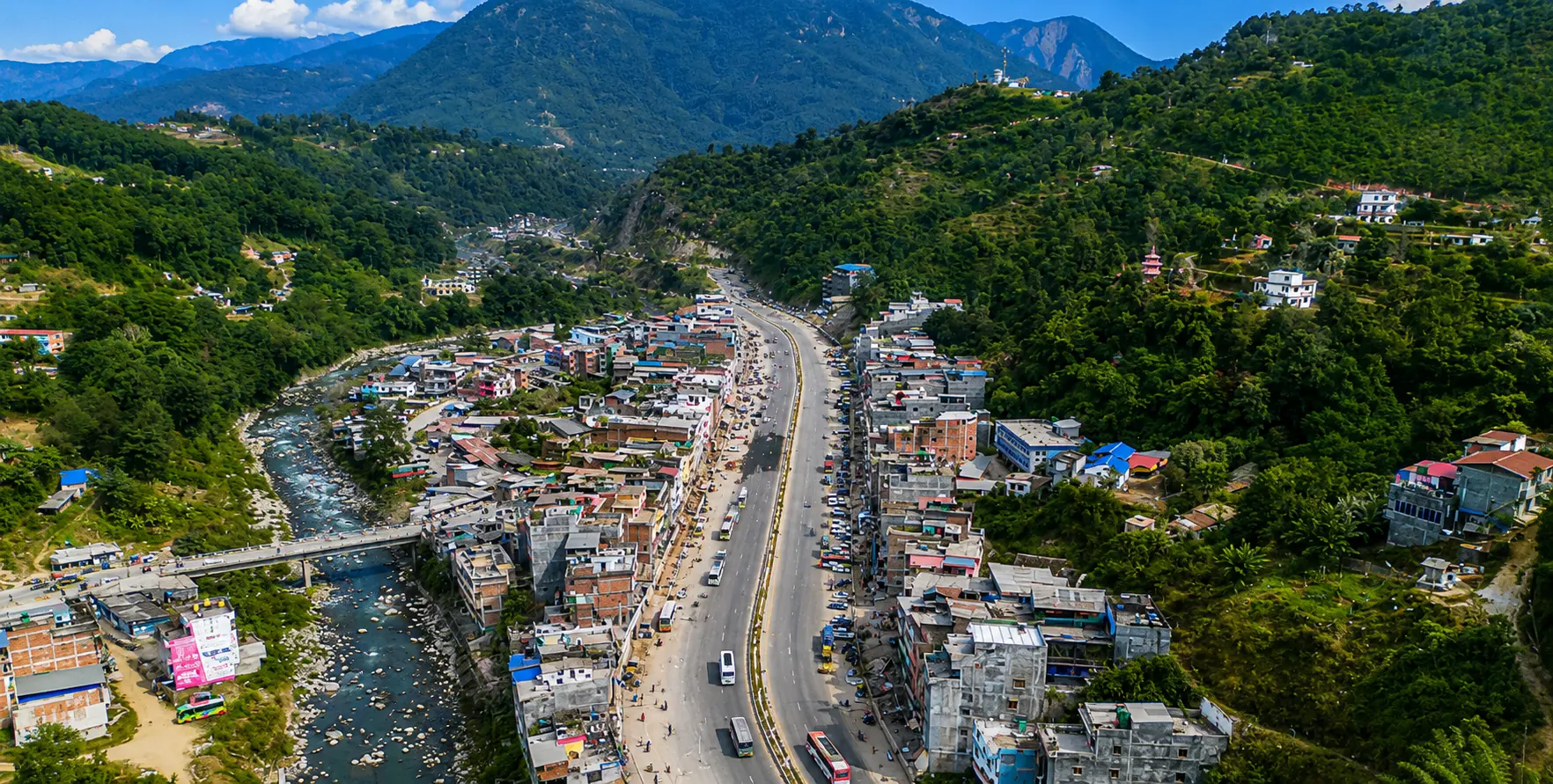
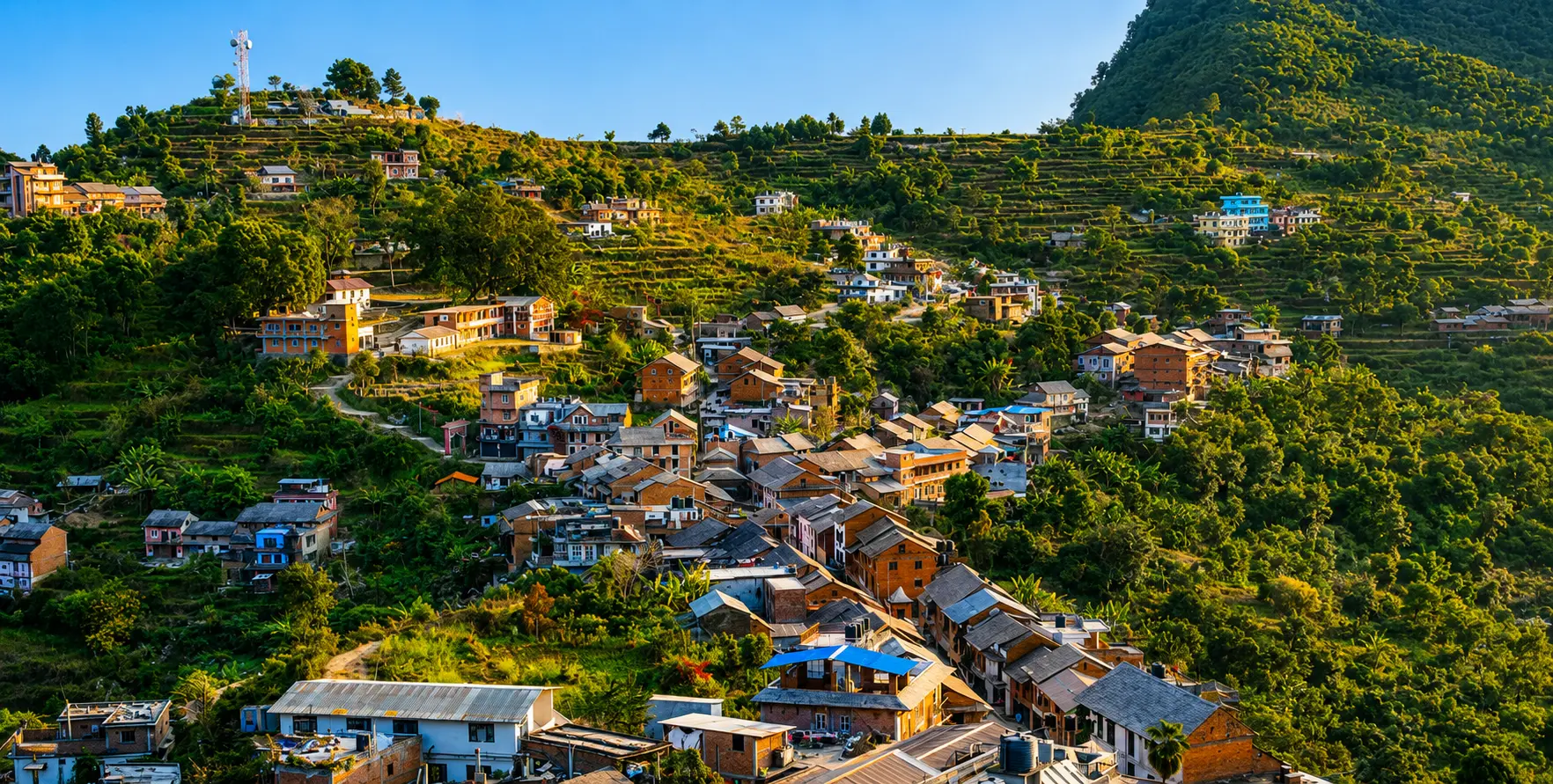
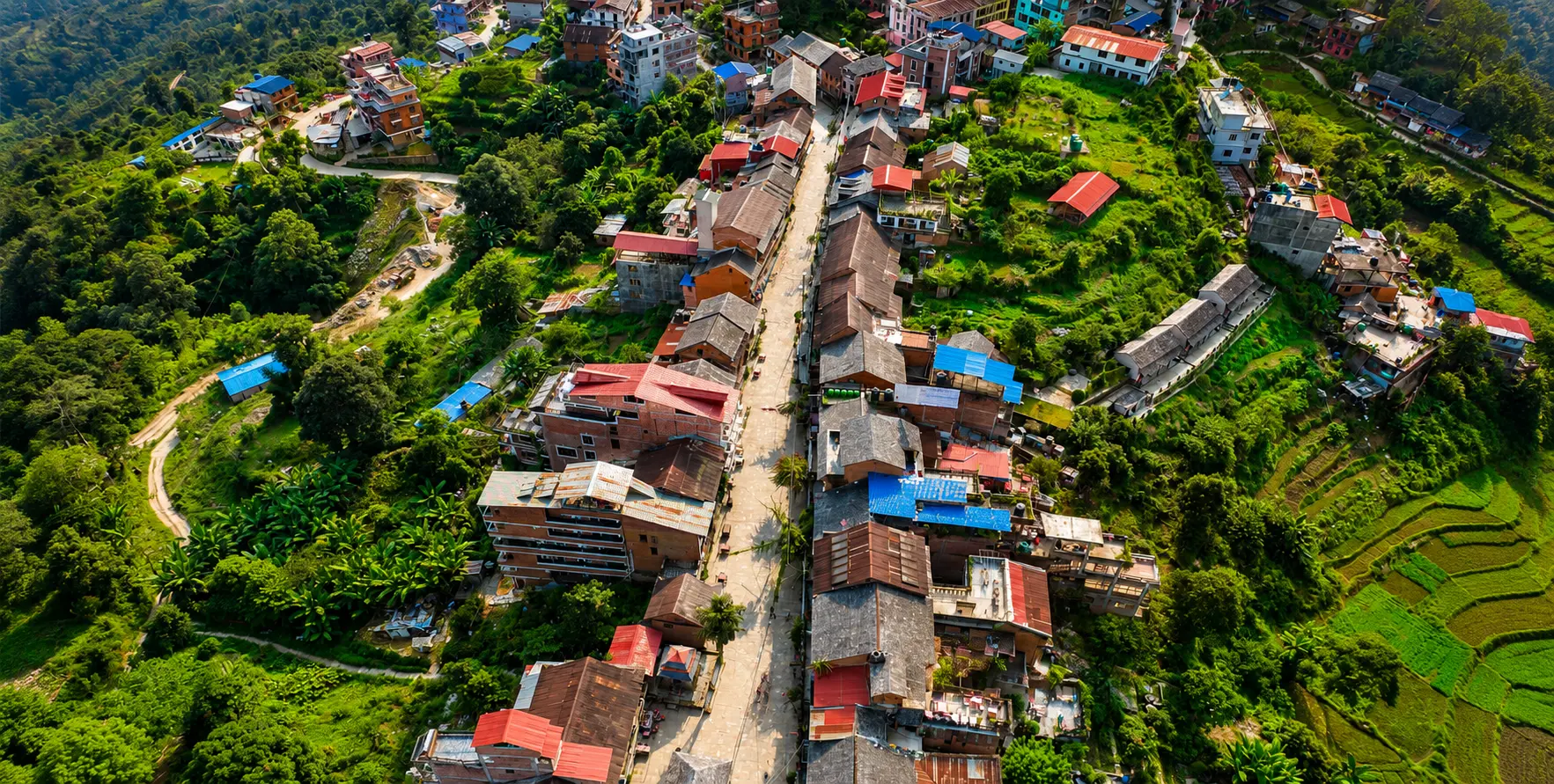
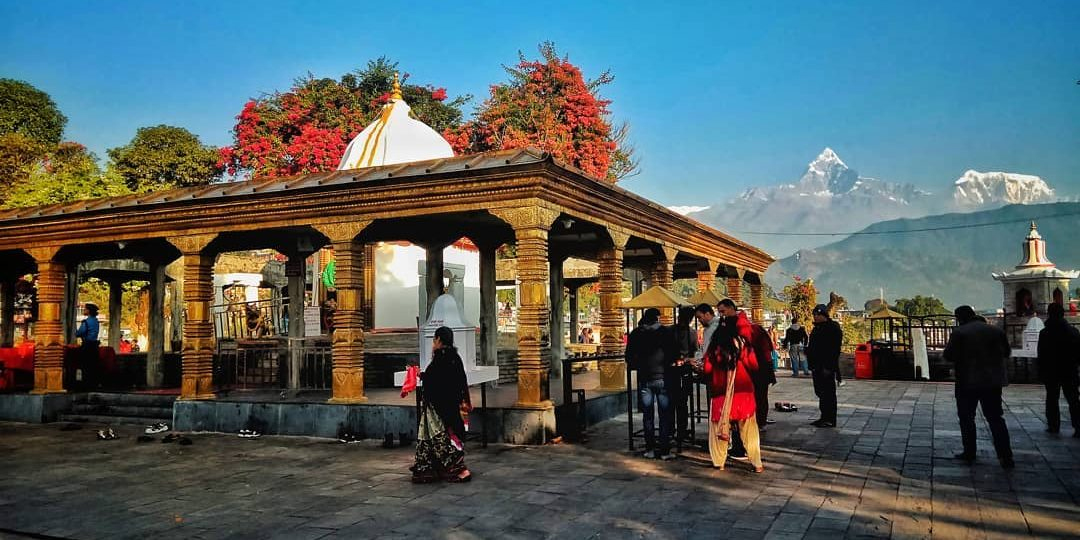
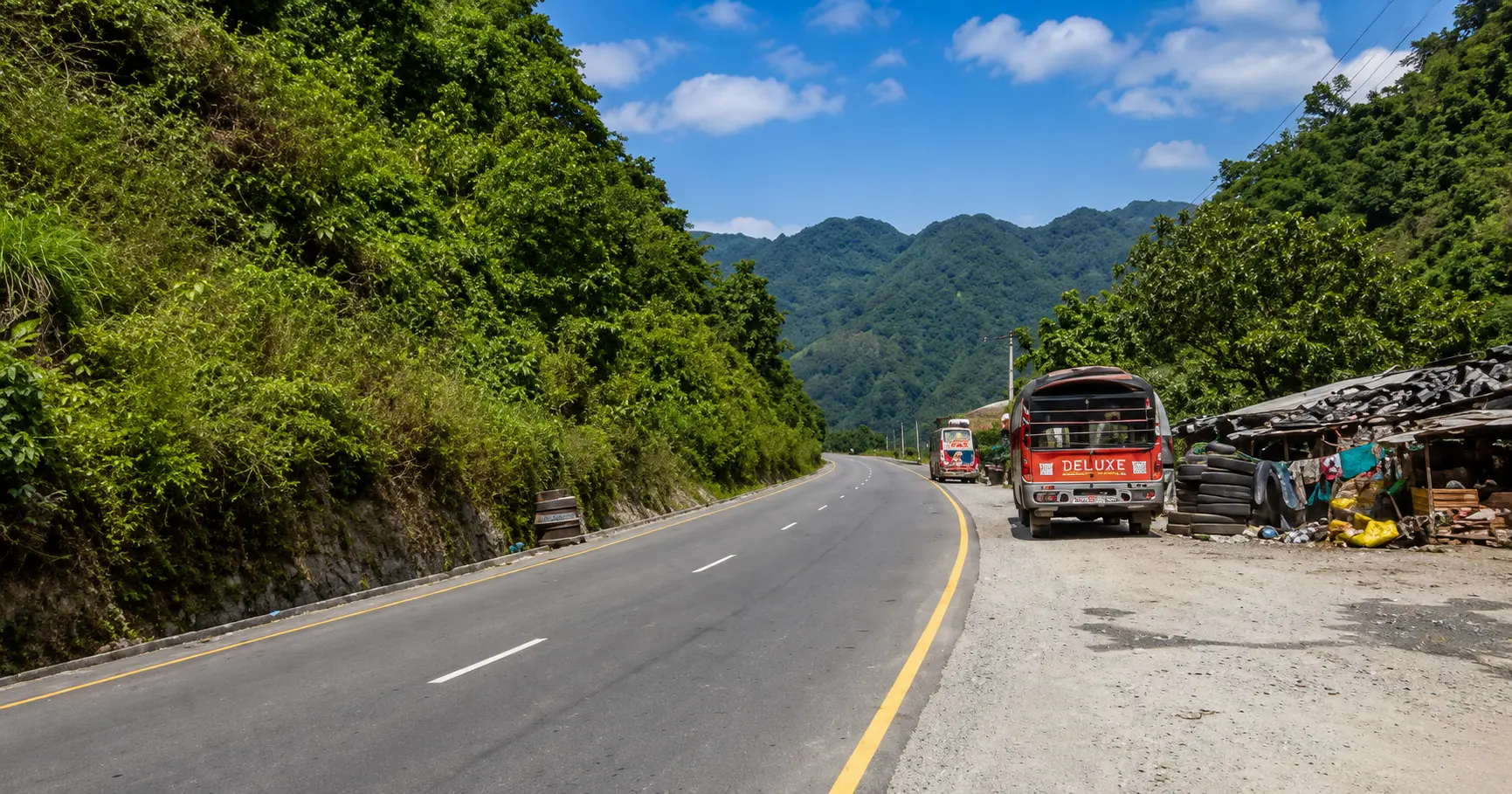
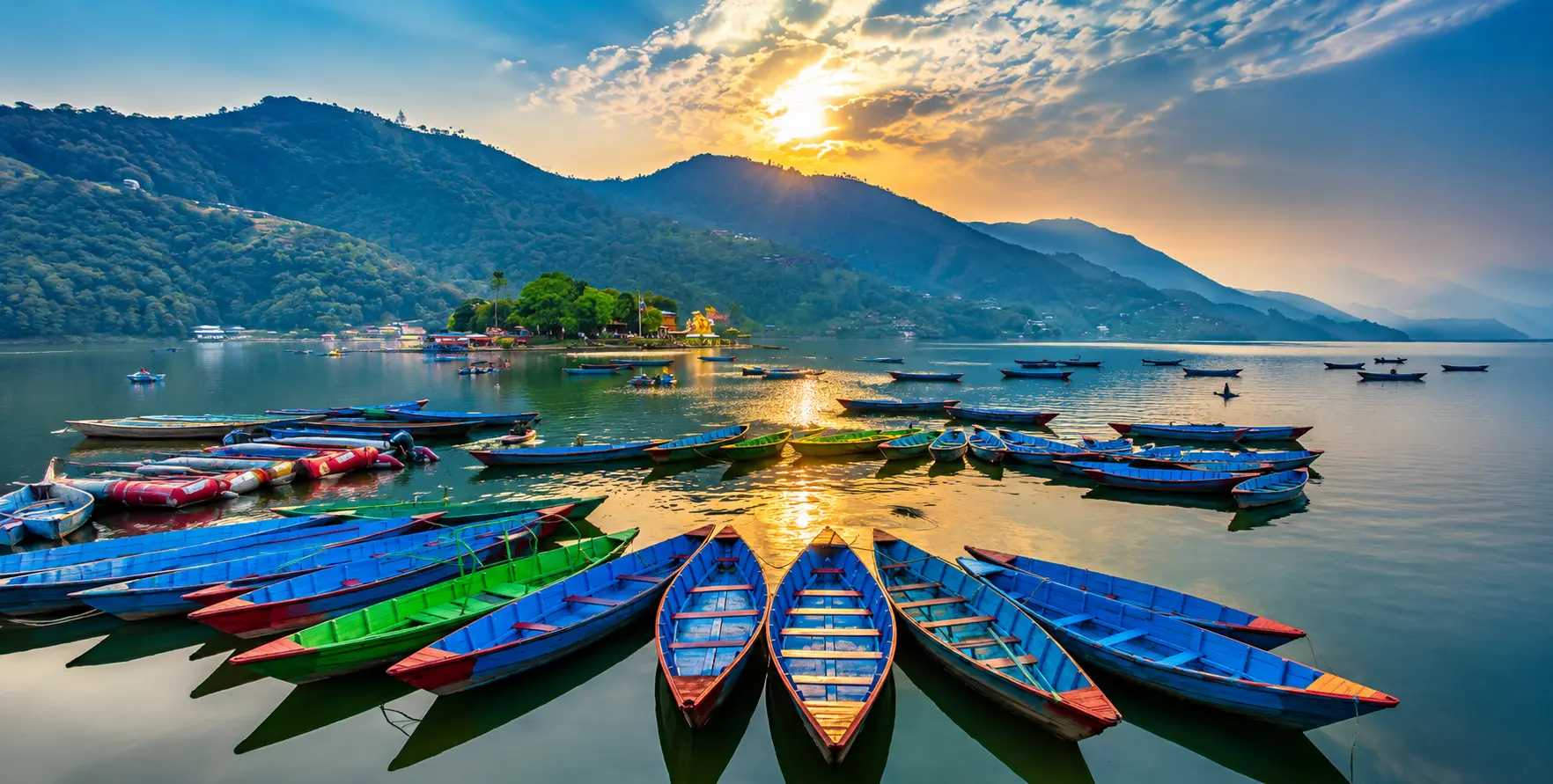
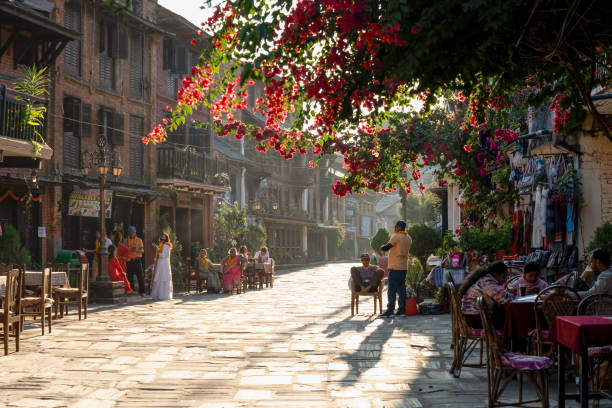
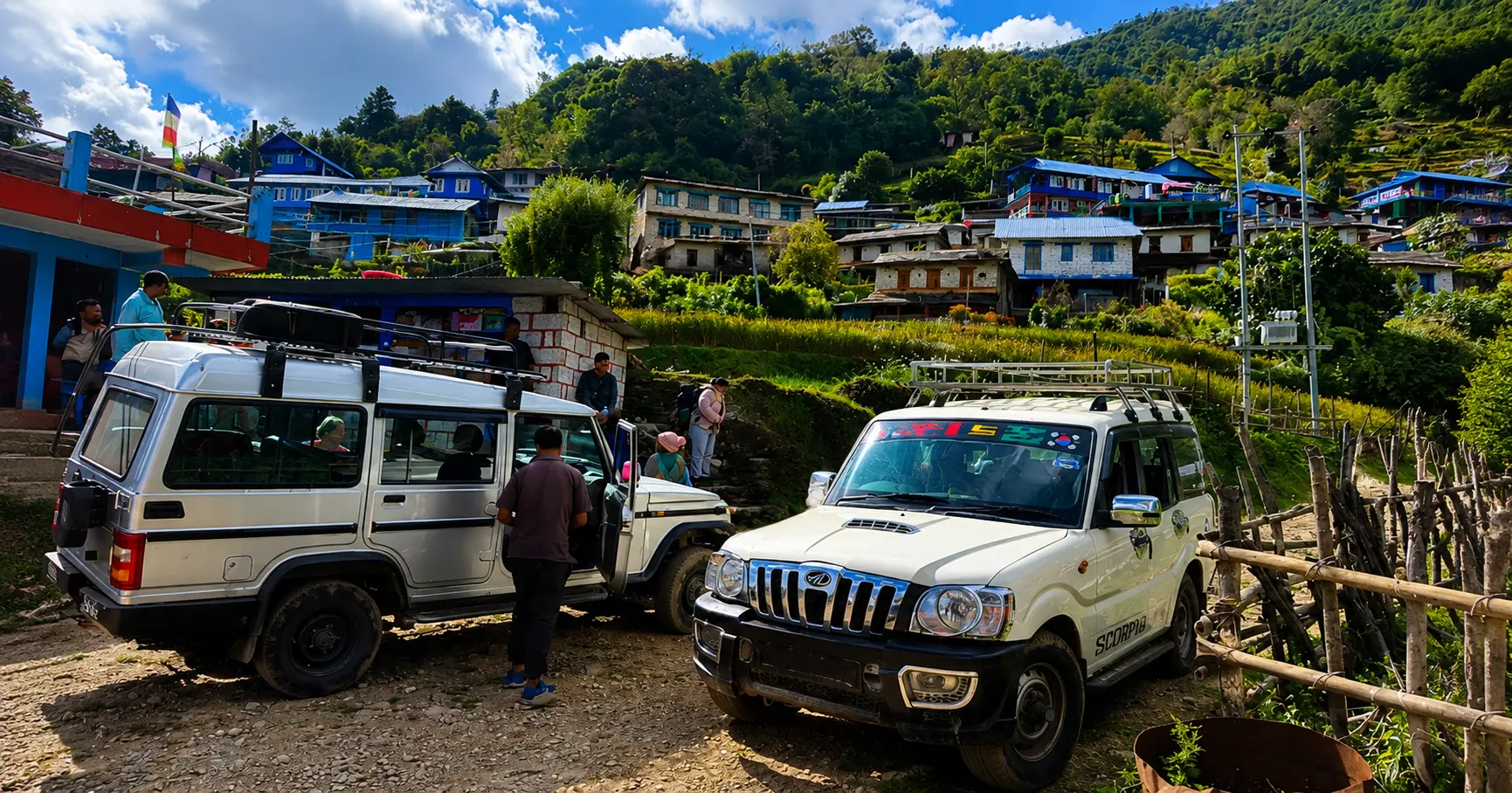
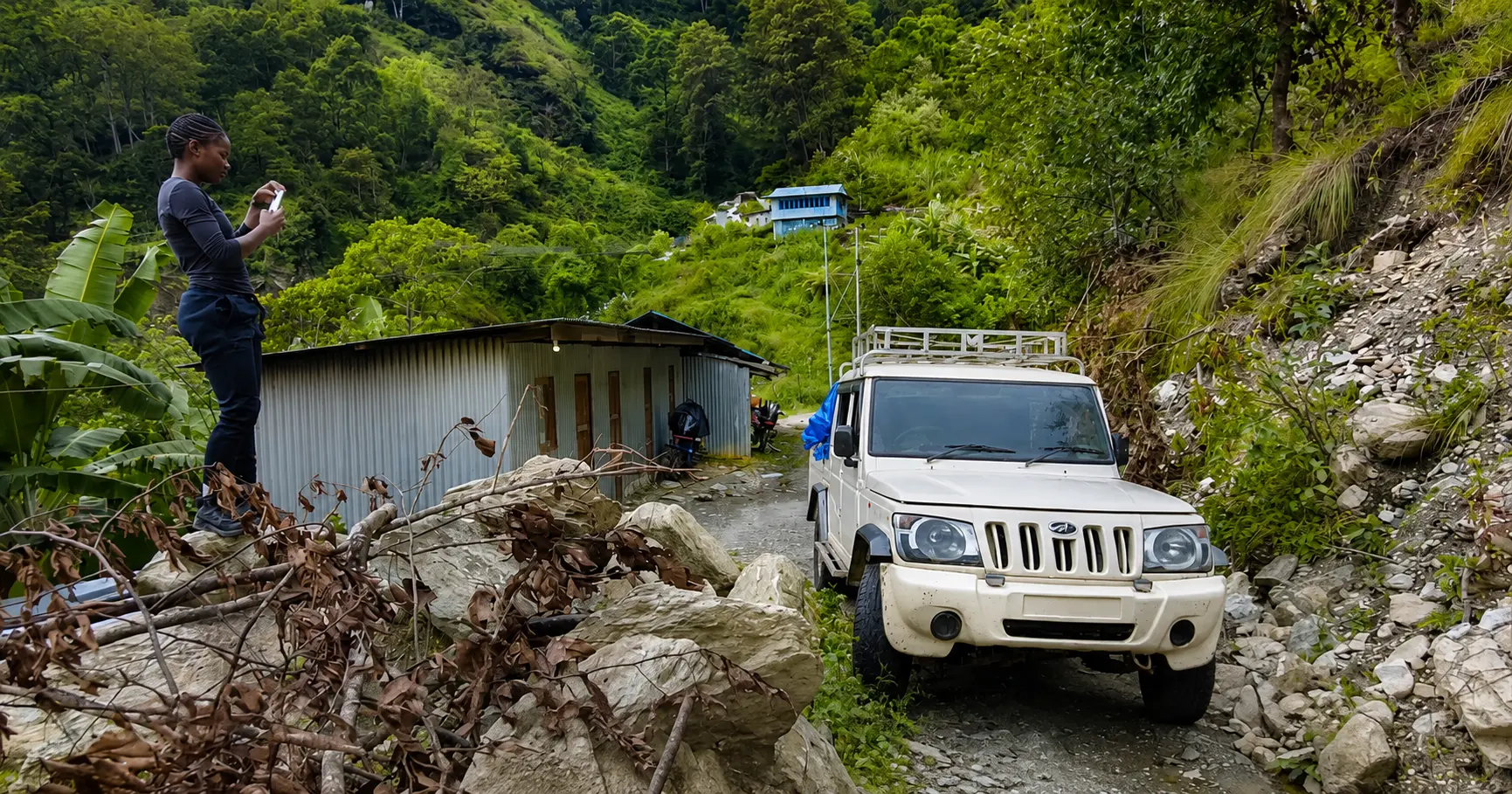
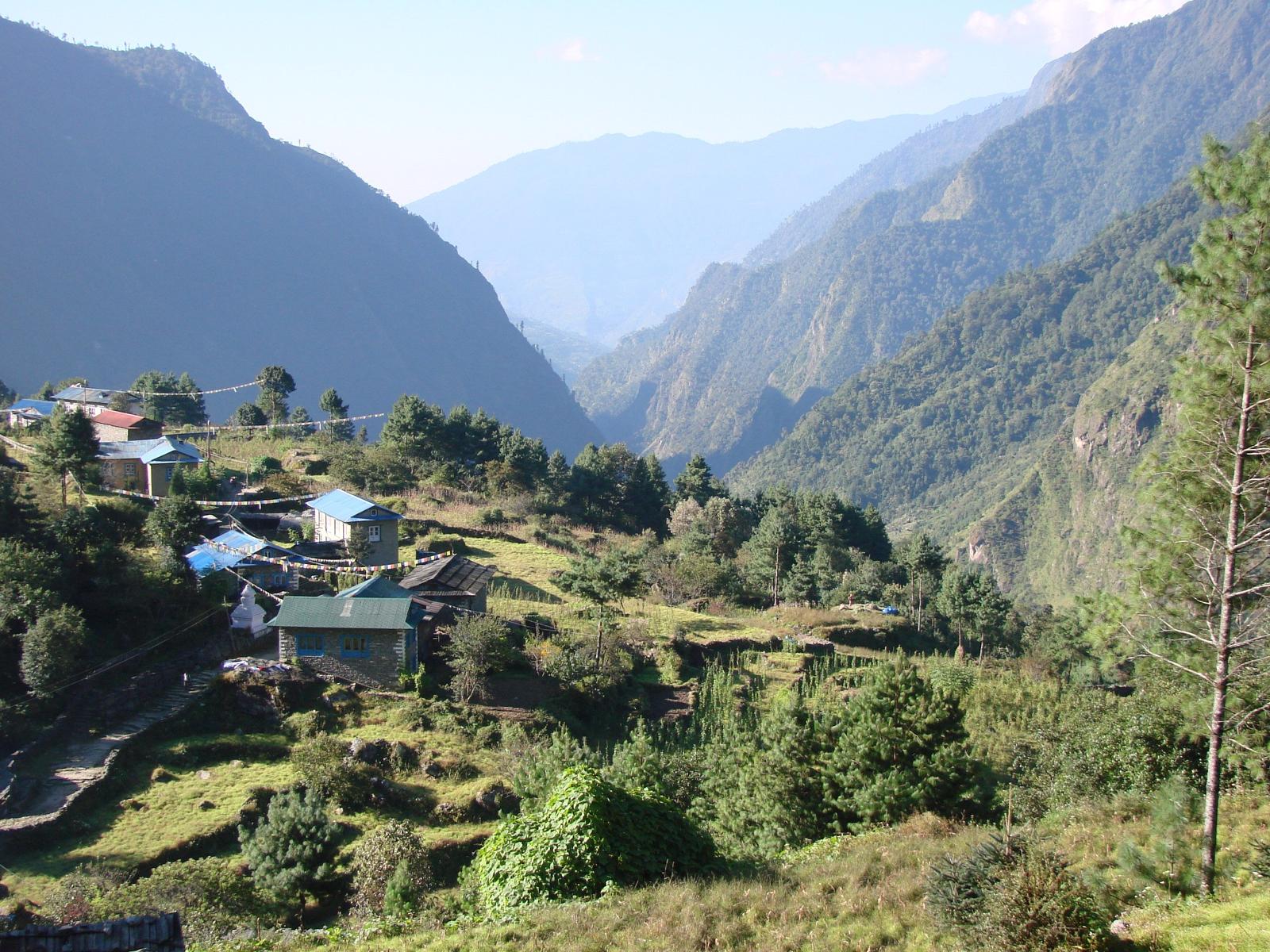
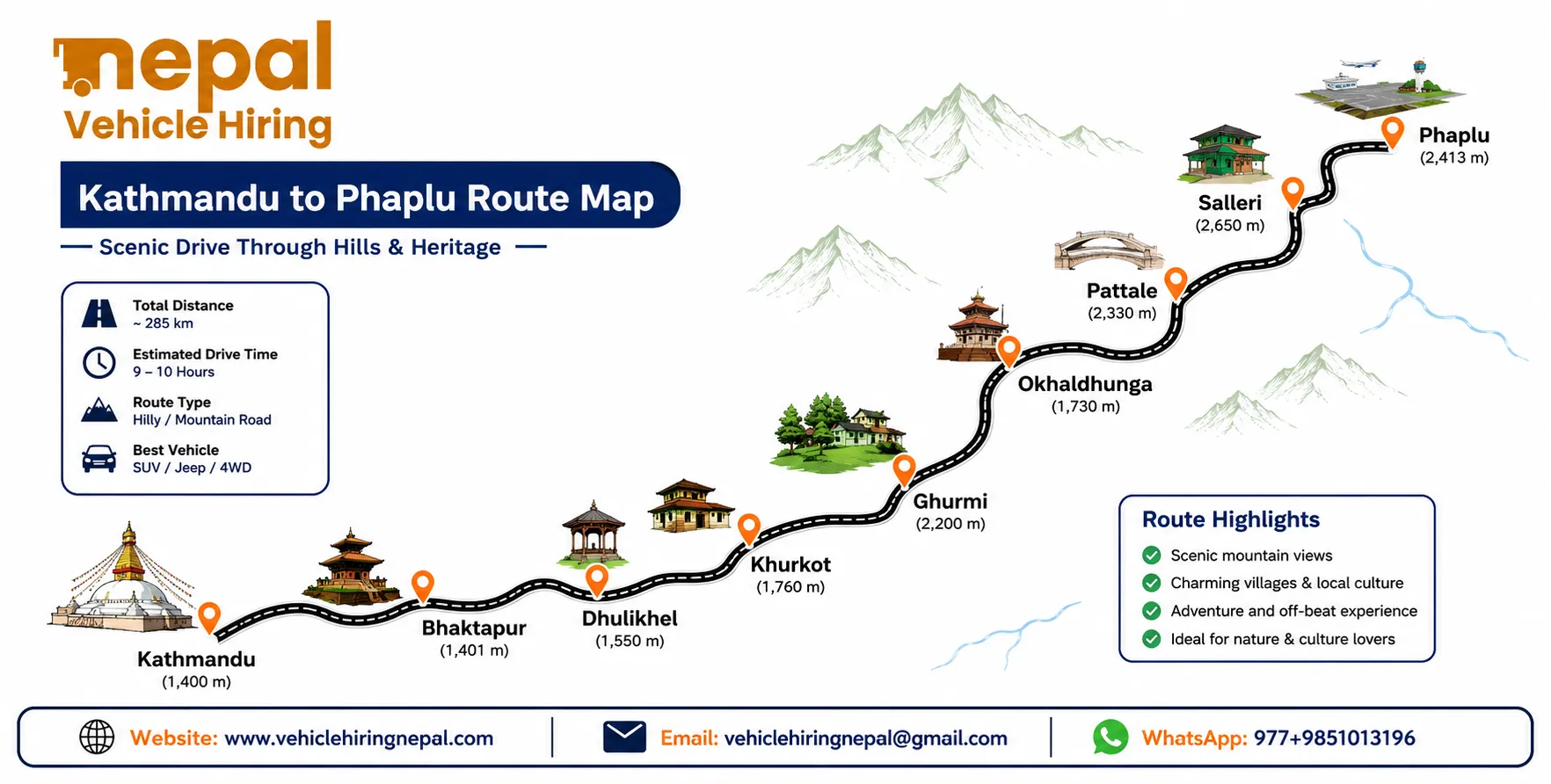
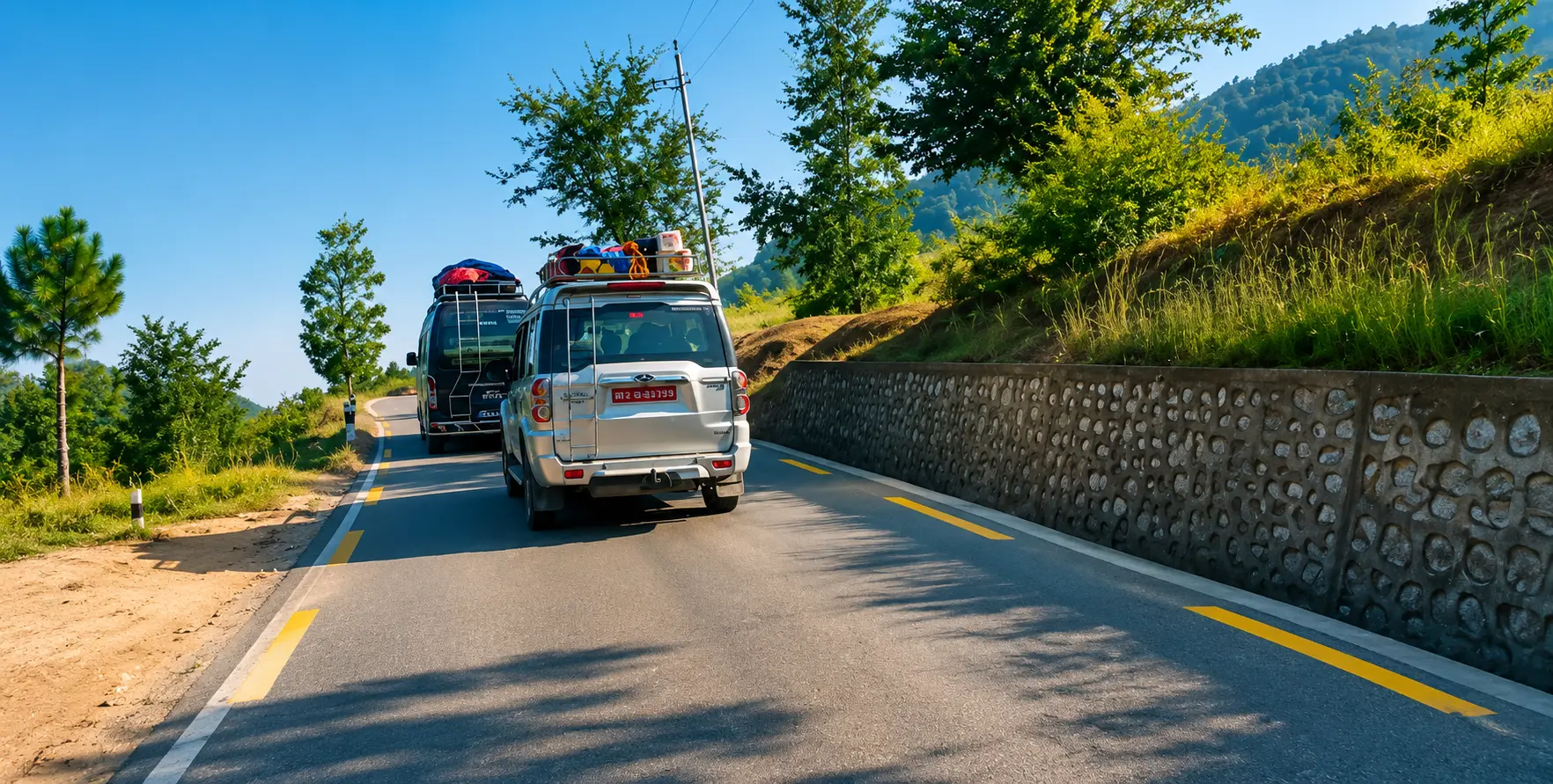
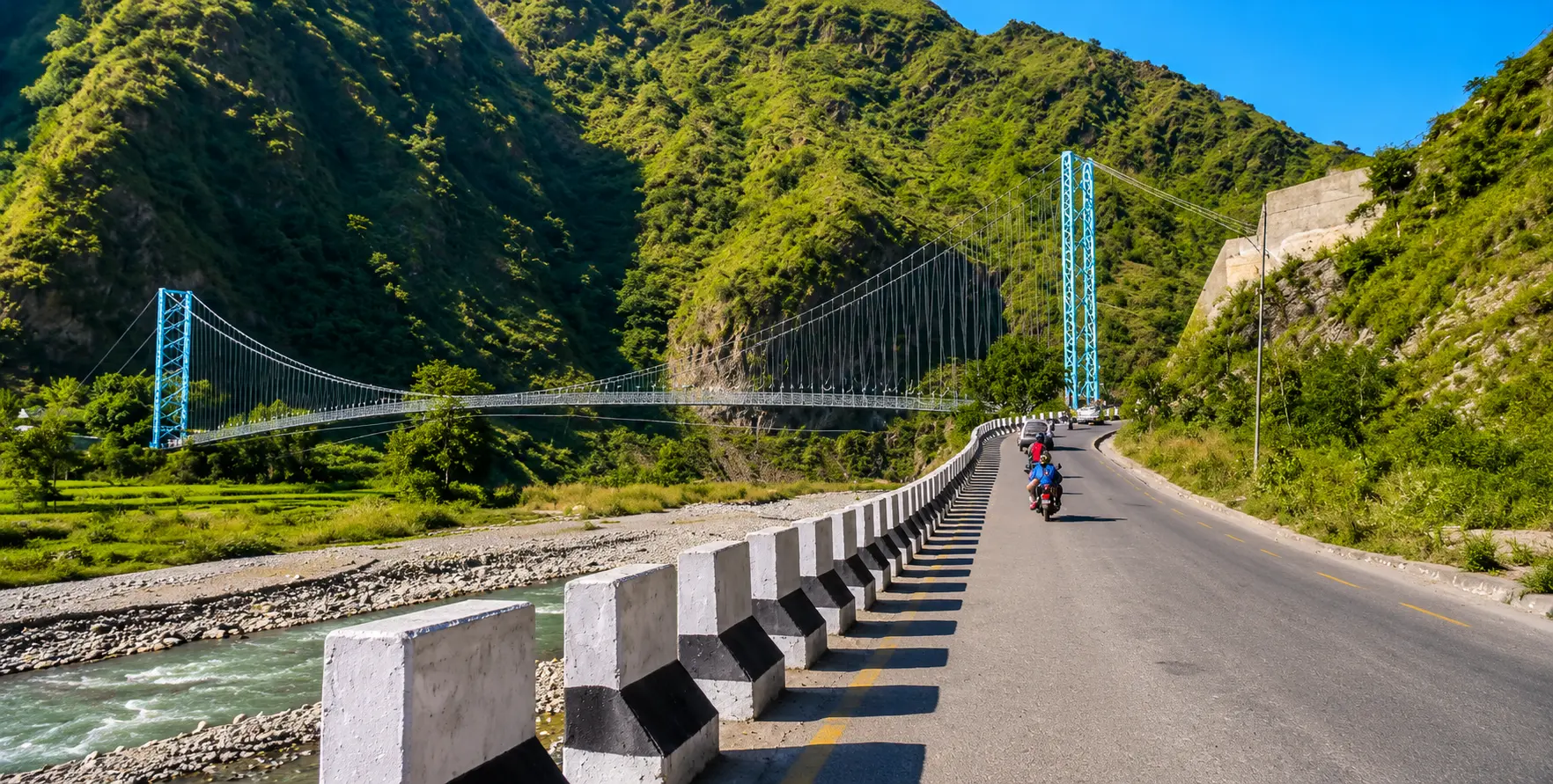
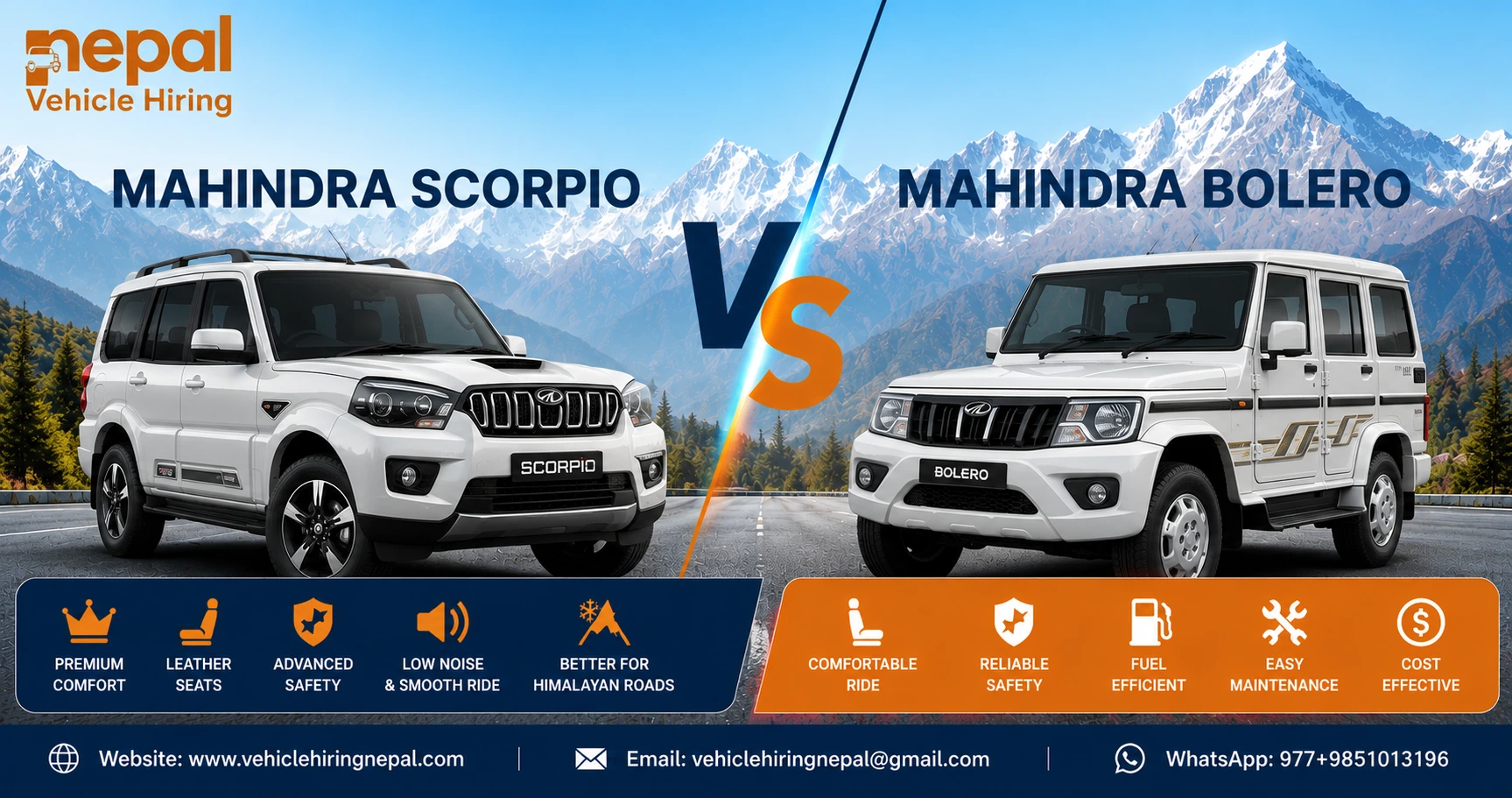
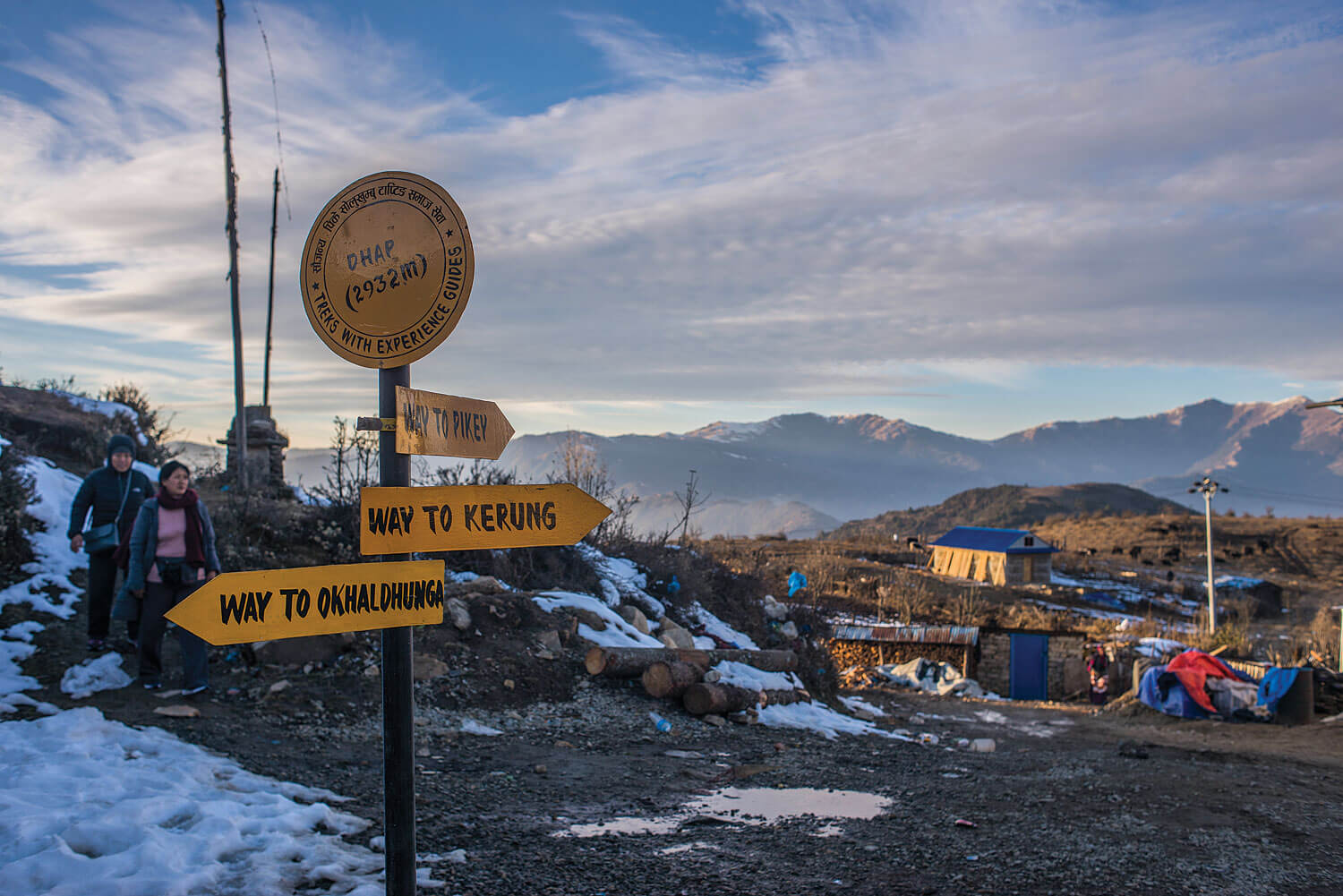
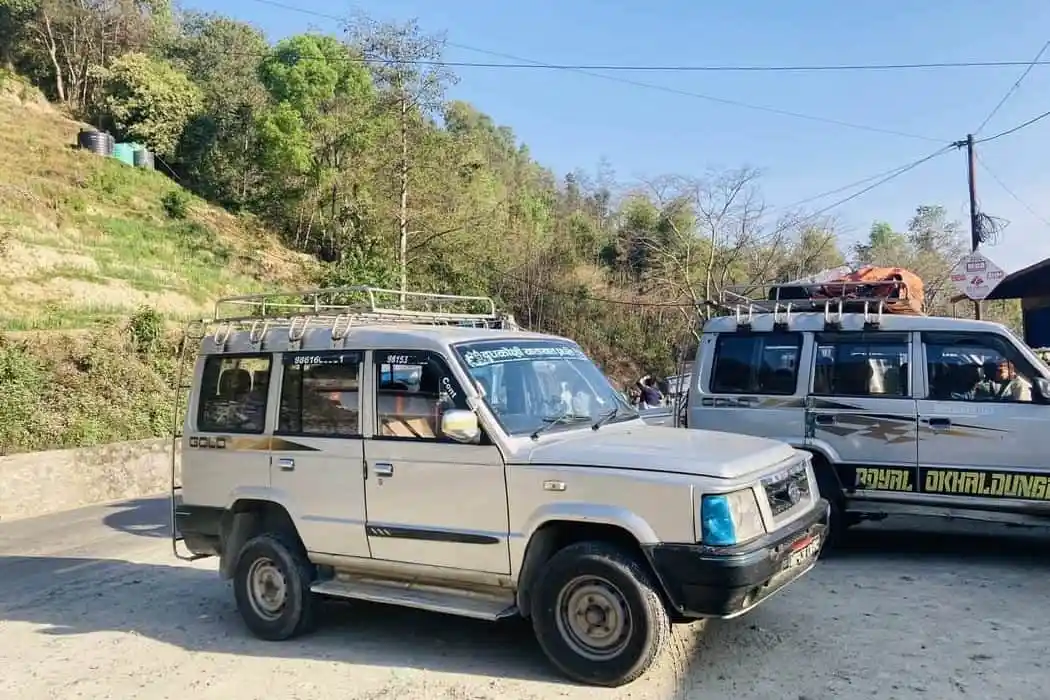
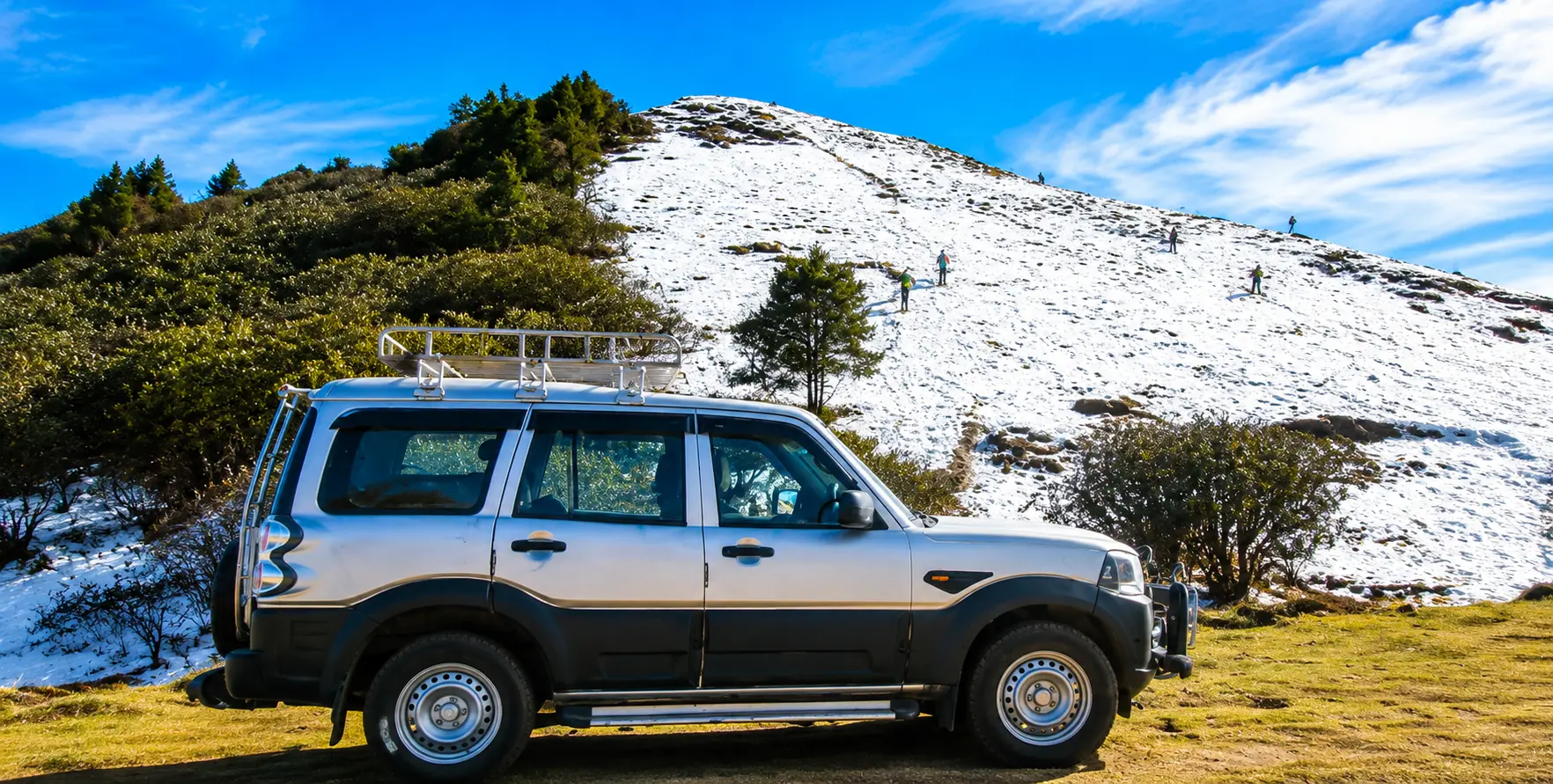
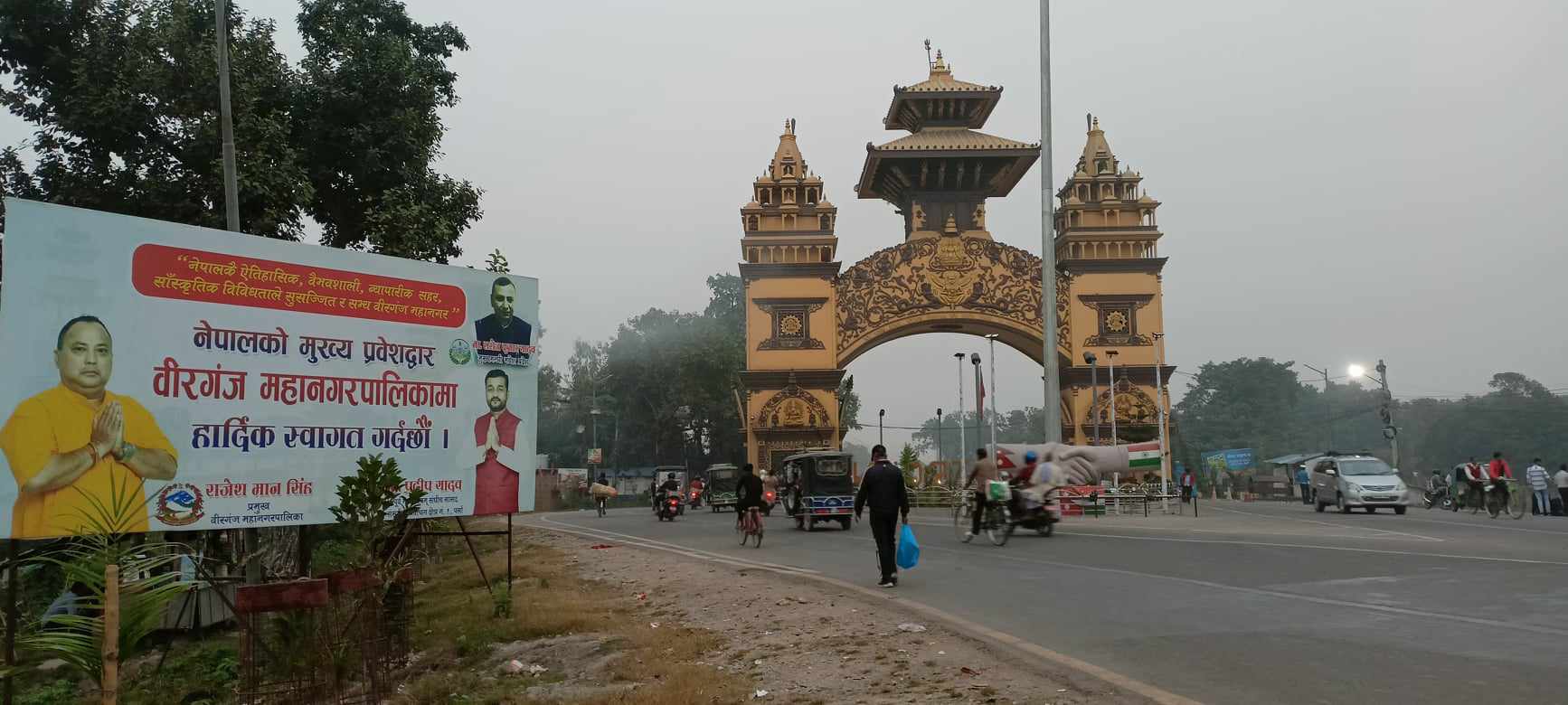
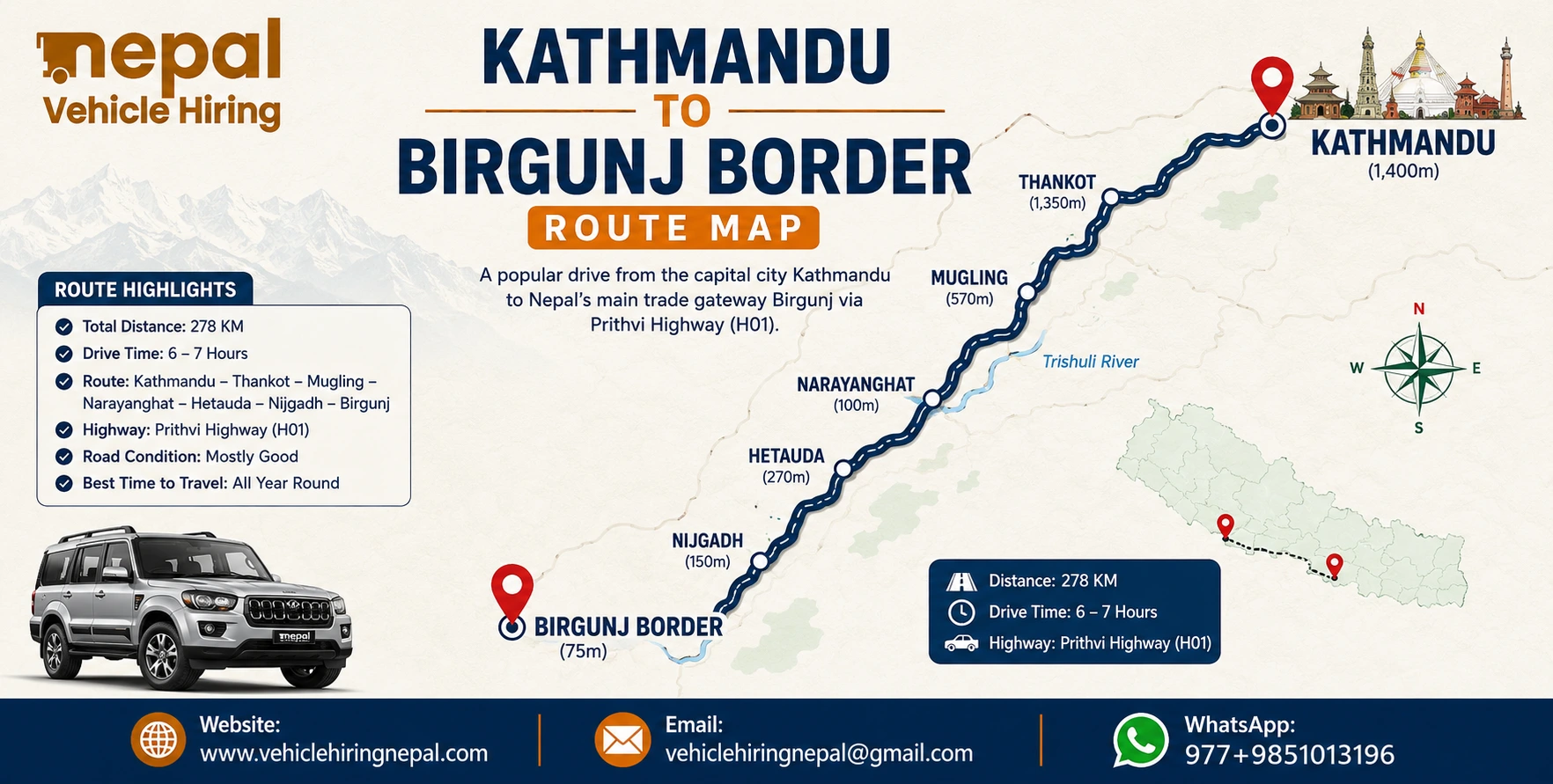
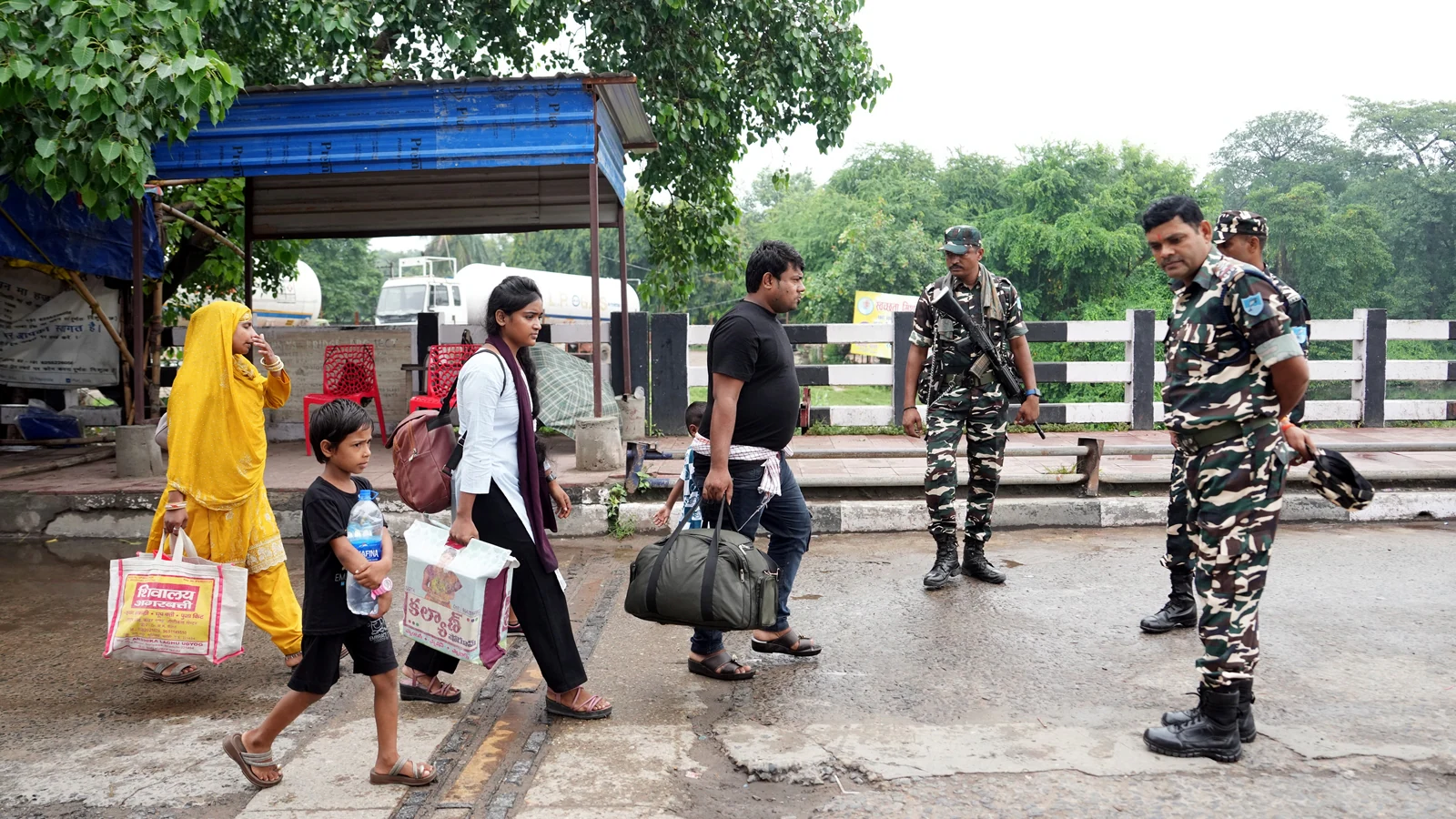
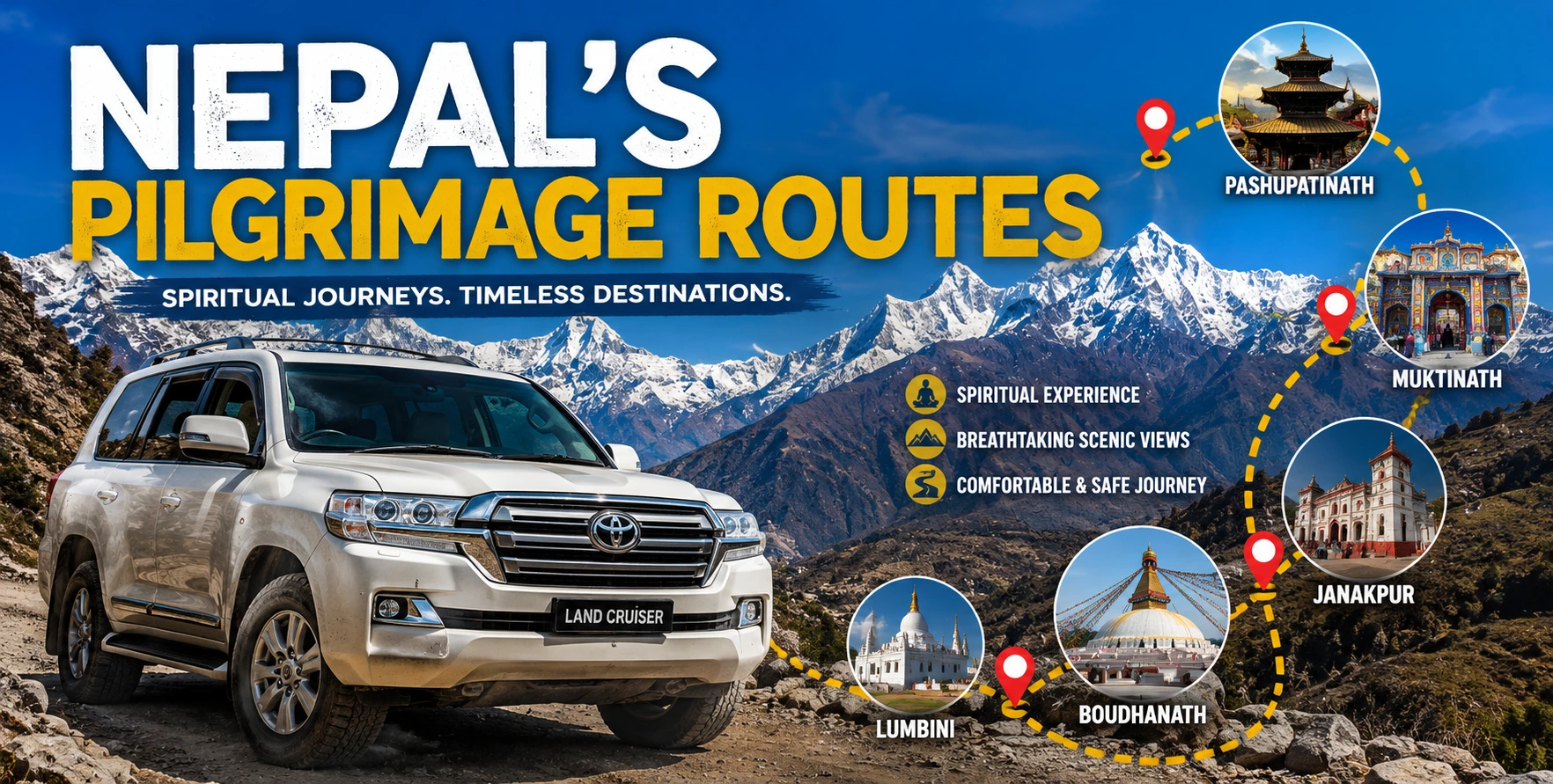
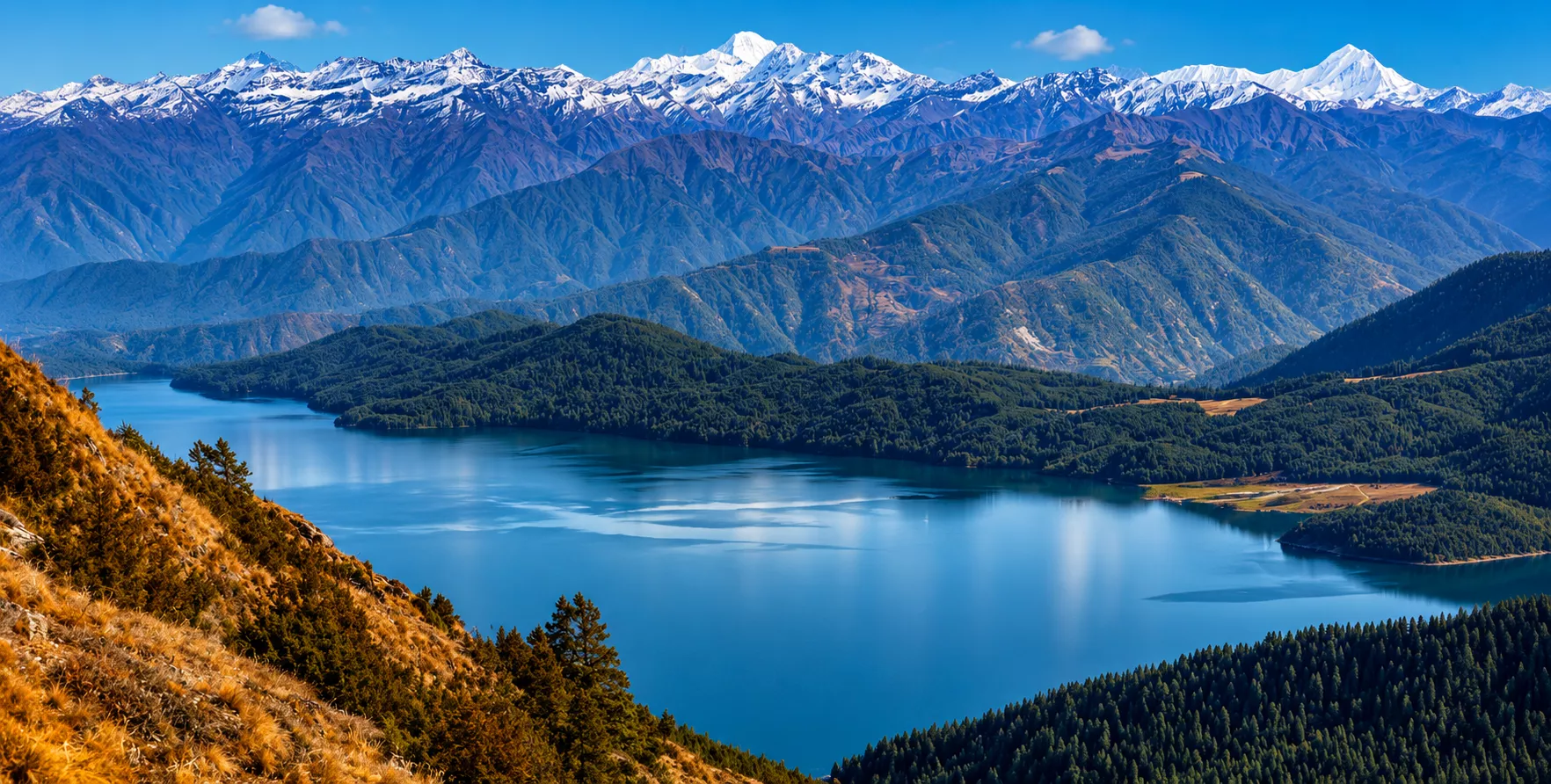
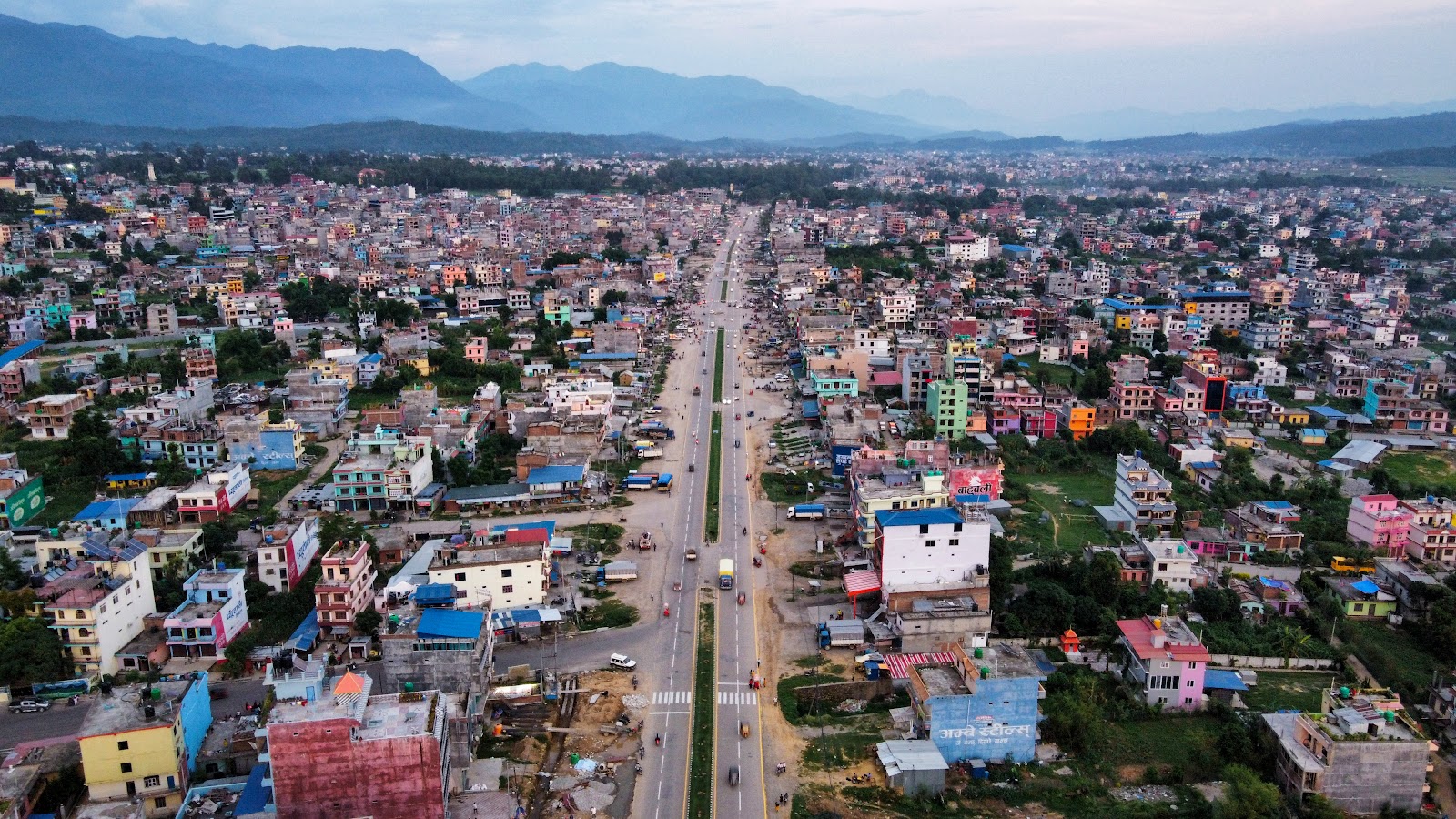
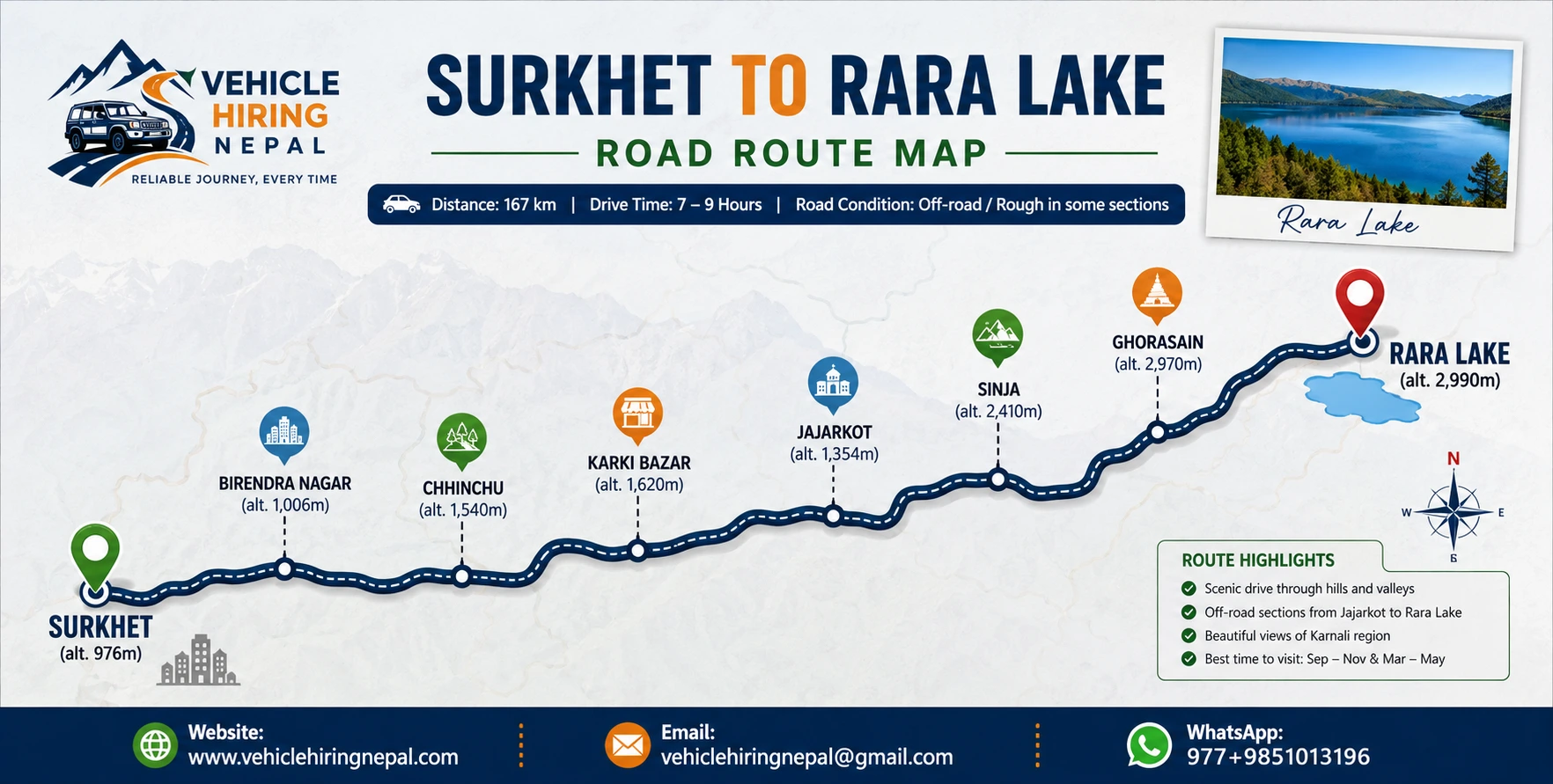
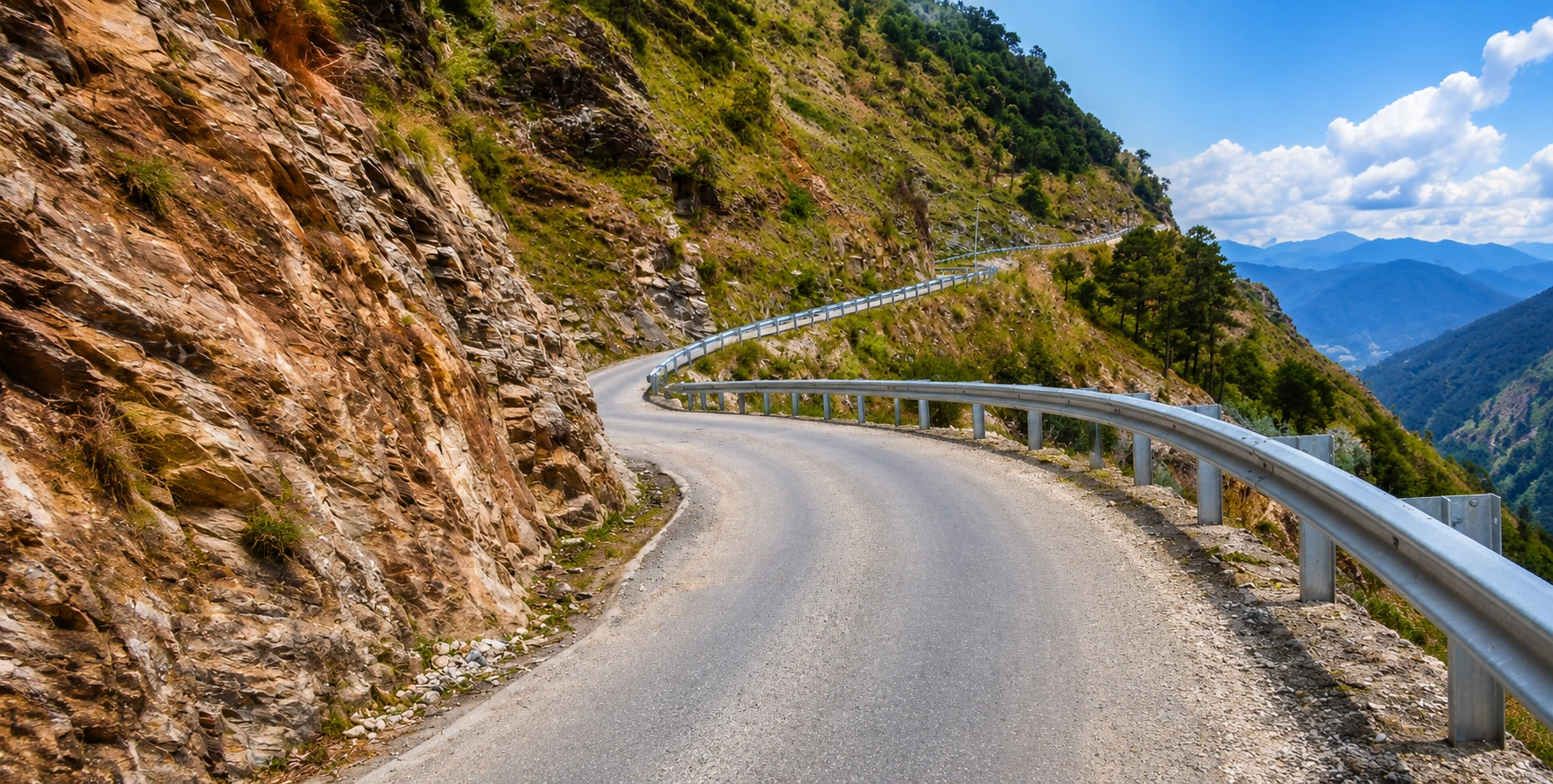
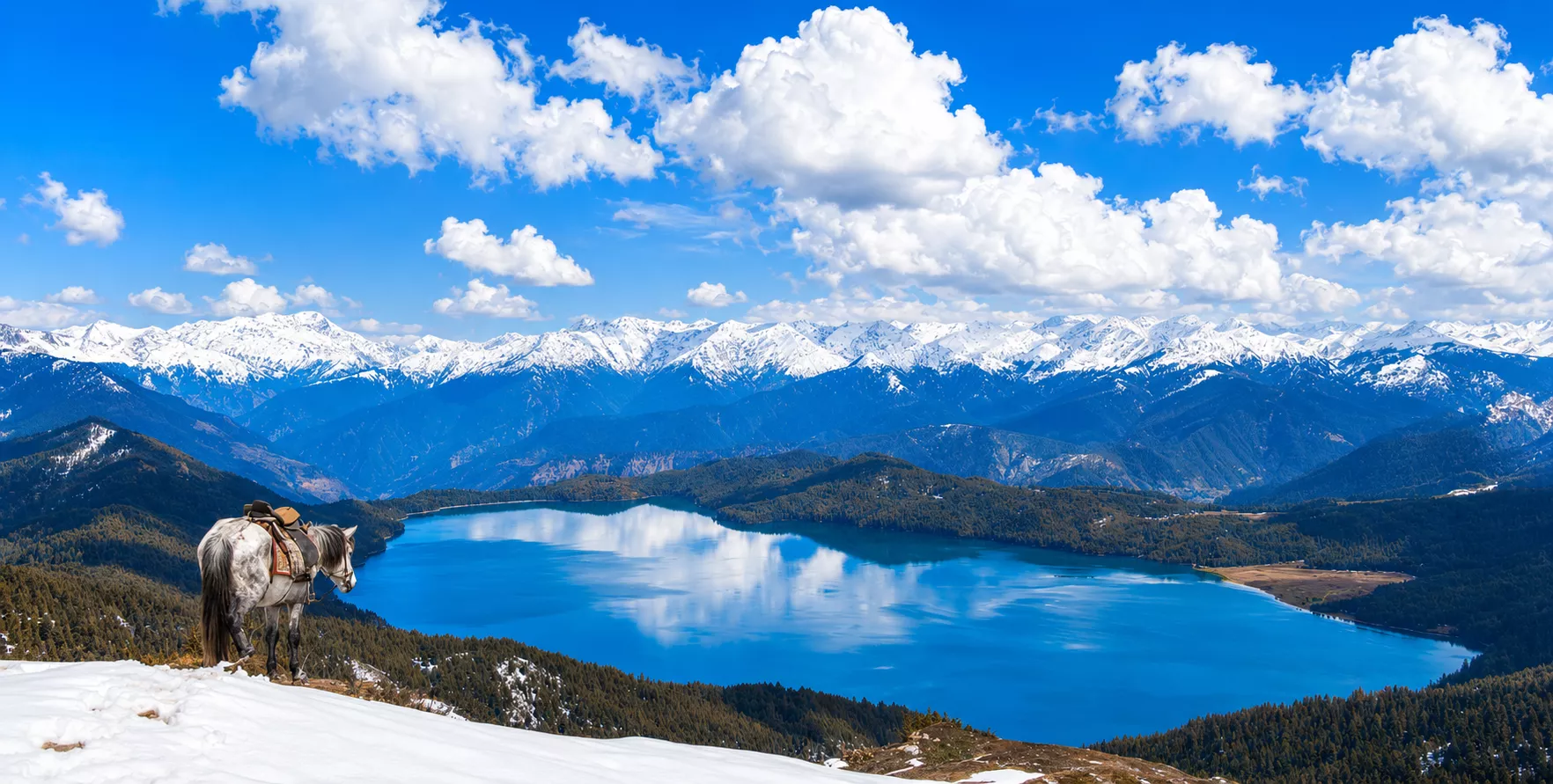
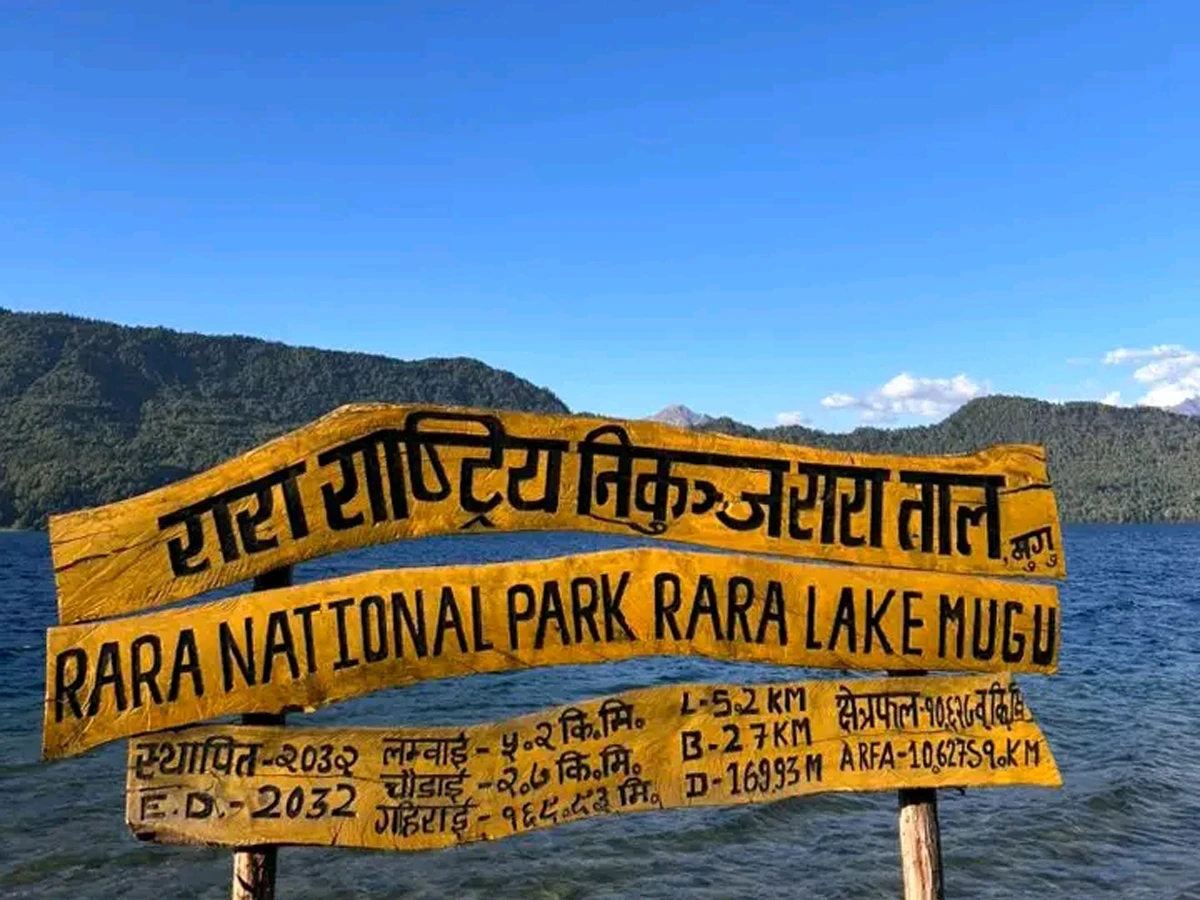
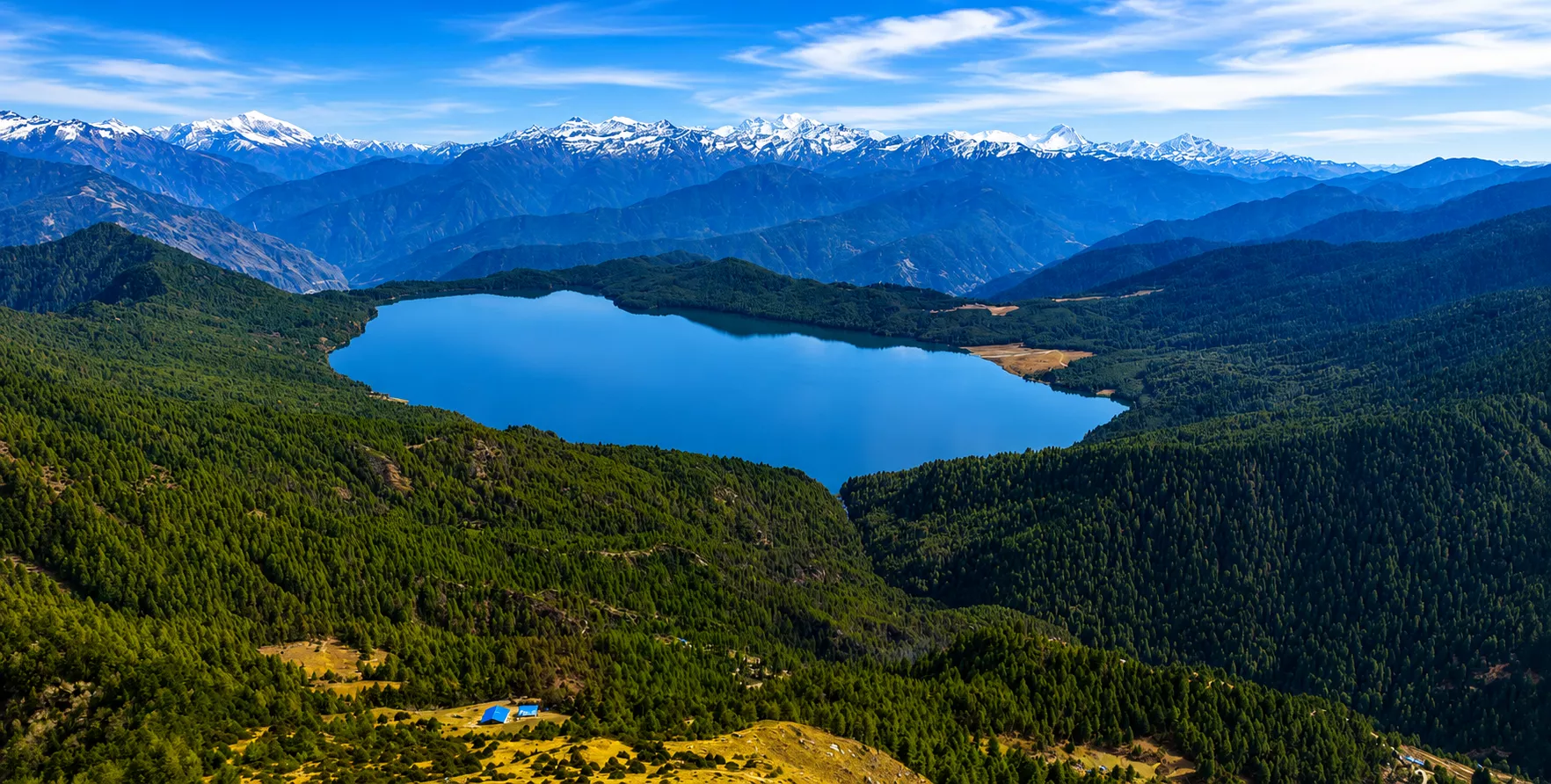
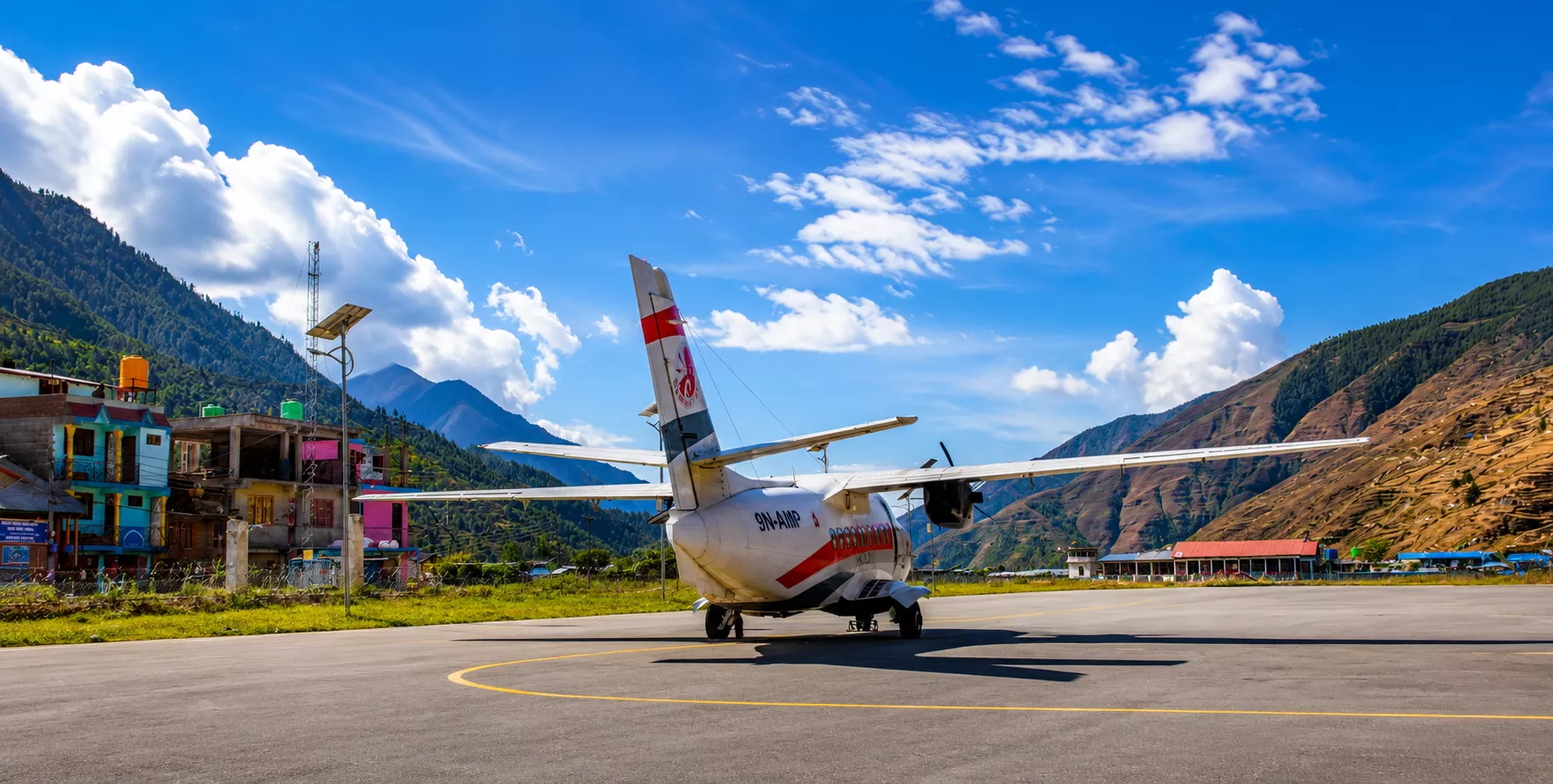
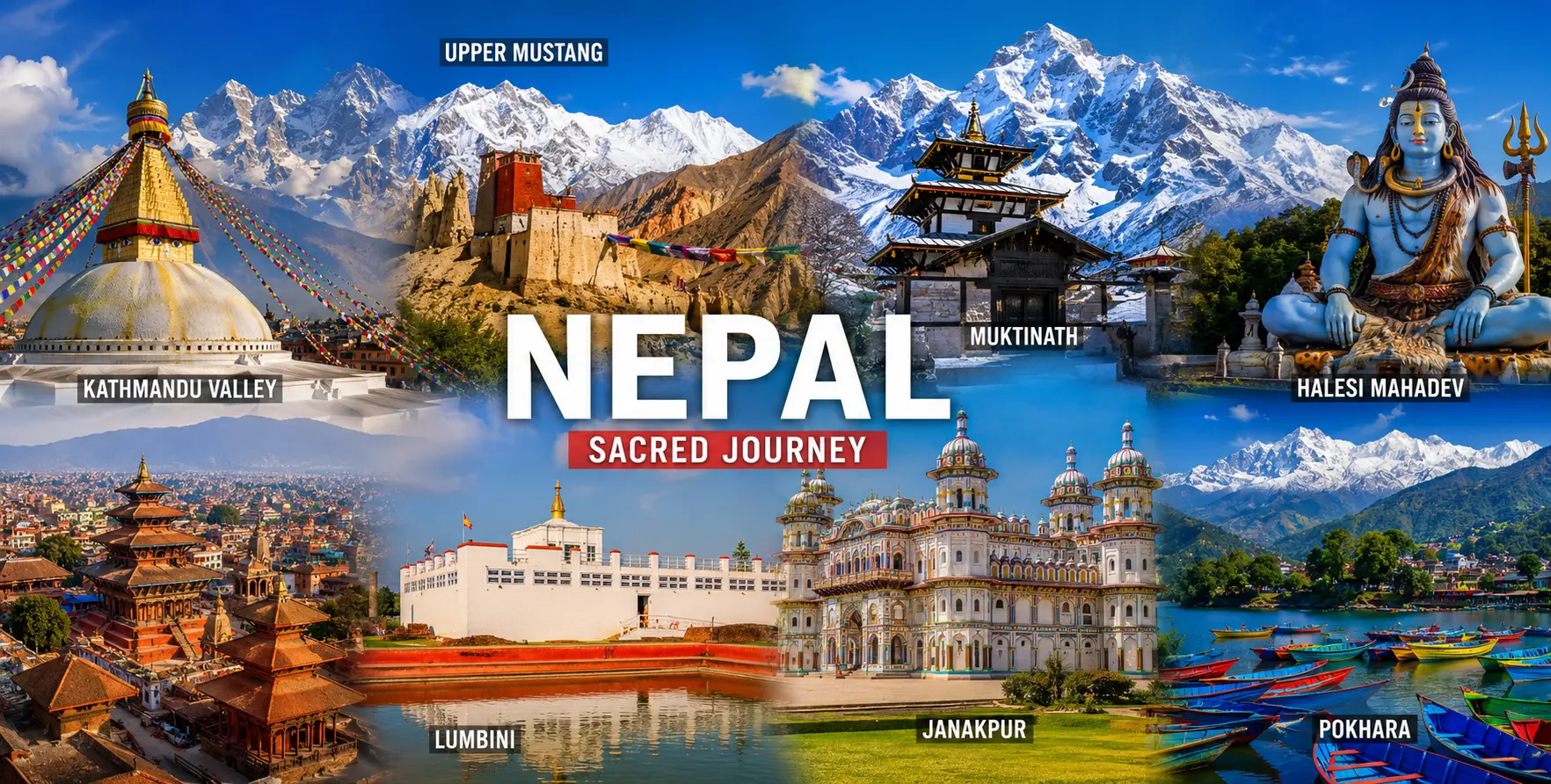
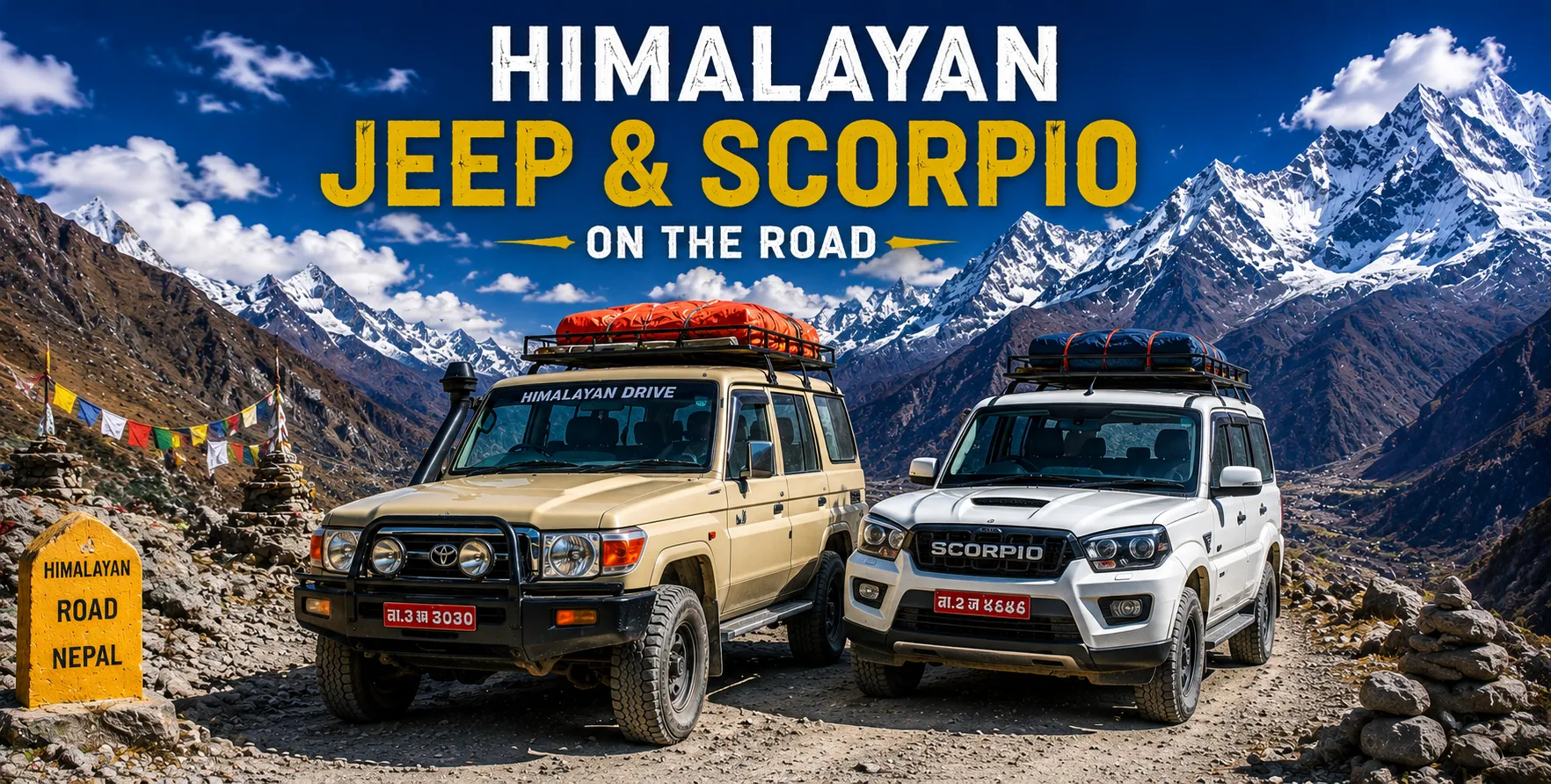
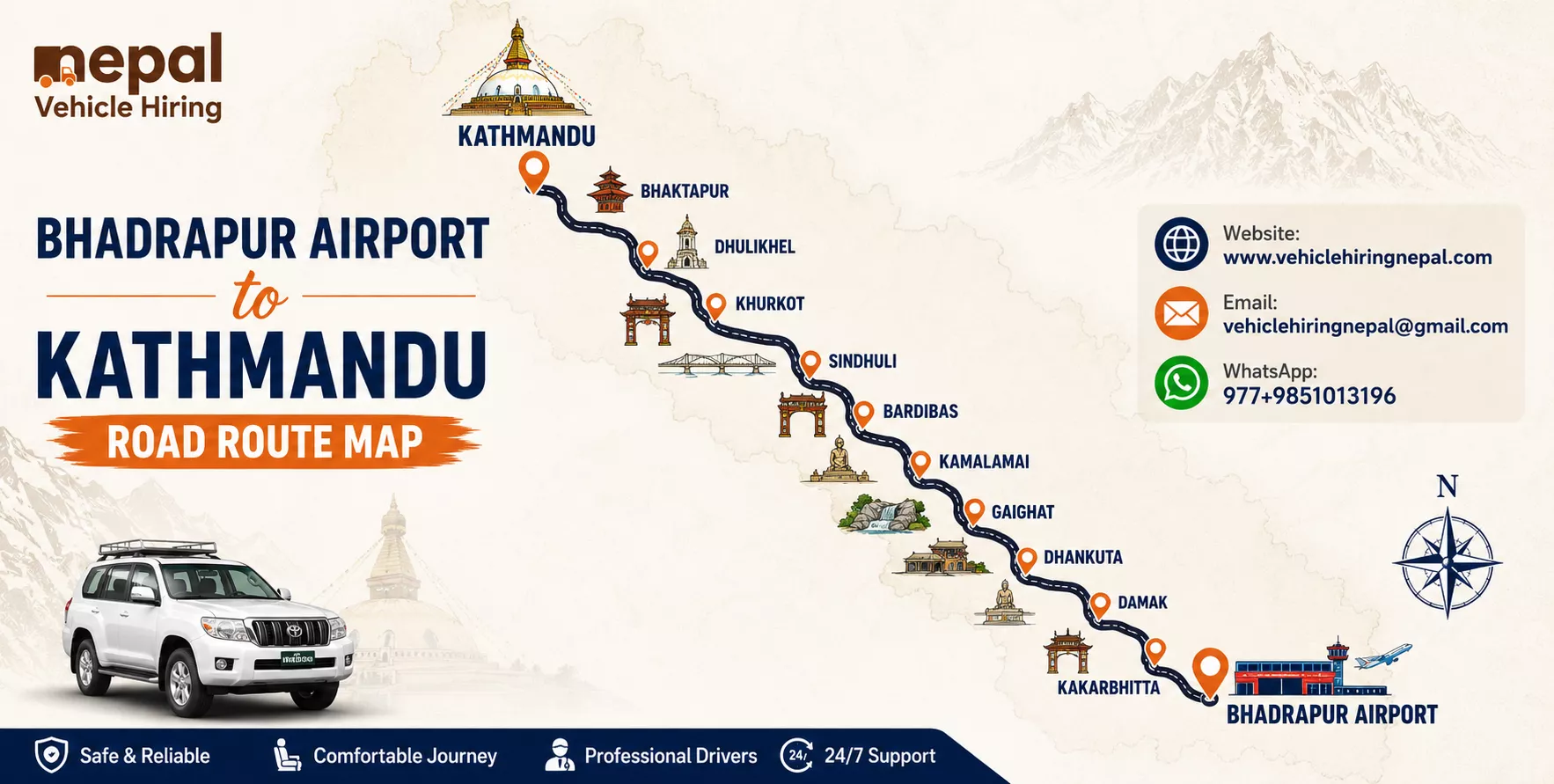
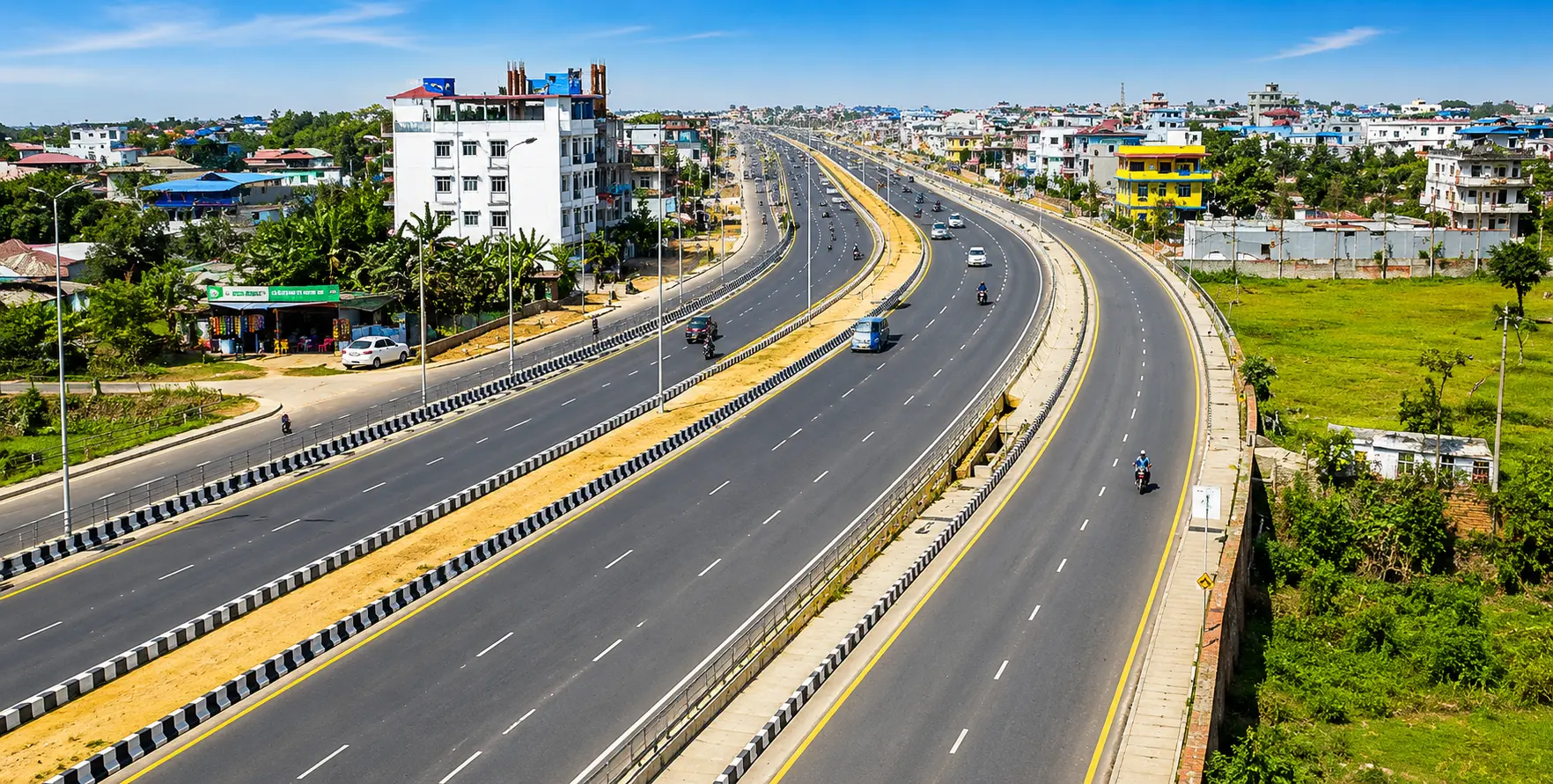
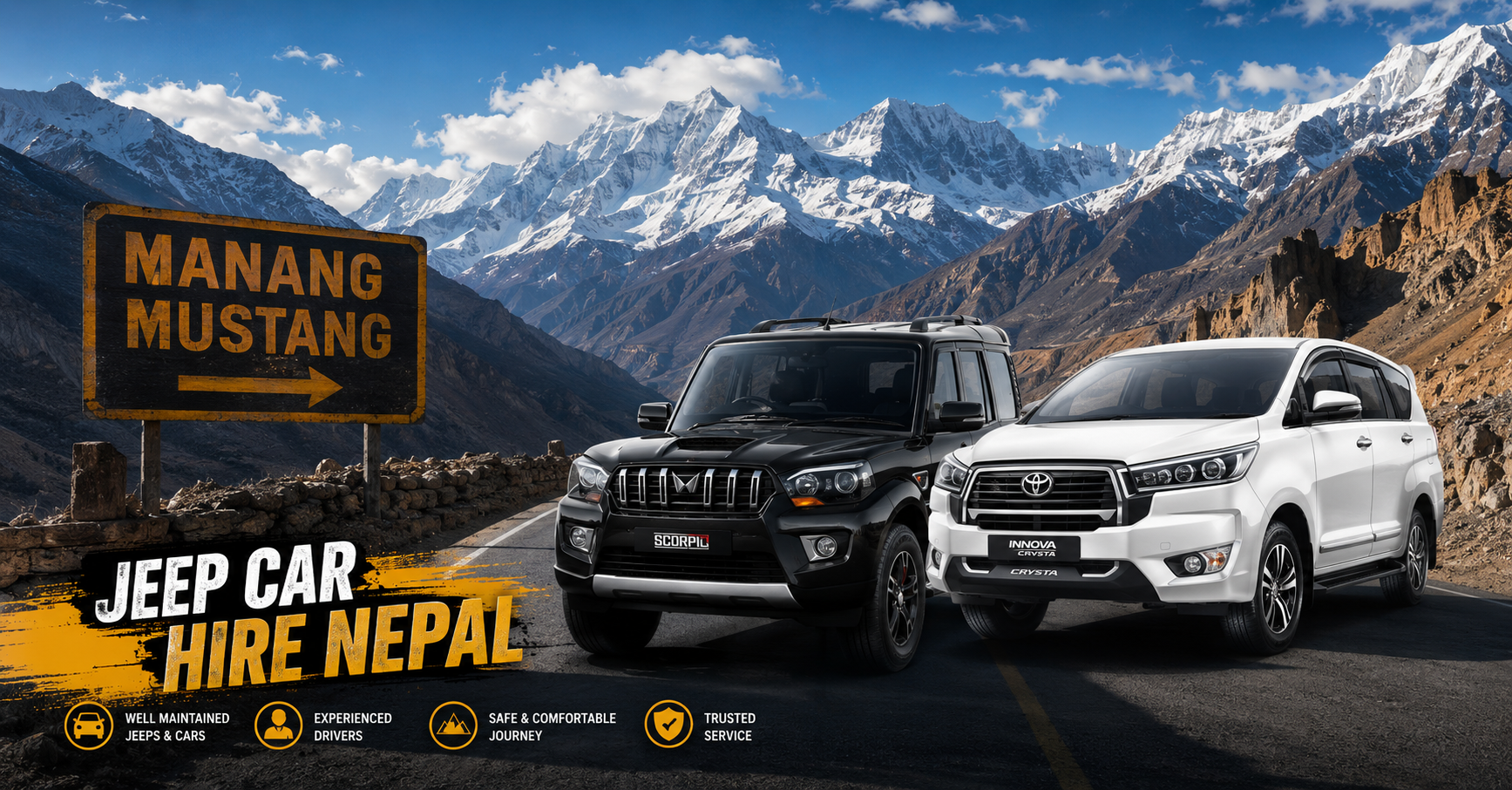
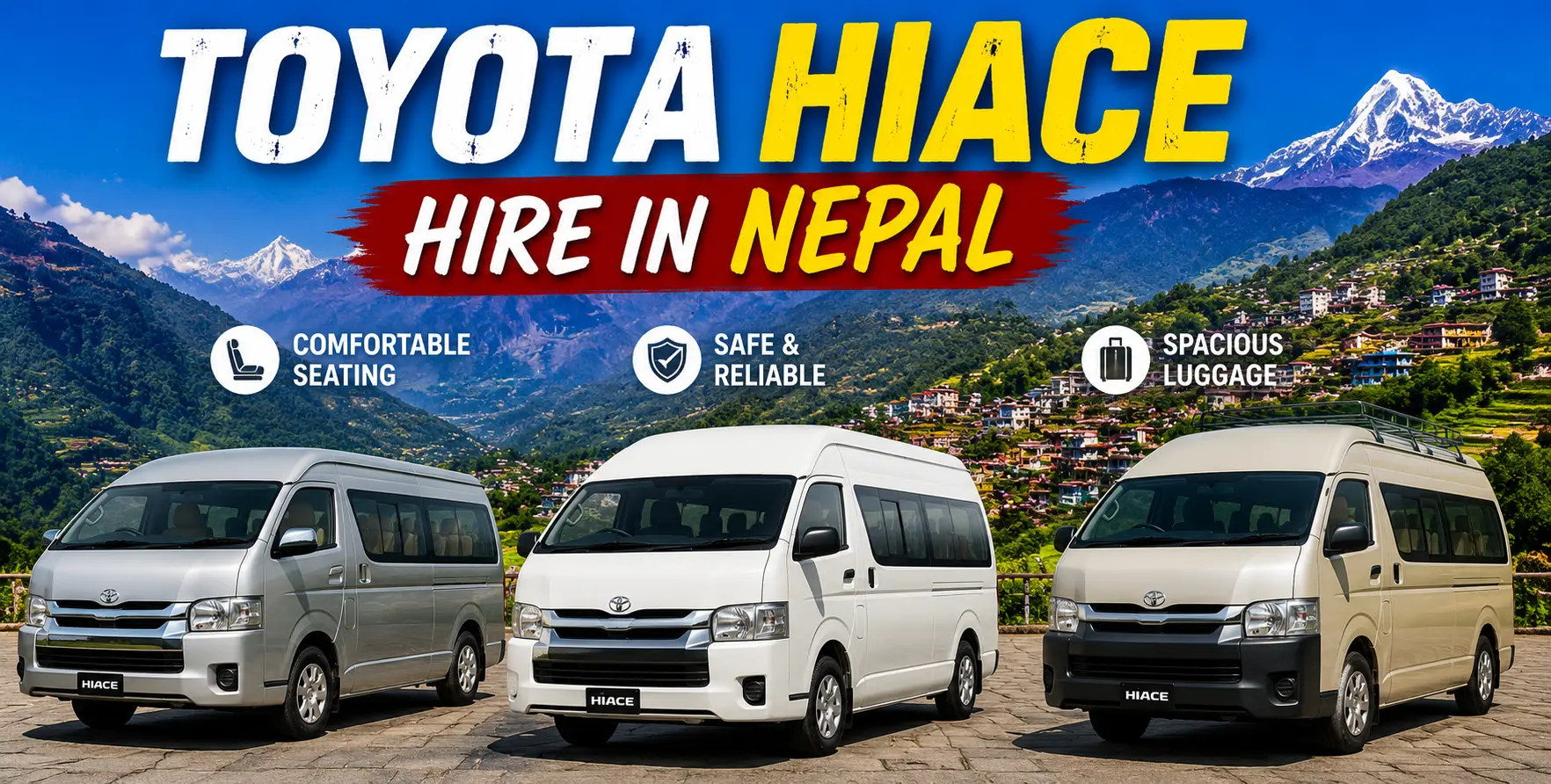

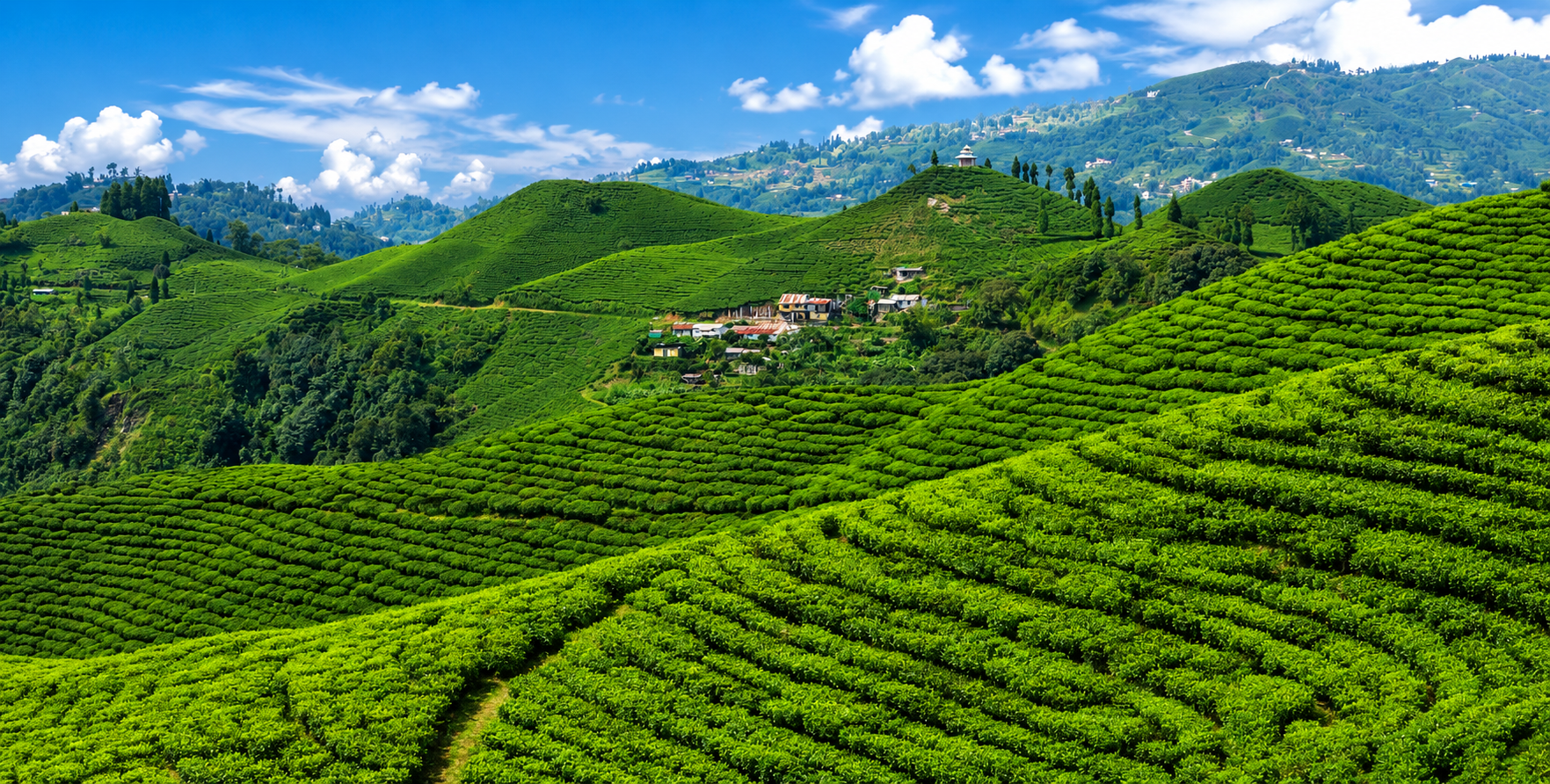
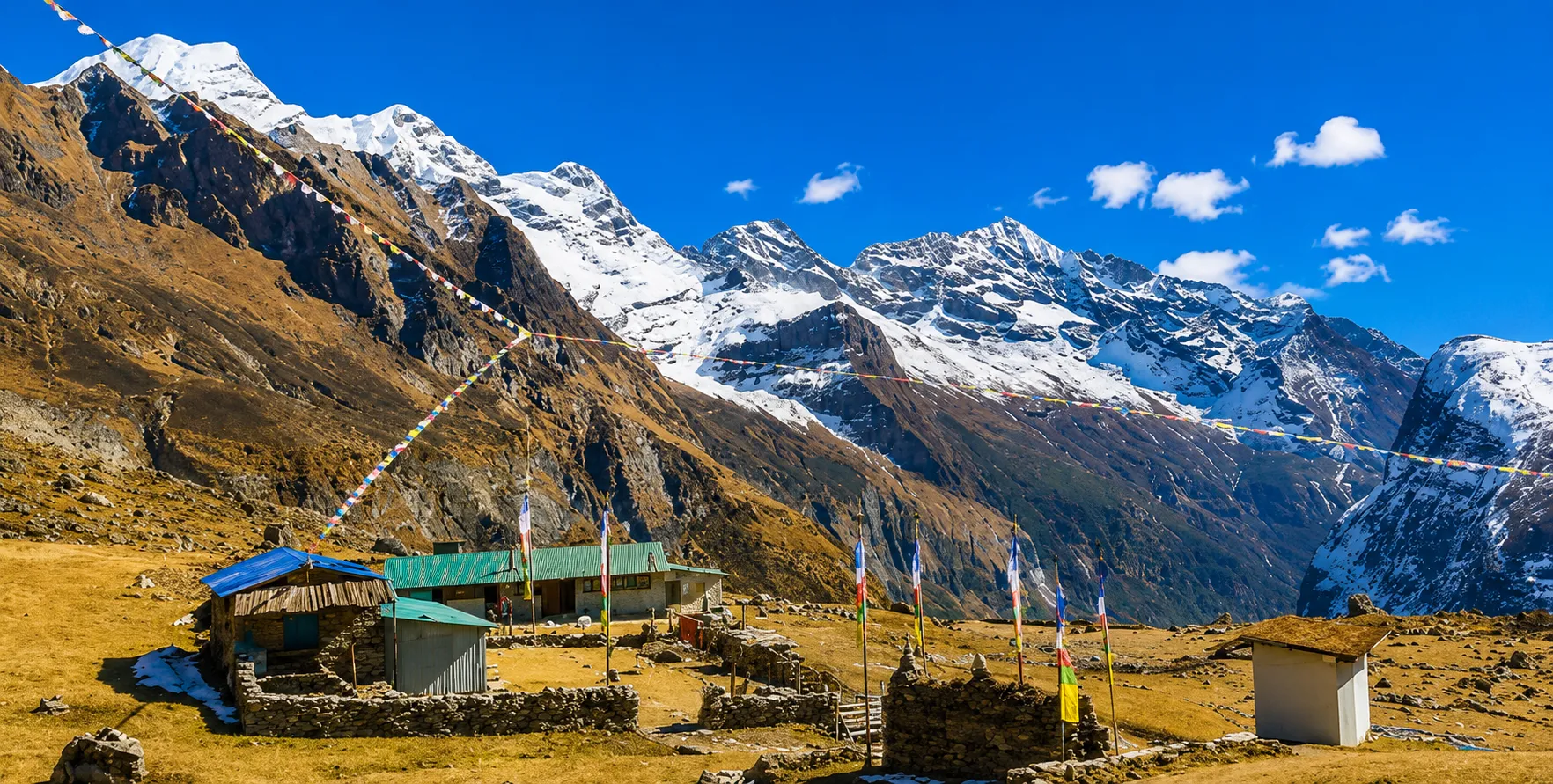
 Nepal 4WD jeep hire costs 2026/27: Land Cruiser, Fortuner & Hilux rates by route.