Plan a Trip
Luxury trek in Nepal vehicle hire: The Complete Vehicle Hire Guide
Nepal’s trekking landscape has undergone a quiet but profound revolution over the past decade. The image of the classic Himalayan trekker — dusty boots, a battered pack, basic teahouse accommodation, and a spirit of cheerful endurance in the face of cold shared bathrooms and limited menus — has not disappeared. Still, it now shares the trail with an entirely different breed of mountain traveler. The luxury trekker arrives in a well-appointed Toyota Land Cruiser, stays in lodges with en-suite bathrooms and heated rooms, dines on carefully prepared meals that balance Nepali authenticity with international dietary standards, and moves through the mountains accompanied by a private guide, personal porter, and the reassurance of a coordinated support team managing every logistical detail. This is not roughing it dressed up as luxury — it is a genuinely distinct category of Nepal travel experience, one that has grown into a significant and rapidly expanding segment of the country’s tourism economy.
The luxury trek in Nepal is defined by a specific set of characteristics that distinguish it from standard trekking across every dimension of the experience: accommodation in handpicked premium lodges rather than basic teahouses, with private rooms, attached bathrooms, hot water, and reliable power as standard rather than aspirational extras; expert private guides with deep knowledge of the specific region and its cultural heritage; comprehensive personal porter support that means trekkers carry only a light day pack rather than expedition-weight loads; premium food and beverage standards on the trail, often including specially organised picnic lunches and celebratory dinners at key milestones; helicopter transfers for approach and exit where this enhances both the experience and the efficiency of the itinerary; and from-hotel door-to-door premium vehicle transport for every stage of the journey that does not involve flying or walking.
This last element — premium vehicle hire for the ground transport stages of a luxury Nepal trek — is the specific focus of this guide. Nepal Vehicle Hiring Pvt Ltd (vehiclehiringnepal.com) has built its luxury trek vehicle hire service around the particular demands that this sophisticated, experience-conscious traveller brings to ground transport: vehicles whose quality matches the standard of the lodges they connect, drivers whose professionalism matches the quality of the guiding team, and a transport coordination capability that integrates seamlessly with the broader luxury trek itinerary rather than creating friction at the boundary between the trek’s premium experience and its more utilitarian-feeling transport logistics.
What follows is a comprehensive, deeply researched guide to luxury trek vehicle hire in Nepal, covering every major luxury trekking region — the Everest region, Annapurna, Upper Mustang, Langtang, and beyond — with specific route information, vehicle recommendations, accurate 2025/26 costs in NPR and USD, and the practical knowledge that distinguishes a truly well-planned luxury Nepal trek from one that gets the destination right but fumbles the journey to it.
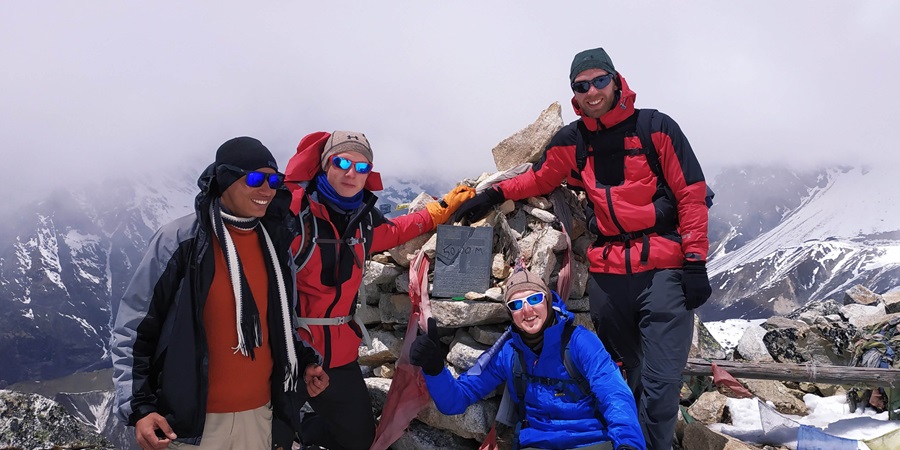
What Defines a Luxury Trek in Nepal: The Full Picture
Before examining the vehicle hire dimension in detail, it is worth establishing a clear and honest understanding of what luxury trekking in Nepal actually encompasses, since the term is applied with considerable inconsistency across the Nepal tourism market, sometimes describing a genuinely elevated experience and sometimes marketing relatively modest upgrades with premium language.
Genuine luxury trekking in Nepal in 2025 is characterized by the following elements working together as a coherent whole rather than as isolated upgrades to an otherwise standard experience. The accommodation standard is the most visible marker: authentic luxury lodge trekking in Nepal means staying in properties such as the Yeti Mountain Home chain in the Everest region, the ATTA Himalayan lodges, the Ker & Downey mountain properties in the Annapurna foothills, or the bespoke lodge networks that specialist operators have developed in Langtang, Upper Mustang, and the Manaslu region. These lodges offer private rooms with attached bathrooms, hot-water showers that reliably deliver hot water, heated rooms or, at minimum, superior insulation against mountain temperatures, proper beds rather than basic sleeping platforms, and food service that treats dietary requirements, allergies, and personal preferences as normal guest care rather than exceptional accommodation.
The guiding standard is the second defining element. A luxury trek allocates one private guide per group rather than one guide per multiple groups — ensuring that the trekker’s experience of every monastery, village, viewpoint, and cultural encounter is mediated by a knowledgeable, attentive, and personally engaged professional whose entire attention is on this specific group’s experience and wellbeing. The best luxury trek guides combine technical mountain knowledge with genuine cultural depth, language skills in English and often additional languages, first aid and altitude medicine competence, and the kind of hospitality instinct that turns a walking day into a rich, layered experience rather than simply a traverse from one lodge to the next.
The porter allocation on a luxury trek means that trekkers carry only a light day pack — typically 5 to 8 kilograms — containing personal essentials, camera, water, and a layer or t. In contrast, le all main luggage, including sleeping bag, personal clothing, and equipment, is carried by dedicated porters. This single element transforms the physical experience of trekking more profoundly than almost any other luxury upgrade, since walking all day without a heavy pack loaded on one’s back changes the quality of attention one can bring to the surrounding landscape and cultural encounters in ways that are genuinely revelatory for trekkers accustomed to carrying their own loads.
The transport element — which is where Nepal Vehicle Hiring Pvt Ltd focuses its luxury trek service — encompasses several distinct stages depending on the specific trek. The airport arrival transfer in a premium vehicle sets the initial tone of the experience. City and heritage sightseeing days are conducted in premium private cars or SUVs. Trailhead transfers — the drives from Kathmandu or Pokhara to the trek starting point — use vehicles appropriately matched to the road conditions of each specific route, from smooth-riding SUVs for well-maintained highway corridors to properly equipped Toyota Land Cruisers for demanding mountain tracks. And exit transfers from trek finishing points back to city bases complete the circle with the same quality that the initial arrival established.
Why Vehicle Quality Matters More on a Luxury Trek
The relationship between vehicle quality and overall luxury trek experience is closer and more consequential than many trekkers initially appreciate, particularly for those who are accustomed to treating ground transport as purely logistical — a means to reach the starting point with no particular bearing on the experience itself. In the luxury trek context, this assumption requires significant revision.
Consider the typical itinerary structure of a Nepal luxury trek. A traveler arrives at Tribhuvan International Airport after a long international flight — often 12 to 20 hours or more from Western origins — and the vehicle waiting at arrivals is the first physical encounter with their Nepal experience. The quality, cleanliness, and comfort of that vehicle, and the professional presentation and communication skills of its driver, establish an immediate impression that either confirms or complicates the premium expectations that a luxury trek package has set. A well-maintained Toyota Land Cruiser Prado or Toyota Fortuner, spotlessly clean, with a professionally presented driver holding a clearly visible name board, conveys immediately that the standard established in the booking is being matched in the delivery. A less well-maintained or less appropriate vehicle creates an instant incongruity that sets a less confident tone for everything that follows.
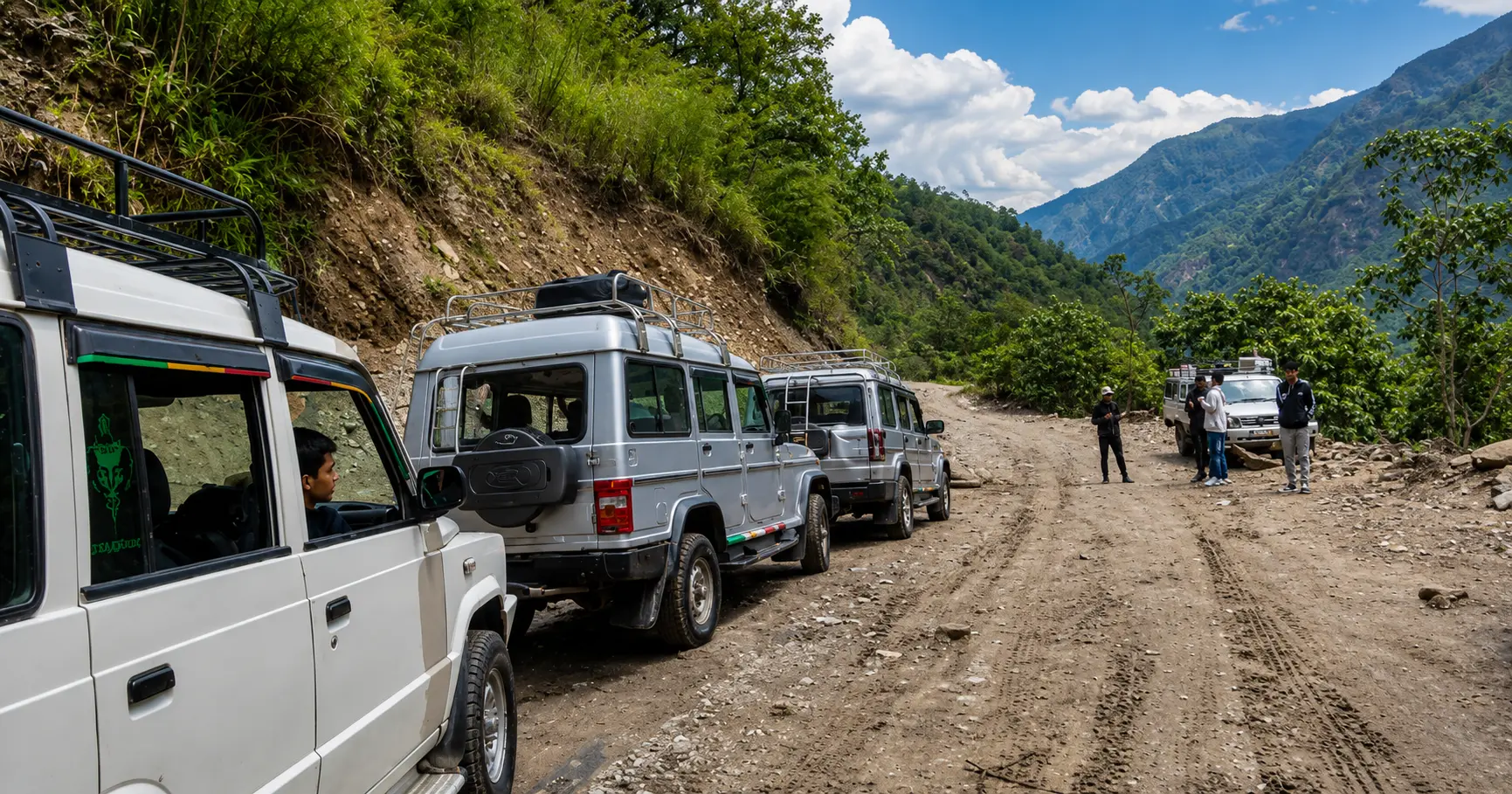
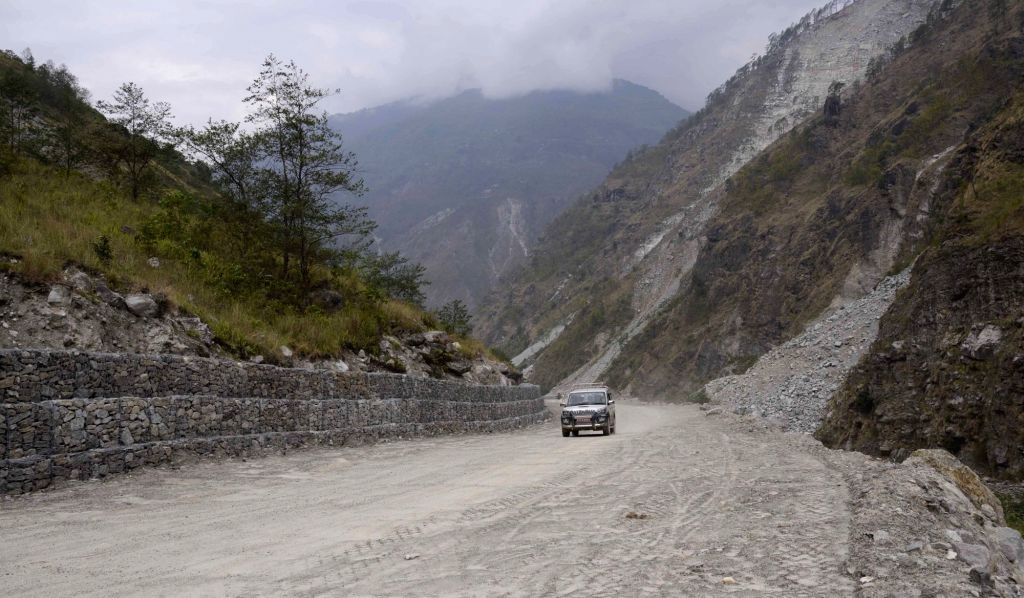
The trailhead transfer stage is often the most demanding vehicle element of a luxury trek, and it is here that the gap between appropriate and inappropriate vehicle hire becomes most significant. Routes like Pokhara to Nayapul for the Annapurna luxury lodge circuit, or the overland approach from Pokhara to Jomsom for an Upper Mustang luxury jeep tour, or the Kathmandu to Syabrubesi transfer for a Langtang luxury lodge trek, involve hours of mountain road driving in conditions that demand genuine 4WD capability, high ground clearance, and experienced drivers familiar with the specific road’s seasonal quirks and technical demands. A luxury trekker who has paid USD 3,000 to USD 8,000 or more for their overall Nepal adventure package deserves a trailhead transfer vehicle that matches this investment in quality rather than undermining it with a crowded, inadequate, or poorly maintained alternative.
The return transfer, at the end of the trek, carries its own emotional weight. A trekker finishing a multi-day luxury Himalayan experience and descending to the roadhead after days of extraordinary physical and cultural immersion is in a particular emotional state — physically tired, often deeply moved by the experience, already beginning to process the memories of what they have just lived through. The vehicle that meets them at this moment and carries them back to civilization is the final physical element of the entire Nepal experience. A comfortable, spacious, well-maintained premium vehicle, with a driver who understands that quiet, comfortable travel is what the moment calls for, provides the right container for this transition. An uncomfortable or poorly coordinated return transfer creates an unnecessarily jarring end to an experience that deserves better.
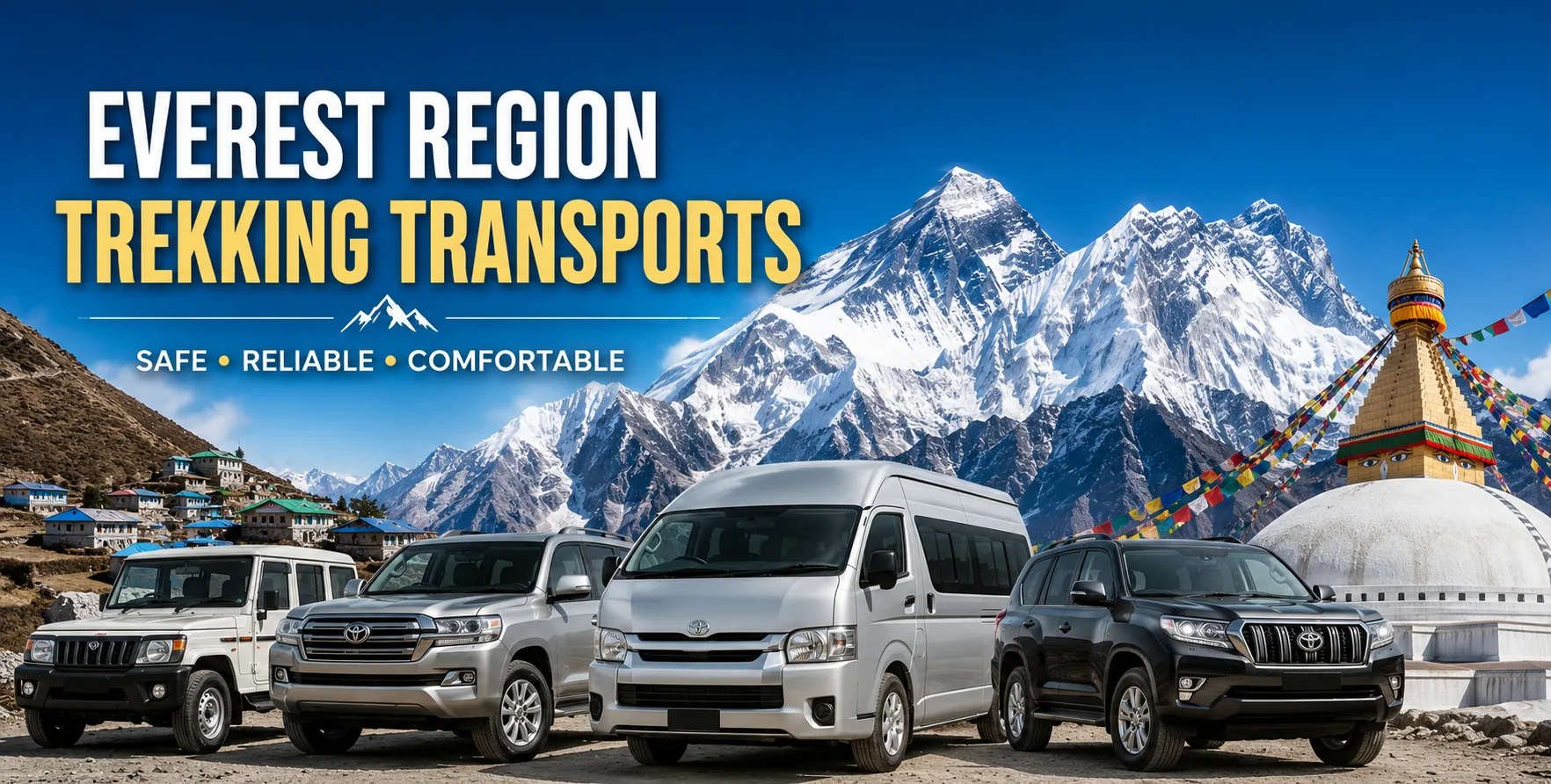
Everest Region luxury trek in Nepal vehicle hire
The Luxury EBC Experience
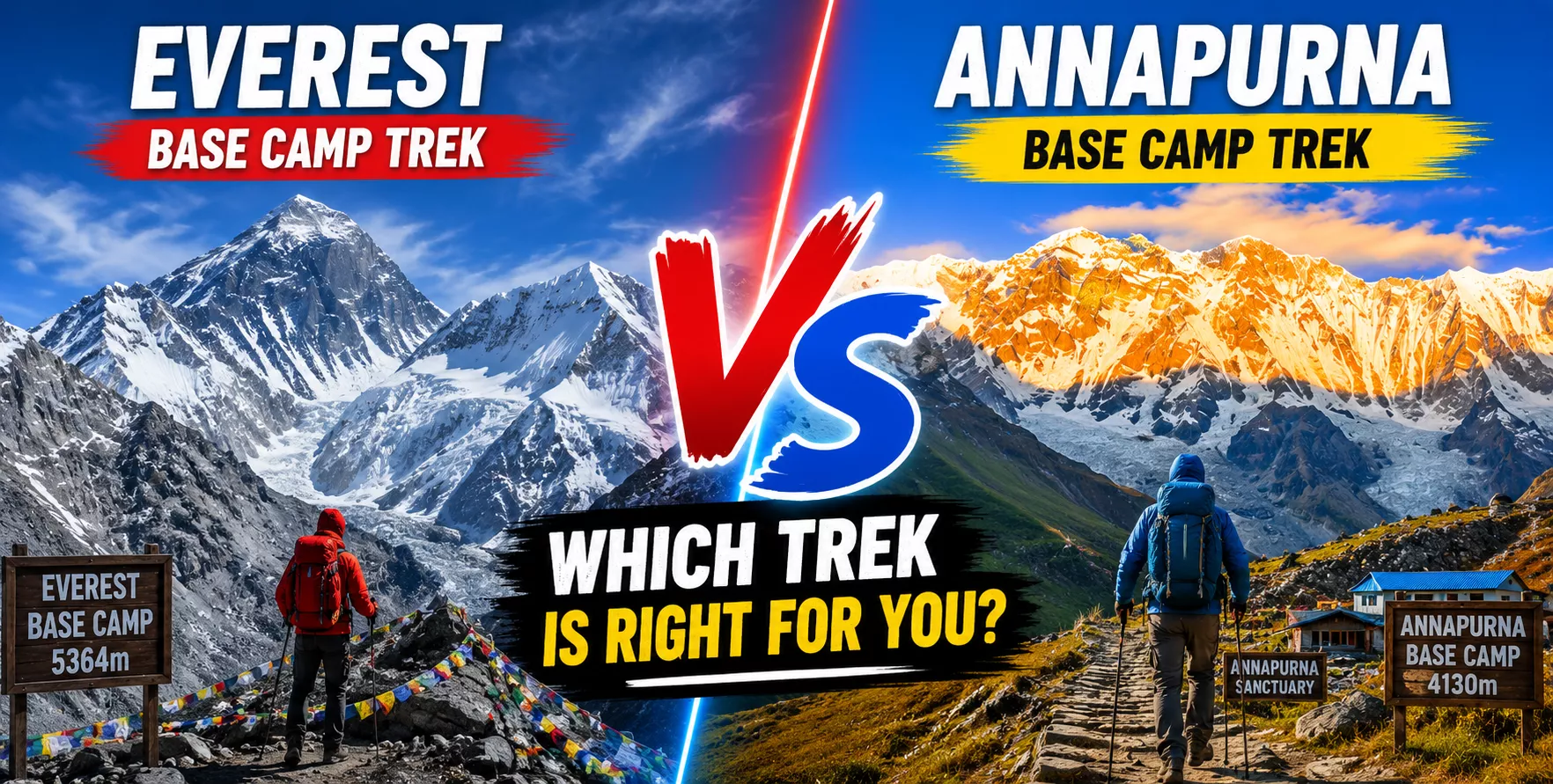
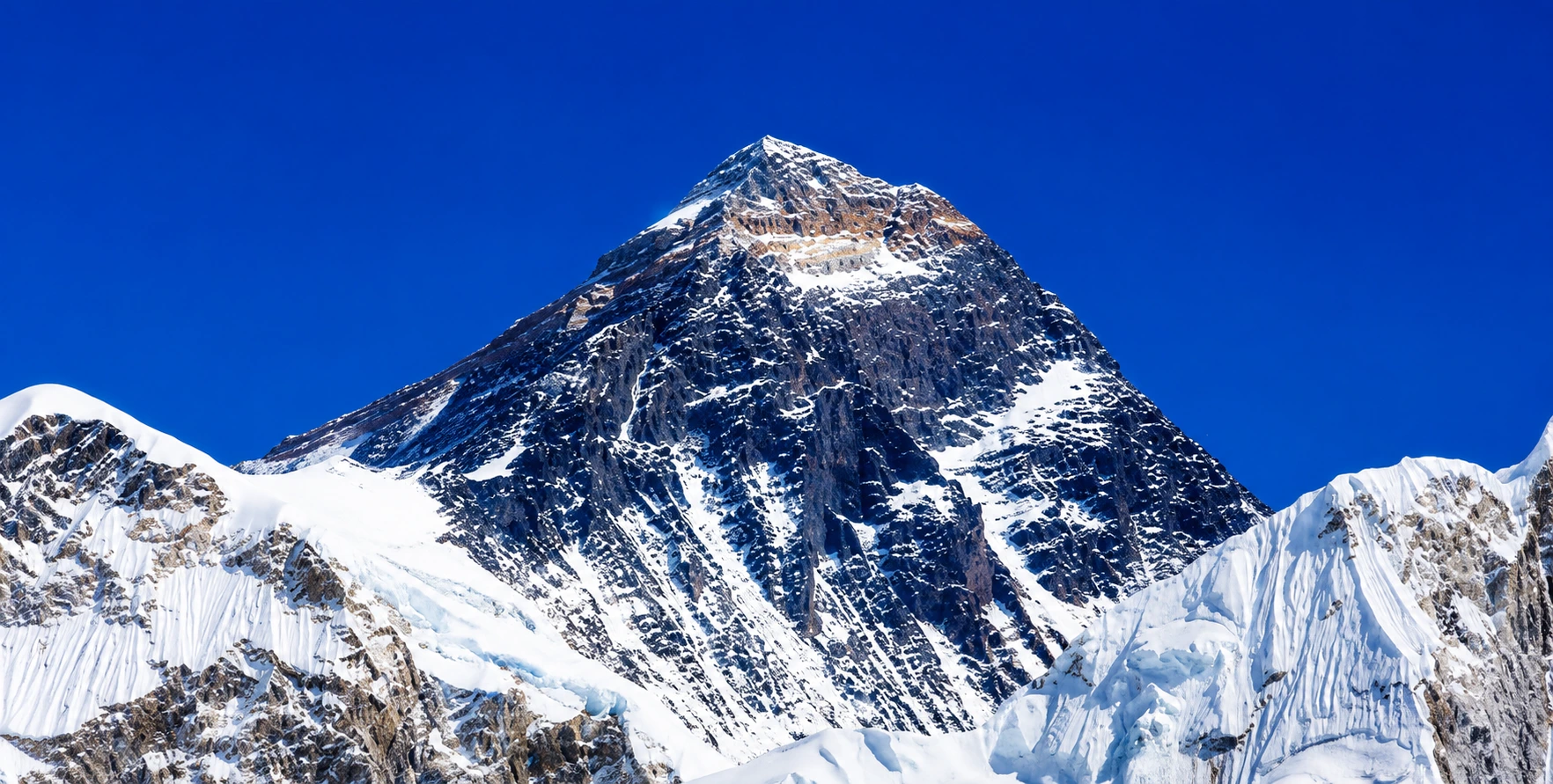
The Everest Base Camp luxury trek has become one of the most sought-after premium adventure experiences in global travel. This journey takes travelers to the foot of the world’s highest mountain in the company of expert Sherpa guides, with nights spent in the finest lodges available on the Khumbu trail, and typically with a helicopter transfer for at least one leg of the journey to combine dramatic aerial views of the Khumbu with significant time savings. The luxury EBC market has seen significant development in recent years, with the Yeti Mountain Home lodge chain and several other premium operators establishing genuine quality benchmarks that now attract a sophisticated international clientele willing to invest USD 2,500 to USD 8,500 per person for the complete experience.
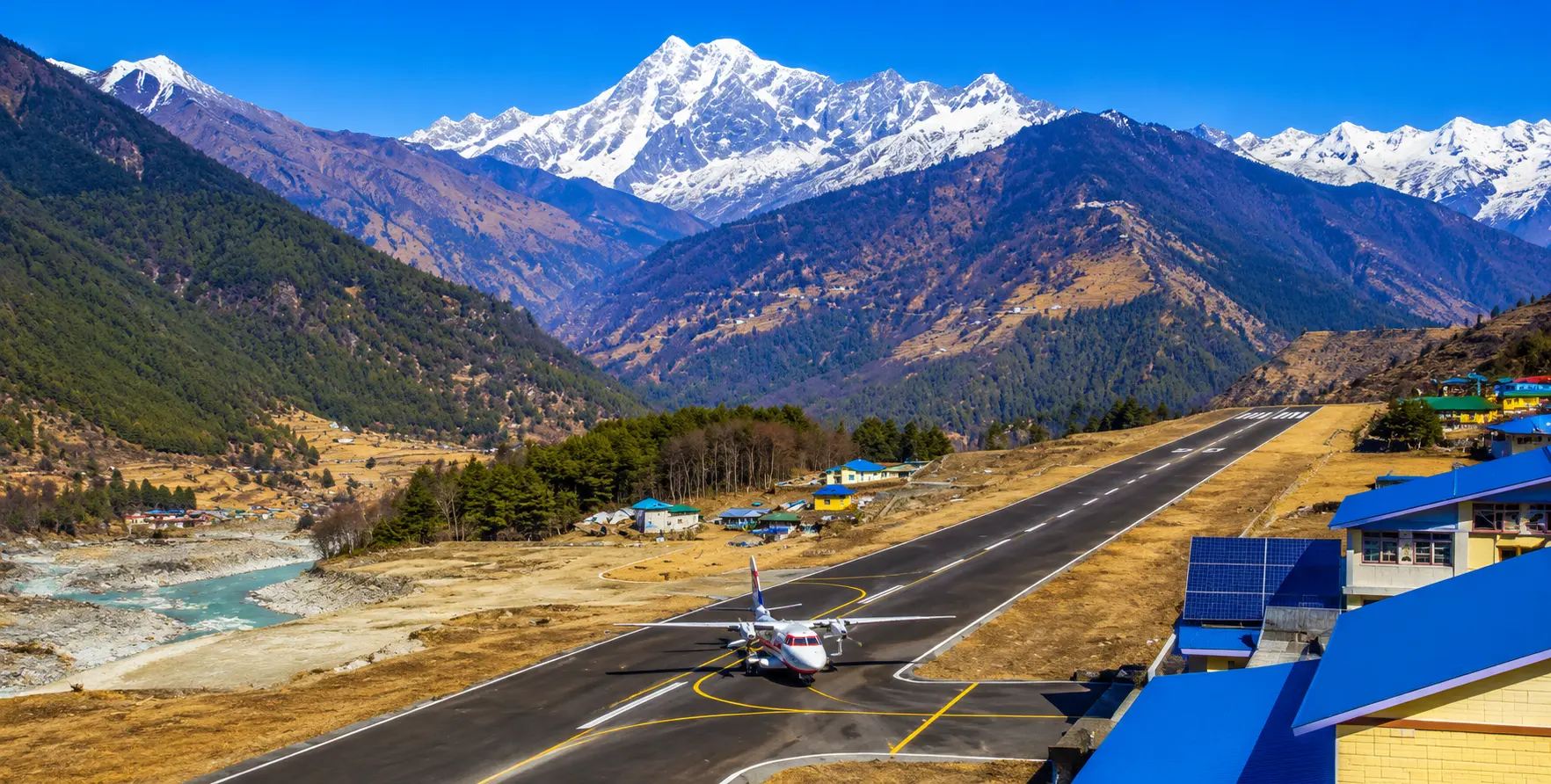
The role of ground vehicle hire in an Everest luxury trek is somewhat different from other regions because the dominant transport mode for the Khumbu approach is the domestic flight from Kathmandu to Lukla. This 30-to-40-minute flight replaces what would otherwise be a 3-to-5-day walk from the roadhead. In luxury EBC packages, this Lukla flight is frequently replaced by or supplemented with a helicopter transfer directly from Kathmandu, eliminating the flight cancellation uncertainty that plagues Lukla’s Tenzing-Hillary Airport and reducing the approach to a dramatic 45-minute helicopter flight over the Nepal hills and into the Khumbu glacier terrain. The helicopter return from Gorakshep after reaching Base Camp — a USD 800 to USD 1,200 per-person expense that saves 4 to 5 days of descent walking — has become a signature element of the luxury EBC experience.
Ground Vehicle Hire for Everest Luxury Treks
Despite the dominance of helicopter and domestic flight transport in the Khumbu approach, premium vehicle hire plays critical roles at several stages of an Everest luxury trek itinerary. The airport arrival transfer from Tribhuvan International Airport to a five-star Kathmandu hotel — Hyatt Regency, Marriott, or Dwarika’s — sets the premium standard from the first moment. Pre-trek Kathmandu heritage sightseeing in a private premium vehicle. The transfer to the domestic terminal for the Lukla flight or helicopter. Any Kathmandu Valley day trips incorporated into the itinerary before or after the trek. And the final return journey from any trek finishing point or helicopter landing location back to the hotel. All of these stages benefit from the same standard of vehicle and driver that the overall luxury trek package has established elsewhere in the experience.
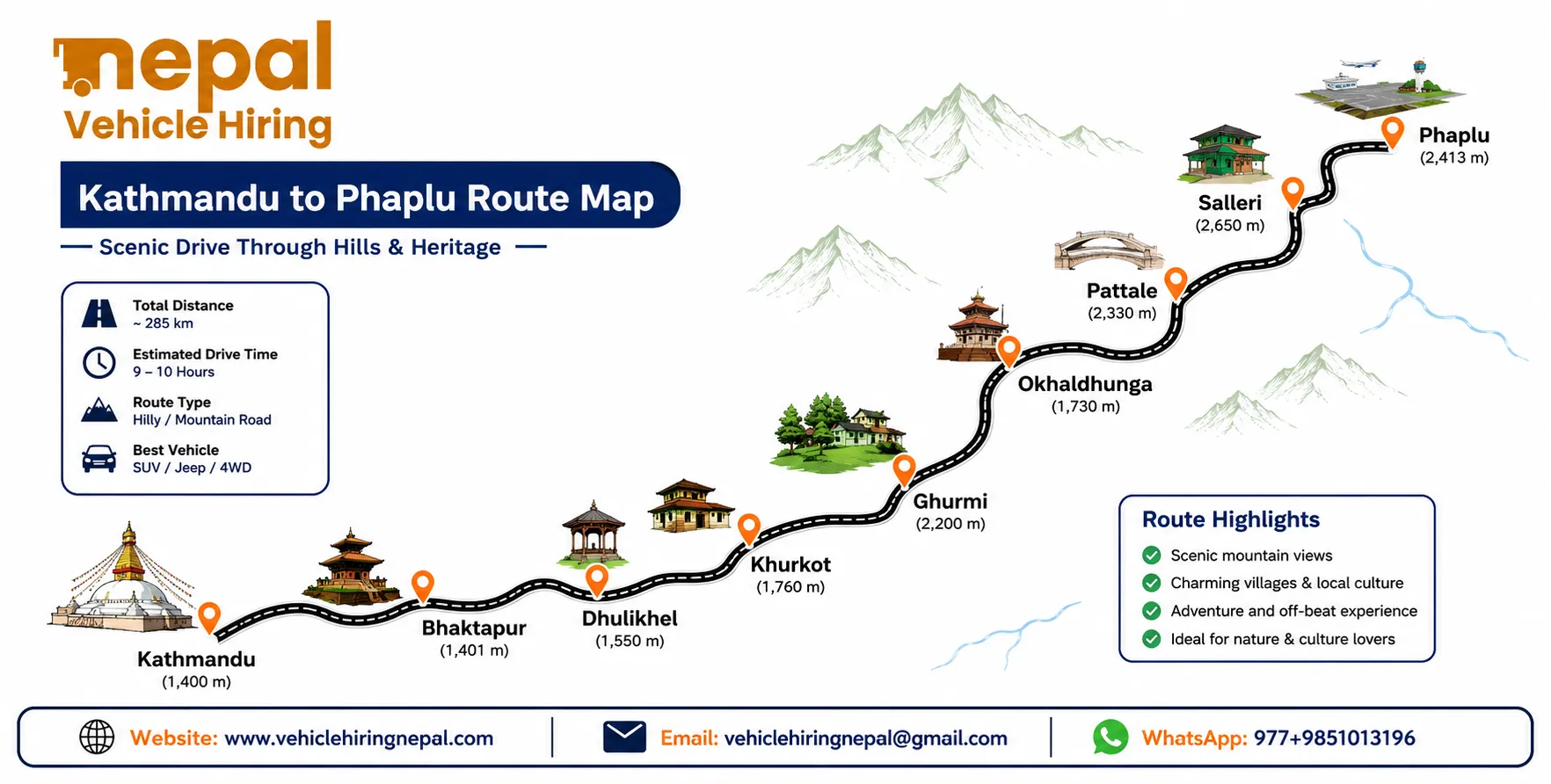
For trekkers who choose the overland alternative to the Everest region — beginning from Salleri or Jiri rather than flying or helicoptering to Lukla — the vehicle hire becomes considerably more substantial. The overland approach from Kathmandu to Salleri covers approximately 180 to 185 kilometers on a road that transitions from highway to rough mountain track, requiring a proper 4WD jeep and taking 8 to 10 hours. The cost of a private 4WD jeep for this route runs approximately NPR 25,000 to NPR 35,000 one way. In the luxury trek context, this overland approach can be structured with premium amenities — a picnic lunch at a scenic stop, a briefing by the guide on the Sherpa culture ahead, carefully planned rest stops — that transform the transit day into part of the experience rather than merely a logistical stage.
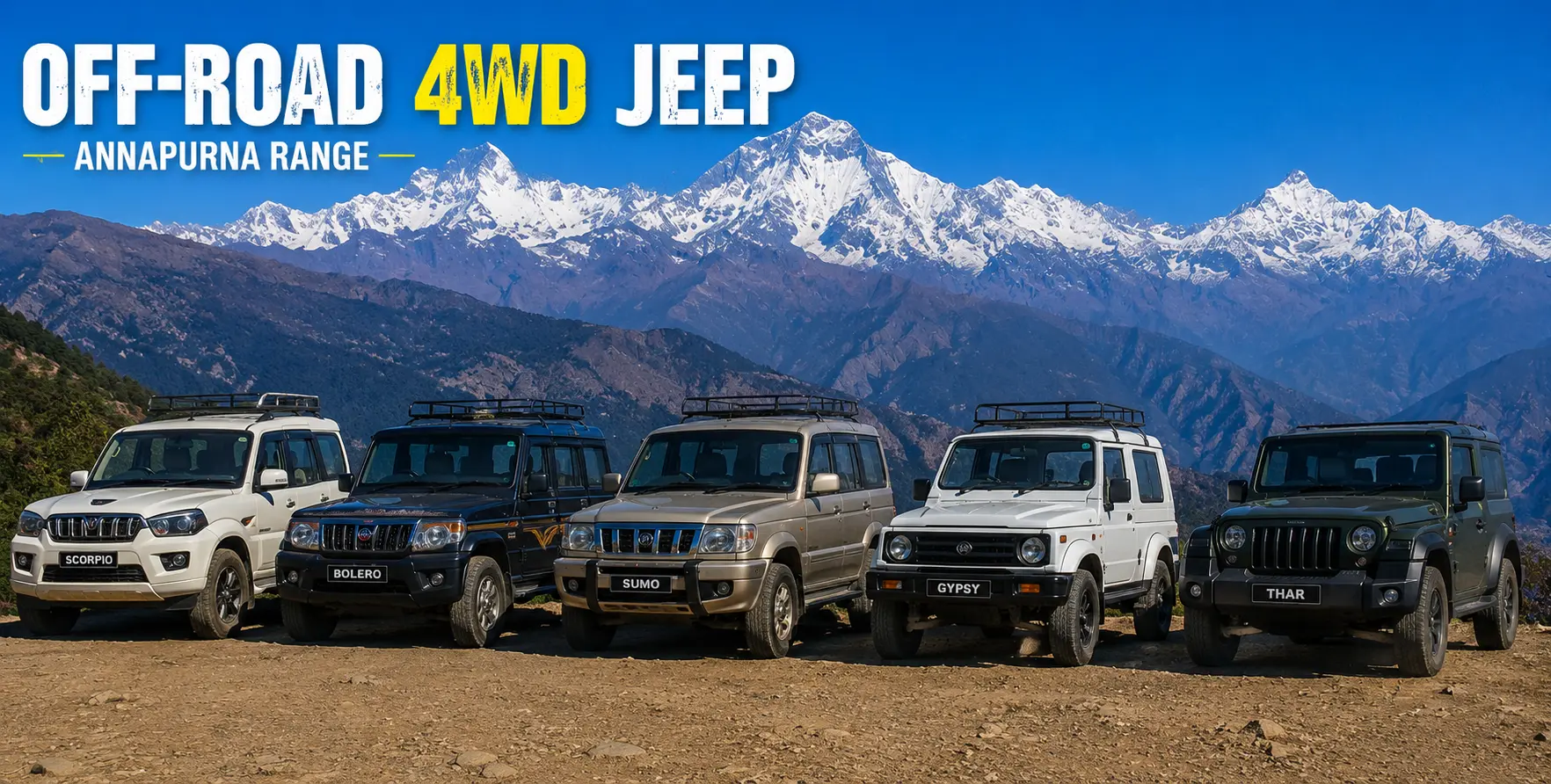
Annapurna Region Luxury trek in Nepal vehicle hire
Annapurna Luxury Lodge Trekking
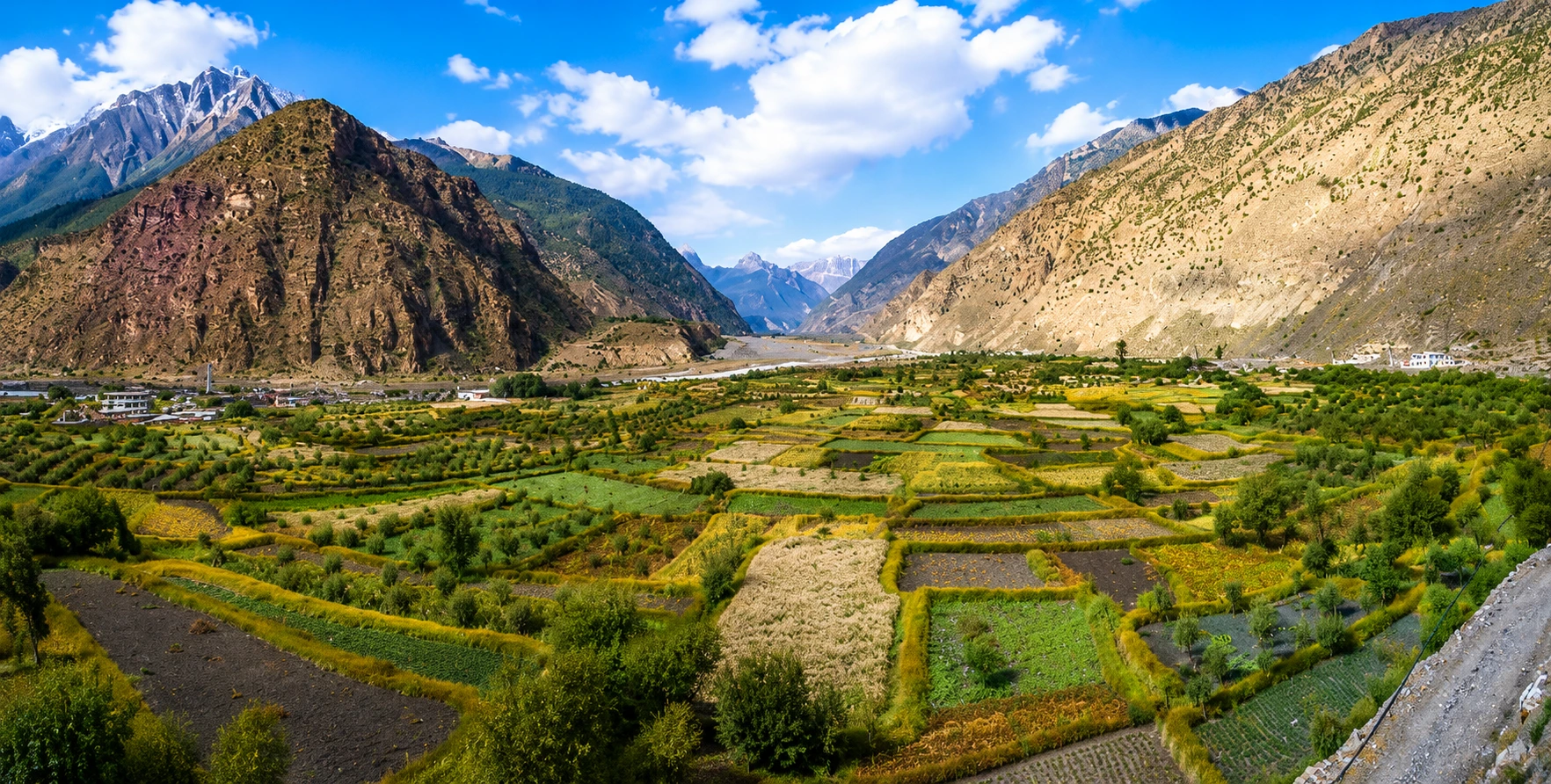
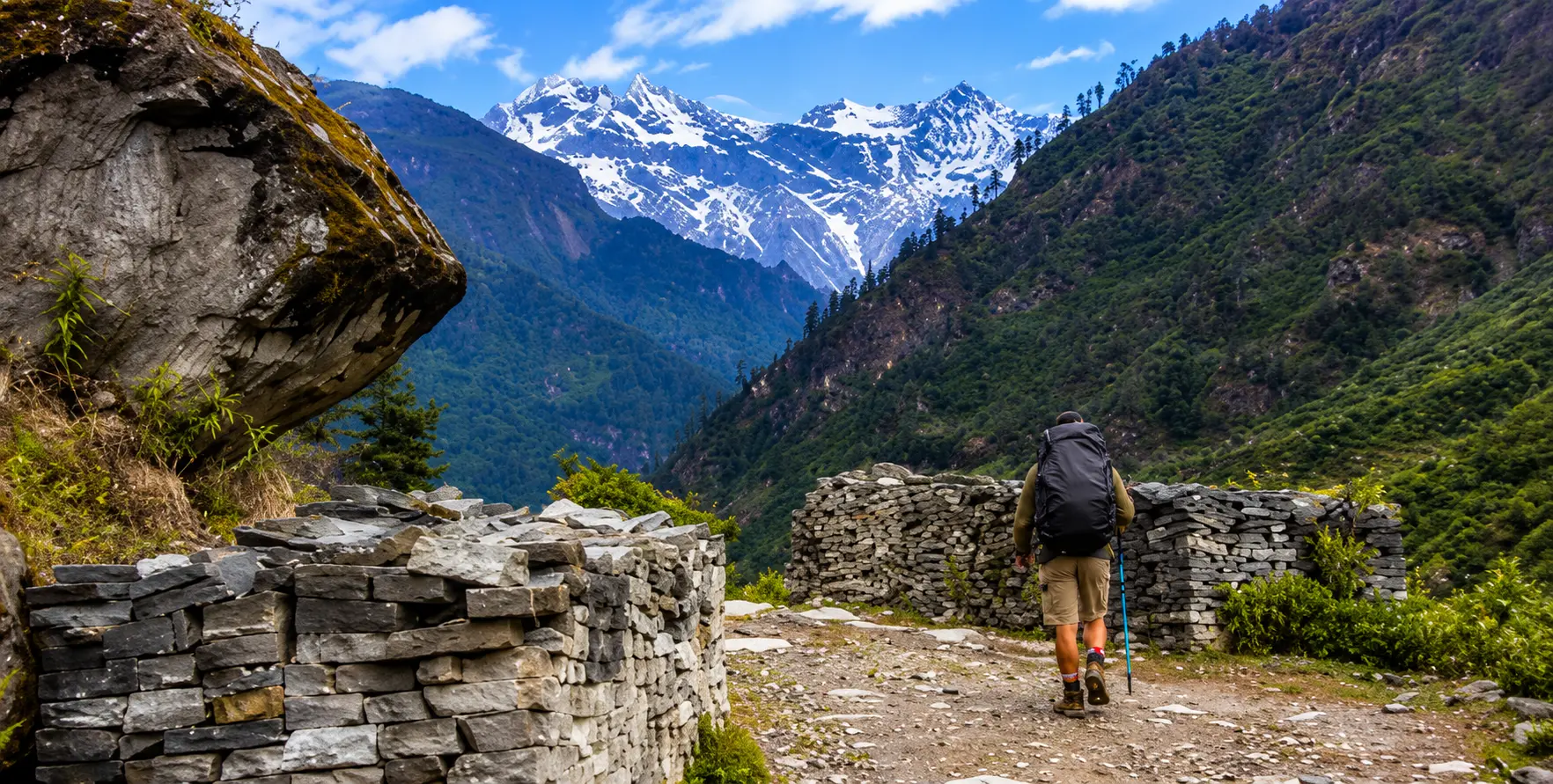
The Annapurna region hosts the most developed luxury lodge trekking infrastructure of any Nepal destination, with multiple purpose-built premium lodge networks specifically designed for the growing market of comfort-conscious international trekkers. The Annapurna foothills circuit — sometimes called the ‘tea house to lodge circuit’ — connects a series of premium properties in the villages of Landruk, Ghandruk, Australian Camp, and surrounding areas in a 5- to 8-day itinerary that offers world-class Annapurna massif views at relatively modest altitude, making it Nepal’s most accessible luxury trekking option in terms of physical demands. For this circuit, the vehicle hire role is limited but important: a premium SUV or jeep transfer from Pokhara to the trailhead at Phedi, Nayapul, or Ghandruk, and a return pickup from the finishing trailhead.
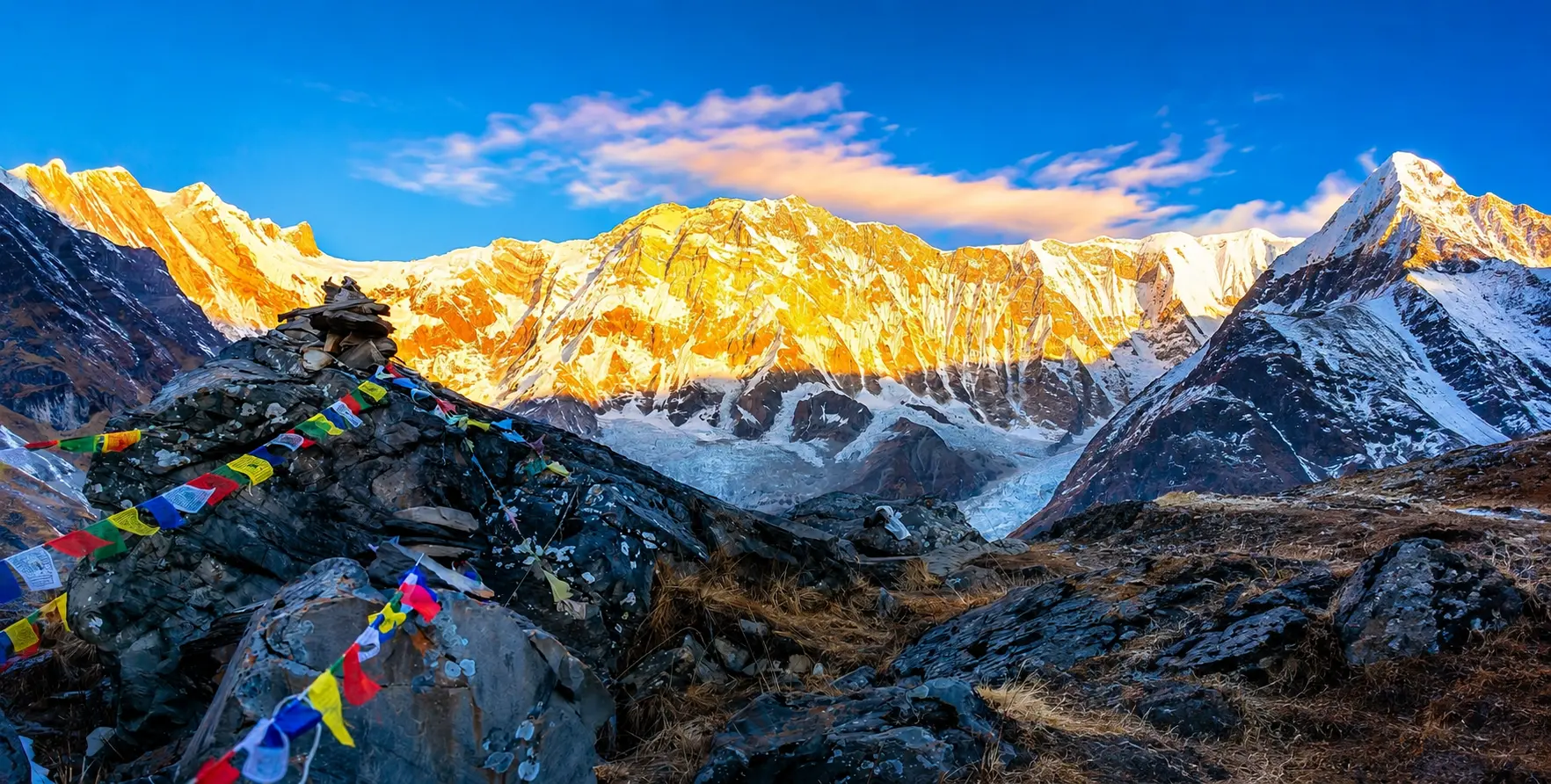
The Annapurna Base Camp luxury trek, reaching the famous 4,130-meter sanctuary amid the Annapurna peaks, extends the physical scope considerably but remains one of Nepal’s most popular premium trek destinations due to the extraordinary glacial amphitheater experience at the Base Camp itself. For this route, the trailhead transfer from Pokhara to Nayapul (42 km, 1.5 to 2 hours, NPR 3,000 to NPR 5,000 by private car or SUV) is one of Nepal’s most straightforward luxury trek vehicle hire arrangements, accessible on a well-maintained paved road in any standard premium vehicle. The luxury dimension of this transfer comes from the quality of the vehicle’s interior — the comfort of the seats for the drive, the reliability of the air conditioning, the luggage management capability — rather than from any off-road challenge.
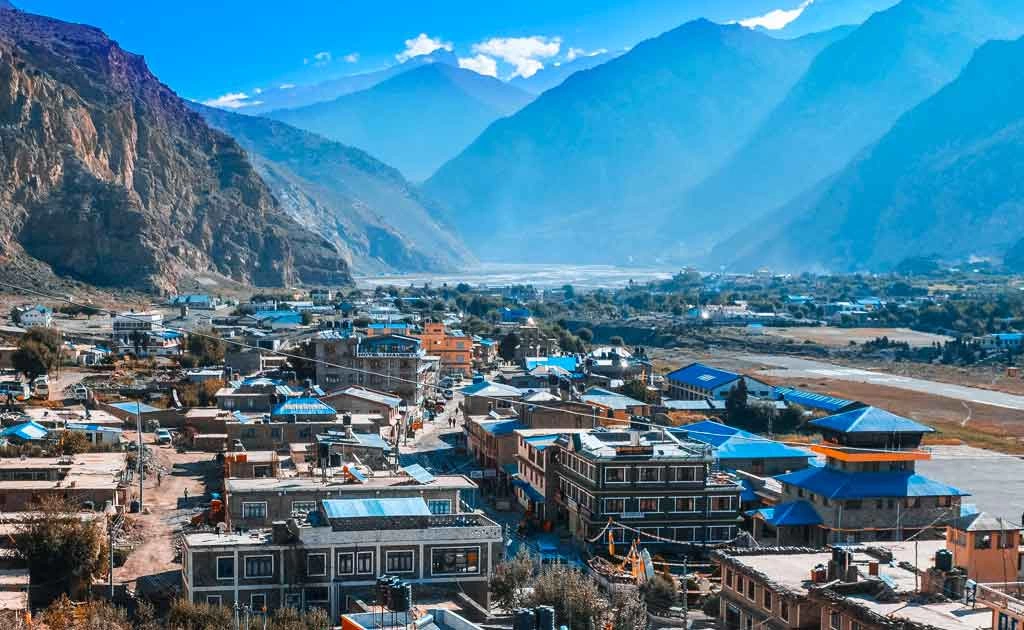
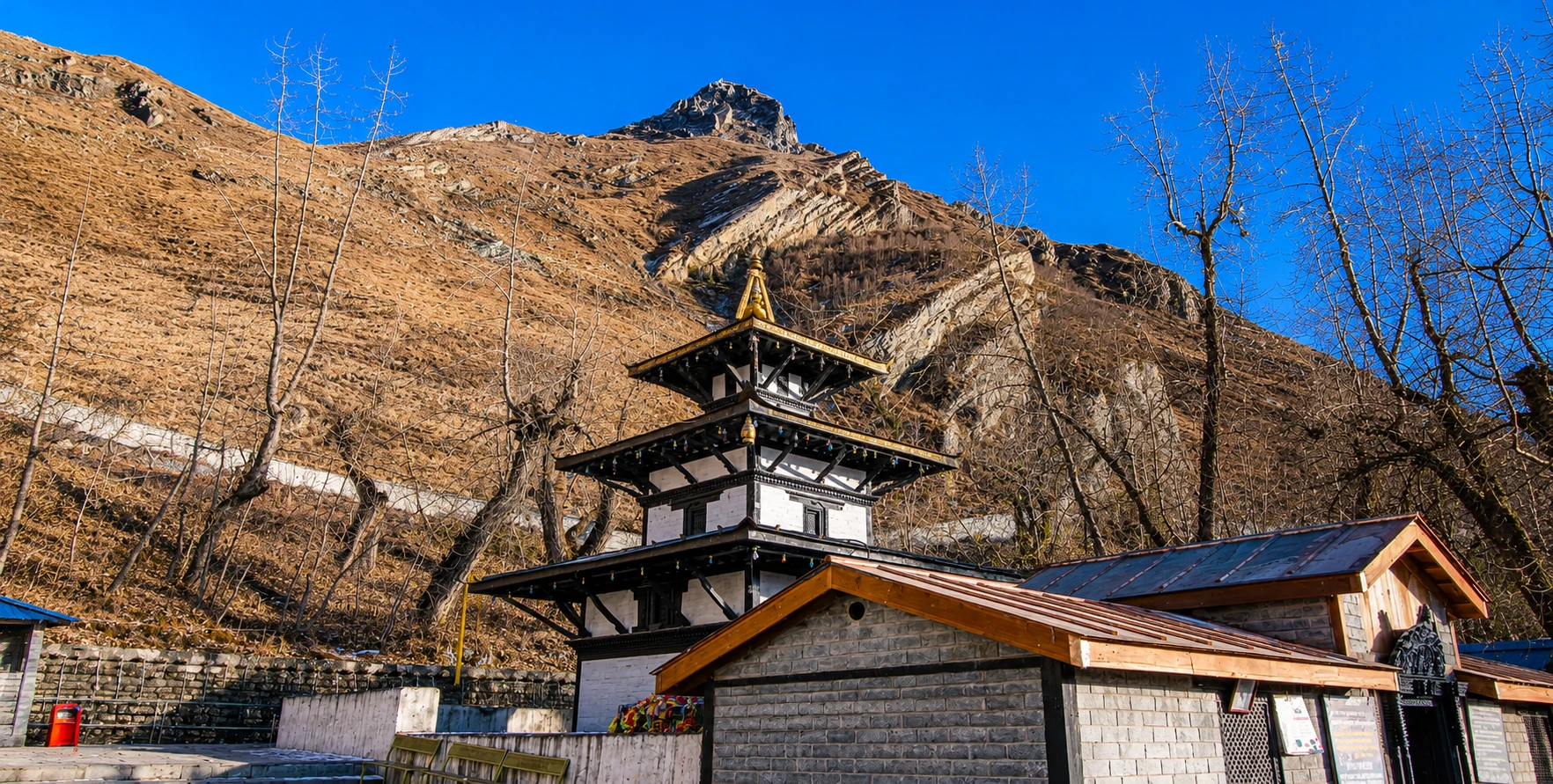
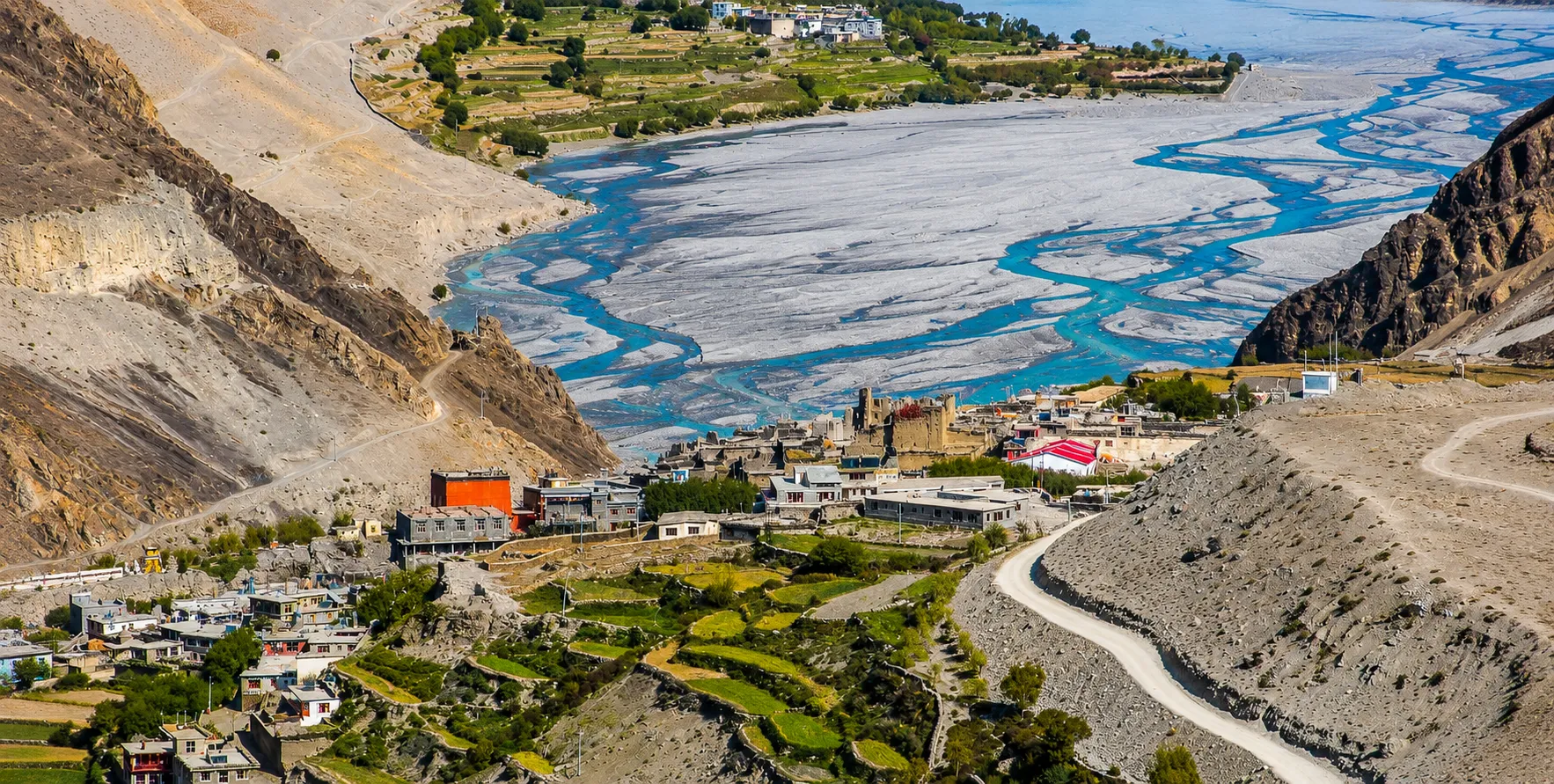
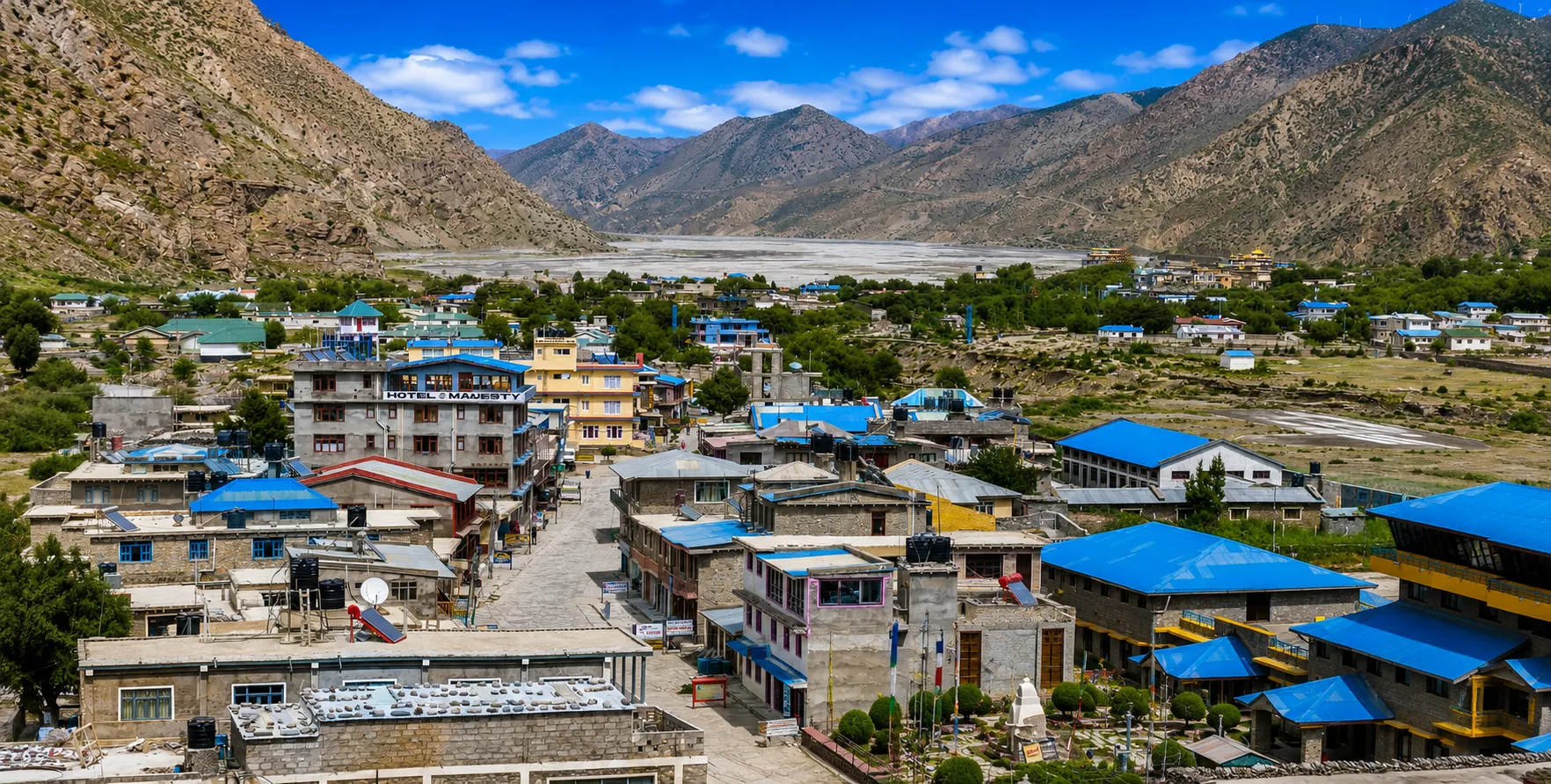
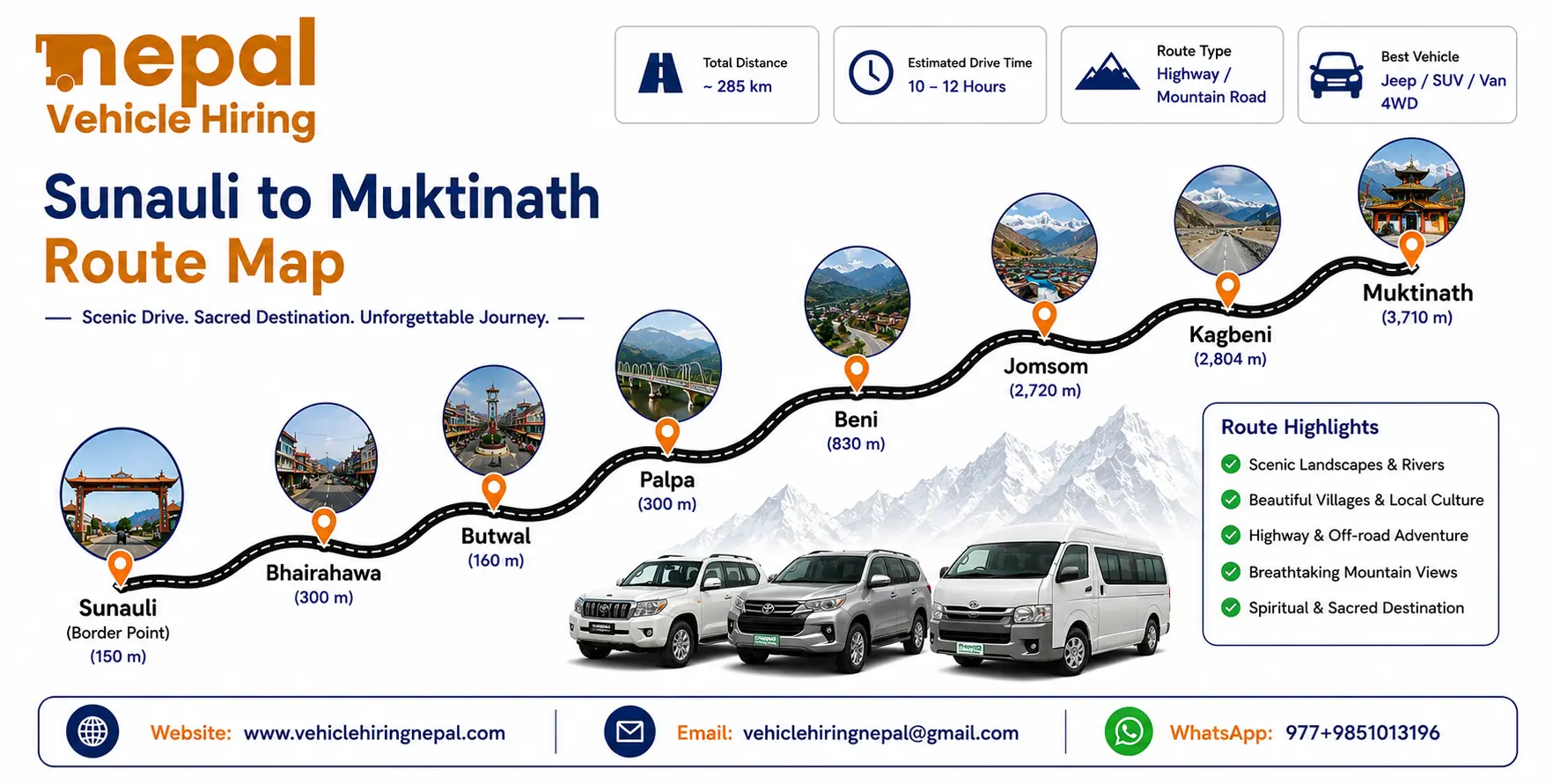
The Annapurna Circuit luxury trek — a 15-to-20-day journey over the 5,416-meter Thorong La Pass — involves more complex vehicle hire arrangements, since the circuit enters the high mountains from Besisahar (accessible from Pokhara in 3 to 4 hours by private car or SUV, NPR 6,000 to NPR 12,000) and typically exits near Muktinath or Jomsom on the western side. For luxury trekkers, the approach to Besisahar in a premium vehicle and the exit transfer from Jomsom or Muktinath back to Pokhara (NPR 28,000 to NPR 45,000 by 4WD jeep for the overland return) bracket an experience that includes premium lodge stays throughout the circuit — the finest available rooms in Chame, Manang, Muktinath, Marpha, and Jomsom, combined with private guiding and porter support across the full crossing.
Upper Mustang Luxury Jeep Tour
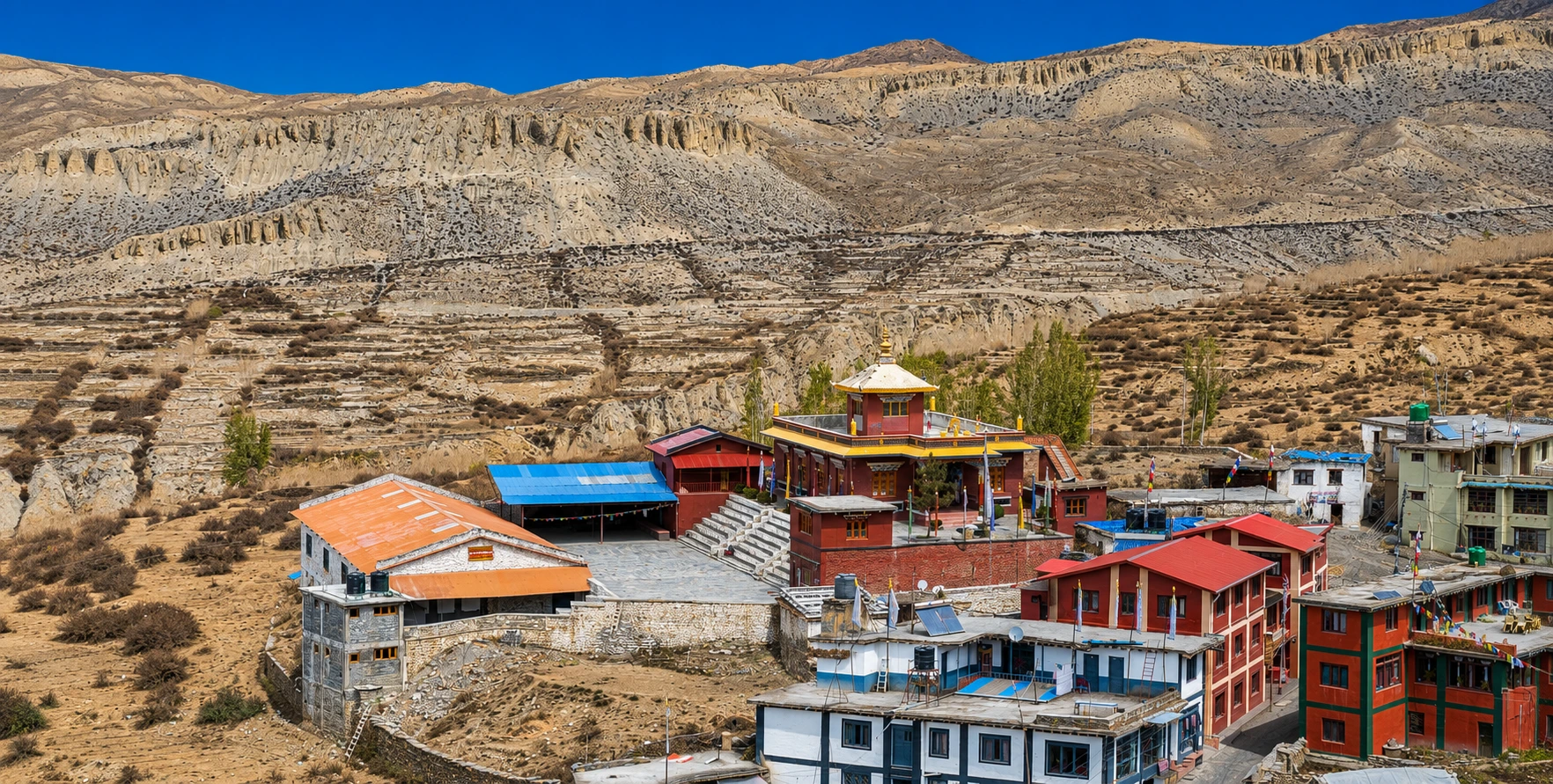
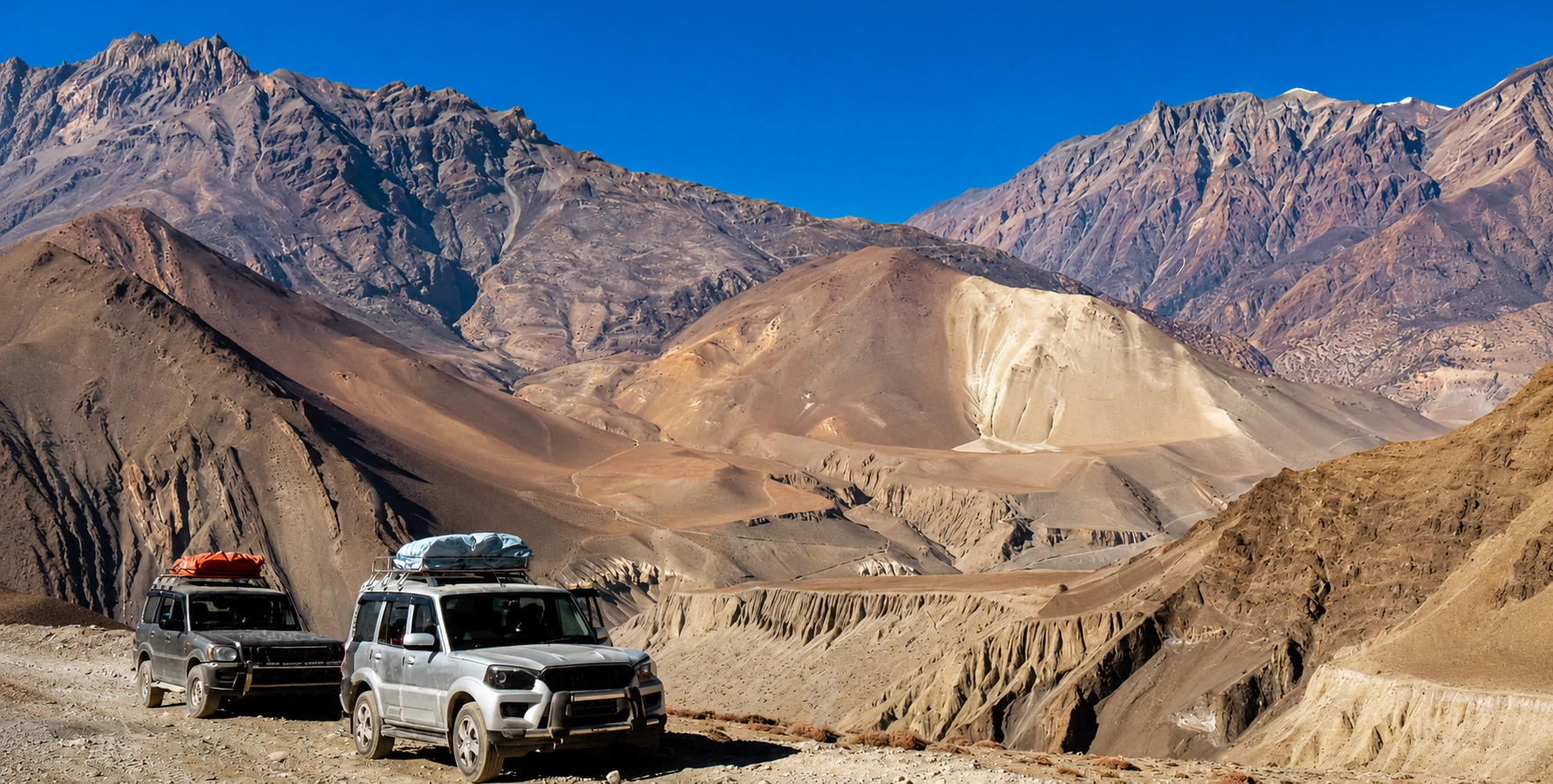
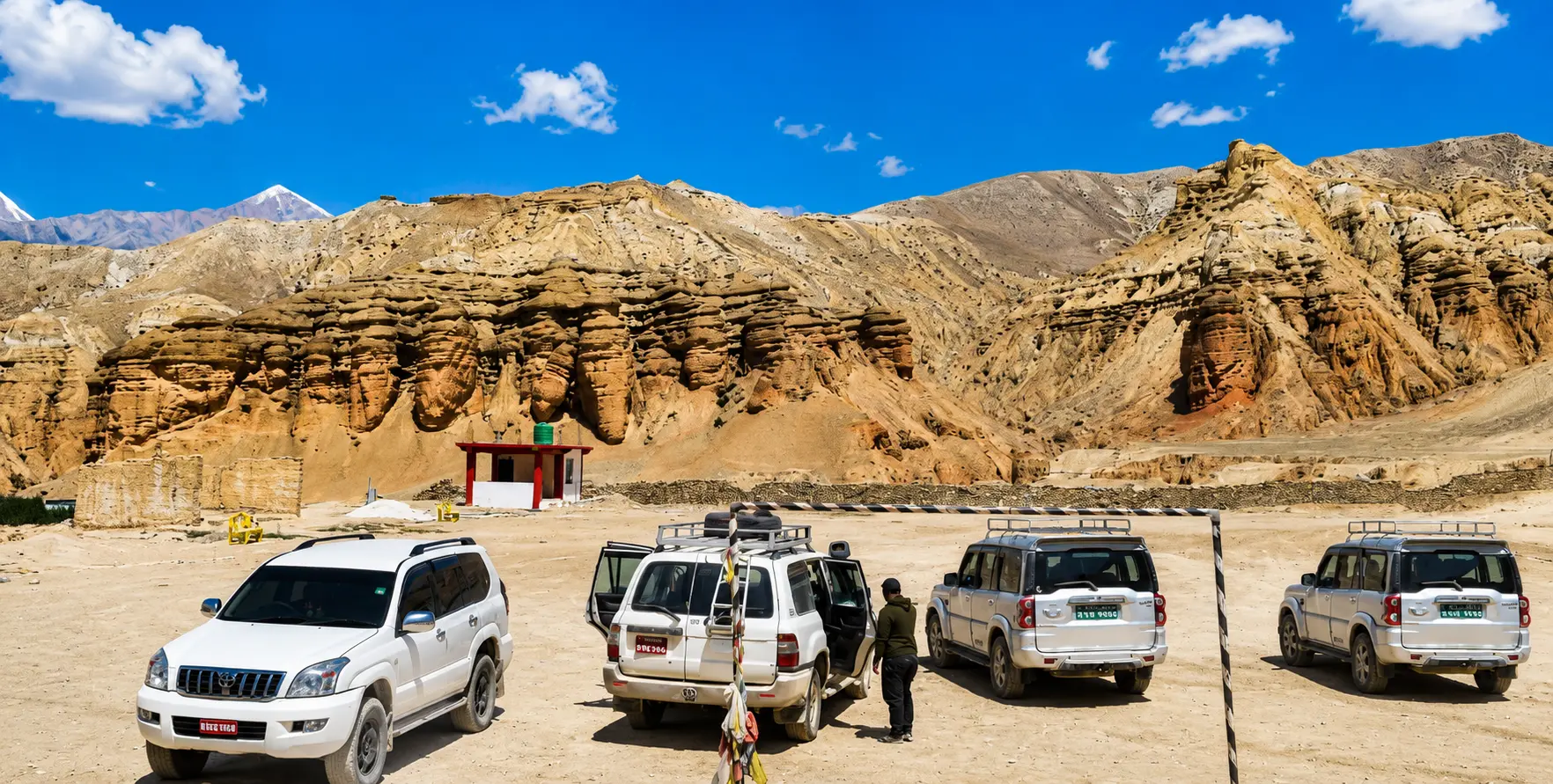
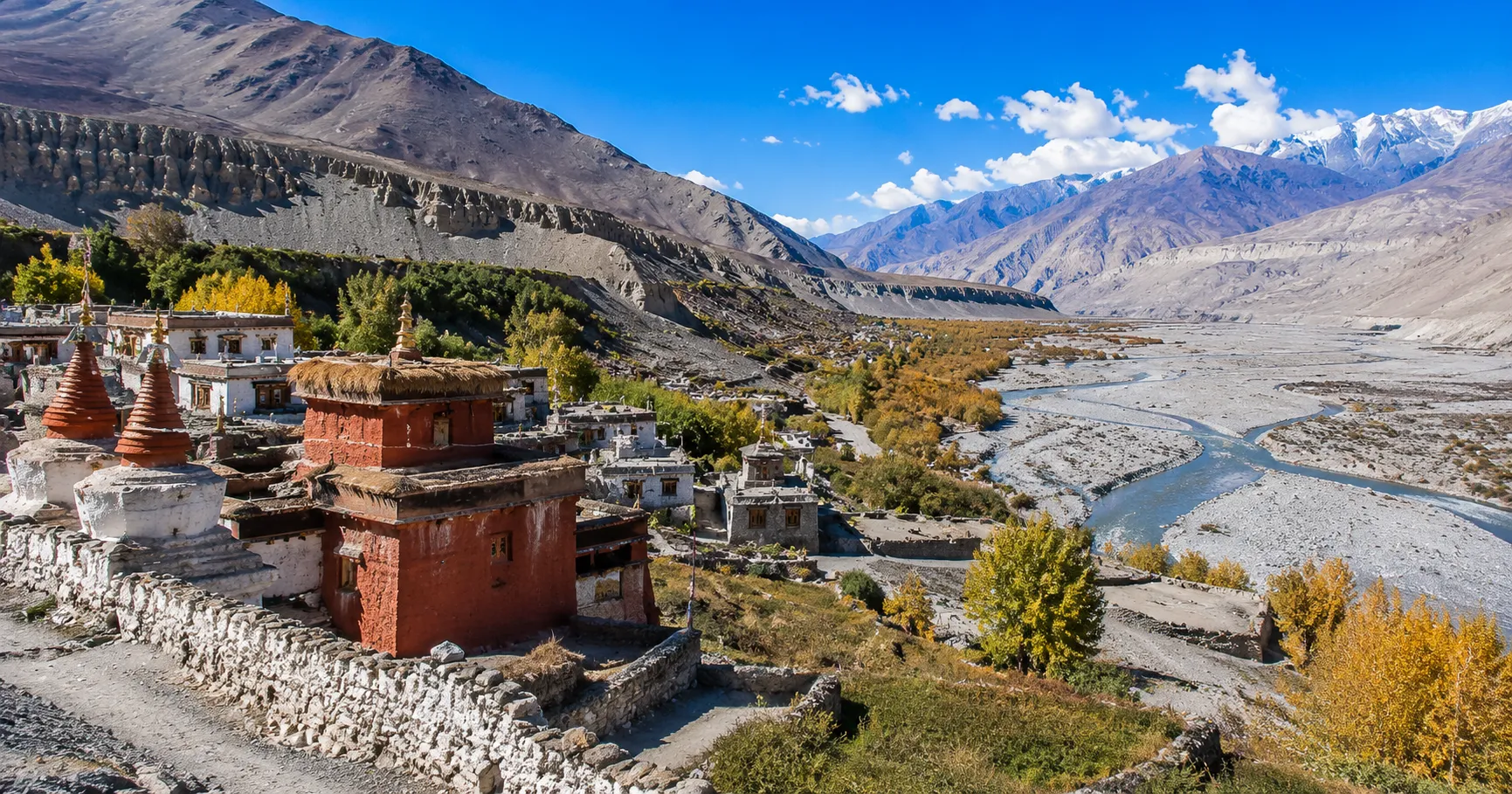
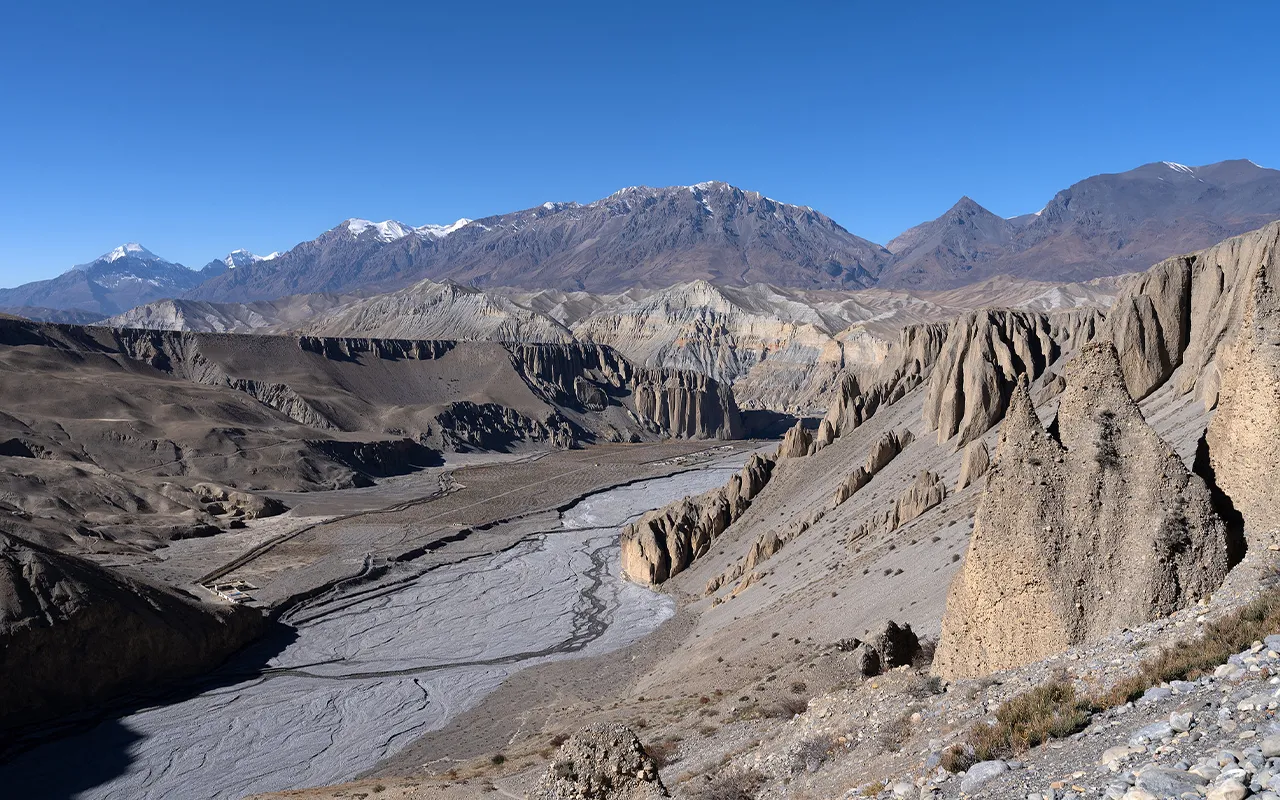
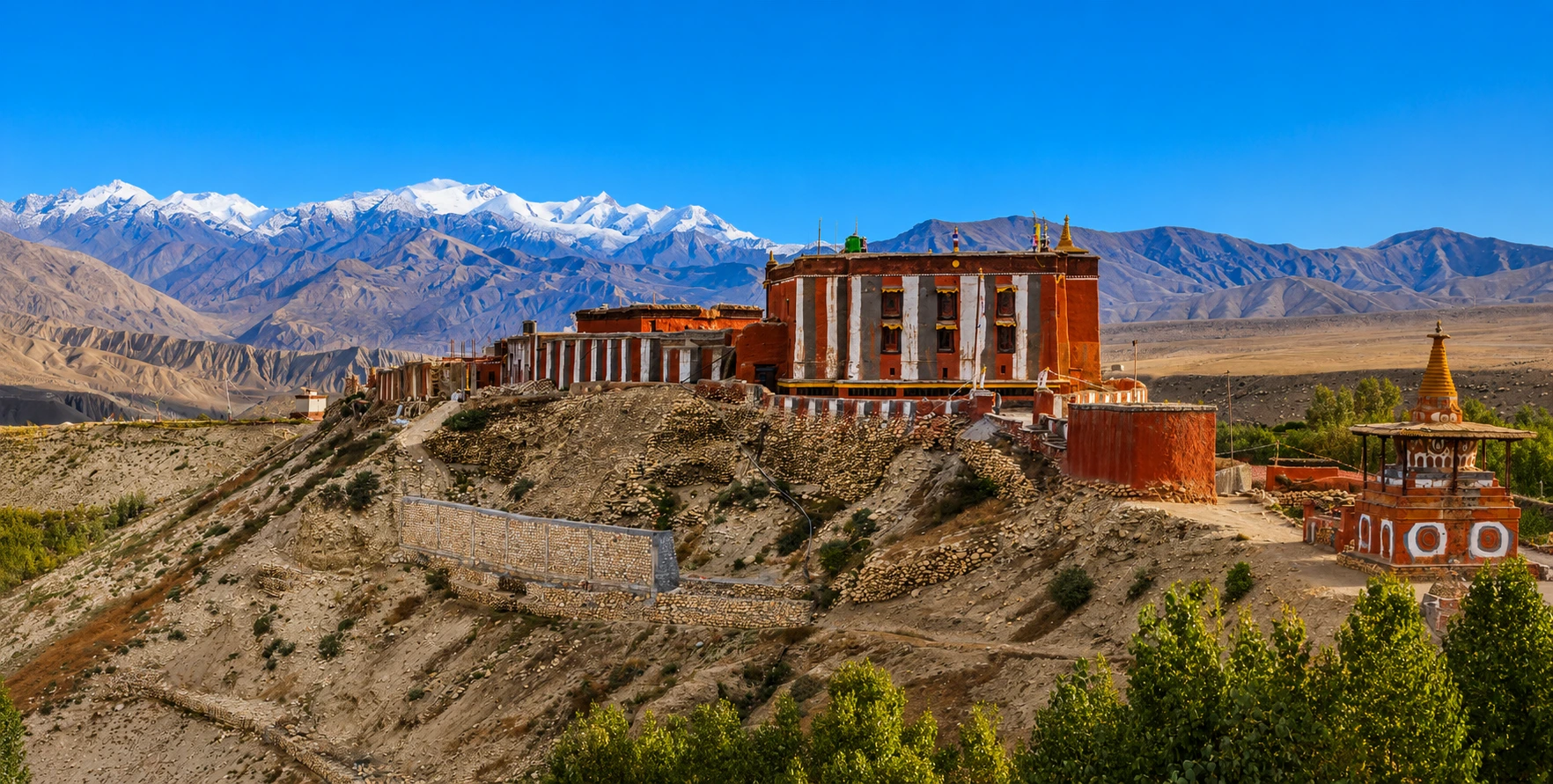
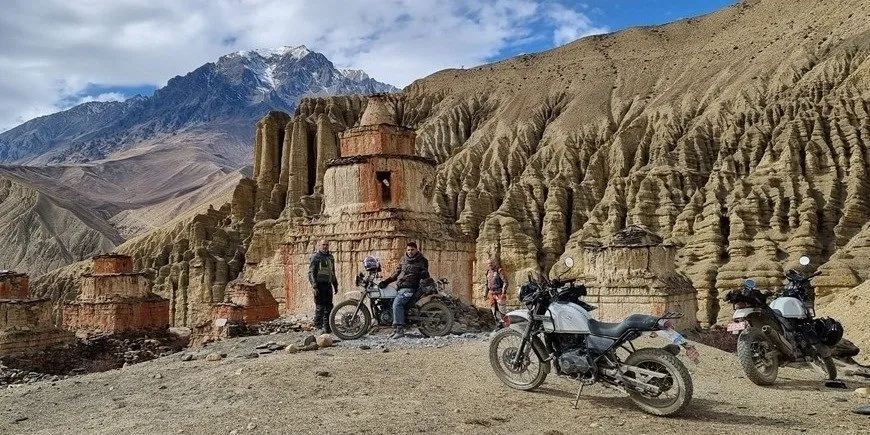
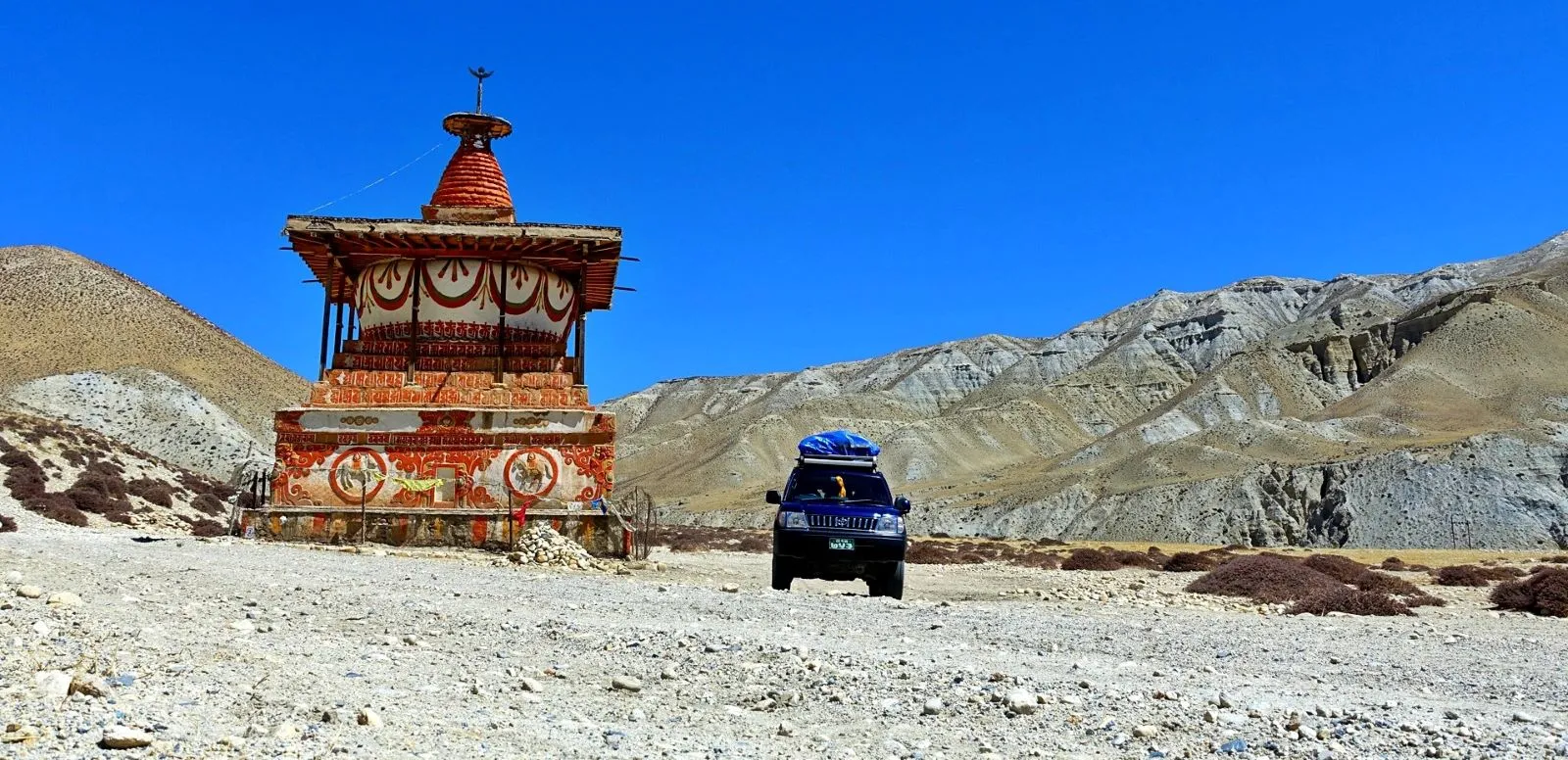
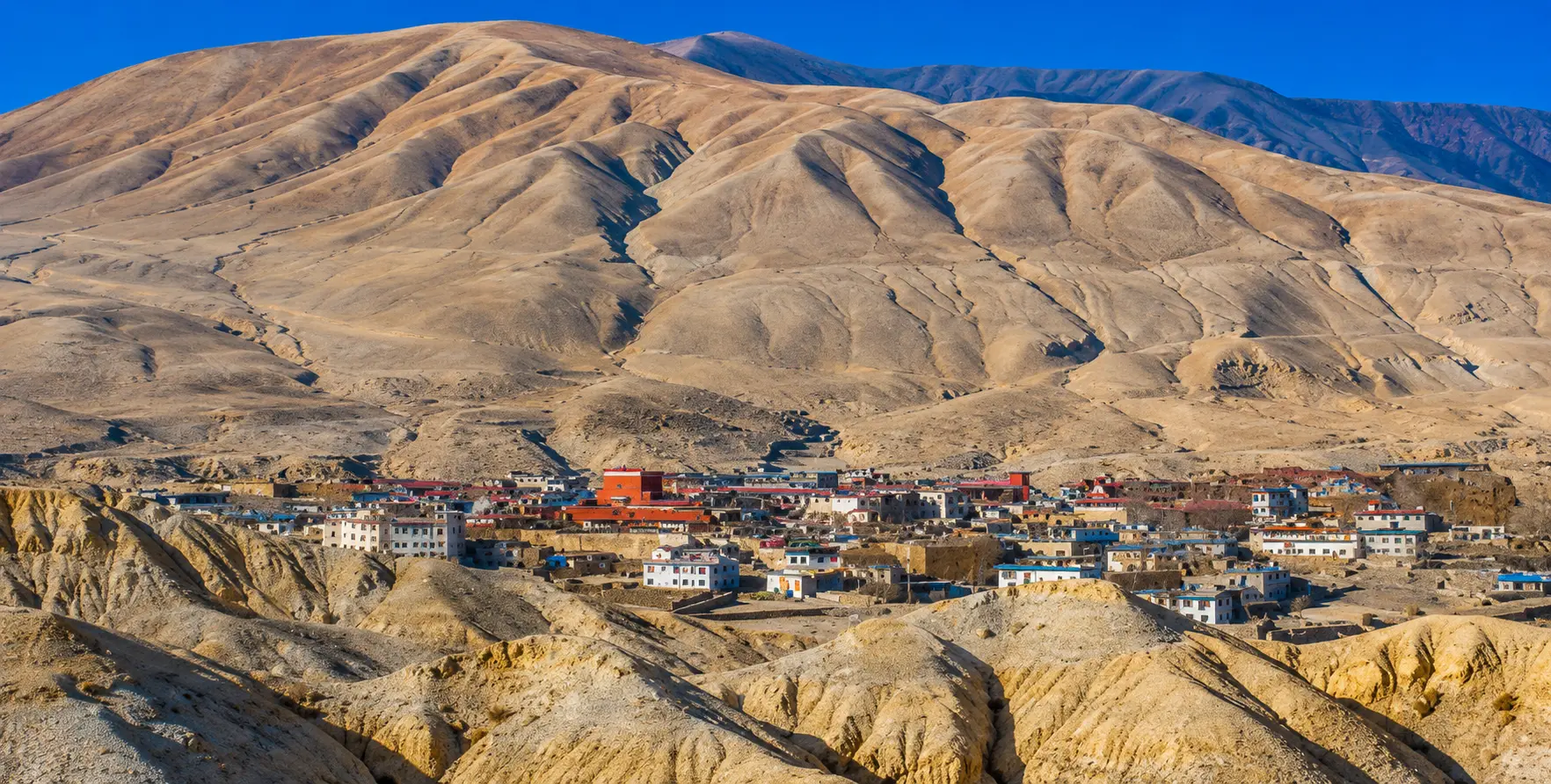
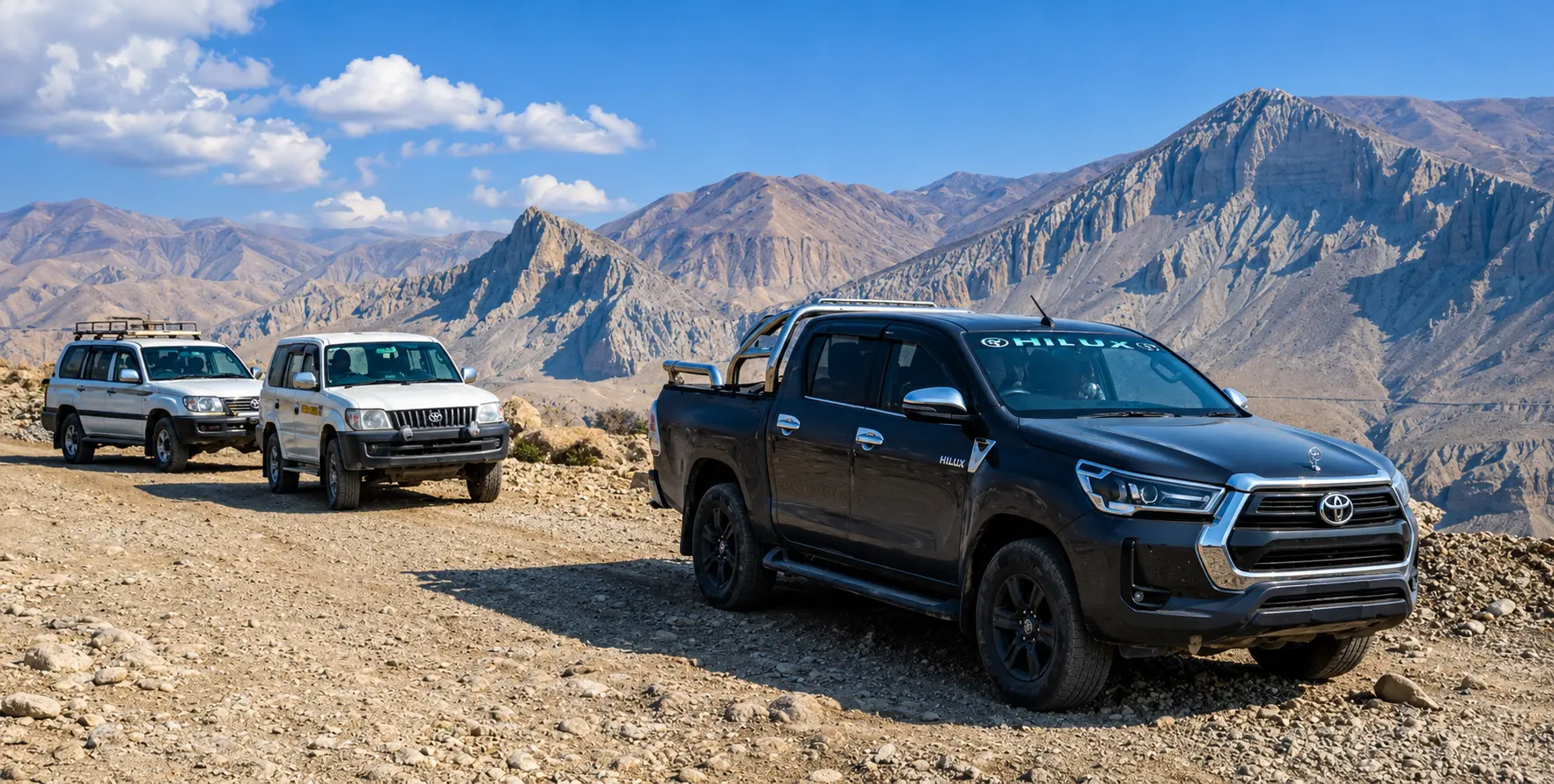
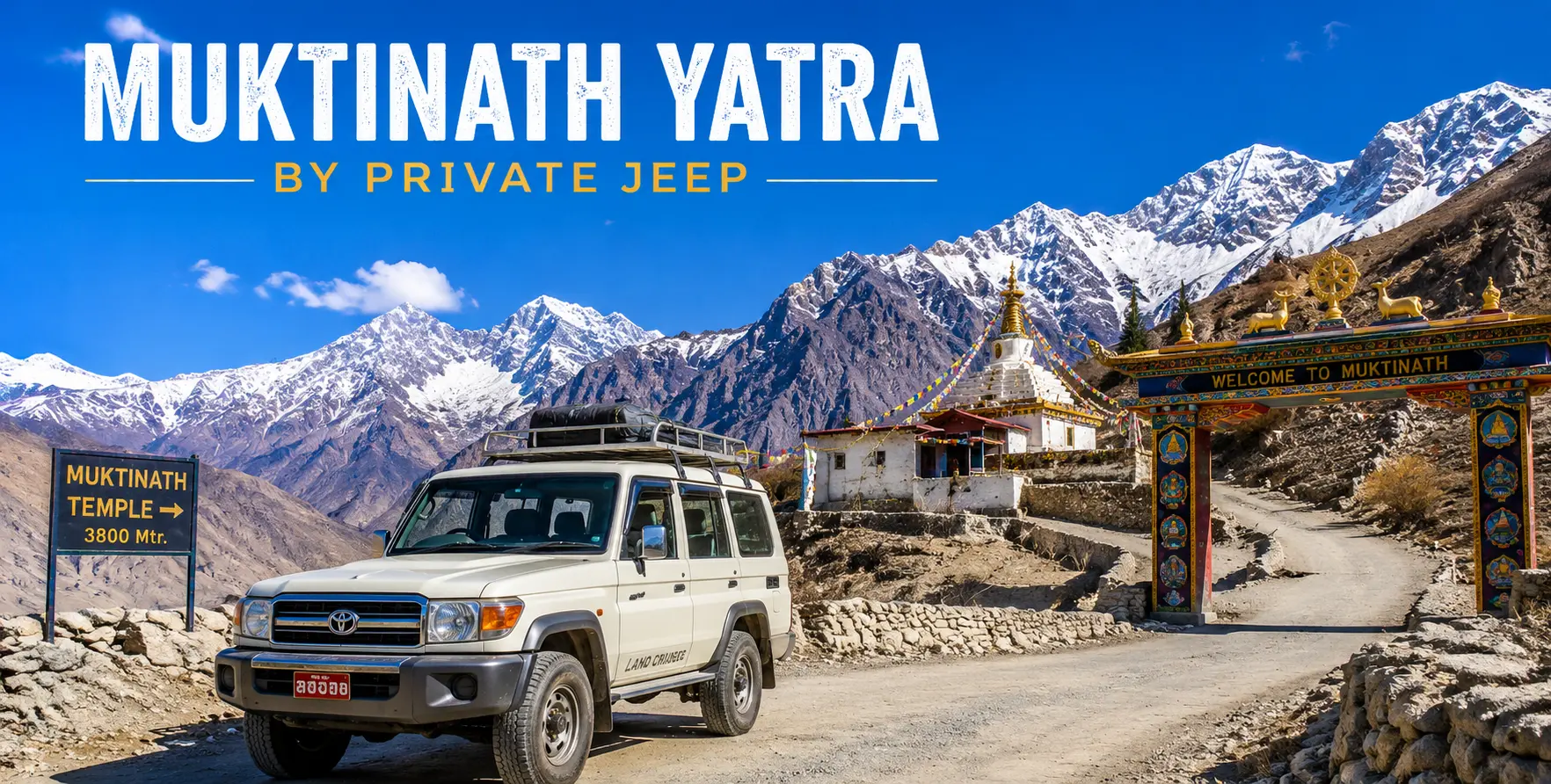
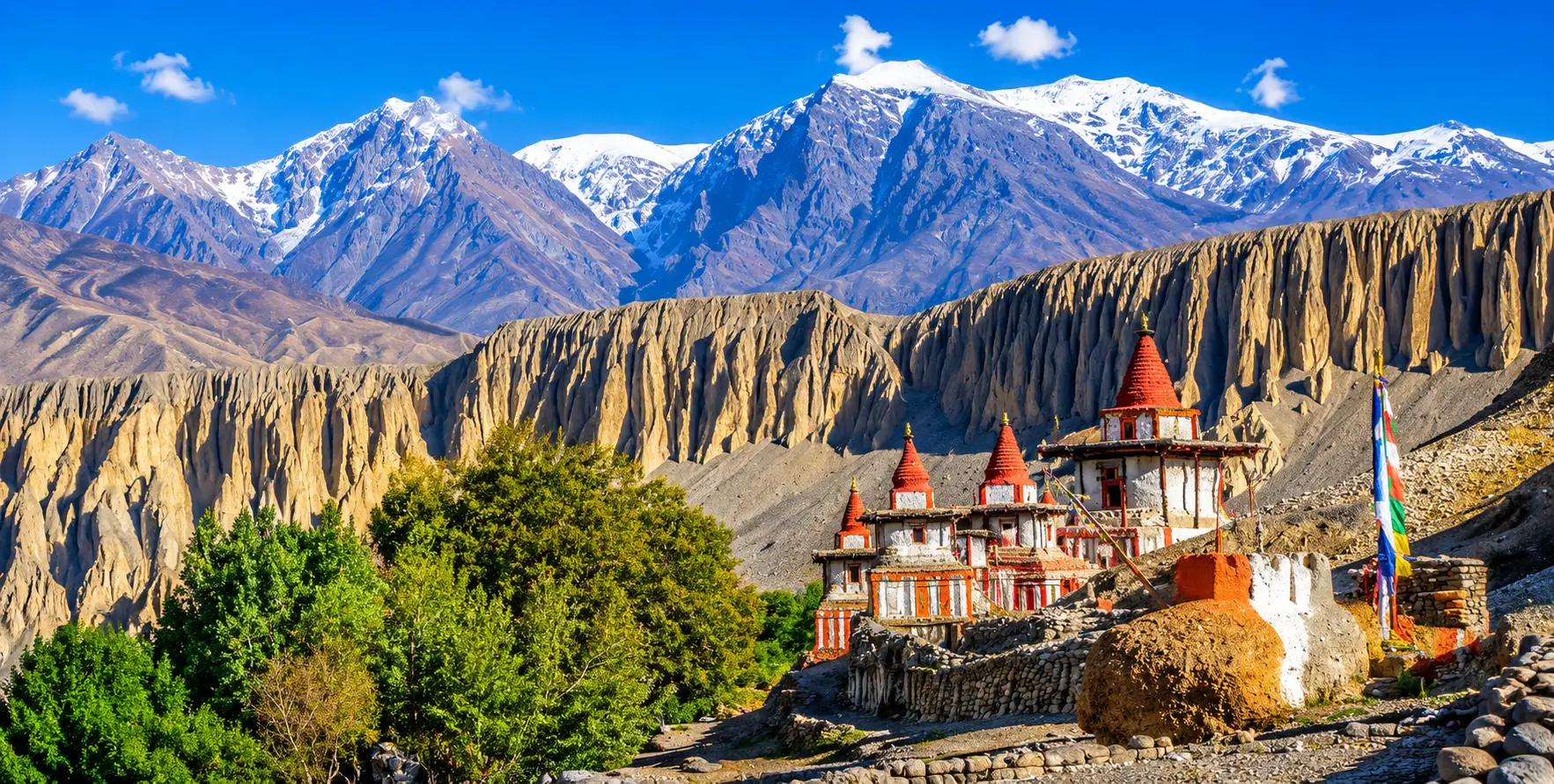
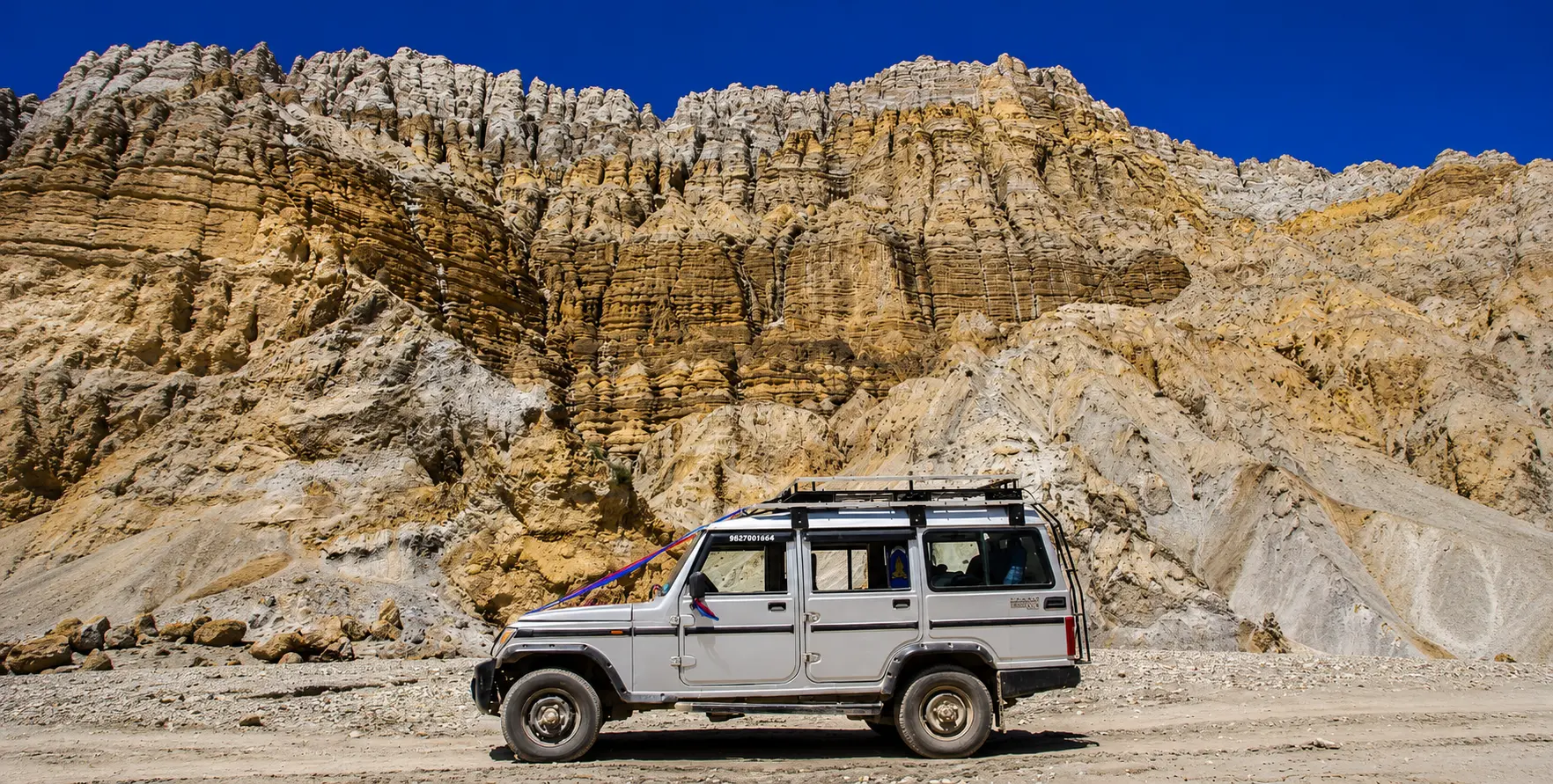
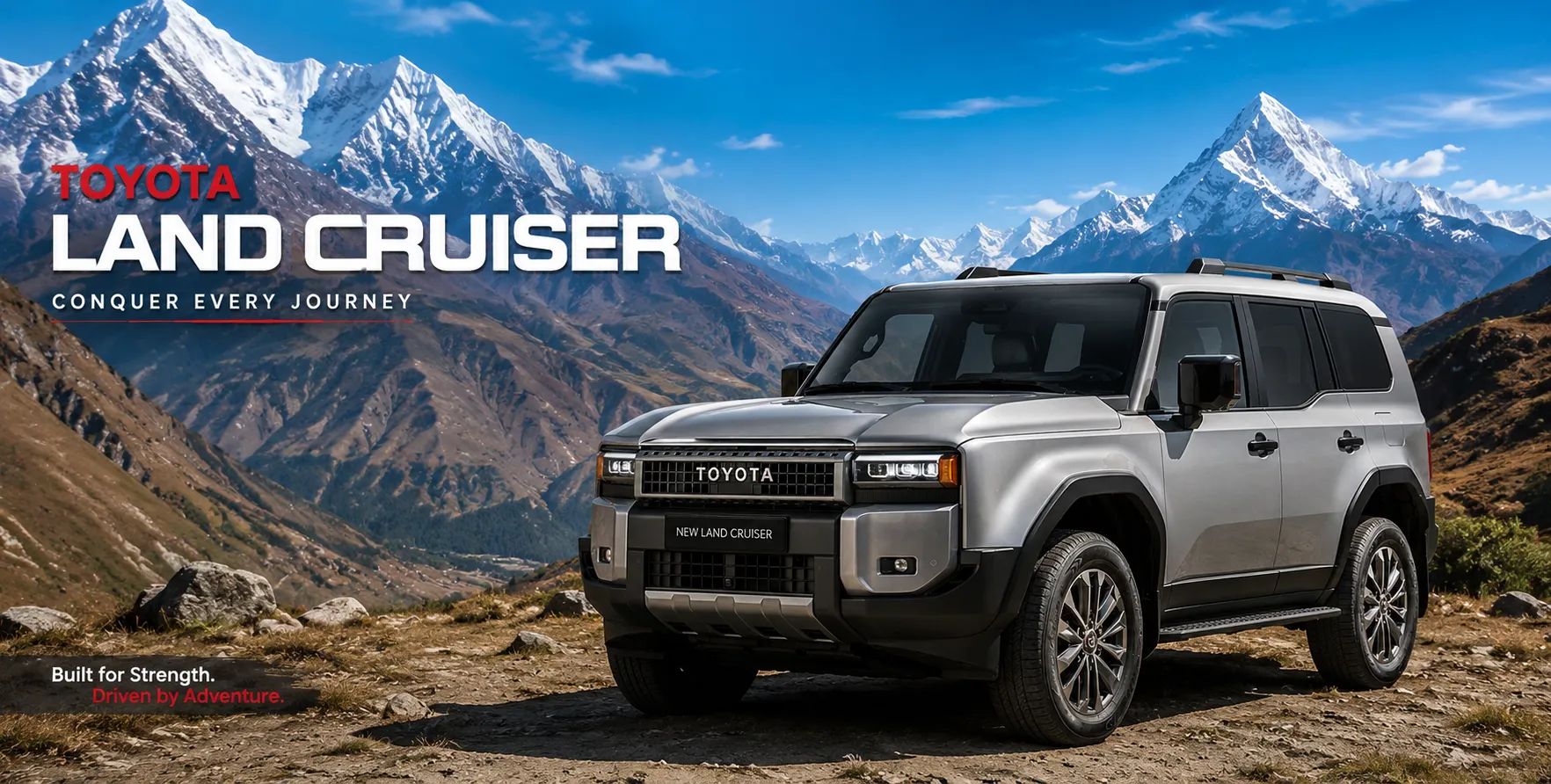
Upper Mustang represents the most distinctive luxury vehicle hire scenario in all of Nepal trekking: a destination where the jeep is not merely the trailhead transfer but the primary mode of exploration throughout the adventure. The luxury Upper Mustang jeep tour is built around a premium 4WD vehicle — typically a Toyota Land Cruiser Prado or VX — that carries a small group of high-value travelers from Pokhara through the Kali Gandaki Gorge to Lo Manthang, serving as both transport and mobile base for daily excursions to the sky caves, monasteries, and plateau viewpoints that define the Upper Mustang experience.
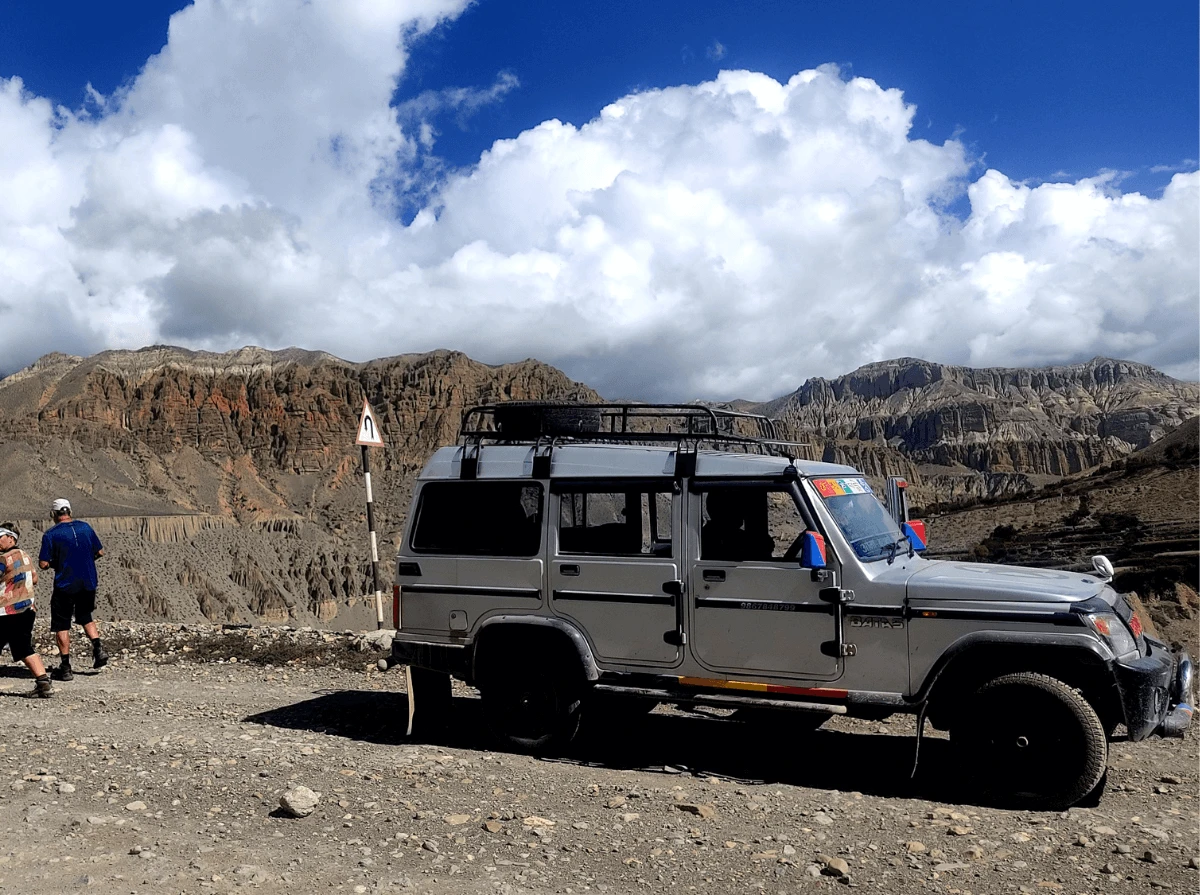
In this context, the quality of the vehicle is inseparable from the quality of the overall experience. The difference between a well-maintained Toyota Land Cruiser Prado with a reclining rear seat configuration and a basic working jeep with standard fixed seating is felt acutely over the 8 to 10 hours of driving that the Pokhara to Lo Manthang overland journey requires. Luxury Upper Mustang tour operators increasingly specify premium Land Cruiser models for exactly this reason, and the NPR 80,000 to NPR 120,000 round-trip vehicle hire cost for a private Land Cruiser on this route represents a justified premium when considered as a proportion of the total luxury package cost.
Langtang and Other Regions: Luxury Trek Vehicle Hire
Langtang Luxury Lodge Trek
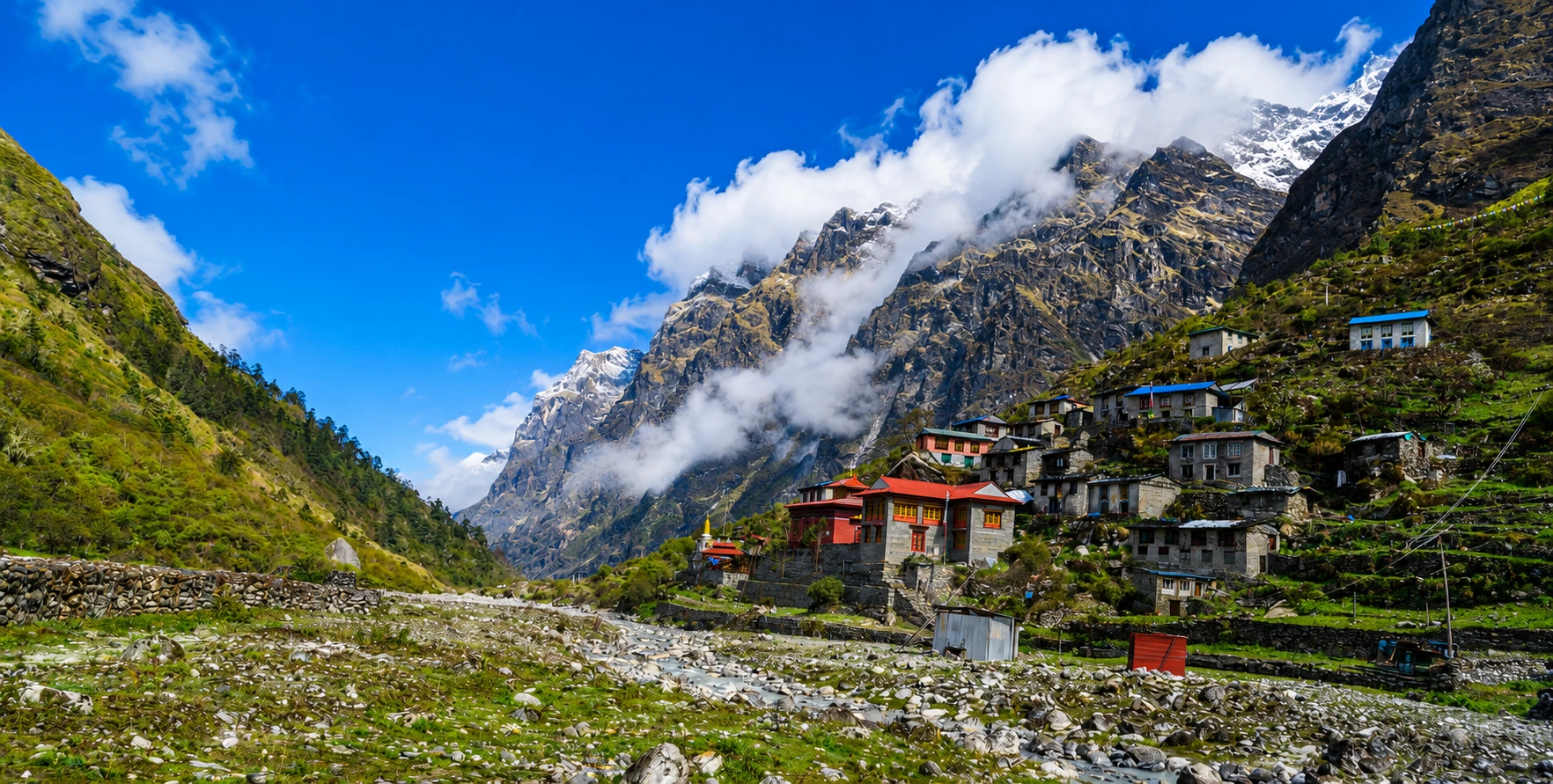
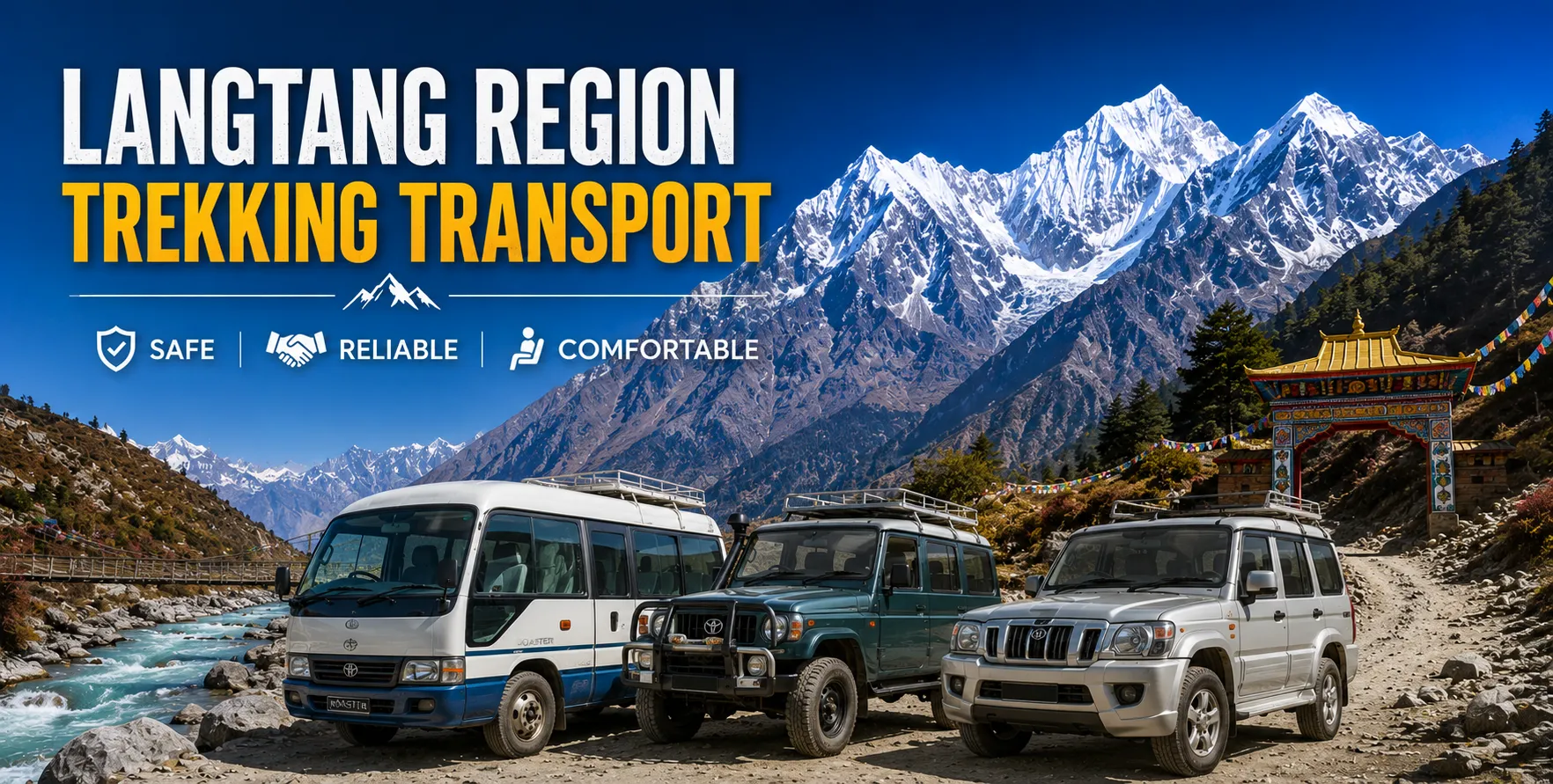
The Langtang Valley, lying just 60 to 70 kilometers north of Kathmandu as the crow flies, has developed a growing luxury lodge infrastructure in recent years, supported by the valley’s gradual recovery from the devastating 2015 earthquake and the increasing sophistication of the operators serving this comparatively accessible Himalayan destination. Luxury lodge trekking in Langtang typically involves the Kathmandu to Syabrubesi vehicle transfer (122 km, 6 to 8 hours, NPR 15,000 to NPR 25,000 by private jeep) as the approach stage, followed by lodge accommodation at premium properties in Gatlang, Thulo Syabru, and Kyanjin Gompa — the latter at 3,870 meters with stunning Langtang Lirung glacier views.
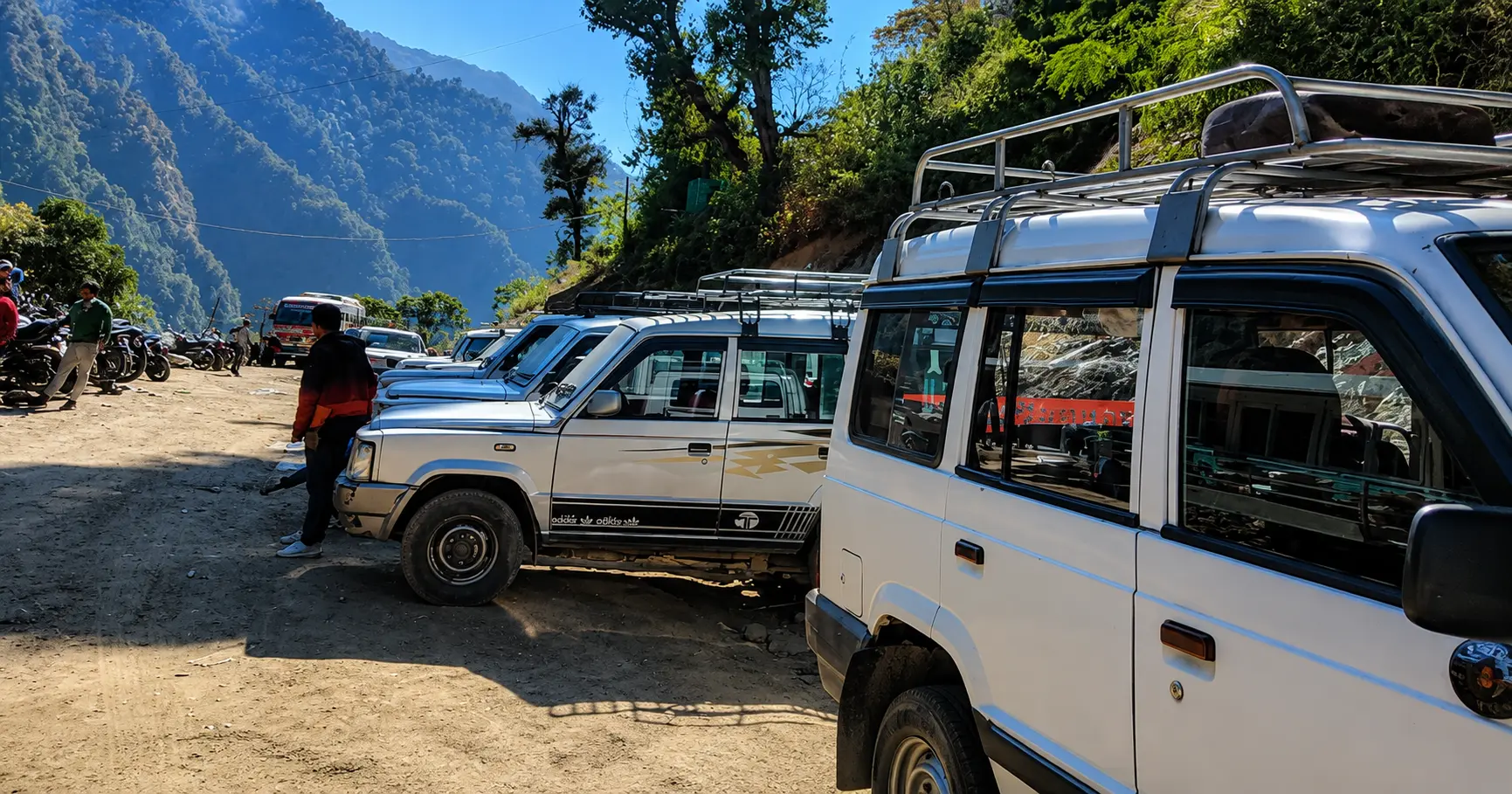
For luxury Langtang trek clients, Nepal Vehicle Hiring Pvt Ltd provides premium SUV or Land Cruiser transfer for the Kathmandu to Syabrubesi approach, with particular attention to the rough sections near Dhunche where road quality deteriorates meaningfully. The choice between a premium SUV (Toyota Fortuner or Prado) and a standard jeep for this route is one where Nepal Vehicle Hiring Pvt Ltd often recommends the Prado based on its superior ride quality on the mixed surfaces of the Syabrubesi road — the additional cost over a standard jeep is modest relative to the overall luxury package investment. The comfort difference over a 6-to-8-hour drive is significant.
Manaslu Circuit Luxury Trek
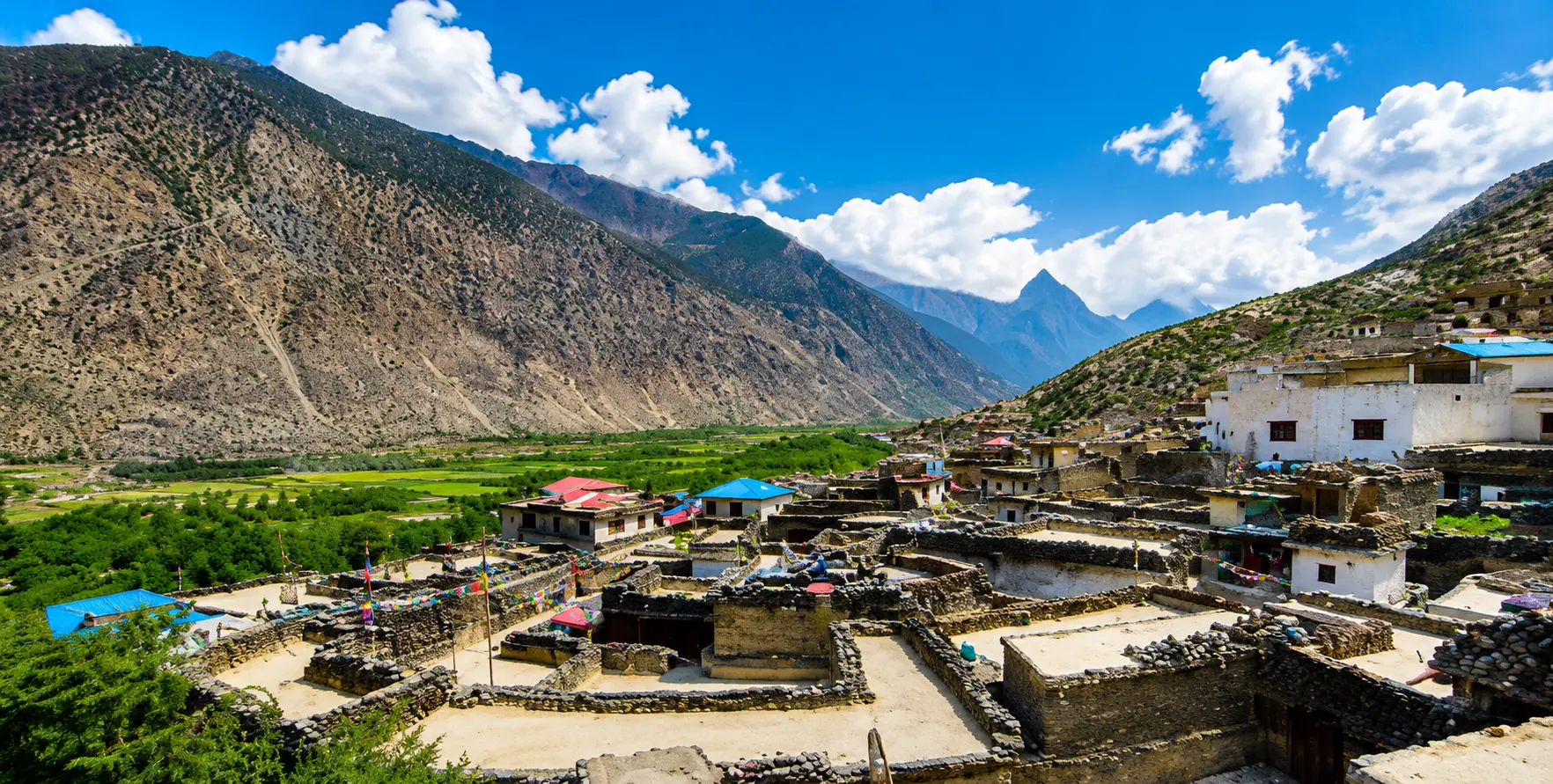
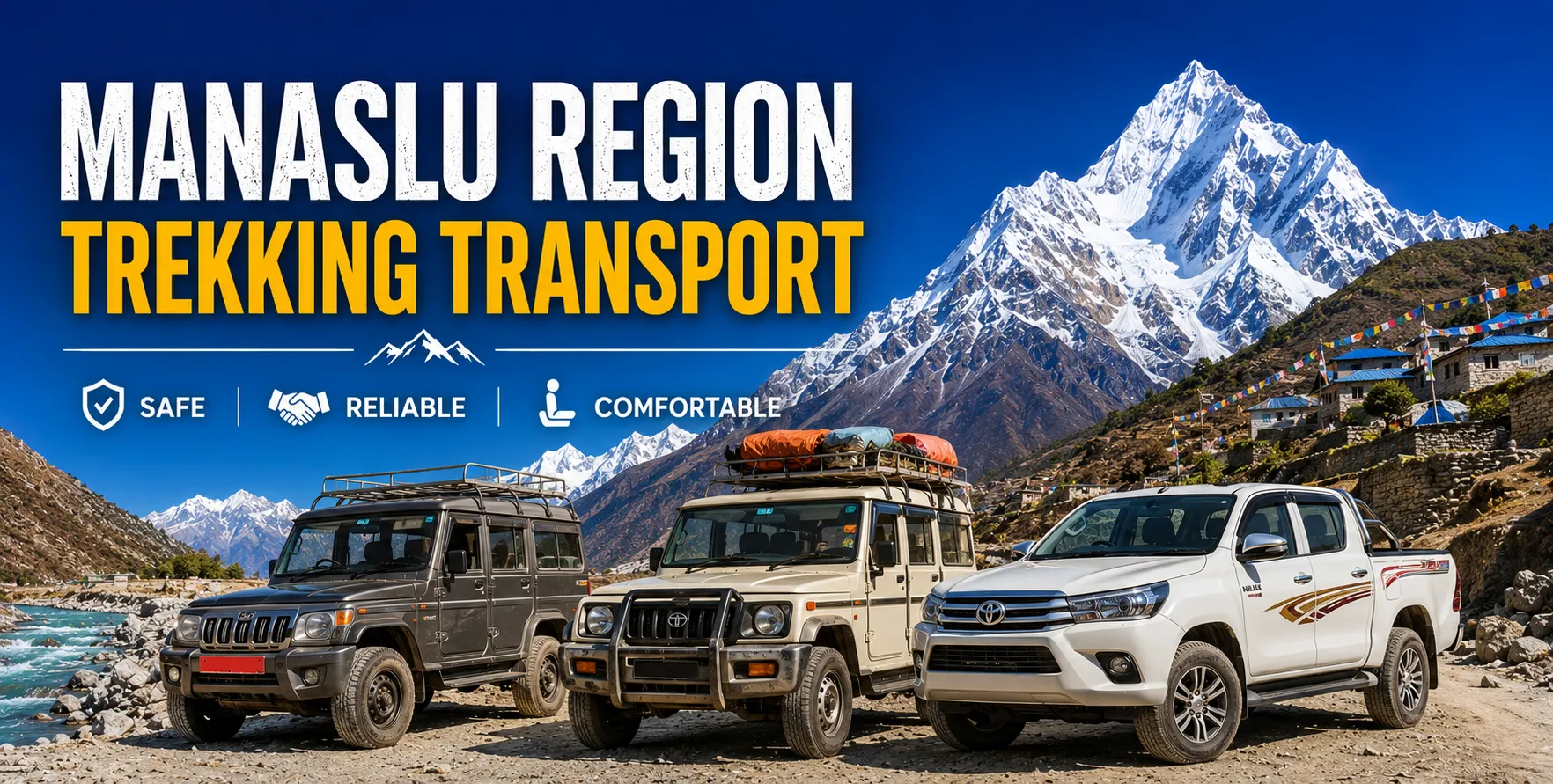
The Manaslu Circuit luxury trek has emerged as one of the most compelling premium trekking options in Nepal for experienced trekkers who want the remoteness and cultural richness of this restricted area route combined with the comfort of carefully selected upper-tier accommodation. The approach from Kathmandu to the Soti Khola or Arughat trailhead requires a full-day 4WD jeep transfer of approximately 150 to 165 kilometers (7 to 9 hours, NPR 20,000 to NPR 32,000 by private jeep), making it one of the more demanding approach vehicle arrangements in Nepal’s luxury trek portfolio.
Nepal Vehicle Hiring Pvt Ltd recommends Land Cruiser-category vehicles for the Manaslu approach due to the increasingly rough road character beyond Gorkha town and the length of the journey, which places sustained demands on both vehicle and driver. The restricted area permit requirements (Manaslu Conservation Area Permit and Restricted Area Permit), combined with the mandatory guide requirement, mean that luxury Manaslu trek clients are typically already working with a specialist operator who will coordinate permit, guide, and vehicle arrangements as an integrated package.
Luxury Trek Vehicle Hire: Route Summary Table
The following table provides a comprehensive overview of vehicle hire requirements for Nepal’s major luxury trekking regions, with indicative 2025/26 costs:
| Luxury Trek | Trailhead / Transfer | From | Vehicle | Distance | Duration | Cost NPR | Cost USD |
| Annapurna Base Camp | Pokhara → Nayapul | Pokhara | Private Car / SUV | 42 km | 1.5–2 hrs | NPR 3,000–5,000 | $22–$38 |
| Annapurna Foothills Lodge | Pokhara → Ghandruk / Phedi | Pokhara | Private SUV / Jeep | 40–55 km | 1.5–3 hrs | NPR 4,000–8,000 | $30–$60 |
| Annapurna Circuit Luxury | Pokhara → Besisahar | Pokhara | Private Car / SUV | 106 km | 3–4 hrs | NPR 6,000–12,000 | $45–$90 |
| Annapurna Circuit Luxury (exit) | Jomsom → Pokhara overland | Jomsom | 4WD Jeep (Land Cruiser) | 143 km | 6–8 hrs | NPR 28,000–38,000 | $210–$285 |
| Everest (Overland via Salleri) | Kathmandu → Salleri | Kathmandu | 4WD Jeep | 185 km | 8–10 hrs | NPR 25,000–35,000 | $188–$263 |
| Langtang Luxury Lodge | Kathmandu → Syabrubesi | Kathmandu | SUV / Land Cruiser Prado | 122 km | 6–8 hrs | NPR 15,000–25,000 | $112–$188 |
| Upper Mustang Luxury Jeep | Pokhara → Lo Manthang (round) | Pokhara | Land Cruiser VX / Prado | 500 km rt | Multi-day | NPR 80,000–120,000 | $600–$900 |
| Manaslu Circuit Luxury | Kathmandu → Arughat / Soti Khola | Kathmandu | 4WD Jeep / Land Cruiser | 150–165 km | 7–9 hrs | NPR 20,000–32,000 | $150–$240 |
| Ghorepani Poon Hill Luxury | Pokhara → Nayapul | Pokhara | Private Car / SUV | 42 km | 1.5–2 hrs | NPR 3,000–5,000 | $22–$38 |
| Mardi Himal Luxury | Pokhara → Kande | Pokhara | Private Car / SUV | 25 km | 45 min–1 hr | NPR 2,500–4,000 | $19–$30 |
| Kathmandu hotel ↔ 5-star, airport | Tribhuvan Airport transfers | Kathmandu | Land Cruiser / Prado / SUV | 5–10 km | 20–60 min | NPR 2,000–5,000 | $15–$38 |
| Full golden circuit (multi-day) | Ktm → Pokhara → Chitwan → Ktm | Kathmandu | Toyota Fortuner / Prado | 500+ km | Multi-day | NPR 60,000–100,000 | $450–$750 |
Nepal Vehicle Hiring Pvt Ltd’s Luxury Trek Fleet
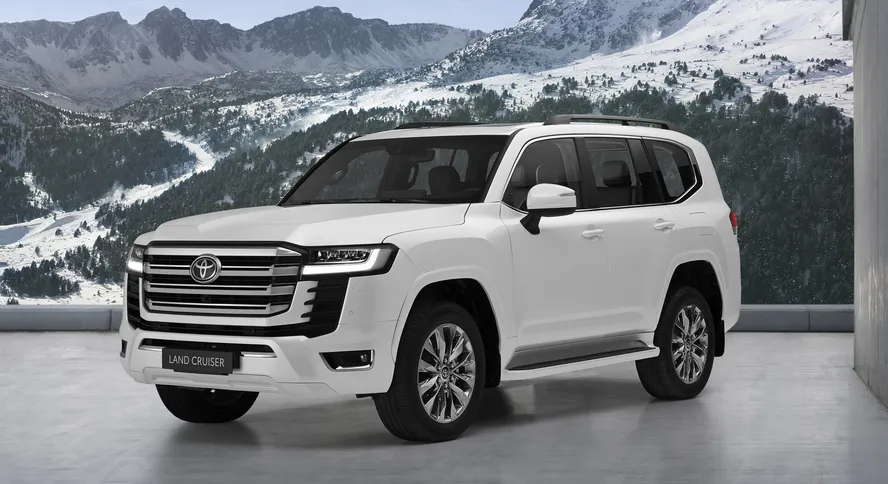
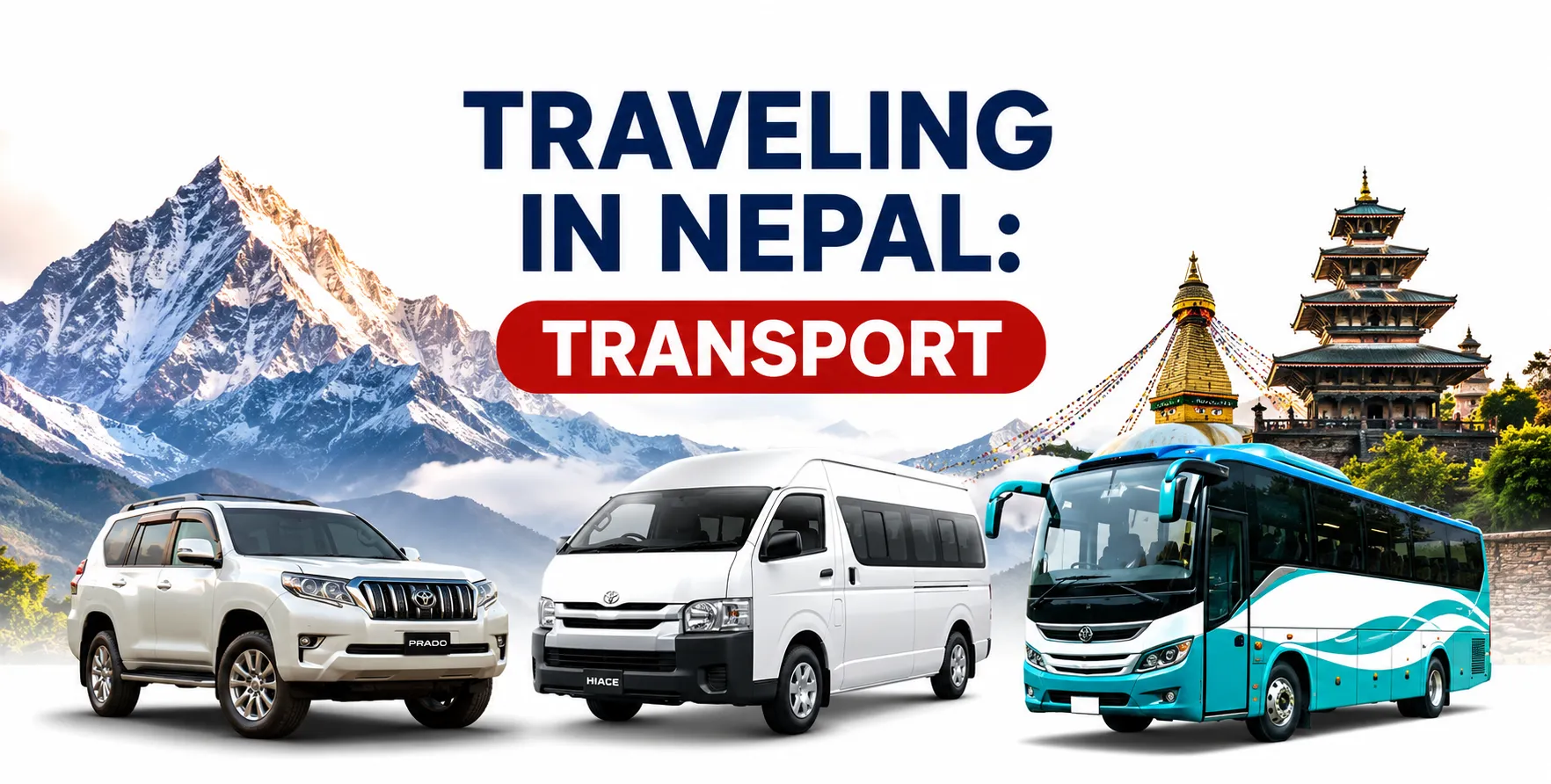
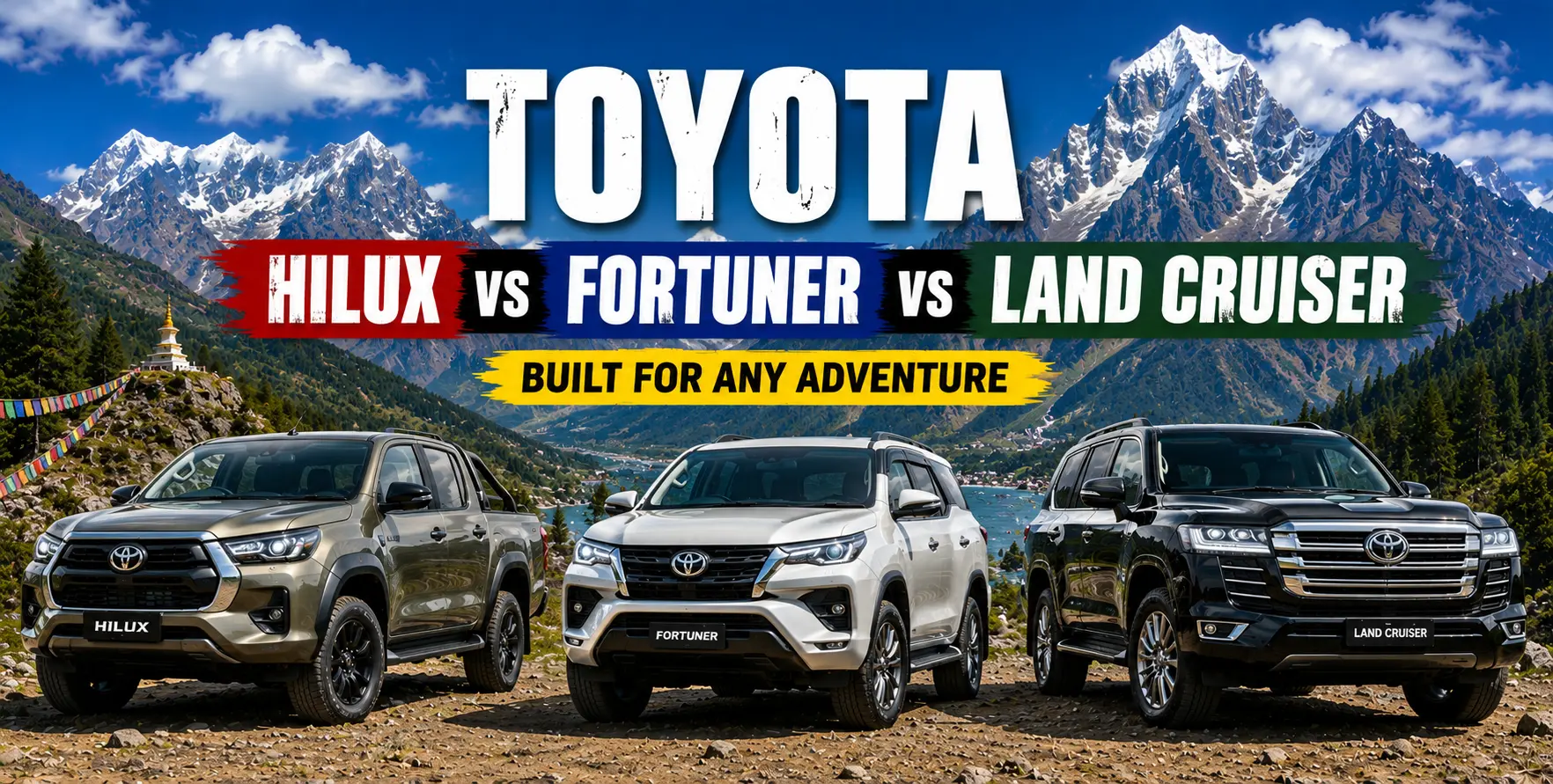
Toyota Land Cruiser VX and Prado — The Gold Standard
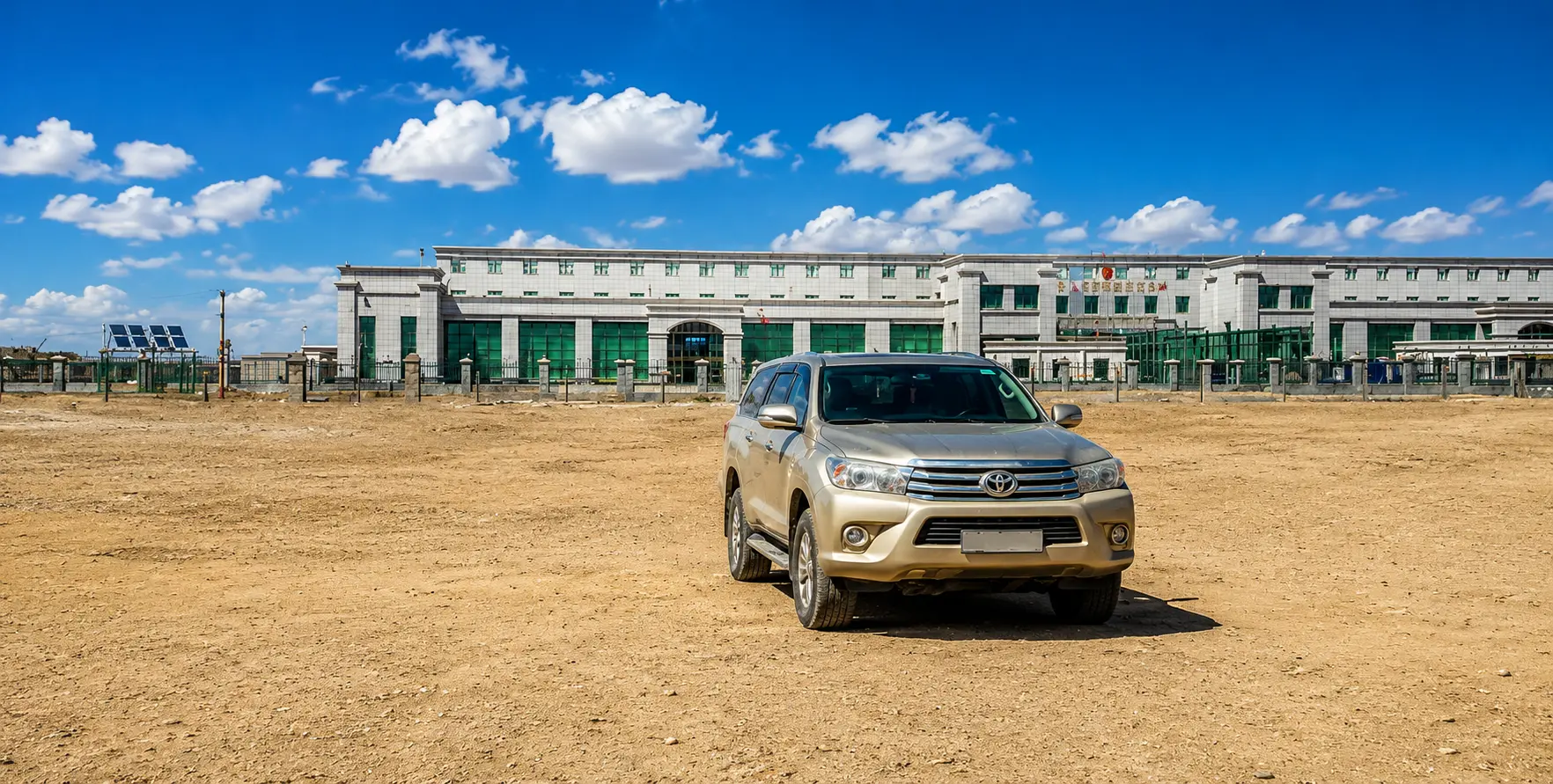
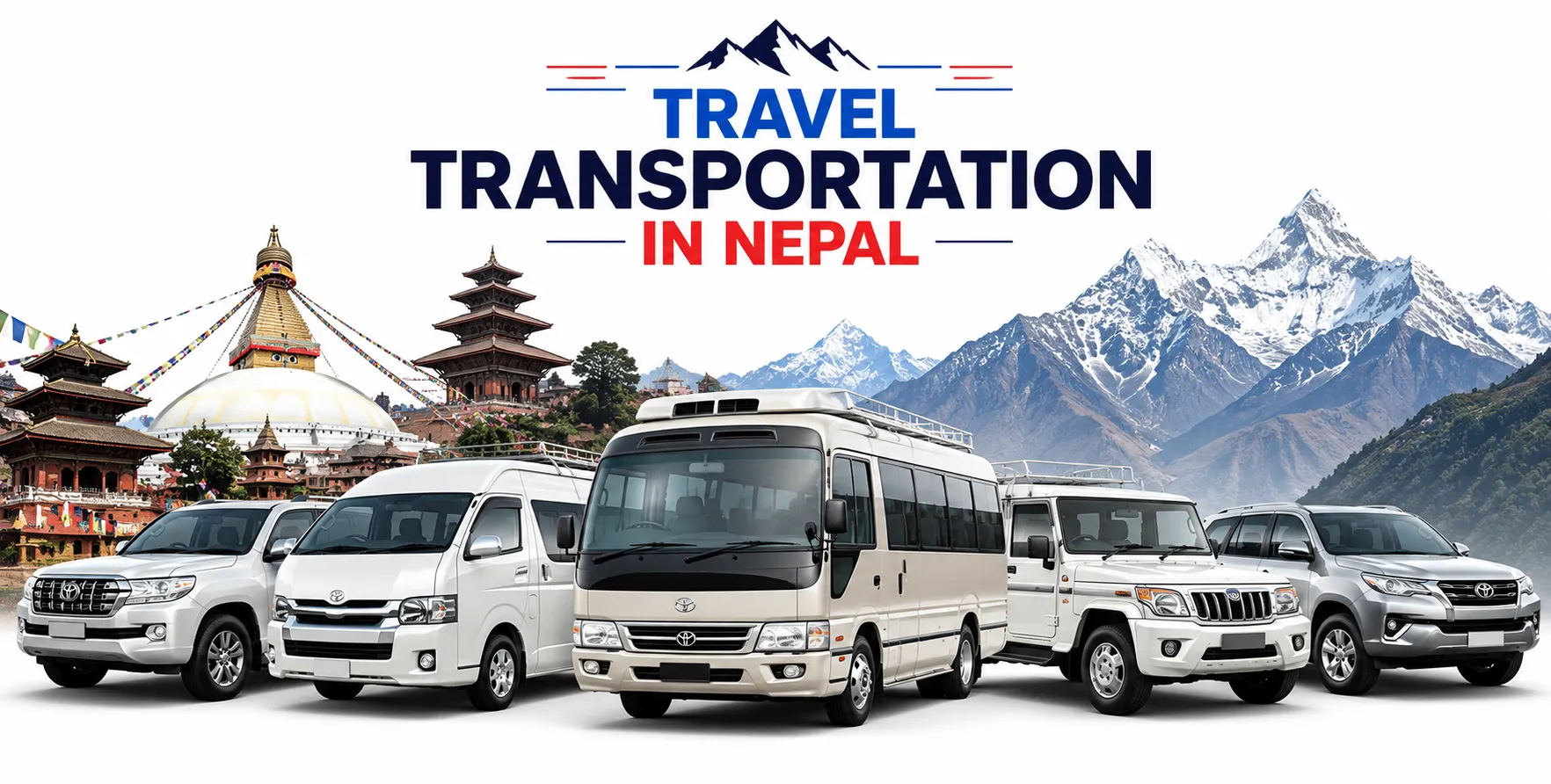
For Nepal’s most demanding luxury trek vehicle hire requirements — the Upper Mustang multi-day jeep tour, the overland approach to remote Everest region trailheads, the long cross-country transfers connecting Kathmandu with distant starting points — the Toyota Land Cruiser family represents the vehicle category that the combination of premium interior quality and genuine mountain off-road capability demands. The Land Cruiser VX, Nepal’s flagship hire vehicle for the highest tier of premium travel, offers a cabin environment of genuine luxury quality — full leather seating, multi-zone climate control, advanced infotainment, and noise insulation that transforms even a rough mountain road into a comparatively serene ride — built on a chassis and drivetrain that has been setting the standard for high-altitude, off-road reliability in the Himalayan region for decades.
The Land Cruiser Prado occupies a slightly more accessible price point within the Land Cruiser family while maintaining all of the core off-road attributes that make this vehicle family the right choice for Nepal’s most demanding luxury trek routes. For multi-day Upper Mustang jeep tours and long cross-country luxury transfers, the Prado has become the default recommendation from experienced Nepal luxury travel operators precisely because it delivers the right combination of cabin quality and mountain road capability without requiring the very highest tier of vehicle expenditure. Daily hire rates for the Land Cruiser Prado outside Kathmandu Valley range from NPR 35,000 to NPR 50,000, reflecting both the vehicle’s capability and the sustained premium of operating it on Nepal’s more demanding routes.
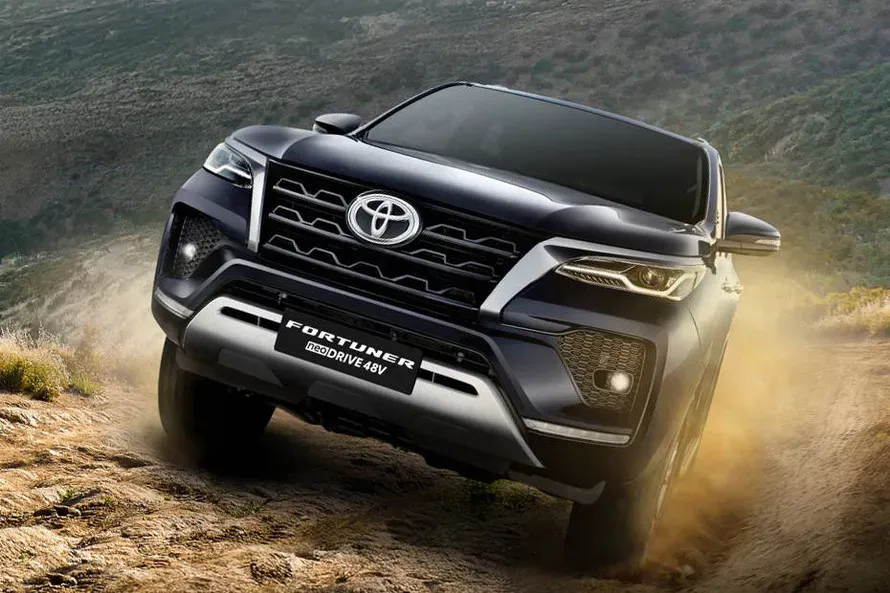
Toyota Fortuner — Accessible Premium for Most Luxury Routes
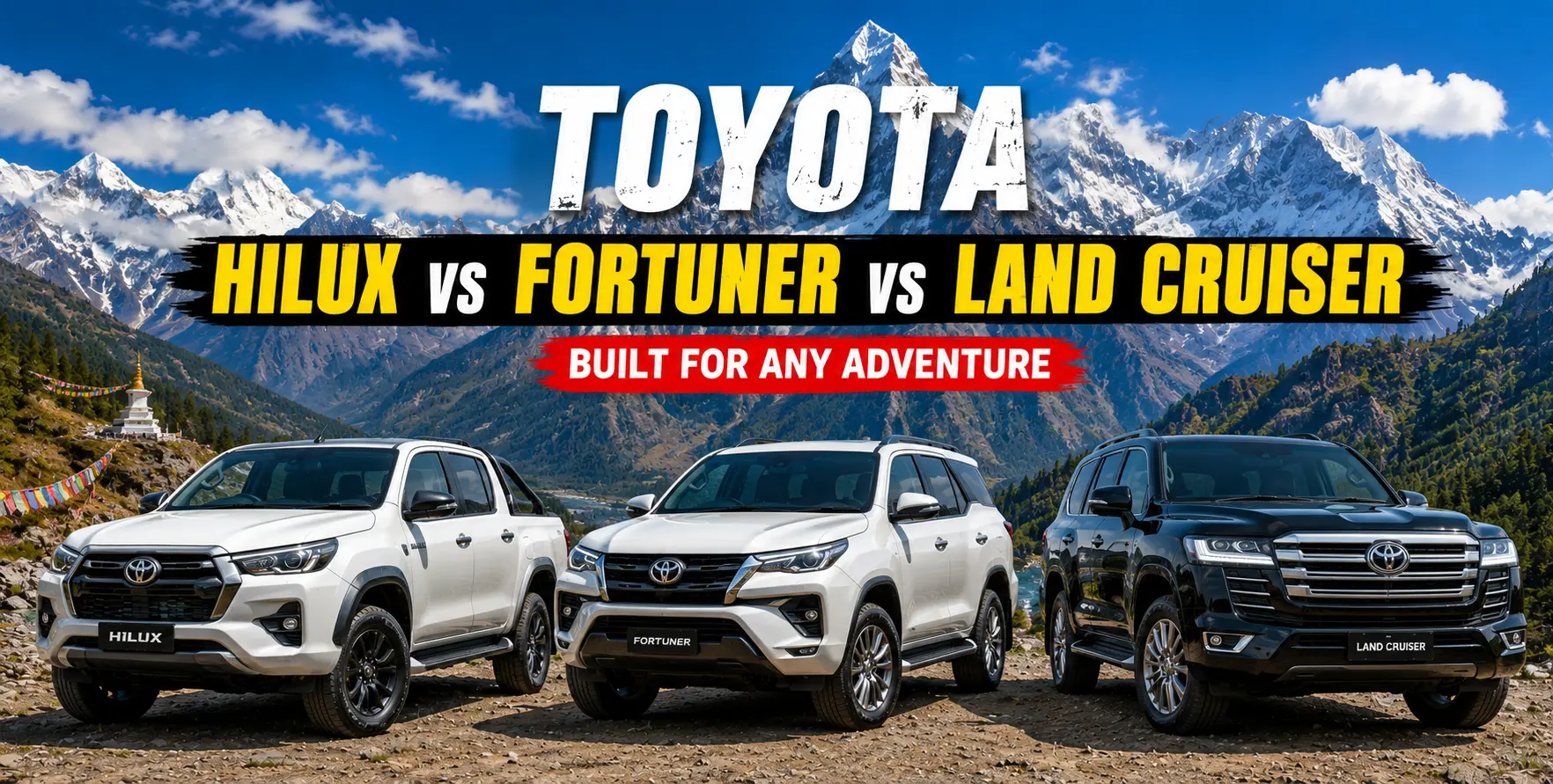
For the majority of luxury trek vehicle hire requirements — the Annapurna region trailhead transfers on well-maintained roads, the Kathmandu to Syabrubesi approach for Langtang luxury lodge treks, cross-city transfers between five-star properties, and similar routes where off-road capability is important but not pushed to its limits — the Toyota Fortuner delivers an outstanding premium experience at a hire cost meaningfully below the Land Cruiser family. The Fortuner’s genuine 4WD capability, seven-seat capacity, quality interior, and strong diesel engine make it the most versatile vehicle in the Nepal luxury hire fleet, capable of handling the vast majority of luxury trek vehicle scenarios with complete competence and genuine comfort.
Many luxury trek operators specify the Toyota Fortuner as their standard ground transport vehicle for Annapurna and Langtang region transfers precisely because it delivers the quality standard these travelers expect without the additional cost of Land Cruiser tier hire on routes that do not genuinely require that capability. The Fortuner’s daily hire rate of NPR 12,000 to NPR 18,000 within Kathmandu Valley and NPR 18,000 to NPR 28,000 on longer outside-valley routes makes it the most cost-effective genuine premium option in Nepal’s luxury hire market.
Matching Vehicle to Route: The Critical Decision
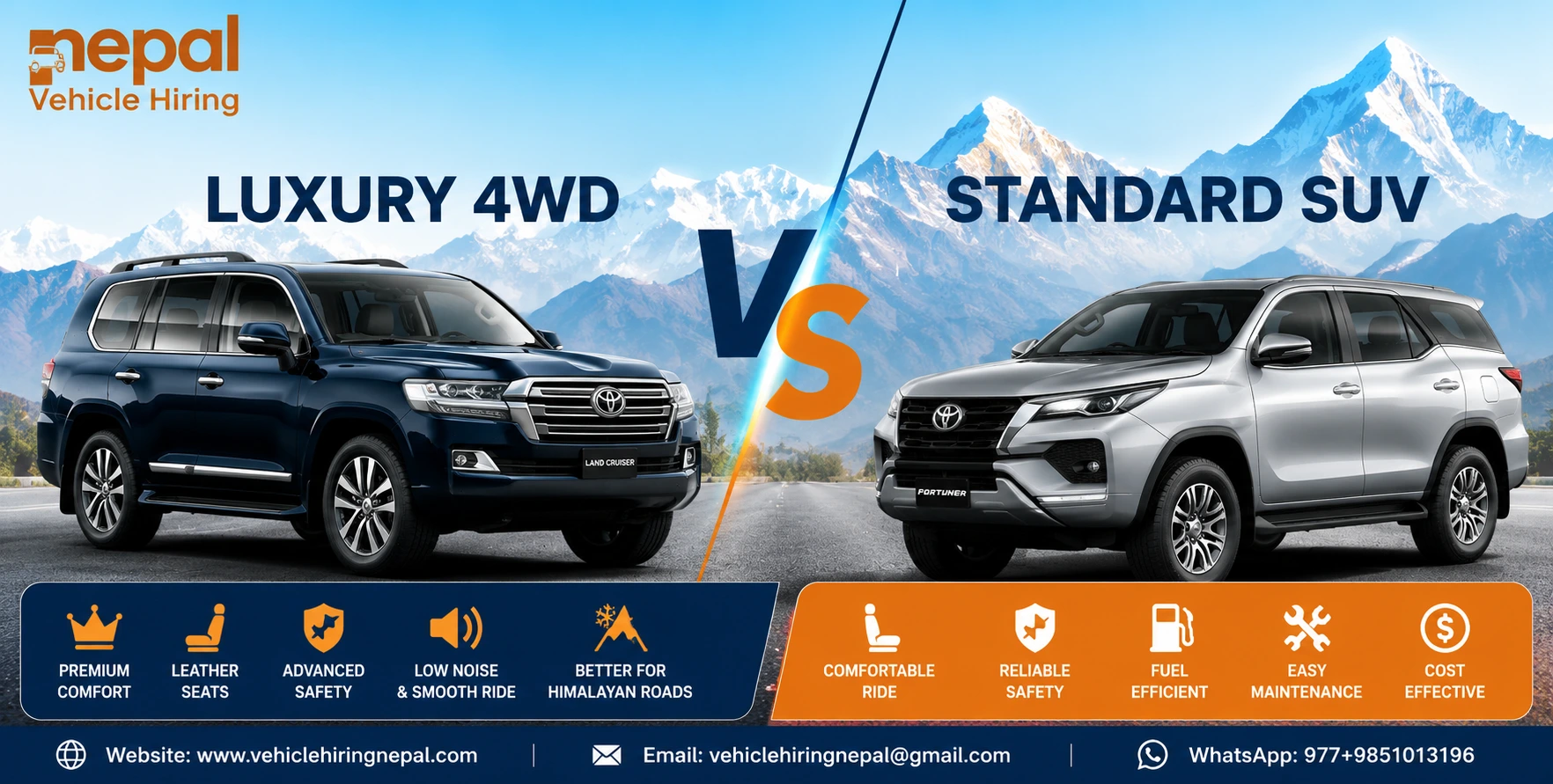
The single most important practical decision in luxury trek vehicle hire planning is matching the specific vehicle to the specific route’s demands — a decision that requires honest assessment of road conditions rather than simple preference for the most prestigious or most comfortable available option. The Toyota Fortuner is the right vehicle for the Pokhara to Nayapul trailhead transfer; the Land Cruiser or Prado is the right vehicle for the Pokhara to Lo Manthang overland journey. Using a Fortuner on the Lo Manthang approach creates an incongruity between the vehicle’s capabilities and the route’s demands; using a Land Cruiser VX for the short Pokhara to Nayapul paved-road transfer adds cost without meaningful benefit.
Nepal Vehicle Hiring Pvt Ltd’s approach to luxury trek vehicle hire is specifically built around this matching principle. When a luxury trek operator or individual client shares their complete itinerary, our team’s first step is to map each vehicle stage to its actual road conditions, then recommend the vehicle category that delivers the right combination of capability, comfort, and cost-efficiency for each specific segment. This analysis sometimes results in recommending different vehicles for different stages of the same trek itinerary — a premium SUV for the city and highway stages, upgrading to a Land Cruiser specifically for the more demanding mountain approaches — rather than applying a single vehicle category across the complete journey.
Luxury Trek Vehicle Hire vs Standard Jeep Hire: The Real Differences
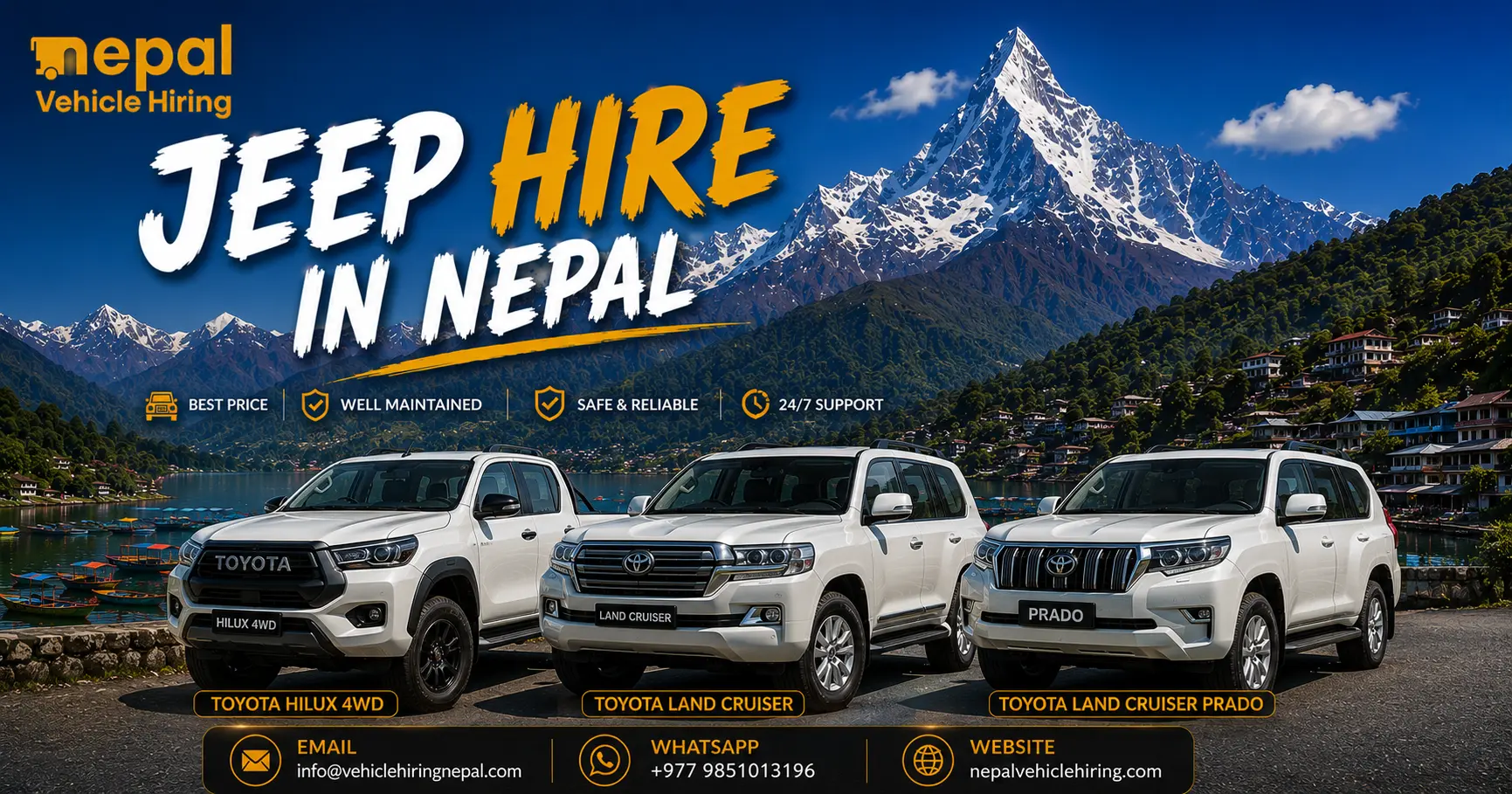
Understanding what actually differs between luxury and standard vehicle hire in Nepal helps luxury trek operators and individual travelers make informed decisions about where the premium is genuinely justified and where a standard option might adequately serve a particular stage of the journey without compromising the overall experience quality.
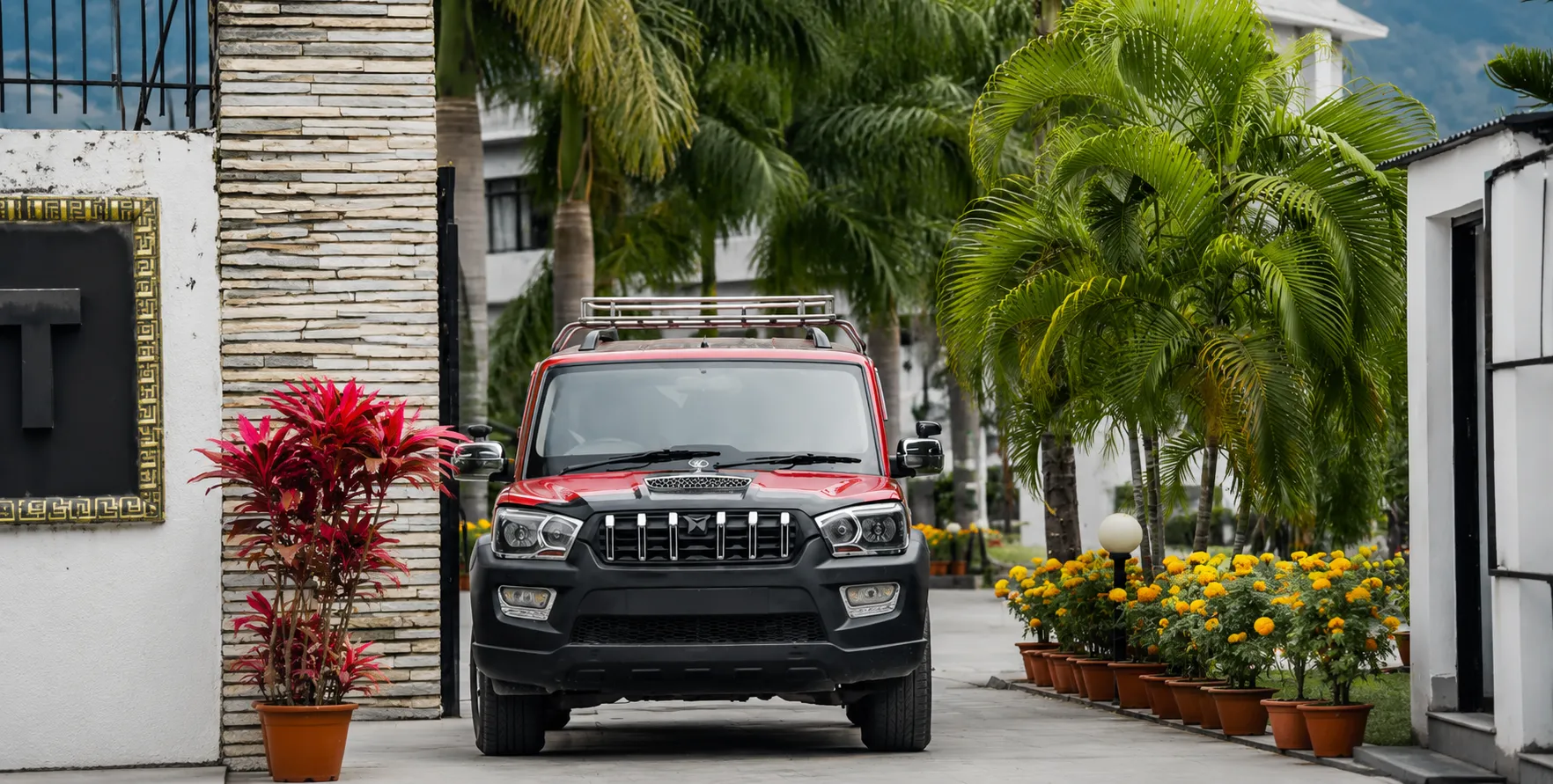
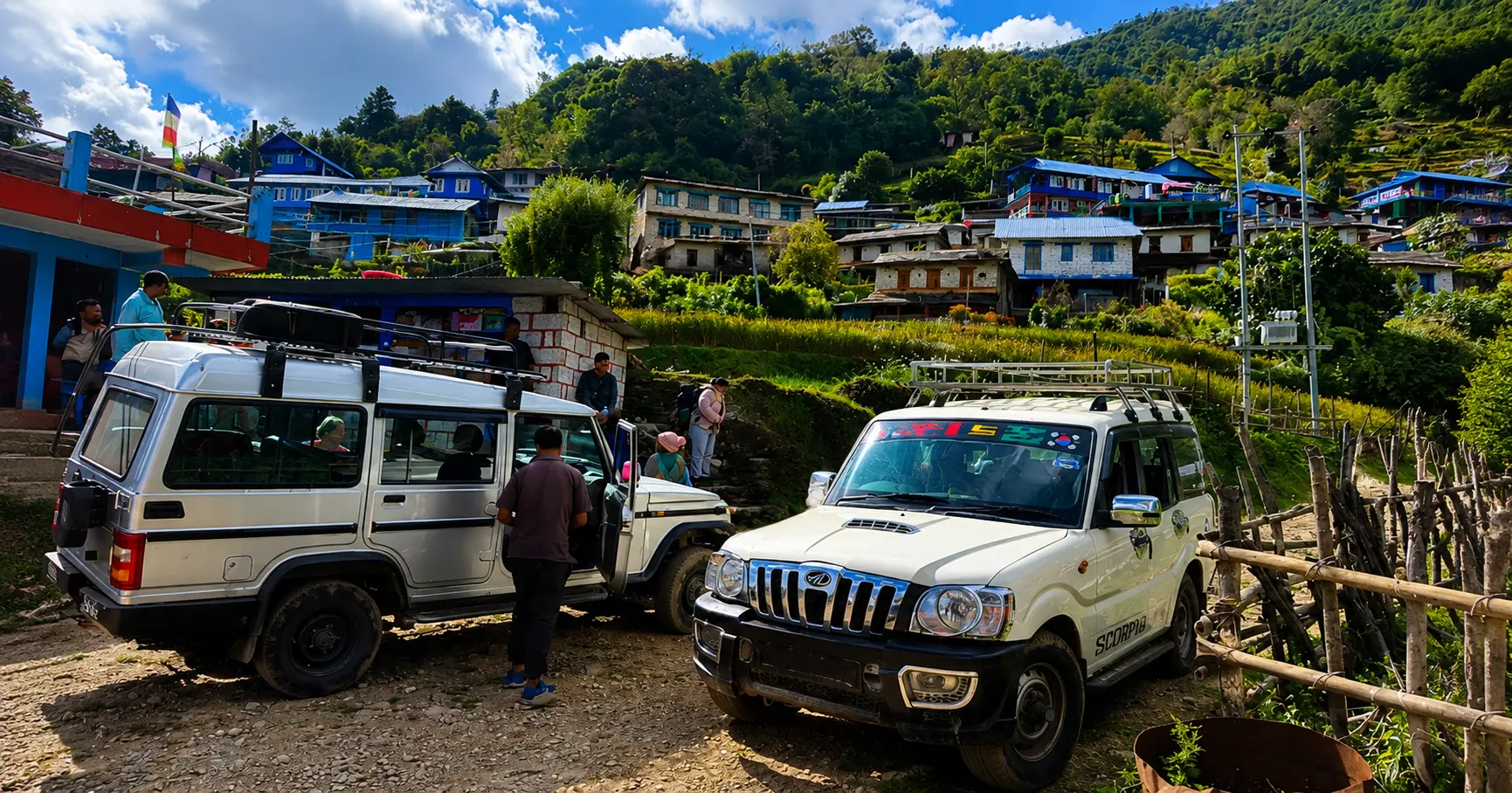
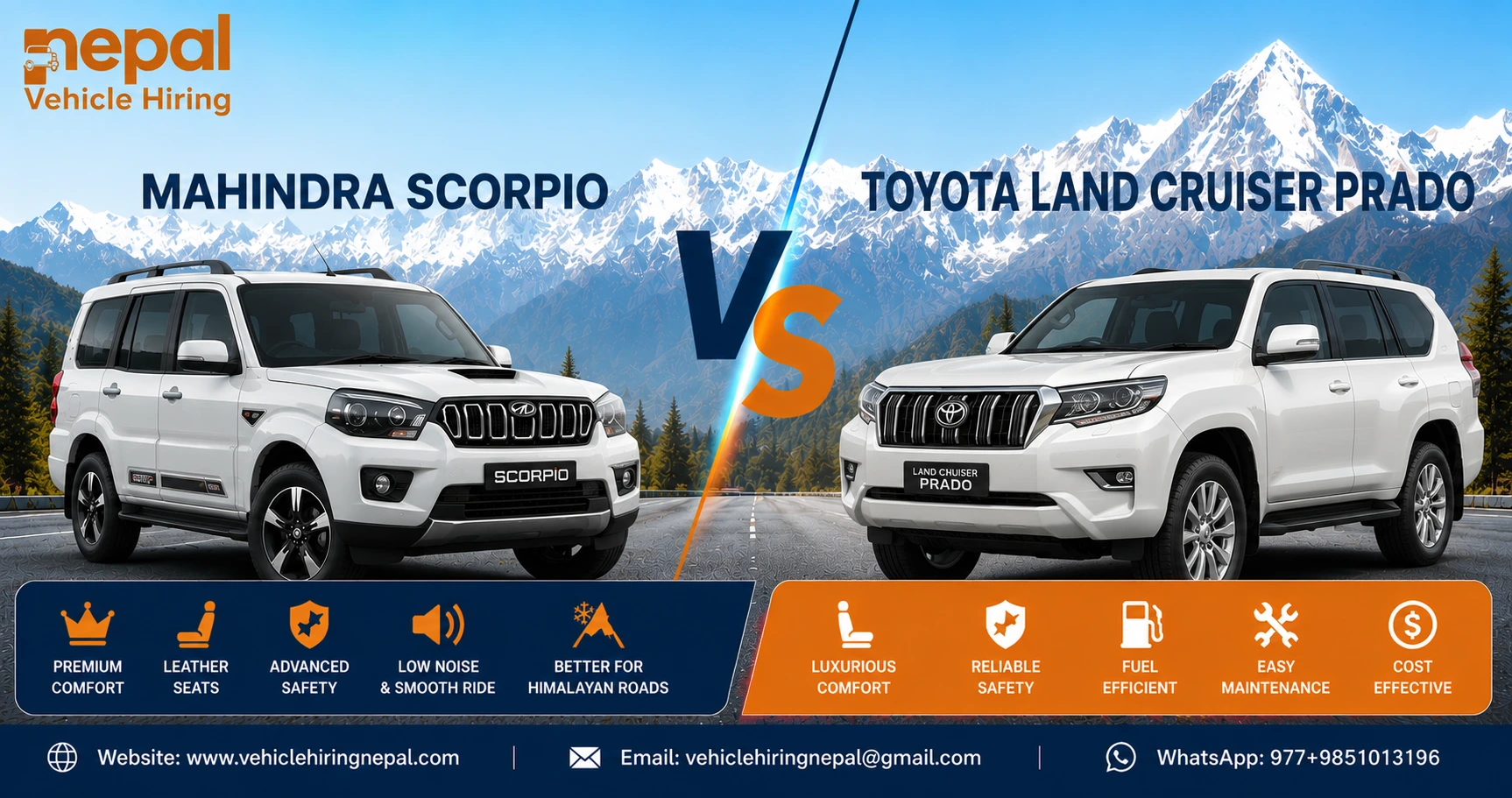
The most fundamental differences operate at four levels simultaneously. Vehicle condition and age are the first: a luxury hire vehicle in Nepal’s genuine premium fleet is typically a more recent model year, maintained to a higher standard, presented in immaculate cleanliness, and equipped with functioning air conditioning, entertainment, and navigation technology as reliable amenities rather than aspired-to features that may or may not work on the day. The difference between a 2023 Toyota Land Cruiser Prado in excellent condition and a 2015 Mahindra Scorpio in standard working condition is felt over every hour of a long mountain road journey in ways that accumulate meaningfully over the course of a full trekking day’s transfer.
Driver quality is the second and arguably most important differentiator. A luxury vehicle hire driver in Nepal Vehicle Hiring Pvt Ltd’s premium fleet has been selected and ongoing-trained specifically for the demands of high-value client service: professional presentation standards, English communication that goes beyond basic directions to genuine conversational capability, the route-specific experience on the particular mountain roads of the relevant luxury trek region, and the service instinct that means anticipating a client’s needs — stopping for photographs without being asked, suggesting the best rest stop for lunch, managing the journey’s pace with the trekker’s comfort as the primary variable — rather than simply navigating competently from A to B.
The booking and coordination experience represents the third differentiator. Standard jeep hire in Nepal’s market is often arranged informally, with limited documentation, unclear inclusions, and limited recourse if something goes wrong. Luxury trek vehicle hire through Nepal Vehicle Hiring Pvt Ltd provides confirmed booking documentation with specific vehicle and driver details, clear all-inclusive pricing in both NPR and USD, 24-hour customer support throughout the journey, and the accountability of a professional operator who manages the complete ground transport chain rather than a sequence of independently sourced vehicles.
The integration with the broader luxury trek itinerary is the fourth differentiator. A vehicle hire provider experienced in serving luxury trek operators understands that the ground transport is one element within a carefully coordinated premium experience, and that its timing, quality, and professionalism must mesh seamlessly with guide handovers, lodge check-in timings, helicopter coordination, and the overall pace and atmosphere of the trekking experience. Nepal Vehicle Hiring Pvt Ltd’s specific experience serving luxury Nepal trek operators across all major regions allows our team to coordinate vehicle timing and logistics with the precision that premium trek operators require from every component of their product.
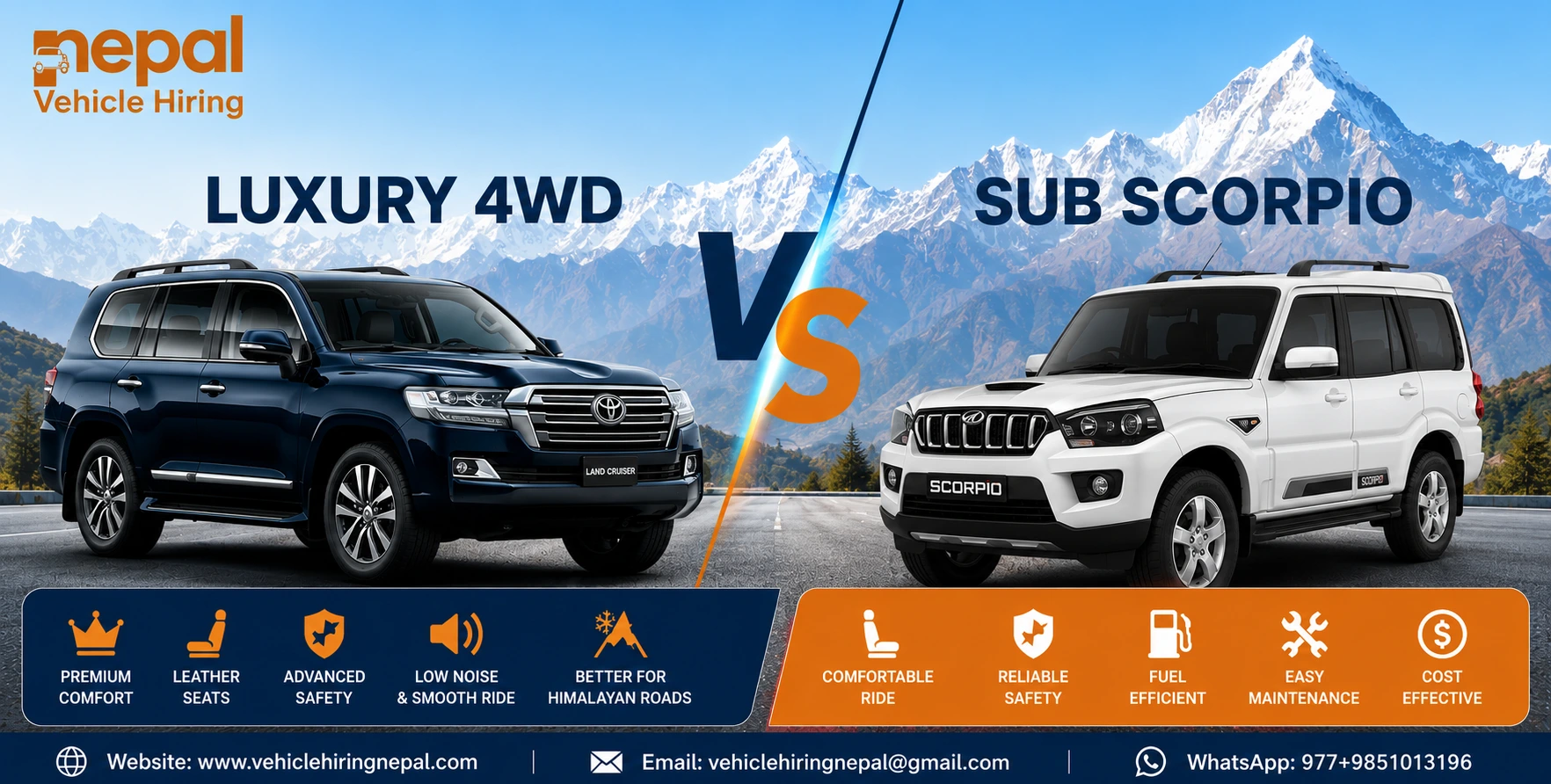
Luxury vs Standard Vehicle Hire: Direct Comparison
| Dimension | Standard Jeep Hire | Nepal VHL Luxury Trek Hire |
| Vehicle age | Often 2015–2020 models | 2020–2025 models, newest available |
| Interior condition | Basic, worn, functional | Immaculate — detailed before every booking |
| Air conditioning | Present but reliability variable | Fully serviced, guaranteed reliable |
| Driver English | Basic to moderate | Fluent conversational English |
| Driver presentation | Casual | Professional attire, groomed, punctual |
| Route knowledge | General Nepal driving | Specific experience on each luxury trek road |
| Booking documentation | Often informal/verbal | Confirmed in writing with full details |
| Pricing transparency | Variable, negotiated | All-inclusive, documented NPR & USD |
| 24hr support | Typically unavailable | Full 24-hour customer support line |
| Vehicle tracking | None | Driver contact provided pre-journey |
| Luggage management | Roof rack / cramped interior | Ample interior space + roof storage |
| Integration with trek operator | None | Fully coordinated with trek itinerary |
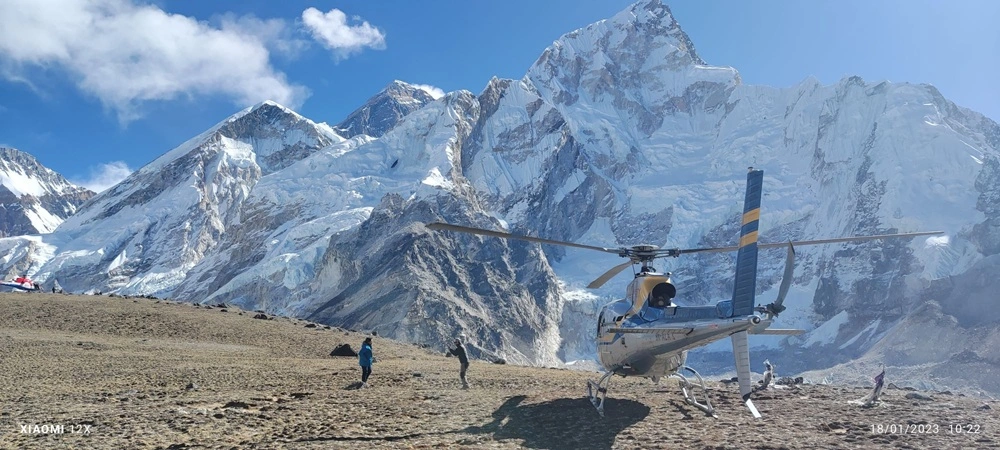
Helicopter Transfers and Their Relationship to Ground Vehicle Hire
Helicopter transfers have become a defining element of Nepal’s luxury trekking market, used increasingly as either the primary approach and exit transport for the Everest and Upper Mustang regions, or as a hybrid component that combines overland vehicle travel with a helicopter segment at the most scenic or time-sensitive point of the journey. Understanding how helicopter transfers interact with ground vehicle hire helps luxury trek operators design itineraries that use each transport mode most effectively.
The most common helicopter integration scenario in Nepal’s luxury trek market is the ‘drive in, fly out’ or ‘fly in, drive out’ arrangement, where a trekker uses overland vehicle transport for one leg of the journey to maximise scenic ground-level experience of the approach, and a helicopter for the other leg to save time, add aerial views, or avoid a repetitive retracing of the outbound route. For an Upper Mustang luxury jeep tour, a trekker might drive the complete Pokhara to Lo Manthang route overland (2 to 3 days each way) for maximum immersion, or arrive one direction and helicopter the other for a mixed experience combining both modes.
For the Everest Base Camp luxury trek, the most sophisticated current approach involves a helicopter from Kathmandu to Lukla for the arrival — replacing the often-delayed domestic flight with a more reliable and dramatically scenic aerial approach — followed by trekking the complete Khumbu route to Base Camp in the ascent direction. A helicopter return from Gorakshep directly to Kathmandu, eliminating the repetitive descent and flight uncertainty. In this structure, the ground vehicle hire role focuses on transfers from the Kathmandu hotel to the helicopter departure point, and on any Kathmandu Valley sightseeing days that bookend the trek.
Nepal Vehicle Hiring Pvt Ltd coordinates ground vehicle arrangements for helicopter transfer itineraries with the same precision and timing awareness that helicopter operators require from their own ground staff. When a helicopter departure is scheduled for 6:00 AM from a Kathmandu helipad, the vehicle transfer from the hotel must arrive at 5:30 AM at the latest — and Nepal Vehicle Hiring Pvt Ltd treats this timing as an absolute rather than a guideline, with drivers briefed and positioned well in advance of every such early departure. This reliable timing integration between ground transport and helicopter operations is precisely the kind of detail that distinguishes a fully professional luxury trek support operation from a loosely coordinated collection of separate services.
Complete Cost Framework: Luxury Trek Vehicle Hire 2025/26
The following cost framework consolidates the complete range of luxury trek vehicle hire costs available through Nepal Vehicle Hiring Pvt Ltd, organized by vehicle tier and use case. All costs are fully inclusive of vehicle, driver, fuel, and applicable tolls. These represent current 2026/27 market rates:
| Vehicle Tier | Vehicle | Within Kathmandu (NPR/day) | Outside Valley (NPR/day) | USD/day (outside) |
| Ultra Premium | Toyota Land Cruiser VX | NPR 40,000–55,000 | NPR 50,000–70,000 | $375–$525 |
| Premium | Toyota Land Cruiser Prado | NPR 35,000–50,000 | NPR 40,000–60,000 | $300–$450 |
| Premium SUV | Toyota Fortuner | NPR 12,000–18,000 | NPR 18,000–28,000 | $135–$210 |
| Corporate/VIP | Mercedes-Benz GLE | NPR 20,000–35,000 | NPR 30,000–50,000 | $225–$375 |
| Corporate/VIP | BMW X5 | NPR 20,000–35,000 | NPR 30,000–50,000 | $225–$375 |
| Access Premium | Mahindra XUV700 | NPR 9,000–14,000 | NPR 14,000–22,000 | $105–$165 |
Booking Your Luxury Trek Vehicle Hire: Best Practices
Successfully integrating luxury vehicle hire into a Nepal trek package requires a level of planning and coordination that goes beyond what standard jeep hire demands. The following guidance reflects Nepal Vehicle Hiring Pvt Ltd’s accumulated experience serving luxury trek operators and premium individual travelers across Nepal’s full range of trekking destinations.
Book as Part of the Trek Package, Not as an Afterthought
The most common vehicle hire planning mistake in the luxury trek context is treating the vehicle transport stages as an afterthought — logistics to be organized once the main trek components (guide, lodge, permits) are confirmed. This approach consistently produces sub-optimal results because vehicle availability for specific premium models during peak season is more constrained than many travelers appreciate, and because the coordination between vehicle timing and guide/lodge scheduling requires information-sharing that is much easier to manage when all components are planned simultaneously. Nepal Vehicle Hiring Pvt Ltd recommends booking all vehicle hire stages at the same time as the overall luxury trek package, with vehicle type and route details specified alongside the trek itinerary itself.
Specify the Complete Itinerary, Not Just the Trailhead Transfer
A full luxury trek Nepal itinerary typically involves multiple vehicle stages beyond the main trailhead transfer: airport arrival pickup, hotel to heritage site for pre-trek sightseeing, hotel to domestic airport or helicopter pad for the Lukla approach, return vehicle from trek exit trailhead, hotel to airport for departure. Each of these stages benefits from the same quality of vehicle and driver coordination as the main trailhead transfer, and booking all stages together through Nepal Vehicle Hiring Pvt Ltd ensures consistent quality across the complete journey and often results in better overall pricing than booking each stage separately.
Advance Notice Requirements
During Nepal’s peak luxury trek seasons — October through November and March through April — premium Land Cruiser and Prado vehicles are in particularly high demand, with operators booking them well in advance for extended multi-day commitments. The following booking timelines are recommended for guaranteed vehicle availability at the preferred quality tier during peak season:
- Toyota Land Cruiser VX or Prado (multi-day mountain trek): Minimum 2 to 3 weeks advance notice in peak season
- Toyota Fortuner (standard luxury trailhead transfer): Minimum 1 week advance notice in peak season
- Mercedes-Benz, BMW, or similar European luxury (Kathmandu city use): Minimum 1 week advance notice
- Complete golden triangle circuit (multi-day): Minimum 2 weeks advance notice in peak season
- Outside peak season: 3 to 5 days’ advance notice is generally sufficient for all vehicle categories
Frequently Asked Questions
What vehicle is recommended for an Annapurna luxury lodge trek trailhead transfer?
For the Annapurna luxury lodge trek’s Pokhara to Phedi or Nayapul trailhead transfer, a Toyota Fortuner or equivalent premium SUV is the standard and appropriate recommendation. The road is paved and well-maintained, making full Land Cruiser capability unnecessary — the Fortuner delivers excellent comfort and quality for this specific route at a more cost-effective rate. For Ghandruk trailhead access, which involves a rougher approach road, a Land Cruiser Prado provides better performance meaningfully.
What is included in Nepal Vehicle Hiring Pvt Ltd’s luxury trek vehicle hire?
All luxury trek vehicle hire through Nepal Vehicle Hiring Pvt Ltd is fully inclusive of: the vehicle itself in immaculate condition, a professional English-speaking driver with route-specific experience, fuel for the complete agreed journey, all applicable road tolls and vehicle checkpost fees, and 24-hour customer support throughout the engagement. Not included: guide and porter costs, accommodation, meals, trekking permits, and helicopter transfers, which are coordinated separately.
Can I combine ground vehicle hire with helicopter transfers for a luxury Everest trek?
Yes — this is an increasingly common and highly recommended arrangement. Nepal Vehicle Hiring Pvt Ltd coordinates the ground vehicle stages (airport arrival, Kathmandu hotel sightseeing transfers, helipad transfers) while helicopter operators manage the Khumbu flight stages. We work closely with established helicopter operators to ensure timing integration between ground transport and departure/arrival schedules, a coordination that is essential for early-morning helicopter departures in particular.
What is the cost difference between a Land Cruiser and a standard jeep for an Upper Mustang luxury tour?
A standard Mahindra Scorpio or equivalent jeep for a Pokhara to Lo Manthang round trip typically costs NPR 55,000 to NPR 80,000. A Toyota Land Cruiser Prado for the same route costs NPR 80,000 to NPR 120,000. The premium — roughly NPR 25,000 to NPR 40,000 (approximately USD 188 to USD 300) — reflects significantly superior cabin quality, ride comfort, and safety features over what is typically a 2 to 3 day driving itinerary per direction. In the context of a complete luxury Upper Mustang package costing USD 2,500 to USD 5,000 per person, this vehicle premium represents excellent value for the comfort upgrade it delivers.
How far in advance should I book luxury trek vehicle hire?
During peak trekking seasons (October–November, March–April), Land Cruiser and Prado vehicles should be booked 2 to 3 weeks in advance. Toyota Fortuner and other premium SUV vehicles require 1 week minimum in peak season. Outside peak season, 3 to 5 days’ advance notice is generally sufficient. For complete multi-day circuit bookings involving a dedicated vehicle for 5 to 10 days, earlier booking is always preferable. Contact vehiclehiringnepal.com to check current availability for your specific dates and requirements.
Is a luxury vehicle hire worth the premium over a standard jeep for Nepal trekking?
For airport transfers and short city-to-trailhead runs on well-maintained paved roads, the premium of a Land Cruiser over a standard jeep may offer more comfort than the route strictly demands. For multi-day mountain journeys, long cross-country transfers, demanding off-road routes like the Upper Mustang approach, and any occasion where the vehicle transport is a significant part of the overall luxury travel day rather than a brief functional transit, the premium of a quality vehicle is consistently justified by the meaningfully superior experience it delivers. Nepal Vehicle Hiring Pvt Ltd can advise on the specific cost-benefit for each stage of your planned itinerary.
Conclusion: Completing the Luxury Trek Experience
A luxury trek in Nepal is defined by the consistency of quality across every element of the experience — not just the lodge accommodation, not just the guiding excellence, not just the iconic mountain scenery, but every stage of every day, including the hours spent in a vehicle moving between the moments that trekkers will remember most vividly. The Land Cruiser that delivers a trekker to the Annapurna foothills, rested and comfortable after a smooth upland drive from Pokhara. The premium SUV that carries a post-trek family from the Kathmandu Valley heritage circuit back to Dwarika’s for their final elegant Nepal dinner. The immaculately presented driver who waits at Tribhuvan International Airport arrivals holding a name board that signals, before a single word is spoken, that everything ahead of this moment has been arranged with care.
Nepal Vehicle Hiring Pvt Ltd has built its luxury trek vehicle service around the understanding that premium travel clients bring premium expectations to every interaction with the support infrastructure around their adventure — and that meeting those expectations consistently and reliably, at every vehicle stage of every luxury trek journey, is what distinguishes a truly professional service from one that gets most things right while allowing a few transport stages to fall below the standard the overall experience has set. Our luxury fleet, our driver team, and our coordination approach are all designed with this consistency in mind, ensuring that the vehicle dimension of Nepal’s finest trekking adventures delivers the quality that every other element of those adventures has established.