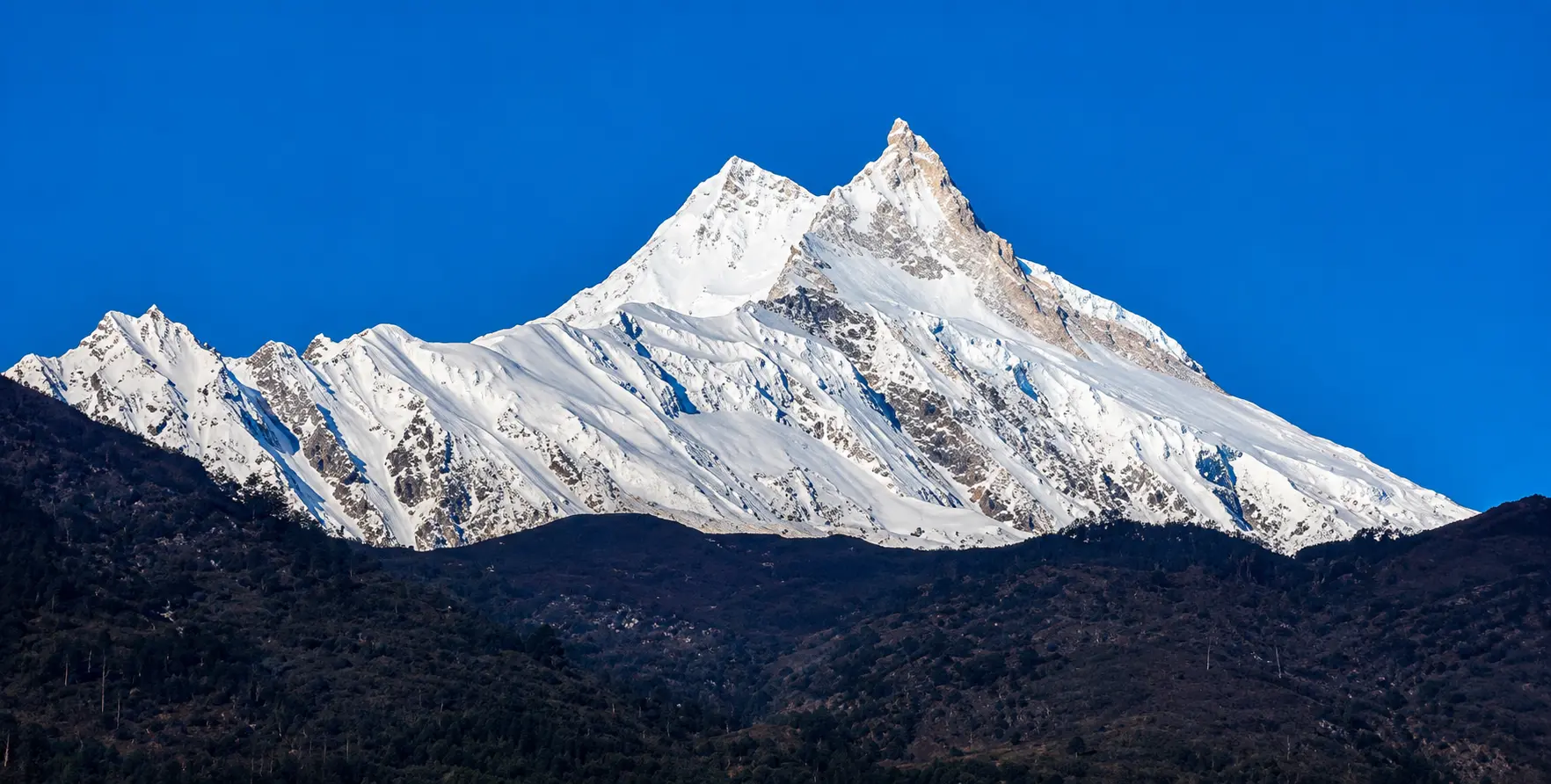
Manaslu Trek Return Kathmandu Pickup Vehicle

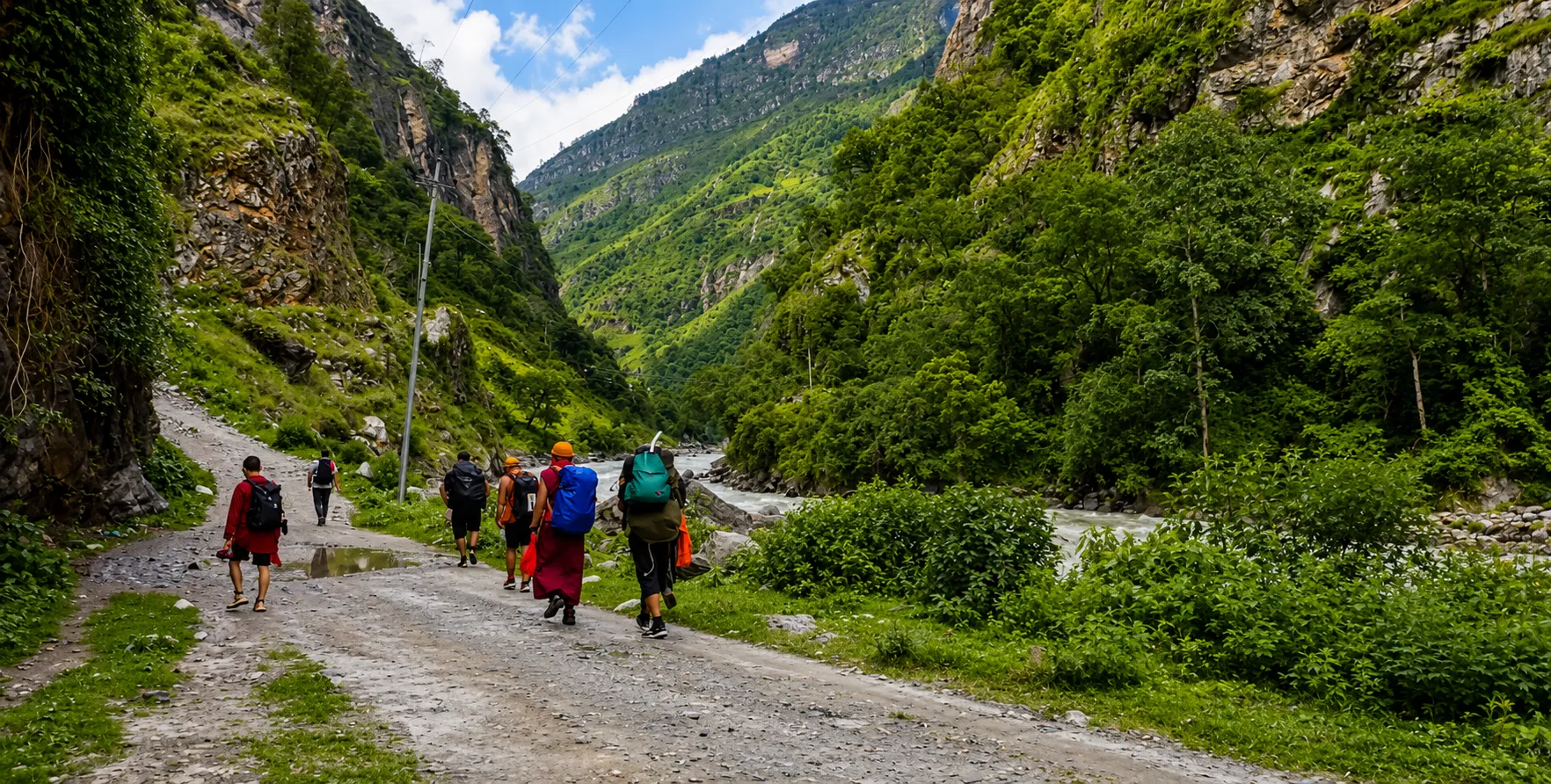
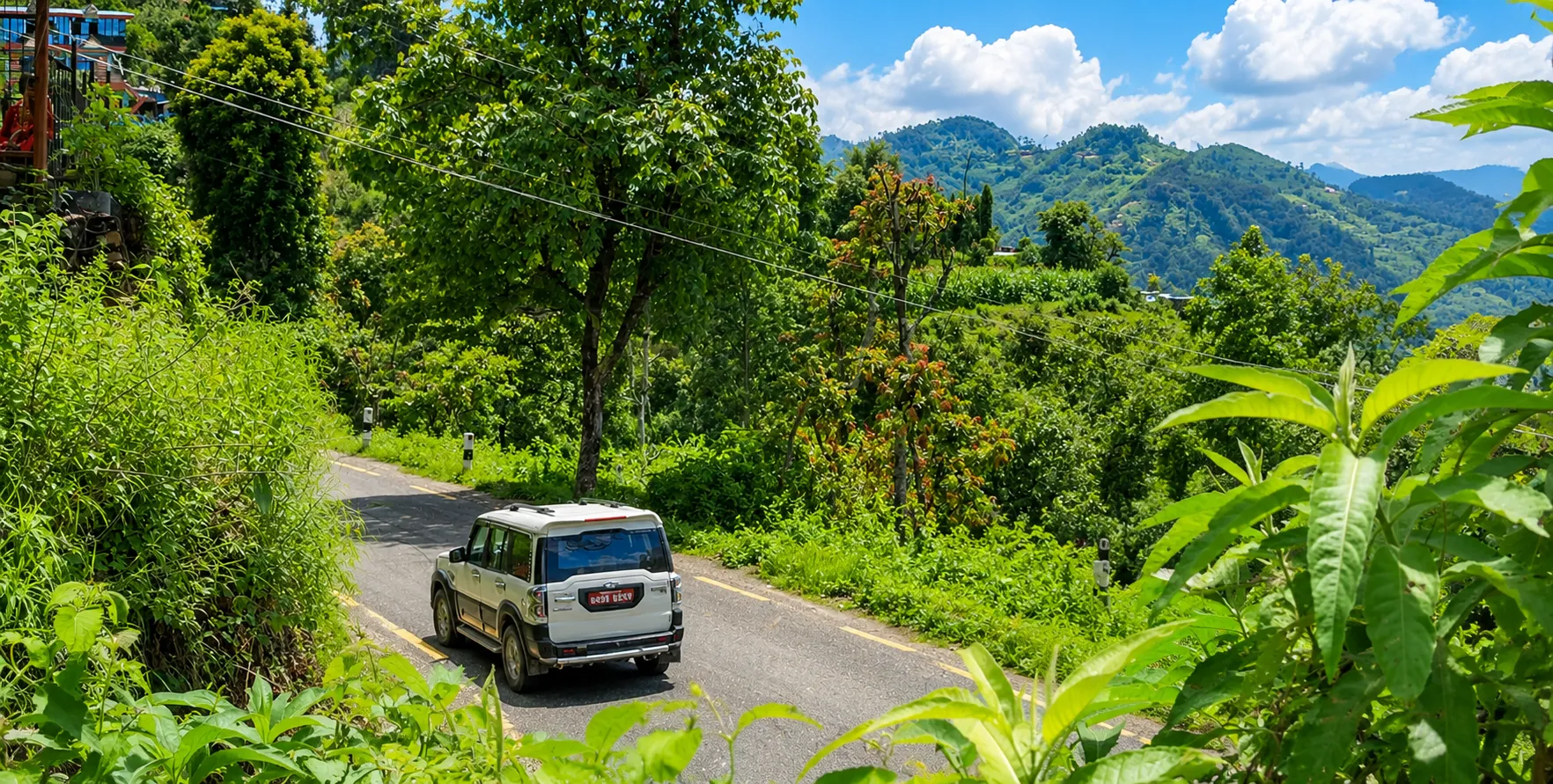
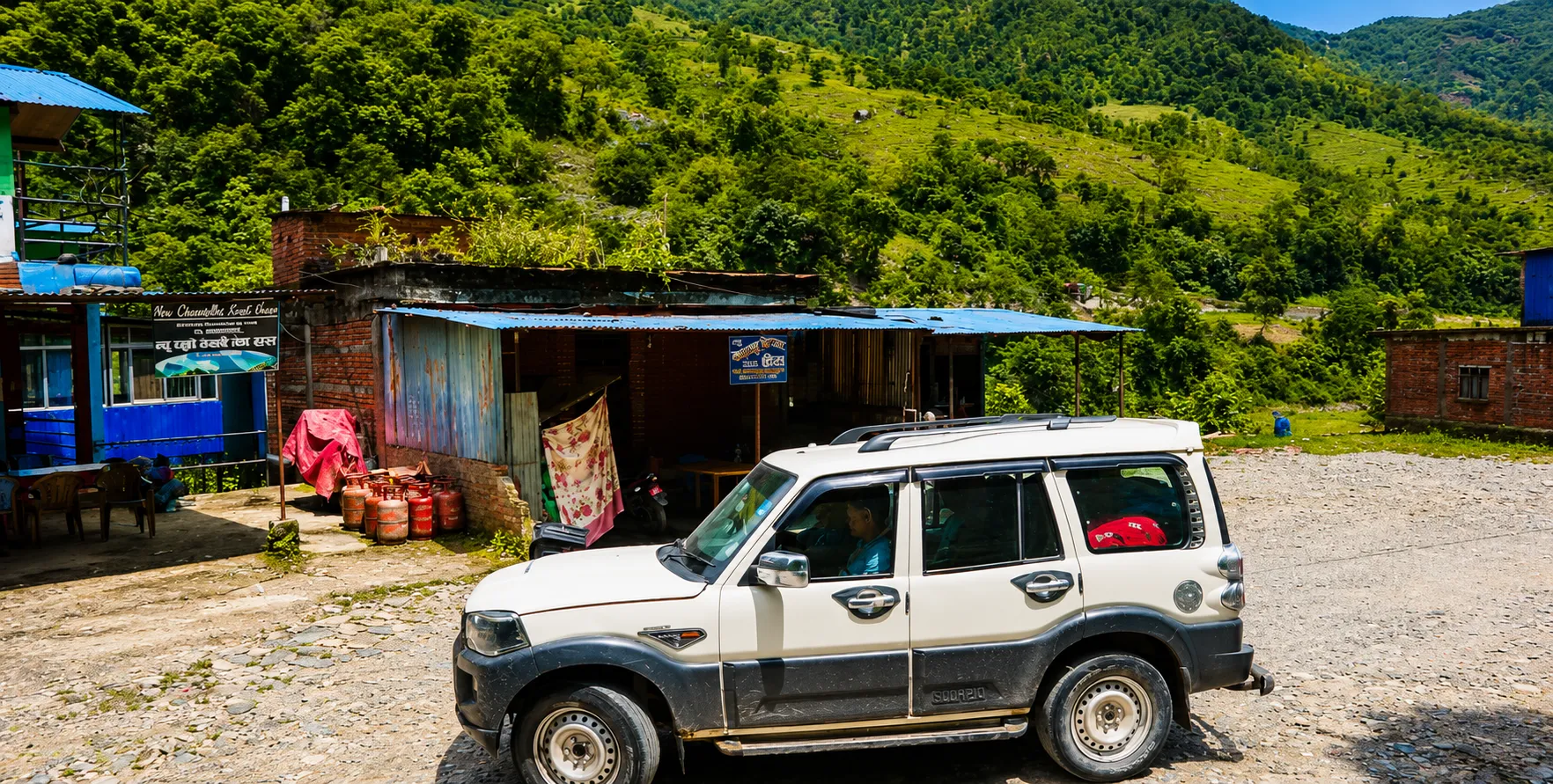
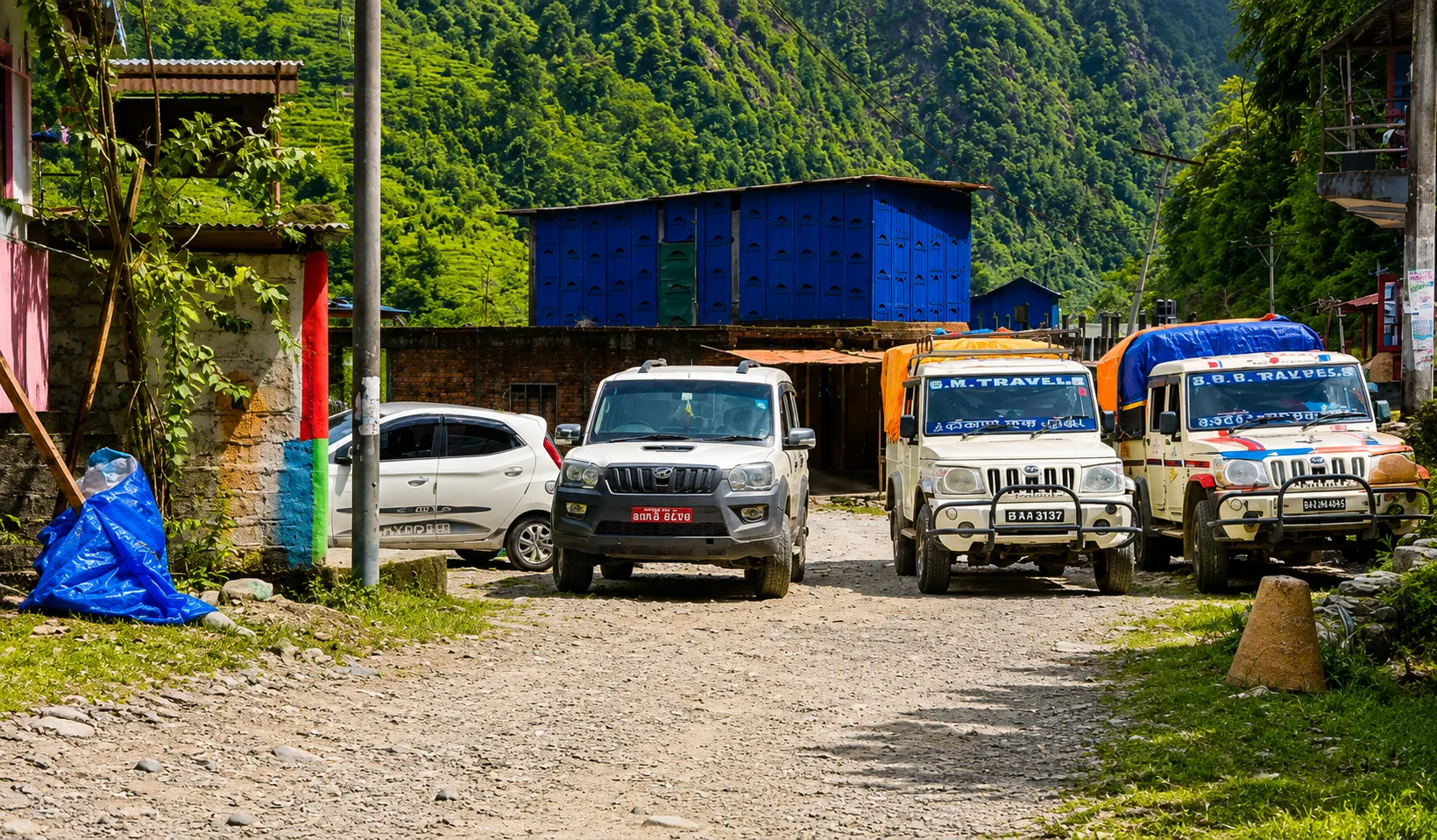
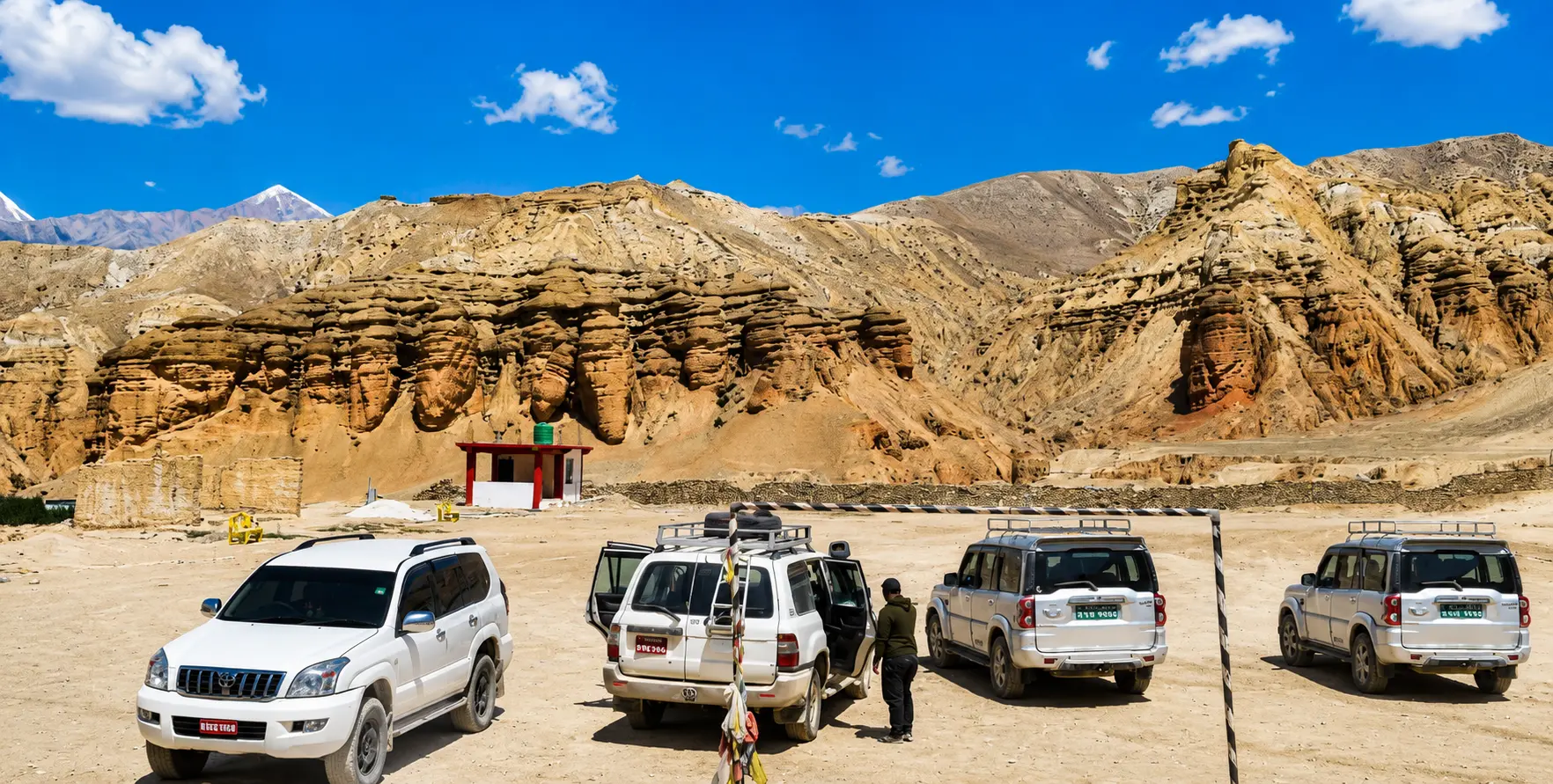
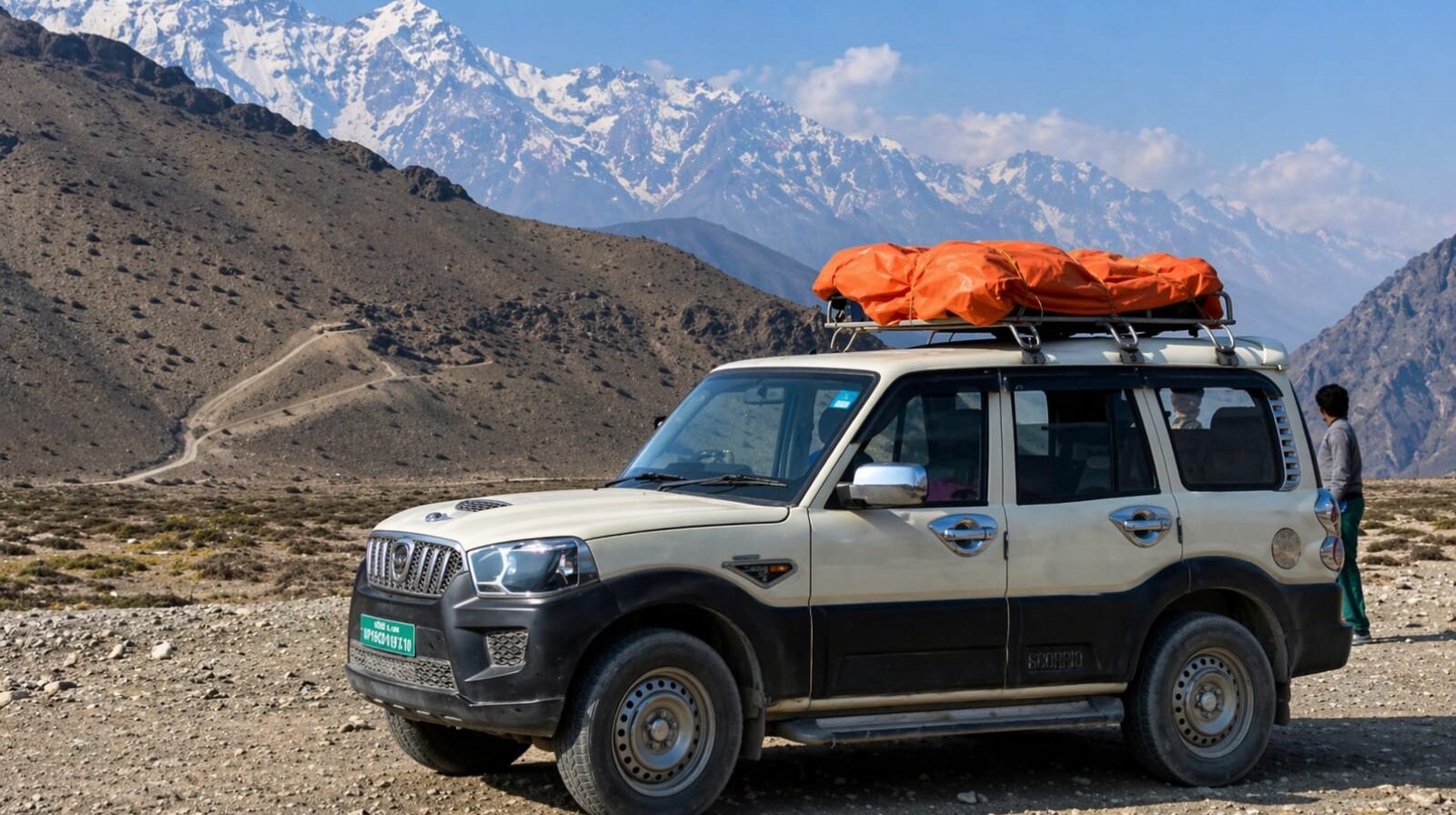
Private 4WD jeep and Scorpio transporting trekkers from Kathmandu to the Manaslu Circuit Trek starting point

Manaslu Trek Return: Kathmandu Pickup Vehicle from Dharapani

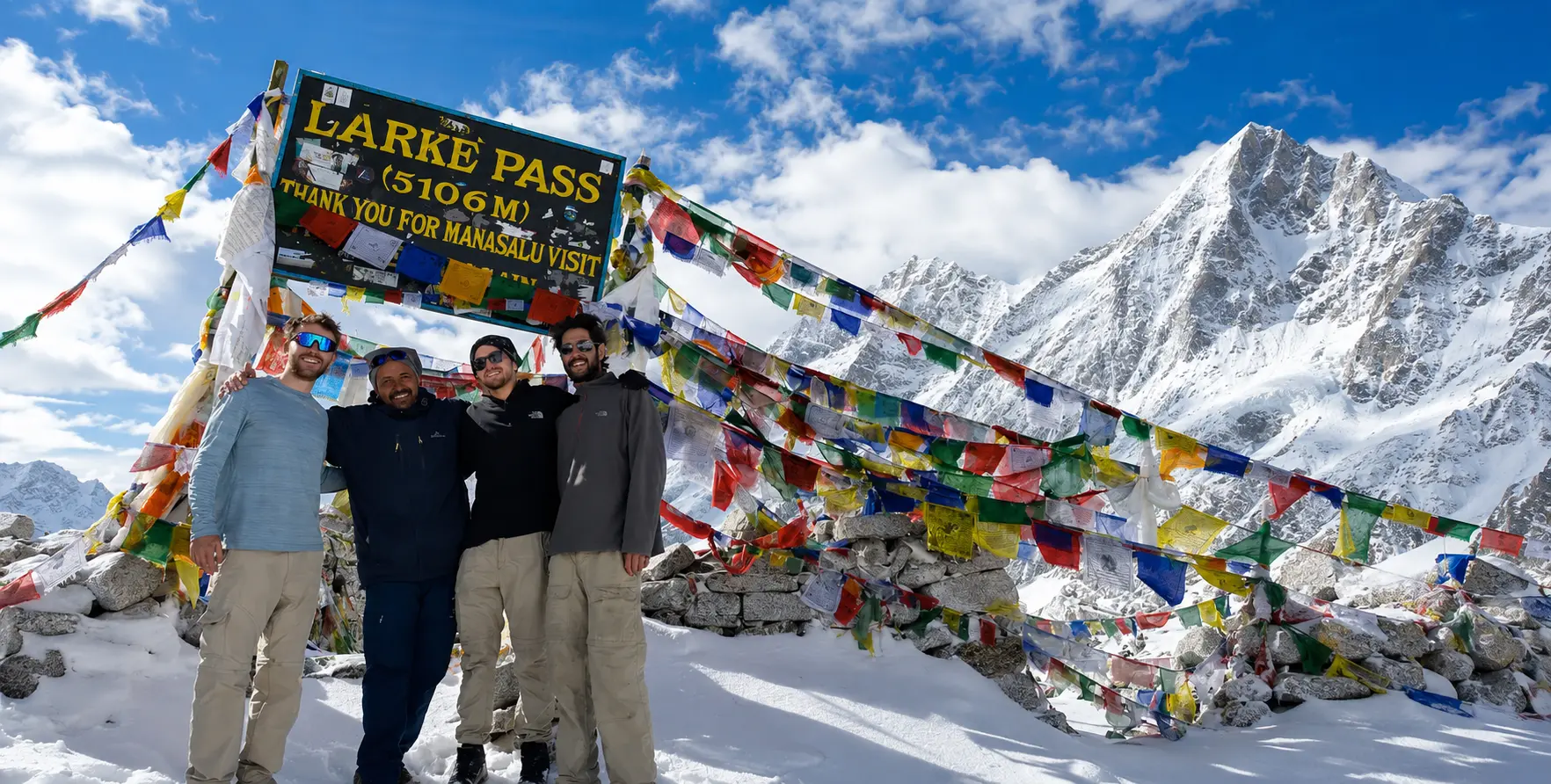
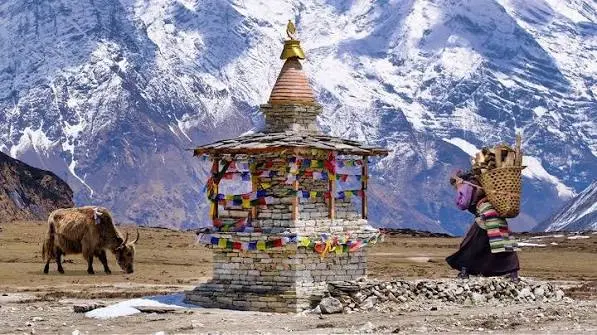
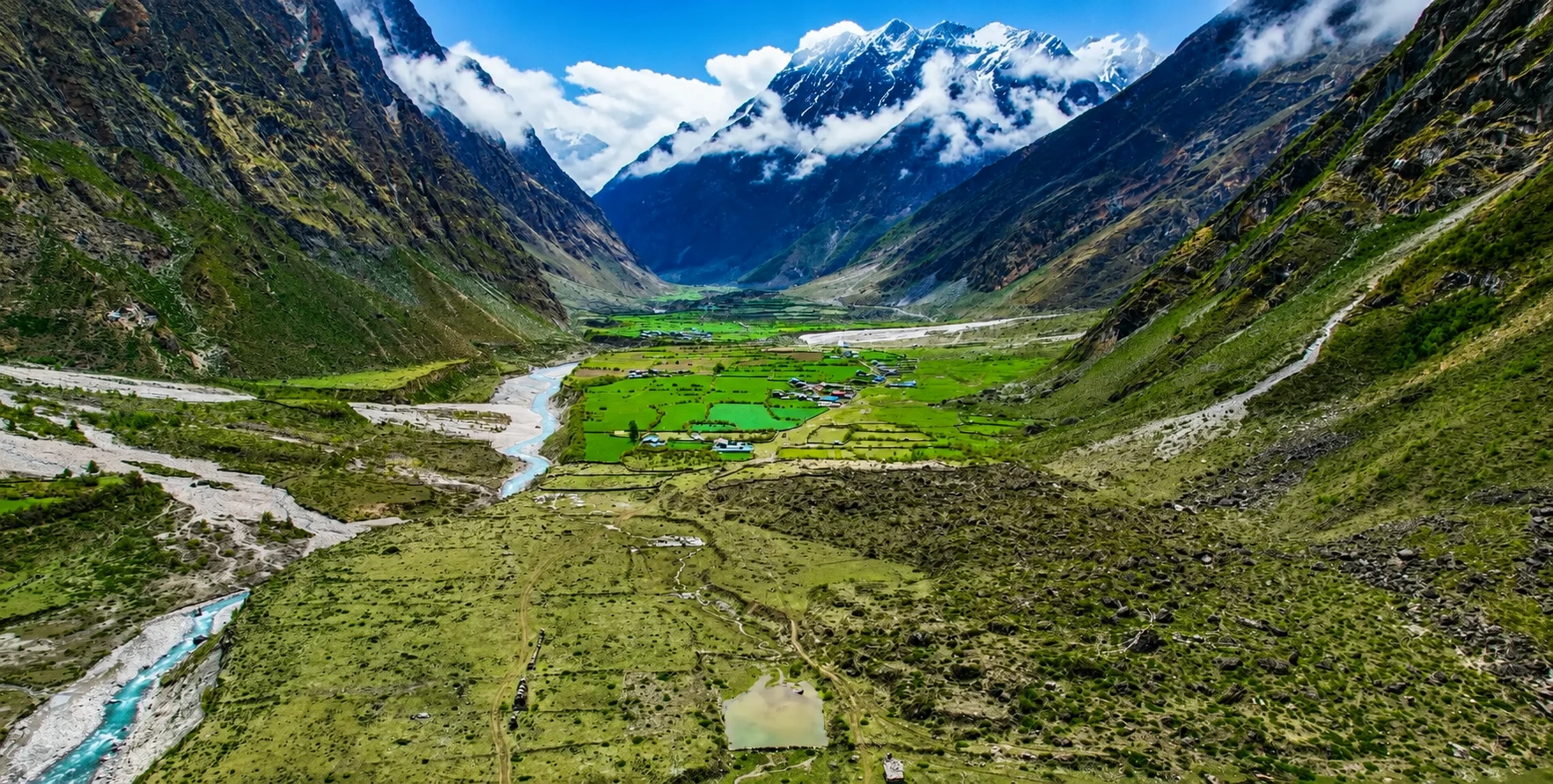
There is something singular about the final hours of a Manaslu Circuit Trek. The trekker who descends from the Larkya La Pass at 5,106 metres through Bimthang’s yak pastures and the increasingly lush Dudh Khola valley to Dharapani at 1,860 metres has completed one of Nepal’s most physically and emotionally demanding mountain journeys — 14 to 18 days of sustained high-altitude trekking through the remote Budhi Gandaki gorge, the restricted cultural landscapes of the Nubri valley, the glaciated approaches to the world’s eighth-highest mountain, and the great pass crossing that marks the boundary between the Manaslu Conservation Area and the Annapurna Conservation Area.

Arriving at Dharapani, where the road reconnects with Nepal’s highway network and the familiar sounds of vehicle traffic announce the return to the accessible world, is a moment most trekkers describe as a complex mix of relief, pride, and the particular melancholy of leaving the mountain wilderness behind.

It is at precisely this moment — physically tired from the final day’s long descent, emotionally complex in the way that great journeys always leave their participants, and practically focused on the need to get back to Kathmandu efficiently and comfortably — that the quality of the return vehicle arrangement becomes most consequential.

A pre-arranged, professionally managed pickup vehicle waiting at Dharapani from Nepal Vehicle Hiring Pvt Ltd transforms this moment from logistical uncertainty into settled completion: the jeep is there, the driver has been briefed, the route is planned, and the trekker loads their pack, climbs in, and begins the transition from mountain adventure back to the urban world.

This complete guide covers every dimension of the Manaslu Trek return pickup vehicle service — the route from Dharapani to Kathmandu, the vehicle options, accurate costs, the two-stage alternative via Besisahar, and the practical considerations that distinguish an excellent return vehicle arrangement from a stressful last-minute scramble at the end of a demanding trek.

Nepal Vehicle Hiring Pvt Ltd provides private vehicle pickup from Dharapani for Manaslu Circuit trekkers throughout the year — in private jeeps for small and medium groups, Hiace vans for larger parties, and with the option to book the return journey simultaneously with the outbound trailhead transfer so that the complete Manaslu transport arrangement is confirmed in a single booking before the trek begins.

This guide is written for every category of Manaslu Circuit trekker: the solo trekker sharing a return vehicle with group members, the organised tour group whose operator needs a coordinated return vehicle at a specific time, and the family or friends group whose post-trek priority is maximum comfort on the return to Kathmandu after a physically demanding fortnight in the mountains.
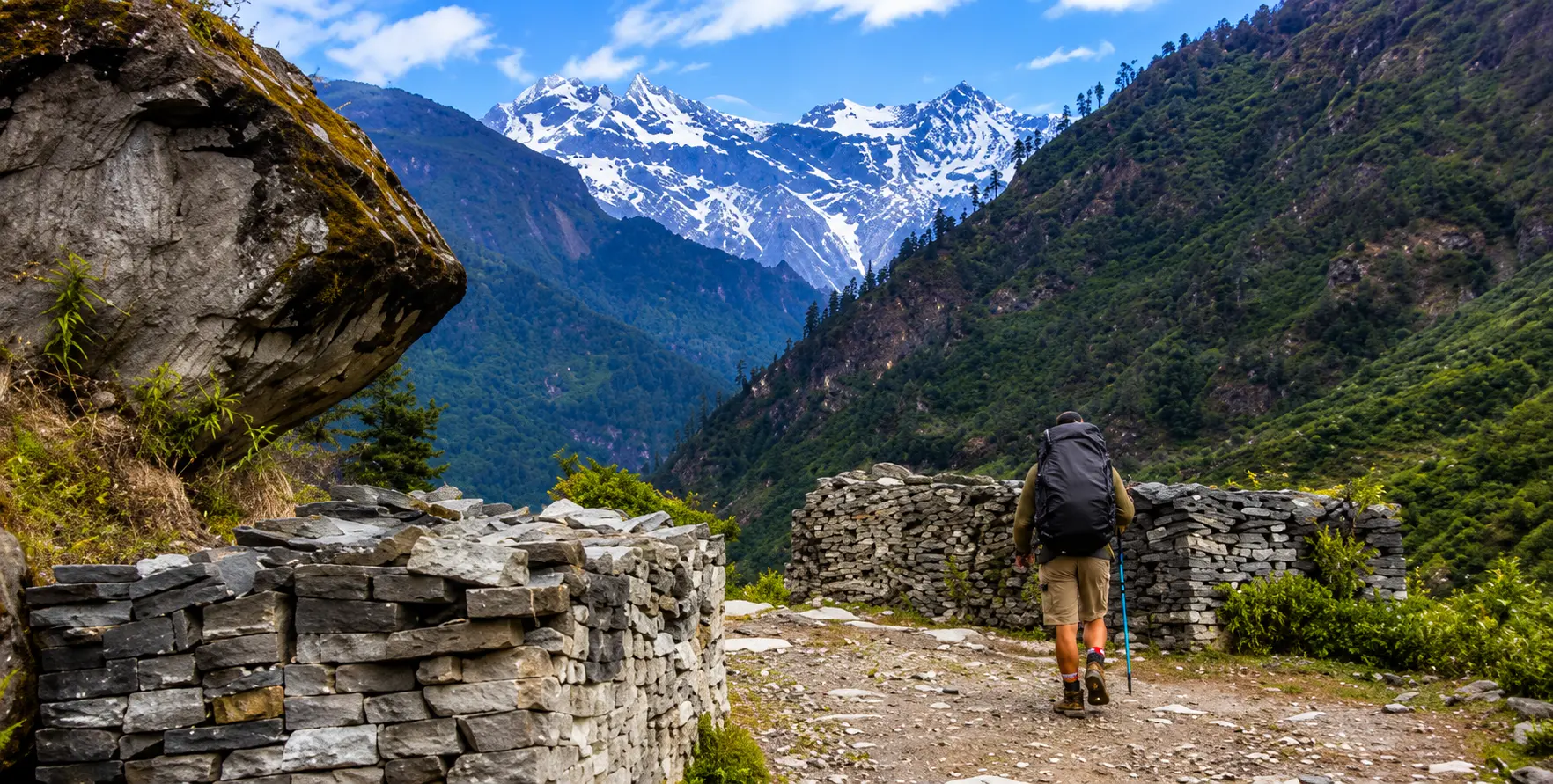
Book a Manaslu Trek Return Kathmandu Pickup Vehicle with a private 4WD jeep or Scorpio SUV. Arrange a convenient pickup from Machha Khola, Jagat, Dharapani, Besisahar, or another agreed trail endpoint and travel comfortably back to Kathmandu.

Understanding Dharapani: The Manaslu Circuit’s Exit Point

Where Is Dharapani and Why Does It Matter?

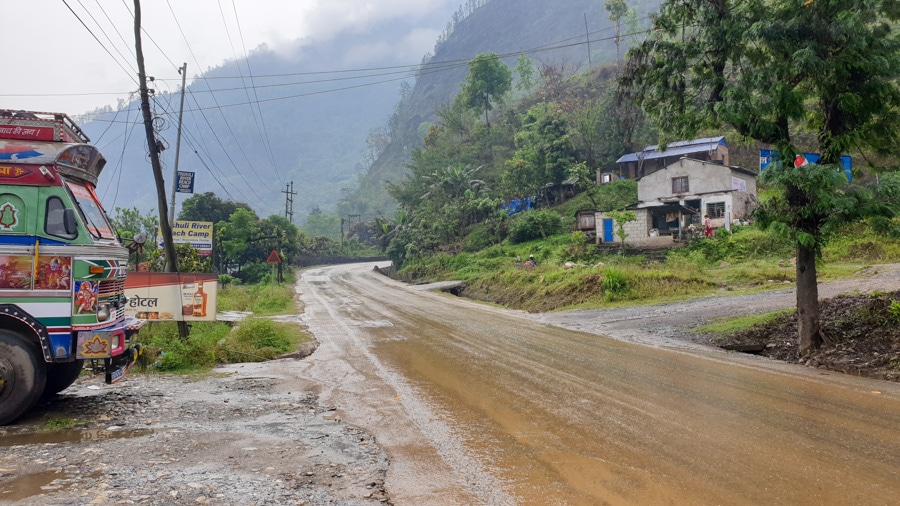
Dharapani, at approximately 1,860 metres above sea level in the Marsyangdi River valley, is the village where the Manaslu Circuit Trek ends — or more precisely, the village where the trail from the Manaslu Conservation Area emerges onto the road network that connects back to Besisahar and the broader Nepal highway system. Nepal Vehicle Hiring’s detailed transportation guide confirms that Dharapani serves as a shared waypoint between the Manaslu Circuit and the Annapurna Circuit Trek — trekkers arriving from the Larkya La to the north and Annapurna Circuit trekkers approaching from Manang to the east both converge at this village’s road connection.

This dual-circuit function makes Dharapani one of Nepal’s most logistically significant small trekking gateway settlements, and the road that serves it — connecting northward through the Marsyangdi valley toward Manang and southward toward Besisahar — is the primary vehicle access point for returning Manaslu Circuit trekkers.

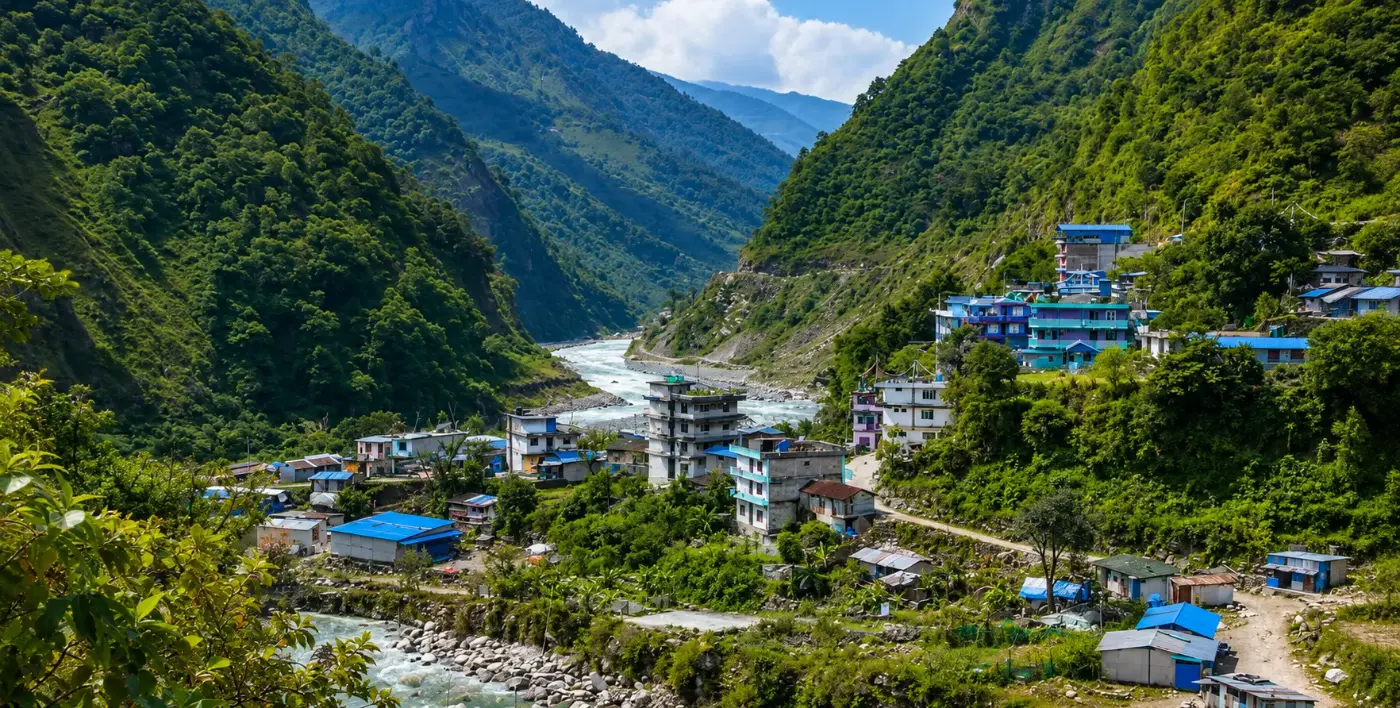
The village itself is modest in scale — a cluster of traditional houses, teahouses, and the road junction infrastructure that a dual-circuit exit point generates — but its significance to the returning Manaslu trekker is disproportionate to its size. After 14 to 18 days in a region where the only vehicular traffic is the occasional porter vehicle on the newly extended lower Budhi Gandaki road sections, arriving at a road with regular jeep and bus traffic feels genuinely dramatic.

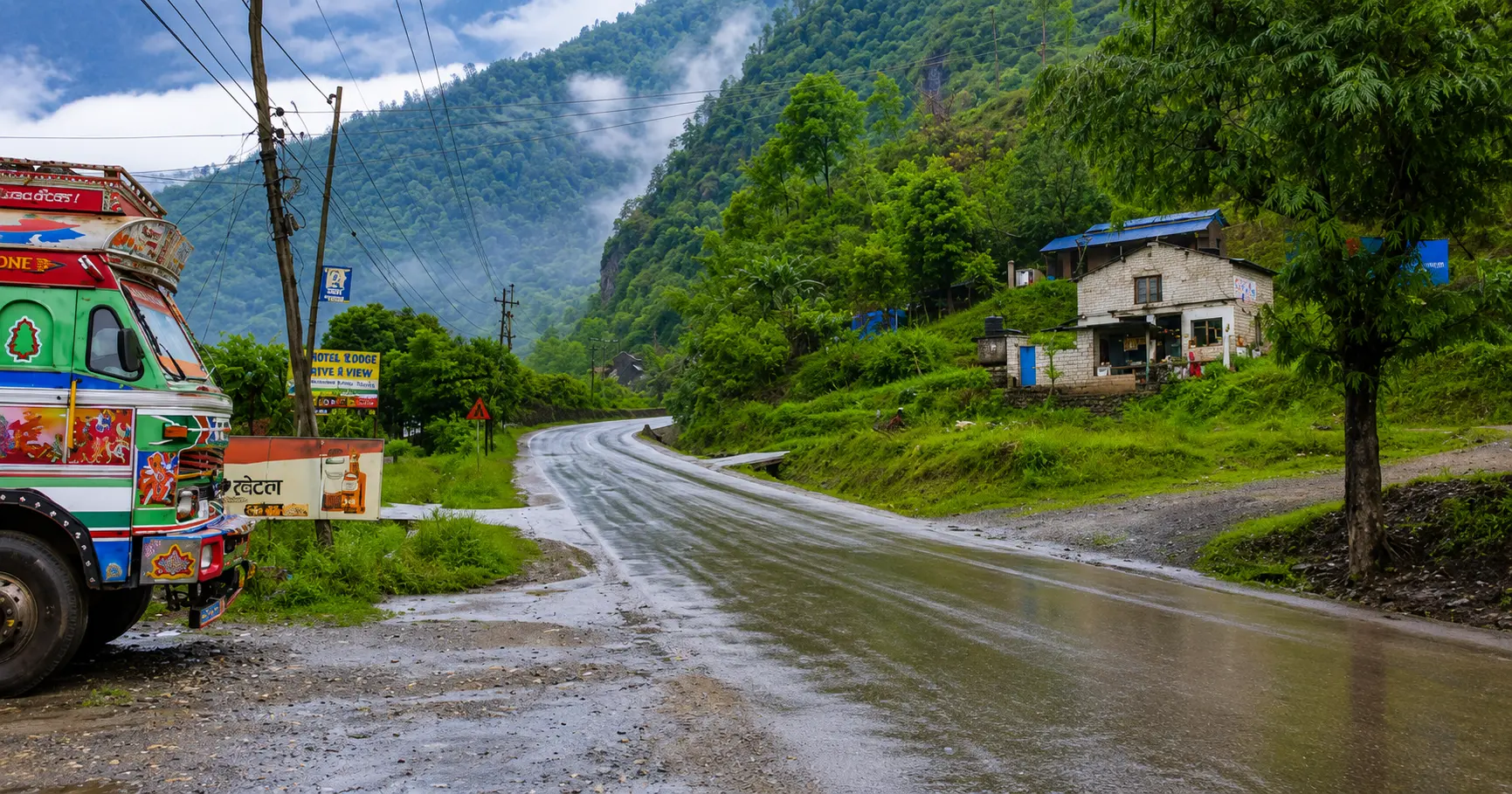
The road from Dharapani southward to Besisahar and Kathmandu is the same Marsyangdi River valley road that carries Annapurna Circuit approach traffic northward — a relatively well-maintained route by Nepal standards that carries the returning trekker through some genuinely fine mid-hill scenery on the southward drive.

The Dharapani Road Situation: What Has Changed Recently

The road infrastructure at and around Dharapani has evolved significantly in recent years as part of Nepal’s broader programme to extend roads into its mountain districts. Nepal Vehicle Hiring, Nepal’s current transportation guide, notes that the section between Dharapani and Besisahar is part of a wider road project built by the Nepali Army. That road construction activity continues to affect the character of this corridor.

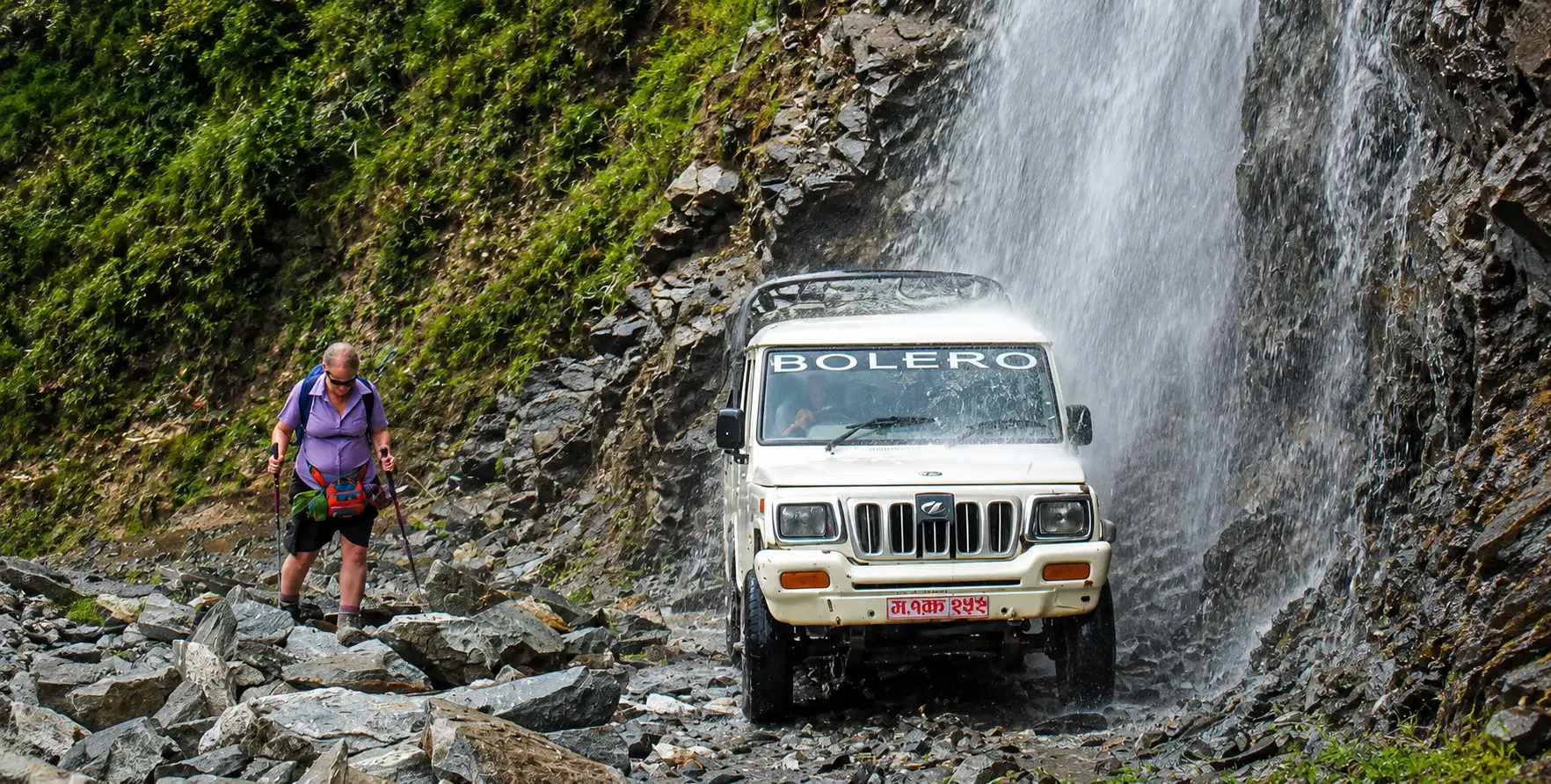
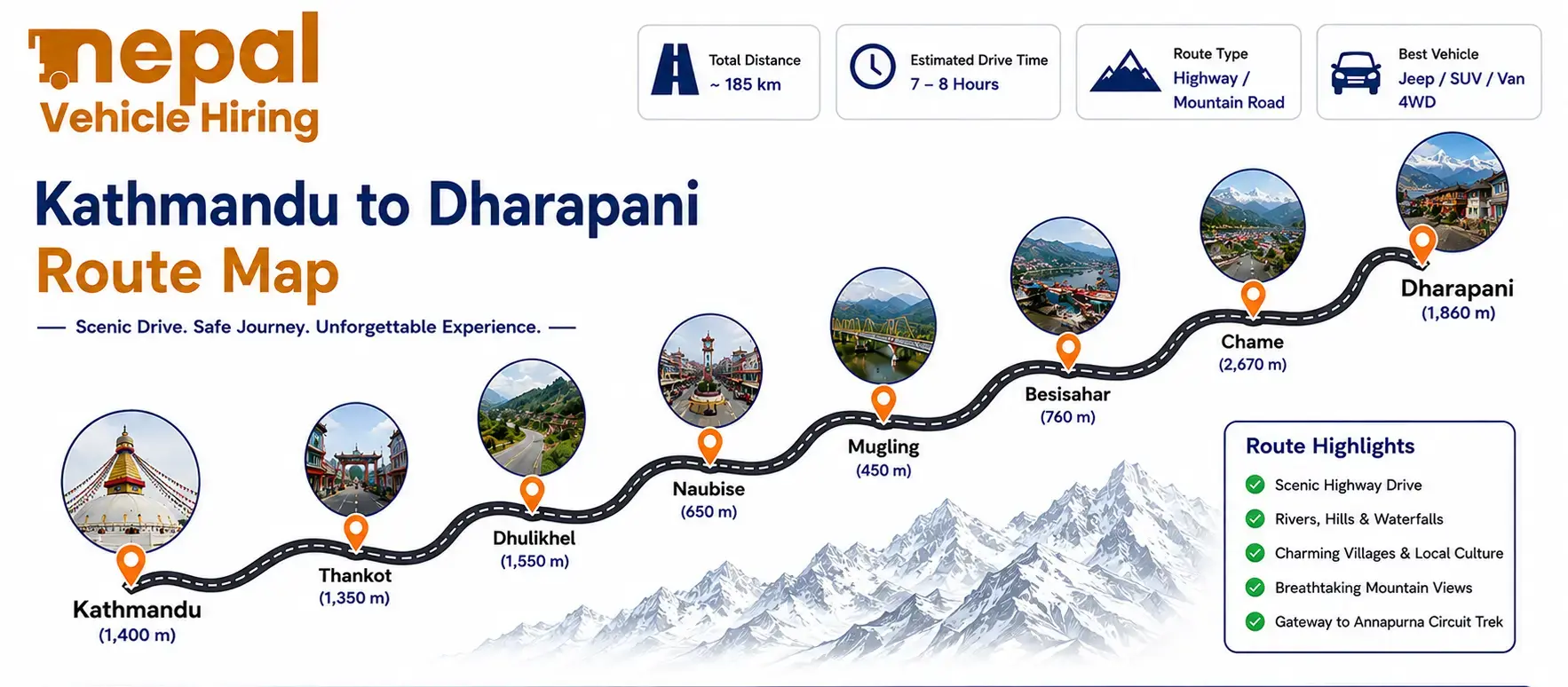
The road from Dharapani to Besisahar follows the Marsyangdi River valley southward for approximately 66 kilometres, passing through Tal, Syange, Jagat (the Annapurna Circuit’s Jagat, different from the Manaslu Circuit’s Jagat), and Bhulbhule before reaching Besisahar. This section is passable by jeep and other vehicles but involves some rough sections and construction-affected areas that require a vehicle with good ground clearance and an experienced driver.
Book a Manaslu Trek Return Kathmandu Pickup Vehicle with a private 4WD jeep or Scorpio SUV. Arrange a convenient pickup from Machha Khola, Jagat, Dharapani, Besisahar, or another agreed trail endpoint and travel comfortably back to Kathmandu.

Return Route Options: Dharapani to Kathmandu

Option A: Direct Private Jeep from Dharapani to Kathmandu

The most comfortable and time-efficient return option for Manaslu Circuit trekkers is a direct private jeep from Dharapani to Kathmandu in a single-vehicle journey. The full Dharapani-to-Kathmandu route covers about 220 to 230 kilometres via the Marsyangdi Valley to Besisahar, then onto the Prithvi Highway to Kathmandu, taking about 7 to 9 hours under normal road conditions.

The route follows the Marsyangdi River valley southward from Dharapani through Besisahar, then joins the Prithvi Highway at Dumre junction and follows the famous Trishuli River gorge highway through Mugling — where many vehicles stop for the famous freshwater fish lunch — Malekhu, and the final climb to the Kathmandu Valley. This is one of Nepal’s most scenic major highway sections, and trekkers completing the Manaslu Circuit in autumn will experience the gorge’s best views on the return drive.

Nepal Vehicle Hiring Pvt Ltd’s direct Dharapani to Kathmandu private jeep hire service costs approximately US$320 for the full vehicle — somewhat below some of the operator quotes referenced above, reflecting our transparent all-inclusive pricing that covers vehicle, driver, fuel, and tolls without the operator margin that some package-based price quotes include. For a group of 6 trekkers sharing the vehicle, the per-person cost of NPR 3,333 to NPR 4,667 (USD 25 to USD 35) is very modest relative to the comfort and efficiency advantage over shared or public transport alternatives.

Option B: Two-Stage Return via Besisahar

The two-stage return — a shared or private jeep from Dharapani to Besisahar followed by a bus or private vehicle from Besisahar to Kathmandu — is the standard budget-conscious alternative to the direct private jeep. Langtang Treks Nepal’s transportation guide confirms the Dharapani to Besisahar shared jeep at USD 20 to USD 25 per person, taking 4 to 5 hours on this section.

From Besisahar, Nepal Himalaya Trekking confirms a public bus to Kathmandu for USD 10 to USD 15 per person, taking about 6 to 7 hours on the highway.

The two-stage total cost per person is therefore approximately USD 30 to USD 40 — compared to USD 25 to USD 35 per person in a shared private jeep from Dharapani directly to Kathmandu. The economics clearly favour the direct private jeep for groups of three or more, even before considering the comfort and timing advantages.

The two-stage option has specific practical drawbacks beyond its cost disadvantage for groups. Finding and negotiating a shared jeep at Dharapani—typically on arrival after a long, physically demanding descent from the Larkya La—requires energy and logistical competence that most trekkers at the end of a 15-day circuit have in shorter supply than at the start of a fresh adventure.

The shared jeep departure from Dharapani is not scheduled but demand-based — it departs when full, which may mean waiting 30 minutes, 2 hours, or occasionally longer if the day’s trekker arrivals are sparse. The Besisahar to Kathmandu bus adds a further 6 to 7 hours of public transport sitting to a day that has already involved substantial physical effort.

The complete two-stage return from Dharapani to Kathmandu typically takes 11 to 13 hours, including the vehicle change at Besisahar and any waiting time — compared to 7 to 9 hours in a direct private jeep with no intermediate stop required.

Option C: Return via Pokhara Extension

A third, increasingly popular return option for Manaslu Circuit trekkers with extra time is to return via Pokhara rather than directly to Kathmandu. From Besisahar, the road continues westward along the Marsyangdi River to the Prithvi Highway junction, where trekkers can continue toward Pokhara rather than turn east toward Kathmandu.

The Besisahar-to-Pokhara distance is about 100 kilometres and takes 3 to 4 hours—a straightforward journey that brings Manaslu Circuit returnees to Nepal’s lakeside second city for a well-earned rest before the onward journey to Kathmandu or direct departure. Nepal Vehicle Hiring Pvt Ltd’s Kathmandu-to-Pokhara private vehicle service can be combined with the Dharapani return in a coordinated arrangement that takes the group from Dharapani to Pokhara for an overnight or multi-night stay, with a subsequent Pokhara-to-Kathmandu vehicle completing the return.

Post-Manaslu Pokhara visits often include a Sarangkot sunrise tour for an Annapurna-range dawn panorama or a Pokhara car-hire day for the World Peace Pagoda and lakeside cultural circuit.
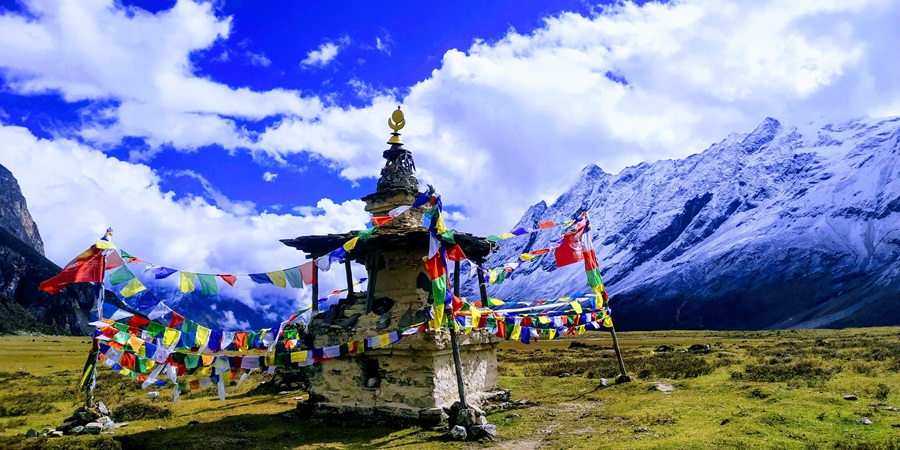
Manaslu Circuit Trek

Complete Cost Guide: Dharapani to Kathmandu Return

The following costs consolidate verified pricing from multiple current sources. The annual cost guide confirms a direct Dharapani-to-Kathmandu private jeep at USD 200 to USD 266 per vehicle, and USD 27 per person when sharing a jeep from Dharapani to Besisahar. Nepal Vehicle Hiring Pvt Ltd provides all-inclusive private rates below.

Direct Dharapani to Kathmandu private 4WD jeep (5–7 passengers): US$320 per vehicle. This is the most convenient and most time-efficient return option, delivering the group to their Kathmandu hotel in a single 7-to-9-hour drive.

Direct Dharapani to Kathmandu Hiace van hire (8–14 passengers): NPR 35,000 to NPR 45,000 per vehicle (approximately USD 233 to 300 USD). Best value for medium-large trekking groups.

Dharapani to Besisahar private jeep + Besisahar to Kathmandu private vehicle; Besisahar to Kathmandu private car: approximately NPR 12,000 to NPR 18,000 for the full vehicle. Two-stage total for 6 people: approximately NPR 18,000 to NPR 28,000 — marginally cheaper than the direct Dharapani jeep but with the added complexity of a vehicle change.

For very large groups, coaster hire (20–22 passengers): NPR 40,000 to NPR 60,000. Bus hire (30–40 passengers): NPR 50,000 to NPR 70,000. These large vehicle options are best for organised trekking groups whose entire party descends from Larkya La together and needs coordinated return transport.

Public transport comparison: Sharing a jeep from Dharapani to Besisahar costs NPR 1,500 per person (approximately USD 11) and takes 3 to 4 hours. A  public bus from Besisahar to Kathmandu costs about NPR 1,500 to NPR 2,000 per person and takes 6 to 7 hours.

Total two-stage public option: approximately NPR 3,000 to NPR 3,500 per person (USD 23 to USD 26). For groups of four or more, a private direct jeep from Nepal Vehicle Hiring Pvt Ltd offers better per-person value and dramatically superior comfort.

Book a Manaslu Trek Return Kathmandu Pickup Vehicle with a private 4WD jeep or Scorpio SUV. Arrange a convenient pickup from Machha Khola, Jagat, Dharapani, Besisahar, or another agreed trail endpoint and travel comfortably back to Kathmandu.

Why Private Vehicle Return Is Essential After the Manaslu Circuit

The case for a private vehicle return from Dharapani to Kathmandu after completing the Manaslu Circuit is stronger than it might appear from the simple cost comparison with public alternatives — because the specific character of the end-of-trek moment makes the advantages of private transport uniquely valuable in ways that a fresh, rested traveller at an ordinary journey starting point does not experience.

Physical exhaustion is the most immediate factor. The Larkya La crossing day — a descent of more than 3,000 metres from pass to valley — is consistently described by Manaslu Circuit trekkers as the most physically demanding day of the complete circuit, and many trekkers add the Day 15 or 16 descent to Dharapani as a continuation of this effort rather than as a separate and recovered day.

Arriving at Dharapani after this final descent, the prospect of negotiating a shared jeep, waiting for it to fill, enduring a 4-to-5-hour shared ride to Besisahar, and then boarding a public bus for 6 to 7 more hours to Kathmandu — all in a state of genuine physical fatigue — is not appealing to any trekker who has alternatives. A private vehicle waiting at Dharapani offers the immediate comfort of a clean, private cabin, a briefed driver, and departure within minutes of the group’s arrival at the road.

This is one of the most concretely felt practical advantages of pre-arranged private transport at a trek’s end.

Luggage management is the second significant practical advantage. After 14 to 18 days of trail accumulation — extra layers purchased at teahouses, souvenirs, Samagaon yak cheese acquired at the famous Kyanjin factory, and the general expansion of luggage volume that any multi-week journey tends to produce — most trekkers leave Dharapani with more to carry than they arrived at the starting trailhead with.

A private vehicle accommodates this expanded luggage load in a secure boot or rear storage area, without the cramping and luggage negotiation shared vehicles require.

Hotel drop-off flexibility is the third advantage. A private Nepal Vehicle Hiring Pvt Ltd vehicle delivers the group to their specific Kathmandu hotel — Thamel, Boudha, Lazimpat, or any other district — without requiring the group to alight at a general terminus and arrange onward transfer with the luggage they are carrying. After a demanding trekking circuit, door-to-hotel delivery eliminates the final logistical step that shared transport cannot provide.

The Return Journey: What to Expect on the Drive Back

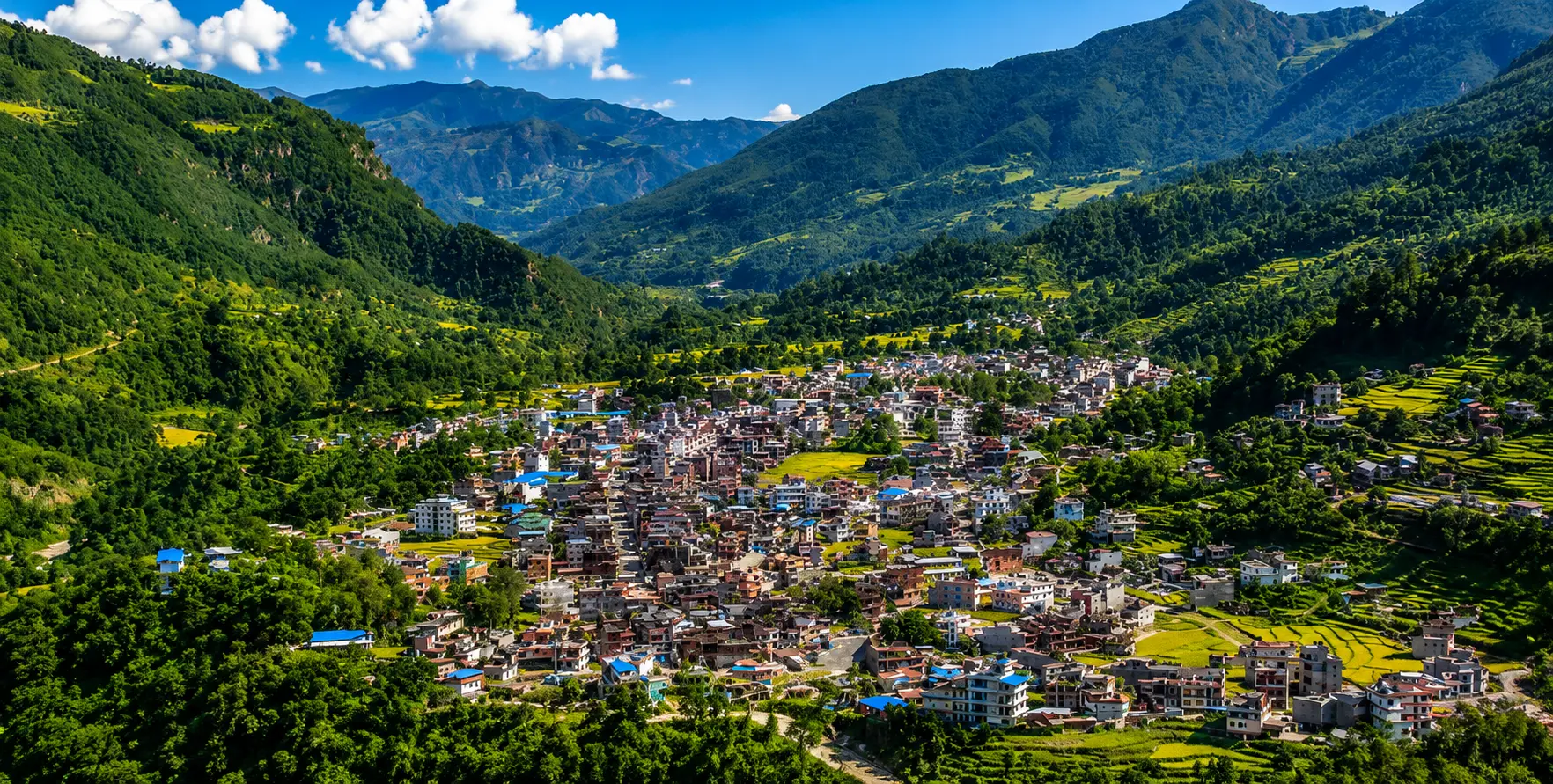
Dharapani to Besisahar: The Marsyangdi Valley

The first section of the Dharapani to Kathmandu return drive follows the Marsyangdi River south from Dharapani through the same valley Annapurna Circuit trekkers walk north at the start of their adventure. The road passes through Tal, Syange, Jagat (the Annapurna Circuit’s Jagat at 1,300 metres), Chamje, and Bhulbhule before reaching Besisahar at approximately 800 metres.

This section covers about 66 kilometres and takes 2 to 3 hours by private jeep, passing through genuinely beautiful mid-hill scenery where the Marsyangdi River cuts an impressive gorge between terraced hillsides, with the distant peaks of the Annapurna massif occasionally visible to the north.

The road quality on the Dharapani to Besisahar section is variable — it is a highway under active development with construction activity affecting specific sections — and a vehicle with good ground clearance handles it more comfortably than a standard sedan. Most trekkers find this first section of the return drive unexpectedly enjoyable; the unfamiliar perspective of descending southward through a valley they have only experienced while trekking or on maps provides a genuinely interesting scenic counterpoint to the circuit they just completed.
Book a Manaslu Trek Return Kathmandu Pickup Vehicle with a private 4WD jeep or Scorpio SUV. Arrange a convenient pickup from Machha Khola, Jagat, Dharapani, Besisahar, or another agreed trail endpoint and travel comfortably back to Kathmandu.

Besisahar to Kathmandu: The Prithvi Highway

From Besisahar, the road joins the Prithvi Highway corridor at Dumre junction and turns eastward toward Kathmandu. This 175-kilometre section follows the same route as the Kathmandu to Pokhara scenic drive through the Trishuli River gorge — the famous section of Nepal’s highway network that passes through Mugling junction, the Malekhu fish restaurant area, and the dramatic cliff-side driving of the upper gorge before the final approach to Kathmandu.

The Mugling junction at the confluence of the Trishuli and Marsyangdi rivers is the natural and most enjoyable lunch stop on the return drive — the fish restaurants here serve fresh mahseer and asla in the local style, with the river confluence visible from the restaurant terrace. The stop provides a perfect 30-to-45-minute break in what is otherwise a sustained return journey.

The full Besisahar-to-Kathmandu drive takes about 4 to 5 hours on the Prithvi Highway, making the total Dharapani-to-Kathmandu journey about 7 to 9 hours, including a Mugling lunch stop. Most groups arrive in Kathmandu in the late afternoon or early evening — ideal timing for hotel check-in, a long shower, a proper restaurant dinner, and the deeply satisfying sleep that the first proper bed after 14 to 18 days in teahouses delivers.

Post-Trek Kathmandu: What Manaslu Circuit Returnees Do Next

The Kathmandu days after completing the Manaslu Circuit are typically divided between the practical — laundry, gear cleaning, gear return for rented items, final shopping for gifts and souvenirs — and the experiential: the cultural and sightseeing activities that the pre-trek preparation days may not have fully covered. Nepal Vehicle Hiring Pvt Ltd offers Kathmandu sightseeing by private vehicle for post-circuit returnees, covering the UNESCO World Heritage circuit of Pashupatinath Temple, Boudhanath Stupa, Swayambhunath, and Patan Durbar Square in a well-paced day that balances the circuit’s physical intensity with cultural depth.

The Bhaktapur Durbar Square day tour is particularly well-suited to the post-Manaslu mood — the medieval Newar city’s quiet, pedestrian-scale heritage environment providing a gentle, culturally rich contrast to the raw mountain wilderness of the past fortnight. Bhaktapur’s Shiva temples, pottery squares, and woodcarved window heritage offer a completely different register of Nepali cultural experience from the Tibetan Buddhist communities of the upper Manaslu Circuit, and the contrast itself is educational in a way that sequential itinerary design rewards.

The Nagarkot sunrise tour provides a final Himalayan farewell — a pre-dawn drive to the valley rim for the complete Nepal mountain panorama before departure, with Manaslu itself visible on the northern horizon alongside the complete arc of the Nepal Himalayan range. Seeing Manaslu from Nagarkot after having walked around its base carries a particular emotional resonance for circuit completers that first-time Nagarkot visitors cannot share.

For Manaslu Circuit trekkers whose Nepal adventure extends beyond the circuit itself, Nepal Vehicle Hiring Pvt Ltd provides smooth connections to every subsequent destination. A post-Manaslu Kathmandu to Pokhara private vehicle opens the Annapurna region for a second trekking phase or lakeside rest. Our direct jeep from Pokhara to Ghorepani Poon Hill delivers Nepal’s most celebrated sunrise viewpoint as a short post-circuit reward trek.

Our Pokhara to Upper Mustang overland jeep takes adventurous trekkers to Lo Manthang through the Kali Gandaki Gorge. The Kathmandu to Muktinath jeep connects Manaslu returnees to the sacred Muktinath pilgrimage at 3,710 metres. And our airport transfer service provides the final Kathmandu to Tribhuvan International transfer for departing trekkers whose Nepal adventure has reached its conclusion.
Book a Manaslu Trek Return Kathmandu Pickup Vehicle with a private 4WD jeep or Scorpio SUV. Arrange a convenient pickup from Machha Khola, Jagat, Dharapani, Besisahar, or another agreed trail endpoint and travel comfortably back to Kathmandu.

Seasonal Considerations for the Return Journey

The Dharapani to Kathmandu return drive is subject to the same seasonal road condition variations as other Nepal highway sections — with the key variable being the condition of the Dharapani to Besisahar Marsyangdi valley road, which is more recently developed and more subject to seasonal maintenance gaps than the established Prithvi Highway section that follows.

Autumn from September through November delivers the best driving conditions of the year—post-monsoon road surfaces, excellent mountain visibility from the Marsyangdi valley’s higher sections, and settled weather that makes journey-time predictions reliable. The return drive in October is genuinely beautiful: the terraced hillsides of the Marsyangdi valley in their post-harvest golden tones, the peaks of the Annapurna range visible to the north and west, and the clear Trishuli gorge atmosphere on the Prithvi Highway section that follows.

Spring,g from March through May,y is the second-best season for the return drive, with good road conditions and rhododendron blooms adding colour to the Marsyangdi valley’s forested sections. Monsoon from June through August poses the highest risk of road disruption on the Dharapani to Besisahar section, with occasional debris and flooding possible at specific points.

Nepal Vehicle Hiring Pvt Ltd monitors road conditions during monsoon months and advises clients of any issues before confirming return pickup dates. Winter from December through February is cold but generally reliable on both the Marsyangdi Valley road and the Prithvi Highway sections.

Booking Your Return Pickup: The Best Approach

Book Before the Trek Begins

The single most important practical recommendation for the Manaslu Circuit return vehicle is to book it before the trek begins — simultaneously with the outbound Kathmandu to Soti Khola or Jagat private jeep hire. Booking both legs in a single Nepal Vehicle Hiring Pvt Ltd arrangement provides: (1) guaranteed return vehicle availability for the planned return date without last-minute negotiation at Dharapani; (2) the return driver’s name and WhatsApp contact details, allowing communication from Dharapani or any trail location with connectivity during the trek; and (3) the peace of mind that comes from knowing the complete transport chain is confirmed before stepping onto the trail.

Confirming the exact return date at booking time is constrained by the natural variability of multi-day trekking itineraries—weather delays at Larkya La, altitude acclimatisation extensions at Samagaon, or simply the unexpected pleasures of a landscape that rewards time spent in it more generously than the schedule anticipated. Nepal Vehicle Hiring Pvt Ltd accommodates date flexibility in return pickup bookings: trekkers notify us via WhatsApp when they reach Dharapani or the day before their expected return, and we confirm the vehicle and driver for the updated date.

The pre-booking creates a vehicle reservation framework; the WhatsApp confirmation when on trail activates it for the specific date.

Communication from the Trail

Mobile connectivity on the Manaslu Circuit is better than its remote character might suggest for much of the lower and middle sections, but becomes genuinely poor in the upper valley above Namrung and in the Larkya La approach. NTC network coverage is generally available in Jagat, Deng, Namrung, and Samagao.

At the same time,e the higher sections from Samdo to the pass and the initial descent to Bimthang have limited or no connectivity. From Bimthang southward to Dharapani, connectivity typically improves progressively, with reasonable NTC signal available at Dharapani itself.

Practical implication: trekkers should send their return date confirmation to Nepal Vehicle Hiring Pvt Ltd by the time they reach Dharapani or the previous night’s teahouse at Bimthang, giving 12 to 24 hours’ notice for the vehicle to be positioned.
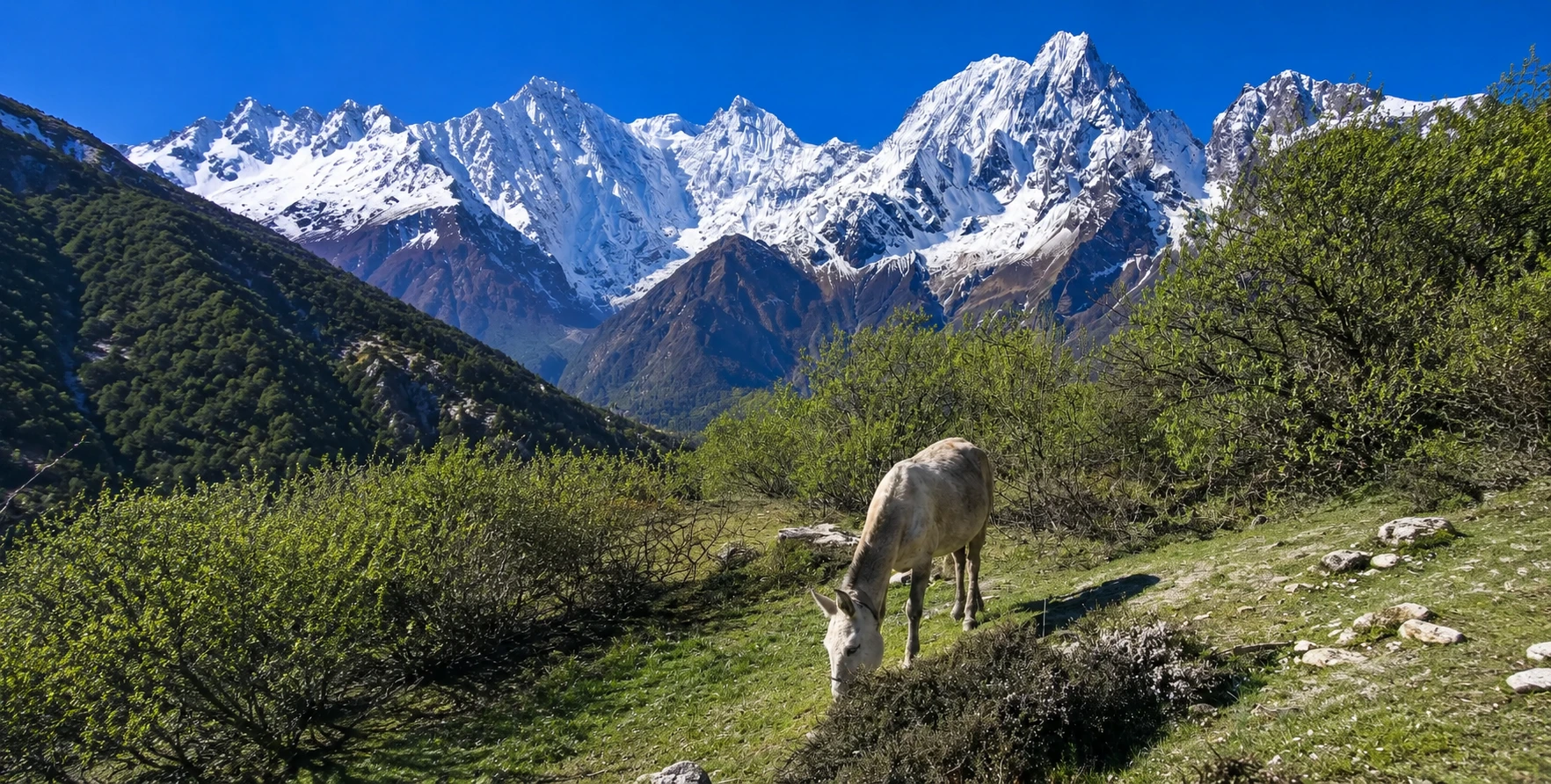
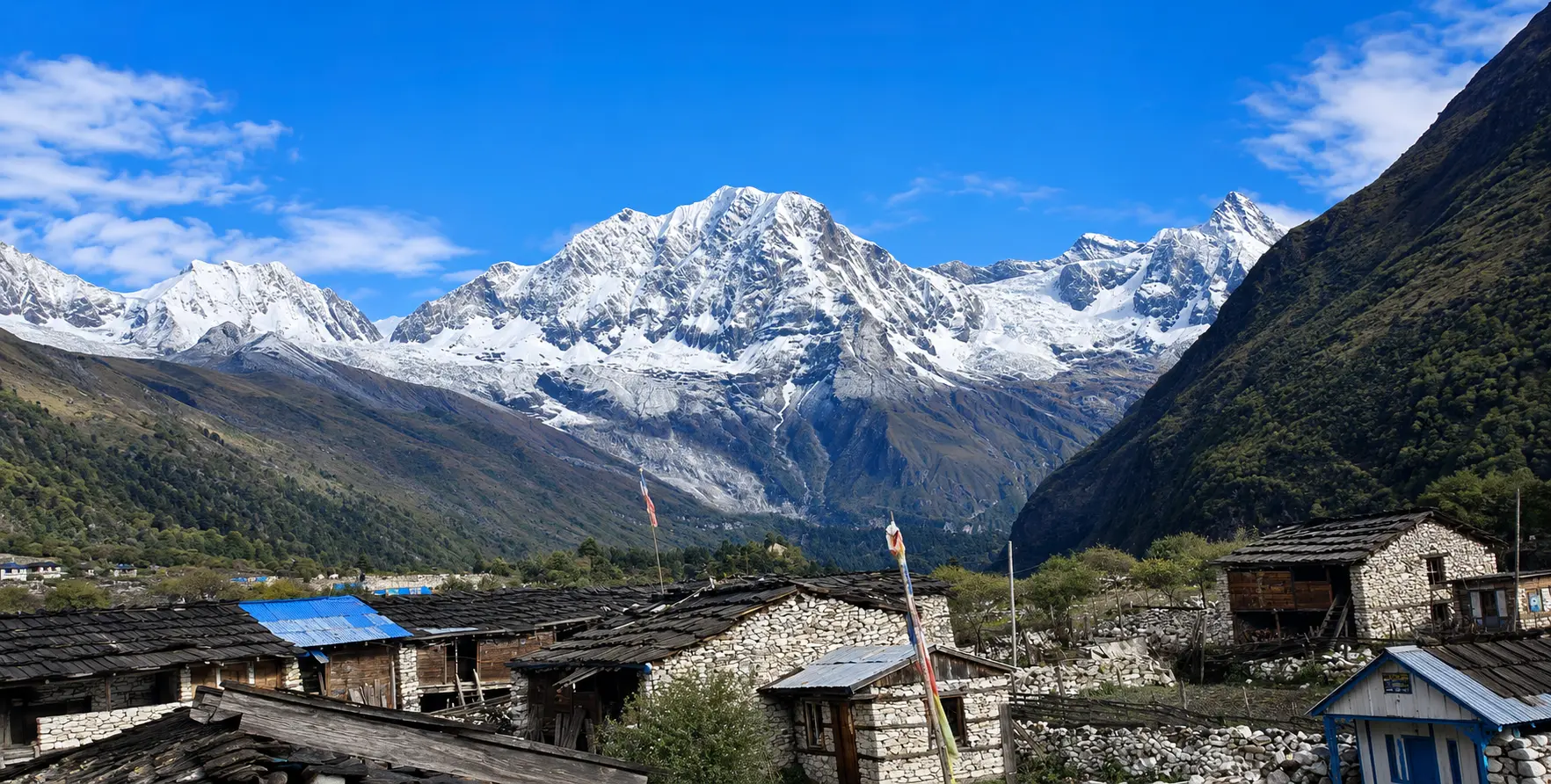
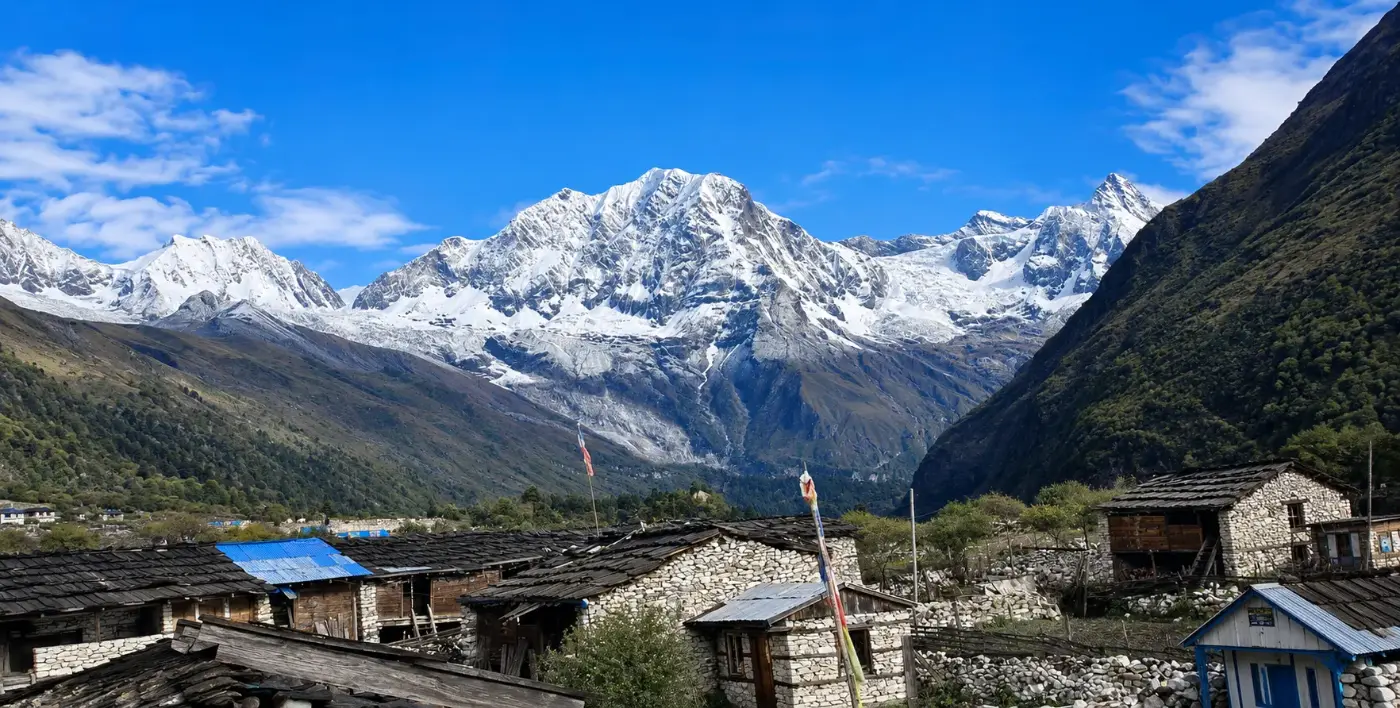
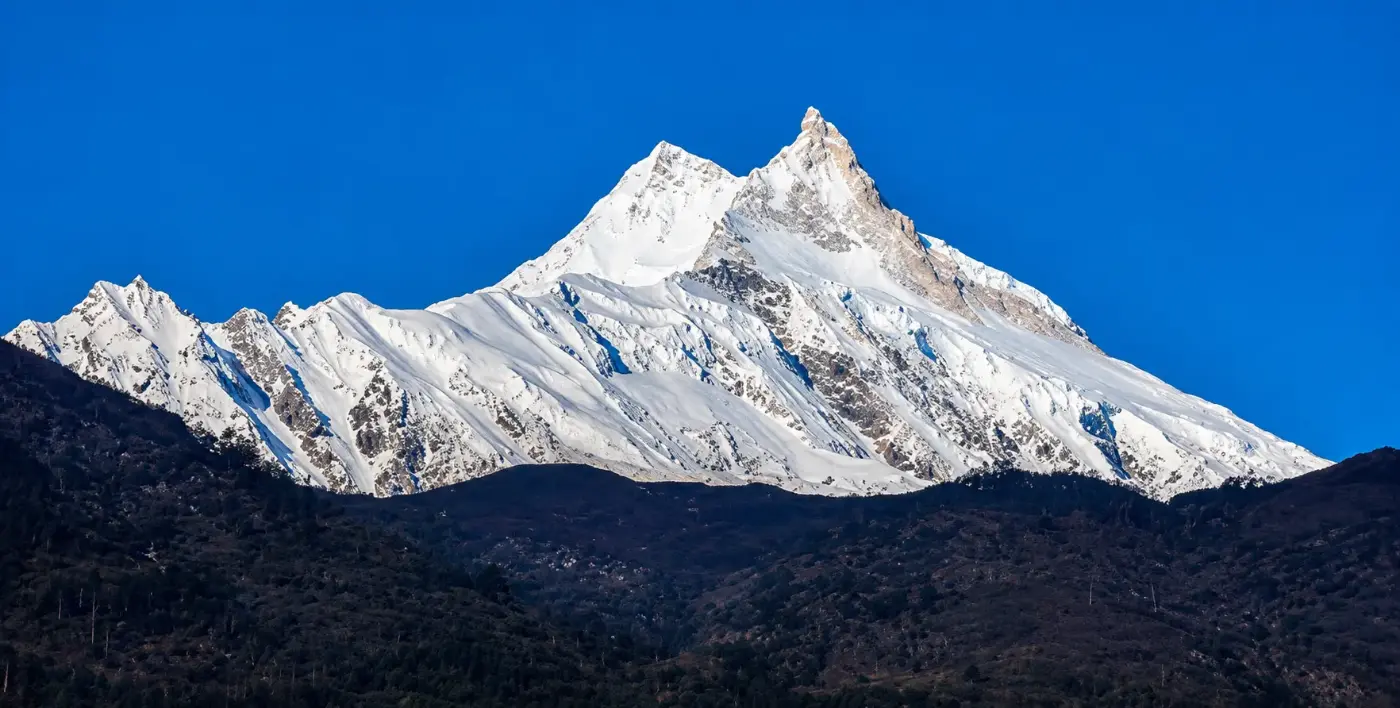
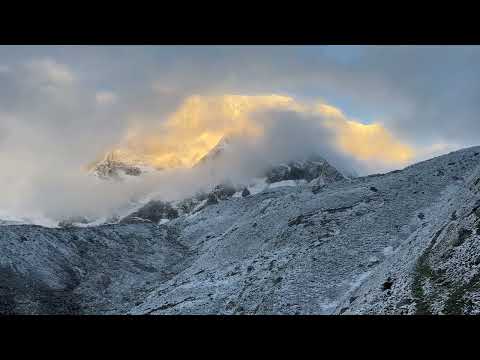
Manaslu range 4k

Practical Tips for a Smooth Manaslu Return

  • Book the return vehicle before the trek begins — Nepal Vehicle Hiring Pvt Ltd provides combined outbound and return booking as a single arrangement.
  • Save the driver’s WhatsApp number before leaving Kathmandu and send a return confirmation message from Bhimthang or Dharapani as soon as connectivity allows
  • Plan for the Larkya La descent day’s physical demands: carry lunch from your Dharamsala breakfast rather than assuming food on the descent trail, and budget energy for both the pass crossing and the Dharapani arrival logistics.cs.
  • Carry NPR cash for the return journey — the Mugling lunch stop, any Besisahar town purchases, and the Kathmandu hotel check-in all benefit from readily available cash rather than card payment dependence.
  • Consider an overnight at Bhimthang or lower Dharapani if the Larkya La crossing day’s descent leaves the group genuinely exhausted — a Dharapani overnight and fresh-day departure the following morning produces a noticeably more comfortable return drive than a same-day continuation.
  • Pack a change of clean clothes at the top of your pack for the vehicle journey — arriving in Kathmandu after 14 to 18 days of trail wear in fresher clothing is a small but meaningful quality-of-return consideration.
  • Confirm the Kathmandu drop address with Nepal Vehicle Hiring Pvt Ltd at the time of return booking — whether the hotel is the same as before the trek or a different property booked for the post-trek stay.
  • Motion sickness tablets are worth keeping on hand for the Trishuli gorge section of the Prithvi Highwy— the winding gorge road affects some returning trekkers, particularly in the post-circuit fatigued state.

Extending Nepal After the Manaslu Circuit: What Comes Next

The Manaslu Circuit is one of Nepal’s most complete and demanding trekking adventures, but it also leaves experienced Himalayan trekkers wondering what lies beyond its extraordinary scope. Nepal Vehicle Hiring Pvt Ltd’s complete vehicle hire network ensures that whatever comes next in a Nepal itinerary is supported logistically with the same quality of transport the Manaslu Circuit approach and return delivered.

For trekkers who want to combine the Manaslu Circuit with the Annapurna Circuit—a combination that creates one of Nepal’s ultimate multi-circuit adventures—the Dharapani exit from the Manaslu Circuit also serves as the entrance to the Annapurna Circuit’s southern approach. Rather than returning to Kathmandu at Dharapani, trekkers with enough time and fitness can use the Dharapani junction as a pivot point, continuing west on the Annapurna Circuit toward Manang and the Thorong La Pass.

Nepal Vehicle Hiring Pvt Ltd’s Kathmandu to Manang jeep service can be used in reverse for this extension — providing a support vehicle from Dharapani toward Besisahar and Manang for those who want to access the Annapurna Circuit’s higher sections without walking the complete approach from Besisahar.

For post-Manaslu Pokhara adventures, our Pokhara to Nayapul jeep serves the Annapurna Base Camp short trek, the Pokhara to Ghandruk jeep covers the Gurung village cultural circuit, and the Pokhara to Ghorepani Poon Hill direct jeep delivers Nepal’s most celebrated sunrise viewpoint. For the Everest region, our Everest Base Camp Trek support manages the complete Khumbu approach.

For the sacred Manaslu region neighbour, our Kathmandu to Syabrubesi jeep transfer opens the Langtang Valley. For a complete western Himalayan adventure, our Kathmandu to Salleri and Phaplu service reaches the Solukhumbu foothills for the Everest overland approach.
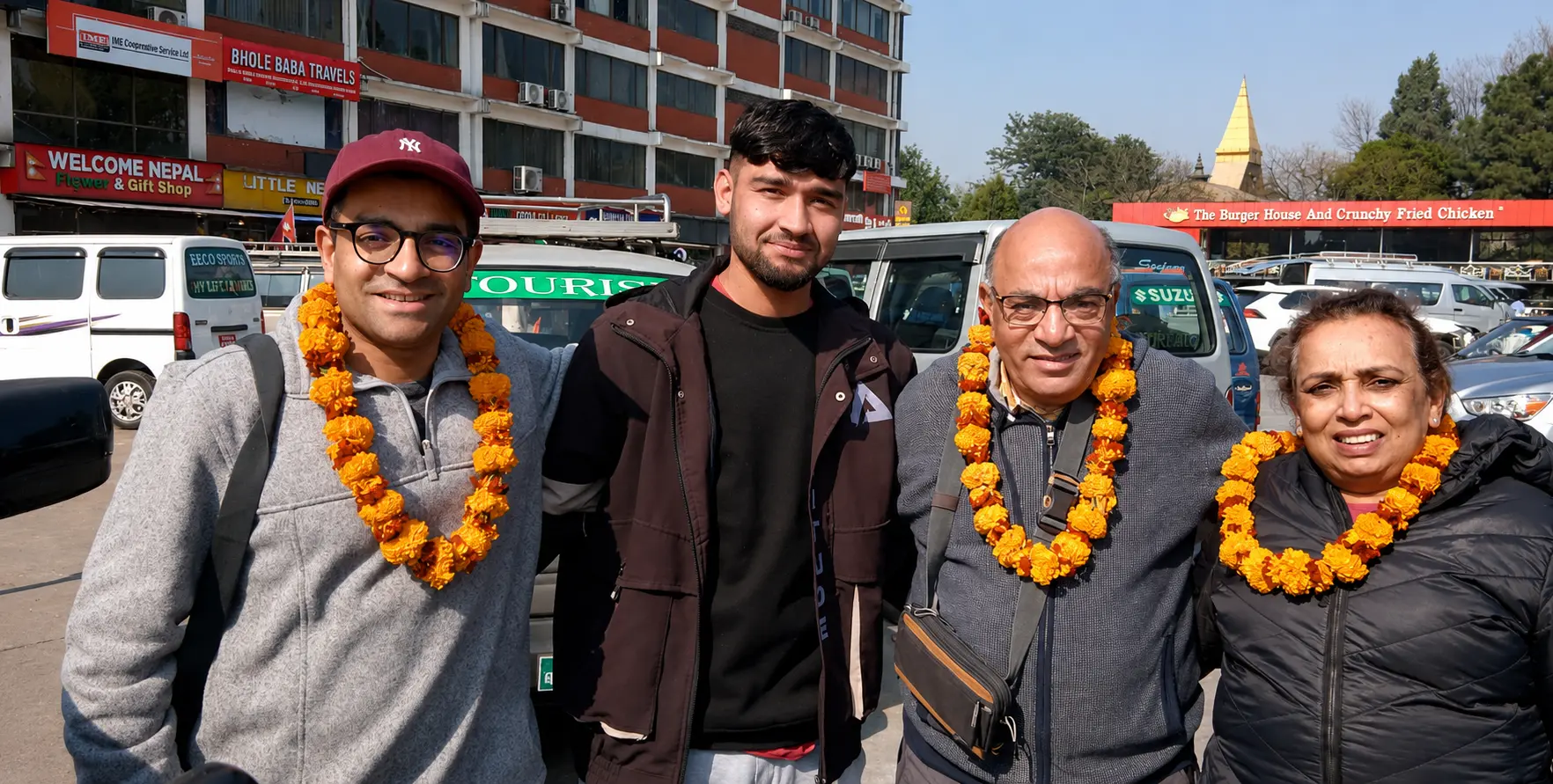
Airport pickup

Nepal Vehicle Hiring Pvt Ltd: Complete Return Vehicle Network

Nepal Vehicle Hiring Pvt Ltd provides the most comprehensive private vehicle network for Manaslu Circuit trekkers — covering not just the return pickup from Dharapani but every vehicle stage of a complete Nepal trekking and touring journey. Our Kathmandu airport transfer starts at Tribhuvan International Airport.

Our Kathmandu sightseeing vehicles cover pre- and post-trek cultural days. Our Kathmandu to Soti Khola jeep service serves the Manaslu Circuit outbound approach. Our Kathmandu to Besisahar private vehicle covers the Annapurna Circuit approach.

Our Kathmandu to Syabrubesi jeep serves the Langtang region. Our Kathmandu to Pokhara private vehicle connects the two principal trekking cities.

Our Pokhara-based services include Pokhara to Nayapul transport, Pokhara to Ghandruk jeep, Pokhara to Ghorepani Poon Hill jeep hire, Pokhara to Upper Mustang overland jeep, Sarangkot sunrise tour vehicle, and Pokhara car hire for all city transfers. Our Kathmandu to Muktinath jeep serves pilgrims on the sacred journey.

Our Kathmandu to Salleri Phaplu service reaches Solukhumbu. Our Bhaktapur day tour vehicle and Nagarkot sunrise tour provide Kathmandu Valley sightseeing. Our fleet of private cars, 4WD jeeps, Hiace vans, coasters, and buses serves groups of all sizes.

Our Nepal tour packages and trekking transfer services coordinate complete multi-destination journeys. Plan your complete Nepal trip or contact us at +977 981-4227196 to book your Dharapani return pickup today.

The Manaslu Circuit Return in Context: Comparing Routes

Understanding the Dharapani-to-Kathmandu return in the context of Nepal’s other major trekking circuit returns helps trekkers appreciate what makes this return journey distinctive and, in some ways, uniquely rewarding. The Annapurna Circuit’s most common return route runs from Muktinath or Jomsom by jeep southward to Pokhara or directly to Kathmandu via the Prithvi Highway — a straightforward vehicle pickup from a well-served road junction with multiple daily vehicle options and no significant logistical complexity.

The Everest Base Camp return from Lukla involves a flight — weather-dependent and often delayed — that introduces its own logistical uncertainty into the trek’s closing phase. The Langtang Valley return from Syabrubesi follows the same Pasang Lhamu Highway approach road in reverse, a well-established single-vehicle corridor with no routing complexity.

The Manaslu Circuit return from Dharapani combines elements of all these returns in a single journey of unusual scenic and logistical richness. The Marsyangdi valley section to Besisahar is genuinely beautiful — arguably more beautiful than the Annapurna Circuit’s equivalent section from the same valley, because the southward direction of travel reveals perspectives on the Annapurna range’s southern faces that the northward Annapurna approach conceals behind the progressively advancing mountain horizon.

The Prithvi Highway section from Dumre to Kathmandu is one of Nepal’s finest highway drives in either direction. The full journey takes 7 to 9 hours— long enough to feel like a proper transition from the mountain world back to the urban world, but not so long as to become exhausting—especially in the private-vehicle comfort Nepal Vehicle Hiring Pvt Ltd provides.

For trekkers who have completed both the Manaslu Circuit and the Annapurna Circuit, the Dharapani return journey carries a particular resonance because it follows a section of road that the Annapurna Circuit approach also uses — the shared Marsyangdi valley corridor that connects both circuits at their respective southern ends. Seeing Annapurna II above the valley from the return vehicle, knowing that the same mountain was also visible from the Manaslu Circuit’s upper sections when viewed from the east, creates a geographical synthesis of the two circuits that satisfies the completion instinct of anyone who has walked both.

Nepal Vehicle Hiking Pvt Ltd’s Kathmandu to Besisahar vehicle service and Kathmandu to Manang jeep serve both circuits’ approach directions, and our Dharapani return pickup completes the circuit loop for both Manaslu and Annapurna trekkers who exit at this shared junction point.
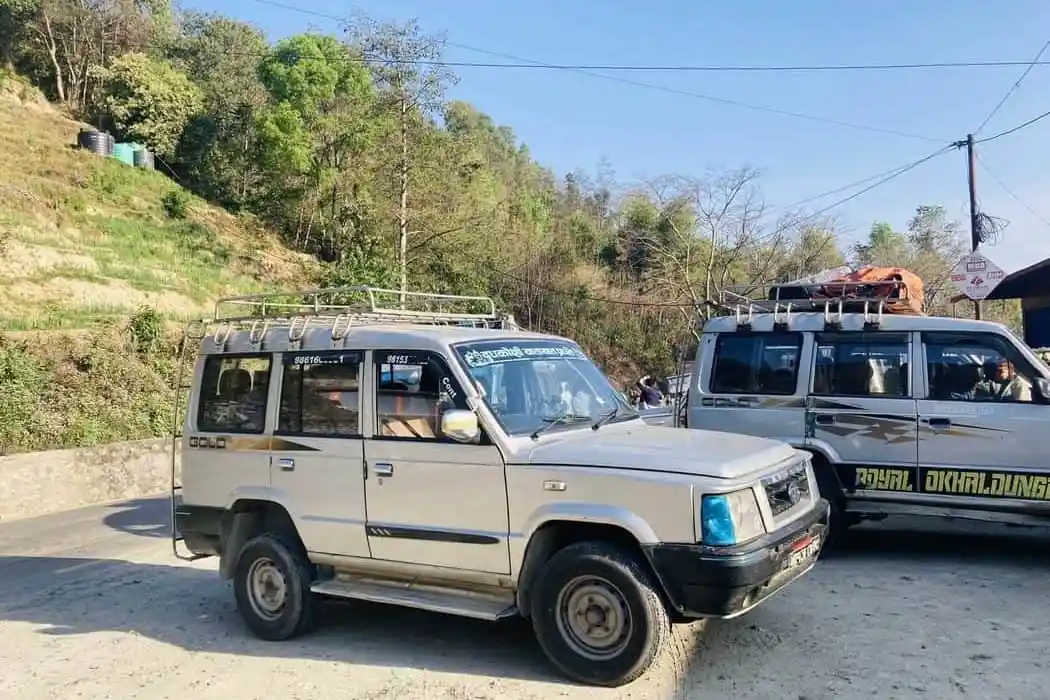
Book a Manaslu Trek Return Kathmandu Pickup Vehicle with a private 4WD jeep or Scorpio SUV. Arrange a convenient pickup from Machha Khola, Jagat, Dharapani, Besisahar, or another agreed trail endpoint and travel comfortably back to Kathmandu.

Manaslu Return Vehicle: Special Considerations for Organised Groups

Organised trekking groups — those travelling with a licensed guide under a formal agency arrangement, as Nepal’s mandatory guide regulation for the Manaslu Circuit requires — have specific return vehicle requirements that differ from those of independent trekkers arranging their own transport. The guide’s return to Kathmandu is typically included in the overall trek package cost, so the return vehicle must accommodate not only the trekking group but also the guide and, potentially, porters whose contracts include Kathmandu return provisions.

Manaslu Circuit package confirms a private jeep from Dharapani comfortable for 6 trekkers plus a guide, reflecting the standard organised group return configuration. Nepal Vehicle Hiring Pvt Ltd’s group return bookings specifically account for guides and porters in the vehicle capacity calculation, ensuring the booked vehicle can accommodate the full returning party without uncomfortable overcrowding.

For large organised groups whose Manaslu Circuit trek involves multiple trekking sub-groups descending from the Larkya La on the same or adjacent days, coordinating return-vehicle timing requires communication between the trek leader and the vehicle provider, ideally via WhatsApp from the trail, as the group’s descent schedule clarifies. Nepal Vehicle Hiring Pvt Ltd’s multi-vehicle coordination capability serves large organised groups whose complete return requires two, three, or more vehicles departing Dharapani on the same day, with convoy management ensuring that all vehicles depart together and arrive in Kathmandu within the same time window.

What Trekkers Say About the Return Journey

Post-trek feedback from Manaslu Circuit completers consistently highlights several elements of the return journey that trekkers describe as unexpectedly enjoyable or particularly valuable. The Mugling fish lunch emerges repeatedly as a highlight — the freshwater mahseer and asla served at the Trishuli-Marsyangdi confluence restaurants representing a genuinely excellent meal that most trekkers approach with post-circuit appetite that makes even a simple dal bhat taste extraordinary, let alone the freshwater river fish that Mugling’s restaurants specifically excel at.

The quality of this roadside food stop contrasts pleasurably with the teahouse menu that has sustained trekkers for the preceding two weeks, and the river confluence setting — the two great rivers joining beneath towering canyon walls in a location of genuine natural drama — makes the lunch stop a memorable scenic experience in its own right.

The transition of landscape from mountain gorge to valley to plateau to Kathmandu approach is described by many returning trekkers as a genuinely interesting geographical unwinding — the reverse of the excitement that the outbound journey’s progressive mountain approach generated, but with its own aesthetic reward in the progressive reappearance of human-scale domesticity, agricultural richness, and the warm, busy, lived-in character of Nepal’s middle hills that the high wilderness of the Manaslu Circuit’s upper sections so completely supersedes. Many trekkers describe arriving in Kathmandu from the Manaslu Circuit with a new appreciation of the capital’s sensory richness — the colours, the smells, the human density — that their weeks in the quiet, austere upper valleys have recalibrated their ability to perceive.

The Nagarkot farewell experience — a final pre-departure Nagarkot sunrise tour from Kathmandu the morning before the flight home — provides a visual bookend to the Manaslu adventure for trekkers who schedule a final Kathmandu night before departure. Seeing Manaslu on the northern horizon from Nagarkot, identifiable now by the specific shape of its south face that the circuit has made intimately familiar, gives many circuit completers their most emotionally charged single moment of the post-trek period — more affecting in some ways than the summit of the Larkya La itself, because it is a reunion with the mountain from a distance that allows its complete scale and character to be appreciated in a way that the close engagement of trekking around its base does not permit.

Nepal Vehicle Hiring Pvt Ltd offers Nagarkot vehicle hire anytime, day or night, for this farewell experience.

The Complete Return Vehicle Summary

Nepal Vehicle Hiring Pvt Ltd offers the Manaslu Circuit’s most comprehensive return vehicle service—covering every combination of vehicle, route, and group size that Dharapani-to-Kathmandu trekkers need. Our private jeep hire for direct Dharapani to Kathmandu return (NPR 20,000 to NPR 28,000), our Hiace van hire for larger groups (NPR 25,000 to NPR 35,000), our coaster hire for groups of 20 or more, and our bus hire for the largest expedition parties — all delivered with hotel drop-off in any Kathmandu district, all-inclusive pricing, and the WhatsApp coordination that ensures the return pickup is confirmed before the Larkya La crossing day even begins.

Our private car hire serves the smallest groups needing the most economical private return option. Every return vehicle is confirmed by name, registration, and driver contact details before the trek departs Kathmandu — eliminating every element of return transport uncertainty from a journey that already carries sufficient altitude and weather uncertainty of its own.

Contact Nepal Vehicle Hiring Pvt Ltd at +977 981-4227196 or visit vehiclehiringnepal.com to book your Manaslu Circuit return vehicle today.

Finally, for trekkers whose post-Manaslu Nepal plans include the Langtang Valley via our Kathmandu to Syabrubesi jeep transfer, the Annapurna Circuit via our Besisahar private vehicle, the Khumbu region via our Salleri-Phaplu service, or a Kathmandu cultural extension including our Bhaktapur day tour and Nagarkot sunrise tour — Nepal Vehicle Hiring Pvt Ltd’s complete vehicle hire portfolio covers every stage of a comprehensive Nepal adventure that the Manaslu Circuit so perfectly anchors. Our Nepal tour packages bring all these stages together in coordinated, single-booking arrangements.

Frequently Asked Questions

How do I get from Dharapani to Kathmandu after the Manaslu Circuit?

The most comfortable option is a direct private jeep hire from Dharapani to Kathmandu, covering approximately 220 to 230 km in 7 to 9 hours. Magical Nepal confirms USD 300 to USD 350 per vehicle for this service. Nepal Vehicle Hiring Pvt Ltd offers the same direct pickup at NPR 20,000 to NPR 28,000 all-inclusive.

What does a private jeep from Dharapani to Kathmandu cost?

Nepal Vehicle Hiring Pvt Ltd charges NPR 20,000 to NPR 30,000 for a private 4WD jeep (USD 150 to USD 250) accommodating 5 to 7 passengers. Local market rates are NPR 12,000, while top-end operators quote up to USD 350. Our all-inclusive rate covers vehicle, driver, fuel, and tolls.

Is there a bus from Dharapani to Kathmandu?

There is no direct bus from Dharapani to Kathmandu. As Langtang Treks Nepal confirms, the standard public transport route involves a shared jeep from Dharapani to Besisahar (USD 20 to USD 25 per person, 4 to 5 hours) followed by a public bus from Besisahar to Kathmandu (USD 10 to USD 15 per person, 6 to 7 hours)—total two-stage public journey: 10 to 12 hours plus waiting time.

Should I book the return vehicle before or after the trek? the trek

Strongly before — book your Dharapani return vehicle simultaneously with your outbound Kathmandu to Soti Khola or Jagat jeep in a single Nepal Vehicle Hiring Pvt Ltd arrangement. This guarantees return availability and provides the driver’s WhatsApp contact for mid-trek communication.

Trying to arrange the return vehicle at Dharapani after a demanding Larkya La descent adds unnecessary logistical stress. Contact us to book both legs together.

Can I go to Pokhara instead of Kathmandu after the Manaslu Circuit?

Yes — from Besisahar, the road connects to both Kathmandu (east via Prithvi Highway) and Pokhara (west via Marsyangdi-Prithvi junction). Nepal Vehicle Hiring Pvt Ltd offers Dharapani-to-Pokhara transfers as an alternative to returning via Kathmandu, with Pokhara car hire available for all onward activities. Plan your extended return route with our team.

Conclusion: Complete the Manaslu Circuit in the Same Style You Started It

Before concluding, note the complete vehicle network surrounding the Manaslu return journey. Beyond the dedicated Kathmandu to Soti Khola jeep service and Kathmandu airport transfer that bookend the Manaslu adventure, Nepal Vehicle Hiring Pvt Ltd’s broader network serves Manaslu trekkers who extend their Nepal journey to the Annapurna region via Pokhara to Nayapul jeep, to the Everest region via the Everest Base Camp Trek approach, to the Upper Mustang via Pokhara to Upper Mustang jeep, and to the Muktinath pilgrimage via Kathmandu to Muktinath jeep.

Our Bhaktapur day tour, Kathmandu sightseeing vehicle, and Pokhara car hire services round out a comprehensive post-circuit support network, keeping Nepal Vehicle Hiring Pvt Ltd as the single transport partner for every stage of a Manaslu trekker’s Nepal journey, from first arrival to final departure. Explore our Nepal tour packages for combined itineraries or plan your complete trip with our expert team.

The Manaslu Circuit Trek is one of Nepal’s most extraordinary trekking experiences—a journey whose physical and cultural depth rewards every trekker who commits to it with memories and perspectives that stay vivid for a lifetime. The vehicle that starts the adventure at Soti Khola or Jagat and the vehicle that closes it at Dharapani are both part of this complete experience, and Nepal Vehicle Hiring Pvt Ltd is committed to delivering the same quality of professional service, vehicle comfort, and logistical reliability for both.

Book your Manaslu return pickup vehicle from Dharapani today, explore our complete Nepal trekking vehicle network, or plan your full Nepal adventure — from the Kathmandu airport arrival through the Manaslu Circuit and every onward destination beyond. Nepal Vehicle Hiring Pvt Ltd is your vehicle hire partner, starting and completing your Nepal adventure right.

Nepal Vehicle Hiring Pvt Ltd — complete Nepal vehicle hire from Kathmandu airport transfers to Kathmandu sightseeing, from Kathmandu to Pokhara private vehicle to Pokhara to Poon Hill jeep, from Kathmandu to Syabrubesi jeep to Manaslu Circuit return from Dharapani — every Nepal road, every group size, every season. Contact us today.
Kathmandu to Jagat Jeep Hire: Manaslu Trek

Manaslu Circuit Trek

Kathmandu to Jagat Jeep Hire: Complete Guide for Manaslu Circuit Trekkers

A jeep from Kathmandu could take Manaslu Circuit trekkers only as far as Machha Khola at 870 metres—the road ended there, and the first two or three days of the circuit covered the ground between Machha Khola and Jagat on foot through the Budhi Gandaki River valley. This changed when the road extension that the Gorkha District had been pushing northward through the increasingly challenging terrain of the Budhi Gandaki gorge reached Jagat itself.

Suddenly, a journey that previously required three days of walking from the road terminus could be covered by jeep in a single continuous drive from Kathmandu — depositing trekkers directly at Jagat’s doorstep at 1,340 metres and saving not just days of trail time, but the specific road-walking character of the lower Budhi Gandaki that most experienced Manaslu Circuit trekkers regard as the least rewarding section of an otherwise extraordinary route.

This road extension has created what Hiking Bees’ current Manaslu transportation guide confirms as a genuinely transformed trailhead option: a private jeep from Kathmandu that can now reach Jagat directly, rather than stopping at Soti Khola or Machha Khola. Basecamphike.com’s detailed transportation analysis confirms that this 2023 road extension lets jeeps drive all the way to Jagat—saving trekkers up to three days of lower-trail walking on what is now essentially a construction road rather than a classic mountain trail.

Nepal Vehicle Hiring Pvt Ltd (vehiclehiringnepal.com) now offers the Kathmandu to Jagat private jeep hire as a distinct and increasingly popular service — providing trekkers with the option to begin their Manaslu Circuit experience at the genuinely remote and visually striking village of Jagat rather than at the increasingly road-dominated lower valley.

This complete guide covers every dimension of the Kathmandu to Jagat jeep hire — the complete route, distance and journey time, vehicle options and costs, the comparison between Jagat and shorter trailhead alternatives, permits required, practical preparation tips, and the return journey from Dharapani. Whether you are planning your first Manaslu Circuit trek or returning for a deeper Himalayan experience, this guide gives you everything you need.

Book Kathmandu to Jagat Jeep Hire with a private 4WD jeep or Scorpio SUV for your Manaslu Circuit adventure. The road beyond Arughat becomes increasingly rough, so a suitable 4WD vehicle and an experienced mountain-road driver are important. Current route information indicates that access toward Jagat can vary with road and weather conditions, so the exact drop-off point should be confirmed before departure.

Understanding Jagat: The Manaslu Circuit’s True Starting Point

Jagat Village: The Gateway to the Restricted Zone

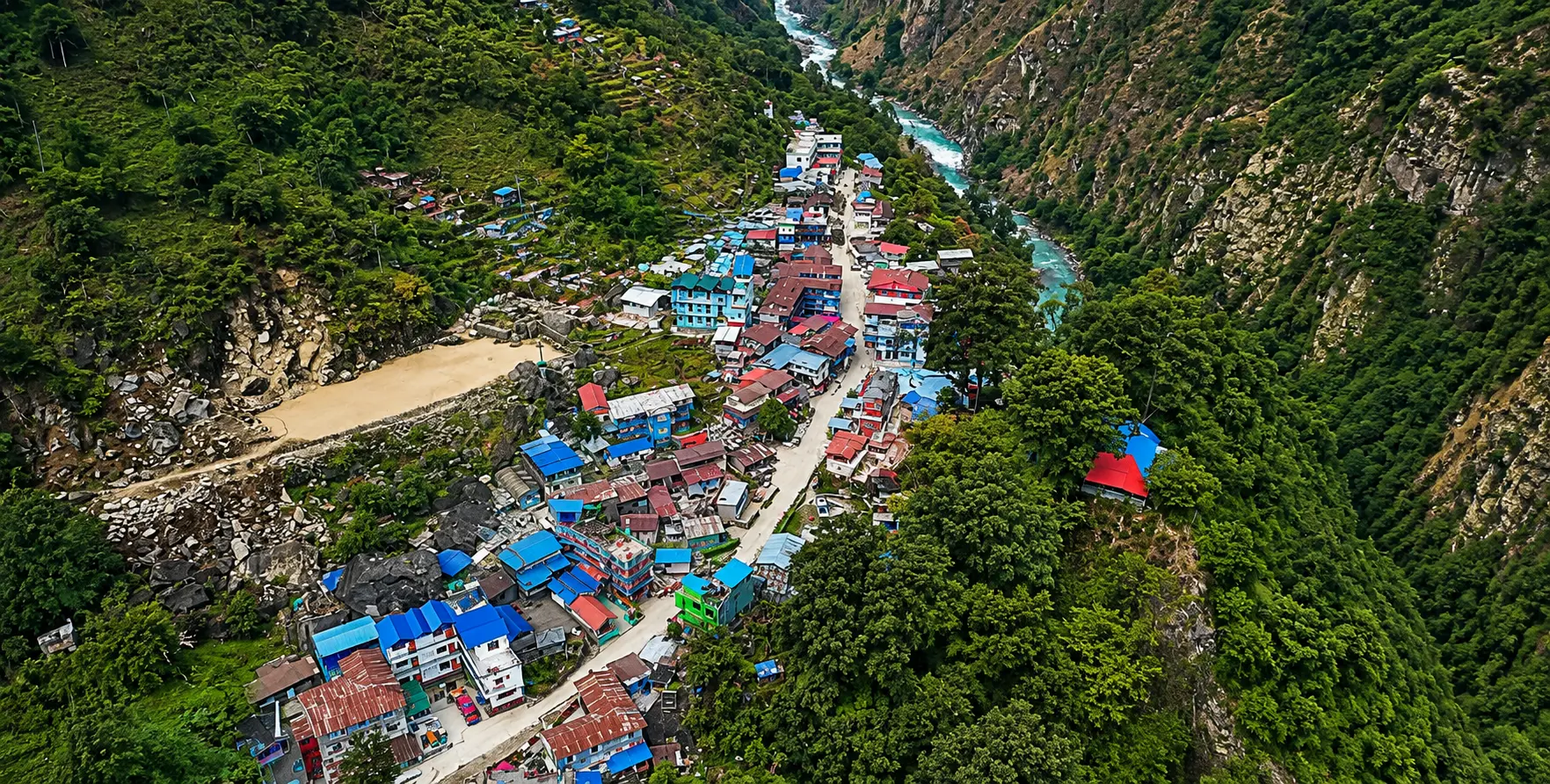
Jagat, located at about 1,340 metres above sea level on the banks of the Budhi Gandaki River in Gorkha District, holds a key regulatory position. As Himalayan Foot’s detailed cost breakdown confirms, the Manaslu Restricted Area begins at Jagat.

At this checkpoint, trekkers must present their Manaslu Restricted Area Permit (RAP) before continuing north into the circuit’s most spectacular protected sections. This regulatory significance means Jagat marks the true beginning of the Manaslu Circuit’s distinctive wilderness character: the point where the developing, road-accessible lower Budhi Gandaki valley transitions into the Manaslu Conservation Area and the restricted zone that keeps this circuit significantly less crowded than the Annapurna and Everest corridors.

The village itself is a pleasant settlement with teahouses, guesthouses, a school, and the administrative infrastructure that a regulatory checkpoint naturally brings. Many trekkers who begin their Manaslu Circuit at Jagat specifically describe the qualitative difference of entering the circuit here — the lower valley’s road construction noise and dust left behind, the first genuine remoteness of the Budhi Gandaki gorge beginning to make itself felt, and the Manaslu massif appearing in ever more impressive proximity as the trail continues northward through Deng toward the higher elevations of Namrung, Lho, Samagaon, and the dramatic approach to the 5,106-metre Larkya La Pass.

Why Start at Jagat Rather Than Soti Khola or Machha Khola?

The decision of where to begin the Manaslu Circuit — at Soti Khola (710 m), Machha Khola (870 m), or Jagat (1,340 m) — is one that every trekker must consider carefully. Haven Holidays Nepal’s detailed Manaslu transportation guide notes that the road extension to Jagat has created a genuine choice that did not previously exist.

The case for beginning at Jagat rests primarily on the significant improvement in trail quality: the section from Soti Khola to Jagat now runs alongside an active road construction project that has substantially altered the character of the walk. Trekkers

who have completed the circuit recently consistently report that this lower section is the least enjoyable of the entire circuit—not because the landscape is unattractive, but because road construction’s impact on the trail experience is significant and ongoing. By starting at Jagat, a trekker skips this compromised section entirely and enters the circuit where the classic Manaslu wilderness experience truly begins.

The acclimatisation argument favours starting lower — beginning at Soti Khola’s 710 metres provides a more gradual altitude gain across the first days. For most healthy adult trekkers, this difference is manageable with appropriate pacing out of Jagat, but for those concerned about altitude sensitivity, the lower starting point remains the safer choice.

Nepal Vehicle Hiring Pvt Ltd discusses these options with every Manaslu client at booking to ensure the starting point matches each group’s specific needs.

Book Kathmandu to Jagat Jeep Hire with a private 4WD jeep or Scorpio SUV for your Manaslu Circuit adventure. The road beyond Arughat becomes increasingly rough, so a suitable 4WD vehicle and an experienced mountain-road driver are important. Current route information indicates that access toward Jagat can vary with road and weather conditions, so the exact drop-off point should be confirmed before departure.

The Complete Route: Kathmandu to Jagat

Distance, Duration and Road Character

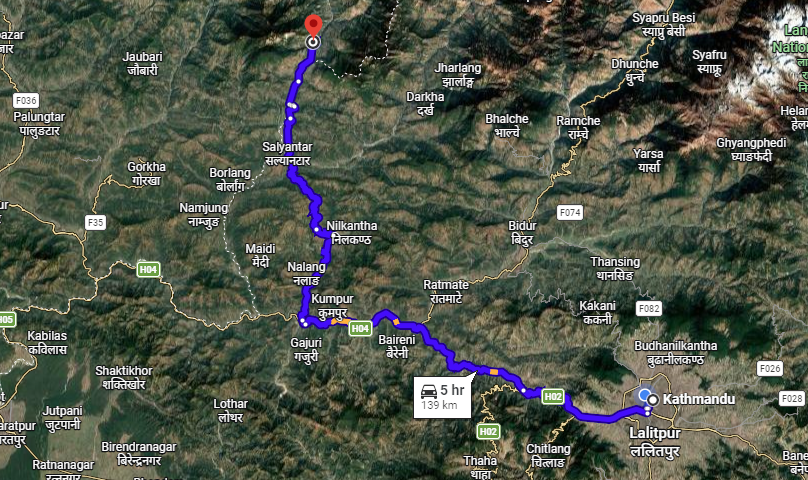
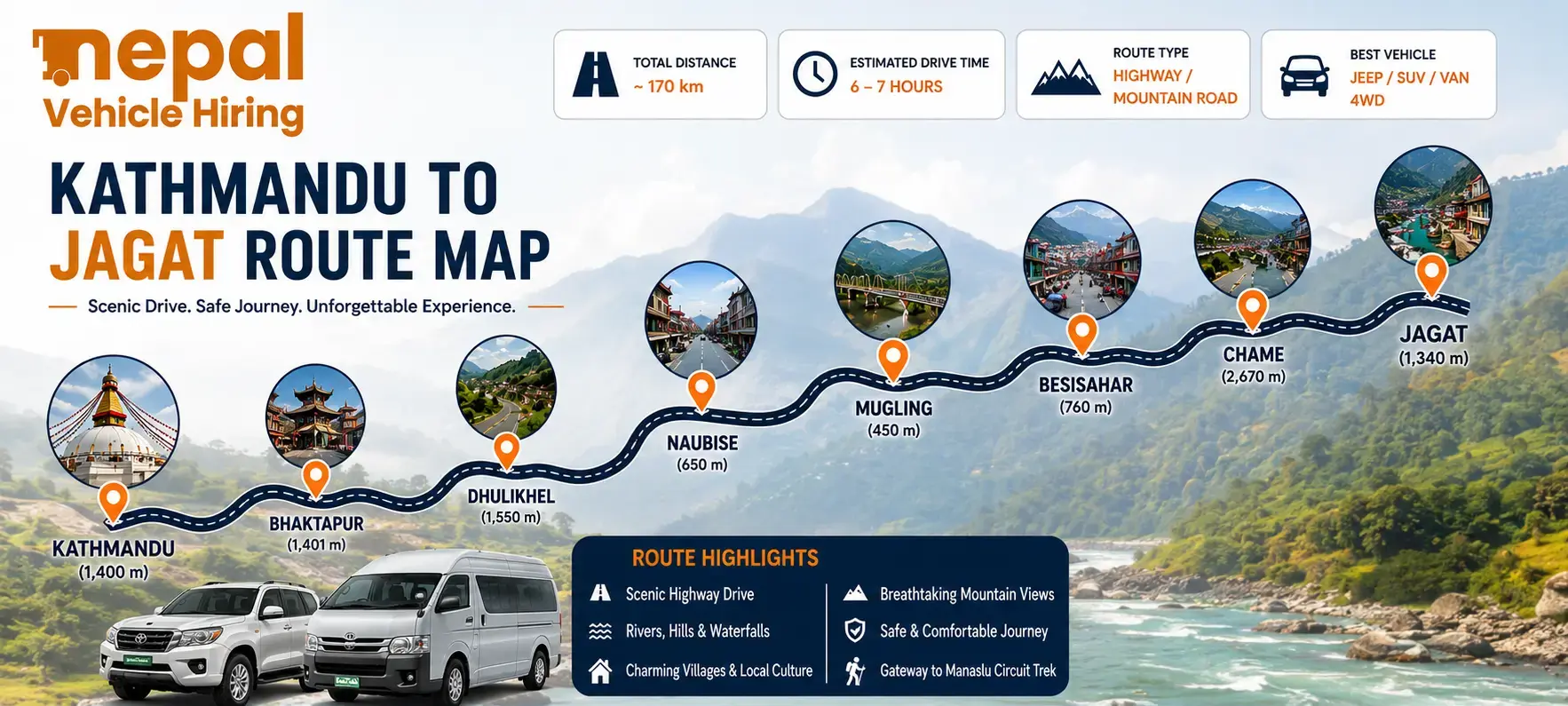
The road from Kathmandu to Jagat covers approximately 160 to 175 kilometres. A guide in Himalaya’s itinerary confirms the Kathmandu to Machha Khola distance at 160 km, taking 8 to 9 hours, and the Jagat extension adds 25 to 35 more kilometres on rough track, taking an additional 1 to 2 hours.

The complete Kathmandu to Jagat journey by private jeep therefore takes approximately 9 to 11 hours — one of the longer Nepal trailhead transfers but delivering trekkers to a significantly more remote and scenically dramatic starting point than the road’s lower termini.

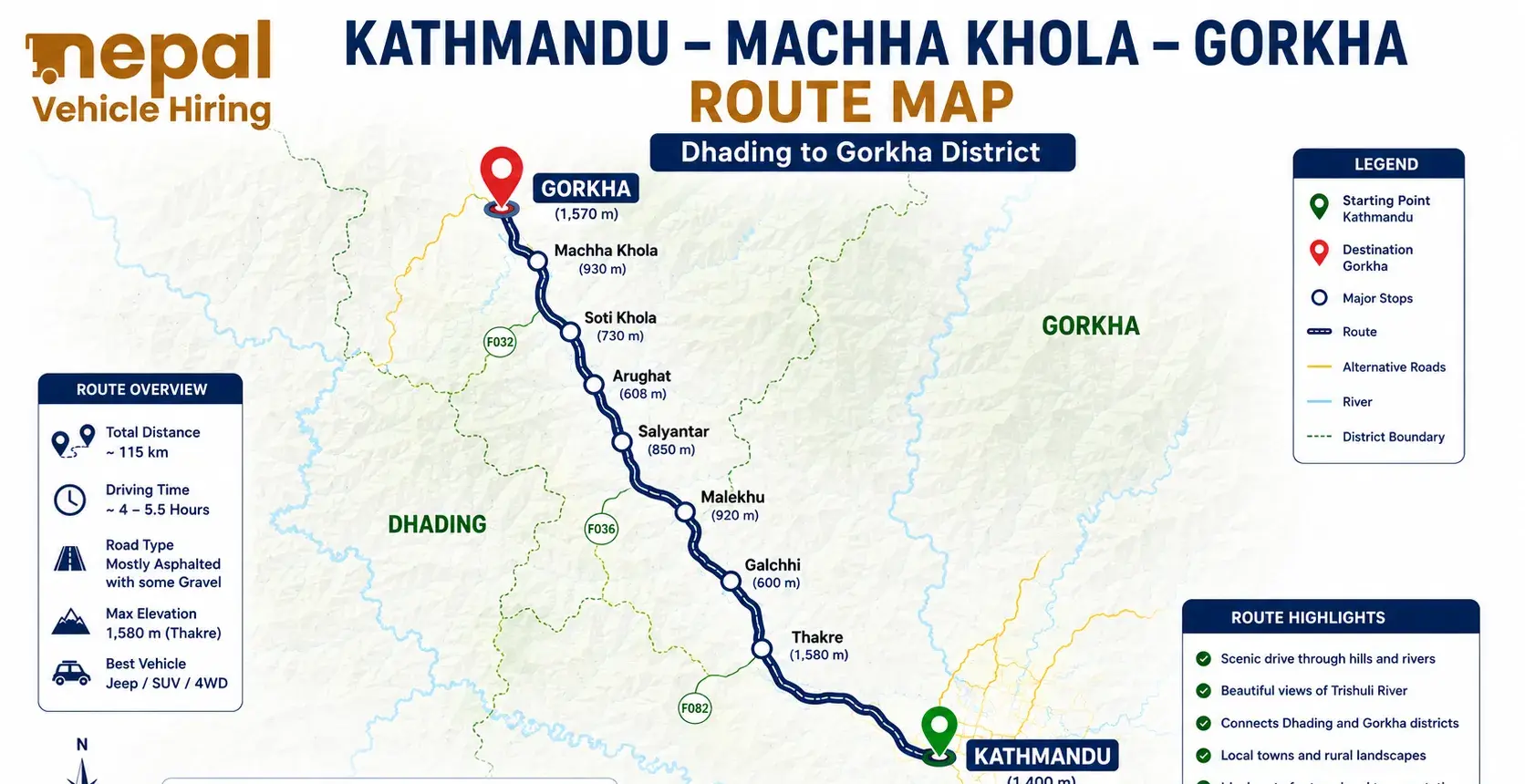
The route exits Kathmandu westward on the Prithvi Highway before diverging northward toward Gorkha. From Gorkha town, the road continues through Arughat Bazaar and along the increasingly rough Budhi Gandaki valley track to Soti Khola, Machha Khola, and the extension section to Jagat.

The highway from Kathmandu to Gorkha-Arughat is generally in good condition; the track beyond Arughat through the gorge deteriorates progressively as it approaches Jagat—the primary reason a proper 4WD jeep is non-negotiable for this approach.

Two Route Options: Via Dhading Bensi or Via Gorkha Bazaar

Two routing options exist from Kathmandu, as Nepal’s transportation analysis documents. The Dhading Bensi route is generally quicker. The Gorkha Bazaar route goes via Gorkha town and descends into Arughat.

Nepal Vehicle Hiring Pvt Ltd’s drivers select the optimal routing based on current road conditions — typically preferring Dhading Bensi for time efficiency but switching to the Gorkha route when specific sections are affected by construction or weather. Both routes converge at Arughat for the final Budhi Gandaki gorge approach.

Book Kathmandu to Jagat Jeep Hire with a private 4WD jeep or Scorpio SUV for your Manaslu Circuit adventure. The road beyond Arughat becomes increasingly rough, so a suitable 4WD vehicle and an experienced mountain-road driver are important. Current route information indicates that access toward Jagat can vary with road and weather conditions, so the exact drop-off point should be confirmed before departure.

Beyond Machha Khola: The  Jagat Extension Road

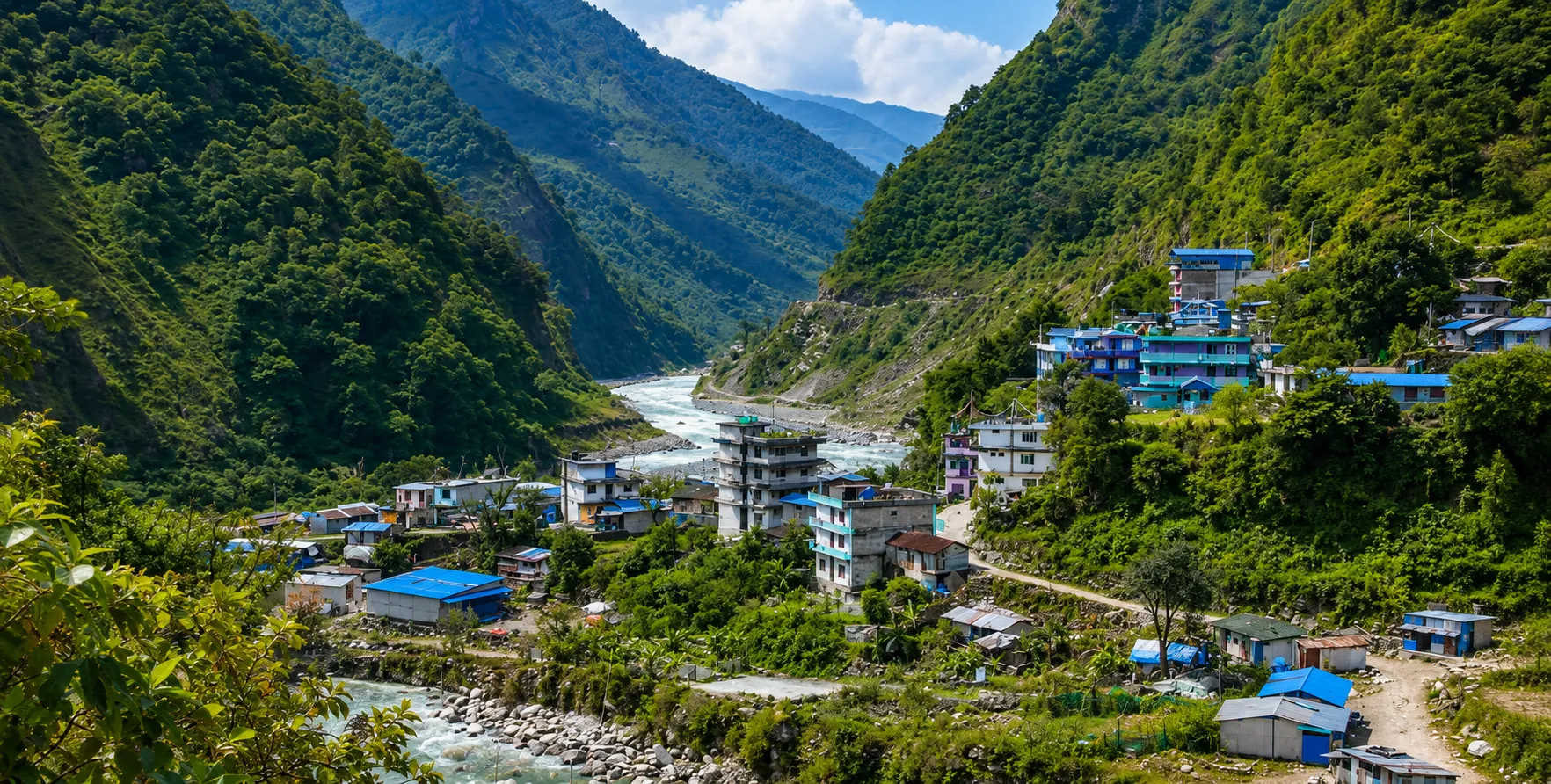
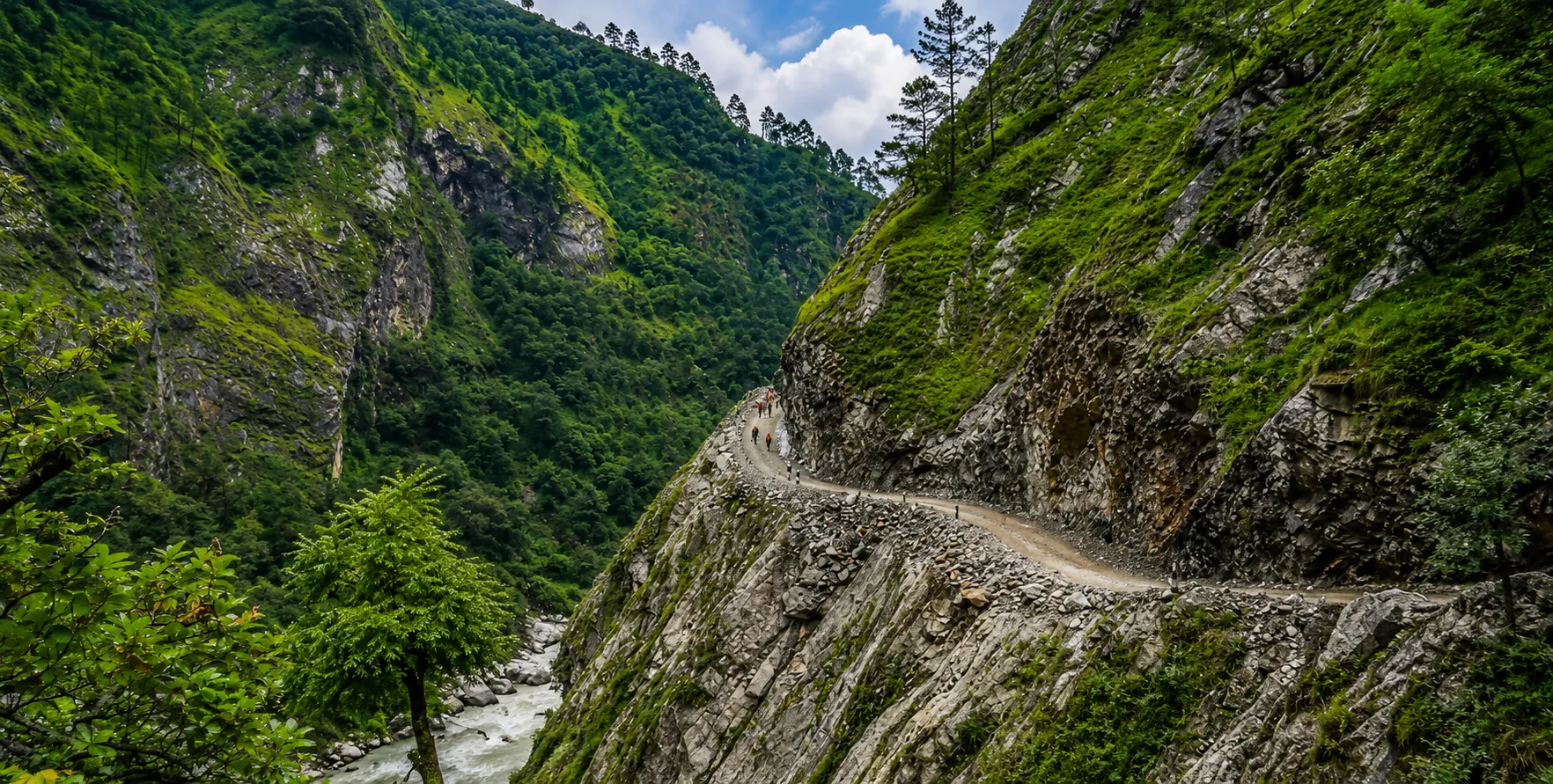
The 25-to-35-kilometre section from Machha Khola to Jagat is the most technically challenging segment of the complete journey. The road follows the Budhi Gandaki River gorge northward through dramatic canyon terrain — cliff faces rising sharply above on one side, the river far below on the other, the road carved into rock with narrowness requiring vehicles to reverse for oncoming traffic at several points.

The surface is entirely unpaved with loose rock and gravel. In monsoon conditions, sections become muddy and more challenging, reinforcing the absolute need for 4WD.

The views from this extension section are extraordinary even before trekking begins — the gorge’s vertical scale and the first appearances of the Manaslu massif ahead provide visual rewards that immediately justify the additional journey time.

Why a 4WD Jeep Is Non-Negotiable for Kathmandu to Jagat

The 4WD jeep requirement on the Kathmandu to Jagat route is a practical necessity, not a preference. Multiple current transport guides confirm that large public buses cannot reach Jagat—the road’s narrowness, gradient, and surface make only jeep-class vehicles viable.

Standard sedans and non-4WD SUVs will struggle beyond Arughat and should not be used for this approach. Nepal Vehicle Hiring Pvt Ltd specifies the 4WD jeep as the minimum appropriate vehicle rather than an upgrade option.

The Toyota Land Cruiser Prado and VX are the top-end choices—offering genuine off-road capability, sophisticated 4WD management, and a spacious, well-insulated cabin that delivers mechanical competence on rough track sections and interior comfort over a 9-to-11-hour journey. The Mahindra Scorpio and Tata Sumo are the standard workhorses with proven Budhi Gandaki track credentials at a lower cost.

The driver’s specific route experience is as important as the vehicle — Nepal Vehicle Hiring Pvt Ltd assigns drivers to the Jagat approach exclusively from among those who have completed the full route multiple times.

As Basecamphike.com’s analysis notes, the Kathmandu to Machha Khola journey already takes 8 to 10 hours, and the Jagat extension adds further time on a road where familiarity matters more than general mountain driving confidence. Our Kathmandu to Jagat jeep hire service — built on the foundation of our established Kathmandu to Soti Khola private vehicle service — extends that proven expertise to the newest and most remote trailhead on the Manaslu Circuit.

Complete Cost Guide: Kathmandu to Jagat

Multiple sources confirm current market rates. Magical Nepal quotes USD 200 to USD 250 per vehicle for Machha Khola, Green Valley Nepal Treks quotes USD 120 to USD 180, and Himalayan Foot quotes USD 250 for the off-road drive to the destination. The Jagat extension adds approximately USD 30 to USD 50 above Machha Khola rates.

Nepal Vehicle Hiring Pvt Ltd’s private 4WD jeep hire from Kathmandu to Jagat: NPR 25,000 to NPR 38,000 for the full vehicle (approximately USD 188 to USD 285), accommodating 5 to 7 passengers. Per-person cost for a group of 6: NPR 4,167 to NPR 6,333. All rates are fully inclusive of vehicle, driver, fuel, and tolls, with no additions at settlement.

For groups of 8 to 14, a Hiace van hire at NPR 30,000 to NPR 42,000 is suitable to Machha Khola, with a coordinated jeep taking the group onward to Jagat on the extension track. For groups needing full-journey Jagat access for all passengers, multiple jeeps in convoy are the most practical solution, coordinated by Nepal Vehicle Hiring Pvt Ltd, with convoy-management documentation.

Public transport comparison: Local buses to Machha Khola cost USD 7 to USD 15 per person. Shared jeeps to Machha Khola cost USD 25 to USD 40 per person.

Neither bus nor shared jeep service currently reaches Jagat on a scheduled basis — the 2023 extension road is served primarily by private jeep arrangements, making Nepal Vehicle Hiring Pvt Ltd the most reliable option for any trekker targeting Jagat as the starting point.

Book Kathmandu to Jagat Jeep Hire with a private 4WD jeep or Scorpio SUV for your Manaslu Circuit adventure. The road beyond Arughat becomes increasingly rough, so a suitable 4WD vehicle and an experienced mountain-road driver are important. Current route information indicates that access toward Jagat can vary with road and weather conditions, so the exact drop-off point should be confirmed before departure.

The Manaslu Circuit Trek: What Awaits Beyond Jagat

The Manaslu Circuit Trek is, as the Nepal Tourism Board describes it, one of Nepal’s most demanding but most rewarding circuits — a 14-to-18-day journey around the Manaslu Massif crossing the Larkya La at 5,106 metres, traversing the remote Nubri and Tsum cultural landscapes, and delivering a quality of mountain wilderness that the more heavily trafficked Annapurna and Everest corridors struggle to replicate despite their greater fame.

From Jagat at 1,340 metres, the trail continues through Deng (2,095 m), Namrung (2,900 m), Lho (3,180 m), and Samagaon (3,500 m) — the acclimatisation base before the Larkya La crossing. The pass itself is one of Nepal’s great trekking accomplishments: a dramatic glacier-and-scree crossing that takes trekkers from the Manaslu drainage into the Annapurna Conservation Area near Dharapani.

The Tsum Valley extension, branching near Chumling, adds 7 to 10 days for those who choose this perfectly preserved Tibetan Buddhist community—one of Nepal’s most remarkable off-trail encounters.

The Manaslu Conservation Area includes both the main circuit and the Tsum Valley extension, and Trek Nepal Himalayas calls it one of Nepal’s most ecologically diverse protected areas, spanning subtropical gorge to glaciated alpine environments within a single corridor.

Required Permits for the Manaslu Circuit

You need three permits, all obtained in Kathmandu before departure. Langtang Treks Nepal’s transport guide confirms the mandatory permit structure. The Manaslu Conservation Area Permit (MCAP) costs NPR 3,000 per person.

The Restricted Area Permit (RAP) costs USD 100 per person for 7 days in autumn, USD 75 per person in other seasons. The Annapurna Conservation Area Permit (ACAP) costs NPR 3,000. You can obtain all three from the Nepal Tourism Board within 2 to 3 hours.

A licensed guide is mandatory for all foreign trekkers on the Manaslu Circuit — the mandatory guide regulation enacted in 2023 applies here and cannot be circumvented. Guide fees typically run USD 25 to USD 35 per day. Nepal Vehicle Hiring Pvt Ltd works with registered trekking agencies to coordinate permits and guide arrangements for Manaslu Circuit clients, ensuring a streamlined pre-departure process.

Manaslu trek route (1)

The Return Journey: Dharapani to Kathmandu

The Manaslu Circuit exits at Dharapani (1,860 m) in the Marsyangdi River valley, connecting with the Besisahar road network. Haven Holidays Nepal confirms private jeeps from Dharapani at approximately NPR 12,000, while Langtang Treks Nepal notes regular local jeeps running from Dharapani to Besisahar, from where Kathmandu connections are available.

Nepal Vehicle Hiring Pvt Ltd provides a smooth Dharapani-to-Kathmandu return via our Besisahar private vehicle service network—a private jeep from Dharapani directly to Kathmandu at approximately US$320 for the full vehicle.

Pre-booking the Dharapani return simultaneously with the outbound Jagat booking is strongly recommended — particularly during peak season when vehicle demand in the Dharapani area is high. Nepal Vehicle Hiring Pvt Ltd coordinates outbound and return vehicles for all Manaslu clients and provides the return driver’s contact details before departure from Kathmandu, so the return arrangement is confirmed throughout the trek.

Seasonal Guide: Road Conditions Year-Round

Spring from March through May is one of the two primary Manaslu seasons. Road conditions are good, and rhododendron bloom adds visual drama to the approach drive.

Autumn from September through November is Nepal’s peak trekking season and the most popular Manaslu window—post-monsoon road surfaces are at their annual best, mountain visibility is finest, and the Jagat extension track is most reliably trafficable. Monsoon from June through August is not recommended — the Larkya La is genuinely hazardous and the Jagat extension road becomes muddy and potentially impassable after sustained heavy rainfall.

Nepal Vehicle Hiring Pvt Ltd advises against the Kathmandu-to-Jagat jeep service for trekking during the monsoon months.

Book Kathmandu to Jagat Jeep Hire with a private 4WD jeep or Scorpio SUV for your Manaslu Circuit adventure. The road beyond Arughat becomes increasingly rough, so a suitable 4WD vehicle and an experienced mountain-road driver are important. Current route information indicates that access toward Jagat can vary with road and weather conditions, so the exact drop-off point should be confirmed before departure.

From December through February, snow and ice close Larkya La to most trekkers, making the full Manaslu Circuit impractical. The lower Budhi Gandaki valley section,s including the Jagat approach road, is accessible by vehicle in winter but without a viable complete circuit ahead, winter bookings for the Jagat trailhead are rare.

Peak demand is in October and November for autumn and March and April for spring — Nepal Vehicle Hiring Pvt Ltd recommends booking two weeks during these windows.

Practical Tips for Kathmandu to Jagat

  • Book at least one week in advance during normal periods and two weeks during peak autumn-spring seasons — the Manaslu Circuit’s growing popularity creates genuine vehicle demand pressure in October and November
  • Confirm driver experience specifically on the Machha Khola to Jagat extension road — Nepal Vehicle Hiring Pvt Ltd assigns only route-familiar drivers, but confirming this at booking provides additional reassurance.
  • Depart Kathmandu no later than 6:00 AM — the 9-to-11-hour journey requires an early start to arrive at Jagat with sufficient daylight for guesthouse check-in and equipment organisation before Day 1 trekking.
  • Obtain all three permits (MCAP, RAP, ACAP) in Kathmandu 1 to 2 days before departure — Nepal Tourism Board processing takes 2 to 3 hours for the complete set.
  • Arrange the mandatory licensed guide before booking the vehicle departure date — guide availability can affect the complete departure schedule if left to the last minute.
  • Carry sufficient NPR cash — ATMs exist in Kathmandu and Gorkha town on the approach but not at Jagat or anywhere on the Manaslu Circuit trail.
  • Pack a small vehicle cabin daypack with water, snacks, motion sickness tablets, and immediate-access items — the Budhi Gandaki gorge track sections involve enough winding road to affect sensitive passengers.
  • Book the Dharapani return vehicle at the same time as the Jagat outbound transfer — confirmed return availability before the trek begins eliminates post-circuit transport uncertainty.

The Manaslu Circuit Stages: From Jagat to the Larkya La

From Jagat, the Manaslu Circuit’s successive stages reveal one of Nepal’s most complete and most rewarding high-altitude trekking journeys. Day 1 from Jagat leads to Deng at 2,095 metres through increasingly dramatic gorge terrain where the Budhi Gandaki carves between canyon walls rising hundreds of metres on both sides — a full day’s walk of 7 to 8 hours through terrain that immediately demonstrates why beginning at Jagat rather than walking from Soti Khola delivers a meaningfully better introduction to the circuit.

The lower road-construction-affected section is entirely bypassed, and the trail’s genuine mountain character is available from the very first steps.

Namrung at 2,900 metres provides the first proper mountain views — Ganesh Himal, Ngadi Chuli, and eventually Manaslu itself appearing above the valley walls as the trail climbs northward. Experienced Manaslu Circuit trekkers consistently rate the stages from Namrung through Lho to Samagaon at 3,500 metres as the finest daily sections of the complete circuit—mountain views of extraordinary quality, Tibetan Buddhist cultural environments of genuine authenticity, and physical demands that remain within a well-prepared trekker’s comfortable range.

Samagaon serves as the upper circuit’s emotional and logistical centrepiece — the village from which both the Manaslu Base Camp approach and the Birendra Lake side hike originate, and where most trekkers spend two nights for acclimatisation and appreciation.

The Larkya La at 5,106 metres is the circuit’s defining physical achievement — a pre-dawn departure from Dharamsala high camp in the dark, a climb through moraine and glacier sections to the pass’s summit in the sunrise’s first golden light, and a spectacular descent through 3,200 metres of altitude in a single day from the icy pass to the lush Bimthang valley and eventually to Dharapani at 1,860 metres. This descent completes the circuit and connects back to the Besisahar road network, where Nepal Vehicle Hiring Pvt Ltd’s return private vehicle waits for the group.

Pre-Trek Kathmandu Activities Before Jagat

Most Manaslu Circuit trekkers spend 1 to 3 preparation days in Kathmandu before departing for Jagat. Nepal Vehicle Hiring Pvt Ltd provides Kathmandu sightseeing by private vehicle for pre-trek cultural orientation, covering UNESCO World Heritage sites including Boudhanath Stupa — whose Tibetan Buddhist traditions mirror those the trekker will encounter in the Manaslu Circuit’s upper Nubri villages — Pashupatinath Temple on the Bagmati River banks, and Swayambhunath on its ancient hilltop above the valley.

The Bhaktapur Durbar Square day tour offers Nepal’s finest concentrated medieval Newar heritage experience — the 55-window palace, Nyatapola temple, and sacred courtyards of extraordinary craftsmanship. The Nagarkot sunrise tour gives Manaslu-bound trekkers their first visual encounter with Nepal’s complete Himalayan panorama — the full arc from Dhaulagiri through Ganesh Himal and Manaslu to Everest visible from the valley rim at 2,175 metres on clear mornings, providing a powerful orientation to the mountain world the circuit will explore.

Our Nagarkot vehicle hire covers this at any time of day. For complete Kathmandu cultural preparation, our Kathmandu airport transfer from Tribhuvan International smoothly begins your Nepal journey upon arrival.

Combining Manaslu with Other Nepal Adventures

The Manaslu Circuit pairs naturally with Nepal’s other great adventures through Nepal Vehicle Hiring Pvt Ltd’s complete vehicle network—a pre-circuit Kathmandu-to-Pokhara private vehicle trip offers an Annapurna introduction before Manaslu. The Sarangkot sunrise tour vehicle from Pokhara provides the Annapurna dawn panorama.

A Pokhara to Ghorepani Poon Hill jeep day trip delivers Nepal’s most celebrated sunrise viewpoint. After the circuit, our Pokhara to Upper Mustang overland jeep takes adventure-seeking trekkers into the ancient walled city of Lo Manthang through the world’s deepest gorge.

Our Pokhara to Nayapul jeep and Pokhara to Ghandruk jeep serve the Annapurna foothills cultural circuit. For those extending to the Everest region, our Everest Base Camp Trek approach coordination manages the complete Khumbu access chain.

For trekkers who want the complete Nepal experience combining Manaslu’s wilderness with a pilgrimage dimension, our Kathmandu to Muktinath jeep service connects Kathmandu to one of the Himalayan world’s most sacred sites at 3,710 metres. The Kathmandu to Salleri and Phaplu service opens the Solukhumbu District for the Everest overland approach.

Our Nepal tour packages combine these diverse destinations into coordinated multi-stage journeys with a single Nepal Vehicle Hiring Pvt Ltd booking covering every vehicle need from Kathmandu airport arrival to final departure — making us the ideal single transport partner for any Nepal trekking and touring adventure that includes the Manaslu Circuit as its mountain centrepiece. Plan your complete Nepal trip with our team or contact us directly at +977 981-4227196 (WhatsApp) to discuss your Jagat approach and complete Manaslu vehicle arrangement.

Understanding the Manaslu Circuit Permit System in Depth

The Manaslu Circuit’s three-permit system is among the most detailed and consequential in Nepal’s trekking regulatory framework, and understanding it fully before your Kathmandu-to-Jagat departure date saves the anxiety and potential disruption incomplete permit knowledge can create at trail checkpoints. Together, the three permits create a layered access-control system that has kept Manaslu Circuit trekking volumes at levels that preserve the route’s genuine wilderness character—a deliberate regulatory achievement every trekker who values an uncrowded Himalayan experience should recognise and appreciate.

The Manaslu Conservation Area Permit (MCAP) is the foundational permit, covering entry into the entire Manaslu Conservation Area, from the lower Budhi Gandaki valley through the full circuit. Issued by the National Trust for Nature Conservation (NTNC) via the Nepal Tourism Board, the MCAP costs NPR 3,000 for non-SAARC nationals and NPR 1,000 for SAARC nationals (Indian, Sri Lankan, Bangladeshi, Pakistani, Bhutanese, Maldivian, and Afghan citizens).

You obtain the MCAP at the Nepal Tourism Board office in Kathmandu, at Bhrikutimandap, alongside the other two permits in a single processing session. This permit is first verified at the MCAP checkpoint near the lower valley entrance, then cross-checked at Jaga,t where the Restricted Area checkpoint adds the second layer of permit verification.

The Restricted Area Permit (RAP) is the most expensive and most regulated of the three, reflecting the zone’s additional security and conservation sensitivity beginning at Jagat. The RAP costs USD 100 per person for the first 7 days during the peak autumn season (September to November) and USD 75 per person for the first 7 days during the off-peak spring and other seasons.

Beyond 7 days in the restricted zone, additional daily rates apply — USD 15 per day in peak season and USD 10 per day in off-peak. For a standard 10-day traverse of the restricted zone in October, the RAP cost is USD 100 (first 7 days) plus USD 45 (3 additional days at USD 15 each) = USD 145 per person.

Only a registered trekking agency that sponsors the application can issue the RAP— solo trekkers cannot obtain it independently through the Department of Immigration, making agency involvement a formal requirement rather than an optional convenience.

The Annapurna Conservation Area Permit (ACAP) covers the section of the Manaslu Circuit that exits the Manaslu Conservation Area and enters the Annapurna Conservation Area near Dharapani as trekkers complete the circuit and descend toward Besisahar. This NPR 3,000 permit is often overlooked by trekkers who don’t realise the Manaslu Circuit’s exit route crosses a conservation area boundary, but the Dharapani checkpoint verifies ACAP possession as part of standard exit processing—trekkers without it can face delays and fines that far exceed the permit’s modest cost.

Obtaining all three permits in Kathmandu before departure for Jagat, and allowing 2 to 3 hours for the full processing session, is the most reliable approach and is strongly recommended by Nepal Vehicle Hiring Pvt Ltd for all Manaslu Circuit vehicle hire bookings.

Seasonal Deep Dive: Planning Your Kathmandu to Jagat Journey by Month

March: The first viable month for the Manaslu Circuit in the spring season, with the Larkya La typically passable from mid-March onward. The lower Budhi Gandaki valley approaching Jagat is beautifully warm and green, with the first rhododendron blooms appearing on the forested sections of the approach track.

The Kathmandu-to-Jagat road is in good condition after the winter dry season. Permit demand is building but not yet at peak levels; booking 10 to 14 days in advance is sufficient. The Kathmandu to Jagat private jeep departs through the Prithvi Highway’s finest seasonal scenery as Nepal’s lowlands turn from winter brown to spring green.

April: One of the two finest months for the Manaslu Circuit, combining Larkya La accessibility with the spectacular rhododendron and magnolia bloom that transforms the trail’s middle altitude forest sections. The Kathmandu-to-Jagat approach road is in its best condition of the year.

Peak permit demand begins to build in late April — 2 weeks’ booking recommended for private jeep hire. Temperatures on the extension track to Jagat are warm and pleasant, with clear morning air offering excellent views of the Manaslu massif from the gorge sections.

May: The spring season’s final viable month before pre-monsoon conditions begin to affect predictability. The Larkya La remains open, but high-altitude conditions can be more variable in late May. The Jagat extension road is still in good condition.

Trekking numbers thin toward the end of May as early bookers clear the route and the approaching monsoon reduces demand—a good month for trekkers who want spring wildflower beauty with meaningfully reduced competition for teahouse beds.

September: The monsoon’s departure in late September (typically mid-to-late September in the Manaslu corridor) opens the autumn season with the finest road conditions of the year on the Kathmandu to Jagat approach. The landscape is at its most lush and vivid in the weeks immediately after the monsoon departs, before November dryness shifts the colour palette.

Permits are available without the intense competition of October — a genuinely excellent month for trekkers with flexible dates.

October: Nepal’s peak trekking month and the Manaslu Circuit’s most competitive booking window. Mountain views from the Kathmandu to Jagat extension road are at their annual best, crystal clear. The Larkya La conditions are ideal.

Teahouses on the circuit are at their fullest capacity. Nepal Vehicle Hiring Pvt Ltd strongly recommends 3a 3-week booking for October Kathmandu to Jagat private jeep hire — this is the month when vehicle availability is tightest and pre-confirmed bookings deliver the greatest peace of mind.

November: The autumn season’s final month, with the Larkya La typically remaining open through mid-to-late November before winter conditions begin to close it. November sees declining trekker numbers from the October peak, while trail and road conditions remain excellent.

Temperatures at Jagat and on the extension road track are noticeably cooler than in October, with frost possible on the higher sections of the gorge track in the early morning—a good month for trekkers who want autumn clarity with fewer fellow trekkers on the circuit.

Vehicle Safety and Preparation for the Jagat Extension Road

The 25-to-35-kilometre extension road from Machha Khola to Jagat places specific demands on both the vehicle and the driver, and Nepal Vehicle Hiring Pvt Ltd addresses them through dedicated pre-journey preparation protocols. Every 4WD jeep assigned to the Kathmandu to Jagat route undergoes a specific pre-journey check that includes tyre tread depth and pressure assessment (the loose rock surface of the extension track is particularly demanding on tyres), brake performance verification (the steep sections of the gorge track involve sustained downhill driving where brake reliability is directly safety-relevant), 4WD system engagement testing (ensuring that the vehicle’s 4WD capability is immediately available when the gorge track demands it rather than requiring driver-initiated engagement under pressure), and undercarriage clearance inspection (the extension track’s surface irregularities can include rocks that present undercarriage contact risk for vehicles with inadequate ground clearance).

Our drivers for the Jagat extension carry a comprehensive emergency kit in the vehicle—including a tow rope, basic tool kit, hydraulic jack compatible with the vehicle’s suspension, and sufficient supplies for an extended wait if the vehicle requires roadside assistance in a remote gorge section. The extension road’s remoteness — beyond the last reliable mobile connectivity and beyond the reach of standard vehicle recovery services — makes this self-sufficiency preparation not a precaution but a practical necessity for responsible operation on this specific corridor.

For trekkers travelling in monsoon-adjacent periods (late May, September, early October), Nepal Vehicle Hiring Pvt Ltd additionally checks the current status of the extension road’s most weather-sensitive sections before every Jagat departure during these months. We maintain contact with local transport operators and road authority staff who provide real-time information about the extension road’s condition, allowing us to advise clients immediately if recent rainfall has created temporary surface conditions that affect departure timing or routing.

This operational intelligence capability — built on our established Kathmandu to Soti Khola private vehicle service network — gives Nepal Vehicle Hiring Pvt Ltd a practical advantage over operators without established contacts on this specific road corridor.

What Makes the Manaslu Circuit Unique: A Trekker’s Perspective

The Manaslu Circuit’s distinctive character — the quality that separates it from Nepal’s other major trekking routes and that justifies the additional complexity of its permit structure, mandatory guide requirement, and the demanding Kathmandu to Jagat jeep approach — is ultimately a function of what has been deliberately kept out of it as much as what is naturally present within it. The restricted area permit sets an annual visitor ceiling the Annapurna and Everest circuits have never had, and the mandatory guide requirement creates a human connection to the landscape and communities that independent trekking bypasses.

These two regulatory elements, combined with the genuinely remote and physically demanding character of the upper Budhi Gandaki and Larkya La environments, produce a trekking experience whose quality per day of trail walked is among the highest available anywhere in the Nepal Himalaya.

The Nubri communities of the upper valley — the villages of Lho, Samagaon, and Samdo whose inhabitants descend from Tibetan refugees and whose cultural practices mirror those of Tibet itself far more closely than those of Nepal’s middle-hill communities — offer an encounter with living Tibetan Buddhist civilisation that the Everest region’s Sherpa communities, while equally fascinating in their own way, present through the lens of a culture that has adapted substantially to the demands of the trekking economy over five decades of high-volume tourism. In the upper Manaslu Circuit, the trekking economy is present but modest, and the communities’ primary cultural identity remains rooted in the agricultural, pastoral, and religious practices of the high-altitude Tibetan world rather than in the service of trekking visitors.

Experienced Himalayan trekkers who have previously visited the Everest region notice this difference in the quality of the cultural encounter immediately, and they consistently cite it as one of the Manaslu Circuit’s most distinctive and valued attributes.

The Larkya La crossing at 5,106 metres deserves its own paragraph. Unlike the Thorong La on the Annapurna Circuit — which, despite its greater height at 5,416 metres,s is crossed by hundreds of trekkers per day in October — the Larkya La is typically crossed by perhaps 20 to 50 people on the same day during peak season, creating a summit experience of relative solitude that profoundly shapes the emotional impact of the achievement.

Standing on the Larkya La at dawn, with the Manaslu massif glowing in the first light above the glacier and the Himchuli and Ngadi peaks framing the western horizon, with perhaps 10 other trekkers within sight and the silence of a high Himalayan morning unbroken by the crowd noise that the Thorong La summit sometimes generates — this is one of Nepal’s genuinely great mountain experiences, available to any well-prepared trekker who commits to reach it. That commitment starts with a Kathmandu-to-Jagat private jeep hire that begins the circuit at the right point.

Comparison Table: Jagat vs Soti Khola vs Machha Khola Starting Points

Soti Khola (710 m): Distance from Kathmandu is approximately 126 km; journey time is approximately 6 to 7 hours. Lowest starting altitude, providing maximum gradual acclimatisation on the approach.

Road from Soti Khola to Jagat is now heavily affected by construction activity — the trail follows the road for much of the section, significantly compromising the trekking experience. Best for: trekkers with altitude sensitivity concerns who need the lowest possible starting altitude.

Machha Khola (870 m): Distance from Kathmandu approximately 140 km, journey time approximately 7 to 9 hours. Modest altitude advantage over Soti Khola. The Machha Khola to Jagat section remains road-affected — still requires 1 to 1.5 days of road-following walking to reach Jagat.

Best for: trekkers who want to save some vehicle hire cost compared to the full Jagat approach while still accessing a point slightly above Soti Khola.

Jagat (1,340 m): Distance from Kathmandu approximately 160 to 175 km, journey time approximately 9 to 11 hours. The higher starting altitude avoids the road-construction-affected lower trail. Begins the walk at the restricted zone checkpoint where the circuit’s genuine wilderness character starts.

Best for: the majority of fit and well-prepared trekkers who want the finest possible Manaslu Circuit experience from the first steps. The definitive recommendation of Nepal Vehicle Hiring Pvt Ltd’s Manaslu Circuit transport team.

Nepal Vehicle Hiring Pvt Ltd offers private jeep hire from all three starting points: Kathmandu to Soti Khola for the lowest starting cost, and the extended Jagat service for the most complete trailhead delivery. Our team discusses the optimal starting point for each client group’s fitness level, altitude history, and time constraints at booking—ensuring the chosen starting point genuinely serves the trekking experience rather than simply reflecting a default preference.

Nepal Vehicle Hiring Pvt Ltd: The Complete Manaslu and Nepal Network

Nepal Vehicle Hiring Pvt Ltd’s Kathmandu to Jagat service is part of Nepal’s most comprehensive private vehicle hire network. Our Kathmandu to Soti Khola jeep service provides the shorter Manaslu Circuit starting option. Our Kathmandu to Besisahar vehicle and Kathmandu to Manang jeep serve the Annapurna Circuit.

Our Kathmandu to Syabrubesi jeep serves Langtang and the Kerung corridor. Our Kathmandu to Salleri and Phaplu jeep reaches Solukhumbu for the Everest overland approach. Our Kathmandu to Muktinath jeep serves the sacred Mustang pilgrimage.

From Pokhara, our Pokhara to Nayapul jeep serves Annapurna Base Camp and Poon Hill. Our Pokhara to Ghandruk jeep covers the Annapurna foothills circuit. Our Pokhara to Ghorepani direct jeep delivers Nepal’s finest sunrise viewpoint.

Our Pokhara to Upper Mustang overland jeep traverses the Kali Gandaki Gorge to Lo Manthang. Our Pokhara car hire covers all city transfers. Our Sarangkot sunrise tour vehicle offers an Annapurna dawn panorama.

In Kathmandu, our airport transfer service meets arriving trekkers at Tribhuvan International Airport. Kathmandu sightseeing vehicles cover UNESCO sites. Our Bhaktapur day tour vehicle takes you through the medieval Newar city.

Our Nagarkot sunrise tour and Nagarkot vehicle hire provide Himalayan dawn panoramas from the valley rim. Our Kathmandu to Pokhara private vehicle covers the scenic Prithvi Highway drive. Our fleet of private cars, 4WD jeeps, Hiace vans, coasters, and buses serves every group.

Our Nepal tour packages coordinate complete multi-stage itineraries, including approaches to Everest Base Camp and all major trekking routes. Plan your complete trip or contact us on WhatsApp to book.

Additional Manaslu Circuit Planning Resources

Planning the complete Manaslu Circuit adventure involves more than the trailhead transfer — it requires a coordinated approach to permits, guide arrangements, teahouse booking in the peak season, and the integration of the circuit within a broader Nepal itinerary. Nepal Vehicle Hiring Pvt Ltd serves as the vehicle coordination partner at every stage, working alongside registered trekking agencies that handle permits and guide logistics.

Our Nepal tour packages can incorporate the Manaslu Circuit into comprehensive Nepal itineraries that combine the circuit with Kathmandu cultural days, Pokhara Annapurna experiences, or the Everest Base Camp Trek for the ultimate Nepal mountain adventure. Our trekking services page outlines the complete range of trekking support we provide across all Nepal’s major routes.

The plan your trip service offers personalised itinerary consultation, including vehicle hire and budget guidance for every stage of a Nepal trekking journey — from the first airport transfer to the last vehicle drop after the circuit’s completion. For immediate booking enquiries, contact Nepal Vehicle Hiring Pvt Ltd at +977 981-4227196 via WhatsApp or Viber, available 24 hours for Manaslu Circuit vehicle hire enquiries.

Our drivers, private jeeps, Hiace vans, and coordination team are ready for every Manaslu Circuit group, from the solo trekker sharing with three others to the 20-person organised expedition requiring multiple vehicles in convoy to Jagat. Nepal Vehicle Hiring Pvt Ltd is the Kathmandu-to-Jagat jeep hire provider you can count on.

For the full Nepal vehicle hire picture, visit vehiclehiringnepal.com — our private car hire, 4WD jeep hire, Hiace van hire, coaster hire, and bus hire services cover every Nepal trekking and travel need.

Frequently Asked Questions

Can a jeep reach Jagat from Kathmandu?

Yes — Hiking Bees confirms the road was extended to Jagat , allowing private 4WD jeeps to complete the full journey. Public buses cannot reach Jagat, but private jeeps are capable with experienced drivers.

How long does the Kathmandu-to-Jagat drive take?

Approximately 9 to 11 hours total. Basecamp Hike.com confirms the Kathmandu to Machha Khola section at 8 to 10 hours, with the Jagat extension adding 1 to 2 more hours. A 6:00 AM departure from Kathmandu is strongly recommended.

How much does a private jeep from Kathmandu to Jagat cost?

NPR 25,000 to NPR 40,000 for the full vehicle (USD 188 to USD 285). Current operator rates confirm USD 200 to USD 250 for Machha Khola, with the Jagat extension adding USD 30 to USD 50. All Nepal Vehicle Hiring Pvt Ltd rates are fully inclusive.

Is Jagat the best starting point for the Manaslu Circuit?

For trekkers prioritising trail quality over lower starting altitude, yes — the Soti Khola to Jagat section is now road-construction-affected, making Jagat the point where the circuit’s genuine wilderness experience begins. For trekkers concerned about altitude, starting at Soti Khola via our shorter jeep service offers better acclimatisation.

How do I return from the circuit at Dharapani?

Nepal Vehicle Hiring Pvt Ltd arranges the Dharapani-to-Kathmandu return via our Besisahar vehicle service for NPR 18,000 to NPR 35,000. Book simultaneously with the outbound Jagat transfer. Contact us to arrange the complete outbound-return package.

What are the permits needed for the Manaslu Circuit?

Three permits: MCAP (NPR 3,000), RAP (USD 75 to 100 per person for 7 days), and ACAP (NPR 3,000). All are from the Nepal Tourism Board in Kathmandu and take 2 to 3 hours. Nepal’s trekking regulations also require a licensed guide for all foreign trekkers.

Conclusion: Start Your Manaslu Adventure at the Right Point

The Kathmandu to Jagat jeep hire represents one of Nepal’s most significant recent trailhead access improvements—a road extension that takes Manaslu Circuit trekkers to the genuine start of the wilderness rather than a road-construction zone. By choosing Jagat as the starting point and Nepal Vehicle Hiring Pvt Ltd as the vehicle partner, trekkers arrive at the circuit’s RAP checkpoint in the finest condition: comfortable from a properly maintained 4WD Land Cruiser rather than dusty from road following, energised by the gorge scenery of the extension track rather than fatigued by a long construction walk, and ready to experience the Manaslu Circuit at its most spectacular from the first steps beyond the checkpoint.

Nepal Vehicle Hiring Pvt Ltd offers Kathmandu-to-Jagat private jeep hire with experienced drivers, well-maintained 4WD vehicles, transparent all-inclusive pricing, and a coordinated return from Dharapani. Contact our team to book today, explore our Nepal trekking transport services, or plan your complete Manaslu Circuit trip, including permits, a guide, and a vehicle, in a single arrangement.

The Manaslu Circuit’s extraordinary mountain world begins at Jagat — and the right private jeep hire from Nepal Vehicle Hiring Pvt Ltd gets you there.

Kathmandu to Machha Khola

Private 4WD jeep traveling from Kathmandu to Machha Khola on the scenic Manaslu Circuit route
Machha khola

Kathmandu to Machha Khola — Quick Reference

Distance: Approx. 160 km (Kathmandu to Machha Khola via Dhading Besi and Arughat)
Drive Time: 7–8 hours by private jeep | 9–10 hours by public bus
Route: Kathmandu → Prithvi Highway → Dhading Besi → Arughat Bazaar → Soti Khola → Machha Khola
Machha Khola Altitude: Approx. 870–930 m (Manaslu Circuit trailhead)
Vehicle: 4WD Jeep ESSENTIAL beyond Arughat — Land Cruiser, Fortuner or Hilux
Private Jeep Cost: US$300 one-way (all-inclusive)
Key Permits: Manaslu Conservation Area Permit + Restricted Area Permit + TIMS
Road Status 2026: Jeep track ends at Lububesi — 3–4 hr walk to Machha Khola
Best Season: October–November and March–May
Book Transfer: Nepal Vehicle Hiring Pvt. Ltd. |WhatsApp| [email protected]

Introduction: The Long Road to the World’s Hidden Circuit

Among Nepal’s great trekking destinations, the Manaslu Circuit holds a singular position — the route serious trekkers consistently describe as the Annapurna Circuit’s more dramatic, wilder, and more authentic counterpart. Circling Mount Manaslu (8,163 m), the world’s eighth-highest peak, through some of the most culturally intact and geographically spectacular terrain in the entire Himalayan chain, the Manaslu Circuit is the trek that rewards the additional effort of getting there with experiences that the more popular routes cannot replicate.

And while its fame has grown considerably in recent years as word of its extraordinary quality has spread through the global trekking community, it remains — by design and geography — considerably less crowded than the Annapurna Circuit or the Everest Base Camp Trek, precisely because reaching its trailhead is genuinely more demanding than arriving at either of those celebrated destinations.

The journey from Kathmandu to Machha Khola — the traditional trailhead for the Manaslu Circuit Trek — covers approximately 160 kilometers of some of Nepal’s most varied road terrain, from the smooth Prithvi Highway through the rolling Dhading hills to the rough, river-following tracks that wind northward from Arughat Bazaar through Soti Khola toward the mountain gateway.

In a capable private 4WD jeep with an experienced driver, this journey takes between seven and eight hours under good road conditions — a long day’s drive that demands proper preparation, the right vehicle, and ideally a very early departure from the capital. By public bus, the same journey extends to nine or ten hours.

It involves a degree of logistical complexity and physical endurance that many trekkers, arriving at the trailhead already fatigued, regret having chosen.

This deep-research guide covers every dimension of the Kathmandu to Machha Khola road in the detail that Manaslu Circuit trekkers actually need. We examine the complete route stage by stage, address the critical 2026 road status update that directly affects where your private jeep can actually deliver you, explain why a 4WD vehicle is non-negotiable for the Arughat-to-trailhead section, detail the permits required and where to obtain them in Kathmandu, and provide honest, verified cost information for 2026. Throughout, Nepal Vehicle Hiring Pvt. Ltd. provides the professional 4WD jeep transfer service that makes this demanding journey as smooth, reliable, and comfortable as the route’s character allows.

Private 4WD jeep traveling from Kathmandu to Machha Khola on the scenic Manaslu Circuit route

Understanding Machha Khola — Gateway to the Manaslu Circuit

What Is Machha Khola and Why Does It Matter?

Machha Khola — whose name translates simply as ‘Fish River’ in Nepali — is a small village settlement in the Gorkha District of Gandaki Province, sitting at approximately 870 to 930 meters above sea level at a point where a tributary khola (stream) meets the main Budhi Gandaki River gorge. In ordinary circumstances, Machha Khola would be a quiet, largely unknown mid-hills settlement of no particular regional significance.

Its importance to the global trekking community derives entirely from its geographical position as the point at which the traditional foot trail of the Manaslu Circuit Trek most recently became accessible by road — making it the effective trailhead for trekkers who want to begin their circuit walk rather than continuing the increasingly extended road journey that developing infrastructure progressively enables.

The Manaslu Circuit follows the Budhi Gandaki River gorge northward from the roadhead area through an extraordinary progression of ecological and cultural environments: subtropical forest and terraced Gurung farmland in the lower gorge, transitioning through mixed temperate forest and increasingly Tibetan-influenced communities as altitude increases, before reaching the dramatic high-altitude landscape of Sama Gaun (3,530 m) and Samdo (3,875 m) below the Larkya La Pass (5,106 m or 5,160 m by various measurements). From the pass, the circuit descends into the Marsyangdi Valley. It connects with the Annapurna Circuit at Dharapani, from where trekkers typically continue to Besisahar and then hire a vehicle back to Kathmandu or onward to Pokhara.

The 2026 Road Status — What You Must Understand Before Planning

One of the most practically important facts about the Kathmandu to Machha Khola journey in 2026 is a road status reality that outdated travel guides and agency itineraries sometimes fail to communicate clearly: the drivable road does not currently extend all the way to Machha Khola village itself. As of 2026, the road constructed northward through the Budhi Gandaki gorge from Soti Khola ends at Lububesi village — a point approximately three to four hours’ walk short of Machha Khola by the trail. This means that a private jeep transfer from Kathmandu delivers trekkers to Lububesi, from which they walk the remaining section of trail to Machha Khola on foot.

This road status information is critical for Manaslu Circuit itinerary planning because many published itineraries still describe the journey as ‘Kathmandu to Machha Khola by jeep’ as if a single vehicle journey delivers trekkers directly to the village. The reality in 2026 is more nuanced: a private jeep from Nepal Vehicle Hiring Pvt. Ltd. takes you as far as the road goes—currently Lububesi—and from there you walk the final three to four hours to Machha Khola itself, where you spend the first night of the trek.

Some Manaslu Circuit trekkers choose to begin walking from Soti Khola instead (where the road infrastructure is slightly more developed and teahouse facilities better established), which is a seven to nine hour jeep ride from Kathmandu and reduces the walking-in section compared to beginning from even further along the rough track. Nepal Vehicle Hiring Pvt. Ltd. confirms the current road endpoint with every client at booking to ensure the transfer plan reflects actual 2026 conditions rather than outdated information.

Private 4WD jeep and Scorpio transfer from Kathmandu to maacha khola the Manaslu Circuit Trek starting point
Book a Kathmandu to Machha Khola for Manaslu Circuit Jeep Transfer with a private Scorpio or 4WD jeep for a safe, comfortable, and reliable journey to the Manaslu Circuit Trek gateway.

Manaslu Circuit — Why Trekkers Choose This Route

The Manaslu Circuit Trek draws trekkers from across the world for reasons that experienced Nepal visitors consistently describe with superlatives: the extraordinary depth and authenticity of the cultural landscape along the Budhi Gandaki gorge, where Gurung, Magar, and Tibetan-influenced Bhotia communities maintain ways of life barely touched by tourism compared to the well-trodden corridors of the Annapurna and Everest regions; the dramatic and escalating scenery of the gorge itself — one of the deepest and most visually spectacular river corridors in the Himalayan chain; and the Larkya La Pass crossing at over 5,100 metres, which delivers panoramic views of Manaslu, Himlung, Cheo Himal, and the entire northern Himalayan arc that are considered among the finest high-altitude panoramas accessible on any circuit trek in Nepal.

The Manaslu Circuit is also defined by what it is not. It is not a route with comfortable teahouses every few kilometres and a well-developed tourism infrastructure catering specifically to international expectations.

It is a route where accommodation can be basic, where self-sufficiency matters more than on more developed trails, where the restricted area permit requirement limits total visitor numbers to a level that preserves the atmosphere of genuine mountain remoteness, and where the additional logistical effort of the Kathmandu to Machha Khola road transfer is itself part of the process of entering a world that takes some genuine commitment to reach. Trekkers who have walked both the Annapurna Circuit and the Manaslu Circuit consistently report that the greater relative difficulty of reaching and completing the Manaslu route produces a correspondingly greater sense of achievement and a depth of experience that the easier access of more popular routes cannot replicate.

Private 4WD jeep traveling from Kathmandu to Machha Khola on the scenic Manaslu Circuit route

Distance and Drive Time — The Verified  Numbers

Total Distance: Kathmandu to Machha Khola

The total road distance from central Kathmandu to the current vehicle road end point in the Machha Khola area — via the route through Dhading Besi, Arughat Bazaar, and Soti Khola — is approximately 160 kkilometers The breakdown by major segment is approximately as follows: Kathmandu to Dhading Besi covers roughly 75 kilometres on the main Prithvi Highway and the Dhading district road; Dhading Besi to Arughat Bazaar adds approximately 38 kilometres on a progressively rougher district road; Arughat to Soti Khola is approximately 13 kilometres of rough jeep track following the Budhi Gandaki river gorge; and Soti Khola to Lububesi (the current road end) extends a further 10 kilometres on the rough gorge track. The Lububesi to Machha Khola section is on foot — approximately 6 to 8 kilometres of trail taking three to four hours of walking depending on fitness and pack weight.

These distances represent road distance rather than straight-line distance between Kathmandu and Machha Khola—the winding, switchbacking character of Nepal’s hill roads means road distances are consistently and significantly greater than straight-line distances, and drive times are correspondingly longer. A straight-line distance of approximately 80 kilometers between the two points becomes 160 kilometres of road — a factor-of-two expansion that is typical of Nepal’s mountain road geometry, and that explains why a 160-kilometer vehicle journey takes seven to ten hours rather than the two to three hours that the same distance would require on a European motorway.

Drive Time: Realistic Expectations for 2026

Experienced operators and recent travellers consistently report the Kathmandu to Machha Khola drive time by private 4WD jeep as seven to eight hours under normal conditions, including one or two rest stops. By public bus, the same journey takes nine to ten hours because of multiple passenger pickup and drop-off stops, a generally slower pace on rough sections, and more time spent at the Arughat and Soti Khola intermediate stops.

These are not optimistic marketing estimates — they are the verified, consistent experience of the operators and trekkers who have made the journey most recently. Conditions that can extend the drive beyond these typical figures include seasonal road damage from monsoon landslides, particularly on the Arughat to Soti Khola section; significant traffic congestion at the Dhading Besi junction; and any unscheduled road-clearance work that may be ongoing on the gorge section.

The drive time breakdown by stage is approximately: Kathmandu to Dhading Besi — two to two and a half hours on paved highway with a short detour from the main Prithvi Highway; Dhading Besi to Arughat Bazaar — one and a half to two hours on a progressively rougher district road; Arughat to Soti Khola — one to one and a half hours on rough gorge jeep track; Soti Khola to Lububesi — approximately one hour on the roughest section of the track; plus rest stops of thirty to forty-five minutes total. Trekkers who plan to walk on to Machha Khola from Lububesi should factor in a further three to four hours of walking time, making the total Kathmandu-to-Machha-Khola elapsed time approximately eleven to twelve hours from a Kathmandu hotel.

This genuinely long day argues strongly for either a 5:00 to 6:00 AM departure from Kathmandu or an overnight stop at Arughat Bazaar or Soti Khola to split the journey across two days.

Travel from Kathmandu to Machha Khola with a private 4WD jeep or Scorpio. Learn about road distance, travel time, jeep costs, road conditions, and transport options for the Manaslu Circuit Trek.

The Complete Route: Kathmandu to Machha Khola Stage by Stage

Stage 1: Kathmandu to Dhading Besi (75 km / 2–2.5 hours)

The Kathmandu to Machha Khola journey begins with a departure from the capital that follows the Prithvi Highway westward—the same route used by Kathmandu to Pokhara travelers for the first section of the journey. From Kathmandu, the road descends through the Nagdhunga Pass to Naubise and joins the main Prithvi Highway, following the Trishuli River gorge briefly before the Machha Khola route diverges from the Pokhara road and turns south toward Dhading Besi, the headquarters of Dhading District.

The turn for Dhading Besi is at approximately 70 kilometres from Kathmandu, and the district headquarters town is reached after a further five kilometres of descent on a paved district road.

Dhading Besi, at approximately 500 meters altitude, is the last significant town on the Machha Khola road with consistently reliable fuel availability, good food options, and the full range of district-level services. Nepal Vehicle Hiring Pvt. Ltd. drivers on the Kathmandu to Machha Khola route always fuel the vehicle fully at Dhading Besi if there is any uncertainty about the fuel level — the road beyond Dhading Besi has progressively fewer reliable fuel sources, and a 4WD jeep operating on the rough roads of the gorge section consumes fuel at a meaningfully higher rate than on the smooth Prithvi Highway.

Dhading Besi is also a good breakfast stop for early-departing trekkers who leave Kathmandu at 5:00 or 6:00 AM and arrive at Dhading Besi at 7:30 to 8:30 AM, when the town’s small restaurants are open and the fresh morning air makes the pause genuinely pleasant.

Travel from Kathmandu to Machha Khola with a private 4WD jeep or Scorpio. Learn about road distance, travel time, jeep costs, road conditions, and transport options for the Manaslu Circuit Trek.

Stage 2: Dhading Besi to Arughat Bazaar (38 km / 1.5–2 hours)

From Dhading Besi, the road to Machha Khola heads northwest into the Trishuli Valley. It then enters the Ankhu Khola catchment before connecting to the Budhi Gandaki watershed as the route approaches Arughat Bazaar. This section of road — approximately 38 kilometres between Dhading Besi and Arughat — is a progressively rougher district road, largely paved in its earlier sections but transitioning to patched tarmac and sections of gravel as the road climbs through a series of characteristic mid-hills landscapes: terraced rice and millet fields on the valley slopes, small village clusters with traditional stone and mud construction, and the characteristically braided river valleys of the pre-Himalayan Gandaki watershed.

Arughat Bazaar — or more precisely Arughat, at approximately 570 meters altitude — is the last genuine bazaar town on the Machha Khola transfer route, with a range of basic restaurants, small shops, a fuel point, and the district-level services appropriate to a Gorkha District market center. For private jeep hire clients who choose to split the Kathmandu to Machha Khola journey across two days, Arughat has basic guesthouse accommodation suitable for a single overnight stop before continuing on the rough gorge road the following morning — a two-day approach that Nepal Vehicle Hiring Pvt. Ltd. recommends to trekkers who want to arrive at Soti Khola or Lububesi in daylight without requiring the very early departure from Kathmandu that a single-day attempt demands.

Stage 3: Arughat to Soti Khola (13 km / 1–1.5 hours)

Beyond Arughat, the Machha Khola road transitions definitively from district road to rough jeep track as it enters the lower Budhi Gandaki gorge — the river canyon that the Manaslu Circuit Trek follows northward for the entirety of its approach section. The 13 kilometers between Arughat and Soti Khola (710 m) follow the right bank of the Budhi Gandaki on a track that combines sections of rudimentary paved surface with extended stretches of rough gravel, river-flat crossings, and in places genuinely rough rocky terrain that tests the ground clearance and traction capability of any vehicle attempting it.

This is the section where the choice of a capable 4WD vehicle — specifically a Toyota Fortuner, Toyota Hilux, or Toyota Land Cruiser — becomes genuinely important rather than merely preferable.

Private 4WD jeep traveling from Kathmandu to Machha Khola on the scenic Manaslu Circuit route

The scenery along the Arughat to Soti Khola section is, despite the road’s demanding character, increasingly spectacular as the Budhi Gandaki gorge begins to close in around the vehicle. The river runs directly below the track in many sections, its powerful green water audible as a constant companion to the engine noise, and the valley walls begin to display the first hints of the extraordinary vertical scale that defines the upper gorge further north.

Soti Khola itself is a small but now well-established trekking stop with several functional teahouses offering basic accommodation, meals, and the opportunity for Manaslu Circuit trekkers to register at the local checkpoint — making it a natural pause and turnaround assessment point for any private jeep transfer from Nepal Vehicle Hiring Pvt. Ltd. on the route.

Stage 4: Soti Khola to Lububesi — The Road End (10 km / 1 hour)

The final vehicle-accessible section of the Kathmandu to Machha Khola road runs approximately 10 kilometers from Soti Khola to Lububesi — the current road end for 2026. This section is the most demanding of the entire private jeep transfer, following the Budhi Gandaki gorge on a track that has been constructed progressively in recent years but remains rough, narrow in places, and subject to seasonal deterioration from monsoon water damage. The high ground clearance of Nepal Vehicle Hiring Pvt. Ltd.’s 4WD jeep fleet — the Fortuner’s 279 mm of ground clearance or the Hilux’s 310 mm — handles the surface variation of this section with confidence that a lower-clearance vehicle could not match.

Lububesi is a small riverside settlement where the road ends and the trail begins — a transition point that most Manaslu Circuit trekkers who have reached it by private jeep recognize as a significant psychological marker: the moment when the vehicle journey ends, and the trekking adventure properly begins. From Lububesi, the trail to Machha Khola continues northward along the Budhi Gandaki gorge on a walking path of approximately three to four hours, passing through the beautiful Gurung village of Lububesi (which gives the road-end its name), crossing suspension bridges over the river’s tributaries, and eventually descending to the river flat where Machha Khola village sits in a widening of the gorge.

The Nepal Vehicle Hiring Pvt. Ltd. driver will confirm the current road-end condition and ensure trekkers are aware of the trail conditions for the onward walk at the time of their transfer booking

Private 4WD jeep traveling from Kathmandu to Machha Khola on the scenic Manaslu Circuit route

Road Conditions: The Honest  Assessment

Kathmandu to Dhading Besi — Good Highway Standard

The Prithvi Highway section from Kathmandu to the Dhading Besi turnoff, and the district road from the junction to Dhading Besi town itself, is the best-conditioned portion of the entire Machha Khola transfer route. The highway is paved to a standard that any vehicle handles comfortably, and the district road to Dhading Besi, while narrower than the main highway, is paved and in generally good repair.

This section presents no significant vehicle capability demands. It is the portion of the journey where passengers can most comfortably relax, enjoy the increasingly open landscape of the Trishuli Valley and the approaching Dhading hills, and prepare mentally for the rougher section that begins after Dhading Besi.

Dhading Besi to Arughat — Progressively Rough

The road from Dhading Besi to Arughat deteriorates progressively in surface quality as it pushes into the Gorkha District foothills. The first fifteen to twenty kilometers from Dhading Besi retain a reasonable paved surface.

Still, the subsequent section introduces the patched tarmac, rough gravel, and periodic sections of unpaved track that characterize the Machha Khola road beyond the district headquarters. During the dry season — October through May — this section is generally navigable by capable standard vehicles as well as 4WD jeeps.

During and after monsoon — June through September — sections of the road can be affected by surface water damage and minor landslide debris, making the 4WD’s greater capability significantly more valuable.

Arughat to Lububesi — Jeep Track Terrain

The road section from Arughat northward through Soti Khola to Lububesi is categorically different from the highway and district road sections that precede it — this is genuine jeep track terrain, where the road surface ranges from rough compacted gravel to rocky river-bank track, where the gradient increases significantly on several sections, where river crossings and narrow cliff-edge passages require a skilled driver with specific route knowledge, and where the structural demands on any vehicle are substantially greater than anything encountered between Kathmandu and Arughat. Nepal Vehicle Hiring Pvt. Ltd. deploys only its Fortuner, Hilux, or Land Cruiser for the Arughat-to-Lububesi section, driven by drivers with documented specific experience on this track.

Standard sedans, non-4WD SUVs, and city taxis are entirely inappropriate for this section.

The monsoon season creates the most challenging conditions on this section: the Budhi Gandaki rises dramatically during heavy rainfall, occasionally approaching or briefly overtopping low sections of the gorge track; landslides from the steep valley walls above deposit debris on the road surface that must be navigated around or cleared; and the track surface itself becomes significantly muddier and more slippery after sustained rainfall. Nepal Vehicle Hiring Pvt. Ltd. maintains real-time road condition contacts along the Machha Khola route during monsoon season and provides clients with accurate, current information before confirming any monsoon transfer booking.

Trekkers planning Manaslu Circuit treks during the monsoon months should build explicit buffer days for potential road delays into their itinerary.

Travel from Kathmandu to Machha Khola with a private 4WD jeep or Scorpio. Learn about road distance, travel time, jeep costs, road conditions, and transport options for the Manaslu Circuit Trek.

Why a 4WD Vehicle Is Non-Negotiable for This Route

The Kathmandu to Machha Khola transfer is one of the clearest cases in Nepal’s trekking transport landscape where the choice of a 4WD jeep is not a matter of preference or comfort but of simple mechanical necessity for reaching the destination. The Arughat-to-Lububesi gorge track — with its rough surface, significant gradient sections, occasional river crossings, and narrow cliff-edge passages — demands ground clearance and four-wheel drive traction capability that standard vehicles do not possess.

A standard sedan attempting the Arughat-to-Soti-Khola section risks beaching on the high-center obstacles between road ruts, sustaining undercarriage damage on the rocky sections, and losing traction on the compacted gravel inclines that characterize several key sections of the gorge track. A 4WD Toyota Fortuner, Hilux, or Land Cruiser handles all of these challenges comfortably in the hands of an experienced driver, with the ground clearance, engine torque, and four-wheel traction to progress steadily through the most demanding sections.

Nepal Vehicle Hiring Pvt. Ltd. offers three 4WD vehicle options for the Kathmandu to Machha Khola transfer. The Toyota Fortuner is the standard recommendation for groups of two to five trekkers — its combination of comfortable cabin, genuine 4WD capability, 279 mm ground clearance, and competitive rate makes it the most popular choice.

The Toyota Hilux is recommended for trekkers with heavy gear loads, where the pickup truck bed provides useful cargo capacity, and for itineraries where the Soti Khola to Lububesi section will be traversed in monsoon season conditions, where the Hilux’s exceptional 310 mm ground clearance provides the maximum available margin. The Toyota Land Cruiser serves groups of up to seven trekkers.

It provides the most comfortable and capable overall experience for the demanding full-day drive, at a top-end rate reflecting its superior specifications.

Travel from Kathmandu to Machha Khola with a private 4WD jeep or Scorpio. Learn about road distance, travel time, jeep costs, road conditions, and transport options for the Manaslu Circuit Trek.

Permits Required for the Manaslu Circuit Trek — Complete Guide

Manaslu Conservation Area Permit (MCAP)

The Manaslu Conservation Area Permit (MCAP) is the primary conservation permit required for all trekkers entering the Manaslu Conservation Area — the protected zone that encompasses the Manaslu Circuit Trek from Jagat northward to the Larkya La Pass and down to Dharapani. The MCAP costs NPR 3,000 per person (approximately USD 22) and is obtained from the Nepal Tourism Board office in Kathmandu (Bhrikutimandap) or the Pokhara office.

As with all conservation permits in Nepal, the MCAP must be obtained before reaching the conservation area’s checkpoint—which in this case means before arriving at Jagat on the trek —making Kathmandu the most practical and reliable place to obtain it.

Manaslu Restricted Area Permit (MRAP)

The Manaslu Restricted Area Permit (MRAP) is the most significant and expensive of the Manaslu Circuit permits — a separate restricted area authorization required specifically for the northern, higher-altitude section of the circuit above the Manaslu Conservation Area boundary. The MRAP costs USD 100 per person per week from September to November and USD 75 per person per week from December to August — making it meaningfully more expensive than the equivalent permits for the Annapurna and Langtang regions and one of the primary reasons that the Manaslu Circuit is more expensive to trek than most of Nepal’s other major circuits.

The MRAP must be arranged through a registered trekking agency. It cannot be obtained directly by independent trekkers —a requirement linked to the mandatory licensed guide requirement discussed below.

TIMS Card

The TIMS Card (Trekkers Information Management System) at NPR 2,000 per person is the standard trekker registration document, obtained from the Nepal Tourism Board in Kathmandu or Pokhara. As with the MCAP, obtaining the TIMS card in Kathmandu before the Machha Khola transfer day is strongly recommended to avoid any complications at checkpoints on the route.

Mandatory Licensed Guide

The Manaslu Circuit Trek operates within Nepal’s mandatory licensed guide regulation, enforced since 2023. Also, it requires that all trekkers in the restricted area be accompanied by a licensed guide arranged through a registered agency. This requirement effectively prohibits fully independent trekking on this route.

The mandatory guide requirement is taken seriously on the Manaslu Circuit, with checkpoint enforcement more rigorous than on some other Nepal trekking routes, and trekkers who attempt to enter without the required guide and permits are turned back at the Jagat checkpoint without exception. Nepal Vehicle Hiring Pvt. Ltd. can connect Manaslu Circuit trekkers with reputable licensed guide services in Kathmandu at the time of transfer booking.

Nepal Tour Package

Planning Your Transfer — Timing, Preparation and Booking

The Case for a 5:00 AM Departure

The most important single decision in planning the Kathmandu to Machha Khola transfer is the departure time, and the experienced recommendation of Nepal Vehicle Hiring Pvt. Ltd. — based on years of operating this specific route — is an earliest-feasible departure from your Kathmandu hotel of 5:00 to 6:00 AM. This early start accomplishes several critical objectives simultaneously.

It gets the vehicle through Kathmandu’s ring road before the urban traffic peak builds; it positions the vehicle to arrive at Dhading Besi at a reasonable breakfast time; it ensures passage through the Arughat gorge section in full daylight with the maximum time buffer for navigating any unexpected delays; and — most critically — it makes arrival at Lububesi possible by early to mid-afternoon, leaving adequate walking time to reach Machha Khola before dark without rushing. Departures after 7:00 AM from Kathmandu risk a sequence of compounding time delays that can result in the vehicle arriving at Lububesi too late for the walk to Machha Khola in safe daylight conditions.

The Two-Day Transfer Option

For trekkers who prefer not to face the demanding pressure of a five-to-six AM departure and an eleven-to-twelve hour day, the two-day transfer option — overnighting at Arughat Bazaar or Soti Khola on Day 1 and completing the final gorge section on Day 2 — is both practical and increasingly popular. Nepal Vehicle Hiring Pvt. Ltd. accommodates this option with a Day 1 transfer from Kathmandu to Arughat (a more comfortable seven to eight AM departure with arrival in Arughat by early afternoon), a night in basic Arughat guesthouse accommodation, and a Day 2 transfer from Arughat to Lububesi with a morning start that delivers trekkers to the walk-in section in the best part of the day.

The additional vehicle day cost is more than offset for many trekkers by the significantly reduced physical strain of arriving at the Manaslu Circuit trailhead genuinely rested rather than fatigued from a full day of road travel.

Pre-Transfer Kathmandu Preparation

Experienced Manaslu Circuit trekkers consistently emphasize the importance of using pre-trek time in Kathmandu productively for both practical preparation and cultural engagement. Nepal Vehicle Hiring Pvt. Ltd.‘s Kathmandu sightseeing tour is the most efficient way to cover the city’s major heritage sites — Boudhanath Stupa, Swayambhunath, Pashupatinath Temple, and Patan Durbar Square — in a single day with a private vehicle.

For trekkers arriving in Kathmandu a day or two before the Machha Khola transfer, a visit to Bhaktapur Durbar Square — Nepal’s best-preserved medieval city — is specifically recommended for its extraordinary Newari heritage and the quality of the Bhaktapur day tour experience. The Nagarkot sunrise tour provides the further bonus of a first Himalayan mountain panorama, visible from the Nagarkot viewpoint on the eastern Kathmandu Valley rim, before the trekker heads into the mountains on foot.

The Essential Pre-Transfer Day Checklist

  • Obtain MCAP (Manaslu Conservation Area Permit) — NPR 3,000 — from Nepal Tourism Board, Bhrikutimandap, Kathmandu
  • Obtain TIMS Card — NPR 2,000 — from Nepal Tourism Board office (same location)
  • Confirm MRAP (Manaslu Restricted Area Permit) with registered trekking agency — must be arranged through agency, not independently.
  • Confirm licensed guide arrangement — mandatory, enforceable at Jagat checkpoint.
  • Complete final gear check — sleeping bag rated to -15°C for Larkya La, all trekking equipment confirmed
  • Visit Nepal Vehicle Hiring Ltd. booking confirmation — confirm driver details, vehicle type, exact pickup time.
  • Complete any final Kathmandu sightseeing — Boudhanath, Pashupatinath, Bhaktapur
  • Pack trekking food supplements — options become very limited beyond Arughat.
  • Withdraw sufficient NPR cash — ATMs do not exist on the Manaslu Circuit
  • Rest early — a 5:00 AM departure requires preparation the evening before

Travel from Kathmandu to Machha Khola with a private 4WD jeep or Scorpio. Learn about road distance, travel time, jeep costs, road conditions, and transport options for the Manaslu Circuit Trek.

The Manaslu Circuit Trek — What Awaits Beyond Machha Khola

From Machha Khola to Jagat — The Gorge Opens

Machha Khola (870–930 m) marks the true beginning of the walking adventure, and the first full trekking day from Machha Khola to Jagat (1,410 m) — covering approximately 20 kilometers in six to seven hours — introduces trekkers to the extraordinary character of the Budhi Gandaki gorge. The trail climbs and descends through tropical and subtropical vegetation, crossing multiple suspension bridges over the surging river and passing through small Gurung and Magar villages where traditional round-roofed houses and terraced farmland create a cultural landscape entirely distinct from the more touristically developed communities of the Annapurna and Everest regions.

The first views of genuinely high peaks — Peak 29 and the Himal Chuli massif — appear above the gorge walls on clear mornings, announcing the extraordinary mountain world that opens progressively as altitude increases.

The Upper Circuit — Sama Gaun, Larkya La, and the Pass Crossing

The Manaslu Circuit‘s most celebrated destination — reached after seven to nine trekking days from Machha Khola depending on the pace and itinerary chosen — is Sama Gaun (3,530 m), the large Tibetan-influenced village from which Mount Manaslu’s south face is most dramatically visible. The combination of the village’s extraordinary stone and timber architecture, the surrounding high-altitude pasture landscape, the Pungyen Glacier visible directly above, and the complete wall of Manaslu’s southern approaches filling the northern horizon creates the Manaslu Circuit‘s defining photographic and emotional moment — the encounter with a mountain so large and so proximate that it seems to reshape the sky itself.

From Sama Gaun, the circuit continues to Samdo (3,875 m) and Dharamsala (4,460 m) — the final teahouse before the pass — before the climactic crossing of the Larkya La Pass (5,106–5,160 m), typically attempted in a pre-dawn start from Dharamsala and completed in five to seven hours of high-altitude walking that includes approximately 650 metres of ascent on the western side and a long, steep descent on the eastern side to Bimthang (3,590 m).

Travel from Kathmandu to Machha Khola with a private 4WD jeep or Scorpio. Learn about road distance, travel time, jeep costs, road conditions, and transport options for the Manaslu Circuit Trek.

The pass views — encompassing Manaslu, Himlung, Cheo Himal, Kang Guru, and the entire northern arc of the Gandaki watershed — are described by all who make the crossing as among the finest high-altitude panoramas accessible to trekkers anywhere in Nepal. The descent from the pass leads ultimately to Dharapani, where the Annapurna Circuit road connects the circuit end to Besisahar and to the vehicle transfer services that return trekkers to Kathmandu or Pokhara at the circuit’s end.

Return Transport After the Manaslu Circuit

Most Manaslu Circuit trekkers complete their circuit at Dharapani and continue by vehicle hire to Besisahar (two to three hours by jeep) and from there either directly to Kathmandu (a further four to five hours) or onward to Pokhara (two to three hours from Besisahar) for post-trek recovery. Nepal Vehicle Hiring Pvt. Ltd. provides complete return transport from Dharapani or Besisahar to Kathmandu or Pokhara, with the same quality 4WD jeep and experienced driver that began the circuit at the Kathmandu to Machha Khola transfer stage.

Booking the return transfer at the same time as the outbound Machha Khola transfer is recommended — it eliminates the need to organize transport from the circuit end when trekkers are typically tired and keen to return to civilization quickly.

Swayambhunath visit during Kathmandu Pokhara Tour

Cost Guide: Kathmandu to Machha Khola Private Jeep Transfer

The pricing for a private 4WD jeep transfer from Kathmandu to Machha Khola with Nepal Vehicle Hiring Pvt. Ltd. in 2026 reflects an all-inclusive rate covering the driver, fuel for the complete journey, vehicle insurance, all road tolls and checkpoints, and hotel pickup from anywhere in Kathmandu. For the Toyota Fortuner 4WD, the one-way Machha Khola transfer rate is NPR 20,000 to 24,000, reflecting the greater distance, road difficulty, and fuel consumption of this route compared to shorter transfers such as the Kathmandu to Besisahar transfer.

The Toyota Land Cruiser carries a top-end rate of approximately NPR 24,000 to 28,000 for the same route. For groups of four to six trekkers sharing the vehicle, the per-person rate of NPR 4,000 to 5,500 is highly competitive with shared jeep alternatives while delivering the vastly superior service of a private, door-to-door transfer.

For trekkers choosing the two-day transfer option with an overnight stop at Arughat, the additional vehicle day rate is typically NPR 10,000 to 14,000 for the Fortuner or Hilux, covering the driver’s overnight accommodation and the second day’s vehicle time from Arughat to Lububesi. While this increases the total transfer cost, many experienced Manaslu Circuit trekkers consider the two-day option better value overall when the quality of arrival condition and the reduced fatigue at the trailhead are factored in.

Nepal Vehicle Hiring Pvt. Ltd. — Your Machha Khola Transfer Partner

Nepal Vehicle Hiring Pvt. Ltd. has been providing reliable, professionally managed private vehicle hire services across Nepal’s most demanding trekking trailhead routes for years, with a consistent reputation for vehicle quality, driver expertise, and transparent pricing. For the Kathmandu to Machha Khola transfer specifically — a journey that makes greater demands on vehicle capability, driver experience, and route knowledge than most Nepal trailhead transfers — these qualities are not peripheral attributes but essential service components.

The company’s 8,000-plus satisfied customers and 5.0 TripAdvisor rating reflect a track record of delivering the quality of service this demanding route requires: a well-maintained 4WD jeep, an experienced driver who has made the Arughat-to-Lububesi section before, and the operational backing of a professional company with 24-hour support on WhatsApp

For trekkers whose Nepal itinerary extends beyond the Manaslu Circuit — returning to Kathmandu for onward travel, continuing to Pokhara for a post-trek stay, or combining the Manaslu trek with Kathmandu Valley sightseeing, a Nagarkot sunrise tour, or the Bhaktapur Durbar Square day trip before or after the trek — all of these transport needs can be arranged through Nepal Vehicle Hiring Pvt. Ltd. as a single, coordinated itinerary with consistent quality standards across every service.

Private 4WD jeep traveling from Kathmandu to Machha Khola on the scenic Manaslu Circuit route

Book Your Kathmandu to Machha Khola Private Jeep Transfer

Website: www.vehiclehiringnepal.com
WhatsApp (24/7 — Early Departures Available)
Email: [email protected]
Office: Bhagawatisthan, Thamel, Kathmandu, Nepal
4WD Fleet: Toyota Fortuner | Toyota Hilux | Toyota Land Cruiser
Route: Kathmandu → Dhading Besi → Arughat → Soti Khola → Lububesi
Connects to: Manaslu Circuit Trek | Return from Dharapani/Besisahar
8,000+ Happy Customers | 5.0 TripAdvisor | 200+ Verified Reviews
All-Inclusive Pricing | Experienced Mountain Drivers | 24/7 Support
Licensed & Registered | Company Reg. No. 219204 | Best Value Guaranteed

Frequently Asked Questions — Kathmandu to Machha Khola

How far is it from Kathmandu to Machha Khola?

The total road distance from Kathmandu to the Machha Khola area via Dhading Besi and Arughat is approximately 160 kilometers. This covers the Prithvi Highway section to the Dhading Besi junction (approximately 75 km), the district road from Dhading Besi to Arughat (approximately 38 km), and the gorge jeep track from Arughat through Soti Khola to the current road end at Lububesi (approximately 23 km).

An additional three- to four-hour walk from Lububesi reaches Machha Khola village itself.

Can a standard car or taxi make the Kathmandu to Machha Khola journey?

A standard car or taxi is adequate for the Prithvi Highway and Dhading Besi sections but entirely inappropriate for the road from Arughat northward toward Soti Khola and Lububesi. The gorge track demands the ground clearance, four-wheel drive traction, and mechanical robustness of a capable 4WD vehicle.

Standard taxis and city cars attempting this section risk mechanical damage and becoming stranded on the rough sections. Nepal Vehicle Hiring Pvt. Ltd. deploys exclusively Fortuner, Hilux, or Land Cruiser for the Machha Khola transfer.

Does the jeep go all the way to Machha Khola village?

In 2026, the drivable road ends at Lububesi— a three- to four-hour walk south of Machha Khola village. The private jeep transfer from Nepal Vehicle Hiring Pvt. Ltd. delivers trekkers to Lububesi, from which the trail continues on foot to Machha Khola. Road construction continues northward in the gorge, and this situation may change in the future; Nepal Vehicle Hiring Pvt. Ltd. provides current road-end information at the time of booking.

What is the best time of year for the Kathmandu to Machha Khola drive?

October through November (post-monsoon autumn) and March through May (spring) are the best seasons for the Machha Khola transfer — dry roads, good visibility, and optimal driving conditions across all route sections. December through February is generally good but cold.

June through September (monsoon) is the most challenging season — the gorge track from Arughat northward can be affected by landslides and road surface deterioration. Nepal Vehicle Hiring Pvt. Ltd. monitors current road conditions during monsoon and advises clients before confirming bookings.

How do I book the Kathmandu to Machha Khola jeep transfer?

Contact Nepal Vehicle Hiring Pvt. Ltd. via WhatsApp, by phone, by email at [email protected], or through vehiclehiringnepal.com. Provide your transfer date, group size, Kathmandu hotel name, and preferred departure time. The team confirms bookings promptly and provides complete driver and vehicle information before departure day.

Conclusion: The Long Road Is Part of the Adventure

The Kathmandu to Machha Khola journey is not a transfer that most trekkers would describe as effortless or brief. Seven to eight hours in a 4WD jeep across 160 kilometers of increasingly demanding road, followed by a three- to four-hour walk through the Budhi Gandaki gorge to the village itself, is a genuinely demanding day of travel that asks real commitment before the Manaslu Circuit Trek has even properly begun.

But this is, in a sense, exactly the point. The Manaslu Circuit is a trek that rewards genuine commitment — and the long road from Kathmandu through the Dhading hills and the Arughat gorge is itself a preview of that commitment, a warm-up for the physical and logistical demands of what lies ahead.

With Nepal Vehicle Hiring Pvt. Ltd. as your transfer partner, the demanding logistics of this journey are managed professionally, reliably, and with the specific route knowledge that only comes from years of operating this exact corridor. The 4WD jeep is right, the driver is experienced, the departure time is optimized, and the journey to the world’s hidden circuit can begin with confidence.

Contact us today on WhatsApp or vehiclehiringnepal.com — Machha Khola and the extraordinary mountain world beyond it are waiting.

Kathmandu to Manaslu Circuit Jeep Transfer

Private 4WD jeep and Scorpio transporting trekkers from Kathmandu to the Manaslu Circuit Trek starting point

Kathmandu to Manaslu Circuit Jeep Transfer

The Manaslu Circuit is Nepal’s most compelling answer to a single trekking challenge: how do you deliver the dramatic high-altitude scenery, authentic Himalayan culture, and classic pass-crossing adventure of the Everest and Annapurna routes without the crowds that have, in recent peak seasons, made those trails feel more like queues than wilderness journeys? The answer, consistently given by experienced Nepal trekkers and operators alike, is the Manaslu Circuit — a 12-to 18-day loop around the world’s eighth-highest mountain, through the Nubri valley’s Tibetan Buddhist communities and over the demanding 5,106-meter Larkya La pass, with the full teahouse comfort of Nepal’s established routes but a fraction of the foot traffic.

But the Manaslu Circuit comes with a logistical reality that many first-time visitors underestimate: the jeep transfer from Kathmandu to the trailhead at Soti Khola or Machha Khola is a 7- to 10-hour road journey on terrain that becomes genuinely rough beyond the town of Arughat, requiring a 4WD vehicle for its final and most demanding section. This is not a minor travel formality — it is a substantive journey in its own right, one that deserves careful planning, the right vehicle, and a driver with specific experience on a road corridor that is both one of Nepal’s most scenically rewarding and most demanding long-distance transfers.

This comprehensive 2026 guide covers everything you need to know about the Kathmandu-to-Manaslu Circuit jeep transfer: the full route, the evolving trailhead question, all transport options and their costs, the return journey from Dharapani, road conditions by season, and why Nepal Vehicle Hiring Pvt Ltd is the right private 4WD partner for this journey.

Kathmandu to Manaslu Circuit Jeep Transfer

The Trailhead Question — Soti Khola, Machha Khola, or Jagat?

One of the most frequently changing and most practically important facts about the Manaslu Circuit jeep transfer is where the vehicle journey ends, and the trek begins. The answer has shifted progressively farther into the mountains as road construction has extended the drivable route beyond what was, until recently, a clear end of the road at Arughat Bazaar.

The original Manaslu Circuit trailhead, when the route first opened to foreign trekkers in 1991, began at Arughat itself — meaning the first several days of any Manaslu Circuit itinerary consisted primarily of walking along what is now a rough but drivable track, through terrain that most trekkers today would regard as an approach road rather than a highlight of the trekking experience. Progressive road extension has changed this significantly: Soti Khola, at 710 meters and about 126 km from Kathmandu, became the standard trailhead for most of the 2010s, saving substantial walking days compared to the original Arughat start.

More recently, continued road extension has reached Machha Khola, approximately 870 meters and 140 to 160 km from Kathmandu, which is now the starting point preferred by many operators and independent trekkers because it shaves another full day of relatively unremarkable valley-floor walking from the trek’s opening section.

Beyond Machha Khola, the situation becomes more fluid: road construction has,s at various points,s extended tracks approaching Jagat at 1,340 meters. This starting point would save trekkers yet another day of walking.

However, this upper extension is subject to weather damage, seasonal closure, and the genuine unpredictability of ongoing construction on terrain that monsoon landslides can significantly disrupt. As of 2026, most operators treat Machha Khola as the reliable standard starting point, with access to Jagats treated as a bonus available only when road conditions specifically allow and confirmed by the driver on the morning of the journey.

Current Recommendation (2026): Nepal Vehicle Hiring Pvt Ltd confirms vehicle to Machha Khola as the standard booking — our drivers check current road extension status and will advise on the morning of departure whether conditions allow a further push toward Jagat, without charging extra if the road is passable.

Key Facts at a Glance

Route Detail Information
From Kathmandu (1,400 m)
To (outward) Soti Khola (710 m) or Machha Khola (870 m)
Return route Dharapani (1,860 m) to Besisahar to Kathmandu
Road distance (to Soti Khola) 126 km
Road distance (to Machha Khola) 140-160 km (sources vary)
Drive time by private jeep 7-8 hrs to Soti Khola; 8-10 hrs to Machha Khola
Drive time by local bus 8-10 hrs to Arughat; additional shared jeep from Arughat
Recommended vehicle 4WD Scorpio or Hilux — mandatory after Arughat
Road character Prithvi Highway (paved, smooth) + Dhading Besi turn-off + Arughat corridor (rough off-road)
Return from Dharapani 7-8 hrs to Kathmandu; 4-5 hrs to Pokhara (via Besisahar)
Best season for the road October-November and March-May; monsoon increases landslide risk after Arughat

Book a Kathmandu to Manaslu Circuit Jeep Transfer with a private Scorpio or 4WD jeep for a safe, comfortable, and reliable journey to the Manaslu Circuit Trek gateway.

The Route — Kathmandu to Machha Khola Step by Step

Checkpoint Distance from KTM Road Type Notes
Kathmandu (Thamel) Start (1,400 m) City roads Hotel pickup — depart 6:00-7:00 AM
Mugling Junction 110 km Prithvi Highway (paved) Common breakfast stop; junction for Pokhara vs Manaslu route
Dhading Besi 75-80 km via direct Dhading road Paved highway Alternative route via Dhading; avoids Mugling — faster in some conditions
Arughat Bazaar 120-130 km Paved to here Gorkha District HQ area; last reliable fuel + ATM + services
Soti Khola 126 km (710 m) Rough off-road begins at Arughat Original Manaslu Circuit starting point; most operators stop here
Lububesi / Machha Khola 140-160 km (870 m) Rough 4WD track Road now extended to here; saves ~1 day of walking on the trek
Jagat (road occasionally reaches) Beyond Machha Khola (1,340 m) Very rough — road extension ongoing Check current conditions; it saves another trekking day if passable

Kathmandu to the Prithvi Highway Junction

The journey begins with a morning departure from your Kathmandu hotel, typically between 6:00 and 7:00 AM, to make full use of daylight on a long driving day. The standard route follows the Prithvi Highway westward from Kathmandu — the same artery used by the Pokhara road — until the fork that routes Manaslu-bound vehicles north through Dhading Besi, toward Arughat and the Budhi Gandaki River corridor, rather than continuing west toward Pokhara.

This initial section on the Prithvi Highway is smooth, fast, and comfortable — the paved highway at its best, with good visibility and manageable traffic even on early-morning departures.

Dhading Besi and the Turn North

From the Prithvi Highway, the route turns north toward Dhading Besi, the administrative headquarters of Dhading District — a town with reasonable facilities, including fuel stations and basic restaurants, making it a natural early road stop for vehicles departing Kathmandu before 7:00 AM. Beyond Dhading Besi, the road continues north along the Budhi Gandaki River corridor toward Arughat.

This section remains largely paved but progressively narrower and more winding as it climbs into the initial Gorkha hills terrain.

Arughat — The Last Reliable Services

Arughat Bazaar, typically reached in 5 to 6 hours from Kathmandu, is the last town on the route with reliable fuel, ATMs, and comprehensive restaurant facilities. This is where the character of the road journey changes fundamentally: beyond Arughat, the relatively smooth paved approach from the south gives way to the rough, unpaved off-road track that continues to the trekking trailheads.

Nepal Vehicle Hiring Pvt Ltd recommends a proper lunch and rest stop in Arughat—refuelling both the vehicle and the passengers—before the rougher final section begins.

ATM Alert: There are no functioning ATMs beyond Arughat on the Manaslu Circuit route. Withdraw sufficient NPR cash in Arughat or Kathmandu before departure to cover the entire trek plus a buffer — ATMs reappear only after the circuit exit at Besisahar or Pokhara.

Arughat to Soti Khola and Machha Khola — The Off-Road Final Stretch

Beyond Arughat, a 4WD vehicle shifts from a preference to a practical necessity. The track follows the Budhi Gandaki River through increasingly dramatic gorge terrain, crossing rough river-bank sections, navigating exposed cliff-edge stretches, and managing deteriorated surfaces that monsoon rainfall and landslide activity regularly damage, and dry-season driving gradually loosens into deep-dust, loose-stone corrugation.

A standard sedan or Hiace van can manage this road in optimal dry-season conditions but struggles significantly on any section affected by recent rain or surface deterioration.

A Scorpio or Hilux 4WD, with appropriate ground clearance and low-range capability, handles the same road comfortably and safely regardless of conditions, which is why Nepal Vehicle Hiring Pvt Ltd recommends 4WD for all Manaslu Circuit trailhead transfers without exception.

Manaslu Circuit Trek

All Transport Options — Kathmandu to the Manaslu Trailhead

Option Cost (2026) Time Best For
Private Scorpio (Kathmandu-Machha Khola) NPR 18,000-30,000 / USD 135-250 (full vehicle) 7-10 hrs Groups of 4-6; comfort + luggage + flexibility
Private Hiace Van (Kathmandu-Soti Khola) NPR 22,000-35,000 / USD 165-300 (full vehicle) 7-9 hrs Groups of 7-13; larger trekking parties

Why Private Jeep Is the Standard Professional Choice

The Manaslu Circuit’s trailhead transfer consistently occupies a different category from most other Nepal trekking transfers, not because the route is uniquely difficult but because the combination of long distance, rough final terrain, and the very specific start-of-trek logistics that follow makes the quality of the vehicle and driver choices matter more than on shorter or simpler transfers. Groups arriving at Soti Khola or Machha Khola, exhausted, late, and stressed from a difficult public transport journey, start their multi-week trek with a deficit that takes days to recover from.

Groups arriving by private 4WD with a professional driver, on schedule, with their luggage properly secured and their breakfast stop properly timed, start the same trek refreshed and exactly where they planned to be.

For groups of 4 to 6 sharing a private Scorpio at NPR 18,000 to 30,000 (USD 135 to 250 for the full vehicle), the per-person cost compares very favourably with shared transport options once the full journey is costed — particularly when the additional cost of arranging separate onward transport from Arughat to the actual trailhead, which shared and public transport typically requires, is factored into the shared-transport total.

The Return Transfer from Dharapani

One of the most important and most frequently overlooked aspects of Manaslu Circuit transport planning is that the return journey follows a completely different route from the outward one. Because the circuit crosses the Larkya La pass and descends into the Annapurna Conservation Area, it exits not through the same Arughat corridor it entered by, but through Dharapani, Tal, and Besisahar — a descent into the standard Annapurna Circuit territory where frequent local jeep and bus connections run back toward Kathmandu or onward to Pokhara.

Nepal Vehicle Hiring Pvt Ltd coordinates the return pickup from Dharapani or Besisahar as part of a single booking with the outward transfer — meaning that when you step off the trail after crossing Larkya La, your return vehicle is already arranged and waiting, rather than requiring a negotiation with local transport at the end of an exhausting trek.

Book a Kathmandu to Manaslu Circuit Jeep Transfer with a private Scorpio or 4WD jeep for a safe, comfortable, and reliable journey to the Manaslu Circuit Trek gateway.

Road Conditions — What Actually Changes by Season

The Arughat-to-trailhead section of this transfer is one of the most monsoon-sensitive road sections covered anywhere in this blog series. Unlike the broad, well-maintained national highways serving routes like Kathmandu to Pokhara or Kathmandu to Chitwan, the track beyond Arughat is a community and construction road that depends on regular maintenance to remain passable and can be severely damaged by a single heavy monsoon downpour.

Several specific hazards recur with particular consistency: the river-bank crossings near Soti Khola that require careful line selection after any significant rise in the water level, the cliff-edge sections where road narrowing and surface erosion can appear without warning, and the dust-and-mud alternation of a road surface that has seen neither rain nor grading for several weeks.

During peak season — October and November for autumn, March to early May for spring — road conditions are generally at their best: dry surface, good visibility, and the consistency that comes from regular light traffic gradually consolidating the loose material.

During the monsoon from June to September, the risk of landslide-related road closures or significant surface damage between Arughat and the trailhead is elevated, and any monsoon Manaslu transfer should include explicit verification of current road conditions on the morning of departure. Nepal Vehicle Hiring Pvt Ltd actively monitors conditions through our driver network and will proactively advise clients on any day when the Arughat-onward section poses an unusual risk.

Winter departures — December through February — present conditions opposite to the monsoon: dry, clear roads with good surface consolidation, but cold temperatures that can create frost on exposed high-section road surfaces overnight, making an early-morning departure slightly more cautious than the same route warrants later in the day. Winter is also genuinely quiet in the Manaslu region, with permit offices sometimes operating with reduced staff compared to peak season —a logistical consideration worth confirming with your trekking agency when planning an off-peak departure.

Manaslu range 4k

Planning Your Departure — The Details That Make the Difference

The Manaslu Circuit jeep transfer rewards planning more than almost any other Nepal trekking transfer, because several logistics elements interact closely in ways that can compound into significant problems if any one is managed carelessly.

  • Departure timing: A 6:00 to 7:00 AM departure from the Kathmandu hotel is standard and strongly recommended. This allows a proper mid-journey lunch stop in Arughat and ensures arrival in Machha Khola with sufficient daylight for the trailhead accommodation arrangement and any initial trek preparations. A later departure after 8:00 AM risks a post-sunset arrival on the rough final road section, which is significantly less safe than driving in daylight.
  • Permits before departure: All Manaslu Circuit permits — the Restricted Area Permit, MCAP, and ACAP — must be obtained in Kathmandu before the trailhead departure. There is absolutely no permit processing facility at Arughat or beyond. Our dedicated MCAP permit guide covers this in full, but the practical point for transfer planning is that the permit day and departure day should never fall on the same day.
  • Luggage management: A Manaslu Circuit trek typically involves full expedition duffel bags, day packs, and sometimes additional porter loads. Nepal Vehicle Hiring Pvt Ltd vehicles have roof racks with securing ropes for this kind of load — pack sensibly, but don’t underpack for fear of overloading the vehicle. Proper luggage securing matters more on the rough final section than on any paved highway route.
  • Fuel: The vehicle is fuelled in Kathmandu before departure and, if needed, again at Arughat. No fuel stations exist beyond Arughat on the approach to the trailhead. For the return journey via Dharapani, fuel is available in Besisahar. Our drivers know these logistics well and manage them as part of the standard transfer.
  • Communication: Mobile network coverage becomes unreliable after Arughat on the Soti Khola approach. If you need last-minute communication with your trekking agency or guide, arrange it before or during the Arughat stop, not after.

Book a Kathmandu to Manaslu Circuit Jeep Transfer with a private Scorpio or 4WD jeep for a safe, comfortable, and reliable journey to the Manaslu Circuit Trek gateway.

The Return Journey — Dharapani to Kathmandu or Pokhara

The Manaslu Circuit ends at Dharapani in the Annapurna Conservation Area, a point on the main Annapurna Circuit trail where road infrastructure to Besisahar and the broader Gandaki highway network is considerably more developed than the Arughat corridor used on the outward journey. From Dharapani, a private jeep to Kathmandu takes about 7 to 8 hours via Besisahar, Dumre, and the Prithvi Highway—a journey that, while still long, travels mostly on paved roads and is generally easier to drive than the outward Arughat approach.

Alternatively, many trekkers choose to end their circuit in Pokhara rather than Kathmandu. This route takes roughly 2 to 3 hours by car and brings the trekker to Nepal’s most pleasant lakeside city for a well-earned rest after the Larkya La crossing.

The key planning point for the return is that Dharapani’s local transport options—shared jeeps to Besisahar, local buses, and occasional tourist vehicles—are workable but unpredictable after a demanding multi-week trek. A pre-arranged private vehicle pickup from Dharapani, coordinated as part of the same booking as the outward Kathmandu-Machha Khola transfer, removes this uncertainty entirely.

Nepal Vehicle Hiring Pvt Ltd routinely manages this combined outward-and-return booking as a single transaction — your return vehicle is confirmed before you even begin the trek, with the driver’s contact number shared in advance so that, as you approach Dharapani on the final day, communication and timing can be adjusted in real time if the trek’s schedule has shifted.

Why Choose Nepal Vehicle Hiring Pvt Ltd

  • Manaslu-Specific 4WD Expertise: Our drivers have specific, repeated personal experience on the Kathmandu-to-Arughat-to-Soti Khola-and-Machha Khola corridor — including real-time knowledge of current road conditions, the best trailhead day rest stops, and how to safely navigate the rough final section in any season.
  • Verified 4WD Fleet: Scorpio and Hilux 4WD exclusively for Manaslu transfers — we never send a sedan or 2WD vehicle on this route.
  • Combined Outward and Return Booking: One booking covers Kathmandu to Machha Khola outward and Dharapani (or Besisahar) to Kathmandu or Pokhara return — all arranged before your trek begins.
  • Flexible Trailhead Updates: On the morning of departure, our driver confirms current road conditions and whether the track has been extended beyond Machha Khola toward Jagat — no extra charge if conditions allow a further push.
  • Transparent All-Inclusive Pricing: Driver, fuel, and road tolls in every quote — the price agreed is the price paid.
  • 24/7 Booking: WhatsApp— book your Manaslu Circuit jeep transfer with full itinerary support.

Frequently Asked Questions

How far is Kathmandu from the Manaslu Circuit trailhead?

Soti Khola, the traditional trailhead, is approximately 126 km from Kathmandu. Machha Khola, now the preferred starting point for most trekkers, is approximately 140-160 km away. The drive to Soti Khola takes 7 to 8 hours by private 4WD jeep, and to Machha Khola 8 to 10 hours, depending on road and traffic conditions.

Is a 4WD vehicle necessary for this transfer?

Yes, strongly recommended and effectively mandatory for a safe and reliable transfer. The road from Arughat onward to Soti Khola and Machha Khola is unpaved, rough, and in places steep and narrow. A 4WD vehicle with adequate ground clearance handles this section safely in all dry-season conditions.

A standard sedan or Hiace van struggles and risks getting stuck or being damaged on deteriorated sections.

What is the cost of a private jeep from Kathmandu to the Manaslu trailhead?

A private Scorpio or 4WD Jeep costs approximately NPR 18,000 to 30,000 (USD 135 to 250) for a one-way trip to Machha Khola. This price includes driver, fuel, and road tolls with door-to-door hotel pickup in Kathmandu.

Should I start at Soti Khola or Machha Khola?

Most operators now recommend Machha Khola as the standard starting point, saving approximately one day of relatively uninteresting low-valley walking compared to Soti Khola. The vehicle transfer costs are similar for both. Nepal Vehicle Hiring Pvt Ltd books to Machha Khola as standard and checks on the day of departure whether conditions allow a further push toward Jagat.

How do I return from the Manaslu Circuit to Kathmandu?

The Manaslu Circuit exits via Dharapani in the Annapurna region, from where a private jeep to Kathmandu takes approximately 7 to 8 hours via Besisahar and the Prithvi Highway. Many trekkers instead continue to Pokhara, reducing the return journey by 2 to 3 hours. Nepal Vehicle Hiring Pvt Ltd coordinates this return pickup alongside the outward booking.

When is the best time for the Kathmandu-to-Manaslu transfer?

October to November (autumn) and March to early May (spring) offer the best road conditions on the Arughat-onward rough section. Monsoons from June to September increase landslide risk. Winter, from December to February, is generally clear and dry but cold, with reduced staffing at permit offices in some locations.

Conclusion

The Kathmandu to Manaslu Circuit jeep transfer is more than a logistics footnote to one of Nepal’s finest trekking experiences — it is a genuine overland journey in its own right, covering nearly kilometres from the urban density of Kathmandu through the transitional hill country of Dhading and Gorkha to the rough river-gorge track that delivers trekkers to one of the Himalaya’s most rewarding and least crowded circuits. Done well, in a well-maintained 4WD with an experienced driver and a sensible departure time, it sets the right tone for the multi-week adventure that follows.

Done carelessly, it can leave trekkers exhausted, late, and already behind schedule.

Nepal Vehicle Hiring Pvt Ltd provides a private 4WD transfer that makes the difference — with tour experience, certified vehicles, and a flexible booking structure that coordinates the outward Machha Khola transfer and the Dharapani return pickup into a single smooth arrangement before your trek even begins.

Book your Manaslu Circuit jeep transfer — Call or WhatsApp

Website: https://vehiclehiringnepal.com/

Kathmandu to Manaslu Trek Transport

Private 4WD jeep and Scorpio transporting trekkers from Kathmandu to the Manaslu Circuit Trek starting point

Kathmandu to Manaslu Trek Transport – Complete Guide

The Manaslu Circuit is one of the Himalayas’ most spectacular and least crowded long-distance treks. This remote, restricted-area route circles Mount Manaslu (8,163 m), the world’s eighth-highest mountain, through deep river gorges, ancient Tibetan-influenced villages, and across the dramatic Larkya La Pass at 5,160 m.

Unlike the more developed Everest and Annapurna regions, the Manaslu trek begins not at an airport but at the end of a rough mountain road, and getting there requires careful transport planning.

This complete  guide covers every transport option from Kathmandu to the Manaslu trekking trailheads – Arughat, Soti Khola, and Machha Khola – including jeep prices, road conditions, permits, and how Vehicle Hiring Nepal gets you safely and comfortably to the start of one of Nepal’s greatest trekking adventures.g

Understanding the Manaslu Trailheads

Unlike Everest (accessed by Lukla flight) or much of the Annapurna region (accessed via Pokhara), the Manaslu Circuit begins at the end of a rough jeep road northwest of Kathmandu in Gorkha District. There are several possible starting points depending on current road conditions and how far your vehicle can travel:

Trailhead Altitude Distance from KTM Jeep Access? Trek to Namrung
Arughat 608 m 150 km Yes – paved/improving road 4–5 days walking
Soti Khola 710 m 160 km Yes – rough jeep road 3–4 days walking
Machha Khola 869 m 170 km Seasonal – road extending 2–3 days walking
Jagat 1,340 m 185 km Sometimes – road dependent 2 days walking

The jeep road into the Budhi Gandaki valley has been progressively extended and improved in recent years, so the exact point where your vehicle journey ends and your trek begins can vary with the season and current road conditions. Vehicle Hiring Nepal’s drivers stay up to date on the latest road conditions and will take you as far as conditions safely allow, minimising your walking time to reach the heart of the Manaslu Circuit.

Book Kathmandu to Manaslu Trek Transport with a private Scorpio or 4WD jeep for a comfortable journey to Machha Khola, Soti Khola, or Arughat, the main gateways to the Manaslu Circuit Trek.

Why a 4WD Jeep is Essential for This Route

  • The road from Dhading Besi or Arughat into the Budhi Gandaki valley is narrow, steep, and partly unpaved – built primarily for local jeep traffic rather than standard vehicles.
  • Significant sections involve cliff-edge driving above the Budhi Gandaki River gorge.
  • Seasonal landslides and washouts are common, particularly after the monsoon.n
  • River-adjacent sections can be affected by water levels and require careful navigation.
  • No paved alternative exists – this is jeep-track terrain from Arughat onward.d

Vehicle Hiring Nepal uses Toyota Land Cruisers, Mahindra Boleros, and Scorpios for this route – the same 4WD vehicle classes used throughout Nepal’s most demanding mountain terrain. A standard sedan or 2WD van is not suitable beyond Dhading Besi.

Vehicle Options and Prices: Kathmandu to Manaslu Trailheads 2026

Route Vehicle Capacity Price (USD) Travel Time
Kathmandu → Arughat Land Cruiser 4WD 4–6 pax USD 180–230 6–7 hrs
Kathmandu → Arughat Hiace Van 7–14 pax USD 220–280 6–7 hrs
Kathmandu → Soti Khola Land Cruiser 4WD 4–6 pax USD 220–280 8–9 hrs
Kathmandu → Machha Khola Land Cruiser 4WD 4–6 pax USD 250–310 9–10 hrs
Kathmandu → Dhading Besi (partial) SUV/Sedan 1–5 pax USD 90–120 3–4 hrs
Return: Trailhead → Kathmandu Land Cruiser 4–6 pax USD 180–310 Varies by pickup point

All prices include the driver, fuel, and vehicle insurance for the complete journey. Round-trip pricing (drop-off plus return pickup at the end of your trek from Dharapani, Besisahar, or Bhulbhule) is available – contact us for combined Manaslu Circuit transport packages.

Machha Khola, Soti Khola, or Arughat, the main gateways to the Manaslu Circuit Trek.

Route Guide: Kathmandu to Arughat / Soti Khola

Kathmandu to Dhading Besi (82 km | 2.5–3 hrs)

Depart Kathmandu heading west, then northwest through the hills of Dhading District. The road is paved for this section and passes through typical mid-hill Nepali countryside – terraced farms, small market towns, and river crossings. Dhading Besi is the district headquarters and a good stop for fuel, snacks, and a final toilet break before the road conditions deteriorate.

Dhading Besi to Arughat (45 km | 2–3 hrs)

The road continues northwest, narrowing and roughening as it approaches Arughat on the banks of the Budhi Gandaki River. This section has improved significantly in recent years but can still include rough patches, especially after monsoon rains. Arughat itself is a substantial trailside town with shops, guesthouses, and the first formal trek registration point for many Manaslu Circuit trekkers.

Arughat to Soti Khola (15 km | 1–2 hrs)

Beyond Arughat, the road follows the Budhi Gandaki River north into an increasingly narrow and rugged gorge. This section requires genuine 4WD capability and an experienced driver. Soti Khola marks the point where most trekking itineraries officially begin if the jeep cannot continue further, with teahouses and the MCAP (Manaslu Conservation Area Project) permit checkpoint.

Soti Khola to Machha Khola (10 km | 1 hr, seasonal)

When road conditions allow, the jeep track continues a short distance further to Machha Khola, saving trekkers a half-day to a full day of walking. This section is the most variable in terms of accessibility and depends heavily on the road’s condition following the most recent monsoon season.

Book Kathmandu to Manaslu Trek Transport with a private Scorpio or 4WD jeep for a comfortable journey to Machha Khola, Soti Khola, or Arughat, the main gateways to the Manaslu Circuit Trek.

Manaslu Circuit Permits

The Manaslu region is a restricted area requiring special permits, all of which should be arranged in Kathmandu before your jeep departure:

Permit Cost  (Sep–Nov) Cost  (Dec–Aug) Notes
Manaslu Restricted Area Permit (RAP) USD 100 for the first 7 days, USD 15/extra day USD 75 for the first 7 days, USD 10/extra day Mandatory, group of 2+ required
Manaslu Conservation Area Permit (MCAP) NPR 3,000 (USD 22) NPR 3,000 (USD 22) Checked at Soti Khola/Jagat
Annapurna Conservation Area Permit (ACAP) NPR 3,000 (USD 22) NPR 3,000 (USD 22) Required for the Larkya La exit toward Besisahar

Like Upper Mustang, the Manaslu Restricted Area requires a minimum group of 2 trekkers and a mandatory licensed guide. Arrange your permits through a registered trekking agency in Kathmandu before your jeep departure – they cannot be obtained en route.

Book Kathmandu to Manaslu Trek Transport with a private Scorpio or 4WD jeep for a comfortable journey to Machha Khola, Soti Khola, or Arughat, the main gateways to the Manaslu Circuit Trek.

The Manaslu Circuit Trek – What Awaits

Duration: 14 to 18 days from Soti Khola/Arughat to Besisahar

Highest Point: Larkya La Pass at 5,160 m

Highlights: Budhi Gandaki gorge, Tibetan-influenced villages (Sama Gaon, Samdo), Manaslu Base Camp side trip, Larkya La crossing, descent to Annapurna Circuit trail near Dharapani

Difficulty: Strenuous – remote, restricted area requiring a guide

The Manaslu Circuit combines deep subtropical river-gorge scenery in its lower stages with high-alpine and Tibetan Plateau culture in its upper stages, culminating in the dramatic Larkya La Pass crossing. Many trekkers consider it one of the most rewarding and least crowded major treks remaining in Nepal.

Book Kathmandu to Manaslu Trek Transport with a private Scorpio or 4WD jeep for a comfortable journey to Machha Khola, Soti Khola, or Arughat, the main gateways to the Manaslu Circuit Trek.

End of Trek – Return Transport

The Manaslu Circuit ends with a descent from Larkya La into the Marsyangdi Valley, joining the Annapurna Circuit trail near Bhulbhule or Dharapani, with most trekkers exiting via Besisahar. Vehicle Hiring Nepal can arrange pickup from any of these points for your return to Kathmandu or Pokhara:

Pickup Point To Kathmandu To Pokhara
Besisahar USD 130–170 (4–5 hrs) USD 100–130 (3.5–4 hrs)
Dharapani USD 160–210 (5–6 hrs) USD 130–170 (4–5 hrs)
Bhulbhule USD 140–180 (4.5–5 hrs) USD 110–140 (3.5–4 hrs)

Pre-arranging your return pickup before starting the trek is strongly recommended – mobile signal is unreliable throughout much of the Manaslu region, making last-minute booking difficult.

Book Kathmandu to Manaslu Trek Transport with a private Scorpio or 4WD jeep for a comfortable journey to Machha Khola, Soti Khola, or Arughat, the main gateways to the Manaslu Circuit Trek.

Best Time for Manaslu Trek Transport

October to November (Best)

Post-monsoon road conditions are at their most stable, with washouts repaired and clear mountain visibility. Peak trekking season – book your jeep 2 to 4 weeks ahead.

March to May (Good)

Spring brings good road conditions and beautiful rhododendron forests in the lower-valley sections.

June to September (Monsoon – Difficult)

The Budhi Gandaki gorge road is highly vulnerable to landslides and washouts during the monsoon. Travel is possible with an experienced driver, but expect delays and possible walking sections when the road is temporarily impassable.

What is Included in Your Manaslu Transport Booking

  • 4WD Land Cruiser, Bolero, Scorpio, or Hiace van as appropriate for your group size
  • Experienced driver familiar with the Budhi Gandaki Valley road
  • Full fuel and vehicle insurance
  • Pickup from your Kathmandu hotel
  • Drop-off as far into the valley as current road conditions safely allow
  • Pre-arranged return pickup from Besisahar, Dharapani, or Bhulbhule
  • 24/7 support

Not included: Manaslu RAP, MCAP, and ACAP permits, mandatory licensed guide fees, and personal trekking expenses.

How to Book

  1. Arrange your Manaslu permits and a licensed guide through a registered Kathmandu trekking agency.
  2. Contact Vehicle Hiring Nepal via WhatsApp or visit vehiclehiringnepal.com
  3. Confirm your group size, travel date, and preferred trailhead (Arughat or as far as road conditions allow)
  4. Arrange your return pickup point and approximate date
  5. Receive booking confirmation with driver and vehicle details

Book Kathmandu to Manaslu Trek Transport with a private Scorpio or 4WD jeep for a comfortable journey to Machha Khola, Soti Khola, or Arughat, the main gateways to the Manaslu Circuit Trek.

Frequently Asked Questions

How far can the jeep actually take us into the Manaslu valley?

This varies by season and current road conditions. In good dry-season conditions, jeeps can often reach Soti Khola or even Machha Khola, saving up to a full day of walking. Vehicle Hiring Nepal stays up to date on road conditions and will take you as far as safely possible.

Do we need a guide in the jeep with us, or just for the trek?

Your licensed guide is required for the restricted-area trekking permit and typically joins you for the full journey, including the jeep ride, as they will also handle permit checks at the Soti Khola and Jagat checkpoints.

Can the same jeep wait for us at the end of the trek?

No – the Manaslu Circuit is a point-to-point trek, exiting via the Marsyangdi valley near Besisahar, on the opposite side of the mountain from where you start. You will need a separate pickup arranged at Besisahar, Dharapani, or Bhulbhule, which Vehicle Hiring Nepal can pre-arrange for your return to Kathmandu or Pokhara.

Final Thoughts

The journey to the Manaslu Circuit trailhead is itself an adventure – a winding road into one of Nepal’s wildest river gorges, leading to one of the great remaining classic Himalayan treks. Vehicle Hiring Nepal’s experienced 4WD drivers know the Budhi Gandaki road intimately and will get your group safely and efficiently to the start of your Manaslu adventure.

Book your Kathmandu-to-Manaslu trek transport today. WhatsApp | Website: www.vehiclehiringnepal.com
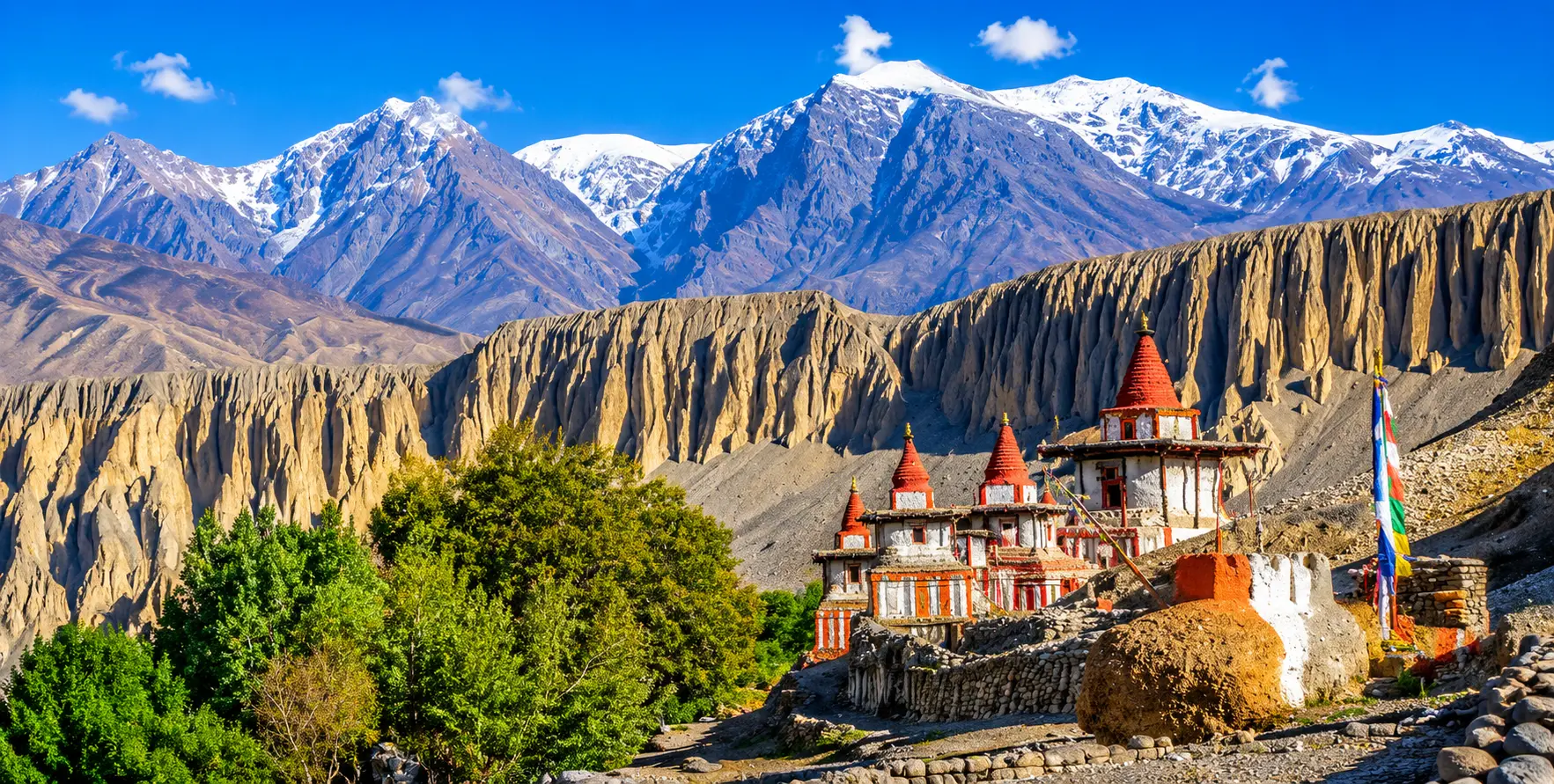
MCAP Permit Guide

Trekker obtaining MCAP Permit guide for the Manaslu Conservation Area in Nepal
Manaslu Circuit and Tsum Valley Trek.

The MCAP Permit: Complete Guide to the Manaslu Conservation Area Permit

When trekkers begin researching the Manaslu Circuit Trek — one of Nepal’s most celebrated, most demanding, and most culturally rewarding long-distance trekking routes — they quickly discover that the region operates under a significantly more complex permit framework than the Annapurna or Langtang circuits they may have attempted before. Three distinct permits, issued by two separate government bodies, must be in a trekker’s possession before they can legally set foot on the restricted section of the Manaslu trail.

Of these three, the Manaslu Conservation Area Permit — universally abbreviated to MCAP — is perhaps the most fundamental and the most directly connected to the long-term well-being of the extraordinary landscape through which the Manaslu Circuit passes.

The MCAP is not a bureaucratic inconvenience or a revenue-raising exercise dressed up in conservation language. It is the primary legal instrument through which Nepal’s government, working through the National Trust for Nature Conservation (NTNC), regulates access to and manages the health of one of the Himalayan region’s most significant protected landscapes.

The Manaslu Conservation Area, established in 1998, covers 1,663 square kilometres of terrain spanning extraordinary ecological and cultural diversity — from subtropical forest in the lower Budhi Gandaki valley to alpine meadow and high-altitude desert above 4,000 meters, from the ethnically Nepali villages of the lower route to the Tibetan Buddhist communities of Nubri and Tsum that the high valleys contain. Understanding what the MCAP is, why it exists, and what it represents — rather than simply how to obtain it — fundamentally enriches the experience of every trekker who carries it into the Manaslu wilderness.

This deep research guide addresses the MCAP from every angle relevant to a trekker planning the Manaslu Circuit: the conservation area’s history, geography, and ecological significance; the complete legal and regulatory framework governing the permit; the precise costs in Nepali rupees and US dollars for every nationality category; the step-by-step process for obtaining it; the network of checkpoints where it is verified along the route; its relationship to the other two mandatory permits.

The Restricted Area Permit (RAP) and the Annapurna Conservation Area Permit (ACAP) — that together make up the Manaslu Circuit’s full permit requirement; the specific provisions for the Tsum Valley extension that many trekkers add to the standard circuit; and the broader context of what the permit system means for the future of trekking in one of Nepal’s most precious protected landscapes.

Nepal Vehicle Hiring Pvt Ltd (vehiclehiringnepal.com) has included this comprehensive MCAP permit guide as part of its commitment to ensuring that every client approaching the Manaslu Circuit, whether independently or as part of a package, arrives at the trailhead fully informed and properly documented.

Our private 4WD jeep service for the Kathmandu-to-Arughat and Kathmandu-to-Soti Khola approach roads — the two principal starting points for the Manaslu Circuit — is directly connected to the permit-planning process. Clients who book trailhead transfers with us can access permit guidance and, where needed, referrals to trusted registered agencies for assistance with permit processing.

YouTube video

Understanding the Manaslu Conservation Area: Landscape, Ecology, and Significance

Establishment and Administration

The Manaslu Conservation Area (MCA) was formally established in 1998 under Nepal’s National Parks and Wildlife Conservation Act and covers 1,663 square kilometres in the Gorkha District of Gandaki Province. The National Trust for Nature Conservation (NTNC), a semi-autonomous government organisation mandated to conserve biodiversity and promote sustainable development across Nepal’s protected areas, manages it.

The choice of NTNC rather than the Department of National Parks and Wildlife Conservation for MCA management reflects the hybrid conservation-development mission of the area: the Manaslu Conservation Area is explicitly designed not just to protect its natural heritage but to support the communities living within it through a model of conservation that integrates local people’s needs and traditional knowledge into management decision-making rather than excluding them.

This integrated approach distinguishes the conservation area model from the national park model, which governs other protected areas such as Sagarmatha (Everest) and Langtang. In a national park, core zones prohibit most forms of resource extraction and permanent human settlement.

In a conservation area, local communities retain their right to live within the protected landscape and to use its resources — for fuel, fodder, building materials, and food — within limits set through collaborative management agreements that seek to balance current community needs against the long-term viability of the natural systems on which both communities and ecosystems depend. MCAP fees fund conservation programs, trail maintenance, community development projects, and the administrative infrastructure needed to manage this balance over time.

Geographic Boundaries and Terrain

The Manaslu Conservation Area occupies a roughly rectangular zone in the upper Budhi Gandaki watershed, bounded on the north and northwest by the Nepal-Tibet border, on the east by the Annapurna Conservation Area boundary near Dharapani, and on the south and west by the lower reaches of the Budhi Gandaki River system below the village of Jagat. The Manaslu Massif dominates the area, anchored by Manaslu itself at 8,16 meters, the world’s eighth-highest mountain, along with several other major peaks, including Himalchuli (7,893 m), Peak 29 or Ngadi Chuli (7,871 m), and Baudha Himal (6,672 m).

The Budhi Gandaki River drains the central valley, flowing southward through a gorge that ranks among the most dramatic and least accessible in the entire Nepal Himalaya.

The terrain of the conservation area spans an elevation range from approximately 1,400 metres in the lower valleys near Arughat to over 8,000 metres at the summit of Manaslu, encompassing within this vertical distance a complete sequence of Himalayan ecological zones: tropical and subtropical forest in the lowest reaches, temperate oak and rhododendron forest in the middle altitude band, sub-alpine conifer and birch forest above 3,000 metres, alpine meadow and scrub between 4,000 and 5,000 metres, and the permanent ice and snow zone of the high peaks above. This ecological sequence supports extraordinary biodiversity, including populations of snow leopard, Himalayan tahr, musk deer, Himalayan black bear, red panda, and grey wolf among mammals, as well as over 100 bird species, ranging from subtropical forest specialists to high-altitude Himalayan endemics.

Cultural Landscape

The human geography of the Manaslu Conservation Area is as richly diverse as its natural landscape. The lower valley is home to Gurung, Magar, and mixed-caste Nepali communities whose agricultural and pastoral practices reflect centuries of adaptation to the middle-hill environment.

Above Jagat, as the route enters the restricted zone and the valley deepens toward the high Himalaya, the communities transition to the ethnically Tibetan Nubri people — a community of Tibetan Buddhist practice and Tibetan language whose presence in this high valley reflects centuries of Tibetan cultural expansion southward across the Himalayan range. The upper valley villages of Sama Gaon, Samdo, and Dharmasala are Nubri settlements whose monasteries, prayer flags, and traditional architecture could easily be mistaken for Tibetan plateau communities, so complete is the cultural continuity with the world north of the Nepal-Tibet border.

The Tsum Valley, which branches off the main Manaslu Circuit route near Chumling and can be visited as a significant extension requiring its own additional permit, is home to the Tsumba people — another ethnically Tibetan community whose cultural preservation has been even more complete than that of the main valley communities, partly because of the valley’s particular geographic isolation. Himalayan scholars and anthropologists widely describe Tsum as one of the most perfectly preserved examples of traditional Tibetan Buddhist village culture anywhere in the world accessible to visitors, and the experience of walking through its ancient villages and monasteries carries a quality of temporal dislocation that few other destinations in Nepal or indeed anywhere in the world can replicate.

Trekker obtaining MCAP Permit guide for the Manaslu Conservation Area in Nepal
Manaslu-Conservation-Area-in-Nepal

The Manaslu Conservation Area Permit derives its authority from Nepal’s National Parks and Wildlife Conservation Act 2029 (1973 in the Western calendar), which establishes the legal framework for all protected areas in Nepal, and from the specific management regulations established by the NTNC for the Manaslu Conservation Area following its formal gazette notification in 1998. Under this framework, entry into the Manaslu Conservation Area without a valid entry permit is a punishable offence, and conservation area staff and associated security personnel are authorised to turn back, detain, or fine individuals found inside the conservation area without the required documentation.

The permit system operates through a network of entry and checkpoint offices along the trekking routes that access the conservation area. Most trekkers approaching the Manaslu Circuit from Kathmandu must obtain the primary entry permit before reaching the first checkpoint, located near Arughat or Soti Khola; those approaching from the Annapurna Circuit must do so near Dharapani.

This requirement is strictly enforced, and the consequences of attempting to enter without a permit — including significant fines, forced return, and the loss of the entire investment made in reaching the trailhead — make obtaining a permit in advance not merely advisable but essential.

What the MCAP Is and Is Not

Understanding what the MCAP covers and what it does not matters for planning, since the Manaslu Circuit’s full permit requirement involves three separate documents whose scope and issuing authorities differ in ways trekkers sometimes find confusing. The MCAP specifically authorises entry into the Manaslu Conservation Area — the protected landscape managed by the NTNC.

It covers the full trail from the lower-valley entry point near Arughat or Soti Khola through the conservation area, specifically from the village of Philim, where the conservation area boundary is officially located, to the area’s exit at Dharapani, where the Manaslu Circuit connects with the Annapurna Circuit.

Critically, the MCAP does not authorise entry into the Restricted Area that lies within the conservation area. The section of the Manaslu Circuit between Jagat and Sama Gaon — roughly the middle section of the route through the high valley — constitutes a designated Restricted Area under Nepal’s foreign travel regulations, governed not by the NTNC but by the Department of Immigration through a separate permit instrument: the Restricted Area Permit (RAP).

A trekker with only the MCAP can legally enter the conservation area up to Jagat from the south and beyond Sama Gaon from the north toward Dharapani, but cannot legally enter the zone between these two villages without also holding a valid RAP. In practice, all trekkers completing the Manaslu Circuit need both the MCAP and the RAP, since the Larkya La Pass crossing — the circuit’s defining high point — lies within the restricted zone.

The ACAP is the third permit, required for the section of the Manaslu Circuit that exits the Manaslu Conservation Area and enters the Annapurna Conservation Area near Dharapani as trekkers descend toward Besisahar and the end of the circuit. Even trekkers who do not intend to continue on the Annapurna Circuit beyond Dharapani must hold a valid ACAP to legally pass through the Dharapani area and out to the Besisahar road.

The boundary between the two conservation areas isn’t a line you can easily skirt, and checkpoint staff at Dharapani verify ACAP possession as part of the standard permit inspection for all trekkers exiting the Manaslu route.

Trekker obtaining MCAP Permit guide for the Manaslu Conservation Area in Nepal
Larke La pass, Manaslu Circuit

MCAP Permit Cost Complete Breakdown by Nationality

The MCAP permit fee structure is among the most straightforward of the three Manaslu Circuit permits, with a flat per-person rate that does not vary by season, visit duration, or number of days spent within the conservation area. This simplicity distinguishes it from the RAP, which applies different rates by season and adds daily fees beyond the first week.

The MCAP is a one-time entry fee: pay it once, carry the resulting permit, and it authorises your full traverse of the Manaslu Conservation Area regardless of how many days you spend within it.

For foreign nationals who are not citizens of SAARC member states — meaning the vast majority of international trekkers from Europe, North America, Australia, East Asia, and elsewhere outside South Asia — the MCAP currently costs NPR 3,000 per person, equivalent to approximately USD 22-25 at current exchange rates. Multiple verified sources confirm this figure as the current rate, with one source noting the equivalent as NPR 3,000 or USD 22.46 per person.

Payment is made in Nepali rupees at Nepal Tourism Board offices, and the USD equivalent is informational rather than an alternative payment currency —permit fees at Nepal’s government offices are settled in NPR.

For citizens of SAARC member nations—India, Bangladesh, Sri Lanka, Pakistan, Afghanistan, Bhutan, and the Maldives—the MCAP fee is NPR 1,000 per person, reflecting the preferential rate structure Nepal applies to visitors from neighbouring South Asian countries across most of its protected-area permit system. Nepali citizens who require a conservation area entry permit for their activities within the MCA pay NPR 100 per person.

Children under ten years of age are exempt from the MCAP fee entirely, making it one of the few Manaslu Circuit permit components that do not apply to young children in trekking families.

It is important to note that permit fee rates in Nepal are subject to periodic government revision, and while the NPR 3,000 figure for non-SAARC foreigners has remained stable across the period covered by this guide’s research, trekkers planning journeys further into the future should verify current rates with the Nepal Tourism Board or a registered trekking agency before finalising their budget. The Nepal Tourism Board’s official offices in Kathmandu, at Bhrikutimandap, are open Sunday through Saturday, except on public holidays, from 9 AM to 5 PM, and provide authoritative, up-to-date information on all conservation area permit fees.

Complete Manaslu Circuit Permit Cost Summary

Permit Non-SAARC (NPR) Non-SAARC (USD) SAARC (NPR) Seasonal Variation
MCAP (Manaslu Conservation Area Permit) NPR 3,000 ~USD 22–25 NPR 1,000 None — flat fee year-round
ACAP (Annapurna Conservation Area Permit) NPR 3,000 ~USD 22–25 NPR 1,000 None — flat fee year-round
RAP (Restricted Area Permit) — Sep to Nov — USD 100 first week N/A + USD 15/day from day 8
RAP (Restricted Area Permit) — Dec to Aug — USD 75 first week N/A + USD 10/day from day 8
Tsum Valley RAP (optional extension) — USD 35/week N/A In addition to the main RAP
TIMS Card (not required for Manaslu) NPR 2,000 (if needed) ~USD 15–16 NPR 1,000 Not required with RAP in place
Trekker with MCAP Permit guide for the Manaslu Circuit and Tsum Valley Trek in Nepal
Manaslu Circuit and Tsum Valley Trek.

How to Obtain the MCAP: Step-by-Step Process

The Application Route

You can obtain the MCAP either directly from Nepal Tourism Board offices in Kathmandu or Pokhara, or through a registered trekking agency on your behalf. In practice, the overwhelming majority of trekkers obtain all three Manaslu Circuit permits — MCAP, ACAP, and RAP — simultaneously through their registered trekking agency, since this consolidated approach eliminates the need for multiple separate visits to different government offices and ensures that permit applications are processed by staff familiar with the specific documentation requirements and procedural steps involved.

The Restricted Area Permit, in particular, can only be issued through a registered trekking agency and cannot be obtained by individual trekkers directly from the Department of Immigration — making agency involvement not just convenient but mandatory for at least one component of the full permit set.

For trekkers who prefer to handle permit acquisition themselves—perhaps those who have arranged their trek independently and need to manage the administrative side directly—the process begins at the Nepal Tourism Board office in Kathmandu at Bhrikutimandap. The MCAP and ACAP can be applied for and issued at this office without agency assistance, provided the applicant presents the correct documentation and fee.

The office accepts only cash payment in Nepali rupees, so trekkers should bring the appropriate amount in NPR before visiting. Recent sources confirm that the application process has been partially digitised, with online application forms available for advance submission, reducing the time required at the physical office for verification and permit printing and shortening the overall application process.

Required Documents for MCAP Application

The documentation required for the MCAP application is straightforward compared to the more extensive requirements of the RAP. The core requirements, confirmed across multiple current sources, are as follows. A valid passport with at least 6 months’ remaining validity at the time of the trek is the primary identification document required.

Two printed passport-sized photographs are required for the physical permit, which is produced as a laminated card featuring the trekker’s photograph alongside their permit details. Carry this physical permit on the trail at all times and present it at checkpoints along the route.

A completed application form, either filled out at the Nepal Tourism Board office or submitted online in advance, must accompany the other documents. Proof of payment of the permit fee, in NPR at the issuing office, completes the documentation requirement.

One important practical point: passport photographs for the MCAP must be printed physical photographs, not digital images, because the permit production process requires physical photos for lamination. Trekkers who arrive at the Nepal Tourism Board without printed photographs can typically find photo services at nearby shops in the Bhrikutimandap area or in the broader Thamel district, but building this into the plan rather than discovering the need at the office saves time and reduces the stress of last-minute scrambling before a permit-sensitive departure date.

YouTube video

Processing Time and Practical Logistics

Under normal circumstances, the MCAP is issued on the same day as the application, typically within 1 to 2 hours of submitting the completed application and fee to the Nepal Tourism Board. The Department of Immigration, which issues the RAP, has a longer processing time—typically at least 1.5 hours for standard applications through the full official verification process involving multiple officers and ultimately the signature of the Director General of Immigration.

Processing times may be longer if the online system is unavailable and the application must be processed manually, which occasionally occurs during busy periods or technical outages.

These processing realities translate into a practical recommendation that trekkers allow a full day in Kathmandu specifically for permit processing, preferably two to three working days before their planned departure for the trailhead. Trying to process all three Manaslu Circuit permits the day before departure introduces significant risk: any delay in processing— a system outage, a documentation gap, or a longer-than-expected queue at either office—could cause you to miss a planned departure, with cascading consequences for a tightly scheduled itinerary.

Investing an extra day in Kathmandu for comfortable permit processing is considerably less costly than the alternatives.

Tip: Most experienced Manaslu Circuit operators recommend arriving in Kathmandu at least three to four days before your intended trailhead departure date, using the extra time to process permits at a comfortable pace, acclimatise slightly to Nepal’s climate and time zone, explore Kathmandu’s extraordinary cultural sites, and complete any remaining gear or supply acquisitions before heading north toward the mountains.

The Restricted Area Permit: The MCAP’s Essential Companion

No guide to the MCAP would be complete without a thorough treatment of the Restricted Area Permit, since the two documents are functionally inseparable for any trekker completing the standard Manaslu Circuit. The RAP governs access to the Manaslu Circuit zone between Jagat and Sama Gaon—the section of the route closest to the Nepal-Tibet border.

This proximity to the border, combined with the desire to protect both the fragile cultural ecosystem of the Nubri communities and the politically sensitive border zone itself, motivates the designation of a restricted area.

Nepal’s government has classified the Manaslu region as a restricted area since trekking first opened there in 1991, a designation maintained and refined over the intervening three decades as the trekking industry has grown. The management of visitor impacts on remote cultural and natural landscapes has improved.

The restricted area status serves multiple concurrent purposes: it controls the total number of visitors in a zone where infrastructure is limited and cultural communities are vulnerable to rapid change; it maintains a security buffer near the Chinese border that Nepal’s government considers prudent regardless of trekking considerations; it requires the engagement of local guides, supporting the economy of communities within the restricted zone; and it generates the top-end permit fee revenue that funds a larger share of conservation and community development spending than the lower-cost conservation area permits can support.

The RAP is issued exclusively through registered trekking agencies — a requirement that cannot be circumvented through any combination of individual applications or government office visits. The application requires passport details, a valid Nepal visa, a completed online application form, payment of the applicable fee, and the agency’s sponsorship letter confirming that the applying agency is serving the trekker.

The permit is a laminated document similar to the MCAP, produced after a multi-stage verification process at the Department of Immigration involving at least three officers and the Director General’s signature. This process reflects the higher security sensitivity associated with restricted-area access compared to standard conservation-area permits.

Unlike the flat-fee MCAP, the RAP fee structure is both season- and duration-sensitive. During the peak season from September through November, the RAP costs USD 100 per person for the first 7 days within the restricted zone, plus USD 15 per person per day from the 8th day onward.

In the off-peak season from December through August, the first-week rate drops to USD 75 per person, with an additional USD 10 per person per day from day 8 onward. For standard Manaslu Circuit itineraries of eleven to fourteen days—in which the restricted zone section between Jagat and Sama Gaon typically accounts for seven to ten days of the total trek—the RAP alone is the largest single permit cost component, significantly exceeding the combined MCAP and ACAP fees.

Trekker with MCAP Permit guide for the Manaslu Circuit and Tsum Valley Trek in Nepal
Manaslu Circuit and Tsum Valley Trek.

The Annapurna Conservation Area Permit: The Circuit’s Exit Permit

The requirement for an Annapurna Conservation Area Permit on the Manaslu Circuit surprises many trekkers who do not initially appreciate the geographic continuity between the two conservation areas at the trek’s southern exit near Dharapani. The Manaslu Circuit Trek, as classically completed, does not end at the edge of the Manaslu Conservation Area but continues southward through the lower Marsyangdi Valley, the road to Besisahar, or onward to Kathmandu.

This journey necessarily passes through territory managed by the Annapurna Conservation Area Project from approximately Dharapani southward.

The ACAP fee mirrors the MCAP in its structure: NPR 3,000 for non-SAARC foreigners, NPR 1,000 for SAARC nationals, with no seasonal variation and no daily fee beyond the flat one-time rate. The Nepal Tourism Board issues the ACAP like the MCAP; you can obtain it at the same time as the MCAP during the same visit, and it requires the same documents—passport, passport photos, and the completed application with fee.

For most trekkers, getting the MCAP and ACAP together in a single Nepal Tourism Board visit is the most efficient approach, reducing the total government office time required for conservation area permits to a single transaction.

Some trekking operators and independent trekkers occasionally ask whether the ACAP is strictly necessary when their Manaslu Circuit exit route avoids entering the Annapurna Conservation Area—for example, by arranging vehicle pickup in Dharapani before crossing the ACAP boundary. This question deserves an honest answer: the boundary between the two conservation areas near Dharapani is a physical geographic line with a checkpoint, and where trekkers must hold an ACAP can depend on the specific route taken from the Manaslu exit to the road.

The safest and most reliably compliance-ensuring approach is to obtain the ACAP as part of the standard permit set before departing Kathmandu, since the cost is modest, the acquisition is simple, and the alternative of being turned back at a Dharapani checkpoint because of a missing ACAP — after completing a demanding 14-day circuit — is a consequence out of all proportion to the inconvenience of having the permit in hand from the outset.

The Tsum Valley Extension: Additional Permit Requirements

Tsum Valley, accessible via a branch trail from the main Manaslu Circuit route near Chumling, is one of Nepal’s most extraordinary off-the-beaten-path trekking destinations and is chosen by an increasing proportion of Manaslu Circuit trekkers as a significant extension of their journey. The Tsumba people who inhabit this isolated lateral valley are among the most perfectly culturally preserved Tibetan Buddhist communities accessible to trekkers anywhere in Nepal — their villages, monasteries, festivals, and daily practices maintaining a traditional character that the more accessible communities of the main Manaslu Circuit have inevitably modified somewhat through greater exposure to the trekking economy.

Trekker with MCAP Permit guide for the Manaslu Circuit and Tsum Valley Trek in Nepal
Manaslu Circuit and Tsum Valley Trek.

Entering Tsum Valley requires an additional Restricted Area Permit beyond the standard Manaslu Circuit RAP, since the valley lies within a separately designated restricted zone. The Tsum Valley Restricted Area Permit costs USD 35 per person per week, and the entry duration is typically calculated from the point of entering the Tsum Valley trail junction to the point of returning to the main Manaslu Circuit route.

Tsum Valley extensions require approximately one to two weeks of trekking, making the permit cost either USD 35 or USD 70 per person, depending on itinerary length. Additionally, the Tsum Valley extension route passes through portions of the Annapurna Conservation Area on its approach from the main circuit junction, making an ACAP permit relevant for this extension and reinforcing its value even for trekkers who might otherwise question the necessity of ACA  on the standard circuit.

The application process for the Tsum Valley RAP follows the same agency-only channel as the main Manaslu RAP. Applicants must submit through a registered trekking company with the required documentation.

Because the Tsum Valley is even more remote and less developed than the main Manaslu Circuit in terms of teahouse infrastructure, and because conservation managers view access to its communities as more culturally sensitive than in the main valley, the RAP system plays a particularly important role in regulating and limiting access to Tsum.

The relatively small number of trekkers who complete the full Tsum Valley extension each season — compared to the main circuit — is a direct result of the permit requirement and the additional time commitment involved, and the cultural preservation benefit of this lower traffic is widely recognised by researchers studying the relationship between tourism access and cultural change in Himalayan communities.

Permit Checkpoints on the Manaslu Circuit: Where and What to Expect

Understanding the checkpoint system on the Manaslu Circuit helps trekkers prepare for permit inspections, rather than being caught off guard by the frequency and thoroughness of document checks along the route. The Manaslu Circuit is one of Nepal’s most systematically checkpoint-monitored trekking routes, reflecting both its restricted-area status and the government’s emphasis on ensuring that only properly permitted visitors access the region.

The first major checkpoint is located at or near the entry to the Manaslu Conservation Area, typically at Arughat or, more commonly, at the trail entry points near Soti Khola, where rangers verify that trekkers hold a valid MCAP and record their entry. This is usually where rangers first scrutinise the MCAP and cross-reference its details—including the trekker’s photograph, name, nationality, and permit number—against the physical permit document.

A second checkpoint at Jagat marks the entry to the Restricted Area, where RAP documents are verified with particular care, given the higher security sensitivity of the restricted zone beyond. Additional checkpoints at Chumling (where Tsum Valley permits are checked for those entering that extension), at Sama Gaon, and at Dharapani verify permit possession at the end of the restricted zone and at the transition to the Annapurna Conservation Area, respectively.

At each checkpoint, trekkers should expect to present all permit documents at once — MCAP, RAP, and ACAP—along with their passport, which serves as the primary identification document for verifying permit names and photographs. The checkpoint process is generally thorough but not lengthy for trekkers with complete documentation; the most common source of significant delay at checkpoints is missing or incomplete documents, which can result in trekkers being held at the checkpoint while the issuing agency is contacted for verification or, in the worst case, being turned back from the restricted zone entry altogether.

This possibility—turning back at Jagat after three or four days of trekking from the road because of a missing RAP—is one of the most significant preventable risks in Manaslu Circuit planning and is entirely avoidable with proper advance permit acquisition.

Carry permits physically, not digital images on a phone or other device. The checkpoint process involves a physical inspection of the permit document, including an examination of the photograph lamination to confirm that the permit has not been transferred from another person.

Because permits are explicitly non-transferable and non-refundable, and because they show the holder’s photograph on the face of the document, any attempt to use another person’s permit would be illegal and immediately detectable at the first checkpoint.

Trekking without valid MCAP, RAP, and ACAP in the Manaslu Circuit region is an offence under Nepal’s National Parks and Wildlife Conservation Act. Violations can result in significant fines, immediate expulsion from the conservation area, and potential complications with future Nepal visa applications. No exceptions are made for missing documentation — ensure all three permits are in your possession before leaving Kathmandu.

Trekker with MCAP Permit guide for the Manaslu Circuit and Tsum Valley Trek in Nepal
Manaslu Circuit and Tsum Valley Trek.

Where the Permit Fees Go: Conservation and Community Impact

Many trekkers ask what permit fees actually accomplish — beyond serving as entry tickets to a protected landscape — but few get a satisfying answer. Understanding the answer for the MCAP requires understanding both the institutional structure of the NTNC, which manages the Manaslu Conservation Area’s revenue and expenditure, and the specific program areas that conservation area permit income has historically supported.

The NTNC’s approach to Manaslu Conservation Area management explicitly links permit revenue to four priority areas: biodiversity conservation and wildlife monitoring; trail and infrastructure maintenance within the conservation area; community development projects in the villages along the trekking routes; and the administrative costs of the conservation area management system itself. In practice, this means that a meaningful portion of each NPR 3,000 MCAP fee flows into programs that directly benefit both the natural systems and the human communities that the permit system is designed to protect.

Biodiversity conservation spending in the Manaslu Conservation Area has supported wildlife monitoring programs for snow leopard, red panda, and Himalayan tahr populations in high-altitude zones above the main trekking corridor, as well as habitat restoration in lower-altitude forest zones affected by fuelwood collection pressures from communities within the area. The NTNC has collaborated with international conservation organisations, including the WWF and the IUCN, on specific program elements, bringing both additional funding and technical expertise to MCA conservation work that NTNC’s own resources alone could not have sustained.

Community development spending from MCA permit revenue has funded primary school improvements, basic health post infrastructure, drinking water system development, and small-scale livelihood support programmes in the villages most directly affected by trekking traffic — an allocation that reflects the conservation area management model’s commitment to ensuring that the communities living within the protected landscape benefit tangibly from the revenues generated by visitors who come specifically to experience the remarkable landscape and culture those communities have maintained. This community benefit dimension is also a significant factor in local communities’ ongoing willingness to support conservation measures rather than oppose them as constraints on their livelihood options.

Trail maintenance spending has funded the construction and repair of bridges, stone stairways, and trail surfaces along the Manaslu Circuit — physical infrastructure that benefits trekkers directly while also improving year-round access for local communities to essential services and markets. The extraordinary quality of some of the trail infrastructure in the Manaslu Conservation Area — particularly the suspended bridges over the Budhi Gandaki gorge — reflects the NTNC’s investment of permit revenue in engineering solutions that balance trekker safety with environmental appropriateness in a landscape where large-scale construction would be both ecologically damaging and practically impossible.

Prithivi highway road png
Jeep hire for the Manaslu trek

Getting to the Manaslu Circuit Trailhead: Vehicle Hire from Kathmandu

With permits secured in Kathmandu, trekkers focus on reaching the Manaslu Circuit trailhead. This journey requires a dedicated 4WD hire for the approach roads from Kathmandu to the starting points at Arughat Bazaar or Soti Khola, both of which involve road conditions that demand appropriate vehicles and experienced drivers.

The approach to Arughat, the more commonly used northern trailhead for the Manaslu Circuit, covers approximately 140 to 150 kilometres from Kathmandu and takes six to eight hours by private 4WD jeep. The route follows the Prithvi Highway westward from Kathmandu, then turns north toward Gorkha town and continues along increasingly rough roads to Arughat itself.

The road quality deteriorates significantly beyond Gorkha town, with sections of loose gravel, narrow lanes, and occasional rough patches that call for a vehicle with good ground clearance and a driver experienced on this specific approach road. From Arughat, many trekkers also arrange a local jeep transfer of approximately three to four hours to Soti Khola or Machha Khola, pushing the walking start point deeper into the valley and saving a day’s road walking on a route that, beyond Arughat, remains drivable for experienced jeep operators.

Nepal Vehicle Hiring Pvt Ltd (vehiclehiringnepal.com) provides private 4WD jeep hire for the Kathmandu-to-Arughat and Kathmandu-to-Soti Khola approach roads, with vehicles specifically maintained for these route conditions and drivers who have completed these routes multiple times. Our current pricing for the Kathmandu to Arughat transfer ranges from NPR 18,000 to NPR 28,000 for a full private vehicle that accommodates up to six passengers with trekking gear.

The Kathmandu-to-Soti Khola transfer, including the additional rough road beyond Arughat, costs NPR 22,000 to 32,000 for the full vehicle. All rates include the vehicle, driver, fuel, and tolls.

For trekkers completing the Manaslu Circuit in the standard direction — entering from Arughat or Soti Khola and exiting near Dharapani — the return transport from the circuit exit point near Dharapani to Kathmandu typically follows the Besisahar highway corridor, with a private vehicle transfer of approximately four to five hours covering the 175 kilometres from Besisahar to Kathmandu. Pre-arranging this return transfer through Nepal Vehicle Hiring Pvt Ltd removes the uncertainty of finding transport in Dharapani or Besisahar after a physically demanding circuit.

It lets trekkers reach their Kathmandu hotel at a predictable time, rather than waiting for whatever shared transport might be available.

Frequently Asked Questions About the MCAP Permit

Can I obtain the MCAP permit without a trekking agency?

Yes — you can obtain the MCAP and ACAP directly from the Nepal Tourism Board offices in Kathmandu or Pokhara without involving a trekking agency, provided you have the required documents and fee in NPR. The Restricted Area Permit, however, can only be issued through a registered trekking agency and requires agency involvement.

Since all three permits are required for the Manaslu Circuit, agency involvement is effectively mandatory, even though you could theoretically obtain the MCAP and ACAP independently. Most trekkers find it simplest to obtain all three through their agency in a single coordinated process.

Is the MCAP valid for multiple entries or only a single entry?

The MCAP is valid for single entry only and is non-transferable and non-refundable. This means that once you enter the Manaslu Conservation Area under your MCAP, you cannot use the same permit to re-enter after exiting.

Trekkers who plan to visit the Manaslu Conservation Area on multiple separate trips must obtain a new MCAP for each entry. The permit’s single-entry, non-refundable nature also means you should confirm applications only once trek departure dates are firmly set, since a cancelled or postponed trek results in a permit fee that cannot be recovered.

Does the MCAP cover the Tsum Valley extension?

No. The MCAP generally covers access to the Manaslu Conservation Area, but entering Tsum Valley requires a separate Restricted Area Permit for Tsum Valley, costing USD 35 per person per week and issued through a registered trekking agency, in the same manner as the main Manaslu RAP. Trekkers planning a Tsum Valley extension must arrange this additional permit before leaving Kathmandu, as it cannot be obtained after reaching the trail junction.

What happens if I lose my MCAP on the trail?

Losing a permit on the Manaslu Circuit is genuinely problematic, since permits are checked at multiple points along the route and a missing document can result in being held at a checkpoint or turned back. The best practical advice is to keep permits in a waterproof document holder at all times and to carry a photocopy as backup reference — though note that photocopies are not accepted as substitutes for the original at official checkpoints.

If you lose an original permit, contact your trekking agency immediately and ask them to contact the issuing authority to confirm the permit’s validity. Still, no administrative solution is guaranteed once a permit is lost in a remote section of the trail.

Do children need an MCAP?

Children under ten are exempt from the MCAP fee and do not need a separate permit to enter the Manaslu Conservation Area. Children over ten, regardless of age, are subject to the same permit requirements as adult trekkers. Families trekking with children of mixed ages should confirm each child’s age with the Nepal Tourism Board at the time of application to ensure the correct documentation is prepared for all group members.

Trekker obtaining MCAP Permit Guide for the Manaslu Conservation Area in Nepal

Conclusion: The MCAP as Gateway and Responsibility

The Manaslu Conservation Area Permit is, at its simplest, an administrative requirement—a piece of paper without which entry into a protected landscape is illegal and access to one of Nepal’s greatest trekking experiences is impossible. But more than that, the MCAP is far more than an entry ticket.

It is the point of legal connection between the visiting trekker and the extraordinary landscape and community they are about to experience — the moment at which a person acknowledges, by paying a fee and accepting a document, that the Manaslu Conservation Area exists within a framework of law and management that has been created to protect something worth protecting, and that their presence within it carries both the privilege of access and the responsibility of care.

The Manaslu Conservation Area is home to snow leopards and red pandas, to the ancient monasteries of Nubri, to the time-preserved communities of Tsum, to the glacial grandeur of Manaslu’s southern flanks, and to the extraordinary human achievement of communities that have made meaningful lives in one of Earth’s most demanding environments across many centuries. The NPR 3,000 that a non-SAARC trekker pays for their MCAP is a genuinely modest contribution to the ongoing work of keeping this landscape and these communities in the condition that makes them worth visiting.

Understanding what that fee supports — and holding the permit that carries that understanding into the mountains — is part of what distinguishes a genuinely aware trekker from one who passes through.

Nepal Vehicle Hiring Pvt Ltd is proud to support every stage of the Manaslu Circuit adventure, from the initial permit-planning consultation that clients can request alongside their trailhead vehicle booking, through the private 4WD jeep transfers that deliver trekkers to the Arughat or Soti Khola trailheads in the condition that demanding Himalayan trekking demands — well-rested, properly documented, and ready for what the mountains ahead will ask of them.

Book Your Manaslu Circuit Jeep Transfer Today

E-mail:[email protected]
WhatsApp

Kathmandu → Arughat  |  Kathmandu → Soti Khola  |  Dharapani → Kathmandu Return

Private 4WD Jeeps  |   Experienced Mountain Drivers  |  Transparent NPR & USD Pricing  |  24/7 Support

Kathmandu to Arughat Transport

Larkya La Pass: Manaslu Circuit Trek

Kathmandu to Arughat Transport – Manaslu Circuit Trek Guide

Arughat Bazaar is the last major market town before the road enters the remote Budhi Gandaki River valley – the gateway corridor to the spectacular Manaslu Circuit Trek. Located about 142 km northwest of Kathmandu, Arughat sits at 550 m in the Gorkha District and marks where the paved highway ends and the rugged mountain track to Soti Khola, Jagat, and the Manaslu restricted area begins.

For trekkers heading to the Manaslu Circuit, Arughat is a critical transport milestone – the last town with an ATM, a fuel station, a proper market, and comfortable guesthouse accommodation before the real wilderness begins.

This complete 2026 guide covers all transport options from Kathmandu to Arughat (private jeep, car, and bus) with detailed road information, vehicle prices, trekking permits and practical tips.com website.

About Arughat – Why It Matters for Manaslu Trek

Full Name: Arughat Bazaar, Gorkha District, Gandaki Province

Altitude: 550 m above sea level

Distance from Kathmandu: Approximately 142 km by road

Travel Time: 4.5 to 6 hours from Kathmandu by private vehicle

Road Type: Prithvi Highway + secondary hill road (mostly paved to Arughat)

Trek Connection: Arughat is the last major town before the Manaslu Circuit restricted area. Soti Khola (official trek start) is 25–30 km north of Arughat by a rough jeep track

Key Facilities: ATM (last reliable one), fuel station, pharmacies, teahouses, local market, basic guesthouses

Vehicle Requirement: Sedan cars can reach Arughat. 4WD Jeep required for Soti Khola beyond Arughat

Arughat serves as the essential base camp town for Manaslu Circuit trekkers. Most trekking groups stop here overnight or for a few hours before either continuing to Soti Khola by jeep or beginning to trek. The weekly market (haat bazaar) draws villagers from the surrounding hills and adds vivid, authentic local colour to the town.

The Budhi Gandaki River – which the entire Manaslu Circuit follows – begins its accessible journey just north of Arughat.

Why Book Private Transport from Kathmandu to Arughat?

Private transport from Kathmandu to Arughat is the most practical and comfortable option for trekkers starting the Manaslu Circuit. Here is why:

  • Direct hotel pickup from Kathmandu – no walking to bus stations with a heavy trekking pack in morning darkness
  • Flexible departure time – depart at 5:00 AM to arrive in Arughat in the late morning, with time to explore the market, eat, and rest before continuing.
  • Full luggage space for trekking backpacks, sleeping bags, porters’ loads, and group equipment
  • No vehicle changes or connections – one continuous journey in the same comfortable vehicle
  • Option to continue beyond Arughat to Soti Khola in the same jeep if booked in advance
  • Experienced driver familiar with the Mugling–Arughat road and the Budhi Gandaki valley access route
  • Group travels together – no risk of trekking team members being split between different local buses.
  • Faster than local buses – a private vehicle saves 1 to 2 hours compared to the local bus connection via Gorkha.

Patan Durbar Square in the Kathmandu Valley

Vehicle Options & Prices: Kathmandu to Arughat

Vehicle Hiring Nepal offers a range of vehicles for the Kathmandu-Arughat route. Unlike the Soti Khola extension beyond Arughat, the road to Arughat itself is accessible by most vehicle types:

Vehicle Capacity One-Way Price (USD) Round Trip (USD) Notes
Private car 1–3 pax $80 – $105 $140 – $200 Can reach Arughat – not beyond
Scorpio / SUV 4–5 pax $100 – $200 $170 – $400 Good for Arughat + short Soti sections
4WD Jeep 4–6 pax $130 – $250 $215 – $450 Best for Arughat AND Soti Khola
Toyota Hiace Van 7–14 pax $200 – $250 $200 – $450 Groups to Arughat – NOT beyond

Important: For trekkers planning to continue from Arughat to Soti Khola by vehicle, only a Toyota Land Cruiser or equivalent 4WD is suitable. The road from Arughat to Soti Khola is a rough mountain track requiring high ground clearance and 4WD capability. Book a Land Cruiser from Kathmandu if your plan includes vehicle access to Soti Khola.

Kathmandu-to-Arughat transport

Detailed Road Guide: Kathmandu to Arughat

The Kathmandu to Arughat journey follows the Prithvi Highway before branching north into the Gorkha hills. Here is a complete stage-by-stage breakdown:

Stage 1: Kathmandu to Mugling (115 km | 2.5 hrs)

Depart Kathmandu early – 5:00 to 5:30 AM is recommended for a same-day arrival in Arughat with time to spare. Follow the Prithvi Highway west through Naubise and along the spectacular Trishuli River gorge. The road runs alongside the fast-flowing green river through Malekhu – a popular riverside rest stop with tea houses and fresh fish – before reaching Mugling Junction in approximately 2.5 hours from Kathmandu.

Mugling is a key decision point. For Pokhara-bound traffic, the road continues west. For Arughat and the Manaslu Circuit, turn north at Mugling onto the secondary road towards Gorkha and the Budhi Gandaki valley.

Take a brief tea and snack break at Mugling before continuing – it is the last busy junction town on the route.

Stage 2: Mugling to Gorkha Junction (25 km | 40 min)

From Mugling, head north through increasingly rural hill terrain. The road climbs gently through terraced paddy fields and mixed forest. Gorkha Junction (not Gorkha town itself, which lies 20 km east on a branch road) is the turn-off where the road continues north towards Arughat.

Gorkha town – the historic birthplace of the Shah dynasty and former kingdom that unified Nepal – is worth a side visit if time allows, though it adds 1.5 to 2 hours to your journey.

Stage 3: Gorkha Junction to Khairenitar (20 km | 35 min)

Continue north through the Daraudi River valley. The road passes through Khairenitar – a small town with a few restaurants and tea shops and the site of a well-known agricultural research station. The road remains paved with some rough patches through this section.

On clear days, views of the surrounding Gorkha hills and the first glimpses of snow-capped peaks to the north begin to appear.

Stage 4: Khairenitar to Arughat Bazaar (22 km | 40 min)

The final section descends to Arughat Bazaar on the east bank of the Budhi Gandaki River. This final stretch mixes paved and gravel sections. You pass through Tarkughat – a riverside village – before crossing the Budhi Gandaki and arriving in the main market area of Arughat.

Total journey time from Kathmandu: approximately 4.5 to 6 hours, including the Mugling tea stop.

Arughat to Soti Khola – The Next Stage

For most Manaslu Circuit trekkers, Arughat is not the final destination but a critical stopping point before continuing to Soti Khola – the official first teahouse stop on the Manaslu Circuit. Here is how the Arughat to Soti Khola section works:

Distance: 25–30 km north of Arughat

Travel Time: 2.5 to 3.5 hours by 4WD jeep from Arughat

Road Type: Very rough mountain track – rocky, narrow, cliff-edge sections above the Budhi Gandaki

Vehicle: 4WD Land Cruiser only – no sedan, no Hiace

Options: Continue in the same Kathmandu jeep (if a Land Cruiser is booked) OR hire a local jeep from Arughat Bazaar

Local jeeps are available for hire from Arughat Bazaar to Soti Khola. These are usually shared jeeps departing when full (typically 4 to 8 passengers) at NPR 600 to NPR 900 per seat.

A private local jeep from Arughat to Soti Khola costs approximately USD 50-70. If you have already booked a Land Cruiser from Kathmandu, the same vehicle can continue directly to Soti Khola – the most convenient and cost-effective option for most groups.

Road Conditions: Kathmandu to Arughat

Section Distance Surface Difficulty Season Notes
Kathmandu – Naubise 30 km Paved – good Easy Standard highway driving
Naubise – Mugling 85 km Paved – Trishuli Gorge Easy Scenic, riverside highway
Mugling – Gorkha Jct. 25 km Paved hill road Easy–Mod Climbing, some curves
Gorkha Jct. – Khairenitar 20 km Paved / gravel mix Moderate Rural road, some potholes
Khairenitar – Arughat 22 km Mixed paved / gravel Moderate Narrower village roads
Arughat – Soti Khola 28 km Very rough mountain track Very Hard 4WD only, cliff edges

Local Bus Option: Kathmandu to Arughat

For solo budget trekkers, local bus connections from Kathmandu to Arughat are available. Here is what to know:

Route: Kathmandu (Gongabu Bus Park) → Gorkha → Arughat (with vehicle change at Gorkha or Khairenitar)

Total Time: 6 to 8 hours with connections

Cost: NPR 400–600 Kathmandu to Gorkha + NPR 200–350 Gorkha to Arughat (local jeep)

Frequency: Morning departures only – first bus around 7:00 AM

Luggage: Large trekking packs stored on the roof or in the overcrowded aisle

Drop-off: Arughat main road – no door-to-door service

The local bus is significantly slower and less comfortable than a private vehicle, requires a vehicle change at Gorkha or Khairenitar, and is not recommended for groups with heavy trekking gear. For most trekkers, the cost difference between a local bus and a private vehicle split among 4 to 6 group members is small enough that private transport wins on every other measure.

Nepal Tour Package

Permits Required for the Manaslu Circuit

All trekkers visiting the Manaslu Circuit must carry the following permits. Arrange all permits in Kathmandu before departure – none are available in Arughat or beyond:

Permit Cost 2026 Where to Get Notes
Manaslu Restricted Area Permit (RAP) USD 100/week (Sep–Nov) | USD 75/week (other months) Dept. of Immigration, Kathmandu (Maitighar) Mandatory for all trekkers beyond Jagat
MCAP – Manaslu Conservation Area Permit NPR 3,000 (~USD 22) Nepal Tourism Board, Kathmandu Required from the Arughat area onwards
TIMS Card – Trekkers ‘ Information Management System USD 10 Nepal Tourism Board / TAAN Required for all trekkers
Licensed Guide – Mandatory USD 25–40/day Licensed trekking agency Minimum 2 trekkers + guide required by law

The Manaslu Restricted Area Permit is checked at the checkpoint in Jagat (beyond Soti Khola). All three permits are checked again at Deng, Ghap, and Samagaon checkpoints further north. Trekkers without all three permits will be turned back at Jagat and fined.

Arrange everything in Kathmandu the day before your vehicle departs.

Manaslu Circuit Trek – Overview

Starting from Soti Khola (reached via Arughat), the Manaslu Circuit is widely regarded as one of the finest and most dramatic trekking circuits in the entire Himalaya. Here is a complete overview:

Trek Duration: 14 to 18 days for the full circuit

Max Altitude: Larkya La Pass at 5,106 m

Trek Distance: Approximately 177 km total

Difficulty: Strenuous – for fit, experienced trekkers

Best Season: October–November and March–May

End Point: Besisahar (Annapurna Circuit road) or Dharapani – vehicle back to Pokhara or Kathmandu

YouTube video

Day Stage Altitude Distance Highlights
Day 1 Soti Khola – Machha Khola 700m → 869m 14 km River gorge, waterfalls, suspension bridges
Day 2 Machha Khola – Jagat 869m → 1,340m 22 km Kali Khola valley, terraced villages
Day 3 Jagat – Deng 1,340m→1,860m 19 km Narrow gorge, first restricted checkpoint
Day 4 Deng – Namrung 1,860m→2,630m 18 km Dramatic gorge narrows, Tibetan culture begins
Day 5 Namrung – Samagaon 2,630m→3,530m 18 km Manaslu North views, Tibetan villages
Day 6 Samagaon (acclimatisation) 3,530m – Manaslu Base Camp day hike or Birendra Lake
Day 7 Samagaon – Samdo 3,530m→3,875m 10 km Open valley, yak pastures, Tibet border views
Day 8 Samdo – Dharamsala 3,875m→4,460m 10 km High camp below Larkya La
Day 9 Larkya La – Bimthang 4,460m→5,106m→3,590m 20 km Highest point – stunning 360° Himalayan panorama
Day 10 Bimthang – Dharapani 3,590m→1,860m 22 km Descent to the Annapurna Circuit junction

Swayambhunath visit during Kathmandu Pokhara Tour

End of Trek: Return Transport from Dharapani to Kathmandu

The Manaslu Circuit ends at Dharapani – a village on the Annapurna Circuit road in Manang District. From Dharapani, trekkers have two main transport options to return to Kathmandu or Pokhara:

From Dharapani, hire a local jeep south to Besisahar (approximately 2-3 hours on the Annapurna Circuit road). From Besisahar, a private vehicle can take you back to Kathmandu in 3.5 to 4 hours via Dumre and the Prithvi Highway.

Vehicle Hiring Nepal can pre-arrange a return vehicle from Besisahar to Kathmandu at the end of your Manaslu Circuit – book this at the same time as your outward Kathmandu to Arughat transport for a smooth round trip.

Option B: Dharapani to Pokhara

Alternatively, continue the local jeep south from Besisahar to Pokhara (approximately 4 to 5 hours total from Dharapani). This is a popular option for trekkers who want to spend a few recovery days in Pokhara after the Manaslu Circuit before flying or driving back to Kathmandu.

Combine Manaslu Circuit with Other Nepal Destinations

The Manaslu Circuit is often combined with other destinations in Nepal for a complete Nepal travel experience. Here are the most popular combinations:

Manaslu Circuit + Annapurna Circuit

The Manaslu Circuit connects directly to the Annapurna Circuit at Dharapani. Many experienced trekkers combine both circuits in a single extended trip of 30 to 35 days – starting the Annapurna Circuit from Besisahar, walking to Manang, crossing the Thorong La to Muktinath, returning east to Dharapani, then beginning the Manaslu Circuit from Dharapani northward and completing it back at Soti Khola.

Vehicle Hiring Nepal can arrange transport for both the start and end of this mega circuit.

Manaslu Circuit + Chitwan Safari

A Chitwan jungle safari is a perfect post-trek addition after the high-altitude Manaslu Circuit. After completing the circuit at Dharapani, return to Kathmandu by private vehicle, rest for a day, then travel south to Chitwan for a 2-night wildlife safari before flying home. The contrast between the Himalayan mountain wilderness and subtropical jungle wildlife is extraordinary.

Manaslu Circuit + Kathmandu Sightseeing

Most trekkers spend 2 to 3 days in Kathmandu before and after the Manaslu Circuit for acclimatisation, permit processing, and exploring the UNESCO heritage sites of the Kathmandu Valley. Vehicle Hiring Nepal offers Kathmandu Valley sightseeing tours covering Pashupatinath, Boudhanath, Swayambhunath, and Patan Durbar Square – ideal for trekkers with pre- or post-trek time in the capital.

Best Time to Travel from Kathmandu to Arughat

October to November (Peak Season – Best)

The finest time for the Kathmandu to Arughat journey and the Manaslu Circuit. Post-monsoon roads are dry and in their best condition. Skies are clear, and the views of Manaslu (8,163 m) from the valley are extraordinary.

The Manaslu Circuit is at its most popular during this period – book vehicles and permits 4 to 6 weeks in advance, as trekking groups fill the restricted-area permit quota.

March to May (Excellent – Spring)

Spring is the second-best season. Rhododendron forests below 3,000 m are in full bloom in March and April. The road from Kathmandu to Arughat is in good condition.

The Manaslu Circuit is significantly less crowded in spring than in October–November, making for a more intimate trekking experience. The Larkya La Pass is generally clear from mid-March.

December to February (Possible – Cold)

Winter travel to Arughat is straightforward – the road is fully accessible. However, the Manaslu Circuit becomes much more challenging in winter. The Larkya La Pass (5,106 m) can be snowbound in January and February.

High camps above 4,000 m are extremely cold (-15 to -25°C at night). Only experienced cold-weather trekkers attempt the full Manaslu Circuit in winter.

June to September (Monsoon – Caution)

The road from Kathmandu to Arughat remains passable during the monsoon,n but landslides can block the track from Arughat to Soti Khola during the active monsoon. The Manaslu Circuit trail has significant landslide and leech issues below 3,000 m in the monsoon. Many trekking agencies do not operate the circuit from June to mid-September.

If you plan to trek in the monsoon, check current trail and road conditions with local sources.

Kathmandu-to-Arughat transport

What to Do in Arughat Bazaar

Arughat is not just a transit point – it is a fascinating, authentic Nepali market town worth exploring before beginning the Manaslu Circuit:

  • ATM withdrawal – the Nepal Bank ATM in Arughat is the last reliable cash point before Samagaon (6-7 days’ trek away). Withdraw sufficient Nepali Rupees for your entire Manaslu Circuit before leaving Arughat – budget NPR 3,000 to NPR 5,000 per person per day for teahouse accommodation and meals.
  • Weekly haat bazaar – if your arrival coincides with the weekly market day, explore the local bazaar where villagers from surrounding hills bring fresh produce, local crafts, and livestock for trade. A vivid and authentic rural Nepal experience
  • Fuel and vehicle check – if continuing to Soti Khola by jeep, fuel up in Arughat. This is the last fuel station before the mountain track.
  • Arughat Gorkha Museum – a small local museum with exhibits on the history of the Gorkha kingdom and the cultural heritage of the Budhi Gandaki valley
  • Budhi Gandaki riverside walk – the river runs directly through Arughat, and a short walk along the riverside gives you your first feel of the wild, green river that will accompany you for the next 14 days of the circuit
  • Stock up on trekking supplies – Arughat has shops selling chocolate bars, biscuits, instant noodles, batteries, and other essentials at significantly lower prices than on the trail.

Accommodation in Arughat

Arughat has a range of simple but adequate guesthouses for trekkers overnighting before beginning the Manaslu Circuit:

  • Basic teahouse rooms: NPR 300 to NPR 600 per person – simple twin rooms with shared bathroom
  • Better guesthouses: NPR 600 to NPR 1,200 per person – cleaner rooms, some with attached bathroom and hot water (bucket)
  • Meals available at all teahouses: dal bhat, noodle soup, fried rice, eggs, chapati, Nepali tea
  • Electricity available in Arughat via grid connection – charge all devices fully here before the trek
  • Mobile signal: NTC and Ncell both work in Arughat – the last reliable signal before the upper valley

What to Pack for the Kathmandu to Arughat Journey

  • All trekking permits (Manaslu RAP, MCAP, TIMS card) – checked at Jagat beyond Soti Khola
  • Nepali Rupees cash – withdraw extra in Kathmandu before departure; top up at the Arughat ATM
  • Snacks and 2 litres of water per person – stops are limited between Mugling and Arughat.
  • Motion sickness tablets – the road from Mugling to Arughat has many winding sections.
  • Light layers – mornings on the drive can be cool in the Trishuli gorge section
  • Offline maps downloaded (Maps.me or Gaia GPS with Manaslu Circuit layer)
  • Trekking guide and porter contact confirmed and ready to meet you in Arughat or Soti Khola
  • Camera and phone fully charged – Trishuli Gorge scenery is beautiful from Mugling onwards

What is Included in Your Vehicle Hire with Vehicle Hiring Nepal?

  • Private vehicle (sedan, SUV, or Land Cruiser 4WD) with an experienced driver
  • Full fuel cost for the Kathmandu to Arughat journey
  • Vehicle insurance for the duration of the journey
  • Pickup from your hotel or guesthouse in Kathmandu
  • Drop-off at Arughat Bazaar main market area or your guesthouse
  • Rest and refreshment stops at Mugling Junction and the Gorkha Junction area
  • Option to continue in the same Land Cruiser from Arughat to Soti Khola (if a 4WD jeep is booked)
  • Pre-arranged return vehicle from Besisahar or Dharapani at the end of your Manaslu Circuit
  • 24/7 WhatsApp support throughout the journey and during your Manaslu trek

Not included: Trekking permits (Manaslu RAP, MCAP, TIMS), licensed guide fees, porter charges, personal meals, teahouse accommodation, and any detour stops beyond the agreed route.

How to Book Your Kathmandu to Arughat Transport

  1. Contact Vehicle Hiring Nepal via WhatsApp at  +977 981-4227196 or visit vehiclehiringnepal.com
  2. Choose your vehicle type – sedan for Arughat only; 4wd jeep if continuing to Soti Khola.
  3. Provide your travel date and preferred departure time (5:00–5:30 AM recommended)
  4. Give your pickup address or hotel name in Kathmandu
  5. Confirm your destination – Arughat only, or Arughat + Soti Khola
  6. Specify group size, number of trekking packs, and any porter luggage
  7. Request a pre-arranged return vehicle from Besisahar or Dharapani if needed
  8. Receive booking confirmation with driver name, contact number, and vehicle details

WhatsApp: +977 981-4227196

Email:[email protected]

Frequently Asked Questions

How long does it take to drive from Kathmandu to Arughat?

The drive from Kathmandu to Arughat takes approximately 4.5 to 6 hours by private vehicle, including a brief stop at Mugling. Departing at 5:30 AM puts you in Arughat between 10:00 and 11:30 AM.

Can a regular car reach Arughat from Kathmandu?

Yes. A regular sedan or standard car can reach Arughat Bazaar from Kathmandu on the mostly paved road via Mugling and Khairenitar. However, beyond Arughat to Soti Khola, only a 4WD Toyota Land Cruiser or equivalent is suitable.

If your plan includes vehicle transport to Soti Khola, book a Land Cruiser from Kathmandu from the start.

Is there a direct bus from Kathmandu to Arughat?

No direct tourist bus runs from Kathmandu to Arughat. Local buses depart from Gongabu Bus Park in Kathmandu to Gorkha, with a vehicle change in Gorkha or Khairenitar for the final section to Arughat. The total journey by local bus takes 6 to 8 hours, including connections, and is not recommended for trekkers with heavy gear.

Do I need a guide for the Manaslu Circuit?

Yes. The Nepalese government requires a licensed trekking guide to accompany all trekkers on the Manaslu Circuit. The restricted area permit also requires a minimum of two trekkers.

Solo trekking without a guide is not permitted on the Manaslu Circuit. You can arrange a licensed guide through a Kathmandu-based trekking agency, and they will typically meet your group in Kathmandu or at Soti Khola.

What is the ATM situation on the Manaslu Circuit?

The last reliable ATM is in Arughat Bazaar. Beyond Arughat, there are no ATMs until Samagaon, where a limited e-banking kiosk is sometimes operational but unreliable. Withdraw all the cash you will need for the entire circuit in Arughat or, even better, in Kathmandu before departure.

Budget NPR 3,000 to NPR 5,000 per person per day for all circuit expenses.

Can I combine the Manaslu Circuit with the Annapurna Circuit?

Yes. The Manaslu Circuit connects to the Annapurna Circuit at Dharapani. Many experienced trekkers do a combined circuit – finishing the Manaslu at Dharapani and immediately beginning the Annapurna Circuit to the south or north, depending on the direction.

This extended circuit takes 30 to 35 days total. Vehicle Hiring Nepal can arrange transport to the start of your combined circuit and return from the finish.

Nepal Tour Package

Final Thoughts

The road from Kathmandu to Arughat is the beginning of one of Nepal’s greatest trekking adventures – a journey that starts in the busy Himalayan capital and ends in the remote, high-altitude wilderness of the Budhi Gandaki valley, with the great Manaslu massif (8,163 m) rising above the horizon ahead. Getting to Arughat comfortably, on time, and with all permits and gear in order sets the foundation for a successful Manaslu Circuit trek.

Vehicle Hiring Nepal provides reliable, experienced transport for the Kathmandu-Arughat route. Our drivers know every junction and village along this road; our vehicles are well-maintained and suited to the terrain, and our 24/7 WhatsApp support means you are never alone on this remote approach journey.

Book your Kathmandu-to-Arughat transport today. WhatsApp: +977 981-4227196 | E-mail: vehiclehiringnepal@gmail.com
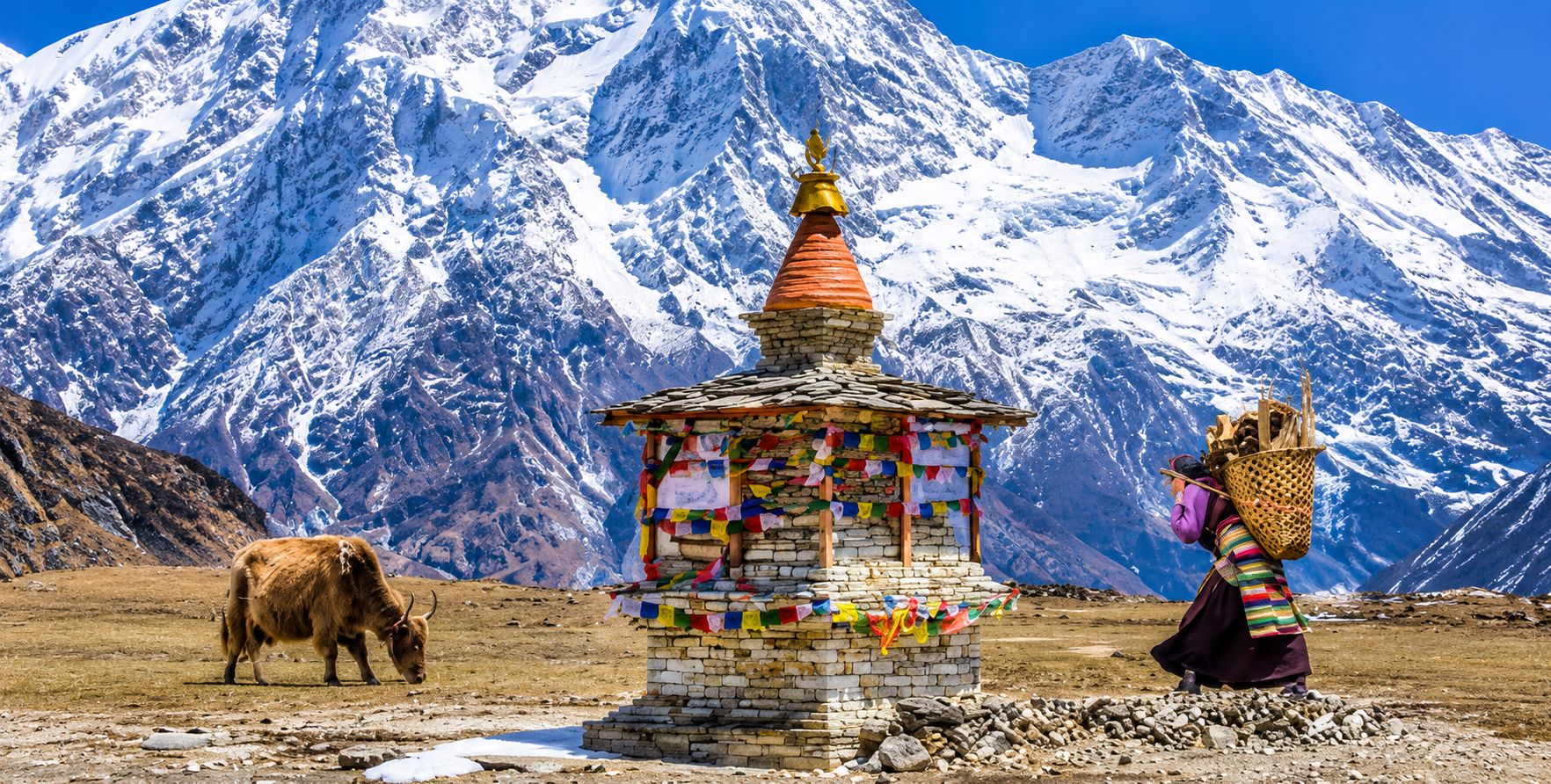
Chat with us