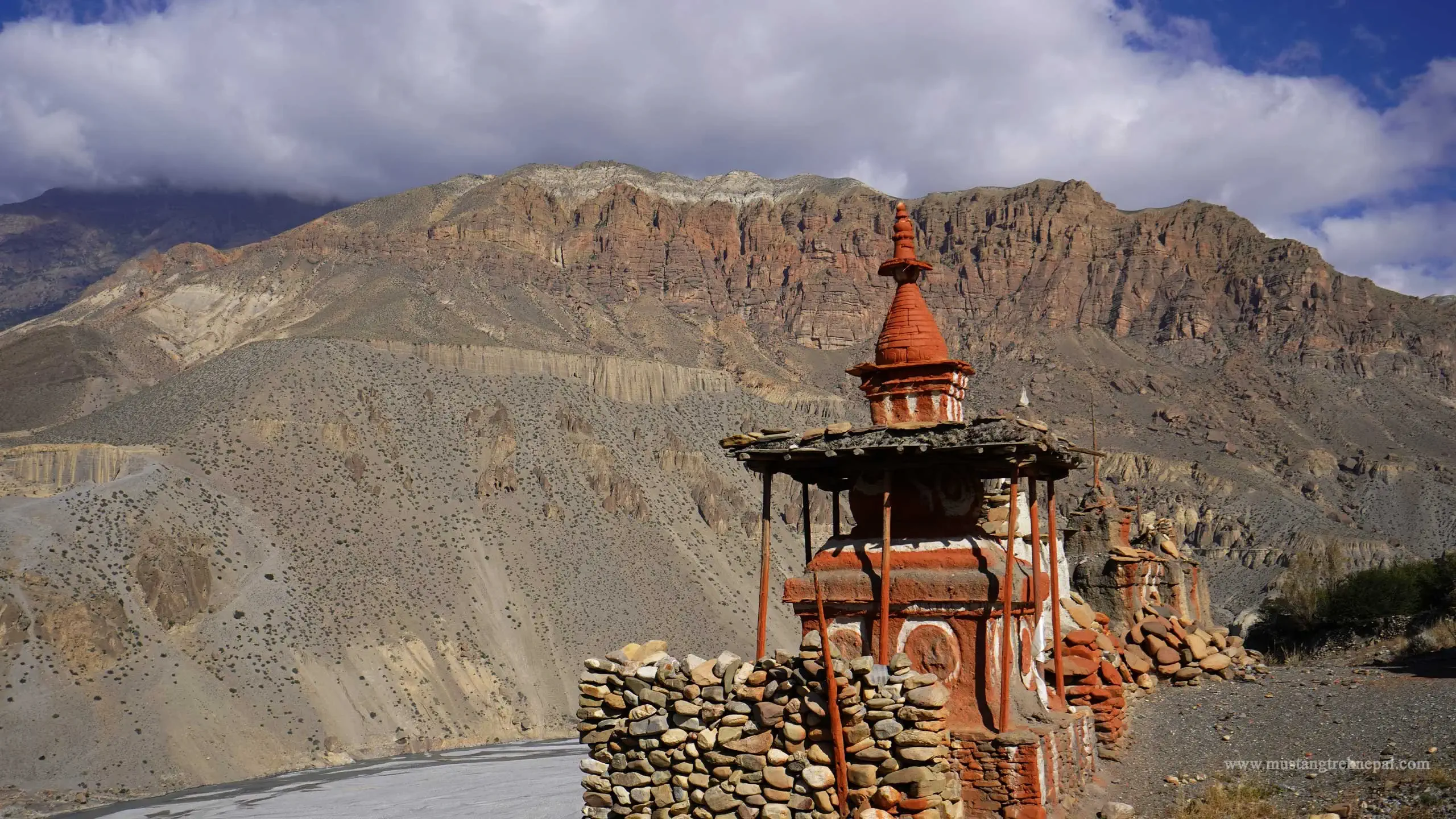
Pokhara Airport to Muktinath Jeep Rental – Private 4WD Hire for the Ultimate Pilgrimage Journey
Just landed at Pokhara Airport and ready to begin your sacred journey to Muktinath Temple? Nepal Vehicle Hiring Pvt Ltd offers a reliable, comfortable, and experienced private 4WD jeep rental service from Pokhara Airport to Muktinath—picking you up directly at arrivals and dropping you off at one of the world’s most sacred pilgrimage destinations in the Himalayas.
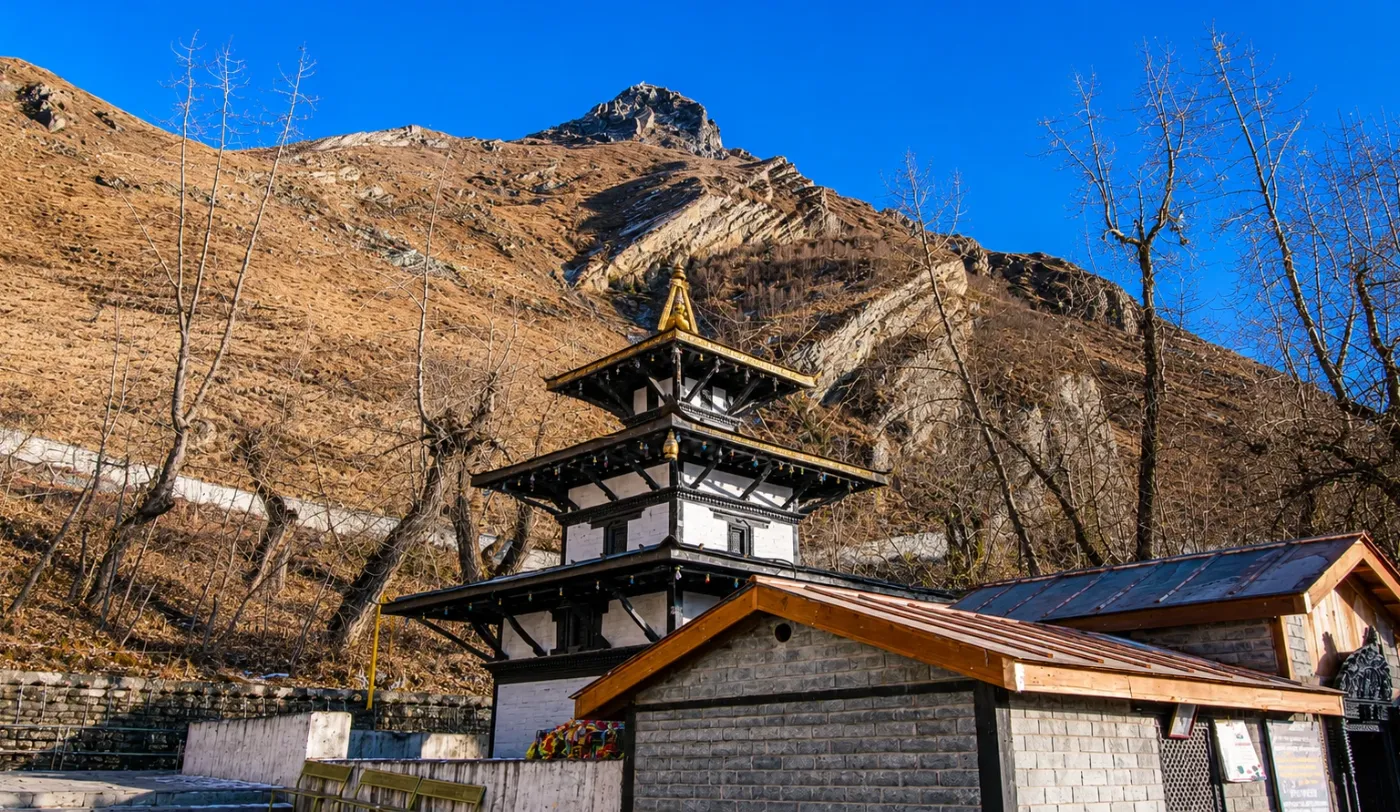
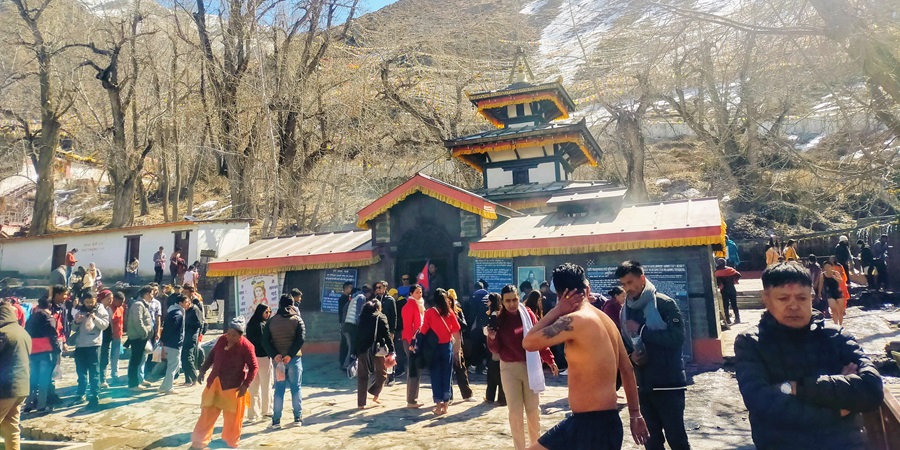
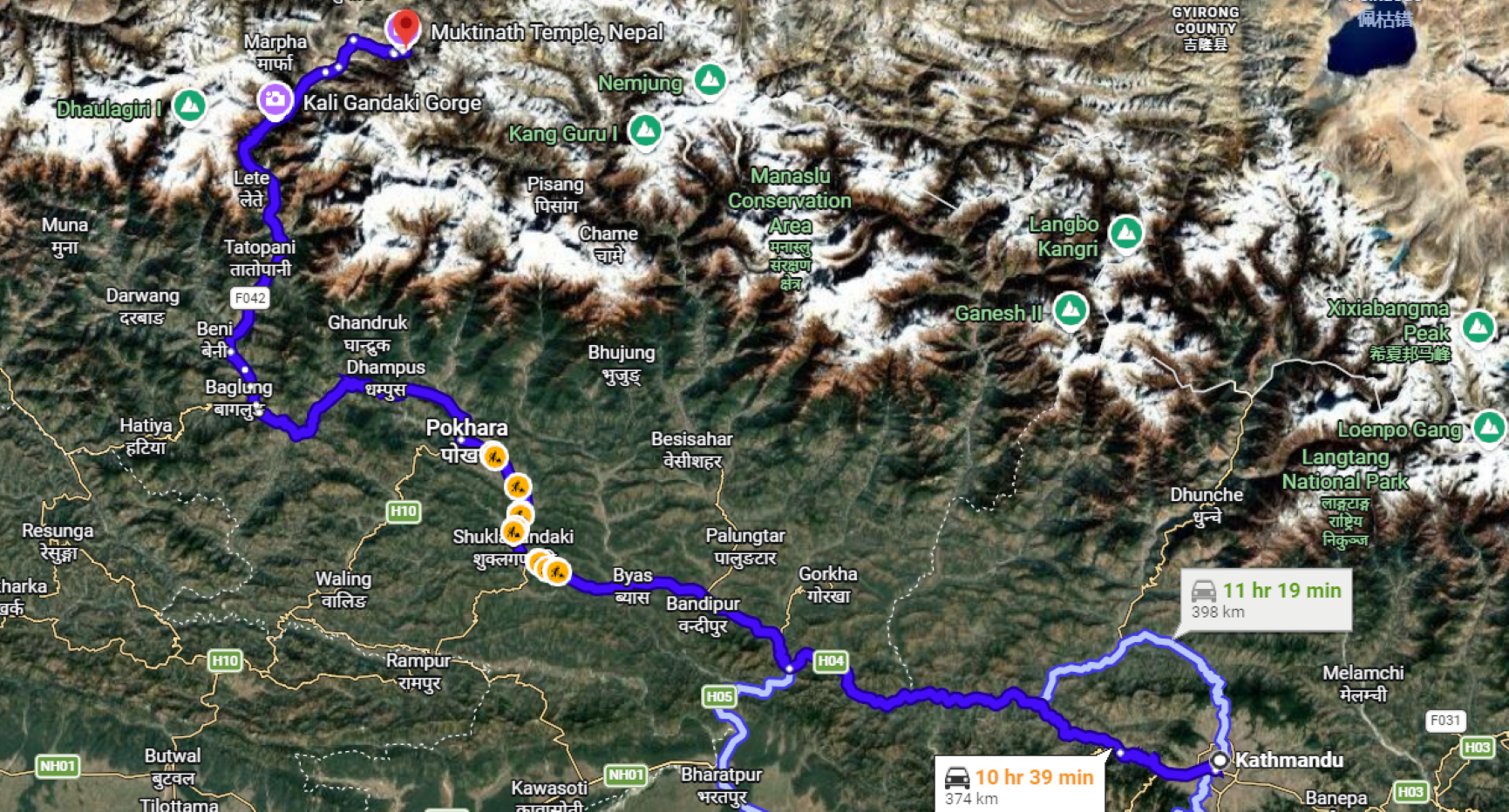
The journey from Pokhara to Muktinath covers approximately 180–200 km via the Pokhara-Baglung Highway, Kali Gandaki valley, and the iconic Mustang road — passing through the world’s deepest gorge, the steaming Tatopani hot springs, the legendary apple orchards of Marpha, the windswept frontier town of Jomsom, and the medieval walled village of Kagbeni before climbing steeply to the sacred site of Muktinath Temple (3,710–3,800 m) — home of the 108 Muktidhara water spouts and the eternal Jwala Mai flame.
Whether you are a Hindu pilgrim seeking moksha (liberation) through Muktinath darshan, a Buddhist devotee visiting the sacred Chumig Gyatsa valley, a trekker completing the Annapurna Circuit, or a first-time Nepal tourist — a private 4WD jeep from Pokhara Airport is the most direct, flexible, and comfortable way to begin your Muktinath journey.
Pokhara has two airports serving visitors in 2026:
Pokhara International Airport (IATA: PHH | ICAO: VNPR): Nepal’s third international airport, opened in January 2023, is located at Chhinedanda, approximately 3 km from the old domestic terminal. Handles most major domestic routes, including flights from Kathmandu, Bharatpur, and Bhairahawa, as well as some international charters.
Pokhara Domestic Airport (IATA: PKR | ICAO: VNPK): The original Pokhara airport, still operating domestic flights to Jomsom (Mustang) — notably the 20-minute flight to Jomsom that allows some pilgrims to fly rather than drive the full route to Muktinath.
Nepal Vehicle Hiring provides direct airport pick-up from both Pokhara airports. Your driver will be waiting at arrivals with a name board, help with luggage, and depart for Muktinath immediately, or to your lakeside hotel first if you prefer an overnight in Pokhara before the mountain journey.
Why Choose a Private 4WD Jeep from Pokhara Airport to Muktinath?
Public shared jeeps and local buses do run from Pokhara to Jomsom and Muktinath, but a private 4WD jeep rental from Nepal Vehicle Hiring transforms the entire journey:
Direct Airport Pick-Up: Your jeep will be waiting at Pokhara Airport when you land—no waiting, no negotiating, no searching for shared transport with heavy pilgrimage bags.
Non-Stop Door-to-Door: Travel directly from the airport terminal to Muktinath Temple — or to your Jomsom hotel for an overnight before the final ascent: no connections, no bus transfers, no waiting at Beni for a shared vehicle.
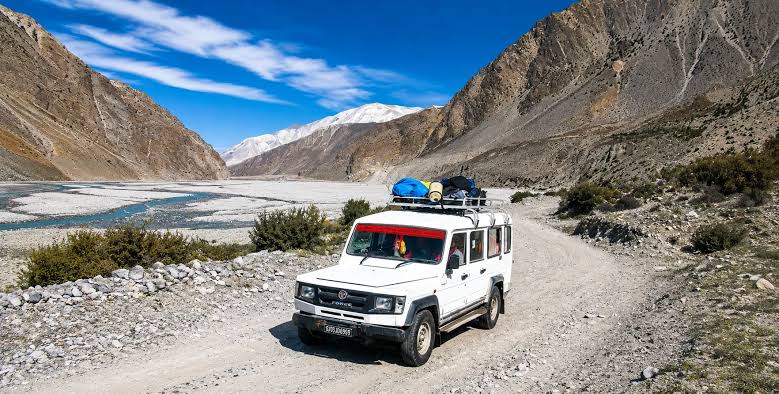
Mandatory 4WD Beyond Beni: The road beyond Beni is off-road, narrow, and steep — 4WD is not optional; it is essential. All Nepal Vehicle Hiring jeeps are genuine 4WD vehicles inspected and prepared for the Mustang mountain route.
Flexible Scenic Stops: Stop at Tatopani hot springs, Marpha apple shops, Jomsom Eco Museum, and Kagbeni Monastery at your own pace — impossible on a public bus with fixed stops and schedules.
Experienced Mountain Drivers: Our drivers have made the Pokhara–Muktinath journey many times. They know every turn of the Kali Gandaki Valley, where to stop for safety, and how to handle altitude and road conditions in all weather.
Depart on Your Schedule: Public jeeps from Pokhara depart early morning (5–6 AM) and cannot be rescheduled for late arrivals. A private jeep departs whenever you are ready — essential for pilgrims landing in the afternoon or with late flights.
Return Service Available: We offer a return jeep rental from Muktinath to Pokhara Airport for a smooth end-to-end pilgrimage journey. View our Muktinath-to-Pokhara jeep service.
Best 4WD Jeeps for the Pokhara to Muktinath Route
All vehicles for the Pokhara–Muktinath route must be genuine 4WD (four-wheel drive) jeeps. Nepal Vehicle Hiring operates the following vehicles specifically equipped and approved for the Mustang mountain route:
Vehicle
Capacity
Comfort Level
Best For
Toyota Land Cruiser 4WD
1-6 pax
5 Star
VIP / Top-end pilgrims
Mahindra Scorpio 4WD
1-6 pax
4 Star
Groups / Budget pilgrims
Mahindra Bolero 4WD
1-6 pax
4 Star
Budget groups / Families
Mahindra Thar / Bolero Camper
1-4 pax
4 Star
Small top-end groups
Toyota Land Cruiser – The Gold Standard for Muktinath
For the Pokhara–Muktinath journey, the Toyota Land Cruiser 4WD Muktinath-to-Pokhara is a respected mountain vehicle. Its powerful diesel engine handles the steep Kagbeni–Muktinath ascent with ease; its superior suspension system absorbs the off-road sections between Beni and Jomsom with far greater comfort than standard jeeps; and its insulated interior keeps passengers warm as the altitude climbs toward 3,800 m.
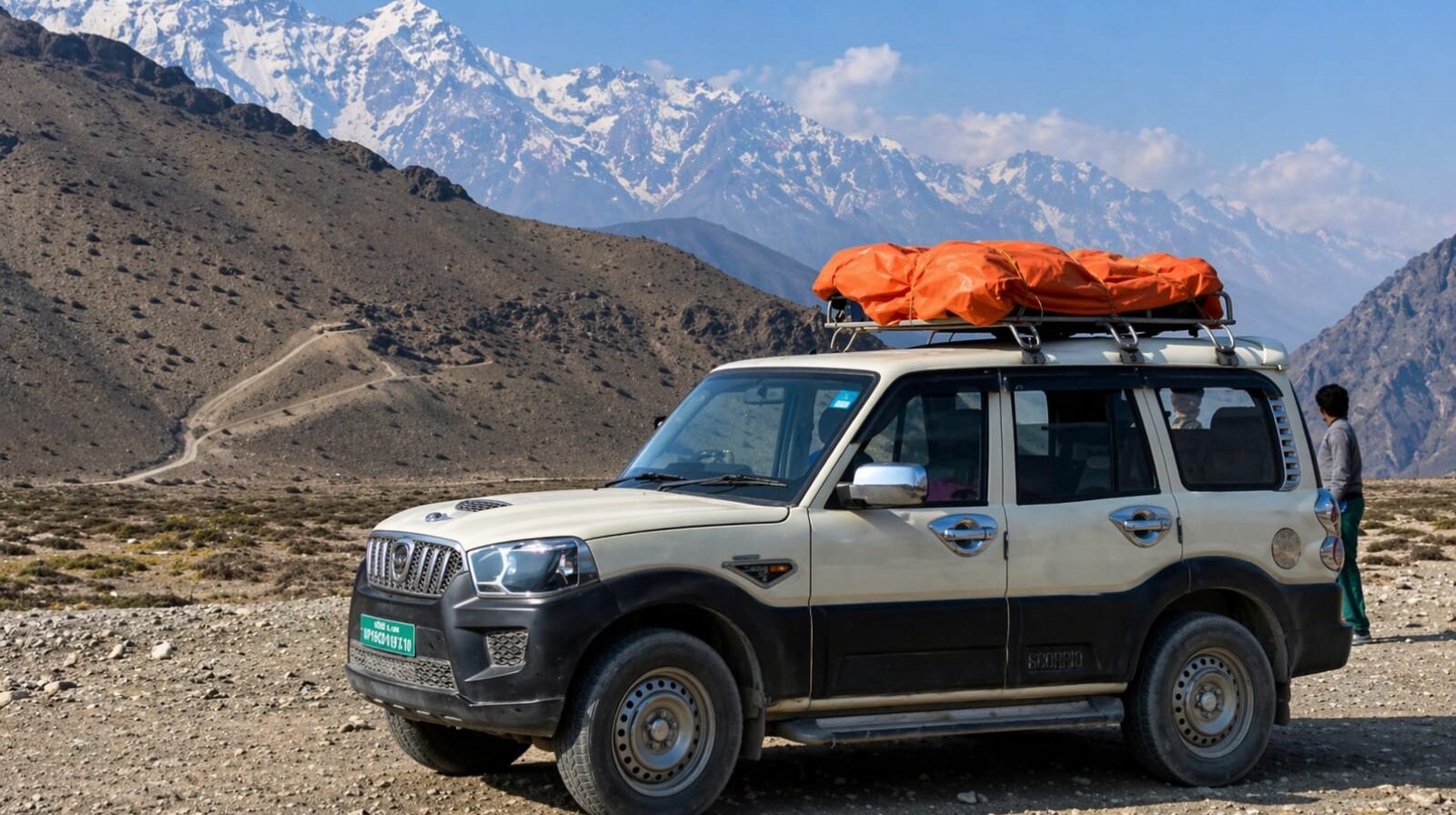
The Mahindra Scorpio and Bolero 4WD are the most popular and widely used jeeps on the Pokhara–Muktinath route. Reliable, proven, and cost-effective for groups of up to 6 passengers, these vehicles handle the Kali Gandaki valley road with confidence. An excellent choice for pilgrim groups and budget-conscious travellers who still require the safety and reliability of a genuine 4WD mountain vehicle.
Pokhara Airport to Muktinath – Detailed Route & Segments
The Pokhara–Muktinath jeep route is one of the most dramatic road journeys in all of Nepal — each segment bringing increasingly spectacular mountain scenery and cultural richness:
Segment
Distance
Drive Time
Road Condition & Highlights
Pokhara to Beni
77 km
2.5-3 hrs
Paved Pokhara-Baglung Highway; Gandaki River, green hills
Beni to Tatopani
55 km
2-3 hrs
Off-road begins; Kali Gandaki gorge entry; waterfalls
Tatopani to Ghasa
26 km
1-1.5 hrs
Deep gorge driving, dramatic waterfalls, and Thakali villages
Ghasa to Marpha
27 km
1-1.5 hrs
Kalopani Dhaulagiri views: apple orchards of Marpha
Marpha to Jomsom
7 km
20-30 min
Kali Gandaki valley floor; strong afternoon winds
Jomsom to Kagbeni
8 km
20-30 min
Flat river valley; ancient walled village checkpoint
Kagbeni to Muktinath
14 km
45-60 min
Steep off-road mountain track; arid Mustang landscape; 3,800 m arrival
The Kali Gandaki Gorge – World’s Deepest River Gorge
Between the villages of Dana and Ghasa, the Kali Gandaki River cuts the deepest gorge on earth, flanked by Dhaulagiri (8,167 m) to the west and Annapurna I (8,091 m) to the east. The vertical height difference between the riverbed and the surrounding peaks exceeds 5,500 meters — greater than any gorge on the planet.
Driving through this gorge in your private 4WD jeep is a jaw-dropping experience of geological and natural grandeur that no photograph can fully capture.
Tatopani – Hot Springs Midway
Tatopani (“Hot Water” in Nepali) is perhaps the most welcome stop on the entire Pokhara–Muktinath journey. Natural geothermal hot spring pools sit right beside the roaring Kali Gandaki River, offering deeply restorative bathing after hours of jeep travel on mountain roads.
The springs are especially popular for pilgrims returning from Muktinath, as the warm waters soothe muscles tired from the high-altitude temple visit and steep descent. Your driver will stop here on request.
Marpha – The Apple Village of the Himalayas
At 2,670 m, the beautifully whitewashed Thakali village of Marpha is one of the Mustang road’s great surprises. Apple orchards surround the village, and every shop sells apple cider, apple brandy, apple jam, and apple pie — one of the Himalayan region’s most unexpected and delightful culinary traditions.
The village’s medieval cobbled lanes, sheltered from the wind, house traditional Thakali homes, a monastery, and a butter-lamp-lit temple. Budget 30 minutes to walk the lane, visit the gompa, and stock up on apple products.
Jomsom – Overnight Acclimatisation Stop
At 2,743 m, Jomsom is the headquarters of Mustang District and the main overnight stop for travellers bound for Muktinath. Staying overnight at Jomsom is strongly recommended before ascending to Muktinath (3,800 m) — a 1,057 m altitude gain that should not be rushed.
The extra overnight lets your body acclimatise, significantly reduces the risk of altitude sickness, and means you can depart for Muktinath in the morning before the punishing afternoon gale in the Kali Gandaki valley begins. Nepal Vehicle Hiring drivers are happy to wait in Jomsom overnight at the standard driver accommodation rate.
Kagbeni – The Medieval Gateway
The ancient Kagbeni (2,800 m) is one of the most visually striking settlements in Nepal — a medieval Tibetan-style fortified village at the confluence of two rivers, with red-mud walls, winding lanes, and the magnificent Kag Chode Thupten Samphel Ling Monastery creating an atmosphere of extraordinary antiquity. Kagbeni is also the permit checkpoint and gateway to Upper Mustang—the ancient Forbidden Kingdom that requires a Restricted Area Permit.
From Kagbeni, the final 14 km of the jeep drive climbs steeply along a rough mountain track to Muktinath.
Permits Required – Pokhara to Muktinath Jeep Rental
All visitors to Muktinath must carry valid permits. Nepal Vehicle Hiring advises obtaining these in Pokhara (NTB Damside Office) before departure — permits obtained at mountain checkpoints cost significantly more and cause delays:
ACAP (Annapurna Conservation Area Permit): NPR 3,000 for foreign nationals | NPR 200 for Nepali nationals. Required for all visitors to the Annapurna Conservation Area, including Muktinath, Jomsom, Tatopani, and Marpha.
TIMS Card (Trekkers Information Management System): USD 20 (approximately NPR 2,700) for foreign trekkers. Required for all foreign visitors entering the Annapurna region on foot or by jeep.
Upper Mustang Restricted Area Permit: NOT required for Muktinath; required only for travellers continuing north from Kagbeni toward Lo Manthang (Lo-Manthang) and Upper Mustang.
Nepal Vehicle Hiring can advise on permit acquisition in Pokhara. Our drivers carry copies of the permit checkpoints along the route and can guide you through the process smoothly.
Best Time for Pokhara to Muktinath Jeep Rental
Autumn (Oct-Nov): The finest season. Clear skies, sharp Himalayan views, stable roads after the monsoon. Peak pilgrimage season — book your jeep 1-2 weeks in advance.
Spring (Mar-May): Warm days, excellent mountain clarity, rhododendrons blooming along the lower Kali Gandaki valley. Haribodhini Ekadashi festival brings large numbers of pilgrims to Muktinath in spring.
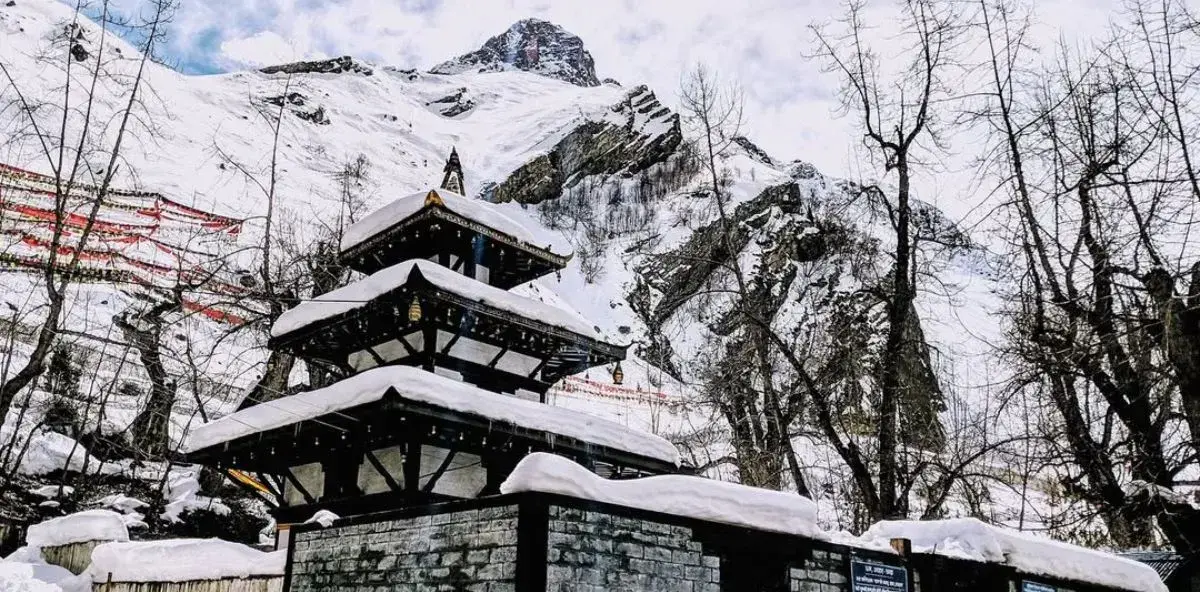
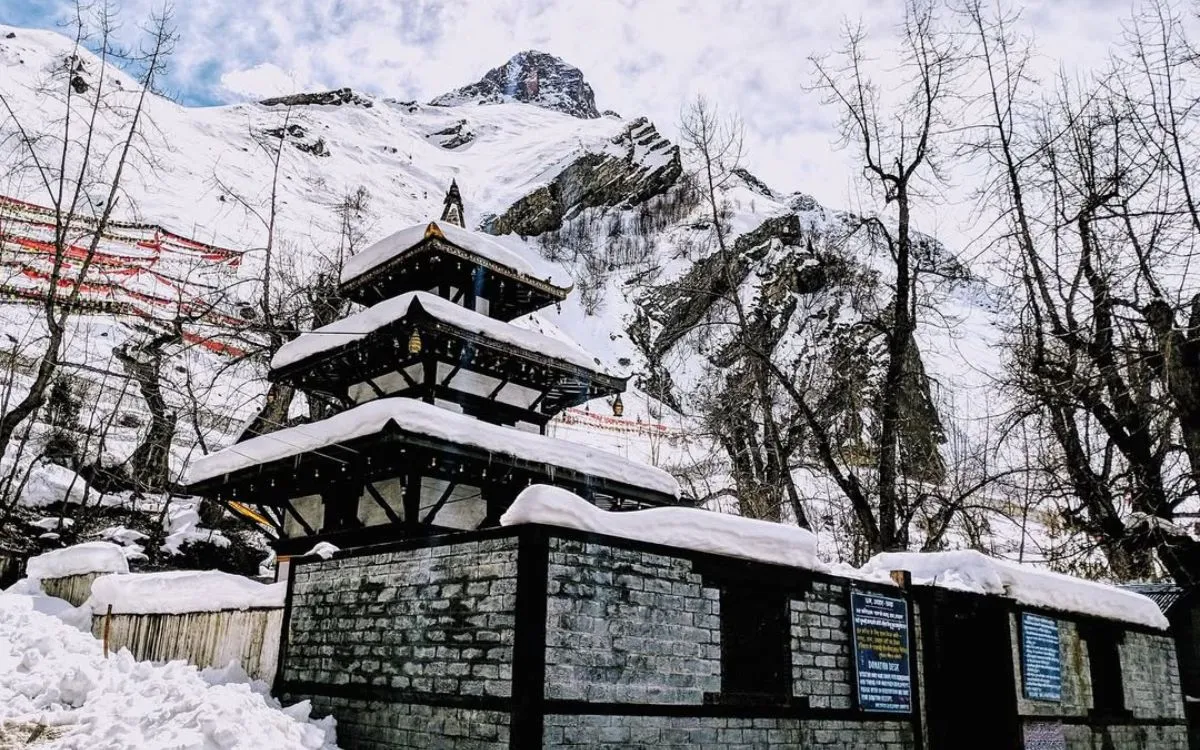
Winter (Dec-Feb): The Kagbeni–Muktinath road can be snow-covered from December. A Land Cruiser with snow chains is essential. Spectacular winter silence and snow-draped peaks — a powerful but challenging pilgrimage season.
Monsoon (Jun-Sep): Heavy rain causes landslides on the Beni–Tatopani road section. Road closures are possible. Not recommended for first-time visitors. The Mustang region itself (beyond Beni) receives less rain due to the Annapurna rain shadow.
A one-day Pokhara–Muktinath–Pokhara return is possible in summer (May–September), when days are longest, but it requires departing Pokhara by 4:30–5:00 AM and involves 18- 20 hours of continuous driving with minimal time for temple darshan. This is physically and mentally exhausting, and for pilgrims and altitude-sensitive travellers, the rapid ascent to 3,800 m without acclimatisation significantly increases the risk of altitude sickness.
Nepal Vehicle Hiring does not recommend a one-day round trip for most travellers.
Two-Day Journey – The Recommended Option
The two-day Pokhara–Muktinath itinerary is universally preferred. Day 1: Pokhara Airport pick-up, drive to Jomsom (arriving by afternoon), rest and acclimatise overnight. Day 2: Early departure from Jomsom to Muktinath for full temple darshan, return to Pokhara by evening.
This pacing allows for complete ritual bathing under the 108 water spouts, a thorough visit to the Buddhist monastery and the Jwala Mai temple, a relaxed stop in Kagbeni, and safe altitude management. Nepal Vehicle Hiring strongly recommends the 2-day itinerary for all pilgrims and tourists.
How to Book Your Pokhara Airport to Muktinath Jeep Rental
Step 1: Visit com/jeep and browse the 4WD jeep fleet.
Step 2: Call or WhatsApp +977 981-4227196 with your flight details (airline, flight number, arrival time at Pokhara), number of passengers, preferred vehicle, and chosen itinerary (1-day or 2-day).
Step 3: Receive your confirmed booking with driver name, vehicle registration, and pick-up procedure at Pokhara Airport.
Step 4: Your driver meets you at the Pokhara Airport arrivals area with a nameplate. Luggage loaded, permits checked, departure for Muktinath begins.
Essential Travel Tips – Pokhara Airport to Muktinath by Jeep
Book in Peak Season Early: October–November and March–May are extremely busy. The best 4WD jeeps and experienced drivers book out weeks in advance. Reserve your vehicle at least 7-14 days before travel.
Depart by 7 AM: Leave Pokhara (or Jomsom for the final day) by 7 AM. In the afternoon, the Kali Gandaki valley winds make driving progressively more difficult.
Carry All Permits Before Departure: Obtain ACAP and TIMS permits at the NTB office in Pokhara before your jeep departs. Permits at mountain checkpoints cost considerably more.
Warm Clothing for Muktinath: Even in May, temperatures at Muktinath (3,800 m) can be near 0°C at night. Pack a down jacket, fleece, gloves, and a hat, even if Pokhara is warm.
Carry Cash in Full: Pokhara is the last city with reliable ATMs. Draw sufficient Nepali rupees for permits, accommodation, meals, and all expenses from Beni to Muktinath.
Dry Change of Clothes for Water Spouts: If bathing under all 108 Muktidhara spouts, keep a warm, dry change of clothing accessible in your day bag — the water is near-freezing at altitude and changing quickly is medically important.
Related Vehicle Hire Services – Nepal Vehicle Hiring
Frequently Asked Questions – Pokhara Airport to Muktinath Jeep Rental
How far is Pokhara Airport from Muktinath?
The road distance from Pokhara Airport to Muktinath is approximately 180–200 km via Beni, Tatopani, Ghasa, Marpha, Jomsom, and Kagbeni.
How long does the jeep drive from Pokhara to Muktinath take?
In a single long day, the drive takes 8–10 hours of actual driving time, not including stops. Most travellers spread the journey over two days, with an overnight stay in Jomsom— strongly recommended for acclimatisation and comfort.
Is a 4WD jeep truly necessary for this route?
Yes — 4WD is mandatory from Beni to Muktinath. The off-road mountain section involves steep climbs, loose gravel, narrow tracks, stream crossings, and rock-strewn surfaces that standard sedans and vans cannot navigate safely. Nepal Vehicle Hiring uses exclusively genuine 4WD vehicles for this route.
Can I be picked up from Pokhara Airport even if my flight is delayed?
Yes. Nepal Vehicle Hiring monitors your flight status, and our driver adjusts the pick-up time accordingly. There is no extra charge for flight delays — your driver waits until you land and are ready to depart.
Can I fly Pokhara to Jomsom instead of driving?
Yes. The Tara Air Pokhara–Jomsom flight takes 20 minutes from Pokhara domestic airport (PKR). From Jomsom Airport, Nepal Vehicle Hiring arranges a jeep rental for the final 22 km to Muktinath (1.5–2 hours).
However, this flight is highly weather-dependent (often cancelled) and misses the extraordinary Kali Gandaki Gorge driving experience. Many pilgrims prefer to fly one way and drive the other to get the best of both worlds.
Do you offer a combined Pokhara–Muktinath–Pokhara round-trip package?
Yes. Nepal Vehicle Hiring provides one-way, round-trip, and multi-day jeep rental packages for the Pokhara–Muktinath route. We can also arrange extended tours, including Upper Mustang (Lo Manthang), with the appropriate Restricted Area Permit.
Contact us at +977 981-4227196 for a personalised quote.
What should I pack for the jeep journey from Pokhara to Muktinath?
Key items: warm jacket & fleece (essential at Muktinath altitude), dry change of clothes (for 108 water spout bathing), sunscreen & sunglasses (intense UV at altitude), personal medications including altitude sickness tablets if prescribed, cash in Nepali rupees, water bottle, light snacks, and all valid permits (ACAP + TIMS).
Book Your Pokhara Airport to Muktinath Jeep Rental Today
Nepal Vehicle Hiring Pvt Ltd is Pokhara’s most trusted private 4WD jeep rental service for the Muktinath route. From the moment you step off your flight at Pokhara Airport to the sacred moment you stand before the 108 Muktidhara water spouts and the eternal Jwala Mai flame, every kilometre of your Muktinath pilgrimage is in experienced, professional hands.
With airport meet-and-greet service, genuine 4WD vehicles, expert mountain drivers, flexible 1-day and 2-day itineraries, 24/7 booking availability, and competitive pricing, Nepal Vehicle Hiring is the first choice of pilgrims, trekkers, and tourists for the Pokhara–Muktinath journey.
Complete Muktinath, Chitwan & Pokhara Circuit Vehicle Hire
Nepal’s three greatest destinations — Muktinath, Chitwan, and Pokhara — form the perfect triangle of a complete Nepal experience. Each offers something entirely different and irreplaceable: Muktinath, one of the most sacred pilgrimage sites in the Himalayan world, set amid the dramatic high-altitude desert landscape of the Mustang valley.
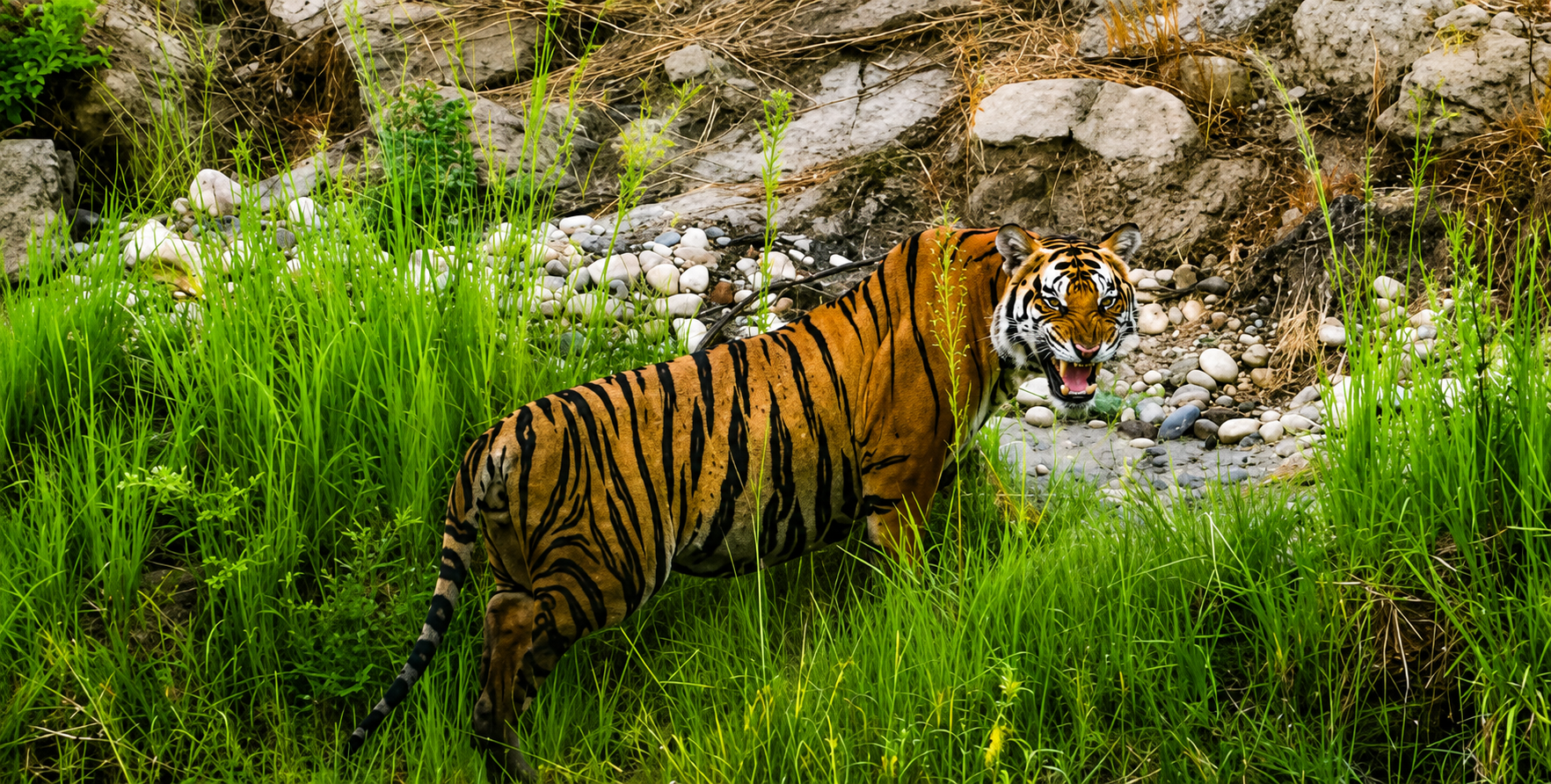
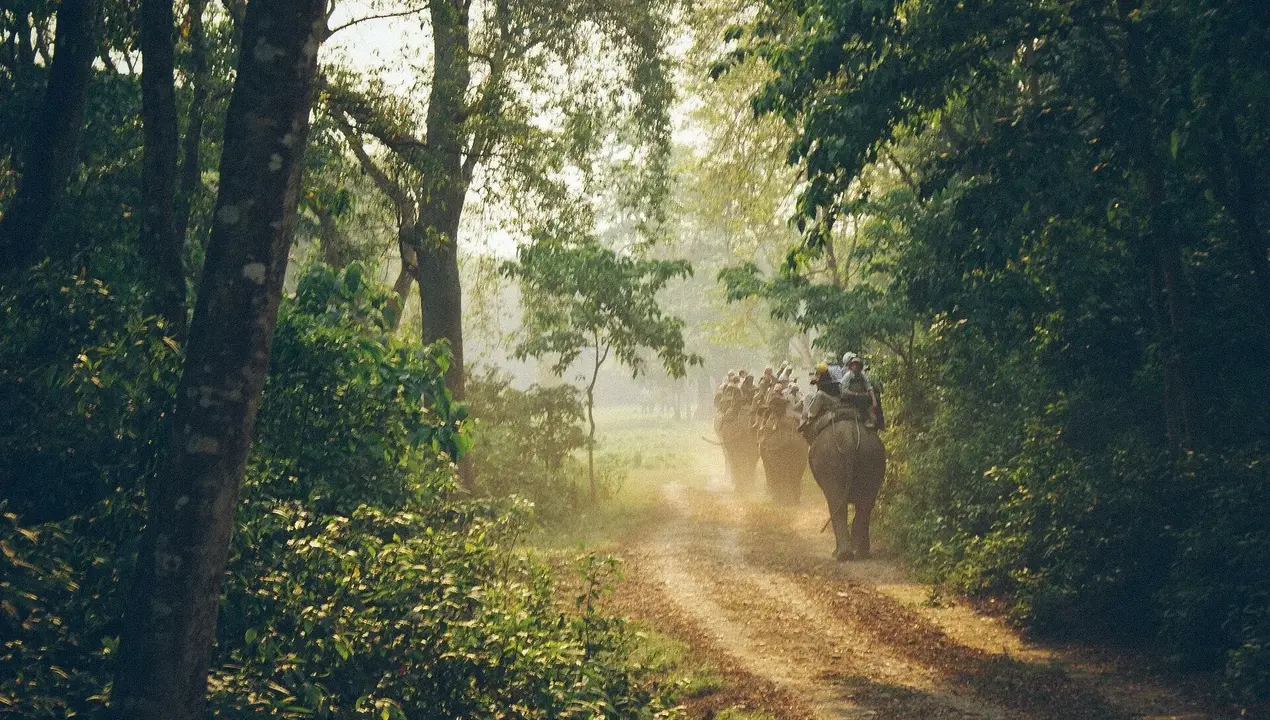
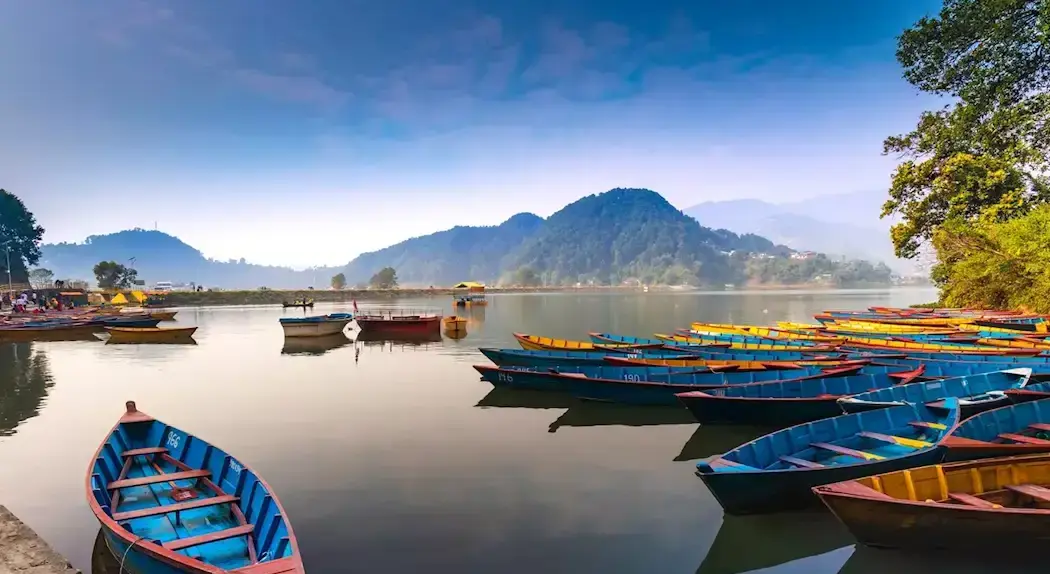
Chitwan National Park, Nepal’s most celebrated wildlife sanctuary and a UNESCO World Heritage Site, teems with one-horned rhinoceroses, Bengal tigers, and hundreds of bird species in the Terai lowlands. Pokhara, the jewel of Nepal’s lake cities, is where the Annapurna range soars directly above the mirrored surface of Phewa Lake in one of the most striking natural settings on the planet.
Travelling the complete Muktinath–Chitwan–Pokhara circuit by private vehicle is Nepal’s finest road journey- a comprehensive overland adventure that connects the Himalayas, the wildlife plains, and the lakeside paradise of the middle hills in a single memorable loop. At Nepal Vehicle Hiring Pvt Ltd, we design and operate complete circuit vehicle hire packages tailored to every group size, travel style, and budget.
This guide is the most complete resource for planning your Muktinath, Chitwan, and Pokhara circuit—covering every segment of the route, all vehicle options, full costs, the best itineraries, major attractions, seasonal guidance, and expert booking tips.
The Complete Circuit – Overview at a Glance
You can start the Muktinath–Chitwan–Pokhara circuit from Kathmandu (most common), Pokhara, or Chitwan, depending on your arrival airport and itinerary preferences. The most popular circuit route starting from Kathmandu follows this sequence:
Note: Distances and drive times are approximate. The Pokhara-to-Jomsom section is significantly longer and more demanding than any other leg because it follows an off-road route through the Kali Gandaki Valley. All times assume a private vehicle without major delays.
Circuit Quick Facts
Detail
Information
Total Circuit Distance
Approximately 850–900 km
Total Driving Days
6 to 8 driving days (spread over 9 to 14 days total)
Minimum Trip Duration
9 days (compressed)
Recommended Trip Duration
12 to 14 days (comfortable)
Starting Point
Kathmandu (most common) or Pokhara
Highest Point
Muktinath Temple – 3,802 meters above sea level
Lowest Point
Chitwan National Park – ~215 meters above sea level
Best Season
Spring (March–May) and Autumn (September–November)
Permits Required
ACAP permit for Muktinath/Jomsom region
Key Pilgrimage Site
Muktinath Temple (Hindu and Buddhist)
Key Wildlife Site
Chitwan National Park (UNESCO World Heritage)
Key Scenic City
Pokhara Lakeside – Annapurna reflection in Phewa Lake
Vehicle Options for the Complete Circuit
Nepal Vehicle Hiring Pvt Ltd offers a complete range of vehicles for the Muktinath–Chitwan–Pokhara circuit. The right vehicle depends on your group size, comfort requirements, and which legs of the circuit you prioritise:
Vehicle
Capacity
Full Circuit Cost (NPR)
Full Circuit Cost (USD)
Best For
Private Car
2–4 pax
NPR 85,000–120,000
USD 630–895
Small family, couple, small group
Private Jeep
4–5 pax
NPR 110,000–155,000
USD 820–1,155
Groups, families, best overall
Private Scorpio
5–6 pax
NPR 135,000–185,000
USD 1,005–1,380
Best for Jomsom road, comfort+capability
Private Jeep – Land Cruiser
5–6 pax
NPR 165,000–220,000
USD 2000–3000
Top-end comfort, Jomsom-Muktinath expertise
Toyota Hiace Van
7–10 pax
NPR 160,000–220,000
USD 1,190–1,640
Large family/group for Pokhara & Chitwan legs
Mixed: Car + Jeep (Jomsom leg only)
Variable
Custom
Custom
Budget-flexible arrangement
Note: Full-circuit prices include driver, fuel, and all toll charges for the entire circuit. The Pokhara-to-Jomsom/Muktinath leg requires a 4WD jeep beyond Beni. If you use a car or Hiace van for other legs, you must arrange a separate jeep for the Jomsom leg. Nepal Vehicle Hiring can arrange this smoothly. Contact us for a confirmed quote.
Why Choose a Private Vehicle for the Complete Circuit?
Smooth Door-to-Door Service
A private circuit vehicle from Nepal Vehicle Hiring picks you up from your Kathmandu hotel on Day 1 and returns you to the same hotel at the end of the circuit. Between these two points, your vehicle is available whenever you need it — no bus stations, no ticket queues, no schedule conflicts, and no separated luggage.
The Jomsom Road Demands a Proper 4WD
The most challenging and most spectacular leg of the circuit is the Pokhara-to-Jomsom drive through the Kali Gandaki gorge. Beyond Beni, the road is rough, off-road, and subject to powerful afternoon valley winds. This section requires a 4WD vehicle.
Nepal Vehicle Hiring provides purpose-built mountain jeeps with experienced Jomsom-route drivers for this critical leg.
Flexibility for Pilgrims and Families
The Muktinath circuit is one of Nepal’s most popular pilgrimage journeys. Hindu pilgrims of all ages — including older people and those with mobility challenges — rely on private vehicle hire for the comfort, safety, and stop-on-demand flexibility that no public transport can offer. Nepal Vehicle Hiring has extensive experience arranging vehicles for the pilgrimage circuit.
All-Inclusive Circuit Management
Nepal Vehicle Hiring manages every segment of the circuit from a single booking. You don’t need to arrange separate vehicles for Kathmandu to Pokhara, Pokhara to Jomsom, Jomsom to Muktinath, Pokhara to Chitwan, and Chitwan to Kathmandu—we coordinate the entire sequence with the right vehicle for each leg, a single point of contact, and a single consolidated booking.
The circuit begins in Kathmandu with the classic drive to Pokhara along the Prithvi Highway. This well-paved, comfortable journey follows the Trishuli River gorge and the Marsyangdi Valley through beautiful midhill scenery. The recommended departure time from Kathmandu is 7:00 AM, arriving in Pokhara Lakeside by early afternoon.
Key stops: Mugling (midway lunch by the Trishuli River), optional Bandipur heritage town detour, and the spectacular first panoramic views of the Annapurna range on the final approach to Pokhara.
This is the most dramatic and most demanding leg of the entire circuit. The road from Pokhara heads west to Beni (paved highway), then turns north into the Kali Gandaki gorge — the deepest river gorge in the world, flanked on either side by the Annapurna and Dhaulagiri massifs.
From Beni onward, the road becomes a rough off-road track that winds through Tatopani (natural hot springs), Ghasa, Kalopani, Marpha (apple village), and finally reaches Jomsom at 2,720 meters.
CRITICAL ADVISORY: All vehicles must depart Pokhara by 6:30 AM at the absolute latest. Powerful afternoon winds sweep through the Kali Gandaki valley from midday onward, creating dangerous driving conditions and large dust clouds. Early departure is non-negotiable on this leg.
Leg 2 Details
Information
Distance
160 km
Drive Time
7 to 9 hours
Road Type
Paved to Beni (70 km); rough off-road Beni to Jomsom (~90 km)
Must Depart By
6:00–6:30 AM from Pokhara – no exceptions
Vehicle Required
4WD Jeep MANDATORY from Beni onward
Key Stops
Tatopani hot springs (optional soak), Marpha apple village
Jomsom Altitude
2,720 metres
Segment Cost (NPR) – Standard Jeep
UDS 150-250
Segment Cost (NPR) – Hilux/Fortuner
USD 350-450
Segment Cost (NPR) – Land Cruiser
USD 550-600
Leg 3: Jomsom to Muktinath via Kagbeni – 22 km | 1 to 1.5 Hours
From Jomsom, the jeep continues north along the Kali Gandaki riverbed, through the ancient walled village of Kagbeni, to reach Muktinath at 3,802 meters. This short but spectacular drive crosses the wide sandy Kali Gandaki riverbed, climbs through Kagbeni’s medieval lanes, and ascends the hillside to Muktinath village and the sacred temple complex.
Muktinath Temple is one of the most sacred sites in the Himalayan world for Hindus and Buddhists alike. The 108 sacred water spouts, the eternal flame, and the Jwala Devi shrine within the Vishnu Mandir attract hundreds of thousands of pilgrims from Nepal, India, and beyond every year. The temple sits at 3,802 meters, with Thorong La Pass and the Annapurna-Dhaulagiri divide as a backdrop—one of Nepal’s most spiritually and visually powerful settings.
Leg 3 Details
Information
Distance
22 km (Jomsom to Muktinath via Kagbeni)
Drive Time
1 to 1.5 hours
Road Type
Rough riverbed track and switchback road – 4WD essential
Kagbeni
Medieval walled village – UNESCO candidate – 30 min stop recommended
Muktinath Altitude
3,802 metres
Temple Entry Fee
NPR 200 (foreigners)
Key Attractions
108 sacred water spouts, Eternal Flame, Jwala Devi shrine, gompa
Permits Required
ACAP permit (obtained in Pokhara or Kathmandu)
Segment Cost (from Jomsom, NPR)
NPR 4,000–7,000 (from Jomsom to Muktinath, one way)
The return journey from Muktinath to Pokhara follows the same route through the Kali Gandaki gorge in reverse. Again, the morning departure is negotiable — your jeep must leave Jomsom by 6:00 AM to complete the Beni section before the afternoon winds strengthen. The return trip through Marpha, Tatopani, and Beni to Pokhara takes a full day but offers the same spectacular gorge scenery from a different perspective.
Many pilgrims choose to stop for a soak at the Tatopani hot springs on the return journey as a reward after the high-altitude Muktinath darshan. Allow 1 to 2 hours for a proper hot spring stop.
Leg 4 Details
Information
Distance
180 km (Muktinath/Jomsom to Pokhara)
Drive Time
8 to 10 hours
Must Depart By
6:00 AM from Jomsom – mandatory for wind avoidance
Optional Stop
Tatopani hot springs (1–2 hours) – recommended
Road Type
Same as Leg 2 in reverse – 4WD required from Jomsom to Beni
After the mountain intensity of the Muktinath circuit, the drive from Pokhara to Chitwan is a relaxing and scenic transition from the cool mountain air back to the warm, lush Terai lowlands. The route follows the Prithvi Highway east to Mugling, then the East-West Highway to Bharatpur, and finally the short approach road to Sauraha—the main tourist village of Chitwan National Park.
The drive offers beautiful river-valley scenery along the Marsyangdi and Trishuli rivers, a pleasant lunch stop in Mugling, and the transition from the hill country to the expansive, flat Terai landscape as you approach Chitwan.
Leg 5 Details
Information
Distance
155 km
Drive Time
4 to 5 hours
Road Type
Paved highway throughout – good condition
Departure
Hotel in Pokhara Lakeside
Arrival
Resort/hotel in Sauraha, Chitwan
Recommended Stop
Mugling lunch stop (midway, by the Trishuli River)
Vehicle Required
Any private vehicle – paved road throughout
Recommended Stay
2 to 3 nights in Chitwan for a full safari experience
The final leg of the circuit returns from the wildlife-rich lowlands of Chitwan to Kathmandu, closing the loop. The route reverses the Kathmandu-to-Chitwan direction — from Bharatpur along the East-West Highway to Narayanghat, then through Mugling and up the Prithvi Highway to Kathmandu. After the dramatic landscapes and experiences of the full circuit, this final drive through familiar Nepali countryside brings the journey to a reflective, satisfying close.
Here is a comprehensive breakdown of vehicle hire costs for every leg of the Muktinath–Chitwan–Pokhara circuit:
Leg
Route
Car (NPR)
Jeep (NPR)
Hiace Van (NPR)
Leg 1
Kathmandu to Pokhara
USD 120- 150
USD 140-200
USD 170- 250
Leg 2
Pokhara to Jomsom
Not suitable*
US$203
Not suitable*
Leg 3
Jomsom to Muktinath (return)
Not suitable*
USD 60-100
Not suitable*
Leg 4
Jomsom/Muktinath to Pokhara
Not suitable*
US$313
Not suitable*
Leg 5
Pokhara to Chitwan
US$120
USD 140-200
USD 200-250
Leg 6
Chitwan to Kathmandu
US$120
USD 140-200
USD 200-250
Standard cars and Toyota Hiace vans are NOT suitable for Legs 2, 3, and 4 (Pokhara to Jomsom to Muktinath and return) because of the rough off-road Kali Gandaki Valley track beyond Beni. A 4WD jeep is mandatory for these legs. Nepal Vehicle Hiring arranges the vehicle transition smoothly.
Suggested Circuit Itineraries
Option A: 9-Day Compact Circuit (Minimum Time)
Day
Route / Activity
Night
Day 1
Arrive in Kathmandu – preparation, permit collection
Kathmandu
Day 2
Drive Kathmandu to Pokhara (6–7 hrs)
Pokhara
Day 3
Drive Pokhara to Jomsom via Kali Gandaki (7–9 hrs)
Jomsom
Day 4
Drive Jomsom to Muktinath via Kagbeni – temple darshan
Muktinath
Day 5
Drive Muktinath to Pokhara (8–10 hrs) via Tatopani hot springs
Pokhara
Day 6
Pokhara sightseeing – Phewa Lake, Sarangkot, Lakeside
Pokhara
Day 7
Drive Pokhara to Chitwan (4–5 hrs) – afternoon safari
Chitwan
Day 8
Full day Chitwan safari – jungle walk, canoe, elephant activities
Chitwan
Day 9
Drive Chitwan to Kathmandu (4–5 hrs) – departure or final night
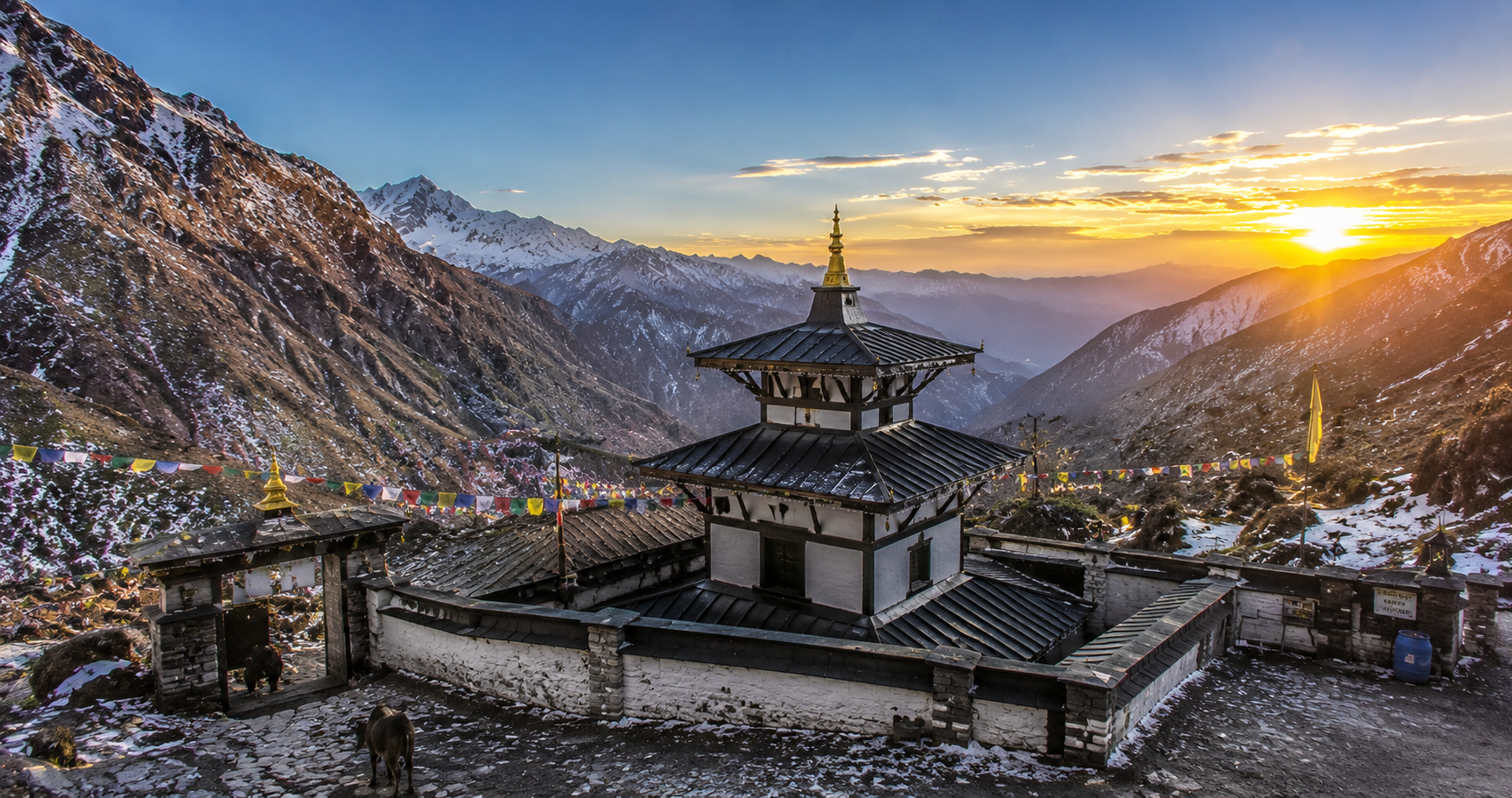
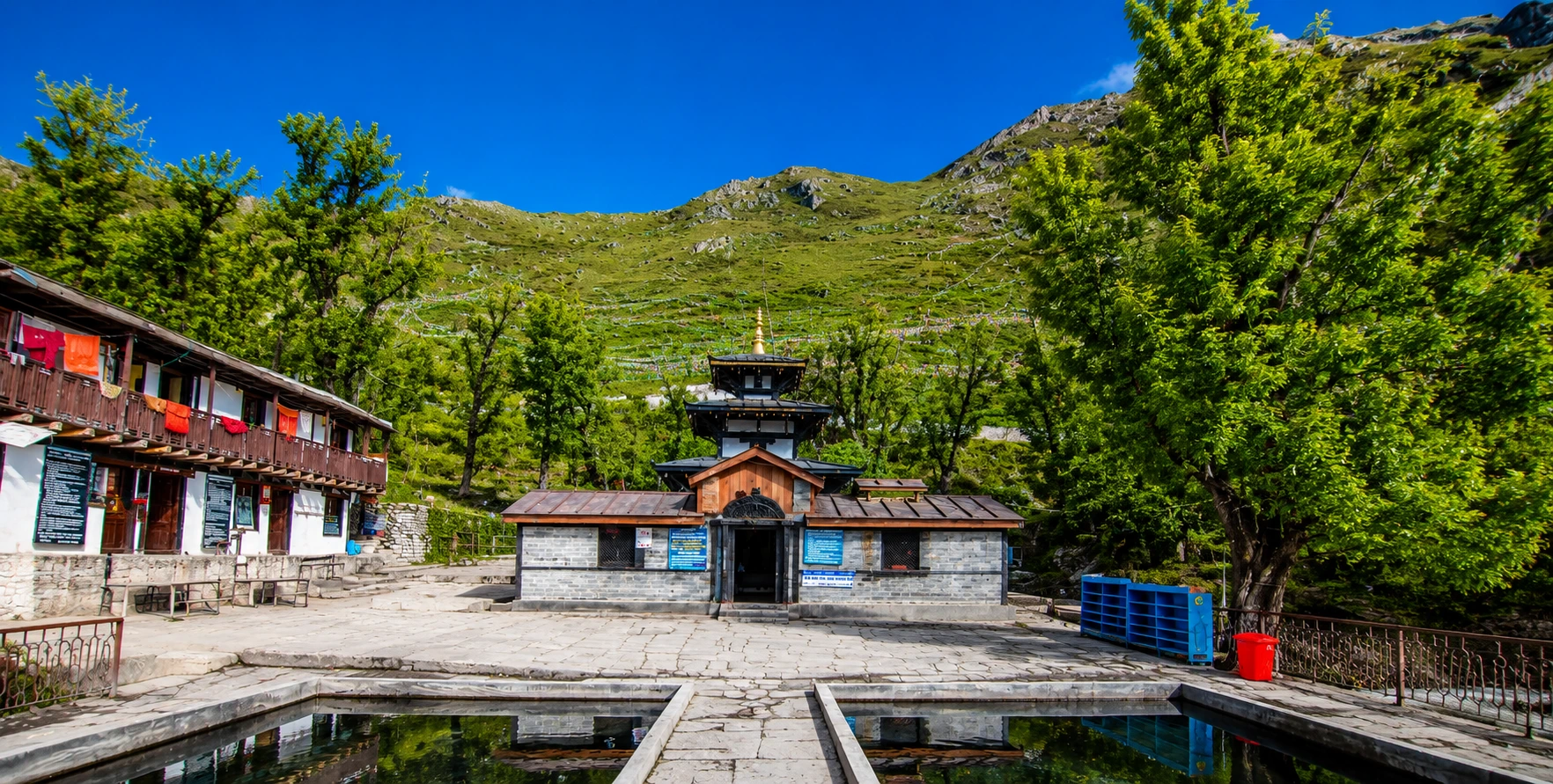
Muktinath Temple (also known as Mukti Kshetra or Chumig Gyatsa in Tibetan) is one of the 108 Divya Desams—the holiest Vishnu temples in the Hindu world—and one of the 24 most sacred Tantric sites in Tibetan Buddhism. Situated at 3,802 meters in the Mustang valley with the Thorong La Pass looming above and the Kali Gandaki gorge descending below, the temple’s setting is among the most spiritually charged on earth.
Muktinath Temple Highlights
108 sacred water spouts arranged in a semicircle — bathing in all 108 is believed to bring liberation (mukti)
The Jwala Devi shrine, containing an eternal flame fed by natural gas — burning alongside water, is believed to be unique in the world
The Vishnu Mandir (main temple), containing the Muktinath Shaligram statue, is one of the most sacred forms of Lord Vishnu
The Thini Gompa and other Buddhist monasteries within the temple complex — reflecting Muktinath’s equal sacredness in Tibetan Buddhism
Stunning views of the Annapurna–Dhaulagiri divide and the Thorong La Pass from the temple precincts
The village of Ranipauwa (the settlement below the temple) with traditional Thakali guesthouses and pilgrim teahouses
Kagbeni – Medieval Walled Village
Kagbeni, located north of Jomsom and 7 km south of Muktinath, is one of Nepal’s most visually striking medieval settlements. Kagbeni is the checkpoint for entry into the Upper Mustang restricted area and is worth a 30- to 60-minute stop for exploration on the Muktinath circuit.
Jomsom Highlights
Jomsom is the district headquarters of Mustang District and the major service town of the Kali Gandaki valley. The town has a small airport serving flights to Pokhara, a lively bazaar with Thakali restaurants, guesthouses, shops, and the interesting Eco Museum. Jomsom serves as the overnight base for the Muktinath circuit and is a fascinating Himalayan town to explore in the early morning before the afternoon winds arrive.
Chitwan National Park – Nepal’s Greatest Wildlife Sanctuary
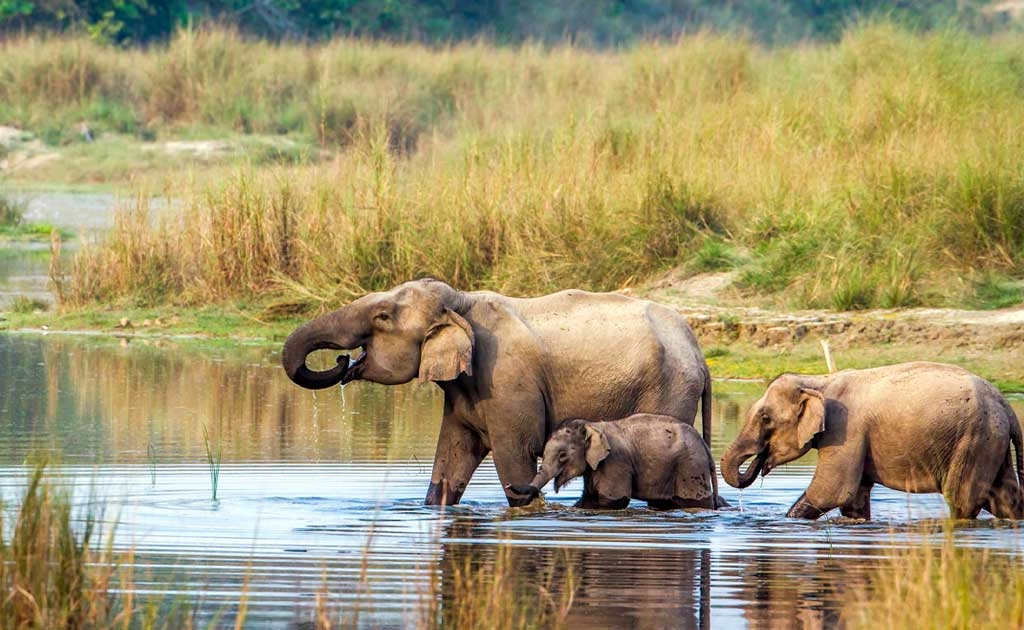
Chitwan National Park is Nepal’s most celebrated conservation success story and one of South Asia’s premier wildlife destinations. Covering 952 square kilometres of subtropical lowland forest, grassland, and river systems in the Terai lowlands, Chitwan is home to one of the world’s largest populations of the endangered one-horned rhinoceros, a significant Bengal tiger population, wild elephants, gharial and marsh mugger crocodiles, and an extraordinary diversity of birds, including the Bengal Florican and Giant Hornbill.
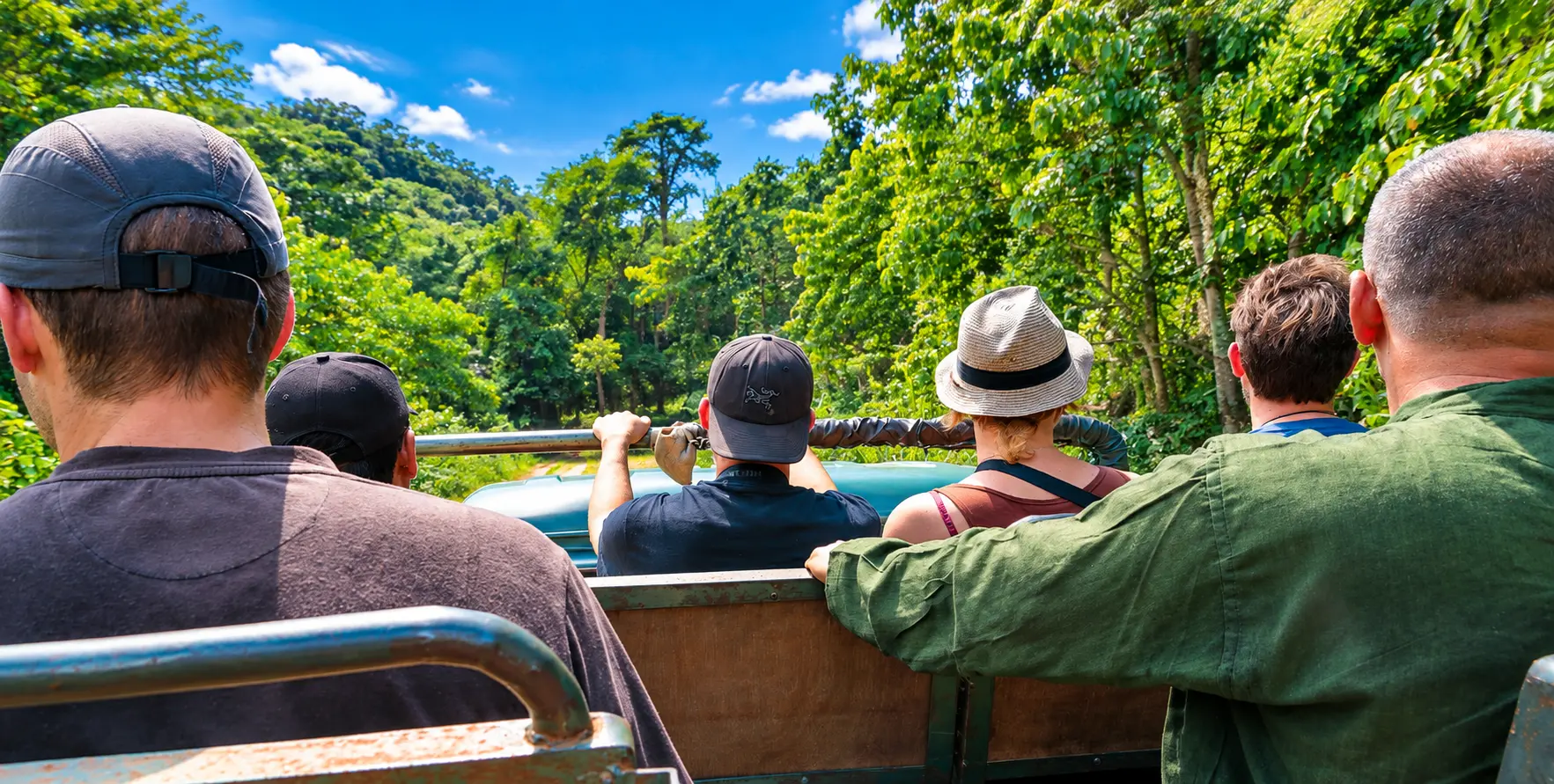
Jeep safari – the most popular Chitwan experience, covering large areas of the park in purpose-built open safari vehicles with naturalist guides
Jungle walk on foot – walk deep into the forest on guided nature trails; the most intimate and most thrilling wildlife experience.
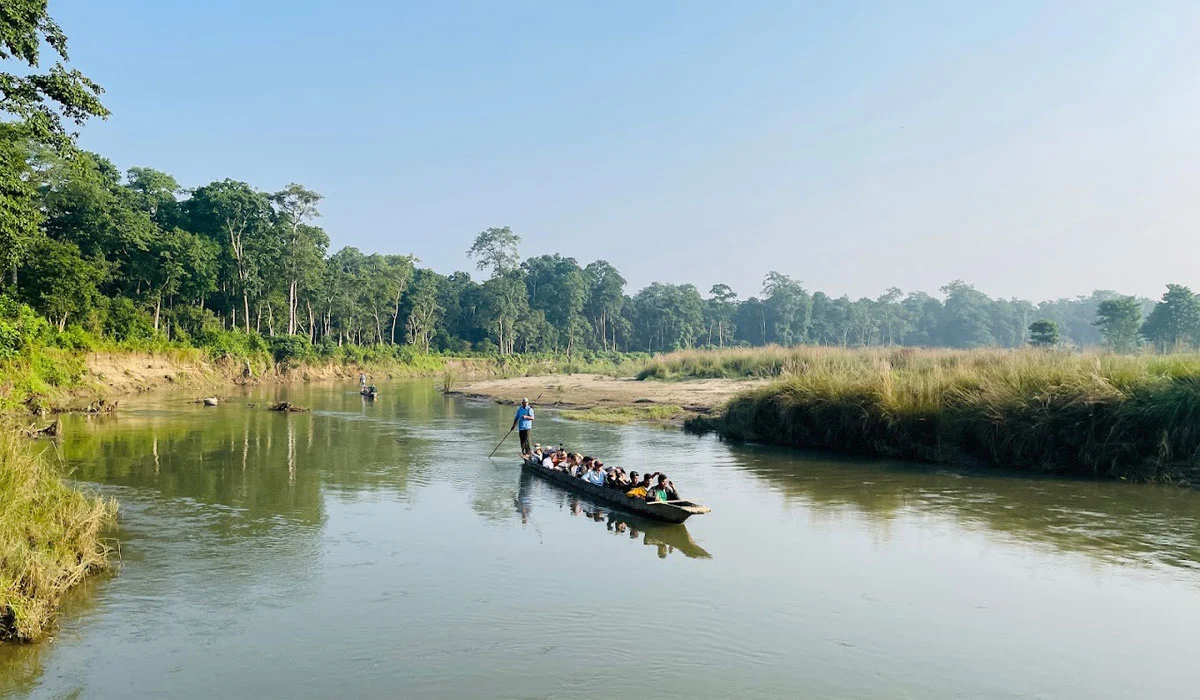
Dugout canoe ride – silent paddle along the Rapti or Narayani rivers for crocodile watching, birdwatching, and river wildlife
Elephant interaction centre – observe rescued elephants and learn about Chitwan’s elephant conservation program.
Tharu cultural program – traditional Tharu stick dance and cultural performance in the evenings at most resorts
Birdwatching – 544 bird species recorded; dawn walks with specialist birdwatching guides are outstanding
Village walk in Sauraha – explore the local Tharu village adjacent to the national park for cultural immersion.
Recommended Sauraha Guesthouses and Resorts
Sauraha is the main tourist village adjacent to Chitwan National Park and offers accommodation ranging from basic guesthouses to luxury eco-resorts with private pools and full safari services. Nepal Vehicle Hiring drops you at your resort entrance and arranges resort-to-vehicle pickup for departure. We work with resorts across all price ranges.
Pokhara – Nepal’s Lakeside Paradise
Pokhara is Nepal’s second city and its undisputed capital of adventure and leisure. Situated at 820 meters beside the serene Phewa Lake, with the great peaks of the Annapurna range rising directly above the lake’s northern horizon, Pokhara offers a combination of natural beauty, outdoor adventure, cultural depth, and relaxed lakeside atmosphere that makes it one of Asia’s most beloved travel destinations.
Top Pokhara Experiences
Phewa Lake – take a boat across to Tal Barahi Temple Island, or sit at a lakeside café and watch the Annapurna reflection in the water.
Sarangkot sunrise – the 5:00 AM drive to Sarangkot ridge for the most spectacular Himalayan sunrise view near Pokhara
Paragliding – first-rate tandem paragliding from Sarangkot over Phewa Lake with the Annapurna range as a backdrop
World Peace Pagoda – the gleaming white Japanese peace pagoda on the southern ridge above Phewa Lake, reached by boat and trail
International Mountain Museum – one of the world’s finest mountain museums, covering Himalayan exploration history and culture
Davis Falls and Gupteshwor Cave – the dramatic underground waterfall that vanishes into a cave system below the city
Pokhara Lakeside – the lakeside promenade of shops, restaurants, trekking agencies, and cafés
Permits Required for the Complete Circuit
Permit
Cost (NPR)
Required For
Where to Obtain
ACAP – Annapurna Conservation Area Permit
NPR 3,000 (foreigners)
Jomsom, Kagbeni, Muktinath, and all the ACAP areas
Nepal Tourism Board, Pokhara Lakeside
TIMS Card
NPR 2,000 (foreigners)
Trekkers only – not required for vehicle tourists to Jomsom/Muktinath
Note: The ACAP permit is the most important permit to collect before beginning the Muktinath circuit leg. You can get it at the Nepal Tourism Board office in Pokhara Lakeside. TIMS cards are only required for trekkers – vehicle tourists visiting Muktinath without trekking do not need a TIMS card.
Best Time for the Muktinath–Chitwan–Pokhara Circuit
Autumn (September to November) – Best Overall Season
Autumn is the finest season for the complete circuit. Post-monsoon skies are crystal clear throughout Nepal — the Annapurna range from Pokhara, the Kali Gandaki peaks from Jomsom, and the Himalayan backdrop at Muktinath are all at their most spectacular. Chitwan’s wildlife is active and visible after the monsoon rains.
Roads on all circuit legs are in their best condition. October and early November are the peak months. Book your circuit vehicle package well in advance.
Spring (March to May) – Excellent
Spring is an outstanding season for all three destinations. Rhododendrons bloom along the Kali Gandaki hillsides and the edges of the lower Chitwan forests. Mountain views from Pokhara and Jomsom are generally excellent.
The weather in Chitwan is warm. March and April are particularly fine. May can bring pre-monsoon haze, but it remains a rewarding travel month for the circuit.
Winter (December to February) – Good with Preparation
Winter is the circuit’s quietest season. Roads on all legs are open year-round. Jomsom and Muktinath are cold in winter — night temperatures at Muktinath can fall well below -10°C in January.
The winds in the Kali Gandaki gorge are powerful year-round. Chitwan is pleasant in winter — cool and comfortable for wildlife walks. Bring warm clothes for the Muktinath leg.
Mountain views can be exceptional in winter clarity.
Monsoon (June to August) – Not Recommended for Jomsom Leg
The Pokhara-to-Jomsom road via Beni is not significantly affected by the monsoon (the Mustang valley is in a rain shadow). Still, it can occasionally experience landslides in the lower Beni section. The main concern is visibility for mountain views — the lower Kali Gandaki valley can be cloudy during the monsoon.
Chitwan is hot, humid, and leech-active during the monsoon. We don’t recommend the circuit during the core monsoon months.
Circuit Tips for Families, Pilgrims, and Senior Travellers
For Pilgrim Groups
The Muktinath darshan is the spiritual heart of the circuit — allow at least 2 hours at the temple for the complete ritual experience of the 108 spouts and the internal shrines.
Arrange hotel accommodations near the Muktinath temple for early-morning puja participation.
Nepal Vehicle Hiring has extensive experience arranging for pilgrim groups — we understand the pace, stopover requirements, and spiritual priorities of the Muktinath circuit.
Elderly pilgrims should confirm their vehicle’s comfort level for the rough Jomsom road—a Land Cruiser is recommended for maximum ride comfort.
Horse hire is available at Muktinath village for those unable to walk the 200m from the jeep parking to the temple entrance.
For Families with Children
Children under 12 are exempt from ACAP permit fees — carry birth certificates for verification.
Chitwan is the most child-friendly leg of the circuit — children universally love safari vehicles, elephant interaction, and canoe rides.
The Jomsom road is bumpy and long — bring entertainment for children and plan sufficient stops.
Pack warm layers specifically for children for the Jomsom/Muktinath nights — the temperature at 3,800 meters is dramatically colder than Kathmandu.
Phewa Lake boat rides in Pokhara are a wonderful family activity for all ages.
For Senior Travellers
A Land Cruiser provides the smoothest and most comfortable ride on the rough Kali Gandaki road — strongly recommended for senior travellers. Travellers: Acclimatisation at Muktinath (3,802 m) — spend one night at Jomsom (2,720 m) before ascending to allow gradual adjustment.
The 200-meter walk from the jeep parking to the Muktinath temple involves steps — notify Nepal Vehicle Hiring if you need a horse porter or porter assistant.
Chitwan’s walking safaris can be replaced by a jeep safari for those with mobility concerns — discuss with your guide and resort in advance.
Complete Packing List for the Circuit
ACAP permit (obtained in Pokhara) – mandatory for Jomsom/Muktinath leg
Warm down jacket and thermal layers for Jomsom/Muktinath (temperature down to -10°C in winter)
Light summer clothing for Chitwan (hot and humid)
Rain jacket – useful for Chitwan jungle walks and Pokhara weather
Comfortable walking shoes for Pokhara, Muktinath temple, and Chitwan walks
Trekking/safari boots for Chitwan jungle walks – closed-toe essential
Sunscreen SPF 50+ and sunglasses – UV is intense at Muktinath altitude
Camera and extra batteries – outstanding photography opportunities at all three destinations
Motion sickness tablets – the Kali Gandaki road from Beni to Jomsom is winding and bumpy
Nepali cash (sufficient for the full circuit) – ATMs unreliable in Jomsom; Muktinath has none
Water bottle and purification tablets – safe water not always guaranteed at remote stops
Small daypack – separate from main luggage, keep essentials accessible in vehicle
Altitude medicine (Diamox) for Muktinath leg – consult a doctor before departure
Insect repellent – essential for Chitwan evening wildlife activities
How to Book the Complete Circuit Vehicle Package
Nepal Vehicle Hiring Pvt Ltd manages the complete Muktinath–Chitwan–Pokhara circuit as a single coordinated booking. Here is how to book:
Step 1: Contact us at vehiclehiringnepal.com or via WhatsApp with your preferred circuit dates and group size
Step 2: Tell us your chosen itinerary duration (9-day, 12-day, or 14-day) and any specific requirements
Step 3: Receive a full circuit quote with per-leg vehicle details, driver assignments, and inclusive pricing
Step 4: Confirm your booking with a deposit. Nepal Vehicle Hiring assigns your driver team for the full circuit
Step 5: Receive a comprehensive pre-departure briefing with permit guidance, packing advice, and circuit tips
Step 6: Your driver arrives at your Kathmandu hotel on Day 1, and the circuit adventure begins
We recommend booking the complete circuit package at least 2 weeks in advance, and 4 to 6 weeks in advance during the October–November and March–April peak seasons.
Frequently Asked Questions (FAQ)
How many days does the complete Muktinath, Chitwan, and Pokhara circuit take?
The minimum is 9 days (compressed), the recommended duration is 12 days (comfortable), and the full extended experience takes 14 days. Nepal Vehicle Hiring can design a circuit itinerary tailored to your available time.
What is the total cost of a private vehicle for the complete circuit?
A complete circuit vehicle package costs approximately NPR 85,000 to 220,000 (USD 630 to 1,640) depending on vehicle type and group size. This includes driver, fuel, and tolls for all six legs. A standard 4WD jeep package for 4 to 5 people costs approximately NPR 110,000 to 155,000 (USD 820 to 1,155).
Is a 4WD jeep necessary for the full circuit?
A 4WD jeep is mandatory for the Pokhara-Jomsom-Muktinath legs (Legs 2, 3, and 4). The road beyond Beni is a rough off-road track that standard cars and vans cannot navigate safely. For the other legs (Kathmandu–Pokhara, Pokhara–Chitwan, Chitwan–Kathmandu), a standard car or Hiace van is perfectly adequate.
Nepal Vehicle Hiring coordinates the right vehicle for each leg.
What permits do I need for the Muktinath circuit?
The primary permit required is the ACAP (Annapurna Conservation Area Permit), which costs NPR 3,000 for foreign visitors. This covers the Jomsom, Kagbeni, and Muktinath areas. Obtain it from the Nepal Tourism Board office at Pokhara Lakeside before departing for Jomsom.
Additionally, entry to Chitwan National Park costs NPR 1,500 per day per foreign visitor.
Can we include Upper Mustang (Lo Manthang) in the circuit?
Yes. We can add an Upper Mustang extension from Kagbeni to Lo Manthang, typically adding 3 to 4 days to the itinerary. This requires a separate Upper Mustang Restricted Area Permit costing USD 500 per person for 10 days.
Nepal Vehicle Hiring arranges the Land Cruiser for this extension. Contact us to design the expanded circuit.
What are the best wildlife activities to do in Chitwan?
The jeep safari (morning) and jungle walk on foot (morning or afternoon) are the two most recommended activities for wildlife spotting. A dugout canoe ride on the Rapti River provides excellent crocodile and bird sightings. The elephant interaction centre and evening Tharu cultural dance performance complete a comprehensive Chitwan experience.
Can Nepal Vehicle Hiring arrange the full circuit, including hotels?
Nepal Vehicle specialises in vehicle hire and transfer services. For hotel bookings in Pokhara, Jomsom, Muktinath, and Chitwan, we work with trusted partner accommodation providers and can make recommendations for every budget. Contact us to discuss a full travel arrangement package.
What is the best starting point for the circuit — Kathmandu or Pokhara?
Starting from Kathmandu is most common for international arrivals, as most flights land at Tribhuvan International Airport. Starting from Pokhara is a good option for those flying from Kathmandu to Pokhara and wanting to begin the Muktinath leg immediately. Nepal Vehicle Hiring can design the circuit starting from either city.
Book Your Complete Muktinath, Chitwan & Pokhara Circuit with Nepal Vehicle Hiring
The Muktinath–Chitwan–Pokhara circuit is Nepal’s most comprehensive and most rewarding road journey — a complete Nepal experience that takes you from the high Himalayan desert of the Mustang valley, through the wildlife-rich Terai lowlands of Chitwan, and into the lakeside paradise of Pokhara, all connected by the finest scenic roads in the country.
Each destination on the circuit offers something irreplaceable: the spiritual power of Muktinath’s 108 sacred spouts. The heart-stopping stillness of watching a wild rhinoceros emerge from the Chitwan grassland. The evening light warming the Annapurna snowfields pink and gold above the still mirror of Phewa Lake.
These are the moments that make Nepal one of the world’s great travel destinations — and this circuit delivers them all in a single memorable journey.
Sacred Sites of Muktinath – A Complete Pilgrimage Guide
High in the arid Himalayan desert of Upper Mustang, Nepal, at an altitude of 3,710 meters, stands one of the most extraordinary sacred sites on Earth. Muktinath – whose very name means the Lord of Liberation or the Lord of Salvation – has drawn pilgrims, seekers, and wanderers for thousands of years.
It is the only place in the world where the five sacred Hindu elements – Earth, water, fire, sky, and air – are all found together in one divine compound. For Tibetan Buddhists, it is Chumig Gyatsa, the Hundred Waters, a site of deep meditation power and spiritual grace.
Muktinath is not a single temple. It is a sacred complex – a constellation of shrines, natural phenomena, ancient stone, flowing water, and eternal flame spread across the high-altitude plateau below the Thorong La Pass.
Visiting Muktinath means stepping into one of Asia’s oldest living pilgrimage traditions, shared across centuries by Vaishnavas, Shaivites, Shaktas, and Tibetan Buddhists. This complete guide leads you through every sacred site within the Muktinath complex – their history, their religious significance, their rituals, and what to expect as a visitor in 2026.
Muktinath – The Sacred Geography
Location: Ranipauwa village, Mustang District, Gandaki Province, Nepal
Surrounding Peaks: Dhaulagiri (8,167 m) to the south-west, Nilgiri (7,061 m) to the south, Thorong La Pass (5,416 m) to the north-east
Nearest Town: Jomsom – 22 km South, 1.5 to 2 hours by jeep
Religious Status: One of the 108 Divya Desams (sacred Vishnu temples) of Vaishnavism. Sacred to Shaivites, Shaktas, and Tibetan Buddhists
Annual Pilgrims: Hundreds of thousands annually – peak pilgrimage during Janmashtami, Balachaturdashi, and religious full moons
The Muktinath sacred complex sits on a wide plateau at the foot of a high cliff face from which the sacred spring water emerges. The landscape around Muktinath is unlike anything else in Nepal – stark, wind-scoured, almost lunar in its ochre and grey colours, yet presided over by enormous snow peaks on all horizons.
The contrast between the harsh outer landscape and the deep peace of the sacred complex within the temple walls is one of Asia’s most powerful spiritual juxtapositions.
“To bathe in the 108 spouts of Muktinath is to wash away the sins of all previous lifetimes. To see the eternal flame is to witness the divine light that never dies. To stand in this high place is to understand why the ancients called this land the place of liberation.” – Traditional pilgrim saying.
The History and Origins of Muktinath
Ancient Origins
The history of Muktinath as a pilgrimage destination stretches back at least 2,600 years, though oral traditions and some textual references suggest its sacred importance may be far older. The site is referenced in ancient Sanskrit texts, including the Skanda Purana, which identifies Muktinath as the supreme Vaishnava Kshetra (sacred field) north of the Himalayas – a place where Vishnu himself descended and blessed the Earth.
The name Muktinath comes from two Sanskrit words: Mukti (liberation, moksha) and Nath (Lord, master). Together they form Muktinath – the Lord Who Grants Liberation. The Hindu theological concept embedded in the name is profound: this is not merely a place to worship a deity but a place where the ultimate spiritual goal – freedom from the cycle of birth, death, and rebirth – can be attained through pilgrimage, devotion, and ritual bath.
The Ashoka Connection
Several historical accounts suggest that the Emperor Ashoka, the great 3rd-century BCE Mauryan emperor who converted to Buddhism after the Kalinga War and became the most powerful patron of Buddhism in Indian history, may have sent emissaries to Muktinath and contributed to the construction of early sacred structures here. While archaeological proof is limited, the sacred pond adjacent to the main temple is named Mukti Kund, and the architecture of certain early brick structures suggests construction techniques consistent with the Mauryan period.
Buddhist Adoption of Muktinath
As Buddhism spread from Nepal and India into Tibet between the 7th and 11th centuries CE, Muktinath was identified by Tibetan Buddhist masters as Chumig Gyatsa – a sacred site mentioned in Tibetan Buddhist canonical texts as a place of great spiritual power. Guru Rinpoche (Padmasambhava), the great 8th-century tantric master credited with bringing Buddhism to Tibet, is said to have meditated at Muktinath and recognised the site’s profound energy.
The Tibetan Buddhist monastery (Gompa) built adjacent to the Hindu temple complex – and managed by Buddhist nuns (anis) – established the tradition of shared pilgrimage that continues to define Muktinath today. Hindus and Buddhists worship side by side at Muktinath with deep mutual respect – a living model of religious coexistence unique in the Himalayan world.
The Kingdom of Mustang Connection
Muktinath has long been central to the spiritual and political life of the Kingdom of Mustang – the ancient Tibetan-culture kingdom that maintained semi-independence within Nepal until the 21st century. The Lo Raja (King of Mustang) historically served as protector of the Muktinath sacred complex and made annual royal pilgrimages there.
The carved stone walls, prayer flag poles, and mani stones surrounding the temple complex reflect centuries of royal patronage and Mustang’s unique Tibetan Buddhist-Hindu cultural synthesis.
The Mukti Dhaam Temple – Heart of the Sacred Complex
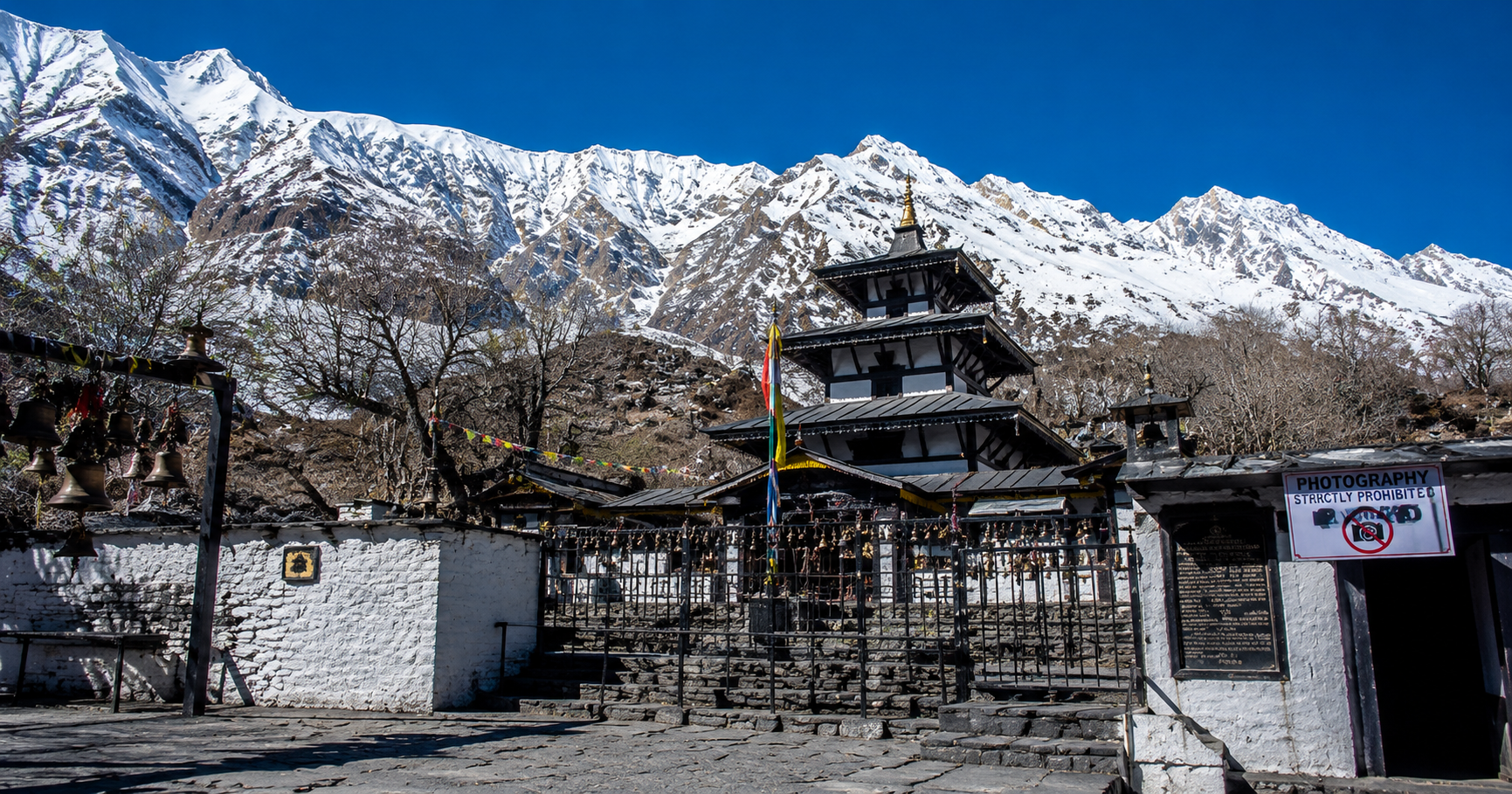
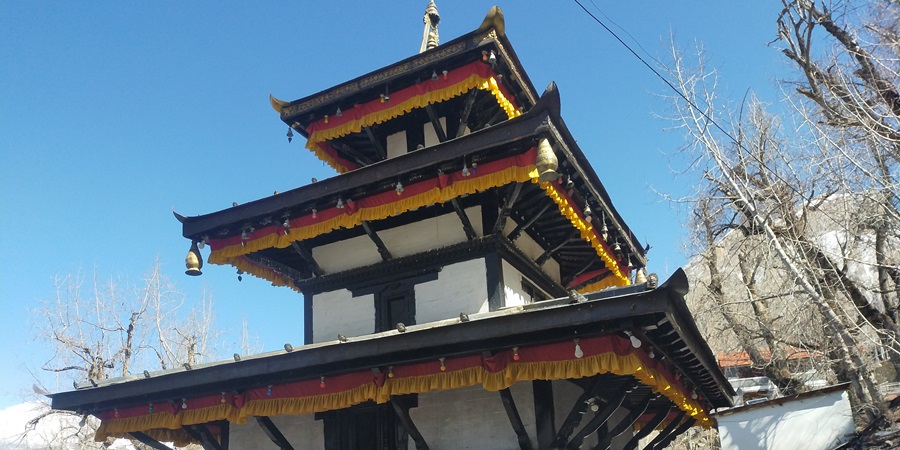
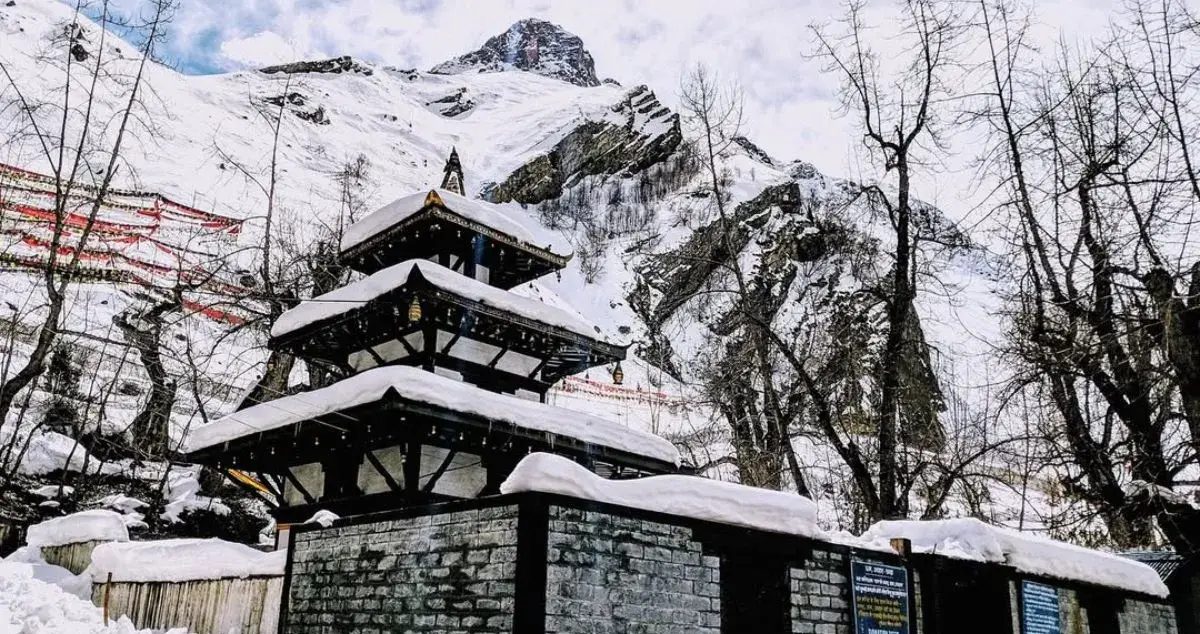
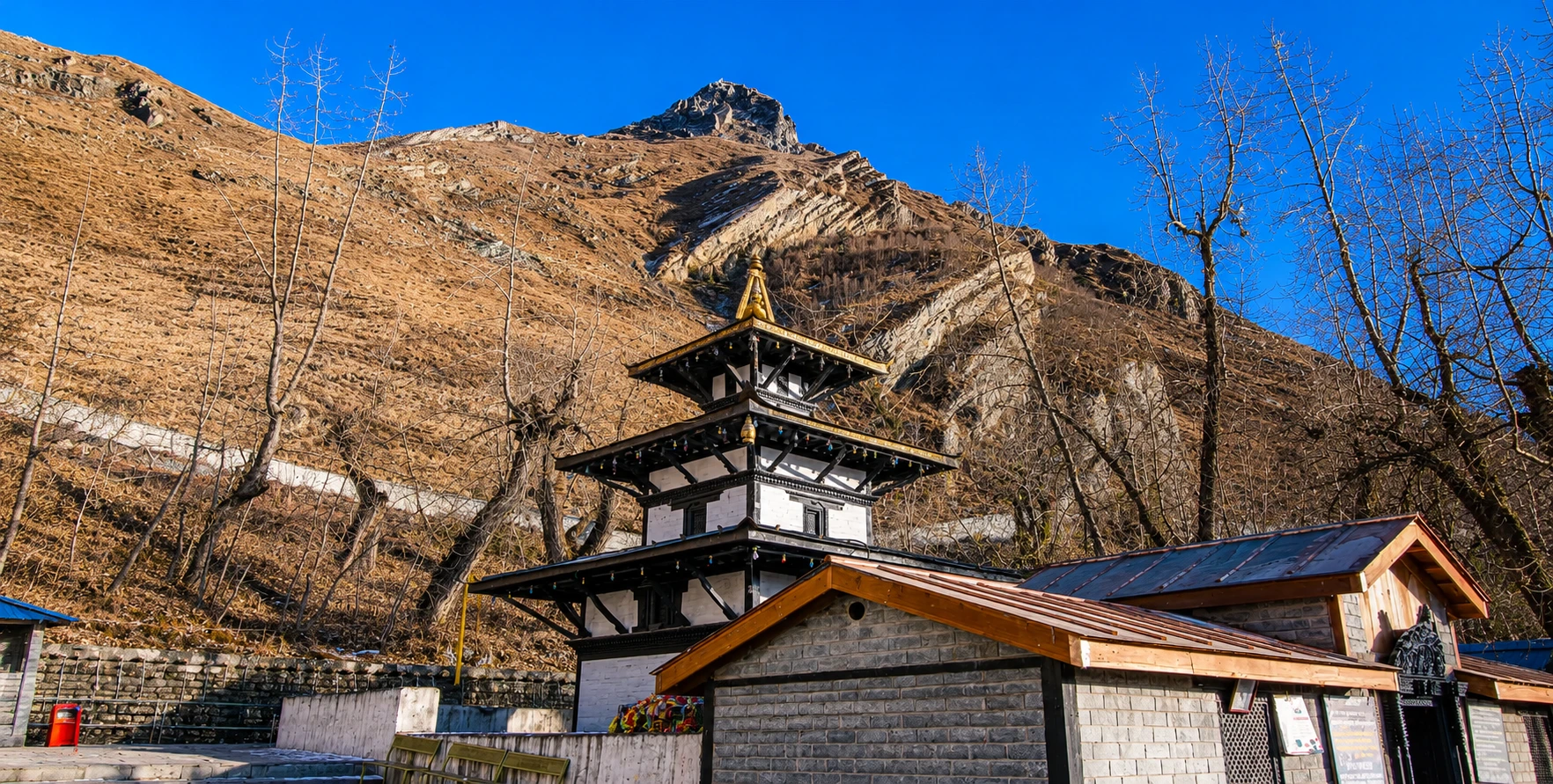
The main temple of Muktinath is called Mukti Dhaam – the Abode of Liberation. This golden-roofed, pagoda-style temple serves as the centrepiece of the sacred complex and marks the culmination of the pilgrimage.
The Vishnu Shrine – Inner Sanctum
Inside the Mukti Dhaam temple, the main deity enshrined is Lord Vishnu in the form of Muktinath – one of the 108 Divya Desam Vishnu temples enumerated in the Sri Vaishnava tradition. In Sri Vaishnavism – the devotional tradition that most deeply venerates the 108 Divya Desams – Muktinath holds particular importance as the only Divya Desam located in the Himalayas, the one that is furthest from the traditional South Indian heartland of the tradition, and therefore the most distant and difficult pilgrimage, which only amplifies its merit.
The image of Lord Vishnu in the inner sanctum is an ancient black stone figure adorned with golden ornaments and silken garments, changed daily by the temple priests. The deity holds the traditional Vishnu symbols – the conch (shankha), discus (chakra), mace (gada), and lotus (padma). The image is flanked by consorts Lakshmi and Saraswati.
The divine presence in the inner sanctum is palpable to devotees – this space carries centuries of worship, prayer, and accumulated spiritual energy.
Temple Architecture and Design
The Mukti Dhaam temple is a compact, two-tiered pagoda structure with a gleaming golden roof that catches the high-altitude sunlight brilliantly – visible from a great distance as you approach Ranipauwa village. The temple walls are whitewashed stone, and the doors are ornately carved wood painted in the traditional Nepali temple style. Around the outer walls, carved stone panels depict scenes from the Vishnu Puranas.
The approach to the temple is through a gateway marked by the Garuda – Vishnu’s divine eagle vehicle – carved in stone. Prayer flags strung from tall poles flutter constantly in the Mustang wind. The outer courtyard is paved with ancient stone slabs worn smooth by the passage of millions of pilgrims over the centuries.
The atmosphere of the outer courtyard – the smell of incense, the sound of bells, the colour of marigold garlands – is immediately and unmistakably sacred.
Daily Temple Rituals and Puja
The Mukti Dhaam temple follows a rigorous daily ritual schedule maintained by the resident Hindu priests:
Mangala Aarti (Dawn Worship) – 5:00 to 5:30 AM: The first puja of the day, conducted in near darkness with oil lamps and incense, invoking the divine presence for the new day. Deeply atmospheric – this is the most spiritually powerful time to be in the temple.
Abhisheka (Sacred Bath) – 6:00 AM: The ritual bathing of the deity with sacred water from the 108 spouts, milk, honey, and yoghurt, accompanied by Vedic chants
Shringar (Adornment) – 7:00 AM: The deity is dressed in fresh garments and adorned with flowers, tulsi leaves, and gold ornaments
Bhog (Food Offering) – 12:00 PM: Sacred food offerings, including rice, fruits, sweets, and ghee lamps,s are presented to the deity
Midday Closing – 12:00 to 1:00 PM: The temple closes briefly for the midday rest period
Afternoon Darshan – 1:00 to 6:00 PM: The temple reopens for afternoon pilgrims and visitors
Sandhya Aarti (Evening Worship) – 5:00 to 6:00 PM: The evening lamp ceremony – one of the most beautiful experiences at Muktinath – bells, conch shells, fire lamps, and devotional singing in the golden afternoon light
Shayan (Night Rest) – 6:30 PM: The deity is put to rest, st and the temple closes for the night
The 108 Sacred Water Spouts – Muktidhara
Of all the sacred sites at Muktinath, it is the 108 water spouts – collectively known as Muktidhara – that hold the most universal significance for pilgrims of all traditions. These are the experiences of the Muktinath pilgrimage.
The Architecture of the Spouts
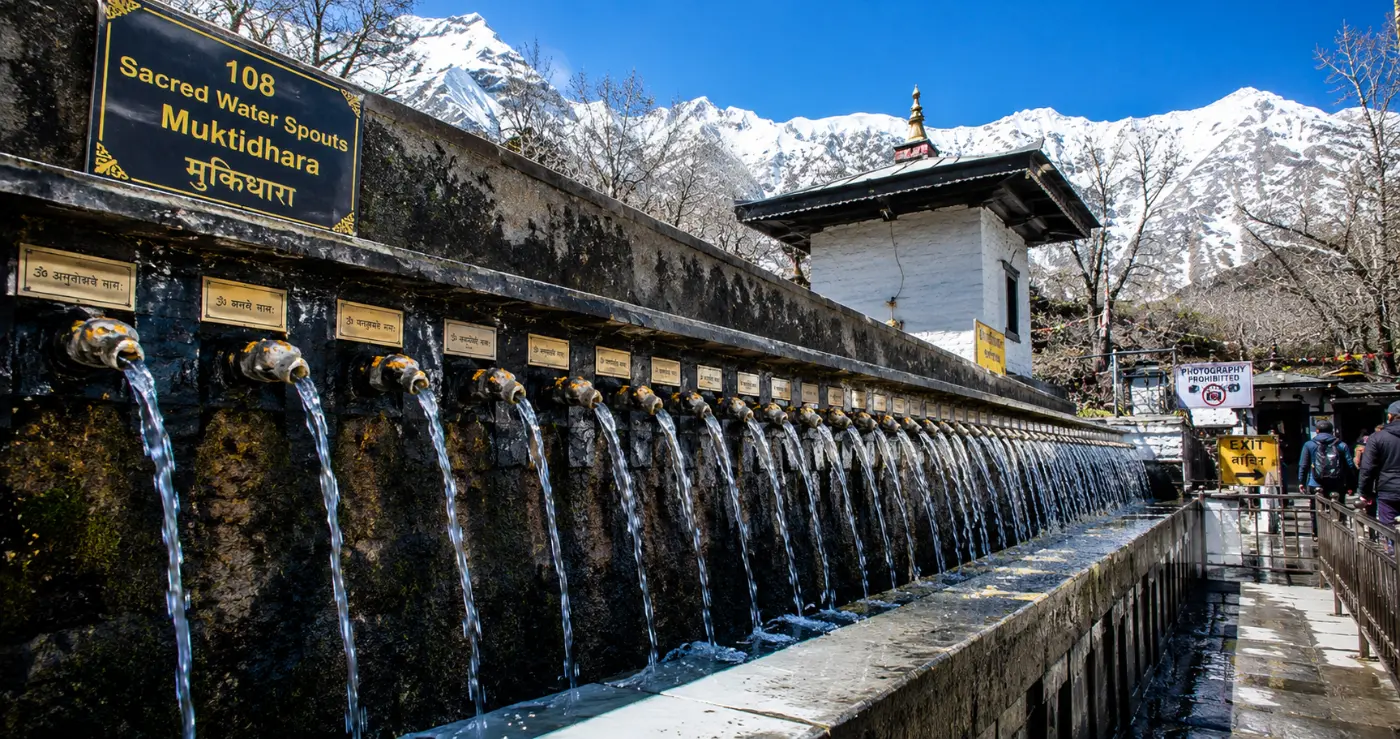
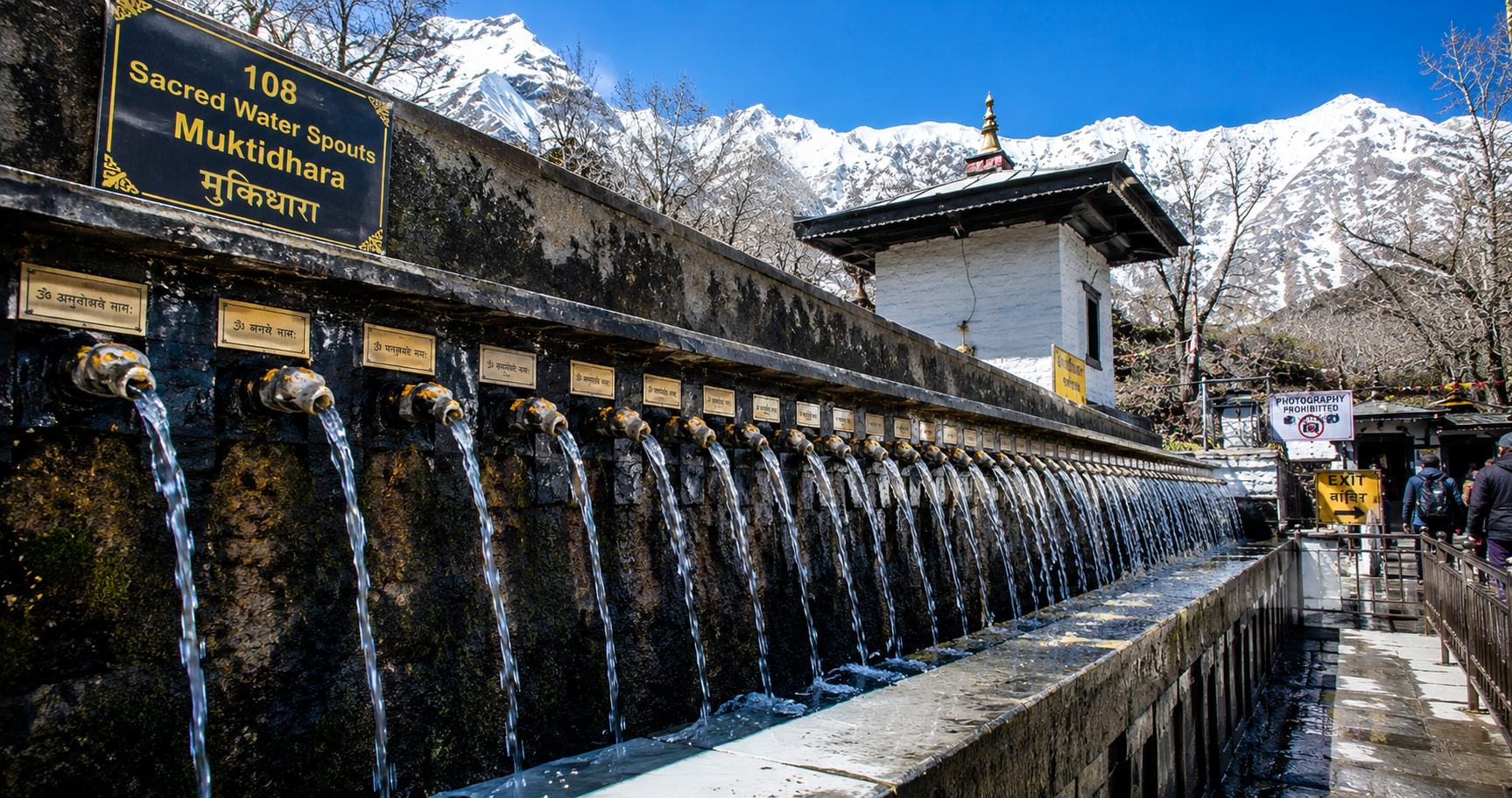
The 108 spouts are arranged in a graceful semicircle set into a long stone wall that curves around the eastern side of the main temple compound. Each spout is carved in the shape of a makara or cow’s head (gomukhi) in black stone, and from the mouth of each animal pours a continuous, unfailing stream of sacred spring water that originates from the cliff face and underground springs of the Muktinath plateau above.
The water is ice-cold year-round – approximately 4 to 6°C in all seasons – a fact that makes the ritual bath both a physical and spiritual ordeal for most pilgrims.
The spouts are arranged in a gentle arc approximately meters long and about meters above the ground. Below each spout, stone-paved channels carry the water away in small streams that flow down through the temple complex. The sound of 108 streams of water pouring simultaneously – a constant, rushing, musical sound – fills the entire sacred complex and can be heard from outside the temple walls.
The Sacred Number 108
The number 108 is among the most sacred numbers in Hindu and Buddhist cosmology. Its significance at Muktinath is multi-layered and profound:
In Vaishnavism, 108 represents the 108 sacred names of Lord Vishnu (Ashtottara Shatanamavali). To bathe under each spout while chanting one of the 108 names is to complete a full circumambulation of all of Vishnu’s divine attributes
In astronomy and cosmology, the distance between the Earth and the Sun is approximately 108 times the Sun’s diameter. The distance between the Earth and the Moon is approximately 108 times the Moon’s diameter. Hindu sages recognised this and considered 108 cosmically significant.
In yoga and meditation, 108 beads on a prayer mala (rosary) represent the 108 earthly desires that must be overcome on the path to liberation.
In Buddhism, 108 represents the 108 defilements (kleshas) of the mind that must be eliminated on the Buddhist path. Buddhist prayer malas also have 108 beads.
In the human body: According to Vedic tradition, 108 marma points (sacred energy junctions) correspond to the 108 spouts.
The Ritual Bath – How It Is Performed
The ritual bath under the 108 spouts is the central act of the Muktinath pilgrimage for Hindu devotees. Here is how the traditional ritual is observed:
Pilgrims arrive at the spout area before dawn – ideally arriving by 5:00 AM for the most spiritually powerful time before crowds gather
Carry a complete change of dry clothing in a waterproof bag – you will be soaked to the skin
Begin at the first spout on the left end of the arc and work methodically across all 108 spouts from left to right
At each spout, stand under the stream of water and recite one of the 108 names of Lord Vishnu, or repeat your chosen mantra or the Vishnu Sahasranama (thousand names)
Allow the water to flow over the crown of the head – the crown (brahmarandhra) is considered the sacred gateway of the soul.
Move steadily and with devotion – the complete bath under all 108 spouts takes approximately 45 minutes to 1.5 hours, depending on speed and devotion.
After completing all 108 spouts, dry off immediately with the pre-bought towel and change into the dry clothes you brought.
Proceed directly to the main Vishnu temple for darshan while in the state of ritual purity established by the bath.
Non-Hindu visitors and those who do not wish to participate in the full bath are welcome to observe respectfully and may touch the water from individual spouts as a blessing. Many non-pilgrims touch the water with folded hands and receive Muktinath’s blessing without the full ritual bath.
The Spiritual Merit of the 108 Spout Bath
According to Hindu tradition, a single sacred bath under all 108 spouts at Muktinath is believed to:
Wash away the accumulated sins (papas) of the current and all previous lifetimes
Break the cycle of samsara (rebirth) and open the path to moksha (liberation)
Purify the seven sacred rivers of India simultaneously – as if the pilgrim had bathed in the Ganga, Yamuna, Saraswati, Narmada, Sindhu, Godavari, and Kaveri all at once
Remove all obstacles to spiritual progress and worldly prosperity
Grant the merit equivalent to completing the four Char Dham pilgrimages (Badrinath, Dwaraka, Puri, Rameswaram) simultaneously
The Jwala Mai Shrine – The Eternal Sacred Flame
Behind the main Vishnu temple, accessible through a narrow stone passageway, lies one of the world’s most extraordinary natural-sacred phenomena. In this Jwala Mai shrine, an eternal flame of natural gas has burned from the living rock for as long as human memory reaches.
The Natural Miracle
The Jwala Mai flame emerges from a small cave where a seep of natural methane gas ignites upon meeting the air – a geological phenomenon caused by the deep subterranean conditions of the Himalayan plateau. What makes this site so extraordinarily sacred is not just the flame itself, but the fact that, immediately beside it, a continuous stream of water also flows from the same rock face.
Flame and water – fire and the sacred spring – emerging simultaneously from the same sacred rock.
In Hindu theology, the union of fire (agni) and water (jal) is the union of the masculine and feminine divine principles – the union of Shiva and Shakti, the union of Vishnu and Lakshmi, the union of all opposing forces in the cosmos. To witness this union at a single point in the rock is to witness the divine mystery of existence itself.
This is why Muktinath is called the place where all five sacred elements unite – fire, water, Earth, air, and sky are all present and perceptible within the sacred complex.
Jwala Devi – The Goddess of the Flame
The eternal flame is venerated as the manifestation of Jwala Devi – the Goddess of the Divine Flame – a form of the Goddess Shakti. A small shrine image of the Goddess is installed beside the flame, garlanded with marigolds and adorned with red sindoor powder.
Pilgrims offer ghee (clarified butter), incense, camphor, red cloth, and flowers to the Goddess. The flame flares and dances when ghee is offered, which devotees experience as the Goddess directly accepting their offering.
The Buddhist Perspective on the Flame
For Tibetan Buddhist pilgrims, the eternal flame of Muktinath is associated with the concept of the indestructible clear light – the most subtle level of consciousness in Tibetan Buddhist philosophy, said to be present at the moment of death and in deep meditation. The flame that never goes out, that has burned since before living memory, represents the continuity of consciousness, the deathlessness of the awakened mind.
The same rock that holds the flame also holds the water – a representation of compassion (water, yin, receptive) and wisdom (fire, yang, active) in union – the two wings of the Buddhist path.
Visiting the Jwala Mai Shrine
The Jwala Mai shrine is accessible through the rear of the main temple compound. A narrow stone corridor leads to a small chamber where the flame and water emerge from the rock. The space is intimate and dim, lit by the flame itself and by butter lamps placed by pilgrims.
The atmosphere is one of concentrated sacred energy. Visitors should:
Remove shoes before entering the shrine chamber
Bring ghee or clarified butter to offer to the flame – purchased in Ranipauwa village
Bring flowers, red cloth, or incense as additional offerings to Jwala Devi
Maintain silence inside the shrine – this is a space of deep reverence
Sit or kneel for a few moments of quiet prayer or meditation – the flame is mesmerising
Touch the sacred water flowing from the rock and bring it to the forehead and crown as a blessing
The Mukti Narayan Gompa – The Buddhist Monastery
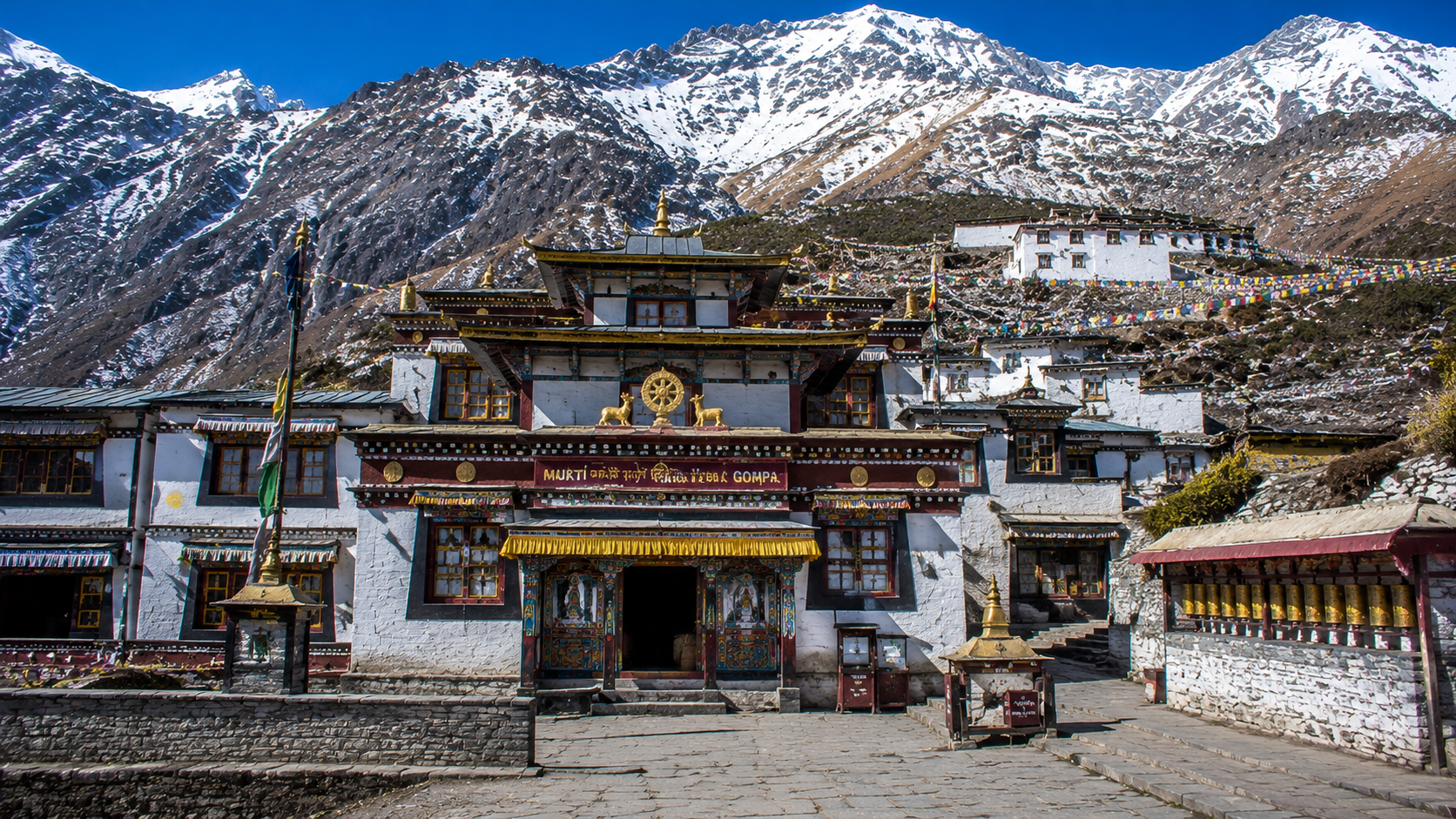
Adjacent to the Hindu Vishnu temple, sharing the same sacred compound, stands the Mukti Narayan Gompa – an ancient Tibetan Buddhist monastery managed by Buddhist nuns (anis). This monastery is the principal Buddhist sacred site within the Muktinath complex and one of the most important active nunneries in the Mustang region.
Architecture and Sacred Art
The Mukti Narayan Gompa is a traditional Tibetan gompa – with thick stone walls painted white and ochre, a flat roof lined with prayer flags, and an entrance porch featuring elaborate paintings of protective deities (dharmapalas) and the Wheel of Life (bhavachakra). The interior is a single large prayer hall centred on a gilded altar with a large statue of Shakyamuni Buddha, flanked by statues of Guru Rinpoche (Padmasambhava) and Chenrezig (Avalokitesvara).
The walls of the prayer hall are covered in ancient thangka paintings – some estimated to be 400 to 500 years old – depicting the life of the Buddha, the Wheel of Existence, the protector deities of the Mustang valley, and elaborate mandalas. These thangkas represent some of the finest traditional Tibetan Buddhist art in the entire Mustang region and are extraordinary cultural heritage objects.
Photography is generally permitted in the outer areas – ask the nuns for permission before photographing the thangkas and altar.
The Nuns of Muktinath
A community of Buddhist nuns tends the Mukti Narayan Gompa, living in small stone houses immediately adjacent to the monastery. The nuns perform daily ritual practices, including morning and evening puja, circumambulating the sacred compound, spinning prayer wheels, and maintaining butter lamps. Their presence at Muktinath for centuries has helped establish the site’s character as a place of women’s spiritual power and dedication.
The nuns maintain a daily ritual schedule that complements and runs parallel to the Hindu puja in the adjacent Vishnu temple. The sounds of Buddhist drums, cymbals, and the chanting of mantras from the gompa blend with the Hindu bell ringing and conch shell calls from the Vishnu temple – a sonic landscape unique in the Himalayan world.
Sacred Buddhist Iconography at Muktinath
The Mukti Narayan Gompa and the surrounding sacred precinct contain several significant Buddhist sacred objects and icons:
The large prayer wheels arranged around the outer wall of the temple compound – spin clockwise while circumambulating; each rotation of a prayer wheel generates the same merit as reciting the mantra inscribed within (usually Om Mani Padme Hum), the number of times it is written on the paper coil inside
Mani walls – long stone walls built from carved mani stones (stones inscribed with Om Mani Padme Hum) – pass these always to your left while circumambulating
Stone stupas and chortens of various sizes surround the compound – each one contains sacred relics or dharma texts and is an object of prostration and circumambulation.
The Guru Rinpoche shrine – a small side shrine dedicated to Guru Padmasambhava, who is said to have meditated at Muktinath and recognised its sacred power
The Sacred Shaligram Stones of Muktinath
The entire stretch of the Kali Gandaki River from Kagbeni to Muktinath and beyond is the only place on Earth where Shaligram stones – fossilised ammonite shells from the ancient Tethys Ocean – are found naturally embedded in the riverbed. These stones hold the highest sacred significance in Hinduism.
What Are Shaligram Stones?
Shaligrams are black or dark grey fossilised ammonites – the coiled shells of ancient marine creatures that lived in the Tethys Ocean approximately 140 to 65 million years ago, when the land that is now the Himalaya was the floor of a shallow tropical sea. As the Indian subcontinent collided with Asia and the Himalayas rose, these ancient seabeds were pushed to extraordinary heights.
The Kali Gandaki River cuts through these ancient marine sediments, exposing ammonite fossils – tumbled and polished by millennia of river action into smooth, black, spiral-marked stones.
Shaligrams hold immense sacred significance in Hinduism. They are considered the living, physical embodiment of Lord Vishnu – not merely a symbol of Vishnu, but Vishnu himself dwelling in the stone.
The Garuda Purana states that the sight of a Shaligram, the touch of a Shaligram, and the water in which a Shaligram has been bathed are all supremely purifying. Unlike an idol or murti that must be consecrated to be sacred, the Shaligram is considered inherently divine and self-manifested (svayambhu).
Collecting Shaligrams as a Pilgrimage
One traditional act of the Muktinath pilgrimage is collecting Shaligram stones from the Kali Gandaki riverbed between Kagbeni and Muktinath. The collection itself is considered a sacred act – discovering a Shaligram is considered a sign of divine blessing, as if Vishnu himself has chosen to come home with you.
Pilgrims wade into the cold river, search among the smooth river stones, and select Shaligrams of appropriate size and markings for worship at home temples.
Different types of Shaligrams are identified by the number and arrangement of their spiral ammonite chambers – these are believed to represent different forms of Lord Vishnu. A Shaligram with two spirals represents Vishnu in his two-armed form. One with four spirals represents the four-armed Vishnu holding the conch, discus, mace, and lotus.
Particularly rare and perfect specimens are considered highly auspicious and treasured as sacred heirlooms, passed down through generations.
Responsible Shaligram Collection
In 2026, travellers should be aware of Nepal’s regulations on collecting and exporting Shaligram stones. While collecting a small number of Shaligrams for personal religious worship is a long-standing tradition, the stones are considered a protected natural and cultural heritage resource. Exporting large numbers of Shaligrams or collecting them commercially is prohibited.
Pilgrims may collect a small number of stones for personal worship – typically 1 to 5 stones – without difficulty. Attempting to export large quantities will result in confiscation at customs.
Sacred Sites of Muktinath
The Sacred Compound – Additional Holy Sites
The Mukti Kund – Sacred Pond
At the base of the 108 water spouts, the flowing water collects in the Mukti Kund – a small sacred pond. The pond is considered holy and its water purifying.
Some traditions hold that the water of Mukti Kund is connected underground to all seven sacred rivers of India – a cosmological belief that makes bathing in or drinking from the Mukti Kund equivalent to bathing in the Ganga and all other sacred rivers simultaneously.
The Gomukh – The Cow’s Mouth Spring
Above the 108 spouts, the primary spring from which all the sacred water flows emerges from a cleft in the rock in the form of a gomukh (cow’s mouth) – a traditional Hindu sacred symbol in which water emerging from a cow’s mouth represents the divine grace flowing from the cosmic mother. The gomukh spring is considered the source of the entire sacred water system of Muktinath and is worshipped separately from the 108 spouts below.
The Mani Walls and Prayer Circumambulation Path
A traditional Tibetan stone wall encloses the entire Muktinath sacred compound, lined with prayer wheels and interspersed with mani stones. The circumambulation path (kora) that follows the inner perimeter of this wall is one of the most important rituals for Buddhist pilgrims at Muktinath.
A complete clockwise circumambulation of the entire compound, spinning each prayer wheel as you pass and maintaining a meditative mind, is considered to generate enormous merit and to bring blessings to all living beings.
The circumambulation path is shared by Hindu and Buddhist pilgrims who walk it together – Hindus folding their hands in namaste at the shrines they pass, Buddhists spinning prayer wheels and reciting Om Mani Padme Hum. This shared circumambulation is one of the most moving expressions of the deep religious harmony that characterises Muktinath.
The Sacred Fire Pits of the Outer Compound
In the outer area of the Muktinath compound, stone fire pits are used for Havan (sacred fire sacrifice) rituals conducted by visiting pilgrims and Hindu priests. A havan at Muktinath – conducted with sacred wood, ghee, sesame seeds, and Vedic mantras – is considered to have vastly amplified merit due to the site’s sacred power.
Many devout Hindu pilgrims arrange a private havan at Muktinath as part of their pilgrimage, particularly for ancestral rites (pitru tarpanam) and to purify the soul after a long illness or hardship.
The Vishnu Footprint Stone
Within the main temple compound, a carved stone slab is believed to bear the footprint (charan paduka) of Lord Vishnu – a direct physical mark of the divine presence at this site. Footprint stones are among the most venerated objects in Hindu worship – the physical impression of the divine foot on the Earth is considered a portal of blessing.
Devotees touch the footprint stone with both hands and bring their hands to their foreheads in a gesture of surrender and reverence.
Jharkot and Kagbeni – Sacred Sites Near Muktinath
Jharkot – The Warrior Village
Just 2 km below Ranipauwa on the jeep road from Jomsom, the ancient fortified village of Jharkot sits on a small hillock above the valley floor. The village contains the Jharkot Dzong – a ruined fortress palace of the former Mustang nobility – and the Jharkot Gompa, an active Tibetan Buddhist monastery with important tantric sacred art.
The gompa is associated with the Sakya school of Tibetan Buddhism and contains magnificent wall paintings and a collection of gilded statues.
Many Muktinath pilgrims stop at Jharkot on the way to or from the main temple. The combination of the ruined fortress, the active monastery, and the sweeping views of the Muktinath plateau from the village makes Jharkot one of the most atmospheric minor sacred sites in the entire Mustang region.
Kagbeni – The Gateway to Upper Mustang
Kagbeni is a medieval village at the confluence of the Kali Gandaki and Kak rivers, approximately 18 km below Muktinath, marking the southern entry point to Upper Mustang. The Kag Chode Thupten Samphel Ling Monastery in Kagbeni is one of the most significant and best-preserved Tibetan Buddhist monasteries in the entire Mustang region – a complex of ancient buildings, courtyards, prayer halls, and sacred images that dates in its present form to the 15th century.
The monastery contains an extraordinary collection of ancient thangka paintings, gilded statues, and ritual objects.
For pilgrims arriving at Muktinath by jeep from Jomsom, Kagbeni is always passed on the route and is well worth a 45-minute to 1-hour stop. Walking the narrow medieval lanes of Kagbeni, passing under stone archways, beside mani walls and ancient chortens, offers a profound sense of temporal depth – this village has looked more or less the same for 600 years.
The Kali Gandaki Shaligram Zone
The stretch of the Kali Gandaki River between Kagbeni and Muktinath is the world’s primary Shaligram zone. Pilgrims who wish to search for Shaligrams should plan time at the river between these two points.
The best conditions for searching are in spring (March to May) and autumn (October to November), when the river is lower and the stones are more accessible. A guide from Kagbeni or Ranipauwa can show you the best collecting areas.
Festivals and Sacred Times at Muktinath
Balachaturdashi – November/December
Balachaturdashi is the most important annual pilgrimage festival at Muktinath – a full-moon night in late November or early December when hundreds of thousands of Hindu pilgrims from across Nepal and India descend on the Muktinath sacred complex for the sacred ritual of Satbij (seven seeds). The ritual involves scattering seven types of seeds at the sacred site as an offering for the liberation of deceased family members.
The night of Balachaturdashi at Muktinath – with pilgrims moving through the 108 spouts by torchlight, the chanting of mantras, the smell of incense and marigolds, and the brilliant stars of the high-altitude sky above – is one of the most extraordinary religious experiences in Nepal. Book vehicles and accommodation many months in advance if travelling for Balachaturdashi.
Janmashtami – August
The birthday of Lord Krishna (a major avatar of Vishnu) is celebrated at Muktinath with great devotion, particularly by Vaishnava pilgrims. The Janmashtami festival at Muktinath includes midnight puja, devotional singing (bhajan and kirtan), and the sacred bathing of the Vishnu image. The contrast between the festival colour and devotion and the stark Himalayan landscape of Mustang in the monsoon is memorable.
Yartung Festival – September
Yartung is a traditional festival in the Mustang region that celebrates the end of the agricultural season and the descent from the high pastures. Horse races, traditional Thakali and Gurung dances, archery competitions, and communal feasting mark the festival. The Yartung festival connects the sacred Muktinath complex with the living cultural traditions of the Mustang people and offers one of the finest opportunities to experience the region’s authentic culture.
Muktinath Purnima – Full Moon Pilgrimage
Every full Moon (purnima) is considered particularly auspicious for bathing at Muktinath. Pilgrims time their journey to arrive on purnima day specifically to perform the 108-spout bath under the full Moon. The purnima in Kartik (October–November) and Magh (January–February) are considered especially sacred.
The Kartik Purnima – the full Moon of the month of Kartik – is one of the holiest full moons in the Hindu calendar and draws particularly large numbers to Muktinath.
The Muktinath Pilgrimage – A Step-by-Step Guide
For those making the Muktinath pilgrimage for the first time, here is a complete guide to the traditional sequence of the sacred visit:
Arrive in Ranipauwa the evening before your pilgrimage day and rest. Take the sacred bath and morning puja on a body that has rested, is clean, and has eaten lightly or not at all.
Wake before dawn – 4:30 to 5:00 AM. Dress in clean clothes. Bring your waterproof bag with a change of dry clothing, a towel, offerings (flowers, ghee, incense, fruit), and your prayer book or mala if you use one.
Walk to the Muktinath compound gate – a 5 to 10-minute walk from most teahouses in Ranipauwa. The gate opens around 5:00 AM.
Enter the compound and proceed directly to the 108 water spouts. Begin your ritual bath at the first spout on the left and work across all 108 spouts from left to right. Chant your mantra or the names of Vishnu at each spout. The water is bitterly cold – this is part of the spiritual ordeal.
After completing all 108 spouts, dry off and change into your dry clothing immediately. Do not sit in wet clothes at this altitude.
Proceed to the Jwala Mai shrine behind the main temple. Offer ghee to the eternal flame. Touch the sacred water flowing beside the flame. Sit for a few moments in silent prayer.
Enter the main Mukti Dhaam Vishnu temple for darshan. Approach the deity, offer flowers and incense, touch the Vishnu footprint stone, and receive the temple prasad (sacred food blessing) from the priest.
Visit the Mukti Narayan Gompa (Buddhist monastery). Spin the prayer wheels around the outer wall. Enter the prayer hall, light a butter lamp, bow before the Buddha, and make a small donation.
Circumambulate the entire sacred compound clockwise, spinning each prayer wheel as you pass – a meditative, slow walk around the inner perimeter of the wall.
Collect Shaligram stones from the riverbed near Kagbeni on your return journey.
Return to your teahouse for breakfast and rest. Reflect on the experience. Many pilgrims report a profound inner shift – a lightness, a clarity, a sense of release – after completing the full Muktinath pilgrimage sequence.
Visitor Etiquette and Sacred Customs
Above all, Muktinath is an active place of worship. Visitors of all faiths and backgrounds are warmly welcomed, but respectful behaviour is essential:
Clothing and Modesty
Dress modestly for the entire sacred compound – cover shoulders and knees regardless of the temperature.
Women should carry a scarf or shawl to cover their heads when entering the main temple’s inner sanctum.
Avoid wearing leather items (belts, shoes, bags) inside the temple – leather from cow or buffalo is considered polluting in a Vishnu temple.
White or saffron clothing is traditional for pilgrims taking the ritual bath – it symbolises purity and a sacred intent.
Ritual Conduct
Remove footwear completely before entering any temple, gompa, or sacred shrine area.
Walk clockwise around all temples, stupas, mani walls, and sacred objects – never anti-clockwise.
Enter sacred spaces with reverence and quiet – avoid loud conversation, laughter, or distracted phone use inside shrines.
The main Vishnu temple’s inner sanctum is small and intimate, allowing pilgrims to enter an active prayer space and receive priority.
Do not point your feet toward sacred images – sit with legs crossed or folded, never with soles facing the deity.
Photography Guidelines
Photography of the outer compound, the 108 spouts area, and the monastery exterior is generally permitted.
Always ask permission before photographing inside the main temple’s inner sanctum – this is usually not permitted.
Never photograph someone in active prayer without their consent
Photography of the Jwala Mai flame is permitted – avoid using flash in the intimate shrine space
Photograph the thangkas in the monastery only with explicit permission from the resident nuns
Best Time to Visit the Sacred Sites of Muktinath
Season
Months
Temple Conditions
Weather
Crowd Level
Post-Monsoon (Best)
Oct – Nov
All sites are fully accessible and beautiful
Clear, crisp, magnificent views
High – peak pilgrimage season
Spring (Excellent)
Mar – May
All sites open, rhododendrons in bloom
Good – warm and dry
Moderate – excellent season
Winter
Dec – Feb
Accessible but very cold at dawn
Clear views but -15°C at night
Very low – deeply spiritual
Monsoon
Jun – Sep
All sites open – Mustang stays dry
Sunny in Mustang (rain shadow)
Low – unique season
October and November are the prime months for the Muktinath pilgrimage – perfect weather, maximum views, and the spiritual energy of peak pilgrimage season. However, December through February offers perhaps the most profound spiritual atmosphere – the sacred compound is quiet, the mountains are startlingly clear, and the act of bathing in the ice-cold 108 spouts in the winter dawn cold takes on the character of a genuine spiritual ordeal that many devotees consider the most powerfully transformative version of the pilgrimage.
Muktinath is accessible from Pokhara and Kathmandu by road, by air to Jomsom, and by jeep or on foot as part of the Annapurna Circuit trek. Here is a summary:
Route
From
Mode
Journey Time
Best For
Pokhara – Beni – Tatopani – Jomsom – Muktinath
Pokhara
Private 4WD jeep
1.5 to 2 days
Road journey lovers, groups
Kathmandu – Pokhara – Jomsom – Muktinath
Kathmandu
Vehicle + road
2 to 3 days
Pilgrims, families, budget groups
Pokhara airport – Jomsom airport – Muktinath
Pokhara
Flight + jeep
1 day
Short on time, comfort
Annapurna Circuit Trek – via Thorong La
Besisahar
Trek
16–21 days
Serious trekkers, full circuit
Vehicle Hiring Nepal specialises in private jeep hire between Pokhara and Muktinath, as well as between Kathmandu and Muktinath. Our experienced drivers know the Kali Gandaki road and the timing needed to arrive at Muktinath before the famous afternoon wind. Contact us to arrange your transport for the Muktinath pilgrimage.
Accommodation at Ranipauwa – Muktinath
Ranipauwa village – the settlement immediately below the Muktinath temple compound – has about 20 to 30 teahouses and simple hotels that provide accommodation for pilgrims and trekkers. Here is what to expect in 2026:
Basic Teahouse Room: NPR 300 to NPR 600 per night – simple twin bed, blankets, shared bathroom, and cold water
Mid-range Lodge: NPR 800 to NPR 2,000 per night – better rooms, some with attached bathrooms, hot showers available, restaurant
Best Available (Hotel Bob Marley, Hotel North Pole, Hotel Muktinath View): NPR 2,000 to NPR 4,000 per night – comfortable rooms, good restaurant, hot water, some with temple views
All accommodation includes the option of simple Nepali meals – dal bhat, noodle soup, Tibetan bread, eggs, and tea.
Electricity is solar-powered in Ranipauwa – charge during the day; power may be limited in the evening hours.
NTC mobile signal works in Ranipauwa. Ncell is weak. WiFi is available at larger teahouses at a small fee.
Book accommodation in advance for October–November and festival periods (Balachaturdashi, Kartik Purnima)
Frequently Asked Questions
Is Muktinath open to non-Hindu visitors?
Yes. Muktinath warmly welcomes visitors of all faiths, backgrounds, and nationalities. There are no entry restrictions based on religion.
The inner sanctum of the main Vishnu temple is open to all. Visitors are asked to observe the dress code (remove shoes and cover shoulders and knees) and to maintain respectful behaviour in the sacred spaces.
Can I do the 108-spout bath without being Hindu?
Yes. While the 108-spout bath holds specific theological significance for Hindu devotees, many non-Hindu visitors and Buddhist pilgrims also participate in it for spiritual purification and to experience the sacred water firsthand. No one needs to be Hindu to stand under the spouts.
Even a brief touch of the sacred water from one or two spouts is considered a blessing in local tradition.
How cold is the water in the 108 spouts?
The water temperature in the 108 spouts is approximately 4 to 6 degrees Celsius year-round – slightly above freezing. Underground springs and snowmelt from the Himalayan cliffs feed the water, which stays at this temperature regardless of the season or air temperature. Bathing in winter (December to February), when the air temperature at dawn is -10 to -15°C, makes the full-spout bath one of Nepal’s most physically demanding acts of devotion.
A complete Muktinath pilgrimage – the 108 spout bath, the Vishnu temple darshan, the Jwala Mai flame visit, the Buddhist gompa visit, and the compound circumambulation – takes approximately 3 to 5 hours when done with proper attention and devotion. Most pilgrims arrive before dawn and complete the full pilgrimage by mid-morning, before the famous Kali Gandaki afternoon wind makes outdoor activity uncomfortable.
Can temple priests assist with rituals?
Yes. Resident Hindu priests are present at the Mukti Dhaam temple during all opening hours. They can conduct abhisheka (sacred bathing of the deity on your behalf), havan (fire sacrifice), puja services, and ancestral rite ceremonies.
A prior arrangement with the temple office is recommended for private rituals. The priests speak Nepali and basic Hindi. A small dakshina (ritual donation) for the priest’s services is traditional and appropriate.
What is the entry fee for Muktinath?
The Muktinath sacred compound itself is free to enter for all pilgrims and visitors in 2026. However, all visitors to the Mustang region arriving by road require an ACAP (Annapurna Conservation Area Permit), which costs approximately NPR 3,000 (USD 22). You can get this permit at the Nepal Tourism Board office in Pokhara or Kathmandu before your trip.
The Upper Mustang Restricted Area Permit (USD 500) is required only for travel north of Kagbeni toward Lo Manthang and is NOT required to visit Muktinath.
Can I bring children to Muktinath?
Yes. Many families make the Muktinath pilgrimage together, and children are very welcome. The altitude of 3,710 m should be considered – children should be watched carefully for altitude sickness symptoms, and the journey should be done gradually with appropriate acclimatisation.
Many parents bathe their children with water from the spouts as a blessing, though a 108-spout bath is at the parents’ discretion because the water is very cold.
Final Thoughts – Why Muktinath Endures
Muktinath endures as one of the world’s great pilgrimage destinations not because of the size of its temple, the wealth of its offerings, or the fame of its imagery – but because of what happens in the human heart when a person stands in that high desert plateau, surrounded by the greatest mountains on Earth, and allows the ice-cold water of the 108 sacred spouts to flow over their head while calling on the divine.
In that moment – the cold water, the ancient stone, the prayer flags snapping in the Himalayan wind, the blue flame burning from the rock, the smell of incense, the sound of bells from two religious traditions sharing a single sacred space – Muktinath delivers something rare and real. It delivers the direct experience of the sacred.
Not a representation of it, not a symbol of it, but the thing itself.
That is why pilgrims have been coming here for thousands of years. That is why they will keep coming. And that is why, whether you arrive by jeep on the dusty Mustang road or on foot after crossing the Thorong La, Muktinath will give you something you cannot find anywhere else.
Vehicle Hiring Nepal arranges private jeep transport from Pokhara and Kathmandu to Muktinath and Jomsom for pilgrims, trekkers, and travellers. Contact us on WhatsApp at +977 981-4227196 or visit vehiclehiringnepal.com to plan your Muktinath journey.
Muktinath Tour from Kathmandu – Complete Travel Guide
Introduction – Why Visit Muktinath from Kathmandu?
Few journeys in the world combine the depth of spiritual significance with the raw, striking grandeur of natural beauty quite like the Muktinath tour from Kathmandu. Set in the Mustang District of Gandaki Province at a staggering altitude of 3,710–3,800 meters above sea level, the Muktinath Temple stands as one of the holiest pilgrimage destinations on earth — revered equally by Hindu and Buddhist devotees across Nepal, India, Tibet, and the world.
For Hindus, Muktinath is Mukti Kshetra — literally the “place of salvation” — and one of the 108 sacred Divya Desams of Lord Vishnu. Pilgrims believe a pilgrimage to Muktinath cleanses the soul of all sins accumulated across lifetimes and grants moksha, liberation from the endless cycle of rebirth.
For Tibetan Buddhists, this valley is Chumig Gyatsa — the “Hundred Waters” — a sacred site blessed by Guru Rinpoche (Padmasambhava) himself, associated with Avalokiteshvara, the Bodhisattva of Compassion.
From Kathmandu, the journey to Muktinath covers approximately 400–410 km by road — a multi-day overland adventure through some of Nepal’s most dramatically varied landscapes: the lush Prithvi Highway valley, the thundering Kali Gandaki gorge (the world’s deepest gorge), the apple orchards of Marpha, the windswept bazaar of Jomsom, and the ancient walled village of Kagbeni — gateway to the Forbidden Kingdom of Upper Mustang.
Nepal Vehicle Hiring Pvt Ltd provides the most reliable, comfortable, and experienced 4WD jeep hire service from Kathmandu to Muktinath. This complete guide covers everything you need to plan your perfect Muktinath tour — route, itinerary, permits, vehicle selection, key stops, temple rituals, altitude preparation, and practical travel tips.
The Road from Kathmandu to Muktinath – Route Details
The Kathmandu–Muktinath overland journey follows a route that pilgrims, traders, and explorers have travelled for centuries. Today, a combination of paved highways and rugged mountain jeep tracks makes it possible to complete the journey by private vehicle. This road trip grows more spectacular with every passing kilometre.
The journey begins on the Prithvi Highway, one of Nepal’s finest scenic drives, as you head west from Kathmandu. The highway descends from the valley and follows the dramatic Trishuli River gorge for much of the journey — offering sweeping views of white-water rapids, forested hillsides, and traditional riverside villages.
The popular pit stop at Mugling (approximately 100 km) is famous throughout Nepal for its riverside fish restaurants serving freshly grilled Asla (snow trout) — an unmissable Prithvi Highway tradition. The road then rises through hilly terrain before descending into the Pokhara Valley with its incomparable views of Machhapuchchhre (Fishtail Mountain) and the Annapurna massif. Overnight in Pokhara.
Departing Pokhara, the road heads east then south to Beni (830 m), the headquarters of Myagdi District and the last large town before entering the Kali Gandaki valley. The road to Beni is well-paved and relatively straightforward. Beni is the key fuel and supply stop before the mountain roads begin.
Stock up on fuel, cash, water, and snacks here — facilities become increasingly limited beyond this point.
Segment 3: Beni to Tatopani (55 km | 2-3 hours)
Beyond Beni, the road enters the Kali Gandaki valley, and the character of the journey changes dramatically. The highway narrows into a mountain road tracing the river’s edge through dense forest, past cascading waterfalls, and through traditional villages.
The road passes through Tatopani (1,190 m) — famous throughout Nepal for its natural hot spring baths. After a long day’s drive, soaking in the Tatopani hot springs is an almost obligatory pleasure.
The springs are believed to have healing properties, and on a cool mountain evening, they offer a moment of pure relaxation before the higher-altitude sections ahead.
Segment 4: Tatopani to Jomsom (80 km | 4-5 hours)
This is the most dramatic and scenically extraordinary segment of the entire Kathmandu–Muktinath journey. The road climbs through Ghasa (2,010 m), a traditional Thakali village at the entrance to the high-altitude Kali Gandaki valley.
Beyond Ghasa, the gorge widens into the world’s deepest river gorge—the Kali Gandaki cutting between the towering peaks of Dhaulagiri (8,167 m) to the west and Annapurna I (8,091 m) to the east. The views from the road are absolutely staggering.
The route passes through Marpha (2,670 m), a beautifully preserved Thakali village famed for its apple orchards, apple cider, and apple brandy. The village’s whitewashed houses, narrow cobbled lanes, and Thakali monasteries make it one of the most charming stops on the entire route.
Just beyond Marpha lies Jomsom (2,743 m), the headquarters of Mustang District, where most travellers overnight. Jomsom is a genuine high-altitude frontier town, windswept and dramatic, with the afternoon Kali Gandaki gale a daily feature of life here.
Segment 5: Jomsom to Muktinath (22 km | 1.5-2 hours)
The final segment from Jomsom to Muktinath is the most emotionally charged stretch of the journey. Leaving Jomsom by jeep, the road follows the Kali Gandaki River northward to Kagbeni (2,800 m) — an ancient, fortified Tibetan-style village standing guard at the entrance to Upper Mustang.
Kagbeni’s red-walled monastery, narrow medieval lanes, and position at the confluence of two rivers make it one of Nepal’s most atmospheric villages. Beyond Kagbeni, the road climbs steeply on a narrow off-road track through dramatic high-altitude desert terrain to the small settlement of Ranipauwa — from where the Muktinath Temple is reached on foot in 10–15 minutes, or by horse.
Recommended 7-Day Muktinath Tour Itinerary from Kathmandu
Below is the most popular and well-balanced 7-day Muktinath tour itinerary from Kathmandu by private 4WD jeep. This itinerary allows for a comfortable pace, proper acclimatisation, scenic stops, and ample time for temple darshan at Muktinath.
Prithvi Highway, Trishuli gorge, Mugling fish stop, Phewa Lake evening
Day 3
Pokhara to Tatopani (1,190 m) | 135 km
Beni, Kali Gandaki valley entry, Ghasa village, hot spring soak at Tatopani
Day 4
Tatopani to Jomsom (2,743 m) | 80 km
Ghasa, Kalopani, Marpha apple orchards, Jomsom bazaar
Day 5
Jomsom to Muktinath (3,710 m) | 22 km
Kagbeni village, Muktinath Temple darshan, 108 water spouts, Jwala Mai, Buddhist Monastery
Day 6
Muktinath Return to Pokhara
Return via the same scenic route, Marpha, Tatopani, overnight in Pokhara
Day 7
Pokhara to Kathmandu
Prithvi Highway return, Kathmandu hotel drop-off, tour ends
Day 1: Kathmandu – Arrival & Spiritual Preparation (1,350 m)
Arrive in Kathmandu and transfer to your hotel. After resting and getting oriented, spend the afternoon at Pashupatinath Temple—one of the holiest Hindu temples in the world, dedicated to Lord Shiva, and a perfect spiritual start to your Muktinath pilgrimage. Devotees also visit Guheshwori Shakti Peetha (adjacent to Pashupatinath) and Budhanilkantha Temple for darshan.
Receive a briefing from your Nepal Vehicle Hiring guide and driver about the route, permits, and preparations for the journey ahead. Overnight: Kathmandu.
Day 2: Kathmandu to Pokhara (200 km | 6-7 hours | 820 m)
Depart Kathmandu at 7:00 AM by private 4WD jeep. Drive west on the Prithvi Highway, following the scenic Trishuli River gorge. Stop at Mugling for the famous freshwater fish lunch — a beloved tradition on this highway.
Continue to Pokhara, arriving by early afternoon. Check into your lakeside hotel with views of Phewa Lake and the Annapurna range. In the evening, stroll the Lakeside (Baidam) area, visit Bindhyabasini Temple, or relax by the lakeside.
Overnight: Pokhara.
Day 3: Pokhara to Tatopani via Beni (135 km | 5-6 hours | 1,190 m)
Depart Pokhara after breakfast and head to Beni, stocking up on fuel, cash, and supplies. Beyond Beni, the road enters the dramatic Kali Gandaki valley with waterfalls and deep gorges on either side. Pass through Ghasa and arrive at Tatopani in the late afternoon.
Spend the evening soaking in the famous Tatopani natural hot springs — a deeply restorative experience after a long drive through mountain roads. Overnight: Tatopani.
Day 4: Tatopani to Jomsom (80 km | 4-5 hours | 2,743 m)
This is the most spectacular driving day of the entire tour. Depart early from Tatopani and climb through the world’s deepest gorge flanked by Dhaulagiri and Annapurna. Pass through Marpha for a brief stop to sample apple products and explore the beautifully preserved Thakali village.
Arrive at Jomsom by mid-afternoon. Explore the Jomsom bazaar, visit the Eco Museum, and watch the powerful afternoon winds in the Kali Gandaki Valley — a daily spectacle that has shaped this landscape for millennia. Important: Rest and fully acclimatise at Jomsom before ascending to Muktinath the following day.
Overnight: Jomsom (2,743 m).
Day 5: Jomsom – Kagbeni – Muktinath Temple (3,710-3,800 m)
The day every pilgrim and traveller has been waiting for. Depart Jomsom early by 4WD jeep to Kagbeni (2,800 m) — spend 30 minutes exploring this extraordinary medieval Tibetan-style village and its Red Monastery (Kag Chode Thupten Samphel Ling).
Continue on the off-road mountain track, climbing steeply to Ranipauwa — the gateway village to Muktinath Temple. Walk (10–15 minutes) or ride a horse to reach the Muktinath Temple complex.
Complete darshan: receive blessings at the Muktinath Vishnu Temple, take a ritual bath under the 108 Muktidhara water spouts, witness the eternal flame at Jwala Mai Temple, and visit the Tibetan Buddhist Monastery. Return to Jomsom or continue down to Kagbeni for the overnight. Overnight: Jomsom or Kagbeni.
Begin the return journey by retracing the Kali Gandaki Valley road. Stop again in Marpha for apple shopping and in Tatopani for a final soak. Arrive in Pokhara by late evening.
Enjoy a farewell dinner at a lakeside restaurant with mountain views. Overnight: Pokhara.
Final morning in Pokhara — visit Sarangkot viewpoint for a last Himalayan sunrise if desired. Depart by 8:00 AM for Kathmandu via the Prithvi Highway. Stop at Mugling for lunch.
Arrive in Kathmandu by evening. Tour ends with hotel drop-off. Your Nepal Vehicle Hiring driver assists with onward connections to the airport if required.
Key Stops on the Kathmandu to Muktinath Route
Stop
Distance from KTM
Altitude
Key Feature
Pokhara
200 km
820 m
Phewa Lake, Annapurna views
Beni
280 km
830 m
Myagdi HQ, Kali Gandaki entry
Tatopani
315 km
1,190 m
Natural hot springs resort
Ghasa
335 km
2,010 m
Thakali village, waterfalls
Marpha
370 km
2,670 m
Apple orchards, Thakali cuisine
Jomsom
380 km
2,743 m
Mustang HQ, Kali Gandaki gorge
Kagbeni
390 km
2,800 m
Gateway to Upper Mustang, old monastery
Muktinath
400-410 km
3,710-3,800 m
Sacred temple, 108 spouts, eternal flame
Pokhara – Nepal’s Tourism Capital and Tour Basecamp
Pokhara is the natural basecamp and overnight stop for any Muktinath tour from Kathmandu. Set beside the beautiful Phewa Lake at 820 m, with the Annapurna massif dominating the northern horizon, Pokhara is one of Nepal’s most beautiful cities.
Key experiences include: boating on Phewa Lake, visiting the World Peace Pagoda for panoramic views, exploring the International Mountain Museum, and witnessing the sunrise over Machapuchare from Sarangkot Hill. Pokhara is also the last major city with reliable ATMs, medical facilities, and well-stocked trekking supply stores before entering the Mustang region.
Tatopani – The Hot Springs of the Kali Gandaki
Tatopani (“Hot Water” in Nepali) at 1,190 m is one of the most celebrated stopover points on the Mustang road. The town’s natural hot spring pools, fed by geothermal activity beneath the Himalayan rock, provide extraordinary relief for tired muscles after a long jeep drive on mountain roads.
The springs sit beside the roaring Kali Gandaki River, and bathing in the warm waters, with the sound of the rapids and the sight of forested gorge walls, is a uniquely memorable experience. Tatopani is also a fine viewpoint for Dhaulagiri and Annapurna South, visible above the gorge.
Marpha – The Apple Village of Mustang
Often called the “Apple Village of Nepal”, Marpha (2,670 m) is one of the most visually striking settlements in the Kali Gandaki valley. Its whitewashed stone houses are connected by narrow covered lanes that channel the famous valley wind.
Apple orchards fill the surrounding slopes, producing Nepal’s finest apples —along with apple cider, apple brandy, apple jam, and apple pie sold in every shop. Marpha is also home to the Marpha Monastery (Drukpa Kagyu tradition) and offers spectacular views of the Dhaulagiri Icefall to the west.
Budget 30–45 minutes to walk the village lane, visit the monastery, and stock up on apple products for the journey.
Jomsom – The Windswept Capital of Mustang
Jomsom (2,743 m) is Mustang’s district headquarters and the last major settlement before the sacred sites of Kagbeni and Muktinath. The Kali Gandaki Valley narrows here, and the famous afternoon winds—sometimes reaching gale force—begin around midday each day, making morning departures essential for the final drive to Muktinath.
Jomsom’s main attractions include the Jomsom Eco Museum (showcasing Mustang’s geology, culture, and salt trade history), the airport (with daily flights to Pokhara), local teahouses serving authentic Thakali dal bhat, and sweeping views of the Nilgiri and Tilicho peaks.
Kagbeni – The Medieval Gateway to Upper Mustang
No stop on the Muktinath route is more atmospherically striking than Kagbeni (2,800 m). This ancient Tibetan-style walled village stands at the confluence of the Kali Gandaki and Jhong Khola rivers, with medieval red-mud walls, fortress ruins, and tightly packed, labyrinthine lanes that create a scene of extraordinary antiquity.
The Kag Chode Thupten Samphel Ling Monastery (Red Monastery) — one of the oldest active Buddhist monasteries in Mustang — anchors the village with its ancient frescoes, prayer halls, and community of resident monks. Kagbeni is also the permit checkpoint for Upper Mustang—the famous Restricted Area—and the starting point for a further journey to Lo Manthang, the ancient Mustang Kingdom capital.
The name Muktinath translates from Sanskrit as “God of Salvation” or “Lord of Liberation. The temple’s ancient name in the Vaishnava tradition is Thiru Saligramam, and it houses the famous Shaligrama Shila—naturally occurring ammonite fossils found in the Kali Gandaki River —which devout Vaishnavas consider the living embodiment of Lord Vishnu.
The Muktinath Temple complex is listed as the 105th of the 108 Divya Desams — the most sacred Vishnu temples in the Hindu world, as counted in the Nalayira Divya Prabandham devotional hymns composed by the Alvars.
For Tibetan Buddhists and Bon practitioners, the valley predates even Buddhism itself. Guru Rinpoche (Padmasambhava), the great 8th-century master who brought Vajrayana Buddhism to Tibet, is said to have meditated in this valley and blessed its waters. The site is considered one of the 24 sacred Tantric power places (Pithas) in the Himalayan world.
The eternal flame, burning from a fissure in the rock fed by natural gas from underground, represents for Buddhists the union of the five elements — earth, water, fire, air, and space — and a manifestation of the Dakinis, the female enlightened beings of Vajrayana Buddhism.
The Temple Complex – What to See and Experience
The Muktinath Temple complex sits within a walled enclosure at approximately 3,800 m, approached via a stone stairway flanked by prayer flags and chortens (Buddhist stupas). The complex contains several distinct sacred spaces:
Muktinath Vishnu Temple (Mukti Narayana): The main temple-style temple housing the principal deity, Lord Vishnu as Mukti Narayana. A two-story structure with ornate wood carvings. The temple receives thousands of pilgrims annually. Devotees offer flowers, incense, and lamps, and receive the sacred Shaligrama darshan.
108 Muktidhara Water Spouts: The 108 bull-headed stone water spouts arranged in a semi-circular formation are the most iconic feature of the complex. Each spout pours glacially cold, pure mountain water year-round. The number 108 holds profound significance in both Hinduism (108 Upanishads, 108 Divya Desams) and Buddhism (108 defilements of the mind). Bathing under all 108 is an act of extraordinary spiritual courage — the water is near-freezing even in summer. Pilgrims who complete the full bath are believed to be purified of all accumulated karma and sins across lifetimes.
Jwala Mai Temple (Eternal Flame): Adjacent to the main shrine, the Jwala Mai (“Flame Mother”) Temple houses the sacred eternal flame, fed by natural gas from underground. The flame burns with miraculous persistence beside a water spring — water and fire occupying the same sacred space. The Jwala Mai flame is considered the living presence of both Jwala Mai (a manifestation of Shakti) and, for Buddhists, the eternal energy of the Dakinis.
Tibetan Buddhist Monastery (Gompa): A Tibetan-style monastery within the complex, dedicated to Guru Rinpoche and staffed by Buddhist monks. The gompa houses ancient thangka paintings, butter lamps, and images of the Bodhisattvas—Buddhist devotees prostrate, circumambulate the chortens, and recite mantras here.
Shaligrama Stones: The Kali Gandaki River flowing below Muktinath is the world’s primary source of Shaligrama Shilas—black ammonite fossils naturally inscribed with spiral markings considered the direct form of Lord Vishnu. Pilgrims collect these sacred stones from the riverbed as divine blessings to bring home.
Temple Visiting Hours and Etiquette
The Muktinath Temple complex is open to all visitors and pilgrims of all faiths. Recommended visiting hours are 6:00 AM to 6:00 PM. Morning visits (before 9:00 AM) are most auspicious and less crowded.
Important etiquette:
Remove shoes before entering the main temple shrine.
Dress modestly—with shoulders and legs covered is respectful for all visitors.
If bathing under the 108 water spouts, bring a change of warm, dry clothing. The water is near-freezing, and rapid changes are essential to prevent cold exposure at altitude.
Photography is generally permitted in the outer complex, but check before photographing inside the main shrine.
Walk clockwise (Temple Dakshina) around the temple and chortens — this is the universal Himalayan pilgrimage convention.
Best Vehicles for Kathmandu to Muktinath Tour
The Kathmandu–Muktinath route divides clearly into two sections with very different road requirements:
Kathmandu to Pokhara: Well-paved Prithvi Highway. Standard cars and vans are comfortable.
Pokhara to Muktinath (via Beni): Paved to Beni, then increasingly rough, narrow, and off-road from Beni onwards. A 4WD jeep is essential and mandatory beyond Beni for the Tatopani, Jomsom, and Muktinath sections.
For the Muktinath route, the Toyota Land Cruiser 4WD is second to none. Its powerful engine handles steep mountain climbs with ease, its superior suspension absorbs rough off-road sections comfortably, and its spacious, well-insulated interior keeps passengers warm and comfortable at high altitudes.
The Land Cruiser’s reliability on remote mountain roads — far from any workshop — is legendary, and Nepal’s experienced mountain drivers universally prefer it for Mustang routes. View our Jeep Hire page for current availability.
Why a 4WD Jeep is Non-Negotiable Beyond Beni
The road from Beni to Muktinath passes through some of Nepal’s most technically demanding terrain: narrow cliffside tracks above deep gorges, multiple river crossings, steep ascents at altitude, and sections that require serious ground clearance. Standard sedans, vans, and Hiace microbuses cannot safely or reliably navigate these sections.
All Nepal Vehicle Hiring jeeps used for Muktinath tours are inspected before departure, and our drivers are experienced mountain specialists who have made this journey many times.
Permits Required for the Muktinath Tour
All visitors to the Muktinath Temple must obtain the required permits before entering the Annapurna Conservation Area. You can get permits in Kathmandu (NTB office) or Pokhara (NTB Damside office) — obtaining them in either location is strongly recommended, as buying them at checkpoints along the route is more expensive and time-consuming.
Permit
Required For
Cost (Foreign)
Where to Get
ACAP
All visitors to the Annapurna Conservation Area
NPR 3,000
NTB Kathmandu or Pokhara
TIMS Card
All trekkers (foreign)
USD 20 (NPR 2,700)
NTB or TAAN offices
Upper Mustang RAP
Beyond Kagbeni toward Lo Manthang only
USD 500 / 10 days
Registered trekking agency only
Important: The Upper Mustang Restricted Area Permit is NOT required for visits to Muktinath. Muktinath, Jomsom, Kagbeni, and the Lower Mustang area are within the standard ACAP zone. Only travellers continuing north from Kagbeni toward Lo Manthang (Upper Mustang) require the Restricted Area Permit.
Altitude Acclimatisation – Essential Guide for Muktinath
At 3,710–3,800 m above sea level, Muktinath sits well within the altitude zone where Acute Mountain Sickness (AMS) is a genuine concern. The dramatic elevation gain from Kathmandu (1,350 m) to Muktinath over just 4–5 days means every visitor must treat acclimatisation seriously, regardless of age or physical fitness.
Symptoms of Altitude Sickness (AMS) to Watch For
Persistent headache — the most common early symptom
Nausea and loss of appetite
Dizziness and light-headedness
Fatigue and weakness disproportionate to effort
Sleep disturbances and insomnia
In severe cases (High Altitude Cerebral or Pulmonary Oedema): confusion, loss of coordination, inability to walk straight, severe breathlessness at rest — DESCEND IMMEDIATELY and seek medical help.
Golden Rules for Altitude Safety on the Muktinath Tour
Ascend Gradually: Follow the “climb high, sleep low” principle. The 7-day itinerary is specifically designed for gradual acclimatisation at Tatopani and Jomsom before reaching Muktinath.
Rest Day at Jomsom: Spend a full night at Jomsom (2,743 m) before ascending to Muktinath (3,800 m). This single overnight stop is the most important acclimatisation step on the entire tour.
Stay Hydrated: Drink 3–4 litres of water per day. Dehydration dramatically worsens altitude sickness. Avoid alcohol, which accelerates dehydration at altitude.
Avoid Overexertion: On arrival days at higher altitudes, rest and relax. Do not attempt vigorous hiking or exertion until fully acclimatised.
Diamox (Acetazolamide): Consult your doctor about Diamox, a prescription medication that speeds acclimatisation. If prescribed, start 1-2 days before ascending above 2,500 m.
Descend if Symptoms Worsen: If any AMS symptoms appear and worsen over 12 hours despite rest and medication, descend immediately. There is no shame in prioritising safety over completing the pilgrimage. The mountain will wait.
Best Time to Visit Muktinath from Kathmandu
Autumn (September – November) – The Peak Season
Autumn is widely considered the best time for a Muktinath tour. Skies are crystal clear after the monsoon, mountain views are at their most spectacular, temperatures are pleasant during the day (though cold at night at altitude), and the Kali Gandaki road is generally in its best post-monsoon condition.
October and November coincide with Nepal’s great Hindu festivals — Dashain and Tihar — which transform the pilgrimage experience with extraordinary festive energy, especially at Muktinath and Pashupatinath. Most recommended season for first-time visitors.
Spring (March – May) – Second Best Season
Spring is the second peak season, offering stable, warm daytime temperatures and increasingly clear mountain views as the season progresses. Rhododendron forests along the Kali Gandaki valley burst into vivid red and pink bloom in March and April.
The spring Muktinath Haribodhini Ekadashi festival (usually in April or May) draws vast numbers of Hindu pilgrims and is an extraordinary occasion to witness devotion at the temple. Water flow in the 108 Muktidhara spouts is at its most vigorous in spring as snowmelt fills the underground springs.
Winter (December – February)
Winter visits are possible but challenging. Snow can block the Jomsom–Muktinath road from December onwards, and temperatures at Muktinath can drop to -20°C at night. However, for experienced, well-equipped pilgrims, a winter Muktinath darshan carries profound spiritual significance—the silence, the snow-covered peaks, and the relative solitude create a uniquely powerful experience.
A Toyota Land Cruiser with snow chains is essential for winter visits. Consult Nepal Vehicle Hiring for road condition updates before booking.
Monsoon (June – August) – Not Recommended
The monsoon season brings heavy rainfall, frequent landslides on the Prithvi Highway and the Kali Gandaki Valley road, and significantly more dangerous driving conditions on the mountain sections beyond Beni. Clouds almost entirely obscure mountain views.
The Muktinath area itself, being in the rain shadow of the Annapurna and Dhaulagiri ranges, receives less rainfall, but the access roads are the major constraint. Monsoon Muktinath tours are possible but carry a higher risk and are not recommended for first-time visitors.
Food, Accommodation & Local Culture Along the Route
Where to Stay
Kathmandu: A wide range of options, from budget guesthouses in Thamel to luxury hotels. Stay in Thamel for convenience.
Pokhara: Excellent lakeside hotels with Annapurna views. Many mid-range and upmarket options along Lakeside (Baidam).
Tatopani: Simple but comfortable guesthouses, all close to the famous hot springs. Basic facilities — cold nights, warm hospitality.
Jomsom: The best-equipped overnight stop in the Mustang region with several decent hotels. Popular options include Hotel Nilgiri, Hotel Himalaya, and Mustang Resort.
Kagbeni / Ranipauwa: Basic teahouse accommodation. Suitable for a one-night stay before or after visiting Muktinath Temple.
What to Eat – The Thakali Table
The Kali Gandaki Valley is the ancestral home of the Thakali people—one of Nepal’s most celebrated ethnic communities, renowned throughout the country for their extraordinary culinary tradition. Thakali Dal Bhat (lentil soup, rice, vegetable curry, pickle, and meat) is served along the entire route and is considered among the finest home cooking in all of Nepal. Other must-try foods along the route include:
Marpha Apple Products: Fresh apple cider, apple brandy, apple jam, and apple pie from roadside shops in Marpha.
Buckwheat Pancakes (Dhido): A traditional Mustang staple made from local buckwheat — dense, filling, and delicious with honey and butter.
Thakali Set Meal: The Thakali khana set in Jomsom and Marpha is legendary — multiple vegetable dishes, pickles, crispy papadums, and butter tea served with enormous hospitality.
Yak Butter Tea (Po Cha): The traditional Tibetan/Mustangi drink of tea brewed with yak butter and salt—an acquired taste, but warming and energising at altitude.
Thakali and Mustang Culture
The Kali Gandaki valley is a living cultural corridor between the Hindu plains and the Tibetan Buddhist highlands. As you travel northward from Beni to Muktinath, you pass through successive cultural layers — Magar and Gurung villages in the lower valley, Thakali communities in the middle (Ghasa to Jomsom), and Tibetan-influenced Bhotia communities in Kagbeni and Muktinath.
Each community has its own distinct language, dress, food, music, and religious practice. The salt trade route that once connected the Nepal-Serai plains to the Tibetan plateau passed directly through this valley, and the architecture of Marpha, Jomsom, and Kagbeni still bears the marks of centuries of prosperous trading culture.
Essential Travel Tips for Your Muktinath Tour
Book Your Jeep Early: During peak seasons (Oct-Nov, Mar-May), experienced mountain jeeps and drivers are in extremely high demand. Book your Nepal jeep hire at least 1-2 weeks in advance.
Get Permits Before Departure: Obtain ACAP and TIMS permits in Kathmandu or Pokhara—not at mountain checkpoints, where costs are higher and the process is time-consuming.
Depart Early Each Day: Mountain roads are best in the morning. Afternoon Kali Gandaki winds (especially around Jomsom) make road conditions more challenging. Always aim for early starts.
Carry Cash: ATMs are available in Pokhara, Beni, and Jomsom. Beyond Jomsom, there are no banking facilities. Carry sufficient Nepali rupees for accommodation, meals, and permits for the full mountain section of the journey.
Pack for Altitude Cold: Even in May, temperatures at Muktinath (3,800 m) can drop below 0°C at night. Pack thermal underlayers, a warm fleece or down jacket, gloves, and a hat — regardless of the season.
Bring Dry Clothes for the Water Spouts: If you plan to bathe under the 108 Muktidhara water spouts, carry a change of warm, dry clothes in an easily accessible bag. Changing quickly after the ice-cold bath is medically important at altitude.
Hire a Local Guide at Muktinath: A local guide at the temple complex ensures you complete every ritual correctly, understand the spiritual significance of each element, and follow the proper darshan sequence.
Carry a First Aid Kit: Include altitude sickness medication (Diamox if prescribed), paracetamol, oral rehydration salts, blister treatment, and any personal medications. Medical facilities beyond Jomsom are very limited.
Respect the Sacred Sites: Muktinath is an actively worshipped pilgrimage site of profound importance. Dress modestly, walk clockwise around the temples, do not litter, and approach the temple with the respect and reverence it deserves.
Travel Insurance: Ensure your travel insurance covers high-altitude trekking and helicopter evacuation, as helicopter rescue is the primary emergency medical option above 3,000 m in this region.
Nepal Vehicle Hiring – Your Trusted Muktinath Tour Partner
Nepal Vehicle Hiring Pvt Ltd has been providing professional, reliable vehicle hire services for Muktinath tours and all major routes across Nepal. Our fleet of 4WD Toyota Land Cruisers, Mahindra Scorpios, and Bolero jeeps is regularly serviced and inspected before each mountain tour and driven by expert mountain drivers with years of experience in the Kali Gandaki Valley.
We offer complete Muktinath tour vehicle packages, including:
Frequently Asked Questions – Muktinath Tour from Kathmandu
How far is Kathmandu from Muktinath?
The road distance from Kathmandu to Muktinath is approximately 400–410 km via the Prithvi Highway, Beni, Tatopani, Jomsom, and Kagbeni. Due to the mountainous terrain and off-road sections beyond Beni, the journey requires at least 2 full driving days.
How many days do I need for a Muktinath tour from Kathmandu?
A minimum of 5 days is required (very rushed). The recommended itinerary is 7 days, which allows for proper acclimatisation, scenic stops, and full temple darshan. 9–10 days is ideal for those wishing to explore Pokhara, Upper Mustang, and the Kali Gandaki valley more thoroughly.
Is a 4WD jeep mandatory for the Muktinath tour?
Yes — a 4WD jeep is mandatory from Beni onwards on the Muktinath route. The roads beyond Beni are narrow, steep, off-road in sections, and subject to landslides. Standard vehicles, vans, and Hiace microbuses cannot safely navigate these sections.
Nepal Vehicle Hiring uses exclusively 4WD jeeps for the Muktinath route.
What permits are needed for Muktinath?
All visitors require the ACAP (Annapurna Conservation Area Permit) (NPR 3,000 for foreigners) and a TIMS Card (USD 20). You can best obtain these in advance at the NTB office in Kathmandu or Pokhara. You don’t need an Upper Mustang Restricted Area Permit to visit Muktinath, Jomsom, or Kagbeni.
What is the best time of year to visit Muktinath?
The best months are October, November, March, April, and May. Autumn (Oct–Nov) offers the clearest mountain views. Spring (Mar–May) is warmer with blooming rhododendrons and the Haribodhini Ekadashi festival.
Monsoon (June–August) is not recommended due to landslide risk.
Can I fly to Jomsom instead of driving the full route?
Yes. Tara Air and other operators operate daily 20-minute flights from Pokhara to Jomsom (subject to weather conditions). From Jomsom Airport, Nepal Vehicle Hiring can arrange a jeep transfer to Muktinath (22 km, 1.5–2 hours).
This option is popular for pilgrims with limited time or mobility concerns. However, driving the full route from Kathmandu is strongly recommended for the extraordinary scenic and cultural journey it provides.
How cold is it at Muktinath?
At 3,710–3,800 m, temperatures at Muktinath vary significantly by season. In October–November: 0–10°C during the day, -5 to -15°C at night. In March–May: 5–15°C daytime, -5 to 0°C nights.
In December–February: -10 to 0°C during the day, down to -20°C at night. Warm layers are essential year-round.
Can non-Hindu visitors enter Muktinath Temple?
Yes. Muktinath Temple is open to visitors of all faiths. Both Hindus and Buddhists, as well as general tourists, are welcome.
Visitors of all backgrounds are invited to experience the 108 water spouts, the eternal flame, and the Buddhist monastery within the complex. Respectful attire and behaviour are requested.
Book Your Muktinath Tour Vehicle from Kathmandu Today
The road to Muktinath is one of the great journeys of the Himalayan world — a passage through Nepal’s most dramatic landscapes, deepest gorges, highest traditions, and most sacred sites. Nepal Vehicle Hiring Pvt Ltd has the expertise, the vehicles, and the mountain drivers to make your Muktinath pilgrimage or tour from Kathmandu an experience you will carry with you for the rest of your life.
Our 4WD jeeps are fully equipped, regularly inspected, and driven by expert mountain drivers with years of experience on the Kali Gandaki valley route. With 24/7 availability, flexible itinerary planning, permit assistance, and door-to-door hotel pick-up in Kathmandu, we handle every detail of your Muktinath journey — so you can focus entirely on the experience.
Muktinath Tour Guide – Complete Travel & Pilgrimage Guide
Muktinath is one of the most sacred and awe-inspiring destinations in all of Asia. Perched at 3,710 m in the high-altitude desert of Upper Mustang, Nepal, Muktinath is a supreme pilgrimage site for both Hindus and Buddhists – one of the rare places on earth where two great religions share a single sacred ground with equal reverence.
More travellers and pilgrims are visiting Muktinath than ever before, drawn by its spiritual power, its extraordinary Himalayan setting, and the increasingly accessible Road and air connections from Kathmandu and Pokhara.
This complete Muktinath tour guide covers everything you need to plan your journey – how to get there, which vehicle to hire, recommended itineraries, what to see, pilgrimage rituals, accommodation, permits, altitude tips, and how to book with Vehicle Hiring Nepal.
Religious Significance: One of the 108 Divya Desams (sacred Vishnu temples) for Hindus and a Tibetan Buddhist pilgrimage site
Temple Name: Mukti Dhaam (also called Muktinath Temple) – sacred to both Vaishnavas and Shaivites
Sacred Elements: 108 stone water spouts (muktidhara), eternal flame from natural gas (jwala mai), sacred Gandaki river stones (shaligrams)
Nearest Town: Jomsom (2,720 m) – 22 km south, 1.5 to 2 hours by jeep
Nearest Airport: Jomsom Airport – 25-minute flight from Pokhara (Tara Air / Summit Air)
Hindus revere Muktinath as one of the most important Vaishnava pilgrimage sites in the world – the only place where the divine elements of earth (shaligram fossils), water (108 spouts), fire (eternal flame), sky, and air converge in a single sacred location. For Buddhists, Muktinath is identified with Chumig Gyatsa – the place of a hundred waters – and is associated with Guru Rinpoche (Padmasambhava).
The monastery adjacent to the Hindu temple complex is an important Tibetan Buddhist site managed by nuns.
Days to Reach Muktinath
In 2026, you can reach Muktinath from Kathmandu or Pokhara in three main ways. Each has distinct advantages depending on your time, budget, group size, and whether you prioritise the journey experience or the destination itself:
Route Option
From
Travel Time
Best Vehicle
Cost (Approx.)
Best For
Road – Kathmandu to Muktinath
Kathmandu
2–3 days
Land Cruiser 4WD
USD 380–800 (full jeep)
Road lovers, groups, pilgrims
Road – Pokhara to Muktinath
Pokhara
1.5–2 days
Land Cruiser 4WD
USD 300–400 (full jeep)
Most popular route, scenic
Flight – Pokhara to Jomsom + Jeep
Pokhara
1 day
Flight + local jeep
USD 200–300/person + jeep
Short on time, comfort seekers
Flight – Kathmandu to Pokhara + Road
Kathmandu
1.5 days
Flight + Land Cruiser
USD 80 flight + jeep hire
Good combination for groups
Vehicle Hiring Nepal specialises in private jeep hire for the Pokhara-to-Muktinath and Kathmandu-to-Muktinath routes. We also help with local jeep arrangements in Jomsom for travellers flying into Jomsom Airport.
Kathmandu to Muktinath by Private Jeep – Full Guide
Route and Distance
Total Distance: Approximately 430–450 km from Kathmandu to Muktinath
Travel Time: 2 to 3 days by private jeep (with overnight stops)
Vehicle Required: 4WD Toyota Land Cruiser or equivalent – mandatory from Beni onwards
Day-by-Day Road Journey
Day 1 – Kathmandu to Pokhara (200 km | 6–7 hrs): Depart Kathmandu early morning via Prithvi Highway. Travel through the Trishuli River gorge, stop for lunch in Mugling, and arrive in Pokhara by early afternoon. Overnight in Pokhara Lakeside.
Day 2 – Pokhara to Tatopani or Marpha (130–170 km | 5–7 hrs): Depart Pokhara at 6:00 AM. Drive via Baglung and Beni into the Kali Gandaki gorge. Pass through Tatopani (hot springs), Ghasa, Kalopani, and Marpha (apple orchards).
Overnight in Tatopani, Ghasa, or Marpha.
Day 3 – Marpha to Jomsom to Muktinath (40 km | 3–4 hrs): Complete the drive to Jomsom, continue to Kagbeni (Upper Mustang entry point), and climb via the Ranipauwa switchbacks to Muktinath at 3,710 m. Arrive in the morning to complete the full temple pilgrimage before the afternoon winds.
All prices include driver, full fuel, and vehicle insurance. Round-trip pricing includes the driver staying in Jomsom or the Muktinath area during your visit and returning you to Kathmandu or Pokhara on your chosen return date.
The most popular way to visit Muktinath is by private jeep from Pokhara. Shorter than the Kathmandu route and equally spectacular, this is the preferred choice for most pilgrims and tourists in 2026.
Route and Distance
Total Distance: Approximately 230–250 km from Pokhara to Muktinath
Travel Time: 1 full day (very long) or 2 days with an overnight stop (recommended)
Key Road Challenge: Kali Gandaki gorge road from Beni onwards – requires 4WD; rough and narrow
Vehicle Hire Price – Pokhara to Muktinath 2026
Vehicle
Capacity
One-Way (USD)
Round Trip (USD)
Notes
Toyota Land Cruiser
4–6 pax
$300 – $700
$600– $1000
Standard choice, experienced drivers
Toyota Land Cruiser Prado
4–5 pax
$500 – $1000
$600 – $1200
Best comfort for the long Kali Gandaki road
4WD Jeep
4–6 pax
$250 – $400
$400 – $800
Budget 4WD option
Note: Jomsom Airport is one of Nepal’s most weather-dependent airports. The famous afternoon Kali Gandaki wind grounds flights daily after approximately 10:00–11:00 AM. Flights depart early in the morning and are often delayed or cancelled because of cloudy weather, wind, or poor visibility.
Always carry a backup plan – usually an extra day in Pokhara and a private jeep as the alternative.
The Sacred Sites of Muktinath – Complete Visitor Guide
Muktinath is not just a single temple – it is a complex of sacred sites spread across the Ranipauwa plateau at the base of the Thorong La pass route. Here is a complete guide to every sacred site:
Mukti Dhaam Temple (Vishnu Mandir)
The main Muktinath temple is a golden-roofed shrine dedicated to Lord Vishnu (in his form as Muktinath – the Lord of Liberation). This is one of the 108 Divya Desams – the most sacred Vishnu temples in the world – and the only one located in the Himalayas outside India.
The inner sanctum houses a golden image of Lord Vishnu with the sacred Shaligram stones – fossilised ammonite shells found in the Kali Gandaki riverbed and considered to be the living form of Lord Vishnu.
Entry to the temple is free and open to all faiths. Remove shoes before entering. The temple is open from sunrise to sunset with a midday closing from approximately 12:00 to 1:00 PM.
Photography inside the inner sanctum is generally not permitted – respect the religious atmosphere.
The 108 Sacred Water Spouts (Muktidhara)
Arranged in a semicircle around the main temple, 108 stone waterspouts shaped like cow heads pour a continuous stream of icy Himalayan spring water from the sacred mountain above. For Hindu pilgrims, bathing under all 108 spouts in sequence is considered to wash away all sins and grant moksha (liberation from the cycle of rebirth).
The ritual bath is conducted at dawn or early morning when the water, though bitterly cold, is at its most spiritually potent.
The 108 spouts represent the 108 sacred names of Vishnu and the 108 sacred texts of the Vedas. Even non-religious visitors find the curved spouts, set against the backdrop of the Himalayan peaks and the Mustang plateau, deeply moving.
Jwala Mai – The Eternal Sacred Flame
Behind the main Vishnu temple lies the Jwala Mai shrine – a small chamber where a perpetual flame burns from a natural gas seep in the rock. This eternal flame has burned without human intervention for centuries, representing the sacred element of fire in Muktinath’s divine composition.
The flame is closely associated with the goddess Jwala Devi and is worshipped by Hindu and Buddhist pilgrims alike. The sight of the blue flame emerging from the rock – often with a thin trickle of water flowing beside it – is profoundly sacred.
Jwala Mai: Water and Fire Together
Uniquely, at the Jwala Mai site, both fire (natural gas) and water flow from the same rock at the same time. This extraordinary natural phenomenon – fire and water together from the earth – is considered the most sacred miracle of Muktinath and the reason pilgrims travel thousands of kilometres to reach this remote high-altitude shrine. It is believed that witnessing this phenomenon and offering prayer here grants liberation of the soul.
Gompa Muktinath – The Buddhist Monastery
Adjacent to the Hindu temple complex is Gompa Muktinath, an ancient Tibetan Buddhist monastery managed by Buddhist nuns. The monastery contains beautiful thangka paintings, bronze statues of Avalokitesvara and Guru Rinpoche, prayer wheels, and butter lamps. Tibetan Buddhists call the monastery Chumig Gyatsa (the Hundred Waters), a significant stop on the ancient Tibetan pilgrimage circuit.
Visitors are welcome to enter, make offerings, and sit in quiet meditation.
Shaligram Stones – Sacred Fossils of the Kali Gandaki
Shaligram stones are black fossilised ammonites found in the bed of the Kali Gandaki River – the only place on earth where they are found in their natural setting. These stones are considered to be the physical embodiment of Lord Vishnu and are among the most sacred objects in Hinduism.
Pilgrims collect Shaligram stones from the riverbed between Kagbeni and Muktinath for worship at home temples. The stones range from marble-sized to melon-sized and feature distinct spiral fossil patterns.
Ranipauwa Village
The small settlement of Ranipauwa, just below the Muktinath temple complex, has most accommodation and restaurants. The village has approximately 20 to 30 teahouses and small hotels ranging from very basic to surprisingly comfortable. Most pilgrims spend at least one night in Ranipauwa to complete the full dawn ritual at the 108 spouts before returning to Jomsom.
Muktinath Pilgrimage Ritual – Step-by-Step Guide
For Hindu pilgrims, the Muktinath pilgrimage follows a specific sequence of sacred rituals. Here is the traditional pilgrimage sequence:
Arrive in Ranipauwa the evening before the main pilgrimage day and rest overnight to acclimatise to the 3,710 m altitude
Wake before sunrise (approximately 5:00–5:30 AM) and dress in clean, fresh clothes for the pilgrimage
Walk to the 108 sacred water spouts – the ritual bath under all 108 spouts is best done at dawn when the site is quiet and spiritually powerful.
Stand under each of the 108 spouts in sequence, chanting the name of Lord Vishnu or your chosen mantra at each spout.
The water is extremely cold (approximately 4–6°C year-round) – be prepared and bring a dry change of clothing.
After the bath, enter the main Vishnu temple and offer flowers, incense, and prayer at the inner sanctum.
Visit the Jwala Mai fire temple and witness the eternal flame – offer ghee, incense, and prayer here.
Visit the adjacent Buddhist Gompa, spin the prayer wheels, and make an offering at the altar.
Collect Shaligram stones from the nearby riverbed if desired (a few small ones for personal worship are traditional)
Complete the pilgrimage with a final prayer facing the sacred peaks of Dhaulagiri and Nilgiri, offering gratitude for safe arrival at this holy site.
The complete pilgrimage ritual typically takes 2 to 4 hours. Non-religious visitors are welcome to attend any or all parts of the ritual as respectful observers. Dress modestly, remove shoes at all temple entrances, and maintain a quiet, respectful demeanour throughout.
Muktinath Tour Itineraries 2026
Vehicle Hiring Nepal offers complete Muktinath tour packages suitable for pilgrims, families, and adventure travellers. Here are our most popular 2026 itineraries:
Itinerary A: Muktinath Express Tour – 5 Days from Kathmandu
Day 1: Kathmandu to Pokhara by private vehicle (6–7 hrs) – overnight Pokhara Lakeside
Day 2: Pokhara to Tatopani by 4WD jeep via Beni and Kali Gandaki Gorge (5–6 hrs) – hot spring soak, overnight Tatopani
Day 3: Tatopani to Muktinath via Marpha and Jomsom (4–5 hrs) – arrive by noon, temple pilgrimage (108 spouts, Vishnu temple, Jwala Mai), overnight Ranipauwa
Day 4: Full day pilgrimage – dawn ritual at 108 spouts, Gompa visit, Shaligram collection, Kagbeni exploration, overnight Jomsom or Marpha
Day 5: Return drive to Pokhara (6–7 hrs) or fly Jomsom to Pokhara (25 min) – evening in Pokhara or return to Kathmandu
Itinerary B: Muktinath Pilgrimage & Mustang Tour – 8 Days
Day 1: Kathmandu to Pokhara by private vehicle – overnight in Pokhara
Day 2: Pokhara to Marpha by 4WD jeep – overnight in Marpha (apple orchards, Tibetan monastery)
Day 3: Marpha to Muktinath via Jomsom and Kagbeni – afternoon temple visit, overnight in Ranipauwa
Day 4: Dawn pilgrimage at Muktinath – full sacred ritual at 108 spouts and all shrines
Day 5: Muktinath to Kagbeni – explore the ancient Kagbeni village and the Kag Chode monastery
Day 6: Kagbeni to Jomsom – explore Jomsom market, Thakali culture museum, river beach
Day 7: Jomsom to Tatopani – descend Kali Gandaki gorge, hot spring soak, overnight Tatopani
Day 8: Tatopani to Pokhara (3–4 hrs) – return to Kathmandu or extend Pokhara stay
Day 1: Pokhara to Jomsom by flight (25 min, depart 6:00–7:00 AM) – hire local jeep Jomsom to Muktinath (1.5 hrs) – full temple pilgrimage – overnight Ranipauwa
Day 2: Dawn ritual at 108 spouts – Kagbeni and Jharkot village exploration – jeep return to Jomsom (1.5 hrs) – fly Jomsom to Pokhara (25 min) by 10:00 AM – return to Kathmandu by afternoon
Day 1: Kathmandu to Chitwan by private vehicle – jeep safari (2 nights Chitwan)
Day 3: Chitwan to Pokhara by private vehicle (3.5 hrs)
Day 4: Pokhara sightseeing – Sarangkot sunrise, Phewa Lake, World Peace Pagoda
Day 5: Pokhara to Tatopani by 4WD jeep – overnight Tatopani hot springs
Day 6: Tatopani to Muktinath via Marpha, Jomsom – afternoon temple visit, overnight in Ranipauwa
Day 7: Full Muktinath pilgrimage – dawn ritual, all sacred sites – overnight in Jomsom
Day 8: Jomsom to Pokhara by jeep or flight – overnight in Pokhara
Day 9: Pokhara to Kathmandu by private vehicle or flight
Day 10: Departure from Kathmandu
Best Time for Muktinath Tour
October to November (Best Season – Peak Pilgrimage)
The post-monsoon is the finest time to visit Muktinath. Crystal-clear skies offer spectacular views of Dhaulagiri, Nilgiri, and the entire Mustang plateau. The Road from Beni is in good condition after monsoon repairs.
Temperatures at Muktinath are cool (5 to 15°C by day) and manageable for the outdoor 108-spout ritual. This is the peak pilgrimage season – teahouses in Ranipauwa can be busy. Book vehicles and accommodation 4-6 weeks in advance.
March to May (Excellent – Spring Pilgrimage)
Spring is the second-best season for Muktinath. Lower-altitude sections bloom with rhododendrons, and the Mustang plateau turns vivid ochre and red. Mountain views are superb in the morning, and the road is in good condition.
Temperatures at Muktinath are mild to cool. The Tiji Festival in Lo Manthang (nearby Upper Mustang) typically falls in May – a spectacular cultural bonus for those with extra time.
June to August (Mustang’s Unique Season)
While the rest of Nepal is drenched in monsoon, Mustang and Muktinath lie in a rain shadow and remain remarkably dry and sunny. June to August is an increasingly popular time for the Muktinath pilgrimage and Mustang tourism.
The Kali Gandaki road south of Tatopani can be affected by landslides during the active monsoon – confirm road conditions before departure from Pokhara. The atmosphere at Muktinath during monsoon is unique – dramatic storm clouds over the Annapurna massif to the south, with the Mustang plateau clear above.
December to February (Cold but Spiritually Powerful)
The winter pilgrimage to Muktinath is a deeply meaningful experience for devoted pilgrims. The 108-spout bath in winter (water temperature approximately 2–4°C; air temperature -5 to -15°C at dawn) is an act of profound devotion. The site is quiet, uncrowded, and deeply spiritual.
Roads from Jomsom to Muktinath may be icy and snow-covered in December and January – a capable 4WD jeep with snow chains is essential. Tatopani road from Beni can occasionally close in severe winter weather.
Altitude and Health: Essential Muktinath Advice
Muktinath sits at 3,710 m – a significant altitude that requires respect and preparation. Here is everything you need to know about staying safe and well at Muktinath:
Acclimatization Plan
Do NOT drive from Kathmandu or Pokhara directly to Muktinath in a single day – the rapid altitude gain increases the risk of Acute Mountain Sickness (AMS)
Spend at least one night at Jomsom (2,720 m) before ascending to Muktinath (3,710 m) – one night of acclimatisation at Jomsom significantly reduces AMS risk.
Marpha (2,670 m) and Tatopani (1,190 m) are excellent gradual acclimatisation stops on the multi-day road journey.
Symptoms of Altitude Sickness (AMS)
Headache – the most common symptom at Muktinath altitude
Nausea and loss of appetite
Fatigue and weakness disproportionate to activity level
Dizziness or lightheadedness
Difficulty sleeping and restless nights at altitude
In severe cases: confusion, loss of coordination, difficulty breathing at rest – descend immediately
Prevention and Treatment
You are very dehydrated – drink 3 to 4 L of water per day from Jomsom onward, and avoid alcohol for at least 48 hours after arriving above 3,000 m
Walk slowly and steadily – if you feel unwell, rest immediately and do not ascend further.
Carry Diamox (acetazolamide 250 mg) – take as prescribed by your doctor, typically 125–250 mg twice daily starting 24 hours before ascent.
Travel and health insurance covering high-altitude helicopter evacuation is strongly recommended for all Muktinath visitors.
The rule of mountains: if symptoms worsen, descend immediately – descending even 500 m usually provides rapid relief
What to Wear and Bring for Muktinath
For the 108 Spout Pilgrimage Bath
Carry a complete change of clothing specifically for the ritual bath – you will be completely soaked.
Pack the change of clothes in a waterproof bag – keep them dry until you need them.
Quick-drying lightweight clothes are ideal – avoid heavy denim or cotton that stays wet and cold.
A dry towel (microfibre recommended for compact packing)
Warm thermal layers to put on immediately after the bath
General Clothing for Muktinath at 3,710 m
Warm down jacket or heavy fleece – essential even in summer as temperatures drop rapidly after noon
Windproof outer shell jacket – the Kali Gandaki wind reaches the Muktinath plateau by early afternoon
Thermal base layers for early morning pilgrimage
Warm hat, gloves, and neck gaiter – especially important for dawn rituals in all seasons
Sturdy, comfortable walking shoes or trekking shoes – the temple complex is on uneven ground
Sunglasses with UV protection – UV radiation is intense at 3,710 m
High-factor sunscreen (SPF 50+) – apply before leaving your teahouse each morning
General Essentials
Sufficient Nepali Rupees cash – no reliable ATM at Muktinath; withdraw in Jomsom or Pokhara.
Personal medications, first aid kit, altitude sickness medication (Diamox)
Travel insurance documents with emergency contact numbers
ACAP permit and TIMS card – mandatory and checked at the Kagbeni checkpoint
Small offerings for the temple – flowers, incense, ghee, or fruit purchased in Jomsom or Ranipauwa
Camera with a charged battery and a spare – the landscape and temple complex are extraordinarily photogenic
Accommodation at Muktinath / Ranipauwa
Ranipauwa village, adjacent to the Muktinath temple complex, offers a good range of accommodation options for pilgrims and travellers. Here is what to expect:
Accommodation Type
Price Per Night (NPR)
Facilities
Best For
Basic Teahouse
NPR 300–500
Simple twin room, shared bathroom, cold water
Budget pilgrims
Standard Teahouse Lodge
NPR 500–1,200
Twin/double room, shared bathroom, hot shower extra
Most trekkers
Hotel Bob Marley
NPR 1,500–2,500
Better rooms, attached bathroom, hot shower, WiFi
Mid-range comfort
Hotel North Pole
NPR 2,000–3,500
Comfortable rooms, A/C, good restaurant, hot shower
Best in Ranipauwa
Hotel Muktinath View
NPR 1,800–3,000
Rooms with temple views, a restaurant, and hot water
View seekers
Book accommodation in advance during October–November and March–May peak seasons as Ranipauwa fills up quickly. Outside peak seasons, walk-in accommodation is usually available. Electricity is supplied by solar and micro-hydro – charge all devices during daylight hours, as power can be cut at night.
Permits Required for Muktinath Tour
Permit
Cost
Where to Get
Required For
ACAP – Annapurna Conservation Area Permit
NPR 3,000 (~USD 22)
Nepal Tourism Board, Kathmandu or Pokhara
All visitors to Muktinath via the Kali Gandaki road
TIMS Card
USD 10
Nepal Tourism Board / TAAN
Required for trekkers (not required for pure pilgrims on vehicle only in some cases – confirm when booking)
Upper Mustang Restricted Area Permit
USD 500 for 10 days
Dept. of Immigration, Kathmandu
Only required for travel NORTH of Kagbeni towards Lo Manthang – NOT required for Muktinath.
Important: Muktinath and Jomsom are in Lower Mustang. The Upper Mustang Restricted Area Permit (USD 500) is NOT required to visit Muktinath. It is only required for travel north of Kagbeni to Lo Manthang and the former Kingdom of Mustang.
Confirm with Nepal Tourism Board whether TIMS is required for pilgrims travelling by vehicle only (not trekking).
Practical Tips for Muktinath Tour
Arrive at Muktinath in the morning – the famous Kali Gandaki afternoon wind begins at 12:00–1:00 PM and makes outdoor activity uncomfortable and cold by early afternoon.
Plan your 108-spout bath for dawn (5:30–7:00 AM), when the site is quietest, and the spiritual atmosphere is most powerful.
The 108-spout bath is voluntary, not compulsory, for non-Hindu visitors – you can observe and photograph respectfully without participating.
Hire a local temple guide in Ranipauwa (NPR 500–1,000) to understand the full religious significance of each sacred site – deeply enriches the experience.
Jomsom has the nearest hospital and health post – in case of AMS or other health concerns, descend to Jomsom immediately.
The evening puja (prayer ceremony) at the main Vishnu temple is a beautiful experience, usually held at 5:00–6:00 PM with bells, incense, and lamps. A vegetarian diet is widely observed at Muktinath – most teahouses offer vegetarian menus, and Hindu pilgrims traditionally eat pure vegetarian food during the pilgrimage.
Photography is generally permitted outside temples and at the 108 spouts – always ask permission before photographing other pilgrims performing rituals.
Local yaks and horses are used for transportation in Ranipauwa – short yak or horse rides to the temple are available for pilgrims who cannot walk easily.
Muktinath Tour from Kathmandu with Vehicle Hiring Nepal – What is Included
Private 4WD jeep (Land Cruiser or equivalent) with experienced Mustang route driver for the full journey
Full fuel cost from Kathmandu or Pokhara to Muktinath and return
Vehicle insurance for the complete journey duration
Hotel pickup from your Kathmandu or Pokhara hotel or guesthouse
Drop-off at Ranipauwa village, adjacent to Muktinath temple
Overnight stops at recommended teahouses in Tatopani, Marpha, or Jomsom (accommodation cost separate)
Driver accommodation during your Muktinath stay (for round-trip bookings)
Return journey from Muktinath to Kathmandu or Pokhara on your chosen return date
24/7 support throughout the entire journey
Not included: ACAP permit and TIMS card, flight costs, personal meals, accommodation, temple entry (free), offerings, local guide fees, porter charges, and any additional detour stops beyond the agreed route.
How to Book Your Muktinath Tour
Contact Vehicle Hiring Nepal via WhatsApp at 977- WhatsApp or visit vehiclehiringnepal.com
Choose your preferred tour itinerary from the options above or describe your own custom plan.
Select your vehicle type – Land Cruiser recommended for all Muktinath routes.
Confirm your travel dates, group size, and departure point (Kathmandu or Pokhara)
Specify whether you need a one-way journey or a full round-trip with a driver waiting.
How many days does a Muktinath tour take from Kathmandu?
A comfortable Muktinath tour from Kathmandu takes a minimum of 5 days: Day 1 to Pokhara, Day 2 to Tatopani, Day 3 to Muktinath, Day 4 for the full pilgrimage, and Day 5 return to Pokhara. Add 1 to 2 extra days to return from Pokhara to Kathmandu by road or fly back in 35 minutes. A 7- to 8-day tour is more relaxed and also allows you to explore Jomsom and Kagbeni.
Is Muktinath accessible by car or only by jeep?
From Jomsom, the 22 km road to Muktinath via Kagbeni is a rough mountain track that requires a 4WD vehicle. Standard sedans and cars can reach Jomsom from the south only in the dry season and on the best road days. For the Kagbeni-to-Muktinath switchback climb, you always need a 4WD Land Cruiser or equivalent.
Hiring a capable 4WD jeep is the only reliable way to reach Muktinath by road.
Can elderly or mobility-limited pilgrims visit Muktinath?
Yes. Muktinath is accessible for elderly and mobility-limited pilgrims by jeep all the way to Ranipauwa. The temple complex itself is on a gentle slope, and most sacred sites are within 200-300 m of the road.
Local yaks and horses are available for hire to carry pilgrims who cannot walk even short distances. A path with stone steps leads to the 108 spouts; some sections require assistance. With proper planning, elderly pilgrims complete the full pilgrimage successfully every year.
Is Muktinath safe to visit?
Yes. Muktinath is a safe, peaceful pilgrimage destination in 2026. The main considerations are altitude (3,710 m), weather, and road conditions – not security or crime. The local community is extremely welcoming to pilgrims and tourists.
Standard altitude precautions and travel insurance covering helicopter evacuation are the most important safety preparations.
What is the difference between Muktinath and Lo Manthang?
Muktinath is in Lower Mustang at 3,710 m and is accessible with only an ACAP and TIMS permit. Lo Manthang, the ancient walled capital of Upper Mustang, sits at 3,840 m about 80 km north of Kagbeni and requires the additional USD 500 Upper Mustang Restricted Area Permit.
Muktinath is the primary Hindu and Buddhist pilgrimage destination; Lo Manthang is the cultural and historical capital of the former Kingdom of Mustang, famous for its medieval monastery frescoes and the Tiji Festival.
Can I combine Muktinath with the Annapurna Circuit Trek?
Yes. Muktinath is a key waypoint on the Annapurna Circuit Trek. Trekkers typically arrive at Muktinath after crossing the Thorong La Pass (5,416 m) from Manang and descend to Jomsom by jeep.
Many Annapurna Circuit trekkers hire a private vehicle from Jomsom to Pokhara at the end of their trek rather than continuing the full circuit on foot via Tatopani and Nayapul. Vehicle Hiring Nepal can arrange jeep pickups from Muktinath or Jomsom for Annapurna Circuit trekkers who have finished their circuit.
Final Thoughts
A Muktinath tour in 2026 is one of the most profound and rewarding journeys available in Nepal – combining spectacular Himalayan scenery, ancient sacred pilgrimage, and the unique high-altitude culture of the Mustang region. Whether you come as a devout Hindu pilgrim seeking liberation through the sacred 108 spout bath, a Buddhist traveller retracing the steps of Guru Rinpoche, or simply an adventurer drawn to the extraordinary landscape of the Kali Gandaki and the Mustang desert plateau, Muktinath will leave a lasting impression on your heart.
Vehicle Hiring Nepal makes your Muktinath journey smooth, safe, and memorable. From our well-maintained 4WD jeeps and experienced Mustang route drivers to our 24/7 support and flexible custom itineraries, we have helped thousands of pilgrims and travellers reach the sacred shores of Muktinath. Let us help you plan your Muktinath tour.
Mustang – the ancient forbidden kingdom of Nepal – is one of the most extraordinary destinations in the entire Himalayan region. From the sacred pilgrimage site of Muktinath Temple at 3,710 m to the medieval walled city of Lo Manthang at 3,840 m, Mustang draws pilgrims, adventure travellers, and photographers from around the world.
Travelling from Kathmandu to Mustang by private vehicle is a once-in-a-lifetime road adventure that combines dramatic mountain highways, river crossings, and some of Asia’s most remote roads.
This complete guide covers every vehicle option – jeep, car, Hiace van, and bus – with routes, prices, permits, road conditions, best travel times, and expert tips for the journey from Kathmandu to Mustang and Muktinath.
Kathmandu to Mustang
There are two main ways to reach Mustang from Kathmandu by road – both passing through Pokhara and Beni before entering the Kali Gandaki valley and climbing north to the Mustang district.
Total Distance: Approximately 380–420 km from Kathmandu to Jomsom (district headquarters of Mustang)
Kathmandu to Muktinath: Approximately 430–450 km
Total Travel Time: 2 to 3 days by road (usually broken into 2 overnight stops at Pokhara and Tatopani or Ghasa)
The standard and most reliable route from Kathmandu to Mustang. Follow the Prithvi Highway to Pokhara (6–7 hrs), rest overnight, then continue west to Beni (2 hrs) and north into the Kali Gandaki gorge towards Tatopani, Ghasa, Marpha, and Jomsom. This is the route all vehicles use to reach Mustang.
A slightly shorter alternative that bypasses central Pokhara via the Damauli–Baglung highway and reaches Beni from the east. This route saves about 45 minutes but is less commonly used, as most travellers prefer to overnight in Pokhara. It is equally viable for 4WD vehicles.
Muktinath route map
Vehicle Options: Jeep, Car, Hiace & Bus Compared
Choosing the right vehicle for the Kathmandu-to-Mustang route is critical – this is not a route where all vehicles are equal. Here is a complete comparison of every vehicle option:
Vehicle
Capacity
Can you reach Jomsom?
Can you reach Muktinath?
Best For
Sedan Car
1–3 pax
Only to Beni
No
Pokhara/Beni only
SUV (light 4WD)
4–5 pax
Beni to Tatopani
Risky in wet
Small groups, dry season only
Land Cruiser (4WD)
4–6 pax
Yes – all year
Yes
Best choice for Mustang
Toyota Prado (4WD)
4–5 pax
Yes – all year
Yes
Comfort + capability
Hiace Van
7–14 pax
To Beni/Tatopani
No
Groups to lower Mustang
Tourist Bus
25–40 pax
To Pokhara only
No
Budget Kathmandu–Pokhara leg
Local Jeep (Jomsom)
4–6 pax
Yes
Yes
Jomsom–Muktinath last leg
Important: Beyond Beni, only 4WD vehicles with high ground clearance can safely navigate the Kali Gandaki gorge road. We recommend a Land Cruiser or equivalent for the full Kathmandu-to-Muktinath route.
Detailed Road Guide: Kathmandu to Mustang
The journey from Kathmandu to Mustang typically takes at least 2 days. Most travellers break the journey into three stages. Here is the full road guide:
Day 1: Kathmandu to Pokhara (200 km | 6–7 hrs)
Depart Kathmandu early morning (6:00–7:00 AM) via the Prithvi Highway. Pass through Naubise, along the scenic Trishuli River gorge, through Malekhu and Mugling (lunch stop), then continue west past Damauli and into the Pokhara valley. Arrive in Pokhara by early to mid-afternoon.
Overnight in Pokhara –a great opportunity to explore Phewa Lake, the Lakeside area, and enjoy clear Annapurna range views in the morning before your next stage.
Day 2: Pokhara to Tatopani or Ghasa (130 km | 5–6 hrs by 4WD)
Depart Pokhara early (6:00 AM). Drive west to Naya Pul and Baglung, then turn north at Beni – the last major town before the mountain road begins. Beyond Beni, the road follows the Kali Gandaki River north through one of the deepest gorges on Earth – flanked by Dhaulagiri (8,167 m) and Annapurna I (8,091 m) on either side.
Key stops along this section:
Beni (830 m) – Last major town; fuel up here; last reliable ATM and mobile signal
Tatopani (1,190 m) – Famous natural hot springs, excellent lunch stop
Ghasa (2,010 m) – Good mid-mountain overnight option with basic lodges
Kalopani (2,530 m) – Spectacular views of Dhaulagiri and Nilgiri from the road
Marpha (2,670 m) – Apple orchards, Tibetan architecture, famous apple brandy
Overnight at Tatopani, Ghasa, or Marpha, depending on your pace and preference.
Day 3: Tatopani / Ghasa to Jomsom and Muktinath (80–100 km | 4–5 hrs)
The final mountain stage climbs into the Mustang valley. The road surface becomes increasingly rough and windy as you approach Jomsom. The famous Kali Gandaki wind begins in the early afternoon – a strong, cold headwind that sweeps up the valley daily, making afternoon travel uncomfortable.
Plan to reach Jomsom by midday.
Jomsom (2,720 m) – District headquarters of Mustang, airport, lodges, teahouses
Kagbeni (2,810 m) – Entry point to Upper Mustang restricted area
Muktinath Temple (3,710 m) – Sacred Hindu and Buddhist pilgrimage site, 108 water spouts
Ranipauwa (3,760 m) – Village and accommodation area adjacent to Muktinath
Road Conditions: What to Expect on Each Section
Section
Distance
Surface
Difficulty
Notes
Kathmandu – Pokhara
200 km
Paved highway
Easy
Good condition, Prithvi Highway
Pokhara – Beni
62 km
Mostly paved
Easy-Moderate. The
Baglung highway has some rough patches
Beni – Tatopani
45 km
Gravel / rough track
Moderate
Narrow gorge road, river crossings
Tatopani – Ghasa
25 km
Rough gravel track
Difficult
Steep, narrow, occasional rockfall
Ghasa – Jomsom
55 km
Very rough/rocky track
Very Difficult
Wind from noon, exposed cliff roads
Jomsom – Kagbeni
18 km
Gravel desert track
Moderate
Flat valley, sandy sections
Kagbeni – Muktinath
22 km
Rough rocky switchbacks
Difficult
High altitude, steep climb to 3,710m
Kagbeni – Lo Manthang
80 km
Remote desert track
Very Difficult
Upper Mustang permit required
The Kali Gandaki gorge road is one of the most dramatic and challenging roads in Nepal. Beyond Beni, a 4WD with high clearance is absolutely mandatory. Road quality improves slightly in the dry season (October–May) and worsens significantly during the monsoon.
Permits Required for Mustang and Muktinath 2026
Mustang requires more permits than almost any other region of Nepal. Arrange ALL permits in Kathmandu or Pokhara before departure – none are available on the road:
Permit
Area Covered
Cost 2026 (Approx.)
Where to Obtain
ACAP – Annapurna Conservation Area Permit
Beni onwards (Lower Mustang)
NPR 3,000 (USD 22)
Nepal Tourism Board, Kathmandu or Pokhara
TIMS Card – Trekkers Information Management
Required for all trekkers
USD 10
Nepal Tourism Board / TAAN office
Upper Mustang Restricted Area Permit
Kagbeni to Lo Manthang
USD 500 for 10 days (+USD 50 per extra day)
Dept. of Immigration, Kathmandu
Upper Mustang requires a licensed guide
Mandatory for Upper Mustang only
Guide fee separate
Licensed trekking agency
Best Time to Travel from Kathmandu to Mustang 2026
March to May (Excellent)
Spring is one of the best seasons for the Kathmandu-to-Mustang route. Rhododendrons bloom across the Annapurna foothills, skies are clear, temperatures are warm at lower altitudes, and roads are dry and in good condition. The famous Upper Mustang Tiji Festival typically falls in May and is one of Nepal’s most spectacular cultural events.
Book vehicles and accommodation well in advance for this period.
June to August (Unique – Mustang’s Secret Season)
While monsoon makes most of Nepal wet and cloudy, Mustang lies in a rain shadow behind the Annapurna and Dhaulagiri ranges. The Mustang valley receives very little monsoon rain and stays remarkably dry and sunny, while the rest of Nepal is drenched.
This makes June to August a unique and increasingly popular time to visit Mustang. However, the road south of Tatopani can be affected by monsoon landslides – confirm road conditions before departure.
September to November (Best Overall)
The post-monsoon period is arguably the finest time for the full journey from Kathmandu to Mustang. Skies are crystal clear with spectacular views of Dhaulagiri, Annapurna, Nilgiri, and the Mustang plateau. Roads have dried out, and conditions are optimal.
October is the peak month – book vehicles 4–6 weeks in advance. The drive through the golden autumn landscape of the Kali Gandaki valley is memorable.
December to February (Cold but Possible)
Winter travel to Lower Mustang and Jomsom is possible for most of the season. Muktinath and upper areas can be snowbound in December and January – confirm conditions before attempting the Kagbeni–Muktinath switchbacks in winter. Lo Manthang is generally inaccessible by road in deep winter.
Clear, cold, and beautifully quiet – few travellers attempt Mustang in winter.
Top Destinations in Mustang – Complete Visitor Guide
Muktinath Temple (3,710 m)
One of the most sacred pilgrimage sites in all of Asia, revered by both Hindus and Buddhists. The Mukti Dhaam temple complex contains the sacred flame of natural gas burning from the rock, 108 water spouts of holy Gandaki water, and the Jwala Mai fire temple.
For Hindu pilgrims, a bath in the 108 spouts is considered to wash away all sins. The surrounding high-altitude desert and snow-capped peaks are striking. Entry is free and open to all faiths.
Jomsom (2,720 m)
Mustang’s district headquarters is a busy, surprisingly modern town perched in the wind-scoured Kali Gandaki valley. Jomsom has a domestic airport with daily flights to Pokhara (25 min), plus good hotels, restaurants, and shops. The river splits the town into old and new sections.
The famous afternoon wind can reach 80–100 km/h – plan your activities for the morning.
Marpha (2,670 m)
Often called the most beautiful village in Mustang, Marpha is a medieval, whitewashed Tibetan-style village famous for its apple orchards, apple brandy (local raksi), and the annual autumn apple harvest. The compact village has cobbled lanes, traditional flat-roofed houses, and a beautiful monastery—an ideal overnight stop between Ghasa and Jomsom.
Kagbeni (2,810 m)
The atmospheric medieval village of Kagbeni sits at the confluence of the Kali Gandaki and Kak rivers and marks the entry point to Upper Mustang. The ancient red-walled Kag Chode Thupten Samphel Ling monastery dominates the village. Beyond Kagbeni, a Restricted Area permit for Upper Mustang is required.
The views of the Mustang plateau opening up beyond Kagbeni are extraordinary.
Lo Manthang (3,840 m) – Upper Mustang
The ancient walled capital of the former Kingdom of Mustang, Lo Manthang, is one of the most extraordinary and remote destinations in the entire Himalayan region. The medieval city walls, palace of the Lo Raja (King of Mustang), ancient cave monasteries, and the surrounding lunar landscape of red and ochre cliffs are unlike anything else in Nepal. Requires the USD 500 Upper Mustang Restricted Area Permit.
Tiji Festival – Lo Manthang (May)
The three-day Tiji Festival in Lo Manthang each May is one of Nepal’s most spectacular and authentic cultural festivals. Masked monks perform ancient cham dances recounting the legend of the demon who threatened to destroy Mustang. The festival draws increasing numbers of visitors each year – book vehicles 8–10 weeks in advance if travelling for Tiji.
Muktinath to Thorong La – Annapurna Circuit
Muktinath is also a key waypoint on the famous Annapurna Circuit Trek. Trekkers arriving at Muktinath after crossing the Thorong La Pass (5,416 m) from Manang often take a private jeep down to Jomsom and Pokhara. Vehicle Hiring Nepal can arrange jeep pickups from Muktinath for Annapurna Circuit trekkers on their descent.
Recommended Itineraries: Kathmandu to Mustang 2026
Itinerary A: Kathmandu – Muktinath (5 Days)
Day 1: Kathmandu to Pokhara by private vehicle (6–7 hrs) – overnight in Pokhara
Day 2: Pokhara to Tatopani or Marpha by 4WD jeep (5–6 hrs) – overnight en route
Day 3: Drive to Jomsom and Muktinath Temple – full day sightseeing, overnight Muktinath/Ranipauwa
Day 4: Explore Muktinath, Kagbeni village – drive back to Jomsom or Marpha, overnight
The Kali Gandaki valley experiences one of the world’s strongest thermal wind systems. Every afternoon from about 12:00–1:00 PM, a powerful wind sweeps up the valley from south to north at 60–100 km/h. This wind makes driving extremely dangerous and uncomfortable from midday onwards.
Always plan to complete driving in the Kali Gandaki valley before midday
Depart Tatopani or Ghasa no later than 7:00 AM to reach Jomsom by noon
Jomsom airport flights are grounded in the afternoon due to this same wind – another reason to arrive early
Morning hours (6:00–11:00 AM) in Mustang are calm, clear, and ideal for driving and trekking
Plan all Muktinath temple visits and Kagbeni exploration in the morning
Altitude Sickness – Know Before You Go
Mustang reaches a significant altitude. Muktinath is at 3,710 m and Lo Manthang at 3,840 m. Altitude sickness (Acute Mountain Sickness – AMS) is a real risk for travellers who ascend too quickly.
Ascend gradually – do not drive from Pokhara directly to Muktinath in one day.
Spend at least one night at Jomsom (2,720 m) before ascending to Muktinath (3,710 m)
Stay well hydrated – drink 3–4 litres of water per day at altitude
Avoid alcohol for the first 48 hours at altitude
Carry Diamox (acetazolamide) – consult your doctor before travel for dosage advice.
Know the symptoms of AMS: headache, nausea, dizziness, fatigue, loss of appetite.
If symptoms worsen, descend immediately – do not ascend further.
What to Pack for the Kathmandu to Mustang Journey
For the Vehicle Journey
Warm clothing and a windproof jacket – the Kali Gandaki valley wind is intense and cold
Sunglasses and sunscreen – high-altitude UV radiation is extreme in the Mustang Desert.
Sufficient snacks and litres of water per person – stops are limited in the gorge.
Motion sickness tablets – the gorge road is very winding
Camera with a charged battery – scenery is extraordinary throughout
Power bank – limited charging opportunities beyond Jomsom
Documents and Essentials
Passport with all required permits (ACAP, TIMS, Upper Mustang if applicable)
Emergency cash in Nepali Rupees – ATMs only available in Jomsom (sometimes out of service)
What is Included in Your Vehicle Hire with Vehicle Hiring Nepal?
Private 4WD jeep (Toyota Land Cruiser or equivalent) with experienced Mustang route driver
Full fuel cost for the entire journey – Kathmandu to Mustang and return
Vehicle insurance coverage
Hotel pickup in Kathmandu and drop-off at your Mustang destination
Flexible rest stops at Mugling, Pokhara, Tatopani, and Marpha
Driver accommodation during your Mustang stay (pre-arranged)
24/7 WhatsApp support throughout the entire journey
Option for a multi-day round trip with a driver waiting at Jomsom or Muktinath
Not included: Trekking/restricted-area permits, accommodation, personal meals, entry fees, guide fees, and additional detour stops (available at extra cost).
How to Book Your Vehicle for Kathmandu to Mustang
Visit vehiclehiringnepal.com and select 4WD Jeep hire
Choose your destination: Jomsom / Muktinath / Lo Manthang / Kagbeni
Select your travel dates and preferred departure time from Kathmandu
Specify the number of passengers and luggage requirements
Indicate if you need multi-day driver waiting service at Mustang
Submit your booking form or contact us via WhatsApp for instant confirmation
Receive driver details, vehicle information, and full journey plan
Can I drive from Kathmandu to Muktinath in one day?
No. The journey from Kathmandu to Muktinath is approximately 430–450 km and involves very rough mountain roads beyond Beni. You need at least 2 overnight stops for a safe, comfortable journey. Trying to do this in one day would be exhausting and potentially dangerous.
Is a jeep necessary, or can I take a Hiace van?
A Hiace van can travel comfortably from Kathmandu to Pokhara and from Pokhara to Beni. Beyond Beni, the road through the Kali Gandaki gorge is too rough, narrow, and technical for a Hiace van. A 4WD jeep (Land Cruiser or equivalent) is mandatory from Beni onwards.
Many groups take a Hiace to Pokhara and switch to a local jeep service from there.
Can I fly to Jomsom and hire a jeep from there to Muktinath?
Yes. Tara Air and Summit Air operate daily flights from Pokhara to Jomsom (a 25-minute flight). From Jomsom, a local jeep to Muktinath takes 1.5 to 2 hours via Kagbeni.
This is a popular option for travellers short on time. Vehicle Hiring Nepal can arrange Jomsom-based jeeps for this final leg.
What is the Upper Mustang Restricted Area Permit, and do I need it?
The Upper Mustang Restricted Area Permit costs USD 500 for the first 10 days and is required for all travel north of Kagbeni – including Lo Manthang, Lo Gekar, Ghar Gompa, and the Tibetan border area. If you are only visiting Jomsom, Marpha, Tatopani, and Muktinath (which are in Lower Mustang), you do NOT need this permit – only ACAP and TIMS are required.
Is Mustang safe to visit?
Yes. Mustang is a peaceful and safe destination. The main challenges are road conditions, altitude, and weather – not safety or security: local communities welcome visitors, and the trekking infrastructure is well established.
Standard travel precautions and altitude awareness are all that is required.
How far in advance should I book my vehicle for the Mustang?
During peak season (October–November and April–May), we strongly recommend booking your vehicle 3 to 6 weeks in advance. If you’re travelling for the Tiji Festival in Lo Manthang (May), book 8 to 10 weeks ahead,d as vehicles are in extremely high demand. Outside peak seasons, 1 to 2 weeks’ notice is usually sufficient.
Can I combine Mustang with Pokhara and Annapurna in one trip?
Absolutely. Mustang, Pokhara, and the Annapurna region are all connected, and many travellers combine them in a single extended trip. A popular itinerary is: Kathmandu – Pokhara – Mustang – Muktinath – Pokhara (via Jomsom by vehicle) – return to Kathmandu.
Vehicle Hiring Nepal can arrange multi-destination vehicles for the entire circuit.
Final Thoughts
The road from Kathmandu to Mustang is one of the great overland journeys of Asia – a multi-day adventure through the world’s deepest gorge, past two of the highest mountains on Earth, and into the ancient Tibetan plateau kingdom of Mustang. Whether you are a Hindu or Buddhist pilgrim visiting the sacred waters of Muktinath, an explorer heading to the medieval walled city of Lo Manthang, or simply a traveller seeking the extraordinary, the journey itself is as memorable as the destination.
With a private vehicle from Vehicle Hiring Nepal, you travel at your own pace, stop where you choose, and arrive at each destination with the freedom and comfort that only a private hire can provide. Our experienced Mustang route drivers know every challenging kilometre of this road. They will ensure your journey is safe, smooth, and full of the raw, magnificent beauty of the Himalayan landscape.