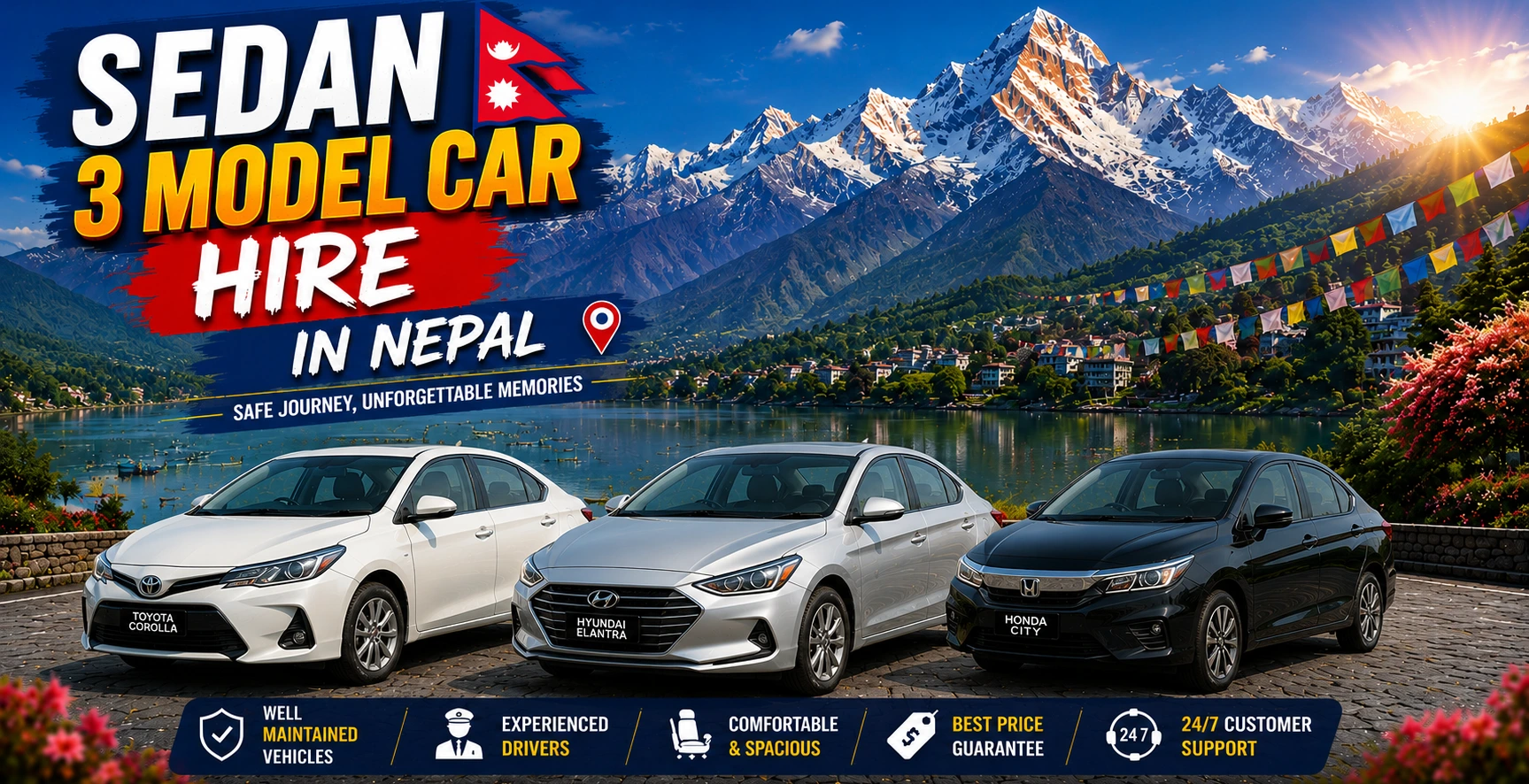
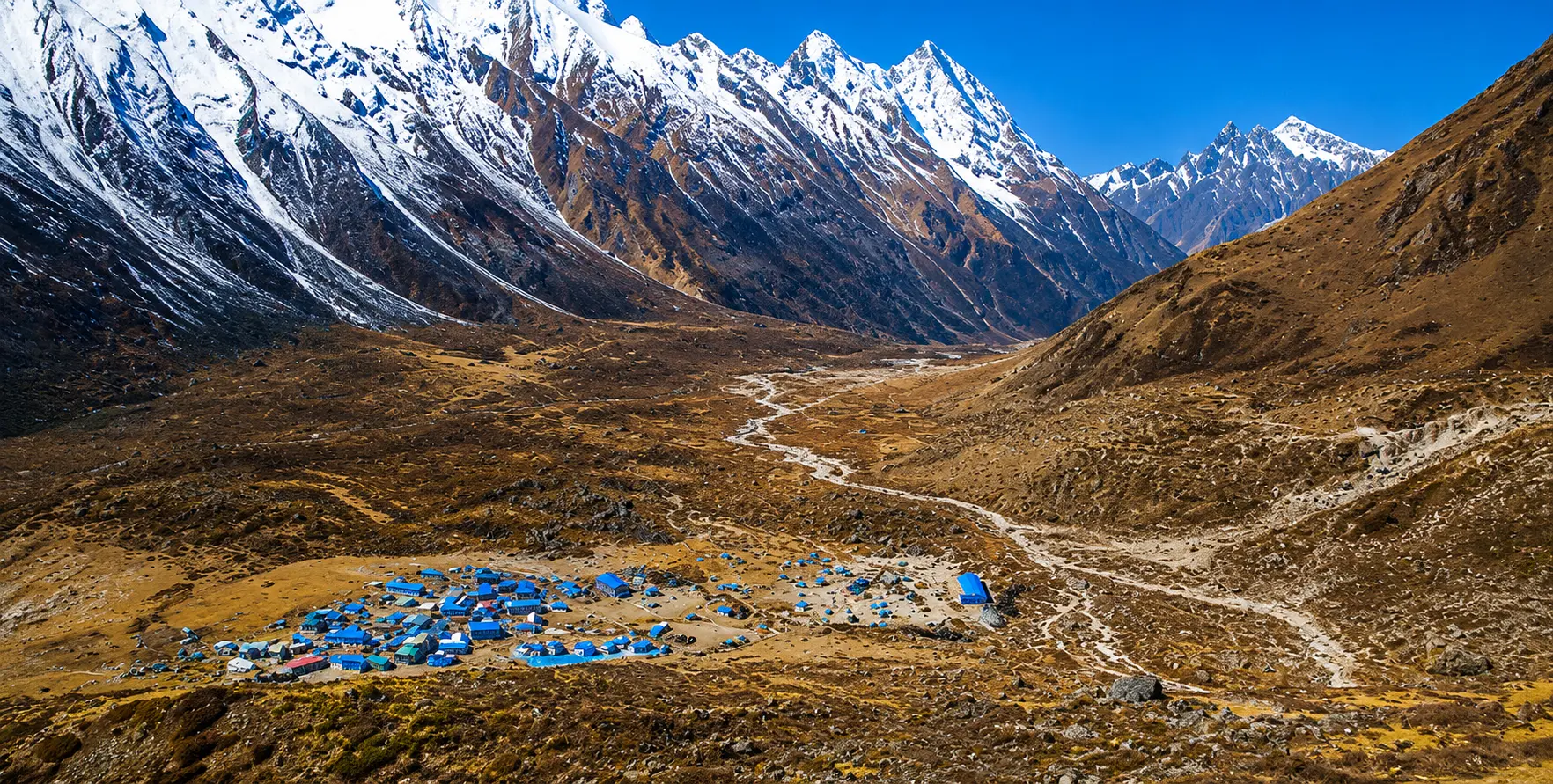
Pokhara to Pame Vehicle Hire

Book Pokhara to Pame Vehicle Hire 2026 with the best private jeep, car, or SUV for a safe and comfortable journey to Pame Village

Introduction: Discovering Pame — Pokhara’s Hidden Valley Gem

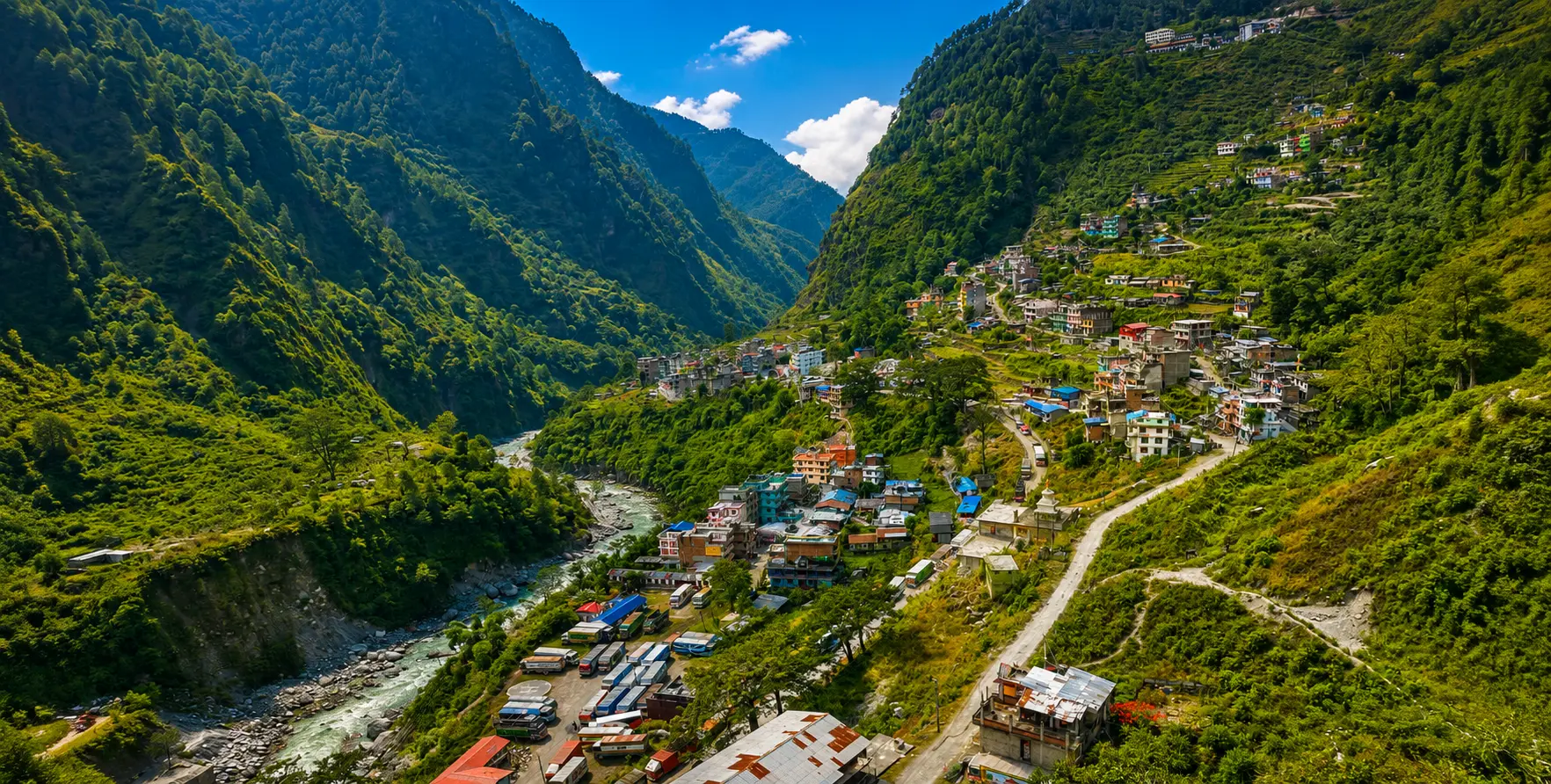
In a region famous for world-class Himalayan trekking, stunning lakeside vistas, and adrenaline-fuelled adventure sports, the quiet valley village of Pame stands as one of Pokhara’s best-kept secrets — a place of genuine rural authenticity, natural beauty, and unhurried pace that offers a refreshing contrast to the busy tourist trails of the more celebrated Annapurna circuit routes. Located in the Harpan River Valley north of Phewa Lake, Pame is a traditional Nepali settlement surrounded by rice paddies, fishing communities, terraced farmland, and the gently dramatic hillsides of Naundanda and Bhumdi, which frame the valley on both sides.

Pame sits at an altitude of approximately 1,000 meters (3,280 feet) above sea level — comfortably accessible from Pokhara Lakeside without altitude concerns and at the perfect elevation to enjoy cool mountain air, spectacular views of Annapurna South and Machapuchare (Fishtail) on clear days, and the authentic rhythm of a traditional Nepali farming village. The Harpan River flows through the valley on its way to merge with Phewa Lake, and its clean waters are a center for local fishing and small-scale aquaculture — a way of life that has continued for generations and that gives Pame its distinctive character.

While Pame has long been popular among the Pokhara mountain biking community — the trails through the Harpan River Valley are considered among the finest recreational cycling routes near the city — the village is equally rewarding for visitors arriving by private vehicle. A private jeep or car hire from Pokhara to Pame offers a completely different Annapurna region experience: one of pastoral landscapes, riverside walks, village-life encounters, and stunning mountain views without the crowds, altitude demands, or physical commitment of the major trekking routes.

This complete 2026 guide covers everything you need to know about hiring a private vehicle from Pokhara to Pame: the full route narrative, road conditions, vehicle hire costs, the best things to see and do in Pame and the surrounding Harpan Valley, the best season to visit, practical tips for making the most of your trip, and how Nepal Vehicle Hiring Pvt. Ltd. — Pokhara’s most trusted private vehicle hire company — can make your Pame village journey seamless, comfortable, and memorable.

Pokhara to Pame Vehicle Hire — Quick Reference (2026)
Destination: Pame Village, Harpan River Valley, Kaski District, Gandaki Province
Altitude: Approx. 1,000 m (3,280 ft) above sea level
Distance from Pokhara Lakeside: Approx. 15–20 km
Drive Time: 35–55 minutes from Pokhara Lakeside
Route: Pokhara Lakeside → Khapaudi → Chankhapur → Pame Village (Harpan River Valley)
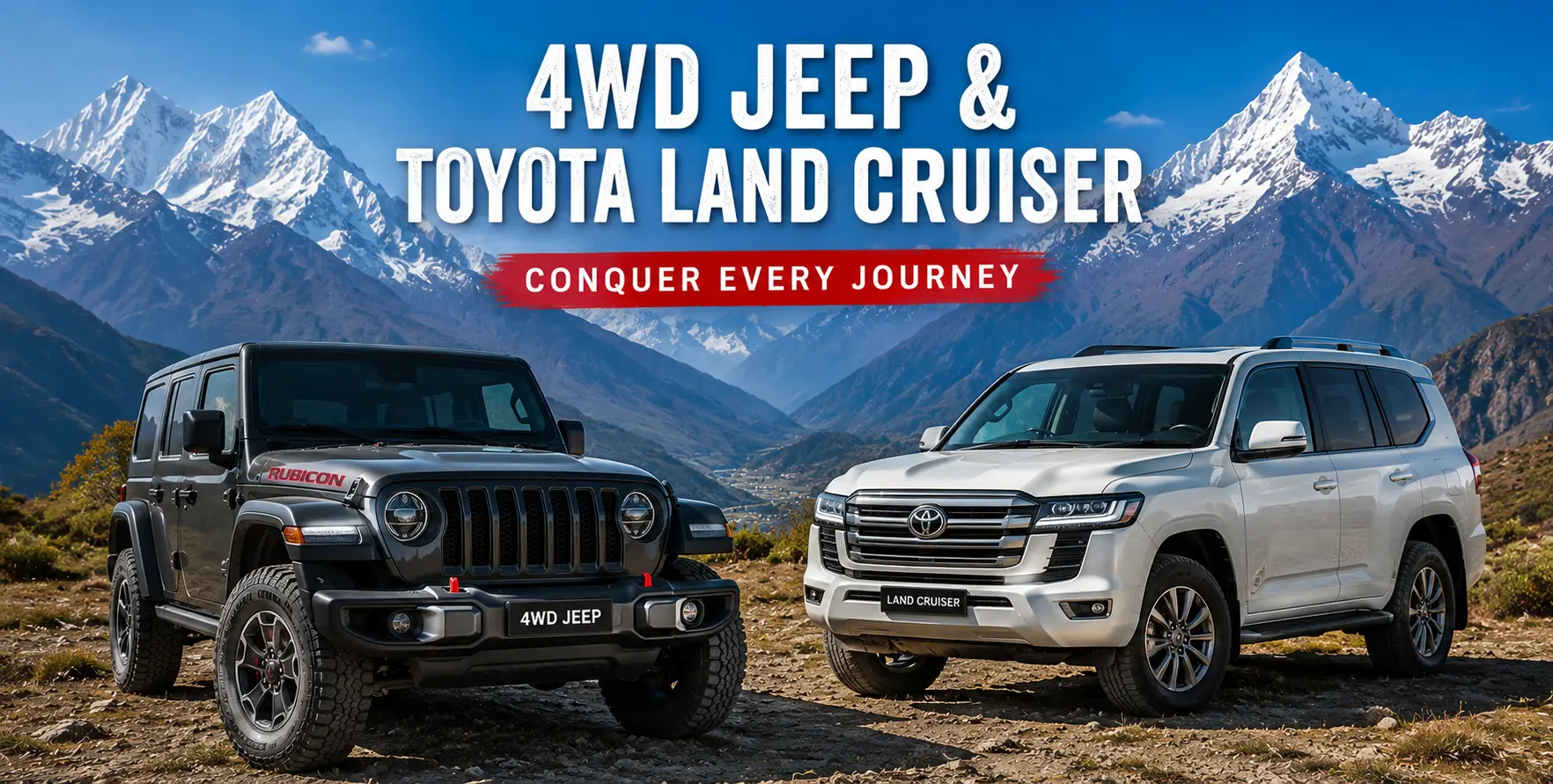
Vehicle Options: Car (Sedan/SUV), 4WD Jeep — 4WD preferred for final approach
Permits: No special permits are required for the Pame village visit
Best Season: Year-round | Best October–May for mountain views | June–September lush green
Highlights: Harpan River Valley, rice paddies, Panchase views, fishing villages, nature walks
Book With: Nepal Vehicle Hiring Pvt. Ltd. | +977 9851013196 | vehiclehiringnepal.com

Book Pokhara to Pame Vehicle Hire 2026 with the best private jeep, car, or SUV for a safe and comfortable journey to Pame Village.

Pame Village: A Portrait of Rural Pokhara Life

Where Is Pame and Why Is It Special?

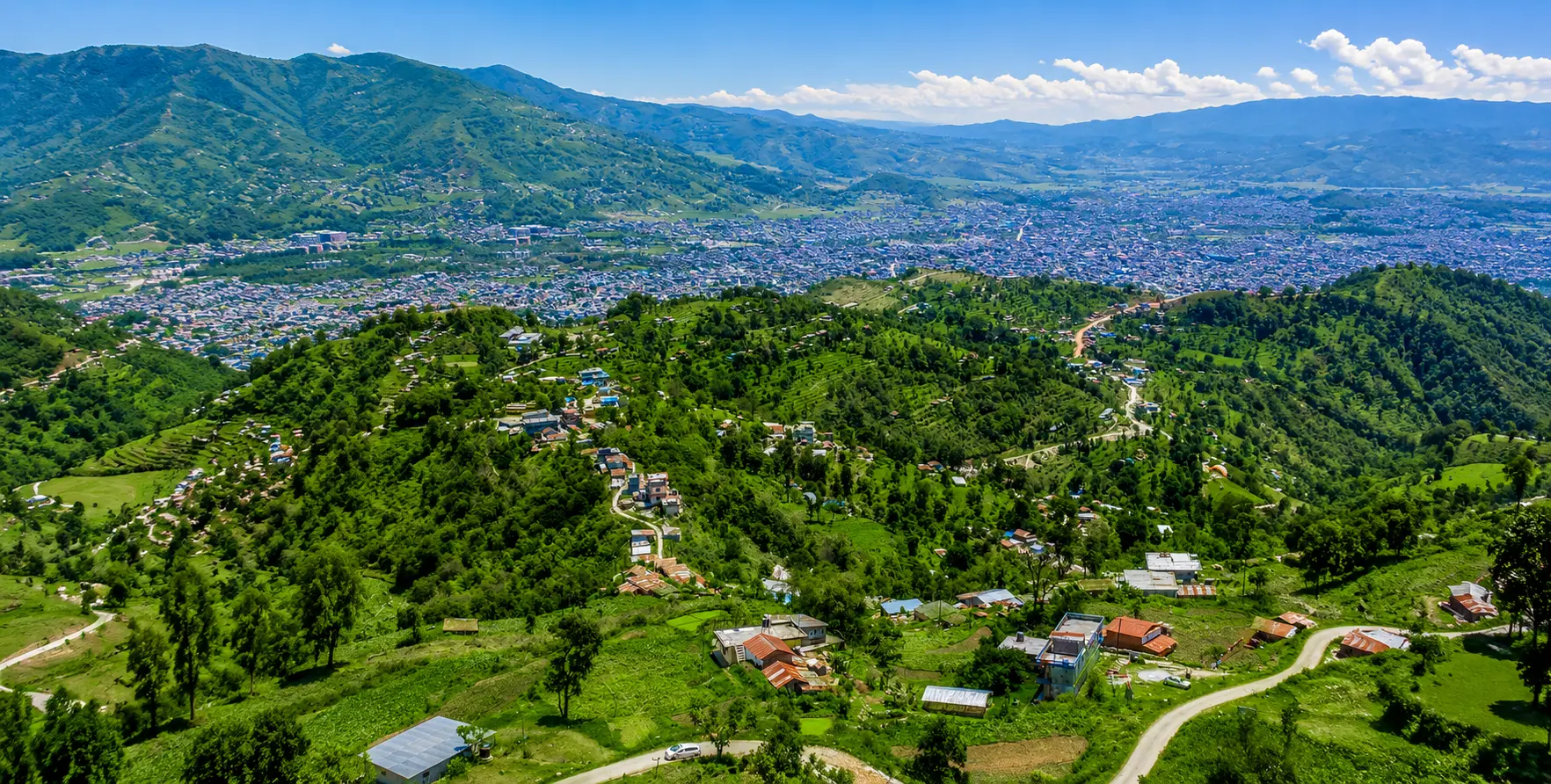
Pame village is situated in the Harpan River Valley, a beautiful rural corridor that runs roughly north to south between the hills of Naundanda (to the west) and Bhumdi (to the east), eventually opening into the northern shores of Phewa Lake. The village lies within Kaski District, part of the broader Pokhara metropolitan area. Yet, its character is unmistakably that of a traditional Nepali farming and fishing community — a world away from the tourist hotels and adventure booking offices of Lakeside despite being just 15–20 kilometers distant.

The landscape around Pame is defined by the Harpan Khola river, which flows clean and clear through the valley, sustaining a network of small-scale fisheries and fish farming operations that have been the economic backbone of the local community for generations. The riverbanks are lined with trees, the valley floor is a patchwork of rice paddies and millet fields cultivated in traditional terraced patterns, and the surrounding hillsides are covered in mixed subtropical forest, providing a vivid green backdrop throughout the year.

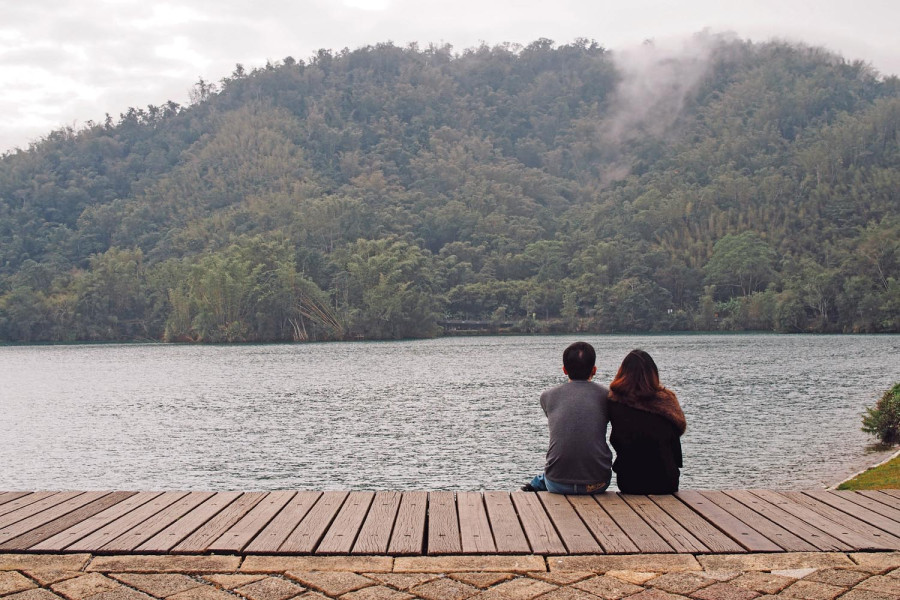
What makes Pame genuinely special — and increasingly sought out by visitors who have exhausted Pokhara’s more obvious attractions — is its combination of accessibility and authenticity. You can be in Pame from Pokhara Lakeside in under an hour by private vehicle. Yet, once there, the pace of life, the agricultural rhythms, and the village community feel genuinely removed from the tourist economy. Children walk to school along river paths. Farmers tend terraced fields by hand. Fishermen work their nets in the morning light. These are the scenes that give Pame its soul — and that a private vehicle hire from Nepal Vehicle Hiring Pvt. Ltd. places within easy reach of any Pokhara visitor.
Book Pokhara to Pame Vehicle Hire 2026 with the best private jeep, car, or SUV for a safe and comfortable journey to Pame Village.

The Harpan River Valley — A Natural Playground

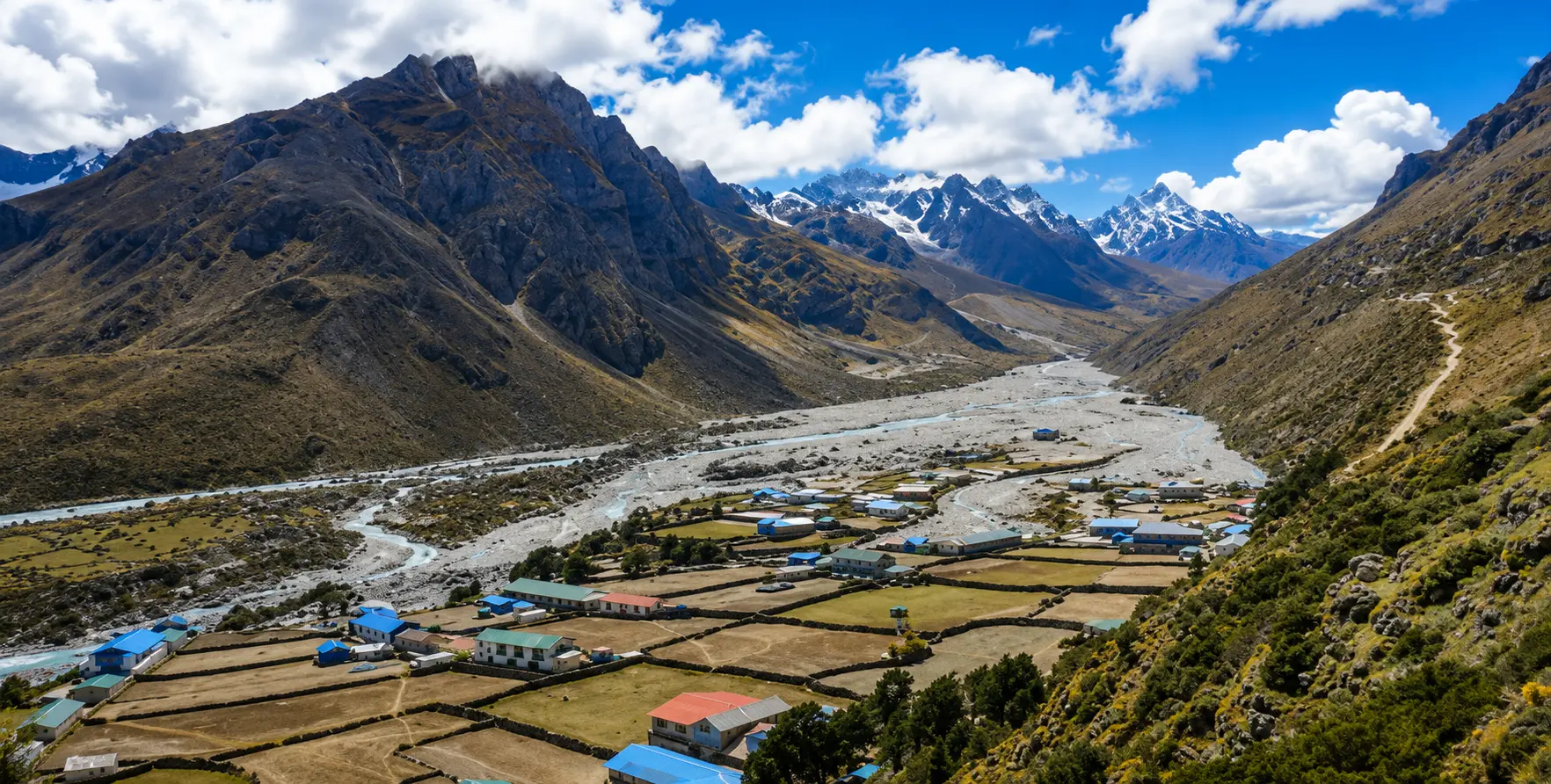
The Harpan River Valley is the geographic and scenic heart of the Pame area. The river itself rises in the hills above and descends through the valley to feed Phewa Lake — Nepal’s second-largest natural freshwater lake — at its northern end. Along its course through the Pame area, the Harpan Khola is clean, relatively gentle, and surrounded by the kind of unspoiled riparian environment that has become increasingly rare near Nepal’s growing cities.

The valley floor on both sides of the river is intensively cultivated — rice in the monsoon season (June–October), wheat and millet in the winter — creating a visual tapestry of agricultural landscape that changes dramatically through the seasons. In post-monsoon October and November, the valley is at its greenest, with rice ready for harvest and the mountain backdrop at its clearest. In spring (March–May), mustard flowers add brilliant yellow to the cultivated landscape. Throughout the year, the river itself draws local anglers fishing for mahseer and other freshwater species.

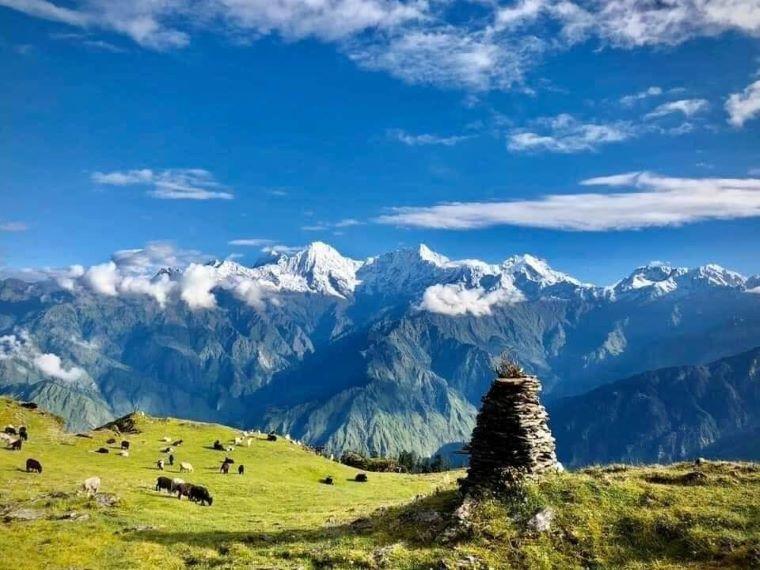
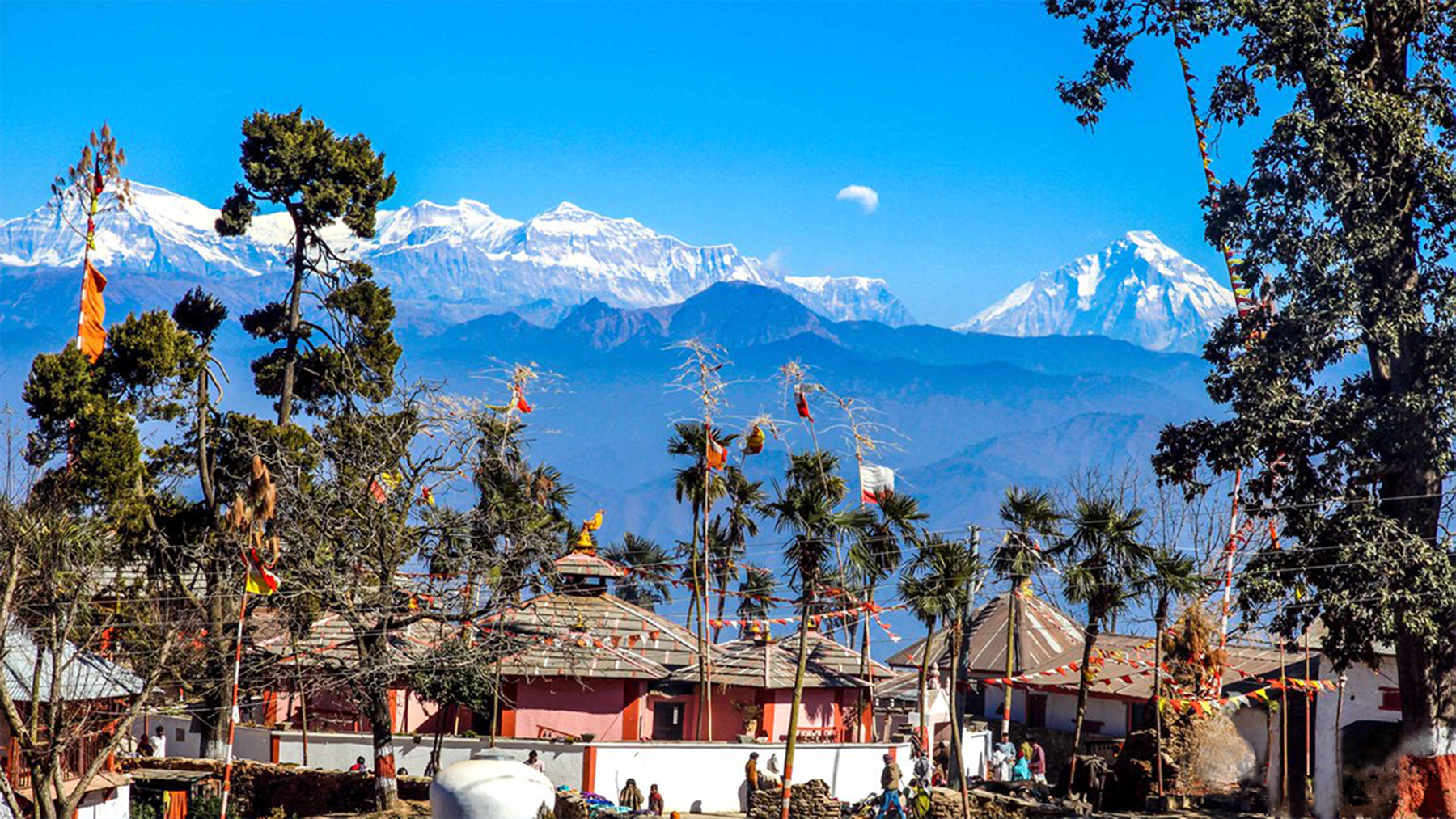
The hills on either side of the valley — Naundanda to the west, and Bhumdi Hill to the east — provide the dramatic topographic framing that makes the Harpan Valley so photogenic. From certain points along the valley floor, the snowy summits of Annapurna South (7,219 m) and Machapuchare (Fishtail, 6,993 m) are visible above the ridge line on clear mornings — a reminder that you are in the Annapurna foothills even at this relatively modest altitude.
Book Pokhara to Pame Vehicle Hire 2026 with the best private jeep, car, or SUV for a safe and comfortable journey to Pame Village.

Pame as a Gateway — Beyond the Village

Pame village itself is a destination worth visiting for its own rural charm. Still, it also serves as a gateway or staging point for several other nearby attractions and activities that make the Pokhara to Pame vehicle hire even more versatile and rewarding:

  • Panchase Hill and Trek — Pame sits in the valley below the Panchase ridge, and the Harpan Valley approach to Panchase Bhanjyang (2,450 m) passes through or near Pame. For trekkers who want to begin the Panchase Trek from the valley floor (rather than from Kande on the ridge road), Pame and Bhadaure are the logical starting points, accessible by private vehicle from Pokhara.
  • Bhumdi Village — The traditional Gurung village of Bhumdi (also known as Pumdi Bhumdi) is accessible from Pame via a short hike or a rough vehicle track. It is a popular overnight stop for Panchase trekkers. The village has several teahouses and offers excellent views of the Annapurna range.
  • Harpan River Swimming and Picnicking — The Harpan Khola at Pame has calm, clean sections suitable for swimming in the warmer months, and the riverside is a popular picnic destination for local families and day-tripping visitors from Pokhara.
  • Fishing and Fish Farm Visits — The Pame area’s small-scale fisheries and fish farms are a distinctive feature of the local landscape, and a visit to one of the local fishing operations offers a genuinely different insight into rural Nepali economic life.
  • Nature Photography — The Harpan Valley landscape, with its combination of river, farmland, forested hills, traditional village architecture, anda  Himalayan peak backdrop, is an outstanding subject for photography year-round and in all lighting conditions.
  • Khapaudi and Chankhapur Villages — The route from Pokhara to Pame passes through the settlements of Khapaudi and Chankhapur, both of which have their own rural character and views of Phewa Lake from the higher ground above the valley floor.
Book Pokhara to Pame Vehicle Hire 2026 with the best private jeep, car, or SUV for a safe and comfortable journey to Pame Village.

The Route: Pokhara to Pame Vehicle Hire

Route Overview

The journey from Pokhara Lakeside to Pame village follows a relatively short but scenic route that heads north from Phewa Lake along the western edge of the Harpan River Valley. The road passes through the settlements of Khapaudi and Chankhapur before descending into the valley floor toward Pame. The total distance is approximately 15–20 km from Pokhara Lakeside, with the drive taking 35–55 minutes depending on road conditions and the exact starting point in Pokhara.

Route CheckpointDistance from Pokhara LakesideAltitudeDrive Time
Pokhara Lakeside (Start Point)0 km822 mDeparture
Pokhara Bazar / Prithvi Chowk3 km830 m8–12 min
Khapaudi Area8–10 km900–950 m20–28 min
Chankhapur Village12–13 km920–960 m25–35 min
Harpan River Valley Floor14–16 km950–980 m30–40 min
Pame Village15–20 km1,000 m35–55 min


The Drive — Stage by Stage

Stage 1 — Pokhara Lakeside to Khapaudi (8–10 km, approx. 20–28 minutes): Leaving Pokhara Lakeside northward, the vehicle navigates through the streets of central Pokhara before picking up the road heading toward the northern lakeshore and the hills beyond. The road climbs gradually out of the flat lake basin onto the lower slopes of the ridge above Phewa Lake, passing through the increasingly rural settlement of Khapaudi. From the elevated sections near Khapaudi, the view back over Phewa Lake and the Pokhara skyline, with the Annapurna range as a backdrop on clear days, is already spectacular. The road quality is generally paved in this section, but narrows in places.

Stage 2 — Khapaudi to Chankhapur (3–4 km, approx. 8–10 minutes): Continuing through the Khapaudi area, the road passes through Chankhapur — a small village settlement with traditional Nepali houses, a local school, and the kind of unhurried community life that characterizes the Harpan Valley corridor. The road at this point offers increasingly open views to the north and east, with the Bhumdi hill and the distant Panchase ridge coming into clearer view. The road surface transitions from paved to partially unpaved in sections beyond Chankhapur.

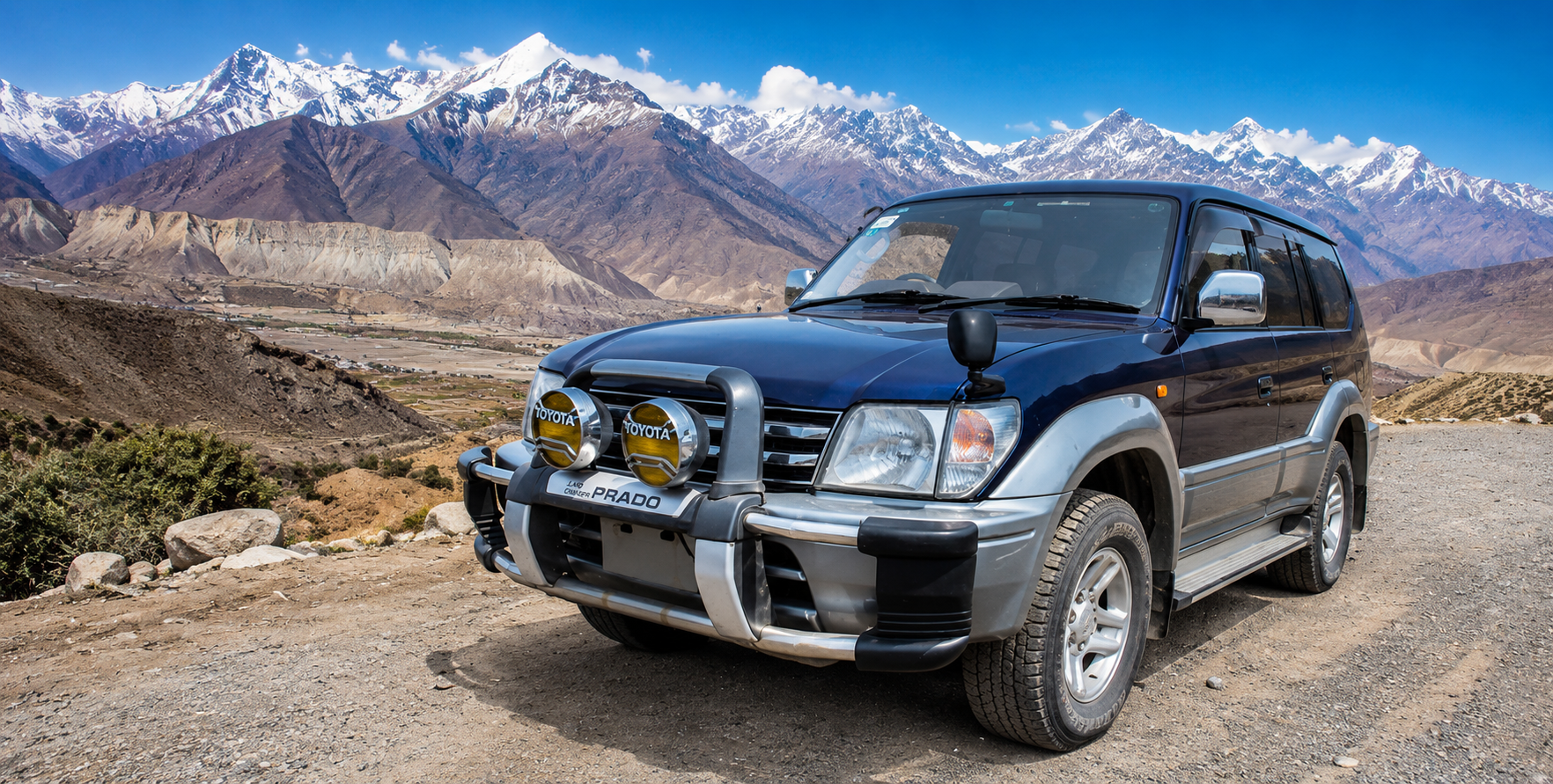
Stage 3 — Chankhapur to Pame Village (3–7 km, approx. 10–20 minutes): The final approach to Pame descends from the ridge area into the Harpan River Valley floor. The road becomes narrower and rougher as it approaches the village — this is where a 4WD vehicle or jeep has a clear advantage over a standard car, particularly after rainfall or during the monsoon season. The descent reveals the full beauty of the Harpan River Valley for the first time: the patchwork of agricultural land, the glittering river, the fishing ponds, and the peaceful village settlement of Pame nestled against the hillside. Arriving in Pame feels like entering a genuinely different Nepal — quiet, agricultural, and authentically beautiful.

Alternative Routes and Extensions

Via Baglung Highway then Valley Road: An alternative approach from Pokhara follows the Beni-Baglung Highway westward to the Naudanda junction area before branching south into the Harpan Valley from above. This approach offers spectacular ridge-level views before descending into the valley, but is longer (approximately 25–30 km) and requires the Naudanda-Bhadaure branch road, which is rougher and requires a 4WD vehicle.

Extension to Bhadaure (Panchase Trek Trailhead): From Pame, the rough valley road continues northward toward Bhadaure village (approximately 5–8 km further) — the low-level starting point for the Panchase Trek. Nepal Vehicle Hiring Pvt. Ltd. can arrange a combined Pame visit and Panchase Trek trailhead drop-off in a single vehicle hire, making this an excellent combined itinerary for trekkers.

Extension to Bhumdi Village: From Pame, a short rough track (passable by 4WD) leads to Bhumdi village (Pumdi Bhumdi) — a traditional Gurung community at approximately 1,500 m with outstanding Annapurna range views and several teahouses. This extension adds approximately 45–60 minutes to the journey but substantially enhances the day’s cultural and scenic depth.
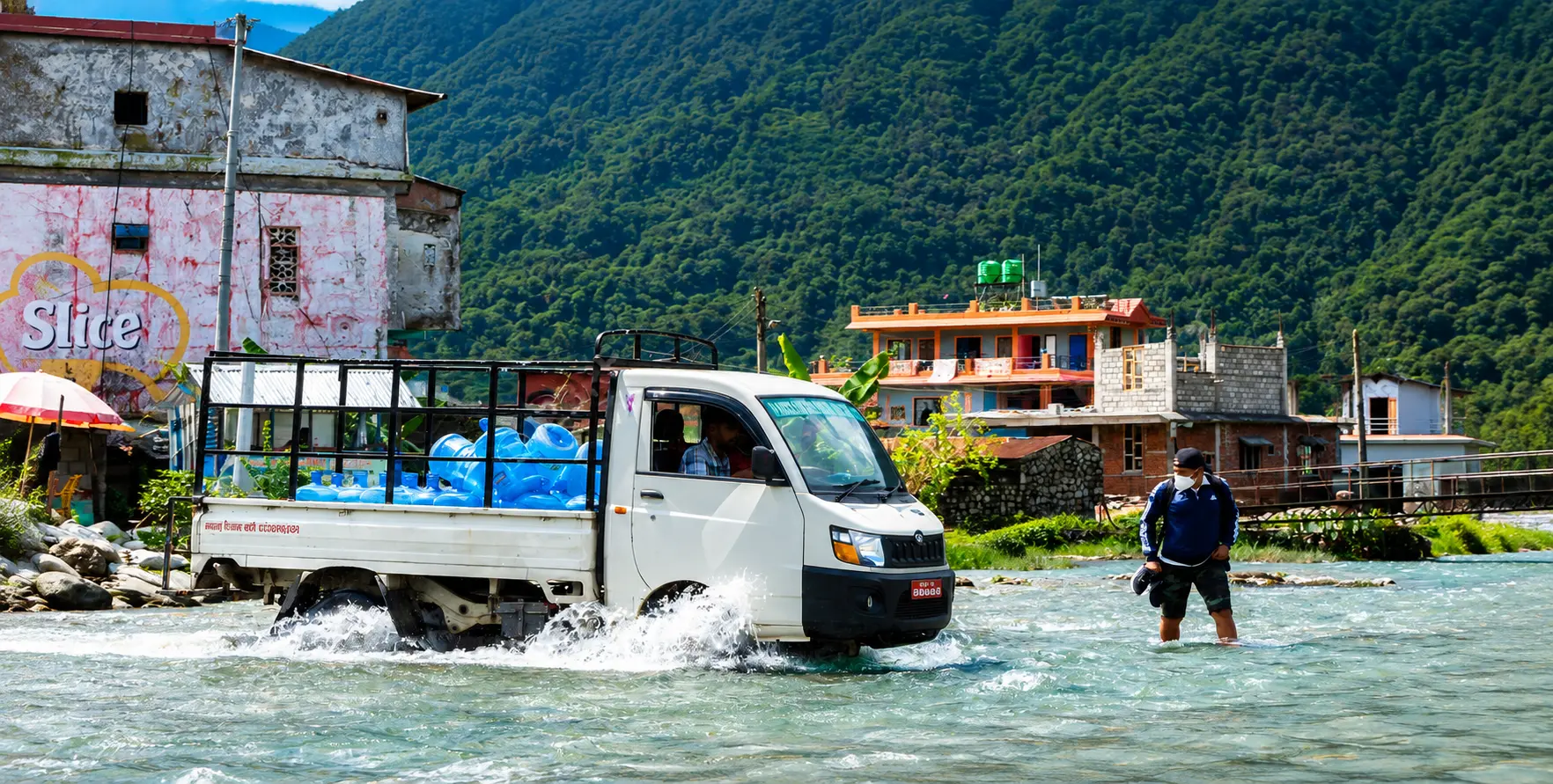
 

pokhara-to-pame-vehicle-hire

Road Conditions: Pokhara to Pame (2026)

Pokhara to Khapaudi — Generally Good Paved Road

The road from Pokhara Lakeside to the Khapaudi area is primarily paved and in reasonable condition, though it narrows considerably beyond Pokhara’s main residential areas. The road is shared with local traffic, including motorcycles, pedestrians, and occasional farm vehicles. It is navigable by standard cars and jeeps comfortably in dry conditions. During the monsoon, some sections of this approach may have minor water damage or slippery surfaces.

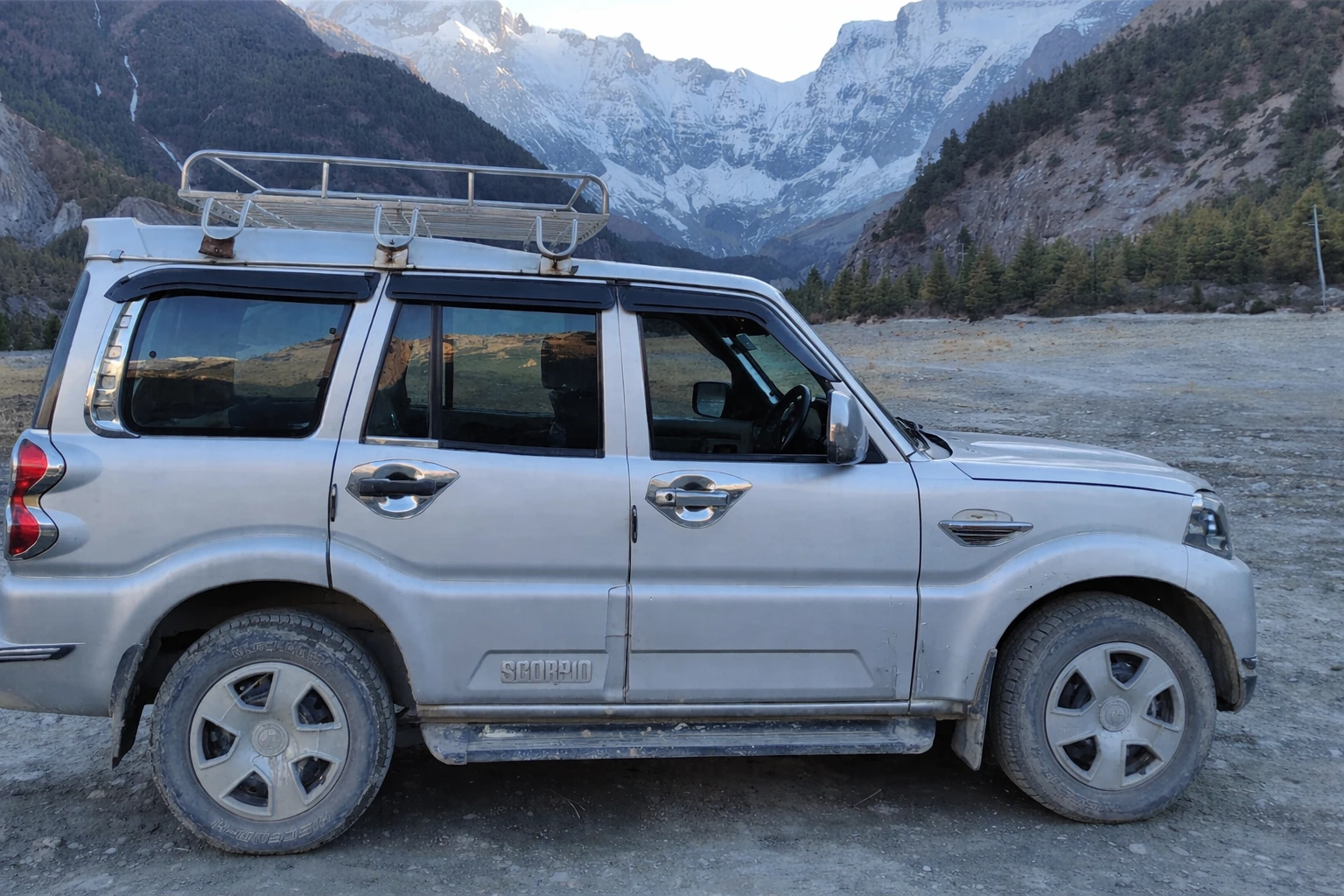
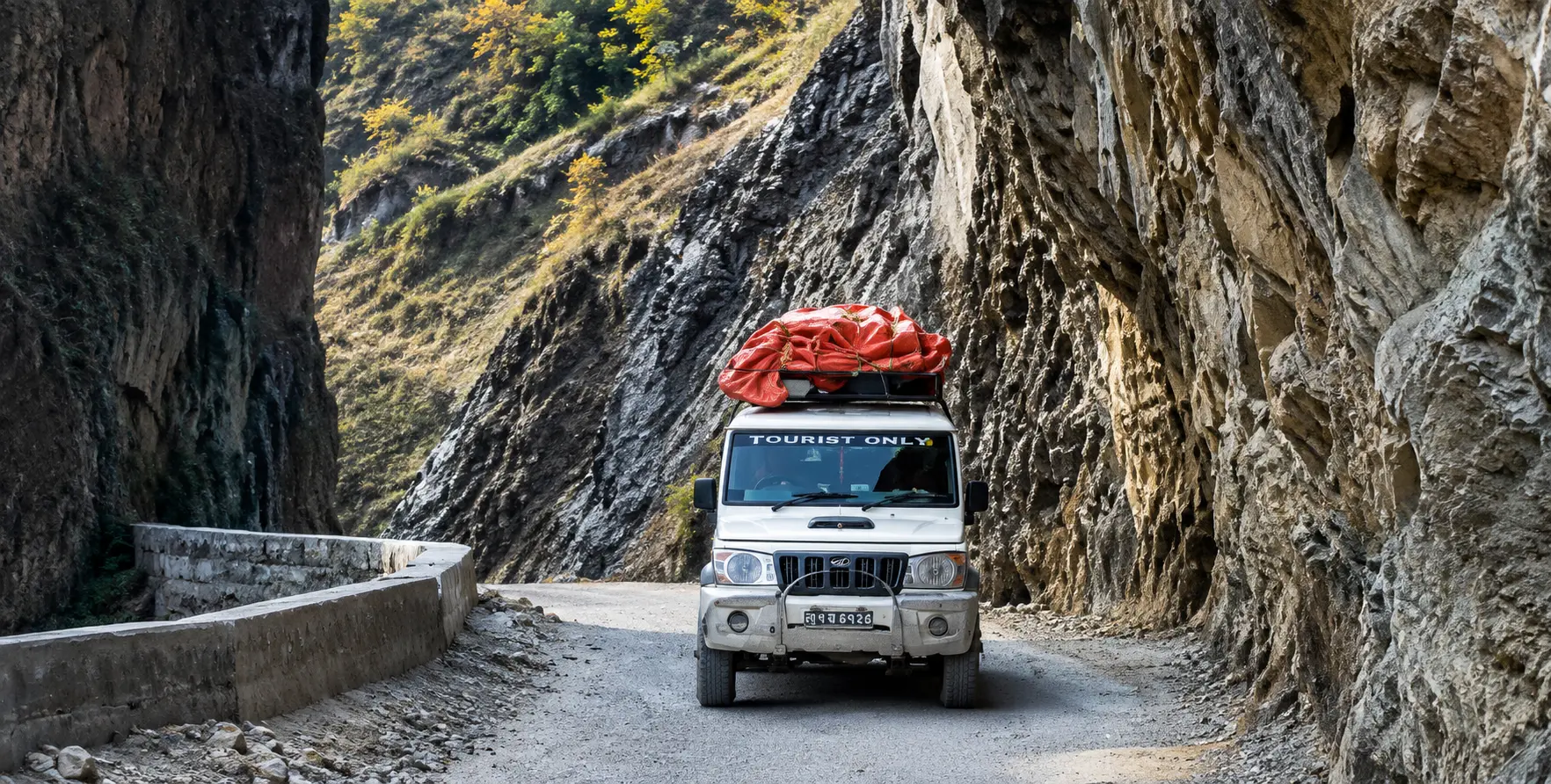
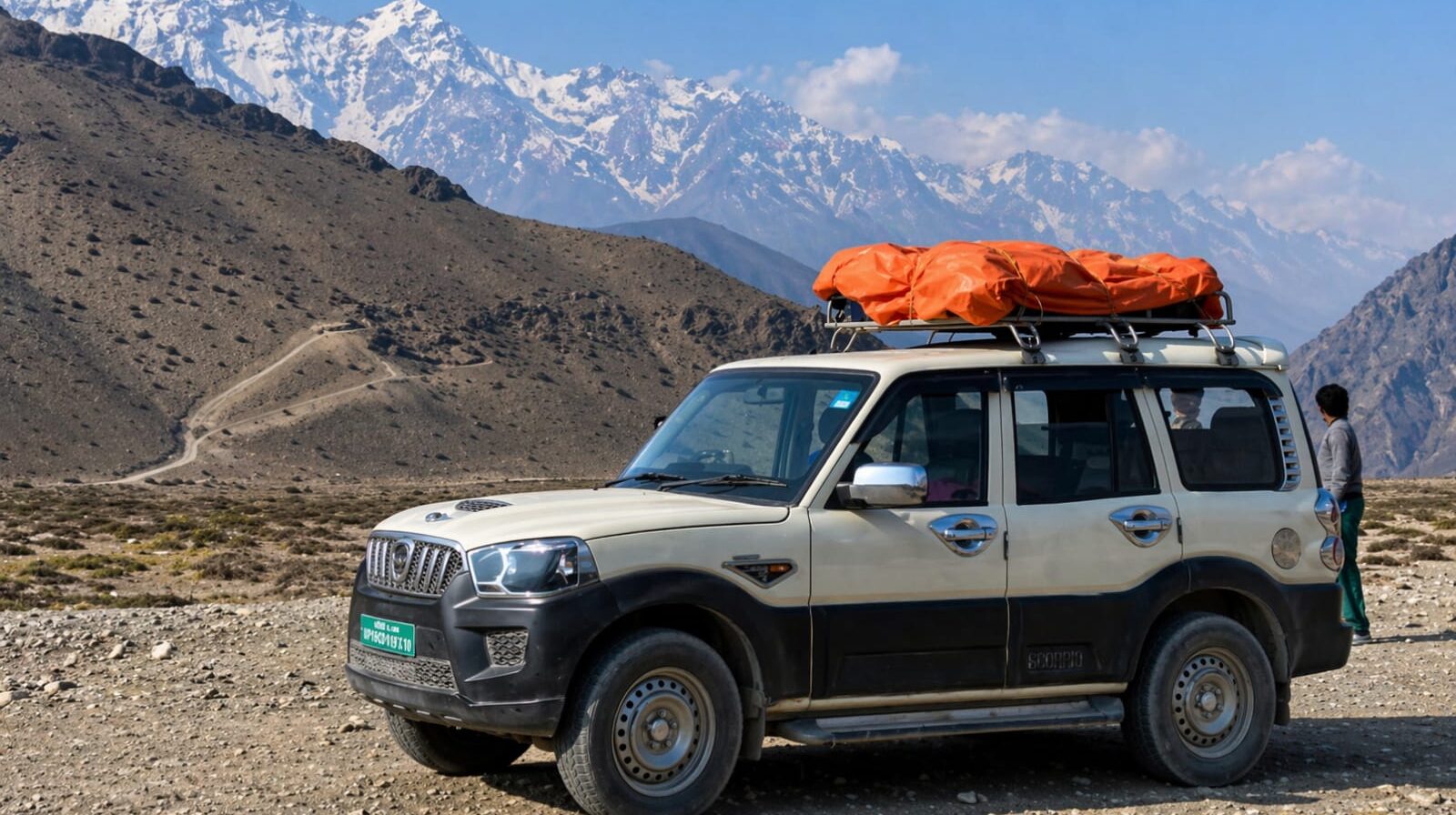
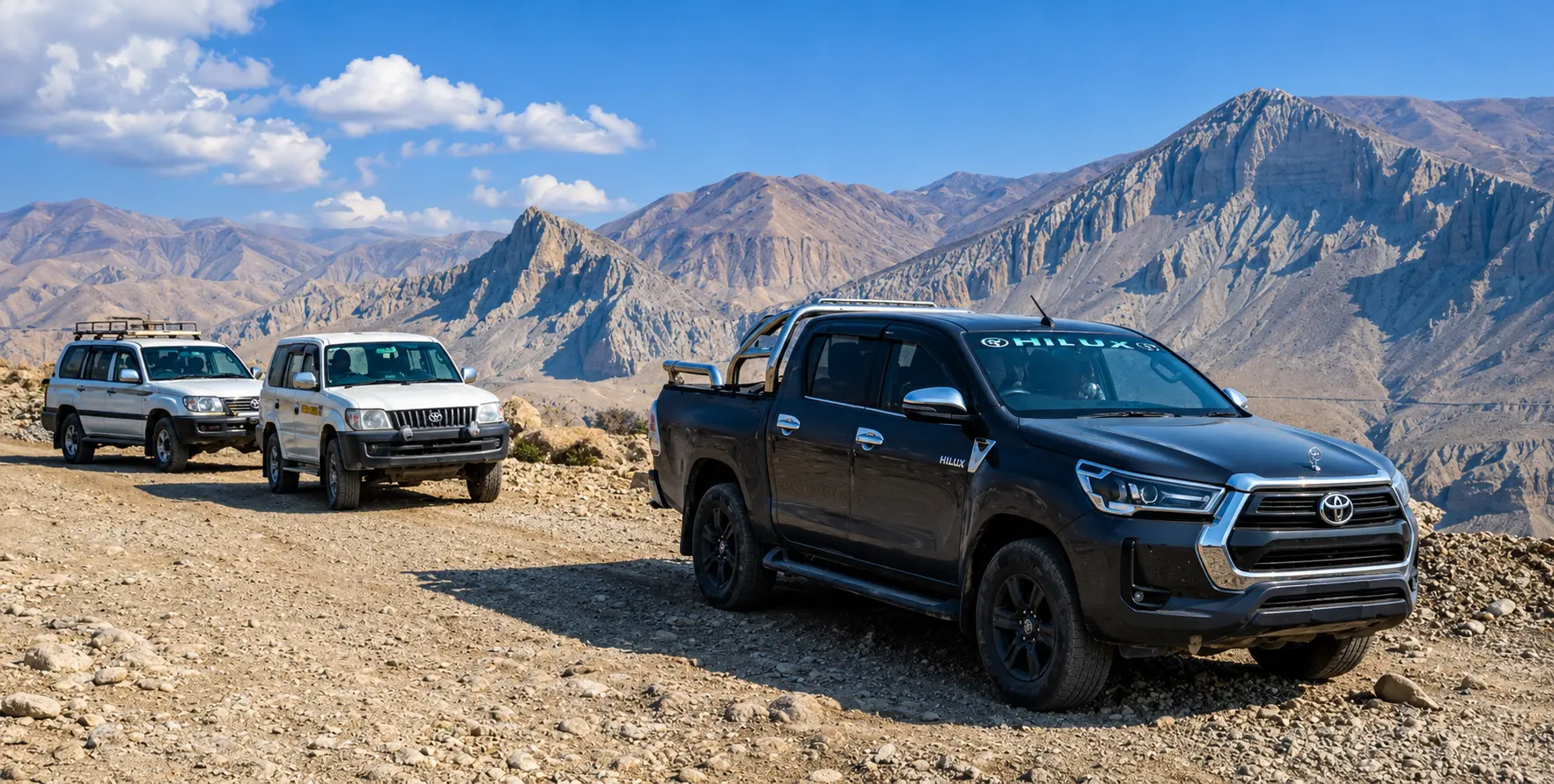
Beyond Khapaudi and through Chankhapur to Pame village, the road quality becomes more variable. Sections alternate between paved and unpaved, and the road narrows significantly in the final approach to the valley floor. The descent into the Harpan River Valley involves some steep and winding sections where a 4WD vehicle with good ground clearance offers a noticeably more confident and comfortable driving experience than a standard car. Nepal Vehicle Hiring Pvt. Ltd. recommends a 4WD jeep (Fortuner, Hilux, or Scorpio) for the Pokhara-Pame route as the first choice, though a capable SUV can also handle the route in dry conditions.

Road Conditions by Season


SeasonPokhara to KhapaudiKhapaudi to PameVehicle Recommendation
October–December (Autumn)Good — dry, stableGood — some rough patchesCar or Jeep — both fine
January–February (Winter)Good — cool, dryGood — occasional muddy sectionsCar or Jeep — both fine
March–May (Spring)Good — warming upGood — best dry season conditionsCar or Jeep — both fine
June–September (Monsoon)Fair — some road damage possibleChallenging — muddy, slippery sections4WD Jeep is strongly recommended

Book Pokhara to Pame Vehicle Hire 2026 with the best private jeep, car, or SUV for a safe and comfortable journey to Pame Village.

Vehicle Recommendation for Pokhara to Pame
Best Choice: 4WD Jeep (Fortuner, Hilux, Scorpio) — confident on all sections year-round
Also Suitable: Car/SUV (Sedan, SUV) — fine in dry season (Oct–May) on the main road
Monsoon Season (June–September): 4WD Jeep ONLY for the Khapaudi–Pame approach
Extension to Bhadaure or Bhumdi: 4WD Jeep required at all times of year
Nepal Vehicle Hiring Pvt. Ltd. provides both car and 4WD jeep options for this route

Book Pokhara to Pame Vehicle Hire 2026 with the best private jeep, car, or SUV for a safe and comfortable journey to Pame Village.

Pokhara to Pame Vehicle Hire Cost (2026)

Private Vehicle Hire — One Way and Day Trip Options

A private vehicle hire from Pokhara to Pame is the most comfortable, flexible, and convenient way to visit the village and the Harpan River Valley. Hotel pickup from anywhere in Pokhara Lakeside, departure at your chosen time, the freedom to stop at viewpoints along the Khapaudi ridge, and door-to-destination delivery make private hire the natural choice for families, groups, photographers, nature lovers, and anyone who values their time and comfort.

Vehicle TypeCapacityOne-Way Cost (Pokhara→Pame)Full Day Return CostHalf-Day Return Cost
Private Car (Sedan/SUV)1–4 paxNPR 2,000–3,000NPR 5,000–8,000NPR 3,500–5,500
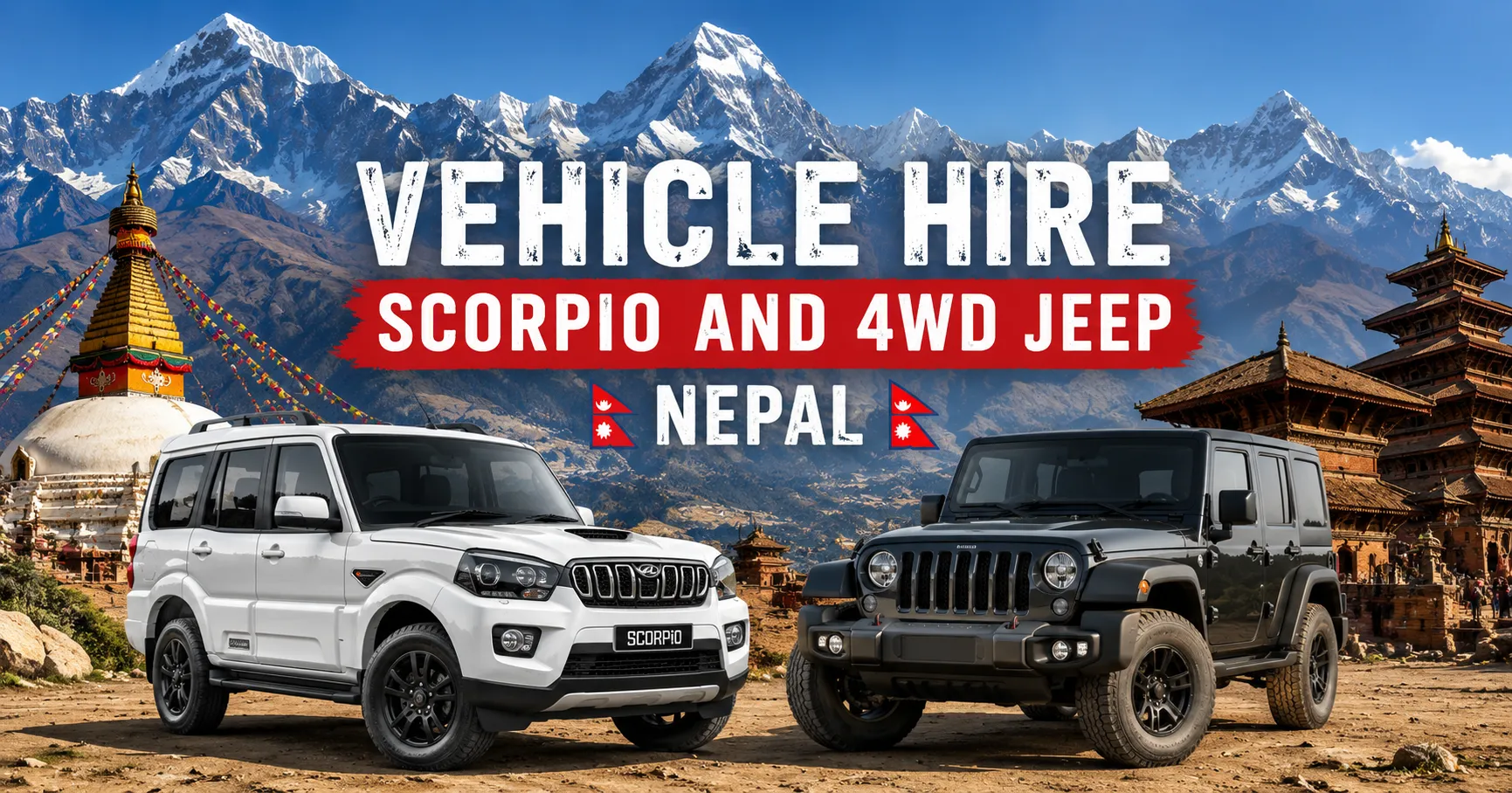
4WD Jeep (Scorpio/Bolero)1–5 paxNPR 2,500–3,500NPR 6,000–9,000NPR 4,000–6,500
4WD Fortuner / Hilux1–6 paxNPR 3,000–4,500NPR 7,500–11,000NPR 5,000–7,500
Hiace Van7–14 paxNPR 5,000–7,000NPR 12,000–18,000NPR 8,000–12,000

Book Pokhara to Pame Vehicle Hire 2026 with the best private jeep, car, or SUV for a safe and comfortable journey to Pame Village.

Full Day Package Includes: Hotel pickup in Pokhara Lakeside, drive to Pame with stops at Khapaudi viewpoint, flexible time in Pame village and Harpan Valley, optional extension to Bhumdi or Bhadaure, and return to the hotel in Pokhara. Full day (8–10 hours total).

Half-Day Package: Hotel pickup, drive to Pame, 2–3 hours in the valley, return to Pokhara. Best for visitors with limited time who want a taste of the Harpan Valley without committing a full day.

One Way (Drop-off Only): For trekkers beginning the Panchase Trek from Bhadaure, or cyclists hiring a vehicle for the Pame route support, a one-way drop-off at Pame (or onward to Bhadaure) is also available. Return vehicle pickup can be arranged separately.

Per-Person Cost Comparison by Group Size


Group SizeBest VehicleTotal Day Cost (approx.)Per Person Cost
1–2 peoplePrivate Car or ScorpioNPR 5,000–8,000NPR 2,500–8,000/person
3–4 peopleFortuner / Hilux 4WDNPR 7,500–10,000NPR 1,875–3,333/person
5–6 peopleFortuner / Land CruiserNPR 9,000–12,000NPR 1,500–2,400/person
7–14 peopleHiace VanNPR 12,000–18,000NPR 857–2,571/person


For groups of 4 or more, a private vehicle hire to Pame is extremely affordable per person — often less expensive than multiple shared taxi arrangements — while delivering the added benefits of hotel pickup, flexible timing, and the freedom to explore the Harpan Valley at your own pace.

Combined Pame + Panchase Trek Vehicle Package

Nepal Vehicle Hiring Pvt. Ltd. offers a popular combined package for trekkers who want to begin the Panchase Trek from the Bhadaure trailhead (the lowest and most culturally immersive starting point, located approximately 5–8 km north of Pame). The package includes: vehicle pickup from a Pokhara hotel, a scenic drive through Khapaudi and Pame, an optional valley stop for photography and a village walk, a continuation to the Bhadaure trek trailhead, and a pre-arranged return vehicle pickup from Naudanda or Kande on your trek completion day. This combined package saves trekkers significant time and logistical complexity. Contact Nepal Vehicle Hiring Pvt. Ltd. for a custom quote.
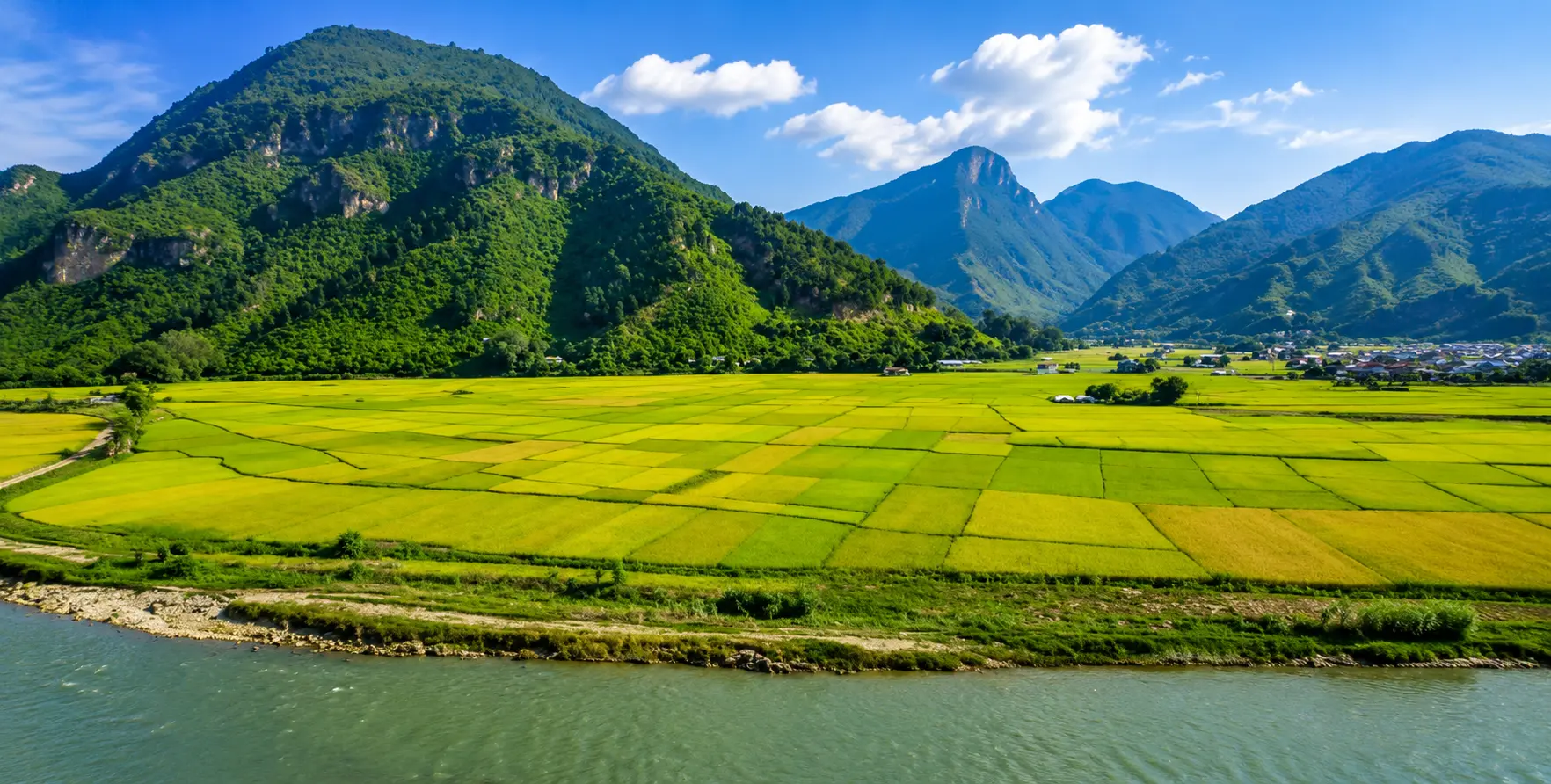
Book Pokhara to Pame Vehicle Hire 2026 with the best private jeep, car, or SUV for a safe and comfortable journey to Pame Village.

What to See and Do in Pame and the Harpan River Valley

1. The Harpan River Walk — Nature at Its Finest

The most rewarding and peaceful activity in Pame is simply walking along the Harpan Khola riverbank — a gentle, flat path that follows the river through a landscape of extraordinary rural beauty. The riverside path connects several small villages and farming settlements, passing through bamboo groves, fish ponds, riverside orchards, and open agricultural land with unobstructed views of the surrounding hills and the distant Annapurna peaks. The path is easy underfoot and suitable for all ages and fitness levels, making it ideal for families, elderly visitors, and anyone who wants to experience Himalayan natural beauty without strenuous hiking.

The best time for the river walk is early morning (7:00–10:00 AM) when the light is golden, the air is cool, and the local farming activity is at its most active and photogenic. Fishermen casting nets from the riverbank, farmers walking to their fields, school children making the morning journey along the path, and the occasional heron or kingfisher working the shallows — these are the sights and sounds that make the Harpan river walk in Pame a genuinely memorable Nepal experience.

2. Fish Farm and Fishery Visits

The Pame area is well known within Kaski District for its network of small-scale fish farms and fishing operations along the Harpan Khola. Common carp, silver carp, grass carp, and the prized native mahseer are cultivated and caught in the valley’s clean river waters. A visit to one of the local fisheries — where the owner will typically be happy to show visitors around if approached respectfully — offers a fascinating insight into traditional and semi-modern small-scale aquaculture practice in rural Nepal. Some local teahouses near the river also serve freshly caught fish dishes (macha bhat — fish with rice), considered among the finest rural Nepali dishes in the Pokhara region.

3. Rice Paddy and Agricultural Landscape Photography

The Harpan River Valley’s agricultural landscape is one of the most photogenic in the Pokhara region, offering the classic Nepal rural-photography composition: terraced fields in the foreground, traditional stone farmhouses in the midground, forested hillsides in the background, and snow-capped Himalayan peaks on the horizon. The optimal photography season is October–November (post-monsoon, when the rice is golden and ready for harvest, the air is clear, and the mountains are perfectly visible) and March–April (when mustard flowers add brilliant yellow to the landscape and spring light is warm and clear).

For photographers, a private vehicle hire from Nepal Vehicle Hiring Pvt. Ltd. allows complete flexibility in timing — arriving at dawn for the best light, moving between viewpoints along the valley as the light shifts through the morning, and departing when you have captured everything you came for rather than being constrained by a shared vehicle or public transport schedule.

4. Khapaudi Viewpoint — Phewa Lake and Mountain Panorama

On the drive from Pokhara to Pame, the Khapaudi area on the ridge above the Harpan Valley offers outstanding views in both directions: southward over Phewa Lake and the Pokhara Valley (with the city visible spread across the lake basin), and northward toward the Annapurna range and the Panchase ridge. On a clear morning in October or November, this is one of the finest roadside viewpoints in the entire Pokhara region — a combination of lake, city, forest, and Himalayan mountain panorama that is genuinely extraordinary. Ask your Nepal Vehicle Hiring driver to stop at the best Khapaudi viewpoint during the drive to or from Pame.

5. Chankhapur Village — Rural Community Life

The village of Chankhapur, on the road between Khapaudi and Pame, is a traditional Nepali hill community whose character feels barely touched by the tourism industry despite its proximity to Pokhara. The village has a small local school, a community water system, a row of traditional stone-and-mud-plaster houses with wooden windows and slate roofs, and a daily market where local farmers bring vegetables and livestock. Stopping briefly in Chankhapur to walk the main village path, observe the local market, and interact with residents offers an authentic glimpse of rural Nepal that contrasts sharply with the polished tourist experiences of Pokhara Lakeside.

6. Swimming and Picnicking at the Harpan River

During the warmer months (April–September), the Harpan River near Pame has clean, accessible sections suitable for swimming — a refreshing escape from the heat of the valley floor. Several spots along the river have flat grassy banks ideal for picnicking, and the combination of clean water, shade trees, mountain views, and peaceful surroundings makes the Harpan riverbank at Pame one of the finest natural picnic destinations near Pokhara. Nepal Vehicle Hiring Pvt. Ltd. can transport your picnic group — from a family of four in a Fortuner to a group of 14 in a Hiace van — directly to the best riverside access points in Pame.

7. Cycling Support Vehicle — Pame Biking Route

Pame and the Harpan River Valley are widely recognized in Nepal’s cycling community as among the finest mountain-biking and recreational cycling routes near Pokhara. The trail through the valley passes through Khapaudi, Chankhapur, and Pame village before climbing toward Panchase — offering a varied mix of paved road, gravel track, and off-road trail suitable for riders of different skill levels. Nepal Vehicle Hiring Pvt. Ltd. provides vehicle support for cycling groups on this route: transporting bikes and riders from Pokhara to the trail start point, serving as a support and backup vehicle during the ride, and collecting the group at the finishing point. This is a popular service for cycling tour operators and independent cycling groups exploring the Pokhara region.

8. Bird Watching in the Harpan Valley

The Harpan River Valley is a productive birdwatching area, particularly for waterbirds and forest edge species. The river and its associated fish ponds attract herons (Grey Heron, Purple Heron, and Indian Pond Heron are all common), kingfishers (Common Kingfisher and Pied Kingfisher), egrets, and various wading birds. The surrounding subtropical forest and agricultural land support a diverse bird community, including babblers, sunbirds, bulbuls, and raptors. For birdwatchers visiting Pokhara — already one of Nepal’s premier birdwatching destinations — the Pame area offers a productive morning excursion that complements the more famous Phewa Lake birdwatching circuit.
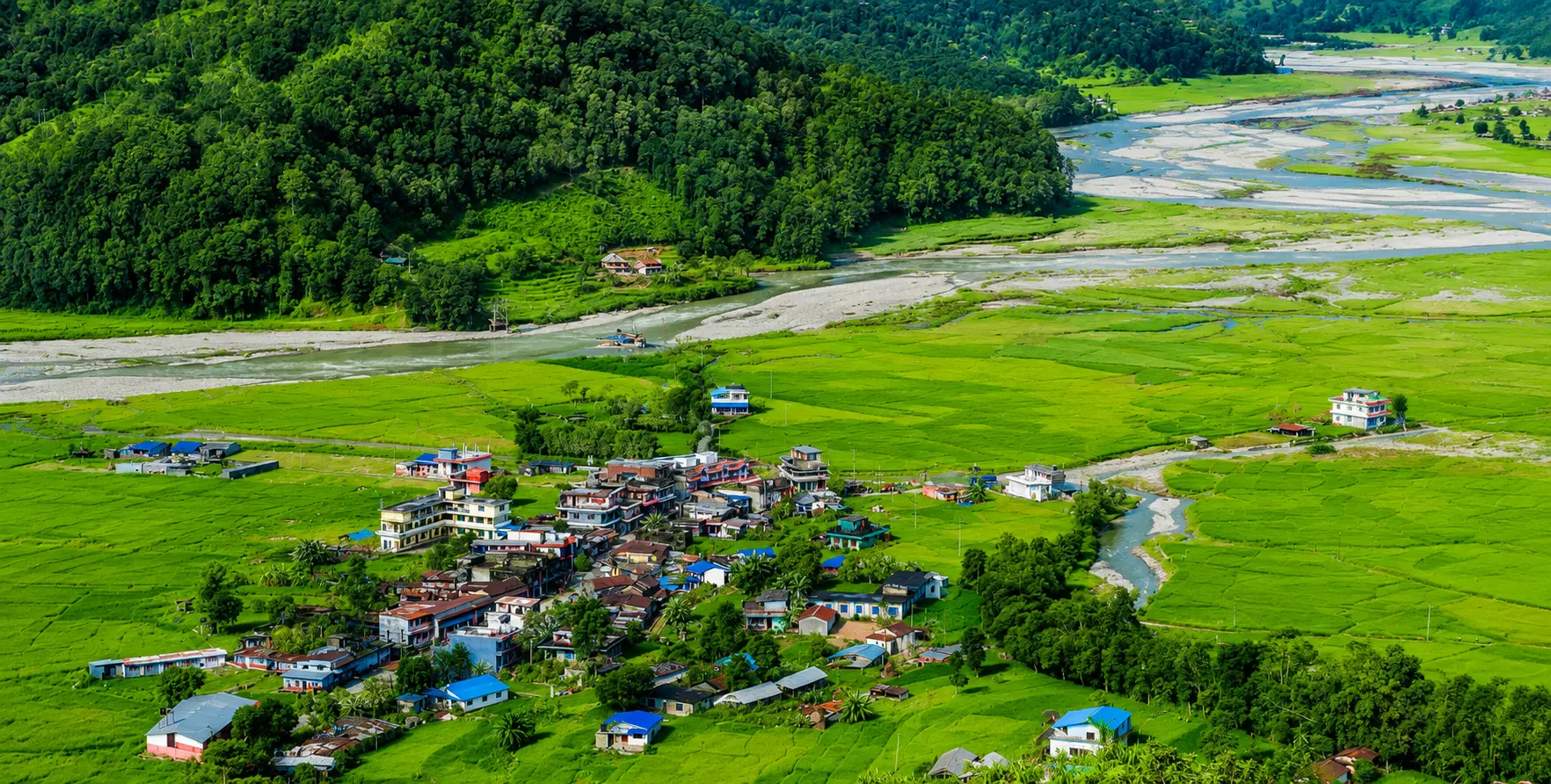
Book Pokhara to Pame Vehicle Hire 2026 with the best private jeep, car, or SUV for a safe and comfortable journey to Pame Village.

Best Time to Visit Pame from Pokhara

October to December — Post-Monsoon Autumn (BEST)

The post-monsoon autumn season is the best time to hire a vehicle from Pokhara to Pame. October and November offer the clearest mountain views — Annapurna South and Machapuchare stand crisp and brilliant above the Panchase ridge — combined with lush, monsoon-freshened agricultural landscapes at their most vibrant. The rice harvest is at its golden peak in October, creating extraordinary photography conditions. Road conditions are at their best following monsoon road repairs. Temperatures in the Harpan Valley are pleasantly cool (18–25°C by day) and comfortable for walking and outdoor activities. This is the single best season to visit Pame.

March to May — Spring (EXCELLENT)

Spring is the second peak season for Pame visits. The mustard crops on the valley floor add a brilliant yellow to the agricultural landscape in March; wildflowers bloom on the Panchase hillsides above; and the morning mountain views (before afternoon cloud build-up) are spectacular. Temperatures warm progressively through May, and the valley becomes lush and green as the pre-monsoon moisture arrives. The Harpan River is at a pleasant level in spring — ideal for riverside walks and swimming. Bird activity is excellent in the spring breeding season.

December to February — Winter (GOOD)

Winter brings cool, dry, and clear conditions to the Harpan Valley. Mountain views are often superb in the clear, dry air of January and February. The valley’s rice fields are bare after the October harvest, replaced by winter wheat and mustard in the lower fields. Temperatures can be cool (12–18°C by day, 5–10°C at night) but are pleasant for walking and outdoor activities. The river is at its clearest and lowest in winter. Few visitors come to Pame in winter, making it an especially peaceful and uncrowded experience.

June to September — Monsoon (GREEN AND DRAMATIC)

The monsoon season transforms the Harpan Valley into a landscape of extraordinary lush green beauty — rice paddies at every stage of growth, waterfalls descending from the hillsides above, and the river running full and energetic. For visitors who appreciate monsoon landscape photography, this is a remarkable time to visit Pame. However, the road from Khapaudi to Pame can become muddy and slippery in heavy rain, making a 4WD vehicle essential. Mountain views are largely obscured by cloud cover during the monsoon. Nepal Vehicle Hiring Pvt. Ltd. can advise on road conditions and appropriate vehicle choice for monsoon visits.

Why Choose Nepal Vehicle Hiring Pvt. Ltd. for Your Pame Journey

The Pokhara to Pame vehicle hire may be a relatively short journey — 15–20 km. Still, the road conditions, the varying surface quality between Khapaudi and Pame, and the potential for extensions to Bhadaure and Bhumdi all make a professional, well-maintained vehicle with an experienced local driver the smart choice. Nepal Vehicle Hiring Pvt. Ltd. brings the same commitment to quality and professionalism to your Pame trip that we bring to our high-altitude mountain routes and long-distance intercity transfers.

Why Nepal Vehicle Hiring for Pokhara to Pame
50k+ satisfied customers | 5.0  TripAdvisor | 15k+ verified 5-star reviews
Hotel pickup from anywhere in Pokhara Lakeside — we come directly to your door
Drivers know Khapaudi, Chankhapur, Pame, Bhadaure & Bhumdi routes intimately
Fleet: Private Car, 4WD Jeep (Fortuner/Hilux/Scorpio), Hiace Van — right vehicle for every group
Flexible itinerary — viewpoint stops, village walks, river time, photography pauses — all at your pace
Return pickup arranged from any point — Pame, Bhadaure, Bhumdi, or Naudanda
Transparent all-inclusive pricing — fuel, driver, vehicle — no hidden charges
24/7 WhatsApp support: +977 9851013196
Combined packages: Pame Day Trip + Panchase Trek trailhead drop-off available
Licensed & Registered | Reg. No. 219204 | Bhagawatisthan, Thamel, Kathmandu

Book Pokhara to Pame Vehicle Hire 2026 with the best private jeep, car, or SUV for a safe and comfortable journey to Pame Village.

Our Vehicle Options for the Pokhara to Pame Route


VehicleCapacityRoute SuitabilityBest For
Private Car (Sedan/SUV)1–4 paxGood for dry season (Oct–May), main road to PameCouples, solo travelers, light luggage
4WD Jeep (Scorpio/Bolero)1–5 paxExcellent year-round — handles all sections, including monsoonSmall families, pairs, cycling support
4WD Fortuner/Hilux1–6 paxExcellent — best all-round choice for Pame + extensionsFamilies, photography groups, Bhadaure extension
Hiace Van7–14 paxGood for dry season main road — not for Bhadaure extensionLarge families, school picnics, and social groups


7-Step Booking Guide

  • Step 1 — Contact Nepal Vehicle Hiring Pvt. Ltd. via WhatsApp (+977 9851013196), phone, email ([email protected]), or the website booking form at vehiclehiringnepal.com.
  • Step 2 — Share your travel date, group size, Pokhara hotel name and address, and preferred departure time.
  • Step 3 — Tell us your itinerary preference: Pame village day trip only; Pame + Bhumdi extension; Pame + Bhadaure trek drop-off; or a custom Harpan Valley circuit.
  • Step 4 — Select your vehicle from our recommendations based on group size and itinerary.
  • Step 5 — Receive the booking confirmation with the driver’s name, vehicle details, and the driver’s WhatsApp number.
  • Step 6 — Be ready at your hotel lobby at the agreed time (recommended: 7:00–8:00 AM for the best morning light in the valley).
  • Step 7 — Enjoy the Harpan River Valley at your own pace with your professional Nepal Vehicle Hiring driver.
Book Pokhara to Pame Vehicle Hire  with the best private jeep, car, or SUV for a safe and comfortable journey to Pame Village.

Practical Tips for Your Pokhara to Pame Vehicle Hire

Best Departure Time

For the best experience in the Harpan River Valley, aim to depart Pokhara Lakeside between 7:00 and 8:00 AM. This early start positions you in the valley during the golden morning hours — when light is warmest, mountain views are clearest before afternoon cloud, local farmers and fishermen are most active, and the whole valley has a magical early-morning atmosphere that photographs beautifully. By midday, the heat increases (in summer), and cloud cover often builds over the Annapurna range. An 8:00 AM departure also allows a comfortable full-day itinerary with a return to Pokhara by 4:00–5:00 PM.

What to Bring

  • Camera with a wide-angle and telephoto lens — the Harpan Valley offers both wide landscape shots and compressed mountain telephoto compositions.
  • Comfortable walking shoes — suitable for river path walking, village lanes, and light off-trail exploration.
  • Light layers — the valley can be cool in the morning even in spring and autumn, warming up significantly by midday.
  • Sunscreen and hat — UV exposure is significant even at 1,000 m altitude, especially midday.
  • Cash in Nepali Rupees — no ATMs in Pame; carry sufficient for any refreshments, donations at local temples, or purchases from village vendors.
  • Binoculars — for birdwatching and mountain detail photography from the valley floor.
  • Water and light snacks — while local teahouses in Pame offer tea and basic food, it’s a good habit to bring your own water and snacks for the drive.
  • Swimming gear — if visiting April–September and planning to swim in the Harpan River, bring appropriate swimwear and a quick-dry towel.

Respecting Pame’s Rural Community

Pame is an authentic rural community — not a tourist destination designed for visitors. The warmth and openness of residents to respectful visitors is a genuine gift, and it is important to reciprocate with appropriate behavior. Always ask permission before photographing individuals. Greet residents with a polite ‘Namaste.’ Do not enter private agricultural land without being invited to do so. If visiting a fish farm or fishery, ask the owner’s permission before exploring. Purchase items from local vendors rather than bringing all supplies from Pokhara — every NPR spent in Pame directly supports the local community.

Combining Pame with Other Pokhara Attractions

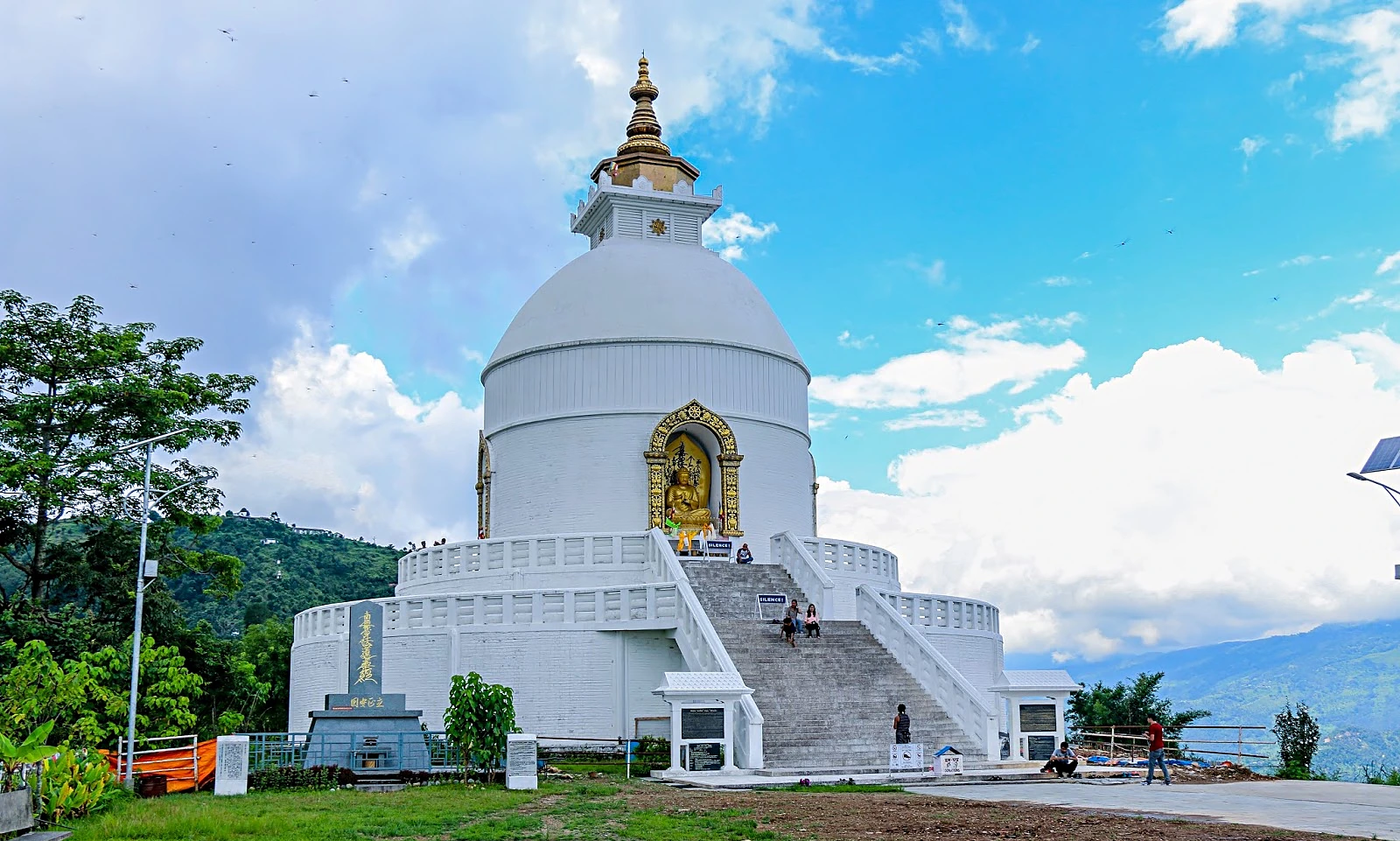
The short distance from Pokhara makes it very easy to combine a Pame visit with other Pokhara attractions in a single day. Popular combined itineraries include: morning at Sarangkot for sunrise, drive to Pame for mid-morning, and return via Pa boat on the Haewalake, crossing from the northern shore) to Lakeside in the afternoon. Or: early morning Pame visit, return to Pokhara for lunch, afternoon World Peace Pagoda hike. Nepal Vehicle Hiring Pvt. Ltd. can customize your vehicle hire to accommodate any combination of attractions in Pokhara and the surrounding area — share your full wish list when booking, and our team will design the most efficient and enjoyable itinerary.
Book Pokhara to Pame Vehicle Hire with the best private jeep, car, or SUV for a safe and comfortable journey to Pame Village.

Frequently Asked Questions — Pokhara to Pame Vehicle Hire

How far is Pame from Pokhara and how long does the drive take?

Pame village is approximately 15–20 km from Pokhara Lakeside via the Khapaud- Chankhapur route. The drive takes approximately 35–55 minutes, depending on the exact starting point in Pokhara and road conditions at the time of travel. The journey is short but scenic — the route passes through interesting ridge-and-valley terrain with good mountain views on clear days.

Do I need a permit to visit Pame?

No — Pame village and the Harpan River Valley are not within any national park or conservation area requiring special visitor permits. You can visit Pame freely without any trekking permits. If you extend your trip to Bhadaure and begin the Panchase Trek (which enters the Annapurna Conservation Area), you will need ACAP and TIMS permits. Nepal Vehicle Hiring Pvt. Ltd. can advise on permit requirements if you are planning a combined Pame and Panchase Trek itinerary.

Is a 4WD vehicle necessary for the drive from Pokhara to Pame?

A 4WD vehicle is not strictly required for the Pokhara-Pame route in the dry season (October–May), when the road is at its best. A capable car or SUV can manage the route comfortably in these conditions. However, a 4WD jeep is strongly recommended for monsoon-season travel (June–September), when the Khapaudi-Pame section can become muddy and slippery. It is essential for any extension toward Bhadaure or Bhumdi. Nepal Vehicle Hiring Pvt. Ltd. recommends the 4WD Fortuner or Hilux as the ideal vehicle for this route year-round.

Can I visit Pame as a day trip from Pokhara?

Absolutely — Pame makes an excellent and very manageable day trip from Pokhara. The short drive means you can depart at 7:30–8:00 AM, spend 3–5 hours in the Harpan Valley enjoying the river walk, village visit, photography, and optional Bhumdi extension, and be back in Pokhara by early afternoon. Nepal Vehicle Hiring Pvt. Ltd. offers both half-day (4–5 hours) and full-day (8–10 hours) Pame vehicle hire packages to suit different schedules and budgets.

Can the vehicle take me to Bhadaure for the Panchase Trek after visiting Pame?

Yes — Nepal Vehicle Hiring Pvt. Ltd. can arrange a combined itinerary that includes a stop at Pame village and the Harpan Valley before continuing to Bhadaure for Panchase Trek trailhead drop-off. The road from Pame to Bhadaure is rough and requires a 4WD vehicle. On completion of your trek at Naudanda or Kande, we can arrange a return vehicle pickup to Pokhara. Contact our team to arrange this combined package.

What is the best time of day to visit Pame for photography?

Early morning — between 7:00 and 10:00 AM — offers the best conditions for photography in the Harpan River Valley. The morning light is warm and golden; mountain views are at their clearest before afternoon clouds build; local farming activity is at its most active and photogenic; and the river has a mirror-like quality in the calm morning air. Aim to depart Pokhara by 7:00–7:30 AM to arrive in the valley by 8:00–8:30 AM for the best light.

How do I book a vehicle hire from Pokhara to Pame with Nepal Vehicle Hiring?

Booking is fast and simple. Contact Nepal Vehicle Hiring Pvt. Ltd. via WhatsApp at +977 9851013196 (24/7), by phone, email at [email protected], or through the booking form at vehiclehiringnepal.com. Share your travel date, group size, Pokhara hotel name, preferred departure time, and itinerary (Pame only, Pame + Bhumdi, Pame + Bhadaure trek, etc.). Our team responds promptly with a vehicle recommendation and price quote. Bookings for Pame day trips can typically be confirmed with 24 hours’ notice outside peak season.

Transport Options: Pokhara to Pame Compared


OptionCostFlexibilityComfortReliabilityBest For
Private Car — Nepal Vehicle HiringNPR 5,000–10,000/day★★★★★★★★★☆★★★★★Couples, solo, dry season visits
4WD Jeep — Nepal Vehicle HiringNPR 7,500–12,000/day★★★★★★★★★★★★★★★All seasons, Bhadaure/Bhumdi extension
Hiace Van — Nepal Vehicle HiringNPR 12,000–18,000/day★★★★★★★★★★★★★★★Groups 7–14, picnic parties, school trips
Local Taxi (metered)NPR 800–1,500 one way★★★☆☆★★★☆☆★★★☆☆Budget solo, no return guarantee
Motorcycle Rental (self-ride)NPR 800–1,500/day★★★★☆★★☆☆☆★★★☆☆Experienced riders only, solo
Public Transport (minibus)NPR 50–100/person★★☆☆☆★★☆☆☆★★☆☆☆Extreme budget, knows local routes.


Conclusion: Discover Pame — Pokhara’s Most Beautiful Hidden Valley

In a Pokhara travel scene dominated by paragliding, lake boat rides, and the famous Annapurna trekking routes, Pame village and the Harpan River Valley stand quietly apart as one of the region’s most genuine, beautiful, and underappreciated experiences. The short drive from Pokhara Lakeside — just 15–20 km through the interesting Khapaudi ridge terrain — opens into a valley of extraordinary rural beauty: the clean Harpan River flowing between fishing communities and terraced rice fields, the Naundanda and Bhumdi hills framing the landscape on both sides, traditional stone farmhouses dotting the valley floor, and on clear mornings, the snow-draped summits of Annapurna South and Machapuchare rising above the ridgeline like benevolent guardians.

Pame offers something increasingly rare in Nepal’s tourist destinations: authentic, unhurried engagement with a working rural community and its natural landscape, without the infrastructure of tourism overlaid upon it. The fishermen working the Harpan, the farmers in their terraced fields, the school children on the valley path, the morning mist rising from the river — these are real scenes from a real community, accessible to every Pokhara visitor willing to venture 20 km beyond the Lakeside tourist strip.

With Nepal Vehicle Hiring Pvt. Ltd., that short venture is made effortlessly smooth. Hotel pickup at your chosen time, a knowledgeable driver who knows the best viewpoints and stops en route, a well-maintained vehicle that handles both the ridge road and the valley approach with equal confidence, and the flexibility to spend as long as you want in the valley before returning to Pokhara — this is how the Pame experience should be arranged.

Contact Nepal Vehicle Hiring Pvt. Ltd. today to book your Pokhara-to-Pame vehicle hire. Whether you want a half-day introduction to the Harpan Valley, a full-day exploration including Bhumdi village, or a combined Pame visit and Panchase Trek trailhead drop-off, our team will create the perfect itinerary and vehicle arrangement for your visit.

Book Your Pokhara-to-Pame Vehicle Hire Today!

Website: www.vehiclehiringnepal.com
Phone / WhatsApp: +977 9851013196 (24/7 Support)
Email: [email protected]
Office: Bhagawatisthan, Thamel, Kathmandu, Nepal
Fleet: Private Car | 4WD Jeep (Fortuner/Hilux/Scorpio) | Hiace Van
Route: Pokhara Lakeside → Khapaudi → Chankhapur → Pame Village → Harpan River Valley
Extensions: Bhumdi Village | Bhadaure Trek Trailhead | Panchase Trek Support
50k+ Happy Customers | 5.0 TripAdvisor |15k+ Verified Reviews
Hotel Pickup from Pokhara Lakeside | Half Day & Full Day Packages
Licensed & Registered | Company Reg. No. 219204 | Best Price Guaranteed


First Timers in the Himalayas trekkers

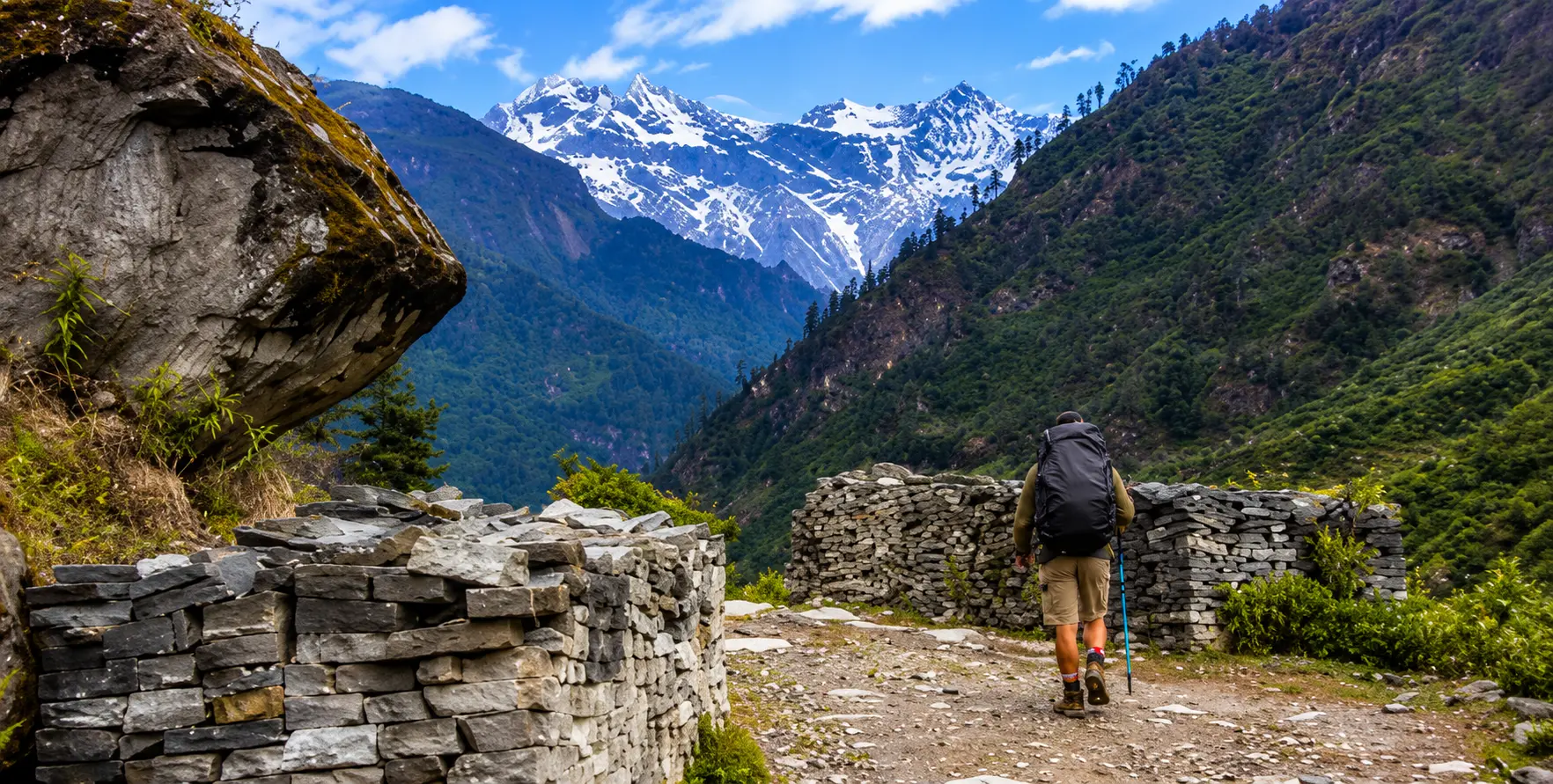
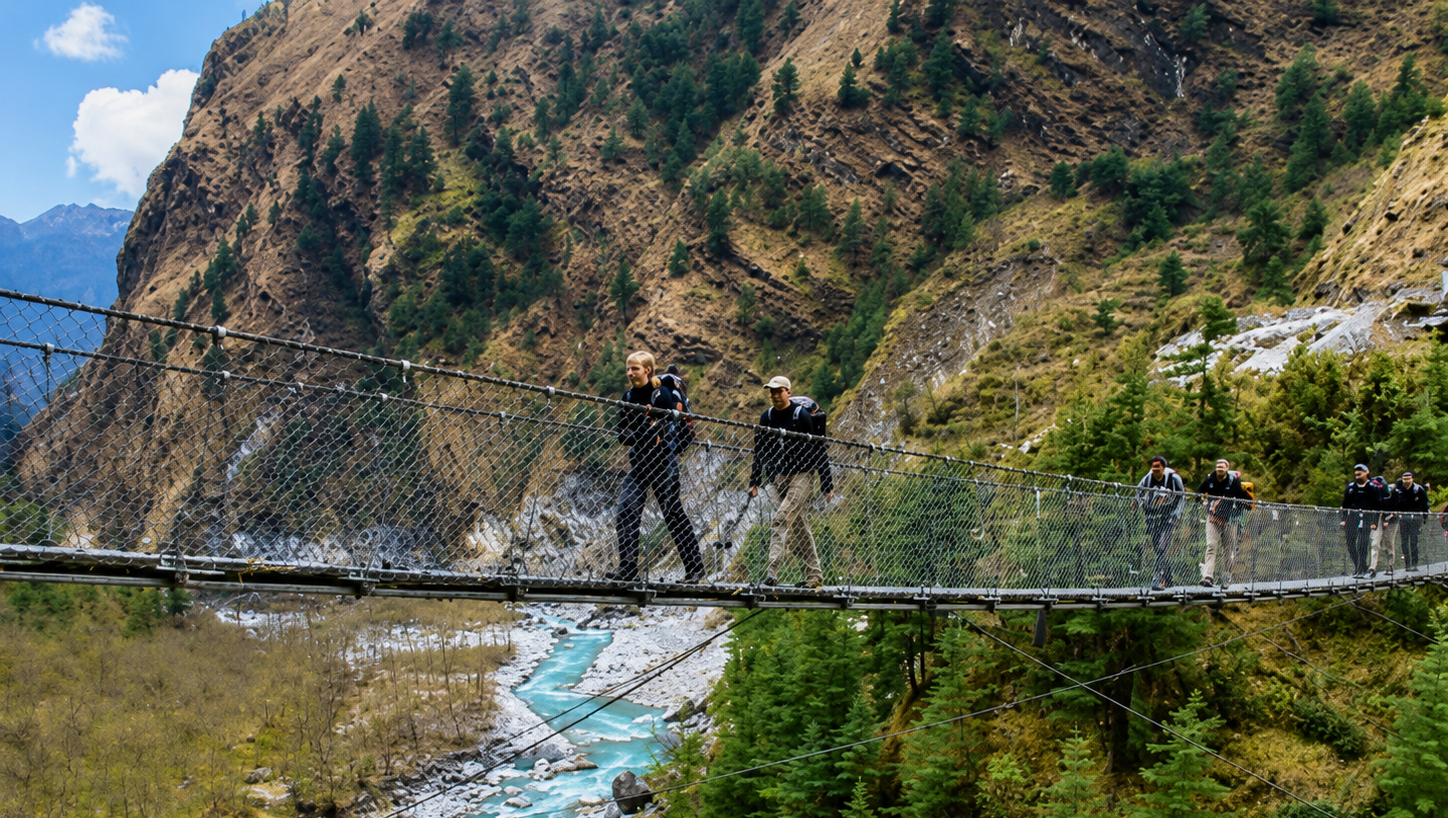
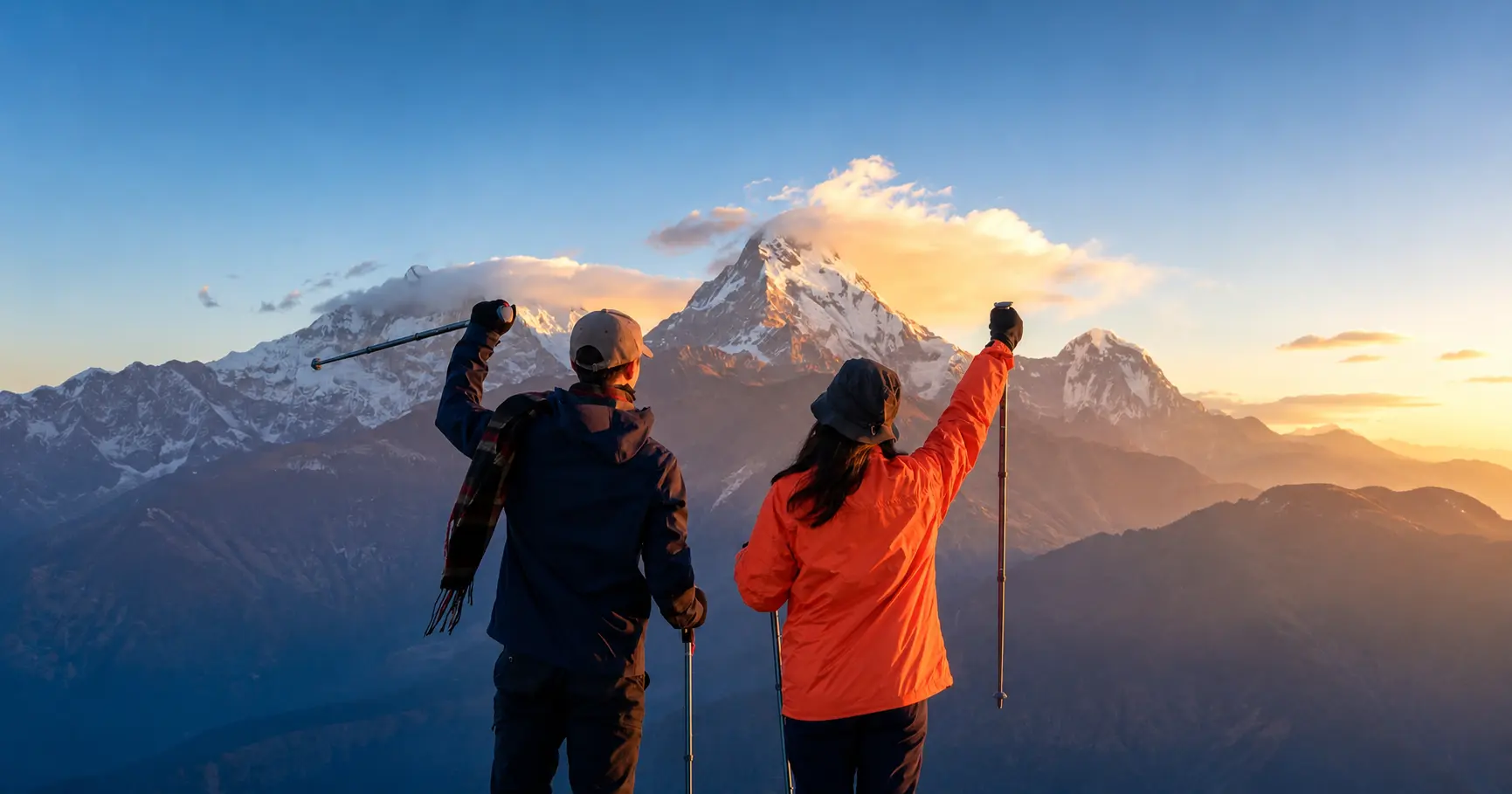
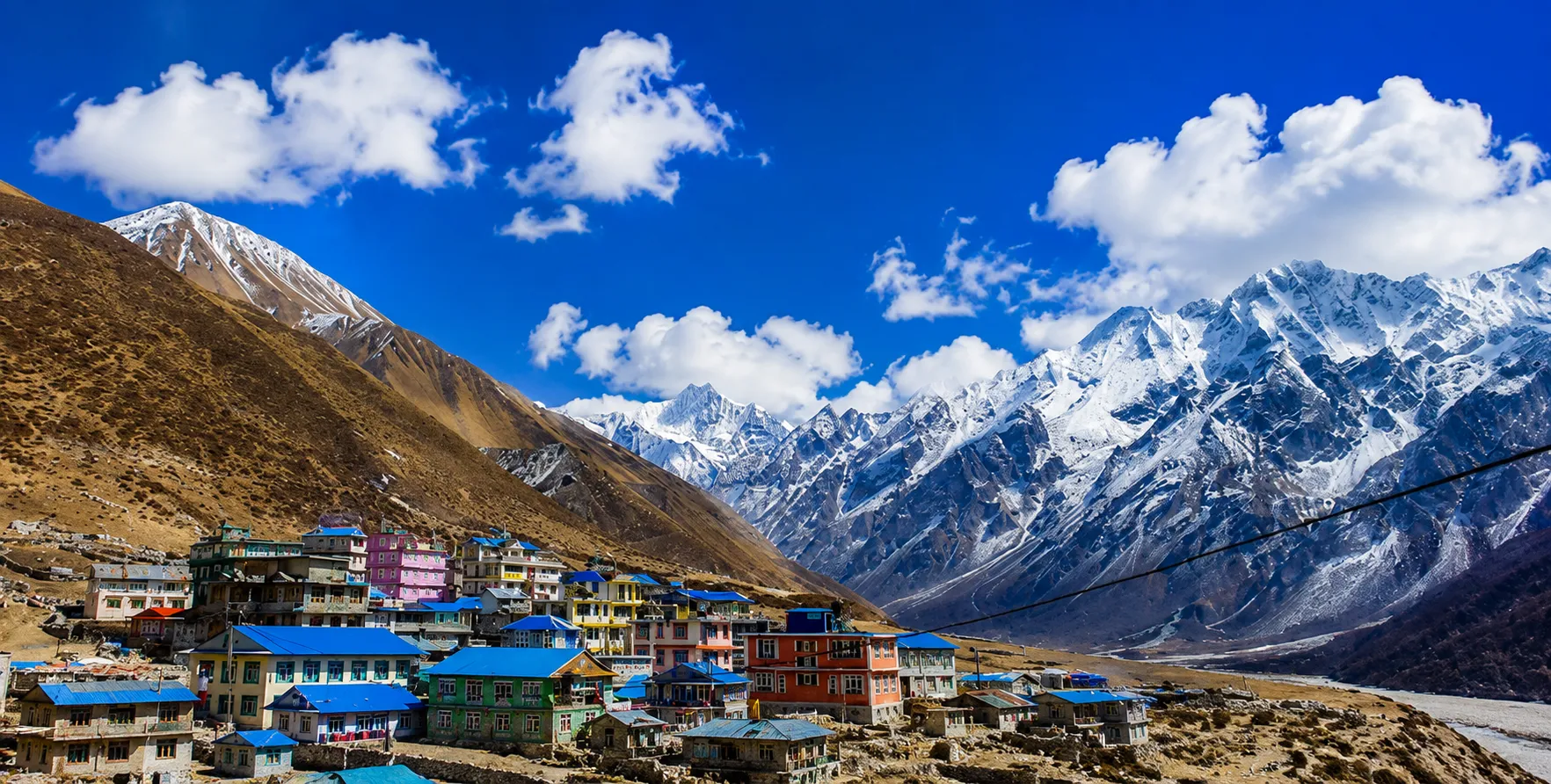
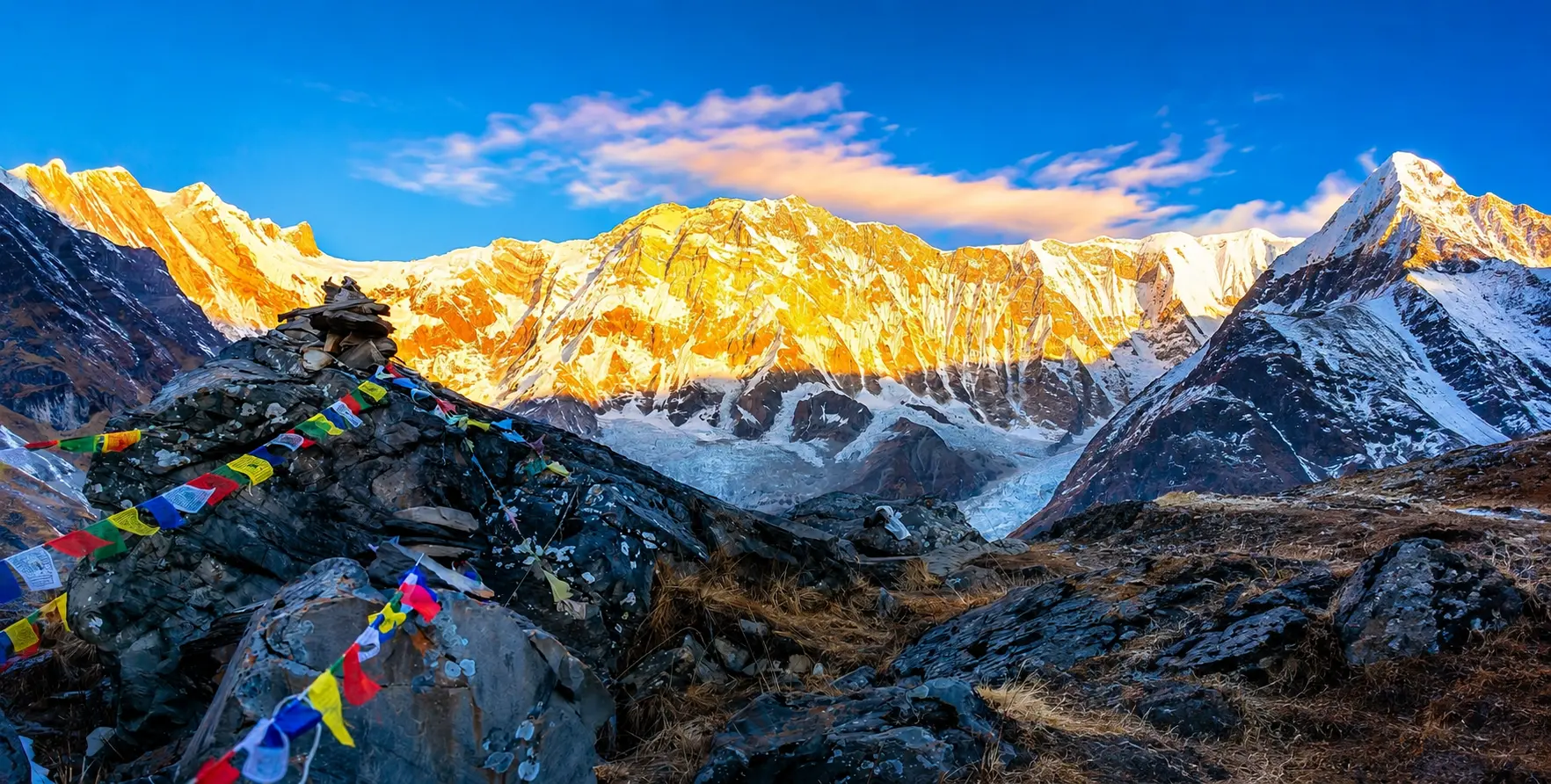
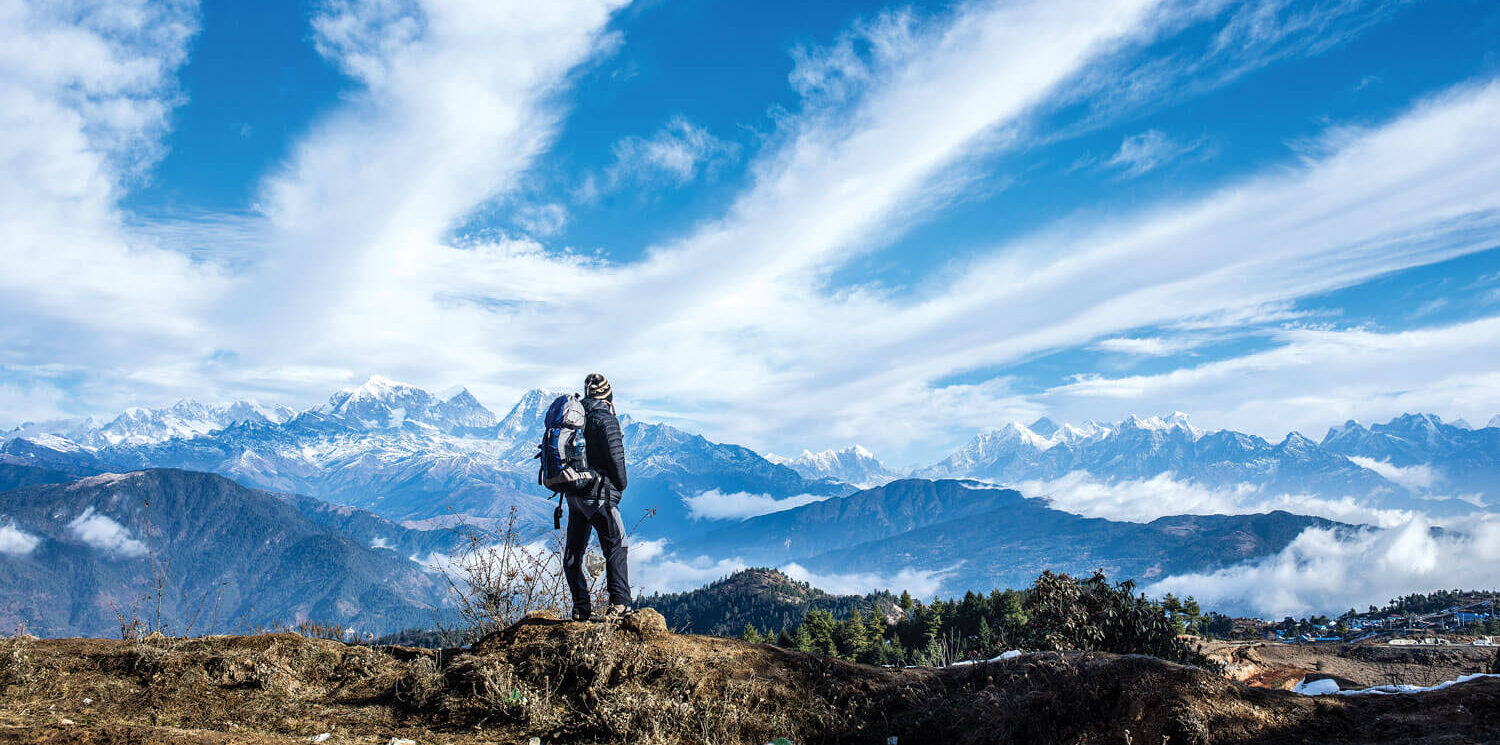
First-time trekkers hiking through the Himalayas with mountain views, preparing for their first Nepal trekking adventureFirst Time Trekkers in the Himalayas: What No One Tells You Before You Trek
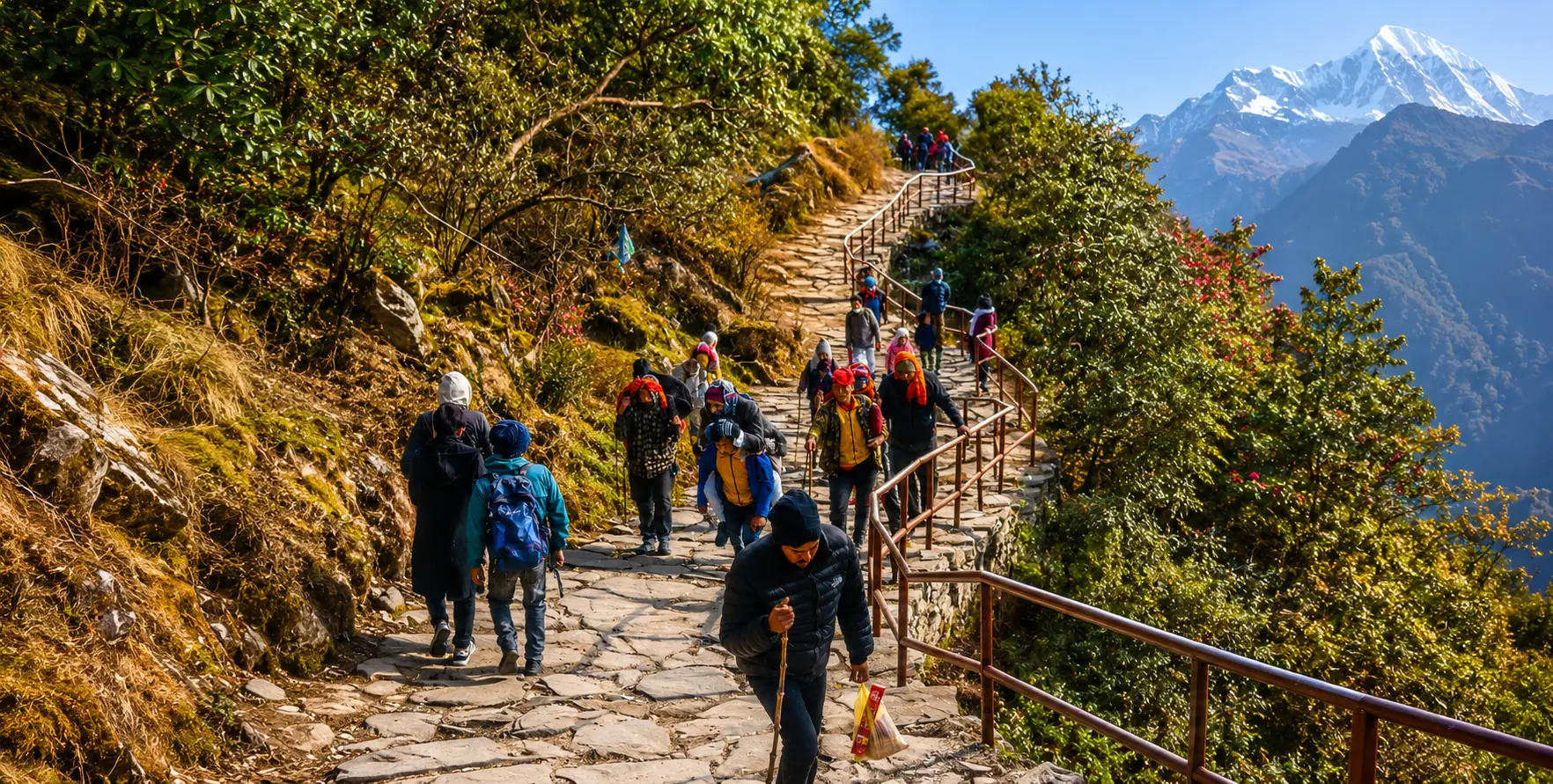
The photographs look effortless. A lone figure on a ridgeline, snowy peaks rising impossibly behind them, golden morning light, the suggestion of absolute peace. Nepal’s trekking brochures and Instagram feeds have been assembling this visual mythology for decades — and it works. Every year, hundreds of thousands of first-time trekkers arrive in Kathmandu, permits clutched in hand, brand-new boots gleaming, hearts full of the images they have been collecting on their phones for months.

And then the reality arrives. The first uphill of Day 1 is harder than expected. The teahouse room is colder than the photographs suggested. The altitude headache at 3,000 meters is not mentioned in the brochure. The squat toilet at the back of the teahouse at 4:00 AM in -5°C is not on anyone’s Instagram grid. The extraordinary moment at the summit — that part is entirely true. But the journey there involves experiences that most travel content carefully edits out.

This is the guide that fills those gaps. Nepal Vehicle Hiring Pvt Ltd has transported tens of thousands of trekkers to trailheads across Nepal — from the Annapurna foothills to Ramechhap Manthali Airport for the Everest approach — and in the process has observed what first-timers are consistently surprised by, unprepared for, and wishing they had known before they started. This guide is the honest, practical, sometimes blunt account of what first-time Himalayan trekking actually involves — the challenges and the rewards, the practical realities and the transcendent moments — so that your first trek is not a shock, but an adventure you were genuinely ready for.

For travelers who have completed their trek and are planning to explore Kathmandu, we recommend continuing your journey with our trusted sister companies, Trek Nepal Himalayas and Alpine Luxury Treks. We specialize in organizing a wide range of travel experiences across Nepal, from classic trekking adventures to cultural and wildlife tours.

Our top offerings include iconic journeys such as the Everest Base Camp Helicopter tour, immersive Kathmandu sightseeing tours, breathtaking Nagarkot sunrise experiences, exciting Chitwan jungle safaris, and luxury packages. In addition, we can arrange short hikes, heritage tours, mountain flights, and customized travel plans tailored to your schedule and interests.

Whether you are looking for a budget-friendly trip or a luxury trekking experience with premium lodges, private guides, and high-end services, we ensure every detail is professionally managed. Our goal is to provide a seamless transition from your trekking adventure to a comfortable) and a memorable travel experience in Nepal.

The Truth About Fitness — Slow Is the Skill

The single most persistent myth about Himalayan trekking is that it requires exceptional fitness. It does not. What it requires is time, patience, and the discipline to walk slowly — more slowly than feels natural, and certainly more slowly than your ego will initially permit.

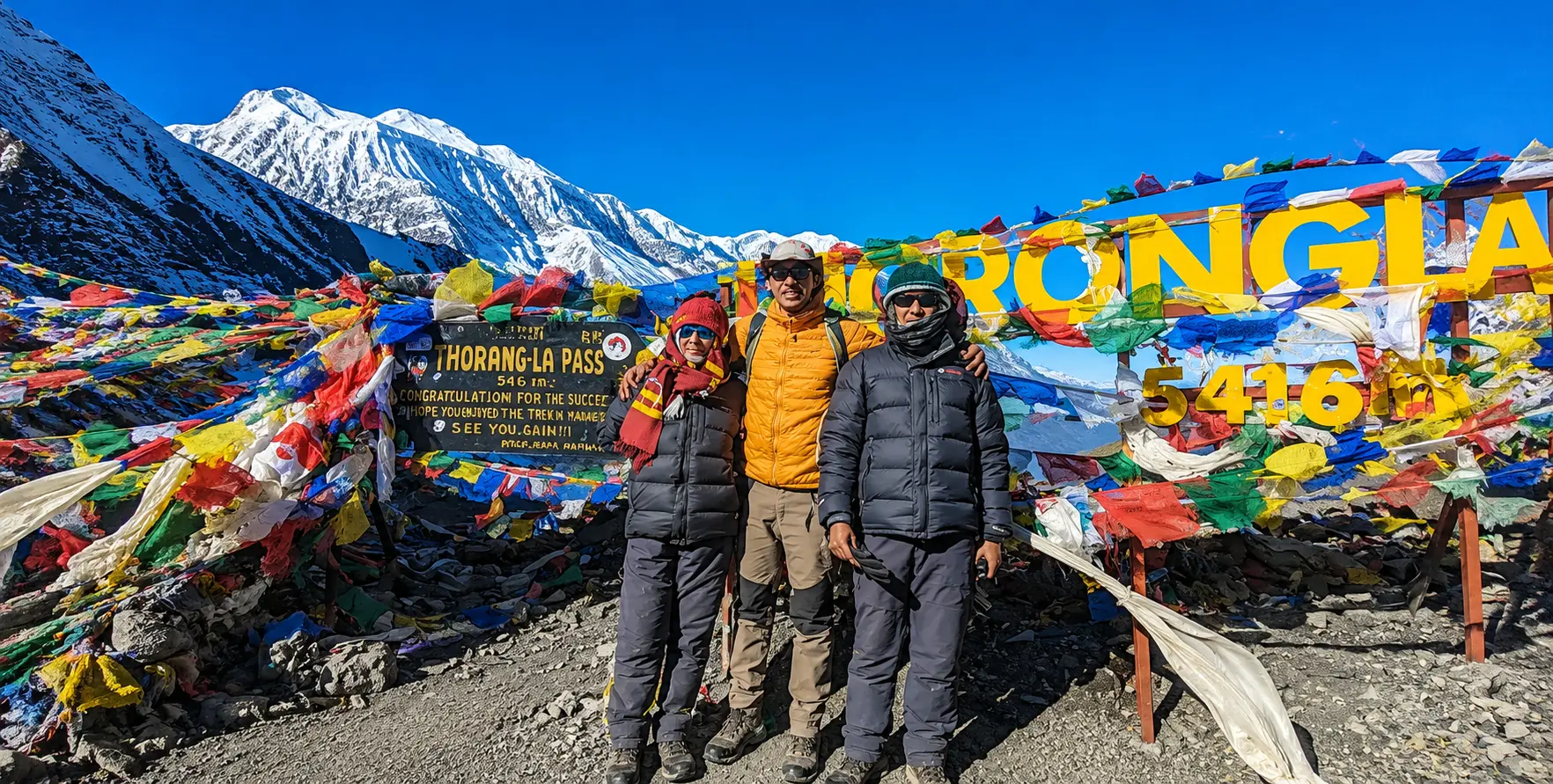
Every experienced Himalayan trekker knows the pace: ‘Rest step, pressure breathing.’ Take a step. Pause. Take another. The mountain veterans who have crossed Thorong La Pass at 5,416 meters thirty times walk at the same deliberate, almost meditative pace they walked on their first crossing. Fitness helps — it means you recover faster between days and suffer less on the long climbs. But the trekkers who turn back are rarely the unfit ones. They are the ones who walk too fast on Day 1, arrive at Camp exhausted and dehydrated, and cannot recover in time for Day 2.

  • The recommended hiking pace at altitude: 40 to 60% of your sea-level comfortable hiking speed
  • ‘Bistari bistari’ is Nepali for ‘slowly slowly’ — the most useful phrase for any first-time Nepal trekker.
  • If you can hold a normal conversation while walking, you are at the right pace. If you are breathless, slow down immediately.y
  • The fastest people on a Nepal trekking trail are rarely the most fit. They are the most experienced.

Before your trek, the best physical preparation is not running marathons or hitting the gym — it is simply walking uphill with a daypack for 2 to 3 hours at a time, 3 to 4 times per week, in the 6 to 8 weeks before departure. This builds the specific muscle groups and cardiovascular habits that trekking uses. Your gym-sculpted upper body will contribute almost nothing on the trail; your walking legs and lungs will contribute everything.

First-time trekkers hiking through the Himalayas with mountain views, preparing for their first Nepal trekking adventureAltitude Sickness — The Equalizer
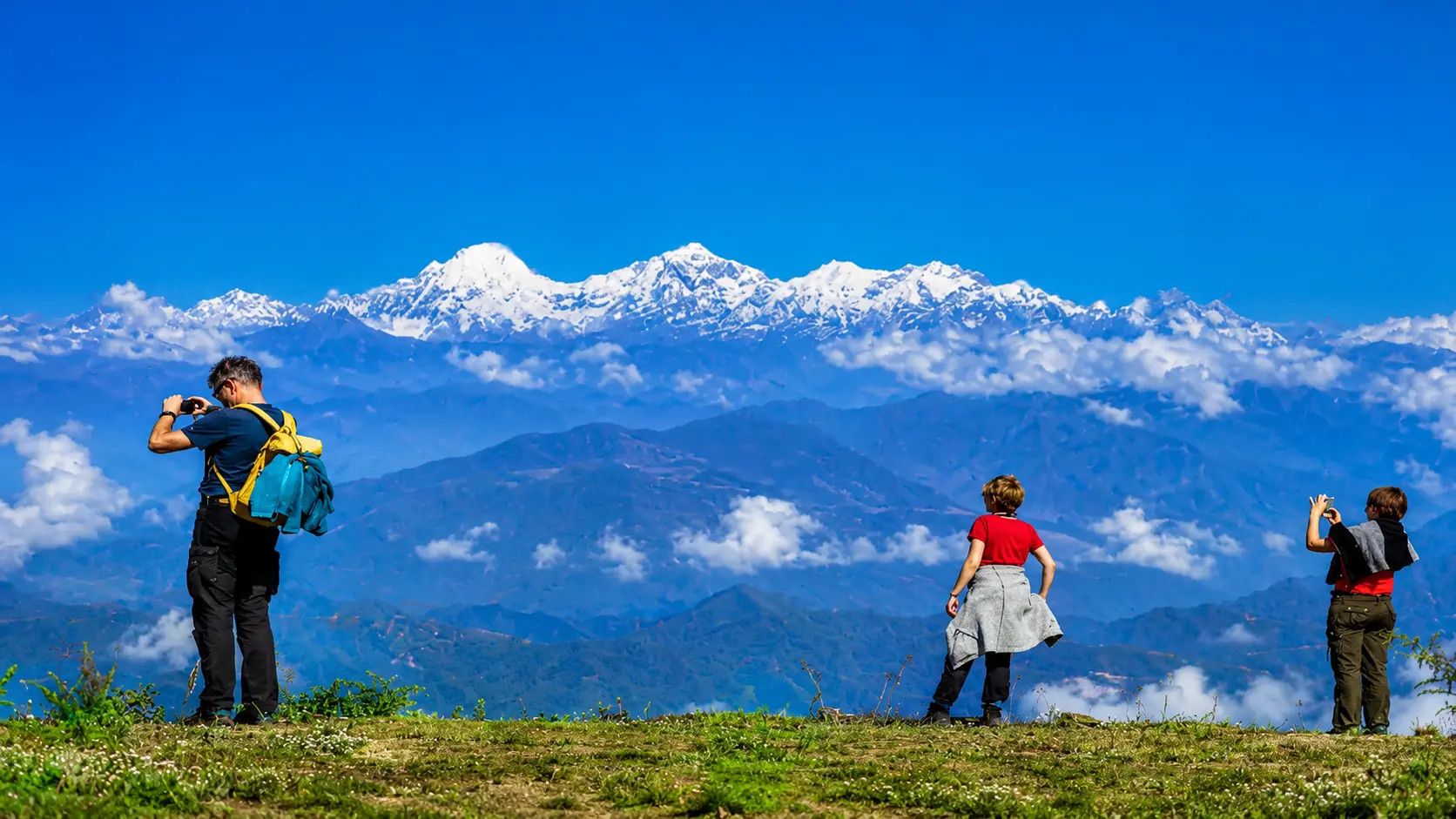
Altitude sickness (Acute Mountain Sickness or AMS) does not care how fit you are. It does not discriminate between marathon runners and couch sitters. It strikes elite mountaineers and sedentary first-timers with equal frequency and with no reliable predictor. This is the single most important thing to understand before any high-altitude Himalayan trek.

AMS is caused by ascending to altitude too quickly for your body to adapt to the reduced oxygen levels. At 3,000 meters, the air contains approximately 70% of the oxygen available at sea level. At 5,000 meters, it falls to about 50%. Your body adapts to this reduction through a process called acclimatization — increasing red blood cell production and adjusting breathing patterns — but this process takes time: days, not hours. When you ascend faster than your body can adapt, AMS is the result.


Altitude ZoneRangeCommon Trekking LocationsAMS RiskAcclimatization Required
LowBelow 2,500 mPokhara, Nayapul, Jomsom, lower trailsNoneNo
Moderate2,500–3,500 mGhorepani (2,870m), Namche (3,440m), ChamePossible for some1 rest day recommended above 3,000 m
High3,500–4,500 mAnnapurna BC (4,130m), Kyanjin (3,870m)Significant — plan carefully2+ rest days; acclimatization walks
Very High4,500–5,500 mEverest BC (5,364m), Thorong La (5,416m)Very HighStrict multi-day acclimatization is mandatory


AMS Symptoms Every First-Timer Must Recognize

  • Headache — the cardinal symptom. Not every altitude headache is AMS, but AMS always starts with a headache.
  • Nausea and loss of appetite — particularly concerning if combined with headache
  • Fatigue disproportionate to effort — feeling exhausted after very little exertion.
  • Dizziness or lightheadedness, particularly when standing up
  • Difficulty sleeping, vivid dreams, waking repeatedly during the night

THE GOLDEN RULE: If symptoms are getting worse as you go higher — STOP. Do NOT push on,n hoping it will improve. It will not. Descend by 3-o 50meterses immediately. AMS that is ignored at the mild stage can progress to HACE (High Altitude Cerebral Edema) or HAPE (High Altitude Pulmonary Edema) — both of which are life-threatening emergencies requiring immediate evacuation. No mountain view is worth your life.

What Actually Helps with AMS

  • Gradual ascent — the only reliable prevention. Never gain more than 300 to 500 meters of sleeping altitude per day above 3,000 meters.
  • Rest days — the ‘climb high, sleep low’ principle is the gold standard acclimatization strategy
  • Hydration — drink 3-4 liters of water per day at altitude. Dehydration dramatically worsens AMS symptoms.
  • Diamox (acetazolamide) is the only medication with strong clinical evidence for preventing AMS. Discuss with your doctor at least 4 weeks before departure. Available at Kathmandu pharmacies, but a doctor’s advice on dosage and contraindications is essential.l
  • Avoid alcohol completely above 2,500 meters — it dehydrates, suppresses breathing during sleep, and significantly worsens AMS.
  • Avoid sleeping pills and sedatives at altitude — they suppress the respiratory drive that maintains oxygenation during sleep.


A complete guide for first timers in the Himalayas trekkers, covering everything no one tells you before your first trek, from altitude and gear to safety and preparation.

Solo Trekking Is Now Banned — The 2026 Reality

If you have been planning to trek in Nepal solo based on advice from a blog written before 2023, there is an important update: solo trekking on Nepal’s major routes is now officially banned. The Nepal government’s mandatory guide regulation, introduced and enforced from 2023 onwards, requires all trekkers on designated routes to be accompanied by a licensed Nepali guide. By 2026, this regulation will be broadly enforced across virtually all major trekking areas, including the Annapurna Conservation Area, the Everest region (Sagarmatha National Park), Langtang, and the Manaslu Circuit.

The regulation was introduced following a series of trekker disappearances and deaths on solo treks, where the absence of a local guide meant distress situations could not be addressed promptly. The change is significant for the experience of first-time trekkers — but it is ultimately beneficial, particularly for beginners who will benefit enormously from having a locally knowledgeable companion on their first Himalayan trail.

What a Licensed Guide Actually Provides

  • Navigation — trail junctions, correct teahouse selection, weather route judgments
  • Altitude health monitoring — guides watch for AMS symptoms you may not notice yourself.
  • Language — communicating with local teahouse owners, checkpoint officers, and medical posts
  • Cultural context — explaining temples, festivals, local customs that enrich the trekking experience
  • Emergency coordination — the guide is the critical first link if an evacuation becomes necessary
  • Local knowledge — the best tea house with the warmest rooms, the freshest dal bhat, the trail shortcut that shaves 45 minutes off the climb

Cost of a Guide: A licensed guide costs approximately USD 2- 35 per day. For a 7-day Poon Hill trek, this adds USD 175 to USD 245 to your total budget — a modest sum that fundamentally transforms the safety, quality, and cultural richness of a first Himalayan trek.

The Things Nobody Posts on Instagram

The Toilet Situation

Let us address the topic that every first-time trekker thinks about privately but rarely reads about publicly: the toilet situation on a Himalayan trek is not what the Instagram pictures suggest.

Below 3,000 meters, most established teahouses have functional flush toilets or at least clean squat toilets with a water bucket. Above 3,000 meters — and particularly above 4,000 meters — toilets range from basic to extremely basic. Squat toilets with a pit below are standard. Toilet paper is rarely provided (always carry your own). Some teahouses charge NPR 20-50 per toilet use. The midnight toilet trip from a cold teahouse room at 4,200 meters, down a frozen outdoor path to an unheated outhouse, is a genuine feature of high-altitude Himalayan trekking that nobody documents but every trekker experiences.

  • Always carry your own toilet paper — never assume it will be provided
  • Carry a small headlamp and keep it with you at all times — midnight toilet trips in pitch darkness are not pleasant
  • Hand sanitizer is essential — clean water for handwashing is limited at altitude
  • The outdoor toilet situation on trails between teahouses: find a spot off-trail, dig a small hole if possible, and carry out any non-biodegradable waste

Teahouse Food — The Same Menu at Every Altitude

The teahouse menu in Nepal is a masterpiece of consistency. Dal bhat (lentils and rice with vegetable sides), noodle soup, fried rice, garlic soup, apple pie, and a rotating selection of comfort foods are served at virtually every teahouse from 1,000 meters to 5,000 meters, with minor variations. This is not a criticism — dal bhat is genuinely delicious and nutritionally excellent for trekking, providing the high-carbohydrate fuel your body needs at altitude — but first-timers expecting the culinary variety of a mountain resort will need to recalibrate expectations.

The more important food reality is the price escalation. A plate of dal bhat at Nayapul (1,070 m) costs approximately NPR 400. The same dal bhat at Annapurna Base Camp (4,130 m) costs NPR 1,200 to NPR 1,800 — three to four times more. The Himalayan altitude tax on food and accommodation is real and unavoidable, and it should be budgeted for carefully.

The Walls Have No Insulation

Teahouse rooms at elevations above 3,500 meters are typically constructed of thin wood or stone and lack insulation. Heating (when available) is a single wood-burning stove in the communal dining hall — never in individual rooms. On a clear night at Thorong Phedi (4,450 m) or High Camp (4,850 m) on the Annapurna Circuit, the temperature inside your room will approach or exceed -10°C. The teahouse blankets — generally heavy, damp-feeling, and of unknown cleanliness — are insufficient on their own. A sleeping bag rated to at least -10°C is not optional at these altitudes; it is survival equipment.

The Silence is Loud

Many first-time trekkers are surprised by the psychological challenge of the trail. Nepal trekking is not an action sport — it is primarily a walking meditation, hours each day of measured footfall in remarkable scenery, with limited access to the digital stimulation that most modern people use to fill their mental space. Mobile data disappears beyond the major settlements. WhatsApp and social media updates become impossible. Netflix does not exist above 3,000 meters. And for many first-timers, the sudden confrontation with their own unmediated thoughts — with nothing to distract and nowhere to scroll — is unexpectedly challenging.

This is also, of course, one of the most profound benefits of Himalayan trekking. The enforced disconnection is what allows the mountains to do their real work — the recalibration of perspective, the slowing of the mind to the pace of the landscape, the rediscovery of what actually matters. But it is worth knowing in advance that the first two or three days of digital withdrawal can feel genuinely uncomfortable for people accustomed to constant connectivity.

Your Feet Will Hurt

Boots are the single most important piece of trekking equipment for a first-time Himalayan trekker — and the most common source of trek-ending disaster. A blister that seems minor on Day 2 becomes a trek-threatening infection by Day 5. Every year, first-time trekkers who purchased excellent boots but wore them for the first time on the trail end up being helped back down by their guides, feet bandaged, dreams temporarily shelved.

The rule is non-negotiable: your trekking boots must be broken in before you trek. ‘Broken in’ means at least 30 to 40 hours of walking in them — on hills, on rocky paths, carrying a daypack. Not on your commute to work. Not around the supermarket. On trails, for hours at a time, until every potential pressure point has been identified and addressed.

Gear Hire in Kathmandu: Thamel district in Kathmandu has dozens of trekking gear shops selling both genuine equipment and high-quality replicas of major brands. Sleeping bags, trekking poles, down jackets, and even boots can be hired or purchased here at reasonable prices — useful if you prefer not to carry gear from home.


A complete guide for first timers in the Himalayas trekkers, covering everything no one tells you before your first trek, from altitude and gear to safety and preparation.

The Real Costs — A Completely Honest Budget

Nepal trekking is frequently described as ‘budget-friendly’ — and compared to trekking in Western mountain destinations, it genuinely is. But first-timers often underestimate the full cost by focusing only on the visa and flight and forgetting the significant accumulation of daily expenses, mandatory permits, guide costs, and equipment purchases that constitute the true cost of a Nepal trek.


Expense CategoryBudget (NPR / USD)Notes
ACAP Permit (Annapurna area)NPR 3,000 / USD 22Mandatory for Poon Hill, ABC, Mardi Himal
Sagarmatha NP Permit (Everest)NPR 3,000 / USD 22Mandatory for EBC trek
TIMS CardUSD 10–20Mandatory for all trekkers
Licensed Guide (mandatory 2026)USD 25–35 per dayNow legally required on all major routes
Porter (optional but recommended)USD 15–25 per dayCarries your bag — transforms trek experience
Teahouse accommodationNPR 500–2,500 per nightFree or discounted if dining in the same teahouse
Meals (3 per day in the teahouse)NPR 1,500–3,500 per dayMore expensive at higher altitude
Drinking water / boiled waterNPR 100–300 per litreNever drink tap water — use boiled or filtered water
Charging devices / WiFiNPR 200–500 per chargePaid at each teahouse — carry a power bank
Toilet at teahousesNPR 0–50 per useMany teahouses now charge for toilet use
Trailhead transfer (e.g. Nayapul)NPR 7,000–15,000 (private jeep)Nepal Vehicle Hiring Pvt Ltd — hotel pickup, all luggage
Travel insurance with evacuationUSD 80–150 for 2 weeksMANDATORY — helicopter rescue costs USD 3,000–5,000+


The One Expense That Absolutely Cannot Be Skipped

Travel insurance covering helicopter evacuation is the single non-negotiable expense of Himalayan trekking. A helicopter rescue from altitude in Nepal costs between USD 3,000 and USD 5,000 or more — an amount that most trekkers cannot produce in a medical emergency. Without insurance that specifically covers high-altitude helicopter evacuation, you are either relying on the generosity of others or gambling with your life and your family’s financial security. Many policies exclude altitudes above 3,000 or 4,000 meters — read the fine print carefully and select a policy that explicitly covers high-altitude helicopter rescue.

 Travel Insurance Alert: Verify before purchasing that your policy explicitly covers helicopter evacuation at the maximum altitude you plan to reach. Standard travel insurance frequently DOES NOT cover high-altitude rescue. World Nomads, AXA, and Allianz Travel are among the policies with strong high-altitude coverage in Nepal — check current terms before purchasing.

A complete guide for first timers in the Himalayas trekkers, covering everything no one tells you before your first trek, from altitude and gear to safety and preparation.

First Timers in the Himalayas: Honest Assessments


TrekRegionMax AltitudeDurationDifficultyBest For
Poon Hill / GhorepaniAnnapurna3,210 m4–5 daysEasy–ModerateBest first trek — sunrise panorama, short, excellent teahouses
Australian Camp + DhampusAnnapurna2,060 m2–3 daysEasyDay-trippers and families, close to Pokhara
Langtang ValleyLangtang3,870 m (Kyanjin)7–10 daysModerateClose to KTM; Tamang culture; glaciers
Mardi HimalAnnapurna4,500 m (HBC)5–7 daysModerateLess crowded; close Machhapuchhre views
Annapurna Base CampAnnapurna4,130 m10–12 daysModerateNepal’s most popular full trek: superb scenery
Everest Base CampEverest5,364 m14–16 daysChallengingThe classic needs good fitness + acclimatization
Manaslu CircuitManaslu5,106 m (Larkya La)14–18 daysChallengingRemote, less crowded alternative to ABC


Poon Hill — The Perfect First Trek

The Ghorepani Poon Hill Trek is Nepal’s ideal first Himalayan experience for very good reasons. The trail is well-marked and safe; the maximum altitude (Poon Hill viewpoint at 3,210 m) is high enough to feel genuinely Himalayan without requiring serious acclimatization; the teahouses are among the best-established in Nepal, and the reward — the Poon Hill sunrise panorama of Dhaulagiri and the Annapurna range — is one of Nepal’s truly transcendent experiences.

At 4 to 5 days from Pokhara (with the private jeep to Nayapul or Ulleri reducing the approach to 3 to 4 trekking days), Poon Hill is achievable in a week-long Nepal itinerary. The trail climbs steadily but never brutally. The descent from Ghorepani to Tadapani and Ghandruk (optional extension) adds cultural richness through beautiful Gurung villages. Nepal Vehicle Hiring Pvt Ltd transports trekkers from Pokhara hotels directly to Nayapul or Ulleri trailheads — 45 minutes to 1 hour, door-to-door.

First-time trekkers hiking through the Himalayas with mountain views, preparing for their first Nepal trekking adventure

Langtang Valley — The Forgotten First Trek

Langtang Valley is Nepal’s most underrated beginner trek — less famous than the Annapurna or Everest routes but arguably more rewarding for a first experience. The valley lies just 65 km north of Kathmandu and is accessible by private vehicle from the capital in 5 to 6 hours to Syabrubesi (the trailhead). The trail climbs through dense rhododendron forest, past traditional Tamang villages with their distinctive architecture and Buddhist culture, and into the glaciated high valley above the settlement of Langtang village (3,430 m) and the viewpoint at Kyanjin Ri (4,773 m).

Langtang was devastated by the 2015 earthquake and subsequent avalanche that destroyed much of Langtang village. Still, the valley has been rebuilt, and trekkers today find a trail community defined by extraordinary resilience and warmth. The relatively low fame of the Langtang route means it is less crowded than Annapurna during peak season — a significant advantage for first-timers who might feel overwhelmed by the organized bustle of the Poon Hill trail during October.

Annapurna Base Camp — The Classic 10-Day Experience

Annapurna Base Camp (ABC) at 4,130 meters is the most celebrated destination trek in Nepal — a journey through some of the most stunning and varied landscapes in the Himalayas, from the subtropical gorge of the Modi Khola to the high alpine sanctuary directly beneath the south face of Annapurna I (8,091 m). The finale — the glacial bowl of the Annapurna Sanctuary ringed by seven peaks over 6,000 meters — is one of those genuinely overwhelming moments of natural grandeur that justify the entire journey.

For first-timers, ABC requires an honest fitness assessment. The ascent to base camp involves significant altitude gain over 10 days, and the section above Himalayan Hotel (2,900 m) demands solid cardiovascular fitness and good acclimatization practice. That said, ABC is completed by thousands of first-time trekkers every year — the key is a slow pace, adequate rest, and not rushing the final ascent from Machhapuchhre Base Camp (3,700 m) to ABC (4,130 m).

Gear — What You Actually Need vs What You Think You Need


ItemEssential?Notes
Broken-in trekking bootsCRITICALNever use new boots — blisters end treks
Down jacket or warm pufferCRITICALAbove 3,000 m — nights are seriously cold
Sleeping bag (rated -10°C)Essential above 3,500 mTeahouse blankets alone are insufficient at high altitude
Trekking poles (pair)Highly recommendedSaves knees on descent — especially for beginners
Headlamp + spPredawneriesEssentPredawnDawn Poon Hill hike; power cuts are common
Moisture-wicking base layersEssentialCotton kills at altitude — use synthetic or merino wool
Waterproof rain jacketEssentialMountain weather changes in 20 minutes
Sunscreen SPF 50+EssentialHigh altitude UV is severe — burn risk is extreme
Water purification tablets/filterEssentialBackup for when boiled water isn’t available
Blister treatment (moleskin)EssentialAddress blisters on Day 1 before they worsen
Diamox (acetazolamide)Strongly recommendedDiscuss with the doctor before the trek — AMS prevention
Power bank (20,000 mAh+)RecommendedCharging is unreliable in teahouses above 3,000 m
Buff/dust maskRecommendedDusty trails + cold air — neck warmer doubles as face cover
First aid kit basicsEssentialPlasters, pain relief, anti-diarrhea, rehydration salts
Snacks and energy foodRecommendedCarry for sections between teahouses


The Weight of Your Pack Will Define Your Experience

Every experienced trekker will tell you: the single biggest predictor of how enjoyable your trek is is the weight on your back. A 15 kg pack that seemed manageable at home becomes a genuine instrument of suffering by Day 3 at 3,500 meters. A 7 kg pack feels almost light on the same trail.

The solution is a porter — one of the most transformative and most underutilized trekking decisions available to first-timers. A licensed porter carries your main trekking bag (up to approximately 15 kg per porter regulation) for USD 15-25 per day, freeing you to walk with only a light day pack (water, camera, layers, snacks, medication). The physical liberation of trekking without a heavy pack does not just make the experience more comfortable — it fundamentally changes the quality of the experience, allowing you to look up and around rather than down at your feet, engage with the landscape and culture, and arrive at Camp with energy to enjoy the evening rather than immediately collapsing.

Trekking Poles — More Than a Preference

Trekking poles divide opinion among experienced trekkers but are almost universally recommended for beginners. On the descent from high camps, trekking poles dramatically reduce the compressive force on the knees with each downhill step — reducing knee pain and the risk of joint injury that can end a trek on Day 4. On river crossings and unstable rocky sections, poles provide stability that beginners’ legs have not yet developed through trail experience. Hire poles in Kathmandu for NPR 200-500 per day if you prefer not to travel with your own.

A complete guide for first timers in the Himalayas trekkers, covering everything no one tells you before your first trek, from altitude and gear to safety and preparation.

The Trailhead Transfer — The Step Everyone Underestimates

Most trekking guides focus on the trail experience and pay almost no attention to one of the most important logistical decisions of any Nepal trek: how to get from your hotel in Kathmandu or Pokhara to the trekking trailhead. This step — simple in concept, critical in execution — determines whether your first trekking day begins with energy and calm or with the stress of missed buses, crowded shared vehicles, and arrival at the trailhead hours later than planned.


TrekNearest TrailheadDistance from KTM/PokharaVehicleNepal Vehicle Hiring Transfer Cost
Poon Hill / GhorepaniNayapul / Birethanti42 km from PokharaSedan / ScorpioNPR 4,500–8,000 (Pokhara to Nayapul)
Annapurna Base CampNayapul / Jhinu Danda42–55 km from PokharaSedan / Scorpio 4WDNPR 4,500–10,000 (Pokhara to Jhinu Danda)
Mardi HimalKande / Lwang Ghalel28–40 km from PokharaSedan / ScorpioNPR 3,000–8,000 (Pokhara to Kande)
Langtang ValleySyabrubesi122 km from KathmanduScorpio 4WD / HiluxNPR 14,000–18,000 (KTM to Syabrubesi)
Everest Base CampRamechhap Airport (Manthali)132 km from KTMSedan / Jeep / HiaceNPR 12,000–22,000 KTM- Ramechhap
Annapurna CircuitBesisahar175 km from KathmanduScorpio 4WD / HiluxNPR 15,000–20,000 (KTM to Besisahar)
Manaslu CircuitArughat / Soti Khola160 km from KathmanduScorpio 4WD / HiluxNPR 16,000–22,000 (KTM to Arughat)

A complete guide for first timers in the Himalayas trekkers, covering everything no one tells you before your first trek, from altitude and gear to safety and preparation.


Why First-Timers Need a Private Transfer

Public transport to Nepal’s trekking trailheads is available — local buses, shared jeeps, and tourist buses operate on most of the major routes. But for first-time trekkers, whose knowledge of Nepal logistics is limited and whose trek start is time-sensitive, public transport introduces a layer of complexity and uncertainty that private vehicle hire eliminates.

  • Local buses do not offer hotel pickup — you navigate Kathmandu or Pokhara to find the right bus park, often at 5:00 AM in the dark.
  • Shared jeeps depart only when full — meaning you wait at a bus park for an unpredictable length of time.
  • Luggage space on shared transport is limited — full expedition bags and kit require roof space that may not be available.e
  • Departure timing is fixed — if your guide needs 30 more minutes, the shared jeep does not wait.

A private vehicle from Nepal Vehicle Hiring Pvt Ltd picks you up directly from your hotel at whatever time your guide and trekking schedule require, drives you and all your gear (including your porter’s load if needed) directly to the trailhead, and delivers you ready to start walking — not stressed, not tired from a crowded bus, and not 2 hours behind schedule. For most first-timers, this single logistical decision transforms the quality of the first day of trekking.

Book Your Trailhead Transfer in Advance: During peak trekking season (October–November and March–May), private vehicles from Pokhara to Nayapul, Jhinu Danda, and Kande, and from Kathmandu to Syabrubesi and Besisahar, are in very high demand. Contact Nepal Vehicle Hiring Pvt Ltd at +977-9851013196 at least 48 hours before your trekking start day — or at the same time as your trekking guide booking.

What Nobody Warns You About the First Day

Day 1 of a Nepal trek is almost universally the hardest — psychologically and physically — for first-time trekkers. This is not because the trail is the most difficult (it usually is not) but because of a combination of factors that experienced trekkers have learned to expect and prepare for, and that beginners encounter as a surprise.

  • Your body is not yet adjusted to walking at altitude, carrying a pack, or the rhythm of continuous uphill. Even if you trained at home, the specific physical demands of trail trekking with a pack at 11,500 meters engage muscle groups and energy systems that gym training does not specifically prepare for.
  • The excitement of arrival in Nepal and Kathmandu often means first-timers sleep poorly the night before the trek begins — starting Day 1 already fatigued.
  • The pack feels heaviest on Dy before the body has adapted. Days 3 and 4 typically feel noticeably lighter even if nothing has been removed.
  • The psychological adjustment to ‘this is what the day looks like for the next 7 days’ can feel overwhelming on Day 1. The sameness of the trail rhythm — walk, eat, sleep, walk — seems monotonous before the landscape and community of the mountains begin to work on you.

The experienced advice for Day 1 is this: set the lowest possible expectations. Walk the shortest stage. Stop frequently. Eat more than you think you need. Sleep as early as possible. Day 2 will be better. Day 3 will be better still. By Day 4, the mountains will have begun their work — and you will understand why people return to the Himalayas again and again throughout their lives.

A complete guide for first timers in the Himalayas trekkers, covering everything no one tells you before your first trek, from altitude and gear to safety and preparation.

The Moments That Make It Worth Everything

This guide has been honest about the challenges — the cold rooms, the difficult toilets, the altitude headaches, the first-day fatigue, the dietary monotony. These are real. But they are also temporary. And they are the price of admission to something that cannot be described adequately in any travel writing, however accomplished.

The moment at Poon Hill as the sun rises over the Annapurna range and the peaks turn from purple to pink to blazing gold is not adequately captured in any photograph. The silence of the Annapurna Sanctuary as you arrive at Base Camp and find yourself surrounded by mountains higher than any peak in North America or Europe — that silence has a physical quality, a weight and a luminosity that no image or word can contain.

The warmth of a teahouse dining hall on a cold night — the smell of woodsmoke and dal bhat, the conversation of strangers who are already starting to feel like companions — has a texture of human community that the speed and noise of modern life rarely provide.

Nepal’s mountains change the people who walk them. Not dramatically or instantly — but gradually, mile by mile, rest day by rest day, cold morning by cold morning. They change priorities. They demonstrate the elegance of simplicity. They offer a perspective that, once acquired, is surprisingly durable.

That is what no one tells you before you trek: that you will come back different. Not from the exercise or the photographs or the achievement of a personal goal — though all of those are real. But from the sustained encounter with a scale, silence, and beauty that recalibrates something fundamental in the human experience of being alive.


A complete guide for first timers in the Himalayas trekkers, covering everything no one tells you before your first trek, from altitude and gear to safety and preparation.

Practical Quick-Reference — Everything You Need Before You Go

Permits (2026)

  • ACAP: NPR 3,000 per person — for all Annapurna region treks (Poon Hill, ABC, Mardi Himal)
  • Sagarmatha NP Permit: NPR 3,000 per person — for Everest region
  • TIMS Card: USD 10–20 per person — for all trekkers
  • Manaslu Restricted Area Permit: USD 100 per week — for Manaslu Circuit
  • Where to obtain: Nepal Tourism Board, Bhrikuti Mandap, Kathmandu; or Lakeside, Pokhara

Mandatory Items

  • Licensed guide: Mandatory on all major routes in 2026 — arrange through a reputable trekking agency
  • Travel insurance with helicopter evacuation cover: Non-negotiable — verify altitude coverage in policy.
  • Broken-in trekking boots: Walk in them 30 to 40 hours before the trek begins
  • Sleeping bag rated -10°C: Essential above 3,500 m — teahouse blankets aloneare  insufficient
  • Diamox prescription: Discuss with the doctor at least 4 weeks before departure

Things to Leave at Your Hotel

  • Large rolling suitcase: Leave in hotel storage in Kathmandu or Pokhara — take only a trekking duffel
  • Valuables and excess cash: Hotel safe in Kathmandu/Pokhara
  • Unnecessary electronics: Laptop, tablet, heavy camera equipment
  • Formal or non-trekking clothing: The trail does not need it

Your First Week Training Plan (6–8 Weeks Before Trek)

  • Weeks 1–2: Walk 45 to 60 minutes uphill with a daypack, 3 times per week
  • Weeks 3–4: Increase to 90 minutes to 2 hours, 3 to 4 times per week. Add stair climbing
  • Weeks 5–6: 2- to 3-hour hill walks with a6-6 to 8 kg pack — wearing your trekking boots
  • Week 7–8: One overnight camping or walking day — simulate trekking pace and conditions
  • Day before departure: Rest. Pack carefully. Sleep early.

A complete guide for first timers in the Himalayas trekkers, covering everything no one tells you before your first trek, from altitude and gear to safety and preparation.

Nepal Vehicle Hiring Pvt Ltd — Your Trailhead Transport Partner

The logistics of reaching Nepal’s trekking trailheads — from your Kathmandu or Pokhara hotel to the exact start point of your trail — is the one element of every Nepal trek that Nepal Vehicle Hiring Pvt Ltd specializes in making completely effortless. We transport trekkers to every major trailhead across Nepal: Nayapul, Jhinu Danda, Ghandruk, and Kande (Annapurna region); Syabrubesi (Langtang); Besisahar and Arughat (Annapurna Circuit and Manaslu); and Ramechhap Manthali (for pre-dawn flight transfer.

  • Door-to-door hotel pickup: From any hotel in Kathmandu or Pokhara — no bus park navigation
  • All vehicle types: Private sedan for small groups; Scorpio 4WD for mountain trailheads with off-road access; Hiace van for larger trekking groups
  • Luggage capacity: Roof rack with securing ropes handles full expedition bags and porter loads
  • Flexible departure timing: Depart at whatever time your trekking guide and permit schedule allow — including pre-dawn early Manthali flights
  • 24/7 booking: WhatsApp +977-9851013196 — book at any time, receive confirmation within minutes

Conclusion

The Himalayas are the most honest mountains in the world. They do not reward bravado, ignore ill-preparation, or soften their demands for anyone’s comfort. But they offer, in return for the genuine effort of showing up physically prepared, mentally open, and practically equipped, an experience of natural grandeur and human simplicity that has no parallel anywhere on earth.

Your first Himalayan trek will be harder than you expect on some days and more beautiful than you can imagine on others. The teahouse will be colder than the photo suggests. The altitude will catch up with you before you feel ready for it. The first day will be the longest. And somewhere — at a Poon Hill sunrise, or a Langtang glacier, or an Annapurna Base Camp dawn — the mountains will deliver a moment so perfectly, overwhelmingly real that everything else will become small in comparison.

Nepal Vehicle Hiring Pvt Ltd will get you to the trailhead. Your guide will get you to the summit. The Himalayas will do the rest.

 Book your trekking trailhead transfer — Call or WhatsApp: +977-9851013196


Pokhara to Lo Manthang Jeep Service

Private 4WD jeep traveling from Pokhara to Lo Manthang through the spectacular landscapes of Upper Mustang

Pokhara to Lo Manthang Jeep Service – Complete Upper Mustang Guide 2026

Lo Manthang is the ancient walled capital of the former Kingdom of Mustang – one of the most remote, most extraordinary, and most photogenic destinations in the entire Himalayan world. Set on a vast windswept plateau at 3,840 m in the heart of the Tibetan cultural landscape of Upper Mustang, Lo Manthang is a living medieval city of whitewashed walls, ancient palace ruins, cave monasteries, and centuries-old Buddhist art. In this place, the 14th century feels closer than the 21st.

It is also one of Nepal’s most restricted destinations, requiring the Upper Mustang Restricted Area Permit (USD 500 for 10 days) and accessible only by a combination of jeep and trekking through the dramatic Kali Gandaki gorge and the high plateau beyond.

From Pokhara, the jeep journey to Lo Manthang is a 3- to 4-day road adventure through some of the most dramatic landscapes in Asia – the Kali Gandaki gorge, the Mustang plateau, medieval villages, and the surreal lunar landscape of Upper Mustang. This complete 2026 guide covers the full jeep route from Pokhara to Lo Manthang, permit requirements, prices, road conditions, the Upper Mustang experience, and how to book your jeep service with Vehicle Hiring Nepal.

Lo Manthang – The Forbidden Kingdom

  • Location: Lo Manthang, Mustang District, Gandaki Province, Nepal. Altitude: 3,840 m above sea level
  • Distance from Pokhara: Approximately 320–340 km by road
  • Distance from Jomsom: Approximately 82 km north by jeep track
  • Travel Time from Pokhara: 3 to 4 days by private jeep
  • Permit Required: Upper Mustang Restricted Area Permit – USD 500 for 10 days (mandatory)
  • Famous For: Medieval walled city, ancient cave monasteries, sky caves, Tiji Festival, Tibetan culture, lunar landscape
  • Road Type: 4WD jeep track from Kagbeni northward – rough, remote, extraordinary

Upper Mustang was closed to foreign visitors until 1992 – one of the last forbidden kingdoms in the Himalayan world. For decades, the ancient Tibetan-culture kingdom of Lo maintained its isolation behind Nepal’s northern border while the rest of the country opened to tourism. When it finally opened, visitors discovered a cultural landscape of astonishing antiquity and authenticity – cave dwellings carved into cliff faces thousands of years ago, monastery complexes with 600-year-old murals, and a royal family (the Lo Rajas) still maintaining the traditions of their kingdom.

Private 4WD jeep traveling from Pokhara to Lo Manthang through the spectacular landscapes of Upper Mustang

The Upper Mustang Restricted Area Permit – Essential Information

Before planning your jeep service from Pokhara to Lo Manthang, you must understand the permit requirements. Upper Mustang is a restricted area and the permit is mandatory for all foreign visitors:

Permit DetailInformation
Permit NameUpper Mustang Restricted Area Permit (RAP)
Cost 2026USD 500 per person for the first 10 days (USD 50 per additional day)
Who Needs ItAll foreign nationals – no exceptions. Nepali citizens do not need this permit.
Where to GetDepartment of Immigration, Kathmandu (Maitighar) – NOT available in Pokhara or Jomsom
Processing TimeSame day (if applied early morning) or 1 to 2 working days
Minimum GroupA minimum of 2 foreign trekkers is required – solo travel is not permitted in Upper Mustang.
Licensed GuideA licensed trekking guide is mandatory for Upper Mustang – arrange through a licensed agency.
Also RequiredACAP permit (NPR 3,000) and TIMS card (USD 10) in addition to the RAP
Area CoveredNorth of Kagbeni village are Lo Manthang, Chhoser, Lo Gekar, Nam La, and Sky Caves.
CheckpointPermits are strictly checked at the Kagbeni entry point and multiple points in Upper Mustang.


Important: The Upper Mustang Restricted Area Permit must be obtained in Kathmandu before your journey to Pokhara. It cannot be obtained in Pokhara or anywhere along the route. Plan at least 1-2 days in Kathmandu before your departure to process permits. Vehicle Hiring Nepal can advise on the permit process but does not arrange permits – you must obtain these through the Department of Immigration directly or through a licensed trekking agency.

Private 4WD jeep traveling from Pokhara to Lo Manthang through the spectacular landscapes of Upper Mustang

Jeep Service Prices: Pokhara to Lo Manthang 2026

RouteVehicleCapacityPrice (USD)Notes
Pokhara → Lo Manthang (one-way)Land Cruiser 4WD4–6 paxUSD 500–6503–4-day journey, driver stays in Lo Manthang
Pokhara → Lo Manthang → PokharaLand Cruiser 4WD4–6 paxUSD 850–1,100Full round trip, driver waits during your stay
Pokhara → Jomsom → Lo ManthangLand Cruiser Prado4–5 paxUSD 550–720Premium comfort version
Jomsom → Lo Manthang (from airport)Land Cruiser 4WD4–6 paxUSD 220–280If flying Pokhara–Jomsom, take a jeep from there
Kagbeni → Lo Manthang (Upper section)Local 4WD jeep4–6 paxUSD 180–240Upper Mustang section only – shared option
Lo Manthang → Pokhara (return only)Land Cruiser 4WD4–6 paxUSD 450–580Return journey from Lo Manthang to Pokhara

All private jeep prices include the driver, full fuel for the complete journey, and vehicle insurance. The driver’s accommodation during your stay in Lo Manthang is arranged separately and is not included in the vehicle price. Contact Vehicle Hiring Nepal for your exact 2026 quote based on your group size and travel dates.

The Full Route: Pokhara to Lo Manthang

The journey from Pokhara to Lo Manthang is best done over 3 to 4 days to enjoy the dramatic scenery and allow for the altitude gain. Here is the complete route with all options:

Total Distance: Approximately 320–340 km from Pokhara to Lo Manthang

From Jomsom: Approximately 82 km north – 3 to 4 hours by jeep track

From Kagbeni: Approximately 64 km north – 2.5 to 3 hours by Upper Mustang jeep track

Road Type: Paved Pokhara to Beni → rough Kali Gandaki gorge track Beni to Jomsom → remote Upper Mustang track Kagbeni to Lo Manthang

Critical Requirement: A 4WD Toyota Land Cruiser is mandatory for the full route – no other vehicle is suitable

Private 4WD jeep traveling from Pokhara to Lo Manthang through the spectacular landscapes of Upper Mustang

Stage-by-Stage Road Guide: Pokhara to Lo Manthang

Day 1: Pokhara to Tatopani or Ghasa (130 km | 5–6 hrs)

Depart Pokhara early – 6:00 AM is essential to beat the Kali Gandaki afternoon wind. Drive west through Baglung and Beni – the last major town before the mountain road begins. At Beni, the paved road ends and the Kali Gandaki gorge jeep track begins. This track follows the river north through one of the world’s deepest gorges, flanked by Dhaulagiri (8,167 m) to the west and Annapurna (8,091 m) to the east.

Key stops on Day 1: Beni (fuel up and withdraw cash – last reliable fuel station and ATM), Tatopani (famous natural hot springs – ideal overnight or lunch stop), Ghasa (beautiful forest village at 2,010 m – good overnight if pushing further). Recommend overnight at Tatopani (1,190 m) or Ghasa (2,010 m) depending on departure time and pace.

Day 2: Tatopani / Ghasa to Jomsom (80–105 km | 4–5 hrs)

Depart early – 6:00 to 6:30 AM maximum. The Kali Gandaki wind begins from 11:00 to 12:00 and makes driving on the exposed gorge road extremely difficult and dangerous after midday. The road continues north through Kalopani (spectacular Dhaulagiri and Nilgiri views), Marpha (beautiful whitewashed village, apple orchards, apple brandy), and Jomsom – the district headquarters of Mustang. All driving in the Kali Gandaki must be completed before noon.

Jomsom (2,720 m) is a good overnight stop with comfortable teahouses, a domestic airport, medical facilities, and shops. Stock up on cash here if needed – there is an ATM in Jomsom that is sometimes operational. Beyond Jomsom, services are very limited.

Day 3: Jomsom to Kagbeni to Lo Manthang (82 km | 4–5 hrs)

Day 3 is the crossing into Upper Mustang – the journey from the Lower Mustang world of Jomsom into the ancient, remote plateau of Upper Mustang. Depart Jomsom by 7:00 AM. Drive north to Kagbeni (2,810 m) – the entry checkpoint to Upper Mustang, where all permits are strictly inspected.

Beyond Kagbeni, the landscape transforms completely. The Kali Gandaki gorge opens into a wide, flat valley,y and the terrain becomes increasingly arid, ochre, and wind-eroded. This is the Tibetan plateau landscape of Upper Mustang – surreal, dramatic, and unlike anything else in Nepal.

Key stops and landmarks on the Upper Mustang jeep track from Kagbeni to Lo Manthang:

  • Chele (3,050 m) – first Upper Mustang village. Ancient cave dwellings visible in cliff faces above the road
  • Syangboche (3,800 m) – a high pass section with extraordinary views across the Upper Mustang plateau
  • Ghami (3,520 m) – a beautiful village with the longest mani wall in Nepal and an ancient monastery
  • Charang (3,560 m) – fortress ruins and active monastery, apple orchards at altitude
  • Lo Manthang (3,840 m) – the walled capital of Upper Mustang – arrival after approximately 4 to 5 hours from Kagbeni

Private 4WD jeep traveling from Pokhara to Lo Manthang through the spectacular landscapes of Upper Mustang

Optional Day 4: Day Trips from Lo Manthang

With a private jeep stationed at Lo Manthang, day trips to the most remote and spectacular Upper Mustang sites become possible:

  • Sky Caves of Chhoser (Mustang Caves) – Neolithic cave complex with ancient frescoes, accessible by jeep track 10 km north of Lo Manthang
  • Namgyal Gompa – ancient monastery 12 km from Lo Manthang with extraordinary wall paintings
  • Lo Gekar Monastery – claimed to be the oldest Buddhist monastery in Nepal, 18 km from Lo Manthang
  • Nam La Pass (4,013 m) – border viewpoint with Tibet, accessible by jeep
  • Yara and Tange Villages – remote Upper Mustang villages with cave temples

Key Distances and Driving Times

StageFrom – ToDistanceDrive TimeAltitude
1Pokhara → Beni62 km1.5 hrs820m → 830m
2Beni → Tatopani45 km1.5 hrs830m → 1,190m
3Tatopani → Ghasa25 km1 hr1,190m → 2,010m
4Ghasa → Marpha30 km1.5 hrs2,010m → 2,670m
5Marpha → Jomsom8 km20 min2,670m → 2,720m
6Jomsom → Kagbeni18 km45 min2,720m → 2,810m
7Kagbeni → Chele10 km45 min2,810m → 3,050m
8Chele → Ghami18 km1.5 hrs3,050m → 3,520m
9Ghami → Charang12 km1 hr3,520m → 3,560m
10Charang → Lo Manthang6 km30 min3,560m → 3,840m
TOTALPokhara → Lo Manthang316 km10–12 hrs driving820m → 3,840m

Private 4WD jeep traveling from Pokhara to Lo Manthang through the spectacular landscapes of Upper Mustang

Road Conditions: Pokhara to Lo Manthang

SectionSurfaceDifficulty4WD Essential?Key Risk
Pokhara → BeniPaved highwayEasyNoStandard highway – no issues
Beni → TatopaniRough gravel gorge trackModerate–HardYesNarrow gorge, cliff-edge drops
Tatopani → JomsomVery rough gorge trackHardYesAfternoon wind, rockfall, narrow sections
Jomsom → KagbeniGravel Valley TrackModerateYesSandy, wind-exposed flat valley
Kagbeni → CheleRemote rocky trackHardYesFirst Upper Mustang section – remote
Chele → Lo ManthangHigh plateau desert trackVery HardYesAltitude, remote, no services, exposed

A Toyota Land Cruiser is not just recommended for the Pokhara-to-Lo Manthang jeep service – it is the only vehicle that should be used on this route. The Upper Mustang section from Kagbeni to Lo Manthang is one of the most remote and technically demanding jeep tracks in Nepal. Lesser vehicles risk breakdowns in an area where assistance may be hours away.

Book the best Pokhara to Lo Manthang Jeep Service with a private 4WD jeep and experienced driver for a comfortable overland journey through the breathtaking Upper Mustang region.

Lo Manthang – The Ancient Walled City

The City Walls

Lo Manthang is one of the last surviving fully walled cities in the Himalayan world. The clay-and-stone walls stand approximately 8 to 10 meters high and completely enclose the city on all four sides. The walls were built in the 14th century – the same era that produced the European Gothic cathedrals – as fortification against raids from neighboring kingdoms. Walking the outer perimeter of the walls gives you the best understanding of the extraordinary scale and preservation of this medieval city. The reddish-ochre walls glow magnificently in the late afternoon light.

The Lo Raja’s Palace

The multi-storied royal palace of the Lo Raja (King of Mustang) dominates the interior of Lo Manthang. The Bista royal family has inhabited the palace for over 600 years. It remains so today – making it one of the oldest continuously inhabited royal residences in the Himalayan world. The current Lo Raja, Jigme Dorje Palbar Bista, and his family continue to live in the palace and maintain the cultural and religious traditions of their kingdom. The palace can be viewed from within the walled city, though access is limited.

The Monasteries of Lo Manthang

Lo Manthang contains four main monasteries – Thubchen, Jampa, Chodey, and Namgyal – all dating from the 14th to 16th centuries and containing some of the finest and best-preserved Tibetan Buddhist murals in the world. The murals in Thubchen Gompa, in particular,r, are considered among the masterpieces of Tibetan Buddhist sacred art – vast, jewel-colored paintings covering every surface of the monastery’s interior with scenes from the Buddha’s life, mandalas, protector deities, and bodhisattvas.

A major restoration project supported by the American Himalayan Foundation has been working to preserve these monastery murals. It has saved extraordinary examples of medieval Tibetan art that were deteriorating due to weather and neglect. The restoration work itself is visible and impressive.

The Sky Caves of Mustang (Chhoser)

Approximately 10 km north of Lo Manthang, the cliffs of Chhoser contain one of the most extraordinary archaeological discoveries of the 20th century – thousands of cave dwellings and ritual sites carved into vertical cliff faces at heights of up to 50 meters. These caves were occupied between 2,000 and 3,000 years ago and contain evidence of sophisticated ancient culture, including cave paintings, burial chambers, wooden coffins, textiles, and manuscripts. Some caves were later repurposed as meditation retreats and monastic sites. The Sky Caves of Mustang are among Asia’s greatest and most mysterious archaeological sites.

The Living Culture of Upper Mustang

Perhaps the most extraordinary aspect of Lo Manthang is not its monuments but its living culture. The Lopa people – the inhabitants of Upper Mustang – maintain a way of life that has changed relatively little over the past 500 years. Traditional dress, agricultural practices, religious ceremonies, and social customs continue much as they have for centuries. The relative isolation of Upper Mustang until 1992 and the ongoing restrictions on visitor numbers have helped preserve this culture to a remarkable degree. Witnessing daily life in Lo Manthang – monks conducting morning puja, women in traditional Lopa dress carrying water from the communal tap, yaks being loaded in the alley behind the palace – is a privilege available to relatively few travelers.

Book the best Pokhara to Lo Manthang Jeep Service with a private 4WD jeep and experienced driver for a comfortable overland journey through the breathtaking Upper Mustang region.

The Tiji Festival – Lo Manthang’s Most Sacred Event

The Tiji Festival (Tee-ji, or Tenten Dhampaa in Tibetan) is Lo Manthang’s most important and most spectacular annual religious event – a three-day festival held in the walled city each year in late April or May. The Tiji is one of the finest cultural events in all of Nepal and has become an increasingly popular reason to time an Upper Mustang visit.

What Happens at Tiji

Tiji is an ancient ritual re-enactment of the legend of Dorje Jono – a deity who fights the demon Mara to save Upper Mustang from destruction. Over three days, monks from the Thubchen and Namgyal monasteries perform elaborate masked cham dances in the main square of Lo Manthang – the walled city becomes a stage for extraordinary sacred performance. The masks, costumes, and music of the Tiji are ancient and spectacular – the visual impact of the masked dancers performing against the backdrop of the palace walls and the Himalayan plateau is unforgettable.

Tiji 2026 Dates

The Tibetan lunar calendar determines the dates of the iji Festival, which vary slightly each year. In 2026, the festival is expected to be held from late April to mid-May – contact Vehicle Hiring Nepal for the exact 2026 festival dates. If you are planning to visit Lo Manthang for Tiji, book your jeep service, Upper Mustang permit, and accommodationat leastf 8 to 12 weeks in advance. Tiji is one of the most popular events in Nepal’s tourism calendar, and accommodation in Lo Manthang fills up months in advance.

Private 4WD jeep traveling from Pokhara to Lo Manthang through the spectacular landscapes of Upper Mustang

Best Time for Pokhara to Lo Manthang Jeep Service

April to May (Best – Tiji Season)

Spring is the most celebrated season for Upper Mustang. The Tiji Festival draws visitors from around the world to Lo Manthang. The high plateau is warming from winter, the Lower Mustang below is brilliant with apple blossoms in Marpha and rhododendrons in the lower gorge. The road from Kagbeni to Lo Manthang is in reasonably dry condition. Mountain views are excellent in the morning. Book a jeep, permit, and accommodation very far in advance for the Tiji season.

June to September (Mustang’s Unique Season)

This is Mustang’s greatest secret. While the rest of Nepal drowns in the monsoon, Upper Mustang lies completely in a rain shadow behind the Annapurna and Dhaulagiri ranges. The Upper Mustang plateau receives almost no monsoon rainfall and stays remarkably sunny and dry June through September. Lo Manthang is accessible, peaceful, and very lightly visited during these months. The Lower Mustang Kali Gandaki gorge can have occasional monsoon landslides on the road south of Tatopani – check conditions before departure. The upper plateau itself is completely clear.

October to November (Excellent)

Post-monsoon autumn is ideal for the Pokhara-to-Lo Manthang journey. Skies are brilliantly clear; the Kali Gandaki gorge has dried after the monsoon; mountain views are spectacular; and the ochre and red landscape of Upper Mustang glows in the autumn light. The road is in its best post-monsoon condition. October and November are busy months – book 4 to 8 weeks ahead.

December to March (Cold – Possible with Experience)

Winter in Upper Mustang is severe, but the region remains accessible by jeep for much of the season. Lo Manthang at 3,840 m experiences -15 to -25°C at night in January and February. The road from Kagbeni to Lo Manthang may have snow and ice in December and January,y requiring snow chains. Not recommended for first-time visitors but deeply atmospheric for experienced cold-weather travelers. Lo Manthang in snow with the ancient walls dusted white is extraordinarily beautiful.

Altitude and Health: Pokhara to Lo Manthang

The altitude gain from Pokhara (820 m) to Lo Manthang (3,840 m) is 3,020 m – a significant ascent that requires proper acclimatization planning:

  • Never drive from Pokhara directly to Lo Manthang in two days – the ascent is too rapid, and AMS risk is high
  • The recommended 3- to 4-day journey with overnight stops at Tatopani (1,190 m), Jomsom (2,720 m), and Kagbeni (2,810 m) provides gradual acclimatization.n
  • Spend at least one night in Jomsom before ascending to Lo Manthang to allow acclimatization at 2,720 m
  • AMS symptoms (headache, nausea, fatigue, dizziness) are common above 3,000 m – know the signs and descend if symptoms worsen
  • Carry Diamox (acetazolamide) – consult your doctor for dosage. Start 24 hours before ascending above 3,000 m
  • Drink 4 to literses of water per day from Jomsom onwards
  • Avoid alcohol for the first 48 hours after arriving in Lo Manthang
  • Travel and health insurance covering high-altitude helicopter evacuation is strongly recommended for all Upper Mustang visitors


Private 4WD jeep traveling from Pokhara to Lo Manthang through the spectacular landscapes of Upper Mustang

Itinerary A: Standard Upper Mustang Jeep Tour (8 Days from Pokhara)

  • Day 1: Pokhara to Tatopani by jeep (5–6 hrs) – hot spring soak, overnight Tatopani
  • Day 2: Tatopani to Jomsom (4–5 hrs) – Marpha apple village, overnight Jomsom
  • Day 3: Jomsom to Kagbeni – permit check – continue to Chele or Ghami, overnight Upper Mustang
  • Day 4: Continue to Lo Manthang – arrive in the afternoon, explore the walled city, overnight in Lo Manthang
  • Day 5: Full Lo Manthang day – monasteries, palace, city walls, local culture
  • Day 6: Day trip to the Sky Caves of Chhoser or Lo Gekar Monastery by jeep
  • Day 7: Return to Lo Manthang from Jomsom or Tatopani by jeep
  • Day 8: Return to Pokhara

Itinerary B: Tiji Festival Tour (10 Days from Pokhara)

  • Days 1–3: Pokhara to Lo Manthang via Tatopani and Jomsom (standard 3-day approach)
  • Day 4: Arrive in Manthang – settle in, explore the city, monastery visits
  • Day 5: Day trip to Sky Caves or Namgyal Gompa
  • Days 6–8: Tiji Festival – three full days of masked dance ceremonies in Lo Manthang main square
  • Day 9: Return Lo Manthang toward Jomsom – overnight Marpha or Tatopani
  • Day 10: Return to Pokhara

Itinerary C: Fly Pokhara–Jomsom, Jeep to Lo Manthang (6 Days)

  • Day 1: Fly Pokhara to Jomsom (25 min) – acclimatize in Jomsom, explore town
  • Day 2: Jomsom to Kagbeni to Chele or Ghami by jeep – Upper Mustang entry
  • Day 3: Arrive Lo Manthang – full day city exploration
  • Day 4: Day trip to the Sky Caves of Chhoser
  • Day 5: Return to Lo Manthang from Jomsom by jeep
  • Day 6: Fly Jomsom to Pokhara (25 min)

Book the best Pokhara to Lo Manthang Jeep Service with a private 4WD jeep and experienced driver for a comfortable overland journey through the breathtaking Upper Mustang region.

What to See Beyond Lo Manthang

Sky Caves of Chhoser (Mustang Caves)

The Chhoser sky caves are located 10 km north of Lo Manthang on a jeep track that continues toward the Tibetan border. The cave complex – known in Tibetan as Ri Phug – contains thousands of individual caves carved into vertical red and grey cliffs, rising to heights of up to 50 meters. Dating from Neolithic times through the medieval period, the caves served successively as dwelling sites, burial chambers, meditation retreats, and monastic complexes. Inside some accessible chambers, fragments of ancient frescoes in Tibetan Buddhist style survive. The scale and the setting – towering ochre cliffs beneath a vast blue Himalayan sky –are extraordinary.

Lo Gekar – Nepal’s Oldest Monastery

Lo Gekar monastery lies approximately 18 km west of Lo Manthang on a rough jeep track. Many scholars claim the monastery to be the oldest Buddhist monastery in Nepal – reportedly founded by Guru Rinpoche (Padmasambhava) in the 8th century CE during his journey from India to Tibet. The monastery contains ancient wall paintings and sacred objects of great antiquity. The landscape around Lo Gekar – a remote high-altitude valley flanked by eroded cliff formations – is hauntingly beautiful and almost always quiet.

Namgyal Gompa

Namgyal Gompa is located 12 km from Lo Manthang and is the principal monastery of the Lo Raja’s own religious lineage. The monastery has been well-maintained and contains important ritual objects, thangkas, and sacred texts. The head lama of Namgyal has traditionally served as the spiritual advisor to the Lo Raja. The monastery’s exterior walls are painted in the distinctive deep red color of the Sakya school of Tibetan Buddhism.

Nam La Pass Viewpoint (Tibet Border)

For travelers with the Upper Mustang permit and their own licensed guide, a jeep drive to the Nam La Pass on the Tibetan border (approximately 4,013 m) offers extraordinary views across the Tibetan plateau from Nepal. The pass marks Nepal’s northern frontier, and on clear days, the Chinese town of Zhangmu is visible in the valley below on the Tibetan side. The drive from Lo Manthang to Nam La takes approximately 2 hours by jeep on a rough track.

Book the best Pokhara to Lo Manthang Jeep Service with a private 4WD jeep and experienced driver for a comfortable overland journey through the breathtaking Upper Mustang region.

Practical Tips for the Pokhara to Lo Manthang Jeep Service

  • Obtain your Upper Mustang Restricted Area Permit in Kathmandu before traveling to Pokhara – it cannot be obtained anywhere on the route.
  • Book your jeep service 4 to 8 weeks before travel during peak seasons (April–May Tiji and October–November). Earlier for the Tiji Festival dates
  • Carry sufficient Nepali Rupees cash – the last reliable ATM is in Jomsom (sometimes). Withdraw everything you need in Pokhara before departure.
  • Depart all Kali Gandaki gorge sections before noon – the afternoon wind that grounds flights at Jomsom airport makes driving dangerous and miserable.e
  • Layer clothing – you travel from subtropical Pokhara to near-alpine Lo Manthang. Carry everything from T-shirts to a serious down jacket.
  • The jeep driver’s accommodation in Lo Manthang during your stay is your responsibility to arrange and contribute to – discuss with your driver at the time of booking. ing
  • Download offline maps (Maps.me or Gaia GPS with Upper Mustang coverage) before departing Pokhara – mobile signal is absent in most of Upper Mustang.
  • Carry extra fuel if your driver recommends – fuel stations are limited beyond Jomsom.
  • Camera batteries drain faster in cold altitude – carry spare batteries and keep them warm in an inner .pocket
  • Purchase your local Mustang apple brandy (raksi) in Marpha on the way up – it is excellent and significantly cheaper than in LoManthang.


What is Included in Your Jeep Service

  • Toyota Land Cruiser 4WD with experienced Mustang and Upper Mustang route driver
  • Full fuel cost for the complete Pokhara to Lo Manthang and return journey
  • Vehicle insurance throughout
  • Pickup from your Pokhara Lakeside hotel at your confirmed departure time
  • Drop-off at your accommodation in Lo Manthang
  • All key stops – Beni, Tatopani, Marpha, Jomsom, Kagbeni
  • Day trip vehicle service in Lo Manthang for Chhoser Caves, Lo Gekar, Namgyal Gompa (included in round-trip booking)
  • Return journey from Lo Manthang to Pokhara on your confirmed return dates
  • 24/7 WhatsApp support throughout the journey


Not included: Upper Mustang Restricted Area Permit (USD 500 – arrange in Kathmandu), ACAP permit (NPR 3,000), TIMS card (USD 10), licensed guide fees (mandatory), driver accommodation in Lo Manthang, personal meals, your accommodation, and any additional excursions beyond the agreed route.

Book the best Pokhara to Lo Manthang Jeep Service with a private 4WD jeep and experienced driver for a comfortable overland journey through the breathtaking Upper Mustang region.

How to Book Your Pokhara to Lo Manthang Jeep Service

  1. Obtain your Upper Mustang Restricted Area Permit in Kathmandu – arrange at the Department of Immigration, Maitighar.
  2. Arrange your ACAP permit and TIMS card atthe  Nepal Tourism Board in Kathmandu or Pokhara.
  3. Hire a licensed guide through a registered trekking agency – mandatory for UpperMustangg.
  4. Contact Vehicle Hiking Nepal via WhatsApp at +977 9851013196 or visit vehiclehiringnepal.com
  5. Confirm your travel dates and group si. ze
  6. Specify your Pokhara hotel pickup address and the name of your Lo Manthang accommodation.
  7. Choose your itinerary – 8-day standard, 10-day Tiji, or 6-day fly-in option.n
  8. Receive a booking confirmation with driver details, vehicle information, and day-by-day journey details. plan


Frequently Asked Questions

How long does it take to drive from Pokhara to Lo Manthang?

The total driving time from Pokhara to Lo Manthang is approximately 10 to 12 hours spread over 3 days (not driven in one stretch). Day 1: Pokhara to Tatopani or Ghasa (5 to 6 hours). Day 2: Continue to Jomsom (4 to 5 hours). Day 3: Jomsom to Lo Manthang via Kagbeni (4 to 5 hours). A gradual 3-day approach is essential for safety and acclimatization.

Is Lo Manthang accessible without a licensed guide?

No. The Upper Mustang Restricted Area Permit requires that all foreign visitors in Upper Mustang be accompanied by a licensed Nepali trekking guide at all times. This is strictly enforced at the Kagbeni checkpoint and throughout the Upper Mustang zone. Vehicle Hiring Nepal provides jeep service only – you must arrange your licensed guide through a registered trekking agency before departure.

What is the difference between Lower Mustang and Upper Mustang?

Lower Mustang covers the area south of Kagbeni – including Jomsom, Marpha, Tatopani, Muktinath, and the Kali Gandaki gorge. Lower Mustang requires only ACAP and TIMS permits. Upper Mustang covers everything north of Kagbeni – including Chele, Ghami, Charang, Lo Manthang, Chhoser, and the Tibetan border areas. Upper Mustang requires the additional USD 500 Restricted Area Permit, a licensed guide, and a minimum group of 2 foreign visitors.

Can I drive from Kathmandu directly to Lo Manthang?

Yes. Vehicle Hiring Nepal can arrange a private jeep from Kathmandu all the way to Lo Manthang. The journey takes 4 to 5 days via Pokhara – Day  Kathmandu to Pokhara, then the same Pokhara-to-Lo Manthang route. Contact us for combined jeep packages from Kathmandu to Lo Manthang.

How much does the full Upper Mustang trip cost per person?

A rough budget guide for 2026 per person (based on group of 4 sharing): Jeep Pokhara–Lo Manthang–Pokhara USD 212 to USD 275 (split 4 ways), Upper Mustang Restricted Area Permit USD 500, ACAP permit USD 22, TIMS USD 10, Licensed guide USD 25 to USD 40 per day, Accommodation NPR 1,500 to NPR 4,000 per night, Food NPR 1,500 to NPR 3,000 per day. A 10-day Upper Mustang trip typically costs USD 1,200 to USD 1,800 per person, all-in, excluding flights to Nepal.

What happens if a landslide blocks the Kali Gandaki road?

The Kali Gandaki gorge road can be blocked by landslides, especially during and after the monsoon. Our drivers monitor road conditions in real time and will advise on the safest course of action. Minor landslides are typically cleared within hours by local road crews. For major blockages, the driver will wait or advise an alternative time. We maintain communication via WhatsApp throughout the journey.


Final Thoughts

The jeep journey from Pokhara to Lo Manthang is one of the great road adventures of Asia – a 3- to 4-day progression from the beautiful lakeside city of Pokhara through the world’s deepest gorge, past some of the world’s highest mountains, across the Mustang plateau, and finally through the gate of a medieval walled city that has barely changed in 600 years. Lo Manthang is not a destination you visit – it is a destination that enters you, changes your sense of what the world is and can be, and stays with you for the rest of your life.

Vehicle Hiring Nepal provides the most reliable and experienced jeep service for the Pokhara-Lo Manthang route in 2026. Our Land Cruiser drivers know every challengingkilometere of the Upper Mustang track, every timing consideration around the Kali Gandaki wind, and every accommodation recommendation for the journey. Book your Upper Mustang adventure with us.

WhatsApp: +977 9851013196
Email:[email protected]


Kathmandu to Ruby Valley Jeep Service

Kathmandu to Ruby Valley Jeep Service with a private 4WD jeep and Scorpio on the mountain roads of Ganesh Himal

Kathmandu to Ruby Valley Jeep Service: Complete Transport Guide 2026/27

Tucked between the Langtang National Park and the Manaslu Conservation Area, cradled in the foothills of the magnificent Ganesh Himal range, lies one of Nepal’s most rewarding and least-visited trekking destinations: Ruby Valley. Named after the rubies and semi-precious stones historically found in the area, and enriched by the warm hospitality of the Tamang communities whose terraced villages and ancient monasteries define its cultural character, Ruby Valley has steadily emerged in the past few years as the destination that serious trekkers recommend to each other when they want to share something genuinely special. This place delivers the full richness of a Himalayan trekking experience in Nepal without the crowds that now characterize the Annapurna and Everest corridors.

Sitting at the intersection of Rasuwa, Gorkha, and Dhading districts, Ruby Valley offers a unique geographic advantage: trekkers can enter from one side and exit from the other, creating a natural loop that passes through the extraordinary landscapes of Ganesh Himal’s southern flanks and connects trekking routes that would otherwise require backtracking on the same trail. The trek’s highlights include panoramic views of Ganesh Himal, Manaslu, Annapurna, Langtang, and the Tibetan Himalaya from open ridgelines, as well as encounters with traditional Tamang culture in villages like Gatlang and Somdang that remain largely untouched by mass tourism. These natural hot springs reward tired trekking legs with their mineral-rich waters, high-altitude meadows grazed by yak and sheep herds, and the crossing of the Pangsang La Pass at 3,842 meters that separates the Rasuwa and Gorkha sections of the route.

What makes Ruby Valley particularly relevant to Nepal Vehicle Hiring Pvt Ltd (vehiclehiringnepal.com) is the critical role that vehicle transport plays in both the beginning and the completion of this adventure. Unlike some Nepal treks where a simple bus ride to a well-known starting point is sufficient, the Ruby Valley trek offers multiple entry and exit points — each served by distinct road connections from different directions — that require thoughtful vehicle-hire planning to optimize the trekking experience. Whether you begin from Syabrubesi in the north (served by the road from Kathmandu through Dhunche), from Dhading Besi in the south, or from Arughat in the west, the quality of your trailhead transport sets the tone for the entire adventure that follows.

This guide covers everything you need to know about jeep service from Kathmandu to Ruby Valley in 2025 and 2026 — the three principal trailhead approach routes and their road conditions, the specific vehicle requirements of each, accurate costs in both Nepali rupees and US dollars, the permits required, practical planning advice, and the specific advantages of private jeep hire over public bus options for this particular trek. Nepal Vehicle Hiring Pvt Ltd provides private jeep service to all three Ruby Valley trailhead gateways with well-maintained vehicles, experienced drivers, and transparent, all-inclusive pricing that lets travelers plan with confidence.

Kathmandu to Ruby Valley Jeep Service with a private 4WD jeep and Scorpio on the mountain roads of Ganesh Himal

Ruby Valley: Understanding the Destination and Its Trek

What Makes Ruby Valley Unique

Ruby Valley’s appeal rests on a combination of characteristics that distinguish it sharply from Nepal’s more famous trekking corridors. The first and most immediately apparent is the authentic, intimate quality of the cultural encounters the route offers. Because Ruby Valley sees a fraction of the visitor numbers of Annapurna or Everest, the Tamang villages along the route have not developed the layers of tourist infrastructure that, while convenient, inevitably alter the character of the cultural experience.

Trekkers stay in homestays — actual family homes where meals are prepared on the family hearth and evenings are spent in genuine conversation with hosts whose lives are rooted in the agricultural and pastoral traditions of the Ganesh Himal foothills — rather than in purpose-built teahouses designed primarily for trekking throughput.

The second distinguishing characteristic is the scenic variety packed into a relatively compact trek. The route transitions from the warm, subtropical character of the lower valleys through temperate rhododendron and oak forest into sub-alpine meadow and the high-altitude terrain below Pangsang La, all within distances that keep daily walking stages manageable for trekkers of moderate fitness. From the higher ridgelines, the panoramic views encompass an extraordinary range of Himalayan peaks — the guidebooks cite 23 snow-capped summits visible from certain points, including Manaslu, the full Ganesh Himal range, Langtang Himal, Dorje Lakpa, and sections of the Annapurna and Tibetan Himalaya — making this one of the most panoramically rewarding short-to-medium treks anywhere in Nepal.

The third characteristic is practical accessibility from Kathmandu. Unlike Everest region treks that require a domestic flight, or the distant western Nepal destinations that add days of travel to reach the starting point, Ruby Valley’s trailheads are all reachable within a day’s drive from Kathmandu, making the trek ideal for travelers with limited total time who still want a genuinely immersive, off-the-beaten-path Nepal experience. The availability of multiple entry and exit points creates additional flexibility, allowing trekkers to design their itinerary around personal preferences for starting and finishing points rather than being constrained by a single in-and-out route.

Kathmandu to Ruby Valley Jeep Service with a private 4WD jeep and Scorpio on the mountain roads of Ganesh Himal

Ruby Valley Trek Route Overview

The Ruby Valley Trek does not follow a single fixed route but rather a network of interconnected trail segments that different trekking operators and individual trekkers combine in various ways depending on their starting point, available time, and specific interests. The most common full circuit follows a broadly north-to-south or south-to-north arc across the Ganesh Himal foothills, typically structured around the following key villages and waypoints:

Starting from Syabrubesi (the northern entry point, at 1,503 m), the route climbs through the Tamang Heritage Trail to Gatlang (2,240 m), a beautifully preserved stone-house village on a south-facing hillside with outstanding views of Ganesh Himal. From Gatlang, the trail continues to Somdang (3,090 m), the highest village on the route and the base for acclimatization before the Pangsang La crossing. The pass at 3,842 m represents the route’s geographic and emotional high point, with panoramic Himalayan views in multiple directions before the long, satisfying descent to Tipling (2,400 m) in Gorkha district.

From Tipling, the trail passes through Shertung — where natural hot springs provide one of the trek’s most celebrated rest stops — before reaching Chalish Gaon (Chalis Gaon) and the gradual descent toward Darkha Phedi and eventually Dhading Besi for the vehicle return to Kathmandu. An alternative finish at Arughat or Barpak offers yet another exit point for trekkers who prefer to end their walk at different points along the southern approach corridor.

The complete circuit typically takes seven to twelve days, depending on pace, optional extensions, and the combination of entry and exit points used. A popular shorter version of six days focuses on the northern section between Syabrubesi and Tipling, while trekkers with more time can extend to ten or twelve days by incorporating additional side trips to viewpoints, hot spring visits, and village exploration along the way.

Three Trailhead Approach Routes from Kathmandu

The Ruby Valley trek’s multiple entry and exit points mean that vehicle transport from Kathmandu must be planned based on the specific trailhead the trekker intends to use. There are three principal approach corridors, each with distinct road characteristics, distances, and vehicle requirements that Nepal Vehicle Hiring Pvt Ltd matches with the appropriate vehicle and driver for each booking.

Kathmandu to Ruby Valley Jeep Service with a private 4WD jeep and Scorpio on the mountain roads of Ganesh Himal

Route 1: Kathmandu to Syabrubesi (Northern Entry via Rasuwa District)

Syabrubesi, located at 1,503 meters in the Rasuwa District, is the most commonly used starting point for the Ruby Valley trek’s northern approach through the Tamang Heritage Trail villages. It is also the gateway to the Langtang Valley and Gosaikunda treks, making it a well-established route with regular transport options. The road from Kathmandu to Syabrubesi covers approximately 122 kilometers. It follows the Pasang Lhamu Highway northward from the capital through Trishuli Bazaar and Dhunche before descending to Syabrubesi at the convergence of the Langtang and Trishuli rivers.

The road is largely paved but includes rough, winding sections — particularly around Dhunche and on the descent to Syabrubesi — that call for a vehicle with sufficient ground clearance and a driver familiar with this specific corridor. The drive takes approximately 6 to 8 hours in a private jeep, depending on traffic conditions, including any rest stops along the way. An early departure from the capital is essential for trekkers who want to arrive in Syabrubesi with enough daylight to settle in comfortably before beginning the trek the following morning.

Private jeep hire from Kathmandu to Syabrubesi costs approximately NPR 15,000 to NPR 25,000 for the entire vehicle in 2025, comfortably accommodating up to 6 passengers with trekking gear. This route is one of the most frequently operated in Nepal Vehicle Hiring Pvt Ltd’s portfolio, giving our drivers deep familiarity with the road’s seasonal variations, traffic patterns, and the particular challenges that monsoon landslides occasionally introduce near Ramche and Dhunche. The shared jeep option, departing from Machhapokhari Bus Park in Kathmandu when the vehicle is full, costs approximately USD 12-20 per person one-way. However, the fixed schedule and limited flexibility make private hire the clearly preferred option for trekkers with specific timing requirements.

Kathmandu to Ruby Valley Jeep Service with a private 4WD jeep and Scorpio on the mountain roads of Ganesh Himal

Route 2: Kathmandu to Dhading Besi (Southern Entry/Exit via Dhading District)

Dhading Besi, the district headquarters of Dhading District, serves as the primary southern gateway for the Ruby Valley trek, used either as an entry point for trekkers who prefer a south-to-north direction through the route, or more commonly as the exit point for trekkers completing the circuit from the northern Syabrubesi approach and descending southward from Chalish Gaon and Darkha Phedi. The road from Kathmandu to Dhading Besi covers approximately 75 to 80 kilometers and follows the Prithvi Highway westward from Kathmandu before branching north toward Dhading Besi itself.

This route is shorter than the Syabrubesi approach. It typically takes 2.5 to 3.5 hours by private vehicle, making it the most practical option for road travel time. The Prithvi Highway section is well-maintained, while the branch road to Dhading Besi is generally in good condition but narrows considerably and includes some rough patches in the final approach to town. From Dhading Besi, trekkers either begin their walk directly or take a short additional jeep transfer — typically a hired local Tata Sumo or shared jeep — of 2 to 3 hours farther into the hills to the actual trekking trailhead at Dundur Khola, or directly to the higher entry points.

Private vehicle hire from Kathmandu to Dhading Besi costs approximately NPR 5,000 to NPR 9,000 for a standard car or SUV, reflecting the shorter distance and generally good road conditions compared to the Syabrubesi route. For trekkers completing their Ruby Valley circuit and returning from Dhading Besi to Kathmandu, Nepal Vehicle Hiring Pvt Ltd provides pre-arranged return pickups that eliminate the uncertainty of finding transport at journey’s end in a smaller district town with limited vehicle availability.

Book Kathmandu to Ruby Valley Jeep Service with a private Scorpio or 4WD jeep for a comfortable and reliable journey to the Ruby Valley Trek and Ganesh Himal region.

Route 3: Kathmandu to Arughat (Western Entry via Gorkha District)

Arughat Bazaar, on the Budhi Gandaki River in Gorkha District, serves as the western gateway for both the Ruby Valley trek (via the Barpak village approach) and the Manaslu Circuit Trek, making it a well-established trailhead with a developed jeep service infrastructure. The road from Kathmandu to Arughat is approximately 140-150 kilometers long. It follows the Prithvi Highway westward before turning north through Gorkha town and continuing along increasingly rough roads to Arughat itself.

The journey from Kathmandu to Arughat typically takes 6 to 8 hours by private 4WD jeep, with the final sections of road beyond Gorkha town involving sufficiently rough and narrow terrain that a proper jeep is clearly more appropriate than a standard car. The driving time and road conditions make this the most demanding of the three Ruby Valley approach routes from a vehicle perspective, and Nepal Vehicle Hiring Pvt Ltd accordingly matches Arughat bookings with jeeps rather than standard cars to ensure both reliability and comfort throughout the entire journey.

Private jeep hire from Kathmandu to Arughat typically costs NPR 18,000 to NPR 28,000 for the full vehicle, reflecting both the longer distance and the rougher road conditions of the final approach. Trekkers who prefer to begin their Ruby Valley circuit at the Barpak or Laprak entry points, reaching these villages from Arughat, often combine the Kathmandu-Arughat jeep transfer with an additional local vehicle hire in Arughat for the final approach to their specific starting point.

Ruby Valley Trailhead Transport: Route Comparison

GatewayDistrictDistance from KTMDrive TimeRoad TypeBest VehicleUsed For
SyabrubesiRasuwa122 km6–8 hrsPaved + rough sections4WD Jeep / SUVNorthern entry (Gatlang, Somdang)
Dhading BesiDhading75–80 km2.5–3.5 hrsMainly pavedCar / SUVSouthern exit (from Chalish, Darkha)
ArughatGorkha140–150 km6–8 hrsPaved + rough/dirt4WD JeepWestern entry (Barpak, Laprak)

Book Kathmandu to Ruby Valley Jeep Service with a private Scorpio or 4WD jeep for a comfortable and reliable journey to the Ruby Valley Trek and Ganesh Himal region.

Private Jeep Hire Costs: Kathmandu to Ruby Valley Trailheads (2025/26)

The following costs represent current market rates for private vehicle hire from Kathmandu to each Ruby Valley trailhead. All Nepal Vehicle Hiring Pvt Ltd quotes are fully inclusive of vehicle, driver, fuel, and applicable road tolls, with no hidden additions at the time of settlement.

RouteVehicle TypeCost (NPR)Cost (USD approx.)Journey TimeNotes
Kathmandu → Syabrubesi (one-way)Private Jeep / SUVNPR 15,000–25,000~$112–$1886–8 hrsFull vehicle up to 6 pax
Syabrubesi → Kathmandu (return)Private Jeep / SUVNPR 15,000–25,000~$112–$1886–8 hrsPre-arrange return pickup
Kathmandu → Dhading Besi (one-way)Private Car / SUVNPR 5,000–9,000~$38–$682.5–3.5 hrsShorter, paved route
Dhading Besi → Kathmandu (return)Private Car / SUVNPR 5,000–9,000~$38–$682.5–3.5 hrsCommon trek exit point
Kathmandu → Arughat (one-way)Private 4WD JeepNPR 18,000–28,000~$135–$2106–8 hrsRough final approach
Arughat → Kathmandu (return)Private 4WD JeepNPR 18,000–28,000~$135–$2106–8 hrs
Shared jeep per seat (Kathmandu–Syabrubesi)SharedNPR 1,500–2,500~$11–$197–8+ hrsDeparts when full, less flexible
Open-jaw: Syabrubesi entry, Dhading exitTwo vehiclesNPR 20,000–34,000~$150–$255Both legsMost popular Ruby Valley circuit option

 Tip: The most popular Ruby Valley arrangement is an open-jaw booking — private jeep to Syabrubesi for the northern entry, and a separate return vehicle from Dhading Besi at the trek’s southern exit. Book both vehicles together through vehiclehiringnepal.com for the best coordinated pricing and scheduling.

Kathmandu to Ruby Valley Jeep Service with a private 4WD jeep and Scorpio on the mountain roads of Ganesh Himal

Why Private Jeep Service Is the Right Choice for Ruby Valley

The Ruby Valley trailhead approach routes all have public transport options — local buses to both Syabrubesi and Dhading Besi, and shared jeeps that run when enough passengers have assembled. For most trekkers planning a Ruby Valley adventure, however, private jeep service offers advantages that public alternatives cannot match, directly affecting the quality of the subsequent trekking experience.

The most immediate advantage is timing control. Most trekkers want to begin their first day on the trail with as much daylight as possible, which means arriving at the trailhead as early as possible. A private jeep departing from a Kathmandu hotel at 6:00 AM can reach Syabrubesi by early afternoon, even in normal traffic, giving a trekker a comfortable afternoon to settle in, prepare gear, and rest before the next morning’s start. Public buses on the Syabrubesi route depart from Gongabu Bus Station on fixed schedules that may not align with a trekker’s preferred departure time. Their 7- to 9-hour travel time often means arriving later in the day than a private vehicle would.

Group dynamics provides a second compelling argument for private hire. A Ruby Valley trekking group of three to six people — a very common configuration for this social, culturally oriented trek — pays approximately the same total fare by splitting a private jeep as they would each pay individually on shared transport options, while gaining a comfortable, uncrowded vehicle with complete luggage space, flexible stopping opportunities for photography and rest breaks, and the door-to-door hotel pickup that eliminates the need to carry gear across Kathmandu to a bus station before the trek even begins.

The open-jaw routing advantage is a third consideration specific to Ruby Valley’s multi-entry format. Because the trek begins at one trailhead and ends at a different one, a public transport approach requires either accepting that you will be at the mercy of local transport availability at an unfamiliar trek finishing point, or making complex advance arrangements for return transport from a town you have never visited. A coordinated private vehicle booking through Nepal Vehicle Hiring Pvt Ltd resolves both problems simultaneously — your return vehicle is pre-arranged, the driver knows your expected finishing date, and a brief communication at journey’s end confirms the precise pickup time and location without any uncertainty or last-minute scrambling.

Luggage management rounds out the practical case for private jeep hire. The Ruby Valley trek, while not technically demanding at its most accessible, takes trekkers through villages where porters are available but not ubiquitous, and trekking gear,r including sleeping bags, additional clothing layers, and trekking poles,s adds up to volumes that public buses accommodate poorly and often insecurely. A private jeep provides ample dedicated luggage space, allows gear to travel inside the vehicle rather than precariously on a roof rack, and delivers everything intact and dry to the trailhead regardless of any weather encountered during the journey.

Kathmandu to Ruby Valley Jeep Service with a private 4WD jeep and Scorpio on the mountain roads of Ganesh Himal

What to Expect on the Drive: Kathmandu to Ruby Valley

Kathmandu to Syabrubesi: The Northern Approach

The drive from Kathmandu to Syabrubesi is one of Nepal’s most consistently rewarding long-distance vehicle journeys, combining accessible mountain scenery with a gradual sense of departure from the urban world that prepares a trekker emotionally and physically for the adventure ahead.

Leaving Kathmandu through the ring road and heading north on the Pasang Lhamu Highway, the road initially passes through the outer suburban fringe of the Kathmandu Valley before climbing into the more rural hill terrain of Nuwakot District. The landscape transitions quickly from the congested sprawl of Nepal’s capital into terraced farmland, pine forest, and river gorge scenery that grows progressively more dramatic as the vehicle climbs northward.

The town of Trishuli Bazaar, approximately kilometers from Kathmandu, offers the last reliable fuel and ATM facilities before Syabrubesi, and most experienced drivers will suggest a brief stop here for fuel top-up and any cash withdrawals needed for the trek ahead. Beyond Trishuli, the road climbs steadily toward Dhunche — the district headquarters of Rasuwa at approximately 2,030 meters — before descending to Syabrubesi at the river confluence below.

The section around Dhunche features some of the roughest road conditions of the entire journey, with narrow switchbacks and occasional rough patches that test the road-holding capability of a properly maintained jeep. From Dhunche, the descent to Syabrubesi takes approximately 45 minutes on a road that winds through pine forest and offers glimpses of the Langtang and Ganesh Himal ranges ahead.

Kathmandu to Dhading Besi: The Southern Return Corridor

The Dhading Besi leg of the Ruby Valley transport equation is typically the return journey rather than the outbound approach, taken after trekkers have completed the circuit and descended from the hills to the road at Darkha Phedi or Dhading Besi itself. The drive from Dhading Besi to Kathmandu follows the Prithvi Highway — the same well-maintained inter-city road that connects Kathmandu and Pokhara — for most of its length, making this a comfortable and relatively straightforward 2.5- to 3.5-hour return journey that feels almost anticlimactically smooth after the rugged terrain of the preceding trek days.

Many trekkers finishing the Ruby Valley circuit at Dhading Besi or Darkha Phedi find that the contrast between the remote mountain landscape they have just traversed and the busy highway town of Dhading Besi, with its teahouses, vehicle workshops, and the familiar flow of highway commerce, creates a striking re-entry into the ordinary world that is emotionally quite different from the quiet mountain immersion of the preceding days. A comfortable private vehicle waiting at Dhading Besi makes this transition smooth and unhurried, allowing trekkers to review photographs and process the experience during the final comfortable drive back to Kathmandu.

Kathmandu to Ruby Valley Jeep Service with a private 4WD jeep and Scorpio on the mountain roads of Ganesh Himal

Permits Required for the Ruby Valley Trek

One of Ruby Valley’s practical advantages over Nepal’s more developed trekking corridors is its relatively straightforward permit system. Unlike the Annapurna or Everest regions, which require multiple overlapping permits at varying costs, the Ruby Valley trek currently requires only a TIMS card for most standard route combinations — a significantly more affordable entry to one of Nepal’s most rewarding trekking experiences.

PermitRequired?CostWhere to Obtain
TIMS Card (Trekkers’ Information Management System)Yes — for all routesNPR 2,000 per person (non-SAARC)Nepal Tourism Board, Kathmandu or Pokhara
Langtang National Park PermitYes — ONLY if crossing Pangsang La pass and entering Langtang NPNPR 3,000 per person (non-SAARC)Nepal Tourism Board or at the park entry
Manaslu Conservation Area Permit (MCAP)Yes — only if the route enters Manaslu CANPR 3,000 per personNepal Tourism Board
Restricted Area PermitNot required for standard Ruby Valley routesN/AN/A
Licensed guideStrongly recommended — trails are remote and poorly marked in sectionsArranged through an agencyRegister with a TAAN-affiliated agency


Note: Permit requirements can change. Always confirm current requirements with the Nepal Tourism Board or your trekking agency before departure. If your route crosses the Pangsang La pass into Langtang territory, ensure you obtain the Langtang National Park Permit in Kathmandu before leaving for the trailhead.

Kathmandu to Ruby Valley Jeep Service with a private 4WD jeep and Scorpio on the mountain roads of Ganesh Himal

Best Season for Kathmandu to Ruby Valley Jeep Service

Seasonal timing affects the Ruby Valley transport equation in two ways simultaneously — road conditions on the trailhead approach routes and trekking conditions within the valley itself. Both considerations favor the same two windows that define Nepal’s national trekking seasons. However, Ruby Valley’s relatively low altitude and off-the-beaten-path location give it somewhat more seasonal flexibility than higher-altitude or more heavily trafficked routes.

Spring from March through May is one of the finest in Ruby’s combination of reasons that build on one another meaningfully. The approach roads are dry and in generally good condition following the winter dry period, making vehicle transfers comfortable and predictable. On the trail, the rhododendron forests that cover much of the lower- and middle-altitude sections of the route are in spectacular flower from March through April, creating a vivid, colorful forest atmosphere that makes Nepal’s spring trekking season so celebrated. The Tamang villages along the route celebrate several significant cultural festivals during this period, offering trekkers opportunities for cultural encounters timed to the rhythms of the local calendar.

Autumn, from September through November, delivers the stable, clear conditions that define Nepal’s peak trekking season across the country, and Ruby Valley benefits fully from them. The Pangsang La crossing is most reliably clear of snow during September-November, making this the safest season for trekkers who want to complete the full circuit over the pass. Mountain visibility is at its seasonal best, maximizing the visual reward of the route’s panoramic viewpoints. Road conditions on all three trailhead approach routes are generally at their most reliable in this post-monsoon period, reducing the uncertainty that monsoon-season landslides occasionally introduce on the Syabrubesi and Arughat approaches.

The monsoon season from June through August is not recommended for the Ruby Valley trek primarily because of trail conditions within the valley — leeches in the lower forests, muddy, slippery paths, and reduced visibility from cloud cover — which significantly diminish the trekking experience during this period. The Syabrubesi road, in particular, can be affected by landslides during heavy monsoon rainfall. For trekkers who can only travel during this period, the Dhading Besi approach is somewhat less affected by monsoon road disruptions than the northern route. Still, the trekking itself will inevitably be more challenging than in either spring or autumn.

Winter, from December through February, brings cold temperatures to the higher sections of the Ruby Valley route, and snowfall can affect the Pangsang La crossing during this period depending on the year’s conditions. The lower sections of the route — the Gatlang area from the Syabrubesi approach, and the Barpak-Chalish section from the Gorkha approach — remain accessible in most winters, making shorter winter variations of the Ruby Valley itinerary possible for well-equipped trekkers comfortable with cold conditions. The approach roads are generally unaffected by winter conditions on the Dhading and Syabrubesi routes below 2,000meterss.

Practical Tips for Your Kathmandu to Ruby Valley Jeep Transfer

  • Depart Kathmandu by 6:00–7:00 AM for the Syabrubesi and Arughat routes — both are 6–8-hour journeys, and an early start ensures daylight arrival with time to settle before the trek begins.s
  • Withdraw sufficient NPR cash in Kathmandu before departure — Dhading Besi has ATMs, but Syabrubesi facilities are basic, and Arughat options are limited.
  • Obtain your TIMS card and any required permits from the Nepal Tourism Board office in Thamel or Bhrikutimandap before your jeep transfer — permit offices are not reliably available at the trailhead.s
  • Book your open-jaw transfer together — confirm both your outbound trailhead jeep and your return vehicle from the exit trailhead at the same time through vehiclehiringnepal.com
  • Pack a light day bag that stays in the vehicle cabin — keep snacks, water, camera, and motion sickness tablets easily accessible during the drive.
  • Carry motion sickness tablets — the Syabrubesi road, in particular, involves sustained winding mountain driving that affects some travelers.s
  • Pack warm layers even for the vehicle journey — the Syabrubesi drive reaches altitudes above 2,00,0 m and temperatures can be significantly cooler than in Kathmandu, especially in early mornings.
  • Confirm your return pickup date and time with your driver and Nepal Vehicle Hiring Pvt Ltd before beginning the trek — mobile connectivity in parts of Ruby Valley is limited.


Book Kathmandu to Ruby Valley Jeep Service with a private Scorpio or 4WD jeep for a comfortable and reliable journey to the Ruby Valley Trek and Ganesh Himal region.

Suggested Itinerary: Ruby Valley Trek with Jeep Service from Kathmandu

Day 1: Kathmandu → Syabrubesi (Jeep Transfer)

Early morning departure from your Kathmandu hotel by private jeep, heading north on the Pasang Lhamu Highway through Trishuli Bazaar and Dhunche, and descending to Syabrubesi by mid-afternoon. Rest, gear check, and overnight at a guesthouse in Syabrubesi. Brief permit verification if not already completed in Kathmandu.

Day 2: Syabrubesi → Gatlang

The first trekking day climbs steadily from Syabrubesi through lower forest and Tamang settlements to the beautifully preserved village of Gatlang at 2,240 meters, with the first clear views of Ganesh Himal appearing as the ridge above the village is reached. Overnight in a local homestay — a warm introduction to the Tamang hospitality that defines the Ruby Valley experience.

Day 3: Gatlang → Somdang (Acclimatization Village)

A longer walking day continues the ascent from Gatlang toward Somdang at 3,090 meters, passing through rhododendron and oak forests that progressively transform into sub-alpine terrain. Somdang serves as the acclimatization base before the Pangsang La crossing, and most itineraries include at least one rest day here to adjust to the altitude and explore the immediate surroundings.

Day 4: Somdang → Pangsang La (3,842 m) → Tipling

The trek’s high point is an early start from Somdang for the Pangsang La crossing at 3,842 meters, with panoramic views across a remarkable sweep of Nepal’s Himalaya from the pass. The long descent to Tipling at 2,400 meters in Gorkha District marks the southern half of the circuit and the beginning of the Ganesh Himal foothills.

Days 5–6: Tipling → Shertung → Chalish Gaon

The southern section of the circuit passes through Shertung — home of the celebrated natural hot springs that provide one of Ruby Valley’s most beloved trail rewards — and continues through traditional Gorkha District villages to Chalish Gaon. Cultural encounters in this section often have a different character from those in the Tamang villages of the northern approach, reflecting the Gurung and mixed-community heritage of the Gorkha hill communities.

Day 7: Chalish Gaon → Darkha Phedi → Dhading Besi (Jeep Return)

The final trekking day descends from Chalish Gaon to Darkha Phedi, where the road meets the trail,, and a pre-arranged local jeep takes trekkers to Dhading Besi over 2 to 3 hoursalongf winding hillroadsd. At Dhading Besi, the Nepal Vehicle Hiring Pvt Ltd return vehicle waits to deliver trekkers back to Kathmandu in 2.5 to 3.5 hours, arriving in the capital by early evening.

Kathmandu to Ruby Valley Jeep Service with a private 4WD jeep and Scorpio on the mountain roads of Ganesh Himal

Ruby Valley vs Other Nepal Treks: Why the Transport Difference Matters

Comparing the Ruby Valley transport arrangement with those required for Nepal’s more established trekking routes helps clarify why the specific planning considerations this guide has emphasized are genuinely important rather than administrative formality. On the Annapurna Circuit, trekkers have decades of accumulated transport infrastructure to rely on — shared jeeps run multiple times daily between Pokhara and Besisahar, onward shared transport continues to Chame and Manang on an established schedule, and the density of local transport options means that even an unplanned change in itinerary can usually be accommodated without major difficulty. On the Everest region routes, a domestic flight to Lukla has become so normalized that the trailhead transfer question reduces to a simple airport taxi booking. The Langtang Valley trek has similarly well-established bus and shared jeep services between Kathmandu and Syabrubesi that any traveler can navigate with basic planning.

Ruby Valley lacks the depth of established infrastructure precisely because it is still relatively new to international trekking attention, which is both what makes it so rewarding as an off-the-beaten-path experience and what makes thoughtful transport planning genuinely important. The trekker who arrives in Kathmandu hoping to improvise a Ruby Valley trailhead transfer on the morning of departure may find limited shared jeep options to the specific entry point they need, particularly for the Arughat approach, which serves a narrower traveler base than the Syabrubesi route. The trekker who completes the circuit and descends to Dhading Besi without a pre-arranged return vehicle may find that the district town has limited transport options back to Kathmandu upon arrival, particularly outside the morning window when most vehicles depart.

These are not hypothetical difficulties but practical realities that travelers encounter when they underestimate the transport-planning requirements of less-developed trekking corridors. Nepal Vehicle Hiring Pvt Ltd’s Ruby Valley jeep service is built specifically around eliminating these risks — ensuring that the entry transfer is reliable, the return vehicle is waiting, and the open-jaw circuit arrangement that makes this trek so rewarding to design is supported by coordinated, accountable vehicle hire across both legs rather than left to chance at either end.

The comparison with more established treks also highlights the value of working with a provider who understands the specific road conditions of the Ruby Valley approach routes rather than treating them as generic Nepal jeep hire. The section of the Syabrubesi road around Ramche and Dhunche, where landslides occasionally affect the corridor during heavy rainfall, the particular character of the Dhading Besi branch road that diverges from the Prithvi Highway, and the rougher sections of the Arughat approach beyond Gorkha town all reward driver familiarity that a provider with genuine experience on these specific routes brings naturally to every booking. This route-specific knowledge, built through repeated journeys on all three Ruby Valley approach corridors, is precisely what Nepal Vehicle Hiring Pvt Ltd offers clients booking Ruby Valley trailhead transfers — not generic Nepal driving competence,e but specifically relevant experience on the exact roads this particular adventure requires.

Frequently Asked Questions

What is the best starting point for the Ruby Valley trek?

Most trekkers prefer Syabrubesi as the northern entry point, as it allows a classic north-to-south traverse through the full diversity of Ruby Valley’s landscapes, culminating in the southern exit at Dhading Besi. This open-jaw approach avoids retracing the same trail and creates a natural sense of journey completion. Nepal Vehicle Hiring Pvt Ltd arranges coordinated open-jaw transfers with a jeep to Syabrubesi and a return vehicle from Dhading Besi.

How long does the jeep journey from Kathmandu to Syabrubesi take?

The drive from Kathmandu to Syabrubesi covers approximately 12kilometerses and takes 6 to 8 hours by private jeep, depending on traffic conditions in and around Kathmandu and road conditions near Dhunche. An early-morning departure (6:00–7:00 AM) from your Kathmandu hotel is strongly recommended to ensure a mid-afternoon arrival in Syabrubesi.

Can I take a public bus from Kathmandu to Syabrubesi?

Yes. Public and tourist buses run from Kathmandu’s Gongabu Bus Station to Syabrubesi, with local bus tickets costing NPR 700 to NPR 1,000 and the journey taking approximately 7 to 9 hours. However, private jeep hire offers significant advantages for trekkers: door-to-door hotel pickup, flexible departure time, more comfortable seating, direct luggage management, and the ability to stop freely along the route. For groups of three or more, the cost of splitting a private jeep is comparable to buying separate bus tickets.

What permits do I need for the Ruby Valley trek?

The standard Ruby Valley circuit requires only a TIMS card (NPR 2,000 for non-SAARC nationals). If your route crosses the Pangsang La pass and enters Langtang National Park, you will additionally need a Langtang National Park Entry Permit (NPR 3,000). If your route enters the Manaslu Conservation Area, the corresponding permit is also required. No restricted-area permit is required for standard Ruby Valley routes.

How much does private jeep hire from Kathmandu to Ruby Valley cost?

Private jeep hire costs vary by trailhead: NPR 15,000 to NPR 25,000 for Kathmandu to Syabrubesi, NPR 5,000 to NPR 9,000 for Kathmandu to Dhading Besi, and NPR 18,000 to NPR 28,000 for Kathmandu to Arughat. All Nepal Vehicle Hiring Pvt Ltd rates are fully inclusive of vehicle, driver, fuel, and tolls.

How do I arrange return transport from Dhading Besi after the trek?

The most reliable and recommended approach is to book your return vehicle from Dhading Besi at the same time as your outbound Syabrubesi transfer through Nepal Vehicle Hiring Pvt Ltd. Provide your expected finishing date, and we will arrange a dedicated return vehicle to be waiting at Dhading Besi. This eliminates the considerable uncertainty of finding transport independently in Dhading Besi at the end of a multi-day trek when you may have limited mobile connectivity to make last-minute arrangements.

Is Ruby Valley suitable for first-time trekkers?

Ruby Valley is suitable for trekkers with a moderate fitness level and some prior experience with mountain walking—the Pangsang La crossing at 33,842 meters requires adequate acclimatization and a full day of sustained trekking. First-time trekkers should ensure they have built appropriate fitness, understand basic altitude awareness, and travel with a licensed guide who knows the route — trails in Ruby Valley are less clearly marked than those in the more developed Annapurna and Everest corridors.

Conclusion: Start Your Ruby Valley Adventure the Right Way

Ruby Valley is Nepal trekking at its most authentic — a route where the mountain views are world-class, the cultural encounters are genuine, the trail is still genuinely off the beaten path, and the homestay hospitality of the Tamang communities rewards every trekker who takes the time to travel beyond the well-marked corridors of the Annapurna and Everest regions. Getting to the trailhead of this extraordinary destination deserves the same care and quality as the trek itself.

Nepal Vehicle Hiring Pvt Ltd provides the private jeep service that Ruby Valley trekkers need — comfortable, reliable, and punctual vehicles from Kathmandu to Syabrubesi, Dhading Besi, and Arughat, with experienced drivers who know these specific roads in every season, transparent all-inclusive pricing in NPR and USD, and the coordinated open-jaw booking management that turns a complex multi-trailhead transport arrangement into a single, stress-free booking. Whether you are beginning your Ruby Valley adventure at first light or returning from the hills at journey’s end, our vehicles are where your experience of Nepal’s hidden gem truly begins.

Korala – Nepal’s Gateway to Tibet: The Mustang Jeep Route to the Nepal-China Border 2026

Private 4WD jeep traveling to Korala Tibet Border via Upper Mustang with spectacular Himalayan mountain scenery

Korala Tibet Border Nepal – Nepal’s Gateway to Tibet: The Mustang Jeep Route to the Nepal-China Border 2026

High on the wind-scoured plateau north of Lo Manthang, where the Kali Gandaki River has its source, and the Trans-Himalayan desert finally surrenders to the Tibetan Plateau, lies Korala — a remote mountain pass at 4,610–4,660 meters that holds a unique distinction in the entire Himalayan range: it is the lowest drivable crossing point between the Tibetan Plateau and the Indian subcontinent.

For centuries, this gentle saddle in the world’s highest mountain wall was the primary conduit of the great salt trade between Tibet and Nepal — the route that built the wealth of the Kingdom of Lo and its walled capital, Lo Manthang. Then, in the 1960s, it was sealed — a casualty of Cold War geopolitics, CIA-backed Khampa resistance operations, and the deepening freeze between Nepal’s northern neighbor and the outside world. For over sixty years, Korala stood as a closed gate on one of Asia’s most sensitive frontiers.

In 2026, that long closure is — for the first time in two generations — coming to an end. The Nechung immigration office became operational in November 2025, and Korala has rapidly transformed from a sealed military frontier into Nepal’s newest and most talked-about Himalayan gateway — recording over 6,000 domestic tourists in a single two-day period and generating more than NPR 200 crore in trade and customs revenue within just 14 days of expanded operations.

For pilgrims, Korala now offers a shorter, more direct, and significantly more affordable overland route to Mount Kailash and Lake Mansarovar than the traditional Kerung (Rasuwagadhi) crossing — and for travelers and photographers, it offers one of the most extraordinary jeep journeys remaining anywhere in Nepal: a drive through the walled medieval kingdom of Lo Manthang to the literal edge of Chinese-controlled Tibet.

Nepal Vehicle Hiring Pvt Ltd provides private 4WD jeep hire for the complete Pokhara/Jomsom to Lo Manthang and Korala border route — Nepal’s most demanding and most rewarding extreme off-road jeep journey. This guide covers the history of Korala, the current 2026 border situation, the complete road route, vehicle requirements, permits, the new Kailash Mansarovar pilgrimage connection, and a comprehensive FAQ.

Book your Korala / Upper Mustang jeep: Nepal Vehicle Hiring – Luxury Jeep | All Vehicles | Call/WhatsApp: +977 9851013196

Korala Tibet Border Nepal – Complete Overview 2026

LocationKorala Pass, Lo Manthang Rural Municipality, Upper Mustang, Gandaki Province, Nepal
Altitude4,610–4,660 m – the lowest drivable pass across the main Himalayan range
Border WithTibet Autonomous Region, China (Nechung–Liji customs point)
Status (2026)Active vehicle border crossing – reopened 2023; immigration office at Nechung operational since Nov 2025
Route from PokharaPokhara → Jomsom (flight or road) → Lo Manthang (96 km jeep track) → Korala (~30 min further)
Road Distance (Pokhara–Korala)Approx. 400 km via Beni, Jomsom, Kagbeni, Lo Manthang
Vehicle Required4WD MANDATORY – Toyota Land Cruiser strongly recommended above Kagbeni
Permits RequiredRestricted Area Permit (RAP) USD 50/day + ACAP ~USD 30 + TIMS USD 20 + licensed guide mandatory
Why It MattersNew, shorter, more affordable overland route to Mount Kailash & Lake Mansarovar via Tibet
Best SeasonJune–September (rain-shadow desert, dry even in monsoon) and October–November
Crossing StatusOpen to Nepali/Chinese/3rd-country pilgrims with a Chinese visa; NOT open for casual foreign tourists crossing the border
Contact+977 9851013196 | vehiclehiringnepal.com

Private 4WD jeep traveling to Korala Tibet Border via Upper Mustang with spectacular Himalayan mountain scenery

Important – Understand What Korala Currently Is and Is Not

Before any practical planning, it is essential to understand the precise current status of the Korala crossing in 2026, since this is a rapidly evolving and highly sensitive international border: 

  • Korala is an officially active vehicle border crossing between Nepal and the Tibet Autonomous Region of China, with functioning customs facilities at Nechung (Nepal side) and Lektse (Chinese side).
  • Crossing INTO Tibet requires a valid Chinese visa and registration with the Nechung immigration office — this is not a casual walk-up tourist border crossing. Chinese and foreign nationals entering NEPAL through Korala receive a 150-day on-arrival visa, but the reverse direction (from Tibet into Nepal) requires advance Chinese visa arrangements.
  • The pilgrimage and trade use case is currently the primary driver of Korala’s reopening — specifically, supporting the Kailash Mansarovar Yatra for Nepali, Indian, and third-country pilgrims, as well as cross-border trade in consumer goods, pashmina, agricultural products, and yarsagumba.
  • For the vast majority of travelers — independent tourists, photographers, and trekkers — the realistic and fully achievable experience is the jeep journey TO the Korala border post itself, standing at the fenced boundary line, viewing the Tibetan plateau and the Chinese military outpost in the distance, and returning to Lo Manthang. This is now a well-established and increasingly popular day excursion included in many Upper Mustang jeep tour itineraries.
  • Always verify the current border status with your trekking agency and Nepal Vehicle Hiring before finalizing any itinerary — border-crossing regulations for this sensitive frontier can change with little notice, and Nepal Vehicle Hiring’s operations team monitors developments closely.

Private 4WD jeep traveling to Korala Tibet Border via Upper Mustang with spectacular Himalayan mountain scenery

The History of Korala – From Salt Road to Sealed Frontier to Reopening

PeriodKey Development
Ancient eraKorala (4,660 m) was used for centuries as the main salt-trade route between Tibet and the Kingdom of Lo; it was the foundation of Lo Manthang’s wealth and culture
1959–1960sTibetan Khampa guerrilla fighters use Mustang as a CIA-supported base for raids into Tibet; border tension rises sharply
1961Nepal and China formally sign a border agreement; the international boundary is fixed slightly north of the traditional Korala marker stupa
1960s–1990sBorder sealed by China; salt trade collapses; Mustang’s economy and Lo Manthang go into prolonged decline
1992Upper Mustang formally opens to foreign trekkers for the first time as a Restricted Area
2012Nepal and China agree to open 6 additional official border crossings, including Korala
2016Nepal government announces that Korala is expected to become the third most important Nepal-China crossing
2022–2023Chinese-side border infrastructure (Lektse port) completed; Nepali-side road and Nechung port developed; crossing formally opens for cargo.
Nov 2025Nechung immigration office becomes operational – first Nepali civilian delegation crosses into Tibet via Korala with Chinese visit visas
2026Korala opens as a pilgrimage gateway to Mount Kailash & Lake Mansarovar; over 6,000 domestic tourists are recorded in a single 2-day period; trade revenue exceeds NPR 200 crore in 14 days.

Private 4WD jeep traveling to Korala Tibet Border via Upper Mustang with spectacular Himalayan mountain scenery

The Ancient Salt Trade – The Foundation of Mustang’s Civilization

For the better part of a millennium, Korala Pass was the most important commercial artery connecting the Tibetan Plateau with the fertile lowlands of Nepal and India. Its unique geographical significance — at only 4,660 m, it is the lowest pass crossing the main Himalayan range anywhere along its 2,400 km length — made it accessible to heavily laden mule and yak caravans in a way that the higher, more treacherous passes elsewhere in the Himalaya were not.

Through Korala flowed Tibetan rock salt, harvested from the high-altitude lakes of the Changthang plateau, traded for grain, textiles, and manufactured goods from the Kali Gandaki valley and beyond. The Thakali people of the middle Kali Gandaki valley became the great commercial intermediaries of this trade, accumulating substantial wealth as middlemen — while further north, the Kingdom of Lo Manthang, founded in 1380 CE by Ame Pal, built its entire walled capital city, its monasteries, and its semi-autonomous political identity on the revenues and cultural exchange this trade route generated.

Cold War Closure – The CIA, the Khampas, and the Sealed Border

The pass’s long and largely peaceful commercial history was abruptly and dramatically interrupted in the late 1950s and 1960s, when Tibetan Khampa guerrilla fighters — armed and supported by the CIA — used the remote, sparsely governed terrain of Upper Mustang as a base for cross-border raids into Tibet against the People’s Liberation Army.

A tragic border incident — in which a Nepalese officer was mistakenly killed by Chinese border guards who believed him to be a Tibetan rebel — accelerated the crisis. In 1961, Nepal and China formally signed a border agreement fixing the international boundary slightly north of the traditional Korala marker, a stone stupa that had for centuries marked the unofficial frontier. Following the dramatic flight of the 17th Karmapa, Ogyen Trinley Dorje, across this same border area in December 1999, China constructed a substantial border fence — a visible, physical symbol of just how completely the once-thriving trade route had been severed.

The economic consequences for Mustang were severe and long-lasting. With its primary commercial lifeline cut, the region — already remote and difficult to access from the Nepali side — entered decades of economic decline and depopulation, as younger generations of Loba (the people of Lo) migrated to Kathmandu, Pokhara, and abroad in search of livelihoods that the isolated, trade-starved valley could no longer provide.

The only remaining echo of the great salt trade was a modest twice-yearly cross-border trade fair, permitted under careful supervision, where traders from both sides could meet for a few days at the sealed border — a fragile and symbolic remnant of what had once been a flourishing commercial corridor.

The Reopening – Infrastructure, Diplomacy, and 2025–2026 Breakthrough

The modern reopening of Korala has been a gradual, carefully managed diplomatic and infrastructure process spanning more than a decade. In 2012, Nepal and China agreed in principle to open six additional official border crossings, with Korala identified as one of the most strategically important. By 2016, the Nepali government was publicly projecting Korala as set to become the third most significant Nepal-China border crossing, after Rasuwagadhi-Kerung and Tatopani-Khasa.

Physical construction proceeded steadily through the following years: the Nepali government built the motorable road from Jomsom through Lo Manthang to the Korala border itself, while on the Chinese side, port facilities at Lektse in Shigatse Prefecture were completed, alongside a parallel new immigration and customs facility at Nechung, on the Nepali side in Chhoser, Lomanthang Rural Municipality.

The crossing formally reopened for cargo and limited cross-border trade in 2023 — but the truly transformative breakthrough came in November 2025, when the Nechung immigration office finally became fully operational, allowing — for the first time since the 1960s — Nepali citizens with valid Chinese visit visas to cross into Tibet through Korala formally.

A historic first delegation of 13 local representatives, led by Lomanthang Rural Municipality Chairperson Tashi Nhurbu Gurung, made the symbolic crossing — a moment that local leaders, including Mustang Chamber of Commerce President Raju Lalchan, described as “a big achievement for the entire Gandaki Province.”


Private 4WD jeep traveling to Korala Tibet Border via Upper Mustang with spectacular Himalayan mountain scenery

The Jeep Route to Korala – Pokhara / Jomsom to Lo Manthang and Beyond

SegmentDistanceTimeRoad & Highlights
Pokhara to Jomsom165–200 km8–9 hrs (road) / 25 min (flight)Beni, Tatopani, Kali Gandaki gorge – the world’s deepest river gorge between Annapurna and Dhaulagiri
Jomsom to Kagbeni12 km30–45 minLast ACAP checkpoint before Upper Mustang Restricted Area; Kali Gandaki riverbed track
Kagbeni to Charang50 km3–4 hrsRAP checkpoint at Kagbeni; trans-Himalayan high desert; red cliffs of Dhakmar; Ghami village
Charang to Lo Manthang20 km1.5–2 hrsWalled medieval city (3,810 m); 600-year-old Kingdom of Lo capital; royal palace; ancient monasteries
Lo Manthang to Korala24–30 km45 min – 1 hrFinal off-road jeep track; trans-Himalayan desert plateau; PILLAR 24 Nepal-China border marker


Pokhara to Jomsom – Entering the Trans-Himalayan World

The journey to Korala begins with the now-classic Pokhara to Jomsom route — either a dramatic 25-minute mountain flight past the flanks of the Annapurna and Dhaulagiri massifs, or an equally spectacular 8–9 hour jeep drive via Beni and the Kali Gandaki gorge — widely considered the deepest river gorge on Earth, with the Kali Gandaki flowing in the shadow of two 8,000-metre peaks (Annapurna I and Dhaulagiri I) standing on either bank. Nepal Vehicle Hiring operates this route regularly as part of our broader Muktinath and Upper Mustang jeep services — see our Pokhara Airport to Muktinath Jeep Rental guide for full route details. blog.

Private 4WD jeep traveling to Korala Tibet Border via Upper Mustang with spectacular Himalayan mountain scenery

Jomsom to Lo Manthang – Entering the Forbidden Kingdom

From Jomsom, the route continues north through Kagbeni (2,810 m) — the final ACAP checkpoint and the formal gateway into the Upper Mustang Restricted Area. Beyond Kagbeni, the landscape transforms completely: lush valley vegetation gives way to a genuine trans-Himalayan high-altitude desert — eroded red and ochre cliffs, wind-sculpted canyon formations, scattered chortens and mani walls, and the famous sky caves carved into vertical rock faces by communities seeking refuge and meditation retreat over many centuries.

The jeep track passes through Chele, Ghami, Charang, and the dramatic red cliffs of Dhakmar before arriving at Lo Manthang (3,810 m) — the walled medieval capital of the former Kingdom of Lo, home to approximately 1,300 people of Tibetan descent and one of the last intact medieval Tibetan Buddhist urban environments anywhere in the world.

Lo Manthang to Korala – The Final Approach to the Border

From Lo Manthang, the road to Korala covers a final 24–30 km of off-road jeep track across the high trans-Himalayan plateau, taking approximately 45 minutes to one hour. This is among the most remote and dramatic drivable sections of road anywhere in Nepal — a windswept, treeless, near-lunar landscape where the only vegetation is sparse high-altitude scrub, and the only sounds are wind and the engine of your own vehicle.

The road climbs gradually to the Korala pass itself at 4,610–4,660 m, where travelers can stand at the fenced international boundary, view the ancient marker stupa just south of the formally demarcated line, and look north into the vast, empty expanse of the Tibetan plateau, with the Chinese military outpost visible in the distance. As of 2026, there are functioning customs and immigration facilities at the Nepal-side Nechung port, a significant change from the bare, unstaffed frontier of even a few years earlier.

Private 4WD jeep traveling to Korala Tibet Border via Upper Mustang with spectacular Himalayan mountain sceneryPrivate 4WD jeep traveling to Korala Tibet Border via Upper Mustang with spectacular Himalayan mountain scenery

Korala and the New Mustang Route to Mount Kailash and Mansarovar

Perhaps the single most significant practical consequence of Korala’s 2025–2026 reopening is the emergence of a genuinely new, shorter, and more affordable overland pilgrimage route to Mount Kailash and Lake Mansarovar — sacred to Hindus, Buddhists, Jains, and followers of the indigenous Tibetan Bon religion alike. For Hindu pilgrims in particular, Mount Kailash (6,638 m) is revered as the eternal abode of Lord Shiva, and circumambulating it — along with bathing in the pristine waters of Lake Mansarovar — is believed to confer profound spiritual merit and liberation.

Until recently, virtually all overland pilgrims traveling from Nepal reached Kailash via the Rasuwagadhi-Kerung border crossing in the Langtang region. This route involved a significant detour through central Nepal before entering Tibet. The Korala route offers a dramatically more direct alternative for pilgrims already in or traveling through Mustang and Gandaki Province.

 From Som, it is approximately 96 km by jeep to Lo Manthang (around 4.5 hours), followed by a short drive to the Nechung-Liji customs point at Korala. From the Chinese side, modern paved roads at Xiong Wazhen in Shigatse Prefecture connect onward — a roughly 580 km, six-hour drive — to Mount Kailash and Lake Mansarovar. Pilgrims can now overnight in Lo Manthang and reach the Nepal-Tibet border at Korala within just half an hour the following morning — a logistical transformation compared to the older routes.

According to Immigration Office Chief Pravesh Baduwal, this route is also significantly more economical, with pilgrims traveling the traditional Indian routes to Kailash often spending upwards of NPR 200,000 per person. In contrast, the Mustang-Korala route offers a substantially cheaper path to the same sacred destination.

Chinese and foreign nationals entering Nepal through Korala are granted a 150-day free on-arrival visa. However, foreign pilgrims traveling in the opposite direction — into Tibet — must still complete standard formalities, including a USD 500 restricted-area entry fee and an additional cap charge, arranged through a registered trekking or pilgrimage agency.

Nepal Vehicle Hiring provides the essential first-leg jeep transport for any Korala-route Kailash Mansarovar pilgrimage — the private 4WD journey from Pokhara or Jomsom through Kagbeni, Lo Manthang, and to the Korala customs point itself, where pilgrims transition to the Tibet-side arrangements coordinated by their registered pilgrimage agency.

Private 4WD jeep traveling to Korala Tibet Border via Upper Mustang with spectacular Himalayan mountain scenery

The Geography and Natural Significance of Korala

Korala’s elevation of 4,610–4,660 m makes it not merely a convenient trade route but a genuine geographical landmark of the entire Himalayan range. As the lowest pass crossing the main Himalayan chain along its full length, it forms a critical point on the watershed ridgeline — sitting precisely on the drainage divide between the Yarlung Tsangpo river basin (which becomes the Brahmaputra) to the north and the Ganges river basin to the south.

Remarkably, the Kali Gandaki River — one of Nepal’s seven major river systems and the river that has carved the world’s deepest gorge between Annapurna and Dhaulagiri — has its very source near the southern side of the Korala pass. Geologists and mountaineers also note Korala’s role as a key connecting col on the long ridgeline linking K2 to Mount Everest within the broader Himalayan-Karakoram chain. This detail places this remote, little-known pass within one of the most significant topographic frameworks on the planet.

The landscape immediately surrounding Korala is classic high trans-Himalayan desert — situated firmly within the rain shadow of the Annapurna and Dhaulagiri ranges, which intercept the vast majority of monsoon moisture arriving from the Bay of Bengal before it can reach Upper Mustang. The result is a landscape of striking aridity: bare eroded hillsides in shades of ochre, red, and grey, sparse vegetation, and an intensity of light and color that feels genuinely otherworldly — closer in character to the Tibetan plateau itself than to any other part of Nepal.

This rain-shadow effect also makes Upper Mustang, including the Korala excursion, one of the very few regions in Nepal that remain fully accessible and enjoyable even during the summer monsoon season (June–August), when most of the rest of the country is shrouded in cloud and rain.


Permits and Requirements for the Korala Jeep Excursion 2026

PermitCostApplies ToNotes
Restricted Area Permit (RAP)USD 50 per person per dayUpper Mustang beyond Kagbeni, incl. Korala excursion2026 reform: pay only for actual days, no 10-day minimum
ACAPUSD 30 (NPR 3,000)All Annapurna Conservation Area incl. MustangObtain in Kathmandu or Pokhara before departure
TIMS CardUSD 20All foreign trekkers in conservation areasStandard safety registration
Licensed GuideIncluded in the agency packageMandatory – checked at KagbeniSolo trekking has been permitted since March 2026, but a guide is still required.
Tibet entry (if crossing)Chinese visit visa + cap chargeOnly those physically crossing into Tibet at KoralaNOT for casual tourists – separate from RAP; arranged via registered agency


The 2026 Restricted Area Permit Reform

A significant change for travelers in 2026 is the reform of the Upper Mustang Restricted Area Permit (RAP) system. The previous flat USD 500 fee for a mandatory minimum 10-day stay has been replaced by a flexible USD 50 per person per day rate, calculated based on the actual number of days spent in the restricted zone beyond Kagbeni. This makes shorter jeep tours to Lo Manthang and Korala significantly more affordable than under the old system.

For example, a 5-day jeep tour now costs approximately USD 250 in RAP fees, down from the previous flat USD 500. Additionally, as of March 2026, the historic ‘minimum two-person’ group requirement has been lifted, officially permitting solo trekkers and travelers to obtain permits in their own name — though a licensed guide remains mandatory for all visitors, checked at the Kagbeni checkpoint.

Distinguishing the RAP Excursion from Actually Crossing the Border

Travelers need to understand the distinction between two very different activities: (1) the jeep excursion to Korala viewpoint/border post, which is covered entirely by the standard Upper Mustang RAP, ACAP, and TIMS permits that any Upper Mustang visitor already holds — no additional permit is required to drive to and view the border simply

(2) physically crossing into Tibet at Korala, which requires a separate Chinese visit visa, registration through the Nechung immigration office, and (for foreign nationals specifically) the standard USD 500 restricted area fee plus cap charge on the Chinese side — arranged exclusively through a registered pilgrimage or trekking agency with established Tibet-side partnerships. The vast majority of Nepal Vehicle Hiring’s Korala jeep clients undertake activity (1) — the spectacular jeep drive to the border itself.

Explore Korala Tibet Border Nepal in 2026 with a private 4WD jeep via Upper Mustang. Discover Lo Manthang, Korala Pass, breathtaking Himalayan landscapes, and border region adventures.

Best Vehicles for the Lo Manthang and Korala Jeep Route

Toyota Land Cruiser 4WD – The Only Vehicle for This Terrain

Nepal Vehicle Hiring deploys Toyota Land Cruiser 4WD vehicles (LC300 and LC200 series) exclusively for the Kagbeni-Lo Manthang-Korala route — the single most demanding extreme off-road jeep journey in our entire Nepal route network. The 82 km Kagbeni–Lo Manthang track alone is widely regarded as Nepal’s most challenging highway-accessible off-road route, with exposed cliff sections, loose scree fields, river crossings, and sustained altitude above 3,800 m for its entire length.

The additional 24–30 km of final approach from Lo Manthang to Korala adds genuinely extreme high-altitude desert terrain, with climbs to over 4,600 m. The Land Cruiser’s 225 mm ground clearance, locking differentials, multi-terrain select system, and proven mechanical reliability at extreme altitude are not luxuries on this route — they are the minimum standard required for safe, reliable travel. See our Luxury Jeep Hire Nepal page for full Land Cruiser specifications.

While the Mahindra Scorpio and Bolero are excellent, fully proven vehicles for most of Nepal’s mountain routes, including the Kagbeni to Lo Manthang section in good conditions, Nepal Vehicle Hiring’s specific professional recommendation for the final Lo Manthang–Korala extension is the Land Cruiser exclusively. The combination of extreme altitude (above 4,600 m), the genuinely remote and unsupported nature of this final stretch, and the proximity to a sensitive international border makes the additional margin of mechanical reliability and high-altitude engine performance that the Land Cruiser provides a genuine safety consideration rather than a comfort preference.


Explore Korala Tibet Border Nepal in 2026 with a private 4WD jeep via Upper Mustang. Discover Lo Manthang, Korala Pass, breathtaking Himalayan landscapes, and border region adventures.

Best Time to Visit Korala – Seasonal Guide 2026

Korala and the wider Upper Mustang region benefit from a unique seasonal calendar compared to the rest of Nepal, owing to their position deep within the Annapurna-Dhaulagiri rain shadow:

  • June to September (Monsoon): Paradoxically, it is one of the best times to visit Korala and Upper Mustang, precisely because the rain shadow keeps the region largely dry while the rest of Nepal experiences heavy monsoon rainfall and landslide risk. The Pokhara–Beni–Jomsom approach road can experience monsoon-related delays, but once in the Mustang rain-shadow zone, conditions are typically excellent. This is also the peak season for the Kailash Mansarovar Yatra via the Tibetan plateau, with most pilgrimage operators recommending May to September for the crossing.
  • October to November (Autumn): Excellent visibility, stable road conditions, and comfortable daytime temperatures make this Nepal’s classic peak-trekking and jeep-touring season for Upper Mustang and Korala alike. Cold nights at Lo Manthang and Korala (sub-zero) should be expected.
  • March to May (Spring): A strong second option, with good road conditions and warming temperatures, though afternoon winds in the Kali Gandaki valley sections can be strong — early morning starts are recommended.
  • December to February (Winter): Extremely cold at the Korala altitude, with the possibility of snow closure on sections of the route. Not recommended for the Korala extension without specific local guidance and a highly experienced driver-guide team.


Why Travel to Korala – The Experience

Standing at One of Asia’s Most Storied Frontiers

There are few places in the world where a traveler can stand at a genuine, functioning international border between two of the planet’s most significant civilizations in a landscape of such stark, silent, high-altitude beauty, with over a thousand years of trade, conflict, faith, and human exchange embedded in the very ground underfoot. The ancient marker stupa, the ruins of historic trade infrastructure, the new customs buildings, and the fenced demarcation line with the Chinese military post visible across the plateau together create an experience that is simultaneously historically profound, geopolitically fascinating, and visually extraordinary.

The Ultimate Extension to an Upper Mustang Jeep Tour

For travelers who have already committed to the substantial investment of time, permit fees, and travel required to reach Lo Manthang, the Korala extension represents a relatively modest additional time commitment (45 minutes to 1 hour each way) for an outsized increase in the depth and uniqueness of the experience. Many Upper Mustang jeep tour itineraries — including those operated by Nepal Vehicle Hiring’s partner trekking agencies — now build in a dedicated half-day or full-day excursion to Korala as the symbolic culmination of the journey to “the end of the road” in Nepal’s far northern frontier.

Explore Korala Tibet Border Nepal in 2026 with a private 4WD jeep via Upper Mustang. Discover Lo Manthang, Korala Pass, breathtaking Himalayan landscapes, and border region adventures

Essential Travel Tips – Korala Jeep Excursion 2026

  • Confirm Current Border Access Status: Given the rapidly evolving nature of this reopening, always confirm with Nepal Vehicle Hiring and your trekking agency the current status of Korala access before finalizing your itinerary — conditions and regulations at this sensitive frontier can change.
  • Acclimatize Properly Before Lo Manthang and Korala: With Korala at 4,610–4,660 m, proper acclimatization through the Kagbeni–Lo Manthang ascent is essential. Do not attempt a rushed single-day dash to Korala without prior altitude exposure.
  • Pack for Extreme Cold and Wind: Temperatures at Korala can be bitterly cold even in summer, with strong, sustained winds across the exposed plateau. A down jacket, a windproof outer layer, gloves, and a warm hat are essential year-round.
  • Carry Cash – No Facilities Beyond Lo Manthang: There are no ATMs or shops beyond Lo Manthang. Carry sufficient Nepali Rupees for the entire Upper Mustang and Korala excursion.
  • Respect the Sensitivity of the Border Zone: Photography restrictions may apply near the immediate customs and military facilities. Always follow your guide’s and driver’s specific guidance at the border post itself.
  • Book Land Cruiser Well in Advance: Given the surging interest in Korala following its 2025–2026 reopening, Nepal Vehicle Hiring recommends booking Land Cruiser jeep hire for this route 3–4 weeks in advance, particularly during the June–September and October–November peak windows.


Frequently Asked Questions – Korala Tibet Border Nepal 2026

Can foreign tourists cross the border at Korala into Tibet?

Crossing into Tibet at Korala requires a valid Chinese visit visa and registration through the Nechung immigration office, arranged through a registered pilgrimage or trekking agency — it is not a casual walk-up tourist crossing. Foreign nationals also pay a USD 500 restricted area fee plus an additional cap charge. The vast majority of independent travelers instead undertake the jeep excursion to the Korala border post and viewpoint, which requires only the standard Upper Mustang RAP, ACAP, and TIMS permits.

How far is Korala from Kathmandu and Pokhara?

From Pokhara, the road distance to Korala via Beni, Jomsom, Kagbeni, and Lo Manthang is approximately 400 km. From Jomsom specifically, it is approximately 96 km by jeep to Lo Manthang (around 4.5 hours), with Korala a further 24–30 km (45 minutes to 1 hour) beyond.

What vehicle do I need to reach Korala?

A genuine 4WD vehicle is mandatory, and Nepal Vehicle Hiring strongly recommends the Toyota Land Cruiser exclusively for the Lo Manthang-Korala extension, given the extreme altitude (over 4,600 m), remote terrain, and proximity to a sensitive international border zone.

Is Korala part of the new Kailash Mansarovar pilgrimage route?

Yes — since the Nechung immigration office became operational in November 2025, Korala has emerged as a new, shorter, and more affordable overland route to Mount Kailash and Lake Mansarovar for pilgrims, connecting via Nechung-Liji customs to Xiong Wazhen in Shigatse Prefecture and onward to Kailash (approximately 580 km / 6 hours on the Tibetan side).

What permits do I need for the Korala jeep excursion?

The standard Upper Mustang Restricted Area Permit (RAP – USD 50/day as of 2026), ACAP (~USD 30), and TIMS Card (USD 20) cover the jeep excursion to the Korala border post. A licensed guide is mandatory and is checked at the Kagbeni checkpoint. No additional permit is required to view the border, provided you are not physically crossing into Tibet.

What is the best time of year to visit Korala?

October–November and March–May are the classic peak seasons. Notably, because Upper Mustang sits in the Annapurna-Dhaulagiri rain shadow, June–September (monsoon) is also a genuinely excellent and increasingly popular time to visit, as the region remains largely dry while most of Nepal experiences heavy rainfall.

Can Nepal Vehicle Hiring arrange the full Pokhara-to-Korala jeep journey?

Yes — Nepal Vehicle Hiring provides complete private 4WD Land Cruiser jeep hire for the full Pokhara/Jomsom-to-Kagbeni, Lo Manthang, and Korala border route, including experienced high-altitude drivers familiar with this extreme route. Contact us at +977 9851013196 to plan your Korala jeep excursion or your first-leg transport to Kailash Mansarovar.


Book Your Korala Border Jeep Excursion Today – Nepal Vehicle Hiring 2026

Korala represents something genuinely rare in 2026 Nepal travel: a historic frontier reopening in real time, a journey to the literal edge of the Tibetan plateau, and a route steeped in a thousand years of salt-trade history, Cold War drama, and renewed 21st-century diplomacy — all reachable by private 4WD jeep from Pokhara through the walled medieval kingdom of Lo Manthang. Nepal Vehicle Hiring Pvt Ltd’s Toyota Land Cruiser fleet and experienced high-altitude drivers make this extraordinary journey to Nepal’s northern frontier safe and comfortable.

Call / WhatsApp: +977 9851013196  |  Website: vehiclehiringnepal.com  |  Book Land Cruiser for Upper Mustang & Korala  |  Nepal Trekking Packages


Pokhara Historical and Spiritual Places – The Complete 2026 Travel and Transport Guide

Pokhara Historical and Spiritual Places

Pokhara Historical and Spiritual Places – The Complete 2026 Travel and Transport Guide

Most visitors who arrive in Pokhara come for the view — the mirror-still surface of Phewa Lake reflecting the soaring white triangle of Machhapuchhre, the Annapurna range filling the entire northern horizon with an improbable wall of ice and rock. This view, experienced from the Lakeside promenade at dawn or from the Sarangkot ridge at sunrise, is one of the great visual experiences of Asia and fully deserves the international reputation that draws hundreds of thousands of travelers to Pokhara each year. But Pokhara is not, and never has been, only a landscape. It is also a city of genuine historical depth, of ancient temples with origin stories reaching back to the Kaski kingdom that ruled this valley for centuries before Prithvi Narayan Shah’s unification, of sacred caves where Shiva’s presence is said to have been continuously worshipped since before recorded time, of Buddhist monasteries preserving Tibetan culture in exile since 1959, and of a living folk-religious tradition that imbues its lake, its hills, its rivers, and its very geography with spiritual significance.

The historical and spiritual dimensions of Pokhara are, in many ways, the city’s best-kept secret. The modern tourist strip of Lakeside — with its paragliding launches, coffee shops, trekking agencies, and boutique hotels — is less than sixty years old, a phenomenon of the post-1960s trekking boom. Beneath and behind it lies a Pokhara of a much older identity: a Newari trading town of the Kaski kingdom, a waystation on the India-Tibet salt trade route, a city whose most important landmarks are not viewpoints but temples, not adventure start points but pilgrimage sites. This guide explores the deeper Pokhara, documenting its historical and spiritual sites in careful detail and explaining how a private vehicle hire from Vehicle Hiring Nepal makes exploring the full scope of the city’s cultural landscape easy, comfortable, and richly rewarding.

Pokhara and the Kaski Kingdom — A Historical Foundation

The Pokhara Valley lies in the heart of what was historically the Kaski Kingdom — one of the Baize Rajya (twenty-two kingdoms) that fragmented what is now western Nepal during the medieval period. The Kaski kings, ruling from their palace at Kasthamandap in the town of Kaski (not to be confused with Kathmandu’s Kasthamandap), maintained authority over the Pokhara valley and the surrounding trade routes as part of a larger western hill political geography that also included the kingdoms of Parbat, Lamjung, Tanahun, and Gorkha.

Pokhara’s importance as a human settlement derived originally not from its scenic beauty but from its position on the trans-Himalayan trade network. The valley sits at a natural junction where goods moving between the Indian plains and the Tibetan plateau passed through on their way north via the Kali Gandaki gorge and the Mustang corridor. Salt from Tibet, wool, and animal products moved south; grain, manufactured goods, and devotional items moved north. Pokhara’s Old Bazaar — the area around Bindhyabasini temple — was the commercial and cultural heart of this trade. In this market town, Newar merchants who had migrated west from the Kathmandu Valley established the trading networks that would define the city’s pre-modern economy.

The Kaski kings ruled this valley until Prithvi Narayan Shah’s unification campaign absorbed it in the 1780s, just over a decade after his capture of Kathmandu. The kingdom’s religious and cultural legacy survives most visibly in the temples and sacred sites that the Kaski rulers established or patronized — Bindhyabasini, Barahi, and others — which remain active centers of Hindu devotion today. Most of Pokhara’s old city was destroyed in a catastrophic fire in 1949 that is locally said to have started at the Bindhyabasini temple, and which consumed much of the Old Bazaar. This tragedy wiped out many physical records of the Kaski-period city. Still, the temples themselves, rebuilt on their original sites, preserve the continuity of the devotional traditions that preceded the fire.


Bindhyabasini Temple — Pokhara’s Oldest and Most Sacred

Location: Mohariya Tole, Old Bazaar area, Pokhara — on a small hillock 3,002 feet (915 m) above sea level

Deity: Goddess Bindhyabasini — an incarnation of Durga/Kali, the guardian deity of Pokhara city

Age: Established in the 17th–18th century (over 300 years of documented worship)

Architecture: White octagonal shikhara-style temple with dome, golden carved metal gate, two golden lions at the entrance

Daily Puja: Nitya Puja begins at 4:00 AM daily; devotees may enter after 5:30 AM

Entry: Free (no entry fee); NPR 20 car park fee; donations welcome

Pokhara Historical and Spiritual Places

Bindhyabasini Temple is the oldest, most revered, and most historically rooted sacred site in all of Pokhara — the city’s spiritual anchor, the temple from which the Settlementlement of Pokhara grew outward, and the goddess who is understood by the local community to be the guardian deity and protector of the entire valley. Understanding the city’s spiritual geography begins here.

The temple’s origin story blends myth and documented history in the characteristically Nepali way. According to one of the primary accounts, King Siddhi Narayan Shah of Kaski, while on pilgrimage in India, visited the Vindhyachal mountain in Uttar Pradesh. In this region, the original Bindhyabasini (Vindhyavasini) goddess is worshipped. Deeply moved by the goddess’s power, he sent trusted men to retrieve her sacred image and bring it to Pokhara. During the return journey, the bearers made camp on the hillock in what is now the Mohariya Tole area. The following morning, the goddess’s image could not be lifted from the ground — a divine sign universally interpreted in the Nepali religious tradition as the goddess choosing her own abode. The temple was established on that spot, and the goddess has been worshipped there ever since.

An alternative version attributes the foundation to King Khadgaman Malla of Parbat, who had a similar divine directive. Both accounts agree on the essential elements: the goddess’s image was brought from Vindhyachal, India; she chose her own location by becoming immovable; and the Kaski kingdom established her temple on that chosen site. The multiplicity of founding accounts is itself characteristic of major Nepali sacred sites, reflecting the convergence of several devotional communities’ claims to the site’s sanctity over time.

The goddess dwells in the temple not as a sculptural image in the conventional sense but as a Shaligram — a sacred ammonite fossil from the Kali Gandaki River regarded throughout the Hindu tradition as a natural manifestation of Vishnu, and here specifically of the Divine Mother in her fierce aspect. This aniconic, geological form of the divine — older than any human image, shaped by the river and the earth over millions of years — gives the goddess’s presence at Bindhyabasini a quality of primordial authority that no carved idol could replicate.

The Temple Complex

The main Bindhyabasini temple sits on a raised platform surrounded by a park-like compound that includes a remarkable collection of smaller shrines dedicated to the Hindu pantheon: Saraswati (goddess of learning and the arts), Hanuman (the monkey-god of devotion and strength), Shiva (in his Lingam form), Vishnu with Lakshmi, Ganesh (the elephant-headed remover of obstacles), and Jogi Paati — a rest house for wandering ascetics (jogis). On the opposite side of the compound sits the Krishna Mandir, where Krishna Janmashtami (the birthday of Lord Krishna) is celebrated annually with great devotion.

Pokhara Historical and Spiritual Places

The main white octagonal temple, built in the Shikhara style with a distinctive dome, creates a visually striking contrast with the more common pagoda-style temple architecture found elsewhere in Nepal. The octagonal form — rare in Nepali temple architecture — reflects specific geometric principles associated with Tantric sacred architecture, in which the eight directions of space are understood to require ritual acknowledgment and protection. The golden carved metal gate at the main entrance and the two golden metal lions flanking it are recent additions reflecting the ongoing investment of the local Dharmic committee in the temple’s physical upkeep.

The view from the temple’s elevated hillock encompasses the entire city of Pokhara spread below to the south and east, with Phewa Lake visible in the middle distance, and, on clear mornings, the Annapurna and Machhapuchhre ranges in spectacular proximity to the north. This combination of spiritual power and physical beauty makes Bindhyabasini’s hilltop one of the finest places in Pokhara to pause and understand the city’s relationship with both its sacred geography and its natural setting.

Festivals at Bindhyabasini

The temple is the focal point of Pokhara’s major Hindu festival calendar. The Navaratri (nine nights of the goddess) is celebrated in both Chaitra (spring) and Ashwin (autumn) and is most significant, featuring nine days of continuous Devi Bhagwat Purana recitation, Durga Bali animal-sacrifice rituals, and Havan (sacred fire) ceremonies. Maha Shivaratri draws large crowds to the Shiva shrine within the complex. Teej (the women’s festival in August) fills the temple with red-sari-clad women celebrating marital devotion. Krishna Janmashtami brings festivity to the adjacent Krishna Mandir. Every Saturday — the sacred day of Bhagwati worship in the Nepali tradition — hundreds of devotees arrive from across Pokhara for special puja, and the compound throbs with hymn-singing accompanied by traditional Nepali musical instruments.

Pokhara Historical and Spiritual Places

Tal Barahi Temple — The Island Goddess of Phewa Lake

Location: A small island at the center of Phewa Lake, accessible by a 10 to 15-minute boat ride from the Lakeside boat ghats

Deity: Goddess Barahi — a two-armed incarnation of Durga, specifically associated with boars and protection from water

Age: Founded by the Kaski Kingdom in the 18th century; reconstructed in its current form circa 1971 CE (2017 BS) under King Mahendra

Architecture: Two-story pagoda-style temple in traditional Newari red brick and timber construction

Boat Fare: NPR 50–100 shared boat; NPR 800–1,000 private boat (2026 rates)

Aarti Timings: 7:00 AM and 6:00 PM daily


The Tal Barahi Temple — the Lake Barahi Temple — is arguably Pokhara’s most photographed sacred site and one of the most visually distinctive temple settings in all of Nepal. The small island on which it stands, barely large enough for the temple complex and its surrounding trees, rises from the center of Phewa Lake like a divine apparition — the two-story red-brick pagoda roofline silhouetted against the Annapurna range on clear mornings in a composition that has become one of the defining images of Pokhara.

Goddess Barahi is a manifestation of Durga, specifically associated with water and the boar form of Vishnu (the Varaha avatar). Her worship on this lake island reflects a specific geographical theology: a powerful goddess installed at the center of the valley’s largest body of water, ensuring its protection and the safety of those who depend on it. The Kaski kings who established the temple understood that Phewa Lake was the valley’s most important water resource — feeding the surrounding farmland through its outlet streams — and the placement of the goddess at its center was an act of both devotion and practical statecraft.

The approach to the temple by boat is itself an essential part of the experience. The 10-to 15-minute row across the lake — in the traditional wooden rowboats that remain the only permitted means of access — allows the temple island to grow gradually from a distant silhouette into a detailed sacred space, with the mountain panorama expanding behind it as you move further from the Lakeside shore. The reflections of the Annapurna range and Machhapuchhre in the lake’s still morning water, seen from a boat at eye level, are among the most beautiful natural sights in western Nepal.

On the island, devotees remove their footwear and climb the carved wooden steps to the main sanctum, where Goddess Barahi is worshipped in both anthropomorphic and symbolic forms. The daily aarti at 7:00 AM — lamp flames, bells, and the scent of incense rising over the lake in the morning light — is one of Pokhara’s most serene and spiritually charged moments. Animal sacrifice, particularly of ducks and goats, is an important element of Barahi worship, especially on Saturdays and during the Dashain festival.

Pokhara Historical and Spiritual Places

Gupteshwor Mahadev Cave — Shiva’s Hidden Sanctuary

Location: Approximately 2 km west of the Davis Falls viewpoint, Pokhara — near the western end of Phewa Lake

Deity: Lord Shiva in his Mahadev (Great God) form, worshipped within a natural limestone cave system.

Cave Length: Approximately 3 km of documented passages; approximately 300–350 m of the main passage is open to public visit

Entry Fee: NPR 100 for Nepali citizens; NPR 300 for SAARC nationals; NPR 500 for non-SAARC foreign visitors (2025–26 rates)

Opening Hours: Daily, approximately 7:00 AM to 6:00 PM

Gupteshwor Mahadev Cave is Pokhara’s most extraordinary natural sacred site — a limestone cavern system of remarkable geological beauty and profound spiritual significance that extends for approximately 3kilometerss through the hillside above the Pardi stream. The cave’s name is perfectly descriptive: Gupt means hidden, and Eshwor is another name for Shiva. The Hidden Shiva. The sense of encountering the divine in a form that is not immediately visible — present in the darkness of the cave, in the geological formations that devotees read as manifestations of divine energy, in the underground stream that eventually emerges as Davis Falls (Patale Chhango, the Falls of the Underworld) — is precisely what gives Gupteshwor its distinctive spiritual character.

The cave entrance opens at the top of a rocky stairway descending from the road, and the first section is large enough to walk through comfortably before narrowing into passages that require crouching and careful footwork. The geological formations within the cave — stalactites, stalagmites, columns, and flowstones built up by centuries of mineral-laden water dripping through limestone — are illuminated by artificial lighting in the public sections, creating a dramatically beautiful underground landscape of dripping stone and reflected water.

At the deepest publicly accessible point of the cave sits the sacred Shiva Lingam — the primary sacred object of the Gupteshwor shrine — a natural stone formation that has been worshipped as a manifestation of Shiva’s presence since before documented history. The Lingam is perpetually wet from the cave’s interior moisture, a condition regarded as auspicious in Shiva worship — the Lingam is understood to be continuously anointed by the earth itself, requiring no human ritual bathing. Priests conduct daily puja at this deepest shrine, and the combination of the cave’s enclosed acoustics, the incense smoke, the sounds of dripping water, and the lingering darkness makes the experience of worship here profoundly different from any open-air temple.

The connection between Gupteshwor and Davis Falls is one of Pokhara’s most intriguing natural-sacred links. The underground stream that flows through part of the Gupteshwor cave system emerges dramatically at Davis Falls (Patale Chhango). At this underground waterfall, the Pardi stream plunges into a sinkhole, disappears into the earth, and then re-emerges below. From within the Gupteshwor cave, the sound and sight of this underground waterfall can be perceived at the cave’s deepest accessible point — giving the experience of being underground with Shiva a further dimension of natural drama. Maha Shivaratri brings the largest annual pilgrimage crowd to Gupteshwor.


Pokhara Historical and Spiritual Places

World Peace Pagoda (Shanti Stupa) — Buddhism Over the Lake

Location: Anadu Hill, south of Phewa Lake, at approximately 1,100 m elevation

Type: Shanti Stupa (Peace Pagoda) — one of 80 such pagodas worldwide, and one of two in Nepal

Builder: Nichidatsu Fujii, Japanese Buddhist monk, founder of the Nipponzan-Myohoji order; local Buddhists assisted

Foundation: Foundation laid 1947; construction began 1973; inaugurated October 30, 1999

Approach: Approximately 1 to 1.5-hour hike from Lakeside (steep trail through forest); or vehicle access to a point 30 minutes below the stupa; or short boat ride to the south shore, then hike

Views: 360-degree panorama of Phewa Lake, Pokhara city, and the Annapurna and Dhaulagiri ranges


The World Peace Pagoda on Anadu Hill above the southern shore of Phewa Lake is one of Pokhara’s most architecturally striking landmarks and one of its most significant modern Buddhist sacred sites. This gleaming white stupa stands on a high ridge with a panoramic view encompassing the entire Pokhara valley, the full extent of Phewa Lake, and on the clearest days, the full sweep of the Himalaya from Dhaulagiri in the west to Manaslu in the east.

The Shanti Stupa movement was initiated by Nichidatsu Fujii (1885–1985), a Japanese Buddhist monk of the Nipponzan-Myohoji order who dedicated his life to building Peace Pagodas across the world as physical symbols of the Buddhist aspiration toward non-violence and global peace. Fujii had met Mahatma Gandhi in 1931 and been deeply influenced by his philosophy of non-violent resistance; the Peace Pagodas were conceived as a response to the atomic bombings of Hiroshima and Nagasaki in 1945, embodying the Buddhist vow that such violence should never be repeated. The Pokhara pagoda is one of 80 Shanti Stupas built worldwide by the Nipponzan-Myohoji order.

The stupa itself is a large white dome in the traditional hemispherical form, surmounted by a golden spire (harmika) and encircled at its base by four gilded Buddha images representing the four directions — the birth, Enlightenment, first teaching, and parinirvana of the Buddha. The platform surrounding the stupa provides the finest 360-degree viewpoint in the entire Pokhara valley at its level, combining the spiritual experience of circumambulating a sacred stupa (clockwise, as is the universal Buddhist practice) with one of Nepal’s finest mountain panoramas.

The hike to the pagoda through the forested Anadu Hill is a significant part of the experience for most visitors — a 1- to 1.5-hour ascent through subtropical forest where rhesus macaques are commonly sighted, birds are abundant, and the increasing elevation gradually reveals the Pokhara valley in its full extent below. The sunrise view from the pagoda platform — the Annapurna range turning gold, the lake still dark below, and the first light catching the white dome — is one of the finest possible beginnings to a Pokhara day.

Pokhara Historical and Spiritual Places

Pumdikot — The Hill of 216 Shiva Lingas and the Giant Shiva

Location: Pumdikot Hill, Pokhara-8, approximately 7 km from central Pokhara

Altitude: Approximately 1,500 m — the highest major sacred site accessible by vehicle in the Pokhara valley

Significance: 216 sacred Shiva Lingas; Shakti Peetha (seat of divine energy); historic Malla, Magar, and Shah dynasty fort and worship site

The Giant Shiva: A 51-meter (167-foot) tall Shiva statue — one of the tallest Shiva statues in the world — was inaugurated in recent years and is visible from across the Pokhara valley.

Pumdikot Hill is one of Pokhara’s most richly layered sacred and historical sites. This high hilltop has served as a military fortification, a Shakti Peetha of concentrated divine energy, a Shiva shrine of ancient origin, and, most recently, the site of one of the world’s tallest Shiva statues, which has transformed Pumdikot into a landmark visible from virtually every point in the Pokhara valley.

The hill’s spiritual identity is defined by its 216 Shiva Lingas — which hold considerable ritual significance in Hindu sacred numerology. The lingas are distributed across the hilltop in a pattern that maps the site’s sacred geography, each an individual object of worship within a larger, integrated devotional landscape. This density of sacred objects gives Pumdikot a quality different from most individual temple sites: it is less a place with a single divine focus and more a sacred environment in which the divine permeates the entire hillside.

The site’s designation as a Shakti Peetha places it in the company of the most powerful divine feminine sacred sites in the subcontinent — points in the landscape where the concentrated energy of the goddess (Shakti) is understood to reside and to be accessible to worshippers in a particularly direct form. During the Malla, Magar, and Shah dynasties, the Bhumeshwor Temple at the summit was the site of specific royal rituals for prosperity and military victory — a practice reflecting the understanding that controlling the high ground meant not only a strategic military advantage but also a spiritual one.

The 51-meter Shiva statue at Pumdikot — seated in a meditative posture, visible from across the valley — is the most recent addition to the site’s sacred landscape and has rapidly become one of Pokhara’s most-visited viewpoints for devotees and general visitors alike. The view from the statue’s base, encompassing the full Pokhara valley, Phewa Lake, the city, and the unbroken Himalayan wall from Dhaulagiri through Annapurna to Manaslu, rivals anything available from Sarangkot and is considerably less crowded. Chaitee Dashain in April and Haritalika Teej in September bring the largest festival gatherings to Pumdikot.

Pokhara Historical and Spiritual Places

Pokhara Old Bazaar and the Newari Heritage Quarter

The Old Bazaar area of Pokhara — stretching roughly between the Bindhyabasini temple to the north and the Mahendrapul bridge to the south, along what was historically the main trading street — is one of the most historically significant and least tourist-visited areas of the city. The bazaar is not a museum-piece heritage precinct; it is a living market, densely packed with shops selling hardware, textiles, spices, and everyday necessities, whose architectural fabric — stone-paved lanes, multi-story timber-framed houses with carved wooden windows and brick facades — preserves visible echoes of the Newar trading town that occupied this site before the 1949 fire.

The Newar merchant community that settled here from the Kathmandu Valley established Pokhara’s tole as a trade route, bringing with them the commercial organization, the architectural tradition, and the religious practices — including the construction of the Bhasthindeyabasini and Barahi temples,  and the institution of the festival calendar — that shaped the pre-modern city. Wandering the Old Bazaar’s lanes, past chaityas (small Buddhist shrines) at street corners, water-spout systems (dhara) fed by traditional underground aquifers, and the workshops of traditional artisans, is a form of historical reading unavailable at any formal heritage site.

Among the specific features of the Old Bazaar worth locating are the traditional Newar courtyard houses (bahal-style compounds with inner courtyards), the Bhimsen Mandir (the patron deity of Newar merchants, whose worship was a commercial institution throughout the Kathmandu Valley trading world), and several smaller shrines associated with specific Newar community festivals that are conducted with complete continuity from the pre-modern period but virtually without outside visitors. The Old Bazaar’s morning market, when fresh vegetables, local cheese (churpi), and Pokhara’s own dried fish from Phewa Lake are sold from street-side stalls, is also one of the most authentic daily-life experiences available in the city.

Pokhara Historical and Spiritual Places

Tibetan Refugee Settlements and Buddhist Monasteries

Pokhara hosts some of Nepal’s largest and most culturally significant Tibetan refugee settlements, established following the Tibetan uprising of 1959 and the subsequent flight of tens of thousands of Tibetans across the Himalayan border into Nepal. The Tibetan communities of Pokhara — concentrated in camps at Tashi Palkhel (Hyangja) and Tashiling (Prithvi Narayan Campus area) — have built vibrant cultural institutions including monasteries, schools, craft workshops, and cultural centers that are today among the finest accessible windows into Tibetan Buddhist culture available anywhere outside Tibet itself.

Jangchub Choeling Monastery

Location: Near the Tibetan Camp, Pokhara

Founded: 1967 CE, under the guidance of Lama Dupsing Rinpoche and with the blessings of His Holiness the 14th Dalai Lama

Jangchub Choeling is one of Pokhara’s most important Tibetan Buddhist monasteries, founded in 1967 by Tibetan refugees who arrived in Nepal following 1959. The monastery contains shrines dedicated to Lord Buddha in multiple forms, including Avalokiteshvara (the bodhisattva of compassion) and Manjushri (the bodhisattva of wisdom), as well as elaborately painted thangkas, ritual implements, and the continuous sound of monks in prayer that fills the surrounding lanes at sunrise.

The most spectacular public event associated with Jangchub Choeling is the Mahakala Dance and Rally observed during Sonam Losar (Tibetan New Year, falling in January or February) in the month of Magh. The Mahakala (Great Black) deity is a fierce protector figure in Vajrayana Buddhism, whose masked dance (Cham) performed by monks in elaborate costumes represents the subjugation of negative forces. The ritual culminates in the burning of a Mahakala effigy, understood to carry away all demons and negative forces affecting the community. This festival draws both Tibetan Buddhists and Hindus — a characteristic Pokhara blending of traditions that would be unimaginable in most other religious contexts.

Tashi Palkhel (Hyangja) Tibetan Settlement

The Tashi Palkhel settlement at Hyangja, approximately 4 km northwest of central Pokhara, is one of the largest and most self-sufficient Tibetan refugee communities in NepalSettlement’sment’s Monastery (Ngyiwa Monastery), schools, carpets and craft workshops, and community cultural centre together form a remarkably complete transplanted Tibetan community — a village of Tibet set within the mid-hills of western Nepal, where the traditional material culture, language, food (butter tea, tsampa, momos), religious practice, and social organization of pre-1959 Tibet are maintained with remarkable fidelity and warmth. Visitors are genuinely welcome; the carpet workshops, in particular, are worth the time, as the traditional Tibetan carpet-weaving technique and wool dyeing can be observed firsthand.

Pokhara Historical and Spiritual Places

Seti River Gorge and the Sacred Waters

Location: Running through the heart of Pokhara city, the Seti Gandaki River flows in a gorge up to 6meterses deep but only a few meters wide — often completely hidden under the city’s streets and buildings

Sacred Name: Seti means ‘white’ in Nepali — the river carries glacial meltwater from the Annapurna range that is perpetually milky-white from fine glacial sediment

Viewpoints: K.I. Singh Bridge (Khadka Bridge), Mahendrapul Bridge, Ram Ghat, Bagar area gorge viewpoints


The Seti Gandaki River — the White River — is one of Pokhara’s most extraordinary geological and sacred features, and one of its least-publicized attractions. The river flows from the slopes of Annapurna IV and Annapurna II, carrying glacial sediment that gives it a perpetually milky-white coloration — the color of fresh snowmelt, of purification, of the sacred whiteness associated in Hindu iconography with spiritual clarity.

As it enters the Pokhara valley, the Seti Gandaki has carved a limestone gorge of extraordinary dimensions: up to 60 meters deep but in places only 3 to 5 meters wide, it flows largely underground through the city itself, completely invisible from street level except at specific viewpoints where the gorge opens enough to reveal the white water thundering far below.

The Seti’s sacred status in Pokhara’s religious geography is twofold. First, it is a perennial river of glacial origin. This perpetually flowing, never-drying river is a fundamental sacred attribute in the Hindu tradition, associated with the constant flow of divine grace. Second, its milky whiteness is read as inherently purifying — bathing in the Seti is considered especially efficacious for removing ritual impurity, and its banks at Ram Ghat are used for cremation and post-death ritual bathing in a direct parallel to the role of the Bagmati at Pashupatinath in Kathmandu.

The gorge viewpoints, particularly at the K.I. Singh Bridge and the Mahendrapul area reveal something almost supernatural: a narrow crack in the earth, barely distinguishable from a distance, through which the sound of roaring water rises from invisible depths. Looking down into the Seti gorge for the first time is consistently startling — the disproportion between the narrow, almost invisible slot at street level and the dramatic hidden river far below is one of Pokhara’s most memorable natural surprises, made more powerful by the white water’s sacred associations.

Pokhara Historical and Spiritual Places

Sarangkot — Historical Fort and Sacred Sunrise Viewpoint

Location: Approximately 5 km northwest of Pokhara Lakeside, 1,592 m elevation

Historical: Site of a Kaski Kingdom fort (kot) — one of the strategic hilltops commanding the Pokhara valley approach

Viewpoint: The most celebrated sunrise viewpoint in western Nepal, with panoramic views of Dhaulagiri, the Annapurna range, and Machhapuchhre


Sarangkot’s fame today rests almost entirely on its reputation as a sunrise viewpoint and paragliding launch site — the ridge from which Pokhara’s most iconic mountain panorama unfolds each clear morning. But Sarangkot was not always a tourist attraction; it was a Kaski Kingdom military fortification, one of the strategic hilltops (kot) from which the Kaski rulers surveyed and controlled the Pokhara valley.

The ruins of the old fort — minimal but visible — remain on the highest point of the Sarangkot ridge, and a small Kali temple at the summit continues to receive devotees who have been making the ascent for reasons of devotion rather than mountain photography for centuries.

The sunrise at Sarangkot is, without exaggeration, one of the finest accessible Himalayan viewpoints in Nepal. The ridge faces directly north toward the Annapurna range, with Machhapuchhre’s distinctive double summit forming the closest major peak at approximately 6,993 m and approximately 25 km distant.

This proximity creates an overwhelming sense of the mountain’s scale in a way that more distant views cannot replicate. At the moment of sunrise, the sequence in which the peaks catch the light — first the highest summits in pale pink, then progressively richer gold and orange cascading down the faces as the sun clears the eastern horizon — is a spectacle of sufficient power to arrest even the most jaded traveler.

Vehicle Hiring Nepal vehicles access Sarangkot via the road from Pokhara to the lower viewpoint, from where the final section is a 10 to 15-minute walk to the summit. For sunrise visits, departures from Lakeside are typically from 5:00 to 5:30 AM, with the vehicle waiting below while the group ascends to the summit for sunrise and returns afterward.

Pokhara Historical and Spiritual Places

Davis Falls (Patale Chhango) — The Underworld Waterfall

Location: Approximately 2 km southwest of Pokhara airport, on the road toward Gupteshwor Cave

Name Meanings: Patale Chhango = Underworld Waterfall (Nepali); ‘Davis Falls’ = named after Mrs Davis (or David), a Swiss tourist who was swept into the falls in 1961

Season: Most spectacular during and immediately after monsoon (July–September); reduced flow in dry season


Davis Falls — or Patale Chhango, the Underworld Waterfall — is one of Pokhara’s most unusual natural attractions and one of the city’s most distinctive sacred-natural sites. The falls occur where the Pardi stream suddenly plunges into a sinkhole in the limestone bedrock and disappears underground, reappearing below as a subterranean waterfall before flowing through the cave system connected to Gupteshwor Mahadev and eventually re-emerging further downhill.

The disappearance of the water into the earth — its descent into the Patale (the Hindu underworld realm below the surface) — is understood in local sacred geography as a place where the boundary between the visible and invisible worlds is especially thin, and where Shiva’s subterranean presence (in the form of the Gupteshwor Lingam just 200 meters away) is most immediate.

The falls are most dramatic during the monsoon season when the Pardi stream is in full flood — a great roaring volume of water vanishing into the limestone with a sound that reverberates through the surrounding hillside.

In the dry winter months, the flow reduces significantly, but the geological structure — the sinkhole, the underground passage, and the connection to Gupteshwor Cave — remains equally interesting. The paved viewing area allows safe observation of the plunge point, and the signage explaining the geological-hydrological connection to Gupteshwor adds an interpretive dimension to the visit.


Pokhara Regional Museum — Understanding the Valley’s History

Location: Near Prithvi Narayan Campus, central Pokhara

Established: 1960 CE — one of Nepal’s older regional museums

The Pokhara Regional Museum houses a collection of archaeological and ethnographic artifacts from GandakiProvincen, including traditional tools, domestic objects, musical instruments, religious artifacts, costumes, and photographs documenting the pre-modern material culture of the Pokhara valley and its surrounding hill communities. For visitors who want to understand the historical and cultural context of the sites they are visiting across Pokhara, the museum provides an excellent orientation — the Kaski kingdom objects,

the Thakali and Gurung community artifacts, and the documentation of traditional trade-route culture all help explain the deeper history visible at the valley’s temples and ghats. It is often overlooked in favor of more visually dramatic sites, but it rewards a -1 to 2-hour visit for travelers interested in historical depth.

Pokhara Historical and Spiritual Places

International Mountain Museum — The Highest Peaks on Earth

Location: Pokhara-6 (near the airport), approximately 3 km from Lakeside

Established: 2002 CE

Content: Comprehensive exhibition on the world’s major mountain ranges, Himalayan climbing history, mountain peoples of Nepal, and mountaineering equipment through the ages

The International Mountain Museum is one of Nepal’s finest specialist museums and one of the most visited cultural attractions in Pokhara — a comprehensive celebration of the Himalayan world, its mountains, its peoples, and the remarkable history of high-altitude mountaineering. The museum covers the geology of the Himalaya (formed by the collision of the Indian and Eurasian tectonic plates approximately 50 million years ago), the history of Himalayan exploration and climbing including the 1953 first ascent of Everest and subsequent ascents of all fourteen 8,000-metre peaks, and the traditional cultures of the mountain communities — Sherpa, Gurung, Tamang, Thakali, and others — whose identity is inseparable from the great peaks among which they have lived for centuries.

For visitors to Pokhara who will trek into the Annapurna region, the museum provides an invaluable contextual foundation — understanding the geological history, the cultural significance, and the physical demands of the mountains they are about to enter adds dimensions of meaning to the trek that pure physical preparation cannot supply. The large-scale models of the major peaks, the exhibits on indigenous mountain spirituality (including the roles of deities and sacred sites in Himalayan communities), and the documentation of expedition history are all well presented and well translated into English.


Devis Fall, Seti Gorge and Gupteshwor — The Sacred Triangle

The area immediately west of Pokhara’s airport — within a radius of about 1 to 2 km — contains three of the city’s most distinctive natural-sacred sites: Gupteshwor Mahadev Cave, Davis Falls (Patale Chhango), and the Seti Gorge viewpoints. These three sites are geologically and spiritually interconnected in a way that makes visiting them as a single circuit deeply rewarding.

The geological connection: the Pardi stream disappears at Davis Falls into the limestone sinkhole, flows underground through the limestone, passes (audibly and visibly at one point) through the Gupteshwor cave system where the Shiva Lingam is enshrined, and eventually re-emerges as part of the Seti Gandaki’s contribution to the Pokhara valley’s hydrology. Water that you see disappearing at Davis Falls, in other words, flows past the feet of Shiva’s sacred Lingam before re-emerging downstream.

The sacred reading of this geology is clear: the water descends into the underworld (Patale), passes through Shiva’s hidden domain (Gupteshwor), and re-emerges purified as part of the sacred Seti — the White River. It is a complete sacred hydrological cycle, comprehensible once you understand the underlying geology, and deeply meaningful within the framework of Shaiva sacred geography in which Shiva is associated with rivers (the Ganga flows from his hair), with caves and mountains, and with the underground as much as with the sky.

Pokhara Historical and Spiritual Places

Getting Around Pokhara’s Historical and Spiritual Sites by Private Vehicle

Pokhara’s historical and spiritual sites are spread across a valley approximately 10 to 15 km in extent from east to west and north to south. While some sites — Bindhyabasini, the Old Bazaar — are walkable from central Lakeside, others require meaningful travel: Pumdikot is 7 km and 1,500 m elevation from the city center; the Tibetan settlements are 4 km northwest; the World Peace Pagoda requires either a 1.5-hour hike or a multi-vehicle approach; and combining multiple sites in a single day without a vehicle is impractical.

A private vehicle from Vehicle Hiring Nepal is the most efficient and comfortable way to combine Pokhara’s diverse historical and spiritual sites in a single half-day or full-day circuit:

SiteDistance from LakesideTime RequiredBest For
Bindhyabasini Temple3 km north45–60 minAll visitors — oldest temple, city views
Old Bazaar3.5 km north45–90 minCultural/historical interest
Tal Barahi TempleBoat from Lakeside Ghat45–90 minTemple + lake experience
Gupteshwor Cave8 km southwest60–90 minSacred cave, geology, Shiva worship
Davis Falls8 km southwest20–30 minNatural sacred site, near Gupteshwor
World Peace Pagoda9 km (then 30 min walk)2–3 hrsBuddhism, panoramic views
Pumdikot (Giant Shiva)7 km, 1,500 m alt1.5–2 hrsShiva shrine, best valley panorama
Sarangkot5 km northwest2–3 hrs (sunrise)Sunrise, Fort history, mountain views
Tibetan Camps (Hyangja)4 km northwest1–2 hrsTibetan Buddhist culture, carpets
International Mountain Museum3 km from Lakeside1.5–2 hrsMountain history, Himalayan culture
Seti River Gorge2–4 km (multiple points)30–45 minSacred river, geological wonder
Pokhara Regional Museum3 km central1–2 hrsHistorical context, valley culture


Sample Itineraries for Pokhara’s Historical and Spiritual Sites

Half-Day Circuit (4–5 Hours) — Core Sacred Sites

  • 8:00 AM: Bindhyabasini Temple — morning puja atmosphere at Pokhara’s oldest temple, panoramic city views from the hilltop
  • 9:00 AM: Old Bazaar — walk the historic lanes, Bhimsen Mandir, traditional Newar architecture
  • 10:00 AM: Seti River Gorge viewpoint at Mahendrapul or K.I. Singh Bridge — the hidden sacred river
  • 10:30 AM: Drive to Gupteshwor Cave — underground Shiva sanctuary, geological marvel
  • 11:30 AM: Davis Falls (Patale Chhango) — the underworld waterfall
  • 12:00 PM: Return to Lakeside — lunch at Lakeside Restaurant
  • Afternoon: Optional boat ride to Tal Barahi Temple for the 6:00 PM evening aarti

Full Day: Pokhara Sacred Sites and Panoramic Viewpoints

  • 5:00 AM: Depart Lakeside for Sarangkot — sunrise over the Annapurna range from the historic fort ridge
  • 7:30 AM: Return to Lakeside — breakfast
  • 9:00 AM: Bindhyabasini Temple morning visit — Saturday puja if available, otherwise quieter weekday atmosphere
  • 10:00 AM: Old Bazaar cultural walk
  • 11:00 AM: Drive to Pumdikot — 216 Shiva Lingas, Shakti Peetha, giant Shiva statue, finest valley panorama
  • 1:00 PM: Lunch at Pumdikot area restaurant or return to Lakeside
  • 2:30 PM: Gupteshwor Mahadev Cave and Davis Falls circuit
  • 4:00 PM: Boat to Tal Barahi Temple — on the lake for sunset light, attend the 6:00 PM aarti
  • 6:30 PM: Return to Lakeside

Cultural Full Day: Tibetan Monasteries and Buddhist Pokhara

  • 8:00 AM: Tashi Palkhel (HyangTiSettlementment — monastery, carpet workshop, cultural center
  • 10:30 AM: Jangchub Choeling Monastery — Buddhist shrines, thangkas, monks in prayer
  • 12:00 PM: Lunch at a Tibetan restaurant in the settlement area
  • 2:00 PM: World Peace Pagoda — boat to south shore, hike to stupa (1 to 1.5 hrs), panoramic views
  • 4:30 PM: Tal Barahi Temple by boat for the evening aarti
  • 6:30 PM: Return to Lakeside


Pokhara Historical and Spiritual Places

Kathmandu to Pokhara by Private Vehicle — Connecting the Two Cities

Most visitors to Pokhara’s historical and spiritual sites arrive from Kathmandu. Vehicle Hiring Nepal provides all vehicle types for the Kathmandu to Pokhara transfer — the natural gateway to Pokhara’s cultural landscape:

VehicleCapacityKTM → Pokhara One-WayTravel TimeBest For
Sedan Car1–3 paxUSD 80–1105–6 hrsCouples, solo
SUV / Fortuner4–5 paxUSD 110–1455–6 hrsSmall families
Toyota Hiace Van7–14 paxUSD 130–1705–6 hrsGroups, pilgrimages
Coaster Bus15–22 paxUSD 175–2306–7 hrsLarge groups
Tourist Busper seatUSD 10–30/person7–8 hrsSolo, budget


The Kathmandu to Pokhara road via the Prithvi Highway passes Manakamana Temple’s cable car base station at Kurintar — a natural en-route pilgrimage stop for groups heading to Pokhara with a spiritual itinerary.

Pokhara-Pokhara Historical and Spiritual Places

Best Time to Visit Pokhara’s Historical and Spiritual Sites

October to November — Peak Season, Finest Mountain Views

Post-monsoon clarity reveals the Annapurna range in full sharpness from every viewpoint, from Sarangkot to Pumdikot. Dashain (October) fills Bindhyabasini and Tal Barahi with devotees and the festive atmosphere of Nepal’s greatest celebration. The weather is crisp and cool, ideal for the Pumdikot and World Peace Pagoda hikes.

December to February — Clear and Quiet

Maha Shivaratri (February) brings large crowds to Gupteshwor Mahadev and Bindhyabasini. Sonam Losar (January–February) brings the Mahakala Dance festival at Jangchub Choeling Monastery — one of Pokhara’s finest cultural events. Mountain views in December and January are often at their sharpest of the year.

March to May — Spring Rhododendron Season

Spring is excellent for all Pokhara activities. The World Peace Pagoda hike and Pumdikot approach are beautiful with blooming rhododendrons. Pre-monsoon morning mountain views are superb before afternoon haze builds. Teej in August-September brings a major surge of women’s festival activity to Bindhyabasini.

Monsoon (June to September)

Davis Falls and the Seti Gorge are at their most dramatic in monsoon floods. The lake and valley are intensely green. However, mclouds,d obscure mountain views and the World Peace Pagoda hike becomes slippery. The sacred sites themselves are fully operational year-round.


Practical Tips for Visiting Pokhara’s Sacred Sites

  • Dress modestly at all temple sites — covered shoulders and knees; remove footwear before entering any temple structure. re
  • Saturday is the most auspicious and most crowded day at Bindhyabasini and Tal Barahi — expect large local crowds aan nd intense devotional atmosphere; plan accordingly.
  • For Tal Barahi, take the boat early in the morning (7:00–8:30 AM) for the morning aarti and the finest lake light; the Annapurna range reflected in the morning lake is unmatched.d
  • For Gupteshwor Cave, wear closed shoes — the cave passages are uneven and damp; avoid white or light clothing as the cave walls are occasionally wet with mineral deposits.
  • For Sarangkot sunrise, arrive at the viewpoint 20 to 30 minutes before the scheduled sunrise time — the pre-dawn approach in darkness is part of the experience.n ce
  • For the World Peace Pagoda hike, carry water and wear sun protection — the upper sections are fully exposed; hire a local guide for the forest trail if unfamiliar with the route.
  • The Tibetan settlements welcome visitors to their monasteries and workshops, but photograph monks and religious rituals only with permission — these are active religious communities, not tourist attractions .ctions
  • Carry NPR cash for entry fees, boat fare, temple donations, and small purchases — card payments are rarely available at sacred sites.s

Pokhara Historical and Spiritual Places

How to Book Your Pokhara Historical and Spiritual Tour Vehicle

  1. Contact Vehicle Hiking Nepal via WhatsApp at +977 9851013196 or visit vehiclehiringnepal. com. Please tell us your current location — Kathmandu (we arrange Kathmandu-to-Pokhara transfer + local Pokhara vehicle) or already in Pokhara.a
  2. Confirm your group size and preferred sacred sites itinerary
  3. Specify any festival or early-morning timing requirements (Sarangkot sunrise, Bindhyabasini Saturday puja)
  4. Receive booking confirmation with driver details and vehicle information


WhatsApp: +977 9851013196
Email:[email protected]

Frequently Asked Questions

Which is the oldest temple in Pokhara?

Bindhyabasini Temple is the oldest temple in Pokhara, with more than 300 years of documented history, established by the Kaski Kingdom in the 17th century. The goddess’s image was brought from Vindhyachal in Uttar Pradesh, India, and the temple was established at its current location in the Mohariya Tole area of the Old Bazaar after the goddess’s image became immovable at that spot — interpreted as a divine sign indicating her chosen abode.

How do you reach Tal Barahi Temple on Phewa Lake?

Tal Barahi Temple is located on a small island in the middle of Phewa Lake and can only be reached by boat. Boats depart from the main boat ghats at Lakeside (Baidam) continuously during daylight hours. A shared boat costs approximately NPR 50-100 per person for the 10-15-minute crossing; a private boat costs approximately NPR 800-1,000. The morning aarti at 7:00 AM and the evening aarti at 6:00 PM are the most spiritually significant times to visit.

Is the World Peace Pagoda accessible by vehicle?

The World Peace Pagoda is not fully accessible by vehicle — the final section requires a 30-minute hike from the vehicle access point, or approximately 1 to 1.5 hours from the lake shore if approaching by boat and trail. Vehicle Hiring Nepal drives you as close as the road allows, and the driver waits below while you complete the walk to the pagoda and back. The combinedboat-and-traill approach from the south shore of Phewa Lake is the most scenic option.

What is the best time of day to visit Bindhyabasini Temple?

The early morning — particularly between 5:30 and 8:00 AM — is the finest time for a Bindhyabasini visit. The Nitya Puja begins at 4:00 AM, and by 5:30 AM the temple is active with morning worship in the most contemplative atmosphere of the day, before tourist groups arrive and before the market around the base of the hill becomes noisy. Saturday mornings are the most devotionally intense but also the most crowded.

How far is Pumdikot from Pokhara and how do you get there?

Pumdikot Hill is approximately 7 km from central Pokhara at an altitude of approximately 1,500 m. A private vehicle from Vehicle Hiring Nepal takes you to the Pumdikot parking area at the base of the final ascent, from where the giant Shiva statue, the 216 Shiva Lingas, and the Shakti Peetha viewpoint are a short walk away. The drive takes approximately 20 to 30 minutes from Lakeside. Pumdikot is one of the most rewarding single-site visits in the Pokhara valley for the combination of spiritual significance and panoramic views.

Can the historical and spiritual sites be combined with adventure activities in Pokhara?

Yes — this combination is one of the most rewarding ways to experience Pokhara fully. A typical Pokhara day might begin with Sarangkot sunrise (fort history + mountain views), continue with a temple circuit (Bindhyabasini, Old Bazaar, Gupteshwor), and close with an afternoon paragliding session from Sarangkot before the Tal Barahi evening aarti on the lake. Vehicle Hiring Nepal provides transport for the sacred and historical portions of the day, while adventure operators handle paragliding arrangements — we coordinate vehicle timing with your activity schedule.


Final Thoughts

Pokhara’s identity as a world-class adventure travel and mountain-view destination is entirely deserved — but it is not the whole story of what this city is and has been. The Bindhyabasini temple that anchors the Old Bazaar has been receiving pilgrims and merchants for three centuries, since long before the first trekking permit was ever issued. The Tal Barahi temple on its lake island was being worshipped during the Kaski kings’ era and into the Shah period before the first international traveler ever arrived in Nepal. Gupteshwor’s sacred Lingam has been offered daily puja in its underground darkness since before written record. These ancient devotional traditions do not compete with Pokhara’s modern identity as an adventure hub; they deepen and enrich it, giving the city a cultural and spiritual substance that no mountain view alone can provide.

For visitors willing to move beyond the Lakeside promenade and the sunrise-view tower, and for pilgrims who understand that Pokhara is as much a sacred landscape as a scenic one, the city’s historical and spiritual sites offer an entirely different and deeply satisfying Nepal experience — accessible, authentic, and profoundly connected to the living religious and cultural traditions that make Nepal one of the great spiritual destinations on earth.

Vehicle Hiring Nepal provides reliable, comfortable, and expert-guided private vehicle transport for the full range of Pokhara’s historical and spiritual sites, from Kathmandu to Pokhara and throughout the city’s sacred geography. Book your Pokhara cultural tour vehicle today. WhatsApp: +977 9851013196 | Website: www.vehiclehiringnepal.com

Plan Your Nepal Pilgrimage in Comfort: Private Vehicle Hire Guide for Muktinath, Pashupatinath & More

Nepal pilgrimage private vehicle hire with cars, Scorpio, Hiace, and 4WD jeeps for temple tours and sacred destinations

Plan Your Nepal pilgrimage: Private Vehicle Hire Guide for Muktinath, Pashupatinath & More.

Nepal is, in the deepest sense, a pilgrimage country. Long before it became a destination for trekkers and mountaineers, it was — and remains — one of the world’s great living centres of Hindu and Buddhist devotion, holding within its borders the birthplace of the Buddha, one of the four holiest Shiva temples on earth, a high-altitude shrine where fire and water emerge from the same rock, and mountain-top goddesses whose blessings are still sought by hundreds of thousands of devotees each year. For millions of Hindu and Buddhist pilgrims from Nepal, India, and across the world, a journey through Nepal’s sacred geography is not a holiday in the conventional sense — it is an act of faith, often planned around specific festival dates, specific vows, and a specific, deeply personal sense of what each sacred site is meant to provide.

What very few pilgrimage guides explain in practical detail is the transport reality behind these journeys. Nepal’s sacred sites are scattered across an extraordinarily varied landscape — from the dense lanes of central Kathmandu to a 3,710-meter Himalayan plateau, from the flat, humid Terai plains to a 3,794-meter ridge in the far eastern hills. Moving between them depends entirely on having the right vehicle, an experienced driver, and a flexible itinerary that can accommodate early-morning darshan timings, festival crowds, and the unhurried atmosphere that pilgrimage rightly deserves.

This comprehensive 2026 guide brings together everything a pilgrim or pilgrimage tour planner needs to know about touring Nepal’s major sacred sites by private vehicle — detailed profiles of the country’s most important pilgrimage destinations, realistic road distances and travel times, vehicle recommendations, multi-site circuit itineraries, the Hindu festival calendar, pilgrimage etiquette, and complete booking guidance from Vehicle Hiring Nepal.

For travelers who have completed their trek and are planning to explore Kathmandu, we recommend continuing your journey with our trusted sister companies, Trek Nepal Himalayas and Alpine Luxury Treks. We specialize in organizing a wide range of travel experiences across Nepal, from classic trekking adventures to cultural and wildlife tours.

Our top offerings include iconic journeys such as the Everest helicopter tour, immersive Kathmandu sightseeing tours, breathtaking Nagarkot sunrise experiences, and exciting Chitwan jungle safari and luxury packages. In addition, we can arrange short hikes, heritage tours, mountain flights, and customized travel plans tailored to your schedule and interests.

Whether you are looking for a budget-friendly trip or a luxury trekking experience with premium lodges, private guides, and high-end services, we ensure every detail is professionally managed. Our goal is to provide a seamless transition from your trekking adventure to a comfortable) and a memorable travel experience in Nepal.

Nepal pilgrimage private vehicle hire with cars, Scorpio, Hiace, and 4WD jeeps for temple tours and sacred destinations

Why Nepal pilgrimage Private vehicle hire is the Right Choice for pilgrimage travel.

Public transport in Nepal is extensive but built primarily around commuter and budget-backpacker needs — not the specific rhythms of pilgrimage. A private vehicle changes the entire character of a pilgrimage journey in ways that matter deeply to devotees:

  • Early darshan access — the most spiritually significant times at temples like Pashupatinath and Muktinath are the pre-dawn and early morning hours, before crowds build. Only a private vehicle reliably gets you there for a 4:30 or 5:00 AM Mangala Aarti.
  • Flexibility around ritual timing — pujas, vow-fulfillment ceremonies, and extended prayer — cannot be rushed to fit a bus schedule.le
  • Carrying pilgrimage offerings — flowers, fruit, coconuts, ghee lamps, and other ritual items- is far easier to transport in a private vehicle than on a crowded bus.
  • Group cohesion — families and community pilgrimage parties can pray and sing bhajans together throughout the journey.y
  • Access to remote sites — Muktinath and Pathivara- cannot be reached by standard public transport beyond a certain point.
  • Comfort for elderly pilgrims undertaking demanding multi-day or high-altitude journeys where fatigue must be carefully managed
  • Festival-period reliability — during Maha Shivaratri and Dashain, public transport becomes severely overcrowded; a pre-booked private vehicle guarantees your arrival


Pashupatinath Temple — The Spiritual Heart of Nepal

Location: Gaushala, Kathmandu, approximately 4 km from Tribhuvan International Airport

Deity: Lord Shiva, worshipped as Pashupati — Lord of All Living Beings

Status: UNESCO World Heritage Site (1979); one of the four most important Shiva pilgrimage sites in the world

Opening Hours: 4:00 AM to 12:00 PM, then 5:00 PM to 9:00 PM daily. Mangala Aarti 5:00 AM; Sandhya Aarti 6:00 PM; Bagmati Ganga Aarti 6:00–7:30 PM

Entry Fee 2026: NPR 1,000 for non-SAARC foreign visitors; free for Nepali and Indian citizens

Pashupatinath is Nepal’s most sacred and most visited temple, dating to at least the 5th century C in its present form. The complex covers approximately 264 hectares along the Bagmati River and contains over 500 individual temples, shrines, ashrams, and monuments — an entire sacred city rather than a single building.

The central sanctum, housing the unique four-faced Shiva lingam, is open only to Hindu devotees — a rule strictly enforced and worth knowing in advance for any group, including non-Hindu members. Non-Hindu visitors are warmly welcomed throughout the extensive outer complex, including the eastern bank terraces directly across the Bagmati River, which offer an excellent and respectful view of the golden temple roofline and the rituals taking place below.

Nepal Tour PackageNepal pilgrimage private vehicle hire with cars, Scorpio, Hiace, and 4WD jeeps for temple tours and sacred destinations

The Bagmati River ghats at Pashupatinath are themselves profoundly significant. Arya Ghat is used for traditional Hindu cremation ceremonies — a sight many visitors find emotionally intense but spiritually illuminating, offering a direct encounter with the Hindu understanding of death as a passage rather than an ending. The Deer Park (Mrigasthali), the Guhyeshwari Shakti Peeth, and the ashrams housing resident sadhus all form part of a complete Pashupatinath pilgrimage.

Maha Shivaratri, in February or March, draws over one million devotees, including thousands of sadhus from across Nepal and India, for an overnight vigil of fire rituals and continuous worship. Teej, in August or September, fills the complex with women in red saris. Bala Chaturdashi in November–December brings a moving night-long lamp offering at the river. Each festival intensifies the devotional atmosphere and demands early vehicle booking.

Vehicle Recommendation: Sedan or SUV from any Kathmandu hotel — Pashupatinath is most efficiently combined with Boudhanath, Swayambhunath, and Dakshinkali in a single private vehicle day circuit.


Muktinath Temple — The High-Altitude Sanctuary of Fire and Water

Location: Ranipauwa, Mustang District, 3,710 m above sea level

Deities: Lord Vishnu (Hindu) and Chumig Gyatsa — the Hundred Waters (Tibetan Buddhist Vajrayana)

Distance from Pokhara: Approximately 220–230 km, typically a 3-day round trip via the Kali Gandaki gorge

Distance from Kathmandu: Approximately 470–490 km via Pokhara — best done as 5- 5- 7-day circuit

Muktinath is unique even within Nepal’s extraordinary sacred geography — one of the very few sites worshipped with equal devotion by both Hindus and Buddhists. For Hindus, it is one of the eight Swayam Vyakta Kshetras of Vishnu and is believed to grant Mukti — liberation from the cycle of rebirth. For Tibetan Buddhists, it is revered as Chumig Gyatsa and is one of the 24 Tantric places sacred to Vajrayogini. Both traditions share the site without conflict, their distinct rituals unfolding alongside each other on the same windswept plateau.

Muktinath-Nepal pilgrimage private vehicle hire with cars, Scorpio, Hiace, and 4WD jeeps for temple tours and sacred destinations

The 108 stone water spouts in the shape of bull’s heads, fed by a glacial spring, are the most distinctive and most physically demanding feature of a Muktinath pilgrimage. Devotees undertake a ritual circuit of all 108 spouts, bathing briefly under each — an act of profound devotional courage given the near-freezing water temperature at 3,710 m, believed to cleanse a lifetime of accumulated sin. The adjacent Jwala Mai Temple protects a natural gas flame that burns continuously above a spring of water — fire and water together, a phenomenon regarded as a visible symbol of the meeting of cosmic opposites and as one of the most astonishing natural-sacred sites in all of Nepal.

The Shaligram stones found in the Kali Gandaki riverbed near Kagbeni and Mustang — ammonite fossils regarded as sacred manifestations of Vishnu himself — are collected by pilgrims on the approach road and carried home as powerful devotional objects. A Muktinath pilgrimage naturally includes a Shaligram collection walk, and many families return year after year specifically for this purpose.

The road journey to Muktinath is itself a major part of the pilgrimage — winding through the Kali Gandaki, which at the gorge between Dhaulagiri and Annapurna is the world’s deepest valley, past the medieval apple village of Marpha and the district headquarters of Jomsom. Critically, all driving through the Kali Gandaki gorge must be completed before midday, when the famous thermal wind arrives from the south at 60 to 100 km/h, making driving genuinely dangerous and grounding all Jomsom Airport flights simultaneously.

Vehicle Requirement: Toyota Land Cruiser 4WD — absolutely mandatory. No sedan, van, or standard SUV is appropriate beyond Beni. Round-trip hire from Pokhara: approximately USD 500–650; from Kathmandu as part of a full circuit: USD 700–900.

Nepal pilgrimage private vehicle hire with cars, Scorpio, Hiace, and 4WD jeeps for temple tours and sacred destinations

Manakamana Temple — The Wish-Fulfilling Goddess

Location: Gorkha District, 1,302 m, accessed via cable car from Kurintar on the Prithvi Highway

Deity: Goddess Bhagwati, an incarnation of Parvati, is revered as the fulfiller of sincere, heartfelt wishes.s

Distance from Kathmandu: Approximately 105–110 km to Kurintar, roughly halfway to Pokhara

Cable Car Fare 2026: NPR 2,700 round trip for non-SAARC foreigners; NPR 1,000 for Indian/SAARC citizens; NPR 770 for Nepali citizens (rates subject to revision — confirm at booking)

Cable Car Duration: Approximately 10 minutes each way, covering 2.8–3 km above the Trishuli River valley

Manakamana is one of Nepal’s most beloved and most accessible pilgrimage destinations, combining genuine devotional power with one of the country’s most enjoyable visitor experiences. The name is perfectly descriptive: Mana (heart/mind) and Kamana (wish) — the goddess who fulfills the heartfelt wishes of sincere devotees. Uniquely among major Nepali Hindu temples, the presiding priest at Manakamana comes from the Magar community rather than a traditional Brahmin lineage — the current priest is the 17th generation in this unbroken line of service.

Nepal’s first commercial cable car, opened in November 1998, transformed what was once a strenuous three-hour uphill walk into a scenic 10-minute ride in 34 six-person cabins, handling up to 660 passengers per hour. The cable car operates from 9:00 AM to 5:00 PM with a lunch break from 12:00 to 1:30 PM. Arriving at or before the 9:00 AM opening is strongly recommended to avoid the long queues — particularly on Saturdays, public holidays, and during Dashain, when waits of 5 to 10 hours have been recorded.

The cable car serves not only devotees but also small animals offered in sacrifice at the temple — goats are transported in the standard passenger cabins for a one-way fare, in one of Nepal’s more unusual co-passenger experiences. Pilgrims traditionally carry puja baskets containing marigolds, incense, red cloth, fruit, and coconuts for offerings at the goddess shrine, all of which can be easily transported in a private vehicle from Kathmandu.

Manakamana sits directly on the Prithvi Highway between Kathmandu and Pokhara, making it a natural en route stop for pilgrims driving to Muktinath or Pokhara. Most Vehicle Hiring Nepal pilgrimage clients stop at Kurintar’s cable car base station for 2 to 3 hours while the driver waits below, then continue west after completing the temple visit.

Vehicle Recommendation: Any private vehicle on the Kathmandu–Pokhara corridor accommodates a Manakamana stop. No separate vehicle arrangement is required — notify us at the time of booking to include the Kurintar wait in the day’s schedule.

Nepal pilgrimage private vehicle hire with cars, Scorpio, Hiace, and 4WD jeeps for temple tours and sacred destinations

Lumbini — The Birthplace of the Buddha

Location: Rupandehi District, Lumbini Province, southwestern Terai plains

Significance: The exact birthplace of Siddhartha Gautama, the historical Buddha, approximately 623 BCE; UNESCO World Heritage Site

Distance from Kathmandu: Approximately 280–300 km, 7 to 8 hours by private vehicle

Nearest Airport: Gautam Buddha International Airport, Bhairahawa (BWA), approximately 22 km east

Lumbini occupies a position in Buddhist pilgrimage comparable to Pashupatinath’s standing for Hindus — the single most sacred site of its tradition anywhere on earth. The Sacred Garden protects the Maya Devi Temple, marking the precise birthplace of the Buddha; the Ashoka Pillar, erected in 249 BCE, which archaeologically confirms the site’s authenticity; and the Puskarini Pond, where Queen Maya Devi bathed before giving birth and where the infant Buddha received his first ritual bath. Together, these form the innermost sacred core of a complex that, at its full extent, covers many square kilometers within the Lumbini Development Zone.

The surrounding Monastic Zone contains over 40 monasteries built by Buddhist nations from across the world — the Chinese Zhong Hua monastery with its sweeping curved rooflines, the Royal Thai monastery with its gleaming white prangs, the Korean, Japanese, Sri Lankan, Burmese, and Cambodian monasteries each reflecting their own national sacred architectural tradition. A cycle or electric rickshaw through the full Monastic Zone is among the most architecturally and culturally diverse journeys available at any single pilgrimage site in Asia.

For pilgrims combining Hindu and Buddhist devotion in a single Nepal journey, Lumbini and Pashupatinath form the natural pairing — one the supreme Hindu site, the other the supreme Buddhist one. For purely Buddhist pilgrimage groups, Lumbini is typically combined with Kapilavastu/Tilaurakot (27 km west, where the Buddha grew up), Devghat, and sometimes onward to Kathmandu’s Boudhanath and Swayambhunath, creating a complete Buddhist Nepal circuit.

Vehicle Recommendation: Sedan or SUV for 1 to 5 passengers; Toyota Hiace for groups of 7 to 14. From Lumbini, the same vehicle can continue directly to Chitwan for a wildlife add-on or return to Kathmandu.

Nepal pilgrimage private vehicle hire with cars, Scorpio, Hiace, and 4WD jeeps for temple tours and sacred destinations

Janakpur — The Sacred City of Sita and Mithila

Location: Dhanusha District, Madhesh Province, central-eastern Terai

Significance: Birthplace of Goddess Sita, capital of the ancient Mithila kingdom, site of Sita’s marriage to Lord Rama

Distance from Kathmandu: Approximately 380–400 km, 7 to 8 hours by private vehicle

Janakpur is one of Hinduism’s most beloved cities, standing at the heart of the Ramayana narrative as the realm of King Janak, Sita’s father, and the setting for the legendary swayamvara where Lord Rama won Sita’s hand by bending and stringing the divine bow of Shiva. The magnificent Janaki Mandir — built in 1910 in a striking style blending Hindu and Mughal architectural traditions — dominates the city and is considered one of the most beautiful temples in Nepal, its white marble towers and ornate, carved facade creating an architectural impression unlike any other temple in the country.

The sacred ponds of Dhanush Sagar and Ganga Sagar, believed to have been created by Lord Rama and associated with specific episodes in the Ramayana, form part of the ritual circuit that devotees complete. The Ram Mandir, the Vivah Mandap pavilion where Sita and Rama’s wedding is traditionally re-enacted, and the numerous smaller shrines associated with specific Ramayana characters and events all contribute to an extraordinarily rich devotional geography compressed within a single city.

Vivah Panchami, held in November or December on the fifth day of Margashirsha Shukla Panchami according to the Hindu lunar calendar, is Janakpur’s greatest festival — a city-wide celebration re-enacting the wedding of Sita and Rama with elaborate processions, music, and devotional gatherings that draw enormous crowds from Nepal and neighboring Bihar state in India. The Mithila folk painting tradition, unique to this region and now recognized internationally for its distinctive geometric and naturalistic visual language, adds a vivid cultural dimension to any visit to Janakpur.

Vehicle Recommendation: Sedan or SUV for the direct Terai highway journey. Janakpur is also served by a domestic airport with flights from Kathmandu, making a fly-in/drive-out approach possible for time-limited pilgrims.

Nepal pilgrimage private vehicle hire with cars, Scorpio, Hiace, and 4WD jeeps for temple tours and sacred destinations

Pathivara Devi Temple — The Powerful Goddess of the Eastern Hills

Location: Taplejung District, far eastern Nepal, 3,794 m above sea level

Deity: Pathivara Devi — a fierce manifestation of Shakti, especially revered by Kirat (Limbu, Rai) and Hindu communities

Distance from Kathmandu: 615–650 km to Phungling (Taplejung Bazaar) by road, plus a 7–10 km uphill walk to the temple

Annual Visitors: Over 500,000 pilgrims annually, with peak attendance during Dashain (October)

Pathivara is one of Nepal’s most powerful pilgrimage sites and one of the country’s most physically demanding — requiring a 2-day drive from Kathmandu, followed by a 3- to 5-hour uphill walk to reach the goddess’s shrine. It cannot be reached by vehicle to the temple itself: pilgrims travel by road to Phungling or the higher village of Chitlang, then complete the final 7 to 10 km on foot or by pony. For the hundreds of thousands of devotees who make this journey each year, the physical effort is itself an act of devotion.

The goddess is worshipped at a simple stone shrine centered on a sacred trishul, with the temple complex sitting on the high ridge at 3,794, offering an extraordinary panoramic view of Kanchenjunga (8,586 m), Makalu (8,485 m), and Everest (8,849 m) on clear mornings. Animal sacrifice is a major and very visible part of Pathivara devotional practice, particularly intense during Dashain. Porter and pony services at the Chitlang trailhead make the ascent more accessible for elderly devotees.

Vehicle Recommendation: Mahindra Scorpio — the standard vehicle on this route, widely used by local drivers throughout eastern Nepal for its powerful engine and hill road capabilities—a 2-day journey from Kathmandu via an overnight in Dharan. Round-trip hire is approximately USD 370–460.

Nepal pilgrimage private vehicle hire with cars, Scorpio, Hiace, and 4WD jeeps for temple tours and sacred destinations

Dakshinkali and the Southern Valley Shakti Circuit

Location: Pharping, southern Kathmandu Valley, approximately 22 km from central Kathmandu

Deity: Goddess Kali in her fierce protective aspect

One of the most powerful Shakti sites within easy reach of Kathmandu, Dakshinkali sits at the confluence of two sacred streams at the base of a forested gorge, its open-air shrine the focus of regular animal sacrifice rituals — particularly intense on Tuesdays and Saturdays. The setting itself contributes powerfully to the site’s atmosphere: a steep stone stairway descending into a narrow, tree-shaded ravine with the continuous sound of flowing water. This rawness and immediacy of devotional practice make Dakshinkali distinctly different in character from the formal grandeur of Pashupatinath.

The southern Kathmandu Valley around Pharping also contains the Vajrayogini temple — a significant Tantric Buddhist site — and cave meditation sites associated with Guru Rinpoche (Padmasambhava) in the same forest, making this corner of the valley a rewarding combined Hindu-Buddhist pilgrimage half a day from any Kathmandu hotel.

Vehicle Recommendation: Sedan or SUV for a half-day hire from Kathmandu. Frequently combined with Dakshinkali, Pharping, and the Chobar Adinath temple in a single circuit.

Travel comfortably to Nepal's sacred pilgrimage sites with private vehicle hire, including cars, SUVs, Scorpio, Hiace vans, Coaster buses, and 4WD jeeps driven by experienced professionals.

Gosaikunda — The Sacred Alpine Lake of Lord Shiva

Location: Rasuwa District, Langtang region, 4,380 m above sea level

Significance: Sacred lake believed to have been created when Shiva struck the ground with his trident after drinking cosmic poison

Road Access: Vehicle to Dhunche or Syabrubesi trailhead (approximately 115–130 km from Kathmandu, 4–5 hours), then 2 to 3 days trekking each way

Gosaikunda cannot be reached by vehicle — the sacred lake sits at 4,380 m and requires a genuine multi-day trek from the road head. However, Vehicle Hiring Nepal provides the essential first and last legs: private vehicle hire from Kathmandu to the Langtang trailheads at Dhunche or Syabrubesi, where the trek begins, and return pickup at the end of the trek. Janai Purnima in August — when devotees undertake ritual bathing in the freezing lake waters — brings significant pilgrimage traffic to the Langtang road and makes advance vehicle booking important for this festival period.

Vehicle Recommendation: Scorpio or Hiace is recommended, given the rough final sections of the Dhunche road. Round-trip to trailhead approximately USD 180–250.

halesi-Travel comfortably to Nepal's sacred pilgrimage sites with private vehicle hire, including cars, SUVs, Scorpio, Hiace vans, Coaster buses, and 4WD jeeps driven by experienced professionals.

Halesi Mahadev — The Cave Temple of the East

Location: Khotang District, eastern mid-hills

Deity: Lord Shiva, worshipped within a remarkable natural limestone cave system

Distance from Kathmandu: Approximately 270–300 km, 8–9 hours by private vehicle via the eastern hill roads

Halesi Mahadev is one of Nepal’s most unusual sacred sites — a natural cave temple where the rock formations themselves are read as manifestations of Shiva’s presence. Devotees believe Shiva took refuge within these caves from a pursuing demon, and the underground chambers are understood to represent different aspects of the deity. Pilgrims enter and progress through a series of narrow, dark passages and caverns, performing rituals at specific points within — a dramatically different and profoundly intimate pilgrimage experience compared to open-air temple worship.

Halesi holds particular significance as a genuine point of convergence between Hindu and Kirat (indigenous eastern Nepali) spiritual traditions. For Rai and Limbu communities, the site is revered within their indigenous Kirat religion, not merely as a Hindu temple — creating a rare shared sacred space that mirrors Muktinath’s role in bridging Hindu and Buddhist devotion on the opposite side of the country. Maha Shivaratri draws the largest annual crowds.

Vehicle Recommendation: Scorpio or SUV. A round trip from Kathmandu is approximately USD 280–360, typically done as a 2-day round trip with an overnight in Khotang.

Travel comfortably to Nepal's sacred pilgrimage sites with private vehicle hire, including cars, SUVs, Scorpio, Hiace vans, Coaster buses, and 4WD jeeps driven by experienced professionals.

Swargadwari — The Gateway to Heaven

Location: Pyuthan District, mid-western Nepal hills, approximately 1,800 m

Significance: A major ashram and pilgrimage center established by the revered sage Swargadwari Baba in the late 19th century

Distance from Kathmandu: Approximately 400–450 km, 9–11 hours by private vehicle

Swargadwari — literally the Gateway to Heaven — is a pilgrimage destination of a different character from the deity-centered temple sites that dominate this guide. Set on a high wooded ridge in mid-western Nepal with sweeping valley views, it is primarily an ashram complex and spiritual retreat center established in the lineage of Swargadwari Baba, whose tradition of ascetic practice, teaching, and meditation continues today. Devotees arrive seeking darshan of the ashram’s presiding mahant (head), spiritual teaching, puja performed in the ashram’s temple, and the specific blessing associated with this lineage of sages — a practice rooted in Nepal’s sant and renunciate tradition as much as in temple worship. The site is widely known within Nepali and North Indian devotional circles. It is less internationally prominent than Pashupatinath or Lumbini, which contributes to a relatively quiet and contemplative pilgrimage atmosphere.

Vehicle Recommendation: Scorpio or SUV for the mid-western hill road sections. Often combined with a Lumbini visit for a western Nepal pilgrimage circuit. Round-trip approximately USD 320–420.

Travel comfortably to Nepal's sacred pilgrimage sites with private vehicle hire, including cars, SUVs, Scorpio, Hiace vans, Coaster buses, and 4WD jeeps driven by experienced professionals.

Vehicle Fleet for Nepal Pilgrimage Touring

Nepal’s pilgrimage landscape spans every terrain category, and Vehicle Hiring Nepal’s fleet is specifically matched to each type of sacred journey:

Sedan Car — Kathmandu Valley and Flat Terai Routes

Toyota Corolla, Honda City, or equivalent. Ideal for Pashupatinath, Boudhanath, Swayambhunath, Dakshinkali, Janakpur, and Lumbini — flat or well-paved routes serving 1 to 3 pilgrims. Economical, air-conditioned, door-to-door service from your hotel.

Toyota Fortuner or SUV — Small Family Pilgrimage Groups

Capacity 4 to 5. Versatile and comfortable for small families, it combines Kathmandu Valley sites with a Manakamana stop, a Lumbini journey, or the Gosaikunda trailhead approach. Good highway and moderate hill road capability.

Mahindra Scorpio — Eastern and Western Hill Pilgrimages

Capacity 6 to 9. The standard and recommended vehicle for the long hill road journeys to Pathivara (Taplejung) and Halesi Mahadev (Khotang). Powerful diesel engine, high ground clearance, and the vehicle most commonly used by experienced local drivers on eastern Nepal’s steepest road sections.

Toyota Land Cruiser — Muktinath and Upper Kali Gandaki

Capacity 4 to 6. Non-negotiable for the Muktinath pilgrimage route through the Kali Gandaki gorge. The most powerful and capable vehicle in the fleet, essential for the gorge track between Beni and Jomsom and the final ascent to Ranipauwa at 3,710 m.

Toyota Hiace Van — Large Pilgrimage Groups

Capacity 7 to 14. The preferred choice for extended family groups, temple committees, and community pilgrimage parties traveling together to Lumbini, Janakpur, Pathivara, or multi-site circuits in the Kathmandu Valley.

Toyota Coaster Bus — Organized Pilgrimage Parties

Capacity 15 to 22. For large jatra and yatra groups, organized pilgrimage societies, and temple tour parties covering multiple sacred sites in a single chartered vehicle.

Nepal pilgrimage private vehicle hire with cars, Scorpio, Hiace, and 4WD jeeps for temple tours and sacred destinations

Pilgrimage Vehicle Rental Prices 2026


Route / Pilgrimage CircuitVehiclePrice (USD)Journey Duration
Kathmandu Valley full circuit (Pashupatinath, Boudhanath, Swayambhunath, Dakshinkali)Sedan/SUVUSD 50–80Full day
Kathmandu → Manakamana return (incl. cable car wait)Sedan/SUVUSD 90–130Full day
Kathmandu → Lumbini (one-way)Sedan/SUV/HiaceUSD 130–2507–8 hrs driving
Kathmandu → Janakpur (one-way)Sedan/SUVUSD 130–1807–8 hrs driving
Pokhara → Muktinath → Pokhara (round trip)Land Cruiser 4WDUSD 500–6503–4 days
Kathmandu → Muktinath → Kathmandu (full circuit via Pokhara)Land Cruiser 4WDUSD 700–9005–7 days
Kathmandu → Pathivara/Taplejung (round trip)ScorpioUSD 370–4604–5 days
Kathmandu → Halesi Mahadev (round trip)Scorpio/SUVUSD 280–3602–3 days
Kathmandu → Gosaikunda trailhead (Dhunche) returnScorpio/HiaceUSD 180–2502 days (vehicle only)
Kathmandu → Swargadwari (round trip)Scorpio/SUVUSD 320–4203–4 days
Grand Nepal Pilgrimage Circuit (Lumbini + Muktinath + Kathmandu Valley)Land Cruiser/HiaceUSD 900–1,2009–11 days


All prices include the driver, full fuel, and vehicle insurance. Multi-day journeys include driver accommodation arrangements at standard local rates, organized separately. Prices are indicative of 2026 rates — contact Vehicle Hiring Nepal for an exact quote based on your specific pilgrimage circuit, group size, and travel dates.

Sample Itinerary: 3-Day Kathmandu Valley and Manakamana Pilgrimage

  • Day 1 (AM): Pashupatinath Temple at dawn — arrive for Mangala Aarti ~5:00 AM; time in the outer complex, Bagmati ghats, and deer park; Guhyeshwari Temple visit
  • Day 1 (PM): Boudhanath Stupa — afternoon kora (circumambulation); Swayambhunath at golden hour for the finest valley views
  • Day 2: Dakshinkali and the southern valley — early morning Kali puja, Pharping Vajrayogini temple, cave sites of Guru Rinpoche, return to Kathmandu for afternoon rest
  • Day 3: Kathmandu to Manakamana and return — depart 7:00 AM, arrive Kurintar ~9:30 AM, cable car up (depart before 10:00 AM to avoid queues), darshan and offerings at the goddess shrine, cable car down, lunch, return to Kathmandu by evening.

Nepal pilgrimage private vehicle hire with cars, Scorpio, Hiace, and 4WD jeeps for temple tours and sacred destinations

Sample Itinerary: 7-Day Muktinath Pilgrimage Circuit from Kathmandu

  • Day 1: Kathmandu to Pokhara by private vehicle (5–6 hrs) — Manakamana stop en route (2–3 hrs), arrive Pokhara evening, overnight Lakeside
  • Day 2: Pokhara to Tatopani by Land Cruiser (5–6 hrs, depart 6:00 AM) — en route, we pass Beni and enter the Kali Gandaki gorge. Afternoon hot spring soak at Tatopani, overnight
  • Day 3: Tatopani to Jomsom (4–5 hrs, MUST depart by 6:30 AM) — past Kalopani (Dhaulagiri views), Marpha village and apple orchards. Arriving in Jomsom before noon to beat the wind, overnight
  • Day 4: Jomsom to Muktinath via Kagbeni (1.5–2 hrs) — Kagbeni permit check and Shaligram stone search; arrive Ranipauwa by mid-morning; 108 spouts ritual bath; Jwala Mai flame darshan; main temple worship; overnight Ranipauwa
  • Day 5: Morning prayers at Muktinath; return descent to Tatopani (5–6 hrs); hot spring second visit, overnight Tatopani
  • Day 6: Tatopani to Pokhara (4–5 hrs) — Phewa Lake evening; rest and celebration
  • Day 7: Pokhara to Kathmandu by private vehicle (5–6 hrs) — return complete


Sample Itinerary: 10-Day Grand Nepal Pilgrimage Circuit

  • Day 1: Kathmandu Valley — Pashupatinath (dawn Aarti), Boudhanath, Swayambhunath
  • Day 2: Dakshinkali and Pharping sacred sites; afternoon rest
  • Day 3: Kathmandu to Lumbini by private vehicle (7–8 hrs) via Manakamana stop
  • Day 4: Full Lumbini pilgrimage day — Maya Devi Temple at dawn, Sacred Garden, full Monastic Zone by bicycle, Tilaurakot excursion
  • Day 5: Lumbini to Pokhara by private vehicle (4–5 hrs) — Phewa Lake evening
  • Day 6: Pokhara to Tatopani (Land Cruiser, 5–6 hrs) — Kali Gandaki Gorge entry
  • Day 7: Tatopani to Muktinath via Jomsom (5–6 hrs) — arrive Ranipauwa, begin rituals
  • Day 8: Full Muktinath pilgrimage day — all 108 spouts, Jwala Mai, extended temple time
  • Day 9: Return descent from Muktinath to Pokhara via Tatopani
  • Day 10: Pokhara to Kathmandu — return complete


The Nepal Hindu Pilgrimage Festival Calendar 2026


FestivalApprox. 2026 DatePrimary Site(s)Crowd Level
Maha ShivaratriFebruary 18, 2026Pashupatinath (1M+ devotees), Halesi MahadevExtremely crowded — book vehicle 6–8 weeks ahead
Chaitra DasainMarch–April 2026Pathivara, Dakshinkali, temples nationwideHeavy — book 4–6 weeks ahead
Janai PurnimaAugust 9, 2026Gosaikunda (trekking pilgrims), KumbheshwarModerate — 2–3 weeks’ notice
TeejAugust 21, 2026Pashupatinath (large women’s pilgrimage)Heavy — book 4 weeks ahead
Dashain (Vijaya Dashami)October 2, 2026Pathivara (peak season), Dakshinkali, all templesExtremely crowded — book 6–10 weeks ahead
Vivah PanchamiNovember 25, 2026Janakpur (Sita-Rama wedding re-enactment)Very heavy locally — book early
Bala ChaturdashiNovember 30, 2026Pashupatinath (night vigil and lamp offering)Moderate
Maghe SankrantiJanuary 14, 2027Devghat, Triveni River confluences nationwideModerate — 2 weeks notice


Festival dates follow the Hindu lunar calendar and shift annually relative to the Gregorian calendar. The dates above are indicative estimates for 2026 — always verify exact current-year dates through a reputable Nepal pilgrimage source before finalizing travel plans. Festival periods bring profound spiritual intensity but also the year’s highest demand for vehicles, accommodation, and services at all sacred sites.


Nepal pilgrimage private vehicle hire with cars, Scorpio, Hiace, and 4WD jeeps for temple tours and sacred destinations

Pilgrimage Etiquette — How to Honor Each Sacred Site

A private vehicle gives you the flexibility to arrive at the right time and in the right frame of mind for pilgrimage. The following etiquette guidance applies across virtually all of Nepal’s major Hindu and Buddhist sacred sites:

Dress and Physical Preparation

  • Cover shoulders and knees at all sacred sites — loose, modest clothing in natural fabrics is recommended.
  • Carry a scarf or shawl for additional coverage where required — available to purchase near the temple entrance.s
  • Avoid leather items (belts, bags, certain shoes) at major Hindu sites, including Pashupatinath — leather is considered ritually impure in this context.ext
  • Remove footwear before entering any temple structure; carry a small bag for shoes where dedicated storage is absent.
  • For high-altitude pilgrimages (Muktinath, Gosaikunda, Pathivara), carry warm layers regardless of the season, and start drinking 4 liters of water daily starting the day before the ascent.

During Worship and Ritual

  • Respect main sanctum access restrictions for non-Hindus at sites including Pashupatinath and Guhyeshwari — the outer complexes remain fully open and offer rich experiences
  • Photography is strictly prohibited inside main sanctums and near cremation ghats at Pashupatinath — always ask before photographing sadhus, who may or may not welcome it.
  • Move clockwise around stupas and sacred circumambulation paths (kora) — this applies at Boudhanath, Muktinath, and other Buddhist-influenced sites.
  • Accept prasad (blessed food) offered by priests with both hands and consume it respectfully; do not discard it.
  • Maintain silence in the innermost sacred areas — whispered prayer is appropriate; loud conversation is not.

Offerings and Donations

  • Puja items (marigolds, sindoor, incense, rice, coins, ghee, fruit) can be purchased from vendors at every major temple entrance — bring Nepali rupees, as card payments are not available.e
  • Drop donation boxes receive contributions from pilgrims of all means — give what feels appropriate rather than what is expected.
  • For formal puja bookings at Pashupatinath (managed by the Pashupatinath Area Development Trust), arrangements must be made in advance, and payment must be made through designated banks — do not use third-party intermediaries.s


Nepal pilgrimage private vehicle hire with cars, Scorpio, Hiace, and 4WD jeeps for temple tours and sacred destinations

Health and Safety for Pilgrimage Travel in Nepal

  • High-altitude pilgrimage (Muktinath at 3,710 m, Pathivara at 3,794 m, Gosaikunda at 4,380 m) carries a real risk of AMS (Acute Mountain Sickness) — do not ascend too rapidly, stay well hydrated, and descend if symptoms such as severe headache, vomiting, or confusion develop. op
  • Travel insurance covering medical evacuation is strongly recommended for any pilgrimage above 3,000 m — helicopter rescue from Muktinath and the Gosaikunda trail is not infrequently required. A physician should assess pre-existing cardiac or respiratory conditions before high-altitude pilgrimage — consult your doctor and consider acetazolamide (Diamox) for prevention.
  • Elderly pilgrims should pace the 108-spout circuit at Muktinath gently and avoid the full cold-water immersion if it poses a health risk — even partial completion of the ritual is considered spiritually valid by most priests.
  • The Kali Gandaki gorge road is physically demanding — vehicle motion sickness is common on the switchback sections between Tatopani and Ghasa. Carry medication if susceptible.e


What is included in your Nepal pilgrimage? Private vehicle hire

  • Appropriate vehicle for your specific pilgrimage route, fully maintained and insured
  • Experienced driver familiar with darshan timings, festival crowd patterns, and the specific roads to each sacred site
  • Full fuel cost and vehicle insurance for the entire journey
  • Pickup from and drop-off at your Kathmandu, Pokhara, or other hotel
  • Flexible scheduling to accommodate early-morning and ritual-specific timing requirements
  • Waiting time at each pilgrimage site is included as standard
  • 24/7 WhatsApp support throughout your journey

Not included: temple entry fees, puja and ritual costs, priest fees, sacred offerings, personal meals, accommodation, and any licensed guide fees required for restricted trekking areas. Vehicle Hiring Nepal arranges transport only.

Travel comfortably to Nepal's sacred pilgrimage sites with private vehicle hire, including cars, SUVs, Scorpio, Hiace vans, Coaster buses, and 4WD jeeps driven by experienced professionals.

How to Book Your Nepal Pilgrimage: PrivateVehicle Hiree

  1. Contact Vehicle Hiring Nepal via WhatsApp at +977 9851013196 or visit vehiclehiringnepal.com
  2. Please tell us which sacred sites you wish to visit and your available travel dates.
  3. Mention any specific festival, ritual, or early darshan timing requirement.s
  4. Confirm your group size — we recommend the right vehicle for your specific route and numbers.
  5. We propose a complete pilgrimage itinerary tailored to your devotional priorities and timeframe.
  6. Receive booking confirmation with driver details, vehicle information, and full daily schedule. dule


WhatsApp: +977 9851013196
Email:[email protected]
Website: www.vehiclehiringnepal.com

Frequently Asked Questions: ns Nepalpilgrimagem, and Private vehicle hire

Can non-Hindu travelers visit Nepal’s pilgrimage sites?

Yes. While the main sanctums of certain temples — most notably Pashupatinath and Guhyeshwari — restrict entry to Hindu devotees only, the extensive outer complexes, ghats, and surrounding areas of virtually every major pilgrimage site remain open and welcoming to all visitors. Lumbini, as a Buddhist site, is of course open to all faiths worldwide. Non-Hindu visitors to Pashupatinath often find the outer complex experience — the Bagmati ghats, the sadhus, the deer park, the evening Aarti from the eastern terraces — among the most moving cultural encounters available anywhere in Nepal.

How many days are needed to complete the Nepal pilgrimage circuit?

A focused Kathmandu Valley and Manakamana circuit can be completed in 2 to 3 days. Adding Muktinath requires 5 to 7 days, given the road distances and acclimatization needs. A grand circuit that combines Lumbini, Muktinath, Manakamana, and the Kathmandu Valley takes 10 days. Extending to eastern sites such as Pathivara or Halesi adds 3 to 5 more days. Vehicle Hiring Nepal can design a custom itinerary for any timeframe.

Is it possible to visit Muktinath without the multi-day road journey?

Yes. Flying from Kathmandu to Pokhara (25 min), then to Jomsom (25 min), cuts the journey to a single day of travel, followed by a short jeep ride to Muktinath. This approach is suitable for pilgrims with limited time or for those for whom the rough mountain road is physically demanding. However, it sacrifices the dramatic overland experience and the gradual acclimatization the road journey provides. Jomsom flights are subject to weather delays — always build buffer days for return.

What is the best vehicle for an elderly or multi-generational pilgrimage family?

A Toyota Hiace van offers the best combination of interior space, comfort, and luggage capacity for multi-generational family groups on flat or moderately rough terrain. For Muktinath specifically, the Toyota Land Cruiser is required by the terrain regardless of group size or age — our drivers on this route are experienced in pacing the high-altitude journey appropriately for elderly pilgrims and can adjust overnight stops to optimize acclimatization. Always inform us of any specific health concerns at the time of booking.

Can Vehicle Hiring Nepal arrange puja bookings at the temples?

We provide only vehicle transport and logistical support. Specific puja bookings, ritual arrangements, and priest fees at each temple are managed by the respective temple administration. They are best arranged independently or through a dedicated pilgrimage tour operator. We are happy to advise on the general process, timing, and typical costs for puja arrangements at each major site.

How far in advance should I book during festival season?

For Maha Shivaratri and Dashain — the two peak seasons — book your pilgrimage vehicle 6 to 10 weeks in advance. Vehicle supply becomes genuinely limited during these periods as demand across all of Nepal’s transport services peaks simultaneously. For standard non-festival pilgrimage travel, 1 to 2 weeks’ notice is generally sufficient for most routes, though Muktinath bookings always benefit from as much lead time as possible.


Final Thoughts

Nepal’s pilgrimage geography is one of the world’s great sacred landscapes. In this country,e the divine feels genuinely close, where ancient ritual continues without interruption, and where the physical effort of reaching a high-altitude shrine or completing a ritual circuit is understood as inseparable from the spiritual purpose of the journey itself. From the lamp-lit dawn aarti at Pashupatinath to the icy immersion of 108 spouts at Muktinath, from the wish-fulfilling goddess at Manakamana to the fierce power of Pathivara beneath the eastern Himalaya, Nepal offers pilgrims an unparalleled richness of sacred experience within a relatively compact geographic space.

Planning that experience with the right transport is not a logistics detail to be left until last — it is, in many ways, the foundation on which the entire pilgrimage rests. The right vehicle and driver mean arriving for the pre-dawn darshan, having space for the entire family and all its offerings, moving between sites at the pace of devotion rather than bus schedules, and being supported throughout by someone who understands what the journey means.

Vehicle Hiring Nepal has served pilgrims and pilgrimage groups across Nepal’s full sacred geography for years — from Kathmandu Valley day circuits to multi-day Muktinath journeys and the long road east to Pathivara. We are ready to bring you to the sites that matter most to you, in comfort and with the respect your pilgrimage deserves.

Book your Nepal pilgrimage vehicle today. WhatsApp: +977 9851013196 | Website: www.vehiclehiringnepal.com | Email: [email protected]. Jai Mahadev!

Nepal’s Top 5 Road Trips by Private Vehicle


Nepal top 5 road trips by private vehicle featuring scenic Himalayan highways, private jeeps, and iconic travel destinations

Nepal top 5 road trips by private vehicle

Nepal is a land of extraordinary contrasts — from the fertile Terai plains to the snow-capped peaks of the Himalayas. While trekking attracts millions of visitors each year, some of the most unforgettable experiences in Nepal happen on the road. Whether you are a trekker heading to a trailhead, a pilgrim journeying to a sacred temple, or a family exploring Nepal’s natural wonders, traveling by private vehicle hire gives you the freedom, comfort, and flexibility that public buses cannot match.

At Nepal Vehicle Hiring Pvt. Ltd., based in Thamel, Kathmandu, we have been helping travelers explore Nepal by private car, jeep, Hiace van, Coaster, and bus for many years. In this guide, we present Nepal’s top 5 road trips for private vehicles — covering the routes, distances, travel times, vehicle recommendations, and hiring rates for 2026. Whether you are traveling solo, as a couple, as a family, or as a larger group, we have the right vehicle for your Nepal road trip adventure.

The Kathmandu-to-Pokhara road trip is arguably the most popular drive in Nepal. Stretching approximately 200 km along the iconic Prithvi Highway, this route winds through river gorges, terraced hillsides, and lush valleys before arriving at Nepal’s lakeside city — Pokhara. It is the gateway to the Annapurna region and a beloved destination for trekkers, tourists, and honeymooners alike.


Nepal top 5 road trips by private vehicle featuring scenic Himalayan highways, private jeeps, and iconic travel destinations

Traveling by private vehicle is far more comfortable than the public tourist bus, giving you the flexibility to stop at scenic viewpoints and riverside dhabas (local restaurants) and enjoy the journey at your own pace.

Route Guide: Kathmandu to Pokhara

StopDistance from KTMTravel TimeRoad Type
KathmanduStartCity roads
Naubise30 km45 minHighway
Mugling110 km2.5 hrsPrithvi Hwy
Pokhara200 km6–7 hrsPrithvi Hwy

Best Vehicle: Private Car (4 pax), Hiace Van (12 pax), Coaster (25 pax), or full Bus for large groups.
Best Time: October to May. Avoid the peak monsoon months (July–August) when landslides can cause road delays.

Kathmandu to Chitwan — Wildlife, Nature & Jungle Safari

The Kathmandu to Chitwan road trip is one of Nepal’s most exciting drives — taking you from the capital city down to the subtropical jungle of Chitwan National Park, a UNESCO World Heritage Site and home to the one-horned rhinoceros, Bengal tiger, and hundreds of bird species.

The approximately 165 km drive follows the Prithvi Highway before joining the Mahendra Highway through the Terai lowlands. The drive takes around 4–5 hours by private vehicle, making it a comfortable day trip from Kathmandu or a perfect start to a multi-day wildlife holiday.]

Nepal top 5 road trips by private vehicle featuring scenic Himalayan highways, private jeeps, and iconic travel destinations

Route Guide: Kathmandu to Chitwan

StopDistance from KTMTravel TimeRoad Type
KathmanduStartCity roads
Narayanghat145 km4 hrsPrithvi/Mahendra Hwy
Chitwan NP Gate165 km4.5–5 hrsMahendra Hwy

Best Vehicle: Private Car (4 pax), Hiace Van (12 pax for tour groups), or Coaster for larger resort groups.
Best Time: October to June. Peak wildlife viewing is from November to March, when vegetation is lower and animals are easier to spot.

Nepal top 5 road trips by private vehicle featuring scenic Himalayan highways, private jeeps, and iconic travel destinations

Kathmandu to Lumbini — The Sacred Pilgrimage Road Trip

Lumbini, the birthplace of Lord Gautam Buddha, is one of the most important pilgrimage sites in the world and a UNESCO World Heritage Site. The Kathmandu-to-Lumbini road trip covers approximately 310 km and takes 8–9 hours by private vehicle, passing through Hetauda, Butwal, and the tranquil Terai plains of Rupandehi District.

This route is especially popular with Buddhist pilgrims from Nepal, India, Sri Lanka, Japan, China, and Southeast Asia. Traveling by private vehicle hire — whether a car, van, Coaster, or bus — allows pilgrimage groups to travel together, stop at roadside shrines, and arrive at Lumbini refreshed and on schedule.

Route Guide: Kathmandu to Lumbini

StopDistance from KTMTravel TimeRoad Type
KathmanduStartCity roads
Hetauda125 km3.5 hrsBP Hwy / Pushpalal Hwy
Butwal260 km7 hrsMahendra Hwy
Lumbini310 km8–9 hrsSiddhartha Hwy

Best Vehicle: Private Car for small groups, Hiace Van (12 pax), Coaster (25 pax), or full Bus for large pilgrimage groups.
Best Time: October to March. The Buddha Jayanti festival (April/May) draws huge crowds — book well in advance.

Kathmandu to Manang — The Annapurna Circuit Jeep Road

The drive from Kathmandu to Manang is one of the most dramatic and adventurous road trips in the entire Himalayas. Following the Marsyangdi River valley deep into the Annapurna Conservation Area, this route is used by trekkers beginning or ending the famous Annapurna Circuit trek.

The road from Besisahar to Manang is a rugged mountain track accessible only by 4WD jeep. It climbs through dramatic gorges, suspension bridges, pine forests, and traditional Gurung and Manangi villages before reaching Manang at approximately 3,500 meters above sea level. A standard car or van cannot handle this road — a 4WD jeep is essential.

Nepal top 5 road trips by private vehicle featuring scenic Himalayan highways, private jeeps, and iconic travel destinations

Route Guide: Kathmandu to Manang

StopDistance from KTMTravel TimeRoad Type
KathmanduStartCity roads
Besisahar175 km5 hrsPrithvi + mountain road
Chame295 km9–10 hrsGravel/offroad
Manang350 km11–12 hrsHigh altitude track


Best Vehicle: 4WD Jeep (max 7 pax). No other vehicle type is suitable beyond Besisahar.
Best Time: March to May and September to November. The road is often closed in winter (December–February) due to snow.

Kathmandu to Muktinath — The Ultimate Nepal Road Trip

The Kathmandu-to-Muktinath trip is the king of Nepal’s road adventures. This multi-day epic journey takes you from the bustling capital to one of Nepal’s most sacred Hindu and Buddhist pilgrimage sites at 3,710 meters above sea level in the Mustang district.

The route follows the Prithvi Highway to Pokhara, then climbs north through the Kali Gandaki Gorge — the world’s deepest gorge — passing through Beni, Tatopani, Ghasa, and Jomsom before the final ascent to Muktinath Temple. This entire journey requires a 4WD jeep and an experienced high-altitude driver. It is typically completed over 2–3 days with overnight stays in Jomsom or Muktinath.

Nepal top 5 road trips by private vehicle featuring scenic Himalayan highways, private jeeps, and iconic travel destinations

Route Guide: Kathmandu to Muktinath

StopDistance from KTMTravel TimeRoad Type
KathmanduStartCity roads
Pokhara200 km6–7 hrsPrithvi Hwy
Beni295 km9 hrsHwy + mountain
Ghasa355 km11 hrsMountain road
Muktinath420 km13–14 hrsOffroad/4WD only

Best Vehicle: 4WD Jeep (max 7 pax). This is the only vehicle approved for the Mustang mountain roads.
Best Time: March to May and September to November. Restricted Area Permit is required for Upper Mustang.

Nepal Road Trip Vehicle Hire Prices 2026

Below are the approximate prices for private vehicle hire for Nepal’s top 5 road trips. All prices are in Nepalese Rupees (NPR) and include the driver, fuel, tolls, and parking. Prices vary based on season, vehicle condition, and duration. Contact Nepal Vehicle Hiring for a personalized quote.

RouteVehicleCapacityOne-Way (NPR)Round Trip (NPR)Notes
KTM–PokharaCar/Sedan4 pax8,000–12,00014,000–20,000AC available
KTM–PokharaHiace Van12 pax15,000–22,00026,000–38,000Popular group option
KTM–ChitwanCar/Sedan4 pax7,000–10,00012,000–18,000AC available
KTM–ChitwanHiace Van12 pax13,000–18,00022,000–32,000Good for families
KTM–LumbiniCar/Sedan4 pax10,000–15,00018,000–26,000Pilgrimage special
KTM–LumbiniCoaster Bus25 pax28,000–40,00050,000–70,000Group pilgrimage
KTM–Manang4WD Jeep7 pax22,000–32,00040,000–55,000Jeep only, rough road
KTM–Muktinath4WD Jeep7 pax30,000–45,00055,000–80,000Multi-day trip

Note: Prices above are approximate and subject to change based on season and availability. Meals, accommodation, and entry/permit fees are not included. Contact us for a custom quote.

Nepal top 5 road trips by private vehicle featuring scenic Himalayan highways, private jeeps, and iconic travel destinations

What Is Included in Your Nepal Vehicle Hire?

When you book a private vehicle with Nepal Vehicle Hiring Pvt. Ltd., every journey includes:

  • Experienced, English-speaking driver with a valid Nepal license
  • Fuel charges for the full journey
  • All road tolls and parking fees
  • Vehicle insurance coverage
  • 24/7 customer support from our Thamel, Kathmandu office
  • Well-maintained, clean vehicles with air conditioning (where applicable)

Not included in the hire price:

  • Meals and refreshments for the driver or passengers
  • Accommodation during multi-day trips
  • Entry fees, national park permits, or restricted area permits
  • Guide or trekking porter fees

Best Time to Plan the Top 5 Road Trips in Nepal by Private Vehicle

Nepal’s road trip season closely follows the trekking calendar. The two best windows for a Nepal road trip by private vehicle are:

Autumn Season (September to November): This is Nepal’s most popular travel season. Clear skies, excellent mountain views, comfortable temperatures, and dry roads make this the ideal time for road trips to Pokhara, Chitwan, Manang, and Muktinath. Book vehicles early as demand is very high.

Spring Season (March to May): The second most popular season. Temperatures are rising, rhododendrons are in bloom, and roads are generally clear. Perfect for all five routes on this list.

Winter (December to February): Lower-altitude routes such as Kathmandu to Pokhara, Chitwan, and Lumbini are perfectly fine. High-altitude routes to Manang and Muktinath may be closed due to snow — always check road conditions before booking.

Monsoon (June to August): The Prithvi Highway and Terai routes are generally passable, but landslides can cause delays. High-altitude mountain roads are not recommended during the monsoon.

Nepal top 5 road trips by private vehicle featuring scenic Himalayan highways, private jeeps, and iconic travel destinations

Road Trip Travel Tips for Nepal

  • Always book your private vehicle at least 3–7 days in advance, and 10–15 days ahead for peak season (October–November, March–April).
  • Carry a valid photo ID or passport — there are police checkpoints on most major highways.
  • For Annapurna Circuit and Mustang routes, obtain the required ACAP (Annapurna Conservation Area Permit) and TIMS card before departure.
  • Bring warm layers even in spring and autumn — temperatures drop sharply at altitudes above 2,000 meters.
  • Keep cash (NPR) handy as ATMs are scarce beyond Besisahar and Beni.
  • Inform your driver of any schedule preferences — private hire means complete flexibility to stop at viewpoints, temples, or local restaurants.
  • For the Muktinath route, plan for 2–3 days, including overnight stays in Jomsom or Kagbeni.

Why Book Your Nepal Top 5 Road Trips by Private Vehicle with Nepal Vehicle Hiring?

Nepal Vehicle Hiring Pvt. Ltd. is Kathmandu’s trusted private vehicle hire company, based in Thamel — the heart of Nepal’s tourism district. Here is why thousands of travelers choose us every year:

  • 8,000+ happy customers served across Nepal
  • 5-star ratings on TripAdvisor and Google Reviews
  • Modern, well-maintained fleet: Cars, Jeeps, Hiace Vans, Coasters, and Buses
  • Experienced drivers who know every route in Nepal — highways and mountain roads
  • Transparent pricing — no hidden fees, no surprises
  • 24/7 customer support and flexible booking
  • Thamel, Kathmandu office — easy airport and hotel pickup
  • Customized itineraries for tours, trekking transfers, pilgrimages, and group travel

Frequently Asked Questions

What is the best vehicle for the Kathmandu to Pokhara road trip?
A private car or Hiace van is ideal for the Kathmandu–Pokhara road trip. Cars offer comfort for small groups, while a Hiace van is perfect for families or groups of up to 12 passengers.

Is a 4WD jeep necessary for the Annapurna Circuit road (Manang)?
Yes, absolutely. Beyond Besisahar, the roads become rough gravel and mountain tracks. A 4WD jeep is the only suitable vehicle for reaching Chame and Manang safely, especially during or after monsoon season.

How far in advance should I book a private vehicle in Nepal?
We recommend booking at least 3–7 days in advance for standard routes like Pokhara and Chitwan, and for high-altitude routes to Manang or Muktinath; booking 10–15 days in advance is advisable, especially during peak trekking season (October–November and March–April).

Are tolls and fuel included in the hire price?
Yes. All Nepal Vehicle Hiring packages include driver charges, fuel, tolls, and parking fees. Meals, accommodation, and entry permits are not included and are the traveler’s responsibility.

Can I hire a vehicle for a multi-day road trip in Nepal?
Absolutely. We offer both single-day and multi-day vehicle hire across all routes. Multi-day trips to Mustang, Manang, or Muktinath are popular, a nd our drivers are experienced on all mountain roads.

What vehicles do you offer for large group road trips?
For larger groups, we offer Hiace vans (up to 12 passengers), Coaster buses (up to 25 passengers), and full-size buses (up to 50 passengers). All vehicles are well-maintained and driven by experienced drivers.

Is it safe to travel by road to Muktinath?
Yes, with the right vehicle and an experienced driver. The route from Pokhara to Muktinath via Mustang requires a 4WD jeep. Our drivers are trained on these high-altitude routes, and all safety precautions are strictly followed.


Conclusion

Nepal is one of the most spectacular road trip destinations in Asia. From the tropical jungles of Chitwan to the sacred heights of Muktinath, every route tells a different story and reveals a different face of this incredible country. Whether you are a first-time visitor or a seasoned traveler to Nepal, a private vehicle hire is the most comfortable, flexible, and rewarding way to explore Nepal’s roads in 2026.

Nepal Vehicle Hiring Pvt. Ltd. is ready to take you there. Our professional drivers, well-maintained fleet, and unbeatable customer service ensure that every kilometer of your Nepal road trip is safe, smooth, and memorable. Contact us today to book your private vehicle and start planning your Nepal road trip adventure.

Hidden Kingdom Adventure Nepal Upper Mustang Jeep Tour

Hidden Kingdom Adventure Nepal Upper Mustang Jeep Tour with a 4WD jeep driving through the dramatic landscapes of Lo Manthang

Hidden Kingdom Adventure Nepal: The Ultimate Upper Mustang Jeep & 4WD Guide

Somewhere above the deepest gorge on Earth, beyond a police checkpoint at the edge of a medieval village, lies a landscape so remote, so culturally preserved, and so visually unlike anything else in South Asia that first-time visitors consistently struggle to find the language to describe it. The high-altitude desert plateau of Upper Mustang — wedged between the Annapurna and Dhaulagiri ranges to the south and the Tibetan border to the north — is Nepal’s last great secret, a place where the 21st century has arrived slowly and incompletely, where Tibetan Buddhist monasteries founded in the 14th century still perform unbroken ritual traditions, where the wind-carved cliffs conceal cave cities inhabited for millennia, and where the ancient walled capital of Lo Manthang feels less like a tourist destination than a living museum of a civilisation that the outside world nearly forgot.

Upper Mustang’s nickname as the Forbidden Kingdom is not merely poetic. Until 1992, when Nepal opened the region to international visitors for the first time, this territory was genuinely off-limits to foreigners — its isolation preserved by a combination of government restriction, difficult terrain, and the determined cultural self-sufficiency of the Loba people, the ethnic Tibetan community who have lived in these high valleys for centuries and who continue to regard Lo Manthang’s hereditary king, despite the formal abolition of Nepal’s monarchy in 2008, as their traditional ruler and spiritual authority. The cultural continuity that this long isolation preserved is precisely what makes Upper Mustang so extraordinary to visit today: it offers an encounter with Tibetan Buddhist civilization in a form more complete, more undisturbed, and more emotionally authentic than anything available in Tibet itself, where decades of Chinese cultural management have fundamentally altered the landscape of traditional practice.

In 2025 and 2026, Upper Mustang is more accessible than ever and considerably more affordable than it was a year ago. A landmark government decision effective from late 2025 replaced the old mandatory flat-fee permit structure — USD 500 per person for ten days regardless of actual visit duration — with a flexible daily rate of USD 50 per person per day, making shorter jeep tours and overland adventures economically practical for a much broader range of international visitors. The combination of this permit reform, improvements to road conditions toward Lo Manthang, and the growing quality of jeep tour operations serving the region has created an ideal moment to explore Nepal’s hidden kingdom on four wheels.

This guide from Nepal Vehicle Hiring Pvt Ltd (vehiclehiringnepal.com) covers everything relevant to planning a hidden kingdom adventure in Nepal’s Upper Mustang region by private jeep or 4WD vehicle — the landscape, culture, and key destinations, the complete route from Pokhara or Kathmandu, vehicle requirements, accurate 2025/26 permit costs, practical travel information, and the specific vehicle hire arrangements that make the difference between an adventure that unfolds smoothly and one that unravels at a checkpoint because of missing documentation or an underpowered vehicle stranded on a river crossing.

Hidden Kingdom Adventure Nepal Upper Mustang Jeep Tour with a 4WD jeep driving through the dramatic landscapes of Lo Manthang

The Kingdom of Lo: History, Culture, and What Makes It Unlike Anywhere Else

To understand why the Upper Mustang adventure captures the imagination so completely, it helps to grasp something of the territory’s history and the cultural forces that have shaped it into what it is today. Mustang, whose name derives from the Tibetan word ‘Monthang’ meaning fertile plain, was an independent kingdom for centuries before its formal integration into the Kingdom of Nepal in 1795, and even after that integration, maintained a degree of de facto autonomy that allowed it to preserve its Tibetan cultural identity long after the surrounding regions had adopted the Hindu and Nepali cultural frameworks that define the rest of the country.

The Kingdom of Lo at its historical height controlled the trade routes connecting the Tibetan plateau with the Indian subcontinent through the Kali Gandaki Valley — one of the most important commercial corridors in the Himalayan region, carrying salt, wool, and grain southward and rice, spices, and manufactured goods northward. This trade gave the Loba people both the economic resources to build the extraordinary monasteries and palace complexes that define Lo Manthang’s architectural heritage and the cultural connections with the Tibetan Buddhist world that shaped every dimension of their spiritual and artistic life. The Sakya school of Tibetan Buddhism established its dominant presence in Mustang during the 14th and 15th centuries.

The monasteries built during this period, including the magnificent Jampa Lhakhang and Thubchen Monastery in Lo Manthang, contain some of the finest surviving examples of Tibetan Buddhist mural painting from this era — artworks of extraordinary quality that have been remarkably preserved by the region’s extreme dryness and long isolation from the outside world.


Hidden Kingdom Adventure Nepal Upper Mustang Jeep Tour with a 4WD jeep driving through the dramatic landscapes of Lo Manthang

Today, the Loba people number only a few thousand, distributed across a handful of villages in Upper and Lower Mustang. Their way of life combines traditional pastoral agriculture — yak herding, barley and buckwheat cultivation, apple orcharding in the lower valleys — with an increasing involvement in the tourism economy that has grown significantly since the region’s opening in 1992. Despite this growing external contact, the cultural fabric of Upper Mustang remains genuinely distinct from any other part of Nepal, from the Tibetan language still spoken as the primary tongue in most Upper Mustang villages, to the traditional dress worn for festivals and ceremonies, to the architectural style of the whitewashed mud-brick compound houses and monastery complexes that give Lo Manthang its particular medieval appearance.

For travelers arriving by jeep after the long approach from Pokhara, entering Lo Manthang through its ancient gateway feels genuinely unlike any other arrival in Nepal. The walled city, roughly 150 meters on its long axis, contains within its perimeter the royal palace, four principal monasteries, several hundred traditional houses, and a population that carries its extraordinary heritage with a quiet dignity that the respectful visitor immediately senses. Sitting in the monastery courtyard during evening prayers, listening to the deep resonance of butter-lamp rituals and the rhythmic percussion of the ceremony, it becomes easy to understand why travelers who have experienced every corner of Nepal consistently describe Upper Mustang as the place that has affected them most deeply.


Hidden Kingdom Adventure Nepal Upper Mustang Jeep Tour with a 4WD jeep driving through the dramatic landscapes of Lo Manthang

The Hidden Kingdom’s Adventure Landscape: What You Will See and Experience

Lo Manthang: The Ancient Walled Capital

Lo Manthang is the undisputed centerpiece of the Upper Mustang adventure. This walled city has stood since the 14th century, and it continues to function as the cultural and spiritual capital of the Loba people today. Approached by jeep across the high plateau, the city materializes from the desert landscape with an almost theatrical abruptness — the whitewashed walls rising from the ochre Earth, the monastery rooftops visible above the perimeter, the mountains of Tibet visible in the distance on clear days. Within the walls, visitors can explore the royal palace, the four ancient monasteries with their extraordinary fresco collections, and the narrow lanes where traditional Loba life unfolds with minimal concession to the modern world.

Hidden Kingdom Adventure Nepal Upper Mustang Jeep Tour with a 4WD jeep driving through the dramatic landscapes of Lo Manthang

The Tiji Festival, held annually in Lo Manthang in May according to the Tibetan lunar calendar, represents the most spectacular cultural event in the entire Upper Mustang calendar — a three-day ritual drama enacting the triumph of good over evil, performed by monks in elaborate costumes and masks against the backdrop of the city’s ancient monastery. Travelers who time their jeep tour to coincide with Tiji witness something genuinely irreplaceable: a centuries-old living tradition performed in its original setting by a community for whom it carries deep religious meaning, not a cultural display staged for tourist consumption.

The Sky Caves of Chhoser and Mustang’s Cliff Dwellings

Among the most extraordinary features of the Upper Mustang landscape are the sky caves — thousands of hand-carved cavities cut into the sheer cliff faces that characterize much of the region’s dramatic topography. The caves of Chhoser village, accessible by a short jeep detour from the main Lo Manthang route, have been partially excavated by archaeologists who discovered within them human remains, manuscripts, paintings, and artifacts dating back more than a thousand years, suggesting a tradition of cliff habitation that predates the foundation of Lo Manthang itself. Other cave complexes elsewhere in the Upper Mustang plateau contain meditation chambers, burial sites, and storage areas whose full significance archaeologists are still working to understand. Visiting these remarkable sites by jeep, which can reach cliff faces and canyon viewpoints that would require days of walking to access on foot, represents one of the clearest practical advantages of the vehicle-based approach to exploring the hidden kingdom.

The Kali Gandaki Gorge and Mustang’s Desert Landscapes

The approach to Upper Mustang through the Kali Gandaki Gorge is in itself one of the great road journeys of the Himalayan world. The Kali Gandaki River runs between the massifs of Dhaulagiri and Annapurna — the world’s seventh and tenth highest peaks respectively — in a gorge that, measured from the surrounding summits to the river below, qualifies as the deepest in the world. The jeep road from Beni through Tatopani, Ghasa, Lete, Kalopani, Tukuche, and Marpha to Jomsom follows this extraordinary corridor, the views shifting constantly between soaring mountain walls, dramatic waterfalls, ancient terrace agriculture, and the increasingly desert-like character of the landscape as altitude increases and rainfall decreases northward into Mustang’s rain shadow.

Hidden Kingdom Adventure Nepal Upper Mustang Jeep Tour with a 4WD jeep driving through the dramatic landscapes of Lo Manthang

Above Kagbeni, where Upper Mustang’s restricted zone begins, the landscape transforms into something that feels genuinely foreign to most visitors from subtropical or temperate regions — an arid, wind-sculpted plateau of ochre, red, and grey rock formations carved by millennia of erosion into canyons, columns, and ridgelines of extraordinary visual drama. The famous eroded badlands around Chele and Ghami, the vast open plateau approaching Lo Manthang, and the windswept passes connecting the region’s scattered villages all contribute to a landscape that alternates between austere beauty and dramatic spectacle, photographed compulsively by virtually every visitor and still somehow more extraordinary in person than any image can capture.

Ancient Monasteries and the Living Tradition of Tibetan Buddhism

Throughout the Upper Mustang plateau, the monasteries, prayer walls, and chortens of Tibetan Buddhism are not the ruins of a departed civilization but the active infrastructure of a living faith, maintained by monks and supported by lay communities who have practiced these traditions without interruption across multiple centuries. Beyond Lo Manthang’s principal monasteries, numerous smaller gompa throughout the region offer encounters with monastic life that range from the magnificent to the intimately human — a single elderly monk maintaining a remote hillside shrine, a community gathering for a local festival, or simply the sight of the classic Tibetan landscape element of prayer flags streaming in the mountain wind above a pass that pilgrims have crossed for hundreds of years.

Hidden Kingdom Adventure Nepal Upper Mustang Jeep Tour with a 4WD jeep driving through the dramatic landscapes of Lo Manthang

The Complete Jeep Route: Pokhara to Lo Manthang

The standard overland jeep route to Upper Mustang begins in Pokhara, Nepal’s second city and the most practical base for organizing this adventure. It covers a total distance of approximately 235 kilometers to Lo Manthang. The journey, typically structured over two to three days of driving, depending on the itinerary’s pace and the number of stops, passes through some of the most spectacular road scenery in Nepal before entering the restricted zone at Kagbeni. Here is a complete stage-by-stage breakdown:

Stage 1: Pokhara to Jomsom (approx. 143 km / 6–9 hours)

The first driving stage from Pokhara follows the Kali Gandaki Highway through Beni, Tatopani, and Marpha to Jomsom, the district headquarters of Mustang, at 2,720 meters. This is a long day’s drive on a road that transitions from a reasonably maintained highway in its lower sections to an increasingly rough, unpaved mountain track as it climbs through the gorge. The road crosses the Kali Gandaki River at several points, with concrete bridges at major crossings but occasional shallower fords elsewhere that make the 4WD capability of a proper jeep genuinely valuable. Jomsom itself is a pleasant mountain town with good accommodation options, a landing strip for domestic flights that many travelers use as an alternative to the overland drive for this first stage, and a warm welcome from the local Thakali community, whose distinctive cuisine — including the famous buckwheat dishes of the Kali Gandaki Valley — provides an excellent introduction to the culinary culture of the Mustang region.

Discover the Hidden Kingdom Adventure Nepal Upper Mustang Jeep Tour with a private 4WD jeep, exploring ancient monasteries, desert valleys, Himalayan scenery, and the unique culture of the former Kingdom of Lo.

Stage 2: Jomsom to Kagbeni and the Restricted Zone Entry (approx. 18 km / 45 min)

From Jomsom, a relatively short drive of approximately 18 kilometers leads to Kagbeni village at 2,810 meters — the gateway to Upper Mustang and the location of the police checkpoint where all restricted area permits are verified. Kagbeni itself is a remarkably well-preserved medieval village of narrow alleys, traditional architecture, and an ancient monastery perched dramatically above the confluence of the Kali Gandaki and Jhong Khola rivers. Many jeep tour itineraries include a walking exploration of Kagbeni village. At the same time, permits are processed at the checkpoint, making this a worthwhile stop in its own right rather than merely a bureaucratic pause.

Stage 3: Kagbeni to Chele and Syangboche (approx. 30 km / 2–3 hours)

Beyond Kagbeni, the road enters the restricted zone, and the landscape changes dramatically. The track climbs steeply out of the Kali Gandaki valley onto the Mustang plateau through a series of switchbacks that demand both vehicle capability and driver experience. The villages of Chele (3,050 m) and Syangboche (3,800 m) mark the key stops on this stage, with viewpoints of the extraordinary eroded canyon country and the first sightings of the characteristic red-banded cliffs that define much of Upper Mustang’s visual character. A detour to the Chhoser sky caves is practical from this stage, requiring only a short additional journey on a manageable track.

Discover the Hidden Kingdom Adventure Nepal Upper Mustang Jeep Tour with a private 4WD jeep, exploring ancient monasteries, desert valleys, Himalayan scenery, and the unique culture of the former Kingdom of Lo.

Stage 4: Ghami, Charang and the Approach to Lo Manthang (approx. 60 km / 3–4 hours)

The final approach to Lo Manthang passes through the villages of Ghami and Charang, each with its own monasteries and traditional architecture, across a high plateau where the altitude exceeds 4,000 meters, and the open scale of the Tibetan-influenced landscape delivers its full impact. Lo Manthang appears ahead as the road descends slightly onto the plateau on which it sits, the white perimeter walls and the monastery rooftops visible against the backdrop of the mountains. Arriving in the late afternoon, checking into one of Lo Manthang’s small guesthouses, and walking the ancient streets as the day’s light fades over the surrounding peaks is an experience that most visitors describe as one of the most emotionally powerful moments of their entire Nepal journey.

Vehicle Requirements for the Upper Mustang Hidden Kingdom Route

The Upper Mustang route makes absolutely non-negotiable demands on the vehicle used to travel it. This is not a route where the vehicle’s quality is a matter of comfort preference; it is a matter of whether the journey is physically possible and safe. Several characteristics are essential, and Nepal Vehicle Hiring Pvt Ltd provides vehicles that meet all of them as standard on every Upper Mustang booking.

Ground clearance is the first and most visible requirement. The road between Jomsom and Lo Manthang includes sections where the track surface consists of large rocks, deep ruts, or loose substrate that would either damage a low-clearance vehicle’s undercarriage directly or cause it to ground out and become immovable. A minimum of 220mm of ground clearance, as provided by a Toyota Land Cruiser or equivalent, is the practical baseline for this route. Standard SUVs and crossovers with lower clearance should not be used.

Hidden Kingdom Adventure Nepal Upper Mustang Jeep Tour with a 4WD jeep driving through the dramatic landscapes of Lo Manthang

Low-range four-wheel drive is the second essential. The switchback climbs above Kagbeni, the steep descents between plateau sections, and the technical river approaches all require the maximum torque at low speed that only a proper low-range transfer case provides. All-wheel drive systems in crossovers and comfort SUVs, designed for traction on slippery tarmac rather than genuine low-speed technical terrain, are inadequate for the demands of the Upper Mustang route and should not be considered as equivalents.

Driver experience specific to this route is the third essential. Nepal Vehicle Hiring Pvt Ltd assigns drivers to Upper Mustang bookings exclusively from among those who have personally completed the Pokhara to Lo Manthang route multiple times, who know the precise location of the route’s key technical challenges, who understand how seasonal variation affects specific sections of the track, and who have the calm, methodical driving approach that this terrain demands. This is emphatically not a route for drivers whose experience is confined to Kathmandu Valley streets or highway transfers.

Mechanical reliability and recent servicing round out the non-negotiable requirements. A breakdown anywhere between Kagbeni and Lo Manthang places travelers in a genuinely remote situation where recovery options are limited and potentially very expensive. Every vehicle Nepal Vehicle Hiring Pvt Ltd dispatches to Upper Mustang undergoes a thorough mechanical inspection and full servicing before departure, with particular attention to tires, brakes, cooling system, and drivetrain components that experience the greatest stress in this terrain.

Upper Mustang Jeep Route: Stage by Stage Summary

StageRouteDistanceDrive TimeAltitudeRoad Type
1Pokhara → Jomsom143 km6–9 hrs820–2,720 mMixed paved & rough dirt
2Jomsom → Kagbeni18 km45 min2,720–2,810 mMainly paved
3Kagbeni → Chele / Syangboche30 km2–3 hrs2,810–3,800 mOff-road 4WD track
4Syangboche → Ghami → Lo Manthang60 km3–4 hrs3,800–3,840 mHigh plateau track
TotalPokhara → Lo Manthang251 km2–3 days820–3,840 mMixed — 4WD essential beyond Kagbeni

Hidden Kingdom Adventure Nepal Upper Mustang Jeep Tour with a 4WD jeep driving through the dramatic landscapes of Lo Manthang


2025/26 Permits for Upper Mustang: Everything Changed

One of the most significant developments affecting travel in Upper Mustang in recent years is the government’s landmark change to the restricted area permit fee structure, which took effect in late 2025. This change directly affects the cost and practical accessibility of the hidden kingdom adventure and is essential to understand before planning any visit to Upper Mustang.

NEW 2025: As of late 2025, the Government of Nepal has replaced the old mandatory USD 500 flat fee (for a fixed 10-day period) with a flexible daily rate of USD 50 per person per day inside the restricted zone. This means travelers now pay only for the exact number of days they spend beyond Kagbeni, making short jeep tours of 4–7 days significantly more affordable than under the previous structure.

Under the old system, a 5-day jeep tour still cost the same USD 500 as a full 10-day trek, which strongly discouraged shorter visits and made the overall Upper Mustang permit one of the most expensive trekking access fees in the world. The new daily rate creates a genuinely flexible cost structure that reflects actual visit duration, encourages more diverse itinerary options, and opens Upper Mustang to travelers who want a focused jeep adventure rather than a full two-week expedition.

Complete 2025/26 Permit Requirements

PermitRequired ForCostWhere to Obtain
Upper Mustang Restricted Area Permit (RAP)All foreign nationals entering beyond KagbeniUSD 50 per person per day (NEW 2025)Through a registered trekking agency (Kathmandu or Pokhara)
Annapurna Conservation Area Permit (ACAP)All visitors, including the approach road to KagbeniNPR 3,000 (~USD 22–25) per person flat feeNepal Tourism Board, Kathmandu or Pokhara
TIMS CardMost overland visitors (not required for Jomsom flight-in/out)USD 20 per personNepal Tourism Board or a registered agency
Minimum group sizeRAP cannot be issued to solo foreign travelersMin. 2 foreign nationals requiredTravel with at least one other international visitor
Licensed guideMandatory — independent travel in restricted areas is not permittedIncluded in reputable tour packagesMust be arranged through a registered Nepal agency


Hidden Kingdom Adventure Nepal Upper Mustang Jeep Tour with a 4WD jeep driving through the dramatic landscapes of Lo Manthang

Vehicle Hire Costs for the Upper Mustang Adventure (2025/26)

Vehicle hire for the Upper Mustang jeep tour is one of the most significant cost components of the overall adventure, reflecting the demanding nature of the route, the premium required for proper 4WD vehicles maintained specifically for this terrain, and the multi-day driver commitment involved. The following costs represent current market rates for private vehicle hire on this specific route:

Route SegmentVehicleCost (NPR)Cost (USD)Notes
Pokhara → Jomsom (one-way)4WD Jeep (Land Cruiser/Scorpio)NPR 28,000–38,000$210–$285Road only, no flight
Jomsom → Lo Manthang (one-way)4WD Jeep (Land Cruiser required)NPR 20,000–30,000$150–$225Restricted zone segment
Pokhara → Lo Manthang (full)Private 4WD JeepNPR 45,000–65,000$338–$488Full overland, one-way
Pokhara ↔ Lo Manthang (return)Private 4WD JeepNPR 80,000–120,000$600–$900Complete round-trip, multi-day
Jomsom (arrival by flight) → Lo Manthang ↔ Pokhara4WD JeepNPR 40,000–55,000$300–$413Fly in, drive out
Day hire in the Lo Manthang area4WD Jeep with driverNPR 12,000–18,000$90–$135Local sightseeing, caves, day trips

Tip: A group of four to six travelers sharing a single private 4WD jeep significantly reduces the per-person vehicle hire cost, making the Upper Mustang adventure considerably more economical for groups than for solo or couple travelers. Contact vehiclehiringnepal.com for group discount rates.

Hidden Kingdom Adventure Nepal Upper Mustang Jeep Tour with a 4WD jeep driving through the dramatic landscapes of Lo Manthang

Best Season for the Hidden Kingdom Jeep Adventure

Upper Mustang’s rain-shadow geography gives it one of the most distinctive seasonal profiles of any Nepal travel destination, making it accessible and rewarding during periods when most other Nepal trekking and adventure routes are compromised by monsoon rainfall. This exceptional characteristic is one of the region’s most practical assets for travelers with specific travel windows.

Spring, from March through May, is widely regarded as the finest overall season for the Upper Mustang jeep adventure. The combination of clear skies, comfortable daytime temperatures, the dramatic floral display of the lower Mustang valley’s apple orchards and wildflowers, and the timing of the Tiji Festival in Lo Manthang during May creates an experience that many travelers consider the definitive Upper Mustang visit. The Tiji Festival specifically draws experienced Nepal travelers who time return visits to coincide with this extraordinary cultural event, and booking both permits and vehicles well in advance is essential for May departures.

Monsoon season, from June through August, is when the upper Mustang’s rain-shadow advantage becomes most practically significant. While the approach road from Pokhara to Beni and beyond can be affected by landslides during heavy monsoon periods, the restricted zone north of Kagbeni receives minimal rainfall. It remains largely accessible, making this the preferred season for experienced travelers who want to avoid the peak autumn and spring crowds while still experiencing the extraordinary high-plateau landscape. The golden light of summer afternoons over the Mustang desert, combined with the dramatic monsoon cloud formations building over the surrounding peaks, creates particularly beautiful photographic conditions that many serious photographers seek out during this period.

Autumn, from September through November, brings the stable, clear conditions that characterize Nepal’s peak trekking season to Upper Mustang as well, with excellent road conditions following the monsoon’s departure, outstanding mountain visibility, and the full range of accommodation and service availability in both Jomsom and Lo Manthang. October is the busiest month, with significant competition for vehicle bookings and accommodation, making early reservation through vehiclehiringnepal.com particularly important for this period.

Winter, from December through February, brings cold temperatures to the high plateau and can close higher sections of the road due to snow, making it the least reliable season for the full Pokhara-to-Lo Manthang overland journey. Short winter visits to Jomsom and Lower Mustang remain possible and can be rewarding in their own right. Still, the complete hidden kingdom adventure to Lo Manthang is best reserved for the more reliably accessible spring, summer, and autumn windows.

Discover the Hidden Kingdom Adventure Nepal Upper Mustang Jeep Tour with a private 4WD jeep, exploring ancient monasteries, desert valleys, Himalayan scenery, and the unique culture of the former Kingdom of Lo.

Essential Practical Information for the Hidden Kingdom Adventure

Acclimatization and Altitude Awareness

Lo Manthang sits at approximately 3,840 meters, and the road between Kagbeni and Lo Manthang climbs through terrain approaching 4,000 meters at certain points. While these altitudes are significantly lower than the extreme elevations of classic Nepal trekking passes, altitude-related discomfort — headache, fatigue, and sleep disruption — is a realistic possibility for travelers who ascend rapidly from lower elevations without allowing time for physiological adjustment. The jeep tour’s pace, while faster than trekking, still provides some natural acclimatization opportunity through the staged ascent from Pokhara’s 820 meters through Jomsom at 2,720 meters and Kagbeni at 2,810 meters before reaching Lo Manthang. A rest day in Jomsom before proceeding north is generally recommended by experienced operators as a practical acclimatization measure for visitors coming directly from low-altitude locations.

Accommodation Along the Route

Teahouse accommodation is available at all major stops along the Upper Mustang jeep route, from Jomsom and Marpha in Lower Mustang through Kagbeni, Chele, Ghami, and Charang to Lo Manthang itself. The standard of accommodation progressively simplifies as the route goes deeper into the restricted zone, with Lo Manthang’s guesthouses offering clean basic rooms with shared facilities and hearty local meals but none of the creature comforts associated with established trekking corridors. Electricity is increasingly available through solar systems, but hot water and private bathrooms cannot be counted on as standard in the deeper sections of the route. Travelers accustomed to comfort-oriented trekking accommodation should calibrate expectations accordingly — the experience itself more than compensates for any physical simplicity.

Mobile Connectivity and Communication

Mobile network coverage in Upper Mustang is available at certain locations along the route, primarily in Jomsom and in some sections of the main valleys, but becomes increasingly sporadic and unreliable beyond Kagbeni. Travelers should not rely on mobile connectivity for navigation or communication beyond the lower sections of the route. They shouldn’t be family or travel companions; communication gaps of 1 to 2 days are entirely normal during the deeper sections of the Upper Mustang adventure. Nepal Vehicle Hiring Pvt Ltd provides drivers with emergency contact protocols and local network knowledge that help manage communication expectations appropriately.

  • Carry sufficient NPR cash for the complete Upper Mustang journey — ATMs are available in Jomsom but nowhere beyond.
  • Obtain all permits before leaving Pokhara — permit processing is not available beyond the main tourism offices.
  • Dress in warm layers even in summer — evenings above 3,000 m can be dramatically colder than in Pokhara.
  • Carry water purification — bottled water becomes scarce and expensive beyond Kagben .i 
  • Pack sun protection rated SPF 50 or higher — UV intensity at altitude is severe.
  • Confirm the vehicle’s condition, including the spare tire and recovery equipment, before departing Pokhar.a
  • Book in advance — particularly for May (Tiji Festival) and October, when vehicle and accommodation availability is tightest


Discover the Hidden Kingdom Adventure Nepal Upper Mustang Jeep Tour with a private 4WD jeep, exploring ancient monasteries, desert valleys, Himalayan scenery, and the unique culture of the former Kingdom of Lo.

Why Book Your Hidden Kingdom Adventure with Nepal Vehicle Hiring Pvt Ltd

The Upper Mustang hidden kingdom adventure is not a journey where the quality of the vehicle hire provider is a secondary consideration. The route’s technical demands, the importance of proper permit coordination, the need for genuinely experienced mountain drivers, and the consequences of vehicle failure in a remote restricted area all mean that the choice of transport provider directly shapes not just the comfort but the safety and success of the entire experience.

Nepal Vehicle Hiring Pvt Ltd has been arranging vehicle transport to Upper Mustang for travelers who value reliable, professional, and genuinely capable mountain vehicle hire. Our Upper Mustang fleet consists exclusively of properly maintained Toyota Land Cruisers and equivalent vehicles, serviced specifically for the demands of this route before every departure. Our drivers assigned to Upper Mustang bookings have personally completed the Pokhara-to-Lo Manthang route on multiple occasions, giving them the route-specific knowledge, technical driving confidence, and local community connections that make a meaningful, practical difference on this journey.

We provide transparent, all-inclusive pricing for every Upper Mustang booking, clearly distinguishing vehicle hire costs from the separate permit, guide, and accommodation costs that complete the adventure’s budget picture. We work alongside registered trekking agencies to help coordinate permit applications for clients who need this support, and we provide practical pre-departure guidance on everything from cash requirements to packing recommendations, drawing on years of supporting travelers on exactly this route.

Hidden Kingdom Adventure Nepal Upper Mustang Jeep Tour with a 4WD jeep driving through the dramatic landscapes of Lo Manthang

Beyond Upper Mustang: Other Hidden Kingdom Experiences in Nepal

While Upper Mustang is rightly the centerpiece of the hidden kingdom narrative in Nepal, the country contains several other regions that share this quality of extraordinary remoteness, cultural preservation, and restricted-area exclusivity. Nar-Phu Valley, accessed from the Annapurna Circuit route near Koto village, is perhaps the most accessible of these additional hidden kingdom destinations, involving a restricted area permit and a dedicated guide arrangement. The vehicle hire for Nar-Phu begins with the same Kathmandu or Pokhara to Besisahar and Chame transfer that any Annapurna Circuit trekker requires, revealing a side of the Annapurna region of remote Tibetan Buddhist communities and high pastures almost absent from the main circuit experience.

Upper Dolpo, accessible by domestic flight and overland travel in the far west of Nepal, represents perhaps the most extreme version of the hidden kingdom experience available anywhere in the country — the landscape that inspired Peter Matthiessen’s The Snow Leopard, where the ancient Bon Buddhist tradition survives in its most undiluted form on Earth. Phoksundo Lake, the luminous turquoise jewel at 3,611 meters, is accessible to visitors willing to undertake the approach to this remote region. Humla district, bordering Tibet in Nepal’s far northwest, is the starting point for the overland journey toward Tibet’s sacred Mount Kailash, one of the great adventure journeys of the Himalayan world. Nepal Vehicle Hiring Pvt Ltd arranges vehicle hire for all of these hidden kingdom destinations with the same commitment to appropriate vehicle selection, experienced drivers, and transparent pricing that defines our Upper Mustang service — providing a single, trusted transport partner across every restricted and remote destination in Nepal’s extraordinary adventure portfolio.


Frequently Asked Questions

Can I visit Upper Mustang independently without a guide?

No. Upper Mustang is a restricted area, and Nepalese law requires all foreign visitors to be accompanied by a licensed guide arranged through a registered Nepal trekking agency. Independent travel in the restricted zone is not permitted and will result in being turned back at the Kagbeni checkpoint. This rule applies equally to trekkers, jeep tour participants, and motorcyclists.

How much does the Upper Mustang restricted area permit cost in 2025/26?

As of late 2025, the permit costs USD 50 per person per day for the days spent inside the restricted zone north of Kagbeni. This replaced the old USD 500 flat fee for a minimum 10-day period. A 5-day jeep tour to Lo Manthang now costs USD 250 per person in restricted area permit fees, compared to USD 500 under the previous structure. You also need an ACAP (NPR 3,000) and a TIMS card (USD 20). A licensed guide is mandatory.

How long does the jeep journey from Pokhara to Lo Manthang take?

The complete overland journey from Pokhara to Lo Manthang covers approximately 25 kilometers. It is typically spread over 25 kilometers of appropriate acclimatization stops, cultural visits along the route, and realistic daily driving distances on roads that are demanding enough to make sustained multi-hour driving at speed impractical. Most itineraries overnight in Jomsom on the first night and Chele or Ghami on the second before reaching Lo Manthang on day three.

Can the Upper Mustang route be done in a standard SUV?

No. The road beyond Kagbeni requires a proper 4WD vehicle with high ground clearance, low-range gearing, and robust construction. Standard SUVs and crossovers are not suitable and should not be used on this route. Nepal Vehicle Hiring Pvt Ltd provides only Land Cruiser and equivalent vehicles for Upper Mustang bookings — vehicles specifically suited to and maintained for the demands of this terrain.

Is Upper Mustang accessible during the monsoon season?

Yes — this is one of Upper Mustang’s unique advantages. The restricted zone north of Kagbeni sits in a rain shadow. It receives minimal monsoon rainfall, making it one of the few Nepal adventure destinations accessible and enjoyable during the June to August monsoon period. The approach road from Pokhara can be affected by landslides during heavy monsoon, so timing and conditions should be checked with your vehicle hire provider before departure.

What is the best time to visit Upper Mustang for the Tiji Festival?

The Tiji Festival is held in Lo Manthang each year in May, with exact dates determined by the Tibetan lunar calendar (typically mid to late May). Booking both permits, vehicles, and accommodation well in advance — ideally two to three months before departure — is essential for May visits, as this is the single most popular time for Upper Mustang travel and availability across all categories becomes tight very early.


Planning the hidden kingdom adventure also invites a deeper reflection on what distinguishes genuinely transformative travel from ordinary tourism, a distinction that matters to the growing number of travelers who seek experiences that shift their understanding of the world rather than simply adding another destination to a list. Upper Mustang offers this quality in a form that few other accessible destinations anywhere can match. The encounter with Lo Manthang’s living medieval culture, the scale of the Mustang desert plateau seen from a high jeep track at sunset, the intimacy of a butter-tea conversation with a Loba elder in a monastery courtyard, the physical journey itself across the world’s deepest gorge and onto a plateau that feels genuinely Tibetan — these are not experiences that can be adequately prepared for or fully anticipated. Thearrivee, and transform. Nepal Vehicle Hiring Pvt Ltd exists to make the practical arrangements around this transformation as smooth, reliable, and uncomplicated as possible, so that the adventure itself can claim all the attention and energy it deserves.

Conclusion: Answer the Call of the Hidden Kingdom

Upper Mustang is one of the last places on Earth where a traveler can genuinely feel they have arrived somewhere the world has not yet fully found. The ancient walled city of Lo Manthang, the extraordinary sky caves carved into orange cliffs a thousand years ago, the desert plateau that seems to belong more to Central Asia than to the Himalayan Nepal most visitors know, the Tibetan Buddhist traditions carried unbroken through centuries of isolation. The dramatic mountain landscapes of the Kali Gandaki Gorge and the high Mustang plateau combine to create an adventure that is less like tourism and more like a journey into living history.

The 2025/26 permit reform, replacing the old USD 500 flat fee with a flexible USD 50-per-day structure, has made the hidden kingdom more financially accessible than at any point in its three decades of international openness. With improving road infrastructure toward Lo Manthang and the growing quality of vehicle and driver services on this route, there has never been a better time to plan the Upper Mustang adventure. Nepal Vehicle Hiring Pvt Ltd stands ready to provide the right vehicle, the right driver, and the right practical support to make your hidden kingdom journey unfold exactly as it should.

Kathmandu: A Hidden Historical, Magnificent and Spiritual Valley – Complete 2026 Guide

Kathmandu: A Hidden, Historical, Magnificent and Spiritual Valley – Complete 2026 Guide

There are places on Earth where the accumulated weight of human civilization becomes physically, almost viscerally, palpable — where the past is not something read about in guidebooks. Still, something breathed in with the incense smoke, heard in the temple bells, touched in the carved surfaces of a doorway worn smooth by two thousand years of hands. The Kathmandu Valley is one of those places — and, in the view of many serious students of world culture and religious history, the single most concentrated expression of Asian civilization’s spiritual and artistic achievement that still exists in a living, inhabited, functioning form.

The valley is described in its own ancient texts as Nepal Mandala — a sacred geometric space in the Himalayan foothills where the divine and the human have always occupied the same geography. According to the Swayambhu Purana, one of the valley’s most ancient religious texts, the land itself was created by divine intervention: when Bodhisattva Manjushree drained the primordial lake Nagdaha by cutting the valley rim at Chobar Gorge with his sword of wisdom, the fertile valley floor emerged — and on the hill where a sacred lotus had bloomed in the middle of the lake, the Swayambhunath stupa arose of its own accord — ‘self-existent’ (Swayambhu) — the first sacred monument of a civilization that would spend the next two thousand years building one of the most extraordinary concentrations of religious architecture anywhere Earthrth.

This guide is not a standard tourism itinerary — it is an invitation to understand what the Kathmandu Valley actually is: a hidden historical world whose documented civilisation stretches back to the Kirat period around 700 BCE; a magnificent artistic achievement in which the Newar people created temples, sculptures, urban squares, and carved facades that rank among the finest craft traditions in all of Asia; and a living spiritual valley where Hinduism and Buddhism have coexisted, intertwined, and created each other for over seventeen centuries in a syncretic tradition found nowhere else Earthrth. The valley has been inscribed as a UNESCO World Heritage Site since 1979, covering seven monument zones — but this designation barely scratches the surface of what the Kathmandu Valley contains and means.

Nepal Vehicle Hiring Pvt Ltd provides private jeep and car hire for heritage and spiritual circuits across the Kathmandu Valley — connecting visitors to every layer of this extraordinary place, from the major UNESCO sites to the hidden corners where the most authentic encounters with Nepal’s living spiritual culture await. Book your Kathmandu heritage circuit | Call/WhatsApp: +977 9851013196


The Seven UNESCO World Heritage Monument Zones – 2026 Complete Reference

Monument ZoneEraDistance from ThamelEntry Fee (Foreign)Defining Significance
Pashupatinath TempleLicchavi 5th c.5 km eastNPR 1,000Nepal’s holiest Hindu shrine; sacred Bagmati River; Panchamukha Shiva Linga; cremation ghats; Maha Shivaratri
Boudhanath StupaPost 600 CE8 km eastNPR 400Largest stupa in Nepal; heart of Tibetan Buddhism outside Tibet; kora circumambulation; 108 deities at base
Swayambhunath StupaOver 2,000 yrs3 km westNPR 200Valley’s oldest monument; self-arisen stupa; all-seeing Buddha eyes; 365 sacred steps; syncretism of faiths
Kathmandu Durbar SquareMalla–ShahCity centreNPR 1,000Hanuman Dhoka Palace; Kumari Ghar (Living Goddess); Taleju Temple; Kal Bhairav statue; Indra Jatra festival
Patan Durbar SquareMalla period5 km southNPR 1,000Most artistically refined square; Krishna Mandir; Patan Museum; Golden Temple; finest Newari metalwork
Bhaktapur Durbar SquareMalla period14 km eastNPR 1,800Best-preserved medieval city; Nyatapola Pagoda; 55-Window Palace; Pottery Square; Peacock Window
Changu Narayan TempleLicchavi 464 CE12 km NENPR 300Oldest temple in the valley; Nepal’s earliest inscription, 464 CE; open-air Licchavi sculpture museum

Explore Kathmandu's hidden historical, magnificent, and spiritual valley through ancient temples, UNESCO World Heritage Sites, sacred monasteries, royal palaces, and centuries of living culture.

The Hidden History – A Valley Written in 2,700 Years of Human Civilization

Documented human communities have continuously inhabited the Kathmandu Valley for at least 2,700 years — and the archaeological and mythological record extends considerably further. What makes this history particularly extraordinary is not merely its length but its unbroken continuity: unlike many of the world’s ancient civilizations, the Kathmandu Valley was never abandoned, never reduced to ruins awaiting archaeological excavation, never conquered to the point of cultural erasure. The ancient trade route connecting India to Tibet passed through this valley for millennia — bringing wealth, cultural exchange, and the meeting of two of Asia’s greatest civilizational streams, Hindu and Buddhist, in a single geographical space that became their common home.

The Kirat Period – Nepal’s First Documented Kingdom

The Kirat dynasty, arriving from the northeastern hill regions approximately 700 BCE, represents the earliest documented political entity in the valley’s written and archaeological record. The Kiratas appear in the epic Mahabharata as martial people of the hills who controlled the valley during the time of the historical Buddha. Nepali Buddhist tradition holds that the Buddha himself visited the Kathmandu Valley during the reign of the Kirat king Jitedasti. This unverifiable but culturally resonant claim speaks to the depth of the valley’s Buddhist identity. The most significant physical remnant of Kirat occupation is Hadigaon (Handigaon) in eastern Kathmandu — a modern neighborhood built atop the ruins of what was once the valley’s oldest royal site, where 2,700 years of layered history lie beneath the street surface. The Kiratas ruled for approximately 29 king-generations according to the Gopal Raja Vamsavali, Nepal’s oldest royal chronicle, before the Licchavi dynasty gradually supplanted them.

Dynasty / PeriodEraCapitalGreatest Legacy
Pre-historic / GopalMythologicalValley lake / NagdahaManjushree legend; geological lake; foundation mythology; first settlement narratives
Kirat Dynasty700 BCE – 300 CEHadigaonFirst documented rulers; Mahabharata references; Buddhist tradition of Buddha visiting during the Kthe irat reign
Licchavi Dynasty300 – 879 CEHadigaon / ValleySanskrit inscriptions from 464 CE; Changu Narayan; Hindu-Buddhist synthesis; trade conduit India-Tibet
Thakuri / Transitional879 – 1200 CEVariousPolitical fragmentation; cultural continuity; Newari art foundations; lost period in historiography
Malla Dynasty (United)1200 – 1484 CEKathmandu ValleyCultural and artistic zenith; pagoda architecture refined; trans-Himalayan trade dominance
Three Malla City-States1484 – 1769 CEKTM, Patan, BhaktapurThree rival kingdoms; Durbar Squares built; Nyatapola Pagoda; Krishna Mandir; Newar art at its zenith
Shah Dynasty1769 – 2008 CEKathmanduPrithvi Narayan Shah unification; preservation of Malla heritage; modern Nepal; constitutional monarchy to republic


The Licchavi Miracle – When Stone Became Nepal’s Memory

The Licchavi dynasty (approximately 300–879 CE) represents the most important single turning point in the Kathmandu Valley’s recorded history. These rulers — with deep connections to the Licchavi republic of ancient India, from which the Buddha’s own mother, Queen Maya Devi, came — began systematically documenting their acts in Sanskrit stone inscriptions, creating Nepal’s first genuine historical archive. The Changu Narayan inscription of 464 CE, recording the military campaigns and donations of King Mandeva I (Manadeva), is simultaneously Nepal’s oldest written document, the foundational text of Nepali historiography, and one of the finest pieces of political Sanskrit literature of its era. Standing before this stone inscription in the Changu Narayan temple courtyard today — reading the first page of Nepal’s written history, carved 1,560 years ago into stone that has outlasted every political structure it described — is one of the most quietly extraordinary experiences available to any visitor to Nepal.

The Licchavi period also produced the valley’s most artistically sophisticated stone sculptures — the Vishnu images at Changu Narayan and Budhanilkantha, whose carving quality rivals the finest Gupta-era sculpture of contemporary India. Most significantly, the Licchavis provided the cultural transmission belt between India and Tibet that shaped the first phase of Tibetan Buddhist civilization: Nepali princess Bhrikuti (7th century CE), daughter of King Amshuvarma, married the Tibetan king Songtsen Gampo and is credited in Tibetan tradition as one of the two consorts who brought Buddhism to Tibet and civilized its court.

The Malla Golden Age – When Rivalry Created Art

The Malla dynasty’s arrival in the 12th century initiated what is, by any measure of artistic output, one of the most sustained and extraordinary creative periods in Asian civilizational history. The critical catalyst was the 1484 division of the kingdom between the three sons of King Yaksha Malla — creating the independent city-states of Kathmandu (Kantipur), Patan (Lalitpur), and Bhaktapur. What followed was three centuries of intense, politically charged artistic rivalry in which each Malla king understood that the quality and magnificence of his temples, palaces, and festivals were a direct assertion of divine favor, royal legitimacy, and cultural superiority over his neighbors.

This competitive devotion — where political ambition and genuine religious sincerity were utterly inseparable — produced the three Durbar Squares, the soaring Nyatapola Pagoda (1702), the incomparable Krishna Mandir (1637), the golden temple facades, the carved peacock windows, and the entire architectural vocabulary that defines Nepal’s cultural identity to this day. Scholarly consensus holds that the multi-tiered pagoda architectural form that spread across East and Southeast Asia originated in Nepal and was transmitted to China along the Buddhist trade routes — making the Newar architects of the Malla period one of the most influential architectural communities in Asian history, despite their near-complete obscurity in standard world history narratives.

The Magnificent Spiritual Valley – Where Two Great Faiths Became One

The Kathmandu Valley’s most profound and distinctive spiritual characteristic is one that surprises and moves virtually every thoughtful visitor: Hinduism and Buddhism do not merely coexist here — they have intertwined, fertilized each other, and created a third thing, a Nepali religious synthesis that belongs fully to neither tradition and is utterly unique to this valley. The same deity is worshipped with different names in the Hindu and Buddhist traditions. The same temple courtyard hosts both Buddhist monks and Hindu priests. Followers of both faiths celebrate the same festival. The Kumari — the Living Goddess — is chosen from the Buddhist Shakya caste and worshipped as the incarnation of the Hindu goddess Taleju, with priests of both faiths performing her installation ceremonies. This is not religious confusion or compromise — it is a sophisticated, centuries-old theological achievement that the entire world would do well to study.

Sacred SiteFaithCore RitualBest Time to Visit
PashupatinathHinduEvening Sandhya Aarti on Bagmati ghats; Maha Shivaratri vigil; Arya Ghat cremation rites5–7 PM daily for Sandhya Aarti. Maha Shivaratri (Feb/Mar) for mass pilgrimage gathering
BoudhanathBuddhistKora (clockwise circumambulation); butter lamp offerings; monks chanting 108 prayersDawn and dusk, when the kora atmosphere is deepest; Losar (Tibetan New Year) for an extraordinary atmosphere
SwayambhunathBothDawn circumambulation; prayer wheel circuit; 365 steps as spiritual ascentSunrise – valley mist below; Buddha Jayanti (May full moon) for mass celebration
Kumari Ghar (Durbar Sq.)BothDarshan (brief appearance of the Living Goddess); Indra Jatra chariot processionMorning for a chance of Kumari darshan; September for Indra Jatra (Sep 23-30, 2026)
Changu NarayanHinduVishnu puja; reading 5th-century stone inscription; sculpture contemplationEarly morning or late afternoon for a quiet atmosphere; Kartik (Oct/Nov) for Haribodini Ekadashi
Guhyeshwari TempleHindu (Shakti)Tantric Shakti worship; yoni pitha shrine; inner mysteries (non-Hindus: outer complex only)Early morning puja; Navaratri festival (Oct) for maximum devotional energy
Nagi Gomba (Shivapuri)BuddhistSilent meditation; forest walking practice; monk teachings occasionally open to guestsAny morning – arriving early before tourism; most powerful in October-November clarity

Kathmandu Hidden Historical Magnificent Spiritual Valley featuring ancient temples, stupas, heritage squares, and sacred cultural landmarks

Pashupatinath – Where the Cycle of Life and Death Is Visible to All

No place in the Kathmandu Valley — arguably no place in all of Nepal — carries the accumulated spiritual charge of Pashupatinath Temple. Situated on the banks of the Bagmati River in eastern Kathmandu (5 km from Thamel), Pashupatinath is simultaneously Nepal’s most important Hindu shrine, one of the four most significant Shiva temples in the world, and a UNESCO World Heritage Site. Its 1,500+ year history of continuous worship, royal patronage, artistic development, and pilgrimage has created a temple complex of extraordinary scope — 492 associated temples and shrines, 15 Shivalaya (Shiva lingas), major ghats (cremation and bathing platforms) on both banks of the Bagmati, ashrams for sadhus (wandering holy men), and the main temple: a two-tiered golden-roofed pagoda with silver-plated doors, housing the Panchamukha (five-faced) Shiva Linga — one of the most theologically complex and artistically magnificent sacred objects in Hinduism.

The Panchamukha Linga at Pashupatinath is not merely a religious symbol — it is a complete cosmological statement in carved stone. Each of the five faces — Sadyojata (west, Earth), Vamadeva (north, Water), Aghora (south, Fire), Tatpurusha (east, Air), and Ishana (top, Ether/Sky) — represents one of the five cosmic elements and a distinct philosophical aspect of Shiva’s nature. The name Pashupatinath encapsulates one of the deepest insights of Shaiva philosophy: Pashu (the individual soul), Pasha (the bonds of ignorance that bind it), and Pati (the Lord who liberates it) — the entire Shaiva Siddhanta philosophical framework compressed into a single name. This is a temple where architecture, iconography, philosophy, and living practice are a single undivided whole.

The experience at Pashupatinath that most profoundly affects visitors is the Arya Ghat, the cremation ghat on the Bagmati River bank, visible from the opposite bank, where non-Hindus stand. Here, in the opAirair of a warm Kathmandu afternoon, the Hindu understanding of death, rebirth, and liberation plays out literally and without ceremony. Funeral pyres burn. Families stand in ritual mourning. Priests chant Sanskrit verses. Ashes enter the sacred river. The cycle of life, death, and renewal — which most of the modern world conceals behind institutional walls and clinical euphemism — is here visible, accepted, sacred, and profoundly ordinary. There are few experiences anywhere in the world that more powerfully dissolve the defensive distance between the observer and the great human universal of mortality. The Sandhya Aarti (evening fire ceremony) at 5–7 PM daily adds a layer of ritual beauty to this confrontation with the sacred, rendering the Pashupatinath evening one of the most powerful spiritual encounters available to any traveler anywhere on Earth.

Kathmandu Hidden Historical Magnificent Spiritual Valley featuring ancient temples, stupas, heritage squares, and sacred cultural landmarks

Boudhanath – The Great Mandala of Compassion

If Pashupatinath is the valley’s Hindu heart, Boudhanath is its Buddhist soul — and the two sites together, barely 4 km apart, demonstrate with perfect concision the depth of the Kathmandu Valley’s dual spiritual inheritance. The Boudhanath Stupa — one of the largest spherical stupas in the world, standing 38 metres high with a base circumference of 107 metres — is also the primary centre of Tibetan Buddhist culture outside Tibet itself. When the Chinese occupation of Tibet from 1959 onward drove tens of thousands of Tibetan refugees into Nepal, Boudhanath became the center of their exile community — and the 50+ Tibetan Buddhist monasteries that now surround the stupa have transformed the area into one of the world’s most concentrated and active centers of Vajrayana Buddhist scholarship, practice, and art.

The iconographic program of the stupa itself is a complete cosmological statement. The white hemispheric dome (anda) represents Earth; the square gilded harmika above it represents the four directions and the mind of Enlightenment; the thirteen rings of the spire represent the thirteen stages on the path to Enlightenment; and the crowning parasol represents the Buddha’s sovereignty over all states of existence. The two enormous, all-seeing eyes painted on each face of the harmika — arguably the most recognizable religious image in Nepal — represent the Buddha’s omniscient awareness, watching over the valley in all four directions. The 108 niches at the base of the dome, each housing a specific deity with a dedicated prayer wheel, constitute a complete mandala of the Buddhist universe in three-dimensional form.

The experience of walking the kora (clockwise circumambulation) of Boudhanath at dawn or dusk — when hundreds of Tibetan pilgrims in traditional dress, monks in maroon robes, and devotees from across the Buddhist world move in a great slow circle around the vast dome, prayer wheels spinning, lips moving in the mantra Om Mani Padme Hum — is one of the most profoundly peaceful, community-felt, and spiritually resonant experiences available to any human being anywhere Earthrth. The atmosphere at Boudhanath is not merely religious — it is genuinely compassionate in the specific Mahayana Buddhist sense: a place where the entire community is engaged in a practice oriented toward the liberation of all beings without exception, and where the palpable sincerity of that intention creates a remarkable, tangible peace.

Kathmandu Hidden Historical Magnificent Spiritual Valley featuring ancient temples, stupas, heritage squares, and sacred cultural landmarks

Swayambhunath – The Soul of Kathmandu

Swayambhunath — the ‘Self-Arisen One’ — is the valley’s oldest and perhaps its most mythologically potent sacred site. The stupa’s origin in the valley’s creation mythology — arising spontaneously from the sacred lotus that bloomed in the center of the primordial lake Nagdaha as Manjushree’s sword drained it — gives it a cosmological priority that no other site in the valley can claim. The documentary history of the site extends back at least 1,500 years, with Buddhist texts from the 5th century CE describing it as already ancient and venerated.

Climbing the 365 stone steps that rise to the Swayambhunath hilltop — accompanied by the resident population of rhesus monkeys (hence its popular Western name, ‘Monkey Temple’) who are considered sacred and protected — is the paradigmatic spiritual ascent of the valley: each step corresponds to one day of the year, and the physical effort of the climb is understood as a spiritual preparation for arrival at the summit. At the top, the gleaming white dome, the gilded harmika with its all-seeing eyes, the forest of prayer flags radiating from the spire in every direction, and the panoramic view of the entire Kathmandu Valley below combine to create an experience of arrival at the sacred center that is simultaneously geographical, physical, and spiritual.

What makes Swayambhunath particularly extraordinary from a cultural history perspective is its perfect embodiment of the Hindu-Buddhist synthesis that defines the Kathmandu Valley. The site is simultaneously a major Buddhist stupa complex and a significant Hindu pilgrimage site, with Hindu temples, shrines to Saraswati and Manjushree, Tibetan Buddhist monasteries, Hindu priests, and Buddhist monks all sharing the same hilltop complex in a centuries-old arrangement of mutual respect and shared sacred space that the rest of the world might profitably study.


The Three Magnificent Cities – Kathmandu, Patan and Bhaktapur

Kathmandu Hidden Historical Magnificent Spiritual Valley featuring ancient temples, stupas, heritage squares, and sacred cultural landmarks

Kathmandu Durbar Square – The Stage of Sacred Kingship

The Kathmandu Durbar Square (Hanuman Dhoka) served as the political and ceremonial heart of the Malla and Shah kingdoms — the stage on which royal coronations, state festivals, military triumphs, and religious ceremonies were enacted before the valley’s population for over five centuries. Its 50+ temples and shrines span multiple centuries of Malla and Shah patronage, making it one of the most architecturally layered religious complexes in South Asia. The Kasthamandap — the ancient communal pavilion from which Kathmandu takes its name, recently reconstructed using traditional Newar timber-joinery after 2015 earthquake damage — stands at the square’s heart, its very name a foundation myth: built, according to tradition, from the timber of a single miraculous tree.

The Kumari Ghar (House of the Living Goddess) occupies one side of the square — a three-story, ornately carved building housing the Kumari, a pre-pubescent girl chosen from the Newar Buddhist Shakya caste as the living vessel of the goddess Taleju. The selection process is extraordinary in its rrigor candidates must be between four and five years old, free of any scar or blemish, meeting 32 physical perfections (lakshanas) derived from Hindu-Buddhist theology, and must pass a psychological test of extraordinary demands — walking fearlessly through a dark courtyard filled with severed buffalo heads while masked dancers perform aggressive dances around hethemThe Kumari who passes this test is considered to have demonstrated that she houses the divine Shakti (energy) of Taleju and is installed as a living goddess — worshipped daily, consulted by politicians, and revered as Nepal’s supreme religious authority until puberty ends her term. The Indra Jatra festival (September 23–30, 2026) is the one occasion on which the Kumari is carried through the city in a towering ceremonial chariot — the single most spectacular religious procession in Nepal.

Kathmandu Hidden Historical Magnificent Spiritual Valley featuring ancient temples, stupas, heritage squares, and sacred cultural landmarks

Patan – The City of Beauty and Metal

Patan (Lalitpur — City of Beauty), 5 km south of Kathmandu across the Bagmati River, is by most architectural and artistic measures the finest of the three valley cities — the place where the Newar craft tradition reached its most refined expression in metalwork, stone sculpture, and temple architecture. The Shakya community of Patan — Buddhist metalworkers of extraordinary skill — produced lost-wax bronze castings of deities that were exported across the Himalayan world, from Bengal to Lhasa, and that are today among the most sought-after objects in major museum collections worldwide.

The Patan Durbar Square is more intimate and more artistically refined than Kathmandu’s square — its atmosphere more scholarly, its scale more contemplative. The Krishna Mandir (1637), built entirely from stone in the shikhara style by King Siddhi Narasimha Malla, rises with 21 gilded pinnacles above friezes depicting the Mahabharata and Ramayana in stone relief that rivals the finest medieval Indian temple carving. The Patan Museum within the Mul Chowk palace courtyard is widely regarded as the finest museum of Himalayan art in the world — its collection of bronze statues, copper rrepousséartwork, and ritual objects is displayed in beautifully restored palace rooms. And the Hiranya Varna Mahavihara (Golden Temple) — a Buddhist monastery whose gilded facade, encrusted with centuries of devotional metalwork, creates an atmosphere of layered sacred time — represents the Newar Buddhist monastic tradition in its most visually concentrated form.

Kathmandu Hidden Historical Magnificent Spiritual Valley featuring ancient temples, stupas, heritage squares, and sacred cultural landmarks

Bhaktapur – The Medieval City Frozen in Time. Bhaktapur (City of Devotees), 14 km east of Kathmandu on the valley’s eastern ridge, is the most completely preserved medieval city in Nepal. This urban landscape comes closest to what the Mallas built. Its strict control over modern development within the historic core, combined with the Bhaktapurians’ great civic pride in their heritage, has preserved a medieval urban environment where daily life still flows through ancient brick-paved courtyards, essentially unchanged for centuries.

The Nyatapola Pagoda (1702)Nepal’s tallest temple at 30 meters, built by King Bhupatindra Malla in just four years — is the supreme surviving example of Malla-era architecture. It rises on a five-stepped plinth flanked by paired stone guardians of increasing power: Malla wrestlers, elephants, lions, griffins, and the Tantric goddesses Baghini and Singhini. It’s perfect proportional refinement — each tier slightly smaller, each roofline slightly steeper — that creates an optical illusion of even greater height. The Nyatapola has survived every earthquake since its completion in 1702, including the devastating 1934 and 2015 earthquakes, with minimal structural damage — a testament to the Newar architects’ profound empirical understanding of seismic forces, achieved centuries before the discipline of earthquake engineering existed. The Peacock Window in the adjacent Jaiside neighborhood — a pierced timber screen carved in the form of a peacock’s displayed tail feathers, commissioned in the 1century, still intact — is considered the finest piece of decorative woodcarving in Nepal and among the most accomplished in all of South Asia.

Kathmandu Hidden Historical Magnificent Spiritual Valley featuring ancient temples, stupas, heritage squares, and sacred cultural landmarks

The Living Valley – Festivals That Keep the Ancient World Alive

The Kathmandu Valley’s festivals are not performances for tourists — they are the living continuation of theological, agricultural, political, and community traditions stretching back centuries. They are the mechanism by which the valley’s ancient religious culture reproduces itself across generations, ensuring that the cosmological worldview embedded in its architecture and iconography is not merely preserved as heritage but actively lived as reality.

FestivalPeriod (2026)Primary LocationSignificance
Indra JatraSep 23–30, 2026Kathmandu Durbar Sq.8-day festival: Living Goddess Kumari chariot procession; masked Lakhey dances; Pulu Kisi elephant dance; political legitimation ritual; city boundary rites for the dead
DashainOct 2–12, 2026Valley-wide; Kathmandu Durbar Sq.Nepal’s most important festival; 15 days celebrating Durga’s victory over evil; animal sacrifice; Tika (blessing) ceremony; family reunions across the country
Tihar / DeepawaliOct 20–24, 2026Valley-wideFestival of lights; 5 days honoring crows, dogs, cows, Laxmi, and brothers; illuminated streets; Laxmi puja draws Lakshmi of wealth into the home
Maha Shivarat Feb 26 26, 2026Pashupatinath Feb 26 26Lord Shiva’s great night; hundreds of thousands of pilgrims; sadhus from across South Asia; all-night vigil; sacred cannabis use permitted; most powerful Hindu event at Pashupatinath
Losar (Tibetan New Year Feb 28 28, 2026Boudhanath Stu Feb 28 28tan Buddhist New Year; processions of monks and community; butter sculptures; kora with traditional Tibetan dress; Boudhanath at its most vibrant
Buddha Jayan May 12 12, 2026Swayambhunath; May 12nathBirthday of Gautama Buddha; mass pilgrimage to Swayambhunath; candlelit circumambulations; white-clad devotees; one of the most visually beautiful nights in the valley
Rato Machhendranath JatraApr–May 2026 (every 4 yrs)Patan / LalitpurMonth-long chariot festival of the Rain God; tallest chariot in South Asia; Bhoto Jatra (Jeweled Vest display); ancient Newari fertility and harvest tradition

Kathmandu Hidden Historical Magnificent Spiritual Valley featuring ancient temples, stupas, heritage squares, and sacred cultural landmarks

Indra Jatra 2026 – The Festival That Defines Kathmandu

Of all the valley’s hundreds of annual festivals, Indra Jatra (September 23–30, 2026) is the one that most completely encapsulates what the Kathmandu Valley actually is. This eight-day eruption of chariot processions, masked dances, sacred rice beer, political ceremony, and communal grief operates simultaneously on five distinct registers: mythological (the story of Indra’s capture by the valley’s inhabitants), agricultural (securing the rice harvest), political (legitimising state authority through the Kumari’s blessing), communal (honouring the year’s dead), and cosmological (maintaining the sacred geography of the city through processional re-enactment).

The founding myth is remarkable in its cosmic irreverence: Lord Indra, king of the gods, came secretly to the Kathmandu Valley to steal a specific flower for his mother, was caught by the valley’s residents, who did not recognize him, and was imprisoned and paraded through the streets like a common thief. The festival commemorates this event — and through it, the extraordinary theological assertion that the people of the Kathmandu Valley are sufficiently powerful in sacred terms to arrest the king of heaven. Every head of state of Nepal since the Malla period has received the Kumari’s blessing during Indra Jatra as an act of political legitimation — the Gorkha conqueror Prithvi Narayan Shah famously chose the day of Indra Jatra in 1769 to march into Kathmandu precisely to claim this blessing. The festival is living proof that in the Kathmandu Valley, mythology and politics have always been the same language.


The Hidden Sacred Sites – What Most Visitors Never Find

Beyond the famous seven UNESCO World Heritage sites, the Kathmandu Valley contains a second, less-visited layer of spiritual and historical significance — sacred sites, ancient villages, and hidden shrines that are frequented by local devotees, pilgrims, and serious students of Himalayan culture but are almost absent from standard tourist itineraries. These are, in many ways, the places where the most authentic encounter with the valley’s living spiritual culture occurs.

Guhyeshwari Temple – The Valley’s Tantric Heart

Just 400 meters from the Pashupatinath complex, Guhyeshwari Temple is one of the most important Tantric shrines in Nepal — and one of the least discussed in tourism literature. The temple is a yoni pitha (sacred site of the goddess’s creative power) — one of the 51 pitha sites distributed across the Indian subcontinent where, according to Shakta mythology, parts of the goddess Sati’s body fell after her divine dismemberment. Non-Hindus are not admitted to the inner sanctum. Still, the outer temple complex, the devotional atmosphere, and the significance of understanding why this site exists 400 meters from the holiest Shiva temple in Nepal — the pairing of Shiva and Shakti as complementary cosmic principles — provide essential context for the entire Pashupatinath complex.

Pharping – Where the Cliff Face Itself Is Sacred

Pharping, 15 km south of Kathmandu on the valley’s southern rim, is one of the most spiritually charged locations in the entire Himalayan Buddhist world. In this village, the cliff face is literally sacred, marked by the impression of Guru Rinpoche’s (Padmasambhava’s) face in the rock above his meditation cave. The Asura Cave at Pharping is one of three places in the Kathmandu Valley where the great 8th-century Vajrayana master is said to have meditated and attained realization. It is still in active use as a meditation retreat by Tibetan Buddhist practitioners from across the world. The Vajrayogini Temple above the cave — a Tantric goddess temple of great antiquity built into the cliff — and the beautiful Sekh Narayan Temple carved from the cliff face below together make Pharping a concentrated sacred site of extraordinary depth and authenticity, virtually unknown to most visitors yet profoundly significant in Himalayan religious history.

Explore Kathmandu's hidden historical, magnificent, and spiritual valley through ancient temples, UNESCO World Heritage Sites, sacred monasteries, royal palaces, and centuries of living culture.

Changu Narayan – Reading Nepal’s Oldest Temple

Changu Narayan (12 km northeast of Kathmandu), the oldest temple in the valley and home to Nepal’s earliest written inscription (464 CE), is the single destination in the Kathmandu Valley that most directly connects the visitor to the Licchavi period — to the time when Nepal’s history was first written down in the carved Sanskrit of royal proclamations. The temple’s courtyard is a genuine open-air museum of Licchavi-era stone sculpture: Vishnu in his ten avatars, the magnificent Garuda image, Narasimha (the man-lion), Trivikrama (the cosmic measurer), all carved between the 5th and 9th centuries CE with an artistic sophistication that matches anything produced in contemporary India. The quiet Changu village above the Bhaktapur rim — reached by Nepal Vehicle Hiring jeep in 45 minutes from Thamel and famous for the Nagarkot-to-Changu Narayan descent trail — is one of the valley’s most rewarding half-day destinations for the historically minded visitor.

Bungamati and Khokana – The Twin Sacred Villages

The twin villages of Bungamati and Khokana, 8 km south of Patan, represent the finest surviving examples of traditional Newar mandala urbanism — the medieval town-planning principle in which the village is organized around a central temple as a physical mandala, with streets radiating outward from the sacred center. Bungamati is the winter home of Rato Machhendranath — the Rain God — whose chariot is brought here in winter and kept until the great Jatra festival in spring. Khokana’s traditional mustard oil press (kol) — still operating using a wooden mechanism unchanged from the Malla period — is one of the most tangible and immediate connections to medieval Newar agricultural life available in the valley.

Explore Kathmandu's hidden historical, magnificent, and spiritual valley through ancient temples, UNESCO World Heritage Sites, sacred monasteries, royal palaces, and centuries of living culture.

Exploring Kathmandu’s Historical and Spiritual Valley with Nepal Vehicle Hiring

The Kathmandu Valley’s seven UNESCO monument zones span 30+ km of valley terrain, from Changu Narayan in the northeast to Bungamati in the south, with the major spiritual sites of Pashupatinath and Boudhanath in the east and Swayambhunath in the west. Navigating this geography efficiently, comfortably, and with the timing flexibility that heritage and spiritual sites demand — early morning at Pashupatinath for the dawn puja, mid-morning at Bhaktapur before tourist coaches arrive, sunset at Swayambhunath for the finest light on the valley below — is only practically achievable with a private vehicle.

As one 2026 heritage tour specialist puts it: “trying to cram all seven Kathmandu UNESCO World Heritage Sites into one day using public transport involves navigating heavy traffic and leaves no time for cultural immersion. To truly appreciate the history and spiritual atmosphere, it is better to split the sites over two or three days with a private driver”. Nepal Vehicle Hiring Pvt Ltd’s private car, jeep, and Hiace van hire for Kathmandu Valley heritage circuits provides exactly this: door-to-door hotel pickup, flexible timing, driver knowledge of traffic patterns and alternative routes, and the capacity to spend exactly the right amount of time at each site without the constraint of bus schedules or shared vehicle departures.

DayMorningAfternoonNepal VH Service
Day 1Pashupatinath Temple (arrive by 6 AM for dawn puja); Guhyeshwari Temple; Boudhanath Stupa kora walkSwayambhunath Stupa at sunset; Kathmandu Durbar Square evening walk; Kumari Ghar vigilNepal VH private car; hotel pickup 5:30 AM; day circuit with driver-guide
Day 2Patan Durbar Square; Hiranya Varna Mahavihara (Golden Temple); Krishna Mandir; Patan MuseumBhaktapur Durbar Square; Nyatapola Pagoda; Pottery Square; 55-Window Palace; Peacock WindowNepal VH Hiace for groups; private car for 1-4 pax; full day with driver
Day 3Changu Narayan Temple (Nepal’s oldest, 464 CE); walk down through Newar villages to BhaktapurKirtipur hilltop medieval fort town; Dhulikhel heritage town and Himalayan viewNepal VH jeep hire; Changu Narayan drop-off; Kirtipur-Dhulikhel circuit
Day 4Pharping Vajrayogini Temple and Asura Cave (Guru Rinpoche meditation cave); Dakshinkali TempleBungamati (Rato Machhendranath winter home); Khokana traditional oil-press villageNepal VH private car; southern valley spiritual circuit
Day 5Budhanilkantha reclining Vishnu (5th-century Licchavi statue); Bishnudwar sacred river-source hike in Shivapuri NPNagarjun / Jamacho Buddhist monastery summit (2,130 m); valley panorama and prayerNepal VH car hire; Budhanilkantha to Nagarjun full day sacred circuit


Dress Code and Cultural Respect at Heritage Sites

All of the Kathmandu Valley’s heritage sites are active religious centers, not museums. Respectful behavior is not a recommendation — it is a requirement and a moral obligation to the communities for whom these places are sacred. Key points:

  • Dress Code: Shoulders and knees covered at all times. Remove shoes before temple entry. Remove leather items (belts, bags) before entering some inner sanctums.
  • Photography: Ask permission before photographing individuals, especially at Pashupatinath ghats and during rituals. Photography of the Kumari is strictly prohibited.
  • Cremation Ghats (Pashupatinath): Observe with respect from the designated viewpoints on the opposite bank. Do not approach or photograph cremation ceremonies in a disrespectful manner.
  • Non-Hindu Restriction: The main sanctum of the Pashupatinath temple is restricted to Hindus. Guhyeshwari’s inner sanctum is restricted to Hindus. The outer complexes of both are accessible to all.
  • Behavior at Boudhanath Kora: If joining the kora, always walk clockwise. Silence is appreciated in the inner circuit areas.

Kathmandu Hidden Historical Magnificent Spiritual Valley featuring ancient temples, stupas, heritage squares, and sacred cultural landmarks

Resilience and Renewal – The Valley After 2015

April 25, 2015, a 7.8 magnituApr 25quake struck the Kathmandu Valley, killing nearly 9,000 people and causing catastrophic damage to many of the heritage sites described in this guide. The Kasthamandap was destroyed, the Kathmandu and Patan Durbar Squares suffered significant temple damage, and thousands of traditional Newar homes collapsed. The tragedy was total and immediate.

What followed in the decade since 2015 is a story of remarkable resilience, community-led reconstruction, and a genuine triumph of traditional knowledge. As of 2026, the Kasthamandap has been completely reconstructed using traditional Newar timber-frame joinery without metal nails or concrete — master Newar carpenters drawing on multi-generational craft knowledge to rebuild as their ancestors built. The Nyatapola Pagoda of Bhaktapur was undamaged, its medieval seismic engineering proving its worth once more after 313 years. Most damaged structures across all seven UNESCO zones have been rebuilt or significantly restored. In 2024, UNESCO Creative Cities Network designated Kathmandu a UNESCO Creative City of Films — a recognition that the valley’s extraordinary cultural legacy continues to generate living creative energy, not merely historical preservation.


Frequently Asked Questions 

When was the Kathmandu Valley inscribed as a UNESCO World Heritage Site?

The Kathmandu Valley was inscribed as a UNESCO World Heritage Site in 1979, covering seven monument zones: the three Durbar Squares of Kathmandu, Patan, and Bhaktapur; the Buddhist stupas of Swayambhunath and Boudhanath; and the Hindu temple complexes of Pashupatinath and Changu Narayan. The inscription recognized their outstanding universal value for cultural heritage, artistic achievement, and living religious significance.

What is the significance of Pashupatinath Temple?

Pashupatinath is Nepal’s most sacred Hindu temple, dedicated to Lord Shiva as Pashupati (Lord of Beings). Its significance operates on multiple levels: theological (the Panchamukha five-faced Shiva Linga encodes a complete cosmological philosophy), historical (1,500+ years of continuous worship from the Licchavi period), political (rulers of Nepal were historically stewards of Pashupatinath, not absolute kings), and experiential: the cremation ghats on the Bagmati River provide an open encounter with the Hindu sacred understanding of life, death, and liberation that is available nowhere else in the world with such directness and depth.

What is the Kumari and why is she significant?

The Kumari is the Living Goddess of the Kathmandu Valley — a pre-pubescent girl chosen from the Newar Buddhist Shakya caste as the living vessel of the goddess Taleju. She is selected through a rigorous process involving 32 physical perfections (lakshanas) and a psychological endurance test. The Kumari represents the unique Hindu-Buddhist synthesis of the valley: chosen from the Buddhist community, worshipped as a Hindu goddess, and served by priests of both faiths. She is the most extraordinary religious institution in South Asia and the central figure of the Indra Jatra festival.

Is Kathmandu historically significant beyond its temples?

Absolutely — Kathmandu was for centuries a major nexus of trans-Himalayan trade, the point at which the cultural worlds of India and Tibet met and exchanged. The valley’s Licchavi-period Sanskrit inscriptions from 464 CE are the oldest written documents in Nepal; the Malla-period pagoda architectural tradition may have been the origin of the pagoda form that spread across all of East and Southeast Asia; and the Newar Buddhist metalwork tradition produced some of the finest religious bronzes in Asian art history, examples of which are now in the collections of major museums worldwide.

What is Indra Jatra and when does it take place in 2026?

Indra Jatra is Kathmandu’s largest and most complex street festival, running September 23–30, 2026. It commemorates the mythological arrest of Lord Indra by the valley’s residents, celebrating simultaneously: the agricultural harvest, the communal rites for the year’s dead, the political legitimization of the state through the Kumari’s blessing, and the cosmological renewal of the city’s sacred geography. The festival features the Kumari chariot procession, Lakhey (demon) masked dances, Pulu Kisi (elephant) dance, and the erection of the ceremonial pole (Yosin) at Hanuman Dhoka.

How should I plan a vehicle-based heritage circuit of the Kathmandu Valley?

Nepal Vehicle Hiring recommends a minimum of 3 days to complete the circuit of seven UNESCO sites plus hidden sacred sites. Day 1: Pashupatinath (dawn, before crowds) + Guhyeshwari + Boudhanath kora + Swayambhunath sunset. Day 2: Patan Durbar Square + Golden Temple + Bhaktapur full afternoon. Day 3: Changu Narayan + Kirtipur + Pharping sacred circuit. Private car or jeep hire from Nepal Vehicle Hiring provides the flexibility, timing control, and door-to-door service that make this circuit achievable without rushed transitions between sites.

What makes the Kathmandu Valley unique compared to other heritage sites in Asia?

Three qualities combine to make the Kathmandu Valley uniquely extraordinary: (1) Density — seven UNESCO-inscribed monument zones within a single valley, representing 2,000 years of civilisational achievement in a 30 km diameter; (2) Living continuity — unlike many heritage sites, the valley’s temples, shrines, and festivals are actively used by their communities daily, not preserved as static museums; and (3) Unique religious synthesis — the Kathmandu Valley’s Hindu-Buddhist syncretic tradition, manifested in the Kumari institution, the shared sacred sites, and the inseparable interweaving of both faiths in every aspect of Newar cultural life, is found nowhere else Earthrth and represents a model of religious coexistence and creative synthesis of permanent world significance.


Explore the Historical, Magnificent, and Spiritual Kathmandu Valley with Nepal Vehicle Hiring

The Kathmandu Valley is not merely a UNESCO World Heritage Site — it is one of the most remarkable accumulations of human spiritual aspiration, artistic achievement, and civilizational continuity anywhere on Earth. From the 5th-century Sanskrit inscription at Changu Narayan that is Nepal’s first written word, to the Kumari’s brief appearance at her Durbar Square window that has moved kings and commoners alike for centuries, to the dawn kora at Boudhanath where hundreds of pilgrims circle the great mandala of compassion in the early morning mist, to the evening Aarti fire at Pashupatinath where the sacred and the mortal meet at the burning ghat’s edge — every hour in this valley offers encounters of depth, beauty, and meaning that few places Earthrth can match.

Nepal Vehicle Hiring Pvt Ltd provides private car, jeep, and Hiace van hire for Kathmandu Valley heritage and spiritual circuits — from the full seven-site UNESCO circuit to the hidden sacred sites of Pharping, Bungamati, Kirtipur, and Changu Narayan, with experienced drivers, flexible timing, door-to-door hotel service, and 24/7 support.

Call / WhatsApp: +977 9851013196  |  Website: vehiclehiringnepal.com  |  Book Heritage Sightseeing Vehicle  |  Nepal Trekking Packages