Chitwan to Birgunj Border Transport: Complete Private Vehicle Hire Guide

Chitwan to Birgunj Border Transport

Your Gateway from Chitwan to India

Whether you have just completed your Chitwan National Park wildlife safari, finished your trekking adventure in Nepal, or wrapped up a business trip across the country—if your next stop is India, the Birgunj–Raxaul border crossing is Nepal’s busiest, best-connected, and most traveller-friendly land border with India. And the most comfortable, direct way to reach it from Chitwan is by private vehicle hire with Nepal Vehicle Hiring Pvt Ltd.

Nepal Vehicle Hiring offers the most reliable, professional, and affordable Chitwan to Birgunj border transport service. Whether you are travelling solo in a private car, with family in a comfortable SUV, or with a large group in a Hiace van or tourist bus, our door-to-door service from your Chitwan resort or Sauraha hotel to the Birgunj border gate takes the stress out of your Nepal-India overland crossing.

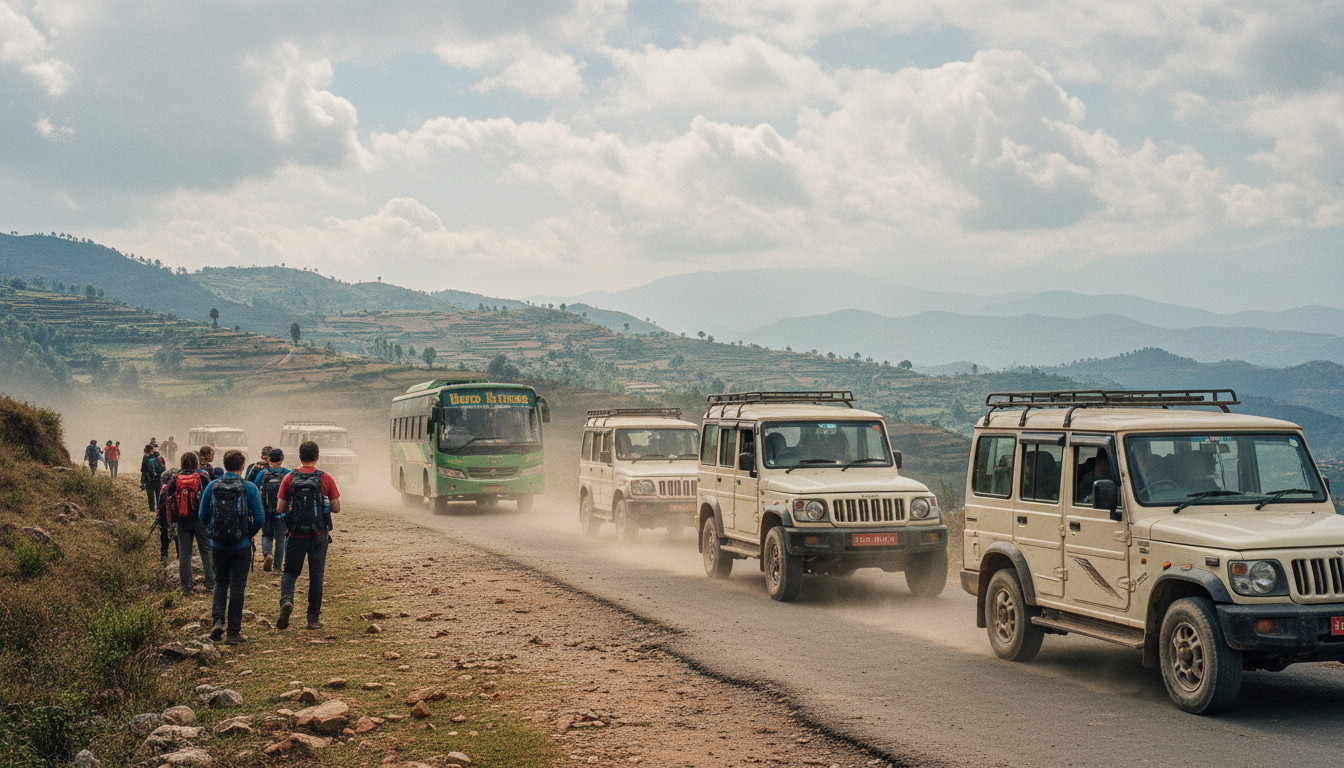
The Chitwan to Birgunj route covers approximately 150–160 km via the Mahendra Highway — Nepal’s famous East-West Highway that traverses the flat Terai plains of southern Nepal. In a private vehicle, the journey takes a comfortable 3–4 hours, compared to 4–5 hours by public bus — and with the critical advantage of a direct, non-stop ride from your hotel lobby to the border gate, with no shared vehicles, no uncertain connections, and no last-minute scrambling at Birgunj Bus Park.

Birgunj is much more than just a border checkpoint. As Nepal’s “Commercial Capital” and “Gateway of Nepal”, Birgunj is a fascinating, vibrant Terai city handling over 56% of Nepal’s total trade with India.

Its colonial-era Clock Tower (GhantaGhar), sacred temples, bustling markets, proximity to Gadhimai Temple and Parsa National Park, and its legendary border energy make it an experience in itself — not just a transit point. With a private vehicle from Nepal Vehicle Hiring, you arrive in Birgunj refreshed, on time, and free to explore before crossing.

This comprehensive guide covers everything you need to know about Chitwan to Birgunj border transport—route details, vehicle options, border crossing procedures, onward connections from Raxaul to India, a Birgunj city guide, travel tips, and a complete FAQ.

Book your transport now: Nepal Vehicle Hiring | Jeep Hire Nepal | Hiace Van Hire | Bus Hire Nepal | Call/WhatsApp: +977 981-4227196

Chitwan to Birgunj Border Transport – Route Overview

RouteSauraha / Chitwan National Park -> Birgunj Metropolitan City
Total DistanceApprox. 150-160 km via Mahendra Highway (East-West Highway)
Travel Time3-4 hours by private vehicle | 4-5 hours by public bus
Road TypeMahendra Highway (paved, good condition); flat Terai plains
Border CrossingBirgunj (Nepal) / Raxaul (India, Bihar State)
Border HoursNepal side (Birgunj): 4:00 AM – 8:00 PM | India side (Raxaul): 5:00 AM – 11:00 PM
Vehicle OptionsCar, Jeep (Jeep, Hiace Van, Coaster, Tourist Bus
Pick-UpAny Sauraha hotel, resort, or Chitwan location
Drop-Off OptionsBirgunj city, Birgunj Bus Park, Birgunj-Raxaul Border Gate, Simara Airport
AvailabilityDaily – 24/7 booking, hotel pick-up included
Contact+977 981-4227196 | vehiclehiringnepal.com

KTM to Chitwan

Why Choose a Private Vehicle for Chitwan to Birgunj Transport?

Public buses connect Chitwan (Bharatpur) to Birgunj, but the experience contrasts sharply with a private vehicle hire. Here is a comprehensive comparison of why Nepal Vehicle Hiring’s private transport service is the choice of every discerning traveller making this border crossing:

Direct, Door-to-Door Service from Your Sauraha Resort

The biggest practical advantage of a private vehicle is the pick-up from your exact hotel or resort in Sauraha, Tandi, or anywhere in Chitwan. After your wildlife safari, the last thing you want is to figure out how to get from your jungle lodge to a public bus park in Bharatpur at 6 AM.

Our driver arrives at your hotel door at the agreed time, loads your luggage, and takes you directly to the Birgunj border gate — or to any drop-off point you specify: Birgunj Bus Park, Birgunj city hotel, the border immigration office, or Simara Airport (for domestic connections).

Significant Time Saving on the Mahendra Highway

Private vehicles cover the Chitwan–Birgunj route in 3–4 hours, compared to 4.5–5.5 hours by public bus (which makes multiple unscheduled stops along the Mahendra Highway at Hetauda, Pathlaiya, and suburban Birgunj). For travellers with a fixed flight, a bus connection from Birgunj to India, or a timed border crossing — this 1–2 hour time saving is genuinely meaningful, especially when the border closes at 8 PM on the Nepal side.

Comfort in the Terai Climate

Chitwan and the Terai plains are among Nepal’s hottest regions, with temperatures regularly exceeding 38–42°C from March to October. Our fully air-conditioned private vehicles make the 3–4 hour journey genuinely comfortable. Public buses on the Mahendra Highway are overcrowded, rarely air-conditioned, and can transform the Terai heat into a genuinely exhausting pre-border experience.

Luggage Safety and Security

Most travellers on the Chitwan–Birgunj route carry substantial luggage — safari bags, trekking equipment, souvenir purchases, business samples, or family travel bags. In a private vehicle, your luggage travels securely in the boot under your direct supervision throughout the journey. On public buses, luggage is often loaded onto rooftop racks in the rain, mixed with other passengers’ bags, and subjected to rough handling at every bus-park stop.

Border Timing Flexibility

The Nepal side of the Birgunj–Raxaul border closes at 8:00 PM. If your public bus is delayed, you miss the border entirely and must overnight in Birgunj.

With a private vehicle and a fixed departure time from Chitwan, your driver manages the timing and ensures you arrive at the border gate with sufficient time to complete immigration and customs before closing. Our drivers are experienced with the border timing requirements and factor in Birgunj city traffic on the approach.

Custom Stop Options

On a private vehicle, you control the journey. Stop for breakfast at Hetauda, lunch at Pathlaiya, or fuel at Narayanghat — all at your pace. Our drivers are happy to accommodate any reasonable stop along the Mahendra Highway.

This is particularly valued by travellers who want to photograph the Terai landscape, visit a roadside temple, or stretch their legs between Chitwan and Birgunj.

Group Economics – Better Value for 5+ Passengers

For groups of 5 or more passengers, a private jeep or Hiace van becomes genuinely cost-competitive with multiple public bus tickets — and delivers incomparably better comfort, security, directness, and flexibility. A single Hiace van (13 passengers), shared among a group, significantly reduces the per-person cost while providing the full benefits of private transport.
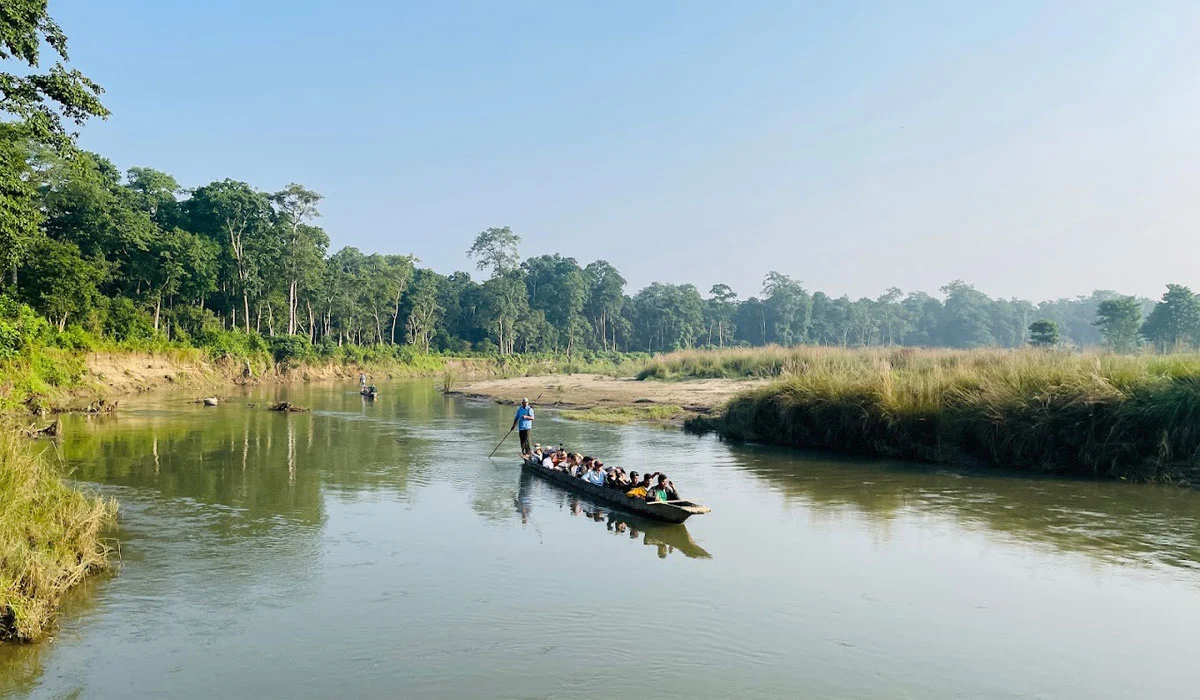
Chitwan

Available Vehicles – Chitwan to Birgunj Border Transport

Nepal Vehicle Hiring maintains a complete, well-maintained, air-conditioned fleet for the Chitwan–Birgunj route. Every vehicle is driven by a professional, licensed driver with experience on the Mahendra Highway:

VehicleCapacityComfortJourney TimeBest For
Sedan / Hatchback1-4 pax4 Star3-3.5 hrsSolo / Couples
SUV / Scorpio1-6 pax4 Star3-3.5 hrsFamilies / Groups
Land Cruiser 4WD1-6 pax5 Star3-3.5 hrsVIP / Top-end
Toyota Hiace Van8-13 pax4 Star3.5-4 hrsTour Groups
Coaster20-25 pax4 Star4-4.5 hrsLarge Groups
Tourist Bus30-45 pax3-4 Star4.5-5 hrsSchool / Corporate

Private Car / Sedan – Best for Solo Travellers and Couples

A private sedan or hatchback car is the most intimate and comfortable option for solo travellers, couples, and small families of up to 4. The Chitwan–Birgunj Mahendra Highway is entirely paved and flat, making a standard car perfectly suited to this route. Fully air-conditioned, clean, and driven by a professional driver, our private car hire offers the most personal, flexible border transport experience at the most competitive price for small groups.

SUV / Jeep – The All-Round Best Choice

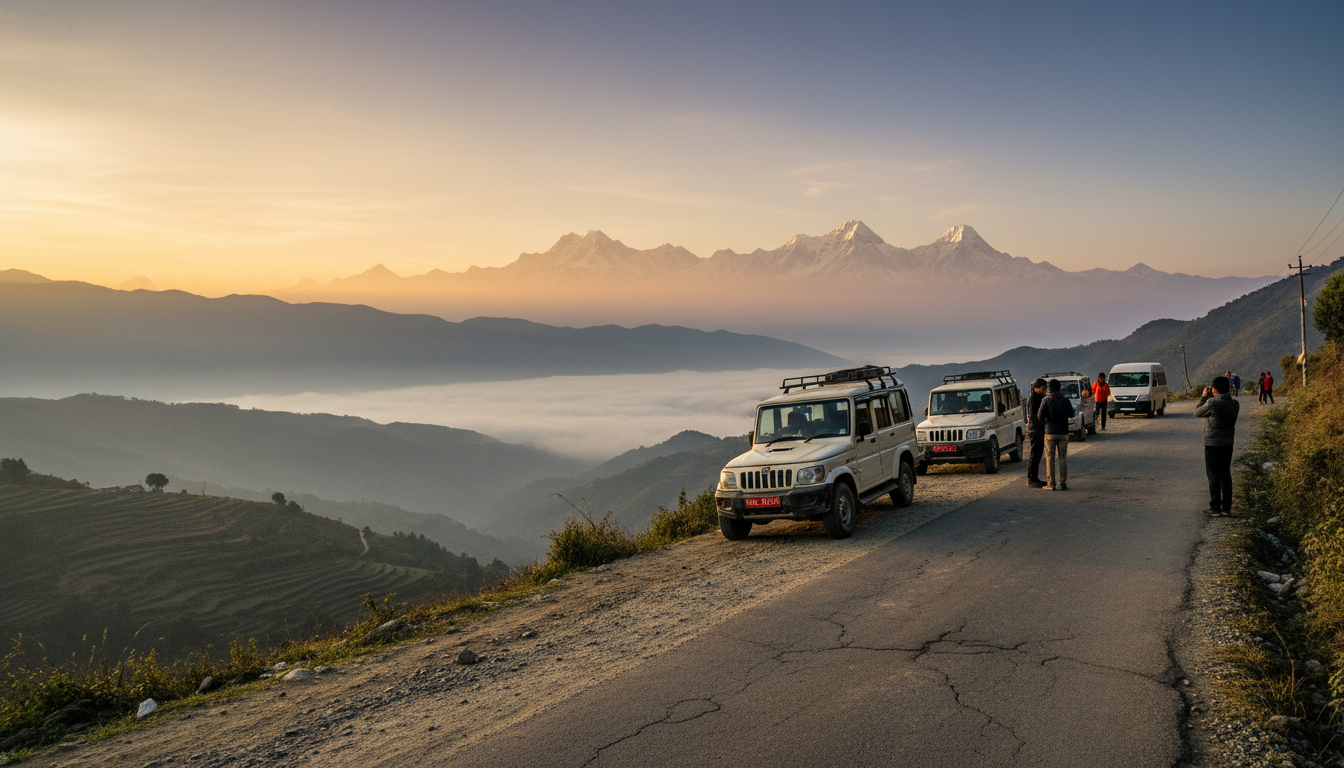
For families of 5–6 passengers and groups with more luggage, a Mahindra Scorpio, Toyota Land Cruiser, or similar SUV is the most popular choice for the Chitwan–Birgunj route. Higher seating position, more luggage space, powerful air conditioning for the Terai heat, and the proven comfort of Nepal’s best mountain and highway 4WDs make these the most requested vehicles for this transfer. View our Jeep Hire page for the full fleet.

Toyota Land Cruiser – The VIP Border Transfer

For travellers seeking the highest level of comfort on the Chitwan–Birgunj run — business executives, diplomatic visitors, VIP safari guests, or anyone who wants the very best — the Toyota Land Cruiser 4WD is the ultimate choice. Its supremely comfortable leather interior, top-tier climate control, generous luggage space, and whisper-smooth ride on the flat Terai highway make the 3–4 hour journey genuinely comfortable.

Toyota Hiace Van – Perfect for Medium Tour Groups

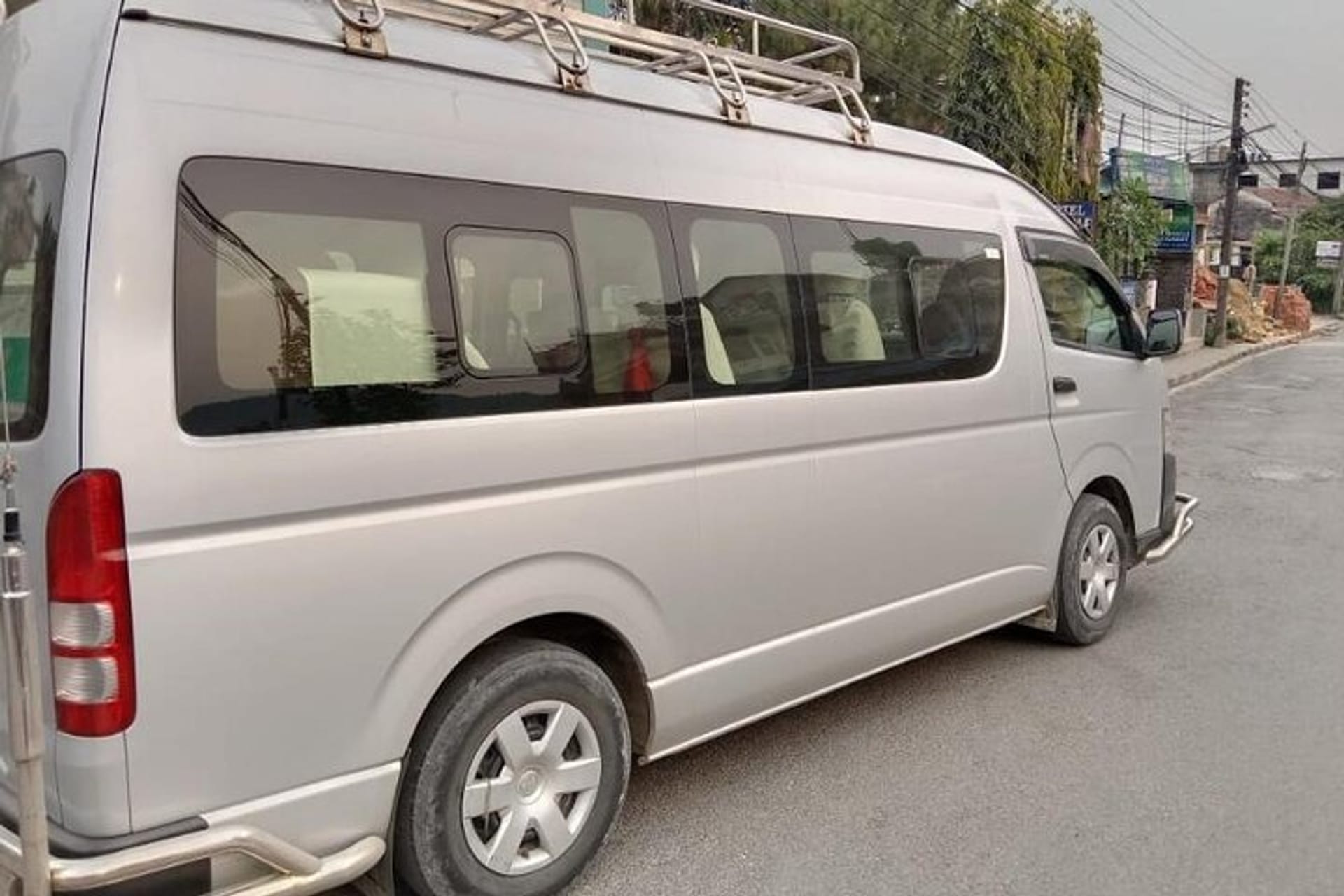
Our Toyota Hiace van (8–13 passengers) is the ideal solution for medium-sized tour groups, families travelling together, and organised pilgrim parties heading to India. The Hiace provides comfortable individual seating, air conditioning, and ample luggage space in the rear for all 8–13 passengers.

Popular among tour operators, Indian pilgrim groups returning from Muktinath or Pashupatinath, and corporate travel parties. View our Hiace Van Hire page.

Coaster and Tourist Bus – Large Group Border Transport

For groups of 20 or more—school excursions, corporate tours, wedding parties, and large pilgrim groups—our Coaster (20–25 passengers) and Tourist Bus (30–45 passengers) offer the most economical and practical border transport solution. The Mahendra Highway is fully bus-accessible, and our professional drivers navigate it with confidence at any group size. View Coaster Hire Nepal and Bus Hire Nepal.
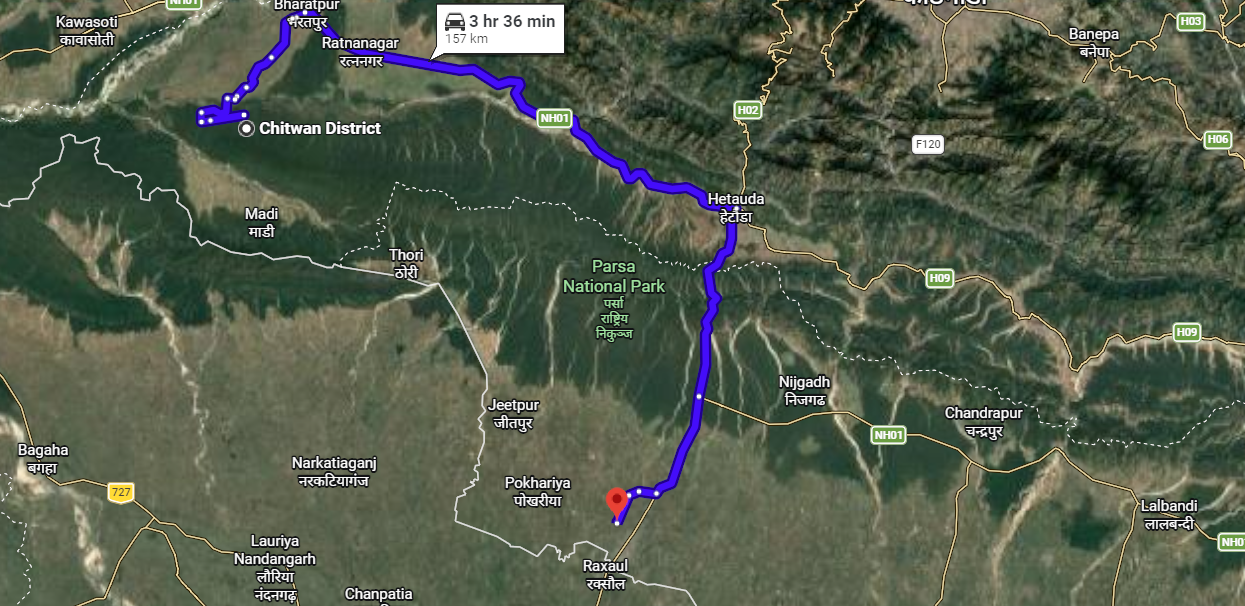
Birgunj-Chitwan to Birgunj Border Transport

Chitwan to Birgunj – Detailed Route & Key Stops

The Chitwan to Birgunj route travels entirely on the Mahendra Highway (East-West Highway / NH01) — Nepal’s most important highway, stretching the full length of the Terai from Mechi in the east to Mahakali in the west. The section from Narayanghat (Chitwan) to Birgunj passes through some of Nepal’s most productive agricultural land, with the flat, wide Terai plains framed by the distant forested Chure Hills to the North. Here is the complete route broken down by segment:

SegmentDistanceTimeKey Landmark / Note
Sauraha to Bharatpur18 km25-30 minCity gateway; Chitwan Hospital; Narayanghat junction
Bharatpur to Narayanghat5 km10 minBusy junction on Mahendra Highway; fuel & snacks
Narayanghat to Hetauda60 km1-1.5 hrsMahendra Highway east; Makwanpur district; forested Terai
Hetauda to Pathlaiya Junction22 km25-30 minIndustrial area; Pathlaiya Junction (BP Highway / Mahendra)
Pathlaiya to Birgunj35 km40-50 minFlat Terai plains; approach to Parsa District; Birgunj suburbs
Birgunj City Centre to Border Gate3 km10-15 minShankaracharya Gate; Nepal Immigration; Raxaul (India) begins

Sauraha to Bharatpur – Leaving the Jungle Behind

The journey begins at your Sauraha resort or hotel, located on the northern edge of Chitwan National Park. Your Nepal Vehicle Hiring driver picks you up at the agreed time and drives the 18 km to Bharatpur City—the fast-growing regional capital of Gandaki Province and home to Bharatpur Airport (BHR), which offers domestic flights to Kathmandu—bharatpur-Narayanghat forms the key junction where the route transitions onto the Mahendra Highway heading east.

The Narayani River, flowing south from the Himalayas through Chitwan, is crossed on a modern bridge at Narayanghat — marking the symbolic departure from the lush jungle region into the broader Terai plains.

Narayanghat to Hetauda – The Heart of the Terai

Heading east from Narayanghat, the Mahendra Highway enters a wide, flat agricultural landscape of rice paddies, mustard fields, and Terai villages. The 60 km stretch to Hetauda is the most peaceful and scenic section of the drive — the road is smooth, wide, and flanked by the dense sal forests of the Parsa Wildlife Reserve to the south.

Hetauda (450 m) is the industrial capital of Madhesh Province, known for its cement factories, industrial estates, and as the site of Nepal’s historic ropeway (cable goods transport system), which once connected the Terai to Kathmandu before highways replaced it. Hetauda is a good midpoint rest stop with restaurants and fuel stations.

Hetauda to Pathlaiya Junction – Gateway to Parsa

From Hetauda, the highway continues east to Pathlaiya. At this strategically important junction, the Tribhuvan Highway (Nepal’s oldest road, linking Birgunj to Kathmandu via the scenic Bhimphedi Pass) meets the Mahendra Highway. Pathlaiya marks the entry into Parsa District — Birgunj’s home district and one of Nepal’s most significant commercial and industrial zones.

The Birgunj Industrial Corridor begins here, with large factories, warehouses, and the infrastructure of Nepal’s busiest trade artery becoming increasingly visible as you approach the city.

Pathlaiya to Birgunj – The Commercial Capital Approaches

The final 35 km from Pathlaiya to Birgunj is through the flat, densely populated Parsa District, passing through suburban industrial areas, truck depots, and commercial zones that serve the Birgunj–Raxaul trade corridor. The approach to Birgunj city is busy with commercial traffic — heavy trucks, tankers, and freight vehicles from India and Nepal forming a constant stream between the border and Nepal’s interior.

Your driver navigates this efficiently, reaching central Birgunj via the inner ring road, avoiding the heaviest freight routes.

Birgunj City Centre to the Border Gate

The final 3 km from Birgunj city centre to the Shankaracharya Gate (Nepal–India Border) passes through the most vibrant part of the city — the bustling GhantaGhar area (Clock Tower junction), the colourful Rani Bazaar, and the lanes of small traders, money changers, and travel agents that service the enormous cross-border traffic. Your driver can drop you at any point in the city or take you directly to the immigration office entrance at the border gate — whichever suits your travel plan.
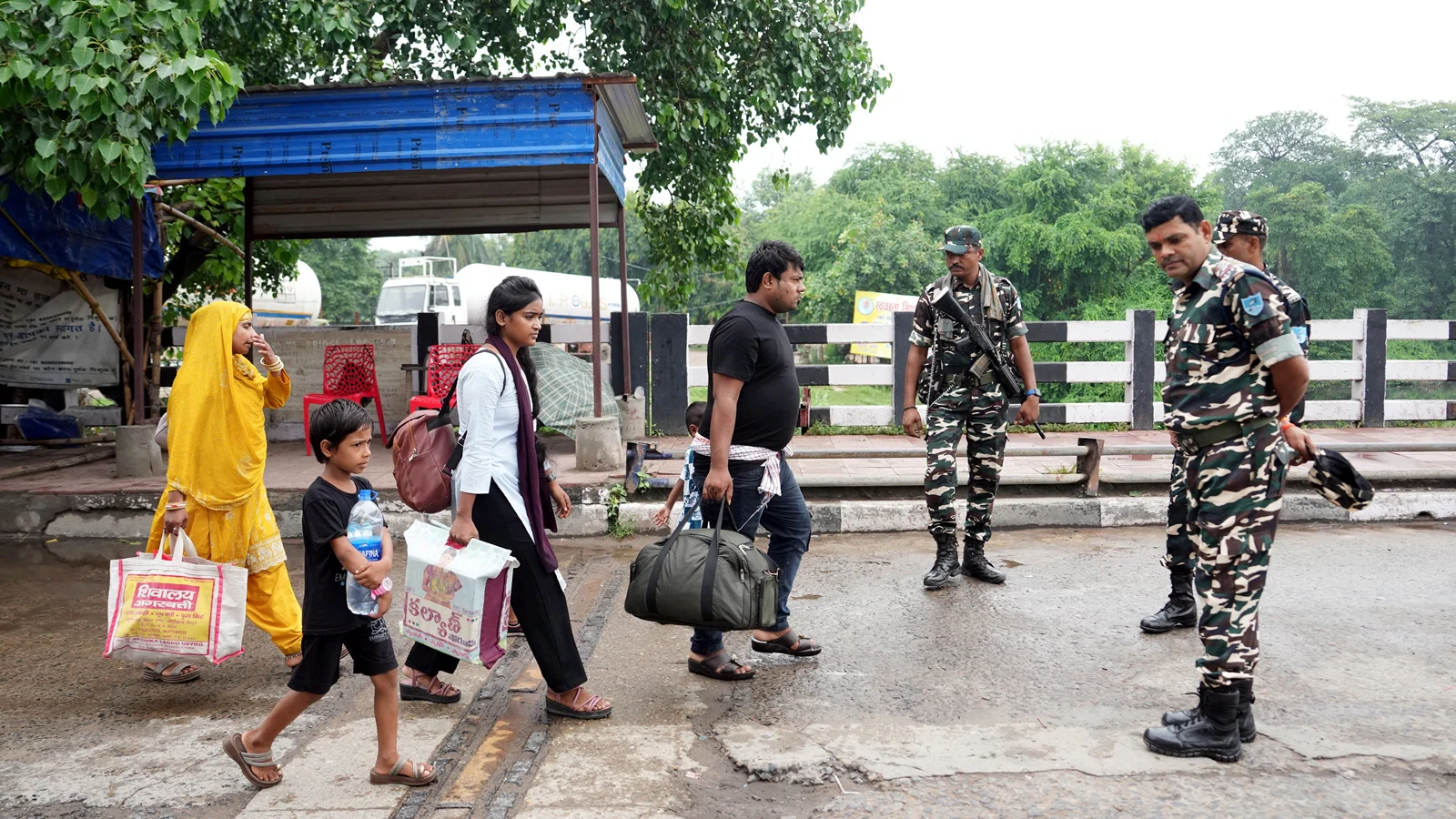
Chitwan to Birgunj Border Transport

About Birgunj – Nepal’s Commercial Capital and Gateway to India

Birgunj is no ordinary border town. As a Metropolitan City (declared 2017) and Nepal’s most important commercial centre outside Kathmandu, Birgunj offers genuine substance, fascinating contradictions, and significant historical depth. Understanding Birgunj before you arrive transforms what might seem like a transit point into a genuinely rewarding destination in its own right.

Historical Background

Birgunj’s importance dates to the late 19th-century Rana era, when the Rana Prime Ministers (who ruled Nepal for 104 years from 1846 to 1951) recognised its value as Nepal’s primary trade gateway to British India. The city was one of Nepal’s first three municipalities, established under Prime Minister Mohan Shumsher Jang Bahadur Rana.

Its strategic position on the Indian border in Bihar — connecting Nepal directly to the Gangetic Plain and India’s vast market and rail network — made it the natural hub for Nepal’s international trade for over a century. Today, the Birgunj Integrated Check Post (ICP) and Sirsiya Dry Port — Nepal’s only rail-linked inland container depot — handle most of Nepal’s containerised imports from India, making Birgunj the nation’s economic engine.

Birgunj’s Economic Importance

Few statistics capture Birgunj’s centrality to Nepal’s economy more vividly: over 56–60% of Nepal’s total trade with India passes through the Birgunj Customs Office — Nepal’s largest revenue-collecting customs point. The Sirsiya Dry Port has direct rail connectivity to India’s major ports at Kolkata and Visakhapatnam.

Nepal imports fuel, vehicles, machinery, construction materials, textiles, and consumer goods primarily through Birgunj. The city’s industrial estates house sugar mills, cement factories, pharmaceutical plants, and light manufacturing units — making it a genuinely industrious urban centre rather than merely a border bazaar.

Birgunj’s Cultural Character

Culturally, Birgunj blends Nepali Terai culture, Maithili traditions, Hindi-speaking communities, and Indian commercial influences to create a unique urban character unlike any other Nepali city. Hindi is widely spoken alongside Nepali and Maithili, making the city exceptionally accessible for Indian visitors.

The food culture blends Nepali dal bhat with North Indian cuisine—samosas, jalebis, chaat, and thalis are readily available alongside traditional Nepali dishes. The city’s mosques, Hindu temples, and Buddhist chaityas reflect this crossroads community’s multi-religious heritage.

Key Attractions in Birgunj – What to See and Do

If your Chitwan to Birgunj transport arrives with time to spare before your border crossing or onward connection, Birgunj offers a surprisingly rewarding set of attractions and experiences. Here is a complete guide to the city’s highlights:

Attraction / LandmarkDistance from City Centre & Description
Birgunj GhantaGhar (Clock Tower)City centre | Iconic 1976 colonial-era landmark; heart of Birgunj; illuminated at night; best photo stop
Shankaracharya Gate1 km | Grand border gate between Nepal & India; symbolic arch; heavy pedestrian & vehicle traffic
Ghadiarwa Pokhari1.5 km | Serene pond with Hindu shrine; morning yoga & walking culture; popular Chhath Puja site
Shri Gahawa Mai TempleCity | The original temple after which Birgunj was once called ‘Gawaha’; important local shrine
Rani Bazaar MarketCity centre | Famous market for local handicrafts, spices, textiles, and traditional Nepali cuisine
Gadhimai Temple13 km from Birgunj at Kalaiya | One of South Asia’s largest Hindu pilgrimages; Gadhimai Mela every 5 years
Parsa National Park15 km | Buffer zone of Chitwan; tiger, rhino, elephant, leopard; less crowded than Chitwan proper
Simraungadh Ruins40 km | Ancient 12th-14th century capital of the Mithila Kingdom; archaeological ruins; rare historical site
Simara Airport20 km | Nearest airport; Buddha Air daily flights to Kathmandu; convenient domestic connection

Birgunj GhantaGhar (Clock Tower) – Heart of the City

The Birgunj GhantaGhar — Clock Tower — is the city’s undisputed heart and most recognisable landmark. Established in 1976 with help from Japanese schoolchildren from Yogano, Japan (who raised funds and provided a Seiko clock face), the clock tower stands at the city’s main junction as both a practical orientation point and a symbol of civic identity.

Renovated in 2021 to restore full operation, the GhantaGhar is beautifully illuminated at night and surrounded by Birgunj’s most active market zone in Birgunj —tuk-tuks, street vendors, tea stalls, and the constant energy of a city that never really slows down. It is a superb street photography location and the best place to absorb Birgunj’s distinctly border-town atmosphere.

Shankaracharya Gate – The Symbolic Gateway Between Nepal and India

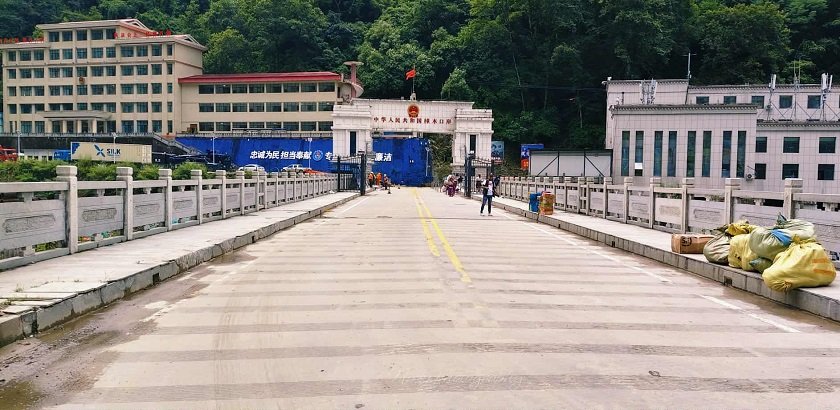
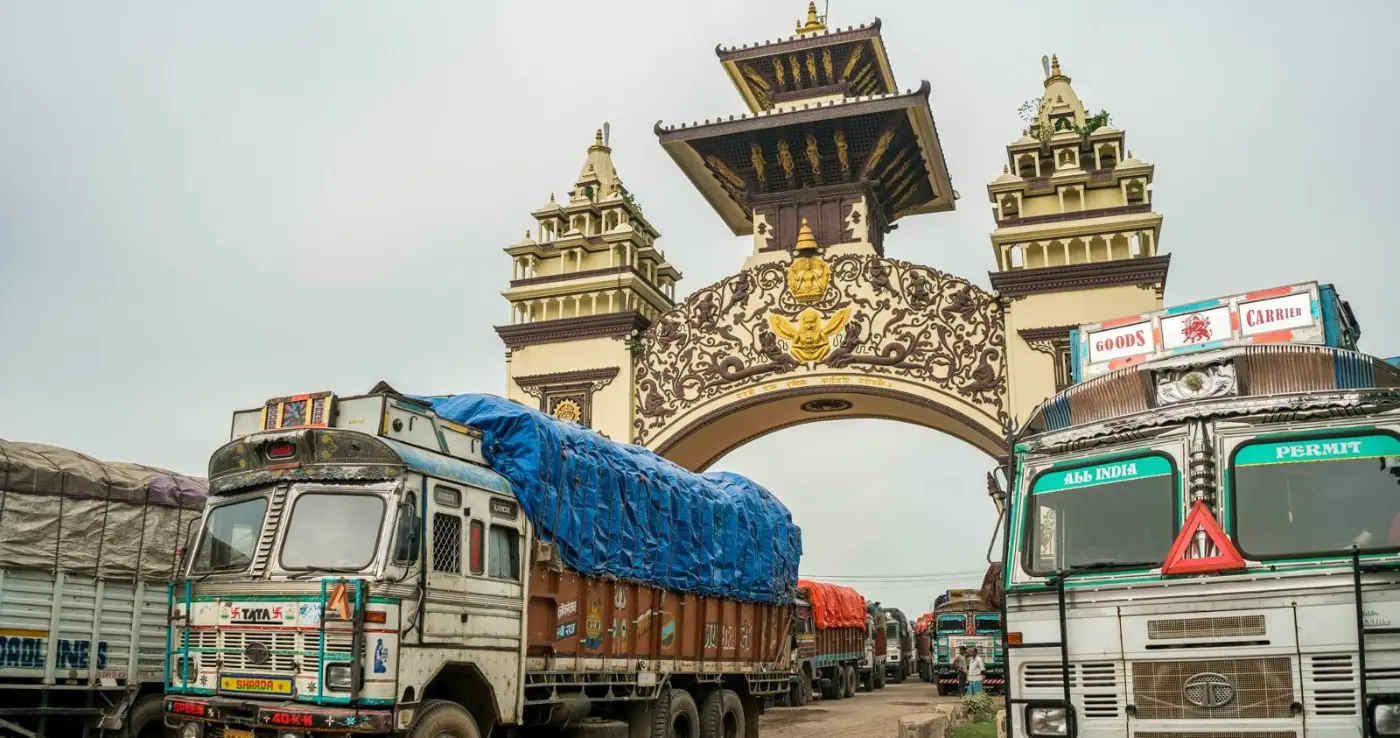
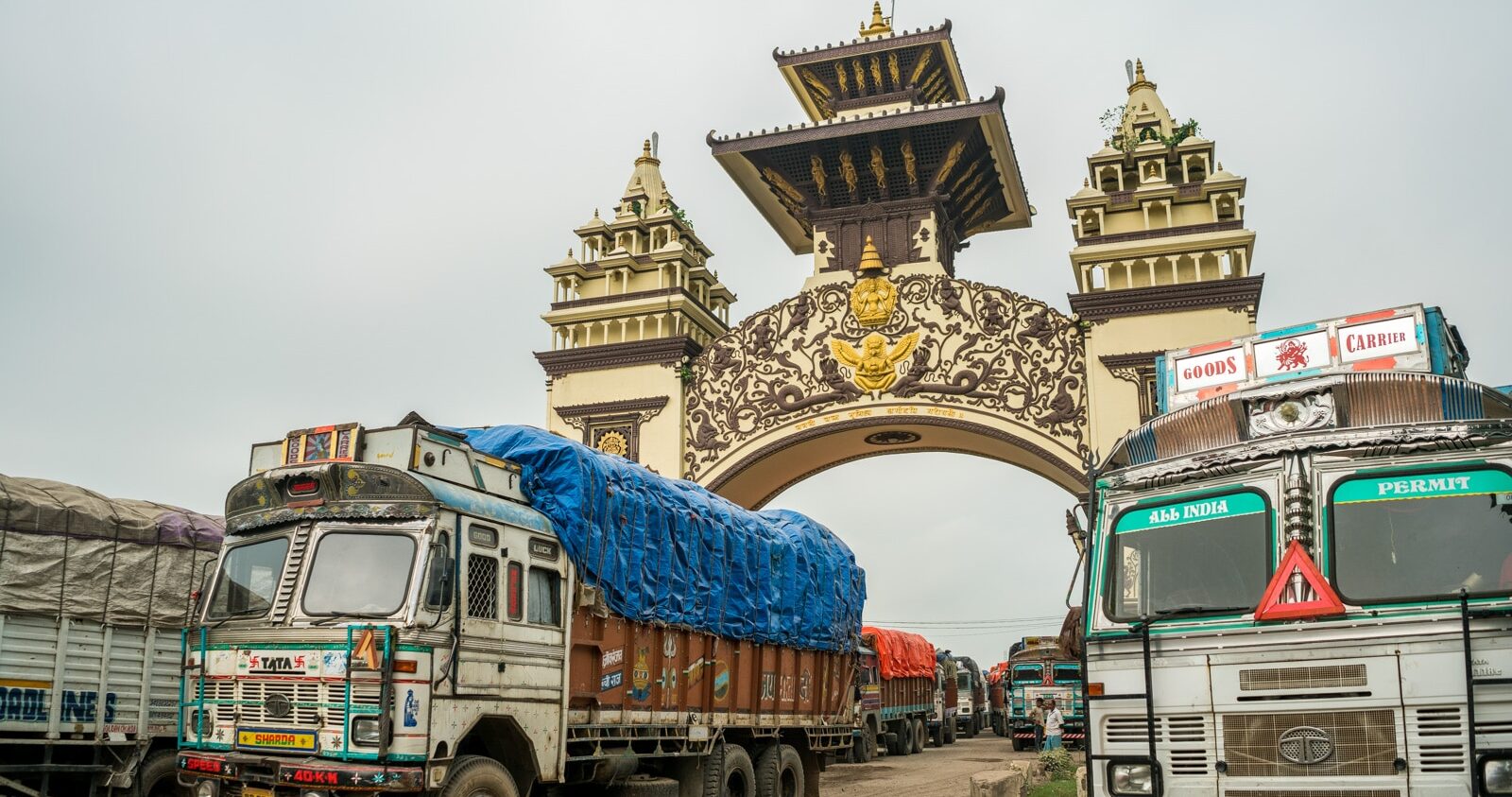
The Shankaracharya Gate is a large ceremonial arch marking the formal boundary between Nepal and India at the Birgunj–Raxaul crossing. Named after Adi Shankaracharya, the revered 8th-century Hindu philosopher and reformer, the gate is a constant scene of cross-border activity — pedestrians, vehicles, traders, pilgrims, and families crossing in both directions throughout the day.

The gate is a photo landmark of Birgunj, and approaching it in a Nepal Vehicle Hiring private car is the most comfortable and organised way to reach this busy international crossing point.

Ghadiarwa Pokhari – The Sacred Pond

Ghadiarwa Pokhari (pond) is a surprisingly serene urban oasis in the heart of bustling Birgunj—a large, tree-fringed pond with a Hindu shrine island and a popular walking circuit beloved by locals for morning exercise, yoga, and evening relaxation. The pond is especially significant during Chhath Puja—one of the most important festivals in the Terai region.

Thousands of devotees gather at dawn and dusk to worship the Sun God, standing waist-deep in the water with offerings of fruit and lit lamps. If your arrival in Birgunj coincides with Chhath Puja (October–November), witnessing this festival at Ghadiarwa Pokhari is a profoundly moving experience.

Gadhimai Temple – A Major Pilgrimage in Easy Reach

Located approximately 13 km from Birgunj in Kalaiya town, the Gadhimai Temple is one of the most significant Hindu pilgrimage sites in Nepal and South Asia. Dedicated to Goddess Gadhimai—a powerful form of the Mother Goddess—the temple hosts the Gadhimai Mela every 5 years, drawing an estimated 2–8 million pilgrims from across Nepal, India, and the global Hindu diaspora, making it potentially the largest religious gathering in the world.

Nepal Vehicle Hiring can arrange a side trip to Gadhimai Temple as part of your Chitwan–Birgunj transport on request.

Parsa National Park – A Less-Visited Wildlife Sanctuary

Immediately adjacent to Chitwan National Park and forming its eastern buffer zone, Parsa National Park (494 sq. km) protects a significant portion of Nepal’s remaining Terai wildlife. Tigers, one-horned rhinoceroses, Asian elephants, leopards, gharial crocodiles, sloth bears, and four-horned antelopes inhabit its dense sal forests and grasslands.

Far less visited than Chitwan, Parsa offers an uncrowded, authentic wildlife experience for travellers with an extra day before crossing the border. Vehicle Hiring can arrange a combined Chitwan–Parsa–Birgunj itinerary on request.

Simraungadh – The Lost Kingdom

Located approximately 40 km from Birgunj, the ruins of Simraungadh (Simrongarh) represent one of Nepal’s most historically significant and least-visited archaeological sites. Simraungadh was the capital of the Mithila Kingdom (12th–14th centuries CE) — a powerful Hindu kingdom that controlled much of the Nepal Terai and influenced art, literature, and religion across a vast region.

The brick ruins of palace complexes, temples, and fortification walls are scattered across a forested area, offering a hauntingly beautiful glimpse into a largely forgotten chapter of Himalayan history—a perfect half-day excursion for history-minded travellers with time in Birgunj.
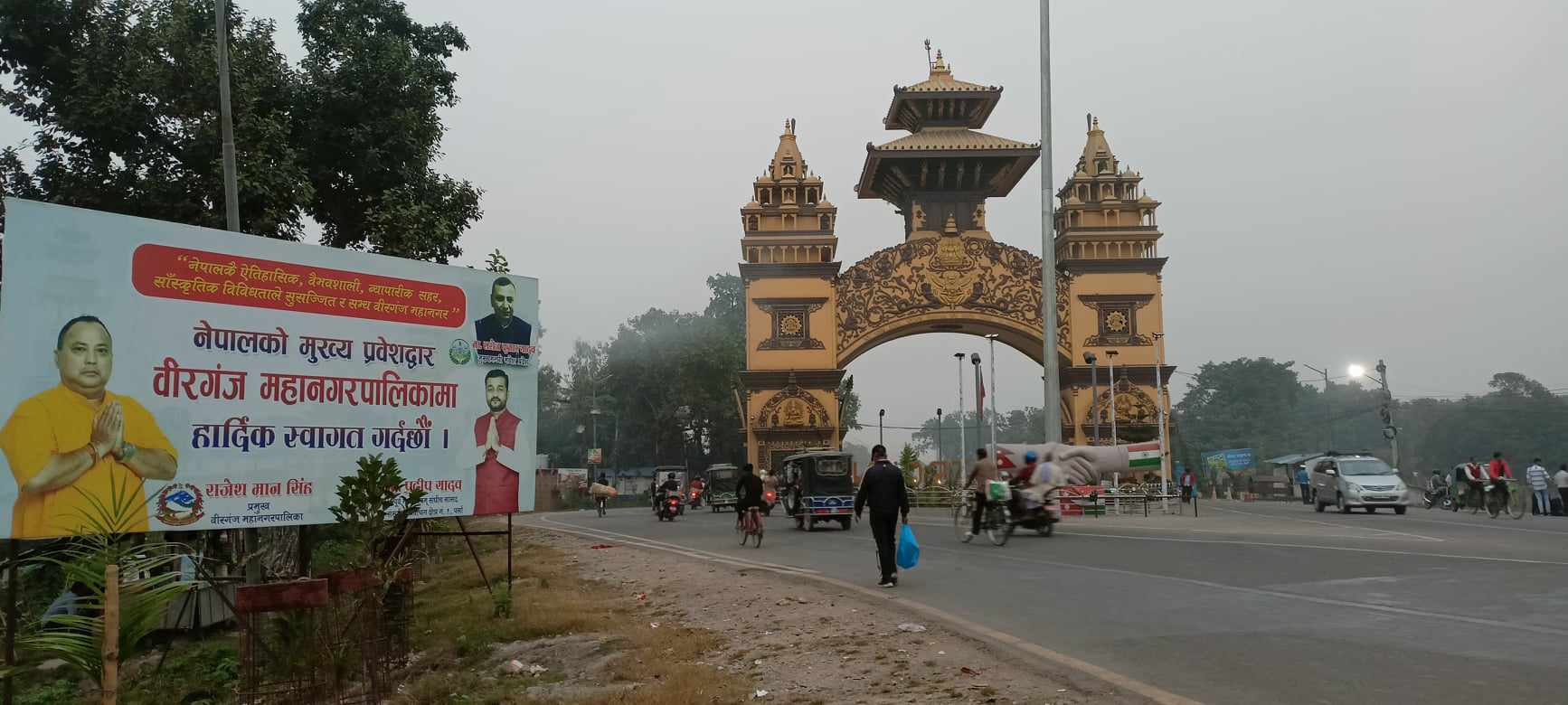
 Birgunj Border

Birgunj–Raxaul Border Crossing – Complete Guide for Travellers

The Birgunj–Raxaul border crossing is Nepal’s busiest, most important, and most traveller-ready land border with India. It handles a massive daily volume of commercial freight, passenger vehicles, and pedestrian crossings. Understanding the crossing procedures before you arrive eliminates delays and stress:

ItemDetail
Nepal Border (Birgunj)Birgunj Immigration Office, near Shankaracharya Gate; Nepal Armed Police Force; 4:00 AM – 8:00 PM daily
India Border (Raxaul)Indian Immigration & Customs, Raxaul, East Champaran, Bihar; SSB (Sashastra Seema Bal); 5:00 AM – 11:00 PM
Indian Visa RequirementForeign nationals (except Indian citizens) require a valid Indian visa. Obtain BEFORE arriving. E-visa accepted.
Indian CitizensNo visa required for Nepal or India. Official ID (Aadhaar/Voter ID/Passport) needed. Get immigration stamp.
Nepal Visa on Arrival (non-Indian)Available at Birgunj immigration for most nationalities. USD 25/15-day | USD 40/30-day | USD 100/90-day
Indian Currency RestrictionCarrying INR notes above Rs 100 into Nepal is restricted/illegal. Change currency before entry at Birgunj banks.
Customs DeclarationDeclare goods above permitted limits (NPR 25,000 for Nepalis; USD 500 for tourists). Electronics may require declaration.
Vehicle at BorderNepal-registered vehicles cannot typically cross into India. Nepal Vehicle Hiring drops at Birgunj border gate.

Step-by-Step Border Crossing Procedure

Here is the complete step-by-step process for crossing from Nepal (Birgunj) into India (Raxaul):

  • Step 1 – Arrival at Birgunj Border Gate: Your Nepal Vehicle Hiring driver drops you at the Birgunj Immigration Office near the Shankaracharya Gate. Nepal-registered vehicles do not cross into India, so the driver assists with luggage to the immigration entrance.
  • Step 2 – Nepal Immigration Departure Stamp: Present your passport to the Nepal Department of Immigration officer at the Birgunj office. The officer reviews your Nepal entry stamp and issues a departure stamp. Indian citizens: present your Aadhaar card, Voter ID, or passport. Make sure you get an entry stamp when entering Nepal—exiting without one can result in fines and delays.
  • Step 3 – Walk Across the Border: From the Nepal immigration office, walk through the Shankaracharya Gate and across the short no-man’s-land between the two countries to the Indian immigration office in Raxaul. This short walk (200–400 metres) is usually shared with a stream of pedestrians, cyclists, and motorcycle riders crossing in both directions.
  • Step 4 – Indian Immigration Entry: Present your passport and valid Indian visa at the Indian immigration counter in Raxaul. Indian citizens: no visa required — proceed to the Indian nationals counter with your ID document. Foreign nationals with Indian e-visa: ensure your e-visa is for land border entry at Raxaul (not all Indian e-visas permit land border entry — check carefully before booking).
  • Step 5 – Indian Customs: Clear Indian customs and the baggage screening area. Declare goods above permitted limits. Personal items and standard tourist belongings are typically waved through without issue for regular travellers.
  • Step 6 – Onward Transport from Raxaul: Once through customs, you are in Raxaul, Bihar, India. Local auto-rickshaws, taxis, and buses are immediately available for onward connections to Patna, Motihari, and beyond.

Nepal Visa Information for Incoming Travellers (Raxaul to Birgunj)

For travellers arriving at Birgunj from India (Raxaul), entering Nepal by land, the following visa information applies in 2026:

  • Most foreign nationals can obtain a Nepal Visa on Arrival at the Birgunj Immigration Office. Fees: USD 25 (15 days) | USD 40 (30 days) | USD 100 (90 days). Carry passport photos and USD cash.
  • Indian nationals: No visa required for Nepal. Present a valid photo ID (Aadhaar, Voter ID, or Passport) and ensure you get an official immigration entry stamp at the Birgunj office—skip the informal crossing lane some locals use.
  • Note on Indian Currency: Carrying Indian Rupee notes in denominations above Rs 100 into Nepal is illegal. Change or spend larger Indian currency notes before entering Nepal.
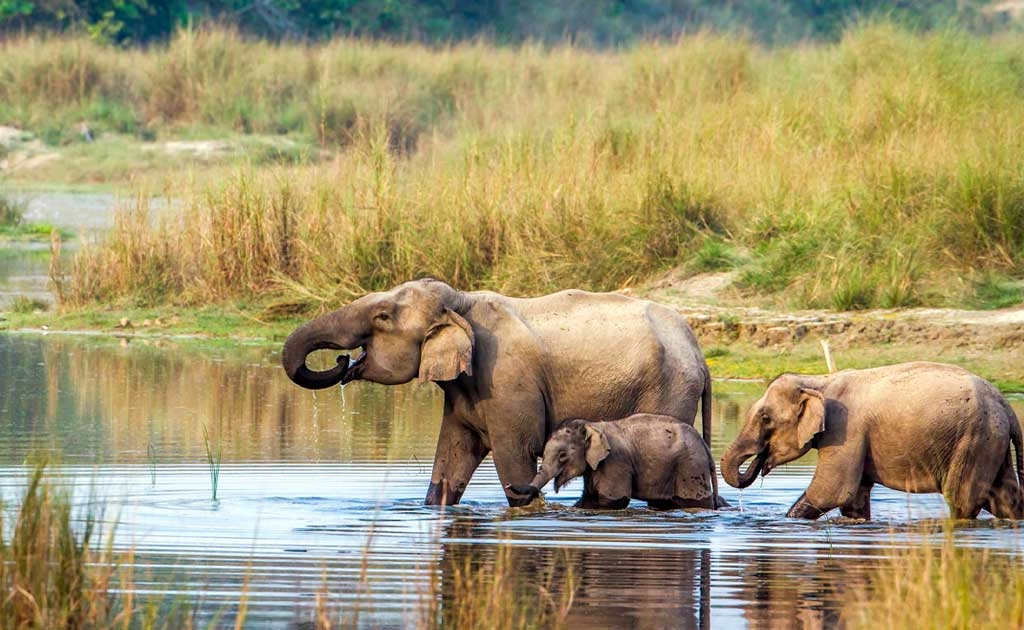
Pokhara to Chitwan

Onward Transport from Raxaul to India – Complete Connections Guide

Once across the border at Raxaul, India’s extensive transport network opens up. Here are the key onward connections available from Raxaul:

Destination (India)Distance from RaxaulApprox. TimeTransport Option
Patna110 km3-4 hrsBus/taxi from Raxaul
Motihari40 km1-1.5 hrsAuto / local bus
Varanasi (Benares)285 km5-7 hrsBus or train from Patna
Lucknow430 km7-9 hrsTrain or bus from Patna
Kolkata630 km10-14 hrsTrain (overnight) or bus
Delhi1,100 km16-20 hrsOvernight train from Patna or Muzaffarpur

Raxaul to Patna – The Main Hub Connection

The 110 km journey from Raxaul to Patna is the primary onward route for most travellers crossing from Nepal into India via Birgunj. Patna (the capital of Bihar) has a major railway junction connecting to Delhi, Kolkata, Mumbai, Varanasi, Lucknow, and most of India’s major cities. Shared taxis and buses depart frequently from Raxaul bus stand for Patna (3–4 hours).

Patna Junction railway station offers the most comfortable and time-efficient onward connections to the rest of India. Book Indian railway tickets in advance on the IRCTC platform (irctc.co.in) — particularly important for overnight trains to Delhi and Kolkata.

Raxaul to Varanasi – The Pilgrim Route

Many Hindu pilgrims completing a Nepal pilgrimage circuit (Muktinath–Pashupatinath–Lumbini–Janakpur–Birgunj) continue onward to the holy city of Varanasi (Benares) — one of the world’s oldest continuously inhabited cities and the holiest site in Hinduism. The 285 km journey from Raxaul to Varanasi takes 5–7 hours by road directly, or via Patna by train (2.5–3 hours by Rajdhani or Shatabdi Express).

Nepal Vehicle Hiring can advise on the best onward connection options based on your travel dates and destinations.

Direct Cross-Border Transport Services

Several Nepal–India cross-border bus services operate directly between major Nepali cities and Indian destinations. From Birgunj Bus Park, direct buses run to Patna, Kolkata, and other destinations in Bihar and UP.

These cross-border bus services handle immigration stops (where all passengers exit for border formalities) and are significantly more convenient than managing the crossing independently. Our Nepal Vehicle Hiring driver can drop you at the Birgunj Bus Park for onward cross-border bus connections on request.
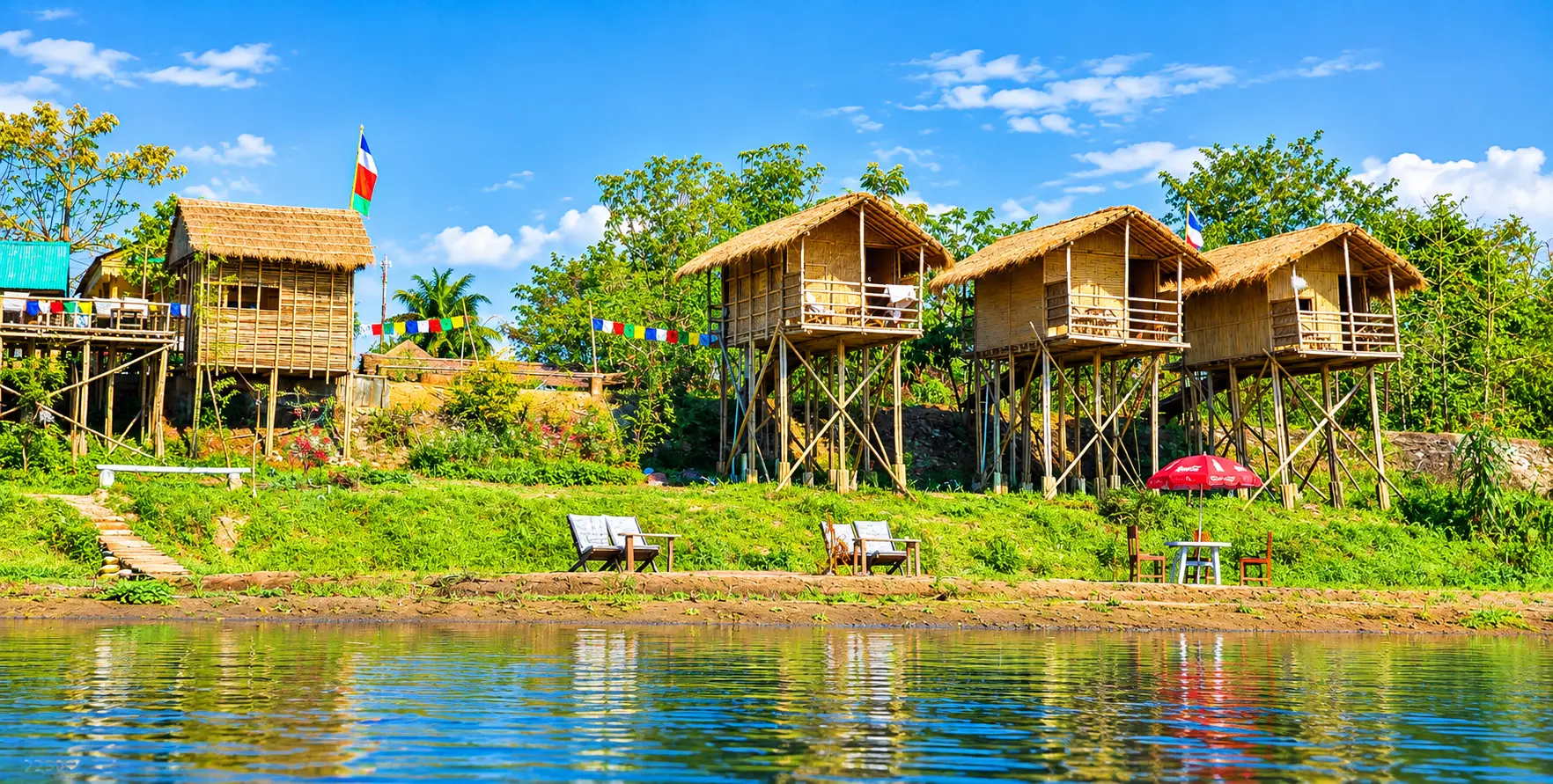
Chitwan Riverside Bamboo Huts and Reflections

Other Vehicle Hire Routes Connecting Through Chitwan & Birgunj

Nepal Vehicle Hiring covers the full network of Nepal transport routes. Many travellers combine the Chitwan–Birgunj transport with broader Nepal itineraries. Here are the most popular connecting routes:

Kathmandu to Birgunj Vehicle Hire

For travellers arriving in Kathmandu and heading directly to the Indian border, Nepal Vehicle Hiring offers direct Kathmandu to Birgunj private vehicle hire—approximately 135–150 km via the Tribhuvan Highway or Mahendra Highway (via Hetauda), taking 4–6 hours. This is especially popular for Indian nationals flying into Kathmandu and exiting Nepal by land at Birgunj. See our Jeep Hire page.

Chitwan to Kathmandu Luxury Car Hire

For travellers completing the reverse journey — returning from the Indian border through Chitwan to Kathmandu — Nepal Vehicle Hiring offers the most comfortable Chitwan to Kathmandu luxury car hire. See our dedicated blog for full details and vehicle options on this route.

Pokhara to Chitwan to Birgunj – The Nepal Circuit

For travellers completing Nepal’s famous Golden Triangle circuit (Kathmandu–Pokhara–Chitwan) before exiting at Birgunj, Nepal Vehicle Hiring can arrange the complete transport chain: Pokhara to Chitwan (5 hours), overnight Chitwan safari, then Chitwan to Birgunj border (3.5 hours) — all in well-maintained private vehicles with professional drivers. Contact us to plan the full circuit.

Birgunj to Lumbini Vehicle Hire

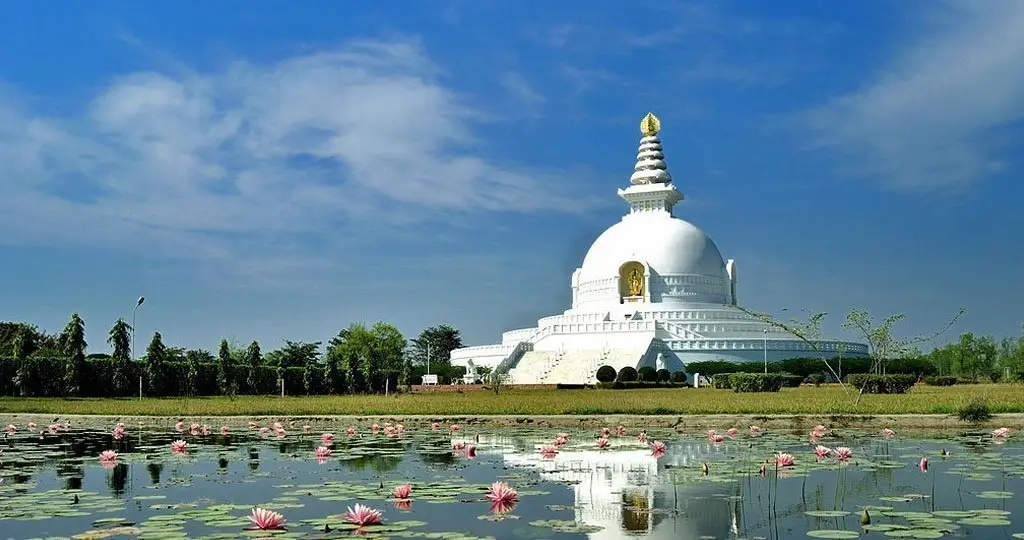
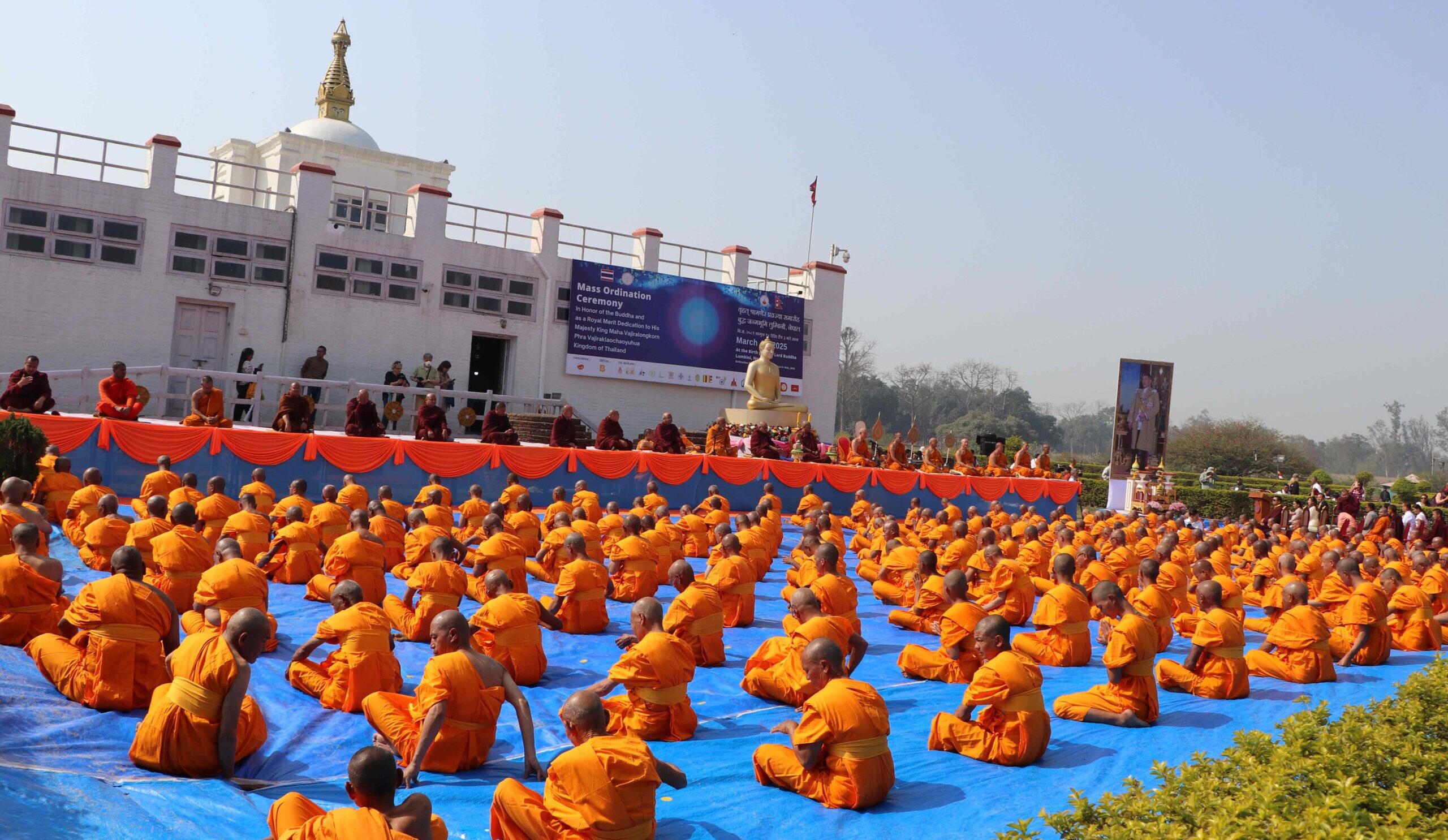
For Indian pilgrims entering Nepal at Birgunj–Raxaul and heading to Lumbini (birthplace of Lord Buddha), Nepal Vehicle Hiring provides direct Birgunj to Lumbini private vehicle hire (approximately 230 km, 5–6 hours via Mahendra Highway). Lumbini is Nepal’s most sacred Buddhist site and a UNESCO World Heritage Site, drawing pilgrims from across Asia. See our vehicle hire services.

Explore all our services:

What to Pack – Chitwan to Birgunj Border Travel Checklist

Being well prepared before your Chitwan to Birgunj transport ensures a smooth, stress-free border crossing and onward journey to India. Here is a comprehensive packing and documentation checklist:

Essential Documents

  • Valid Passport: With at least 6 months of validity beyond your intended stay and enough blank visa pages.
  • Nepal Entry/Exit Stamps: Make sure you receive an official Nepal entry stamp when entering the country. Exiting without a stamp can result in fines and delays.
  • Indian Visa (Foreign Nationals): A valid Indian visa (regular or e-visa). CRITICAL: Verify your e-visa permits land border entry at Raxaul — not all Indian e-visas do.
  • Indian Citizens: Valid Aadhaar Card, Voter ID, or Passport. At least one official government-issued photo ID with your current address.
  • Travel Insurance: Carry proof of comprehensive travel insurance including medical evacuation coverage.
  • Flight / Onward Transport Bookings: Copies of your Indian rail/bus tickets, onward flight booking, or hotel reservations for Indian immigration.

Money & Banking

  • Nepali Rupees: Settle all Nepal expenses before the border. Change remaining NPR to INR at Birgunj banks or forex counters before crossing.
  • Indian Rupees (below Rs 100 denominations): Carrying INR above Rs 100 into Nepal is illegal. Ensure any Indian currency you carry into Nepal on return follows this rule.
  • USD / Major Foreign Currency: Useful for Nepal Visa on Arrival (if applicable) and as a backup currency in India.
  • Debit/Credit Cards: International VISA/Mastercard cards work at major ATMs in Birgunj and at Patna/Raxaul. Inform your bank before travel.

Health, Comfort & Safety

  • Water Bottle: The Terai heat is intense — carry 1–2 litres of water for the 3–4 hour Chitwan–Birgunj drive.
  • Snacks: Fruit, nuts, or biscuits for the drive. Substantial food stops are available at Hetauda and Pathlaiya.
  • Medications: Personal prescription medications, basic pain relief, and anti-diarrhoeal tablets (especially important for the Terai heat and change in cuisine).
  • Sunscreen & Hat: The Terai sun is strong — particularly on outdoor portions of the border walk.
  • Lightweight Modest Clothing: Modest dress (covered shoulders and legs) is respectful in both Nepal and India, especially at border immigration offices and temples.
  • Phone Charger & Power Bank: Indian mobile SIM connectivity is available immediately in Raxaul. A charged device is essential for navigation, bookings, and communication.

Essential Travel Tips for Chitwan to Birgunj Border Transport

Timing – The Most Important Factor

The Nepal side of the Birgunj–Raxaul border closes at 8:00 PM. This single fact should govern your entire Chitwan departure timing.

Nepal Vehicle Hiring recommends departing Sauraha by 12:00–1:00 PM at the latest to arrive at the border by 4:00–5:00 PM — giving you ample time for border formalities (which can take 1–2 hours at peak times) and the first section of onward transport from Raxaul before nightfall. Departing earlier (9:00–10:00 AM) is ideal, as this gives you time to explore Birgunj city and the Gadhimai area before the border crossing.

Book in Advance – Especially for Festival Seasons

The Terai region experiences massive seasonal surges in cross-border traffic during Dashain, Tihar, Chhath Puja, Holi, and Diwali. During these periods, the Birgunj–Raxaul border sees extraordinary volumes — queues at immigration can stretch for hours. Nepal Vehicle Hiring recommends booking your Chitwan–Birgunj transport at least 3–5 days in advance during festival periods and departing as early as possible on the day of crossing to beat festival crowds.

Check Your Indian Visa Type Before Arriving

This is one of the most frequently overlooked details for foreign nationals crossing from Nepal to India at Raxaul: not all Indian e-visas permit land border entry. Standard Indian tourist e-visas issued online typically permit entry at designated airports and selected ports of entry — but the Raxaul land border may or may not be included depending on your nationality and the specific visa type.

Verify this on the official Indian government visa portal or contact the Indian Embassy/Consulate before booking your Chitwan–Birgunj transport. Arriving at the border with an e-visa that doesn’t permit land entry will result in denial and a return to Birgunj.

Carry Sufficient Cash in the Right Currencies

The Birgunj–Raxaul crossing area has money exchange counters and ATMs, but they can be congested during peak travel periods. Carry Nepali rupees for any Birgunj city expenses, and have Indian rupees (below Rs 100 notes for Nepal) or US dollars ready for immediate use in Raxaul. Major currency exchange services are available on both the Nepal and India sides of the border but operate on their own schedules.

Simara Airport – Domestic Flight Alternative

If you prefer to fly from Chitwan to Kathmandu rather than travel overland, Simara Airport (SIF) is located approximately 20 km north of Birgunj. It offers daily Buddha Air flights to Kathmandu (25 minutes). Nepal Vehicle Hiring can arrange a combined Chitwan-Simara Airport transfer on request—either as a standalone service or as part of the Chitwan–Birgunj route with a Simara Airport drop-off.

How to Book Your Chitwan to Birgunj Border Transport

Booking your private Chitwan to Birgunj border transport with Nepal Vehicle Hiring is quick, straightforward, and fully confirmed before your travel day:

  • Step 1 – Browse Our Fleet: Visit com and browse our vehicle options — from private cars and jeeps to Hiace vans, coasters, and tourist buses.
  • Step 2 – Contact Us: Call or WhatsApp +977 981-4227196 with: your travel date, preferred departure time from Sauraha/Chitwan, hotel or resort name for pick-up, number of passengers and luggage, preferred vehicle type, and exact drop-off point in Birgunj (city, bus park, border gate, or Simara Airport).
  • Step 3 – Receive Confirmation: We send a booking confirmation with your driver’s name, vehicle registration, and exact pick-up time at your Chitwan hotel.
  • Step 4 – On Travel Day: Your driver arrives at your resort punctually. Your driver loads your luggage, sets the air conditioning, and begins your direct Chitwan–Birgunj border transfer smoothly.
  • Step 5 – Border Drop-Off: Your driver navigates Birgunj traffic efficiently and drops you at a specified location—whether that is the immigration office at the Shankaracharya Gate, the Birgunj Bus Park, a city hotel, or Simara Airport.

Frequently Asked Questions – Chitwan to Birgunj Border Transport

How far is Chitwan from Birgunj?

The road distance from Chitwan (Sauraha) to Birgunj is approximately 150–160 km via the Mahendra Highway (East-West Highway). The exact distance varies slightly depending on your pick-up location within the broader Chitwan area.

How long does the Chitwan to Birgunj journey take by private vehicle?

A private car, jeep, or van covers the route in 3–4 hours, depending on the time of day and any stops along the Mahendra Highway. Public buses take 4–5 hours and involve multiple unscheduled stops. Departing in the morning avoids the busiest midday traffic on the highway and in the Birgunj city approach.

Is a 4WD jeep necessary for Chitwan to Birgunj?

No — the Mahendra Highway from Chitwan to Birgunj is entirely paved and flat. A standard car, sedan, or SUV handles this route perfectly well. 4WD is not required for this highway route (unlike mountain routes such as Muktinath or Kalinchowk).

A jeep or SUV is, however, more comfortable for larger groups and provides more luggage space.

Do Nepal-registered vehicles cross into India at Raxaul?

In most cases, Nepal-registered private vehicles do not enter Indian territory at Raxaul. Nepal Vehicle Hiring drops passengers at the Birgunj Immigration Office and border gate. Onward transport in India is arranged separately from the Indian side of the crossing (auto-rickshaws, Indian taxis, and buses from Raxaul bus stand).

What is the Birgunj border crossing closing time?

The Nepal immigration office at Birgunj closes at 8:00 PM daily. The Indian side (Raxaul) closes at 11:00 PM. Nepal Vehicle Hiring strongly recommends arriving at the Birgunj border by 4:00–5:00 PM at the latest to allow ample time for both Nepal and Indian immigration formalities without rushing.

Can I get an Indian visa at the Raxaul border?

Most foreign nationals cannot obtain Indian visas on arrival at the Raxaul land border. All non-Indian passport holders need a valid Indian visa obtained in advance—either a regular visa from an Indian embassy/consulate or an approved e-visa with land border entry permissions. Indian citizens do not require a visa for Nepal or India.

Always check current Indian government visa policies at the official Indian Embassy website before travel.

Can Nepal Vehicle Hiring arrange a combined Chitwan wildlife safari and Birgunj border transfer?

Yes — this is one of our most popular combined bookings. We can arrange safari accommodation, jeep safari, and border transport as a smooth package: arrive from Kathmandu or Pokhara, spend 2–3 nights on a wildlife safari in Sauraha, then transfer to the Birgunj border at the end of your Nepal stay. Contact us at +977 981-4227196 to plan your complete Nepal end-to-end itinerary.

What happens if I miss the Birgunj border closing time?

If you arrive at the Birgunj border after the Nepal immigration office closes (8:00 PM), you will need to overnight in Birgunj and cross the following morning. Birgunj has a range of hotels from budget guesthouses to mid-range options in the city centre.

Nepal Vehicle Hiring’s drivers are always aware of border timing and factor it into the departure schedule from Chitwan — but if unforeseen delays occur, our team can help you find accommodation in Birgunj on short notice.

Can I book Chitwan to Birgunj transport for a large pilgrim group?

Yes — Nepal Vehicle Hiring frequently handles large pilgrim group transfers on this route. Indian pilgrims completing Nepal Yatra circuits (visiting Pashupatinath, Muktinath, Lumbini, and Janakpur before exiting at Birgunj) are among our most regular clients.

We can accommodate groups of any size — from 5 to 50+ passengers — with the appropriate fleet of jeeps, Hiace vans, coasters, and tourist buses. Early booking (2–4 weeks for large groups) is strongly recommended during pilgrimage festival seasons.

Does Nepal Vehicle Hiring provide the service in reverse – Birgunj to Chitwan?

Yes — we provide Birgunj to Chitwan transport for travellers entering Nepal from India and heading to Chitwan National Park for a wildlife safari. Pick-up from the Birgunj border gate, Birgunj Bus Park, or any Birgunj hotel, with direct drop-off at your Sauraha resort. Contact us at +977 981-4227196 to book your arrival transfer.

Are there any additional costs beyond the vehicle hire rate?

Our Chitwan to Birgunj vehicle hire rate includes the vehicle, professional driver, fuel, and all highway tolls. Not included: personal meals and refreshments en route, Nepal border exit fees (if any apply to your nationality), and driver gratuity. We provide a full, transparent quote at the time of booking—there are no surprise charges on the day of travel.

Book Your Chitwan to Birgunj Border Transport Today

Nepal Vehicle Hiring Pvt Ltd is your most trusted, professional, and reliable partner for the Chitwan to Birgunj border transport in 2026. Whether you are a solo traveller returning to India after a Nepal adventure, a family completing the Nepal Golden Triangle, an Indian pilgrim finishing a sacred Yatra circuit, or a large tour group requiring multiple vehicles — we have the right vehicle, the right driver, and the right experience to make your Nepal exit smooth, comfortable, and completely stress-free.

Our 24/7 availability, hotel pick-up from anywhere in Sauraha and Chitwan, transparent fixed pricing, flight- and border-timing awareness, and complete fleet from private cars to tourist buses make Nepal Vehicle Hiring the first choice of travellers, tour operators, and travel agencies across Nepal for the Chitwan–Birgunj border route.

Don’t leave your Nepal exit to chance. Book your private transport today and arrive at the Birgunj border gate refreshed, on time, and ready for your Indian adventure.

Call / WhatsApp: +977 981-4227196 |E-mail: [email protected]  |  Website: vehiclehiringnepal.com  |  Book Car or Jeep  |  Book Hiace Van  |  Book Bus or Coaster

Kathmandu to Pokhara VIP Sofa Tourist Bus Ticket

Check the Chitwan VIP Sofa Bus Ticket Price and compare luxury bus services, routes, travel time, seating comfort, onboard facilities, and booking options for a comfortable journey to Chitwan.

Kathmandu to Pokhara VIP Sofa Tourist Bus Ticket

The Kathmandu to Pokhara journey is one of Nepal’s most-travelled tourist routes in Nepal —and for good reason. The 200 km drive along the Prithvi Highway connects Nepal’s capital with its adventure capital, passing through the stunning Trishuli River gorge, the mid-hills landscape of Naubise, and the sprawling green valleys of the western hills before arriving in Pokhara’s legendary lakeside district, with its panoramic Annapurna views.

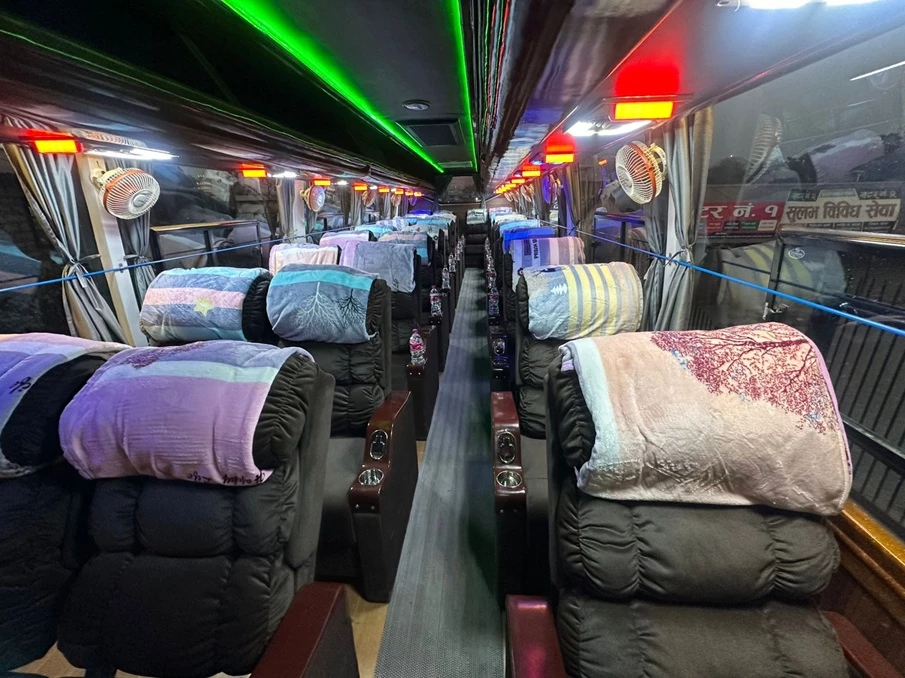
For independent travellers and budget trekkers, the tourist bus is the most popular way to make this journey — and in 2026, the VIP Sofa Bus has emerged as the clear favourite among international visitors. Offering wide, deeply reclining sofa-style seats in a 2×1 configuration (one seat on one side of the aisle, two on the other), air conditioning, mineral water, USB charging, and a significantly more comfortable ride than the standard tourist bus — all at a fare that remains very affordable — the VIP Sofa Bus represents outstanding value on Nepal’s popular highway route.

This complete 2026 guide covers everything about the Kathmandu to Pokhara VIP sofa tourist bus ticket: all bus types and their differences, exact 2026 fares for Nepali and foreign nationals, departure points and times, the route and stops, major bus companies, booking methods, tips for avoiding scams, a comparison with private jeep hire, and the complete information you need to book the right bus for your Pokhara journey.

Route Overview — Kathmandu to Pokhara by Bus

Route DetailInformation
RouteKathmandu to Pokhara via Prithvi Highway
Road Distance200 km (124 miles)
Advertised Travel Time7 to 8 hours
Realistic Travel Time8 to 10 hours (including stops, traffic, and road conditions)
Morning Departure (Day Bus)7:00 AM from Sorhakhutte Tourist Bus Park, Thamel area
Morning Departure (Coaster/VIP)9:00 AM from Sorhakhutte
Night Bus Departure7:00 PM from Jorpati / Sorhakhutte
Arrival in PokharaTypically 3:00–5:00 PM (morning bus) or 2:00–4:00 AM (night bus)
Departure Point in KathmanduTourist Bus Park, Sorhakhutte (near Thamel / Balaju)
Arrival Point in PokharaTourist Bus Park, Lakeside, Pokhara
Meals IncludedMineral water (all buses); breakfast + lunch (Super VIP/top-end only)

WARNING: Realistic Travel Time: Bus companies advertise 7 hours for the Kathmandu-Pokhara journey, but the realistic 2026 travel time is 8 to 10 hours due to ongoing Prithvi Highway road construction, Kathmandu morning traffic, and the standard 45-minute Mugling rest stop. Plan accordingly — do not book tight afternoon connections on arrival in Pokhara.

Bus Types — Complete Guide to All Options

Bus TypeSeatsSeating Config2026 Fare (Nepali)2026 Fare (Foreign)Best For
Regular Tourist / Deluxe Bus35–45 seats2×2 standardNPR 1,000–1,200USD 12–15Budget travelers
Super Deluxe Bus30–35 seats2×2 widerNPR 1,200–1,400USD 14–17Mid-range budget
VIP Sofa Bus25–30 seats2×1 sofaNPR 1,600–1,800USD 17–20Comfortable, value-for-money
Super VIP / Top-end Sofa Bus21–25 seats2×1 luxury sofaNPR 2,000–2,500USD 20–27Top-end comfort
Greenline / Luxury Coach30–35 seats2×2 luxury reclinerN/AUSD 25–35Full service — meals included
Night VIP Sofa Bus25–30 seats2×1 sofa + blanketNPR 1,600–1,800USD 17–20Budget overnight

Kathmandu to Pokhara Deluxe Bus

Regular Tourist Bus / Deluxe Bus

The standard tourist bus (sometimes called the deluxe bus) is a full-size 35- to 45-seat coach with 2×2 seating — two seats on each side of the central aisle. These are the most affordable options and have been the backbone of the Kathmandu-Pokhara tourist bus market for decades.

Seats are padded but relatively narrow by modern standards. Air conditioning varies — some buses are air-conditioned, some are not. Mineral water is not always included.

The regular tourist bus is a reasonable option for budget travellers who prioritise price above comfort.

Super Deluxe Bus

The super deluxe bus is a newer-generation vehicle with wider 2×2 seating and generally better on-board facilities than the standard deluxe. Seats are described as sofa seats, wider than standard but still in a 2×2 configuration. Air conditioning is standard.

Mineral water is typically included. The super deluxe sits between basic and VIP — good value for travellers who want an upgrade from standard seating without paying full VIP sofa prices.

The VIP Sofa Bus category has transformed the Kathmandu-Pokhara tourist bus market since 2022. The defining characteristic of the VIP Sofa Bus is its 2×1 seating configuration—one wide sofa seat on the left side of the aisle and two on the right —for a total of 25 to 30 seats. This layout gives every passenger significantly more lateral space than a 2×2 bus, and the wide, deeply reclining sofa seats provide genuine comfort on what is otherwise a demanding 8- 10-hour mountain highway journey.

  • Seats: 25–30 per bus (compared to 35–45 on regular buses)
  • Configuration: 2×1 — one seat left, two seats right of the central aisle
  • Seat style: Wide reclining sofa seats with individual armrests
  • Air conditioning: Full cabin — front and rear vents
  • Legroom: Generous — the 2×1 layout means the aisle seat is not cramped
  • Mineral water: 1 bottle per person included
  • USB charging: Available on most buses
  • 2026 Fare: NPR 1,600–1,800 per person (Nepali) / USD 17–20 (foreign nationals)

TIP: Best Value Pick: For most international travelers, the VIP Sofa Bus (USD 17–20) offers the ideal balance of comfort and cost. The seating upgrade over a standard tourist bus (USD 12–15) is significant, and the price difference is modest — typically only USD 5–8 per person. For an 8 to 10 hour journey, the VIP Sofa seat is worth every additional rupee.

Super VIP / Top-end Sofa Bus

The Super VIP or Top-end Sofa Bus is the top tier of the shared bus market — offering the largest individual seats, maximum legroom, the smoothest ride, and top-end on-board service. Some Super VIP operators include breakfast at a highway restaurant and a lunch stop with the ticket price. With only 21 to 25 seats per bus, these vehicles provide a noticeably less crowded atmosphere.

  • Seats: 21–25 per bus — significantly less crowded
  • Configuration: 2×1 extra-wide luxury sofa
  • Features: Maximum legroom, reclining seats, full A/C, blanket (night), water, sometimes breakfast + lunch
  • 2026 Fare: NPR 2,000–2,500 (Nepali) / USD 20–27 (foreign nationals)
  • Best for:  Travellers who want the closest shared-bus experience to private vehicle comfort

Greenline Luxury Coach — Top-end Full Service

Greenline is Nepal’s best-known top-end tourist bus operator and the original luxury option on the Kathmandu-Pokhara route. Greenline offers a full-service experience with breakfast at a highway restaurant and lunch included in the ticket price — the only shared bus service to do so consistently. The coaches are well-maintained, air-conditioned, and operated by professional staff.

  • Seats: 30–35 (2×2 luxury recliner seats)
  • 2026 Fare: USD 25–35 per person (foreign nationals) — includes breakfast and lunch
  • Departure: 7:00 AM from Sorhakhutte / Greenline office
  • Best for travellers who want a fully managed, top-end bus experience with meals included
  • Booking: Available online at the Greenline website or through Thamel travel agents

Night Bus — The Overnight Option

Night buses depart from Jorpati (northeast Kathmandu) at approximately 7:00 PM and arrive in Pokhara around 2:00 to 4:00 AM. Night buses are available in both VIP Sofa and regular configurations. They include blankets for passengers.

  • Departure: 7:00 PM from Jorpati (some routes from Sorhakhutte)
  • Arrival in Pokhara: ~2:00–4:00 AM
  • 2026 Fare: NPR 1,600–1,800 (Nepali) / USD 17–20 (foreign nationals) — same as day VIP
  • Advantage: Save the night’s accommodation; arrive early and gain a full Pokhara day
  • Disadvantage: Road is bumpy — most travellers find sleeping difficult; dark, scenic route missed
  • Best for: Budget-conscious travellers willing to trade sleep quality for accommodation cost savings

Kathmandu to Besisahar Sofa Bus

VIP Sofa Bus vs Regular Tourist Bus — Feature Comparison

FeatureRegular Tourist BusVIP Sofa BusSuper VIP / Top-end
Seat WidthNarrow standardWide sofa — significantly more comfortableExtra-wide luxury sofa
Seat ReclineMinimalFull reclineFull deep recline
LegroomLimitedGenerous — 2×1 layout gives full aisle spaceMaximum legroom
Air ConditioningSometimesYes — full cabin A/CYes — climate-controlled
Mineral WaterNot alwaysYes — 1 bottle includedYes — included
USB ChargingNoMost buses — yesYes
Blanket (Night)NoYesYes — top-end quality
Meals IncludedNoNo (stops at restaurants)Some — breakfast + lunch included
Number of Seats35–4525–3021–25
2026 Foreign FareUSD 12–15USD 17–20USD 20–35

The comparison above makes clear why the VIP Sofa Bus has become the default choice for international travellers on the Kathmandu-Pokhara route. The seat quality difference alone — wide, reclining vs narrow standard — is substantial on an 8- to 10-hour journey, and the top-end is only USD 5 to USD 8 per person.

For anyone who values their physical comfort over 8+ hours of highway driving, the VIP Sofa Bus is the clear choice.

Fares — Complete Price Guide

Bus fares on the Kathmandu-Pokhara route vary depending on the bus type, the booking source, and whether you are a Nepali citizen or a foreign national. Here is the comprehensive 2026 fare guide:

  • Regular Tourist / Deluxe Bus: USD 12–15 per person
  • Super Deluxe Bus: USD 14–17 per person
  • VIP Sofa Bus: USD 17–20 per person — MOST POPULAR for international travellers
  • Super VIP / Top-end Sofa Bus: USD 20–27 per person
  • Greenline Luxury Coach: USD 25–35 per person (breakfast + lunch included)
  • Night VIP Sofa Bus: USD 17–20 per person

For Nepali Citizens (NPR Fares)

  • Regular / Deluxe Bus: NPR 1,000–1,200 per person
  • Super Deluxe Bus: NPR 1,200–1,400 per person
  • VIP Sofa Bus: NPR 1,600–1,800 per person
  • Super VIP / Top-end Sofa Bus: NPR 2,000–2,500 per person

WARNING: Overcharging Warning: Some hotels and Thamel travel agents charge NPR 2,500 or more (USD 20+) for standard VIP Sofa Bus tickets that should cost NPR 1,600–1,800 (USD 17–20). This is a well-known tourist area markup. To get the fair price, book directly at the Sorhakhutte counter, contact bus companies directly by phone or WhatsApp, or book through Nepal Vehicle Hiring Pvt Ltd who provide transparent, no-markup ticket pricing.

TIP: Fair Price Check: The standard VIP Sofa Bus ticket for foreign nationals should cost USD 17 to USD 20 in 2026-2027. If a hotel or agent quotes you USD 25 or more for a VIP Sofa Bus (not Greenline), you are likely being overcharged. Ask specifically which bus company and what the fare includes before paying.

Departure Points — Where to Catch the Bus in Kathmandu

Departure PointAreaBus Types AvailableTiming
Sorhakhutte Bus ParkNear Thamel / BalajuAll VIP sofa, tourist, deluxe buses7:00 AM (main departure)
SorhakhutteNear ThamelCoaster VIP buses9:00 AM
JorpatiNortheast KathmanduNight buses + some VIP services7:00 PM night departure
Gongabu Bus ParkNew Bus Park (2 km N of Thamel)Local and some tourist busesVarious morning times
En-route pickup pointsBalaju, Swayambhunath, KalankiBuses stop at multiple pointsAfter Sorhakhutte’s departure

Kathmandu to Pokhara VIP Sofa Tourist Bus Ticket

Sorhakhutte (Tourist Bus Park) — The Main Departure Hub

Sorhakhutte Tourist Bus Park, located just outside Thamel near Balaju (approximately a 10–15 minute walk or 5-minute taxi from Lakeside Thamel), is the central departure hub for all tourist buses and VIP Sofa Buses on the Kathmandu-Pokhara route. Major tourist bus companies line up their vehicles here from around 6:00 AM onward, and most foreign travellers board the bus here.

Getting to Sorhakhutte from Thamel: A taxi from the heart of Thamel to Sorhakhutte costs approximately NPR 200 to NPR 350 (USD 1.50–2.50). Allow 15 to 20 minutes for the journey, and arrive at Sorhakhutte at least 15 to 20 minutes before your 7:00 AM departure to locate your specific bus, load luggage on the roof rack, and take your seat.

Jorpati — Night Bus and Some VIP Services

Jorpati, located in northeast Kathmandu (Boudha area), is the primary departure point for night buses and some VIP services. The night bus route passes through Boudha, Chhabahil, Sukedhara, Maharajgunj, Basundhara, Samakhusi, Gongabu, Balaju, Swayambhunath, and Kalanki before joining the Prithvi Highway. Travellers staying near Boudha or Jorpati can board here; those in Thamel can board at one of the en-route stops (typically Basundhara or the Gongabu area).

En-Route Boarding Points

All morning buses from Sorhakhutte pick up additional passengers at several points along the route out of Kathmandu — Balaju, Swayambhunath, and Kalanki are the main boarding stops. If your hotel is on this route (western Kathmandu), you may be picked up without travelling to Sorhakhutte. Ask your bus company when booking whether en-route pickup is possible from your location.

The Journey — Route Stops from Kathmandu to Pokhara

Stop on the RouteDistance from KTMApprox. TimeWhat Happens
Sorhakhutte (Thamel)Start7:00 AMDeparture — luggage loaded on the roof
Balaju / Kalanki5–10 km7:15–7:45 AMThe bus collects additional passengers
Naubise42 km8:30–9:00 AMExit Kathmandu Valley — foothills views begin
Malekhu / Benighat82 km10:00–10:30 AMTrishuli River views — some buses stop here
Mugling (Lunch)110 km11:30 AM–12:30 PMMain 30–45 min rest stop — food, toilet
Dumre Junction140 km1:30–2:00 PMAnnapurna Circuit jeep turnoff point
Pokhara (Lakeside)200 km3:00–5:00 PMFinal destination — Pokhara Lakeside

Kathmandu — Early Morning Chaos and Calm

The 7:00 AM departure from Sorhakhutte is a lively, slightly chaotic affair — dozens of buses loading simultaneously, tour group leaders calling names, porters hoisting duffel bags onto roof racks, and tea sellers with thermos flasks threading through the crowd. By 7:15 AM, most buses are moving, clearing Kathmandu’s inner suburbs before the city’s morning traffic builds.

The first hour through Kalanki and Naubise offers views of the first Himalayan foothills rising above the valley rim.

Naubise — Exit from Kathmandu Valley

At approximately 42 km, Naubise marks the point where the Prithvi Highway descends from the Kathmandu Valley into the river-gorge country below. Road quality here has improved significantly in recent years, but ongoing construction creates rough sections and occasional delays. Below Naubise, the highway follows the beautiful Trishuli River westward, one of Nepal’s premier white-water rafting rivers, through a deep gorge of dramatic scenery.

Mugling — The Essential Rest Stop

Mugling, at approximately 110 km from Kathmandu (roughly halfway), is the standard lunch and rest stop for all Kathmandu-Pokhara buses. Most buses stop here for 30 to 45 minutes — enough time for a proper Nepali lunch (dal bhat, curries, noodles), toilet facilities, and a brief walk to stretch your legs after 3 to 4 hours of highway driving.

The Mugling area is famous for fresh river fish and the quality dal bhat served at many highway restaurants. Not all tickets include the meal — budget NPR 3300- 6000 (USD 2–4.50) for lunch at Mugling.

Dumre to Pokhara — Final Approach

Above Mugling, the highway continues westward through Dumre Junction (where the road north to Besisahar and the Annapurna Circuit branches off). After Dumre, the road climbs through the beautiful western hill country before descending into the broad Pokhara Valley.

The first views of Machhapuchhre (Fishtail, 6,993 m) typically appear approximately 30 km before Pokhara — the distinctive double-summit pyramid rising above the horizon on clear days is one of the most anticipated sights of the entire journey.

Arrival at Pokhara Tourist Bus Park

Buses terminate at the Pokhara Tourist Bus Paed in the Lakeside area, within walking distance of most Pokhara tourist hotels, guesthouses, and restaurants. Many hotels and guesthouses send representatives to the bus park to help guests identify their accommodation. Taxis waiting outside the bus park charge NPR 200–400 (USD 1.50–3) to most Lakeside hotels — agree on the fare before boarding.

Tourist bus and coaster hire in Nepal

Major Bus Companies — 2026 & 2027 Guide

Bus Company / ServiceTypeFare (Foreign)DepartureNotable Features
Greenline BusesLuxury coachUSD 25–357:00 AMBreakfast + lunch included, top-end service
Namaste Nepal / VariousVIP Sofa BusUSD 17–207:00 AMMost popular tourist bus category
Hike On Treks / TravelsVIP + Super VIPUSD 20–277:00 AM & 7:00 PMOnline booking, night bus available
Nepal Vehicle RentalTop-end SofaUSD 17–257:00 AM & 9:00 AM2×1 sofa, 25–30 seats
Local Tourist OperatorsDeluxe / SuperUSD 12–177:00 AMBudget — 2×2 seating
Night Bus VIP SofaVIP Sofa (Night)USD 17–207:00 PMOvernight — blanket included, save hotel cost

Note: Bus company names on the Kathmandu-Pokhara route change frequently — operators rebrand, merge, or change names year to year. What remains consistent is the bus type (VIP Sofa, Super Deluxe, etc.) and the departure time (7:00 AM from Sorhakhutte for day buses). When booking, focus on confirming the bus type and seat configuration rather than the company name.

How to Book Your VIP Sofa Bus Ticket

Booking MethodConveniencePriceBest For
Nepal Vehicle Hiring (WhatsApp)Easy — instant replyFair, no commissionBundled with jeep tours and transfers
Directly at the Sorhakhutte counterIn person onlyLowest — no commissionWalk-up same day if available
Hotel booking deskConvenient — arrangedHigher (NPR 500+ markup)Convenience — book from the hotel
Online (bus website)Easy — bookingFairPlanning — confirm the company exists
Thamel travel agentsEasyHigher — commissionPopular with independent travellers

Step-by-Step Booking Guide

Booking a VIP Sofa Bus ticket from Kathmandu to Pokhara is straightforward if you know the process:

  • Step 1 — Decide your travel date and time (morning 7:00 AM, day bus, or 7:00 PM, night bus)
  • Step 2 — Choose your bus type: VIP Sofa (USD 17–20), Super VIP (USD 20–27), or Greenline (USD 25–35)
  • Step 3 — Book via WhatsApp to Nepal Vehicle Hiring Pvt Ltd, directly at the Sorhakhutte counter, or through a reputable Thamel travel agent
  • Step 4 — Pay and receive your ticket — keep it safely accessible for boarding
  • Step 5 — Morning of travel: Set an alarm for 6:00 AM; get to Sorhakhutte Bus Park by 6:40–6:45 AM
  • Step 6 — Find your company’s vehicle in the bus park (your ticket shows the company name); hand luggage to the roof rack handler
  • Step 7 — Board, find your seat number, and enjoy the scenic Prithvi Highway journey

WhatsApp
Email: [email protected]

TIP: Booking Timing: During peak season (October–November and March–May), VIP Sofa buses fill up quickly — particularly for the 7:00 AM departure. Book at least 1 to 2 days in advance to secure your preferred seat. The window and front seats sell out fastest.

Best Time to Take the Kathmandu to Pokhara Bus

October to November (Peak Season)

The most popular time for the Kathmandu-to-Pokhara bus journey is October to November. The skies are clear, Himalayan views from the Pokhara valley are striking, and the road is in excellent condition after the monsoon. Book your bus ticket at least 2–3 days in advance, as buses fill quickly during this peak trekking season.

December to February (Quiet and Clear)

Winter is a beautiful time for the road journey to Pokhara. Traffic is lighter, views of the Annapurna range from the Pokhara valley are among the clearest of the year, and bus tickets are easy to get without booking. Carry a warm jacket as the bus A/C can feel very cold in winter.

March to May (Spring Season)

Spring is excellent for the Pokhara journey with rhododendrons in bloom along the hillsides. The weather is warm and generally dry. Mountain views are good in the morning, sometimes hazy by afternoon—a popular season for Annapurna trekkers heading through Pokhara.

June to September (Monsoon)

The Prithvi Highway remains open during the monsoon, but heavy rain can slow the journey. Landslides occasionally block sections of the road, particularly between Naubise and Mugling. Journey times can extend to 9–10 hours during severe rain.

MCloud often obscures mountain views. Buses run daily, but delays are common. Choose a private vehicle for more flexibility when travelling during the monsoon.

Seat Selection — Getting the Best Seat on the VIP Sofa Bus

Best Seats on a 2×1 VIP Sofa Bus

  • Front seats (rows 1–3): Best panoramic views through the windshield, ideal for photography; however, motion-sickness sufferers may find the front too visually active.
  • Left-side window seats: Views of the Trishuli River gorge on the outward journey — particularly scenic between Naubise and Mugling.
  • Right-side window seats: Views of the Himalayan foothills on the approach to Pokhara — Machhapuchhre appears on the right side as you near Pokhara.
  • Solo seat (single seat on the left side in a 2×1 configuration): Maximum personal space — ideal for solo travellers who want a guaranteed seat and no neighbour
  • Avoid: The very rear seats (rows 6–8 from the back) — most road bumps are felt at the back; less comfortable over long distances.

WARNING: Motion Sickness: The Prithvi Highway between Kathmandu and Pokhara has several winding, hilly sections — particularly the Naubise descent and the road between Mugling and Dumre. If you are susceptible to motion sickness, take medication before boarding, choose a front window seat, keep your eyes on the road horizon, and avoid reading or using your phone during winding sections.

VIP Sofa Bus vs Private Jeep — Which Should You Choose?

FactorVIP Sofa Tourist BusPrivate Jeep (Nepal Vehicle Hiring)
Cost (2 passengers)USD 34–40 totalUSD 130–160 total
Cost (6 passengers)USD 102–120 totalUSD 160–200 total
Cost per person (6 pax)USD 17–20 per personUSD 27–33 per person
Departure timeFixed — 7:00 AMFully flexible — any time
Hotel pickupNo — must reach SorhakhutteYes — door-to-door
Private spaceShared with 25–30 othersYour group only
StopsFixed — Mugling + highway stopsStop anywhere, anytime
Luggage controlRoof rack — shared spaceFull roof rack — your bags only
Travel time8–10 hours5–6 hours (faster, direct route)
Bandipur / side trip en routeNot possibleYes — any detour possible
Best forSolo/pairs on budgetGroups wanting speed + flexibility

When to Choose the VIP Sofa Bus

  • Travelling solo or as a pair: the bus’s per-person cost advantage is greatest for 1 to 2 travellers
  • On a tight budget — USD 17–20 per person is an unbeatable value for the level of comfort provided.
  • No specific schedule requirement — happy to depart at 7:00 AM and arrive whenever the bus arrives.
  • Enjoying the local experience and sharing the journey with other travellers from around the world.
  • No add-on stops required —travelling straight from Kathmandu to Pokhara without side trips.

When to Choose a Private Jeep from Nepal Vehicle Hiring Pvt LtdTravelling

  • g in a group of 4 or more, the cost per person is comparable to a group at large.
  • Wanting hotel pickup in Thamel — no early morning taxi to Sorhakhutte required.
  • Flexible departure time — depart at 6:00 AM, 8:00 AM, or any time that suits your schedule.
  • Planning stops along the way — Manakamana Cable Car, Bandipur heritage town, or riverside rafting viewpoints.
  • Carrying significant luggage — full roof rack for your group only, no scrambling for roof space.
  • Connecting to the onward trailhead — a private jeep can continue from Pokhara directly to Kande, Nayapul, Ghandruk, or Ulleri without changing vehicles.

TIP: Combined Option: Many group travelers use the VIP Sofa Bus for the Kathmandu-Pokhara leg (to save money) and then book a private jeep from Nepal Vehicle Hiring Pvt Ltd for the Pokhara-to-trailhead section (where flexibility and off-road capability matter more). Nepal Vehicle Hiring Pvt Ltd can coordinate your Pokhara trailhead jeep to meet you at the Pokhara Tourist Bus Park on arrival.

Kathmandu to Pokhara VIP Sofa Tourist Bus Ticket

What to Do When You Arrive in Pokhara

Tourist buses drop passengers at the Lakeside (Baidam) bus stop area in Pokhara – the heart of the tourist district. Here is what to do on arrival:

  • Most hotels are within 5–15 minutes walking distance of the Lakeside drop point
  • Taxis are available at the drop point for around NPR 200–400 to most Lakeside hotels
  • Exchange money at Lakeside exchange counters or withdraw from ATMs on the main Lakeside road
  • If arriving in the afternoon on a clear day, take a short walk to the Phewa Lake shore for sunset views of Machhapuchhre and Annapurna
  • If you are trekking, your trekking agency or guide will meet you at your hotel – confirm meeting time in advance.
  • Pokhara’s Sarangkot viewpoint is best visited the morning after arrival – pre-arrange a taxi or vehicle for a 5:00 AM departure.

Avoiding Common Tourist Bus Scams and Problems

  • Overpricing by hotels: Always compare the hotel-quoted bus ticket price with the standard fare (USD 17–20 for VIP Sofa) if the hotel quotes USD 25+ for a VIP Sofa Bus, book directly or contact Nepal Vehicle Hiring Pvt Ltd.
  • Seat substitution: Some operators sell ‘VIP’ tickets but put passengers on standard buses at departure. Always inspect the bus and confirm the seating configuration (2×1 sofa seats) before handing over any luggage.
  • Company name changes: Bus companies rebrand frequently. Focus on the bus type and seat confirmation, not the company name, when booking.
  • Luggage safety: Keep a padlock on your checked luggage (roof rack bags). While theft is rare, large duffel bags on open roof racks are vulnerable at rest stops.
  • Valuables in day bag: Never put passport, camera, laptop, or cash in the roof rack luggage. Keep all valuables in your small day bag under your seat inside the bus.
  • Rest stop purchases: Highway restaurants in Mugling are at standard tourist prices. Budget NPR 400–700 (USD 3–5) for a proper lunch. Cheaper local options are available if you look slightly off the main tourist strip.
  • Arrival location touts: When you arrive at the Pokhara Tourist Bus Park, you will likely be met by aggressive hotel touts and taxi drivers. Stay calm, secure your bags from the roof-rack handlers first, and walk slightly outside the immediate crowd to negotiate a fair, fixed-rate taxi (NPR 200–400) directly to your Lakeside hotel.

Alternative: Bus to Pokhara + Private Jeep Onward

Many smart travellers use a combination approach for Nepal travel – taking the comfortable tourist bus from Kathmandu to Pokhara to save money, then hiring a private jeep from Pokhara for the more adventurous mountain routes onward. This is a popular option for:

  • Trekkers heading to Jomsom, Muktinath, and Mustang – tourist bus to Pokhara, then private jeep from Pokhara
  • Annapurna Circuit trekkers – bus to Pokhara, then jeep to Besisahar or Jagat trailhead
  • Groups where some members want the bus experience, and others prefer vehicle flexibility
  • Budget travellers who want to save on the Kathmandu–Pokhara leg and spend on the Pokhara–Mustang adventure

Vehicle Hiring Nepal can smoothly arrange both legs – a bus ticket from Kathmandu to Pokhara, and a private jeep from Pokhara to your mountain destination. Contact us for a combined package quote.

Kathmandu to Pokhara VIP Sofa Tourist Bus Ticket

Frequently Asked Questions

What time does the VIP Sofa tourist bus leave Kathmandu for Pokhara?

The standard tourist bus departs daily at 7:00 AM from the Sorakhute tourist bus park near Thamel, Kathmandu. Luxury soft buses and some deluxe services depart at 8:00 AM. There are no afternoon tourist bus departures – only night local buses, which are not recommended for tourists.

How long does the bus take from Kathmandu to Pokhara?

The standard tourist bus takes 7 to 8 hours, including the Mugling lunch stop of approximately 30–45 minutes. Express and Greenline buses can complete the journey in 6 to 7 hours. Journey time varies depending on road conditions and traffic.

Where does the tourist bus drop off in Pokhara?

Tourist buses arrive in Pokhara’s Lakeside (Baidam) area, the main tourist district. This is directly beside Phewa Lake with hotels, restaurants, and trekking agencies all within easy walking distance.

Is the tourist bus safe?

Yes. Licensed tourist buses operating on the Kathmandu-to-Pokhara route are well-maintained, regularly inspected, and driven by experienced professional drivers. The Prithvi Highway is Nepal’s national highway and is in good general condition.

Vehicle Hiring Nepal only sells tickets for reputable, licensed tourist bus operators.

Can I book a bus ticket on the same day of travel?

Yes, in most cases, you can purchase a ticket on the morning of travel at the bus park (arrive by 6:30 AM). However, during peak season (October–November and March–May), buses can sell out. We strongly recommend booking at least 1–2 days in advance through Vehicle Hiring Nepal to guarantee your seat.

Is food included in the bus ticket?

Food is NOT included in standard or deluxe tourist bus tickets – you pay for your own lunch at Mugling. Food IS included in the Super VIP luxury bus ticket at USD 30. The Mugling lunch stop has many restaurants with a wide range of food options.

What is the difference between a VIP Sofa tourist bus ticket and a local bus?

Tourist buses are air-conditioned coaches with reclining seats that depart from the Thamel area and drop off at Lakeside Pokhara, designed specifically for international travellers. Local public buses depart from Gongabu Bus Park (far from Thamel), are significantly more crowded and less comfortable, lack A/C, and drop off at Prithvi Chowk bus station in Pokhara, which requires a further taxi ride to Lakeside.

Tourist buses cost more but are worth the extra amount for the comfort and convenience.

Can I take a night bus from Kathmandu to Pokhara?

Local night buses are available, departing around 7:00–9:00 PM and arriving in Pokhara early in the morning, around 3:00–5:00 AM. These are basic local buses without A/C that arrive at Prithvi Chowk in the dark, which isn’t ideal for international travellers unfamiliar with Pokhara. We do not recommend night buses for tourists – the daytime tourist bus journey is far superior.

What if I want to travel with a large group?

For groups of 15 or more, we strongly recommend a private Hiace van or Coaster bus rather than multiple individual bus tickets. A private vehicle is often cost-competitive for large groups, offers door-to-door service, complete departure flexibility, and keeps your entire group together. Contact Vehicle Hiring Nepal for group vehicle quotes.
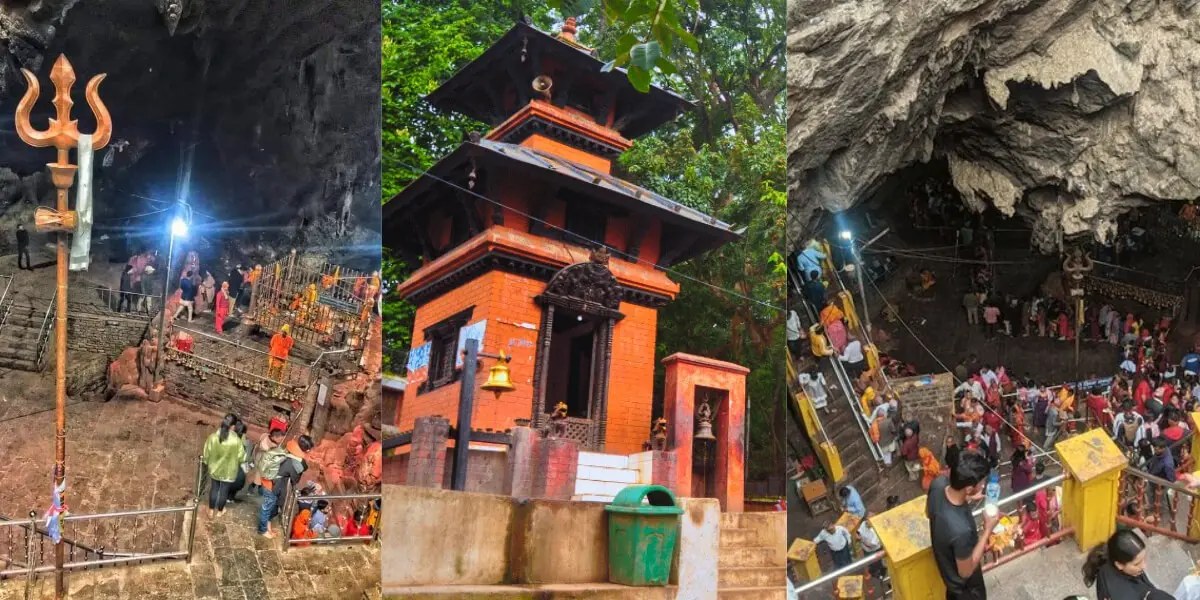
Book Your Kathmandu to Pokhara VIP Sofa Tourist Bus Ticket with Nepal Vehicle Hiring

The Kathmandu to Pokhara VIP Sofa Bus is Nepal’s best-value top-end shared transport, with ideal reclining seats, powerful air conditioning, large tinted windows, and the scenic Prithvi Highway journey through the Trishuli River gorge for just NPR 12,000-20,000 per person. For solo travellers, couples, and budget-conscious independent travellers, the VIP Sofa Bus is the clear best choice for the Kathmandu-to-Pokhara journey.

For groups, families, and travellers who want door-to-door hotel service with complete flexibility, Nepal Vehicle Hiring’s private vehicle services remain the top-end option — picking you up from your Kathmandu hotel and delivering you to your Pokhara resort entrance in 4 to 5 hours without the morning bus park rush.

Contact Nepal Vehicle Hiring Pvt Ltd today at vehiclehiringnepal.com to book your Kathmandu to Pokhara VIP Sofa Bus ticket or private vehicle transfer — and begin your Annapurna range adventure in the most comfortable way possible.

WhatsApp: +977 981-4227196
Email: [email protected]

Kathmandu to Chitwan VIP Sofa Bus Ticket

KTM to Chitwan

Kathmandu to Chitwan VIP Sofa Bus Ticket: Price, Schedule & Complete Guide

Chitwan National Park — Nepal’s most celebrated wildlife sanctuary and a UNESCO World Heritage Site — is one of the country’s most visited destinations and a must-experience on any Nepal itinerary. The park’s extraordinary concentration of one-horned rhinoceroses, Bengal tigers, wild elephants, gharial crocodiles, and over 544 bird species draws visitors from across Nepal and around the world every year.

For most travellers heading from Kathmandu to Chitwan, the tourist bus is the most popular, practical, and cost-effective transport option. Within the tourist bus category, the VIP Sofa Bus has emerged as Nepal’s top-end shared transport choice—offering wide, reclining sofa-style seats, air conditioning, and a far more comfortable ride than standard buses, at a price point that remains genuinely affordable for independent travellers.

At Nepal Vehicle Hiring Pvt Ltd, we provide complete Kathmandu-to-Chitwan bus ticket booking services, including VIP Sofa Bus, Super Deluxe, and Deluxe Tourist Bus options. This comprehensive 2026 guide covers everything you need to know—ticket prices, bus types, departure points, schedules, seat comparison, how to book, and expert tips to make the Kathmandu to Chitwan bus journey smooth and enjoyable.

Kathmandu to Chitwan by Bus – Journey Quick Facts

DetailInformation
DistanceApproximately 150–160 km
Journey Time5 to 7 hours (depending on traffic and bus type)
Departure Point (Tourist Buses)Sorhakhutte / New Bus Park, Kathmandu
Arrival PointSauraha Bus Park (main gateway to Chitwan NP)
Daily Departures7:00 AM (morning) – some night bus options available
RoadPrithvi Highway + East-West Highway – mostly paved, in good condition
VIP Sofa Bus Ticket PriceNPR 1,000 – 1,800 per person (depending on operator)
Super Deluxe Bus TicketNPR 800 – 1,450 per person
Deluxe Bus TicketNPR 600 – 1200 per person
Private Vehicle AlternativeNPR 8,000–25,000 (door-to-door, Nepal Vehicle Hiring)

Bus Types: Kathmandu to Chitwan

Several categories of tourist buses operate on the Kathmandu-to-Chitwan route. Here is a complete overview from most top-end to most basic:

VIP Sofa Bus (2+1 Configuration) – Top-end Class

The VIP Sofa Bus is the most comfortable shared bus option on the Kathmandu-to-Chitwan route. The defining feature is the 2+1 seating layout — rather than the standard 2+2 bus configuration, the VIP Sofa Bus has only two seats on one side of the aisle and one seat on the other.

This means every passenger has either a window seat or an aisle seat, with no middle seat, and the seats themselves are significantly wider and more generously cushioned than those in standard tourist buses.

VIP Sofa Bus FeaturesDetails
Seating Configuration2+1 (two seats on one side, one seat on the other side)
Total Seats25 to 30 passengers per bus
Seat StyleWide reclining sofa seats with headrests
LegroomExtra legroom – significantly more than standard bus
Air ConditioningFull A/C with individual vents in top-end models
WindowLarge tinted windows with curtains
Reading LightsYes – individual reading lights above each seat
Blanket (Night Bus)Provided on night services
USB ChargingAvailable in some top-end models
Ticket PriceNPR 1,000 – 1,800 per person
Best ForComfort-conscious travellers, senior travellers, and long journeys

Super Deluxe Tourist Bus (2+2 Configuration) – Business Class

The Super Deluxe tourist bus is the next tier below the VIP Sofa Bus. It uses a standard 2+2 seating layout with push-back reclining seats, air conditioning, and curtained windows. While not as spacious as the VIP Sofa configuration, the Super Deluxe bus offers a very comfortable ride at a lower price point.

It is the most popular overall choice for the Kathmandu-to-Chitwan route.

Super Deluxe Bus FeaturesDetails
Seating Configuration2+2
Total Seats30 to 35 passengers
Seat StylePush-back reclining seats
Air ConditioningFull A/C
LegroomGood – more than local buses
Ticket PriceNPR 800 – 1,350 per person
Best ForBudget-conscious travellers wanting more than basic comfort

Deluxe Tourist Bus (2+2 Standard) – Economy Class

The Deluxe Tourist Bus is the most widely available and affordable tourist bus category on the Kathmandu-to-Chitwan route. It offers standard 2+2 seating, air conditioning (in most models), and basic reclining seats. It is a significant upgrade over local public buses and perfectly adequate for the 5- to 7-hour journey.

Deluxe Bus FeaturesDetails
Seating Configuration2+2
Total Seats35 to 40 passengers
Seat StyleBasic push-back
Air ConditioningYes – most models
Ticket PriceNPR 600 – 1200 per person
Best ForBudget travellers, backpackers, and short trips

Night Bus (Overnight Service)

Night buses from Kathmandu to Chitwan depart in the late evening (typically 8:00 PM to 10:00 PM) and arrive in Sauraha early in the morning. Night buses are available in both Sofa/Deluxe configurations and let travellers save a night’s hotel stay by sleeping on the bus. Night buses typically provide blankets on sofa buses.

Night Bus DetailsInformation
Departure Time8:00 PM – 10:00 PM from Kathmandu
Arrival Time2:00 AM – 4:00 AM at Sauraha
Bus TypeSofa Bus or Deluxe (sleeper-style)
BlanketProvided on top-end night buses
Ticket PriceNPR 1,000 – 1,800 per person
Best ForTravellers wanting to save on hotel accommodation costs
NoteEarly morning arrival at Sauraha – confirm resort entry time

Kathmandu to Chitwan Tour Package: Complete Travel Guide

Complete Bus Type Comparison: Kathmandu to Chitwan

FeatureVIP Sofa BusSuper DeluxeDeluxe BusNight Bus
Seat Layout2+12+22+22+1 or 2+2
Ticket Price (NPR)NPR 1,000–1,800NPR 800–1,450NPR 600–1200NPR 1,000–18,00
LegroomExcellentGoodStandardGood
ACTop-end A/CFull A/CFull A/CFull A/C
ReclineFull sofa reclinePush-backBasic push-backFull sofa recline
Window CurtainYesYesSometimesYes
Reading LightYesSometimesNoYes
USB ChargingSome modelsRareNoSome models
BlanketNot standardNoNoYes (night service)
Total Seats25–3030–3535–4025–35
Journey ComfortBestVery GoodGoodGood (sleeping)
Best ForComfort seekersBudget + comfortBudgetHotel cost savings

VIP Sofa Bus Ticket Prices: Kathmandu to Chitwan

Ticket prices for the Kathmandu-to-Chitwan VIP Sofa Bus vary slightly among operators. Here is the  price guide across all major bus categories:

Bus CategoryTicket Price (NPR)Ticket Price (USD Approx.)Seat ConfigNotes
Deluxe Tourist BusNPR 600–1200USD 4.5–102+2Most common, widely available
Super Deluxe BusNPR 800–14,50USD 6–152+2Good value comfort upgrade
VIP Sofa Bus (2+1)NPR 1,000–1800USD 7.5–202+1Best shared bus comfort
VIP Super Deluxe (top-end)NPR 1,250–1,900USD 9.5–202+1Top-tier sofa bus
Night Sofa BusNPR 1,000–1,800USD 7.5–202+1 or 2+2Evening departure, arrives AM
Private Car (Nepal Vehicle Hiring)NPR 8,000–18,000USD 90–11501–4 paxDoor-to-door, private
Private Jeep (Nepal Vehicle Hiring)NPR 12,000–18,000USD 100–2004–6 paxDoor-to-door, private
Toyota Hiace Van (Nepal Vehicle Hiring)NPR 18,000–25,000USD 135–2507–10 paxDoor-to-door, private

Note: All tourist bus ticket prices are per-person fares for shared seating. Private vehicle prices from Nepal Vehicle Hiring are for the full vehicle. Contact Nepal Vehicle Hiring for confirmed private vehicle quotes.

Chitwan rapti river

Departure Points, Schedule, and Bus Operators

Main Tourist Bus Departure Point – Sorhakhutte / New Bus Park

All tourist buses (Sofa Bus, Super Deluxe, and Deluxe) to Chitwan depart from the Sorhakhutte Tourist Bus Park in Kathmandu, also known as the New Bus Park or Nayabazar Bus Park. It is about a 20- 30 minute taxi ride from Thamel. Most operators have ticket counters at Sorhakhutte.

Departure DetailsInformation
Primary Departure PointSorhakhutte Tourist Bus Park, Kathmandu
Location from Thamel~20–30 minutes by taxi (NPR 400–600)
Morning Bus Departure7:00 AM (daily – most operators)
Night Bus Departure8:00 PM – 10:00 PM (select operators)
Arrival at Sauraha (Morning Bus)1:00 PM – 2:30 PM
Arrival at Sauraha (Night Bus)2:00 AM – 4:00 AM
Arrival Point (Chitwan)Sauraha Tourist Bus Park, Chitwan
Sauraha to ResortShort taxi/rickshaw/walk from Sauraha Bus Park

Some Operators Offer Pickup in Thamel

Several tourist bus operators offer complimentary pickup in the Thamel area, particularly for the VIP Sofa pickup and Super Deluxe categories. This means a bus or minivan collects passengers from their Thamel hotel and transfers them to Sorhakhutte to board the main bus. Ask your operator specifically about this service when booking.

Nepal Vehicle Hiring Note: For travellers who want door-to-door pickup anywhere in Kathmandu and drop-off at your resort entrance, Nepal Vehicle Hiring’s private vehicle service is the most convenient. Vehicles depart from your exact hotel at a time you choose and drop you at your resort entrance — no Sorhakhutte morning rush, no waiting for other passengers.

What to Expect on the Kathmandu to Chitwan Bus Journey

Departure: Sorhakhutte Bus Park (7:00 AM)

Buses typically depart at 7:00 AM sharp. Arrive at Sorhakhutte Bus Park at least 30 minutes before departure to find your seat, store your luggage, and settle in. The bus park can be busy in the morning — stay close to your bus operator’s designated boarding area.

Kathmandu to Mugling: 3 to 3.5 Hours

The first section follows the Prithvi Highway west out of Kathmandu, then south along the Trishuli River gorge to Mugling junction. This is the most scenic stretch of the journey — the road passes through the beautiful Trishuli River gorge with dramatic hillsides, cascading rivers, and traditional Nepali villages. Most buses make a 20- to 30-minute meal or tea break at Mugling, the classic midway refreshment stop.

Mugling to Narayanghat / Bharatpur: 1 to 1.5 Hours

After Mugling, the road follows the East-West Highway south through Narayanghat. The landscape flattens from the hilly gorge terrain into the broad Terai lowlands. The Narayanghat area marks the beginning of the flat Terai plains, where subtropical vegetation becomes denser and greener.

Narayanghat to Sauraha: 1 to 1.5 Hours

The final stretch from Narayanghat follows the road east to Bharatpur and then south through the Terai flatlands to Sauraha — the main tourist village and gateway to Chitwan National Park. The bus drops passengers at the Sauraha Bus Park, from where resorts are a short walk, rickshaw ride, or taxi ride away (NPR 100 to 300, depending on the resort’s distance).

Journey Stops and Timeline

Approx. TimeLocationNotes
7:00 AMSorhakhutte Bus Park, KathmanduDeparture – be at the bus park by 6:30 AM
7:00–10:30 AMTrishuli River gorge sectionScenic Prithvi Highway, no major stops
10:30–11:00 AMMugling JunctionMain rest stop – 20–30 min meal/tea break
11:00 AM–12:30 PMNarayanghat / Bharatpur approachTerai entry, flatlands begin
12:30–1:00 PMBharatpur to Sauraha final sectionChitwan District entry
1:00–2:30 PMSauraha Bus Park arrivalJourney ends – total 6–7 hours

Safari chitwan

How to Book a Kathmandu to Chitwan VIP Sofa Bus Ticket

There are several ways to book a Kathmandu to Chitwan tourist bus ticket:

Nepal Vehicle Hiring Pvt Ltd offers tourist bus bookings from Kathmandu to Chitwan, including VIP Sofa Bus, Super Deluxe, and Deluxe categories. By booking through us, you get:

  • Confirmed seats on your preferred bus type and departure date
  • Assistance in selecting the right bus category for your needs and budget
  • WhatsApp and phone booking support in English
  • Bundled option – combine a bus ticket with private vehicle hire for groups travelling together
  • Advice on departure logistics, including Thamel to Sorhakhutte taxi arrangements

Contact Nepal Vehicle Hiring at vehiclehiringnepal.com or via WhatsApp to book your VIP Sofa Bus ticket from Kathmandu to Chitwan.

Option 2: Direct Booking at Sorhakhutte Bus Park

You can purchase tickets at the Sorhakhutte Tourist Bus Park in Kathmandu. Multiple operators have counters there. You can buy tickets on the spot for most services, except during peak season (October, November, March, April), when seats sell out in advance.

Arrive early in the morning (to buy tickets, or go the previous evening to book for the next morning.

Option 3: Thamel Travel Agents and Tour Desks

Many Thamel guesthouses and travel agencies sell Kathmandu-to-Chitwan tourist bus tickets on behalf of operators. This is convenient, but they add a small booking fee (NPR 50-200) on top of the ticket price. Confirm the exact bus company, departure time, and seat class before paying.

Option 4: Online and Digital Booking

Several bus operators in Nepal now accept online bookings through their websites, and they accept digital payments via eSewa, Khalti, mobile banking, and bank transfers. This is increasingly popular for confirmed advance seat reservations. Contact Nepal Vehicle Hiring for guidance on online booking options for the VIP Sofa Bus.

VIP Sofa Bus vs Private Vehicle: Which is Right for You?

The VIP Sofa Bus is Nepal’s best-value shared-comfort transport. But how does it compare to hiring a private vehicle from Nepal Vehicle Hiring for the same journey?

FactorVIP Sofa BusPrivate Vehicle (Nepal Vehicle Hiring)
Cost Per PickupR 1,000–1,800NPR 2,000–7,000 (group of 4–6 split)
PickupSorhakhutte Bus ParkHotel door-to-door in Kathmandu
Drop-offSauraha Bus ParkResort entrance in Sauraha
Departure TimeFixed: 7:00 AMFully flexible
Journey Time6–7 hours4–5 hours (no stops)
ComfortVery Good (sofa seats)Excellent (private AC vehicle)
Luggage SpaceUnderfloor compartmentBoot + roof rack
FlexibilityNone – shared busFull stop anywhere
PrivacyShared with 25–30 paxComplete privacy
Best ForSolo, couple, budgetGroups, families, top-end

For solo travellers and couples, the VIP Sofa Bus is an outstanding value. For groups of 4 or more travellers who want hotel pickup and direct resort delivery, Nepal Vehicle Hiring’s private vehicle pickup is often the better overall choice.

Expert Tips for the Kathmandu to Chitwan VIP Sofa Bus Journey

  • Book your VIP Sofa Bus seat at least 2 to 3 days in advance during October, November, March, and April peak seasons — the 2+1 buses have only 25 to 30 seats and sell out quickly.
  • Arrive at Sorhakhutte Bus Park at least 30 minutes before the 7:00 AM departure – the morning bus park is busy, and you need time to locate your bus and boarding area.
  • For the best seat on the VIP Sofa Bus, book a single seat on the side (left or right, depending on the bus configuration) – this gives you a window to yourself with no one beside you.
  • The Mugling rest stop is typically 20 to 30 minutes – enough for a quick meal but not a leisurely lunch; bring snacks from Kathmandu for the journey.
  • Store your main luggage in the underfloor compartment, but keep a small bag with essentials (water, snacks, camera, documents) in the overhead rack or under your seat.
  • Sit on the right side (facing south) of the bus for the best Trishuli River gorge views on the pickup from Thamel to Mugling.
  • Confirm your resort’s pickup arrangement before the trip – most Chitwan resorts arrange vehicle pickup to the Sauraha Bus Park to collect guests.
  • Night bus travellers: confirm your resort’s early check-in policy before booking a night bus – arriving at 3:00 AM at a closed resort can be problematic
  • Carry motion sickness tablets if sensitive to winding roads – the Trishuli gorge section between Kathmandu and Mugling has many curves.
  • Bring a light jacket or layer even in summer – the VIP Sofa Bus A/C is powerful, and the cabin can get cold, especially during the first few hours of the morning departure.

What to Pack for the Kathmandu to Chitwan Bus Journey

  • Valid ID or passport – for any checkpoint along the route
  • Bus ticket (printed or digital screenshot on phone)
  • Water bottle – at least 1 litre; the Mugling stop is the best chance to refill
  • Light snacks – biscuits, nuts, fruits, energy bars for the 6 to 7 hour journey
  • Light jacket or fleece – VIP Sofa Bus A/C can be very cold
  • Earphones and entertainment – downloaded music, podcasts, or movies for the journey
  • Motion sickness tablets, if needed
  • Neck pillow – useful for a comfortable nap on the VIP Sofa Bus during the pickup hour ride
  • Chitwan resort confirmation and contact number – for pickup coordination at Sauraha Bus Park
  • Insect repellent in your bag for pickup from the moment you arrive in the Terai
  • Nepali cash (NPR) – for the Mugling meal stop and any expenses on arrival in Sauraha

Chitwan to Kathmandu: Return Bus Ticket

The return journey from Chitwan (Sauraha) to Kathmandu by VIP Sofa Bus follows the same route and schedule in reverse. Key details for the return:

Return Journey DetailsInformation
Departure PointSauraha Bus Park, Chitwan
Departure Time7:00 AM (daily – most tourist bus operators)
Arrival in Kathmandu1:00 PM – 2:30 PM at Sorhakhutte Bus Park
Return VIP Sofa Bus PriceNPR 1,000–1,800 per person
Return Super Deluxe PriceNPR 800–1,40 per person
Night Bus Return PickupEnding departures, available pickup, arrives in Kathmandu early AM
Resort PickupMost resorts arrange pickup from the Sauraha Bus Park – confirm pickup
Booking: Rebook pickup throughthrough Nepal Vehicle Hiring or local operators in Sauraha

Nepal Vehicle Hiring can book both outbound and return Chitwan bus tickets together, or arrange a private vehicle return transfer from Sauraha to Kathmandu for groups who prefer private transport on the way back.

Kathmandu to Chitwan VIP Sofa Bus ticket-

What Awaits You in Chitwan National Park

After the comfortable VIP Sofa Bus journey from Kathmandu, Chitwan offers some of Nepal’s finest wildlife and cultural experiences:

Jeep Safari

The jeep safari is Chitwan’s most popular activity — open 4WD jeeps with trained naturalist guides drive through the national park’s core areas at dawn and dusk, when wildlife is most active. One-horned rhinoceroses, spotted deer, gharials, and — for the fortunate — Bengal tigers are regular sightings. A half-day or full-day jeep safari should be the first activity booked for any visit to Chitwan.

Jungle Walk on Foot

Walking through the Chitwan forest on foot with an armed guide and naturalist is the most intimate and thrilling wildlife experience the park offers. Close encounters with rhinoceroses and the possibility (however slim) of a tiger sighting make this one of Nepal’s most adrenaline-charged nature experiences. Available in the morning and afternoon.

Dugout Canoe Ride

A silent, paddle-powered canoe ride on the Rapti or Narayani rivers at dawn is the best way to observe Chitwan’s riverine wildlife — gharial and mugger crocodiles basking on the banks, river birds, otters, and the lush forest reflected in the still water. A peaceful and memorable Chitwan experience for all ages.

Tharu Cultural Program

The traditional Tharu community stick dance performance, held at most Chitwan resorts in the early evening, is a wonderful cultural introduction to the indigenous Tharu people, whose ancestors have called the Terai lowlands home for centuries. The athletic, rhythmic dance is performed with traditional bamboo sticks and is a highlight of any visit to Chitwan.

Elephant Conservation Centre

The Elephant Breeding and Conservation Centre near Sauraha offers an educational and ethical wildlife encounter, allowing visitors to observe rescued elephants in a conservation setting and learn about Chitwan’s elephant management program.

Chitwan-Kathmandu to Chitwan VIP Sofa Bus ticket

Best Time to Travel from Kathmandu to Chitwan

Autumn (October to November) – Peak Season

Autumn is the finest time to visit Chitwan. Wildlife is highly active and visible after the monsoon vegetation flush; the weather is cool and comfortable, and the park is at its most photogenic. The VIP Sofa Bus is in peak demand — book your seat at least 3 to 5 days in advance.

Spring (March to May) – Excellent

Spring offers warm weather, active wildlife, and clear conditions. March and April are particularly recommended. May is warm and getting hotter in the Terai, but still excellent for wildlife.

Winter (December to February) – Good

Winter is the coolest and least humid time in Chitwan. They burn the tall elephant grass in January and February, dramatically improving visibility in the park. Rhinoceros and deer sightings are excellent.

The Terai is pleasantly cool compared to the hot summers.

Monsoon (June to August) – Limited

The Chitwan Terai is extremely hot and humid during the monsoon, with heavy rainfall. The park’s core zone is closed from June to August to protect wildlife. Some outer areas remain accessible, but you won’t get the full safari experience.

During the monsoon, the bus journey can face occasional delays near Mugling due to landslides.

Book Your Kathmandu to Chitwan Bus Ticket with Nepal Vehicle Hiring

Nepal Vehicle Hiring Pvt Ltd makes booking your Kathmandu to Chitwan VIP Sofa Bus ticket simple:

  • Step 1: Contact us via phone, WhatsApp, or at vehiclehiringnepal.com
  • Step 2: Share your travel date, number of passengers, and preferred bus class (VIP Sofa / Super Deluxe / Deluxe)
  • Step 3: Receive your booking confirmation with bus company details, departure time, and seat information
  • Step 4: We provide guidance on Thamel to Sorhakhutte taxi logistics for your departure in the morning
  • Step 5: Board your bus at Sorhakhutte at 7:00 AM and enjoy the journey to Chitwan

For groups who prefer private vehicle transfers instead of or in addition to bus tickets, Nepal Vehicle Hiring provides door-to-door private car, jeep, and Hiace van services along the same Kathmandu-to-Chitwan route. Contact us to compare both options for your group.

Frequently Asked Questions (FAQ)

How much does a VIP Sofa Bus ticket from Kathmandu to Chitwan cost?

VIP Sofa Bus tickets cost between NPR 1,000 and NPR 1,800 per person, depending on the operator and exact bus class. Super Deluxe buses cost NPR 800-1,450 per person. Deluxe buses cost NPR 600-900 per person.

Where does the Kathmandu to Chitwan tourist bus depart from?

All tourist buses depart from Sorhakhutte Tourist Bus Park (also called New Bus Park or Nayabazar Bus Park) in Kathmandu. It is about a 20 to 30-minute taxi ride from Thamel (NPR 400 to 600 by metered taxi).

What time does the Kathmandu to Chitwan bus depart?

Most tourist buses depart at 7:00 AM daily. Night buses depart between 8:00 PM and 10:00 PM. Arrive at the bus park at least 30 minutes before departure.

How long does the Kathmandu to Chitwan bus journey take?

The journey takes 5 to 7 hours by tourist bus, including a stop at Mugling. VIP Sofa buses and Super Deluxe buses are usually slightly faster (5 to 6 hours) than local buses.

What is the difference between a VIP Sofa Bus and a Super Deluxe Bus?

The VIP Sofa Bus uses a 2+1 seating configuration with wide, fully reclining sofa-style seats, more legroom, and individual reading lights. The Super Deluxe uses a standard 2+2 layout with push-back reclining seats. The VIP Sofa is more spacious and comfortable, priced at NPR 1,000 to 1,800, compared to NPR 800 to 1,450 for Super Deluxe.

Where does the bus drop me off in Chitwan?

Tourist buses arrive at the Sauraha Tourist Bus Park. Sauraha is the main tourist gateway to Chitwan National Park. Most resorts arrange pickup from the bus park — confirm this with your resort departure.

Alternatively, taxis, rickshaws, and walking are available from the bus park to nearby resorts (NPR 100-300, depending on distance).

Can I book a VIP Sofa Bus ticket from Kathmandu to Chitwan in advance?

Yes. Booking is strongly recommended, especially during the October, November, March, and April peak seasons, when the 25- to 30-seat VIP Sofa buses sell out days in advance. Contact Nepal Vehicle Hiring to book seats in advance.

Is the VIP Sofa Bus better than a private vehicle for Kathmandu to Chitwan?

The VIP Sofa Bus is an excellent option for solo travellers and couples who want comfortable shared transport at a budget-friendly price. For families of 4 or more, group travellers who want hotel pickup and resort drop-off, Nepal Vehicle Hiring’s private vehicles are more convenient, faster (4 to 5 hours), and often comparably priced when split across a group.

Book Your Kathmandu to Chitwan VIP Sofa Bus Ticket with Nepal Vehicle Hiring

The Kathmandu to Chitwan VIP Sofa Bus is Nepal’s finest value top-end shared transport — wide reclining seats, powerful air conditioning, large tinted windows, and the scenic Prithvi Highway journey through the Trishuli River gorge, all for just NPR 1,000 to 1,800 per person. For lss solo travellers, couples, and budget-conscious independent travellers, the VIP Sofa Bus is the best choice for the Kathmandu-to-Chitwan journey.

For groups, families, and travellers who want door-to-door hotel service with complete flexibility, Nepal Vehicle Hiring’s private vehicle services remain the top-end option, picking you up from your Kathmandu hotel and delivering you to your Chitwan resort entrance in 4 to 5 hours without the morning bus park rush.

Contact Nepal Vehicle Hiring Pvt Ltd today at vehiclehiringnepal.com to book your Kathmandu to Chitwan VIP Sofa Bus ticket or private vehicle transfer — and begin your Chitwan National Park adventure in the most comfortable way possible.

E-mail: [email protected]
WhatsApp:tel: +977 981-4227196

Pokhara to Tatopani Vehicle Rental

Tatopani hot spring

Pokhara to Tatopani Vehicle Rental: Complete Guide to Jeep, Car & Hot Springs

Tatopani — whose very name means hot water in Nepali (tato = hot, pani = water) — is one of the most beloved natural destinations in the entire Annapurna region. This charming village on the banks of the Kali Gandaki River, set in a warm subtropical gorge at just 1,190 meters above sea level, is famous throughout Nepal and the trekking world for its natural geothermal hot springs.

The pools of warm mineral water bubbling up from deep within the earth, right beside the rushing glacial river, offer one of Nepal’s most unique and most therapeutic natural experiences.

Tatopani sits approximately 146 kilometres northwest of Pokhara along the famous Kali Gandaki Highway — the same spectacular road that connects Pokhara to Jomsom and Muktinath through the world’s deepest river gorge. The journey from Pokhara to Tatopani by private vehicle follows the scenic Baglung Highway to Beni, then enters the dramatic Kali Gandaki Valley, passing the cascading Rupse Waterfall before descending to Tatopani village.

At Nepal Vehicle Hiring Pvt Ltd, we provide professional and reliable vehicle rental services from Pokhara to Tatopani. Whether you are making a day trip from Pokhara to the hot springs, travelling as a trekker heading to the Annapurna Circuit or Ghorepani, or continuing your journey onward to Jomsom and Muktinath, this 2026 guide covers everything you need — vehicle options, costs, the full route, the hot springs, the attractions, seasonal tips, and expert advice for a perfect Pokhara to Tatopani journey.

About Tatopani – Nepal’s Most Famous Hot Spring Village

Tatopani (also spelt Tato Pani) is a small village in Myagdi District, Gandaki Province, situated at 1,190 meters above sea level on the western bank of the Kali Gandaki River. The village sits in a particularly warm, sheltered section of the gorge—the subtropical microclimate here is noticeably warmer than the surrounding hillsides, creating lush vegetation, banana plantations, and a relaxed, almost Mediterranean atmosphere that feels completely unexpected in the heart of the Himalayas.

The village attracts two distinct groups of visitors: trekkers on the Annapurna Circuit who pass through on their descent from the high Mustang valley, and day-trippers and weekend visitors from Pokhara and Beni who come specifically for the therapeutic hot springs. Both groups are drawn to the same remarkable phenomenon — geothermal water heated deep within the Himalayan bedrock, emerging at the surface in a series of natural pools right beside the cold, clear Kali Gandaki.

Tatopani Key FactsDetails
Full NameTatopani (Tato Pani)
MeaningHot Water (Nepali) – Tato = Hot, Pani = Water
Altitude1,190 meters (3,904 feet) above sea level
DistrictMyagdi District, Gandaki Province
Distance from PokharaApproximately 140–146 km by road
Drive Time (Private Jeep)4.5 to 6 hours
RiverKali Gandaki River (west bank)
Hot Spring LocationRiverbank, 5–10 minutes’ walk from the village centre
Hot Spring Entry FeeNPR 200–300 per person
Nearby AttractionsRupse Waterfall, Dana, Ghasa, Kali Gandaki Gorge
Trek ConnectionAnnapurna Circuit, Ghorepani–Poon Hill trek

Why Rent a Private Vehicle from Pokhara to Tatopani?

Direct Hotel Pickup – No Bus Station Stress

A private vehicle from Nepal Vehicle Hiring picks you up directly from your hotel or guesthouse in Pokhara Lakeside—no need to navigate to a public bus station with luggage or day bags. Your driver arrives at the agreed time and takes you directly to Tatopani village — door to door, simple, and at your own pace.

4WD Essential for the Beni to Tatopani Road

While the Pokhara-to-Beni highway is well-paved and comfortable for any vehicle, the road from Beni into the Kali Gandaki gorge toward Tatopani becomes progressively rougher and more demanding. The narrow gorge road passes through rocky terrain, occasional loose gravel sections, and tight switchbacks. A 4WD jeep with an experienced driver is strongly recommended for the section beyond Beni.

Freedom to Stop at All Kali Gandaki Highlights

The drive from Beni to Tatopani is one of Nepal’s most scenic road journeys. A private vehicle lets you stop at Rupse Waterfall for photos, pause at river-gorge viewpoints, explore the charming village of Dana, and arrive at Tatopani on your schedule. On a public bus, you can’t make these stops.

Ideal for Hot Springs Day Trip

Tatopani makes an excellent day trip from Pokhara. With a private jeep departing at 7:00 AM, you can arrive at the hot springs by midday, enjoy 2 to 3 hours of soaking with the dramatic gorge scenery as your backdrop, have lunch at a riverside teahouse, and return to Pokhara Lakeside by early evening. Nepal Vehicle Hiring’s round-trip packages make this the easiest day trip available from Pokhara.

Extension to Jomsom and Muktinath

For travellers who want more than hot springs, Tatopani is the perfect overnight base for extending the journey to Jomsom, Kagbeni, and Muktinath. Nepal Vehicle Hiring can arrange a Pokhara-Tatopani trip as the first segment of a combined Pokhara–Tatopani–Jomsom–Muktinath vehicle package, making the complete Mustang valley pilgrimage circuit smooth and affordable.

Hot spring pool at Tatopani

Pokhara to Tatopani Vehicle Rental – Journey Quick Facts

DetailInformation
Road DistanceApproximately 140–146 km
Drive Time (Private Jeep)4.5 to 6 hours
Drive Time (Public Bus)6 to 8 hours
RoutePokhara → Baglung Hwy → Beni → Kali Gandaki Gorge → Dana → Tatopani
Road TypePaved to Beni (77 km); rough gorge road from  Beni to Tatopani (65 km)
Vehicle Required4WD jeep recommended from Beni onward
Departure Point (Sharing)Prithvi Chowk / Baglung Bus Park, Pokhara
Recommended Departure6:30 AM – 7:30 AM for day trips or trekking starts
Tatopani Altitude1,190 metres
Hot Spring Entry FeeNPR 200–300 per person
ACAP PermitRequired if trekking beyond Tatopani (NPR 3,000 for foreigners)

Private Jeep Rental: Pokhara to Tatopani

A private 4WD jeep from Nepal Vehicle Hiring is the most popular and practical choice for the Pokhara-to-Tatopani journey. Here is what is included with your private jeep rental:

  • Hotel or guesthouse pickup directly from your accommodation in Pokhara Lakeside
  • Well-maintained 4Jeep — Mahindra Scorpio, Toyota Hilux, Fortuner, or Land Cruiser
  • Experienced driver fully familiar with the Pokhara to Beni and Beni to Tatopani route
  • Flexible departure time to suit your schedule
  • Freedom to stop at Rupse Waterfall, Dana village, river viewpoints, and anywhere along the route
  • Ample luggage and trekking gear space for the vehicle boot and roof rack
  • All fuel, toll charges, and driver expenses are included in the quoted price
  • Return pickup from Tatopani on the same day or the following day as arranged

Private Jeep Cost – Pokhara to Tatopani

Jeep TypeOne Way (NPR)One Way (USD)Round Trip (NPR)Round Trip (USD)Capacity
Standard Jeep (Scorpio/Bolero)NPR 10,000–12,000USD 75–90NPR 17,000–20,000USD 127–1504–5 pax
4WD Jeep (Hilux/Fortuner)NPR 13,000–16,000USD 97–120NPR 22,000–27,000USD 164–2025–6 pax
Top-end 4WD (Land Cruiser)NPR 16,000–22,000USD 120–165NPR 27,000–38,000USD 202–2845–6 pax

pokhara to tatopani

Sharing a jeep and a bus from Pokhara to Tatopani

For budget-conscious solo travellers, public jeep and bus services provide affordable transport from Pokhara to Tatopani. Here is the key information:

Transport TypeDeparture PointTimeCostNotes
Sharing JeepPrithvi Chowk / Baglung Bus Park, Pokhara6:30–8:00 AMNPR 600–900/personDeparts when full – 4WD Sumo type
Local Bus to BeniBaglung Bus Park, Pokhara6:00–7:30 AMNPR 200–300/personThen change at Beni for the Tatopani bus
Bus Beni to TatopaniBeni Bus ParkAs availableNPR 200–350/personSlower, less frequent beyond Beni
Sharing a jeep to Jomsom (via Tatopani)Prithvi Chowk, Pokhara6:00–7:00 AMNPR 1,200–1,800/personTatopani is an en-route stop

Pros of Sharing a Jeep / Bus

  • Most affordable transport option — NPR 600 to 900 per person by sharing a jeep
  • Daily departures from Prithvi Chowk in central Pokhara
  • Good way to meet other trekkers heading to the Annapurna region

Cons of Sharing a Jeep / Bus

  • Crowded — sharing jeeps carry 7 to 8 passengers.
  • No hotel pickup — must travel to Prithvi Chowk or Baglung Bus Park independently.
  • Fixed departure time — departs only when full; uncertain waiting time
  • No freedom to stop at attractions along the route
  • Journey time is 6 to 8 hours vs 4.5 to 6 hours for private

Tatopani naka (3) OzcAEhG2l7

Private Jeep vs Sharing Jeep vs Bus – Full Comparison

CategoryPrivate JeepSharing JeepLocal Bus
Cost (per person, group of 4)NPR 2,500–5,500NPR 600–900NPR 400–600
Travel Time4.5–6 hours5–7 hours7–9 hours
Hotel PickupYesNo – Prithvi ChowkNo – Baglung Bus Park
Departure TimeFully flexibleFixed AM (when full)Fixed schedule
ComfortHighMediumLow
Luggage SpaceExcellentLimited (roof rack)Very limited
Stop FreedomFull – on demandNoneNone
4WD CapabilityYesYes (Sumo)Not always
Best ForGroups, families, trekkersSolo budget travellersCheapest option

Pokhara to Tatopani Route Breakdown – Stage by Stage

The drive from Pokhara to Tatopani takes you through three distinct landscapes — the verdant Pokhara valley, the broad lower Kali Gandaki agricultural corridor, and the dramatic deep gorge carved by the Kali Gandaki River between the Dhaulagiri and Annapurna massifs. Here is a detailed stage-by-stage guide:

Stage 1: Pokhara to Beni – Approx. 77 km (2.5 to 3 hours)

The journey begins in Pokhara, heading west-northwest along the well-maintained Pokhara–Baglung Highway. The road follows the Kaligandaki valley past the Kushma Suspension Bridge junction, through Baglung Bazaar, and descends to Beni, the district headquarters of Myagdi District, situated at the confluence of the Myagdi and Kali Gandaki rivers at 830 meters. The road throughout this section is smooth, paved, and comfortable for all vehicle types.

Beni is an excellent stop for breakfast or mid-morning tea. The town has several clean restaurants, the main Beni Bazaar market, and a riverside setting that makes it a pleasant break point before entering the narrower gorge road ahead.

Optional Detour: The Kushma Suspension Bridge — Nepal’s highest and longest suspension bridge — is located just off the main highway between Pokhara and Beni. A short detour to the bridge is well worth the 20 to 30 extra minutes for the dramatic views and the bungee jump/swing option for adventure seekers.

Stage 2: Beni to Dana – Approx. 35 km (1.5 to 2 hours)

After Beni, the road enters the Kali Gandaki gorge, and the character of the drive changes dramatically. The road narrows, the gradient increases, and the landscape transforms from a broad river valley to a tight gorge, with the Kali Gandaki River rushing below. The road surface becomes rougher — a mix of paved sections and gravel — and the first switchbacks appear.

Dana (1,400 meters) is the first notable village in the gorge beyond Beni. Dana is a traditional village with teahouses, a small market, and one of the region’s most stunning roadside settings. Just below Dana, the road passes very close to the Kali Gandaki, and the views of the narrow gorge walls are outstanding.

Stage 3: Dana to Tatopani – Approx. 12 km (45 minutes to 1 hour)

The final section from Dana to Tatopani is the most dramatic of the entire drive. The road hugs the west wall of the Kali Gandaki gorge, passing the spectacular Rupse Waterfall (also called Rupse Chhahara)—one of the most impressive waterfalls in the Annapurna region —where a tributary stream leaps off the gorge wall directly beside the road. The waterfall is a must-stop for photos.

From Rupse Waterfall, it is just a few more kilometres to Tatopani village, which sits in a notably wide and warm section of the gorge where the Kali Gandaki broadens slightly and subtropical vegetation—banana trees, orange orchards, and thick riverside forest—gives the village an unusually lush and welcoming character.

Route Overview Table: Pokhara to Tatopani

StageSectionDistanceRoad TypeTimeHighlights
1Pokhara to Beni77 kmPaved highway – smooth2.5–3 hrsKushma Bridge optional, Baglung bazaar, Myagdi valley
2Beni to Dana35 kmRough gorge road – 4WD recommended1.5–2 hrsKali Gandaki gorge entry, Dana village
3Dana to Tatopani12 kmRough narrow road45 min–1 hrRupse Waterfall, Tatopani arrival
TotalPokhara to Tatopani140–146 kmMixed4.5–6 hrsComplete Kali Gandaki valley experience

Tatopani-Pokhara to Tatopani Vehicle Rental

Tatopani Hot Springs – Everything You Need to Know

The Tatopani hot springs are the primary reason most visitors make the journey from Pokhara. The geothermal pools sit on the west bank of the Kali Gandaki River, a short 5 to 10-minute walk from the village centre.

The springs have been developed with concrete bathing pools, changing facilities, and basic amenities — but the natural setting beside the rushing Kali Gandaki, with towering gorge walls and Himalayan peaks above, remains magnificently raw and wild.

The Hot Spring Experience

The natural hot spring water at Tatopani emerges from the ground at temperatures between 35°C and 45°C — warm enough to be deeply relaxing and therapeutic but not uncomfortably hot. The springs are particularly beloved by Annapurna Circuit trekkers descending from the high Mustang valley who soak away weeks of mountain fatigue in the warm pools.

The contrast between the warm mineral water and the cold Kali Gandaki rushing just meters away is one of Nepal’s most distinctive sensory experiences.

Hot Spring Facilities and Entry

DetailInformation
LocationWest bank of Kali Gandaki River, 5–10 min walk from village centre
Water Temperature35°C to 45°C
Entry FeeNPR 200–300 per person
Opening HoursApproximately 6:00 AM to 8:00 PM (seasonal variation)
Changing FacilitiesBasic changing rooms are available
Number of PoolsMultiple separate pools (main pool and smaller pools)
Best Time to VisitMorning (less crowded) or late afternoon (warm light)
BringSwimwear, quick-dry towel, NPR cash for entry
Combined WithLunch at the riverside teahouse in Tatopani village

Why Trekkers and Visitors Love the Tatopani Hot Springs

  • Natural geothermal mineral water with therapeutic properties — muscle relaxation and joint relief
  • The dramatic gorge setting — bathing between Himalayan cliff walls beside a rushing glacial river
  • Far more accessible than most Nepal hot springs — reachable by vehicle from Pokhara in under 6 hours
  • The perfect recovery soak after the Annapurna Circuit descent from Muktinath.
  • Warm water in a cool mountain atmosphere — particularly magical in winter and early spring
  • Authentic local atmosphere — local villagers and tourists alike use Tatopani’s hot springs.

Top Attractions Along the Pokhara to Tatopani Route

Kushma Suspension Bridge

Located between Pokhara and Beni, just off the main highway near Kushma town, the Kushma Suspension Bridge is Nepal’s highest and longest suspension bridge, spanning the Kali Gandaki gorge at a dramatic height. The bridge is a short detour from the main road and is famous for its bungee jump and canyon swing operations, as well as its jaw-dropping views.

Even if you are not jumping, the bridge is worth a 20-minute stop for the gorge panorama.

Rupse Waterfall (Rupse Chhahara)

Rupse Waterfall is one of Nepal’s most spectacular roadside waterfalls. Located approximately 5 km before Tatopani on the gorge road, the waterfall cascades directly beside the road as a tributary stream leaps off the gorge wall into the Kali Gandaki below. The falls are most dramatic after the monsoon and in the spring.

Your Nepal Vehicle Hiring driver will stop here on request for photos—it is one of the most photogenic spots along the entire Pokhara-Tatopani route.

Dana Village

Dana is a traditional Thakali and Magar village located at an elevation of approximately 1,400 meters in the Kali Gandaki gorge, just 12 km before Tatopani. The village has several excellent riverside teahouses and a peaceful mountain atmosphere.

Stone-paved lanes, traditional architecture, and views of the gorge walls from Dana’s waterfront make it a rewarding brief stop on the drive. Dana is also a popular overnight stop for Annapurna Circuit trekkers.

Kali Gandaki Gorge Views

The Kali Gandaki gorge between Beni and Tatopani (and beyond to Jomsom) is the deepest river gorge in the world — the valley floor sits some 5,571 meters below the summits of Annapurna I (8,091 m) and Dhaulagiri (8,167 m) on either side. Even at Tatopani’s modest altitude of 1,190 meters, the gorge walls above create a dramatic and somewhat overwhelming sense of scale.

The drive through this gorge section is one of Asia’s most visually remarkable road journeys.

Shaligram Fossils

The Kali Gandaki riverbed at Tatopani and the surrounding villages is one of the world’s most famous sources of Shaligram stones — ancient ammonite fossils found in the river gravels, sacred to Hindus as natural manifestations of Lord Vishnu. Local children and villagers sell Shaligrams to passing trekkers and pilgrims. The fossil beds along the Kali Gandaki are genuinely geologically and culturally significant.

Tatopani Village and Bazaar

Tatopani village has a lively bazaar area with teahouses, guesthouses, shops selling trekking supplies and Shaligram fossils, and several excellent restaurants serving fresh Thakali cuisine. The village has a warm, subtropical atmosphere very different from the cool mountain towns further up the valley. The orange and lemon trees in the gardens, the warm air, and the sound of the nearby  Kali Gandaki create a uniquely relaxed Himalayan village experience.

Suggested Day Trip Itinerary: Pokhara to Tatopani and Return

Here is a suggested one-day itinerary for a Pokhara to Tatopani hot springs day trip by private jeep:

TimeActivityNotes
7:00 AMPickup from Pokhara hotelEarly departure for a full day
7:30–10:00 AMDrive Pokhara to Beni (77 km)Smooth highway, optional Kushma bridge stop
10:00–10:20 AMTea break in BeniFinal fuel and refreshments before Gorge Road
10:20 AM–12:30 PMDrive Beni to Tatopani (65 km) – Rupse Waterfall stopRough Gorge Road – Rupse Waterfall photo stop
12:30–1:30 PMLunch in Tatopani villageThakali dal bhat or local cuisine at the teahouse
1:30–3:30 PMSoak in Tatopani hot springs (2 hours)Entry: NPR 200–300; bring swimwear and a towel
3:30–4:00 PMExplore the Tatopani bazaarShaligrams, local shops, riverside walk
4:00 PMDepart Tatopani for PokharaReturn drive begins
7:00–8:00 PMArrive back in PokharaReturn to the Lakeside hotel

Note: This itinerary assumes a full day. The afternoon winds in the Kali Gandaki Valley can make the return drive from Tatopani slightly more challenging — your driver will account for this. For overnight trips, spend the night in Tatopani and return the following morning.

Overnight Option: Pokhara to Tatopani Two-Day Trip

For a more relaxed and rewarding experience, an overnight stay in Tatopani lets you enjoy the hot springs in the evening (when jeep day visitors are present) and again early in the morning, before the jeep returns to Pokhara. An overnight trip also allows time for a walk up the forested hillside trail above Tatopani toward Shikha village, or a short excursion downstream to explore the Kali Gandaki riverbank.

DayActivityNight
Day 1 MorningDrive Pokhara to Tatopani (4.5–6 hrs via Beni and Rupse Waterfall)Tatopani guesthouse
Day 1 AfternoonTatopani village exploration + first hot spring soak (afternoon)Tatopani guesthouse
Day 1 EveningDinner at riverside teahouse – stars above the gorgeTatopani guesthouse
Day 2 MorningEarly morning hot spring soak (quieter, atmospheric)–
Day 2 MiddayBreakfast + drive back to Pokhara via BeniReturn to Pokhara Lakeside

Extending Beyond Tatopani: Jomsom and Muktinath

Tatopani is ideally situated as the first overnight stop on the Pokhara-to-Jomsom-and-Muktinath circuit. Continuing north from Tatopani, the road passes through Ghasa, Kalopani, Larjung, Tukuche, and Marpha before reaching Jomsom and then Muktinath. Nepal Vehicle Hiring can arrange a Pokhara-Tatopani trip as the first leg of a combined Jomsom–Muktinath vehicle package.

Extension SegmentDistance from TatopaniDrive TimeCost (Additional NPR)Highlights
Tatopani to Ghasa22 km1 hourNPR 2,000–3,500Kali Gandaki deep gorge, waterfall
Tatopani to Kalopani35 km1.5–2 hoursNPR 3,500–6,000Dhaulagiri–Annapurna close views
Tatopani to Jomsom90 km4–5 hoursNPR 8,000–14,000Marpha apple village, Jomsom bazaar
Tatopani to Muktinath110 km5–6 hoursNPR 12,000–18,000Kagbeni, Muktinath Temple, 3,802 m

Extension costs are approximate add-on charges from Tatopani, assuming the vehicle is already there, coming from Pokhara. For a complete Pokhara-to-Muktinath circuit package, including a stop in Tatopani, contact Nepal Vehicle Hiring for a combined quote.

Pokhara to Tatopani Vehicle Rental

Best Time for Pokhara to Tatopani Vehicle Rental

Autumn (September to November) – Best Season

Autumn is the finest time for the Pokhara-Tatopani journey. Post-monsoon skies are crystal clear, the Kali Gandaki gorge is freshly washed and at its most vivid green, and the road conditions are excellent after summer maintenance. The Rupse Waterfall is still full after the monsoon rains.

Mountain views are outstanding. The hot springs are especially enjoyable in the cooler autumn temperatures. October and November are peak months.

Spring (March to May) – Excellent

Spring offers warm, comfortable travel conditions with the lower Kali Gandaki valley at its most lush. Rhododendrons bloom on the hillsides above the gorge in March and April. The Rupse Waterfall is flowing well from winter snowmelt.

The hot springs are enjoyable in the mild spring temperatures. An outstanding season for the Tatopani trip.

Winter (December to February) – Good

Winter is an excellent time to visit the Tatopani hot springs; soaking in warm geothermal water in the cool mountain air of December and January is a particularly magical experience. The road to Tatopani is generally open year-round. The gorge is cold, but the hot springs provide perfect warming relief.

Fewer tourists mean quieter pools.

Monsoon (June to August) – Possible with Caution

The Beni-Tatopani gorge road is vulnerable to monsoon landslides. Heavy rainfall can make the narrow road sections beyond Beni temporarily impassable. Travel is possible, but allow extra time and always check road conditions before departure.

Nepal Vehicle Hiring monitors road conditions between Beni and Tatopani and advises clients during the monsoon season.

What to Pack for the Pokhara to Tatopani Journey

  • Swimwear or shorts – essential for enjoying the hot springs
  • Quick-dry travel towel – lightweight and dries fast after the spring soak
  • NPR cash (small denominations) – for hot spring entry (NPR 200–300), lunch at teahouses, and any roadside stops
  • Water bottle – stay hydrated during the 4.5 to 6-hour drive
  • Light snacks – biscuits, energy bars, or fruit for the journey
  • Camera or smartphone – Rupse Waterfall, Kali Gandaki Gorge, and Tatopani are outstanding photography subjects
  • Sunscreen and sunglasses – UV intensity at the gorge is high despite the low altitude
  • Light warm layer – morning departures from Pokhara can be cool; the gorge warms up significantly by midday
  • Motion sickness tablets, if needed – the Beni to Tatopani road is winding and bumpy
  • Waterproof phone case or dry bag – if visiting the hot spring riverbank, where spray from the Kali Gandaki is possible. A CAP permit is required for trekking beyond Tatopani (NPR 3,000 for foreigners – obtain in Pokhara before departure). Jeep Expert Tips for the Pokhara to Tatopani Vehicle Rental
  • Book your private jeep at least 1 to 2 days in advance for weekday trips, and 3 to 5 days in advance during the peak seasons of October, November, March, and April.
  • Depart from Pokhara by 7:00 AM – this allows you to arrive in Tatopani at 1, then have the full day for the hot springs before the return drive.
  • Ask your Nepal Vehicle Hiring driver to stop at Rupse Waterfall – it is directly beside the road, and the stop adds only 10 to 15 minutes.
  • The hot springs are busiest in the early afternoon (12:00–3:00 PM) during peak season – arriving by 1:00 PM for a midday soak is ideal.
  • Carry all Nepali cash from Pokhara – there are no ATMs at Tatopani village
  • If making a day trip, begin the return drive from Tatopani no later than 4:00 PM – the gorge road is not recommended after dark
  • The Kali Gandaki valley experiences strong afternoon winds from midday onward (the same phenomenon as at Jomsom) – the drive from Tatopani northward to Jomsom should always be a morning journey if you are extending the trip
  • Tatopani has several good guesthouses if you decide spontaneously to stay overnight – the teahouses beside the hot springs area are the most atmospheric options
  • Inform your driver if you would like to stop at Kushma Suspension Bridge on the way – it is a 20 to 25 minute detour from the main road and is one of Nepal’s most dramatic viewpoints

How to Book Your Pokhara to Tatopani Vehicle Rental

Booking your Pokhara to Tatopani vehicle rental with Nepal Vehicle Hiring Pvt Ltd is simple:

  • Step 1: Contact us via phone, WhatsApp, or at vehiclehiringnepal.com
  • Step 2: Share your travel date, group size, hotel name in Pokhara, and whether you want a one-way jeep transfer, round-trip day trip, or overnight arrangement
  • Step 3: Choose your vehicle – shared jeep, private Scorpio, Hilux/Fortuner, or Land Cruiser
  • Step 4: Mention any extension plans – Jomsom or Muktinath continuation (we can quote a combined package)
  • Step 5: Receive your booking confirmation with driver details, vehicle information, and pickup time
  • Step 6: Your driver arrives at your hotel at the agreed time and begins your Tatopani adventure

We recommend booking at least 24 to 48 hours in advance for off-peak dates, and 3 to 5 days in advance for the October, November, March, and April peak seasons.

Frequently Asked Questions (FAQ)

How far is Pokhara from Tatopani?

The road distance from Pokhara to Tatopani is approximately 140- 146 kilometres via the Baglung Highway, Beni, and the Kali Gandaki Gorge Road.

How long does it take to drive from Pokhara to Tatopani?

By private jeep, the journey takes approximately 4.5 to 6 hours. A shared jeep takes 5 to 7 hours. A local bus via Beni takes 7 to 9 hours.

Drive times vary depending on road conditions and stops.

How much does a private jeep from Pokhara to Tatopani cost in 2026?

A one-way private jeep from Pokhara to Tatopani costs approximately NPR 10,000 to 16,000 (USD 75 to 120) depending on vehicle type. A round-trip private jeep costs NPR 17,000 to 27,000 (USD 127 to 202). All prices include driver and fuel.

Is the Pokhara-Tatopani road safe?

The road from Pokhara to Beni is well-paved and safe for all vehicles. The road from Beni into the Kali Gandaki gorge to Tatopani is narrower and rougher, and it requires an experienced driver in a well-maintained vehicle. Nepal Vehicle Hiring’s drivers know this route thoroughly.

Travel is not recommended after dark.

What is the entry fee for Tatopani hot springs?

The entry fee for the Tatopani hot springs is approximately NPR 200-300 per person. They collect the fee at the spring entrance. This fee is not included in vehicle hire prices.

Can I visit Tatopani by jeep on a day trip from Pokhara?

Yes. A Pokhara-to-Tatopani round-trip day trip is very feasible by private jeep, with departures at 7:00 AM and returns between 7:00 and 8:00 PM. Allow 2 to 3 hours at the hot springs for a proper relaxation experience, plus time for lunch.

Can I continue from Tatopani to Jomsom and Muktinath?

Yes. Tatopani is located on the main road to Jomsom and Muktinath. Nepal Vehicle Hiring can arrange Tatopani as the first overnight stop on a combined Pokhara-to-Jomsom-to-Muktinath jeep package.

Contact us for a combined circuit quote.

Do I need a permit to visit Tatopani?

Tatopani village itself does not require a permit. However, if you are trekking beyond Tatopani into the Annapurna Conservation Area (toward Ghasa, Kalopani, or Jomsom), you need an ACAP permit (NPR 3,000 for foreigners), available from the Nepal Tourism Board in Pokhara Lakeside.

What is Tatopani famous for?

Tatopani is famous for its natural geothermal hot springs on the banks of the Kali Gandaki River, its position in the world’s deepest river gorge, and the nearby Rupse Waterfall. It is also a major waypoint on the Annapurna Circuit Trek, beloved by trekkers as a warm-weather rest stop after descending from the high Mustang valley.

Book Your Pokhara to Tatopani Vehicle Rental with Nepal Vehicle Hiring

The journey from Pokhara to Tatopani is one of Nepal’s most rewarding and most accessible natural adventures — a spectacular drive through the Kali Gandaki gorge, past cascading waterfalls and ancient villages, to the steaming hot springs beside the world’s deepest river. Whether you are taking a relaxing day trip from Pokhara Lakeside, starting the Annapurna Circuit trek, or beginning the pilgrimage to Muktinath, the road to Tatopani delivers drama, beauty, and the simple pleasure of warm mineral water in a Himalayan setting unlike any other on earth.

Nepal Vehicle Hiring Pvt Ltd provides the most reliable, comfortable, and professionally driven jeep rental service for the Pokhara-Tatopani route. Our experienced drivers, well-maintained 4WD vehicles, and flexible booking arrangements make every journey to Tatopani smooth, safe, and genuinely memorable.

Contact Nepal Vehicle Hiring Pvt Ltd today at vehiclehiringnepal.com to book your Pokhara-to-Tatopani vehicle rental and experience the Kali Gandaki at its most spectacular.

WhatsApp: +977 981-4227196
Email: [email protected]

Vehicle Hire All over Nepal: Private Car, Scorpio, 4WD Jeep, Hiace and Tourist Bus

Prithivi highway road png

All Over Nepal Vehicle Hire – Private Car, Scorpio, 4WD Jeep, Hiace & Tourist Bus

Nepal is a country of extraordinary diversity, from the subtropical river plains of the Terai to the high-altitude deserts of Mustang, from the ancient heritage cities of the Kathmandu Valley to the glacial sanctuaries of the Annapurna and Everest regions. Travelling this diverse country comfortably, safely, and efficiently requires the right vehicle for each journey, and a vehicle hire partner that can provide every type of transport, from a private sedan for an airport transfer to a 4WD Land Cruiser for an Upper Mustang expedition.

Nepal Vehicle Hiring Pvt Ltd is Kathmandu’s most comprehensive private vehicle hire company, operating a full fleet of private cars, Scorpio SUVs, 4WD jeeps (Hilux, Land Cruiser, Prado), Toyota Hiace vans, coaster buses, and tourist buses for groups of all sizes, budgets, and destinations across Nepal. From a solo airport pickup to a 45-person tour group circuit, from a Kathmandu Valley sightseeing day to a multi-day Muktinath pilgrimage, we have the right vehicle for every Nepal journey.

This complete guide covers Nepal Vehicle Hiring Pvt Ltd‘s entire fleet in detail: specifications, 2026-2027 hire rates, the best vehicle for each group size, the best vehicle for each destination and road type, hourly and daily pricing, surcharge policies, and why private vehicle hire consistently outperforms public transport for comfort, flexibility, and value in Nepal.

Nepal Vehicle Hiring Pvt Ltd — Complete Fleet Overview

Vehicle TypeCapacity4WD?Daily Rate (NPR)Daily Rate (USD)Best For
Sedan Car (Toyota Corolla / Hyundai)3 pax + driverNoNPR 4,500–8,000USD 34–60City tours, airport transfers, small groups
Mahindra Scorpio 2WD6 pax + driverNoNPR 6,000–9,000USD 45–68City & highway — budget SUV option
Mahindra Scorpio 4WD6 pax + driverYesNPR 12,000–18,000USD 90–135Mountain roads, off-road, trekking transfers
Toyota Hilux 4WD5 pax + driverYesNPR 15,000–22,000USD 115–165Demanding off-road, Annapurna, Langtang
Toyota Land Cruiser 4WD6 pax + driverYesNPR 22,000–30,000USD 165–225Top-end mountain, Upper Mustang, extreme routes
Toyota Land Cruiser Prado5 pax + driverYesNPR 18,000–26,000USD 135–195Corporate, VIP, top-end off-road comfort
Toyota Hiace Van (standard)12 pax + driverNoNPR 12,000–18,000USD 90–135Highway group travel, 8–12 persons
Toyota Jumbo Hiace Van14 pax + driverNoNPR 14,000–20,000USD 105–150Large groups, tour parties, highway routes
Toyota Coaster (Minibus)24 pax + driverNoNPR 18,000–26,000USD 135–195Very large groups, organised tours
Tourist Bus (Sutlej / Ashok)35–45 pax + driverNoNPR 22,000–35,000USD 165–260Maximum capacity group transport

All Nepal Vehicle Hiring Pvt Ltd vehicles are privately registered tourist vehicles with valid government permits and insurance. We regularly service and mechanically inspect every vehicle before each booking. All hire packages include a professional, licensed driver with extensive local road knowledge.

Fuel, road tolls, and parking are included in all quoted rates unless specifically stated otherwise.

Vehicle-by-Vehicle Guide

Private Sedan Car — Toyota Corolla, Hyundai, Maruti Swift, Suzuki Dzire

Muglin

The private sedan car is the most economical and most versatile vehicle for small groups of 1 to 3 passengers on Nepal’s paved road network. Toyota Corolla, Hyundai Sonata, Maruti Swift Dzire, and similar sedans provide comfortable, air-conditioned transport on all of Nepal’s national highways and city roads. Sedans are the preferred vehicle for solo travellers, couples, airport transfers, city tours, and all journeys that stay on paved surfaces.

  • Capacity: Up to 3 passengers comfortably + driver (4 maximum with light luggage)
  • Best for: Airport transfers, city sightseeing, Kathmandu to Pokhara, Kathmandu to Chitwan, small group highway journeys
  • Not suitable for: Off-road mountain routes beyond paved highways — Besisahar to Manang, Syabrubesi approach, Jomsom to Muktinath
  • Daily rate: NPR 5,000–10,000 (USD 40–80) including driver and fuel
  • Hourly rate: NPR 600–700 per hour (minimum 5 hours)
  • Air conditioning: Yes — essential for Nepal’s hot Terai routes and summer city travel

The Mahindra Scorpio is Nepal’s most widely used tourist jeep — available in both 2WD (highway) and 4WD (mountain off-road) variants. With its 7-seat capacity, powerful diesel engine, and genuine 4WD capability (in the 4WD variant), the Scorpio costs significantly less than Toyota alternatives, making it the go-to vehicle for budget-conscious trekking groups, pilgrim families, and adventure travellers across Nepal.

  • Capacity: Up to 6 passengers + driver (7 total); roof rack for all luggage
  • 4WD variant: Genuine part-time 4WD with High and Low range — mandatory for off-road routes
  • Ground clearance: 180 mm — sufficient for most Nepal mountain jeep routes
  • Best for: All standard trekking transfers (Besisahar, Syabrubesi, Ghandruk, Ulleri, Muktinath), pilgrimage routes, group sightseeing
  • Daily rate (4WD): NPR 14,000–20,000 (USD 90–160) including driver and fuel

Always specify the 4WD Scorpio for off-road mountain routes. The 2WD variant cannot safely navigate Besisahar to Manang, the Ramche landslide zone, or Jomsom to Muktinath.

Toyota Hilux 4WD — The Off-Road Workhorse

The Toyota Hilux is the most capable and most reliable standard 4WD vehicle in Nepal’s tourist fleet. With 220 mm ground clearance, a locking rear differential, and Toyota’s legendary mechanical reliability, the Hilux is the professional’s choice for the most demanding mountain jeep routes — including the full Besisahar to Manang gorge road and the challenging Dharapani to Chame steep ascent.

  • Capacity: Up to 5–6 passengers + driver, with full trekking gear on the roof rack
  • Ground clearance: 220 mm — significantly higher than the Scorpio
  • Best for: Annapurna Circuit off-road, Langtang route, demanding mountain transfers, trekking groups with heavy gear
  • 2026 daily rate: NPR 15,000–22,000 (USD 115–165) including driver and fuel
  • Why choose over Scorpio: Better ground clearance, superior traction, more reliable on the most demanding off-road sections

Toyota Land Cruiser 4WD — The King of Nepal’s Mountain Roads

The Toyota Land Cruiser is Nepal’s top-end mountain vehicle — with maximum ground clearance (225 mm), the most sophisticated 4WD system (including crawl control and a locking centre differential)l, a top-end leather interior, and the most powerful engine in Nepal’s tourist jeep fleet. The Land Cruiser is the mandatory choice for Upper Mustang (Lo Manthang), Rara Lake, Tsum Valley, and other extremely remote routes.

  • Capacity: Up to 6–7 passengers + driver in top-end comfort
  • 4WD: Full-time with active traction control, locking differentials, crawl control
  • Ground clearance: 225 mm — the highest in Nepal’s tourist jeep fleet
  • Best for: Upper Mustang, extreme off-road, luxury mountain tours, VIP, and corporate travel
  • 2026 daily rate: NPR 22,000–30,000 (USD 165–225) including driver and fuel

Toyota Land Cruiser Prado — Top-end Comfort Meets Off-Road

The Prado sits between the standard Hilux and the Land Cruiser — offering full-time 4WD, 218 mm ground clearance, and a beautifully appointed interior at a mid-top-end price. Preferred by corporate travellers and VIP tour groups who want top-end comfort without the full Land Cruiser price.

  • Capacity: Up to 5–7 passengers in top-end seating
  • Best for: Corporate groups, VIP tours, Muktinath pilgrimages, top-end mountain touring
  • 2026 daily rate: NPR 18,000–35,000 (USD 200–300) including driver and fuel

Toyota Hiace Van 12-2 and 14-Seat) — Best for Groups of 8–14

The Toyota Hiace is Nepal‘s definitive group transport vehicle for paved highway routes. Available in standard (12-seat) and Jumbo (14-seat) configurations, the Hiace provides spacious, air-conditioned group travel with a rooftop carrier for luggage at the most economical per-person rate for medium- to large-sized groups.

  • Capacity: 12–14 passengers + driver with rooftop carrier for all luggage
  • Best for: Tour groups, trekking teams, highway transfers (Besisahar, Syabrubesi — paved section only), Kathmandu-Pokhara, Chitwan, Lumbini
  • Not suitable for: Off-road routes beyond paved highways — Hiace cannot safely access Besisahar to Manang, Ghandruk, Ulleri, or Muktinath
  • 2026 daily rate: NPR 12,000–20,000 (USD 150–200) including driver and fuel
  • Overnight driver charge: NPR 5,000–6,000 per night for multi-day tours

Toyota Coaster Minibus (4-Seat) — Large Groups on Highways

The Toyota Coaster is ideal for organised tour groups of 15 to 24 people travelling on Nepal’s paved national highways. The compact bus body is more agile than a full-size tourist bus while providing significantly more capacity than the Hiace.

  • Capacity: Up to 24 passengers + driver
  • Best for: Organised tour groups, school trips, corporate outings, pilgrimage groups of 15–24
  • 2026 daily rate: NPR 18,000–26,000 (USD 135–195) including driver and fuel
  • Hourly rate: NPR 1,600–1,700 per hour (minimum 5 hours)

Tourist Bus (Sutlej / Ashok Leyland, 35–45 Seats) — Maximum Capacity

Nepal’s full-size tourist buses (Sutlej, Ashok Leyland, and similar models) offer the maximum passenger capacity for very large tour groups. Standard air-conditioned tourist buses seat 35 to 45 passengers and are the most economical per-person option for large organised groups travelling on Nepal’s national highways.

  • Capacity: 35–45 passengers + driver and conductor
  • Best for: Large pilgrimage groups, corporate conferences, school expeditions, wedding convoys
  • 2026 daily rate: NPR 22,000–35,000 (USD 165–260) including driver and fuel
  • Hourly rate: NPR 1,900–2,000 per hour (minimum 5 hours)
  • Important: Tourist buses are highway vehicles only — cannot access mountain off-road routes

Hourly Hire Rates

VehicleHourly Rate (NPR)Hourly Rate (USD)Min BookingCapacity
Sedan CarNPR 600–700 / hrUSD 4.50–5.305 hours minimum3 passengers
Scorpio / SUV JeepNPR 800–975 / hrUSD 6–7.505 hours minimum6 passengers
Toyota Hiace VanNPR 1,100–1,200 / hrUSD 8.50–95 hours minimum12–14 passengers
Toyota CoasterNPR 1,600–1,700 / hrUSD 12–135 hours minimum24 passengers
Tourist BusNPR 1,900–2,000 / hrUSD 14–155 hours minimum35–45 passengers

Hourly hire is ideal for city sightseeing, short transfers, and half-day excursions within Kathmandu or Pokhara. A minimum booking of 5 hours is required for all vehicle types. Night travel (after 8:00 PM) is charged at 1.5x the standard hourly rate; midnight travel (after 12:00 AM) is charged at 2.0x the standard rate.

Route-by-Route Cost Guide — All Vehicles 2026

RouteSedanScorpio 4WDHiace VanCoaster Bus
Kathmandu → Pokhara (200 km)USD 120- 150USD 120- 200USD 150- 200USD 200-300
Kathmandu → Chitwan (147 km)USD 120-150USD 120-200USD 150-200USD 200-300
Kathmandu → Lumbini (280 km)USD 150-200USD 200-300USD 300-400USD 300-600
Kathmandu → Nagarkot (32 km)USD 40-60USD 60-100USD 90-130USD 100-150
Kathmandu → Besisahar (175 km)Not recommendedUSD 120-160USD 140-200Not suitable
Kathmandu → Syabrubesi (122 km)Not recommendedUSD 150-200Not suitableNot suitable
Kathmandu → Ramechhap (132 km)USD 140-250USD 200-300USD 150-350USD 300-400
Pokhara → Muktinath (168 km)Not recommendedUSD 200-300Not suitableNot suitable
Kathmandu Valley SightseeingUSD 60-90USD 50-120USD 120-150USD 150-200
Airport Transfer (TIA)USD 20-40USD 30-50USD 40-70USD 80-100

All costs above are for private vehicle hire, one-way, full vehicle, including driver and fuel. ‘Not recommended’ indicates the road type is unsuitable for that vehicle. ‘Not suitable’ indicates the vehicle cannot safely complete the route. Contact Nepal Vehicle Hiring Pvt Ltd for custom multi-day package pricing.

The Group Size Rule: The most economical vehicle hire decision in Nepal is to match your group size to the right vehicle capacity. Under-filling a large bus wastes money per person; over-filling a small sedan causes discomfort and potential safety issues. Nepal Vehicle Hiring Pvt Ltd will always recommend the most cost-effective vehicle for your exact group size.

Best Vehicle by Destination

DestinationBest VehicleReasonNepal Vehicle Hiring Service
Kathmandu Valley HeritageSedan / ScorpioCity roads + flexibilityFull-day valley sightseeing vehicle
Pokhara City & LakesSedan / HiaceSmooth city roads, lake areaLakeside hotel pickup included
Chitwan National ParkSedan / Hiace / CoasterPaved BP HighwayKathmandu → Sauraha transfers
Lumbini PilgrimageSedan / Hiace / CoasterLong paved Terai highwayComfortable pilgrim group travel
Annapurna Circuit (Besisahar)Scorpio 4WD / HiluxOff-road from Besisahar onwardTrailhead transfers with gear space
Langtang / SyabrubesiScorpio 4WD / HiluxRamche off-road zoneLangtang trek group transfer
Muktinath PilgrimageScorpio 4WD / HiluxKali Gandaki + Jomsom roadPokhara to Muktinath package
Everest / RamechhapSedan / Jeep / HiacePaved BP Highway transferManthali Airport predawn transfer
Upper MustangLand Cruiser / PradoExtreme off-road requiredFull Mustang expedition jeep
Halesi MahadevScorpio 4WDRough Okhaldhunga–Halesi roadEastern Nepal pilgrimage transfer
Nagarkot / DhulikhelSedan / ScorpioLight mountain roadsSunrise viewpoint day trips
BandipurScorpio / SedanPaved turn-off from Prithvi HwyHeritage Hill town day tour

Pricing Policies — Surcharges and Inclusions

SituationStandard SurchargeNotes
Night travel (8 PM – 12 AM)1.5x standard rateAll vehicle types — NVH policy
Midnight travel (12 AM – 5 AM)2.0x standard rateApplies to Ramechhap airport transfers
Driver overnight accommodationNPR 5,000–6,000 per nightRequired for multi-day tours outside Kathmandu
Driver meals (multi-day)NPR 800–1,200 per dayDriver’s food allowance on extended tours
Public holiday surcharge10–15% extraMajor Nepal public holidays
Peak season surcharge10–15% extraOctober–November and March–May
Excess distancePer km rateApplies if the trip exceeds the agreed distance
Early morning departure (5–6 AM)Standard rateNo surcharge for early morning departures

Nepal Vehicle Hiring Pvt Ltd’s pricing policy is based on the Nepal Tourist Vehicle Association (NTVA) rate schedule, adjusted for current fuel prices and operational costs. All quotes include the driver, fuel, road tolls, and standard parking. Night and midnight surcharges apply as standard across all vehicle types and are communicated clearly at the time of booking.

Private Vehicle vs Public Transport — Full Comparison

FactorPublic TransportPrivate Vehicle (Nepal Vehicle Hiring)
Hotel pickup No — go to the bus parkYes — door-to-door from your hotel
Departure flexibilityFixed schedule onlyDepart any time you choose
Who travels with youStrangers (crowded)Your group only (private)
Stops along the routeFixed stops onlyAnywhere you request
Luggage handlingShared roof rack, crowdedPrivate roof rack, secure tie-down
Journey timeLonger — multiple stopsFaster — direct, fewer stops
Comfort levelShared seatingPrivate, air-conditioned cabin
Reliability for flight transfersLow — schedule not flexibleHigh — departs exactly when needed
Cost (6 people)NPR 1,600×6 = NPR 9,600 (VIP bus)NPR 14,000–18,000 (private Hiace or Jeep)
Off-road destinationsCannot accessFull off-road access with a 4WD jeep
Real-time journey changesImpossibleEasy — ask your driver

When Public Transport Makes Sense

Public transport in Nepal is genuinely excellent for certain journey types — and Nepal Vehicle Hiring Pvt Ltd honestly acknowledges this:

  • Solo travellers on the Kathmandu-Pokhara or Kathmandu-Chitwan route: The VIP Sofa Bus at NPR 1,800 per person is an unbeatable value for a solo traveller compared to a private vehicle at NPR 14,000+
  • Travellers with maximum time flexibility and minimum luggage: Local buses and shared jeeps work well if you have no time constraints and light luggage
  • Budget backpackers on Annapurna and Langtang shared jeep routes: Shared jeeps to Besisahar, Syabrubesi, and Nayapul operate daily during trekking season at NPR 1,000–2,000 per person.

When Private Vehicle is the Clear Choice

  • Any group of 3 or more: Per-person cost of a private vehicle quickly becomes comparable to or cheaper than shared transport, with vastly superior comfort and flexibility
  • Airport transfers with flight-specific timing: Public transport cannot guarantee arrival time — a private vehicle can
  • Routes with heavy trekking gear: Private roof rack vs shared space on a crowded public bus
  • Off-road trailheads: No public transport reaches Ghandruk, Ulleri directly, Jhinu Danda, Muktinath — private 4WD jeep only
  • Multi-day tours with custom itineraries: Private vehicle covers your exact route; public transport follows fixed routes

Kathmandu Valley Heritage Day Tour

A private sedan or Scorpio for groups of 4 to 6 covers all seven UNESCO World Heritage Sites in the Kathmandu Valley in a single comfortable day: Pashupatinath, Boudhanath, Swayambhunath, Kathmandu Durbar Square, Patan Durbar Square, Bhaktapur Durbar Square, and Changu Narayan. Full-day vehicle rate including driver: NPR 7,000–12,000 depending on vehicle type.

Kathmandu–Pokhara–Chitwan Triangle

Nepal’s most popular three-destination tourist circuit. Recommended vehicles: Sedan or Scorpio for groups of 2 to 6; Hiace for groups of 7 to 14; Coaster for groups of 15 to 24. The full triangle (Kathmandu → Pokhara → Chitwan → Kathmandu) covers about 500 km and takes 3 to 5 days, depending on how much time you spend at each destination.

Muktinath Pilgrimage Circuit

The complete Muktinath pilgrimage from Kathmandu: sedan or Hiace from Kathmandu to Pokhara (Day 1); 4WD Scorpio or Hilux from Pokhara through the Kali Gandaki to Jomsom (Day 2); 4WD Scorpio or Hilux from Jomsom to Muktinath (Day 3); return via Tatopani and Pokhara (Days 4–5); return to Kathmandu (Day 6). Nepal Vehicle Hiring Pvt Ltd coordinates all vehicle legs as a single package.

Annapurna Circuit Jeep Transfer

Kathmandu to Besisahar by private sedan or Hiace (Day 1), then 4WD Scorpio or Hilux from Besisahar through the Marsyangdi gorge to Chame (Day 2), and Chame to Manang (Day 3). Nepal Vehicle Hiring Pvt Ltd provides all legs as a coordinated package with the same driver, where possible.

Everest Region Transfer (Ramechhap)

Predawn private sedan, Scorpio, or Hiace from Kathmandu to Ramechhap Manthali Airport — departing 1:00–2:00 AM. Nepal Vehicle Hiring Pvt Ltd’s most frequently booked service during the peak Everest trekking season (March–May and October–November). All vehicle types are available 24/7 for this critical airport transfer.

Booking Process — Nepal Vehicle Hiring Pvt Ltd

Step 1 — Contact Us

Call or WhatsApp +977 981-4227196 with: (1) your travel date, (2) group size and luggage volume, (3) pickup location, (4) destination, (5) whether you need a 4WD vehicle, and (6) any special requirements. We respond within minutes.

Step 2 — Vehicle Recommendation and Quote

Based on your group size, destination, and road type, Nepal Vehicle Hiring Pvt Ltd recommends the most appropriate vehicle and provides a clear, all-inclusive quote. If you are unsure whether your route requires a 4WD jeep or whether a Hiace or sedan would be more economical, we will advise honestly.

Step 3 — Confirm Booking

Confirm by WhatsApp or email, including your name and room number for pickup. We accept NPR cash, USD cash, and bank transfer. We send the booking confirmation immediately, along with the driver’s name and contact number.

Step 4 — Day of Travel

Your driver arrives at your hotel at the agreed time — punctual, in a clean vehicle, ready to assist with luggage loading. For mountain routes, 4WD is engaged as required by the terrain. For multi-day tours, the package includes overnight accommodation for the driver where specified.

Advance Booking: During peak trekking season (March–May and October–November), Hiace vans and 4WD jeeps are in high demand. Book at least 748 hours in advance. For festival periods (Shivaratri, Dashain, Tihar), book 1- 2 weeks in advance.

Practical Tips for Vehicle Hire in Nepal

  • Always specify 4WD when booking for any off-road mountain route — confirm with Nepal Vehicle Hiring Pvt Ltd that the vehicle is a genuine 4WD variant.
  • For large groups: Calculate per-person cost across all vehicle options before deciding — a Coaster at NPR 22,000 total for 24 people costs less per person than multiple sedans or jeeps.
  • For airport transfers: Book 48+ hours in advance and provide your exact flight details — we calculate departure time based on your flight.
  • Multi-day tours: Confirm whether the quoted price includes the driver’s overnight accommodation and meal allowance.
  • Night travel: Apply the 1.5x (after 8 PM) or 2.0x (after midnight) surcharge when calculating late-night journey costs.
  • Luggage: Communicate your luggage volume at booking — rooftop carriers are standard on all jeeps and Hiace vans, but need to be confirmed for sedans and coasters.
  • Permits: For Muktinath, Annapurna, and Langtang routes, obtain ACAP and TIMS in Kathmandu before your vehicle departure.
  • Motion sickness: Carry medication for mountain roads — the Prithvi Highway, BP Highway, Kali Gandaki, and all off-road mountain routes have numerous winding curves.

Why Choose Nepal Vehicle Hiring Pvt Ltd

  • Complete Fleet: Every vehicle type from private sedan to 45-seat tourist bus — one company covers every group size and every Nepal destination.
  • Verified 4WD: All jeeps confirmed as genuine 4WD variants for mountain routes — we never send a 2WD vehicle on an off-road booking.
  • Experienced Drivers: Professional, licensed drivers with extensive knowledge of all Nepal routes — city highways and mountain off-road tracks.
  • Transparent Pricing: Every quote includes the driver, fuel, and toll—no hidden charges. What you see is what you pay.
  • Door-to-Door Service: Hotel pickup from anywhere in Kathmandu, Pokhara, or other cities — no need to reach a bus park or taxi stand.
  • 24/7 Operations: Airport transfers, midnight departures, festival season demand — Nepal Vehicle Hiring Pvt Ltd operates round the clock.
  • Single-Booking Circuits: Multi-day Nepal circuits (Muktinath + Chitwan + Pokhara) booked as one reservation — one trusted company, one transparent price.
  • Instant WhatsApp Confirmation: Book and receive confirmation within minutes — +977 981-4227196.

Frequently Asked Questions — Nepal Vehicle Hire 2026

What types of private vehicles are available for hire in Nepal?

Nepal Vehicle Hiring Pvt Ltd offers private sedan cars (Toyota Corolla, Hyundai), Mahindra Scorpio (2WD and 4WD), Toyota Hilux 4WD, Toyota Land Cruiser 4WD, Toyota Prado 4WD, Toyota Hiace Van (12- and 14-seat), Toyota Coaster (24-seat), and full-size tourist buses (35–45 seats). All vehicles include a professional licensed driver.

Which vehicle is best for 6 people in Nepal?

For 6 people on highway routes, a Mahindra Scorpio 4WD or Toyota Hilux 4WD provides the best combination of space, comfort, and value. For 6 people on mountain off-road routes (Besisahar to Manang, Muktinath), we recommend the Toyota Hilux 4WD. The per-person cost at 6 passengers in a Scorpio at NPR 15,000 is just NPR 2,500 (USD 19) — excellent value.

Does Nepal Vehicle Hiring Pvt Ltd offer tourist buses?

Yes. Nepal Vehicle Hiring Pvt Ltd provides full-size tourist bus hire (35–45 seats) for large pilgrimage groups, corporate tours, school expeditions, and wedding parties. Tourist buses are available on all Nepal national highway routes—Kathmandu to Pokhara, Chitwan, Lumbini, Janakpur, and other destinations on paved roads.

What is the difference between hiring a Hiace and a tourist bus?

The Toyota Hiace (14 seats) is ideal for groups of 8 to 14 and can access a wider range of routes, including narrower mountain roads. The tourist bus (35–45 seats) is for very large groups of 225- 45and is a highway-only vehicle — it cannot navigate narrow mountain roads. Per person, the tourist bus is cheaper for groups of over 25.

Can I hire a vehicle for a day trip within Kathmandu?

Yes — Nepal Vehicle Hiring Pvt Ltd offers half-day (minimum 4 hours) and full-day private vehicle hire for Kathmandu city sightseeing and valley day trips. Hourly rates start from NPR 600/hour for a sedan car (minimum 5 hours). The most popular booking is a full-day Kathmandu Valley heritage circuit covering all UNESCO sites.

Is fuel included in the vehicle hire price?

Yes — all Nepal Vehicle Hiring Pvt Ltd vehicle hire quotes are all-inclusive of driver, fuel, and road tolls. The price quoted is the final price you pay. We don’t add hidden fuel surcharges or extra toll fees.

How do I book a vehicle with Nepal Vehicle Hiring Pvt Ltd?

Contact us via WhatsApp or phone at+977 981-4227196 with your travel date, group size, pickup location, and destination. We respond instantly with vehicle availability and an all-inclusive quote. We send booking confirmation via WhatsApp within minutes.

Conclusion

Nepal rewards travellers who travel well, and travelling well in Nepal means choosing the right private vehicle for each journey, group size, and road type. From the smooth Prithvi Highway between Kathmandu and Pokhara to the dramatic off-road gorge tracks of the Annapurna Circuit, from the sacred pilgrimage roads of Muktinath to the wildlife corridors of Chitwan, the perfect vehicle exists for every journey in Nepal.

Nepal Vehicle Hiring Pvt Ltd’s complete fleet — private sedans, Scorpio 4WD SUVs, Toyota Hilux and Land Cruiser jeeps, Hiace vans, Coaster buses, and full-size tourist buses — covers every group size from 1 to 45 passengers and every road type from paved national highways to extreme off-road mountain tracks: one company, every vehicle, every destination in Nepal.

With transparent, all-inclusive pricing; professional, licensed drivers; door-to-door hotel pickup; genuine 4WD vehicles for mountain routes; 24/7 booking; and experience serving tens of thousands of travellers across Nepal’s most extraordinary landscapes, Nepal Vehicle Hiring Pvt Ltd is your most trusted and comprehensive private vehicle hire partner in Nepal.

Book your Nepal vehicle today — Call or WhatsApp:+977 981-4227196
Website: www.vehiclehiringnepal.com
E-mail : [email protected]

Tourist Bus Hire in Nepal

Tourist Bus Hire in Nepal – Comfortable Travel Service for Groups, Tours & All Major Routes

Muglin

Introduction – Nepal’s Most Versatile and Affordable Group Travel Solution

Nepal is a land of extraordinary distances and dramatic geographical contrasts — from the flat, sun-baked Terai plains in the south to the soaring Himalayan ridgelines in the north, from the cultural richness of the Kathmandu Valley to the spiritual heartland of Lumbini, from the wildlife paradise of Chitwan to the pilgrimage summit of Muktinath. Connecting these magnificent destinations comfortably, safely, and affordably for groups of all sizes is the core mission of Nepal Vehicle Hiring Pvt Ltd’s tourist bus hire service — the most complete, reliable, and professionally operated group transport solution in Nepal.

Whether you are a tour operator organising an international tourist group’s Nepal Golden Triangle circuit, a school planning its annual heritage excursion, a Hindu pilgrim group travelling from Kathmandu to Muktinath or Lumbini, a corporation arranging a staff team-building outing, a wedding party requiring transport for guests, or simply a large family group exploring Nepal together — Nepal Vehicle Hiring has the right tourist bus, the right driver, and the right service to make your journey comfortable, memorable, and completely simple.

Our fleet spans the full spectrum of Nepal’s tourist bus categories — from Luxury VIP Sofa Buses (2×1 seating, WiFi, LCD entertainment, 21–30 passengers) for the most discerning international travellers, through VIP Deluxe AC Buses (2×2 reclining, 30–40 passengers) for group tours and pilgrimages, Standard Deluxe Buses (35–45 passengers) for budget-conscious large groups, Coaster Mini Buses (18–25 passengers) for smaller groups requiring flexibility and hill-route capability, to Toyota Hiace Microbuses (12–15 passengers) for the most flexible and route-versatile small group transfers.

Every Nepal Vehicle Hiring tourist bus is fully insured, regularly maintained, driven by licensed professional drivers, and supported by 24/7 customer service. We operate across all of Nepal’s major tourist and pilgrimage routes — and our competitive, transparent pricing means your group travels in genuine comfort without breaking the travel budget.

Book your tourist bus: Nepal Vehicle Hiring – Bus Hire | Coaster Hire | Hiace Van Hire | Call/WhatsApp

Nepal Vehicle Hiring Tourist Bus Fleet – Complete 2026-2027 Guide

Nepal Vehicle Hiring operates a diverse, modern fleet of tourist buses to suit every capacity, comfort level, and budget. Understanding the differences between our bus categories helps you select the perfect vehicle for your group:

Bus TypeCapacityACKey FeaturesBest For
Luxury Sofa Bus21–30 seatsYes2×1 sofa seats, WiFi, LCD, USBInternational tourists, long-distance, corporate VIP tours
VIP Deluxe Bus30–40 seatsYes2×2 reclining seats, AC, charging portsGroup tours, pilgrimage, school excursions
Standard Deluxe Bus35–45 seatsMostComfortable seating, good legroom, luggageBudget group travel, local tours
Coaster Mini Bus18–25 seatsYesCompact, manoeuvrable, AC, door-to-doorSmall group tours, hill routes, private charter
Hiace Microbus12–15 seatsYesFastest, most flexible, all-route capableSmall groups, airport transfers, day trips
Non-AC Standard Bus40–52 seatsNoBudget-friendly, spacious, reliableSchool picnics, local events, off-season budget tours

Bg highway

1. Luxury VIP Sofa Bus – Nepal’s Finest Tourist Coach

The Luxury VIP Sofa Bus represents the absolute pinnacle of tourist bus travel in Nepal — and Nepal Vehicle Hiring’s top-end offering for the most discerning travellers and groups. With 2×1 seating (one seat on the left, two on the right) instead of the standard 2×2 configuration, the VIP Sofa Bus offers more personal space, wider seats with deeper recline, and greater legroom than any other bus category.

The aisle is wider for comfortable passage, and the sofa-style seats fully recline to a near-horizontal position — offering a genuine opportunity to rest overnight and on long-distance routes like Kathmandu–Pokhara and Kathmandu–Lumbini.

Standard features on Nepal Vehicle Hiring’s Luxury Sofa Bus fleet include: full air conditioning with individual vents, WiFi (on major routes), USB charging ports at every seat, LCD entertainment screens, underfloor luggage storage with generous capacity, overhead luggage racks, and free mineral water. The bus capacity ranges from 21 to 30 passengers, meaning each passenger has more personal space and even the longest Nepal highway journey stays genuinely comfortable.

The Luxury Sofa Bus is the top choice for international tourist groups, corporate VIP tours, and top-end pilgrimage parties that prioritise comfort above all else.

2. VIP Deluxe AC Bus – The Versatile Group Standard

The VIP Deluxe AC Bus is Nepal Vehicle Hiring’s most widely used tourist bus and the most versatile choice for a wide range of groups—tour operators, pilgrimage groups, school excursions, corporate outings, and family travel parties. With 2×2 reclining seats (30–40 passengers), full air conditioning, adequate legroom, underfloor and overhead luggage space, and USB charging on most seats, the VIP Deluxe Bus delivers excellent comfort at a highly competitive per-head price for groups of 25–40.

The VIP Deluxe Bus operates on all of Nepal’s major tourist routes — Kathmandu–Pokhara, Kathmandu–Chitwan, Kathmandu–Lumbini, Pokhara–Chitwan, and more — with fixed daily morning departures and private charter options. Most of Nepal’s registered tour operators use it for international and domestic tourist group transportation. See our Bus Hire Nepal page for full details.

3. Standard Deluxe Bus – The Budget Group Option

For budget-conscious groups of 35–45 passengers, the Standard Deluxe Bus provides reliable, reasonably comfortable transportation on Nepal’s major highway routes. Seats recline to a moderate angle, most buses have air conditioning (confirm at booking), and underfloor luggage space accommodates standard travel bags.

The Standard Deluxe Bus is popular for school picnics, local pilgrimages, community group travel, and large family reunions, where the priority is moving large groups cost-effectively rather than providing top-end individual comfort.

4. Coaster Mini Bus – Flexibility for Smaller Groups

The Coaster Mini Bus (18–25 passengers) is Nepal Vehicle Hiring’s most popular vehicle for private charter group tours, trekking group access trips, and hill-route journeys where a full-size tourist bus cannot practically operate. Fully air-conditioned, with comfortable seating and sufficient luggage space for small-group trekking and touring gear, the Coaster is particularly popular for groups accessing Besisahar (Annapurna Circuit), Syabrubesi (Langtang), Bandipur, Kalinchowk (to Charikot), and similar destinations where the road is suitable for a coach-size vehicle but not a full tourist bus. View our dedicated Coaster Hire page.

5. Toyota Hiace Microbus – The Ultimate Flexible Option

For groups of 12–15 passengers requiring maximum on-route flexibility, freedom of departure schedules, and door-to-door service, the Toyota Hiace microbus is Nepal Vehicle Hiring’s most versatile vehicle. Fully air-conditioned, comfortable for the journey lengths of Nepal’s major tourist routes, and capable of navigating roads that larger buses cannot, the Hiace serves airport transfers, hotel-to-hotel private transfers, day-trip excursions, and small trekking group access journeys with equal capability. See our Hiace Van Hire page.

Complete Route Guide – Nepal Vehicle Hiring Tourist Bus Service

RouteDistanceTravel TimeScenic HighlightsRecommended Bus
Kathmandu – Pokhara200 km6–8 hrsPrithvi Highway, Trishuli Gorge, HimalayasLuxury Sofa Bus / VIP Deluxe Bus
Kathmandu – Chitwan150 km4–5 hrsPrithvi Hwy, Narayani River, Terai plainsDeluxe Bus / Coaster / Hiace
Kathmandu – Lumbini280 km8–9 hrsTerai plains, Butwal, BhairahawaLuxury Sofa / VIP Deluxe Bus
Pokhara – Chitwan150 km4–5 hrsPrithvi Highway; Bharatpur junctionDeluxe Bus / Coaster
Kathmandu – Birgunj150 km4–5 hrsTribhuvan / Mahendra Highway, HetaudaDeluxe Bus / Standard Bus
Kathmandu – Besisahar170 km5–6 hrsPrithvi Highway; the Marsyangdi Valley startsCoaster / Hiace / Deluxe Bus
Kathmandu – Bandipur143 km4–5 hrsPrithvi Hwy; Dumre Junction; hill roadCoaster / Hiace
Kathmandu – Bardiya560 km12–14 hrsTerai Mahendra Highway, far western NepalLuxury Bus / overnight night bus
Kathmandu – Janakpur225 km6–8 hrsAraniko / Sindhuli Highway; Madhesh plainsVIP Deluxe / Standard Bus

The Kathmandu-to-Pokhara tourist bus route is not only Nepal’s most popular road journey — it is also one of the most scenic highway drives in South Asia. The 200 km Prithvi Highway winds westward from the Kathmandu Valley, descending through the Mahesh Khola gorge to the Trishuli River, following the dramatic Trishuli River gorge for nearly 90 km through white-water rapids, forested hillsides, and traditional riverside villages.

The famous Mugling fish stop at the Trishuli–Marsyangdi confluence is a beloved Nepali highway tradition — fresh grilled snow trout in a riverside restaurant, halfway through the journey.

Beyond Mugling, the highway climbs through the Damauli and Dumre junction areas before the sudden, striking descent into the Pokhara Valley — the Annapurna massif, Machhapuchchhre (Fishtail), and Dhaulagiri suddenly dominating the northern sky in their full, snow-covered magnificence.

Nepal Vehicle Hiring operates both morning (7:00–7:30 AM) and selected evening departures on the Kathmandu–Pokhara route with Luxury Sofa and VIP Deluxe buses. Journey time: 6–8 hours with a scheduled meal and comfort stops at Malakhu or Mugling—arrival at Lakeside (Baidam) in Pokhara.

Kathmandu to Chitwan – The Wildlife Safari Bus

The Kathmandu-to-Chitwan tourist bus route meets the enormous demand for transfers to Chitwan National Park and Sauraha — Nepal’s most visited wildlife destination and home to the Royal Bengal Tiger, one-horned rhinoceros, and Asian elephant. The route follows the Prithvi Highway from Kathmandu to Mugling, then turns south on the Narayanghat–Mugling road through the Narayanghat junction and the flat Terai plains to Sauraha (the safari village). Journey time: 4–5 hours.

Nepal Vehicle Hiring operates morning departures (7:00 AM) on this route with Deluxe AC and Coaster options. Most safari-bound travellers arrive in Sauraha by midday, with time to check into their resort and arrange an afternoon jungle activity on arrival day. Return Chitwan–Kathmandu buses depart from the Sauraha resort pickup point atm 7:30 AM.

Kathmandu to Lumbini – The Sacred Buddhist Pilgrimage Route

The pickup Kathmandu to Lumbini tourist bus journey covers approximately 280 km on the Prithvi Highway west to Narayanghat, then south on the Mahendra Highway through the flat Terai plains of Rupandehi and Kapilvastu districts to Lumbini — the birthplace of Lord Buddha and a UNESCO World Heritage Site. Journey time: 8–9 hours. Scheduled meal stop at Butwal.

The Lumbini route is particularly popular among Buddhist pilgrims and tourists from across Asia — South Korea, Japan, Sri Lanka, Thailand, China, India, and Tibet all have significant annual pilgrimage movements to Lumbini. Nepal Vehicle Hiring’s Luxury Sofa Buses are the most requested vehicle for the Kathmandu–Lumbini route, providing the comfort required for this longer highway journey. Night bus options are also available for this route.

Kathmandu to Birgunj – The India Border Route

Nepal Vehicle Hiring offers tourist bus hire on the Kathmandu-Birgunj route for travellers heading to the Birgunj–Raxaul India border crossing — Nepal’s busiest land border and gateway to Bihar, Uttar Pradesh, and the broader Indian subcontinent. The route covers approximately 150 km via the Tribhuvan or Mahendra Highway through Hetauda and Pathlaiya, taking 4–5 hours. Both Standard Deluxe and VIP Deluxe buses serve this route.

Trekking Access Routes – Besisahar, Syabrubesi, Salleri & More

Nepal Vehicle Hiring’s tourist bus and Coaster hire service also covers trekking gateway routes for groups accessing Nepal’s great trekking regions:

  • Kathmandu to Besisahar (Annapurna Circuit): ~170 km, 5–6 hours. Coaster or Hiace for the final hilly section.
  • Kathmandu to Syabrubesi (Langtang Circuit): ~120 km, 5–7 hours on the winding Trishuli Valley road. Coaster ideal.
  • Kathmandu to Salleri / Phaplu (Everest lower access): ~230 km, 7–9 hours. Coaster or Hiace.
  • Kathmandu to Taplejung (Kanchenjunga): ~600+ km, multi-day journey. Bus to Ilam or Biratnagar, then local transport.

Who Uses Nepal Vehicle Hiring’s Tourist Bus Service?

Client TypeBest Bus Option & Typical Use
International TouristsLuxury Sofa Bus (21–30 seats) or Private Coaster. Nepal Golden Triangle (Kathmandu–Pokhara–Chitwan) circuits, Lumbini pilgrimage, and access to the Annapurna Circuit.
Domestic Tourist GroupsVIP Deluxe or Standard Deluxe Bus (30–45 seats). Weekend escapes, Dashain/Tihar holiday travel, city-to-city group tours.
Hindu / Buddhist PilgrimsVIP Deluxe or Luxury Sofa Bus. Pashupatinath, Muktinath, Lumbini, Janakpur, Manakamana, and Swargadwari circuits.
School ExcursionsStandard Deluxe or Non-AC Bus (40–52 seats). School picnics, educational tours, heritage site visits, science park trips.
Corporate & NGO ToursLuxury Sofa Bus or Private Coaster. Staff outings, team-building trips, conference site transfers, and incentive tours.
Wedding & Event TransportLuxury Sofa or VIP Deluxe Bus. Wedding baraat (procession) buses, guest shuttles, and event venue transfers.
Trekking & Adventure GroupsCoaster or Hiace. Besisahar (Annapurna Circuit), Syabrubesi (Langtang), Salleri (Everest), Taplejung (Kanchenjunga) access.
Large Family ReunionsVIP Deluxe Bus (30–40 seats). Family gatherings, ancestral village visits, and Dashain/Tihar family travel.

International Tourist Groups – The Nepal Golden Triangle Circuit

The Nepal Golden Triangle — combining Kathmandu, Pokhara, and Chitwan in a single 7–10-day circuit — is the most popular tour format for first-time visitors to Nepal. Nepal Vehicle Hiring’s tourist bus hire serves this circuit with the same quality vehicle and driver for the full round trip: Kathmandu to Pokhara (Day 2), Pokhara to Chitwan (Day 5), Chitwan to Kathmandu (Day 8).

This single-operator, single-contract approach simplifies group logistics enormously — one booking, one point of contact, consistent vehicle and driver quality throughout. Nepal Vehicle Hiring is the preferred transport partner for multiple Kathmandu-based tour operators on international group circuits.

School Excursions – Safe, Reliable, Supervised Transport

Nepal Vehicle Hiring’s school excursion bus service is one of our most frequently used services throughout the Nepali academic calendar. Schools across Kathmandu and the Bagmati Province use our Standard Deluxe and Non-AC buses for annual picnics, heritage site visits (Bhaktapur, Patan, Pashupatinath), science park trips, educational tours (Chitwan, Pokhara), and national monument visits.

Nepal Vehicle Hiring’s school bus hire includes extra safety protocols — experienced drivers with strong references from school groups, a no-smoking policy, a pre-trip vehicle inspection, and direct communication with the school’s nominated contact person throughout the journey. We require advance route confirmation and a teacher/supervisor count on all school group bookings.

Hindu and Buddhist Pilgrimage Groups – Yatra Transport

Nepal is one of the world’s great pilgrimage nations, and Nepal Vehicle Hiring serves the full spectrum of religious Yatra transport needs. The most popular pilgrimage bus routes we operate include:

  • Pashupatinath Yatra: Kathmandu Valley and inter-city groups visiting Nepal’s holiest Hindu temple on festival days (Shivaratri, Teej, Bala Chaturdashi).
  • Muktinath Yatra: Groups travelling from Kathmandu to Pokhara by bus, then by jeep to Muktinath. Nepal Vehicle Hiring coordinates the full transport chain.
  • Lumbini Buddhist Pilgrimage: Groups travel from Kathmandu to Lumbini to visit the Maya Devi Temple, Ashoka Pillar, and the international monastery zone.
  • Janakpur Yatra: Groups from Kathmandu to Janakpur (Ram Janaki Temple) for Vivah Panchami, Ram Navami, and Chhath Puja.
  • Manakamana Yatra: Groups from Kathmandu to Manakamana (cable car station) for darshan at the famous wish-fulfilling Manakamana Devi Temple.
  • Swargadwari & Badimalika Yatra: Remote far-western Nepal pilgrimage circuits. Nepal Vehicle Hiring arranges long-distance bus-and-jeep combinations for these lesser-known yet deeply significant pilgrimage routes.

Corporate and NGO Group Travel

Nepal Vehicle Hiring provides professional corporate bus hire services for businesses, NGOs, government departments, and development organisations operating across Nepal. Corporate services include: staff shuttle buses for office campuses, conference and seminar transport, field-visit buses to project sites across Nepal, incentive and reward-tour transport, and annual staff picnic/outing buses.

We provide the most flexible, professionally operated, and punctually delivered corporate bus service in Nepal, with driver details confirmed in advance, online booking receipts, and detailed invoicing suitable for corporate expense reporting.

Private Tourist Bus Charter – Nepal Vehicle Hiring’s Flexible Solution

The biggest advantage of Nepal Vehicle Hiring’s tourist bus service is the private charter model—hiring an entire bus exclusively for your group, with full control over departure time, route, intermediate stops, and pace. This is fundamentally different from purchasing individual tickets on a scheduled shared tourist bus, and delivers a completely superior experience:

Benefits of Private Bus Charter Over Shared Bus Tickets

  • Your Group, Your Time: Depart exactly when your group is ready — not at 7 AM sharp because a shared bus schedule demands it. Flexibility is especially valuable for groups with overnight arrivals, late-starting trekking parties, or complex pre-departure logistics.
  • Custom Route and Stops: Private charter buses stop wherever you specify — additional heritage sites, riverside viewpoints, photo stops, specific restaurant preferences. Your itinerary drives the journey, not a fixed schedule designed for anonymous mass passengers.
  • Group Cohesion: Your entire group travels together in a single vehicle from start to finish — no splitting across multiple shared buses, no waiting for latecomers at the Lakeside pickup, and no members separated at highway rest stops.
  • Privacy and Security: No strangers sharing your vehicle. Valuable camera equipment, trekking gear, laptops, and personal belongings remain in a secure, exclusively group environment for the full journey.
  • Luggage Flexibility: Your group has access to the entire underfloor luggage hold and overhead racks. Trekking poles, oversized bags, musical instruments, art supplies, scientific equipment — all stowed without compromise.
  • Direct Hotel Pickup: Hiring a private charter bus from Pickup Vehicle Hiring’s fleet means they collect you directly from your Thamel hotel or guesthouse—no walking to departure points, no navigating Kathmandu’s morning traffic with heavy bags.

Tourist Bus Amenities Comparison

AmenityLuxury Sofa BusVIP Deluxe BusStandard Deluxe Bus
Seating2×1 reclining sofa2×2 recliningStandard reclining
Air ConditioningFull ACFull ACAC (most)
WiFiYes (most routes)Selected routesNo
USB ChargingYes – every seatYes – most seatsSelected seats
LCD EntertainmentYesSelected busesNo
LegroomSpacious (2×1)Good (2×2)Standard
Water / SnacksFree mineral waterMost provideNot standard
Luggage SpaceUnderfloor + overheadUnderfloor + overheadUnderfloor boot
Night Bus AvailableYes (KTM–Pokhara)Yes (major routes)Selected

WiFi on Nepal Tourist Buses – What to Expect

WiFi is available on most Luxury Sofa Buses on the Kathmandu–Pokhara and Kathmandu–Lumbini routes. Coverage quality varies along the route — strong in populated valley sections, intermittent in mountain gorge sections.

USB charging at every seat is standard on Luxury Sofa and most VIP Deluxe buses, and most passengers find this more reliable than WiFi for staying connected. For business or research purposes on long Nepal bus journeys, a local SIM card with a data plan provides more consistent connectivity than relying on bus WiFi.

Luggage Policy on Nepal Vehicle Hiring Tourist Buses

Nepal Vehicle Hiring’s tourist buses accommodate luggage generously:

  • Luxury Sofa Bus: Two pieces of luggage per passenger in the underfloor hold, plus a day bag overhead. Total per-passenger luggage allowance is approximately 30–40 kg.
  • VIP Deluxe / Standard Deluxe: One large bag per passenger in the hold, plus one carry-on item. Oversized trekking equipment is stored in the underfloor hold or secured on the roof rack.
  • Trekking Groups: We accommodate all trekking packs, poles, crampons, and group camping gear. Confirm any unusually large or heavy equipment at the time of booking to plan hold space.

Safety Standards – Nepal Vehicle Hiring Tourist Bus Service

Passenger safety is Nepal Vehicle Hiring’s highest priority. Every tourist bus in our fleet meets or exceeds Nepal’s Department of Transport Management (DoTM) standards for tourist vehicle operation, and our internal safety protocols exceed the industry standard:

Safety FeatureNepal Vehicle Hiring Standard
Driver LicensingAll drivers hold valid commercial vehicle licenses (Class A+ for tourist buses) issued by DoTM (Department of Transport Management)
Vehicle RegistrationAll Nepal Vehicle Hiring buses are registered with the Bagmati Province DoTM and carry a current Lal Purja (blue book) and route permit.
InsuranceEvery vehicle has full third-party and passenger insurance coverage. Passengers are insured from departure to arrival.
Roadworthiness CheckPre-departure mechanical inspection, including brakes, tyres, lights, steering, and emergency systems, before every long-distance trip
First Aid KitFully stocked first aid kit carried on all Nepal Vehicle Hiring tourist buses
Emergency ContactsAll drivers carry Nepal Vehicle Hiring’s 24/7 emergency contact number, local traffic police, and medical emergency contacts.
No Night Mountain DrivingNepal Vehicle Hiring avoids night driving on mountain and off-road routes as part of its safety policy. Night buses operate only on flat highway routes.
Driver Rest HoursDrivers follow DOTM rest-hour regulations. Long-distance routes use two drivers on rotation for journeys exceeding 8 hours.

Choosing a Safe Tourist Bus in Nepal – What to Check

When selecting any tourist bus hire in Nepal — not just Nepal Vehicle Hiring — travellers should verify the following safety credentials:

  • Valid Route Permit: All tourist buses in Nepal require a route permit issued by the relevant Province Transport Management Office. This permit confirms that the vehicle is authorised to operate on the specified route. Ask to see the route permit if in doubt.
  • Current Vehicle Registration: The vehicle’s Lal Purja (blue book) should show a current registration date. Expired registrations indicate potential regulatory non-compliance.
  • Driver’s License Category: Tourist bus drivers in Nepal must hold a Class A+ license issued by the Department of Transport Management. This is above the standard private car or van license level.
  • Insurance Certificate: All commercial vehicles in Nepal must carry at least third-party insurance. Top-end operators like Nepal Vehicle Hiring carry comprehensive passenger insurance. Request the insurance certificate details when you book.
  • Avoid Unsafe Night Mountain Driving: Nepal’s mountain roads are significantly more dangerous at night. Nepal Vehicle Hiring’s policy prohibits night driving on mountain and hilly routes. Approach any operator offering night buses on mountain routes (other than flat Terai highway routes) with caution.

Practical Tips for Tourist Bus Travel in Nepal – Complete Guide

Booking Your Tourist Bus in Nepal

Nepal Vehicle Hiring accepts bookings by phone, WhatsApp, and through our website. For private charter bookings, provide: your travel date, route or destination, approximate departure time, number of passengers, luggage volume, any special requirements (disability access, child seats, wheelchair access, large trekking equipment), and contact details.

We confirm within a few hours on business days. During peak seasons (Dashain, Tihar, Vivah Panchami, Ram Navami), book at least 5–7 days in advance. For school and corporate groups, book 2 weeks in advance to ensure the specific bus type and capacity are available.

What to Bring on a Nepal Tourist Bus Journey

  • Identification: Carry a photocopy of your passport or national ID at police checkpoints along Nepal’s highways.
  • Cash (Nepali Rupees): For food stops at highway restaurants, local purchases, and roadside tea houses. Card acceptance is minimal at highway rest stops outside major cities.
  • Light Jacket or Layer: Particularly for the Prithvi Highway routes — mountain tunnels and gorge sections can be cool even in summer, and the bus AC can be cold on long journeys.
  • Water and Snacks: Luxury Sofa Buses provide free mineral water; other categories may not. Carry a personal water bottle and light snacks for the journey between scheduled stops.
  • Motion Sickness Medication: Nepal’s mountain highway routes are winding. If you are susceptible to motion sickness, take medication before boarding — particularly for the Prithvi Highway gorge section and the Trishuli River bends.
  • Entertainment and Charging: A book, download, or offline playlist for long routes. USB charging is available on top-end buses; carry your cable and confirm your seat has a working port.
  • Small Bag to Keep Handy: Keep a small daypack with essentials accessible in the overhead rack — your large luggage will be in the underfloor hold, inaccessible during the journey.

Departure Points in Kathmandu

Nepal Vehicle Hiring’s private charter buses depart from your hotel, guesthouse, or any Kathmandu address you specify. For shared tourist bus services (if applicable), standard departure points are:

  • Thamel and Lakeside areas: Most Pokhara-bound tourist buses pick up passengers from major hotels in Thamel — coordinate your exact pickup address when booking.
  • Sorakhutte / Balaju: Some shared bus operators depart from pickup points on the Kathmandu ring road for Pokhara, Chitwan, and western routes.
  • Gongabu New Bus Park: For certain long-distance routes (Lumbini, Birgunj, eastern Nepal). Nepal Vehicle Hiring’s private charter buses do not require passengers to travel to the bus park — your hotel pickup is provided.

How to Book Your Tourist Bus Hire with Nepal Vehicle HiringStep 1- Choose

  • e Your Bus Type: Review our fleet on com/bus — select Luxury Sofa Bus, VIP Deluxe, Coaster, or Hiace based on your group size and comfort preference.
  • Step 2 – Contact Us: Call or WhatsApp at +977 981-4227196 with your travel date, route/destination, number of passengers, hotel pickup and drop-off, and any special requirements.
  • Step 3 – Receive Quote & Confirm. We provide a full, transparent price quote. We require an advance deposit for peak-season bookings. We send a booking confirmation with the driver’s name and vehicle details upon payment.
  • Step 4 – Pre-Journey Communication: The day before travel, your driver contacts you to confirm pickup and any last-minute details. Nepal Vehicle Hiring’s operations team is available to answer any questions.
  • Step 5 – Your Journey: Your driver arrives at your hotel on time. Luggage is loaded. Your tourist bus journey begins — comfortable, safe, and handled entirely by Nepal Vehicle Hiring’s professional team.

Nepal Vehicle Hiring provides the complete spectrum of Nepal vehicle hire — from individual car and jeep hire to full coach and bus charter:

Frequently Asked Questions – Tourist Bus Hire in Nepal

What types of tourist buses does Nepal Vehicle Hiring offer?

Nepal Vehicle Hiring offers the full range of tourist bus categories in Nepal: Luxury VIP Sofa Bus (21–30 seats, 2×1 seating, WiFi, LCD); VIP Deluxe AC Bus (30–40 seats, 2×2 reclining); Standard Deluxe Bus (35–45 seats); Coaster Mini Bus (18–25 seats); and Toyota Hiace Microbus (12–15 seats). Each category suits different group sizes, budgets, and comfort preferences.

What is the difference between a Sofa Bus and a Deluxe Bus in Nepal?

The key difference is seating configuration and personal space. A Sofa Bus uses 2×1 seating—one seat on the left and two on the right—so each passenger gets a wider, more comfortable sofa-style seat with more legroom and deeper recline.

Total capacity: 21–30. A Deluxe Bus uses 2×2 seating — two seats on each side — with standard reclining bus chairs. Capacity: 30–40. The Sofa Bus is more expensive per seat but offers significantly more comfort, particularly on long routes such as Kathmandu–Pokhara (6–8 hrs) and Kathmandu–Lumbini (8–9 hrs).

Can I hire a tourist bus for a private group charter — not shared tickets?

Yes — private charter is Nepal Vehicle Hiring’s primary bus hire model. Your group hires the entire bus exclusively — no other passengers. This provides you with full control over departure timing, route, intermediate stops, and group privacy.

Private charter is available for all bus types and all routes. It is strongly recommended for tour groups, school excursions, pilgrimages, and corporate outings where group cohesion, timing flexibility, and privacy are priorities.

How far in advance should I book a tourist bus in Nepal?

For standard travel periods, 2–5 days in advance is usually sufficient. During peak seasons — Dashain (Oct), Tihar (Oct–Nov), Vivah Panchami (Nov–Dec), New Year/Christmas — book 7–14 days in advance. For large groups (40+ passengers) needing specific bus categories, we recommend 1–2 weeks’ advance notice to guarantee vehicle availability.

Does Nepal Vehicle Hiring provide tourist buses for school trips?

Yes — school excursion bus hire is one of our most common services. Nepal Vehicle Hiring provides Standard Deluxe and Non-AC buses for school groups from Kathmandu and surrounding districts.

We require: advance confirmation of the route and destination, a teacher/supervisor contact person to accompany the trip, the school’s official purchase order or letter, and confirmation of the number of students and teachers. Our school buses are driven by experienced, vetted drivers with references from school groups. Safety protocols are followed strictly.

Are Nepal Vehicle Hiring’s tourist buses air-conditioned?

All Luxury Sofa Buses, VIP Deluxe Buses, Coasters, and Hiace microbuses in our fleet are fully air-conditioned. Standard Deluxe buses are air-conditioned on most (but not all) vehicles — confirm at the time of booking if AC is essential for your journey. Non-AC standard buses are available for budget group travel on request.

Can tourist buses travel to hill and mountain destinations like Kalinchowk or Besisahar?

Full-size tourist buses and VIP Deluxe coaches (30+ seats) are limited to well-maintained paved highways and are not suitable for off-road or narrow mountain routes. For hill destinations like Kalinchowk (requiring 4WD from Charikot), Besisahar’s inner sections, or Syabrubesi, we use Coaster Mini Buses or Hiace microbuses for the highway section, with 4WD jeeps for any off-road sections.

Nepal Vehicle Hiring’s operations team will advise on the correct vehicle combination for your specific itinerary.

Does Nepal Vehicle Hiring provide tourist buses for night travel?

Yes — night bus service is available on selected flat highway routes, primarily Kathmandu–Pokhara, Kathmandu–Lumbini, and Kathmandu–Birgunj. Luxury Sofa Buses with fully reclining seats are the most comfortable option for overnight travel. Nepal Vehicle Hiring’s safety policy prohibits night driving on mountain and winding hilly routes — overnight buses are strictly limited to safe, flat, well-lit highway routes with experienced long-distance drivers.

What is included in Nepal Vehicle Hiring’s tourist bus hire price?

Our tourist bus hire rate includes: the bus, a professional licensed driver, fuel, and all vehicle running costs for the agreed route. Not included: passenger meals and refreshments at highway restaurants, luggage porter fees, national park entry fees, guide fees, and driver gratuity. All rates are fully transparent and confirmed in writing before booking — there are no surprise charges on the day of travel.

Can I request a specific departure time for my private tourist bus charter?

Yes — one of the main advantages of private charter over shared tourist bus tickets is the flexibility to choose your departure time. Nepal Vehicle Hiring will accommodate your preferred departure time, subject to driver availability and booking. Standard departure times are 7:00–8:00 AM for most long-distance routes (to complete the journey in daylight), but earlier or later departures are arranged on request with adequate advance notice.

Does Nepal Vehicle Hiring provide tourist buses from Pokhara as well as Kathmandu?

Yes — Nepal Vehicle Hiring offers tourist bus hire in Kathmandu, Pokhara, Chitwan, and all major cities in Nepal. Our Pokhara-based fleet covers: Pokhara to Kathmandu, Pokhara to Chitwan, Pokhara to Lumbini, and Pokhara to Besisahar (for Annapurna Circuit trekking groups). Contact us at +977 981-4227196 for any bus hire requirements for departures from cities in Nepal.

Book Your Tourist Bus Hire in Nepal Today – Nepal Vehicle Hiring

Nepal Vehicle Hiring Pvt Ltd is your most trusted, most comprehensive, and most professionally operated tourist bus hire service in Nepal. From a 12-seat Hiace microbus for a small trekking group to a 45-seat Luxury Sofa Coach for an international tour party — from a school picnic in the Kathmandu Valley to a full Nepal Golden Triangle circuit — from a one-day corporate outing to a 2-week pilgrimage Yatra — Nepal Vehicle Hiring provides the right vehicle, the right driver, and the right service for every group journey in Nepal.

Our commitment to safety, comfort, punctuality, transparency, and professional excellence has earned Nepal Vehicle Hiring the trust of hundreds of tour operators, schools, corporations, NGOs, and thousands of individual travellers across Nepal. Our 24/7 booking and support service, hotel pickup from major cities in Nepal, flexible private charter model, and competitive pricing make us the first choice for group travel in Nepal in 2026 and beyond.

Nepal is extraordinary. Your journey through it should be too. Book your tourist bus hire today.

Call / WhatsApp: +977 981-4227196 |  Website: vehiclehiringnepal.com  |  Book Tourist Bus  |  Book Coaster Hire  |  Book Hiace Van

Kathmandu to Lumbini Vehicle: Complete Hiring Guide

Kathmandu to Lumbini

Kathmandu to Lumbini Vehicle – Complete Hiring Guide

Lumbini – the birthplace of Lord Siddhartha Gautama, the founder of Buddhism – is one of the most spiritually significant destinations on earth and a UNESCO World Heritage Site visited by millions of pilgrims and travellers from across the globe every year. Located in the southwestern Terai plains of Nepal, approximately 280 to 300 km from Kathmandu, Lumbini is best reached by hiring a private vehicle – giving you comfort, flexibility, and door-to-door service on this long but deeply meaningful journey.

Whether you are travelling as a Hindu or Buddhist pilgrim, a family explorer, a heritage traveller, or part of a large tour group, Vehicle Hiring Nepal has the right vehicle for your 2026 journey from Kathmandu to Lumbini. This complete guide covers every vehicle option, the full road route, pricing, travel tips, what to see in Lumbini, and how to book.

Route Overview: Kathmandu to Lumbini

Distance: Approximately 280–300 km by road

Travel Time: 6 to 8 hours by private vehicle, including rest stops

Main Route: Kathmandu – Naubise – Mugling – Narayangadh – Butwal – Bhairahawa – Lumbini

Road Type: Prithvi Highway (Kathmandu to Mugling) + Narayangadh Highway + East-West Highway (flat Terai plains)

Best Departure: 6:00 to 7:00 AM from Kathmandu to arrive in Lumbini by early afternoon

Altitude Change: From Kathmandu at 1,400 m descending to Lumbini at just 100 m – subtropical Terai lowlands

The Kathmandu to Lumbini road journey is one of Nepal’s most diverse and interesting long-distance drives – beginning in the mountain valley of Kathmandu, descending through the dramatic Trishuli River gorge on the Prithvi Highway, crossing the subtropical Terai plains on the East-West Highway, and finally arriving at the peaceful, flat sacred zone of Lumbini. No section of the journey is dull.

Vehicle Options for Kathmandu to Lumbini

Vehicle Hiring Nepal provides a full range of vehicles for the Kathmandu-to-Lumbini route – from comfortable sedans for solo travellers and couples to large buses for monastery groups and pilgrimage parties. Here is a complete overview:

Sedan Car – Best for Small Groups

A Toyota Corolla, Suzuki Swift, or similar sedan is the ideal vehicle for 1 to 3 passengers making the Kathmandu-to-Lumbini journey. Comfortable, air-conditioned, and economical on fuel for the long Terai highway section. Perfect for couples, solo pilgrims, and small families without excess luggage.

SUV / Jeep – Best for Families and Small Groups

A Toyota Fortuner, Land Cruiser Prado, or similar SUV offers more space, higher ground clearance, and a more comfortable ride for 4 to 6 passengers. The higher seating position provides better views of the passing landscape, and the vehicle handles the full highway route with ease. Ideal for families with children, small trekking groups, and business travellers who need extra luggage space.

Toyota Hiace Van – Best for Groups of 7 to 14

The Toyota Hiace is the most popular vehicle for medium-sized pilgrim groups, school tours, and cultural travel from Kathmandu to Lumbini. With seating for up to 14 passengers, the Hiace offers good interior space, air conditioning, and ample luggage storage. The van rides smoothly on the flat Terai highway section and handles the mountain road from Kathmandu comfortably.

Coaster Bus – Best for 15 to 22 Passengers

The Toyota Coaster is a mid-sized bus well suited to larger pilgrim groups, community tours, and organised religious travel parties. With 20 to 22 comfortable seats, A/C, and ample luggage space, the Coaster handles the full Kathmandu-to-Lumbini route efficiently. Buddhist and Hindu pilgrimage organisations widely use it for this sacred journey.

Full-Size Bus – Best for Large Groups

For larger groups of 25 to 45 passengers – monastery delegations, school groups, corporate tours, and large pilgrimage parties – Vehicle Hiring Nepal provides full-size buses with reclining seats, air conditioning, and full luggage holds. The full-size bus is the most economical per-person option for large groups on the long Kathmandu-to-Lumbini route.

Vehicle Hire Prices: Kathmandu to Lumbini

Vehicle TypeCapacityOne-Way Price (USD)Round Trip (USD)Best For
Sedan Car1–3 pax$100 – $200$200 – $400Solo travellers, couples
SUV / Jeep4–6 pax$150 – $250$250– $550Families, small groups
Toyota Hiace Van7–14 pax$ 200- $ 300$300 – $600Pilgrim groups, tours
Coaster Bus15–22 pax$300 – $400$400 – $800Large pilgrim groups
Full-Size Bus23–45 pax$400– $600$600 – $1200Monasteries, school tours

All prices include the driver, full fuel cost, and vehicle insurance for the one-way journey from Kathmandu to Lumbini. Round-trip pricing covers the driver staying in Lumbini or Bhairahawa during your visit and returning you to Kathmandu on your chosen departure date. Contact Vehicle Hiring Nepal for an exact 2026 quote based on your travel dates and group size.

nagarkot

Detailed Road Guide: Kathmandu to Lumbini Stage by Stage

The Kathmandu-to-Lumbini journey traverses three distinct road types and landscapes. Here is the complete stage-by-stage breakdown of what to expect:

Stage 1: Kathmandu to Naubise (30 km | 45 min)

Depart your Kathmandu hotel early – 6:00 to 7:00 AM is ideal to avoid peak Kathmandu traffic and complete the hot Terai section in the cooler morning. Exit Kathmandu through Kalanki in the west and climb the Chandragiri foothills before descending to Naubise. This section has winding switchbacks with views back over the Kathmandu Valley.

The road is fully paved and in good condition.

Stage 2: Naubise to Mugling (85 km | 1.5 hrs)

This is the most scenic section of the Kathmandu-to-Lumbini journey. The Prithvi Highway follows the dramatic Trishuli River gorge through forested hills and spectacular cliff scenery. The river runs green and fast below the road – a famous white-water rafting destination.

Pass through Malekhu, a popular roadside stop known for fresh river fish restaurants and riverside tea shops. Arrive at Mugling – a busy junction town at the confluence of the Trishuli and Marsyangdi rivers – for a recommended tea or snack break.

Stage 3: Mugling to Narayangadh (36 km | 45 min)

From Mugling, the road turns south on the Narayangadh Highway, rapidly descending from the mountain gorge into the subtropical Terai plains. The landscape transforms completely – rice paddies and farmland replace forested gorge walls, the air becomes warmer and more humid, and the Himalayan peaks disappear behind you.

Arrive in Narayangadh (Bharatpur), the provincial capital of Gandaki Province and a large, bustling Terai city. This is the ideal midpoint stop for lunch or refreshments.

Stage 4: Narayangadh to Butwal (90 km | 1.5 hrs)

Join the East-West Highway heading west across the vast, flat Terai agricultural plains. This is the longest and most straightforward section of the journey – a wide, fast highway through rice fields, mustard plantations, sugarcane, and subtropical forest patches. Towns of Sunwal, Triveni, and Rampur mark the way.

Butwal is a significant junction city where the Terai highway meets the road heading north into the Palpa hills.

Stage 5: Butwal to Bhairahawa (25 km | 30 min)

From Butwal, head south toward Bhairahawa (officially Siddharthanagar) – the nearest major city to Lumbini. The road is wide and fast. Bhairahawa is the commercial hub of the western Terai with good hotels, restaurants, ATMs, banks, and the newly upgraded Gautam Buddha International Airport.

If any members of your group are flying in or out, Vehicle Hiring Nepal can arrange airport transfers in Bhairahawa.

Stage 6: Bhairahawa to Lumbini (22 km | 30 min)

The final stage from Bhairahawa heads west on a well-paved road through flat agricultural land. As you approach Lumbini, the landscape becomes notably quieter and more peaceful – the sacred zone exerts its own gentle atmosphere even before you arrive. The road leads directly to the main gate of the Lumbini Development Zone.

Your driver will take you to your hotel, monastery guest house, or the sacred garden entrance, whichever you have chosen as your base of accommodation.

Distance and Time: Key Milestones

StopDistance from KathmanduApprox. Time from KTMWhy Stop
Naubise30 km45 minLast Kathmandu Valley view; winding road begins
Malekhu80 km1.5 hrsTrishuli riverside – tea and fresh fish stop
Mugling Junction115 km2.5 hrsMidpoint snack/tea – junction for Pokhara vs Lumbini road
Narayangadh151 km3.5 hrsBest lunch stop – last large city before the Terai highway
Butwal241 km5 hrsTea break – Terai gateway, junction town
Bhairahawa266 km5.5 hrsATM, fuel, airport transfers, and final city stop
Lumbini288 km6–8 hrsFinal destination – Sacred Garden, temples, monasteries

Why Hire a Private Vehicle from Kathmandu to Lumbini?

Many travellers ask whether public transport is an option for the Kathmandu to Lumbini journey. While local buses exist, private vehicle hire is superior in almost every way for this long-distance pilgrimage route:

  • Door-to-door service – your vehicle picks you up from your Kathmandu hotel and drops you at your chosen accommodation in Lumbini with no vehicle changes, no waiting at bus stations, and no carrying of heavy bags across crowded terminals
  • Depart at your chosen time – a 6:00 AM departure from Kathmandu means arriving in Lumbini by 1:00–2:00 PM, giving you a full afternoon to visit the Sacred Garden and begin your pilgrimage. Public transport cannot match this timing.
  • Air-conditioned comfort across the hot Terai plains – essential in spring and summer when Terai temperatures reach 38–42°C
  • Full luggage space for pilgrimage offerings, personal bags, camera equipment, and group supplies
  • Flexibility to stop at meaningful points – the Devghat sacred confluence, Manakamana Temple, or riverside meal breaks at Malekhu – all on your own schedule.
  • Privacy for pilgrims and families throughout the journey – no strangers, no overcrowding
  • Significant time saving – private vehicle in 6 to 7 hours vs public transport in 9 to 12 hours with multiple connections
  • Same driver available for the return journey, any side trips to Tilaurakot or Devghat, and any emergency assistance

Kathmandu to Lumbini Vehicle-lubini

Best Time to Travel from Kathmandu to Lumbini

October to February (Best Season)

The dry winter months are the best time for the Kathmandu-to-Lumbini journey. Roads are dry and in excellent condition, temperatures in the Terai are pleasant and cool (15 to 25°C), and the sky over the Lumbini Sacred Garden is clear and blue.

This is also the peak season for international pilgrimage, with large groups arriving from Sri Lanka, Thailand, Myanmar, Japan, South Korea, China, and India. October–November has particularly beautiful light, and the Lumbini gardens are lush after the monsoon. Book vehicles and accommodation well in advance for this period.

March to May (Good – Getting Hot)

Spring is a good time for the journey. Roads are dry and clear. However, temperatures in the Terai rise rapidly in April and May – Lumbini can reach 40–42°C during peak summer.

Depart Kathmandu by 6:00 AM to complete the Terai section in the cooler morning hours. Visit the Sacred Garden early morning (6:00–9:00 AM) and rest during the midday heat. Spring has lighter pilgrimage crowds than the October–November peak.

June to September (Monsoon – Possible with Caution)

The monsoon months bring heavy rain to the Terai, although the Prithvi Highway mountain section is generally passable. The East-West Highway can occasionally flood during severe storms. The Lumbini Sacred Garden is lush and green in the monsoon, but the humidity is intense, and many international pilgrim groups avoid this season.

Travel is possible but not comfortable on the Terai section. Confirm road conditions before departure during the active monsoon.

Top Destinations to Visit in Lumbini

Once your vehicle delivers you to Lumbini, here is a complete guide to the sacred sites and attractions awaiting you:

Maya Devi Temple – The Birthplace

The most sacred site in the entire Lumbini complex is the exact spot where Queen Maya Devi gave birth to Prince Siddhartha Gautama in 623 BCE. The ancient temple surrounds the Marker Stone that pinpoints the precise birthplace.

Adjacent is the sacred Puskarini Pond, where Queen Maya Devi bathed before giving birth and where the newborn prince was first bathed. The Ashoka Pillar, erected by Emperor Ashoka in 249 BCE, stands beside the temple and is one of Nepal’s oldest historical monuments. Entry is free for all.

Remove shoes before entering the sacred area.

The 108 Sacred Water Spouts of Lumbini (Muktinath connection)

The Sacred Garden surrounding the Maya Devi Temple contains the peaceful Puskarini Pond and ancient brick ruins dating to the 3rd century BCE. The atmosphere of the Sacred Garden is one of profound quiet and spiritual power – early morning visits before the crowds arrive are recommended.

The Monastic Zone – East and West

The Lumbini Development Zone contains over 40 monasteries built by Buddhist nations worldwide in two separate zones. The East Zone contains Theravada monasteries representing Sri Lanka, Myanmar, Thailand, Cambodia, Vietnam, and Bangladesh. The West Zone contains Mahayana monasteries representing China, Japan, South Korea, Germany, France, and other Mahayana Buddhist countries.

Each monastery is architecturally unique to its home country’s Buddhist tradition – a remarkable journey through the diversity of global Buddhism. The Chinese and Royal Thai monasteries are particularly stunning.

Lumbini Museum

The Lumbini Museum near the main entrance houses important archaeological finds from the site, including terracotta figurines, ancient coins, architectural remains, and exhibits tracing the 2,600-year history of Lumbini’s significance as a pilgrimage destination. The museum provides essential historical context for understanding the Sacred Garden.

Eternal Peace Flame

The World Peace Flame monument near the Maya Devi Temple burns perpetually as a symbol of universal peace and the spreading light of the Buddha’s teachings. The flame was ignited from the sacred Muktinath eternal flame in Mustang – connecting Nepal’s two most sacred sites in a single unbroken flame.

Kapilavastu / Tilaurakot (27 km from Lumbini)

The ancient city of Tilaurakot – believed to be Kapilavastu, the royal capital where Prince Siddhartha grew up – lies 27 km west of Lumbini. The archaeological site contains remains of palace walls, city gates, and a meditation garden. This is where the young prince lived in luxury for 29 years before his Great Renunciation.

For pilgrims visiting Lumbini, a visit to Tilaurakot is a meaningful extension of the pilgrimage. Your Vehicle Hiring Nepal driver can take you there and back as a half-day excursion.

Accommodation in Lumbini

Lumbini offers a wide range of accommodation from very simple to surprisingly comfortable. Here is what is available:

TypePrice Per Night (USD)NotesBest For
Budget GuesthouseUSD 8–20Simple rooms near the Sauraha village areaBackpackers, budget pilgrims
Mid-Range HotelUSD 25–60Good rooms, A/C, hot water, restaurantMost travellers, families
Monastery Guest HouseUSD 10–30Simple rooms inside monastery compoundsPilgrims, Buddhist practitioners
Lumbini Garden New HotelUSD 60–120Best hotel in Lumbini, pool, gardenComfort seekers, tour groups
Bhairahawa HotelsUSD 30–80City hotels 22 km away – wider choiceGroups, business travellers

Many Buddhist pilgrimage groups choose to stay in monastery guesthouses within the Lumbini Development Zone for an in-depth spiritual experience. Booking in advance is essential during the October–February peak season. Your Vehicle Hiring Nepal driver knows the best accommodation options and can offer recommendations.

nagarkot

Optional Stops and Extensions Along the Route

One of the great advantages of private vehicle hire for the Kathmandu-to-Lumbini journey is the flexibility to make meaningful stops along the way. Here are the most popular:

Manakamana Temple (Near Mugling – on the route)

The sacred Manakamana Goddess Temple sits on a hilltop above the Trishuli River gorge and is directly accessible from the Prithvi Highway via cable car from Kurintar (approximately 10 km before Mugling). The cable car ride takes 10 minutes each way, and the temple visit adds 1.5 to 2 hours to your journey.

Manakamana is one of Nepal’s most important Hindu temples and a deeply meaningful stop for pilgrims travelling from Kathmandu to Lumbini. Inform Vehicle Hiring Nepal at the time of booking if you wish to include this stop.

Devghat Sacred Confluence (Near Narayangadh)

Devghat lies approximately 10 km north of Narayangadh at the confluence of the Kali Gandaki, Trishuli, and Narayani rivers. It is one of Nepal’s holiest Hindu pilgrimage sites – traditionally believed to be a place where death leads directly to moksha (liberation).

Devghat’s sacred bathing ghats, cremation sites, and ashrams create an atmospheric, spiritually significant stop for Hindu pilgrims. The detour adds approximately 30 to 45 minutes.

Chitwan National Park (En Route – 25 km Detour)

For travellers who want to combine the Lumbini pilgrimage with a wildlife experience, Chitwan National Park is just 25 km east of Narayangadh – easily accessible as a 2- to 3-night extension to the Kathmandu-to-Lumbini journey. Vehicle Hiring Nepal can arrange a Kathmandu-to-Chitwan-to-Lumbini multi-day itinerary.

Tilaurakot from Lumbini (27 km – Half Day)

Tilaurakot – the probable site of Prince Siddhartha’s childhood palace – is a short drive from Lumbini and the most meaningful day excursion from the sacred site. Your Vehicle Hiring Nepal driver will take you there and back. Allow 3 to 4 hours for the round trip, including the site visit.

Lumbini Pilgrimage Practical Tips

  • Arrive in Lumbini with modest, respectful clothing – cover shoulders and knees in all sacred areas.
  • Remove shoes before entering the Maya Devi Temple complex and all monastery buildings.
  • Visit the Maya Devi Temple and Sacred Garden at dawn (6:00–7:00 AM) for a spiritual experience.
  • Hire a bicycle or an electric rickshaw within the Lumbini Development Zone – the monastic area is 3 km long, and walking in the Terai heat is tiring.
  • Carry drinking water – the Terai heat is intense, especially from April to September.
  • The Lumbini Development Zone entry fee is NPR 500 for foreign nationals
  • Mobile ATMs and exchange counters are available near the main gate – withdraw cash in Bhairahawa for better rates and reliability
  • Photography is permitted in the garden and monastery exteriors – always ask permission inside monastery halls
  • The evening light at Lumbini (5:00–6:30 PM) is particularly beautiful – the golden hour transforms the Sacred Garden into a place of extraordinary serenity
  • Plan a minimum of 2 nights in Lumbini to visit the Sacred Garden, the monastic zones, and Tilaurakot comfortably

Private Vehicle vs Public Bus – Kathmandu to Lumbini

FeaturePrivate Vehicle (Vehicle Hiring Nepal)Public / Local Bus
DepartureAny time from your hotelFixed – morning only from bus parks
Journey Time6–7 hours direct9–12 hours with connections
ComfortAir-conditioned, private, spaciousCrowded, variable A/C
LuggageUnlimited boot spaceRoof rack or crowded aisle
Door to doorYes – hotel to hotelNo – bus station to bus station
Rest StopsAnywhere, anytimeFixed scheduled stops only
Detour StopsManakamana and Devghat are availableNo detours possible
Cost (4 pax)USD 33/person (sharing sedan)USD 10–15/person
ReliabilityConfirmed booking, trackedVariable delays are common

For pilgrimage groups of 4 or more, a private vehicle is cost-competitive with tourist bus tickets while offering dramatically superior comfort, time-saving, and the ability to stop at sacred sites along the route. For solo or budget travellers, the public bus is economical but significantly slower and less comfortable.

Kathmandu to Lumbini Tour Package

Itinerary A: Kathmandu – Lumbini – Kathmandu (3 Days)

  • Day 1: Depart Kathmandu at 6:00 AM by private vehicle. Arrivein  Lumbini by 1:00–2:00 PM. Afternoon: Maya Devi Temple and Sacred Garden. Evening: monastery walk.
  • Day 2: Dawn visit to Sacred Garden (6:00 AM). Full day exploring the East and West Monastic Zones. Afternoon: Tilaurakot excursion (3 hrs). Evening: sunset at the Sacred Garden.
  • Day 3: Final morning prayers at the Sacred Garden. Depart Lumbini by 9:00 AM. Arrive in Kathmandu by 4:00–5:00 PM.

Itinerary B: Kathmandu – Manakamana – Lumbini (4 Days)

  • Day 1: Kathmandu to Manakamana by vehicle – cable car and temple visit (2 hrs) – continue to Narayangadh for overnight stay.
  • Day 2: Narayangadh to Lumbini via Devghat sacred confluence stop (30 min). Arrive in Lumbini in the afternoon—sacred Garden visit.
  • Day 3: Full Lumbini day – Monastic Zone exploration and Tilaurakot.
  • Day 4: Return to Lumbini from Kathmandu.

Itinerary C: Kathmandu – Chitwan – Lumbini – Kathmandu (6 Days)

  • Day 1: Kathmandu to Chitwan (4 hrs). Afternoon jeep safari.
  • Day 2: Full Chitwan safari day – dawn jeep safari, canoe ride, Tharu cultural show.
  • Day 3: Chitwan to Lumbini (2.5 hrs). Afternoon: Sacred Garden.
  • Day 4: Full Lumbini pilgrimage – Monastic Zone and Tilaurakot.
  • Day 5: Lumbini to Pokhara (4 hrs) – Lakeside sightseeing.
  • Day 6: Pokhara to Kathmandu (6–7 hrs by vehicle or 25 min flight).

Itinerary D: Lumbini Pilgrimage Circuit – 8 Days

  • Day 1: Kathmandu to Lumbini by private vehicle.
  • Day 2: Full Lumbini Sacred Garden, Maya Devi Temple, Monastic Zone.
  • Day 3: Tilaurakot and Devghat morning – afternoon free at Lumbini.
  • Day 4: Lumbini to Chitwan (2.5 hrs) – afternoon safari.
  • Day 5: Full Chitwan jungle day.
  • Day 6: Chitwan to Pokhara (3.5 hrs) – Phewa Lake and Lakeside.
  • Day 7: Pokhara – Sarangkot sunrise and sightseeing.
  • Day 8: Pokhara to Kathmandu (6–7 hrs by vehicle or 25 min flight).

What to Pack for the Kathmandu to Lumbini Journey

  • Light, breathable cotton or linen clothing for the hot Terai – avoid synthetics that trap heat
  • Modest clothing for the pilgrimage: long trousers or a skirt; shoulders covered, and all sacred areas covered.
  • Comfortable sandals or slip-on shoes – you remove footwear frequently at all temples and monasteries.
  • Wide-brimmed hat and UV-protection sunglasses – Terai sun is intense
  • High-factor sunscreen (SPF 50+) – apply before leaving the vehicle at each stop
  • Water bottle – carry at least litres per person for the Terai section
  • Light snacks for the vehicle journey – the route has good stops at Malekhu and Narayangadh
  • Nepali Rupees cash – Bhairahawa ATMs are reliable; Lumbini’s are less so
  • Camera with a charged battery – the Lumbini Sacred Garden and monasteries are extraordinarily photogenic
  • Small offerings for the temple – flowers, incense, fruit, and a ghee lamp are available in Lumbini village
  • Personal medications and a basic first aid kit for the long journey

What is Included in Your Vehicle Hire

  • Professional, licensed driver with full experience of the Kathmandu to Lumbini route
  • Full fuel cost for the complete one-way journey
  • Vehicle insurance for the entire journey duration
  • Pickup from your hotel, guesthouse, or specified address in Kathmandu
  • Drop-off at your accommodation, the Lumbini Development Zone main gate, or any specified Lumbini address
  • Rest stops at Malekhu, Mugling, and Narayangadh at your convenience
  • Driver available for Tilaurakot excursion and local Lumbini transfers during your stay
  • 24/7 WhatsApp contact for booking changes, support, and communication during the journey

Not included: Lumbini Development Zone entry fee (NPR 500), monastery donations and offerings, personal meals, accommodation, guide fees, cable car fees at Manakamana (if visiting), and additional detour destinations beyond the agreed route.

Frequently Asked Questions

How long does it take to drive from Kathmandu to Lumbini?

By private vehicle, the journey takes approximately 6 to 8 hours, including rest stops at Malekhu, Mugling, and Narayangadh. Departing from Kathmandu at 6:00 to 7:00 AM typically means arriving in Lumbini between 1:00 and 3:00 PM. Road conditions and traffic can slightly affect the timing.

What is the best vehicle for a family of 5 travelling to Lumbini?

A Toyota Fortuner SUV or Toyota Land Cruiser Prado is the ideal vehicle for a family of 5 with standard luggage. Both vehicles provide comfortable seating for 5 passengers, good air conditioning, and ample boot space. For a family of 6 or more, the Toyota Hiace van offers more interior space and remains very comfortable on long highway journeys.

Is there a direct tourist bus from Kathmandu to Lumbini?

No dedicated tourist bus service runs directly from Kathmandu to Lumbini, like the Kathmandu-to-Pokhara tourist bus. Local buses are available but require connections in Narayangadh or Butwal, and the total journey takes 10 to 14 hours. For most travellers, especially pilgrims and families, hiring a private vehicle is far superior in time, comfort, and convenience.

Can I visit Tilaurakot on the same day as arriving in Lumbini?

Yes, if you arrive in Lumbini by midday. Tilaurakot is 27 km from Lumbini, and the round trip, including the visit, takes about 3 to 4 hours.

Arriving in Lumbini between 12:00 and 1:00 PM leaves enough time to visit Tilaurakot in the afternoon, then return to Lumbini for the evening atmosphere in the Sacred Garden. Inform your Vehicle Hiring Nepal driver in advance, and they will plan the Tilaurakot timing efficiently.

Can I book a one-way vehicle to Lumbini and return by bus or flight?

Yes. Bhairahawa (Gautam Buddha International Airport) serves Lumbini with domestic flights from Kathmandu operated by Yeti Airlines, Shree Airlines, and Buddha Air, with a flight time of approximately 35 minutes. You can hire a private vehicle one-way from Kathmandu to Lumbini and fly back from Bhairahawa to Kathmandu.

Vehicle Hiring Nepal can arrange airport transfers between Lumbini and Bhairahawa Airport for this combination.

What is the Lumbini Development Zone entry fee for foreigners in 2026?

The entry fee for the Lumbini Development Zone is NPR 500 per person for foreign nationals (approximately USD 4). Nepali citizens pay NPR 100. Children under 10 years enter free. You pay the fee at the main gate, and it’s valid for the full day.

This is separate from any fees charged by individual monasteries (most are free to enter with a small donation box).

How to Book Your Kathmandu to Lumbini Vehicle

  1. Contact Vehicle Hiring Nepal via WhatsApp at +977 981-4227196 or visit vehiclehiringnepal.com
  2. Tell us your travel date and preferred departure time from Kathmandu
  3. Provide your pickup address or hotel name in Kathmandu
  4. Provide your drop-off destination in Lumbini – hotel name, monastery guest house, or Development Zone gate
  5. Confirm your group size and the number of bags or luggage pieces
  6. Choose your vehicle type based on group size – sedan, SUV, Hiace, Coaster, or bus
  7. Mention any optional stops – Manakamana, Devghat, Chitwan, or Tilaurakot
  8. Receive instant booking confirmation with driver details and journey plan

WhatsApp: +977 981-4227196
Email: [email protected]
Website: www.vehiclehiringnepal.com

Final Thoughts

The journey from Kathmandu to Lumbini by private vehicle is one of Nepal’s most meaningful and memorable road experiences – a 6 to 8-hour passage from the mountain capital through dramatic river gorges and the vast agricultural Terai plains to the flat, sacred land where the Buddha was born over 2,600 years ago. Each kilometre brings you closer to one of humanity’s most important sacred sites.

Vehicle Hiring Nepal has helped thousands of pilgrims, families, and travellers make this journey comfortably and safely. Whether you are travelling alone, with family, or as part of a large pilgrimage group, we have the right vehicle, driver, and service to make your journey from Kathmandu to Lumbini as smooth and meaningful as the destination deserves.

Book your Kathmandu-to-Lumbini vehicle today. Contact us on WhatsApp at +977 981-4227196, visit vehiclehiringnepal.com, or email [email protected]. We are available 24 hours a day, 7 days a week.

Kathmandu to Halesi Mahadev Transport

Pokhara to Pumdikot Mahadev Temple Jeep

Kathmandu to Halesi Mahadev Transport

Set in the ancient hills of Khotang District in eastern Nepal, Halesi Mahadev is one of the most spiritually powerful and historically significant pilgrimage destinations in the entire subcontinent. Known as the ‘Pashupatinath of Eastern Nepal’, the sacred Halesi cave complex is simultaneously revered by Hindus, Buddhists, and Kirant people — a rare convergence of three great spiritual traditions in a single sacred place that speaks to the extraordinary depth of Nepal’s religious heritage.

Every year, hundreds of thousands of pilgrims journey from Kathmandu and across Nepal to seek the blessings of Lord Shiva at Halesi Mahadev — particularly during Maha Shivaratri, when the ancient cave temple draws some of the largest religious gatherings in the country. The journey from Kathmandu to Halesi covers about 222 to 230 km through some of eastern Nepal’s most beautiful and culturally rich hill country, and the right mode of transport can make all the difference between a stressful journey and a smooth, spiritually enriching pilgrimage.

This complete transport guide covers every option for travelling from Kathmandu to Halesi Mahadev — private jeeps, private cars, Hiace vans, coaster buses, local buses, domestic flights, and helicopter charters — with full 2026 costs, the complete route breakdown, key stops, road conditions by season, festival timing advice, and expert tips from Nepal Vehicle Hiring Pvt Ltd.

Halesi Mahadev — Sacred Cave of Three Traditions

Halesi Mahadev (also written as Halesi Mahadeva or Halesi Mahadevsthan) is located in Halesi VDC, Khotang District, Sagarmatha Zone, in the hilly region of eastern Nepal. The sacred site sits between the Dudh Koshi River (flowing from the Khumbu Glacier to the east) and the Sun Koshi River (flowing from Tibet to the west)—a geographical position of profound religious significance in both Hindu and Buddhist cosmology.

Hindu Significance — Lord Shiva’s Sanctuary

According to Hindu tradition, Lord Shiva came to the Halesi caves to hide from the demon Bhasmashur, who had received a boon that anyone he touched would turn to ash, and who turned his destructive power against Shiva himself. Halesi became Shiva’s refuge, and the cave became his sacred abode.

The two-foot Shiva Linga inside the main cave is the primary object of worship, and the famous narrow stone passage between two pillars near the Linga is believed to be passable only by those without sin — a test of righteousness that thousands of pilgrims attempt each year.

Buddhist Significance — Guru Rinpoche’s Meditation Cave

For Tibetan Buddhists and followers of Vajrayana Buddhism worldwide, Halesi is equally sacred as the site where Guru Padmasambhava — Guru Rinpoche, the ‘Second Buddha’ who brought Buddhism to Tibet — meditated in the Maratika Cave for three months, attaining the siddhi (spiritual power) of immortality and performing the longevity practices that became the foundation of Tibetan Buddhist longevity rituals. The Maratika Cave, adjacent to the main Halesi complex, is one of the most sacred Buddhist pilgrimage sites in the Himalayan world, attracting Tibetan Buddhist monks, lamas, and devotees from across Nepal, Tibet, India, Bhutan, and the wider global Buddhist community.

Kirant Significance — Ancient Pre-Hindu Heritage

The Kirant Rai people — the original indigenous inhabitants of the Halesi region — regard the cave complex as their most sacred ancestral site, predating both Hindu and Buddhist influence in the region. The Kirant tradition, one of the oldest surviving indigenous spiritual traditions in the Himalayas, venerates Halesi as the abode of Paruhang and Sumnima — the primordial Kirant deities — and the site of creation itself.

This ancient reverence gives Halesi a unique quality found at very few places on earth: it is simultaneously sacred to three completely separate and independently ancient religious traditions.

  • Location: Halesi VDC, Khotang District, Sagarmatha Zone, Eastern Nepal
  • Altitude: Approximately 1,000 to 1,200 meters above sea level
  • Distance from Kathmandu: ~222–230 km by road
  • Sacred to: Hindus (Shiva temple), Tibetan Buddhists (Guru Rinpoche meditation cave), Kirant Rai (ancient indigenous tradition)
  • Main features: Halesi Mahadev Cave, Maratika Cave, Shiva Linga, stone pillar, narrow pass, Jayaram Ghat
  • Facilities: Guesthouses, tea houses, prasad shops, local restaurants, Halesi Bazaar

Key Transport Facts — Kathmandu to Halesi Mahadev

Route DetailInformation
Total Road Distance222–230 km (Kathmandu to Halesi Mahadev)
Halesi Mahadev Altitude1,000–1,200 m (Khotang District, Eastern Nepal)
Travel Time by Private Jeep7 to 9 hours (one way, depending on road conditions)
Travel Time by Private Car7 to 7.5 hours (one way)
Main RouteKathmandu → Dhulikhel → Nepalthok → Khurkot → Ghurmi → Okhaldhunga → Jayaram Ghat → Halesi
Highway UsedAraniko Highway → BP Koirala Highway → Mid-Hill Highway
Road ConditionGood to Okhaldhunga; rough / partially paved to Halesi beyond Jayaram Ghat
Best SeasonYear-round — best: October to June; avoid peak monsoon (July–August)
Key Religious FestivalsShivaratri, Shravan Sombar, Bala Chaturdashi, Ram Navami, Teej
Nearest AirportLamidanda Airport (KIA) — ~45 km from Halesi; domestic flight from TIA
Helicopter OptionKTM to Halesi: ~2 hours charter — available for pilgrimage tours
Permits RequiredNone for Halesi temple visit — entry is free

Recommended Transport: A private jeep or car from Nepal Vehicle Hiring Pvt. Ltd. is the best option for pilgrims and visitors travelling from Kathmandu to Halesi Mahadev. With door-to-door hotel pickup, flexible departure times, air conditioning, and professional drivers experienced on this route, a private vehicle turns the 7- to 9-hour journey into a comfortable, memorable road trip through eastern Nepal’s beautiful hill country.

Kathmandu to Halesi Mahadev Transport
Kathmandu to Halesi Kotang

The Route — Kathmandu to Halesi Mahadev Step by Step

The Kathmandu to Halesi Mahadev road journey follows the Araniko Highway east from Kathmandu through Bhaktapur and Dhulikhel, then transitions onto the BP Koirala Highway toward Khurkot, and finally follows the Mid-Hill Highway north and east toward Okhaldhunga, Jayaram Ghat, and Halesi. The route passes through some of eastern Nepal’s most scenic and least-touristed landscapes — a fitting introduction to the spiritual journey ahead.

StopDistance from KTMRoad TypeKey Notes
Kathmandu (Thamel)StartCity roadsDeparture — hotel pickup included
Bhaktapur16 kmPaved highwayAncient UNESCO city — brief pass-through
Banepa30 kmPaved highwayJunction town — road turns east
Dhulikhel35 kmPaved highwayHill station, Himalayan views, photo stop
Nepalthok55 kmPaved highwaySmall town — occasional tea stop
Dolalghat65 kmPaved highwaySunkoshi River confluence
Khurkot126 kmPaved highwayStandard breakfast/midpoint rest stop
Ghurmi Junction150 kmPaved highwayTurn northeast toward Okhaldhunga-Halesi
Okhaldhunga175 kmPaved with rough patchesDistrict HQ — fuel, ATM, last good facilities
Jayaram Ghat200 kmMixed/roughRiver crossing area — scenic gorge
Diktel / Halesi Bazaar215 kmRough roadEntry to the Khotang district, Halesi town area
Halesi Mahadev Temple222–230 kmRough — local roadSacred cave temple — journey’s end

Kathmandu to Dhulikhel (35 km, 45 minutes)

The journey begins in Kathmandu’s Thamel district or at your hotel and heads east through Bhaktapur — the ancient UNESCO-listed city of Newari temples and traditional architecture — before passing through Banepa and climbing to the hilltop town of Dhulikhel. On a clear morning, Dhulikhel offers a panoramic view of the eastern Himalayan range — including peaks from Everest to Gaurishankar — and is genuinely one of the most spectacular roadside views in Nepal. Most drivers pause here briefly for photos on early-morning departures.

Dhulikhel to Khurkot (91 km, 2.5 hours)

Below Dhulikhel, the highway descends toward the Sunkoshi River at Dolalghat — the confluence of the Sunkoshi and Indrawati rivers. From here, the BP Koirala Highway follows the Sunkoshi River upstream through a beautiful, lush river gorge before climbing toward Khurkot.

The scenery along this stretch — river rapids, forested gorge walls, traditional Tamang and Rai villages on the hillsides — is consistently beautiful. Khurkot is the standard breakfast stop for Kathmandu-to-Halesi travellers, approximately halfway to Okhaldhunga. Tea shops open from 5:00 AM and serve dal bhat, noodles, bread, and hot tea.

Khurkot to Okhaldhunga (49 km, 1.5 hours)

Above Khurkot, the route turns northeast through Ghurmi Junction and climbs steadily into the mid-hills of Okhaldhunga District. The road quality on this section is generally paved with some rough patches — a preview of the more challenging section ahead.

Okhaldhunga town (approximately 175 km from Kathmandu) is the district headquarters of Okhaldhunga District and the last reliable point for ATM withdrawal, fuel, and substantial facilities before reaching Halesi. Nepal Vehicle Hiring Pvt Ltd drivers always refuel here.

Okhaldhunga to Jayaram Ghat to Halesi (55 km, 2 hours)

The final stretch from Okhaldhunga to Halesi is the most scenic and the roughest section of the journey. The road descends toward the Dudh Koshi River at Jayaram Ghat—a revered bathing ghat (sacred river bank) where many pilgrims take ritual purification baths before ascending to Halesi Mahadev. The road between Jayaram Ghat and Halesi is rough in places, with unpaved and partially constructed sections that require careful driving.

Nepal Vehicle Hiring Pvt Ltd’s experienced drivers know every bend of this final section and navigate it confidently. Upon arrival in Halesi Bazaar, the distinctive silhouette of the cave temple complex rises on the ridge above—the spiritual goal of the entire journey.

Indreshwar Mahadev temple

All Transport Options — Kathmandu to Halesi Mahadev

Transport OptionCapacity Cost (approx.)Travel TimeBest For
Private Jeep (Scorpio)4–7 passengers USD 200–3007–9 hrsGroups of 2–7, pilgrims, families
Private Car (Sedan)2–4 passengers USD 150–2507–7.5 hrsCouples, small families
Private Hiace Van8–14 passengersUSD 260–4008–9 hrsLarge pilgrim groups
Private Coaster Bus15–25 passengersUSD 370–5209–10 hrsVery large groups/tours
Local Bus (Kathmandu–Okhaldhunga)Many passengersNPR 800–1,200 per person10–13 hrsBudget travellers — slow, crowded
Tourist Bus (Seasonal)Many passengersNPR 1,500–2,000 per person9–11 hrsBudget group travel
Flight (TIA–Lamidanda)Small aircraftUSD 100–130 per person~45 min flight + 1.5 hr roadFast, expensive — weather-dependent
Helicopter (KTM–Halesi)4–5 passengersUSD 2,500–3,500 (full charter)~1.5–2 hrsLuxury / time-critical pilgrimage

Private Jeep — Best Option for Pilgrims and Families

A private 4WD jeep (Mahindra Scorpio, Toyota Hilux, or similar) is the most popular and recommended transport option for the Kathmandu-to-Halesi Mahadev journey. The rough road sections between Jayaram Ghat and Halesi Bazaar benefit from a jeep’s higher ground clearance and 4WD capability, and the comfortable interior makes the 7- to 9-hour journey manageable for pilgrims of all ages.

  • Vehicle types: Mahindra Scorpio 4WD, Toyota Hilux 4WD, or similar
  • Capacity: 4–7 passengers comfortably with luggage
  • Cost: approximately USD 200–300 for the full vehicle, one way
  • Round-trip cost: approximately USD 300–410
  • Travel time: 7 to 9 hours one way
  • Pickup: Door-to-door from your hotel anywhere in Kathmandu
  • Includes: Driver, fuel, and all road tolls — all-inclusive pricing

Private Car (Sedan) — Comfortable for Small Groups

A private sedan (Toyota Corolla, Hyundai Sonata, or similar) is a comfortable, slightly more economical option for small groups of 2 to 4 people. The sedan handles the paved sections of the highway from Kathmandu to Okhaldhunga comfortably; the rough Jayaram Ghat-Halesi section requires more careful driving but is manageable for experienced drivers on this well-travelled route.

  • Capacity: 2–4 passengers comfortably
  • 2026 Cost: USD 150–250(one way, full vehicle)
  • Best for: Couples, small families, 2–4-person pilgrim groups

Private Hiace Van — Best for Large Pilgrim Groups

For pilgrim groups of 8 to 14 people, a Toyota Hiace van is the most economical and practical option. The Hiace’s spacious interior is ideal for families with older adults and children who need more comfort on long journeys.

  • Capacity: Up to 14 passengers
  • 2026 Cost: USD 260–400 (one way, full vehicle)
  • Best for: Large pilgrim families, community pilgrimage groups, religious organisations
  • Note: The Hiace is recommended for the paved organisations — the Jayaram Ghat to Halesi rough section is better navigated by a 4WD jeep

Private Coaster Bus — Very Large Groups

For very large pilgrim groups or organised tours of 15 to 25 people, a coaster bus or tourist bus is the most economical per-person option on the well-maintained highway sections.

  • Capacity: 15–25 passengers
  • 2026 Cost: USD 370–600 (one way, full vehicle)
  • Best for: Community groups, temple organisations, large family reunions

Domestic Flight — TIA to organisation

Lamidanda Airport (IATA: LDN) in Khotang District is the nearest domestic airport to Halesi Mahadev, approximately 45 km from the temple by road. Small STOL aircraft operate domestic flights from TIA Kathmandu to Lamidanda.

  • Airlines: Small aircraft operators — Buddha Air, Tara Air (check current schedules as routes change)
  • Flight time: Approximately 45 minutes to 1 hour
  • Cost: Approximately USD 100–130 per person (one way)
  • Road from Lamidanda to Halesi: ~45 km, approximately 1.5 to 2 hours by jeep or local vehicle
  • Note: Flights are weather-dependent and may be cancelled during the monsoon or poor visibility; the schedule is limited
  • Best for: Elderly pilgrims or those with limited time, willing to pay a top-end for faster travel

Helicopter Charter — Top-end Pilgrimage Option

A helicopter charter from Kathmandu to Halesi is available for pilgrims and visitors seeking the fastest and most scenic journey. Some operators land at or near Halesi, reducing total travel time to approximately 1.5 to 2 hours from Kathmandu.

  • 2026 Cost: USD 2,500–3,500 for a full 5-seat helicopter charter (round trip)
  • Travel time: ~1.5 to 2 hours from Kathmandu to Halesi by helicopter
  • Aerial views: Spectacular — Everest range, Himalayan foothills, river gorges
  • Best for: Luxury pilgrimage tours, elderly devotees with mobility limitations, VIP visits, very tight time schedules
Kathmandu to Halesi Mahadev Transport-halesi
Nepal Tour Halesi

Sacred Sites at Halesi Mahadev — What to See and Do

Sacred SiteTypeSignificance
Halesi Mahadev Cave (Main)Hindu / Shiva templeLord Shiva cave sanctuary — ‘Pashupatinath of the East.’
Maratika CaveBuddhist siteGuru Padmasambhava meditation cave — sacred to Tibetan Buddhism
Shiva Linga (Main)Hindu shrineTwo-foot Shiva Linga inside the main cave — primary worship site
Two Stone Pillars (Narrow Pass)Sacred gatewayBelieved: sinners cannot pass through the test of righteousness
Jayaram GhatRiverside pilgrimage pointSacred bathing ghat on Dudh Koshi river — purification ritual
Halesi BazaarMarket and pilgrimage hubAccommodation, prasad shops, local markets, guesthouses
Phulchoki Devi TempleHindu shrineLocal goddess temple near Halesi — culturally significant
Kirant Cultural HeritageLiving cultureHome of Kirant Rai people — unique pre-Hindu Himalayan culture

Halesi Mahadev Main Cave — The Inner Sanctuary

The heart of the entire pilgrimage is the main Halesi Mahadev cave — a natural limestone cave of considerable depth and atmospheric power. As pilgrims enter through the cave’s narrow passages and descend toward the inner sanctum, the space’s spiritual intensity is palpable.

The two-foot Shiva Linga in the innermost chamber is the primary deity, adorned with offerings of flowers, dhatura leaves, milk, and water during puja ceremonies. The narrow passage between two stone pillars near the Linga—through which all pilgrims attempt to pass—is the cave’s most famous feature.

Tradition holds that those with pure souls pass through easily; others may struggle. Whether or not one subscribes to this belief, the ritual is a powerful and moving experience for all who undertake it.

Maratika Cave — Buddhist Jewel of Halesi

Adjacent to the main Halesi cave complex, the Maratika Cave is a separate and equally significant sacred site, particularly for Buddhist pilgrims. According to the gma and other Tibetan Buddhist traditions, Guru Padmasambhava and his consort, Mandarava, practised longevity sadhana (spiritual practice) in this cave for three months, received blessings of the Buddha Amitayus (Buddha of Long Life), and attained a rainbow body of immortal light.

A local Buddhist community decorates it with thangka paintings, butter lamps, and ritual offering bowls. Both Hindu and Buddhist pilgrims visit this cave, making it one of Asia’s most remarkable interfaith sacred spaces.

Jayaram Ghat — Sacred River Bathing

Jayaram Ghat, located where the Dudh Koshi River flows through a beautiful gorge approximately 20 km before Halesi, is a sacred bathing ghat where pilgrims traditionally purify themselves before ascending to Halesi Mahadev temple. The river water—crystal-clear mountain water flowing from the Khumbu glaciers—is considered purifying and auspicious, and the ritual bath at Jayaram Ghat is an important part of the traditional Halesi pilgrimage sequence for many devotees.

Diktel and Halesi Bazaar

Halesi Bazaar is the main commercial and accommodation hub serving the temple. It has several guesthouses ranging from basic to reasonably comfortable, restaurants serving Nepali meals, prasad (sacred offering food) shops, and local market stalls. The area is most vibrant during major festival periods — particularly Shivaratri and the Shravan Sombar Mondays — when it fills with pilgrims from across eastern Nepal and beyond.

Religious Festivals at Halesi — Transport Planning Guide

Festival timing is critically important for planning transport to Halesi Mahadev. During major festivals, the roads to Halesi carry many times the normal traffic volume, and accommodation in Halesi Bazaar fills up days or weeks in advance. Here is the key festival calendar:

FestivalTiming (approx.)Significance at Halesi
Maha ShivaratriFeb–Mar (Falgun)Biggest festival — hundreds of thousands of pilgrims; most sacred night
Shravan SombarJuly–August (every Monday in Shravan)Thousands visit every Monday — peak monsoon pilgrimage
Bala ChaturdashiNovember–DecemberNight-long vigil and morning flower offerings for deceased ancestors
Ram NavamiMarch–AprilMajor Hindu festival — large gatherings at Halesi
TeejAugust–SeptemberWomen’s fasting festival — significant Shiva worship
DashainOctoberFamily pilgrimage period — temple visits across eastern Nepal

Maha Shivaratri — The Greatest Pilgrimage

Maha Shivaratri (occurring in February or March each year) is the single most important festival at Halesi Mahadev and one of the largest religious gatherings in eastern Nepal. Hundreds of thousands of devotees converge on Halesi from across the country during this period, creating extraordinary scenes of mass devotion but also significant logistical challenges for travellers.

Shravan Sombar — August Mondays

Every Monday (Sombar) during the Shravan month (July–August), Halesi Mahadev draws large numbers of pilgrims — particularly from the Khotang, Solukhumbu, and Udaypur districts. This is the most popular pilgrimage period during the monsoon. Roads are wet and in rougher condition during the monsoon, making a 4WD jeep particularly valuable for the Jayaram Ghat to Halesi section.

Bp Highway

Road Conditions — Season Guide

SeasonMonthsRoad ConditionsCrowd LevelRecommendation
Post-Monsoon / AutumnOct – DecGood — dry roadsModerateExcellent — clear weather, post-Dashain
WinterJan – FebGood — cold, clearLow to ModerateGood — quiet, Shivaratri in Feb is massive
SpringMar – MayGood — warming upModerate to HighExcellent — dry roads, Ram Navami pilgrimage
Monsoon (Early)Jun – JulFair — some rainModerateManageable — Shravan pilgrims peak in July–Aug
Peak MonsoonJul – AugRain-affected — roughVery High (festival)Caution — Shravan Sombar draws huge crowds; roads are wet
Late MonsoonSepImprovingModerateGood — roads clearing, pre-Dashain period
DayActivityNotes
Day 1 — 5:00 AMDepart Kathmandu by private jeepHotel pickup in Thamel / any Kathmandu hotel
Day 1 — 5:45 AMPass through Dhulikhel — photo stop (10 min)Himalayan sunrise panorama if clear — Everest visible on best days
Day 1 — 9:00–9:30 AMKhurkot breakfast stop (30–45 min)Dal bhat / noodles/tea — a common stop for all Halesi travellers
Day 1 — 11:30 AM–12:00 PMOkhaldhunga — fuel + short restLast reliable ATM and fuel point before Halesi
Day 1 — 1:30–3:00 PMArrive Halesi Mahadev / Halesi BazaarCheck in to the guesthouse — freshen up
Day 1 — 4:00–6:00 PMEvening darshan (worship) at Halesi Mahadev CaveMain cave temple, Shiva Linga, evening aarti prayers
Day 1 — EveningDinner at Halesi BazaarLocal Dal Bhat, Nepali thali — rest for early morning puja
Day 2 — 5:00–6:00 AMMorning puja — Halesi Mahadev TemplePrime darshan time — less crowded, spiritual atmosphere
Day 2 — 7:00–8:00 AMVisit Maratika Cave (Buddhist / Guru Rinpoche site)Short walk from the main temple — sacred to both Hindus and Buddhists
Day 2 — 9:00 AMJayaram Ghat — holy bath and ritualSacred bathing ghat on Dudh Koshi River
Day 2 — 10:00 AMDepart Halesi for return to KathmanduSame route back — arrive in Kathmandu 6:00–8:00 PM

This 2-day itinerary is the most popular format for Kathmandu-to-Halesi Mahadev pilgrimage tours. Day 1 covers the full road journey with an evening darshan at the temple; Day 2 is dedicated to morning puja, visiting all the sacred sites (Maratika Cave, Jayaram Ghat), and the return drive to Kathmandu. Most pilgrims find this 2-day format spiritually complete and logistically comfortable.

Practical Tips for the Kathmandu to Halesi Mahadev Journey

  • Depart Kathmandu by 5:00–5:30 AM — the 7 to 9 hour journey to Halesi requires an early start to arrive with daylight remaining for evening darshan.
  • Book your vehicle at least 48–72 hours in advance — and 1 to 2 weeks before major festivals like Shivaratri and Shravan Sombar.
  • Withdraw adequate NPR cash in Kathmandu or Okhaldhunga — ATM and card facilities at Halesi Bazaar are limited and unreliable during peak festival periods.
  • Arrange Halesi accommodation in advance — especially for Shivaratri and Shravan Sombar, when guesthouses fill up weeks ahead.
  • Wear comfortable, modest clothing appropriate for temple worship — many pilgrims wear traditional white or saffron attire for darshan.
  • Carry a good torch/headlamp — the caves at Halesi are dimly lit, and some passages are narrow and dark.
  • Remove footwear before entering the main temple cave and all sacred areas — follow the directions of the temple priests and local custom.
  • Women in their menstrual cycle are traditionally asked not to enter the main cave sanctum — a firmly observed local custom.
  • Bring prasad (offerings) — flowers (especially dhatura), milk, and fruits are appropriate offerings for Lord Shiva at Halesi.
  • Carry motion sickness medication — the Khurkot to Okhaldhunga and Okhaldhunga to Halesi sections involve winding mountain roads with numerous switchbacks.
  • For the Maratika Buddhist Cave, women are traditionally requested to dress modestly and cover their heads with a shawl.
  • Carry your own drinking water — bottled water is available in Halesi Bazaar, but it is priced higher during festivals.

Dupcheshwor mahadev temple nuwakot

Combining Halesi Mahadev with Other Eastern Nepal Destinations

The road from Kathmandu to Halesi passes through or near several other significant destinations that can be combined into a multi-day eastern Nepal itinerary:

  • Dhulikhel (35 km from KTM): Beautiful hill station with Himalayan panoramas — an ideal overnight stop for those who want a relaxed start before the Halesi journey.
  • Sunkoshi River Rafting (near Dolalghat): The Sunkoshi is one of Nepal’s finest rafting rivers — river camp operators offer multi-day rafting packages that can be combined with a Halesi pilgrimage.
  • Okhaldhunga (175 km): The district headquarters has cultural sites and market areas worth exploring on an extended itinerary.
  • Solukhumbu and Everest Region: The road continues from Okhaldhunga toward Salleri and Phaplu — the starting point of the Salleri-to-Lukla overland route to Everest Base Camp. A combined Halesi + Everest region overland trip is a genuinely unique adventure in eastern Nepal.
  • Taplejung and Kanchenjunga Region: Further east from Khotang District, the Taplejung area is the gateway to the Kanchenjunga Base Camp Trek — a remote and extraordinarily beautiful destination for adventurous trekkers.

Why Choose Nepal Vehicle Hiring Pvt Ltd?

  • Route Experience: Our drivers have extensive experience on the full Kathmandu-to-Halesi Mahadev route — including the rough final section from Jayaram Ghat to Halesi, which requires the most careful and experienced navigation.
  • Right Vehicles: Mahindra Scorpio 4WD and Toyota Hilux 4WD for groups of 4–7; sedans for small groups; Hiace and coaster buses for large pilgrim parties — always the right vehicle for the group size and road conditions.
  • Festival Season Expertise: Nepal Vehicle Hiring Pvt Ltd has extensive experience managing Halesi Mahadev pilgrimages during Shivaratri and Shravan Sombar — we understand the road congestion, accommodation challenges, and timing requirements of festival-season travel.
  • Door-to-Door Service: Hotel pickup from anywhere in Kathmandu — Thamel, Boudha, Patan, or wherever you are staying.
  • All-Inclusive Pricing: Driver, fuel, and road tolls included in the quoted price. No hidden charges or surprise costs on arrival.
  • 24/7 Booking: WhatsApp, phone, or email—book anytime and receive confirmation within minutes.
  • Flexible Itinerary: Whether you need a 1-day express transfer, a 2-day pilgrimage package, or a multi-day eastern Nepal tour including Halesi, we tailor the vehicle hire to your exact itinerary and group requirements.
  • Return Journey Guaranteed: Your return vehicle from Halesi to Kathmandu is booked at the same time as the outward journey — no searching for transport in Halesi Bazaar after your darshan.

Frequently Asked Questions — Kathmandu to Halesi Mahadev

How far is Kathmandu from Halesi Mahadev?

The road distance from Kathmandu to Halesi Mahadev (Halesi Mahadevsthan) in Khotang District is approximately 222-230 km, depending on the exact route taken and the current state of road construction between Okhaldhunga and Halesi.

How long does it take to drive from Kathmandu to Halesi Mahadev?

A private jeep or car takes approximately 7 to 9 hours from Kathmandu to Halesi Mahadev under normal road conditions. With an early 5:00 AM departure from Kathmandu, most travellers arrive in Halesi between 12:30 PM and 2:30 PM, leaving time for afternoon darshan.

Is a 4WD jeep necessary for the Kathmandu-Halesi route?

A 4WD jeep is highly recommended — and particularly valuable — for the rough road section between Okhaldhunga / Jayaram Ghat and Halesi. The Kathmandu-Okhaldhunga section on the paved BP Highway and Mid-Hill Highway is manageable for all vehicle types. However, for a comfortable and reliable journey all the way to Halesi Bazaar, a 4WD jeep is the best choice.

Can I take a bus from Kathmandu to Halesi Mahadev?

Yes. Local buses from Gongabu Bus Park in Kathmandu serve Okhaldhunga and Diktel (near Halesi) at NPR 800–1,200 per person, taking 10 to 13 hours with multiple stops. However, private vehicle hire is strongly recommended for pilgrim groups—it is faster, more comfortable, offers hotel pickup, and lets you plan your darshan timing precisely.

What is the nearest airport to Halesi Mahadev?

Lamidanda Airport (IATA: LDN) in Khotang District is the nearest domestic airport, approximately 45 km from Halesi Mahadev. Domestic flights from TIA Kathmandu to Lamidanda take approximately 45 minutes. From Lamidanda, a jeep or local vehicle covers the final 45 km to Halesi in 1.5 to 2 hours.

Flights are weather-dependent and subject to limited schedules.

What permits are required for Halesi Mahadev?

No permits or entry fees are required for visiting the Halesi Mahadev temple. The sacred site is open to all pilgrims and visitors free of charge. However, a small donation to the temple fund is appreciated and customary.

When is the best time to visit Halesi Mahadev?

Halesi Mahadev is open and accessible year-round. The best times for road travel are October to June (dry season), when road conditions are at their best. Maha Shivaratri (February–March) is the most spiritually significant festival period, but draws enormous crowds — book transport and accommodation well in advance.

For a quieter but equally spiritual visit, December to February (outside of Shivaratri) offers excellent road conditions and a more peaceful atmosphere.

Can Nepal Vehicle Hiring arrange a complete Halesi pilgrimage package including accommodation?

Yes. Nepal Vehicle Hiring Pvt Ltd can coordinate complete Halesi Mahadev pilgrimage packages, including private vehicle hire from Kathmandu, overnight accommodation in Halesi Bazaar, and return transfer to Kathmandu — all arranged as a single convenient booking. Contact us via WhatsApp or phone for custom package pricing.

Conclusion

The journey from Kathmandu to Halesi Mahadev is much more than a road transfer — it is a pilgrimage through some of eastern Nepal’s most beautiful and culturally rich landscapes, culminating at one of the most spiritually powerful and multi-traditional sacred sites in the entire Himalayan world. Where Hindu, Buddhist, and Kirant spiritual traditions converge in a single cave complex on the banks of the Dudh Koshi River, Halesi Mahadev offers a depth of religious experience that few destinations anywhere can match.

Whether you are a devout pilgrim seeking the blessings of Lord Shiva, a Buddhist practitioner retracing the footsteps of Guru Padmasambhava at Maratika Cave, a cultural traveller interested in the ancient Kirant tradition, or simply an explorer drawn to the extraordinary landscapes of eastern Nepal, the Kathmandu to Halesi Mahadev journey deserves the best possible transport — and that is exactly what Nepal Vehicle Hiring Pvt Ltd provides.

With comfortable private vehicles for every group size, experienced drivers who know every kilometre of this route, all-inclusive transparent pricing, door-to-door hotel pickup in Kathmandu, 24/7 booking support, and festival-season expertise, Nepal Vehicle Hiring Pvt Ltd is your most trusted transport partner for the Halesi Mahadev pilgrimage.

Book your Halesi Mahadev transfer today —WhatsApp:+977 981-4227196
Email: [email protected]
Website: www.vehiclehiringnepal.com

Kathmandu to Dolakha Vehicle Rental: Car, Jeep, Van, Hiace and Bus Hire

Kathmandu to Dolakha Vehicle Rental  – Car, Jeep, Van, Hiace & Bus Hire

Patan Durbar Square in the Kathmandu Valley

Introduction

Are you planning a trip from Kathmandu to Dolakha in 2026-27 and looking for a reliable, comfortable, and affordable vehicle rental? Nepal Vehicle Hiring Pvt Ltd provides the best private vehicle hire service from Kathmandu to Dolakha, covering cars, jeeps, Hiace vans, coasters, and tourist buses.

Dolakha is one of Nepal’s most spiritually significant and scenically rewarding districts. Home to the revered Dolakha Bhimsen Temple in Charikot, the magnificent Kalinchowk Bhagwati Temple (3,842 m), and the historic Jiri bazaar — Dolakha draws pilgrims, trekkers, and adventure travellers from across Nepal and the world.

Whether you are a devotee visiting Bhimsen Baba, a trekker heading to Kalinchowk, or a family on a weekend escape from Kathmandu, hiring a private vehicle is the most comfortable and time-efficient way to travel to Dolakha.

Explore our full fleet: Nepal Vehicle Hiring – Jeep | Hiace Van Hire | Bus Hire Nepal

Kathmandu to Dolakha Vehicle Rental – Route Overview

RouteKathmandu → Dolakha (Charikot / Bhimeshwar)
DistanceApprox. 170–182 km by road
Travel TimeApprox. 4–5 hrs (private vehicle) | 6–7 hrs (public bus)
Road TypeAraniko Highway + hilly mountain roads
Vehicle OptionsCar, Jeep (4WD), Hiace Van, Coaster, Bus
Best ForPilgrims, trekkers, families, tourist groups
AvailabilityDaily – 24/7 booking available
ContactWhatsApp | vehiclehiringnepal.com

Why Hire a Private Vehicle from Kathmandu to Dolakha?

While public buses run from Gongabu New Bus Park or Koteshwor in Kathmandu to Charikot (Dolakha), a private vehicle rental offers undeniable advantages in 2026:

  • Comfort & Space: Travel in a clean, private vehicle without overcrowding or fixed stops.
  • Faster Journey: A private car or jeep covers the 170–182 km in 4–5 hours vs 6–7+ hours by local bus.
  • Door-to-Door Pick-Up: Your driver picks you up from your hotel in Kathmandu and drops you off anywhere in Dolakha/Charikot.
  • Flexible Sightseeing: Stop at Dhulikhel, Dolalghat, Sunkoshi River viewpoints, or roadside dhabas as you wish.
  • 4WD for Kalinchowk: Jeep hire is essential for the Charikot to Kuri Village off-road section (15 km) leading to Kalinchowk.
  • Group & Family Travel: From a 4-seat car to a 45-seat tourist bus — we have the right vehicle for every group size.
  • Safe & Professional Drivers: All our drivers are licensed, experienced, and familiar with the Araniko Highway and Dolakha’s mountain roads.

Nepal Tour Package

Available Vehicles for Kathmandu to Dolakha Hire

Nepal Vehicle Hiring offers a complete range of vehicles to match every budget and group size. Here is a full comparison of available options:

Vehicle TypeCapacityBest ForRoad Suitability
Car (Sedan/SUV)1–4 paxSolo / CouplesPaved roads
Jeep (4WD Scorpio/Sumo)1–6 paxTrekkers / KalinchowkAll terrain
Toyota Land Cruiser1–6 paxTop-end GroupsAll terrain
Hiace Van8–13 paxFamilies / GroupsPaved + moderate
Coaster20–25 paxLarge groupsPaved roads
Tourist Bus30–45 paxSchools / ToursHighway only

1. Car Hire – Kathmandu to Dolakha

A comfortable sedan or SUV is ideal for solo travellers and small families (up to 4 passengers). The Kathmandu–Charikot highway is paved and manageable for standard cars. However, if you plan to go beyond Charikot to Kuri Village or Kalinchowk, a 4WD jeep is strongly recommended for the off-road section.

2. Jeep Hire (4WD) – Kathmandu to Dolakha

The Mahindra Scorpio, Sumo, Bolero, and Toyota Land Cruiser are the most popular choices for trips from Kathmandu to Dolakha — especially for trekkers heading to Kalinchowk. A 4WD jeep comfortably seats 6 passengers and handles the rugged Charikot–Kuri Village mountain road with ease. Visit our Jeep Hire page for details.

3. Hiace Van Hire – Kathmandu to Dolakha

A Toyota Hiace van (8–13 passengers) is perfect for medium-sized groups, school excursions, and pilgrimage parties. Hiace vans offer superior comfort on paved roads and are widely used for day trips to Charikot and visits to the Dolakha Bhimsen Temple. Check our Hiace Van Hire service for availability.

4. Coaster & Tourist Bus – Kathmandu to Dolakha

For groups of 20 or more, our Coaster (20–25 passengers) and Tourist Bus (30–45 passengers) offer the most economical per-head cost for the Kathmandu-Dolakha journey. Ideal for corporate tours, religious yatras, and school trips. Explore our Bus Hire Nepal and Coaster Hire Nepal pages.
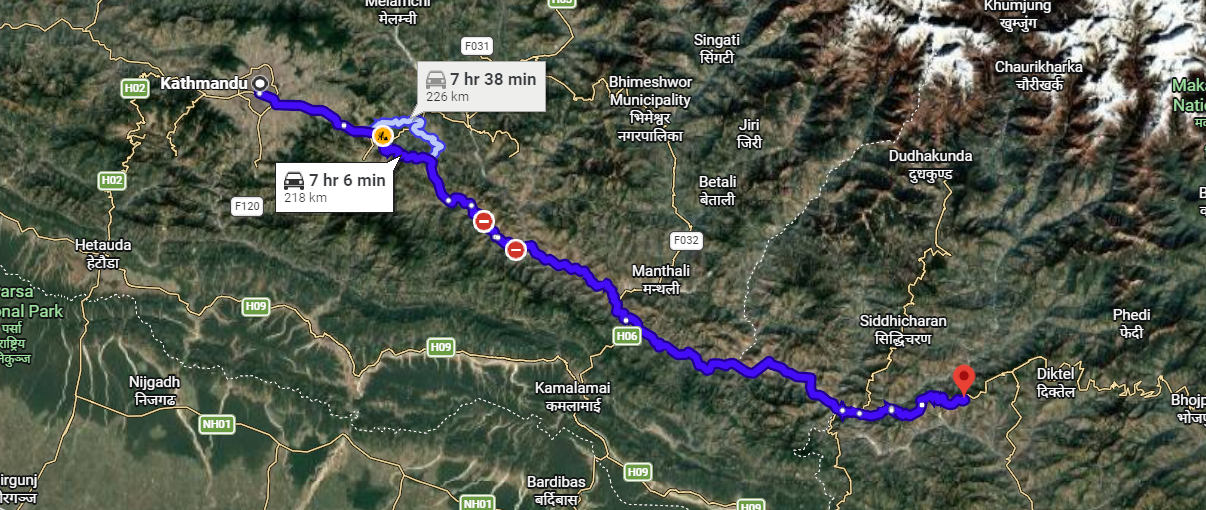
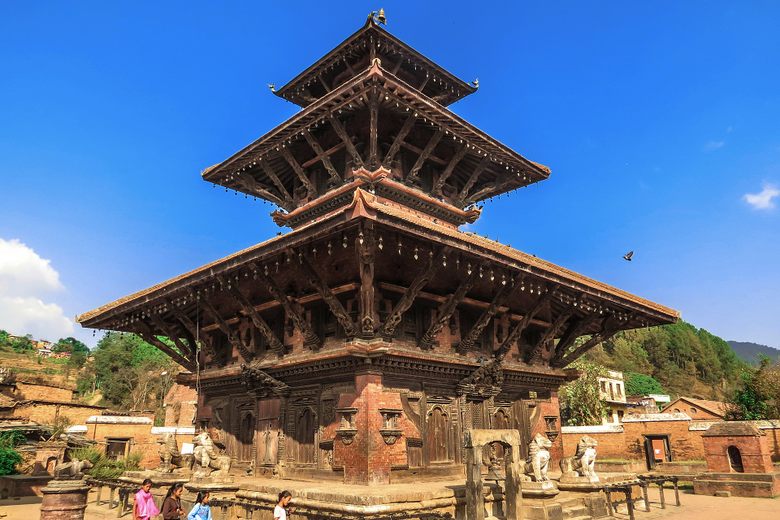
Swayambhunath visit during Kathmandu Pokhara Tour

Kathmandu to Dolakha Route Details 2026-2027

The drive from Kathmandu to Dolakha (Charikot) follows the Araniko Highway (BP Highway) eastward through some of Nepal’s most stunning landscapes.

Key Points Along the Kathmandu–Dolakha Route

  • Kathmandu (Koteshwor / Kalanki) → Departure point. Start your journey east via Ring Road.
  • Dhulikhel (30 km) → Hilltop viewpoint with stunning Himalayan panoramas. Optional short stop.
  • Dolalghat (57 km) → Confluence of the Sunkoshi and Indrawati rivers. Popular picnic and rafting destination.
  • Khadichaur / Mude (79–90 km) → Midway rest stop with roadside restaurants and tea houses.
  • Jiri Junction (approx. 185 km) → Historic starting point of the original Everest Base Camp trekking route.
  • Charikot / Bhimeshwar (182 km) → District headquarters of Dolakha. Home to the famous Dolakha Bhimsen Temple and gateway to Kalinchowk.

Top Attractions in Dolakha Worth Visiting

Dolakha is a treasure trove of natural beauty, religious heritage, and adventure. Here are the must-visit places your vehicle hire will take you to:

1. Dolakha Bhimsen Temple (Charikot)

One of Nepal’s most sacred Hindu temples, Dolakha Bhimsen Temple sits in the heart of Charikot Bazaar. Dedicated to Lord Bhimsen (one of the Pandavas from the Mahabharata), the temple houses a unique triangular stone statue believed to represent three divine incarnations.

According to tradition, sweat appearing on the idol’s forehead is considered a warning of impending national disaster. The temple draws thousands of devotees year-round, especially during Hindu festivals.

2. Kalinchowk Bhagwati Temple (3,842 m)

Situated at 3,842 meters above sea level in the Gaurishankar Conservation Area, the Kalinchowk Bhagwati Temple is one of the most popular short-trek and pilgrimage destinations near Kathmandu. The temple is devoted to Goddess Bhagwati (Kali) and offers 360-degree panoramic views of the Gaurishankar, Langtang, Ganesh Himal, Jugal Himal, and even the Everest range on clear days.

A cable car service (NPR 600 per person) connects Kuri Village to the temple. In winter, the area receives snow and offers skiing opportunities.

3. Charikot Bazaar

Charikot, the administrative headquarters of Dolakha District, is a vibrant Newari market town at about 1,554 m. It serves as the base camp for Kalinchowk treks and features local restaurants, guesthouses, and cultural heritage. The town’s old Newari architecture, traditional crafts, and local markets make it worth exploring.

4. Kuri Village

Located 15 km from Charikot on an off-road mountain track (requiring a 4WD jeep), Kuri Village (2,300 m) is the base for Kalinchowk treks. A traditional mountain settlement surrounded by rhododendron forests and Himalayan views, Kuri Village offers cosy lodges and a peaceful escape from city life.

5. Jiri – Gateway to Everest Trekking

Located approximately 72 km from Charikot, Jiri was the original starting point for the Everest Base Camp trek before flights to Lukla became common. Today, it is a peaceful hill town with trekking routes, waterfalls, and scenic mountain views. You can extend your Kathmandu–Dolakha vehicle hire to include a visit to Jiri.

Best Time to Travel from Kathmandu to Dolakha

  • Spring (March – May): Ideal for trekking and Kalinchowk visits. Rhododendron forests bloom along the trails. Clear mountain views.
  • Autumn (September – November): Peak season with stable weather, crystal-clear skies, and the best Himalayan views. Festivals like Dashain and Tihar bring thousands of pilgrims to the Dolakha Bhimsen Temple.
  • Winter (December – February): Kalinchowk receives heavy snowfall, attracting visitors for snow play and skiing. Road conditions can be challenging — a 4WD jeep is essential.
  • Monsoon (June – August): Roads may be affected by landslides and heavy rain, especially on mountain sections. Travel is possible but requires caution.

How to Book Your Kathmandu to Dolakha Vehicle Rental

  • Step 1: Browse our vehicle options at com.
  • Step 2: Call or WhatsApp us at +977 981-4227196 with your travel date, group size, and preferred vehicle type.
  • Step 3: Receive a confirmed quote with your driver’s details and pick-up time.
  • Step 4: Your driver arrives at your Kathmandu hotel and transfers you directly to Dolakha in comfort.
  • Step 5: Enjoy a smooth, door-to-door journey with stops along the route at your choice.

Travel Tips for Kathmandu to Dolakha Journey

  • Depart Early: Leave Kathmandu by 6–7 AM to avoid valley traffic and arrive in Charikot by mid-morning for a full day of sightseeing.
  • Book in Advance: During Dashain, Tihar, and winter (Dec–Jan) peak periods, vehicles fill up quickly. Book at least 2–3 days ahead.
  • 4WD for Kalinchowk: If your trip includes Kuri Village or Kalinchowk, always hire a 4WD Jeep — standard cars cannot manage the off-road mountain section.
  • Carry Cash: ATMs are limited in Dolakha/Charikot. Carry sufficient Nepali rupees from Kathmandu.
  • Warm Clothing: Temperatures drop significantly at Kalinchowk (3,842 m), even in spring and autumn. Pack an extra jacket.
  • Permits: Entry to the Gaurishankar Conservation Area (for Kalinchowk) requires a conservation area permit fee, paid locally at the entry point.

Nepal Tour Package

Other Vehicle Rental Services by Nepal Vehicle Hiring

We provide vehicle hire across all major routes in Nepal. Explore our other popular services:

Frequently Asked Questions (FAQs) – Kathmandu to Dolakha Vehicle Rental

How far is Kathmandu from Dolakha (Charikot)?

The road distance from Kathmandu to Dolakha (Charikot) is approximately 170–182 km via the Araniko Highway.

How long does the journey take from Kathmandu to Dolakha by private vehicle?

A private car or jeep takes approximately 4–5 hours. A public bus takes 6–7 hours, depending on road conditions and traffic.

What type of vehicle is best for the trip from Kathmandu to Dolakha?

For Charikot and Dolakha Bhimsen Temple visits, a car, jeep, or hiace van works well. For trips to Kuri Village and Kalinchowk, a 4WD Jeep (Scorpio or Land Cruiser) is essential as the road beyond Charikot is off-road and steep.

Can I hire a vehicle for a one-day Kathmandu-to-Dolakha round trip?

Yes, a one-day round trip is possible — covering Charikot Bazaar and Dolakha Bhimsen Temple. However, for Kalinchowk, an overnight stay in Kuri Village or Charikot is strongly recommended for a fuller experience.

Is Dolakha safe to visit?

Yes, Dolakha is safe to visit. The district has fully recovered from the 2015 earthquake, and infrastructure has been improved. Roads to Charikot are in good condition, and the Kalinchowk cable car resumed full operation in 2018.

How much does a Kathmandu-to-Dolakha vehicle rental cost?

Costs vary by vehicle type, number of passengers, and trip duration. Contact Nepal Vehicle Hiring at +977 981-4227196 or visit vehiclehiringnepal.com for a personalised quote.

Can I visit Jiri from Dolakha on the same trip?

Yes! Jiri is approximately 72 km from Charikot (about 4 hours). You can extend your vehicle hire to include Jiri for a 2–3 day Dolakha–Jiri tour.

Our drivers are familiar with this extended route.

Book Your Kathmandu to Dolakha Vehicle Rental Today

Nepal Vehicle Hiring Pvt Ltd is your most trusted vehicle rental partner for the Kathmandu–Dolakha route in 2026. From comfortable cars for solo travellers to large tourist buses for groups, we have the perfect vehicle for every journey.

With professional drivers, well-maintained fleets, 24/7 customer support, and competitive pricing, we keep every kilometre of your Dolakha journey in safe hands.

WhatsApp: +977 981-4227196
Email: [email protected]

Pokhara to Ghandruk Vehicle Hire

Ghandruk

Pokhara to Ghandruk Vehicle Hire

Ghandruk — the ancient cobblestone Gurung village draped across a terraced ridge at 1,940 meters in the Annapurna foothills — is one of Nepal’s most enchanting and rewarding destinations. Framed by the towering pyramids of Annapurna South (7,219 m), Hiunchuli (6,441 m), and the iconic fishtail peak of Machhapuchhre (6,993 m), Ghandruk offers some of the finest close-up Himalayan views available without crossing a single high pass.

A key stop on the Annapurna Base Camp Trek and a gateway to the Ghorepani–Poon Hill Circuit, Ghandruk attracts trekkers, cultural travellers, photographers, and day-trippers from Pokhara year-round. The most efficient, comfortable, and direct way to reach this remarkable Gurung village is by hiring a private vehicle from Pokhara.

This complete 2026 vehicle hire guide covers every transport option from Pokhara to Ghandruk — private jeeps, shared jeeps, local buses, and more — with full route details, 2026 costs, road conditions, key stops, permit information, and expert travel tips from Nepal Vehicle Hiring Pvt Ltd.

Ghandruk — An Introduction

Ghandruk (also spelt Ghandrung) is a large Gurung village situated at 1,940 meters in the Modi Khola valley of the Annapurna Conservation Area, Kaski District, Gandaki Province. It is one of Nepal’s largest Gurung settlements and an important cultural, historical, and trekking hub in the Annapurna region.

The Gurung people of Ghandruk have a long and proud heritage — historically known as Ghale Gurkhas, they provided many soldiers to the British and Indian Gurkha regiments. The village retains its traditional character with stone-paved paths winding between slate-roofed stone houses, ancient Buddhist and Hindu temples, prayer wheels, and the famous Ghandruk Gurung Museum, which celebrates this rich cultural legacy.

  • Altitude: 1,940 m (6,365 ft) above sea level
  • District: Kaski District, Gandaki Province, Annapurna Conservation Area
  • People: Gurung community — known for Gurkha heritage, traditional dress, and warm hospitality
  • Mountain Views: Annapurna South (7,219 m), Hiunchuli (6,441 m), Machhapuchhre / Fishtail (6,993 m), Gangapurna (7,455 m)
  • Trek Connections: Annapurna Base Camp Trek, Ghorepani–Poon Hill Circuit, Australian Camp day hike, Landruk Loop
  • Facilities: Guesthouses, tea houses, restaurants, Gurung Museum, monastery, basic medical post

Ghandruk village

Pokhara to Ghandruk — Key Facts at a Glance

DetailInformation
Total Distance55–61 km (Pokhara to Ghandruk)
Ghandruk Altitude1,940 m (6,365 ft) above sea level
Travel Time3 to 4 hours, depending on road conditions
Road Type — Pokhara to Nayapul/BirethantiPaved tarmac — Beni Baglung Highway (~42 km)
Road Type — Birethanti to GhandrukOff-road, gravel, steep and narrow (~15–19 km)
4WD Required?Mandatory from Birethanti / Syauli Bazar onward
Departure Point in PokharaLakeside / Prithvi Chowk / your hotel
Best SeasonOctober–November (Autumn) and March–May (Spring)
Permits RequiredACAP (Annapurna Conservation Area Permit) + TIMS Card

Quick Tip: A 4WD jeep is mandatory from Birethanti onward. Do not attempt the Birethanti-to-Ghandruk road section in a sedan car or standard vehicle — the steep, narrow gravel track requires genuine 4WD capability and an experienced driver.

The Route: Pokhara to Ghandruk — Step by Step

The Pokhara to Ghandruk route follows two distinct road types — a smooth, paved highway for the first 42 km, followed by an exciting off-road mountain track for the final 15-19 km. Understanding the route helps you plan your journey effectively and choose the right vehicle.

Phase 1 — Pokhara to Nayapul / Birethanti (Beni Baglung Highway, 42–44 km, ~1 hour)

Leaving Pokhara, the vehicle heads south on the Beni Baglung Highway — a well-maintained paved road that winds through the hills south of the Pokhara Valley. The route passes through Naudanda and Kande (offering spectacular Annapurna Range panoramas) before descending to Nayapul, the classic starting point for the Annapurna Base Camp Trek.

  • Pokhara (Lakeside) → Naudanda / Kande: ~28 km, 40–45 min — broad hilltop viewpoints, Annapurna Range in full view
  • Kande → Nayapul: 14 km, 20 min — descending through the Modi River valley, terrace farms
  • Nayapul → Birethanti: ~2 km, 5 min — riverside village, ACAP entry checkpoint, last paved section

Phase 2 — Birethanti to Ghandruk (Off-Road, 13–17 km, 2–3 hours)

Beyond Birethanti, the smooth highway ends, and the off-road adventure begins. The vehicle climbs steeply on a narrow, gravel-and-earth track through terraced farmland, dense rhododendron and oak forests, and Gurung villages. This section requires a 4WD jeep and an experienced driver familiar with the route.

The effort is well rewarded — every bend in the road reveals a more dramatic Himalayan panorama than the last.

  • Birethanti → Syauli Bazar: ~8 km, 1 hour — rough gravel track, Modi Khola views, initial steep climb
  • Syauli Bazar → Kimche: ~3 km, 30 min — narrowing track, rhododendron canopy, mountain views open up
  • Kimche → Ghandruk: ~2–6 km depending on route, 30–60 min — final steep approach, stone paths, Ghandruk village entrance

Note on the Kimche approach: Some jeeps stop at Kimche (from which Ghandruk is a 30-minute uphill walk) rather than driving directly to Ghandruk village. Confirm with your driver whether the vehicle will go directly to Ghandruk or stop at Kimche.

Nepal Vehicle Hiring Pvt Ltd’s drivers always aim to reach the closest accessible point to Ghandruk village, minimising your walking distance with heavy trekking bags.

Alternative Route — Pokhara via Landruk to Ghandruk

A longer but equally scenic alternative route approaches Ghandruk via Tolka and Landruk, passing through the New Bridge (Jhinu Danda) area. This route is less commonly used for vehicle hire but offers spectacular views of the Modi Khola gorge. It adds approximately 30–45 minutes to the journey.

Ghandruk to Pokhara Jeep

Key Stops Along the Route

StopDistance from PokharaRoad TypeHighlights
Pokhara (Lakeside)StartN/ATrek starting point, mountain views, and a lake
Naudanda / Kande28 kmPaved highwayPanoramic Annapurna Range viewpoint
Nayapul42 kmPaved highwayClassic Annapurna Base Camp trek starts
Birethanti44 kmPaved → roughModi Khola riverside village, ACAP checkpoint
Syauli Bazar50 kmOff-road gravelLast vehicle access point before steep climb
Kimche53 kmOff-road gravelAlternative route — 30-min walk to Ghandruk
Ghandruk55–61 kmOff-road mountain trackGurung village, Annapurna South, Machhapuchhre views

Naudanda / Kande (28 km from Pokhara)

Kande is a hilltop settlement on the Beni Baglung Highway offering one of the most spectacular roadside Himalayan panoramas in the Pokhara region. On a clear morning, the entire Annapurna massif — from Dhaulagiri in the west to Manaslu in the east — is visible from the roadside viewpoints here.

Most private jeep drivers pause here briefly for a photo stop. It is also the trailhead for the Australian Camp day hike.

Nayapul (42 km from Pokhara)

Nayapul is a busy trailhead village at the confluence of the Bhurungdi and Modi rivers. It is the classic starting point for both the Annapurna Base Camp Trek and the Ghorepani–Poon Hill Circuit when approaching on foot. For vehicle-hire travellers, Nayapul is a brief pass-through — though some trekkers choose to walk from Nayapul to Birethanti (15 minutes) and then take a vehicle from Birethanti to Ghandruk.

Birethanti (44 km from Pokhara)

Birethanti is a charming riverside village on the banks of the Modi Khola. This is where the ACAP (Annapurna Conservation Area Project) entry checkpoint is located — all trekkers must have their ACAP permit and TIMS card inspected here. After the checkpoint, the paved road ends, and the off-road track to Ghandruk begins.

Birethanti has tea houses, guesthouses, and a pleasant riverside atmosphere along the Modi Khola.

Syauli Bazar (50 km from Pokhara)

Syauli Bazar is the last significant settlement before the final steep approach to Ghandruk. A small collection of tea houses and local shops marks this point. Most jeep drivers stop here briefly for passengers to use the facilities before the steepest section of the off-road climb.

Kimche (53 km from Pokhara)

Kimche is the point at which many jeep journeys effectively end — the track becomes very steep and narrow in the final section, and some vehicles turn back here. From Kimche, a 30-minute uphill walk on stone steps leads to Ghandruk village. If you are travelling with a heavy trekking bag, ask your driver in advance whether they will attempt the full drive to Ghandruk to stop at Kimche.

Ghandruk (1,940 m — 55–61 km from Pokhara)

You have arrived! Ghandruk village welcomes you with its cobblestone lanes, slate-roofed traditional stone houses, prayer wheels, marigold garlands, and the overwhelming presence of Annapurna South towering directly above. The village’s southern aspect and relatively low altitude mean it enjoys a warm, sunny microclimate even in autumn and early winter, making it comfortable for exploration at any time of day.
Pokhara to Ghandruk Vehicle Hire

All Vehicle Hire Options — Pokhara to Ghandruk 2026

Here is a complete comparison of every vehicle hire option available for the Pokhara to Ghandruk route:

Vehicle TypeCapacity2026 Cost (approx.)Best For
Private Jeep (Scorpio / Hilux)4–6 passengersUSD 100–160 (full vehicle)Groups of 2–6, trekkers with luggage
Shared JJeep(per seat)7–9 totalUSD 15–20 per personSolo budget travelers
Local Bus to Nayapul + Shared JeepMultiple passengersNPR 500 (bus) + USD 12–15 (jeep)Budget backpackers
Private Car (Sedan)2–3 passengersUSD 70–90 (Pokhara to Nayapul only)Light day-trip travellers (not to Ghandruk direct)
Motorbike Hire1–2 personsUSD 15–25/day (self-drive)Experienced riders only — not for luggage

Private Jeep Hire — Best Option for Trekking Groups

A private 4WD jeep (Mahindra Scorpio, Toyota Hilux, or similar) is the most popular and recommended vehicle hire option for the Pokhara-to-Ghandruk route. It provides door-to-door hotel pickup in Pokhara, direct access to Ghandruk without transfers, comfortable seating for groups of 4 to 6 with trekking gear on the roof rack, and complete flexibility to stop at viewpoints along the way.

  • Vehicle types: Mahindra Scorpio 4WD, Toyota Hilux 4WD, or similar
  • Capacity: 4–6 passengers comfortably; up to 7 with luggage on the roof rack
  • 2026 Cost: USD 145–160 for the full vehicle (one way, including driver and fuel)
  • Travel time: 3 to 4 hours, Pokhara to Ghandruk
  • Pickup: Door-to-door from your hotel in Lakeside, Pokhara
  • Flexibility: Stop at Kande viewpoint, Nayapul, Birethanti, or anywhere along the route
  • Advantage: No vehicle changes, no waiting, direct hotel pickup, ample luggage space

Nepal Vehicle Hiring Pvt Ltd provides private 4WD jeep hire from Pokhara to Ghandruk with experienced drivers fully familiar with the Beni Baglung Highway and the off-road Birethanti–Ghandruk track. All-inclusive — driver, fuel, tolls, and door-to-door service.

Shared Jeep — Budget Option for Solo Travellers

Shared jeeps depart from Pokhara’s Baglung Bus Park and operate on a fill-up-and-go basis. They are the most affordable motorised option for solo travellers or pairs willing to trade comfort and flexibility for cost savings.

  • Departure point: Baglung Bus Park, Pokhara
  • 2026 Cost: USD 15–20 per person (one way)
  • Travel time: 3.5 to 4.5 hours (departs only when full, additional stops en route)
  • Capacity: 7–9 passengers crammed into the vehicle, including the front seat
  • Luggage: Limited space — large trekking bags are difficult to manage
  • Note: No hotel pickup — you must reach Baglung Bus Park independently

Tip for solo travellers: If travelling during peak season (Oct–Nov, Mar–May), shared jeeps are readily available at Baglung Bus Park from early morning. During off-peak times, you may wait 1–2 hours for the vehicle to fill.

Private Car (Sedan) — Pokhara to Nayapul Only

A private sedan car (Toyota Corolla, Hyundai Sonata, or similar) can comfortably drive from Pokhara to Nayapul on the paved Beni Baglung Highway. However, sedans cannot safely navigate the off-road Birethanti-to-Ghandruk track. If you prefer a sedan, the standard approach is to take a sedan from Pokhara to Nayapul or Birethanti, then transfer to a shared or private jeep for the off-road section.

  • Cost: USD 60–80 for a sedan from Pokhara to Nayapul / Birethanti
  • Plus: USD 12–20 per person for shared jeep from Birethanti to Ghandruk
  • Drawback: Requires vehicle transfer at Birethanti — inconvenient with heavy trekking luggage
  • Best for: Day-trip visitors or those travelling very light without trekking gear

Ghandruk village (1)

Road Conditions — Pokhara to Ghandruk

Pokhara to Birethanti (Beni Baglung Highway)

The Beni Baglung Highway from Pokhara to Nayapul and Birethanti is a well-maintained paved road in good condition. It is a two-lane tarmac road for most of its length, widening to broader sections in areas. This stretch is manageable for all vehicle types, including sedans and Hiace vans.

Road improvements have been ongoing, and surface quality has improved significantly over the last two years.

Birethanti to Syauli Bazar (Off-Road Section)

Beyond Birethanti, the paved road ends, and a gravel-and-earth track begins climbing steeply into the Annapurna foothills. The surface is rough with loose stones, ruts, and uneven sections. A high-clearance 4WD vehicle is essential on this section.

During the dry season (October–May), the track is manageable for experienced drivers in a 4WD Scorpio or Hilux. The views of the Modi Khola gorge and terraced hillsides from this section are outstanding.

Syauli Bazar to Ghandruk (Steepest Section)

The final 5 to 8 km of the jeep track above Syauli Bazar, through Kimche to Ghandruk, is the most challenging section of the entire route. The road is very narrow, steep, and rocky in places. Some vehicles stop at Kimche (a 30-minute walk to Ghandruk) rather than attempting the final section.

Nepal Vehicle Hiring Pvt Ltd’s experienced drivers assess conditions on the day and reach the closest accessible point to Ghandruk village.

Season-by-Season Road Conditions

SeasonMonthsRoad ConditionsVisibility / Trek ConditionsRecommendation
Autumn (Peak)Oct – NovDry, excellentCrystal-clear mountain viewsBest — book in advance
Spring (Peak)Mar – MayDry, goodRhododendron bloom, clear skiesExcellent — very popular
WinterDec – FebCold, occasional frostClear views, quiet trailsGood — fewer crowds, cold
MonsoonJun – SepMuddy, landslide riskLimited views, lush green4WD essential — verify daily

Monsoon Warning (June–September): The Birethanti-Ghandruk off-road track is prone to landslides, mudslides, and surface damage during heavy monsoon rains. Always verify road conditions the day before travel during the monsoon season. Nepal Vehicle Hiring Pvt Ltd monitors road conditions in real time and will advise if travel is not recommended on a specific day.

Ghandruk village

Ghandruk — What to See and Do

Ghandruk is far more than just a trekking transit point. The village is one of the richest cultural and scenic destinations in the Annapurna region — worthy of a dedicated stay of one to three nights. Here are the key attractions and activities:

Attraction / ActivityDistance from VillageBest For
Gurung MuseumVillage centerCultural history, Gurung heritage
Ghandruk Monastery5-min walkBuddhist/Hindu cultural visit
Annapurna South ViewVillage viewpointsSunrise/sunset panoramic photography
Annapurna Base Camp TrekStarts from GhandrukFull multi-day Annapurna Base Camp trekking
Ghorepani – Poon Hill CircuitVia upper trailClassic 4–5 day Poon Hill trek loop
Australian Camp Day Hike1.5–2 hrs from GhandrukHalf-day panoramic viewpoint hike
Modi Khola River ValleyBelow GhandrukScenic walk, river swimming, relaxation
Tadapani Village2–3 hrs walkRhododendron forests, mountain views

Gurung Museum — Heart of Ghandruk Culture

The Ghandruk Gurung Museum is one of the finest ethnic museums in the Annapurna Conservation Area. Located in the village centre, the museum displays traditional Gurung costumes, weapons used by Gurkha soldiers, household implements, agricultural tools, musical instruments, and photographs chronicling the village’s proud military history. Entry is free or carries a small donation.

This is a must-visit for any cultural traveller.

Mountain Views — The Ghandruk Panorama

Ghandruk’s position on a broad south-facing terrace at 1,940 meters gives it extraordinary mountain views in multiple directions. Looking north, Annapurna South (7,219 m) and Hiunchuli (6,441 m) rise directly above the village in an almost vertical wall of ice and rock.

To the northeast, the iconic double-summit pyramid of Machhapuchhre (Fishtail, 6,993 m) dominates the skyline. Early-morning and late-afternoon light on these peaks is absolutely striking — one of the finest Himalayan village viewpoints in all of Nepal.

Annapurna Base Camp Trek — The Gateway

Ghandruk is an important junction and resting point on the Annapurna Base Camp (ABC) Trek — one of Nepal’s most popular and spectacular trekking routes. From Ghandruk, the ABC trail continues north through Chhomrong, Dovan, Himalayan Hotel, and Deurali before ascending to the glacial sanctuary of the Annapurna Base Camp at 4,130 meters.

By starting your ABC trek from Ghandruk after a jeep transfer from Pokhara, you save one full day of walking on the lower approach trail.

Ghorepani – Poon Hill Circuit

The classic Ghorepani–Poon Hill loop trek is easily accessible from Ghandruk via the trail to Tadapani and Ghorepani. This 4- to 5-day circuit, culminating in the famous Poon Hill sunrise (3,210 m) with panoramic views of Dhaulagiri, Annapurna, and Machhapuchhre, is one of Nepal’s most beloved short treks.

Many trekkers hire a jeep from Pokhara to Ghandruk and begin the Poon Hill loop from there — creating a circular route that avoids repeating the same trail.

Australian Camp Day Hike

Australian Camp (2,060 m) is a popular viewpoint and tea house plateau above Pokhara, accessible on foot from Kande or Ghandruk in a 2- to 3-hour walk. The viewpoint offers some of the most accessible panoramic Himalayan views in the Annapurna region—perfect for travellers who want dramatic mountain scenery without a multi-day trek.

Pokhara to Ghandruk Vehicle Hire

Permits Required — Pokhara to Ghandruk

The Ghandruk area falls within the Annapurna Conservation Area, and two mandatory permits are required. Both are checked at the ACAP checkpoint in Birethanti:

ACAP — Annapurna Conservation Area Permit

  • Cost: NPR 3,000 per person for foreign nationals (approximately USD 22 — verify current rate)
  • For SAARC nationals: NPR 200 per person
  • Where to obtain: Nepal Tourism Board office in Pokhara (Lakeside), Kathmandu, or at the Birethanti checkpoint
  • Inspected at: Birethanti ACAP checkpoint and multiple points along the Annapurna trails

TIMS Card — Trekkers’ Information Management System

  • Cost: Approximately USD 10–20 per person for foreign nationals
  • Where to obtain: Nepal Tourism Board or TAAN office in Pokhara (Lakeside) or Kathmandu

Permit Tip: Obtain both permits in Pokhara before departing for Ghandruk — the Nepal Tourism Board office in Lakeside, Pokhara, issues both permits easily. This saves time at the Birethanti checkpoint and avoids any risk of being turned back without documents.

What to Pack for the Pokhara to Ghandruk Vehicle Journey

  • ACAP permit and TIMS card: Carry printed copies easily accessible — checked at Birethanti
  • Water and snacks: The vehicle journey takes 3–4 hours with limited stops
  • Camera or phone with a full battery: Kande viewpoint and the off-road approach to Ghandruk offer spectacular photography opportunities
  • Light jacket or fleece: Ghandruk at 1,940 m is noticeably cooler than Pokhara — especially early morning and evening
  • Motion sickness medication: The Beni Baglung Highway and off-road section have numerous switchbacks
  • Nepali Rupees (NPR): Limited ATM access in Ghandruk — carry cash for tea house accommodation and meals
  • Trekking boots or sturdy footwear: The cobblestone paths of Ghandruk can be slippery in wet conditions
  • Sunscreen and sunglasses: High altitude sunlight is intense — even on overcast days
  • Headlamp: Essential if you plan to do early sunrise viewpoint walks

Practical Tips for Your Pokhara to Ghandruk Vehicle Hire

  • Book your vehicle at least 24–48 hours in advance during peak season (October–November and March–May) — private jeeps fill up fast.
  • Depart from Pokhara by 7:00–8:00 AM to arrive in Ghandruk by mid-morning and maximise your time in the village.
  • Confirm with your driver whether the Jeep will reach Ghandruk directly or stop at Kimche; this affects how much walking you’ll do with luggage.
  • Arrange permits in Pokhara before departure — you’ll need ACAP and TIMS permits at the Birethanti checkpoint.
  • Communicate your trekking plan to Nepal Vehicle Hiring Pvt Ltd — if you need a return vehicle from Ghandruk to Pokhara after your trek, book it at the same time.
  • Ask your driver to pause at Kande viewpoint for morning mountain photos — on clear mornings, the Annapurna Range panorama from Kande is outstanding.
  • Pack a small day bag with essentials for the vehicle ride — keep permits, camera, water, and medication accessible, not in the roof rack luggage.
  • Verify road conditions during the monsoon season — the off-road section from Birethanti can become impassable after heavy rain. Nepal Vehicle Hiring Pvt Ltd monitors this route daily.
  • For groups of 8 or more, consider booking a Hiace van from Pokhara to Nayapul and a private jeep for the Birethanti-to-Ghandruk off-road section.

sunrise

Return Journey — Ghandruk to Pokhara

Most trekkers and visitors to Ghandruk need to plan their return journey to Pokhara. Here are the main options:

Nepal Vehicle Hiring Pvt Ltd can arrange a private jeep return from Ghandruk to Pokhara at the same price as the outward journey (US$145 for the full vehicle). This is the most comfortable and convenient return option — especially after a multi-day trek when you have heavy bags and are physically tired. Book the return at the same time as your outward journey to guarantee vehicle availability.

Shared Jeep from Ghandruk to Pokhara

Shared jeeps depart from Ghandruk toward Pokhara in the morning (typically 7:00–10:00 AM) at approximately USD 12–15 per person. These operate on a fill-and-go basis and are a reliable, affordable option during peak season, when many trekkers head back to Pokhara at the same time.

Trek Return — Walk to Nayapul and Bus or Car to Pokhara

Many trekkers prefer to walk the descent from Ghandruk to Birethanti and Nayapul (approximately 3–4 hours) and then take a local bus or car back to Pokhara. This is a pleasant and rewarding option for those whose legs feel strong after their trek — the walk through terraced farms and the Modi Khola valley is beautiful.

Combined Treks — Continue to Ghorepani or Annapurna Base Camp

Many visitors to Ghandruk do not return directly to Pokhara — instead, they continue their trek onward to Ghorepani–Poon Hill (2 days) or Annapurna Base Camp (4–5 days) and arrange a vehicle return from the endpoint of their trek (Nayapul or Pokhara). Nepal Vehicle Hiring Pvt Ltd can arrange pickup from any point on the Annapurna trekking network.

Why Choose Nepal Vehicle Hiring Pvt Ltd for Pokhara to Ghandruk?

  • Specialist 4WD Fleet: Mahindra Scorpio 4WD and Toyota Hilux 4WD — the best vehicles for the Birethanti to Ghandruk off-road section.
  • Experienced Drivers: Our drivers know every curve and condition of the Beni Baglung Highway and the Birethanti–Ghandruk jeep track — including the challenging Syauli Bazar-Kimche section.
  • Hotel Pickup in Pokhara: Door-to-door service from your hotel in Lakeside, Prithvi Chowk, or anywhere in Pokhara.
  • All-Inclusive Pricing: The quoted price includes the driver, fuel, and road tolls. No surprises.
  • Flexible Stops: Stop at Kande viewpoint, Nayapul, or Birethanti for photos or tea — your driver will accommodate any requests along the route.
  • Monsoon Monitoring: Our team tracks daily road conditions on the Ghandruk route and proactively communicates any risks or road closures.
  • Return Trip Booking: Book your outward and return Ghandruk transfers in a single booking — no logistics stress during your trek.
  • 24/7 Booking: WhatsApp, phone, or email — instant confirmation at any time.

Frequently Asked Questions — Pokhara to Ghandruk Vehicle Hire

How far is Pokhara from Ghandruk?

The road distance from Pokhara to Ghandruk is approximately 55-61 km, depending on the exact route taken. The first 42 to 44 km from Pokhara to Birethanti is a paved highway; the remaining 13 to 17 km from Birethanti to Ghandruk is an off-road mountain track.

How long does the vehicle journey from Pokhara to Ghandruk take?

A private jeep hire takes approximately 3 to 4 hours from Pokhara to Ghandruk. A shared jeep takes 3.5 to 4.5 hours. Road conditions — particularly on the off-road Birethanti to Ghandruk section — can add time in wet or monsoon conditions.

What is the 2026 cost of hiring a private jeep from Pokhara to Ghandruk?

A private 4WD jeep hire from Pokhara to Ghandruk costs approximately US$145 for the full vehicle (one-way). This includes driver, fuel, and road tolls. The cost per person for a group of 6 is therefore only USD 24-27 — excellent value compared to other transport options.

Is a 4WD jeep necessary for the Pokhara-Ghandruk route?

A 4WD jeep is necessary from Birethanti onward. The 13- 17 km off-road track from Birethanti to Ghandruk is steep, narrow, and rocky—completely unsuitable for a sedan, standard SUV, or Hiace van. The Pokhara-Birethanti section of the Beni-Baglung Highway is drivable in any vehicle.

Does the Jeep go directly to Ghandruk or stop at Kimche?

This depends on current road conditions and the driver’s assessment. Some jeeps reach Ghandruk village directly; others stop at Kimche (a 30-minute uphill walk to Ghandruk). Nepal Vehicle Hiring Pvt Ltd’s drivers always aim to reach the closest accessible point to Ghandruk village.

Confirm this with your driver before departure.

What permits do I need for Ghandruk?

You need an ACAP (Annapurna Conservation Area Permit — approximately NPR 3,000 / USD 22 per person) and a TIMS Card (approximately USD 10–20 per person). Both are inspected at the Birethanti ACAP checkpoint. Obtain both permits at the Nepal Tourism Board office in Lakeside, Pokhara, before departure.

Can I hire a vehicle directly from Kathmandu to Ghandruk?

Yes. Nepal Vehicle Hiring Pvt Ltd can arrange a private jeep hire from Kathmandu directly to Ghandruk — a journey of approximately 260 to 280 km taking 7 to 8 hours, including the off-road Birethanti to Ghandruk section. This is typically done in combination with a stopover in Pokhara.

Can I book a return vehicle from Ghandruk to Pokhara?

Yes. Nepal Vehicle Hiring Pvt Ltd arranges a private jeep hire from Ghandruk to Pokhara. We recommend booking your return vehicle at the same time as your outward journey to ensure availability—especially during peak trekking season.

What is the best time of year to hire a vehicle to Ghandruk?

October to November (autumn) offers the clearest skies and driest roads — the best season for mountain views and comfortable jeep travel. March to May (spring) is excellent with rhododendron forests in bloom. December to February is quiet with good views, but cold at altitude.

June to September (monsoon) requires extra caution on the off-road section — always verify conditions before travel.

Conclusion

Ghandruk is one of Nepal’s most genuinely rewarding village destinations — a living cultural monument set against the backdrop of some of the world’s highest and most beautiful mountains. Reaching it from Pokhara by private jeep turns what could be a difficult logistical challenge into an exciting, scenic adventure in its own right.

The 55 to 61 km route from Pokhara — starting on the smooth Beni Baglung Highway with sweeping Annapurna panoramas, then transitioning to the thrilling off-road jeep track through rhododendron forest above Birethanti — captures everything extraordinary about travel in the Nepal Himalaya.

Whether you are beginning a multi-day Annapurna Base Camp Trek, starting the Ghorepani–Poon Hill circuit, or simply seeking a memorable day or overnight visit to one of Nepal’s finest Gurung villages, Nepal Vehicle Hiring Pvt Ltd’s private Pokhara to Ghandruk jeep service is the most comfortable, convenient, and reliable way to get there.

Book your jeep today — Call or WhatsApp: +977 981-4227196
Website: www.vehiclehiringnepal.com
E-mail: [email protected]

Chat with us