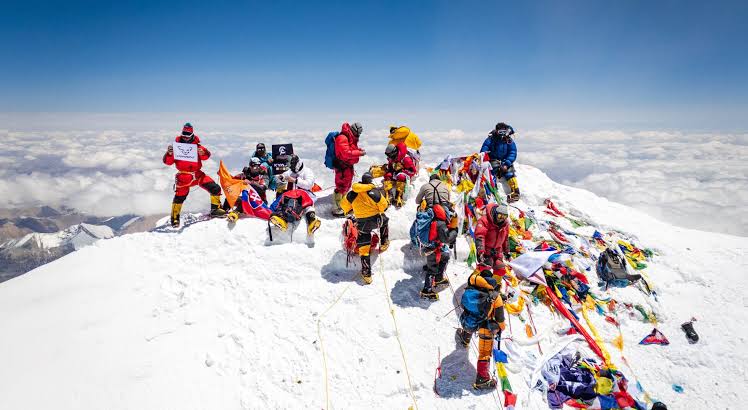
Pokhara to Everest Region Tourist Transport: Complete Guide

Everest expeditions

Pokhara to Everest Region Transport – Complete Guide

The Everest region – home to the world’s highest mountain, the legendary Sherpa culture, the famous Hillary Step, and the iconic viewpoints of Kala Patthar and Gokyo Ri – is the most sought-after trekking destination in Nepal and one of the most iconic adventure destinations on earth. For travellers already in Pokhara after exploring the Annapurna region, how to get from Pokhara to the Everest region is both common and important.

Unlike the Annapurna region, which sits right on Pokhara’s doorstep, the Everest region lies on the opposite side of Nepal, requiring a journey back through or via Kathmandu. Multiple transport options exist for this cross-country journey, each with different prices, travel times, comfort levels, and conveniences.

This complete 2026 guide covers every tourist transport option from Pokhara to the Everest region – bus, private car, domestic flight, and combinations – with prices, journey details, and expert advice from Vehicle Hiring Nepal.

For travellers looking for the best trekking and planning to explore Kathmandu, we recommend continuing your journey with our trusted sister companies, Trek Nepal Himalayas and Alpine Luxury Treks. We specialise in organising a wide range of travel experiences across Nepal, from classic trekking adventures to cultural and wildlife tours.

Our top offerings include iconic journeys such as the Everest Base Camp Trek, in-depth Kathmandu sightseeing tours, striking Nagarkot sunrise experiences, exciting Chitwan jungle safaris, and luxury packages. We can also arrange short hikes, heritage tours, mountain flights, and customised travel plans tailored to your schedule and interests.

Whether you are looking for a budget-friendly trip or a luxury trekking experience with top-end lodges, private guides, and high-end services, we manage every detail professionally. Our goal is to provide a smooth transition from your trekking adventure to a comfortable) and a memorable travel experience in Nepal.

Understanding the Geography: Why Pokhara to Everest is Not Direct

Many travellers are surprised to learn that getting from Pokhara to the Everest region isn’t a straightforward, direct journey. Here is why:

Pokhara Location: West-central Nepal, Gandaki Province, Annapurna foothills

Everest Region Location: Eastern Nepal, Koshi Province, Solukhumbu District

Direct Distance: Approximately 200 km as the crow flies – but there is no direct road

Road Route via Kathmandu: Approximately 600–650 km total: Pokhara → Kathmandu (200 km) → Kathmandu to Salleri or Phaplu (330 km) or fly to Lukla

The Key Hub: Kathmandu is the unavoidable transit hub for all Pokhara to Everest region journeys

Whether you travel by bus, private car, or a combination of flights, Kathmandu serves as the central transit point between Pokhara in the west and the Everest region in the east. From Kathmandu, travellers either fly to Lukla (the primary gateway for Everest treks) or take a vehicle south and east to Salleri, Phaplu, or Jiri – the road access points to the lower Everest region.

All Transport Options: Pokhara to Everest Region

Route OptionModeTotal TimeTotal Cost (est.)Best For
Pokhara → Kathmandu (bus) → fly LuklaBus + flight1.5–2 daysUSD 25–40 bus + USD 160–190 flight/personBudget travellers, backpackers
Pokhara → Kathmandu (private car) → fly to LuklaCar + flight1–1.5 daysUSD 80–110 car + USD 160–190 flightFamilies, groups, comfort
Fly Pokhara → Kathmandu → fly LuklaFlight + flightSame dayUSD 80–110 + USD 160–190/personFast, short on time
Pokhara → KTM (car) → drive to Salleri/PhapluCar + car2–3 daysUSD 80–110 + USD 180–250 vehicleTrekkers starting the lower circuit
Pokhara → KTM (car) → drive to JiriCar + car2 daysUSD 80–110 + USD 130–170 vehicleJiri route for traditional trekkers
Pokhara → KTM (bus) → drive to SalleriBus + jeep3 daysUSD 15–25 bus + USD 180–250 vehicleBudget group, lower Everest entry

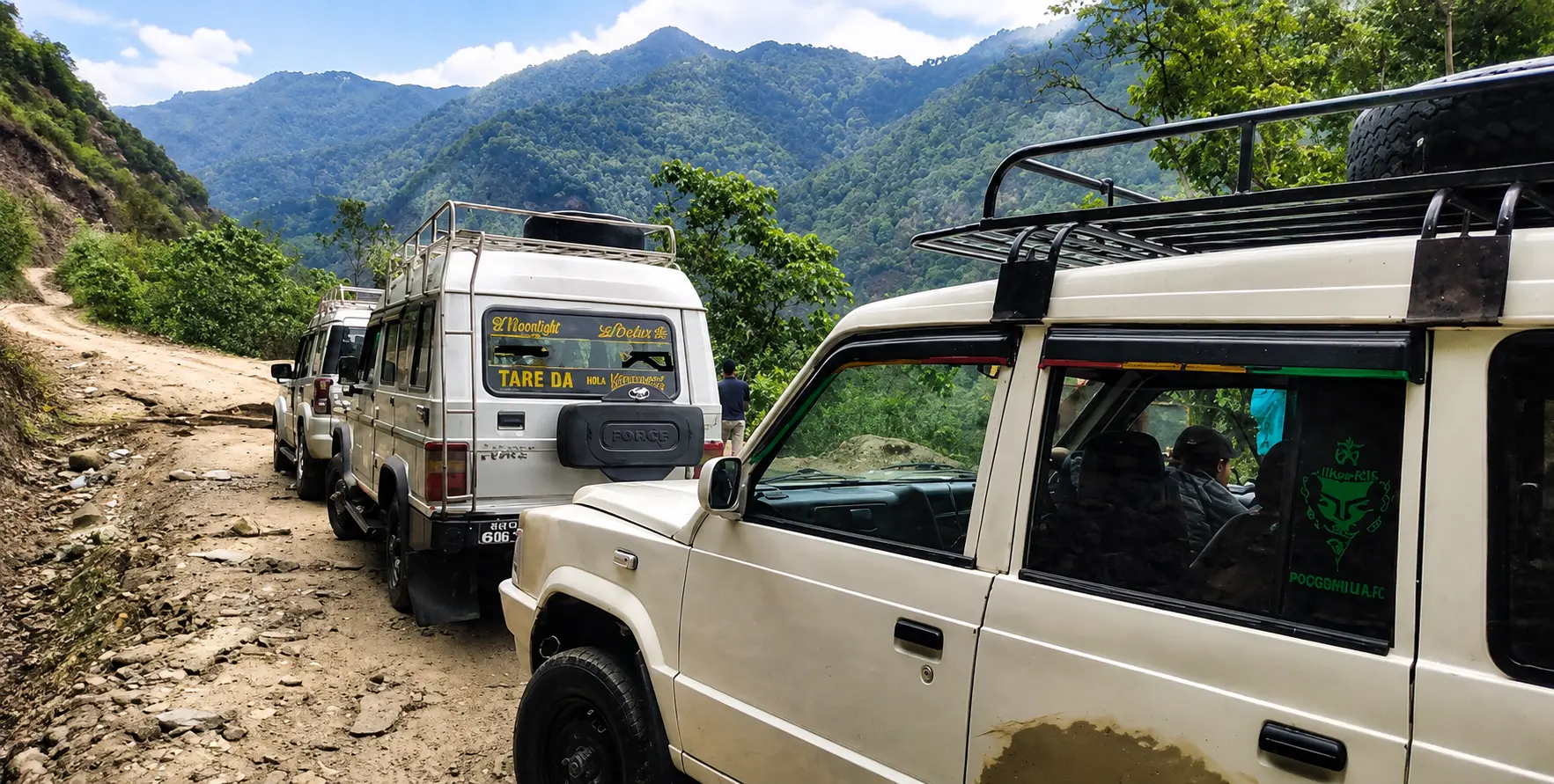
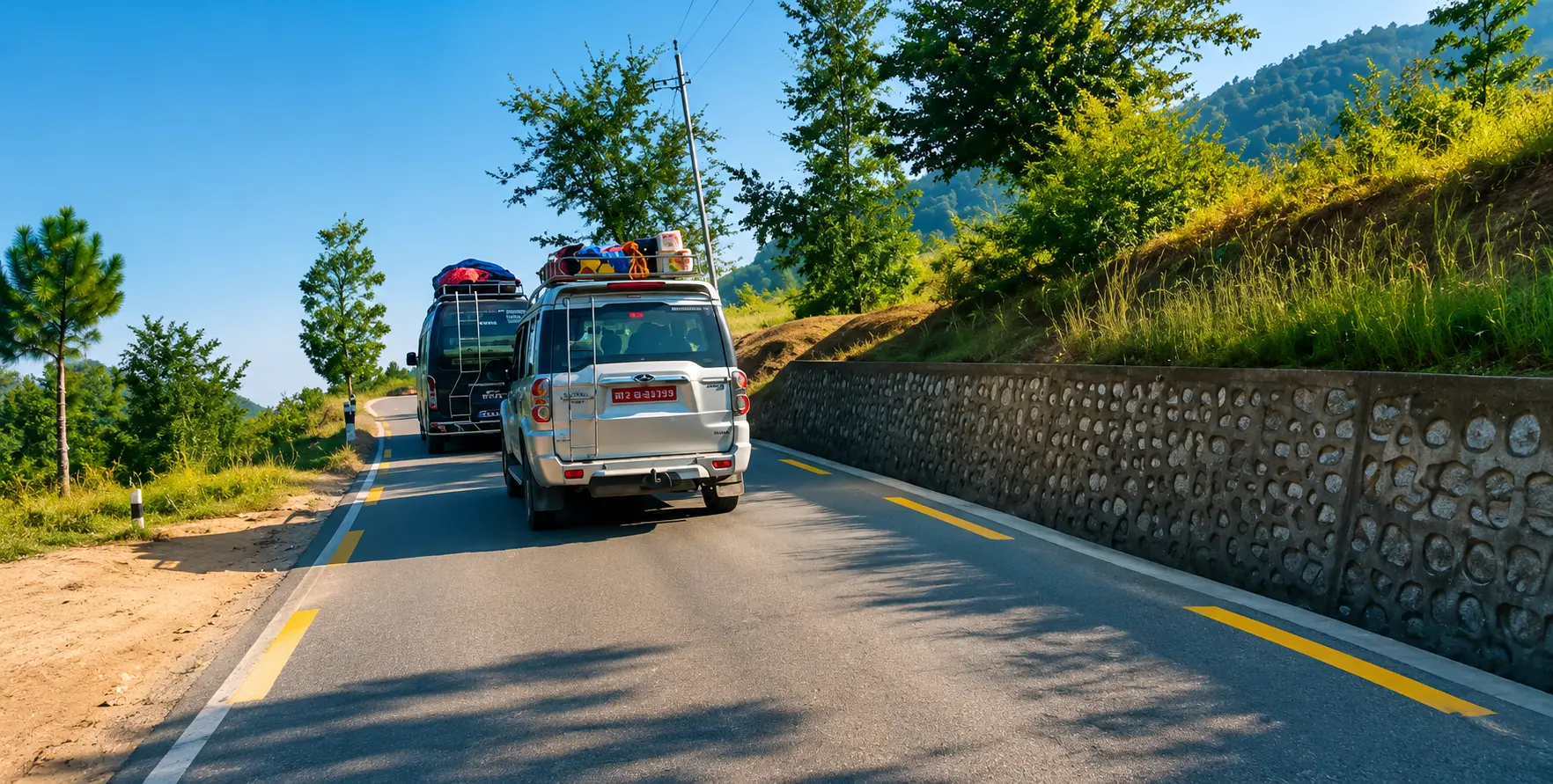
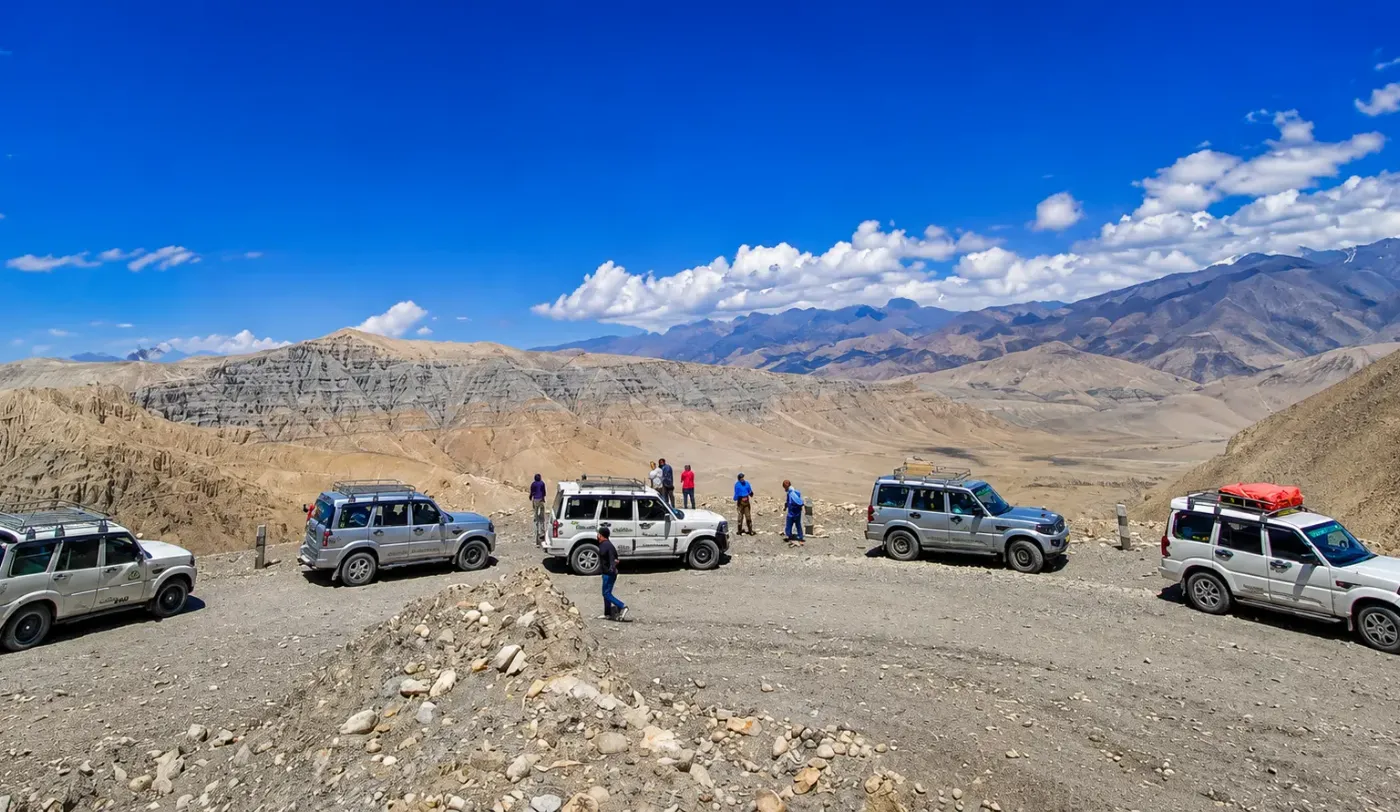
Book Pokhara to Everest Region Transport with a private Scorpio or 4WD jeep for a comfortable journey connecting to your Everest trekking adventure.

The most popular route for travellers heading from Pokhara to the Everest region is to first travel from Pokhara to Kathmandu, spend a night in Kathmandu, and then fly from Kathmandu to Lukla the following morning. This is the standard route for most Everest Base Camp trekkers starting from Pokhara.

Stage 1: Pokhara to Kathmandu

Transport ModeTravel TimePriceDepartureComfort
Private Car / SUV (1–5 pax)5–6 hrsUSD 80–120full carAny timeExcellent – door-to-door
Private Hiace Van (7–14 pax)5–6 hrsUSD 130–190 full vanAny timeExcellent – group together
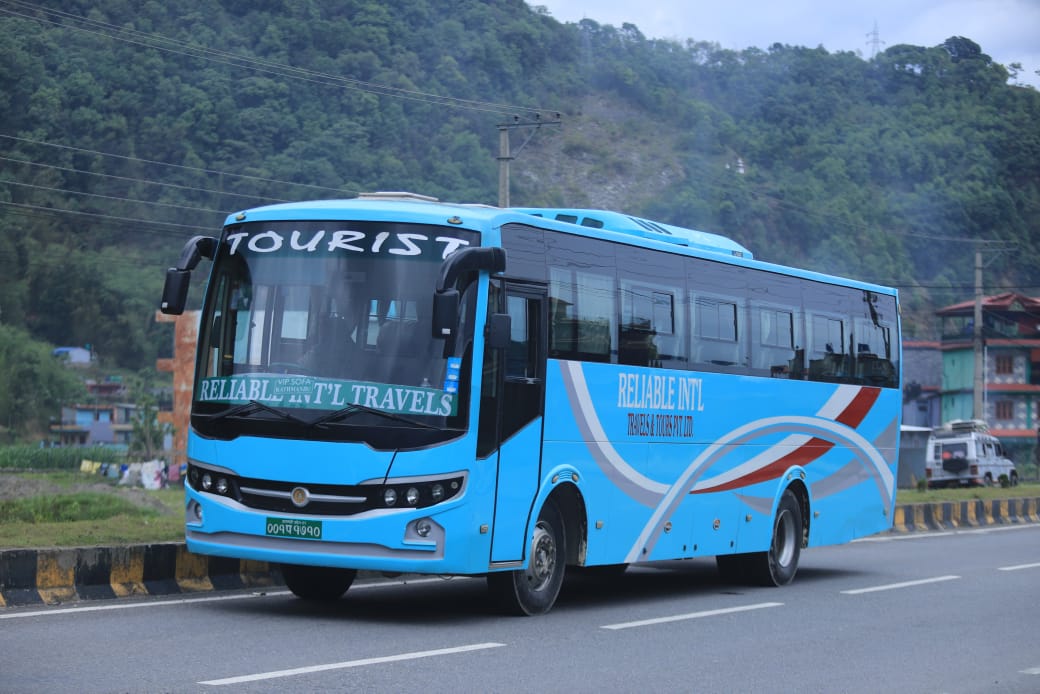
Tourist Bus (shared)7–8 hrsUSD 10–15 per person7:00 AM fixedGood – shared with others
Greenline Luxury Bus (shared)6–7 hrsUSD 25–30 per person8:00 AM fixedVery Good – includes lunch
Domestic Flight25 minUSD 80–110 per personMultiple dailyFastest – no road scenery

Stage 2: Kathmandu to Lukla by Flight

Airlines: Tara Air, Summit Air, Sita Air – daily flights in season

Flight Duration: 35 to 45 minutes

Ticket Price 2026: USD 160 to USD 200 per person, one-way

Departure: Multiple flights 6:00 to 11:00 AM – all flights complete before noon due to mountain weather

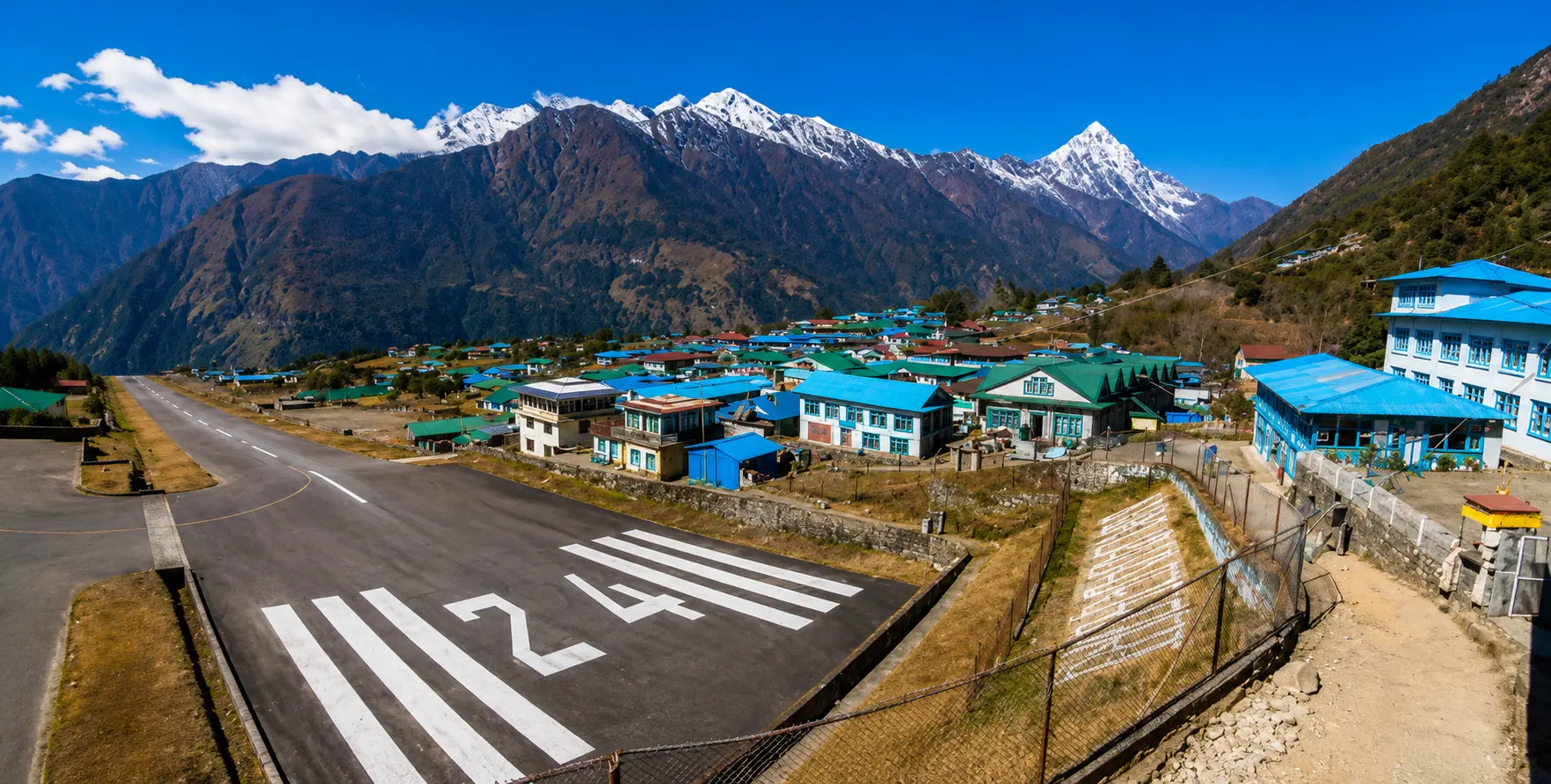
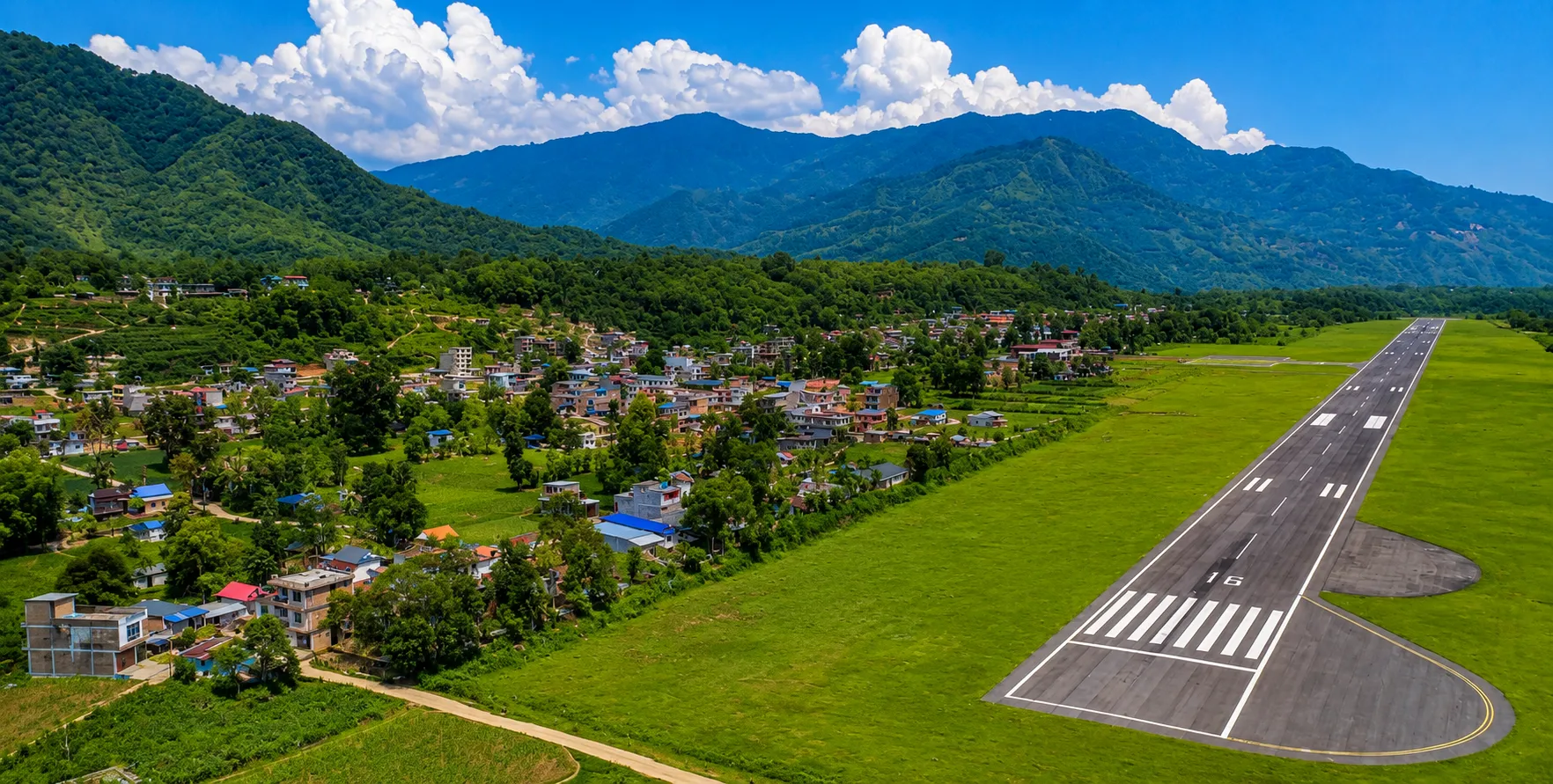
Lukla Airport: Tenzing-Hillary Airport at 2,860 m – famous as one of the world’s most extreme airports

Booking: Book at least 2 to 4 weeks in advance in peak season (March–May and October–November)

Cancellation Risk: Moderate to high – Lukla flights are weather-dependent and frequently delayed in monsoon and winter

Vehicle Hiring Nepal provides private car or bus transfers from Pokhara to Kathmandu. We do not sell Lukla flight tickets but can advise on booking. The Lukla flight must be booked through a licensed travel agency or directly with Tara Air / Summit Air.
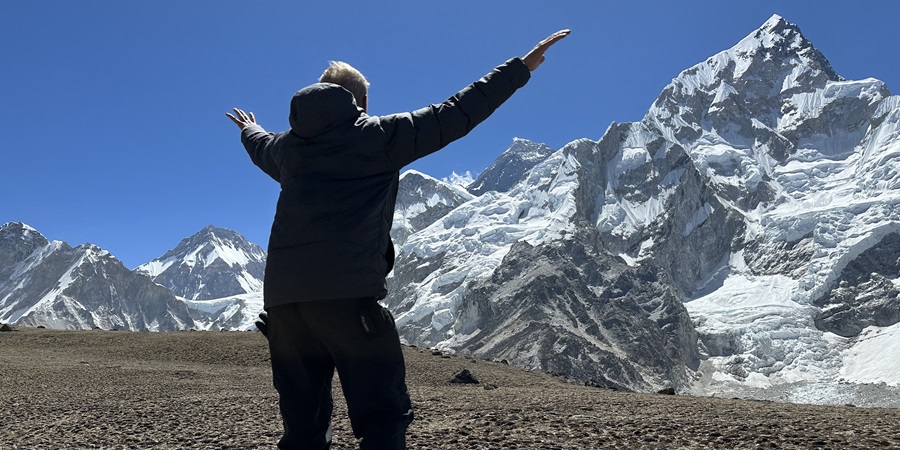
Everest bace camp

Option B: Fly Pokhara to Kathmandu + Fly to Lukla (Same Day)

For travellers with very limited time who want to reach the Everest region as quickly as possible, you can fly from Pokhara to Kathmandu and then from Kathmandu to Lukla the same day, subject to flight timing.

Pokhara to Kathmandu flight: First flights depart approximately 6:30 to 7:00 AM, arriving in Kathmandu 7:00 to 7:30 AM

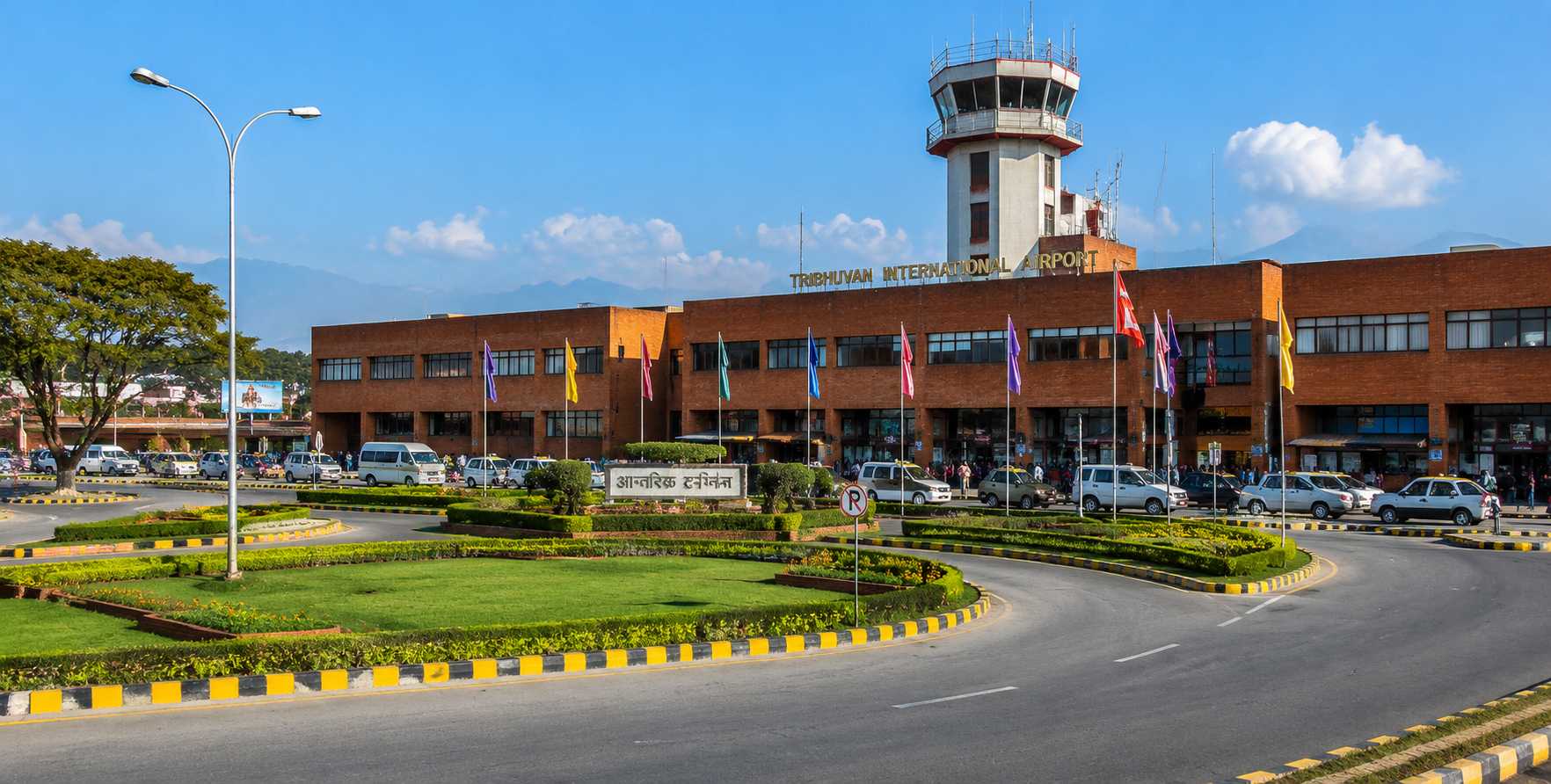
Transfer to domestic terminal: 15 to 20 minutes by taxi within Tribhuvan Airport

Kathmandu to Lukla: Flights depart from 6:00 to 10:30 AM – connecting from Pokhara in time for a 9:00–11:00 AM Lukla flight is possible

Total flight cost: USD 80–110 (Pokhara–KTM) + USD 160–190 (KTM–Lukla) = USD 240–300 per person

Risk: If your Pokhara–Kathmandu flight is delayed, you may miss your Lukla flight – allow buffer time

This same-day flight combination is possible but involves risk. We recommend arriving in Kathmandu the evening before and flying to Lukla the following morning for a stress-free start to your Everest trek. Vehicle Hiring Nepal can arrange airport transfers within Kathmandu for the domestic terminal connection.
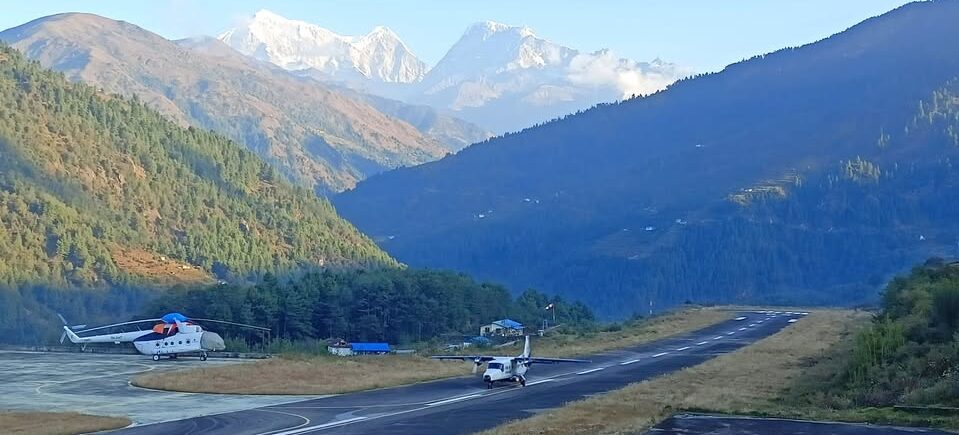
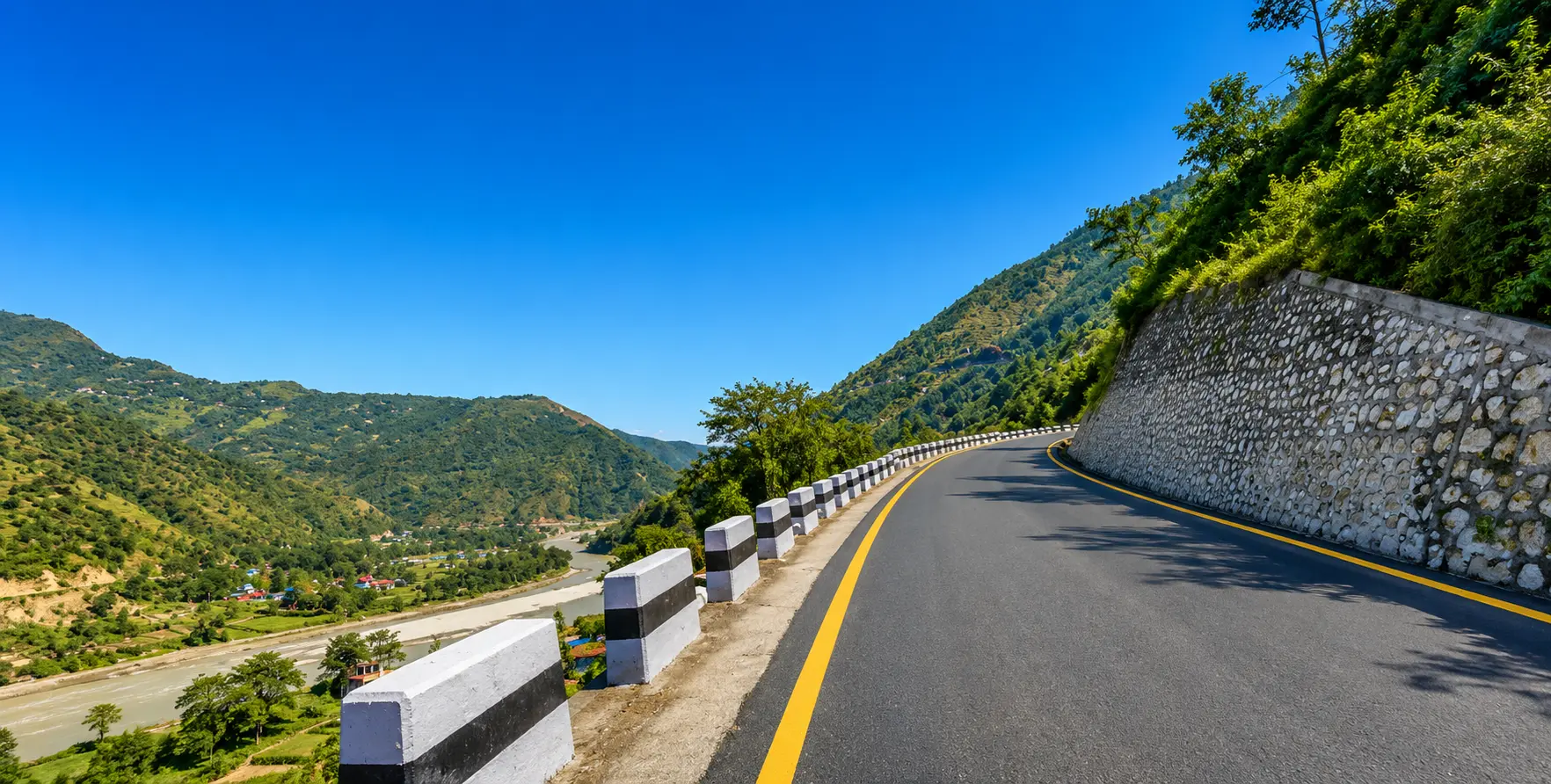
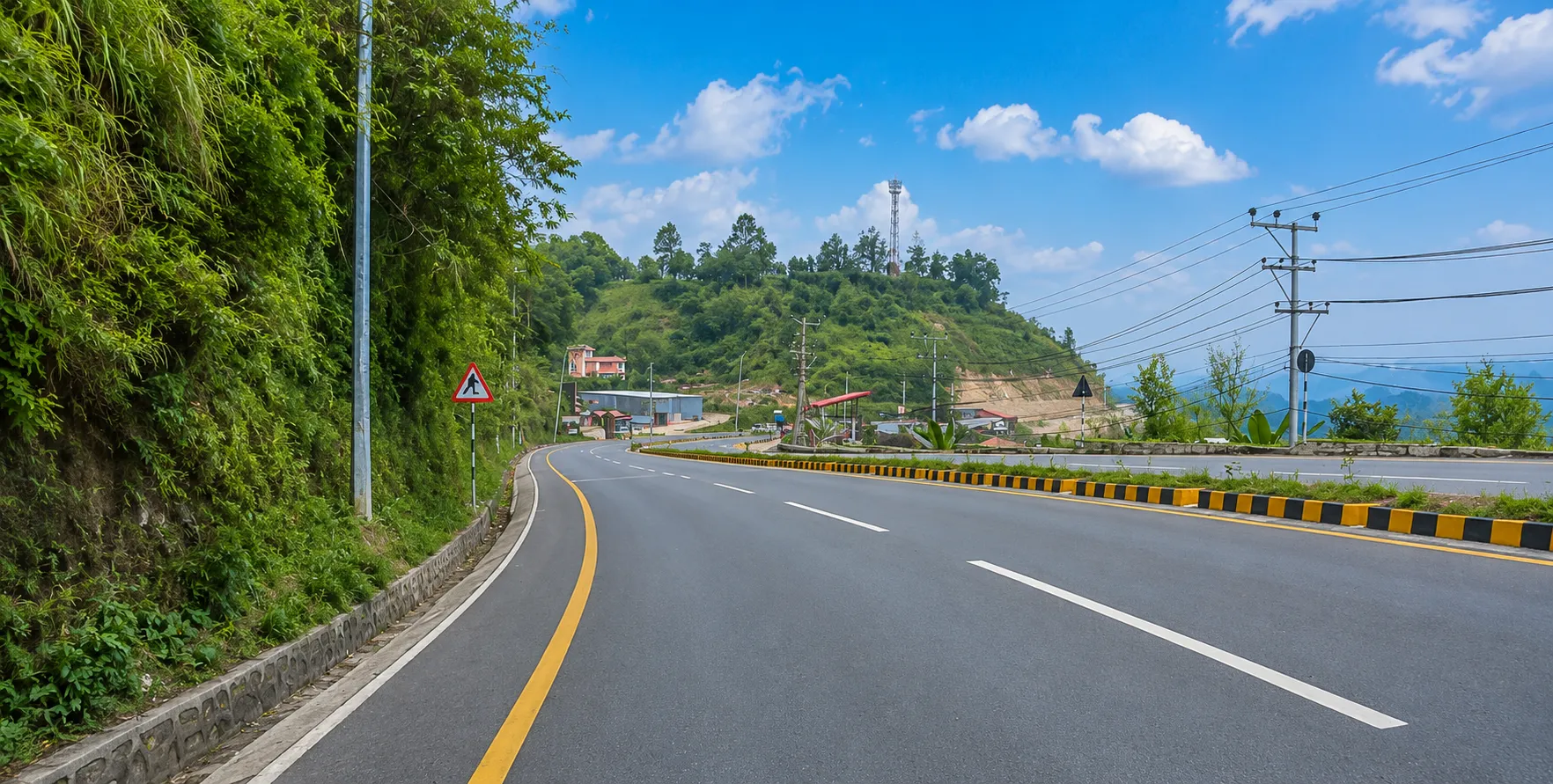
Pokhara to Everest Region Transport with a private 4WD jeep and Scorpio on Nepal's scenic mountain highways

Option C: Pokhara to Kathmandu + Drive to Salleri / Phaplu

For trekkers who want to begin the Everest region experience at a lower altitude and take the traditional lower Solu Khumbu approach, driving from Kathmandu to Salleri or Phaplu is an increasingly popular alternative to flying to Lukla. This route avoids unreliable Lukla flights and provides more gradual altitude acclimatisation.

Kathmandu to Salleri by Private Vehicle

  • Distance: Approximately 330 km from Kathmandu to Salleri
  • Travel Time: 8 to 10 hours by private jeep or car
  • Road Type: Kathmandu to Khimti (paved) + Khimti to Salleri (rough mountain road – 4WD recommended)
  • Vehicle: Toyota Land Cruiser or SUV recommended for the Khimti to Salleri section
  • Price: USD 180 to USD 250 for a private Land Cruiser from Kathmandu to Salleri
  • Altitude: Salleri at 2,420 m – good acclimatisation point before trekking higher

Kathmandu to Phaplu by Private Vehicle

  • Distance: Approximately 300 km
  • Travel Time: 7 to 9 hours
  • Road Type: Paved to Khimti, then rough mountain road
  • Price: USD 170 to USD 350 private vehicle
  • Altitude: Phaplu at 2,413 m – district hospital, small airport

Both Salleri and Phaplu are in the Solu Khumbu district and serve as alternative entry points to the Everest trekking region that avoid the Lukla flight. From Salleri or Phaplu, trekking routes head north to Namche Bazaar and the Khumbu Valley.

This lower entry takes 2 to 3 additional trekking days compared to starting in Lukla. Still, it provides important acclimatisation and passes through beautiful lower Solu villages that most Everest trekkers rarely see.
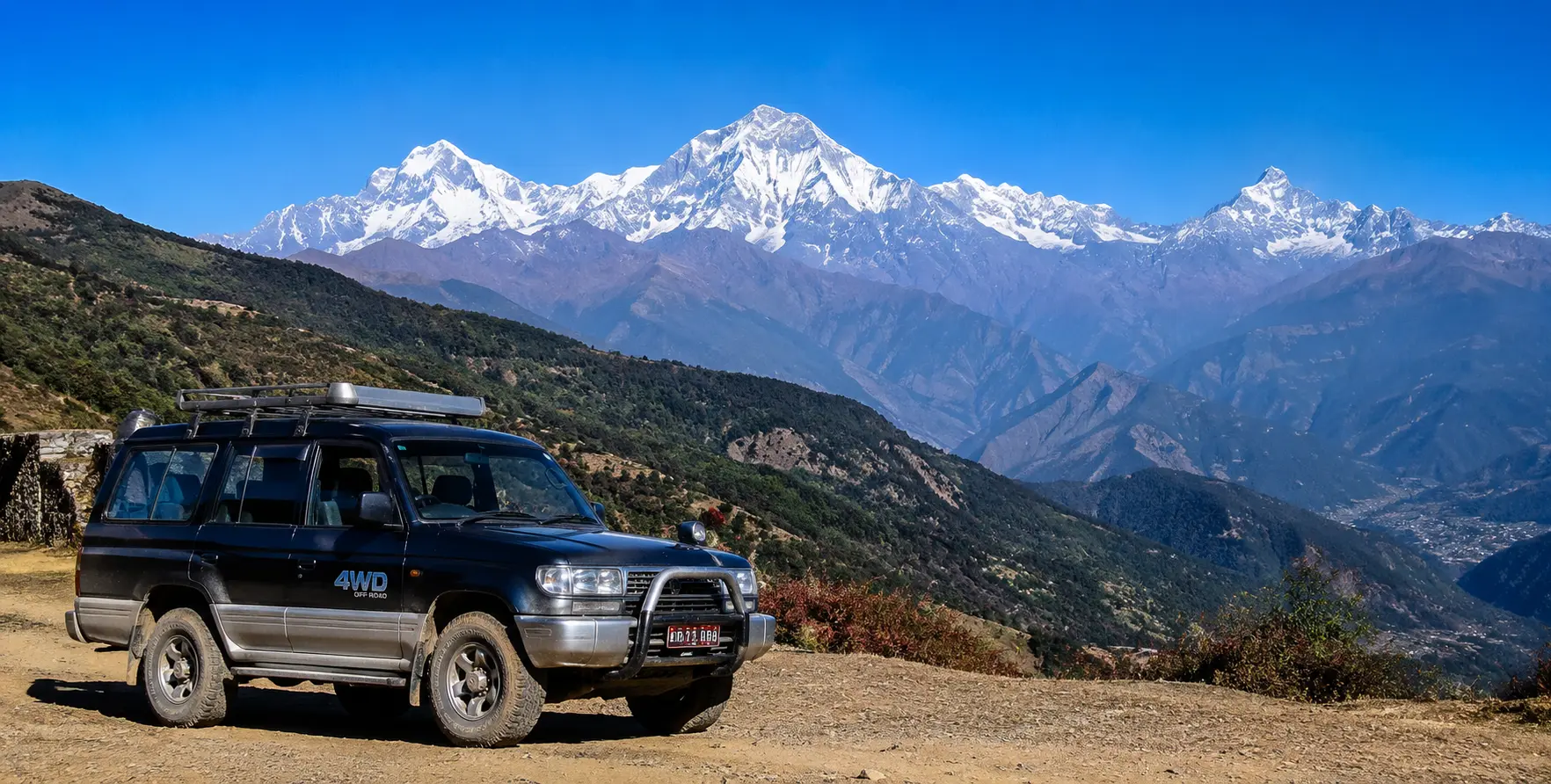
Pokhara to Everest Region Transport with a private 4WD jeep and Scorpio on Nepal's scenic mountain highways

Option D: Pokhara to Kathmandu + Drive to Jiri (Classic Route)

Jiri is the traditional starting point of the Everest trek – the route walked by Sir Edmund Hillary and Tenzing Norgay’s expedition support team in 1953 and by all Everest trekkers until Lukla Airport opened in 1964. The Jiri to Namche Bazaar route takes 8 to 10 days of trekking but offers a rich, diverse cultural experience through the Jirel, Sherpa, and Tamang communities of the lower Solu Khumbu.

  • Kathmandu to Jiri Distance: Approximately 188 km
  • Travel Time: 5 to 7 hours by private vehicle
  • Road Type: Araniko Highway to Lamosangu, then Jiri road – rough sections
  • Price: USD 130 to USD 170 by private car or USD 170 to USD 250 by Land Cruiser
  • Trek from Jiri to Namche: 8 to 10 days walking (vs 2 days from Lukla)
  • Best For: Traditionalists, trekkers wanting the full Everest experience, those with time

Complete Journey Plans: Pokhara to Everest Region

Plan A: Standard Fast Route (3 Days to Namche)

  • Day 1: Pokhara to Kathmandu by private car (5–6 hrs) – overnightin  Thamel
  • Day 2: Kathmandu sightseeing and trek preparation – permits, gear, briefing
  • Day 3 AM: Fly Kathmandu to Lukla (35–45 min, depart 6:30–9:00 AM)
  • Day 3: Trek Lukla to Phakding (2,610 m) – 3 to 4 hours trekking
  • Day 4: Trek Phakding to Namche Bazaar (3,440 m) – 5 to 6 hours

Plan B: Comfortable 3-Day Approach via Kathmandu

  • Day 1: Pokhara to Kathmandu by tourist bus (7–8 hrs) or private car (5–6 hrs)
  • Day 2: Kathmandu – Pashupatinath, Boudhanath sightseeing, permits, equipment
  • Day 3: Fly Kathmandu to Lukla – begin trek to Phakding
  • Day 4: Phakding to Namche Bazaar
  • Day 5: Namche acclimatisation day

Plan C: Budget Route via Bus

  • Day 1: Tourist bus Pokhara to Kathmandu (7–8 hrs, USD 10–15)
  • Day 2: Kathmandu preparation day
  • Day 3: Fly from Kathmandu to Lukla and trek to Phakding

Plan D: Adventure Route via Jiri or Salleri (Road to Everest)

  • Day 1: Private vehicle Pokhara to Kathmandu (5–6 hrs)
  • Day 2: Kathmandu to Salleri by private vehicle (8–10 hrs) or Jiri (5–7 hrs)
  • Day 3 onwards: Trek from Salleri/Jiri to Namche Bazaar (8–10 days)
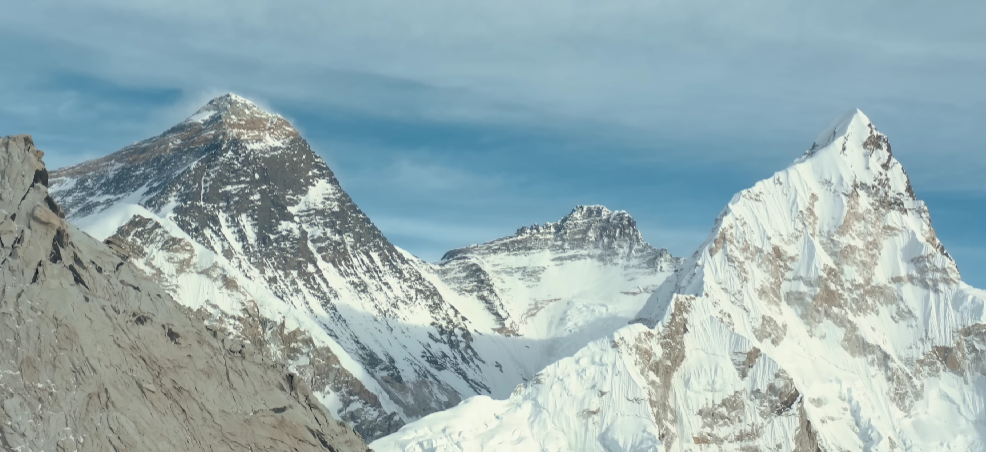
Pokhara to Everest Region Transport with a private 4WD jeep and Scorpio on Nepal's scenic mountain highways

Pokhara to Kathmandu – Vehicle Options and Prices

The first leg of any Pokhara-to-Everest-region journey is the Pokhara-to-Kathmandu transfer. Here are all your options:

Vehicle / ServiceCapacityPriceTravel TimeBest For
Private Sedan Car1–3 paxUSD 80–150 full car5–6 hrsCouples, solo with luggage, fast travel
Private SUV / Fortuner4–5 paxUSD 100–180 full car5–6 hrsFamilies, small groups
Private Hiace Van7–14 paxUSD 130–200 full van5–6 hrsTrekking groups, large families
Private Coaster Bus15–22 paxUSD 175–280 full bus6–7 hrsLarge groups, expeditions
Standard Tourist BusPer seatUSD 10–15/person7–8 hrsSolo budget traveler
Greenline Luxury BusPer seatUSD 25–30/person6–7 hrsComfort-seeking solo/couple
Domestic Flight (Pokhara-KTM)Per seatUSD 80–200/person25 minNo time for road, time-critical

Book Pokhara to Everest Region Transport with a private Scorpio or 4WD jeep for a comfortable journey connecting to your Everest trekking adventure.

Kathmandu to Lukla – Flight Information

The Kathmandu-to-Lukla domestic flight is the most critical and weather-sensitive transport link in the Everest region. Here is everything you need to know:

Airlines and Flight Details

Airlines: Tara Air (most popular), Summit Air, Sita Air

Aircraft Type: Twin Otter (small 19-seat turboprop) – designed specifically for mountain airports

Duration: 35 to 45 minutes, Kathmandu to Lukla

Route: Kathmandu (TIA) → Lukla (Tenzing-Hillary Airport, 2,860 m)

Departure Time: All Lukla flights depart from  6:00 to 11:00 AM – no afternoon flights due to mountain weather

Ticket Price: USD 160 to USD 250 per person one-way in 2026 (peak season top-end applies)

Luggage Limit: 15 kg per person, including hand luggage – strict weight limits

Excess Luggage: USD 2 to USD 3 per kg approximately
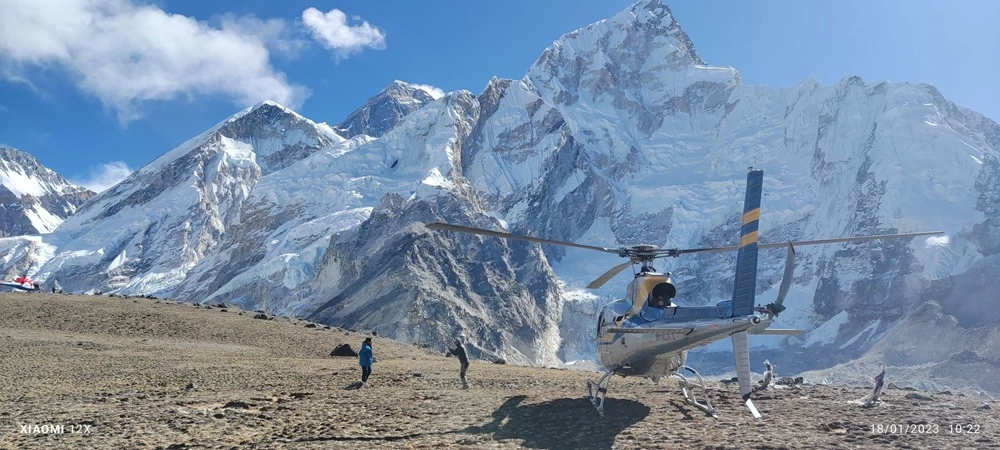
Book Pokhara to Everest Region Transport with a private Scorpio or 4WD jeep for a comfortable journey connecting to your Everest trekking adventure.

Lukla Flight Reliability

The Kathmandu-to-Lukla route is one of the most frequently delayed domestic routes in Nepal. Understanding the reliability issues is essential for planning:

  • Weather window: All flights operate early in the morning before mountain clouds and wind develop. After 11:00 AM, Lukla frequently becomes inaccessible.
  • Cancellation rate: In peak season (March–May and October–November), delays are common but usually short (same day). During the monsoon (June–September) and winter (December–February), cancellations are frequent and can last for multiple days.
  • Booking lead time: Book Lukla flights 2 to 4 weeks in advance in peak season – seats sell out quickly
  • Always build 1 to 2 extra days into your itinerary as a buffer for Lukla flight delays – this is essential for all Everest trekkers.
  • If your Lukla flight is cancelled, Vehicle Hiring Nepal can assist with alternative transport or same-day accommodation changes in Kathmandu.

Helicopter Alternative to Lukla

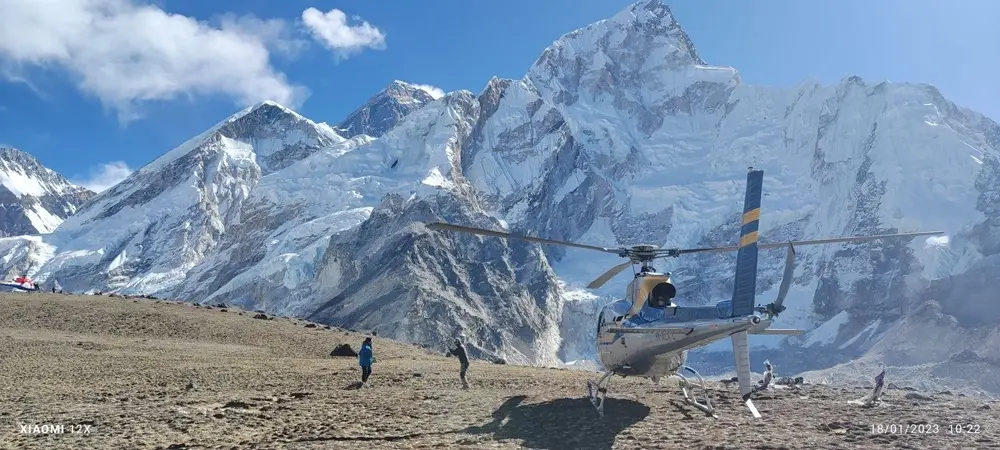
For travellers with budget flexibility, a private helicopter charter from Kathmandu to Lukla (or directly to Namche Bazaar at 3,440 m or even to Everest Base Camp at 5,364 m) is available. Helicopter service completely bypasses flight delays and delivers passengers in 20 to 25 minutes, with no weather restrictions.

Cost: USD 1,200-2,000 for a helicopter charter (shared among 4-5 passengers). Vehicle Hiring Nepal can connect you with licensed helicopter charter operators in Kathmandu.

Kathmandu to Salleri / Phaplu – Vehicle Hire Guide

For trekkers choosing the road access route to the Everest region from Kathmandu, here is the vehicle guide for the Kathmandu to Salleri and Kathmandu to Phaplu routes:

RouteDistanceTravel TimeVehiclePrice (USD)Road Condition
Kathmandu → Jiri188 km5–7 hrsSedan or SUVUSD 130–280Paved to Lamosangu, then rough
Kathmandu → Salleri330 km8–10 hrsLand CruiserUSD 180–250Rough from Khimti – 4WD needed
Kathmandu → Phaplu300 km7–9 hrsLand CruiserUSD 170–230Rough mountain road – 4WD needed
Kathmandu → Kinja230 km6–8 hrsLand CruiserUSD 150–250Rough section from Lamosangu

Book Pokhara to Everest Region Transport with a private Scorpio or 4WD jeep for a comfortable journey connecting to your Everest trekking adventure.

The Everest Region – What Awaits You

After the transport journey from Pokhara to the Everest region, here is what awaits trekkers and adventurers:

Everest Base Camp Trek (EBC) – The Classic

Duration: 12 to 16 days round trip from Lukla

Max Altitude: Everest Base Camp at 5,364 m or Kala Patthar at 5,643 m

Difficulty: Strenuous – for fit trekkers with proper acclimatisation

Highlights: Namche Bazaar, Tengboche Monastery, Dingboche, Lobuche, Gorakshep, EBC, Kala Patthar

The Everest Base Camp Trek is the world’s most famous trek – a pilgrimage to the foot of the world’s highest mountain through the landscape of the legendary Sherpa culture, ancient monasteries, and the raw beauty of the Khumbu valley. Standing at Kala Patthar with Everest rising above you is one of the defining experiences of a lifetime of travel.

Gokyo Lakes Trek

Duration: 12 to 16 days from Lukla

Max Altitude: Gokyo Ri at 5,357 m

Highlights: Gokyo Lakes (turquoise glacial lakes), Gokyo Ri panorama, Ngozumpa Glacier (Nepal’s longest)

The Gokyo Lakes offer many trekkers an alternative to the EBC route with arguably better Everest views from Gokyo Ri. The five turquoise glacial lakes of the Gokyo valley are among the most beautiful natural features in the entire Khumbu region.
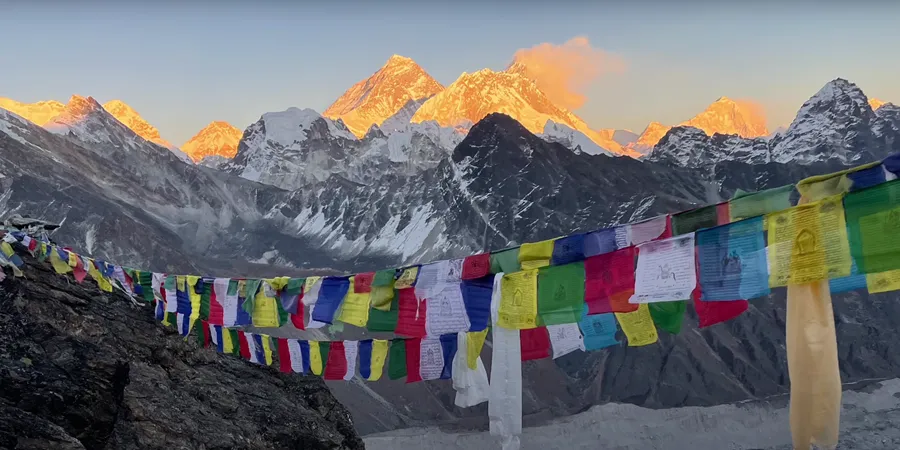
Book Pokhara to Everest Region Transport with a private Scorpio or 4WD jeep for a comfortable journey connecting to your Everest trekking adventure.

Three Passes Trek

Duration: 18 to 21 days

Passes: Renjo La (5,360 m), Cho La (5,420 m), Kongma La (5,535 m)

Difficulty: Very Strenuous – experienced high-altitude trekkers only

The Three Passes Trek is the finest and most demanding long-distance route in the Khumbu – crossing three high mountain passes while visiting EBC, Gokyo Lakes, and multiple Sherpa villages. It is widely considered one of the great trekking circuits in the Himalayan world.

Everest Panorama Trek (Shorter Option)

Duration: 7 to 10 days

Max Altitude: Tengboche Monastery (3,867 m) or Dingboche (4,410 m)

Best For: Trekkers with limited time or who want the Khumbu experience without going all the way to EBC

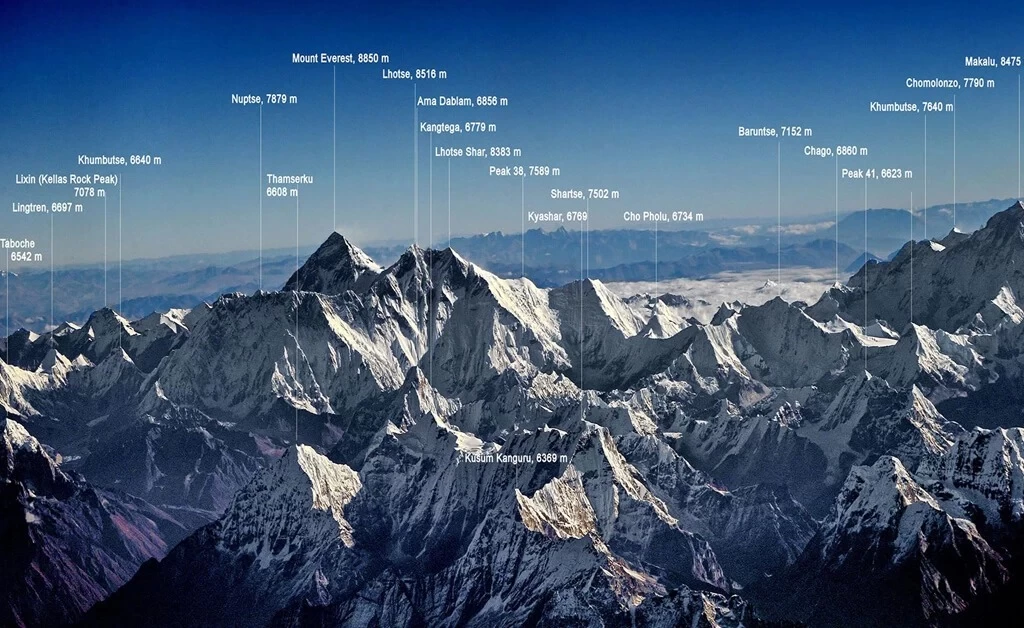
The Everest Panorama Trek offers magnificent views of the Everest region, including Ama Dablam, Lhotse, Nuptse, and Everest itself, without the full commitment of the EBC route. Ideal for travellers combining Pokhara and Everest in a 3-week Nepal itinerary.

Trekking Permits for the Everest Region

PermitCost 2026Where to GetNotes
Sagarmatha National Park Entry PermitNPR 3,000 (USD 22) for foreignersNepal Tourism Board, Kathmandu, or at the Monjo checkpointMandatory – checked at Monjo gate near Namche
TIMS Card – Trekkers Information ManagementUSD 10Nepal Tourism Board / TAAN, Kathmandu or PokharaRequired for all trekkers on the EBC route
Khumbu Pasang Lhamu Rural Municipality FeeNPR 2,000 (USD 15)Paid at the checkpoint near Lukla or PhakdingLocal municipality entry fee – newer requirement

Arrange all permits in Kathmandu before departing for Lukla. The Nepal Tourism Board office in Kathmandu (Pradarshani Marg) is the best place to get both the Sagarmatha National Park permit and TIMS card in a single visit. Permit checks are thorough at the Monjo checkpoint near Namche Bazaar.

Nepal Tour Package-Pokhara to Everest Region Transport with a private 4WD jeep and Scorpio on Nepal's scenic mountain highways

Combining Pokhara and Everest in One Nepal Trip

Many travellers want to experience both the Annapurna region (from Pokhara) and the Everest region on a single trip to Nepal. Here are the most practical combined itineraries:

Nepal Classic Circuit – 21 to 25 Days

  • Days 1–2: Arrivein  Kathmandu – sightseeing, permits
  • Days 3–4: Kathmandu to Pokhara by private vehicle or bus
  • Days 5–7: Pokhara – Annapurna region activity (Poon Hill trek or Sarangkot/sightseeing)
  • Day 8: Pokhara to Kathmandu by private vehicle or bus
  • Day 9: Kathmandu overnight
  • Day 10: Fly Kathmandu to Lukla – begin Everest Base Camp Trek
  • Days 10–22: Everest Base Camp Trek (12-day round-trip to Lukla)
  • Day 23: Fly Lukla to Kathmandu
  • Days 24–25: Kathmandu – depart

Annapurna Circuit + Everest Base Camp – 35 to 40 Days

  • Days 1–3: Kathmandu – arrive, sightseeing, permits
  • Day 4: Kathmandu to Besisahar by Hiace (Annapurna Circuit start)
  • Days 4–20: Full Annapurna Circuit (via Thorong La to Muktinath, Jomsom, Nayapul)
  • Day 21: Nayapul to Pokhara – rest in Pokhara Lakeside
  • Day 22: Pokhara to Kathmandu by private vehicle
  • Day 23: Kathmandu – rest, restock, permits
  • Day 24: Fly Kathmandu to Lukla – Everest trek begins
  • Days 24–36: Everest Base Camp Trek
  • Day 37: Fly Lukla to Kathmandu – depart Nepal

Short Nepal – Pokhara + Everest Panorama – 18 Days

  • Days 1–2: Kathmandu
  • Day 3: Pokhara by vehicle
  • Days 4–5: Pokhara sightseeing
  • Day 6: Pokhara to Kathmandu
  • Day 7: Fly to Lukla – Everest Panorama Trek begins
  • Days 7–15: Everest Panorama Trek to Tengboche and back to Lukla
  • Day 16: Fly Lukla to Kathmandu
  • Days 17–18: Kathmandu – depart

Pokhara to Everest Region Transport with a private 4WD jeep and Scorpio on Nepal's scenic mountain highways

Best Time for Pokhara to Everest Region Transport

October to November (Peak Season – Best)

The finest season for both Pokhara and the Everest region. Clear skies, brilliant mountain views, and optimal trekking conditions. Lukla flights are most reliable in October and November.

Book all transport – Pokhara-to-Kathmandu vehicle, Lukla flights, and trekking permits – at least 4 to 6 weeks in advance, as demand is at its highest.

March to May (Excellent – Spring Season)

Spring is excellent for both regions. Rhododendrons bloom magnificently in the lower Khumbu valleys. Everest can be climbed in May – the mountain is alive with expedition activity.

Lukla flights are generally reliable in the morning window. Book 4 to 6 weeks ahead.

December to February (Cold – Possible)

Winter is possible for experienced trekkers. Lukla flights are less reliable in January–February because of the weather. The Everest region is cold and clear – some say the mountain views are the finest of the year in December: very few trekkers and a unique, quiet atmosphere.

The Everest region receives significant monsoon rainfall from June through September. Trail conditions are difficult, leeches are present at lower altitudes, and Lukla flights are highly unreliable. Unlike Upper Mustang, which is dry during the monsoon, the Khumbu Valley receives full monsoon rain—so it’s not recommended for the standard Everest region trek.

Some experienced trekkers do the Three Passes route during the monsoon for its unique atmosphere, but it is not for beginners.

Practical Tips: Pokhara to Everest Region

  • Always plan 1 to 2 buffer days in Kathmandu before your Lukla flight – delays are common, and starting an Everest trek stressed by flight delays is not ideal.
  • Book Lukla flights as early as possible – seats fill up 4 to 6 weeks ahead in peak season
  • The 15 kg luggage limit on Lukla flights is strict – pack your main trekking pack carefully and hire a porter for any excess gear.
  • Obtain a Sagarmatha National Park permit and a TIMS card in Kathmandu on the day before your Lukla flight.
  • Take the private car option from Pokhara to Kathmandu if you have trekking gear and large bags – the tourist bus luggage hold has limited space, and your gear is not well-protected
  • Arrange your Kathmandu accommodation before leaving Pokhara – Thamel fills up fast in peak season.
  • If your Lukla flight is cancelled on your first attempt, remain calm – delays of 1 to 2 days are very common. Have a book, a local SIM card, and a plan to explore Kathmandu while you wait.
  • The road route via Salleri or Jiri avoids all flight uncertainty – strongly consider this option if you have 10 to 12 days for the lower approach.h
  • Travel insurance covering helicopter evacuation from the Khumbu is essential for all Everest region trekkers.s

What Vehicle Hiring Nepal Provides for This Route

Vehicle Hiring Nepal specialises in the ground transport portion of the Pokhara to Everest region journey:

  • Private car, Hiace van, or bus transfer from Pokhara to Kathmandu – all vehicle types and group sizes
  • Airport transfers within Kathmandu – hotel to domestic terminal for Lukla flight
  • Kathmandu to Jiri / Salleri / Phaplu vehicle hire for road-access Everest routes
  • Return transport from Kathmandu to Pokhara at the end of your Everest trip
  • 24/7 support – if your Lukla flight is cancelled, contact us for same-day Kathmandu accommodation transfer or itinerary adjustment assistance
  • Multi-destination Nepal circuit arrangements – Kathmandu, Pokhara, Chitwan, Everest, Annapurna

We do not sell Lukla flight tickets or arrange trekking permits – these must be obtained through licensed travel agencies and the Nepal Tourism Board. However, we can recommend reliable partners for both.
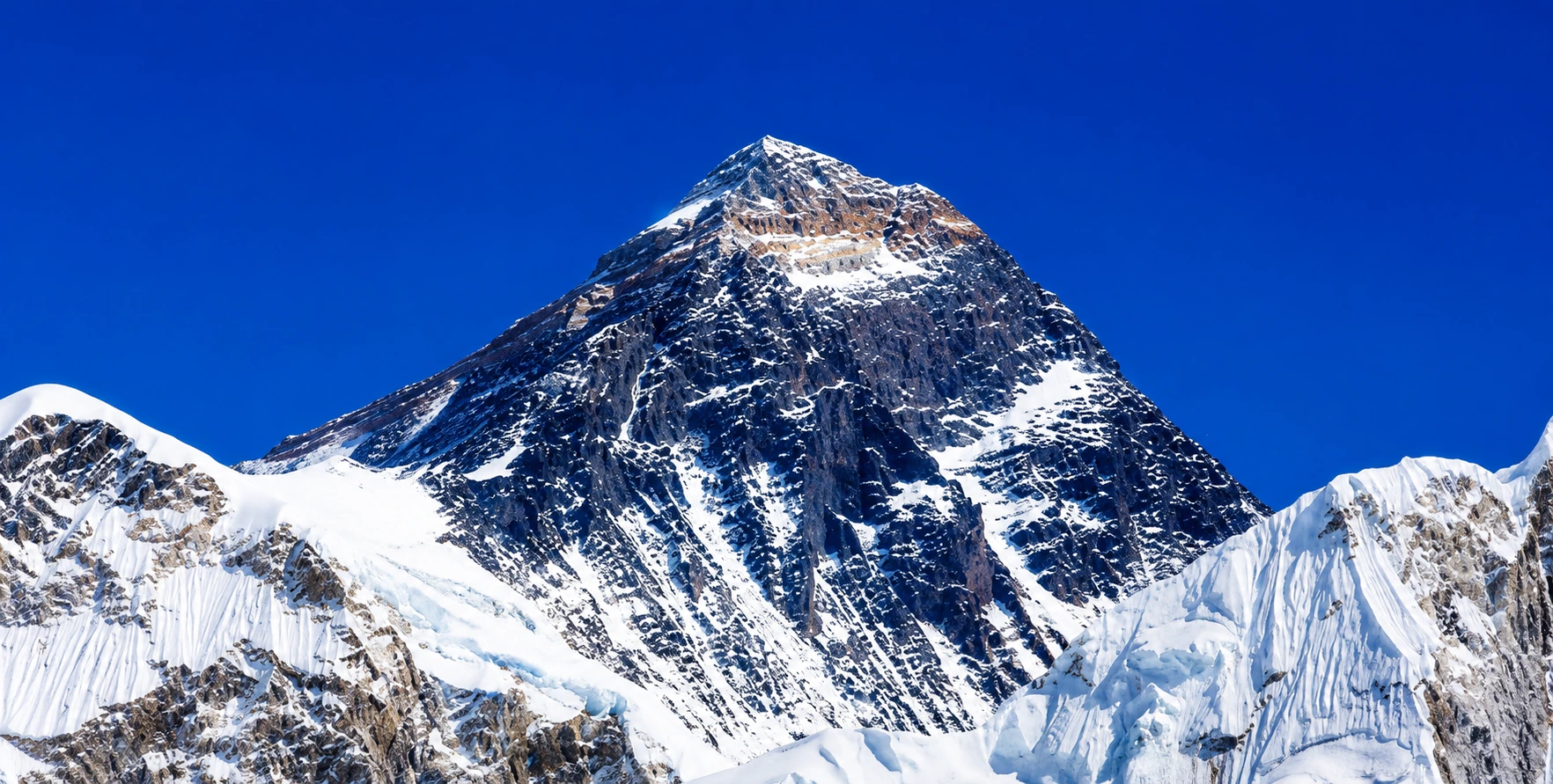
Everest mountain range

How to Book Your Pokhara to Everest Region Transport

  1. Contact Vehicle Hiring Nepal via WhatsApp or visit vehiclehiringnepal.com
  2. Please tell us your current location (Pokhara) and your Everest Region destination plan.
  3. Confirm your travel dates – Pokhara departure date and Kathmandu overnight date.
  4. Choose your Pokhara to Kathmandu vehicle – car, Hiace, or bus, depending on the group size.e
  5. Specify whether you need a Kathmandu airport transfer for your morning flight to Lukla.
  6. Specify whether you need a Kathmandu-to-Jiri or Kathmandu-to-Salleri vehicle for the road access option.
  7. Receive booking confirmation with driver details and complete journey plan.

Frequently Asked Questions

Is there a direct road from Pokhara to the Everest region?

No. No direct road connects Pokhara to the Everest region. All road routes must pass through or via Kathmandu. The shortest road route is approximately km5- 650 km total (Pokhara → Kathmandu → Salleri/Jiri) and takes 3 days of driving.

Most trekkers take the Pokhara-to-Kathmandu road or bus, then fly from Kathmandu to Lukla.

How many days should I budget for travel from Pokhara to Lukla?

Budget for a minimum of 2 days: Day 1 – Pokhara to Kathmandu (5 to 8 hours depending on transport); Day 2 – Kathmandu preparation and fly to Lukla (morning flight). We recommend 3 days to allow a full day in Kathmandu for sightseeing, permit processing, and gear preparation without rushing.

What if I only have 2 weeks in Nepal – can I do both Pokhara and Everest?

Yes, but it requires a tight schedule. A 14-day itinerary combining Pokhara and Everest Panorama Trek is possible: 2 days in Kathmandu, 1 day Pokhara to Kathmandu transfer (or fly 25 min), 2 days Pokhara sightseeing, 1 day back to Kathmandu, 1 day fly to Lukla, 7 days Everest Panorama Trek to Tengboche and return to Lukla, fly back to Kathmandu, depart. This is achievable with good planning and no flight delays.

Is the road from Kathmandu to Salleri better than the Lukla flight?

The road to Salleri avoids all flight uncertainty and provides a more gradual altitude acclimatisation – both significant advantages. The disadvantage is that it adds 8 to 10 hours of rough-road driving and 2 to 3 days of lower-altitude trekking before reaching the classic Everest scenery above Namche.

For trekkers with 18 or more days available, the road to Salleri is a genuinely superior experience. For those with 12 to 14 days, the Lukla flight is more practical.

Final Thoughts

Getting from Pokhara to the Everest region requires planning. Still, the journey itself – through Kathmandu, with its UNESCO heritage sites, and the final dramatic flight over mountain valleys to Lukla – is part of the Everest adventure. The view of Everest and Ama Dablam from your first high ridge above Namche Bazaar makes every hour of travel from Pokhara feel like the most worthwhile journey you have ever made.

Vehicle Hiring Nepal handles ground transport for Pokhara-to-Everest journeys with the reliability and expertise we bring to every Nepal route. From your Pokhara hotel to Kathmandu, from Kathmandu airport to your Thamel hotel, and from Kathmandu to the Jiri or Salleri trailhead – we have the right vehicle, the right driver, and the right support for every leg of your journey.

Book your Pokhara-to-Everest-region transport today. WhatsApp | Website: www.vehiclehiringnepal.com | Email:[email protected]
Kathmandu to Pathivara Transport

Nepal Tour Package

Kathmandu to Pathivara Transport – Complete Pilgrimage Guide

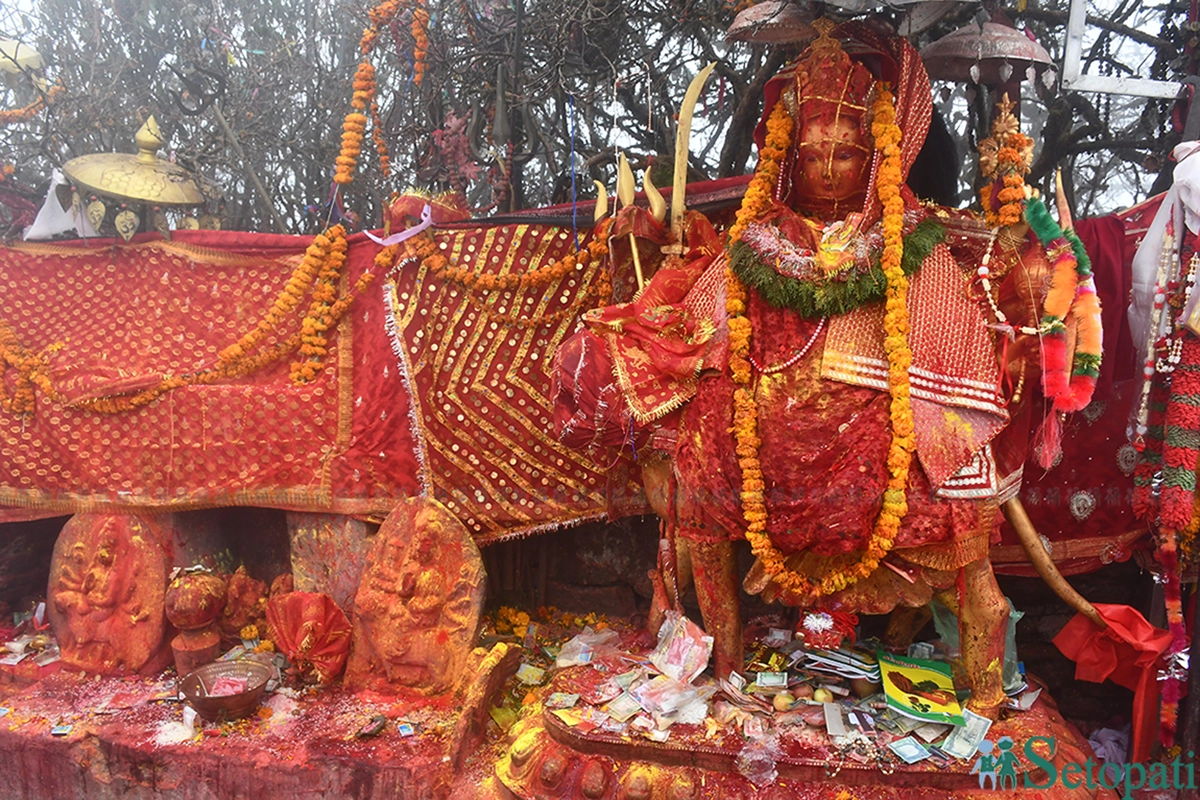
Pathivara Devi Temple – perched at a striking altitude of 3,794 meters in the high Himalayan ridges of Taplejung District in far eastern Nepal – is one of the most powerful and most revered Hindu pilgrimage sites in the entire country. Millions of devotees from Nepal, India, and across the world travel to Pathivara each year to seek the blessings of Goddess Pathivara – a fierce manifestation of Shakti believed to fulfil wishes, remove obstacles, and grant liberation.

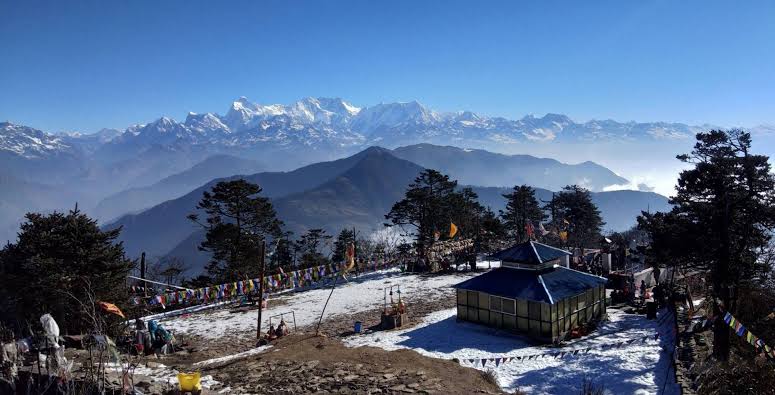
The temple is surrounded by the majestic Kanchenjunga (8,586 m), Makalu (8,485 m), and Everest (8,849 m) on clear days – a Himalayan panorama of extraordinary scale and beauty.

Getting from Kathmandu to Pathivara is a long, multi-day journey across the Teppan to the far eastern corner of the country. The route is demanding, the roads are challenging in sections, and the final approach to the temple is on foot – but for devotees who complete this pilgrimage, it is one of the most deeply transformative journeys in Nepal.

This complete 2026 guide covers every transport option from Kathmandu to Pathivara – private car, Scorpio jeep, Hiace van, bus, and flight combinations – with full route details, prices, road conditions, pilgrimage tips, and booking information.

About Pathivara Devi – The Sacred Goddess of the East

Temple Name: Pathivara Devi Mandir (also Pathibhara Devi Temple)

Location: Phungling Municipality, Taplejung District, Koshi Province, far eastern Nepal

Altitude: 3,794 m above sea level

Distance from KTM: Approximately 600–650 km by road

Distance from Taplejung Bazaar: Approximately 10 km on foot from Phungling (Taplejung Bazaar)

Trek to Temple: 3 to 5 hours uphill walk from Phungling / Chitlang – no vehicle access to temple

Deity: Pathivara Devi – a form of Goddess Durga / Shakti revered as the fulfiller of wishes

Famous For: Wish-fulfilling power, Kanchenjunga and eastern Himalayan panorama, deep pilgrimage tradition

Annual Visitors: Over 500,000 pilgrims and tourists annually

Pathivara Devi is considered one of the Shakti Peethas of Nepal – one of the most powerful divine feminine sacred sites – and is particularly revered among the Limbu, Rai, Sherpa, and Brahmin communities of eastern Nepal and the Indian Darjeeling-Sikkim region. The goddess is depicted as a fierce, powerful deity.

Devoted pilgrims who complete the arduous journey and offer sincere prayers at her shrine believe she grants prosperity, health, success, and liberation.

The temple itself is simple –a temple shrine with a trident (trishul) and the sacred image of the goddess – but the atmosphere at 3,794 m on the Himalayan ridge, with the great eastern peaks surrounding the sacred site and prayer flags streaming in the mountain wind, is one of profound spiritual power. Many pilgrims report extraordinary experiences of grace and answered prayers after completing the Pathivara pilgrimage.

Swayambhunath visit during Kathmandu Pokhara Tour

Understanding the Journey: Kathmandu to Pathivara

The Kathmandu-to-Pathivara journey is one of Nepal’s longest domestic pilgrimages. Here is the key information:

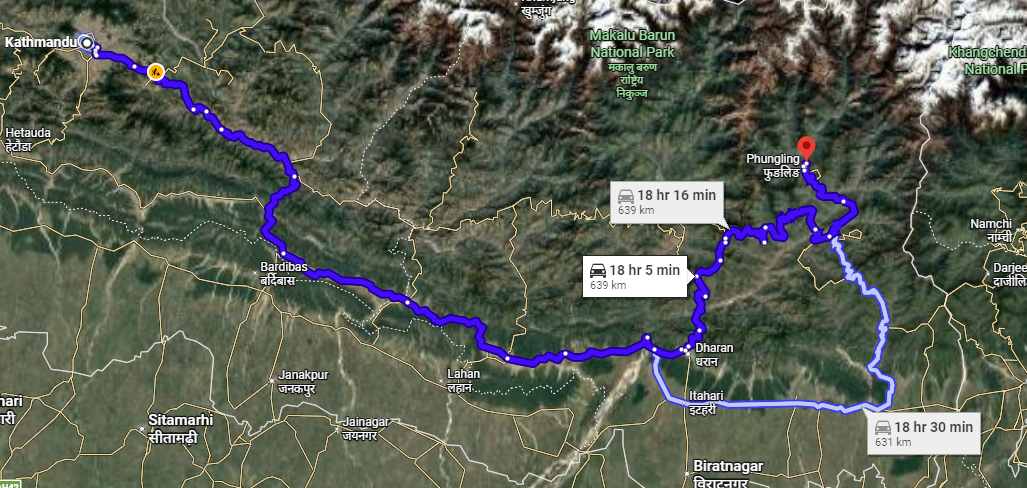
Total Road Distance: Approximately 600–650 km from Kathmandu to Phungling (Taplejung Bazaar)

Road Journey Time: 12 to 16 hours of driving – done over 2 to 3 days

Trek to Temple: 10 km from Phungling – 3 to 5 hours uphill walk (no vehicle access)

Total Journey: 3 to 5 days from Kathmandu to the temple and back – minimum recommended

Main Road Route: Kathmandu – East-West Highway – Itahari – Dharan – Taplejung road – Phungling – Pathivara (walk)

Alternative Route: Fly Kathmandu to Biratnagar / Taplejung, then vehicle/walk to Pathivara

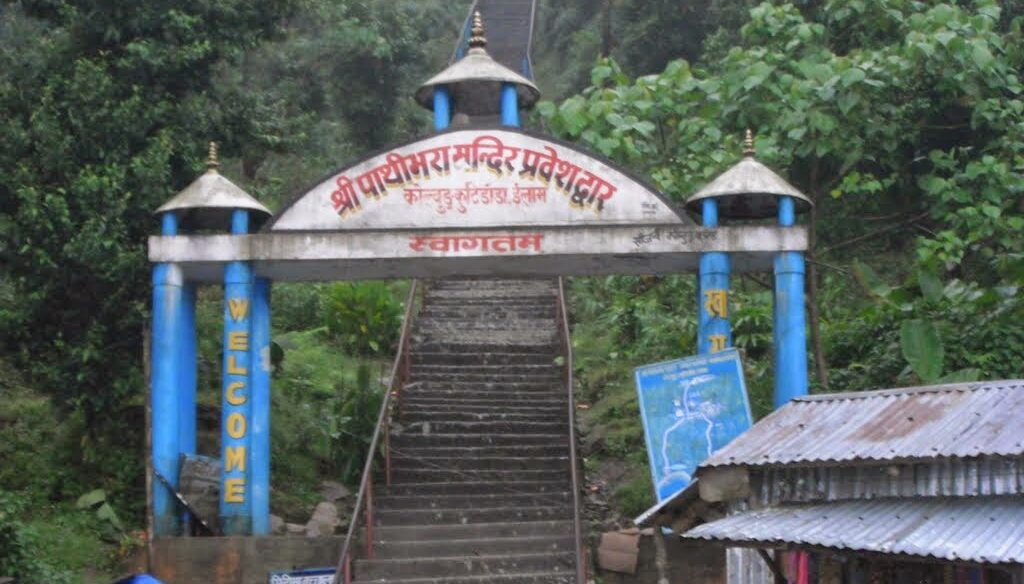
The journey from Kathmandu to Pathivara is a true pilgrimage – long, challenging, and deeply rewarding. Unlike many Nepali pilgrimages, Pathivara cannot be reached by vehicle all the way – the final 10 km to the Temple is on foot, ascending from Phungling through rhododendron forest and past smaller shrines to the main Pathivara temple at 3,794 m.

This walk itself is considered part of the pilgrimage, and many devotees perform it barefoot as an act of devotion.

Vehicle Options: Kathmandu to Taplejung (Phungling)

For the road journey from Kathmandu to Phungling (Taplejung Bazaar), Vehicle Hiring Nepal provides three main vehicle options, each suited to different group sizes and comfort preferences:

Nepal Tour Package

Mahindra Scorpio – Best Choice for Eastern Nepal Hill Roads

Capacity: 6 to 9 passengers

Engine: 2.2L mHawk turbodiesel – powerful on steep eastern hill roads

4WD: Available – essential for the Dharan to Taplejung mountain section

Best for: Groups of 5 to 7 pilgrims – ideal balance of capacity and hill road capability

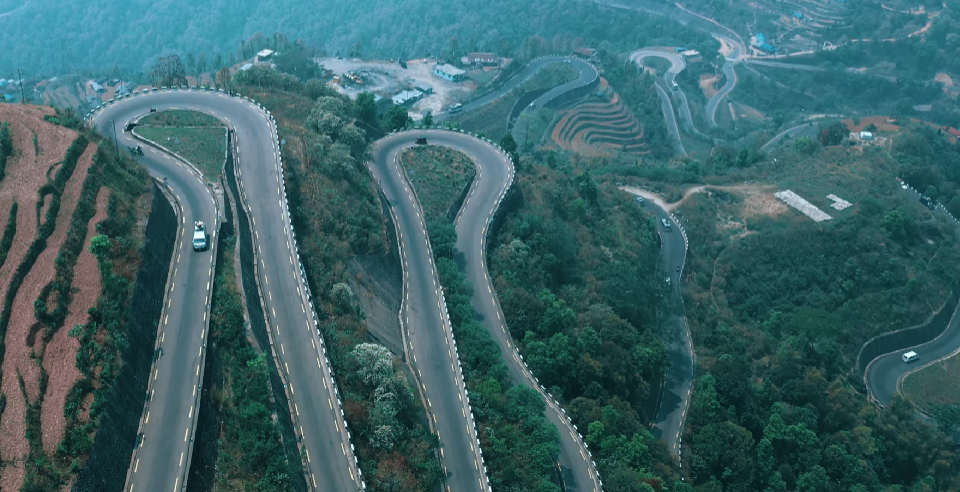
The Mahindra Scorpio is the vehicle of choice for the Kathmandu-Taplejung route. The road from Dharan to Phungling (Taplejung) is one of eastern Nepal’s most winding, steep, and demanding mountain roads – rising from 400 m at Dharan to over 1,700 m at Taplejung over approximately 170 km of switchbacks and narrow hill roads.

The Scorpio’s powerful diesel engine, high ground clearance, and 4WD capability handle this section with confidence. Local drivers along this route predominantly use Scorpios and Boleros – a testament to the vehicle’s suitability.

Kathmandu Durbar Square

Toyota Hiace Van – Best for Larger Pilgrimage Groups

Capacity: 7 to 14 passengers

Best for: Groups of 8 to 14 pilgrims – families, community pilgrimage parties

The Toyota Hiace is a practical choice for larger pilgrim groups that need to stay together throughout the long journey. The Hiace handles the flat Terai East-West Highway section comfortably and the Dharan-to-Taplejung hill road in dry conditions.

For monsoon travel (June to September), the Scorpio’s 4WD gives it an advantage on the wetter hill roads – for monsoon pilgrimages, two Scorpios may be preferable to a single Hiace for groups of 10 to 14.

Sedan Car – For Small Groups and Individuals

Capacity: 1 to 3 passengers

Best for: Solo pilgrims or couples in the dry season

A standard sedan can reach Phungling in the dry season. Still, the steep, winding Dharan-to-Taplejung road and the occasional rough patches on the final approach to Phungling make a more capable vehicle preferable. For pilgrims travelling solo or in pairs, the sedan is economical, but even small groups should consider the Scorpio on this route.

Local Jeep from Taplejung / Chitlang

From Phungling (Taplejung Bazaar) and from Chitlang (a village approximately 3 km above Phungling on the Pathivara approach road), local jeeps and 4WD vehicles can carry pilgrims to the Chitlang base point – the last vehicle access point before the walking trail to the temple begins. This section from Phungling to Chitlang takes approximately 30 to 45 minutes by local jeep. From Chitlang, the walk to Pathivara takes 2.5 to 3.5 hours.

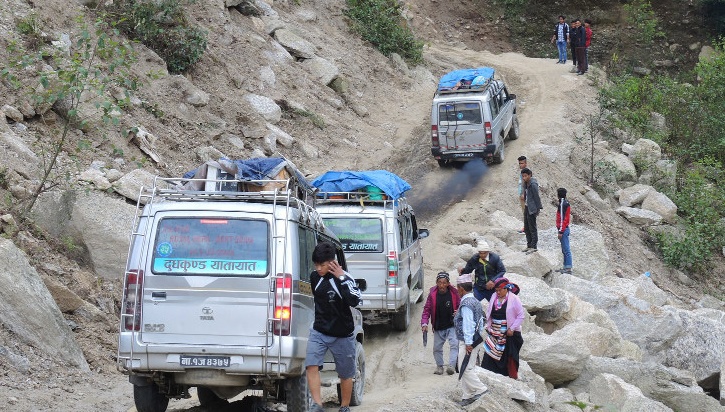
Kathmandu to Pathivara Transport with a private Scorpio and 4WD jeep traveling through the mountain roads of eastern Nepal

Vehicle Rental Prices: Kathmandu to Taplejung

VehicleCapacityOne-Way (USD)Round Trip (USD)Notes
Mahindra Scorpio6–9 paxUSD 220–350USD 370–800Best for this route – recommended
Toyota Hiace Van7–14 paxUSD 250–400USD 420–900Best for groups of 8–14
Sedan Car1–3 paxUSD 170–300USD 290–400Budget option – dry season only
SUV4–5 paxUSD 200–300USD 340–800Good for small groups – comfortable
Toyota Coaster Bus15–22 paxUSD 340–430USD 570–1000Large pilgrimage groups

All prices include the driver, full fuel for the complete journey, and vehicle insurance. The Kathmandu to Taplejung journey takes 2 to 3 days; driver accommodation during overnight stops is arranged separately and is not included in the vehicle price.

Round-trip pricing covers the full return journey from Phungling back to Kathmandu on your chosen return date. Contact Vehicle Hiring Nepal for exact 2026 pricing.

Route Overview: Kathmandu to Phungling (Taplejung)

Total Distance: Approximately 615–650 km

Total Driving Time: 14 to 17 hours – done over 2 to 3 days

Main Route: Kathmandu – Tribhuvan/Araniko Hwy – East-West Hwy – Itahari – Dharan – Basantpur – Taplejung/Phungling

Overnight Stops: Day 1 – Dharan or Birtamod (8–9 hrs from KTM) | Day 2 – Taplejung/Phungling (7–8 hrs from Dharan)

Critical Section: Dharan to Taplejung (170 km, 6–8 hrs) – steep mountain road, 4WD/Scorpio essential

Kathmandu to Pathivara Transport with a private Scorpio and 4WD jeep traveling through the mountain roads of eastern Nepal

Stage-by-Stage Road Guide: Kathmandu to Pathivara

Day 1, Stage 1: Kathmandu to Hetauda (95 km | 2.5 hrs)

Depart Kathmandu from 5:30 to 6:00 AM via the Tribhuvan Highway – Nepal’s historic first road, winding dramatically over the Mahabharat Range from the Kathmandu Valley to the Terai plains below. The Tribhuvan Highway is steep, winding, and scenic, with spectacular views over the Terai from the Daman ridge at about 2,322 m. Hetauda is a Terai industrial city and a good stop for an early-morning breakfast.

Day 1, Stage 2: Hetauda to Itahari (260 km | 4.5 hrs)

From Hetauda, join the East-West Highway heading east. This long, flat Terai highway section passes through the rice paddies, mustard fields, and subtropical forests of the Chitwan, Sarlahi, and Sunsari districts. The road is wide, paved, and generally fast.

Pass through Narayanghat, Gaur, and Lahan, and arrive at Itahari Junction in Sunsari District – the major junction for traffic heading north to Dharan and east to Biratnagar and the Indian border.

Day 1 Overnight: Dharan or Birtamod

From Itahari, continue 20 km north to Dharan – the recommended overnight stop for Day 1. Dharan is an attractive city at the base of the Siwalik Hills with good hotels, restaurants, and the famous Budhasubba Temple. Alternatively, continue 80 km east to Birtamod in Jhapa District if you prefer to be further east for the Day 2 morning start. Total Day 1 driving: approximately 8 to 9 hours from Kathmandu.

Day 2, Stage 3: Dharan to Taplejung / Phungling (170 km | 6–8 hrs)

This is the most challenging and most spectacular section of the entire journey – the long mountain climb from Dharan (400 m) through the eastern hill districts to Phungling / Taplejung Bazaar (1,700 m). Depart Dharan by 6:30 AM.

The road heads north from Dharan into the Siwalik and Mahabharat hills through Dhankuta District, Tehrathum District, and finally Taplejung District. Key towns and landmarks:

  • Dhankuta (1,150 m) – district headquarters, 50 km from Dharan, good morning tea stop. Beautiful hill town with panoramic views
  • Hile (1,900 m) – a busy market town on the ridge with excellent views. Famous junction – the road to Taplejung branches here
  • Basantpur (2,200 m) – the highest point on the Taplejung road, a small market town with tea shops and the first views of the eastern Himalayan range, including Kanchenjunga on clear days
  • Taplejung / Phungling (1,700 m) – the district headquarters, final vehicle destination before the walk to Pathivara begins. Has hotels, restaurants, ATMs, and shops

The Dharan-Taplejung road is one of eastern Nepal’s most winding and demanding mountain roads. It climbs through dense forest, terraced rice paddies, and traditional Limbu and Rai villages. The road is paved in most sections but has rough patches, particularly after the monsoon.

Narrow sections and hairpin bends are frequent from Dhankuta onwards. The Scorpio is the ideal vehicle for this section.

Distance and Time Summary

StageFrom – ToDistanceTimeRoad Type
Day 1-AKathmandu → Hetauda95 km2.5 hrsTribhuvan Hwy – winding mountain road
Day 1-BHetauda → Itahari260 km4.5 hrsEast-West Hwy – flat paved Terai
Day 1-CItahari → Dharan20 km30 minCity road – paved
OVERNIGHTDharan––Hotel overnight
Day 2-ADharan → Dhankuta50 km2 hrsHill road – paved, steep
Day 2-BDhankuta → Basantpur70 km2.5 hrsMountain road – winding, rough patches
Day 2-CBasantpur → Phungling50 km2 hrsHill road – steep descent to Taplejung
Day 3-APhungling → Chitlang (jeep)3 km30 minRough track – local jeep
Day 3-BChitlang → Pathivara (walk)7 km2.5–3.5 hrsMountain footpath – uphill walk
TOTALKTM → Pathivara548 km + 10 km walk3 daysPaved + mountain road + footpath

Book Kathmandu to Pathivara Transport with a private Scorpio or 4WD jeep for a safe and comfortable journey to the sacred Pathivara Temple in Taplejung.

The Trek to Pathivara Temple

The vehicle journey ends at Phungling (Taplejung Bazaar) or Chitlang, from where all pilgrims continue on foot to the temple. This walk is not optional – there is no vehicle access to Pathivara Temple itself.

Route Options to the Temple

Option A – Phungling to Pathivara directly: 10 km, 5 hours uphill. Starts at the bazaar level (1,700 m) and climbs to 3,794 m. Steep in sections.

Passes multiple rest stops, small shrines, and teahouses along the trail.

Option B – Jeep to Chitlang, then walk: Take a local jeep from Phungling to Chitlang (3 km, 30 min), then walk 7 km from Chitlang to the Pathivara temple (2.5 to 3.5 hours). This is the most popular approach as it reduces total walking time.

Option C – Overnight at Chitlang: Drive to Phungling on Day 2, take a local jeep to Chitlang, overnight at Chitlang teahouses, and begin the walk to Pathivara at dawn on Day 3 for the morning light.

Book Kathmandu to Pathivara Transport with a private Scorpio or 4WD jeep for a safe and comfortable journey to the sacred Pathivara Temple in Taplejung.

The Walking Trail

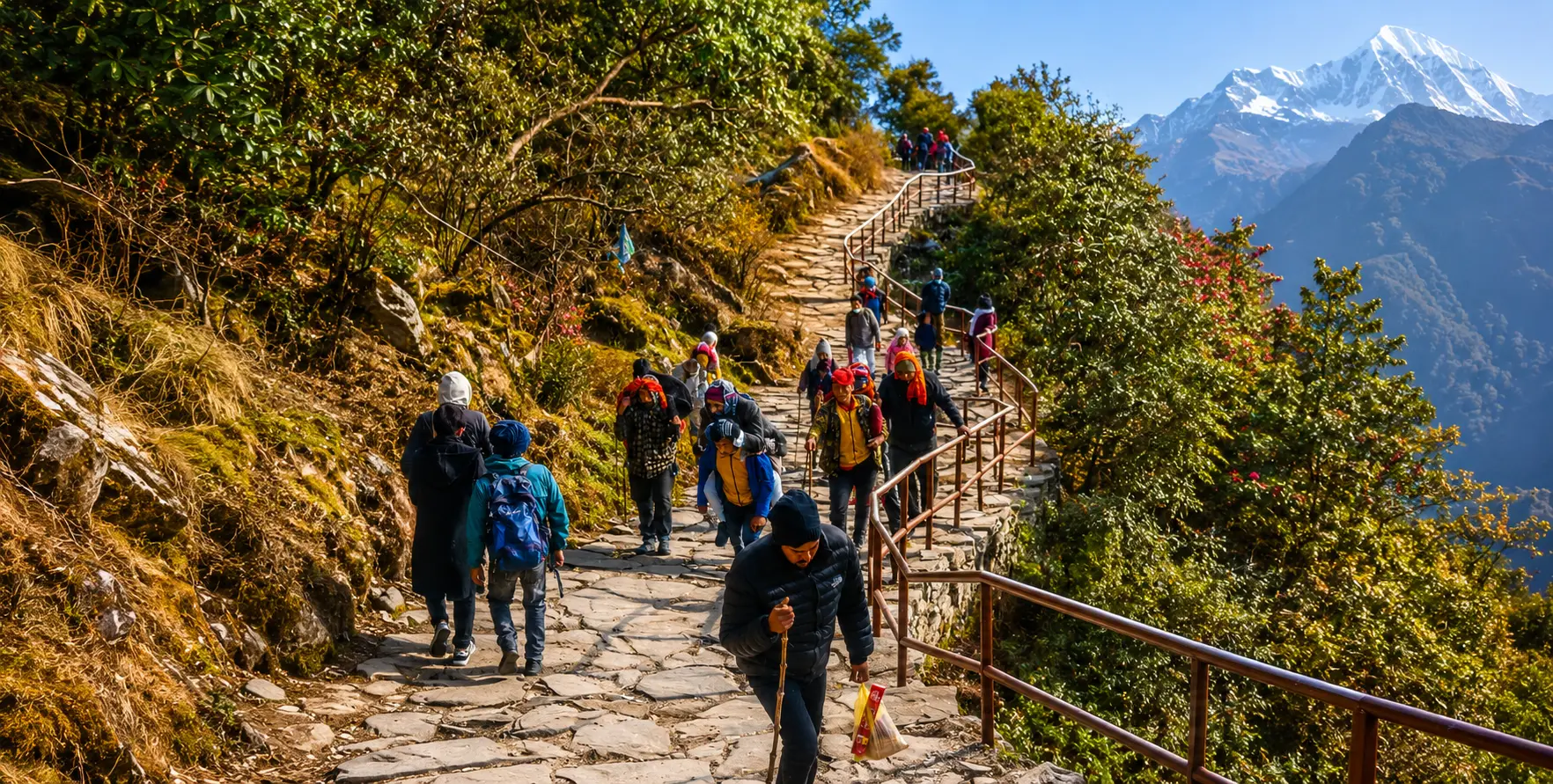
The trail from Chitlang to Pathivara passes through a rhododendron forest, open meadows with increasingly expansive mountain views, and past several smaller sacred shrines and rest points. The path is well-marked and heavily used by pilgrims – you will never be alone on the trail during peak pilgrimage season.

Steel handrails and stone steps have been installed on the steepest sections in recent years, making the climb more manageable for elderly pilgrims and devotees with limited mobility.

As you ascend, the mountain panorama opens progressively. At the Pathivara temple ridge (3,794 m), on clear days you can see Kanchenjunga (8,586 m) to the northeast, Makalu (8,485 m) to the northwest, Everest (8,849 m) in the far west, and the rolling eastern Himalayan ranges in all directions – one of the most extraordinary panoramic views available at any pilgrimage site in Nepal.

Porters and Pony Service

For elderly pilgrims, those with limited mobility, or those carrying heavy offerings, porter and pony services are available from Phungling and Chitlang. Porters carry bags and personal items for approximately NPR 1,000 to NPR 2,000 per trip.

Ponies can carry devotees who are unable to walk the full distance to the temple for approximately NPR 3,000 to NPR 5,000 for the full ascent. Local community members operate these services at the Chitlang departure point.

Pathivara Temple – Pilgrimage Experience

The Goddess Pathivara

Pathivara Devi is a fierce manifestation of the Divine Mother – an aspect of Shakti and Durga worshipped primarily by the Kirat (Limbu, Rai) communities of eastern Nepal who consider her the supreme tribal goddess, and by Hindu devotees from across Nepal and India who revere her as a wish-fulfilling goddess of immense power. The name Pathivara may derive from ‘path’ (way/road) and ‘vara’ (boon/blessing) – the goddess who grants boons on the path – or from the Limbu language term for the deity.

Pathivara Devi is worshipped in a simple stone shrine with a prominent trishul (trident) – the symbol of Shakti’s power – as the primary sacred object. The goddess does not have an elaborate anthropomorphic image in the main shrine – she is considered to be formlessly present in the sacred site itself, in the mountain rock, the wind, and the surrounding peaks.

The Sacred Animals

Pathivara is one of Nepal’s most active animal sacrifice pilgrimage sites. Each year, devotees offer thousands of goats, ducks, and other animals to the goddess as they fulfil vows or seek blessings. Temple priests conduct the sacrifice in the dedicated sacrificial area adjacent to the main shrine.

For visitors who are unfamiliar with or uncomfortable with animal sacrifice, this is worth knowing before the visit – the pilgrimage atmosphere during high season (particularly Dashain in October) is very intense.

The Temple Complex

The Pathivara temple complex at 3,794 m includes the main goddess shrine, smaller secondary shrines, a sacred dhara (water spout) where pilgrims bathe ritually, prayer flag lines strung from poles across the ridge, stone rest areas for pilgrims, and basic teahouses with food and tea. The Taplejung District government and the Pathivara Development Committee have developed improved facilities, including permanent pilgrim rest areas and a small visitor information centre.

Pilgrimage Rituals

The traditional Pathivara pilgrimage sequence for devotees:

  1. Bathe at the sacred dhara (water spout) on arrival – ritual purification before entering the main shrine
  2. Offer flowers, marigold garlands, incense, red cloth, and fruit at the main goddess shrine
  3. Perform pradakshina (circumambulation) of the main shrine clockwise
  4. Offer animal sacrifice if making a vow-fulfilment offering – conducted by temple priests
  5. Sit in meditation or prayer at the viewpoint ridge – facing the Kanchenjunga massif
  6. Take darshan of all secondary shrines and sacred stones on the temple ridge
  7. Purchase and string a prayer flag from the temple complex as an offering
  8. Descend with the feeling of having received the goddess’s blessing and grace

Kathmandu to Pathivara Transport with a private Scorpio and 4WD jeep traveling through the mountain roads of eastern Nepal

Alternative Route: Fly to Biratnagar or Taplejung, then drive / Trek

Fly Kathmandu to Biratnagar + Drive to Taplejung

Flight: Kathmandu to Biratnagar – 45 minutes, USD 80 to USD 110 per person

Drive Biratnagar to Taplejung: Approximately 290 km, 7 to 9 hours by Scorpio or Hiace

Vehicle from Biratnagar: Scorpio NPR 8,000 to NPR 12,000 / Hiace NPR 10,000 to NPR 15,000 (local hire rates)

Total time: 1-day flight + drive vs 2 days full road from Kathmandu

Flying to Biratnagar saves the long Kathmandu-to-Terai driving day. It allows you to complete the Biratnagar-to-Taplejung journey in a single day, arriving in Taplejung the same evening as your flight. This option works well for time-limited pilgrims and is particularly popular during peak pilgrimage season when the road from Kathmandu is congested.

Fly Kathmandu to Taplejung (Suketar Airport)

Flight: Kathmandu to Suketar (Taplejung) – approximately 1 hour, USD 130 to USD 160 per person

Airlines: Tara Air, Summit Air – small aircraft, weather-dependent

Advantage: Arrives directly in Taplejung – eliminates all road travel from Kathmandu

Disadvantage: Suketar Airport is very weather-sensitive – frequent delays and cancellations

From the airport: Suketar Airport is approximately 3 km from Phungling – short local transport to the bazaar

Flying directly to Taplejung / Suketar Airport is the fastest way to begin the Pathivara pilgrimage, cutting travel time from 2 to 3 road days to a single 1-hour flight. However, Suketar is one of Nepal’s most weather-affected small airports, and cancellations are common – always build buffer days into your itinerary. Vehicle Hiring Nepal does not sell these flight tickets but can advise on booking through licensed agencies.

All Transport Options Summary: Kathmandu to Pathivara

Kathmandu to Pathivara Transport with a private Scorpio and 4WD jeep traveling through the mountain roads of eastern Nepal

Peak Pilgrimage Seasons at Pathivara

Dashain – October (Biggest Season)

Vijaya Dashami during the Dashain festival (September to October) is the single busiest and most auspicious time at Pathivara. Hundreds of thousands of pilgrims from Nepal and India ascend to the temple during the Dashain fortnight. Animal sacrifices reach their highest volume.

The atmosphere is intensely devotional and festive. The road from Kathmandu to Taplejung is at its most congested – allow extra travel days. Book vehicles 4 to 8 weeks in advance for the Dashain season.

Chaitra Dashain – March / April (Second Major Season)

The spring Dashain (Chaitra Dasain) in March and April is the second peak pilgrimage season at Pathivara. Rhododendron forests below the temple are in magnificent bloom. The weather is generally good.

A smaller but significant pilgrimage season – book vehicles 2 to 4 weeks ahead.

Year-Round Pilgrimage

Unlike many Nepali sacred sites, Pathivara receives pilgrims year-round. The Temple is always accessible (weather permitting), and pilgrims arrive every day. Outside of Dashain and Chaitra Dasain, visitor numbers are lower and the atmosphere more contemplative.

The temple’s power is considered equally present in all seasons.

Monsoon Season (June to September)

The Dharan-Taplejung road is most challenging during the monsoon. Landslides can temporarily block sections of the road and make driving conditions difficult. The trail to the Temple becomes slippery; leeches are present in the forest section.

Travel is possible but requires an experienced driver and a capable 4WD vehicle (Scorpion is recommended). Monsoon clouds may obscure mountain views from the Temple, but many devoted pilgrims choose to travel specifically during the monsoon.

Kathmandu to Pathivara Transport with a private Scorpio and 4WD jeep traveling through the mountain roads of eastern Nepal

Accommodation: Phungling and Chitlang

Phungling (Taplejung Bazaar) – 1,700 m

Phungling has a good range of accommodation for pilgrims arriving after the long journey from Kathmandu:

  • Basic Guesthouse: NPR 400 to NPR 800 per night – simple rooms, shared bathroom, cold water, local food
  • Mid-range Hotel: NPR 800 to NPR 2,000 per night – better rooms, hot water available, restaurant
  • Better Hotels: NPR 2,000 to NPR 4,000 – comfortable rooms, hot shower, Wi-Fi, good Nepali and Indian food
  • Phungling has ATMs, pharmacies, shops for pilgrimage supplies (marigolds, incense, red cloth), and local restaurants
  • Electricity is available but can be unreliable – charge devices during daylight hours

Chitlang – 2,100 m (Last Vehicle Point)

Chitlang has basic teahouses for pilgrims who wish to overnight here before the morning ascent to the temple:

  • Teahouse rooms: NPR 300 to NPR 600 per night – very basic, blankets provided, shared facilities
  • Simple meals available – dal bhat, noodles, eggs, tea
  • The advantage of overnighting in Chitlang is a shorter 7 km walk to the Temple on the morning of the Temple pilgrimage, rather than the full 10 km from Phungling.

At the temple (3,794 m)

Basic pilgrim shelter is available adjacent to the Pathivara temple complex – simple dormitory-style accommodation with blankets for pilgrims who wish to spend the night at the sacred site. Bring a sleeping bag for warmth at this altitude. Food is very basic at the temple level.

Road Conditions: Kathmandu to Taplejung

SectionSurfaceDifficultyVehicle NeededMonsoon Risk
KTM → Hetauda (Tribhuvan Hwy)Paved mountain roadModerateAny vehicleLow
Hetauda → Itahari (East-West)Paved flat highwayEasyAny vehicleLow (flooding risk)
Itahari → DharanPaved city roadEasyAny vehicleLow
Dharan → DhankutaPaved hill roadModerateScorpio/SUVModerate
Dhankuta → BasantpurPaved/rough mountainHardScorpio/4WDHigh – landslide risk
Basantpur → PhunglingMixed paved/roughModerate-HardScorpio/4WDHigh – landslide risk
Phungling → Chitlang (jeep)Rough trackHardLocal 4WD onlyVery High
Chitlang → Pathivara (walk)Mountain footpathStrenuous walkWalk onlySlippery trail

Kathmandu to Pathivara Transport with a private Scorpio and 4WD jeep traveling through the mountain roads of eastern Nepal

Best Time to Travelfrom  Kathmandu to Pathivara

October (Dashain – Peak Pilgrimage)

The most auspicious and most crowded time. Vijaya Dashami is considered the most powerful day for Pathivara worship. The road from Dharan to Taplejung has been fully repaired after the monsoon and is in the best condition of the year.

Clear post-monsoon skies offer the finest Kanchenjunga views from the temple. Book vehicles and accommodation 4 to 8 weeks ahead.

March to April (Chaitra Dasain and Spring)

The spring pilgrimage season, with rhododendrons blooming beautifully in the forest below the Temple. Good weather, less crowded than Dashain, and excellent morning mountain views. Highly recommended for first-time pilgrims who want a quieter experience.

November to February (Post-Dashain / Winter)

After Dashain, crowds thin and the road is in good, dry condition. November is excellent – clear skies and cool temperatures. December and January bring cold at the temple altitude (below 0°C at night) and occasional frost on the path.

February is improving and still quiet. Good for pilgrims who prefer a contemplative rather than aestival atmosphere.

May and early June

Pre-monsoon season. Roads are dry, temperatures are warm at lower altitudes, and crowds are moderate. As the monsoon approaches in late May and June, road conditions deteriorate and landslide risk increases along the Dhankuta-Taplejung section.

What to Pack for the Kathmandu to Pathivara Journey

For the Long Vehicle Journey

  • Water – 2 litres per person minimum for each driving day
  • Snacks and food for the long East-West Highway section – limited quality food stops in remote sections
  • Motion sickness tablets – the Dharan to Taplejung road has extremely winding sections
  • Warm layer for the hill sections – Dhankuta, Basantpur, and Taplejung are significantly cooler than the Terai
  • Cash in NPR – ATMs in Dhankuta and Taplejung but not on the mountain road sections

For the Pilgrimage Trek to Pathivara

  • Comfortable trekking or walking shoes with good grip – the trail is steep and can be slippery.
  • Warm jacket and wind layer – at 3,794 m the temperature drops sharply, ly and the wind can be very cold.
  • Rain poncho or waterproof jacket – weather at 3,794 m can change quickly
  • Pilgrimage offerings: fresh marigold garlands, red cloth or sindoor, incense, coconut, and fruit – purchased at Phungling bazaar
  • Enough NPR for teahouse food on the trail, porter if needed, and temple donation
  • Personal medications and basic first aid
  • Headlamp – for early morning ascents before dawn
  • Sunscreen and sunglasses – UV radiation is strong at 3,794 m

Kathmandu to Pathivara Transport with a private Scorpio and 4WD jeep traveling through the mountain roads of eastern Nepal

Practical Tips for the Kathmandu to Pathivara Pilgrimage

  • Plan the vehicle journey for at least 2 days – overnight in Dharan, then Taplejung on Day 2. Never attempt to reach Taplejung from Kathmandu in a single day
  • Depart Kathmandu from 5:30 to 6:00 AM on Day 1 to reach Dharan by late afternoon, with time to rest.
  • Depart Dharan by 6:30 AM on Day 2 for Taplejung – the Dhankuta to Taplejung section is long and windy.ng
  • Book your Taplejung hotel in advance for Dashain season – accommodation fills up weeks in advance.
  • Take the local jeep from Phungling to Chitlang before beginning the walk – it saves significant energy for the actual ascent to the temple.
  • Hire a local porter in Chitlang if you’re carrying heavy offerings or if any group member needs assistance – they know the trail well.
  • Begin the temple ascent from Chitlang before 8:00 AM on clear mornings for the best Kanchenjunga views and to avoid afternoon clouds.
  • Wear modest, clean clothing for the pilgrimage – traditional dress is respected and appreciated at the temple
  • The Dharan to Taplejung section is one of Nepal’s most winding hill roads – take motion sickness medication 30 minutes before this section if needed.
  • Keep emergency cash separate from your main wallet – remote eastern Nepal roads have limited services.

What is Included in Your Vehicle Rental

  • Mahindra Scorpio, Toyota Hiace, or selected vehicle – fully maintained and insured
  • Professional driver experienced on the Kathmandu to Taplejung,g eastern Nepal route
  • Full fuel cost for the complete journey
  • Vehicle insurance throughout
  • Pickup from your Kathmandu hotel at your confirmed departure time
  • Drop-off at Phungling (Taplejung Bazaar)
  • Overnight stop in Dharan with the driver arranging their own accommodation
  • Return journey from Phungling to Kathmandu on your confirmed return date
  • 24/7 support during the journey

Not included: Driver’s overnight accommodation (driver arranges own), local jeep from Phungling to Chitlang (NPR 500–800 per seat), porter and pony hire at Chitlang, pilgrimage offerings, your accommodation, personal meals, and any additional detour stops.

Kathmandu to Pathivara Transport with a private Scorpio and 4WD jeep traveling through the mountain roads of eastern Nepal

How to Book Your Kathmandu to Pathivara Transport

  1. Contact Vehicle Hiring Nepal via WhatsApp or visit vehiclehiringnepal.com
  2. Choose your vehicle – Scorpio for groups of 5–8, Hiace for groups of 9–14, Fortuner for 4–5
  3. Confirm your pilgrimage travel dates and Dashain or Chaitra Dasain timing, if applicable.
  4. Provide your pickup address in Kathmandu.
  5. Confirm overnight stop preference – Dharan or Birtamod for Day 1
  6. Specify the return date from Phungling to Kathmandu
  7. Receive a booking confirmation with the driver’s name, vehicle details, and a 2-day journey plan

Frequently Asked Questions

How far is the Pathivara Temple from Kathmandu?

The road distance from Kathmandu to Phungling (Taplejung Bazaar, the vehicle’s endpoint) is approximately 615-650 km. From Phungling, the walk to Pathivara Temple is 10 km (or 7 km from Chitlang, reached by local jeep from Phungling). The total journey from Kathmandu to Pathivara Temple typically takes 3 days.

Can I visit Pathivara on a single-day trip from Kathmandu?

No. The road distance alone from Kathmandu to Phungling is 615 to 650 km – requiring 2 full days of driving even before the walk to the temple. A minimum of 3 days is required: Day 1 – Kathmandu to Dharan; Day 2 – Dharan to Phungling; Day 3 – walk to the Pathivara temple and return to Phungling. A 5-day round trip from Kathmandu is more comfortable and recommended.

Is the Pathivara temple accessible for elderly pilgrims?

Yes, with appropriate assistance. The pony service from Chitlang to near the temple and the porter service for carrying bags make the pilgrimage accessible to elderly and less mobile devotees. The stone staircase and handrail sections on the trail have been improved in recent years.

Many elderly pilgrims from India and Nepal complete the Pathivara pilgrimage with the help of porters and ponies. Inform Vehicle Hiring Nepal at the time of booking if you have elderly group members so that we can advise on the best approach.

What is the best vehicle for the Dhara- Taplejung road?

The Mahindra Scorpio is the best vehicle for the Dhara-Taplejung section. The road is steep, winding, and has rough patches – particularly from Dhankuta to Basantpur and on the final descent to Phungling. Local transport on this route overwhelmingly uses Scorpios and Boleros – a clear indication of which vehicles handle the road best.

The Scorpio’s high ground clearance, 4WD, and powerful diesel engine come in handy on this demanding road.

Are there ATMs along the route from Kathmandu to Taplejung?

ATMs are available in Dharan, Dhankuta, and Phungling (Taplejung Bazaar). No ATMs are available on the mountain road between these towns. Withdraw sufficient Nepali Rupees in Dharan to cover all expenses through to Phungling and beyond – including local jeep hire, porter fees, offerings, and accommodation—budget approximately NPR 5,000 -0,000 per person beyond Dharan for the full Pathivara pilgrimage.

How far in advance should I book for the Dashain season?

For the Dashain (October) pilgrimage, book your vehicle 6 to 10 weeks in advance. Pathivara is one of Nepal’s busiest pilgrimage destinations during Dashain, and vehicles, accommodation, and guides are in extremely high demand. For Chaitra Dasain (March–April), we recommend booking 3 to 5 weeks in advance.

Outside of these peak seasons, 1 to 2 weeks’ notice is usually sufficient.

Final Thoughts

The journey from Kathmandu to Pathivara is one of Nepal’s most demanding and most rewarding pilgrimages – a3-3 to 5-day odyssey from the Kathmandu Valley across the breadth of the country to the far eastern Himalayas, ending with a challenging ascent to a sacred ridge at 3,794 m where the Goddess Pathivara holds court beneath the gaze of Kanchenjunga, Makalu, and Everest. It is not an easy journey – but for the millions of devotees who complete it each year, it is one that changes lives, fulfils vows, and brings the deepest blessings.

Vehicle Hiring Nepal provides reliable, experienced transport for the Kathmandu-Taplejung route. Our Scorpio and Hiace drivers know the winding Dhankuta to Taplejung road intimately, understand the pilgrimage timing requirements around Dashain and Chaitra Dasain, and provide the dependable service this sacred journey deserves.

Book your Kathmandu-to-Pathivara transport today. WhatsApp | Website: www.vehiclehiringnepal.com | Email: [email protected]. Jai Pathivara Devi!

Eastern Nepal Tour Vehicle Rental

Eastern Nepal Tour Vehicle Rental

Eastern Nepal Tour Vehicle Rental – The Complete  Travel and Transport Guide

Eastern Nepal is the country’s least explored and most quietly extraordinary region — a sweep of land stretching from the steaming Terai plains along the Indian border, through the forested Siwalik and Mahabharat hill ranges, up into the rolling tea gardens of Ilam, and finally into the high Himalaya around Kanchenjunga, the third-highest mountain on earth.

While Kathmandu, Pokhara, and the Annapurna and Everest regions absorb most of Nepal’s visitors, eastern Nepal remains a region of wide-open road journeys, uncrowded sacred sites, wetland wildlife reserves, tea estates, and mountain panoramas that rival anything in the country’s more famous corners.

Properly touring eastern Nepal is fundamentally a transport challenge. The region is vast, the distances between highlights are considerable, and much of the most rewarding territory — the Pathivara pilgrimage trail, the Kanchenjunga foothills, the remote eastern hill roads to Ilam and Taplejung — depends on capable vehicles and experienced local drivers rather than on the bus networks and domestic flights that serve the rest of Nepal’s tourist circuit.

This is where reliable vehicle rental becomes the single most important factor in determining whether an eastern Nepal trip is a smooth, rewarding journey or a frustrating series of delays and connections.

This in-depth guide draws together everything a traveller needs to plan an eastern Nepal tour by private vehicle — the full geography and major destinations of the region, vehicle types and rental prices, road conditions and journey times, permit requirements for the restricted areas, seasonal planning advice, sample itineraries from 5 to 14 days, and detailed practical guidance for booking the right vehicle with Vehicle Hiring Nepal.

Why Eastern Nepal Deserves a Place on Your Itinerary

Most first-time visitors to Nepal never venture east of the Kathmandu Valley and the Everest approach road. This is understandable — the established circuits of Kathmandu, Pokhara, Chitwan, and the Everest and Annapurna trekking regions are excellent and well-served by tourism infrastructure.

But travelers who do make the journey east discover a Nepal that feels distinctly different: quieter roads, a stronger Kirat and Limbu cultural presence, some of the country’s finest tea, and a version of the Himalaya — the Kanchenjunga massif — that very few foreign visitors ever see up close.

Eastern Nepal also offers a logical and rewarding way to extend a trip to Nepal beyond the standard week or two. For travellers who have already experienced Kathmandu, Pokhara, and perhaps a short Annapurna trek, a swing east into Ilam, Pathivara, and the eastern wildlife reserves provides an entirely fresh set of experiences without repeating ground already covered elsewhere in the country.

  • Genuine off-the-beaten-path travel within a well-established and stable tourism country
  • Nepal’s finest tea-growing region, rivalling Darjeeling just across the border
  • One of the subcontinent’s most powerful Hindu pilgrimage sites: Pathivara.
  • Close-range views of Kanchenjunga (8,586 m), the world’s third-highest mountain, from accessible roadside viewpoints
  • Significant wetland wildlife at Koshi Tappu, including Nepal’s last wild water buffalo population and first-rate birdwatching
  • A rich Mithila cultural heartland around Janakpur, sacred to Hindus as the birthplace of Sita.
  • Far lower visitor density than western Nepal’s major circuits, even during peak season

The Geography of Eastern Nepal — What You’re Touring

Eastern Nepal spans Koshi Province and parts of Madhesh Province, encompassing several distinct geographic and climatic zones that a single tour itinerary can move through within a matter of days:

The Eastern Terai

The flat, fertile lowland belt along the Indian border, running from Janakpur in the west through Rajbiraj, Itahari, and Biratnagar to the Mechi River at the eastern extremity. This zone is hot, agriculturally rich, and dotted with significant cultural and wildlife sites, including Janakpur and the Koshi Tappu Wildlife Reserve.

The Siwalik and Mahabharat Mid-Hills

North of the Terai, the land rises through the Siwalik (Churia) range and the Mahabharat range into the mid-hill belt that includes Dharan, Dhankuta, Hile, and Basantpur. This transition zone features forested ridges, traditional Rai and Limbu villages, and increasingly cool temperatures as elevation rises.

The High Eastern Hills

Further north and east, the terrain rises into the genuinely high hill country of Ilam District and Taplejung District — tea garden country around 1,000 to 2,200 m, with the sacred Pathivara temple ridge reaching 3,794 m and the foothills of the Kanchenjunga massif beginning beyond.

The Kanchenjunga Himalaya

At the far northeastern edge of Nepal, the Kanchenjunga Conservation Area protects the approaches to the world’s third-highest mountain (8,586 m), a restricted trekking region of extraordinary biodiversity and very low visitor numbers compared to Everest or Annapurna.

What makes this geographic progression unique within Nepal is its compactness relative to the dramatic change in character it contains. A traveller can leave the sweltering, mango-grove flatlands of the Terai in the morning and, within a single long but comfortable day’s drive, stand among tea bushes in the cool hill air of Ilam, with the option of continuing further into alpine and high-Himalayan terrain over the following days.

Few single road corridors in Nepal — or indeed in the wider Himalayan region — compress so much climatic and cultural variation into a journey that can be completed entirely by private vehicle without recourse to flights or multi-day treks for the lower and middle sections.

Eastern Nepal Tour Vehicle Rental

Key Destinations for an Eastern Nepal Tour

Ilam — Nepal’s Tea Garden Capital

Ilam Bazaar (1,200 m) and the surrounding tea estates, including the iconic Kanyam viewpoint, form the most photogenic and most visited destination in eastern Nepal outside the high mountains. Rolling tea gardens, cardamom forest, the sacred Mai Pokhari wetland lake, and the Shree Antu sunrise viewpoint with its Kanchenjunga panorama make Ilam a complete destination in its own right.

Pathivara Devi Temple

One of Nepal’s most powerful Hindu pilgrimage sites, Pathivara sits at 3,794 m above Taplejung, reached by vehicle to Phungling (Taplejung Bazaar) or Chitlang, followed by a multi-hour uphill walk. Hundreds of thousands of devotees visit annually, particularly during the Dashain festival.

Kanchenjunga Conservation Area

For serious trekkers, the Kanchenjunga Circuit and Kanchenjunga Base Camp treks reach the base of the world’s third-highest mountain through one of Nepal’s most pristine and least-visited conservation areas, rich in red panda, snow leopard, and Himalayan black bear habitat, as well as exceptional rhododendron forests.

Koshi Tappu Wildlife Reserve

A 176 sq km Ramsar-listed wetland reserve along the Sapta Koshi River in the Terai, Koshi Tappu protects Nepal’s last surviving population of wild water buffalo (Arna) alongside Gangetic river dolphins, gharial crocodiles, and an extraordinary concentration of birdlife — 441 recorded species including many winter migrants from as far as Siberia. It is one of Asia’s premier birdwatching destinations, reached by jeep and boat safaris along the river.

Dharan

A clean, pleasant city at the foot of the Siwalik hills in Sunsari District, Dharan serves as the natural overnight stopping point on the long road journey toward Ilam and Taplejung, and is itself worth a visit for the Budhasubba Temple and its relaxed, leafy atmosphere — quite different from the dustier Terai towns further south.

Biratnagar

Nepal’s second-largest city and the industrial and commercial hub of eastern Nepal, Biratnagar has an internationally capable airport, making it a useful gateway for travellers who want to fly in or out of eastern Nepal rather than making the full road journey from Kathmandu in both directions.

Janakpur

In the central-eastern Terai, Janakpur is one of Hinduism’s most sacred cities, revered as the birthplace of Goddess Sita and the site of her marriage to Lord Rama. The stunning Janaki Mandir, built in a distinctive Mughal-influenced style, and the vibrant Mithila folk painting tradition make Janakpur a rich cultural detour for travellers touring the eastern Terai.

Itahari and Birtamod

These busy junction towns are less destinations in themselves than essential waypoints — Itahari is the key crossroads connecting the East-West Highway to the Dharan and Biratnagar roads. At the same time, Birtamod in Jhapa District is the launching point for the scenic climb to Ilam via Kanyam.

Dhankuta and Hile

Strung along the winding road between Dharan and Basantpur, Dhankuta (1,150 m) is one of eastern Nepal’s most attractive hill towns—a former British Gurkha recruitment centre with relaxed, orderly charm, stone-paved streets, and excellent panoramic views over the surrounding terraced hills.

A little further on, Hile (1,900 m) is a busy market junction known for its Tibetan and Sherpa-influenced trading community, its dried meat and Tibetan bread stalls, and its position as the historic gateway to both Sankhuwasabha district (home of Makalu Barun National Park) and the road north toward Taplejung. Both towns make excellent rest stops on the long drive from Dharan to Taplejung and reward travellers willing to spend a night instead of pushing straight through.

Sandakpur and the Tinjure–Milke–Jaljale Ridge

For travellers with extra time and an interest in trekking, the ridge running from Tinjure through Milke Danda to Jaljale, above Hile and Basantpur, contains the world’s largest contiguous rhododendron forest, blazing scarlet and pink across the hillsides each spring. The Sandakpur viewpoint, on the Nepal-India-Sikkim border tri-junction further east, offers an extraordinary eye-level panorama of the Kanchenjunga massif’s southern face — considered by many photographers to be one of the finest accessible Himalayan viewpoints anywhere in Nepal, and reachable by a combination of jeep transport and a short trek from the Ilam or Phidim side.

Kakarvitta and the Mechi Border Region

At Nepal’s far eastern extremity, Kakarvitta on the Mechi River marks the international border crossing with India’s West Bengal and serves as a logical first or final stop for travellers extending an eastern Nepal circuit toward Darjeeling and Sikkim. The flat, fertile Jhapa District surrounding Kakarvitta is itself an important tea and agricultural area, distinct in character from the more famous hill gardens of Ilam above it.

The Living Culture of Eastern Nepal — Kirat, Limbu, and Rai Heritage

Much of eastern Nepal’s hill country, from the Arun valley through Dhankuta, Hile, Ilam, and Taplejung, is the traditional homeland of the Kirat peoples — principally the Limbu and Rai communities, who together represent one of Nepal’s oldest documented ethnic and cultural groups, with their own languages, scripts, animist-influenced religious traditions, and distinctive cuisine. Touring eastern Nepal by vehicle gives travellers a far closer view of this living culture than the standard Kathmandu-Pokhara circuit typically offers.

The Limbu homeland (Limbuwan) historically spans the area between the Arun and Mechi rivers, including much of Taplejung, Panchthar, and Ilam districts — the very corridor that an eastern Nepal vehicle tour passes through on the way to Pathivara and Kanchenjunga. Limbu villages are often recognisable by their distinctive bamboo-and-timber architecture, prayer flags that blend Buddhist and animist Yumaism traditions, and the warm hospitality they extend to travellers passing through on the long hill roads.

Rai communities, concentrated through the mid-hills around Dhankuta, Bhojpur, and Khotang, maintain their own rich tradition of Sakela and Sakewa festivals — vibrant communal dances performed twice yearly to mark the agricultural cycle, accompanied by drumming and circular dance formations that visiting travellers occasionally have the good fortune to witness if their journey coincides with these celebrations.

Eastern Nepal’s food culture reflects this heritage in ways distinct from the dal-bhat-dominant cuisine of central and western Nepal. Look out for kinema (a fermented soybean dish unique to the eastern hills), sisnu ko jhol (stinging nettle soup), gundruk (fermented leafy greens, found throughout Nepal but especially prevalent here), locally distilled tongba (warm fermented millet beer served in a wooden vessel with a bamboo straw, a Limbu speciality particularly associated with Ilam and Taplejung), and the distinctive Dhankuta-style dried buffalo meat (sukuti) sold in the market stalls of Hile.

A private vehicle tour lets your driver stop at small, family-run eateries along these roads that serve the most authentic versions of these dishes—places a fixed-schedule bus journey would pass by.

Share jeep

Vehicle Fleet for Eastern Nepal Touring

Eastern Nepal’s combination of long, flat Terai highways and steep, winding hill roads means that vehicle choice matters more here than almost anywhere else in Nepal. Vehicle Hiring Nepal provides a complete fleet suited to every stage of a journey in eastern Nepal.

Sedan Car

Capacity: 1 to 3 passengers

Suitable for flat, paved Terai highway sections (Kathmandu to Itahari, Itahari to Janakpur, or Biratnagar), but not recommended for Ilam and Taplejung hill roads, where ground clearance and engine power matter.

Mahindra Scorpio

Capacity: 6 to 9 passengers

The standout vehicle for touring eastern Nepal. The Scorpio’s powerful diesel engine and high ground clearance match the steep, winding roads to Ilam, Kanyam, and Taplejung, while still being comfortable and spacious enough for the long Terai highway sections. Local drivers across eastern Nepal overwhelmingly favour the Scorpio for this reason.

Toyota Hiace Van

Capacity: 7 to 14 passengers

Ideal for larger groups and families wanting to stay together for the full circuit. Handles the Terai sections excellently and manages the Ilam and Dharan-Taplejung hill roads well in dry conditions. However, the Scorpio retains an edge in wet or monsoon conditions on the steepest switchback sections.

Toyota Fortuner / SUV

Capacity: 4 to 5 passengers

A comfortable middle option between the sedan and the Scorpio—good highway manners with genuine 4WD capability for the hill sections, ideal for small families or groups of 4 prioritising comfort.

Toyota Coaster Bus

Capacity: 15 to 22 passengers

For larger tour groups, school trips, and pilgrimage parties touring multiple destinations in eastern Nepal together.

Bp highway

Understanding the Economics of Group Size on Eastern Nepal Routes

Because vehicle hire in eastern Nepal is priced per vehicle rather than per passenger, group size matters far more here than on shorter, more commonly travelled routes. A solo traveller or couple booking a Scorpio for the full Kathmandu–Dharan–Ilam–Taplejung circuit effectively covers the entire USD 700- 950 cost, either alone or split two ways.

In contrast, a group of six or seven sharing the same vehicle reduces the per-person cost to a range comparable to, or even below, stringing together local buses and shared jeeps for the same journey, while offering far greater comfort, flexibility, and time efficiency.

For solo travellers and couples, two practical strategies help manage this cost. First, the fly-in, drive-out hybrid approach described in this guide significantly reduces total vehicle days and, therefore, total cost, since you pay only for ground transport on the shorter regional legs rather than the full Kathmandu-to-Taplejung distance in both directions.

Second, Vehicle Hiring Nepal can sometimes coordinate solo or two-person bookings with other small groups travelling similar eastern Nepal dates and routes, splitting vehicle costs informally — ask us about this option when you enquire, particularly during the busier October-November and Dashain pilgrimage periods when multiple small groups are commonly travelling the same corridor simultaneously.

DestinationDistance from KTMDrive TimeTypical Stop Pattern
Itahari480 km8–9 hrsDay 1 overnight point
Dharan500 km8.5–9.5 hrsDay 1 overnight point (recommended)
Biratnagar520 km9–10 hrsDay 1 overnight or fly instead
Janakpur380 km7–8 hrsSingle long day or fly to Janakpur
Birtamod580 km9.5–10.5 hrsDay 1 overnight point for Ilam
Ilam Bazaar610 km12–14 hrs total2-day journey via Dharan/Birtamod
Phungling (Taplejung)615–650 km14–17 hrs total2-day journey via Dharan
Koshi Tappu (Kusaha gate)430 km8 hrsVia Itahari, separate detour

Almost every destination in eastern Nepal beyond the immediate Terai requires at least one overnight stop en route from Kathmandu. Dharan and Birtamod are the two standard overnight bases used by Vehicle Hiring Nepal drivers, chosen for their good accommodation options and strategic position for continuing to either Ilam or Taplejung the following day.

The Standard Eastern Nepal Road Route

Most eastern Nepal vehicle tours follow a common backbone route, branching off at different points depending on the specific itinerary:

Kathmandu to Hetauda (Tribhuvan Highway)

The journey begins on Nepal’s oldest highway, climbing over the Mahabharat range via the scenic Daman ridge before descending to the Terai at Hetauda—a winding but well-maintained mountain road of about 95 km.

Hetauda to Itahari (East-West Highway)

The long, flat backbone of the journey — Nepal’s main East-West Highway running approximately 280 km through the agricultural heartland of the central and eastern Terai, passing through or near Narayanghat, Gaur, Lahan, and Siraha before reaching the major junction of Itahari in Sunsari District.

Itahari Branch Points

From Itahari, routes branch in three directions depending on the destination: south to Biratnagar and the Indian border crossing area; north to Dharan and onward into the eastern hills toward Dhankuta, Hile, Basantpur, and Taplejung; or further east along the Terai to Birtamod and Jhapa District for the Ilam hill road via Kanyam.

The Eastern Hill Roads

Both the Dharan–Taplejung road and the Birtamod–Ilam road share the same fundamental character: winding, steep, partially rough mountain roads climbing from the Terai floor into tea garden and forest country, demanding a capable vehicle and an experienced local driver.

Permits and Restricted Areas in Eastern Nepal

Several of eastern Nepal’s premier destinations require specific permits, especially the Kanchenjunga region. Vehicle Hiring Nepal provides transport only; you must arrange trekking permits through a registered trekking agency.

DestinationPermit Required2026 Cost (approx.)Notes
Kanchenjunga Conservation AreaRestricted Area Permit (RAP)USD 20/week (first 4 weeks), USD 25/week afterLicensed guide mandatory; as of March 2026, solo trekkers with a guide may now apply; a group of 2 is no longer required
Kanchenjunga Conservation AreaKanchenjunga Conservation Area Permit (KCAP)NPR 2,000 (~USD 15–20)One-time fee, no daily charge, valid for the full trek
Koshi Tappu Wildlife ReserveReserve Entry PermitNPR 1,000/day (foreigners)Per-day fee, paid at the reserve gate, plus 13% VAT
Pathivara / Taplejung areaNone required for the temple itself—No restricted-area permit is required for the Pathivara pilgrimage by road or on foot.
Ilam and the general eastern hillsNone—Open area, no special permit required

Note that Nepal’s restricted-area permit system has recently changed. As of March 2026, solo foreign trekkers can obtain restricted-area permits for regions such as Kanchenjunga, provided they are accompanied by a licensed guide booked through a registered trekking agency, removing the previous requirement for a minimum group of two trekkers.

This is a meaningful change for solo travellers planning a Kanchenjunga extension to their eastern Nepal trip — always confirm current rules with your trekking agency before finalising plans, as permit policy can continue to evolve.

In practice, the permit process works as follows for travellers planning a Kanchenjunga extension: your registered trekking agency submits your passport details, passport photographs, a copy of your Nepal visa, and proof of travel insurance to the Department of Immigration in Kathmandu, which issues the Restricted Area Permit. The Kanchenjunga Conservation Area Permit is processed separately, either through the Nepal Tourism Board office in Kathmandu or directly at the conservation area entry checkpoint near Taplejung.

Ideally, finalise both permits before your vehicle departs Kathmandu, since you can’t complete processing once you are already in the eastern hills. Vehicle Hiring Nepal coordinates your road transport timing to align with your agency’s permit-processing schedule, so build in at least one full day in Kathmandu for this step before departure if a Kanchenjunga trek is part of your plan.

Unlike the Kanchenjunga region, neither the Pathivara pilgrimage nor general touring in Ilam, Dharan, Dhankuta, or the Terai destinations requires any special permit beyond the standard Nepal entry visa. These areas are fully open and can be visited independently or with only a driver, without the licensed-guide requirement that applies specifically to the restricted Kanchenjunga zone.

Sample Itinerary: 5-Day Eastern Nepal Highlights Tour

  • Day 1: Kathmandu to Dharan by private Scorpio (8.5–9.5 hrs) — overnight Dharan, evening visit to Budhasubba Temple
  • Day 2: Dharan to Koshi Tappu Wildlife Reserve (2–3 hrs) — afternoon jeep and boat safari, overnight at a reserve camp
  • Day 3: Koshi Tappu to Dharan, continue toward Ilam via Birtamod and Kanyam (5–6 hrs) — overnight in Ilam Bazaar
  • Day 4: Full day in Ilam — tea garden walks, Kanyam viewpoint, optional Mai Pokhari excursion
  • Day 5: Return journey toward Kathmandu (begin 2-day return, or fly out from Biratnagar/Bhadrapur if time-limited)

Sample Itinerary: 7-Day Culture, Tea, and Wildlife Circuit

  • Day 1: Kathmandu to Janakpur by private vehicle (7–8 hrs) — Janaki Mandir, Mithila art quarter
  • Day 2: Janakpur to Itahari/Dharan (4–5 hrs) — onward connection toward eastern hills
  • Day 3: Dharan to Koshi Tappu (2–3 hrs) — full wildlife reserve day, overnight at reserve camp
  • Day 4: Koshi Tappu to Birtamod, continue to Ilam via Kanyam (5–6 hrs) — overnight in Ilam
  • Day 5: Full Ilam day — tea factory tour, Shree Antu sunrise viewpoint for Kanchenjunga panorama
  • Day 6: Ilam to Dharan, return journey begins (5–6 hrs) — overnight Dharan or Itahari
  • Day 7: Dharan/Itahari to Kathmandu (8.5–9.5 hrs) — arrival evening

Sample Itinerary: 10-Day Pathivara Pilgrimage and Eastern Highlights

  • Day 1: Kathmandu to Dharan by private Scorpio (8.5–9.5 hrs) — overnight Dharan
  • Day 2: Dharan to Phungling/Taplejung via Dhankuta and Basantpur (6–8 hrs) — overnight in Taplejung
  • Day 3: Local jeep to Chitlang, trek to Pathivara Temple (3,794 m), pilgrimage rituals, overnight in Chitlang or Phungling
  • Day 4: Return descent to Phungling, rest day or short local excursions
  • Day 5: Phungling to Birtamod via the Taplejung road (6–7 hrs) — overnight in Birtamod
  • Day 6: Birtamod to Ilam via Kanyam (1.5–2 hrs) — afternoon tea garden exploration, overnight in Ilam
  • Day 7: Full Ilam day — Shree Antu sunrise, Mai Pokhari excursion
  • Day 8: Ilam to Koshi Tappu via Itahari (5–6 hrs) — afternoon wildlife activity, overnight reserve camp
  • Day 9: Koshi Tappu to Dharan or Itahari (2–3 hrs) — rest, local sightseeing
  • Day 10: Return to Kathmandu (8.5–9.5 hrs)

Sample Itinerary: 14-Day Complete Eastern Nepal and Kanchenjunga Extension

  • Days 1–2: Kathmandu to Dharan, then Taplejung — Pathivara pilgrimage as in the 10-day itinerary above
  • Day 3: Pathivara pilgrimage day
  • Day 4: Taplejung to Suketar/Phungling — jeep to Kanchenjunga trek starting point (e.g., Mitlung or Chiruwa)
  • Days 5–12: Kanchenjunga Conservation Area trekking (lower circuit or base camp approach) with licensed guide — separate from vehicle hire, arranged through trekking agency
  • Day 13: Return jeep transfer from trek end point to Birtamod or Bhadrapur
  • Day 14: Birtamod/Bhadrapur to Ilam for a final day of tea garden relaxation, or fly out from Bhadrapur Airport

This extended itinerary combines the full eastern Nepal road circuit with a genuine Kanchenjunga trekking experience, best suited to travellers with both the time and trekking fitness for a serious mountain extension. Vehicle Hiring Nepal handles all the road transport segments; the Kanchenjunga trek itself requires a separate arrangement with a licensed trekking agency and guide.

Eastern Nepal Tour Vehicle Rental

Flying as a Time-Saving Alternative

For travellers with limited time, eastern Nepal offers useful domestic flight connections that can be combined with vehicle hire on the ground to cut total travel time dramatically:

Flight RouteDurationApprox. Price (USD)Saves vs Road
Kathmandu → Biratnagar45 minUSD 80–1109 hours of road time
Kathmandu → Bhadrapur (Jhapa, for Ilam)50 minUSD 90–12010 hours of road time
Kathmandu → Taplejung (Suketar)~1 hrUSD 130–16014–16 hours of road time
Kathmandu → Janakpur30 minUSD 70–1007–8 hours of road time

A popular hybrid approach is to fly one direction (typically into Biratnagar or Bhadrapur) and arrange ground vehicle hire from the airport onward for the remainder of the circuit, then complete the return leg by road or by a second flight. Vehicle Hiring Nepal can meet you at any of these airports with your vehicle ready for the onward journey — specify your flight arrival details when booking.

Best Time to Tour Eastern Nepal

October to November (Best Overall)

Post-monsoon clarity delivers the finest Kanchenjunga views from Shree Antu and the Ilam hills, dry and stable road conditions throughout the hill sections, and the second-flush tea harvest at its peak. This is also the peak Dashain pilgrimage season at Pathivara — expect significant crowds and book vehicles 4 to 8 weeks in advance.

March to May (Excellent — First Flush Tea Season)

Spring brings Nepal’s most prized first-flush tea harvest in Ilam, blooming rhododendron forests in the mid-hills and around Mai Pokhari, and good morning mountain visibility. Chaitra Dasain brings a second, smaller pilgrimage peak to Pathivara.

December to February (Good for Culture and Lowlands, Cold in the Hills)

Clear skies and comfortable temperatures make this an excellent season for Koshi Tappu birdwatching (peak migratory season) and Terai cultural sites like Janakpur. However,gh Ilam and especially Pathivara and Taplejung can be genuinely cold, with possible frost and occasional snow at the highest points.

June to September (Monsoon — Selective Travel)

Heavy rain affects the Dharan–Taplejung and Birtamod–Ilam hill roads, increasing landslide risk and requiring an experienced 4WD driver. The Terai sections and Koshi Tappu remain accessible, and the tea gardens are at their lushest, but this is generally the most challenging season for a full eastern Nepal circuit.

Bp Highway-Eastern Nepal Tour Vehicle Rental

Road Conditions Summary

SectionSurfaceVehicle NeededDifficulty
Kathmandu → HetaudaPaved mountain roadAny vehicleModerate
Hetauda → Itahari (East-West Hwy)Paved flat highwayAny vehicleEasy
Itahari → DharanPaved city roadAny vehicleEasy
Itahari → BiratnagarPaved flat highwayAny vehicleEasy
Itahari → BirtamodPaved flat highwayAny vehicleEasy
Dharan → Dhankuta → Basantpur → TaplejungPaved/rough mountain roadScorpio/4WDHard
Birtamod → Kanyam → IlamPaved winding hill roadScorpio/SUVModerate
Itahari → Koshi TappuPaved/gravel local roadJeep/SUVEasy–Moderate
Phungling → Chitlang → PathivaraLocal track + footpathLocal 4WD + walkHard (final section on foot)

Practical Tips for an Eastern Nepal Vehicle Tour

  • Plan a minimum of 7 to 10 days for a satisfying circuit covering Ilam, Pathivara, or Kanchenjunga, and Koshi Tappu together — eastern Nepal’s distances are genuinely large.
  • Always budget at least one overnight stop (Dharan or Birtamod) between Kathmandu and any hill destination — attempting these drives in a single day is exhausting and unsafe.
  • Book your Scorpio or Hiace well ahead for October–November and the Dashain pilgrimage period, when both vehicles and Taplejung/Ilam accommodation can sell out.
  • Carry sufficient Nepali Rupees cash — ATMs are reliable in Dharan, Itahari, Biratnagar, Birtamod, and Ilam Bazaar, but not on the hill road sections between them
  • Pack layers — the temperature range across an eastern Nepal circuit can span from over 35°C in the Terai to near freezing at Pathivara or in the Kanchenjunga foothills
  • If combining with a Kanchenjunga trek, arrange your licensed guide and permits in Kathmandu well in advance — these cannot be obtained locally in eastern Nepal.
  • Consider the fly-in, drive-out (or vice versa) hybrid approach if your total trip time is limited to 5 to 7 .days
  • Discuss your specific interests with Vehicle Hiring Nepal when booking — our drivers know lesser-visited viewpoints, tea estates, and local food stops throughout the region.
  • If birdwatching at Koshi Tappu is a priority, plan your visit for the October to March migratory season, when species diversity is at its annual peak.l peak
  • Where possible, build a rest day into Ilam or Dharan rather than treating every day as a transit day — the long Terai and hill road sections are tiring, and eastern Nepal rewards slowness.e r pac.e
  • If you plan to cross into India at Kakarvitta as part of a wider regional trip, confirm current visa and border-crossing requirements well in advance, as these are separate from your Nepal vehicle requirements. booking
  • Keep a paper copy of any restricted-area permits on your person at all times within the Kanchenjunga zone — checkpoints inspect physical documents and do not always accept digital. al copies

Pokhara-Eastern Nepal Tour Vehicle Rental

Eastern Nepal Compared to Nepal’s Other Touring Region Travellers weighing whether to add eastern Nepal to an existing Kathmandu–Pokhara–Chitwan itinerary often want a clear sense of how the region compares in practical terms. The biggest difference is distance and time: eastern Nepal’s key sites sit much farther from Kathmandu than Pokhara or Chitwan, so a worthwhile eastern circuit requires at least a week, not the 2 to 4 days that suffice for a Pokhara or Chitwan add-on.

In exchange for the greater time investment, eastern Nepal offers something the more established circuits no longer offer: genuine quiet. Even at the height of the October-November season, Ilam’s tea gardens, the Koshi Tappu wetlands, and the Pathivara pilgrimage trail (outside the specific Dashain festival days) see only a fraction of the visitor numbers found in Pokhara’s Lakeside or on the main Annapurna and Everest trekking trails.

Road infrastructure, while perfectly serviceable with the right vehicle, is also noticeably less developed than the main Kathmandu–Pokhara corridor, which is precisely why vehicle choice and driver experience matter more here than almost anywhere else in the country.

For travellers who have already experienced Nepal’s classic circuit and want a meaningfully different second or third visit, or for first-time visitors with two weeks or more who want to travel beyond the standard tourist trail, eastern Nepal is often the right answer.

Why Choose Vehicle Hiring Nepal for Eastern Nepal Touring

  • A full fleet of Scorpios, Hiace vans, SUVs, sedans, and Coaster buses suited to eastern Nepal’s mixed Terai and hill terrain.
  • Drivers with genuine experience on the Dharan–Taplejung and Birtamod–Ilam roads, not generic Kathmandu-based drivers unfamiliar with the region
  • Complete itinerary planning support — we can design a full multi-day circuit tailored to your interests, whether culture, wildlife, tea, or pilgrimage-focused
  • Airport pickup coordination at Biratnagar and Bhadrapur for travellers combining flights with ground touring
  • Transparent, fixed pricing agreed before travel begins
  • 24/7 support throughout your eastern Nepal journey

How to Book Your Eastern Nepal Tour Vehicle

  1. Contact Vehicle Hiring Nepal via WhatsApp or visit vehiclehiringnepal. co. Please tell us your interests — tea gardens, pilgrimage, wildlife, culture, or a full combined circuit.
  2. Share your available travel dates and group size.
  3. We recommend the ideal vehicle and propose a day-by-day itinerary matched to your timeframe.
  4. Confirm pickup location — Kathmandu hotel or Biratnagar/Bhadrapur airport
  5. Receive your booking confirmation with driver details and complete itinerary

WhatsApp
Email: [email protected]
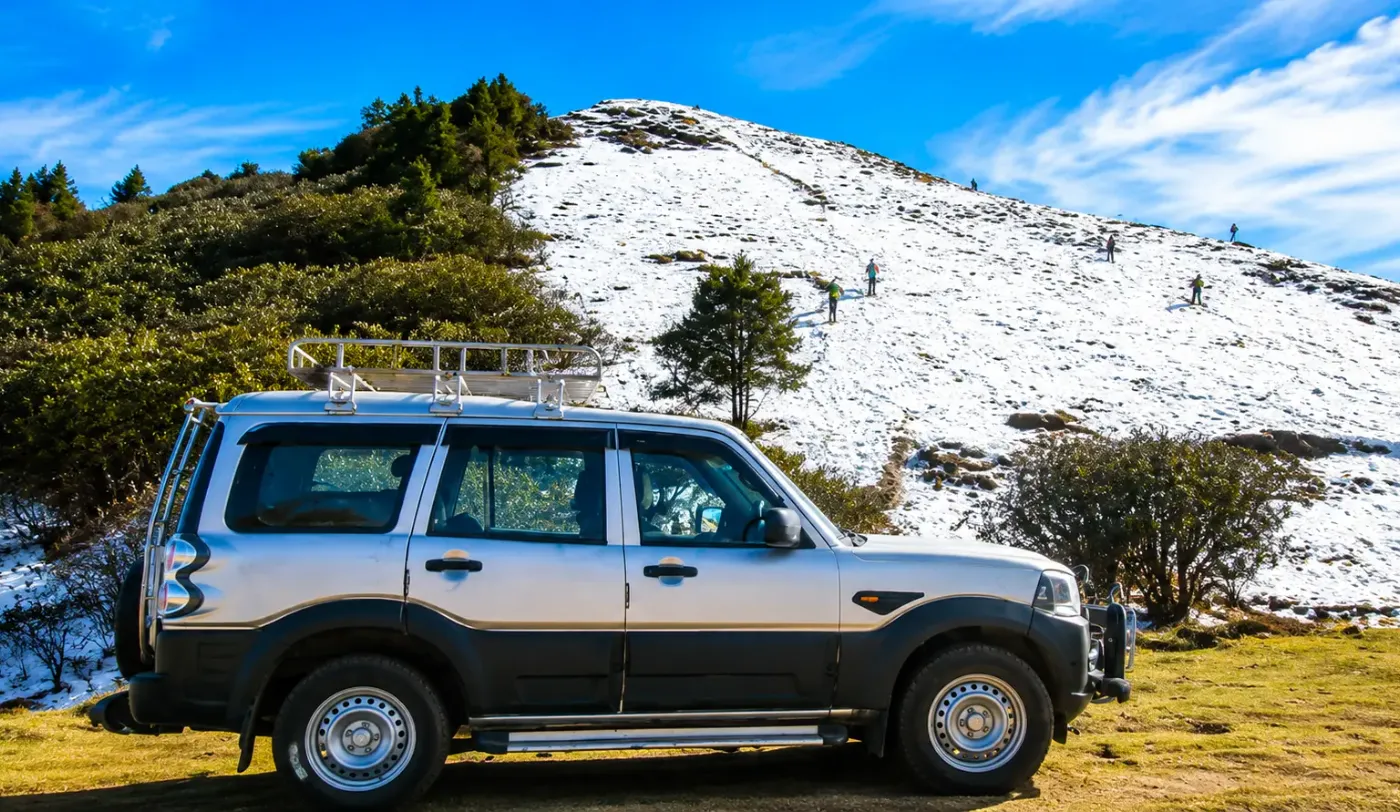
Website: www.vehiclehiringnepal.com

Frequently Asked Questions

How many days are realistically needed for an eastern Nepal tour?

A minimum of 5 days allows a focused Ilam and Koshi Tappu circuit. A genuinely satisfying tour covering Ilam, Pathivara, and Koshi Tappu together requires 7 to 10 days, given the substantial driving distances involved. Adding a Kanchenjunga trekking extension pushes the total to 14 days or more.

Is it better to fly or drive to eastern Nepal?

It depends on your time budget. Driving the full route from Kathmandu allows you to see the Terai and mid-hills along the way and is more economical for groups sharing a vehicle, but it takes 1.5 to 2 full days each way. Flying into Biratnagar or Bhadrapur and arranging ground transport from there saves significant time and is the better choice for travellers with 5 to 7 days or less.

Do I need a 4WD vehicle for the whole eastern Nepal circuit?

Not for the Terai sections (Kathmandu to Itahari, Janakpur, Biratnagar, Koshi Tappu access roads), which are flat paved highways suitable for any vehicle. A 4WD-capable vehicle like the Mahindra Scorpio is especially important for the Dharan–Taplejung and Birtamod–Ilam hill roads, where steep gradients and occasional rough surfaces are present.

Can Vehicle Hiring Nepal arrange the Kanchenjunga trekking permits and a guide as well?

We provide vehicle transport for the road portions of your journey, including transfers to and from Kanchenjunga trek starting points. You must arrange the Restricted Area Permit, Kanchenjunga Conservation Area Permit, and a mandatory licensed guide for the trek itself through a registered trekking agency— we are happy to recommend trusted partners for this part of your planning.

What is the most efficient eastern Nepal route for a 7-day trip?

The most efficient 7-day circuit combines Dharan, Koshi Tappu, and Ilam, looping back through Itahari to Kathmandu — covering wildlife, tea culture, and scenic hill roads without the additional 2 to 3 days required to reach Taplejung and Pathivara as well. Travellers who want to include Pathivara should budget at least 9 to 10 days.

Is eastern Nepal safe and comfortable for solo travellers and families alike?

Yes. Eastern Nepal is part of the same stable, welcoming tourism environment as the rest of the country, and both solo travellers and families often appreciate the relative lack of crowds. The main practical considerations are the longer travel distances and the importance of booking a properly equipped vehicle and an experienced driver for the hill road sections — both of which Vehicle Hiring Nepal arranges as standard.

Can I combine an eastern Nepal vehicle tour with onward travel to Darjeeling or Sikkim in India?

Yes, this is a popular extension for travellers with sufficient time. The Kakarvitta border crossing near Birtamod provides direct road access into West Bengal, from where Darjeeling and Sikkim are readily reached. Vehicle Hiring Nepal can arrange your transport up to the Kakarvitta border; onward travel and transport within India fall outside our service area and must be arranged separately on the Indian side.

Final Thoughts

Eastern Nepal rewards travellers willing to commit the extra days that its road distances demand, offering a side of the country that feels genuinely uncrowded and unhurried even during Nepal’s busiest tourist seasons elsewhere. From the tea-scented hills of Ilam to the wetland birdlife of Koshi Tappu and the powerful pilgrimage atmosphere of Pathivara beneath Kanchenjunga’s Ganges, this region offers depth and variety that fully justify the journey east.

What makes eastern Nepal a travel destination is also what makes it demand careful transport planning: its size, its mix of flat highway and steep hill terrain, and its relative distance from Nepal’s central tourism infrastructure.

A capable vehicle and an experienced eastern Nepal driver are not a convenience here so much as the foundation on which the entire trip is built — get the transport right, and Ilam, Pathivara, Koshi Tappu, and the Kanchenjunga foothills open up as one of the most rewarding regional circuits anywhere in the country. Get it wrong, and the same distances that make eastern Nepal special can instead make for a frustrating, exhausting trip.

Vehicle Hiring: Nepal’s fleet of Scorpios, Hiace vans, and SUVs, combined with drivers who genuinely know the eastern hill roads, makes touring this remarkable region straightforward, safe, and comfortable. Whether you are planning a focused 5-day tea and wildlife trip or a full 14-day circuit extending into the Kanchenjunga foothills, we have the right vehicle and the local expertise to get you there.

Start planning your tour of eastern Nepal today. WhatsApp | Website: www.vehiclehiringnepal.com | Email: [email protected]
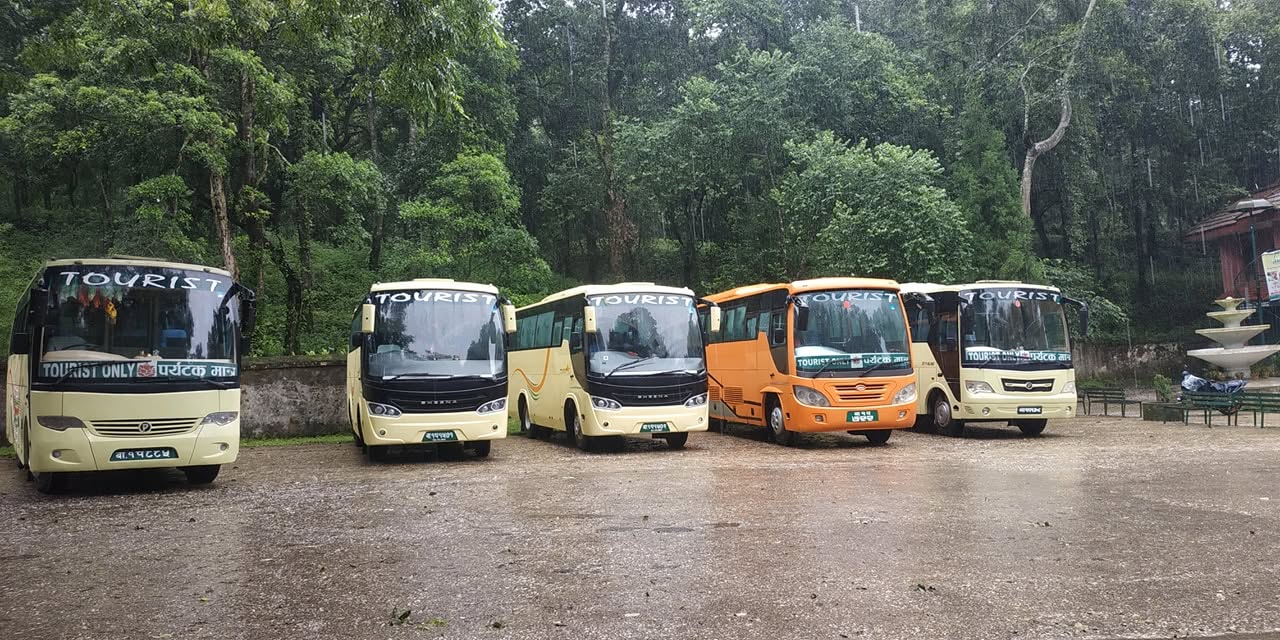
Luxury Vehicle Hire in Nepal

Scorpio jeep beside a snow-covered hillside
Experience top-end travel with luxury vehicle hire in Nepal. Book comfortable SUVs and luxury vehicles for city tours, business trips, airport transfers, weddings, and Himalayan road journeys.

Why Luxury Vehicle Hire Is Transforming Nepal Travel

How Top-end Ground Transport Is Reshaping Trekking, Touring, and Pilgrimage Across Nepal

A decade ago, most visitors to Nepal accepted a simple trade-off: comfort or authenticity, but rarely both. Long jeep rides on rutted mountain roads, crowded local buses, and unpredictable airport pickups were treated as an unavoidable part of the adventure, the price paid for reaching the Himalayas. That trade-off is disappearing fast.

Across airport transfers, trekking logistics, pilgrimage journeys, and city touring,

Luxury vehicle hire in Nepal is quietly but fundamentally changing what a trip to Nepal actually feels like, and the shift is visible in nearly every corner of the country’s travel industry.

This article explores why that shift is happening, where it is most evident, and what it means for travellers planning a trip to Nepal in the years ahead. Nepal Vehicle Hiring has been central to this transformation, coordinating top-end ground transport across trekking routes, pilgrimage corridors, airport transfers, and touring itineraries. This piece draws on firsthand experience to show that travel in Nepal is changing.

The Shift: From Basic Transport to a Top-end Experience

For most of Nepal’s modern tourism history, ground transport was treated as a logistical necessity rather than part of the travel experience itself. Trekkers endured the journey to reach the trail; pilgrims endured the drive to reach the temple; tour groups endured the transfer to reach the hotel.

What has changed is a growing recognition among both travellers and operators that the journey itself can be comfortable, memorable, and well-organised, rather than something to be survived.

This shift mirrors a broader global trend in travel, where the quality of the experience is judged end-to-end rather than only at the destination. Travellers who would never accept a poorly maintained rental car at home increasingly expect the same standard in Nepal, and operators investing in modern vehicles, trained drivers, and professional logistics are capturing this growing market segment. Our own 

Ultimate Nepal Vehicle Rental Guide and 

Why Private Vehicle Hire Is the Smartest Way to Travel. Nein, pal. To explore this shift in greater depth, the short version is simple: comfort and authenticity are no longer opposites in travel in Nepal.

Share jeep

Airport Transfers: Setting the Tone From Touchdown

Nowhere is this transformation more visible than at the airport. A private, professionally driven vehicle waiting inside the arrivals hall, with real-time flight tracking and a clean, comfortable cabin, has replaced the chaotic taxi rank as the expected standard for a growing share of visitors. As we explored in detail in our 

Luxury Airport Transfer Nepal guide. This shift is accelerating as Pokhara’s international airport matures, Gautam Buddha International Airport in Bhairahawa expands, and traveller expectations rise in step with Nepal’s growing profile as a top-end travel destination. Our 

Kathmandu airport transfer service and

car hire in Pokhara are both built directly around this expectation, giving travellers a calm, dependable start to their trip rather than a stressful scramble on arrival.

Trekking Transport: Comfort Without Sacrificing Access

Trekking logistics are perhaps the clearest example of how luxury vehicle hire is changing the shape of travel in Nepal, as covered in our In the In the In the 

Luxury Vehicles for Trekking in Nepal guide, a top-end Land Cruiser or Prado turns the often-gruelling approach roads to major trailheads into a genuinely comfortable part of the journey, rather than an ordeal to endure before the real adventure begins.

This matters enormously given how demanding these roads can be. The drive to Besisahar, gateway to the 

Annapurna Circuit Trek, offered by our sister company Alpine Luxury Treks, is the route to Syabrubesi for the 

Langtang Valley Trek, the long haul to Soti Khola for the 

Manaslu Circuit Trek, and the classic overland approach through Salleri and Phaplu toward the 

Everest Base Camp Trek all involve long, rough drives where vehicle quality and driver experience directly affect how a trekker feels on day one of their trip. Our dedicated 

Jeep Hire in Nepal and 

Hiace hire services, along with route-specific transport such as our 

Kathmandu to Besisahar, 

Kathmandu to Soti Khola, and 

Kathmandu to Salleri-Phaplu jeep services are built around this reality.

Shorter, equally popular routes follow the same pattern. The drive from Pokhara to Nayapul, gateway to both the 

Ghorepani Poon Hill Trek and the 

Annapurna Base Camp Trek is increasingly done in a comfortable private car rather than a shared local jeep, arranged through our 

Pokhara to Nayapul transportation service. Our 

Mahindra Bolero and Tata Sumo trekking transfer guide and our broader The 

Best Vehicle Hire Routes for Trekking Trailheads Nepal article, and both go into further detail on how this transformation is playing out, route by route.

Pilgrimage Travel: Sacred Journeys Made More Accessible

Pilgrimage travel has benefited just as much from this shift as trekking has. As detailed in our 

Muktinath Temple: Vehicle Hire and Pilgrimage Route Guide, the demanding overland journey through Beni, Tatopani, Ghasa, and Jomsom toward one of Nepal’s most sacred shrines is now far more accessible to older pilgrims and families than it once was, purely because vehicle quality and driver experience have improved so significantly along this corridor.

The same pattern applies to other major pilgrimage routes across Nepal, including journeys to 

Pashupatinath Temple in Kathmandu, and to Lumbini, the birthplace of Lord Buddha, reachable through our 

Kathmandu-to-Lumbini bus and private vehicle service. Our detailed guide to the 

Kathmandu Tamang Heritage Trail and the 

Korala Tibet border route also reflects how the same top-end transport standard is now expected across culturally and religiously significant routes, not only the most famous ones.

City and Valley Touring: A New Standard for Sightseeing

Beyond trekking and pilgrimage, everyday sightseeing around the Kathmandu Valley and Pokhara has quietly absorbed the same expectations. A sunrise excursion through our Nagarkot Sunrise Tour Vehicle Service, a heritage walk arranged via our

Bhaktapur Durbar Square tour, or a lakeside excursion through our 

Sarangkot sunrise tour vehicles in Pokhara are all now commonly booked as private, comfortable experiences rather than shared, schedule-bound group tours. Longer regional connections, such as our 

Kathmandu to Pokhara, BBus and private vehicle services from us, and private vehicle services from 

Pokharato Lumbinireflects the same demand for flexible, comfortable travel between Nepal’s major tourist regions.

Corporate Travel and the MICE Sector

Nepal’s growth as a destination for meetings, incentives, conferences, and exhibitions has brought a wave of corporate travellers who expect top-end ground transport as standard. Reliable, punctual, professionally presented transport has become a genuine competitive factor for hotels and conference venues courting this market, and our 

Coaster and Bus hire fleet, alongside our executive 

Hiace hire service is increasingly booked by companies moving delegations and incentive groups around Kathmandu and Pokhara, with the same consistency expected at any major international business destination.

Weddings, Honeymoons, and Celebration Travel

Nepal’s growing popularity as a destination for honeymoons and small destination weddings, particularly around Pokhara’s lakeside setting, has added another dimension to this transformation. Couples planning these trips increasingly treat ground transport as part of the overall experience design, choosing private vehicles that reflect the occasion rather than a purely functional transfer.

This trend aligns with and complements our sister companies’ luxury lodge trek offerings, where a private vehicle transfer bookends a honeymoon trek through the Annapurna or Everest regions, offering genuine comfort from start to finish.

Combining Vehicle Hire With Luxury Trekking and Touring Packages

Perhaps the clearest sign of how thoroughly this transformation has taken hold is the growing number of travellers booking vehicle hire and trekking or touring together as a single, coordinated experience, rather than arranging each piece separately. Because Nepal Vehicle Hiring works closely with our sister companies, 

Alpine Luxury Treks and 

Trek Nepal Himalaya, we can coordinate ground transport for any of their luxury lodge treks, classic teahouse treks, helicopter tour packages, or combined packages. 

Nepal, Tibet, and Bhutan tour itineraries, including remote regions such as 

Upper Mustang and the 

Everest Base Camp Luxury Lodge Trek, where top-end ground transport and a well-run trekking itinerary reinforce each other rather than operating as separate, disconnected bookings.

Technology and the Digital Booking Expectation: Traveller expectations around booking and communication have shifted just as much as expectations around the vehicles themselves. Real-time flight tracking, clear digital booking confirmations, direct driver contact details shared in advance, and live updates during a journey are now considered standard rather than exceptional, particularly among travellers accustomed to this level of service in other major travel markets. Operators that have invested in this kind of digital infrastructure alongside their physical fleet are best positioned to meet rising expectations through 2026 and beyond.

Driver Training and the Human Side of the Transformation

None of this shift would matter without the people behind the wheel. Across every category discussed here, from airport pickups to multi-day mountain transfers, driver training has become as important a differentiator as vehicle quality itself.

Drivers who understand mountain roads, communicate clearly in English, handle luggage and equipment carefully, and remain calm and professional regardless of road conditions or schedule pressure are central to what makes a vehicle hire experience feel genuinely top-end rather than simply expensive.

Sustainability Alongside Comfort

Interestingly, this shift toward top-end vehicle hire has not come at the expense of sustainability considerations. Well-maintained, properly serviced vehicles run more efficiently than older, poorly kept cars, and consolidating group travel into appropriately sized vehicles reduces the overall number of trips needed for a given group.

Many travellers now ask specifically about vehicle age, fuel efficiency, and driver welfare when booking top-end transport, and operators who can answer these questions honestly are increasingly favoured over those who cannot.

The Broader Economic Impact Across Nepal

This transformation extends well beyond traveller comfort. Top-end vehicle hire supports skilled drivers, vehicle maintenance businesses, and guesthouse networks along popular routes, from Tatopani and Marpha on the Muktinath corridor to Besisahar and Syabrubesi on trekking routes. As demand for higher-standard ground transport grows, it creates a stronger incentive to invest in vehicle quality, driver training, and road infrastructure, benefiting the wider tourism economy rather than only travellers who can afford a top-end transfer.

What This Means for Travellers Planning a Trip

For travellers planning a trip to Nepal in the near future, this transformation translates into more choice and, generally, greater reliability than in years past. Whether the plan centers on a trek toward Everest or Annapurna, a pilgrimage to Muktinath or Lumbini, a business trip tied to Nepal’s growing MICE sector, or simply a comfortable, well-organised tour of the Kathmandu Valley and Pokhara, top-end ground transport is now a realistic and increasingly well-established option rather than a rare luxury reserved for a small handful of travelers.

A Closer Look: Why the Timing Is Right

Several forces are converging at once to accelerate this transformation, and understanding them helps explain why the shift toward top-end vehicle hire feels so pronounced right now rather than gradual and unremarkable. Nepal’s tourism sector has recovered strongly in recent years, bringing renewed investment into vehicle fleets, driver training, and road infrastructure that had previously seen only limited upgrades.

At the same time, a new generation of travelers, having grown up with app-based ride booking, real-time tracking, and transparent pricing in their home countries, arrives in Nepal expecting a comparable standard rather than accepting the older model of unmarked taxis and informal negotiation.

Social media and travel content have also played a quiet but significant role, with photos and videos of comfortable private Land Cruisers navigating dramatic mountain roads increasingly shaping how prospective travellers imagine a trip to Nepal, well before they book their first flight. This visibility creates its own momentum, as operators who can deliver on that expectation gain a clear advantage over those still offering an older, rougher standard of service.

Traveller Segments Driving the Shift

Returning Visitors With Higher Expectations

Travellers who have visited Nepal before, sometimes years or even decades earlier, often notice this transformation most clearly, since they have a direct point of comparison with how transport used to work. Many actively seek out top-end options on a return visit, having experienced the older, more difficult standard firsthand and having no interest in repeating it.

First-Time Visitors From Mature Travel Markets

Travellers arriving from markets with well-established top-end travel norms, including much of Europe, North America, Australia, and increasingly parts of Asia, tend to expect a certain baseline of comfort and reliability regardless of destination, and Nepal’s ground transport sector has adapted accordingly to meet this expectation rather than lose these travellers to competing Himalayan destinations.

Multi-Generational and Family Groups

Families travelling together across generations, from young children to grandparents, have particular comfort and safety needs that a top-end vehicle meets far more effectively than a shared bus or an ageing local jeep, and this segment has grown steadily as more families choose Nepal for a shared, once-in-a-lifetime trip.

A Case in Point: One Journey, Multiple Transformed Legs

Consider a typical present-day itinerary and how this shift now touches nearly every stage. A traveler lands at Tribhuvan International Airport and is met by a uniformed driver who tracks their flight in real time, rather than searching for a handwritten sign in a crowded arrivals hall.

A day of Kathmandu Valley sightseeing follows in a private vehicle, taking in Bhaktapur’s medieval squares and a sunrise view from Nagarkot, rather than a fixed-schedule group tour. From there, a comfortable Land Cruiser carries the traveller toward a trekking trailhead such as Besisahar or Syabrubesi, arriving rested rather than exhausted.

After days on the trail, the same coordinated logistics bring the traveller back to Kathmandu in time for a relaxed final night before departure. A decade ago, nearly every leg of this journey would have involved some degree of discomfort, uncertainty, or improvisation. Today, each stage is handled with a consistent, professional standard, and that consistency, more than any single vehicle upgrade, is what genuinely defines this transformation.

Looking Ahead: What Continued Growth Looks Like

As this transformation continues through 2026, 2027, and beyond, several developments seem likely to shape its next phase. Continued airport expansion, particularly around Pokhara, should keep shifting demand toward locally based top-end transport rather than routing everything through Kathmandu.

Growing demand for luxury lodge trekking, supported by our sister companies’ expanding itineraries, should further deepen the integration between vehicle hire and trekking logistics. Rising corporate and MICE travel should continue pushing consistent, professional ground transport standards into market segments previously served by more basic, ad hoc arrangements.

How Nepal Compares to Other Himalayan Destinations

Nepal is not alone in seeing rising demand for top-end ground transport, but its position at the heart of the world’s most famous mountain range gives this transformation particular weight. Neighbouring destinations offering Himalayan trekking and touring, including parts of northern India and Bhutan, have seen similar shifts toward higher-standard vehicles and more professional driver services, and Nepal’s tourism sector has had to keep pace to remain competitive for travellers weighing multiple Himalayan options.

Because Nepal offers by far the widest range of trekking regions, from Everest and Annapurna to Langtang, Manaslu and Mustang, the pressure to deliver consistent, high-quality ground transport across a much larger road network has, if anything, been greater here than in more compact competing destinations.

Fleet Investment and What It Actually Involves

Building a genuinely top-end vehicle hire operation involves considerably more than simply purchasing newer cars. It requires ongoing investment in regular mechanical servicing, particularly for vehicles working the punishing unpaved routes to Besisahar, Syabrubesi, and Soti Khola, where brakes, suspension, and tyres wear far faster than in ordinary city driving.

It requires a genuine training pipeline for drivers, covering not only safe mountain driving but also customer service, English communication, and route-specific knowledge built up over repeated trips along the same corridors. And it requires an administrative and technological backbone to support real-time flight tracking, digital booking confirmation, and reliable communication among drivers, dispatchers, and clients throughout the journey.

Operators who have consistently made these investments are well positioned to capture the growing top-end segment of Nepal’s travel market.

The Role of Trekking and Tour Agencies in Accelerating the Shift

Trekking and touring agencies have played an important, if sometimes underappreciated, role in accelerating this transformation. As agencies such as our sister companies, Alpine Luxury Treks and Trek Nepal Himalayas, have expanded their luxury lodge trek offerings, they have simultaneously raised client expectations for every other part of the itinerary, including ground transport.

A traveller booking a five-star lodge trek naturally expects vehicle transfers to and from the trailhead to match that standard, and agencies have responded by partnering closely with vehicle hire operators who can deliver consistently, rather than leaving ground transport as an afterthought arranged separately by the traveller.

Insurance, Regulation, and the Formalisation of the Industry

Alongside rising comfort expectations, Nepal’s vehicle hire sector has also gradually formalised, with more operators carrying proper commercial vehicle insurance, maintaining transparent pricing structures, and operating under clear company registration rather than informal, individually negotiated arrangements. This formalisation matters enormously for traveller confidence, particularly for those booking multi-day trekking transfers or pilgrimage journeys into remote regions, since it provides real accountability if something goes wrong, whether that is a mechanical breakdown, a scheduling misunderstanding, or a safety incident on a difficult mountain road.

Customer Service Culture and the Human Element

Perhaps the least visible yet most important part of this transformation is a broader cultural shift in how ground transport providers view their role. Where drivers were once viewed primarily as a functional necessity, getting the traveller from one point to another, many operators now train and position drivers as an active part of the overall travel experience: knowledgeable about local history and culture, attentive to comfort and safety, and genuinely invested in how the traveller feels about their trip to Nepal as a whole.

This shift in mindset, as much as any specific vehicle upgrade, is what separates a merely functional transfer from a genuinely top-end one.

What Hasn’t Changed, and Why That Still Matters

This transformation has limits. Nepal’s mountain roads remain genuinely challenging, weather-dependent, and occasionally affected by landslides or seasonal closures regardless of how top-end the vehicle or how experienced the driver. No investment in vehicles can prepare for the fundamental physical reality of travelling through the world’s highest mountain range, and travellers should still expect long days, occasional delays, and a need for flexibility, particularly during the monsoon season.

The underlying difficulty of the terrain hasn’t changed. Still, travellers can now move through it more comfortably, safely, and predictably. That distinction is worth keeping in mind when planning a trip: top-end vehicle hire improves the experience considerably, but it does not, and should not, remove the genuine adventure at the heart of travel in Nepal.

Frequently Asked Questions

Is luxury vehicle hire only relevant for wealthy travellers?

No. While top-end vehicles cost more than a shared bus or basic jeep, the price difference is often modest relative to the overall cost of a Nepal trip, and travellers on a standard mid-range budget now choose a private vehicle for at least the most demanding legs of their journey, such as trekking transfers or pilgrimage routes.

Which routes benefit most from top-end vehicle hire?

Long, unpaved routes with significant elevation change, such as the roads to Besisahar, Syabrubesi, Soti Khola, and Muktinath, show the clearest benefit, since vehicle quality and driver experience directly affect comfort and safety on these corridors.

Can luxury vehicle hire be combined with a trekking or touring package?

Yes. Nepal Vehicle Hiring coordinates directly with our sister companies, Alpine Luxury Treks and Trek Nepal Himalayas, to arrange smooth ground transport around any trekking, pilgrimage, or luxury touring itinerary.

Is this trend limited to Kathmandu and Pokhara?

No. The shift toward top-end ground transport is visible across trekking corridors, pilgrimage routes, and regional connections throughout Nepal, including increasingly remote areas such as Upper Mustang and the Manaslu region.

How has airport infrastructure influenced this transformation?

The expansion of Pokhara International Airport and the gradual growth of Gautam Buddha International Airport in Bhairahawe both increased demand for top-end ground transport outside Kathmandu, allowing travellers to start their trips with a direct, comfortable connection to their final destinations.

Does top-end vehicle hire compromise environmental responsibility?

Not necessarily. Well-maintained vehicles operate more efficiently than poorly serviced older cars, and consolidating group travel into appropriately sized vehicles can reduce a group’s overall transport footprint compared to multiple smaller, less efficient trips.

What should travellers look for when choosing a vehicle hire provider?

Look for a properly registered company with a well-maintained fleet, trained and experienced drivers, transparent pricing, and clear digital communication, including flight tracking for airport transfers and realistic route planning for mountain roads.

Is this transformation likely to continue through

All current indicators, including airport expansion, growing demand for luxury trekking, and rising corporate and MICE travel, point to continued growth in top-end ground transport standards across Nepal in the coming years.

Seasonal Demand Patterns and Booking Behaviour

This transformation has also changed how far in advance travellers now plan their ground transport. A decade ago, arranging a jeep or car in Nepal was often a same-day or next-day affair, negotiated informally on arrival.

Today, particularly during the peak spring and autumn trekking seasons, travellers often book top-end vehicles and experienced drivers weeks in advance, mirroring booking patterns already familiar from flights and trekking permits. This shift reflects growing traveller awareness that the best vehicles and most experienced drivers are a limited resource during peak season.

Early booking is now important for securing quality ground transport, as it has long been for securing a good trekking guide or a well-located hotel room.

Regional Variation Across Nepal’s Trekking and Touring Zones

This transformation has not been uniform across Nepal. The Kathmandu Valley, Pokhara, and the most popular Annapurna and Everest approach routes have seen the fastest and most visible upgrades in vehicle standards and driver training, simply because traveller volume and competition are highest there.

More remote corridors, including the roads toward Manaslu, Upper Mustang, and parts of the far western region, are following the same trajectory but at a slower pace, reflecting lower traveller numbers and, in some cases, more challenging road conditions that limit how quickly top-end vehicle standards can be established. Travellers planning trips to these more remote regions should expect an earlier stage of this transformation, though the trajectory remains consistently upward.

The Connection Between Vehicle Quality and Trip Safety. This transformation is not simply about comfort for its own sake. A well-maintained vehicle with proper suspension, reliable brakes, and adequate ground clearance, driven by someone genuinely experienced on a specific mountain corridor, is measurably safer than an older, poorly serviced vehicle driven by someone less familiar with the route. As Nepal’s top-end vehicle hire sector has grown, it has, in a very real sense, also driven a broader safety upgrade across the country’s most demanding roads, even though safety is rarely the primary marketing angle.

How This Transformation Shapes First Impressions of Nepal

Traveller reviews and word-of-mouth recommendations increasingly reference the quality of ground transport as part of an overall assessment of a trip to Nepal, alongside more traditional factors like trekking guide quality, lodge comfort, and scenery. This shift has raised the stakes for operators across the industry, since a single poor ground transport experience, whether a late airport pickup or an uncomfortable trekking transfer, can now meaningfully affect how a traveller describes their entire trip to friends, family, and online audiences, regardless of how well every other part of the itinerary went.

Operators that recognise this link between transport quality and overall trip perception are investing accordingly, treating ground transport as a core part of the travel product rather than a peripheral logistics detail.

Practical Advice for Travellers Navigating This Shift

For travellers trying to make sense of Nepal’s rapidly changing ground transport landscape, a few practical principles help. First, book top-end vehicle hire as early as reasonably possible, particularly for peak-season trekking or pilgrimage transfers, since the best vehicles and most experienced drivers are in high demand during the busiest times.

Second, ask specific questions when booking about the vehicle’s age, the driver’s experience on your particular route, and what happens in the event of a flight delay or road closure, rather than relying on general marketing claims. Third, consider coordinating your entire journey, from airport pickup through trekking or touring transfers, with a single provider where possible, since this consistency tends to produce a smoother overall experience than piecing together transport from multiple separate operators.

How Nepal Vehicle Hiring Fits Into This Broader Shift

Nepal Vehicle Hiring has grown alongside this transformation, expanding from a general vehicle hire service into a company that coordinates top-end ground transport across nearly every major category discussed in this article: airport transfers, trekking trailhead transport, pilgrimage routes, Kathmandu Valley and Pokhara sightseeing, and corporate and group logistics. Our close working relationship with our sister companies, Alpine Luxury Treks and Trek Nepal Himalayas, reflects exactly the kind of coordinated, end-to-end approach that this broader industry shift has made increasingly important, allowing travellers to plan an entire Nepal journey, from the first airport pickup to the final trekking transfer, through a single, consistent point of contact rather than a patchwork of separate arrangements.

A Note on Cultural Sensitivity Amid Modernisation

As ground transport standards rise across Nepal, it remains important that this modernisation does not come at the expense of the cultural texture that makes travel here distinctive in the first place. The best top-end vehicle hire experiences in Nepal combine genuine comfort and reliability with drivers who remain deeply knowledgeable about local culture, history, and etiquette, rather than adopting a generic, placeless service standard imported wholesale from elsewhere.

Nepal’s transformation in ground transport is, at its best, additive rather than replacement; it adds comfort and reliability atop the country’s existing cultural depth rather than displacing it.

The Growing Overlap Between Vehicle Hire and the Trekking Economy

As luxury vehicle hire has expanded, it has become increasingly intertwined with the broader trekking and tourism economy rather than functioning as a standalone service. Guesthouses along popular approach roads, from Tatopani and Marpha on the Muktinath corridor to smaller settlements along the Besisahar and Syabrubesi routes, have adapted to serve a growing volume of comfortable, well-organised traffic, often coordinating directly with transport operators on overnight stops, meal planning, and last-minute itinerary changes.

This deepening relationship among vehicle hire operators, guesthouses, and trekking agencies has created a more resilient, better-coordinated travel ecosystem along Nepal’s major routes, benefiting nearly everyone involved, from the traveller enjoying a smoother journey to the local businesses that support it along the way.

Local drivers have also become an increasingly skilled and specialised workforce as a direct result of this shift. Where driving jobs in Nepal’s tourism sector were once viewed as relatively low-skill positions, the growing demand for drivers who combine mountain driving expertise, English communication skills, and genuine customer service ability has elevated these roles considerably, creating a stronger career path and better working conditions for drivers who invest in developing this broader skill set.

What Travellers Consistently Say About the Difference

Feedback from travellers who have experienced both the older, more basic standard of Nepali ground transport and the newer, top-end alternative tends to converge on a few consistent themes. Travellers often note how much less physically draining a long mountain transfer feels in a well-maintained vehicle with a skilled driver than in an older jeep on the same road.

They mention the psychological relief of a clearly identified driver waiting at the airport, removing a source of low-grade anxiety that often accompanies international arrival in an unfamiliar country. And they mention, perhaps most tellingly, that the quality of the journey itself has become something they now actively remember and discuss, rather than a forgettable, purely functional part of the trip they were relieved to have survived.

A Broader Reflection on Travel and Comfort in Challenging Terrain

There is a long-standing romantic notion in travel writing that discomfort is somehow inseparable from authenticity, that a rough, uncomfortable journey is more genuine than a smooth, well-organised one. Nepal’s experience over the past several years suggests a more nuanced reality: the mountains, temples, and culture that draw travellers to Nepal remain as authentic and challenging as ever, regardless of how comfortable the vehicle that carries them there is.

A smoother better-organised journey to the trailhead does not diminish the genuine physical and spiritual challenge of the trek that follows; if anything, arriving rested and unstressed allows travellers to engage more fully with the parts of the experience that actually matter, the trail itself, the temple, the summit view, or the quiet moment of reflection at a sacred shrine, rather than spending that energy simply recovering from the journey to get there.

Bringing It All Together Across a Full Nepal Itinerary

Stepping back across everything covered in this article, the pattern is consistent: airport transfers, trekking trailhead transport, pilgrimage journeys, city and valley touring, corporate travel, and celebration trips have all moved in the same direction, toward greater comfort, reliability, and professionalism in ground transport. Each of these categories once operated as a largely separate, often improvised part of a trip to Nepal.

Today, they increasingly form a single, connected chain of top-end service, coordinated from the moment a traveller lands to the moment they depart, whether that journey includes a five-star lodge trek to Everest Base Camp, a pilgrimage to Muktinath, a business conference in Kathmandu, or simply a relaxed week of Valley sightseeing and lakeside relaxation in Pokhara.

This connected approach matters because travel experiences are rarely remembered as a series of disconnected logistics; they are remembered as a whole. A traveller who begins their trip with a smooth, professional airport pickup, continues through comfortable, well-organised transfers to their trekking trailhead or pilgrimage site, and finishes with an equally well-coordinated return journey is far more likely to describe the entire trip as smooth and well-run, even if the destinations themselves vary enormously in character.

That sense of seamlessness, more than any individual vehicle feature, is the real product of this transformation.

Why This Matters for Nepal’s Tourism Future

Nepal competes for travellers against destinations across Asia and beyond, many of which have invested heavily in polished, end-to-end travel experiences. The continued growth of top-end ground transport gives Nepal’s tourism sector a genuine competitive advantage, allowing it to pair its unmatched natural and cultural assets- the highest mountains on earth, deeply rooted Hindu and Buddhist heritage, and some of the richest trekking terrain anywhere- with a standard of ground logistics that no longer undercuts those assets.

As more travellers choose Nepal specifically because they trust the full journey will be well handled, not only the destination itself, this transformation becomes not just a traveller’s convenience but a genuine driver of the country’s ongoing tourism growth.

A Final Snapshot of the Transformation in Numbers and Everyday Terms

While comprehensive nationwide statistics on top-end vehicle hire remain limited, the everyday signs of this transformation are visible to anyone who has travelled through Nepal across multiple years: newer vehicles on major trekking corridors, more uniformed drivers at Tribhuvan International Airport’s arrivals hall, a wider range of vehicle classes available through established operators, and a growing number of trekking and tour packages that explicitly include top-end ground transport as a core part of the itinerary rather than an optional add-on. None of these signs individually proves a dramatic industry-wide shift.

Still, taken together, across airport transfers, trekking logistics, pilgrimage routes, and city touring alike, they describe a travel sector that has moved decisively toward comfort, professionalism, and reliability as standard expectations rather than rare exceptions.

Frequently Asked Questions, Continued

How does this transformation affect budget travellers?

Budget travellers continue to have access to shared buses, local jeeps, and public transport at lower cost, and this transformation has not eliminated those options. What has changed is the range of choice available above that baseline, giving travellers of varying budgets a genuine spectrum of options rather than a single, uniformly rough standard for everyone.

Are luxury vehicles available in more remote parts of Nepal?

Availability in more remote regions, such as Upper Mustang or the far western districts, is improving but remains more limited than in the well-established Kathmandu, Pokhara, and central trekking corridors. Booking well in advance is particularly important for top-end vehicle hire in these more remote areas.

What role do trekking agencies play in this shift?

Trekking and touring agencies have driven much of this transformation by raising client expectations across the entire itinerary, not just the trek or tour itself, and by encouraging closer coordination between agencies and vehicle hire operators.

Is this trend specific to international travellers, or does it affect domestic tourism too?

While international travellers have driven much of the visible demand for top-end vehicle hire, domestic tourism within Nepal, including for weddings, family trips, and pilgrimage journeys, has also increasingly embraced higher standards of comfort and reliability in ground transport.

How can travellers verify a vehicle hire company meets top-end standards before booking?

Look for clear company registration, transparent pricing, verifiable reviews, and a willingness to answer specific questions about vehicle age, driver experience, and contingency planning for delays or route disruptions.

Final Practical Takeaways

  • Book top-end ground transport as early as possible, particularly during peak spring and autumn seasons, when the best vehicles and drivers are in highest demand.
  • Consider coordinating airport transfer, sightseeing, and trekking or pilgrimage transport through a single provider for a smoother, more consistent overall journey.
  • Ask specific questions about vehicle age, driver route experience, and contingency plans for delays rather than relying solely on general marketing claims.
  • Recognise that top-end vehicle hire improves comfort and reliability but does not eliminate the genuine physical challenges of Himalayan travel, particularly during the monsoon season.
  • Look for operators who combine modern vehicles and professional drivers with genuine cultural knowledge and local hospitality, rather than a generic, imported service standard.

Final Thoughts: A Journey Worth Getting Right

Nepal’s landscapes and cultural sites have always been the reason travellers come, and that fundamental appeal has never needed improving. What has changed, steadily and significantly, is everything that connects a traveller to those landscapes and sites: the pickup at the airport, the drive to the trailhead, the journey to a sacred shrine, the transfer between cities.

Getting that connective tissue right, comfortably, reliably, and professionally, is what this transformation in Nepal travel has ultimately been about, and it is a change worth recognising for what it is: not a departure from Nepal’s authentic character, but a long-overdue upgrade to the experience of reaching it.

Contact Nepal Vehicle Hiring today on WhatsApp or visit 

vehiclehiringnepal.com to arrange your top-end vehicle for trekking, pilgrimage, touring, or airport transfer anywhere in Nepal.

From your very first pickup at the airport to the final drive back for your departure flight, our team is ready to help make every leg of your Nepal journey as comfortable, reliable, and memorable as the destinations themselves.

Whatever shape your 2026 or 2027 Nepal itinerary takes, whether centred on a Himalayan trek, a sacred pilgrimage, a business trip, or simply a relaxed cultural tour of the Kathmandu Valley and Pokhara, the same underlying principle applies: the journey between destinations deserves the same care and attention as the destinations themselves, and that is precisely the standard this ongoing transformation in Nepal’s vehicle hire sector continues to build toward, one comfortable,well-organized journey at a time.

A Closing Thought on Value

Ultimately, the value of this transformation is best measured not in the price difference between a shared jeep and a private Land Cruiser, but in the quality of the memories a traveller carries home. A pilgrim who reaches Muktinath rested rather than exhausted, a trekker who begins the Annapurna Circuit refreshed rather than depleted, a family who lands in Kathmandu and steps calmly into a waiting vehicle rather than scrambling through a chaotic taxi rank, all describe a materially different experience of Nepal than travellers faced a decade ago.

That difference, multiplied across the tens of thousands of journeys taken through this country each season, is what genuine transformation in an industry actually looks like: not a single dramatic change, but a steady, cumulative improvement in how well a country’s transport matches the extraordinary places it connects.

Nepal Vehicle Hiring remains committed to that steady improvement, one journey, one traveller, and one carefully planned itinerary at a time.

For anyone weighing how to plan their next Nepal trip, that commitment translates into a simple, practical promise: whichever route you take, whichever mountain you aim for, and whichever temple or city you visit, the journey to get there will be treated with the same care, professionalism, and attention as the destination itself.

That is, in the end, the real story behind why luxury vehicle hire is transforming travel in Nepal: not a passing trend in comfort, but a lasting shift in how seriously the country’s tourism sector now treats every part of the journey, from the first mile to the last.

We look forward to being part of that journey with you, whenever and wherever it takes you across Nepal.

From the winding road to Muktinath, to the long haul toward Everest and Annapurna, to the calm, professional pickup waiting at Tribhuvan International Airport, every one of these journeys tells the same underlying story about where Nepal’s travel industry is heading. Comfort, reliability, and genuine care for the traveller experience are no longer optional extras reserved for a narrow luxury segment; they are steadily becoming the baseline expectation across the country’s trekking, touring, and pilgrimage routes alike.

That is the real measure of transformation, not a single flashy upgrade, but a broad, sustained shift in how an entire industry chooses to treat the people who travel through it, one vehicle, one driver, and one carefully planned journey at a time.

Thank you for taking the time to explore why this shift matters. We hope it helps you plan a smoother, more comfortable, and truly memorable journey through Nepal, wherever your travels take you next, whether that is a quiet valley temple, a bustling city street, or a remote mountain trailhead waiting at the end of the road.

We hope the vehicle that carries you there reflects how much the journey itself has come to matter in modern Nepal travel.

Safe travels, and we look forward to welcoming you to Nepal soon.

Car, Jeep, Hiace and Bus Hire in Nepal

Private Scorpio jeep with luggage on the roof
cars, 4WD jeeps, Toyota Hiace vans, and tourist buses

Nepal’s terrain changes more dramatically, more often, than almost anywhere else on earth — from flat highways through the Terai to hairpin mountain roads climbing thousands of meters, and unpaved tracks that no ordinary car was ever built to handle. This is precisely why there is no single ‘best’ vehicle for travelling around Nepal.

The right choice for car, jeep, Hiace, or bus hire in Nepal depends entirely on your group size, route, budget, and whether your itinerary includes rough mountain roads that demand genuine 4WD capability. This guide compares all four major vehicle categories in detail — what each one is built for, what it costs and which specific Nepal routes suit it best — so that you can book the right vehicle the first time, rather than discovering halfway up a mountain road that your sedan should have been a jeep, or paying for an oversized coaster when a single shared car would have done the job for a couple travelling alone.

Every comparison in this guide links directly to the specific vehicle and route pages on Nepal Vehicle Hiring Pvt Ltd’s website, so you can move straight from reading about a vehicle category to checking availability and pricing for your exact trip.

Quick Overview: car, jeep, Hiace, and bus hire in Nepal

Before diving into the details, here is the short version. A private car suits solo travellers and small families sticking to paved roads — Kathmandu Valley sightseeing, the Kathmandu–Pokhara highway, and Terai routes toward Lumbini and Chitwan.

A 4WD jeep is the only sensible choice once your route includes unpaved mountain roads — Mustang, Manaslu, Annapurna trailheads, and most trekking gateway towns above 2,000 meters. A Hiace van fits families and small groups of up to fourteen who want one comfortable vehicle rather than splitting across two cars.

A tourist bus or coaster suits larger groups and budget-conscious solo travellers between major tourist hubs on fixed schedules and well-paved routes.

How This Guide Is Organised: The vehicle category below follows the same structure: what the vehicle is built for, what it typically costs, which specific Nepal routes it suits best, and where its practical limits lie. Reading through all four sections, even if you already have a vehicle category in mind, helps clarify the trade-offs at the boundaries between categories, since many real Nepal itineraries combine more than one vehicle type across different legs of the same trip, rather than relying on a single vehicle for an entire journey from arrival to departure.

Car Hire in Nepal: Comfort for City and Highway Travel

A standard car hire in Nepal is the most popular choice for travellers on itineraries that stay on paved roads: Kathmandu Valley sightseeing, the Kathmandu–Pokhara highway, transfers to and from the airport, and day trips around Pokhara, Chitwan, and Lumbini. Sedans and small SUVs typically seat one to three passengers comfortably, with luggage space sufficient for a few suitcases, making them ideal for solo travellers and honeymooners who prioritise privacy over carrying capacity.

Private jeeps on a mountain road in Nepal

Typical Car Hire Pricing

Within the Kathmandu Valley, sedan hire with a professional driver typically starts around NPR 5,000–6,000 per day (roughly US$38–45), rising modestly for trips outside the valley due to additional fuel and driver accommodation costs. Hourly bookings, useful for half-day sightseeing or short transfers, generally run NPR 600–800 per hour with a minimum booking of around five hours.

These rates conventionally include the driver’s salary, fuel, parking fees, and standard road tolls. However, confirm what is included before booking, since some providers charge extras for late-evening trips on a set mileage allowance.

Best Routes for Car Hire

Cars are not suited to unpaved mountain roads, steep trekking-trailhead access tracks, or routes above roughly 2,000 meters, where road surfaces deteriorate; for any of these, a jeep is the appropriate choice, which is covered next.

Jeep and 4WD Hire in Nepal: The Mountain Specialist

For Nepal’s mountain districts, 4WD hire is not a luxury upgrade; it is a structural requirement. Routes into Mustang, Manang, Manaslu, Dolpa, and most trekking trailheads above 2,000 meters climb steep, unpaved switchbacks that a standard sedan cannot manage safely, especially after monsoon rains wash sections of road into rutted tracks.

A purpose-built jeep hire in Nepal — typically a Mahindra Scorpio, Bolero, Toyota Hilux, or Toyota Land Cruiser Prado — provides the ground clearance, four-wheel drive, and experienced mountain driving needed for these roads.

2WD vs 4WD Jeep: Which Do You Need?

Most Jeep fleets in Nepal offer both two-wheel-drive (2WD) and four-wheel-drive (4WD) variants of the same vehicle models. 2WD Jeeps are a comfortable, slightly more affordable option for long-distance paved highway travel and gentler unpaved stretches.

At the same time, genuine 4WD is essential for steep, loose-surface mountain roads, river crossings, and the high-altitude trekking trailhead access roads common throughout Nepal’s restricted trekking regions. As a rule of thumb, if your itinerary includes any route described online as requiring ‘4WD only’ or passing through districts such as Mustang, Manang, Dolpa, or Manaslu, book a genuine 4WD rather than the cheaper 2WD option.

Typical Jeep Hire Pricing

Jeep hire with a driver typically runs NPR 7,500–9,000 per day (roughly US$56–68) within and immediately around Kathmandu, with rates rising for multi-day mountain itineraries that involve higher fuel consumption, steeper terrain, and overnight accommodation for the driver in remote areas. Standard jeep models such as the Mahindra Scorpio and Bolero comfortably seat up to seven passengers, including the driver, with rooftop space for luggage and trekking gear, making them practical for both family groups and small trekking parties.

Best Routes for Jeep Hire

Jeeps are also the standard choice for pilgrimage routes to high-altitude temples such as Muktinath, and for travelling Upper Mustang’s expanding network of jeep-accessible roads, where the terrain shifts from forested hillside to high-altitude desert within a single day’s drive.

Hiace Van Hire in Nepal: The Group Comfort Option

For families and small groups of seven to fourteen people, a Hiace van hire offers the comfort of a single shared vehicle rather than splitting a group across two cars or a car and a jeep. The Toyota Hiace, Nepal’s standard tourist van, offers individual reclining seats, generous luggage space, and — on most tourist-grade models — air conditioning, making it a popular middle ground between a private car’s intimacy and a bus’s economy of scale.

Typical Hiace Hire Pricing

Hiace van hire with a driver typically costs NPR 7,500–9,000 per day for valley and short-distance use, broadly comparable to jeep pricing, with hourly rates around NPR 850 per hour for shorter bookings, subject to a minimum hours requirement. For multi-day touring itineraries combining several cities, daily rates are usually quoted as part of a package that also covers driver accommodation and meals for overnight trips.

Best Uses for Hiace Hire

Hiace vans handle paved and lightly unpaved roads well but, like cars, are not suited to the steepest, roughest mountain trailhead roads — for those routes, a jeep convoy or a smaller group split between jeeps is the more practical choice.

Bus, Coaster, and Tourist Bus Hire in Nepal: Budget and Scale

For larger groups, budget-conscious solo travellers, and fixed-route intercity travel, Nepal’s bus hire network is reliable, inexpensive, and well-suited to the country’s main paved tourist corridors. Standard tourist buses operate scheduled daily departures on routes such as Kathmandu–Pokhara, Kathmandu–Lumbini, and Pokhara–Chitwan, with reclining seats, onboard storage, and, on the better-equipped lines, air conditioning and onboard refreshment stops.

For private group charters rather than scheduled seats, a coaster bus—Nepa’s standard 20-seater minibus— offers a cost-effective option for groups of 15–20 travelling on a fixed itinerary, commonly used for company retreats, tour groups, and extended family travel.

Typical Bus and Coaster Pricing

Scheduled tourist bus seats between Kathmandu and Pokhara typically cost around US$10 per person, with similar pricing on the Lumbini and Chitwan corridors, making bus travel by far the most economical way to move between Nepal’s major tourist hubs. Private coaster charters are quoted per day or per itinerary rather than per seat, scaling with route length and number of travel days, and represent better value than multiple car or jeep bookings once a group exceeds roughly fifteen people.

Best Routes for Bus and Coaster Hire

Buses are not recommended for the steep, unpaved trailhead access roads covered earlier under jeep hire; even where a bus route nominally exists toward a mountain district, the ride is typically slower, less comfortable, and less reliable than a private jeep over the same rough terrain.

Side-by-Side: Matching the Vehicle to Your Trip

Solo traveller or couple, city and highway only: A private car hire offers the best balance of comfort, privacy, and cost for Kathmandu sightseeing, airport transfers, and the Kathmandu–Pokhara highway.

Solo traveller, mountain trailhead access: A 2WD or 4WD jeep is necessary once your route leaves paved roads, even for just one or two passengers, since the vehicle choice is dictated by road surface rather than group size on these routes.

Family of four to seven, mixed itinerary: A jeep or Hiace both work well; choose the jeep if any part of the route is unpaved or mountainous, and the Hiace if the entire itinerary stays on paved roads and you want a more spacious, car-like ride.

Group of eight to fourteen, paved or lightly mixed roads: A Hiace van is generally the most comfortable and cost-effective single-vehicle solution for this group size.

Group of fifteen or more, fixed touring itinerary: A coaster bus charter typically offers the best value, particularly for multi-day group tours covering several cities.

Budget solo or pair travel between major cities: Scheduled tourist bus seats on routes like Kathmandu to Pokhara offer the lowest per-person cost for travellers on a tight schedule or with heavy luggage.

What’s Typically Included in a Nepal Vehicle Hire Price

Reputable vehicle hire providers in Nepal, across all four categories covered in this guide, generally structure their pricing to include the driver’s daily salary, fuel for the agreed route, standard road tolls and parking fees, and, for multi-day trips, the driver’s meals and overnight accommodation in towns along the route. What is typically included, and what to confirm before booking, includes: routes beyond the originally agreed route; late-night surcharges for pickups or drop-offs outside standard daytime hours; and any tips for the driver, which remain customary but optional at the end of a satisfactory trip.

For multi-day mountain itineraries in particular, confirm whether the quoted price assumes a fixed number of driving days or a fixed itinerary regardless of weather delays, since road closures from landslides or snow are not uncommon during shoulder seasons and can affect both timing and cost if not clarified up front.

Seasonal Considerations for Vehicle Hire

Nepal’s vehicle hire market generally follows the same seasonal rhythm as its tourism calendar. Autumn (late September through November) and spring (March through May) represent peak demand, when vehicles of every category, but particularly jeeps serving popular trekking trailheads, should be booked at least a week or two in advance to guarantee availability on the exact dates needed.

Monsoon season (June through early September) adds the complication of landslide risk on several mountain roads, making jeep drivers’ local route knowledge especially valuable; experienced operators know which roads remain passable and which require detours.

Winter (December through February) is generally the easiest season for last-minute vehicle bookings outside the main Everest and Annapurna trekking windows. However, some high-altitude roads, including sections of the Mustang and Manang jeep routes, may close temporarily due to snow at the highest passes.

Vehicle Hire for Special Occasions and Pilgrimage Travel

Beyond standard sightseeing and trekking logistics, vehicle hire in Nepal also plays a central role in religious pilgrimage travel, a significant segment of the country’s domestic and international tourism economy. Hindu pilgrims travelling to Muktinath, Pashupatinath, and other sacred sites, alongside Buddhist pilgrims visiting Lumbini, Boudhanath, and Swayambhunath, often have specific scheduling needs tied to auspicious dates and religious festivals, requiring vehicle providers experienced in coordinating around these calendars rather than purely tourist schedules.

Jeep hire, in particular, plays an outsized role in pilgrimage logistics to high-altitude sites like Muktinath, where the final approach road climbs well above 3,000 meters and genuinely demands the same 4WD capability used for standard trekking trailhead access elsewhere in this guide.

Wedding parties, corporate retreats, and milestone celebrations represent another distinct category of vehicle-hire needs, often requiring multiple coordinated vehicles to arrive and depart in sequence, sometimes alongside decoration or branding requests for the vehicles themselves. Reputable providers serving this segment typically offer dedicated coordination for multi-vehicle convoys, ensuring that a ng party’s cars, a Hiace for the families, and a coaster for extended guests all arrive at the correct venue at the correct time without the logistics falling to the event organisers. Hire for Business and Corporate Travel in Nepal.

Nepal’s growing business tourism sector, including conferences, corporate retreats, and site visits for international NGOs and development organisations, relies heavily on reliable vehicle hire services distinct from those for standard leisure tourism. Corporate clients typically prioritise reliability, vehicle presentation, and driver professionalism over the adventure-oriented capability that leisure trekkers might prioritise, so many providers maintain a distinct fleet tier of well-presented sedans and SUVs for executive and corporate transfers, alongside their standard tourist fleet.

For multi-day corporate retreats or site visits spanning several Nepal locations, the same vehicle category logic that applies to leisure travel still holds: a sedan or SUV suits Kathmandu Valley meetings and airport transfers, while site visits to rural project locations outside the valley may require a 4WD jeep depending on the specific road conditions involved, a detail worth clarifying with local project staff before booking transport for an unfamiliar rural route. Many corporate clients also value the option to scale a vehicle fleet up or down across a multi-day program, starting with a single executive car for airport arrival and adding jeeps or a Hiace for field visits later in the itinerary, which a fleet-diverse local provider can typically accommodate far more smoothly than a company relying on a single rental partner with a narrower vehicle range.

Practical Tips for Booking Vehicle Hire in Nepal

  • Book in advance during October–November and March–May, Nepal’s two peak tourist seasons, when popular vehicle categories and routes can sell out, particularly jeeps serving major trekking trailheads.
  • Confirm whether your route requires 4WD specifically, not just ‘a jeep’ — some providers default to 2WD unless 4WD is explicitly requested, which matters considerably on rough mountain roads.
  • Clarify what is included in the quoted price: driver costs, fuel, tolls, and meals are usually included, but always confirm before booking rather than assuming.
  • For group travel, compare the total cost of multiple smaller vehicles with that of a single larger vehicle, such as a Hiace or Coaster — beyond a certain group size, the larger vehicle is almost always more economical and more comfortable.
  • Ask about the driver’s experience on your specific route, particularly for mountain destinations, since local route knowledge meaningfully affects both safety and trip pacing.
  • Pre-book airport transfers rather than negotiating with curbside taxi operators on arrival, since pre-arranged rates are typically more transparent and eliminate wait time.

Vehicle Models Explained: What You’re Actually Riding In

Sedans and SUVs (Car Category)

Nepal’s car hire fleets typically draw from a mix of Japanese, Korean, and Indian models well suited to Kathmandu Valley roads and the Kathmandu–Pokhara highway. Compact sedans like the Suzuki Dzire and Honda Amaze offer fuel-efficient, comfortable rides for one to three passengers.

At the same time, small SUVs and crossovers add a bit more ground clearance and luggage space without stepping into full off-road territory. For travellers seeking a more top-end experience, larger SUVs such as the Toyota Land Cruiser Prado are increasingly offered in a ‘luxury car’ tier, combining genuine comfort with enough capability to handle lightly rough roads if an itinerary occasionally strays off the main highway.

Mahindra Scorpio and Bolero (Jeep Category)

The Mahindra Scorpio is Nepal’s most widely used mountain vehicle, prized for its balance of power, ground clearance, and relatively affordable running costs compared to larger 4WD options. Seating up to seven passengers, including the driver, with full rooftop luggage capacity, the Scorpio handles everything from the steep switchbacks toward Manaslu’s Soti Khola trailhead to the high-altitude tracks of Upper Mustang.

The Mahindra Bolero, a slightly more rugged and basic sibling to the Scorpio, is a popular budget-friendly alternative for the same routes, trading a little cabin refinement for an even lower price point, while remaining fully capable on rough terrain in its 4WD configuration.

Toyota Hilux and Land Cruiser Prado (Top-end Jeep Category)

For travellers seeking a higher comfort tier on mountain routes, the Toyota Hilux and Toyota Land Cruiser Prado offer noticeably smoother rides and more robust off-road engineering than the Scorpio or Bolero, at a correspondingly higher daily rate. These vehicles are particularly popular for VIP transfers, longer multi-day mountain itineraries where ride comfort matters for hours of driving, and travellers seeking a top-end experience for occasions such as honeymoons or milestone celebrations.

Toyota Hiace (Van Category)

The Toyota Hiace remains the standard tourist van across Nepal, valued for its reliability, parts availability, and comfortable individual seating compared to older minibus designs. Tourist-grade Hiace vans typically include air conditioning, tinted windows, and a dedicated luggage compartment separate from the passenger cabin, distinguishing them from the more basic Hiace models used for local public transport.

Coaster and Coach Buses (Bus Category)

The Toyota Coaster, Nepal’s standard 20-seater minibus, bridges the gap between vans and full-size buses and is commonly chartered by tour groups, corporate retreats, and extended families. For larger parties, full-size tourist coaches seating roughly 35 passengers handle the major scheduled routes between Kathmandu, Pokhara, Lumbini, and Chitwan, typically offering reclining seats, onboard sound systems, and scheduled rest stops at clean roadside restaurants along the route.

Why the Driver Matters as Much as the Vehicle

Across every vehicle category covered in this guide, the single factor that most affects trip quality, beyond the vehicle itself, is the driver. Nepal’s mountain roads demand genuine local knowledge: which sections wash out first in monsoon rain, where landslide risk is highest in shoulder seasons, which detours avoid current roadwork, and how to pace a long mountain drive so passengers arrive comfortable rather than exhausted.

An inexperienced driver in a perfectly capable 4WD jeep can still produce a stressful, unsafe trip. In contrast,e an experienced driver in a more modest vehicle often delivers a smoother, more reassuring journey.

When booking any vehicle category, it comes down to the driver’s experience on your intended route, not just their general years of driving experience. A driver who regularly runs the Kathmandu to Soti Khola route, for instance, will know the current state of the Budhi Gandaki Valley better than a driver whose experience is mostly confined to Kathmandu Valley city driving, even if both are equally skilled behind the wheel overall.

Understanding Nepal’s Road Conditions by Region

Nepal’s road network broadly falls into three categories that determine which vehicle type best suits a given route. Major highways — the Prithvi Highway connecting Kathmandu and Pokhara, the Mahendra Highway running the length of the Terai, and the roads linking Kathmandu to Bhaktapur and the airport — are sealed, well-maintained, and suitable for any vehicle category, including standard sedans.

Secondary district roads, connecting smaller towns and the lower stretches of most trekking approach routes, are a mix of paved and unpaved surfaces, generally manageable by a 2WD jeep or Hiace but increasingly rough toward their upper reaches.

The third category, rural and high-altitude trekking access roads, is where this choice matters most. Roads like those toward Soti Khola, Besisahar’s upper reaches, and the jeep tracks through Upper Mustang are unpaved, frequently rutted, and prone to seasonal washouts that can render sections temporarily impassable, even to 4WD vehicles, during heavy monsoon rain.

These roads are precisely why Nepal’s vehicle hire market maintains such a clear distinction between car, jeep, Hiace, and bus categories: the underlying infrastructure genuinely requires different vehicles for different routes, not a matter of marketing or upselling.

Understanding the Full Cost of Vehicle Hire

Beyond the daily or per-route rate quoted by a vehicle hire provider, several additional cost factors are worth understanding before booking. Multi-day mountain itineraries typically include the driver’s overnight accommodation and meals as part of the quoted package, since drivers cannot return to Kathmandu each night on remote routes; this is standard practice and should already be reflected in any quoted multi-day rate rather than appearing as a surprise add-on.

Toll roads and entry fees for certain protected areas, such as national park entrance fees for routes through Chitwan or conservation area fees near Annapurna and Manaslu, are sometimes included in quoted vehicle prices and sometimes charged separately, so it is worth clarifying this distinction explicitly when booking.

Fuel costs are almost always included in quoted daily rates for standard itineraries. Still, it is sensible to confirm whether significant detours or mid-trip itinerary changes would incur additional charges, since most providers price routes based on an agreed distance and itinerary established at the time of booking.

Tipping, while not contractually required, remains a customary and appreciated gesture for drivers at the end of a satisfactory multi-day trip, particularly for challenging mountain routes where driver skill directly affects passenger comfort and safety.

How to Book Vehicle Hire in Nepal: A Step-by-Step Overview

Booking vehicle hire in Nepal, whether for a car, jeep, Hiace, or bus, generally follows a similar process regardless of the provider. Travellers typically start by sharing the itinerary, including pickup and drop-off locations, dates, and any multi-day routing; the provider then responds with a vehicle recommendation and an itemised quote, ideally clarifying what is included (driver, fuel, tolls, accommodation for multi-day trips) and what is excluded.

Confirmation usually requires a partial deposit, with the balance settled on arrival or at trip completion, and most established providers in Kathmandu and Pokhara accept a mix of cash, bank transfer, and, increasingly, card payments for deposits.

For travellers planning a multi-stop itinerary spanning several of the vehicle categories covered in this guide — perhaps a car for Kathmandu sightseeing, a jeep for a mountain trailhead, and a bus for the return leg — booking through a single provider that maintains a full fleet across all categories, such as Nepal Vehicle Hiring Pvt Ltd, simplifies logistics considerably compared to coordinating separate bookings with different companies for each leg of the journey.

This kind of integrated booking also tends to produce more accurate quotes overall, since a single provider managing the full itinerary can plan driver rotations, vehicle positioning, and route sequencing as one coordinated plan rather than as several disconnected bookings that may not account for how each leg interacts with the others in terms of timing, vehicle availability, and driver scheduling across a multi-day trip.

Safety Standards and What to Check Before Booking

Vehicle safety standards vary considerably across Nepal’s vehicle hire market, and a few practical checks help travellers identify reputable providers before committing to a booking. Reputable companies maintain documented vehicle insurance, including third-party coverage, and can confirm this on request; vehicles should be visibly well-maintained, with functioning seatbelts for every passenger seat, a spare tyre, and safety equipment such as a first aid kit and warning triangle, particularly important for mountain routes where breakdown assistance can be hours away.

Drivers operating tourist routes generally need a commercial driving license appropriate to the vehicle class, and experienced operators are usually happy to share their experience and familiarity with the requested route when asked directly. For mountain routes in particular, asking whether the vehicle carries snow chains or recovery equipment for high-altitude winter conditions is reasonable during the November–February window, when some higher passes can experience unexpected early snowfall.

Comfort Considerations for Long-Distance Nepal Drives

Several of Nepal’s most popular routes involve genuinely long driving days, and a few practical considerations help travellers choose the right vehicle for comfort, rather than just capability. The Kathmandu–Pokhara highway, while fully paved, still takes six to eight hours depending on traffic and weather, making the seating comfort and air-conditioning quality a key factor in the experience, not merely a luxury detail.

Mountain jeep routes, while often shorter in raw distance, can involve several hours of continuous, low-speed driving over rough terrain, which is physically more tiring than an equivalent highway distance and is worth factoring into trip planning, particularly for travellers prone to motion sickness or with limited mobility.

For any drive expected to exceed four to five hours, requesting scheduled rest stops in advance, rather than assuming the driver will offer them unprompted, ensures the journey includes reasonable breaks for meals, restroom access, and simply stretching, particularly important on winding mountain roads where the cumulative effect of continuous turns can be considerably more fatiguing than a straight highway drive of similar duration. Travellers, children, or anyone prone to motion sickness should factor this into route planning,   choosing shorter daily driving segments over a single very long push wherever the itinerary allows

Planning Vehicle Logistics for Larger Groups

Group travel in Nepal often requires more careful vehicle planning than solo or couple itineraries, particularly when a group’s size sits awkwardly between categories — too large for a single jeep but not quite justifying a full coaster charter. In these cases, a combination approach often works best: splitting a group of ten or twelve across two jeeps for a mountain trailhead route, for instance, rather than forcing everyone into a single overcrowded vehicle or chartering an oversized coaster that struggles on narrower mountain roads where coasters and full-size buses are sometimes simply unable to pass at all.

For mixed-ability groups — families travelling with young children and elderly members, for example — vehicle choice should also weigh comfort and ease of entry and exit alongside raw capacity. A Hiace van’s lower step height and more car-like seating generally suit less mobile travellers than its higher ground clearance, which, while excellent for rough terrain, can make entry and exit noticeably more difficult for anyone with limited mobility- a worthwhile trade-off to discuss when booking for a mixed-ability group.

Sustainable and Responsible Vehicle Hire Choices

As tourist traffic has grown along Nepal’s most popular routes, several practical choices help travellers reduce their transport footprint without sacrificing comfort or reliability. Sharing a single appropriately sized vehicle for the entire trip, rather than booking multiple smaller vehicles for convenience, reduces both costs and road congestion, which matters on narrow mountain roads where vehicle volume directly affects everyone’s travel time.

Choosing well-maintained, newer-model vehicles, where available, also tends to mean better fuel efficiency and lower emissions per kilometre travelled than fleet vehicles that are common among some budget providers.

Supporting local Nepali-owned vehicle hire operators, rather than international rental chains with comparatively limited local route knowledge, also channels tourism revenue more directly into the communities along Nepal’s major travel corridors, including the drivers, mechanics, and roadside businesses that depend on steady tourist vehicle traffic throughout the high season. This is not simply a feel-good consideration; it tends to produce a more knowledgeable, more invested driver, since locally rooted operators generally have a longer-term stake in their reputation among both fellow operators and the travel agencies who refer repeat business their way.

Self-Drive vs Driver-Included Hire: A Closer Comparison

While self-drive rental exists in Nepal for certain vehicle categories, the overwhelming majority of foreign visitors choose driver-included hire, and for good reason. Nepal’s traffic patterns differ considerably from those in most visitors’ home countries: lane discipline is loosely observed at best in Kathmandu, horn use serves as a primary communication tool rather than an emergency signal, and mountain roads frequently lack guardrails, clear signage, or consistent surface quality, particularly during and immediately after monsoon season.

International visitors attempting to self-drive on unfamiliar mountain roads face a meaningfully higher risk of accidents than experienced local drivers who have spent years learning these routes.

Beyond safety, driver-included hire also removes the practical burden of navigation, parking logistics in congested city centres, and the constant vigilance required by Nepal’s traffic conditions, freeing travellers to actually enjoy the scenery rather than focus entirely on the road ahead. For travellers who want the independence of self-drive, specialist providers still offer it, generally requiring an International Driving Permit, a security deposit, and a valid international credit card.

However, this is a minority choice among foreign visitors rather than the standard approach.

Vehicle Availability Across Nepal’s Main Tourist Hubs

Kathmandu offers by far the widest selection of vehicle categories and individual fleet options, simply because it is the country’s primary entry point and largest tourism hub. Pokhara maintains a strong, well-developed fleet across car, jeep, and Hiace categories,s given its role as the launch point for most Annapurna-region trekking.

However, bus and coaster availability, while still solid, is somewhat more limited than in Kathmandu. Smaller tourist hubs such as Chitwan’s Sauraha and Lumbini generally offer adequate car and jeep availability for local excursions but a more limited selection for long-distance or specialist mountain vehicles, making it more practical to arrange multi-day or mountain-bound vehicle hire from Kathmandu or Pokhara before travelling to these smaller hubs.

This uneven distribution of fleet availability is another reason many travellers find it more convenient to arrange their full vehicle logistics — covering multiple legs of a Nepal itinerary across different vehicle categories — through a single Kathmandu-based provider with a comprehensive fleet, rather than sourcing vehicles locally at each stop along a multi-city itinerary.

Common Mistakes When Hiring Vehicles in Nepal

  • Booking a car or 2WD vehicle for a route that actually requires 4WD. Always specify your exact destination, including the final unpaved stretch, rather than just the nearest major town, since road conditions can change dramatically in the last few kilometres to a trekking trailhead.
  • The assumed price covers the entire trip duration, regardless of delays. Confirm whether weather-related delays on mountain routes affect pricing before departure, particularly during monsoon season.
  • Underestimating group size needs. A group of nine or ten people is awkward for a single jeep or Hiace and may need two vehicles or a coaster; clarify exact passenger and luggage counts when requesting a quote.
  • Booking too close to peak season dates. Popular jeep routes to major trekking trailheads can sell out a week or more in advance during October and November.
  • Not confirming driver language ability for remote routes. While most tourist-facing drivers speak functional English, confirming this in advance helps avoid miscommunication on day mountain trips.

Are there electric or hybrid vehicle options for hire in Nepal?

Electric vehicle adoption in Nepal’s tourist transport sector has grown steadily in recent years, particularly for sightseeing in the Kathmandu Valley and airport transfers, supported by the country’s reliance on domestically generated hydropower, which makes charging electric vehicles both clean and relatively inexpensive compared to imported fuel. Electric sedan and SUV options are increasingly available for travellers seeking low-emission city transport.

However, electric 4WD jeeps for genuine mountain trekking routes remain limited because infrastructure in remote districts is lacking, meaning petrol jeeps will remain the standard choice for mountain itineraries for the foreseeable future.

How far in advance should I book a vehicle hire for a trip to Nepal?

For standard car or Hiace hire within Kathmandu or Pokhara, booking a few days in advance is generally sufficient outside peak season, and many providers can accommodate same-day requests when fleet availability allows. For jeep hire to popular trekking trailheads during October–November and March–May, booking one to two weeks in advance is strongly advised, as street capacity on the most popular mountain routes can become genuinely constrained during the busiest weeks of these peak seasons.

Bus and coaster charters for larger groups typically benefit from several weeks’ advance notice, particularly for multi-day itineraries that require coordinated scheduling across multiple destinations.

Frequently Asked Questions

What is the cheapest way to travel between Kathmandu and Pokhara?

A scheduled seat on the Kathmandu-to-Pokhara bus is the most economical option, typically costing around US$10 per person, compared with the considerably higher cost of a private car, jeep, or domestic flight for the same route.

Do I need a 4WD jeep for the Kathmandu-Pokhara highway?

No. The Kathmandu–Pokhara highway is fully paved and well-maintained, suitable for a standard car or a Hiace van. 4WD jeeps become necessary when the route leaves paved roads, typically toward mountain trekking trailheads or remote districts like Mustang and Manaslu.

How many people fit in a Hiace van?

A standard Hiace van comfortably seats up to fourteen passengers, making it the preferred choice for families and small groups who want to travel together in a single vehicle.

Is it cheaper to hire a jeep or take a public bus to a trekking trailhead?

Public buses are cheaper per person but considerably slower and less comfortable on the rough, unpaved roads typical of trekking trailhead access, and many remote trailheads have no reliable public bus service. A private jeep costs more but saves significant time, offers door-to-door convenience, and is often the only practical option for restricted or very remote trekking regions.

What vehicle is best for a family of five visiting Kathmandu, Pokhara, and Chitwan?

A jeep or Hiace van works well for this itinerary; a jeep is preferable if any leg includes rougher roads, while a Hiace offers slightly more interior space and comfort if the entire route stays on paved highways.

Can I rent a vehicle without a driver in Nepal?

Self-drive rentals are available in Nepal for certain vehicle categories and generally require a national driving permit, a security deposit, and a valid credit card. However, most visitors choose driver-included hire, given Nepal’s unfamiliar traffic patterns, mountain road conditions, and the value of a driver’s local route knowledge, particularly outside the Kathmandu Valley.

Combining Vehicle Categories Across a Single Itinerary

Many of the most satisfying Nepal itineraries do not rely on a single vehicle category throughout; instead, they combine two or three categories strategically across different legs of the trip. A common pattern for first-time visitors looks like this: a car or Hiace for Kathmandu Valley sightseeing and the highway transfer to Pokhara, a jeep for any trekking trailhead access from Pokhara, and a scheduled bus or private car for a final loop through Chitwan before returning to Kathmandu for departure.

This approach matches each leg’s actual conditions and the group’s needs rather than forcing one vehicle type to handle an entire itinerary, including stretches it is particularly suited for. A multi-vehicle itinerary works best when arranged through a single provider from the outset, since coordinating handoffs between vehicle categories, confirming each leg’s specific route and timing, and ensuring drivers are briefed correctly on each segment all become considerably simpler when one company manages the full logistics chain rather than several independent bookings needing to be reconciled against each other.

Final Thoughts: Matching Vehicle to Journey

There is no universally ‘best’ vehicle for travelling around Nepal — only the right vehicle for your specific itinerary, group size, and the road conditions your route actually involves. A car serves city sightseeing and highway travel beautifully but has no business on a mountain trailhead road; a jeep handles that same rough terrain with ease but is unnecessary overkill for a flat Terai transfer; a Hiace comfortably carries a family or small group on paved routes; and a bus or coaster delivers the best value once a group grows large enough or a budget tight enough to make per-seat economics matter most.

Nepal Vehicle Hiring Pvt Ltd maintains a full fleet across all four categories covered in this guide — car, jeep, Hiace, and bus — with experienced drivers who know Nepal’s routes, seasonal road conditions, and trailhead access points firsthand. Browse our full range of vehicle packages, and we’ll include the right vehicle for your itinerary, from arrival to departure.

Still unsure which vehicle suits your specific route? Contact our team directly — we help travellers match the right car, jeep, Hiace, or bus to their exact itinerary every day of the season, whether that means a single half-day city tour or a complex multi-vehicle itinerary spanning several weeks and every corner of the country.

Book your car, jeep, Hiace Bus Pickup & Drop Today

WhatsApp: +977 981-4227196
E-mail: [email protected]
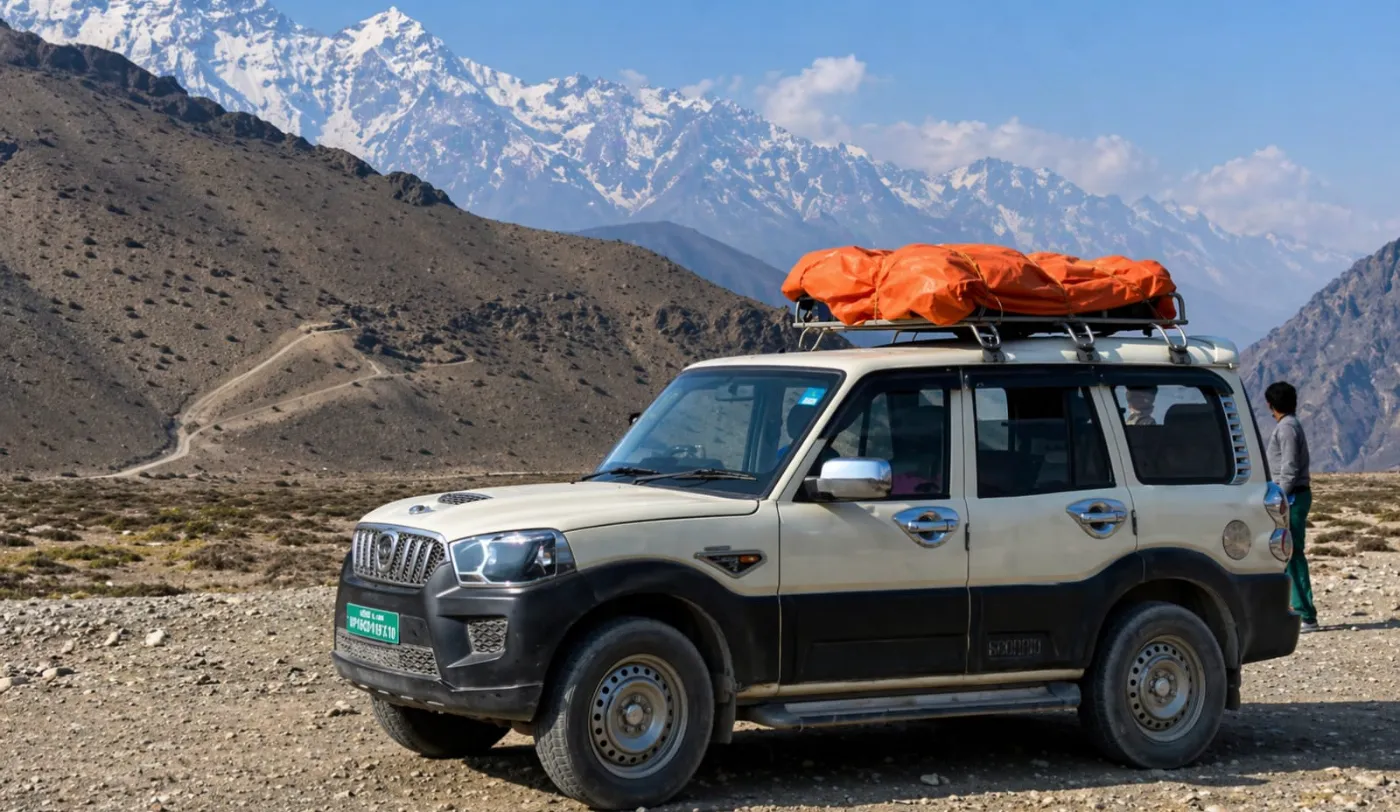
Kathmandu → Salleri  / Kathmandu → pokhara  / Kathmandu → besisahar / kathmandu →  chitwan  / Kathmandu →  Lumbini|  Year-Round Service

Nepal Vehicle Rental: Complete Guide to Car, Jeep, Van and Bus Hire

Why Your Vehicle Choice Defines Your Nepal Experience

Nepal is not a destination you pass through — it is a country you move through, physically and experientially, across an extraordinary range of landscapes, altitudes, cultures, and road conditions that can change dramatically in a single day’s travel. In the morning, you might be in Kathmandu at 1,350 m, threading through the medieval lanes of Bhaktapur’s Durbar Square.

By afternoon, a private jeep has carried you to Kalinchowk at 3,842 m, where snow covers the rhododendron ridges and the Himalayan panorama fills every direction. By the following week, a VIP Sofa Bus will deliver you to the birthplace of the Buddha in Lumbini’s subtropical plains, 600 km and 1,000 m below your morning’s altitude.

This physical and experiential range — Nepal’s defining characteristic as a travel destination — makes choosing a vehicle not merely a logistical consideration but a fundamental determinant of your entire experience in Nepal. The wrong vehicle leaves you stranded in Besisahar while your group heads to Dharapani on the Annapurna Circuit.

The wrong vehicle leaves elderly pilgrims exhausted by a 9-hour bus journey that should have been a 9-hour Land Cruiser journey. The wrong vehicle — a standard car where a 4WD Scorpio was required — leaves you looking at Muktinath on a map rather than standing at its sacred temple.

In Nepal, the vehicle is not incidental to the journey. It is the journey.

This guide — Nepal Vehicle Hiring Pvt Ltd’s ultimate Nepal vehicle rental guide 2026 — is the most comprehensive resource available on private vehicle hire in Nepal. It covers every vehicle type in our fleet, every major route across the country, seasonal road conditions, permit requirements, traveller profiles, and recommended vehicles, Nepal’s unique driving environment, 10 golden rules for Nepal vehicle hire, and a complete FAQ answering every question we receive from travellers, tour operators, and corporate clients.

Whether you are planning your first Nepal visit or your tenth, whether you are coming alone or with a group of fifty, whether your destination is the nearest heritage site or the most remote corner of Upper Mustang — this guide is designed to help you choose the right vehicle and travel Nepal with complete confidence.

Plan your Nepal journey now: Nepal Vehicle Hiring | Jeep Hire | Bus Hire | Hiace Van Hire | Call/WhatsApp: +977 981-4227196

Private jeeps parked in Mustang

Understanding Nepal’s Road Network – The Foundation of Vehicle Hire Planning

Nepal’s Four Road Categories – What Each Means for Vehicle Choice

Nepal’s road network is among the most geographically diverse in the world—spanning smooth, wide Terai highways (like the Mahendra and Prithvi Highways) to precarious cliff-edge off-road mountain tracks above 4,000 meters, where the road is barely wide enough for a single vehicle. Understanding these four categories is the starting point for selecting the right vehicle:

  • Category 1 – Major Paved Highways: The Prithvi Highway (Kathmandu–Pokhara), Mahendra Highway (East- West), Tribhuvan Highway (Kathmandu–Birgunj), Araniko Highway (Kathmandu–Tibet border). These well-maintained paved roads are accessible to all vehicle types, including standard cars, Hiace vans, and tourist buses. Journey times are predictable, and comfort levels are high.
  • Category 2 – Secondary Paved Roads: District roads and regional connections, such as the Pokhara–Baglung Highway, Sindhuli–Okhaldhunga road, and Bardibas–Janakpur route. Paved but often narrower, with sections of road damage, sharp bends, and moderate gradients. Accessible to most vehicles but less comfortable in standard cars on longer journeys. Hiace vans and jeeps are recommended.
  • Category 3 – Unpaved / Gravel Mountain Roads: The Beni–Muktinath Kali Gandaki valley road, sections of the Besisahar–Dharapani Annapurna road, and numerous district and rural roads across the hills. Loose gravel, ruts, river crossings, and steep gradients define these routes. A 4WD with high ground clearance is required – standard vehicles cannot operate safely here.
  • Category 4 – Extreme Off-Road Tracks: The Kagbeni–Lo Manthang (Upper Mustang) track, Karnali Highway sections, Charikot–Kuri Village (Kalinchowk), and other remote mountain tracks—Rocky and narrow, with cliff-edge drops, boulder fields, and altitudes above 3,500 m. Only a Toyota Land Cruiser 4WD or equivalent can reliably and safely navigate these routes.

Scorpio jeeps on the road in Mustang

The 4WD Question – When It Is Mandatory, When It Is Optional

The single most frequently asked question in Nepal vehicle hire is: “Do I need a 4WD vehicle?” The answer depends entirely on your route and the current road conditions. Nepal Vehicle Hiring’s clear guidance:

Nepal’s Unique Driving Environment – What Every Traveller Should Know

Nepal’s driving environment is unlike any other country in South Asia — and understanding its unique characteristics sets realistic expectations and ensures you choose the right vehicle and driver for your journey:

  • Traffic Density – Kathmandu Valley: Kathmandu city traffic is among the densest and most chaotic in South Asia — motorcycles, buses, cars, tuk-tuks, and pedestrians competing for road space with minimal lane discipline. Nepal Vehicle Hiring’s drivers are experienced urban navigators who know the most efficient routes across the city at all hours. Budget extra time for all valley road journeys, especially during morning (8–10 AM) and evening (5–8 PM) rush hours.
  • Mountain Road Hazards: Narrow roads with no barriers, cliff-edge drops, blind corners, oncoming traffic in the same lane, loose rock surfaces, and seasonal landslide debris are all normal features of Nepal’s mountain road environment. These are not reasons to avoid Nepal’s mountain routes — they are reasons to use an experienced, professional driver and the right vehicle.
  • Altitude Effects on Vehicles: Above 3,000 m, standard petrol engines lose up to 30% of their effective power output due to reduced atmospheric oxygen. Diesel engines (used in Land Cruisers and Scorpios) are far less affected by altitude, making them a much better choice for high-altitude routes to Muktinath, Upper Mustang, and Manang.
  • Monsoon Road Changes: Nepal’s June–September monsoon delivers extraordinarily heavy rainfall (Kathmandu receives 1,400 mm; Lumle near Pokhara receives 5,000 mm), causing frequent landslides on mountain roads and significant flooding on Terai routes. Nepal Vehicle Hiring monitors road conditions daily during the monsoon and clearly communicates route safety and alternatives to all clients.
  • Checkpoints and Permits: Nepal has numerous police and army checkpoints on mountain routes, particularly in the Annapurna Conservation Area, Manaslu, and Restricted Area regions. All passengers must carry valid permits (ACAP, TIMS, Restricted Area Permit) and identity documents. Nepal Vehicle Hiring’s drivers are familiar with all checkpoint locations and requirements.

Nepal Vehicle Hiring’s Complete Fleet – Every Vehicle Explained

Vehicle TypeCapacityACOff-Road?Best Use Case in Nepal
Sedan / Hatchback Car1–4 paxYesNoCity tours, airport transfers, Kathmandu Valley sightseeing, and highway transfers (flat roads)
Mahindra Scorpio 4WD1–7 paxYesYes – excellentMountain treks, Muktinath, Kalinchowk, Besisahar–Dharapani, Ulleri, all off-road routes
Toyota Land Cruiser 4WD1–6 paxYesYes – outstandingVIP, Upper Mustang, Karnali, extreme routes, long-distance luxury mountain expeditions
Mahindra Bolero 4WD1–7 paxYesYes – excellentBudget mountain routes, trekking access, Kalinchowk, similar to Scorpio
Toyota Hiace Van8–13 paxYesNo – highwayGroup tours, families, pilgrimages, airport group transfers, tourist circuits
Coaster Mini Bus18–25 paxYesNo – highwayMedium groups, school excursions, moderate hill routes (not off-road)
VIP Sofa Bus (2×1)21–30 paxYesNo – highwayTop-end long-distance groups, pilgrims, international tourists, KTM–Pokhara/Lumbini
Deluxe Tourist Bus (2×2)30–45 paxMostNo – highwayLarge tour groups, pilgrimages, school groups, and all major highway routes
Standard / Non-AC Bus45–52 paxNoNoBudget large groups, domestic local travel, seasonal off-peak transport

Private Car / Sedan – Best for City and Highway Transfers

The private car or sedan — ranging from compact hatchbacks to mid-size sedans — is ideal for solo travellers, couples, small families of up to 4 passengers, and anyone travelling exclusively on Nepal’s paved highways and city road network. The private car’s greatest strengths are cost-effectiveness for small groups, maximum schedule flexibility, full air conditioning, and door-to-door hotel pick-up.

It is the recommended vehicle for: Kathmandu Valley heritage sightseeing, airport transfers, Kathmandu–Chitwan highway runs, and all Category 1 and 2 route journeys with groups of 1–4.

Nepal Vehicle Hiring’s private car fleet is regularly maintained, fully insured, and driven by licensed professional drivers. All our private cars are air-conditioned and available 24/7. Private cars are not suitable for off-road mountain routes beyond Beni, Tikhedhunga, or Charikot—for those destinations, a genuine 4WD vehicle is required, regardless of the driver’s confidence.

Mahindra Scorpio 4WD – Nepal’s Most Versatile Mountain Vehicle

The Mahindra Scorpio 4WD is the single most widely used and trusted private vehicle for Nepal’s mountain routes, for very good reason. Its genuine switchable 4WD system (4H and 4L modes), 180–200 mm ground clearance, powerful diesel engine, 6–7-passenger capacity, and proven reliability in Nepal’s most challenging terrain make it the gold standard for off-road travel in Nepal at the most accessible price point.

The Scorpio is the vehicle of choice for the Muktinath route, Kalinchowk, Besisahar–Dharapani, Pokhara–Ulleri, and dozens of other mountain routes across Nepal. Nepal Vehicle Hiring’s Scorpio fleet is among the finest in the country—regularly serviced, inspected before each mountain journey, and equipped with snow chains for winter operation. See our Jeep Hire page.

Toyota Land Cruiser 4WD – Nepal’s Top-end Mountain Vehicle

The Toyota Land Cruiser — in its 300, 200, 250 Prado, and 150 Prado variants — represents the absolute pinnacle of 4WD performance, comfort, and reliability available in Nepal’s vehicle hire market. Its 220+ mm ground clearance, locking differentials, multi-terrain select system, crawl control, air suspension, and top-end leather interior deliver a categorically superior experience on Nepal’s most demanding routes — Upper Mustang, Karnali, high-altitude Muktinath approaches, and any extreme Category 4 road — and provide meaningful improvements in comfort, safety, and high-altitude performance over the Scorpio on standard mountain routes.

For VIP pilgrims, international luxury tourists, corporate executives, diplomatic visitors, and honeymooners, the Land Cruiser is not a vehicle choice but a travel standard. See our Luxury Jeep Hire page.

Toyota Hiace Van – The Group Highway Workhorse

The Toyota Hiace (8–13 passengers) is Nepal’s most popular vehicle for medium-sized group highway travel—and for good reason. Its spacious interior, comfortable seating, full air conditioning, adequate luggage space, and competitive group pricing make it the most cost-effective per-head private vehicle for groups of 8–13 on Nepal’s highway routes.

Widely used for: pilgrimage groups to Lumbini, Janakpur, and Manakamana; family group circuit tours; trekking group transfers to Besisahar, Syabrubesi, and Salleri; school and college heritage tours; medium corporate group outings. The Hiace is not suitable for off-road mountain routes — when groups of 8+ need off-road capability (e.g., for Kalinchowk or Besisahar–Dharapani), two or more Scorpios or Land Cruisers are the correct solution. See our Hiace Van Hire page.

VIP Sofa Bus – Nepal’s Finest Group Highway Travel

The VIP Sofa Bus (2×1 seating, 21–30 passengers) is Nepal’s top-end group highway bus — featuring sofa-style reclining seats with wide individual space, full AC, WiFi (on major routes), USB charging at every seat, air suspension, panoramic windows, and complimentary mineral water. It offers the most comfortable group bus travel experience on Nepal’s highway network. It is the preferred choice for international tour operators, Buddhist pilgrimage delegations, top-end corporate groups, and senior traveller parties.

The VIP Sofa Bus is exclusively for highway use — not suitable for off-road or hill routes. See our VIP Sofa Bus Hire page.

Tourist Bus and Coaster – Flexible Group Options

Nepal Vehicle Hiring’s Coaster Mini Bus (18–25 passengers) and Deluxe Tourist Bus (30–45 passengers) cover the full range of medium- and large-group highway travel at competitive per-head rates. The Coaster is particularly valued by groups needing more flexibility than a full tourist bus—its compact size lets it navigate secondary roads and reach hill destinations (Charikot, Bandipur) that full-size buses cannot.

The Deluxe Tourist Bus is the standard vehicle for school excursions, large pilgrimage groups, corporate team outings, and wedding party transport. See Coaster Hire and Bus Hire Nepal.

Best Vehicle for Every Major Nepal Route – Complete Reference

Destination / RouteDistance4WD Needed?Recommended Vehicle
Kathmandu to Pokhara200 kmNoCar, Jeep, Hiace, VIP Sofa Bus, Tourist Bus
Kathmandu to Chitwan150 kmNoCar, Jeep, Hiace, VIP Sofa Bus
Kathmandu to Muktinath400 kmYES – MandatoryToyota Land Cruiser, Scorpio, Bolero
Kathmandu to Kalinchowk150 kmYES – MandatoryScorpio, Bolero, Land Cruiser
Kathmandu to Lumbini280 kmNoCar, Jeep, VIP Sofa Bus, Tourist Bus
Pokhara to Muktinath200 kmYES – MandatoryLand Cruiser, Scorpio, Bolero
Pokhara to Ulleri / Ghorepani52–70 kmYES – MandatoryScorpio, Land Cruiser, Bolero
Besisahar to Dharapani40 kmYES – MandatoryLand Cruiser, Scorpio, Bolero
Nepalgunj to Bardiya74 kmNoCar, Jeep, Hiace, Bus
Kathmandu to Bandipur143 kmRecommendedScorpio, Land Cruiser for Dumre Hill section
Upper Mustang (Lo Manthang)500 kmYES – OutstandingLand Cruiser 4WD only – no other vehicle is suitable
Chitwan to Birgunj160 kmNoCar, Jeep, Hiace, Bus
Lumbini to Kathmandu280 kmNoCar, Jeep, Hiace, VIP Sofa Bus, Tourist Bus

Nepal Vehicle Hire by Traveller Profile – Who Needs What

Traveller ProfileBest Nepal Vehicle Hiring Solution
Solo or Couple – Standard BudgetPrivate Sedan or Car for city and highway transfers. Scorpio 4WD for mountain routes.
Family (4–6 people)Mahindra Scorpio or Toyota Land Cruiser 4WD – covers all routes, including mountains, with full comfort and luggage space.
Small Friend Group (5–7)Scorpio or Land Cruiser for mountain routes. Hiace Van for highway group travel at a reduced per-person cost.
Medium Group (8–15 pax)Toyota Hiace Van (8–13 pax) for all highway routes. Scorpio convoy for off-road mountain routes.
Large Group (20–30 pax)VIP Sofa Bus (top-end) or Coaster (mid-range) for highway routes. Multiple Scorpios for mountain off-road routes.
Large Group (35–52 pax)Deluxe Tourist Bus (AC) or Standard Bus. VIP Sofa Bus is not available at this capacity – book two VIP Sofa Buses for 50–60 pax.
VIP / Corporate / DiplomaticToyota Land Cruiser 300 (LC300) private hire. Most top-end comfort and capability. Professional uniformed driver.
Buddhist / Hindu Pilgrim GroupVIP Sofa Bus or Land Cruiser, depending on group size. Prayer stop flexibility, vegetarian meal coordination, and senior-passenger support.
Trekking Group (Annapurna Circuit, Everest, Langtang)Scorpio or Land Cruiser for trailhead transfers. Hiace from Kathmandu/Pokhara to Besisahar, Syabrubesi, or Salleri.

Seasonal Vehicle Hire Guide – Nepal

SeasonMonthsHighway RoadsMountain Off-RoadVehicle Hire Tip
AutumnOct–NovExcellentDry and stable – bestBook 1–2 weeks ahead. Peak demand. Finest season for all routes.
SpringMar–MayGoodGood – some soft sectionsBook 5–7 days ahead. Rhododendrons bloom. Great driving conditions.
WinterDec–FebCold; some frostSnow chains are required above 2,000 mLand Cruiser or Scorpio with chains for mountains. Book early for Kalinchowk.
MonsoonJun–SepLandslide risk on Prithvi & hilly roadsMuddy; some routes closed4WD is mandatory for all mountain routes. Check conditions daily. Terai routes are safer.

Autumn (October–November) – Peak Season, Peak Demand

October and November are Nepal’s finest travel months and the most in-demand period for private vehicle hire. Post-monsoon road conditions are at their best across the country — the Prithvi Highway is clear and dry, the Kali Gandaki valley road is stable, Kalinchowk’s off-road section is in optimal condition, and every mountain route is at its most accessible.

Clear skies, sharp mountain views, and the extraordinary festive atmosphere of Dashain and Tihar make this Nepal’s travel high season without rival.

Vehicle hire during the peak autumn season is characterised by very high demand and limited availability of top-end vehicles—particularly Land Cruisers for Muktinath and Scorpios for Kalinchowk. Nepal Vehicle Hiring strongly recommends booking 1–2 weeks in advance for jeep hire and 3–5 days for bus hire during October and November. Festival dates (Dashain, Tihar, Chhath Puja) see particularly concentrated demand — book 2–3 weeks ahead for these dates.

Spring (March–May) – The Rhododendron Season

Spring is the second-best Nepal travel season, offering warm temperatures, good road conditions, and the spectacular rhododendron bloom along Nepal’s mid-hill routes from March through April. Mountain views are excellent through April, with some haze building in May.

Spring is particularly rewarding for the Pokhara–Ghorepani jeep hire (Route 1), the Kalinchowk Scorpio hire, and the Muktinath and Annapurna Circuit jeep routes. The Haribodhini Ekadashi festival at Muktinath (usually April–May) brings significant pilgrim traffic — book Muktinath jeep hire 2+ weeks ahead during festival dates.

Winter (December–February) – Snow and Silence

Winter is Nepal’s quietest travel season — offering dramatically reduced crowds, lower accommodation prices, and, on certain routes, the year’s most powerful experiences. The Kalinchowk Scorpio hire in December and January for snowfall experiences is paradoxically the most in-demand period in Nepal’s domestic winter tourism calendar — book 2–3 weeks ahead for weekend snowfall dates.

Mountain routes above 3,000 m require snow chains on 4WD vehicles from December. Highway routes (Kathmandu–Pokhara, Kathmandu–Lumbini) are fully operational year-round with no winter disruption.

Monsoon (June–September) – Navigate with Caution

The monsoon season brings Nepal’s most challenging driving conditions — particularly on mountain and hilly routes where frequent landslides, muddy off-road sections, and reduced visibility create real hazards. Nepal Vehicle Hiring monitors road conditions daily during monsoon and communicates openly with all clients about route safety.

Terai highway routes (Kathmandu–Lumbini, Kathmandu–Chitwan, Lumbini–Kathmandu) are generally safe year-round. Mountain routes (Muktinath, Kalinchowk, Besisahar–Dharapani) carry a genuine risk during heavy rainfall and are advisable only with experienced 4WD drivers who actively monitor conditions.

Permits Required for Nepal Vehicle Hire Routes – Complete Reference

PermitWhere RequiredCost (Foreign)Where to Obtain
ACAPAnnapurna region (Muktinath, Ghorepani, Besisahar, Jomsom)NPR 3,000NTB Kathmandu / Pokhara / Besisahar
TIMS CardAll Annapurna / trekking regionsUSD 20NTB / TAAN offices KTM / Pokhara
Manaslu MCAPManaslu Circuit, Tsum ValleyNPR 3,000NTB Kathmandu office
Upper Mustang RAPAbove Kagbeni toward Lo ManthangUSD 500 / 10 daysRegistered trekking agency only
Gaurishankar CAKalinchowk / Kuri Village areaNPR 1,000Paid at the area entry point

Nepal Vehicle Hiring advises all clients to obtain permits in Kathmandu or Pokhara before departure — not at mountain checkpoints, where costs are higher, processing is slower, and delays can compromise your journey timing. The NTB (Nepal Tourism Board) offices in Kathmandu (Pradarshani Marg) and Pokhara (Damside) process ACAP and TIMS permits in 30 minutes on weekday mornings. Nepal Vehicle Hiring can advise on permit requirements for any route when you book.

10 Golden Rules for Nepal Vehicle Hire – Nepal Vehicle Hiring’s Expert Advice

Rule 1: Always Match Vehicle to Route – Not Budget to Route

The most costly mistake in Nepal vehicle hire is choosing a vehicle based on price rather than route requirements. A standard SUV that costs NPR 3,000 less per day than a Scorpio but cannot navigate the Kalinchowk off-road section hasn’t saved you money — it’s wasted the entire journey cost plus the price of a wasted travel day.

Nepal Vehicle Hiring’s booking team asks about your full route before recommending a vehicle, ot the other way around. Always confirm that your chosen vehicle suits every segment of your planned journey.

Rule 2: Book Early – Especially for Mountain Jeeps in Peak Season

Nepal’s finest mountain vehicles — Land Cruisers for Upper Mustang, Scorpios for Kalinchowk, experienced drivers for the Muktinath route — are finite resources in very high demand during peak season. Booking 10 days ahead versus 1 day ahead in October can mean the difference between a Land Cruiser and… no vehicle at all.

Nepal Vehicle Hiring operates on a first-confirmed, first-served basis. Book in advance. Always.

Rule 3: Depart Early – Mountain Roads Belong to the Morning

Nepal’s mountain roads are safest and most pleasant in the early morning, before traffic builds, passing vehicles raise dust, and afternoon winds begin in the Kali Gandaki and other mountain valleys. Nepal Vehicle Hiring recommends departures of 6:00–7:00 AM for all mountain-route journeys and 6:30–7:30 AM for long highway routes (Kathmandu–Pokhara, Lumbini–Kathmandu).

Early departure for the Muktinath section is particularly critical — the Jomsom valley afternoon winds (sometimes gale-force from midday onward) make driving later in the day genuinely hazardous.

Rule 4: Always Carry Cash – Nepal’s Mountain Areas Are Card-Free

The last reliable ATMs for most mountain routes are in Pokhara (for western Nepal routes) and Besisahar (for Annapurna Circuit routes). Beyond these cities, teahouses, guesthouses, restaurants, cable cars, and permit checkpoints accept only cash. Nepal Vehicle Hiring recommends: withdraw sufficient NPR before departing on any mountain journey.

For multi-day Muktinath or Upper Mustang trips, carry at least NPR 15,000–20,000 per person for accommodation, food, and unforeseen expenses.

Rule 5: Obtain All Permits Before Departure

Permits obtained at mountain checkpoints cost significantly more than those obtained in advance at NTB offices in Kathmandu or Pokhara. Beyond the cost, buying at checkpoints is time-consuming and causes significant delays.

Nepal Vehicle Hiring builds permit-check time at Nayapul (Annapurna) and Beni (Mustang routes) into our journey timing calculations — but only if permits are already in hand. Without permits obtained in advance, delays can be 1–2 hours, and costs can be significantly higher.

Rule 6: Trust Your Driver’s Road Assessment

Nepal Vehicle Hiring’s mountain drivers are professional specialists, not just vehicle operators. When a Nepal Vehicle Hiring driver says “today we park at Hile, not Ulleri” or “the Deurali section requires chains before we continue”, they are making a professional safety assessment based on years of experience with that specific road in those specific conditions.

Pressuring drivers to proceed on roads they have assessed as unsafe is a primary cause of vehicle accidents in Nepal’s mountains. Trust the driver. Safety is not negotiable.

Rule 7: Know the Altitude – Prepare Your Body for Mountain Routes

Destinations like Muktinath (3,760 m), Kalinchowk (3,842 m), and Thorong La Pass (5,416 m) are at altitudes where acute mountain sickness (AMS) is a genuine medical risk for visitors ascending rapidly from Kathmandu (1,350 m)—common symptoms: persistent headache, nausea, fatigue, and dizziness. Nepal Vehicle Hiring recommends: never drive to 3,500+ m on your first day of arrival in Nepal; spend a night at an intermediate altitude (Jomsom at 2,743 m for Muktinath, Kuri Village at 2,300 m for Kalinchowk); drink 3–4 litres of water daily at altitude; carry Diamox if prescribed by your doctor.

Rule 8: Private Charter Beats Shared Transport for Comfort and Control

Nepal Vehicle Hiring operates an exclusively private charter model — your group hires the entire vehicle. This isn’t a top-end service; it is the standard every Nepali journey deserves.

Shared jeeps — the public alternatives on routes like Besisahar–Dharapani or Nayapul–Ghorepani — are overcrowded, depart on unpredictable schedules, carry freight alongside passengers, and stop anywhere along the route without notice. The per-person cost difference between a shared jeep and a Nepal Vehicle Hiring private jeep, split across a group of 5–7, is often smaller than travellers expect — and the difference in comfort, safety, and flexibility is enormous.

Rule 9: Plan Around Your Flight – Not the Other Way

Nepal’s long-distance route travel times — Lumbini to Kathmandu Airport (8–10 hours), Chitwan to Kathmandu (4–5 hours), Pokhara to Kathmandu (6–8 hours) — must be planned backwards from your departure flight time, not forward from your desired departure time. Nepal Vehicle Hiring’s operations team performs this flight-backwards timing calculation for every airport transfer booking, providing a recommended departure time for Lumbini / Chitwan / Pokhara that ensures you arrive at the airport with a 3-hour international buffer and a 1.5-hour domestic buffer. Always share your flight details with Nepal Vehicle Hiring when booking.

Rule 10: Nepal Vehicle Hiring Is Available 24/7 – Always Communicate

Every Nepal journey can bring the unexpected — a highway landslide, a flight delay that disrupts the departure chain, a sudden change in weather on a mountain route, or a passenger’s medical issue. Nepal Vehicle Hiring’s 24/7 operations line on WhatsApp is staffed throughout all operating hours.

It can reroute, reschedule, substitute vehicles, contact emergency services, and resolve any travel issues that arise during your Nepal journey. Communication prevents the unexpected from becoming a crisis.

Nepal Vehicle Hiring – Complete Services Overview

Service CategoryNepal Vehicle Hiring Key Routes & Blog Links
Mountain Jeep RoutesMuktinath (from KTM & Pokhara), Upper Mustang, Kalinchowk, Besisahar–Dharapani, Pokhara–Ulleri, Pokhara–Ghorepani
Pilgrimage TransfersLumbini transfers, Janakpur airport, Muktinath Yatra, Manakamana, Pashupatinath sightseeing, Pokhara to Muktinath
City to City HighwayKathmandu–Pokhara, Kathmandu–Chitwan, Kathmandu–Lumbini, Kathmandu–Birgunj, Chitwan–Birgunj, Lumbini–Kathmandu
Airport TransfersLumbini to KTM Airport, Janakpur Airport Transfer, Nepalgunj to Bardiya, Pokhara Airport to Muktinath
Heritage & SightseeingKathmandu Valley (7 UNESCO sites), Bhaktapur, Nagarkot, Dhulikhel, Bandipur, Kalinchowk, Panauti–Namobuddha
Luxury & VIP ServicesLand Cruiser hire Nepal, Chitwan luxury car, Muktinath top-end jeep, corporate Nepal travel, diplomatic transfers.
Bus & Large GroupVIP Sofa Bus hire Nepal, Tourist Bus hire Nepal, Coaster hire Nepal, Hiace Van hire Nepal
Trekking TransfersBesisahar–Dharapani (Annapurna), Pokhara–Ulleri (Poon Hill), Salleri (Everest), Syabrubesi (Langtang)

Why Nepal Vehicle Hiring Is Nepal’s Most Trusted Vehicle Hire Partner

Nepal Vehicle Hiring Pvt Ltd was established with one mission: to provide Nepal’s most reliable, most professional, and most customer-focused private vehicle hire service. In a market where quality standards vary enormously between operators, Nepal Vehicle Hiring has built its reputation on five non-negotiable pillars:

  • Fleet Quality: Every Nepal Vehicle Hiring vehicle is regularly serviced, mechanically inspected before every mountain departure, fully insured, and green-plated (legally registered for tourist use).
  • Driver Expertise: All drivers hold valid DoTM licenses at the appropriate category level, have route-specific experience, are English-speaking, and have completed Nepal Vehicle Hiring’s internal safety training program.
  • Transparency: We disclose full pricing in writing before booking confirmation. No hidden charges. No surprise fees on travel day. What is quoted is what is charged.
  • 24/7 Support: Nepal Vehicle Hiring’s operations team is available around the clock — not just for bookings but for real-time journey support, emergency response, and problem resolution throughout every trip.
  • Range and Coverage: From a single private car for a Kathmandu Valley heritage day tour to a convoy of Land Cruisers for an Upper Mustang expedition to a VIP Sofa Bus for a 30-person international Buddhist delegation — Nepal Vehicle Hiring covers every scale, every route, every vehicle category, every corner of Nepal.

Explore our complete service library — each blog is a detailed guide to a specific route, vehicle type, or destination:

Frequently Asked Questions

The Mahindra Scorpio 4WD is the most widely used private vehicle for Nepal’s mountain routes — particularly popular for Muktinath, Kalinchowk, Besisahar–Dharapani, Pokhara–Ulleri, and Pokhara–Ghorepani. It offers the best balance of genuine 4WD capability, passenger comfort (6–7 seats), luggage space, and cost-effectiveness. For routes demanding maximum off-road performance and passenger luxury — Upper Mustang, Karnali, VIP pilgrimages — the Toyota Land Cruiser is the top-end choice.

Is a driver included with Nepal Vehicle Hiring vehicles?

Yes — all Nepal Vehicle Hiring vehicle hires include a professional, licensed driver as standard. Nepal Vehicle Hiring does not offer self-drive for safety, legal, and practical reasons (Nepal’s mountain road conditions require route-specific local expertise that visiting drivers cannot practically possess). Our drivers are not merely vehicle operators — they are experienced Nepal travel professionals who enhance the journey with local knowledge, cultural insight, and genuine care for passenger wellbeing.

Can I hire a vehicle for multiple days / a full Nepal circuit?

Yes — multi-day, full-circuit vehicle hire is one of Nepal Vehicle Hiring’s most popular services. We arrange Kathmandu–Pokhara–Chitwan–Kathmandu circuits, Kathmandu–Muktinath–Kathmandu Yatra trips, Nepal Golden Triangle circuits, and custom multi-week itineraries with the same vehicle and driver throughout — ensuring continuity, consistency, and the deep local relationship between driver and passenger group that multi-day travel creates.

How far in advance should I book a vehicle hire in Nepal?

Standard periods: 2–5 days ahead. Peak tourist season (Oct–Nov, Mar–May): 7–14 days ahead. Festival periods (Dashain, Tihar, Vivah Panchami): 2–4 weeks ahead.

Winter Kalinchowk snowfall weekends (Dec–Jan): 1–2 weeks ahead. Upper Mustang expeditions: 3–4 weeks ahead (permit + vehicle combined). For large groups (20+ passengers): always at least 2 weeks, regardless of season.

What is included in the Nepal Vehicle Hiring price?

All Nepal Vehicle Hiring hires include the vehicle, professional driver, fuel for the agreed route, vehicle insurance, and all vehicle running costs. Not included: trekking or conservation area permits (ACAP, TIMS, Restricted Area), passenger food and accommodation, driver accommodation on multi-day trips (quoted separately and transparently), and driver gratuity. Fully transparent pricing is provided before booking confirmation — no hidden charges.

Can Nepal Vehicle Hiring pick me up from my hotel?

Yes — hotel pick-up from any hotel, guesthouse, resort, or specified address in Kathmandu, Pokhara, Chitwan, Lumbini, and all major cities in Nepal is standard for private vehicle bookings. This is one of the key advantages of private hire over public transport — no secondary taxi to a bus park, no navigating an unfamiliar city with heavy luggage. Your driver arrives at your hotel at the agreed time.

What is the difference between a VIP Sofa Bus and a VIP Deluxe Bus?

The key difference is seating configuration. VIP Sofa Bus: 2×1 seats (one on the right, two on the left) — 21–30 passengers with exceptional personal space. VIP Deluxe Bus: 2×2 seats — 30–40 passengers with good but standard bus comfort.

The Sofa Bus is superior for long-distance comfort (especially overnight travel), but the Deluxe Bus accommodates a larger group at a lower per-head cost.

How do I know which vehicle is right for my trip to Nepal?

The three key questions that determine your Nepal vehicle: (1) How many passengers? (2) Which routes will you travel — highway only or mountain off-road? (3) What are your comfort and budget priorities? Nepal Vehicle Hiring’s booking team asks these questions and recommends the right vehicle based on your answers. Use the vehicle-by-route table in this guide as a reference, or call us at +977 981-4227196 for personalised advice.

Are Nepal Vehicle Hiring vehicles safe for families with children?

Yes — Nepal Vehicle Hiring’s fleet is fully insured and maintained to high safety standards. Our drivers are experienced in family group travel and adapt their driving style accordingly.

For families with young children, the Toyota Land Cruiser Prado (7-seat) and Mahindra Scorpio are the most recommended family vehicles, offering easy rear-door access, spacious seating, ample boot space for family luggage, and the smoothest available ride on mountain routes. Child seat requests can be accommodated — advise us at the time of booking.

Can I book a vehicle hire in Nepal from outside Nepal?

Yes — Nepal Vehicle Hiring accepts bookings from anywhere in the world via WhatsApp, email, and the website (vehiclehiringnepal.com). International clients frequently book months in advance to secure top-end vehicles for peak-season Nepal itineraries. We coordinate all booking details, confirmations, and itinerary planning remotely and provide full booking documentation via WhatsApp or email before travel.

Your Nepal Journey Starts Here – Book with Nepal Vehicle Hiring Today

Nepal is one of the most extraordinary travel destinations on earth — a country that compresses tundra and tropics, ancient kingdoms and Himalayan wilderness, sacred pilgrimage and high adventure, Buddhist monasteries and Hindu temples into a landscape barely the size of England. To do it justice —to reach its heights and depths, to connect its ancient cities and remote mountain valleys—you need the right vehicle, the right driver, and the right partner.

Nepal Vehicle Hiring Pvt Ltd has partnered with thousands of travellers, pilgrims, trekkers, tour operators, and corporate clients across Nepal. Our complete fleet — from private cars to luxury Land Cruisers, from Hiace vans to VIP Sofa Buses — our professional, licensed, route-experienced drivers, and our 24/7 customer service and operations support make Nepal Vehicle Hiring Nepal’s most trusted private vehicle hire service in 2026.

Whatever your Nepal destination — and whatever your group size, budget, or travel style — Nepal Vehicle Hiring has the perfect vehicle and the perfect service for your perfect Nepal journey.

Call / WhatsApp: +977 981-4227196 |  Website: vehiclehiringnepal.com  |  Book a Jeep or Car  |  Book a Bus or Van

Kathmandu to Chitwan Transfer

Chitwan

Kathmandu to Chitwan Transfer: Complete Guide to Car, Jeep, Bus & Van Options

Chitwan National Park — Nepal’s first and most celebrated national park, and a UNESCO World Heritage Site — is the country’s most visited wildlife destination and an essential stop on almost every Nepal itinerary. After the temples, monuments, and cultural richness of Kathmandu Valley, the transition to the lush Terai lowlands of Chitwan — with one-horned rhinoceroses grazing in the grasslands, Bengal tigers moving through the forest, wild elephants at the riverside, and over 544 bird species filling the trees — is one of the most dramatic and rewarding journeys in Asia.

The transfer from Kathmandu to Chitwan covers about 150 to 170 kilometres along the Prithvi Highway and the East-West Highway, taking 5 to 7 hours depending on the mode of transport and traffic conditions. In 2026, travellers will have a wide range of transfer options available —from budget-friendly shared tourist buses to top-end private cars, from spacious family jeeps to large Hiace vans for groups, and from VIP sofa coaches to full coaster buses for larger parties.

At Nepal Vehicle Hiring Pvt Ltd, we offer a complete range of Kathmandu-to-Chitwan transfer services, including private cars, jeeps, Hiace vans, coaster buses, and tourist bus ticket booking. This comprehensive 2026 guide covers every available option, including full cost comparisons, departure details, route highlights, the optional Bandipur detour, seasonal guidance, and expert tips to ensure every Kathmandu-to-Chitwan transfer is smooth, comfortable, and genuinely enjoyable.

All Kathmandu to Chitwan Transfer Options –  Quick Comparison

Transfer OptionTimeCostDepartureComfortBest For
Local / Deluxe Bus6–8 hrsNPR 500–900/personGongabu Bus Park (6 AM)LowCheapest shared option
Tourist Bus (Standard)5–7 hrsNPR 1,000–1,300/personSorhakhutte Tourist Park (7 AM)MediumBudget independent
VIP Sofa Bus (2+1)5–6 hrsNPR 1,400–2,000/personSorhakhutte Tourist Park (7 AM)HighComfort-seeking solo/couple
Night BusOvernightNPR 1,000–1,800/personGongabu / Sorhakhutte (7–10 PM)MediumSave hotel cost
Private Car (Sedan/SUV)4–5 hrsNPR 12,000–20,000 (vehicle)Hotel pickupVery HighCouple, small family
Private Jeep (4WD)4–5 hrsNPR 15,000–24,000 (vehicle)Hotel pickupVery HighGroup of 4–6
Toyota Hiace Van5–6 hrsNPR 20,000–30,000 (vehicle)Hotel pickupVery HighGroup of 7–10
Toyota Coaster5–6 hrsNPR 28,000–42,000 (vehicle)Hotel pickupHighGroup of 12–18
Tourist Bus (Private)5–7 hrsNPR 38,000–60,000 (vehicle)Hotel pickupHighGroup of 25–40

Kathmandu to Chitwan – Journey Quick Facts

DetailInformation
Road DistanceApproximately 150–170 km
Drive Time (Private Vehicle)4 to 5 hours
Drive Time (Tourist Bus)5 to 7 hours
Main RouteKathmandu → Prithvi Highway → Mugling → East-West Highway → Bharatpur → Sauraha
Key Rest StopMugling (midpoint) – Trishuli riverside lunch
Tourist Bus DepartureSorhakhutte Tourist Bus Park, Kathmandu – 7:00 AM
Arrival PointSauraha Bus Park or direct to the resort (private vehicle)
Best Departure Time7:00 AM – 8:00 AM for a comfortable daytime journey
Road ConditionMostly paved; ongoing upgrades near Mugling junction
Scenic HighlightTrishuli River gorge, Narayanghat river plains

Private Vehicle Transfer: Kathmandu to Chitwan

Nepal Vehicle Hiring Pvt Ltd provides professional hotel-to-resort private vehicle transfer services for the Kathmandu-to-Chitwan route. All private vehicles include hotel pickup in Kathmandu and direct resort drop-off in Sauraha:

Pokhara to Chitwan

Private Car – Best for Couples and Small Families

A private car is the ideal choice for solo travellers, couples, and small families of up to 4 people seeking comfort, speed, and door-to-door service for the Kathmandu-to-Chitwan transfer.

Car TypeCapacityOne Way (NPR)One Way (USD)Round Trip (NPR)
Standard Sedan (Dzire/Etios)2–3 paxNPR 12,000–15,000USD 90–120NPR 20,000–30,000
SUV / Crossover3–4 paxNPR 14,000–18,000USD 105–150NPR 24,000–40,000
Top-end SUV4 paxNPR 17,000–22,000USD 127–200NPR 29,000–55,000

The private 4WD jeep is the most popular vehicle for the Kathmandu-to-Chitwan transfer, especially for trekking groups heading to or returning from Chitwan. It offers more space, higher seating, and better luggage capacity than a standard car.

Jeep TypeCapacityOne Way (NPR)One Way (USD)Round Trip (NPR)
Standard Jeep (Scorpio/Bolero)4–5 paxNPR 15,000–26,000USD 112–150NPR 26,000–40,000
4WD Jeep (Hilux/Fortuner)5–6 paxNPR 18,000–24,000USD 135–300NPR 31,000–55,000
Top-end 4WD (Land Cruiser)5–6 paxNPR 22,000–30,000USD 165–400NPR 38,000–90,000

Toyota Hiace Van – Best for Groups of 7 to 10

The Toyota Hiace van is the most practical and economical private vehicle for larger family groups and small tour parties travelling from Kathmandu to Chitwan.

DetailInformation
Seating Capacity7 to 10 passengers comfortably
One-Way CostNPR 20,000–30,000 (USD 150–225)
Round Trip CostNPR 34,000–52,000 (USD 255–390)
Air ConditioningFull front and rear AC
Luggage SpaceLarge rear boot + roof rack
Best ForExtended families, small tour groups, mixed groups

Chitwan Riverside Bamboo Huts and Reflections

Coaster Bus and Tourist Bus – Large Groups

For groups of 12 or more, Nepal Vehicle Hiring offers coaster buses and full tourist buses for the Kathmandu to Chitwan transfer:

VehicleCapacityOne Way (NPR)One Way (USD)Best For
Toyota Coaster12–18 paxNPR 28,000–42,000USD 210–315Medium tour groups, corporate
Mini Bus20–25 paxNPR 35,000–50,000USD 260–375Mid-large groups
Tourist Bus (Private)25–40 paxNPR 38,000–60,000USD 285–450Large tour groups, schools

Note: All private vehicle prices include driver, fuel, and toll charges for the one-way journey from Kathmandu to Chitwan/Sauraha. Contact Nepal Vehicle Hiring for confirmed quotes for your specific travel date and group size.

What Is Included in Your Nepal Vehicle Hiring Private Transfer

  • Hotel pickup from your exact accommodation anywhere in Kathmandu – Thamel, Lazimpat, Boudha, or any area
  • Air-conditioned private vehicle – well-maintained and regularly serviced
  • Professional, licensed driver experienced on the Kathmandu to Chitwan Prithvi Highway
  • Fuel, toll charges, and all driver expenses are included in the quoted price
  • Freedom to stop at Mugling, Bandipur, Narayanghat, or any attraction on request
  • Direct drop-off at your resort or hotel entrance in Sauraha, Chitwan
  • Flexible departure time – leave Kathmandu when you are ready
  • 24-hour Nepal Vehicle Hiring operations contact for any in-journey support

Tourist Bus Options: Kathmandu to Chitwan

Shared tourist buses are the most popular choice for independent travellers and backpackers on the Kathmandu-to-Chitwan route. Here is the complete guide to all bus categories:

Bus TypeSeat LayoutTicket Price (NPR)Ticket Price (USD)DepartureComfort
Local / Deluxe Bus2+2NPR 500–900USD 3.7–6.7Gongabu Bus Park, 6 AMLow–Medium
Standard Tourist Bus2+2NPR 1,000–1,300USD 7.5–9.7Sorhakhutte, 7 AMMedium
Super Deluxe Bus2+2NPR 1,200–1,600USD 9–12Sorhakhutte, 7 AMGood
VIP Sofa Bus2+1NPR 1,400–2,000USD 10.5–15Sorhakhutte, 7–8 AMHigh
Night Bus2+1 or 2+2NPR 1,000–1,800USD 7.5–13.5Gongabu/Sorhakhutte, 7–10 PMMedium

Departure point for tourist buses: Sorhakhutte Tourist Bus Park (also called New Bus Park), about 20- 30 minutes by taxi from Thamel (NPR 400–600). Arrive at least 30 minutes before the 7:00 AM departure.

Kathmandu to Chitwan Tour Package: Complete Travel Guide

Complete Transfer Comparison: Kathmandu to Chitwan

FactorVIP Sofa BusPrivate CarPrivate JeepHiace VanLocal Bus
Journey Time5–6 hrs4–5 hrs4–5 hrs5–6 hrs6–8 hrs
Cost (per person, est.)NPR 1,400–2,000NPR 3,000–7,300*NPR 2,500–6,000*NPR 2,000–4,300*NPR 500–900
Hotel PickupSorhakhutte Bus ParkYes – doorYes – doorYes – doorGongabu Bus Park
Drop-offSauraha Bus ParkResort entranceResort entranceResort entranceSauraha Bus Park
Departure TimeFixed 7 AMFully flexibleFully flexibleFully flexibleFixed 6 AM
Luggage SpaceUnderfloorGoodExcellentExcellentVery limited
Stop FreedomNoneFullFullFullNone
PrivacyShared 25–30 paxCompleteCompleteCompleteNo
Best ForSolo/couple budgetCouple/small familyGroups 4–6Groups 7–10Cheapest

* Per-person cost based on typical group size: car per 2–3 pax, Jeep per 4–5 pax, Hiace per 7–9 pax.

Kathmandu to Chitwan Route – Highlights and Stops

The Prithvi Highway from Kathmandu to Chitwan is a beautiful and varied road journey. Here are the key highlights and recommended stops along the way:

Kathmandu Valley Exit – Chandragiri Hills

As the vehicle leaves Kathmandu, the road climbs through the Chandragiri hills at the valley rim before descending steeply through the Naubise area. This transition from Kathmandu’s dense urban bowl to the open river valley below is dramatic and immediate. On clear days, you can see the Himalayan range behind you as you exit the valley.

Prithvi Highway – Trishuli River Gorge

After Naubise, the Prithvi Highway follows the Trishuli River through a spectacular gorge. The road winds alongside the rushing river for approximately 60 kilometres from Naubise to Mugling, with forested hillsides above, cascading side streams, and traditional Nepali villages clinging to the slopes. This is consistently the most scenic section of the entire Kathmandu-to-Chitwan road journey.

Mugling – The Essential Midway Stop

Mugling sits at the confluence of the Trishuli and Marsyangdi rivers, approximately 90-100 km from Kathmandu, and is Nepal’s most famous roadside stop. Almost every tourist bus and private vehicle stops here for 20 to 30 minutes. Riverside restaurants serve fresh fish curry (Mugling fish curry is legendary throughout Nepal), dal bhat, and snacks.

The riverside setting with the two rivers meeting below is scenic and refreshing. For families with children, Mugling is an excellent stretch-your-legs opportunity.

Bandipur – Optional UNESCO Heritage Town Detour

Bandipur is one of Nepal’s most remarkable heritage destinations — a beautifully preserved Newari hilltop trading town about 8 km off the Prithvi Highway between Dumre and Mugling. With its cobblestone main street, traditional Newari architecture, panoramic mountain views of the Annapurna and Manaslu ranges, and the nearby Siddha Cave (Nepal’s largest cave), Bandipur is an outstanding cultural detour that adds approximately 1 to 1.5 hours to the journey.

With a private vehicle from Nepal Vehicle Hiring, this stop is entirely flexible and on request.

Narayanghat – Terai Entry

After Mugling, the route turns south on the East-West Highway and begins the final descent to the Terai lowlands. Narayanghat is the major city at the Terai entry point, situated at the confluence of the Narayani and Rapti rivers. The transition from the hilly gorge terrain to the flat, green Terai landscape is noticeable and dramatic — the temperature rises, the vegetation becomes denser and more tropical, and Nepal’s character shifts completely.

Bharatpur to Sauraha – Chitwan Approach

From Narayanghat, the route continues to Bharatpur — the administrative headquarters of Chitwan District and one of Nepal’s largest cities — before the final approach road to Sauraha, the main tourist gateway to Chitwan National Park. The approach to Sauraha via Bharatpur passes through flat Terai countryside, with occasional views of the Rapti River and the national park forest on the southern horizon.

Route Overview Table: Kathmandu to Sauraha

StageSectionDistanceRoadTimeNotes
1Kathmandu to Naubise30 kmPrithvi Hwy – paved45 minValley exit, Chandragiri Hills
2Naubise to Mugling65 kmPrithvi Hwy – gorge road1.5–2 hrsTrishuli River gorge – most scenic section
3Mugling Rest Stop0 km–20–30 minRiverside lunch or snacks – all vehicles stop
4Mugling to Narayanghat35 kmEast-West Hwy45 minTerai entry, flat lowlands
5Narayanghat to Bharatpur15 kmPaved – good20 minMajor city, East-West Highway
6Bharatpur to Sauraha22 kmGood approach road30 minNational park edge, resort area
TOTALKathmandu to Sauraha~167 kmMostly paved4–5 hrs (private)Classic Nepal highway journey

Which Transfer Option is Right for You?

Your ProfileBest OptionReason
Solo traveller, budgetVIP Sofa Bus (NPR 1,400–2,000)Best comfort-to-cost ratio for single travellers
Couple on a tight budgetTourist Bus or Sofa BusTwo adjacent seats, affordable, morning schedule
A couple wanting comfortPrivate Car (Sedan/SUV)Door-to-door, flexible, fast, private
Family of 4Private SUV or JeepSpace for bags, flexibility, and hotel pickup
Family of 5–6Private Jeep (Hilux/Fortuner)All family together, boot space, fast
Group of 7–10Toyota Hiace VanOne vehicle, hotel pickup, economical per head
Group of 12–18Toyota CoasterAll together, AC, a professional driver
Large group 25+Private Tourist BusMaximum capacity, single vehicle, group cohesion
Night travellerNight Bus (NPR 1,000–1,800)Save accommodation costs, arrive early
Wants Bandipur stopAny private vehicleOnly private vehicles are allowed off-route detours
Chitwan
Chitwan

What Awaits You at Chitwan National Park

After the Kathmandu to Chitwan transfer, one of Nepal’s greatest wildlife experiences awaits:

Chitwan National Park – UNESCO World Heritage Site

Established in 1973, Chitwan National Park covers 952 square kilometres of subtropical lowland forest, grassland, and river systems. It is home to over 700 one-horned rhinoceroses, a significant population of Bengal tigers (over 100 individuals), wild Asian elephants, gharial and mugger crocodiles, and 544 bird species. Chitwan is consistently rated as one of the finest wildlife destinations in Asia.

Jeep Safari – The Premier Chitwan Experience

The open 4WD jeep safari through the national park’s core zones at dawn and dusk is the most popular and rewarding Chitwan activity. Trained naturalist guides know the best wildlife areas and maximise sightings of rhinoceroses, deer, crocodiles, and occasionally tigers. A half-day or full-day jeep safari is the recommended first activity for any visit to Chitwan.

Jungle Walk on Foot

Walking through Chitwan’s forests on foot with an armed guide is the most intimate wildlife experience the park offers. The proximity to nature — smelling the vegetation, hearing the birds, following tracks — creates a thrilling connection with the jungle ecosystem that no vehicle-based safari can replicate.

Dugout Canoe Ride

A silent dawn canoe on the Rapti River is the finest way to observe Chitwan’s riverine wildlife — gharials and mugger crocodiles basking on the banks, river kingfishers, otters, and occasionally elephants drinking at the water’s edge. One of the most peaceful and memorable experiences available in Chitwan.

Tharu Cultural Program

The traditional Tharu community stick dance performed at Chitwan resorts every evening is a colourful, energetic cultural introduction to the indigenous Tharu people, the original inhabitants of the Terai lowlands whose remarkable immunity to malaria allowed them to settle this region for centuries before modern development.

KTM to Chitwan

Best Time for the Kathmandu to Chitwan Transfer

Autumn (October to November) – Best Season

Autumn is the finest time for the Kathmandu-to-Chitwan transfer and a visit to Chitwan. The road is in excellent post-monsoon condition, the weather is comfortable (cool in Kathmandu, warm in Chitwan), and wildlife sightings in the park are excellent after the monsoon vegetation flush.

The Trishuli Gorge section of the Prithvi Highway is particularly beautiful in autumn. This is peak season — book all transport in advance.

Spring (March to May) – Excellent

Spring offers warm weather, good road conditions, and active wildlife. March and April are ideal — temperatures are comfortable, and the park’s wildlife is very visible. May becomes hot in the Terai.

The Prithvi Highway is scenic, with rhododendrons visible on the hillsides above the gorge.

Winter (December to February) – Good

Winter is excellent for Chitwan wildlife—the tall elephant grass is burned in late January, dramatically improving visibility in the park. The road is in good condition year-round. Temperatures in Chitwan are cool and comfortable for wildlife walking.

The Kathmandu-to-Chitwan transfer is comfortable with the right layers of clothing.

Monsoon (June to August) – Possible with Caution

The Prithvi Highway can experience occasional landslides near Mugling during the heavy monsoon season. Chitwan’s core zone is closed from June to August. The road journey is generally fine, but allow extra time.

Nepal Vehicle Hiring monitors conditions and advises clients accordingly.

Expert Tips for the Kathmandu to Chitwan Transfer

  • Book your VIP Sofa Bus seat at least 2 to 3 days in advance during October–November and March–April – the25-5 to 30-seat buses sell out quickly.
  • For private vehicles, book at least 2 to 3 days in advance during the off-peak season and 5 to 7 days in advance during peak trekking and wildlife seasons.
  • Depart Kathmandu between 7:00 AM and 8:00 AM to arrive in Sauraha by early afternoon, with time to settle in and do an afternoon jungle activity.
  • For Sorhakhutte Bus Park departures, take a taxi from Thamel at 6:00 AM to arrive at the bus park with 30 minutes to spare before the 7:00 AM bus.
  • Request a Bandipur heritage town stop if you have a private vehicle – it is directly on the route and is one of Nepal’s most rewarding cultural detours.
  • The Mugling stop is typically 20 to 30 minutes – use it for the famous riverside fish curry or a quick lunch.
  • For families with young children, a private vehicle is strongly recommended – the flexibility to make toilet stops, take snack breaks, and maintain child-friendly pacing makes a significant difference.
  • Confirm your Chitwan resort’s arrival procedure before departure – most resorts send a representative to Sauraha Bus Park for tourist bus arrivals.
  • For private vehicle passengers, Nepal Vehicle Hiring drivers drop you off directly at your resort entrance – no need to navigate the Sauraha bus park.
  • Nepal Vehicle Hiring can book the complete Nepal transport sequence – Pokhara to Chitwan, Chitwan to Kathmandu, or Kathmandu to Chitwan, then Pokhara – in a single coordinated arrangement.

What to Pack for the Kathmandu to Chitwan Transfer

  • Light summer clothing for Chitwan (the Terai is hot and humid)
  • Light jacket for the air-conditioned bus or vehicle cabin
  • Water bottle – stay hydrated during the 4- to 6-hour journey
  • Light snacks – biscuits, fruits, energy bars for the journey
  • Insect repellent – essential from the moment you arrive in Chitwan
  • Camera – the Trishuli River gorge and Mugling riverside are excellent photo subjects
  • Motion sickness tablets, if needed – the Prithvi Highway gorge section has curves
  • Nepali cash – for the Mugling stop and resort arrival expenses
  • Chitwan Resort confirmation and contact number for arrival coordination

How to Book Your Kathmandu to Chitwan Transfer with Nepal Vehicle Hiring

Booking your transfer with Nepal Vehicle Hiring Pvt Ltd is simple:

  • Step 1: Contact us via phone, WhatsApp, or at vehiclehiringnepal.com
  • Step 2: Tell us your travel date, number of passengers, hotel name in Kathmandu, and resort/hotel in Sauraha, Chitwan
  • Step 3: Choose your transfer type – private Jeep, Hiace van, coaster, or tourist bus ticket
  • Step 4: Mention any special requirements – Bandipur stop, child seats, extra luggage, flexible timing
  • Step 5: Receive your booking confirmation with driver details, vehicle information, and exact pickup time
  • Step 6: Your driver arrives at your Kathmandu hotel at the confirmed time and takes you directly to your Chitwan resort

We recommend booking 2 to 3 days in advance for off-peak dates and 5 to 7 days in advance for the October–November and March–April peak seasons.

Frequently Asked Questions (FAQ)

How far is Kathmandu from Chitwan?

The road distance from Kathmandu to Chitwan (Sauraha) is approximately 115- 70 kilometres via the Prithvi Highway and the East-West Highway.

How long does the Kathmandu-to-Chitwan transfer take?

By private car or jeep: 4-5 hours, including a stop in Mugling. By tourist bus: 5-7 hours. By local bus: 6 hours.

How much does a private car from Kathmandu to Chitwan cost in 2026?

A private sedan costs US$120 one way. An SUV costs NPR 14,000 to 22,000. A private jeep costs NPR 15,000 to 26,000. A Toyota Hiace van costs NPR 20,000 to 35,000. All include driver and fuel.

Where does the tourist bus to Chitwan depart from in Kathmandu?

Tourist buses to Chitwan depart from Sorhakhutte Tourist Bus Park (also called New Bus Park) in Kathmandu, approximately 20 to 30 minutes by taxi from Thamel, with daily departures at 7:00 AM. Arrive at least 30 minutes early.

Can I stop at Bandipur on the way from Kathmandu to Chitwan?

Yes, with a private vehicle from Nepal Vehicle Hiring. Bandipur is approximately 8 km off the Prithvi Highway between Dumre and Mugling. A stop in Bandipur adds approximately 1 to 1.5 hours to the journey and is highly recommended for first-time visitors to Nepal.

What is the best transport for a family of 5 from Kathmandu to Chitwan?

A private 4WD jeep (Toyota Fortuner or Hilux) is ideal for 5 people. It includes hotel pickup, resort drop-off, 4 to 5 hours of travel time, full luggage space, and the freedom to stop anywhere. Contact Nepal Vehicle Hiring for a confirmed quote.

Is there a direct flight from Kathmandu to Chitwan?

No scheduled domestic flight runs to Sauraha/Chitwan. Road transport by private vehicle or tourist bus is the standard transfer option. The nearest airport to Chitwan is Bharatpur Airport (used mainly by charter flights).

Can I book a return vehicle from Chitwan to Kathmandu at the same time?

Yes. Nepal Vehicle Hiring provides return transfers from Chitwan to Kathmandu and round-trip packages at a combined price. Book both legs together for a smooth Nepal itinerary.

Contact us at vehiclehiringnepal.com.

Book Your Kathmandu to Chitwan Transfer with Nepal Vehicle Hiring

The Kathmandu to Chitwan transfer is one of Nepal’s great road journeys — a transition from the ancient temples and urban energy of the Kathmandu Valley through the spectacular Trishuli River gorge, past the charming heritage town of Bandipur, and into the warm, lush Terai lowlands where the wildlife of Chitwan National Park awaits. Every kilometre of this 150- to 170-kilometre journey offers something new, and arriving at your Chitwan resort with the afternoon free for a first jungle activity is the perfect beginning to one of Nepal’s finest wildlife experiences.

Whether you travel by the excellent-value VIP Sofa Bus, the door-to-door comfort of a private Jeep, the group convenience of a Toyota Hiace, or the large-group logistics of a coaster or tourist bus — Nepal Vehicle Hiring Pvt Ltd has the right vehicle, the right driver, and the right service for your Kathmandu to Chitwan transfer.

Contact Nepal Vehicle Hiring Pvt Ltd today at vehiclehiringnepal.com to book your Kathmandu-to-Chitwan transfer and begin your Chitwan National Park adventure in complete comfort and style.

Book your Kathmandu-to-Chitwan transfer today. WhatsApp: +977 981-4227196 | Email: [email protected]
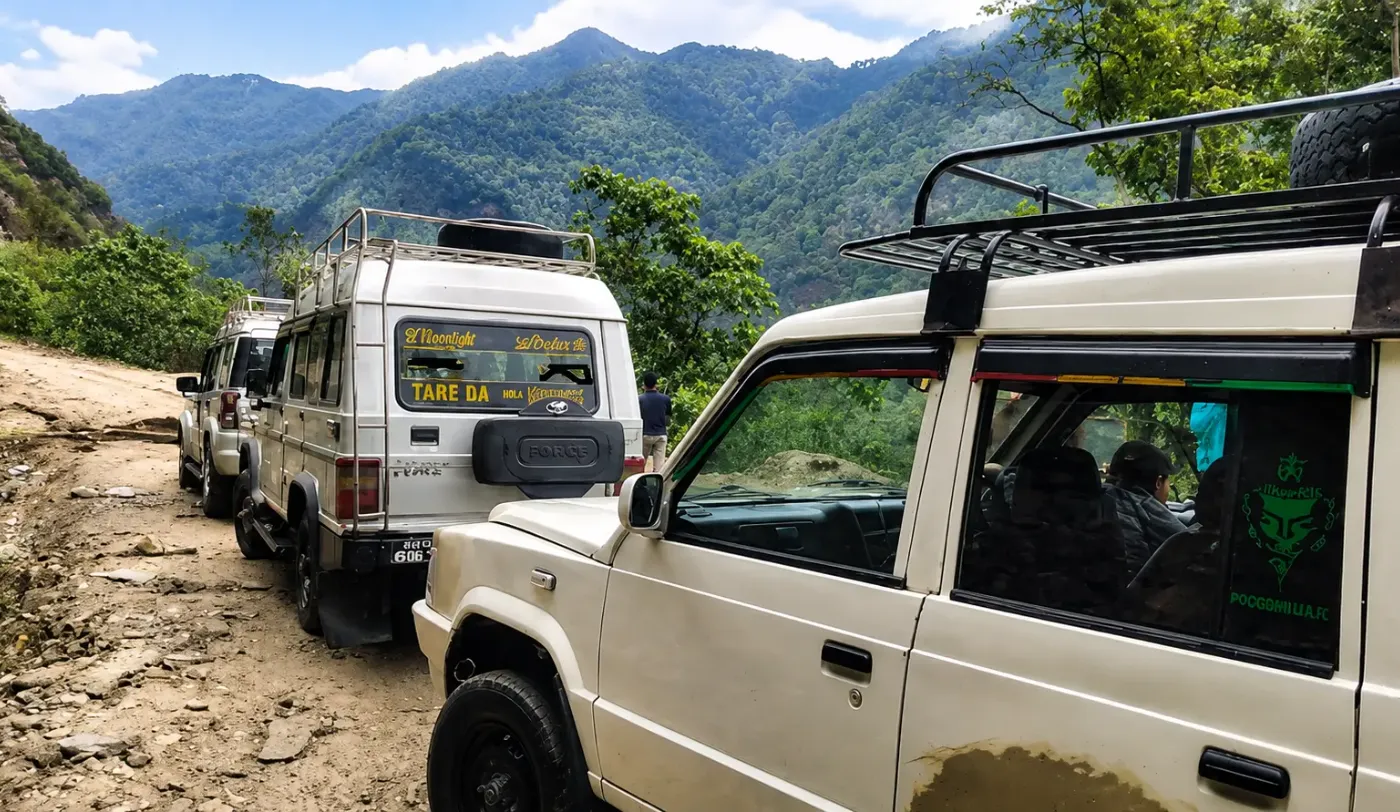
Lumbini to Kathmandu Airport Transfer

Lumbini to Kathmandu Airport Transfer

Introduction – Completing Your Sacred Journey in Comfort

Your pilgrimage to Lumbini — the birthplace of Lord Buddha and one of the most sacred sites on earth — is complete. You have stood at the Maya Devi Temple on the exact ground where Queen Maya Devi gave birth to Prince Siddhartha Gautama in approximately 563 BCE, witnessed the ancient Ashoka Pillar erected in 249 BCE, meditated beside the sacred Puskarini Pond, walked the International Monastic Zone with its 30+ national monasteries, and perhaps stood before the World Peace Pagoda at dawn as the sun rose over the Terai plains.

Now it is time to complete your journey—travel from Lumbini to Tribhuvan International Airport (KTM) in Kathmandu for your onward flight.

Nepal Vehicle Hiring Pvt Ltd provides the most reliable, professional, and comfortable Lumbini to Kathmandu airport transfer service — covering the full range of vehicle options from private cars and luxury Land Cruisers for individual and family travellers to VIP Sofa Buses and Tourist Buses for large pilgrimage groups, Buddhist delegations, and tour parties. Our door-to-door service picks you up from your Lumbini hotel or directly at Maya Devi Temple Gate 5. It delivers you to Tribhuvan International Airport or any hotel in Kathmandu on time, with professional care for every passenger.

The Lumbini to Kathmandu overland transfer covers approximately 280–300 km via the Mahendra Highway (Lumbini to Butwal) and the Prithvi Highway (Butwal to Kathmandu), taking 8–10 hours by private vehicle in comfortable, air-conditioned transport. This guide covers everything you need to plan your return journey from Lumbini—vehicle options, the full route with key stops, Lumbini’s sacred attractions to visit before departure, airport timing guidance, flight alternatives via Bhairahawa Airport, pilgrimage circuit connections, and a complete FAQ.

Book your transfer: Nepal Vehicle Hiring | Bus Hire Nepal | Jeep Hire Nepal | Call/WhatsApp: +977 981-4227196

Lumbini to Kathmandu Airport Transfer – Complete Route Overview

RouteLumbini (Maya Devi Temple / Hotel) to Kathmandu (Tribhuvan International Airport or Hotel)
Total DistanceApprox. 280–300 km via Butwal-Narayanghat-Prithvi Highway
Travel Time8–10 hours by private vehicle | 10–11 hours by tourist bus
Road TypeMahendra Highway (Lumbini–Butwal) + Prithvi Highway (Butwal–Kathmandu) – fully paved
Key Highway StopsBhairahawa, Butwal, Narayanghat/Mugling, Prithvi Highway, Kathmandu Valley
Vehicle OptionsPrivate Car / Sedan, Jeep / SUV, Toyota Land Cruiser, Hiace Van, VIP Sofa Bus, Tourist Bus
Pick-UpAny Lumbini hotel, Maya Devi Temple Gate 5 area, or any Lumbini location
Drop-OffTribhuvan International Airport (KTM), Thamel hotel, any Kathmandu destination
Flight AlternativeBhairahawa (BWA/Gautam Buddha Airport) to KTM: ~35 min | Daily Buddha Air, Yeti Airlines
Best ForPilgrims, Buddhist tour groups, international tourists, post-Lumbini KTM departure
AvailabilityDaily – 24/7 pick-up, door-to-door service
Contact+977 981-4227196  | vehiclehiringnepal.com

About Lumbini – The Birthplace of the Buddha and UNESCO World Heritage Site

Before planning your departure, understanding the profound significance of where you have been deepens the meaning of the entire journey. Lumbini, in the Rupandehi District of Lumbini Province in Nepal’s southwestern Terai plains, is one of the four most sacred sites in Buddhism—alongside Bodh Gaya (where the Buddha attained Enlightenment), Sarnath (where he gave his first teaching), and Kushinagar (where he achieved parinirvana).

Declared a UNESCO World Heritage Site in 1997, Lumbini draws approximately 1.5 million pilgrims and visitors annually from across Nepal, India, Japan, South Korea, Sri Lanka, Thailand, China, Tibet, and the global Buddhist world.

The Lumbini Development Zone — a 4 km by 2.5 km sacred landscape designed by Japanese architect Kenzo Tange in 1978 — encompasses the Maya Devi Temple complex, the Ashoka Pillar, the sacred Puskarini Pond, the International Monastic Zone with over 30 national Buddhist monasteries, the World Peace Pagoda, the Lumbini Museum, the Eternal Flame, and a central canal dividing the Eastern (Theravada) and Western (Mahayana/Vajrayana) monastery zones. No other site in South Asia brings together the religious traditions of so many nations in a single sacred landscape.

Historical Authentication of Lumbini as Buddha’s Birthplace

The historical authenticity of Lumbini as the true birthplace of the historical Buddha rests on two extraordinary archaeological pillars. The first is the Ashoka Pillar (249 BCE) — a 6–7-meter sandstone column erected by the Indian Emperor Ashoka after his personal pilgrimage to Lumbini. The pillar’s Brahmi-script inscription reads:

“Here was born the Buddha, sage of the Sakyas” — making it one of the oldest written records in South Asian history and the primary documentation of Lumbini’s status. The second is a stone marker uncovered in 1996 by a joint UNESCO–Nepal government excavation, found beneath the Maya Devi Temple structure — a commemorative stone slab from the 3rd century BCE matching Emperor Ashoka’s description in his pillar inscription, fixing the precise spot of the birth within the temple with extraordinary historical precision.

The International Monastic Zone – A World in Miniature

The most visually extraordinary aspect of the Lumbini Development Zone is its International Monastic Zone — a 3 km garden extending north from the Maya Devi Temple, divided by a central canal into the Eastern Theravada Zone (on the right, monasteries from Theravada Buddhist countries: Myanmar, Sri Lanka, Thailand, Vietnam, Cambodia) and the Western Mahayana/Vajrayana Zone (on the left, from Tibetan, Chinese, Japanese, Korean, and other Mahayana traditions).

Walking through this zone is like circumambulating the entire Buddhist world in a single afternoon. Each monastery is built in its national architectural style and tradition, housing monks and nuns from their home countries, offering diverse prayer and meditation practices, and serving as a living demonstration of Buddhism’s extraordinary geographical and cultural reach across Asia.

Architecturally distinguished monasteries in the International Zone include the Myanmar Golden Temple (gold-roofed Pagoda), the Chinese Monastery (classical Qing dynasty architecture), the Japanese Peace Pagoda, the Korean Buddhist Temple, the German Monastery (reflecting the Tibetan Buddhist tradition that has taken root in Germany), the Indian Monastery, and the magnificent multi-spired Cambodian Monastery. Nepal Vehicle Hiring recommends allocating a full day to the International Monastic Zone alone — the spiritual and architectural richness rewards unhurried exploration.

Lumbini to Kathmandu Airport Transfer

Lumbini Sacred Sites – Complete Visitor Guide Before Your Transfer

Sacred Site / AttractionSignificance & Highlights
Maya Devi TempleThe spiritual heart of Lumbini. Marks the exact birthplace of Siddhartha Gautama (Lord Buddha, ~563 BCE). Marker stone inside; Ashoka Pillar outside. Sacred Garden. UNESCO World Heritage Site core zone.
Ashoka Pillar (249 BCE)Sandstone pillar erected by Emperor Ashoka after his pilgrimage in 249 BCE. Brahmi inscription: ‘Here was born the Buddha, sage of the Sakyas.’ Primary archaeological proof of Lumbini as Buddha’s birthplace.
Sacred Puskarini PondAn ancient brick-edged sacred pool where Queen Maya Devi bathed before giving birth, and baby Siddhartha received his first ritual bath—used for meditation and reflection by pilgrims worldwide.
International Monastic Zone3 km sacred garden divided into East (Theravada) and West (Mahayana/Vajrayana) zones. 30+ countries have built national monasteries – Myanmar Golden Temple, China, Japan, Thailand, Korea, Germany, India, Sri Lanka, France, Vietnam, and more.
World Peace PagodaA gleaming white Japanese-built stupa symbolising peace and harmony. Constructed by the Nipponzan Myohoji Buddhist order. Visible from across the Lumbini Development Zone. Perfect for meditation and sunrise visits.
Lumbini MuseumHouses archaeological artefacts, Buddhist scriptures, coins, terracotta figures, and historical documents from excavations across the Lumbini Development Zone.
Eternal Flame MonumentThe United Nations’ perpetual flame symbolises world peace. It symbolises the undying light of the Buddha’s teachings across all nations and traditions.
Kapilavastu (Tilaurakot Ruins)27 km from Lumbini. Ancient ruins of Kapilavastu – the royal capital where Prince Siddhartha grew up. Archaeological excavations have revealed palace structures, walls, and artefacts dating from 600 to 400 BCE.

Maya Devi Temple – The Centre of the Buddhist World

The Maya Devi Temple is the spiritual and geographical heart of Lumbini — the site that draws every pilgrim and visitor to the Lumbini Development Zone. The white, low-profile structure preserves and protects the Marker Stone — the precise spot identified by archaeologists and confirmed by Emperor Ashoka’s pillar inscription as the birthplace of Siddhartha Gautama.

Inside the temple, successive layers of brick structures from different eras (from the 3rd century BCE to the medieval period) are visible in a remarkably sophisticated preservation design — standing inside the temple simultaneously occupies multiple centuries of Buddhist devotion.

The temple receives visitors of all faiths and nationalities. Visitors must remove their shoes at the gate. Photography inside the inner sanctum is restricted.

Visitors from every background and belief system describe standing at the Marker Stone—on the ground where, 2,500+ years ago, one of the most transformative human lives in history began—is described by visitors from every background and belief system as one of the most profound moments of their travel lives.

Ashoka Pillar – 2,270 Years of Unbroken Witness

Standing in the open courtyard adjacent to the Maya Devi Temple, the Ashoka Pillar is one of South Asia’s most significant surviving monuments — a living connection to the 3rd century BCE and one of the finest examples of the Ashokan edict pillars that the great Emperor erected across his vast South Asian empire to spread Dharma (Buddhist teaching). The Brahmi-script inscription on the pillar is remarkable not only for its content (confirming Lumbini as the Buddha’s birthplace) but for its extraordinary survival — nearly 2,270 years of exposure to the Terai climate, earthquakes, floods, and the vagaries of history, yet still legible and structurally intact.

An iron stabilising rod runs through the upper section — a modern addition to protect the pillar from cracking caused by centuries of Terai monsoons and temperature cycles.

World Peace Pagoda – Japan’s Gift to the World

The World Peace Pagoda (Shanti Stupa) in Lumbini is one of over 80 World Peace Pagodas built around the world by the Nipponzan Myohoji Buddhist order of Japan, founded by Most Venerable Nichidatsu Fujii in the post-World War II period as a global act of atonement and a symbol of the Buddhist commitment to world peace. Lumbini’s white-domed Pagoda rises above the flat Terai plains and is visible across the entire Development Zone.

Its grounds are maintained as a space for meditation and reflection, and the stupa’s design — incorporating Buddha images from all four directions — invites circumambulation and prayer from visitors of all Buddhist traditions.

Lumbini to Kathmandu Airport Transfer

Lumbini to Kathmandu Transfer Options – Complete Comparison

Transfer OptionJourney TimeCost LevelBest For / Notes
Private Car/Jeep (Nepal VH)8-9 hrsMid-Top-endDoor-to-door. Best flexibility, comfort, and timing control. Recommended for most travellers.
Toyota Land Cruiser (Nepal VH)8-9 hrsTop-endVIP pilgrims, diplomatic, and luxury. Maximum comfort on a long journey.
VIP Sofa Bus Charter (Nepal VH)9-10 hrsMid-Top-end (per group)Best per-head value for groups of 20-30. Luxury comfort. Hotel pick-up.
Deluxe Tourist Bus (Nepal VH)10-11 hrsBudget-MidGroups of 35-45 pax. AC. Comfortable. Fixed departures.
Bhairahawa Flight + KTM Transfer1.5-2 hrs totalHighFastest. BWA flight (35 min) + KTM taxi. Best for tight flight connections.
Public Bus (independent)10-12+ hrsBudgetCheapest. No door-to-door. Multiple bus changes are possible. Not recommended for tourists.

Ashokan Pillar lumbini

For solo travellers, couples, families, and small groups of up to 6 passengers, a private car or SUV/Jeep from Nepal Vehicle Hiring is the most comfortable, flexible, and time-efficient transfer option for the Lumbini–Kathmandu route. Fully air-conditioned, with door-to-door pick-up from your Lumbini hotel or the Maya Devi Temple area and direct delivery to Tribhuvan International Airport Terminal 1 or 2 (or any Kathmandu hotel), the private car transfer covers 280–300 km in about 8–9 hours, with a scheduled Mugling rest stop midway.

The private car’s flexibility in departure timing is its greatest advantage—particularly for travellers with specific flight departure times. Nepal Vehicle Hiring coordinates the Lumbini departure time based on your exact Kathmandu flight time, factoring in the 8–10-hour drive plus a safety buffer for airport check-in and security. Our operations team monitors journey progress and communicates with the driver throughout the journey to ensure on-time airport arrival, regardless of highway conditions.

Option 2 – Toyota Land Cruiser (VIP and Top-end Transfer)

For VIP pilgrims, senior Buddhist clergy, diplomatic visitors, international Buddhist delegations, and top-end tour groups completing a pilgrimage to Lumbini, the Toyota Land Cruiser offers the finest private transfer experience available. Its superior air suspension, deep leather seating, powerful dual-zone climate control, and whisper-quiet, vibration-free cabin transform the 8–10-hour highway journey into a genuinely comfortable, even restorative experience—arriving at Kathmandu Airport refreshed rather than exhausted after a full pilgrimage.

Many senior monks, abbots, and Buddhist teachers from Korea, Japan, Sri Lanka, and Thailand specifically request Land Cruiser transfers for their return journeys. View our Luxury Jeep Hire page.

Kathmandu to Lumbini Tour Package

Option 3 – VIP Sofa Bus (Best Per-Head Value for Large Groups)

For Buddhist tour groups, international monastery delegations, large pilgrimage Yatra parties, and corporate tour groups of 20–30 passengers, the Nepal Vehicle Hiring VIP Sofa Bus private charter delivers the best combination of per-head value and comfort for the Lumbini–Kathmandu transfer. The 2×1 sofa seating (21–30 passengers), full AC with air suspension, WiFi, USB charging at every seat, panoramic windows, and complimentary mineral water ensure that even the 9–10-hour journey is a genuinely restful, connected, and comfortable experience for every group member.

The VIP Sofa Bus private charter departs from your hotel in Lumbini at the agreed time. It delivers the entire group to Tribhuvan International Airport or any destination in Kathmandu in a single, cohesive vehicle — no splitting pilgrim groups across multiple vehicles, no uncertainty about departure timing, and no waiting for shared buses that depart on their own schedule. See our VIP Sofa Bus Hire page.

Option 4 – Tourist Bus (Budget Large Group Transfer)

For larger pilgrim groups of 35–52 passengers that prioritise the most economical per-person transfer cost, Nepal Vehicle Hiring’s Deluxe and Standard Tourist Buses provide reliable, comfortable Lumbini–Kathmandu service. Deluxe buses are air-conditioned with reclining 2×2 seats; standard buses offer non-AC transport at the lowest per-passenger rate.

The Deluxe Tourist Bus is particularly popular for school and college pilgrimages, community religious groups, and domestic Yatra parties travelling from Lumbini back to Kathmandu. See our Bus Hire Nepal page.

Option 5 – Bhairahawa Flight + Kathmandu Transfer (Fastest Option)

For travellers with a tight Kathmandu flight connection or very limited time, the fastest option from Lumbini to Kathmandu is a private Nepal Vehicle Hiring jeep or car from Lumbini to Gautam Buddha International Airport (BWA) in Bhairahawa (22 km, 35 minutes), followed by a domestic flight to Tribhuvan International Airport (KTM) in Kathmandu (~35 minutes). Buddha Air, Yeti Airlines, and Shree Airlines operate multiple daily flights between Bhairahawa and Kathmandu.

Total journey time (Lumbini hotel to KTM terminal): approximately 2–2.5 hours, versus 8–10 hours by road.

Nepal Vehicle Hiring offers the Lumbini-to-Bhairahawa Airport transfer as a standalone service or as part of a broader Nepal pilgrimage circuit. Important note: book your Bhairahawa flight as far in advance as possible, as these are small aircraft with limited capacity and flights can fill quickly, especially during Buddhist festivals and peak pilgrimage seasons (Buddha Jayanti in May, Losar, Vesak).

Lumbini to Kathmandu Airport Transfer

Lumbini to Kathmandu – Detailed Route Guide, Segment by Segment

Segment / CheckpointDistanceDrive TimeRoad & Key Feature
Lumbini (Maya Devi Gate 5)0 km–Departure. Temple area pick-up or hotel. Depart 6:00–7:00 AM
Bhairahawa (Siddharthanagar)22 km30-40 minBustling Terai city. Gautam Buddha International Airport. Last ATM & pharmacy before the highway
Butwal35 km45-60 minKey junction – Mahendra Hwy meets Siddhartha/Prithvi Hwy. Fuel & supplies. Industrial city
Palpa (Tansen) – Optional80 km1.5-2 hrsAncient hilltop Newari town – optional cultural detour. 45 min off the main highway
Narayanghat Junction165 km3-4 hrsMajor Terai-Hills junction. Narayani River. Join Prithvi Highway here. Fuel and rest stop
Mugling215 km4-5 hrsTrishuli-Marsyangdi confluence. Famous fish restaurants. Main rest stop
Malakhu / Prithvi Hwy240 km5-6 hrsTrishuli Gorge section. Scenic river and forest drive
Naubise / Thankot270 km7-8 hrsKathmandu Valley rim. Final hill climb. Valley panorama
Tribhuvan International Airport285-300 km8-10 hrsDESTINATION. Terminal 1 or 2. Drop-off at domestic or international departures. Thamel hotel option

Lumbini to Bhairahawa – The Gateway City (22 km | 30-40 min)

The journey from Lumbini to Kathmandu begins with a short 22 km drive to Bhairahawa (officially Siddharthanagar), the nearest major city and home to Gautam Buddha International Airport (IATA: BWA). Bhairahawa is a bustling, commercially active Terai city with excellent banking facilities (the last major ATM cluster before the long highway journey), pharmacies, restaurants, and transport connections.

The Siddhartha Highway connecting Lumbini to Bhairahawa passes through flat, agricultural Terai landscape — rice paddies, mustard fields, and roadside villages characteristic of Nepal’s southern plains.

Nepal Vehicle Hiring strongly recommends withdrawing sufficient NPR in Bhairahawa before the long highway journey — cash is essential for rest-stop meals, and roadside ATMs beyond Narayanghat are unreliable.

Bhairahawa to Butwal – The Highway Junction (13 km | 15-20 min)

From Bhairahawa, the route continues to Butwal — an important industrial city and highway junction where the Mahendra Highway (East-West Highway), the Siddhartha Highway, and the Prithvi Highway all converge. Butwal is the last major city on the route with comprehensive fuel stations, shops, and restaurants before the route turns northeast toward the Terai plains and eventually the Prithvi Highway.

Butwal to Narayanghat – The Terai Crossing (130 km | 2.5-3 hrs)

This is the longest and in many ways most peaceful segment of the Lumbini–Kathmandu journey — a 130 km drive through the flat, fertile Terai plains of Nepal’s Lumbini and Gandaki provinces. The road passes through the Tansen (Palpa) region — home to one of Nepal’s finest Newari hill towns, visible above the plains from the highway — before descending to the Narayanghat junction at the Narayani River.

Narayanghat is a key fuel stop and rest stop at the junction of the Mahendra and Prithvi Highways, with a wide range of restaurants and service facilities.

Narayanghat to Mugling – The Prithvi Highway Begins (50 km | 1 hr)

From Narayanghat, the route joins the Prithvi Highway heading northeast, and the landscape changes dramatically. The flat Terai plains give way to increasingly hilly terrain as the highway approaches the Marsyangdi River valley at Mugling.

Mugling (approximately 215 km from Lumbini) is the famous highway midpoint celebrated for its freshwater fish restaurants at the Trishuli-Marsyangdi River confluence — the essential midpoint rest stop for all Prithvi Highway travellers. A 30–45-minute stop in Mugling for lunch is one of Nepal’s best-loved road-travel traditions, and Nepal Vehicle Hiring’s drivers always coordinate it.

Mugling to Kathmandu – The Trishuli Gorge and Valley Arrival (85 km | 2-3 hrs)

From Mugling, the Prithvi Highway follows the Trishuli River gorge—one of Nepal’s most dramatic highway landscapes—for about 40 km, with the river roaring through white-water gorges below and forested hillsides rising steeply on both sides. The road then climbs through Naubise and Thankot — the traditional gateway towns at the rim of the Kathmandu Valley — before the dramatic descent into the valley and the approach to Tribhuvan International Airport or Kathmandu city.

Traffic in the Kathmandu Valley can be heavy (particularly at Balkhu, Ring Road, and the Tribhuvan Highway section). Nepal Vehicle Hiring’s drivers use the most efficient routes and monitor traffic conditions to ensure on-time airport delivery.

Lumbini to Kathmandu Airport Transfer

Tribhuvan International Airport (KTM) – Complete Transfer Guide

About Tribhuvan International Airport

Tribhuvan International Airport (IATA: KTM | ICAO: VNKT) is Nepal’s sole international airport, located approximately 6 km east of Kathmandu city centre in Gauchar. The airport operates international and domestic terminals — the International Terminal (Terminal 1 or T1) for all international departures and arrivals, and the Domestic Terminal (Terminal 2 or T2) for Nepal’s domestic routes.

Travellers connecting from Lumbini to an international flight must drop off at Terminal 1; those connecting to another domestic flight (e.g., onward to Pokhara or Bharatpur) use Terminal 2.

Nepal Vehicle Hiring’s drivers confirm the correct terminal with each passenger at the time of booking. Both terminals are within the same airport compound — approximately 500 m apart. Our drivers drop passengers at the correct terminal entrance, provide luggage assistance, and wait for confirmation of safe entry before departing.

Critical Airport Timing – Plan Your Lumbini Departure Around Your Flight

The most important planning factor for your Lumbini airport transfer is your departure time. Nepal Vehicle Hiring provides the following timing guidance for 2026:

  • For international flights from KTM: International check-in closes 60-90 minutes before departure. Immigration and security for international flights take 45-90 minutes at peak times. Nepal Vehicle Hiring recommends arriving at KTM at least 3 hours before international departure. Working backwards: if your flight is at 8:00 PM, target KTM arrival by 5:00 PM → depart Lumbini by 7:00–8:00 AM.
  • For domestic connections from KTM: Domestic check-in closes 30- 45 min before departure. Nepal Vehicle Hiring recommends arriving at T2 at least 1.5 hours before domestic departure.
  • Allow extra time during peak seasons: During major festivals (Dashain, Tihar, Buddha Jayanti), Kathmandu Valley traffic can add 1-2 hours to the final approach. Nepal Vehicle Hiring factors this into departure time calculations.
  • Nepal Vehicle Hiring’s recommendation for most international departures: Depart Lumbini by 6:30–7:00 AM to arrive at Kathmandu Airport by 4:00–5:00 PM, allowing a comfortable time for any flight departing after 7:00 PM.

What Happens If There Are Highway Delays?

Nepal’s highways can experience unexpected delays due to accidents, landslides (particularly in the monsoon on the Prithvi Highway gorge section), festival traffic, and road maintenance. Nepal Vehicle Hiring’s operations team is available 24/7 throughout your transfer and maintains active communication with the driver.

In the event of a significant delay, our team will immediately inform you of the situation, assess whether the overland route can be completed in time, and, if not, arrange an emergency Bhairahawa-to-Kathmandu flight booking through our network as a backup option. This contingency planning is available to all private charter clients and is not available when using public buses.

Lumbini as Part of a Buddhist Pilgrimage Circuit – Vehicle Hire Planning

Most visitors to Lumbini are not travelling alone—they are completing a broader Buddhist pilgrimage circuit in Nepal or a combined cultural tour. Nepal Vehicle Hiring is the preferred transport partner for comprehensive Nepal pilgrimage circuits connecting Lumbini with Nepal’s other great spiritual sites:

Circuit StopSignificanceDistance from LumbiniNepal VH Transport
LumbiniBirthplace of BuddhaStartPick-up point
KapilavastuChildhood of Buddha27 kmJeep side trip
ChitwanWildlife + Nepal culture131 kmJeep or Bus transfer
PashupatinathHoliest Hindu-Buddhist site295 kmKTM transfer
BoudhanathMajor Tibetan Buddhist stupa295 kmKTM city transfer
SwayambhunathMonkey Temple, an ancient stupa300 kmKTM sightseeing
KTM AirportDeparture from Nepal285-300 kmKTM airport drop

The Nepal Buddhist Circuit – A Complete Itinerary Suggestion

Nepal Vehicle Hiring’s most popular multi-day Buddhist Pilgrimage Circuit combines Lumbini with Kathmandu’s sacred Buddhist sites in a comprehensive 3–5 day circuit:

  • Day 1: Arrival in Kathmandu (Tribhuvan Airport) → Hotel transfer → Visit Boudhanath Stupa (Tibetan Buddhism’s world centre), Swayambhunath (Monkey Temple), Pashupatinath.
  • Day 2: Kathmandu to Lumbini by VIP Sofa Bus or private car (8-9 hours via Prithvi and Mahendra Highways). Evening arrival. Check into the Lumbini Hotel.
  • Day 3: Full day in Lumbini Sacred Zone: Maya Devi Temple, Ashoka Pillar, Puskarini Pond, International Monastic Zone, World Peace Pagoda.
  • Day 4 (Optional): Side trip to Kapilavastu (Tilaurakot Ruins, ~27 km) — childhood home of Prince Siddhartha. Return to Lumbini.
  • Day 5: Lumbini to Kathmandu Airport transfer. Depart 6:30-7:00 AM—Mugling fish lunch stop. Arrive KTM 4:00-5:00 PM—international departure.

Historical Place Sagarhawa lumbini

Who Uses the Lumbini-to-Kathmandu Airport Transfer?

International Buddhist Pilgrims and Delegations

The largest single category of Lumbini–Kathmandu transfer clients for Nepal Vehicle Hiring is international Buddhist pilgrims and delegations — groups arriving from South Korea, Japan, Sri Lanka, Thailand, Myanmar, China, Taiwan, Vietnam, India, and Western Buddhist communities in Europe, North America, and Australia. These groups typically travel as organised religious delegations of 10–50 people, led by a senior monk or abbot, following a structured pilgrimage itinerary that ends in Lumbini before the return flight from Kathmandu.

Nepal Vehicle Hiring’s VIP Sofa Bus charter is the most requested vehicle for international Buddhist delegations — the entire group travels together in a single, dignified, comfortable bus from the Lumbini hotel to Kathmandu Airport, with prayer-time stops on request, vegetarian meal arrangements at highway restaurants, and professional care throughout.

Nepal Golden Triangle Tour Completion

Many international tourists complete the Nepal Golden Triangle (Kathmandu–Chitwan–Lumbini) as an extended circuit — adding Lumbini to the classic Kathmandu–Pokhara–Chitwan package. After the Chitwan safari and a pilgrimage or cultural visit to Lumbini, the Lumbini–Kathmandu Airport transfer completes Nepal’s most popular international tour itinerary.

Nepal Vehicle Hiring coordinates the entire transport chain for this circuit—a single booking, consistent vehicle quality, and coordinated timing—making the Nepal Golden Triangle circuit smooth from airport arrival to final departure.

Indian Pilgrims via Sunauli Border

A significant proportion of Lumbini visitors are Indian pilgrims crossing the Nepal-India border at Sunauli (30 km from Lumbini) — particularly from Bihar, Uttar Pradesh, West Bengal, and other Indian states with large Buddhist and Hindu communities. These pilgrims often arrange their Lumbini stay and Kathmandu Airport transfer through Nepal Vehicle Hiring as a complete package—entering Nepal at Sunauli, visiting Lumbini, transferring to Kathmandu for darshan at Pashupatinath, Boudhanath, and Swayambhunath, and departing from Kathmandu on their return flight. Nepal Vehicle Hiring provides the complete Sunauli–Lumbini–Kathmandu vehicle chain on request.

Safety Standards – Lumbini to Kathmandu Airport Transfer

Safety FeatureNepal Vehicle Hiring Standard
Driver LicensingClass A+ commercial license (DoTM) for all bus drivers; Class A for private cars and jeeps
Vehicle InspectionFull mechanical inspection before every long-distance departure: brakes, tyres, AC, lights, fuel, emergency kit
Passenger InsurancePassenger accidental medical insurance is included on all Nepal Vehicle Hiring transfers.
Flight-Timing AwarenessFor Kathmandu Airport drop-offs, the driver monitors journey progress and adjusts the route to ensure a timely arrival at the airport. 24/7 ops contact for any en-route delays.
No Night Mountain DrivingThe Lumbini-Kathmandu route is entirely on flat Terai and highway sections, so night–driving safety is manageable. However, Nepal Vehicle Hiring recommends 6–7 AM departures for daytime arrival.
Two-Driver RotationOn overnight bus services (departing late evening), two licensed drivers rotate throughout the journey to prevent fatigue
Emergency Support A:24/7 Nepal Vehicle Hiring operations line is available throughout every journey. Dispatch registers all driver journey details before departure.

Essential Travel Tips – Lumbini to Kathmandu Airport Transfer

  • Plan Departure Around Your Flight Time: The 8–10-hour journey means departing Lumbini by 6:30–7:00 AM for most international evening flights (7:00–10:00 PM KTM departures). Share your exact flight details with Nepal Vehicle Hiring when booking to get a precise recommended departure time.
  • Withdraw Cash in Bhairahawa: Bhairahawa has reliable ATMs. Withdraw sufficient NPR for the entire journey — Mugling restaurant (NPR 400–700 per person), tips for the driver, and any emergency purchases.
  • Book in Advance During Buddhist Festivals: During Buddha Jayanti (May), Losar (Tibetan New Year, January-February), Vesak, and major Buddhist festival dates, Lumbini is overwhelmed with pilgrims, and vehicle availability is extremely limited. Book your transfer 2–4 weeks in advance during festival periods.
  • Confirm Terminal at Booking: Tell Nepal Vehicle Hiring whether you are departing on an international flight (Terminal 1 drop) or a domestic connection (Terminal 2 drop). Our drivers automatically deliver to the correct terminal entrance once confirmed.
  • VIP Sofa Bus for Large Pilgrim Groups – Book 1 Week Ahead: During peak pilgrimage season, Nepal Vehicle Hiring’s VIP Sofa Buses are in high demand. Book the Lumbini–KTM VIP Sofa Bus at least 7–10 days before your departure.
  • Kapilavastu Side Trip – Add Half a Day: The ruins of Kapilavastu (Tilaurakot, 27 km from Lumbini) — where Prince Siddhartha spent his childhood as a royal prince — are one of Nepal’s most historically significant and least-visited Buddhist sites. If you have a day before your Lumbini–KTM transfer, a morning at Kapilavastu adds an extraordinary dimension to the pilgrimage. Nepal Vehicle Hiring arranges vehicles for Lumbini–Kapilavastu side trips.
  • Terai Heat – Stay Hydrated: The Lumbini area and Terai plains can be intensely hot (35-42°C from March to October). Nepal Vehicle Hiring’s air-conditioned vehicles keep you comfortable throughout, but carry a personal water bottle for any time spent outside the vehicle. Complimentary mineral water is provided on VIP Sofa Bus services.

West Monastic Zone lumbini

How to Book Your Lumbini to Kathmandu Airport Transfer

  • Step 1 – Contact Nepal Vehicle Hiring: Call or WhatsApp +977 981-4227196 or visit com. Share: your Lumbini hotel name, number of passengers, international flight details (airline, flight number, departure time from KTM), preferred vehicle type, and any special requirements (wheelchair access, vegetarian stops, extra luggage).
  • Step 2 – Receive Timing Recommendation: Nepal Vehicle Hiring calculates the optimal departure time for Lumbini based on your KTM flight. We build a safety buffer into all airport transfer timings to protect against unforeseen delays.
  • Step 3 – Confirm and Receive Booking: Receive a written booking confirmation with the driver’s name, vehicle details, pick-up time, and the operations contact number.
  • Step 4 – Day of Transfer: Driver arrives at your Lumbini hotel at the confirmed time. Luggage assistance provided. Air-conditioned vehicle ready. The journey begins.
  • Step 5 – Airport Delivery: The driver delivers your group to the correct KTM terminal entrance with luggage assistance. Confirm your safe entry before departing.

Frequently Asked Questions – Lumbini to Kathmandu Airport Transfer

How far is Lumbini from Kathmandu?

The road distance from Lumbini (Maya Devi Temple area) to Kathmandu is approximately 280–300 km via Bhairahawa, Butwal, Narayanghat, and the Prithvi Highway. Travel time by private vehicle: 8–10 hours, including a stop at Mugling.

How long does the transfer from Lumbini to Kathmandu take?

By private car or jeep: 8–9 hours. By VIP Sofa Bus or Tourist Bus: 9–11 hours. By flight (Lumbini → Bhairahawa Airport → Kathmandu): approximately 2–2.5 hours total, including the Lumbini–Bhairahawa drive and airport wait time.

What is the fastest way to get from Lumbini to Kathmandu?

The fastest option is a private transfer from Lumbini to Bhairahawa Airport (BWA), plus a domestic flight to Kathmandu (KTM), for about 2–2.5 hours total. Flights operate by Buddha Air, Yeti Airlines, and Shree Airlines, with a flight time of about 35 minutes.

However, flights from Bhairahawa can be affected by fog and weather (particularly in winter and early monsoon). Do not use them for time-critical connections without a road backup plan.

Can Nepal Vehicle Hiring pick me up directly from the Maya Devi Temple area?

Yes — Nepal Vehicle Hiring provides direct pick-up from the Maya Devi Temple Gate 5 area, any Lumbini hotel, or any location within the Lumbini Development Zone or Bhairahawa area. Our drivers know the Lumbini layout and all hotel locations.

What vehicles are available for the transfer from Lumbini to Kathmandu Airport?

Nepal Vehicle Hiring offers: Sedan / Car (1–4 pax), SUV/Jeep Scorpio (1–6 pax), Toyota Land Cruiser (1–6 pax, top-end), Toyota Hiace Van (8–13 pax), VIP Sofa Bus (21–30 pax, charter), Deluxe Tourist Bus (35–45 pax), and Standard Bus (45- 52 pax). All are fully maintained and air-conditioned (except the standard bus). Choice depends on group size, budget, and comfort preference.

How early should I depart Lumbini for a 9:00 PM international flight from KTM?

For a 9:00 PM KTM international departure, Nepal Vehicle Hiring recommends arriving at Tribhuvan Airport by 6:00 PM (3 hours before the flight). Working backwards: allow 8–10 hours for the drive, including the Mugling stop. This means departing Lumbini by 8:00 AM at the latest, or 7:00 AM for maximum safety.

Nepal Vehicle Hiring will calculate the exact recommended departure time when you share your flight details.

Is the road from Lumbini to Kathmandu safe?

Yes — the Lumbini–Kathmandu route via Butwal, Narayanghat, and the Prithvi Highway is one of the well-maintained highways. The entire journey is on a paved road. The Prithvi Highway gorge section between Mugling and Kathmandu is a mountain highway that requires a skilled driver.

Nepal Vehicle Hiring’s drivers are licensed and experienced on this specific route. All vehicles carry passenger insurance. The only significant seasonal risk is a landslide on the gorge section during heavy monsoon rainfall (July–August) — Nepal Vehicle Hiring monitors road conditions before every departure.

Can I request a vegetarian-only meal stop for my pilgrim group?

Yes — Nepal Vehicle Hiring’s operations team can pre-arrange vegetarian meal stops at highway restaurants on request. Most restaurants in Mugling and Narayanghat offer purely vegetarian options. Please specify vegetarian requirements when booking your group transfer, and our team will coordinate with the driver and recommended stop locations.

What about my large group’s luggage? Is there enough space?

Nepal Vehicle Hiring’s vehicles provide:

  • Private car (Sedan/SUV): 1-2 large bags per passenger in the boot. Additional bags on the roof rack if pre-arranged.
  • Jeep (Scorpio): Generous rear boot for 6 passengers’ luggage. Large trekking packs fit well.
  • Hiace Van: Rear luggage area for 8-13 passengers’ bags. Additional small bags in overhead racks.
  • VIP Sofa Bus: Underfloor luggage hold (30 kg per passenger) + overhead racks (5 kg). Total capacity is 35+ bags comfortably.

For unusually large equipment (pilgrimage offerings, large donation items, ceremonial materials), please inform Nepal Vehicle Hiring at the time of booking so we can ensure the appropriate vehicle size is available.

Can Nepal Vehicle Hiring arrange the complete Lumbini pilgrimage circuit, including sightseeing in Kathmandu?

Yes — Nepal Vehicle Hiring provides complete Nepal Buddhist Pilgrimage Circuit vehicle arrangements, including: Kathmandu Airport arrival transfer → Kathmandu Buddhist sites (Boudhanath, Swayambhunath, Pashupatinath) → Lumbini → Kapilavastu side trip → Lumbini → Kathmandu Airport departure—single booking, consistent vehicle quality, coordinated timing throughout. Contact us at +977 981-4227196 to plan your complete circuit.

Does Nepal Vehicle Hiring provide receipts and invoices for corporate/organizational clients?

Yes — Nepal Vehicle Hiring provides formal tax invoices, booking receipts, and payment documentation for all vehicle hire services. Corporate clients, NGOs, international Buddhist organisations, and institutional clients that require formal expense-reporting documentation receive full accounting support. Contact our operations team to arrange a corporate account.

Book Your Lumbini to Kathmandu Airport Transfer Today – Nepal Vehicle Hiring

Your Lumbini pilgrimage has been one of the most profound experiences of your spiritual life — standing at the exact birthplace of the Buddha, breathing the same sacred air, witnessing the ancient Ashoka Pillar’s 2,270 years of unbroken witness to humanity’s greatest teachers. The journey home deserves the same quality of care.

Nepal Vehicle Hiring Pvt Ltd’s Lumbini to Kathmandu Airport transfer service delivers professional, comfortable, punctual, door-to-door service for every passenger—from solo travellers in private cars to international Buddhist delegations of 30+ in VIP Sofa Buses. Our flight-timing coordination, 24/7 support, experienced drivers, airport terminal delivery, and complete range of vehicle options make us Nepal’s most trusted transfer partner for the Lumbini–Kathmandu route in 2026.

Every journey from the birthplace of compassion deserves a transfer partner who understands what the journey means. Book your Lumbini-to-Kathmandu Airport transfer today.

Call / WhatsApp: +977 981-4227196 |  E-mail: [email protected]  |  Book Private Car or Jeep  |  Book VIP Sofa Bus or Tourist Bus
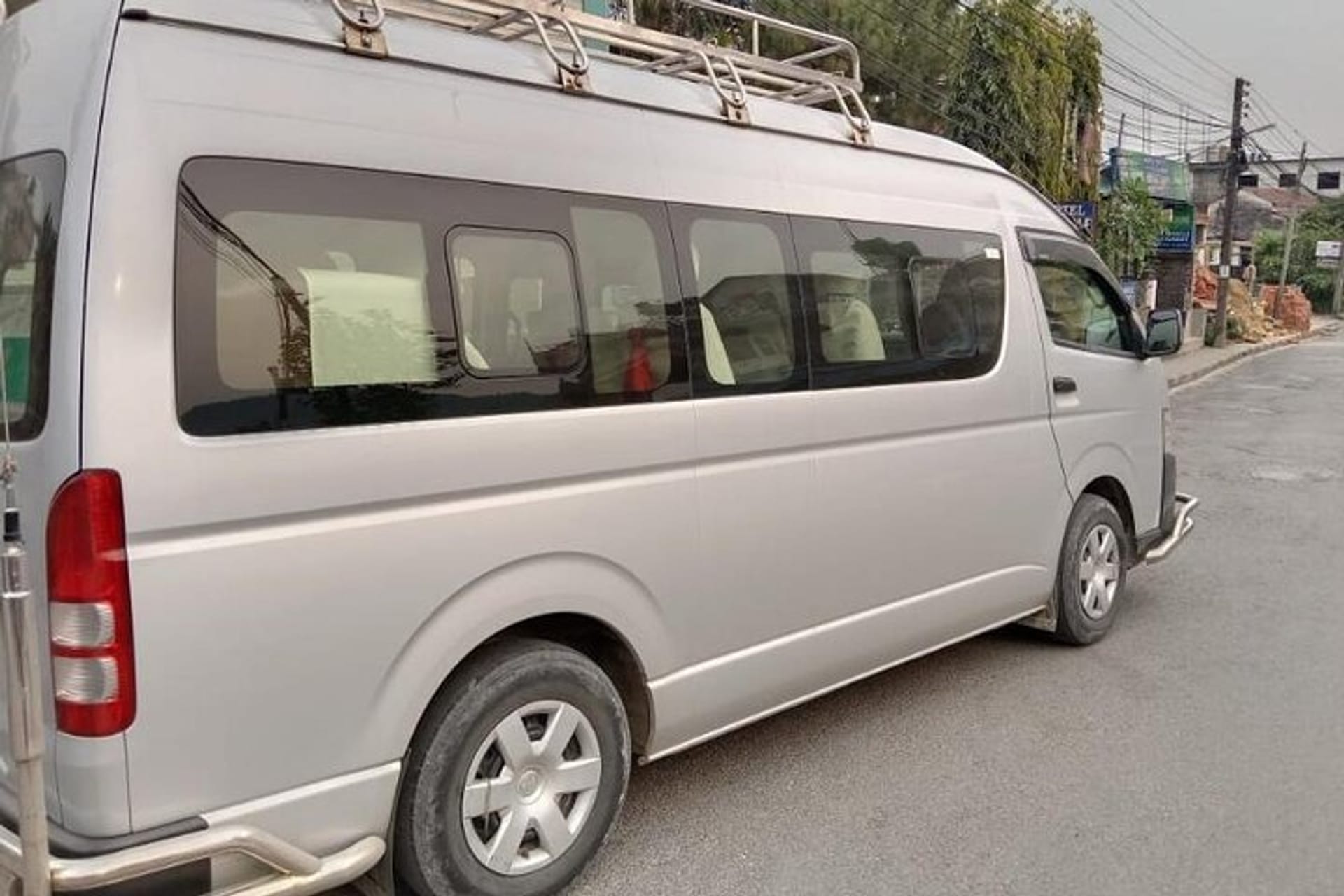
Pokhara to Kathmandu Transport

Patan Durbar Square in the Kathmandu Valley

Pokhara to Kathmandu Transport: Complete Guide to All Options, Costs & Tips

Pokhara and Kathmandu are Nepal’s two most important cities — one the adventure and trekking capital beside the Annapurna Himalaya, the other the country’s historical, cultural, and political heart. The 200-kilometre road between them is one of Nepal’s most travelled routes, following the scenic Prithvi Highway through the Trishuli and Marsyangdi river valleys, and hundreds of thousands of travellers take it every year.

In 2026, transport options from Pokhara to Kathmandu range from budget-friendly shared tourist buses to top-end VIP sofa coaches; from private cars for small groups to large Hiace vans for families; and from night buses that let you sleep through the journey to 25-minute domestic flights for those who prioritise speed over comfort. Each option has a distinct price point, comfort level, departure schedule, and travel experience.

At Nepal Vehicle Hiring Pvt Ltd, we offer vehicle services (cars, jeeps, Hiace vans, and buses) for the Pokhara-to-Kathmandu route, along with ticket booking assistance for all tourist bus categories. This comprehensive 2026 guide covers every transport option available, with full cost comparisons, departure details, route highlights, pros and cons, and expert tips to make the Pokhara to Kathmandu journey as comfortable and smooth as possible.

All Pokhara to Kathmandu Transport Options – Quick Comparison

TransportTimeCost Per PersonDepartureComfortBest For
Local/Deluxe Bus7–9 hrsNPR 700–1,200Pokhara Bus Park (6 AM)Low–MediumCheapest option
Tourist Bus (Standard)6–8 hrsNPR 1,000–1,500Lakeside Bus Park (7 AM)MediumBudget independent travellers
VIP Sofa Bus (2+1)6–7 hrsNPR 1,400–2,000Lakeside Bus Park (7–8 AM)HighComfort-conscious solo/couple
Night Sofa BusOvernightNPR 1,500–2,500Lakeside (7–10 PM)Medium-HighSave a night’s hotel
Private Car5–6 hrsNPR 14,000–20,000 (vehicle)Hotel pickupVery HighCouples, small families
Private Jeep5–6 hrsNPR 18,000–28,000 (vehicle)Hotel pickupVery HighGroups of 4–6
Toyota Hiace Van6–7 hrsNPR 25,000–38,000 (vehicle)Hotel pickupVery HighGroups of 7–10
Coaster Bus6–7 hrsNPR 28,000–42,000 (vehicle)Hotel pickupHighGroups of 12–18
Domestic Flight25–30 minUSD 109–150/personPokhara International AirportTop-endMaximum speed

Pokhara to Kathmandu – Journey Quick Facts

DetailInformation
Road DistanceApproximately 200 km
Drive Time (Private Vehicle)5 to 6 hours
Drive Time (Tourist Bus)6 to 8 hours
Main RoutePrithvi Highway – Pokhara → Damauli → Mugling → Kathmandu
Road ConditionMostly paved; ongoing construction near Mugling
Tourist Bus Departure (Lakeside)Pokhara Tourist Bus Park, Lakeside – daily at 7:00 AM
Tourist Bus Departure (Baglung)Pokhara Baglung Bus Park – multiple times
Key Rest StopMugling (~midpoint, Trishuli/Marsyangdi confluence)
Flight Time25 to 30 minutes
Flight PriceUSD 109–150 one way (subject to change)
Best Departure Time7:00 AM – 8:00 AM for a scenic daytime journey

Begnas Lake Pokhara

Tourist Bus Options: Pokhara to Kathmandu 2026

Tourist buses are the most popular choice for independent travellers on the Pokhara-to-Kathmandu journey. Several categories are available at the Pokhara Lakeside Tourist Bus Park:

Standard Tourist Bus (2+2 Seats)

The standard tourist bus operates a fixed daily morning departure from Pokhara Lakeside Bus Park at approximately 7:00 AM. Standard 2+2 seating with air conditioning (in most models), push-back reclining seats, and a window curtain. The most common choice for budget travellers

Standard Bus DetailsInformation
Departure PointPokhara Lakeside Tourist Bus Park
Departure Time7:00 AM daily
Arrival (Kathmandu)Thamel area or Kantipath – approximately 1:30 PM to 3:00 PM
Ticket PriceNPR 1,000–1,300 per person
Seating2+2 push-back reclining
ACYes
Capacity35–40 passengers
Best ForBudget travellers, backpackers

The VIP Sofa Bus is the most popular choice for travellers seeking genuine comfort on the Pokhara-to-Kathmandu route. The 2+1 seating layout means every passenger has either a window or an aisle seat with no middle seat, and the sofa-style reclining seats are significantly wider and more cushioned than standard bus seats.

VIP Sofa Bus DetailsInformation
Departure PointPokhara Lakeside Tourist Bus Park
Departure Time7:00 AM – 8:30 AM (varies by operator)
Arrival (Kathmandu)Approximately 1:00 PM – 2:30 PM
Ticket PriceNPR 1,400–2,000 per person
Seating2+1 wide sofa-style recliners
ACTop-end full AC
Total Seats25–30 passengers
Reading LightYes – individual
USB ChargingSome models
Best ForSolo travellers, couples, and comfort seekers

Night Bus / Night Sofa Bus

For travellers who want to make the most of their time in Pokhara and arrive in Kathmandu ready to start the day, the night bus is an efficient option. Night sofa buses depart Pokhara Lakeside between 7:00 PM and 10:00 PM and arrive in Kathmandu’s Thamel area in the early morning (3:00 AM to 5:00 AM). Top-end sofa buses.

Nig provide blankets. Bus DetailsInformation
Departure PointPokhara Lakeside Tourist Bus Park
Departure Time7:00 PM – 10:00 PM
Arrival (Kathmandu)3:00 AM – 5:00 AM
Ticket PriceNPR 1,500–2,500 per person
BlanketProvided on top-end night sofa buses
Seating2+1 sofa (top-end) or 2+2 (standard)
Best ForTravellers looking to save on hotel accommodation costs
NoteConfirm hotel check-in time for early arrival in Kathmandu

Sarangkot Pokhara

Tourist Bus Type Comparison: Pokhara to Kathmandu 2026

FeatureDeluxe BusTourist BusVIP Sofa BusNight Sofa Bus
Seat Layout2+22+22+12+1 or 2+2
Ticket PriceNPR 700–1,200NPR 1,000–1,500NPR 1,400–2,000NPR 1,500–2,500
LegroomStandardStandard–GoodExcellentGood–Excellent
ACYesYesTop-endTop-end
ReclineBasicPush-backFull sofaFull sofa
Reading LightNoSometimesYesYes
BlanketNoNoNoYes
Arrival TimePMPMPMEarly AM
Hotel SavingsNoNoNoYes (saves 1 night)
Best Comfort Rank4th3rd1st2nd

Pokhara to Sarangkot Jeep

Private Vehicle Options: Pokhara to Kathmandu

Nepal Vehicle Hiring Pvt. Ltd. provides professional private vehicle services along the Pokhara-Kathmandu route. All private vehicles include hotel-to-hotel service, flexible departure time, and freedom to stop anywhere along the route.

VehicleCapacityOne Way (NPR)One Way (USD)Round Trip (NPR)Best For
Private Car (Sedan)2–3 paxNPR 14,000–18,000USD 105–135NPR 24,000–30,000Couples, solo with bags
Private SUV/Crossover3–4 paxNPR 16,000–22,000USD 120–165NPR 28,000–38,000Small family
Private Jeep (Scorpio)4–5 paxNPR 18,000–24,000USD 135–180NPR 30,000–42,000Groups, trekkers
Private Jeep (Hilux/Fortuner)5–6 paxNPR 22,000–30,000USD 165–225NPR 38,000–52,000Top-end groups
Private Land Cruiser5–6 paxNPR 28,000–38,000USD 210–285NPR 48,000–65,000Luxury private travel
Toyota Hiace Van7–10 paxNPR 25,000–38,000USD 185–285NPR 42,000–65,000Large families, groups
Toyota Coaster12–17 paxNPR 32,000–45,000USD 240–335NPR 55,000–75,000Small tour groups
Tourist Bus (Private)25–45 paxNPR 45,000–70,000USD 335–520NPR 75,000–120,000Large tour groups

Note: All private vehicle prices include driver, fuel, and toll charges for the one-way journey from Pokhara to Kathmandu. Prices may vary by season and vehicle availability. Contact Nepal Vehicle Hiring for confirmed quotes.

What Is Included in Your Private Vehicle from Nepal Vehicle Hiring

  • Hotel pickup from your exact accommodation anywhere in Pokhara Lakeside or Pokhara city
  • Air-conditioned private vehicle — well-maintained and regularly serviced
  • Professional, licensed driver experienced on the Pokhara to Kathmandu Prithvi Highway
  • Fuel, toll charges, and driver expenses are included in the quoted price
  • Freedom to stop at Mugling, Bandipur, Damauli, or any attraction along the route on request
  • Drop-off at your exact hotel or accommodation address in Kathmandu
  • Flexible departure time — leave when you are ready, not according to a bus schedule

Pokhara to Kathmandu Transport

Pokhara to Kathmandu by Domestic Flight

For travellers who prioritise speed, the 25- to 30-minute domestic flight from Pokhara International Airport to Tribhuvan International Airport in Kathmandu is the fastest option. The new Pokhara International Airport (opened in 2023) operates multiple daily flights on this route with several airlines.

Flight DetailsInformation
Departure AirportPokhara International Airport (PKR)
Arrival AirportTribhuvan International Airport, Kathmandu (KTM)
Flight Duration25 to 30 minutes
Price RangeUSD 109–150 one way (foreigners); NPR 6,000–8,000 (Nepali citizens)
Airlines OperatingBuddha Air, Yeti Airlines, Shree Airlines, others
Baggage Allowance15–20 kg checked (varies by airline)
FrequencyMultiple daily flights (early morning departures are most common)
Airport to Thamel5 km – approximately 20–30 minutes by taxi
Best ForBusiness travelers, time-sensitive travelers, and those with flight phobias are not applicable.
DrawbackNo road scenery, expensive for groups, and airport check-in time is required. Domestic flight prices in Nepal are significantly higher for foreign passport holders than for Nepali citizens. Prices are subject to change. Always book flights directly with airlines or through reputable agents.

Complete Transport Comparison: Pokhara to Kathmandu

FactorVIP Sofa BusPrivate CarPrivate JeepHiace VanFlight
Journey Time6–7 hours5–6 hours5–6 hours6–7 hours25–30 min
Cost Per PersonNPR 1,400–2,000NPR 3,500–9,000*NPR 3,000–6,000*NPR 2,500–5,400*USD 109–150
Hotel PickupLakeside Bus ParkYes – doorYes – doorYes – doorAirport only
Hotel Drop-offThamel areaYes – doorYes – doorYes – doorAirport only
Departure TimeFixed 7 AMFlexibleFlexibleFlexibleFixed schedule
LuggageUnderfloor compartmentBoot + rackExcellent + rackExcellent + rack15–20 kg checked
Stop FreedomNoneFullFullFullNone
PrivacyShared 25–30 paxCompleteCompleteCompleteShared flight
Best ForSolo/couple budgetCouple/small familyGroups 4–6Groups 7–10Max speed

Per-person cost is calculated by dividing the vehicle price by the typical group size. Private car per person for 2–3 pax, jeep for 4–5 pax, Hiace for 7–9 pax.

Which Transport Option is Right for You?

Your ProfileBest OptionReason
Solo traveller on a budgetVIP Sofa BusBest comfort per rupee for single travellers
le on a budgetVIP Sofa BusTwo adjacent seats or a 2+1 layout for each window
Small family (2+2 children)Private Car or JeepDoor-to-door, flexible, space for bags, no rushing
Group of 4–6Private JeepBest value per person, hotel pickup, fast
Group of 7–10Toyota HiaceAll travel together, AC, hotel pickup, economical
Large group (12–45)Coaster or Tourist BusSingle vehicle, group cohesion, cost-effective
Time-critical travellerDomestic Flight25 min vs 6 hrs – unbeatable when time matters
Night traveller/hotel saverNight Sofa BusSave one night’s accommodation cost
Senior or mobility-limitedPrivate Car or HiaceComfortable boarding, no time pressure, direct
Wants Bandipur stopPrivate VehicleOnly private vehicles are allowed to make off-route stops on request

Pokhara to Kathmandu Route Highlights

The Prithvi Highway from Pokhara to Kathmandu is one of Nepal’s most scenic road journeys. Here are the key highlights along the way:

Pokhara Exit – Seti River Gorge

Shortly after leaving Pokhara, the road crosses the Seti River — a river famous for its remarkably white water caused by glacial flour in suspension. The Seti flows through a deep underground gorge directly beneath parts of Pokhara city. The bridge crossing offers a brief but dramatic view of the gorge.

Damauli – Tanahun District Headquarters

Damauli sits at the confluence of the Seti and Madi rivers, approximately 40 km from Pokhara. It is the first major town on the route and an excellent place to rest, with a riverside setting; the hill town rising above the confluence is attractive, and the local teahouses serve excellent Nepali food.

Bandipur – Optional Heritage Town Detour

The UNESCO candidate heritage hill town of Bandipur lies off the main Prithvi Highway between Damauli and Dumre. This beautifully preserved Newari trading town, with its cobblestone main street, traditional architecture, and panoramic mountain views, is one of Nepal’s finest cultural stops. Adding Bandipur extends the journey by approximately 1 to 1.5 hours, but it is highly recommended for travellers in a private vehicle.

Mugling – The Classic Midway Stop

Mugling sits at the confluence of the Trishuli and Marsyangdi rivers, approximately 105 km from Pokhara and roughly the midpoint of the journey. It is Nepal’s most famous roadside stop — the teahouses and restaurants lining the riverbank serve fresh fish curry, dal bhat, and snacks.

Almost every tourist bus and private vehicle stops here for 20 to 30 minutes. The riverside setting is scenic, and the food is genuinely good.

Prithvi Highway – Trishuli River Gorge

The section of the Prithvi Highway between Mugling and Kathmandu follows the Trishuli River upstream through a dramatic gorge. The road winds alongside the rushing river with forested hillsides above and the occasional Nepali village clinging to the slopes. This is consistently the most photographed section of the entire drive.

Naubise – Final Valley Descent to Kathmandu

From Naubise, the road begins the final descent through the Chandragiri hills into the Kathmandu Valley. The transition from the river gorge terrain to the bowl of the valley is dramatic — the great density of Kathmandu city suddenly appears below as the road descends the final approach. On clear days, you can see the valley and the distant Himalayas from this final ridge section.

Departure Points and Schedules: Pokhara to Kathmandu

Pokhara Lakeside Tourist Bus Park

The Pokhara Lakeside Tourist Bus Park (near Hallan Chowk, Lakeside) is the main departure point for all tourist-class shared buses heading to Kathmandu. The bus park is approximately a 10-minute walk from the central Pokhara Lakeside area, or a short taxi ride (NPR 100 -00).

Bus TypeDeparture TimeTicket PriceArrival KTM
Standard Tourist Bus7:00 AMNPR 1,000–1,3001:30–2:30 PM
VIP Sofa Bus7:00–8:30 AMNPR 1,400–2,0001:00–2:30 PM
Super Deluxe7:00–8:00 AMNPR 1,200–1,6001:15–2:30 PM
Night Sofa Bus7:00–10:00 PMNPR 1,500–2,5003:00–5:00 AM

Private Vehicle Pickup (Nepal Vehicle Hiring)

Nepal Vehicle Hiring offers private vehicle pickup directly from your hotel or guesthouse in Pokhara at any time you specify—no need to travel to a bus station. We recommend a 7:00 AM to 8:00 AM departure for comfortable daytime travel, arriving in Kathmandu between 1:00 PM and 2:00 PM.

Best Time for Pokhara to Kathmandu Travel

Autumn (October to November) – Best Season

Autumn offers the finest road conditions, clearest skies, and most comfortable temperatures for a drive on the Prithvi Highway. The mountain views on the Pokhara departure section and the lush post-monsoon greenery throughout the route make this the finest time of year for the journey. Tourist buses and private vehicles are in peak demand — book in advance.

Spring (March to May) – Excellent

Spring is warm, and the road is in good condition. The Marsyangdi and Trishuli valley sections are particularly beautiful with rhododendrons visible on the hillsides. Mountain views from the Pokhara end of the route are excellent in March and April.

May sees some pre-monsoon haze developing.

Winter (December to February) – Good

Winter travel on the Prithvi Highway is comfortable year-round. Temperatures are cool — bring a light jacket for the journey. Fewer tourists mean less traffic and sometimes better seat availability on tourist buses.

Mountain views near Pokhara can be exceptional in clear winter air.

Monsoon (June to August) – Possible with Caution

The Prithvi Highway near Mugling can experience occasional landslides during the monsoon. Travel is possible, but allow extra time for potential delays. Nepal Vehicle Hiring monitors road conditions and advises clients before departure during the monsoon season.

What to Pack for the Pokhara to Kathmandu Journey

  • Light jacket or fleece – tourist bus AC can be cold, and mountain sections are cooler than Pokhara
  • Water bottle – stay hydrated; Mugling stop is the best refill opportunity
  • Light snacks – biscuits, fruits, nuts for the 6+ hour bus journey
  • Motion sickness tablets – the Trishuli Gorge section has winding roads
  • Camera or phone charged – Marsyangdi valley and Trishuli gorge views are excellent
  • Nepali cash – for the Mugling stop and any incidental expenses
  • Headphones and entertainment for bus travellers – downloaded content for the 6–7-hour journey
  • Travel documents – passport/ID for any checkpoint along the highway

Expert Tips for the Pokhara to Kathmandu Journey

  • For VIP Sofa Bus, book at least 2 to 3 days in advance during October–November and March–April peak seasons – the 25- to 30-seat buses sell out quickly.
  • Arrive at the Lakeside Tourist Bus Park at least 30 minutes before the 7:00 AM departure to find your bus, load luggage, and settle in.
  • For private vehicles, request a Bandipur heritage town stop – it is a remarkable detour that adds only 1 to 1.5 hours and is one of Nepal’s finest cultural experiences.
  • For tourist bus travellers, choose the RIGHT side of the bus (when facing Kathmandu) for the best views of the Trishuli River gorge on the Mugling-to-Kathmandu section.
  • The Mugling rest stop is typically 20 to 30 minutes in; tourist buses stop here, and it’s the best opportunity for a meal on the journey.
  • Night bus travellers should confirm the hotel’s early morning check-in policy before booking – arriving at 4:00 AM at a hotel that opens at 8:00 AM is problematic.
  • Private vehicle from Nepal Vehicle Hiring includes flexible departure – if you want to leave at 9:00 AM rather than 7:00 AM to have a full Pokhara morning, that is entirely your choice.
  • For flight travellers, arrive at Pokhara International Airport at least 1.5 hours before departure – domestic security takes longer than expected.
  • Book the complete Nepal transport sequence with Nepal Vehicle Hiring – Chitwan to Pokhara, Pokhara to Kathmandu, and airport transfers – in a single coordinated arrangement.

How to Book Pokhara to Kathmandu Transport with Nepal Vehicle Hiring

Nepal Vehicle Hiring Pvt Ltd provides both private vehicle hire and tourist bus ticket booking for the Pokhara to Kathmandu route:

  • Step 1: Contact us via phone, WhatsApp, or at vehiclehiringnepal.com
  • Step 2: Tell us your travel date, number of passengers, hotel in Pokhara, and destination hotel in Kathmandu
  • Step 3: Choose your transport type – VIP Sofa Bus ticket, Super Deluxe bus, or private vehicle (car, jeep, Hiace, coaster)
  • Step 4: Receive your booking confirmation with vehicle details, departure time, and driver information
  • Step 5: For private vehicles – your driver arrives at your Pokhara hotel at the confirmed time
  • Step 6: For the tourist bus, we provide guidance on reaching the Lakeside Bus Park and confirming your seat

We recommend booking 2 to 3 days in advance for off-peak travel, and 5 to 7 days in advance during October–November and March–April.

Frequently Asked Questions (FAQ)

How far is Pokhara from Kathmandu?

The road distance from Pokhara to Kathmandu is approximately 200 kilometres along the highway.

How long does the Pokhara to Kathmandu journey take?

By private car or jeep: 5-6 hours. By tourist bus: 6-8 hours. By domestic flight: 25 to 30 minutes.

How much does the Pokhara-to-Kathmandu VIP Sofa Bus ticket cost?

VIP Sofa Bus (2+1 seating) costs NPR 1,400 to 2,000 per person. A standard tourist bus costs NPR 1,000 to 1,500 per person. A night bus costs NPR 1,500 to 2,500 per person.

How much does a private car from Pokhara to Kathmandu cost in 2026?

A private sedan costs US$120 one way. A private jeep costs NPR 18,000 to 24,000. A Toyota Hiace van costs NPR 25,000 to 38,000. All prices include driver and fuel.

Where does the tourist bus depart from in Pokhara?

Tourist buses depart from the Pokhara Lakeside Tourist Bus Park (near Hallan Chowk in the Lakeside area). It is approximately a 10-minute walk from central Lakeside or a short taxi ride. All major tourist bus operators have counters at this bus park.

Can I hire a private vehicle from Pokhara to Kathmandu with hotel pickup?

Yes. Nepal Vehicle Hiring provides hotel-to-hotel private vehicle service – pickup from your hotel in Pokhara and drop-off at your hotel in Kathmandu. Contact us at vehiclehiringnepal.com to book.

Is there a direct flight from Pokhara to Kathmandu?

Yes. Multiple airlines operate direct flights from Pokhara International Airport (PKR) to Tribhuvan International Airport in Kathmandu (KTM). The flight takes 25 to 30 minutes.

Current prices are approximately USD 1109-1109-150 one-way for foreign passport holders.

What is the best transport from Pokhara to Kathmandu for a group of 6 people?

A private jeep (Toyota Fortuner or Hilux) is the ideal option for 6 people. It includes hotel pickup and drop-off in Kathmandu, 5 to 6 hours of travel time, full luggage space, and the flexibility to stop at Bandipur or Mugling. Contact Nepal Vehicle Hiring for a quote.

Can I stop at Bandipur on the way from Pokhara to Kathmandu?

Yes, with a private vehicle from Nepal Vehicle Hiring. Bandipur is a magnificent Newari heritage hill town located approximately 8 km off the Prithvi Highway between Damauli and Dumre. A Bandipur stop adds approximately 1 to 1.5 hours to the journey.

Public tourist buses cannot make this detour.

Book Your Pokhara to Kathmandu Transport with Nepal Vehicle Hiring

The Pokhara to Kathmandu journey is one of Nepal’s great road experiences — the Marsyangdi and Trishuli river gorges, the bustling roadside life of Mugling, the optional heritage town of Bandipur, and the spectacular final descent into the Kathmandu Valley all make the 200-kilometre drive a genuinely engaging travel experience rather than merely functional transport.

Whether you choose the outstanding value of a VIP Sofa Bus, the door-to-door comfort of a private car or jeep, the group convenience of a Toyota Hiace, or the speed of a domestic flight, Nepal Vehicle Hiring Pvt Ltd has the right service for your Pokhara to Kathmandu journey. Thousands of travellers in Nepal choose our tourist bus ticket booking, private vehicle hire, and group transport services every year.

Contact Nepal Vehicle Hiring Pvt Ltd today at vehiclehiringnepal.com to book your Pokhara-to-Kathmandu transport and continue your Nepal adventure with complete confidence.

Direct Bookings & Inquiries /Call / WhatsApp (24/7): +977 981-4227196
E-mail: [email protected]
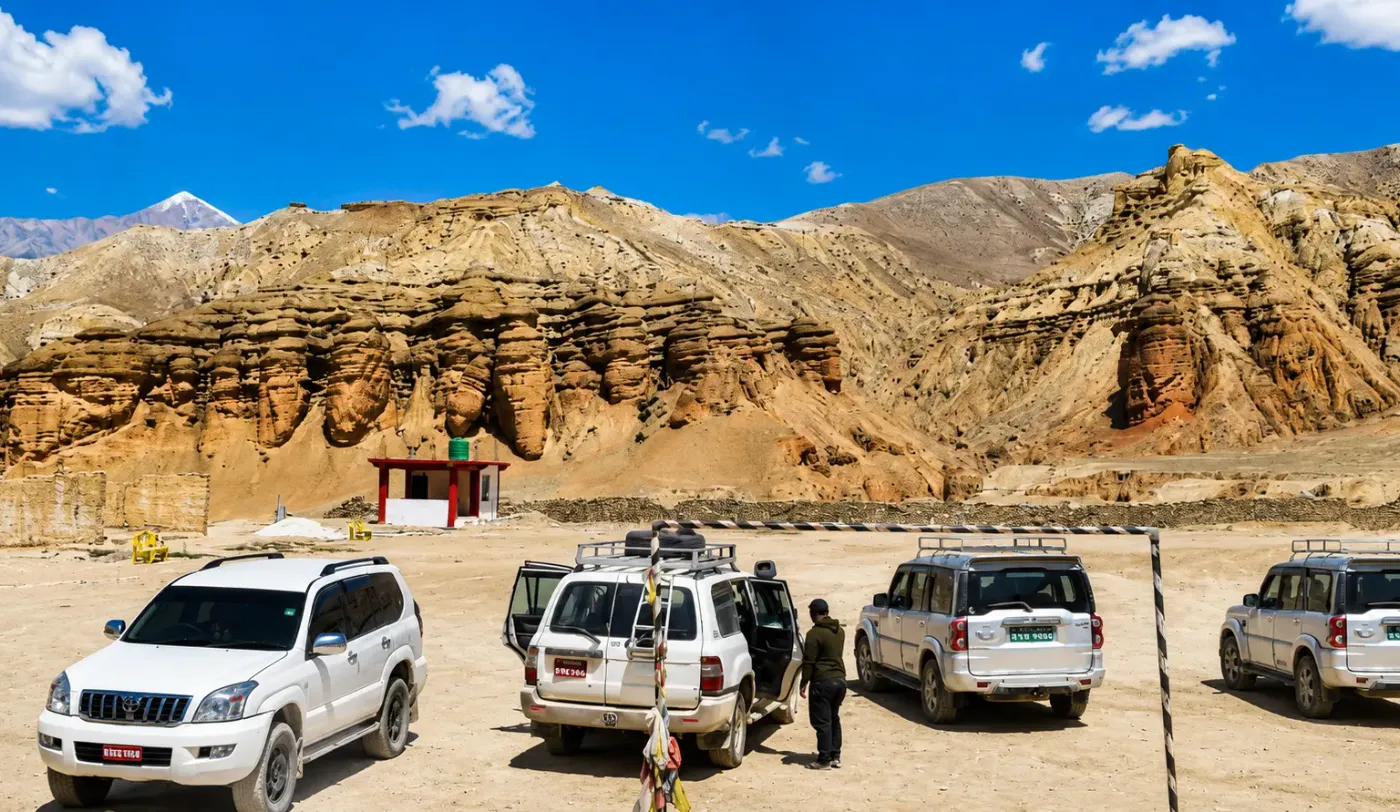
VIP Sofa Bus Hire in Nepal: Luxury Bus Rental Service for Comfortable Group Travel

Pokhara

Introduction – Nepal’s Most Comfortable Bus Experience

A profound difference exists between travelling across Nepal and experiencing Nepal. On a standard local bus from Kathmandu to Pokhara, travellers endure cramped 2×2 Seating, erratic air conditioning, unpredictable stops, and 6–8 hours of highway discomfort that drains energy and joy before the journey even begins.

On a Nepal Vehicle Hiring VIP Sofa Bus, the same journey is transformed: wide, deeply cushioned 2×1 sofa-style reclining seats with individual USB charging, WiFi, panoramic windows framing the Trishuli River gorge and the Annapurna massif, and the smooth, whisper-like motion of top-end air suspension — delivering passengers to Pokhara Lakeside not exhausted and stiff, but relaxed, refreshed, and ready for their Himalayan adventure.

Nepal Vehicle Hiring Pvt Ltd operates Nepal’s finest VIP Sofa Bus hire service—a fleet of top-end luxury buses with the most comfortable seating configuration available in Nepal’s bus transport market. Whether you are booking a private full-bus charter for a tour group, a corporate team, a wedding party, or a pilgrimage Yatra, arranging a multi-day Nepal Golden Triangle circuit with consistent VIP travel quality throughout, or seeking the most comfortable individual seats on Nepal’s major intercity routes, our VIP Sofa Bus hire service delivers the standard of luxury travel that Nepal’s magnificent landscapes deserve.

This is your complete guide to VIP Sofa Bus hire in Nepal — covering our bus specifications, the complete amenities that make VIP Sofa Bus travel the finest land transport experience in Nepal, every major route we serve, who benefits most from VIP Sofa Bus hire, seasonal and timing advice, safety standards, and a comprehensive FAQ. By the end of this guide, you will understand exactly why the VIP Sofa Bus has become Nepal’s top-end group transport choice for thousands of satisfied travellers, our operators, and corporate clients every year.

Book your VIP Sofa Bus: Nepal Vehicle Hiring – Bus Hire | All Vehicles | Call/WhatsApp: +977 981-4227196

What Is a VIP Sofa Bus? – Nepal’s Top-end Bus Category Explained

In Nepal, the term “VIP Sofa Bus” refers to a top-end tourist coach category that differs from standard deluxe buses in one key design feature: seating configuration. While standard tourist buses use a 2×2 layout (two seats on each side of the central aisle), the VIP Sofa Bus uses a 2×1 layout—two seats on the left side and a single seat on the right side of the aisle. This seemingly simple change delivers transformative results:

  • Each passenger has up to 35–40% more seat width than on a 2×2 bus
  • The aisle is significantly wider — comfortable for movement and luggage retrieval
  • Total passenger capacity is reduced to 21–30 passengers — fewer passengers means less noise, more privacy, and a more relaxed atmosphere
  • Each seat is a genuine sofa-style unit with deep cushioning, padded armrests, fully adjustable recline, and adjustable headrest — not a repurposed standard bus seat
  • The overall interior feels genuinely top-end-class rather than mass transit

Combined with air suspension, dual-zone climate control, panoramic windows, WiFi, individual USB ports, and a professional bus attendant, the VIP Sofa Bus delivers a land transport experience in Nepal that is incomparably superior to any alternative and genuinely rivals the comfort of a first-class train seat or top-end coach service in more developed transport markets.

Nepal Vehicle Hiring VIP Sofa Bus – Complete  Specifications

Every Nepal Vehicle Hiring VIP Sofa Bus is maintained to the highest standard in Nepal’s tourist bus market. Here are the full specifications:

FeatureNepal Vehicle Hiring VIP Sofa Bus –  Specification
Seating Configuration2×1 (two seats left side, one seat right side) – top-end sofa-style
Total Seating Capacity21 to 30 passengers per bus (varies by bus model)
Seat TypeFull-recline VIP sofa seats with padded armrests, adjustable headrests, deep cushioning, and wide seatback
LegroomSuperior – 2×1 configuration delivers 35-40% more legroom per passenger vs standard 2×2 buses.
Air ConditioningFull dual-zone AC with individual overhead vents at every seat. Heating is available for winter routes.
Air Suspension SystemTop-end air suspension on all wheels – dramatically smooths rough highway sections for maximum passenger comfort.
WiFiOnboard WiFi available on Kathmandu–Pokhara and Kathmandu–Lumbini routes (connectivity varies by location)
USB Charging PortsIndividual USB charging ports at every seat – keep all devices powered throughout the journey
LCD EntertainmentIndividual LCD screens (selected models) or shared screen entertainment systems showing movies, documentaries, and music
Panoramic WindowsLarge panoramic windows with sun shading for optimal scenic views without glare on mountain highway routes
Luggage StorageGenerous underfloor luggage hold (30 kg check-in + 5 kg hand luggage per passenger) + overhead storage racks
Complimentary WaterMineral water bottle provided to every passenger at departure – no additional charge.
StaffProfessional driver + attentive bus attendant on all VIP Sofa Bus services – dedicated to passenger comfort
Night Bus AvailabilityAvailable on Kathmandu–Pokhara and Kathmandu–Lumbini routes – fully reclining seats for overnight comfort.
InsurancePassenger accidental medical insurance is included on all Nepal Vehicle Hiring VIP Sofa Bus hires

Siddhartha Highway

VIP Sofa Bus vs Other Nepal Bus Categories – Complete Comparison

Understanding where the VIP Sofa Bus sits in Nepal’s bus hierarchy helps travellers choose the right option for their journey. Here is a comprehensive comparison of Nepal’s four main bus categories:

FeatureVIP Sofa Bus (2×1)VIP Deluxe Bus (2×2)Standard DeluxeLocal Bus
Seating2×1 sofa recline2×2 reclining2×2 semi-recline2×2 basic
Capacity21–30 pax30–40 pax35–45 pax45–52 pax
Personal SpaceExceptionalGoodStandardCramped
WiFiYes (major routes)Selected routesRarelyNo
USB ChargingEvery seatMost seatsLimitedNo
Air SuspensionYes – top-endStandardBasicNone
LCD EntertainmentYes (selected)LimitedNoNo
Free WaterYesMost servicesNoNo
Price RangeNPR 2,000–3,500NPR 1,200–2,000NPR 800–1,400NPR 300–800
Best ForTop-end tourists, VIP groups, corporates, long routesGroup tours, pilgrimsBudget groups, schoolsLocal commuter travel

Why 2×1 Seating Is a Critical Difference

The 2×1 sofa seating configuration is the defining feature that sets the VIP Sofa Bus apart from every other bus category in Nepal. In a 2×2 bus (30–45 passengers), even the widest reclining seat feels constrained because the passenger to your right occupies the same space that, on a VIP Sofa Bus, would be part of your seat width and armrest area.

In the 2×1 configuration, the right-side single-seat passenger has a completely open view and personal space to their right— no neighbouring passenger, no armrest competition, and a genuine sense of personal space that turns the 6–8-hour Kathmandu–Pokhara journey from an endurance exercise into a pleasure.

In the left-side 2-seat row, the window-seat passenger has a panoramic view and privacy, with the window on one side and the spacious aisle on the other. In contrast, the aisle-seat passenger has the widest aisle on any Nepal bus and the reassurance of the window-seat companion’s presence, without the intrusion of a full 2×2 bus neighbour.

This careful architecture of personal space is no accident—it’s why discerning travellers, top-end tour operators, corporate clients, and experienced Nepal visitors choose the VIP Sofa Bus over every alternative.

When to Choose VIP Sofa Bus Over VIP Deluxe (2×2)

Nepal Vehicle Hiring recommends the VIP Sofa Bus (2×1) over the VIP Deluxe Bus (2×2) in the following circumstances:

  • Long-distance routes (6+ hours): Kathmandu–Pokhara, Kathmandu–Lumbini, Kathmandu–Bardiya — any journey over 6 hours strongly rewards the superior comfort of 2×1 Seating.
  • Seating: The VIP Sofa Bus’s deep recline creates a genuinely restful sleeping position on night services to Pokhara and Lumbini — impossible to replicate on a 2×2 seat.
  • Top-end international tourist groups: For travellers accustomed to first-class trains and top-end coach travel in Europe, North America, or East Asia, the VIP Sofa Bus sets the standard for buses in Nepal.
  • Corporate and diplomatic clients: The VIP Sofa Bus projects a professional standard of travel that reflects well on organisations that use it to transport staff and stakeholders.
  • Senior travellers: The wide sofa seat with full armrests, deep cushioning, and generous legroom provides the most comfortable long-distance bus experience available for elderly passengers in Nepal.

VIP Sofa Bus Hire Routes – Nepal Vehicle Hiring  Complete Network

RouteDistanceTravel TimeNight Bus?Key Highlights & Scenic Stops
Kathmandu – Pokhara200 km6–8 hrsYesPrithvi Hwy, Trishuli gorge, Mugling fish stop, Annapurna views
Pokhara – Kathmandu200 km6–8 hrsYesReverse Prithvi Highway; Himalayan dawn views from Pokhara
Kathmandu – Lumbini280 km8–9 hrsYesTerai highway, Butwal, Bhairahawa, UNESCO Maya Devi Temple area
Kathmandu – Chitwan150 km4–5 hrsNoPrithvi Hwy to Narayanghat; Narayani River; Sauraha lodge drop
Pokhara – Chitwan150 km4–5 hrsNoPrithvi Highway; Dumre junction; Terai plains
Kathmandu – Birgunj150 km4–5 hrsNoTribhuvan / Mahendra Hwy; Hetauda; India border transport
Kathmandu – Bardiya560 km12–14 hrsYesFar western Terai, national park gateway; long-distance overnight
Kathmandu – Janakpur225 km6–8 hrsNoSindhuli Highway, Madhesh plains; Ram Janaki Temple pilgrimage
Kathmandu – Bhairahawa265 km7–9 hrsYesButwal area; Lumbini access; border crossing to India at Sunauli

The Kathmandu to Pokhara VIP Sofa Bus is Nepal’s most-booked luxury bus service, and the route where the VIP Sofa Bus format was essentially created. The 200 km journey on the Prithvi Highway takes 6–8 hours.

It passes through some of Nepal’s finest highway scenery: the Trishuli River gorge, the Mugling riverside fish restaurants, the Damauli valley, and the striking arrival into Pokhara with the Annapurna and Machhapuchchhre (Fishtail Mountain) massif dominating the northern sky.

Nepal Vehicle Hiring operates morning and evening VIP Sofa Bus services on the Kathmandu–Pokhara route. Morning departures (6:30–7:00 AM from Kathmandu) arrive in Pokhara Lakeside by 2:00–3:00 PM, allowing a full afternoon for lake activities, Sarangkot viewpoint preparation, or resort check-in.

Evening departures (7:00–9:00 PM) arrive in Pokhara early the next morning on the night bus service, with fully reclining VIP sofa seats that make overnight travel genuinely restful. Hotel pick-up from Thamel and other central Kathmandu areas is available for private charter bookings.

Kathmandu to Lumbini – The Sacred Buddhist Pilgrimage Route

The Kathmandu to Lumbini VIP Sofa Bus covers approximately 280 km on the Prithvi Highway and Mahendra Highway through the flat Terai plains—an 8–9 hour journey that benefits especially from the VIP Sofa Bus’s superior seating comfort. Lumbini, the birthplace of Lord Siddhartha Gautama (the historical Buddha) and a UNESCO World Heritage Site, attracts pilgrim groups from South Korea, Japan, Sri Lanka, Thailand, Tibet, India, and the global Buddhist diaspora — all of whom consistently choose the VIP Sofa Bus as their preferred land transport option from Kathmandu.

Nepal Vehicle Hiring operates morning departures (6:00 AM), arriving in Lumbini by 3:00–4:00 PM, and evening departures (6:00 PM), arriving in Lumbini at approximately 5:00 AM the following morning —ideal for pilgrim groups wanting to be at the Maya Devi Temple at dawn for morning puja. Drop—off at the Lumbini Mayadevi Temple gate (Gate 5 opposite) for all Lumbini services.

Kathmandu to Chitwan – Wildlife Safari Transfer

The Kathmandu to Chitwan VIP Sofa Bus covers approximately 150 km in 4–5 hours via the Prithvi Highway to Mugling and then south to Narayanghat and Sauraha. The route is shorter than the Pokhara run but equally popular — Chitwan National Park is Nepal’s most visited wildlife destination, drawing international safari travellers, school groups, corporate retreat organisers, and family holidaymakers in the thousands year-round.

Nepal Vehicle Hiring’s VIP Sofa Bus service to Chitwan departs in the mornings (7:00 AM from Kathmandu), arriving in Sauraha by 12:00–1:00 P and leaving a full afternoon for jungle activities on arrival day. Return services from Sauraha depart between 7:30 and 8:00 AM and arrive in Kathmandu by early afternoon. A private charter option is available with resort pick-up directly from any Sauraha accommodation.

Night Bus Service – Kathmandu to Pokhara and Lumbini

Nepal Vehicle Hiring’s night VIP Sofa Bus service operates on two routes: Kathmandu to Pokhara (depart 7:00–9:00 PM, arrive 2:00–5:00 AM) and Kathmandu to Lumbini (depart 6:00 PM, arrive ~5:00 AM). On both routes, the VIP Sofa Bus’s fully reclining 2×1 sofa seats provide the most comfortable overnight bus sleep available in Nepal’s bus market—passengers on standard deluxe buses on the same night routes often arrive stiff, unslept, and uncomfortable because partial recline on 2×2 seats isn’t designed for genuine sleeping.

The VIP Sofa Bus night service is strictly limited to flat Terai and low-gradient highway routes where safe, well-lit driving conditions allow overnight operation. Nepal Vehicle Hiring’s categorical policy of no night driving on mountain routes ensures tight services run only where passenger safety is fully assured. All-night services use rotating drivers — two licensed drivers alternate throughout the overnight run to prevent fatigue.

Who Benefits Most from VIP Sofa Bus Hire in Nepal?

Client TypeWhy VIP Sofa Bus is the Perfect Choice
International TouristsNepal Golden Triangle circuits (KTM–Pokhara–Chitwan) in VIP comfort matching their 5-star hotel experience. Private charter available for full-group exclusive travel.
Hindu & Buddhist PilgrimsMuktinath Yatra groups, Lumbini pilgrimages, Pashupatinath, Janakpur – VIP Sofa Bus is ideal for senior devotees who need superior seat comfort on long ritual journeys.
Corporate GroupsStaff outings, NGO field visits, conference transfers, and incentive tours. VIP Sofa Bus projects the professional standard that corporate clients expect in Nepal.
Wedding & Event GroupsWedding guest shuttles, event venue transfers, and baraat (procession) transport. The VIP Sofa Bus’s elegant interior creates a celebratory atmosphere on the way.
Tour OperatorsNepal’s licensed tour operators use VIP Sofa Bus for top-end international tourist circuits: pre-confirmed hotel pick-up, assigned seats, and punctual departures.
School & College GroupsSelect educational institutions book VIP Sofa Bus for top-end annual excursions, heritage trips, and educational tours requiring above-standard comfort.
Senior Traveller GroupsThe VIP Sofa Bus 2×1 seat, with deep recline, armrests, and superior legroom, is the best bus option for elderly travellers on Nepal’s long-distance routes.
Film & Media ProductionsProduction companies, documentary crews, and media groups use Nepal Vehicle Hiring’s VIP Sofa Bus for comfortable, flexible transportation of crew and equipment.

International Tourists – The Nepal Golden Triangle in VIP Style

The Nepal Golden Triangle — the classic Kathmandu–Pokhara–Chitwan circuit completed by most first-time international visitors — becomes a genuinely comfortable overland experience with the VIP Sofa Bus. International tourists arriving from Europe, North America, Japan, South Korea, Australia, and the Gulf countries increasingly expect land transport standards that match their accommodation quality — and after three nights at a Pokhara lakeside boutique lodge, the VIP Sofa Bus is the only Nepal bus option that sustains that standard for the Pokhara–Chitwan and Chitwan–Kathmandu legs.

Nepal Vehicle Hiring works directly with international tour operators, destination management companies (DMCs), and Nepal-based trekking agencies to provide VIP Sofa Bus services that are smoothly integrated into Nepal’s most popular tourism packages. Our pre-confirmed hotel pick-up, assigned seat confirmation, punctual departure, and dedicated bus attendant service ensure that the VIP Sofa Bus component of any Nepal tour package reflects the overall quality of the experience.

Hindu and Buddhist Pilgrim Groups – Comfort for the Devout

Nepal is one of the world’s great pilgrimage nations — and pilgrimage groups often include elderly devotees for whom comfort is not a luxury but a medical necessity. The 8–9 hour Kathmandu–Lumbini journey, the 7–8 hour Kathmandu–Janakpur journey for Ram Navami and Vivah Panchami celebrations, and the multi-day circuits combining Pashupatinath, Muktinath, Lumbini, and Janakpur — these are long, demanding journeys that the VIP Sofa Bus’s superior Seating and air conditioning make genuinely manageable for devotees of all ages and physical conditions.

Nepal Vehicle Hiring understands the specific needs of religious pilgrimage groups: prayer-time stops at key intervals, flexibility for sudden route diversions to additional temples, vegetarian meal preferences at highway restaurants, early-morning departures to accommodate festival timing, and the respect and patience elderly pilgrims require throughout a long journey. Our VIP Sofa Bus attendants are trained to serve all passengers’ needs throughout the pilgrimage journey with genuine attentiveness and cultural sensitivity.

Corporate and NGO Groups – Professional Group Travel Standard

For Nepal’s corporate sector—multinationals, development banks, international NGOs, UN agencies, and domestic corporations—the VIP Sofa Bus provides the professional travel standard executive, technical, and staff groups require for incentive tours, team outings, field visits, and conference transfers. Nepal Vehicle Hiring provides formal corporate booking agreements, GST-compliant invoicing, advance seat-assignment information, and a dedicated operations contact for corporate accounts that require structured vehicle-hire management.

The VIP Sofa Bus’s clean, well-maintained, air-conditioned environment also provides a practical workspace for mobile team briefings, document review, and informal discussion during highway travel- something that’s impossible on a crowded public bus. Many corporate clients report that the 6–8-hour Kathmandu–Pokhara journey in a VIP Sofa Bus becomes a highly productive team-building and planning session, made possible by the private charter, quiet environment, and comfortable Seating.

Seating IP Sofa Bus Charter – The Superior Option for Groups

Nepal Vehicle Hiring’s private charter VIP Sofa Bus—when your group hires the entire bus exclusively—delivers a completely different, superior experience compared to individual seat bookings on shared departure services. Understanding the full value of private charter helps groups make the right decision:

Complete Departure Flexibility

With a private charter, your group sets the departure time, not a fixed schedule. This is particularly valuable for groups combining VIP Sofa Bus travel with hotel checkout times, flight connections, resort check-in requirements, and festival timing.

Nepal Vehicle Hiring’s VIP Sofa Bus charter can depart at any agreed time—5:00 AM for an early Pokhara arrival, 10:00 AM for a mid-morning departure, or a customised schedule that fits your group’s complete itinerary—no waiting for a shared bus to fill with strangers.

Hotel and Resort Pick-Up – Zero Transfer Hassle

On a private charter, Nepal Vehicle Hiring’s VIP Sofa Bus collects your entire group directly from your hotel, resort, or any specified location in Kathmandu, Pokhara, or another city. Your group walks from the hotel lobby to the waiting bus — no secondary taxi transfer to a bus park, no navigating Kathmandu’s morning traffic with heavy bags, and no losing group members in the confusion of public bus departure terminals.

For groups of 15–30 passengers with significant luggage, this hotel-to-destination continuity is not a minor convenience — it eliminates hours of logistical friction.

Custom Intermediate Stops

A private VIP Sofa Bus charter allows your group to stop at any intermediate destination on your route —fr photography, temple visits, river viewpoints, specific restaurants, or unscheduled detours. The Mugling fish stop in Kathmandu–Pokhara, a Manakamana Cable Car visit, a Tribhuvan Highway heritage stop, or a riverside picnic break — all are possible on a private charter and impossible on a scheduled shared departure bus.

Nepal Vehicle Hiring’s experienced drivers know the best intermediate stops on every major Nepal highway route and are happy to recommend options based on your group’s interests.

Group Privacy and Security

On a private VIP Sofa Bus charter, your group occupies the entire bus for the full journey. No strangers, no luggage mix-ups, no conversation privacy concerns, and no vulnerability from unknown co-passengers on long overnight services.

For corporate groups handling sensitive business discussions, diplomatic parties requiring confidentiality, high-value tour groups with professional camera equipment, and family groups travelling with young children, a private charter provides the security and privacy shared bus travel cannot offer.

Consistent Group Cohesion

When your entire group travels together in a single private VIP Sofa Bus, group dynamics remain intact throughout the journey. Tour guides can brief the group during the drive, team leaders can coordinate logistics, pilgrimage groups can hold prayer sessions, and wedding parties can celebrate within the exclusive, private space of your chartered VIP Sofa Bus.

In shared services, groups are split across multiple buses or among passenger seats with strangers, fundamentally disrupting the cohesion that is often the most valuable aspect of group travel.

VIP Sofa Bus Amenities – A Deep Dive into Nepal’s Finest Bus Features

The VIP Sofa Seat – Engineering of Comfort

The defining feature of Nepal’s VIP Sofa Bus is, naturally, the seat itself. Nepal Vehicle Hiring’s VIP sofa seats are purpose-built top-end coach seats — not converted standard bus seats, but specifically engineered units designed for extended highway journeys. Key design features include:

  • Full-recline mechanism: The seatback reclines to about 160 degrees—close to horizontal—creating a genuinely restful sleeping position on overnight services.
  • Deep foam cushioning: Top-end-density foam with fabric or velour upholstery distributes body weight evenly across the seat, eliminating pressure points that cause discomfort on long journeys in standard bus seats.
  • Padded, adjustable armrests: Full-length padded armrests on both sides of each sofa seat—no armrest-sharing with neighbouring passengers—and adjustable height on most models.
  • Adjustable headrest: A multi-position headrest lets each passenger position head and neck support precisely for their sleeping posture and height.
  • Footrest on selected models: Some Nepal Vehicle Hiring VIP Sofa Bus models include integrated leg rests, further improving the overnight sleeping position.

Air Suspension – Why It Matters on Nepal’s Highways

Nepal’s highway network — while significantly improved in recent years — still includes sections with irregular surfaces, bridge transitions, and gradient changes that cause significant jolting to passengers in standard buses with conventional steel-spring suspension. Nepal Vehicle Hiring’s VIP Sofa Buses are equipped with top-end air-suspension systems on all axles, using pressurised air bags rather than metal springs to absorb road irregularities.

The practical result for passengers is dramatic: the air suspension absorbs most of the shaking on sections of the Prithvi Highway that noticeably affect standard buses, delivering a smooth, quiet, gliding sensation that transforms the driver’s experience and greatly reduces passenger fatigue on long journeys.

WiFi – Staying Connected on Nepal’s Highways

Nepal Vehicle Hiring’s VIP Sofa Buses on the Kathmandu–Pokhara and Kathmandu–Lumbini routes have onboard WiFi routers. Coverage quality varies: strong in populated valley sections (Kathmandu, Narayanghat, Mugling, Pokhara approaches) and intermittent in the deep Trishuli River gorge sections, where mobile network coverage is patchy across all operators in Nepal.

Passengers are advised to download content for offline use as a backup before departure, but WiFi is reliably available for most of the journey. USB charging at every seat is more reliable than WiFi for keeping devices powered, and Nepal Vehicle Hiring recommends both as a dual-connectivity solution for VIP Sofa Bus travel.

Panoramic Windows – The Himalayan Living Screen

Nepal’s highway routes are among the most scenically extraordinary road journeys in the world — and the panoramic windows of Nepal Vehicle Hiring’s VIP Sofa Buses are specifically sized to make the most of these views. Larger than standard bus windows, with UV-filtering tinted glass and adjustable sun shading, the panoramic windows frame the Trishuli River gorge, the Annapurna range, the Machhapuchchhre (Fishtail) spire, the Dhaulagiri massif, and the Terai plains in a constantly moving, constantly spectacular natural panorama.

For photographers, the panoramic windows add genuine value, particularly on the Pokhara-Kathmandu route. Complimentary Mineral Water – Hydration as Standard.

Every passenger on every Nepal Vehicle Hiring VIP Sofa Bus service receives a complimentary sealed bottle of mineral water at boarding. This standard complimentary provision—expected on top-end coach services globally but absent on Nepal’s standard bus options—reflects the VIP Sofa Bus’s commitment to passenger care from the first moment of the journey.

On long-distance routes, the bus attendant may provide a second water bottle or light refreshments at the midpoint rest stop. Nepal Vehicle Hiring’s VIP Sofa Bus attendants are trained to monitor passenger comfort, water availability, and AC performance throughout the journey.

VIP Sofa Bus Hire in Nepal – Luxury Travel Experience

Safety Standards – Nepal Vehicle Hiring VIP Sofa Bus

Safety is the unconditional foundation of every Nepal Vehicle Hiring VIP Sofa Bus operation. Our safety standards exceed Nepal’s DoTM regulatory requirements in multiple dimensions:

Safety StandardNepal Vehicle Hiring Protocol
Driver LicensingAll VIP Sofa Bus drivers hold a Class A+ commercial license issued by DoTM (Department of Transport Management) – the highest category for passenger vehicles.
Vehicle RegistrationAll Nepal Vehicle Hiring VIP Sofa Buses hold a current Lal Purja (blue book) and a valid provincial transport route permit for each specific route operated.
Passenger InsurancePassenger accidental medical insurance is included in every Nepal Vehicle Hiring VIP Sofa Bus hire – covering all passengers from departure to destination.
Pre-Journey InspectionFull mechanical inspection performed before every long-distance departure: brakes, tyres, all fluid levels, lights, AC, entertainment, and USB charging systems
Bus AttendantA dedicated bus attendant accompanies the driver on all VIP Sofa Bus services – available to assist passengers throughout the journey.
Night Driving PolicyNight VIP Sofa Bus services operate ONLY on safe, flat, well-lit Terai highway routes (Kathmandu–Pokhara, Kathmandu–Lumbini)—no night mountain driving.
Driver Rest HoursDOTM rest-hour regulations are followed rigorously. Long-distance routes use driver rotation to ensure no fatigue-affected driving at any point.
Emergency EquipmentAll VIP Sofa Bus services carry a first aid kit, emergency contacts (Nepal Vehicle Hiring 24/7 support, traffic police, medical services), and an air extinguisher.
Cleaning ProtocolWe fully clean and sanitise the interior after every trip. We replace or clean seat covers and headrests for each new journey.

Driver Selection and Training

Nepal Vehicle Hiring’s VIP Sofa Bus drivers are selected through a rigorous process that goes well beyond license verification. All drivers undergo: a minimum of 3 years of commercial passenger vehicle driving experience; route-specific knowledge testing on all major Nepal highway routes; a defensive driving assessment; an English communication evaluation for international passenger service; background and reference checks; and ongoing performance monitoring through passenger feedback collected after every trip.

Our VIP Sofa Bus drivers are among the most experienced and professional in Nepal’s commercial vehicle sector.

What to Do If You Have a Safety Concern on Board

If any passenger has a safety concern during a Nepal Vehicle Hiring VIP Sofa Bus journey—such as driver behaviour, vehicle condition, or an emergency—the bus attendant is the first point of contact. The attendant can halt the bus, contact Nepal Vehicle Hiring operations, or contact emergency services immediately.

Nepal Vehicle Hiring’s 24/7 operations line (+977 981-4227196) is available throughout every journey. Nepal Vehicle Hiring registers all VIP Sofa Bus drivers’ journey details in its dispatch system before departure; your group’s location is always known.

How to Book Your VIP Sofa Bus Hire – Complete Booking Guide 2026

Booking TypeDetails & Best Use
Private Charter (Full Bus)The entire VIP Sofa Bus is exclusively for your group. Full control over departure time, hotel pick-up, route stops, and privacy. Best for tour groups, corporations, weddings, and pilgrimages.
Hotel Pick-Up ServiceNepal Vehicle Hiring VIP Sofa Bus collects passengers directly from their hotel in Thamel, Lazimpat, or any location in Kathmandu. No travel to bus parks required.
Advance Booking RequiredPeak season (Dashain, Tihar, Vivah Panchami, Christmas/New Year): 7–14 days in advance. Standard dates: 2–5 days in advance. Large groups (20+ pax): 1–2 weeks.
Night Bus BookingNight VIP Sofa Bus departure from Kathmandu–Pokhara: 7:00–9:00 PM, arriving 2:00–5:00 AM. Night to Lumbini: 6:00 PM, arriving ~5:00 AM. Book 3+ days ahead.
Multi-Day Package BookingNepal Vehicle Hiring provides VIP Sofa Bus for full Nepal circuit packages (KTM–Pokhara–Chitwan–KTM): a single booking, consistent vehicle standards, and a coordinated schedule.

Step-by-Step Booking Process

  • Step 1 – Contact Nepal Vehicle Hiring: Call or WhatsApp +977 981-4227196 or visit com/bus. State your travel date, route, group size, preferred departure time, pick-up address, and whether you need a private charter or are joining a shared departure.
  • Step 2 – Receive Quote and Confirm: Nepal Vehicle Hiring provides a full, transparent pricing quote. For private charters, the quote covers the entire bus hire — per-vehicle pricing, not per-person. For peak season or large groups, you may need to pay a booking deposit.
  • Step 3 – Receive Booking Confirmation: You’ll receive written confirmation with the bus model, seat numbers (where applicable), driver and attendant details, pick-up time and address, departure time, and estimated arrival time.
  • Step 4 – Day Before Reminder: Nepal Vehicle Hiring’s operations team contacts your group lead the evening before travel to confirm pick-up time, luggage requirements, and any last-minute details.
  • Step 5 – Journey Day: The VIP Sofa Bus arrives at your hotel at the confirmed time, and the attendant stores luggage in the underfloor hold. Passengers board, receive complimentary water, and settle into their VIP sofa seats. The journey begins.

Advance Booking Advice by Season

Nepal Vehicle Hiring strongly advises booking in advance based on the travel season:

  • Festival Periods (Dashain Oct, Tihar Oct–Nov, Vivah Panchami Nov–Dec, Ram Navami Apr–May, Chhath Puja Oct–Nov): Book 2–4 weeks in advance — VIP Sofa Bus availability is severely limited during major festivals when all transport fills rapidly.
  • Peak Tourist Season (Oct–Nov, Mar–May): Book 7–14 days in advance for private charter. Individual seat bookings on shared departures: 3–7 days.
  • Standard Season (Jun–Sep, Dec–Feb): Book 2–5 days in advance for most routes. Last-minute availability may be available, but is not guaranteed for the VIP Sofa Bus.
  • Large Groups (20+ passengers): Always book at least 2 weeks in advance, regardless of season — a full VIP Sofa Bus (21–30 seats) for private charter requires logistical preparation.

VIP Sofa Bus Travel Tips – Getting the Most From Your Nepal Bus Journey

Seat Selection Strategy

On a VIP Sofa Bus with 2×1 Seating, seat selection can meaningfully shape your journey experience:

  • Right-side single seats (Column A): Maximum personal space and privacy — no neighbour. However, views from these seats are on the right side of the road, which is the mountainside on the Kathmandu–Pokhara (Trishuli gorge) route, but the less scenic side on some stretches.
  • Left-side window seats (Column B): Best views of the Trishuli River gorge and the Annapurna range approach on Kathmandu–Pokhara. Shared row with one aisle neighbour.
  • Front seats (Rows 1–4): Best views through the front windscreen but most sensation of road motion — less suitable for motion sickness sufferers.
  • Middle seats (Rows 8–15): Smoothest ride quality. Least vibration. Most comfortable for elderly passengers and those prone to motion sickness.
  • Rear seats (Rows 16–end): More road sensation and noise from the rear axle. Generally less comfortable on rough sections. Not ideal for long journeys or motion-sensitive passengers.

What to Pack for Long VIP Sofa Bus Journeys

  • Warm Layer: AC can be cold on VIP Sofa Buses, even in warm weather — always carry a light jacket or fleece, regardless of the season.
  • Travel Pillow and Eye Mask (Night Bus): For overnight services to Pokhara or Lumbini, a personal travel pillow and eye mask can significantly improve the sleeping experience, even in a VIP sofa seat.
  • Ear Plugs or Noise-Canceling Headphones: Entertainment systems, phone conversations, and engine noise can disturb sleep on night buses. Ear protection is recommended for overnight travel.
  • Cash (NPR) for Rest Stops: Highway restaurant stops are cash-only. Carry NPR for meals (NPR 300–700 per person at midpoint restaurant stops) and any purchases.
  • Motion Sickness Medication: The Prithvi Highway’s winding sections between Malakhu and Mugling can cause motion sickness in susceptible travellers. Take medication before boarding if needed.
  • Offline Entertainment Download: Download films, podcasts, or playlists before boarding — WiFi in gorge sections is intermittent.

Rest Stop Guide – Kathmandu to Pokhara VIP Sofa Bus

Nepal Vehicle Hiring’s Kathmandu–Pokhara VIP Sofa Bus makes two scheduled rest stops:

  • Malakhu / Adhibhumi (approx. 80 km, 2 hrs from Kathmandu): Brief comfort stop (15–20 min). Clean facilities. Basic snacks and tea are available.
  • Mugling (approx. 100 km, 2.5 hrs from Kathmandu): Main rest and meal stop (30–45 min). The famous Mugling fish restaurants serve freshly grilled Asla (snow trout arguably Nepal’s finest highway dining experience and one of the most discussed features of the Kathmandu–Pokhara journey among both local and international travellers. Strongly recommended.

Frequently Asked Questions – VIP Sofa Bus Hire in Nepal

What exactly is a VIP Sofa Bus in Nepal?

A VIP Sofa Bus is Nepal’s top-end luxury bus category, distinguished by its 2×1 seating configuration (two seats on the left side, one on the right) rather than the standard 2×2 layout. This gives each of the 21–30 passengers significantly more personal space, wider sofa-style seats with full recline, and a more private, comfortable journey experience.

Additional top-end features include WiFi, USB charging, air suspension, LCD entertainment, panoramic windows, complimentary mineral water, and passenger insurance.

How is a VIP Sofa Bus different from a VIP Deluxe Bus?

The fundamental difference is seating configuration and personal space. A VIP Sofa Bus uses 2×1 Seating (Seating Passengers). In contrast, a VIP Deluxe Bus uses 2×2 Seating (Seating Passengers); the Sofa Bus offers wider seating, a wider aisle, and a more personal, top-end experience.

The VIP Deluxe Bus is more economical and better suited to larger groups. Choose the Sofa Bus when maximum comfort is the priority.

Can I hire a VIP Sofa Bus as a private charter for my group?

Yes — Nepal Vehicle Hiring’s primary VIP Sofa Bus service model is private full-bus charter. Your group hires the entire bus (21–30 seats) exclusively — full control over departure time, hotel pick-up, route stops, and privacy. Private charters are available for all routes and are strongly recommended for tour groups, corporate outings, pilgrimages, weddings, and any group needing full privacy and schedule flexibility.

What routes does Nepal Vehicle Hiring VIP Sofa Bus serve?

Nepal Vehicle Hiring’s VIP Sofa Bus serves all major tourist and pilgrimage routes in Nepal,  including: Kathmandu–Pokhara (most popular), Pokhara–Kathmandu, Kathmandu–Lumbini, Kathmandu–Chitwan, Pokhara–Chitwan, Kathmandu–Birgunj, Kathmandu–Bardiya, Kathmandu–Janakpur, and Kathmandu–Bhairahawa. Custom routes and multi-day circuits are also available on request.

Does Nepal Vehicle Hiring VIP Sofa Bus have WiFi?

Yes — WiFi is available on Nepal Vehicle Hiring VIP Sofa Buses operating the Kathmandu–Pokhara and Kathmandu–Lumbini routes. Coverage is good in populated sections and intermittent in deep gorge areas where mobile network coverage is limited across all Nepal operators. USB charging at every seat is available and fully reliable on all routes; we recommend this as the primary device-charging solution, with WiFi as a supplementary connectivity feature.

How many passengers can a VIP Sofa Bus accommodate?

Nepal Vehicle Hiring’s VIP Sofa Buses accommodate 21 to 30 passengers, depending on the specific bus model. For private charter, the entire bus capacity is available for your group. For groups smaller than 21, the private charter cost covers the full bus — but the superior space and comfort make even small groups of 10–15 passengers choose VIP Sofa Bus private charter over cramped alternatives.

Is the VIP Sofa Bus suitable for elderly passengers?

Yes — the VIP Sofa Bus is the most suitable bus option for elderly passengers in Nepal. The wide 2×1 sofa seat with deep cushioning, full armrests, easy-recline mechanism, and generous legroom provides the most comfortable seating arrangement on Nepal’s bus network.

The air suspension system dramatically reduces road vibration and impact that can cause discomfort for passengers with joint or back sensitivities. Nepal Vehicle Hiring’s bus attendants provide additional assistance for elderly passengers with boarding, luggage, and seating throughout the journey.

Are there night bus services on the VIP Sofa Bus?

Yes — Nepal Vehicle Hiring operates VIP Sofa Bus night services on Kathmandu–Pokhara (depart 7:00–9:00 PM) and Kathmandu–Lumbini (depart 6:00 PM). The 2×1 fully reclining sofa seats create the most comfortable overnight sleeping position available on Nepal’s highway buses.

Night services are operated exclusively on safe, flat, well-lit highway routes — never on mountain or winding hill routes. Two licensed drivers rotate on all night services to prevent driver fatigue.

How far in advance do I need to book a VIP Sofa Bus?

For standard periods: 2–5 days in advance. For peak festival season (Dashain, Tihar, Vivah Panchami): 2–4 weeks ahead. For peak tourist season (Oct–Nov, Mar–May): plan 7–14 days in advance for large groups requiring a charter; at least 2 weeks in advance, regardless of season.

What luggage can I bring on a Nepal Vehicle Hiring VIP Sofa Bus?

Nepal Vehicle Hiring’s VIP Sofa Bus luggage allowance per passenger: 30 kg in the underfloor luggage hold (large bags, trekking equipment, backpacks) + 5 kg hand luggage in the overhead storage rack. For private charter groups, the entire underfloor hold is available — generous for those with trekking packs, camera equipment, or oversized luggage. Confirm unusually large items (e.g., bicycle, large camping equipment) at the time of booking.

What is included and not included in the VIP Sofa Bus hire price?

Included: bus, driver, bus attendant, fuel, passenger accident insurance, complimentary mineral water, WiFi (on major routes), USB charging, and air conditioning. Not included: passenger meals at highway rest stops, porter fees, national park entry fees (for safari routes), and driver/attendant gratuity. A full transparent quote is provided in writing before booking confirmation — no hidden charges.

Can VIP Sofa Bus pick me up from my hotel in Thamel?

Yes — hotel pick-up from Thamel and all central Kathmandu areas is available on private charter bookings. For shared departure services, pick-up is from designated Kathmandu departure points (Sorakhutte/Khusibu area or Gongabu Bus Park, depending on route). Nepal Vehicle Hiring recommends a private charter for convenient hotel pick-up, eliminating the need for a secondary taxi transfer to a bus departure point.

Book Your VIP Sofa Bus Hire in Nepal Today – Nepal Vehicle Hiring

The Nepal Vehicle Hiring VIP Sofa Bus represents the finest land travel experience available in Nepal in 2026. From the moment your group settles into the deeply cushioned 2×1 sofa seats, connects to WiFi and USB charging, receives their complimentary mineral water, and feels the smooth air suspension absorbing the first highway undulation — the difference from every other bus travel experience in Nepal is immediately, undeniably apparent.

Whether your journey is Kathmandu to Pokhara with the Annapurna massif shimmering through panoramic windows, Kathmandu to Lumbini overnight in a reclined sofa-bed on Nepal’s finest night bus, a private charter for your corporate team’s annual outing, a pilgrimage group of senior devotees requiring the most comfortable possible Yatra transport, or an international tour group completing the Nepal Golden Triangle in VIP style — Nepal Vehicle Hiring’s VIP Sofa Bus delivers the quality, professionalism, safety, and comfort that Nepal’s magnificent destinations deserve.

With 24/7 booking, hotel pick-up, private charter flexibility, a top-end maintained fleet, licensed and experienced drivers and attendants, passenger insurance, and competitive, transparent pricing — Nepal Vehicle Hiring is Nepal’s first choice for VIP Sofa Bus hire in 2026. Book your VIP journey today.

Call / WhatsApp: +977 981-4227196 |  Website: vehiclehiringnepal.com  |E-mail: [email protected]  Book VIP Sofa Bus  |  Coaster & Hiace Hire
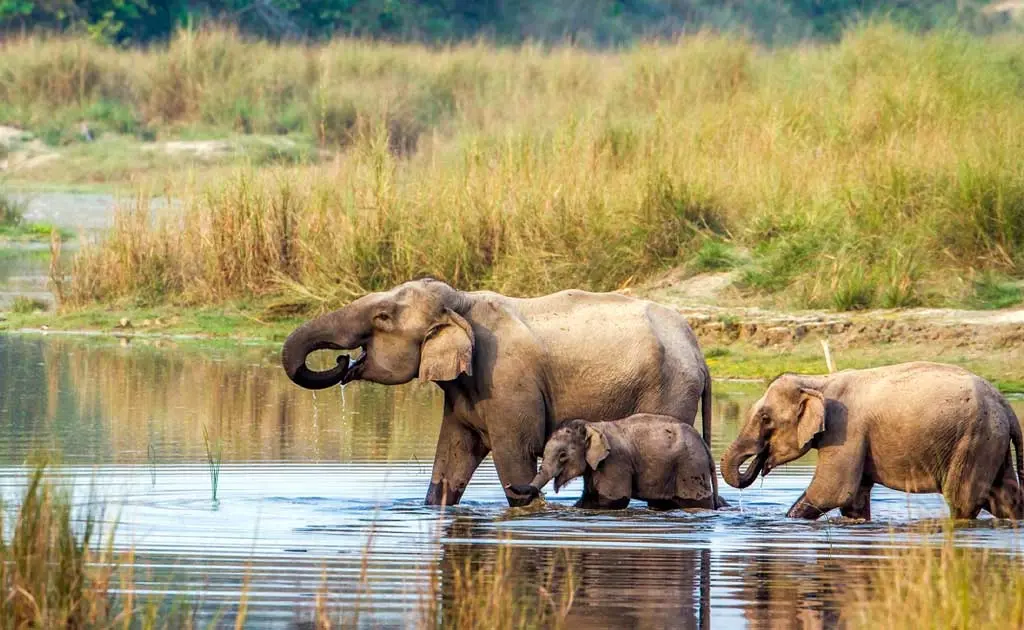
Chat with us