Pokhara to Khangsar Jeep Hire: The Complete Guide

Pokhara to Khangsar Jeep Hire: The Complete Guide

Introduction: The Journey to Khangsar Village

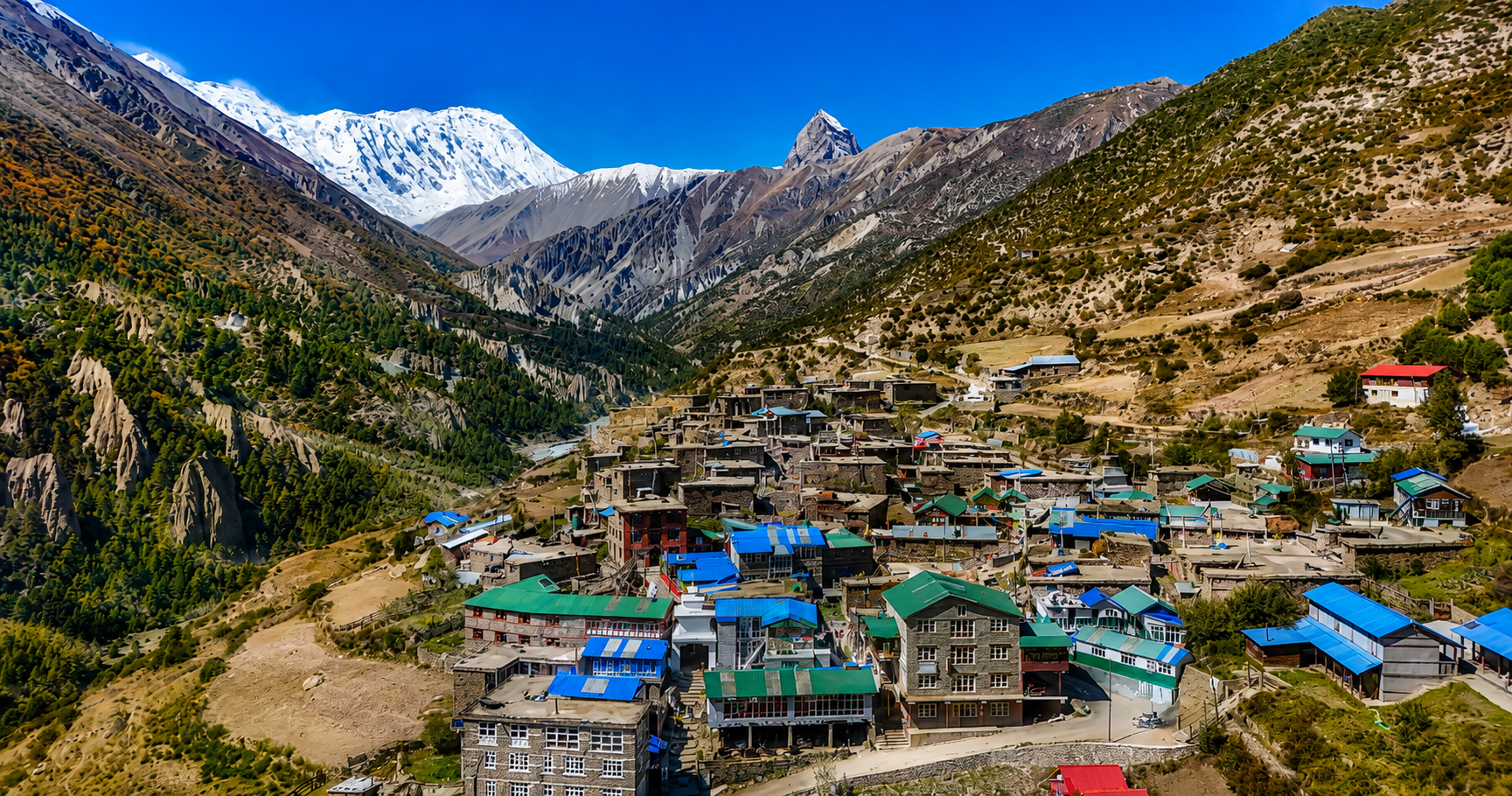
Tucked at an altitude of 3,734 meters above sea level in the remote Manang District of Nepal’s Gandaki Province, Khangsar is one of the most dramatically situated villages in the entire Annapurna region. Set against a striking backdrop of towering Himalayan peaks — including the Annapurna range, Gangapurna, and the majestic Tilicho Peak — Khangsar is both the final point accessible by motor vehicle on the road beyond Manang and the gateway to one of the world’s most spectacular trekking destinations: Tilicho Lake.

Tilicho Lake, at 4,919 meters, is recognised as one of the world’s highest lakes and a sacred site of extraordinary natural beauty. The road to it ends at Khangsar. Beyond here, only legs will carry you.

This makes a Pokhara-to-Khangsar jeep hire not just transportation, but the first chapter of one of Nepal’s greatest high-altitude adventures.

For trekkers planning to walk the Annapurna Circuit, visit Tilicho Lake, or explore the remote highland villages of Manang District, hiring a private 4WD jeep from Pokhara to Khangsar is by far the most practical, comfortable, and efficient mode of transportation. The route passes through some of Nepal’s most spectacular mountain terrain — deep river gorges, ancient Himalayan villages, alpine forests, and soaring peaks — and the journey itself is as memorable as the destination.

This comprehensive guide covers everything you need to know about the Pokhara to Khangsar jeep hire: the full route with distances and highlights, road conditions, costs, required permits, best travel seasons, vehicle options, and why Nepal Vehicle Hiring Pvt. Ltd. is the trusted choice for this challenging high-altitude journey.

Pokhara to Khangsar — Trip Glance

Destination: Khangsar Village, Manang District, Gandaki Province
Altitude: 3,734 m (12,251 ft) above sea level
Total Distance: Approx. 170–185 km from Pokhara (Lakeside)
Total Drive Time: 8–10 hours (one way, depending on road conditions)
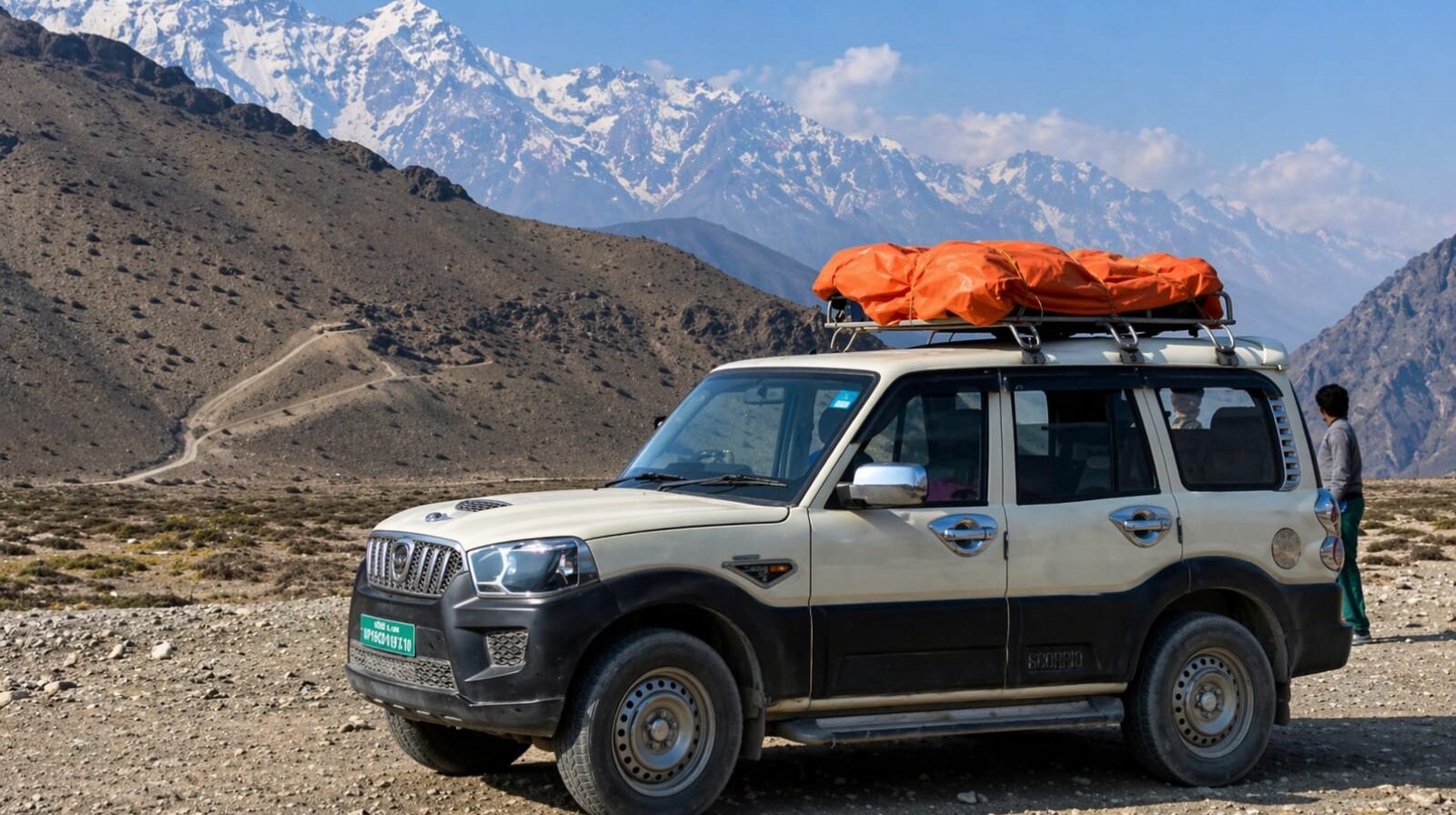
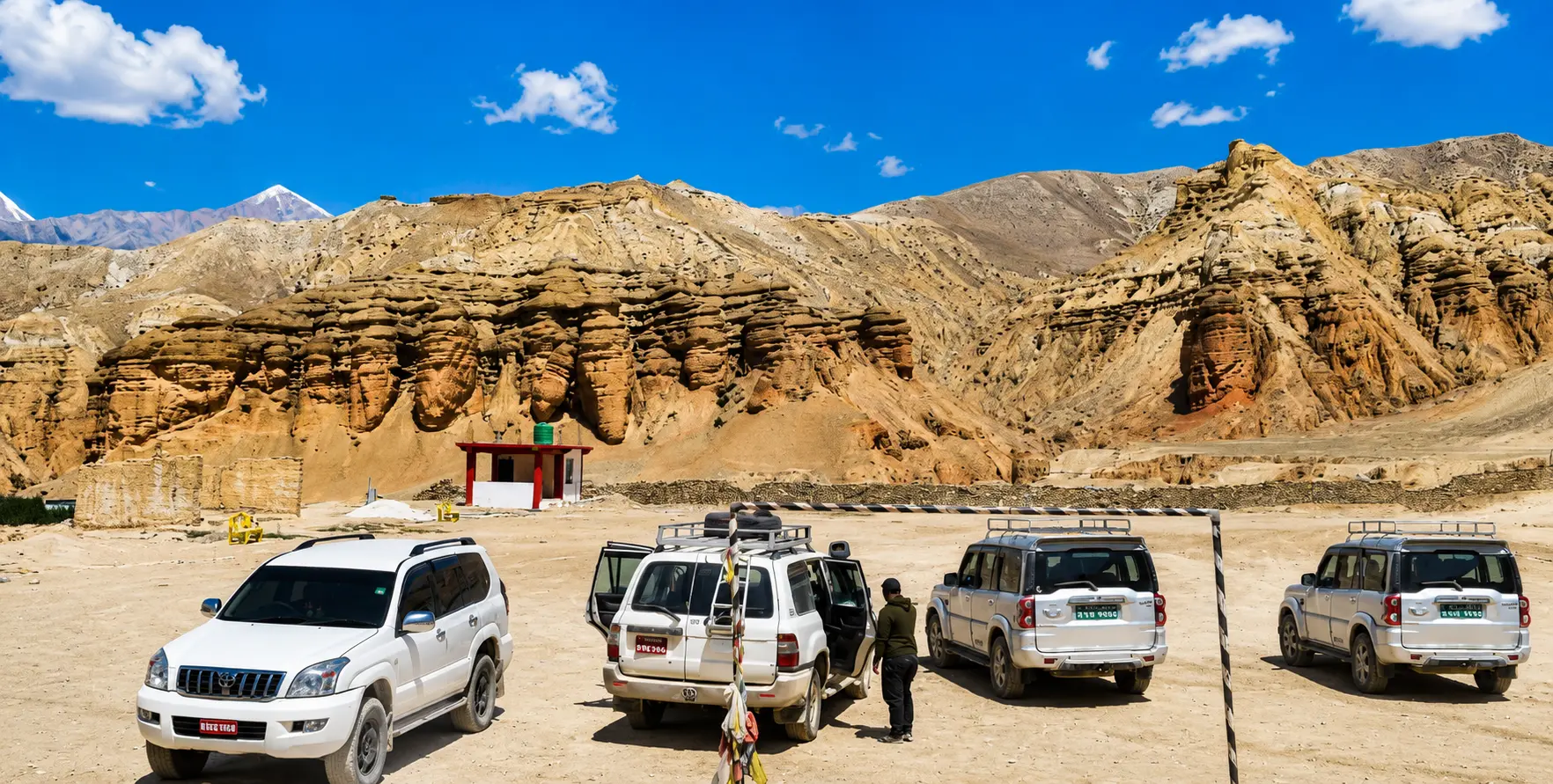
Required Vehicle: 4WD Jeep ONLY (Hilux, Fortuner, Land Cruiser, Scorpio)
Road Type: Paved highway (Pokhara–Besisahar), rough mountain off-road (Besisahar–Khangsar)
Best Season: March–May and October–December
Permits Needed: ACAP (Annapurna Conservation Area Permit) + TIMS Card
Gateway To: Tilicho Lake, Tilicho Base Camp, Annapurna Circuit
Book With: Nepal Vehicle Hiring Pvt. Ltd. |+977 981-4227196

Understanding Khangsar: Why This Village Is Your Jeep Hire Destination

What Is Khangsar?

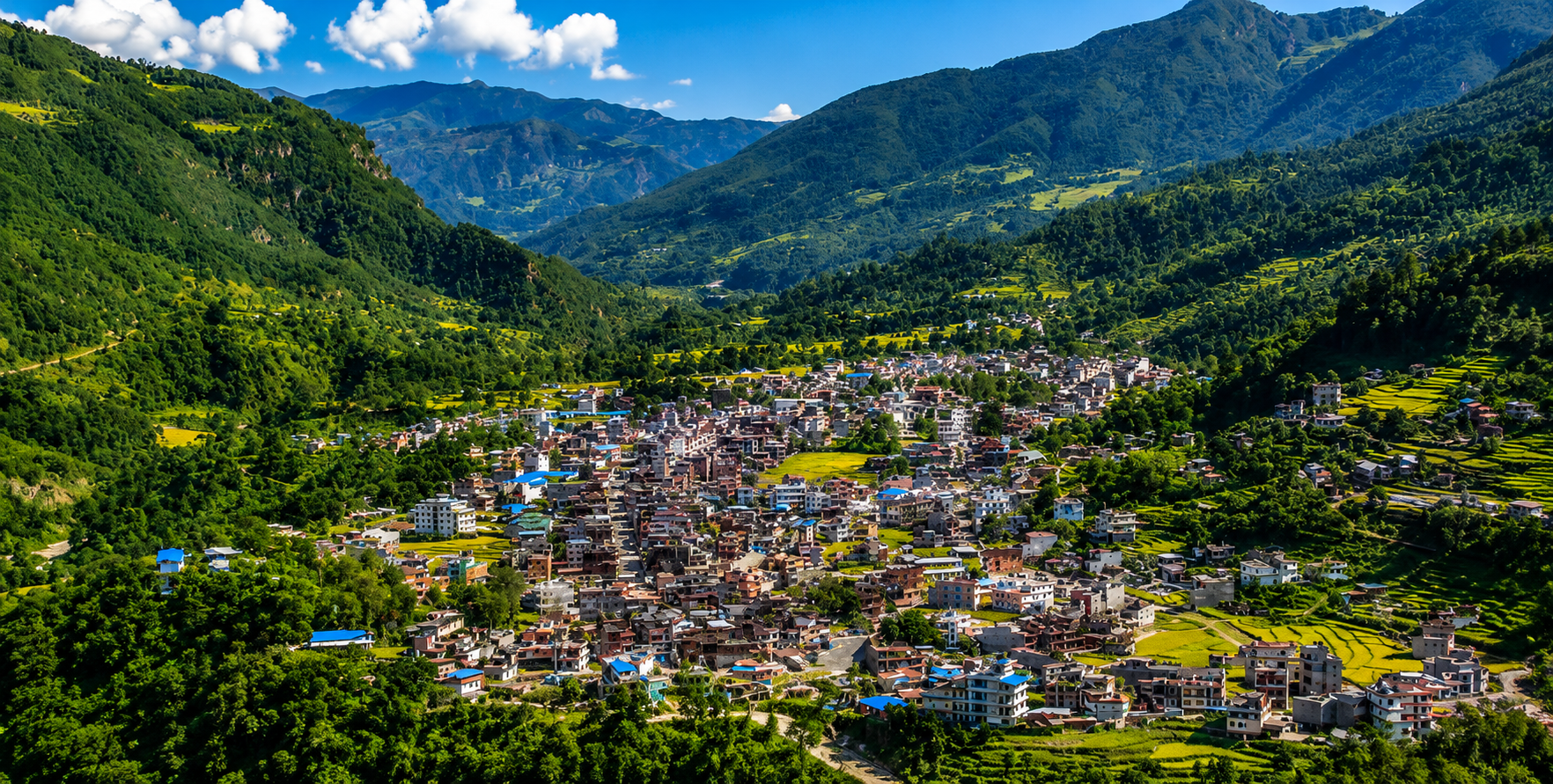
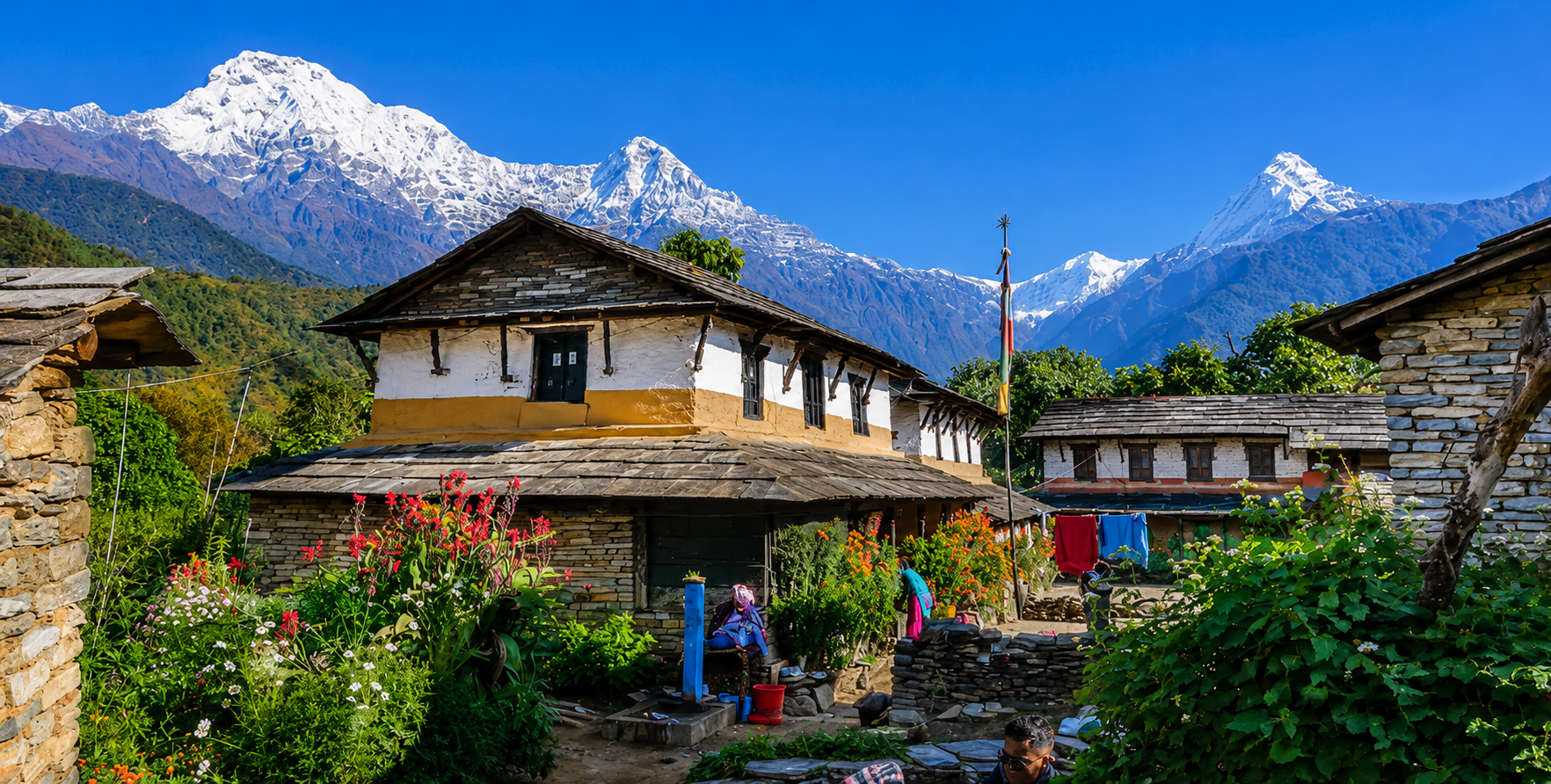
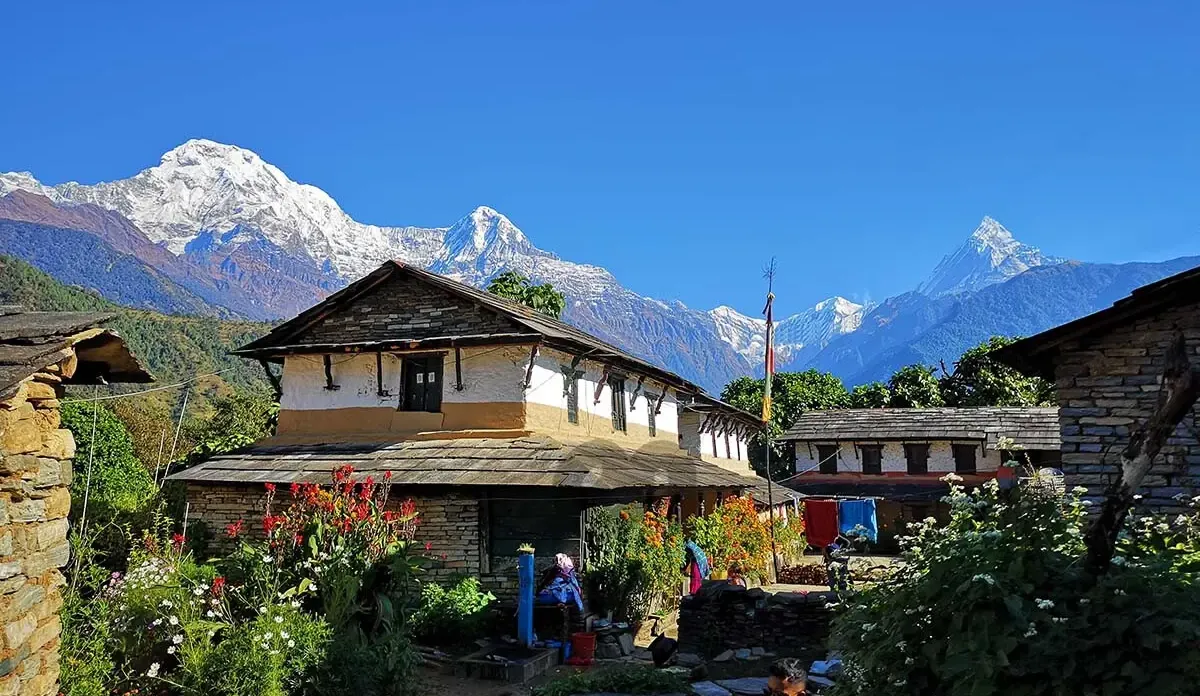
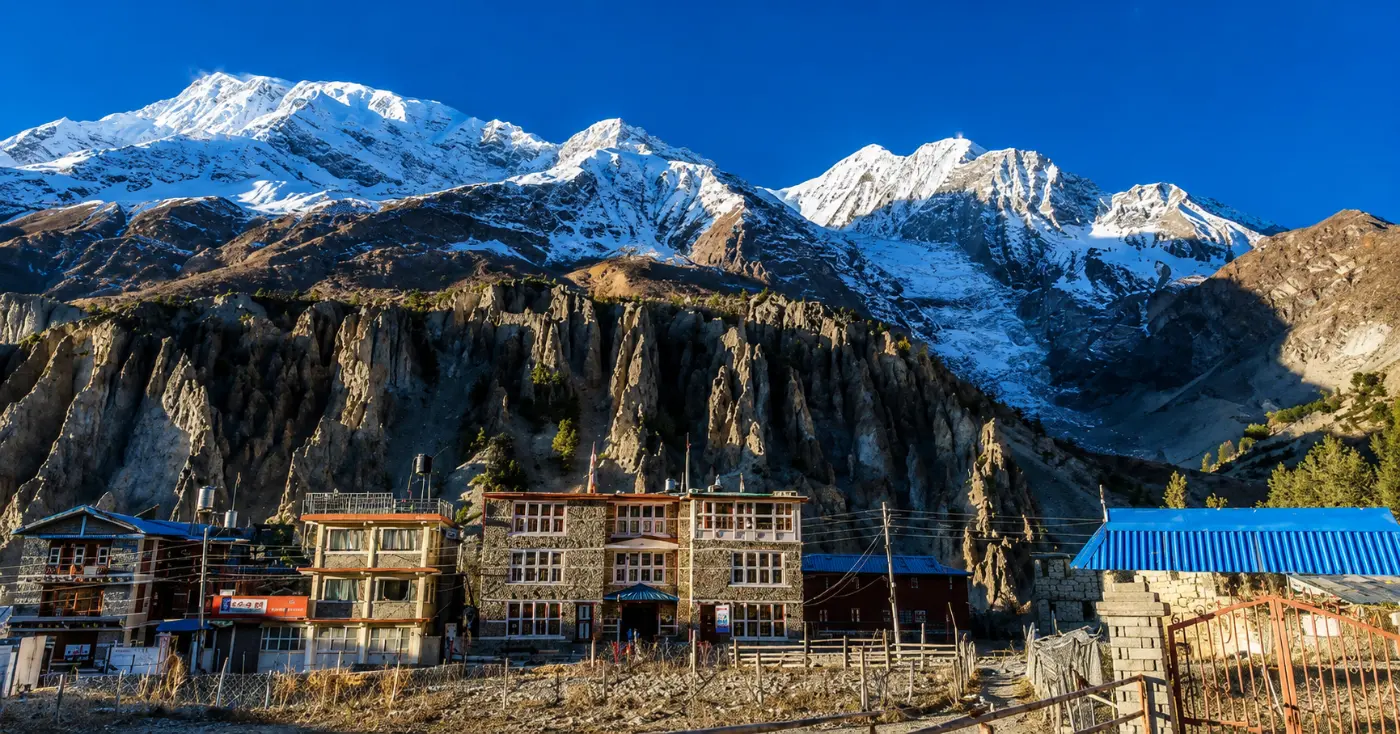
Khangsar is a small, traditional Tibetan-influenced village located approximately 3 km west of the main Annapurna Circuit trail town of Manang. The village sits at 3,734 meters, perched dramatically on a ridge above the Marsyangdi River Valley. It is inhabited primarily by the Manangi people—a semi-nomadic, Tibetan-culture community that has lived in this high-altitude environment for centuries, trading across the Himalayas between Nepal and Tibet.

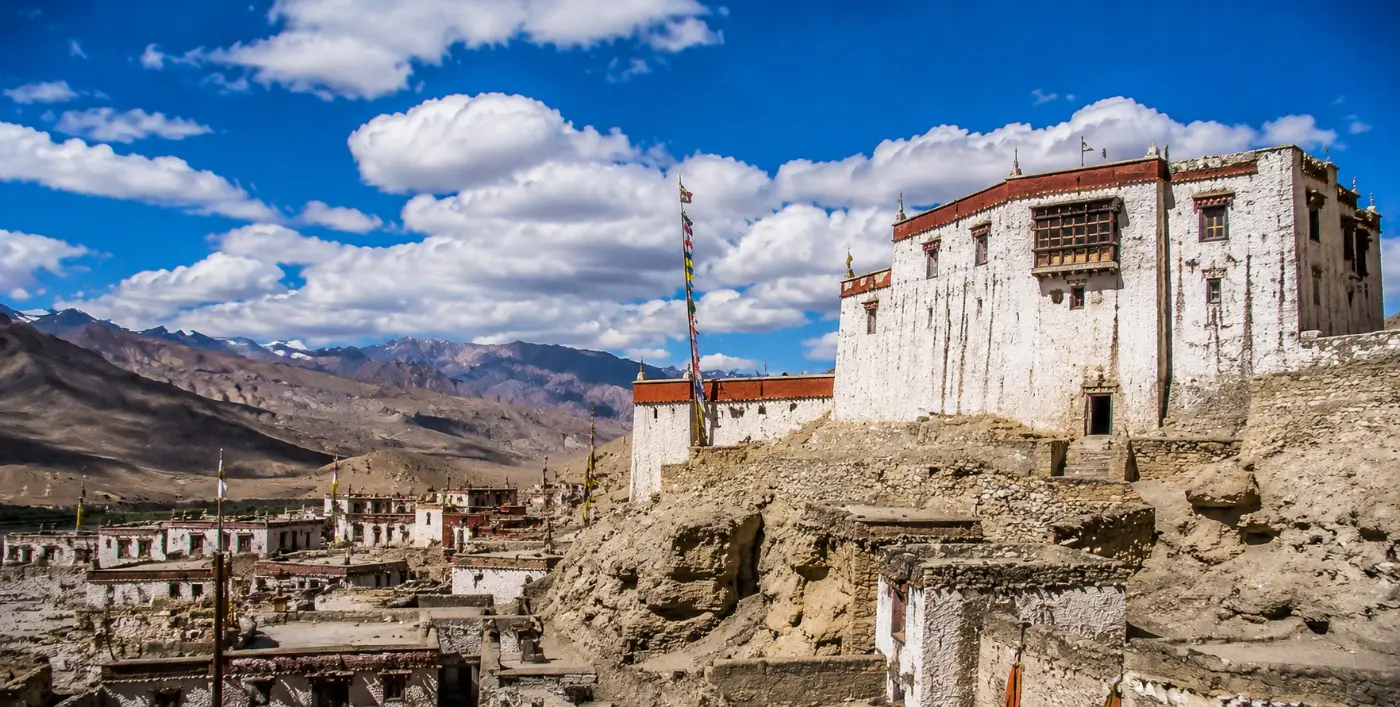
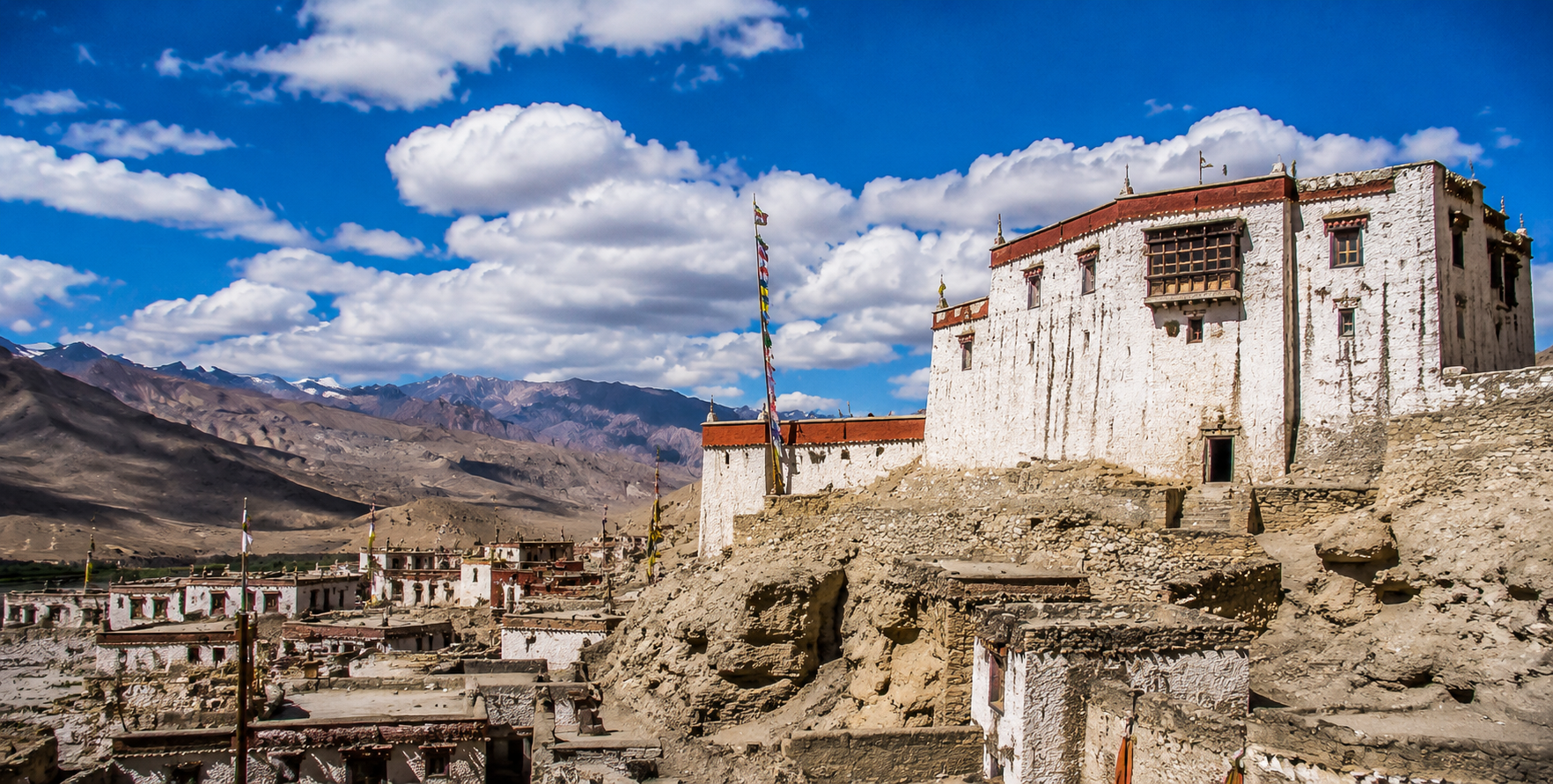
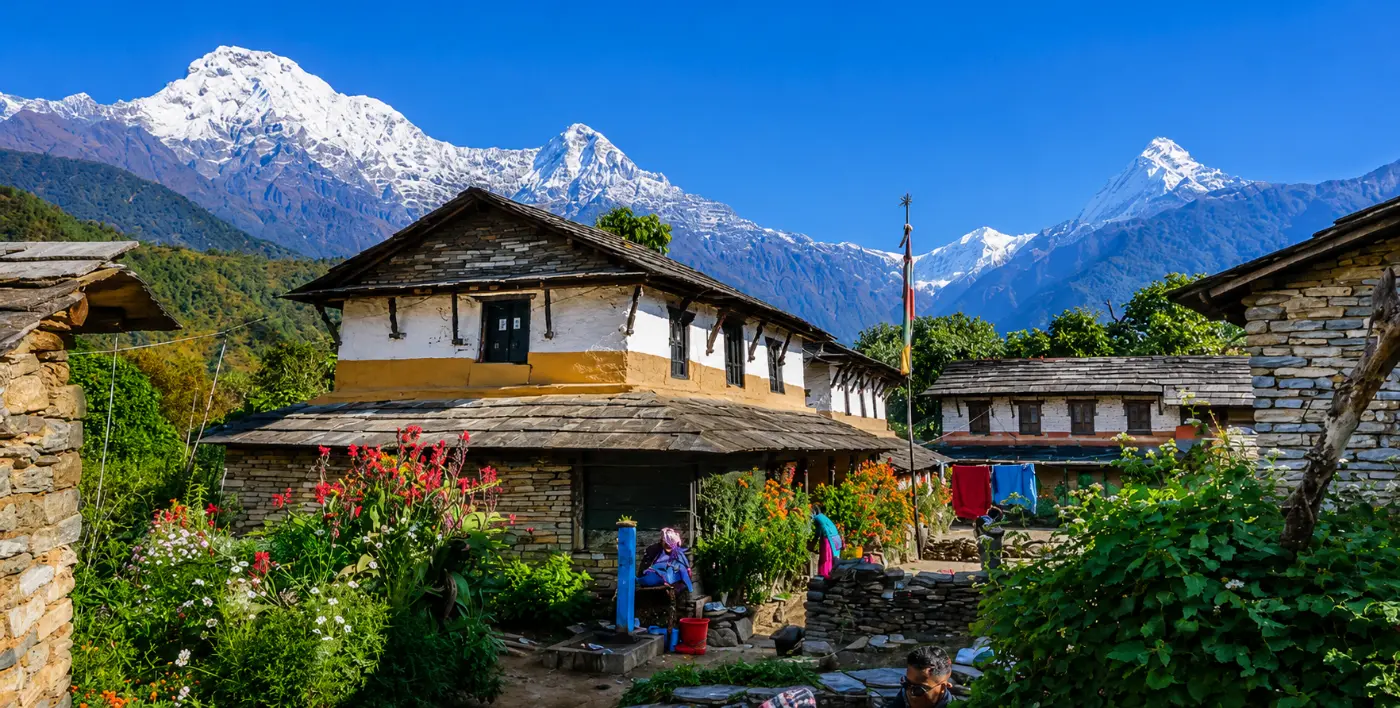
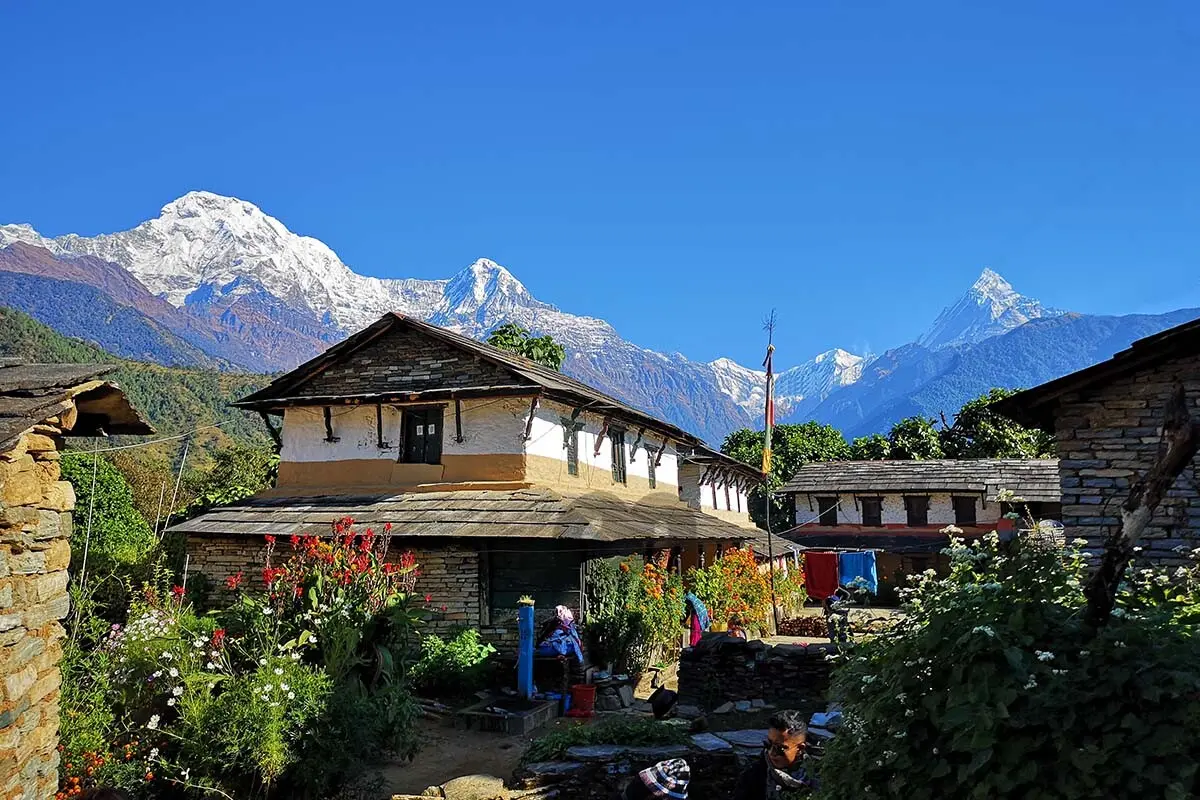
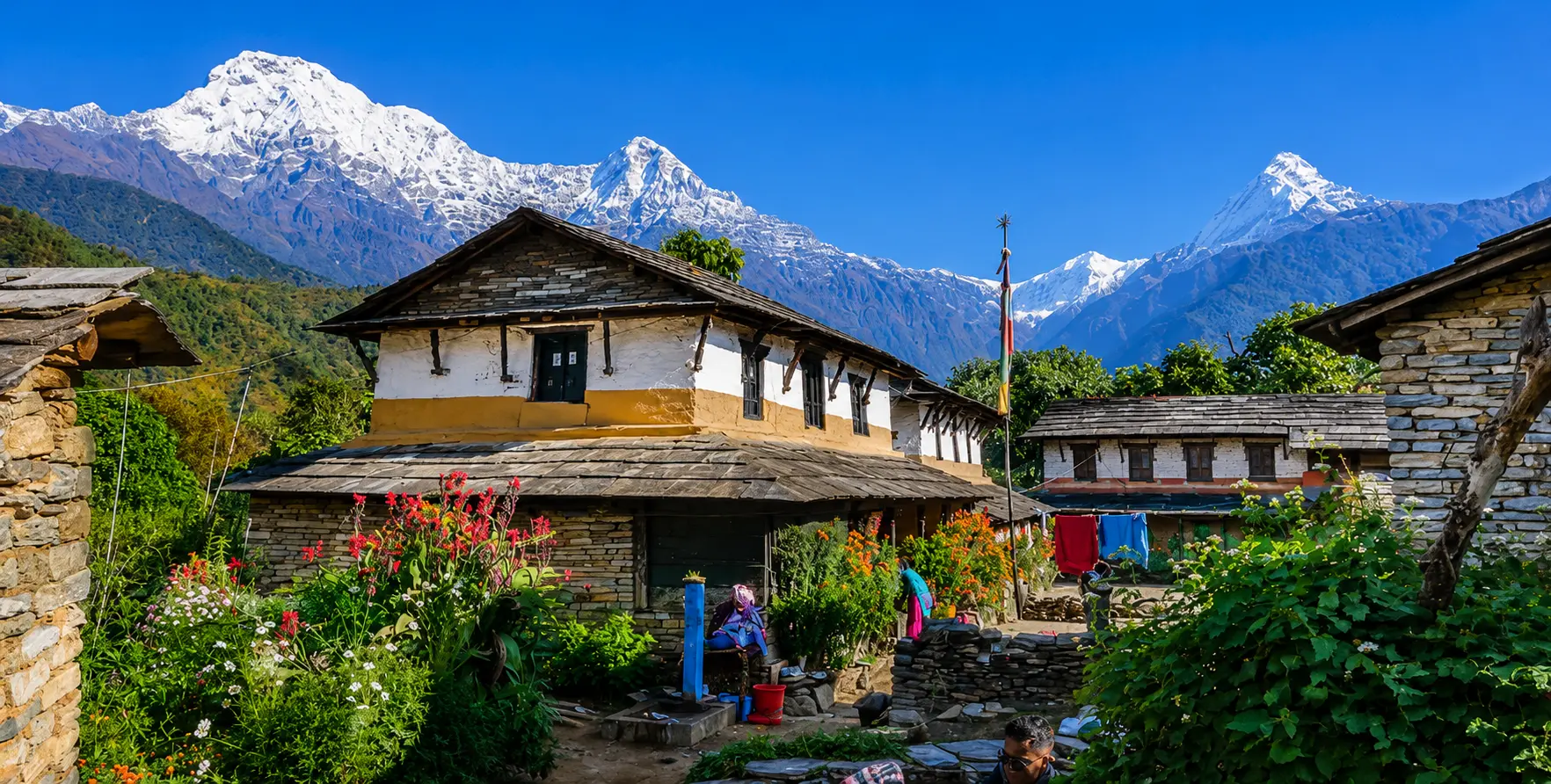
Khangsar’s architecture is distinctly Tibetan: flat-roofed stone houses, prayer flags snapping in the mountain wind, ancient gompas (Buddhist monasteries), and mani walls (long stone walls inscribed with Buddhist prayers). The village has a population of only a few hundred people but sees many trekkers passing through, particularly those headed to Tilicho Lake.

Khangsar holds special significance in the trekking geography of the Annapurna region: it is the last point accessible by 4WD on this route. Beyond Khangsar, toward Tilicho Base Camp and Tilicho Lake, trekking is only possible on foot. For trekkers who want to skip the lower road sections and start their high-altitude adventure directly, hiring a jeep to Khangsar dramatically shortens the overall trek while still delivering an epic Himalayan road journey.

Why Hire a Jeep Directly to Khangsar (Not Just Manang)?

  • Khangsar is 3 km beyond Manang by a rough jeep track — the very last point accessible by vehicle on this route.
  • Starting your trek from Khangsar rather than Manang saves 1–2 days of trekking and gives you more time to acclimatise above 3,700 m.
  • For trekkers focused specifically on Tilicho Lake (not the full Annapurna Circuit), a Pokhara–Khangsar jeep hire represents the most direct and efficient approach.
  • The road from Manang to Khangsar is extremely rough and requires a 4WD vehicle — not all jeep hire services go this final stretch. Nepal Vehicle Hiring Pvt. Ltd. can drive you all the way to Khangsar.

The Complete Route: Pokhara to Khangsar by Jeep

Route Overview

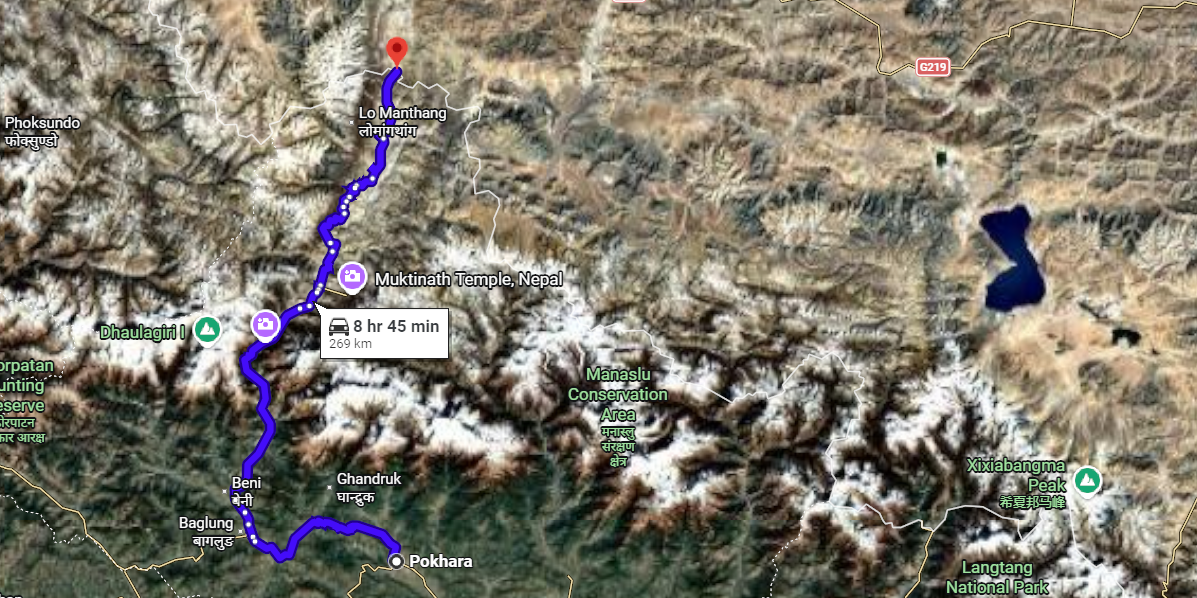
The journey from Pokhara to Khangsar follows the famous Annapurna Circuit road northward through the Marsyangdi River Valley, gaining altitude continuously from approximately 800 meters at Pokhara (Lakeside) to 3,734 meters at Khangsar. The route passes through a dramatic series of landscape transitions — subtropical hills, deep gorges, alpine forests, and finally the stark, wind-blasted high-altitude terrain of the Manang Valley.

SegmentDistance / Altitude / Road Type
Pokhara (Lakeside) → Dumre70 km | 600 m | Paved Prithvi Highway
Dumre → Besisahar40 km | 760 m | Paved highway
Besisahar → Syange20 km | 1,100 m | Off-road begins (rocky mountain track)
Syange → Dharapani / Chame30 km | 2,710 m | Rough mountain road, river crossings
Chame → Pisang → Braga25 km | 3,300 m | High mountain terrain, dramatic cliffs
Braga → Manang5 km | 3,519 m | Rough gravel road
Manang → Khangsar3 km | 3,734 m | Very rough jeep track (4WD essential)

Total Distance: Approximately 170–185 km from Pokhara Lakeside to Khangsar, depending on the specific route taken and any detours.

Stage-by-Stage Route Description

Stage 1 — Pokhara to Besisahar (approx. 110 km, 2–2.5 hours): The journey begins on the Prithvi Highway — Nepal’s main east-west artery — heading east from Pokhara through the rolling Gandaki Valley. The road is well-paved, and the drive is relatively fast.

The first major town you pass is Damauli, followed by Dumre, where you turn north toward Besisahar. Besisahar is the headquarters of Lamjung District and the traditional starting point of the Annapurna Circuit trek. Here, you will register for your ACAP permit and TIMS card before heading north.

Besisahar has basic restaurants and guesthouses if you need a break.

Stage 2 — Besisahar to Chame (approx. 70 km, 3–4 hours): North of Besisahar, the paved road ends and the adventure begins in earnest. The track follows the Marsyangdi River northward into a narrowing gorge of extraordinary beauty.

The road becomes a rough, rocky mountain track requiring 4WD capability, passing through dramatic villages including Bhulbhule, Ngadi, Jagat, Dharapani, and Bagarchhap. The scenery is spectacular — waterfalls tumbling from vertical cliffs, deep blue river pools, terraced fields clinging to near-vertical hillsides, and occasional glimpses of snow-capped peaks above.

The village of Chame, at 2,710 meters, is the district headquarters of Manang and a good place to rest and acclimatise.

Stage 3 — Chame to Manang (approx. 30 km, 2–3 hours): Above Chame, the terrain transforms dramatically. The valley opens into a broader, drier, Tibetan-style landscape as you gain altitude.

The road passes through Pisang (2,990 m) — where you can spot the extraordinary cliff-side monastery of Upper Pisang — and continues through Braga (3,360 m), home to one of the oldest and most important monasteries in the Annapurna region, to reach the main settlement of Manang (3,519 m). Manang is the largest town on the route, with teahouses, restaurants, a bakery, and a small medical facility. Most trekkers spend 1–2 nights here for acclimatisation.

Stage 4 — Manang to Khangsar (approx. 3 km, 30–45 minutes): The final stretch to Khangsar is short but demands maximum 4WD capability. The rough jeep track climbs 215 vertical meters from Manang (3,519 m) to Khangsar (3,734 m) across rocky, exposed terrain.

In wet or snowy conditions, this section can be extremely challenging even for experienced drivers. Khangsar village is small — a cluster of traditional Manangi stone houses, a gompa, and a handful of simple teahouses for trekkers heading to Tilicho Lake.

Road Conditions: What to Expect on the Pokhara to Khangsar Route

Pokhara to Besisahar — Paved Highway

This first section follows Nepal’s well-maintained Prithvi Highway and the Besisahar feeder road. The tarmac is generally good and allows comfortable, relatively fast driving in a standard vehicle. However, traffic can be heavy on market days and during festival seasons, so an early morning departure (6:30–7:00 AM from Pokhara) is strongly recommended.

Besisahar to Chame — Off-Road Mountain Track

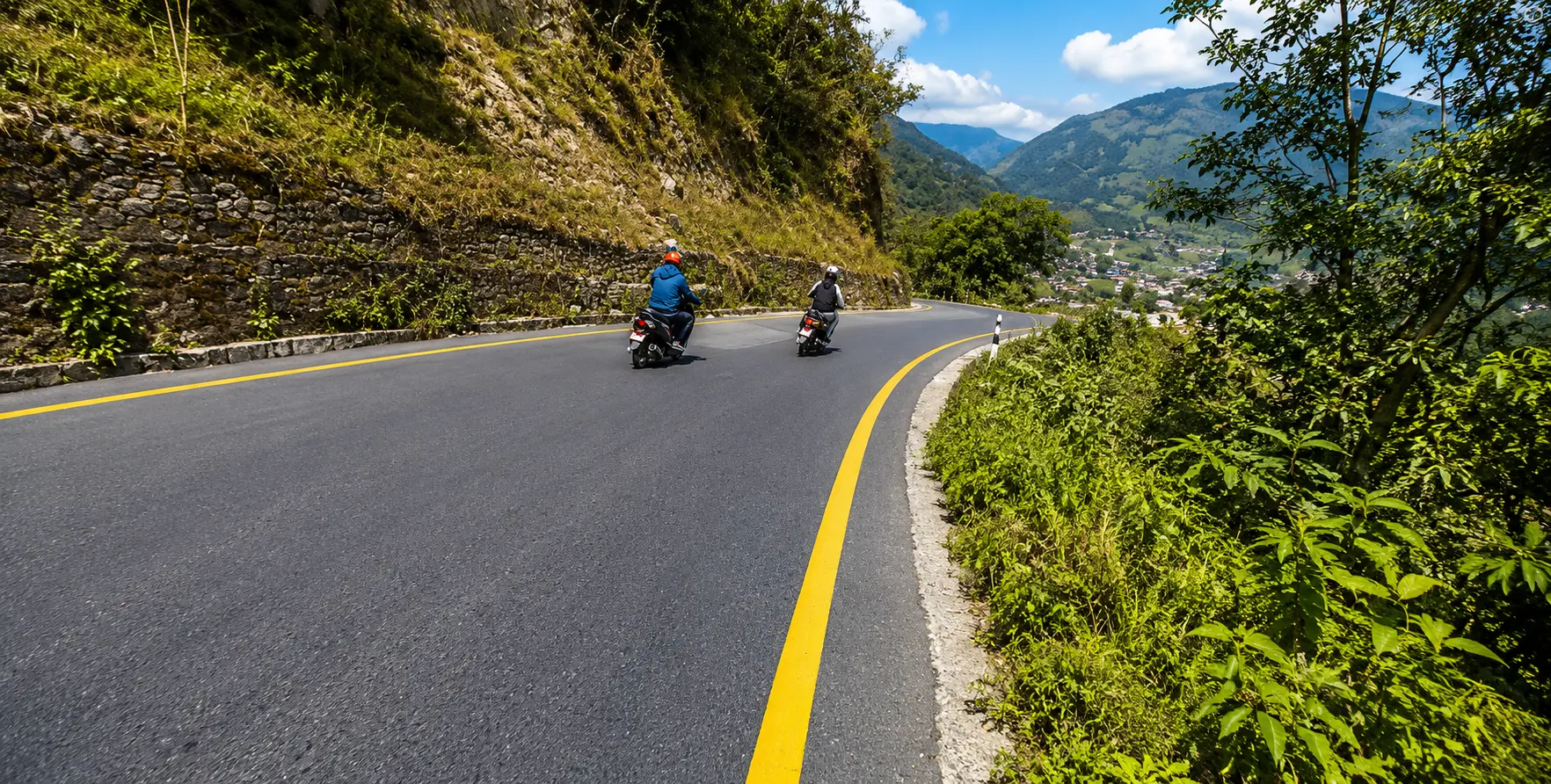
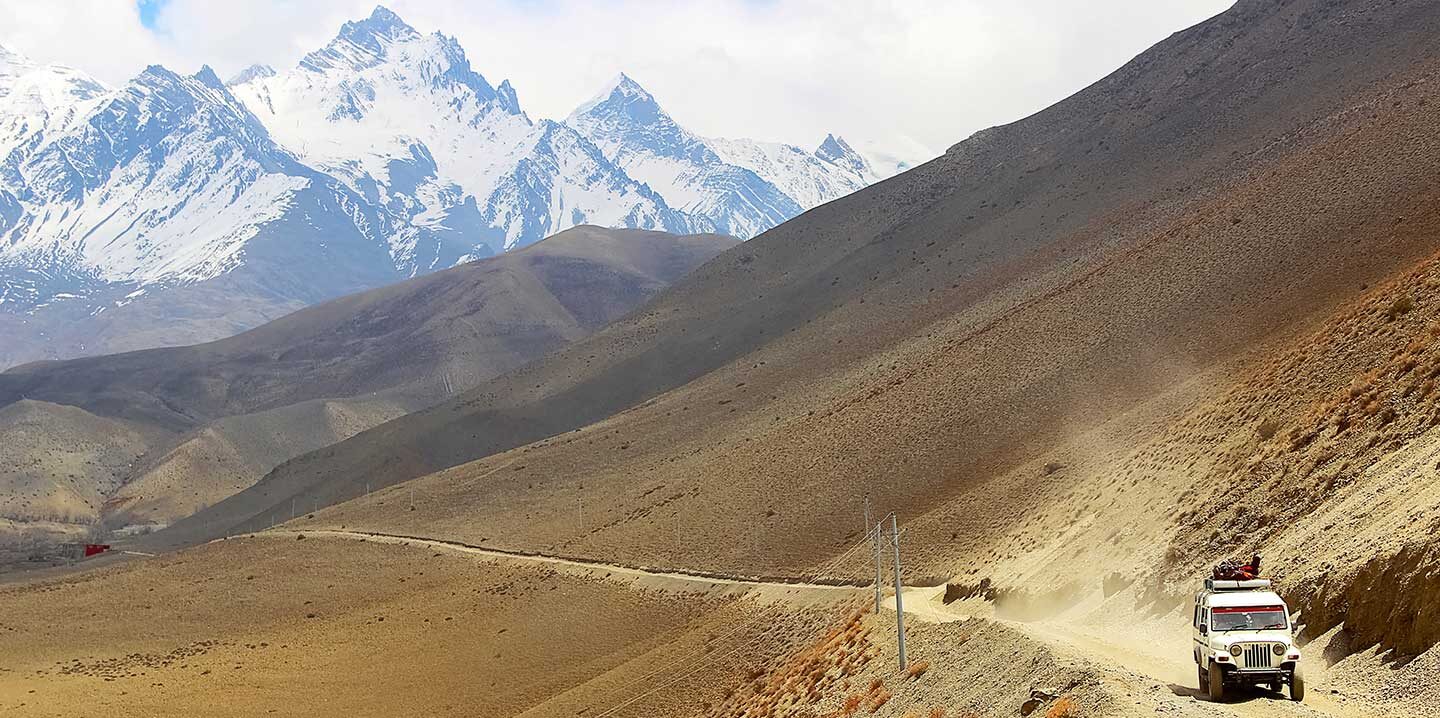
This is where the route transforms from a regular road trip into a genuine Himalayan adventure. The track is unpaved, often rocky, and narrow in places. It crosses several bridges over fast-flowing mountain tributaries and passes through sections where the road is carved directly into cliff faces.

During the monsoon (June–September), sections of the road are frequently washed out or blocked by landslides, and the journey can take significantly longer or become temporarily impassable. A 4WD vehicle with good ground clearance is essential from Besisahar onward.

Chame to Manang — High Mountain Terrain

Above Chame, the road climbs steeply through pine forests and across open ridges with increasingly dramatic mountain views. The surface is rough gravel and compacted earth, punctuated by rocky sections and occasional stream crossings.

The altitude begins to noticeably affect the engine performance of non-4WD vehicles, making a proper mountain 4WD Jeep and an experienced high-altitude driver non-negotiable. Road conditions deteriorate significantly after snowfall, which can occur at any time of year above 3,000 meters.

Manang to Khangsar — The Final Rough Track

The short track from Manang to Khangsar is the most technically demanding section of the entire route. It is narrow and rocky, ascending steeply across terrain that is exposed and unstable in places. In spring and autumn — the main trekking seasons — this track is passable for experienced 4WD drivers in well-maintained vehicles.

In winter (December–February), snow and ice can make this section extremely hazardous. During early spring, the track may be muddy and rutted from snowmelt. Always confirm road conditions with Nepal Vehicle Hiring Pvt. Ltd. before departure.

Critical Vehicle Warning
Standard cars, sedans, and non-4WD vehicles CANNOT go beyond Besisahar.
Regular taxis from Pokhara will NOT take you to Manang or Khangsar.
Only 4WD Jeeps (Hilux, Fortuner, Land Cruiser, Mahindra Scorpio) are suitable.
Your driver MUST have experience on mountain high-altitude roads.
Nepal Vehicle Hiring Pvt. Ltd. provides experienced 4WD drivers for this exact route.

Distance, Altitude & Driving Time Summary

Route PointDistance from PokharaAltitudeDrive Time from Pokhara
Dumre70 km600 m1.5 hrs
Besisahar110 km760 m2.5 hrs
Syange130 km1,100 m3.5 hrs
Dharapani150 km1,943 m5 hrs
Chame160 km2,710 m6.5 hrs
Pisang173 km3,200 m7.5 hrs
Manang180 km3,519 m8.5 hrs
Khangsar183–185 km3,734 m9–10 hrs

Note: All times are approximate for a one-way journey departing from Pokhara between 6:30–7:00 AM. Add 1–2 hours during monsoon season (June–September) or after snowfall. The above estimates do not include rest stops, meal breaks, or permit checks.
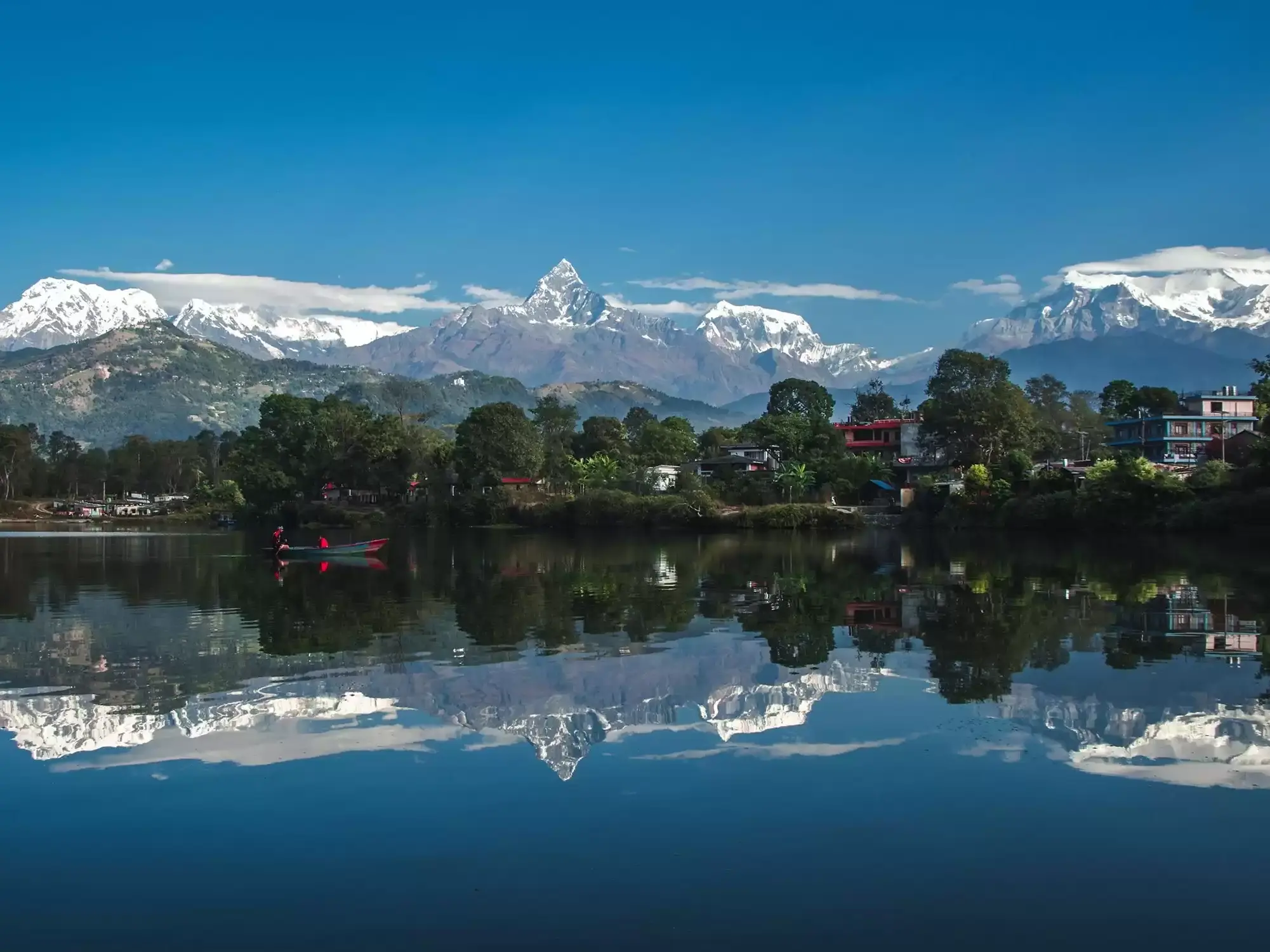
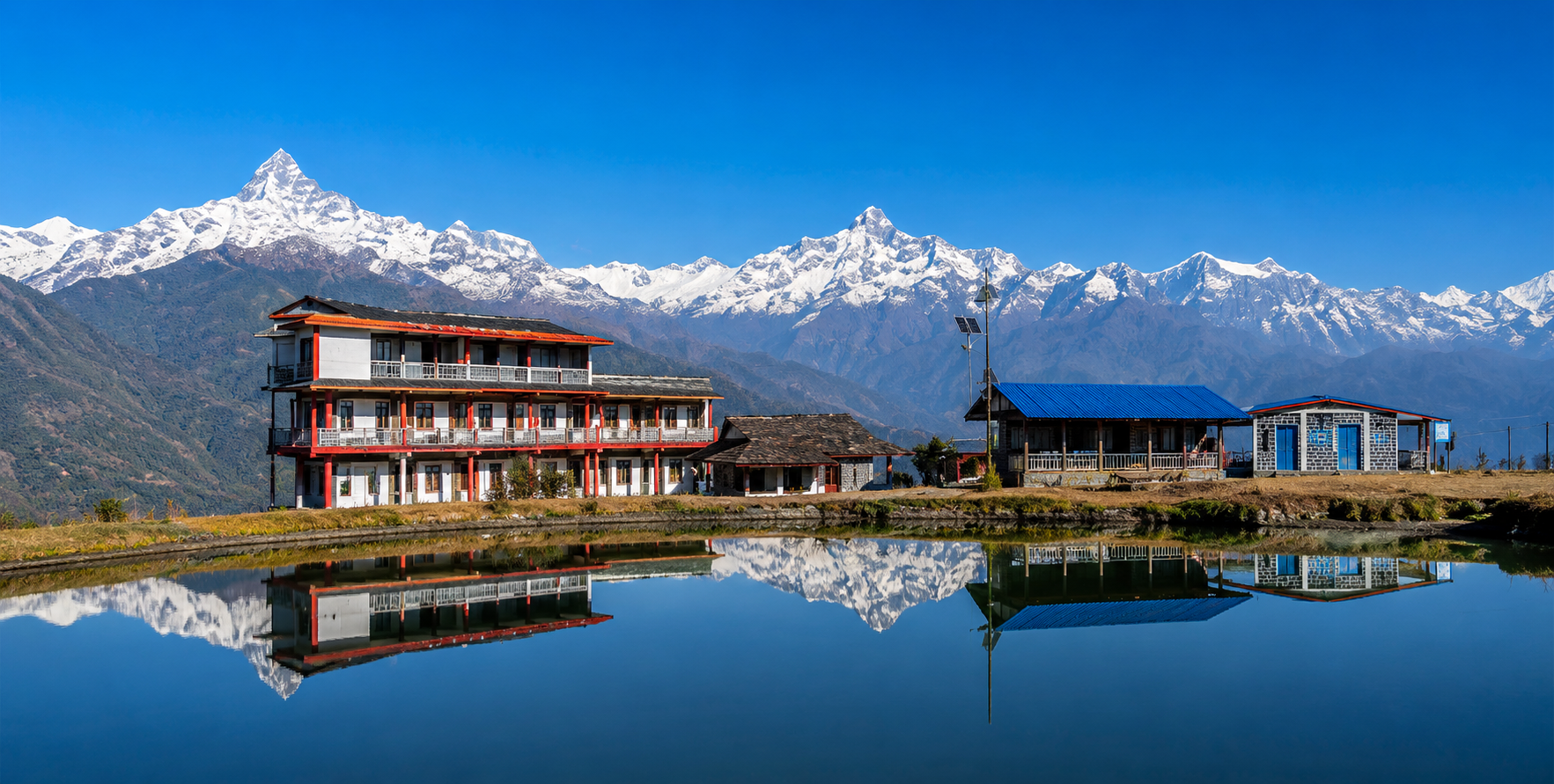
Pokhara

Pokhara to Khangsar Jeep Hire Cost

Private Jeep Hire — One Way

Hiring a private 4WD jeep from Pokhara to Khangsar is the most comfortable and flexible option for individuals, couples, small families, or groups of up to 6–7 passengers. With a private hire, you control the departure time, the pace of the journey, the lunch stop location, and how long you spend at scenic viewpoints along the route.

Vehicle OptionApprox. One-Way Cost (Pokhara to Khangsar)
4WD Jeep (Scorpio/Bolero) — up to 5 paxUSD 180–220 / NPR 24,000–30,000
4WD Hilux / Fortuner — up to 6 paxUSD 220–400 / NPR 30,000–37,000
4WD Land Cruiser — up to 7 paxUSD 270–450 / NPR 37,000–46,000
Return Trip (Khangsar to Pokhara)Same rate as one-way (or slightly less)
Round Trip (same vehicle waits)Approx. 1.5x–2x one-way price + driver accommodation

Price Inclusions: Driver service fee, fuel costs, driver insurance, vehicle maintenance and road emergency kit, and parking fees where applicable.

Price Exclusions: ACAP permit (NPR 3,000 per person), TIMS card (NPR 2,000 per person), passenger travel insurance, meals and accommodation for passengers, driver accommodation and meals (separate from vehicle cost for multi-day trips).

Shared Jeep Option (Budget Alternative)

Shared jeeps run from Besisahar to Manang for budget travellers. These depart when full (typically 8–10 passengers) and run on less flexible schedules. Shared jeeps from Besisahar to Manang cost about NPR 1,500–2,500 per person (USD 11–18).

However, shared jeeps typically go only to Manang — not to Khangsar — and departure times are unpredictable. For trekkers with a tight schedule or requiring the final leg to Khangsar, a private jeep hire from Pokhara is strongly recommended.

Cost Comparison: Worth the Investment

A private 4WD jeep hire from Pokhara to Khangsar may appear more expensive than shared transport. Still, when you factor in the full picture — comfort, safety on mountain roads, flexible departure from your hotel, the ability to stop at scenic viewpoints, guaranteed delivery to Khangsar (not just Manang), and the peace of mind of a professional driver — it represents exceptional value for a journey of this nature and distance.

Required Permits for the Pokhara to Khangsar Route

All travellers entering the Annapurna Conservation Area, which begins north of Besisahar, must carry valid permits. Obtain these before departing Pokhara or Kathmandu, or at the permit checkpoint in Besisahar. Nepal Vehicle Hiring Pvt. Ltd. can advise on permit arrangements as part of your booking.

Permit TypeDetails & Cost (2026)
ACAP (Annapurna Conservation Area Permit)Required for ALL foreign nationals entering the Annapurna Conservation Area | Cost: NPR 3,000 per person (approx. USD 22)
TIMS Card (Trekkers’ Information Management System)Required for all trekkers in the Annapurna Region | Cost: NPR 2,000 per person for individuals (NPR 1,000 through trekking agencies)
Where to ObtainNepal Tourism Board offices in Kathmandu (Pradarshani Marg), Pokhara (Lakeside), or at the checkpoint in Besisahar
SAARC NationalsACAP: NPR 1,500 | TIMS: NPR 1,500
Nepali NationalsACAP: NPR 100 | No TIMS required
Additional Manang District EntryNo separate fee is currently required for Khangsar/Manang beyond ACAP+TIMS

Important: Keep your permits with you at all times. Multiple checkpoints along the route will check permits —at Besisahar, Jagat, Dharapani, Chame, and again near Manang. Driving past checkpoints without a valid permit can result in fines and being turned back.
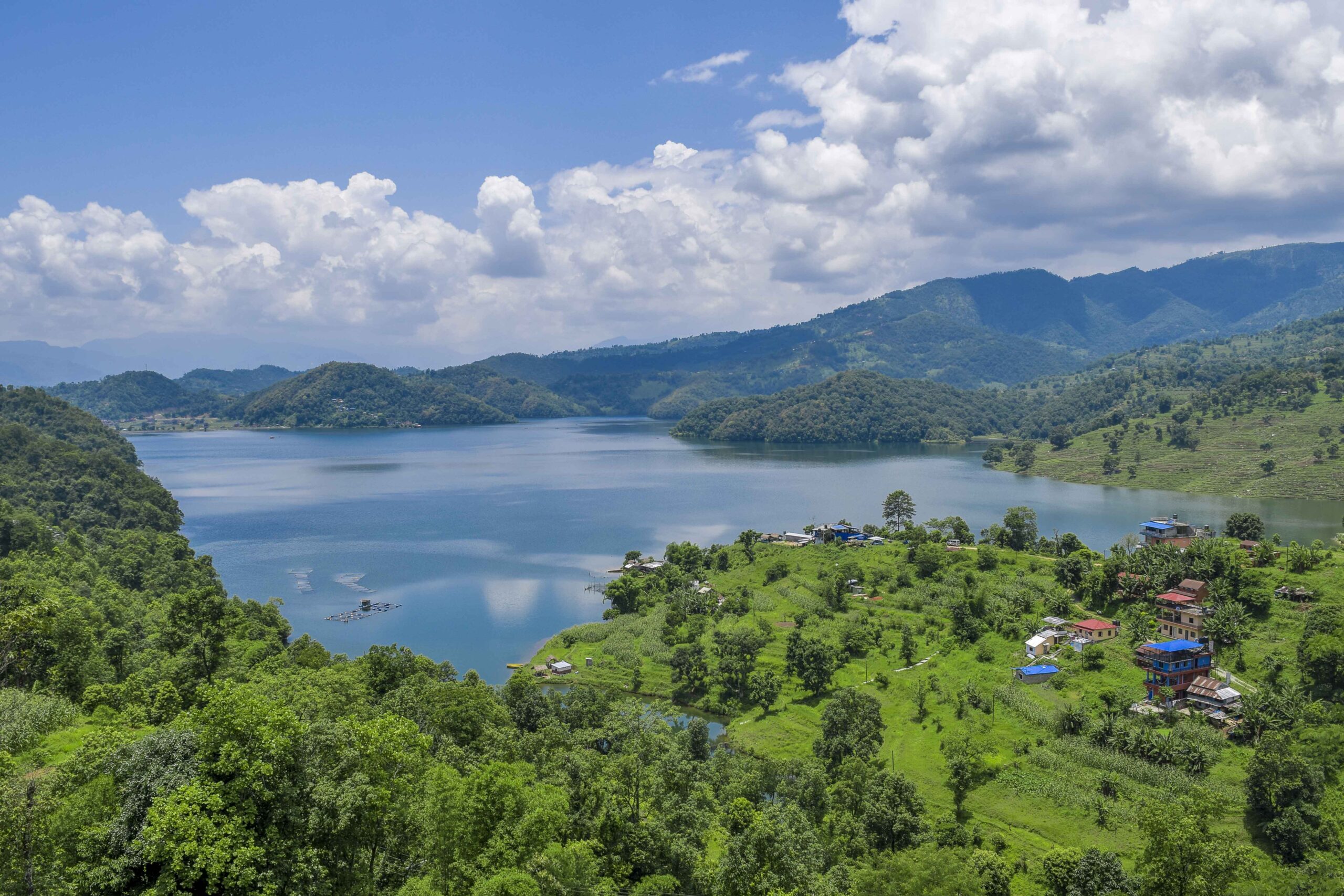
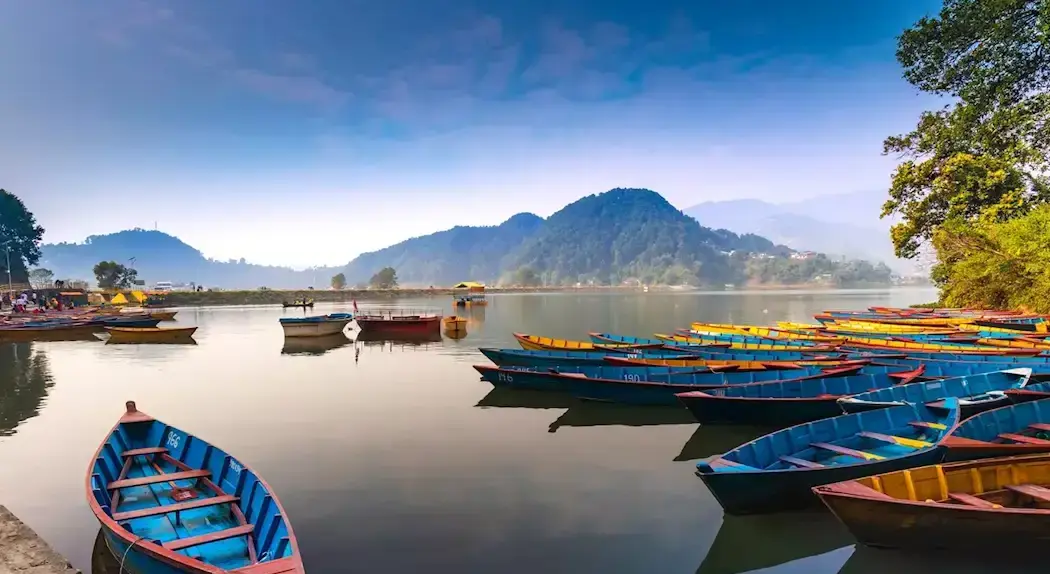
Begnas Lake Pokhara

Best Time to Hire a Jeep from Pokhara to Khangsar

October to November — Peak Autumn Season (BEST)

The post-monsoon autumn season offers the clearest skies, the most stable roads, and the most spectacular mountain views of the entire year. Monsoon rains wash the air clean, revealing the full glory of the Annapurna and Himalayan ranges in crystal-sharp detail.

Daytime temperatures at Khangsar (3,734 m) are cool and pleasant (5–15°C), but they drop significantly at night (-5 to -10°C), so warm clothing is essential. This is the busiest trekking season, so book your jeep hire well in advance — availability can be limited.

March to May — Spring Season (EXCELLENT)

Spring is equally popular for Pokhara-to-Khangsar jeep hire. The rhododendron forests in the lower sections of the route (around 2,000–3,000 m) burst into brilliant red and pink bloom in March and April, creating a spectacular backdrop for the drive. Temperatures are warming up, and the mountain views are generally clear in the mornings.

By May, afternoon cloud build-up is typical. Road conditions are generally good, though the road from Manang to Khangsar may still have some residual winter snow.

December to February — Winter (POSSIBLE WITH CAUTION)

The winter months bring cold, dry, and often sunny conditions. The high-altitude views can be extraordinary in winter, with crisp, clear air. However, snow and ice on the road above Chame — and particularly on the Manang to Khangsar track — can make the journey hazardous or impossible in severe conditions.

Nepal Vehicle Hiring Pvt. Ltd. monitors road conditions continuously and will advise clients on the current winter road status before departure.

June to September — Monsoon Season (CHALLENGING)

The monsoon season brings heavy rainfall to the entire Annapurna region, and the road north of Besisahar is frequently affected by landslides, washed-out sections, and river flooding. While some trekkers brave the monsoon for lush green scenery and empty trails, the Pokhara-to-Khangsar drive takes significantly longer. It poses real logistical risks during this period.

If you must travel during the monsoon, allow extra days, confirm road conditions in advance, and hire only an experienced high-altitude driver. Nepal Vehicle Hiring Pvt. Ltd. keeps up-to-date road condition reports and will be transparent about any risks before booking.

Scenic Highlights on the Pokhara to Khangsar Drive

The Pokhara to Khangsar jeep journey is not merely a transfer — it is a full-day Himalayan adventure through some of the most spectacular terrain in the world. Here are the key highlights to watch out for along the route:

Marsyangdi River Valley

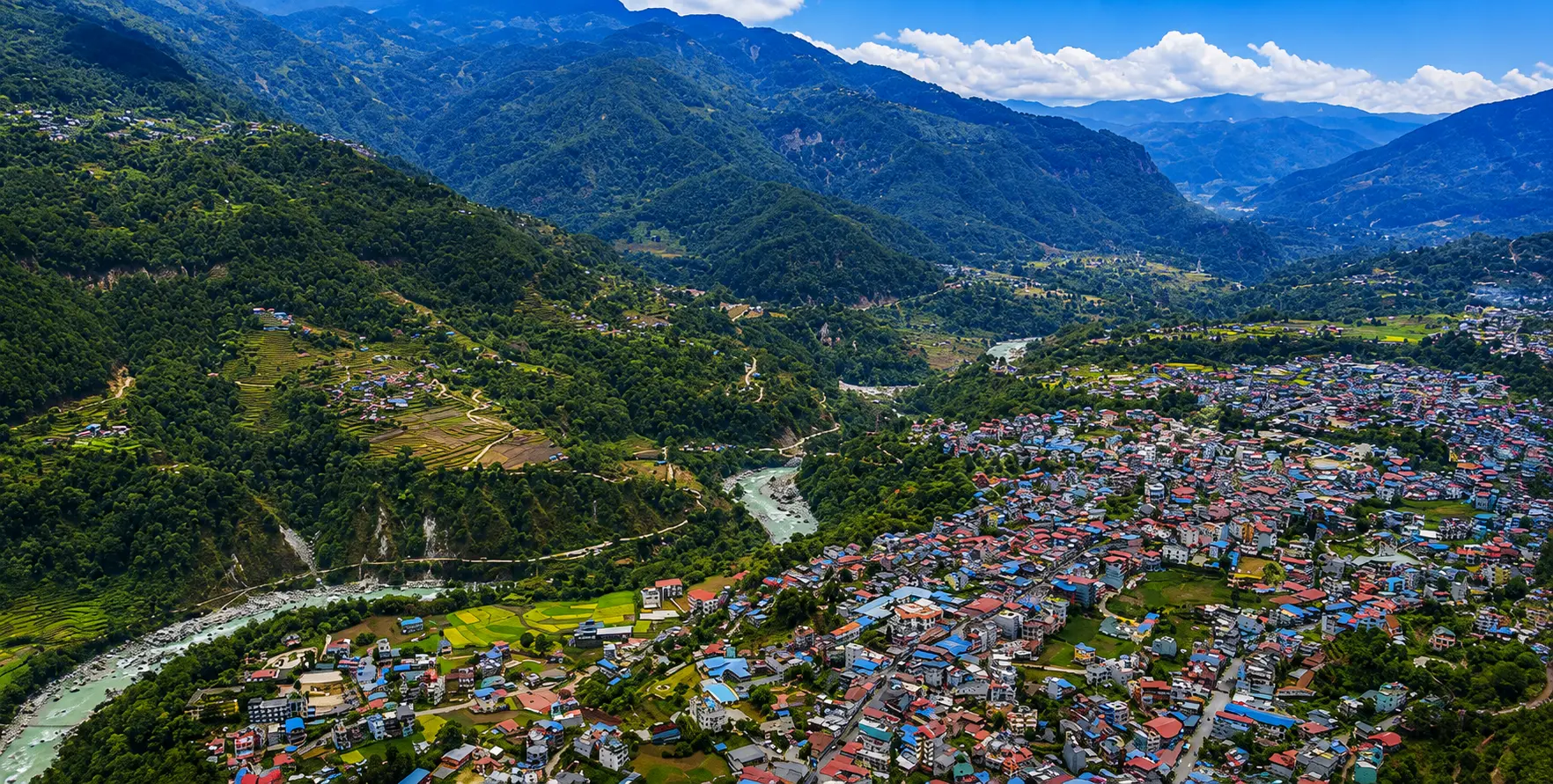
The entire route north of Besisahar follows the Marsyangdi River northward through a gorge of increasing drama and grandeur. The river churns turquoise-green between walls of grey rock and tropical vegetation, and the road — cut into the cliff face in many places — offers vertiginous views down into the gorge and across to the opposite cliff walls.

The river is also used for rafting and kayaking, and you may encounter groups on the water below.

Jagat and Dharapani — Gateway Villages

Tagat (1,300 m) and Dharapani (1,943 m) are key checkpoints on the Annapurna Circuit. Dharapani marks the junction with the trail coming from the Nar-Phu Valley (a restricted trekking area) and is where the landscape begins to shift from subtropical to temperate. Stop here for tea and to stretch your legs—the local teahouses serve excellent dal bhat and apple products from local orchards.

Chame and the Lamjung Himal Views

Chame (2,710 m) is Manang’s district headquarters and the last significant town before you enter the high-altitude Himalayan landscape. The town has a small bazaar, several restaurants, and the first clear views of the high Himalayan peaks above 5,000 meters. Just above Chame, the road passes a natural rock formation — a massive curved cliff face — that channels the valley and offers one of the most dramatic viewpoints on the entire drive.

Upper Pisang and the Annapurna Circuit Views

Above the village of Pisang (3,200 m), the valley opens dramatically into a wide, dry, high-altitude basin reminiscent of the Tibetan Plateau. The monastery of Upper Pisang, perched on a clifftop above the village, is one of the most photogenic sights on the entire route.

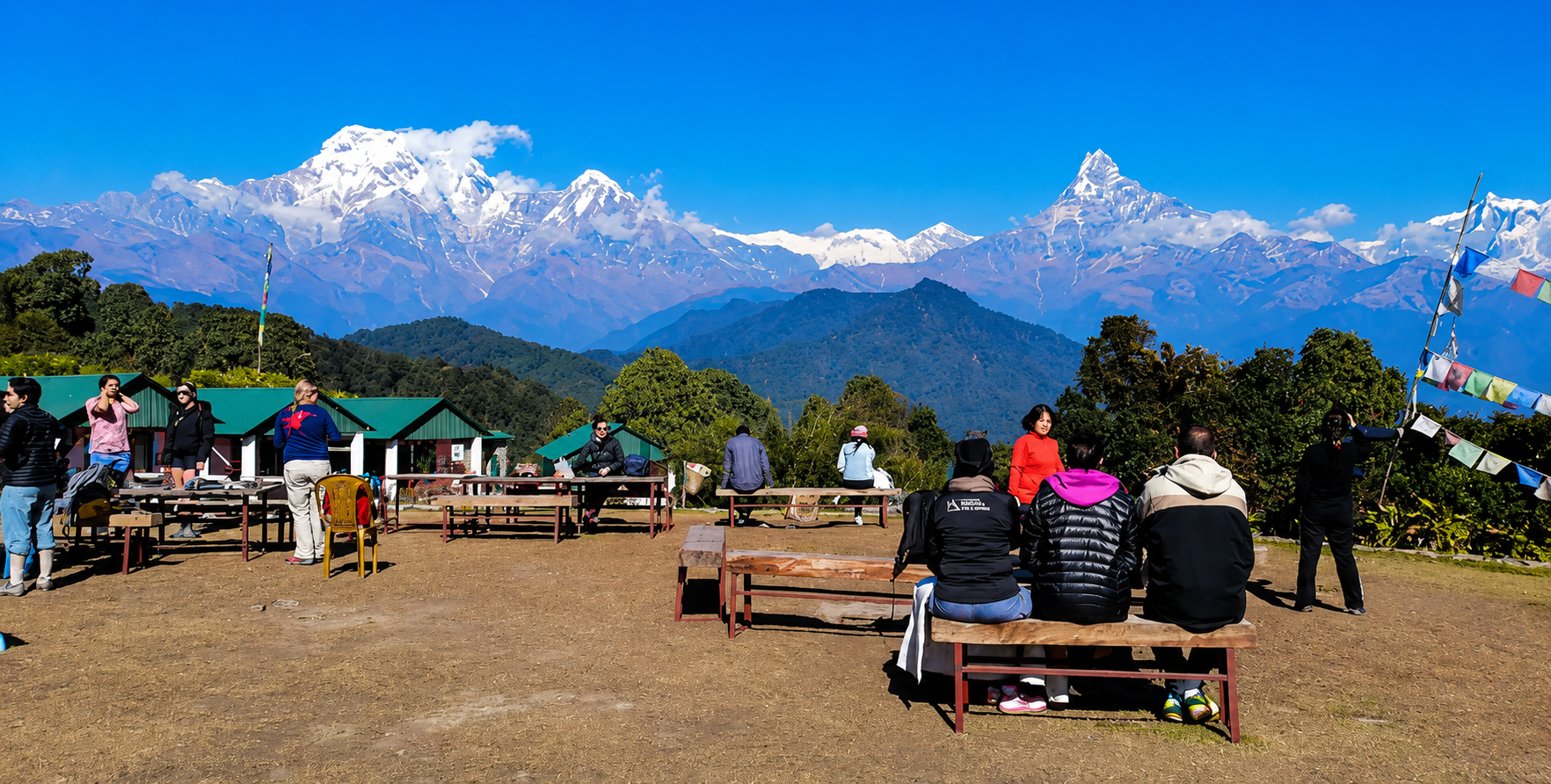
From here, the full sweep of the Annapurna range — including Annapurna II (7,937 m), Annapurna III (7,555 m), and Gangapurna (7,455 m) — becomes visible for the first time, creating a mountain panorama of staggering grandeur.

Braga Monastery

The village of Braga (3,360 m), just 2 km short of Manang, is home to one of the most important and oldest Buddhist monasteries in the Annapurna region. Dating back approximately 500 years, Braga Gompa houses an extraordinary collection of ancient Buddhist statues, thangka paintings, and religious artefacts. A short stop here is strongly recommended.

Manang — The High-Altitude Hub

Manang (3,519 m) is the main settlement in this section of the Annapurna Circuit and a significant milestone. The town has grown substantially to serve the trekking industry and now offers a surprisingly wide range of amenities for its remote altitude — multiple teahouses and lodges, a bakery, a small hospital staffed by the Himalayan Rescue Association, and even a cinema showing trekking-themed films.

Trekkers almost always spend 1–2 nights in Manang to acclimatise before heading higher.

Khangsar — The Final Destination

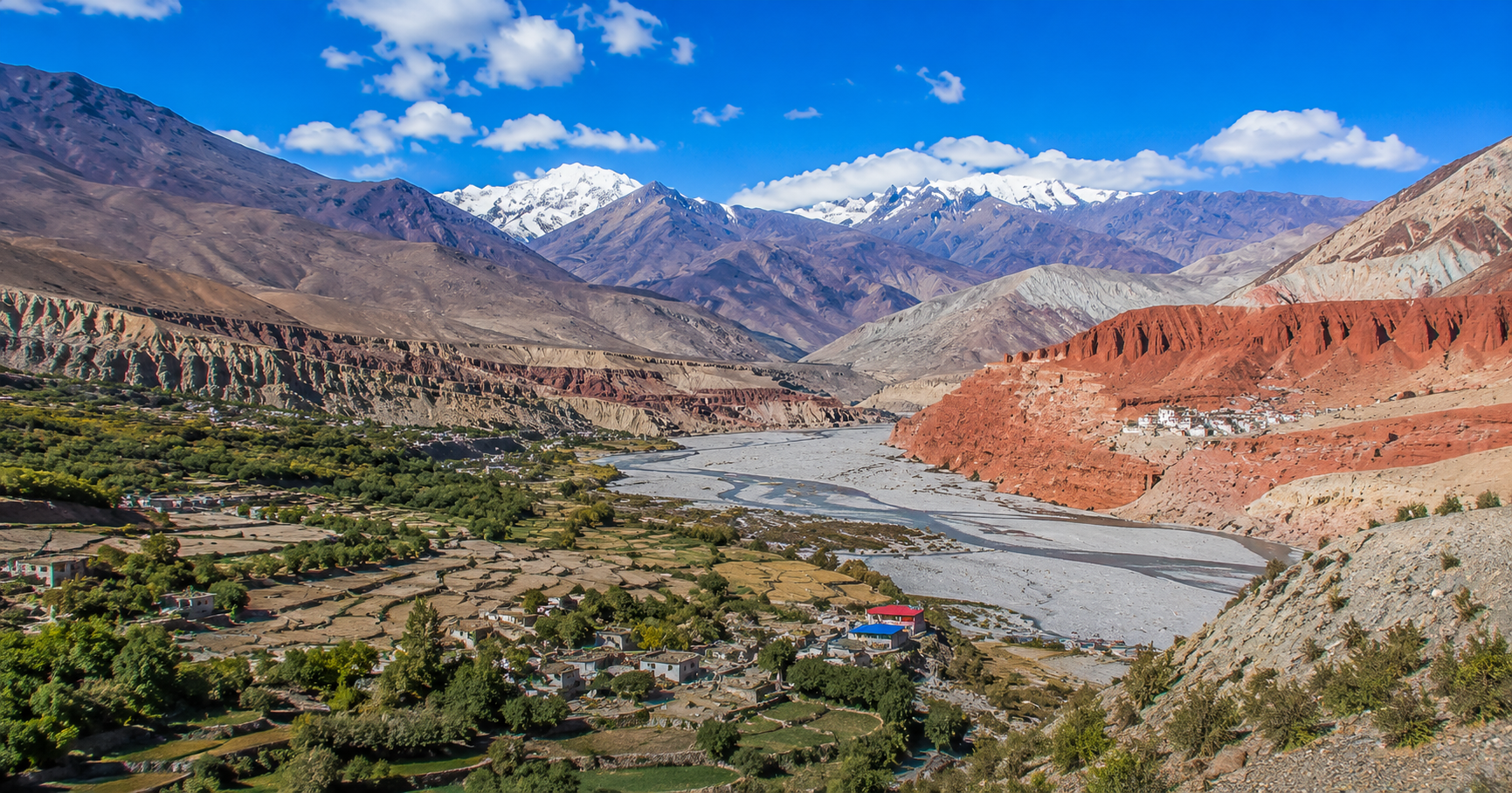
After the rough short drive from Manang, Khangsar village presents a scene of stark, primordial beauty. The village clusters around a ridge above the valley floor, with views north toward the snow-bound peaks of the Khangsar Kang (7,485 m) and east toward Manang and the Gangapurna Glacier.

The small gompa at the edge of the village is worth a visit, and the local teahouses offer simple but hearty Nepali meals. Beyond the village, the trail to Tilicho Lake climbs steeply into even more dramatic high-altitude terrain.
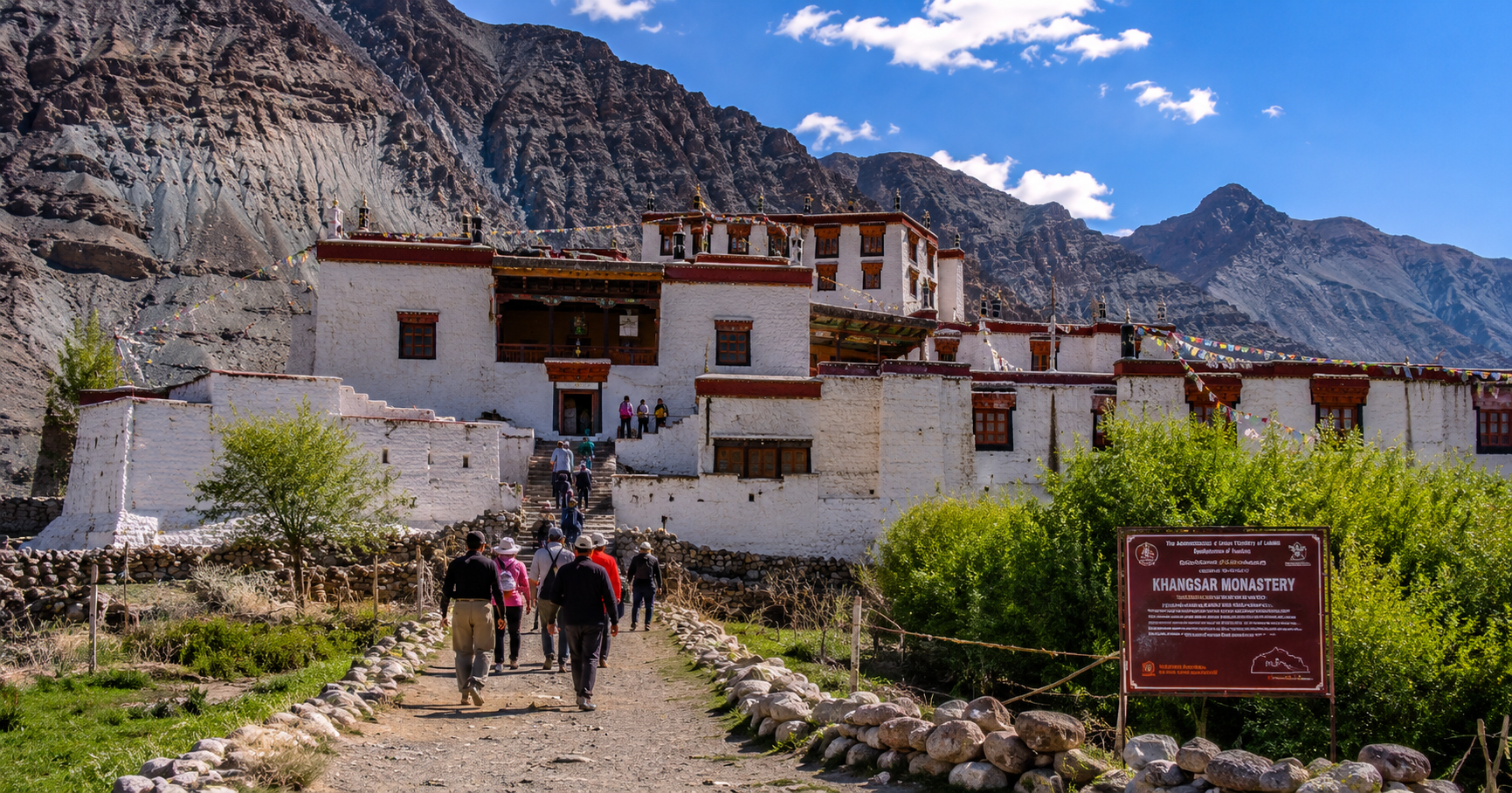
Pokhara to Khangsar Jeep Hire
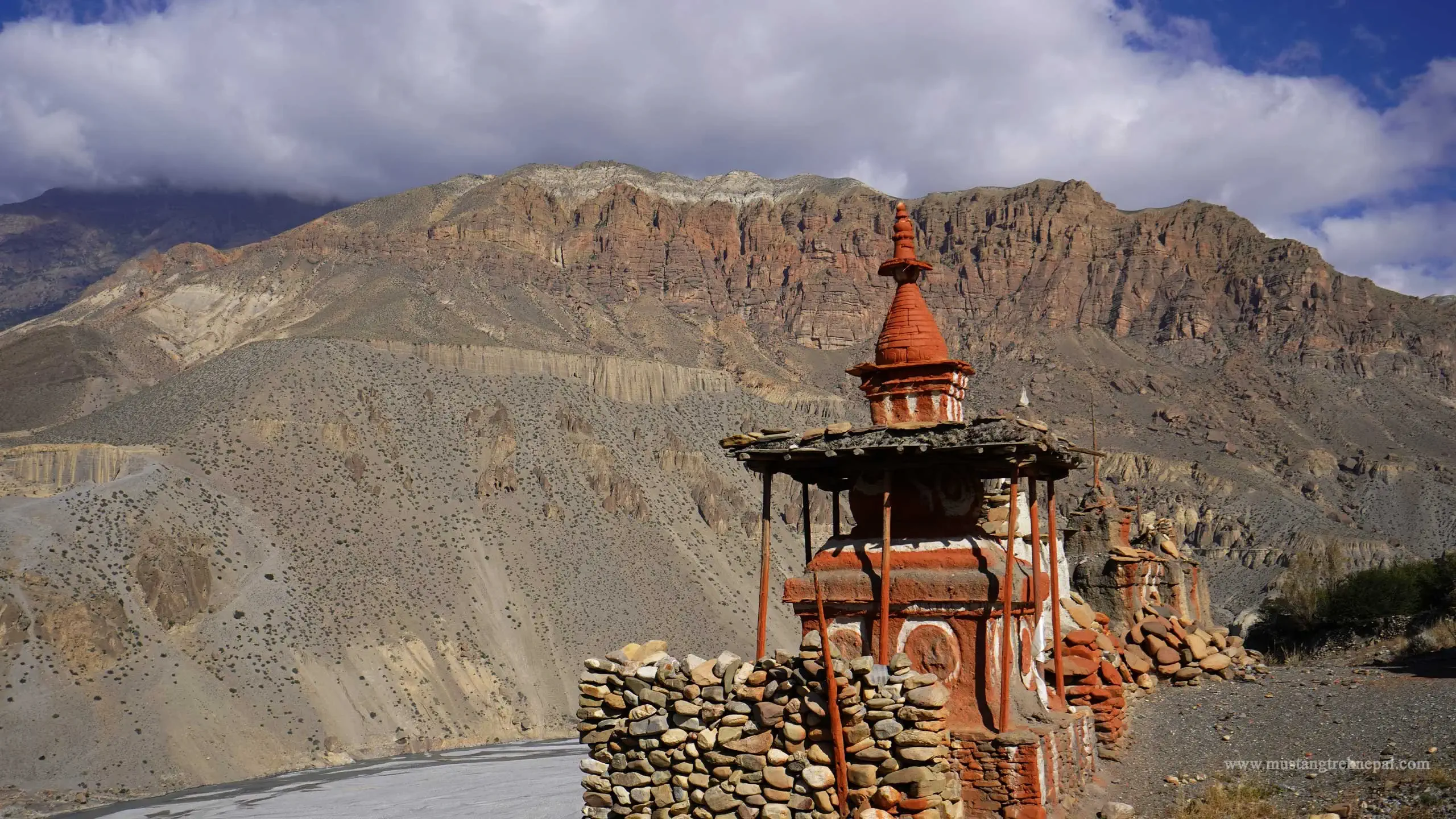
Khangsar-valley

Khangsar as Your Base: The Gateway to Tilicho Lake

Most of the time, the jeep to Khangsar is the destination, but it’s also the starting point for the iconic trek to Tilicho Lake. Here is a brief overview of what awaits beyond the end of the road:

The Trek from Khangsar to Tilicho Lake

  • Khangsar to Tilicho Base Camp (4,150 m): Approximately 6–7 hours of trekking through alpine meadows, along steep rocky trails above glacial moraines. The terrain is wild and spectacular, with views of multiple Annapurna and Thorong peaks. Basic teahouse accommodation is available at Tilicho Base Camp.
  • Tilicho Base Camp to Tilicho Lake (4,919 m): A challenging 3–4-hour ascent to one of the world’s highest lakes. The final approach crosses a high, exposed ridge prone to afternoon winds. The lake itself is staggeringly beautiful — a deep blue-black crescent of frozen and semi-frozen water set against cliffs of shattered rock and ancient glacier ice, surrounded by peaks on three sides.
  • Return from Tilicho Lake: Most trekkers return from Tilicho Lake to Khangsar the same day or the day after, then either continue on the Annapurna Circuit toward Thorong La Pass or return to Pokhara by jeep.

Tilicho Lake Side Trip as Part of Annapurna Circuit

Many Annapurna Circuit trekkers add the Tilicho Lake side trip as a 2–3-day extension from Manang. The jeep from Pokhara to Khangsar is the fastest way to position yourself for this side trip while saving multiple trekking days on the lower sections of the circuit.

Why Choose Nepal Vehicle Hiring Pvt. Ltd. for Pokhara to Khangsar

The Pokhara-Khangsar route is not a journey for the average vehicle hire company. The road conditions, altitudes, river crossings, and mountain track demands require specifically experienced drivers, well-maintained 4WD vehicles, and a company that knows this route thoroughly. Nepal Vehicle Hiring Pvt. Ltd. has operated in Nepal’s vehicle hire sector for over a decade, with a proven track record of safe, reliable, professional service.

Why Nepal Vehicle Hiring Pvt. Ltd. for High-Altitude Routes
8,000+ satisfied customers | 5.0 TripAdvisor | 200+ verified reviews
Fleet includes Hilux, Fortuner, Land Cruiser — all 4WD, all maintained for mountain roads
Drivers are experienced on mountain routes, including Manang, Mustang, Jomsom & high passes
Bilingual drivers — English, Nepali, Hindi
Hotel pickup from anywhere in Pokhara (Lakeside, New Road, Thamel area)
Road condition monitoring — we advise clients of any hazards before departure
24/7 support: +977 981-4227196
Transparent pricing — no hidden charges; fuel and driver included
Licensed & registered (Company Reg. No. 219204)
Can arrange return pickup from Khangsar or Manang — flexible scheduling

Our Fleet for the Pokhara to Khangsar Route

VehicleCapacityWhy It Works for This Route
Toyota Hilux 4WD4–5 paxExceptional ground clearance, proven mountain performer
Toyota Fortuner 4WD5–6 paxPowerful engine, comfortable for long mountain drives
Toyota Land Cruiser 4WD6–7 paxThe gold standard for extreme mountain terrain
Mahindra Scorpio 4WD5–6 paxReliable, cost-effective option for this route

How to Book Your Pokhara to Khangsar Jeep

  • Step 1 — Contact Nepal Vehicle Hiring Pvt. Ltd. via WhatsApp +977 981-4227196, phone, or Website (vehiclehiringnepal.com)
  • Step 2 — Share your travel date, group size, pickup hotel/location in Pokhara, and whether you need one-way or return service
  • Step 3 — Choose your preferred vehicle from the available fleet options
  • Step 4 — Confirm departure time (recommended: 6:00–6:30 AM for a full-day journey)
  • Step 5 — Receive booking confirmation with driver name, vehicle details, contact number, and meeting point
  • Step 6 — Obtain your ACAP and TIMS permits before or on the morning of departure (permits team can advise)
  • Step 7 — Your driver collects you at your hotel at the agreed time — your Himalayan adventure begins!
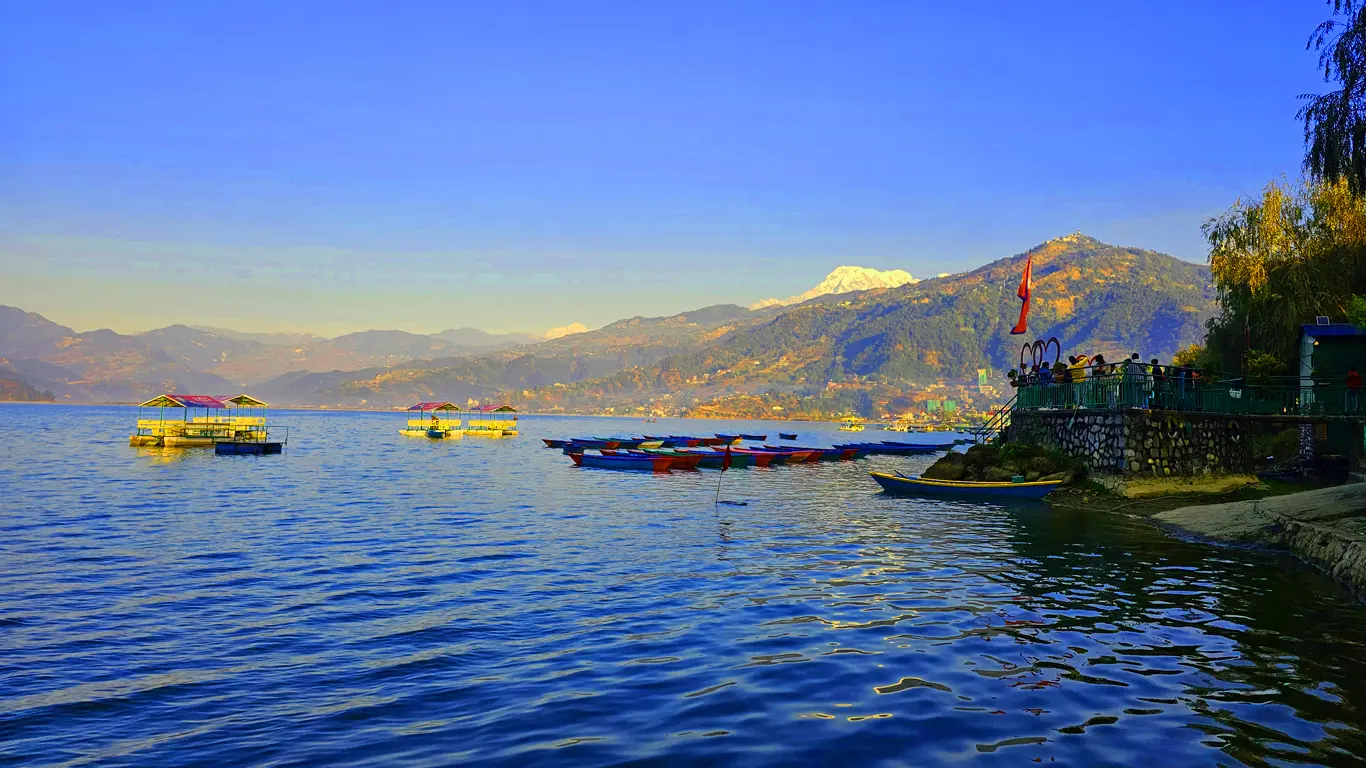
Pokhara

Practical Tips for Your Pokhara to Khangsar Jeep Journey

Departure Time

Always depart Pokhara as early as possible — ideally 6:00–6:30 AM. The mountain roads narrow significantly, and the driving becomes more demanding above Besisahar. An early start ensures you reach Khangsar before dark (typically around 5:30–6:00 PM in the mountains).

Late afternoon arrivals in Manang or Khangsar at 3,500+ meters without daylight can be logistically challenging and increase altitude risk.

Acclimatization Warning

This is critically important. Driving directly from Pokhara (800 m) to Khangsar (3,734 m) in a single day is a significant altitude gain of nearly 3,000 meters in 10 hours. Altitude sickness (Acute Mountain Sickness / AMS) is a real risk at these elevations, particularly for travellers who have not been at altitude recently.

Symptoms include headache, nausea, dizziness, and fatigue. Most trekking protocols recommend spending 1–2 nights in Manang (3,519 m) to acclimatise before continuing. Consider stopping in Chame or Manang overnight before proceeding to Khangsar.

What to Pack for the Jeep Journey

  • Warm layers — temperatures drop significantly above 3,000 m, even in summer. Carry a down jacket, fleece, and thermal base layers.
  • Cash in Nepali Rupees — no ATMs beyond Besisahar. Carry sufficient cash for the full trek, including permits, accommodation, and meals.
  • Water and snacks for the road — pack enough food and water for a full day, as roadside options become limited above Chame.
  • Motion sickness tablets — the mountain road is winding and can cause discomfort, particularly on the section from Besisahar to Chame.
  • ACAP and TIMS permits in the vehicle from Besisahar onward.
  • Altitude sickness medication — consult your doctor about Diamox (acetazolamide) before the trip.
  • Personal first-aid kit — minor cuts and abrasions are common on trekking approaches.
  • Sunglasses and sunscreen — UV radiation at 3,700+ meters is intense, even on cloudy days.

Meals Along the Route

The road passes through several villages where meals are available at local teahouses. Recommended stopping points for meals: Besisahar (breakfast/permit check), Dharapani or Chame (lunch — excellent dal bhat, noodle soup, and Tibetan bread available), and arrival dinner at Manang or Khangsar teahouses.

Emergency & Safety Information

  • Himalayan Rescue Association (HRA) has a clinic in Manang staffed during peak season (Oct–Nov and Mar–May) that can assist with altitude-related emergencies.
  • Helicopter evacuation is available from Manang in genuine medical emergencies — ensure your travel insurance covers helicopter evacuation at altitude.
  • Mobile network coverage is available in most major villages (Ncell and Nepal Telecom), but it becomes intermittent above Manang. Notify family/friends of your travel plans before departing from Pokhara.
  • Nepal Vehicle Hiring Pvt. Ltd. maintains 24/7 support — your driver will also have a satellite emergency contact protocol for remote mountain driving.

Frequently Asked Questions — Pokhara to Khangsar Jeep Hire

Can a regular car or taxi go from Pokhara to Khangsar?

No. Standard cars and taxis cannot go beyond Besisahar on this route. From Besisahar onward, a 4WD vehicle is mandatory. The road becomes an unpaved mountain track with rocky terrain, river crossings, steep gradients, and extreme weather exposure that only proper 4WD vehicles with adequate ground clearance can safely navigate.

Nepal Vehicle Hiring Pvt. Ltd. provides exclusively 4WD vehicles for the Manang/Khangsar route.

How long does the drive from Pokhara to Khangsar take?

Approximately 8–10 hours one way, departing Pokhara at 6:00–6:30 AM and arriving in Khangsar in the late afternoon. This includes a lunch stop in Chame or Manang and a brief permit check in Besisahar. In the monsoon season, add 1–2 hours for potential road delays.

Can I hire a jeep from Pokhara to just Manang, not all the way to Khangsar?

Yes, absolutely. Nepal Vehicle Hiring Pvt. Ltd. offers jeep hire to Manang and Khangsar. Many trekkers prefer to be dropped in Manang and walk the 3 km to Khangsar as their first acclimatisation exercise.

Specify your preferred drop-off point when booking.

Can you arrange a return jeep pickup from Khangsar?

Yes. Nepal Vehicle Hiring Pvt. Ltd. can arrange for a vehicle to return to Khangsar (or Manang) on a specified date to pick you up after your Tilicho Lake trek. You must arrange this in advance and confirm it with a return deposit.

The return vehicle will typically collect you in the morning for the drive back to Pokhara (or Kathmandu).

What permits do I need, and can Nepal Vehicle Hiring help with them?

You need an ACAP permit (NPR 3,000 per person) and a TIMS Card (NPR 2,000 per person) to enter the Annapurna Conservation Area. You can obtain these at the Nepal Tourism Board office in Pokhara Lakeside, the Nepal Tourism Board office in Kathmandu, or the checkpoint in Besisahar on the day of travel. Nepal Vehicle Hiring Pvt. Ltd. can advise on permit requirements and procedures as part of your booking.

What is the best vehicle option for a group of 4–5 people?

For 4–5 passengers with trekking gear, the Toyota Hilux 4WD or Toyota Fortuner 4WD is the ideal choice—both offer sufficient power for mountain gradients, excellent ground clearance, comfortable seating, and adequate luggage space. For groups of 6–7, we recommend a Toyota Land Cruiser i

How far in advance should I book?

During peak trekking season (October–November and March–May), we strongly recommend booking your jeep at least 3–5 days in advance. 4WD availability for the Manang/Khangsar route is limited during peak season, and booking early helps ensure both vehicle availability and your preferred departure date. Contact Nepal Vehicle Hiring Pvt. Ltd. via WhatsApp to check availability and confirm your booking.
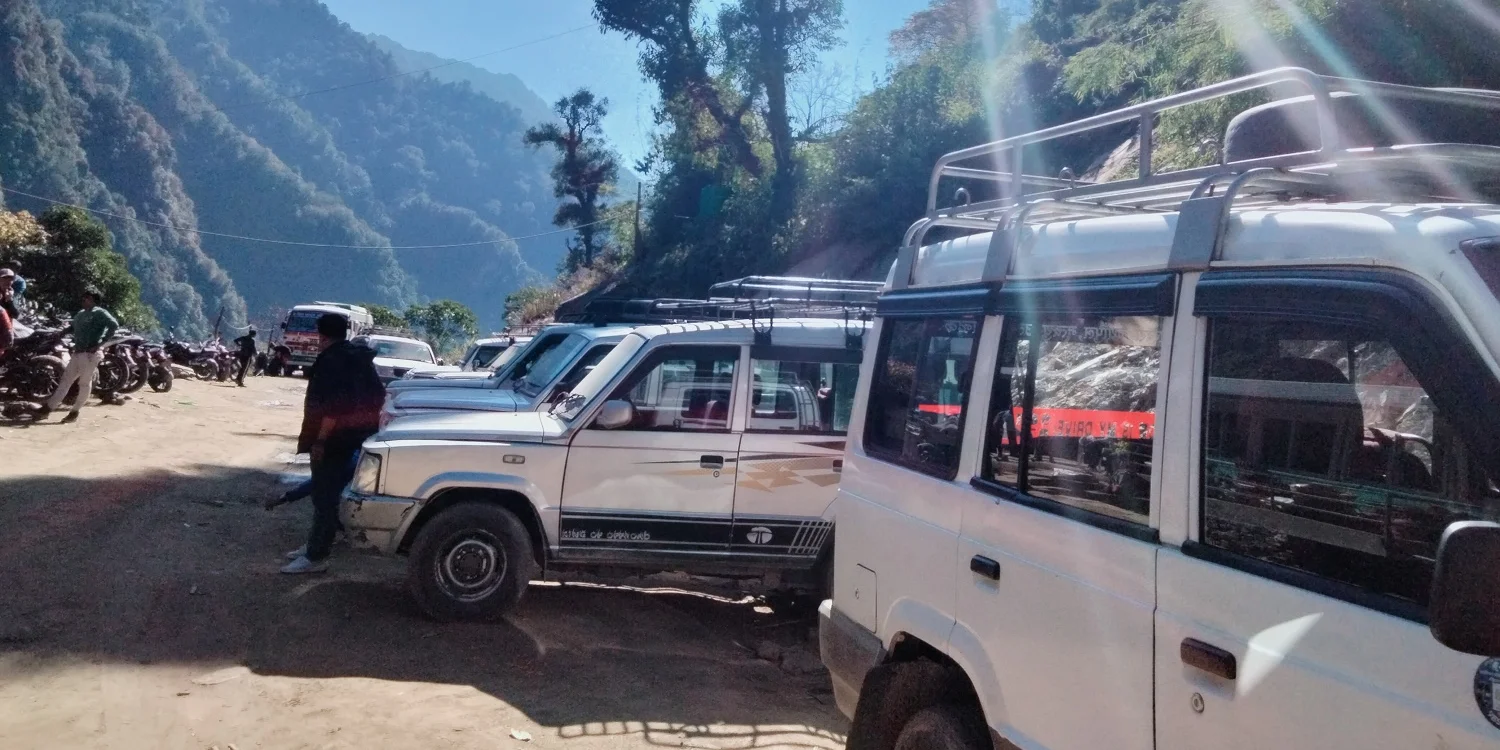
kathmandu to salleri jeep

Pokhara to Khangsar: Transport Options Compared

OptionCostTimeComfortFlexibilityVerdict
Private 4WD Jeep (Nepal Vehicle Hiring)USD 180–3008–10 hrs★★★★★★★★★★Best Overall
Shared Jeep (Besisahar–Manang)USD 11–18/pax10–12 hrs+★★☆☆☆★★☆☆☆Budget Only
Public Bus to Besisahar + Shared JeepUSD 5–15 total12–14 hrs+★★☆☆☆★☆☆☆☆Not Recommended
Taxi (Pokhara only)N/ACannot go beyond BesisaharN/AN/ANot Suitable

Conclusion: Begin Your Annapurna Adventure the Right Way

The journey from Pokhara to Khangsar by private 4WD jeep is one of the great Himalayan road trips. This all-day mountain adventure takes you from the lakeside warmth of Pokhara through subtropical gorges, ancient trekking villages, pine forests, and dramatic high-altitude terrain, arriving at the threshold of the world’s most spectacular alpine lake.

Whether you are starting the full Annapurna Circuit, heading directly to Tilicho Lake, or exploring the extraordinary Manang Valley, jeep hire from Pokhara to Khangsar combines efficiency, adventure, and comfort in equal measure.

Nepal Vehicle Hiring Pvt. Ltd. has earned the trust of thousands of trekkers, adventurers, and travellers to navigate Nepal’s mountain roads with skill, care, and professionalism. Our 4WD fleet, experienced mountain drivers, transparent pricing, and 24/7 support make us the smart choice for your Pokhara-to-Khangsar jeep hire.

Do not leave this booking to the last minute. During peak season, quality 4WD vehicles with experienced mountain drivers are in high demand. Contact our team today, share your travel dates and group size, and let us take care of everything—so when your wheels start rolling north out of Pokhara, the only thing on your mind is the magnificent mountain world that awaits.

Website: Your Pokhara-to-Khangsar Jeep Today!
Website: www.vehiclehiringnepal.com
Phone / WhatsApp: +977 981-4227196 (24/7)
Email:[email protected]
Office: Bhagawatisthan, Thamel, Kathmandu, Nepal
Vehicle: Toyota Hilux | Toyota Fortuner | Land Cruiser | Mahindra Scorpio (All 4WD)
50k+ Happy Customers | 5.0 Star Rating |15k+ TripAdvisor Reviews
One-Way & Return Jeep Hire | Hotel Pickup from Pokhara
Experienced High-Altitude Drivers | All-Inclusive Transparent Pricing

Pokhara to Besisahar Jeep

Besisahar

Pokhara to Besisahar Jeep 2026: Complete Guide to Cost, Route & Annapurna Circuit Start

Besisahar is one of Nepal’s most important trekking gateway towns. As the district headquarters of Lamjung District and the traditional starting point of the Annapurna Circuit Trek — one of the most celebrated long-distance trekking routes in the world — Besisahar sits at the confluence of the Khudi and Marsyangdi rivers at 76 meters above sea level, surrounded by the forested foothills of the Annapurna Conservation Area.

For trekkers, adventurers, and travellers heading to the Annapurna Circuit from Pokhara, the jeep journey to Besisahar is the natural and most convenient starting point. The route covers approximately 72 to 87 kilometres from Pokhara, depending on the road taken, passing through the Prithvi Highway corridor, the Damauli junction, and then north along the beautiful Marsyangdi River valley to Besisahar.

The drive takes 2 to 3 hours by private jeep- a scenic, comfortable, and efficient start to one of Nepal’s greatest trekking adventures.

At Nepal Vehicle Hiring Pvt Ltd, we provide professional private jeep services from Pokhara to Besisahar and onward to Bhulbhule, Syange, Jagat, Chame, and Manang for trekkers beginning the Annapurna Circuit. This comprehensive 2026 guide covers everything you need—the full route, all vehicle options and costs, road conditions, what to see along the way, Annapurna Circuit trek connections, permits, seasonal guidance, and expert booking tips.

About Besisahar – Gateway to the Annapurna Circuit

Besisahar (also spelt as Sahar or Besishahar) is a lively small city and the headquarters of Lamjung District. Situated at 760 meters above sea level on the east bank of the Marsyangdi River, Besisahar sits at the southern end of the spectacular Marsyangdi gorge, which runs northward to the Manang Valley below the Annapurna and Manaslu massifs.

The town serves a vital practical function for Annapurna Circuit trekkers — it has several banks and ATMs (the last reliable banking before Manang), an ACAP and TIMS permit checkpoint, guesthouses, restaurants, a well-stocked market with trekking supplies, a bus station, and a jeep stand. Most trekking groups that hire a jeep from Pokhara or Kathmandu begin their Annapurna Circuit walk in Besisahar or in the first few villages north of the town.

Besisahar Key FactsDetails
Altitude760 metres above sea level
DistrictLamjung District, Gandaki Province
Distance from Pokhara72–87 km by road
Drive Time from Pokhara2 to 3 hours (private jeep)
Main riverMarsyangdi River (jeep)
ConnectionAnnapurna Circuit Trek starting point
Key FacilitiesATM, banks, permit checkpoint, guesthouses, restaurants, shops
Nearby PeaksLamjung Himal (6,983 m), Annapurna II (7,937 m), visible to the north
ACAP Permit CheckpointYes – all trekkers checked in at Besisahar/Khudi.
Next Trekking Stages BeyondBhulbhule (16 km), Syange (32 km), Jagat (43 km), Chame (90 km)

Why Choose a Private Jeep from Pokhara to Besisahar?

Direct Hotel Pickup – No Morning Bus Station Rush

A private jeep from Nepal Vehicle Hiring picks you up directly from your hotel in Pokhara Lakeside—no need to organise transport to a public bus station with heavy trekking bags before dawn. Your driver arrives at the agreed time and takes your group directly to Besisahar—door to door—with all your gear loaded efficiently and with no stress.

Most Efficient Start to the Annapurna Circuit

Starting the Annapurna Circuit from Pokhara by private jeep to Besisahar is the best option. A 7:00 AM departure from Pokhara gets you to Besisahar by 9:30 to 10:00 AM, leaving the rest of the day to start the first trekking stage to Bhulbhule and beyond.

Flexibility to Continue Beyond Besisahar

Many trekkers choose to skip the lower Marsyangdi Valley road sections and ride a jeep farther north to Bhulbhule, Syange, Jagat, Dharapani, or even Chame. A private jeep from Nepal Vehicle Hiring can take you as far along the Annapurna Circuit road as you want, saving 1 to 3 days of walking the lower trail. We arrange this extension before departure.

Best Value for Trekking Groups

For trekking groups of 4 to 6 people, a private jeep to Besisahar typically costs NPR 1,500 to 2,500 per person when shared — comparable to or only slightly more than a shared jeep, but with hotel pickup, more luggage space, and greater comfort and speed.

Luggage and Porter Equipment Space

Trekking groups often carry substantial luggage — personal bags for each trekker plus porter loads, a guide’s equipment, group supplies, and camera gear. A private jeep from Nepal Vehicle Hiring provides ample boot and roof rack space for all of this, whereas public shared jeeps offer very limited luggage capacity.

Besisahar

Pokhara to Besisahar Jeep – Journey Quick Facts

DetailInformation
Road Distance72–87 km (Pokhara to Besisahar)
Drive Time (Private Jeep)2 to 3 hours
Drive Time (Shared Jeep/Bus)2.5 to 4 hours
RoutePokhara → Prithvi Highway (east) → Damauli → Dumre Junction → Marsyangdi valley road → Besisahar
Road TypePaved Prithvi Highway to Dumre; paved but narrower from Dumre to Besisahar
Vehicle RequiredAny vehicle suitable for Besisahar; 4WD essential beyond Besisahar
Sharing Jeep DeparturePrithvi Chowk / Baglung area, Pokhara
Recommended Departure7:00 AM – 8:00 AM for the full first trekking day
ACAP Permit CheckpointAt Besisahar / Khudi (permit purchased in Pokhara recommended)
Beyond Besisahar4WD jeep mandatory Hulbhule onward to Chame and Manang

Besisahar valley

Vehicle Options: Pokhara to Besisahar Jeep 2026

Vehicle TypeCapacityOne-way Cost (NPR)Round Trip (NPR)Best For
Shared JeeptotalNPR 500–900/personNPR 900–1,600/personSolo budget travellers
Local Bus (per seat)OpenNPR 250–400/personN/ACheapest – slow, stops
Private Car (to Besisahar)2–4 paxUSD 80- 1500USD 140-200Small groups, car only to Besisahar
Private Jeep – Standard4–5 paxUSD 90-150USD 140-250Most popular option
Private Jeep – Hilux/Fortuner5–6 paxUSD150- 2500USD 250-500Best comfort + onward to Chame
Private Jeep – Land Cruiser5–6 paxUSD 200- 350USD 250- 6000Top-end, best for Manang extension
Toyota Hiace Van (to Besisahar only)7–10 paxUSD 150- 200USD 200-350Large group to Besisahar

Note: All private vehicle prices include driver and fuel. Prices may vary by season and vehicle availability. Toyota Hiace and standard cars are not suitable beyond Besisahar due to the rough off-road conditions. 4WD jeep is mandatory from Bhulbhule onward.

Private Jeep Cost Guide: Pokhara to Besisahar and Beyond

Here is the full cost guide for private jeep hire from Pokhara, including extensions beyond Besisahar along the Annapurna Circuit road:

DestinationDistance from PokharaOne Way (NPR)One Way (USD)Notes
Besisahar72–87 kmNPR 7,000–20,000USD 52–150The road is smooth to Dumre, narrow to Besisahar
Bhulbhule87–102 kmNPR 8,500–25,000USD 63–16015 km beyond Besisahar – new concrete road
Syange105–115 kmNPR 10,000–27,000USD 75–17030 km beyond Besisahar, a rough, narrow road starts
Jagat115–125 kmNPR 12,000–30,000USD 90–20043 km beyond Besisahar – 4WD essential
Dharapani130–140 kmNPR 14,000–35,000USD 150–25060 km beyond – cliff road, very rough
Chame155–165 kmNPR 18,000–38,000USD 135–30088 km beyond – high-clearance 4WD mandatory
Manang175–185 kmNPR 25,000–50,000USD 185–400110 km beyond – extreme 4WD, all day

All prices are one-way private vehicle rates from Pokhara. Destination prices are cumulative — the Manang price covers the full journey from Pokhara to Manang. Contact Nepal Vehicle Hiring for confirmed quotes for your specific departure date and group size.

Besisahar town from above

Pokhara to Besisahar Route – Stage by Stage

The drive from Pokhara to Besisahar is a scenic journey through the Gandaki Province foothills, transitioning from the Pokhara valley onto the Prithvi Highway and then turning north into the Marsyangdi River valley. Here is the detailed stage-by-stage breakdown:

Stage 1: Pokhara to Damauli – Approx. 40 km (1 hour)

The journey begins in Pokhara and heads east along the Prithvi Highway. The road is smooth and well-maintained.

You pass through the outskirts of Pokhara, cross the Seti River, and climb through the midhill agricultural landscape before descending to Damauli — the headquarters of Tanahun District, located at the confluence of the Seti and Madi rivers. Damauli is an excellent first stop for tea or an early breakfast if needed.

From the higher sections of the road approaching Damauli, you can first see the Annapurna and Manaslu ranges on the northern horizon.

Stage 2: Damauli to Dumre Junction – Approx. 25 km (35 minutes)

From Damauli, the Prithvi Highway continues east. At Dumre, the road forks — the highway continues east toward Mugling and Kathmandu, while a separate road branches north toward Besisahar and the Marsyangdi valley. Dumre is a busy junction town with fuel stations, teahouses, and shops.

Your Nepal Vehicle Hiring driver will turn north at Dumre toward Besisahar.

Stage 3: Dumre to Besisahar Along the Marsyangdi Valley – Approx. 40 km (1 to 1.5 hours)

From Dumre, the road heads north following the Marsyangdi River upstream through increasingly beautiful terrain. The road passes through several villages, terraced hillsides, and forested stretches. The Marsyangdi River is visible on the left as the road climbs gradually toward Besisahar.

The road is paved throughout but narrows and has occasional rough patches in the final approach to Besisahar. The distant snow peaks of Lamjung Himal and the Annapurna range come progressively into view as you approach the town.

Route Overview Table: Pokhara to Besisahar

StageSectionDistanceRoad ConditionTimeHighlights
1Pokhara to Damauli40 kmPrithvi Hwy – smooth1 hourSeti River, Tanahun hills, first Himalayan views
2Damauli to Dumre25 kmPrithvi Hwy – smooth35 minJunction town, fuel stop, last major highway
3Dumre to Besisahar40 kmPaved, narrower Marsyangdi valley road1–1.5 hrsMarsyangdi River, terraced hills, Lamjung views
TotalPokhara to Besisahar72–87 kmMostly paved2–3 hoursScenic midhill journey to the Annapurna Circuit gateway

Pokhara to Besisahar Jeep

Beyond Besisahar: The Annapurna Circuit Road to Chame and Manang

One of the most significant advantages of hiring a private jeep from Nepal Vehicle Hiring is the ability to continue beyond Besisahar as far north along the Annapurna Circuit road as you wish. Here is a detailed guide to the road conditions and options beyond Besisahar:

Besisahar to Bhulbhule – 15 km (45 minutes)

Bhulbhule (840 m) is the first significant village north of Besisahar and the most common point for trekkers who want to save 1 day on the lower-valley walk. The road from Besisahar to Bhulbhule is a new concrete pavement ais nd in good condition. This is an excellent option for trekkers who want to start the proper trek in Bhulbhule while skipping the walk from Besisahar.

Bhulbhule to Jagat – Approx. 27 km (1.5 to 2 hours)

Beyond Bhulbhule, the road follows the Marsyangdi gorge through Ngadi, Syange, and Tal to Jagat (1,300 m). The road surface becomes progressively rougher — a mix of rocky gravel, steep climbs, and narrow cliff-edge sections. 4WD is essential from this point.

The scenery is spectacular — the gorge narrows dramatically, and the Marsyangdi rushes far below. Jagat marks the Manaslu Conservation Area boundary checkpoint.

Jagat to Chame – Approx. 47 km (2.5 to 3 hours)

From Jagat, the road continues through Chamche, Tal, Dharapani, Bagarchhap, Danaque, and Timang to reach Chame (2,670 m) — the district headquarters of Manang District and the most commonly used ‘skip point’ for Annapurna Circuit trekkers who drive this section. The road is very rough from Jagat onward, with deep ruts, river crossings, and steep gravel climbs that require a fully capable 4WD jeep and an experienced driver.

Chame to Manang – Approx. 25 km (2 to 3 hours)

The road continues from Chame through Pisang to Manang (3,519 m) — the highest point reachable by vehicle on the Annapurna Circuit. The road from Chame to Manang is extremely rough and demanding, passing through the spectacular Paungda Danda cliff and the high-altitude Humde plateau. Reaching Manang directly by jeep from Pokhara saves 4 to 5 days of lower-circuit trekking.

Stage-by-Stage Guide: Beyond Besisahar to Manang

StageFrom BesisaharDistanceRoadDrive TimeAltitude
Besisahar to Bhulbhule0 km start15 kmNew concrete – good45 min840 m
Bhulbhule to Syange15 km17 kmRough, narrow – 4WD recommended1 hr1,100 m
Syange to Jagat32 km11 kmRough, cliff road – 4WD essential45 min1,300 m
Jagat to Dharapani43 km17 kmVery rough, cliff sections1.5 hrs1,860 m
Dharapani to Chame60 km28 kmRough gravel, steep ascent2.5 hrs2,670 m
Chame to Manang88 km25 kmRough high-altitude road2–3 hrs3,519 m

Note: All distances in the ‘From Besisahar’ column are approximate road distances from Besisahar. Distances from Pokhara add approximately 72–87 km to each figure.

Pokhara to Besisahar Jeep

Sharing a jeep from Pokhara to Besisahar

For solo travellers and budget-conscious trekkers, shared jeeps run daily from Pokhara to Besisahar during trekking season. Here are the key details:

DetailInformation
Departure PointPrithvi Chowk or local jeep near Baglung Bus Park, Pokhara
Departure Time7:00 AM – 10:00 AM (departs when full – 7 to 8 passengers)
Journey Time2.5 to 3.5 hours
Cost Per PersonNPR 500–900 per person
LuggageRoof rack available – limited space for large trekking bags
FrequencyDaily during spring and autumn trekking seasons; less frequent in the off-season
Drop-offBesisahar town centre or bus park
Sharing jeeps beyond BesisaharAvailable at Besisahar jeep stand – NPR 800–2,500 per person to Chame/Manang

Pros of Sharing a Jeep

  • Very affordable – NPR 500 to 900 per person
  • Daily departures during trekking season
  • Good opportunity to meet other Annapurna Circuit trekkers
  • No booking required in the off-peak season

Cons of Sharing a Jeep

  • Crowded – 7 to 8 passengers in one vehicle
  • No hotel pickup – must travel independently to the departure point
  • Departs only when full – uncertain waiting time
  • Very limited luggage space – large trekking bags are difficult to manage
  • No freedom to stop along the route for sightseeing or photos

Annapurna Circuit Trek – Jeep Transport Strategy from Pokhara

The Annapurna Circuit is one of the world’s great trekking routes — a 160 to 230 km circuit through the Annapurna Conservation Area crossing the Thorong La Pass (5,416 m). The jeep transport strategy you choose from Pokhara significantly affects your total circuit duration and cost. Here are the main options:

Transport StrategyPokhara Jeep DestinationTrek Start PointTotal Circuit DaysBest For
Classic full circuitBesisaharBesisahar18–21 daysExperienced trekkers with maximum time
Save 1 dayBhulbhuleBhulbhule17–20 daysGood balance of road and trail
Save 2–3 daysJagat or SyangeSyange/Jagat15–18 daysTime-limited trekkers, Manang focus
Save 4–5 daysChameChame12–15 daysCompact circuit, popular choice
Maximum time savingManangManang (acclimatise here)8–10 daysVery time-limited, Thorong La’s focus

Note: Driving to Chame or Manang and starting the trek there saves significant walking days but reduces the cultural and scenic experience of the lower Marsyangdi valley circuit. Nepal Vehicle Hiring recommends Bhulbhule or Jagat as the starting point for the best balance of time efficiency and trekking experience.

Permits Required for the Annapurna Circuit from Besisahar

PermitCostRequired ForWhere to Obtain
ACAP – Annapurna Conservation Area PermitNPR 3,000 (foreigners)All visitors to the ACAP area – Besisahar and beyondNepal Tourism Board, Pokhara Lakeside (recommended), or Besisahar/Khudi checkpoint
TIMS CardNPR 2,000 (foreigners)All trekkers on multi-day routesNepal Tourism Board, Pokhara Lakeside, or Kathmandu
Manaslu Conservation Area PermitNPR 3,000 (foreigners)Trekkers entering the Manaslu area at Jagat checkpointNepal Tourism Board, Pokhara or Kathmandu

IMPORTANT: Nepal Tourism Board recommends obtaining ACAP and TIMS permits in Pokhara before departure, rather than at the Besisahar/Khudi checkpoint. The Pokhara NTB office in Lakeside processes permits efficiently and helps you avoid potential queues at the trail checkpoint. The office is open daily from 9:00 AM to 5:00 PM.

Attractions Along the Pokhara to Besisahar Route

Damauli and the Seti–Madi River Confluence

Damauli, the headquarters of Tanahun District, sits at the confluence of the Seti and Madi rivers — a scenic riverside setting with a pleasant local market and excellent views of the surrounding hills. As the natural midpoint of the Pokhara-to-Besisahar drive, Damauli is the ideal refreshment stop. The riverside teahouses serve excellent fresh Nepali tea, and the first mountain views of the journey appear on the northern horizon from Damauli’s elevated road sections.

Marsyangdi River Valley

The 40 km drive from Dumre to Besisahar along the Marsyangdi River Valley is one of Nepal’s finest river-valley drives. The Marsyangdi — one of Nepal’s most powerful rivers, originating in the high glaciers of Manang and draining the entire Annapurna region — rushes southward through a progressively deeper and more dramatic gorge as the road climbs toward Besisahar.

The river’s turquoise-green colour, the terraced hillsides above, and the first snow-capped peaks appearing on the northern horizon create a journey of ever-improving scenery.

Lamjung Himal Views

As you approach Besisahar from the south, the distinctive snow pyramid of Lamjung Himal (6,983 m) rises directly ahead. This peak, which gives Lamjung District its name, is one of the most elegant mountains in the Annapurna region and a dramatic visual focal point for the final approach to Besisahar. Annapurna II (7,937 m) and Annapurna IV (7,525 m) are also visible from the upper sections of the Marsyangdi valley road.

Besisahar Bazaar

Besisahar’s main bazaar is a lively mix of trekking supply shops, local restaurants, teahouses, and community market stalls. The town has an authentic midhill Nepali market character with a clear adventurous energy — the presence of trekking groups, local guides, and porters preparing for the Annapurna Circuit gives it an exciting departure-point atmosphere.

Most trekking groups stop in Besisahar to confirm permits, withdraw cash (the last reliable ATM before Manang), and have a final meal before starting the trek.

Best Time for Pokhara to Besisahar Jeep

Autumn (September to November) – Best Season

Autumn is the finest season for the drive from Pokhara to Besisahar and for the Annapurna Circuit. Post-monsoon skies are crystal clear, the Marsyangdi valley is at its most verdant and vivid, and the mountain views of Lamjung Himal and the Annapurna range, both from the road and from Besisahar, are outstanding. October and November are peak season; book your private jeep at least 7 days in advance.

Spring (March to May) – Excellent

Spring is the second peak season for the Annapurna Circuit. The road is dry and in good condition. Rhododendron forests bloom magnificently on the Marsyangdi valley hillsides in March and April.

Mountain views are excellent—a superb time for the Pokhara-to-Besisahar jeep journey.

Winter (December to February) – Good

Winter travel to Besisahar is perfectly comfortable — the Pokhara-Besisahar road is open year-round. The road beyond Besisahar to Chame and Manang may be covered in frost and snow above 3,000 m in winter. For trekkers going to the Thorong La or Manang, winter conditions require extra preparation.

The lower sections of the circuit from Besisahar to Chame are generally fine in winter.

Monsoon (June to August) – Possible with Caution

The Pokhara-Besisahar road is generally passable during the monsoon. However, the Marsyangdi valley road beyond Besisahar is significantly more hazardous in the monsoon due to landslides and flooding. Nepal Vehicle Hiring monitors road conditions and advises trekkers on the road’s current state beyond Besisahar before departure.

What to Pack for the Pokhara to Besisahar Jeep Journey

  • ACAP permit and TIMS card – obtain from Nepal Tourism Board in Pokhara before departure
  • Full trekking backpack packed and ready – boot or roof rack space in the jeep; day bag accessible in the vehicle – water, snacks, documents, camera
  • Warm layers for the morning departure – Besisahar mornings are cool
  • Water bottles – refill at teahouses in Damauli or Besisahar
  • Camera – the Marsyangdi valley and Lamjung Himal views are excellent photography subjects
  • Nepali cash – for ATM withdrawal in Besisahar (last reliable ATM before Manang) and first-day trekking expenses
  • Motion sickness tablets, if needed – the road from Dumre to Besisahar has occasional curves
  • Light snack – for the 2 to 3-hour drive

Expert Tips for the Pokhara to Besisahar Jeep

  • Book your private jeep at least 3 to 5 days in advance during October, November, March, and April peak seasons – Besisahar-bound vehicles are in high demand when the Annapurna Circuit is busy.
  • Collect your ACAP and TIMS permits from the Nepal Tourism Board office in Pokhara Lakeside before departure – processing at the Besisahar/Khudi checkpoint can create queues during peak season.
  • Withdraw enough NPR cash in Pokhara before departure – ATMs in Besisahar are the last reliable option before Manang and shouldn’t be your only cash source.
  • Depart from Pokhara by 7:00 AM or 7:30 AM to arrive in Besisahar by 10:00 AM, leaving a full day for the first stage of the trek.
  • If extending beyond Besisahar to Chame or Manang, confirm this with Nepal Vehicle Hiring before departure, so the correct vehicle is arranged – a Hilux or Land Cruiser is required for the rough road beyond Bhulbhule.
  • For trekking groups with porters, a private jeep arranged to carry the porters with the main group from Pokhara saves time compared to meeting them at Besisahar.
  • Tell your driver if you want to stop at Damauli for breakfast or a tea break – it is a pleasant midway stop.
  • Nepal Vehicle Hiring can also arrange the return transfer from Jomsom, Nayapul, Besisahar, or any Annapurna Circuit endpoint at the end of your trek – book this before you start.

How to Book Your Pokhara to Besisahar Jeep with Nepal Vehicle Hiring

Booking your Pokhara to Besisahar jeep with Nepal Vehicle Hiring Pvt Ltd is simple:

  • Step 1: Contact us via phone, WhatsApp, or at vehiclehiringnepal.com
  • Step 2: Share your travel date, group size (trekkers + guide + porters), hotel name in Pokhara, and desired final destination (Besisahar, Bhulbhule, Syange, Jagat, Chame, or Manang)
  • Step 3: Choose your vehicle – standard jeep or Hilux/Fortuner (recommended for Chame+), or Land Cruiser
  • Step 4: Confirm return transfer requirement at trek end – we arrange return from Jomsom, Nayapul, Besisahar, or other endpoint
  • Step 5: Receive booking confirmation with driver details, vehicle information, and pickup time
  • Step 6: Your driver arrives at your Pokhara hotel at the agreed time – your Annapurna adventure begins

We recommend booking at least 3 days in advance for off-peak trips and 5- 7 days in advance during the October–November and March–April peak seasons.

Frequently Asked Questions (FAQ)

How far is Pokhara from Besisahar?

The road distance from Pokhara to Besisahar is approximately 72- 87 kilometres via the Prithvi Highway and the Marsyangdi Valley Road from Dumre.

How long does the drive from Pokhara to Besisahar take?

By private jeep, the journey takes 2 to 3 hours. A shared jeep or local bus takes 2.5 to 4 hours, depending on stops and waiting time.

How much does a private jeep from Pokhara to Besisahar cost?

A private standard jeep costs NPR 7,000- 15,000 (USD 52–100) one way. A private Hilux/Fortuner costs NPR 9,000- 20,000 (USD 67–150). All prices include driver and fuel.

Can the private jeep continue beyond Besisahar to Chame or Manang?

Yes. Nepal Vehicle Hiring private jeeps can continue beyond Besisahar to Bhulbhule, Syange, Jagat, Dharapani, Chame, or Manang. A Toyota Hilux or Land Cruiser is mandatory for the rough road beyond Bhulbhule.

The additional cost from Besisahar to Chame is approximately NPR 10,000 to 18,000, and to Manang, approximately NPR 18,000 to 30,000 additional.

Is a 4WD jeep necessary for the Pokhara-Besisahar route?

The road from Pokhara to Besisahar is paved throughout, and a standard car or jeep is adequate. However, to continue beyond Bhulbhule toward Syange, Jagat, Chame, and Manang, you’ll need a 4WD vehicle with high ground clearance. Nepal Vehicle Hiring recommends booking a Hilux or Fortuner if any extension beyond Besisahar is planned.

Where do I get ACAP and TIMS permits for the Annapurna Circuit?

Permits can be obtained at the Nepal Tourism Board office in Pokhara Lakeside (recommended – efficient and quick) or at the checkpoint in Besisahar/Khudi at the start of the trek. ACAP costs NPR 3,000 for foreign trekkers, and TIMS costs NPR 2,000. Both are required for the Annapurna Circuit.

What is the last ATM before Manang on the Annapurna Circuit?

Besisahar has the last reliably functioning ATM before Manang. There are ATMs in Chame (occasionally working), but they cannot be relied upon. Nepal Vehicle Hiring strongly advises withdrawing sufficient NPR cash from Pokhara or Besisahar before beginning the circuit.

Book Your Pokhara to Besisahar Jeep with Nepal Vehicle Hiring

The drive from Pokhara to Besisahar along the Marsyangdi River valley is the perfect beginning to one of the world’s great trekking adventures. As the Lamjung Himal rises ahead and the Marsyangdi rushes southward beside the road, you feel the Annapurna Circuit already unfolding — the landscapes, the scale, and the anticipation building with every kilometre north.

Nepal Vehicle Hiring Pvt Ltd provides Pokhara’s most reliable, best-maintained, and most professionally driven jeep service for the Annapurna Circuit approach. Whether you are going only as far as Besisahar for the traditional start, or extending all the way to Chame or Manang to maximize your trekking efficiency, we have the right vehicle, the right driver, and the right price for your group.

Contact Nepal Vehicle Hiring Pvt Ltd today at vehiclehiringnepal.com to book your Pokhara-to-Besisahar jeep and start your Annapurna Circuit adventure the right way.

Call / WhatsApp:+977 981-4227196 | E-mail: [email protected]    | Website: vehiclehiringnepal.com  |  Book Scorpio or Land Cruiser  |  Nepal Trekking Packages

Pokhara to Kathmandu Transport

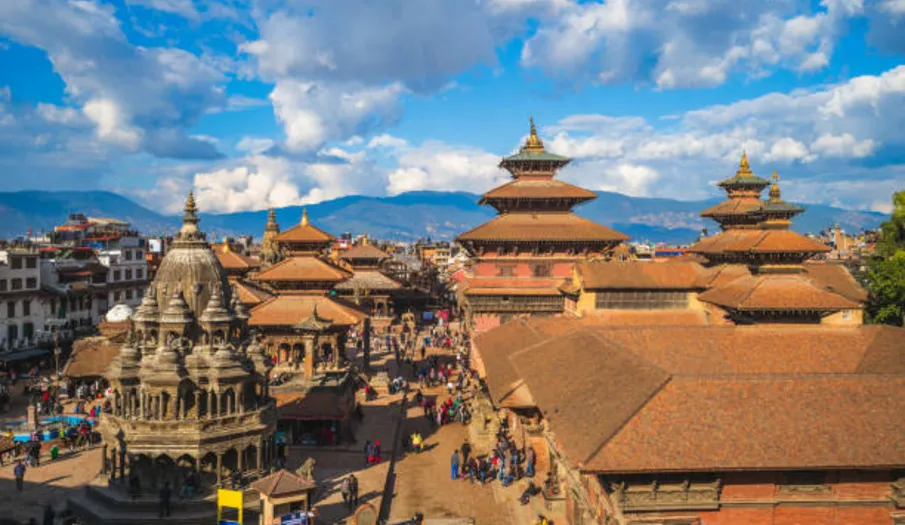
Patan Durbar Square in the Kathmandu Valley

Pokhara to Kathmandu Transport: Complete Guide to All Options, Costs & Tips

Pokhara and Kathmandu are Nepal’s two most important cities — one the adventure and trekking capital beside the Annapurna Himalaya, the other the country’s historical, cultural, and political heart. The 200-kilometre road between them is one of Nepal’s most travelled routes, following the scenic Prithvi Highway through the Trishuli and Marsyangdi river valleys, and hundreds of thousands of travellers take it every year.

In 2026, transport options from Pokhara to Kathmandu range from budget-friendly shared tourist buses to top-end VIP sofa coaches; from private cars for small groups to large Hiace vans for families; and from night buses that let you sleep through the journey to 25-minute domestic flights for those who prioritise speed over comfort. Each option has a distinct price point, comfort level, departure schedule, and travel experience.

At Nepal Vehicle Hiring Pvt Ltd, we offer vehicle services (cars, jeeps, Hiace vans, and buses) for the Pokhara-to-Kathmandu route, along with ticket booking assistance for all tourist bus categories. This comprehensive 2026 guide covers every transport option available, with full cost comparisons, departure details, route highlights, pros and cons, and expert tips to make the Pokhara to Kathmandu journey as comfortable and smooth as possible.

All Pokhara to Kathmandu Transport Options – Quick Comparison

TransportTimeCost Per PersonDepartureComfortBest For
Local/Deluxe Bus7–9 hrsNPR 700–1,200Pokhara Bus Park (6 AM)Low–MediumCheapest option
Tourist Bus (Standard)6–8 hrsNPR 1,000–1,500Lakeside Bus Park (7 AM)MediumBudget independent travellers
VIP Sofa Bus (2+1)6–7 hrsNPR 1,400–2,000Lakeside Bus Park (7–8 AM)HighComfort-conscious solo/couple
Night Sofa BusOvernightNPR 1,500–2,500Lakeside (7–10 PM)Medium-HighSave a night’s hotel
Private Car5–6 hrsNPR 14,000–20,000 (vehicle)Hotel pickupVery HighCouples, small families
Private Jeep5–6 hrsNPR 18,000–28,000 (vehicle)Hotel pickupVery HighGroups of 4–6
Toyota Hiace Van6–7 hrsNPR 25,000–38,000 (vehicle)Hotel pickupVery HighGroups of 7–10
Coaster Bus6–7 hrsNPR 28,000–42,000 (vehicle)Hotel pickupHighGroups of 12–18
Domestic Flight25–30 minUSD 109–150/personPokhara International AirportTop-endMaximum speed

Pokhara to Kathmandu – Journey Quick Facts

DetailInformation
Road DistanceApproximately 200 km
Drive Time (Private Vehicle)5 to 6 hours
Drive Time (Tourist Bus)6 to 8 hours
Main RoutePrithvi Highway – Pokhara → Damauli → Mugling → Kathmandu
Road ConditionMostly paved; ongoing construction near Mugling
Tourist Bus Departure (Lakeside)Pokhara Tourist Bus Park, Lakeside – daily at 7:00 AM
Tourist Bus Departure (Baglung)Pokhara Baglung Bus Park – multiple times
Key Rest StopMugling (~midpoint, Trishuli/Marsyangdi confluence)
Flight Time25 to 30 minutes
Flight PriceUSD 109–150 one way (subject to change)
Best Departure Time7:00 AM – 8:00 AM for a scenic daytime journey

Begnas Lake Pokhara

Tourist Bus Options: Pokhara to Kathmandu 2026

Tourist buses are the most popular choice for independent travellers on the Pokhara-to-Kathmandu journey. Several categories are available at the Pokhara Lakeside Tourist Bus Park:

Standard Tourist Bus (2+2 Seats)

The standard tourist bus operates a fixed daily morning departure from Pokhara Lakeside Bus Park at approximately 7:00 AM. Standard 2+2 seating with air conditioning (in most models), push-back reclining seats, and a window curtain. The most common choice for budget travellers

Standard Bus DetailsInformation
Departure PointPokhara Lakeside Tourist Bus Park
Departure Time7:00 AM daily
Arrival (Kathmandu)Thamel area or Kantipath – approximately 1:30 PM to 3:00 PM
Ticket PriceNPR 1,000–1,300 per person
Seating2+2 push-back reclining
ACYes
Capacity35–40 passengers
Best ForBudget travellers, backpackers

The VIP Sofa Bus is the most popular choice for travellers seeking genuine comfort on the Pokhara-to-Kathmandu route. The 2+1 seating layout means every passenger has either a window or an aisle seat with no middle seat, and the sofa-style reclining seats are significantly wider and more cushioned than standard bus seats.

VIP Sofa Bus DetailsInformation
Departure PointPokhara Lakeside Tourist Bus Park
Departure Time7:00 AM – 8:30 AM (varies by operator)
Arrival (Kathmandu)Approximately 1:00 PM – 2:30 PM
Ticket PriceNPR 1,400–2,000 per person
Seating2+1 wide sofa-style recliners
ACTop-end full AC
Total Seats25–30 passengers
Reading LightYes – individual
USB ChargingSome models
Best ForSolo travellers, couples, and comfort seekers

Night Bus / Night Sofa Bus

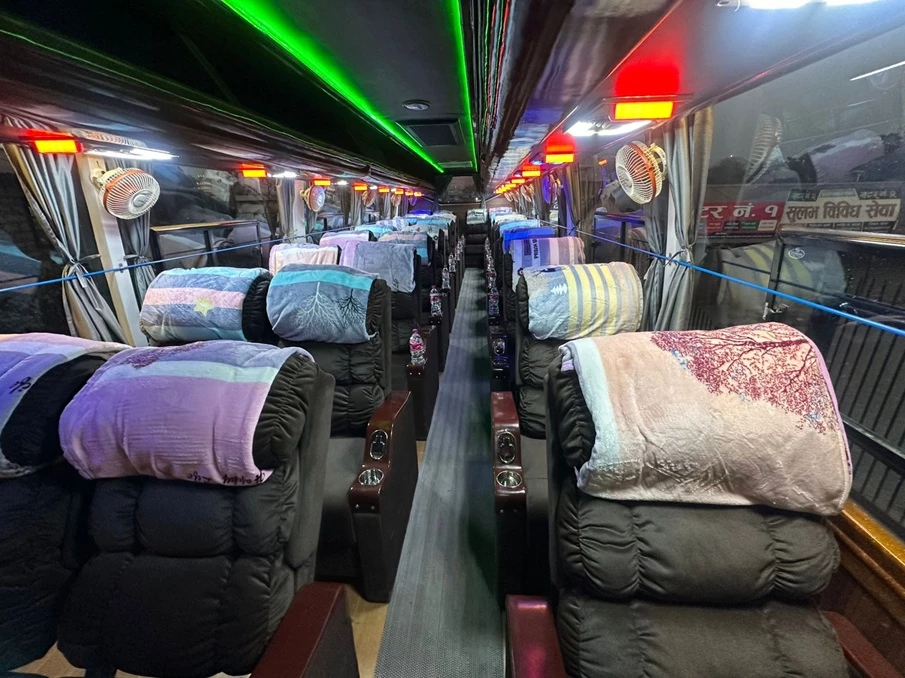
For travellers who want to make the most of their time in Pokhara and arrive in Kathmandu ready to start the day, the night bus is an efficient option. Night sofa buses depart Pokhara Lakeside between 7:00 PM and 10:00 PM and arrive in Kathmandu’s Thamel area in the early morning (3:00 AM to 5:00 AM). Top-end sofa buses.

Nig provide blankets. Bus DetailsInformation
Departure PointPokhara Lakeside Tourist Bus Park
Departure Time7:00 PM – 10:00 PM
Arrival (Kathmandu)3:00 AM – 5:00 AM
Ticket PriceNPR 1,500–2,500 per person
BlanketProvided on top-end night sofa buses
Seating2+1 sofa (top-end) or 2+2 (standard)
Best ForTravellers looking to save on hotel accommodation costs
NoteConfirm hotel check-in time for early arrival in Kathmandu

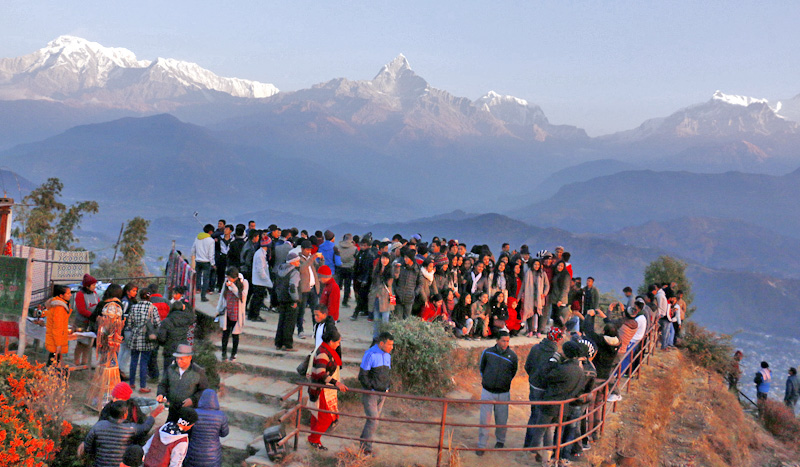
Sarangkot Pokhara

Tourist Bus Type Comparison: Pokhara to Kathmandu 2026

FeatureDeluxe BusTourist BusVIP Sofa BusNight Sofa Bus
Seat Layout2+22+22+12+1 or 2+2
Ticket PriceNPR 700–1,200NPR 1,000–1,500NPR 1,400–2,000NPR 1,500–2,500
LegroomStandardStandard–GoodExcellentGood–Excellent
ACYesYesTop-endTop-end
ReclineBasicPush-backFull sofaFull sofa
Reading LightNoSometimesYesYes
BlanketNoNoNoYes
Arrival TimePMPMPMEarly AM
Hotel SavingsNoNoNoYes (saves 1 night)
Best Comfort Rank4th3rd1st2nd

Pokhara to Sarangkot Jeep

Private Vehicle Options: Pokhara to Kathmandu

Nepal Vehicle Hiring Pvt. Ltd. provides professional private vehicle services along the Pokhara-Kathmandu route. All private vehicles include hotel-to-hotel service, flexible departure time, and freedom to stop anywhere along the route.

VehicleCapacityOne Way (NPR)One Way (USD)Round Trip (NPR)Best For
Private Car (Sedan)2–3 paxNPR 14,000–18,000USD 105–135NPR 24,000–30,000Couples, solo with bags
Private SUV/Crossover3–4 paxNPR 16,000–22,000USD 120–165NPR 28,000–38,000Small family
Private Jeep (Scorpio)4–5 paxNPR 18,000–24,000USD 135–180NPR 30,000–42,000Groups, trekkers
Private Jeep (Hilux/Fortuner)5–6 paxNPR 22,000–30,000USD 165–225NPR 38,000–52,000Top-end groups
Private Land Cruiser5–6 paxNPR 28,000–38,000USD 210–285NPR 48,000–65,000Luxury private travel
Toyota Hiace Van7–10 paxNPR 25,000–38,000USD 185–285NPR 42,000–65,000Large families, groups
Toyota Coaster12–17 paxNPR 32,000–45,000USD 240–335NPR 55,000–75,000Small tour groups
Tourist Bus (Private)25–45 paxNPR 45,000–70,000USD 335–520NPR 75,000–120,000Large tour groups

Note: All private vehicle prices include driver, fuel, and toll charges for the one-way journey from Pokhara to Kathmandu. Prices may vary by season and vehicle availability. Contact Nepal Vehicle Hiring for confirmed quotes.

What Is Included in Your Private Vehicle from Nepal Vehicle Hiring

  • Hotel pickup from your exact accommodation anywhere in Pokhara Lakeside or Pokhara city
  • Air-conditioned private vehicle — well-maintained and regularly serviced
  • Professional, licensed driver experienced on the Pokhara to Kathmandu Prithvi Highway
  • Fuel, toll charges, and driver expenses are included in the quoted price
  • Freedom to stop at Mugling, Bandipur, Damauli, or any attraction along the route on request
  • Drop-off at your exact hotel or accommodation address in Kathmandu
  • Flexible departure time — leave when you are ready, not according to a bus schedule

Pokhara to Kathmandu Transport

Pokhara to Kathmandu by Domestic Flight

For travellers who prioritise speed, the 25- to 30-minute domestic flight from Pokhara International Airport to Tribhuvan International Airport in Kathmandu is the fastest option. The new Pokhara International Airport (opened in 2023) operates multiple daily flights on this route with several airlines.

Flight DetailsInformation
Departure AirportPokhara International Airport (PKR)
Arrival AirportTribhuvan International Airport, Kathmandu (KTM)
Flight Duration25 to 30 minutes
Price RangeUSD 109–150 one way (foreigners); NPR 6,000–8,000 (Nepali citizens)
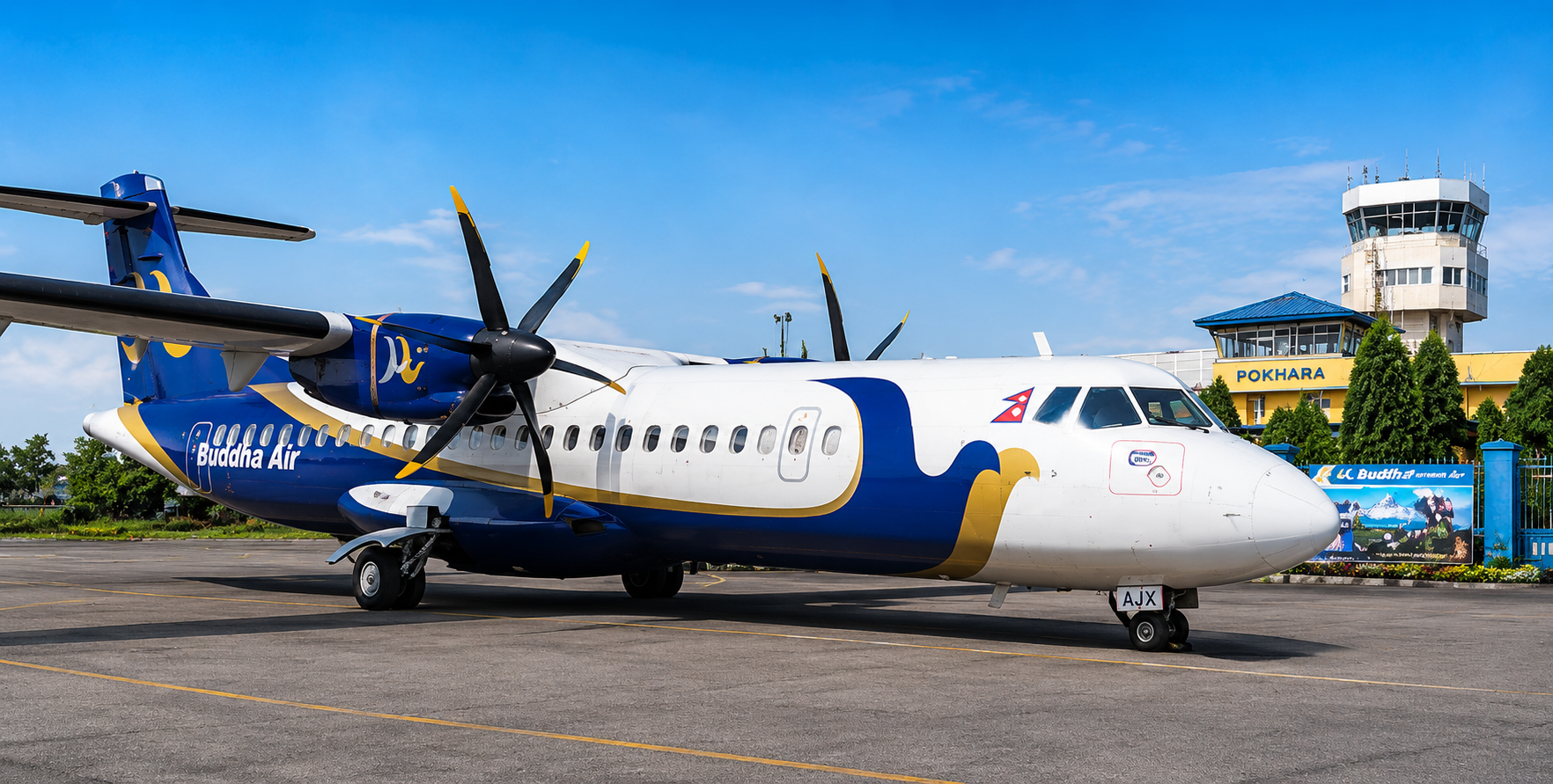
Airlines OperatingBuddha Air, Yeti Airlines, Shree Airlines, others
Baggage Allowance15–20 kg checked (varies by airline)
FrequencyMultiple daily flights (early morning departures are most common)
Airport to Thamel5 km – approximately 20–30 minutes by taxi
Best ForBusiness travelers, time-sensitive travelers, and those with flight phobias are not applicable.
DrawbackNo road scenery, expensive for groups, and airport check-in time is required. Domestic flight prices in Nepal are significantly higher for foreign passport holders than for Nepali citizens. Prices are subject to change. Always book flights directly with airlines or through reputable agents.

Complete Transport Comparison: Pokhara to Kathmandu

FactorVIP Sofa BusPrivate CarPrivate JeepHiace VanFlight
Journey Time6–7 hours5–6 hours5–6 hours6–7 hours25–30 min
Cost Per PersonNPR 1,400–2,000NPR 3,500–9,000*NPR 3,000–6,000*NPR 2,500–5,400*USD 109–150
Hotel PickupLakeside Bus ParkYes – doorYes – doorYes – doorAirport only
Hotel Drop-offThamel areaYes – doorYes – doorYes – doorAirport only
Departure TimeFixed 7 AMFlexibleFlexibleFlexibleFixed schedule
LuggageUnderfloor compartmentBoot + rackExcellent + rackExcellent + rack15–20 kg checked
Stop FreedomNoneFullFullFullNone
PrivacyShared 25–30 paxCompleteCompleteCompleteShared flight
Best ForSolo/couple budgetCouple/small familyGroups 4–6Groups 7–10Max speed

Per-person cost is calculated by dividing the vehicle price by the typical group size. Private car per person for 2–3 pax, jeep for 4–5 pax, Hiace for 7–9 pax.

Which Transport Option is Right for You?

Your ProfileBest OptionReason
Solo traveller on a budgetVIP Sofa BusBest comfort per rupee for single travellers
le on a budgetVIP Sofa BusTwo adjacent seats or a 2+1 layout for each window
Small family (2+2 children)Private Car or JeepDoor-to-door, flexible, space for bags, no rushing
Group of 4–6Private JeepBest value per person, hotel pickup, fast
Group of 7–10Toyota HiaceAll travel together, AC, hotel pickup, economical
Large group (12–45)Coaster or Tourist BusSingle vehicle, group cohesion, cost-effective
Time-critical travellerDomestic Flight25 min vs 6 hrs – unbeatable when time matters
Night traveller/hotel saverNight Sofa BusSave one night’s accommodation cost
Senior or mobility-limitedPrivate Car or HiaceComfortable boarding, no time pressure, direct
Wants Bandipur stopPrivate VehicleOnly private vehicles are allowed to make off-route stops on request

Pokhara to Kathmandu Route Highlights

The Prithvi Highway from Pokhara to Kathmandu is one of Nepal’s most scenic road journeys. Here are the key highlights along the way:

Pokhara Exit – Seti River Gorge

Shortly after leaving Pokhara, the road crosses the Seti River — a river famous for its remarkably white water caused by glacial flour in suspension. The Seti flows through a deep underground gorge directly beneath parts of Pokhara city. The bridge crossing offers a brief but dramatic view of the gorge.

Damauli – Tanahun District Headquarters

Damauli sits at the confluence of the Seti and Madi rivers, approximately 40 km from Pokhara. It is the first major town on the route and an excellent place to rest, with a riverside setting; the hill town rising above the confluence is attractive, and the local teahouses serve excellent Nepali food.

Bandipur – Optional Heritage Town Detour

The UNESCO candidate heritage hill town of Bandipur lies off the main Prithvi Highway between Damauli and Dumre. This beautifully preserved Newari trading town, with its cobblestone main street, traditional architecture, and panoramic mountain views, is one of Nepal’s finest cultural stops. Adding Bandipur extends the journey by approximately 1 to 1.5 hours, but it is highly recommended for travellers in a private vehicle.

Mugling – The Classic Midway Stop

Mugling sits at the confluence of the Trishuli and Marsyangdi rivers, approximately 105 km from Pokhara and roughly the midpoint of the journey. It is Nepal’s most famous roadside stop — the teahouses and restaurants lining the riverbank serve fresh fish curry, dal bhat, and snacks.

Almost every tourist bus and private vehicle stops here for 20 to 30 minutes. The riverside setting is scenic, and the food is genuinely good.

Prithvi Highway – Trishuli River Gorge

The section of the Prithvi Highway between Mugling and Kathmandu follows the Trishuli River upstream through a dramatic gorge. The road winds alongside the rushing river with forested hillsides above and the occasional Nepali village clinging to the slopes. This is consistently the most photographed section of the entire drive.

Naubise – Final Valley Descent to Kathmandu

From Naubise, the road begins the final descent through the Chandragiri hills into the Kathmandu Valley. The transition from the river gorge terrain to the bowl of the valley is dramatic — the great density of Kathmandu city suddenly appears below as the road descends the final approach. On clear days, you can see the valley and the distant Himalayas from this final ridge section.

Departure Points and Schedules: Pokhara to Kathmandu

Pokhara Lakeside Tourist Bus Park

The Pokhara Lakeside Tourist Bus Park (near Hallan Chowk, Lakeside) is the main departure point for all tourist-class shared buses heading to Kathmandu. The bus park is approximately a 10-minute walk from the central Pokhara Lakeside area, or a short taxi ride (NPR 100 -00).

Bus TypeDeparture TimeTicket PriceArrival KTM
Standard Tourist Bus7:00 AMNPR 1,000–1,3001:30–2:30 PM
VIP Sofa Bus7:00–8:30 AMNPR 1,400–2,0001:00–2:30 PM
Super Deluxe7:00–8:00 AMNPR 1,200–1,6001:15–2:30 PM
Night Sofa Bus7:00–10:00 PMNPR 1,500–2,5003:00–5:00 AM

Private Vehicle Pickup (Nepal Vehicle Hiring)

Nepal Vehicle Hiring offers private vehicle pickup directly from your hotel or guesthouse in Pokhara at any time you specify—no need to travel to a bus station. We recommend a 7:00 AM to 8:00 AM departure for comfortable daytime travel, arriving in Kathmandu between 1:00 PM and 2:00 PM.

Best Time for Pokhara to Kathmandu Travel

Autumn (October to November) – Best Season

Autumn offers the finest road conditions, clearest skies, and most comfortable temperatures for a drive on the Prithvi Highway. The mountain views on the Pokhara departure section and the lush post-monsoon greenery throughout the route make this the finest time of year for the journey. Tourist buses and private vehicles are in peak demand — book in advance.

Spring (March to May) – Excellent

Spring is warm, and the road is in good condition. The Marsyangdi and Trishuli valley sections are particularly beautiful with rhododendrons visible on the hillsides. Mountain views from the Pokhara end of the route are excellent in March and April.

May sees some pre-monsoon haze developing.

Winter (December to February) – Good

Winter travel on the Prithvi Highway is comfortable year-round. Temperatures are cool — bring a light jacket for the journey. Fewer tourists mean less traffic and sometimes better seat availability on tourist buses.

Mountain views near Pokhara can be exceptional in clear winter air.

Monsoon (June to August) – Possible with Caution

The Prithvi Highway near Mugling can experience occasional landslides during the monsoon. Travel is possible, but allow extra time for potential delays. Nepal Vehicle Hiring monitors road conditions and advises clients before departure during the monsoon season.

What to Pack for the Pokhara to Kathmandu Journey

  • Light jacket or fleece – tourist bus AC can be cold, and mountain sections are cooler than Pokhara
  • Water bottle – stay hydrated; Mugling stop is the best refill opportunity
  • Light snacks – biscuits, fruits, nuts for the 6+ hour bus journey
  • Motion sickness tablets – the Trishuli Gorge section has winding roads
  • Camera or phone charged – Marsyangdi valley and Trishuli gorge views are excellent
  • Nepali cash – for the Mugling stop and any incidental expenses
  • Headphones and entertainment for bus travellers – downloaded content for the 6–7-hour journey
  • Travel documents – passport/ID for any checkpoint along the highway

Expert Tips for the Pokhara to Kathmandu Journey

  • For VIP Sofa Bus, book at least 2 to 3 days in advance during October–November and March–April peak seasons – the 25- to 30-seat buses sell out quickly.
  • Arrive at the Lakeside Tourist Bus Park at least 30 minutes before the 7:00 AM departure to find your bus, load luggage, and settle in.
  • For private vehicles, request a Bandipur heritage town stop – it is a remarkable detour that adds only 1 to 1.5 hours and is one of Nepal’s finest cultural experiences.
  • For tourist bus travellers, choose the RIGHT side of the bus (when facing Kathmandu) for the best views of the Trishuli River gorge on the Mugling-to-Kathmandu section.
  • The Mugling rest stop is typically 20 to 30 minutes in; tourist buses stop here, and it’s the best opportunity for a meal on the journey.
  • Night bus travellers should confirm the hotel’s early morning check-in policy before booking – arriving at 4:00 AM at a hotel that opens at 8:00 AM is problematic.
  • Private vehicle from Nepal Vehicle Hiring includes flexible departure – if you want to leave at 9:00 AM rather than 7:00 AM to have a full Pokhara morning, that is entirely your choice.
  • For flight travellers, arrive at Pokhara International Airport at least 1.5 hours before departure – domestic security takes longer than expected.
  • Book the complete Nepal transport sequence with Nepal Vehicle Hiring – Chitwan to Pokhara, Pokhara to Kathmandu, and airport transfers – in a single coordinated arrangement.

How to Book Pokhara to Kathmandu Transport with Nepal Vehicle Hiring

Nepal Vehicle Hiring Pvt Ltd provides both private vehicle hire and tourist bus ticket booking for the Pokhara to Kathmandu route:

  • Step 1: Contact us via phone, WhatsApp, or at vehiclehiringnepal.com
  • Step 2: Tell us your travel date, number of passengers, hotel in Pokhara, and destination hotel in Kathmandu
  • Step 3: Choose your transport type – VIP Sofa Bus ticket, Super Deluxe bus, or private vehicle (car, jeep, Hiace, coaster)
  • Step 4: Receive your booking confirmation with vehicle details, departure time, and driver information
  • Step 5: For private vehicles – your driver arrives at your Pokhara hotel at the confirmed time
  • Step 6: For the tourist bus, we provide guidance on reaching the Lakeside Bus Park and confirming your seat

We recommend booking 2 to 3 days in advance for off-peak travel, and 5 to 7 days in advance during October–November and March–April.

Frequently Asked Questions (FAQ)

How far is Pokhara from Kathmandu?

The road distance from Pokhara to Kathmandu is approximately 200 kilometres along the highway.

How long does the Pokhara to Kathmandu journey take?

By private car or jeep: 5-6 hours. By tourist bus: 6-8 hours. By domestic flight: 25 to 30 minutes.

How much does the Pokhara-to-Kathmandu VIP Sofa Bus ticket cost?

VIP Sofa Bus (2+1 seating) costs NPR 1,400 to 2,000 per person. A standard tourist bus costs NPR 1,000 to 1,500 per person. A night bus costs NPR 1,500 to 2,500 per person.

How much does a private car from Pokhara to Kathmandu cost in 2026?

A private sedan costs US$120 one way. A private jeep costs NPR 18,000 to 24,000. A Toyota Hiace van costs NPR 25,000 to 38,000. All prices include driver and fuel.

Where does the tourist bus depart from in Pokhara?

Tourist buses depart from the Pokhara Lakeside Tourist Bus Park (near Hallan Chowk in the Lakeside area). It is approximately a 10-minute walk from central Lakeside or a short taxi ride. All major tourist bus operators have counters at this bus park.

Can I hire a private vehicle from Pokhara to Kathmandu with hotel pickup?

Yes. Nepal Vehicle Hiring provides hotel-to-hotel private vehicle service – pickup from your hotel in Pokhara and drop-off at your hotel in Kathmandu. Contact us at vehiclehiringnepal.com to book.

Is there a direct flight from Pokhara to Kathmandu?

Yes. Multiple airlines operate direct flights from Pokhara International Airport (PKR) to Tribhuvan International Airport in Kathmandu (KTM). The flight takes 25 to 30 minutes.

Current prices are approximately USD 1109-1109-150 one-way for foreign passport holders.

What is the best transport from Pokhara to Kathmandu for a group of 6 people?

A private jeep (Toyota Fortuner or Hilux) is the ideal option for 6 people. It includes hotel pickup and drop-off in Kathmandu, 5 to 6 hours of travel time, full luggage space, and the flexibility to stop at Bandipur or Mugling. Contact Nepal Vehicle Hiring for a quote.

Can I stop at Bandipur on the way from Pokhara to Kathmandu?

Yes, with a private vehicle from Nepal Vehicle Hiring. Bandipur is a magnificent Newari heritage hill town located approximately 8 km off the Prithvi Highway between Damauli and Dumre. A Bandipur stop adds approximately 1 to 1.5 hours to the journey.

Public tourist buses cannot make this detour.

Book Your Pokhara to Kathmandu Transport with Nepal Vehicle Hiring

The Pokhara to Kathmandu journey is one of Nepal’s great road experiences — the Marsyangdi and Trishuli river gorges, the bustling roadside life of Mugling, the optional heritage town of Bandipur, and the spectacular final descent into the Kathmandu Valley all make the 200-kilometre drive a genuinely engaging travel experience rather than merely functional transport.

Whether you choose the outstanding value of a VIP Sofa Bus, the door-to-door comfort of a private car or jeep, the group convenience of a Toyota Hiace, or the speed of a domestic flight, Nepal Vehicle Hiring Pvt Ltd has the right service for your Pokhara to Kathmandu journey. Thousands of travellers in Nepal choose our tourist bus ticket booking, private vehicle hire, and group transport services every year.

Contact Nepal Vehicle Hiring Pvt Ltd today at vehiclehiringnepal.com to book your Pokhara-to-Kathmandu transport and continue your Nepal adventure with complete confidence.

Direct Bookings & Inquiries /Call / WhatsApp (24/7): +977 981-4227196
E-mail: [email protected]

Pokhara to Mardi Himal Trek Transport

Pokhara to Mardi Himal Trek Route Vehicle

Pokhara to Mardi Himal Trek Route Vehicle: Complete Jeep, Car & Transfer Guide

The Mardi Himal Trek is one of Nepal’s most rewarding and most rapidly growing trekking routes — a spectacular journey through rhododendron and oak forests, sub-alpine meadows, and high-altitude ridgelines to the Mardi Himal Base Camp at 4,200 metres, with close-range views of Machhapuchhre (Fishtail), Annapurna South, Annapurna I, Hiunchuli, and the full Annapurna range that rival anything the more famous ABC and Poon Hill routes can offer, at a fraction of the crowd.

First opened to trekkers in 2012, the Mardi Himal Trek follows a ridge route entirely separate from the classic ABC or Poon Hill trails, ascending through a sequence of dramatically named and beautifully positioned camps — Forest Camp, Low Camp, High Camp, and finally the open viewpoint at 4,200 meters — before descending to the quiet village of Siding or Siwai in the Modi Khola valley below.

Because the Mardi Himal Trek begins and ends at different points, with the most popular starting trailheads at Kande or Dhampus and the most popular finishing points at Siding or Siwai, arranging the right vehicle transfers for both the beginning AND the end of the trek is essential to Mardi Himal trek planning. At Nepal Vehicle Hiring Pvt Ltd, we provide professional vehicle transfers for all Mardi Himal trek starting and ending points. This comprehensive guide covers every trailhead, all vehicle options and costs, the route, and the tips to make your Mardi Himal trek transport smooth.

About the Mardi Himal Trek

The Mardi Himal Trek takes its name from Mardi Himal (5,587 m) — a dramatic ice peak in the Annapurna massif positioned between Machhapuchhre (Fishtail) and Annapurna Base Camp. The route does not summit Mardi Himal but reaches the viewpoint and base camp area at 4,200 meters, where the mountain appears close and overwhelming.

The trek is notable for its distinct character—quieter, less commercial, and with a stronger wilderness feel than the ABC or Poon Hill circuits—despite being close to Pokhara and accessible to moderately fit trekkers; the ridge trail offers constant panoramic views, unlike the valley-floor approach of the ABC route.

Mardi Himal Trek Key FactsDetails
Trek Duration4 to 7 days from Pokhara
Maximum Altitude4,200 meters (Mardi Himal Viewpoint / Base Camp approach)
DifficultyModerate
Trek StyleRidge route – panoramic views throughout
Main Starting TrailheadsKande (most common), Dhampus, Pothana, Hemja/Astam
Main Finishing PointsSiding, Siwai (Kalimati), Lumre, Ghandruk (via descent)
Permit RequiredACAP (NPR 3,000 foreigners) + TIMS Card (NPR 2,000)
Guide RequiredMandatory from April 2023 (ACAP regulation)
Best SeasonSpring (March–May) and Autumn (September–November)
Key ViewsMachhapuchhre/Fishtail, Annapurna South, Annapurna I, Hiunchuli, Mardi Himal
Pokhara to Mardi Himal Trek Route Vehicle
Mardi-himal

All Mardi Himal Trek Trailheads and Finish Points from Pokhara

You can start and finish the Mardi Himal Trek at several different points. Understanding the complete picture of all trailhead options is essential for planning your vehicle transfer correctly:

PointTypeDistance from PokharaDrive TimeAltitudeNotes
KandeStart (most common)22 km via Baglung Hwy45–60 min1,770 mMost popular trailhead – short drive from Pokhara
DhampusStart / End25–35 km1–1.5 hrs1,650 mVia Hemja/Dhikur Pokhari – rough jeep track
PothanaStart (near Dhampus)30–38 km1–2 hrs1,890 mSlightly higher start – shorter to Forest Camp
Hemja / AstamStart (longer)15–20 km30–45 min920 mRoad start, walk to Astam, then Dhampus
SidingFinish (most common)42–50 km from Pokhara2.5–3.5 hrs1,700 mMost common trek end – 4WD Jeep required
Siwai (Kalimati)Finish (alternate)45–55 km from Pokhara2.5–4 hrs1,100 mModi Khola valley – same road as ABC return
LumreFinish (rare)55–65 km3–4 hrs900 mLower valley – less common return point
GhandrukFinish (circuit)55 km2.5–3 hrs1,940 mFor the Mardi–Ghandruk circuit option

Mardi Himal Trek

Why Book a Private Vehicle for the Mardi Himal Trek Transfer?

Outbound Transfer to Kande or Dhampus

The most popular Mardi Himal Trek starting point — Kande — is approximately 22 km from Pokhara on the Baglung Highway and takes about 45 to 60 minutes by vehicle. Dhampus is slightly further and requires a rough jeep track beyond the main highway.

A private vehicle from Nepal Vehicle Hiring picks you up from your hotel in Pokhara Lakeside. It drops you at the exact trailhead entrance, with all your trekking gear loaded and your guide and porter already aboard.

Return Transfer from Siding — 4WD Essential

The return jeep transfer from Siding (the most common Mardi Himal finish point) to Pokhara is the most important vehicle arrangement for the entire trek. The road from Siding back to the main Baglung Highway involves a rough, steep, unpaved jeep track that descends through the Modi Khola valley.

A 4WD jeep is absolutely required for this section. Trekkers who do not arrange their return jeep in advance often wait at Siding for 1 to 2 hours trying to find available transport.

Book Both Transfers Before Starting the Trek

Nepal Vehicle Hiring strongly recommends booking both the outbound transfer (Pokhara to Kande/Dhampus) AND the return transfer (Siding/Siwai to Pokhara) before departing Pokhara. This eliminates uncertainty at the end of the trek, when you arrive at Siding tired and want immediate transport back to your Pokhara hotel. We can arrange for our driver to wait at Siding at your estimated arrival time.

Complete Luggage Management

Many Mardi Himal trekkers carry a full trekking bag on the trail, but also have additional items (extra luggage, valuables, a laptop) that they want to leave safely in Pokhara during the trek. Nepal Vehicle Hiring can arrange a private vehicle to transport your leftover luggage to a secure Pokhara hotel storage facility and collect it on your return, completely solving the luggage management challenge.

Pokhara

Complete Vehicle Cost Guide: All Mardi Himal Transfer Points 2026

Transfer RoutePrivate Jeep (NPR)Private Jeep (USD)Sharing Jeep/paxNotes
Pokhara to Kande (one way)US$55US$55NPR 400–700Smooth Baglung Highway – 45–60 min
Pokhara to Dhampus (one way)US$60US$60NPR 600–1,000Via Hemja jeep track – 1–1.5 hrs, 4WD
Pokhara to Pothana (one way)NPR 5,000–8,000USD 37–60NPR 700–1,100Beyond Dhampus – rough track, 4WD essential
Siding to Pokhara (return)NPR 6,000–9,000USD 45–67NPR 1,000–1,5004WD mandatory – rough Modi Valley track
Siwai to Pokhara (return)NPR 6,000–9,000USD 45–67NPR 900–1,400Similar to Siding – rough jeep track
Lumre to Pokhara (return)NPR 8,000–12,000USD 60–90NPR 1,200–1,800Longer – deep valley access
Ghandruk to Pokhara (return)NPR 8,000–12,000USD 60–90NPR 1,200–1,8004WD mandatory – Ghandruk jeep track
Round Trip: Kande start + Siding returnNPR 9,000–14,500USD 67–108N/ABook both transfers together – best value

Trailhead-by-Trailhead Vehicle Guide

Pokhara to Mardi Himal Trek Route Vehicle
Kande village

Kande (also spelt Khande), at 1,770 meters, is the most popular and most convenient trailhead for the Mardi Himal Trek. Located about 22 kilometres from Pokhara Lakeside on the Pokhara-Baglung Highway, Kande is accessible by any vehicle—the road is smooth and paved, and the drive takes about 45 to 60 minutes from Pokhara.

From Kande, the trail climbs through dense oak and rhododendron forest to Australian Camp (2,060 m) and then continues northeast along the Mardi Himal ridge to Forest Camp, Low Camp, High Camp, and the viewpoint. Trekkers starting at Kande typically reach Mardi Himal Base Camp on Day 3 of a 5-day itinerary.

Pokhara to Kande DetailsInformation
Distance22 km
Drive Time45 to 60 minutes
Road TypeBaglung Highway – paved, smooth
Vehicle RequiredAny vehicle suitable
Private Jeep CostNPR 3,000–5,500 one way
Sharing Jeep CostNPR 400–700 per person
Trek From Kande to Forest Camp4 to 5 hours walk
Trek From Kande to Mardi Base Camp3 to 4 days
NotesMost convenient trailhead – earliest on the trail

Pokhara to Dhampus – Cultural Village Start

Dhampus (1,650 m) is both a magnificent Gurung cultural village and an excellent alternative starting point for the Mardi Himal Trek. Driving to Dhampus rather than Kande immediately puts you in a high Gurung-ridge village with stunning Annapurna panoramas before the trek even begins.

The road to Dhampus from Hemja (15 km from Pokhara) turns off the Baglung Highway and climbs steeply on a rough jeep track through Dhikur Pokhari. A 4WD jeep is required for this final section. From Dhampus, the trail continues to Pothana and then joins the Mardi Himal ridge route.

Pokhara to Mardi Himal Trek Route Vehicle
Dhampus village
Pokhara to Dhampus DetailsInformation
Distance25–35 km
Drive Time1 to 1.5 hours
Road TypePaved to Hemja; rough 4WD jeep track to Dhampus
Vehicle Required4WD Jeep mandatory from Hemja onward
Private Jeep CostNPR 4,500–7,000 per Jeep
Sharing Jeep CostNPR 600–1,000 per person
Cultural BonusDhampus is one of Nepal’s finest Gurung villages, with panoramic Annapurna views
Trek From Dhampus to Forest Camp3 to 4 hours via Pothana

Return Transfer: Siding to Pokhara – The Critical Jeep Arrangement

Siding (also called Sidhing or Siddha Village), at about 1,700 meters, is the most common trek endpoint for the Mardi Himal Trek. After descending from the high ridge through Low Camp and Forest Camp, the trail drops steeply to Siding village in the Modi Khola valley. From Siding, a rough 4WD jeep track descends through the valley to join the Baglung Highway and return to Pokhara.

The Siding-to-Pokhara jeep journey takes approximately 2.5 to 3.5 hours and covers 42 to 50 kilometres. The road from Siding to the highway is rough, steep, and unpaved — a 4WD vehicle with an experienced driver is necessary. Standard cars and local taxis cannot manage this route.

IMPORTANT: Always pre-book your Siding-to-Pokhara return jeep with Nepal Vehicle Hiring BEFORE beginning the trek. Do not expect to find available transport at Siding without prior arrangement, especially during peak trekking season (October, November, March, April).

Siding to Pokhara Return DetailsInformation
Distance42–50 km
Drive Time2.5 to 3.5 hours
Road TypeRough off-road jeep track from Siding to Baglung Highway – 4WD mandatory
Vehicle Required4WD Jeep – absolutely mandatory
Private Jeep CostNPR 6,000–9,000 one way
Sharing Jeep CostNPR 1,000–1,500 per person
Advance BookingEssential – especially in October/November and March/April
The driver waits at the sidingNepal Vehicle Hiring can arrange a driver to wait at the Siding for your arrival.

Pokhara-Pokhara to Mardi Himal Trek Route Vehicle

Return Transfer: Siwai (Kalimati) to Pokhara

Siwai (also called Kalimati or Syauli Bazaar) is an alternative trek endpoint in the lower Modi Khola valley, approximately 45-55 km from Pokhara. Some Mardi Himal trekkers descend via Landruk village to Siwai rather than Sidingding, connecting the Mardi Himal descent with the standard ABC return route.

Siwai to Pokhara DetailsInformation
Distance45–55 km
Drive Time2.5 to 4 hours
Road TypeRough jeep track – 4WD required
Private Jeep CostNPR 6,000–9,000 one way
Sharing JeepNPR 900–1,400 per person
Trek ConnectionModi Khola Valley – also the endpoint for

ABC and Jhinu Danda treks

Pokhara to Mardi Himal Trek Route Vehicle

Complete Mardi Himal Trek Vehicle Packages from Nepal Vehicle Hiring

Nepal Vehicle Hiring offers complete vehicle packages covering both the outbound trailhead transfer AND the return vehicle from Siding or Siwai as a single coordinated booking:

PackageRouteVehicleCost (NPR)Cost (USD)Notes
Package A – Kande Start, Siding ReturnPokhara→Kande + Siding→PokharaStandard JeepNPR 9,000–14,500USD 67–108Most popular Mardi Himal package
Package B – Kande Start + Siding Return (Top-end)Pokhara→Kande + Siding→PokharaHilux/FortunerNPR 12,000–18,000USD 90–135Best comfort for both legs
Package C – Dhampus Start + Siding ReturnPokhara→Dhampus + Siding→PokharaHilux/FortunerNPR 14,500–21,000USD 108–1574WD is essential for both legs
Package D – Kande Start + Ghandruk ReturnPokhara→Kande + Ghandruk→PokharaHilux/FortunerNPR 12,000–20,000USD 90–150For the Mardi–Ghandruk circuit

All package prices include driver and fuel for both legs. Contact Nepal Vehicle Hiring to confirm availability and exact pricing for your trek dates and group size.

Mardi Himal Trek Itineraries and Vehicle Timing Guide

DayActivityOvernightAltitudeVehicle Needed
Day 1Drive Pokhara to Kande (45–60 min) – Trek Kande to Forest Camp (4–5 hrs)Forest Camp2,600 mPokhara to Kande: US$55
Day 2Trek Forest Camp to Low Camp (3–4 hrs)Low Camp3,550 mNone
Day 3Trek from Low Camp to High Camp to Mardi Base Camp Viewpoint – return to High CampHigh Camp3,580 mNone
Day 4Trek from High Camp to Low Camp to Forest Camp to Siding (full day)Siding1,700 mNone
Day 5Return jeep Siding to Pokhara (2.5–3.5 hrs)Pokhara820 mSiding to Pokhara: NPR 6,000–9,000

4-Day Fast Mardi Himal Trek

DayActivityOvernightVehicle
Day 1Drive to Kande (45 min) – Trek Kande→Australian Camp→Forest CampForest CampVehicle on Day 1 only
Day 2Trek Forest Camp→Low Camp→High CampHigh CampNone
Day 3Trek High Camp→Mardi Base Camp viewpoint (4,200 m)→return High Camp→Low CampLow CampNone
Day 4Trek Low Camp→Forest Camp→Siding – Return jeep to PokharaPokharaReturn jeep Day 4

7-Day Mardi Himal Trek – Full Experience

DayActivityOvernight
Day 1Drive Pokhara to Kande – Trek to Australian Camp or PothanaPothana / Australian Camp
Day 2Trek Pothana→Forest CampForest Camp (2,600 m)
Day 3Trek Forest Camp→Low CampLow Camp (3,550 m)
Day 4Trek Low Camp→High CampHigh Camp (3,580 m)
Day 5Trek High Camp→Mardi Base Camp Viewpoint (4,200 m)→High CampHigh Camp
Day 6Trek High Camp→Low Camp→Forest Camp→SidingSiding (1,700 m)
Day 7Return Jeep from Siding to PokharaPokhara

Mardi Himal Trek Route: Camp by Camp Guide

Kande (1,770 m) – The Trailhead

Kande is a small roadside settlement on the Pokhara-Baglung Highway where the Mardi Himal and Australian Camp trail begins. The trail rises steeply through oak and rhododendron forest from Kande. Teahouses in Kande offer breakfast and final supplies before the climb.

Australian Camp (2,060 m) – First Camp Point

Australian Camp is a grassy hilltop clearing approximately 1.5 to 2 hours above Kande, famous for its panoramic views of the Annapurna range. Named for the Australian trekking groups who popularised this viewpoint, it is an excellent first-day rest stop with multiple teahouse lodges.

Forest Camp (2,600 m) – The Forest Gateway

Forest Camp sits in the transition zone between the dense subtropical forest on the lower slopes and the beginning of the high-altitude ridge environment. The camp consists of a small collection of teahouse lodges in a forest clearing, with the Mardi Himal ridge rising above.

From Forest Camp, the trail begins to climb more steeply northward along the ridge to Low Camp – High Country Ent. Campow Camp marks the entry into genuinely high-altitude terrain. The forest gives way to dwarf bamboo and alpine shrubs.

Mountain views open dramatically — Machhapuchhre/Fishtail appears directly ahead for the first time in its full, overwhelming close-range form. Most trekkers need two days to ascend comfortably from Forest Camp to Low Camp, depending on fitness and acclimatisation.

High Camp (80 m) – The Viewpoint. The camp is one of the finest mountain viewpoints accessible on foot in the entire Annapurna region. The camp sits on the open ridge, with the massive white faces of Machhapuchhre, Annapurna South, and Hiunchuli dominating the northern horizon. Mardi Himal itself rises to the northeast. Sunrises from High Camp over these peaks are extraordinary — many trekkers describe the High Camp sunrise as the highlight of the entire Mardi Himal experience.

Mardi Himal Base Camp Viewpoint (4,200 m)

The Mardi Himal Base Camp viewpoint at 4,200 meters is the highest point of the standard Mardi Himal Trek. At this altitude, trekkers stand at the base of the Mardi Himal glacier, with the vertical faces of Machhapuchhre, Annapurna South, and Mardi Himal itself looming above.

The panorama from this point — looking down the ridge to the Pokhara valley far below and up to the 7,000-meter and 8,000-meter peaks above — is one of the most spectacular viewpoints accessible without technical climbing in all of Nepal.

Siding (1,700 m) – The Descent End Point

Siding is a small village at the base of the Mardi Himal descent in the Modi Khola valley. The 4WD jeep pickup point is at the Siding village road access, Siding. The jeep track descends through the Modi Khola valley past Lumre to join the Baglung Highway for the return to Pokhara.

Permits Required for the Mardi Himal Trek

PermitCostRequired ForWhere to Obtain
ACAP – Annapurna Conservation Area PermitNPR 3,000 (foreigners)All visitors entering ACAP from Kande, Dhampus, or any Annapurna trailheadNepal Tourism Board, Pokhara Lakeside
TIMS CardNPR 2,000 (foreigners)All trekkers on multi-day routesNepal Tourism Board, Pokhara Lakeside
Licensed Guide (Mandatory)Varies – typically NPR 3,000–5,000/dayAs of April 1, 2023, all ACAP trekkers must have a licensed, government-approved guide.Arrange through a trekking agency in Pokhara.

IMPORTANT: A licensed, government-approved trekking guide is now mandatory for all trekkers in the Annapurna Conservation Area (including the Mardi Himal Trek) under ACAP regulation, effective from April 1, 2023. Solo trekking without a guide is not permitted. Nepal Vehicle Hiring can help arrange guides.

Begnas Lake Pokhara

Best Time to Trek Mardi Himal and Book Vehicle Transfer

Autumn (October to November) – Best Season

Autumn is the finest season for the Mardi Himal Trek. Post-monsoon clarity delivers extraordinary views from High Camp and the Base Camp viewpoint — Machhapuchhre, Annapurna South, and the Annapurna range appear in perfect focus against deep blue skies.

The road to Kande is excellent, and the Siding return jeep track is in its best post-monsoon condition. October and November are peak season — book all vehicle transfers at least 5 to 7 days in advance.

Spring (March to May) – Excellent

Spring is beautiful on the Mardi Himal Trek. The rhododendron forests between Kande and Forest Camp are in spectacular full bloom in March and April — the trail passes through tunnels of pink, red, and white blossoms. Mountain views are generally excellent.

The Baglung Highway and Siding Road are in good condition—a superb time for the trek and the vehicle transfers.

Winter (December to February) – Cold but Rewarding

Winter trekking on Mardi Himal is possible, and the views can be exceptional — snow-covered peaks against crystal-clear skies create outstanding photography conditions. However, High Camp and the Base Camp approach may have snow cover, making the final section challenging without ice-traction gear. The Kande Road and the Siding Jeep Track are generally open to 4WD vehicles in winter.

Heavy monsoon rainfall makes the Mardi Himal trail extremely slippery above Forest Camp and the Siding return jeep track very hazardous due to landslides and deep mud. The trek is not recommended during the core monsoon months. September marks the beginning of the post-monsoon improvement.

What to Pack for the Pokhara to Mardi Himal Trek Vehicle Transfer

  • ACAP permit and TIMS Card – obtain from Nepal Tourism Board in Pokhara before departure
  • Full trekking backpack with all gear for the complete trek duration
  • Warm down jacket and thermal layers – High Camp nights are well below freezing in autumn and winter
  • Rain jacket – forest sections between Kande and Forest Camp can be wet even in autumn
  • Small daypack accessible in the vehicle – water, snacks, camera, documents for the drive to Kande
  • Water bottles (2 litres minimum) – refill at teahouses along the trail
  • Trekking boots worn from hotel departure – start trekking immediately from the vehicle drop-off at Kande
  • Nepali cash for teahouse accommodation, meals, and guide/porter fees – no ATMs on the Mardi trail
  • Camera with a fully charged battery and a power bank – the Annapurna views from High Camp are extraordinary
  • Sunscreen SPF 50+ and sunglasses – UV intensity is extremely high above 3,000 meters
Pokhara
4WD-jeep

Expert Tips for Mardi Himal Trek Vehicle Transfers

  • Book BOTH the outbound Pokhara to Kande transfer AND the return Siding to Pokhara transfer before leaving Pokhara – returning trekkers who have not arranged this way for unpredictable periods
  • For the return from Siding, Nepal Vehicle Hiring can arrange for the driver to wait at your expected finishing time – communicate your approximate arrival time to us before starting the trek.
  • Request a 4WD Hilux or Fortuner specifically for the Siding return – the Modi Khola valley track requires proper clearance and diff lock capability.
  • Depart from Pokhara to Kande early – a 7:00 AM departure gives you the full day for the Kande to Forest Camp first stage.
  • For the Dhampus start option, depart even earlier (6:30 AM), as the rough jeep track to Dhampus adds time to the approach.
  • The mandatory guide requirement is strictly enforced at the Kande ACAP checkpoint – do not arrive without a licensed guide expecting to pass.
  • Collect your ACAP and TIMS permits from the Nepal Tourism Board in Pokhara Lakeside before the vehicle departs in the morning.
  • Nepal Vehicle Hiring can arrange the complete Mardi Himal trek transport package: Pokhara to Kande outbound, Siding to Pokhara return, and any additional transfers in a single confirmed booking.

How to Book Your Mardi Himal Trek Vehicle with Nepal Vehicle Hiring

Booking your Mardi Himal trek vehicle transfers with Nepal Vehicle Hiring Pvt Ltd is simple:

  • Step 1: Contact us via phone, WhatsApp, or at vehiclehiringnepal.com
  • Step 2: Share your trek start date, trailhead preference (Kande, Dhampus, or Pothana), group size, hotel in Pokhara, and estimated trek finish date
  • Step 3: Choose your vehicle package – outbound only, return only, or complete round-trip package
  • Step 4: Provide your estimated Siding/Siwai arrival time so we can coordinate the return driver timing
  • Step 5: Receive booking confirmation with driver details, vehicle information, and pickup times for both legs
  • Step 6: On the trek start day, your driver picks you up from your hotel and takes you to the trailhead
  • Step 7: On the trek’s final day, your pre-arranged driver is waiting at Siding or Siwai to return you to Pokhara

We recommend booking at least 3 to 5 days in advance, and 7 days in advance during the October, November, March, and April peak seasons.

Frequently Asked Questions (FAQ)

Where does the Mardi Himal Trek start from Pokhara?

The most popular starting point is Kande (1,770 m), approximately 22 km from Pokhara Lakeside on the Baglung Highway (45–60 minutes by vehicle). Alternative starting points include Dhampus (1,650 m) and Pothana (1,890 m), both of which require a rough 4WD jeep track beyond Hemja.

How much does the vehicle transfer from Pokhara to Kande cost?

A private jeep from Pokhara to Kande costs approximately NPR 333,000- 5,500 one-way (USD 22–41). A shared jeep seat costs NPR4,7000 per person. All private vehicle prices include driver and fuel.

Is a 4WD jeep necessary for the Mardi Himal trek transfers?

For the Pokhara-to-Kande outbound transfer, any vehicle type is adequate, as the road is paved. For Dhampus or Pothana start points, a 4WD jeep is mandatory due to the rough hillside track. For the return from Siding or Siwai, a 4WD jeep is essential — the Modi Khola valley track is rough and unpaved and cannot be managed by standard cars or taxis.

Where does the Mardi Himal Trek end, and how do I get back to Pokhara?

The most common endpoint is Siding village in the Modi Khola valley. From Siding, a 4WD jeep returns to Pokhara via the Baglung Highway (2.5 to 3.5 hours; NPR 6,000 to 9,000 for a private jeep). Always pre-book this return jeep with Nepal Vehicle Hiring before starting the trek.

What permits are required for the Mardi Himal Trek?

You need an ACAP permit (NPR 3,000 for foreigners) and a TIMS Card (NPR 2,000). As of April 2023, a licensed, government-approved trekking guide is also mandatory for all trekkers in the ACAP area. Both permits are available from the Nepal Tourism Board in Pokhara Lakeside.

How many days does the Mardi Himal Trek take?

The most popular itinerary is 5 days from Pokhara. A fast 4-day version is possible for fit trekkers. The full experience, including extra exploration days, takes 7 days.

All versions use a vehicle for the Kande starting transfer and a 4WD jeep for the return.

Can Nepal Vehicle Hiring arrange both the outbound and return vehicles as a single booking?

Yes. Nepal Vehicle Hiring provides complete Mardi Himal trek vehicle packages covering the Pokhara to Kande outbound transfer and the Siding to Pokhara return transfer in a single coordinated booking. This ensures your return jeep is confirmed and waiting at the airport on the day you finish your trek.

Book Your Mardi Himal Trek Vehicle with Nepal Vehicle Hiring

The Mardi Himal Trek is one of the most spectacular and personally rewarding short treks from Pokhara — a route that delivers close-range views of Machhapuchhre, Annapurna South, and the Annapurna massif from a high-altitude ridge that feels genuinely remote and wild, despite being just a short vehicle transfer from Pokhara Lakeside.

The vehicle transfers that bookend this trek — from Pokhara to Kande at the start, and from Siding back to Pokhara at the end — are an essential part of the Mardi Himal experience. Booking both in advance with Nepal Vehicle Hiring Pvt Ltd ensures your trek begins and ends with complete peace of mind.

Contact Nepal Vehicle Hiring Pvt Ltd today at vehiclehiringnepal.com to book your Pokhara to Mardi Himal trek route vehicle transfers and begin one of Nepal’s finest ridge trek adventures.

Direct Bookings & Inquiries: vehiclehiringnepal.com
Call / WhatsApp (24/7):+977 981-4227196
E-mail: [email protected]

Pokhara to Mustang Border Route Jeep

Mustang
Pokhara to Mustang Border Route Jeep: Lo Manthang, Korala & Upper Mustang Complete Guide

The jeep journey from Pokhara to the Mustang-Tibet border at Korala is one of the most extraordinary overland adventures available anywhere in the Himalayan world. The route travels from the lakeside paradise of Pokhara through the world’s deepest river gorge — the Kali Gandaki — past thermal hot springs, ancient Thakali villages, and the famous apple orchards of Marpha, to Jomsom and then northward into the high desert of Upper Mustang: a landscape of eroded red and ochre cliffs, ancient cave monasteries, medieval walled villages, and the legendary walled city of Lo Manthang — for centuries the capital of the independent Kingdom of Lo.

In a landmark development for Nepal’s overland adventure travel, the road from Pokhara to the Kora La Tibet border was fully opened in November 2025 — making the complete Pokhara-to-Mustang-to-Tibet border route drivable by jeep for the first time. This road, which connects Nepal to Tibet at the Korala border crossing about 23 kilometres north of Lo Manthang, has transformed the Upper Mustang experience and opened a new chapter for overland adventure travel in Nepal.

At Nepal Vehicle Hiring Pvt Ltd, we provide professional Land Cruiser and Hilux jeep services along the Pokhara-Upper Mustang border route. This comprehensive 2026 guide covers every aspect of the journey: the full route, all vehicle options and costs, the latest permit regulations, key destinations, road conditions, suggested itineraries, and expert tips to help you prepare for one of the greatest jeep adventures in Asia.

IMPORTANT  UPDATE: Korala Border Road and New Permit System

Road Opening: The Korala Tibet border road was formally opened in November 2025, making the Pokhara-to-Korala route fully drivable by jeep for the first time.

New Permit Pricing: The previous flat Upper Mustang Restricted Area Permit fee of USD 500 for 10 days has been replaced in 2026 with a per-day fee of USD 50 per person.

Upper Mustang Permit – Key ChangesDetails
Previous Permit SystemUSD 500 flat fee per person for 10 days (now discontinued)
New 2026 SystemUSD 50 per person per day in the Upper Mustang restricted area
Minimum Group RequirementMinimum 2 people with a licensed government-approved guide
Permit Area CoverageNorth of Kagbeni – all of Upper Mustang, including Lo Manthang and Korala
Where to ObtainDepartment of Immigration or Nepal Tourism Board, Kathmandu
Processing TimeAllow 3-5 working days in Kathmandu.
Road to KoralaOpened November 2025 – first time jeep-accessible to the Tibet border

Note: The new USD 50/day permit system means a standard 8-day Upper Mustang jeep tour now costs USD 400 per person in permit fees alone, compared to USD 500 previously for 10 days. For shorter 5- to 6-day tours, the new system is actually more economical than the previous flat fee. Always verify current permit pricing with the Department of Immigration before departure, as regulations may continue to evolve.

Pokhara to Mustang Border Route Jeep

About Upper Mustang – The Last Forbidden Kingdom

Upper Mustang (known as Lo in Tibetan) is one of Nepal’s most culturally intact and visually extraordinary regions. For centuries, this was an independent kingdom — the Kingdom of Lo — with its own royalty, language, governance, and ancient Bon-Buddhist traditions that have remained largely untouched by the modern world.

Nepal integrated Mustang in the 18th century, but the region retained much of its autonomous character and was only opened to foreign visitors in 1992.

The landscape of Upper Mustang is unlike anything else in Nepal — a Trans-Himalayan plateau wilderness of eroded red and ochre cliffs shaped by ancient lake beds and wind erosion, dry riverbeds, sparse juniper forests, and ancient cave systems carved into the cliff faces that served as dwellings, meditation retreats, and storage facilities for thousands of years. The culture is profoundly Tibetan — the architecture, food, dress, religion, and language all belong to the same cultural sphere as Tibet itself.

Upper Mustang Key FactsDetails
CapitalLo Manthang (walled city at 3,840 m)
DistrictMustang District, Gandaki Province
Altitude Range2,750 m (Kagbeni) to 4,660 m (Korala Border Pass)
Distance from Pokhara420–430 km to Lo Manthang; ~453 km to Korala Border
Korala (Tibet Border) Altitude4,660 meters
Distance from Korala to Lo Manthang23 km north
PopulationApproximately 7,000 (mostly Loba Tibetan people)
ReligionTibetan Buddhism and ancient Bon religion
Famous ForLo Manthang walled city, sky caves, ancient monasteries, Tiji Festival
Road StatusFully drivable Pokhara to Korala as of November 2025
Restricted AreaYes, north of Kagbeni requires an Upper Mustang permit

The Complete Jeep Route: Pokhara to Mustang Tibet Border (Korala)

The complete Pokhara-to-Kora La Tibet border jeep route covers approximately 453 kilometres. It follows one of the world’s most spectacular overland corridors — from the subtropical hills of Pokhara through the Kali Gandaki gorge to the high Trans-Himalayan plateau. Here is the complete route:

StageSectionDistanceDrive TimeRoadKey Highlights
1Pokhara to Beni75 km2.5–3 hrsPaved highwayKushma Bridge, Baglung, Myagdi Valley
2Beni to Tatopani42 km2 hrsRough Gorge RoadRupse Waterfall, Kali Gandaki gorge entry
3Tatopani to Marpha70 km3 hrsRough off-roadGhasa, Kalopani, Dhaulagiri views, Marpha
4Marpha to Jomsom7 km30 minSandy riverbedKali Gandaki riverbed crossing, Jomsom bazaar
5Jomsom to Kagbeni18 km45 minRough jeep trackUpper Mustang entry, medieval village
6Kagbeni to Lo Manthang90 km5–7 hrsOff-road plateauChuksang, Ghami, Tsarang – ancient villages
7Lo Manthang to Korala23 km1.5–2 hrsNew road, roughTibet border pass at 4,660 m
TOTALPokhara to Korala453 kmMulti-dayMixedFirst-rate overland adventure

Pokhara to Mustang Border Route Jeep

Stage-by-Stage Jeep Route Guide

Stage 1: Pokhara to Beni – 75 km (2.5 to 3 hours)

The adventure begins in Pokhara, with a northwestward drive along the smooth Baglung Highway. The road passes through Baglung Bazaar before descending to Beni, the district headquarters of Myagdi District, at the confluence of the Myagdi and Kali Gandaki rivers at 830 meters. The optional detour to the Kushma Suspension Bridge (Nepal’s highest and longest suspension bridge) is a worthwhile 20-minute stop before Beni.

Stage 2: Beni to Tatopani – 42 km (2 hours)

After Beni, the road enters the Kali Gandaki gorge, and the surface immediately becomes rough. The track passes through the villages of Baglung, Dana, and the area of the spectacular Rupse Waterfall. Tatopani village (1,190 m) is famous throughout Nepal for its natural geothermal hot springs on the Kali Gandaki riverbank — the perfect first overnight stop or a soak before continuing.

Stage 3: Tatopani to Marpha – 70 km (3 hours)

The most spectacular section of the Kali Gandaki drive. The road climbs through the world’s deepest gorge — flanked by Dhaulagiri (8,167 m) and Annapurna I (8,091 m) — passing Ghasa, Kalopani, Lete, Kobang, Larjung, and Tukuche before reaching Marpha (2,670 m).

Marpha is the most beautiful and most celebrated village on the entire Mustang route — famous for its apple orchards, apple brandy, whitewashed stone lanes, and the dramatic backdrop of Dhaulagiri rising directly above.

Stage 4: Marpha to Jomsom – 7 km (30 minutes)

The short but memorable crossing of the wide sandy Kali Gandaki riverbed from Marpha to Jomsom. The landscape has fully transformed into a high-altitude semi-desert — the Mustang valley opens wide, the mountains are enormous and close, and the powerful afternoon valley winds begin to blow. Jomsom (2,720 m) is the district headquarters of Mustang District, with a small airport, bustling bazaar, and the last reliable services before the remote upper valley.

Stage 5: Jomsom to Kagbeni – 18 km (45 minutes)

From Jomsom, the road heads north through the wide sandy Kali Gandaki riverbed to Kagbeni (2,810 m) — the medieval walled village that marks the entry into the Upper Mustang restricted area. Kagbeni is one of the most atmospheric and most visually striking villages in Nepal — its ochre-coloured stone buildings, ancient monastery, and narrow covered lanes are entirely Tibetan in character. The Upper Mustang permit checkpoint is here.

Stage 6: Kagbeni to Lo Manthang – 90 km (5 to 7 hours)

The most dramatic and most extraordinary section of the entire route. North of Kagbeni, the landscape transforms completely into the high Trans-Himalayan plateau. The road passes through Chuksang (3,050 m), Chele (3,050 m), Syangbochen, Ghami (3,520 m), and the impressive cliff paintings of the Ghami Monastery, then climbs to Tsarang (3,720 m) — with its ancient five-story palace — before the final spectacular approach to Lo Manthang.

Lo Manthang (3,840 m) is the capital of the ancient Kingdom of Lo and the crown jewel of Upper Mustang. The walled city — one of the last intact walled cities in the Himalayan world — contains the King’s Palace (a five-story whitewashed mansion), the Champa Lhakhang and Thupchen Lhakhang monasteries (which contain some of the finest medieval Buddhist murals in existence), and the Chyodi Monastery.

Arriving at Lo Manthang’s gates by jeep as the sun sets over the Tibetan plateau is genuinely memorable.

Stage 7: Lo Manthang to Korala Tibet Border – 23 km (1.5 to 2 hours)

The newly opened road (November 2025) from Lo Manthang continues north to the Korala border pass at approximately 4,660 meters — the official Nepal-Tibet frontier. The landscape on this final section is pure high-altitude desert plateau — expansive, austere, and magnificent in its stark emptiness. Korala Pass was historically one of the most important salt and trade routes between Nepal and Tibet, and traders, pilgrims, and travellers have used it for thousands of years.

At Korala, you can see the Nepal border gate and the beginning of Chinese (Tibetan) territory. Foreign visitors can approach the border, but crossing into Tibet requires separate Chinese visas and permits that are not covered by the Nepal Upper Mustang permit. The view from Korala — south toward the entire Upper Mustang valley and north toward the Tibetan plateau — is extraordinary.

photo

Vehicle Options: Pokhara to Mustang Border Route

Nepal Vehicle Hiring Pvt Ltd provides the following 4WD vehicles for the Pokhara to Upper Mustang and the Korala border jeep route:

VehicleCapacityPokhara to Jomsom (NPR)Pokhara to Lo Manthang (NPR)Pokhara to Korala (NPR)Best For
Toyota Land Cruiser4–5 paxNPR 35,000–50,000NPR 65,000–95,000NPR 80,000–115,000Maximum capability and comfort – recommended
Toyota Hilux (4WD)4–5 paxNPR 25,000–38,000NPR 50,000–75,000NPR 62,000–92,000Best all-round for Upper Mustang
Mahindra Scorpio (4WD)4–5 paxNPR 18,000–28,000NPR 35,000–52,000NPR 44,000–65,000Budget – adequate for the dry season

Note: All prices are for one-way vehicle hire, including driver and fuel from Pokhara. These are approximate rates for the full vehicle. Prices vary by season, road conditions, and vehicle availability. A Toyota Land Cruiser or Hilux is strongly recommended for the Kagbeni-to-Lo Manthang section and is mandatory for Korala. Contact Nepal Vehicle Hiring for confirmed expedition quotes.

  • 225mm+ ground clearance handles the deeply rutted plateau roads north of Kagbeni
  • Legendary reliability — in a region where breakdown recovery takes days, Land Cruiser reliability is not optional
  • Full-time 4WD with a low-range transfer case for the steep rocky climbs north of Ghami
  • Large fuel tank with extended range — fuel is unavailable north of Jomsom; full tanks plus spare jerricans required
  • V8 or straight-6 turbodiesel maintains power at 4,000+ meter altitude
  • Spacious interior for 4 to 5 passengers with full camping and expedition gear

Complete Cost Guide: Pokhara to Mustang Border Route

Here is the full cost breakdown for a complete Pokhara to Lo Manthang / Korala jeep tour :

Cost ItemCost (NPR)Cost (USD)Notes
Private Land Cruiser (Pokhara to Lo Manthang return)NPR 130,000–190,000USD 970–1,415Multi-day return trip – most popular package
Private Land Cruiser (Pokhara to Korala return)NPR 160,000–230,000USD 1,190–1,715Includes the road to the Tibet border
Private Hilux (Pokhara to Lo Manthang return)NPR 100,000–150,000USD 745–1,115Best value capable 4WD
ACAP Permit (per person)NPR 3,000USD 22Annapurna Conservation Area
Upper Mustang Permit (NEW 2026 – per day/person)USD 50/day/personUSD 50/dayMin. 2 pax + guide mandatory
TIMS Card (per person)NPR 2,000USD 15Required for the trekking component
Licensed Guide (mandatory)NPR 3,000–5,000/dayUSD 22–37/dayUpper Mustang regulation
Accommodation (per night)NPR 800–2,000/personUSD 6–15/personGuesthouses in the Lo Manthang area
Meals (per day)NPR 1,500–3,000/personUSD 11–22/personLimited options in Upper Mustang
Emergency jerrican fuelNPR 2,000–4,000/jerricanUSD 15–30Essential – no fuel north of Jomsom

Example total cost for a 4-person group on a 10-day Pokhara to Lo Manthang tour: Vehicle (Land Cruiser round trip) NPR 160,000 + Upper Mustang permit (4 pax × USD 50 × 7 days in restricted area) = USD 1,400 + ACAP and TIMS = NPR 20,000 + guide fees and accommodation/meals = approximately USD 3,500 to 4,500 total for the full group for the vehicle and permit portions.

Jeep hire mustang

Key Destinations Along the Pokhara to Mustang Border Route

Tatopani – The Hot Spring Pit Stop

The natural geothermal hot springs of Tatopani (1,190 m) on the Kali Gandaki riverbank are among Nepal’s most celebrated. After the rough gorge road from Beni, a soak in the warm mineral pools beside the rushing glacial river is an excellent first-night reward before the serious mountain driving begins. Tatopani has multiple simple guesthouses and good local restaurants.

Marpha – The Apple Capital of Nepal

Marpha (2,670 m) is arguably the most beautiful village along the entire Pokhara-to-Mustang route. This perfectly preserved Thakali stone village, with its covered alleys, whitewashed buildings, ancient chortens, and magnificent apple orchards, is a masterpiece of Himalayan vernacular architecture. Local apple brandy and apple cider are world-famous among Himalayan travellers.

Marpha deserves at least a 45-minute exploration stop — walk the covered lanes, visit the gompa, and have a glass of the famous local apple chang.

Jomsom – Gateway of the Mustang Valley

Jomsom (2,720 m) is Mustang’s district headquarters and the last town with reliable services, an airport, and ATMs before Upper Mustang. The Jomsom bazaar has a fascinating mix of Thakali and Tibetan culture, excellent local restaurants, and the remarkable Eco Museum with displays of Shaligram fossils and Mustang natural history. All jeep parties heading to Upper Mustang stop in Jomsom to fuel up, resupply, and verify permits.

Kagbeni – The Medieval Gateway

Kagbeni (2,810 m) is the Upper Mustang permit checkpoint and one of Nepal’s most historically and visually compelling villages. The ancient walled settlement of ochre-coloured stone buildings, crowned by a large red gompa monastery and situated at the confluence of the Kali Gandaki and Kak rivers, feels entirely medieval and entirely Tibetan.

The narrow covered alleys, ancient stupas, and the sudden view of the barren Upper Mustang plateau above create an atmosphere of time travel. Do not rush through Kagbeni — allow at least 1 hour for exploration.

Ghami – Ancient Mani Wall and Cliff Paintings

Ghami (3,520 m) contains Nepal’s longest mani wall, a continuous stone wall with thousands of carved Buddhist prayer stones stretching about 300 meters through the centre of the village. The Ghami Monastery contains ancient wall paintings of exceptional quality. The approach to Ghami from the south also offers the most dramatic views of the eroded red cliff formations that define the Upper Mustang landscape.

Tsarang – The Ancient Palace Village

Tsarang (also known as Charang, 3,720 m) is the second most important settlement in Upper Mustang after Lo Manthang. The five-story ancient palace of the local lords, the large red gompa housing remarkable medieval murals and clay sculptures, and the panoramic plateau views make Tsarang one of the finest villages along the entire route.

Lo Manthang – The Forbidden City

Lo Manthang (3,840 m) is the climax of the entire journey. The ancient walled city — with its 200 or so houses enclosed within whitewashed mud-brick walls and four major monasteries — is the capital of the former Kingdom of Lo and the last intact walled city in the Himalayan world.

The King’s Palace, the Champa Lhakhang and Thupchen Lhakhang monasteries (with 600-year-old murals), and the Chyodi Monastery form a cultural treasure of global significance.

Beyond the sights, Lo Manthang has an otherworldly atmosphere — the flat-roofed Tibetan houses, prayer flags on every rooftop, elderly Loba women spinning wool, monks debating in the monastery courtyard, and the vast silence of the surrounding plateau create an experience of profound cultural authenticity that is increasingly rare in the modern Himalayan world.

Korala – The Tibet Border Pass

Korala (approximately 4,660 m) is the Nepal-Tibet frontier at the northern end of the Upper Mustang valley —now accessible by jeep following the road opening in November 2025. Nepal’s immigration post and the corresponding Chinese structures on the Tibetan side flank the pass. The view from Korala is extraordinary: south across the entire Upper Mustang plateau with Lo Manthang visible below, and north into the vast, empty Tibetan tableland.

The Korala crossing was historically one of the most important salt trade routes connecting Nepal and Tibet.

Pokhara to Mustang Border Route Jeep

Permits for the Pokhara to Mustang Border Route

PermitCost (2026)Required ForWhere to Obtain
ACAP – Annapurna Conservation Area PermitNPR 3,000 (foreigners)Lower Mustang area – Jomsom, Muktinath, TatopaniNepal Tourism Board, Pokhara Lakeside
Upper Mustang Restricted Area Permit (NEW)USD 50 per person per dayNorth of Kagbeni – Lo Manthang, KoralaDepartment of Immigration, Kathmandu
TIMS CardNPR 2,000 (foreigners)All trekking componentsNepal Tourism Board, Pokhara or Kathmandu
Licensed Guide (Mandatory)NPR 3,000–5,000/dayUpper Mustang – mandatory per ACAP regulationLicensed agency in Pokhara or Kathmandu
Vehicle Road PermitArranged by Nepal Vehicle Hiring4WD vehicles on Mustang roadsNepal Vehicle Hiring manages

Permit Important Note: The Upper Mustang permit is now USD 50 per person per day (changed from the previous USD 500 flat fee for 10 days). For a typical 7-day Upper Mustang stay, this means USD 350 per person in permit fees. For shorter 5-day visits, the new system costs USD 250 per person — less than the old flat fee. Plan your days in Upper Mustang carefully to manage permit costs.

Suggested Itineraries: Pokhara to Mustang Border Route

Option A: 8-Day Pokhara to Lo Manthang Jeep Tour

DayDrive / ActivityNightAltitude
Day 1Pokhara to Tatopani (via Beni, Rupse Waterfall)Tatopani1,190 m
Day 2Tatopani to Jomsom (via Marpha – apple orchard stop)Jomsom2,720 m
Day 3Jomsom to Kagbeni – permit checkpoint – drive to ChuksangChuksang3,050 m
Day 4Chuksang to Ghami (ancient Mani wall, monastery)Ghami3,520 m
Day 5Ghami to Lo Manthang via TsarangLo Manthang3,840 m
Day 6Lo Manthang full exploration day (monasteries, palace, walled city)Lo Manthang3,840 m
Day 7Lo Manthang to Jomsom (return drive)Jomsom2,720 m
Day 8Jomsom to Pokhara (return via Marpha, Tatopani)Pokhara820 m

Option B: 10-Day Pokhara to Korala Tibet Border Jeep Tour

DayDrive / ActivityNightAltitude
Day 1Pokhara to TatopaniTatopani1,190 m
Day 2Tatopani to Jomsom (Marpha stop, Muktinath option)Jomsom2,720 m
Day 3Jomsom – Muktinath Temple visit – KagbeniKagbeni2,810 m
Day 4Kagbeni to Ghami via Chuksang and CheleGhami3,520 m
Day 5Ghami to Lo Manthang via TsarangLo Manthang3,840 m
Day 6Lo Manthang full day – monasteries, palace, Namgyal GompaLo Manthang3,840 m
Day 7Drive Lo Manthang to the Kora La Tibet border (23 km) – explorationLo Manthang4,660 m border
Day 8Lo Manthang to Ghami (southern return route)Ghami3,520 m
Day 9Ghami to Jomsom via the alternate valleyJomsom2,720 m
Day 10Jomsom to PokharaPokhara820 m

Pokhara to Mustang Border Route Jeep

Best Season for the Pokhara to Mustang Border Jeep Route

Spring (March to June) – Best Season for Upper Mustang

Spring and early summer are the finest seasons for the Pokhara-to-Upper Mustang jeep route. Upper Mustang lies in a rain shadow north of the Himalayan range and receives very little monsoon rainfall, making it uniquely accessible when most of Nepal is in the wet season.

May is particularly special as it coincides with the Tiji Festival in Lo Manthang — a three-day sacred Buddhist ceremony of extraordinary cultural significance. The road conditions are excellent, and the plateau views are spectacular in the clear pre-monsoon air.

Autumn (September to November) – Excellent

Post-monsoon autumn delivers outstanding visibility and excellent road conditions on the Kali Gandaki gorge section and the Upper Mustang plateau. October’s famous clear skies provide outstanding views of Dhaulagiri, Annapurna, and the Mustang plateau. Apple harvest season in Marpha (late September to October) is a bonus.

Book vehicles well in advance for October and November.

Monsoon (July to August) – Possible with Caution

Because Upper Mustang is in a rain shadow, the plateau itself has relatively little rain during the monsoon. However, the Pokhara-Tatopani gorge section of the Kali Gandaki road can be affected by landslides during the monsoon season. The Beni-to-Tatopani section requires caution.

Nepal Vehicle Hiring monitors road conditions and provides advice before confirming monsoon-season bookings.

The plateau north of Kagbeni, at elevations ranging from 000 to 4,600 meters, experiences severe cold and significant snowfall in winter. Snow can completely block the road to Lo Manthang and Korala for weeks at a time. Nepal Vehicle Hiring does not operate the Upper Mustang jeep route during the winter months.

The Kali Gandaki Wind – Critical Departure Time Advisory

The Kali Gandaki valley experiences powerful afternoon winds that funnel through the gorge from the Tibetan plateau every day, intensifying from approximately 11:00 AM to 12:00 PM onward. These winds create dangerous driving conditions on the sandy sections of the Kali Gandaki riverbed and strong dust storms between Tatopani and Jomsom.

Nepal Vehicle Hiring requires all jeeps on the Pokhara-Jomsom section to depart Pokhara between 6:00 AM and 6:30 AM at the absolute latest. This is non-negotiable for safety on the Kali Gandaki route.

Essential Packing List for the Mustang Border Jeep Tour

  • All permits arranged in Kathmandu before departure (ACAP, Upper Mustang permit, TIMS) – carried in waterproof document pouch
  • Warm down jacket and thermal layers – Lo Manthang nights can be below –5 °C even in spring and autumn
  • Windproof outer layer – the Kali Gandaki valley winds and the Mustang plateau winds are powerful
  • Face mask, buff scarf, or balaclava – the dust on the plateau road is severe.
  • Sunscreen SPF 50+, UV-blocking sunglasses, and a wide-brimmed hat – UV intensity at 3,800 m is extreme
  • Water bottles (minimum 2 litres) plus water purification tablets – clean water is scarce north of Kagbeni.
  • Sufficient Nepali cash for all expenses – there are NO ATMs north of Jomsom.
  • High-energy snacks and emergency food rations – restaurants are very limited north of Kagbeni
  • Camera with multiple charged batteries and power banks – exceptional photography throughout the route
  • Altitude medication (Diamox) – consult your doctor before departure for the Lo Manthang and Korala stages
  • Offline maps (Maps.me – Mustang region) – no mobile data north of Jomsom
  • Sleeping bag rated to -10°C for Lo Manthang guesthouse nights

Expert Tips for the Pokhara to Mustang Border Jeep Route

  • Book your Land Cruiser or Hilux at least 2 to 3 weeks in advance – Upper Mustang-bound vehicles are in very high demand during May (Tiji Festival) and October–November.
  • Begin permit processing in Kathmandu at least 5 to 7 working days before departure – the Upper Mustang permit requires advance processing.
  • Always depart Pokhara between 6:00 AM and 6:30 AM to complete the Kali Gandaki gorge section before the afternoon winds intensify.
  • Fuel up completely in Jomsom – there is no fuel available anywhere north of Jomsom to Lo Manthang or Korala; carry at least 2 spare jerricans (20 litres) in the Land Cruiser.
  • Carry all the Nepali cash you need from Pokhara or Jomsom – there are absolutely no ATMs, bank facilities, or digital payment options between Kagbeni and Lo Manthang.
  • Stop at Marpha for at least 45 minutes – the apple brandy, the covered lanes, and the Dhaulagiri views make it the finest village on the entire route.
  • Always spend at least one full rest day in Lo Manthang (not just a drive-through) – the monasteries, the King’s Palace, and the walled-city atmosphere take time to appreciate.
  • For the Korala border visit, depart Lo Manthang early morning to complete the 23 km border road and return before afternoon weather develops on the high plateau.
  • Nepal Vehicle Hiring can arrange a combined Pokhara-to-Mustang package, including vehicle hire, permit guidance, guide arrangement, and all logistics in a single booking.

–

How to Book Your Pokhara to Mustang Border Route Jeep

Booking your Upper Mustang jeep with Nepal Vehicle Hiring Pvt Ltd requires careful planning:

  • Step 1: Contact us at vehiclehiringnepal.com or via WhatsApp, ideally 3 to 4 weeks before departure
  • Step 2: Share your planned dates, group size, desired itinerary (Lo Manthang only, or including Korala), and departure point (Pokhara or Kathmandu)
  • Step 3: Nepal Vehicle Hiring provides a full itinerary and cost breakdown, including vehicle, permit guidance, and guide arrangement referrals
  • Step 4: Begin permit collection in Kathmandu with our documentation checklist
  • Step 5: Vehicle pre-expedition service and driver briefing at Nepal Vehicle Hiring base
  • Step 6: Depart Pokhara at 6:00 AM and begin one of the world’s greatest jeep adventures

Book at least 3 weeks in advance for the spring and autumn peak seasons, and 2 weeks ahead for other periods.

Frequently Asked Questions (FAQ)

Is the road from Pokhara to the Mustang-Tibet border (Korala) now open?

Yes. The road from Pokhara to the Kora Tibet border via Lo Manthang was officially opened in November 2025 and is now drivable by a capable 4WD jeep. This major 2026 development has made it possible to complete the overland journey from Pokhara to the Mustang border for the first time.

How much does the Upper Mustang permit cost

The permit system changed in 2026. The previous flat fee of USD 500 for 10 days has been replaced by a USD 50-per-person-per-day charge in the Upper Mustang restricted area. A minimum group of 2 people with a licensed guide is mandatory.

How far is Pokhara from Lo Manthang?

The road distance from Pokhara to Lo Manthang is approximately 420-430 kilometres; the drive takes 2 full driving days via Tatopani, Jomsom, Kagbeni, Ghami, and Tsarang.

How far is Lo Manthang from the Kora Tibet border?

Korala is approximately 23 kilometres from Lo Manthang. The drive from Lo Manthang to the Korala border post takes approximately 1.5 to 2 hours on the newly opened road.

What vehicle is best for Upper Mustang and the Kora La road?

The Toyota Land Cruiser is the recommended vehicle for the full route, including the stretch from Lo Manthang to Korala. The Toyota Hilux is an excellent and more economical alternative for experienced mountain drivers. Standard jeeps (Scorpio/Bolero) are adequate for Jomsom but struggle on the rougher plateau sections north of Kagbeni.

Can I visit the Tibet border at Korala as a foreign visitor?

Yes, foreign visitors with a valid Upper Mustang Restricted Area Permit can visit the Korala border post on the Nepal side. Crossing into Tibet requires separate Chinese visas and Tibet Travel Permits that are not part of the Nepal permit system. Contact Nepal Vehicle Hiring for the current border visit regulations.

What is the Tiji Festival, and when does it take place?

The Tiji Festival is the most sacred annual ceremony in Upper Mustang — a three-day Buddhist ritual performed by monks in Lo Manthang to celebrate the defeat of a demon and ensure the renewal of the valley’s life. The festival falls in May according to the Tibetan lunar calendar (exact dates vary annually) and is the single most spectacular cultural event in Upper Mustang. Visiting during Tiji is one of Nepal’s most rewarding experiences.

Book Your Pokhara to Mustang Border Route Jeep with Nepal Vehicle Hiring

The Pokhara to Mustang Tibet border jeep journey is Nepal’s greatest overland adventure — a journey that begins in the subtropical lakeside beauty of Pokhara, traverses the world’s deepest river gorge through the Kali Gandaki, climbs to the high Trans-Himalayan plateau of Upper Mustang, and reaches the Nepal-Tibet frontier at Korala, where the Himalayan range finally meets the great emptiness of the Tibetan plateau. Along the way: the apple orchards of Marpha, the medieval lanes of Kagbeni, the ancient murals of Lo Manthang’s monasteries, the silence of the plateau dawn, and views of the Annapurna and Dhaulagiri massifs from every angle and every altitude.

Nepal Vehicle Hiring Pvt Ltd provides the most reliable, well-prepared, and experienced 4WD jeep services for the Pokhara-Upper Mustang and Kora La border routes. Our Land Cruisers and Hilux vehicles, expert Mustang road drivers, and complete expedition logistics make us the preferred vehicle partner for one of the world’s greatest jeep adventures.

Contact Nepal Vehicle Hiring Pvt Ltd today at vehiclehiringnepal.com to book your Pokhara-to-Mustang border-route jeep and experience the last forbidden kingdom of the Himalayas.

Direct Bookings & Inquiries: vehiclehiringnepal.com
Call / WhatsApp (24/7): +977 981-4227196
E-mail: [email protected]

Kathmandu Airport to Pokhara Vehicle Rental

Patan Durbar Square in the Kathmandu Valley

Kathmandu Airport to Pokhara Vehicle Rental – Complete Guide

You have just landed at Tribhuvan International Airport (TIA/KTM) in Kathmandu — Nepal’s gateway to the world — and your next destination is the magnificent lakeside city of Pokhara, Nepal’s adventure and tourism capital. Whether you are a first-time visitor to Nepal, a seasoned trekker heading to the Annapurna or Dhaulagiri circuits, a couple on a romantic Himalayan getaway, or a pilgrim travelling onward to Muktinath, Nepal Vehicle Hiring Pvt Ltd offers the most reliable, comfortable, and professional private vehicle rental service from Kathmandu Airport to Pokhara.

The drive from Kathmandu to Pokhara is one of Nepal’s most iconic and scenic road journeys, covering approximately 200–210 km via the famous Prithvi Highway through lush river gorges, terraced hillsides, traditional mountain villages, and alongside the dramatic Trishuli River. The journey takes 6–8 hours by private vehicle — and with the right vehicle, the right driver, and optional scenic stops along the way, the drive itself becomes a memorable part of your Nepal experience.

Nepal Vehicle Hiring provides airport meet-and-greet service at TIA’s international and domestic arrivals, direct hotel drop-off in Pokhara, and a complete fleet ranging from luxury sedans and 4WD jeeps to Hiace vans, coasters, and tourist buses—ensuring every traveller and group size finds the perfect vehicle for this landmark journey.

Book now: Nepal Vehicle Hiring | Jeep Hire | Hiace Van Hire | Bus Hire | Call/WhatsApp: +977 981-4227196
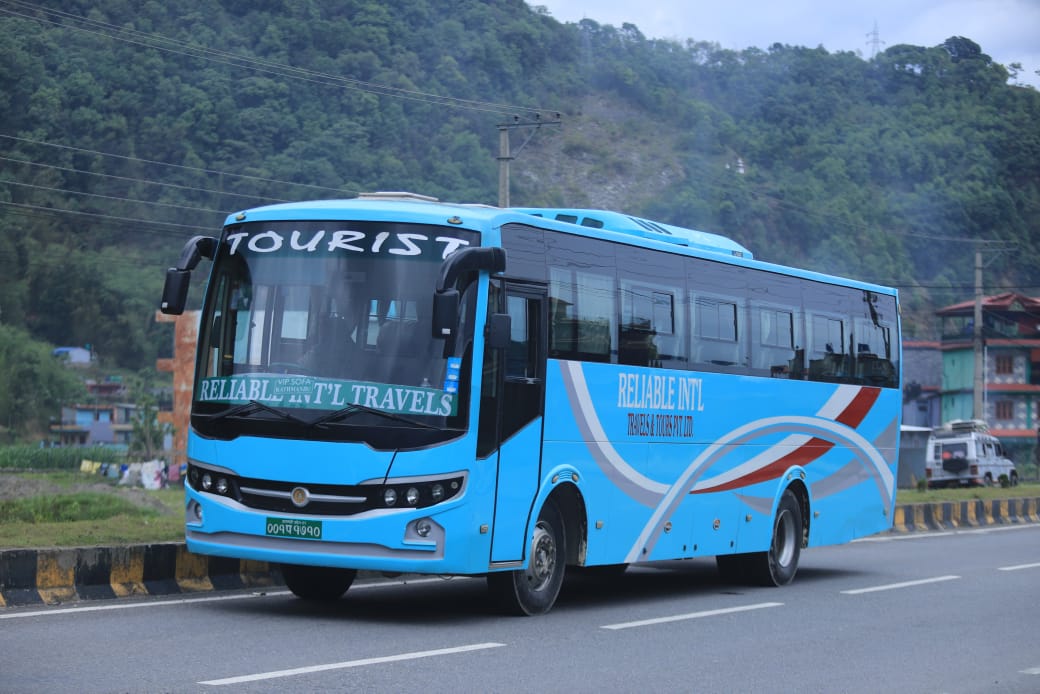
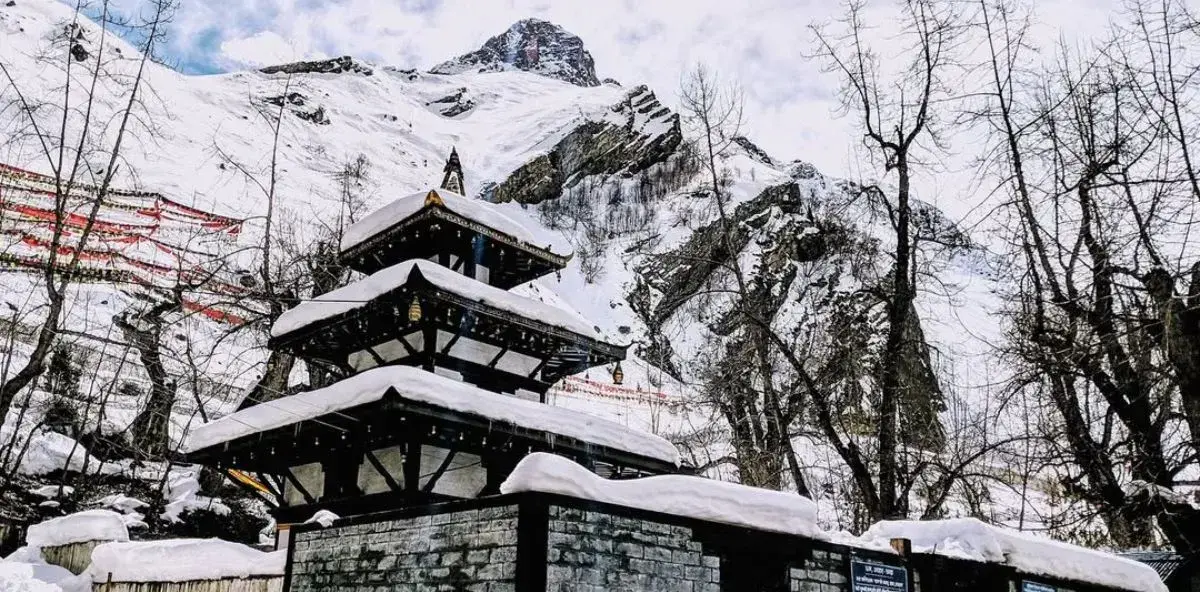
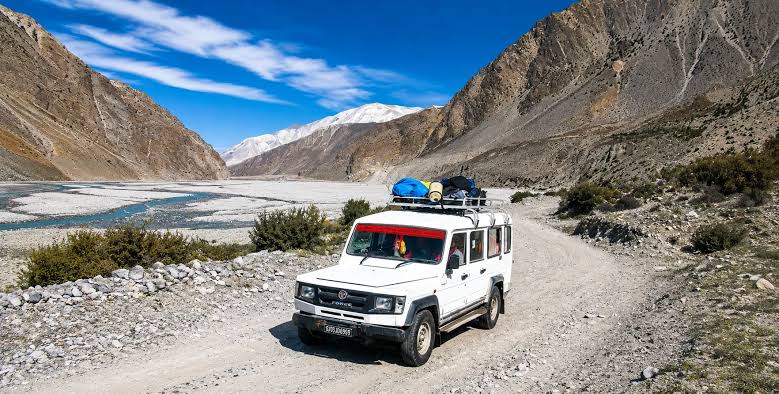
Kathmandu Airport to Pokhara Vehicle Rental – Route Overview

DetailInformation
Start PointTribhuvan International Airport (TIA/KTM) – Kathmandu
End PointPokhara (Lakeside, Hotel, Phewa Lake, or Pokhara Airport)
DistanceApprox. 200–210 km via Prithvi Highway
Travel Time6–8 hours by private vehicle (traffic dependent)
Road TypeTribhuvan Highway to Naubise + Prithvi Highway (H02) to Pokhara
Vehicle OptionsSedan, SUV, Jeep (4WD), Hiace Van, Coaster, Tourist Bus
Best ForTourists, pilgrims, trekkers, families, groups, honeymoon couples
Scenic StopsDaman, Mugling, Trishuli River, Manakamana, Damauli
Availability24/7 – Airport meet-and-greet included
Contact+977 981-4227196 | vehiclehiringnepal.com

airport arrival pickup

About Tribhuvan International Airport (TIA/KTM)

Tribhuvan International Airport (IATA: KTM | ICAO: VNKT) is Nepal’s only international airport, located 5.56 km east of Kathmandu city, in the heart of the Kathmandu Valley. Named after the late King Tribhuvan of Nepal, the airport has been Nepal’s primary air gateway since 1949 and today connects Kathmandu to over 40 international destinations in 17 countries, as well as to all major domestic airports across Nepal.

The airport operates two terminals—the International Terminal (handling all international arrivals and departures) and the Domestic Terminal (located approximately 500 meters north and connected by a free shuttle bus). TIA sits at an elevation of 4,390 feet (1,338 m) and handled nearly 9 million passengers in 2023.

It remains Nepal’s principal entry point for international visitors, including those heading to Mount Everest Base Camp, the Annapurna Circuit, Pokhara, Chitwan, and other major destinations.

Nepal Vehicle Hiring maintains a dedicated airport meet-and-greet service at TIA. Your driver will be in the international or domestic arrivals hall with a clearly marked name board, ready to help with luggage and depart for Pokhara immediately upon your arrival, regardless of flight delays or schedule changes.

Why Choose a Private Vehicle from Kathmandu Airport to Pokhara?

Travellers have several options for the Kathmandu–Pokhara journey: tourist buses, domestic flights, or private vehicles. Here is why a private vehicle rental from Nepal Vehicle Hiring is the superior choice for most travellers:

Direct Airport Pick-Up – No Waiting, No Connections

Tourist buses depart from fixed locations in Thamel, Kathmandu—requiring a separate taxi ride from TIA Airport, then queuing for tickets and waiting for departure times. With a private vehicle rental, your driver is at the airport arrivals the moment you land—no connection, no delay, and no carrying your bags through a busy city to a bus park.

Total Comfort for a Long Journey

The Kathmandu–Pokhara road journey takes 6–8 hours. In a private, air-conditioned vehicle, you travel in complete comfort with reclining seats, personal space, and climate control. Tourist buses, however comfortable, still mean sharing space with up to 45 other passengers on a long mountain highway drive.

Flexible Scenic Stops on the Prithvi Highway

The Prithvi Highway between Kathmandu and Pokhara passes some of Nepal’s finest roadside attractions. With a private vehicle, you can stop at Mugling for the famous freshwater fish lunch, take the Manakamana Cable Car to the hilltop temple, pause at scenic Trishuli River viewpoints, or visit Bandipur’s 18th-century Newari bazaar — none of which are possible on a fixed-schedule tourist bus.

Door-to-Door Delivery in Pokhara

Tourist buses drop at fixed stops in Pokhara’s bus park — requiring a further taxi or rickshaw ride to your Lakeside hotel. Your Nepal Vehicle Hiring driver delivers you directly to your hotel, resort, or any Pokhara destination — one vehicle, door-to-door, from TIA Airport to your Pokhara hotel entrance.

Ideal for Groups, Families, and Trekkers

Our fleet accommodates every group size — from 1–4 passengers in a luxury sedan, to 8–13 in a Hiace van, to 30–45 in a tourist bus. Nepal Vehicle Hiring offers tailored vehicle options for trekkers with large backpacks, families with children, elderly travellers, and business groups.

Flight Delay Protection

International flights to Kathmandu frequently arrive late due to weather and transit connections. Nepal Vehicle Hiring monitors your flight status in real time and adjusts your driver’s airport arrival accordingly — at no extra charge. Your vehicle is ready when you are, no matter when you land.

Onward Connections Beyond Pokhara

Nepal Vehicle Hiring can arrange smooth onward vehicle hire from Pokhara to Muktinath, Chitwan, Lumbini, Beni, or any other destination — all pre-arranged in a single booking at Kathmandu Airport. One trusted company handles your entire overland journey in Nepal.

Kathmandu Airport to Pokhara Vehicle Rental

Complete Vehicle Fleet – Kathmandu Airport to Pokhara

Nepal Vehicle Hiring maintains a comprehensive, well-maintained fleet of air-conditioned vehicles for the Kathmandu–Pokhara route. Every vehicle is regularly serviced, inspected before each journey, and staffed by a professional, licensed driver:

VehicleCapacityACLuggageBest For
Luxury Sedan1-4 paxYes2-3 bagsSolo / Couples
SUV / Scorpio 4WD1-5 paxYes3-4 bagsSmall Families
Land Cruiser 4WD1-6 paxYes4-5 bagsVIP / Top-end
Toyota Hiace Van8-13 paxYesLargeGroups / Families
Coaster20-25 paxYesExtra largeLarge Groups
Tourist Bus30-45 paxYesCargo holdSchool / Corporate

Luxury Sedan – The Smart Choice for Solo Travellers & Couples

A private luxury sedan or hatchback is the most efficient and cost-effective vehicle for 1–4 passengers making the Kathmandu–Pokhara journey. Comfortable reclining seats, powerful air conditioning, excellent fuel efficiency, and smooth highway handling make the sedan the top choice for couples, solo travellers, and small families on the Prithvi Highway. Our sedan fleet includes well-maintained Toyota Corollas, Hyundai Tucsons, and similar modern models.

SUV / Jeep (Scorpio / Land Cruiser) – Top-end Family Travel

For families of 4–6 and groups needing a higher seating position, more luggage space, and a more top-end ride, our Mahindra Scorpio, Toyota Land Cruiser, and similar SUV/4WD jeeps deliver an outstanding highway experience. The Land Cruiser, in particular, is the choice of discerning travellers seeking the highest comfort and reliability on the 200+ km Prithvi Highway journey. View our Jeep Hire page to see our full Jeep fleet.

Toyota Hiace Van – Best for Medium Tour Groups

Our Toyota Hiace (8–13 passengers) is the most popular vehicle for small tour groups, family reunions, trekking teams, and school trips, making it ideal for the Kathmandu–Pokhara journey. Spacious, air-conditioned, and driven by an experienced highway driver, the Hiace offers excellent value per head for groups. Ample luggage space accommodates full trekking backpacks.

See our Hiace Van Hire page.

Coaster (20-25 Passengers) – For Large Group Tours

The Coaster mini-bus is ideal for corporate tours, travel agency groups, cultural delegations, and large family parties of 20–25 passengers. Comfortable reclining seats, reliable air conditioning, and a dedicated professional driver make the 6–8-hour Prithvi Highway journey genuinely enjoyable for larger groups. View our Coaster Hire Nepal page.

Tourist Bus (30- 45 Passengers) – School & Corporate Groups

For school trips, corporate events, religious yatras, and large institutional tours, our full-size tourist buses (30–45 passengers) offer the most economical per-head rate on the Kathmandu–Pokhara route. All buses are air-conditioned,  have luggage holds,  and are driven by experienced highway drivers. See our Bus Hire Nepal page.

The Prithvi Highway – A Journey Through Nepal’s Heartland

The road from Kathmandu to Pokhara via the Prithvi Highway (NH-02) is one of Nepal’s most celebrated and scenic drives — not just a transfer, but a journey through the magnificent heart of the country. Completed in 1974, the Prithvi Highway stretches 174 km from Naubise (west of Kathmandu) to Pokhara, following river valleys, cutting through forested gorges, passing ancient temples, and revealing increasingly spectacular Himalayan scenery as it approaches Pokhara.

Begnas Lake Pokhara

Route Segment by Segment

Stop / LandmarkDistance from KTMTime from KTMHighlights
Naubise Junction27 km40–50 minPrithvi Hwy begins, Tribhuvan Hwy ends
Malekhu Bazaar65 km1.5–2 hrsRiver rafting viewpoint, tea stop
Mugling Junction110 km2.5–3.5 hrsFamous freshwater fish restaurants; river confluence
Manakamana Temple120 km3–4 hrsOptional cable car to hilltop Hindu temple (1.5–2 hrs)
Abu Khaireni145 km3.5–4.5 hrsJunction town; detour north to Gorkha District
Dumre Junction155 km4–5 hrsTurn off for Bandipur (8 km uphill)
Damauli / Syangja170 km4.5–5.5 hrsGandaki River views; gateway to western hills
Pokhara Valley Approach195–210 km6–8 hrsPhewa Lake glimpse; Annapurna range first appears

Mugling – The Highway’s Most Famous Food Stop

Approximately midway between Kathmandu and Pokhara, Mugling Bazaar sits at the confluence of the Trishuli and Marsyangdi rivers — one of Nepal’s most famous roadside dining locations. The town is universally celebrated for its freshwater fish restaurants, serving freshly grilled Asla (snow trout) and Mahaseer (golden mahseer), caught from the cold mountain rivers and prepared on the spot with mustard, cumin, and green chillies.

Stopping at Mugling for a fish lunch or hot tea with views of the river confluence is one of the quintessential pleasures of the Kathmandu–Pokhara road journey — and a tradition your Nepal Vehicle Hiring driver will happily facilitate.

Manakamana Temple – The Wish-Fulfilling Goddess

Located above the Trishuli River gorge, approximately 120 km from Kathmandu, the Manakamana Temple is one of Nepal’s most visited pilgrimage sites. Dedicated to Goddess Manakamana (a manifestation of Parvati/Bhagwati), the temple sits at 1, a n elevation of 302 m on a hilltop.

It is reached by cable car (Nepal’s first, opened in 1998), rising 1.2 km from the valley floor. Devotees believe the goddess will fulfil a sincere wish made at Manakamana. The cable car journey itself offers extraordinary aerial views of the Trishuli gorge, the Marsyangdi River, and the Annapurna and Ganesh Himal ranges.

A stop at Manakamana adds approximately 1.5–2 hours to the journey and is highly recommended for first-time travellers.

The Trishuli River – White Water Drama Along the Highway

For much of the Prithvi Highway between Naubise and Mugling, the road hugs the dramatic Trishuli River gorge — a wild, churning, emerald-green mountain river. The Trishuli is one of Nepal’s most popular white-water rafting rivers, and from your private vehicle, you can watch rafting groups navigating the class III-IV rapids below.

On clear days, the forested hillsides above the gorge offer glimpses of snow-capped peaks. The scenery along the Trishuli is perhaps the most consistently dramatic portion of the entire Kathmandu–Pokhara drive.

Bandipur – The Queen of Hills (Optional Detour)

Located 8 km north of Dumre junction (155 km from Kathmandu), the beautifully preserved 18th-century Newari hill town of Bandipur is one of Nepal’s finest undiscovered destinations — a traffic-free bazaar at 1,317 m with extraordinary Himalayan views, ancient temples, and the vast Siddha Cave. For travellers with time, an overnight stop in Bandipur between Kathmandu and Pokhara can turn the journey into a multi-day exploration of Nepal’s heritage heartland.

Ask Nepal Vehicle Hiring about our Kathmandu-to-Bandipur vehicle hire with an onward transfer to Pokhara.

Pokhara – Nepal’s Tourism Capital and Your Destination

After 6–8 hours on the Prithvi Highway, your Nepal Vehicle Hiring driver will take you to Pokhara — Nepal’s second-largest city and undisputed tourism capital, set on the shores of the beautiful Phewa Lake, with the spectacular Annapurna Himalayan range dominating the northern horizon. At 820 m above sea level, Pokhara enjoys a pleasant, subtropical climate and is the starting point for the world’s most popular trekking routes — the Annapurna Circuit, Annapurna Base Camp, Ghorepani-Poon Hill, and the Mustang road to Muktinath.

Pokhara is a city for everyone: adventurers, pilgrims, families, honeymooners, photographers, foodies, and those simply seeking peaceful lakeside days under one of the world’s most dramatic mountain backdrops. The Lakeside (Baidam) district offers the finest concentration of hotels, restaurants, cafes, shops, and tour agencies in Nepal outside Kathmandu.

Pokhara to Pumdikot Mahadev Temple Jeep

Top Attractions in Pokhara – Complete Guide

AttractionHighlights & Why Visit
Phewa LakeNepal’s second-largest lake (5.7 sq km); boating, Tal Barahi Temple island, Annapurna reflections at dawn
Sarangkot Viewpoint360-degree sunrise panorama of Annapurna, Dhaulagiri & Machhapuchchhre; top paragliding launch site
World Peace PagodaBuddhist stupa atop a forested hill; panoramic Phewa Lake and Annapurna views; peaceful meditation spot
Davis Falls (Patale Chango)Unique waterfall that disappears into an underground tunnel, next to Gupteshwor Cave with its fascinating geography.
Gupteshwor Mahadev CaveSacred Shiva cave temple beneath Davis Falls, one of Nepal’s longest caves, and an underground pool
International Mountain MuseumFirst-rate mountaineering museum; exhibits on Himalayan history, culture, summit records, and peak geology
Bindabasini TempleOne of Pokhara’s oldest temples, dedicated to Goddess Bhagwati; morning puja at dawn is very atmospheric
Mahendra Cave & Bat CaveNatural limestone cavern; thousands of resident bats; accessible underground cave walk for families
Begnas & Rupa LakesQuieter sister lakes east of Pokhara; ideal for fishing, kayaking, and peaceful lakeside relaxation.
Seti River GorgeNarrow white river gorge cutting invisibly through Pokhara city; viewing platforms at multiple street-level bridges.

Kathmandu Airport to Pokhara Vehicle

Phewa Lake – The Heart of Pokhara

Pokhara’s defining landmark, Phewa Lake (Phewa Tal) spans 5.7 square kilometres and lies at the city’s heart. On a clear morning, the lake’s calm surface becomes a perfect mirror for the snow-capped Annapurna range — one of the most photographed reflections in all of Asia.

The Tal Barahi Temple, perched on a small island at the lake’s centre, is accessible only by wooden rowboat and is one of Pokhara’s most important Hindu shrines. The Lakeside promenade runs along the eastern shore — lined with cafes, restaurants, kayak rental shops, and peaceful resting spots.

Sarangkot Viewpoint – Sunrise Over the Himalayas

Located at 1,600 meters on a ridge north of Phewa Lake, Sarangkot is Pokhara’s premier viewpoint. The 360-degree panorama takes in the Pokhara Valley to the south and an astonishing, unimpeded view of the Annapurna Massif, Dhaulagiri, and the iconic pyramid of Machhapuchhre (Fishtail) to the north. It is also one of the world’s top launch sites for commercial paragliding.

World Peace Pagoda (Shanti Stupa)

Perched on a forested ridge overlooking Phewa Lake, this brilliant white Buddhist stupa was built by Japanese monks to promote world peace. Accessible via a short hike from the lake or by vehicle, it offers phenomenal sunset views over Pokhara city and the Himalayas.

Davis Falls & Gupteshwor Mahadev Cave

Davis Falls (locally known as Patale Chango) is a unique waterfall where the Pardi Khola stream vanishes into an underground tunnel. Just across the road lies Gupteshwor Mahadev Cave, a 3-km-long cavern containing a sacred Shiva lingam and a viewing platform that looks up at the roaring waters of Davis Falls from below.

Suggested 5-Day Kathmandu to Pokhara Itinerary

To help you plan your journey, here is a popular 5-day itinerary that maximises your time in Pokhara after arriving from Kathmandu Airport:

DayItinerary HighlightsVehicle / Notes
Day 1TIA Airport -> Pokhara via Prithvi Hwy; Mugling fish lunch; arrive Lakeside PMSedan / Jeep / Hiace
Day 2Sarangkot sunrise (5 AM); Phewa Lake boating; World Peace Pagoda; Lakeside eveningHire a city vehicle in Pokhara
Day 3Davis Falls, Gupteshwor Cave, Bindhyabasini Temple, International Mountain MuseumLocal taxi or Nepal VH vehicle
Day 4Begnas Lake day trip or Dhampus Gurung village hike; afternoon freeNepal VH Jeep or day hire
Day 5Free morning; optional paragliding (Sarangkot); departure to Kathmandu or onwardPokhara to KTM return vehicle

Kathmandu Airport to Pokhara Vehicle

Book Your Kathmandu Airport to Pokhara Vehicle Today

The journey from Kathmandu Airport to Pokhara is the beginning of your great Nepal adventure. Do not leave it to chance. With a private vehicle from Nepal Vehicle Hiring, you can enjoy a comfortable, safe, and fully personalised journey along the magnificent Prithvi Highway.

Whether you need a luxury sedan for two, a robust 4WD jeep for a family, or a spacious tourist bus for a large group, our fleet is ready, and our drivers are waiting to welcome you at TIA.

If you plan to explore Kathmandu, we recommend continuing your journey with our trusted sister company, Trek Nepal Himalayas. We specialise in organising a wide range of travel experiences across Nepal, from classic trekking adventures to cultural and wildlife tours.

We look forward to driving you to Pokhara!

Kathmandu to Pokhara VIP Sofa Tourist Bus Ticket

Check the Chitwan VIP Sofa Bus Ticket Price and compare luxury bus services, routes, travel time, seating comfort, onboard facilities, and booking options for a comfortable journey to Chitwan.

Kathmandu to Pokhara VIP Sofa Tourist Bus Ticket

The Kathmandu to Pokhara journey is one of Nepal’s most-travelled tourist routes in Nepal —and for good reason. The 200 km drive along the Prithvi Highway connects Nepal’s capital with its adventure capital, passing through the stunning Trishuli River gorge, the mid-hills landscape of Naubise, and the sprawling green valleys of the western hills before arriving in Pokhara’s legendary lakeside district, with its panoramic Annapurna views.

For independent travellers and budget trekkers, the tourist bus is the most popular way to make this journey — and in 2026, the VIP Sofa Bus has emerged as the clear favourite among international visitors. Offering wide, deeply reclining sofa-style seats in a 2×1 configuration (one seat on one side of the aisle, two on the other), air conditioning, mineral water, USB charging, and a significantly more comfortable ride than the standard tourist bus — all at a fare that remains very affordable — the VIP Sofa Bus represents outstanding value on Nepal’s popular highway route.

This complete 2026 guide covers everything about the Kathmandu to Pokhara VIP sofa tourist bus ticket: all bus types and their differences, exact 2026 fares for Nepali and foreign nationals, departure points and times, the route and stops, major bus companies, booking methods, tips for avoiding scams, a comparison with private jeep hire, and the complete information you need to book the right bus for your Pokhara journey.

Route Overview — Kathmandu to Pokhara by Bus

Route DetailInformation
RouteKathmandu to Pokhara via Prithvi Highway
Road Distance200 km (124 miles)
Advertised Travel Time7 to 8 hours
Realistic Travel Time8 to 10 hours (including stops, traffic, and road conditions)
Morning Departure (Day Bus)7:00 AM from Sorhakhutte Tourist Bus Park, Thamel area
Morning Departure (Coaster/VIP)9:00 AM from Sorhakhutte
Night Bus Departure7:00 PM from Jorpati / Sorhakhutte
Arrival in PokharaTypically 3:00–5:00 PM (morning bus) or 2:00–4:00 AM (night bus)
Departure Point in KathmanduTourist Bus Park, Sorhakhutte (near Thamel / Balaju)
Arrival Point in PokharaTourist Bus Park, Lakeside, Pokhara
Meals IncludedMineral water (all buses); breakfast + lunch (Super VIP/top-end only)

WARNING: Realistic Travel Time: Bus companies advertise 7 hours for the Kathmandu-Pokhara journey, but the realistic 2026 travel time is 8 to 10 hours due to ongoing Prithvi Highway road construction, Kathmandu morning traffic, and the standard 45-minute Mugling rest stop. Plan accordingly — do not book tight afternoon connections on arrival in Pokhara.

Bus Types — Complete Guide to All Options

Bus TypeSeatsSeating Config2026 Fare (Nepali)2026 Fare (Foreign)Best For
Regular Tourist / Deluxe Bus35–45 seats2×2 standardNPR 1,000–1,200USD 12–15Budget travelers
Super Deluxe Bus30–35 seats2×2 widerNPR 1,200–1,400USD 14–17Mid-range budget
VIP Sofa Bus25–30 seats2×1 sofaNPR 1,600–1,800USD 17–20Comfortable, value-for-money
Super VIP / Top-end Sofa Bus21–25 seats2×1 luxury sofaNPR 2,000–2,500USD 20–27Top-end comfort
Greenline / Luxury Coach30–35 seats2×2 luxury reclinerN/AUSD 25–35Full service — meals included
Night VIP Sofa Bus25–30 seats2×1 sofa + blanketNPR 1,600–1,800USD 17–20Budget overnight

Kathmandu to Pokhara Deluxe Bus

Regular Tourist Bus / Deluxe Bus

The standard tourist bus (sometimes called the deluxe bus) is a full-size 35- to 45-seat coach with 2×2 seating — two seats on each side of the central aisle. These are the most affordable options and have been the backbone of the Kathmandu-Pokhara tourist bus market for decades.

Seats are padded but relatively narrow by modern standards. Air conditioning varies — some buses are air-conditioned, some are not. Mineral water is not always included.

The regular tourist bus is a reasonable option for budget travellers who prioritise price above comfort.

Super Deluxe Bus

The super deluxe bus is a newer-generation vehicle with wider 2×2 seating and generally better on-board facilities than the standard deluxe. Seats are described as sofa seats, wider than standard but still in a 2×2 configuration. Air conditioning is standard.

Mineral water is typically included. The super deluxe sits between basic and VIP — good value for travellers who want an upgrade from standard seating without paying full VIP sofa prices.

The VIP Sofa Bus category has transformed the Kathmandu-Pokhara tourist bus market since 2022. The defining characteristic of the VIP Sofa Bus is its 2×1 seating configuration—one wide sofa seat on the left side of the aisle and two on the right —for a total of 25 to 30 seats. This layout gives every passenger significantly more lateral space than a 2×2 bus, and the wide, deeply reclining sofa seats provide genuine comfort on what is otherwise a demanding 8- 10-hour mountain highway journey.

  • Seats: 25–30 per bus (compared to 35–45 on regular buses)
  • Configuration: 2×1 — one seat left, two seats right of the central aisle
  • Seat style: Wide reclining sofa seats with individual armrests
  • Air conditioning: Full cabin — front and rear vents
  • Legroom: Generous — the 2×1 layout means the aisle seat is not cramped
  • Mineral water: 1 bottle per person included
  • USB charging: Available on most buses
  • 2026 Fare: NPR 1,600–1,800 per person (Nepali) / USD 17–20 (foreign nationals)

TIP: Best Value Pick: For most international travelers, the VIP Sofa Bus (USD 17–20) offers the ideal balance of comfort and cost. The seating upgrade over a standard tourist bus (USD 12–15) is significant, and the price difference is modest — typically only USD 5–8 per person. For an 8 to 10 hour journey, the VIP Sofa seat is worth every additional rupee.

Super VIP / Top-end Sofa Bus

The Super VIP or Top-end Sofa Bus is the top tier of the shared bus market — offering the largest individual seats, maximum legroom, the smoothest ride, and top-end on-board service. Some Super VIP operators include breakfast at a highway restaurant and a lunch stop with the ticket price. With only 21 to 25 seats per bus, these vehicles provide a noticeably less crowded atmosphere.

  • Seats: 21–25 per bus — significantly less crowded
  • Configuration: 2×1 extra-wide luxury sofa
  • Features: Maximum legroom, reclining seats, full A/C, blanket (night), water, sometimes breakfast + lunch
  • 2026 Fare: NPR 2,000–2,500 (Nepali) / USD 20–27 (foreign nationals)
  • Best for:  Travellers who want the closest shared-bus experience to private vehicle comfort

Greenline Luxury Coach — Top-end Full Service

Greenline is Nepal’s best-known top-end tourist bus operator and the original luxury option on the Kathmandu-Pokhara route. Greenline offers a full-service experience with breakfast at a highway restaurant and lunch included in the ticket price — the only shared bus service to do so consistently. The coaches are well-maintained, air-conditioned, and operated by professional staff.

  • Seats: 30–35 (2×2 luxury recliner seats)
  • 2026 Fare: USD 25–35 per person (foreign nationals) — includes breakfast and lunch
  • Departure: 7:00 AM from Sorhakhutte / Greenline office
  • Best for travellers who want a fully managed, top-end bus experience with meals included
  • Booking: Available online at the Greenline website or through Thamel travel agents

Night Bus — The Overnight Option

Night buses depart from Jorpati (northeast Kathmandu) at approximately 7:00 PM and arrive in Pokhara around 2:00 to 4:00 AM. Night buses are available in both VIP Sofa and regular configurations. They include blankets for passengers.

  • Departure: 7:00 PM from Jorpati (some routes from Sorhakhutte)
  • Arrival in Pokhara: ~2:00–4:00 AM
  • 2026 Fare: NPR 1,600–1,800 (Nepali) / USD 17–20 (foreign nationals) — same as day VIP
  • Advantage: Save the night’s accommodation; arrive early and gain a full Pokhara day
  • Disadvantage: Road is bumpy — most travellers find sleeping difficult; dark, scenic route missed
  • Best for: Budget-conscious travellers willing to trade sleep quality for accommodation cost savings

Kathmandu to Besisahar Sofa Bus

VIP Sofa Bus vs Regular Tourist Bus — Feature Comparison

FeatureRegular Tourist BusVIP Sofa BusSuper VIP / Top-end
Seat WidthNarrow standardWide sofa — significantly more comfortableExtra-wide luxury sofa
Seat ReclineMinimalFull reclineFull deep recline
LegroomLimitedGenerous — 2×1 layout gives full aisle spaceMaximum legroom
Air ConditioningSometimesYes — full cabin A/CYes — climate-controlled
Mineral WaterNot alwaysYes — 1 bottle includedYes — included
USB ChargingNoMost buses — yesYes
Blanket (Night)NoYesYes — top-end quality
Meals IncludedNoNo (stops at restaurants)Some — breakfast + lunch included
Number of Seats35–4525–3021–25
2026 Foreign FareUSD 12–15USD 17–20USD 20–35

The comparison above makes clear why the VIP Sofa Bus has become the default choice for international travellers on the Kathmandu-Pokhara route. The seat quality difference alone — wide, reclining vs narrow standard — is substantial on an 8- to 10-hour journey, and the top-end is only USD 5 to USD 8 per person.

For anyone who values their physical comfort over 8+ hours of highway driving, the VIP Sofa Bus is the clear choice.

Fares — Complete Price Guide

Bus fares on the Kathmandu-Pokhara route vary depending on the bus type, the booking source, and whether you are a Nepali citizen or a foreign national. Here is the comprehensive 2026 fare guide:

  • Regular Tourist / Deluxe Bus: USD 12–15 per person
  • Super Deluxe Bus: USD 14–17 per person
  • VIP Sofa Bus: USD 17–20 per person — MOST POPULAR for international travellers
  • Super VIP / Top-end Sofa Bus: USD 20–27 per person
  • Greenline Luxury Coach: USD 25–35 per person (breakfast + lunch included)
  • Night VIP Sofa Bus: USD 17–20 per person

For Nepali Citizens (NPR Fares)

  • Regular / Deluxe Bus: NPR 1,000–1,200 per person
  • Super Deluxe Bus: NPR 1,200–1,400 per person
  • VIP Sofa Bus: NPR 1,600–1,800 per person
  • Super VIP / Top-end Sofa Bus: NPR 2,000–2,500 per person

WARNING: Overcharging Warning: Some hotels and Thamel travel agents charge NPR 2,500 or more (USD 20+) for standard VIP Sofa Bus tickets that should cost NPR 1,600–1,800 (USD 17–20). This is a well-known tourist area markup. To get the fair price, book directly at the Sorhakhutte counter, contact bus companies directly by phone or WhatsApp, or book through Nepal Vehicle Hiring Pvt Ltd who provide transparent, no-markup ticket pricing.

TIP: Fair Price Check: The standard VIP Sofa Bus ticket for foreign nationals should cost USD 17 to USD 20 in 2026-2027. If a hotel or agent quotes you USD 25 or more for a VIP Sofa Bus (not Greenline), you are likely being overcharged. Ask specifically which bus company and what the fare includes before paying.

Departure Points — Where to Catch the Bus in Kathmandu

Departure PointAreaBus Types AvailableTiming
Sorhakhutte Bus ParkNear Thamel / BalajuAll VIP sofa, tourist, deluxe buses7:00 AM (main departure)
SorhakhutteNear ThamelCoaster VIP buses9:00 AM
JorpatiNortheast KathmanduNight buses + some VIP services7:00 PM night departure
Gongabu Bus ParkNew Bus Park (2 km N of Thamel)Local and some tourist busesVarious morning times
En-route pickup pointsBalaju, Swayambhunath, KalankiBuses stop at multiple pointsAfter Sorhakhutte’s departure

Kathmandu to Pokhara VIP Sofa Tourist Bus Ticket

Sorhakhutte (Tourist Bus Park) — The Main Departure Hub

Sorhakhutte Tourist Bus Park, located just outside Thamel near Balaju (approximately a 10–15 minute walk or 5-minute taxi from Lakeside Thamel), is the central departure hub for all tourist buses and VIP Sofa Buses on the Kathmandu-Pokhara route. Major tourist bus companies line up their vehicles here from around 6:00 AM onward, and most foreign travellers board the bus here.

Getting to Sorhakhutte from Thamel: A taxi from the heart of Thamel to Sorhakhutte costs approximately NPR 200 to NPR 350 (USD 1.50–2.50). Allow 15 to 20 minutes for the journey, and arrive at Sorhakhutte at least 15 to 20 minutes before your 7:00 AM departure to locate your specific bus, load luggage on the roof rack, and take your seat.

Jorpati — Night Bus and Some VIP Services

Jorpati, located in northeast Kathmandu (Boudha area), is the primary departure point for night buses and some VIP services. The night bus route passes through Boudha, Chhabahil, Sukedhara, Maharajgunj, Basundhara, Samakhusi, Gongabu, Balaju, Swayambhunath, and Kalanki before joining the Prithvi Highway. Travellers staying near Boudha or Jorpati can board here; those in Thamel can board at one of the en-route stops (typically Basundhara or the Gongabu area).

En-Route Boarding Points

All morning buses from Sorhakhutte pick up additional passengers at several points along the route out of Kathmandu — Balaju, Swayambhunath, and Kalanki are the main boarding stops. If your hotel is on this route (western Kathmandu), you may be picked up without travelling to Sorhakhutte. Ask your bus company when booking whether en-route pickup is possible from your location.

The Journey — Route Stops from Kathmandu to Pokhara

Stop on the RouteDistance from KTMApprox. TimeWhat Happens
Sorhakhutte (Thamel)Start7:00 AMDeparture — luggage loaded on the roof
Balaju / Kalanki5–10 km7:15–7:45 AMThe bus collects additional passengers
Naubise42 km8:30–9:00 AMExit Kathmandu Valley — foothills views begin
Malekhu / Benighat82 km10:00–10:30 AMTrishuli River views — some buses stop here
Mugling (Lunch)110 km11:30 AM–12:30 PMMain 30–45 min rest stop — food, toilet
Dumre Junction140 km1:30–2:00 PMAnnapurna Circuit jeep turnoff point
Pokhara (Lakeside)200 km3:00–5:00 PMFinal destination — Pokhara Lakeside

Kathmandu — Early Morning Chaos and Calm

The 7:00 AM departure from Sorhakhutte is a lively, slightly chaotic affair — dozens of buses loading simultaneously, tour group leaders calling names, porters hoisting duffel bags onto roof racks, and tea sellers with thermos flasks threading through the crowd. By 7:15 AM, most buses are moving, clearing Kathmandu’s inner suburbs before the city’s morning traffic builds.

The first hour through Kalanki and Naubise offers views of the first Himalayan foothills rising above the valley rim.

Naubise — Exit from Kathmandu Valley

At approximately 42 km, Naubise marks the point where the Prithvi Highway descends from the Kathmandu Valley into the river-gorge country below. Road quality here has improved significantly in recent years, but ongoing construction creates rough sections and occasional delays. Below Naubise, the highway follows the beautiful Trishuli River westward, one of Nepal’s premier white-water rafting rivers, through a deep gorge of dramatic scenery.

Mugling — The Essential Rest Stop

Mugling, at approximately 110 km from Kathmandu (roughly halfway), is the standard lunch and rest stop for all Kathmandu-Pokhara buses. Most buses stop here for 30 to 45 minutes — enough time for a proper Nepali lunch (dal bhat, curries, noodles), toilet facilities, and a brief walk to stretch your legs after 3 to 4 hours of highway driving.

The Mugling area is famous for fresh river fish and the quality dal bhat served at many highway restaurants. Not all tickets include the meal — budget NPR 3300- 6000 (USD 2–4.50) for lunch at Mugling.

Dumre to Pokhara — Final Approach

Above Mugling, the highway continues westward through Dumre Junction (where the road north to Besisahar and the Annapurna Circuit branches off). After Dumre, the road climbs through the beautiful western hill country before descending into the broad Pokhara Valley.

The first views of Machhapuchhre (Fishtail, 6,993 m) typically appear approximately 30 km before Pokhara — the distinctive double-summit pyramid rising above the horizon on clear days is one of the most anticipated sights of the entire journey.

Arrival at Pokhara Tourist Bus Park

Buses terminate at the Pokhara Tourist Bus Paed in the Lakeside area, within walking distance of most Pokhara tourist hotels, guesthouses, and restaurants. Many hotels and guesthouses send representatives to the bus park to help guests identify their accommodation. Taxis waiting outside the bus park charge NPR 200–400 (USD 1.50–3) to most Lakeside hotels — agree on the fare before boarding.

Tourist bus and coaster hire in Nepal

Major Bus Companies — 2026 & 2027 Guide

Bus Company / ServiceTypeFare (Foreign)DepartureNotable Features
Greenline BusesLuxury coachUSD 25–357:00 AMBreakfast + lunch included, top-end service
Namaste Nepal / VariousVIP Sofa BusUSD 17–207:00 AMMost popular tourist bus category
Hike On Treks / TravelsVIP + Super VIPUSD 20–277:00 AM & 7:00 PMOnline booking, night bus available
Nepal Vehicle RentalTop-end SofaUSD 17–257:00 AM & 9:00 AM2×1 sofa, 25–30 seats
Local Tourist OperatorsDeluxe / SuperUSD 12–177:00 AMBudget — 2×2 seating
Night Bus VIP SofaVIP Sofa (Night)USD 17–207:00 PMOvernight — blanket included, save hotel cost

Note: Bus company names on the Kathmandu-Pokhara route change frequently — operators rebrand, merge, or change names year to year. What remains consistent is the bus type (VIP Sofa, Super Deluxe, etc.) and the departure time (7:00 AM from Sorhakhutte for day buses). When booking, focus on confirming the bus type and seat configuration rather than the company name.

How to Book Your VIP Sofa Bus Ticket

Booking MethodConveniencePriceBest For
Nepal Vehicle Hiring (WhatsApp)Easy — instant replyFair, no commissionBundled with jeep tours and transfers
Directly at the Sorhakhutte counterIn person onlyLowest — no commissionWalk-up same day if available
Hotel booking deskConvenient — arrangedHigher (NPR 500+ markup)Convenience — book from the hotel
Online (bus website)Easy — bookingFairPlanning — confirm the company exists
Thamel travel agentsEasyHigher — commissionPopular with independent travellers

Step-by-Step Booking Guide

Booking a VIP Sofa Bus ticket from Kathmandu to Pokhara is straightforward if you know the process:

  • Step 1 — Decide your travel date and time (morning 7:00 AM, day bus, or 7:00 PM, night bus)
  • Step 2 — Choose your bus type: VIP Sofa (USD 17–20), Super VIP (USD 20–27), or Greenline (USD 25–35)
  • Step 3 — Book via WhatsApp to Nepal Vehicle Hiring Pvt Ltd, directly at the Sorhakhutte counter, or through a reputable Thamel travel agent
  • Step 4 — Pay and receive your ticket — keep it safely accessible for boarding
  • Step 5 — Morning of travel: Set an alarm for 6:00 AM; get to Sorhakhutte Bus Park by 6:40–6:45 AM
  • Step 6 — Find your company’s vehicle in the bus park (your ticket shows the company name); hand luggage to the roof rack handler
  • Step 7 — Board, find your seat number, and enjoy the scenic Prithvi Highway journey

WhatsApp
Email: [email protected]

TIP: Booking Timing: During peak season (October–November and March–May), VIP Sofa buses fill up quickly — particularly for the 7:00 AM departure. Book at least 1 to 2 days in advance to secure your preferred seat. The window and front seats sell out fastest.

Best Time to Take the Kathmandu to Pokhara Bus

October to November (Peak Season)

The most popular time for the Kathmandu-to-Pokhara bus journey is October to November. The skies are clear, Himalayan views from the Pokhara valley are striking, and the road is in excellent condition after the monsoon. Book your bus ticket at least 2–3 days in advance, as buses fill quickly during this peak trekking season.

December to February (Quiet and Clear)

Winter is a beautiful time for the road journey to Pokhara. Traffic is lighter, views of the Annapurna range from the Pokhara valley are among the clearest of the year, and bus tickets are easy to get without booking. Carry a warm jacket as the bus A/C can feel very cold in winter.

March to May (Spring Season)

Spring is excellent for the Pokhara journey with rhododendrons in bloom along the hillsides. The weather is warm and generally dry. Mountain views are good in the morning, sometimes hazy by afternoon—a popular season for Annapurna trekkers heading through Pokhara.

June to September (Monsoon)

The Prithvi Highway remains open during the monsoon, but heavy rain can slow the journey. Landslides occasionally block sections of the road, particularly between Naubise and Mugling. Journey times can extend to 9–10 hours during severe rain.

MCloud often obscures mountain views. Buses run daily, but delays are common. Choose a private vehicle for more flexibility when travelling during the monsoon.

Seat Selection — Getting the Best Seat on the VIP Sofa Bus

Best Seats on a 2×1 VIP Sofa Bus

  • Front seats (rows 1–3): Best panoramic views through the windshield, ideal for photography; however, motion-sickness sufferers may find the front too visually active.
  • Left-side window seats: Views of the Trishuli River gorge on the outward journey — particularly scenic between Naubise and Mugling.
  • Right-side window seats: Views of the Himalayan foothills on the approach to Pokhara — Machhapuchhre appears on the right side as you near Pokhara.
  • Solo seat (single seat on the left side in a 2×1 configuration): Maximum personal space — ideal for solo travellers who want a guaranteed seat and no neighbour
  • Avoid: The very rear seats (rows 6–8 from the back) — most road bumps are felt at the back; less comfortable over long distances.

WARNING: Motion Sickness: The Prithvi Highway between Kathmandu and Pokhara has several winding, hilly sections — particularly the Naubise descent and the road between Mugling and Dumre. If you are susceptible to motion sickness, take medication before boarding, choose a front window seat, keep your eyes on the road horizon, and avoid reading or using your phone during winding sections.

VIP Sofa Bus vs Private Jeep — Which Should You Choose?

FactorVIP Sofa Tourist BusPrivate Jeep (Nepal Vehicle Hiring)
Cost (2 passengers)USD 34–40 totalUSD 130–160 total
Cost (6 passengers)USD 102–120 totalUSD 160–200 total
Cost per person (6 pax)USD 17–20 per personUSD 27–33 per person
Departure timeFixed — 7:00 AMFully flexible — any time
Hotel pickupNo — must reach SorhakhutteYes — door-to-door
Private spaceShared with 25–30 othersYour group only
StopsFixed — Mugling + highway stopsStop anywhere, anytime
Luggage controlRoof rack — shared spaceFull roof rack — your bags only
Travel time8–10 hours5–6 hours (faster, direct route)
Bandipur / side trip en routeNot possibleYes — any detour possible
Best forSolo/pairs on budgetGroups wanting speed + flexibility

When to Choose the VIP Sofa Bus

  • Travelling solo or as a pair: the bus’s per-person cost advantage is greatest for 1 to 2 travellers
  • On a tight budget — USD 17–20 per person is an unbeatable value for the level of comfort provided.
  • No specific schedule requirement — happy to depart at 7:00 AM and arrive whenever the bus arrives.
  • Enjoying the local experience and sharing the journey with other travellers from around the world.
  • No add-on stops required —travelling straight from Kathmandu to Pokhara without side trips.

When to Choose a Private Jeep from Nepal Vehicle Hiring Pvt LtdTravelling

  • g in a group of 4 or more, the cost per person is comparable to a group at large.
  • Wanting hotel pickup in Thamel — no early morning taxi to Sorhakhutte required.
  • Flexible departure time — depart at 6:00 AM, 8:00 AM, or any time that suits your schedule.
  • Planning stops along the way — Manakamana Cable Car, Bandipur heritage town, or riverside rafting viewpoints.
  • Carrying significant luggage — full roof rack for your group only, no scrambling for roof space.
  • Connecting to the onward trailhead — a private jeep can continue from Pokhara directly to Kande, Nayapul, Ghandruk, or Ulleri without changing vehicles.

TIP: Combined Option: Many group travelers use the VIP Sofa Bus for the Kathmandu-Pokhara leg (to save money) and then book a private jeep from Nepal Vehicle Hiring Pvt Ltd for the Pokhara-to-trailhead section (where flexibility and off-road capability matter more). Nepal Vehicle Hiring Pvt Ltd can coordinate your Pokhara trailhead jeep to meet you at the Pokhara Tourist Bus Park on arrival.

Kathmandu to Pokhara VIP Sofa Tourist Bus Ticket

What to Do When You Arrive in Pokhara

Tourist buses drop passengers at the Lakeside (Baidam) bus stop area in Pokhara – the heart of the tourist district. Here is what to do on arrival:

  • Most hotels are within 5–15 minutes walking distance of the Lakeside drop point
  • Taxis are available at the drop point for around NPR 200–400 to most Lakeside hotels
  • Exchange money at Lakeside exchange counters or withdraw from ATMs on the main Lakeside road
  • If arriving in the afternoon on a clear day, take a short walk to the Phewa Lake shore for sunset views of Machhapuchhre and Annapurna
  • If you are trekking, your trekking agency or guide will meet you at your hotel – confirm meeting time in advance.
  • Pokhara’s Sarangkot viewpoint is best visited the morning after arrival – pre-arrange a taxi or vehicle for a 5:00 AM departure.

Avoiding Common Tourist Bus Scams and Problems

  • Overpricing by hotels: Always compare the hotel-quoted bus ticket price with the standard fare (USD 17–20 for VIP Sofa) if the hotel quotes USD 25+ for a VIP Sofa Bus, book directly or contact Nepal Vehicle Hiring Pvt Ltd.
  • Seat substitution: Some operators sell ‘VIP’ tickets but put passengers on standard buses at departure. Always inspect the bus and confirm the seating configuration (2×1 sofa seats) before handing over any luggage.
  • Company name changes: Bus companies rebrand frequently. Focus on the bus type and seat confirmation, not the company name, when booking.
  • Luggage safety: Keep a padlock on your checked luggage (roof rack bags). While theft is rare, large duffel bags on open roof racks are vulnerable at rest stops.
  • Valuables in day bag: Never put passport, camera, laptop, or cash in the roof rack luggage. Keep all valuables in your small day bag under your seat inside the bus.
  • Rest stop purchases: Highway restaurants in Mugling are at standard tourist prices. Budget NPR 400–700 (USD 3–5) for a proper lunch. Cheaper local options are available if you look slightly off the main tourist strip.
  • Arrival location touts: When you arrive at the Pokhara Tourist Bus Park, you will likely be met by aggressive hotel touts and taxi drivers. Stay calm, secure your bags from the roof-rack handlers first, and walk slightly outside the immediate crowd to negotiate a fair, fixed-rate taxi (NPR 200–400) directly to your Lakeside hotel.

Alternative: Bus to Pokhara + Private Jeep Onward

Many smart travellers use a combination approach for Nepal travel – taking the comfortable tourist bus from Kathmandu to Pokhara to save money, then hiring a private jeep from Pokhara for the more adventurous mountain routes onward. This is a popular option for:

  • Trekkers heading to Jomsom, Muktinath, and Mustang – tourist bus to Pokhara, then private jeep from Pokhara
  • Annapurna Circuit trekkers – bus to Pokhara, then jeep to Besisahar or Jagat trailhead
  • Groups where some members want the bus experience, and others prefer vehicle flexibility
  • Budget travellers who want to save on the Kathmandu–Pokhara leg and spend on the Pokhara–Mustang adventure

Vehicle Hiring Nepal can smoothly arrange both legs – a bus ticket from Kathmandu to Pokhara, and a private jeep from Pokhara to your mountain destination. Contact us for a combined package quote.

Kathmandu to Pokhara VIP Sofa Tourist Bus Ticket

Frequently Asked Questions

What time does the VIP Sofa tourist bus leave Kathmandu for Pokhara?

The standard tourist bus departs daily at 7:00 AM from the Sorakhute tourist bus park near Thamel, Kathmandu. Luxury soft buses and some deluxe services depart at 8:00 AM. There are no afternoon tourist bus departures – only night local buses, which are not recommended for tourists.

How long does the bus take from Kathmandu to Pokhara?

The standard tourist bus takes 7 to 8 hours, including the Mugling lunch stop of approximately 30–45 minutes. Express and Greenline buses can complete the journey in 6 to 7 hours. Journey time varies depending on road conditions and traffic.

Where does the tourist bus drop off in Pokhara?

Tourist buses arrive in Pokhara’s Lakeside (Baidam) area, the main tourist district. This is directly beside Phewa Lake with hotels, restaurants, and trekking agencies all within easy walking distance.

Is the tourist bus safe?

Yes. Licensed tourist buses operating on the Kathmandu-to-Pokhara route are well-maintained, regularly inspected, and driven by experienced professional drivers. The Prithvi Highway is Nepal’s national highway and is in good general condition.

Vehicle Hiring Nepal only sells tickets for reputable, licensed tourist bus operators.

Can I book a bus ticket on the same day of travel?

Yes, in most cases, you can purchase a ticket on the morning of travel at the bus park (arrive by 6:30 AM). However, during peak season (October–November and March–May), buses can sell out. We strongly recommend booking at least 1–2 days in advance through Vehicle Hiring Nepal to guarantee your seat.

Is food included in the bus ticket?

Food is NOT included in standard or deluxe tourist bus tickets – you pay for your own lunch at Mugling. Food IS included in the Super VIP luxury bus ticket at USD 30. The Mugling lunch stop has many restaurants with a wide range of food options.

What is the difference between a VIP Sofa tourist bus ticket and a local bus?

Tourist buses are air-conditioned coaches with reclining seats that depart from the Thamel area and drop off at Lakeside Pokhara, designed specifically for international travellers. Local public buses depart from Gongabu Bus Park (far from Thamel), are significantly more crowded and less comfortable, lack A/C, and drop off at Prithvi Chowk bus station in Pokhara, which requires a further taxi ride to Lakeside.

Tourist buses cost more but are worth the extra amount for the comfort and convenience.

Can I take a night bus from Kathmandu to Pokhara?

Local night buses are available, departing around 7:00–9:00 PM and arriving in Pokhara early in the morning, around 3:00–5:00 AM. These are basic local buses without A/C that arrive at Prithvi Chowk in the dark, which isn’t ideal for international travellers unfamiliar with Pokhara. We do not recommend night buses for tourists – the daytime tourist bus journey is far superior.

What if I want to travel with a large group?

For groups of 15 or more, we strongly recommend a private Hiace van or Coaster bus rather than multiple individual bus tickets. A private vehicle is often cost-competitive for large groups, offers door-to-door service, complete departure flexibility, and keeps your entire group together. Contact Vehicle Hiring Nepal for group vehicle quotes.

Book Your Kathmandu to Pokhara VIP Sofa Tourist Bus Ticket with Nepal Vehicle Hiring

The Kathmandu to Pokhara VIP Sofa Bus is Nepal’s best-value top-end shared transport, with ideal reclining seats, powerful air conditioning, large tinted windows, and the scenic Prithvi Highway journey through the Trishuli River gorge for just NPR 12,000-20,000 per person. For solo travellers, couples, and budget-conscious independent travellers, the VIP Sofa Bus is the clear best choice for the Kathmandu-to-Pokhara journey.

For groups, families, and travellers who want door-to-door hotel service with complete flexibility, Nepal Vehicle Hiring’s private vehicle services remain the top-end option — picking you up from your Kathmandu hotel and delivering you to your Pokhara resort entrance in 4 to 5 hours without the morning bus park rush.

Contact Nepal Vehicle Hiring Pvt Ltd today at vehiclehiringnepal.com to book your Kathmandu to Pokhara VIP Sofa Bus ticket or private vehicle transfer — and begin your Annapurna range adventure in the most comfortable way possible.

WhatsApp: +977 981-4227196
Email: [email protected]

Muktinath to Pokhara and Kathmandu by Jeep: Complete Return Guide

Muktinath-Muktinath to Pokhara and Kathmandu by Jeep

Muktinath to Pokhara and Kathmandu by Jeep – Complete Return Guide

After completing your pilgrimage at the sacred temple complex of Muktinath or finishing the Annapurna Circuit trek, the return journey from Muktinath to Pokhara or Kathmandu is a major logistical step. You have two main options – fly from Jomsom Airport or hire a private jeep to take you back through the magnificent Kali Gandaki gorge.

For most travellers, the private jeep is the preferred choice – it is more reliable than the weather-dependent Jomsom flights, it allows you to enjoy the striking return scenery at your own pace, and it gives you the flexibility to stop at Tatopani’s famous hot springs, the medieval village of Marpha, and the dramatic gorge viewpoints along the way.

This complete 2026 guide covers everything you need to know about hiring a jeep from Muktinath back to Pokhara or Kathmandu – routes, distances, travel times, prices, road conditions, the famous Kali Gandaki wind, key stops along the way, and how to book your vehicle with Vehicle Hiring Nepal.

Your Two Return Options: Jeep vs Flight

From Muktinath and Jomsom, travellers have two main ways to return to the south. Here is a complete comparison:

FactorPrivate Jeep (Muktinath/Jomsom → Pokhara)Flight (Jomsom → Pokhara)
Journey time6–8 hrs (Jomsom to Pokhara)25 minutes
CostUS$313 full jeep (split 4–6 pax)USD 130–250 per person
Weather reliabilityReliable – rarely cancelledFrequently delayed/canceled (afternoon wind)
Departure timeFlexible – depart when you chooseEarly morning only (before 10–11 AM wind)
SceneryFull Kali Gandaki gorge experienceAerial views only – weather permitting
Tatopani hot springsYes – stop en routeNot possible
LuggageUnlimited – full jeep bootLimited – weight restrictions apply
Group travelFull group togetherMay need multiple flights
Kathmandu accessJeep continues to KTM after PokharaFlight to Pokhara, then separate KTM transport
Cancellation riskVery lowHigh – Jomsom flights are cancelled regularly

Our recommendation: For groups of 3 or more, the private jeep is often comparable in total cost to individual flight tickets and far more reliable. The Jomsom to Pokhara flight is one of Nepal’s most frequently delayed domestic routes because of the famous afternoon Kali Gandaki wind.

If your schedule is flexible, the jeep is the better choice. If you’re short on time and can fly during the reliable morning window, the flight is an option.

Muktinath to Pokhara by Jeep – Route Overview

Starting Point: Ranipauwa / Muktinath (3,710 m) or Jomsom (2,720 m)

End Point: Pokhara Lakeside (820 m)

Total Distance: Approximately 230–250 km from Muktinath to Pokhara

Total Travel Time: 7 to 9 hours from Muktinath (including stops)

From Jomsom: Approximately 190–210 km | 5.5 to 7 hours to Pokhara

Main Road: Muktinath – Kagbeni – Jomsom – Marpha – Ghasa – Tatopani – Beni – Baglung – Pokhara

Road Type: Jeep track (Muktinath to Jomsom) + Kali Gandaki gorge rough road (Jomsom to Beni) + paved highway (Beni to Pokhara)

Critical Timing: MUST depart Muktinath/Jomsom before 9:00 AM to avoid the afternoon Kali Gandaki wind

Muktinath to Kathmandu by Jeep – Route Overview

Starting Point: Ranipauwa / Muktinath (3,710 m)

End Point: Kathmandu (1,400 m)

Total Distance: Approximately 430–450 km

Total Travel Time: 2 to 3 days (recommended) – Muktinath to Pokhara Day 1, Pokhara to Kathmandu Day 2

One-Day Option: Possible but exhausting – 13 to 16 hours of driving – not recommended

Main Route: Muktinath – Jomsom – Beni – Pokhara (overnight) – Prithvi Highway – Kathmandu

The Muktinath-to-Kathmandu journey is almost always recommended as a 2-day trip with an overnight stop in Pokhara. The single-day option involves 13 to 16 hours of continuous driving through some of Nepal’s roughest mountain roads and is extremely tiring. Pokhara is a beautiful city worth at least one night and a morning’s exploration before continuing to Kathmandu.

Pokhara to Muktinath via Kali Gandaki — The Sacred Gorge Road

Jeep Prices: Muktinath Return Journeys

RouteVehicleCapacityPrice (USD)Notes
Muktinath → PokharaLand Cruiser 4WD4–6 paxUSD 200–400Full vehicle one-way, driver + fuel
Muktinath → PokharaLand Cruiser Prado4–5 paxUSD 220–500Top-end comfort on rough sections
Muktinath → PokharaMahindra Bolero4–6 paxUSD 170–250Budget 4WD option
Jomsom → PokharaLand Cruiser 4WD4–6 paxUSD 170–400Starting from Jomsom (not Muktinath)
Muktinath → KathmanduLand Cruiser 4WD4–6 paxUSD 380–800Full 2-day journey KTM via Pokhara
Muktinath → KathmanduLand Cruiser 4WD4–6 paxUSD 280–8001 day (not recommended – very long)
Pokhara → Kathmandu (add-on)Sedan / SUV1–5 paxUSD 90–160Second leg after an overnight in Pokhara

All private vehicle prices are for the full vehicle and include the driver and fuel. For a group of 4 to 6 trekkers or pilgrims sharing a Land Cruiser, the per-person cost of the Muktinath to Pokhara jeep works out to approximately USD 33 to USD 65 per person – making it cost-competitive with individual flight tickets while offering significantly more reliability and flexibility.

The Critical Kali Gandaki Afternoon Wind – What You Must Know

Before planning your departure time from Muktinath, you must understand the Kali Gandaki wind. This is the single most important practical consideration for the return jeep journey.

Every day, from about 11:00 AM to 12:00 PM, a powerful thermal wind surges up the Kali Gandaki valley from south to north at 60 to 100 km/h or more. This wind is caused by the massive temperature differential between the hot Terai plains to the south and the cold Himalayan plateau to the north, creating one of the world’s most powerful daily thermal wind systems.

Why the Afternoon Wind Matters for Your Jeep Journey

  • The wind makes driving on the exposed sections of the Kali Gandaki gorge road extremely dangerous and uncomfortable from midday onwards.
  • Visibility drops sharply as the wind picks up thick clouds of dust and sand from the dry valley floor.
  • The wind is bitterly cold even in warm months – temperatures can feel 10 to 15°C colder in strong wind than in still air.
  • The same wind grounds all aircraft at Jomsom Airport daily – another reason flight reliability on this route is poor
  • Sections of the jeep road between Kagbeni and Tatopani are particularly exposed to the wind.

The Golden Rule: Depart Before 9:00 AM

To comfortably complete the exposed Kali Gandaki gorge section before the worst of the wind arrives, depart from Muktinath or Ranipauwa by 7:00 to 8:00 AM at the latest. Departing at 6:30 to 7:00 AM is ideal.

This gives you a full 3 to 4 hours of calm morning driving through the gorge before the wind builds. Travellers who depart late in the morning or after midday face the wind at its worst on the route’s most exposed section

Kathmandu to Muktinath Bus

Stage-by-Stage Road Guide: Muktinath to Pokhara

Stage 1: Muktinath / Ranipauwa to Jomsom (22 km | 1.5 hrs)

The return journey begins with a descent from Muktinath (3,710 m) to Jomsom (2,720 m) via the switchback jeep track. The road passes through Kagbeni – the medieval walled village at the confluence of the Kali Gandaki and Kak rivers.

Kagbeni is worth a brief 20 to 30-minute stop if you have not already visited – the Kag Chode monastery, the ancient stone lanes, and the sweeping Upper Mustang views are extraordinary. From Kagbeni, the track follows the Kali Gandaki south to Jomsom.

Jomsom is Mustang’s district headquarters and a relatively modern town with a small airport, banks, shops, restaurants, and a hospital. It is the main service centre for the upper valley. If you need to refuel, have breakfast, or make any final purchases before the long drive through the gorge, do so in Jomsom.

Stage 2: Jomsom to Marpha (8 km | 20 min)

Just south of Jomsom lies the village of Marpha – widely considered the most beautiful village in the entire Mustang region and one of the finest traditional villages in Nepal. Marpha is famous for its apple orchards, traditional Tibetan-influenced architecture of whitewashed flat-roofed houses and narrow cobbled lanes, and its locally produced apple products – brandy (apple raksi), apple pie, apple cider, and fresh apple juice.

A 20- to 30-minute stop in Marpha is warmly recommended. Walk the main cobbled lane from north to south, pass the ancient Samtenling monastery above the village, and pick up apple brandy or juice for the rest of the journey. The large apple orchard above Marpha turns brilliant gold in autumn – one of the most beautiful sights in all of Mustang.

Stage 3: Marpha to Kalopani (20 km | 40 min)

South of Marpha, the valley widens briefly before the road enters the famous section where the Kali Gandaki gorge reaches its most spectacular dimensions. At Kalopani village (2,530 m), the full panoramic view of Dhaulagiri (8,167 m) and Nilgiri (7,061 m) opens magnificently – two of the world’s highest mountains towering vertically above either side of the valley at what feels like impossibly close range.

Stop here for photos if you didn’t stop on the way up.

Stage 4: Kalopani to Ghasa (10 km | 30 min)

Below Kalopani, the gorge narrows, and the landscape transforms from the arid Mustang plateau into dense subtropical forest. Ghasa (2,010 m) is a beautiful Thakali village surrounded by oak and rhododendron forest – the transition zone between the dry upper valley and the lush lower gorge. The air becomes noticeably warmer and more humid.

The Kali Gandaki River is now loud and powerful below the road.

Stage 5: Ghasa to Tatopani (25 km | 1 hr)

This section passes through the most dramatic section of the Kali Gandaki gorge – narrow cliff walls, cascading waterfalls, including the spectacular Rupse Chhahara falls (visible from the road between Dana and Ghasa), and the river thundering below. Arrive in Tatopani (1,190 m), a riverside village famous for its natural hot springs.

Tatopani hot springs are the most celebrated rest stop along the entire Muktinath-to-Pokhara route. After the days at high altitude and the long morning drive, a 30 to 60-minute soak in the thermal pools beside the Kali Gandaki River is deeply restorative.

The springs are in a developed public bathing area with changing facilities; the entry fee is approximately NPR 200 per person. Tatopani also has the best restaurants on this section of the route – excellent dal bhat, fresh fish from the Kali Gandaki, and cold drinks.

Stage 6: Tatopani to Beni (45 km | 1.5 hrs)

From Tatopani, the rough gorge track continues south through increasingly lower, warmer terrain. Pass through the villages of Kopchepani and Baisari before the gorge opens and the road reaches Beni (830 m) – the busy district headquarters of Myagdi District and the southern terminus of the Kali Gandaki jeep road.

At Beni, the rough mountain track ends and the paved highway begins. The dramatic gorge experience is complete.

Stage 7: Beni to Pokhara (62 km | 1.5 hrs)

From Beni, the road heads east on the fully paved Baglung Highway through the Modi Khola river valley, past Baglung town and the rolling foothills of the Annapurna region. The road is wide, well-paved, and relatively fast. As you approach the Pokhara valley from the west, the Annapurna range and Machhapuchhre (Fishtail) appear ahead.

Arrive in Pokhara Lakeside – your driver will take you directly to your hotel.

Key Distances and Timing: Muktinath to Pokhara

StageFrom – ToDistanceDriving TimeAltitude Drop
1Muktinath → Kagbeni18 km45 min3,710m → 2,810m
2Kagbeni → Jomsom4 km15 min2,810m → 2,720m
3Jomsom → Marpha8 km20 min2,720m → 2,670m
4Marpha → Kalopani20 km40 min2,670m → 2,530m
5Kalopani → Ghasa10 km30 min2,530m → 2,010m
6Ghasa → Tatopani25 km1 hr2,010m → 1,190m
7Tatopani → Beni45 km1.5 hrs1,190m → 830m
8Beni → Pokhara62 km1.5 hrs830m → 820m
TOTALMuktinath → Pokhara192 km7.5–9 hrs3,710m → 820m

The total descent from Muktinath to Pokhara is approximately 2,890 meters – one of the most dramatic altitude drops on any single-day road journey in Nepal. You travel from the high-altitude Himalayan desert at 3,710 m to the subtropical Pokhara valley at 820 m in a single day.

Muktinath

Stage-by-Stage Guide: Pokhara to Kathmandu (Day 2)

After an overnight in Pokhara, most travellers continue to Kathmandu by vehicle the following day. Here is the Day 2 guide:

Distance: Approximately 200 km from Pokhara Lakeside to central Kathmandu

Travel Time: 6 to 7 hours, including the Mugling lunch stop

Best Departure: 7:00 to 8:00 AM from Pokhara to arrive in Kathmandu before evening traffic

Main Road: Pokhara – Prithvi Highway – Mugling – TTrishuli Gorge– Naubise – Kathmandu

Pokhara to Mugling (120 km | 2.5 hrs)

Head east from Pokhara on the Prithvi Highway through the Pokhara foothills, past Damauli and Dumre junction, and along the spectacular Marsyangdi River valley to Mugling junction. Mugling is the standard midpoint lunch stop on the Pokhara to Kathmandu route – numerous restaurants line the highway here serving dal bhat, noodles, and Nepali food. Take 30 to 45 minutes at Mugling.

Mugling to Naubise via Trishuli Gorge (85 km | 1.5 hrs)

From Mugling, the Prithvi Highway follows the beautiful Trishuli River east through a dramatic forested gorge. The river runs green and fast below the road – one of Nepal’s most scenic highway sections. Pass through Malekhu, a riverside town popular for its fresh river-fish restaurants and a good tea-stop option.

The road climbs out of the gorge into the Chandragiri hills, approaching Naubise.

Naubise to Kathmandu (30 km | 45 min – 1.5 hrs traffic dependent)

The final section from Naubise climbs over the Chandragiri foothills and descends into the Kathmandu Valley via Kalanki. This section varies enormously depending on traffic – 45 minutes in clear conditions or up to 1.5 hours in peak-hour Kathmandu traffic.

A 7:00 AM Pokhara departure means arriving at Naubise around 11:00 to 11:30 AM – usually before the worst of the Kathmandu afternoon traffic builds. Your driver will take you directly to your Thamel hotel or any other Kathmandu address.

  • 5:30–6:00 AM: Complete final morning prayers at Muktinath temple. Collect bags from the teahouse
  • 6:30 AM: Depart Ranipauwa by private jeep – critical early departure to beat the wind
  • 7:15 AM: Brief stop at Kagbeni – monastery visit, Shaligram stone search if desired
  • 8:00 AM: Reach Jomsom – breakfast stop 20–30 min
  • 8:30 AM: Continue south – Marpha apple orchards stop 20 min
  • 9:30 AM: Kalopani – photograph Dhaulagiri panorama
  • 10:30–11:00 AM: Ghasa – the wind begins – push south through the gorge
  • 12:00–1:00 PM: Arrive Tatopani – hot spring soak 45–60 min, lunch
  • 2:30 PM: Depart Tatopani south through the lower gorge to Beni
  • 4:00 PM: Beni – paved road begins, faster progress
  • 5:30–6:00 PM: Arrive Pokhara Lakeside – check in to hotel
  • Evening: Celebrate completing the Muktinath pilgrimage/trek on Lakeside
  • Day 1: Muktinath to Pokhara as per Plan A above
  • Day 1 evening/night: Pokhara Lakeside – rest, dinner, optional Lakeside walk
  • Day 2, 7:00 AM: Depart Pokhara for Kathmandu via Prithvi Highway
  • Day 2, 9:30 AM: Mugling lunch stop
  • Day 2, 12:30 PM: Through the Trishuli gorge section – Malekhu tea stop optional
  • Day 2, 2:00–3:00 PM: Naubise – final climb into Kathmandu Valley
  • Day 2, 3:00–4:30 PM: Arrive Kathmandu Thamel (traffic dependent)

Plan C: Overnight in Tatopani, Then Pokhara (3 Days Relaxed)

  • Day 1: Muktinath to Tatopani – arrive in the afternoon, soak in hot springs, overnight in Tatopani
  • Day 2: Tatopani to Pokhara via Beni – arrive midday, full afternoon Pokhara sightseeing
  • Day 3: Pokhara to Kathmandu or fly from Pokhara to Kathmandu

This relaxed 3-day plan is ideal for pilgrims and trekkers who want to fully savour the descent and recover from the high-altitude experience before jumping back into city life.

Muktinath temple

Jomsom to Pokhara by Flight – When It Makes Sense

While the private jeep is the recommended option for most travellers, the Jomsom to Pokhara flight does make sense in certain situations: travellers with very limited time who cannot afford a full day of driving.Solo travellers where splitting jeep costs is not possible, and the flight is cost-competitive. Travellers with injuries, illness, or physical difficulty that make a long, rough jeep ride difficult

  • Emergency return situations when speed is essential

Important Jomsom Flight Facts for 2026

Airlines: Tara Air and Summit Air (small turboprop aircraft)

Flight Duration: 25 minutes to Pokhara

Ticket Price: Approximately USD 130 to USD 160 per person

Departure: Early morning only – all flights depart between 6:00 and 10:30 AM

Cancellation Rate: Very high – Jomsom is one of Nepal’s most disrupted airports due to the afternoon wind and mountain weather

Luggage Limit: 15 kg per person (strict) – excess luggage charges apply

Booking: Booking strongly recommended – seats sell out during peak season

The most important thing to know about Jomsom flights: if you are booked on a morning Jomsom-to-Pokhara flight and it is cancelled due to weather (which happens very frequently), you will need a backup plan. Vehicle Hiring Nepal can arrange a same-day or next-day jeep hire from Jomsom if your flight is cancelled. Always save our WhatsApp number:WhatsApp.

Road Conditions: Muktinath to Pokhara

SectionSurfaceDifficulty4WD Required?Season Notes
Muktinath → KagbeniRocky switchback jeep trackHardYesAltitude, rocky, icy in winter
Kagbeni → JomsomGravel valley trackModerateYesSandy, wind-exposed
Jomsom → MarphaMixed trackModerateYesGood in the dry season
Marpha → GhasaRough Kali Gandaki gorge roadVery HardYesNarrow, rocky, cliff-edge drops
Ghasa → TatopaniRough Gorge RoadHardYesWaterfalls, narrow, rockfall risk
Tatopani → BeniImproving the gravel trackModerate–HardYesLower gorge, better surface
Beni → PokharaFully paved highwayEasyNoGood condition year-round

The section from Jomsom to Beni – particularly the gorge sections from Marpha through Ghasa and Tatopani – is the most challenging driving on the entire Muktinath to Pokhara route. A Toyota Land Cruiser or equivalent 4WD is the only appropriate vehicle for this entire journey. The Beni-to-Pokhara section of the paved highway is straightforward for any vehicle.

Key Stops on the Muktinath to Pokhara Return Journey

Kagbeni – Medieval Gateway Village (20–30 min stop)

The atmospheric medieval village of Kagbeni, at the confluence of the Kali Gandaki and Kak rivers, is one of the most historically interesting villages in Mustang. The ancient Kag Chode Thupten Samphel Ling monastery dates to the 15th century and contains important Buddhist art.

The narrow stone lanes, traditional flat-roofed houses, mani walls, and the view north into the restricted Upper Mustang all make Kagbeni a deeply rewarding brief stop. Many pilgrims collect Shaligram fossils from the Kali Gandaki riverbed near Kagbeni.

Marpha – Apple Village (20–30 min stop)

Marpha is the most beautiful village in the Mustang valley – a compact, pristine settlement of whitewashed stone houses with carved wooden windows, the cobbled main lane shaded by overhanging eaves, and the Samtenling Gompa perched on the hill above. Marpha is famous throughout Nepal for its apples – the orchards above the village were established with assistance from Swiss development cooperation in the 1960s.

Locally distilled apple brandy (known as Marpha raksi or apple raksi) is a regional speciality. Pick up a bottle for the journey south – it is excellent.

Kalopani – The Dhaulagiri Viewpoint (15 min stop)

Kalopani sits in the section of the Kali Gandaki where the gorge opens briefly, and the full scale of Dhaulagiri (8,167 m) and Nilgiri (7,061 m) becomes visible from the valley floor. The vertical distance from the riverbed to the summit of Dhaulagiri above Kalopani is over 5,600 m – one of the most dramatic mountain wall perspectives in the world. Stop here for photographs, even if you paused on the way up.

Tatopani – Hot Springs (45–90 min stop)

Tatopani’s natural hot springs are a must-stop on the return journey. The hot springs pool sits directly beside the Kali Gandaki River, fed by naturally hot geothermal water at approximately 40-45°C. After days at high altitude, the physical and psychological relief of immersing oneself in warm water, surrounded by gorge scenery, is extraordinary.

Most trekkers and pilgrims rate the Tatopani hot spring soak as a highlight of the entire Muktinath journey—entry fee: approximately NPR 150 to NPR 200. Towels and swimwear required.

Beni – Last Mountain Town (15 min fuel and refresh stop)

Beni marks the end of the rough mountain road and the beginning of the paved highway south. The town sits at the confluence of the Kali Gandaki and Myagdi rivers and is a good, brief stop for fuel, a cold drink, and a comfort break before the easier paved section to Pokhara.

Pokhara – Making the Most of Your Stopover

If doing the recommended 2-day Muktinath-to-Kathmandu journey, your overnight stop in Pokhara is not just a transit point – it is an opportunity to enjoy one of Nepal’s finest cities after your high-altitude pilgrimage or trek. Here is what to do in Pokhara on your overnight stopover:

Phewa Lake at Sunset

After arriving in Pokhara in the late afternoon, a walk along the shores of Phewa Lake at sunset is one of the city’s most restorative experiences. The reflection of Machhapuchhre and the Annapurna range in the still lake water at sunset – the mountains turning pink and gold against the darkening sky – is one of Nepal’s most beautiful scenes and a magnificent contrast to the stark Mustang desert you have just left.

Lakeside Dining

Lakeside Pokhara has some of Nepal’s finest restaurants, cafes, and bakeries. After days of teahouse food at altitude, a good Lakeside restaurant meal – whether Nepali, Indian, Italian, or Mexican – is deeply appreciated. The Lakeside strip has options for every budget and appetite.

Sarangkot Sunrise (Optional)

If you have time for a 5:00 AM start, the Sarangkot viewpoint above Pokhara offers a spectacular sunrise over the Annapurna range – a beautiful way to begin your Day 2 drive to Kathmandu. A taxi from Lakeside to Sarangkot takes 30-40 minutes. Return by 8:00 AM, have breakfast, then depart for Kathmandu.

Muktinath to Pokhara and Kathmandu by Jeep

Alternative Return Route: Via Lo Manthang and Jomsom (Upper Mustang)

For travellers who have visited Upper Mustang (Lo Manthang, Chhoser, Lo Gekar), the return journey to Pokhara follows the same route along the Kali Gandaki southward from Jomsom. The Upper Mustang Restricted Area Permit is required only for the zone north of Kagbeni – once you cross back through Kagbeni heading south, you are in standard Lower Mustang, and the normal route to Pokhara applies.

Vehicle Hiring Nepal can arrange combined Upper Mustang and return transport packages.

Tips for the Muktinath to Pokhara and Kathmandu Jeep Journey

  • Always depart Muktinath no later than 7:00 AM – this is the single most important piece of advice for this journey.
  • Book your return jeep at least 1 to 2 days before your planned departure while still at Muktinath or Jomsom – WhatsApp Vehicle Hiring Nepal at +977 981-4227196
  • Carry snacks and water for the full morning drive – the first reliable meal stop is Jomsom (30 min) or Marpha (1 hr from Muktinath)
  • Carry warm layers for the early morning departure from Muktinath – at 3,710 m, the pre-dawn air is very cold even in summer.
  • Motion sickness tablets are recommended for the gorge sections – the Marpha-Tatopani road has many sharp bends.
  • Bring a camera with a charged battery – the gorge scenery and mountain views on the descent are extraordinary.
  • If you want to bathe at Tatopani hot springs, carry a change of clothes and a towel in an accessible bag – not buried deep in your main pack
  • The Beni-to-Pokhara road is fast and paved – relax and enjoy the changing landscape as you descend into the Pokhara valley.
  • If you plan to fly Pokhara to Kathmandu on Day 2 instead of driving, confirm your Pokhara arrival time with your airline and book the flight before departing Muktinath

What is Included in Your Return Vehicle Hire

  • Private 4WD jeep (Toyota Land Cruiser or equivalent) with experienced Kali Gandaki and Mustang route driver
  • Full fuel cost for the complete Muktinath/Jomsom to Pokhara journey
  • Vehicle insurance for the full journey
  • Pickup from your teahouse or hotel in Ranipauwa (Muktinath) at your confirmed departure time
  • Drop-off at your chosen hotel or address in Pokhara Lakeside
  • Stops at Kagbeni, Jomsom, Marpha, Kalopani, Tatopani, and Beni at your discretion
  • Option to continue from Pokhara to Kathmandu on the same booking (Day 2 continuation)
  • 24/7 support before and during the journey

Not included: Tatopani hot spring entry fee (NPR 150–200), personal meals, accommodation in Pokhara (if overnight), and any additional detour stops beyond the agreed route.

How to Book Your Muktinath Return Jeep

  1. Contact Vehicle Hiring Nepal via WhatsApp or visit vehiclehiringnepal.com
  2. Confirm your planned departure date from Muktinath and your group size
  3. Specify your starting point – Ranipauwa (Muktinath) or Jomsom
  4. Specify your destination – Pokhara only, or Pokhara overnight and Kathmandu Day 2
  5. Confirm your departure time – we strongly recommend 6:30 to 7:00 AM
  6. Provide your teahouse or hotel name in Ranipauwa for pickup
  7. Book at least 24 to 48 hours before departure – message us from your Muktinath teahouse via WhatsApp
  8. Receive confirmation with your driver’s name and WhatsApp contact number

WhatsApp: +977 981-4227196
Email: [email protected]
Website: www.vehiclehiringnepal.com

Frequently Asked Questions

How long does the jeep ride from Muktinath to Pokhara take?

The journey from Muktinath (Ranipauwa) to Pokhara Lakeside takes approximately 7 to 9 hours by private jeep, including a breakfast stop in Jomsom, a brief stop in Marpha, and a recommended soak at the Tatopani hot springs. Departing from Muktinath at 6:30 AM, most travellers arrive in Pokhara between 2:00 and 4:00 PM.

Can I do Muktinath to Kathmandu in a single day by jeep?

Technically possible but not recommended. The total distance from Muktinath to Kathmandu via Pokhara is approximately 430 to 450 km, requiring 13 to 16 hours of continuous driving, including rough mountain sections. Very few drivers and travellers are willing to do this in one day.

The two-day option with an overnight in Pokhara is far superior in comfort, safety, and enjoyment.

What happens if the road is blocked by a landslide between Tatopani and Beni?

The Kali Gandaki gorge road between Tatopani and Beni is the most landslide-prone section of the entire route, particularly in and after the monsoon. Our drivers monitor road conditions before departure and maintain contact with local road crews.

In the event of a blockage, the driver will assess the situation – waiting for clearance (minor slides are often cleared within a few hours), or advising an overnight stay in Tatopani until the road reopens. We will keep you informed in real time via WhatsApp.

Is it possible to share a jeep from Jomsom to Pokhara with other travellers?

Local shared jeep services run from Jomsom to Beni when they fill up – typically 6 to 8 passengers. From Beni, local buses and shared vehicles continue to Pokhara. This option costs approximately NPR 1,500 to 2,000 per seat from Jomsom to Beni, and NPR 400 to 600 per seat from Beni to Pokhara.

The disadvantage is unpredictable departure times (shared jeeps wait until full), no flexibility for stops, and basic comfort. For most travellers, especially those who have just completed a pilgrimage or trek, the comfort and reliability of a private vehicle is worth the additional cost.

Can I fly from Pokhara to Kathmandu instead of driving on Day 2?

Yes. The Pokhara-to-Kathmandu domestic flight takes 25 minutes and runs multiple times daily with Yeti Airlines, Buddha Air, and other carriers. The ticket price is approximately USD 80-110 per person.

If you fly from Pokhara, Vehicle Hiring Nepal can arrange a transfer from your Lakeside hotel in Pokhara to Pokhara Airport on the morning of your departure flight.

What should I do if my Jomsom flight is cancelled?

If your Jomsom-to-Pokhara flight is cancelled due to weather – which happens very frequently – contact Vehicle Hiring Nepal immediately via WhatsApp. We can typically arrange a private jeep from Jomsom to Pokhara with a few hours’ notice, subject to driver availability. That is why we always recommend saving our contact in your phone before you arrive in Mustang.

Final Thoughts

The return journey from Muktinath to Pokhara and Kathmandu by private jeep is the final chapter of one of Nepal’s most extraordinary travel experiences. Descending from the sacred high-altitude plateau of Muktinath through the world’s deepest gorge, past soaring Himalayan peaks, through dense rhododendron forest, and into the warm riverside town of Tatopani for a hot spring soak – it is a journey that perfectly complements the spiritual intensity of the Muktinath pilgrimage with the raw, magnificent beauty of the Kali Gandaki valley.

Vehicle Hiring Nepal provides the most reliable and experienced jeep service on the Muktinath-to-Pokhara-and-Kathmandu return route. Our drivers know every bend of the Kali Gandaki road, every timing consideration around the afternoon wind, and every stop worth making on the way down. Book your return jeep with us before you head up to Muktinath, so your return journey is arranged and worry-free from the start.

Book your return jeep from Muktinath to Pokhara or Kathmandu today. WhatsApp: +977 981-4227196 | Website: www.vehiclehiringnepal.com

Pokhara to Kande Jeep Price: Complete Transport and Trek Guide

Pokhara to Kande Jeep

Pokhara to Kande Jeep Price – Complete Transport & Trek Guide

Kande is a prominent, strategic roadhead village set in the middle hills of the Annapurna foothills. About 12 to 15 kilometres northwest of the bustling tourist lakeside grid of Pokhara, Kande serves as the premier, most heavily trafficked logistical launchpad for the iconic Australian Camp Trek, Pothana Village, and sections of the newly popularised Mardi Himal ridge route system.

For decades, global trekkers, independent backpackers, regional researchers, and domestic holidaymakers have recognised Kande as an unparalleled entry portal into the Annapurna Conservation Area Project (ACAP).

The trek from Kande up to the broad geographic spine of Australian Camp at 2,060 meters above sea level delivers some of the most conceptually striking, immediate, and intimate close-up panoramas of the Annapurna Massif, Mt. Machhapuchhre (the iconic Fishtail peak), and the deep-cut green fault lines of the southern Pokhara Valley basin available anywhere in Nepal within a single day’s excursion.

For travellers, trekkers, and climbing parties descending upon Pokhara, arranging highly specialised, reliable, and safe motorised transport to the Kande trailhead is a crucial first step in planning their wilderness deployment. Navigating the localised ecosystem of private jeeps, suburban street taxis, on-demand ride-sharing networks, public transit lines, and luxury multi-passenger vans requires a definitive, meticulously researched reference.

This encyclopedic transport and trail guide provides exhaustive, real-time context on current pricing metrics, road conditions, vehicle categories, trekking route breakdowns, permit configurations, and localised safety parameters to ensure a completely smooth transition from city streets to mountain footpaths.

Where is Kande, and Why Go There?

Geographic Location: Kande Village, Lumle Village Development Committee, Kaski District, Gandaki Province, Western Nepal Basin.

Exact Elevation Metrics: 1,770 meters (5,807 feet) above mean sea level at the highway drop-off point.

Linear & Road Distance: Approximately 12.5 kilometres from Baglung Chowk; roughly 17 to 19 kilometres from the core visual centre of Pokhara Lakeside, depending on your hotel’s exact location within the perimeter.

Motorised Transit Time: 20 to 35 minutes via a high-performance private 4WD jeep or top-end sedan; 45 to 60 minutes via local public microbus routes with multiple intermediate vendor stops.

Current Road Topology: Primarily blacktopped asphalt highway infrastructure along the Pokhara-Baglung corridor, with regional segments undergoing ongoing structural expansions, resulting in localised gravel bypasses and foundational track surfaces.

Recommended Vehicle Class: Standard-layout front-wheel-drive sedans, hatchback taxicabs, and low-clearance passenger cars pass cleanly during dry calendar windows; elevated-clearance SUVs or 4WD jeeps become highly necessary during the intense degradation patterns of the summer monsoon window.

Trekking Connectivity Matrix: Serves as the principal trailhead for the short-circuit Australian Camp loop, the primary access point for Pothana, an alternative starting point for the classic Dhampus ridge walks, and a low-altitude launchpad for the multi-day Mardi Himal base sanctuary pathway.

Core Experiential Fame: Celebrated globally for its rapid transition from vehicle cabins to cinematic mountain environments, dense native rhododendron and sub-alpine oak forest cover, and rich intersectional ethnic cultural landscapes featuring Gurung, Magar, Brahman, and Chhetri homesteading patterns.

Kande sits precisely atop a beautifully defined geographical saddle ridge overlooking the sprawling, fertile valleys of the Modi Khola and the Yamdi Khola. Unlike other, deeper trailheads that require hours of punishing, bone-rattling transit across dangerous unpaved precipices, Kande offers an elegant, remarkably accessible compromise.

The small settlement comprises traditional stone-and-corrugated-iron residences, specialised local logistics shops, agricultural depots, tea stalls, and the checkpoint office for the Annapurna Conservation Area Project. It serves as an energetic economic hub where mountain communities meet the modernised transit arteries of Gandaki Province.

The core philosophy of starting a trek from Kande is vertical optimisation. Because the village sits at an initial altitude of 1,770 meters, hikers gain a significant physical advantage: they start already well above the humid valley floor. The climb from Kande to the panoramic meadows of Australian Camp requires only a 290-meter vertical gain.

This makes it an incredibly safe, physically manageable, and highly rewarding target for multigenerational families, corporate retreat groups, senior travellers, and novice hikers who wish to capture iconic images of 8,000-meter Himalayan giants without exposing themselves to the acute medical risks of high-altitude sickness or extreme cardiovascular exhaustion.

Pokhara to Kande Jeep & Taxi Price

The transport landscape in 2026 reflects shifting economic realities in Nepal, shaped by global fuel fluctuations, infrastructure upgrade levies, and provincial tourist board regulations. For foreign nationals and domestic tourists alike, understanding standardised rates helps avoid arbitrary street-level overcharging.

When analysing these fiscal metrics, travellers must account for variable real-world factors. The rates cited represent standard dry-season operating parameters. During peak trekking seasons in autumn (October-November) and spring (March-April), fleet utilisation rates are near maximum capacity, which can occasionally put upward pressure on on-demand street hailing.

Conversely, pre-booking your vehicle asset through a certified aggregator like Vehicle Hiring Nepal locks in your operational expenditure, shielding you from arbitrary terminal charges or surprise fuel surcharges at drop-off.

Also, ensure the quote explicitly includes drop-off in the high-altitude village of Kande—not the lower highway junction—to avoid unexpected extensions to your first-day itinerary.

Pokhara Airport to Kande Private Vehicle

All Transport Options: Pokhara to Kande

Every traveller operates under a unique framework of time density, economic limits, and comfort requirements. Choosing the right mode of transit requires an objective review of the options available along the Pokhara-Kande corridor.

TransportCostTimeComfortBest for
Pre-booked private vehicleUSD 7–13 per vehicle20–25 minutesExcellentFamilies, groups and tight schedules
Street-hailed taxiNPR 800–1,50025–30 minutesModerateSolo travellers or pairs willing to bargain
Ride-hailing app (Pathao, InDrive)NPR 600–90020–30 minutesGoodBudget travellers with a local SIM
Public microbus or shared tempoNPR 150–250 per person40–55 minutesLow, often crowdedBackpackers on a tight budget

Booked Private Agency Vehicles (Minimum Standard)

Securing an asset via Vehicle Hiring Nepal ensures total logistical control. The client bypasses the chaotic terminal environments of public transport and the unregulated pricing structures of ride-hailing.

The driver arrives directly at the foyer of your Lakeside hotel at the specified time, assists with heavy technical gear and mountaineering duffels, and uses a thoroughly vetted, mechanically sound vehicle. This option completely removes language-barrier anxieties, as professional agency drivers possess conversational fluency in English and extensive training in safely navigating rural terrain.

Street-Hailed Taxis (The Flexible Alternative)

Hailing a compact taxi directly off the street handles immediate, spontaneous travel urges. However, it requires a firm grasp of localised negotiation practices. Taxis in Pokhara are legally outfitted with electronic distance-fare meters.

Yet, drivers almost universally refuse to activate them for out-of-town mountain dispatches, preferring to negotiate a fixed flat rate instead. If you opt for this route, you must firmly establish the final price before setting your footwear inside the vehicle cabin.

Be prepared for potential misunderstandings regarding the exact drop-off zone if the driver is unfamiliar with the upper Kande trailhead layout.

Public Transit Systems (The Cultural Deep-Dive)

For those on shoestring budgets or trying an in-depth cultural lifestyle experiment, local microbuses and shared tempos offer a distinct alternative. To use this system, you must first take a local connector to the Baglung Chowk transit hub, find a vehicle in Nayapul, Lumle, or Beni, and ensure you are conversationally fluent and the driver is well trained to navigate.

This method introduces severe logistical compromises: vehicles do not depart until every square inch of passenger space is fully occupied, storage for massive trekking backpacks is highly restricted (often requiring your expensive gear to be lashed open-air onto the roof rack), and the frequent, sudden stopping intervals turn a brief journey into a lengthy, fatiguing experience.

The Road: Pokhara to Kande

The physical corridor spanning Pokhara and Kande is an intriguing engineering blend of urban boulevards, industrial suburbs, agricultural plains, and winding, high-gradient mountain passes. Understanding the specific sections of this 12- to 119-kilometre roadway helps passengers anticipate terrain changes and prepare mentally for the journey.

Pokhara Lakeside  Chowk (Distance: 5 km | The journey initiates within the pristine tourist locale of Lakeside, running parallel to the calm waters of Phewa Lake. The vehicle winds through Baidam, then transitions onto the expansive, multi-lane urban asphalt at Zero Kilometre, then Divi Chowk.

Turning northward, the driver navigates the commercial heartbeat of central Pokhara, passing major municipal landmarks, banks, and supply depots before reaching Baglung Chowk. This initial phase features typical city traffic, smooth asphalt, traffic wardens, and pedestrians. Departing your hotel before 07:00 AM completely bypasses the school-bus and commercial-commute windows, saving valuable transit time.

Baglung Chowk to the Hemja Plateau (Distance: 4 km | Time: ~8 mins)

Leaving Baglung Chowk, the vehicle enters the Pokhara-Baglung Highway corridor, passing through Hari Ch Timeas as the urban density rapidly thins out. The road drops slightly into the expansive, flat geological terrace of Hemja, locally famed for its intensive agricultural production, traditional brick kilns, and Tibetan refugee settlements (such as Tashiling).

The road through Hemja is exceptionally wide, straight, and well paved, allowing the vehicle to maintain a steady speed. On a clear morning, the right-side windows offer striking, unobstructed views of the entire Annapurna range rising sharply above the low-lying agricultural fields.

Hemja to Naudanda and the Final Ascent (Heading north: 6-10 km | Time: 12-17 mins)

At the northern terminus of the Hemja plateau, the geographical environment changes dramatically. The road reaches the base of the mountains near Phedi and initiates a steady, high-angle snake climb into the foothills.

The asphalt transitions into a series of sharp switchbacks, hairpins, and steep shelf carvings as it climbs toward the ridge town of Naudanda. Here, the road can get rough; ongoing highway expansion means some sections may have exposed gravel, loose shale, or compacted-earth bypasses.

As the vehicle gains altitude, the air temperature drops refreshingly, and the vast urban basin of Pokhara opens up spectacularly behind you. The vehicle passes the scenic ridge of Naudanda and traces the mountain edge for another 3 kilometres to the final crest at Kande Village. The final approach features a well-paved to unpaved track.

Maintain a steady speed; at the trailhead parking, the right-side windows offer views as the vehicle comes to a smooth stop, the engine shuts down, and you step out into the crisp, clean mountain air of Kande at 1,770 meters.

kande-Pokhara to Kande Jeep Price
Kande

Trekking from Kande – Australian Camp and Beyond

Kande is not merely a geographical landmark for motor vehicles; it is a gateway to an extensive network of interconnected wilderness trails stretching deep into the heart of the Annapurna Conservation Area. Below is an exhaustive breakdown of the primary trekking corridors that manifest directly from the Kande trailhead.

The Direct Ascent: Kande to Australian Camp

Trail Distance: 3.2 kilometres of active walking means some elevation gain: Kande (1,770m) to Australian Camp (2,060m) — a net gain of 290 vertical meters.

Average Completion Duration: 1.5 to 2.5 hours, depending on physical fitness levels and photography stops.

Trail Quality & Terrain: Impeccably laid stone steps, well-beaten earthen pathways, and short sections of exposed tree roots winding through deep forest canopies.

The trek begins immediately behind the Kande parking clearing, marked clearly by an official ACAP information signboard. The initial 45 minutes of the trail feature a steep, uncompromising staircase of hand-carved stone steps that test your cardiovascular system. The path winds directly past local terraced fields, allowing hikers to observe traditional agrarian lifestyles up close.

Women tending millet crops, water buffaloes resting in simple stone sheds, and local children walking down to school are common, heartwarming sights.

As you pass the initial ridgeline, the path enters a dense forest sanctuary dominated by native rhododendron, moss-covered oak, and subtropical pine trees. The canopy provides a refreshing shield against the intense morning sun, keeping the trail pleasant.

During March and April, this forest transforms into a vivid sea of crimson, pink, and white blossoms, creating a memorable fairytale aesthetic. The grade softens slightly as you approach the upper ridge—the forest suddenly parts, revealing a wide, flat, grassy meadow.

You have arrived at Australian Camp, and the entire snow-clad wall of the Himalayas instantly fills your field of view.

The Extended Ridge Route: Kande to Pothana Village

For hikers who want to extend their first-day journey beyond Australian Camp, the trail continues along the scenic ridgeline toward the traditional settlement of Pothana at 1,990 meters. The path drops slightly into a cool, shadowed forest saddle before tracing an easy, stone-paved contour trail for about 45 minutes.

Pothana is an exceptionally beautiful Gurung village characterised by clean, blue-painted stone lodges, neatly manicured paths, and an important ACAP tourist check-in station. Pothana offers a slightly quieter, more culturally rich overnight alternative to Australian Camp, while still delivering pristine views of Mt. Machhapuchhre.

The Classic Loop: Kande to Dhampus and Phedi

The Kande-Austrailamp-Pothana trek follows the historic trail down to the grand Gurung settlement of Dhampus (1,700m). This makes a phenomenal 2-day circuit trek. Instead of backtracking to Kande after your overnight stay, you hike along the forested ridgeline to Pothana, then descend a sweeping stone staircase to the wide, terraced shelf of Dhampus.

From Dhampus, a well-engineered trail leads straight down to the highway at Phedi, where your pre-arranged vehicle from Vehicle Hwantg Nepal can pick you up for a smooth ride back to Pokhara.

The Grand Alpine Gateway: The Mardi High-Altitude Connection

For serious trekkers bound for the high-alpine sanctuaries of the Mardi Himal Trek (Maximum Altitude: 4,500m at Base Camp), Kande represents the absolute finest logistical starting point. By launching from Kande, trekkers bypass the lower, dusty river valleys of Mardi Pul or low-altitude dirt roads.

Day 1 carries the team through Australian Camp to Pothana or Deurali (2,100m). Day 2 branches sharply northward along the pristine wilderness ridgeline through Forest Camp (2,550m), leading onward to Low Camp, High Camp, and the spectacular high-altitude viewpoints directly beneath the sheer south face of Mt. Fishtail.

This route design ensures optimal, gradual acclimatisation and maximises time in the forests and high-alpine biomes.

Australian Camp-Pokhara to Kande Jeep Price
Australian Camp

Australian Camp – The View and the Experience

Australian Camp (originally known as ‘Thulo Kharka’ or ‘Big Pasture’) owes its modern name to the pioneering Australian trekking groups and international aid workers who frequented the area in the late 1970s and 1980s, marvelling at its pristine geographic setting. Today, it stands as an elite viewpoint in Gandaki Province.

The Architectural Grandeur of the Mountain Wall

The visual shock of arriving at Australian Camp lies in its spatial immediacy. Unlike views from Pokhara city, where it’s the best backdrop across a wide valley, here you are elevated onto an opposing ridge, with only a deep, narrow green chasm separating you from the high-altitude rock faces.

The panorama is sweeping and uninterrupted: to your far left stands the massive bulk of Dhaulagiri I (8,167m); directly along the ridgeline is the distinct form of Annapurna I (8,091m); to your right, the elegant, sharp architecture of Mt. Machhapuchhre (6,993m) pierces the sky, flanked by Annapurna III and the snow-capped Lamjung Himal.

The Alpenglow Phenomenon: Sunrise and Sunset Protocols

To truly internalise the beauty of Australian Camp, you must stay overnight. As night approaches, the setting sun casts deep ambient and crimson shadows across the massive glaciers of Annapurna South. But sunrise draws photographers from around the globe.

The air is freezing and crisp. Trekkers gather on the viewing platforms as a deep pre-dawn blue envelops the world. Slowly, the highest tip of Mt.

Machhapuchhre catches the first rays of sunlight, igniting into a brilliant, fiery orange alpenglow. Over the next thirty minutes, this golden wave cascades down the mountain, chasing away mist and valley fog and revealing the raw, glittering white majesty of the ice fields.

Teahouse Infrastructure and Hospitality Standards

The overnight experience at Australian Camp is remarkably comfortable, far exceeding the rustic expectations of traditional remote trekking routes. The lodges are well established, offering clean twin-bedded rooms, thick foam mattresses, heavy quilts, and functional attached bathrooms with hot-water heating (powered by solar arrays or gas line inserts).

Most dining rooms are fully enclosed glass structures, letting you enjoy a piping-hot plate of traditional Dal Bhat (lentil soup, rice, vegetable curry, and pickles), generic continental dishes, or Tibetan bread while staying shielded from the biting ridge winds. Cellular connectivity is excellent, with robust 4G signals from both Ncell and NTC networks active across the plateau.

Pokhara to Kande Jeep Price
Australian Camp Area

Trekking Permits for Kande and Australian Camp Area

Entering the mountain environment requires compliance with the statutory conservation frameworks managed by the Government of Nepal and the National Trust for Nature Conservation (NTNC). Ignorance of these requirements can result in heavy financial penalties or being denied entry at the Kande gate.

Permit InstrumentStandard Tariff 2026Primary Issuing BureauOperational Scope & Purpose
ACAP Permit (Foreigners)NPR 3,000 Per Person (~USD 22)Nepal Tourism Board Office, Damside, PokharaA mandatory conservation levy for all foreign nationals.
ACAP Permit (SAARC Nationals)NPR 1,000 Per Person (~USD 7.50)Nepal Tourism Board Office, Damside, PokharaSpecial regional tariff structure for citizens of SAARC countries.
TIMS Card (Trekkers Info System)NPR 2,000 per person (~ 15)Authorised Trekking Agencies / TAAN Office PokharaMandatory safety registration tracking card to monitor wilderness positioning.
Domestic Citizen stayingNPR 100 Per PersonDirectly at the Kande ACAP Gate CheckpointNominal entry and maintenance fee for Nepalese national tourists.

To secure these permits smoothly, hikers must visit the Nepal Tourism Board office in Pokhara (located near the Damside area) the day before their scheduled departure. The office operates from 09:00 AM to 05:00 PM.

Bring your physical passport, a clear digital or paper photocopy of your visa details, and at least four recent passport-sized photographs. If you book your vehicle and trek package through an authorised full-service provider like Vehicle Hiring Nepal, the agency can handle all permit documentation on your behalf and deliver the finalised paperwork to your hotel room for a simple start.

Best Time to Travel from Pokhara to Kande

The climate of the Annapurna foothills is highly cyclical, dictated by the overarching South Asian monsoon system and seasonal altitude shifts. Choosing the right travel window shapes your views and overall comfort.

The Golden Window: Autumn (October to November)

Autumn is the undisputed premier trekking season. The heavy summer monsoon rains have completely washed the atmosphere clean of dust and haze, resulting in crystal-clear skies and near-perfect visibility. Mountain views are guaranteed almost every single day from sunrise to sunset.

The road from Pokhara to Kande is dry and in excellent condition. The teahouses at Australian Camp operate at peak energy, creating a vibrant, international atmosphere. Pre-booking your vehicle during this window is highly critical, as global expeditions heavily book regional transport assets.

The Floral Wonderland: Spring (March to April)

Spring is an extraordinarily auspicious time to visit Kande. The defining characteristic of this window is the spectacular blooming of the rhododendron forests. The landscape becomes a botanical display.

Temperatures are exceptionally warm and pleasant for hiking, though light afternoon cloud cover can occasionally obscure the highest peaks. The morning mountain views remain incredibly sharp and crisp, making it an excellent window for photography and views.

The Sharp & Frosty Clear: Winter (December to February)

Winter brings cold weather, but it also delivers some of the sharpest, clearest morning views of the year. Daytime hiking under the winter sun is very comfortable. Still, as soon as the sun dips behind the ridges, temperatures at Australian Camp can plummet to near or below freezing (0°C to -5°C).

Snow occasionally dusts the upper meadows of Australian Camp, creating a beautiful winter wonderland. If you pack high-quality thermal base layers and a solid down jacket, winter offers a tranquil, uncrowded trail experience.

The Forbidden Window: Summer / Monsoon (June to September)

The monsoon season introduces severe environmental challenges along the Pokhara-Kande corridor. Heavy, relentless rainfall causes localised mudslides, washes out sections of unpaved roads, and turns stone trail stairs into slippery hazards. The mountains are shrouded in thick storm clouds for days on end, and the forests become swarming with active leeches.

Transport costs can rise because you may need high-clearance 4WD jeeps to cross muddy bypasses. Tridealg during this window is generally not recommended unless you are an experienced researcher or an off-season adventurer equipped with technical rain gear and a flexible itinerary.

Kande

Recoclearestokhara to Kande

To maximise your time and energy, pair your transit schedule with a well-structured trekking itinerary. Below are four highly optimised, time-tested route blueprints.

Itinerary Alpha: The Ultimate 1-Day Panoramic Day Hike

  • 07:00 AM — Private agency vehicle picks you up from your Lakeside hotel foyer; departs immediately via the highway.
  • 07:30 AM — Arrival at the Kande trailhead parking zone; complete passport registration at the official ACAP checkpoint station.
  • 07:45 AM — Begin the ascent on the stone stairs, maintaining a steady, regulated pace through the terraced agrarian hamlets.
  • 09:45 AM — Arrive smoothly at the grand plateau of Australian Camp; secure an outdoor table at a local lodge, order hot milk tea, and absorb the massive mountain views.
  • 10:15 AM to 12:15 PM — Two full hours of leisure, photography, and exploration along the ridgelines, because you’ll
  • 12:30 PM- Enjoy a fresh lunch at a local teahouse (ordering traditional Dal Bhat or quick noodles).
  • 01:30 PM — Initiate your descent along the shaded forest path back down toward Kande Village.
  • 03:00 PM — Arrive back at the Kande trailhead; your private vehicle is waiting in the clearing; transfer to the cabin for the drive back.
  • 03:30 PM — Smooth drop-off back at your Lakeside hotel; enjoy a free evening exploring the lakeside restaurants and markets.

Itinerary Beta: The Classic 2-Day Overnight Sunrise Experience (Highly Recommended)

  • Day 1 – 02:00 PM — Vehicle departure from Pokhara Lakeside, taking advantage of open mid-day highway conditions.
  • Day 1 – 02:30 PM — Arrival at Kande; unload gear and initiate the ascent through the cool afternoon forest air.
  • Day 1 – 04:3Arrive, begin the trek, check in to your private room, and watch the steady golden sunset over Dhaulagiri and the Annapurnas.
  • Day 1 – 07:00 PM — Gather in the heated lodge dining hall for a hearty mountain dinner and a trek brief with your team.
  • Day 2 – 05:30 AM — Wake early for the spectacular sunrise and enjoy our colours from the viewpoint. 08:00 AM — Enjoy a relaxed breakfast on the outdoor terrace facing the massive wall of mountains.
  • Day 2 – 09:30 AM —Pack up and begin a scenic stone steps toward Kande.
  • Day 2 – 11:00 AM — Meet your dedicated Vehicle Hiring Nepal driver at Kande; drive comfortably back to transfer to the tong before noon.

Itinerary Gamma: The 3-Day Eco-Cultural Ridge Circuit

  • Day 1 — Private car from Pokhara to Kande; trek to Australian Camp; overnight stay amidst high-altitude panoramic vistas.
  • Day 2 — Sunrise viewing; trek along the forested ridgeline from Deurali to Pothana Village; immerse in local Gurung heritage; overnight stay.
  • Day 3 — Morning trek down through the terraced farmland of Dhampus Village to the roadhead at Phedi; private vehicle pickup and drive back to Pokhara.

Itinerary Delta: The 5-Day Mardi Himal Alpine Ridge Expedition

  • Day 1 — Morning jeep from Pokhara to Kande; trek through Australian Camp to Pothan, then on to Pritam Deurali (Overnight).
  • Day 2 — Trek from Deurali through dense, mossy rhododendron wilderness up to Forest Camp at 2,550 meters (Overnight).
  • Day 3 — Trek from Forest Camp, climbing past Low Camp into the sub-alpine environment of High Camp at 3,580 meters (Overnight).
  • Day 4 — Pre-dawn push to Mardi Himal Upper Viewpoint / Base Camp, then descend to Badal Danda or Low Camp (overnight).
  • Day 5 — Descend via Siding Village or Lwang Phedi; meet your pre-arranged 4WD Jeep from Vehicle Hiring Nepal for an off-road drive back to Pokhara.

Nearby Trekking Trailheads from Pokhara – Price Comparison

To appreciate the logistical and economic value of launching a trek from Kande, it helps to compare it with other major wilderness trailheads within the Pokhara travel orbit.

Trailhead PortalRoad DistancePrivate Fleet Car PriceSUV / 4WD Jeep PriceTransit DurationPrimary Trek Destinations
Kande Gate12 – 19 kmUSD 10-15USD 40-6020 – 35 MinsAustralian Camp, Pothana, Mardi Himal Entry.
Phedi Base9 – 11 kmUSD 10-50USD 20-6015 – 20 MinsDhampus lower route, Sarangkot ridge access.
Nayapul Hub42 kmUSD 40-60USD 60-1001.5 HoursGhorep, a Athenonill, Annapurna Sanctuary.
Birethanti Gate44 kmUSD 40-60USD 60-1001.7 HoursAlternative Poon Hill start, Ghandruk lower tracks.
Kimche Station58 kmN/A (Low Clearance)USD 60-1202.5 HoursDirect upper motorised route to Ghandruk Village.
Besisahar Hub76 kmUSD 90-120USD 120-1502.5 – 3 HoursThe official starting point for the Annapurna Circuit.

This data shows that Kande stands out as the most cost-effective and time-efficient trailhead option near Pokhara. For travellers with tight budgets or limited time, Kande offers a quick, affordable option: in less than 40 minutes after leaving your lakeside hotel room, you’re on a first-rate mountain trail, maximising your time outdoors and protecting your budget.

Village house near Kande with Annapurna South and Machhapuchhre

Time for Getting the Right Price from Pokhara to Kande

Nepal’s local transport ecosystem can feel overwhelming or confusing for international tourists unfamiliar with regional commercial norms. Using these proven, tactical insider strategies helps you secure optimal rates with confidence.

  1. Embrace Pre-Booking Protocols: The best way to ensure a stress-free experience is to book your vehicle through an established, legally registered agency such as Vehicle Hiring Nepal. This eliminates exhausting, emotionally draining street-level haggling after a long flight and guarantees a fully vetted, clean vehicle.
  2. Deconstruct the Drop-off Perimeter: When discussing rates with street taxi drivers, clarify that the travellers cover transport all the way to the upper Kande trailhead parking zone next to the CAPP station, rather than a generic drop-off point along the lower highway loop.
  3. Licence plate classifications: in Nepal, vehicles bearing green licence plates are officially registered tourist vehicles. These drivers undergo enhanced background checks, carry comprehensive insurance policies, and maintain higher vehicle maintenance standards than local black-market drivers. Turn Logistics Simultaneously Transport can be scarce at the Kande trailhead during the afternoon when multiple trekking groups descend. Negotiating a comprehensive round-trip package with your outward driver ensures a dedicated vehicle will be waiting the moment you step off the trail.
  4. Maintain Baseline Local Currency Reserves: Carry an adequate supply of physical Nepalese Rupees (NPR) in small denominations (such as 100, 500, and 1,000 rupee notes). Drivers, local checkpoints, and rural teahouses universally reject foreign credit cards, digital international wallets, and large amounts of foreign currency. What to Bring for the Pokhara to Kande Trek

Even a short, accessible trek requires careful gear selection. Having the right items keeps you safe and comfortable throughout the journey, turning a good trek into an extraordinary one with a green Vehicle Journey.

  • A lightweight, ergonomically sound daypack (20 to 35 litres) with a specialised waterproof rain cover, plus a verified ACAP permit and matching TIMS cards.A standard sealable water bottle or hydration bladder filled with clean, filtered water before departing your hotel.
  • A lightweight, wind-resistant outer jacket or softshell fleece layer, as the high-altitude ridge at Kande can be surprisingly breezy and cool compared to the warm valley floor.

Technical Gear for the Trail and Overnight Stay

  • High-quality, broken-in trekking boots or sturdy trail-running shoes featuring deep-groove rubber outsoles for securing solid traction on wet stone steps.
  • A dependable, high-lumen LED headlamp with fresh batteries is mandatory for safely navigating the pitch-black viewing ridges during early sunrise photography pushes.
  • A lightweight travel sleeping bag liner to provide an extra layer of personal hygiene and insulation beneath standard teahouse quilts.
  • A compact first-aid pouch keeps you safe and comfortable: blister tape, paracetamol, anti-diarrheal medication, and your personal prescriptions.
  • High-protection, broad-spectrum, sun-blocking polarised sunglasses and a wide-brimmed sun hat to shield your skin from intense high-altitude solar radiation.
  • A high-capacity portable power bank with matching charging cables to keep your smartphones and camera batteries functional throughout the cold mountain night.

Return Transport: Kande to Pokhara

Successfully concluding your high-altitude trek requires a smooth, predictable exit strategy back to the urban comfort of Pokhara. Carefully planning your return transport prevents unexpected delays at the trailhead.

The Pre-Arranged Return Pickup Strategy

This remains the undisputed standard of convenience. When you book your outward transit with Vehicle Hiring Nepal, you can arrange your return pickup window at the same time.

Because cellular data connectivity is reliable across the entire Australian Camp and Pothana ridge line, send a Timek WhatsApp message to your assigned driver when you begin your descent from the upper meadows. By the time you complete your walk and arrive at the Kande clearing, your private, Time-conditioned vehicle is already waiting with the engine running, allowing you to load your gear and slide immediately into a comfortable cabin.

Sponpolarised railhead Hailing

If you choose an open-ended itinerary but arrange a return car, you must rely on locating available vehicles passing through the Kande highway corridor. On busy afternoons during peak trekking season, you may find empty taxis waiting near the ACAP gate, looking for passengers returning to the city.

Standard rates mirror the outward leg (NPR 800-1,200 for a compact car). However, during rainy conditions, late evening hours, or low-season windows, vehicle availability drops drastically, which may leave you waiting at the roadside or forced to negotiate with crowded local public microbuses.

What is Included in Your Vehicle Hire with Vehicle Hiring Nepal

When booking commercial transport through a reputable provider, clarity on inclusions and exclusions is essential. Vehicle Hiring Nepal operates under a strict, client-first framework designed to prevent hidden fees or unexpected surcharges.

  • A fully serviced private vehicle tailored to your group size (Top-end Sedan, Mahindra Scorpio SUV, or HiAce Van).
  • The professional, highly experienced, background-checked local driver holding valid commercial driving credentials and specialised training in mountain road safety protocols.
  • Direct, on-time pickup from the lobby of your designated hotel or guesthouse in the Pokhara Lakeside perimeter.
  • All associated operational costs, including clean fuel levies, vehicle maintenance allocations, and comprehensive commercial passenger insurance coverages.
  • Full tracking of all regional highway tolls, municipal environment fees, and localised parking assessments encountered along the transit corridor.
  • 24/7 dedicated customer service support via a direct WhatsApp channel, allowing you to modify pickup timestamps or adjust itinerary parameters smoothly from the trail.

Booking exclusions from standard charter quotes include in-ACAPor TIMS permit fees, personal tea house accommodation and beverage expenses on the trail, professional trekking guide or porter hiring allocations, and voluntary tips for your driver at the end of a successful journey.

How to Book Your Pokhara to Kande Vehicle

Securing your private transport asset for the 2026 trekking season is an efficient, fully digital process that takes less than 5 minutes.

Step 1: Contact the central booking desk at Vehicle Hiring Nepal via our official worldwide WhatsApp hotline at +977 981-4227196, or submit an electronic reservation inquiry through our web platform at vehiclehiringnepal.com.

Step 2: Provide your exact travel date and preferred departure time from Pokhara (07:00 AM is highly recommended for day hikers, while 02:00 PM is optimal for overnight teahouse trekkers).

Step 3: Specify the full name and physical address of your designated hotel or guesthouse in Pokhara Lakeside to ensure smooth driver routing.

Step 4: Confirm your exact passenger count and estimate our total baggage volume so our logistics team can assign the best vehicle class.

Step 5: Indicate whether your requirements call for a one-way dispatch or a comprehensive round-trip return package (including details if your exit point branches to an alternative trailhead, such as Phedi or Dhampus).

Step 6: Receive an instant digital confirmation voucher, including your assigned driver’s mobile number, vehicle license plate details, and an exact flat-rate price guarantee, sent directly to your phone.

Comprehensive Appendix: Frequently Asked Questions (FAQ)

Is a 4WD vehicle strictly mandatory to reach the Kande trailhead safely?

No, a 4WD vehicle is not mandatory during the standard dry trekking windows of autumn, winter, and spring. The entire road network linking central Pokhato to the highway drop-off point, and at Kande, is completely paved with asphalt. Standard front-wheel-drive sedans, local hatchbacks, and tourist vans handle the journey comfortably.

However, if you are travelling during the peak monsoon season (June through September), heavy rainfall can leave loose gravel and deep mud on the short, unpaved trail to the upper trailhead camping zone. In this case, a high-clearance 4WD jeep is highly recommended to prevent wheel slippage and ensure safety.

Can I buy my ACAP trekking permit at the Kande checkpoint?

No. Permits are not sold at the Kande checkpoint. The office functions as a registration and verification post, checking that hikers already have valid permits. Foreign trekkers must secure their paperwork at the official Nepal Tourism Board offices in either Pokhara (Damside) or Kathmandu before setting out.

Attempting to enter the trail without a pre-purchased permit will result in being turned back or facing double-tariff financial penalties. Nepalese domestic citizens, however, can pay their nominal 100 NPR entry levy directly at the gate.

How difficult is the physical hike from Kande up to Australian Camp?

The hike is classified as moderately difficult. The challenge is the first 45 minutes, which features a continuous, relatively steep incline up hand-carved stone steps and requires reasonable cardiovascular fitness. Once you pass the ridge and enter the forested zone, the trail gradient eases considerably, transitioning into a gentler, rolling trail.

Because the net vertical gain is only 290 meters over three kilometres of trail, anyone who can walk unassisted up several flights of stairs can complete this trek by maintaining a slow, steady pace and taking frequent hydration breaks.

Are there ATMs or card payment systems available at Australian Camp or Kande?

No, there are no functioning ATMs or credit card payment terminals anywhere in Kande village or on the Upper Australian Camp plateau. The entire economic ecosystem of the mountain foothills operates strictly on physical cash transactions. All teahouses, local transport operators, and checkpoint stations require payment in Nepalese Rupees (NPR).

You must withdraw sufficient cash from an ATM in Pokhara Lakeside before boarding your vehicle. It is highly recommended to carry smaller denominations (100, 500, and 1,000 rupee notes), as local mountain vendors often lack enough cash to break large 1,000 or 2,000 rupee notes for small purchases.

Is altitude sickness a common risk on the Australian Camp trek?

No, the medical risk of acute mountain sickness (AMS) is exceptionally low on this route. Standard altitude sickness protocols state that atmospheric pressure drops and fluctuations in oxygen density typically affect those who walk above the 2,500-meter altitude threshold.

Because Australian Camp sits well below this mark at 2,060 meters, it offers a very safe alpine environment. While you may feel exertion and heat on the steep stone stairs, you will not encounter high-altitude medical complications, making it an ideal choice for families with young children or senior travellers.

What are the typical operating hours for public microbuses departing Pokhara for Kande?

Local public microbuses and shared tempos bound for the Kande corridor operate primarily between 06:00 AM and 05:00 PM daily, departing from the Baglung Chowk transit hub. However, public transport in rural Nepal does not follow a strict, minute-by-minute timetable.

Vehicles operate on a high-demand, on-demand basis; a microbus will remain at the terminal until every seat is occupied before departing. This creates substantial unpredictability in your travel day.

For travellers bound by strict trekking schedules or those seeking pristine morning visibility windows, public transit is rarely practical, making a pre-booked private vehicle the preferred choice.

Can I safely leave my large travel suitcases inside the private vehicle while I trek?

If you book a continuous, multi-day round-trip charter package with Vehicle Hiring Nepal, we can make special arrangements to coordinate your luggage security. For standard one-way dispatches or basic day-hike configurations, we don’t recommend leaving expensive luggage unattended inside a parked vehicle at the trailhead.

The best practice is to leave your primary, heavy travel suitcases in the secure luggage storage room at your Pokhara Lakeside hotel (a service almost universally provided free of charge for returning guests). Then set out for Kande, carrying only your lightweight trekking daypack with your immediate mountain essentials.

Is safe drinking water readily available for purchase along the Kande trail?

Yes, safe drinking water is widely accessible throughout the route, and lodges along the path sell sealed bottles of mineral water. However, to minimise plastic waste within the vulnerable ecosystem of the Annapurna Conservation Area, travellers are strongly encouraged to bring reusable aluminium or hard-plastic water bottles.

Most established lodges at Australian Camp and Pothana provide safe, UV-treated, or boiled drinking water filtration stations where you can refill your bottles. For convenience, you can arrange purification tablets or a high-performance filtration straw to safely treat local water. We don’t recommend tap water.

Book Your Pokhara to Kande Jeep Transfer with Nepal VehicleOne of the most rewarding short journeys from Pokhara Lakeside: a climb through terraced rice fields and forested hillsides to a ridgetop Gurung village, where the entire Annapurna Himal fills the morning sky. Whether you are making a sunrise day trip, beginning the Mardi Himal with the Kande–Ghandruk circuit, or simply seeking the finest accessible mountain panorama near Pokhara, Dhampus, Kande delivers an experience that is genuinely hard to surpass anywhere in Nepal at this altitude and distance from a major city.

Nepal Vehicle Hiring Pvt Ltd offers the most reliable, professionally driven jeep transfer service on the Pokhara-Kande route. Our 4WD jeeps handle the hill terrain with confidence; our experienced drivers know every switchback and viewpoint on the climb, and our flexible booking service ensures your Kande adventure starts exactly as you planned.

Contact Nepal Vehicle Hiring Pvt Ltd today at vehiclehiringnepal.com to book your Pokhara-to-Kande jeep transfer and experience one of the finest mountain vistas accessible from Pokhara.

WhatsApp: +977 981-4227196
Email:[email protected]
Website: www.vehiclehiringnepal.com

Pokhara to Dhampus Jeep Transfer

0Dhampus village with Machhapuchhre behind

Pokhara to Dhampus Jeep Transfer: Complete Guide to Cost, Route & Gurung Village

Dhampus is one of the most spectacularly positioned villages in the Ennapurna region — a compact ridge-top settlement at 1,650 meters above sea level with panoramic mountain views that stop virtually every visitor in their tracks. Standing in Dhampus on a clear morning, the entire Annapurna massif fills the northern horizon: Annapurna South (7,219 m), Machhapuchhre/Fishtail (6,993 m), Hiunchuli (6,441 m), Annapurna I (8,091 m), and Dhaulagiri (8,167 m) are all visible in a single sweeping panorama that few destinations of such easy accessibility can match anywhere in the world.

Located just 25 to 37 kilometres north of Pokhara Lakeside, Dhampus is one of the closest genuine Himalayan viewpoint villages to Pokhara and one of the finest half-day, day-trip, and trek-starting destinations available from the lakeside city. The jeep transfer from Pokhara to Dhampus takes just 1 to 2 hours and climbs from the valley floor through terraced rice fields, dense subtropical forests, and traditional Gurung homesteads before arriving at the ridge-top with its staggering mountain backdrop.

At Nepal Vehicle Hiring Pvt Ltd, we offer professional private jeep transfers from Pokhara to Dhampus, with experienced drivers, comfortable 4WD vehicles, and flexible arrangements for day trips, overnight stays, trek-starting transfers, and return pickups. This comprehensive guide covers everything—vehicle options, costs, the route, what to see and do in Dhampus, connected treks, permits, seasonal guidance, and expert tips that make every Pokhara-to-Dhampus jeep transfer smooth and memorable.

About Dhampus – The Gurung Ridge Village Above Pokhara

Dhampus (also written as Dampus) is a traditional Gurung community village in Kaski District, Gandaki Province, situated on a long exposed ridge at 1,650 meters above sea level. The village faces directly south toward the Pokhara valley, with Phewa Lake visible far below, and directly north toward the great wall of the Annapurna Himal, a setting of extraordinary natural drama that has made Dhampus one of the most photographed villages in Nepal.

The Gurung people of Dhampus are among Nepal’s most respected and resilient hill communities, with a rich tradition of military service (many Gurung families have Gurkha backgrounds), distinctive cultural festivals, and warm hospitality that has attracted trekkers and travellers for decades. The village offers authentic homestays and simple teahouse lodges that provide a genuine mountain community experience very close to Pokhara.

Dhampus Key FactsDetails
Altitude1,650 meters (5,413 feet) above sea level
DistrictKaski District, Gandaki Province
Distance from Pokhara25–37 km by road (depending on route)
Drive Time (Private Jeep)1 to 2 hours
CommunityGurung (Tamu) people
Famous ForAnnapurna panoramic views, Gurung culture, sunrise viewpoint
Mountain ViewsAnnapurna South, Machhapuchhre (Fishtail), Annapurna I, Dhaulagiri, Hiunchuli
Trek ConnectionsAustralian Camp, Pothana, Mardi Himal, Annapurna Base Camp, Forest Camp
ACAP EntryRequired for trekking beyond Dhampus (NPR 3,000 for foreigners)
Best TimeAutumn (Sep–Nov) and Spring (Mar–May) for mountain views

Dhampus Jeep

Why Choose a Private Jeep Transfer from Pokhara to Dhampus?

4WD Essential for the Final Hillside Road

The road from Pokhara to Dhampus has two clear sections. The first — from Pokhara to Phedi or Hemja — is well-paved and comfortable for any vehicle.

The second — the hillside track from Hemja or Dhikur Pokhari up to Dhampus village — is a steep, narrow, rough jeep track with loose gravel, mud patches, and tight switchbacks that require a 4WD vehicle with high ground clearance. A standard car is not suitable for the final section to Dhampus.

Direct Hotel Pickup and Doorstep Drop-off

Your Nepal Vehicle Hiring driver collects you directly from your hotel in Pokhara Lakeside and drives you to the exact entrance of your guesthouse or lodge in Dhampus village. No taxi to a public bus station, no shared transport logistics with luggage — just a smooth, direct hotel-to-doorstep service.

Arrive Refreshed for the Mountain View and Trek

Whether you are visiting Dhampus for the day, the Annapurna sunrise view, or as the starting point for the Mardi Himal trek or the Annapurna Base Camp route, arriving by private Jeep means you step out of the vehicle feeling refreshed and ready — not fatigued after a shared public jeep ride with 7 other passengers.

Flexibility for Photography and Stops

The drive from Pokhara to Dhampus passes through beautiful rice terraces, Gurung villages, and forested hillsides, with increasingly impressive mountain views as altitude increases. A private jeep from Nepal Vehicle Hiring lets you stop at viewpoints and photograph the Annapurna range as it comes into view on the way up—something impossible on public transport.

Return Pickup Arranged in Advance

If you are trekking from Dhampus to Australian Camp, Pothana, or completing a circuit, Nepal Vehicle Hiring arranges your return pickup from Dhampus, Pothana, or any nearby road-accessible point at the end of your trek. Book both the outbound and return transfer in a single arrangement before you leave Pokhara.

Pokhara to Dhampus Jeep Transfer – Journey Quick Facts

DetailInformation
Road Distance25–37 km (depending on route: via Phedi or Hemja)
Drive Time (Private Jeep)1 to 2 hours
Route (Most Common)Pokhara → Hemja → Dhikur Pokhari → Dhampus
Alternative RoutePokhara → Phedi → uphill trail (walking) OR Phedi → jeep track → Dhampus
Road TypePaved to Hemja/Phedi; rough jeep track from Hemja to Dhampus
Vehicle Required: Jeep A A4WD jeep is mandatory for the final hillside section to Dhampus
Dhampus Altitude1,650 metres above sea level
ACAP EntryRequired for trekking into the ACAP area from Dhampus
Recommended Departure Time6:00 AM – 7:00 AM for sunrise view; 7:30–8:30 AM for day trips
Return Point OptionsDhampus, Pothana, Australian CJeep(road access with jeep)

Pokhara

Vehicle Options: Pokhara to Dhampus Jeep Transfer

Vehicle TypeCapacityOne Way (NPR)Round Trip (JeepBest For
Sharing Jeep (per seat)7–8 totalNPR 400–700/personNPR 700–1,200/personSolo budget travellers
Jeep car (to Phedi/Hemja only)2–4 paxUSD 60- 90USD 90-120Phedi drop only – not to Dhampus
Private Jeep – Standard (Scorpio)4–5 paxUSD 90-120USD 120-150Small group Jeep day trips
Private Jeep – 4WD Hilux/Fortuner5–6 paxUSD 150- 200USD 300- 4000Best comfort + capability
Private Jeep – Land Cruiser5–6 paxUSD 200- 4,000USD 300-400Top-end groups, extended treks

Note: All private vehicle prices include driver and fuel. Prices vary by departure location in Pokhara, season, and vehicle availability. Contact Nepal Vehicle Hiring for a confirmed quote.

Pokhara to Dhampus Route Breakdown – Stage by Stage

The drive from Pokhara to Dhampus is short but varied — transitioning from the busy lakeside city, through a pleasant agricultural valley, into the Annapurna foothills, and finally up a steep hillside track to the ridge-to. Here is the detailed stage-by-stage breakdown:

Stage 1: Pokhara Lakeside to Hemja – Approx. 15–18 km (25–35 minutes)

The journey begins in Pokhara and heads north along the Pokhara-Baglung Highway through the city’s outskirts. You pass the Pokhara Airport area and the small town of Hemja on the northern edge of the Pokhara valley. The road is smooth and well-paved, passing through a pleasant mix of market streets, farmland, and suburban Pokhara.

Hemja is the last major junction before the road climbs into the hills toward Dhampus.

Stage 2: Hemja to Dhikur Pokhari – Approx. 8–10 km (20–30 minutes)

From Hemja, the road turns northeast and climbs the hillside through the village of Dhikur Pokhari (also called Dhikurpokhari). The road narrows, and the surface changes from smooth asphalt to a rougher, patchily paved hillside track.

Terraced rice fields spread out on either side, and the first glimpses of the Annapurna range begin to appear above the ridgeline to the north. This section is where the scenery begins to become truly special.

Stage 3: Dhikur Pokhari to Dhampus – Approx. 5–8 km (20–30 minutes)

The final section from Dhikur Pokhari to Dhampus is the most dramatic and most demanding part of the drive. The road climbs steeply up the ridge on a narrow, rough jeep track with loose gravel sections, mud patches after rain, and tight switchbacks. A 4WD jeep with an experienced driver is essential here.

As the vehicle climbs, the Annapurna range comes into fuller, more dramatic view until you reach Dhampus, where the entire panorama unfolds in striking totality.

The vehicle drops you at the entrance of Dhampus village. The main lodges and viewpoint are a short, easy 5- to 10-minute walk from the vehicle drop-off area.

Pokhara to Dhampus Jeep Transfer
Pokhara to Dhampus route map

Route Overview Table: Pokhara to Dhampus

StageSectionDistanceRoadTimeHighlights
1Pokhara to Hemja15–18 kmPaved – smooth25–35 minCity exit, Pokhara valley, Baglung Highway
2Hemja to Dhikur Pokhari8–10 kmNarrowing, partially paved20–30 minTerraced hillside, first mountain views
3Dhikur Pokhari to Dhampus5–8 kmRough jeep track – 4WD needed20–30 minSteep switchbacks, full Annapurna panorama
TotalPokhara to Dhampus28–36 kmMixed1–2 hoursComplete hill climb to Gurung ridge village

Alternative Route: Pokhara to Dhampus via Phedi

The classic trekking approach to Dhampus is via Phedi (also called Pame Phedi), a roadside village at approximately 1,100 meters on the Pokhara-Baglung Highway, approximately 22 km from Pokhara. From Phedi, the traditional trekking trail climbs steeply through forest and terraced farmland to reach Dhampus in approximately 1.5 to 2.5 hours of uphill walking.

Most trekkers use the Phedi approach when they want to include the Dhampus climb as part of their trek rather than drive all the way to the village. Nepal Vehicle Hiring can drop trekkers at Phedi for a shorter drive (about 45 minutes) and lower vehicle cost, making the uphill walk to Dhampus the first trekking segment.

Phedi OptionDetails
Distance from Pokhara to Phedi22 km
Drive Time Pokhara to Phedi40–50 minutes
Walk from Phedi to Dhampus1.5 to 2.5 hours uphill (approximately 3–4 km)
Altitude Gain Phedi to Dhampus550 meters
Vehicle Cost (Private Jeep to Phedi)NPR 2,500–4,500 one way
Best ForTrekkers wanting to include the uphill walk, budget-conscious
Trail ConditionStone steps and forest path – moderately steep

Pokhara to Dhampus Jeep Transfer

What to Do in Dhampus

The Annapurna Panoramic View

Dhampus’ defining experience is the panoramic view of Annapurna from the ridge. The village sits on a long northwest-facing ridge that presents an unobstructed sweep of the Annapurna Himal, including Machhapuchhre/Fishtail (6,993 m), Annapurna South (7,219 m), Annapurna I (8,091 m), Hiunchuli (6,441 m), Gangapurna (7,455 m), and Dhaulagiri (8,167 m) on clear days.

The morning light on these peaks — particularly the golden alpenglow at sunrise — is extraordinary. Dhampus is consistently rated as one of the finest viewpoints accessible by vehicle from Pokhara.

Sunrise at Dhampus – The Golden Hour View

The Dhampus sunrise experience is the most magical time to be in the village. As the first light of dawn touches the Annapurna snowfields, the peaks shift from grey silhouettes to burning gold, then to brilliant white. The clouds over the Pokhara valley, far below, create a sea of cotton wool beneath the peaks.

To witness this sunrise, Nepal Vehicle Hiring can arrange a 5:00 AM to 6:00 AM pre-dawn departure from Pokhara, arriving in Dhampus before first light. It is one of the most spectacular natural experiences available from Pokhara.

Explore Dhampus Gurung Village

Dhampus is a living, breathing Gurung community — not a tourist showpiece. Walking through the village lanes past stone-and-timber houses, prayer-flag-topped stupas, marigold-garden patches, and children playing in the alleys gives an authentic sense of Gurung mountain life. Many village families offer teas and snacks at simple teahouses.

The warmth and directness of the Gurung community are among Dhampus’s most appealing qualities for travellers seeking genuine cultural immersion.

Trek to Australian Camp

Australian Camp (2,060 meters) is the most popular short trek from Dhampus — a 1 to 1.5 hour walk through rhododendron and pine forest from Dhampus village. Australian Camp is named for the Australian trekking groups who popularised this viewpoint in the 1980s and 1990s.

The Camp sits on a grassy hilltop meadow with even more expansive views of Annapurna than Dhampus itself. A day trip from Pokhara can comfortably include the drive to Dhampus, the walk up to Australian Camp, and the return jeep to Pokhara.

Trek to Pothana

Pothana (1,890 meters) is another beautiful Gurung village, approximately a 30- to 45-minute walk from Dhampus along the ridge trail toward the north. The village is quieter than Dhampus and offers some of the region’s finest mountain views. A leisurely morning walk from Dhampus to Pothana and back, before the jeep returns to Pokhara, is a perfect half-day activity.

Access Longer Treks: Mardi Himal and ABC.

Dhampus serves as an access point for several longer treks in the Annapurna region. The Mardi Himal Trek (5 to 7 days) starts from Dhampus via Forest Camp (2,520 m) and High Camp (3,580 m) to Mardi Himal Base Camp (4,200 m).

You can also access the classic Annapurna Base Camp Trek from Dhampus via Australian Camp, Pothana, and then down to Tolka before joining the main Nayapul ABC route. Nepal Vehicle Hiring arranges jeep transfers to Dhampus as the starting point for all these routes.

Trekking Routes Starting or Accessible from Dhampus

TrekDurationDifficultyDhampus RoleMax AltitudeReturn Transport
Dhampus Sunrise Day Trip1 dayEasyDrive to Dhampus by jeep, explore, return to Pokhara by jeep1,650 mNepal Vehicle Hiring: return jeep
Dhampus to Australian CampHalf day / 1 dayEJeepStart at Dhampus, walk to the Jeep Camp2,060 mReturn the jeep from Dhampus or walk to Phedi
Pothana Day Hike1 dayEasyDrive to Dhampus, walk to Pothana and return1,890 mHire a return jeep from Dhampus
Mardi Himal Trek5–7 daysModerateDrive to Dhampus, trek to Forest Camp2,600 mReturn the jeep from Siding or Low Camp
Dhampus–Landruk–Ghandruk Loop3–4 daysModerateDrive to Dhampus- Landruk- Ghandruk Loop(Ghandruk)Return the jeep from Ghandruk
Annapurna Base Camp (via Dhampus)10–14 daysModerate–HardDrive to Dhampus, jeep descent to Tolka, jeep the ABC route4,130 m (ABC)Return the jeep from Nayapul or Jeep Danda

Permits Required for Dhampus and the Annapurna Region

Dhampus village itself does not require a permit. However, trekking beyond Dhampus into the Annapurna Conservation Area — including toward Australian Camp, Pothana, Forest Camp, and all ABC/Mardi Himal routes — requires valid permits:

PermitCostRequired ForWhere to Obtain
ACAP – Annapurna Conservation Area PermitNPR 3,000 (foreigners)All trekking beyond Dhampus into the ACAPNepal Tourism Board, Pokhara Lakeside
TIMS CardNPR 2,000 (foreigners)All trekkers on multi-day routesNepal Tourism Board, Pokhara Lakeside
Dhampus Village EntryNo formal fee currentlyDhampus village visitNo formal permit – respectful visit only

Note: For day trips to Dhampus with no trekking beyond the village, no permits are required. For any trekking, including the walk to Australian Camp or Pothana, carry ACAP and TIMS from Pokhara. The Nepal Tourism Board office in Pokhara Lakeside is open daily from 9:00 AM to 5:00 PM.

Begnas Lake Pokhara

Suggested Itineraries: Pokhara to Dhampus

Option A: Half-Day Sunrise Trip (6 hours total)

TimeActivity
5:30 AMJeep pickup from Pokhara hotel (pre-dawn departure for sunrise)
7:00–7:30 AMArrive at Dhampus – walk to the village viewpoint before sunrise
7:00–8:00 AMDhampus sunrise over the Annapurna range (golden alpenglow)
8:00–9:00 AMVillage walk, breakfast at the teahouse, photography
9:00–9:30 AMDepart from Dhampus for the return to Pokhara
11:00 AMArrive at Lakeside, Pokhara Lakeside

Option B: Full-Day Dhampus + Australian Camp Day Trip (8–9 hours)

TimeActivity
7:00 AMJeep pickup from Pokhara hotel
8:30–9:00 AMArrive at Dhampus village
9:00–10:30 AMTrek from Dhampus to Australian Camp (1–1.5 hrs uphill)
10:30 AM–12:00 PMAustralian Camp viewpoint, mountain photography, rest
12:00–1:00 PMWalk back to Dhampus (45 min downhill)
1:00–2:00 PMLunch at Dhampus teahouse, village exploration
2:00–2:30 PMDepart from Dhampus for Pokhara
4:00–4:30 PM Lakeside Back in Pokhara Lakeside

Option C: Overnight Dhampus Homestay (2 Days)

Day / TimeActivity
Day 1 – 7:30 AMJeep pickup from Pokhara hotel
Day 1 – 9:00–9:30 AMArrive at Dhampus – check in at homestay or teahouse lodge
Day 1 – AfternoonWalk to Australian Camp + return, village cultural walk
Day 1 – EveningSunset over the Annapurna range from the Dhampus ridge, local dinner
Day 2 – 6:00 AMSunrise view from Dhampus – the finest mountain morning light
Day 2 – MorningWalk to Pothana and return (1.5 hrs), mountain break, Jeep
Day 2 – 11:00 AMJeep from Dhampus; return the jeep to Pokhara Lakeside
Day 2 – 1:00 PMArrive in Pokhara Lakeside

Pokhara to Dhampus Jeep Transfer

Best Time for Pokhara- Dhampus Jeep Transfer

Autumn (October to November) – Best Season

Autumn is the finest season for the Dhampus jeep transfer. Post-monsoon clarity delivers stunning Annapurna views from the village — Machhapuchhre, Annapurna South, and the entire range are perfectly visible. The road conditions are excellent after monsoon road maintenance.

The rice terraces on the drive up are freshly harvested, turning the hillsides green. October and November are peak months — book your jeep in advance.

(Spring: March to May) – Excellent

Spring is equally magnificent for Dhampus. The rhododendron forests on the Dhampus hillside are in full bloom in March and April — the pink, red, and white flowers alongside the forest trail create an outstanding visual experience. Mountain views are excellent.

The air is warm and comfortable—a superb time for the Dhampus sunrise trip.

Winter (December to February) – Very Good

Winter is an excellent time for the Dhampus mountain view experience. The air is crystal clear, the snow-capped peaks appear even more dramatic in winter light, and the village is quiet and peaceful with fewer visitors. Morning departures for the sunrise are cold — bring warm layers — but the rewards are exceptional.

The road to Dhampus is generally open in winter but can have muddy or frosty sections in the mornings.

The monsoon season brings clouds and rain that frequently obscure the mountain views from Dhampus. The rough hillside track to the village becomes muddy and can be impassable after heavy overnight rain.

While the village itself is beautiful in the green monsoon season, the main reason most people make the journey—the Annapurna panorama—is typically hidden behind clouds. Nepal Vehicle Hiring advises checking the weather forecast before booking a monsoon-season trip to Dhampus.

What to Pack for the Pokhara to Dhampus Jeep Transfer

  • Warm layers for the early morning – Dhampus at 1,650 m is noticeably cooler than Pokhara, especially at sunrise
  • Camera with a fully charged battery – the Annapurna panorama from Dhampus is first-rate photography
  • Wide-angle lens or smartphone panorama mode for the full mountain sweep
  • Trekking shoes or sturdy walking shoes – the paths within Dhampus and to Australian Camp are rocky and uneven
  • Water bottle – refill at teahouses in Dhampus village
  • Light snacks – biscuits and energy bars for the drive and the village walk
  • Nepali cash for teahouse meals, snacks, and ACAP permit payment if trekking
  • ACAP permit and TIMS card if trekking beyond the village (from Nepal Tourism Board, Pokhara)
  • Sunscreen and sunglasses. Lakeside density at 1,650 m is higher than at Pokhara
  • Rain jacket or light windproof layer – mornings on the ridge can be breezy
  • Motion sickness tablet if needed – the hillside road to Dhampus has steep switchbacks

Expert Tips for the Pokhara to Dhampus Jeep Transfer

  • For the sunrise experience, request a 5:30 AM pickup from your Pokhara hotel – this gives you time to reach the Dhampus Jeep before the first light touches the peaks.
  • Book your jeep at least 24 hours in advance for weekday trips, and 3 to 5 days in advance during the peak seasons of November, March, and April.
  • For the best mountain photography at Dhampus, position yourself on the north-facing ridge above the main teahouses – this is the classic Dhampus viewpoint.
  • The walk from the vehicle drop-off to the main viewpoint in Dhampus takes 5 minutes and is uphill, comfortable for all fitness levels.
  • If combining Dhampus with the Australian Camp walk, wear comfortable trekking shoes from the vehicle drop-off rather than carrying them in a bag.
  • Ask your driver about road conditions on the morning of departure – heavy overnight rain can affect the final stretch of the hillside road to Dhampus.
  • Carry sufficient Nepali cash from Pokhara – there are no ATMs in Dhampus village.
  • Nepal Vehicle Hiring can arrange a combined Pokhara-to-Dhamphu tour or a return jeep from Ghandruk, Nayapul, or Jhinu Danda at the end of the trekking circuit – book both in advance.
  • For families with young children, the walk from the vehicle to the viewpoint is manageable for children as young as 3 or 4 with adult assistance – Dhampus is one of the most family-friendly mountain viewpoints near Pokhara.

How to Book Your Pokhara to Dhampus Jeep Transfer

Booking your Pokhara to Dhampus jeep transfer with Nepal Vehicle Hiring Pvt Ltd is simple:

  • Step 1: Contact us via phone, WhatsApp, or at vehiclehiringnepal.com
  • Step 2: Share your travel date, group size, hotel in Pokhara, preferred departure time (e.g., 5:30 AM for sunrise or 7:30 AM for a day trip), and whether you need a one-way or round-trip transfer
  • Step 3: Choose your vehicle – private Scorpio, Hilux/Fortuner, or Land Cruiser
  • Step 4: Mention any trek continuation plans – we can arrange a combined Dhampus outbound and Ghandruk/Nayapul return in a single booking
  • Step 5: Receive your booking confirmation with driver details, vehicle information, and pickup time
  • Step 6: Your driver arrives at your hotel at the confirmed time and begins your Dhampus adventure

We recommend booking at least 24 hours in advance for weekday trips and 3 to 5 days ahead during peak trekking season (October, November, March, April).

Pokhara

Frequently Asked Questions (FAQ)

How far is Pokhara from Dhampus?

The road distance from Pokhara to Dhampus is approximately 37 kilometres, depending on the exact route taken. Via the Hemja–Dhikur Pokhari route, it is approximately 28- 36 km. From Phedi, it is approximately 22 km to Phedi, then a further 3 to 4 km of rough jeep track to Dhampus.

How long does the jeep transfer take from Pokhara to Dhampus

By private 4WD jeep, the journey takes approximately 3 to 4 hours. Travel time varies depending on road conditions, the departure point in Pokhara, and whether you make stops along the route.

How much does a private jeep from Pokhara to Dhampus cost in 2026?

A one-way private jeep from Pokhara to Dhampus costs about US$60, depending on the vehicle type. A round-trip private jeep costs NPR 7,000 to 14,000 (USD 52 to 105). All prices include driver and fuel.

Is a 4WD jeep necessary for the Pokhara-to-Dhampus route?

Yes. The final section of the road from Hemja or Dhikur Pokhari up to Dhampus village is a steep, rough jeep track that requires 4WD capability and high ground clearance. Standard cars and 2WD vehicles are not suitable for this section.

All Nepal Vehicle Hiring Dhampus transfers use 4WD jeeps.

Can I do a sunrise trip to Dhampus as a day trip from Pokhara?

Yes, absolutely. Nepal Vehicle Hiring offers pre-dawn departures from Pokhara between 5:00 AM and 6:00 AM for the Dhampus sunrise experience. You arrive at Dhampus just as the first light touches the Annapurna peaks and return to Pokhara by late morning.

What can I do in Dhampus?

The main activities in Dhampus are: enjoying the panoramic Annapurna mountain view, watching the sunrise over the peaks, exploring the Gurung village lanes and culture, trekking to Australian Camp (1 to 1.5 hours above Dhampus), walking to Pothana (45 minutes along the ridge), and using Dhampus as the starting point for the Mardi Himal Trek or Annapurna Base Camp route.

Do I need a permit to visit Dhampus?

Dhampus village itself does not require a permit for day visitors. However, trekking beyond Dhampus into the Annapurna Conservation Area — including the walk to Australian Camp, Pothana, or any longer route — requires an ACAP permit (NPR 3,000 for foreigners) and a TIMS card (NPR 2,000). Both are available from the Nepal Tourism Board office in Pokhara Lakeside.

Can Nepal Vehicle Hiring arrange both the Dhampus drop-off and a return jeep from Ghandruk after a trek?

Yes. Nepal Vehicle Hiring offers complete trekking transport packages— a jeep to Dhampus at the start and a return jeep from Ghandruk, Nayapul, or Jhinu Danda at the end of the circuit. Book both in advance before going to Tora.

What are the mountain views from Dhampus?

On a clear morning, Dhampus offers views of Machhapuchhre/Fishtail (6,993 m), Annapurna South (7,219 m), Annapurna I (8,091 m), Hiunchuli (6,441 m), Gangapurna (7,455 m), and Dhaulagiri (8,167 m). Autumn (October–November) and spring (March–April) offer the clearest mountain views.

Book Your Pokhara to Dhampus Jeep Transfer with Nepal Vehicle Hiring

The jeep transfer from Pokhara to Dhampus is one of the most rewarding short journeys from Pokhara Lakeside — a climb through terraced rice fields and forested hillsides to a ridgeline village where the entire Annapurna Himal fills the morning sky. Whether you are taking a sunrise day trip, starting the Mardi Himal Trek, completing the Dhampus–Ghandruk circuit, or simply seeking the best accessible mountain panorama near Pokhara, Dhampus delivers an experience that’s hard to surpass anywhere in Nepal at this altitude and distance from a major city.

Nepal Vehicle Hiring Pvt Ltd provides the most reliable, comfortable, and professionally driven jeep transfer service for the Pokhara-Dhampus route. Our 4WD jeeps handle the hillside road with confidence, our experienced drivers know every switchback and viewpoint on the climb, and our flexible booking service ensures your Dhampus adventure starts exactly as you planned.

Contact Nepal Vehicle Hiring Pvt Ltd today at vehiclehiringnepal.com to book your Pokhara-to-Dhampus jeep transfer and experience one of the finest mountain vistas accessible from Pokhara.

WhatsApp: +977 981-4227196
Email: [email protected]
Website: www.vehiclehiringnepal.com

Chat with us