Lumbini to Kathmandu Airport Transfer

Lumbini to Kathmandu Airport Transfer

Introduction – Completing Your Sacred Journey in Comfort

Your pilgrimage to Lumbini — the birthplace of Lord Buddha and one of the most sacred sites on earth — is complete. You have stood at the Maya Devi Temple on the exact ground where Queen Maya Devi gave birth to Prince Siddhartha Gautama in approximately 563 BCE, witnessed the ancient Ashoka Pillar erected in 249 BCE, meditated beside the sacred Puskarini Pond, walked the International Monastic Zone with its 30+ national monasteries, and perhaps stood before the World Peace Pagoda at dawn as the sun rose over the Terai plains.

Now it is time to complete your journey—travel from Lumbini to Tribhuvan International Airport (KTM) in Kathmandu for your onward flight.

Nepal Vehicle Hiring Pvt Ltd provides the most reliable, professional, and comfortable Lumbini to Kathmandu airport transfer service — covering the full range of vehicle options from private cars and luxury Land Cruisers for individual and family travellers to VIP Sofa Buses and Tourist Buses for large pilgrimage groups, Buddhist delegations, and tour parties. Our door-to-door service picks you up from your Lumbini hotel or directly at Maya Devi Temple Gate 5. It delivers you to Tribhuvan International Airport or any hotel in Kathmandu on time, with professional care for every passenger.

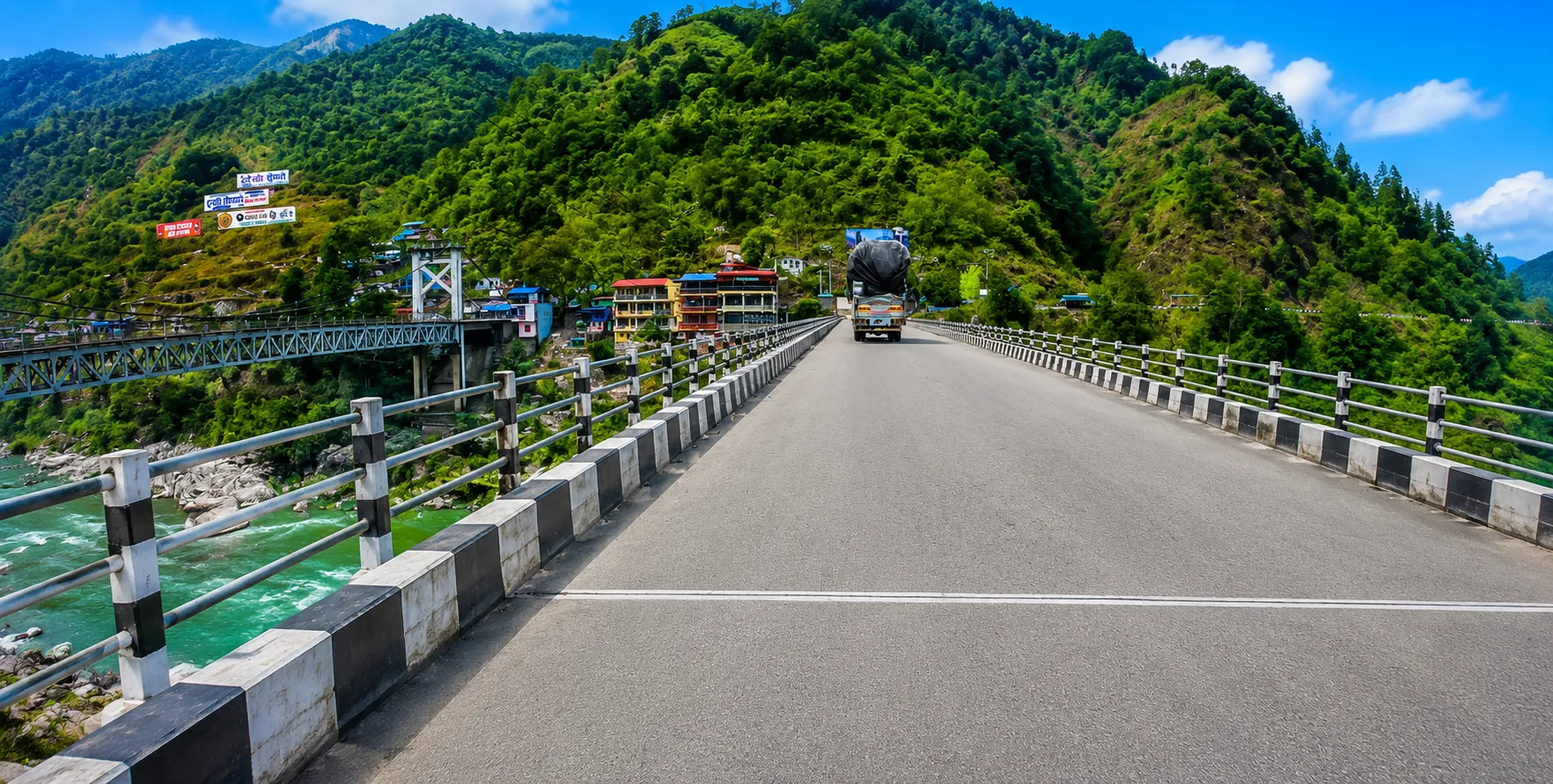
The Lumbini to Kathmandu overland transfer covers approximately 280–300 km via the Mahendra Highway (Lumbini to Butwal) and the Prithvi Highway (Butwal to Kathmandu), taking 8–10 hours by private vehicle in comfortable, air-conditioned transport. This guide covers everything you need to plan your return journey from Lumbini—vehicle options, the full route with key stops, Lumbini’s sacred attractions to visit before departure, airport timing guidance, flight alternatives via Bhairahawa Airport, pilgrimage circuit connections, and a complete FAQ.

Book your transfer: Nepal Vehicle Hiring | Bus Hire Nepal | Jeep Hire Nepal | Call/WhatsApp: +977 981-4227196

Lumbini to Kathmandu Airport Transfer – Complete Route Overview

RouteLumbini (Maya Devi Temple / Hotel) to Kathmandu (Tribhuvan International Airport or Hotel)
Total DistanceApprox. 280–300 km via Butwal-Narayanghat-Prithvi Highway
Travel Time8–10 hours by private vehicle | 10–11 hours by tourist bus
Road TypeMahendra Highway (Lumbini–Butwal) + Prithvi Highway (Butwal–Kathmandu) – fully paved
Key Highway StopsBhairahawa, Butwal, Narayanghat/Mugling, Prithvi Highway, Kathmandu Valley
Vehicle OptionsPrivate Car / Sedan, Jeep / SUV, Toyota Land Cruiser, Hiace Van, VIP Sofa Bus, Tourist Bus
Pick-UpAny Lumbini hotel, Maya Devi Temple Gate 5 area, or any Lumbini location
Drop-OffTribhuvan International Airport (KTM), Thamel hotel, any Kathmandu destination
Flight AlternativeBhairahawa (BWA/Gautam Buddha Airport) to KTM: ~35 min | Daily Buddha Air, Yeti Airlines
Best ForPilgrims, Buddhist tour groups, international tourists, post-Lumbini KTM departure
AvailabilityDaily – 24/7 pick-up, door-to-door service
Contact+977 981-4227196  | vehiclehiringnepal.com

About Lumbini – The Birthplace of the Buddha and UNESCO World Heritage Site

Before planning your departure, understanding the profound significance of where you have been deepens the meaning of the entire journey. Lumbini, in the Rupandehi District of Lumbini Province in Nepal’s southwestern Terai plains, is one of the four most sacred sites in Buddhism—alongside Bodh Gaya (where the Buddha attained Enlightenment), Sarnath (where he gave his first teaching), and Kushinagar (where he achieved parinirvana).

Declared a UNESCO World Heritage Site in 1997, Lumbini draws approximately 1.5 million pilgrims and visitors annually from across Nepal, India, Japan, South Korea, Sri Lanka, Thailand, China, Tibet, and the global Buddhist world.

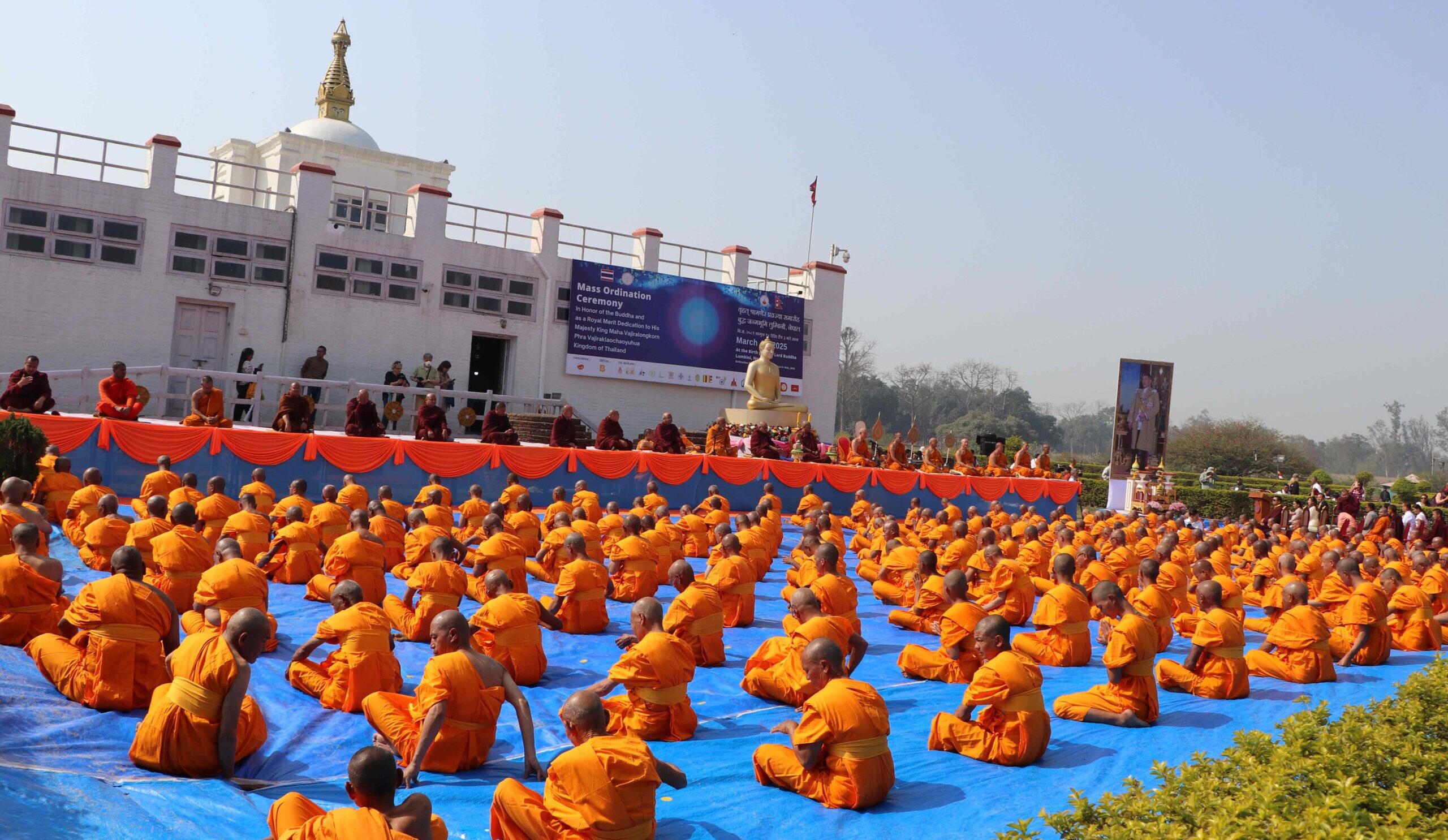
The Lumbini Development Zone — a 4 km by 2.5 km sacred landscape designed by Japanese architect Kenzo Tange in 1978 — encompasses the Maya Devi Temple complex, the Ashoka Pillar, the sacred Puskarini Pond, the International Monastic Zone with over 30 national Buddhist monasteries, the World Peace Pagoda, the Lumbini Museum, the Eternal Flame, and a central canal dividing the Eastern (Theravada) and Western (Mahayana/Vajrayana) monastery zones. No other site in South Asia brings together the religious traditions of so many nations in a single sacred landscape.

Historical Authentication of Lumbini as Buddha’s Birthplace

The historical authenticity of Lumbini as the true birthplace of the historical Buddha rests on two extraordinary archaeological pillars. The first is the Ashoka Pillar (249 BCE) — a 6–7-meter sandstone column erected by the Indian Emperor Ashoka after his personal pilgrimage to Lumbini. The pillar’s Brahmi-script inscription reads:

“Here was born the Buddha, sage of the Sakyas” — making it one of the oldest written records in South Asian history and the primary documentation of Lumbini’s status. The second is a stone marker uncovered in 1996 by a joint UNESCO–Nepal government excavation, found beneath the Maya Devi Temple structure — a commemorative stone slab from the 3rd century BCE matching Emperor Ashoka’s description in his pillar inscription, fixing the precise spot of the birth within the temple with extraordinary historical precision.

The International Monastic Zone – A World in Miniature

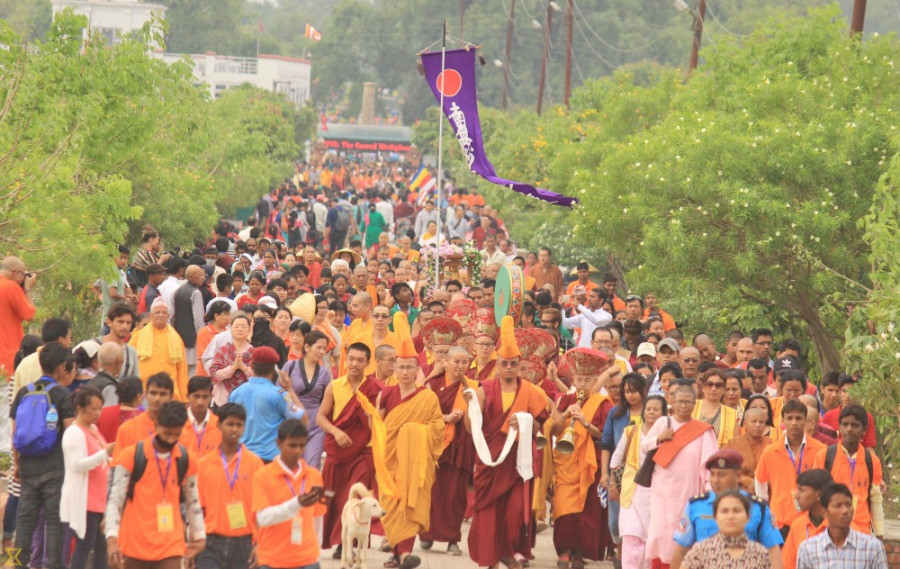
The most visually extraordinary aspect of the Lumbini Development Zone is its International Monastic Zone — a 3 km garden extending north from the Maya Devi Temple, divided by a central canal into the Eastern Theravada Zone (on the right, monasteries from Theravada Buddhist countries: Myanmar, Sri Lanka, Thailand, Vietnam, Cambodia) and the Western Mahayana/Vajrayana Zone (on the left, from Tibetan, Chinese, Japanese, Korean, and other Mahayana traditions).

Walking through this zone is like circumambulating the entire Buddhist world in a single afternoon. Each monastery is built in its national architectural style and tradition, housing monks and nuns from their home countries, offering diverse prayer and meditation practices, and serving as a living demonstration of Buddhism’s extraordinary geographical and cultural reach across Asia.

Architecturally distinguished monasteries in the International Zone include the Myanmar Golden Temple (gold-roofed Pagoda), the Chinese Monastery (classical Qing dynasty architecture), the Japanese Peace Pagoda, the Korean Buddhist Temple, the German Monastery (reflecting the Tibetan Buddhist tradition that has taken root in Germany), the Indian Monastery, and the magnificent multi-spired Cambodian Monastery. Nepal Vehicle Hiring recommends allocating a full day to the International Monastic Zone alone — the spiritual and architectural richness rewards unhurried exploration.
Lumbini to Kathmandu Airport Transfer

Lumbini Sacred Sites – Complete Visitor Guide Before Your Transfer

Sacred Site / AttractionSignificance & Highlights
Maya Devi TempleThe spiritual heart of Lumbini. Marks the exact birthplace of Siddhartha Gautama (Lord Buddha, ~563 BCE). Marker stone inside; Ashoka Pillar outside. Sacred Garden. UNESCO World Heritage Site core zone.
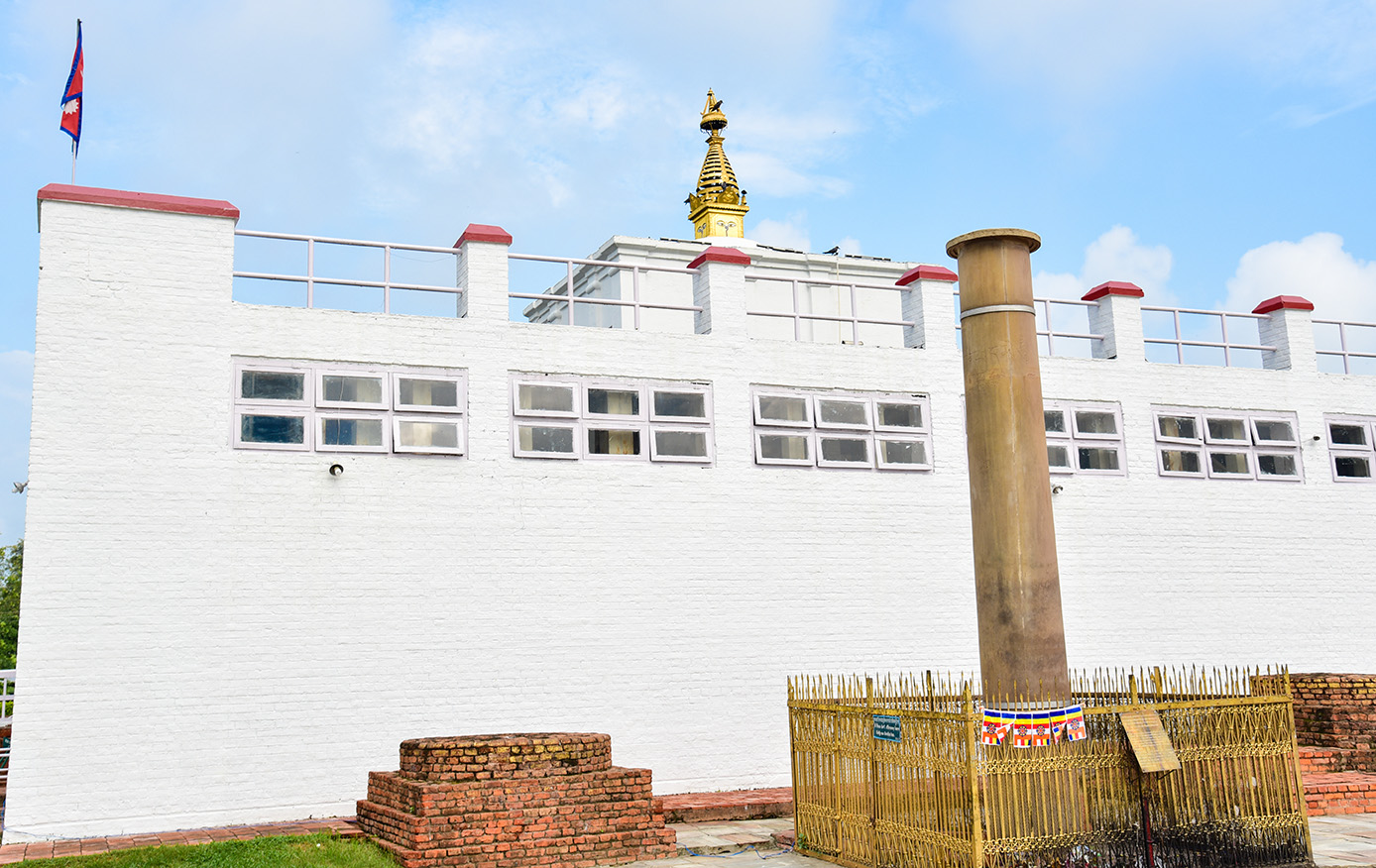
Ashoka Pillar (249 BCE)Sandstone pillar erected by Emperor Ashoka after his pilgrimage in 249 BCE. Brahmi inscription: ‘Here was born the Buddha, sage of the Sakyas.’ Primary archaeological proof of Lumbini as Buddha’s birthplace.
Sacred Puskarini PondAn ancient brick-edged sacred pool where Queen Maya Devi bathed before giving birth, and baby Siddhartha received his first ritual bath—used for meditation and reflection by pilgrims worldwide.
International Monastic Zone3 km sacred garden divided into East (Theravada) and West (Mahayana/Vajrayana) zones. 30+ countries have built national monasteries – Myanmar Golden Temple, China, Japan, Thailand, Korea, Germany, India, Sri Lanka, France, Vietnam, and more.
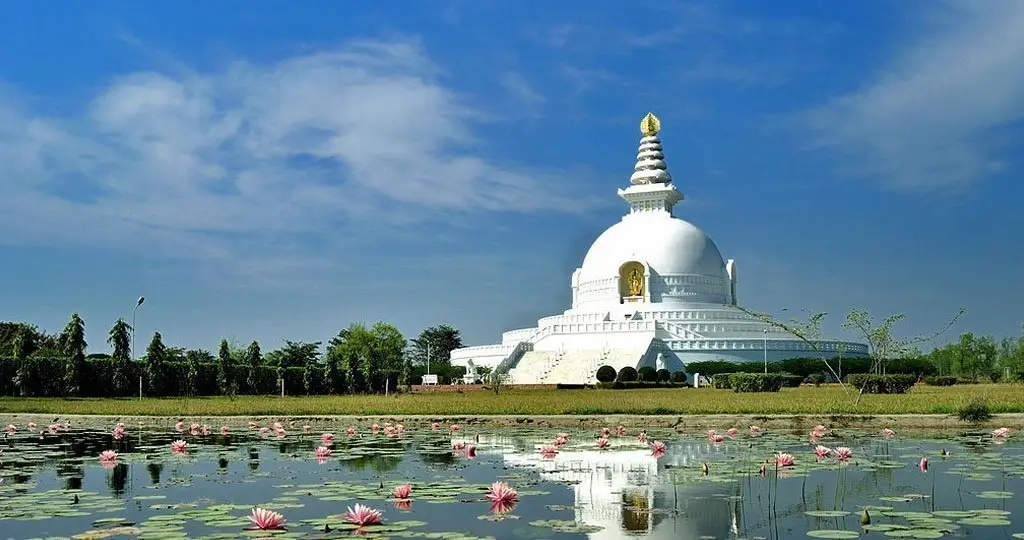
World Peace PagodaA gleaming white Japanese-built stupa symbolising peace and harmony. Constructed by the Nipponzan Myohoji Buddhist order. Visible from across the Lumbini Development Zone. Perfect for meditation and sunrise visits.
Lumbini MuseumHouses archaeological artefacts, Buddhist scriptures, coins, terracotta figures, and historical documents from excavations across the Lumbini Development Zone.
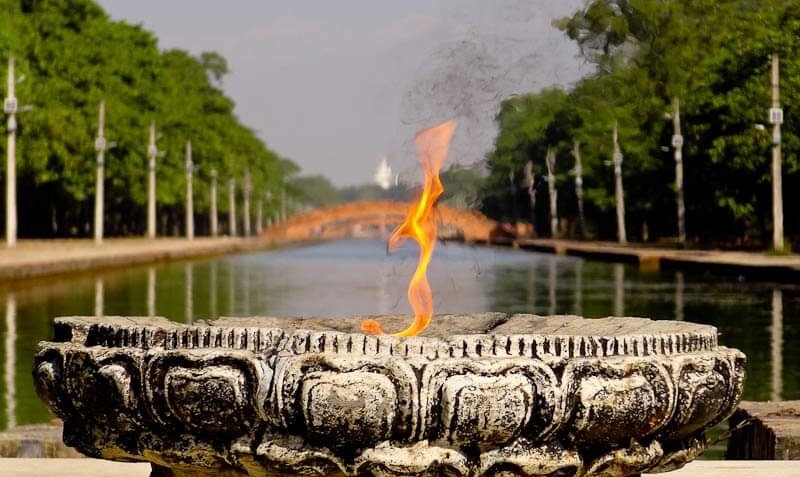
Eternal Flame MonumentThe United Nations’ perpetual flame symbolises world peace. It symbolises the undying light of the Buddha’s teachings across all nations and traditions.
Kapilavastu (Tilaurakot Ruins)27 km from Lumbini. Ancient ruins of Kapilavastu – the royal capital where Prince Siddhartha grew up. Archaeological excavations have revealed palace structures, walls, and artefacts dating from 600 to 400 BCE.

Maya Devi Temple – The Centre of the Buddhist World

The Maya Devi Temple is the spiritual and geographical heart of Lumbini — the site that draws every pilgrim and visitor to the Lumbini Development Zone. The white, low-profile structure preserves and protects the Marker Stone — the precise spot identified by archaeologists and confirmed by Emperor Ashoka’s pillar inscription as the birthplace of Siddhartha Gautama.

Inside the temple, successive layers of brick structures from different eras (from the 3rd century BCE to the medieval period) are visible in a remarkably sophisticated preservation design — standing inside the temple simultaneously occupies multiple centuries of Buddhist devotion.

The temple receives visitors of all faiths and nationalities. Visitors must remove their shoes at the gate. Photography inside the inner sanctum is restricted.

Visitors from every background and belief system describe standing at the Marker Stone—on the ground where, 2,500+ years ago, one of the most transformative human lives in history began—is described by visitors from every background and belief system as one of the most profound moments of their travel lives.

Ashoka Pillar – 2,270 Years of Unbroken Witness

Standing in the open courtyard adjacent to the Maya Devi Temple, the Ashoka Pillar is one of South Asia’s most significant surviving monuments — a living connection to the 3rd century BCE and one of the finest examples of the Ashokan edict pillars that the great Emperor erected across his vast South Asian empire to spread Dharma (Buddhist teaching). The Brahmi-script inscription on the pillar is remarkable not only for its content (confirming Lumbini as the Buddha’s birthplace) but for its extraordinary survival — nearly 2,270 years of exposure to the Terai climate, earthquakes, floods, and the vagaries of history, yet still legible and structurally intact.

An iron stabilising rod runs through the upper section — a modern addition to protect the pillar from cracking caused by centuries of Terai monsoons and temperature cycles.

World Peace Pagoda – Japan’s Gift to the World

The World Peace Pagoda (Shanti Stupa) in Lumbini is one of over 80 World Peace Pagodas built around the world by the Nipponzan Myohoji Buddhist order of Japan, founded by Most Venerable Nichidatsu Fujii in the post-World War II period as a global act of atonement and a symbol of the Buddhist commitment to world peace. Lumbini’s white-domed Pagoda rises above the flat Terai plains and is visible across the entire Development Zone.

Its grounds are maintained as a space for meditation and reflection, and the stupa’s design — incorporating Buddha images from all four directions — invites circumambulation and prayer from visitors of all Buddhist traditions.
Lumbini to Kathmandu Airport Transfer

Lumbini to Kathmandu Transfer Options – Complete Comparison

Transfer OptionJourney TimeCost LevelBest For / Notes
Private Car/Jeep (Nepal VH)8-9 hrsMid-Top-endDoor-to-door. Best flexibility, comfort, and timing control. Recommended for most travellers.
Toyota Land Cruiser (Nepal VH)8-9 hrsTop-endVIP pilgrims, diplomatic, and luxury. Maximum comfort on a long journey.
VIP Sofa Bus Charter (Nepal VH)9-10 hrsMid-Top-end (per group)Best per-head value for groups of 20-30. Luxury comfort. Hotel pick-up.
Deluxe Tourist Bus (Nepal VH)10-11 hrsBudget-MidGroups of 35-45 pax. AC. Comfortable. Fixed departures.
Bhairahawa Flight + KTM Transfer1.5-2 hrs totalHighFastest. BWA flight (35 min) + KTM taxi. Best for tight flight connections.
Public Bus (independent)10-12+ hrsBudgetCheapest. No door-to-door. Multiple bus changes are possible. Not recommended for tourists.

Ashokan Pillar lumbini

For solo travellers, couples, families, and small groups of up to 6 passengers, a private car or SUV/Jeep from Nepal Vehicle Hiring is the most comfortable, flexible, and time-efficient transfer option for the Lumbini–Kathmandu route. Fully air-conditioned, with door-to-door pick-up from your Lumbini hotel or the Maya Devi Temple area and direct delivery to Tribhuvan International Airport Terminal 1 or 2 (or any Kathmandu hotel), the private car transfer covers 280–300 km in about 8–9 hours, with a scheduled Mugling rest stop midway.

The private car’s flexibility in departure timing is its greatest advantage—particularly for travellers with specific flight departure times. Nepal Vehicle Hiring coordinates the Lumbini departure time based on your exact Kathmandu flight time, factoring in the 8–10-hour drive plus a safety buffer for airport check-in and security. Our operations team monitors journey progress and communicates with the driver throughout the journey to ensure on-time airport arrival, regardless of highway conditions.

Option 2 – Toyota Land Cruiser (VIP and Top-end Transfer)

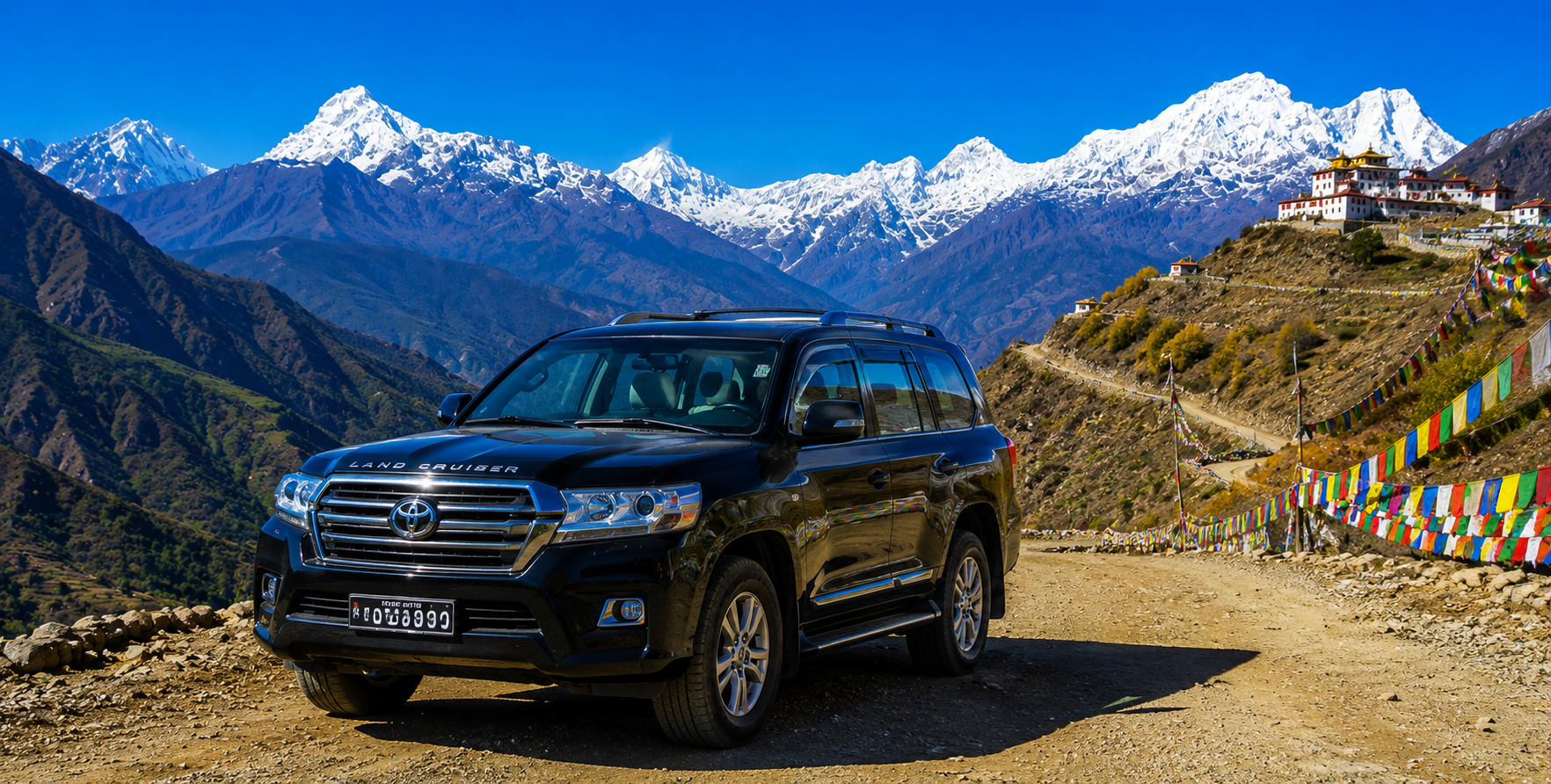
For VIP pilgrims, senior Buddhist clergy, diplomatic visitors, international Buddhist delegations, and top-end tour groups completing a pilgrimage to Lumbini, the Toyota Land Cruiser offers the finest private transfer experience available. Its superior air suspension, deep leather seating, powerful dual-zone climate control, and whisper-quiet, vibration-free cabin transform the 8–10-hour highway journey into a genuinely comfortable, even restorative experience—arriving at Kathmandu Airport refreshed rather than exhausted after a full pilgrimage.

Many senior monks, abbots, and Buddhist teachers from Korea, Japan, Sri Lanka, and Thailand specifically request Land Cruiser transfers for their return journeys. View our Luxury Jeep Hire page.
Kathmandu to Lumbini Tour Package

Option 3 – VIP Sofa Bus (Best Per-Head Value for Large Groups)

For Buddhist tour groups, international monastery delegations, large pilgrimage Yatra parties, and corporate tour groups of 20–30 passengers, the Nepal Vehicle Hiring VIP Sofa Bus private charter delivers the best combination of per-head value and comfort for the Lumbini–Kathmandu transfer. The 2×1 sofa seating (21–30 passengers), full AC with air suspension, WiFi, USB charging at every seat, panoramic windows, and complimentary mineral water ensure that even the 9–10-hour journey is a genuinely restful, connected, and comfortable experience for every group member.

The VIP Sofa Bus private charter departs from your hotel in Lumbini at the agreed time. It delivers the entire group to Tribhuvan International Airport or any destination in Kathmandu in a single, cohesive vehicle — no splitting pilgrim groups across multiple vehicles, no uncertainty about departure timing, and no waiting for shared buses that depart on their own schedule. See our VIP Sofa Bus Hire page.

Option 4 – Tourist Bus (Budget Large Group Transfer)

For larger pilgrim groups of 35–52 passengers that prioritise the most economical per-person transfer cost, Nepal Vehicle Hiring’s Deluxe and Standard Tourist Buses provide reliable, comfortable Lumbini–Kathmandu service. Deluxe buses are air-conditioned with reclining 2×2 seats; standard buses offer non-AC transport at the lowest per-passenger rate.

The Deluxe Tourist Bus is particularly popular for school and college pilgrimages, community religious groups, and domestic Yatra parties travelling from Lumbini back to Kathmandu. See our Bus Hire Nepal page.

Option 5 – Bhairahawa Flight + Kathmandu Transfer (Fastest Option)

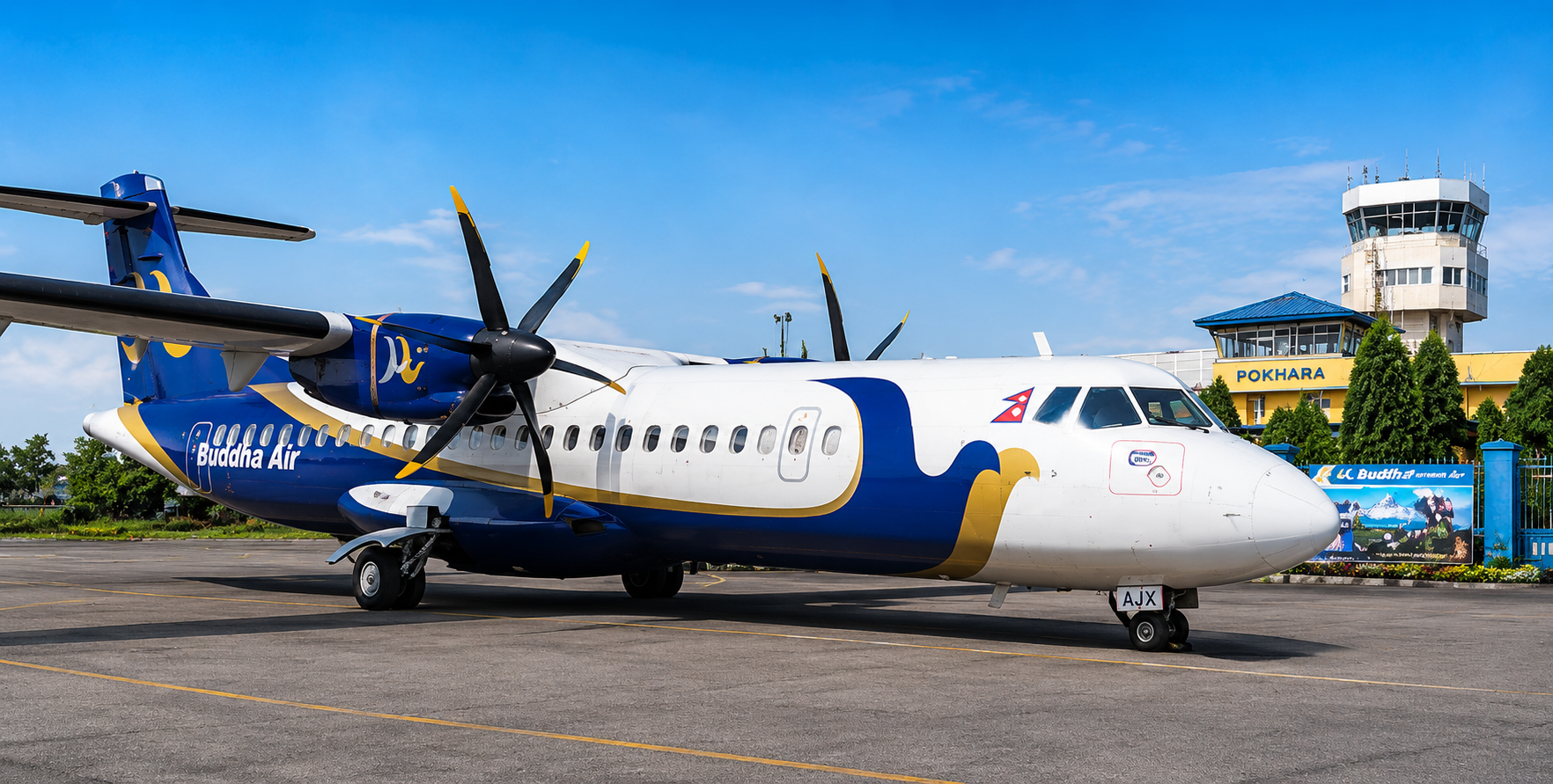
For travellers with a tight Kathmandu flight connection or very limited time, the fastest option from Lumbini to Kathmandu is a private Nepal Vehicle Hiring jeep or car from Lumbini to Gautam Buddha International Airport (BWA) in Bhairahawa (22 km, 35 minutes), followed by a domestic flight to Tribhuvan International Airport (KTM) in Kathmandu (~35 minutes). Buddha Air, Yeti Airlines, and Shree Airlines operate multiple daily flights between Bhairahawa and Kathmandu.

Total journey time (Lumbini hotel to KTM terminal): approximately 2–2.5 hours, versus 8–10 hours by road.

Nepal Vehicle Hiring offers the Lumbini-to-Bhairahawa Airport transfer as a standalone service or as part of a broader Nepal pilgrimage circuit. Important note: book your Bhairahawa flight as far in advance as possible, as these are small aircraft with limited capacity and flights can fill quickly, especially during Buddhist festivals and peak pilgrimage seasons (Buddha Jayanti in May, Losar, Vesak).
Lumbini to Kathmandu Airport Transfer

Lumbini to Kathmandu – Detailed Route Guide, Segment by Segment

Segment / CheckpointDistanceDrive TimeRoad & Key Feature
Lumbini (Maya Devi Gate 5)0 km–Departure. Temple area pick-up or hotel. Depart 6:00–7:00 AM
Bhairahawa (Siddharthanagar)22 km30-40 minBustling Terai city. Gautam Buddha International Airport. Last ATM & pharmacy before the highway
Butwal35 km45-60 minKey junction – Mahendra Hwy meets Siddhartha/Prithvi Hwy. Fuel & supplies. Industrial city
Palpa (Tansen) – Optional80 km1.5-2 hrsAncient hilltop Newari town – optional cultural detour. 45 min off the main highway
Narayanghat Junction165 km3-4 hrsMajor Terai-Hills junction. Narayani River. Join Prithvi Highway here. Fuel and rest stop
Mugling215 km4-5 hrsTrishuli-Marsyangdi confluence. Famous fish restaurants. Main rest stop
Malakhu / Prithvi Hwy240 km5-6 hrsTrishuli Gorge section. Scenic river and forest drive
Naubise / Thankot270 km7-8 hrsKathmandu Valley rim. Final hill climb. Valley panorama
Tribhuvan International Airport285-300 km8-10 hrsDESTINATION. Terminal 1 or 2. Drop-off at domestic or international departures. Thamel hotel option

Lumbini to Bhairahawa – The Gateway City (22 km | 30-40 min)

The journey from Lumbini to Kathmandu begins with a short 22 km drive to Bhairahawa (officially Siddharthanagar), the nearest major city and home to Gautam Buddha International Airport (IATA: BWA). Bhairahawa is a bustling, commercially active Terai city with excellent banking facilities (the last major ATM cluster before the long highway journey), pharmacies, restaurants, and transport connections.

The Siddhartha Highway connecting Lumbini to Bhairahawa passes through flat, agricultural Terai landscape — rice paddies, mustard fields, and roadside villages characteristic of Nepal’s southern plains.

Nepal Vehicle Hiring strongly recommends withdrawing sufficient NPR in Bhairahawa before the long highway journey — cash is essential for rest-stop meals, and roadside ATMs beyond Narayanghat are unreliable.

Bhairahawa to Butwal – The Highway Junction (13 km | 15-20 min)

From Bhairahawa, the route continues to Butwal — an important industrial city and highway junction where the Mahendra Highway (East-West Highway), the Siddhartha Highway, and the Prithvi Highway all converge. Butwal is the last major city on the route with comprehensive fuel stations, shops, and restaurants before the route turns northeast toward the Terai plains and eventually the Prithvi Highway.

Butwal to Narayanghat – The Terai Crossing (130 km | 2.5-3 hrs)

This is the longest and in many ways most peaceful segment of the Lumbini–Kathmandu journey — a 130 km drive through the flat, fertile Terai plains of Nepal’s Lumbini and Gandaki provinces. The road passes through the Tansen (Palpa) region — home to one of Nepal’s finest Newari hill towns, visible above the plains from the highway — before descending to the Narayanghat junction at the Narayani River.

Narayanghat is a key fuel stop and rest stop at the junction of the Mahendra and Prithvi Highways, with a wide range of restaurants and service facilities.

Narayanghat to Mugling – The Prithvi Highway Begins (50 km | 1 hr)

From Narayanghat, the route joins the Prithvi Highway heading northeast, and the landscape changes dramatically. The flat Terai plains give way to increasingly hilly terrain as the highway approaches the Marsyangdi River valley at Mugling.

Mugling (approximately 215 km from Lumbini) is the famous highway midpoint celebrated for its freshwater fish restaurants at the Trishuli-Marsyangdi River confluence — the essential midpoint rest stop for all Prithvi Highway travellers. A 30–45-minute stop in Mugling for lunch is one of Nepal’s best-loved road-travel traditions, and Nepal Vehicle Hiring’s drivers always coordinate it.

Mugling to Kathmandu – The Trishuli Gorge and Valley Arrival (85 km | 2-3 hrs)

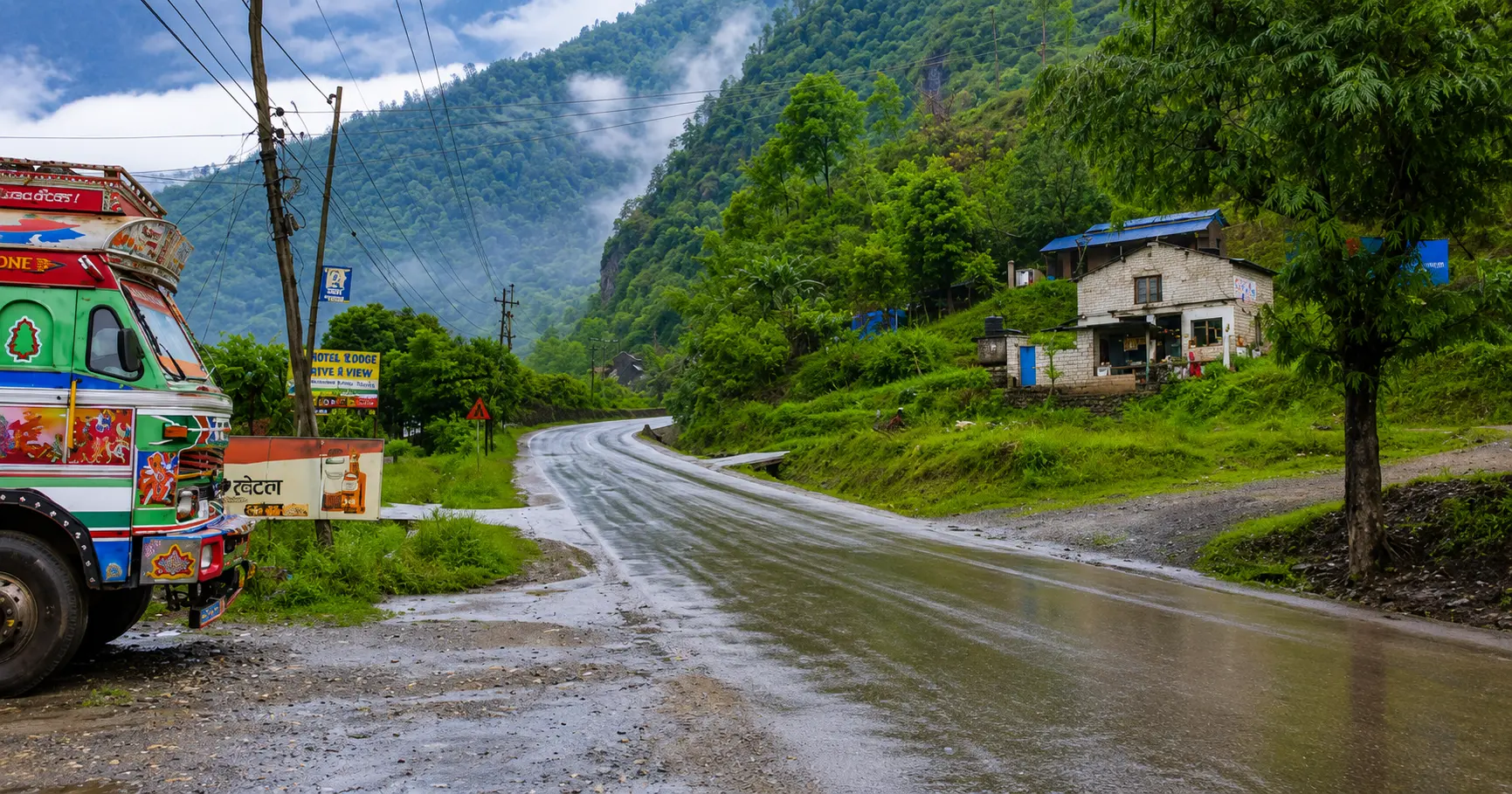
From Mugling, the Prithvi Highway follows the Trishuli River gorge—one of Nepal’s most dramatic highway landscapes—for about 40 km, with the river roaring through white-water gorges below and forested hillsides rising steeply on both sides. The road then climbs through Naubise and Thankot — the traditional gateway towns at the rim of the Kathmandu Valley — before the dramatic descent into the valley and the approach to Tribhuvan International Airport or Kathmandu city.

Traffic in the Kathmandu Valley can be heavy (particularly at Balkhu, Ring Road, and the Tribhuvan Highway section). Nepal Vehicle Hiring’s drivers use the most efficient routes and monitor traffic conditions to ensure on-time airport delivery.
Lumbini to Kathmandu Airport Transfer

Tribhuvan International Airport (KTM) – Complete Transfer Guide

About Tribhuvan International Airport

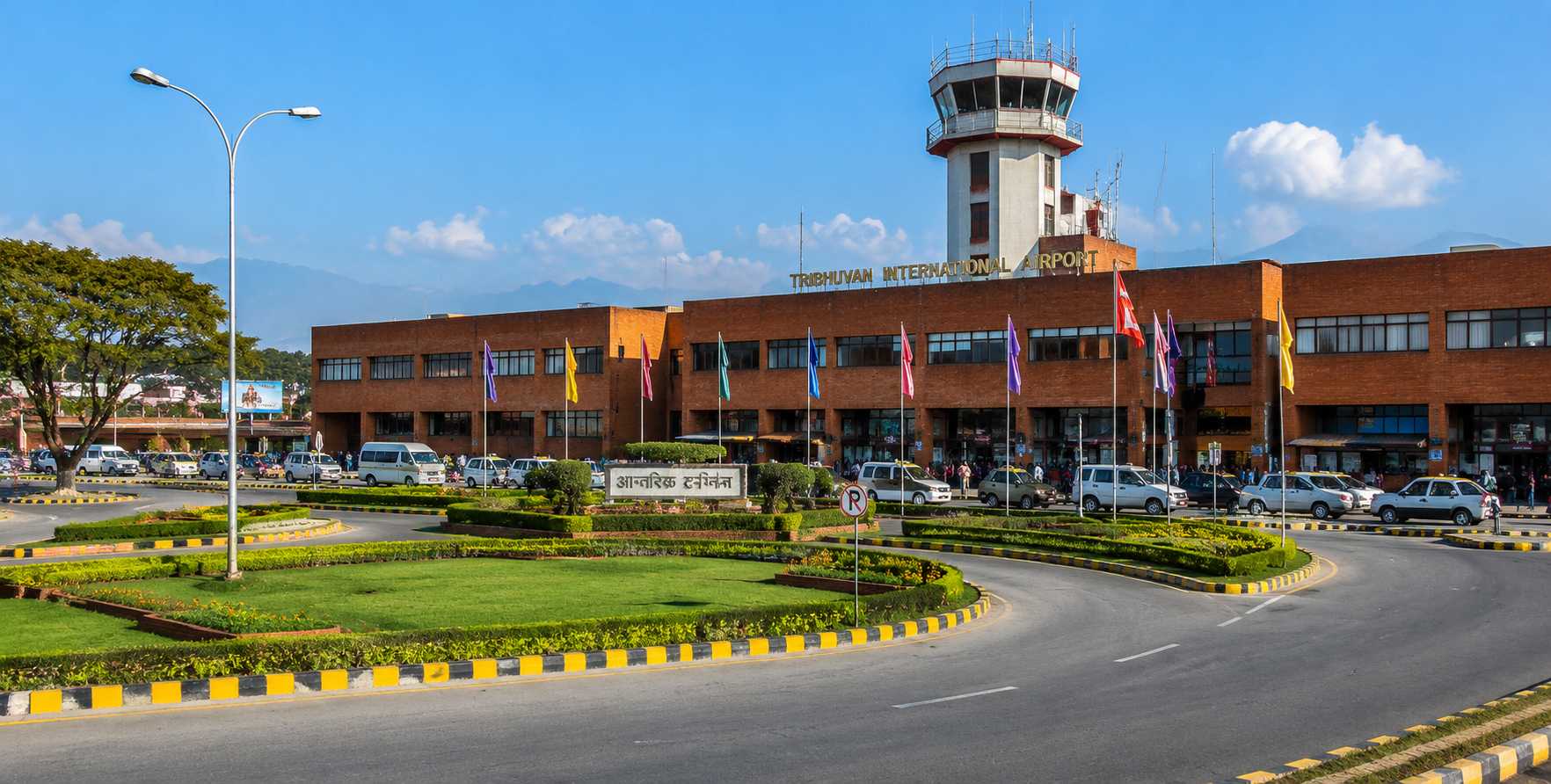
Tribhuvan International Airport (IATA: KTM | ICAO: VNKT) is Nepal’s sole international airport, located approximately 6 km east of Kathmandu city centre in Gauchar. The airport operates international and domestic terminals — the International Terminal (Terminal 1 or T1) for all international departures and arrivals, and the Domestic Terminal (Terminal 2 or T2) for Nepal’s domestic routes.

Travellers connecting from Lumbini to an international flight must drop off at Terminal 1; those connecting to another domestic flight (e.g., onward to Pokhara or Bharatpur) use Terminal 2.

Nepal Vehicle Hiring’s drivers confirm the correct terminal with each passenger at the time of booking. Both terminals are within the same airport compound — approximately 500 m apart. Our drivers drop passengers at the correct terminal entrance, provide luggage assistance, and wait for confirmation of safe entry before departing.

Critical Airport Timing – Plan Your Lumbini Departure Around Your Flight

The most important planning factor for your Lumbini airport transfer is your departure time. Nepal Vehicle Hiring provides the following timing guidance for 2026:

  • For international flights from KTM: International check-in closes 60-90 minutes before departure. Immigration and security for international flights take 45-90 minutes at peak times. Nepal Vehicle Hiring recommends arriving at KTM at least 3 hours before international departure. Working backwards: if your flight is at 8:00 PM, target KTM arrival by 5:00 PM → depart Lumbini by 7:00–8:00 AM.
  • For domestic connections from KTM: Domestic check-in closes 30- 45 min before departure. Nepal Vehicle Hiring recommends arriving at T2 at least 1.5 hours before domestic departure.
  • Allow extra time during peak seasons: During major festivals (Dashain, Tihar, Buddha Jayanti), Kathmandu Valley traffic can add 1-2 hours to the final approach. Nepal Vehicle Hiring factors this into departure time calculations.
  • Nepal Vehicle Hiring’s recommendation for most international departures: Depart Lumbini by 6:30–7:00 AM to arrive at Kathmandu Airport by 4:00–5:00 PM, allowing a comfortable time for any flight departing after 7:00 PM.

What Happens If There Are Highway Delays?

Nepal’s highways can experience unexpected delays due to accidents, landslides (particularly in the monsoon on the Prithvi Highway gorge section), festival traffic, and road maintenance. Nepal Vehicle Hiring’s operations team is available 24/7 throughout your transfer and maintains active communication with the driver.

In the event of a significant delay, our team will immediately inform you of the situation, assess whether the overland route can be completed in time, and, if not, arrange an emergency Bhairahawa-to-Kathmandu flight booking through our network as a backup option. This contingency planning is available to all private charter clients and is not available when using public buses.

Lumbini as Part of a Buddhist Pilgrimage Circuit – Vehicle Hire Planning

Most visitors to Lumbini are not travelling alone—they are completing a broader Buddhist pilgrimage circuit in Nepal or a combined cultural tour. Nepal Vehicle Hiring is the preferred transport partner for comprehensive Nepal pilgrimage circuits connecting Lumbini with Nepal’s other great spiritual sites:

Circuit StopSignificanceDistance from LumbiniNepal VH Transport
LumbiniBirthplace of BuddhaStartPick-up point
KapilavastuChildhood of Buddha27 kmJeep side trip
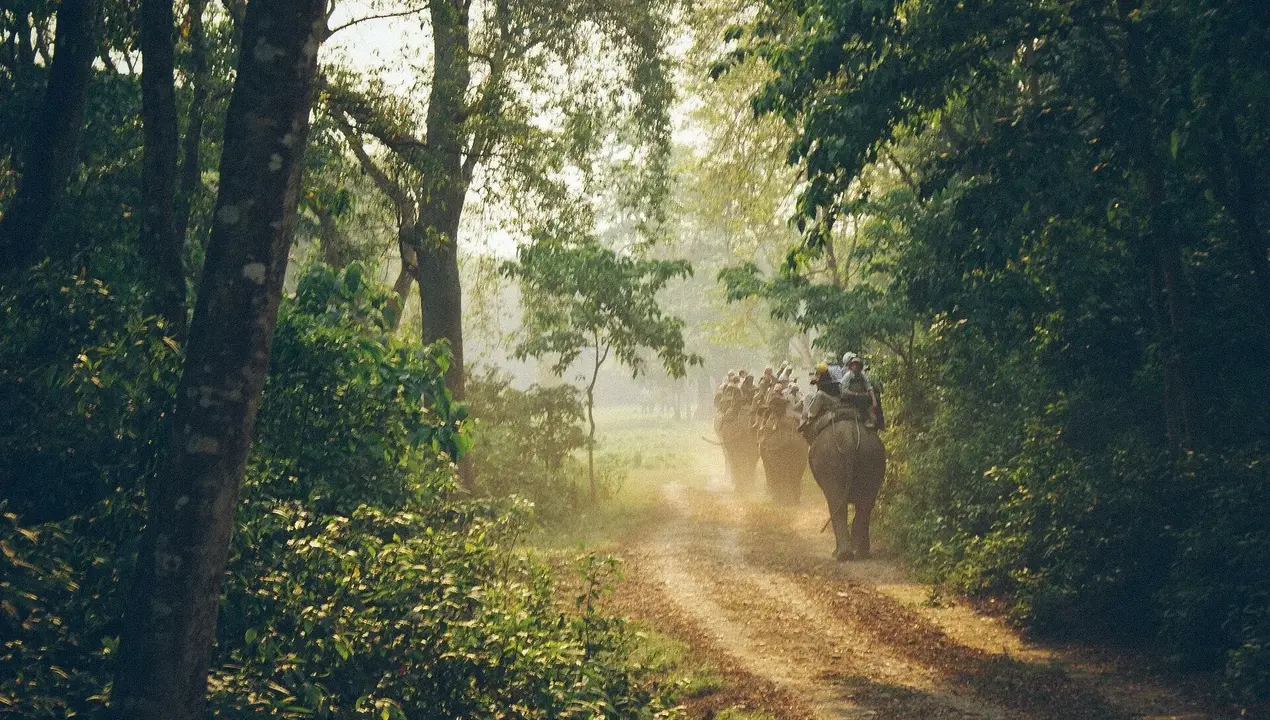
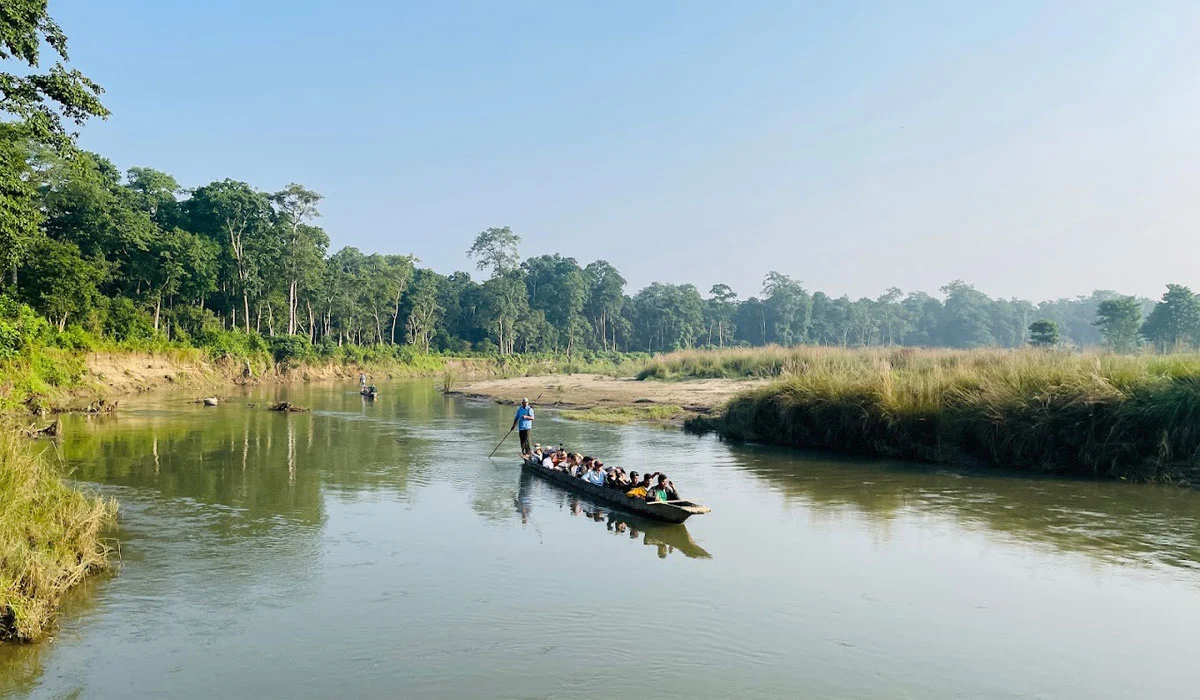
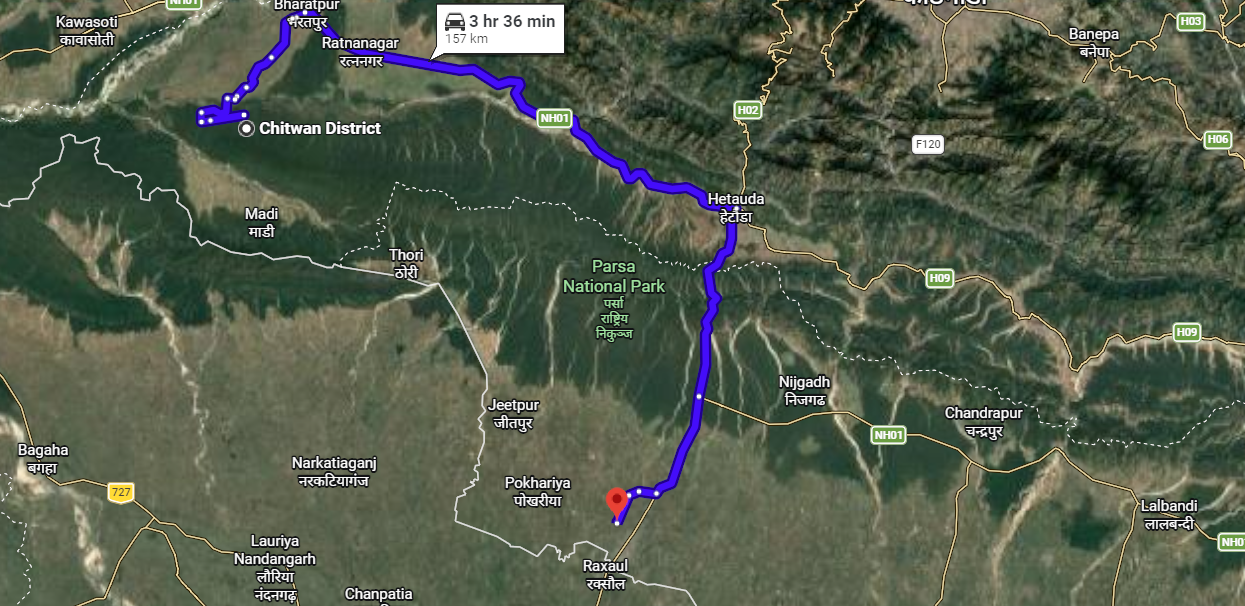
ChitwanWildlife + Nepal culture131 kmJeep or Bus transfer
PashupatinathHoliest Hindu-Buddhist site295 kmKTM transfer
BoudhanathMajor Tibetan Buddhist stupa295 kmKTM city transfer
SwayambhunathMonkey Temple, an ancient stupa300 kmKTM sightseeing
KTM AirportDeparture from Nepal285-300 kmKTM airport drop

The Nepal Buddhist Circuit – A Complete Itinerary Suggestion

Nepal Vehicle Hiring’s most popular multi-day Buddhist Pilgrimage Circuit combines Lumbini with Kathmandu’s sacred Buddhist sites in a comprehensive 3–5 day circuit:

  • Day 1: Arrival in Kathmandu (Tribhuvan Airport) → Hotel transfer → Visit Boudhanath Stupa (Tibetan Buddhism’s world centre), Swayambhunath (Monkey Temple), Pashupatinath.
  • Day 2: Kathmandu to Lumbini by VIP Sofa Bus or private car (8-9 hours via Prithvi and Mahendra Highways). Evening arrival. Check into the Lumbini Hotel.
  • Day 3: Full day in Lumbini Sacred Zone: Maya Devi Temple, Ashoka Pillar, Puskarini Pond, International Monastic Zone, World Peace Pagoda.
  • Day 4 (Optional): Side trip to Kapilavastu (Tilaurakot Ruins, ~27 km) — childhood home of Prince Siddhartha. Return to Lumbini.
  • Day 5: Lumbini to Kathmandu Airport transfer. Depart 6:30-7:00 AM—Mugling fish lunch stop. Arrive KTM 4:00-5:00 PM—international departure.
Historical Place Sagarhawa lumbini

Who Uses the Lumbini-to-Kathmandu Airport Transfer?

International Buddhist Pilgrims and Delegations

The largest single category of Lumbini–Kathmandu transfer clients for Nepal Vehicle Hiring is international Buddhist pilgrims and delegations — groups arriving from South Korea, Japan, Sri Lanka, Thailand, Myanmar, China, Taiwan, Vietnam, India, and Western Buddhist communities in Europe, North America, and Australia. These groups typically travel as organised religious delegations of 10–50 people, led by a senior monk or abbot, following a structured pilgrimage itinerary that ends in Lumbini before the return flight from Kathmandu.

Nepal Vehicle Hiring’s VIP Sofa Bus charter is the most requested vehicle for international Buddhist delegations — the entire group travels together in a single, dignified, comfortable bus from the Lumbini hotel to Kathmandu Airport, with prayer-time stops on request, vegetarian meal arrangements at highway restaurants, and professional care throughout.

Nepal Golden Triangle Tour Completion

Many international tourists complete the Nepal Golden Triangle (Kathmandu–Chitwan–Lumbini) as an extended circuit — adding Lumbini to the classic Kathmandu–Pokhara–Chitwan package. After the Chitwan safari and a pilgrimage or cultural visit to Lumbini, the Lumbini–Kathmandu Airport transfer completes Nepal’s most popular international tour itinerary.

Nepal Vehicle Hiring coordinates the entire transport chain for this circuit—a single booking, consistent vehicle quality, and coordinated timing—making the Nepal Golden Triangle circuit smooth from airport arrival to final departure.

Indian Pilgrims via Sunauli Border

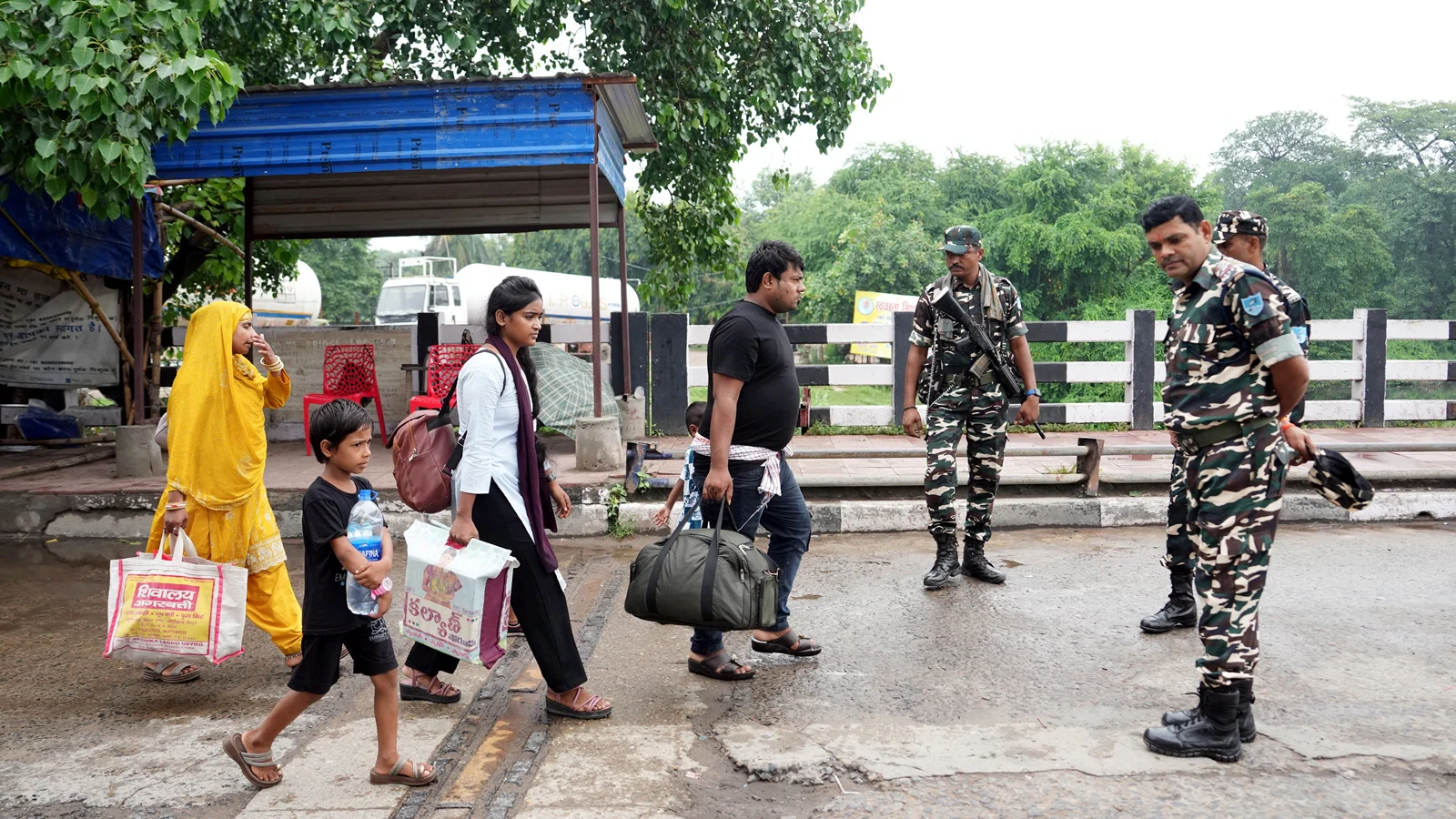
A significant proportion of Lumbini visitors are Indian pilgrims crossing the Nepal-India border at Sunauli (30 km from Lumbini) — particularly from Bihar, Uttar Pradesh, West Bengal, and other Indian states with large Buddhist and Hindu communities. These pilgrims often arrange their Lumbini stay and Kathmandu Airport transfer through Nepal Vehicle Hiring as a complete package—entering Nepal at Sunauli, visiting Lumbini, transferring to Kathmandu for darshan at Pashupatinath, Boudhanath, and Swayambhunath, and departing from Kathmandu on their return flight. Nepal Vehicle Hiring provides the complete Sunauli–Lumbini–Kathmandu vehicle chain on request.

Safety Standards – Lumbini to Kathmandu Airport Transfer

Safety FeatureNepal Vehicle Hiring Standard
Driver LicensingClass A+ commercial license (DoTM) for all bus drivers; Class A for private cars and jeeps
Vehicle InspectionFull mechanical inspection before every long-distance departure: brakes, tyres, AC, lights, fuel, emergency kit
Passenger InsurancePassenger accidental medical insurance is included on all Nepal Vehicle Hiring transfers.
Flight-Timing AwarenessFor Kathmandu Airport drop-offs, the driver monitors journey progress and adjusts the route to ensure a timely arrival at the airport. 24/7 ops contact for any en-route delays.
No Night Mountain DrivingThe Lumbini-Kathmandu route is entirely on flat Terai and highway sections, so night–driving safety is manageable. However, Nepal Vehicle Hiring recommends 6–7 AM departures for daytime arrival.
Two-Driver RotationOn overnight bus services (departing late evening), two licensed drivers rotate throughout the journey to prevent fatigue
Emergency Support A:24/7 Nepal Vehicle Hiring operations line is available throughout every journey. Dispatch registers all driver journey details before departure.

Essential Travel Tips – Lumbini to Kathmandu Airport Transfer

  • Plan Departure Around Your Flight Time: The 8–10-hour journey means departing Lumbini by 6:30–7:00 AM for most international evening flights (7:00–10:00 PM KTM departures). Share your exact flight details with Nepal Vehicle Hiring when booking to get a precise recommended departure time.
  • Withdraw Cash in Bhairahawa: Bhairahawa has reliable ATMs. Withdraw sufficient NPR for the entire journey — Mugling restaurant (NPR 400–700 per person), tips for the driver, and any emergency purchases.
  • Book in Advance During Buddhist Festivals: During Buddha Jayanti (May), Losar (Tibetan New Year, January-February), Vesak, and major Buddhist festival dates, Lumbini is overwhelmed with pilgrims, and vehicle availability is extremely limited. Book your transfer 2–4 weeks in advance during festival periods.
  • Confirm Terminal at Booking: Tell Nepal Vehicle Hiring whether you are departing on an international flight (Terminal 1 drop) or a domestic connection (Terminal 2 drop). Our drivers automatically deliver to the correct terminal entrance once confirmed.
  • VIP Sofa Bus for Large Pilgrim Groups – Book 1 Week Ahead: During peak pilgrimage season, Nepal Vehicle Hiring’s VIP Sofa Buses are in high demand. Book the Lumbini–KTM VIP Sofa Bus at least 7–10 days before your departure.
  • Kapilavastu Side Trip – Add Half a Day: The ruins of Kapilavastu (Tilaurakot, 27 km from Lumbini) — where Prince Siddhartha spent his childhood as a royal prince — are one of Nepal’s most historically significant and least-visited Buddhist sites. If you have a day before your Lumbini–KTM transfer, a morning at Kapilavastu adds an extraordinary dimension to the pilgrimage. Nepal Vehicle Hiring arranges vehicles for Lumbini–Kapilavastu side trips.
  • Terai Heat – Stay Hydrated: The Lumbini area and Terai plains can be intensely hot (35-42°C from March to October). Nepal Vehicle Hiring’s air-conditioned vehicles keep you comfortable throughout, but carry a personal water bottle for any time spent outside the vehicle. Complimentary mineral water is provided on VIP Sofa Bus services.
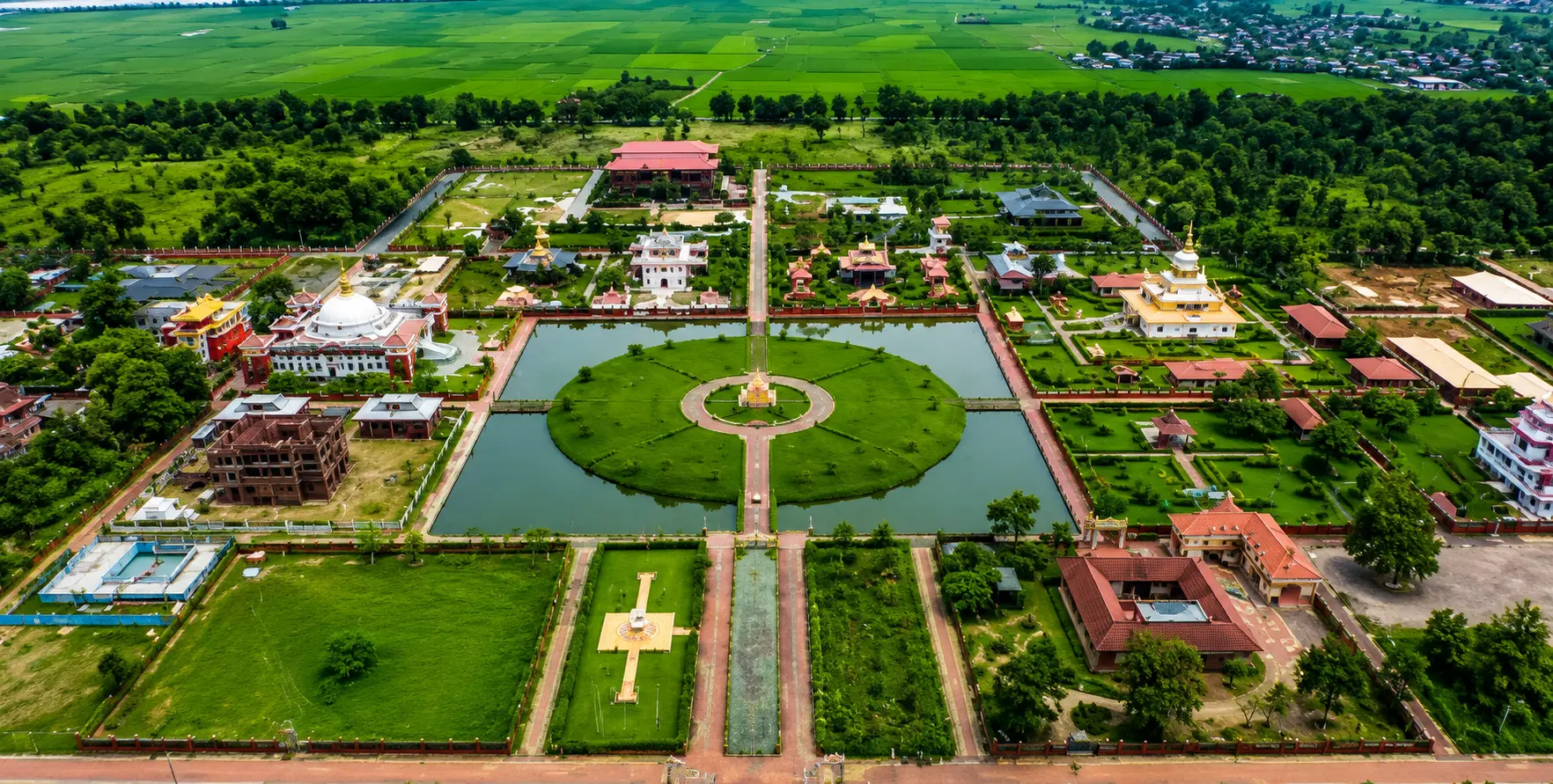
West Monastic Zone lumbini

How to Book Your Lumbini to Kathmandu Airport Transfer

  • Step 1 – Contact Nepal Vehicle Hiring: Call or WhatsApp +977 981-4227196 or visit com. Share: your Lumbini hotel name, number of passengers, international flight details (airline, flight number, departure time from KTM), preferred vehicle type, and any special requirements (wheelchair access, vegetarian stops, extra luggage).
  • Step 2 – Receive Timing Recommendation: Nepal Vehicle Hiring calculates the optimal departure time for Lumbini based on your KTM flight. We build a safety buffer into all airport transfer timings to protect against unforeseen delays.
  • Step 3 – Confirm and Receive Booking: Receive a written booking confirmation with the driver’s name, vehicle details, pick-up time, and the operations contact number.
  • Step 4 – Day of Transfer: Driver arrives at your Lumbini hotel at the confirmed time. Luggage assistance provided. Air-conditioned vehicle ready. The journey begins.
  • Step 5 – Airport Delivery: The driver delivers your group to the correct KTM terminal entrance with luggage assistance. Confirm your safe entry before departing.

Frequently Asked Questions – Lumbini to Kathmandu Airport Transfer

How far is Lumbini from Kathmandu?

The road distance from Lumbini (Maya Devi Temple area) to Kathmandu is approximately 280–300 km via Bhairahawa, Butwal, Narayanghat, and the Prithvi Highway. Travel time by private vehicle: 8–10 hours, including a stop at Mugling.

How long does the transfer from Lumbini to Kathmandu take?

By private car or jeep: 8–9 hours. By VIP Sofa Bus or Tourist Bus: 9–11 hours. By flight (Lumbini → Bhairahawa Airport → Kathmandu): approximately 2–2.5 hours total, including the Lumbini–Bhairahawa drive and airport wait time.

What is the fastest way to get from Lumbini to Kathmandu?

The fastest option is a private transfer from Lumbini to Bhairahawa Airport (BWA), plus a domestic flight to Kathmandu (KTM), for about 2–2.5 hours total. Flights operate by Buddha Air, Yeti Airlines, and Shree Airlines, with a flight time of about 35 minutes.

However, flights from Bhairahawa can be affected by fog and weather (particularly in winter and early monsoon). Do not use them for time-critical connections without a road backup plan.

Can Nepal Vehicle Hiring pick me up directly from the Maya Devi Temple area?

Yes — Nepal Vehicle Hiring provides direct pick-up from the Maya Devi Temple Gate 5 area, any Lumbini hotel, or any location within the Lumbini Development Zone or Bhairahawa area. Our drivers know the Lumbini layout and all hotel locations.

What vehicles are available for the transfer from Lumbini to Kathmandu Airport?

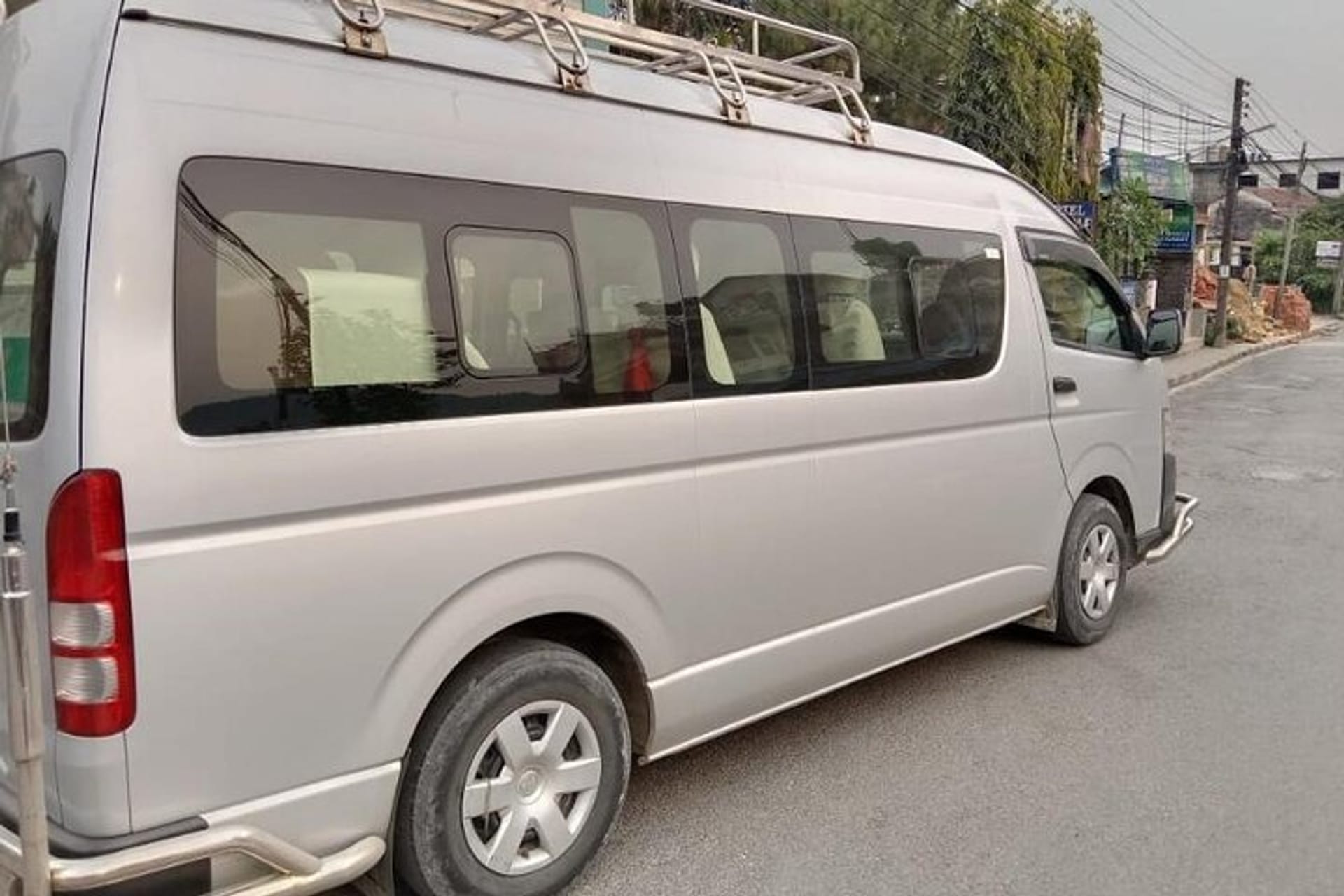
Nepal Vehicle Hiring offers: Sedan / Car (1–4 pax), SUV/Jeep Scorpio (1–6 pax), Toyota Land Cruiser (1–6 pax, top-end), Toyota Hiace Van (8–13 pax), VIP Sofa Bus (21–30 pax, charter), Deluxe Tourist Bus (35–45 pax), and Standard Bus (45- 52 pax). All are fully maintained and air-conditioned (except the standard bus). Choice depends on group size, budget, and comfort preference.

How early should I depart Lumbini for a 9:00 PM international flight from KTM?

For a 9:00 PM KTM international departure, Nepal Vehicle Hiring recommends arriving at Tribhuvan Airport by 6:00 PM (3 hours before the flight). Working backwards: allow 8–10 hours for the drive, including the Mugling stop. This means departing Lumbini by 8:00 AM at the latest, or 7:00 AM for maximum safety.

Nepal Vehicle Hiring will calculate the exact recommended departure time when you share your flight details.

Is the road from Lumbini to Kathmandu safe?

Yes — the Lumbini–Kathmandu route via Butwal, Narayanghat, and the Prithvi Highway is one of the well-maintained highways. The entire journey is on a paved road. The Prithvi Highway gorge section between Mugling and Kathmandu is a mountain highway that requires a skilled driver.

Nepal Vehicle Hiring’s drivers are licensed and experienced on this specific route. All vehicles carry passenger insurance. The only significant seasonal risk is a landslide on the gorge section during heavy monsoon rainfall (July–August) — Nepal Vehicle Hiring monitors road conditions before every departure.

Can I request a vegetarian-only meal stop for my pilgrim group?

Yes — Nepal Vehicle Hiring’s operations team can pre-arrange vegetarian meal stops at highway restaurants on request. Most restaurants in Mugling and Narayanghat offer purely vegetarian options. Please specify vegetarian requirements when booking your group transfer, and our team will coordinate with the driver and recommended stop locations.

What about my large group’s luggage? Is there enough space?

Nepal Vehicle Hiring’s vehicles provide:

  • Private car (Sedan/SUV): 1-2 large bags per passenger in the boot. Additional bags on the roof rack if pre-arranged.
  • Jeep (Scorpio): Generous rear boot for 6 passengers’ luggage. Large trekking packs fit well.
  • Hiace Van: Rear luggage area for 8-13 passengers’ bags. Additional small bags in overhead racks.
  • VIP Sofa Bus: Underfloor luggage hold (30 kg per passenger) + overhead racks (5 kg). Total capacity is 35+ bags comfortably.

For unusually large equipment (pilgrimage offerings, large donation items, ceremonial materials), please inform Nepal Vehicle Hiring at the time of booking so we can ensure the appropriate vehicle size is available.

Can Nepal Vehicle Hiring arrange the complete Lumbini pilgrimage circuit, including sightseeing in Kathmandu?

Yes — Nepal Vehicle Hiring provides complete Nepal Buddhist Pilgrimage Circuit vehicle arrangements, including: Kathmandu Airport arrival transfer → Kathmandu Buddhist sites (Boudhanath, Swayambhunath, Pashupatinath) → Lumbini → Kapilavastu side trip → Lumbini → Kathmandu Airport departure—single booking, consistent vehicle quality, coordinated timing throughout. Contact us at +977 981-4227196 to plan your complete circuit.

Does Nepal Vehicle Hiring provide receipts and invoices for corporate/organizational clients?

Yes — Nepal Vehicle Hiring provides formal tax invoices, booking receipts, and payment documentation for all vehicle hire services. Corporate clients, NGOs, international Buddhist organisations, and institutional clients that require formal expense-reporting documentation receive full accounting support. Contact our operations team to arrange a corporate account.

Book Your Lumbini to Kathmandu Airport Transfer Today – Nepal Vehicle Hiring

Your Lumbini pilgrimage has been one of the most profound experiences of your spiritual life — standing at the exact birthplace of the Buddha, breathing the same sacred air, witnessing the ancient Ashoka Pillar’s 2,270 years of unbroken witness to humanity’s greatest teachers. The journey home deserves the same quality of care.

Nepal Vehicle Hiring Pvt Ltd’s Lumbini to Kathmandu Airport transfer service delivers professional, comfortable, punctual, door-to-door service for every passenger—from solo travellers in private cars to international Buddhist delegations of 30+ in VIP Sofa Buses. Our flight-timing coordination, 24/7 support, experienced drivers, airport terminal delivery, and complete range of vehicle options make us Nepal’s most trusted transfer partner for the Lumbini–Kathmandu route in 2026.

Every journey from the birthplace of compassion deserves a transfer partner who understands what the journey means. Book your Lumbini-to-Kathmandu Airport transfer today.

Call / WhatsApp: +977 981-4227196 |  E-mail: [email protected]  |  Book Private Car or Jeep  |  Book VIP Sofa Bus or Tourist Bus
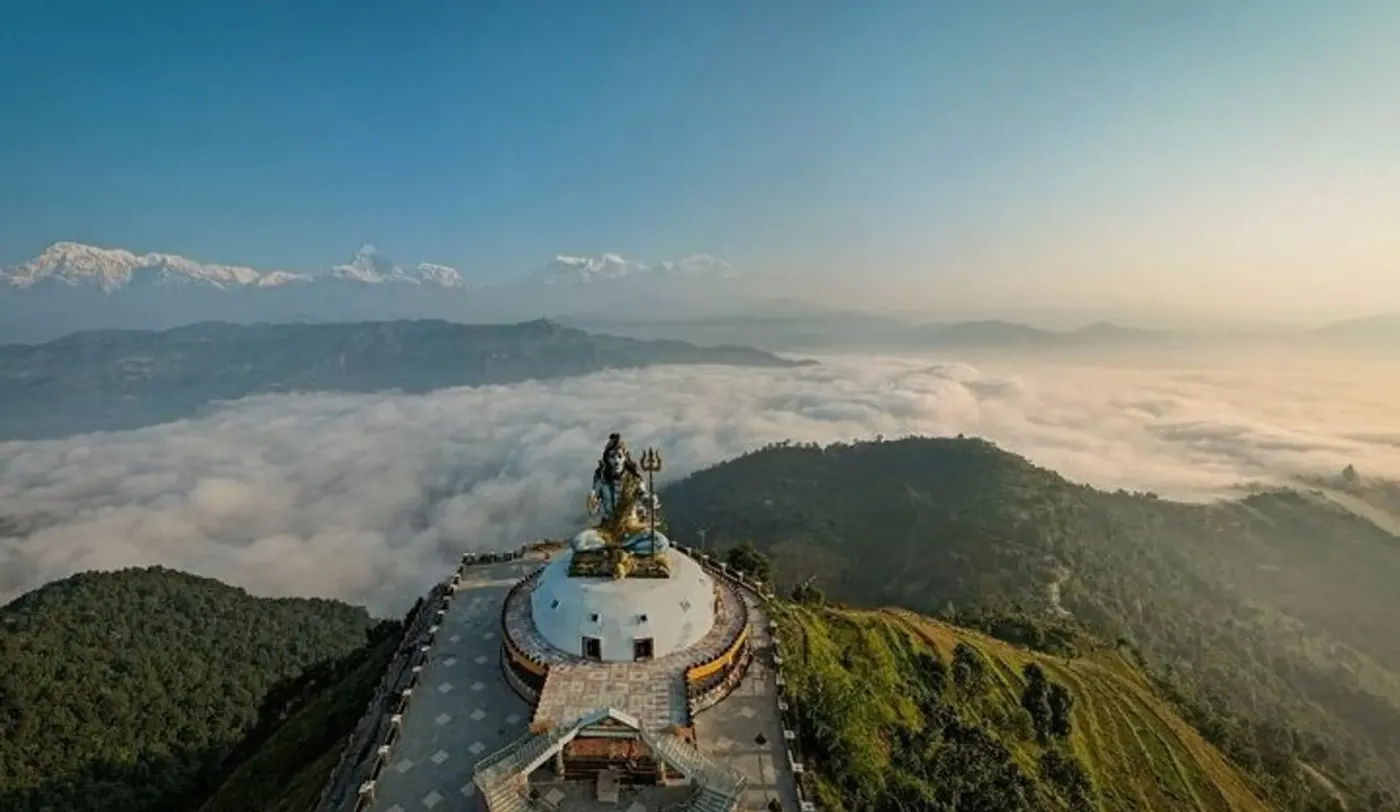
Pokhara to Kathmandu Transport

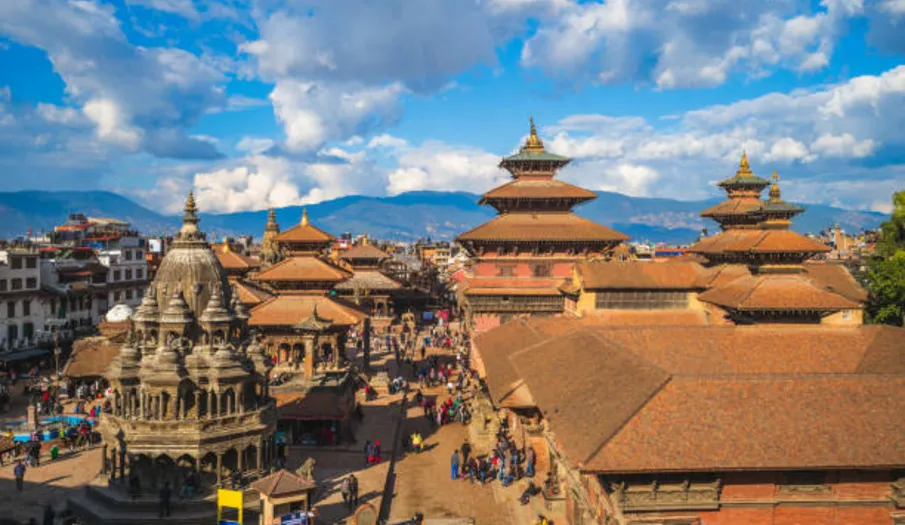
Patan Durbar Square in the Kathmandu Valley

Pokhara to Kathmandu Transport: Complete Guide to All Options, Costs & Tips

Pokhara and Kathmandu are Nepal’s two most important cities — one the adventure and trekking capital beside the Annapurna Himalaya, the other the country’s historical, cultural, and political heart. The 200-kilometre road between them is one of Nepal’s most travelled routes, following the scenic Prithvi Highway through the Trishuli and Marsyangdi river valleys, and hundreds of thousands of travellers take it every year.

In 2026, transport options from Pokhara to Kathmandu range from budget-friendly shared tourist buses to top-end VIP sofa coaches; from private cars for small groups to large Hiace vans for families; and from night buses that let you sleep through the journey to 25-minute domestic flights for those who prioritise speed over comfort. Each option has a distinct price point, comfort level, departure schedule, and travel experience.

At Nepal Vehicle Hiring Pvt Ltd, we offer vehicle services (cars, jeeps, Hiace vans, and buses) for the Pokhara-to-Kathmandu route, along with ticket booking assistance for all tourist bus categories. This comprehensive 2026 guide covers every transport option available, with full cost comparisons, departure details, route highlights, pros and cons, and expert tips to make the Pokhara to Kathmandu journey as comfortable and smooth as possible.

All Pokhara to Kathmandu Transport Options – Quick Comparison

TransportTimeCost Per PersonDepartureComfortBest For
Local/Deluxe Bus7–9 hrsNPR 700–1,200Pokhara Bus Park (6 AM)Low–MediumCheapest option
Tourist Bus (Standard)6–8 hrsNPR 1,000–1,500Lakeside Bus Park (7 AM)MediumBudget independent travellers
VIP Sofa Bus (2+1)6–7 hrsNPR 1,400–2,000Lakeside Bus Park (7–8 AM)HighComfort-conscious solo/couple
Night Sofa BusOvernightNPR 1,500–2,500Lakeside (7–10 PM)Medium-HighSave a night’s hotel
Private Car5–6 hrsNPR 14,000–20,000 (vehicle)Hotel pickupVery HighCouples, small families
Private Jeep5–6 hrsNPR 18,000–28,000 (vehicle)Hotel pickupVery HighGroups of 4–6
Toyota Hiace Van6–7 hrsNPR 25,000–38,000 (vehicle)Hotel pickupVery HighGroups of 7–10
Coaster Bus6–7 hrsNPR 28,000–42,000 (vehicle)Hotel pickupHighGroups of 12–18
Domestic Flight25–30 minUSD 109–150/personPokhara International AirportTop-endMaximum speed

Pokhara to Kathmandu – Journey Quick Facts

DetailInformation
Road DistanceApproximately 200 km
Drive Time (Private Vehicle)5 to 6 hours
Drive Time (Tourist Bus)6 to 8 hours
Main RoutePrithvi Highway – Pokhara → Damauli → Mugling → Kathmandu
Road ConditionMostly paved; ongoing construction near Mugling
Tourist Bus Departure (Lakeside)Pokhara Tourist Bus Park, Lakeside – daily at 7:00 AM
Tourist Bus Departure (Baglung)Pokhara Baglung Bus Park – multiple times
Key Rest StopMugling (~midpoint, Trishuli/Marsyangdi confluence)
Flight Time25 to 30 minutes
Flight PriceUSD 109–150 one way (subject to change)
Best Departure Time7:00 AM – 8:00 AM for a scenic daytime journey

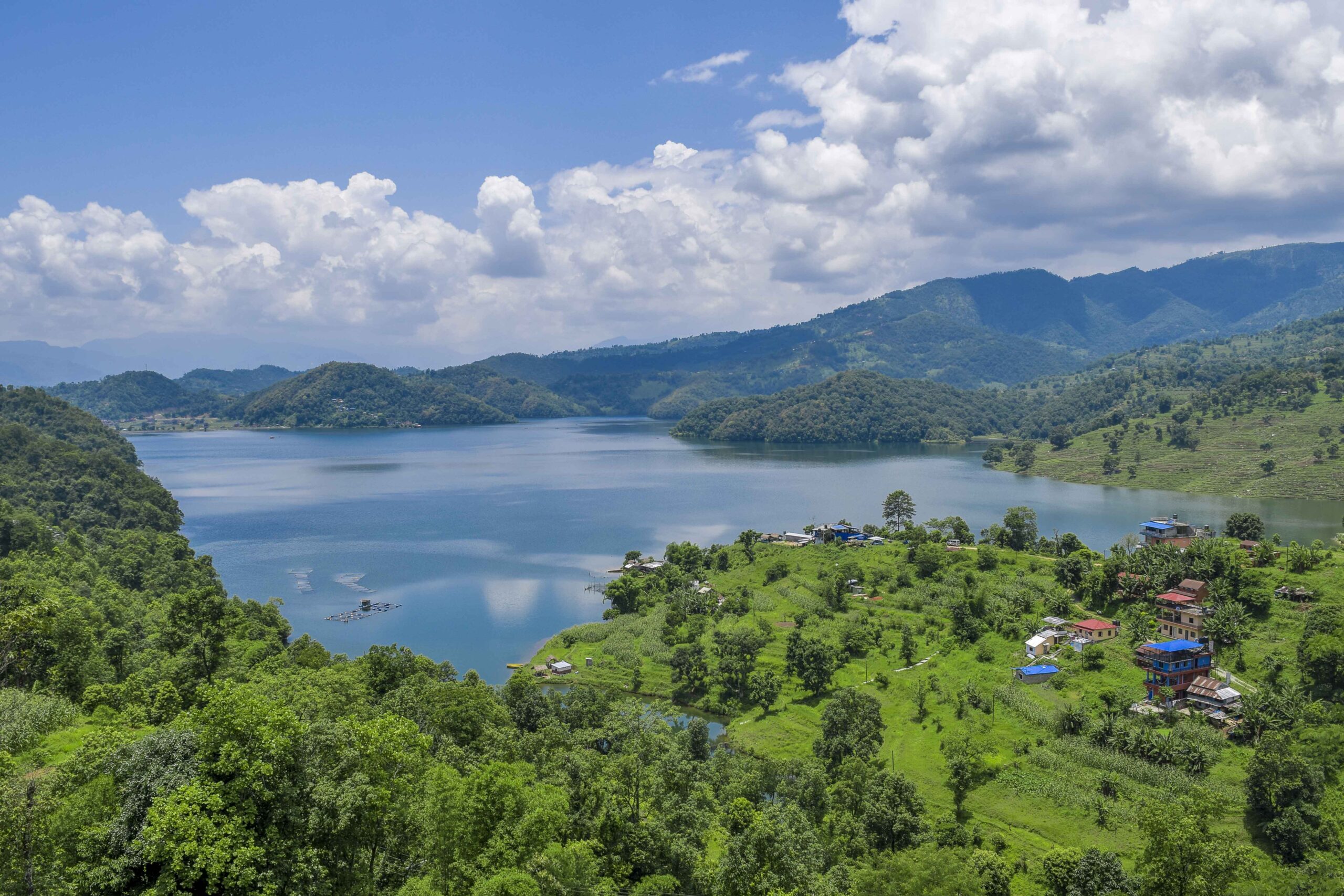
Begnas Lake Pokhara

Tourist Bus Options: Pokhara to Kathmandu 2026
Tourist buses are the most popular choice for independent travellers on the Pokhara-to-Kathmandu journey. Several categories are available at the Pokhara Lakeside Tourist Bus Park:
Standard Tourist Bus (2+2 Seats)
The standard tourist bus operates a fixed daily morning departure from Pokhara Lakeside Bus Park at approximately 7:00 AM. Standard 2+2 seating with air conditioning (in most models), push-back reclining seats, and a window curtain. The most common choice for budget travellers

Standard Bus DetailsInformation
Departure PointPokhara Lakeside Tourist Bus Park
Departure Time7:00 AM daily
Arrival (Kathmandu)Thamel area or Kantipath – approximately 1:30 PM to 3:00 PM
Ticket PriceNPR 1,000–1,300 per person
Seating2+2 push-back reclining
ACYes
Capacity35–40 passengers
Best ForBudget travellers, backpackers

The VIP Sofa Bus is the most popular choice for travellers seeking genuine comfort on the Pokhara-to-Kathmandu route. The 2+1 seating layout means every passenger has either a window or an aisle seat with no middle seat, and the sofa-style reclining seats are significantly wider and more cushioned than standard bus seats.
VIP Sofa Bus DetailsInformation
Departure PointPokhara Lakeside Tourist Bus Park
Departure Time7:00 AM – 8:30 AM (varies by operator)
Arrival (Kathmandu)Approximately 1:00 PM – 2:30 PM
Ticket PriceNPR 1,400–2,000 per person
Seating2+1 wide sofa-style recliners
ACTop-end full AC
Total Seats25–30 passengers
Reading LightYes – individual
USB ChargingSome models
Best ForSolo travellers, couples, and comfort seekers

Night Bus / Night Sofa Bus

For travellers who want to make the most of their time in Pokhara and arrive in Kathmandu ready to start the day, the night bus is an efficient option. Night sofa buses depart Pokhara Lakeside between 7:00 PM and 10:00 PM and arrive in Kathmandu’s Thamel area in the early morning (3:00 AM to 5:00 AM). Top-end sofa buses.

Nig provide blankets. Bus DetailsInformation
Departure PointPokhara Lakeside Tourist Bus Park
Departure Time7:00 PM – 10:00 PM
Arrival (Kathmandu)3:00 AM – 5:00 AM
Ticket PriceNPR 1,500–2,500 per person
BlanketProvided on top-end night sofa buses
Seating2+1 sofa (top-end) or 2+2 (standard)
Best ForTravellers looking to save on hotel accommodation costs
NoteConfirm hotel check-in time for early arrival in Kathmandu

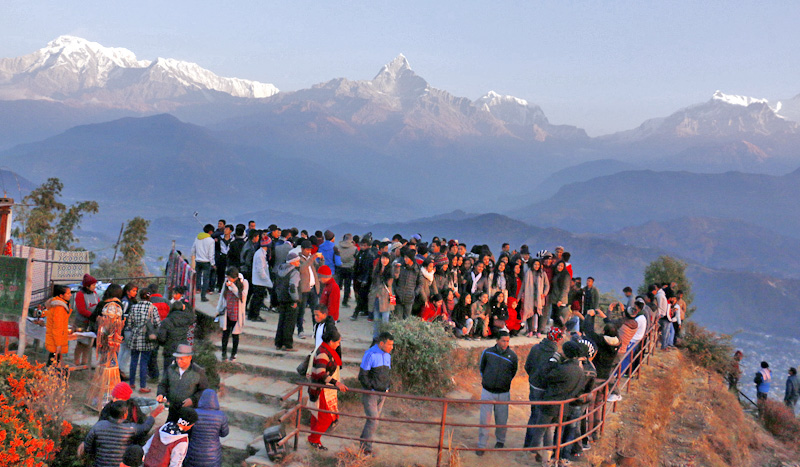
Sarangkot Pokhara

Tourist Bus Type Comparison: Pokhara to Kathmandu 2026

FeatureDeluxe BusTourist BusVIP Sofa BusNight Sofa Bus
Seat Layout2+22+22+12+1 or 2+2
Ticket PriceNPR 700–1,200NPR 1,000–1,500NPR 1,400–2,000NPR 1,500–2,500
LegroomStandardStandard–GoodExcellentGood–Excellent
ACYesYesTop-endTop-end
ReclineBasicPush-backFull sofaFull sofa
Reading LightNoSometimesYesYes
BlanketNoNoNoYes
Arrival TimePMPMPMEarly AM
Hotel SavingsNoNoNoYes (saves 1 night)
Best Comfort Rank4th3rd1st2nd

Pokhara to Sarangkot Jeep

Private Vehicle Options: Pokhara to Kathmandu

Nepal Vehicle Hiring Pvt. Ltd. provides professional private vehicle services along the Pokhara-Kathmandu route. All private vehicles include hotel-to-hotel service, flexible departure time, and freedom to stop anywhere along the route.

VehicleCapacityOne Way (NPR)One Way (USD)Round Trip (NPR)Best For
Private Car (Sedan)2–3 paxNPR 14,000–18,000USD 105–135NPR 24,000–30,000Couples, solo with bags
Private SUV/Crossover3–4 paxNPR 16,000–22,000USD 120–165NPR 28,000–38,000Small family
Private Jeep (Scorpio)4–5 paxNPR 18,000–24,000USD 135–180NPR 30,000–42,000Groups, trekkers
Private Jeep (Hilux/Fortuner)5–6 paxNPR 22,000–30,000USD 165–225NPR 38,000–52,000Top-end groups
Private Land Cruiser5–6 paxNPR 28,000–38,000USD 210–285NPR 48,000–65,000Luxury private travel
Toyota Hiace Van7–10 paxNPR 25,000–38,000USD 185–285NPR 42,000–65,000Large families, groups
Toyota Coaster12–17 paxNPR 32,000–45,000USD 240–335NPR 55,000–75,000Small tour groups
Tourist Bus (Private)25–45 paxNPR 45,000–70,000USD 335–520NPR 75,000–120,000Large tour groups

Note: All private vehicle prices include driver, fuel, and toll charges for the one-way journey from Pokhara to Kathmandu. Prices may vary by season and vehicle availability. Contact Nepal Vehicle Hiring for confirmed quotes.

What Is Included in Your Private Vehicle from Nepal Vehicle Hiring

  • Hotel pickup from your exact accommodation anywhere in Pokhara Lakeside or Pokhara city
  • Air-conditioned private vehicle — well-maintained and regularly serviced
  • Professional, licensed driver experienced on the Pokhara to Kathmandu Prithvi Highway
  • Fuel, toll charges, and driver expenses are included in the quoted price
  • Freedom to stop at Mugling, Bandipur, Damauli, or any attraction along the route on request
  • Drop-off at your exact hotel or accommodation address in Kathmandu
  • Flexible departure time — leave when you are ready, not according to a bus schedule

Pokhara to Kathmandu Transport

Pokhara to Kathmandu by Domestic Flight

For travellers who prioritise speed, the 25- to 30-minute domestic flight from Pokhara International Airport to Tribhuvan International Airport in Kathmandu is the fastest option. The new Pokhara International Airport (opened in 2023) operates multiple daily flights on this route with several airlines.

Flight DetailsInformation
Departure AirportPokhara International Airport (PKR)
Arrival AirportTribhuvan International Airport, Kathmandu (KTM)
Flight Duration25 to 30 minutes
Price RangeUSD 109–150 one way (foreigners); NPR 6,000–8,000 (Nepali citizens)
Airlines OperatingBuddha Air, Yeti Airlines, Shree Airlines, others
Baggage Allowance15–20 kg checked (varies by airline)
FrequencyMultiple daily flights (early morning departures are most common)
Airport to Thamel5 km – approximately 20–30 minutes by taxi
Best ForBusiness travelers, time-sensitive travelers, and those with flight phobias are not applicable.
DrawbackNo road scenery, expensive for groups, and airport check-in time is required. Domestic flight prices in Nepal are significantly higher for foreign passport holders than for Nepali citizens. Prices are subject to change. Always book flights directly with airlines or through reputable agents.

Complete Transport Comparison: Pokhara to Kathmandu

FactorVIP Sofa BusPrivate CarPrivate JeepHiace VanFlight
Journey Time6–7 hours5–6 hours5–6 hours6–7 hours25–30 min
Cost Per PersonNPR 1,400–2,000NPR 3,500–9,000*NPR 3,000–6,000*NPR 2,500–5,400*USD 109–150
Hotel PickupLakeside Bus ParkYes – doorYes – doorYes – doorAirport only
Hotel Drop-offThamel areaYes – doorYes – doorYes – doorAirport only
Departure TimeFixed 7 AMFlexibleFlexibleFlexibleFixed schedule
LuggageUnderfloor compartmentBoot + rackExcellent + rackExcellent + rack15–20 kg checked
Stop FreedomNoneFullFullFullNone
PrivacyShared 25–30 paxCompleteCompleteCompleteShared flight
Best ForSolo/couple budgetCouple/small familyGroups 4–6Groups 7–10Max speed

Per-person cost is calculated by dividing the vehicle price by the typical group size. Private car per person for 2–3 pax, jeep for 4–5 pax, Hiace for 7–9 pax.

Which Transport Option is Right for You?

Your ProfileBest OptionReason
Solo traveller on a budgetVIP Sofa BusBest comfort per rupee for single travellers
le on a budgetVIP Sofa BusTwo adjacent seats or a 2+1 layout for each window
Small family (2+2 children)Private Car or JeepDoor-to-door, flexible, space for bags, no rushing
Group of 4–6Private JeepBest value per person, hotel pickup, fast
Group of 7–10Toyota HiaceAll travel together, AC, hotel pickup, economical
Large group (12–45)Coaster or Tourist BusSingle vehicle, group cohesion, cost-effective
Time-critical travellerDomestic Flight25 min vs 6 hrs – unbeatable when time matters
Night traveller/hotel saverNight Sofa BusSave one night’s accommodation cost
Senior or mobility-limitedPrivate Car or HiaceComfortable boarding, no time pressure, direct
Wants Bandipur stopPrivate VehicleOnly private vehicles are allowed to make off-route stops on request

Pokhara to Kathmandu Route Highlights

The Prithvi Highway from Pokhara to Kathmandu is one of Nepal’s most scenic road journeys. Here are the key highlights along the way:

Pokhara Exit – Seti River Gorge

Shortly after leaving Pokhara, the road crosses the Seti River — a river famous for its remarkably white water caused by glacial flour in suspension. The Seti flows through a deep underground gorge directly beneath parts of Pokhara city. The bridge crossing offers a brief but dramatic view of the gorge.

Damauli – Tanahun District Headquarters

Damauli sits at the confluence of the Seti and Madi rivers, approximately 40 km from Pokhara. It is the first major town on the route and an excellent place to rest, with a riverside setting; the hill town rising above the confluence is attractive, and the local teahouses serve excellent Nepali food.

Bandipur – Optional Heritage Town Detour

The UNESCO candidate heritage hill town of Bandipur lies off the main Prithvi Highway between Damauli and Dumre. This beautifully preserved Newari trading town, with its cobblestone main street, traditional architecture, and panoramic mountain views, is one of Nepal’s finest cultural stops. Adding Bandipur extends the journey by approximately 1 to 1.5 hours, but it is highly recommended for travellers in a private vehicle.

Mugling – The Classic Midway Stop

Mugling sits at the confluence of the Trishuli and Marsyangdi rivers, approximately 105 km from Pokhara and roughly the midpoint of the journey. It is Nepal’s most famous roadside stop — the teahouses and restaurants lining the riverbank serve fresh fish curry, dal bhat, and snacks.

Almost every tourist bus and private vehicle stops here for 20 to 30 minutes. The riverside setting is scenic, and the food is genuinely good.

Prithvi Highway – Trishuli River Gorge

The section of the Prithvi Highway between Mugling and Kathmandu follows the Trishuli River upstream through a dramatic gorge. The road winds alongside the rushing river with forested hillsides above and the occasional Nepali village clinging to the slopes. This is consistently the most photographed section of the entire drive.

Naubise – Final Valley Descent to Kathmandu

From Naubise, the road begins the final descent through the Chandragiri hills into the Kathmandu Valley. The transition from the river gorge terrain to the bowl of the valley is dramatic — the great density of Kathmandu city suddenly appears below as the road descends the final approach. On clear days, you can see the valley and the distant Himalayas from this final ridge section.

Departure Points and Schedules: Pokhara to Kathmandu

Pokhara Lakeside Tourist Bus Park

The Pokhara Lakeside Tourist Bus Park (near Hallan Chowk, Lakeside) is the main departure point for all tourist-class shared buses heading to Kathmandu. The bus park is approximately a 10-minute walk from the central Pokhara Lakeside area, or a short taxi ride (NPR 100 -00).

Bus TypeDeparture TimeTicket PriceArrival KTM
Standard Tourist Bus7:00 AMNPR 1,000–1,3001:30–2:30 PM
VIP Sofa Bus7:00–8:30 AMNPR 1,400–2,0001:00–2:30 PM
Super Deluxe7:00–8:00 AMNPR 1,200–1,6001:15–2:30 PM
Night Sofa Bus7:00–10:00 PMNPR 1,500–2,5003:00–5:00 AM

Private Vehicle Pickup (Nepal Vehicle Hiring)

Nepal Vehicle Hiring offers private vehicle pickup directly from your hotel or guesthouse in Pokhara at any time you specify—no need to travel to a bus station. We recommend a 7:00 AM to 8:00 AM departure for comfortable daytime travel, arriving in Kathmandu between 1:00 PM and 2:00 PM.

Best Time for Pokhara to Kathmandu Travel

Autumn (October to November) – Best Season

Autumn offers the finest road conditions, clearest skies, and most comfortable temperatures for a drive on the Prithvi Highway. The mountain views on the Pokhara departure section and the lush post-monsoon greenery throughout the route make this the finest time of year for the journey. Tourist buses and private vehicles are in peak demand — book in advance.

Spring (March to May) – Excellent

Spring is warm, and the road is in good condition. The Marsyangdi and Trishuli valley sections are particularly beautiful with rhododendrons visible on the hillsides. Mountain views from the Pokhara end of the route are excellent in March and April.

May sees some pre-monsoon haze developing.

Winter (December to February) – Good

Winter travel on the Prithvi Highway is comfortable year-round. Temperatures are cool — bring a light jacket for the journey. Fewer tourists mean less traffic and sometimes better seat availability on tourist buses.

Mountain views near Pokhara can be exceptional in clear winter air.

Monsoon (June to August) – Possible with Caution

The Prithvi Highway near Mugling can experience occasional landslides during the monsoon. Travel is possible, but allow extra time for potential delays. Nepal Vehicle Hiring monitors road conditions and advises clients before departure during the monsoon season.

What to Pack for the Pokhara to Kathmandu Journey

  • Light jacket or fleece – tourist bus AC can be cold, and mountain sections are cooler than Pokhara
  • Water bottle – stay hydrated; Mugling stop is the best refill opportunity
  • Light snacks – biscuits, fruits, nuts for the 6+ hour bus journey
  • Motion sickness tablets – the Trishuli Gorge section has winding roads
  • Camera or phone charged – Marsyangdi valley and Trishuli gorge views are excellent
  • Nepali cash – for the Mugling stop and any incidental expenses
  • Headphones and entertainment for bus travellers – downloaded content for the 6–7-hour journey
  • Travel documents – passport/ID for any checkpoint along the highway

Expert Tips for the Pokhara to Kathmandu Journey

  • For VIP Sofa Bus, book at least 2 to 3 days in advance during October–November and March–April peak seasons – the 25- to 30-seat buses sell out quickly.
  • Arrive at the Lakeside Tourist Bus Park at least 30 minutes before the 7:00 AM departure to find your bus, load luggage, and settle in.
  • For private vehicles, request a Bandipur heritage town stop – it is a remarkable detour that adds only 1 to 1.5 hours and is one of Nepal’s finest cultural experiences.
  • For tourist bus travellers, choose the RIGHT side of the bus (when facing Kathmandu) for the best views of the Trishuli River gorge on the Mugling-to-Kathmandu section.
  • The Mugling rest stop is typically 20 to 30 minutes in; tourist buses stop here, and it’s the best opportunity for a meal on the journey.
  • Night bus travellers should confirm the hotel’s early morning check-in policy before booking – arriving at 4:00 AM at a hotel that opens at 8:00 AM is problematic.
  • Private vehicle from Nepal Vehicle Hiring includes flexible departure – if you want to leave at 9:00 AM rather than 7:00 AM to have a full Pokhara morning, that is entirely your choice.
  • For flight travellers, arrive at Pokhara International Airport at least 1.5 hours before departure – domestic security takes longer than expected.
  • Book the complete Nepal transport sequence with Nepal Vehicle Hiring – Chitwan to Pokhara, Pokhara to Kathmandu, and airport transfers – in a single coordinated arrangement.

How to Book Pokhara to Kathmandu Transport with Nepal Vehicle Hiring

Nepal Vehicle Hiring Pvt Ltd provides both private vehicle hire and tourist bus ticket booking for the Pokhara to Kathmandu route:

  • Step 1: Contact us via phone, WhatsApp, or at vehiclehiringnepal.com
  • Step 2: Tell us your travel date, number of passengers, hotel in Pokhara, and destination hotel in Kathmandu
  • Step 3: Choose your transport type – VIP Sofa Bus ticket, Super Deluxe bus, or private vehicle (car, jeep, Hiace, coaster)
  • Step 4: Receive your booking confirmation with vehicle details, departure time, and driver information
  • Step 5: For private vehicles – your driver arrives at your Pokhara hotel at the confirmed time
  • Step 6: For the tourist bus, we provide guidance on reaching the Lakeside Bus Park and confirming your seat

We recommend booking 2 to 3 days in advance for off-peak travel, and 5 to 7 days in advance during October–November and March–April.

Frequently Asked Questions (FAQ)

How far is Pokhara from Kathmandu?

The road distance from Pokhara to Kathmandu is approximately 200 kilometres along the highway.

How long does the Pokhara to Kathmandu journey take?

By private car or jeep: 5-6 hours. By tourist bus: 6-8 hours. By domestic flight: 25 to 30 minutes.

How much does the Pokhara-to-Kathmandu VIP Sofa Bus ticket cost?

VIP Sofa Bus (2+1 seating) costs NPR 1,400 to 2,000 per person. A standard tourist bus costs NPR 1,000 to 1,500 per person. A night bus costs NPR 1,500 to 2,500 per person.

How much does a private car from Pokhara to Kathmandu cost in 2026?

A private sedan costs US$120 one way. A private jeep costs NPR 18,000 to 24,000. A Toyota Hiace van costs NPR 25,000 to 38,000. All prices include driver and fuel.

Where does the tourist bus depart from in Pokhara?

Tourist buses depart from the Pokhara Lakeside Tourist Bus Park (near Hallan Chowk in the Lakeside area). It is approximately a 10-minute walk from central Lakeside or a short taxi ride. All major tourist bus operators have counters at this bus park.

Can I hire a private vehicle from Pokhara to Kathmandu with hotel pickup?

Yes. Nepal Vehicle Hiring provides hotel-to-hotel private vehicle service – pickup from your hotel in Pokhara and drop-off at your hotel in Kathmandu. Contact us at vehiclehiringnepal.com to book.

Is there a direct flight from Pokhara to Kathmandu?

Yes. Multiple airlines operate direct flights from Pokhara International Airport (PKR) to Tribhuvan International Airport in Kathmandu (KTM). The flight takes 25 to 30 minutes.

Current prices are approximately USD 1109-1109-150 one-way for foreign passport holders.

What is the best transport from Pokhara to Kathmandu for a group of 6 people?

A private jeep (Toyota Fortuner or Hilux) is the ideal option for 6 people. It includes hotel pickup and drop-off in Kathmandu, 5 to 6 hours of travel time, full luggage space, and the flexibility to stop at Bandipur or Mugling. Contact Nepal Vehicle Hiring for a quote.

Can I stop at Bandipur on the way from Pokhara to Kathmandu?

Yes, with a private vehicle from Nepal Vehicle Hiring. Bandipur is a magnificent Newari heritage hill town located approximately 8 km off the Prithvi Highway between Damauli and Dumre. A Bandipur stop adds approximately 1 to 1.5 hours to the journey.

Public tourist buses cannot make this detour.

Book Your Pokhara to Kathmandu Transport with Nepal Vehicle Hiring

The Pokhara to Kathmandu journey is one of Nepal’s great road experiences — the Marsyangdi and Trishuli river gorges, the bustling roadside life of Mugling, the optional heritage town of Bandipur, and the spectacular final descent into the Kathmandu Valley all make the 200-kilometre drive a genuinely engaging travel experience rather than merely functional transport.

Whether you choose the outstanding value of a VIP Sofa Bus, the door-to-door comfort of a private car or jeep, the group convenience of a Toyota Hiace, or the speed of a domestic flight, Nepal Vehicle Hiring Pvt Ltd has the right service for your Pokhara to Kathmandu journey. Thousands of travellers in Nepal choose our tourist bus ticket booking, private vehicle hire, and group transport services every year.

Contact Nepal Vehicle Hiring Pvt Ltd today at vehiclehiringnepal.com to book your Pokhara-to-Kathmandu transport and continue your Nepal adventure with complete confidence.

Direct Bookings & Inquiries /Call / WhatsApp (24/7): +977 981-4227196
E-mail: [email protected]

Pokhara to Mardi Himal Trek Transport

Pokhara to Mardi Himal Trek Route Vehicle

Pokhara to Mardi Himal Trek Route Vehicle: Complete Jeep, Car & Transfer Guide

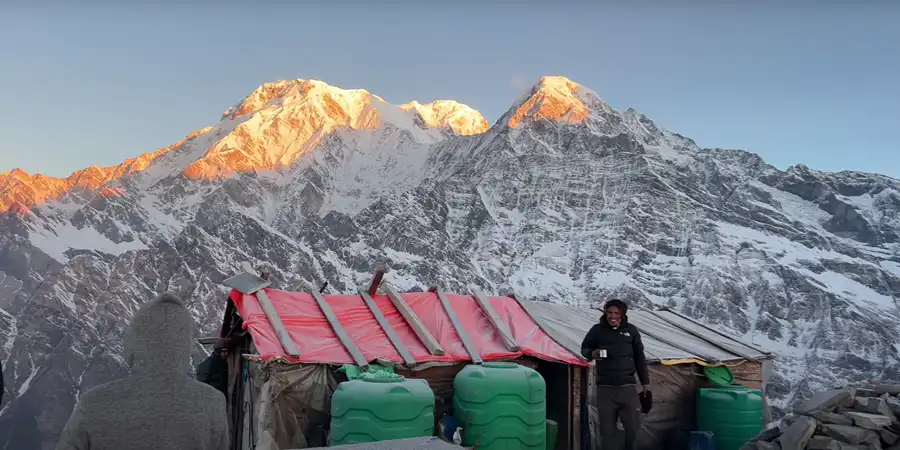
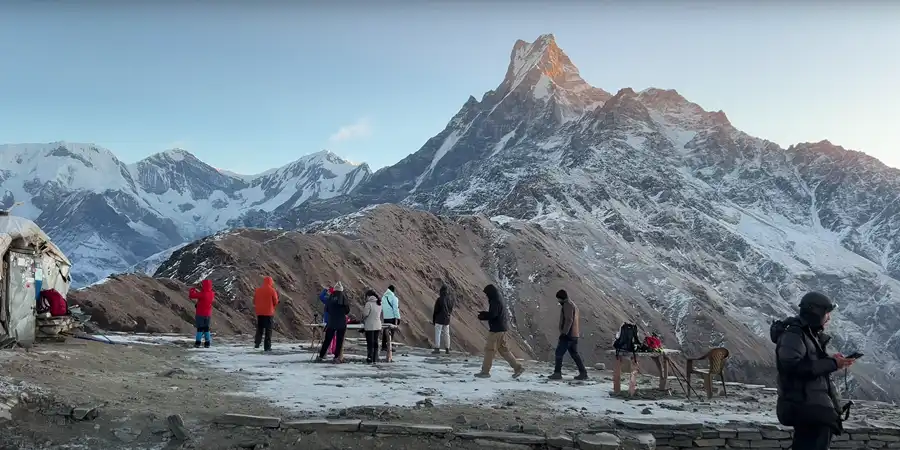
The Mardi Himal Trek is one of Nepal’s most rewarding and most rapidly growing trekking routes — a spectacular journey through rhododendron and oak forests, sub-alpine meadows, and high-altitude ridgelines to the Mardi Himal Base Camp at 4,200 metres, with close-range views of Machhapuchhre (Fishtail), Annapurna South, Annapurna I, Hiunchuli, and the full Annapurna range that rival anything the more famous ABC and Poon Hill routes can offer, at a fraction of the crowd.

First opened to trekkers in 2012, the Mardi Himal Trek follows a ridge route entirely separate from the classic ABC or Poon Hill trails, ascending through a sequence of dramatically named and beautifully positioned camps — Forest Camp, Low Camp, High Camp, and finally the open viewpoint at 4,200 meters — before descending to the quiet village of Siding or Siwai in the Modi Khola valley below.

Because the Mardi Himal Trek begins and ends at different points, with the most popular starting trailheads at Kande or Dhampus and the most popular finishing points at Siding or Siwai, arranging the right vehicle transfers for both the beginning AND the end of the trek is essential to Mardi Himal trek planning. At Nepal Vehicle Hiring Pvt Ltd, we provide professional vehicle transfers for all Mardi Himal trek starting and ending points. This comprehensive guide covers every trailhead, all vehicle options and costs, the route, and the tips to make your Mardi Himal trek transport smooth.

About the Mardi Himal Trek

The Mardi Himal Trek takes its name from Mardi Himal (5,587 m) — a dramatic ice peak in the Annapurna massif positioned between Machhapuchhre (Fishtail) and Annapurna Base Camp. The route does not summit Mardi Himal but reaches the viewpoint and base camp area at 4,200 meters, where the mountain appears close and overwhelming.

The trek is notable for its distinct character—quieter, less commercial, and with a stronger wilderness feel than the ABC or Poon Hill circuits—despite being close to Pokhara and accessible to moderately fit trekkers; the ridge trail offers constant panoramic views, unlike the valley-floor approach of the ABC route.

Mardi Himal Trek Key FactsDetails
Trek Duration4 to 7 days from Pokhara
Maximum Altitude4,200 meters (Mardi Himal Viewpoint / Base Camp approach)
DifficultyModerate
Trek StyleRidge route – panoramic views throughout
Main Starting TrailheadsKande (most common), Dhampus, Pothana, Hemja/Astam
Main Finishing PointsSiding, Siwai (Kalimati), Lumre, Ghandruk (via descent)
Permit RequiredACAP (NPR 3,000 foreigners) + TIMS Card (NPR 2,000)
Guide RequiredMandatory from April 2023 (ACAP regulation)
Best SeasonSpring (March–May) and Autumn (September–November)
Key ViewsMachhapuchhre/Fishtail, Annapurna South, Annapurna I, Hiunchuli, Mardi Himal
Pokhara to Mardi Himal Trek Route Vehicle
Mardi-himal

All Mardi Himal Trek Trailheads and Finish Points from Pokhara

You can start and finish the Mardi Himal Trek at several different points. Understanding the complete picture of all trailhead options is essential for planning your vehicle transfer correctly:

PointTypeDistance from PokharaDrive TimeAltitudeNotes
KandeStart (most common)22 km via Baglung Hwy45–60 min1,770 mMost popular trailhead – short drive from Pokhara
DhampusStart / End25–35 km1–1.5 hrs1,650 mVia Hemja/Dhikur Pokhari – rough jeep track
PothanaStart (near Dhampus)30–38 km1–2 hrs1,890 mSlightly higher start – shorter to Forest Camp
Hemja / AstamStart (longer)15–20 km30–45 min920 mRoad start, walk to Astam, then Dhampus
SidingFinish (most common)42–50 km from Pokhara2.5–3.5 hrs1,700 mMost common trek end – 4WD Jeep required
Siwai (Kalimati)Finish (alternate)45–55 km from Pokhara2.5–4 hrs1,100 mModi Khola valley – same road as ABC return
LumreFinish (rare)55–65 km3–4 hrs900 mLower valley – less common return point
GhandrukFinish (circuit)55 km2.5–3 hrs1,940 mFor the Mardi–Ghandruk circuit option

Mardi Himal Trek

Why Book a Private Vehicle for the Mardi Himal Trek Transfer?

Outbound Transfer to Kande or Dhampus

The most popular Mardi Himal Trek starting point — Kande — is approximately 22 km from Pokhara on the Baglung Highway and takes about 45 to 60 minutes by vehicle. Dhampus is slightly further and requires a rough jeep track beyond the main highway.

A private vehicle from Nepal Vehicle Hiring picks you up from your hotel in Pokhara Lakeside. It drops you at the exact trailhead entrance, with all your trekking gear loaded and your guide and porter already aboard.

Return Transfer from Siding — 4WD Essential

The return jeep transfer from Siding (the most common Mardi Himal finish point) to Pokhara is the most important vehicle arrangement for the entire trek. The road from Siding back to the main Baglung Highway involves a rough, steep, unpaved jeep track that descends through the Modi Khola valley.

A 4WD jeep is absolutely required for this section. Trekkers who do not arrange their return jeep in advance often wait at Siding for 1 to 2 hours trying to find available transport.

Book Both Transfers Before Starting the Trek

Nepal Vehicle Hiring strongly recommends booking both the outbound transfer (Pokhara to Kande/Dhampus) AND the return transfer (Siding/Siwai to Pokhara) before departing Pokhara. This eliminates uncertainty at the end of the trek, when you arrive at Siding tired and want immediate transport back to your Pokhara hotel. We can arrange for our driver to wait at Siding at your estimated arrival time.

Complete Luggage Management

Many Mardi Himal trekkers carry a full trekking bag on the trail, but also have additional items (extra luggage, valuables, a laptop) that they want to leave safely in Pokhara during the trek. Nepal Vehicle Hiring can arrange a private vehicle to transport your leftover luggage to a secure Pokhara hotel storage facility and collect it on your return, completely solving the luggage management challenge.

Pokhara

Complete Vehicle Cost Guide: All Mardi Himal Transfer Points 2026

Transfer RoutePrivate Jeep (NPR)Private Jeep (USD)Sharing Jeep/paxNotes
Pokhara to Kande (one way)US$55US$55NPR 400–700Smooth Baglung Highway – 45–60 min
Pokhara to Dhampus (one way)US$60US$60NPR 600–1,000Via Hemja jeep track – 1–1.5 hrs, 4WD
Pokhara to Pothana (one way)NPR 5,000–8,000USD 37–60NPR 700–1,100Beyond Dhampus – rough track, 4WD essential
Siding to Pokhara (return)NPR 6,000–9,000USD 45–67NPR 1,000–1,5004WD mandatory – rough Modi Valley track
Siwai to Pokhara (return)NPR 6,000–9,000USD 45–67NPR 900–1,400Similar to Siding – rough jeep track
Lumre to Pokhara (return)NPR 8,000–12,000USD 60–90NPR 1,200–1,800Longer – deep valley access
Ghandruk to Pokhara (return)NPR 8,000–12,000USD 60–90NPR 1,200–1,8004WD mandatory – Ghandruk jeep track
Round Trip: Kande start + Siding returnNPR 9,000–14,500USD 67–108N/ABook both transfers together – best value

Trailhead-by-Trailhead Vehicle Guide

Pokhara to Mardi Himal Trek Route Vehicle
Kande village

Kande (also spelt Khande), at 1,770 meters, is the most popular and most convenient trailhead for the Mardi Himal Trek. Located about 22 kilometres from Pokhara Lakeside on the Pokhara-Baglung Highway, Kande is accessible by any vehicle—the road is smooth and paved, and the drive takes about 45 to 60 minutes from Pokhara.

From Kande, the trail climbs through dense oak and rhododendron forest to Australian Camp (2,060 m) and then continues northeast along the Mardi Himal ridge to Forest Camp, Low Camp, High Camp, and the viewpoint. Trekkers starting at Kande typically reach Mardi Himal Base Camp on Day 3 of a 5-day itinerary.

Pokhara to Kande DetailsInformation
Distance22 km
Drive Time45 to 60 minutes
Road TypeBaglung Highway – paved, smooth
Vehicle RequiredAny vehicle suitable
Private Jeep CostNPR 3,000–5,500 one way
Sharing Jeep CostNPR 400–700 per person
Trek From Kande to Forest Camp4 to 5 hours walk
Trek From Kande to Mardi Base Camp3 to 4 days
NotesMost convenient trailhead – earliest on the trail

Pokhara to Dhampus – Cultural Village Start

Dhampus (1,650 m) is both a magnificent Gurung cultural village and an excellent alternative starting point for the Mardi Himal Trek. Driving to Dhampus rather than Kande immediately puts you in a high Gurung-ridge village with stunning Annapurna panoramas before the trek even begins.

The road to Dhampus from Hemja (15 km from Pokhara) turns off the Baglung Highway and climbs steeply on a rough jeep track through Dhikur Pokhari. A 4WD jeep is required for this final section. From Dhampus, the trail continues to Pothana and then joins the Mardi Himal ridge route.

Pokhara to Mardi Himal Trek Route Vehicle
Dhampus village
Pokhara to Dhampus DetailsInformation
Distance25–35 km
Drive Time1 to 1.5 hours
Road TypePaved to Hemja; rough 4WD jeep track to Dhampus
Vehicle Required4WD Jeep mandatory from Hemja onward
Private Jeep CostNPR 4,500–7,000 per Jeep
Sharing Jeep CostNPR 600–1,000 per person
Cultural BonusDhampus is one of Nepal’s finest Gurung villages, with panoramic Annapurna views
Trek From Dhampus to Forest Camp3 to 4 hours via Pothana

Return Transfer: Siding to Pokhara – The Critical Jeep Arrangement

Siding (also called Sidhing or Siddha Village), at about 1,700 meters, is the most common trek endpoint for the Mardi Himal Trek. After descending from the high ridge through Low Camp and Forest Camp, the trail drops steeply to Siding village in the Modi Khola valley. From Siding, a rough 4WD jeep track descends through the valley to join the Baglung Highway and return to Pokhara.

The Siding-to-Pokhara jeep journey takes approximately 2.5 to 3.5 hours and covers 42 to 50 kilometres. The road from Siding to the highway is rough, steep, and unpaved — a 4WD vehicle with an experienced driver is necessary. Standard cars and local taxis cannot manage this route.

IMPORTANT: Always pre-book your Siding-to-Pokhara return jeep with Nepal Vehicle Hiring BEFORE beginning the trek. Do not expect to find available transport at Siding without prior arrangement, especially during peak trekking season (October, November, March, April).

Siding to Pokhara Return DetailsInformation
Distance42–50 km
Drive Time2.5 to 3.5 hours
Road TypeRough off-road jeep track from Siding to Baglung Highway – 4WD mandatory
Vehicle Required4WD Jeep – absolutely mandatory
Private Jeep CostNPR 6,000–9,000 one way
Sharing Jeep CostNPR 1,000–1,500 per person
Advance BookingEssential – especially in October/November and March/April
The driver waits at the sidingNepal Vehicle Hiring can arrange a driver to wait at the Siding for your arrival.

Pokhara-Pokhara to Mardi Himal Trek Route Vehicle

Return Transfer: Siwai (Kalimati) to Pokhara

Siwai (also called Kalimati or Syauli Bazaar) is an alternative trek endpoint in the lower Modi Khola valley, approximately 45-55 km from Pokhara. Some Mardi Himal trekkers descend via Landruk village to Siwai rather than Sidingding, connecting the Mardi Himal descent with the standard ABC return route.

Siwai to Pokhara DetailsInformation
Distance45–55 km
Drive Time2.5 to 4 hours
Road TypeRough jeep track – 4WD required
Private Jeep CostNPR 6,000–9,000 one way
Sharing JeepNPR 900–1,400 per person
Trek ConnectionModi Khola Valley – also the endpoint for

ABC and Jhinu Danda treks

Pokhara to Mardi Himal Trek Route Vehicle

Complete Mardi Himal Trek Vehicle Packages from Nepal Vehicle Hiring

Nepal Vehicle Hiring offers complete vehicle packages covering both the outbound trailhead transfer AND the return vehicle from Siding or Siwai as a single coordinated booking:

PackageRouteVehicleCost (NPR)Cost (USD)Notes
Package A – Kande Start, Siding ReturnPokhara→Kande + Siding→PokharaStandard JeepNPR 9,000–14,500USD 67–108Most popular Mardi Himal package
Package B – Kande Start + Siding Return (Top-end)Pokhara→Kande + Siding→PokharaHilux/FortunerNPR 12,000–18,000USD 90–135Best comfort for both legs
Package C – Dhampus Start + Siding ReturnPokhara→Dhampus + Siding→PokharaHilux/FortunerNPR 14,500–21,000USD 108–1574WD is essential for both legs
Package D – Kande Start + Ghandruk ReturnPokhara→Kande + Ghandruk→PokharaHilux/FortunerNPR 12,000–20,000USD 90–150For the Mardi–Ghandruk circuit

All package prices include driver and fuel for both legs. Contact Nepal Vehicle Hiring to confirm availability and exact pricing for your trek dates and group size.

Mardi Himal Trek Itineraries and Vehicle Timing Guide

DayActivityOvernightAltitudeVehicle Needed
Day 1Drive Pokhara to Kande (45–60 min) – Trek Kande to Forest Camp (4–5 hrs)Forest Camp2,600 mPokhara to Kande: US$55
Day 2Trek Forest Camp to Low Camp (3–4 hrs)Low Camp3,550 mNone
Day 3Trek from Low Camp to High Camp to Mardi Base Camp Viewpoint – return to High CampHigh Camp3,580 mNone
Day 4Trek from High Camp to Low Camp to Forest Camp to Siding (full day)Siding1,700 mNone
Day 5Return jeep Siding to Pokhara (2.5–3.5 hrs)Pokhara820 mSiding to Pokhara: NPR 6,000–9,000

4-Day Fast Mardi Himal Trek

DayActivityOvernightVehicle
Day 1Drive to Kande (45 min) – Trek Kande→Australian Camp→Forest CampForest CampVehicle on Day 1 only
Day 2Trek Forest Camp→Low Camp→High CampHigh CampNone
Day 3Trek High Camp→Mardi Base Camp viewpoint (4,200 m)→return High Camp→Low CampLow CampNone
Day 4Trek Low Camp→Forest Camp→Siding – Return jeep to PokharaPokharaReturn jeep Day 4

7-Day Mardi Himal Trek – Full Experience

DayActivityOvernight
Day 1Drive Pokhara to Kande – Trek to Australian Camp or PothanaPothana / Australian Camp
Day 2Trek Pothana→Forest CampForest Camp (2,600 m)
Day 3Trek Forest Camp→Low CampLow Camp (3,550 m)
Day 4Trek Low Camp→High CampHigh Camp (3,580 m)
Day 5Trek High Camp→Mardi Base Camp Viewpoint (4,200 m)→High CampHigh Camp
Day 6Trek High Camp→Low Camp→Forest Camp→SidingSiding (1,700 m)
Day 7Return Jeep from Siding to PokharaPokhara

Mardi Himal Trek Route: Camp by Camp Guide

Kande (1,770 m) – The Trailhead

Kande is a small roadside settlement on the Pokhara-Baglung Highway where the Mardi Himal and Australian Camp trail begins. The trail rises steeply through oak and rhododendron forest from Kande. Teahouses in Kande offer breakfast and final supplies before the climb.

Australian Camp (2,060 m) – First Camp Point

Australian Camp is a grassy hilltop clearing approximately 1.5 to 2 hours above Kande, famous for its panoramic views of the Annapurna range. Named for the Australian trekking groups who popularised this viewpoint, it is an excellent first-day rest stop with multiple teahouse lodges.

Forest Camp (2,600 m) – The Forest Gateway

Forest Camp sits in the transition zone between the dense subtropical forest on the lower slopes and the beginning of the high-altitude ridge environment. The camp consists of a small collection of teahouse lodges in a forest clearing, with the Mardi Himal ridge rising above.

From Forest Camp, the trail begins to climb more steeply northward along the ridge to Low Camp – High Country Ent. Campow Camp marks the entry into genuinely high-altitude terrain. The forest gives way to dwarf bamboo and alpine shrubs.

Mountain views open dramatically — Machhapuchhre/Fishtail appears directly ahead for the first time in its full, overwhelming close-range form. Most trekkers need two days to ascend comfortably from Forest Camp to Low Camp, depending on fitness and acclimatisation.

High Camp (80 m) – The Viewpoint. The camp is one of the finest mountain viewpoints accessible on foot in the entire Annapurna region. The camp sits on the open ridge, with the massive white faces of Machhapuchhre, Annapurna South, and Hiunchuli dominating the northern horizon. Mardi Himal itself rises to the northeast. Sunrises from High Camp over these peaks are extraordinary — many trekkers describe the High Camp sunrise as the highlight of the entire Mardi Himal experience.

Mardi Himal Base Camp Viewpoint (4,200 m)

The Mardi Himal Base Camp viewpoint at 4,200 meters is the highest point of the standard Mardi Himal Trek. At this altitude, trekkers stand at the base of the Mardi Himal glacier, with the vertical faces of Machhapuchhre, Annapurna South, and Mardi Himal itself looming above.

The panorama from this point — looking down the ridge to the Pokhara valley far below and up to the 7,000-meter and 8,000-meter peaks above — is one of the most spectacular viewpoints accessible without technical climbing in all of Nepal.

Siding (1,700 m) – The Descent End Point

Siding is a small village at the base of the Mardi Himal descent in the Modi Khola valley. The 4WD jeep pickup point is at the Siding village road access, Siding. The jeep track descends through the Modi Khola valley past Lumre to join the Baglung Highway for the return to Pokhara.

Permits Required for the Mardi Himal Trek

PermitCostRequired ForWhere to Obtain
ACAP – Annapurna Conservation Area PermitNPR 3,000 (foreigners)All visitors entering ACAP from Kande, Dhampus, or any Annapurna trailheadNepal Tourism Board, Pokhara Lakeside
TIMS CardNPR 2,000 (foreigners)All trekkers on multi-day routesNepal Tourism Board, Pokhara Lakeside
Licensed Guide (Mandatory)Varies – typically NPR 3,000–5,000/dayAs of April 1, 2023, all ACAP trekkers must have a licensed, government-approved guide.Arrange through a trekking agency in Pokhara.

IMPORTANT: A licensed, government-approved trekking guide is now mandatory for all trekkers in the Annapurna Conservation Area (including the Mardi Himal Trek) under ACAP regulation, effective from April 1, 2023. Solo trekking without a guide is not permitted. Nepal Vehicle Hiring can help arrange guides.

Begnas Lake Pokhara

Best Time to Trek Mardi Himal and Book Vehicle Transfer

Autumn (October to November) – Best Season

Autumn is the finest season for the Mardi Himal Trek. Post-monsoon clarity delivers extraordinary views from High Camp and the Base Camp viewpoint — Machhapuchhre, Annapurna South, and the Annapurna range appear in perfect focus against deep blue skies.

The road to Kande is excellent, and the Siding return jeep track is in its best post-monsoon condition. October and November are peak season — book all vehicle transfers at least 5 to 7 days in advance.

Spring (March to May) – Excellent

Spring is beautiful on the Mardi Himal Trek. The rhododendron forests between Kande and Forest Camp are in spectacular full bloom in March and April — the trail passes through tunnels of pink, red, and white blossoms. Mountain views are generally excellent.

The Baglung Highway and Siding Road are in good condition—a superb time for the trek and the vehicle transfers.

Winter (December to February) – Cold but Rewarding

Winter trekking on Mardi Himal is possible, and the views can be exceptional — snow-covered peaks against crystal-clear skies create outstanding photography conditions. However, High Camp and the Base Camp approach may have snow cover, making the final section challenging without ice-traction gear. The Kande Road and the Siding Jeep Track are generally open to 4WD vehicles in winter.

Heavy monsoon rainfall makes the Mardi Himal trail extremely slippery above Forest Camp and the Siding return jeep track very hazardous due to landslides and deep mud. The trek is not recommended during the core monsoon months. September marks the beginning of the post-monsoon improvement.

What to Pack for the Pokhara to Mardi Himal Trek Vehicle Transfer

  • ACAP permit and TIMS Card – obtain from Nepal Tourism Board in Pokhara before departure
  • Full trekking backpack with all gear for the complete trek duration
  • Warm down jacket and thermal layers – High Camp nights are well below freezing in autumn and winter
  • Rain jacket – forest sections between Kande and Forest Camp can be wet even in autumn
  • Small daypack accessible in the vehicle – water, snacks, camera, documents for the drive to Kande
  • Water bottles (2 litres minimum) – refill at teahouses along the trail
  • Trekking boots worn from hotel departure – start trekking immediately from the vehicle drop-off at Kande
  • Nepali cash for teahouse accommodation, meals, and guide/porter fees – no ATMs on the Mardi trail
  • Camera with a fully charged battery and a power bank – the Annapurna views from High Camp are extraordinary
  • Sunscreen SPF 50+ and sunglasses – UV intensity is extremely high above 3,000 meters
Pokhara
4WD-jeep

Expert Tips for Mardi Himal Trek Vehicle Transfers

  • Book BOTH the outbound Pokhara to Kande transfer AND the return Siding to Pokhara transfer before leaving Pokhara – returning trekkers who have not arranged this way for unpredictable periods
  • For the return from Siding, Nepal Vehicle Hiring can arrange for the driver to wait at your expected finishing time – communicate your approximate arrival time to us before starting the trek.
  • Request a 4WD Hilux or Fortuner specifically for the Siding return – the Modi Khola valley track requires proper clearance and diff lock capability.
  • Depart from Pokhara to Kande early – a 7:00 AM departure gives you the full day for the Kande to Forest Camp first stage.
  • For the Dhampus start option, depart even earlier (6:30 AM), as the rough jeep track to Dhampus adds time to the approach.
  • The mandatory guide requirement is strictly enforced at the Kande ACAP checkpoint – do not arrive without a licensed guide expecting to pass.
  • Collect your ACAP and TIMS permits from the Nepal Tourism Board in Pokhara Lakeside before the vehicle departs in the morning.
  • Nepal Vehicle Hiring can arrange the complete Mardi Himal trek transport package: Pokhara to Kande outbound, Siding to Pokhara return, and any additional transfers in a single confirmed booking.

How to Book Your Mardi Himal Trek Vehicle with Nepal Vehicle Hiring

Booking your Mardi Himal trek vehicle transfers with Nepal Vehicle Hiring Pvt Ltd is simple:

  • Step 1: Contact us via phone, WhatsApp, or at vehiclehiringnepal.com
  • Step 2: Share your trek start date, trailhead preference (Kande, Dhampus, or Pothana), group size, hotel in Pokhara, and estimated trek finish date
  • Step 3: Choose your vehicle package – outbound only, return only, or complete round-trip package
  • Step 4: Provide your estimated Siding/Siwai arrival time so we can coordinate the return driver timing
  • Step 5: Receive booking confirmation with driver details, vehicle information, and pickup times for both legs
  • Step 6: On the trek start day, your driver picks you up from your hotel and takes you to the trailhead
  • Step 7: On the trek’s final day, your pre-arranged driver is waiting at Siding or Siwai to return you to Pokhara

We recommend booking at least 3 to 5 days in advance, and 7 days in advance during the October, November, March, and April peak seasons.

Frequently Asked Questions (FAQ)

Where does the Mardi Himal Trek start from Pokhara?

The most popular starting point is Kande (1,770 m), approximately 22 km from Pokhara Lakeside on the Baglung Highway (45–60 minutes by vehicle). Alternative starting points include Dhampus (1,650 m) and Pothana (1,890 m), both of which require a rough 4WD jeep track beyond Hemja.

How much does the vehicle transfer from Pokhara to Kande cost?

A private jeep from Pokhara to Kande costs approximately NPR 333,000- 5,500 one-way (USD 22–41). A shared jeep seat costs NPR4,7000 per person. All private vehicle prices include driver and fuel.

Is a 4WD jeep necessary for the Mardi Himal trek transfers?

For the Pokhara-to-Kande outbound transfer, any vehicle type is adequate, as the road is paved. For Dhampus or Pothana start points, a 4WD jeep is mandatory due to the rough hillside track. For the return from Siding or Siwai, a 4WD jeep is essential — the Modi Khola valley track is rough and unpaved and cannot be managed by standard cars or taxis.

Where does the Mardi Himal Trek end, and how do I get back to Pokhara?

The most common endpoint is Siding village in the Modi Khola valley. From Siding, a 4WD jeep returns to Pokhara via the Baglung Highway (2.5 to 3.5 hours; NPR 6,000 to 9,000 for a private jeep). Always pre-book this return jeep with Nepal Vehicle Hiring before starting the trek.

What permits are required for the Mardi Himal Trek?

You need an ACAP permit (NPR 3,000 for foreigners) and a TIMS Card (NPR 2,000). As of April 2023, a licensed, government-approved trekking guide is also mandatory for all trekkers in the ACAP area. Both permits are available from the Nepal Tourism Board in Pokhara Lakeside.

How many days does the Mardi Himal Trek take?

The most popular itinerary is 5 days from Pokhara. A fast 4-day version is possible for fit trekkers. The full experience, including extra exploration days, takes 7 days.

All versions use a vehicle for the Kande starting transfer and a 4WD jeep for the return.

Can Nepal Vehicle Hiring arrange both the outbound and return vehicles as a single booking?

Yes. Nepal Vehicle Hiring provides complete Mardi Himal trek vehicle packages covering the Pokhara to Kande outbound transfer and the Siding to Pokhara return transfer in a single coordinated booking. This ensures your return jeep is confirmed and waiting at the airport on the day you finish your trek.

Book Your Mardi Himal Trek Vehicle with Nepal Vehicle Hiring

The Mardi Himal Trek is one of the most spectacular and personally rewarding short treks from Pokhara — a route that delivers close-range views of Machhapuchhre, Annapurna South, and the Annapurna massif from a high-altitude ridge that feels genuinely remote and wild, despite being just a short vehicle transfer from Pokhara Lakeside.

The vehicle transfers that bookend this trek — from Pokhara to Kande at the start, and from Siding back to Pokhara at the end — are an essential part of the Mardi Himal experience. Booking both in advance with Nepal Vehicle Hiring Pvt Ltd ensures your trek begins and ends with complete peace of mind.

Contact Nepal Vehicle Hiring Pvt Ltd today at vehiclehiringnepal.com to book your Pokhara to Mardi Himal trek route vehicle transfers and begin one of Nepal’s finest ridge trek adventures.

Direct Bookings & Inquiries: vehiclehiringnepal.com
Call / WhatsApp (24/7):+977 981-4227196
E-mail: [email protected]

Chitwan to Birgunj Border Transport: Complete Private Vehicle Hire Guide

Chitwan to Birgunj Border Transport

Your Gateway from Chitwan to India

Whether you have just completed your Chitwan National Park wildlife safari, finished your trekking adventure in Nepal, or wrapped up a business trip across the country—if your next stop is India, the Birgunj–Raxaul border crossing is Nepal’s busiest, best-connected, and most traveller-friendly land border with India. And the most comfortable, direct way to reach it from Chitwan is by private vehicle hire with Nepal Vehicle Hiring Pvt Ltd.

Nepal Vehicle Hiring offers the most reliable, professional, and affordable Chitwan to Birgunj border transport service. Whether you are travelling solo in a private car, with family in a comfortable SUV, or with a large group in a Hiace van or tourist bus, our door-to-door service from your Chitwan resort or Sauraha hotel to the Birgunj border gate takes the stress out of your Nepal-India overland crossing.

The Chitwan to Birgunj route covers approximately 150–160 km via the Mahendra Highway — Nepal’s famous East-West Highway that traverses the flat Terai plains of southern Nepal. In a private vehicle, the journey takes a comfortable 3–4 hours, compared to 4–5 hours by public bus — and with the critical advantage of a direct, non-stop ride from your hotel lobby to the border gate, with no shared vehicles, no uncertain connections, and no last-minute scrambling at Birgunj Bus Park.

Birgunj is much more than just a border checkpoint. As Nepal’s “Commercial Capital” and “Gateway of Nepal”, Birgunj is a fascinating, vibrant Terai city handling over 56% of Nepal’s total trade with India.

Its colonial-era Clock Tower (GhantaGhar), sacred temples, bustling markets, proximity to Gadhimai Temple and Parsa National Park, and its legendary border energy make it an experience in itself — not just a transit point. With a private vehicle from Nepal Vehicle Hiring, you arrive in Birgunj refreshed, on time, and free to explore before crossing.

This comprehensive guide covers everything you need to know about Chitwan to Birgunj border transport—route details, vehicle options, border crossing procedures, onward connections from Raxaul to India, a Birgunj city guide, travel tips, and a complete FAQ.

Book your transport now: Nepal Vehicle Hiring | Jeep Hire Nepal | Hiace Van Hire | Bus Hire Nepal | Call/WhatsApp: +977 981-4227196

Chitwan to Birgunj Border Transport – Route Overview

RouteSauraha / Chitwan National Park -> Birgunj Metropolitan City
Total DistanceApprox. 150-160 km via Mahendra Highway (East-West Highway)
Travel Time3-4 hours by private vehicle | 4-5 hours by public bus
Road TypeMahendra Highway (paved, good condition); flat Terai plains
Border CrossingBirgunj (Nepal) / Raxaul (India, Bihar State)
Border HoursNepal side (Birgunj): 4:00 AM – 8:00 PM | India side (Raxaul): 5:00 AM – 11:00 PM
Vehicle OptionsCar, Jeep (Jeep, Hiace Van, Coaster, Tourist Bus
Pick-UpAny Sauraha hotel, resort, or Chitwan location
Drop-Off OptionsBirgunj city, Birgunj Bus Park, Birgunj-Raxaul Border Gate, Simara Airport
AvailabilityDaily – 24/7 booking, hotel pick-up included
Contact+977 981-4227196 | vehiclehiringnepal.com

KTM to Chitwan

Why Choose a Private Vehicle for Chitwan to Birgunj Transport?

Public buses connect Chitwan (Bharatpur) to Birgunj, but the experience contrasts sharply with a private vehicle hire. Here is a comprehensive comparison of why Nepal Vehicle Hiring’s private transport service is the choice of every discerning traveller making this border crossing:

Direct, Door-to-Door Service from Your Sauraha Resort

The biggest practical advantage of a private vehicle is the pick-up from your exact hotel or resort in Sauraha, Tandi, or anywhere in Chitwan. After your wildlife safari, the last thing you want is to figure out how to get from your jungle lodge to a public bus park in Bharatpur at 6 AM.

Our driver arrives at your hotel door at the agreed time, loads your luggage, and takes you directly to the Birgunj border gate — or to any drop-off point you specify: Birgunj Bus Park, Birgunj city hotel, the border immigration office, or Simara Airport (for domestic connections).

Significant Time Saving on the Mahendra Highway

Private vehicles cover the Chitwan–Birgunj route in 3–4 hours, compared to 4.5–5.5 hours by public bus (which makes multiple unscheduled stops along the Mahendra Highway at Hetauda, Pathlaiya, and suburban Birgunj). For travellers with a fixed flight, a bus connection from Birgunj to India, or a timed border crossing — this 1–2 hour time saving is genuinely meaningful, especially when the border closes at 8 PM on the Nepal side.

Comfort in the Terai Climate

Chitwan and the Terai plains are among Nepal’s hottest regions, with temperatures regularly exceeding 38–42°C from March to October. Our fully air-conditioned private vehicles make the 3–4 hour journey genuinely comfortable. Public buses on the Mahendra Highway are overcrowded, rarely air-conditioned, and can transform the Terai heat into a genuinely exhausting pre-border experience.

Luggage Safety and Security

Most travellers on the Chitwan–Birgunj route carry substantial luggage — safari bags, trekking equipment, souvenir purchases, business samples, or family travel bags. In a private vehicle, your luggage travels securely in the boot under your direct supervision throughout the journey. On public buses, luggage is often loaded onto rooftop racks in the rain, mixed with other passengers’ bags, and subjected to rough handling at every bus-park stop.

Border Timing Flexibility

The Nepal side of the Birgunj–Raxaul border closes at 8:00 PM. If your public bus is delayed, you miss the border entirely and must overnight in Birgunj.

With a private vehicle and a fixed departure time from Chitwan, your driver manages the timing and ensures you arrive at the border gate with sufficient time to complete immigration and customs before closing. Our drivers are experienced with the border timing requirements and factor in Birgunj city traffic on the approach.

Custom Stop Options

On a private vehicle, you control the journey. Stop for breakfast at Hetauda, lunch at Pathlaiya, or fuel at Narayanghat — all at your pace. Our drivers are happy to accommodate any reasonable stop along the Mahendra Highway.

This is particularly valued by travellers who want to photograph the Terai landscape, visit a roadside temple, or stretch their legs between Chitwan and Birgunj.

Group Economics – Better Value for 5+ Passengers

For groups of 5 or more passengers, a private jeep or Hiace van becomes genuinely cost-competitive with multiple public bus tickets — and delivers incomparably better comfort, security, directness, and flexibility. A single Hiace van (13 passengers), shared among a group, significantly reduces the per-person cost while providing the full benefits of private transport.

Chitwan

Available Vehicles – Chitwan to Birgunj Border Transport

Nepal Vehicle Hiring maintains a complete, well-maintained, air-conditioned fleet for the Chitwan–Birgunj route. Every vehicle is driven by a professional, licensed driver with experience on the Mahendra Highway:

VehicleCapacityComfortJourney TimeBest For
Sedan / Hatchback1-4 pax4 Star3-3.5 hrsSolo / Couples
SUV / Scorpio1-6 pax4 Star3-3.5 hrsFamilies / Groups
Land Cruiser 4WD1-6 pax5 Star3-3.5 hrsVIP / Top-end
Toyota Hiace Van8-13 pax4 Star3.5-4 hrsTour Groups
Coaster20-25 pax4 Star4-4.5 hrsLarge Groups
Tourist Bus30-45 pax3-4 Star4.5-5 hrsSchool / Corporate

Private Car / Sedan – Best for Solo Travellers and Couples

A private sedan or hatchback car is the most intimate and comfortable option for solo travellers, couples, and small families of up to 4. The Chitwan–Birgunj Mahendra Highway is entirely paved and flat, making a standard car perfectly suited to this route. Fully air-conditioned, clean, and driven by a professional driver, our private car hire offers the most personal, flexible border transport experience at the most competitive price for small groups.

SUV / Jeep – The All-Round Best Choice

For families of 5–6 passengers and groups with more luggage, a Mahindra Scorpio, Toyota Land Cruiser, or similar SUV is the most popular choice for the Chitwan–Birgunj route. Higher seating position, more luggage space, powerful air conditioning for the Terai heat, and the proven comfort of Nepal’s best mountain and highway 4WDs make these the most requested vehicles for this transfer. View our Jeep Hire page for the full fleet.

Toyota Land Cruiser – The VIP Border Transfer

For travellers seeking the highest level of comfort on the Chitwan–Birgunj run — business executives, diplomatic visitors, VIP safari guests, or anyone who wants the very best — the Toyota Land Cruiser 4WD is the ultimate choice. Its supremely comfortable leather interior, top-tier climate control, generous luggage space, and whisper-smooth ride on the flat Terai highway make the 3–4 hour journey genuinely comfortable.

Toyota Hiace Van – Perfect for Medium Tour Groups

Our Toyota Hiace van (8–13 passengers) is the ideal solution for medium-sized tour groups, families travelling together, and organised pilgrim parties heading to India. The Hiace provides comfortable individual seating, air conditioning, and ample luggage space in the rear for all 8–13 passengers.

Popular among tour operators, Indian pilgrim groups returning from Muktinath or Pashupatinath, and corporate travel parties. View our Hiace Van Hire page.

Coaster and Tourist Bus – Large Group Border Transport

For groups of 20 or more—school excursions, corporate tours, wedding parties, and large pilgrim groups—our Coaster (20–25 passengers) and Tourist Bus (30–45 passengers) offer the most economical and practical border transport solution. The Mahendra Highway is fully bus-accessible, and our professional drivers navigate it with confidence at any group size. View Coaster Hire Nepal and Bus Hire Nepal.

Birgunj-Chitwan to Birgunj Border Transport

Chitwan to Birgunj – Detailed Route & Key Stops

The Chitwan to Birgunj route travels entirely on the Mahendra Highway (East-West Highway / NH01) — Nepal’s most important highway, stretching the full length of the Terai from Mechi in the east to Mahakali in the west. The section from Narayanghat (Chitwan) to Birgunj passes through some of Nepal’s most productive agricultural land, with the flat, wide Terai plains framed by the distant forested Chure Hills to the North. Here is the complete route broken down by segment:

SegmentDistanceTimeKey Landmark / Note
Sauraha to Bharatpur18 km25-30 minCity gateway; Chitwan Hospital; Narayanghat junction
Bharatpur to Narayanghat5 km10 minBusy junction on Mahendra Highway; fuel & snacks
Narayanghat to Hetauda60 km1-1.5 hrsMahendra Highway east; Makwanpur district; forested Terai
Hetauda to Pathlaiya Junction22 km25-30 minIndustrial area; Pathlaiya Junction (BP Highway / Mahendra)
Pathlaiya to Birgunj35 km40-50 minFlat Terai plains; approach to Parsa District; Birgunj suburbs
Birgunj City Centre to Border Gate3 km10-15 minShankaracharya Gate; Nepal Immigration; Raxaul (India) begins

Sauraha to Bharatpur – Leaving the Jungle Behind

The journey begins at your Sauraha resort or hotel, located on the northern edge of Chitwan National Park. Your Nepal Vehicle Hiring driver picks you up at the agreed time and drives the 18 km to Bharatpur City—the fast-growing regional capital of Gandaki Province and home to Bharatpur Airport (BHR), which offers domestic flights to Kathmandu—bharatpur-Narayanghat forms the key junction where the route transitions onto the Mahendra Highway heading east.

The Narayani River, flowing south from the Himalayas through Chitwan, is crossed on a modern bridge at Narayanghat — marking the symbolic departure from the lush jungle region into the broader Terai plains.

Narayanghat to Hetauda – The Heart of the Terai

Heading east from Narayanghat, the Mahendra Highway enters a wide, flat agricultural landscape of rice paddies, mustard fields, and Terai villages. The 60 km stretch to Hetauda is the most peaceful and scenic section of the drive — the road is smooth, wide, and flanked by the dense sal forests of the Parsa Wildlife Reserve to the south.

Hetauda (450 m) is the industrial capital of Madhesh Province, known for its cement factories, industrial estates, and as the site of Nepal’s historic ropeway (cable goods transport system), which once connected the Terai to Kathmandu before highways replaced it. Hetauda is a good midpoint rest stop with restaurants and fuel stations.

Hetauda to Pathlaiya Junction – Gateway to Parsa

From Hetauda, the highway continues east to Pathlaiya. At this strategically important junction, the Tribhuvan Highway (Nepal’s oldest road, linking Birgunj to Kathmandu via the scenic Bhimphedi Pass) meets the Mahendra Highway. Pathlaiya marks the entry into Parsa District — Birgunj’s home district and one of Nepal’s most significant commercial and industrial zones.

The Birgunj Industrial Corridor begins here, with large factories, warehouses, and the infrastructure of Nepal’s busiest trade artery becoming increasingly visible as you approach the city.

Pathlaiya to Birgunj – The Commercial Capital Approaches

The final 35 km from Pathlaiya to Birgunj is through the flat, densely populated Parsa District, passing through suburban industrial areas, truck depots, and commercial zones that serve the Birgunj–Raxaul trade corridor. The approach to Birgunj city is busy with commercial traffic — heavy trucks, tankers, and freight vehicles from India and Nepal forming a constant stream between the border and Nepal’s interior.

Your driver navigates this efficiently, reaching central Birgunj via the inner ring road, avoiding the heaviest freight routes.

Birgunj City Centre to the Border Gate

The final 3 km from Birgunj city centre to the Shankaracharya Gate (Nepal–India Border) passes through the most vibrant part of the city — the bustling GhantaGhar area (Clock Tower junction), the colourful Rani Bazaar, and the lanes of small traders, money changers, and travel agents that service the enormous cross-border traffic. Your driver can drop you at any point in the city or take you directly to the immigration office entrance at the border gate — whichever suits your travel plan.

Chitwan to Birgunj Border Transport

About Birgunj – Nepal’s Commercial Capital and Gateway to India

Birgunj is no ordinary border town. As a Metropolitan City (declared 2017) and Nepal’s most important commercial centre outside Kathmandu, Birgunj offers genuine substance, fascinating contradictions, and significant historical depth. Understanding Birgunj before you arrive transforms what might seem like a transit point into a genuinely rewarding destination in its own right.

Historical Background

Birgunj’s importance dates to the late 19th-century Rana era, when the Rana Prime Ministers (who ruled Nepal for 104 years from 1846 to 1951) recognised its value as Nepal’s primary trade gateway to British India. The city was one of Nepal’s first three municipalities, established under Prime Minister Mohan Shumsher Jang Bahadur Rana.

Its strategic position on the Indian border in Bihar — connecting Nepal directly to the Gangetic Plain and India’s vast market and rail network — made it the natural hub for Nepal’s international trade for over a century. Today, the Birgunj Integrated Check Post (ICP) and Sirsiya Dry Port — Nepal’s only rail-linked inland container depot — handle most of Nepal’s containerised imports from India, making Birgunj the nation’s economic engine.

Birgunj’s Economic Importance

Few statistics capture Birgunj’s centrality to Nepal’s economy more vividly: over 56–60% of Nepal’s total trade with India passes through the Birgunj Customs Office — Nepal’s largest revenue-collecting customs point. The Sirsiya Dry Port has direct rail connectivity to India’s major ports at Kolkata and Visakhapatnam.

Nepal imports fuel, vehicles, machinery, construction materials, textiles, and consumer goods primarily through Birgunj. The city’s industrial estates house sugar mills, cement factories, pharmaceutical plants, and light manufacturing units — making it a genuinely industrious urban centre rather than merely a border bazaar.

Birgunj’s Cultural Character

Culturally, Birgunj blends Nepali Terai culture, Maithili traditions, Hindi-speaking communities, and Indian commercial influences to create a unique urban character unlike any other Nepali city. Hindi is widely spoken alongside Nepali and Maithili, making the city exceptionally accessible for Indian visitors.

The food culture blends Nepali dal bhat with North Indian cuisine—samosas, jalebis, chaat, and thalis are readily available alongside traditional Nepali dishes. The city’s mosques, Hindu temples, and Buddhist chaityas reflect this crossroads community’s multi-religious heritage.

Key Attractions in Birgunj – What to See and Do

If your Chitwan to Birgunj transport arrives with time to spare before your border crossing or onward connection, Birgunj offers a surprisingly rewarding set of attractions and experiences. Here is a complete guide to the city’s highlights:

Attraction / LandmarkDistance from City Centre & Description
Birgunj GhantaGhar (Clock Tower)City centre | Iconic 1976 colonial-era landmark; heart of Birgunj; illuminated at night; best photo stop
Shankaracharya Gate1 km | Grand border gate between Nepal & India; symbolic arch; heavy pedestrian & vehicle traffic
Ghadiarwa Pokhari1.5 km | Serene pond with Hindu shrine; morning yoga & walking culture; popular Chhath Puja site
Shri Gahawa Mai TempleCity | The original temple after which Birgunj was once called ‘Gawaha’; important local shrine
Rani Bazaar MarketCity centre | Famous market for local handicrafts, spices, textiles, and traditional Nepali cuisine
Gadhimai Temple13 km from Birgunj at Kalaiya | One of South Asia’s largest Hindu pilgrimages; Gadhimai Mela every 5 years
Parsa National Park15 km | Buffer zone of Chitwan; tiger, rhino, elephant, leopard; less crowded than Chitwan proper
Simraungadh Ruins40 km | Ancient 12th-14th century capital of the Mithila Kingdom; archaeological ruins; rare historical site
Simara Airport20 km | Nearest airport; Buddha Air daily flights to Kathmandu; convenient domestic connection

Birgunj GhantaGhar (Clock Tower) – Heart of the City

The Birgunj GhantaGhar — Clock Tower — is the city’s undisputed heart and most recognisable landmark. Established in 1976 with help from Japanese schoolchildren from Yogano, Japan (who raised funds and provided a Seiko clock face), the clock tower stands at the city’s main junction as both a practical orientation point and a symbol of civic identity.

Renovated in 2021 to restore full operation, the GhantaGhar is beautifully illuminated at night and surrounded by Birgunj’s most active market zone in Birgunj —tuk-tuks, street vendors, tea stalls, and the constant energy of a city that never really slows down. It is a superb street photography location and the best place to absorb Birgunj’s distinctly border-town atmosphere.

Shankaracharya Gate – The Symbolic Gateway Between Nepal and India

The Shankaracharya Gate is a large ceremonial arch marking the formal boundary between Nepal and India at the Birgunj–Raxaul crossing. Named after Adi Shankaracharya, the revered 8th-century Hindu philosopher and reformer, the gate is a constant scene of cross-border activity — pedestrians, vehicles, traders, pilgrims, and families crossing in both directions throughout the day.

The gate is a photo landmark of Birgunj, and approaching it in a Nepal Vehicle Hiring private car is the most comfortable and organised way to reach this busy international crossing point.

Ghadiarwa Pokhari – The Sacred Pond

Ghadiarwa Pokhari (pond) is a surprisingly serene urban oasis in the heart of bustling Birgunj—a large, tree-fringed pond with a Hindu shrine island and a popular walking circuit beloved by locals for morning exercise, yoga, and evening relaxation. The pond is especially significant during Chhath Puja—one of the most important festivals in the Terai region.

Thousands of devotees gather at dawn and dusk to worship the Sun God, standing waist-deep in the water with offerings of fruit and lit lamps. If your arrival in Birgunj coincides with Chhath Puja (October–November), witnessing this festival at Ghadiarwa Pokhari is a profoundly moving experience.

Gadhimai Temple – A Major Pilgrimage in Easy Reach

Located approximately 13 km from Birgunj in Kalaiya town, the Gadhimai Temple is one of the most significant Hindu pilgrimage sites in Nepal and South Asia. Dedicated to Goddess Gadhimai—a powerful form of the Mother Goddess—the temple hosts the Gadhimai Mela every 5 years, drawing an estimated 2–8 million pilgrims from across Nepal, India, and the global Hindu diaspora, making it potentially the largest religious gathering in the world.

Nepal Vehicle Hiring can arrange a side trip to Gadhimai Temple as part of your Chitwan–Birgunj transport on request.

Parsa National Park – A Less-Visited Wildlife Sanctuary

Immediately adjacent to Chitwan National Park and forming its eastern buffer zone, Parsa National Park (494 sq. km) protects a significant portion of Nepal’s remaining Terai wildlife. Tigers, one-horned rhinoceroses, Asian elephants, leopards, gharial crocodiles, sloth bears, and four-horned antelopes inhabit its dense sal forests and grasslands.

Far less visited than Chitwan, Parsa offers an uncrowded, authentic wildlife experience for travellers with an extra day before crossing the border. Vehicle Hiring can arrange a combined Chitwan–Parsa–Birgunj itinerary on request.

Simraungadh – The Lost Kingdom

Located approximately 40 km from Birgunj, the ruins of Simraungadh (Simrongarh) represent one of Nepal’s most historically significant and least-visited archaeological sites. Simraungadh was the capital of the Mithila Kingdom (12th–14th centuries CE) — a powerful Hindu kingdom that controlled much of the Nepal Terai and influenced art, literature, and religion across a vast region.

The brick ruins of palace complexes, temples, and fortification walls are scattered across a forested area, offering a hauntingly beautiful glimpse into a largely forgotten chapter of Himalayan history—a perfect half-day excursion for history-minded travellers with time in Birgunj.

 Birgunj Border

Birgunj–Raxaul Border Crossing – Complete Guide for Travellers

The Birgunj–Raxaul border crossing is Nepal’s busiest, most important, and most traveller-ready land border with India. It handles a massive daily volume of commercial freight, passenger vehicles, and pedestrian crossings. Understanding the crossing procedures before you arrive eliminates delays and stress:

ItemDetail
Nepal Border (Birgunj)Birgunj Immigration Office, near Shankaracharya Gate; Nepal Armed Police Force; 4:00 AM – 8:00 PM daily
India Border (Raxaul)Indian Immigration & Customs, Raxaul, East Champaran, Bihar; SSB (Sashastra Seema Bal); 5:00 AM – 11:00 PM
Indian Visa RequirementForeign nationals (except Indian citizens) require a valid Indian visa. Obtain BEFORE arriving. E-visa accepted.
Indian CitizensNo visa required for Nepal or India. Official ID (Aadhaar/Voter ID/Passport) needed. Get immigration stamp.
Nepal Visa on Arrival (non-Indian)Available at Birgunj immigration for most nationalities. USD 25/15-day | USD 40/30-day | USD 100/90-day
Indian Currency RestrictionCarrying INR notes above Rs 100 into Nepal is restricted/illegal. Change currency before entry at Birgunj banks.
Customs DeclarationDeclare goods above permitted limits (NPR 25,000 for Nepalis; USD 500 for tourists). Electronics may require declaration.
Vehicle at BorderNepal-registered vehicles cannot typically cross into India. Nepal Vehicle Hiring drops at Birgunj border gate.

Step-by-Step Border Crossing Procedure

Here is the complete step-by-step process for crossing from Nepal (Birgunj) into India (Raxaul):

  • Step 1 – Arrival at Birgunj Border Gate: Your Nepal Vehicle Hiring driver drops you at the Birgunj Immigration Office near the Shankaracharya Gate. Nepal-registered vehicles do not cross into India, so the driver assists with luggage to the immigration entrance.
  • Step 2 – Nepal Immigration Departure Stamp: Present your passport to the Nepal Department of Immigration officer at the Birgunj office. The officer reviews your Nepal entry stamp and issues a departure stamp. Indian citizens: present your Aadhaar card, Voter ID, or passport. Make sure you get an entry stamp when entering Nepal—exiting without one can result in fines and delays.
  • Step 3 – Walk Across the Border: From the Nepal immigration office, walk through the Shankaracharya Gate and across the short no-man’s-land between the two countries to the Indian immigration office in Raxaul. This short walk (200–400 metres) is usually shared with a stream of pedestrians, cyclists, and motorcycle riders crossing in both directions.
  • Step 4 – Indian Immigration Entry: Present your passport and valid Indian visa at the Indian immigration counter in Raxaul. Indian citizens: no visa required — proceed to the Indian nationals counter with your ID document. Foreign nationals with Indian e-visa: ensure your e-visa is for land border entry at Raxaul (not all Indian e-visas permit land border entry — check carefully before booking).
  • Step 5 – Indian Customs: Clear Indian customs and the baggage screening area. Declare goods above permitted limits. Personal items and standard tourist belongings are typically waved through without issue for regular travellers.
  • Step 6 – Onward Transport from Raxaul: Once through customs, you are in Raxaul, Bihar, India. Local auto-rickshaws, taxis, and buses are immediately available for onward connections to Patna, Motihari, and beyond.

Nepal Visa Information for Incoming Travellers (Raxaul to Birgunj)

For travellers arriving at Birgunj from India (Raxaul), entering Nepal by land, the following visa information applies in 2026:

  • Most foreign nationals can obtain a Nepal Visa on Arrival at the Birgunj Immigration Office. Fees: USD 25 (15 days) | USD 40 (30 days) | USD 100 (90 days). Carry passport photos and USD cash.
  • Indian nationals: No visa required for Nepal. Present a valid photo ID (Aadhaar, Voter ID, or Passport) and ensure you get an official immigration entry stamp at the Birgunj office—skip the informal crossing lane some locals use.
  • Note on Indian Currency: Carrying Indian Rupee notes in denominations above Rs 100 into Nepal is illegal. Change or spend larger Indian currency notes before entering Nepal.

Pokhara to Chitwan

Onward Transport from Raxaul to India – Complete Connections Guide

Once across the border at Raxaul, India’s extensive transport network opens up. Here are the key onward connections available from Raxaul:

Destination (India)Distance from RaxaulApprox. TimeTransport Option
Patna110 km3-4 hrsBus/taxi from Raxaul
Motihari40 km1-1.5 hrsAuto / local bus
Varanasi (Benares)285 km5-7 hrsBus or train from Patna
Lucknow430 km7-9 hrsTrain or bus from Patna
Kolkata630 km10-14 hrsTrain (overnight) or bus
Delhi1,100 km16-20 hrsOvernight train from Patna or Muzaffarpur

Raxaul to Patna – The Main Hub Connection

The 110 km journey from Raxaul to Patna is the primary onward route for most travellers crossing from Nepal into India via Birgunj. Patna (the capital of Bihar) has a major railway junction connecting to Delhi, Kolkata, Mumbai, Varanasi, Lucknow, and most of India’s major cities. Shared taxis and buses depart frequently from Raxaul bus stand for Patna (3–4 hours).

Patna Junction railway station offers the most comfortable and time-efficient onward connections to the rest of India. Book Indian railway tickets in advance on the IRCTC platform (irctc.co.in) — particularly important for overnight trains to Delhi and Kolkata.

Raxaul to Varanasi – The Pilgrim Route

Many Hindu pilgrims completing a Nepal pilgrimage circuit (Muktinath–Pashupatinath–Lumbini–Janakpur–Birgunj) continue onward to the holy city of Varanasi (Benares) — one of the world’s oldest continuously inhabited cities and the holiest site in Hinduism. The 285 km journey from Raxaul to Varanasi takes 5–7 hours by road directly, or via Patna by train (2.5–3 hours by Rajdhani or Shatabdi Express).

Nepal Vehicle Hiring can advise on the best onward connection options based on your travel dates and destinations.

Direct Cross-Border Transport Services

Several Nepal–India cross-border bus services operate directly between major Nepali cities and Indian destinations. From Birgunj Bus Park, direct buses run to Patna, Kolkata, and other destinations in Bihar and UP.

These cross-border bus services handle immigration stops (where all passengers exit for border formalities) and are significantly more convenient than managing the crossing independently. Our Nepal Vehicle Hiring driver can drop you at the Birgunj Bus Park for onward cross-border bus connections on request.

Chitwan Riverside Bamboo Huts and Reflections

Other Vehicle Hire Routes Connecting Through Chitwan & Birgunj

Nepal Vehicle Hiring covers the full network of Nepal transport routes. Many travellers combine the Chitwan–Birgunj transport with broader Nepal itineraries. Here are the most popular connecting routes:

Kathmandu to Birgunj Vehicle Hire

For travellers arriving in Kathmandu and heading directly to the Indian border, Nepal Vehicle Hiring offers direct Kathmandu to Birgunj private vehicle hire—approximately 135–150 km via the Tribhuvan Highway or Mahendra Highway (via Hetauda), taking 4–6 hours. This is especially popular for Indian nationals flying into Kathmandu and exiting Nepal by land at Birgunj. See our Jeep Hire page.

Chitwan to Kathmandu Luxury Car Hire

For travellers completing the reverse journey — returning from the Indian border through Chitwan to Kathmandu — Nepal Vehicle Hiring offers the most comfortable Chitwan to Kathmandu luxury car hire. See our dedicated blog for full details and vehicle options on this route.

Pokhara to Chitwan to Birgunj – The Nepal Circuit

For travellers completing Nepal’s famous Golden Triangle circuit (Kathmandu–Pokhara–Chitwan) before exiting at Birgunj, Nepal Vehicle Hiring can arrange the complete transport chain: Pokhara to Chitwan (5 hours), overnight Chitwan safari, then Chitwan to Birgunj border (3.5 hours) — all in well-maintained private vehicles with professional drivers. Contact us to plan the full circuit.

Birgunj to Lumbini Vehicle Hire

For Indian pilgrims entering Nepal at Birgunj–Raxaul and heading to Lumbini (birthplace of Lord Buddha), Nepal Vehicle Hiring provides direct Birgunj to Lumbini private vehicle hire (approximately 230 km, 5–6 hours via Mahendra Highway). Lumbini is Nepal’s most sacred Buddhist site and a UNESCO World Heritage Site, drawing pilgrims from across Asia. See our vehicle hire services.

Explore all our services:

What to Pack – Chitwan to Birgunj Border Travel Checklist

Being well prepared before your Chitwan to Birgunj transport ensures a smooth, stress-free border crossing and onward journey to India. Here is a comprehensive packing and documentation checklist:

Essential Documents

  • Valid Passport: With at least 6 months of validity beyond your intended stay and enough blank visa pages.
  • Nepal Entry/Exit Stamps: Make sure you receive an official Nepal entry stamp when entering the country. Exiting without a stamp can result in fines and delays.
  • Indian Visa (Foreign Nationals): A valid Indian visa (regular or e-visa). CRITICAL: Verify your e-visa permits land border entry at Raxaul — not all Indian e-visas do.
  • Indian Citizens: Valid Aadhaar Card, Voter ID, or Passport. At least one official government-issued photo ID with your current address.
  • Travel Insurance: Carry proof of comprehensive travel insurance including medical evacuation coverage.
  • Flight / Onward Transport Bookings: Copies of your Indian rail/bus tickets, onward flight booking, or hotel reservations for Indian immigration.

Money & Banking

  • Nepali Rupees: Settle all Nepal expenses before the border. Change remaining NPR to INR at Birgunj banks or forex counters before crossing.
  • Indian Rupees (below Rs 100 denominations): Carrying INR above Rs 100 into Nepal is illegal. Ensure any Indian currency you carry into Nepal on return follows this rule.
  • USD / Major Foreign Currency: Useful for Nepal Visa on Arrival (if applicable) and as a backup currency in India.
  • Debit/Credit Cards: International VISA/Mastercard cards work at major ATMs in Birgunj and at Patna/Raxaul. Inform your bank before travel.

Health, Comfort & Safety

  • Water Bottle: The Terai heat is intense — carry 1–2 litres of water for the 3–4 hour Chitwan–Birgunj drive.
  • Snacks: Fruit, nuts, or biscuits for the drive. Substantial food stops are available at Hetauda and Pathlaiya.
  • Medications: Personal prescription medications, basic pain relief, and anti-diarrhoeal tablets (especially important for the Terai heat and change in cuisine).
  • Sunscreen & Hat: The Terai sun is strong — particularly on outdoor portions of the border walk.
  • Lightweight Modest Clothing: Modest dress (covered shoulders and legs) is respectful in both Nepal and India, especially at border immigration offices and temples.
  • Phone Charger & Power Bank: Indian mobile SIM connectivity is available immediately in Raxaul. A charged device is essential for navigation, bookings, and communication.

Essential Travel Tips for Chitwan to Birgunj Border Transport

Timing – The Most Important Factor

The Nepal side of the Birgunj–Raxaul border closes at 8:00 PM. This single fact should govern your entire Chitwan departure timing.

Nepal Vehicle Hiring recommends departing Sauraha by 12:00–1:00 PM at the latest to arrive at the border by 4:00–5:00 PM — giving you ample time for border formalities (which can take 1–2 hours at peak times) and the first section of onward transport from Raxaul before nightfall. Departing earlier (9:00–10:00 AM) is ideal, as this gives you time to explore Birgunj city and the Gadhimai area before the border crossing.

Book in Advance – Especially for Festival Seasons

The Terai region experiences massive seasonal surges in cross-border traffic during Dashain, Tihar, Chhath Puja, Holi, and Diwali. During these periods, the Birgunj–Raxaul border sees extraordinary volumes — queues at immigration can stretch for hours. Nepal Vehicle Hiring recommends booking your Chitwan–Birgunj transport at least 3–5 days in advance during festival periods and departing as early as possible on the day of crossing to beat festival crowds.

Check Your Indian Visa Type Before Arriving

This is one of the most frequently overlooked details for foreign nationals crossing from Nepal to India at Raxaul: not all Indian e-visas permit land border entry. Standard Indian tourist e-visas issued online typically permit entry at designated airports and selected ports of entry — but the Raxaul land border may or may not be included depending on your nationality and the specific visa type.

Verify this on the official Indian government visa portal or contact the Indian Embassy/Consulate before booking your Chitwan–Birgunj transport. Arriving at the border with an e-visa that doesn’t permit land entry will result in denial and a return to Birgunj.

Carry Sufficient Cash in the Right Currencies

The Birgunj–Raxaul crossing area has money exchange counters and ATMs, but they can be congested during peak travel periods. Carry Nepali rupees for any Birgunj city expenses, and have Indian rupees (below Rs 100 notes for Nepal) or US dollars ready for immediate use in Raxaul. Major currency exchange services are available on both the Nepal and India sides of the border but operate on their own schedules.

Simara Airport – Domestic Flight Alternative

If you prefer to fly from Chitwan to Kathmandu rather than travel overland, Simara Airport (SIF) is located approximately 20 km north of Birgunj. It offers daily Buddha Air flights to Kathmandu (25 minutes). Nepal Vehicle Hiring can arrange a combined Chitwan-Simara Airport transfer on request—either as a standalone service or as part of the Chitwan–Birgunj route with a Simara Airport drop-off.

How to Book Your Chitwan to Birgunj Border Transport

Booking your private Chitwan to Birgunj border transport with Nepal Vehicle Hiring is quick, straightforward, and fully confirmed before your travel day:

  • Step 1 – Browse Our Fleet: Visit com and browse our vehicle options — from private cars and jeeps to Hiace vans, coasters, and tourist buses.
  • Step 2 – Contact Us: Call or WhatsApp +977 981-4227196 with: your travel date, preferred departure time from Sauraha/Chitwan, hotel or resort name for pick-up, number of passengers and luggage, preferred vehicle type, and exact drop-off point in Birgunj (city, bus park, border gate, or Simara Airport).
  • Step 3 – Receive Confirmation: We send a booking confirmation with your driver’s name, vehicle registration, and exact pick-up time at your Chitwan hotel.
  • Step 4 – On Travel Day: Your driver arrives at your resort punctually. Your driver loads your luggage, sets the air conditioning, and begins your direct Chitwan–Birgunj border transfer smoothly.
  • Step 5 – Border Drop-Off: Your driver navigates Birgunj traffic efficiently and drops you at a specified location—whether that is the immigration office at the Shankaracharya Gate, the Birgunj Bus Park, a city hotel, or Simara Airport.

Frequently Asked Questions – Chitwan to Birgunj Border Transport

How far is Chitwan from Birgunj?

The road distance from Chitwan (Sauraha) to Birgunj is approximately 150–160 km via the Mahendra Highway (East-West Highway). The exact distance varies slightly depending on your pick-up location within the broader Chitwan area.

How long does the Chitwan to Birgunj journey take by private vehicle?

A private car, jeep, or van covers the route in 3–4 hours, depending on the time of day and any stops along the Mahendra Highway. Public buses take 4–5 hours and involve multiple unscheduled stops. Departing in the morning avoids the busiest midday traffic on the highway and in the Birgunj city approach.

Is a 4WD jeep necessary for Chitwan to Birgunj?

No — the Mahendra Highway from Chitwan to Birgunj is entirely paved and flat. A standard car, sedan, or SUV handles this route perfectly well. 4WD is not required for this highway route (unlike mountain routes such as Muktinath or Kalinchowk).

A jeep or SUV is, however, more comfortable for larger groups and provides more luggage space.

Do Nepal-registered vehicles cross into India at Raxaul?

In most cases, Nepal-registered private vehicles do not enter Indian territory at Raxaul. Nepal Vehicle Hiring drops passengers at the Birgunj Immigration Office and border gate. Onward transport in India is arranged separately from the Indian side of the crossing (auto-rickshaws, Indian taxis, and buses from Raxaul bus stand).

What is the Birgunj border crossing closing time?

The Nepal immigration office at Birgunj closes at 8:00 PM daily. The Indian side (Raxaul) closes at 11:00 PM. Nepal Vehicle Hiring strongly recommends arriving at the Birgunj border by 4:00–5:00 PM at the latest to allow ample time for both Nepal and Indian immigration formalities without rushing.

Can I get an Indian visa at the Raxaul border?

Most foreign nationals cannot obtain Indian visas on arrival at the Raxaul land border. All non-Indian passport holders need a valid Indian visa obtained in advance—either a regular visa from an Indian embassy/consulate or an approved e-visa with land border entry permissions. Indian citizens do not require a visa for Nepal or India.

Always check current Indian government visa policies at the official Indian Embassy website before travel.

Can Nepal Vehicle Hiring arrange a combined Chitwan wildlife safari and Birgunj border transfer?

Yes — this is one of our most popular combined bookings. We can arrange safari accommodation, jeep safari, and border transport as a smooth package: arrive from Kathmandu or Pokhara, spend 2–3 nights on a wildlife safari in Sauraha, then transfer to the Birgunj border at the end of your Nepal stay. Contact us at +977 981-4227196 to plan your complete Nepal end-to-end itinerary.

What happens if I miss the Birgunj border closing time?

If you arrive at the Birgunj border after the Nepal immigration office closes (8:00 PM), you will need to overnight in Birgunj and cross the following morning. Birgunj has a range of hotels from budget guesthouses to mid-range options in the city centre.

Nepal Vehicle Hiring’s drivers are always aware of border timing and factor it into the departure schedule from Chitwan — but if unforeseen delays occur, our team can help you find accommodation in Birgunj on short notice.

Can I book Chitwan to Birgunj transport for a large pilgrim group?

Yes — Nepal Vehicle Hiring frequently handles large pilgrim group transfers on this route. Indian pilgrims completing Nepal Yatra circuits (visiting Pashupatinath, Muktinath, Lumbini, and Janakpur before exiting at Birgunj) are among our most regular clients.

We can accommodate groups of any size — from 5 to 50+ passengers — with the appropriate fleet of jeeps, Hiace vans, coasters, and tourist buses. Early booking (2–4 weeks for large groups) is strongly recommended during pilgrimage festival seasons.

Does Nepal Vehicle Hiring provide the service in reverse – Birgunj to Chitwan?

Yes — we provide Birgunj to Chitwan transport for travellers entering Nepal from India and heading to Chitwan National Park for a wildlife safari. Pick-up from the Birgunj border gate, Birgunj Bus Park, or any Birgunj hotel, with direct drop-off at your Sauraha resort. Contact us at +977 981-4227196 to book your arrival transfer.

Are there any additional costs beyond the vehicle hire rate?

Our Chitwan to Birgunj vehicle hire rate includes the vehicle, professional driver, fuel, and all highway tolls. Not included: personal meals and refreshments en route, Nepal border exit fees (if any apply to your nationality), and driver gratuity. We provide a full, transparent quote at the time of booking—there are no surprise charges on the day of travel.

Book Your Chitwan to Birgunj Border Transport Today

Nepal Vehicle Hiring Pvt Ltd is your most trusted, professional, and reliable partner for the Chitwan to Birgunj border transport in 2026. Whether you are a solo traveller returning to India after a Nepal adventure, a family completing the Nepal Golden Triangle, an Indian pilgrim finishing a sacred Yatra circuit, or a large tour group requiring multiple vehicles — we have the right vehicle, the right driver, and the right experience to make your Nepal exit smooth, comfortable, and completely stress-free.

Our 24/7 availability, hotel pick-up from anywhere in Sauraha and Chitwan, transparent fixed pricing, flight- and border-timing awareness, and complete fleet from private cars to tourist buses make Nepal Vehicle Hiring the first choice of travellers, tour operators, and travel agencies across Nepal for the Chitwan–Birgunj border route.

Don’t leave your Nepal exit to chance. Book your private transport today and arrive at the Birgunj border gate refreshed, on time, and ready for your Indian adventure.

Call / WhatsApp: +977 981-4227196 |E-mail: [email protected]  |  Website: vehiclehiringnepal.com  |  Book Car or Jeep  |  Book Hiace Van  |  Book Bus or Coaster

Kathmandu Airport to Pokhara Vehicle Rental

Patan Durbar Square in the Kathmandu Valley

Kathmandu Airport to Pokhara Vehicle Rental – Complete Guide

You have just landed at Tribhuvan International Airport (TIA/KTM) in Kathmandu — Nepal’s gateway to the world — and your next destination is the magnificent lakeside city of Pokhara, Nepal’s adventure and tourism capital. Whether you are a first-time visitor to Nepal, a seasoned trekker heading to the Annapurna or Dhaulagiri circuits, a couple on a romantic Himalayan getaway, or a pilgrim travelling onward to Muktinath, Nepal Vehicle Hiring Pvt Ltd offers the most reliable, comfortable, and professional private vehicle rental service from Kathmandu Airport to Pokhara.

The drive from Kathmandu to Pokhara is one of Nepal’s most iconic and scenic road journeys, covering approximately 200–210 km via the famous Prithvi Highway through lush river gorges, terraced hillsides, traditional mountain villages, and alongside the dramatic Trishuli River. The journey takes 6–8 hours by private vehicle — and with the right vehicle, the right driver, and optional scenic stops along the way, the drive itself becomes a memorable part of your Nepal experience.

Nepal Vehicle Hiring provides airport meet-and-greet service at TIA’s international and domestic arrivals, direct hotel drop-off in Pokhara, and a complete fleet ranging from luxury sedans and 4WD jeeps to Hiace vans, coasters, and tourist buses—ensuring every traveller and group size finds the perfect vehicle for this landmark journey.

Book now: Nepal Vehicle Hiring | Jeep Hire | Hiace Van Hire | Bus Hire | Call/WhatsApp: +977 981-4227196

Kathmandu Airport to Pokhara Vehicle Rental – Route Overview

DetailInformation
Start PointTribhuvan International Airport (TIA/KTM) – Kathmandu
End PointPokhara (Lakeside, Hotel, Phewa Lake, or Pokhara Airport)
DistanceApprox. 200–210 km via Prithvi Highway
Travel Time6–8 hours by private vehicle (traffic dependent)
Road TypeTribhuvan Highway to Naubise + Prithvi Highway (H02) to Pokhara
Vehicle OptionsSedan, SUV, Jeep (4WD), Hiace Van, Coaster, Tourist Bus
Best ForTourists, pilgrims, trekkers, families, groups, honeymoon couples
Scenic StopsDaman, Mugling, Trishuli River, Manakamana, Damauli
Availability24/7 – Airport meet-and-greet included
Contact+977 981-4227196 | vehiclehiringnepal.com

airport arrival pickup

About Tribhuvan International Airport (TIA/KTM)

Tribhuvan International Airport (IATA: KTM | ICAO: VNKT) is Nepal’s only international airport, located 5.56 km east of Kathmandu city, in the heart of the Kathmandu Valley. Named after the late King Tribhuvan of Nepal, the airport has been Nepal’s primary air gateway since 1949 and today connects Kathmandu to over 40 international destinations in 17 countries, as well as to all major domestic airports across Nepal.

The airport operates two terminals—the International Terminal (handling all international arrivals and departures) and the Domestic Terminal (located approximately 500 meters north and connected by a free shuttle bus). TIA sits at an elevation of 4,390 feet (1,338 m) and handled nearly 9 million passengers in 2023.

It remains Nepal’s principal entry point for international visitors, including those heading to Mount Everest Base Camp, the Annapurna Circuit, Pokhara, Chitwan, and other major destinations.

Nepal Vehicle Hiring maintains a dedicated airport meet-and-greet service at TIA. Your driver will be in the international or domestic arrivals hall with a clearly marked name board, ready to help with luggage and depart for Pokhara immediately upon your arrival, regardless of flight delays or schedule changes.

Why Choose a Private Vehicle from Kathmandu Airport to Pokhara?

Travellers have several options for the Kathmandu–Pokhara journey: tourist buses, domestic flights, or private vehicles. Here is why a private vehicle rental from Nepal Vehicle Hiring is the superior choice for most travellers:

Direct Airport Pick-Up – No Waiting, No Connections

Tourist buses depart from fixed locations in Thamel, Kathmandu—requiring a separate taxi ride from TIA Airport, then queuing for tickets and waiting for departure times. With a private vehicle rental, your driver is at the airport arrivals the moment you land—no connection, no delay, and no carrying your bags through a busy city to a bus park.

Total Comfort for a Long Journey

The Kathmandu–Pokhara road journey takes 6–8 hours. In a private, air-conditioned vehicle, you travel in complete comfort with reclining seats, personal space, and climate control. Tourist buses, however comfortable, still mean sharing space with up to 45 other passengers on a long mountain highway drive.

Flexible Scenic Stops on the Prithvi Highway

The Prithvi Highway between Kathmandu and Pokhara passes some of Nepal’s finest roadside attractions. With a private vehicle, you can stop at Mugling for the famous freshwater fish lunch, take the Manakamana Cable Car to the hilltop temple, pause at scenic Trishuli River viewpoints, or visit Bandipur’s 18th-century Newari bazaar — none of which are possible on a fixed-schedule tourist bus.

Door-to-Door Delivery in Pokhara

Tourist buses drop at fixed stops in Pokhara’s bus park — requiring a further taxi or rickshaw ride to your Lakeside hotel. Your Nepal Vehicle Hiring driver delivers you directly to your hotel, resort, or any Pokhara destination — one vehicle, door-to-door, from TIA Airport to your Pokhara hotel entrance.

Ideal for Groups, Families, and Trekkers

Our fleet accommodates every group size — from 1–4 passengers in a luxury sedan, to 8–13 in a Hiace van, to 30–45 in a tourist bus. Nepal Vehicle Hiring offers tailored vehicle options for trekkers with large backpacks, families with children, elderly travellers, and business groups.

Flight Delay Protection

International flights to Kathmandu frequently arrive late due to weather and transit connections. Nepal Vehicle Hiring monitors your flight status in real time and adjusts your driver’s airport arrival accordingly — at no extra charge. Your vehicle is ready when you are, no matter when you land.

Onward Connections Beyond Pokhara

Nepal Vehicle Hiring can arrange smooth onward vehicle hire from Pokhara to Muktinath, Chitwan, Lumbini, Beni, or any other destination — all pre-arranged in a single booking at Kathmandu Airport. One trusted company handles your entire overland journey in Nepal.

Kathmandu Airport to Pokhara Vehicle Rental

Complete Vehicle Fleet – Kathmandu Airport to Pokhara

Nepal Vehicle Hiring maintains a comprehensive, well-maintained fleet of air-conditioned vehicles for the Kathmandu–Pokhara route. Every vehicle is regularly serviced, inspected before each journey, and staffed by a professional, licensed driver:

VehicleCapacityACLuggageBest For
Luxury Sedan1-4 paxYes2-3 bagsSolo / Couples
SUV / Scorpio 4WD1-5 paxYes3-4 bagsSmall Families
Land Cruiser 4WD1-6 paxYes4-5 bagsVIP / Top-end
Toyota Hiace Van8-13 paxYesLargeGroups / Families
Coaster20-25 paxYesExtra largeLarge Groups
Tourist Bus30-45 paxYesCargo holdSchool / Corporate

Luxury Sedan – The Smart Choice for Solo Travellers & Couples

A private luxury sedan or hatchback is the most efficient and cost-effective vehicle for 1–4 passengers making the Kathmandu–Pokhara journey. Comfortable reclining seats, powerful air conditioning, excellent fuel efficiency, and smooth highway handling make the sedan the top choice for couples, solo travellers, and small families on the Prithvi Highway. Our sedan fleet includes well-maintained Toyota Corollas, Hyundai Tucsons, and similar modern models.

SUV / Jeep (Scorpio / Land Cruiser) – Top-end Family Travel

For families of 4–6 and groups needing a higher seating position, more luggage space, and a more top-end ride, our Mahindra Scorpio, Toyota Land Cruiser, and similar SUV/4WD jeeps deliver an outstanding highway experience. The Land Cruiser, in particular, is the choice of discerning travellers seeking the highest comfort and reliability on the 200+ km Prithvi Highway journey. View our Jeep Hire page to see our full Jeep fleet.

Toyota Hiace Van – Best for Medium Tour Groups

Our Toyota Hiace (8–13 passengers) is the most popular vehicle for small tour groups, family reunions, trekking teams, and school trips, making it ideal for the Kathmandu–Pokhara journey. Spacious, air-conditioned, and driven by an experienced highway driver, the Hiace offers excellent value per head for groups. Ample luggage space accommodates full trekking backpacks.

See our Hiace Van Hire page.

Coaster (20-25 Passengers) – For Large Group Tours

The Coaster mini-bus is ideal for corporate tours, travel agency groups, cultural delegations, and large family parties of 20–25 passengers. Comfortable reclining seats, reliable air conditioning, and a dedicated professional driver make the 6–8-hour Prithvi Highway journey genuinely enjoyable for larger groups. View our Coaster Hire Nepal page.

Tourist Bus (30- 45 Passengers) – School & Corporate Groups

For school trips, corporate events, religious yatras, and large institutional tours, our full-size tourist buses (30–45 passengers) offer the most economical per-head rate on the Kathmandu–Pokhara route. All buses are air-conditioned,  have luggage holds,  and are driven by experienced highway drivers. See our Bus Hire Nepal page.

The Prithvi Highway – A Journey Through Nepal’s Heartland

The road from Kathmandu to Pokhara via the Prithvi Highway (NH-02) is one of Nepal’s most celebrated and scenic drives — not just a transfer, but a journey through the magnificent heart of the country. Completed in 1974, the Prithvi Highway stretches 174 km from Naubise (west of Kathmandu) to Pokhara, following river valleys, cutting through forested gorges, passing ancient temples, and revealing increasingly spectacular Himalayan scenery as it approaches Pokhara.

Begnas Lake Pokhara

Route Segment by Segment

Stop / LandmarkDistance from KTMTime from KTMHighlights
Naubise Junction27 km40–50 minPrithvi Hwy begins, Tribhuvan Hwy ends
Malekhu Bazaar65 km1.5–2 hrsRiver rafting viewpoint, tea stop
Mugling Junction110 km2.5–3.5 hrsFamous freshwater fish restaurants; river confluence
Manakamana Temple120 km3–4 hrsOptional cable car to hilltop Hindu temple (1.5–2 hrs)
Abu Khaireni145 km3.5–4.5 hrsJunction town; detour north to Gorkha District
Dumre Junction155 km4–5 hrsTurn off for Bandipur (8 km uphill)
Damauli / Syangja170 km4.5–5.5 hrsGandaki River views; gateway to western hills
Pokhara Valley Approach195–210 km6–8 hrsPhewa Lake glimpse; Annapurna range first appears

Mugling – The Highway’s Most Famous Food Stop

Approximately midway between Kathmandu and Pokhara, Mugling Bazaar sits at the confluence of the Trishuli and Marsyangdi rivers — one of Nepal’s most famous roadside dining locations. The town is universally celebrated for its freshwater fish restaurants, serving freshly grilled Asla (snow trout) and Mahaseer (golden mahseer), caught from the cold mountain rivers and prepared on the spot with mustard, cumin, and green chillies.

Stopping at Mugling for a fish lunch or hot tea with views of the river confluence is one of the quintessential pleasures of the Kathmandu–Pokhara road journey — and a tradition your Nepal Vehicle Hiring driver will happily facilitate.

Manakamana Temple – The Wish-Fulfilling Goddess

Located above the Trishuli River gorge, approximately 120 km from Kathmandu, the Manakamana Temple is one of Nepal’s most visited pilgrimage sites. Dedicated to Goddess Manakamana (a manifestation of Parvati/Bhagwati), the temple sits at 1, a n elevation of 302 m on a hilltop.

It is reached by cable car (Nepal’s first, opened in 1998), rising 1.2 km from the valley floor. Devotees believe the goddess will fulfil a sincere wish made at Manakamana. The cable car journey itself offers extraordinary aerial views of the Trishuli gorge, the Marsyangdi River, and the Annapurna and Ganesh Himal ranges.

A stop at Manakamana adds approximately 1.5–2 hours to the journey and is highly recommended for first-time travellers.

The Trishuli River – White Water Drama Along the Highway

For much of the Prithvi Highway between Naubise and Mugling, the road hugs the dramatic Trishuli River gorge — a wild, churning, emerald-green mountain river. The Trishuli is one of Nepal’s most popular white-water rafting rivers, and from your private vehicle, you can watch rafting groups navigating the class III-IV rapids below.

On clear days, the forested hillsides above the gorge offer glimpses of snow-capped peaks. The scenery along the Trishuli is perhaps the most consistently dramatic portion of the entire Kathmandu–Pokhara drive.

Bandipur – The Queen of Hills (Optional Detour)

Located 8 km north of Dumre junction (155 km from Kathmandu), the beautifully preserved 18th-century Newari hill town of Bandipur is one of Nepal’s finest undiscovered destinations — a traffic-free bazaar at 1,317 m with extraordinary Himalayan views, ancient temples, and the vast Siddha Cave. For travellers with time, an overnight stop in Bandipur between Kathmandu and Pokhara can turn the journey into a multi-day exploration of Nepal’s heritage heartland.

Ask Nepal Vehicle Hiring about our Kathmandu-to-Bandipur vehicle hire with an onward transfer to Pokhara.

Pokhara – Nepal’s Tourism Capital and Your Destination

After 6–8 hours on the Prithvi Highway, your Nepal Vehicle Hiring driver will take you to Pokhara — Nepal’s second-largest city and undisputed tourism capital, set on the shores of the beautiful Phewa Lake, with the spectacular Annapurna Himalayan range dominating the northern horizon. At 820 m above sea level, Pokhara enjoys a pleasant, subtropical climate and is the starting point for the world’s most popular trekking routes — the Annapurna Circuit, Annapurna Base Camp, Ghorepani-Poon Hill, and the Mustang road to Muktinath.

Pokhara is a city for everyone: adventurers, pilgrims, families, honeymooners, photographers, foodies, and those simply seeking peaceful lakeside days under one of the world’s most dramatic mountain backdrops. The Lakeside (Baidam) district offers the finest concentration of hotels, restaurants, cafes, shops, and tour agencies in Nepal outside Kathmandu.

Pokhara to Pumdikot Mahadev Temple Jeep

Top Attractions in Pokhara – Complete Guide

AttractionHighlights & Why Visit
Phewa LakeNepal’s second-largest lake (5.7 sq km); boating, Tal Barahi Temple island, Annapurna reflections at dawn
Sarangkot Viewpoint360-degree sunrise panorama of Annapurna, Dhaulagiri & Machhapuchchhre; top paragliding launch site
World Peace PagodaBuddhist stupa atop a forested hill; panoramic Phewa Lake and Annapurna views; peaceful meditation spot
Davis Falls (Patale Chango)Unique waterfall that disappears into an underground tunnel, next to Gupteshwor Cave with its fascinating geography.
Gupteshwor Mahadev CaveSacred Shiva cave temple beneath Davis Falls, one of Nepal’s longest caves, and an underground pool
International Mountain MuseumFirst-rate mountaineering museum; exhibits on Himalayan history, culture, summit records, and peak geology
Bindabasini TempleOne of Pokhara’s oldest temples, dedicated to Goddess Bhagwati; morning puja at dawn is very atmospheric
Mahendra Cave & Bat CaveNatural limestone cavern; thousands of resident bats; accessible underground cave walk for families
Begnas & Rupa LakesQuieter sister lakes east of Pokhara; ideal for fishing, kayaking, and peaceful lakeside relaxation.
Seti River GorgeNarrow white river gorge cutting invisibly through Pokhara city; viewing platforms at multiple street-level bridges.

Kathmandu Airport to Pokhara Vehicle

Phewa Lake – The Heart of Pokhara

Pokhara’s defining landmark, Phewa Lake (Phewa Tal) spans 5.7 square kilometres and lies at the city’s heart. On a clear morning, the lake’s calm surface becomes a perfect mirror for the snow-capped Annapurna range — one of the most photographed reflections in all of Asia.

The Tal Barahi Temple, perched on a small island at the lake’s centre, is accessible only by wooden rowboat and is one of Pokhara’s most important Hindu shrines. The Lakeside promenade runs along the eastern shore — lined with cafes, restaurants, kayak rental shops, and peaceful resting spots.

Sarangkot Viewpoint – Sunrise Over the Himalayas

Located at 1,600 meters on a ridge north of Phewa Lake, Sarangkot is Pokhara’s premier viewpoint. The 360-degree panorama takes in the Pokhara Valley to the south and an astonishing, unimpeded view of the Annapurna Massif, Dhaulagiri, and the iconic pyramid of Machhapuchhre (Fishtail) to the north. It is also one of the world’s top launch sites for commercial paragliding.

World Peace Pagoda (Shanti Stupa)

Perched on a forested ridge overlooking Phewa Lake, this brilliant white Buddhist stupa was built by Japanese monks to promote world peace. Accessible via a short hike from the lake or by vehicle, it offers phenomenal sunset views over Pokhara city and the Himalayas.

Davis Falls & Gupteshwor Mahadev Cave

Davis Falls (locally known as Patale Chango) is a unique waterfall where the Pardi Khola stream vanishes into an underground tunnel. Just across the road lies Gupteshwor Mahadev Cave, a 3-km-long cavern containing a sacred Shiva lingam and a viewing platform that looks up at the roaring waters of Davis Falls from below.

Suggested 5-Day Kathmandu to Pokhara Itinerary

To help you plan your journey, here is a popular 5-day itinerary that maximises your time in Pokhara after arriving from Kathmandu Airport:

DayItinerary HighlightsVehicle / Notes
Day 1TIA Airport -> Pokhara via Prithvi Hwy; Mugling fish lunch; arrive Lakeside PMSedan / Jeep / Hiace
Day 2Sarangkot sunrise (5 AM); Phewa Lake boating; World Peace Pagoda; Lakeside eveningHire a city vehicle in Pokhara
Day 3Davis Falls, Gupteshwor Cave, Bindhyabasini Temple, International Mountain MuseumLocal taxi or Nepal VH vehicle
Day 4Begnas Lake day trip or Dhampus Gurung village hike; afternoon freeNepal VH Jeep or day hire
Day 5Free morning; optional paragliding (Sarangkot); departure to Kathmandu or onwardPokhara to KTM return vehicle

Kathmandu Airport to Pokhara Vehicle

Book Your Kathmandu Airport to Pokhara Vehicle Today

The journey from Kathmandu Airport to Pokhara is the beginning of your great Nepal adventure. Do not leave it to chance. With a private vehicle from Nepal Vehicle Hiring, you can enjoy a comfortable, safe, and fully personalised journey along the magnificent Prithvi Highway.

Whether you need a luxury sedan for two, a robust 4WD jeep for a family, or a spacious tourist bus for a large group, our fleet is ready, and our drivers are waiting to welcome you at TIA.

If you plan to explore Kathmandu, we recommend continuing your journey with our trusted sister company, Trek Nepal Himalayas. We specialise in organising a wide range of travel experiences across Nepal, from classic trekking adventures to cultural and wildlife tours.

We look forward to driving you to Pokhara!

Pokhara to Kande Jeep Price: Complete Transport and Trek Guide

Pokhara to Kande Jeep

Pokhara to Kande Jeep Price – Complete Transport & Trek Guide

Kande is a prominent, strategic roadhead village set in the middle hills of the Annapurna foothills. About 12 to 15 kilometres northwest of the bustling tourist lakeside grid of Pokhara, Kande serves as the premier, most heavily trafficked logistical launchpad for the iconic Australian Camp Trek, Pothana Village, and sections of the newly popularised Mardi Himal ridge route system.

For decades, global trekkers, independent backpackers, regional researchers, and domestic holidaymakers have recognised Kande as an unparalleled entry portal into the Annapurna Conservation Area Project (ACAP).

The trek from Kande up to the broad geographic spine of Australian Camp at 2,060 meters above sea level delivers some of the most conceptually striking, immediate, and intimate close-up panoramas of the Annapurna Massif, Mt. Machhapuchhre (the iconic Fishtail peak), and the deep-cut green fault lines of the southern Pokhara Valley basin available anywhere in Nepal within a single day’s excursion.

For travellers, trekkers, and climbing parties descending upon Pokhara, arranging highly specialised, reliable, and safe motorised transport to the Kande trailhead is a crucial first step in planning their wilderness deployment. Navigating the localised ecosystem of private jeeps, suburban street taxis, on-demand ride-sharing networks, public transit lines, and luxury multi-passenger vans requires a definitive, meticulously researched reference.

This encyclopedic transport and trail guide provides exhaustive, real-time context on current pricing metrics, road conditions, vehicle categories, trekking route breakdowns, permit configurations, and localised safety parameters to ensure a completely smooth transition from city streets to mountain footpaths.

Where is Kande, and Why Go There?

Geographic Location: Kande Village, Lumle Village Development Committee, Kaski District, Gandaki Province, Western Nepal Basin.

Exact Elevation Metrics: 1,770 meters (5,807 feet) above mean sea level at the highway drop-off point.

Linear & Road Distance: Approximately 12.5 kilometres from Baglung Chowk; roughly 17 to 19 kilometres from the core visual centre of Pokhara Lakeside, depending on your hotel’s exact location within the perimeter.

Motorised Transit Time: 20 to 35 minutes via a high-performance private 4WD jeep or top-end sedan; 45 to 60 minutes via local public microbus routes with multiple intermediate vendor stops.

Current Road Topology: Primarily blacktopped asphalt highway infrastructure along the Pokhara-Baglung corridor, with regional segments undergoing ongoing structural expansions, resulting in localised gravel bypasses and foundational track surfaces.

Recommended Vehicle Class: Standard-layout front-wheel-drive sedans, hatchback taxicabs, and low-clearance passenger cars pass cleanly during dry calendar windows; elevated-clearance SUVs or 4WD jeeps become highly necessary during the intense degradation patterns of the summer monsoon window.

Trekking Connectivity Matrix: Serves as the principal trailhead for the short-circuit Australian Camp loop, the primary access point for Pothana, an alternative starting point for the classic Dhampus ridge walks, and a low-altitude launchpad for the multi-day Mardi Himal base sanctuary pathway.

Core Experiential Fame: Celebrated globally for its rapid transition from vehicle cabins to cinematic mountain environments, dense native rhododendron and sub-alpine oak forest cover, and rich intersectional ethnic cultural landscapes featuring Gurung, Magar, Brahman, and Chhetri homesteading patterns.

Kande sits precisely atop a beautifully defined geographical saddle ridge overlooking the sprawling, fertile valleys of the Modi Khola and the Yamdi Khola. Unlike other, deeper trailheads that require hours of punishing, bone-rattling transit across dangerous unpaved precipices, Kande offers an elegant, remarkably accessible compromise.

The small settlement comprises traditional stone-and-corrugated-iron residences, specialised local logistics shops, agricultural depots, tea stalls, and the checkpoint office for the Annapurna Conservation Area Project. It serves as an energetic economic hub where mountain communities meet the modernised transit arteries of Gandaki Province.

The core philosophy of starting a trek from Kande is vertical optimisation. Because the village sits at an initial altitude of 1,770 meters, hikers gain a significant physical advantage: they start already well above the humid valley floor. The climb from Kande to the panoramic meadows of Australian Camp requires only a 290-meter vertical gain.

This makes it an incredibly safe, physically manageable, and highly rewarding target for multigenerational families, corporate retreat groups, senior travellers, and novice hikers who wish to capture iconic images of 8,000-meter Himalayan giants without exposing themselves to the acute medical risks of high-altitude sickness or extreme cardiovascular exhaustion.

Pokhara to Kande Jeep & Taxi Price

The transport landscape in 2026 reflects shifting economic realities in Nepal, shaped by global fuel fluctuations, infrastructure upgrade levies, and provincial tourist board regulations. For foreign nationals and domestic tourists alike, understanding standardised rates helps avoid arbitrary street-level overcharging.

When analysing these fiscal metrics, travellers must account for variable real-world factors. The rates cited represent standard dry-season operating parameters. During peak trekking seasons in autumn (October-November) and spring (March-April), fleet utilisation rates are near maximum capacity, which can occasionally put upward pressure on on-demand street hailing.

Conversely, pre-booking your vehicle asset through a certified aggregator like Vehicle Hiring Nepal locks in your operational expenditure, shielding you from arbitrary terminal charges or surprise fuel surcharges at drop-off.

Also, ensure the quote explicitly includes drop-off in the high-altitude village of Kande—not the lower highway junction—to avoid unexpected extensions to your first-day itinerary.

Pokhara Airport to Kande Private Vehicle

All Transport Options: Pokhara to Kande

Every traveller operates under a unique framework of time density, economic limits, and comfort requirements. Choosing the right mode of transit requires an objective review of the options available along the Pokhara-Kande corridor.

TransportCostTimeComfortBest for
Pre-booked private vehicleUSD 7–13 per vehicle20–25 minutesExcellentFamilies, groups and tight schedules
Street-hailed taxiNPR 800–1,50025–30 minutesModerateSolo travellers or pairs willing to bargain
Ride-hailing app (Pathao, InDrive)NPR 600–90020–30 minutesGoodBudget travellers with a local SIM
Public microbus or shared tempoNPR 150–250 per person40–55 minutesLow, often crowdedBackpackers on a tight budget

Booked Private Agency Vehicles (Minimum Standard)

Securing an asset via Vehicle Hiring Nepal ensures total logistical control. The client bypasses the chaotic terminal environments of public transport and the unregulated pricing structures of ride-hailing.

The driver arrives directly at the foyer of your Lakeside hotel at the specified time, assists with heavy technical gear and mountaineering duffels, and uses a thoroughly vetted, mechanically sound vehicle. This option completely removes language-barrier anxieties, as professional agency drivers possess conversational fluency in English and extensive training in safely navigating rural terrain.

Street-Hailed Taxis (The Flexible Alternative)

Hailing a compact taxi directly off the street handles immediate, spontaneous travel urges. However, it requires a firm grasp of localised negotiation practices. Taxis in Pokhara are legally outfitted with electronic distance-fare meters.

Yet, drivers almost universally refuse to activate them for out-of-town mountain dispatches, preferring to negotiate a fixed flat rate instead. If you opt for this route, you must firmly establish the final price before setting your footwear inside the vehicle cabin.

Be prepared for potential misunderstandings regarding the exact drop-off zone if the driver is unfamiliar with the upper Kande trailhead layout.

Public Transit Systems (The Cultural Deep-Dive)

For those on shoestring budgets or trying an in-depth cultural lifestyle experiment, local microbuses and shared tempos offer a distinct alternative. To use this system, you must first take a local connector to the Baglung Chowk transit hub, find a vehicle in Nayapul, Lumle, or Beni, and ensure you are conversationally fluent and the driver is well trained to navigate.

This method introduces severe logistical compromises: vehicles do not depart until every square inch of passenger space is fully occupied, storage for massive trekking backpacks is highly restricted (often requiring your expensive gear to be lashed open-air onto the roof rack), and the frequent, sudden stopping intervals turn a brief journey into a lengthy, fatiguing experience.

The Road: Pokhara to Kande

The physical corridor spanning Pokhara and Kande is an intriguing engineering blend of urban boulevards, industrial suburbs, agricultural plains, and winding, high-gradient mountain passes. Understanding the specific sections of this 12- to 119-kilometre roadway helps passengers anticipate terrain changes and prepare mentally for the journey.

Pokhara Lakeside  Chowk (Distance: 5 km | The journey initiates within the pristine tourist locale of Lakeside, running parallel to the calm waters of Phewa Lake. The vehicle winds through Baidam, then transitions onto the expansive, multi-lane urban asphalt at Zero Kilometre, then Divi Chowk.

Turning northward, the driver navigates the commercial heartbeat of central Pokhara, passing major municipal landmarks, banks, and supply depots before reaching Baglung Chowk. This initial phase features typical city traffic, smooth asphalt, traffic wardens, and pedestrians. Departing your hotel before 07:00 AM completely bypasses the school-bus and commercial-commute windows, saving valuable transit time.

Baglung Chowk to the Hemja Plateau (Distance: 4 km | Time: ~8 mins)

Leaving Baglung Chowk, the vehicle enters the Pokhara-Baglung Highway corridor, passing through Hari Ch Timeas as the urban density rapidly thins out. The road drops slightly into the expansive, flat geological terrace of Hemja, locally famed for its intensive agricultural production, traditional brick kilns, and Tibetan refugee settlements (such as Tashiling).

The road through Hemja is exceptionally wide, straight, and well paved, allowing the vehicle to maintain a steady speed. On a clear morning, the right-side windows offer striking, unobstructed views of the entire Annapurna range rising sharply above the low-lying agricultural fields.

Hemja to Naudanda and the Final Ascent (Heading north: 6-10 km | Time: 12-17 mins)

At the northern terminus of the Hemja plateau, the geographical environment changes dramatically. The road reaches the base of the mountains near Phedi and initiates a steady, high-angle snake climb into the foothills.

The asphalt transitions into a series of sharp switchbacks, hairpins, and steep shelf carvings as it climbs toward the ridge town of Naudanda. Here, the road can get rough; ongoing highway expansion means some sections may have exposed gravel, loose shale, or compacted-earth bypasses.

As the vehicle gains altitude, the air temperature drops refreshingly, and the vast urban basin of Pokhara opens up spectacularly behind you. The vehicle passes the scenic ridge of Naudanda and traces the mountain edge for another 3 kilometres to the final crest at Kande Village. The final approach features a well-paved to unpaved track.

Maintain a steady speed; at the trailhead parking, the right-side windows offer views as the vehicle comes to a smooth stop, the engine shuts down, and you step out into the crisp, clean mountain air of Kande at 1,770 meters.

kande-Pokhara to Kande Jeep Price
Kande

Trekking from Kande – Australian Camp and Beyond

Kande is not merely a geographical landmark for motor vehicles; it is a gateway to an extensive network of interconnected wilderness trails stretching deep into the heart of the Annapurna Conservation Area. Below is an exhaustive breakdown of the primary trekking corridors that manifest directly from the Kande trailhead.

The Direct Ascent: Kande to Australian Camp

Trail Distance: 3.2 kilometres of active walking means some elevation gain: Kande (1,770m) to Australian Camp (2,060m) — a net gain of 290 vertical meters.

Average Completion Duration: 1.5 to 2.5 hours, depending on physical fitness levels and photography stops.

Trail Quality & Terrain: Impeccably laid stone steps, well-beaten earthen pathways, and short sections of exposed tree roots winding through deep forest canopies.

The trek begins immediately behind the Kande parking clearing, marked clearly by an official ACAP information signboard. The initial 45 minutes of the trail feature a steep, uncompromising staircase of hand-carved stone steps that test your cardiovascular system. The path winds directly past local terraced fields, allowing hikers to observe traditional agrarian lifestyles up close.

Women tending millet crops, water buffaloes resting in simple stone sheds, and local children walking down to school are common, heartwarming sights.

As you pass the initial ridgeline, the path enters a dense forest sanctuary dominated by native rhododendron, moss-covered oak, and subtropical pine trees. The canopy provides a refreshing shield against the intense morning sun, keeping the trail pleasant.

During March and April, this forest transforms into a vivid sea of crimson, pink, and white blossoms, creating a memorable fairytale aesthetic. The grade softens slightly as you approach the upper ridge—the forest suddenly parts, revealing a wide, flat, grassy meadow.

You have arrived at Australian Camp, and the entire snow-clad wall of the Himalayas instantly fills your field of view.

The Extended Ridge Route: Kande to Pothana Village

For hikers who want to extend their first-day journey beyond Australian Camp, the trail continues along the scenic ridgeline toward the traditional settlement of Pothana at 1,990 meters. The path drops slightly into a cool, shadowed forest saddle before tracing an easy, stone-paved contour trail for about 45 minutes.

Pothana is an exceptionally beautiful Gurung village characterised by clean, blue-painted stone lodges, neatly manicured paths, and an important ACAP tourist check-in station. Pothana offers a slightly quieter, more culturally rich overnight alternative to Australian Camp, while still delivering pristine views of Mt. Machhapuchhre.

The Classic Loop: Kande to Dhampus and Phedi

The Kande-Austrailamp-Pothana trek follows the historic trail down to the grand Gurung settlement of Dhampus (1,700m). This makes a phenomenal 2-day circuit trek. Instead of backtracking to Kande after your overnight stay, you hike along the forested ridgeline to Pothana, then descend a sweeping stone staircase to the wide, terraced shelf of Dhampus.

From Dhampus, a well-engineered trail leads straight down to the highway at Phedi, where your pre-arranged vehicle from Vehicle Hwantg Nepal can pick you up for a smooth ride back to Pokhara.

The Grand Alpine Gateway: The Mardi High-Altitude Connection

For serious trekkers bound for the high-alpine sanctuaries of the Mardi Himal Trek (Maximum Altitude: 4,500m at Base Camp), Kande represents the absolute finest logistical starting point. By launching from Kande, trekkers bypass the lower, dusty river valleys of Mardi Pul or low-altitude dirt roads.

Day 1 carries the team through Australian Camp to Pothana or Deurali (2,100m). Day 2 branches sharply northward along the pristine wilderness ridgeline through Forest Camp (2,550m), leading onward to Low Camp, High Camp, and the spectacular high-altitude viewpoints directly beneath the sheer south face of Mt. Fishtail.

This route design ensures optimal, gradual acclimatisation and maximises time in the forests and high-alpine biomes.

Australian Camp-Pokhara to Kande Jeep Price
Australian Camp

Australian Camp – The View and the Experience

Australian Camp (originally known as ‘Thulo Kharka’ or ‘Big Pasture’) owes its modern name to the pioneering Australian trekking groups and international aid workers who frequented the area in the late 1970s and 1980s, marvelling at its pristine geographic setting. Today, it stands as an elite viewpoint in Gandaki Province.

The Architectural Grandeur of the Mountain Wall

The visual shock of arriving at Australian Camp lies in its spatial immediacy. Unlike views from Pokhara city, where it’s the best backdrop across a wide valley, here you are elevated onto an opposing ridge, with only a deep, narrow green chasm separating you from the high-altitude rock faces.

The panorama is sweeping and uninterrupted: to your far left stands the massive bulk of Dhaulagiri I (8,167m); directly along the ridgeline is the distinct form of Annapurna I (8,091m); to your right, the elegant, sharp architecture of Mt. Machhapuchhre (6,993m) pierces the sky, flanked by Annapurna III and the snow-capped Lamjung Himal.

The Alpenglow Phenomenon: Sunrise and Sunset Protocols

To truly internalise the beauty of Australian Camp, you must stay overnight. As night approaches, the setting sun casts deep ambient and crimson shadows across the massive glaciers of Annapurna South. But sunrise draws photographers from around the globe.

The air is freezing and crisp. Trekkers gather on the viewing platforms as a deep pre-dawn blue envelops the world. Slowly, the highest tip of Mt.

Machhapuchhre catches the first rays of sunlight, igniting into a brilliant, fiery orange alpenglow. Over the next thirty minutes, this golden wave cascades down the mountain, chasing away mist and valley fog and revealing the raw, glittering white majesty of the ice fields.

Teahouse Infrastructure and Hospitality Standards

The overnight experience at Australian Camp is remarkably comfortable, far exceeding the rustic expectations of traditional remote trekking routes. The lodges are well established, offering clean twin-bedded rooms, thick foam mattresses, heavy quilts, and functional attached bathrooms with hot-water heating (powered by solar arrays or gas line inserts).

Most dining rooms are fully enclosed glass structures, letting you enjoy a piping-hot plate of traditional Dal Bhat (lentil soup, rice, vegetable curry, and pickles), generic continental dishes, or Tibetan bread while staying shielded from the biting ridge winds. Cellular connectivity is excellent, with robust 4G signals from both Ncell and NTC networks active across the plateau.

Pokhara to Kande Jeep Price
Australian Camp Area

Trekking Permits for Kande and Australian Camp Area

Entering the mountain environment requires compliance with the statutory conservation frameworks managed by the Government of Nepal and the National Trust for Nature Conservation (NTNC). Ignorance of these requirements can result in heavy financial penalties or being denied entry at the Kande gate.

Permit InstrumentStandard Tariff 2026Primary Issuing BureauOperational Scope & Purpose
ACAP Permit (Foreigners)NPR 3,000 Per Person (~USD 22)Nepal Tourism Board Office, Damside, PokharaA mandatory conservation levy for all foreign nationals.
ACAP Permit (SAARC Nationals)NPR 1,000 Per Person (~USD 7.50)Nepal Tourism Board Office, Damside, PokharaSpecial regional tariff structure for citizens of SAARC countries.
TIMS Card (Trekkers Info System)NPR 2,000 per person (~ 15)Authorised Trekking Agencies / TAAN Office PokharaMandatory safety registration tracking card to monitor wilderness positioning.
Domestic Citizen stayingNPR 100 Per PersonDirectly at the Kande ACAP Gate CheckpointNominal entry and maintenance fee for Nepalese national tourists.

To secure these permits smoothly, hikers must visit the Nepal Tourism Board office in Pokhara (located near the Damside area) the day before their scheduled departure. The office operates from 09:00 AM to 05:00 PM.

Bring your physical passport, a clear digital or paper photocopy of your visa details, and at least four recent passport-sized photographs. If you book your vehicle and trek package through an authorised full-service provider like Vehicle Hiring Nepal, the agency can handle all permit documentation on your behalf and deliver the finalised paperwork to your hotel room for a simple start.

Best Time to Travel from Pokhara to Kande

The climate of the Annapurna foothills is highly cyclical, dictated by the overarching South Asian monsoon system and seasonal altitude shifts. Choosing the right travel window shapes your views and overall comfort.

The Golden Window: Autumn (October to November)

Autumn is the undisputed premier trekking season. The heavy summer monsoon rains have completely washed the atmosphere clean of dust and haze, resulting in crystal-clear skies and near-perfect visibility. Mountain views are guaranteed almost every single day from sunrise to sunset.

The road from Pokhara to Kande is dry and in excellent condition. The teahouses at Australian Camp operate at peak energy, creating a vibrant, international atmosphere. Pre-booking your vehicle during this window is highly critical, as global expeditions heavily book regional transport assets.

The Floral Wonderland: Spring (March to April)

Spring is an extraordinarily auspicious time to visit Kande. The defining characteristic of this window is the spectacular blooming of the rhododendron forests. The landscape becomes a botanical display.

Temperatures are exceptionally warm and pleasant for hiking, though light afternoon cloud cover can occasionally obscure the highest peaks. The morning mountain views remain incredibly sharp and crisp, making it an excellent window for photography and views.

The Sharp & Frosty Clear: Winter (December to February)

Winter brings cold weather, but it also delivers some of the sharpest, clearest morning views of the year. Daytime hiking under the winter sun is very comfortable. Still, as soon as the sun dips behind the ridges, temperatures at Australian Camp can plummet to near or below freezing (0°C to -5°C).

Snow occasionally dusts the upper meadows of Australian Camp, creating a beautiful winter wonderland. If you pack high-quality thermal base layers and a solid down jacket, winter offers a tranquil, uncrowded trail experience.

The Forbidden Window: Summer / Monsoon (June to September)

The monsoon season introduces severe environmental challenges along the Pokhara-Kande corridor. Heavy, relentless rainfall causes localised mudslides, washes out sections of unpaved roads, and turns stone trail stairs into slippery hazards. The mountains are shrouded in thick storm clouds for days on end, and the forests become swarming with active leeches.

Transport costs can rise because you may need high-clearance 4WD jeeps to cross muddy bypasses. Tridealg during this window is generally not recommended unless you are an experienced researcher or an off-season adventurer equipped with technical rain gear and a flexible itinerary.

Kande

Recoclearestokhara to Kande

To maximise your time and energy, pair your transit schedule with a well-structured trekking itinerary. Below are four highly optimised, time-tested route blueprints.

Itinerary Alpha: The Ultimate 1-Day Panoramic Day Hike

  • 07:00 AM — Private agency vehicle picks you up from your Lakeside hotel foyer; departs immediately via the highway.
  • 07:30 AM — Arrival at the Kande trailhead parking zone; complete passport registration at the official ACAP checkpoint station.
  • 07:45 AM — Begin the ascent on the stone stairs, maintaining a steady, regulated pace through the terraced agrarian hamlets.
  • 09:45 AM — Arrive smoothly at the grand plateau of Australian Camp; secure an outdoor table at a local lodge, order hot milk tea, and absorb the massive mountain views.
  • 10:15 AM to 12:15 PM — Two full hours of leisure, photography, and exploration along the ridgelines, because you’ll
  • 12:30 PM- Enjoy a fresh lunch at a local teahouse (ordering traditional Dal Bhat or quick noodles).
  • 01:30 PM — Initiate your descent along the shaded forest path back down toward Kande Village.
  • 03:00 PM — Arrive back at the Kande trailhead; your private vehicle is waiting in the clearing; transfer to the cabin for the drive back.
  • 03:30 PM — Smooth drop-off back at your Lakeside hotel; enjoy a free evening exploring the lakeside restaurants and markets.

Itinerary Beta: The Classic 2-Day Overnight Sunrise Experience (Highly Recommended)

  • Day 1 – 02:00 PM — Vehicle departure from Pokhara Lakeside, taking advantage of open mid-day highway conditions.
  • Day 1 – 02:30 PM — Arrival at Kande; unload gear and initiate the ascent through the cool afternoon forest air.
  • Day 1 – 04:3Arrive, begin the trek, check in to your private room, and watch the steady golden sunset over Dhaulagiri and the Annapurnas.
  • Day 1 – 07:00 PM — Gather in the heated lodge dining hall for a hearty mountain dinner and a trek brief with your team.
  • Day 2 – 05:30 AM — Wake early for the spectacular sunrise and enjoy our colours from the viewpoint. 08:00 AM — Enjoy a relaxed breakfast on the outdoor terrace facing the massive wall of mountains.
  • Day 2 – 09:30 AM —Pack up and begin a scenic stone steps toward Kande.
  • Day 2 – 11:00 AM — Meet your dedicated Vehicle Hiring Nepal driver at Kande; drive comfortably back to transfer to the tong before noon.

Itinerary Gamma: The 3-Day Eco-Cultural Ridge Circuit

  • Day 1 — Private car from Pokhara to Kande; trek to Australian Camp; overnight stay amidst high-altitude panoramic vistas.
  • Day 2 — Sunrise viewing; trek along the forested ridgeline from Deurali to Pothana Village; immerse in local Gurung heritage; overnight stay.
  • Day 3 — Morning trek down through the terraced farmland of Dhampus Village to the roadhead at Phedi; private vehicle pickup and drive back to Pokhara.

Itinerary Delta: The 5-Day Mardi Himal Alpine Ridge Expedition

  • Day 1 — Morning jeep from Pokhara to Kande; trek through Australian Camp to Pothan, then on to Pritam Deurali (Overnight).
  • Day 2 — Trek from Deurali through dense, mossy rhododendron wilderness up to Forest Camp at 2,550 meters (Overnight).
  • Day 3 — Trek from Forest Camp, climbing past Low Camp into the sub-alpine environment of High Camp at 3,580 meters (Overnight).
  • Day 4 — Pre-dawn push to Mardi Himal Upper Viewpoint / Base Camp, then descend to Badal Danda or Low Camp (overnight).
  • Day 5 — Descend via Siding Village or Lwang Phedi; meet your pre-arranged 4WD Jeep from Vehicle Hiring Nepal for an off-road drive back to Pokhara.

Nearby Trekking Trailheads from Pokhara – Price Comparison

To appreciate the logistical and economic value of launching a trek from Kande, it helps to compare it with other major wilderness trailheads within the Pokhara travel orbit.

Trailhead PortalRoad DistancePrivate Fleet Car PriceSUV / 4WD Jeep PriceTransit DurationPrimary Trek Destinations
Kande Gate12 – 19 kmUSD 10-15USD 40-6020 – 35 MinsAustralian Camp, Pothana, Mardi Himal Entry.
Phedi Base9 – 11 kmUSD 10-50USD 20-6015 – 20 MinsDhampus lower route, Sarangkot ridge access.
Nayapul Hub42 kmUSD 40-60USD 60-1001.5 HoursGhorep, a Athenonill, Annapurna Sanctuary.
Birethanti Gate44 kmUSD 40-60USD 60-1001.7 HoursAlternative Poon Hill start, Ghandruk lower tracks.
Kimche Station58 kmN/A (Low Clearance)USD 60-1202.5 HoursDirect upper motorised route to Ghandruk Village.
Besisahar Hub76 kmUSD 90-120USD 120-1502.5 – 3 HoursThe official starting point for the Annapurna Circuit.

This data shows that Kande stands out as the most cost-effective and time-efficient trailhead option near Pokhara. For travellers with tight budgets or limited time, Kande offers a quick, affordable option: in less than 40 minutes after leaving your lakeside hotel room, you’re on a first-rate mountain trail, maximising your time outdoors and protecting your budget.

Village house near Kande with Annapurna South and Machhapuchhre

Time for Getting the Right Price from Pokhara to Kande

Nepal’s local transport ecosystem can feel overwhelming or confusing for international tourists unfamiliar with regional commercial norms. Using these proven, tactical insider strategies helps you secure optimal rates with confidence.

  1. Embrace Pre-Booking Protocols: The best way to ensure a stress-free experience is to book your vehicle through an established, legally registered agency such as Vehicle Hiring Nepal. This eliminates exhausting, emotionally draining street-level haggling after a long flight and guarantees a fully vetted, clean vehicle.
  2. Deconstruct the Drop-off Perimeter: When discussing rates with street taxi drivers, clarify that the travellers cover transport all the way to the upper Kande trailhead parking zone next to the CAPP station, rather than a generic drop-off point along the lower highway loop.
  3. Licence plate classifications: in Nepal, vehicles bearing green licence plates are officially registered tourist vehicles. These drivers undergo enhanced background checks, carry comprehensive insurance policies, and maintain higher vehicle maintenance standards than local black-market drivers. Turn Logistics Simultaneously Transport can be scarce at the Kande trailhead during the afternoon when multiple trekking groups descend. Negotiating a comprehensive round-trip package with your outward driver ensures a dedicated vehicle will be waiting the moment you step off the trail.
  4. Maintain Baseline Local Currency Reserves: Carry an adequate supply of physical Nepalese Rupees (NPR) in small denominations (such as 100, 500, and 1,000 rupee notes). Drivers, local checkpoints, and rural teahouses universally reject foreign credit cards, digital international wallets, and large amounts of foreign currency. What to Bring for the Pokhara to Kande Trek

Even a short, accessible trek requires careful gear selection. Having the right items keeps you safe and comfortable throughout the journey, turning a good trek into an extraordinary one with a green Vehicle Journey.

  • A lightweight, ergonomically sound daypack (20 to 35 litres) with a specialised waterproof rain cover, plus a verified ACAP permit and matching TIMS cards.A standard sealable water bottle or hydration bladder filled with clean, filtered water before departing your hotel.
  • A lightweight, wind-resistant outer jacket or softshell fleece layer, as the high-altitude ridge at Kande can be surprisingly breezy and cool compared to the warm valley floor.

Technical Gear for the Trail and Overnight Stay

  • High-quality, broken-in trekking boots or sturdy trail-running shoes featuring deep-groove rubber outsoles for securing solid traction on wet stone steps.
  • A dependable, high-lumen LED headlamp with fresh batteries is mandatory for safely navigating the pitch-black viewing ridges during early sunrise photography pushes.
  • A lightweight travel sleeping bag liner to provide an extra layer of personal hygiene and insulation beneath standard teahouse quilts.
  • A compact first-aid pouch keeps you safe and comfortable: blister tape, paracetamol, anti-diarrheal medication, and your personal prescriptions.
  • High-protection, broad-spectrum, sun-blocking polarised sunglasses and a wide-brimmed sun hat to shield your skin from intense high-altitude solar radiation.
  • A high-capacity portable power bank with matching charging cables to keep your smartphones and camera batteries functional throughout the cold mountain night.

Return Transport: Kande to Pokhara

Successfully concluding your high-altitude trek requires a smooth, predictable exit strategy back to the urban comfort of Pokhara. Carefully planning your return transport prevents unexpected delays at the trailhead.

The Pre-Arranged Return Pickup Strategy

This remains the undisputed standard of convenience. When you book your outward transit with Vehicle Hiring Nepal, you can arrange your return pickup window at the same time.

Because cellular data connectivity is reliable across the entire Australian Camp and Pothana ridge line, send a Timek WhatsApp message to your assigned driver when you begin your descent from the upper meadows. By the time you complete your walk and arrive at the Kande clearing, your private, Time-conditioned vehicle is already waiting with the engine running, allowing you to load your gear and slide immediately into a comfortable cabin.

Sponpolarised railhead Hailing

If you choose an open-ended itinerary but arrange a return car, you must rely on locating available vehicles passing through the Kande highway corridor. On busy afternoons during peak trekking season, you may find empty taxis waiting near the ACAP gate, looking for passengers returning to the city.

Standard rates mirror the outward leg (NPR 800-1,200 for a compact car). However, during rainy conditions, late evening hours, or low-season windows, vehicle availability drops drastically, which may leave you waiting at the roadside or forced to negotiate with crowded local public microbuses.

What is Included in Your Vehicle Hire with Vehicle Hiring Nepal

When booking commercial transport through a reputable provider, clarity on inclusions and exclusions is essential. Vehicle Hiring Nepal operates under a strict, client-first framework designed to prevent hidden fees or unexpected surcharges.

  • A fully serviced private vehicle tailored to your group size (Top-end Sedan, Mahindra Scorpio SUV, or HiAce Van).
  • The professional, highly experienced, background-checked local driver holding valid commercial driving credentials and specialised training in mountain road safety protocols.
  • Direct, on-time pickup from the lobby of your designated hotel or guesthouse in the Pokhara Lakeside perimeter.
  • All associated operational costs, including clean fuel levies, vehicle maintenance allocations, and comprehensive commercial passenger insurance coverages.
  • Full tracking of all regional highway tolls, municipal environment fees, and localised parking assessments encountered along the transit corridor.
  • 24/7 dedicated customer service support via a direct WhatsApp channel, allowing you to modify pickup timestamps or adjust itinerary parameters smoothly from the trail.

Booking exclusions from standard charter quotes include in-ACAPor TIMS permit fees, personal tea house accommodation and beverage expenses on the trail, professional trekking guide or porter hiring allocations, and voluntary tips for your driver at the end of a successful journey.

How to Book Your Pokhara to Kande Vehicle

Securing your private transport asset for the 2026 trekking season is an efficient, fully digital process that takes less than 5 minutes.

Step 1: Contact the central booking desk at Vehicle Hiring Nepal via our official worldwide WhatsApp hotline at +977 981-4227196, or submit an electronic reservation inquiry through our web platform at vehiclehiringnepal.com.

Step 2: Provide your exact travel date and preferred departure time from Pokhara (07:00 AM is highly recommended for day hikers, while 02:00 PM is optimal for overnight teahouse trekkers).

Step 3: Specify the full name and physical address of your designated hotel or guesthouse in Pokhara Lakeside to ensure smooth driver routing.

Step 4: Confirm your exact passenger count and estimate our total baggage volume so our logistics team can assign the best vehicle class.

Step 5: Indicate whether your requirements call for a one-way dispatch or a comprehensive round-trip return package (including details if your exit point branches to an alternative trailhead, such as Phedi or Dhampus).

Step 6: Receive an instant digital confirmation voucher, including your assigned driver’s mobile number, vehicle license plate details, and an exact flat-rate price guarantee, sent directly to your phone.

Comprehensive Appendix: Frequently Asked Questions (FAQ)

Is a 4WD vehicle strictly mandatory to reach the Kande trailhead safely?

No, a 4WD vehicle is not mandatory during the standard dry trekking windows of autumn, winter, and spring. The entire road network linking central Pokhato to the highway drop-off point, and at Kande, is completely paved with asphalt. Standard front-wheel-drive sedans, local hatchbacks, and tourist vans handle the journey comfortably.

However, if you are travelling during the peak monsoon season (June through September), heavy rainfall can leave loose gravel and deep mud on the short, unpaved trail to the upper trailhead camping zone. In this case, a high-clearance 4WD jeep is highly recommended to prevent wheel slippage and ensure safety.

Can I buy my ACAP trekking permit at the Kande checkpoint?

No. Permits are not sold at the Kande checkpoint. The office functions as a registration and verification post, checking that hikers already have valid permits. Foreign trekkers must secure their paperwork at the official Nepal Tourism Board offices in either Pokhara (Damside) or Kathmandu before setting out.

Attempting to enter the trail without a pre-purchased permit will result in being turned back or facing double-tariff financial penalties. Nepalese domestic citizens, however, can pay their nominal 100 NPR entry levy directly at the gate.

How difficult is the physical hike from Kande up to Australian Camp?

The hike is classified as moderately difficult. The challenge is the first 45 minutes, which features a continuous, relatively steep incline up hand-carved stone steps and requires reasonable cardiovascular fitness. Once you pass the ridge and enter the forested zone, the trail gradient eases considerably, transitioning into a gentler, rolling trail.

Because the net vertical gain is only 290 meters over three kilometres of trail, anyone who can walk unassisted up several flights of stairs can complete this trek by maintaining a slow, steady pace and taking frequent hydration breaks.

Are there ATMs or card payment systems available at Australian Camp or Kande?

No, there are no functioning ATMs or credit card payment terminals anywhere in Kande village or on the Upper Australian Camp plateau. The entire economic ecosystem of the mountain foothills operates strictly on physical cash transactions. All teahouses, local transport operators, and checkpoint stations require payment in Nepalese Rupees (NPR).

You must withdraw sufficient cash from an ATM in Pokhara Lakeside before boarding your vehicle. It is highly recommended to carry smaller denominations (100, 500, and 1,000 rupee notes), as local mountain vendors often lack enough cash to break large 1,000 or 2,000 rupee notes for small purchases.

Is altitude sickness a common risk on the Australian Camp trek?

No, the medical risk of acute mountain sickness (AMS) is exceptionally low on this route. Standard altitude sickness protocols state that atmospheric pressure drops and fluctuations in oxygen density typically affect those who walk above the 2,500-meter altitude threshold.

Because Australian Camp sits well below this mark at 2,060 meters, it offers a very safe alpine environment. While you may feel exertion and heat on the steep stone stairs, you will not encounter high-altitude medical complications, making it an ideal choice for families with young children or senior travellers.

What are the typical operating hours for public microbuses departing Pokhara for Kande?

Local public microbuses and shared tempos bound for the Kande corridor operate primarily between 06:00 AM and 05:00 PM daily, departing from the Baglung Chowk transit hub. However, public transport in rural Nepal does not follow a strict, minute-by-minute timetable.

Vehicles operate on a high-demand, on-demand basis; a microbus will remain at the terminal until every seat is occupied before departing. This creates substantial unpredictability in your travel day.

For travellers bound by strict trekking schedules or those seeking pristine morning visibility windows, public transit is rarely practical, making a pre-booked private vehicle the preferred choice.

Can I safely leave my large travel suitcases inside the private vehicle while I trek?

If you book a continuous, multi-day round-trip charter package with Vehicle Hiring Nepal, we can make special arrangements to coordinate your luggage security. For standard one-way dispatches or basic day-hike configurations, we don’t recommend leaving expensive luggage unattended inside a parked vehicle at the trailhead.

The best practice is to leave your primary, heavy travel suitcases in the secure luggage storage room at your Pokhara Lakeside hotel (a service almost universally provided free of charge for returning guests). Then set out for Kande, carrying only your lightweight trekking daypack with your immediate mountain essentials.

Is safe drinking water readily available for purchase along the Kande trail?

Yes, safe drinking water is widely accessible throughout the route, and lodges along the path sell sealed bottles of mineral water. However, to minimise plastic waste within the vulnerable ecosystem of the Annapurna Conservation Area, travellers are strongly encouraged to bring reusable aluminium or hard-plastic water bottles.

Most established lodges at Australian Camp and Pothana provide safe, UV-treated, or boiled drinking water filtration stations where you can refill your bottles. For convenience, you can arrange purification tablets or a high-performance filtration straw to safely treat local water. We don’t recommend tap water.

Book Your Pokhara to Kande Jeep Transfer with Nepal VehicleOne of the most rewarding short journeys from Pokhara Lakeside: a climb through terraced rice fields and forested hillsides to a ridgetop Gurung village, where the entire Annapurna Himal fills the morning sky. Whether you are making a sunrise day trip, beginning the Mardi Himal with the Kande–Ghandruk circuit, or simply seeking the finest accessible mountain panorama near Pokhara, Dhampus, Kande delivers an experience that is genuinely hard to surpass anywhere in Nepal at this altitude and distance from a major city.

Nepal Vehicle Hiring Pvt Ltd offers the most reliable, professionally driven jeep transfer service on the Pokhara-Kande route. Our 4WD jeeps handle the hill terrain with confidence; our experienced drivers know every switchback and viewpoint on the climb, and our flexible booking service ensures your Kande adventure starts exactly as you planned.

Contact Nepal Vehicle Hiring Pvt Ltd today at vehiclehiringnepal.com to book your Pokhara-to-Kande jeep transfer and experience one of the finest mountain vistas accessible from Pokhara.

WhatsApp: +977 981-4227196
Email:[email protected]
Website: www.vehiclehiringnepal.com

Pokhara to Tatopani Vehicle Rental

Tatopani hot spring

Pokhara to Tatopani Vehicle Rental: Complete Guide to Jeep, Car & Hot Springs

Tatopani — whose very name means hot water in Nepali (tato = hot, pani = water) — is one of the most beloved natural destinations in the entire Annapurna region. This charming village on the banks of the Kali Gandaki River, set in a warm subtropical gorge at just 1,190 meters above sea level, is famous throughout Nepal and the trekking world for its natural geothermal hot springs.

The pools of warm mineral water bubbling up from deep within the earth, right beside the rushing glacial river, offer one of Nepal’s most unique and most therapeutic natural experiences.

Tatopani sits approximately 146 kilometres northwest of Pokhara along the famous Kali Gandaki Highway — the same spectacular road that connects Pokhara to Jomsom and Muktinath through the world’s deepest river gorge. The journey from Pokhara to Tatopani by private vehicle follows the scenic Baglung Highway to Beni, then enters the dramatic Kali Gandaki Valley, passing the cascading Rupse Waterfall before descending to Tatopani village.

At Nepal Vehicle Hiring Pvt Ltd, we provide professional and reliable vehicle rental services from Pokhara to Tatopani. Whether you are making a day trip from Pokhara to the hot springs, travelling as a trekker heading to the Annapurna Circuit or Ghorepani, or continuing your journey onward to Jomsom and Muktinath, this 2026 guide covers everything you need — vehicle options, costs, the full route, the hot springs, the attractions, seasonal tips, and expert advice for a perfect Pokhara to Tatopani journey.

About Tatopani – Nepal’s Most Famous Hot Spring Village

Tatopani (also spelt Tato Pani) is a small village in Myagdi District, Gandaki Province, situated at 1,190 meters above sea level on the western bank of the Kali Gandaki River. The village sits in a particularly warm, sheltered section of the gorge—the subtropical microclimate here is noticeably warmer than the surrounding hillsides, creating lush vegetation, banana plantations, and a relaxed, almost Mediterranean atmosphere that feels completely unexpected in the heart of the Himalayas.

The village attracts two distinct groups of visitors: trekkers on the Annapurna Circuit who pass through on their descent from the high Mustang valley, and day-trippers and weekend visitors from Pokhara and Beni who come specifically for the therapeutic hot springs. Both groups are drawn to the same remarkable phenomenon — geothermal water heated deep within the Himalayan bedrock, emerging at the surface in a series of natural pools right beside the cold, clear Kali Gandaki.

Tatopani Key FactsDetails
Full NameTatopani (Tato Pani)
MeaningHot Water (Nepali) – Tato = Hot, Pani = Water
Altitude1,190 meters (3,904 feet) above sea level
DistrictMyagdi District, Gandaki Province
Distance from PokharaApproximately 140–146 km by road
Drive Time (Private Jeep)4.5 to 6 hours
RiverKali Gandaki River (west bank)
Hot Spring LocationRiverbank, 5–10 minutes’ walk from the village centre
Hot Spring Entry FeeNPR 200–300 per person
Nearby AttractionsRupse Waterfall, Dana, Ghasa, Kali Gandaki Gorge
Trek ConnectionAnnapurna Circuit, Ghorepani–Poon Hill trek

Why Rent a Private Vehicle from Pokhara to Tatopani?

Direct Hotel Pickup – No Bus Station Stress

A private vehicle from Nepal Vehicle Hiring picks you up directly from your hotel or guesthouse in Pokhara Lakeside—no need to navigate to a public bus station with luggage or day bags. Your driver arrives at the agreed time and takes you directly to Tatopani village — door to door, simple, and at your own pace.

4WD Essential for the Beni to Tatopani Road

While the Pokhara-to-Beni highway is well-paved and comfortable for any vehicle, the road from Beni into the Kali Gandaki gorge toward Tatopani becomes progressively rougher and more demanding. The narrow gorge road passes through rocky terrain, occasional loose gravel sections, and tight switchbacks. A 4WD jeep with an experienced driver is strongly recommended for the section beyond Beni.

Freedom to Stop at All Kali Gandaki Highlights

The drive from Beni to Tatopani is one of Nepal’s most scenic road journeys. A private vehicle lets you stop at Rupse Waterfall for photos, pause at river-gorge viewpoints, explore the charming village of Dana, and arrive at Tatopani on your schedule. On a public bus, you can’t make these stops.

Ideal for Hot Springs Day Trip

Tatopani makes an excellent day trip from Pokhara. With a private jeep departing at 7:00 AM, you can arrive at the hot springs by midday, enjoy 2 to 3 hours of soaking with the dramatic gorge scenery as your backdrop, have lunch at a riverside teahouse, and return to Pokhara Lakeside by early evening. Nepal Vehicle Hiring’s round-trip packages make this the easiest day trip available from Pokhara.

Extension to Jomsom and Muktinath

For travellers who want more than hot springs, Tatopani is the perfect overnight base for extending the journey to Jomsom, Kagbeni, and Muktinath. Nepal Vehicle Hiring can arrange a Pokhara-Tatopani trip as the first segment of a combined Pokhara–Tatopani–Jomsom–Muktinath vehicle package, making the complete Mustang valley pilgrimage circuit smooth and affordable.

Hot spring pool at Tatopani

Pokhara to Tatopani Vehicle Rental – Journey Quick Facts

DetailInformation
Road DistanceApproximately 140–146 km
Drive Time (Private Jeep)4.5 to 6 hours
Drive Time (Public Bus)6 to 8 hours
RoutePokhara → Baglung Hwy → Beni → Kali Gandaki Gorge → Dana → Tatopani
Road TypePaved to Beni (77 km); rough gorge road from  Beni to Tatopani (65 km)
Vehicle Required4WD jeep recommended from Beni onward
Departure Point (Sharing)Prithvi Chowk / Baglung Bus Park, Pokhara
Recommended Departure6:30 AM – 7:30 AM for day trips or trekking starts
Tatopani Altitude1,190 metres
Hot Spring Entry FeeNPR 200–300 per person
ACAP PermitRequired if trekking beyond Tatopani (NPR 3,000 for foreigners)

Private Jeep Rental: Pokhara to Tatopani

A private 4WD jeep from Nepal Vehicle Hiring is the most popular and practical choice for the Pokhara-to-Tatopani journey. Here is what is included with your private jeep rental:

  • Hotel or guesthouse pickup directly from your accommodation in Pokhara Lakeside
  • Well-maintained 4Jeep — Mahindra Scorpio, Toyota Hilux, Fortuner, or Land Cruiser
  • Experienced driver fully familiar with the Pokhara to Beni and Beni to Tatopani route
  • Flexible departure time to suit your schedule
  • Freedom to stop at Rupse Waterfall, Dana village, river viewpoints, and anywhere along the route
  • Ample luggage and trekking gear space for the vehicle boot and roof rack
  • All fuel, toll charges, and driver expenses are included in the quoted price
  • Return pickup from Tatopani on the same day or the following day as arranged

Private Jeep Cost – Pokhara to Tatopani

Jeep TypeOne Way (NPR)One Way (USD)Round Trip (NPR)Round Trip (USD)Capacity
Standard Jeep (Scorpio/Bolero)NPR 10,000–12,000USD 75–90NPR 17,000–20,000USD 127–1504–5 pax
4WD Jeep (Hilux/Fortuner)NPR 13,000–16,000USD 97–120NPR 22,000–27,000USD 164–2025–6 pax
Top-end 4WD (Land Cruiser)NPR 16,000–22,000USD 120–165NPR 27,000–38,000USD 202–2845–6 pax

pokhara to tatopani

Sharing a jeep and a bus from Pokhara to Tatopani

For budget-conscious solo travellers, public jeep and bus services provide affordable transport from Pokhara to Tatopani. Here is the key information:

Transport TypeDeparture PointTimeCostNotes
Sharing JeepPrithvi Chowk / Baglung Bus Park, Pokhara6:30–8:00 AMNPR 600–900/personDeparts when full – 4WD Sumo type
Local Bus to BeniBaglung Bus Park, Pokhara6:00–7:30 AMNPR 200–300/personThen change at Beni for the Tatopani bus
Bus Beni to TatopaniBeni Bus ParkAs availableNPR 200–350/personSlower, less frequent beyond Beni
Sharing a jeep to Jomsom (via Tatopani)Prithvi Chowk, Pokhara6:00–7:00 AMNPR 1,200–1,800/personTatopani is an en-route stop

Pros of Sharing a Jeep / Bus

  • Most affordable transport option — NPR 600 to 900 per person by sharing a jeep
  • Daily departures from Prithvi Chowk in central Pokhara
  • Good way to meet other trekkers heading to the Annapurna region

Cons of Sharing a Jeep / Bus

  • Crowded — sharing jeeps carry 7 to 8 passengers.
  • No hotel pickup — must travel to Prithvi Chowk or Baglung Bus Park independently.
  • Fixed departure time — departs only when full; uncertain waiting time
  • No freedom to stop at attractions along the route
  • Journey time is 6 to 8 hours vs 4.5 to 6 hours for private

Tatopani naka (3) OzcAEhG2l7

Private Jeep vs Sharing Jeep vs Bus – Full Comparison

CategoryPrivate JeepSharing JeepLocal Bus
Cost (per person, group of 4)NPR 2,500–5,500NPR 600–900NPR 400–600
Travel Time4.5–6 hours5–7 hours7–9 hours
Hotel PickupYesNo – Prithvi ChowkNo – Baglung Bus Park
Departure TimeFully flexibleFixed AM (when full)Fixed schedule
ComfortHighMediumLow
Luggage SpaceExcellentLimited (roof rack)Very limited
Stop FreedomFull – on demandNoneNone
4WD CapabilityYesYes (Sumo)Not always
Best ForGroups, families, trekkersSolo budget travellersCheapest option

Pokhara to Tatopani Route Breakdown – Stage by Stage

The drive from Pokhara to Tatopani takes you through three distinct landscapes — the verdant Pokhara valley, the broad lower Kali Gandaki agricultural corridor, and the dramatic deep gorge carved by the Kali Gandaki River between the Dhaulagiri and Annapurna massifs. Here is a detailed stage-by-stage guide:

Stage 1: Pokhara to Beni – Approx. 77 km (2.5 to 3 hours)

The journey begins in Pokhara, heading west-northwest along the well-maintained Pokhara–Baglung Highway. The road follows the Kaligandaki valley past the Kushma Suspension Bridge junction, through Baglung Bazaar, and descends to Beni, the district headquarters of Myagdi District, situated at the confluence of the Myagdi and Kali Gandaki rivers at 830 meters. The road throughout this section is smooth, paved, and comfortable for all vehicle types.

Beni is an excellent stop for breakfast or mid-morning tea. The town has several clean restaurants, the main Beni Bazaar market, and a riverside setting that makes it a pleasant break point before entering the narrower gorge road ahead.

Optional Detour: The Kushma Suspension Bridge — Nepal’s highest and longest suspension bridge — is located just off the main highway between Pokhara and Beni. A short detour to the bridge is well worth the 20 to 30 extra minutes for the dramatic views and the bungee jump/swing option for adventure seekers.

Stage 2: Beni to Dana – Approx. 35 km (1.5 to 2 hours)

After Beni, the road enters the Kali Gandaki gorge, and the character of the drive changes dramatically. The road narrows, the gradient increases, and the landscape transforms from a broad river valley to a tight gorge, with the Kali Gandaki River rushing below. The road surface becomes rougher — a mix of paved sections and gravel — and the first switchbacks appear.

Dana (1,400 meters) is the first notable village in the gorge beyond Beni. Dana is a traditional village with teahouses, a small market, and one of the region’s most stunning roadside settings. Just below Dana, the road passes very close to the Kali Gandaki, and the views of the narrow gorge walls are outstanding.

Stage 3: Dana to Tatopani – Approx. 12 km (45 minutes to 1 hour)

The final section from Dana to Tatopani is the most dramatic of the entire drive. The road hugs the west wall of the Kali Gandaki gorge, passing the spectacular Rupse Waterfall (also called Rupse Chhahara)—one of the most impressive waterfalls in the Annapurna region —where a tributary stream leaps off the gorge wall directly beside the road. The waterfall is a must-stop for photos.

From Rupse Waterfall, it is just a few more kilometres to Tatopani village, which sits in a notably wide and warm section of the gorge where the Kali Gandaki broadens slightly and subtropical vegetation—banana trees, orange orchards, and thick riverside forest—gives the village an unusually lush and welcoming character.

Route Overview Table: Pokhara to Tatopani

StageSectionDistanceRoad TypeTimeHighlights
1Pokhara to Beni77 kmPaved highway – smooth2.5–3 hrsKushma Bridge optional, Baglung bazaar, Myagdi valley
2Beni to Dana35 kmRough gorge road – 4WD recommended1.5–2 hrsKali Gandaki gorge entry, Dana village
3Dana to Tatopani12 kmRough narrow road45 min–1 hrRupse Waterfall, Tatopani arrival
TotalPokhara to Tatopani140–146 kmMixed4.5–6 hrsComplete Kali Gandaki valley experience

Tatopani-Pokhara to Tatopani Vehicle Rental

Tatopani Hot Springs – Everything You Need to Know

The Tatopani hot springs are the primary reason most visitors make the journey from Pokhara. The geothermal pools sit on the west bank of the Kali Gandaki River, a short 5 to 10-minute walk from the village centre.

The springs have been developed with concrete bathing pools, changing facilities, and basic amenities — but the natural setting beside the rushing Kali Gandaki, with towering gorge walls and Himalayan peaks above, remains magnificently raw and wild.

The Hot Spring Experience

The natural hot spring water at Tatopani emerges from the ground at temperatures between 35°C and 45°C — warm enough to be deeply relaxing and therapeutic but not uncomfortably hot. The springs are particularly beloved by Annapurna Circuit trekkers descending from the high Mustang valley who soak away weeks of mountain fatigue in the warm pools.

The contrast between the warm mineral water and the cold Kali Gandaki rushing just meters away is one of Nepal’s most distinctive sensory experiences.

Hot Spring Facilities and Entry

DetailInformation
LocationWest bank of Kali Gandaki River, 5–10 min walk from village centre
Water Temperature35°C to 45°C
Entry FeeNPR 200–300 per person
Opening HoursApproximately 6:00 AM to 8:00 PM (seasonal variation)
Changing FacilitiesBasic changing rooms are available
Number of PoolsMultiple separate pools (main pool and smaller pools)
Best Time to VisitMorning (less crowded) or late afternoon (warm light)
BringSwimwear, quick-dry towel, NPR cash for entry
Combined WithLunch at the riverside teahouse in Tatopani village

Why Trekkers and Visitors Love the Tatopani Hot Springs

  • Natural geothermal mineral water with therapeutic properties — muscle relaxation and joint relief
  • The dramatic gorge setting — bathing between Himalayan cliff walls beside a rushing glacial river
  • Far more accessible than most Nepal hot springs — reachable by vehicle from Pokhara in under 6 hours
  • The perfect recovery soak after the Annapurna Circuit descent from Muktinath.
  • Warm water in a cool mountain atmosphere — particularly magical in winter and early spring
  • Authentic local atmosphere — local villagers and tourists alike use Tatopani’s hot springs.

Top Attractions Along the Pokhara to Tatopani Route

Kushma Suspension Bridge

Located between Pokhara and Beni, just off the main highway near Kushma town, the Kushma Suspension Bridge is Nepal’s highest and longest suspension bridge, spanning the Kali Gandaki gorge at a dramatic height. The bridge is a short detour from the main road and is famous for its bungee jump and canyon swing operations, as well as its jaw-dropping views.

Even if you are not jumping, the bridge is worth a 20-minute stop for the gorge panorama.

Rupse Waterfall (Rupse Chhahara)

Rupse Waterfall is one of Nepal’s most spectacular roadside waterfalls. Located approximately 5 km before Tatopani on the gorge road, the waterfall cascades directly beside the road as a tributary stream leaps off the gorge wall into the Kali Gandaki below. The falls are most dramatic after the monsoon and in the spring.

Your Nepal Vehicle Hiring driver will stop here on request for photos—it is one of the most photogenic spots along the entire Pokhara-Tatopani route.

Dana Village

Dana is a traditional Thakali and Magar village located at an elevation of approximately 1,400 meters in the Kali Gandaki gorge, just 12 km before Tatopani. The village has several excellent riverside teahouses and a peaceful mountain atmosphere.

Stone-paved lanes, traditional architecture, and views of the gorge walls from Dana’s waterfront make it a rewarding brief stop on the drive. Dana is also a popular overnight stop for Annapurna Circuit trekkers.

Kali Gandaki Gorge Views

The Kali Gandaki gorge between Beni and Tatopani (and beyond to Jomsom) is the deepest river gorge in the world — the valley floor sits some 5,571 meters below the summits of Annapurna I (8,091 m) and Dhaulagiri (8,167 m) on either side. Even at Tatopani’s modest altitude of 1,190 meters, the gorge walls above create a dramatic and somewhat overwhelming sense of scale.

The drive through this gorge section is one of Asia’s most visually remarkable road journeys.

Shaligram Fossils

The Kali Gandaki riverbed at Tatopani and the surrounding villages is one of the world’s most famous sources of Shaligram stones — ancient ammonite fossils found in the river gravels, sacred to Hindus as natural manifestations of Lord Vishnu. Local children and villagers sell Shaligrams to passing trekkers and pilgrims. The fossil beds along the Kali Gandaki are genuinely geologically and culturally significant.

Tatopani Village and Bazaar

Tatopani village has a lively bazaar area with teahouses, guesthouses, shops selling trekking supplies and Shaligram fossils, and several excellent restaurants serving fresh Thakali cuisine. The village has a warm, subtropical atmosphere very different from the cool mountain towns further up the valley. The orange and lemon trees in the gardens, the warm air, and the sound of the nearby  Kali Gandaki create a uniquely relaxed Himalayan village experience.

Suggested Day Trip Itinerary: Pokhara to Tatopani and Return

Here is a suggested one-day itinerary for a Pokhara to Tatopani hot springs day trip by private jeep:

TimeActivityNotes
7:00 AMPickup from Pokhara hotelEarly departure for a full day
7:30–10:00 AMDrive Pokhara to Beni (77 km)Smooth highway, optional Kushma bridge stop
10:00–10:20 AMTea break in BeniFinal fuel and refreshments before Gorge Road
10:20 AM–12:30 PMDrive Beni to Tatopani (65 km) – Rupse Waterfall stopRough Gorge Road – Rupse Waterfall photo stop
12:30–1:30 PMLunch in Tatopani villageThakali dal bhat or local cuisine at the teahouse
1:30–3:30 PMSoak in Tatopani hot springs (2 hours)Entry: NPR 200–300; bring swimwear and a towel
3:30–4:00 PMExplore the Tatopani bazaarShaligrams, local shops, riverside walk
4:00 PMDepart Tatopani for PokharaReturn drive begins
7:00–8:00 PMArrive back in PokharaReturn to the Lakeside hotel

Note: This itinerary assumes a full day. The afternoon winds in the Kali Gandaki Valley can make the return drive from Tatopani slightly more challenging — your driver will account for this. For overnight trips, spend the night in Tatopani and return the following morning.

Overnight Option: Pokhara to Tatopani Two-Day Trip

For a more relaxed and rewarding experience, an overnight stay in Tatopani lets you enjoy the hot springs in the evening (when jeep day visitors are present) and again early in the morning, before the jeep returns to Pokhara. An overnight trip also allows time for a walk up the forested hillside trail above Tatopani toward Shikha village, or a short excursion downstream to explore the Kali Gandaki riverbank.

DayActivityNight
Day 1 MorningDrive Pokhara to Tatopani (4.5–6 hrs via Beni and Rupse Waterfall)Tatopani guesthouse
Day 1 AfternoonTatopani village exploration + first hot spring soak (afternoon)Tatopani guesthouse
Day 1 EveningDinner at riverside teahouse – stars above the gorgeTatopani guesthouse
Day 2 MorningEarly morning hot spring soak (quieter, atmospheric)–
Day 2 MiddayBreakfast + drive back to Pokhara via BeniReturn to Pokhara Lakeside

Extending Beyond Tatopani: Jomsom and Muktinath

Tatopani is ideally situated as the first overnight stop on the Pokhara-to-Jomsom-and-Muktinath circuit. Continuing north from Tatopani, the road passes through Ghasa, Kalopani, Larjung, Tukuche, and Marpha before reaching Jomsom and then Muktinath. Nepal Vehicle Hiring can arrange a Pokhara-Tatopani trip as the first leg of a combined Jomsom–Muktinath vehicle package.

Extension SegmentDistance from TatopaniDrive TimeCost (Additional NPR)Highlights
Tatopani to Ghasa22 km1 hourNPR 2,000–3,500Kali Gandaki deep gorge, waterfall
Tatopani to Kalopani35 km1.5–2 hoursNPR 3,500–6,000Dhaulagiri–Annapurna close views
Tatopani to Jomsom90 km4–5 hoursNPR 8,000–14,000Marpha apple village, Jomsom bazaar
Tatopani to Muktinath110 km5–6 hoursNPR 12,000–18,000Kagbeni, Muktinath Temple, 3,802 m

Extension costs are approximate add-on charges from Tatopani, assuming the vehicle is already there, coming from Pokhara. For a complete Pokhara-to-Muktinath circuit package, including a stop in Tatopani, contact Nepal Vehicle Hiring for a combined quote.

Pokhara to Tatopani Vehicle Rental

Best Time for Pokhara to Tatopani Vehicle Rental

Autumn (September to November) – Best Season

Autumn is the finest time for the Pokhara-Tatopani journey. Post-monsoon skies are crystal clear, the Kali Gandaki gorge is freshly washed and at its most vivid green, and the road conditions are excellent after summer maintenance. The Rupse Waterfall is still full after the monsoon rains.

Mountain views are outstanding. The hot springs are especially enjoyable in the cooler autumn temperatures. October and November are peak months.

Spring (March to May) – Excellent

Spring offers warm, comfortable travel conditions with the lower Kali Gandaki valley at its most lush. Rhododendrons bloom on the hillsides above the gorge in March and April. The Rupse Waterfall is flowing well from winter snowmelt.

The hot springs are enjoyable in the mild spring temperatures. An outstanding season for the Tatopani trip.

Winter (December to February) – Good

Winter is an excellent time to visit the Tatopani hot springs; soaking in warm geothermal water in the cool mountain air of December and January is a particularly magical experience. The road to Tatopani is generally open year-round. The gorge is cold, but the hot springs provide perfect warming relief.

Fewer tourists mean quieter pools.

Monsoon (June to August) – Possible with Caution

The Beni-Tatopani gorge road is vulnerable to monsoon landslides. Heavy rainfall can make the narrow road sections beyond Beni temporarily impassable. Travel is possible, but allow extra time and always check road conditions before departure.

Nepal Vehicle Hiring monitors road conditions between Beni and Tatopani and advises clients during the monsoon season.

What to Pack for the Pokhara to Tatopani Journey

  • Swimwear or shorts – essential for enjoying the hot springs
  • Quick-dry travel towel – lightweight and dries fast after the spring soak
  • NPR cash (small denominations) – for hot spring entry (NPR 200–300), lunch at teahouses, and any roadside stops
  • Water bottle – stay hydrated during the 4.5 to 6-hour drive
  • Light snacks – biscuits, energy bars, or fruit for the journey
  • Camera or smartphone – Rupse Waterfall, Kali Gandaki Gorge, and Tatopani are outstanding photography subjects
  • Sunscreen and sunglasses – UV intensity at the gorge is high despite the low altitude
  • Light warm layer – morning departures from Pokhara can be cool; the gorge warms up significantly by midday
  • Motion sickness tablets, if needed – the Beni to Tatopani road is winding and bumpy
  • Waterproof phone case or dry bag – if visiting the hot spring riverbank, where spray from the Kali Gandaki is possible. A CAP permit is required for trekking beyond Tatopani (NPR 3,000 for foreigners – obtain in Pokhara before departure). Jeep Expert Tips for the Pokhara to Tatopani Vehicle Rental
  • Book your private jeep at least 1 to 2 days in advance for weekday trips, and 3 to 5 days in advance during the peak seasons of October, November, March, and April.
  • Depart from Pokhara by 7:00 AM – this allows you to arrive in Tatopani at 1, then have the full day for the hot springs before the return drive.
  • Ask your Nepal Vehicle Hiring driver to stop at Rupse Waterfall – it is directly beside the road, and the stop adds only 10 to 15 minutes.
  • The hot springs are busiest in the early afternoon (12:00–3:00 PM) during peak season – arriving by 1:00 PM for a midday soak is ideal.
  • Carry all Nepali cash from Pokhara – there are no ATMs at Tatopani village
  • If making a day trip, begin the return drive from Tatopani no later than 4:00 PM – the gorge road is not recommended after dark
  • The Kali Gandaki valley experiences strong afternoon winds from midday onward (the same phenomenon as at Jomsom) – the drive from Tatopani northward to Jomsom should always be a morning journey if you are extending the trip
  • Tatopani has several good guesthouses if you decide spontaneously to stay overnight – the teahouses beside the hot springs area are the most atmospheric options
  • Inform your driver if you would like to stop at Kushma Suspension Bridge on the way – it is a 20 to 25 minute detour from the main road and is one of Nepal’s most dramatic viewpoints

How to Book Your Pokhara to Tatopani Vehicle Rental

Booking your Pokhara to Tatopani vehicle rental with Nepal Vehicle Hiring Pvt Ltd is simple:

  • Step 1: Contact us via phone, WhatsApp, or at vehiclehiringnepal.com
  • Step 2: Share your travel date, group size, hotel name in Pokhara, and whether you want a one-way jeep transfer, round-trip day trip, or overnight arrangement
  • Step 3: Choose your vehicle – shared jeep, private Scorpio, Hilux/Fortuner, or Land Cruiser
  • Step 4: Mention any extension plans – Jomsom or Muktinath continuation (we can quote a combined package)
  • Step 5: Receive your booking confirmation with driver details, vehicle information, and pickup time
  • Step 6: Your driver arrives at your hotel at the agreed time and begins your Tatopani adventure

We recommend booking at least 24 to 48 hours in advance for off-peak dates, and 3 to 5 days in advance for the October, November, March, and April peak seasons.

Frequently Asked Questions (FAQ)

How far is Pokhara from Tatopani?

The road distance from Pokhara to Tatopani is approximately 140- 146 kilometres via the Baglung Highway, Beni, and the Kali Gandaki Gorge Road.

How long does it take to drive from Pokhara to Tatopani?

By private jeep, the journey takes approximately 4.5 to 6 hours. A shared jeep takes 5 to 7 hours. A local bus via Beni takes 7 to 9 hours.

Drive times vary depending on road conditions and stops.

How much does a private jeep from Pokhara to Tatopani cost in 2026?

A one-way private jeep from Pokhara to Tatopani costs approximately NPR 10,000 to 16,000 (USD 75 to 120) depending on vehicle type. A round-trip private jeep costs NPR 17,000 to 27,000 (USD 127 to 202). All prices include driver and fuel.

Is the Pokhara-Tatopani road safe?

The road from Pokhara to Beni is well-paved and safe for all vehicles. The road from Beni into the Kali Gandaki gorge to Tatopani is narrower and rougher, and it requires an experienced driver in a well-maintained vehicle. Nepal Vehicle Hiring’s drivers know this route thoroughly.

Travel is not recommended after dark.

What is the entry fee for Tatopani hot springs?

The entry fee for the Tatopani hot springs is approximately NPR 200-300 per person. They collect the fee at the spring entrance. This fee is not included in vehicle hire prices.

Can I visit Tatopani by jeep on a day trip from Pokhara?

Yes. A Pokhara-to-Tatopani round-trip day trip is very feasible by private jeep, with departures at 7:00 AM and returns between 7:00 and 8:00 PM. Allow 2 to 3 hours at the hot springs for a proper relaxation experience, plus time for lunch.

Can I continue from Tatopani to Jomsom and Muktinath?

Yes. Tatopani is located on the main road to Jomsom and Muktinath. Nepal Vehicle Hiring can arrange Tatopani as the first overnight stop on a combined Pokhara-to-Jomsom-to-Muktinath jeep package.

Contact us for a combined circuit quote.

Do I need a permit to visit Tatopani?

Tatopani village itself does not require a permit. However, if you are trekking beyond Tatopani into the Annapurna Conservation Area (toward Ghasa, Kalopani, or Jomsom), you need an ACAP permit (NPR 3,000 for foreigners), available from the Nepal Tourism Board in Pokhara Lakeside.

What is Tatopani famous for?

Tatopani is famous for its natural geothermal hot springs on the banks of the Kali Gandaki River, its position in the world’s deepest river gorge, and the nearby Rupse Waterfall. It is also a major waypoint on the Annapurna Circuit Trek, beloved by trekkers as a warm-weather rest stop after descending from the high Mustang valley.

Book Your Pokhara to Tatopani Vehicle Rental with Nepal Vehicle Hiring

The journey from Pokhara to Tatopani is one of Nepal’s most rewarding and most accessible natural adventures — a spectacular drive through the Kali Gandaki gorge, past cascading waterfalls and ancient villages, to the steaming hot springs beside the world’s deepest river. Whether you are taking a relaxing day trip from Pokhara Lakeside, starting the Annapurna Circuit trek, or beginning the pilgrimage to Muktinath, the road to Tatopani delivers drama, beauty, and the simple pleasure of warm mineral water in a Himalayan setting unlike any other on earth.

Nepal Vehicle Hiring Pvt Ltd provides the most reliable, comfortable, and professionally driven jeep rental service for the Pokhara-Tatopani route. Our experienced drivers, well-maintained 4WD vehicles, and flexible booking arrangements make every journey to Tatopani smooth, safe, and genuinely memorable.

Contact Nepal Vehicle Hiring Pvt Ltd today at vehiclehiringnepal.com to book your Pokhara-to-Tatopani vehicle rental and experience the Kali Gandaki at its most spectacular.

WhatsApp: +977 981-4227196
Email: [email protected]

Janakpur Airport Transfer Service: Private Car, Jeep and Van Hire in Janakpur

Janakpur

Janakpur Airport Transfer Service – Private Car, Jeep & Van Hire in Janakpur

Arriving at Janakpur Airport (JKR) and need a reliable, comfortable, and pre-booked transfer to your hotel, the Janaki Mandir, or anywhere in Janakpur city? Nepal Vehicle Hiring Pvt Ltd provides one of the most trusted private airport transfer services in Janakpur, offering professional, door-to-door vehicle hire for pilgrims, tourists, families, and business travellers arriving at or departing from Janakpur Airport.

Janakpur — known throughout the Hindu world as Janakpurdham — is one of Nepal’s holiest and most historically significant cities. The legendary birthplace of Goddess Sita, consort of Lord Ram and heroine of the Ramayana, Janakpur holds profound spiritual importance for Hindu devotees across Nepal, India, and the global diaspora.

The magnificent Janaki Mandir (Nau Lakha Mandir), the sacred Ram Sita Vivah Mandap, the ancient Ram Mandir, and the city’s 200+ sacred ponds draw hundreds of thousands of pilgrims and tourists every year.

Whether you have just flown in from Kathmandu on a 25-minute domestic flight, arrived by road from Birgunj or the Indian border, or are planning your departure from Janakpur Airport, Nepal Vehicle Hiring ensures your airport transfer is smooth, punctual, and completely stress-free.

Book now: Nepal Vehicle Hiring | Jeep Hire Nepal | Hiace Van Hire | Call/WhatsApp: +977 981-4227196

Janakpur Airport Transfer Service – Quick Overview

AirportJanakpur Airport (IATA: JKR | ICAO: VNJP)
Airport LocationApprox. 3- 4 km from Janakpur city center
Transfer toJanaki Mandir, hotels, Vivah Mandap, Ram Mandir, city centre
Key RoutesJKR Airport ↔ Janakpur City | Janakpur ↔ Kathmandu | Janakpur ↔ Birgunj
Vehicle OptionsCar (Sedan/SUV), Jeep, Hiace Van, Coaster, Tourist Bus
Transfer TimeAirport to city centre: 10-15 min | Janakpur to Kathmandu: 7-9 hrs
Availability24/7 – pre-booking strongly recommended
Contact+977 981-4227196 | vehiclehiringnepal.com

About Janakpur Airport (JKR)

Janakpur Airport (IATA: JKR | ICAO: VNJP) is a domestic airport in Dhanusa District, Madhesh Province, about 3–4 km from Janakpur city centre. Built in 1960, the airport is operated by the Civil Aviation Authority of Nepal (CAAN). It sits at an elevation of approximately 256 feet (78 m) above sea level on the flat Terai plains.

Nepal’s major domestic airlines, including Buddha Air, Tara Air, and Sita Air, serve the airport with daily direct flights to Tribhuvan International Airport in Kathmandu, taking about 25 minutes. Janakpur Airport is the primary air gateway for pilgrims travelling to Janakpurdham, particularly during major festivals like Vivah Panchami, Ram Navami, and Chhath Puja, when flights fill weeks in advance.

A pre-booked private airport transfer from Nepal Vehicle Hiring ensures you have a vehicle and professional driver waiting at arrival—eliminating the stress of finding transport outside the small terminal, especially during peak pilgrimage seasons when local taxis can be scarce and expensive.

Why Choose a Private Airport Transfer in Janakpur?

While auto-rickshaws and local taxis are available outside Janakpur Airport, a pre-booked private vehicle transfer from Nepal Vehicle Hiring offers decisive advantages for every type of traveller.

  • Driver Waiting at Arrivals: Your Nepal Vehicle Hiring driver will be at the airport arrivals area with a name sign, regardless of flight delays—no scrambling for transport after a journey.
  • Fixed, Transparent Pricing: Our transfer rates are confirmed before your arrival: no meter disputes, no festival-season price gouging, no last-minute haggling at the airport gate.
  • Air-Conditioned Vehicles: Janakpur sits in Nepal’s hot Terai plains — temperatures can exceed 40°C in summer. Our fully air-conditioned private vehicles provide essential comfort, especially for elderly pilgrims and families with young children.
  • Luggage Assistance: Our drivers assist with luggage from the terminal to the vehicle — invaluable for pilgrim groups arriving with ritual offerings, large bags, and temple supplies.
  • Flexible Destination: Drop-off to any Janakpur hotel, guesthouse, Janaki Mandir, Vivah Mandap, or any city destination — not just standard routes.
  • Reliable for Festival Seasons: During Vivah Panchami and Ram Navami, Janakpur is overwhelmed with visitors. Pre-booked private vehicles guarantee your transfer when other transport options are unavailable.
  • Onward Connections: We also arrange onward vehicle hire from Janakpur to Kathmandu, Birgunj, Lumbini, Pokhara, Dhanusha Dham, and beyond — all in one smooth booking.

janakpur to kathmandu car

Available Vehicles for Janakpur Airport Transfers

Nepal Vehicle Hiring offers a complete range of well-maintained, air-conditioned vehicles for every group size and requirement:

VehicleCapacityBest ForRoute Suitability
Sedan / Hatchback1-4 paxSolo / CouplesCity transfer/highway
SUV / Jeep (Scorpio)1-6 paxFamilies / PilgrimsAll routes
Toyota Land Cruiser1-6 paxVIP / Top-end GroupsAll routes
Toyota Hiace Van8-13 paxPilgrim Groups / FamiliesHighway & city
Coaster20-25 paxLarge Tour GroupsHighway only
Tourist Bus30-45 paxSchool / Corporate GroupsHighway only

Car & Sedan – City Airport Transfers

For solo pilgrims, couples, and small families of up to 4 passengers, a comfortable private sedan or hatchback is the most efficient option for the short 3–4 km airport-to-city transfer. Clean, air-conditioned, and door-to-door.

SUV & Jeep – All-Purpose Pilgrimage Vehicle

A Mahindra Scorpio or Toyota Land Cruiser 4WD jeep is the most versatile choice for Janakpur airport transfers—comfortably carrying 5–6 passengers with luggage and suitable for both city transfers and longer onward journeys to Dhanusha Dham, Birgunj, or Kathmandu. View our Jeep Hire page.

Hiace Van & Coaster – Group Pilgrim Transfers

For medium and large pilgrim groups, school tours, and religious yatras, our Hiace van (8–13 passengers) and Coaster (20–25 passengers) offer comfortable, economical group airport transfers. See our Hiace Van Hire and Coaster Hire pages for details.

Janakpur Airport Transfer Routes – All Destinations

Nepal Vehicle Hiring covers all major transfer routes from Janakpur Airport. Whether you need a local city transfer or a long-distance vehicle hire from Janakpur to Kathmandu, Birgunj, or Lumbini, we have the right vehicle:

RouteDistanceTravel TimeRecommended Vehicle
JKR Airport → City Centre3-4 km10-15 minSedan / Jeep
Janakpur → Kathmandu200 km7-9 hoursJeep / Hiace Van
Janakpur → Birgunj130 km3-4 hoursJeep / Car
Janakpur → Pokhara365 km10-12 hoursHiace / Bus
Janakpur → Dhanusha Dham18 km30-40 minJeep / Car
Janakpur → Lumbini230 km6-7 hoursJeep / Hiace

Janakpur Airport Transfer service

The most common and in-demand airport transfer in Janakpur is the short journey from Janakpur Airport (JKR) to Janaki Mandir, about 3–4 km away. Our private car or jeep covers this in 10–15 minutes, delivering pilgrims directly to the temple entrance with luggage assistance. This one-way or round-trip service is available at any time, day or night, with guaranteed vehicle availability for pre-booked transfers.

Janakpur to Kathmandu by Private Vehicle

For travellers who prefer the road journey between Janakpur and Kathmandu (approximately 200 km, 7–9 hours over a domestic flight), Nepal Vehicle Hiring offers full-day private jeep or van hire. The route via the Sindhuli–Bardibas Highway passes through Nepal’s eastern hilly terrain with scenic views, traditional Terai and hill villages, and river crossings. Our jeep hire service covers this full route with experienced professional drivers.

Janakpur to Birgunj (India Border)

For Indian pilgrims and travellers crossing from Bihar or other Indian states via the Raxaul–Birgunj border, Nepal Vehicle Hiring provides direct private vehicle hire between Janakpur and Birgunj (approximately 130 km, 3–4 hours). This is one of our most frequently booked pilgrimage routes, especially during Vivah Panchami and Ram Navami festivals.

Key Attractions in Janakpur – Where Your Transfer Takes You

AttractionDistance from Airport & Highlights
Janaki Mandir (Nau Lakha Mandir)3-4 km | Birthplace of Goddess Sita; iconic Mughal-Koiri architecture; Nepal’s most sacred site for Sita worship
Ram Sita Vivah Mandap3.5-4 km | White marble monument marking the divine marriage of Ram and Sita; life-size wedding statues
Ram Mandir3.5 km | Oldest temple in Janakpur (est. 1792); dedicated to Lord Ram; major Ram Navami festival site
Dhanush Sagar3-4 km | Sacred ceremonial pond for ritual dawn bathing; stalls selling offerings; spiritual atmosphere
Ganga Sagar4 km | Large holy pond used for Chhath Puja bathing; surrounded by temples and ghats
Janakpurdham RailwayCity | Nepal’s only operational railway; narrow-gauge train connecting Janakpur to Bijalpura and Khajuri
Dhanusha Dham18 km | Sacred site where Lord Ram broke the Shiva bow (Pinaka) to win Sita’s hand; major pilgrimage destination
Mithila Art CentresCity | Home of the UNESCO-recognized Mithila/Madhubani painting tradition; workshops open to visitors

Janakpur Airport Transfer Service: Private Car, Jeep and Van Hire in Janakpur

Janaki Mandir – The Soul of Janakpurdham

The Janaki Mandir, also known as the Nau Lakha Mandir (“Nine Lakh Temple” — referring to its construction cost in the 19th century), is the centrepiece of Janakpurdham and one of Nepal’s most magnificent and beloved religious structures. Dedicated to Goddess Sita, believed to have been born in Janakpur as the daughter of King Janak, the temple was built between 1895 and 1911 under the patronage of Queen Vrisha Bhanu of Tikamgarh, India.

Its extraordinary Mughal-Koiri architectural style—a rare fusion of North Indian Mughal elements with traditional Nepali craftsmanship—makes it one of the finest temple structures in the subcontinent. The main shrine houses the beloved deity of Sita, and the complex includes the Laxman Mandir, Ram Mandir, and multiple smaller shrines surrounding a central courtyard.

Vivah Panchami – The Festival That Transforms Janakpur

The greatest occasion to visit Janakpur is Vivah Panchami, celebrated on the 5th day of the waxing moon in November or early December. This magnificent festival re-enacts the divine wedding of Lord Ram and Goddess Sita, drawing hundreds of thousands of devotees from across Nepal, India, and the global diaspora.

A worldwide grand procession carries images of Ram and Sita through the city’s streets in a ceremonial wedding procession (Barat), accompanied by music, flowers, and overwhelming devotion. During Vivah Panchami, Janakpur’s hotels fill up months in advance, and pre-booking airport transfers with Nepal Vehicle Hiring is essential — unbooked visitors may find no transport available at the airport.

Mithila Art – Janakpur’s Living Cultural Heritage

Janakpur is the heartland of the Mithila painting tradition — one of South Asia’s most distinctive and celebrated folk art forms. Also known as Madhubani art, these intricate paintings use natural pigments on paper, cloth, and walls to depict scenes from the Ramayana, Hindu mythology, nature, and daily Maithili life.

The Janakpur Women’s Development Centre is the most famous institution promoting Mithila art, where visitors can watch artisans at work and purchase original paintings. Your Nepal Vehicle Hiring driver can arrange a visit to the centre as part of a Janakpur city tour.

Best Time to Visit Janakpur

  • Vivah Panchami (Nov–Dec): The most sacred and spectacular time. The city fills with pilgrims, music, and festive colour. Book transport and accommodation months in advance.
  • Ram Navami (Apr–May): Celebrates the birth of Lord Ram. Major celebrations take place at Janaki Mandir and Ram Mandir, with thousands of pilgrims. Good weather for temple visits.
  • Chhath Puja (Oct–Nov): One of Nepal’s Terai region’s most important festivals. Massive gathering at Ganga Sagar and Dhanush Sagar ponds. Deeply moving pre-dawn rituals.
  • Winter (Oct–Feb): Best weather for sightseeing — cool, dry, comfortable temperatures. Ideal for walking between temples and exploring the city’s 200+ sacred ponds.
  • Summer (Apr–Jun): Very hot (35–42°C). AC vehicles from Nepal Vehicle Hiring are essential. Mornings and evenings are the best times for temple visits in summer.
  • Monsoon (Jul–Sep): Janakpur receives heavy rainfall. Ponds and ghats flood dramatically. Roads can be affected, though the city remains accessible.

Janakpur Airport Transfer service

How to Book Your Janakpur Airport Transfer

  • Step 1: Visit the website or call/WhatsApp +977 981-4227196
  • Step 2: Share your flight details (airline, flight number, arrival time), number of passengers, and drop-off destination in Janakpur.
  • Step 3: Receive your confirmed booking with driver name, vehicle registration, and arrival time at the airport.
  • Step 4: Your driver waits at the Janakpur Airport arrivals area with a nameplate. Luggage assistance provided. Transfer directly to your hotel or temple.

For departure transfers (Janakpur to Airport): Our drivers pick you up from your hotel at your scheduled time and deliver you to the airport with time to spare. We recommend booking departure transfers at least 12–24 hours in advance during festival seasons.

Travel Tips for Your Janakpur Visit

  • Pre-Book for Festival Seasons: During Vivah Panchami, Ram Navami, and Chhath Puja, book airport transfers well in advance. Last-minute bookings during peak festivals are rarely possible.
  • Dress Modestly: Janakpur is a deeply sacred city. Modest clothing (covered shoulders and knees) is respectful and required inside all temples.
  • Remove Shoes at Temples: Shoe-keeping counters are available at all major temples. Wear easy-to-remove footwear for comfortable temple visits.
  • Carry Cash: ATMs are available in the Janakpur city centre. Carry sufficient Nepali rupees for offerings, rickshaw rides, and small purchases.
  • Explore by Rickshaw Inside the City: After transferring from the airport to your hotel, the compact Janakpur city centre is best explored by cycle rickshaw—a charming, traditional local experience.
  • Photography Etiquette: Photography is welcome in the outer areas of Janaki Mandir and the Vivah Mandap, but restricted inside the main sanctums. Always ask before photographing inside temples.

Frequently Asked Questions – Janakpur Airport Transfer Service

How far is Janakpur Airport from the city centre?

Janakpur Airport (JKR) is approximately 3–4 km from Janakpur city center and the Janaki Mandir. A private car or jeep transfer takes 10–15 minutes.

Which airlines fly to Janakpur Airport?

Buddha Air, Tara Air, and Sita Air operate regular daily flights between Tribhuvan International Airport (Kathmandu) and Janakpur Airport (JKR). Flight time is approximately 25 minutes. Flights fill up rapidly during Vivah Panchami and other major Janakpur festivals — book early.

Can I book a transfer directly from Janakpur Airport to the Janaki Mandir?

Yes — this is our most popular Janakpur transfer. Your driver meets you at the airport and takes you directly to the Janaki Mandir entrance, with luggage assistance and a fixed, pre-agreed rate. Drop-off to any point in the Janakpur city area is available.

Do you offer shared airport transfers in Janakpur?

Nepal Vehicle Hiring specialises in private, dedicated airport transfers — your vehicle is exclusively for your group. We don’t offer shared transfers, ensuring privacy, flexibility, and direct delivery to your chosen destination.

Can I book a vehicle directly from Janakpur Airport to Kathmandu?

Yes. After you arrive at the airport, we can transfer you directly to Kathmandu by private jeep or van via the Sindhuli-Bardibas Highway (approximately 200 km, 7–9 hours). This is a popular option for travellers who prefer the scenic road journey over the return flight.

How do I find my driver at Janakpur Airport? After booking confirmation, we share your driver’s name and contact number in advance. Your driver will be at the airport arrivals area holding a name board with your name. The Janakpur Airport terminal is small and compact — your driver is easy to locate.

Is the airport transfer service available during Vivah Panchami and Ram Navami?

Yes — Nepal Vehicle Hiring operates 24/7 year-round, including all major festival dates. However, during Vivah Panchami and Ram Navami, demand for vehicles is extremely high. We strongly recommend booking your airport transfer at least 2–4 weeks in advance during festival seasons to guarantee availability.

Book Your Janakpur Airport Transfer Today

Nepal Vehicle Hiring Pvt Ltd is Janakpur’s most trusted private airport transfer and vehicle hire service. Whether you are a solo pilgrim arriving for Janaki Mandir darshan, a family group celebrating Vivah Panchami, an Indian devotee travelling from Bihar, or a corporate traveller, our professional drivers and well-maintained fleet ensure your Janakpur journey begins the moment you land.

With 24/7 availability, fixed transparent pricing, flight-delay monitoring, and door-to-door service, every transfer with Nepal Vehicle Hiring is smooth, professional, and completely stress-free.

Call / WhatsApp: +977 981-4227196|  Website: vehiclehiringnepal.com  |  Book Car or Jeep  |  Book Van or Coaster

Kathmandu to Bandipur Vehicle Hire

Pokhara to Bandipur Car

Kathmandu to Bandipur Vehicle Hire – Private Car, Jeep & Van Rental for the Queen of Hills

Looking for a reliable, comfortable, and affordable vehicle hire from Kathmandu to Bandipur? Nepal Vehicle Hiring Pvt Ltd provides the best private vehicle rental service for this stunning route — covering approximately 143–150 km via the Prithvi Highway in 4 to 6 hours, with direct door-to-door service from your Kathmandu hotel to the hilltop heart of Bandipur.

Often called the “Queen of Hills”, Bandipur is one of Nepal’s most beautifully preserved Newari towns, perched at 1,030–1,317 m above sea level on a mountain ridge in Tanahun District. Nepal’s only traffic-free Newari bazaar outside the Kathmandu Valley, Bandipur enchants visitors with its 18th-century brick-and-timber architecture, panoramic Himalayan sunrise views, sacred temples, and the vast Siddha Cave—one of South Asia’s largest limestone caverns.

Whether you are a heritage traveller, a couple seeking a romantic Himalayan hideaway, a family on a Nepal road trip, or a trekker travelling between Kathmandu and Pokhara, hiring a private vehicle from Kathmandu to Bandipur is the most comfortable and flexible way to get there.

Book now: Nepal Vehicle Hiring | Jeep Hire Nepal | Hiace Van Hire | Call:+977 981-4227196

Kathmandu to Bandipur Vehicle Hire – Route Overview

RouteKathmandu to Bandipur (Tanahun District, Gandaki Province)
DistanceApprox. 143-150 km via Prithvi Highway
Travel Time4-6 hours by private vehicle
Road TypePrithvi Highway (paved) + Dumre-Bandipur hill road (8 km uphill)
AltitudeBandipur: 1,030-1,317 m above sea level
Vehicle OptionsCar, Jeep (4WD), Hi-Jeep Van, Coaster, Tourist Bus
Best ForCouples, families, heritage travellers, Pokhara stopover groups
AvailabilityDaily – 24/7 booking, hotel pick-up included
Contact+977 981-4227196| vehiclehiringnepal.com

Why Hire a Private Vehicle from Kathmandu to Bandipur?

Public buses from Kathmandu travel to Dumre on the Prithvi Highway, from where a shared jeep or local bus covers the steep 8 km uphill road to Bandipur. While this works, a private vehicle hire delivers a far superior journey from start to finish:

  • Door-to-Door Service: Your driver picks you up at your Thamel, Lazimpat, or Durbar Marg hotel and delivers you directly to Bandipur Bazaar — no bus parks, no shared jeeps, no uphill connections.
  • 4WD for the Uphill Road: The final 8 km from Dumre junction to Bandipur climbs steeply on a narrow hill road. Our jeeps and SUVs handle this section with ease, while standard sedans can manage in good conditions.
  • Flexible Stops: Pause at Mugling for fresh fish, the Trishuli River viewpoint, or Dumre bazaar along the Prithvi Highway at your own pace — impossible on a fixed public bus.
  • Comfort on a Long Drive: The 4–6-hour journey is long, especially with children or senior travellers. A private, air-conditioned vehicle makes the drive genuinely enjoyable rather than tiring.
  • Ideal Pokhara Stopover: Bandipur sits almost exactly midway between Kathmandu and Pokhara. Our vehicle hire easily accommodates a Kathmandu-Bandipur-Pokhara route — spend 1-2 nights in Bandipur before continuing to Pokhara with the same driver.
  • Group & Family Travel: From a compact sedan (4 passengers) to a Hiace van (13 passengers) and coaster (25 passengers), we have the right vehicle for every group size and budget.

Bandipur

Available Vehicles for Kathmandu to Bandipur Hire

Choose from our full fleet, all well-maintained, air-conditioned, and staffed by professional drivers experienced on the Prithvi Highway and Dumre-Bandipur hill road:

VehicleCapacityBest ForUphill to Bandipur
Sedan / Hatchback1-4 paxSolo / CouplesManageable
SUV / Jeep (Scorpio)1-6 paxFamilies / TrekkersExcellent
Toyota Land Cruiser1-6 paxTop-end GroupsExcellent
Hiace Van8-13 paxTour GroupsGood on the main road
Coaster20-25 paxLarge GroupsHighway only

Jeep Hire – Best Choice for Bandipur

For the Kathmandu-Bandipur route, a Mahindra Scorpio, Bolero, or Toyota Land Cruiser 4WD jeep is the most popular and recommended vehicle. A jeep easily handles the steep, winding Dumre-Bandipur hill road, which comfortably seats 5-6 passengers with luggage. See our Jeep Hire page for the full fleet.

Hiace Van – Ideal for Groups

Our Toyota Hiace (8-13 passengers) is perfect for family groups, school excursions, and cultural tour parties. Hiace vans are comfortable on the Prithvi Highway; for the Dumre-Bandipur hill road, we can arrange a separate local jeep transfer for the final 8 km if needed. View Hiace Van Hire.

Coaster & Bus – Large Group Transfers

For groups of 20 or more, our Coaster (20- 25 passengers) provides comfortable highway transfers from Kathmandu to Dumre. A local jeep fleet then connects from Dumre to Bandipur for the uphill section. See our Coaster Hire and Bus Hire Nepal pages.

Top Attractions in Bandipur – What to See and Do

Bandipur is compact but rich in sights and experiences. Here is a complete overview of what your vehicle hire trip to Bandipur can include:

AttractionHighlights
Bandipur Old BazaarTraffic-free 18th-century Newari market street with carved wooden facades, brick buildings, cafes, and guesthouses
Thani Mai TempleHilltop shrine on Gurungche Hill (30-45 min hike); Nepal’s finest 360-degree Himalayan sunrise viewpoint
Siddha Gufa (Cave)One of Nepal’s largest limestone caves (437 m deep, 50 m high), Shiva Linga, Ganesh formation, 15 km from town
Bindhyabasini TempleHistoric pagoda-style Hindu temple dedicated to Goddess Bindhyabasini; intricate mythic carvings on walls
Tundikhel ViewpointFormer Gurkha parade ground; wide-open panorama of Annapurna, Dhaulagiri, Manaslu, and Machhapuchchhre
Raniban ForestCedar and rhododendron grove with peaceful walking trails and picnic spots just outside the bazaar
Silk FarmTraditional silkworm demonstration farm; observe the full silk production process from mulberry cultivation to weaving

Thani Mai Temple – The Finest Sunrise Viewpoint in Nepal

A steep 30-45 minute uphill hike from Bandipur Bazaar leads to the Thani Mai Temple on Gurungche Hill. On a clear morning, this hilltop delivers what many travellers describe as one of Nepal’s most memorable panoramas:  a 360-degree sweep of Himalayan giants, including Annapurna, Dhaulagiri, Machhapuchchhre (Fishtail), Manaslu, Langtang, and Ganesh Himal, rising above a valley floor blanketed in morning mist. The sunrise view is truly exceptional.

Siddha Gufa – One of Nepal’s Largest Caves

Located about 15 km from Bandipur Bazaar, Siddha Gufa is one of the most impressive caves in South Asia — stretching 437 meters deep and rising 50 meters high in places. Sacred to Hindus and Buddhists alike, the cave shelters a Shiva Linga, a Ganesh formation, and a natural underground pool.

You can reach it on foot via a scenic hike through terraced farmland and forest (3-4 hours) or by jeep and a short walk. Your Nepal Vehicle Hiring driver can drop you at the trailhead on request.

Bandipur Old Bazaar – A Living Newari Heritage Site

The pedestrianised Bandipur Bazaar is the heart and soul of the town — a beautifully preserved 18th-century Newari market street lined with traditional brick buildings, intricately carved wooden balconies, latticed windows, cosy guesthouses, and artisan cafes. Bandipur was once a vital stop on the historic India-Tibet trade route, and its merchant families built the grand homes and temples that survive magnificently today.

Walking the bazaar slowly at golden hour — the Himalayan peaks framed between rooftops — is one of Nepal’s great travel pleasures.

Kathmandu to Bandipur Vehicle Hire

Best Time to Visit Bandipur

  • Autumn (Oct-Nov): The finest season. Crystal-clear skies reveal the full Himalayan panorama. Ideal for the Thani Mai sunrise hike. Festivals bring Bandipur to life.
  • Spring (Mar-May): Warm and pleasant with good mountain visibility. Rhododendrons bloom along forest trails. Excellent for hiking to Siddha Cave.
  • Winter (Dec-Feb): Cool, crisp mornings with spectacular clarity. The Himalayan views from Tundikhel and Thani Mai are sharpest in winter. Pack warm layers.
  • Monsoon (Jun-Sep): Roads remain passable, but clouds largely hide mountain views. The lush green scenery is beautiful, though the Dumre-Bandipur hill road may be slippery.

Scenic Stops on the Kathmandu to Bandipur Drive

The Prithvi Highway from Kathmandu to Dumre (for Bandipur) is one of Nepal’s finest scenic drives. Key stops your driver can arrange:

  • Mugling (approx. 100 km): Famous roadside fish restaurants at the Trishuli-Marsyangdi river confluence. A must-stop for fresh grilled trout — a beloved Prithvi Highway tradition.
  • Trishuli River: The highway follows the Trishuli gorge for much of the route, offering dramatic river and forest scenery.
  • Dumre Junction (approx. 143 km): The turning point off the Prithvi Highway for the 8 km uphill climb to Bandipur. Your driver knows the road well.
  • Bandipur Viewpoints: The road approaching Bandipur offers increasingly spectacular views of the surrounding hills, valleys, and Himalayan backdrop.

Bandipur as a Kathmandu-Pokhara Stopover

One of the most popular ways to use a Kathmandu-to-Bandipur vehicle hire is as part of a Kathmandu-Bandipur-Pokhara overland journey. Bandipur sits perfectly at the midpoint of this classic Nepal route — just 80 km from Pokhara (approximately 2.5-3 hours).

After 1-2 nights soaking up Newari heritage, Himalayan sunrises, and Siddha Cave adventure in Bandipur, your Nepal Vehicle Hiring driver can continue to Pokhara. This makes Bandipur one of Nepal’s finest overnight stops between the two most-visited cities.

Ask us about our Kathmandu-to-Pokhara vehicle hire service, including a stopover in Bandipur.

How to Book Your Kathmandu to Bandipur Vehicle Hire

  • Step 1: Visit com and browse our vehicle fleet.
  • Step 2: Call or WhatsApp +977 981-4227196 with your travel date, group size, preferred vehicle, and any stops or extensions (e.g., Pokhara, Siddha Cave).
  • Step 3: Receive your confirmed booking with driver details and hotel pick-up time.
  • Step 4: Your driver arrives at your Kathmandu hotel and takes you directly to Bandipur Bazaar in comfort and style.

Travel Tips for Your Kathmandu to Bandipur Journey

  • Depart Early: Leave Kathmandu by 6:30-7:00 AM to arrive in Bandipur by early afternoon, with time for an evening stroll through the bazaar and a full sunrise hike the next morning.
  • Stay 2 Nights: One night allows a quick visit; two nights let you experience both the Thani Mai sunrise and a day trip to Siddha Cave. Three days are ideal for fully exploring Bandipur.
  • Wear Comfortable Shoes: The Bandipur bazaar is cobblestoned, and hikes to Thani Mai and Siddha Cave involve steep sections. Good walking shoes are essential.
  • Carry Cash: ATM facilities are very limited in Bandipur. Withdraw sufficient Nepali rupees in Kathmandu or at Mugling before arriving.
  • Pack Layers: Bandipur mornings (especially October-February) can be cool to cold at 1,300 m. A warm jacket is essential for the Thani Mai sunrise hike.
  • Siddha Cave Entry Fee: The only paid attraction in Bandipur is Siddha Gufa at NPR 150 per person. All other viewpoints and temples are free to enter.

Bandipur

Frequently Asked Questions – Kathmandu to Bandipur Vehicle Hire

How far is Kathmandu from Bandipur?

The road distance from Kathmandu to Bandipur is approximately 143-150 km via the Prithvi Highway, plus an 8 km uphill road from Dumre junction to Bandipur Bazaar.

How long does the Kathmandu-to-Bandipur drive take?

A private vehicle takes approximately 4-6 hours,s depending on Kathmandu traffic, road conditions, and any stops along the Prithvi Highway.

Is a 4WD jeep necessary for the trip from Kathmandu to Bandipur?

A standard sedan can manage the Prithvi Highway to Dumre. However, the final 8 km uphill road from Dumre to Bandipur is narrow and steep, and a 4WD jeep or SUV is strongly recommended for comfort, safety, and reliability, especially in wet weather or when travelling with luggage.

Can I use the Kathmandu-to-Bandipur vehicle hire for a stopover in Pokhara?

Absolutely — this is one of our most popular extended routes. Your driver can take you from Kathmandu to Bandipur (day 1), wait or return while you explore (1-2 nights), then continue onward to Pokhara (approx. 80 km, 2.5-3 hours from Bandipur). Contact us to customise this full Kathmandu-Bandipur-Pokhara itinerary.

Is Bandipur a good destination for families with children?

Yes — Bandipur is excellent for families. The traffic-free bazaar is safe and walkable, the Thani Mai viewpoint hike suits older children, and the Siddha Cave is a genuinely thrilling natural attraction. The Silk Farm and Raniban forest offer additional child-friendly activities.

What is special about Bandipur compared to other hill towns?

Bandipur is Nepal’s only traffic-free preserved Newari town outside the Kathmandu Valley. Unlike Nagarkot (a viewpoint resort) or Dhulikhel (closer to Kathmandu), Bandipur is a living, breathing heritage town with authentic community life, ancient temples, a functioning bazaar, and some of Nepal’s finest panoramic Himalayan views—all in a remarkably uncrowded, peaceful setting.

Book Your Kathmandu to Bandipur Vehicle Hire Today

Nepal Vehicle Hiring Pvt Ltd is your trusted partner for the Kathmandu-Bandipur route. Whether you want a simple one-day car hire, an overnight package with Pokhara extension, or a group van hire for a cultural heritage tour, our professional drivers and well-maintained fleet make every kilometer of your Bandipur journey a pleasure.

With 24/7 availability, hotel pick-up, a full fleet from sedans to buses, and competitive pricing, we are Nepal’s top choice for private vehicle hire to the Queen of Hills.

Call / WhatsApp: +977 981-4227196 |  E-mail : [email protected] | |  Book a Jeep or Car  |  Book a Van or Bus

Vehicle Hire All over Nepal: Private Car, Scorpio, 4WD Jeep, Hiace and Tourist Bus

Prithivi highway road png

All Over Nepal Vehicle Hire – Private Car, Scorpio, 4WD Jeep, Hiace & Tourist Bus

Nepal is a country of extraordinary diversity, from the subtropical river plains of the Terai to the high-altitude deserts of Mustang, from the ancient heritage cities of the Kathmandu Valley to the glacial sanctuaries of the Annapurna and Everest regions. Travelling this diverse country comfortably, safely, and efficiently requires the right vehicle for each journey, and a vehicle hire partner that can provide every type of transport, from a private sedan for an airport transfer to a 4WD Land Cruiser for an Upper Mustang expedition.

Nepal Vehicle Hiring Pvt Ltd is Kathmandu’s most comprehensive private vehicle hire company, operating a full fleet of private cars, Scorpio SUVs, 4WD jeeps (Hilux, Land Cruiser, Prado), Toyota Hiace vans, coaster buses, and tourist buses for groups of all sizes, budgets, and destinations across Nepal. From a solo airport pickup to a 45-person tour group circuit, from a Kathmandu Valley sightseeing day to a multi-day Muktinath pilgrimage, we have the right vehicle for every Nepal journey.

This complete guide covers Nepal Vehicle Hiring Pvt Ltd‘s entire fleet in detail: specifications, 2026-2027 hire rates, the best vehicle for each group size, the best vehicle for each destination and road type, hourly and daily pricing, surcharge policies, and why private vehicle hire consistently outperforms public transport for comfort, flexibility, and value in Nepal.

Nepal Vehicle Hiring Pvt Ltd — Complete Fleet Overview

Vehicle TypeCapacity4WD?Daily Rate (NPR)Daily Rate (USD)Best For
Sedan Car (Toyota Corolla / Hyundai)3 pax + driverNoNPR 4,500–8,000USD 34–60City tours, airport transfers, small groups
Mahindra Scorpio 2WD6 pax + driverNoNPR 6,000–9,000USD 45–68City & highway — budget SUV option
Mahindra Scorpio 4WD6 pax + driverYesNPR 12,000–18,000USD 90–135Mountain roads, off-road, trekking transfers
Toyota Hilux 4WD5 pax + driverYesNPR 15,000–22,000USD 115–165Demanding off-road, Annapurna, Langtang
Toyota Land Cruiser 4WD6 pax + driverYesNPR 22,000–30,000USD 165–225Top-end mountain, Upper Mustang, extreme routes
Toyota Land Cruiser Prado5 pax + driverYesNPR 18,000–26,000USD 135–195Corporate, VIP, top-end off-road comfort
Toyota Hiace Van (standard)12 pax + driverNoNPR 12,000–18,000USD 90–135Highway group travel, 8–12 persons
Toyota Jumbo Hiace Van14 pax + driverNoNPR 14,000–20,000USD 105–150Large groups, tour parties, highway routes
Toyota Coaster (Minibus)24 pax + driverNoNPR 18,000–26,000USD 135–195Very large groups, organised tours
Tourist Bus (Sutlej / Ashok)35–45 pax + driverNoNPR 22,000–35,000USD 165–260Maximum capacity group transport

All Nepal Vehicle Hiring Pvt Ltd vehicles are privately registered tourist vehicles with valid government permits and insurance. We regularly service and mechanically inspect every vehicle before each booking. All hire packages include a professional, licensed driver with extensive local road knowledge.

Fuel, road tolls, and parking are included in all quoted rates unless specifically stated otherwise.

Vehicle-by-Vehicle Guide

Private Sedan Car — Toyota Corolla, Hyundai, Maruti Swift, Suzuki Dzire

Muglin

The private sedan car is the most economical and most versatile vehicle for small groups of 1 to 3 passengers on Nepal’s paved road network. Toyota Corolla, Hyundai Sonata, Maruti Swift Dzire, and similar sedans provide comfortable, air-conditioned transport on all of Nepal’s national highways and city roads. Sedans are the preferred vehicle for solo travellers, couples, airport transfers, city tours, and all journeys that stay on paved surfaces.

  • Capacity: Up to 3 passengers comfortably + driver (4 maximum with light luggage)
  • Best for: Airport transfers, city sightseeing, Kathmandu to Pokhara, Kathmandu to Chitwan, small group highway journeys
  • Not suitable for: Off-road mountain routes beyond paved highways — Besisahar to Manang, Syabrubesi approach, Jomsom to Muktinath
  • Daily rate: NPR 5,000–10,000 (USD 40–80) including driver and fuel
  • Hourly rate: NPR 600–700 per hour (minimum 5 hours)
  • Air conditioning: Yes — essential for Nepal’s hot Terai routes and summer city travel

The Mahindra Scorpio is Nepal’s most widely used tourist jeep — available in both 2WD (highway) and 4WD (mountain off-road) variants. With its 7-seat capacity, powerful diesel engine, and genuine 4WD capability (in the 4WD variant), the Scorpio costs significantly less than Toyota alternatives, making it the go-to vehicle for budget-conscious trekking groups, pilgrim families, and adventure travellers across Nepal.

  • Capacity: Up to 6 passengers + driver (7 total); roof rack for all luggage
  • 4WD variant: Genuine part-time 4WD with High and Low range — mandatory for off-road routes
  • Ground clearance: 180 mm — sufficient for most Nepal mountain jeep routes
  • Best for: All standard trekking transfers (Besisahar, Syabrubesi, Ghandruk, Ulleri, Muktinath), pilgrimage routes, group sightseeing
  • Daily rate (4WD): NPR 14,000–20,000 (USD 90–160) including driver and fuel

Always specify the 4WD Scorpio for off-road mountain routes. The 2WD variant cannot safely navigate Besisahar to Manang, the Ramche landslide zone, or Jomsom to Muktinath.

Toyota Hilux 4WD — The Off-Road Workhorse

The Toyota Hilux is the most capable and most reliable standard 4WD vehicle in Nepal’s tourist fleet. With 220 mm ground clearance, a locking rear differential, and Toyota’s legendary mechanical reliability, the Hilux is the professional’s choice for the most demanding mountain jeep routes — including the full Besisahar to Manang gorge road and the challenging Dharapani to Chame steep ascent.

  • Capacity: Up to 5–6 passengers + driver, with full trekking gear on the roof rack
  • Ground clearance: 220 mm — significantly higher than the Scorpio
  • Best for: Annapurna Circuit off-road, Langtang route, demanding mountain transfers, trekking groups with heavy gear
  • 2026 daily rate: NPR 15,000–22,000 (USD 115–165) including driver and fuel
  • Why choose over Scorpio: Better ground clearance, superior traction, more reliable on the most demanding off-road sections

Toyota Land Cruiser 4WD — The King of Nepal’s Mountain Roads

The Toyota Land Cruiser is Nepal’s top-end mountain vehicle — with maximum ground clearance (225 mm), the most sophisticated 4WD system (including crawl control and a locking centre differential)l, a top-end leather interior, and the most powerful engine in Nepal’s tourist jeep fleet. The Land Cruiser is the mandatory choice for Upper Mustang (Lo Manthang), Rara Lake, Tsum Valley, and other extremely remote routes.

  • Capacity: Up to 6–7 passengers + driver in top-end comfort
  • 4WD: Full-time with active traction control, locking differentials, crawl control
  • Ground clearance: 225 mm — the highest in Nepal’s tourist jeep fleet
  • Best for: Upper Mustang, extreme off-road, luxury mountain tours, VIP, and corporate travel
  • 2026 daily rate: NPR 22,000–30,000 (USD 165–225) including driver and fuel

Toyota Land Cruiser Prado — Top-end Comfort Meets Off-Road

The Prado sits between the standard Hilux and the Land Cruiser — offering full-time 4WD, 218 mm ground clearance, and a beautifully appointed interior at a mid-top-end price. Preferred by corporate travellers and VIP tour groups who want top-end comfort without the full Land Cruiser price.

  • Capacity: Up to 5–7 passengers in top-end seating
  • Best for: Corporate groups, VIP tours, Muktinath pilgrimages, top-end mountain touring
  • 2026 daily rate: NPR 18,000–35,000 (USD 200–300) including driver and fuel

Toyota Hiace Van 12-2 and 14-Seat) — Best for Groups of 8–14

The Toyota Hiace is Nepal‘s definitive group transport vehicle for paved highway routes. Available in standard (12-seat) and Jumbo (14-seat) configurations, the Hiace provides spacious, air-conditioned group travel with a rooftop carrier for luggage at the most economical per-person rate for medium- to large-sized groups.

  • Capacity: 12–14 passengers + driver with rooftop carrier for all luggage
  • Best for: Tour groups, trekking teams, highway transfers (Besisahar, Syabrubesi — paved section only), Kathmandu-Pokhara, Chitwan, Lumbini
  • Not suitable for: Off-road routes beyond paved highways — Hiace cannot safely access Besisahar to Manang, Ghandruk, Ulleri, or Muktinath
  • 2026 daily rate: NPR 12,000–20,000 (USD 150–200) including driver and fuel
  • Overnight driver charge: NPR 5,000–6,000 per night for multi-day tours

Toyota Coaster Minibus (4-Seat) — Large Groups on Highways

The Toyota Coaster is ideal for organised tour groups of 15 to 24 people travelling on Nepal’s paved national highways. The compact bus body is more agile than a full-size tourist bus while providing significantly more capacity than the Hiace.

  • Capacity: Up to 24 passengers + driver
  • Best for: Organised tour groups, school trips, corporate outings, pilgrimage groups of 15–24
  • 2026 daily rate: NPR 18,000–26,000 (USD 135–195) including driver and fuel
  • Hourly rate: NPR 1,600–1,700 per hour (minimum 5 hours)

Tourist Bus (Sutlej / Ashok Leyland, 35–45 Seats) — Maximum Capacity

Nepal’s full-size tourist buses (Sutlej, Ashok Leyland, and similar models) offer the maximum passenger capacity for very large tour groups. Standard air-conditioned tourist buses seat 35 to 45 passengers and are the most economical per-person option for large organised groups travelling on Nepal’s national highways.

  • Capacity: 35–45 passengers + driver and conductor
  • Best for: Large pilgrimage groups, corporate conferences, school expeditions, wedding convoys
  • 2026 daily rate: NPR 22,000–35,000 (USD 165–260) including driver and fuel
  • Hourly rate: NPR 1,900–2,000 per hour (minimum 5 hours)
  • Important: Tourist buses are highway vehicles only — cannot access mountain off-road routes

Hourly Hire Rates

VehicleHourly Rate (NPR)Hourly Rate (USD)Min BookingCapacity
Sedan CarNPR 600–700 / hrUSD 4.50–5.305 hours minimum3 passengers
Scorpio / SUV JeepNPR 800–975 / hrUSD 6–7.505 hours minimum6 passengers
Toyota Hiace VanNPR 1,100–1,200 / hrUSD 8.50–95 hours minimum12–14 passengers
Toyota CoasterNPR 1,600–1,700 / hrUSD 12–135 hours minimum24 passengers
Tourist BusNPR 1,900–2,000 / hrUSD 14–155 hours minimum35–45 passengers

Hourly hire is ideal for city sightseeing, short transfers, and half-day excursions within Kathmandu or Pokhara. A minimum booking of 5 hours is required for all vehicle types. Night travel (after 8:00 PM) is charged at 1.5x the standard hourly rate; midnight travel (after 12:00 AM) is charged at 2.0x the standard rate.

Route-by-Route Cost Guide — All Vehicles 2026

RouteSedanScorpio 4WDHiace VanCoaster Bus
Kathmandu → Pokhara (200 km)USD 120- 150USD 120- 200USD 150- 200USD 200-300
Kathmandu → Chitwan (147 km)USD 120-150USD 120-200USD 150-200USD 200-300
Kathmandu → Lumbini (280 km)USD 150-200USD 200-300USD 300-400USD 300-600
Kathmandu → Nagarkot (32 km)USD 40-60USD 60-100USD 90-130USD 100-150
Kathmandu → Besisahar (175 km)Not recommendedUSD 120-160USD 140-200Not suitable
Kathmandu → Syabrubesi (122 km)Not recommendedUSD 150-200Not suitableNot suitable
Kathmandu → Ramechhap (132 km)USD 140-250USD 200-300USD 150-350USD 300-400
Pokhara → Muktinath (168 km)Not recommendedUSD 200-300Not suitableNot suitable
Kathmandu Valley SightseeingUSD 60-90USD 50-120USD 120-150USD 150-200
Airport Transfer (TIA)USD 20-40USD 30-50USD 40-70USD 80-100

All costs above are for private vehicle hire, one-way, full vehicle, including driver and fuel. ‘Not recommended’ indicates the road type is unsuitable for that vehicle. ‘Not suitable’ indicates the vehicle cannot safely complete the route. Contact Nepal Vehicle Hiring Pvt Ltd for custom multi-day package pricing.

The Group Size Rule: The most economical vehicle hire decision in Nepal is to match your group size to the right vehicle capacity. Under-filling a large bus wastes money per person; over-filling a small sedan causes discomfort and potential safety issues. Nepal Vehicle Hiring Pvt Ltd will always recommend the most cost-effective vehicle for your exact group size.

Best Vehicle by Destination

DestinationBest VehicleReasonNepal Vehicle Hiring Service
Kathmandu Valley HeritageSedan / ScorpioCity roads + flexibilityFull-day valley sightseeing vehicle
Pokhara City & LakesSedan / HiaceSmooth city roads, lake areaLakeside hotel pickup included
Chitwan National ParkSedan / Hiace / CoasterPaved BP HighwayKathmandu → Sauraha transfers
Lumbini PilgrimageSedan / Hiace / CoasterLong paved Terai highwayComfortable pilgrim group travel
Annapurna Circuit (Besisahar)Scorpio 4WD / HiluxOff-road from Besisahar onwardTrailhead transfers with gear space
Langtang / SyabrubesiScorpio 4WD / HiluxRamche off-road zoneLangtang trek group transfer
Muktinath PilgrimageScorpio 4WD / HiluxKali Gandaki + Jomsom roadPokhara to Muktinath package
Everest / RamechhapSedan / Jeep / HiacePaved BP Highway transferManthali Airport predawn transfer
Upper MustangLand Cruiser / PradoExtreme off-road requiredFull Mustang expedition jeep
Halesi MahadevScorpio 4WDRough Okhaldhunga–Halesi roadEastern Nepal pilgrimage transfer
Nagarkot / DhulikhelSedan / ScorpioLight mountain roadsSunrise viewpoint day trips
BandipurScorpio / SedanPaved turn-off from Prithvi HwyHeritage Hill town day tour

Pricing Policies — Surcharges and Inclusions

SituationStandard SurchargeNotes
Night travel (8 PM – 12 AM)1.5x standard rateAll vehicle types — NVH policy
Midnight travel (12 AM – 5 AM)2.0x standard rateApplies to Ramechhap airport transfers
Driver overnight accommodationNPR 5,000–6,000 per nightRequired for multi-day tours outside Kathmandu
Driver meals (multi-day)NPR 800–1,200 per dayDriver’s food allowance on extended tours
Public holiday surcharge10–15% extraMajor Nepal public holidays
Peak season surcharge10–15% extraOctober–November and March–May
Excess distancePer km rateApplies if the trip exceeds the agreed distance
Early morning departure (5–6 AM)Standard rateNo surcharge for early morning departures

Nepal Vehicle Hiring Pvt Ltd’s pricing policy is based on the Nepal Tourist Vehicle Association (NTVA) rate schedule, adjusted for current fuel prices and operational costs. All quotes include the driver, fuel, road tolls, and standard parking. Night and midnight surcharges apply as standard across all vehicle types and are communicated clearly at the time of booking.

Private Vehicle vs Public Transport — Full Comparison

FactorPublic TransportPrivate Vehicle (Nepal Vehicle Hiring)
Hotel pickup No — go to the bus parkYes — door-to-door from your hotel
Departure flexibilityFixed schedule onlyDepart any time you choose
Who travels with youStrangers (crowded)Your group only (private)
Stops along the routeFixed stops onlyAnywhere you request
Luggage handlingShared roof rack, crowdedPrivate roof rack, secure tie-down
Journey timeLonger — multiple stopsFaster — direct, fewer stops
Comfort levelShared seatingPrivate, air-conditioned cabin
Reliability for flight transfersLow — schedule not flexibleHigh — departs exactly when needed
Cost (6 people)NPR 1,600×6 = NPR 9,600 (VIP bus)NPR 14,000–18,000 (private Hiace or Jeep)
Off-road destinationsCannot accessFull off-road access with a 4WD jeep
Real-time journey changesImpossibleEasy — ask your driver

When Public Transport Makes Sense

Public transport in Nepal is genuinely excellent for certain journey types — and Nepal Vehicle Hiring Pvt Ltd honestly acknowledges this:

  • Solo travellers on the Kathmandu-Pokhara or Kathmandu-Chitwan route: The VIP Sofa Bus at NPR 1,800 per person is an unbeatable value for a solo traveller compared to a private vehicle at NPR 14,000+
  • Travellers with maximum time flexibility and minimum luggage: Local buses and shared jeeps work well if you have no time constraints and light luggage
  • Budget backpackers on Annapurna and Langtang shared jeep routes: Shared jeeps to Besisahar, Syabrubesi, and Nayapul operate daily during trekking season at NPR 1,000–2,000 per person.

When Private Vehicle is the Clear Choice

  • Any group of 3 or more: Per-person cost of a private vehicle quickly becomes comparable to or cheaper than shared transport, with vastly superior comfort and flexibility
  • Airport transfers with flight-specific timing: Public transport cannot guarantee arrival time — a private vehicle can
  • Routes with heavy trekking gear: Private roof rack vs shared space on a crowded public bus
  • Off-road trailheads: No public transport reaches Ghandruk, Ulleri directly, Jhinu Danda, Muktinath — private 4WD jeep only
  • Multi-day tours with custom itineraries: Private vehicle covers your exact route; public transport follows fixed routes

Kathmandu Valley Heritage Day Tour

A private sedan or Scorpio for groups of 4 to 6 covers all seven UNESCO World Heritage Sites in the Kathmandu Valley in a single comfortable day: Pashupatinath, Boudhanath, Swayambhunath, Kathmandu Durbar Square, Patan Durbar Square, Bhaktapur Durbar Square, and Changu Narayan. Full-day vehicle rate including driver: NPR 7,000–12,000 depending on vehicle type.

Kathmandu–Pokhara–Chitwan Triangle

Nepal’s most popular three-destination tourist circuit. Recommended vehicles: Sedan or Scorpio for groups of 2 to 6; Hiace for groups of 7 to 14; Coaster for groups of 15 to 24. The full triangle (Kathmandu → Pokhara → Chitwan → Kathmandu) covers about 500 km and takes 3 to 5 days, depending on how much time you spend at each destination.

Muktinath Pilgrimage Circuit

The complete Muktinath pilgrimage from Kathmandu: sedan or Hiace from Kathmandu to Pokhara (Day 1); 4WD Scorpio or Hilux from Pokhara through the Kali Gandaki to Jomsom (Day 2); 4WD Scorpio or Hilux from Jomsom to Muktinath (Day 3); return via Tatopani and Pokhara (Days 4–5); return to Kathmandu (Day 6). Nepal Vehicle Hiring Pvt Ltd coordinates all vehicle legs as a single package.

Annapurna Circuit Jeep Transfer

Kathmandu to Besisahar by private sedan or Hiace (Day 1), then 4WD Scorpio or Hilux from Besisahar through the Marsyangdi gorge to Chame (Day 2), and Chame to Manang (Day 3). Nepal Vehicle Hiring Pvt Ltd provides all legs as a coordinated package with the same driver, where possible.

Everest Region Transfer (Ramechhap)

Predawn private sedan, Scorpio, or Hiace from Kathmandu to Ramechhap Manthali Airport — departing 1:00–2:00 AM. Nepal Vehicle Hiring Pvt Ltd’s most frequently booked service during the peak Everest trekking season (March–May and October–November). All vehicle types are available 24/7 for this critical airport transfer.

Booking Process — Nepal Vehicle Hiring Pvt Ltd

Step 1 — Contact Us

Call or WhatsApp +977 981-4227196 with: (1) your travel date, (2) group size and luggage volume, (3) pickup location, (4) destination, (5) whether you need a 4WD vehicle, and (6) any special requirements. We respond within minutes.

Step 2 — Vehicle Recommendation and Quote

Based on your group size, destination, and road type, Nepal Vehicle Hiring Pvt Ltd recommends the most appropriate vehicle and provides a clear, all-inclusive quote. If you are unsure whether your route requires a 4WD jeep or whether a Hiace or sedan would be more economical, we will advise honestly.

Step 3 — Confirm Booking

Confirm by WhatsApp or email, including your name and room number for pickup. We accept NPR cash, USD cash, and bank transfer. We send the booking confirmation immediately, along with the driver’s name and contact number.

Step 4 — Day of Travel

Your driver arrives at your hotel at the agreed time — punctual, in a clean vehicle, ready to assist with luggage loading. For mountain routes, 4WD is engaged as required by the terrain. For multi-day tours, the package includes overnight accommodation for the driver where specified.

Advance Booking: During peak trekking season (March–May and October–November), Hiace vans and 4WD jeeps are in high demand. Book at least 748 hours in advance. For festival periods (Shivaratri, Dashain, Tihar), book 1- 2 weeks in advance.

Practical Tips for Vehicle Hire in Nepal

  • Always specify 4WD when booking for any off-road mountain route — confirm with Nepal Vehicle Hiring Pvt Ltd that the vehicle is a genuine 4WD variant.
  • For large groups: Calculate per-person cost across all vehicle options before deciding — a Coaster at NPR 22,000 total for 24 people costs less per person than multiple sedans or jeeps.
  • For airport transfers: Book 48+ hours in advance and provide your exact flight details — we calculate departure time based on your flight.
  • Multi-day tours: Confirm whether the quoted price includes the driver’s overnight accommodation and meal allowance.
  • Night travel: Apply the 1.5x (after 8 PM) or 2.0x (after midnight) surcharge when calculating late-night journey costs.
  • Luggage: Communicate your luggage volume at booking — rooftop carriers are standard on all jeeps and Hiace vans, but need to be confirmed for sedans and coasters.
  • Permits: For Muktinath, Annapurna, and Langtang routes, obtain ACAP and TIMS in Kathmandu before your vehicle departure.
  • Motion sickness: Carry medication for mountain roads — the Prithvi Highway, BP Highway, Kali Gandaki, and all off-road mountain routes have numerous winding curves.

Why Choose Nepal Vehicle Hiring Pvt Ltd

  • Complete Fleet: Every vehicle type from private sedan to 45-seat tourist bus — one company covers every group size and every Nepal destination.
  • Verified 4WD: All jeeps confirmed as genuine 4WD variants for mountain routes — we never send a 2WD vehicle on an off-road booking.
  • Experienced Drivers: Professional, licensed drivers with extensive knowledge of all Nepal routes — city highways and mountain off-road tracks.
  • Transparent Pricing: Every quote includes the driver, fuel, and toll—no hidden charges. What you see is what you pay.
  • Door-to-Door Service: Hotel pickup from anywhere in Kathmandu, Pokhara, or other cities — no need to reach a bus park or taxi stand.
  • 24/7 Operations: Airport transfers, midnight departures, festival season demand — Nepal Vehicle Hiring Pvt Ltd operates round the clock.
  • Single-Booking Circuits: Multi-day Nepal circuits (Muktinath + Chitwan + Pokhara) booked as one reservation — one trusted company, one transparent price.
  • Instant WhatsApp Confirmation: Book and receive confirmation within minutes — +977 981-4227196.

Frequently Asked Questions — Nepal Vehicle Hire 2026

What types of private vehicles are available for hire in Nepal?

Nepal Vehicle Hiring Pvt Ltd offers private sedan cars (Toyota Corolla, Hyundai), Mahindra Scorpio (2WD and 4WD), Toyota Hilux 4WD, Toyota Land Cruiser 4WD, Toyota Prado 4WD, Toyota Hiace Van (12- and 14-seat), Toyota Coaster (24-seat), and full-size tourist buses (35–45 seats). All vehicles include a professional licensed driver.

Which vehicle is best for 6 people in Nepal?

For 6 people on highway routes, a Mahindra Scorpio 4WD or Toyota Hilux 4WD provides the best combination of space, comfort, and value. For 6 people on mountain off-road routes (Besisahar to Manang, Muktinath), we recommend the Toyota Hilux 4WD. The per-person cost at 6 passengers in a Scorpio at NPR 15,000 is just NPR 2,500 (USD 19) — excellent value.

Does Nepal Vehicle Hiring Pvt Ltd offer tourist buses?

Yes. Nepal Vehicle Hiring Pvt Ltd provides full-size tourist bus hire (35–45 seats) for large pilgrimage groups, corporate tours, school expeditions, and wedding parties. Tourist buses are available on all Nepal national highway routes—Kathmandu to Pokhara, Chitwan, Lumbini, Janakpur, and other destinations on paved roads.

What is the difference between hiring a Hiace and a tourist bus?

The Toyota Hiace (14 seats) is ideal for groups of 8 to 14 and can access a wider range of routes, including narrower mountain roads. The tourist bus (35–45 seats) is for very large groups of 225- 45and is a highway-only vehicle — it cannot navigate narrow mountain roads. Per person, the tourist bus is cheaper for groups of over 25.

Can I hire a vehicle for a day trip within Kathmandu?

Yes — Nepal Vehicle Hiring Pvt Ltd offers half-day (minimum 4 hours) and full-day private vehicle hire for Kathmandu city sightseeing and valley day trips. Hourly rates start from NPR 600/hour for a sedan car (minimum 5 hours). The most popular booking is a full-day Kathmandu Valley heritage circuit covering all UNESCO sites.

Is fuel included in the vehicle hire price?

Yes — all Nepal Vehicle Hiring Pvt Ltd vehicle hire quotes are all-inclusive of driver, fuel, and road tolls. The price quoted is the final price you pay. We don’t add hidden fuel surcharges or extra toll fees.

How do I book a vehicle with Nepal Vehicle Hiring Pvt Ltd?

Contact us via WhatsApp or phone at+977 981-4227196 with your travel date, group size, pickup location, and destination. We respond instantly with vehicle availability and an all-inclusive quote. We send booking confirmation via WhatsApp within minutes.

Conclusion

Nepal rewards travellers who travel well, and travelling well in Nepal means choosing the right private vehicle for each journey, group size, and road type. From the smooth Prithvi Highway between Kathmandu and Pokhara to the dramatic off-road gorge tracks of the Annapurna Circuit, from the sacred pilgrimage roads of Muktinath to the wildlife corridors of Chitwan, the perfect vehicle exists for every journey in Nepal.

Nepal Vehicle Hiring Pvt Ltd’s complete fleet — private sedans, Scorpio 4WD SUVs, Toyota Hilux and Land Cruiser jeeps, Hiace vans, Coaster buses, and full-size tourist buses — covers every group size from 1 to 45 passengers and every road type from paved national highways to extreme off-road mountain tracks: one company, every vehicle, every destination in Nepal.

With transparent, all-inclusive pricing; professional, licensed drivers; door-to-door hotel pickup; genuine 4WD vehicles for mountain routes; 24/7 booking; and experience serving tens of thousands of travellers across Nepal’s most extraordinary landscapes, Nepal Vehicle Hiring Pvt Ltd is your most trusted and comprehensive private vehicle hire partner in Nepal.

Book your Nepal vehicle today — Call or WhatsApp:+977 981-4227196
Website: www.vehiclehiringnepal.com
E-mail : [email protected]

Chat with us