Pokhara to Pame Vehicle Hire

Pokhara

Introduction: Discovering Pame — Pokhara’s Hidden Valley Gem

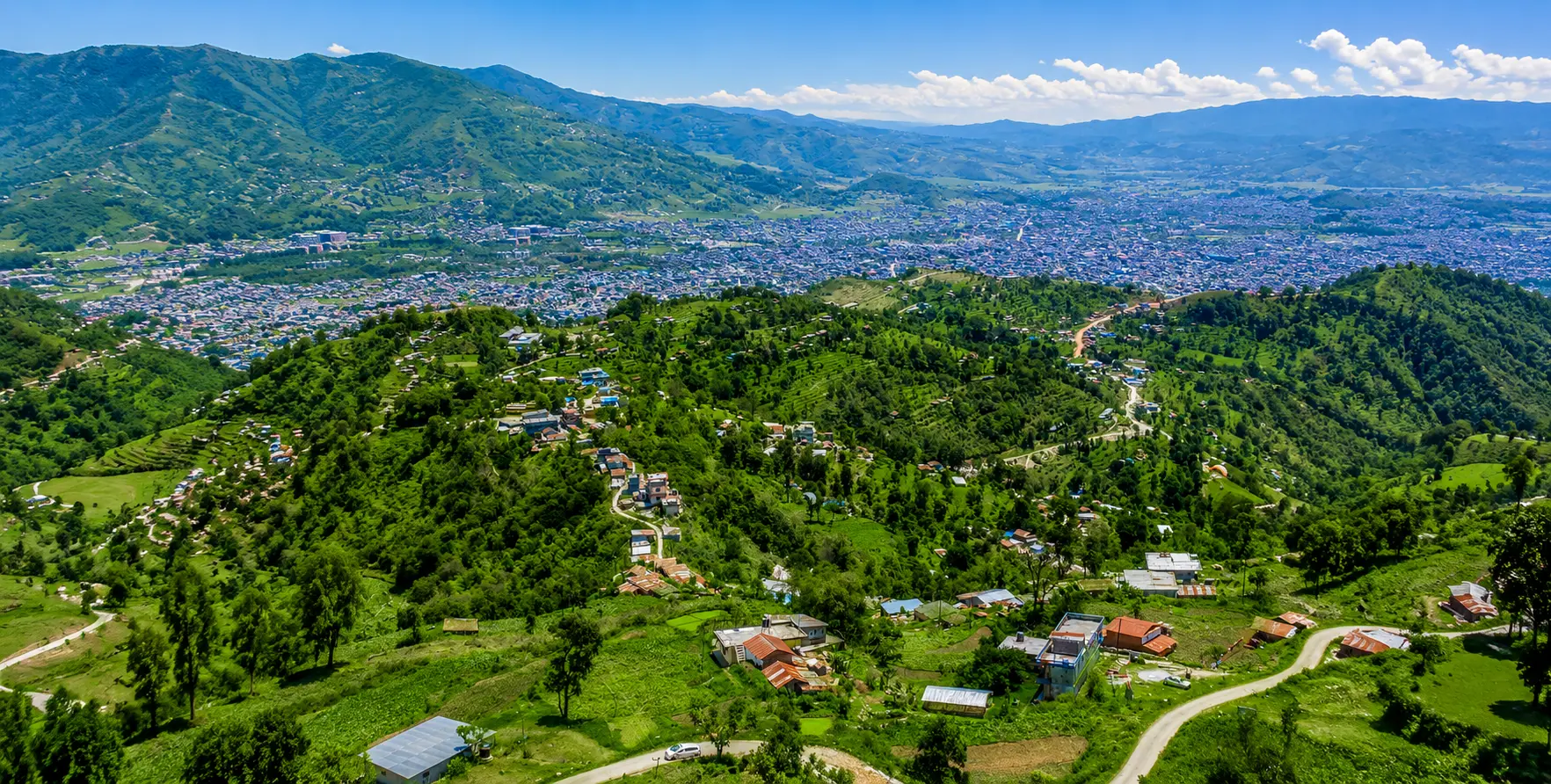
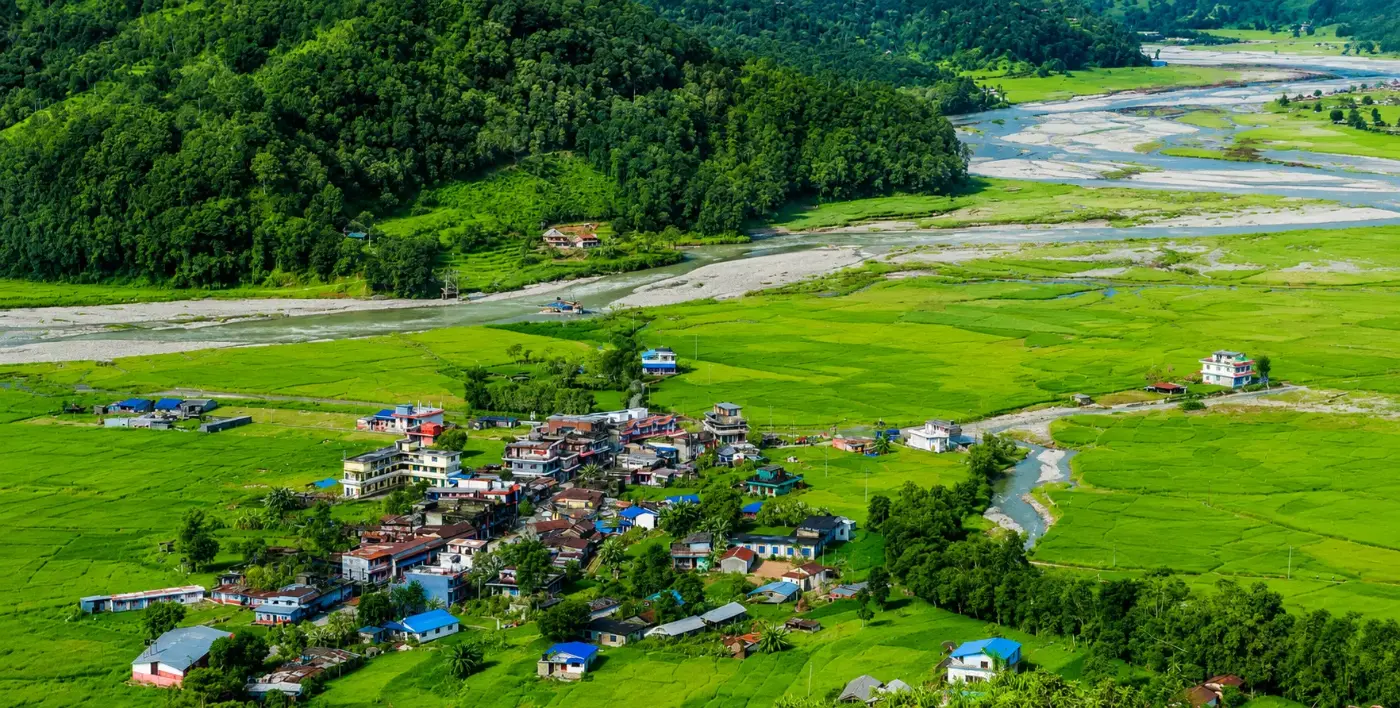
In a region famous for first-rate Himalayan trekking, stunning lakeside vistas, and adrenaline-fuelled adventure sports, the quiet valley village of Pame stands as one of Pokhara’s best-kept secrets — a place of genuine rural authenticity, natural beauty, and an unhurried pace that offers a refreshing contrast to the busy tourist trails of the more celebrated Annapurna circuit routes. Located in the Harpan River Valley north of Phewa Lake, Pame is a traditional Nepali settlement surrounded by rice paddies, fishing communities, terraced farmland, and the gently dramatic hillsides of Naundanda and Bhumdi, which frame the valley on both sides.

Pame sits at an altitude of approximately 1,000 meters (3,280 feet) above sea level — comfortably accessible from Pokhara Lakeside without altitude concerns and at the perfect elevation to enjoy cool mountain air, spectacular views of Annapurna South and Machapuchare (Fishtail) on clear days, and the authentic rhythm of a traditional Nepali farming village. The Harpan River flows through the valley on its way to merge with Phewa Lake, and its clean waters support local fishing and small-scale aquaculture—a way of life that has continued for generations and gives Pame its distinctive character.

While Pame has long been popular among the Pokhara mountain biking community — the trails through the Harpan River Valley are considered among the finest recreational cycling routes near the city — the village is equally rewarding for visitors arriving by private vehicle. A private jeep or car hire from Pokhara to Pame offers a completely different Annapurna region experience: one of pastoral landscapes, riverside walks, village-life encounters, and stunning mountain views without the crowds, altitude demands, or physical commitment of the major trekking routes.

This complete guide covers everything you need to know about hiring a private vehicle from Pokhara to Pame: the full route narrative, road conditions, vehicle hire costs, the best things to see and do in Pame and the surrounding Harpan Valley, the best season to visit, practical tips for making the most of your trip, and how Nepal Vehicle Hiring Pvt. Ltd. — Pokhara’s most trusted private vehicle hire company — can make your Pame village journey smooth, comfortable, and memorable.

Pokhara to Pame Vehicle Hire — Quick Reference
Destination: Pame Village, Harpan River Valley, Kaski District, Gandaki Province
Altitude: Approx. 1,000 m (3,280 ft) above sea level
Distance from Pokhara Lakeside: Approx. 15–20 km
Drive Time: 35–55 minutes from Pokhara Lakeside
Route: Pokhara Lakeside → Khapaudi → Chankhapur → Pame Village (Harpan River Valley)
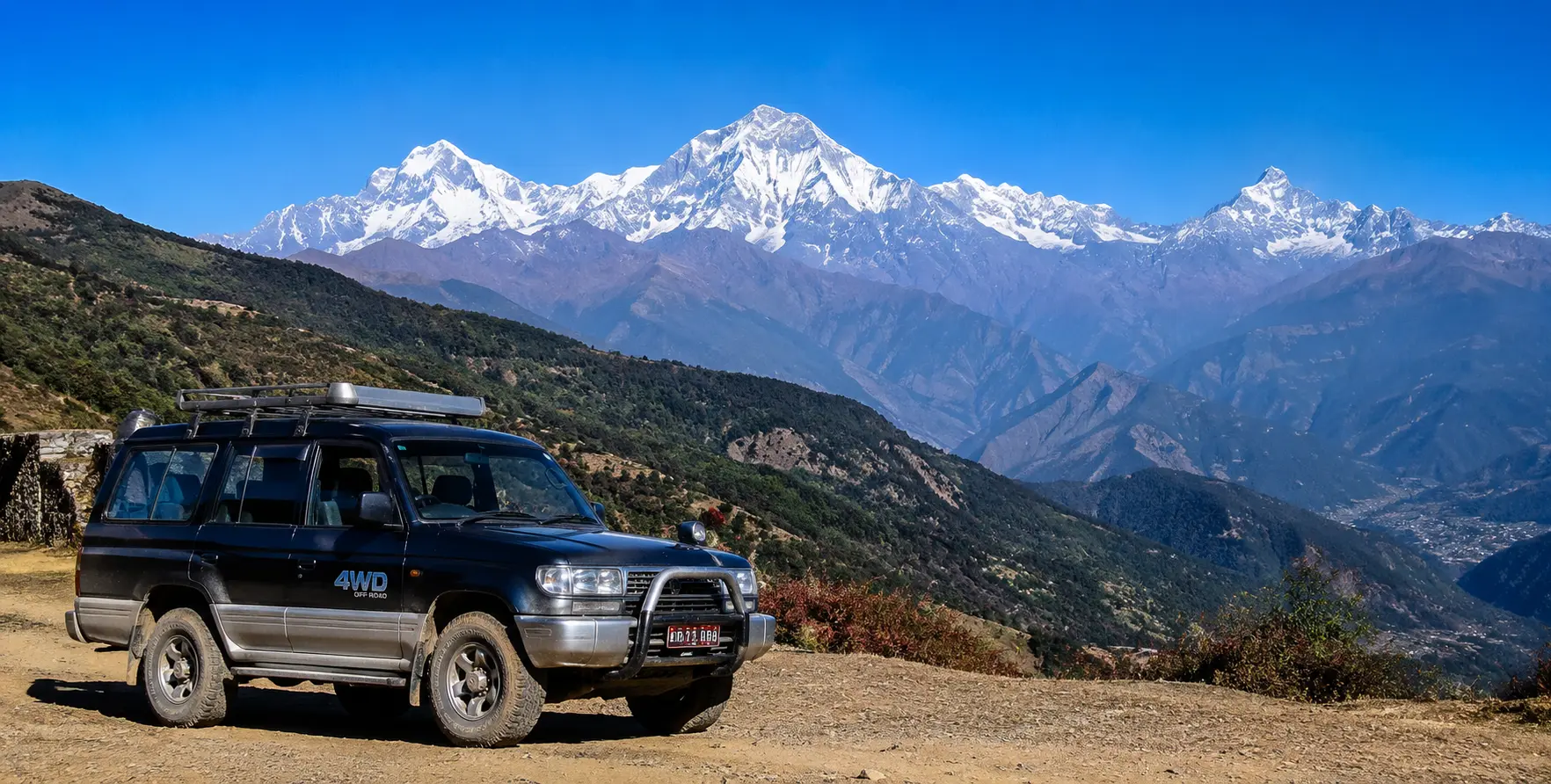
Vehicle Options: Car (Sedan/SUV), 4WD Jeep — 4WD preferred for the final approach
Permits: No special permits are required for the Pame village visit
Best Season: Year-round | Best October–May for mountain views | June–September lush green
Highlights: Harpan River Valley, rice paddies, Panchase views, fishing villages, nature walks
Book With: Nepal Vehicle Hiring Pvt. Ltd. |WhatsApp | vehiclehiringnepal.com

Book Pokhara to Pame Vehicle Hire 2026 with the best private jeep, car, or SUV for a safe and comfortable journey to Pame Village.

Pame Village: A Portrait of Rural Pokhara Life

Where Is Pame and Why Is It Special?

Pame village sits in the Harpan River Valley, a beautiful rural corridor that runs roughly north to south between the hills of Naundanda (to the west) and Bhumdi (to the east), eventually opening onto the northern shores of Phewa Lake. The village lies within Kaski District, part of the broader Pokhara metropolitan area.

Yet its character is unmistakably that of a traditional Nepali farming and fishing community—a world away from the tourist hotels and adventure booking offices of Lakeside, despite being just 15–20 kilometres away.

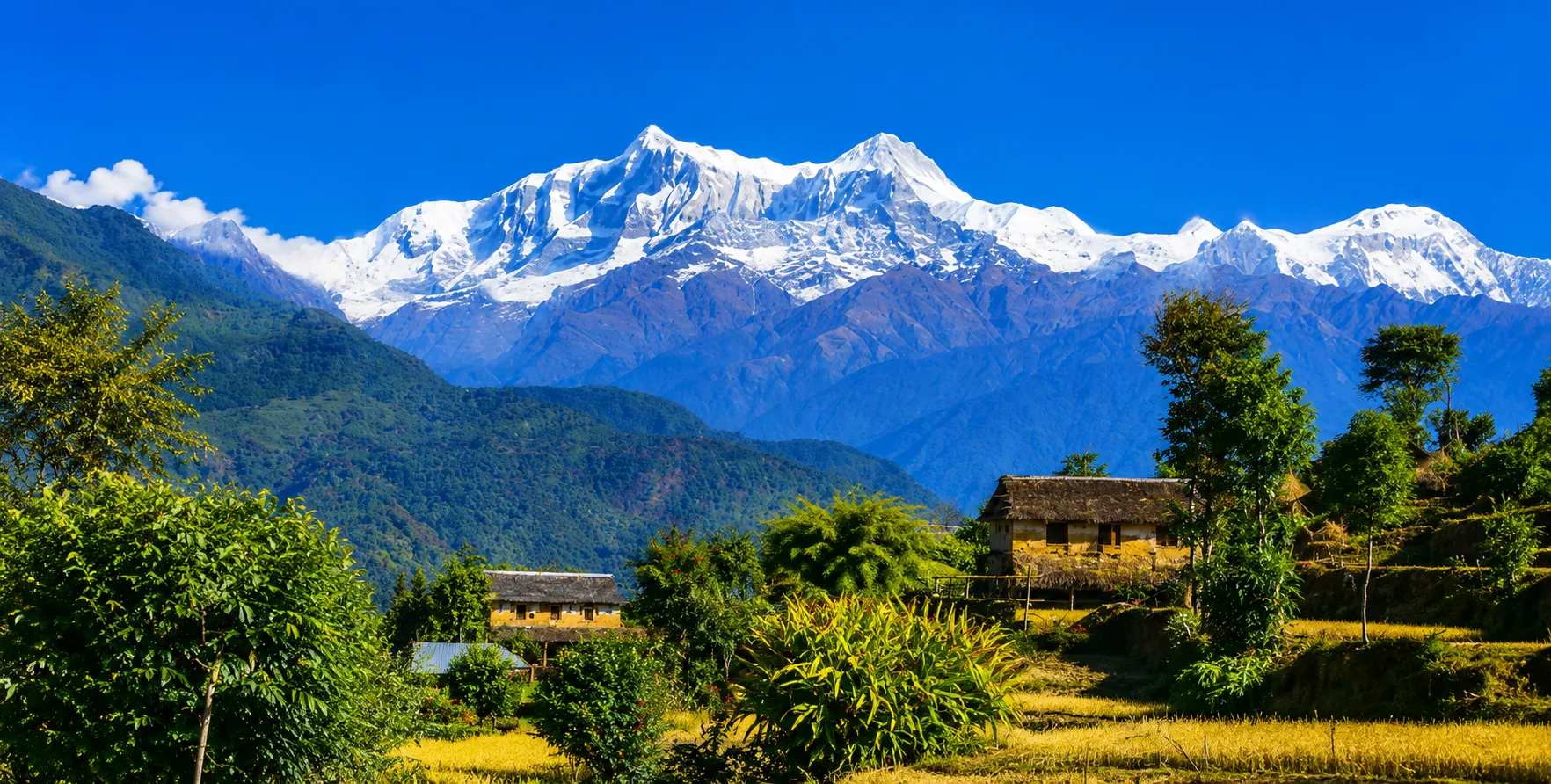
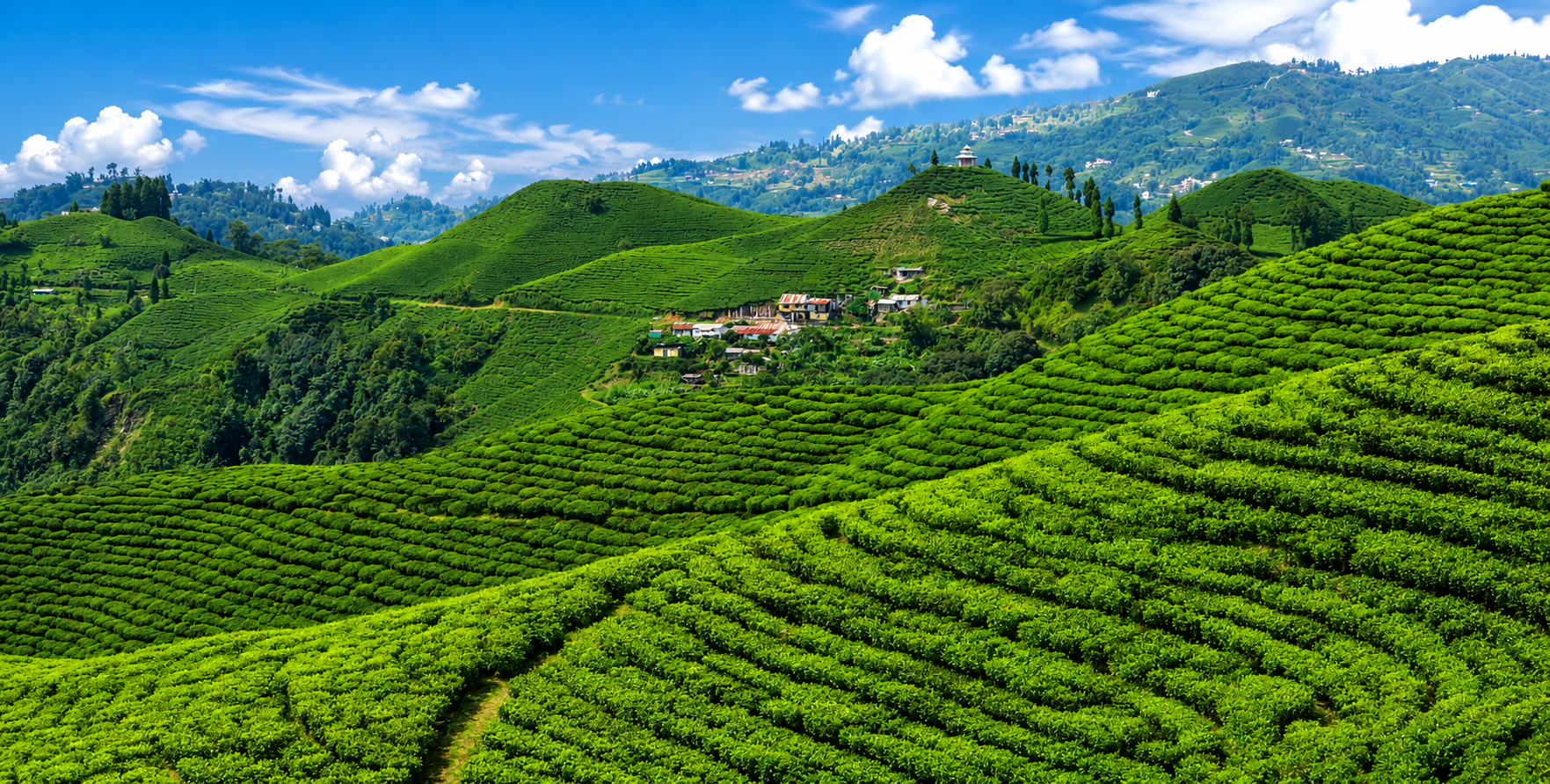
The landscape around Pame is defined by the Harpan Khola river, which flows clean and clear through the valley, sustaining a network of small-scale fisheries and fish farming operations that have been the community’s economic backbone for generations. The riverbanks are lined with trees, the valley floor is a patchwork of rice paddies and millet fields cultivated in traditional terraced patterns, and the surrounding hillsides are covered in mixed subtropical forest, providing a vivid green backdrop year-round.

What makes Pame genuinely special — and increasingly sought out by visitors who have exhausted Pokhara’s more obvious attractions — is its combination of accessibility and authenticity. You can be in Pame from Pokhara Lakeside in under an hour by private vehicle.

Yet, once there, the pace of life, the agricultural rhythms, and the village community feel genuinely removed from the tourist economy. Children walk to school along river paths. Farmers tend terraced fields by hand.

Fishermen work their nets in the morning light. These are the scenes that give Pame its soul — and that a private vehicle hire from Nepal Vehicle Hiring Pvt. Ltd. places within easy reach of any Pokhara visitor.
Book Pokhara to Pame Vehicle Hire 2026 with the best private jeep, car, or SUV for a safe and comfortable journey to Pame Village.

The Harpan River Valley — A Natural Playground

The Harpan River Valley is the geographic and scenic heart of the Pame area. The river itself rises in the hills above and descends through the valley to feed Phewa Lake — Nepal’s second-largest natural freshwater lake — at its northern end. Along its course through the Pame area, the Harpan Khola is clean, relatively gentle, and surrounded by an unspoiled riparian environment that has become increasingly rare near Nepal’s growing cities.

The valley floor on both sides of the river is intensively cultivated—rice in the monsoon season (June–October), wheat and millet in the winter—creating a visual mix of agricultural landscape that changes dramatically with the seasons. In post-monsoon October and November, the valley is at its greenest, with rice ready for harvest and the mountain backdrop at its clearest.

In spring (March–May), mustard flowers add brilliant yellow to the cultivated landscape. Throughout the year, the river itself draws local anglers fishing for mahseer and other freshwater species.

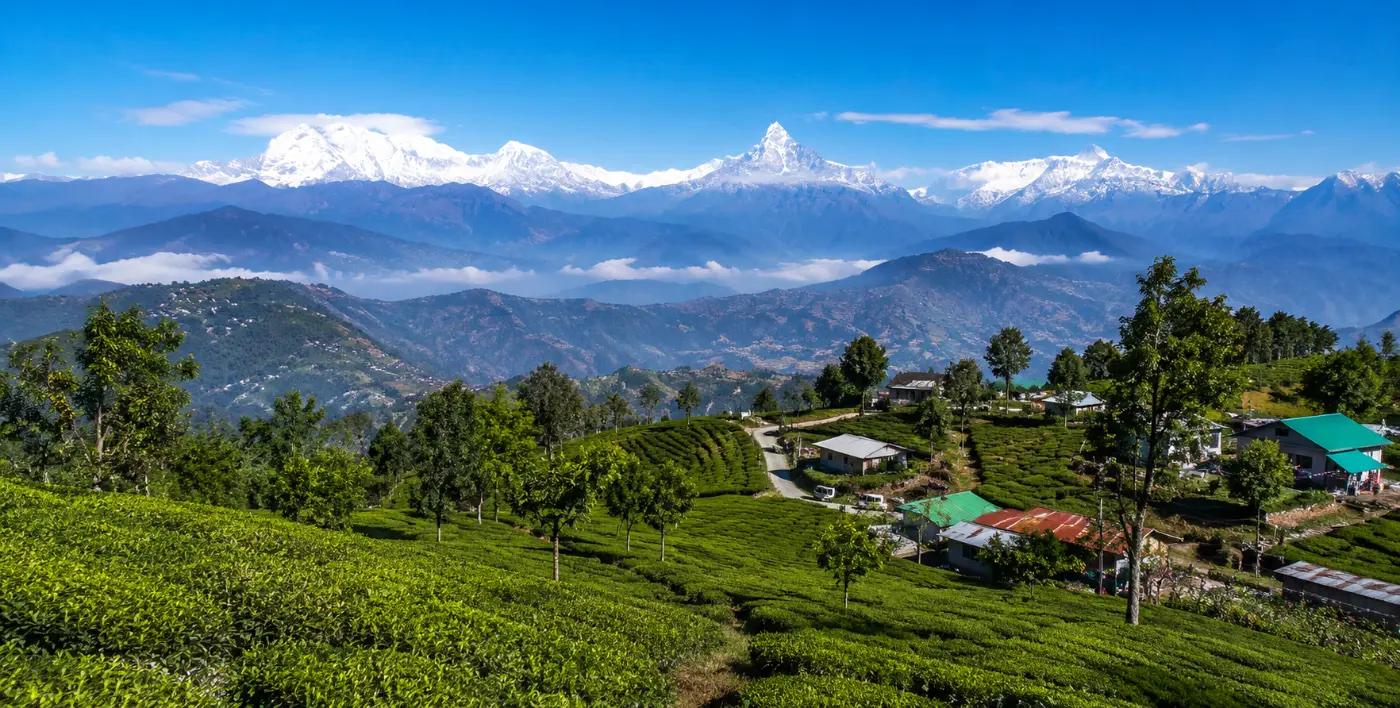
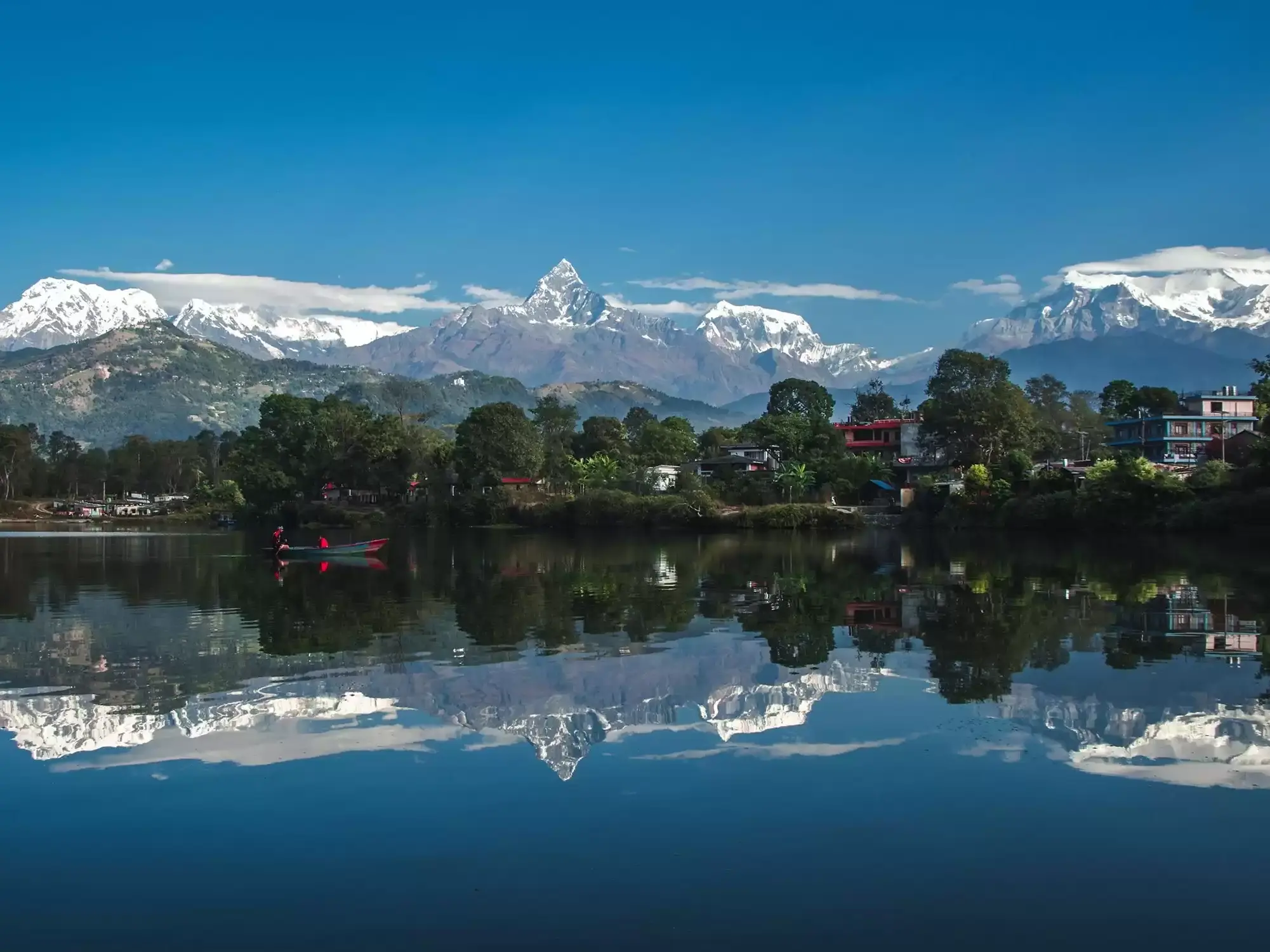
The hills on either side of the valley—Nudanda to the west and Bhumdi Hill to the east—provide the dramatic topographic framing that makes the Harpan Valley so photogenic. From certain points along the valley floor, the snowy summits of Annapurna South (7,219 m) and Machapuchare (Fishtail, 6,993 m) are visible above the ridgeline in the mornings — a reminder that you are in the Annapurna foothills even at this relatively modest altitude.
Book Pokhara to Pame Vehicle Hire 2026 with the best private jeep, car, or SUV for a safe and comfortable journey to Pame Village.

Pame as a Gateway — Beyond the Village

Pame village itself is a destination worth visiting for its own rural charm. Still, it also serves as a gateway or staging point for several other nearby attractions and activities that make the Pokhara to Pame vehicle hire even more versatile and rewarding:

  • Panchase Hill and Trek — Pame sits in the valley below the Panchase ridge, and the Harpan Valley approach to Panchase Bhanjyang (2,450 m) passes through or near Pame. For trekkers who want to begin the Panchase Trek from the valley floor (rather than from Kande on the ridge road), Pame and Bhadaure are the logical starting points, accessible by private vehicle from Pokhara.
  • Bhumdi Village — The traditional Gurung village of Bhumdi (also known as Pumdi Bhumdi) is accessible from Pame via a short hike or a rough vehicle track. It is a popular overnight stop for Panchase trekkers. The village has several teahouses and offers excellent views of the Annapurna range.
  • Harpan River Swimming and Picnicking — The Harpan Khola at Pame has calm, clean sections suitable for swimming in the warmer months, and the riverside is a popular picnic destination for local families and day-tripping visitors from Pokhara.
  • Fishing and Fish Farm Visits — The Pame area’s small-scale fisheries and fish farms are a distinctive feature of the local landscape, and a visit to one of these operations offers genuinely different insight into rural Nepali economic life.
  • Nature Photography — The Harpan Valley landscape, with its combination of river, farmland, forested hills, traditional village architecture, anda  Himalayan peak backdrop, is an outstanding subject for photography year-round and in all lighting conditions.
  • Khapaudi and Chankhapur Villages — The route from Pokhara to Pame passes through Khapaudi and Chankhapur, both with their own rural character and views of Phewa Lake from higher ground above the valley floor.
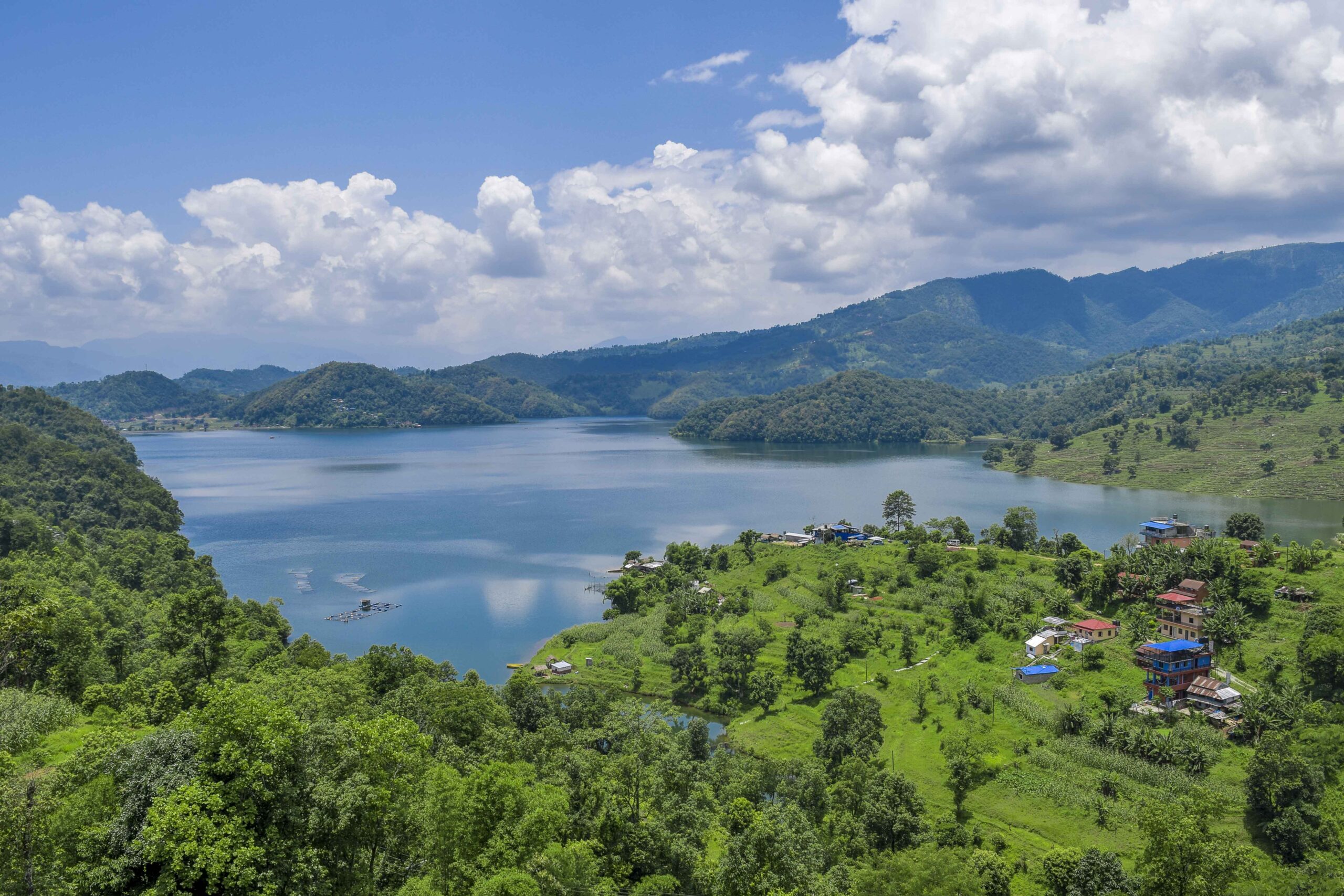
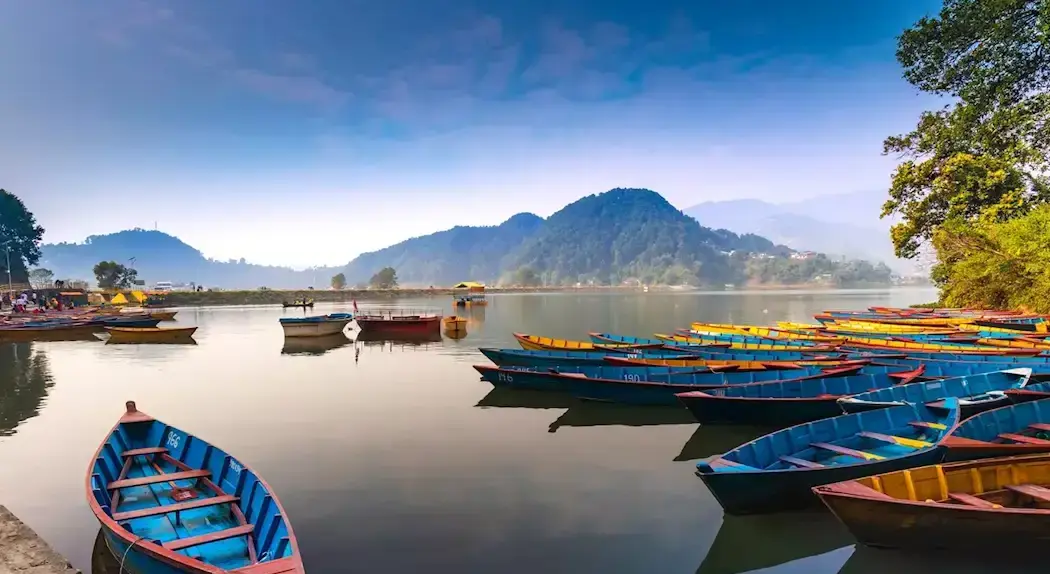
Begnas Lake Pokhara

The Route: Pokhara to Pame Vehicle Hire

Route Overview

The journey from Pokhara Lakeside to Pame village follows a relatively short but scenic route that heads north from Phewa Lake along the western edge of the Harpan River Valley. The road passes through the settlements of Khapaudi and Chankhapur before descending into the valley floor toward Pame.

The total distance is about 15–20 km from Pokhara Lakeside, and the drive takes 35–55 minutes, depending on road conditions and the exact starting point in Pokhara.

Route CheckpointDistance from Pokhara LakesideAltitudeDrive Time
Pokhara Lakeside (Start Point)0 km822 mDeparture
Pokhara Bazar / Prithvi Chowk3 km830 m8–12 min
Khapaudi Area8–10 km900–950 m20–28 min
Chankhapur Village12–13 km920–960 m25–35 min
Harpan River Valley Floor14–16 km950–980 m30–40 min
Pame Village15–20 km1,000 m35–55 min

The Drive — Stage by Stage

Stage 1 — Pokhara Lakeside to Khapaudi (8–10 km, approx. 20–28 minutes): Leaving Pokhara Lakeside northward, the vehicle navigates through the streets of central Pokhara before picking up the road heading toward the northern lakeshore and the hills beyond. The road climbs gradually out of the flat lake basin onto the lower slopes of the ridge above Phewa Lake, passing through the increasingly rural settlement of Khapaudi.

From the elevated sections near Khapaudi, the view back over Phewa Lake and the Pokhara skyline, with the Annapurna range as a backdrop on clear days, is already spectacular. The road quality is generally paved in this section, but narrows in places.

Stage 2 — Khapaudi to Chankhapur (3–4 km, approx. 8–10 minutes): Continuing through the Khapaudi area, the road passes through Chankhapur — a small village settlement with traditional Nepali houses, a local school, and the kind of unhurried community life that characterises the Harpan Valley corridor. At this point, the road offers increasingly open views to the north and east, with Bhumdi Hill and the distant Panchase Ridge coming into clearer view.

Beyond Chankhapur, the road surface transitions from paved to partially unpaved in sections.

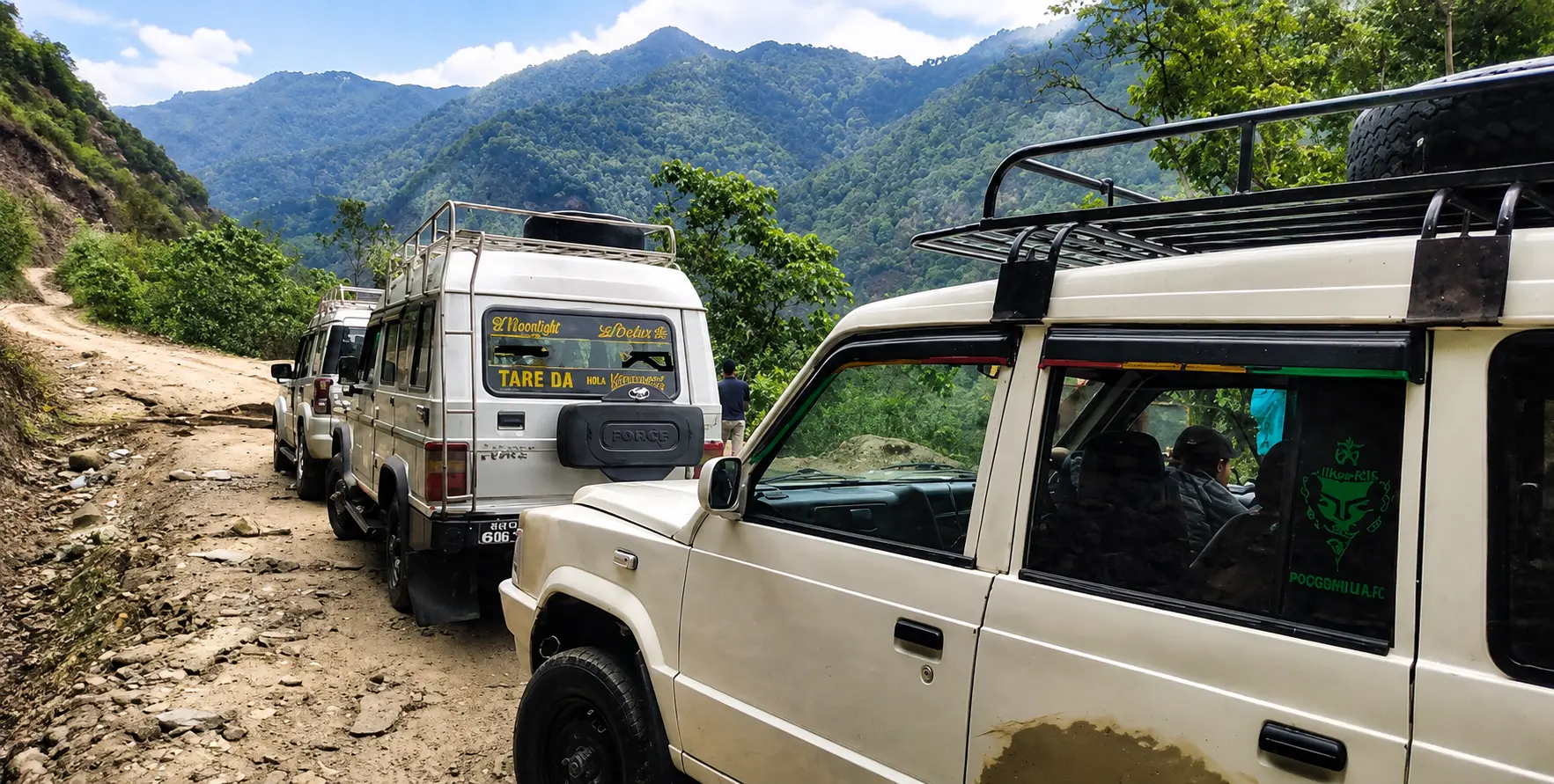
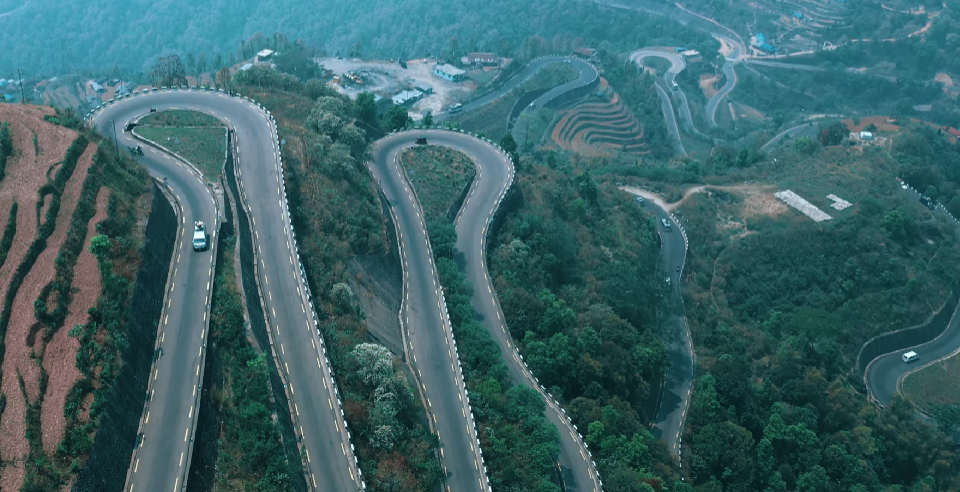
Stage 3 — Chankhapur to Pame Village (3–7 km, approx. 10–20 minutes): The final approach to Pame descends from the ridge area into the Harpan River Valley floor. The road narrows and roughens as it approaches the village—this is where a 4WD vehicle or jeep has a clear advantage over a standard car, particularly after rainfall or during the monsoon season.

The descent reveals the full beauty of the Harpan River Valley for the first time: the patchwork of agricultural land, the glittering river, the fishing ponds, and the peaceful village settlement of Pame set against the hillside. Arriving in Pame feels like entering a genuinely different Nepal — quiet, agricultural, and authentically beautiful.

Alternative Routes and Extensions

Via Baglung Highway then Valley Road: An alternative approach from Pokhara follows the Beni-Baglung Highway westward to the Naudanda junction area, then branches south into the Harpan Valley from above. This approach offers spectacular ridge-level views before descending into the valley, but is longer (approximately 25–30 km) and requires the Naudanda-Bhadaure branch road, which is rougher and requires a 4WD vehicle.

Extension to Bhadaure (Panchase Trek Trailhead): From Pame, the rough valley road continues northward toward Bhadaure village (approximately 5–8 km further) — the low-level starting point for the Panchase Trek. Nepal Vehicle Hiring Pvt. Ltd. can arrange a combined Pame visit and Panchase Trek trailhead drop-off in a single vehicle hire, making this an excellent combined itinerary for trekkers.

Extension to Bhumdi Village: From Pame, a short rough track (passable by 4WD) leads to Bhumdi village (Pumdi Bhumdi) — a traditional Gurung community at approximately 1,500 m with outstanding Annapurna range views and several teahouses. This extension adds approximately 45–60 minutes to the journey but substantially enhances the day’s cultural and scenic depth.
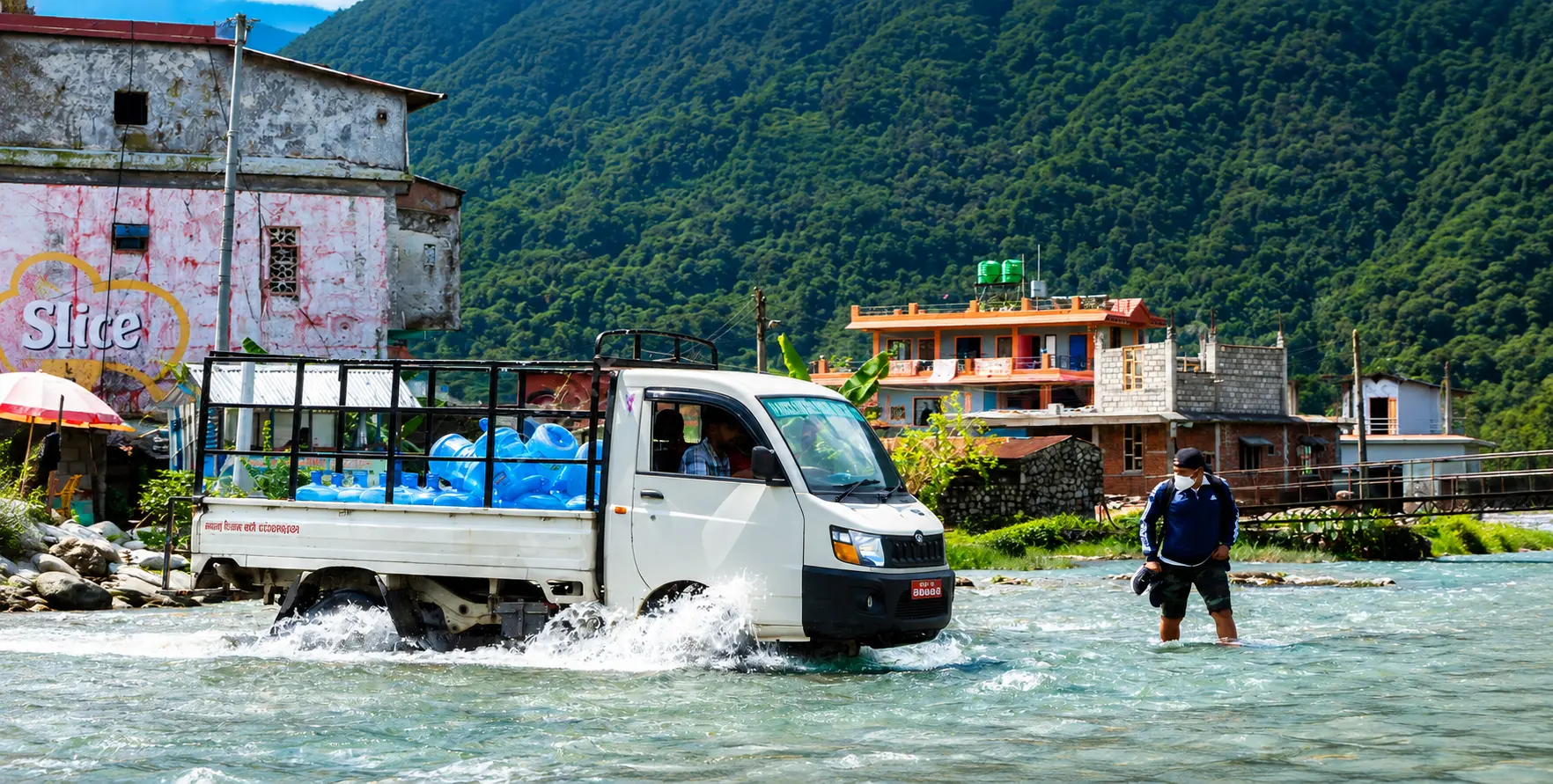
pokhara-to-pame-vehicle-hire

Road Conditions: Pokhara to Pame

Pokhara to Khapaudi — Generally Good Paved Road

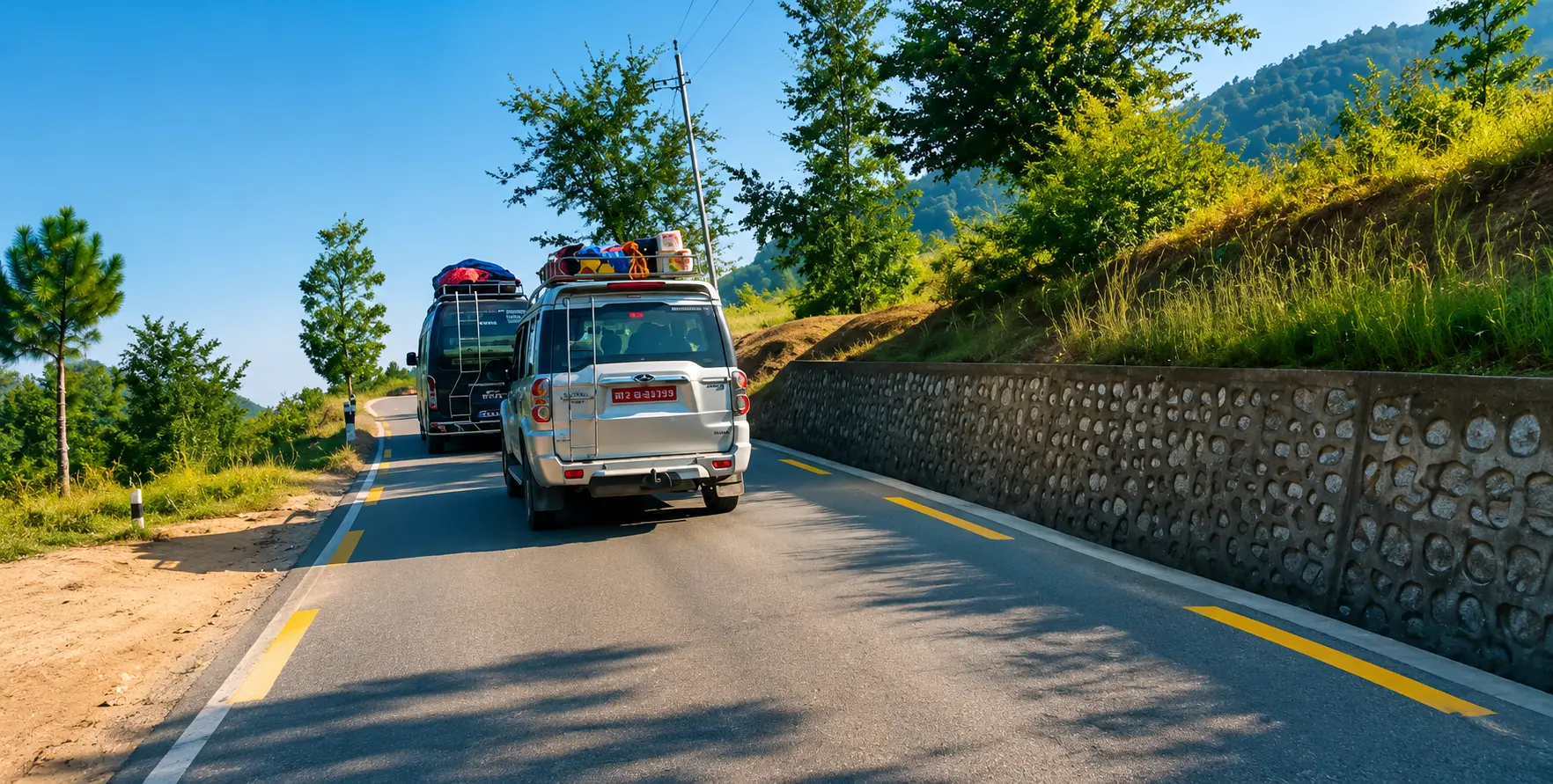
The road from Pokhara Lakeside to the Khapaudi area is primarily paved and in reasonable condition, though it narrows considerably beyond Pokhara’s main residential areas. The road is shared with local traffic, including motorcycles, pedestrians, and occasional farm vehicles. Standard cars and jeeps can navigate it comfortably in dry conditions.

During the monsoon, some sections of this approach may have minor water damage or slippery surfaces.

Beyond Khapaudi,, through Chankhapur to Pame village, road quality becomes more variable. Sections alternate between paved and unpaved, and the road narrows significantly in the final approach to the valley floor.

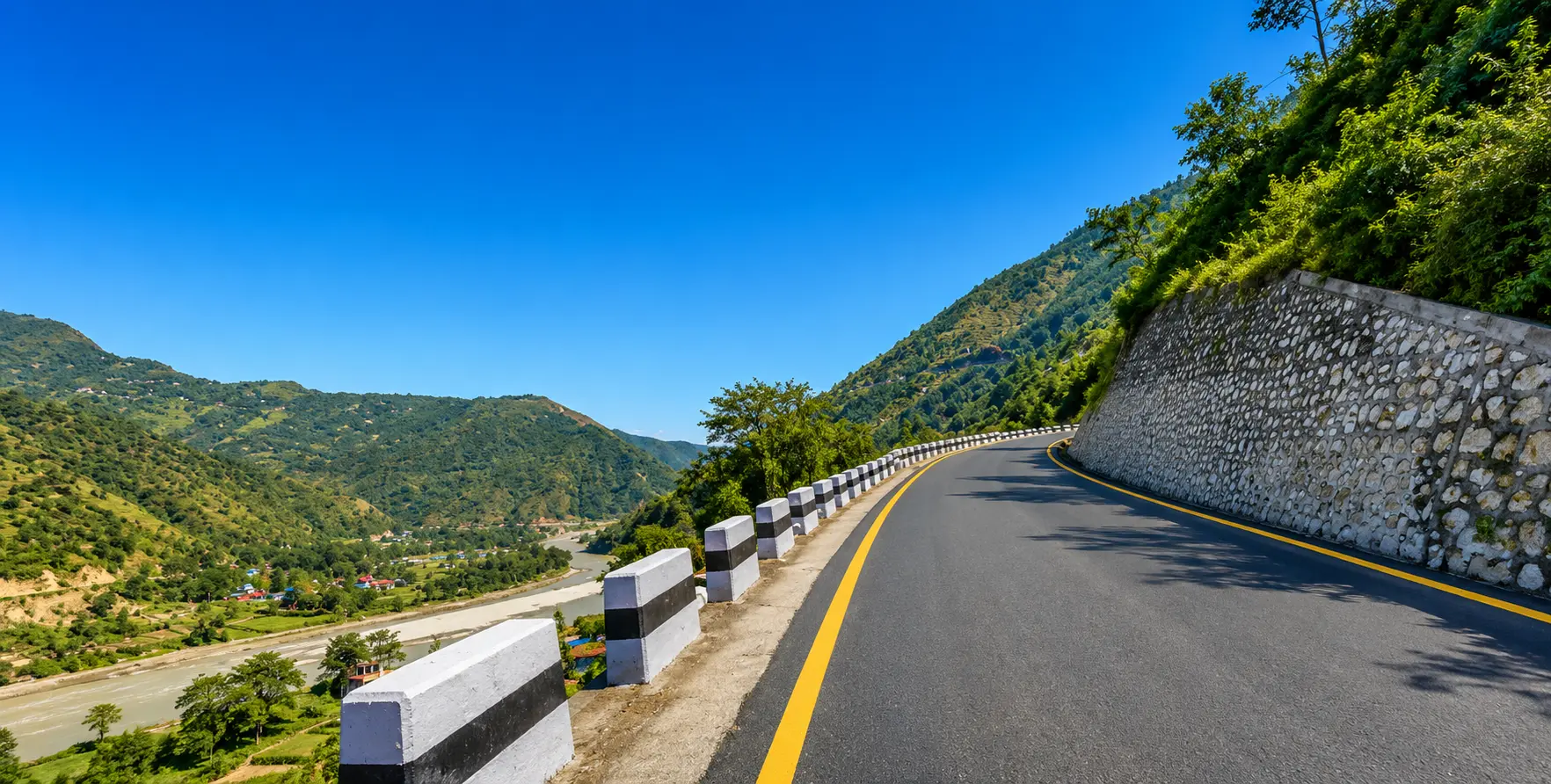
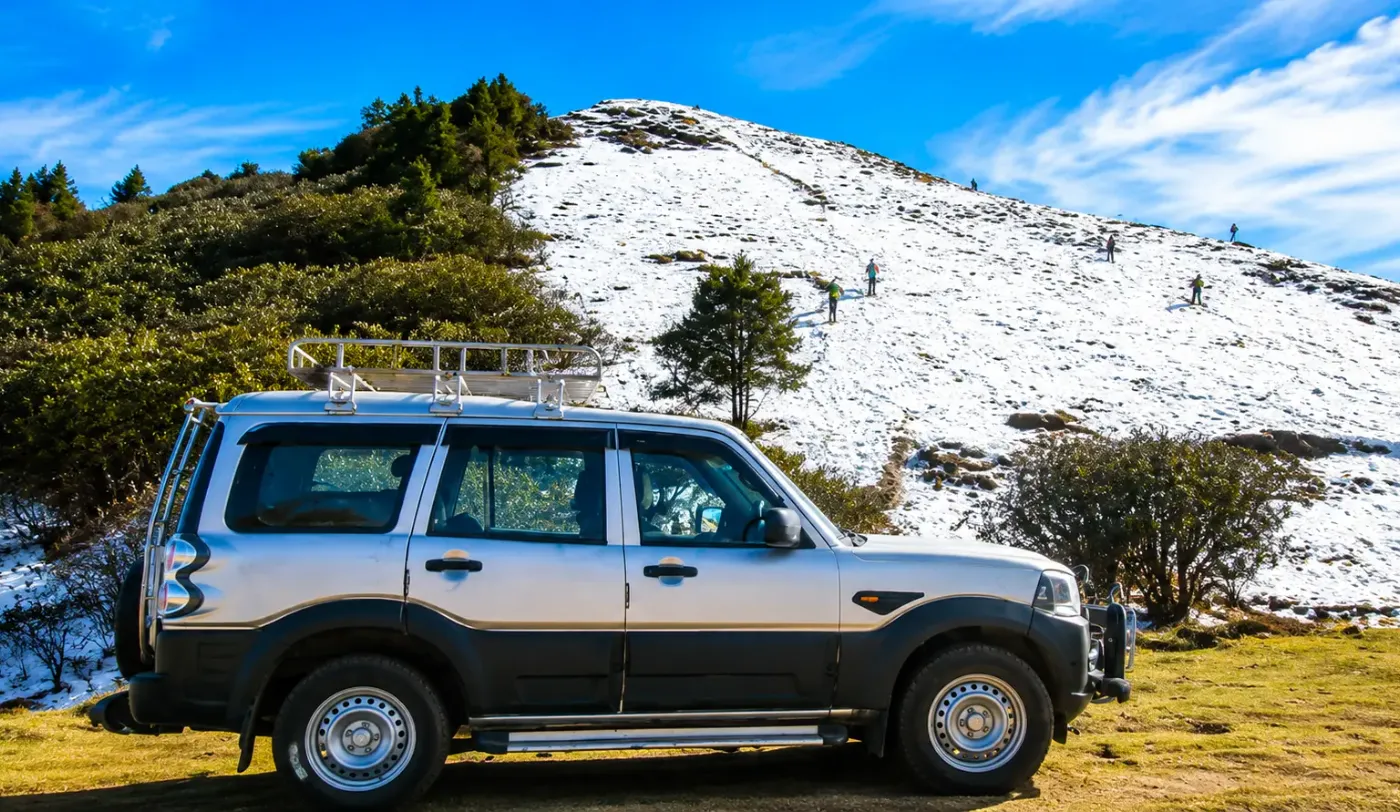
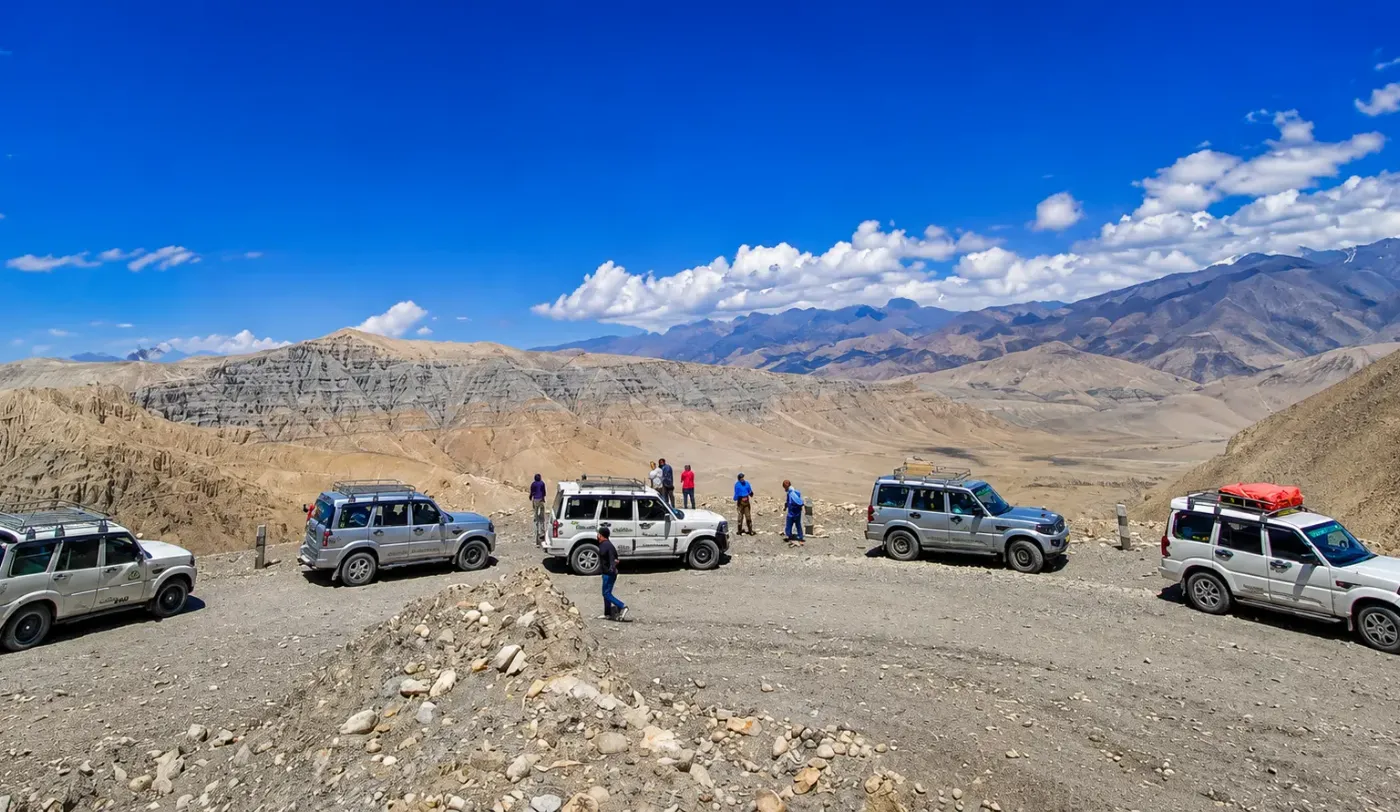
The descent into the Harpan River Valley includes steep, winding sections where a 4WD vehicle with good ground clearance offers a noticeably more confident and comfortable driving experience than a standard car. Nepal Vehicle Hiring Pvt. Ltd. recommends a 4WD jeep (Fortuner, Hilux, or Scorpio) for the Pokhara-Pame route as the first choice, though a capable SUV can also handle the route in dry conditions.

Road Conditions by Season

SeasonPokhara to KhapaudiKhapaudi to PameVehicle Recommendation
October–December (Autumn)Good — dry, stableGood — some rough patchesCar or Jeep — both fine
January–February (Winter)Good — cool, dryGood — occasional muddy sectionsCar or Jeep — both fine
March–May (Spring)Good — warming upGood — best dry season conditionsCar or Jeep — both fine
June–September (Monsoon)Fair — some road damage possibleChallenging — muddy, slippery sections4WD Jeep is strongly recommended

Pokhara

Vehicle Recommendation for Pokhara to Pame
Best Choice: 4WD Jeep (Fortuner, Hilux, Scorpio) — confident on all sections year-round
Also Suitable: Car/SUV (Sedan, SUV) — fine in dry season (Oct–May) on the main road
Monsoon Season (June–September): 4WD Jeep ONLY for the Khapaudi–Pame approach
Extension to Bhadaure or Bhumdi: 4WD Jeep required at all times of year
Nepal Vehicle Hiring Pvt. Ltd. provides both car and 4WD jeep options for this route

kathmandu to salleri jeep

Pokhara to Pame Vehicle Hire Cost

Private Vehicle Hire — One Way and Day Trip Options

A private vehicle hire from Pokhara to Pame is the most comfortable, flexible, and convenient way to visit the village and the Harpan River Valley. Hotel pickup from anywhere in Pokhara Lakeside, departure at your chosen time, the freedom to stop at viewpoints along the Khapaudi ridge, and door-to-destination delivery make private hire the natural choice for families, groups, photographers, nature lovers, and anyone who values their time and comfort.

Vehicle TypeCapacityOne-Way Cost (Pokhara→Pame)Full Day Return Cost
Private Car (Sedan/SUV)1–4 paxNPR 2,000–5,000NPR 5,000–10,000
4WD Jeep (Scorpio/Bolero)1–5 paxNPR 2,500–6000NPR 6,000–13,000
4WD Jeep1–6 paxNPR 3,000–7000NPR 7,500–15,000
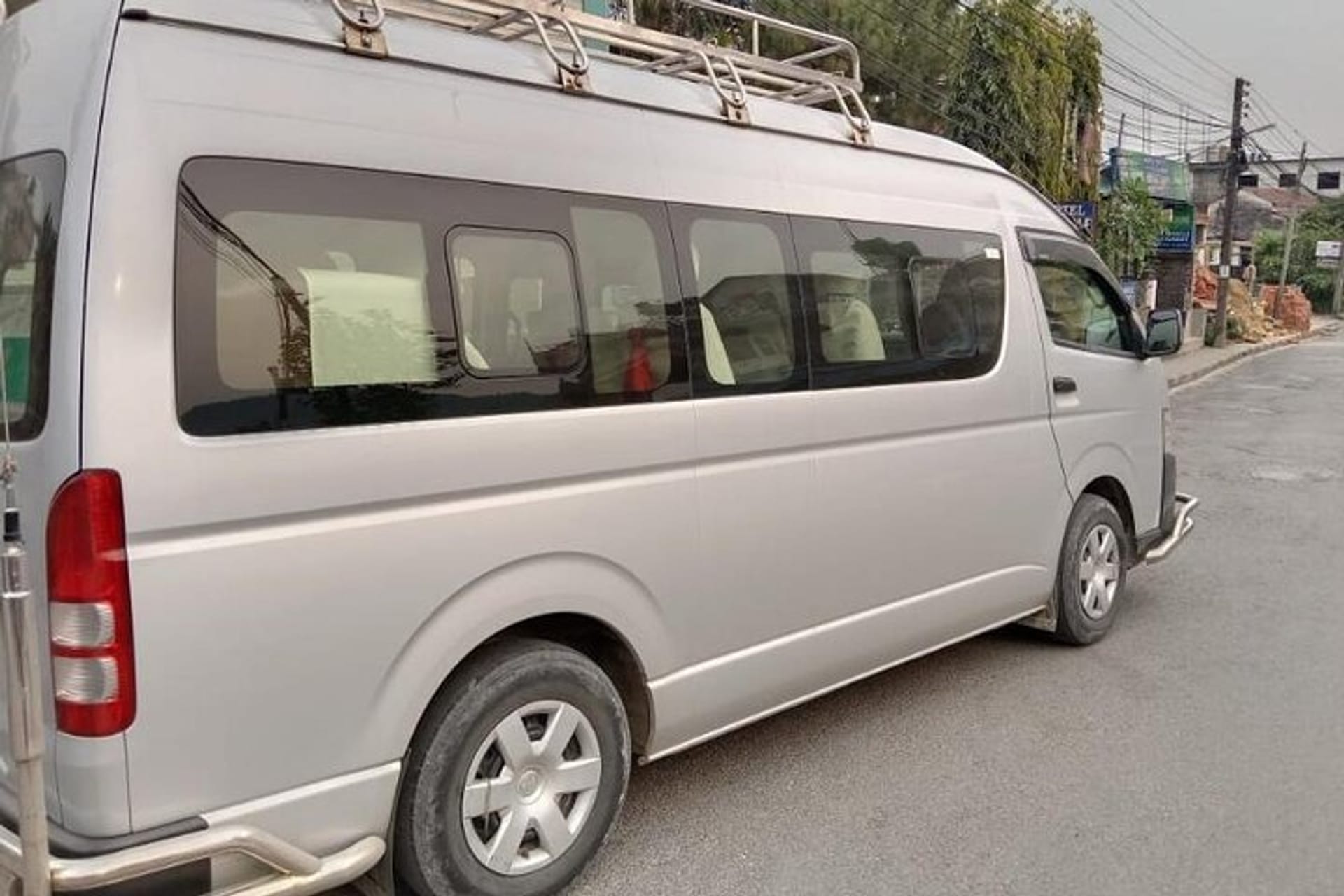
Hiace Van7–14 paxNPR 5,000–10,000NPR 12,000–25,000

Full Day Package Includes: Hotel pickup in Pokhara Lakeside, drive to Pame with stops at Khapaudi viewpoint, flexible time in Pame village and Harpan Valley, optional extension to Bhumdi or Bhadaure, and return to the hotel in Pokhara. Full day (8–10 hours total).

Half-Day Package: Hotel pickup, drive to Pame, 2–3 hours in the valley, return to Pokhara. Best for visitors with limited time who want a taste of the Harpan Valley without committing a full day.

One Way (Drop-off Only): For trekkers beginning the Panchase Trek from Bhadaure, or cyclists hiring a vehicle for support on the Pame route, a one-way drop-off at Pame (or onward to Bhadaure) is also available. You can arrange return vehicle pickup separately.

For groups of 4 or more, a private vehicle hire to Pame is extremely affordable per person—often less expensive than multiple shared taxi arrangements—while offering the added benefits of hotel pickup, flexible timing, and the freedom to explore the Harpan Valley at your own pace.

Combined Pame + Panchase Trek Vehicle Package

Nepal Vehicle Hiring Pvt. Ltd. offers a popular combined package for trekkers who want to begin the Panchase Trek from the Bhadaure trailhead (the lowest and most culturally rich starting point, located approximately 5–8 km north of Pame). The package includes: vehicle pickup from a Pokhara hotel, a scenic drive through Khapaudi and Pame, an optional valley stop for photography and a village walk, a continuation to the Bhadaure trek trailhead, and a pre-arranged return vehicle pickup from Naudanda or Kande on your trek completion day.

This combined package saves trekkers significant time and logistical complexity. Contact Nepal Vehicle Hiring Pvt. Ltd. for a custom quote.
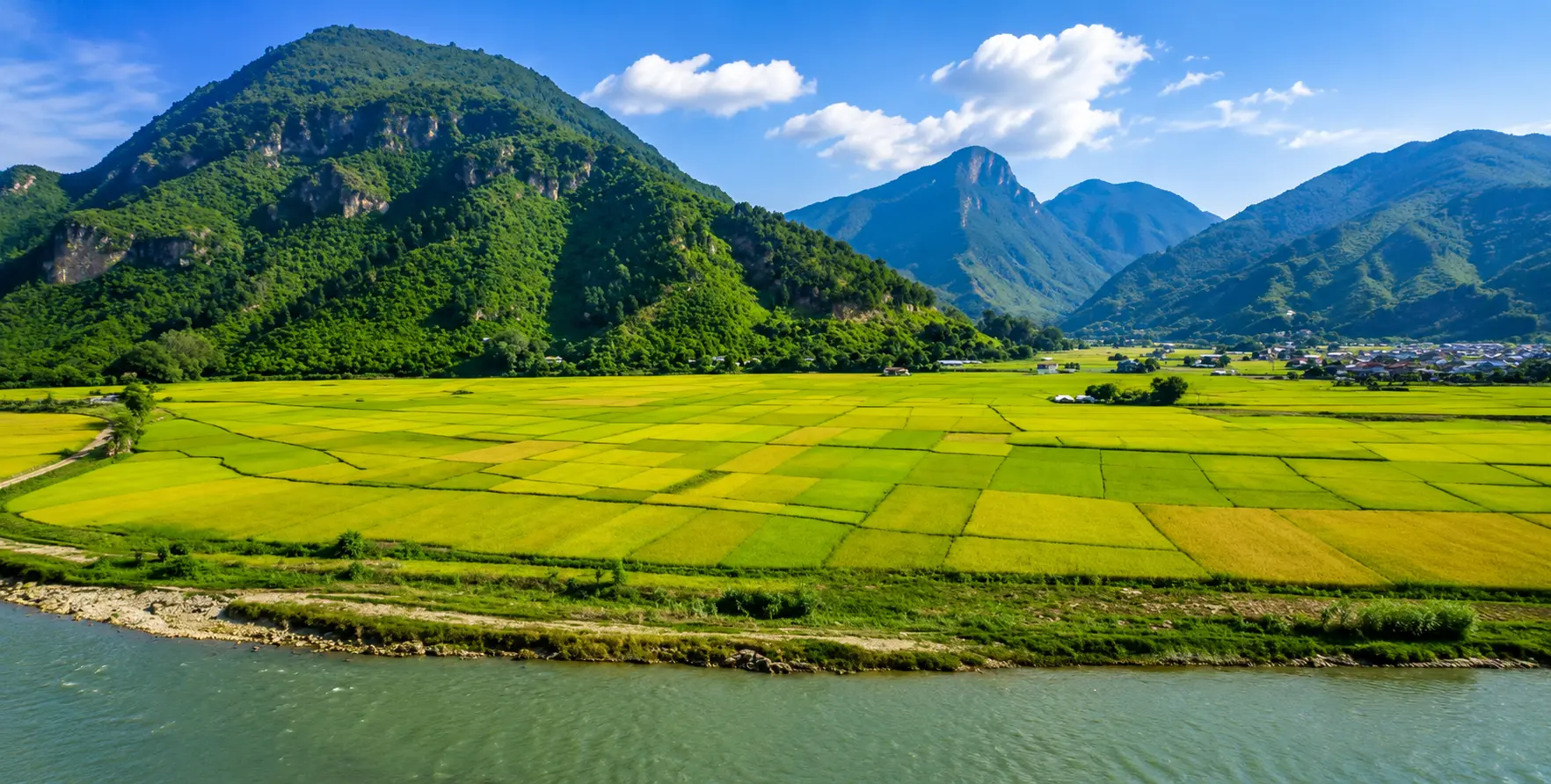
Book Pokhara to Pame Vehicle Hire 2026 with the best private jeep, car, or SUV for a safe and comfortable journey to Pame Village.

What to See and Do in Pame and the Harpan River Valley

1. The Harpan River Walk — Nature at Its Finest

The most rewarding and peaceful activity in Pame is simply walking along the Harpan Khola riverbank — a gentle, flat path that follows the river through a landscape of extraordinary rural beauty. The riverside path connects several small villages and farming settlements, passing through bamboo groves, fish ponds, riverside orchards, and open agricultural land with unobstructed views of the surrounding hills and the distant Annapurna peaks.

The path is easy underfoot and suitable for all ages and fitness levels, making it ideal for families, elderly visitors, and anyone who wants to experience Himalayan natural beauty without strenuous hiking.

The best time for the river walk is early morning (7:00–10:00 AM) when the light is golden, the air is cool, and the local farming activity is at its most active and photogenic. Fishermen casting nets from the riverbank, farmers walking to their fields, school children making the morning journey along the path, and the occasional heron or kingfisher working the shallows — these are the sights and sounds that make the Harpan River in Pame a genuinely memorable Nepal experience.

2. Fish Farm and Fishery Visits

The Pame area is well known within Kaski District for its network of small-scale fish farms and fishing operations along the Harpan Khola. Common carp, silver carp, grass carp, and the prized native mahseer are cultivated and caught in the valley’s clean river waters.

A visit to a local fishery — where the owner will typically be happy to show visitors around if approached respectfully — offers a fascinating insight into traditional and semi-modern small-scale aquaculture in rural Nepal. Some local teahouses near the river also serve freshly caught fish dishes (macha bhat — fish with rice), considered among the finest rural Nepali dishes in the Pokhara region.

3. Rice Paddy and Agricultural Landscape Photography

The Harpan River Valley’s agricultural landscape is among the most photogenic in the Pokhara region, offering a classic Nepal rural-photography composition: terraced fields in the foreground, traditional stone farmhouses in the midground, forested hillsides in the background, and snow-capped Himalayan peaks on the horizon. The optimal photography season is October–November (post-monsoon, when the rice is golden and ready for harvest, the air is clear, and the mountains are perfectly visible) and March–April (when mustard flowers add brilliant yellow to the landscape and spring light is warm and clear).

For photographers, a private vehicle hire from Nepal Vehicle Hiring Pvt. Ltd. allows complete flexibility in timing — arriving at dawn for the best light, moving between viewpoints along the valley as the light shifts through the morning, and departing when you have captured everything you came for rather than being constrained by a shared vehicle or public transport schedule.

4. Khapaudi Viewpoint — Phewa Lake and Mountain Panorama

On the drive from Pokhara to Pame, the Khapaudi area on the ridge above the Harpan Valley offers outstanding views in both directions: south over Phewa Lake and the Pokhara Valley (with the city visible across the lake basin), and north toward the Annapurna range and the Panchase ridge. On a clear morning in October or November, this is one of the finest roadside viewpoints in the entire Pokhara region — a combination of lake, city, forest, and Himalayan mountain panorama that is genuinely extraordinary.

Ask your Nepal Vehicle Hiring driver to stop at the best Khapaudi viewpoint during the drive to or from Pame.

5. Chankhapur Village — Rural Community Life

Chankhapur, on the road between Khapaudi and Pame, is a traditional Nepali hill community whose character feels barely touched by the tourism industry despite its proximity to Pokhara. The village has a small local school, a community water system, a row of traditional stone-and-mud-plaster houses with wooden windows and slate roofs, and a daily market where local farmers bring vegetables and livestock.

Stopping briefly in Chankhapur to walk the main village path, observe the local market, and interact with residents offers an authentic glimpse of rural Nepal that contrasts sharply with the polished tourist experiences of Pokhara Lakeside.

6. Swimming and Picnicking at the Harpan River

During the warmer months (April–September), the Harpan River near Pame has clean, accessible sections suitable for swimming — a refreshing escape from the heat of the valley floor. Several spots along the river have flat grassy banks ideal for picnicking, and the combination of clean water, shade trees, mountain views, and peaceful surroundings makes the Harpan Riverbank at Pame one of the finest natural picnic destinations near Pokhara.

Nepal Vehicle Hiring Pvt. Ltd. can transport your picnic group — from a family of four in a Fortuner to a group of 14 in a Hiace van — directly to the best riverside access points in Pame.

7. Cycling Support Vehicle — Pame Biking Route

Pame and the Harpan River Valley are widely recognised in Nepal’s cycling community as among the finest mountain-biking and recreational cycling routes near Pokhara. The trail through the valley passes through Khapaudi, Chankhapur, and Pame village before climbing toward Panchase — offering a varied mix of paved road, gravel track, and off-road trail suitable for riders of different skill levels.

Nepal Vehicle Hiring Pvt. Ltd. provides vehicle support for cycling groups on this route: transporting bikes and riders from Pokhara to the trail start point, serving as a support and backup vehicle during the ride, and collecting the group at the finishing point. This service is popular with cycling tour operators and independent cycling groups exploring the Pokhara region.

8. Bird Watching in the Harpan Valley

The Harpan River Valley is a productive birdwatching area, especially for waterbirds and forest-edge species. The river and its associated fish ponds attract herons (Grey Heron, Purple Heron, and Indian Pond Heron are all common), kingfishers (Common Kingfisher and Pied Kingfisher), egrets, and various wading birds.

The surrounding subtropical forest and agricultural land support a diverse bird community, including babblers, sunbirds, bulbuls, and raptors. For birdwatchers visiting Pokhara — already one of Nepal’s premier birdwatching destinations — the Pame area offers a productive morning excursion that complements the more famous Phewa Lake birdwatching circuit.
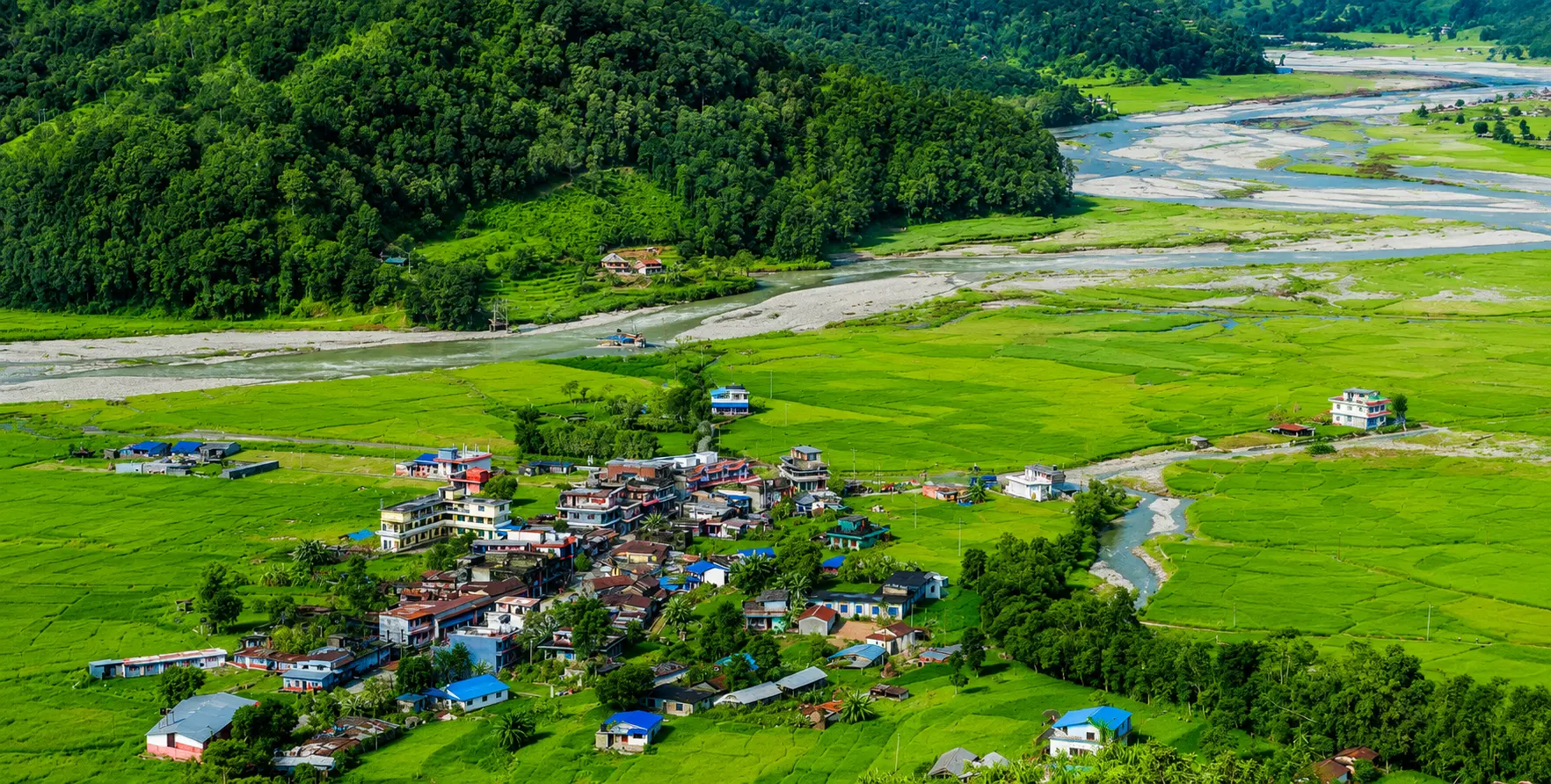
Book Pokhara to Pame Vehicle Hire 2026 with the best private jeep, car, or SUV for a safe and comfortable journey to Pame Village.

Best Time to Visit Pame from Pokhara

October to December — Post-Monsoon Autumn (BEST)

The post-monsoon autumn season is the best time to hire a vehicle from Pokhara to Pame. October and November offer the clearest mountain views — Annapurna South and Machapuchare stand crisp and brilliant above the Panchase ridge — combined with lush, monsoon-freshened agricultural landscapes at their most vibrant.

The rice harvest is at its golden peak in October, creating extraordinary photography conditions. Road conditions are at their best following monsoon road repairs. Temperatures in the Harpan Valley are pleasantly cool (18–25°C by day) and comfortable for walking and outdoor activities.

This is the single best season to visit Pame.

March to May — Spring (EXCELLENT)

Spring is the second-best season for visiting Pame. Mustard crops on the valley floor add a brilliant yellow to the agricultural landscape in March; wildflowers bloom on the Panchase hillsides above; and morning mountain views (before afternoon cloud build-up) are spectacular.

Temperatures warm progressively through May, and the valley becomes lush and green as the pre-monsoon moisture arrives. The Harpan River is at a pleasant level in spring — ideal for riverside walks and swimming. Bird activity is excellent in the spring breeding season.

December to February — Winter (GOOD)

Winter brings cool, dry, and clear conditions to the Harpan Valley. Mountain views are often superb in the clear, dry air of January and February. The valley’s rice fields are bare after the October harvest, with winter wheat and mustard replacing them in the lower fields.

Temperatures can be cool (12–18°C by day, 5–10°C at night) but are pleasant for walking and outdoor activities. The river is clearest and at its lowest in winter. Few visitors come to Pame in winter, making it an especially peaceful and uncrowded experience.

June to September — Monsoon (GREEN AND DRAMATIC)

The monsoon season transforms the Harpan Valley into a landscape of extraordinary lush green beauty — rice paddies at every stage of growth, waterfalls descending from the hillsides above, and the river running full and energetic. For visitors who appreciate monsoon landscape photography, this is a remarkable time to visit Pame.

However, the road from Khapaudi to Pame can become muddy and slippery in heavy rain, making a 4WD vehicle essential. Cloud cover largely obscures mountain views during the monsoon. Nepal Vehicle Hiring Pvt. Ltd. can advise on road conditions and the right vehicle for monsoon visits.

Why Choose Nepal Vehicle Hiring Pvt. Ltd. for Your Pame Journey

The Pokhara to Pame vehicle hire may be a relatively short journey — 15–20 km. Still, road conditions, varying surface quality between Khapaudi and Pame, and the potential for extensions to Bhadaure and Bhumdi make a professional, well-maintained vehicle with an experienced local driver the smart choice. Nepal Vehicle Hiring Pvt. Ltd. brings the same commitment to quality and professionalism to your Pame trip that we bring to our high-altitude mountain routes and long-distance intercity transfers.

Why Nepal Vehicle Hiring for Pokhara to Pame
50k+ satisfied customers | 5.0  TripAdvisor | 15k+ verified 5-star reviews
Hotel pickup from anywhere in Pokhara Lakeside — we come directly to your door
Drivers know Khapaudi, Chankhapur, Pame, Bhadaure & Bhumdi routes intimately
Fleet: Private Car, 4WD Jeep (Fortuner/Hilux/Scorpio), Hiace Van — the right vehicle for every group
Flexible itinerary — viewpoint stops, village walks, river time, photography pauses — all at your pace
Return pickup arranged from any point — Pame, Bhadaure, Bhumdi, or Naudanda
Transparent all-inclusive pricing — fuel, driver, vehicle — no hidden charges
24/7 support: WhatsApp
Combined packages: Pame Day Trip + Panchase Trek trailhead drop-off available
Licensed & Registered | Reg. No. 219204 | Bhagawatisthan, Thamel, Kathmandu
Our Vehicle Options for the Pokhara to Pame Route

VehicleCapacityRoute SuitabilityBest For
Private Car (Sedan/SUV)1–4 paxGood for dry season (Oct–May), main road to PameCouples, solo travellers, light luggage
4WD Jeep (Scorpio/Bolero)1–5 paxExcellent year-round — handles all sections, including monsoonSmall families, pairs, cycling support
4WD Fortuner/Hilux1–6 paxExcellent — best all-round choice for Pame + extensionsFamilies, photography groups, Bhadaure extension
Hiace Van7–14 paxGood for dry season main road — not for Bhadaure extensionLarge families, school picnics, and social groups

7-Step Booking Guide

  • Step 1 — Contact Nepal Vehicle Hiring Pvt. Ltd. via WhatsApp, phone, email ([email protected]), or the website booking form at vehiclehiringnepal.com.
  • Step 2 — Share your travel date, group size, Pokhara hotel name and address, and preferred departure time.
  • Step 3 — Tell us your itinerary preference: Pame village day trip only; Pame + Bhumdi extension; Pame + Bhadaure trek drop-off; or a custom Harpan Valley circuit.
  • Step 4 — Select your vehicle from our recommendations based on group size and itinerary.
  • Step 5 — Receive the booking confirmation with the driver’s name, vehicle details, and the driver’s WhatsApp number.
  • Step 6 — Be ready at your hotel lobby at the agreed time (recommended: 7:00–8:00 AM for the best morning light in the valley).
  • Step 7 — Enjoy the Harpan River Valley at your own pace with your professional Nepal Vehicle Hiring driver.

Practical Tips for Your Pokhara to Pame Vehicle Hire

Best Departure Time

For the best experience in the Harpan River Valley, aim to depart Pokhara Lakeside between 7:00 and 8:00 AM. This early start puts you in the valley during the golden morning hours—when the light is warmest, mountain views are clearest before afternoon cloud, local farmers and fishermen are most active, and the whole valley has a magical early-morning atmosphere that photographs beautifully.

By midday, the heat increases (in summer), and cloud cover often builds over the Annapurna range. An 8:00 AM departure also allows a comfortable full-day itinerary with a return to Pokhara by 4:00–5:00 PM.

What to Bring

  • Camera with a wide-angle and telephoto lens — the Harpan Valley offers both wide landscape shots and compressed mountain telephoto compositions.
  • Comfortable walking shoes — suitable for river path walking, village lanes, and light off-trail exploration.
  • Light layers — the valley can be cool in the morning even in spring and autumn, warming up significantly by midday.
  • Sunscreen and hat — UV exposure is significant even at 1,000 m altitude, especially midday.
  • Cash in Nepali Rupees — no ATMs in Pame; carry sufficient for any refreshments, donations at local temples, or purchases from village vendors.
  • Binoculars — for birdwatching and mountain detail photography from the valley floor.
  • Water and light snacks — while local teahouses in Pame offer tea and basic food, it’s a good habit to bring your own water and snacks for the drive.
  • Swimming gear — if visiting April–September and planning to swim in the Harpan River, bring appropriate swimwear and a quick-dry towel.

Respecting Pame’s Rural Community

Pame is an authentic rural community — not a tourist destination designed for visitors. The warmth and openness of residents to respectful visitors is a genuine gift, and it is important to reciprocate with appropriate behaviour. Always ask permission before photographing individuals.

Greet residents with a polite ‘Namaste.’ Do not enter private agricultural land without being invited to do so. If visiting a fish farm or fishery, ask the owner’s permission before exploring.

Purchase items from local vendors rather than bringing all supplies from Pokhara — every NPR spent in Pame directly supports the local community.

Combining Pame with Other Pokhara Attractions

The short distance from Pokhara makes it very easy to combine a Pame visit with other Pokhara attractions in a single day. Popular combined itineraries include: morning at Sarangkot for sunrise, drive to Pame for mid-morning, and return via a boat on Phewa Lake, crossing from the northern shore) to Lakeside in the afternoon.

Or: early morning Pame visit, return to Pokhara for lunch, afternoon World Peace Pagoda hike. Nepal Vehicle Hiring Pvt. Ltd. can customise your vehicle hire to accommodate any combination of attractions in Pokhara and the surrounding area — share your full wish list when booking, and our team will design the most efficient and enjoyable itinerary.

Frequently Asked Questions — Pokhara to Pame Vehicle Hire

How far is Pame from Pokhara and how long does the drive take?

Pame village is approximately 15–20 km from Pokhara Lakeside via the Khapaud- Chankhapur route. The drive takes approximately 35–55 minutes, depending on the exact starting point in Pokhara and road conditions at the time of travel. The journey is short but scenic — the route passes through interesting ridge-and-valley terrain with good mountain views on clear days.

Do I need a permit to visit Pame?

No — Pame village and the Harpan River Valley are not in any national park or conservation area that requires special visitor permits. You can visit Pame freely without any trekking permits.

If you extend your trip to Bhadaure and begin the Panchase Trek (which enters the Annapurna Conservation Area), you will need ACAP and TIMS permits. Nepal Vehicle Hiring Pvt. Ltd. can advise on permit requirements if you are planning a combined Pame and Panchase Trek itinerary.

Is a 4WD vehicle necessary for the drive from Pokhara to Pame?

A 4WD vehicle is not strictly required for the Pokhara-Pame route in the dry season (October–May), when the road is at its best. A capable car or SUV can manage the route comfortably in these conditions.

However, a 4WD jeep is strongly recommended for monsoon-season travel (June–September), when the Khapaudi-Pame section can become muddy and slippery. It is essential for any extension toward Bhadaure or Bhumdi. Nepal Vehicle Hiring Pvt. Ltd. recommends the 4WD Fortuner or Hilux as the ideal vehicle for this route year-round.

Can I visit Pame as a day trip from Pokhara?

Absolutely — Pame makes an excellent and very manageable day trip from Pokhara. The short drive means you can depart at 7:30–8:00 AM, spend 3–5 hours in the Harpan Valley enjoying the river walk, village visit, photography, and optional Bhumdi extension, and be back in Pokhara by early afternoon. Nepal Vehicle Hiring Pvt. Ltd. offers both half-day (4–5 hours) and full-day (8–10 hours) Pame vehicle hire packages to suit different schedules and budgets.

Can the vehicle take me to Bhadaure for the Panchase Trek after visiting Pame?

Yes — Nepal Vehicle Hiring Pvt. Ltd. can arrange a combined itinerary that includes a stop at Pame village and the Harpan Valley before continuing to Bhadaure for Panchase Trek trailhead drop-off. The road from Pame to Bhadaure is rough and requires a 4WD vehicle.

After you complete your trek at Naudanda or Kande, we can arrange a return vehicle pickup to Pokhara. Contact our team to arrange this combined package.

What is the best time of day to visit Pame for photography?

Early morning — between 7:00 and 10:00 AM — offers the best conditions for photography in the Harpan River Valley. The morning light is warm and golden; mountain views are clearest before afternoon clouds build; local farming activity is most active and photogenic; and the river has a mirror-like quality in the calm morning air. Aim to depart Pokhara by 7:00–7:30 AM to arrive in the valley by 8:00–8:30 AM for the best light.

How do I book a vehicle hire from Pokhara to Pame with Nepal Vehicle Hiring?

Booking is fast and simple. Contact Nepal Vehicle Hiring Pvt. Ltd. via WhatsApp (24/7), by phone, email at [email protected], or through the booking form at vehiclehiringnepal.com. Share your travel date, group size, Pokhara hotel name, preferred departure time, and itinerary (Pame only, Pame + Bhumdi, Pame + Bhadaure trek, etc.).

Our team responds promptly with a vehicle recommendation and price quote. We can typically confirm Pame day-trip bookings with 24 hours’ notice outside peak season.

Conclusion: Discover Pame — Pokhara’s Most Beautiful Hidden Valley

In a Pokhara travel scene dominated by paragliding, lake boat rides, and the famous Annapurna trekking routes, Pame village and the Harpan River Valley stand quietly apart as one of the region’s most genuine, beautiful, and underappreciated experiences. The short drive from Pokhara Lakeside — just 15–20 km through the interesting Khapaudi ridge terrain — opens into a valley of extraordinary rural beauty: the clean Harpan River flowing between fishing communities and terraced rice fields, the Naundanda and Bhumdi hills framing the landscape on both sides, traditional stone farmhouses dotting the valley floor, and on clear mornings, the snow-draped summits of Annapurna South and Machapuchare rising above the ridgeline like benevolent guardians.

Pame offers something increasingly rare in Nepal’s tourist destinations: authentic, unhurried engagement with a working rural community and its natural landscape, without tourism infrastructure overlaid on it. The fishermen working the Harpan, the farmers in their terraced fields, the school children on the valley path, the morning mist rising from the river — these are real scenes from a real community, accessible to every Pokhara visitor willing to venture 20 km beyond the Lakeside tourist strip.

With Nepal Vehicle Hiring Pvt. Ltd., that short venture is made effortlessly smooth. Hotel pickup at your chosen time, a knowledgeable driver who knows the best viewpoints and stops en route, a well-maintained vehicle that handles both the ridge road and the valley approach with equal confidence, and the flexibility to spend as long as you want in the valley before returning to Pokhara — this is how the Pame experience should be arranged.

Contact Nepal Vehicle Hiring Pvt. Ltd. today to book your Pokhara-to-Pame vehicle hire. Whether you want a half-day introduction to the Harpan Valley, a full-day exploration including Bhumdi village, or a combined Pame visit and Panchase Trek trailhead drop-off, our team will create the perfect itinerary and vehicle arrangement for your visit.

Book Your Pokhara-to-Pame Vehicle Hire Today!

Website: www.vehiclehiringnepal.com
WhatsApp (24/7 Support)
Email: [email protected]
Office: Bhagawatisthan, Thamel, Kathmandu, Nepal
Fleet: Private Car | 4WD Jeep (Fortuner/Hilux/Scorpio) | Hiace Van
Route: Pokhara Lakeside → Khapaudi → Chankhapur → Pame Village → Harpan River Valley
Extensions: Bhumdi Village | Bhadaure Trek Trailhead | Panchase Trek Support
50k+ Happy Customers | 5.0 TripAdvisor |15k+ Verified Reviews
Hotel Pickup from Pokhara Lakeside | Half Day & Full Day Packages
Licensed & Registered | Company Reg. No. 219204 | Best Price Guaranteed

Kathmandu to Pathivara Transport

Nepal Tour Package

Kathmandu to Pathivara Transport – Complete Pilgrimage Guide

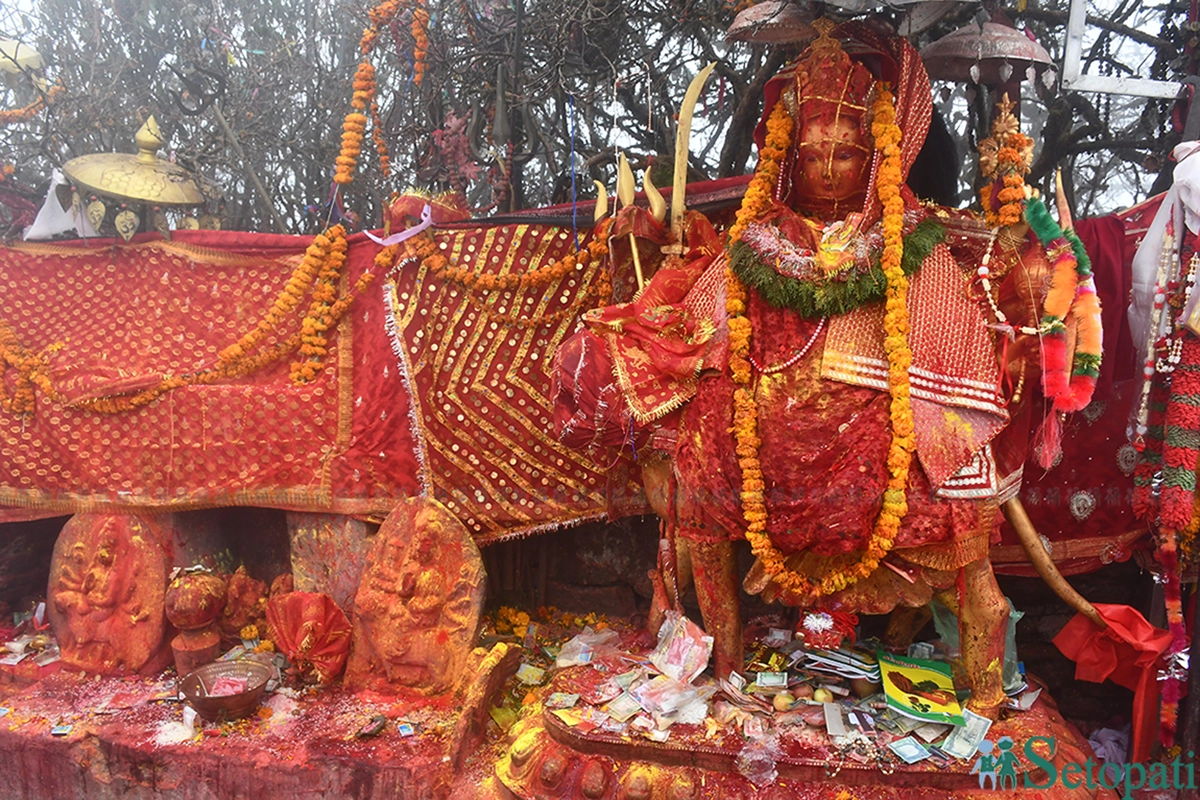
Pathivara Devi Temple – perched at a striking altitude of 3,794 meters in the high Himalayan ridges of Taplejung District in far eastern Nepal – is one of the most powerful and most revered Hindu pilgrimage sites in the entire country. Millions of devotees from Nepal, India, and across the world travel to Pathivara each year to seek the blessings of Goddess Pathivara – a fierce manifestation of Shakti believed to fulfil wishes, remove obstacles, and grant liberation.

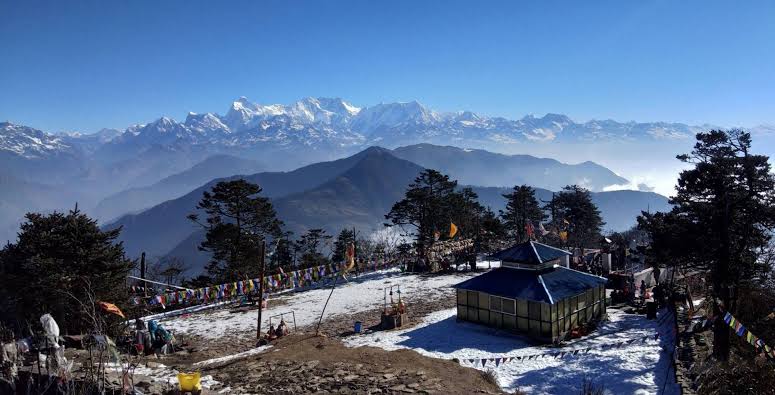
The temple is surrounded by the majestic Kanchenjunga (8,586 m), Makalu (8,485 m), and Everest (8,849 m) on clear days – a Himalayan panorama of extraordinary scale and beauty.

Getting from Kathmandu to Pathivara is a long, multi-day journey across the Teppan to the far eastern corner of the country. The route is demanding, the roads are challenging in sections, and the final approach to the temple is on foot – but for devotees who complete this pilgrimage, it is one of the most deeply transformative journeys in Nepal.

This complete 2026 guide covers every transport option from Kathmandu to Pathivara – private car, Scorpio jeep, Hiace van, bus, and flight combinations – with full route details, prices, road conditions, pilgrimage tips, and booking information.

About Pathivara Devi – The Sacred Goddess of the East

Temple Name: Pathivara Devi Mandir (also Pathibhara Devi Temple)

Location: Phungling Municipality, Taplejung District, Koshi Province, far eastern Nepal

Altitude: 3,794 m above sea level

Distance from KTM: Approximately 600–650 km by road

Distance from Taplejung Bazaar: Approximately 10 km on foot from Phungling (Taplejung Bazaar)

Trek to Temple: 3 to 5 hours uphill walk from Phungling / Chitlang – no vehicle access to temple

Deity: Pathivara Devi – a form of Goddess Durga / Shakti revered as the fulfiller of wishes

Famous For: Wish-fulfilling power, Kanchenjunga and eastern Himalayan panorama, deep pilgrimage tradition

Annual Visitors: Over 500,000 pilgrims and tourists annually

Pathivara Devi is considered one of the Shakti Peethas of Nepal – one of the most powerful divine feminine sacred sites – and is particularly revered among the Limbu, Rai, Sherpa, and Brahmin communities of eastern Nepal and the Indian Darjeeling-Sikkim region. The goddess is depicted as a fierce, powerful deity.

Devoted pilgrims who complete the arduous journey and offer sincere prayers at her shrine believe she grants prosperity, health, success, and liberation.

The temple itself is simple –a temple shrine with a trident (trishul) and the sacred image of the goddess – but the atmosphere at 3,794 m on the Himalayan ridge, with the great eastern peaks surrounding the sacred site and prayer flags streaming in the mountain wind, is one of profound spiritual power. Many pilgrims report extraordinary experiences of grace and answered prayers after completing the Pathivara pilgrimage.

Swayambhunath visit during Kathmandu Pokhara Tour

Understanding the Journey: Kathmandu to Pathivara

The Kathmandu-to-Pathivara journey is one of Nepal’s longest domestic pilgrimages. Here is the key information:

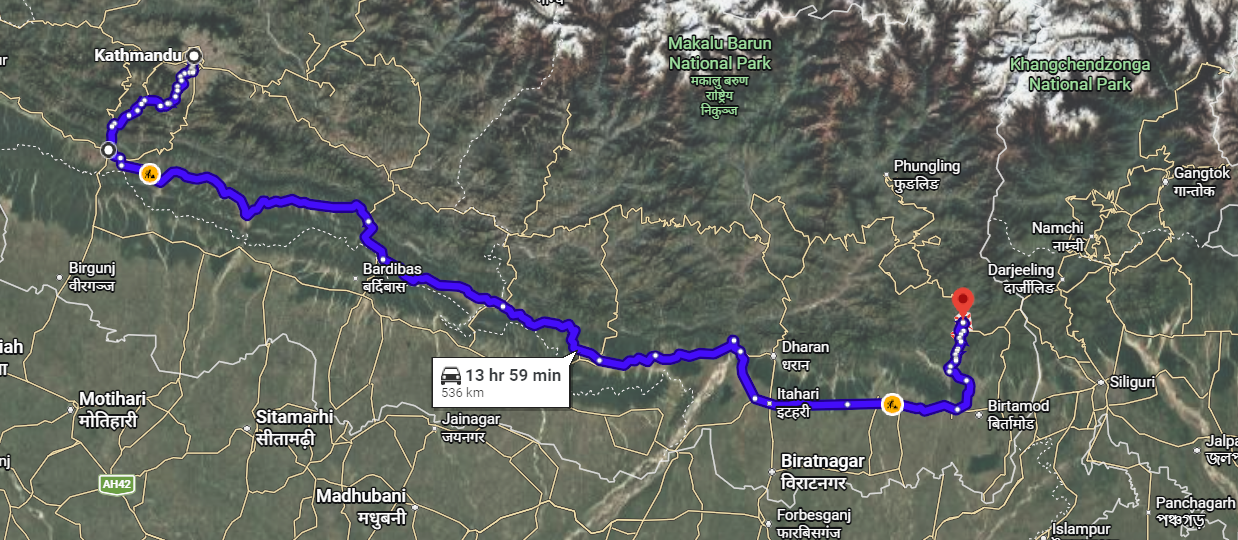
Total Road Distance: Approximately 600–650 km from Kathmandu to Phungling (Taplejung Bazaar)

Road Journey Time: 12 to 16 hours of driving – done over 2 to 3 days

Trek to Temple: 10 km from Phungling – 3 to 5 hours uphill walk (no vehicle access)

Total Journey: 3 to 5 days from Kathmandu to the temple and back – minimum recommended

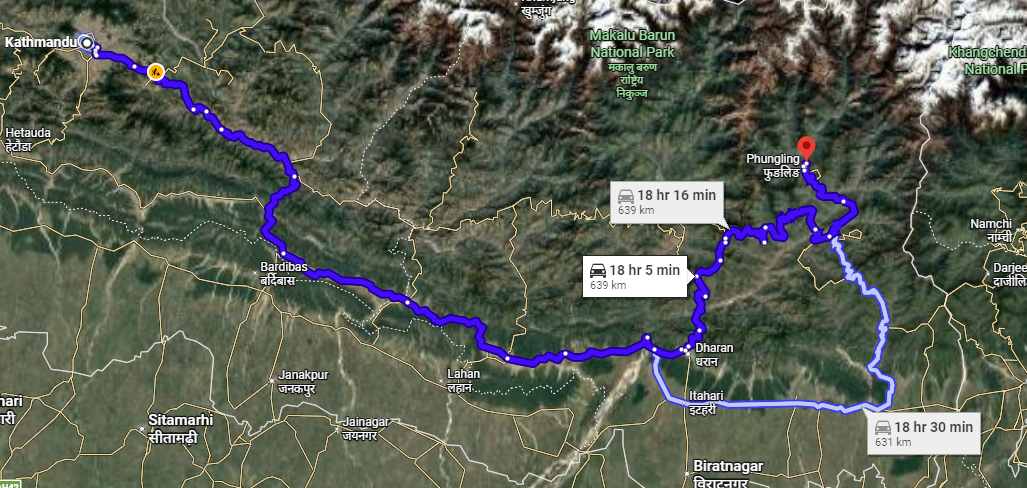
Main Road Route: Kathmandu – East-West Highway – Itahari – Dharan – Taplejung road – Phungling – Pathivara (walk)

Alternative Route: Fly Kathmandu to Biratnagar / Taplejung, then vehicle/walk to Pathivara

The journey from Kathmandu to Pathivara is a true pilgrimage – long, challenging, and deeply rewarding. Unlike many Nepali pilgrimages, Pathivara cannot be reached by vehicle all the way – the final 10 km to the Temple is on foot, ascending from Phungling through rhododendron forest and past smaller shrines to the main Pathivara temple at 3,794 m.

This walk itself is considered part of the pilgrimage, and many devotees perform it barefoot as an act of devotion.

Vehicle Options: Kathmandu to Taplejung (Phungling)

For the road journey from Kathmandu to Phungling (Taplejung Bazaar), Vehicle Hiring Nepal provides three main vehicle options, each suited to different group sizes and comfort preferences:

Nepal Tour Package

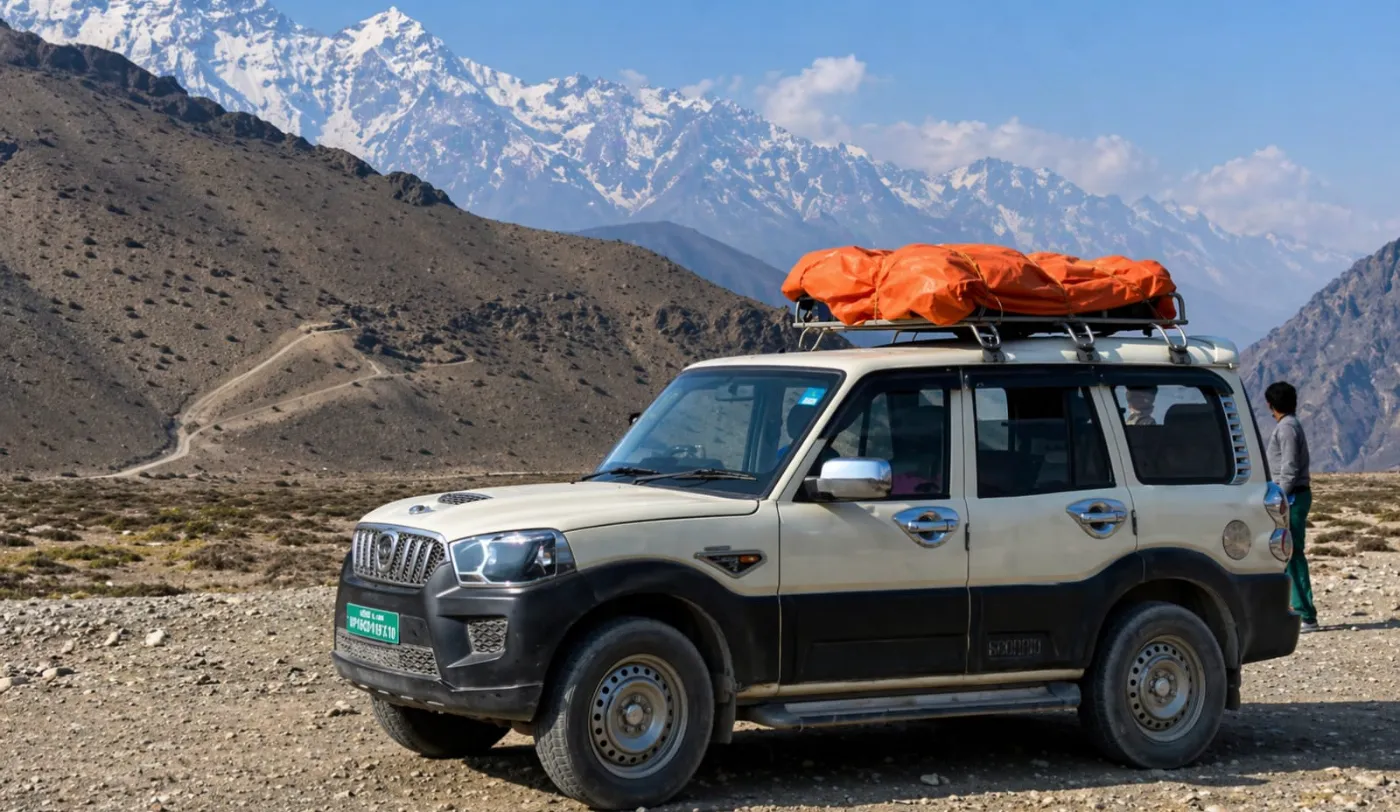
Mahindra Scorpio – Best Choice for Eastern Nepal Hill Roads

Capacity: 6 to 9 passengers

Engine: 2.2L mHawk turbodiesel – powerful on steep eastern hill roads

4WD: Available – essential for the Dharan to Taplejung mountain section

Best for: Groups of 5 to 7 pilgrims – ideal balance of capacity and hill road capability

The Mahindra Scorpio is the vehicle of choice for the Kathmandu-Taplejung route. The road from Dharan to Phungling (Taplejung) is one of eastern Nepal’s most winding, steep, and demanding mountain roads – rising from 400 m at Dharan to over 1,700 m at Taplejung over approximately 170 km of switchbacks and narrow hill roads.

The Scorpio’s powerful diesel engine, high ground clearance, and 4WD capability handle this section with confidence. Local drivers along this route predominantly use Scorpios and Boleros – a testament to the vehicle’s suitability.

Kathmandu Durbar Square

Toyota Hiace Van – Best for Larger Pilgrimage Groups

Capacity: 7 to 14 passengers

Best for: Groups of 8 to 14 pilgrims – families, community pilgrimage parties

The Toyota Hiace is a practical choice for larger pilgrim groups that need to stay together throughout the long journey. The Hiace handles the flat Terai East-West Highway section comfortably and the Dharan-to-Taplejung hill road in dry conditions.

For monsoon travel (June to September), the Scorpio’s 4WD gives it an advantage on the wetter hill roads – for monsoon pilgrimages, two Scorpios may be preferable to a single Hiace for groups of 10 to 14.

Sedan Car – For Small Groups and Individuals

Capacity: 1 to 3 passengers

Best for: Solo pilgrims or couples in the dry season

A standard sedan can reach Phungling in the dry season. Still, the steep, winding Dharan-to-Taplejung road and the occasional rough patches on the final approach to Phungling make a more capable vehicle preferable. For pilgrims travelling solo or in pairs, the sedan is economical, but even small groups should consider the Scorpio on this route.

Local Jeep from Taplejung / Chitlang

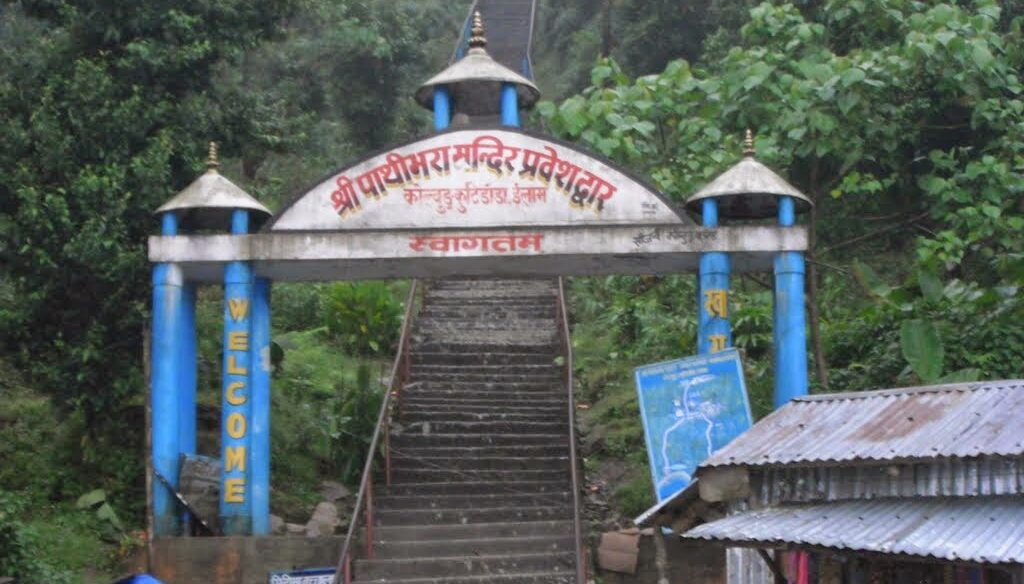
From Phungling (Taplejung Bazaar) and from Chitlang (a village approximately 3 km above Phungling on the Pathivara approach road), local jeeps and 4WD vehicles can carry pilgrims to the Chitlang base point – the last vehicle access point before the walking trail to the temple begins. This section from Phungling to Chitlang takes approximately 30 to 45 minutes by local jeep. From Chitlang, the walk to Pathivara takes 2.5 to 3.5 hours.

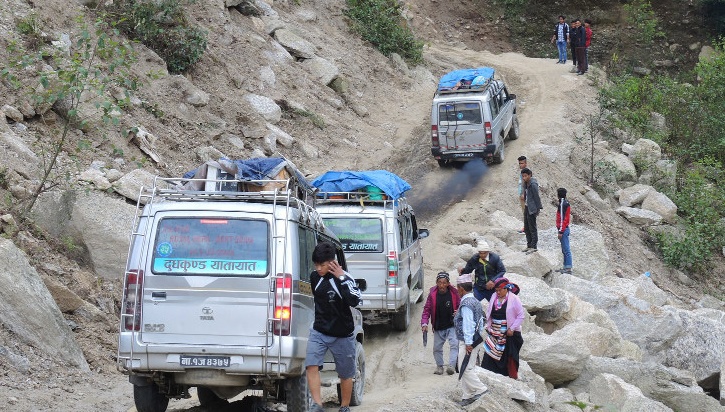
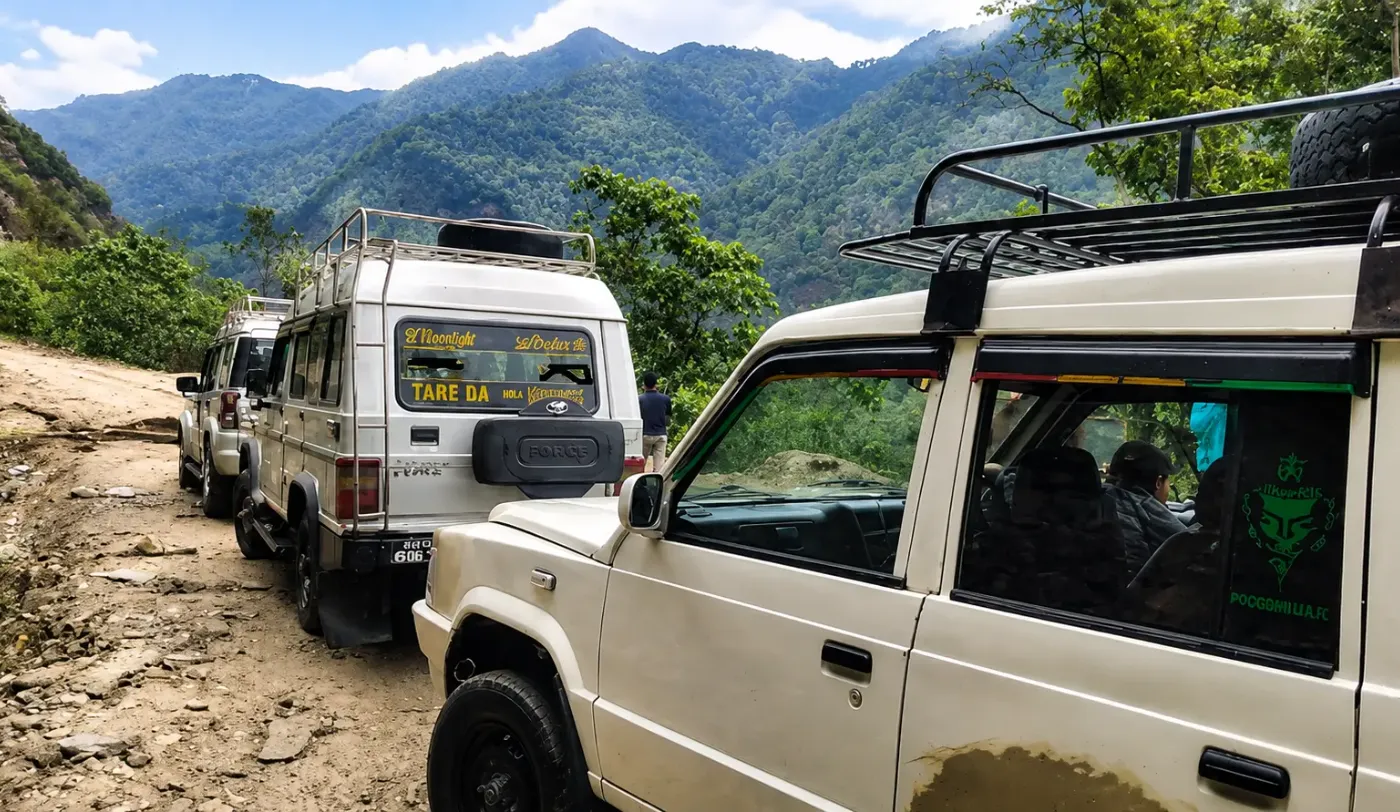
Kathmandu to Pathivara Transport with a private Scorpio and 4WD jeep traveling through the mountain roads of eastern Nepal

Vehicle Rental Prices: Kathmandu to Taplejung

VehicleCapacityOne-Way (USD)Round Trip (USD)Notes
Mahindra Scorpio6–9 paxUSD 220–350USD 370–800Best for this route – recommended
Toyota Hiace Van7–14 paxUSD 250–400USD 420–900Best for groups of 8–14
Sedan Car1–3 paxUSD 170–300USD 290–400Budget option – dry season only
SUV4–5 paxUSD 200–300USD 340–800Good for small groups – comfortable
Toyota Coaster Bus15–22 paxUSD 340–430USD 570–1000Large pilgrimage groups

All prices include the driver, full fuel for the complete journey, and vehicle insurance. The Kathmandu to Taplejung journey takes 2 to 3 days; driver accommodation during overnight stops is arranged separately and is not included in the vehicle price.

Round-trip pricing covers the full return journey from Phungling back to Kathmandu on your chosen return date. Contact Vehicle Hiring Nepal for exact 2026 pricing.

Route Overview: Kathmandu to Phungling (Taplejung)

Total Distance: Approximately 615–650 km

Total Driving Time: 14 to 17 hours – done over 2 to 3 days

Main Route: Kathmandu – Tribhuvan/Araniko Hwy – East-West Hwy – Itahari – Dharan – Basantpur – Taplejung/Phungling

Overnight Stops: Day 1 – Dharan or Birtamod (8–9 hrs from KTM) | Day 2 – Taplejung/Phungling (7–8 hrs from Dharan)

Critical Section: Dharan to Taplejung (170 km, 6–8 hrs) – steep mountain road, 4WD/Scorpio essential

Kathmandu to Pathivara Transport with a private Scorpio and 4WD jeep traveling through the mountain roads of eastern Nepal

Stage-by-Stage Road Guide: Kathmandu to Pathivara

Day 1, Stage 1: Kathmandu to Hetauda (95 km | 2.5 hrs)

Depart Kathmandu from 5:30 to 6:00 AM via the Tribhuvan Highway – Nepal’s historic first road, winding dramatically over the Mahabharat Range from the Kathmandu Valley to the Terai plains below. The Tribhuvan Highway is steep, winding, and scenic, with spectacular views over the Terai from the Daman ridge at about 2,322 m. Hetauda is a Terai industrial city and a good stop for an early-morning breakfast.

Day 1, Stage 2: Hetauda to Itahari (260 km | 4.5 hrs)

From Hetauda, join the East-West Highway heading east. This long, flat Terai highway section passes through the rice paddies, mustard fields, and subtropical forests of the Chitwan, Sarlahi, and Sunsari districts. The road is wide, paved, and generally fast.

Pass through Narayanghat, Gaur, and Lahan, and arrive at Itahari Junction in Sunsari District – the major junction for traffic heading north to Dharan and east to Biratnagar and the Indian border.

Day 1 Overnight: Dharan or Birtamod

From Itahari, continue 20 km north to Dharan – the recommended overnight stop for Day 1. Dharan is an attractive city at the base of the Siwalik Hills with good hotels, restaurants, and the famous Budhasubba Temple. Alternatively, continue 80 km east to Birtamod in Jhapa District if you prefer to be further east for the Day 2 morning start. Total Day 1 driving: approximately 8 to 9 hours from Kathmandu.

Day 2, Stage 3: Dharan to Taplejung / Phungling (170 km | 6–8 hrs)

This is the most challenging and most spectacular section of the entire journey – the long mountain climb from Dharan (400 m) through the eastern hill districts to Phungling / Taplejung Bazaar (1,700 m). Depart Dharan by 6:30 AM.

The road heads north from Dharan into the Siwalik and Mahabharat hills through Dhankuta District, Tehrathum District, and finally Taplejung District. Key towns and landmarks:

  • Dhankuta (1,150 m) – district headquarters, 50 km from Dharan, good morning tea stop. Beautiful hill town with panoramic views
  • Hile (1,900 m) – a busy market town on the ridge with excellent views. Famous junction – the road to Taplejung branches here
  • Basantpur (2,200 m) – the highest point on the Taplejung road, a small market town with tea shops and the first views of the eastern Himalayan range, including Kanchenjunga on clear days
  • Taplejung / Phungling (1,700 m) – the district headquarters, final vehicle destination before the walk to Pathivara begins. Has hotels, restaurants, ATMs, and shops

The Dharan-Taplejung road is one of eastern Nepal’s most winding and demanding mountain roads. It climbs through dense forest, terraced rice paddies, and traditional Limbu and Rai villages. The road is paved in most sections but has rough patches, particularly after the monsoon.

Narrow sections and hairpin bends are frequent from Dhankuta onwards. The Scorpio is the ideal vehicle for this section.

Distance and Time Summary

StageFrom – ToDistanceTimeRoad Type
Day 1-AKathmandu → Hetauda95 km2.5 hrsTribhuvan Hwy – winding mountain road
Day 1-BHetauda → Itahari260 km4.5 hrsEast-West Hwy – flat paved Terai
Day 1-CItahari → Dharan20 km30 minCity road – paved
OVERNIGHTDharan––Hotel overnight
Day 2-ADharan → Dhankuta50 km2 hrsHill road – paved, steep
Day 2-BDhankuta → Basantpur70 km2.5 hrsMountain road – winding, rough patches
Day 2-CBasantpur → Phungling50 km2 hrsHill road – steep descent to Taplejung
Day 3-APhungling → Chitlang (jeep)3 km30 minRough track – local jeep
Day 3-BChitlang → Pathivara (walk)7 km2.5–3.5 hrsMountain footpath – uphill walk
TOTALKTM → Pathivara548 km + 10 km walk3 daysPaved + mountain road + footpath

Book Kathmandu to Pathivara Transport with a private Scorpio or 4WD jeep for a safe and comfortable journey to the sacred Pathivara Temple in Taplejung.

The Trek to Pathivara Temple

The vehicle journey ends at Phungling (Taplejung Bazaar) or Chitlang, from where all pilgrims continue on foot to the temple. This walk is not optional – there is no vehicle access to Pathivara Temple itself.

Route Options to the Temple

Option A – Phungling to Pathivara directly: 10 km, 5 hours uphill. Starts at the bazaar level (1,700 m) and climbs to 3,794 m. Steep in sections.

Passes multiple rest stops, small shrines, and teahouses along the trail.

Option B – Jeep to Chitlang, then walk: Take a local jeep from Phungling to Chitlang (3 km, 30 min), then walk 7 km from Chitlang to the Pathivara temple (2.5 to 3.5 hours). This is the most popular approach as it reduces total walking time.

Option C – Overnight at Chitlang: Drive to Phungling on Day 2, take a local jeep to Chitlang, overnight at Chitlang teahouses, and begin the walk to Pathivara at dawn on Day 3 for the morning light.

Book Kathmandu to Pathivara Transport with a private Scorpio or 4WD jeep for a safe and comfortable journey to the sacred Pathivara Temple in Taplejung.

The Walking Trail

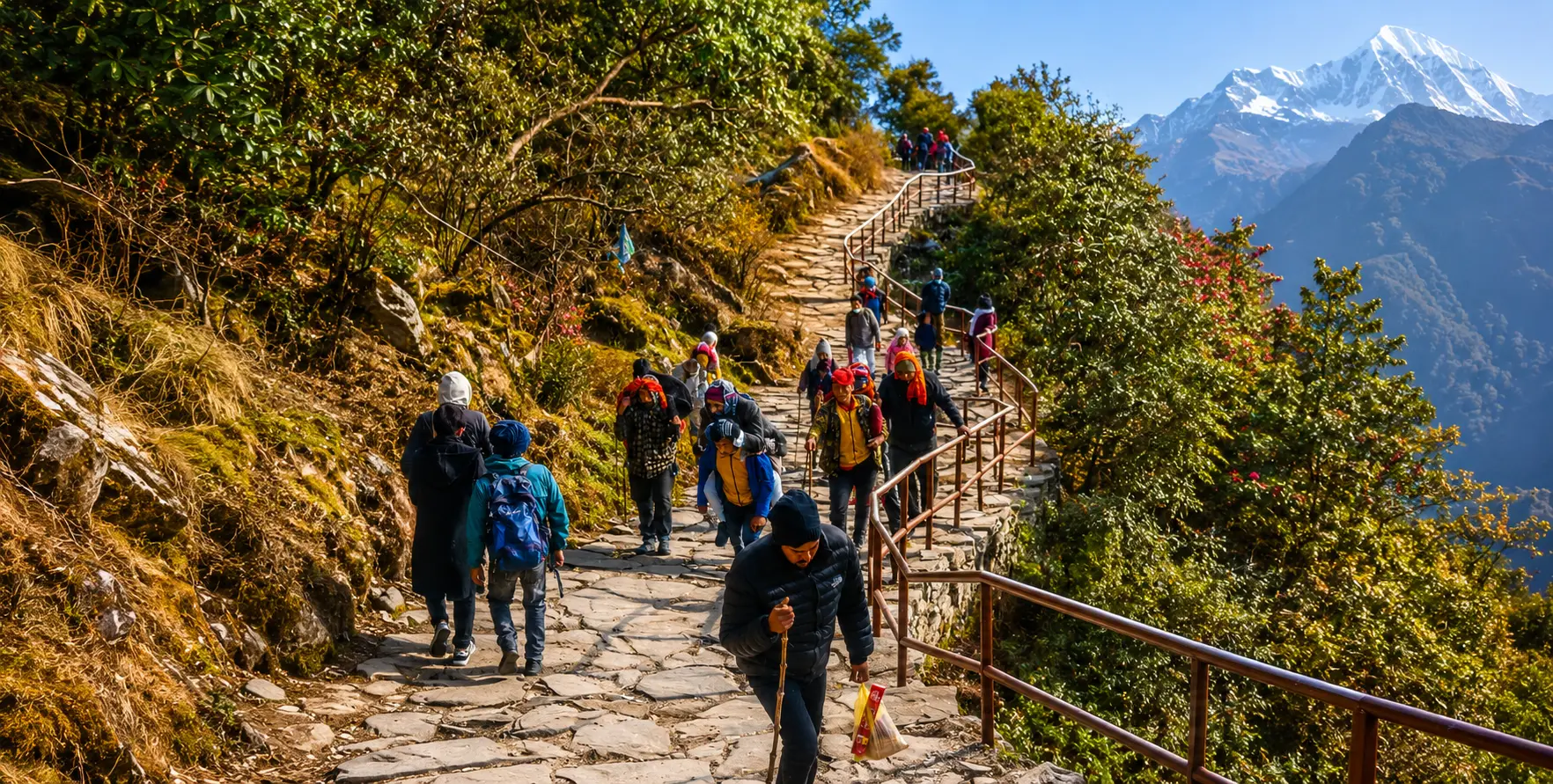
The trail from Chitlang to Pathivara passes through a rhododendron forest, open meadows with increasingly expansive mountain views, and past several smaller sacred shrines and rest points. The path is well-marked and heavily used by pilgrims – you will never be alone on the trail during peak pilgrimage season.

Steel handrails and stone steps have been installed on the steepest sections in recent years, making the climb more manageable for elderly pilgrims and devotees with limited mobility.

As you ascend, the mountain panorama opens progressively. At the Pathivara temple ridge (3,794 m), on clear days you can see Kanchenjunga (8,586 m) to the northeast, Makalu (8,485 m) to the northwest, Everest (8,849 m) in the far west, and the rolling eastern Himalayan ranges in all directions – one of the most extraordinary panoramic views available at any pilgrimage site in Nepal.

Porters and Pony Service

For elderly pilgrims, those with limited mobility, or those carrying heavy offerings, porter and pony services are available from Phungling and Chitlang. Porters carry bags and personal items for approximately NPR 1,000 to NPR 2,000 per trip.

Ponies can carry devotees who are unable to walk the full distance to the temple for approximately NPR 3,000 to NPR 5,000 for the full ascent. Local community members operate these services at the Chitlang departure point.

Pathivara Temple – Pilgrimage Experience

The Goddess Pathivara

Pathivara Devi is a fierce manifestation of the Divine Mother – an aspect of Shakti and Durga worshipped primarily by the Kirat (Limbu, Rai) communities of eastern Nepal who consider her the supreme tribal goddess, and by Hindu devotees from across Nepal and India who revere her as a wish-fulfilling goddess of immense power. The name Pathivara may derive from ‘path’ (way/road) and ‘vara’ (boon/blessing) – the goddess who grants boons on the path – or from the Limbu language term for the deity.

Pathivara Devi is worshipped in a simple stone shrine with a prominent trishul (trident) – the symbol of Shakti’s power – as the primary sacred object. The goddess does not have an elaborate anthropomorphic image in the main shrine – she is considered to be formlessly present in the sacred site itself, in the mountain rock, the wind, and the surrounding peaks.

The Sacred Animals

Pathivara is one of Nepal’s most active animal sacrifice pilgrimage sites. Each year, devotees offer thousands of goats, ducks, and other animals to the goddess as they fulfil vows or seek blessings. Temple priests conduct the sacrifice in the dedicated sacrificial area adjacent to the main shrine.

For visitors who are unfamiliar with or uncomfortable with animal sacrifice, this is worth knowing before the visit – the pilgrimage atmosphere during high season (particularly Dashain in October) is very intense.

The Temple Complex

The Pathivara temple complex at 3,794 m includes the main goddess shrine, smaller secondary shrines, a sacred dhara (water spout) where pilgrims bathe ritually, prayer flag lines strung from poles across the ridge, stone rest areas for pilgrims, and basic teahouses with food and tea. The Taplejung District government and the Pathivara Development Committee have developed improved facilities, including permanent pilgrim rest areas and a small visitor information centre.

Pilgrimage Rituals

The traditional Pathivara pilgrimage sequence for devotees:

  1. Bathe at the sacred dhara (water spout) on arrival – ritual purification before entering the main shrine
  2. Offer flowers, marigold garlands, incense, red cloth, and fruit at the main goddess shrine
  3. Perform pradakshina (circumambulation) of the main shrine clockwise
  4. Offer animal sacrifice if making a vow-fulfilment offering – conducted by temple priests
  5. Sit in meditation or prayer at the viewpoint ridge – facing the Kanchenjunga massif
  6. Take darshan of all secondary shrines and sacred stones on the temple ridge
  7. Purchase and string a prayer flag from the temple complex as an offering
  8. Descend with the feeling of having received the goddess’s blessing and grace

Kathmandu to Pathivara Transport with a private Scorpio and 4WD jeep traveling through the mountain roads of eastern Nepal

Alternative Route: Fly to Biratnagar or Taplejung, then drive / Trek

Fly Kathmandu to Biratnagar + Drive to Taplejung

Flight: Kathmandu to Biratnagar – 45 minutes, USD 80 to USD 110 per person

Drive Biratnagar to Taplejung: Approximately 290 km, 7 to 9 hours by Scorpio or Hiace

Vehicle from Biratnagar: Scorpio NPR 8,000 to NPR 12,000 / Hiace NPR 10,000 to NPR 15,000 (local hire rates)

Total time: 1-day flight + drive vs 2 days full road from Kathmandu

Flying to Biratnagar saves the long Kathmandu-to-Terai driving day. It allows you to complete the Biratnagar-to-Taplejung journey in a single day, arriving in Taplejung the same evening as your flight. This option works well for time-limited pilgrims and is particularly popular during peak pilgrimage season when the road from Kathmandu is congested.

Fly Kathmandu to Taplejung (Suketar Airport)

Flight: Kathmandu to Suketar (Taplejung) – approximately 1 hour, USD 130 to USD 160 per person

Airlines: Tara Air, Summit Air – small aircraft, weather-dependent

Advantage: Arrives directly in Taplejung – eliminates all road travel from Kathmandu

Disadvantage: Suketar Airport is very weather-sensitive – frequent delays and cancellations

From the airport: Suketar Airport is approximately 3 km from Phungling – short local transport to the bazaar

Flying directly to Taplejung / Suketar Airport is the fastest way to begin the Pathivara pilgrimage, cutting travel time from 2 to 3 road days to a single 1-hour flight. However, Suketar is one of Nepal’s most weather-affected small airports, and cancellations are common – always build buffer days into your itinerary. Vehicle Hiring Nepal does not sell these flight tickets but can advise on booking through licensed agencies.

All Transport Options Summary: Kathmandu to Pathivara

Kathmandu to Pathivara Transport with a private Scorpio and 4WD jeep traveling through the mountain roads of eastern Nepal

Peak Pilgrimage Seasons at Pathivara

Dashain – October (Biggest Season)

Vijaya Dashami during the Dashain festival (September to October) is the single busiest and most auspicious time at Pathivara. Hundreds of thousands of pilgrims from Nepal and India ascend to the temple during the Dashain fortnight. Animal sacrifices reach their highest volume.

The atmosphere is intensely devotional and festive. The road from Kathmandu to Taplejung is at its most congested – allow extra travel days. Book vehicles 4 to 8 weeks in advance for the Dashain season.

Chaitra Dashain – March / April (Second Major Season)

The spring Dashain (Chaitra Dasain) in March and April is the second peak pilgrimage season at Pathivara. Rhododendron forests below the temple are in magnificent bloom. The weather is generally good.

A smaller but significant pilgrimage season – book vehicles 2 to 4 weeks ahead.

Year-Round Pilgrimage

Unlike many Nepali sacred sites, Pathivara receives pilgrims year-round. The Temple is always accessible (weather permitting), and pilgrims arrive every day. Outside of Dashain and Chaitra Dasain, visitor numbers are lower and the atmosphere more contemplative.

The temple’s power is considered equally present in all seasons.

Monsoon Season (June to September)

The Dharan-Taplejung road is most challenging during the monsoon. Landslides can temporarily block sections of the road and make driving conditions difficult. The trail to the Temple becomes slippery; leeches are present in the forest section.

Travel is possible but requires an experienced driver and a capable 4WD vehicle (Scorpion is recommended). Monsoon clouds may obscure mountain views from the Temple, but many devoted pilgrims choose to travel specifically during the monsoon.

Kathmandu to Pathivara Transport with a private Scorpio and 4WD jeep traveling through the mountain roads of eastern Nepal

Accommodation: Phungling and Chitlang

Phungling (Taplejung Bazaar) – 1,700 m

Phungling has a good range of accommodation for pilgrims arriving after the long journey from Kathmandu:

  • Basic Guesthouse: NPR 400 to NPR 800 per night – simple rooms, shared bathroom, cold water, local food
  • Mid-range Hotel: NPR 800 to NPR 2,000 per night – better rooms, hot water available, restaurant
  • Better Hotels: NPR 2,000 to NPR 4,000 – comfortable rooms, hot shower, Wi-Fi, good Nepali and Indian food
  • Phungling has ATMs, pharmacies, shops for pilgrimage supplies (marigolds, incense, red cloth), and local restaurants
  • Electricity is available but can be unreliable – charge devices during daylight hours

Chitlang – 2,100 m (Last Vehicle Point)

Chitlang has basic teahouses for pilgrims who wish to overnight here before the morning ascent to the temple:

  • Teahouse rooms: NPR 300 to NPR 600 per night – very basic, blankets provided, shared facilities
  • Simple meals available – dal bhat, noodles, eggs, tea
  • The advantage of overnighting in Chitlang is a shorter 7 km walk to the Temple on the morning of the Temple pilgrimage, rather than the full 10 km from Phungling.

At the temple (3,794 m)

Basic pilgrim shelter is available adjacent to the Pathivara temple complex – simple dormitory-style accommodation with blankets for pilgrims who wish to spend the night at the sacred site. Bring a sleeping bag for warmth at this altitude. Food is very basic at the temple level.

Road Conditions: Kathmandu to Taplejung

SectionSurfaceDifficultyVehicle NeededMonsoon Risk
KTM → Hetauda (Tribhuvan Hwy)Paved mountain roadModerateAny vehicleLow
Hetauda → Itahari (East-West)Paved flat highwayEasyAny vehicleLow (flooding risk)
Itahari → DharanPaved city roadEasyAny vehicleLow
Dharan → DhankutaPaved hill roadModerateScorpio/SUVModerate
Dhankuta → BasantpurPaved/rough mountainHardScorpio/4WDHigh – landslide risk
Basantpur → PhunglingMixed paved/roughModerate-HardScorpio/4WDHigh – landslide risk
Phungling → Chitlang (jeep)Rough trackHardLocal 4WD onlyVery High
Chitlang → Pathivara (walk)Mountain footpathStrenuous walkWalk onlySlippery trail

Kathmandu to Pathivara Transport with a private Scorpio and 4WD jeep traveling through the mountain roads of eastern Nepal

Best Time to Travelfrom  Kathmandu to Pathivara

October (Dashain – Peak Pilgrimage)

The most auspicious and most crowded time. Vijaya Dashami is considered the most powerful day for Pathivara worship. The road from Dharan to Taplejung has been fully repaired after the monsoon and is in the best condition of the year.

Clear post-monsoon skies offer the finest Kanchenjunga views from the temple. Book vehicles and accommodation 4 to 8 weeks ahead.

March to April (Chaitra Dasain and Spring)

The spring pilgrimage season, with rhododendrons blooming beautifully in the forest below the Temple. Good weather, less crowded than Dashain, and excellent morning mountain views. Highly recommended for first-time pilgrims who want a quieter experience.

November to February (Post-Dashain / Winter)

After Dashain, crowds thin and the road is in good, dry condition. November is excellent – clear skies and cool temperatures. December and January bring cold at the temple altitude (below 0°C at night) and occasional frost on the path.

February is improving and still quiet. Good for pilgrims who prefer a contemplative rather than aestival atmosphere.

May and early June

Pre-monsoon season. Roads are dry, temperatures are warm at lower altitudes, and crowds are moderate. As the monsoon approaches in late May and June, road conditions deteriorate and landslide risk increases along the Dhankuta-Taplejung section.

What to Pack for the Kathmandu to Pathivara Journey

For the Long Vehicle Journey

  • Water – 2 litres per person minimum for each driving day
  • Snacks and food for the long East-West Highway section – limited quality food stops in remote sections
  • Motion sickness tablets – the Dharan to Taplejung road has extremely winding sections
  • Warm layer for the hill sections – Dhankuta, Basantpur, and Taplejung are significantly cooler than the Terai
  • Cash in NPR – ATMs in Dhankuta and Taplejung but not on the mountain road sections

For the Pilgrimage Trek to Pathivara

  • Comfortable trekking or walking shoes with good grip – the trail is steep and can be slippery.
  • Warm jacket and wind layer – at 3,794 m the temperature drops sharply, ly and the wind can be very cold.
  • Rain poncho or waterproof jacket – weather at 3,794 m can change quickly
  • Pilgrimage offerings: fresh marigold garlands, red cloth or sindoor, incense, coconut, and fruit – purchased at Phungling bazaar
  • Enough NPR for teahouse food on the trail, porter if needed, and temple donation
  • Personal medications and basic first aid
  • Headlamp – for early morning ascents before dawn
  • Sunscreen and sunglasses – UV radiation is strong at 3,794 m

Kathmandu to Pathivara Transport with a private Scorpio and 4WD jeep traveling through the mountain roads of eastern Nepal

Practical Tips for the Kathmandu to Pathivara Pilgrimage

  • Plan the vehicle journey for at least 2 days – overnight in Dharan, then Taplejung on Day 2. Never attempt to reach Taplejung from Kathmandu in a single day
  • Depart Kathmandu from 5:30 to 6:00 AM on Day 1 to reach Dharan by late afternoon, with time to rest.
  • Depart Dharan by 6:30 AM on Day 2 for Taplejung – the Dhankuta to Taplejung section is long and windy.ng
  • Book your Taplejung hotel in advance for Dashain season – accommodation fills up weeks in advance.
  • Take the local jeep from Phungling to Chitlang before beginning the walk – it saves significant energy for the actual ascent to the temple.
  • Hire a local porter in Chitlang if you’re carrying heavy offerings or if any group member needs assistance – they know the trail well.
  • Begin the temple ascent from Chitlang before 8:00 AM on clear mornings for the best Kanchenjunga views and to avoid afternoon clouds.
  • Wear modest, clean clothing for the pilgrimage – traditional dress is respected and appreciated at the temple
  • The Dharan to Taplejung section is one of Nepal’s most winding hill roads – take motion sickness medication 30 minutes before this section if needed.
  • Keep emergency cash separate from your main wallet – remote eastern Nepal roads have limited services.

What is Included in Your Vehicle Rental

  • Mahindra Scorpio, Toyota Hiace, or selected vehicle – fully maintained and insured
  • Professional driver experienced on the Kathmandu to Taplejung,g eastern Nepal route
  • Full fuel cost for the complete journey
  • Vehicle insurance throughout
  • Pickup from your Kathmandu hotel at your confirmed departure time
  • Drop-off at Phungling (Taplejung Bazaar)
  • Overnight stop in Dharan with the driver arranging their own accommodation
  • Return journey from Phungling to Kathmandu on your confirmed return date
  • 24/7 support during the journey

Not included: Driver’s overnight accommodation (driver arranges own), local jeep from Phungling to Chitlang (NPR 500–800 per seat), porter and pony hire at Chitlang, pilgrimage offerings, your accommodation, personal meals, and any additional detour stops.

Kathmandu to Pathivara Transport with a private Scorpio and 4WD jeep traveling through the mountain roads of eastern Nepal

How to Book Your Kathmandu to Pathivara Transport

  1. Contact Vehicle Hiring Nepal via WhatsApp or visit vehiclehiringnepal.com
  2. Choose your vehicle – Scorpio for groups of 5–8, Hiace for groups of 9–14, Fortuner for 4–5
  3. Confirm your pilgrimage travel dates and Dashain or Chaitra Dasain timing, if applicable.
  4. Provide your pickup address in Kathmandu.
  5. Confirm overnight stop preference – Dharan or Birtamod for Day 1
  6. Specify the return date from Phungling to Kathmandu
  7. Receive a booking confirmation with the driver’s name, vehicle details, and a 2-day journey plan

Frequently Asked Questions

How far is the Pathivara Temple from Kathmandu?

The road distance from Kathmandu to Phungling (Taplejung Bazaar, the vehicle’s endpoint) is approximately 615-650 km. From Phungling, the walk to Pathivara Temple is 10 km (or 7 km from Chitlang, reached by local jeep from Phungling). The total journey from Kathmandu to Pathivara Temple typically takes 3 days.

Can I visit Pathivara on a single-day trip from Kathmandu?

No. The road distance alone from Kathmandu to Phungling is 615 to 650 km – requiring 2 full days of driving even before the walk to the temple. A minimum of 3 days is required: Day 1 – Kathmandu to Dharan; Day 2 – Dharan to Phungling; Day 3 – walk to the Pathivara temple and return to Phungling. A 5-day round trip from Kathmandu is more comfortable and recommended.

Is the Pathivara temple accessible for elderly pilgrims?

Yes, with appropriate assistance. The pony service from Chitlang to near the temple and the porter service for carrying bags make the pilgrimage accessible to elderly and less mobile devotees. The stone staircase and handrail sections on the trail have been improved in recent years.

Many elderly pilgrims from India and Nepal complete the Pathivara pilgrimage with the help of porters and ponies. Inform Vehicle Hiring Nepal at the time of booking if you have elderly group members so that we can advise on the best approach.

What is the best vehicle for the Dhara- Taplejung road?

The Mahindra Scorpio is the best vehicle for the Dhara-Taplejung section. The road is steep, winding, and has rough patches – particularly from Dhankuta to Basantpur and on the final descent to Phungling. Local transport on this route overwhelmingly uses Scorpios and Boleros – a clear indication of which vehicles handle the road best.

The Scorpio’s high ground clearance, 4WD, and powerful diesel engine come in handy on this demanding road.

Are there ATMs along the route from Kathmandu to Taplejung?

ATMs are available in Dharan, Dhankuta, and Phungling (Taplejung Bazaar). No ATMs are available on the mountain road between these towns. Withdraw sufficient Nepali Rupees in Dharan to cover all expenses through to Phungling and beyond – including local jeep hire, porter fees, offerings, and accommodation—budget approximately NPR 5,000 -0,000 per person beyond Dharan for the full Pathivara pilgrimage.

How far in advance should I book for the Dashain season?

For the Dashain (October) pilgrimage, book your vehicle 6 to 10 weeks in advance. Pathivara is one of Nepal’s busiest pilgrimage destinations during Dashain, and vehicles, accommodation, and guides are in extremely high demand. For Chaitra Dasain (March–April), we recommend booking 3 to 5 weeks in advance.

Outside of these peak seasons, 1 to 2 weeks’ notice is usually sufficient.

Final Thoughts

The journey from Kathmandu to Pathivara is one of Nepal’s most demanding and most rewarding pilgrimages – a3-3 to 5-day odyssey from the Kathmandu Valley across the breadth of the country to the far eastern Himalayas, ending with a challenging ascent to a sacred ridge at 3,794 m where the Goddess Pathivara holds court beneath the gaze of Kanchenjunga, Makalu, and Everest. It is not an easy journey – but for the millions of devotees who complete it each year, it is one that changes lives, fulfils vows, and brings the deepest blessings.

Vehicle Hiring Nepal provides reliable, experienced transport for the Kathmandu-Taplejung route. Our Scorpio and Hiace drivers know the winding Dhankuta to Taplejung road intimately, understand the pilgrimage timing requirements around Dashain and Chaitra Dasain, and provide the dependable service this sacred journey deserves.

Book your Kathmandu-to-Pathivara transport today. WhatsApp | Website: www.vehiclehiringnepal.com | Email: [email protected]. Jai Pathivara Devi!

Eastern Nepal Tour Vehicle Rental

Eastern Nepal Tour Vehicle Rental

Eastern Nepal Tour Vehicle Rental – The Complete  Travel and Transport Guide

Eastern Nepal is the country’s least explored and most quietly extraordinary region — a sweep of land stretching from the steaming Terai plains along the Indian border, through the forested Siwalik and Mahabharat hill ranges, up into the rolling tea gardens of Ilam, and finally into the high Himalaya around Kanchenjunga, the third-highest mountain on earth.

While Kathmandu, Pokhara, and the Annapurna and Everest regions absorb most of Nepal’s visitors, eastern Nepal remains a region of wide-open road journeys, uncrowded sacred sites, wetland wildlife reserves, tea estates, and mountain panoramas that rival anything in the country’s more famous corners.

Properly touring eastern Nepal is fundamentally a transport challenge. The region is vast, the distances between highlights are considerable, and much of the most rewarding territory — the Pathivara pilgrimage trail, the Kanchenjunga foothills, the remote eastern hill roads to Ilam and Taplejung — depends on capable vehicles and experienced local drivers rather than on the bus networks and domestic flights that serve the rest of Nepal’s tourist circuit.

This is where reliable vehicle rental becomes the single most important factor in determining whether an eastern Nepal trip is a smooth, rewarding journey or a frustrating series of delays and connections.

This in-depth guide draws together everything a traveller needs to plan an eastern Nepal tour by private vehicle — the full geography and major destinations of the region, vehicle types and rental prices, road conditions and journey times, permit requirements for the restricted areas, seasonal planning advice, sample itineraries from 5 to 14 days, and detailed practical guidance for booking the right vehicle with Vehicle Hiring Nepal.

Why Eastern Nepal Deserves a Place on Your Itinerary

Most first-time visitors to Nepal never venture east of the Kathmandu Valley and the Everest approach road. This is understandable — the established circuits of Kathmandu, Pokhara, Chitwan, and the Everest and Annapurna trekking regions are excellent and well-served by tourism infrastructure.

But travelers who do make the journey east discover a Nepal that feels distinctly different: quieter roads, a stronger Kirat and Limbu cultural presence, some of the country’s finest tea, and a version of the Himalaya — the Kanchenjunga massif — that very few foreign visitors ever see up close.

Eastern Nepal also offers a logical and rewarding way to extend a trip to Nepal beyond the standard week or two. For travellers who have already experienced Kathmandu, Pokhara, and perhaps a short Annapurna trek, a swing east into Ilam, Pathivara, and the eastern wildlife reserves provides an entirely fresh set of experiences without repeating ground already covered elsewhere in the country.

  • Genuine off-the-beaten-path travel within a well-established and stable tourism country
  • Nepal’s finest tea-growing region, rivalling Darjeeling just across the border
  • One of the subcontinent’s most powerful Hindu pilgrimage sites: Pathivara.
  • Close-range views of Kanchenjunga (8,586 m), the world’s third-highest mountain, from accessible roadside viewpoints
  • Significant wetland wildlife at Koshi Tappu, including Nepal’s last wild water buffalo population and first-rate birdwatching
  • A rich Mithila cultural heartland around Janakpur, sacred to Hindus as the birthplace of Sita.
  • Far lower visitor density than western Nepal’s major circuits, even during peak season

The Geography of Eastern Nepal — What You’re Touring

Eastern Nepal spans Koshi Province and parts of Madhesh Province, encompassing several distinct geographic and climatic zones that a single tour itinerary can move through within a matter of days:

The Eastern Terai

The flat, fertile lowland belt along the Indian border, running from Janakpur in the west through Rajbiraj, Itahari, and Biratnagar to the Mechi River at the eastern extremity. This zone is hot, agriculturally rich, and dotted with significant cultural and wildlife sites, including Janakpur and the Koshi Tappu Wildlife Reserve.

The Siwalik and Mahabharat Mid-Hills

North of the Terai, the land rises through the Siwalik (Churia) range and the Mahabharat range into the mid-hill belt that includes Dharan, Dhankuta, Hile, and Basantpur. This transition zone features forested ridges, traditional Rai and Limbu villages, and increasingly cool temperatures as elevation rises.

The High Eastern Hills

Further north and east, the terrain rises into the genuinely high hill country of Ilam District and Taplejung District — tea garden country around 1,000 to 2,200 m, with the sacred Pathivara temple ridge reaching 3,794 m and the foothills of the Kanchenjunga massif beginning beyond.

The Kanchenjunga Himalaya

At the far northeastern edge of Nepal, the Kanchenjunga Conservation Area protects the approaches to the world’s third-highest mountain (8,586 m), a restricted trekking region of extraordinary biodiversity and very low visitor numbers compared to Everest or Annapurna.

What makes this geographic progression unique within Nepal is its compactness relative to the dramatic change in character it contains. A traveller can leave the sweltering, mango-grove flatlands of the Terai in the morning and, within a single long but comfortable day’s drive, stand among tea bushes in the cool hill air of Ilam, with the option of continuing further into alpine and high-Himalayan terrain over the following days.

Few single road corridors in Nepal — or indeed in the wider Himalayan region — compress so much climatic and cultural variation into a journey that can be completed entirely by private vehicle without recourse to flights or multi-day treks for the lower and middle sections.

Eastern Nepal Tour Vehicle Rental

Key Destinations for an Eastern Nepal Tour

Ilam — Nepal’s Tea Garden Capital

Ilam Bazaar (1,200 m) and the surrounding tea estates, including the iconic Kanyam viewpoint, form the most photogenic and most visited destination in eastern Nepal outside the high mountains. Rolling tea gardens, cardamom forest, the sacred Mai Pokhari wetland lake, and the Shree Antu sunrise viewpoint with its Kanchenjunga panorama make Ilam a complete destination in its own right.

Pathivara Devi Temple

One of Nepal’s most powerful Hindu pilgrimage sites, Pathivara sits at 3,794 m above Taplejung, reached by vehicle to Phungling (Taplejung Bazaar) or Chitlang, followed by a multi-hour uphill walk. Hundreds of thousands of devotees visit annually, particularly during the Dashain festival.

Kanchenjunga Conservation Area

For serious trekkers, the Kanchenjunga Circuit and Kanchenjunga Base Camp treks reach the base of the world’s third-highest mountain through one of Nepal’s most pristine and least-visited conservation areas, rich in red panda, snow leopard, and Himalayan black bear habitat, as well as exceptional rhododendron forests.

Koshi Tappu Wildlife Reserve

A 176 sq km Ramsar-listed wetland reserve along the Sapta Koshi River in the Terai, Koshi Tappu protects Nepal’s last surviving population of wild water buffalo (Arna) alongside Gangetic river dolphins, gharial crocodiles, and an extraordinary concentration of birdlife — 441 recorded species including many winter migrants from as far as Siberia. It is one of Asia’s premier birdwatching destinations, reached by jeep and boat safaris along the river.

Dharan

A clean, pleasant city at the foot of the Siwalik hills in Sunsari District, Dharan serves as the natural overnight stopping point on the long road journey toward Ilam and Taplejung, and is itself worth a visit for the Budhasubba Temple and its relaxed, leafy atmosphere — quite different from the dustier Terai towns further south.

Biratnagar

Nepal’s second-largest city and the industrial and commercial hub of eastern Nepal, Biratnagar has an internationally capable airport, making it a useful gateway for travellers who want to fly in or out of eastern Nepal rather than making the full road journey from Kathmandu in both directions.

Janakpur

In the central-eastern Terai, Janakpur is one of Hinduism’s most sacred cities, revered as the birthplace of Goddess Sita and the site of her marriage to Lord Rama. The stunning Janaki Mandir, built in a distinctive Mughal-influenced style, and the vibrant Mithila folk painting tradition make Janakpur a rich cultural detour for travellers touring the eastern Terai.

Itahari and Birtamod

These busy junction towns are less destinations in themselves than essential waypoints — Itahari is the key crossroads connecting the East-West Highway to the Dharan and Biratnagar roads. At the same time, Birtamod in Jhapa District is the launching point for the scenic climb to Ilam via Kanyam.

Dhankuta and Hile

Strung along the winding road between Dharan and Basantpur, Dhankuta (1,150 m) is one of eastern Nepal’s most attractive hill towns—a former British Gurkha recruitment centre with relaxed, orderly charm, stone-paved streets, and excellent panoramic views over the surrounding terraced hills.

A little further on, Hile (1,900 m) is a busy market junction known for its Tibetan and Sherpa-influenced trading community, its dried meat and Tibetan bread stalls, and its position as the historic gateway to both Sankhuwasabha district (home of Makalu Barun National Park) and the road north toward Taplejung. Both towns make excellent rest stops on the long drive from Dharan to Taplejung and reward travellers willing to spend a night instead of pushing straight through.

Sandakpur and the Tinjure–Milke–Jaljale Ridge

For travellers with extra time and an interest in trekking, the ridge running from Tinjure through Milke Danda to Jaljale, above Hile and Basantpur, contains the world’s largest contiguous rhododendron forest, blazing scarlet and pink across the hillsides each spring. The Sandakpur viewpoint, on the Nepal-India-Sikkim border tri-junction further east, offers an extraordinary eye-level panorama of the Kanchenjunga massif’s southern face — considered by many photographers to be one of the finest accessible Himalayan viewpoints anywhere in Nepal, and reachable by a combination of jeep transport and a short trek from the Ilam or Phidim side.

Kakarvitta and the Mechi Border Region

At Nepal’s far eastern extremity, Kakarvitta on the Mechi River marks the international border crossing with India’s West Bengal and serves as a logical first or final stop for travellers extending an eastern Nepal circuit toward Darjeeling and Sikkim. The flat, fertile Jhapa District surrounding Kakarvitta is itself an important tea and agricultural area, distinct in character from the more famous hill gardens of Ilam above it.

The Living Culture of Eastern Nepal — Kirat, Limbu, and Rai Heritage

Much of eastern Nepal’s hill country, from the Arun valley through Dhankuta, Hile, Ilam, and Taplejung, is the traditional homeland of the Kirat peoples — principally the Limbu and Rai communities, who together represent one of Nepal’s oldest documented ethnic and cultural groups, with their own languages, scripts, animist-influenced religious traditions, and distinctive cuisine. Touring eastern Nepal by vehicle gives travellers a far closer view of this living culture than the standard Kathmandu-Pokhara circuit typically offers.

The Limbu homeland (Limbuwan) historically spans the area between the Arun and Mechi rivers, including much of Taplejung, Panchthar, and Ilam districts — the very corridor that an eastern Nepal vehicle tour passes through on the way to Pathivara and Kanchenjunga. Limbu villages are often recognisable by their distinctive bamboo-and-timber architecture, prayer flags that blend Buddhist and animist Yumaism traditions, and the warm hospitality they extend to travellers passing through on the long hill roads.

Rai communities, concentrated through the mid-hills around Dhankuta, Bhojpur, and Khotang, maintain their own rich tradition of Sakela and Sakewa festivals — vibrant communal dances performed twice yearly to mark the agricultural cycle, accompanied by drumming and circular dance formations that visiting travellers occasionally have the good fortune to witness if their journey coincides with these celebrations.

Eastern Nepal’s food culture reflects this heritage in ways distinct from the dal-bhat-dominant cuisine of central and western Nepal. Look out for kinema (a fermented soybean dish unique to the eastern hills), sisnu ko jhol (stinging nettle soup), gundruk (fermented leafy greens, found throughout Nepal but especially prevalent here), locally distilled tongba (warm fermented millet beer served in a wooden vessel with a bamboo straw, a Limbu speciality particularly associated with Ilam and Taplejung), and the distinctive Dhankuta-style dried buffalo meat (sukuti) sold in the market stalls of Hile.

A private vehicle tour lets your driver stop at small, family-run eateries along these roads that serve the most authentic versions of these dishes—places a fixed-schedule bus journey would pass by.

Share jeep

Vehicle Fleet for Eastern Nepal Touring

Eastern Nepal’s combination of long, flat Terai highways and steep, winding hill roads means that vehicle choice matters more here than almost anywhere else in Nepal. Vehicle Hiring Nepal provides a complete fleet suited to every stage of a journey in eastern Nepal.

Sedan Car

Capacity: 1 to 3 passengers

Suitable for flat, paved Terai highway sections (Kathmandu to Itahari, Itahari to Janakpur, or Biratnagar), but not recommended for Ilam and Taplejung hill roads, where ground clearance and engine power matter.

Mahindra Scorpio

Capacity: 6 to 9 passengers

The standout vehicle for touring eastern Nepal. The Scorpio’s powerful diesel engine and high ground clearance match the steep, winding roads to Ilam, Kanyam, and Taplejung, while still being comfortable and spacious enough for the long Terai highway sections. Local drivers across eastern Nepal overwhelmingly favour the Scorpio for this reason.

Toyota Hiace Van

Capacity: 7 to 14 passengers

Ideal for larger groups and families wanting to stay together for the full circuit. Handles the Terai sections excellently and manages the Ilam and Dharan-Taplejung hill roads well in dry conditions. However, the Scorpio retains an edge in wet or monsoon conditions on the steepest switchback sections.

Toyota Fortuner / SUV

Capacity: 4 to 5 passengers

A comfortable middle option between the sedan and the Scorpio—good highway manners with genuine 4WD capability for the hill sections, ideal for small families or groups of 4 prioritising comfort.

Toyota Coaster Bus

Capacity: 15 to 22 passengers

For larger tour groups, school trips, and pilgrimage parties touring multiple destinations in eastern Nepal together.

Bp highway

Understanding the Economics of Group Size on Eastern Nepal Routes

Because vehicle hire in eastern Nepal is priced per vehicle rather than per passenger, group size matters far more here than on shorter, more commonly travelled routes. A solo traveller or couple booking a Scorpio for the full Kathmandu–Dharan–Ilam–Taplejung circuit effectively covers the entire USD 700- 950 cost, either alone or split two ways.

In contrast, a group of six or seven sharing the same vehicle reduces the per-person cost to a range comparable to, or even below, stringing together local buses and shared jeeps for the same journey, while offering far greater comfort, flexibility, and time efficiency.

For solo travellers and couples, two practical strategies help manage this cost. First, the fly-in, drive-out hybrid approach described in this guide significantly reduces total vehicle days and, therefore, total cost, since you pay only for ground transport on the shorter regional legs rather than the full Kathmandu-to-Taplejung distance in both directions.

Second, Vehicle Hiring Nepal can sometimes coordinate solo or two-person bookings with other small groups travelling similar eastern Nepal dates and routes, splitting vehicle costs informally — ask us about this option when you enquire, particularly during the busier October-November and Dashain pilgrimage periods when multiple small groups are commonly travelling the same corridor simultaneously.

DestinationDistance from KTMDrive TimeTypical Stop Pattern
Itahari480 km8–9 hrsDay 1 overnight point
Dharan500 km8.5–9.5 hrsDay 1 overnight point (recommended)
Biratnagar520 km9–10 hrsDay 1 overnight or fly instead
Janakpur380 km7–8 hrsSingle long day or fly to Janakpur
Birtamod580 km9.5–10.5 hrsDay 1 overnight point for Ilam
Ilam Bazaar610 km12–14 hrs total2-day journey via Dharan/Birtamod
Phungling (Taplejung)615–650 km14–17 hrs total2-day journey via Dharan
Koshi Tappu (Kusaha gate)430 km8 hrsVia Itahari, separate detour

Almost every destination in eastern Nepal beyond the immediate Terai requires at least one overnight stop en route from Kathmandu. Dharan and Birtamod are the two standard overnight bases used by Vehicle Hiring Nepal drivers, chosen for their good accommodation options and strategic position for continuing to either Ilam or Taplejung the following day.

The Standard Eastern Nepal Road Route

Most eastern Nepal vehicle tours follow a common backbone route, branching off at different points depending on the specific itinerary:

Kathmandu to Hetauda (Tribhuvan Highway)

The journey begins on Nepal’s oldest highway, climbing over the Mahabharat range via the scenic Daman ridge before descending to the Terai at Hetauda—a winding but well-maintained mountain road of about 95 km.

Hetauda to Itahari (East-West Highway)

The long, flat backbone of the journey — Nepal’s main East-West Highway running approximately 280 km through the agricultural heartland of the central and eastern Terai, passing through or near Narayanghat, Gaur, Lahan, and Siraha before reaching the major junction of Itahari in Sunsari District.

Itahari Branch Points

From Itahari, routes branch in three directions depending on the destination: south to Biratnagar and the Indian border crossing area; north to Dharan and onward into the eastern hills toward Dhankuta, Hile, Basantpur, and Taplejung; or further east along the Terai to Birtamod and Jhapa District for the Ilam hill road via Kanyam.

The Eastern Hill Roads

Both the Dharan–Taplejung road and the Birtamod–Ilam road share the same fundamental character: winding, steep, partially rough mountain roads climbing from the Terai floor into tea garden and forest country, demanding a capable vehicle and an experienced local driver.

Permits and Restricted Areas in Eastern Nepal

Several of eastern Nepal’s premier destinations require specific permits, especially the Kanchenjunga region. Vehicle Hiring Nepal provides transport only; you must arrange trekking permits through a registered trekking agency.

DestinationPermit Required2026 Cost (approx.)Notes
Kanchenjunga Conservation AreaRestricted Area Permit (RAP)USD 20/week (first 4 weeks), USD 25/week afterLicensed guide mandatory; as of March 2026, solo trekkers with a guide may now apply; a group of 2 is no longer required
Kanchenjunga Conservation AreaKanchenjunga Conservation Area Permit (KCAP)NPR 2,000 (~USD 15–20)One-time fee, no daily charge, valid for the full trek
Koshi Tappu Wildlife ReserveReserve Entry PermitNPR 1,000/day (foreigners)Per-day fee, paid at the reserve gate, plus 13% VAT
Pathivara / Taplejung areaNone required for the temple itself—No restricted-area permit is required for the Pathivara pilgrimage by road or on foot.
Ilam and the general eastern hillsNone—Open area, no special permit required

Note that Nepal’s restricted-area permit system has recently changed. As of March 2026, solo foreign trekkers can obtain restricted-area permits for regions such as Kanchenjunga, provided they are accompanied by a licensed guide booked through a registered trekking agency, removing the previous requirement for a minimum group of two trekkers.

This is a meaningful change for solo travellers planning a Kanchenjunga extension to their eastern Nepal trip — always confirm current rules with your trekking agency before finalising plans, as permit policy can continue to evolve.

In practice, the permit process works as follows for travellers planning a Kanchenjunga extension: your registered trekking agency submits your passport details, passport photographs, a copy of your Nepal visa, and proof of travel insurance to the Department of Immigration in Kathmandu, which issues the Restricted Area Permit. The Kanchenjunga Conservation Area Permit is processed separately, either through the Nepal Tourism Board office in Kathmandu or directly at the conservation area entry checkpoint near Taplejung.

Ideally, finalise both permits before your vehicle departs Kathmandu, since you can’t complete processing once you are already in the eastern hills. Vehicle Hiring Nepal coordinates your road transport timing to align with your agency’s permit-processing schedule, so build in at least one full day in Kathmandu for this step before departure if a Kanchenjunga trek is part of your plan.

Unlike the Kanchenjunga region, neither the Pathivara pilgrimage nor general touring in Ilam, Dharan, Dhankuta, or the Terai destinations requires any special permit beyond the standard Nepal entry visa. These areas are fully open and can be visited independently or with only a driver, without the licensed-guide requirement that applies specifically to the restricted Kanchenjunga zone.

Sample Itinerary: 5-Day Eastern Nepal Highlights Tour

  • Day 1: Kathmandu to Dharan by private Scorpio (8.5–9.5 hrs) — overnight Dharan, evening visit to Budhasubba Temple
  • Day 2: Dharan to Koshi Tappu Wildlife Reserve (2–3 hrs) — afternoon jeep and boat safari, overnight at a reserve camp
  • Day 3: Koshi Tappu to Dharan, continue toward Ilam via Birtamod and Kanyam (5–6 hrs) — overnight in Ilam Bazaar
  • Day 4: Full day in Ilam — tea garden walks, Kanyam viewpoint, optional Mai Pokhari excursion
  • Day 5: Return journey toward Kathmandu (begin 2-day return, or fly out from Biratnagar/Bhadrapur if time-limited)

Sample Itinerary: 7-Day Culture, Tea, and Wildlife Circuit

  • Day 1: Kathmandu to Janakpur by private vehicle (7–8 hrs) — Janaki Mandir, Mithila art quarter
  • Day 2: Janakpur to Itahari/Dharan (4–5 hrs) — onward connection toward eastern hills
  • Day 3: Dharan to Koshi Tappu (2–3 hrs) — full wildlife reserve day, overnight at reserve camp
  • Day 4: Koshi Tappu to Birtamod, continue to Ilam via Kanyam (5–6 hrs) — overnight in Ilam
  • Day 5: Full Ilam day — tea factory tour, Shree Antu sunrise viewpoint for Kanchenjunga panorama
  • Day 6: Ilam to Dharan, return journey begins (5–6 hrs) — overnight Dharan or Itahari
  • Day 7: Dharan/Itahari to Kathmandu (8.5–9.5 hrs) — arrival evening

Sample Itinerary: 10-Day Pathivara Pilgrimage and Eastern Highlights

  • Day 1: Kathmandu to Dharan by private Scorpio (8.5–9.5 hrs) — overnight Dharan
  • Day 2: Dharan to Phungling/Taplejung via Dhankuta and Basantpur (6–8 hrs) — overnight in Taplejung
  • Day 3: Local jeep to Chitlang, trek to Pathivara Temple (3,794 m), pilgrimage rituals, overnight in Chitlang or Phungling
  • Day 4: Return descent to Phungling, rest day or short local excursions
  • Day 5: Phungling to Birtamod via the Taplejung road (6–7 hrs) — overnight in Birtamod
  • Day 6: Birtamod to Ilam via Kanyam (1.5–2 hrs) — afternoon tea garden exploration, overnight in Ilam
  • Day 7: Full Ilam day — Shree Antu sunrise, Mai Pokhari excursion
  • Day 8: Ilam to Koshi Tappu via Itahari (5–6 hrs) — afternoon wildlife activity, overnight reserve camp
  • Day 9: Koshi Tappu to Dharan or Itahari (2–3 hrs) — rest, local sightseeing
  • Day 10: Return to Kathmandu (8.5–9.5 hrs)

Sample Itinerary: 14-Day Complete Eastern Nepal and Kanchenjunga Extension

  • Days 1–2: Kathmandu to Dharan, then Taplejung — Pathivara pilgrimage as in the 10-day itinerary above
  • Day 3: Pathivara pilgrimage day
  • Day 4: Taplejung to Suketar/Phungling — jeep to Kanchenjunga trek starting point (e.g., Mitlung or Chiruwa)
  • Days 5–12: Kanchenjunga Conservation Area trekking (lower circuit or base camp approach) with licensed guide — separate from vehicle hire, arranged through trekking agency
  • Day 13: Return jeep transfer from trek end point to Birtamod or Bhadrapur
  • Day 14: Birtamod/Bhadrapur to Ilam for a final day of tea garden relaxation, or fly out from Bhadrapur Airport

This extended itinerary combines the full eastern Nepal road circuit with a genuine Kanchenjunga trekking experience, best suited to travellers with both the time and trekking fitness for a serious mountain extension. Vehicle Hiring Nepal handles all the road transport segments; the Kanchenjunga trek itself requires a separate arrangement with a licensed trekking agency and guide.

Eastern Nepal Tour Vehicle Rental

Flying as a Time-Saving Alternative

For travellers with limited time, eastern Nepal offers useful domestic flight connections that can be combined with vehicle hire on the ground to cut total travel time dramatically:

Flight RouteDurationApprox. Price (USD)Saves vs Road
Kathmandu → Biratnagar45 minUSD 80–1109 hours of road time
Kathmandu → Bhadrapur (Jhapa, for Ilam)50 minUSD 90–12010 hours of road time
Kathmandu → Taplejung (Suketar)~1 hrUSD 130–16014–16 hours of road time
Kathmandu → Janakpur30 minUSD 70–1007–8 hours of road time

A popular hybrid approach is to fly one direction (typically into Biratnagar or Bhadrapur) and arrange ground vehicle hire from the airport onward for the remainder of the circuit, then complete the return leg by road or by a second flight. Vehicle Hiring Nepal can meet you at any of these airports with your vehicle ready for the onward journey — specify your flight arrival details when booking.

Best Time to Tour Eastern Nepal

October to November (Best Overall)

Post-monsoon clarity delivers the finest Kanchenjunga views from Shree Antu and the Ilam hills, dry and stable road conditions throughout the hill sections, and the second-flush tea harvest at its peak. This is also the peak Dashain pilgrimage season at Pathivara — expect significant crowds and book vehicles 4 to 8 weeks in advance.

March to May (Excellent — First Flush Tea Season)

Spring brings Nepal’s most prized first-flush tea harvest in Ilam, blooming rhododendron forests in the mid-hills and around Mai Pokhari, and good morning mountain visibility. Chaitra Dasain brings a second, smaller pilgrimage peak to Pathivara.

December to February (Good for Culture and Lowlands, Cold in the Hills)

Clear skies and comfortable temperatures make this an excellent season for Koshi Tappu birdwatching (peak migratory season) and Terai cultural sites like Janakpur. However,gh Ilam and especially Pathivara and Taplejung can be genuinely cold, with possible frost and occasional snow at the highest points.

June to September (Monsoon — Selective Travel)

Heavy rain affects the Dharan–Taplejung and Birtamod–Ilam hill roads, increasing landslide risk and requiring an experienced 4WD driver. The Terai sections and Koshi Tappu remain accessible, and the tea gardens are at their lushest, but this is generally the most challenging season for a full eastern Nepal circuit.

Bp Highway-Eastern Nepal Tour Vehicle Rental

Road Conditions Summary

SectionSurfaceVehicle NeededDifficulty
Kathmandu → HetaudaPaved mountain roadAny vehicleModerate
Hetauda → Itahari (East-West Hwy)Paved flat highwayAny vehicleEasy
Itahari → DharanPaved city roadAny vehicleEasy
Itahari → BiratnagarPaved flat highwayAny vehicleEasy
Itahari → BirtamodPaved flat highwayAny vehicleEasy
Dharan → Dhankuta → Basantpur → TaplejungPaved/rough mountain roadScorpio/4WDHard
Birtamod → Kanyam → IlamPaved winding hill roadScorpio/SUVModerate
Itahari → Koshi TappuPaved/gravel local roadJeep/SUVEasy–Moderate
Phungling → Chitlang → PathivaraLocal track + footpathLocal 4WD + walkHard (final section on foot)

Practical Tips for an Eastern Nepal Vehicle Tour

  • Plan a minimum of 7 to 10 days for a satisfying circuit covering Ilam, Pathivara, or Kanchenjunga, and Koshi Tappu together — eastern Nepal’s distances are genuinely large.
  • Always budget at least one overnight stop (Dharan or Birtamod) between Kathmandu and any hill destination — attempting these drives in a single day is exhausting and unsafe.
  • Book your Scorpio or Hiace well ahead for October–November and the Dashain pilgrimage period, when both vehicles and Taplejung/Ilam accommodation can sell out.
  • Carry sufficient Nepali Rupees cash — ATMs are reliable in Dharan, Itahari, Biratnagar, Birtamod, and Ilam Bazaar, but not on the hill road sections between them
  • Pack layers — the temperature range across an eastern Nepal circuit can span from over 35°C in the Terai to near freezing at Pathivara or in the Kanchenjunga foothills
  • If combining with a Kanchenjunga trek, arrange your licensed guide and permits in Kathmandu well in advance — these cannot be obtained locally in eastern Nepal.
  • Consider the fly-in, drive-out (or vice versa) hybrid approach if your total trip time is limited to 5 to 7 .days
  • Discuss your specific interests with Vehicle Hiring Nepal when booking — our drivers know lesser-visited viewpoints, tea estates, and local food stops throughout the region.
  • If birdwatching at Koshi Tappu is a priority, plan your visit for the October to March migratory season, when species diversity is at its annual peak.l peak
  • Where possible, build a rest day into Ilam or Dharan rather than treating every day as a transit day — the long Terai and hill road sections are tiring, and eastern Nepal rewards slowness.e r pac.e
  • If you plan to cross into India at Kakarvitta as part of a wider regional trip, confirm current visa and border-crossing requirements well in advance, as these are separate from your Nepal vehicle requirements. booking
  • Keep a paper copy of any restricted-area permits on your person at all times within the Kanchenjunga zone — checkpoints inspect physical documents and do not always accept digital. al copies

Pokhara-Eastern Nepal Tour Vehicle Rental

Eastern Nepal Compared to Nepal’s Other Touring Region Travellers weighing whether to add eastern Nepal to an existing Kathmandu–Pokhara–Chitwan itinerary often want a clear sense of how the region compares in practical terms. The biggest difference is distance and time: eastern Nepal’s key sites sit much farther from Kathmandu than Pokhara or Chitwan, so a worthwhile eastern circuit requires at least a week, not the 2 to 4 days that suffice for a Pokhara or Chitwan add-on.

In exchange for the greater time investment, eastern Nepal offers something the more established circuits no longer offer: genuine quiet. Even at the height of the October-November season, Ilam’s tea gardens, the Koshi Tappu wetlands, and the Pathivara pilgrimage trail (outside the specific Dashain festival days) see only a fraction of the visitor numbers found in Pokhara’s Lakeside or on the main Annapurna and Everest trekking trails.

Road infrastructure, while perfectly serviceable with the right vehicle, is also noticeably less developed than the main Kathmandu–Pokhara corridor, which is precisely why vehicle choice and driver experience matter more here than almost anywhere else in the country.

For travellers who have already experienced Nepal’s classic circuit and want a meaningfully different second or third visit, or for first-time visitors with two weeks or more who want to travel beyond the standard tourist trail, eastern Nepal is often the right answer.

Why Choose Vehicle Hiring Nepal for Eastern Nepal Touring

  • A full fleet of Scorpios, Hiace vans, SUVs, sedans, and Coaster buses suited to eastern Nepal’s mixed Terai and hill terrain.
  • Drivers with genuine experience on the Dharan–Taplejung and Birtamod–Ilam roads, not generic Kathmandu-based drivers unfamiliar with the region
  • Complete itinerary planning support — we can design a full multi-day circuit tailored to your interests, whether culture, wildlife, tea, or pilgrimage-focused
  • Airport pickup coordination at Biratnagar and Bhadrapur for travellers combining flights with ground touring
  • Transparent, fixed pricing agreed before travel begins
  • 24/7 support throughout your eastern Nepal journey

How to Book Your Eastern Nepal Tour Vehicle

  1. Contact Vehicle Hiring Nepal via WhatsApp or visit vehiclehiringnepal. co. Please tell us your interests — tea gardens, pilgrimage, wildlife, culture, or a full combined circuit.
  2. Share your available travel dates and group size.
  3. We recommend the ideal vehicle and propose a day-by-day itinerary matched to your timeframe.
  4. Confirm pickup location — Kathmandu hotel or Biratnagar/Bhadrapur airport
  5. Receive your booking confirmation with driver details and complete itinerary

WhatsApp
Email: [email protected]
Website: www.vehiclehiringnepal.com

Frequently Asked Questions

How many days are realistically needed for an eastern Nepal tour?

A minimum of 5 days allows a focused Ilam and Koshi Tappu circuit. A genuinely satisfying tour covering Ilam, Pathivara, and Koshi Tappu together requires 7 to 10 days, given the substantial driving distances involved. Adding a Kanchenjunga trekking extension pushes the total to 14 days or more.

Is it better to fly or drive to eastern Nepal?

It depends on your time budget. Driving the full route from Kathmandu allows you to see the Terai and mid-hills along the way and is more economical for groups sharing a vehicle, but it takes 1.5 to 2 full days each way. Flying into Biratnagar or Bhadrapur and arranging ground transport from there saves significant time and is the better choice for travellers with 5 to 7 days or less.

Do I need a 4WD vehicle for the whole eastern Nepal circuit?

Not for the Terai sections (Kathmandu to Itahari, Janakpur, Biratnagar, Koshi Tappu access roads), which are flat paved highways suitable for any vehicle. A 4WD-capable vehicle like the Mahindra Scorpio is especially important for the Dharan–Taplejung and Birtamod–Ilam hill roads, where steep gradients and occasional rough surfaces are present.

Can Vehicle Hiring Nepal arrange the Kanchenjunga trekking permits and a guide as well?

We provide vehicle transport for the road portions of your journey, including transfers to and from Kanchenjunga trek starting points. You must arrange the Restricted Area Permit, Kanchenjunga Conservation Area Permit, and a mandatory licensed guide for the trek itself through a registered trekking agency— we are happy to recommend trusted partners for this part of your planning.

What is the most efficient eastern Nepal route for a 7-day trip?

The most efficient 7-day circuit combines Dharan, Koshi Tappu, and Ilam, looping back through Itahari to Kathmandu — covering wildlife, tea culture, and scenic hill roads without the additional 2 to 3 days required to reach Taplejung and Pathivara as well. Travellers who want to include Pathivara should budget at least 9 to 10 days.

Is eastern Nepal safe and comfortable for solo travellers and families alike?

Yes. Eastern Nepal is part of the same stable, welcoming tourism environment as the rest of the country, and both solo travellers and families often appreciate the relative lack of crowds. The main practical considerations are the longer travel distances and the importance of booking a properly equipped vehicle and an experienced driver for the hill road sections — both of which Vehicle Hiring Nepal arranges as standard.

Can I combine an eastern Nepal vehicle tour with onward travel to Darjeeling or Sikkim in India?

Yes, this is a popular extension for travellers with sufficient time. The Kakarvitta border crossing near Birtamod provides direct road access into West Bengal, from where Darjeeling and Sikkim are readily reached. Vehicle Hiring Nepal can arrange your transport up to the Kakarvitta border; onward travel and transport within India fall outside our service area and must be arranged separately on the Indian side.

Final Thoughts

Eastern Nepal rewards travellers willing to commit the extra days that its road distances demand, offering a side of the country that feels genuinely uncrowded and unhurried even during Nepal’s busiest tourist seasons elsewhere. From the tea-scented hills of Ilam to the wetland birdlife of Koshi Tappu and the powerful pilgrimage atmosphere of Pathivara beneath Kanchenjunga’s Ganges, this region offers depth and variety that fully justify the journey east.

What makes eastern Nepal a travel destination is also what makes it demand careful transport planning: its size, its mix of flat highway and steep hill terrain, and its relative distance from Nepal’s central tourism infrastructure.

A capable vehicle and an experienced eastern Nepal driver are not a convenience here so much as the foundation on which the entire trip is built — get the transport right, and Ilam, Pathivara, Koshi Tappu, and the Kanchenjunga foothills open up as one of the most rewarding regional circuits anywhere in the country. Get it wrong, and the same distances that make eastern Nepal special can instead make for a frustrating, exhausting trip.

Vehicle Hiring: Nepal’s fleet of Scorpios, Hiace vans, and SUVs, combined with drivers who genuinely know the eastern hill roads, makes touring this remarkable region straightforward, safe, and comfortable. Whether you are planning a focused 5-day tea and wildlife trip or a full 14-day circuit extending into the Kanchenjunga foothills, we have the right vehicle and the local expertise to get you there.

Start planning your tour of eastern Nepal today. WhatsApp | Website: www.vehiclehiringnepal.com | Email: [email protected]

Luxury Car Hire in Nepal

Scorpio jeeps on the road in Mustang
Experience top-end travel with luxury car hire in Nepal. Book comfortable SUVs and luxury vehicles for city tours, business trips, airport transfers, weddings, and Himalayan road journeys.

Why Luxury Vehicle Hire Is Transforming Nepal Travel

Nepal is no longer just the destination of dusty backpacks and crowded shared jeeps. Over the past decade, the country has witnessed a dramatic shift in the expectations of international travellers, corporate delegations, and high-end tourists, who now expect the same standards of comfort and professionalism they would demand in any other top-end travel destination.

The rise of luxury car hire in Nepal is a direct response to this evolution — a recognition that the journey to Kathmandu’s ancient Durbar Squares, the approach to the Annapurna trekking trailheads, or the drive through the world’s deepest gorge toward Mustang deserves a vehicle that matches the magnificence of the destination.

Nepal Vehicle Hiring Pvt Ltd has led this transformation, offering the country’s most carefully maintained fleet of top-end vehicles for hire across every major destination—from the heritage streets of Kathmandu to the high-altitude mountain roads of Manang, Upper Mustang, and the Everest foothills. Whether you are a corporate executive seeking a dependable Land Cruiser for a multi-city business itinerary, a honeymooning couple wanting a Mercedes-Benz for a romantic Kathmandu Valley circuit, or a trekking group that wants to arrive at the Annapurna Circuit trailhead in a well-appointed private jeep rather than a crowded shared vehicle, this guide covers everything you need to make the right choice for your Nepal luxury vehicle hire.

What makes luxury car hire in Nepal particularly compelling is the context in which it operates. Nepal’s roads span an extraordinary range — from smooth urban boulevards within Kathmandu’s Ring Road to the famously rugged mountain tracks that wind through the Marsyangdi River gorge toward Manang, or the high-desert plateau of Upper Mustang that no ordinary sedan would dare approach.

This geographic diversity means ‘luxury’ in Nepal’s vehicle hire market isn’t purely about leather seats and polished dashboards. It is also about ground clearance, four-wheel-drive capability, engine torque at altitude, and the kind of driver competence that comes from years of navigating these roads in these vehicles.

A true luxury hire in Nepal delivers comfort and capability in tandem — a combination only the finest vehicles and the most experienced operators can provide.

For travellers looking to trek and explore Kathmandu, we recommend continuing your journey with our trusted sister company, Trek Nepal Himalayas. We specialise in organising a wide range of travel experiences across Nepal, from classic trekking adventures to cultural and wildlife tours.

Our top offerings include iconic journeys such as the Everest Base Camp Trek, in-depth Kathmandu sightseeing tours, striking Nagarkot sunrise experiences, exciting Chitwan jungle safaris, and luxury packages. In addition, we can arrange short hikes, heritage tours, mountain flights, and customised travel plans tailored to your schedule and interests.

Whether you are looking for a budget-friendly trip or a luxury trekking experience with top-end lodges, private guides, and high-end services, we manage every detail professionally. Our goal is to provide a smooth transition from your trekking adventure to a comfortable) and a memorable travel experience in Nepal.

The Luxury Fleet: Nepal’s Top-end Vehicles Explained

Toyota Land Cruiser — Nepal’s Definitive Luxury Icon

No vehicle dominates the luxury segment of Nepal’s vehicle hire market quite like the Toyota Land Cruiser. Across its several variants available for hire in Nepal — the VX, the TX, and the legendary Prado — the Land Cruiser family represents the gold standard against which every other top-end vehicle in the country is measured.

The reasons are both practical and reputational. Practically, the Land Cruiser’s combination of a refined, leather-appointed interior, multi-zone climate control, advanced 4WD with genuine low-range capability, and the high ground clearance that Nepal’s mountain roads consistently demand makes it the only vehicle that genuinely excels across every terrain type the country presents — from Kathmandu’s urban arteries to the rough boulder-strewn tracks beyond Besisahar that lead toward the high Annapurna valleys.

Reputationally, the Land Cruiser carries decades of association with quality, durability, and mountain capability that no amount of marketing can replicate for vehicles without its specific track record.

Luxury car hire in Nepal with a top-end SUV for Kathmandu, Pokhara, Chitwan, and airport trans

The Toyota Land Cruiser Prado is the variant most commonly requested for private jeep hire in Nepal’s top-end market. Seating seven passengers in genuine comfort across its three rows, with power-adjustable seating, top-end audio, and suspension calibrated for mountain road travel, the Prado delivers an interior experience most passengers describe as genuinely surprising in quality relative to what Nepal’s reputation for rugged travel might lead them to expect.

Hire rates for the Land Cruiser Prado within Kathmandu Valley run NPR 35,000 to NPR 50,000 per day, with outside-valley rates for demanding mountain routes such as the Pokhara to Mustang jeep approach running NPR 40,000 to NPR 65,000 per day, reflecting both the vehicle’s top-end specification and the additional demands placed on it by mountain road conditions.

The Land Cruiser VX, the flagship of the Nepal hire fleet, sits above even the Prado in interior refinement — full leather upholstery across all seating positions, a comprehensive active safety suite, a panoramic sunroof, and the kind of road-noise isolation that makes a six-hour mountain drive feel more like an hour spent in a well-appointed lounge. For diplomatic delegations, senior corporate executives, and travellers for whom only the very finest available vehicle will suffice, the VX is the definitive Nepal hire choice.

Day rates for the VX typically begin at NPR 40,000 within Kathmandu and rise to NPR 55,000 -0,000 per day for outside-valley mountain routes.

Toyota Fortuner — The Top-end Accessible Choice

If the Land Cruiser represents Nepal’s luxury hire ceiling, the Toyota Fortuner represents its most intelligent, accessible top-end option. Widely described as Nepal’s most popular top-end hire vehicle by volume, the Fortuner delivers a genuinely refined interior experience — seven-seat capacity, quality audio, effective multi-zone air conditioning, and real 4WD capability for moderate off-road sections — at a daily hire rate of NPR 12,000 to NPR 18,000 within Kathmandu Valley and NPR 18,000 to NPR 28,000 on longer outside-valley routes.

For trekking groups heading to the Annapurna Circuit via Besisahar, families exploring the Kathmandu Valley’s UNESCO heritage circuit, or corporate groups seeking a professional vehicle for a multi-destination tour in Nepal, the Fortuner occupies the sweet spot where top-end quality and cost-effectiveness genuinely converge.

Share jeep

The Fortuner’s 2.8-litre diesel engine delivers strong, smooth power across highway cruising and the moderate gradients of most popular Nepal tourism routes. Its 4WD system handles the mixed paved and unpaved surfaces of routes like the Kathmandu-to-Syabrubesi approach for Langtang treks with complete competence.

However, for the most technically demanding mountain roads—the Besisahar-to-Manang track or the Upper Mustang plateau approach—the Land Cruiser’s greater off-road engineering depth delivers meaningfully superior performance. Nepal Vehicle Hiring Pvt Ltd’s recommendation: the Fortuner for top-end highway touring and standard trekking trailhead transfers; the Prado or VX for demanding mountain routes where the terrain genuinely justifies the additional investment.

Mercedes-Benz, BMW and Jaguar — European Prestige in Kathmandu

For travelers whose definition of luxury specifically includes the prestige of a European marque — diplomatic arrivals at Tribhuvan International Airport, corporate gala-event transport, the bridal procession of a destination wedding in Kathmandu — Mercedes-Benz, BMW, and Jaguar models offer an irreplaceable combination of brand recognition and interior sophistication. The Mercedes-Benz E280 is the most commonly available configuration in Kathmandu’s top-end hire market, combining executive saloon aesthetics with the smooth, refined ride that makes Kathmandu airport transfers and inter-hotel corporate movements a genuinely pleasant experience rather than a logistical necessity.

The Mercedes GLE adds SUV practicality to the brand’s luxury credentials, with enough all-road capability for the moderate surfaces on most Kathmandu Valley routes and short highway trips.

The BMW X5 and 5-Series have similarly carved out a niche in Nepal’s corporate and top-end event-hire segment, particularly appealing to clients from East Asian markets where the BMW nameplate carries significant executive status and communicates professional achievement more directly than Toyota alternatives. Jaguar, available in both saloon and F-Pace SUV configurations through select Kathmandu operators, represents the most exclusive tier of the European luxury hire market in Nepal—a vehicle whose relative scarcity in the city’s hire fleet makes it particularly appropriate for occasions where exclusivity itself is part of the statement.

Day hire rates for European luxury marques in Kathmandu typically range from NPR 20,000 to NPR 50,000, depending on the model and specific booking requirements. These vehicles are primarily suited to urban use in the Kathmandu Valley rather than mountain road adventures.

Mahindra XUV700 and Isuzu MUX — Top-end with Purpose

Not every luxury hire client wants or needs the Toyota or European price top-end. For clients who want a genuinely refined, feature-rich interior at a hire cost meaningfully below the Fortuner tier, the Mahindra XUV700 and Isuzu MUX have both established credible positions in Nepal’s top-end hire market.

The XUV700, with its panoramic sunroof, comprehensive driver assistance systems, and contemporary interior design, delivers a technology-forward top-end experience at NPR 9,000 to NPR 14,000 per day within Kathmandu — making it the most accessible genuine top-end option in the country’s private car hire market. The Isuzu MUX, combining truck-derived toughness with a progressively more refined cabin across successive model generations, offers rugged, top-end touring capability at similar price points and is particularly well regarded for routes where off-road confidence and passenger comfort must coexist over a long driving day.

Where to Hire a Luxury Car in Nepal: City by City

Kathmandu — The Hub of Top-end Vehicle Hire

Kathmandu is the undisputed centre of Nepal’s luxury vehicle hire market, home to the largest concentration of top-end vehicles and the most sophisticated clientele in the country. The city’s vehicle hire requirements span an extraordinarily diverse range of purposes — from the straightforward airport transfer from Tribhuvan International to a five-star hotel, through comprehensive Kathmandu sightseeing circuits covering the UNESCO World Heritage temples of Pashupatinath, Boudhanath, and Swayambhunath, to the multi-day trailhead transfers that connect the capital to the most remote and dramatic trekking destinations in the Himalayan world.

Each use case demands a slightly different emphasis in vehicle selection, and Nepal Vehicle Hiring Pvt Ltd’s approach to Kathmandu luxury hire matches the right vehicle to each need rather than applying a single top-end category across fundamentally different requirements.

For Kathmandu Valley heritage touring — the full-day circuit covering Bhaktapur Durbar Square, Patan Museum, Pashupatinath, and Boudhanath that many international visitors structure as their primary Kathmandu cultural experience — a Toyota Fortuner or Mercedes-Benz E-Class delivers an ideal combination of comfortable touring capability and the internal space needed to accommodate a family or small group comfortably across a day of stop-and-go sightseeing. The Fortuner’s practical 4WD provides quiet reassurance on the narrower lanes approaching Bhaktapur’s old city.

At the same time, the Mercedes exudes an elegance befitting arrival at some of the world’s most significant sacred sites.

For the increasingly popular Nagarkot sunrise tour — an early morning departure from Kathmandu to the valley rim viewpoint at 2,175 metres — a well-maintained Land Cruiser Prado provides the ideal combination of early morning warmth (the pre-dawn departure can be genuinely cold, especially in autumn and winter), the ground clearance that the Nagarkot hill road’s surface variation rewards, and the spacious, comfortable cabin in which the sunrise panorama’s emotional impact can be fully anticipated during the darkened approach drive. Similarly, the Bhaktapur day tour benefits from a vehicle whose comfort matches the richness of the medieval Newar cultural experience Bhaktapur offers — arriving in a well-presented top-end vehicle enhances the overall quality of the sightseeing experience in ways that are less tangible yet genuinely real.

Pokhara — Lakeside Top-end and Mountain Gateway

Pokhara’s vehicle hire requirements centre on two distinct dimensions. The first is lakeside touring and short excursions — the Sarangkot sunrise drive for the Annapurna range panorama, the World Peace Pagoda excursion above Phewa Lake, the Begnas and Rupa Lake day trips, and the car hire in Pokhara that serves the city’s growing community of business visitors and extended-stay tourists.

For these urban and near-urban purposes, a Toyota Fortuner or comfortable sedan provides more than enough luxury, with the Fortuner’s spacious interior particularly valued by families with luggage and camera equipment that need to be managed across a full day of diverse sightseeing.

The second dimension of Pokhara luxury hire is far more demanding: the gateway function that the city serves for the Annapurna region’s most spectacular trekking and touring routes. The Pokhara to Nayapul transfer for the Ghorepani Poon Hill and Annapurna Base Camp circuits, the Pokhara to Ghandruk jeep for the anticlockwise Annapurna foothills loop, and most significantly the Pokhara to Upper Mustang overland journey through the Kali Gandaki Gorge — one of the world’s great driving adventures — all represent vehicle hire scenarios where the quality of the vehicle is not merely a comfort preference but a direct determinant of whether the journey completes safely and on schedule.

Nepal Vehicle Hiring Pvt Ltd provides the Land Cruiser Prado and VX for all Mustang approach itineraries, because no other vehicle in our fleet offers the combination of interior quality and mountain-road capability this multi-day journey demands.

Luxury Car Hire for Trekking Trailheads: The Vehicle That Starts the Adventure

One of the most significant yet consistently underestimated uses of luxury vehicle hire in Nepal is trailhead transfers. This journey connects a trekker’s hotel in Kathmandu or Pokhara to the starting point of a Himalayan trekking adventure.

Most experienced Himalayan trekkers understand that the quality of the first day sets the tone for everything that follows on the trail, and a first day that begins with a smooth, comfortable, punctual private vehicle transfer — rather than the stress and physical depletion of an overcrowded shared jeep — delivers a meaningfully better platform for the demanding walking days ahead. Nepal Vehicle Hiring Pvt Ltd has built its trekking trailhead transfer service specifically around this understanding, providing the right top-end vehicle for every major trekking corridor in Nepal.

For the Annapurna Circuit’s most popular starting points, the Kathmandu-to-Besisahar private vehicle transfer — covering approximately 175 kilometres and taking six to eight hours depending on road conditions — benefits enormously from the comfort of a top-end SUV or Land Cruiser. The highway section from Kathmandu is manageable in any vehicle.

Still, the roads around Besisahar begin to introduce the surface variation and narrowness that reward a vehicle with higher ground clearance. From Besisahar onward to Chame and Manang, only a genuine 4WD jeep should be used — the road beyond Besisahar is one of the most technically demanding on the entire Annapurna Circuit approach.

Our Land Cruisers, maintained specifically for this route, carry drivers who have completed it dozens of times and know exactly how to navigate its seasonal challenges.

For the Langtang Valley trek, the Kathmandu-to-Syabrubesi jeep transfer is where a top-end vehicle makes the most immediate difference to the passenger experience. The 122- to 130-kilometre journey to Syabrubesi takes five to seven hours by private vehicle, following the Pasang Lhamu Highway through Trishuli Bazaar and Dhunche before descending to the Langtang trailhead village.

The section near Dhunche involves enough rough, winding road that a Land Cruiser’s superior suspension and ground clearance transform the journey from merely adequate to genuinely comfortable. For trekkers who have paid a top-end for a lodge-based trekking experience in Langtang — and that market is growing significantly — the trailhead transfer vehicle should match the overall standard of the package.

For the Everest overland approach, the Kathmandu to Salleri-Phaplu private jeep service connects the capital to the Solukhumbu District’s gateway towns — the road alternative to the weather-dependent Lukla flight. This 267-kilometre journey covers some of Nepal’s finest mid-hill highway scenery across eight to ten hours of driving, and a Land Cruiser Prado transforms what might otherwise be an exhausting transit into a genuinely enjoyable scenic drive.

Similarly, for the Manaslu Circuit approach, the Kathmandu-to-Soti Khola jeep service on the rough Gorkha district roads beyond the Prithvi Highway junction is a journey where Land Cruiser capability is not a luxury but a practical requirement to complete the approach without vehicle difficulties.

Luxury Vehicle Hire for Special Occasions and Corporate Travel

Wedding Transportation in Nepal

Nepal’s wedding industry has transformed the country’s broader top-end travel market, with couples in Kathmandu, Pokhara, and the Terai increasingly seeking vehicle arrangements that meet the elevated standards of contemporary destination weddings. The vehicle that carries the bride and groom, transports the family delegation between the ceremony and reception venues, and makes the grand entrance at the wedding hall is not a peripheral logistical detail but a central element of the wedding day’s visual narrative.

Nepal Vehicle Hiring Pvt Ltd provides a comprehensive range of luxury wedding vehicle options across all major Nepal cities, from the Toyota Land Cruiser Prado adorned with traditional floral decoration for a classic Nepali ceremony, through the Mercedes-Benz E-Class with ribbon and white rose arrangement for a more internationally styled wedding, to coordinated multi-vehicle fleets for larger ceremonies where consistent visual presentation across multiple vehicles creates a unified and elegant convoy.

Wedding vehicle hire rates in Nepal range from NPR 10,000 to NPR 12,000 per day for economy options, NPR 15,000 to NPR 20,000 per day for SUVs, and NPR 40,000 to NPR 100,000 or more per day for luxury cars, with decoration services available as an additional coordinated service. Nepal Vehicle Hiring Pvt Ltd recommends booking wedding vehicles at least three to four weeks before the ceremony date to ensure the preferred model and decoration style are available and properly prepared.

Our drivers for wedding assignments are specifically briefed on punctuality, presentation standards, and the formal protocol appropriate for these deeply significant occasions.

Corporate and Diplomatic Travel

Nepal’s growing role as a venue for regional diplomatic events, international conferences, and cross-border corporate activity has created a sophisticated, discerning demand for executive vehicle hire, making professionalism, absolute punctuality, and vehicle quality the primary selection criteria. When a foreign delegation arrives at Tribhuvan International Airport and requires transport to a government ministry for a bilateral meeting, or when a multinational corporation’s regional leadership team needs coordinated ground transport across a Kathmandu conference day, the vehicle and driver arrangement is not a background logistical detail but a visible expression of the host organisation’s standards and care.

Nepal Vehicle Hiring Pvt Ltd provides dedicated executive vehicle services for diplomatic and corporate clients, with Land Cruiser VX and Mercedes-Benz allocations managed under specific protocols for driver presentation, vehicle condition, and punctuality that go well beyond standard tourism hire.

For multi-day corporate Nepal itineraries that combine Kathmandu meetings with cultural sightseeing or extension visits to Pokhara and Chitwan, a single well-maintained top-end vehicle with a consistently briefed driver creates a coherent, professionally managed ground transport experience throughout the entire journey. Our corporate clients receive confirmed booking documentation, including the specific vehicle registration and driver contact details, before each journey day, providing the transparency and accountability that security-conscious organisations need when managing ground transport for senior personnel.

Luxury Car Hire Versus Standard Vehicle: Understanding the Real Difference

A question that many Nepal visitors ask when first considering luxury vehicle hire is whether the top-end over standard options genuinely delivers a proportionally better experience, or whether it primarily serves as a status signal rather than a substantive improvement in the journey. This is a fair and intelligent question, and it deserves an honest answer rather than the marketing-driven response that most company hiring literature provides.

The most fundamental and most immediately felt difference between a luxury and a standard vehicle hire in Nepal lies in the suspension and cabin insulation. Nepal’s roads — even the best-maintained sections of the Prithvi and BP Highways — have enough surface variation that a standard mid-range vehicle’s suspension turns it into a noticeably bumpy, noisy, and sometimes exhausting cabin experience on journeys of four hours or more.

The advanced suspension systems of the Land Cruiser Prado and the Mercedes GLE, calibrated to absorb road imperfections while maintaining a composed, controlled cabin environment, deliver a measurably smoother ride on the same road surfaces—a difference that is genuinely experienced as improved wellbeing rather than merely a perception of quality. Arrive at the end of a six-hour trailhead transfer in a Prado versus a standard mid-range jeep, and the difference in how you feel as you step out and begin your trek is not subtle.

The driver-quality difference is the second major practical distinction. Nepal Vehicle Hiring Pvt Ltd assigns drivers to luxury fleet vehicles based on demonstrated professional standards that go beyond simple driving competence — fluent English communication, professional presentation, route-specific experience on the roads the vehicle will cover, and the service instinct that distinguishes a driver who anticipates a client’s needs from one who completes the journey.

A driver who knows to stop at the finest viewpoint on the Kathmandu to Pokhara highway for an unasked photograph, who times meal stops to keep the schedule on track, and who communicates clearly when road conditions require a route adjustment is not a luxury extra but an integral part of a top-end vehicle hire experience that the standard market does not consistently deliver.

The booking and service infrastructure around a luxury hire represents the third practical difference. A confirmed booking with a specific vehicle registration number, a named and contactable driver, a clear, all-inclusive price that leaves no room for post-journey surprises, and a 24-hour customer support channel that stays responsive throughout the journey—these administrative and service elements seem mundane until something unexpected requires rapid resolution.

At this point, they become the most immediately valuable attributes of the top-end hire relationship. Nepal Vehicle Hiring Pvt Ltd’s luxury fleet clients receive all of these as standard inclusions, not optional extras.

Best Routes for Luxury Vehicle Hire in Nepal

The Kathmandu Valley Heritage Circuit

The full Kathmandu Valley heritage circuit — Pashupatinath, Boudhanath, Swayambhunath, Patan Durbar Square, Bhaktapur Durbar Square, and optionally Changu Narayan — represents Nepal’s definitive cultural sightseeing day and the single most popular use of private car hire in Nepal among international visitors. A well-maintained Toyota Fortuner or Land Cruiser Prado comfortably accommodates a family of four to five, plus camera bags and shopping purchases, throughout a full eight-to-nine-hour sightseeing day.

At the same time, the driver’s knowledge of parking arrangements, optimal visit sequences, and the best local lunch stops between sites turns the organisational complexity of visiting seven major UNESCO-listed heritage sites in a single day into an unhurried, pleasurable cultural immersion.

The Golden Triangle: Kathmandu, Pokhara, and Chitwan

Nepal’s most popular multi-destination touring circuit — combining Kathmandu’s heritage, Pokhara’s lakeside mountain setting, and Chitwan’s wildlife safari experience — is one of the world’s genuinely outstanding short tour itineraries, and the vehicle that connects its three principal destinations profoundly shapes its quality. A five-to-seven-day Golden Triangle circuit in a Toyota Land Cruiser Prado or Fortuner, arranged through Nepal’s Nepal Tour Package offerings, delivers the comfortable, flexible, professionally managed touring experience this collection of extraordinary destinations deserves.

The Kathmandu-to-Pokhara highway section particularly rewards a refined vehicle — six hours of Nepal’s finest mid-hill scenery, best appreciated from the composed, quiet cabin of a top-end SUV rather than the noisier, firmer ride of a standard transfer vehicle.

The Annapurna Trekking Circuit with Luxury Transfer

For trekkers who specifically want luxury vehicle hire to combine with an Annapurna trekking experience, the classic arrangement involves a private Land Cruiser transfer from Pokhara to the relevant trailhead — Nayapul for the Ghorepani Poon Hill circuit and Besisahar for the Annapurna Circuit — with the same or an equivalent vehicle arranged for the return journey from the trek’s exit trailhead. This open-jaw luxury transfer arrangement, combining top-end private vehicle hire for both legs with a carefully planned trekking itinerary in between, is one of the fastest-growing segments of Nepal’s top-end tourism market, and Nepal Vehicle Hiring Pvt Ltd has structured specific, coordinated packages to support it.

The Muktinath Pilgrimage Circuit

The Kathmandu-to-Muktinath jeep service, connecting Nepal’s capital to one of the country’s most sacred Hindu and Buddhist temple complexes at 3,710 meters in the Mustang region, is among the most emotionally significant uses of luxury vehicle hire in Nepal. This journey for millions of pilgrims carries the weight of years of aspiration, spiritual commitment, and, in many cases, the fulfilment of a vow made in a moment of personal crisis or gratitude.

The quality of the vehicle that carries a pilgrim on this journey is not merely a comfort consideration,  but a question of the dignity the sacred journey deserves, from its first moment at the hotel door to its completion at the Muktinath temple gate. Nepal Vehicle Hiring Pvt Ltd provides Land Cruiser-class vehicles specifically for the Muktinath pilgrimage route, with drivers experienced in the Pokhara-to-Jomsom mountain corridor and familiar with the cultural significance of the journey they support.

How to Book Your Luxury Vehicle Hire in Nepal

Booking a luxury vehicle hire through Nepal Vehicle Hiring Pvt Ltd is designed to be straightforward, transparent, and fully confirmed before your travel date. The process begins with contacting our team through vehiclehiringnepal.com or directly via our line on WhatsApp, providing the specific details of your planned journey — your destination, travel date, group size, pickup location, and any specific vehicle preferences.

Our team responds with a specific quote covering the right vehicle for your route, the all-inclusive price in both Nepali rupees and US dollars, and confirmation of the driver’s experience on the specific road your journey involves.

For travellers still in the early stages of planning who want to understand what a luxury Nepal itinerary might cost before committing to specific dates, our trip planning service provides personalised itinerary consultation, including vehicle hire budget guidance at every stage of a Nepal tour or trekking package. Whether your itinerary spans a single day of Kathmandu sightseeing or a comprehensive three-week Nepal circuit combining heritage, trekking, and wildlife, our planning team can structure the complete vehicle hire element of your trip into a coherent, cost-effective package with no hidden additions or last-minute surprises.

We strongly recommend booking all luxury vehicle hires, and the required lead time increases significantly during Nepal’s peak tourism seasons. The October-to-November autumn season and the March-to-May spring season see the heaviest concurrent demand for top-end vehicles across both the tourism and corporate markets, with Land Cruiser Prado and VX vehicles in particular booking out weeks in advance for multi-day mountain routes like the Mustang and Manang approaches.

For these peak-season dates, we recommend securing your luxury vehicle hire booking at least two weeks before your planned travel date — and ideally three to four weeks for extended multi-day engagements involving specific top-end vehicle models. Outside peak season, a week’s advance notice is generally sufficient for most luxury hire bookings.

Tip: For the most competitive pricing on multi-day luxury vehicle hire, ask Nepal Vehicle Hiring Pvt Ltd about combined package rates covering both the outbound and return legs of a circuit journey. Round-trip bookings for routes like Pokhara to Upper Mustang or Kathmandu to Manang typically offer better overall pricing than two separately booked one-way hires and guarantee vehicle availability for both legs rather than requiring last-minute arrangements for the return at a remote mountain location.

Practical Tips for a Perfect Luxury Vehicle Hire Experience in Nepal

Several practical considerations consistently determine whether a luxury vehicle hire experience fully delivers on its promise or disappoints, despite the top-end investment. Understanding these considerations before booking helps ensure that every element of the arrangement — from the advance specification of your requirements to the final journey of your visit to Nepal — meets the standard of luxury travel.

Specifying your complete itinerary upfront is the single most important step. A vehicle hire provider who knows your complete planned journey — every destination, every travel day, every timing constraint — can recommend the precisely appropriate vehicle for each segment, flag any road conditions or permit considerations that affect the plan, and price the complete arrangement accurately without the ambiguities that arise when individual legs are booked in isolation.

Nepal Vehicle Hiring Pvt Ltd requests complete itinerary information before providing any quote, because the right vehicle for a Kathmandu Valley heritage circuit is not necessarily the right vehicle for an onward Mustang overland journey. The full picture lets us optimise and confirm all-inclusive pricing in writing before travel.

Nepal’s vehicle hire market includes providers who quote base rates and then add fuel, driver allowances, and toll charges at settlement, making the total cost considerably higher than the initial quote. Nepal Vehicle Hiring Pvt Ltd’s luxury hire rates are always presented as all-inclusive figures covering the vehicle, driver, fuel for the agreed route, and applicable tolls, with specific inclusions confirmed in writing as part of the booking documentation.

For Everest Base Camp trekking approach transfers or other multi-day mountain routes, our documentation also specifies driver accommodation arrangements for overnight stops, eliminating the ambiguity about who bears these costs that informal hire arrangements frequently leave unresolved.

Understanding seasonal road conditions for your specific route prevents the most common source of luxury hire disappointment — choosing a vehicle based on comfort preferences without fully understanding how road conditions on the planned route may affect the journey. The Besisahar-to-Manang road, perfectly manageable in a Land Cruiser in October, can be significantly more challenging in the June monsoon; the Nagarkot approach road, which a Fortuner handles easily in dry November conditions, may present a different proposition after heavy rainfall.

Nepal Vehicle Hiring Pvt Ltd’s team proactively advises on seasonal road-condition implications for every planned route, ensuring that the selected vehicle matches not only the destination but also the travel conditions for the specific dates.

  • Book luxury vehicles at least 2 weeks in advance during the October–November and March–April peak seasons
  • Always specify your complete itinerary, including all destinations, dates, and group size,e at the time of initial inquiry.
  • Confirm all-inclusive pricing in writing — vehicle, driver, fuel, tolls, and any overnight driver allowances for multi-day routes.
  • Request driver experience confirmation for mountain routes — ensure your assigned driver has specific experience on your planned road
  • For trekking trailhead transfers, book both outbound and return legs simultaneously for the best pricing and guaranteed availability
  • Carry sufficient NPR cash for on-trail expenses — luxury vehicle hire to the trailhead does not substitute for cash management once the walk begins.

Best Time to Book Luxury Car Hire in Nepal

Nepal’s travel calendar is divided into distinct seasons that affect not just trekking conditions but also availability and pricing of luxury vehicle hire across the country. Understanding when to book and what to expect in each season helps travellers secure the best vehicles at the most favourable rates while avoiding the frustration of last-minute unavailability during the year’s busiest periods.

Autumn, from October through November, is Nepal’s peak season for luxury vehicle hire, driven by a simultaneous surge in high-end trekking traffic, corporate conference activity, and international tourism across all regions. Land Cruiser Prado and VX vehicles are in particularly high demand during this period, often booked weeks in advance by operators running top-end Annapurna and Mustang circuit tours.

Travellers planning luxury hire for autumn should contact Nepal Vehicle Hiring Pvt Ltd at least three to four weeks before their travel dates — and ideally further in advance for multi-day mountain route bookings involving specific top-end vehicle models. The reward for this planning is the finest road conditions of the year, outstanding mountain visibility from every viewpoint on the route network, and the vibrant cultural atmosphere of Nepal’s harvest and festival season.

Spring, from March through May, is the second peak, characterised by spectacular rhododendron blooms across Nepal’s mid-hill forest zones and a second surge in trekking and tourism activity, which puts significant concurrent pressure on the luxury vehicle hire market. We recommend at least two weeks’ advance notice for spring bookings, with longer lead times needed for multi-day top-end packages.

The pre-monsoon period of late April and May can bring dust on some road sections, which Nepal Vehicle Hiring Pvt Ltd manages through regular interior cleaning and air filtration during servicing for all top-end fleet vehicles.

Winter, from December through February, offers the quietest and most relaxed booking environment for luxury vehicle hire, with greater vehicle availability, more flexible scheduling, and occasionally better pricing for extended multi-day arrangements. Mountain roads are generally in excellent condition during this dry season, and the Kathmandu Valley heritage circuit is particularly enjoyable there; there’s clear, crisp winter air- an ideal period for corporate groups and wedding parties who want top-end vehicle arrangements without competing with the peak-season demand surge.

The monsoon from June through August is the least popular season for luxury hire, but by no means impossible — particularly for itineraries confined to the Kathmandu Valley and the Pokhara-Chitwan corridor, where rain enhances rather than disrupts the landscape’s lush green beauty.

Why Nepal Vehicle Hiring Pvt Ltd Is Nepal’s Premier Luxury Hire Partner

In a market where several operators claim to offer luxury vehicle hire, the practical differentiators that genuinely distinguish Nepal Vehicle Hiring Pvt Ltd are built on years of accumulated operational experience, a maintained fleet that genuinely reflects top-end standards rather than merely top-end marketing, and a driver team whose selection, training, and ongoing performance management reflect the specific demands of high-value client service. Our jeep hire fleet includes Land Cruiser VX and Prado models, which are serviced before every mountain route booking, not just between monthly maintenance intervals.

Our private car hire options for urban and highway touring are presented in immaculate condition, with full-functioning air conditioning as a non-negotiable standard rather than an aspiration. And our drivers for top-end assignments are selected and briefed based on route-specific competence rather than general Nepal driving experience — because the Kathmandu-to-Muktinath pilgrimage road demands skills that no amount of Kathmandu Valley urban driving experience can substitute for.

We provide luxury Hiace van hire for larger groups that want top-end comfort for more passengers, coaster hire for corporate event groups of 20 to 22 that require consistent top-end presentation, and bus hire for the largest group movements where top-end comfort needs to scale for 35 or more passengers. This complete fleet range — from a two-passenger luxury car for an intimate airport transfer to a fully equipped deluxe bus for a large conference group — means that Nepal Vehicle Hiring Pvt Ltd can serve as a single consistent transport partner across an entire Nepal event or tour program, rather than requiring multiple different providers to cover different group size requirements.

This fleet range delivers consistent service standards, consistent billing, and a single point of accountability across every vehicle and every journey.

Our contact details are simple: reach us through vehiclehiringnepal.com, by phone or WhatsApp at +977 –WhatsApp, or by email at [email protected]. Our team responds to all inquiries promptly and provides specific, detailed quotes rather than generic price ranges that require further clarification.

From the first inquiry through the final drop-off, Nepal Vehicle Hiring Pvt Ltd’s luxury hire service is designed to be as smooth, as transparent, and as genuinely pleasurable as the journeys it supports.

Frequently Asked Questions

The Toyota Land Cruiser Prado is the most requested luxury vehicle for hire in Nepal by volume, offering the country’s finest combination of off-road mountain capability and top-end interior quality at a price point accessible to a broader range of clients than the flagship VX. The Toyota Fortuner is the most popular vehicle in the accessible top-end segment.

For city use and prestigious occasions, Mercedes-Benz models are increasingly in demand, particularly for airport transfers and corporate events in Kathmandu.

How much does it cost to hire a luxury car in Nepal?

Luxury car hire rates in Nepal vary significantly by vehicle category. The Toyota Fortuner runs NPR 12,000 to NPR 18,000 per day within the Kathmandu Valley and NPR 18,000 to NPR 28,000 per day on routes outside the valley.

The Land Cruiser Prado costs NPR 35,000 to NPR 50,000 per day in the valley and NPR 40,000 to NPR 65,000 on mountain routes. The Land Cruiser VX starts at NPR 40,000 in Kathmandu and rises to NPR 55,000-70,000 for demanding off-valley itineraries.

European luxury vehicles, including Mercedes-Benz and BMW,  run NPR 20,000 to NPR 50,000 per day, primarily for urban use in Kathmandu.

Can I hire a luxury car for a Nepal trekking trailhead transfer?

Absolutely — this is one of the most valuable uses of luxury vehicle hire in Nepal. Nepal Vehicle Hiring Pvt Ltd provides Land Cruiser and top-end SUV hire for all major trekking trails, including Besisahar for the Annapurna Circuit, Syabrubesi for the Langtang Valley, and the Pokhara-to-Mustang overland route. Our vehicles are maintained specifically for mountain road conditions, and our drivers have route-specific experience on each corridor.

Is a luxury car available for hire outside Kathmandu?

Yes. Nepal Vehicle Hiring Pvt Ltd’s luxury hire service covers all major destinations in Nepal — Pokhara car hire, Chitwan transfers, Lumbini circuits, and all trekking trailhead approaches. For any destination not mentioned here, contact us with your specific requirements, and we will provide a route-appropriate vehicle quote.

What is included in Nepal Vehicle Hiring Pvt. Ltd.’s luxury hire rate?

All Nepal Vehicle Hiring Pvt. Ltd.’s luxury hire rates include the vehicle, a professional English-speaking driver, fuel for the agreed route, and all applicable road tolls. For multi-day mountain routes with overnight stops, driver accommodation allowances are also included. There are no hidden additions at settlement — the confirmed rate in writing is the complete cost.

Conclusion: Travel Nepal in the Style It Deserves

Nepal’s landscapes are among the most extraordinary on Earth — ancient temple courtyards, Himalayan peaks that dominate the horizon, glacial lakes at impossible altitudes, and the deep humanity of communities that have made meaning in the mountains for centuries. Each of these experiences deserves the attention and preparation its significance warrants.

The vehicle that carries you to these encounters is not separate from the experience but integral to it — shaping your physical state on arrival, your emotional readiness for what you are about to see, and the overall quality of a Nepal journey that may be one of the most significant of your life.

Nepal Vehicle Hiring Pvt Ltd invites you to experience Nepal’s extraordinary roads and destinations in the comfort, style, and safety that genuine luxury vehicle hire delivers. Whether you are planning a Kathmandu heritage tour, a trekking trailhead transfer, a multi-day Nepal tour package, or simply an airport pickup after a long international flight, our team is ready to provide the vehicle, the driver, and the service standard that make every stage of your Nepal adventure as remarkable as the destinations themselves.

Contact us today and let Nepal Vehicle Hiring Pvt Ltd be the vehicle behind your finest memories in Nepal.l

Book Your Luxury Vehicle Hire Today  

E-mail: [email protected]
WhatsApp

Car, Jeep, Hiace and Bus Hire in Nepal

Private Scorpio jeep with luggage on the roof
cars, 4WD jeeps, Toyota Hiace vans, and tourist buses

Nepal’s terrain changes more dramatically, more often, than almost anywhere else on earth — from flat highways through the Terai to hairpin mountain roads climbing thousands of meters, and unpaved tracks that no ordinary car was ever built to handle. This is precisely why there is no single ‘best’ vehicle for travelling around Nepal.

The right choice for car, jeep, Hiace, or bus hire in Nepal depends entirely on your group size, route, budget, and whether your itinerary includes rough mountain roads that demand genuine 4WD capability. This guide compares all four major vehicle categories in detail — what each one is built for, what it costs and which specific Nepal routes suit it best — so that you can book the right vehicle the first time, rather than discovering halfway up a mountain road that your sedan should have been a jeep, or paying for an oversized coaster when a single shared car would have done the job for a couple travelling alone.

Every comparison in this guide links directly to the specific vehicle and route pages on Nepal Vehicle Hiring Pvt Ltd’s website, so you can move straight from reading about a vehicle category to checking availability and pricing for your exact trip.

Quick Overview: car, jeep, Hiace, and bus hire in Nepal

Before diving into the details, here is the short version. A private car suits solo travellers and small families sticking to paved roads — Kathmandu Valley sightseeing, the Kathmandu–Pokhara highway, and Terai routes toward Lumbini and Chitwan.

A 4WD jeep is the only sensible choice once your route includes unpaved mountain roads — Mustang, Manaslu, Annapurna trailheads, and most trekking gateway towns above 2,000 meters. A Hiace van fits families and small groups of up to fourteen who want one comfortable vehicle rather than splitting across two cars.

A tourist bus or coaster suits larger groups and budget-conscious solo travellers between major tourist hubs on fixed schedules and well-paved routes.

How This Guide Is Organised: The vehicle category below follows the same structure: what the vehicle is built for, what it typically costs, which specific Nepal routes it suits best, and where its practical limits lie. Reading through all four sections, even if you already have a vehicle category in mind, helps clarify the trade-offs at the boundaries between categories, since many real Nepal itineraries combine more than one vehicle type across different legs of the same trip, rather than relying on a single vehicle for an entire journey from arrival to departure.

Car Hire in Nepal: Comfort for City and Highway Travel

A standard car hire in Nepal is the most popular choice for travellers on itineraries that stay on paved roads: Kathmandu Valley sightseeing, the Kathmandu–Pokhara highway, transfers to and from the airport, and day trips around Pokhara, Chitwan, and Lumbini. Sedans and small SUVs typically seat one to three passengers comfortably, with luggage space sufficient for a few suitcases, making them ideal for solo travellers and honeymooners who prioritise privacy over carrying capacity.

Private jeeps on a mountain road in Nepal

Typical Car Hire Pricing

Within the Kathmandu Valley, sedan hire with a professional driver typically starts around NPR 5,000–6,000 per day (roughly US$38–45), rising modestly for trips outside the valley due to additional fuel and driver accommodation costs. Hourly bookings, useful for half-day sightseeing or short transfers, generally run NPR 600–800 per hour with a minimum booking of around five hours.

These rates conventionally include the driver’s salary, fuel, parking fees, and standard road tolls. However, confirm what is included before booking, since some providers charge extras for late-evening trips on a set mileage allowance.

Best Routes for Car Hire

Cars are not suited to unpaved mountain roads, steep trekking-trailhead access tracks, or routes above roughly 2,000 meters, where road surfaces deteriorate; for any of these, a jeep is the appropriate choice, which is covered next.

Jeep and 4WD Hire in Nepal: The Mountain Specialist

For Nepal’s mountain districts, 4WD hire is not a luxury upgrade; it is a structural requirement. Routes into Mustang, Manang, Manaslu, Dolpa, and most trekking trailheads above 2,000 meters climb steep, unpaved switchbacks that a standard sedan cannot manage safely, especially after monsoon rains wash sections of road into rutted tracks.

A purpose-built jeep hire in Nepal — typically a Mahindra Scorpio, Bolero, Toyota Hilux, or Toyota Land Cruiser Prado — provides the ground clearance, four-wheel drive, and experienced mountain driving needed for these roads.

2WD vs 4WD Jeep: Which Do You Need?

Most Jeep fleets in Nepal offer both two-wheel-drive (2WD) and four-wheel-drive (4WD) variants of the same vehicle models. 2WD Jeeps are a comfortable, slightly more affordable option for long-distance paved highway travel and gentler unpaved stretches.

At the same time, genuine 4WD is essential for steep, loose-surface mountain roads, river crossings, and the high-altitude trekking trailhead access roads common throughout Nepal’s restricted trekking regions. As a rule of thumb, if your itinerary includes any route described online as requiring ‘4WD only’ or passing through districts such as Mustang, Manang, Dolpa, or Manaslu, book a genuine 4WD rather than the cheaper 2WD option.

Typical Jeep Hire Pricing

Jeep hire with a driver typically runs NPR 7,500–9,000 per day (roughly US$56–68) within and immediately around Kathmandu, with rates rising for multi-day mountain itineraries that involve higher fuel consumption, steeper terrain, and overnight accommodation for the driver in remote areas. Standard jeep models such as the Mahindra Scorpio and Bolero comfortably seat up to seven passengers, including the driver, with rooftop space for luggage and trekking gear, making them practical for both family groups and small trekking parties.

Best Routes for Jeep Hire

Jeeps are also the standard choice for pilgrimage routes to high-altitude temples such as Muktinath, and for travelling Upper Mustang’s expanding network of jeep-accessible roads, where the terrain shifts from forested hillside to high-altitude desert within a single day’s drive.

Hiace Van Hire in Nepal: The Group Comfort Option

For families and small groups of seven to fourteen people, a Hiace van hire offers the comfort of a single shared vehicle rather than splitting a group across two cars or a car and a jeep. The Toyota Hiace, Nepal’s standard tourist van, offers individual reclining seats, generous luggage space, and — on most tourist-grade models — air conditioning, making it a popular middle ground between a private car’s intimacy and a bus’s economy of scale.

Typical Hiace Hire Pricing

Hiace van hire with a driver typically costs NPR 7,500–9,000 per day for valley and short-distance use, broadly comparable to jeep pricing, with hourly rates around NPR 850 per hour for shorter bookings, subject to a minimum hours requirement. For multi-day touring itineraries combining several cities, daily rates are usually quoted as part of a package that also covers driver accommodation and meals for overnight trips.

Best Uses for Hiace Hire

Hiace vans handle paved and lightly unpaved roads well but, like cars, are not suited to the steepest, roughest mountain trailhead roads — for those routes, a jeep convoy or a smaller group split between jeeps is the more practical choice.

Bus, Coaster, and Tourist Bus Hire in Nepal: Budget and Scale

For larger groups, budget-conscious solo travellers, and fixed-route intercity travel, Nepal’s bus hire network is reliable, inexpensive, and well-suited to the country’s main paved tourist corridors. Standard tourist buses operate scheduled daily departures on routes such as Kathmandu–Pokhara, Kathmandu–Lumbini, and Pokhara–Chitwan, with reclining seats, onboard storage, and, on the better-equipped lines, air conditioning and onboard refreshment stops.

For private group charters rather than scheduled seats, a coaster bus—Nepa’s standard 20-seater minibus— offers a cost-effective option for groups of 15–20 travelling on a fixed itinerary, commonly used for company retreats, tour groups, and extended family travel.

Typical Bus and Coaster Pricing

Scheduled tourist bus seats between Kathmandu and Pokhara typically cost around US$10 per person, with similar pricing on the Lumbini and Chitwan corridors, making bus travel by far the most economical way to move between Nepal’s major tourist hubs. Private coaster charters are quoted per day or per itinerary rather than per seat, scaling with route length and number of travel days, and represent better value than multiple car or jeep bookings once a group exceeds roughly fifteen people.

Best Routes for Bus and Coaster Hire

Buses are not recommended for the steep, unpaved trailhead access roads covered earlier under jeep hire; even where a bus route nominally exists toward a mountain district, the ride is typically slower, less comfortable, and less reliable than a private jeep over the same rough terrain.

Side-by-Side: Matching the Vehicle to Your Trip

Solo traveller or couple, city and highway only: A private car hire offers the best balance of comfort, privacy, and cost for Kathmandu sightseeing, airport transfers, and the Kathmandu–Pokhara highway.

Solo traveller, mountain trailhead access: A 2WD or 4WD jeep is necessary once your route leaves paved roads, even for just one or two passengers, since the vehicle choice is dictated by road surface rather than group size on these routes.

Family of four to seven, mixed itinerary: A jeep or Hiace both work well; choose the jeep if any part of the route is unpaved or mountainous, and the Hiace if the entire itinerary stays on paved roads and you want a more spacious, car-like ride.

Group of eight to fourteen, paved or lightly mixed roads: A Hiace van is generally the most comfortable and cost-effective single-vehicle solution for this group size.

Group of fifteen or more, fixed touring itinerary: A coaster bus charter typically offers the best value, particularly for multi-day group tours covering several cities.

Budget solo or pair travel between major cities: Scheduled tourist bus seats on routes like Kathmandu to Pokhara offer the lowest per-person cost for travellers on a tight schedule or with heavy luggage.

What’s Typically Included in a Nepal Vehicle Hire Price

Reputable vehicle hire providers in Nepal, across all four categories covered in this guide, generally structure their pricing to include the driver’s daily salary, fuel for the agreed route, standard road tolls and parking fees, and, for multi-day trips, the driver’s meals and overnight accommodation in towns along the route. What is typically included, and what to confirm before booking, includes: routes beyond the originally agreed route; late-night surcharges for pickups or drop-offs outside standard daytime hours; and any tips for the driver, which remain customary but optional at the end of a satisfactory trip.

For multi-day mountain itineraries in particular, confirm whether the quoted price assumes a fixed number of driving days or a fixed itinerary regardless of weather delays, since road closures from landslides or snow are not uncommon during shoulder seasons and can affect both timing and cost if not clarified up front.

Seasonal Considerations for Vehicle Hire

Nepal’s vehicle hire market generally follows the same seasonal rhythm as its tourism calendar. Autumn (late September through November) and spring (March through May) represent peak demand, when vehicles of every category, but particularly jeeps serving popular trekking trailheads, should be booked at least a week or two in advance to guarantee availability on the exact dates needed.

Monsoon season (June through early September) adds the complication of landslide risk on several mountain roads, making jeep drivers’ local route knowledge especially valuable; experienced operators know which roads remain passable and which require detours.

Winter (December through February) is generally the easiest season for last-minute vehicle bookings outside the main Everest and Annapurna trekking windows. However, some high-altitude roads, including sections of the Mustang and Manang jeep routes, may close temporarily due to snow at the highest passes.

Vehicle Hire for Special Occasions and Pilgrimage Travel

Beyond standard sightseeing and trekking logistics, vehicle hire in Nepal also plays a central role in religious pilgrimage travel, a significant segment of the country’s domestic and international tourism economy. Hindu pilgrims travelling to Muktinath, Pashupatinath, and other sacred sites, alongside Buddhist pilgrims visiting Lumbini, Boudhanath, and Swayambhunath, often have specific scheduling needs tied to auspicious dates and religious festivals, requiring vehicle providers experienced in coordinating around these calendars rather than purely tourist schedules.

Jeep hire, in particular, plays an outsized role in pilgrimage logistics to high-altitude sites like Muktinath, where the final approach road climbs well above 3,000 meters and genuinely demands the same 4WD capability used for standard trekking trailhead access elsewhere in this guide.

Wedding parties, corporate retreats, and milestone celebrations represent another distinct category of vehicle-hire needs, often requiring multiple coordinated vehicles to arrive and depart in sequence, sometimes alongside decoration or branding requests for the vehicles themselves. Reputable providers serving this segment typically offer dedicated coordination for multi-vehicle convoys, ensuring that a ng party’s cars, a Hiace for the families, and a coaster for extended guests all arrive at the correct venue at the correct time without the logistics falling to the event organisers. Hire for Business and Corporate Travel in Nepal.

Nepal’s growing business tourism sector, including conferences, corporate retreats, and site visits for international NGOs and development organisations, relies heavily on reliable vehicle hire services distinct from those for standard leisure tourism. Corporate clients typically prioritise reliability, vehicle presentation, and driver professionalism over the adventure-oriented capability that leisure trekkers might prioritise, so many providers maintain a distinct fleet tier of well-presented sedans and SUVs for executive and corporate transfers, alongside their standard tourist fleet.

For multi-day corporate retreats or site visits spanning several Nepal locations, the same vehicle category logic that applies to leisure travel still holds: a sedan or SUV suits Kathmandu Valley meetings and airport transfers, while site visits to rural project locations outside the valley may require a 4WD jeep depending on the specific road conditions involved, a detail worth clarifying with local project staff before booking transport for an unfamiliar rural route. Many corporate clients also value the option to scale a vehicle fleet up or down across a multi-day program, starting with a single executive car for airport arrival and adding jeeps or a Hiace for field visits later in the itinerary, which a fleet-diverse local provider can typically accommodate far more smoothly than a company relying on a single rental partner with a narrower vehicle range.

Practical Tips for Booking Vehicle Hire in Nepal

  • Book in advance during October–November and March–May, Nepal’s two peak tourist seasons, when popular vehicle categories and routes can sell out, particularly jeeps serving major trekking trailheads.
  • Confirm whether your route requires 4WD specifically, not just ‘a jeep’ — some providers default to 2WD unless 4WD is explicitly requested, which matters considerably on rough mountain roads.
  • Clarify what is included in the quoted price: driver costs, fuel, tolls, and meals are usually included, but always confirm before booking rather than assuming.
  • For group travel, compare the total cost of multiple smaller vehicles with that of a single larger vehicle, such as a Hiace or Coaster — beyond a certain group size, the larger vehicle is almost always more economical and more comfortable.
  • Ask about the driver’s experience on your specific route, particularly for mountain destinations, since local route knowledge meaningfully affects both safety and trip pacing.
  • Pre-book airport transfers rather than negotiating with curbside taxi operators on arrival, since pre-arranged rates are typically more transparent and eliminate wait time.

Vehicle Models Explained: What You’re Actually Riding In

Sedans and SUVs (Car Category)

Nepal’s car hire fleets typically draw from a mix of Japanese, Korean, and Indian models well suited to Kathmandu Valley roads and the Kathmandu–Pokhara highway. Compact sedans like the Suzuki Dzire and Honda Amaze offer fuel-efficient, comfortable rides for one to three passengers.

At the same time, small SUVs and crossovers add a bit more ground clearance and luggage space without stepping into full off-road territory. For travellers seeking a more top-end experience, larger SUVs such as the Toyota Land Cruiser Prado are increasingly offered in a ‘luxury car’ tier, combining genuine comfort with enough capability to handle lightly rough roads if an itinerary occasionally strays off the main highway.

Mahindra Scorpio and Bolero (Jeep Category)

The Mahindra Scorpio is Nepal’s most widely used mountain vehicle, prized for its balance of power, ground clearance, and relatively affordable running costs compared to larger 4WD options. Seating up to seven passengers, including the driver, with full rooftop luggage capacity, the Scorpio handles everything from the steep switchbacks toward Manaslu’s Soti Khola trailhead to the high-altitude tracks of Upper Mustang.

The Mahindra Bolero, a slightly more rugged and basic sibling to the Scorpio, is a popular budget-friendly alternative for the same routes, trading a little cabin refinement for an even lower price point, while remaining fully capable on rough terrain in its 4WD configuration.

Toyota Hilux and Land Cruiser Prado (Top-end Jeep Category)

For travellers seeking a higher comfort tier on mountain routes, the Toyota Hilux and Toyota Land Cruiser Prado offer noticeably smoother rides and more robust off-road engineering than the Scorpio or Bolero, at a correspondingly higher daily rate. These vehicles are particularly popular for VIP transfers, longer multi-day mountain itineraries where ride comfort matters for hours of driving, and travellers seeking a top-end experience for occasions such as honeymoons or milestone celebrations.

Toyota Hiace (Van Category)

The Toyota Hiace remains the standard tourist van across Nepal, valued for its reliability, parts availability, and comfortable individual seating compared to older minibus designs. Tourist-grade Hiace vans typically include air conditioning, tinted windows, and a dedicated luggage compartment separate from the passenger cabin, distinguishing them from the more basic Hiace models used for local public transport.

Coaster and Coach Buses (Bus Category)

The Toyota Coaster, Nepal’s standard 20-seater minibus, bridges the gap between vans and full-size buses and is commonly chartered by tour groups, corporate retreats, and extended families. For larger parties, full-size tourist coaches seating roughly 35 passengers handle the major scheduled routes between Kathmandu, Pokhara, Lumbini, and Chitwan, typically offering reclining seats, onboard sound systems, and scheduled rest stops at clean roadside restaurants along the route.

Why the Driver Matters as Much as the Vehicle

Across every vehicle category covered in this guide, the single factor that most affects trip quality, beyond the vehicle itself, is the driver. Nepal’s mountain roads demand genuine local knowledge: which sections wash out first in monsoon rain, where landslide risk is highest in shoulder seasons, which detours avoid current roadwork, and how to pace a long mountain drive so passengers arrive comfortable rather than exhausted.

An inexperienced driver in a perfectly capable 4WD jeep can still produce a stressful, unsafe trip. In contrast,e an experienced driver in a more modest vehicle often delivers a smoother, more reassuring journey.

When booking any vehicle category, it comes down to the driver’s experience on your intended route, not just their general years of driving experience. A driver who regularly runs the Kathmandu to Soti Khola route, for instance, will know the current state of the Budhi Gandaki Valley better than a driver whose experience is mostly confined to Kathmandu Valley city driving, even if both are equally skilled behind the wheel overall.

Understanding Nepal’s Road Conditions by Region

Nepal’s road network broadly falls into three categories that determine which vehicle type best suits a given route. Major highways — the Prithvi Highway connecting Kathmandu and Pokhara, the Mahendra Highway running the length of the Terai, and the roads linking Kathmandu to Bhaktapur and the airport — are sealed, well-maintained, and suitable for any vehicle category, including standard sedans.

Secondary district roads, connecting smaller towns and the lower stretches of most trekking approach routes, are a mix of paved and unpaved surfaces, generally manageable by a 2WD jeep or Hiace but increasingly rough toward their upper reaches.

The third category, rural and high-altitude trekking access roads, is where this choice matters most. Roads like those toward Soti Khola, Besisahar’s upper reaches, and the jeep tracks through Upper Mustang are unpaved, frequently rutted, and prone to seasonal washouts that can render sections temporarily impassable, even to 4WD vehicles, during heavy monsoon rain.

These roads are precisely why Nepal’s vehicle hire market maintains such a clear distinction between car, jeep, Hiace, and bus categories: the underlying infrastructure genuinely requires different vehicles for different routes, not a matter of marketing or upselling.

Understanding the Full Cost of Vehicle Hire

Beyond the daily or per-route rate quoted by a vehicle hire provider, several additional cost factors are worth understanding before booking. Multi-day mountain itineraries typically include the driver’s overnight accommodation and meals as part of the quoted package, since drivers cannot return to Kathmandu each night on remote routes; this is standard practice and should already be reflected in any quoted multi-day rate rather than appearing as a surprise add-on.

Toll roads and entry fees for certain protected areas, such as national park entrance fees for routes through Chitwan or conservation area fees near Annapurna and Manaslu, are sometimes included in quoted vehicle prices and sometimes charged separately, so it is worth clarifying this distinction explicitly when booking.

Fuel costs are almost always included in quoted daily rates for standard itineraries. Still, it is sensible to confirm whether significant detours or mid-trip itinerary changes would incur additional charges, since most providers price routes based on an agreed distance and itinerary established at the time of booking.

Tipping, while not contractually required, remains a customary and appreciated gesture for drivers at the end of a satisfactory multi-day trip, particularly for challenging mountain routes where driver skill directly affects passenger comfort and safety.

How to Book Vehicle Hire in Nepal: A Step-by-Step Overview

Booking vehicle hire in Nepal, whether for a car, jeep, Hiace, or bus, generally follows a similar process regardless of the provider. Travellers typically start by sharing the itinerary, including pickup and drop-off locations, dates, and any multi-day routing; the provider then responds with a vehicle recommendation and an itemised quote, ideally clarifying what is included (driver, fuel, tolls, accommodation for multi-day trips) and what is excluded.

Confirmation usually requires a partial deposit, with the balance settled on arrival or at trip completion, and most established providers in Kathmandu and Pokhara accept a mix of cash, bank transfer, and, increasingly, card payments for deposits.

For travellers planning a multi-stop itinerary spanning several of the vehicle categories covered in this guide — perhaps a car for Kathmandu sightseeing, a jeep for a mountain trailhead, and a bus for the return leg — booking through a single provider that maintains a full fleet across all categories, such as Nepal Vehicle Hiring Pvt Ltd, simplifies logistics considerably compared to coordinating separate bookings with different companies for each leg of the journey.

This kind of integrated booking also tends to produce more accurate quotes overall, since a single provider managing the full itinerary can plan driver rotations, vehicle positioning, and route sequencing as one coordinated plan rather than as several disconnected bookings that may not account for how each leg interacts with the others in terms of timing, vehicle availability, and driver scheduling across a multi-day trip.

Safety Standards and What to Check Before Booking

Vehicle safety standards vary considerably across Nepal’s vehicle hire market, and a few practical checks help travellers identify reputable providers before committing to a booking. Reputable companies maintain documented vehicle insurance, including third-party coverage, and can confirm this on request; vehicles should be visibly well-maintained, with functioning seatbelts for every passenger seat, a spare tyre, and safety equipment such as a first aid kit and warning triangle, particularly important for mountain routes where breakdown assistance can be hours away.

Drivers operating tourist routes generally need a commercial driving license appropriate to the vehicle class, and experienced operators are usually happy to share their experience and familiarity with the requested route when asked directly. For mountain routes in particular, asking whether the vehicle carries snow chains or recovery equipment for high-altitude winter conditions is reasonable during the November–February window, when some higher passes can experience unexpected early snowfall.

Comfort Considerations for Long-Distance Nepal Drives

Several of Nepal’s most popular routes involve genuinely long driving days, and a few practical considerations help travellers choose the right vehicle for comfort, rather than just capability. The Kathmandu–Pokhara highway, while fully paved, still takes six to eight hours depending on traffic and weather, making the seating comfort and air-conditioning quality a key factor in the experience, not merely a luxury detail.

Mountain jeep routes, while often shorter in raw distance, can involve several hours of continuous, low-speed driving over rough terrain, which is physically more tiring than an equivalent highway distance and is worth factoring into trip planning, particularly for travellers prone to motion sickness or with limited mobility.

For any drive expected to exceed four to five hours, requesting scheduled rest stops in advance, rather than assuming the driver will offer them unprompted, ensures the journey includes reasonable breaks for meals, restroom access, and simply stretching, particularly important on winding mountain roads where the cumulative effect of continuous turns can be considerably more fatiguing than a straight highway drive of similar duration. Travellers, children, or anyone prone to motion sickness should factor this into route planning,   choosing shorter daily driving segments over a single very long push wherever the itinerary allows

Planning Vehicle Logistics for Larger Groups

Group travel in Nepal often requires more careful vehicle planning than solo or couple itineraries, particularly when a group’s size sits awkwardly between categories — too large for a single jeep but not quite justifying a full coaster charter. In these cases, a combination approach often works best: splitting a group of ten or twelve across two jeeps for a mountain trailhead route, for instance, rather than forcing everyone into a single overcrowded vehicle or chartering an oversized coaster that struggles on narrower mountain roads where coasters and full-size buses are sometimes simply unable to pass at all.

For mixed-ability groups — families travelling with young children and elderly members, for example — vehicle choice should also weigh comfort and ease of entry and exit alongside raw capacity. A Hiace van’s lower step height and more car-like seating generally suit less mobile travellers than its higher ground clearance, which, while excellent for rough terrain, can make entry and exit noticeably more difficult for anyone with limited mobility- a worthwhile trade-off to discuss when booking for a mixed-ability group.

Sustainable and Responsible Vehicle Hire Choices

As tourist traffic has grown along Nepal’s most popular routes, several practical choices help travellers reduce their transport footprint without sacrificing comfort or reliability. Sharing a single appropriately sized vehicle for the entire trip, rather than booking multiple smaller vehicles for convenience, reduces both costs and road congestion, which matters on narrow mountain roads where vehicle volume directly affects everyone’s travel time.

Choosing well-maintained, newer-model vehicles, where available, also tends to mean better fuel efficiency and lower emissions per kilometre travelled than fleet vehicles that are common among some budget providers.

Supporting local Nepali-owned vehicle hire operators, rather than international rental chains with comparatively limited local route knowledge, also channels tourism revenue more directly into the communities along Nepal’s major travel corridors, including the drivers, mechanics, and roadside businesses that depend on steady tourist vehicle traffic throughout the high season. This is not simply a feel-good consideration; it tends to produce a more knowledgeable, more invested driver, since locally rooted operators generally have a longer-term stake in their reputation among both fellow operators and the travel agencies who refer repeat business their way.

Self-Drive vs Driver-Included Hire: A Closer Comparison

While self-drive rental exists in Nepal for certain vehicle categories, the overwhelming majority of foreign visitors choose driver-included hire, and for good reason. Nepal’s traffic patterns differ considerably from those in most visitors’ home countries: lane discipline is loosely observed at best in Kathmandu, horn use serves as a primary communication tool rather than an emergency signal, and mountain roads frequently lack guardrails, clear signage, or consistent surface quality, particularly during and immediately after monsoon season.

International visitors attempting to self-drive on unfamiliar mountain roads face a meaningfully higher risk of accidents than experienced local drivers who have spent years learning these routes.

Beyond safety, driver-included hire also removes the practical burden of navigation, parking logistics in congested city centres, and the constant vigilance required by Nepal’s traffic conditions, freeing travellers to actually enjoy the scenery rather than focus entirely on the road ahead. For travellers who want the independence of self-drive, specialist providers still offer it, generally requiring an International Driving Permit, a security deposit, and a valid international credit card.

However, this is a minority choice among foreign visitors rather than the standard approach.

Vehicle Availability Across Nepal’s Main Tourist Hubs

Kathmandu offers by far the widest selection of vehicle categories and individual fleet options, simply because it is the country’s primary entry point and largest tourism hub. Pokhara maintains a strong, well-developed fleet across car, jeep, and Hiace categories,s given its role as the launch point for most Annapurna-region trekking.

However, bus and coaster availability, while still solid, is somewhat more limited than in Kathmandu. Smaller tourist hubs such as Chitwan’s Sauraha and Lumbini generally offer adequate car and jeep availability for local excursions but a more limited selection for long-distance or specialist mountain vehicles, making it more practical to arrange multi-day or mountain-bound vehicle hire from Kathmandu or Pokhara before travelling to these smaller hubs.

This uneven distribution of fleet availability is another reason many travellers find it more convenient to arrange their full vehicle logistics — covering multiple legs of a Nepal itinerary across different vehicle categories — through a single Kathmandu-based provider with a comprehensive fleet, rather than sourcing vehicles locally at each stop along a multi-city itinerary.

Common Mistakes When Hiring Vehicles in Nepal

  • Booking a car or 2WD vehicle for a route that actually requires 4WD. Always specify your exact destination, including the final unpaved stretch, rather than just the nearest major town, since road conditions can change dramatically in the last few kilometres to a trekking trailhead.
  • The assumed price covers the entire trip duration, regardless of delays. Confirm whether weather-related delays on mountain routes affect pricing before departure, particularly during monsoon season.
  • Underestimating group size needs. A group of nine or ten people is awkward for a single jeep or Hiace and may need two vehicles or a coaster; clarify exact passenger and luggage counts when requesting a quote.
  • Booking too close to peak season dates. Popular jeep routes to major trekking trailheads can sell out a week or more in advance during October and November.
  • Not confirming driver language ability for remote routes. While most tourist-facing drivers speak functional English, confirming this in advance helps avoid miscommunication on day mountain trips.

Are there electric or hybrid vehicle options for hire in Nepal?

Electric vehicle adoption in Nepal’s tourist transport sector has grown steadily in recent years, particularly for sightseeing in the Kathmandu Valley and airport transfers, supported by the country’s reliance on domestically generated hydropower, which makes charging electric vehicles both clean and relatively inexpensive compared to imported fuel. Electric sedan and SUV options are increasingly available for travellers seeking low-emission city transport.

However, electric 4WD jeeps for genuine mountain trekking routes remain limited because infrastructure in remote districts is lacking, meaning petrol jeeps will remain the standard choice for mountain itineraries for the foreseeable future.

How far in advance should I book a vehicle hire for a trip to Nepal?

For standard car or Hiace hire within Kathmandu or Pokhara, booking a few days in advance is generally sufficient outside peak season, and many providers can accommodate same-day requests when fleet availability allows. For jeep hire to popular trekking trailheads during October–November and March–May, booking one to two weeks in advance is strongly advised, as street capacity on the most popular mountain routes can become genuinely constrained during the busiest weeks of these peak seasons.

Bus and coaster charters for larger groups typically benefit from several weeks’ advance notice, particularly for multi-day itineraries that require coordinated scheduling across multiple destinations.

Frequently Asked Questions

What is the cheapest way to travel between Kathmandu and Pokhara?

A scheduled seat on the Kathmandu-to-Pokhara bus is the most economical option, typically costing around US$10 per person, compared with the considerably higher cost of a private car, jeep, or domestic flight for the same route.

Do I need a 4WD jeep for the Kathmandu-Pokhara highway?

No. The Kathmandu–Pokhara highway is fully paved and well-maintained, suitable for a standard car or a Hiace van. 4WD jeeps become necessary when the route leaves paved roads, typically toward mountain trekking trailheads or remote districts like Mustang and Manaslu.

How many people fit in a Hiace van?

A standard Hiace van comfortably seats up to fourteen passengers, making it the preferred choice for families and small groups who want to travel together in a single vehicle.

Is it cheaper to hire a jeep or take a public bus to a trekking trailhead?

Public buses are cheaper per person but considerably slower and less comfortable on the rough, unpaved roads typical of trekking trailhead access, and many remote trailheads have no reliable public bus service. A private jeep costs more but saves significant time, offers door-to-door convenience, and is often the only practical option for restricted or very remote trekking regions.

What vehicle is best for a family of five visiting Kathmandu, Pokhara, and Chitwan?

A jeep or Hiace van works well for this itinerary; a jeep is preferable if any leg includes rougher roads, while a Hiace offers slightly more interior space and comfort if the entire route stays on paved highways.

Can I rent a vehicle without a driver in Nepal?

Self-drive rentals are available in Nepal for certain vehicle categories and generally require a national driving permit, a security deposit, and a valid credit card. However, most visitors choose driver-included hire, given Nepal’s unfamiliar traffic patterns, mountain road conditions, and the value of a driver’s local route knowledge, particularly outside the Kathmandu Valley.

Combining Vehicle Categories Across a Single Itinerary

Many of the most satisfying Nepal itineraries do not rely on a single vehicle category throughout; instead, they combine two or three categories strategically across different legs of the trip. A common pattern for first-time visitors looks like this: a car or Hiace for Kathmandu Valley sightseeing and the highway transfer to Pokhara, a jeep for any trekking trailhead access from Pokhara, and a scheduled bus or private car for a final loop through Chitwan before returning to Kathmandu for departure.

This approach matches each leg’s actual conditions and the group’s needs rather than forcing one vehicle type to handle an entire itinerary, including stretches it is particularly suited for. A multi-vehicle itinerary works best when arranged through a single provider from the outset, since coordinating handoffs between vehicle categories, confirming each leg’s specific route and timing, and ensuring drivers are briefed correctly on each segment all become considerably simpler when one company manages the full logistics chain rather than several independent bookings needing to be reconciled against each other.

Final Thoughts: Matching Vehicle to Journey

There is no universally ‘best’ vehicle for travelling around Nepal — only the right vehicle for your specific itinerary, group size, and the road conditions your route actually involves. A car serves city sightseeing and highway travel beautifully but has no business on a mountain trailhead road; a jeep handles that same rough terrain with ease but is unnecessary overkill for a flat Terai transfer; a Hiace comfortably carries a family or small group on paved routes; and a bus or coaster delivers the best value once a group grows large enough or a budget tight enough to make per-seat economics matter most.

Nepal Vehicle Hiring Pvt Ltd maintains a full fleet across all four categories covered in this guide — car, jeep, Hiace, and bus — with experienced drivers who know Nepal’s routes, seasonal road conditions, and trailhead access points firsthand. Browse our full range of vehicle packages, and we’ll include the right vehicle for your itinerary, from arrival to departure.

Still unsure which vehicle suits your specific route? Contact our team directly — we help travellers match the right car, jeep, Hiace, or bus to their exact itinerary every day of the season, whether that means a single half-day city tour or a complex multi-vehicle itinerary spanning several weeks and every corner of the country.

Book your car, jeep, Hiace Bus Pickup & Drop Today

WhatsApp: +977 981-4227196
E-mail: [email protected]

Kathmandu → Salleri  / Kathmandu → pokhara  / Kathmandu → besisahar / kathmandu →  chitwan  / Kathmandu →  Lumbini|  Year-Round Service

Kathmandu Sightseeing: Car and SUV Hire Guide

Patan Durbar Square in the Kathmandu Valley

Kathmandu Full Day Sightseeing: Car and SUV Hire Guide

Kathmandu is one of the world’s great cultural capitals, and its sightseeing circuit offers one of Asia’s most concentrated UNESCO heritage experiences. Within an area of roughly 25 by 25 kilometres, the Kathmandu Valley contains seven UNESCO World Heritage Sites, hundreds of active temples and shrines, three former medieval kingdoms each with their own royal square, and a living tradition of Newari art, architecture, and religious practice stretching back more than a thousand years.

The question for any visitor is not whether there is enough to see; it is how to move between sites efficiently, comfortably, and on your own schedule rather than a shared tour bus timetable.

This is precisely the gap a private car or SUV hire fills in the Context of Kathmandu sightseeing, rather than flagging down taxis between sites and navigating a city where meters are rare. Fare negotiation is the norm, or waiting for a shared tourist vehicle that departs on someone else’s schedule; a private car hire gives a traveller or group a dedicated vehicle and driver for the day, moving at their own pace, stopping where they choose, and reaching sites at the times that make the most photographic or devotional sense rather than the most logistically convenient.

At Nepal Vehicle Hiring Pvt Ltd, our Kathmandu sightseeing tour service is built specifically around this model, with a fleet ranging from compact sedans for solo travellers and couples to full-size SUVs for families and groups of five to seven. This guide covers every dimension of that choice: which sites to include, in which order, with which vehicle type, and how to structure a one- or two-day itinerary to get the most out of what the Kathmandu Valley genuinely offers.

This guide is intentionally detailed. Kathmandu rewards preparation — knowing that Pashupatinath is most atmospheric in the early morning, before the cremation ghats fill with the day’s funerary activity, and that Swayambhunath is quietest before 8 AM, when the monkey population is still drowsy.

The tourist groups have not yet arrived, and the Bhaktapur entry ticket allows re-entry over three days, which may affect how you plan your timing. A private car gives you the flexibility to act on this kind of information. This guide gives you the information itself.

Why Private Car or SUV Hire Beats Every Other Sightseeing Option in Kathmandu

Kathmandu’s traffic is real, and its road network is genuinely complicated, especially for visitors unfamiliar with the city. The Ring Road that circles the valley is a useful orientation point.

Still, the old city areas — Thamel, Durbar Square, Asan Bazaar, Boudhanath, Pashupatinath — are connected by a web of narrow lanes, one-way streets, and junctions that don’t match the map intuition you get from other Asian cities. Getting from Swayambhunath to Pashupatinath, for instance, looks like a short distance on a map but can take 45 minutes in mid-morning traffic through the city centre on a shared bus or in a negotiated taxi.

A private car hire eliminates the navigational and negotiation friction of a day of sightseeing. The driver knows the fastest routes between sites at different times of day, knows where to park (which is not obvious at most heritage sites), knows which gate at Pashupatinath the driver can wait at, and can advise on whether the traffic on a particular route is likely to be worse before or after noon.

This local knowledge is part of the hire cost, and it is genuinely valuable in a city where misjudging traffic timing can cost two hours of sightseeing. For families with children or older travellers, the ability to return to the car between sites for water, snacks, rest, and shade is an additional comfort that shared transport cannot provide.

Our Kathmandu sightseeing tour page provides full booking details, while our dedicated Kathmandu one-day urban adventure tour offers a structured itinerary for first-time visitors. Private hires also add a safety and comfort layer that matters in Kathmandu’s traffic density.

Negotiating a taxi fare, particularly in a language the visitor does not speak, creates a potential for overcharging and misunderstanding that is stressful and avoidable. App-based services have improved this somewhat in recent years.

Still, coverage across all heritage sites remains unreliable, and peak-hour surges can make app-based fares comparable to private hire costs, without the continuity of having the same driver throughout the day.

Nepal Tour Package

Choosing the Right Vehicle for Your Kathmandu Full-Day Sightseeing Group

Sedan (Car) — Solo Travellers and Couples

A standard sedan, typically a Hyundai i20, Suzuki Swift, or equivalent, is the most economical option for 1 to 3 passengers on a Kathmandu Valley day tour. Sedans are nimble through narrow old-city lanes, easy to park at heritage sites with limited vehicle access, and fuel-efficient for a full-day city sightseeing circuit covering 50 to 80 kilometres.

The boot space is adequate for daypacks and camera bags. For solo travellers or couples who want to move quickly between sites without the cost of a larger vehicle, the sedan is the default choice. See our car hire in Nepal page for details on the sedan fleet.

SUV / Jeep — Families and Groups of 4 to 7

For families, small groups, or travellers with significant luggage arriving from or departing to a trekking destination on the same day as a Kathmandu sightseeing circuit, an SUV, Mahindra Scorpio, Tata Sumo, or equivalent, provides the seating and luggage capacity that a sedan cannot. The higher ride height also gives rear-seat passengers better views through Kathmandu’s traffic during the drive between sites.

The SUV is also the appropriate vehicle if the sightseeing day is extended to Nagarkot, which involves a hilly road that benefits from ground clearance, or if the group wants to include a detour to one of the valley-rim viewpoints outside the main city circuit. Our jeep hire within the Kathmandu Valley and the broader Jeep fleet page covers SUV options.

Hiace Van — Larger Groups of 8 to 14

Groups of eight or more are best served by a Hiace or equivalent minivan, which can carry the entire party together without splitting into two cars. For school groups, extended-family pilgrimages, or organised cultural tours, the Hiace provides both seating capacity and a slightly elevated cabin, making it easier for the driver to navigate the city. Our Hiace fleet page covers available configurations.

Swayambhunath visit during Kathmandu Pokhara Tour

The Seven UNESCO World Heritage Sites of the Kathmandu Valley

Kathmandu Valley’s seven UNESCO World Heritage Sites — Kathmandu Durbar Square, Patan Durbar Square, Bhaktapur Durbar Square, Swayambhunath, Boudhanath, Pashupatinath, and Changu Narayan — represent one of the world’s most extraordinary concentrations of cultural heritage. They span Newar architecture, Tibetan Buddhism, Shaivite Hinduism, and Vaishnava devotion in a valley small enough to visit all seven in two days by private vehicle.

Kathmandu Durbar Square (Hanuman Dhoka)

The historic royal palace complex of the Kathmandu kingdom sits at the heart of the old city and remains one of Nepal’s most densely layered heritage sites. The Hanuman Dhoka Palace, named for the guardian monkey-god statue at its gate, was the seat of Nepal’s Shah dynasty kings until the nineteenth century and contains a labyrinth of courtyards, audience halls, and ceremonial spaces.

The Kumari Ghar, the residence of Nepal’s Living Goddess, faces the square, and on auspicious days the Kumari appears at her ornate carved window for a brief, much-photographed public appearance. Taleju Temple, visible above the square’s roofline, is the Malla kings’ royal palace and temple, open to the general public only on one day of the year, during Dashain.

The entry fee for foreign visitors is approximately NPR 1,500 in 2026, with the ticket valid for three days.

Swayambhunath Stupa (Monkey Temple)

One of Nepal’s oldest Buddhist shrine complexes, Swayambhunath sits atop a prominent hill on the western edge of the city, its white dome and gold spire painted with the watchful eyes of the Buddha, visible from much of the valley floor. The 365 stone steps leading to the top are lined with small stupas, prayer wheels, and statues, and the hilltop complex offers the best panoramic view of the Kathmandu Valley cityscape available from within the city.

The monkeys that give the site its popular English nickname live throughout the complex and are considered sacred rather than a nuisance, though you should hold camera bags and snack packets firmly. The entry fee for foreign visitors is approximately NPR 200.

Boudhanath Stupa

One of the world’s largest spherical stupas and the spiritual centre of Nepal’s Tibetan Buddhist community, Boudhanath draws pilgrims, monks, and visitors throughout the day in a continuous counterclockwise circumambulation of its massive white dome. The surrounding circular courtyard is lined with Tibetan monasteries, thangka shops, and rooftop cafes, and the atmosphere shifts distinctly from early-morning butter-lamp prayers at the base of the stupa to mid-afternoon tourist hours to the evening kora, when the dome is lit and the butter lamps are relit for the day’s close.

Rebuilt after sustaining damage in the 2015 earthquake, the stupa was restored to its full size and brilliance by 2016 and is now in excellent condition. The entry fee for foreign visitors is approximately NPR 400.

Pashupatinath Temple

Nepal’s most sacred Hindu temple complex, dedicated to Lord Shiva in his form as Pashupati, Lord of Beasts, sits on the banks of the Bagmati River in eastern Kathmandu. Non-Hindu visitors may not enter the main inner sanctum of the primary temple.

Still, they can freely explore the outer complex, which includes dozens of subsidiary shrines, the famous riverside cremation ghats, where open-air funeral pyres burn throughout the day, and the forest ridge above the ghats, populated by sadhus who maintain permanent residences there. Watching a Bagmati riverbank cremation is not voyeuristic if approached respectfully; it is a genuine window into the Hindu understanding of death as a transition rather than an ending, and Pashupatinath makes this visible and accessible in a way that few sacred sites anywhere in the world do.

The entry fee for the outer complex area is approximately NPR 1,000 for foreign visitors.

Patan Durbar Square

The former royal capital of Lalitpur, immediately south of Kathmandu across the Bagmati, many historians and architects consider to contain the finest concentration of Newari craftsmanship in the valley. Krishna Mandir, built entirely of stone rather than the brick-and-wood typical of valley architecture, is a masterpiece of Mughal-influenced Newari design.

Meanwhile, Hiranya Varna Mahavihar, known as the Golden Temple, is an active Buddhist monastery whose interior woodwork and metalwork rank among the most accomplished in Nepal. The Palace Museum, housed in the restored royal Palace, is widely considered Nepal’s best museum and is a strong recommendation for travellers with a genuine interest in the historical and religious context of the palaces across the valley. The entry fee is approximately NPR 1,000 for foreign visitors.

Bhaktapur Durbar Square

Bhaktapur, 13 kilometres east of Kathmandu, is the best-preserved of the three medieval kingdoms and the one that most rewards a dedicated half-day or full-day visit rather than a rushed stop between other sites. The 55-Window Palace, the Nyatapola Temple, and the Dattatraya Temple are the headline monuments.

However, Bhaktapur’s greatest strength is its living urban character: Pottery Square, where traditional clay pots are still made and sun-dried on the street, the woodcarving district around Dattatraya, and the old-town lanes where Bhaktapur cuisine, including the famous juju dhau king curd, is sold fresh from local shops. The entry fee for foreign visitors is approximately NPR 1,800 in 2026, and the ticket is valid for three days, making it worthwhile to buy even if you plan only one day in case you want to return.

Our dedicated Bhaktapur Durbar Square day tour page offers a structured half-day or full-day vehicle hire specifically for Bhaktapur.

Changu Narayan Temple

The oldest surviving temple in the Kathmandu Valley, dating to at least the 4th century CE, Changu Narayan sits on a forested hilltop above the Bhaktapur approach road. It contains some of the finest stone sculpture in the valley, including a multi-armed Vishnu image dated to the Licchavi period and a stone inscription recording the exploits of the 5th-century king Manadeva, the oldest such inscription in Nepal.

Changu Narayan is the least visited of the seven UNESCO sites, which makes it the most peaceful, and the surrounding village retains a genuine agricultural and community character that has been more thoroughly overlaid by tourism in the three Durbar Squares. The entry fee for foreign visitors is approximately NPR 300.

Nagarkot Sunrise Tour

Beyond the UNESCO Circuit: Nagarkot, Other Valley Highlights, and Day Extensions

Nagarkot: Sunrise and Himalayan Panorama

The hilltop settlement of Nagarkot, on the eastern rim of the Kathmandu Valley at approximately 2,100 meters, is the most popular sunrise viewpoint for the Himalayan range within an easy day trip of Kathmandu. On clear mornings, the view from Nagarkot extends from Dhaulagiri in the west across the Ganesh Himal, Langtang, Jugal, and Rolwaling ranges to Makalu and Kanchenjunga in the far east, with Everest visible to the northeast.

The drive from Kathmandu to Nagarkot takes approximately 90 minutes to two hours, making it a viable very early-morning car hire option for a sunrise visit before returning to the city for the main UNESCO sightseeing circuit, or a late-afternoon extension to catch the sunset after a full-valley day. Our Kathmandu-to-Nagarkot vehicle service and Nagarkot sunrise tour services handle this specific excursion.

Chandragiri and Shivapuri: Valley Rim Viewpoints

The Chandragiri Hills, to the southwest of the valley and reachable by cable car from Thankot, offer a different vantage point on the valley and the Himalayan skyline, with the Bhaleshwor Mahadev Temple at the summit adding a religious dimension to the scenic visit. Shivapuri National Park, on the northern rim of the valley, is primarily a hiking and mountain biking destination, but it also offers day hikes to Shivapuri Peak for panoramic views.

The forested approach road from Budhanilkantha makes for a pleasant drive before you reach the park entrance.

Budhanilkantha Temple

The Budhanilkantha temple, 9 kilometres north of central Kathmandu, houses one of Nepal’s most remarkable religious artefacts: a 5-metre stone statue of Vishnu reclining on the cosmic ocean, carved from a single piece of black stone and lying in an open water tank. The artistry is extraordinary, and the scale is unexpected; this is a much larger and more dramatically presented image than most visitors would expect from written descriptions.

Unlike the Pashupatinath inner sanctum, non-Hindus may approach the outer edge of the tank and view the statue directly. It is a strong addition to a second-day Kathmandu Valley circuit and can be easily combined with the Kathmandu historical heritage sites guide for context.

Dakshinkali Temple

Dakshinkali, roughly 22 kilometres southwest of Kathmandu, is one of Nepal’s most important goddess temples and one of the most viscerally intense religious experiences available in the valley. On Tuesdays and Saturdays, which are the major sacrificial days, the temple draws enormous crowds of devotees carrying goats, chickens, and ducks for sacrifice to Kali, and the ritual atmosphere is unlike anything at the valley’s calmer Buddhist and Vaishnava sites.

It is not for all visitors, but for those interested in the blood-sacrifice dimension of Hindu goddess worship and the specific devotional culture of tantric Kali traditions, Dakshinkali is irreplaceable. The drive from Kathmandu takes approximately 45 to 60 minutes, depending on traffic.

Entry Fees at Kathmandu’s Heritage Sites in 2026

Entry fees at Kathmandu’s heritage sites are charged per visit at most sites, with some tickets valid across multiple days, and should be budgeted separately from vehicle hire. The following are the current 2026 fees for foreign (non-SAARC) visitors:

  • Kathmandu Durbar Square — approximately NPR 1,500, valid for three days.
  • Patan Durbar Square — approximately NPR 1,000.
  • Bhaktapur Durbar Square — approximately NPR 1,800, valid for three days.
  • Swayambhunath Stupa — approximately NPR 200.
  • Boudhanath Stupa — approximately NPR 400.
  • Pashupatinath Temple (outer complex) — approximately NPR 1,000.
  • Changu Narayan Temple — approximately NPR 300.

SAARC nationals, including Indian citizens, receive substantially reduced rates at all sites. Nepali citizens enter all heritage sites for free or at a heavily discounted fee. Keep entry tickets, particularly for Bhaktapur and Kathmandu Durbar Square, since they are valid for multiple days and re-entry is permitted; showing a taxi receipt dated within the validity window can help if asked at a checkpoint.

Traffic, Timing, and the Practical Logic of a Kathmandu Sightseeing Day

Kathmandu’s traffic follows predictable patterns that significantly affect how you should structure a sightseeing day, and a good private driver will factor these into routing recommendations. The morning rush from roughly 8 to 10 AM is the worst, particularly on the main Ring Road arteries and the roads into central Kathmandu from the eastern residential areas.

The midday window from 11 AM to 1 PM is generally freer flowing. The afternoon peak from 4 to 7 PM is severe, especially on the roads toward Patan and Bhaktapur.

The practical implication for a sightseeing day is clear: visit sites that are earliest-access-optimal first. Swayambhunath is best before 8 AM, when the morning light is golden, the tourist groups have not yet arrived, and the monkeys are still settling into the day.

Pashupatinath is most atmospheric in the early morning, when the riverside aarti and the first cremations of the day begin. Boudhanath is also better in the early morning for the daily butter-lamp prayers, though the evening kora is equally worth catching if a two-day itinerary allows.

By contrast, Bhaktapur and Patan Durbar Squares are best visited mid-morning to early afternoon, when the light falls well on the stone and brick facade work and the squares are active with local life rather than tour-group crowds.

Parking near heritage sites requires local knowledge. Kathmandu Durbar Square has limited vehicle access to its immediate vicinity, and most drivers park in a designated area several minutes’ walk away. Pashupatinath has a dedicated visitor parking area beyond the outer gate.

Boudhanath has parking along the approach road. Bhaktapur has a dedicated tourist parking area at the city entrance.

A driver who knows these parking points saves meaningful time on a packed sightseeing day — one of the practical advantages of booking a Kathmandu sightseeing tour through an operator whose drivers regularly run this circuit over a random Kathmandu taxi.

Nepal Tour Package

One-Day Kathmandu Sightseeing Itinerary by Private Car

For travellers with a single full day available, this itinerary covers the four core UNESCO sites within Kathmandu city and allows a brief stop in Thamel before evening:

  • 6:00 AM — Arrive before the main tourist rush. Climb the 365 steps in the early morning light, complete the kora around the main stupa, and take in the panoramic valley view before 8 AM.
  • 8:30 AM — Reach the riverside complex as the morning activity is at its height. Walk the outer complex, observe the cremation ghats from the opposite bank, and visit the Gorakhnath Temple area on the hill above.
  • 10:30 AM — Complete a kora around the great stupa, visit one of the surrounding Tibetan monasteries, and take rooftop coffee with a stupa view.
  • 12:30 PM — Lunch in Thamel or Asan Bazaar. A midday break avoids the heat and leaves time for lunch at a recommended local restaurant.
  • 2:00 PM — Kathmandu Durbar Square. The afternoon light falls well on the Hanuman Dhoka Palace facade. Visit the Kumari Ghar courtyard, the Taleju Temple exterior, and Nasal Chowk before the site fills with late-afternoon visitors.
  • 4:30 PM — Optional: Garden of Dreams or Narayanhiti Palace Museum, both within walking distance of Thamel, for a quieter end to the day.

Two-Day Kathmandu Valley Sightseeing Itinerary by Private Car

With two days available, the full valley circuit including Bhaktapur, Patan, Changu Narayan, and Nagarkot becomes achievable at a genuinely comfortable pace:

  • Day 1, Morning — Swayambhunath and Pashupatinath as described in the one-day itinerary above, departing at 6 AM.
  • Day 1, Midday — Boudhanath and lunch in the surrounding Tibetan quarter, with time to browse the thangka galleries and Tibetan artefact shops.
  • Day 1, Afternoon — Patan Durbar Square and the Patan Museum. Allow two to three hours for Patan, the most artistically rich of the three Durbar Squares and the most intellectually rewarding for travellers with a genuine interest in Newari craftsmanship.
  • Day 1, Evening — Drive to Nagarkot for sunset and overnight. The valley view at dusk from Nagarkot is spectacular, and staying there avoids the need for a very early-morning drive from Kathmandu to catch the sunrise. Car hire via our Kathmandu to Nagarkot vehicle
  • Day 2, Early Morning — Nagarkot sunrise. On a clear day, one of the finest Himalayan panoramas is accessible from any road-accessible point in Nepal.
  • Day 2, Morning — Drive to Bhaktapur for a full half-day. Pottery Square, Nyatapola Temple, 55-Window Palace, Dattatraya, and juju dhau king curd at a local shop. Our Bhaktapur Durbar Square day tour page provides a structured itinerary.
  • Day 2, Afternoon — Changu Narayan Temple, the oldest temple in the valley, is quiet and often has few visitors. Then visit Kathmandu Durbar Square, the final UNESCO site, before returning to the hotel.

You can coordinate both one-day and two-day Kathmandu sightseeing itineraries through our Plan a Trip service as part of a broader Nepal itinerary, or book them as standalone day hires directly through our Kathmandu sightseeing tour page. For travellers arriving directly from the airport, our Kathmandu Airport Transfer can start the sightseeing day immediately on arrival, if timing permits.

Kathmandu’s Festival Calendar: Planning Your Sightseeing Around Living Culture

One of the most powerful ways to deepen a Kathmandu sightseeing day is to time it to coincide with one of the valley’s major festivals, when the heritage squares and temple courtyards transform from architectural monuments into living stages for ancient ritual performance. Nepal follows the lunar calendar for most major festivals, so dates shift annually in Gregorian terms, but the approximate seasonal windows stay consistent year to year.

Indra Jatra, held in late August or September at the Kathmandu Durbar Square, is one of the most spectacular festivals in the valley: eight days of masked dances, chariot processions, and public appearances by the Kumari Living Goddess, who blesses the heads of state and the gathered public from her chariot in the square. The festival celebrates the god Indra and the end of the monsoon season, and the Lakhe masked demon dance, performed by young men in elaborate costumes and heavy masks, is one of the finest examples of Newar performing arts tradition visible to any visitor.

Dashain, Nepal’s largest Hindu festival, falls in October and transforms the valley with kite flying, family gatherings, and the smell of marigold garlands. The Pashupatinath area is particularly active during Dashain, with long queues of devotees and dramatic animal sacrifice at the Dashain temples across the valley.

Tihar, the festival of lights that follows Dashain by roughly two weeks, is Nepal’s equivalent of Diwali, with oil lamp and electric light displays decorating every building facade and the five-day festival honouring different animals, deities, and family relationships on successive days.

Bisket Jatra, the Newari New Year festival held in Bhaktapur each April, involves a tug-of-war between the upper and lower parts of the old city over an enormous chariot. This ritual chariot draws enormous crowds.

For travellers in Kathmandu in April, a private car to Bhaktapur during Bisket Jatra offers access to a festival experience most guidebooks understate, and most tour operators fail to schedule around. The key logistical point is that Bhaktapur’s lanes close to vehicle traffic during the chariot procession, and a driver who knows the alternative parking points and approach routes on festival days can make the difference between watching from inside the crowd and being stuck outside the cordon.

For travellers wanting to time their Kathmandu sightseeing to coincide with specific festivals, our Plan a Trip service can advise on the current year’s festival calendar and help structure a day of vehicle hire that captures the best of the heritage circuit alongside whatever living cultural event falls within the travel window.

Combining Kathmandu Full-Day Sightseeing With a Wider Nepal Itinerary

Kathmandu sightseeing almost always forms part of a larger Nepal trip rather than a standalone visit, and the private car hire booked for the valley circuit can connect directly to onward transport legs without rebooking from scratch. The most common continuation from a Kathmandu sightseeing day is the Prithvi Highway transfer to Pokhara, covered by our Kathmandu to Pokhara Bus for group travel or a private vehicle for flexibility.

For trekkers, a Kathmandu sightseeing day followed by a departure to a trekking trailhead—Kathmandu to Syabrubesi Jeep Transfer for Langtang, Kathmandu to Besisahar Private Jeep for the Annapurna Circuit, or Kathmandu to Soti Khola for Manaslu—is the standard start of most Nepal trekking itineraries.

For pilgrims, the Kathmandu Pashupatinath visit is often a starting point rather than an endpoint of a broader pilgrimage circuit that continues to Muktinath via our Kathmandu to Muktinath Jeep service, or to Lumbini via our Kathmandu to Lumbini Bus. For a broader sense of how vehicle hire connects every part of a Nepal itinerary, our Complete Nepal Tourism Guide and unlimited tour and trek vehicle hire guide both expand on the themes introduced here.

Understanding Newari Culture: What the Sightseeing Circuit Is Really About

Most visitors to Kathmandu approach the UNESCO heritage circuit as a series of architecturally impressive monuments to photograph and tick off a list. This approach is entirely valid, but it substantially undersells what is actually available.

The Kathmandu Valley’s temples, squares, and stupas are not archaeological remnants; they are functioning religious and social institutions, most of which are actively used daily by the Newar community whose ancestors built them and whose descendants still maintain them. Understanding even a little of the Newari cultural context transforms a day of Kathmandu sightseeing from an impressive visual experience into something considerably more layered.

The Newar people are the indigenous inhabitants of the Kathmandu Valley, and their civilisation produced the architectural tradition that makes the valley world-famous. Unlike the hill communities of Nepal’s middle mountains, whose cultures are shaped by subsistence agriculture and seasonal herding, the Newars built their identity around urban commerce, religious patronage, and an extraordinarily sophisticated tradition of craft production.

Newar metalworkers, stone carvers, woodcarvers, painters, and architects created every major temple and palace in the valley. Their work spread across the Himalayan region: Newar artisans built the Golden Temple in Lhasa, influenced monastery architecture across Ladakh and Bhutan, and shaped the pagoda temple form that spread from Nepal across East Asia.

The Newar social system is organised around guthi, community associations that maintain the religious festivals, temples, and ritual practices of each neighbourhood. Virtually every festival visible in Kathmandu is a guthi obligation rather than a spontaneous community celebration: the timing, specific rituals, participants, and funds to cover costs are all structured through guthi rules that have governed valley life for centuries.

When you see a procession through Bhaktapur’s old lanes, a community feast laid out in a Patan temple courtyard, or priests performing synchronised rituals at Pashupatinath’s riverside ghats, the underlying organisational structure is almost certainly guthi-based, even if the festival looks spontaneous to an outside observer.

The practical implication for a Kathmandu sightseeing day is that timing matters more than most independent travel guides communicate. The valley is not a museum that opens at 9 AM and closes at 5 PM; it is a living religious city whose most interesting moments- the morning aarti, the midday deity processions, the evening circumambulations, the festival rituals tied to the lunar calendar- happen at times and in places that shift with the season and the religious calendar.

A private car and driver who can respond to spontaneous opportunities, rather than a fixed coach tour schedule, is the transport format that genuinely suits this kind of visit.

Kathmandu full day sightseeing with private car and SUV hire visiting UNESCO heritage sites in Nepal

Kathmandu’s Heritage Sites After the 2015 Earthquake: What Has Changed

The April 2015 Gorkha earthquake, which measured 7.8 on the Richter scale, caused significant damage to the Kathmandu Valley’s heritage sites alongside its devastating human toll. Several structures at Kathmandu Durbar Square collapsed entirely, including the 19th-century Kasthamandap, the ancient wooden pavilion that gave Kathmandu its name and was Nepal’s oldest building.

Dharahara Tower, a 19th-century minaret landmark near the bus park, fell completely. In Bhaktapur, several secondary structures were damaged, while in Patan the damage was less severe and restoration was more advanced. The earthquake also damaged several structures at Swayambhunath and Boudhanath.

By 2026, eleven years after the earthquake, the heritage restoration picture across the valley is substantially positive, with important nuance. Boudhanath was fully restored by 2016 and is in excellent condition. Patan Durbar Square has been largely restored, and the Patan Museum continues to operate at its pre-earthquake standard.

Bhaktapur’s major monuments have been restored, and the city retains its medieval character. Kathmandu Durbar Square has the most visible ongoing work: the Kasthamandap has been rebuilt using traditional materials and methods after a long community consultation process, and restoration of the Hanuman Dhoka Palace complex is ongoing with UNESCO and international conservation funding. The Trailokya Mohan Narayan Temple and several other structures remain scaffolded.

The practical takeaway for 2026 visitors is that the Kathmandu Valley’s heritage experience is fully viable and deeply rewarding, with the caveat that Kathmandu Durbar Square specifically looks different from pre-earthquake photographs, with some structures still scaffolded or enclosed. Visitors interested in the restoration process will find it genuinely fascinating to see traditional Newari carpentry and masonry techniques applied in real time to reconstructing ancient structures.

For the other six UNESCO sites, the visitor experience is essentially unchanged from pre-earthquake conditions.

Photography and the Best Light at Each Kathmandu Heritage Site

The Kathmandu Valley is one of the most photographically extraordinary places in Asia, and a private car that lets you control timing makes the difference between arriving at each site in optimal light and facing the harsh midday conditions that flatten the carved stone and brick facades the valley is famous for.

Swayambhunath is at its photographic best in the early morning before 8 AM, when the first light catches the spire’s gold and the prayer flags stir in the dawn breeze before the day’s wind picks up. The 365-step staircase, with its flanking statues and prayer flags, creates a strong compositional foreground for shots of the spire rising above.

From the hilltop, the valley panorama shot looking east toward Bhaktapur is best in the morning before haze builds.

Pashupatinath’s cremation ghats on the Bagmati River are most active and most photographically atmospheric in the early morning and late afternoon, when natural light falls obliquely across the river,r and the smoke from the ghats catches the light. The rule of thumb here is that photography is acceptable from the opposite bank but should not intrude on families’ grief with a telephoto lens from close range.

A respectful distance and a standard lens, rather than an aggressive telephoto, are more ethical and often more evocative compositions.

Boudhanath’s great dome is most dramatic either in the early morning, when butter lamps are lit and the circumambulation crowd is most devotional, or in the late afternoon, when the western light warms the white dome. The gilded spire catches the last direct sun. The surrounding rooftop cafes provide elevated vantage points for shooting down into the circumambulation crowd, adding a dimension not achievable from ground level.

Bhaktapur’s Nyatapola Temple, Nepal’s tallest pagoda at five stories, is best photographed from the western end of Taumadhi Square in the morning, when eastern sunlight falls across the temple’s face. The 55-Window Palace’s intricately carved windows are best lit in the late morning, when the sun has moved high enough to illuminate the upper windows without casting deep shadows across the lower carvings.

Pottery Square, Bhaktapur’s photographic surprise, is most active mid-morning, when potters are throwing. The palace’s dozens of drying pots cover the square floor in geometric patterns.

Patan Durbar Square’s stone facades photograph best in the low light of early morning or late afternoon, when oblique illumination reveals the texture of the carved stone in a way that flat midday light does not. The golden ratio of Krishna Mandir’s stone columns and the reflections in the royal palace pond near the square offer some of the valley’s best opportunities for architectural photography.

Responsible Visiting: Practical Etiquette at Kathmandu’s Religious Sites

Kathmandu’s heritage sites are working religious places, not theme parks, and several practical etiquette norms apply that are worth understanding before arrival. These are not arbitrary restrictions but reflect genuine religious and cultural significance that the communities maintaining these sites take seriously.

  • Footwear — remove shoes before entering any temple interior, including the inner courtyards of Kathmandu and Patan Durbar Squares, where shrine rooms require it. Carry a lightweight bag for your shoes at sites where shoe storage is not provided, or wear slip-on footwear for easy removal.
  • Clothing — modest clothing covering knees and shoulders is expected at all religious sites. Many sites provide wraps for hire at the entrance gate for visitors who arrive inadequately dressed, but it is more advisable to plan ahead. This applies regardless of personal religious affiliation.
  • Circumambulation direction — Buddhist stupas, including Boudhanath and Swayambhunath, should be circumambulated clockwise. Bon shrines are circumambulated counterclockwise. Following the direction of other worshippers is both respectful and practical.
  • Photography restrictions — photography is prohibited inside many temples’ inner sanctums, including the Kumari Ghar interior and most active shrine rooms in the Durbar Squares. Photography of active rituals, particularly cremation ceremonies at Pashupatinath, requires discretion and a respectful distance. Always look for posted signs restricting photography before pointing a camera into a temple space.
  • Non-Hindu visitors at Pashupatinath — the main Pashupatinath temple inner sanctum is restricted to Hindus only. Non-Hindus are fully welcome in the outer complex and along the riverbank. Attempting to enter the restricted area is both disrespectful and, if discovered, will result in removal. The outer complex is extensive enough that non-Hindu visitors have a full, rich experience without needing or wanting to enter the inner sanctum.
  • Donations and begging — sadhus at Pashupatinath often request a small payment before allowing you to take a photograph. A donation of NPR 50 to 200 is customary if you want a portrait photograph and the sadhu has consented. General donations into temple collection boxes support site maintenance. Don’t feel obligated to give to everyone who approaches; politely declining with a namaste gesture is culturally appropriate.

Frequently Asked Questions About Kathmandu Car and SUV Hire for Sightseeing

How many sites can I realistically visit in a single Kathmandu sightseeing day?

With an early 6 AM start and a private car, you won’t wait for shared transport, so four to five sites in a single day are realistic without feeling rushed. The four core UNESCO city sites — Swayambhunath, Pashupatinath, Boudhanath, and Kathmandu Durbar Square — form a coherent one-day circuit.

Adding Patan or Bhaktapur on the same day is possible but requires a fast pace and is better left for a second day if available.

Is a guide necessary for sightseeing in Kathmandu? Does the car hire driver serve as a guide?

A vehicle hire driver is not a trained cultural guide, and you shouldn’t confuse the two roles. The driver handles navigation, parking, and logistics; a licensed cultural guide explains the historical, religious, and artistic context of each site.

If cultural depth is a priority, hiring a licensed guide as a separate booking on top of the vehicle hire is a genuinely worthwhile addition. However, many travellers find that good preparation from a guidebook or online research, combined with the local knowledge of a driver who has run the circuit hundreds of times,  is enough for a satisfying day of sightseeing without the added cost of a formal guide.

What is the cost of a full-day private car hire for Kathmandu sightseeing?

A full-day private car hire in Kathmandu for a sightseeing circuit typically costs about NPR 5,000 to 7,000 for a sedan and NPR 7,000 to 10,000 for an SUV, including the driver and fuel for the day’s circuit. Entry fees at each site are payable separately by the traveller. Contact us directly for a current quote based on your group size and specific site list.

Can I combine a Kathmandu sightseeing day with an airport arrival on the same day?

Yes, and many travellers do exactly this, particularly those arriving on morning flights who want to make productive use of the day before checking into their hotel. Our Kathmandu Airport Transfer can be extended to a sightseeing day if the flight arrives early enough, with luggage secured in the vehicle or dropped at the hotel before the circuit begins.

Why Book Your Kathmandu Full-Day Sightseeing Car Hire With Nepal Vehicle Hiring

Our drivers run the Kathmandu sightseeing circuit multiple times per week and know the parking situation at every heritage site, the checkpoints where tickets are checked, and the optimal timing for each site in every season. We can match your group size to the right vehicle category from a fleet that spans sedans, SUVs, Hiace vans, and larger buses and coaches for group sightseeing.

And if your Kathmandu day is the start of a wider Nepal trip, we can coordinate the sightseeing day directly into the first leg of your onward travel, whether that means a drive to Pokhara, a trek trailhead transfer, or an airport pickup on departure day.

Book Your Kathmandu Full-Day Sightseeing Car or SUV Hire Today

Whether you are planning a single morning of Kathmandu sightseeing or a full two-day UNESCO valley circuit including Bhaktapur, Nagarkot, and Changu Narayan, Nepal Vehicle Hiring Pvt Ltd can arrange the right car or SUV with an experienced driver who knows every site, every parking point, and every optimal timing window in the valley. Call or message us on WhatsApp, email us at [email protected], or visit vehiclehiringnepal.com to plan your Kathmandu sightseeing day today.

Nepal Vehicle Rental: Complete Guide to Car, Jeep, Van and Bus Hire

Why Your Vehicle Choice Defines Your Nepal Experience

Nepal is not a destination you pass through — it is a country you move through, physically and experientially, across an extraordinary range of landscapes, altitudes, cultures, and road conditions that can change dramatically in a single day’s travel. In the morning, you might be in Kathmandu at 1,350 m, threading through the medieval lanes of Bhaktapur’s Durbar Square.

By afternoon, a private jeep has carried you to Kalinchowk at 3,842 m, where snow covers the rhododendron ridges and the Himalayan panorama fills every direction. By the following week, a VIP Sofa Bus will deliver you to the birthplace of the Buddha in Lumbini’s subtropical plains, 600 km and 1,000 m below your morning’s altitude.

This physical and experiential range — Nepal’s defining characteristic as a travel destination — makes choosing a vehicle not merely a logistical consideration but a fundamental determinant of your entire experience in Nepal. The wrong vehicle leaves you stranded in Besisahar while your group heads to Dharapani on the Annapurna Circuit.

The wrong vehicle leaves elderly pilgrims exhausted by a 9-hour bus journey that should have been a 9-hour Land Cruiser journey. The wrong vehicle — a standard car where a 4WD Scorpio was required — leaves you looking at Muktinath on a map rather than standing at its sacred temple.

In Nepal, the vehicle is not incidental to the journey. It is the journey.

This guide — Nepal Vehicle Hiring Pvt Ltd’s ultimate Nepal vehicle rental guide 2026 — is the most comprehensive resource available on private vehicle hire in Nepal. It covers every vehicle type in our fleet, every major route across the country, seasonal road conditions, permit requirements, traveller profiles, and recommended vehicles, Nepal’s unique driving environment, 10 golden rules for Nepal vehicle hire, and a complete FAQ answering every question we receive from travellers, tour operators, and corporate clients.

Whether you are planning your first Nepal visit or your tenth, whether you are coming alone or with a group of fifty, whether your destination is the nearest heritage site or the most remote corner of Upper Mustang — this guide is designed to help you choose the right vehicle and travel Nepal with complete confidence.

Plan your Nepal journey now: Nepal Vehicle Hiring | Jeep Hire | Bus Hire | Hiace Van Hire | Call/WhatsApp: +977 981-4227196

Private jeeps parked in Mustang

Understanding Nepal’s Road Network – The Foundation of Vehicle Hire Planning

Nepal’s Four Road Categories – What Each Means for Vehicle Choice

Nepal’s road network is among the most geographically diverse in the world—spanning smooth, wide Terai highways (like the Mahendra and Prithvi Highways) to precarious cliff-edge off-road mountain tracks above 4,000 meters, where the road is barely wide enough for a single vehicle. Understanding these four categories is the starting point for selecting the right vehicle:

  • Category 1 – Major Paved Highways: The Prithvi Highway (Kathmandu–Pokhara), Mahendra Highway (East- West), Tribhuvan Highway (Kathmandu–Birgunj), Araniko Highway (Kathmandu–Tibet border). These well-maintained paved roads are accessible to all vehicle types, including standard cars, Hiace vans, and tourist buses. Journey times are predictable, and comfort levels are high.
  • Category 2 – Secondary Paved Roads: District roads and regional connections, such as the Pokhara–Baglung Highway, Sindhuli–Okhaldhunga road, and Bardibas–Janakpur route. Paved but often narrower, with sections of road damage, sharp bends, and moderate gradients. Accessible to most vehicles but less comfortable in standard cars on longer journeys. Hiace vans and jeeps are recommended.
  • Category 3 – Unpaved / Gravel Mountain Roads: The Beni–Muktinath Kali Gandaki valley road, sections of the Besisahar–Dharapani Annapurna road, and numerous district and rural roads across the hills. Loose gravel, ruts, river crossings, and steep gradients define these routes. A 4WD with high ground clearance is required – standard vehicles cannot operate safely here.
  • Category 4 – Extreme Off-Road Tracks: The Kagbeni–Lo Manthang (Upper Mustang) track, Karnali Highway sections, Charikot–Kuri Village (Kalinchowk), and other remote mountain tracks—Rocky and narrow, with cliff-edge drops, boulder fields, and altitudes above 3,500 m. Only a Toyota Land Cruiser 4WD or equivalent can reliably and safely navigate these routes.

Scorpio jeeps on the road in Mustang

The 4WD Question – When It Is Mandatory, When It Is Optional

The single most frequently asked question in Nepal vehicle hire is: “Do I need a 4WD vehicle?” The answer depends entirely on your route and the current road conditions. Nepal Vehicle Hiring’s clear guidance:

Nepal’s Unique Driving Environment – What Every Traveller Should Know

Nepal’s driving environment is unlike any other country in South Asia — and understanding its unique characteristics sets realistic expectations and ensures you choose the right vehicle and driver for your journey:

  • Traffic Density – Kathmandu Valley: Kathmandu city traffic is among the densest and most chaotic in South Asia — motorcycles, buses, cars, tuk-tuks, and pedestrians competing for road space with minimal lane discipline. Nepal Vehicle Hiring’s drivers are experienced urban navigators who know the most efficient routes across the city at all hours. Budget extra time for all valley road journeys, especially during morning (8–10 AM) and evening (5–8 PM) rush hours.
  • Mountain Road Hazards: Narrow roads with no barriers, cliff-edge drops, blind corners, oncoming traffic in the same lane, loose rock surfaces, and seasonal landslide debris are all normal features of Nepal’s mountain road environment. These are not reasons to avoid Nepal’s mountain routes — they are reasons to use an experienced, professional driver and the right vehicle.
  • Altitude Effects on Vehicles: Above 3,000 m, standard petrol engines lose up to 30% of their effective power output due to reduced atmospheric oxygen. Diesel engines (used in Land Cruisers and Scorpios) are far less affected by altitude, making them a much better choice for high-altitude routes to Muktinath, Upper Mustang, and Manang.
  • Monsoon Road Changes: Nepal’s June–September monsoon delivers extraordinarily heavy rainfall (Kathmandu receives 1,400 mm; Lumle near Pokhara receives 5,000 mm), causing frequent landslides on mountain roads and significant flooding on Terai routes. Nepal Vehicle Hiring monitors road conditions daily during the monsoon and clearly communicates route safety and alternatives to all clients.
  • Checkpoints and Permits: Nepal has numerous police and army checkpoints on mountain routes, particularly in the Annapurna Conservation Area, Manaslu, and Restricted Area regions. All passengers must carry valid permits (ACAP, TIMS, Restricted Area Permit) and identity documents. Nepal Vehicle Hiring’s drivers are familiar with all checkpoint locations and requirements.

Nepal Vehicle Hiring’s Complete Fleet – Every Vehicle Explained

Vehicle TypeCapacityACOff-Road?Best Use Case in Nepal
Sedan / Hatchback Car1–4 paxYesNoCity tours, airport transfers, Kathmandu Valley sightseeing, and highway transfers (flat roads)
Mahindra Scorpio 4WD1–7 paxYesYes – excellentMountain treks, Muktinath, Kalinchowk, Besisahar–Dharapani, Ulleri, all off-road routes
Toyota Land Cruiser 4WD1–6 paxYesYes – outstandingVIP, Upper Mustang, Karnali, extreme routes, long-distance luxury mountain expeditions
Mahindra Bolero 4WD1–7 paxYesYes – excellentBudget mountain routes, trekking access, Kalinchowk, similar to Scorpio
Toyota Hiace Van8–13 paxYesNo – highwayGroup tours, families, pilgrimages, airport group transfers, tourist circuits
Coaster Mini Bus18–25 paxYesNo – highwayMedium groups, school excursions, moderate hill routes (not off-road)
VIP Sofa Bus (2×1)21–30 paxYesNo – highwayTop-end long-distance groups, pilgrims, international tourists, KTM–Pokhara/Lumbini
Deluxe Tourist Bus (2×2)30–45 paxMostNo – highwayLarge tour groups, pilgrimages, school groups, and all major highway routes
Standard / Non-AC Bus45–52 paxNoNoBudget large groups, domestic local travel, seasonal off-peak transport

Private Car / Sedan – Best for City and Highway Transfers

The private car or sedan — ranging from compact hatchbacks to mid-size sedans — is ideal for solo travellers, couples, small families of up to 4 passengers, and anyone travelling exclusively on Nepal’s paved highways and city road network. The private car’s greatest strengths are cost-effectiveness for small groups, maximum schedule flexibility, full air conditioning, and door-to-door hotel pick-up.

It is the recommended vehicle for: Kathmandu Valley heritage sightseeing, airport transfers, Kathmandu–Chitwan highway runs, and all Category 1 and 2 route journeys with groups of 1–4.

Nepal Vehicle Hiring’s private car fleet is regularly maintained, fully insured, and driven by licensed professional drivers. All our private cars are air-conditioned and available 24/7. Private cars are not suitable for off-road mountain routes beyond Beni, Tikhedhunga, or Charikot—for those destinations, a genuine 4WD vehicle is required, regardless of the driver’s confidence.

Mahindra Scorpio 4WD – Nepal’s Most Versatile Mountain Vehicle

The Mahindra Scorpio 4WD is the single most widely used and trusted private vehicle for Nepal’s mountain routes, for very good reason. Its genuine switchable 4WD system (4H and 4L modes), 180–200 mm ground clearance, powerful diesel engine, 6–7-passenger capacity, and proven reliability in Nepal’s most challenging terrain make it the gold standard for off-road travel in Nepal at the most accessible price point.

The Scorpio is the vehicle of choice for the Muktinath route, Kalinchowk, Besisahar–Dharapani, Pokhara–Ulleri, and dozens of other mountain routes across Nepal. Nepal Vehicle Hiring’s Scorpio fleet is among the finest in the country—regularly serviced, inspected before each mountain journey, and equipped with snow chains for winter operation. See our Jeep Hire page.

Toyota Land Cruiser 4WD – Nepal’s Top-end Mountain Vehicle

The Toyota Land Cruiser — in its 300, 200, 250 Prado, and 150 Prado variants — represents the absolute pinnacle of 4WD performance, comfort, and reliability available in Nepal’s vehicle hire market. Its 220+ mm ground clearance, locking differentials, multi-terrain select system, crawl control, air suspension, and top-end leather interior deliver a categorically superior experience on Nepal’s most demanding routes — Upper Mustang, Karnali, high-altitude Muktinath approaches, and any extreme Category 4 road — and provide meaningful improvements in comfort, safety, and high-altitude performance over the Scorpio on standard mountain routes.

For VIP pilgrims, international luxury tourists, corporate executives, diplomatic visitors, and honeymooners, the Land Cruiser is not a vehicle choice but a travel standard. See our Luxury Jeep Hire page.

Toyota Hiace Van – The Group Highway Workhorse

The Toyota Hiace (8–13 passengers) is Nepal’s most popular vehicle for medium-sized group highway travel—and for good reason. Its spacious interior, comfortable seating, full air conditioning, adequate luggage space, and competitive group pricing make it the most cost-effective per-head private vehicle for groups of 8–13 on Nepal’s highway routes.

Widely used for: pilgrimage groups to Lumbini, Janakpur, and Manakamana; family group circuit tours; trekking group transfers to Besisahar, Syabrubesi, and Salleri; school and college heritage tours; medium corporate group outings. The Hiace is not suitable for off-road mountain routes — when groups of 8+ need off-road capability (e.g., for Kalinchowk or Besisahar–Dharapani), two or more Scorpios or Land Cruisers are the correct solution. See our Hiace Van Hire page.

VIP Sofa Bus – Nepal’s Finest Group Highway Travel

The VIP Sofa Bus (2×1 seating, 21–30 passengers) is Nepal’s top-end group highway bus — featuring sofa-style reclining seats with wide individual space, full AC, WiFi (on major routes), USB charging at every seat, air suspension, panoramic windows, and complimentary mineral water. It offers the most comfortable group bus travel experience on Nepal’s highway network. It is the preferred choice for international tour operators, Buddhist pilgrimage delegations, top-end corporate groups, and senior traveller parties.

The VIP Sofa Bus is exclusively for highway use — not suitable for off-road or hill routes. See our VIP Sofa Bus Hire page.

Tourist Bus and Coaster – Flexible Group Options

Nepal Vehicle Hiring’s Coaster Mini Bus (18–25 passengers) and Deluxe Tourist Bus (30–45 passengers) cover the full range of medium- and large-group highway travel at competitive per-head rates. The Coaster is particularly valued by groups needing more flexibility than a full tourist bus—its compact size lets it navigate secondary roads and reach hill destinations (Charikot, Bandipur) that full-size buses cannot.

The Deluxe Tourist Bus is the standard vehicle for school excursions, large pilgrimage groups, corporate team outings, and wedding party transport. See Coaster Hire and Bus Hire Nepal.

Best Vehicle for Every Major Nepal Route – Complete Reference

Destination / RouteDistance4WD Needed?Recommended Vehicle
Kathmandu to Pokhara200 kmNoCar, Jeep, Hiace, VIP Sofa Bus, Tourist Bus
Kathmandu to Chitwan150 kmNoCar, Jeep, Hiace, VIP Sofa Bus
Kathmandu to Muktinath400 kmYES – MandatoryToyota Land Cruiser, Scorpio, Bolero
Kathmandu to Kalinchowk150 kmYES – MandatoryScorpio, Bolero, Land Cruiser
Kathmandu to Lumbini280 kmNoCar, Jeep, VIP Sofa Bus, Tourist Bus
Pokhara to Muktinath200 kmYES – MandatoryLand Cruiser, Scorpio, Bolero
Pokhara to Ulleri / Ghorepani52–70 kmYES – MandatoryScorpio, Land Cruiser, Bolero
Besisahar to Dharapani40 kmYES – MandatoryLand Cruiser, Scorpio, Bolero
Nepalgunj to Bardiya74 kmNoCar, Jeep, Hiace, Bus
Kathmandu to Bandipur143 kmRecommendedScorpio, Land Cruiser for Dumre Hill section
Upper Mustang (Lo Manthang)500 kmYES – OutstandingLand Cruiser 4WD only – no other vehicle is suitable
Chitwan to Birgunj160 kmNoCar, Jeep, Hiace, Bus
Lumbini to Kathmandu280 kmNoCar, Jeep, Hiace, VIP Sofa Bus, Tourist Bus

Nepal Vehicle Hire by Traveller Profile – Who Needs What

Traveller ProfileBest Nepal Vehicle Hiring Solution
Solo or Couple – Standard BudgetPrivate Sedan or Car for city and highway transfers. Scorpio 4WD for mountain routes.
Family (4–6 people)Mahindra Scorpio or Toyota Land Cruiser 4WD – covers all routes, including mountains, with full comfort and luggage space.
Small Friend Group (5–7)Scorpio or Land Cruiser for mountain routes. Hiace Van for highway group travel at a reduced per-person cost.
Medium Group (8–15 pax)Toyota Hiace Van (8–13 pax) for all highway routes. Scorpio convoy for off-road mountain routes.
Large Group (20–30 pax)VIP Sofa Bus (top-end) or Coaster (mid-range) for highway routes. Multiple Scorpios for mountain off-road routes.
Large Group (35–52 pax)Deluxe Tourist Bus (AC) or Standard Bus. VIP Sofa Bus is not available at this capacity – book two VIP Sofa Buses for 50–60 pax.
VIP / Corporate / DiplomaticToyota Land Cruiser 300 (LC300) private hire. Most top-end comfort and capability. Professional uniformed driver.
Buddhist / Hindu Pilgrim GroupVIP Sofa Bus or Land Cruiser, depending on group size. Prayer stop flexibility, vegetarian meal coordination, and senior-passenger support.
Trekking Group (Annapurna Circuit, Everest, Langtang)Scorpio or Land Cruiser for trailhead transfers. Hiace from Kathmandu/Pokhara to Besisahar, Syabrubesi, or Salleri.

Seasonal Vehicle Hire Guide – Nepal

SeasonMonthsHighway RoadsMountain Off-RoadVehicle Hire Tip
AutumnOct–NovExcellentDry and stable – bestBook 1–2 weeks ahead. Peak demand. Finest season for all routes.
SpringMar–MayGoodGood – some soft sectionsBook 5–7 days ahead. Rhododendrons bloom. Great driving conditions.
WinterDec–FebCold; some frostSnow chains are required above 2,000 mLand Cruiser or Scorpio with chains for mountains. Book early for Kalinchowk.
MonsoonJun–SepLandslide risk on Prithvi & hilly roadsMuddy; some routes closed4WD is mandatory for all mountain routes. Check conditions daily. Terai routes are safer.

Autumn (October–November) – Peak Season, Peak Demand

October and November are Nepal’s finest travel months and the most in-demand period for private vehicle hire. Post-monsoon road conditions are at their best across the country — the Prithvi Highway is clear and dry, the Kali Gandaki valley road is stable, Kalinchowk’s off-road section is in optimal condition, and every mountain route is at its most accessible.

Clear skies, sharp mountain views, and the extraordinary festive atmosphere of Dashain and Tihar make this Nepal’s travel high season without rival.

Vehicle hire during the peak autumn season is characterised by very high demand and limited availability of top-end vehicles—particularly Land Cruisers for Muktinath and Scorpios for Kalinchowk. Nepal Vehicle Hiring strongly recommends booking 1–2 weeks in advance for jeep hire and 3–5 days for bus hire during October and November. Festival dates (Dashain, Tihar, Chhath Puja) see particularly concentrated demand — book 2–3 weeks ahead for these dates.

Spring (March–May) – The Rhododendron Season

Spring is the second-best Nepal travel season, offering warm temperatures, good road conditions, and the spectacular rhododendron bloom along Nepal’s mid-hill routes from March through April. Mountain views are excellent through April, with some haze building in May.

Spring is particularly rewarding for the Pokhara–Ghorepani jeep hire (Route 1), the Kalinchowk Scorpio hire, and the Muktinath and Annapurna Circuit jeep routes. The Haribodhini Ekadashi festival at Muktinath (usually April–May) brings significant pilgrim traffic — book Muktinath jeep hire 2+ weeks ahead during festival dates.

Winter (December–February) – Snow and Silence

Winter is Nepal’s quietest travel season — offering dramatically reduced crowds, lower accommodation prices, and, on certain routes, the year’s most powerful experiences. The Kalinchowk Scorpio hire in December and January for snowfall experiences is paradoxically the most in-demand period in Nepal’s domestic winter tourism calendar — book 2–3 weeks ahead for weekend snowfall dates.

Mountain routes above 3,000 m require snow chains on 4WD vehicles from December. Highway routes (Kathmandu–Pokhara, Kathmandu–Lumbini) are fully operational year-round with no winter disruption.

Monsoon (June–September) – Navigate with Caution

The monsoon season brings Nepal’s most challenging driving conditions — particularly on mountain and hilly routes where frequent landslides, muddy off-road sections, and reduced visibility create real hazards. Nepal Vehicle Hiring monitors road conditions daily during monsoon and communicates openly with all clients about route safety.

Terai highway routes (Kathmandu–Lumbini, Kathmandu–Chitwan, Lumbini–Kathmandu) are generally safe year-round. Mountain routes (Muktinath, Kalinchowk, Besisahar–Dharapani) carry a genuine risk during heavy rainfall and are advisable only with experienced 4WD drivers who actively monitor conditions.

Permits Required for Nepal Vehicle Hire Routes – Complete Reference

PermitWhere RequiredCost (Foreign)Where to Obtain
ACAPAnnapurna region (Muktinath, Ghorepani, Besisahar, Jomsom)NPR 3,000NTB Kathmandu / Pokhara / Besisahar
TIMS CardAll Annapurna / trekking regionsUSD 20NTB / TAAN offices KTM / Pokhara
Manaslu MCAPManaslu Circuit, Tsum ValleyNPR 3,000NTB Kathmandu office
Upper Mustang RAPAbove Kagbeni toward Lo ManthangUSD 500 / 10 daysRegistered trekking agency only
Gaurishankar CAKalinchowk / Kuri Village areaNPR 1,000Paid at the area entry point

Nepal Vehicle Hiring advises all clients to obtain permits in Kathmandu or Pokhara before departure — not at mountain checkpoints, where costs are higher, processing is slower, and delays can compromise your journey timing. The NTB (Nepal Tourism Board) offices in Kathmandu (Pradarshani Marg) and Pokhara (Damside) process ACAP and TIMS permits in 30 minutes on weekday mornings. Nepal Vehicle Hiring can advise on permit requirements for any route when you book.

10 Golden Rules for Nepal Vehicle Hire – Nepal Vehicle Hiring’s Expert Advice

Rule 1: Always Match Vehicle to Route – Not Budget to Route

The most costly mistake in Nepal vehicle hire is choosing a vehicle based on price rather than route requirements. A standard SUV that costs NPR 3,000 less per day than a Scorpio but cannot navigate the Kalinchowk off-road section hasn’t saved you money — it’s wasted the entire journey cost plus the price of a wasted travel day.

Nepal Vehicle Hiring’s booking team asks about your full route before recommending a vehicle, ot the other way around. Always confirm that your chosen vehicle suits every segment of your planned journey.

Rule 2: Book Early – Especially for Mountain Jeeps in Peak Season

Nepal’s finest mountain vehicles — Land Cruisers for Upper Mustang, Scorpios for Kalinchowk, experienced drivers for the Muktinath route — are finite resources in very high demand during peak season. Booking 10 days ahead versus 1 day ahead in October can mean the difference between a Land Cruiser and… no vehicle at all.

Nepal Vehicle Hiring operates on a first-confirmed, first-served basis. Book in advance. Always.

Rule 3: Depart Early – Mountain Roads Belong to the Morning

Nepal’s mountain roads are safest and most pleasant in the early morning, before traffic builds, passing vehicles raise dust, and afternoon winds begin in the Kali Gandaki and other mountain valleys. Nepal Vehicle Hiring recommends departures of 6:00–7:00 AM for all mountain-route journeys and 6:30–7:30 AM for long highway routes (Kathmandu–Pokhara, Lumbini–Kathmandu).

Early departure for the Muktinath section is particularly critical — the Jomsom valley afternoon winds (sometimes gale-force from midday onward) make driving later in the day genuinely hazardous.

Rule 4: Always Carry Cash – Nepal’s Mountain Areas Are Card-Free

The last reliable ATMs for most mountain routes are in Pokhara (for western Nepal routes) and Besisahar (for Annapurna Circuit routes). Beyond these cities, teahouses, guesthouses, restaurants, cable cars, and permit checkpoints accept only cash. Nepal Vehicle Hiring recommends: withdraw sufficient NPR before departing on any mountain journey.

For multi-day Muktinath or Upper Mustang trips, carry at least NPR 15,000–20,000 per person for accommodation, food, and unforeseen expenses.

Rule 5: Obtain All Permits Before Departure

Permits obtained at mountain checkpoints cost significantly more than those obtained in advance at NTB offices in Kathmandu or Pokhara. Beyond the cost, buying at checkpoints is time-consuming and causes significant delays.

Nepal Vehicle Hiring builds permit-check time at Nayapul (Annapurna) and Beni (Mustang routes) into our journey timing calculations — but only if permits are already in hand. Without permits obtained in advance, delays can be 1–2 hours, and costs can be significantly higher.

Rule 6: Trust Your Driver’s Road Assessment

Nepal Vehicle Hiring’s mountain drivers are professional specialists, not just vehicle operators. When a Nepal Vehicle Hiring driver says “today we park at Hile, not Ulleri” or “the Deurali section requires chains before we continue”, they are making a professional safety assessment based on years of experience with that specific road in those specific conditions.

Pressuring drivers to proceed on roads they have assessed as unsafe is a primary cause of vehicle accidents in Nepal’s mountains. Trust the driver. Safety is not negotiable.

Rule 7: Know the Altitude – Prepare Your Body for Mountain Routes

Destinations like Muktinath (3,760 m), Kalinchowk (3,842 m), and Thorong La Pass (5,416 m) are at altitudes where acute mountain sickness (AMS) is a genuine medical risk for visitors ascending rapidly from Kathmandu (1,350 m)—common symptoms: persistent headache, nausea, fatigue, and dizziness. Nepal Vehicle Hiring recommends: never drive to 3,500+ m on your first day of arrival in Nepal; spend a night at an intermediate altitude (Jomsom at 2,743 m for Muktinath, Kuri Village at 2,300 m for Kalinchowk); drink 3–4 litres of water daily at altitude; carry Diamox if prescribed by your doctor.

Rule 8: Private Charter Beats Shared Transport for Comfort and Control

Nepal Vehicle Hiring operates an exclusively private charter model — your group hires the entire vehicle. This isn’t a top-end service; it is the standard every Nepali journey deserves.

Shared jeeps — the public alternatives on routes like Besisahar–Dharapani or Nayapul–Ghorepani — are overcrowded, depart on unpredictable schedules, carry freight alongside passengers, and stop anywhere along the route without notice. The per-person cost difference between a shared jeep and a Nepal Vehicle Hiring private jeep, split across a group of 5–7, is often smaller than travellers expect — and the difference in comfort, safety, and flexibility is enormous.

Rule 9: Plan Around Your Flight – Not the Other Way

Nepal’s long-distance route travel times — Lumbini to Kathmandu Airport (8–10 hours), Chitwan to Kathmandu (4–5 hours), Pokhara to Kathmandu (6–8 hours) — must be planned backwards from your departure flight time, not forward from your desired departure time. Nepal Vehicle Hiring’s operations team performs this flight-backwards timing calculation for every airport transfer booking, providing a recommended departure time for Lumbini / Chitwan / Pokhara that ensures you arrive at the airport with a 3-hour international buffer and a 1.5-hour domestic buffer. Always share your flight details with Nepal Vehicle Hiring when booking.

Rule 10: Nepal Vehicle Hiring Is Available 24/7 – Always Communicate

Every Nepal journey can bring the unexpected — a highway landslide, a flight delay that disrupts the departure chain, a sudden change in weather on a mountain route, or a passenger’s medical issue. Nepal Vehicle Hiring’s 24/7 operations line on WhatsApp is staffed throughout all operating hours.

It can reroute, reschedule, substitute vehicles, contact emergency services, and resolve any travel issues that arise during your Nepal journey. Communication prevents the unexpected from becoming a crisis.

Nepal Vehicle Hiring – Complete Services Overview

Service CategoryNepal Vehicle Hiring Key Routes & Blog Links
Mountain Jeep RoutesMuktinath (from KTM & Pokhara), Upper Mustang, Kalinchowk, Besisahar–Dharapani, Pokhara–Ulleri, Pokhara–Ghorepani
Pilgrimage TransfersLumbini transfers, Janakpur airport, Muktinath Yatra, Manakamana, Pashupatinath sightseeing, Pokhara to Muktinath
City to City HighwayKathmandu–Pokhara, Kathmandu–Chitwan, Kathmandu–Lumbini, Kathmandu–Birgunj, Chitwan–Birgunj, Lumbini–Kathmandu
Airport TransfersLumbini to KTM Airport, Janakpur Airport Transfer, Nepalgunj to Bardiya, Pokhara Airport to Muktinath
Heritage & SightseeingKathmandu Valley (7 UNESCO sites), Bhaktapur, Nagarkot, Dhulikhel, Bandipur, Kalinchowk, Panauti–Namobuddha
Luxury & VIP ServicesLand Cruiser hire Nepal, Chitwan luxury car, Muktinath top-end jeep, corporate Nepal travel, diplomatic transfers.
Bus & Large GroupVIP Sofa Bus hire Nepal, Tourist Bus hire Nepal, Coaster hire Nepal, Hiace Van hire Nepal
Trekking TransfersBesisahar–Dharapani (Annapurna), Pokhara–Ulleri (Poon Hill), Salleri (Everest), Syabrubesi (Langtang)

Why Nepal Vehicle Hiring Is Nepal’s Most Trusted Vehicle Hire Partner

Nepal Vehicle Hiring Pvt Ltd was established with one mission: to provide Nepal’s most reliable, most professional, and most customer-focused private vehicle hire service. In a market where quality standards vary enormously between operators, Nepal Vehicle Hiring has built its reputation on five non-negotiable pillars:

  • Fleet Quality: Every Nepal Vehicle Hiring vehicle is regularly serviced, mechanically inspected before every mountain departure, fully insured, and green-plated (legally registered for tourist use).
  • Driver Expertise: All drivers hold valid DoTM licenses at the appropriate category level, have route-specific experience, are English-speaking, and have completed Nepal Vehicle Hiring’s internal safety training program.
  • Transparency: We disclose full pricing in writing before booking confirmation. No hidden charges. No surprise fees on travel day. What is quoted is what is charged.
  • 24/7 Support: Nepal Vehicle Hiring’s operations team is available around the clock — not just for bookings but for real-time journey support, emergency response, and problem resolution throughout every trip.
  • Range and Coverage: From a single private car for a Kathmandu Valley heritage day tour to a convoy of Land Cruisers for an Upper Mustang expedition to a VIP Sofa Bus for a 30-person international Buddhist delegation — Nepal Vehicle Hiring covers every scale, every route, every vehicle category, every corner of Nepal.

Explore our complete service library — each blog is a detailed guide to a specific route, vehicle type, or destination:

Frequently Asked Questions

The Mahindra Scorpio 4WD is the most widely used private vehicle for Nepal’s mountain routes — particularly popular for Muktinath, Kalinchowk, Besisahar–Dharapani, Pokhara–Ulleri, and Pokhara–Ghorepani. It offers the best balance of genuine 4WD capability, passenger comfort (6–7 seats), luggage space, and cost-effectiveness. For routes demanding maximum off-road performance and passenger luxury — Upper Mustang, Karnali, VIP pilgrimages — the Toyota Land Cruiser is the top-end choice.

Is a driver included with Nepal Vehicle Hiring vehicles?

Yes — all Nepal Vehicle Hiring vehicle hires include a professional, licensed driver as standard. Nepal Vehicle Hiring does not offer self-drive for safety, legal, and practical reasons (Nepal’s mountain road conditions require route-specific local expertise that visiting drivers cannot practically possess). Our drivers are not merely vehicle operators — they are experienced Nepal travel professionals who enhance the journey with local knowledge, cultural insight, and genuine care for passenger wellbeing.

Can I hire a vehicle for multiple days / a full Nepal circuit?

Yes — multi-day, full-circuit vehicle hire is one of Nepal Vehicle Hiring’s most popular services. We arrange Kathmandu–Pokhara–Chitwan–Kathmandu circuits, Kathmandu–Muktinath–Kathmandu Yatra trips, Nepal Golden Triangle circuits, and custom multi-week itineraries with the same vehicle and driver throughout — ensuring continuity, consistency, and the deep local relationship between driver and passenger group that multi-day travel creates.

How far in advance should I book a vehicle hire in Nepal?

Standard periods: 2–5 days ahead. Peak tourist season (Oct–Nov, Mar–May): 7–14 days ahead. Festival periods (Dashain, Tihar, Vivah Panchami): 2–4 weeks ahead.

Winter Kalinchowk snowfall weekends (Dec–Jan): 1–2 weeks ahead. Upper Mustang expeditions: 3–4 weeks ahead (permit + vehicle combined). For large groups (20+ passengers): always at least 2 weeks, regardless of season.

What is included in the Nepal Vehicle Hiring price?

All Nepal Vehicle Hiring hires include the vehicle, professional driver, fuel for the agreed route, vehicle insurance, and all vehicle running costs. Not included: trekking or conservation area permits (ACAP, TIMS, Restricted Area), passenger food and accommodation, driver accommodation on multi-day trips (quoted separately and transparently), and driver gratuity. Fully transparent pricing is provided before booking confirmation — no hidden charges.

Can Nepal Vehicle Hiring pick me up from my hotel?

Yes — hotel pick-up from any hotel, guesthouse, resort, or specified address in Kathmandu, Pokhara, Chitwan, Lumbini, and all major cities in Nepal is standard for private vehicle bookings. This is one of the key advantages of private hire over public transport — no secondary taxi to a bus park, no navigating an unfamiliar city with heavy luggage. Your driver arrives at your hotel at the agreed time.

What is the difference between a VIP Sofa Bus and a VIP Deluxe Bus?

The key difference is seating configuration. VIP Sofa Bus: 2×1 seats (one on the right, two on the left) — 21–30 passengers with exceptional personal space. VIP Deluxe Bus: 2×2 seats — 30–40 passengers with good but standard bus comfort.

The Sofa Bus is superior for long-distance comfort (especially overnight travel), but the Deluxe Bus accommodates a larger group at a lower per-head cost.

How do I know which vehicle is right for my trip to Nepal?

The three key questions that determine your Nepal vehicle: (1) How many passengers? (2) Which routes will you travel — highway only or mountain off-road? (3) What are your comfort and budget priorities? Nepal Vehicle Hiring’s booking team asks these questions and recommends the right vehicle based on your answers. Use the vehicle-by-route table in this guide as a reference, or call us at +977 981-4227196 for personalised advice.

Are Nepal Vehicle Hiring vehicles safe for families with children?

Yes — Nepal Vehicle Hiring’s fleet is fully insured and maintained to high safety standards. Our drivers are experienced in family group travel and adapt their driving style accordingly.

For families with young children, the Toyota Land Cruiser Prado (7-seat) and Mahindra Scorpio are the most recommended family vehicles, offering easy rear-door access, spacious seating, ample boot space for family luggage, and the smoothest available ride on mountain routes. Child seat requests can be accommodated — advise us at the time of booking.

Can I book a vehicle hire in Nepal from outside Nepal?

Yes — Nepal Vehicle Hiring accepts bookings from anywhere in the world via WhatsApp, email, and the website (vehiclehiringnepal.com). International clients frequently book months in advance to secure top-end vehicles for peak-season Nepal itineraries. We coordinate all booking details, confirmations, and itinerary planning remotely and provide full booking documentation via WhatsApp or email before travel.

Your Nepal Journey Starts Here – Book with Nepal Vehicle Hiring Today

Nepal is one of the most extraordinary travel destinations on earth — a country that compresses tundra and tropics, ancient kingdoms and Himalayan wilderness, sacred pilgrimage and high adventure, Buddhist monasteries and Hindu temples into a landscape barely the size of England. To do it justice —to reach its heights and depths, to connect its ancient cities and remote mountain valleys—you need the right vehicle, the right driver, and the right partner.

Nepal Vehicle Hiring Pvt Ltd has partnered with thousands of travellers, pilgrims, trekkers, tour operators, and corporate clients across Nepal. Our complete fleet — from private cars to luxury Land Cruisers, from Hiace vans to VIP Sofa Buses — our professional, licensed, route-experienced drivers, and our 24/7 customer service and operations support make Nepal Vehicle Hiring Nepal’s most trusted private vehicle hire service in 2026.

Whatever your Nepal destination — and whatever your group size, budget, or travel style — Nepal Vehicle Hiring has the perfect vehicle and the perfect service for your perfect Nepal journey.

Call / WhatsApp: +977 981-4227196 |  Website: vehiclehiringnepal.com  |  Book a Jeep or Car  |  Book a Bus or Van

Kathmandu to Chitwan Transfer

Chitwan

Kathmandu to Chitwan Transfer: Complete Guide to Car, Jeep, Bus & Van Options

Chitwan National Park — Nepal’s first and most celebrated national park, and a UNESCO World Heritage Site — is the country’s most visited wildlife destination and an essential stop on almost every Nepal itinerary. After the temples, monuments, and cultural richness of Kathmandu Valley, the transition to the lush Terai lowlands of Chitwan — with one-horned rhinoceroses grazing in the grasslands, Bengal tigers moving through the forest, wild elephants at the riverside, and over 544 bird species filling the trees — is one of the most dramatic and rewarding journeys in Asia.

The transfer from Kathmandu to Chitwan covers about 150 to 170 kilometres along the Prithvi Highway and the East-West Highway, taking 5 to 7 hours depending on the mode of transport and traffic conditions. In 2026, travellers will have a wide range of transfer options available —from budget-friendly shared tourist buses to top-end private cars, from spacious family jeeps to large Hiace vans for groups, and from VIP sofa coaches to full coaster buses for larger parties.

At Nepal Vehicle Hiring Pvt Ltd, we offer a complete range of Kathmandu-to-Chitwan transfer services, including private cars, jeeps, Hiace vans, coaster buses, and tourist bus ticket booking. This comprehensive 2026 guide covers every available option, including full cost comparisons, departure details, route highlights, the optional Bandipur detour, seasonal guidance, and expert tips to ensure every Kathmandu-to-Chitwan transfer is smooth, comfortable, and genuinely enjoyable.

All Kathmandu to Chitwan Transfer Options –  Quick Comparison

Transfer OptionTimeCostDepartureComfortBest For
Local / Deluxe Bus6–8 hrsNPR 500–900/personGongabu Bus Park (6 AM)LowCheapest shared option
Tourist Bus (Standard)5–7 hrsNPR 1,000–1,300/personSorhakhutte Tourist Park (7 AM)MediumBudget independent
VIP Sofa Bus (2+1)5–6 hrsNPR 1,400–2,000/personSorhakhutte Tourist Park (7 AM)HighComfort-seeking solo/couple
Night BusOvernightNPR 1,000–1,800/personGongabu / Sorhakhutte (7–10 PM)MediumSave hotel cost
Private Car (Sedan/SUV)4–5 hrsNPR 12,000–20,000 (vehicle)Hotel pickupVery HighCouple, small family
Private Jeep (4WD)4–5 hrsNPR 15,000–24,000 (vehicle)Hotel pickupVery HighGroup of 4–6
Toyota Hiace Van5–6 hrsNPR 20,000–30,000 (vehicle)Hotel pickupVery HighGroup of 7–10
Toyota Coaster5–6 hrsNPR 28,000–42,000 (vehicle)Hotel pickupHighGroup of 12–18
Tourist Bus (Private)5–7 hrsNPR 38,000–60,000 (vehicle)Hotel pickupHighGroup of 25–40

Kathmandu to Chitwan – Journey Quick Facts

DetailInformation
Road DistanceApproximately 150–170 km
Drive Time (Private Vehicle)4 to 5 hours
Drive Time (Tourist Bus)5 to 7 hours
Main RouteKathmandu → Prithvi Highway → Mugling → East-West Highway → Bharatpur → Sauraha
Key Rest StopMugling (midpoint) – Trishuli riverside lunch
Tourist Bus DepartureSorhakhutte Tourist Bus Park, Kathmandu – 7:00 AM
Arrival PointSauraha Bus Park or direct to the resort (private vehicle)
Best Departure Time7:00 AM – 8:00 AM for a comfortable daytime journey
Road ConditionMostly paved; ongoing upgrades near Mugling junction
Scenic HighlightTrishuli River gorge, Narayanghat river plains

Private Vehicle Transfer: Kathmandu to Chitwan

Nepal Vehicle Hiring Pvt Ltd provides professional hotel-to-resort private vehicle transfer services for the Kathmandu-to-Chitwan route. All private vehicles include hotel pickup in Kathmandu and direct resort drop-off in Sauraha:

Pokhara to Chitwan

Private Car – Best for Couples and Small Families

A private car is the ideal choice for solo travellers, couples, and small families of up to 4 people seeking comfort, speed, and door-to-door service for the Kathmandu-to-Chitwan transfer.

Car TypeCapacityOne Way (NPR)One Way (USD)Round Trip (NPR)
Standard Sedan (Dzire/Etios)2–3 paxNPR 12,000–15,000USD 90–120NPR 20,000–30,000
SUV / Crossover3–4 paxNPR 14,000–18,000USD 105–150NPR 24,000–40,000
Top-end SUV4 paxNPR 17,000–22,000USD 127–200NPR 29,000–55,000

The private 4WD jeep is the most popular vehicle for the Kathmandu-to-Chitwan transfer, especially for trekking groups heading to or returning from Chitwan. It offers more space, higher seating, and better luggage capacity than a standard car.

Jeep TypeCapacityOne Way (NPR)One Way (USD)Round Trip (NPR)
Standard Jeep (Scorpio/Bolero)4–5 paxNPR 15,000–26,000USD 112–150NPR 26,000–40,000
4WD Jeep (Hilux/Fortuner)5–6 paxNPR 18,000–24,000USD 135–300NPR 31,000–55,000
Top-end 4WD (Land Cruiser)5–6 paxNPR 22,000–30,000USD 165–400NPR 38,000–90,000

Toyota Hiace Van – Best for Groups of 7 to 10

The Toyota Hiace van is the most practical and economical private vehicle for larger family groups and small tour parties travelling from Kathmandu to Chitwan.

DetailInformation
Seating Capacity7 to 10 passengers comfortably
One-Way CostNPR 20,000–30,000 (USD 150–225)
Round Trip CostNPR 34,000–52,000 (USD 255–390)
Air ConditioningFull front and rear AC
Luggage SpaceLarge rear boot + roof rack
Best ForExtended families, small tour groups, mixed groups

Chitwan Riverside Bamboo Huts and Reflections

Coaster Bus and Tourist Bus – Large Groups

For groups of 12 or more, Nepal Vehicle Hiring offers coaster buses and full tourist buses for the Kathmandu to Chitwan transfer:

VehicleCapacityOne Way (NPR)One Way (USD)Best For
Toyota Coaster12–18 paxNPR 28,000–42,000USD 210–315Medium tour groups, corporate
Mini Bus20–25 paxNPR 35,000–50,000USD 260–375Mid-large groups
Tourist Bus (Private)25–40 paxNPR 38,000–60,000USD 285–450Large tour groups, schools

Note: All private vehicle prices include driver, fuel, and toll charges for the one-way journey from Kathmandu to Chitwan/Sauraha. Contact Nepal Vehicle Hiring for confirmed quotes for your specific travel date and group size.

What Is Included in Your Nepal Vehicle Hiring Private Transfer

  • Hotel pickup from your exact accommodation anywhere in Kathmandu – Thamel, Lazimpat, Boudha, or any area
  • Air-conditioned private vehicle – well-maintained and regularly serviced
  • Professional, licensed driver experienced on the Kathmandu to Chitwan Prithvi Highway
  • Fuel, toll charges, and all driver expenses are included in the quoted price
  • Freedom to stop at Mugling, Bandipur, Narayanghat, or any attraction on request
  • Direct drop-off at your resort or hotel entrance in Sauraha, Chitwan
  • Flexible departure time – leave Kathmandu when you are ready
  • 24-hour Nepal Vehicle Hiring operations contact for any in-journey support

Tourist Bus Options: Kathmandu to Chitwan

Shared tourist buses are the most popular choice for independent travellers and backpackers on the Kathmandu-to-Chitwan route. Here is the complete guide to all bus categories:

Bus TypeSeat LayoutTicket Price (NPR)Ticket Price (USD)DepartureComfort
Local / Deluxe Bus2+2NPR 500–900USD 3.7–6.7Gongabu Bus Park, 6 AMLow–Medium
Standard Tourist Bus2+2NPR 1,000–1,300USD 7.5–9.7Sorhakhutte, 7 AMMedium
Super Deluxe Bus2+2NPR 1,200–1,600USD 9–12Sorhakhutte, 7 AMGood
VIP Sofa Bus2+1NPR 1,400–2,000USD 10.5–15Sorhakhutte, 7–8 AMHigh
Night Bus2+1 or 2+2NPR 1,000–1,800USD 7.5–13.5Gongabu/Sorhakhutte, 7–10 PMMedium

Departure point for tourist buses: Sorhakhutte Tourist Bus Park (also called New Bus Park), about 20- 30 minutes by taxi from Thamel (NPR 400–600). Arrive at least 30 minutes before the 7:00 AM departure.

Kathmandu to Chitwan Tour Package: Complete Travel Guide

Complete Transfer Comparison: Kathmandu to Chitwan

FactorVIP Sofa BusPrivate CarPrivate JeepHiace VanLocal Bus
Journey Time5–6 hrs4–5 hrs4–5 hrs5–6 hrs6–8 hrs
Cost (per person, est.)NPR 1,400–2,000NPR 3,000–7,300*NPR 2,500–6,000*NPR 2,000–4,300*NPR 500–900
Hotel PickupSorhakhutte Bus ParkYes – doorYes – doorYes – doorGongabu Bus Park
Drop-offSauraha Bus ParkResort entranceResort entranceResort entranceSauraha Bus Park
Departure TimeFixed 7 AMFully flexibleFully flexibleFully flexibleFixed 6 AM
Luggage SpaceUnderfloorGoodExcellentExcellentVery limited
Stop FreedomNoneFullFullFullNone
PrivacyShared 25–30 paxCompleteCompleteCompleteNo
Best ForSolo/couple budgetCouple/small familyGroups 4–6Groups 7–10Cheapest

* Per-person cost based on typical group size: car per 2–3 pax, Jeep per 4–5 pax, Hiace per 7–9 pax.

Kathmandu to Chitwan Route – Highlights and Stops

The Prithvi Highway from Kathmandu to Chitwan is a beautiful and varied road journey. Here are the key highlights and recommended stops along the way:

Kathmandu Valley Exit – Chandragiri Hills

As the vehicle leaves Kathmandu, the road climbs through the Chandragiri hills at the valley rim before descending steeply through the Naubise area. This transition from Kathmandu’s dense urban bowl to the open river valley below is dramatic and immediate. On clear days, you can see the Himalayan range behind you as you exit the valley.

Prithvi Highway – Trishuli River Gorge

After Naubise, the Prithvi Highway follows the Trishuli River through a spectacular gorge. The road winds alongside the rushing river for approximately 60 kilometres from Naubise to Mugling, with forested hillsides above, cascading side streams, and traditional Nepali villages clinging to the slopes. This is consistently the most scenic section of the entire Kathmandu-to-Chitwan road journey.

Mugling – The Essential Midway Stop

Mugling sits at the confluence of the Trishuli and Marsyangdi rivers, approximately 90-100 km from Kathmandu, and is Nepal’s most famous roadside stop. Almost every tourist bus and private vehicle stops here for 20 to 30 minutes. Riverside restaurants serve fresh fish curry (Mugling fish curry is legendary throughout Nepal), dal bhat, and snacks.

The riverside setting with the two rivers meeting below is scenic and refreshing. For families with children, Mugling is an excellent stretch-your-legs opportunity.

Bandipur – Optional UNESCO Heritage Town Detour

Bandipur is one of Nepal’s most remarkable heritage destinations — a beautifully preserved Newari hilltop trading town about 8 km off the Prithvi Highway between Dumre and Mugling. With its cobblestone main street, traditional Newari architecture, panoramic mountain views of the Annapurna and Manaslu ranges, and the nearby Siddha Cave (Nepal’s largest cave), Bandipur is an outstanding cultural detour that adds approximately 1 to 1.5 hours to the journey.

With a private vehicle from Nepal Vehicle Hiring, this stop is entirely flexible and on request.

Narayanghat – Terai Entry

After Mugling, the route turns south on the East-West Highway and begins the final descent to the Terai lowlands. Narayanghat is the major city at the Terai entry point, situated at the confluence of the Narayani and Rapti rivers. The transition from the hilly gorge terrain to the flat, green Terai landscape is noticeable and dramatic — the temperature rises, the vegetation becomes denser and more tropical, and Nepal’s character shifts completely.

Bharatpur to Sauraha – Chitwan Approach

From Narayanghat, the route continues to Bharatpur — the administrative headquarters of Chitwan District and one of Nepal’s largest cities — before the final approach road to Sauraha, the main tourist gateway to Chitwan National Park. The approach to Sauraha via Bharatpur passes through flat Terai countryside, with occasional views of the Rapti River and the national park forest on the southern horizon.

Route Overview Table: Kathmandu to Sauraha

StageSectionDistanceRoadTimeNotes
1Kathmandu to Naubise30 kmPrithvi Hwy – paved45 minValley exit, Chandragiri Hills
2Naubise to Mugling65 kmPrithvi Hwy – gorge road1.5–2 hrsTrishuli River gorge – most scenic section
3Mugling Rest Stop0 km–20–30 minRiverside lunch or snacks – all vehicles stop
4Mugling to Narayanghat35 kmEast-West Hwy45 minTerai entry, flat lowlands
5Narayanghat to Bharatpur15 kmPaved – good20 minMajor city, East-West Highway
6Bharatpur to Sauraha22 kmGood approach road30 minNational park edge, resort area
TOTALKathmandu to Sauraha~167 kmMostly paved4–5 hrs (private)Classic Nepal highway journey

Which Transfer Option is Right for You?

Your ProfileBest OptionReason
Solo traveller, budgetVIP Sofa Bus (NPR 1,400–2,000)Best comfort-to-cost ratio for single travellers
Couple on a tight budgetTourist Bus or Sofa BusTwo adjacent seats, affordable, morning schedule
A couple wanting comfortPrivate Car (Sedan/SUV)Door-to-door, flexible, fast, private
Family of 4Private SUV or JeepSpace for bags, flexibility, and hotel pickup
Family of 5–6Private Jeep (Hilux/Fortuner)All family together, boot space, fast
Group of 7–10Toyota Hiace VanOne vehicle, hotel pickup, economical per head
Group of 12–18Toyota CoasterAll together, AC, a professional driver
Large group 25+Private Tourist BusMaximum capacity, single vehicle, group cohesion
Night travellerNight Bus (NPR 1,000–1,800)Save accommodation costs, arrive early
Wants Bandipur stopAny private vehicleOnly private vehicles are allowed off-route detours
Chitwan
Chitwan

What Awaits You at Chitwan National Park

After the Kathmandu to Chitwan transfer, one of Nepal’s greatest wildlife experiences awaits:

Chitwan National Park – UNESCO World Heritage Site

Established in 1973, Chitwan National Park covers 952 square kilometres of subtropical lowland forest, grassland, and river systems. It is home to over 700 one-horned rhinoceroses, a significant population of Bengal tigers (over 100 individuals), wild Asian elephants, gharial and mugger crocodiles, and 544 bird species. Chitwan is consistently rated as one of the finest wildlife destinations in Asia.

Jeep Safari – The Premier Chitwan Experience

The open 4WD jeep safari through the national park’s core zones at dawn and dusk is the most popular and rewarding Chitwan activity. Trained naturalist guides know the best wildlife areas and maximise sightings of rhinoceroses, deer, crocodiles, and occasionally tigers. A half-day or full-day jeep safari is the recommended first activity for any visit to Chitwan.

Jungle Walk on Foot

Walking through Chitwan’s forests on foot with an armed guide is the most intimate wildlife experience the park offers. The proximity to nature — smelling the vegetation, hearing the birds, following tracks — creates a thrilling connection with the jungle ecosystem that no vehicle-based safari can replicate.

Dugout Canoe Ride

A silent dawn canoe on the Rapti River is the finest way to observe Chitwan’s riverine wildlife — gharials and mugger crocodiles basking on the banks, river kingfishers, otters, and occasionally elephants drinking at the water’s edge. One of the most peaceful and memorable experiences available in Chitwan.

Tharu Cultural Program

The traditional Tharu community stick dance performed at Chitwan resorts every evening is a colourful, energetic cultural introduction to the indigenous Tharu people, the original inhabitants of the Terai lowlands whose remarkable immunity to malaria allowed them to settle this region for centuries before modern development.

KTM to Chitwan

Best Time for the Kathmandu to Chitwan Transfer

Autumn (October to November) – Best Season

Autumn is the finest time for the Kathmandu-to-Chitwan transfer and a visit to Chitwan. The road is in excellent post-monsoon condition, the weather is comfortable (cool in Kathmandu, warm in Chitwan), and wildlife sightings in the park are excellent after the monsoon vegetation flush.

The Trishuli Gorge section of the Prithvi Highway is particularly beautiful in autumn. This is peak season — book all transport in advance.

Spring (March to May) – Excellent

Spring offers warm weather, good road conditions, and active wildlife. March and April are ideal — temperatures are comfortable, and the park’s wildlife is very visible. May becomes hot in the Terai.

The Prithvi Highway is scenic, with rhododendrons visible on the hillsides above the gorge.

Winter (December to February) – Good

Winter is excellent for Chitwan wildlife—the tall elephant grass is burned in late January, dramatically improving visibility in the park. The road is in good condition year-round. Temperatures in Chitwan are cool and comfortable for wildlife walking.

The Kathmandu-to-Chitwan transfer is comfortable with the right layers of clothing.

Monsoon (June to August) – Possible with Caution

The Prithvi Highway can experience occasional landslides near Mugling during the heavy monsoon season. Chitwan’s core zone is closed from June to August. The road journey is generally fine, but allow extra time.

Nepal Vehicle Hiring monitors conditions and advises clients accordingly.

Expert Tips for the Kathmandu to Chitwan Transfer

  • Book your VIP Sofa Bus seat at least 2 to 3 days in advance during October–November and March–April – the25-5 to 30-seat buses sell out quickly.
  • For private vehicles, book at least 2 to 3 days in advance during the off-peak season and 5 to 7 days in advance during peak trekking and wildlife seasons.
  • Depart Kathmandu between 7:00 AM and 8:00 AM to arrive in Sauraha by early afternoon, with time to settle in and do an afternoon jungle activity.
  • For Sorhakhutte Bus Park departures, take a taxi from Thamel at 6:00 AM to arrive at the bus park with 30 minutes to spare before the 7:00 AM bus.
  • Request a Bandipur heritage town stop if you have a private vehicle – it is directly on the route and is one of Nepal’s most rewarding cultural detours.
  • The Mugling stop is typically 20 to 30 minutes – use it for the famous riverside fish curry or a quick lunch.
  • For families with young children, a private vehicle is strongly recommended – the flexibility to make toilet stops, take snack breaks, and maintain child-friendly pacing makes a significant difference.
  • Confirm your Chitwan resort’s arrival procedure before departure – most resorts send a representative to Sauraha Bus Park for tourist bus arrivals.
  • For private vehicle passengers, Nepal Vehicle Hiring drivers drop you off directly at your resort entrance – no need to navigate the Sauraha bus park.
  • Nepal Vehicle Hiring can book the complete Nepal transport sequence – Pokhara to Chitwan, Chitwan to Kathmandu, or Kathmandu to Chitwan, then Pokhara – in a single coordinated arrangement.

What to Pack for the Kathmandu to Chitwan Transfer

  • Light summer clothing for Chitwan (the Terai is hot and humid)
  • Light jacket for the air-conditioned bus or vehicle cabin
  • Water bottle – stay hydrated during the 4- to 6-hour journey
  • Light snacks – biscuits, fruits, energy bars for the journey
  • Insect repellent – essential from the moment you arrive in Chitwan
  • Camera – the Trishuli River gorge and Mugling riverside are excellent photo subjects
  • Motion sickness tablets, if needed – the Prithvi Highway gorge section has curves
  • Nepali cash – for the Mugling stop and resort arrival expenses
  • Chitwan Resort confirmation and contact number for arrival coordination

How to Book Your Kathmandu to Chitwan Transfer with Nepal Vehicle Hiring

Booking your transfer with Nepal Vehicle Hiring Pvt Ltd is simple:

  • Step 1: Contact us via phone, WhatsApp, or at vehiclehiringnepal.com
  • Step 2: Tell us your travel date, number of passengers, hotel name in Kathmandu, and resort/hotel in Sauraha, Chitwan
  • Step 3: Choose your transfer type – private Jeep, Hiace van, coaster, or tourist bus ticket
  • Step 4: Mention any special requirements – Bandipur stop, child seats, extra luggage, flexible timing
  • Step 5: Receive your booking confirmation with driver details, vehicle information, and exact pickup time
  • Step 6: Your driver arrives at your Kathmandu hotel at the confirmed time and takes you directly to your Chitwan resort

We recommend booking 2 to 3 days in advance for off-peak dates and 5 to 7 days in advance for the October–November and March–April peak seasons.

Frequently Asked Questions (FAQ)

How far is Kathmandu from Chitwan?

The road distance from Kathmandu to Chitwan (Sauraha) is approximately 115- 70 kilometres via the Prithvi Highway and the East-West Highway.

How long does the Kathmandu-to-Chitwan transfer take?

By private car or jeep: 4-5 hours, including a stop in Mugling. By tourist bus: 5-7 hours. By local bus: 6 hours.

How much does a private car from Kathmandu to Chitwan cost in 2026?

A private sedan costs US$120 one way. An SUV costs NPR 14,000 to 22,000. A private jeep costs NPR 15,000 to 26,000. A Toyota Hiace van costs NPR 20,000 to 35,000. All include driver and fuel.

Where does the tourist bus to Chitwan depart from in Kathmandu?

Tourist buses to Chitwan depart from Sorhakhutte Tourist Bus Park (also called New Bus Park) in Kathmandu, approximately 20 to 30 minutes by taxi from Thamel, with daily departures at 7:00 AM. Arrive at least 30 minutes early.

Can I stop at Bandipur on the way from Kathmandu to Chitwan?

Yes, with a private vehicle from Nepal Vehicle Hiring. Bandipur is approximately 8 km off the Prithvi Highway between Dumre and Mugling. A stop in Bandipur adds approximately 1 to 1.5 hours to the journey and is highly recommended for first-time visitors to Nepal.

What is the best transport for a family of 5 from Kathmandu to Chitwan?

A private 4WD jeep (Toyota Fortuner or Hilux) is ideal for 5 people. It includes hotel pickup, resort drop-off, 4 to 5 hours of travel time, full luggage space, and the freedom to stop anywhere. Contact Nepal Vehicle Hiring for a confirmed quote.

Is there a direct flight from Kathmandu to Chitwan?

No scheduled domestic flight runs to Sauraha/Chitwan. Road transport by private vehicle or tourist bus is the standard transfer option. The nearest airport to Chitwan is Bharatpur Airport (used mainly by charter flights).

Can I book a return vehicle from Chitwan to Kathmandu at the same time?

Yes. Nepal Vehicle Hiring provides return transfers from Chitwan to Kathmandu and round-trip packages at a combined price. Book both legs together for a smooth Nepal itinerary.

Contact us at vehiclehiringnepal.com.

Book Your Kathmandu to Chitwan Transfer with Nepal Vehicle Hiring

The Kathmandu to Chitwan transfer is one of Nepal’s great road journeys — a transition from the ancient temples and urban energy of the Kathmandu Valley through the spectacular Trishuli River gorge, past the charming heritage town of Bandipur, and into the warm, lush Terai lowlands where the wildlife of Chitwan National Park awaits. Every kilometre of this 150- to 170-kilometre journey offers something new, and arriving at your Chitwan resort with the afternoon free for a first jungle activity is the perfect beginning to one of Nepal’s finest wildlife experiences.

Whether you travel by the excellent-value VIP Sofa Bus, the door-to-door comfort of a private Jeep, the group convenience of a Toyota Hiace, or the large-group logistics of a coaster or tourist bus — Nepal Vehicle Hiring Pvt Ltd has the right vehicle, the right driver, and the right service for your Kathmandu to Chitwan transfer.

Contact Nepal Vehicle Hiring Pvt Ltd today at vehiclehiringnepal.com to book your Kathmandu-to-Chitwan transfer and begin your Chitwan National Park adventure in complete comfort and style.

Book your Kathmandu-to-Chitwan transfer today. WhatsApp: +977 981-4227196 | Email: [email protected]

Kathmandu to Ilam Vehicle Rental: Car, Scorpio and Hiace Guide

Patan Durbar Square in the Kathmandu Valley

Kathmandu to Ilam Vehicle Rental – Car, Scorpio & Hiace Guide

Ilam is Nepal’s most celebrated tea district – a lush, mist-draped highland in the eastern hills of Koshi Province where rolling tea gardens cascade down terraced slopes, cardamom plantations fill the forest floor with fragrance, and panoramic views of Kanchenjunga (8,586 m) – the world’s third-highest mountain – crown the horizon on clear mornings. Ilam is one of Nepal’s finest and least crowded natural destinations, offering a genuine escape from the mountain-circuit tourist trail into the peaceful beauty of eastern Nepal.

Reaching Ilam from Kathmandu by private vehicle is a long but deeply rewarding road journey of approximately 580-610 km through the Terai plains and eastern hill roads. For this eastern Nepal route, the Mahindra Scorpio and the Toyota Hiace van are the two most popular and practical vehicle choices – powerful enough for the mountain road to Ilam bazaar, spacious enough for group travel, and comfortable for the long highway journey across the Terai.

This complete  guide covers the full route, vehicle options, prices, road conditions, Ilam attractions, and how to book with Vehicle Hiring Nepal.

About Ilam – Nepal’s Tea Garden Paradise

Location: Ilam District, Koshi Province, eastern Nepal

Altitude: Ilam Bazaar at 1,200 m – tea gardens between 900 m and 2,100 m

Distance from KTM: Approximately 580–610 km by road

Famous For: Nepal’s finest orthodox teas, cardamom, Kanchenjunga views, trekking

Key Attractions: Mai Pokhari sacred lake, Shree Antu sunrise hill, Kanyam tea gardens, Phikkal

Travel Time: 12 to 15 hours from Kathmandu – 2-day journey recommended

Best Season: March to May (spring – first flush tea) and October to November (autumn)

Vehicle Options: Kathmandu to Ilam

Mahindra Scorpio – Best Choice for Ilam Road

Capacity: 6 to 9 passengers (7-seat and 9-seat versions)

Engine: 2.2L mHawk turbodiesel – powerful on hill roads

Best for: Groups of 5–8, families, trekkers – ideal for the Ilam hill section

The Mahindra Scorpio is the most popular vehicle on the Kathmandu-Ilam route. Its powerful diesel engine confidently handles the steep, winding road from the Terai plains up to Ilam Bazaar at 1,200 m. Its high ground clearance handles rough patches on eastern hill roads.

The spacious interior comfortably seats 6 to 7 passengers with luggage. For monsoon travel, the Scorpio’s 4WD capability gives it a significant safety advantage on wet hill roads.

Toyota Hiace Van – Best for Larger Groups

Capacity: 7 to 14 passengers

Best for: Groups of 8–14 – tea garden tours, family gatherings, corporate groups

The Toyota Hiace is ideal for larger groups making the Kathmandu-to-Ilam journey. With seating for up to 14 passengers and generous roof rack space for group luggage, the Hiace keeps everyone together for the full 2-day journey. It handles the Ilam hill road competently in dry conditions.

For monsoon travel, two Scorpios are preferred over a single Hiace.

Sedan Car – For Solo Travellers and Couples

Capacity: 1 to 3 passengers

Best for: Solo travellers and couples in the dry season – the Birtamod to Ilam road is manageable in dry conditions.

A sedan suits the main Terai highway section. However, the hill road from Birtamod to Ilam Bazaar and excursions to Mai Pokhari and Shree Antu are better handled by the Scorpio. For groups of 4 or more or monsoon travel, the Scorpio is always preferable.

Nepal Tour Package

Vehicle Rental Prices: Kathmandu to Ilam

VehicleCapacityOne-Way (USD)Round Trip (USD)Notes
Mahindra Scorpio6–9 paxUSD 180–400USD 300–680Best for Ilam Hill Road – recommended
Toyota Hiace Van7–14 paxUSD 200–450USD 340–800Best for groups of 8–14
Sedan Car1–3 paxUSD 140–300USD 240–600Solo/couple – dry season only
SUV4–5 paxUSD 170–300USD 290–800Small group – comfortable and capable
Toyota Coaster Bus15–22 paxUSD 280–450USD 460–800Large group tours to Ilam

All prices include driver, full fuel, and vehicle insurance. The 2-day journey requires an overnight stop; driver accommodation is not included. Contact Vehicle Hiring Nepal for exact pricing.

Kathmandu to Ilam Vehicle Rental: Car, Scorpio and Hiace Guide

Route Overview: Kathmandu to Ilam

Total Distance: Approximately 580–610 km

Total Drive Time: 12 to 15 hours over 2 days

Day 1 Route: Kathmandu – Hetauda – East-West Highway – Itahari – Birtamod (overnight)

Day 2 Route: Birtamod – Kanyam tea gardens – Ilam Bazaar

Overnight Stop: Dharan or Birtamod – approximately 8–9 hours from Kathmandu

Stage-by-Stage Road Guide

Day 1, Stage 1: Kathmandu to Hetauda (95 km | 2.5 hrs)

Depart Kathmandu early – 5:30 to 6:00 AM. Head south through the Kathmandu Valley and descend through the Mahabharat Hills on the Tribhuvan Highway to Hetauda in the Terai. The Tribhuvan Highway is Nepal’s oldest road – winding, historic, and dramatic, with views over the Terai plains from the hill crests.

Hetauda is a good stop for an early-morning breakfast.

Day 1, Stage 2: Hetauda to Itahari via East-West Highway (330 km | 5.5 hrs)

From Hetauda, join the flat East-West Highway and drive east across Nepal’s Terai agricultural heartland. This is the longest section of the journey – a continuous drive through rice paddies, mustard fields, and subtropical forest. Pass through Chitwan, Sarlahi, Mahottari, Dhanusha, and Sunsari districts.

Stop for lunch in the Janakpur area or any larger Terai town. Arrive in Itahari, a busy junction in eastern Nepal. Dharan, 18 km north of Itahari, is the recommended overnight stop with better hotels and a more pleasant atmosphere.

Day 1 Overnight: Dharan or Birtamod

Dharan (Sunsari District) is the recommended overnight stop – a clean, pleasant hill-edge city with good hotels, restaurants, and the famous Budhasubba Temple, worth a brief visit. Alternatively, Birtamod in Jhapa District – 100 km east of Itahari – is closer to Ilam and a good alternative if you prefer a shorter Day 2 drive.

Day 2: Birtamod to Kanyam to Ilam Bazaar (50 km | 2.5–3 hrs)

Depart your overnight stop early – 6:30 to 7:00 AM. From Birtamod, the road heads north into the Ilam hills on the Mechi Highway. The scenery transforms dramatically from the flat Terai into a lush green hill landscape of bamboo, cardamom forest, and the first tea gardens appearing on the slopes.

Kanyam (1,050 m) is the must-stop of the entire journey – the most famous tea garden viewpoint in Nepal, where rolling green tea gardens cascade down the hillside, and the Jhapa Terai plains stretch to the horizon far below. On clear October and November mornings, Kanchenjunga (8,586 m) appears above the northeastern horizon – a striking surprise.

Buy fresh Ilam tea directly from garden stalls here. Continue to the Phikkal ridge viewpoint, then on to Ilam Bazaar at 1,200 m.

Distance and Time Summary

StageFrom – ToDistanceDrive TimeNotes
Day 1-AKathmandu → Hetauda95 km2.5 hrsTribhuvan Hwy – winding, scenic
Day 1-BHetauda → Itahari330 km5.5 hrsEast-West Hwy – fast, flat Terai
Day 1-CItahari → Birtamod80 km1.5 hrsTerai highway – paved
OVERNIGHTDharan / Birtamod––Hotel overnight
Day 2-ABirtamod → Kanyam35 km1.5 hrsHill road – winding, scenic tea gardens
Day 2-BKanyam → Ilam Bazaar15 km45 minSteep hill road – Scorpio ideal
TOTALKathmandu → Ilam580 km12–14 hrs2 days, including overnight

Swayambhunath visit during Kathmandu Pokhara TourWhy the Scorpio Excels on the Ilam Hill Road

  • Powerful mHawk diesel engine handles steep climbs from Terai base to Kanyam and Ilam without strain
  • High ground clearance manages rough patches, eroded edges, and surface irregularities on the hill road
  • 4WD capability (on 4WD versions) – essential safety advantage in monsoon wet conditions
  • Shorter wheelbase than Hiace – easier to navigate tight switchbacks on the Kanyam to Ilam section
  • 7 to 9 seats – perfect group size for most Ilam visitor parties without the bulk of a full Hiace on narrow roads
  • Dominant local vehicle in eastern Nepal hill roads – drivers are highly experienced on this specific route

Road Conditions: Kathmandu to Ilam

SectionRoad TypeConditionNotes
KTM → HetaudaPaved mountain roadGoodWinding but well-maintained
Hetauda → ItahariEast-West HighwayVery GoodFast, flat Terai road
Itahari → BirtamodPaved flat highwayGoodStandard Terai highway
Birtamod → KanyamPaved hill roadModerateWinding climb – Scorpio ideal
Kanyam → Ilam BazaarPaved/rough hill roadModerateSteep, narrow – Scorpio best
Ilam → Mai PokhariRough hill trackDifficult4WD/Scorpio required
Ilam → Shree AntuRough hill trackDifficult4WD/Scorpio required – unpaved

Kathmandu to Ilam Vehicle Rental: Car, Scorpio and Hiace Guide

Top Attractions in Ilam District

Kanyam – Tea Garden Viewpoint (Must-Stop)

Nepal’s most iconic tea garden viewpoint – rolling green tea garden rows cascade down the hillside with the Jhapa plains visible far below. In October and November, Kanchenjunga (8,586 m) appears above the northeastern horizon on clear mornings. Buy fresh first-flush Ilam tea directly from garden stalls – incomparably fresher than anything in Kathmandu shops.

Your vehicle passes through Kanyam on the way to Ilam Bazaar – a stop here is mandatory.

Mai Pokhari – Sacred Alpine Lake (2,100 m)

A Ramsar-listed sacred alpine lake 22 km north of Ilam Bazaar, surrounded by an ancient rhododendron forest. Home to over 100 bird species and a red panda habitat. The spring rhododendron bloom around Mai Pokhari (March to April) is spectacular.

The drive requires the Scorpio on the rough hill track—a deeply peaceful and beautiful destination.

Shree Antu Hill – Kanchenjunga Sunrise

The finest sunrise viewpoint in eastern Nepal is at an elevation of approximately 2,200 m. On clear October and November mornings, Kanchenjunga and the entire eastern Himalayan chain appear above the horizon at dawn – a panorama rivalling Sarangkot and Poon Hill in scale and drama. Requires a Scorpio on a rough hill track from Ilam Bazaar.

Ilam Tea Factory Tour

The Ilam Tea Processing Factory near the bazaar accepts small groups for guided tours showing the full tea processing cycle – withering, rolling, oxidation, and drying. The smell of fresh tea in the factory is extraordinary. Tours are usually arranged informally at the factory gate.

Pashupatinagar – Border Ridge Town

A fascinating border town at 1,700 m on the Nepal-India border with a unique cross-border market character. Views from the border ridge are spectacular. The drive through the cardamom forest to reach it is scenic.

Best Time to Visit Ilam

March to May (Best – First Flush Tea Season)

Spring is the finest time to visit Ilam. The first flush tea harvest (March to April) produces the most prized, delicately aromatic teas. Rhododendron forests around Mai Pokhari are in spectacular bloom.

Roads are dry and in good condition, making it the most celebrated time to visit the Ilam tea gardens.

October to November (Excellent – Clear Mountain Views)

Post-monsoon skies are brilliantly clear. Kanchenjunga views from Shree Antu and Kanyam are at their finest. The second flush tea harvest produces rich, full-bodied teas.

Roads are fully dry and in excellent condition.

December to February (Good – Clear but Cold)

Quiet and cold in Ilam. Upper hills can have frost and occasional snow. Kanchenjunga views in winter are extraordinarily sharp.

Good for independent travellers wanting Ilam without crowds.

June to September (Monsoon – Difficult)

Heavy rainfall has made the Birtamod-Ilam hill road wet and slippery. Scorpio 4WD is most valuable during the monsoon. Tea gardens are intensely green, but mountain views are obscured and not recommended unless specifically wanting the monsoon experience.

Kathmandu to Ilam Vehicle Rental: Car, Scorpio and Hiace Guide

Accommodation in Ilam

  • Budget Guesthouse: NPR 500 to NPR 1,200 – simple rooms, shared bathroom, local meals
  • Mid-range Hotel: NPR 1,500 to NPR 3,500 – attached bathroom, hot water, restaurant
  • Better Hotels: NPR 3,500 to NPR 6,000 – comfortable rooms, tea garden views, WiFi
  • Tea Estate Homestay: NPR 1,500 to NPR 3,000 – authentic experience with a tea farming family
  • Kanyam Teahouse: NPR 800 to NPR 2,000 – simple rooms with iconic tea garden views

Practical Tips for the Kathmandu to Ilam Journey

  • Plan a minimum of 2 days – overnight in Dharan or Birtamod. Trying to do itg it in one day (12+ hours) is exhausting.
  • Depart Kathmandu by 5:30 to 6:00 AM on Day 1 to reach Dharan before dark
  • The East-West Highway section is long – carry music, podcasts, or audiobooks for the group
  • Carry Nepali Rupees cash – ATMs in Dharan, Birtamod, and Ilam Bazaar, but not on the hill road
  • Stock up on water and snacks before leaving Birtamod – the hill road has limited, reliable stops
  • Motion sickness tablets are recommended for the Birtamod to Ilam switchback section
  • Visit Kanyam tea gardens in the morning – best light for photography and mountain views
  • Purchase fresh Ilam tea directly at Kanyam stalls – incomparably better than packaged supermarket tea

What is Included in Your Vehicle Rental

  • Mahindra Scorpio, Toyota Hiace, sedan, or SUV as selected – fully maintained and insured
  • Professional driver experienced on the Kathmandu to Ilam eastern Nepal route
  • Full fuel cost for the complete 2-day journey
  • Vehicle insurance throughout
  • Pickup from your Kathmandu hotel
  • Drop-off at your Ilam Bazaar hotel or any Ilam destination
  • Flexibility for Kanyam, Phikkal, and scenic stops on the hill road
  • Return journey from Ilam to Kathmandu on your chosen date
  • 24/7 WhatsApp support

Nepal Tour Package

How to Book Your Kathmandu to Ilam Vehicle

  1. Contact Vehicle Hiring Nepal via WhatsApp at +977 981-4227196 or visit vehiclehiringnepal.com
  2. Choose a vehicle – Scorpio for groups of 5–8, Hiace for groups of 9–14
  3. Confirm travel dates and departure time from Kathmandu (5:30–6:00 AM recommended)
  4. Provide the pickup address in Kathmandu
  5. Specify overnight stop preference – Dharan or Birtamod
  6. Mention special stops – Mai Pokhari, Shree Antu, Pashupatinagar
  7. Receive a full 2-day journey plan with the driver’s name and vehicle details

Frequently Asked Questions

How far is Ilam from Kathmandu by road?

Ilam is approximately 580-610 km from Kathmandu. The journey takes 2 days: Day 1 covers roughly 470 to 500 km to Dharan or Birtamod (8 to 9 hours), and Day 2 covers the remaining 90 to 115 km to Ilam via the scenic Kanyam hill road (3 to 4 hours).

The Birtamod-to-Ilam hill road has steep inclines, sharp switchbacks, and rough-surface sections that benefit from the Scorpio’s powerful diesel engine, high ground clearance, and 4WD capability. Excursions to Mai Pokhari and Shree Antu require a Scorpio or similar 4WD vehicle on rough tracks. For monsoon travel, the Scorpio’s 4WD is essential for safety.

Can I do Kathmandu to Ilam in one day?

Not comfortably. The total drive is 12 to 15 hours, including the challenging Birtamod-to-Ilam hill section. Two days with an overnight in Dharan or Birtamod is the standard approach – giving everyone a proper rest and allowing a relaxed morning arrival in Ilam.

What is the best tea to buy in Ilam?

The most prized is first-flush orthodox tea (March to April) – light, aromatic, and delicately floral. The second flush (June) is fuller, with muscatel notes. Ilam green tea and silver tips (white tea) are also excellent.

Purchase directly at Kanyam garden stalls or from the Ilam Tea Factory for the freshest product.

Is Ilam suitable for families with children?

Yes – the gentle tea garden walks, cultural richness, fresh mountain air, and beautiful natural setting are excellent for families. The main challenge is the long 2-day drive – plan regular stops along the East-West Highway and keep children engaged with the changing landscape through the windows.

Final Thoughts

The road from Kathmandu to Ilam is one of Nepal’s great east-west journeys – a 2-day traverse from the mountain capital across the vast Terai plains and up into the misty tea-covered hills of eastern Nepal where Kanchenjunga watches over rolling green gardens. Ilam is one of Nepal’s most rewarding and under-visited destinations – a place of quiet beauty, fragrant air, and extraordinary tea.

The Mahindra Scorpio and Toyota Hiace are the perfect vehicles for this journey – powerful on the eastern hill roads, spacious for the group and luggage, and reliable across the long Terai highway. Vehicle Hiring Nepal provides both vehicles with experienced Eastern Nepal drivers who know every switchback of the Kanyam road.

Book your Kathmandu-to-Ilam vehicle rental today. WhatsApp: +977 981-4227196 | E-mail: [email protected]

Kathmandu to Pokhara Transfer by Every Vehicle Type

Patan Durbar Square in the Kathmandu Valley

Kathmandu to Pokhara  All Vehicle Transfer – Complete Guide

The road from Kathmandu to Pokhara is Nepal’s most travelled highway – a 200 km journey along the famous Prithvi Highway that connects the mountain capital with the lakeside city of Pokhara. Every day, thousands of travellers make this journey by a wide variety of vehicles: private sedans, SUVs, Hiace vans, Coaster buses, tourist buses, and public buses. Each vehicle type offers a different experience, price point, and level of comfort and flexibility.

Whether you are a solo backpacker on a tight budget, a family of five, a trekking group of twelve, or a corporate team of thirty, Vehicle Hiring Nepal has the perfect vehicle for your Kathmandu-to-Pokhara transfer. This complete guide covers every vehicle option available on this route – with full pricing, vehicle descriptions, comfort comparisons, and expert advice on choosing the right vehicle for your group and travel style.

Route Overview: Kathmandu to Pokhara

Distance: Approximately 200 km by road

Travel Time: 5 to 8 hours, depending on vehicle type and traffic

Main Road: Prithvi Highway – Nepal’s primary east-west arterial highway

Key Milestones: Naubise – Malekhu – Mugling Junction (midpoint/lunch stop) – Damauli – Pokhara

Best Departure: 6:00 to 7:30 AM from Kathmandu to arrive in Pokhara by early to mid-afternoon

Arrival Point: Tourist buses arrive at Lakeside (Baidam). Private vehicles deliver directly to your hotel

Scenic Highlight: Trishuli River gorge (Naubise to Mugling) and final Pokhara valley approach with Annapurna views

All Vehicle Options at a Glance

Here is a complete overview of every vehicle type available from Kathmandu to Pokhara in 2026 – from the most budget-friendly to the most comfortable:

Vehicle TypeCapacityPrice RangeTravel TimeBest For
Standard Tourist Bus (shared)Per seatUSD 10–15/person7–8 hrsSolo budget travellers, backpackers
Deluxe Tourist Bus (shared)Per seatUSD 15–20/person7–8 hrsComfort-seeking solo/couple travelers
Greenline Luxury Bus (shared)Per seatUSD 25–30/person6–7 hrsTop-end comfort includes lunch
Private Tourist Bus (full)25–40 paxUSD 300–500 full7–8 hrsLarge groups, schools, tours
Sedan Car (private)1–3 paxUSD 80–150 full car5–6 hrsCouples, small families, fast travel
SUV / Scorpio4–5 paxUSD 120–200 full5–6 hrsFamilies, small groups with luggage
Toyota Hiace Van (private)7–14 paxUSD 130–200 full5–6 hrsGroups, trekkers, corporate teams
Toyota Coaster Bus (private)15–22 paxUSD 250–400 full6–7 hrsMedium groups, school trips, tours
Full-Size Bus (private)23–45 paxUSD 250–500 full6–7 hrsLarge groups, pilgrimage parties
Private Jeep4–6 paxUS150- 20000 full5–6 hrsGroups needing onward mountain travel

All private vehicle prices are for the complete vehicle – not per person. All prices include the driver, fuel, and vehicle insurance. Tourist bus prices are per seat on a shared service.

Contact Vehicle Hiring Nepal for your exact 2026 quote based on your travel date and group size.

Begnas Lake Pokhara

Private Sedan Car – Kathmandu to Pokhara

Capacity: 1 to 3 passengers

Price: USD 100 to USD 150 for the full vehicle one-way

Travel Time: 5 to 6 hours

Models: MG, Honda City, Suzuki Ciaz, Hyundai Berza, BYD Accent

Who is the Sedan Car Best For?

The sedan car is the ideal choice for solo travellers, couples, and small families of up to 3 people who want a private, comfortable, and fast journey without paying for a larger vehicle. For a couple splitting the cost of the sedan, the per-person price (USD 40 to USD 55 each) is only marginally higher than a deluxe tourist bus ticket – with enormous advantages in flexibility, speed, and comfort.

Sedan Car Advantages

  • Fastest option for small groups – no scheduled stops, no fixed route, depart from your hotel door.
  • Air-conditioned throughout – drive in comfort regardless of outside temperature
  • Flexible departure time – leave at any hour that suits your schedule
  • Door-to-door service – hotel in Kathmandu to hotel in Pokhara Lakeside without leaving the vehicle
  • Stop anywhere you choose – riverside tea stop at Malekhu, photo stop at the Trishuli gorge, lunch at any Mugling restaurant
  • Private and quiet – perfect for couples, families with small children, and business travellers

Sedan Car Limitations

  • Limited boot space – maximum 2 to 3 standard bags plus daypacks
  • Not suitable for large trekking packs (70L+) for more than 2 passengers
  • Only suitable for 3 passengers maximum – not cost-effective for groups of 4+

Sarangkot Pokhara

SUV and Jeep – Kathmandu to Pokhara

Capacity: 4 to 6 passengers

Price: USD 150 to USD 200 for the full vehicle one-way

Travel Time: 5 to 6 hours

Models: Private 4Wd Jeep, Scorpio, Sumo

Who is the SUV Best For?

The SUV is the most versatile vehicle for the journey from Kathmandu to Pokhara. A family of 4 to 5, a small group of friends or colleagues, or a group of trekkers with large backpacks will find the SUV offers the best balance of space, comfort, and cost per person across the entire route.

SUV Advantages

  • Spacious interior with genuine comfort for 4 to 5 passengers – not cramped like a sedan with 3
  • Large boot space for trekking packs, family luggage, and camera equipment
  • A high seating position gives excellent road views and a commanding driving presence
  • 4WD capability on Land Cruiser models – essential if continuing onward to Mustang, Manang, or other mountain routes from Pokhara
  • All the flexibility advantages of a private car – door-to-door, depart any time, stop anywhere
  • Per-person cost for a group of 5 (USD 22 to USD 29 each) is less expensive than a deluxe tourist bus

Jeep for Onward Mountain Routes

If you are travelling from Kathmandu to Pokhara and then continuing onward to Mustang, Muktinath, Ghasa, or the Annapurna Circuit, it makes sense to book a  4WD jeep for the full journey from the start. The same vehicle can take you from Kathmandu to Pokhara on Day 1, let you rest overnight, and continue into the Kali Gandaki Valley on Day 2 without changing vehicles or drivers.

Pokhara to Sarangkot Jeep

Toyota Hiace Van – Kathmandu to Pokhara

Capacity: 7 to 14 passengers

Price: USD 160  to USD 250 for the full vehicle one-way

Travel Time: 5 to 6 hours

Model: Toyota Hiace (standard and high-roof versions)

Who is the Hiace Best For?

The Toyota Hiace is Nepal’s most popular group vehicle and the top choice for trekking groups, family gatherings, corporate team travel, and tour groups between 7 and 14 people. For a group of 10 trekkers sharing a Hiace, the per-person cost (USD 13 to USD 17 each) makes it far more economical than any other private vehicle option and comparable to individual tourist bus tickets – while offering the huge advantage of keeping the whole group together in one vehicle.

Hiace Advantages

  • Best value per person for groups of 7 to 14 – often cheaper per seat than tourist bus tickets
  • Keeps the entire group together in one vehicle – no splitting across multiple taxis or buses
  • Full group luggage space for trekking packs, camera bags, and personal luggage
  • Air-conditioned throughout with individual seat recline
  • Private departure from your Kathmandu hotel at any time the group chooses
  • Driver familiar with Pokhara hotel locations – direct drop-off for all passengers
  • Flexible for Mugling lunch stop, Malekhu tea break, or any scenic stop along the route

Hiace vs Tourist Bus – Group Decision Guide

For groups of 7 or more, the Hiace van is almost always a better choice than booking individual seats on tourist buses. You keep the whole group together, depart from your hotel (not the bus park), stop whenever you want, and arrive directly at your hotel in Pokhara.

The per-person price is often similar or lower. The only exception is when group members are arriving in Kathmandu at different times and cannot coordinate a group departure, in which case individual tourist bus tickets may be more practical.

Toyota Coaster Bus – Kathmandu to Pokhara

Capacity: 15 to 22 passengers

Price: USD 250 to USD 400 for the full vehicle one-way

Travel Time: 6 to 7 hours

Model: Toyota Coaster (standard 22-seat configuration)

Who is the Coaster Best For?

The Toyota Coaster is the ideal mid-size bus for medium-large groups of 15 to 22 people. School trips, company outings, cultural tour groups, and extended family travel parties all find the Coaster perfectly sized – smaller than a full bus (making it more agile on the highway) but larger than two Hiace vans (keeping the whole group in one vehicle at a lower combined cost).

Coaster Advantages

  • Keeps groups of 15 to 22 together in a single vehicle – avoids the coordination complexity of two separate Hiace vans
  • More comfortable than a full public bus – dedicated seats, better A/C, cleaner vehicle
  • Per-person cost for a full 22-seat Coaster (USD 8 to USD 10.50 each) is competitive with tourist bus tickets.
  • Comfortable reclining seats with good legroom – better than many shared tourist buses
  • Private departure time and door-to-door service
  • Suitable for luggage undercarriage or roof rack for excess baggage

Coaster for School and Cultural Groups

The Toyota Coaster is extremely popular for school excursions, cultural group tours, and religious pilgrimage parties travelling from Kathmandu to Pokhara. The enclosed, supervised environment of a single Coaster bus is far preferable for school groups than multiple separate vehicles. Vehicle Hiring Nepal has a fleet of well-maintained Coaster buses specifically for group transfers on this route.

Full-Size Private Bus – Kathmandu to Pokhara

Capacity: 23 to 45 passengers (various configurations)

Price: USD 250 to USD 360 for the full vehicle one-way

Travel Time: 6 to 7 hours

Types: Standard bus (30 seats), luxury recliner bus (35–40 seats), sleeper bus (for night journeys)

Who is the Full Bus Best For?

Private full-size bus hire is the choice for large groups of 23 or more – corporate tours, monastery groups, large school trips, extended family gatherings, and conference transport. Chartering a private bus gives all passengers the security and convenience of a private vehicle with the economics of group travel.

Full Bus Advantages

  • Most economical option for large groups – per-person cost for a full 40-seat bus can be as low as USD 6-9. The entire large group travels together in one coordinated vehicle.
  • Private charter means no strangers, no shared stops, and departure at your chosen time.
  • Luggage compartment beneath the bus for excess luggage
  • Option for luxury recliner bus with wider seating, A/C and onboard entertainment
  • Can arrange multiple buses for very large groups – Vehicle Hiring Nepal coordinates multi-vehicle convoys

Tourist Bus (Shared) – Kathmandu to Pokhara

Price: USD 10 to USD 30 per person, depending on service level

Travel Time: 7 to 8 hours (standard) / 6 to 7 hours (Greenline luxury)

Departure: 7:00 AM daily from Kantipath tourist bus park (Thamel area)

Arrival: Pokhara Lakeside (Baidam) tourist bus stop

Standard Tourist Bus – USD 10 to USD 15 per person

The standard tourist bus is a shared coach service with reclining seats and air conditioning, departing Kathmandu at 7:00 AM daily and arriving in Pokhara Lakeside between 2:00 and 3:00 PM. It is designed specifically for international travellers and is a significant step up from local Nepali public buses in terms of comfort and convenience.

One scheduled lunch stop at Mugling (30 to 45 min). Luggage is stored in the undercarriage hold. Suitable for solo and budget-conscious travellers seeking a reasonable travel experience at the lowest price.

Deluxe Tourist Bus – USD 15 to USD 20 per person

The deluxe tourist bus offers wider, more comfortable seats with better legroom, improved air conditioning, and sometimes additional services such as bottled water. The vehicle is typically newer and in better condition than the standard tourist bus. Recommended for travellers who want slightly more comfort than the basic tourist bus without paying Greenline prices.

Nepal  Vehicle Hiring  Luxury Bus – USD 25 to USD 30 per person

Nepal’s premier shared tourist bus service on the Kathmandu-to-Pokhara route. Top-end reclining seats, superior air conditioning, complimentary sit-down lunch at Mugling (included in ticket price), drinking water, and a generally higher standard of vehicle and service. Departs at 8:00 AM.

Greenline is consistently rated the most comfortable and reliable shared bus on this route and is the top recommendation for solo or couple travellers who want the best quality shared-bus option.

Tourist Bus vs Private Vehicle – Who Should Choose What?

FactorTourist Bus (Shared)Private Car/Van
Cost for 1 personUSD 10–30 – cheapest optionUS$120 full car – more expensive
Cost for 4 personsUSD 40–120 total (4 x tickets)USD 120–200 full SUV – often comparable
Cost for 10 personsUSD 200–300 total (10 x tickets)USD 130–250 Hiace – usually cheaper
Departure timeFixed – 7:00 or 8:00 AM onlyAny time you choose
Departure locationTourist bus park (Kantipath)Your hotel door
ArrivalLakeside bus stop (walk/taxi to hotel)Your hotel door
Travel time7–8 hours5–6 hours
StopsFixed – Mugling lunch onlyAnywhere, anytime
LuggageUndercarriage hold (limited)Full boot/van space
PrivacyShared with 30–40 strangersYour group only
Best forSolo, budget, backpackers, couplesGroups, families, trekkers

Key insight: For groups of 4 or more, a private SUV or Hiace van is often more economical per person than individual tourist bus tickets – while providing door-to-door service, faster travel time, and complete flexibility. The tourist bus is truly economical only for solo travellers and couples, for whom the cost of a private vehicle cannot be split among multiple passengers.

The Road: Kathmandu to Pokhara Stage by Stage

The Prithvi Highway from Kathmandu to Pokhara is one of Nepal’s most scenic drives. Here is a complete guide to the route regardless of which vehicle you choose:

Kathmandu to Naubise (30 km | 45 min)

Exit Kathmandu heading west through Kalanki. The road climbs over the Chandragiri foothills before descending to Naubise. Morning rush hour can slow this section – a pre-7:00 AM departure helps.

Clear skies give views back over the Kathmandu Valley as you climb the first ridge.

Naubise to Malekhu (50 km | 1 hr)

The road descends into the spectacular Trishuli River gorge and runs along the riverbank through dense forest. Malekhu is a popular tea and snack stop with riverside restaurants known for fresh fish from the Trishuli River. The left side of the vehicle gives the best views of the river – request a left-side seat on the tourist bus if possible.

Malekhu to Mugling Junction (30 km | 45 min)

Continue along the gorge to Mugling – the busy junction town at the confluence of the Trishuli and Marsyangdi rivers. Mugling is the standard and recommended lunch stop for all vehicles – around the 2.5- to 3-hour mark from Kathmandu. Dozens of roadside restaurants serve dal bhat, noodles, momo, and tea.

Budget 30 to 45 minutes here.

Mugling to Damauli (50 km | 1 hr)

From Mugling, the road turns northwest, following the Marsyangdi River valley. Dumre is the junction for the Annapurna Circuit road heading north. Damauli is a pleasant hill town with views over the confluence of the Seti and Madi rivers.

On clear days, the Annapurna range begins to appear on the northern horizon.

Damauli to Pokhara Lakeside (40 km | 45 min)

The final approach descends gently into the Pokhara valley. On clear mornings, the Annapurna range – including the iconic Machhapuchhre (Fishtail) at 6,993 m – fills the horizon ahead. Private vehicles drop you off directly at your Lakeside hotel.

Tourist buses drop off at the Lakeside (Baidam) bus stop area.

Which Vehicle Should You Choose? – Decision Guide

Not sure which vehicle is right for your group? Use this guide:

Solo Traveler

A tourist bus (standard or Greenline) is your best option. The per-seat price is the lowest available, you meet other travellers, and the journey is perfectly comfortable for a solo rider. If you want privacy and speed, and budget is secondary, a solo sedan car booking is also available.

Couple (2 People)

A shared tourist bus offers the best value per person. However, if you value privacy, flexibility, and a faster journey, splitting a sedan car (USD 40 to USD 55 per person) is a worthwhile upgrade for a much better experience.

Family of 4 to 5

A private SUV or Toyota Fortuner is the clear recommendation. At USD 22 to USD 36 per person (split 4 to 5 ways), the cost is competitive with tourist bus tickets while offering door-to-door service, ample luggage space for family bags, car seats for children, the flexibility to stop for children’s needs, and a much faster journey. A family with young children benefits enormously from the flexibility of a private vehicle.

Trekking Group of 6 to14e

Toyota Hiace van is the outstanding choice. It keeps the whole group together, provides ample space for all trekking packs, departs from your Kathmandu hotel at a time that suits your group, and is economical at USD 13 to USD 43 per person (depending on group size). No more herding everyone onto the 7:00 AM tourist bus or coordinating multiple separate taxis.

Large Group of 15 to 22

Toyota Coaster bus is ideal. A single Coaster keeps the full group coordinated in one vehicle, is more comfortable than squeezing into two Hiace vans, and has a per-person cost that is competitive with tourist bus seats. Perfect for school trips, corporate outings, and cultural group tours.

Very Large Group of 23+

Private full-size bus charter. For groups of 23 or more, a dedicated private bus is the most practical and economical solution. Vehicle Hiring Nepal can also arrange multiple vehicles in a convoy for very large groups that exceed a single bus’s capacity.

Kathmandu to Pokhara by All Vehicle Transfer

Best Time to Travel from Kathmandu to Pokhara

October to November (Peak Season)

The finest time for the Kathmandu to Pokhara journey. Post-monsoon skies are crystal clear, the Annapurna and Manaslu ranges are brilliantly visible from the road, and conditions are ideal. Book all vehicle types – especially tourist bus seats and private vehicles – well in advance, as demand is highest during October and November.

Trekking groups and pilgrimage parties quickly fill vehicles during this peak period.

December to February (Winter – Clear and Quiet)

Winter is excellent for the journey with clear skies and light traffic. Mountain views from the Pokhara valley on arrival are among the year’s sharpest. The Prithvi Highway is fully accessible.

Tourist bus availability is easy. Carry a jacket as the vehicle’s A/C can be cold on winter mornings.

March to May (Spring – Good Season)

Spring is the second-best season, with rhododendrons blooming along the hillsides above the Trishuli gorge. Good mountain views in the morning. Roads are dry and in good condition.

Popular with Annapurna region trekkers heading to Pokhara to start their trek.

June to September (Monsoon)

The Prithvi Highway remains open during monsoon, but heavy rain can slow the journey. Landslides occasionally affect sections of the gorge near Naubise and Mugling. Severe rain can extend journey times by 1 to 2 hours.

Mountain views are generally obscured by cloud. Travel is safe but less comfortable. Private vehicles offer more flexibility during the monsoon than fixed-schedule tourist buses.

Practical Tips for Every Vehicle Type

Tips for Tourist Bus Travelers

  • Book your tourist bus ticket 1 to 3 days in advance during October, November, March, and April – buses fill up in peak season.
  • Request a left-side window seat when purchasing – the left side gives the best Trishuli River views between Naubise and Mugling.
  • Arrive at the tourist bus park on Kantipath by 6:30 AM – buses depart at 7:00 AM sharp and do not wait
  • Keep your daypack with valuables inside the bus – put only checked luggage in the undercarriage hold.
  • The Mugling lunch stop is 30 to 45 minutes – use the facility board; there is an onboard toilet.
  • Dress in layers – tourist bus A/C can be very cold, especially in the morning and in winter months

Tips for Private Vehicle Travelers

  • Depart between 6:00 and 8:00 AM to arrive in Pokhara by early to mid-afternoon, leaving time for sightseeing.s
  • Inform your driver at the time of booking if you want specific stops – Malekhu for tea, Mugling for lunch, and Damauli for a scenic break.
  • For large groups using Hiace or Coaster, confirm luggage arrangement before departure – roof rack if needed for trekking .packs
  • If traveling with children, let us know at the time of booking so we can provide an appropriate vehicle with comfortable seating.
  • The left side of any private vehicle also gives the best gorge views between Naubise and Mugling – arrange seating accordingly.
  • If prone to motion sickness, sit in the front passenger seat and take medication 30 minutes before departure.

Booking Your Kathmandu to Pokhara Vehicle Transfer

Vehicle Hiring Nepal makes booking simple for every vehicle type on the Kathmandu to Pokhara route:

Tourist Bus Ticket Booking

Contact us via WhatsApp or our website with your travel date, preferred bus type (standard, deluxe, or Greenline), and number of passengers. We confirm seat availability and send your ticket details. You can collect your physical ticket from our office in Thamel or receive a digital confirmation.

We can arrange hotel pickup to the bus park if needed.

Private Vehicle Booking

Please tell us your group size, preferred vehicle type, travel date, departure time, and pickup and drop-off addresses. We confirm your booking with driver details, vehicle type, and exact pickup time. Your driver will message you the evening before to confirm the arrangement.

Payment can be made in advance or on the day of travel.

  1. Contact us via WhatsApp or visit vehiclehiringnepal.com
  2. Provide your travel date and preferred departure time
  3. Confirm your group size and luggage requirements
  4. Choose your vehicle type – we advise if you are unsure
  5. Provide pickup address in Kathmandu and drop-off hotel in Pokhara
  6. Receive booking confirmation with driver details and vehicle information

WhatsApp: +977 981-4227196

Email: [email protected]

What is Included in Your Private Vehicle Hire

  • Professional, licensed driver with experience on the Kathmandu to Pokhara route
  • Full fuel cost for the complete journey
  • Vehicle insurance
  • Direct pickup from your Kathmandu hotel or specified address
  • Direct drop-off at your Pokhara hotel or any Lakeside address
  • Flexible rest stops at Malekhu, Mugling, Damauli, or any other point on request
  • 24/7 support before and during the journey

Not included for private vehicles: Personal meals at stops, accommodation, and any additional detour stops beyond Pokhara. Tourist bus tickets do not include hotel pickup (unless specified) or food (except Greenline, which includes lunch).

Frequently Asked Questions

What is the cheapest way to travel from Kathmandu to Pokhara?

The cheapest option is the standard tourist bus, priced at USD 1-15 per person. For solo travelers and couples, this is genuinely the most economical choice. However, for groups of 4 or more, a private Hiace or SUV often works out cheaper per person than individual seats on tourist buses while offering much greater comfort and convenience.

What is the fastest way to travel from Kathmandu to Pokhara by road?

A private sedan car or SUV departing early morning (6:00 AM) with no fixed stops completes the journey in 5 to 5.5 hours – the fastest road option. Tourist buses take 7 to 8 hours due to fixed departure times, scheduled stops, and multiple passenger pickups. Flying from Kathmandu to Pokhara takes 25 minutes but requires airport check-in, transfers, and the risk of weather delays.

Is it safe to travel by tourist bus from Kathmandu to Pokhara?

Yes. Licensed tourist buses operating on the Kathmandu-to-Pokhara route are well-maintained, regularly inspected, and driven by experienced professional drivers. Vehicle Hiring Nepal only sells tickets for licensed, reputable tourist bus operators.

The Prithvi Highway is Nepal’s main national highway and is in good general condition year-round.

Can I book a private bus for my school trip from Kathmandu to Pokhara?

Yes. Vehicle Hiring Nepal specializes in group vehicle bookings, including school trips, corporate outings, and cultural tours. For school groups, we recommend the Toyota Coaster for groups of 15 to 22 students or a full-size bus for larger groups.

All our vehicles are fully insured, and our drivers are experienced in meeting group travel requirements. Contact us with your group size and travel date for a customized quote.

Can I bring large trekking packs on the tourist bus?

Yes, but with limitations. Tourist bus luggage storage is in the undercarriage with a limited total capacity. Very large packs (80L+) can sometimes be difficult to accommodate and may require negotiation with the bus driver for roof storage.

For trekking groups with multiple large packs, a private Hiace van is strongly recommended over the tourist bus – it provides unlimited boot space for all your gear with no risk of luggage issues.

What if I miss the tourist bus departure at 7:00 AM?

If you miss the 7:00 AM tourist bus departure, you have limited options for same-day shared transport. Some operators run a second departure at 8:00 AM (Greenline and select deluxe services). Otherwise, you will need to take a taxi or hire a private vehicle.

Contact Vehicle Hiring Nepal if you miss your bus – we can often arrange a private car or shared taxi within 1 to 2 hours.

Can I travel from Kathmandu to Pokhara at night?

Local overnight buses depart from the Gongabu Bus Park in Kathmandu in the evening (7:00 to 9:00 PM) and arrive in Pokhara in the early morning (3:00 to 5:00 AM). These are basic local buses without A/C and are not recommended for international travelers. Arriving in Pokhara before dawn with luggage is not ideal.

The daytime journey on a tourist bus or private vehicle is significantly preferable.

Final Thoughts

The Kathmandu to Pokhara route is one of Nepal’s most iconic and most travelled road journeys – a 200 km passage through mountain foothills, river gorges, and green valleys that ends with one of the world’s most beautiful city approaches as the Annapurna range fills the horizon over Pokhara. Whether you experience it in a private sedan, a family SUV, a group Hiace van, a shared tourist bus, or a chartered private bus, the journey is memorable and the destination magnificent.

Vehicle Hiring Nepal offers every type of vehicle on this route – from individual tourist bus tickets to full private bus charters. Whatever your group size, budget, or travel preferences, we have the right vehicle for your Kathmandu-to-Pokhara transfer. Book with confidence, knowing your vehicle is reliable, your driver is experienced, and your journey will be completed.

Book your Kathmandu-to-Pokhara vehicle transfer today. WhatsApp: +977 981-4227196 | Website: www.vehiclehiringnepal.com | Email: [email protected]. We are available 24 hours a day, 7 days a week.

Chat with us