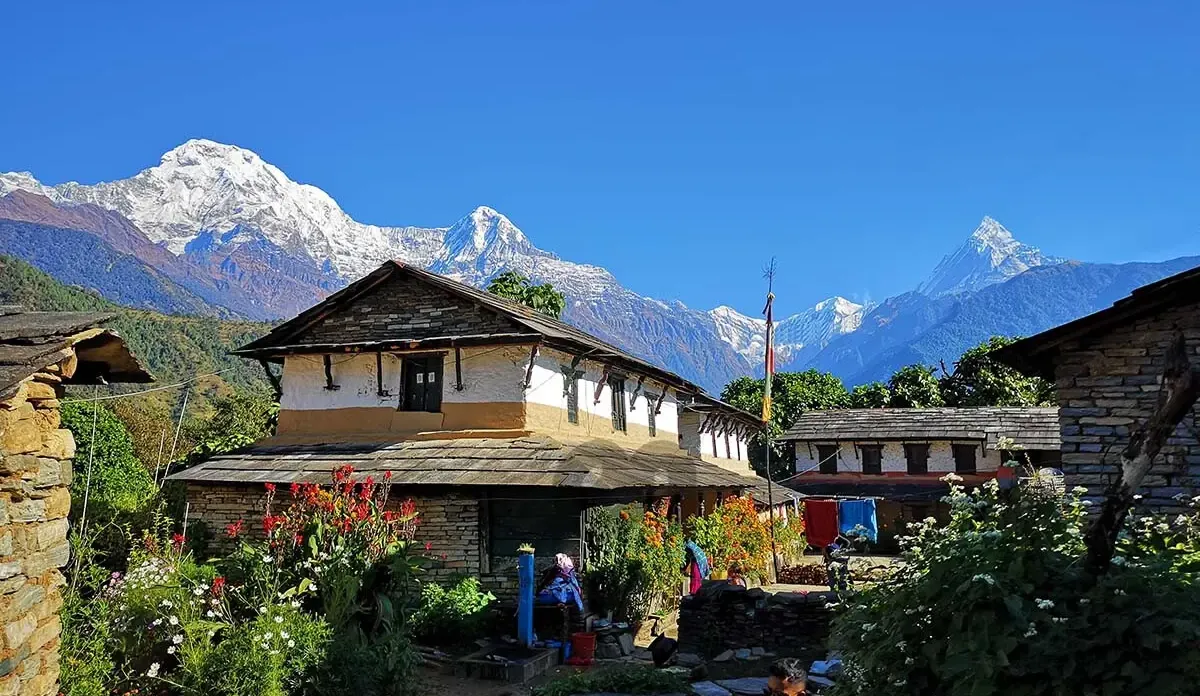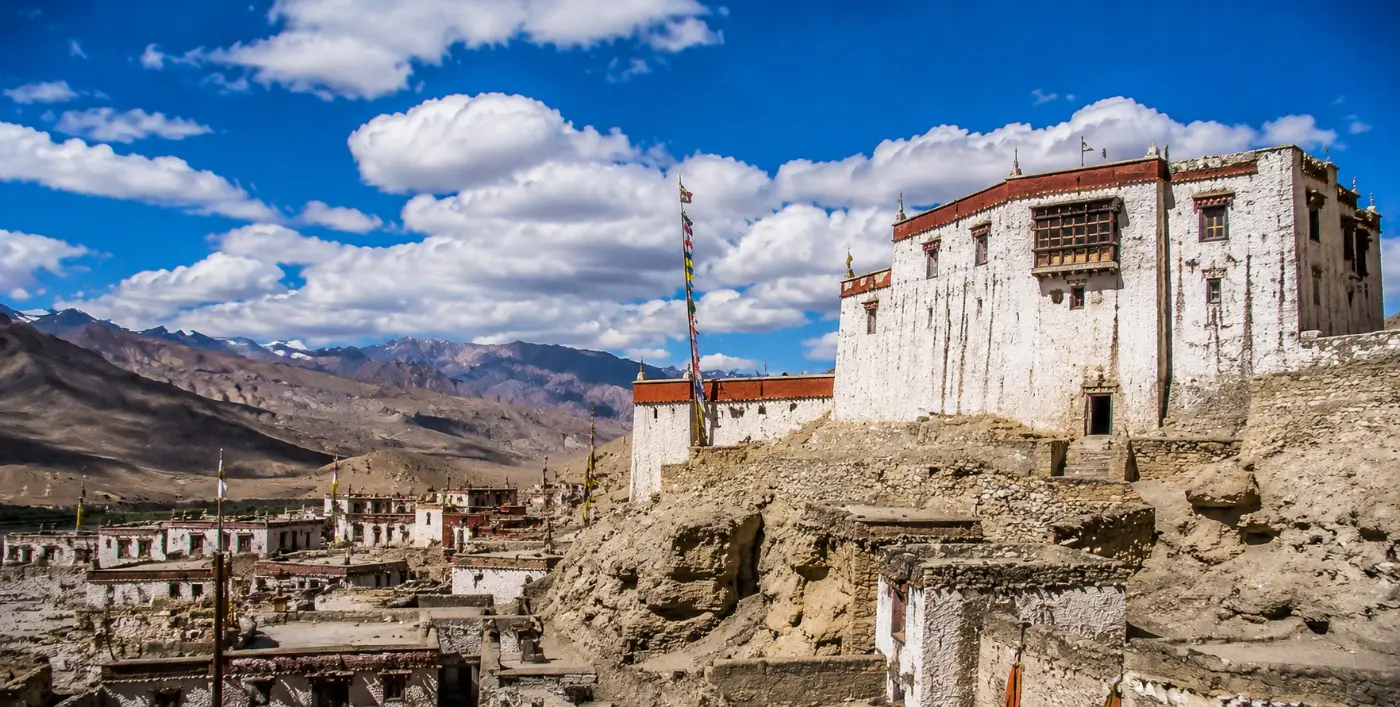
Pokhara to Mustang Border Route Jeep

Mustang
Pokhara to Mustang Border Route Jeep: Lo Manthang, Korala & Upper Mustang Complete Guide
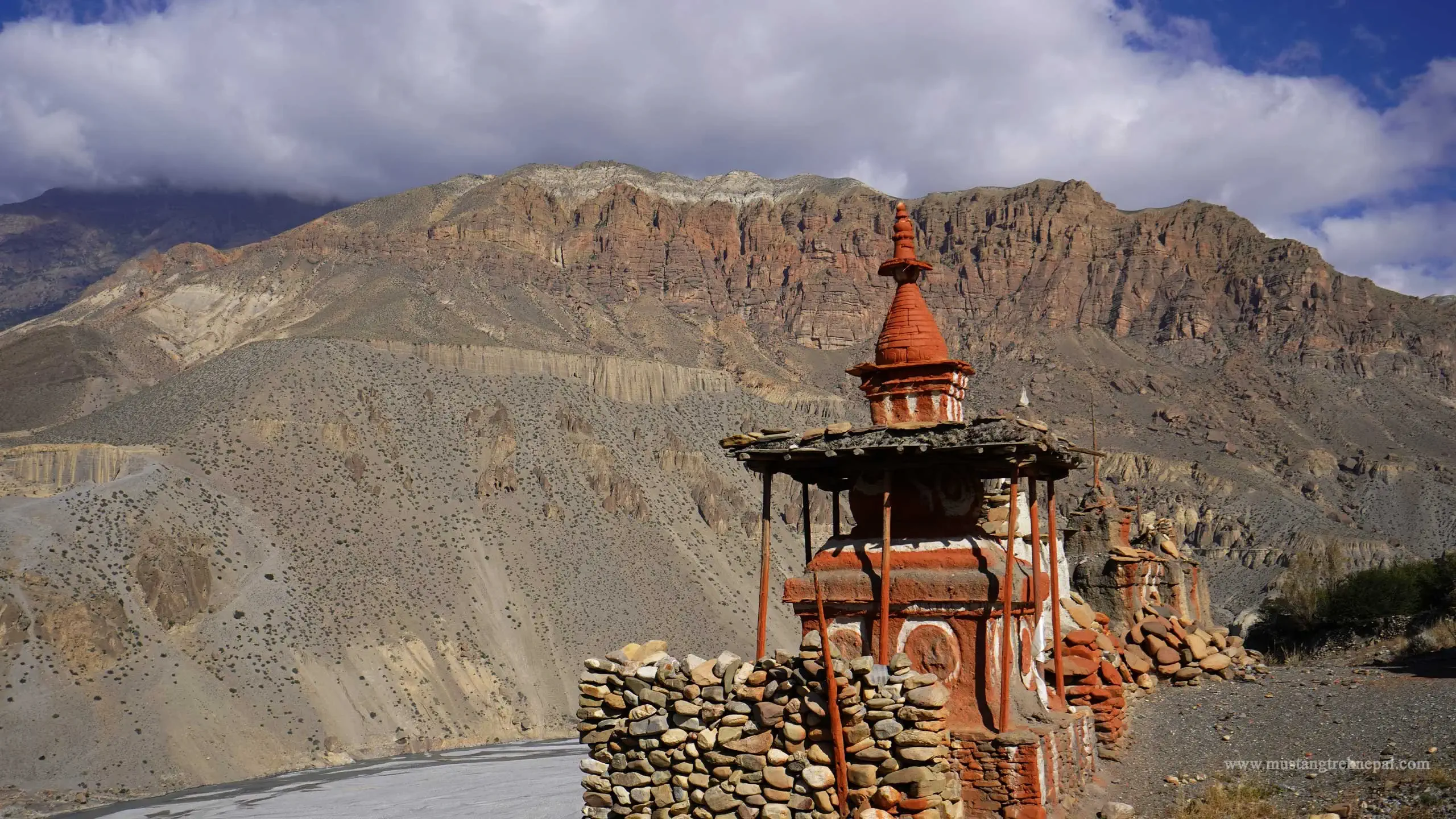
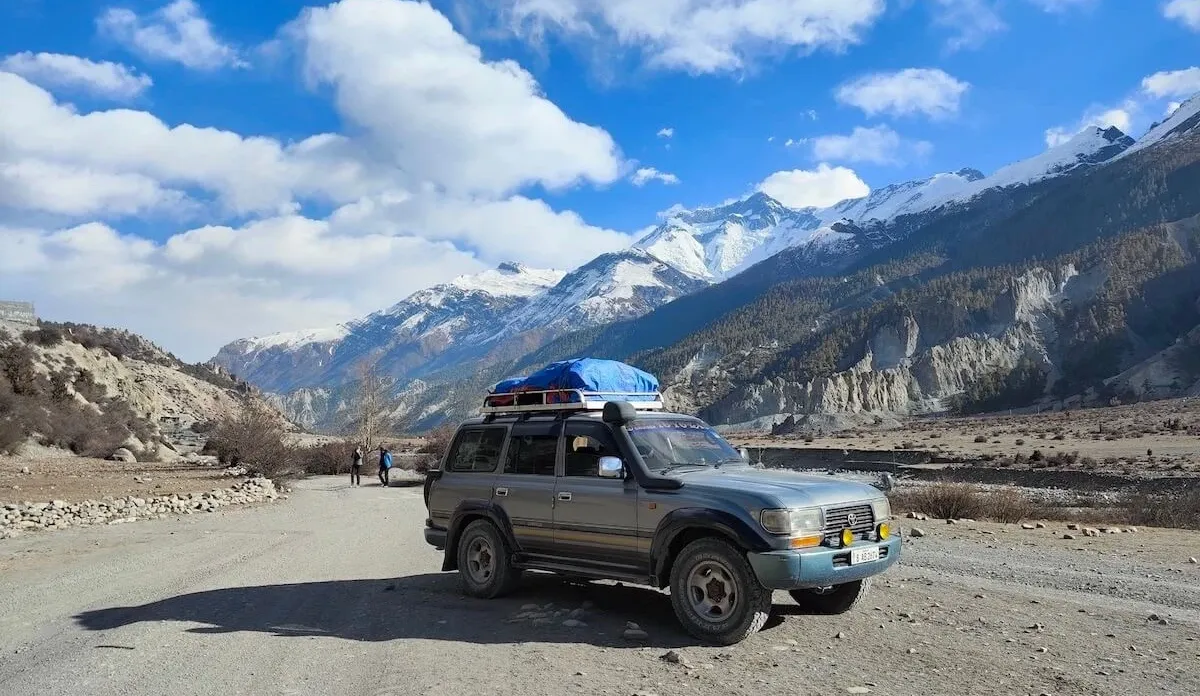
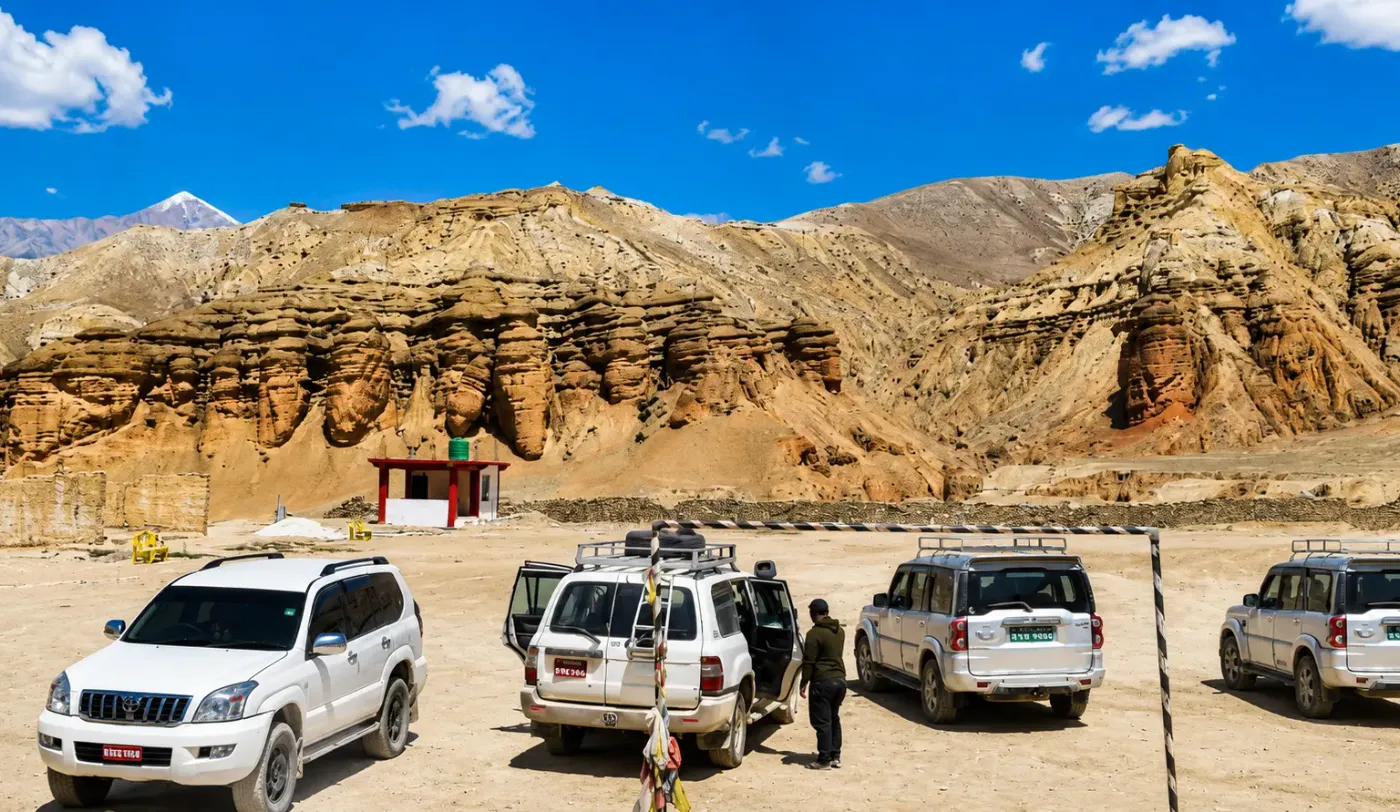
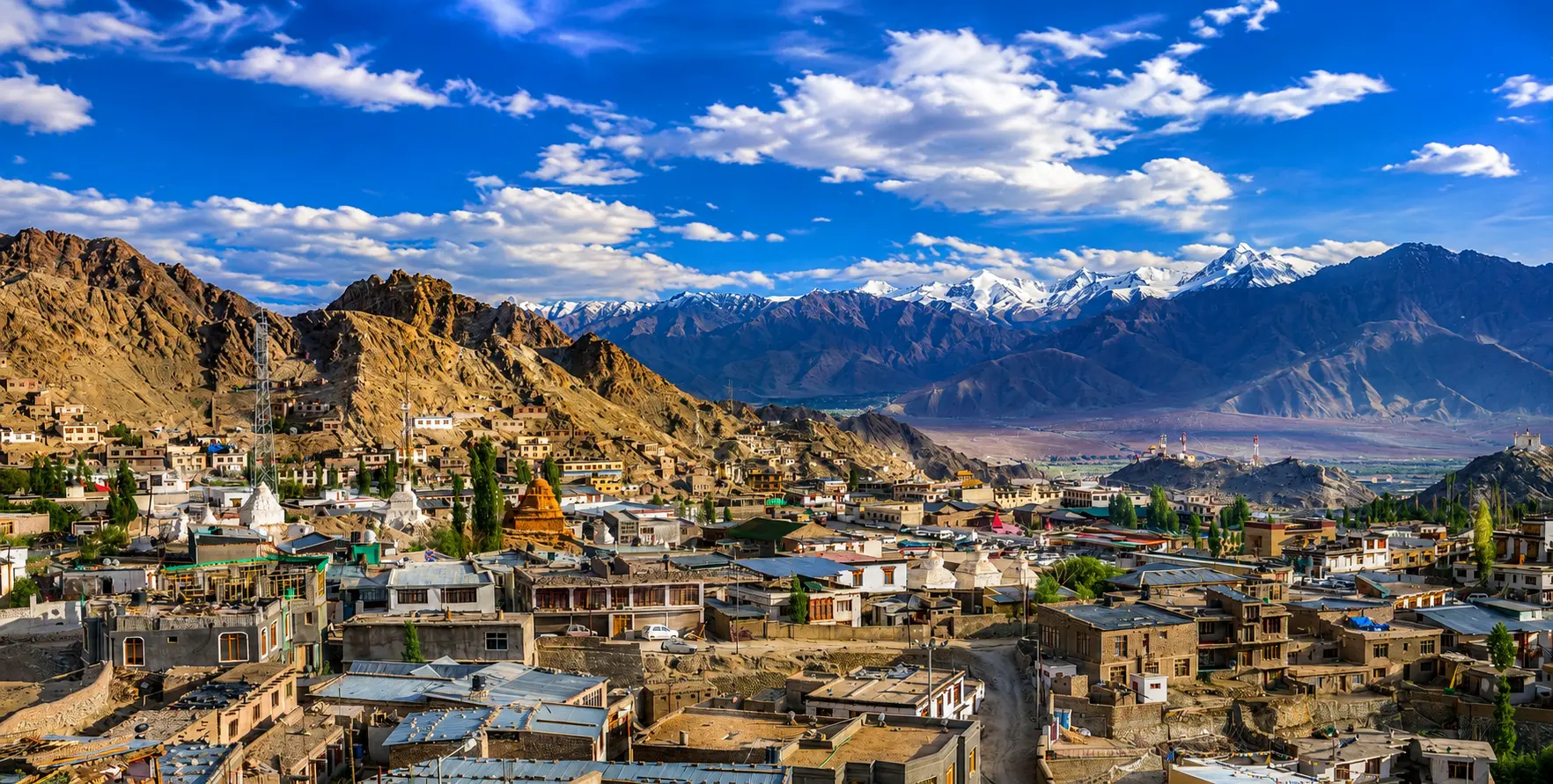
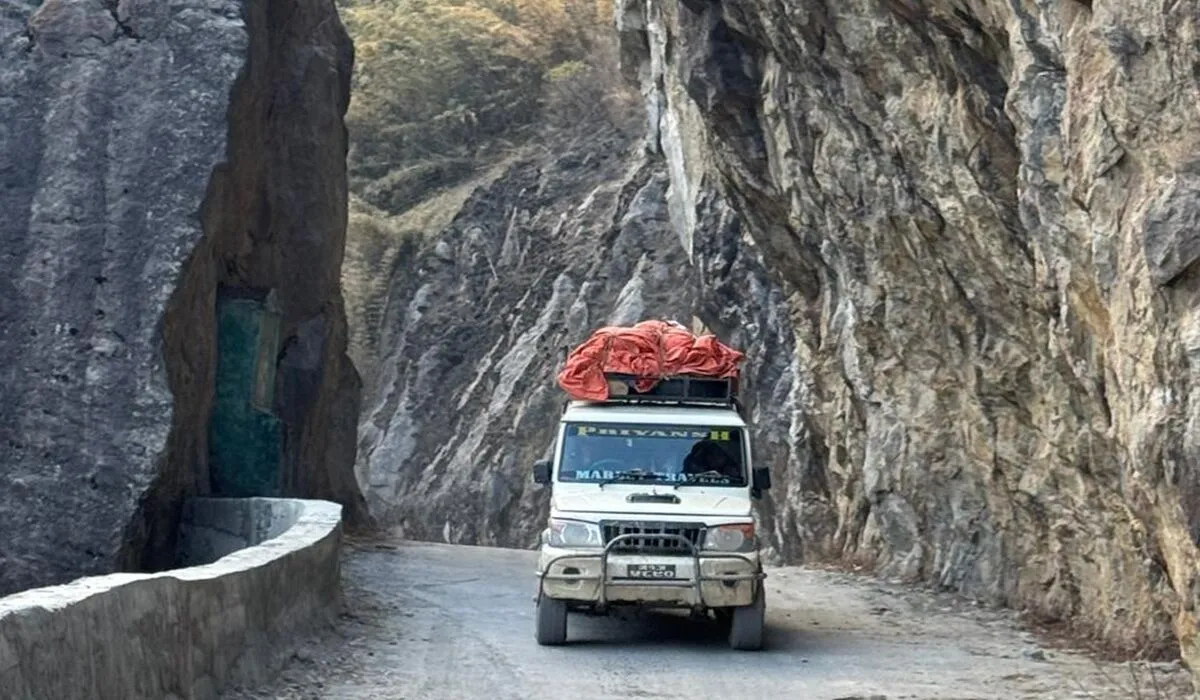
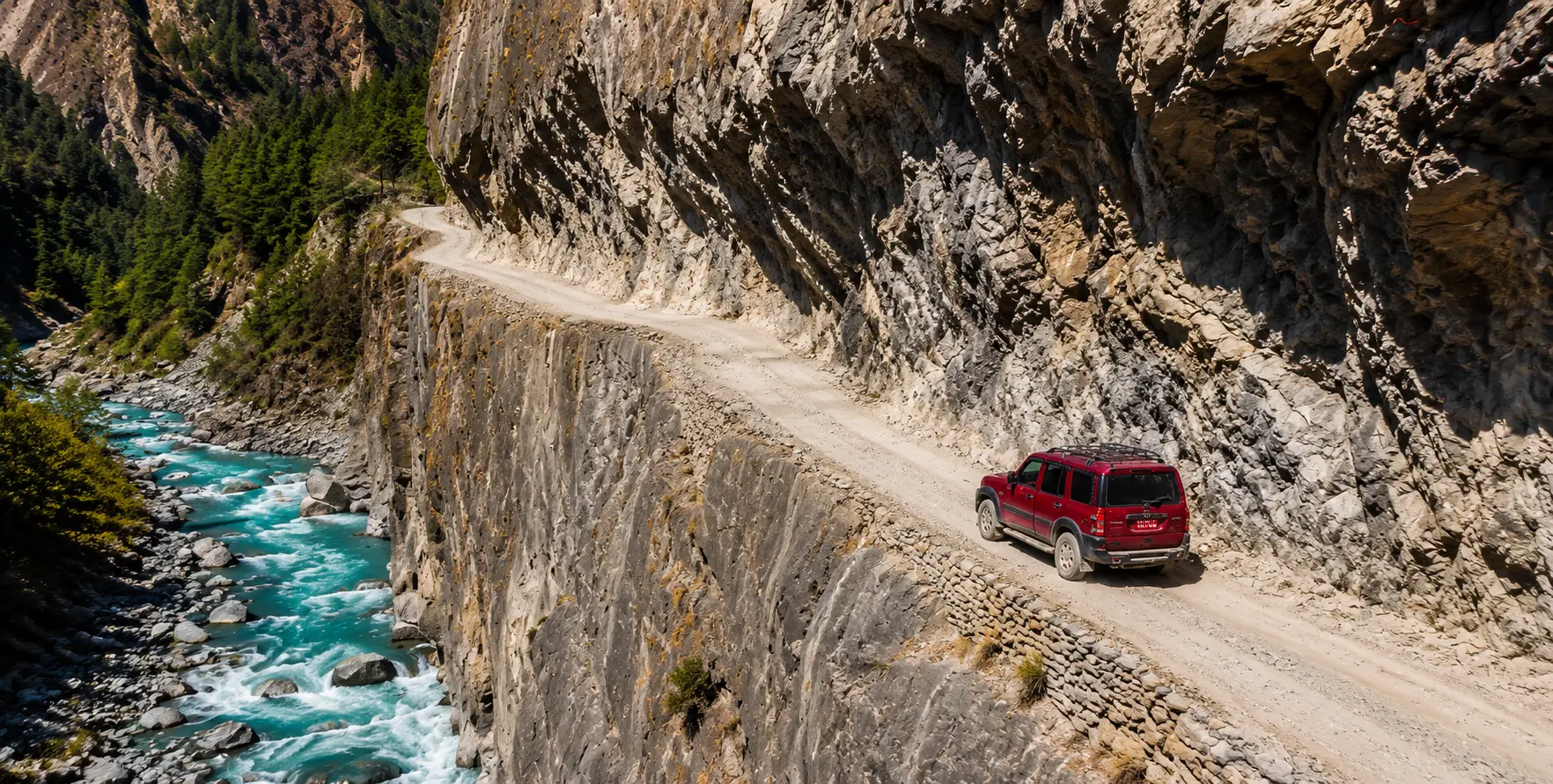
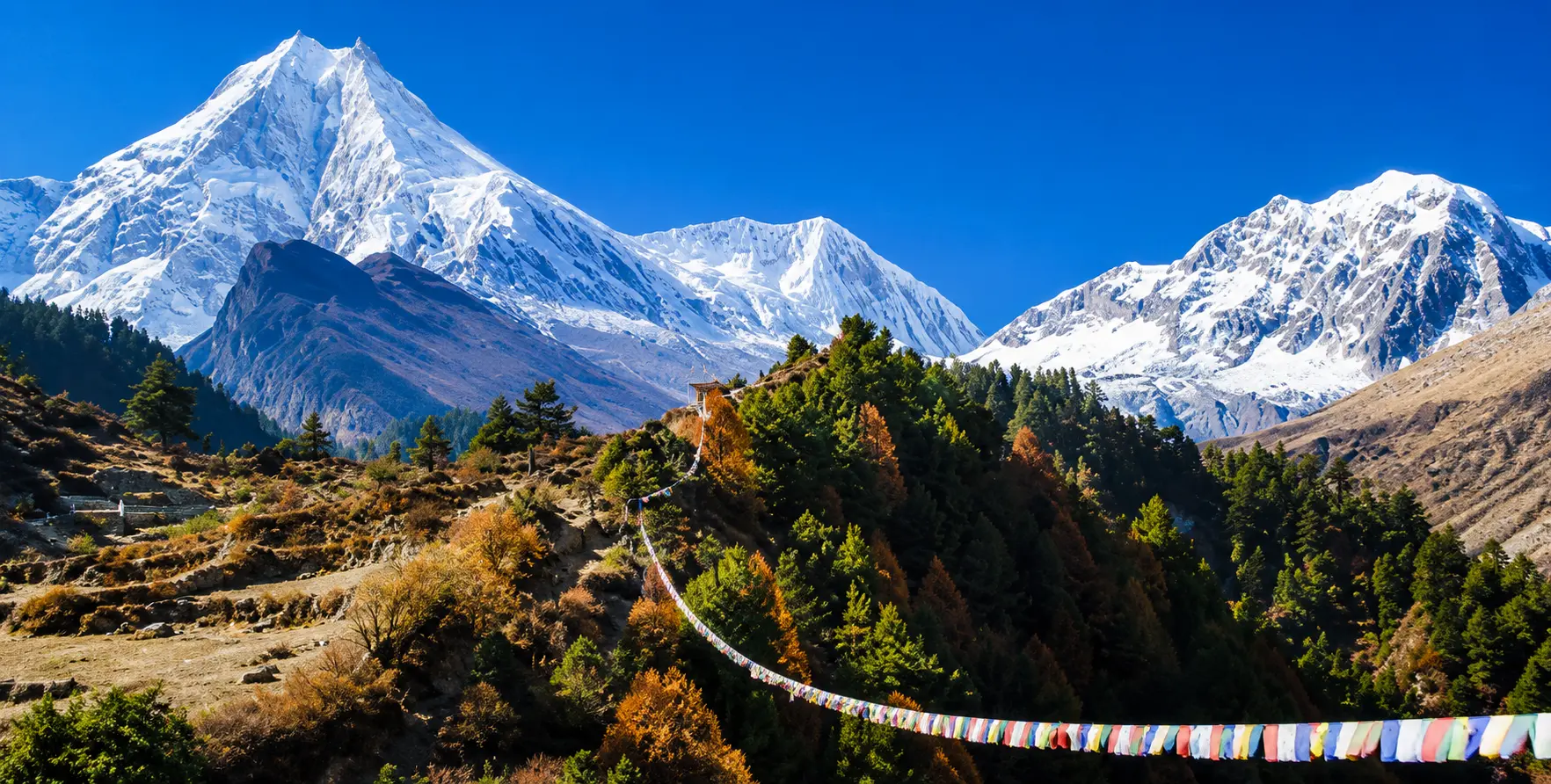
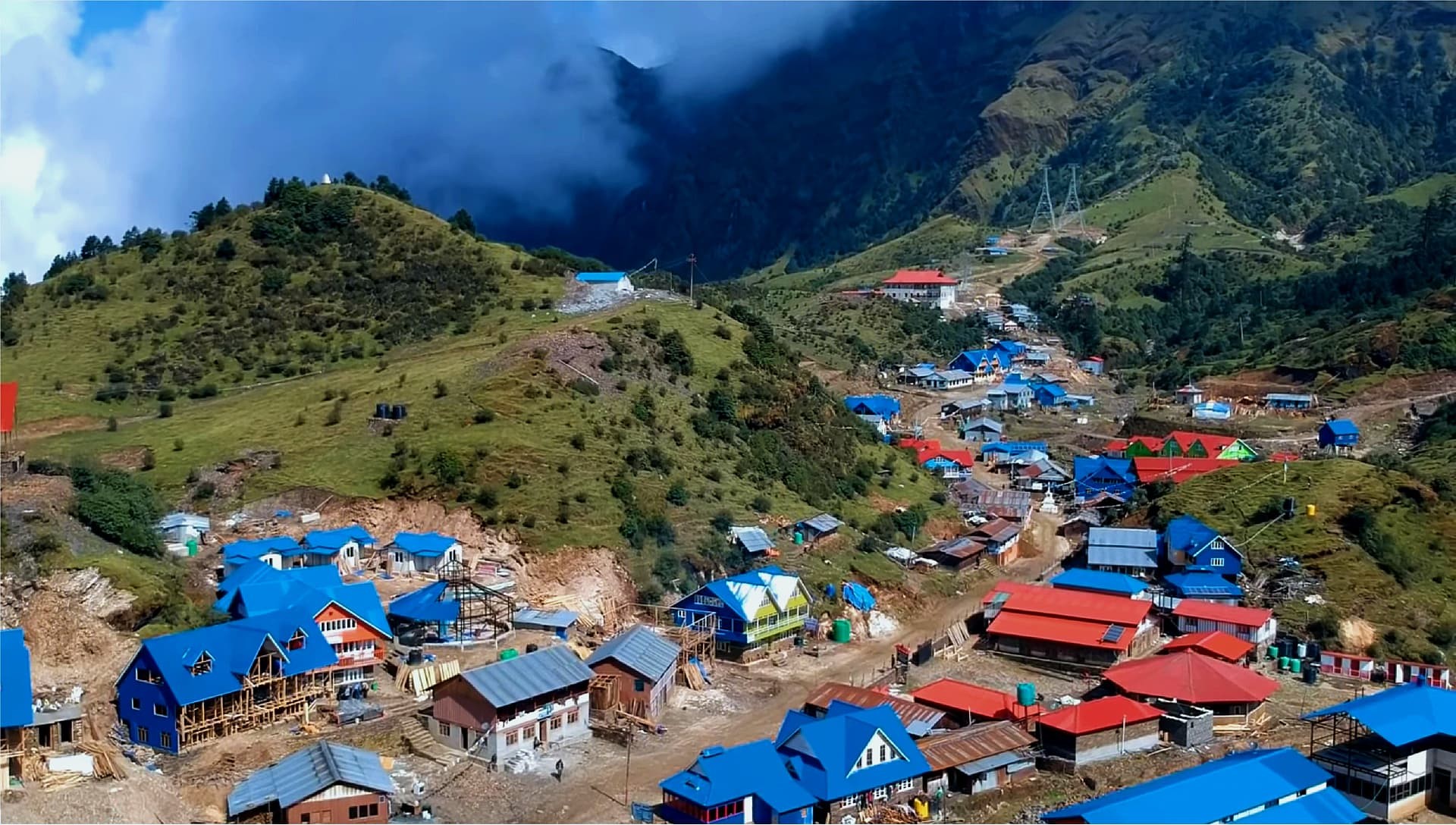
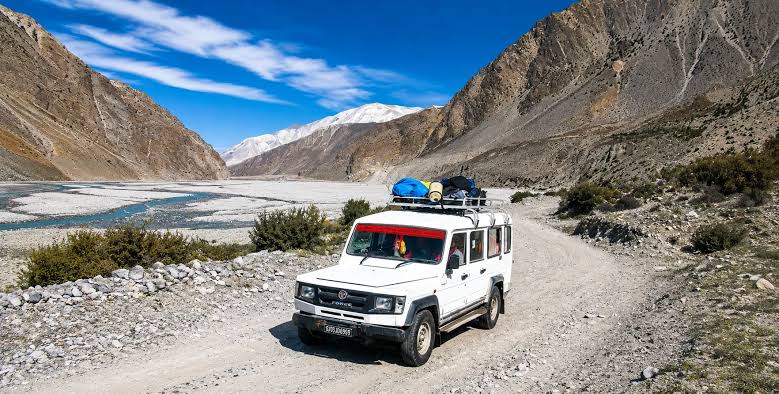
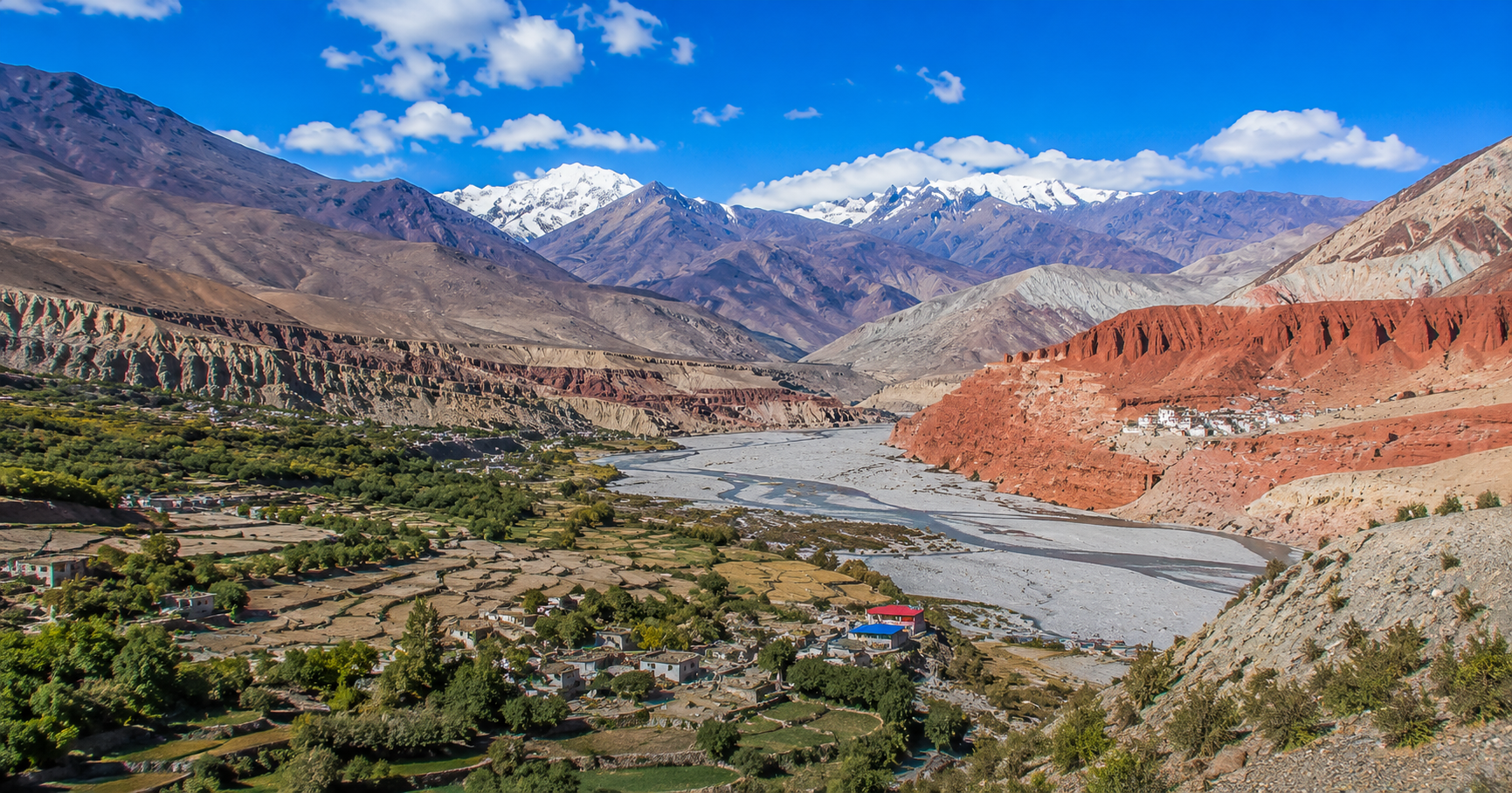
The jeep journey from Pokhara to the Mustang-Tibet border at Korala is one of the most extraordinary overland adventures available anywhere in the Himalayan world. The route travels from the lakeside paradise of Pokhara through the world’s deepest river gorge — the Kali Gandaki — past thermal hot springs, ancient Thakali villages, and the famous apple orchards of Marpha, to Jomsom and then northward into the high desert of Upper Mustang: a landscape of eroded red and ochre cliffs, ancient cave monasteries, medieval walled villages, and the legendary walled city of Lo Manthang — for centuries the capital of the independent Kingdom of Lo.

In a landmark development for Nepal’s overland adventure travel, the road from Pokhara to the Kora La Tibet border was fully opened in November 2025 — making the complete Pokhara-to-Mustang-to-Tibet border route drivable by jeep for the first time. This road, which connects Nepal to Tibet at the Korala border crossing about 23 kilometres north of Lo Manthang, has transformed the Upper Mustang experience and opened a new chapter for overland adventure travel in Nepal.

At Nepal Vehicle Hiring Pvt Ltd, we provide professional Land Cruiser and Hilux jeep services along the Pokhara-Upper Mustang border route. This comprehensive 2026 guide covers every aspect of the journey: the full route, all vehicle options and costs, the latest permit regulations, key destinations, road conditions, suggested itineraries, and expert tips to help you prepare for one of the greatest jeep adventures in Asia.

IMPORTANT  UPDATE: Korala Border Road and New Permit System

Road Opening: The Korala Tibet border road was formally opened in November 2025, making the Pokhara-to-Korala route fully drivable by jeep for the first time.

New Permit Pricing: The previous flat Upper Mustang Restricted Area Permit fee of USD 500 for 10 days has been replaced in 2026 with a per-day fee of USD 50 per person.

Upper Mustang Permit – Key ChangesDetails
Previous Permit SystemUSD 500 flat fee per person for 10 days (now discontinued)
New 2026 SystemUSD 50 per person per day in the Upper Mustang restricted area
Minimum Group RequirementMinimum 2 people with a licensed government-approved guide
Permit Area CoverageNorth of Kagbeni – all of Upper Mustang, including Lo Manthang and Korala
Where to ObtainDepartment of Immigration or Nepal Tourism Board, Kathmandu
Processing TimeAllow 3-5 working days in Kathmandu.
Road to KoralaOpened November 2025 – first time jeep-accessible to the Tibet border

Note: The new USD 50/day permit system means a standard 8-day Upper Mustang jeep tour now costs USD 400 per person in permit fees alone, compared to USD 500 previously for 10 days. For shorter 5- to 6-day tours, the new system is actually more economical than the previous flat fee. Always verify current permit pricing with the Department of Immigration before departure, as regulations may continue to evolve.
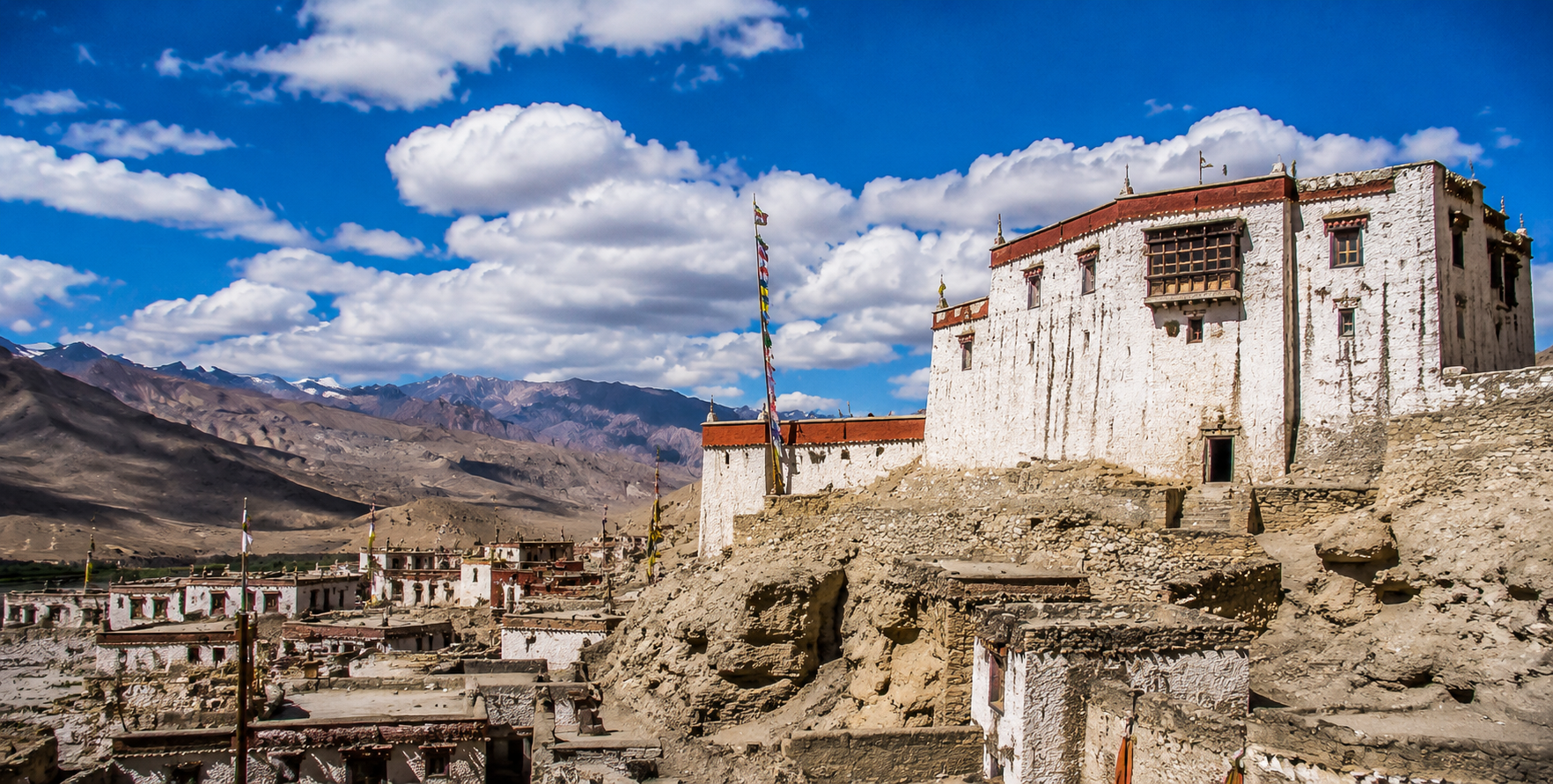
Pokhara to Mustang Border Route Jeep

About Upper Mustang – The Last Forbidden Kingdom

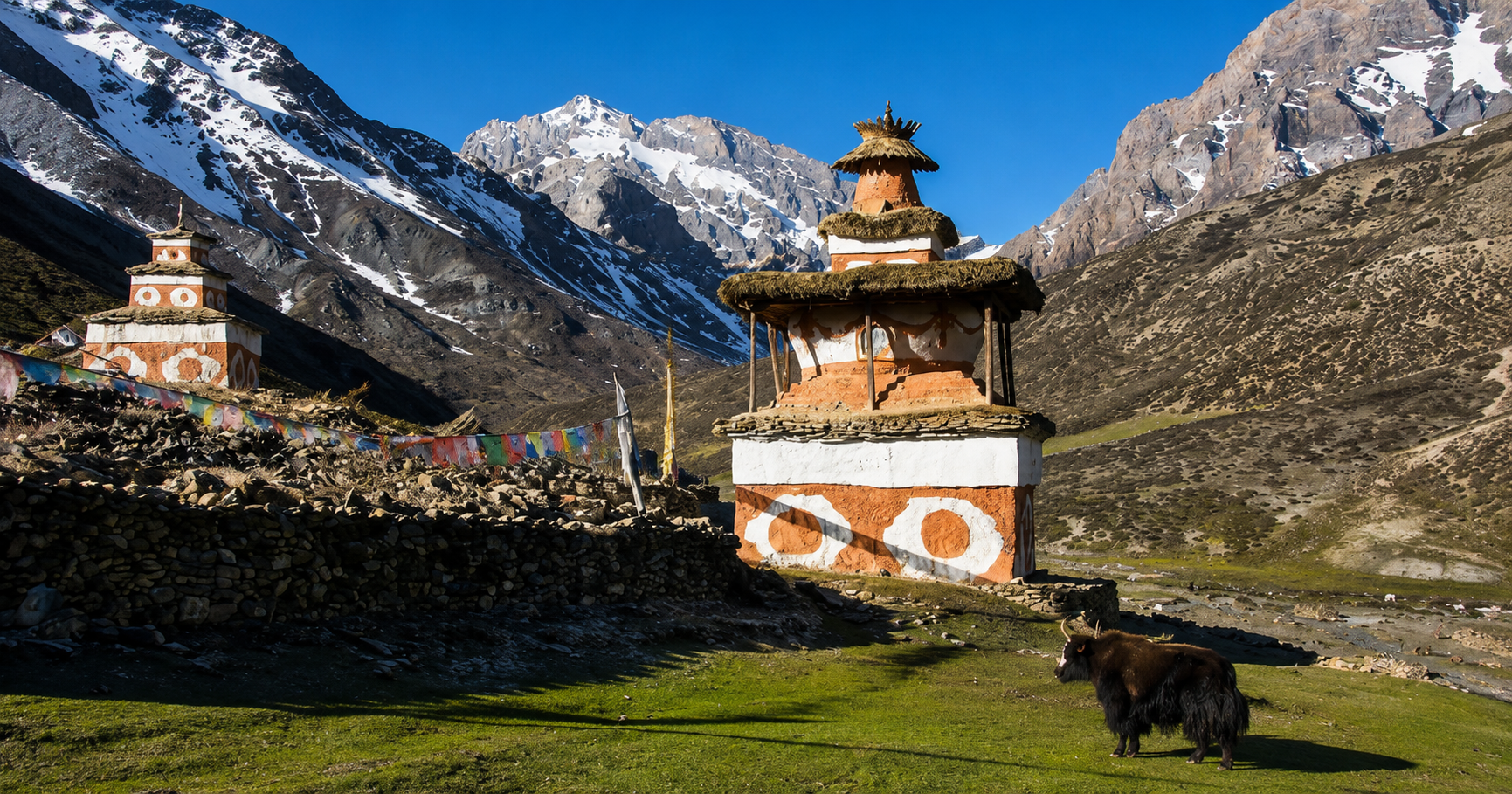
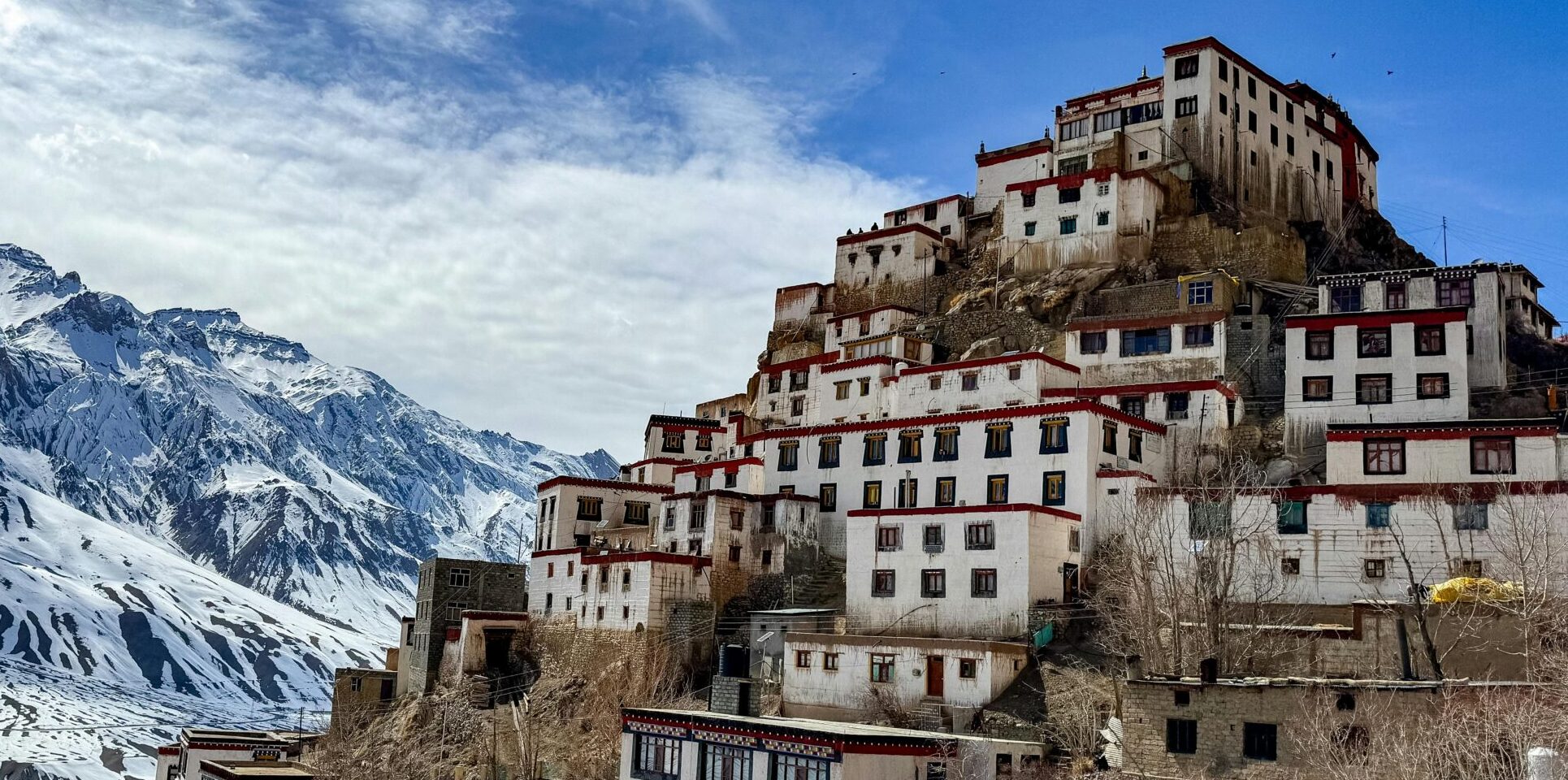
Upper Mustang (known as Lo in Tibetan) is one of Nepal’s most culturally intact and visually extraordinary regions. For centuries, this was an independent kingdom — the Kingdom of Lo — with its own royalty, language, governance, and ancient Bon-Buddhist traditions that have remained largely untouched by the modern world.

Nepal integrated Mustang in the 18th century, but the region retained much of its autonomous character and was only opened to foreign visitors in 1992.

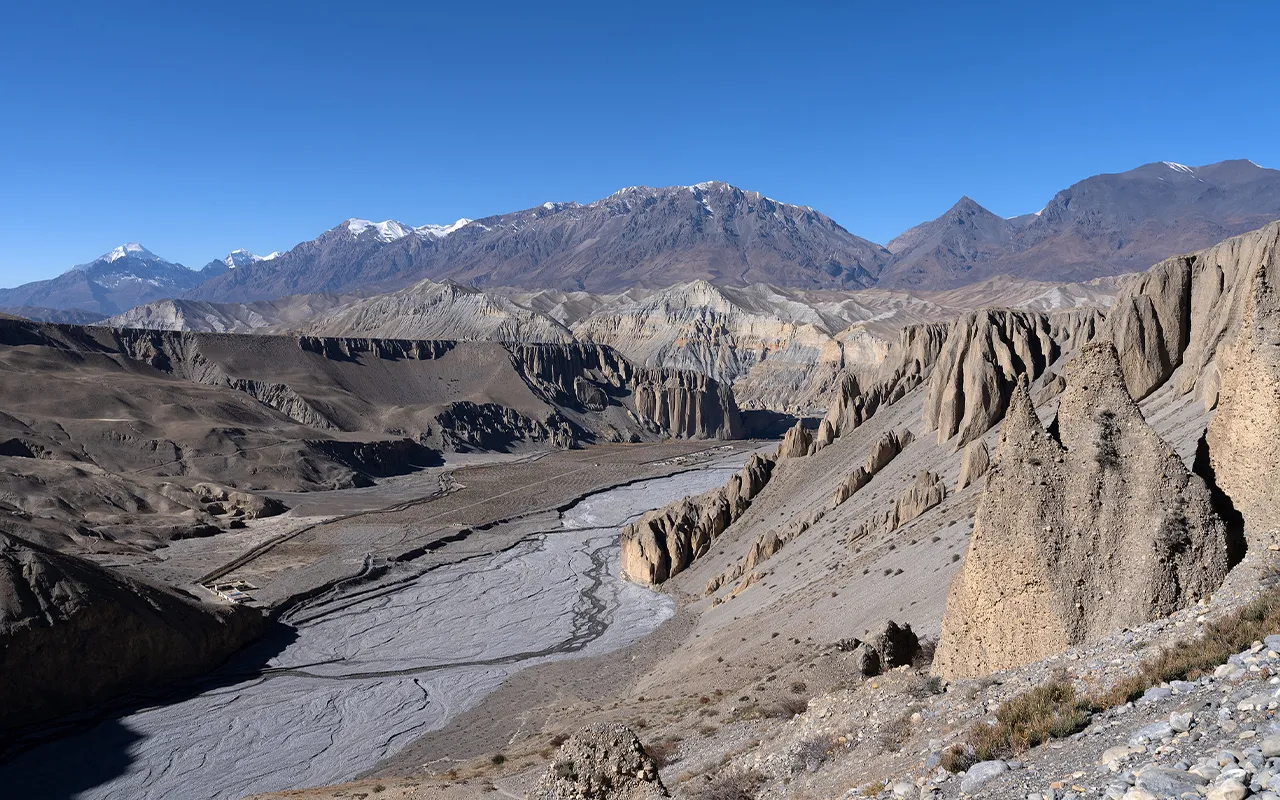
The landscape of Upper Mustang is unlike anything else in Nepal — a Trans-Himalayan plateau wilderness of eroded red and ochre cliffs shaped by ancient lake beds and wind erosion, dry riverbeds, sparse juniper forests, and ancient cave systems carved into the cliff faces that served as dwellings, meditation retreats, and storage facilities for thousands of years. The culture is profoundly Tibetan — the architecture, food, dress, religion, and language all belong to the same cultural sphere as Tibet itself.

Upper Mustang Key FactsDetails
CapitalLo Manthang (walled city at 3,840 m)
DistrictMustang District, Gandaki Province
Altitude Range2,750 m (Kagbeni) to 4,660 m (Korala Border Pass)
Distance from Pokhara420–430 km to Lo Manthang; ~453 km to Korala Border
Korala (Tibet Border) Altitude4,660 meters
Distance from Korala to Lo Manthang23 km north
PopulationApproximately 7,000 (mostly Loba Tibetan people)
ReligionTibetan Buddhism and ancient Bon religion
Famous ForLo Manthang walled city, sky caves, ancient monasteries, Tiji Festival
Road StatusFully drivable Pokhara to Korala as of November 2025
Restricted AreaYes, north of Kagbeni requires an Upper Mustang permit

The Complete Jeep Route: Pokhara to Mustang Tibet Border (Korala)

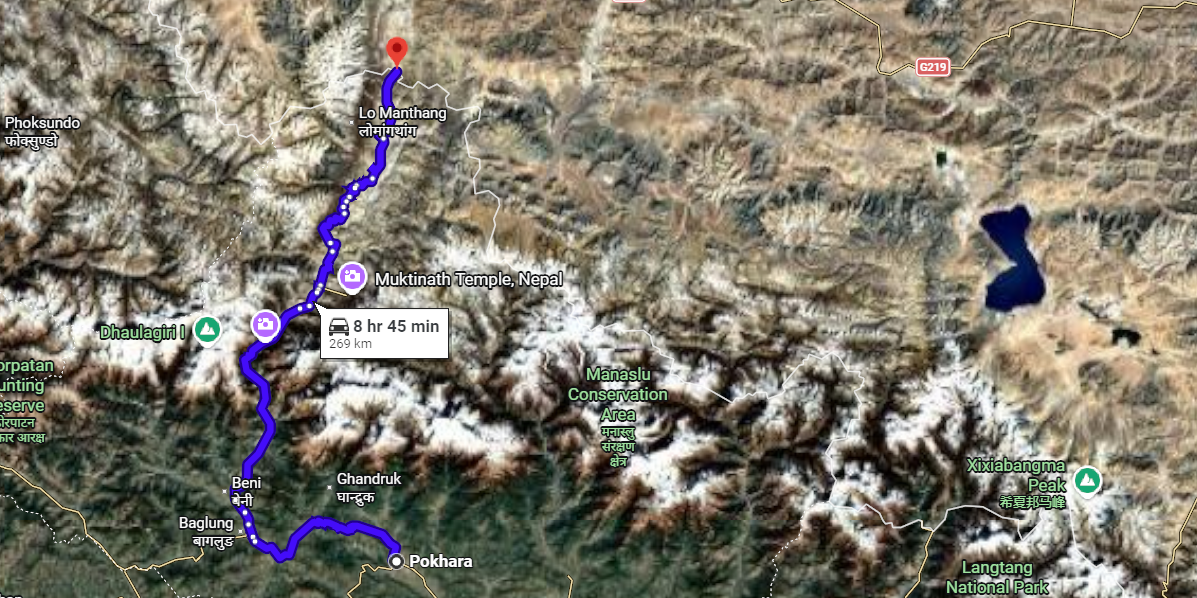
The complete Pokhara-to-Kora La Tibet border jeep route covers approximately 453 kilometres. It follows one of the world’s most spectacular overland corridors — from the subtropical hills of Pokhara through the Kali Gandaki gorge to the high Trans-Himalayan plateau. Here is the complete route:

StageSectionDistanceDrive TimeRoadKey Highlights
1Pokhara to Beni75 km2.5–3 hrsPaved highwayKushma Bridge, Baglung, Myagdi Valley
2Beni to Tatopani42 km2 hrsRough Gorge RoadRupse Waterfall, Kali Gandaki gorge entry
3Tatopani to Marpha70 km3 hrsRough off-roadGhasa, Kalopani, Dhaulagiri views, Marpha
4Marpha to Jomsom7 km30 minSandy riverbedKali Gandaki riverbed crossing, Jomsom bazaar
5Jomsom to Kagbeni18 km45 minRough jeep trackUpper Mustang entry, medieval village
6Kagbeni to Lo Manthang90 km5–7 hrsOff-road plateauChuksang, Ghami, Tsarang – ancient villages
7Lo Manthang to Korala23 km1.5–2 hrsNew road, roughTibet border pass at 4,660 m
TOTALPokhara to Korala453 kmMulti-dayMixedFirst-rate overland adventure

Pokhara to Mustang Border Route Jeep

Stage-by-Stage Jeep Route Guide

Stage 1: Pokhara to Beni – 75 km (2.5 to 3 hours)

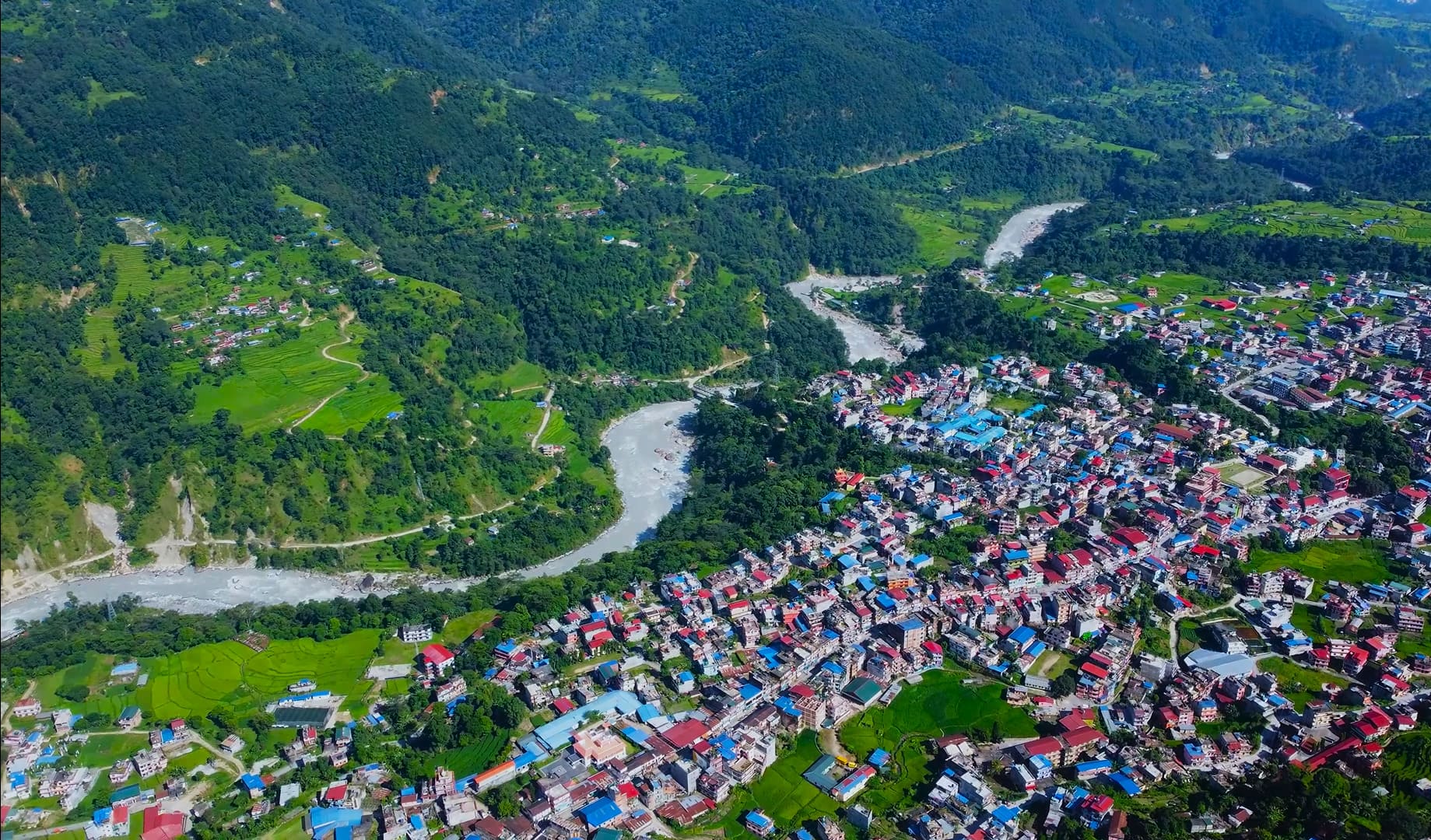
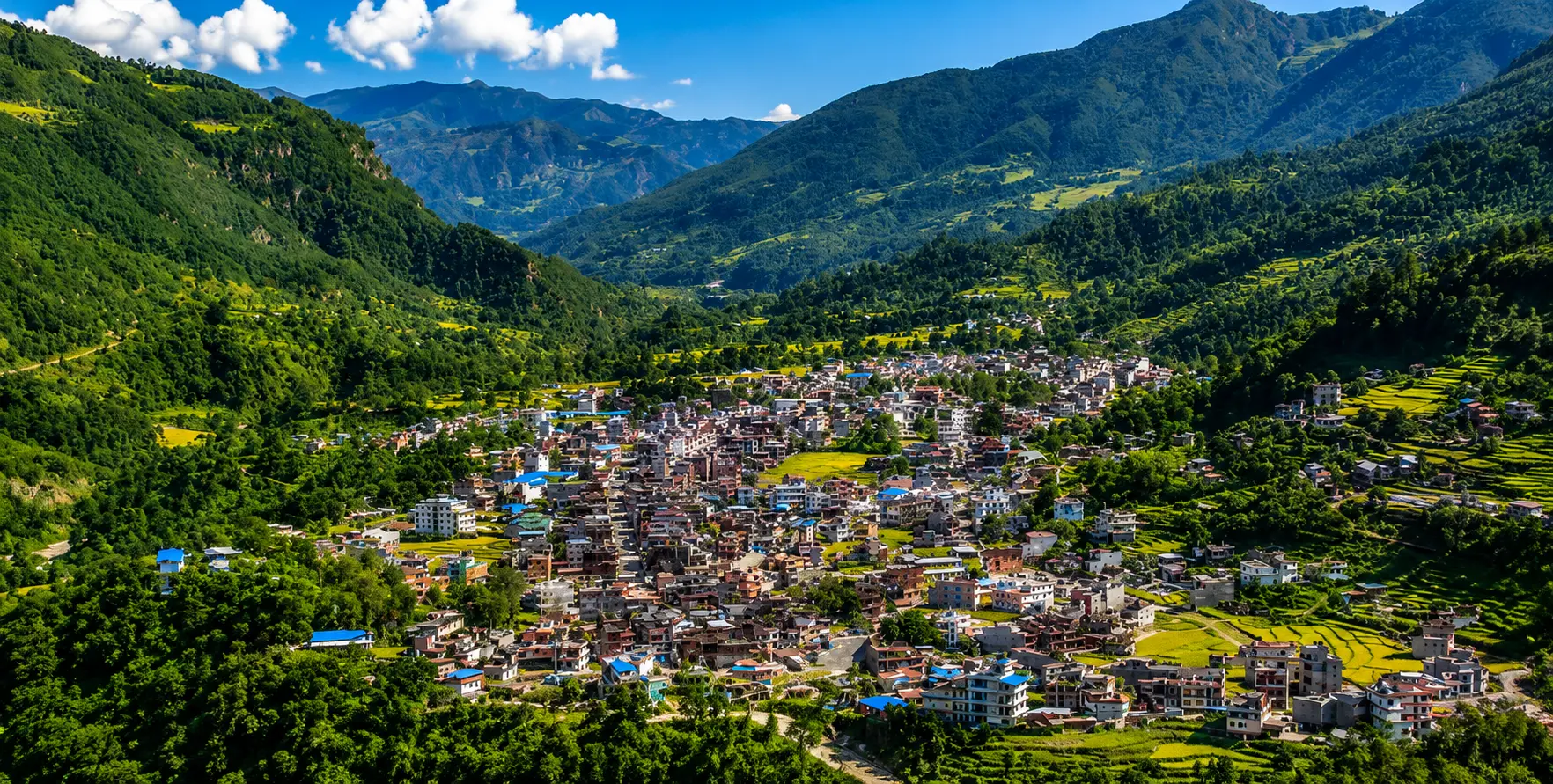
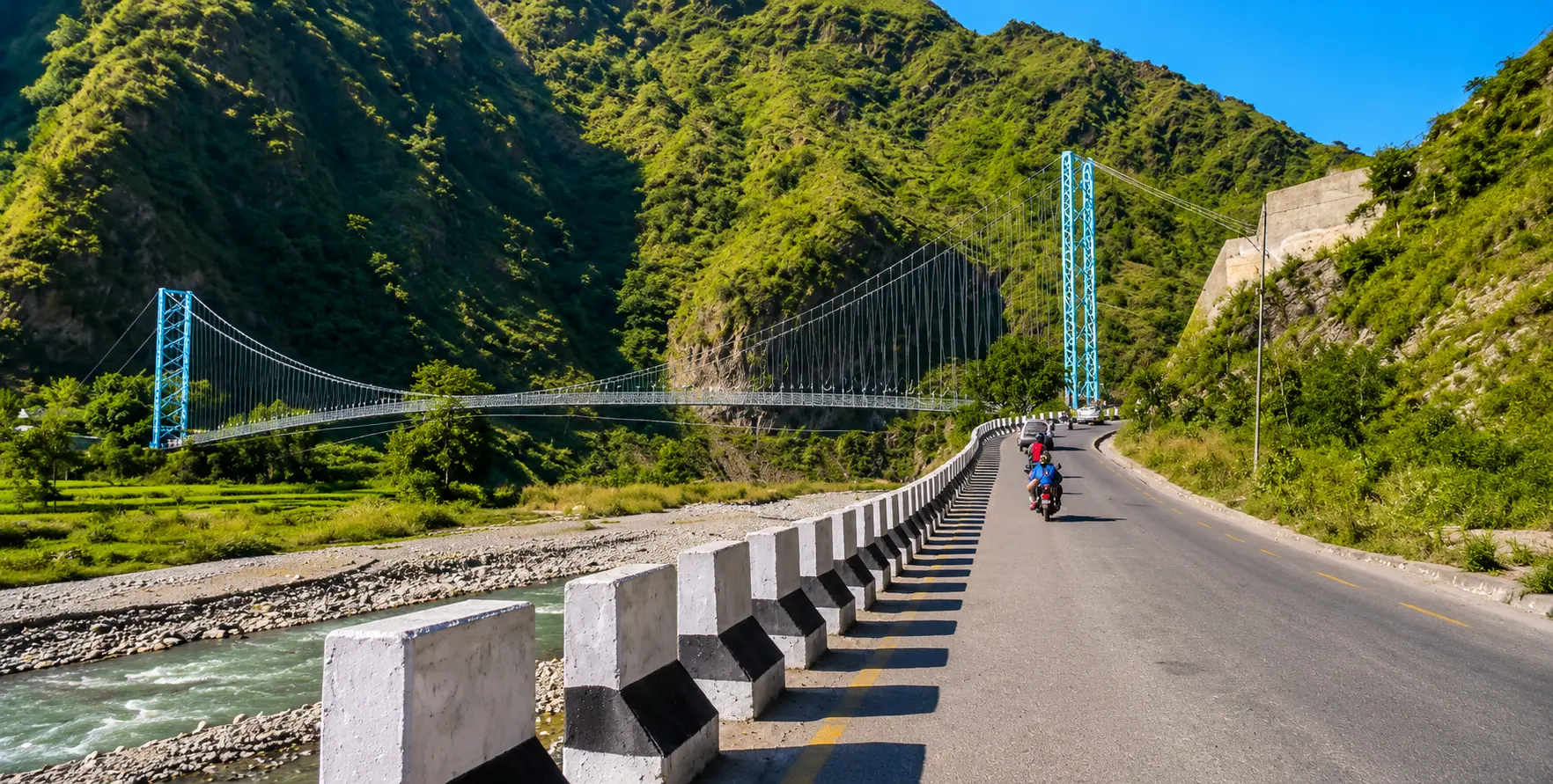
The adventure begins in Pokhara, with a northwestward drive along the smooth Baglung Highway. The road passes through Baglung Bazaar before descending to Beni, the district headquarters of Myagdi District, at the confluence of the Myagdi and Kali Gandaki rivers at 830 meters. The optional detour to the Kushma Suspension Bridge (Nepal’s highest and longest suspension bridge) is a worthwhile 20-minute stop before Beni.

Stage 2: Beni to Tatopani – 42 km (2 hours)

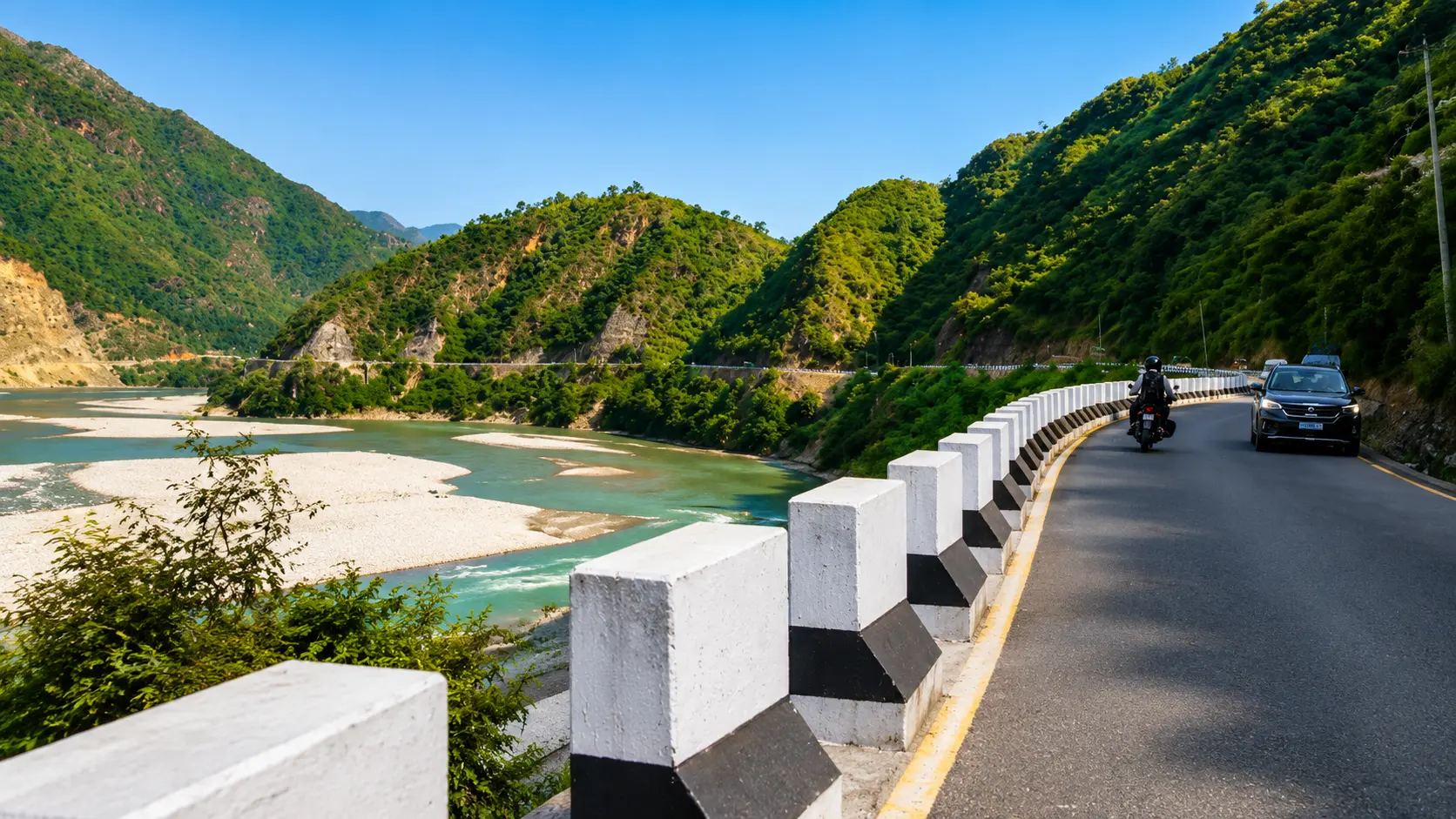
After Beni, the road enters the Kali Gandaki gorge, and the surface immediately becomes rough. The track passes through the villages of Baglung, Dana, and the area of the spectacular Rupse Waterfall. Tatopani village (1,190 m) is famous throughout Nepal for its natural geothermal hot springs on the Kali Gandaki riverbank — the perfect first overnight stop or a soak before continuing.

Stage 3: Tatopani to Marpha – 70 km (3 hours)

The most spectacular section of the Kali Gandaki drive. The road climbs through the world’s deepest gorge — flanked by Dhaulagiri (8,167 m) and Annapurna I (8,091 m) — passing Ghasa, Kalopani, Lete, Kobang, Larjung, and Tukuche before reaching Marpha (2,670 m).

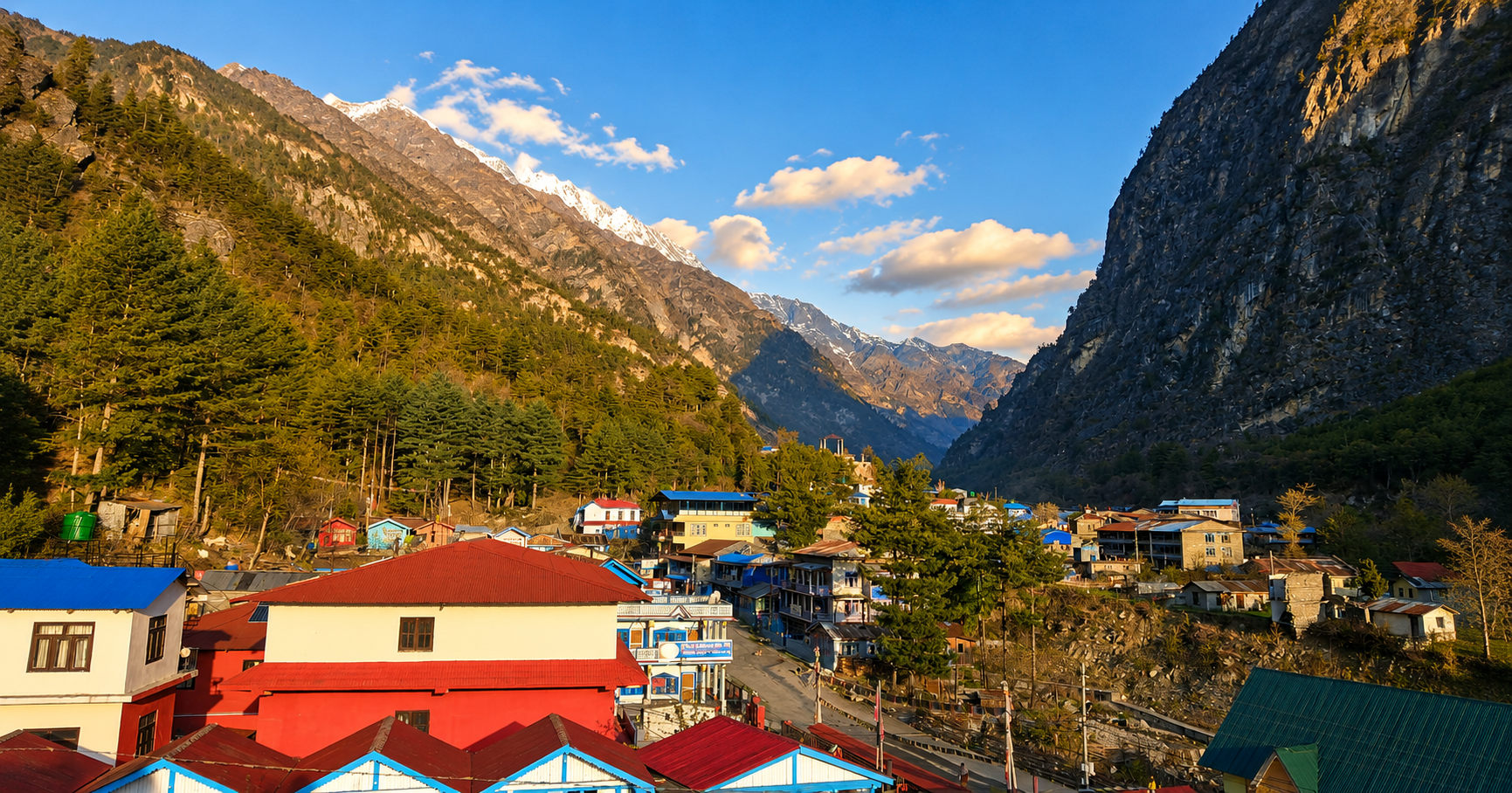
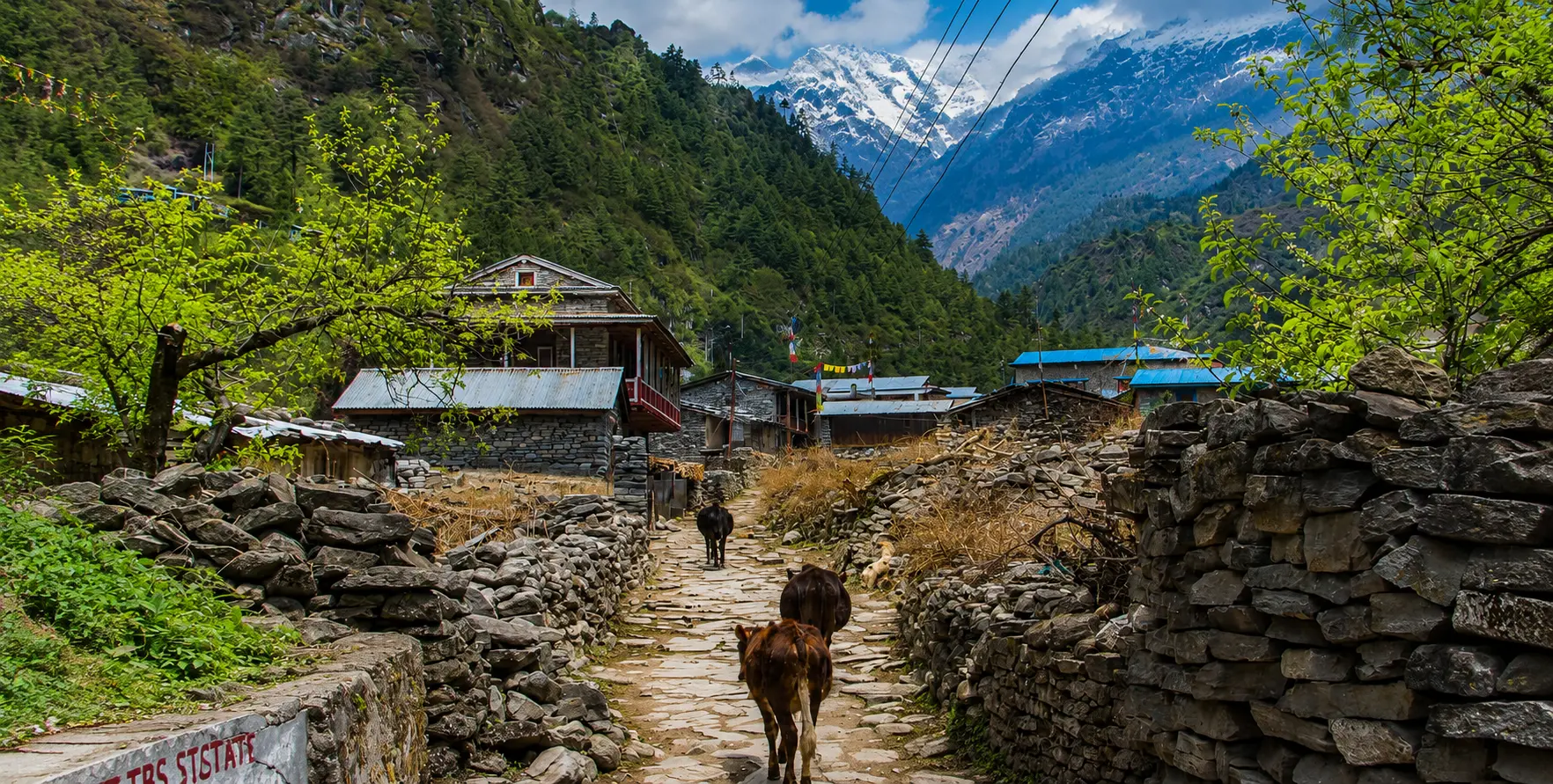
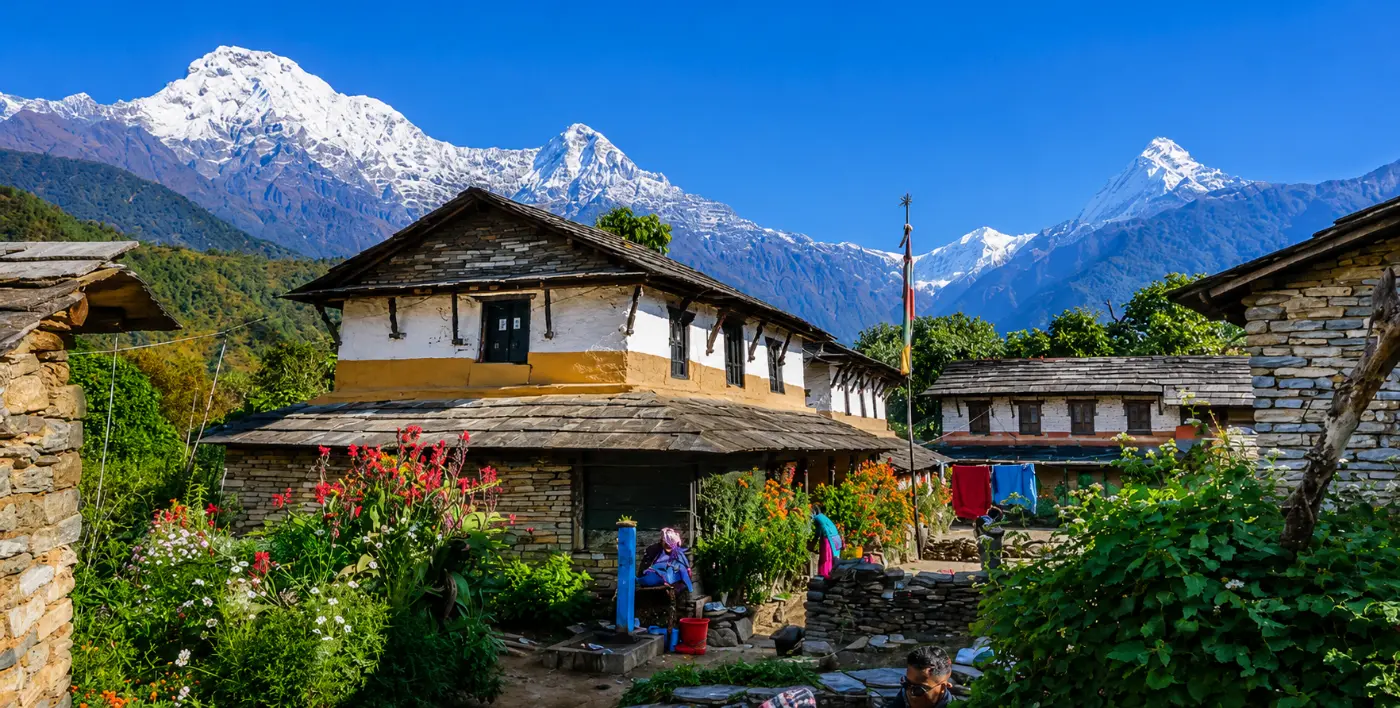
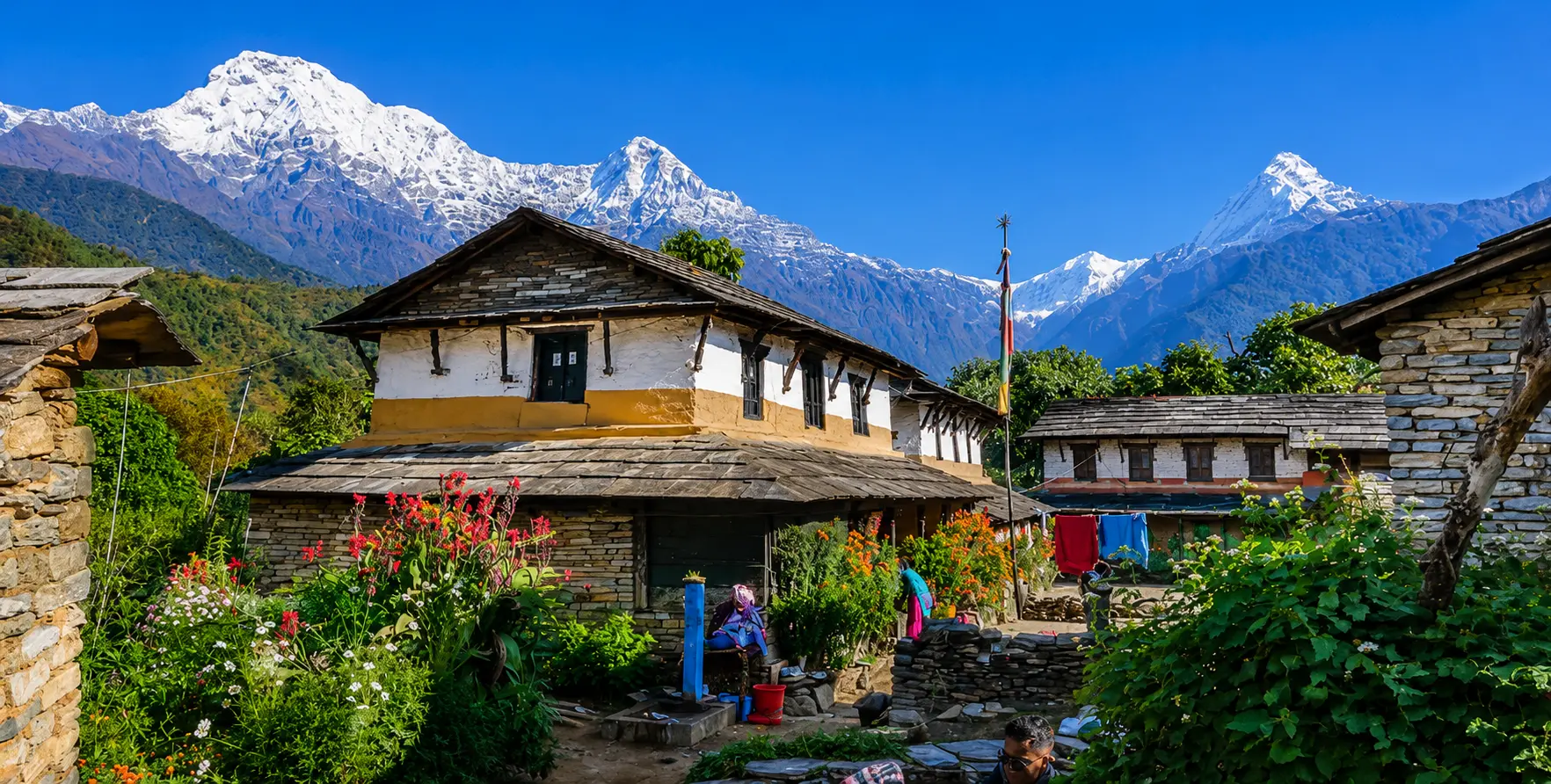
Marpha is the most beautiful and most celebrated village on the entire Mustang route — famous for its apple orchards, apple brandy, whitewashed stone lanes, and the dramatic backdrop of Dhaulagiri rising directly above.

Stage 4: Marpha to Jomsom – 7 km (30 minutes)

The short but memorable crossing of the wide sandy Kali Gandaki riverbed from Marpha to Jomsom. The landscape has fully transformed into a high-altitude semi-desert — the Mustang valley opens wide, the mountains are enormous and close, and the powerful afternoon valley winds begin to blow. Jomsom (2,720 m) is the district headquarters of Mustang District, with a small airport, bustling bazaar, and the last reliable services before the remote upper valley.

Stage 5: Jomsom to Kagbeni – 18 km (45 minutes)

From Jomsom, the road heads north through the wide sandy Kali Gandaki riverbed to Kagbeni (2,810 m) — the medieval walled village that marks the entry into the Upper Mustang restricted area. Kagbeni is one of the most atmospheric and most visually striking villages in Nepal — its ochre-coloured stone buildings, ancient monastery, and narrow covered lanes are entirely Tibetan in character. The Upper Mustang permit checkpoint is here.

Stage 6: Kagbeni to Lo Manthang – 90 km (5 to 7 hours)

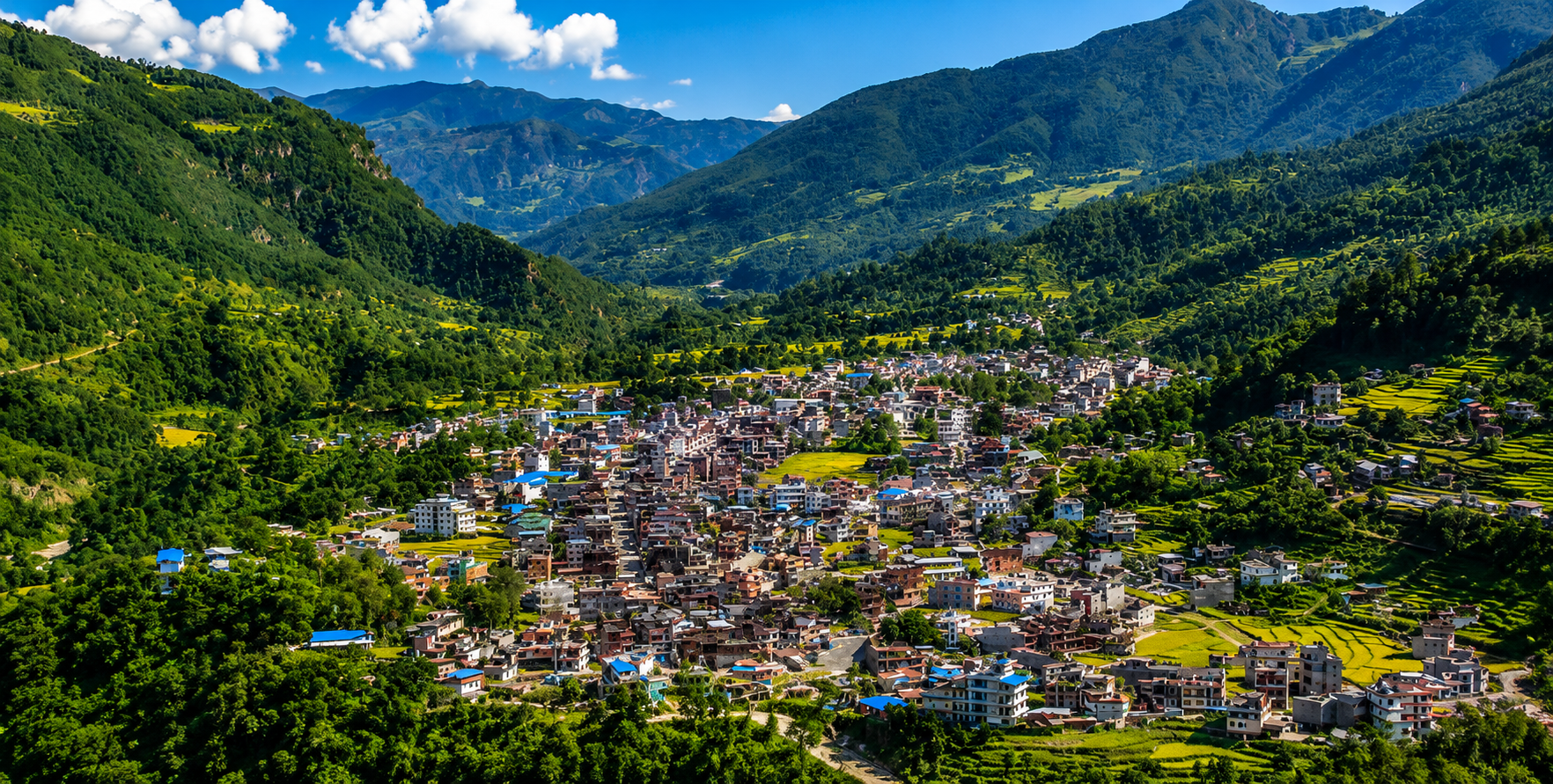
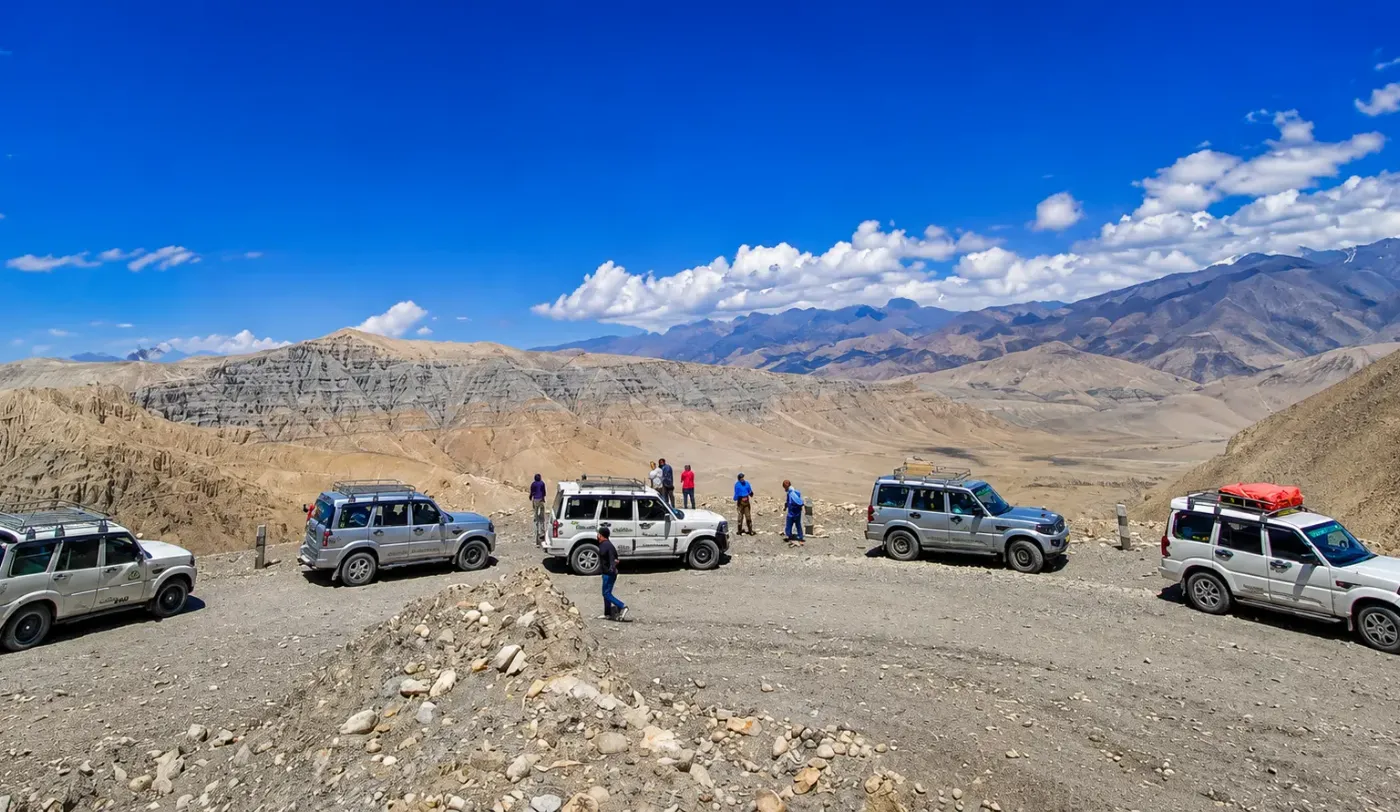
The most dramatic and most extraordinary section of the entire route. North of Kagbeni, the landscape transforms completely into the high Trans-Himalayan plateau. The road passes through Chuksang (3,050 m), Chele (3,050 m), Syangbochen, Ghami (3,520 m), and the impressive cliff paintings of the Ghami Monastery, then climbs to Tsarang (3,720 m) — with its ancient five-story palace — before the final spectacular approach to Lo Manthang.

Lo Manthang (3,840 m) is the capital of the ancient Kingdom of Lo and the crown jewel of Upper Mustang. The walled city — one of the last intact walled cities in the Himalayan world — contains the King’s Palace (a five-story whitewashed mansion), the Champa Lhakhang and Thupchen Lhakhang monasteries (which contain some of the finest medieval Buddhist murals in existence), and the Chyodi Monastery.

Arriving at Lo Manthang’s gates by jeep as the sun sets over the Tibetan plateau is genuinely memorable.

Stage 7: Lo Manthang to Korala Tibet Border – 23 km (1.5 to 2 hours)

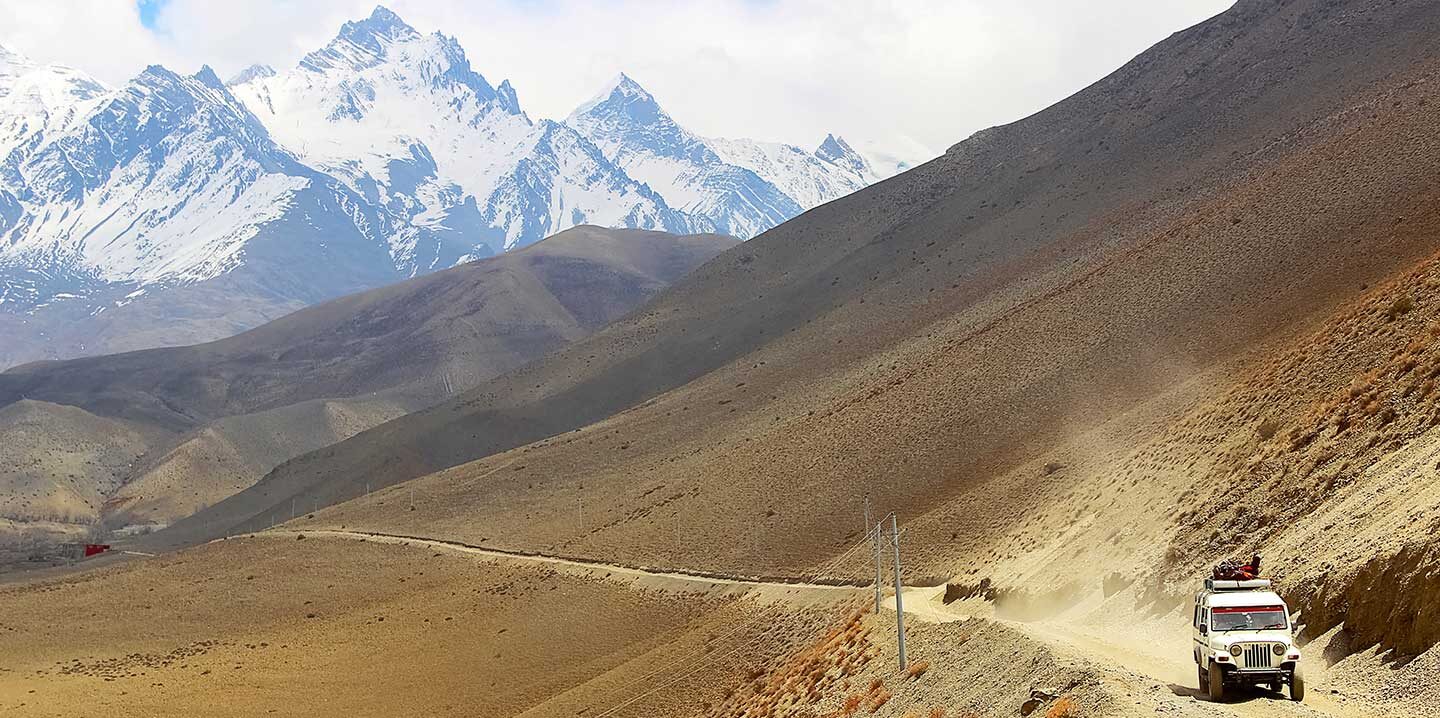
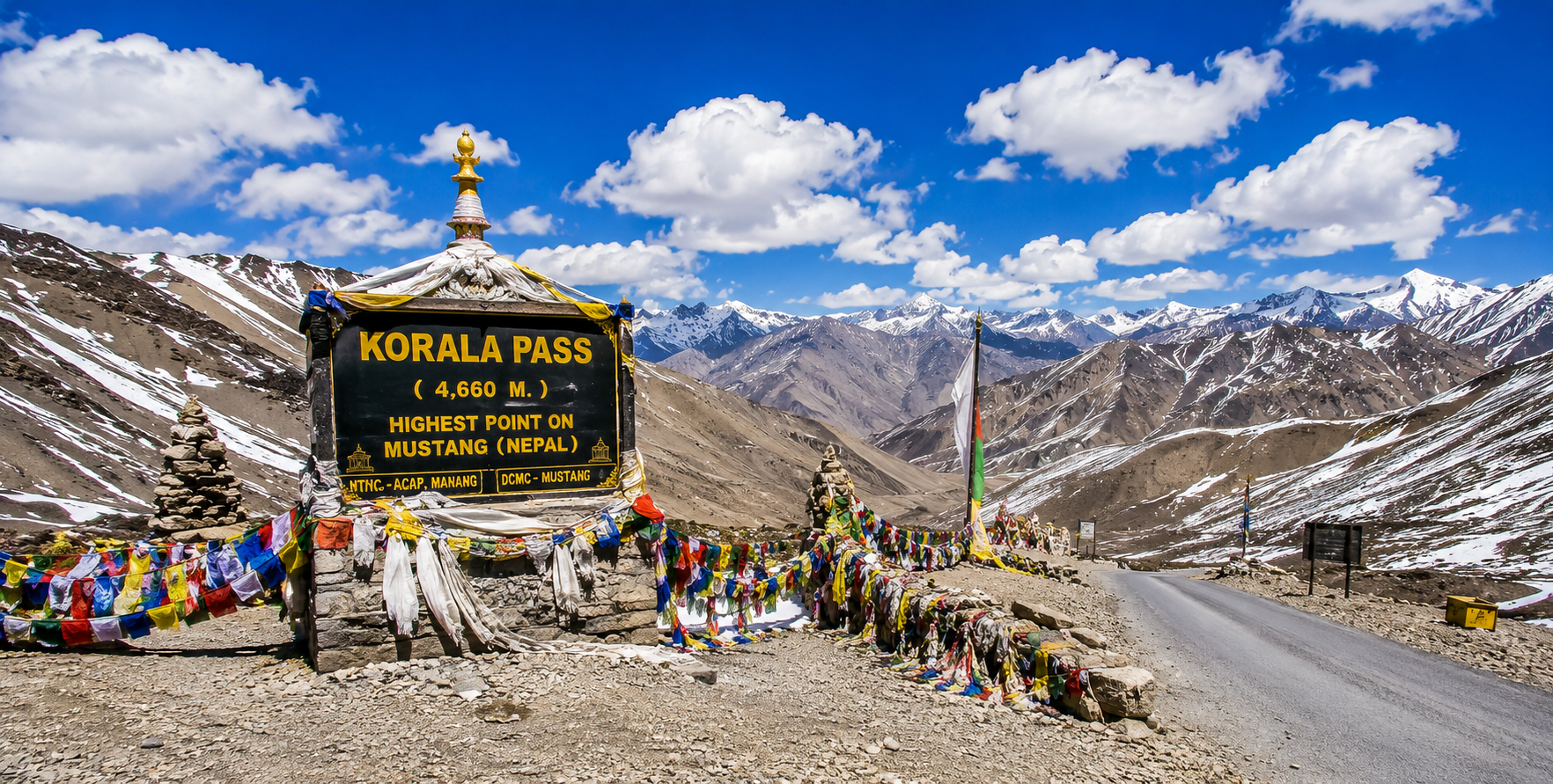
The newly opened road (November 2025) from Lo Manthang continues north to the Korala border pass at approximately 4,660 meters — the official Nepal-Tibet frontier. The landscape on this final section is pure high-altitude desert plateau — expansive, austere, and magnificent in its stark emptiness. Korala Pass was historically one of the most important salt and trade routes between Nepal and Tibet, and traders, pilgrims, and travellers have used it for thousands of years.

At Korala, you can see the Nepal border gate and the beginning of Chinese (Tibetan) territory. Foreign visitors can approach the border, but crossing into Tibet requires separate Chinese visas and permits that are not covered by the Nepal Upper Mustang permit. The view from Korala — south toward the entire Upper Mustang valley and north toward the Tibetan plateau — is extraordinary.
photo

Vehicle Options: Pokhara to Mustang Border Route

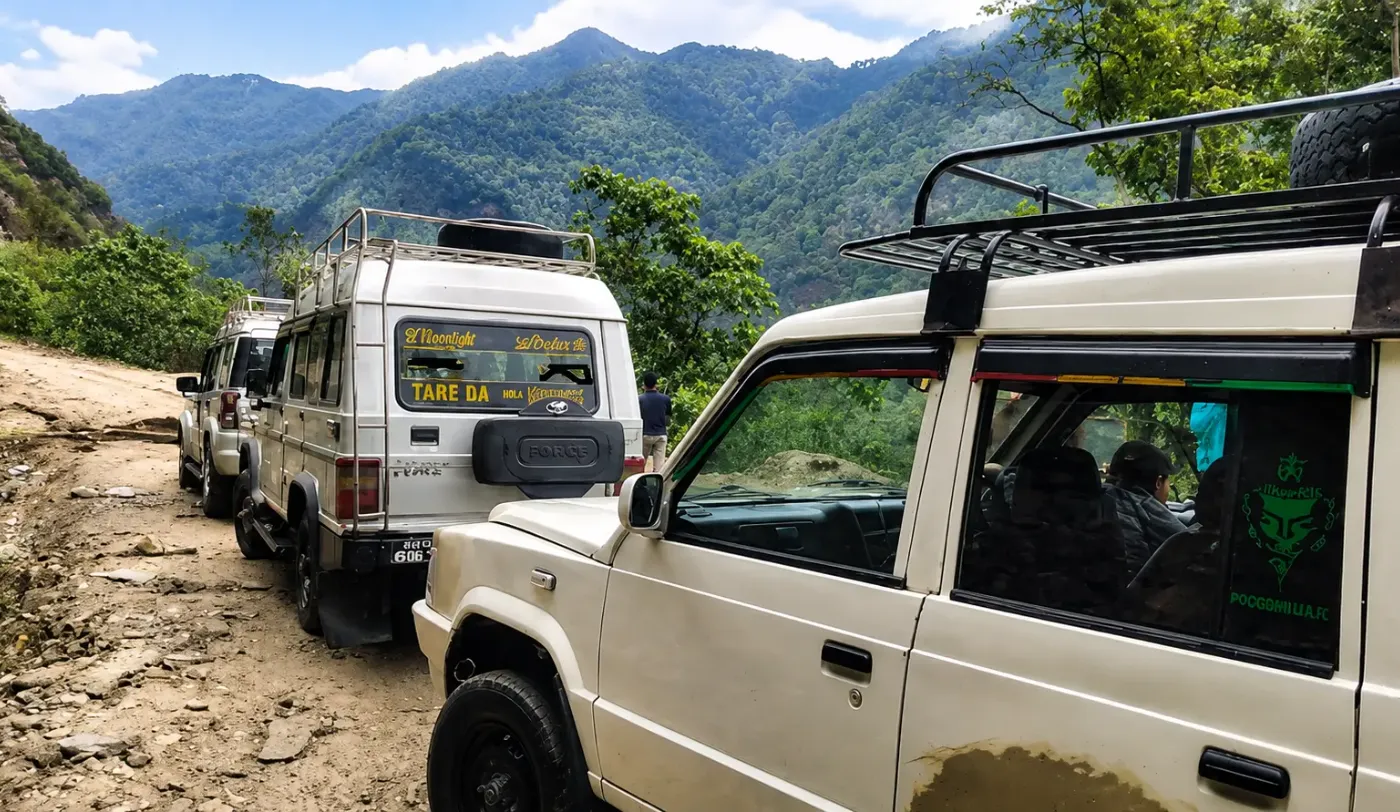
Nepal Vehicle Hiring Pvt Ltd provides the following 4WD vehicles for the Pokhara to Upper Mustang and the Korala border jeep route:

VehicleCapacityPokhara to Jomsom (NPR)Pokhara to Lo Manthang (NPR)Pokhara to Korala (NPR)Best For
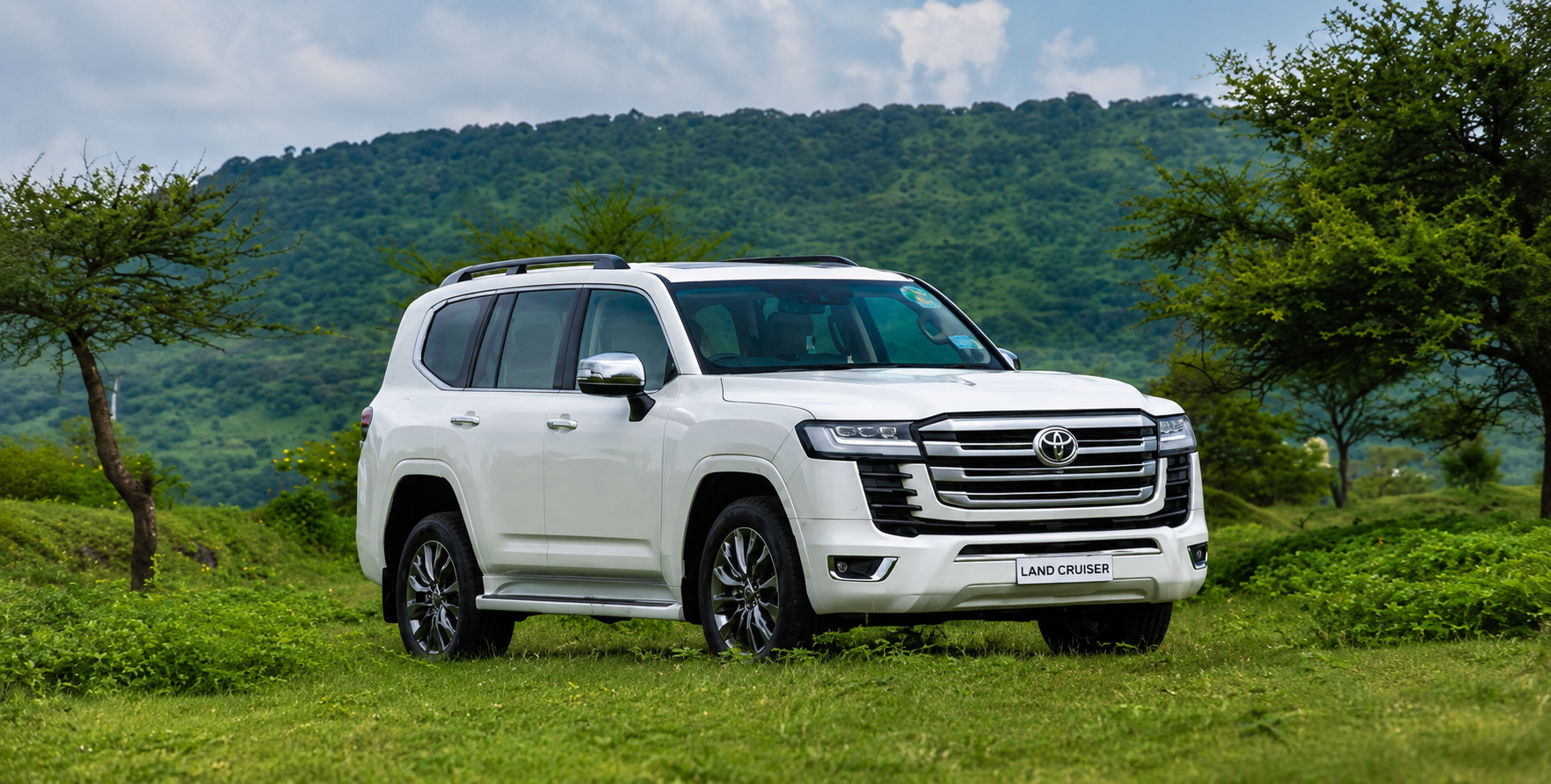
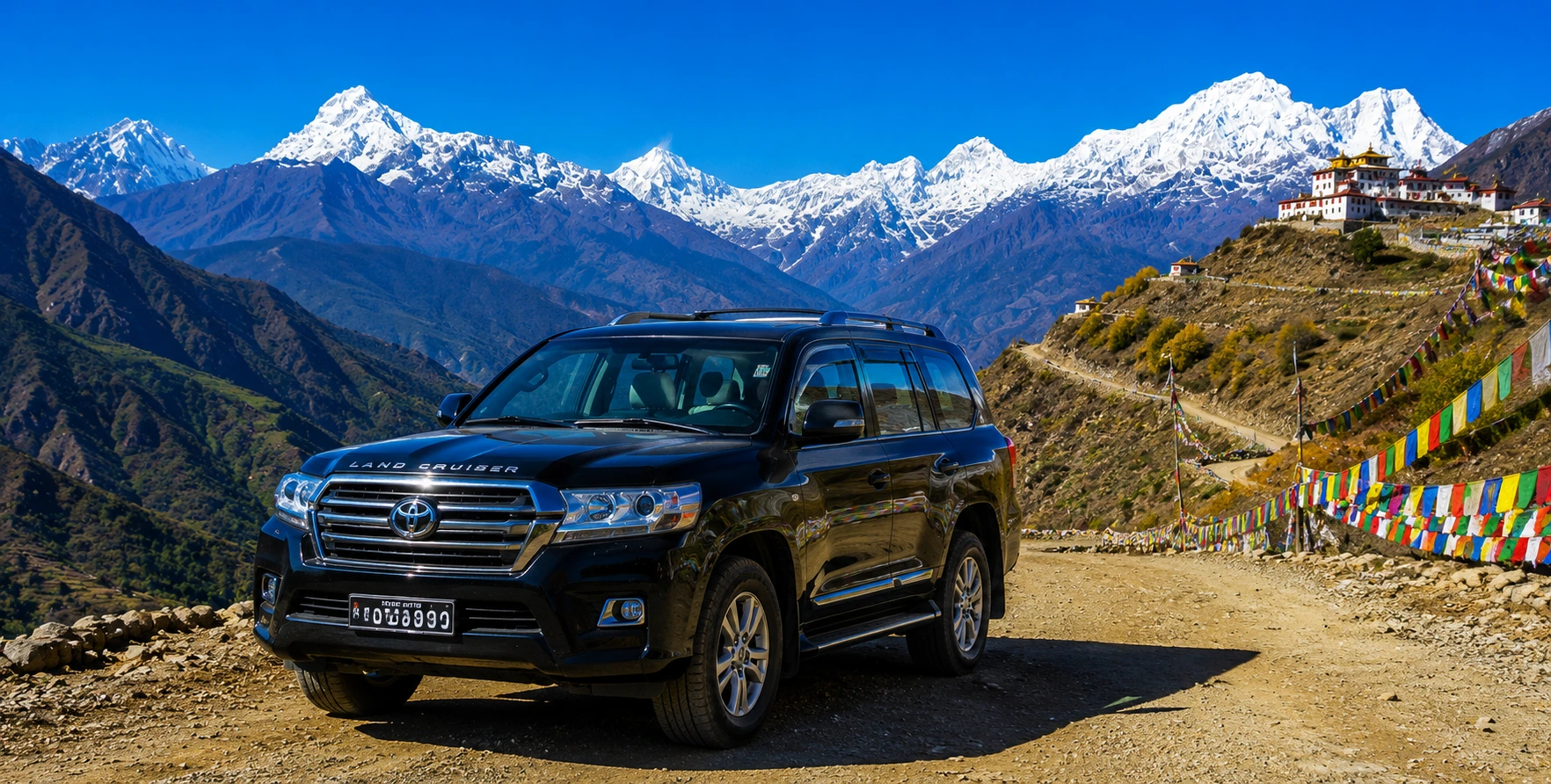
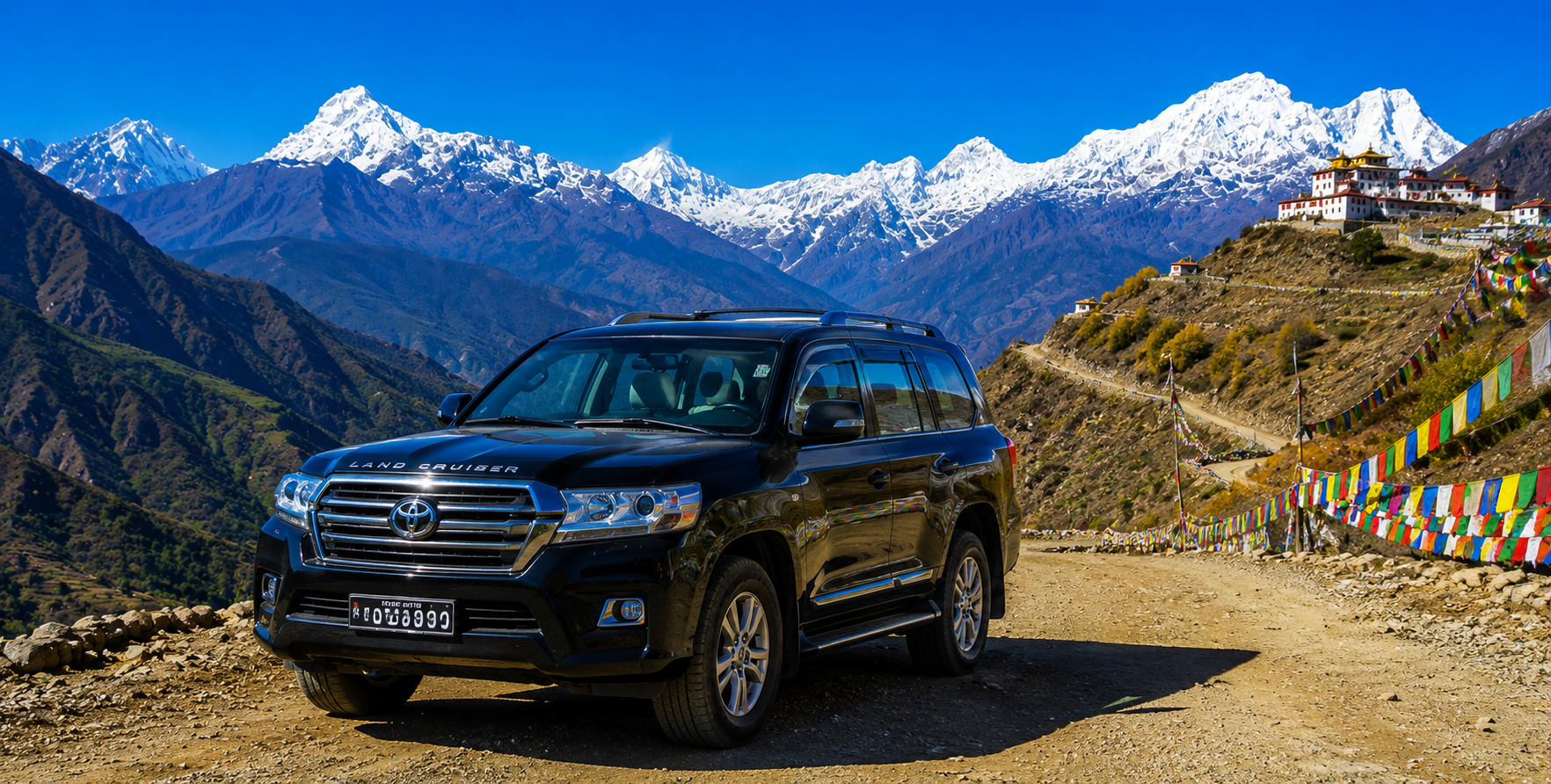
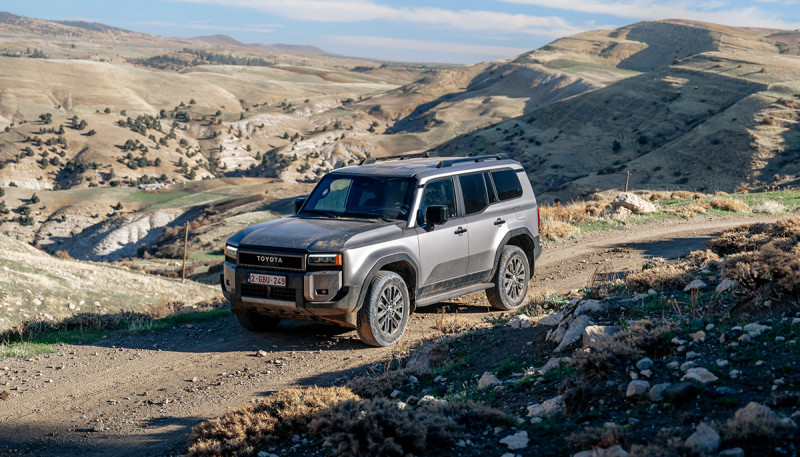
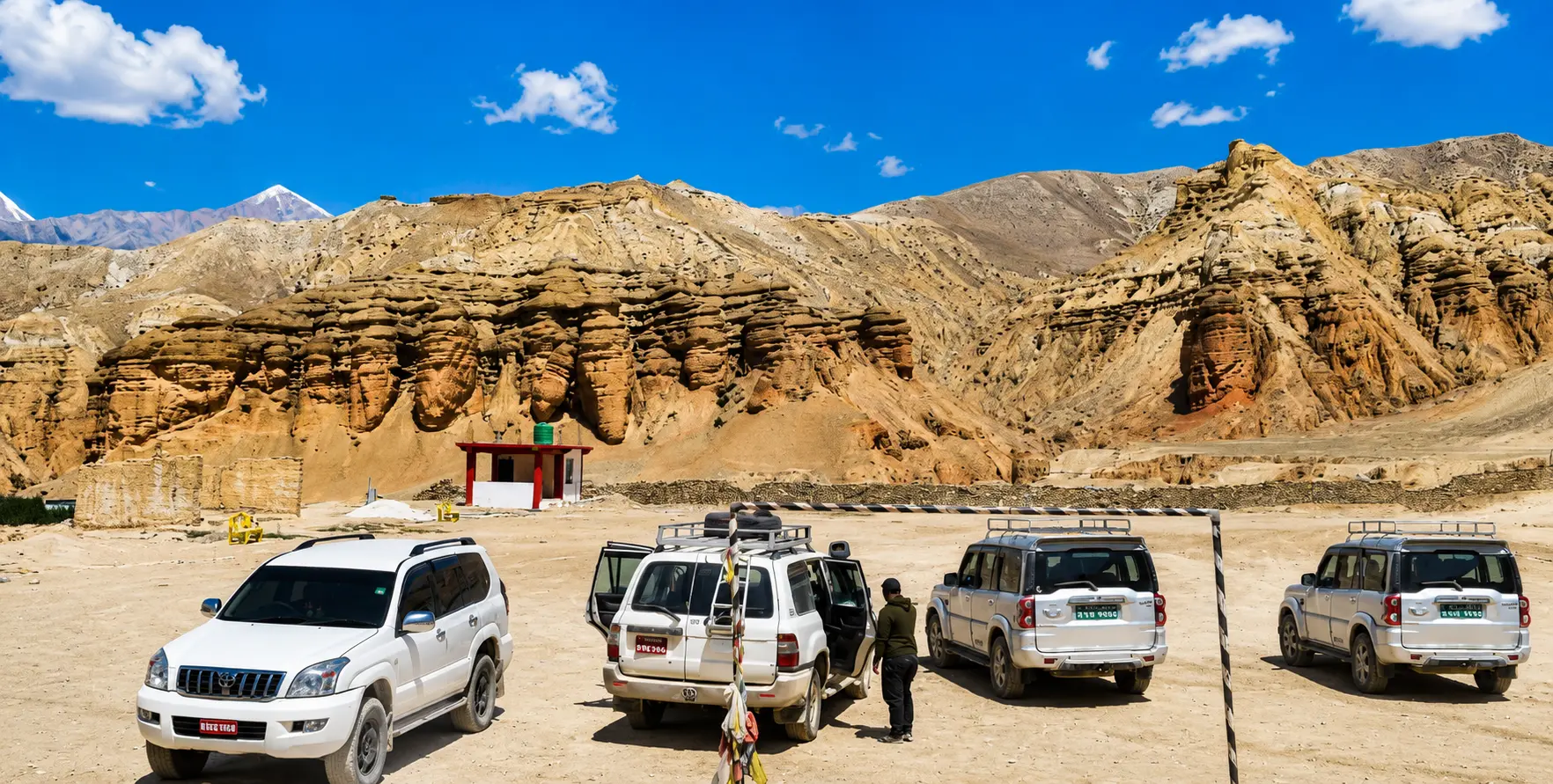
Toyota Land Cruiser4–5 paxNPR 35,000–50,000NPR 65,000–95,000NPR 80,000–115,000Maximum capability and comfort – recommended
Toyota Hilux (4WD)4–5 paxNPR 25,000–38,000NPR 50,000–75,000NPR 62,000–92,000Best all-round for Upper Mustang
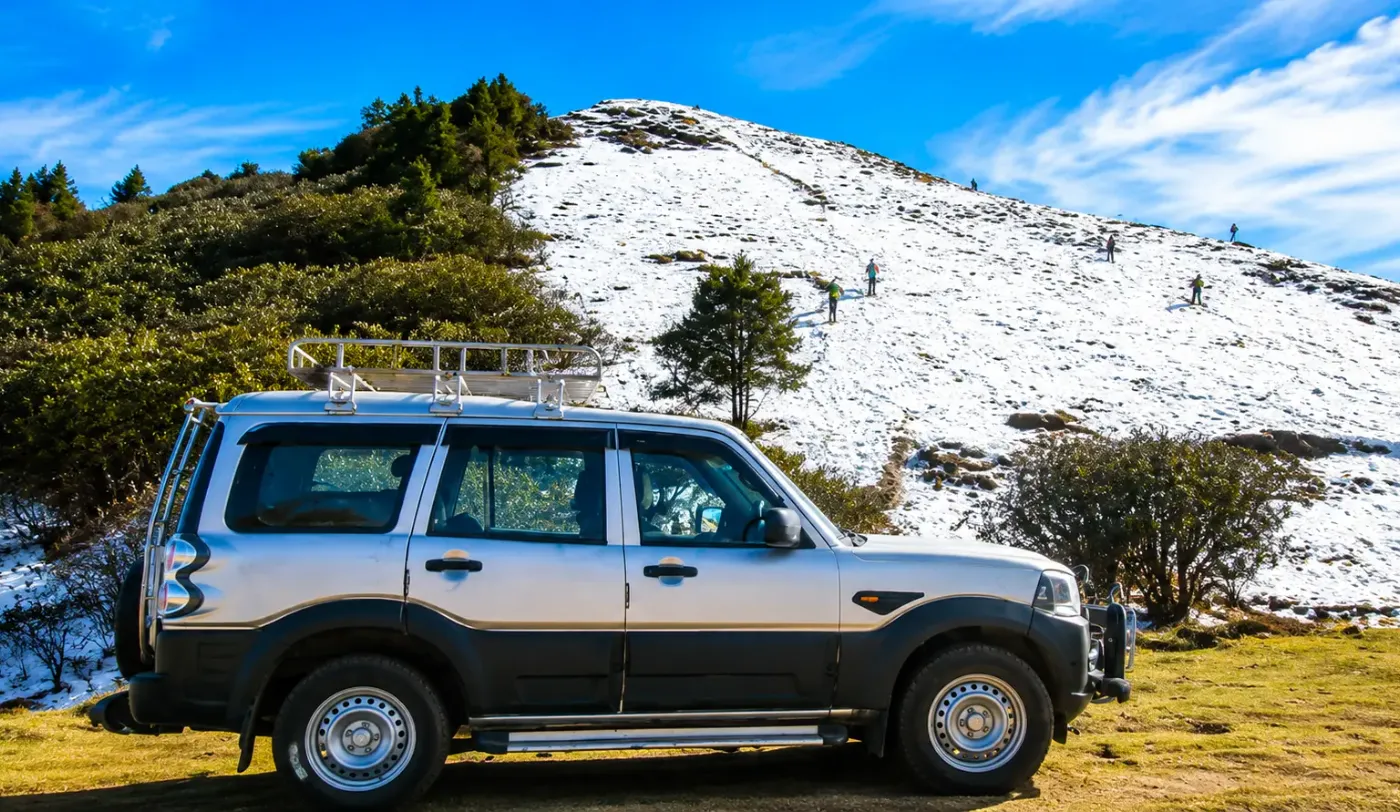
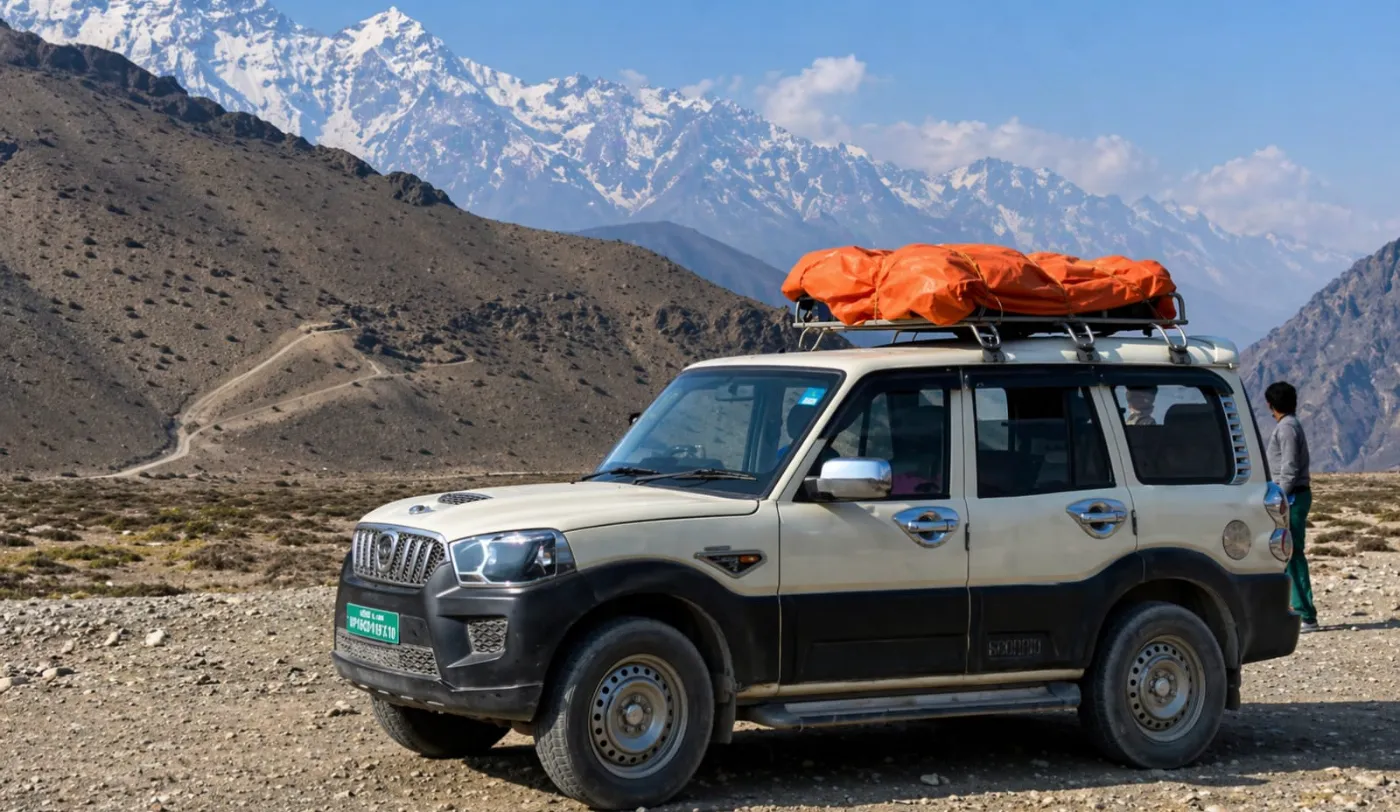
Mahindra Scorpio (4WD)4–5 paxNPR 18,000–28,000NPR 35,000–52,000NPR 44,000–65,000Budget – adequate for the dry season

Note: All prices are for one-way vehicle hire, including driver and fuel from Pokhara. These are approximate rates for the full vehicle. Prices vary by season, road conditions, and vehicle availability. A Toyota Land Cruiser or Hilux is strongly recommended for the Kagbeni-to-Lo Manthang section and is mandatory for Korala. Contact Nepal Vehicle Hiring for confirmed expedition quotes.

  • 225mm+ ground clearance handles the deeply rutted plateau roads north of Kagbeni
  • Legendary reliability — in a region where breakdown recovery takes days, Land Cruiser reliability is not optional
  • Full-time 4WD with a low-range transfer case for the steep rocky climbs north of Ghami
  • Large fuel tank with extended range — fuel is unavailable north of Jomsom; full tanks plus spare jerricans required
  • V8 or straight-6 turbodiesel maintains power at 4,000+ meter altitude
  • Spacious interior for 4 to 5 passengers with full camping and expedition gear

Complete Cost Guide: Pokhara to Mustang Border Route

Here is the full cost breakdown for a complete Pokhara to Lo Manthang / Korala jeep tour :

Cost ItemCost (NPR)Cost (USD)Notes
Private Land Cruiser (Pokhara to Lo Manthang return)NPR 130,000–190,000USD 970–1,415Multi-day return trip – most popular package
Private Land Cruiser (Pokhara to Korala return)NPR 160,000–230,000USD 1,190–1,715Includes the road to the Tibet border
Private Hilux (Pokhara to Lo Manthang return)NPR 100,000–150,000USD 745–1,115Best value capable 4WD
ACAP Permit (per person)NPR 3,000USD 22Annapurna Conservation Area
Upper Mustang Permit (NEW 2026 – per day/person)USD 50/day/personUSD 50/dayMin. 2 pax + guide mandatory
TIMS Card (per person)NPR 2,000USD 15Required for the trekking component
Licensed Guide (mandatory)NPR 3,000–5,000/dayUSD 22–37/dayUpper Mustang regulation
Accommodation (per night)NPR 800–2,000/personUSD 6–15/personGuesthouses in the Lo Manthang area
Meals (per day)NPR 1,500–3,000/personUSD 11–22/personLimited options in Upper Mustang
Emergency jerrican fuelNPR 2,000–4,000/jerricanUSD 15–30Essential – no fuel north of Jomsom

Example total cost for a 4-person group on a 10-day Pokhara to Lo Manthang tour: Vehicle (Land Cruiser round trip) NPR 160,000 + Upper Mustang permit (4 pax × USD 50 × 7 days in restricted area) = USD 1,400 + ACAP and TIMS = NPR 20,000 + guide fees and accommodation/meals = approximately USD 3,500 to 4,500 total for the full group for the vehicle and permit portions.
Jeep hire mustang

Key Destinations Along the Pokhara to Mustang Border Route

Tatopani – The Hot Spring Pit Stop

The natural geothermal hot springs of Tatopani (1,190 m) on the Kali Gandaki riverbank are among Nepal’s most celebrated. After the rough gorge road from Beni, a soak in the warm mineral pools beside the rushing glacial river is an excellent first-night reward before the serious mountain driving begins. Tatopani has multiple simple guesthouses and good local restaurants.

Marpha – The Apple Capital of Nepal

Marpha (2,670 m) is arguably the most beautiful village along the entire Pokhara-to-Mustang route. This perfectly preserved Thakali stone village, with its covered alleys, whitewashed buildings, ancient chortens, and magnificent apple orchards, is a masterpiece of Himalayan vernacular architecture. Local apple brandy and apple cider are world-famous among Himalayan travellers.

Marpha deserves at least a 45-minute exploration stop — walk the covered lanes, visit the gompa, and have a glass of the famous local apple chang.

Jomsom – Gateway of the Mustang Valley

Jomsom (2,720 m) is Mustang’s district headquarters and the last town with reliable services, an airport, and ATMs before Upper Mustang. The Jomsom bazaar has a fascinating mix of Thakali and Tibetan culture, excellent local restaurants, and the remarkable Eco Museum with displays of Shaligram fossils and Mustang natural history. All jeep parties heading to Upper Mustang stop in Jomsom to fuel up, resupply, and verify permits.

Kagbeni – The Medieval Gateway

Kagbeni (2,810 m) is the Upper Mustang permit checkpoint and one of Nepal’s most historically and visually compelling villages. The ancient walled settlement of ochre-coloured stone buildings, crowned by a large red gompa monastery and situated at the confluence of the Kali Gandaki and Kak rivers, feels entirely medieval and entirely Tibetan.

The narrow covered alleys, ancient stupas, and the sudden view of the barren Upper Mustang plateau above create an atmosphere of time travel. Do not rush through Kagbeni — allow at least 1 hour for exploration.

Ghami – Ancient Mani Wall and Cliff Paintings

Ghami (3,520 m) contains Nepal’s longest mani wall, a continuous stone wall with thousands of carved Buddhist prayer stones stretching about 300 meters through the centre of the village. The Ghami Monastery contains ancient wall paintings of exceptional quality. The approach to Ghami from the south also offers the most dramatic views of the eroded red cliff formations that define the Upper Mustang landscape.

Tsarang – The Ancient Palace Village

Tsarang (also known as Charang, 3,720 m) is the second most important settlement in Upper Mustang after Lo Manthang. The five-story ancient palace of the local lords, the large red gompa housing remarkable medieval murals and clay sculptures, and the panoramic plateau views make Tsarang one of the finest villages along the entire route.

Lo Manthang – The Forbidden City

Lo Manthang (3,840 m) is the climax of the entire journey. The ancient walled city — with its 200 or so houses enclosed within whitewashed mud-brick walls and four major monasteries — is the capital of the former Kingdom of Lo and the last intact walled city in the Himalayan world.

The King’s Palace, the Champa Lhakhang and Thupchen Lhakhang monasteries (with 600-year-old murals), and the Chyodi Monastery form a cultural treasure of global significance.

Beyond the sights, Lo Manthang has an otherworldly atmosphere — the flat-roofed Tibetan houses, prayer flags on every rooftop, elderly Loba women spinning wool, monks debating in the monastery courtyard, and the vast silence of the surrounding plateau create an experience of profound cultural authenticity that is increasingly rare in the modern Himalayan world.

Korala – The Tibet Border Pass

Korala (approximately 4,660 m) is the Nepal-Tibet frontier at the northern end of the Upper Mustang valley —now accessible by jeep following the road opening in November 2025. Nepal’s immigration post and the corresponding Chinese structures on the Tibetan side flank the pass. The view from Korala is extraordinary: south across the entire Upper Mustang plateau with Lo Manthang visible below, and north into the vast, empty Tibetan tableland.

The Korala crossing was historically one of the most important salt trade routes connecting Nepal and Tibet.
Pokhara to Mustang Border Route Jeep

Permits for the Pokhara to Mustang Border Route

PermitCost (2026)Required ForWhere to Obtain
ACAP – Annapurna Conservation Area PermitNPR 3,000 (foreigners)Lower Mustang area – Jomsom, Muktinath, TatopaniNepal Tourism Board, Pokhara Lakeside
Upper Mustang Restricted Area Permit (NEW)USD 50 per person per dayNorth of Kagbeni – Lo Manthang, KoralaDepartment of Immigration, Kathmandu
TIMS CardNPR 2,000 (foreigners)All trekking componentsNepal Tourism Board, Pokhara or Kathmandu
Licensed Guide (Mandatory)NPR 3,000–5,000/dayUpper Mustang – mandatory per ACAP regulationLicensed agency in Pokhara or Kathmandu
Vehicle Road PermitArranged by Nepal Vehicle Hiring4WD vehicles on Mustang roadsNepal Vehicle Hiring manages

Permit Important Note: The Upper Mustang permit is now USD 50 per person per day (changed from the previous USD 500 flat fee for 10 days). For a typical 7-day Upper Mustang stay, this means USD 350 per person in permit fees. For shorter 5-day visits, the new system costs USD 250 per person — less than the old flat fee. Plan your days in Upper Mustang carefully to manage permit costs.

Suggested Itineraries: Pokhara to Mustang Border Route

Option A: 8-Day Pokhara to Lo Manthang Jeep Tour

DayDrive / ActivityNightAltitude
Day 1Pokhara to Tatopani (via Beni, Rupse Waterfall)Tatopani1,190 m
Day 2Tatopani to Jomsom (via Marpha – apple orchard stop)Jomsom2,720 m
Day 3Jomsom to Kagbeni – permit checkpoint – drive to ChuksangChuksang3,050 m
Day 4Chuksang to Ghami (ancient Mani wall, monastery)Ghami3,520 m
Day 5Ghami to Lo Manthang via TsarangLo Manthang3,840 m
Day 6Lo Manthang full exploration day (monasteries, palace, walled city)Lo Manthang3,840 m
Day 7Lo Manthang to Jomsom (return drive)Jomsom2,720 m
Day 8Jomsom to Pokhara (return via Marpha, Tatopani)Pokhara820 m

Option B: 10-Day Pokhara to Korala Tibet Border Jeep Tour

DayDrive / ActivityNightAltitude
Day 1Pokhara to TatopaniTatopani1,190 m
Day 2Tatopani to Jomsom (Marpha stop, Muktinath option)Jomsom2,720 m
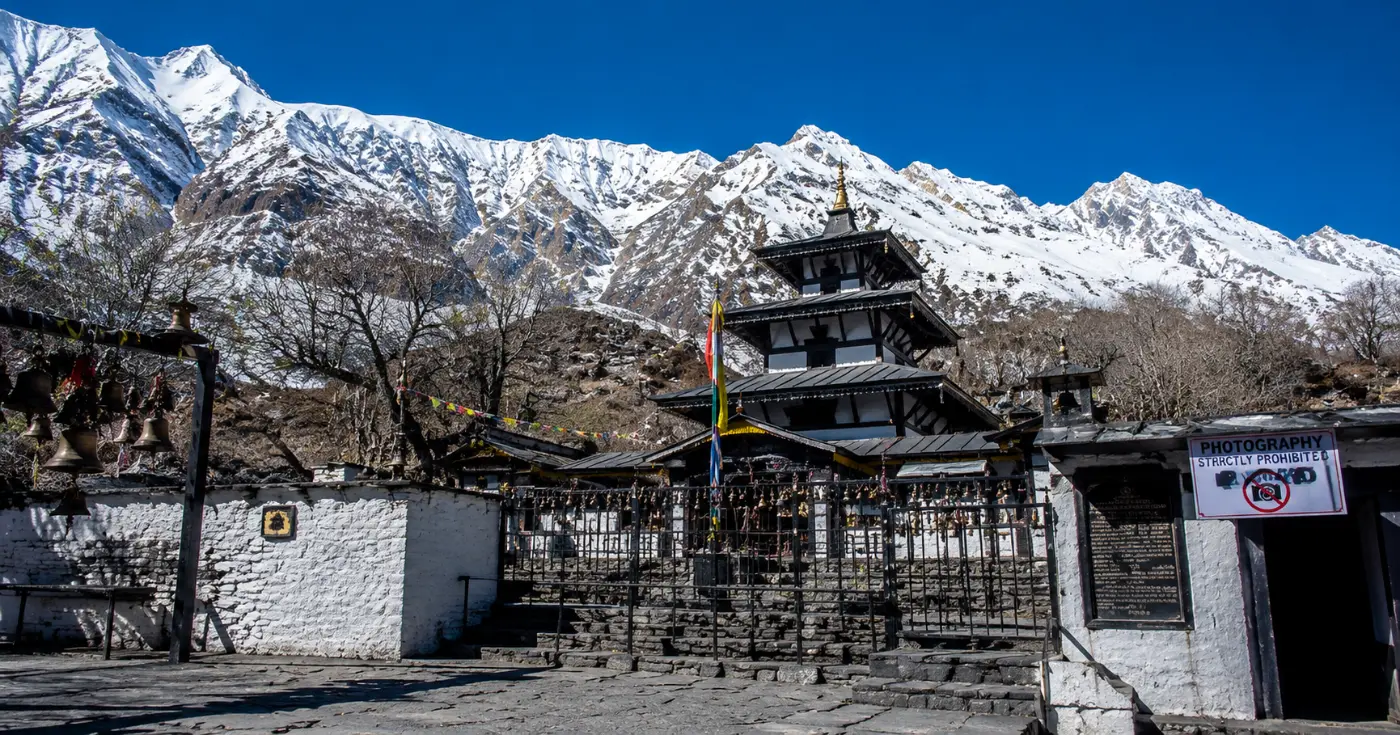
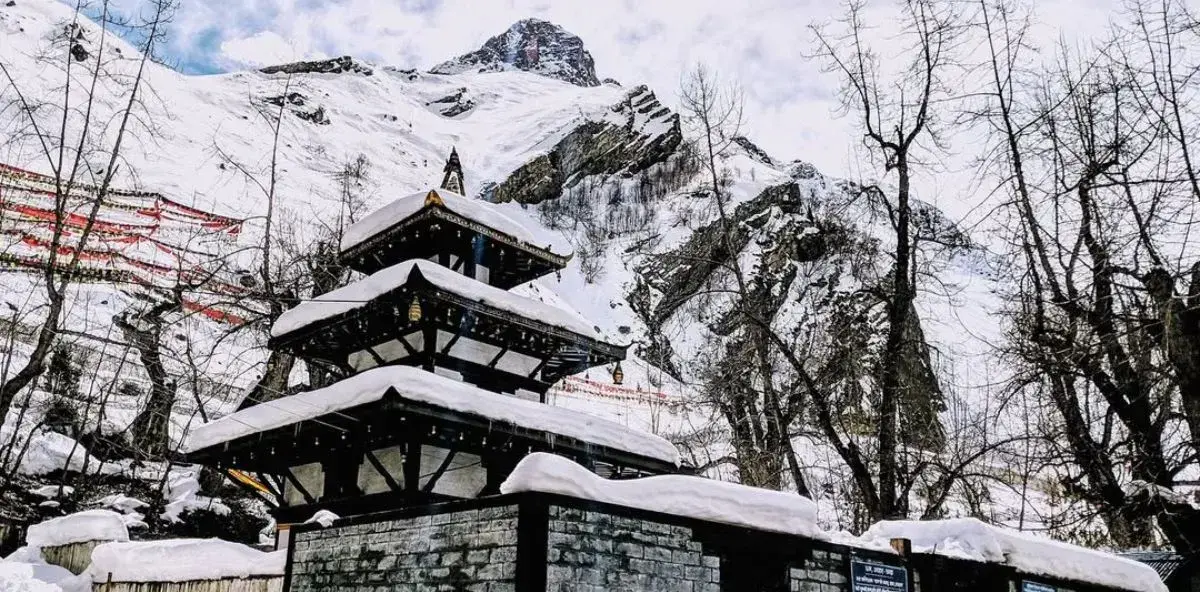
Day 3Jomsom – Muktinath Temple visit – KagbeniKagbeni2,810 m
Day 4Kagbeni to Ghami via Chuksang and CheleGhami3,520 m
Day 5Ghami to Lo Manthang via TsarangLo Manthang3,840 m
Day 6Lo Manthang full day – monasteries, palace, Namgyal GompaLo Manthang3,840 m
Day 7Drive Lo Manthang to the Kora La Tibet border (23 km) – explorationLo Manthang4,660 m border
Day 8Lo Manthang to Ghami (southern return route)Ghami3,520 m
Day 9Ghami to Jomsom via the alternate valleyJomsom2,720 m
Day 10Jomsom to PokharaPokhara820 m

Pokhara to Mustang Border Route Jeep

Best Season for the Pokhara to Mustang Border Jeep Route

Spring (March to June) – Best Season for Upper Mustang

Spring and early summer are the finest seasons for the Pokhara-to-Upper Mustang jeep route. Upper Mustang lies in a rain shadow north of the Himalayan range and receives very little monsoon rainfall, making it uniquely accessible when most of Nepal is in the wet season.

May is particularly special as it coincides with the Tiji Festival in Lo Manthang — a three-day sacred Buddhist ceremony of extraordinary cultural significance. The road conditions are excellent, and the plateau views are spectacular in the clear pre-monsoon air.

Autumn (September to November) – Excellent

Post-monsoon autumn delivers outstanding visibility and excellent road conditions on the Kali Gandaki gorge section and the Upper Mustang plateau. October’s famous clear skies provide outstanding views of Dhaulagiri, Annapurna, and the Mustang plateau. Apple harvest season in Marpha (late September to October) is a bonus.

Book vehicles well in advance for October and November.

Monsoon (July to August) – Possible with Caution

Because Upper Mustang is in a rain shadow, the plateau itself has relatively little rain during the monsoon. However, the Pokhara-Tatopani gorge section of the Kali Gandaki road can be affected by landslides during the monsoon season. The Beni-to-Tatopani section requires caution.

Nepal Vehicle Hiring monitors road conditions and provides advice before confirming monsoon-season bookings.

The plateau north of Kagbeni, at elevations ranging from 000 to 4,600 meters, experiences severe cold and significant snowfall in winter. Snow can completely block the road to Lo Manthang and Korala for weeks at a time. Nepal Vehicle Hiring does not operate the Upper Mustang jeep route during the winter months.

The Kali Gandaki Wind – Critical Departure Time Advisory

The Kali Gandaki valley experiences powerful afternoon winds that funnel through the gorge from the Tibetan plateau every day, intensifying from approximately 11:00 AM to 12:00 PM onward. These winds create dangerous driving conditions on the sandy sections of the Kali Gandaki riverbed and strong dust storms between Tatopani and Jomsom.

Nepal Vehicle Hiring requires all jeeps on the Pokhara-Jomsom section to depart Pokhara between 6:00 AM and 6:30 AM at the absolute latest. This is non-negotiable for safety on the Kali Gandaki route.

Essential Packing List for the Mustang Border Jeep Tour

  • All permits arranged in Kathmandu before departure (ACAP, Upper Mustang permit, TIMS) – carried in waterproof document pouch
  • Warm down jacket and thermal layers – Lo Manthang nights can be below –5 °C even in spring and autumn
  • Windproof outer layer – the Kali Gandaki valley winds and the Mustang plateau winds are powerful
  • Face mask, buff scarf, or balaclava – the dust on the plateau road is severe.
  • Sunscreen SPF 50+, UV-blocking sunglasses, and a wide-brimmed hat – UV intensity at 3,800 m is extreme
  • Water bottles (minimum 2 litres) plus water purification tablets – clean water is scarce north of Kagbeni.
  • Sufficient Nepali cash for all expenses – there are NO ATMs north of Jomsom.
  • High-energy snacks and emergency food rations – restaurants are very limited north of Kagbeni
  • Camera with multiple charged batteries and power banks – exceptional photography throughout the route
  • Altitude medication (Diamox) – consult your doctor before departure for the Lo Manthang and Korala stages
  • Offline maps (Maps.me – Mustang region) – no mobile data north of Jomsom
  • Sleeping bag rated to -10°C for Lo Manthang guesthouse nights

Expert Tips for the Pokhara to Mustang Border Jeep Route

  • Book your Land Cruiser or Hilux at least 2 to 3 weeks in advance – Upper Mustang-bound vehicles are in very high demand during May (Tiji Festival) and October–November.
  • Begin permit processing in Kathmandu at least 5 to 7 working days before departure – the Upper Mustang permit requires advance processing.
  • Always depart Pokhara between 6:00 AM and 6:30 AM to complete the Kali Gandaki gorge section before the afternoon winds intensify.
  • Fuel up completely in Jomsom – there is no fuel available anywhere north of Jomsom to Lo Manthang or Korala; carry at least 2 spare jerricans (20 litres) in the Land Cruiser.
  • Carry all the Nepali cash you need from Pokhara or Jomsom – there are absolutely no ATMs, bank facilities, or digital payment options between Kagbeni and Lo Manthang.
  • Stop at Marpha for at least 45 minutes – the apple brandy, the covered lanes, and the Dhaulagiri views make it the finest village on the entire route.
  • Always spend at least one full rest day in Lo Manthang (not just a drive-through) – the monasteries, the King’s Palace, and the walled-city atmosphere take time to appreciate.
  • For the Korala border visit, depart Lo Manthang early morning to complete the 23 km border road and return before afternoon weather develops on the high plateau.
  • Nepal Vehicle Hiring can arrange a combined Pokhara-to-Mustang package, including vehicle hire, permit guidance, guide arrangement, and all logistics in a single booking.

–

How to Book Your Pokhara to Mustang Border Route Jeep

Booking your Upper Mustang jeep with Nepal Vehicle Hiring Pvt Ltd requires careful planning:

  • Step 1: Contact us at vehiclehiringnepal.com or via WhatsApp, ideally 3 to 4 weeks before departure
  • Step 2: Share your planned dates, group size, desired itinerary (Lo Manthang only, or including Korala), and departure point (Pokhara or Kathmandu)
  • Step 3: Nepal Vehicle Hiring provides a full itinerary and cost breakdown, including vehicle, permit guidance, and guide arrangement referrals
  • Step 4: Begin permit collection in Kathmandu with our documentation checklist
  • Step 5: Vehicle pre-expedition service and driver briefing at Nepal Vehicle Hiring base
  • Step 6: Depart Pokhara at 6:00 AM and begin one of the world’s greatest jeep adventures

Book at least 3 weeks in advance for the spring and autumn peak seasons, and 2 weeks ahead for other periods.

Frequently Asked Questions (FAQ)

Is the road from Pokhara to the Mustang-Tibet border (Korala) now open?

Yes. The road from Pokhara to the Kora Tibet border via Lo Manthang was officially opened in November 2025 and is now drivable by a capable 4WD jeep. This major 2026 development has made it possible to complete the overland journey from Pokhara to the Mustang border for the first time.

How much does the Upper Mustang permit cost

The permit system changed in 2026. The previous flat fee of USD 500 for 10 days has been replaced by a USD 50-per-person-per-day charge in the Upper Mustang restricted area. A minimum group of 2 people with a licensed guide is mandatory.

How far is Pokhara from Lo Manthang?

The road distance from Pokhara to Lo Manthang is approximately 420-430 kilometres; the drive takes 2 full driving days via Tatopani, Jomsom, Kagbeni, Ghami, and Tsarang.

How far is Lo Manthang from the Kora Tibet border?

Korala is approximately 23 kilometres from Lo Manthang. The drive from Lo Manthang to the Korala border post takes approximately 1.5 to 2 hours on the newly opened road.

What vehicle is best for Upper Mustang and the Kora La road?

The Toyota Land Cruiser is the recommended vehicle for the full route, including the stretch from Lo Manthang to Korala. The Toyota Hilux is an excellent and more economical alternative for experienced mountain drivers. Standard jeeps (Scorpio/Bolero) are adequate for Jomsom but struggle on the rougher plateau sections north of Kagbeni.

Can I visit the Tibet border at Korala as a foreign visitor?

Yes, foreign visitors with a valid Upper Mustang Restricted Area Permit can visit the Korala border post on the Nepal side. Crossing into Tibet requires separate Chinese visas and Tibet Travel Permits that are not part of the Nepal permit system. Contact Nepal Vehicle Hiring for the current border visit regulations.

What is the Tiji Festival, and when does it take place?

The Tiji Festival is the most sacred annual ceremony in Upper Mustang — a three-day Buddhist ritual performed by monks in Lo Manthang to celebrate the defeat of a demon and ensure the renewal of the valley’s life. The festival falls in May according to the Tibetan lunar calendar (exact dates vary annually) and is the single most spectacular cultural event in Upper Mustang. Visiting during Tiji is one of Nepal’s most rewarding experiences.

Book Your Pokhara to Mustang Border Route Jeep with Nepal Vehicle Hiring

The Pokhara to Mustang Tibet border jeep journey is Nepal’s greatest overland adventure — a journey that begins in the subtropical lakeside beauty of Pokhara, traverses the world’s deepest river gorge through the Kali Gandaki, climbs to the high Trans-Himalayan plateau of Upper Mustang, and reaches the Nepal-Tibet frontier at Korala, where the Himalayan range finally meets the great emptiness of the Tibetan plateau. Along the way: the apple orchards of Marpha, the medieval lanes of Kagbeni, the ancient murals of Lo Manthang’s monasteries, the silence of the plateau dawn, and views of the Annapurna and Dhaulagiri massifs from every angle and every altitude.

Nepal Vehicle Hiring Pvt Ltd provides the most reliable, well-prepared, and experienced 4WD jeep services for the Pokhara-Upper Mustang and Kora La border routes. Our Land Cruisers and Hilux vehicles, expert Mustang road drivers, and complete expedition logistics make us the preferred vehicle partner for one of the world’s greatest jeep adventures.

Contact Nepal Vehicle Hiring Pvt Ltd today at vehiclehiringnepal.com to book your Pokhara-to-Mustang border-route jeep and experience the last forbidden kingdom of the Himalayas.

Direct Bookings & Inquiries: vehiclehiringnepal.com
Call / WhatsApp (24/7): +977 981-4227196
E-mail: [email protected]
Shey Phoksundo Lake Jeep Tour

Shey Phoksundo Lake Jeep Tour

Shey Phoksundo Lake Jeep Tour: Complete Overland Vehicle Guide from Kathmandu

Shey Phoksundo Lake is Nepal’s deepest lake and one of the most extraordinarily beautiful natural phenomena in the entire Himalayan world. Sitting at 3,611 meters above sea level in the heart of the Shey Phoksundo National Park in Dolpa District, the lake’s water is an impossible, otherworldly shade of turquoise-blue — caused by glacial mineral content and the exceptional clarity of high-altitude light — that photographers travel from across the globe to capture.

Ancient, eroded cliffs of rust-red and ochre encircle the lake on three sides, dense blue pine forests descend to the shoreline, and the ancient Bon Buddhist village of Ringmo perches on the eastern bank, its prayer flags fluttering above rooftops inhabited for centuries.

Reaching Shey Phoksundo Lake is not a casual undertaking. The lake lies deep within Nepal’s most remote and least accessible national park, in a district that has historically been one of the most difficult destinations in the country to reach.

The standard approach involves two domestic flights (Kathmandu to Nepalgunj, then Nepalgunj to Juphal) followed by 2 to 3 days of trekking through the Shey Phoksundo National Park from Juphal. However, for adventurous overland travellers, a 4WD jeep from Kathmandu via the mid-western Nepal highway network—covering the Surkhet–Dunai section of the Karnali Highway—offers one of Nepal’s greatest overland adventures.

At Nepal Vehicle Hiring Pvt Ltd, we provide professional 4WD jeep transfer services for the Shey Phoksundo Lake jeep tour — from Kathmandu overland to Dunai and Juphal, as well as local jeep transfers within the Dolpa region. This comprehensive guide covers every transport option for visiting Shey Phoksundo Lake, including the overland jeep route, flight connections, local Juphal transfers, vehicle costs, permits, the complete itinerary, and expert advice to make the Phoksundo Lake journey safe, rewarding, and well planned.

About Shey Phoksundo Lake – Nepal’s Turquoise Jewel

Shey Phoksundo Lake (also spelt Toksumdo or Phoksumdo) is the centrepiece of Shey Phoksundo National Park—Nepal’s largest national park, covering 3,555 square kilometres of Trans-Himalayan wilderness in Dolpa District. Nepal designated the lake as part of its first national park in Dolpa in 1984, and it remains one of the country’s most strictly protected and least accessible natural treasures.

American naturalist Peter Matthiessen brought the lake to global attention in his landmark 1978 book ‘The Snow Leopard’, which described his 1973 journey through the Dolpa wilderness in search of the elusive snow leopard. The book is widely considered one of the finest travel and nature narratives ever written about Nepal, and it continues to inspire travellers to undertake the Dolpa pilgrimage decades later.

Shey Phoksundo Lake Key FactsDetails
Altitude3,611 meters (11,847 feet) above sea level
DepthApproximately 145 meters – Nepal’s deepest lake
LengthApproximately 4.8 kilometres
WidthApproximately 1.3 kilometres
DistrictDolpa District, Karnali Province, Nepal
National ParkShey Phoksundo National Park (Nepal’s largest NP)
Water ColourDistinctive turquoise-blue (glacial mineral content)
Adjacent VillageRingmo (ancient Bon Buddhist community)
Nearby MonasteryTshowa Gompa (Bon religion) on the lakeshore
Famous ForExtraordinary turquoise colour, ancient Bon culture, snow leopard habitat
WildlifeSnow leopard, Himalayan wolf, tahr, blue sheep, musk deer, 200+ bird species
Literary ConnectionPeter Matthiessen’s ‘The Snow Leopard’ (1978)

How to Reach Shey Phoksundo Lake: All Options

There are two main ways to reach the Shey Phoksundo Lake area — by domestic flight combination (Kathmandu to Nepalgunj to Juphal) or by the overland 4WD jeep route (Kathmandu to Dunai/Juphal via the Karnali Highway). Here is a complete comparison:

ApproachRouteTimeCost (per person)Best For
Flight Approach (Standard)KTM → Nepalgunj (flight) → Juphal (flight) → Trek2 flight days + 2–3 trek daysUSD 450–550 round-trip flights onlyTrekkers with limited time, standard approach
Overland Jeep (Nepal Vehicle Hiring)KTM → Nepalgunj → Surkhet → Dunai → Juphal (4WD)3–4 driving daysNPR 80,000–130,000 (vehicle, group of 4–5)Adventure travellers/experience seekers
Mixed: Overland in, flight outKTM to Dunai by jeep; return by Juphal flight3 drive + 3 trek daysJeep + 1 return flight setBest of both – adventure in, quick return
Mixed: Flight in + Overland outFly to Juphal; jeep from Dunai to Kathmandu3 trek + 3 drive days1 flight set + Jeep returnScenic arrival by air, epic overland return

The Overland Jeep Route: Kathmandu to Shey Phoksundo Lake

The overland 4WD jeep journey from Kathmandu to Dunai and Juphal — gateway to Shey Phoksundo Lake — is one of Nepal’s greatest adventure road journeys. The route passes through Nepalgunj, Surkhet, and the remote Karnali Highway corridor, crossing some of the country’s most spectacular and least-visited terrain. Here is the complete stage-by-stage overland guide:

Stage 1: Kathmandu to Nepalgunj – Approx. 530 km (2 days)

The first section from Kathmandu heads west on the Prithvi Highway to Narayanghat, then follows the East-West Highway (Mahendra Highway) through the Terai lowlands to Nepalgunj — a bustling commercial city near the Indian border in Banke District. The road is paved and in generally good condition throughout. Day 1 typically reaches Butwal or Bhairahawa (approximately 270 km) with an overnight stop, followed by Day 2 to Nepalgunj (approximately 260 km further).

Nepalgunj serves as the main hub for western Nepal operations and the flight gateway for Juphal. The city has good hotels, restaurants, and facilities for a comfortable last night before the Karnali Highway begins.

Stage 2: Nepalgunj to Surkhet – Approx. 90 km (2.5 to 3 hours)

From Nepalgunj, the route heads northeast through Kohalpur to Surkhet — the headquarters of Karnali Province. The road is paved and in good condition. Surkhet is the last major city on the overland route and the last point with reliable banking, fuel stations, and well-equipped accommodation.

Stock up on cash, fuel, and essential supplies in Surkhet before continuing north on the Karnali Highway.

Stage 3: Surkhet to Kalikot – Approx. 180 km (6 to 8 hours)

From Surkhet, the route turns north onto the Karnali Highway. This is where the overland adventure truly begins. The highway climbs steeply through the Karnali hills on a rough, unpaved mountain track that winds through dramatic river gorges, remote villages, and dense forest.

The road surface varies widely—from reasonable gravel sections to deeply rutted tracks and occasional river crossings. From this point forward, a Toyota Hilux or Land Cruiser with an experienced driver is essential.

Stage 4: Kalikot to Dunai – Approx. 100 km (5 to 7 hours)

The final leg of the overland approach passes through some of Nepal’s most remote terrain. The road follows the Karnali River valley through an extraordinary landscape of eroded red and ochre cliffs, traditional stone villages, ancient Buddhist and Hindu temples, and forest sections where wildlife, including Himalayan bears and deer, is occasionally seen.

Dunai (2,140 m) — the district headquarters of Dolpa — sits at the end of the motorable road and is the overnight base before the trek to Phoksundo Lake begins.

Stage 5: Dunai to Juphal – Approx. 14 km (1 to 2 hours)

From Dunai, a local jeep track continues to Juphal (2,475 m) — the site of the small STOL (Short Take-Off and Landing) airstrip that receives flights from Nepalgunj. Juphal is the traditional starting point for the trek to Shey Phoksundo Lake. A local shared jeep or private vehicle covers this short section in 1 to 2 hours on a rough track.

Overland Route Overview: Kathmandu to Dunai/Juphal

StageSectionDistanceRoad ConditionDrive TimeOvernight
1aKathmandu to Butwal/Bhairahawa270 kmPrithvi + Mahendra Hwy – paved6–7 hrsButwal or Bhairahawa
1bButwal to Nepalgunj260 kmMahendra Hwy – paved5–6 hrsNepalgunj
2Nepalgunj to Surkhet90 kmPaved – good2.5–3 hrsSurkhet (or continue)
3Surkhet to Kalikot180 kmKarnali Hwy – rough off-road6–8 hrsKalikot or Dailekh
4Kalikot to Dunai100 kmVery rough mountain track5–7 hrsDunai
5Dunai to Juphal14 kmRough jeep track1–2 hrsJuphal (trek start)
TOTALKathmandu to Juphal914 kmMixed – 4WD essential from Surkhet3–4 driving days3 nights en route

Snow leopard Wildlife in Shey Phoksundo National Park

Local Jeep Transfers: Juphal, Dunai, and Sulighat Area

Once you arrive at Juphal (by flight or overland), jeep transfers are available within the Dolpa area for getting to the trek starting point:

Local TransferDistanceDrive TimeCost (NPR)Notes
Juphal to Dunai14 km1–2 hoursNPR 500–1,000/pax (sharing)Rough track – connects airstrip to district HQ
Dunai to Sulighat6 km30–45 minNPR 300–600/pax (sharing)Starting point for the park trail
Juphal to Sulighat20 km2–3 hoursNPR 800–1,500/pax (sharing)Combined transfer to the main trek trailhead
Private Jeep Juphal to DunaiAll seatsNPR 4,000–7,000 (vehicle)USD 30–52Comfortable, flexible – Nepal Vehicle Hiring

Shey Phoksundo Lake Itinerary: Trek Stages from Juphal

After flying to Juphal and then taking a jeep, the trek to Shey Phoksundo Lake follows a beautiful trail through Shey Phoksundo National Park. Here is the standard trek itinerary:

DayTrek StageDistanceWalking TimeAltitudeHighlights
Day 1Juphal → Dunai14 km (or jeep)3–4 hrs (or 1.5 hr jeep)2,475→2,140 mJuphal airstrip, Dolpa entry, Bheri River
Day 2Dunai → Chhepka14 km5–6 hrs2,140→2,660 mShey Phoksundo NP entry, forest trails
Day 3Chhepka → Phoksundo Lake (Ringmo)12 km5–6 hrs2,660→3,611 mDramatic gorge, Phoksundo Falls, lake arrival
Day 4Phoksundo Lake ExplorationDay hikeFull day3,611 mLake circuit, Ringmo village, Tshowa Gompa
Day 5Phoksundo Lake → Chhepka12 km4–5 hrs3,611→2,660 mReturn through the gorge and forest
Day 6Chhepka → Dunai14 km5–6 hrs2,660→2,140 mDescend through the national park
Day 7Dunai → Juphal (jeep) → Fly Nepalgunj → KathmanduJeep + flights1 hr + 2 flights2,140→1,400 mReturn journey – Juphal morning flight

This is the standard 9-day Shey Phoksundo Lake itinerary from Kathmandu, including travel days—total trekking: 7 days from Juphal. You can extend the itinerary for Upper Dolpa exploration (requires an additional Upper Dolpa Restricted Area Permit, USD 500).

For adventurous travellers who want the full Dolpa experience, Nepal Vehicle Hiring recommends the following combined overland jeep approach with flight return:

DayActivityTransportNight
Day 1Kathmandu to Butwal/Bhairahawa4WD JeepButwal
Day 2Bhairahawa to Nepalgunj4WD JeepNepalgunj
Day 3Nepalgunj to Surkhet to Kalikot4WD Jeep – Karnali Hwy beginsKalikot
Day 4Kalikot to Dunai4WD Jeep – very roughDunai
Day 5Dunai to Sulighat (jeep) + Trek to ChhepkaLocal jeep + trekChhepka
Day 6Trek Chhepka to Phoksundo LakeTrekRingmo
Day 7Phoksundo Lake exploration day–Ringmo
Day 8Trek Phoksundo to ChhepkaTrekChhepka
Day 9Trek Chhepka to DunaiTrekDunai
Day 10Dunai to Juphal (jeep) + morning flight Juphal to NepalgunjJeep + STOL flightNepalgunj
Day 11Nepalgunj to Kathmandu flightDomestic flightKathmandu

Permit flight for Shey Phoksundo Lake Tour

PermitCostRequired ForWhere to Obtain
Shey Phoksundo National Park EntryUSD 30 (foreigners), NPR 100 (citizens)All visitors to Shey Phoksundo NPPaid at the park entry checkpoint near Dunai/Sulighat
Lower Dolpo Restricted Area PermitUSD 20 per weekAll visitors to Lower Dolpa, including Phoksundo LakeDepartment of Immigration, Kathmandu, Nepal Tourism Board
TIMS CardNPR 2,000 (foreigners)All trekkersNepal Tourism Board, Kathmandu
Upper Dolpo Restricted Area PermitUSD 500 (10 days) + USD 50/extra dayOnly for trekkers going north of Phoksundo Lake into Upper DolpaDepartment of Immigration, Kathmandu (min. group of 2 + guide)
Vehicle Movement Permit (overland)Arranged by Nepal Vehicle Hiring4WD vehicles on Karnali HighwayNepal Vehicle Hiring manages this

IMPORTANT: The Lower Dolpo Restricted Area Permit (USD 20/week) is significantly cheaper than the Upper Dolpo permit (USD 500/10 days) and covers the standard Phoksundo Lake trek. You must obtain all permits in Kathmandu before departure. Nepal Vehicle Hiring can advise on the exact permit requirements for your specific itinerary.

Key Attractions of the Shey Phoksundo Lake Tour

Shey Phoksundo Lake – The Turquoise Jewel

The lake itself is the defining attraction of the entire journey. Nothing quite prepares first-time visitors for the intensity of the colour; the water is a shade of turquoise-blue that seems almost artificially vivid in the high-altitude sunlight.

The lake changes colour throughout the day: deep cobalt blue in the early morning, brilliant turquoise at midday, steel grey at dusk. The surrounding red-ochre cliffs and the dense blue pine forest along the shores create a landscape unlike any other in Nepal.

Ringmo Village – Ancient Bon Community

Ringmo is a small village on the eastern shore of Phoksundo Lake, home to approximately 50 families who have maintained the ancient Bon Buddhist tradition for centuries. The stone houses, mani walls, prayer flags, and the beautiful Thshowa Gompa monastery create a deeply moving atmosphere of timeless spirituality. Interaction with Ringmo villagers offers a rare glimpse into one of Nepal’s most ancient and most isolated living cultures.

Phoksundo Waterfall

The Phoksundo Falls — where the lake’s outflow drops dramatically over a series of waterfalls into the gorge below — is one of the most spectacular natural features of the entire approach to the trek. The water has a distinctive deep blue-green colour from the minerals carried from the lake.

The falls are visible from the trek approach to the lake and are a mandatory stop for photos. Tshowa Gompa – Ancient Bon Monastery

The Tshowa Gompa on the lakeshore at Ringmo is one of Nepal’s oldest and most sacred Bon Buddhist monasteries. The Bon religion is the ancient pre-Buddhist spiritual tradition of Tibet and Nepal — older than Buddhism itself and still actively practised by the Ringmo community.

The gompa contains ancient thangka paintings, ritual objects, and manuscripts of enormous cultural significance. Visiting Tshowa Gompa with respectful curiosity is one of the most rewarding cultural experiences available anywhere in the Himalayan region.

Wildlife of Shey Phoksundo National Park is one of Nepal’s most biodiverse protected areas and is internationally renowned as prime snow leopard habitat; the elusive cat is present in the park, though rarely seen. More commonly observed wildlife includes the Himalayan wolf, Himalayan tahr, blue sheep (bharal), musk deer, Himalayan bear, and red panda. Over 200 bird species have been recorded, including Himalayan griffon, lammergeier, wood snipe, Tibetan partridge, and the rare Pallas’s cat. The park’s Trans-Himalayan plateau ecosystem is one of Asia’s richest high-altitude ecosystems.

The Karnali Highway (Overland Route)

For those taking the overland jeep approach, the Karnali Highway from Surkhet to Dunai is a major road — one of Nepal’s most remote and spectacular. The highway passes through ancient hill kingdoms (Kalikot and Jumla areas), dramatic Karnali River gorges, traditional stone-built villages unchanged by modern development, and some of Nepal’s least untouched natural landscapes.

Travellers who make this overland journey consistently describe it as one of the most extraordinary road experiences of their lives.

Dolpa-Shey Phoksundo Lake Jeep Tour

Best Season for the Shey Phoksundo Lake Jeep Tour

Spring (April to June) – Best for Overland and Trek

Spring is the recommended season for the Shey Phoksundo Lake tour. The Upper Dolpa region lies in a rain shadow north of the main Himalayan range. It receives significantly less monsoon rain than the rest of Nepal, making it an attractive destination even in early summer.

The Karnali Highway is in good condition by April after winter, and the Phoksundo Lake area is at its most vivid turquoise in the clear spring light. May and June are particularly good months before the lower Karnali Highway sections become more difficult with monsoon rains.

Autumn (September to November) – Excellent

Autumn is the second prime season. Post-monsoon clarity delivers exceptional visibility at the lake and along the Karnali Highway. October and November are peak months.

The Karnali Highway is in its best post-monsoon condition in September and October. Phoksundo Lake in autumn light offers some of Nepal’s best natural photography opportunities in monsoon (July to August) – Partially Possible

The Dolpa. region receives significantly less monsoon rainfall than southern Nepal due to its rain-shadow position. Phoksundo Lake and the trekking trail remain largely accessible. However, landslides can affect the lower Karnali Highway from Surkhet to Dunai during the monsoon.

Nepal Vehicle Hiring advises on current conditions before confirming overland jeep bookings during the monsoon season.

Winter (December to March) – Difficult

High passes and some sections of the Karnali Highway above 3,000 meters can be snowbound in winter. Snow can close the Juphaa airstrip, and travel to Phoksundo Lake is not recommended for most travellers. Specialist winter expedition groups with appropriate equipment may attempt the overland in late February/early March when conditions begin to improve.

Essential Packing List for the Shey Phoksundo Lake Jeep Tour

For the Overland Jeep Journey (Karnali Highway)

  • Lower Dolpo Restricted Area Permit + Shey Phoksundo NP permit + TIMS Card – obtained in Kathmandu
  • Sufficient NPR cash for the entire expedition – NO ATMs exist from Surkhet to Kathmandu on the return.
  • Warm down jacket and thermal base layers – Dunai nights are cool; lake altitude nights are cold.
  • Face mask or buff – the Karnali Highway is extremely dusty in the dry section.
  • Water bottles (2 litres minimum) and purification tablets
  • Energy snacks and emergency food rations for the overland driving days
  • Power bank (multiple) – charging is unavailable on the Karnali Highway
  • Offline Maps.me map of the Dolpa region – no mobile data beyond Surkhet
  • Basic first aid kit + altitude medication (Diamox) for the lake altitude

For the Trek to Phoksundo Lake

  • Full trekking gear, including a down sleeping bag (rated to -10°C for lake altitude)
  • Waterproof trekking boots and gaiters
  • Sun protection – sunscreen SPF 50+, lip balm, sunglasses, sun hat
  • Camera with multiple batteries and a power bank – the lake photography is extraordinary
  • Trekking poles – the gorge trail approaches the lake involves steep sections
  • Nepal trekking permits – all carried in a waterproof document pouch

Expert Tips for the Shey Phoksundo Lake Jeep Tour

  • Begin permit collection in Kathmandu at least 3 to 5 business days before departure – the Lower Dolpo Restricted Area Permit takes time to process
  • Book the overland jeep at least 2 to 3 weeks in advance – the Karnali Highway requires careful vehicle preparation and an experienced driver.
  • Always request a Toyota Hilux or Land Cruiser for the Karnali Highway – no other vehicle is suitable for the Surkhet-Dunai section.
  • For the flight approach, always build in 2 buffer days for Juphal flight delays – Juphal is one of Nepal’s most weather-sensitive airstrips, and morning fog or wind frequently delays departures.
  • Carry all cash from Kathmandu – there are absolutely no ATMs or banking facilities beyond Surkhet.
  • Phoksundo Lake is best photographed in the morning, when the water is a deep cobalt blue, and the light is clear; afternoon clouds can reduce the turquoise intensity.
  • Spend at least 2 full days at the lake (not just 1) – the different light conditions, the walk around the lake, and the Ringmo village visit all require time to appreciate properly.
  • Respect the Bon Buddhist culture of Ringmo village – always ask permission before photographing villagers and never enter the Tshowa Gompa without invitation from the monks.
  • Nepal Vehicle Hiring provides complete expedition logistics for the overland Phoksundo tour – vehicle, driver, fuel planning, Karnali permit, and coordination with the local jeep in Dunai for the final approach.

How to Book Your Shey Phoksundo Lake Jeep Tour with Nepal Vehicle Hiring

Booking the Shey Phoksundo Lake jeep tour with Nepal Vehicle Hiring Pvt Ltd requires careful planning due to the remoteness and complexity of this destination:

  • Step 1: Contact us at vehiclehiringnepal.com or via WhatsApp as early as possible – ideally 3 to 4 weeks before your planned departure
  • Step 2: Share your planned dates, group size, and preferred approach (overland flight + Uphaluphal, or combined)
  • Step 3: Nepal Vehicle Hiring prepares a complete expedition plan with vehicle options, route, overnight stops, permit guidance, and cost breakdown
  • Step 4: Begin permit collection in Kathmandu with our guidance – we provide the exact documentation checklist
  • Step 5: Vehicle pre-expedition service and driver briefing at the Nepal Vehicle Hiring base in Kathmandu
  • Step 6: Depart Kathmandu for the greatest natural beauty destination in western Nepal

We recommend booking at least 3 to 4 weeks in advance for the overland Phoksundo jeep tour and at least 2 weeks in advance for Juphal flight-based tours.

Frequently Asked Questions (FAQ)

How deep is Shey Phoksundo Lake?

Shey Phoksundo Lake is approximately 145 meters deep — making it Nepal’s deepest lake. It sits at 3,611 meters above sea level in the Dolpa District.

How do I get to Shey Phoksundo Lake from Kathmandu?

There are two main approaches: (1) By flight from Kathmandu to Nepalgunj (~55 min flight), then Nepalgunj to Juphal (~25 min STOL flight), followed by 2 to 3 days of trekking. (2) By overland 4WD jeep — Kathmandu to Dunai via Nepalgunj, Surkhet, and the Karnali Highway (3 to 4 driving days), then a short local jeep and trek to the lake.

How much does the Shey Phoksundo Lake tour cost in 2026?

The overland jeep tour from Kathmandu costs approximately NPR 80,000 to 300,000 for a vehicle (Toyota Hilux or Land Cruiser) with 4 to 5 passengers for the full Kathmandu-to-Dunai journey. The round-trip flight costs approximately USD 450- 500 per person (Kathmandu–Nepalgunj–Juphal–Nepalgunj–Kathmandu).

What permits are needed for Shey Phoksundo Lake?

You need a Lower Dolpo Restricted Area Permit (USD 20 per week per person), a Shey Phoksundo National Park Entry Permit (USD 30), and a TIMS Card (NPR 2,000). You must obtain all of these in Kathmandu before departure.

Is a guide mandatory for the Shey Phoksundo Lake trek?

Yes. A licensed, government-approved guide is mandatory for all trekking in the Dolpa restricted area. The guide also helps you navigate permit checkpoints and understand local culture and trail conditions.

What is the best time to visit Shey Phoksundo Lake?

Spring (April to June) and Autumn (September to November) are the best seasons. The Dolpa region’s rain-shadow position makes it accessible even in the early monsoon season (June), when other trekking areas in Nepal are closed. October offers exceptional clarity and lake colour.

Can Nepal Vehicle Hiring arrange the complete Shey Phoksundo tour, including permits and a vehicle?

Yes. Nepal Vehicle Hiring Pvt Ltd provides complete expedition logistics for the Shey Phoksundo Lake overland jeep tour, including the 4WD vehicle and an experienced Karnali Highway driver, fuel planning, Karnali permit processing guidance, coordination with local Dunai and Juphal jeep operators, and full itinerary support. Contact us at vehiclehiringnepal.com for a detailed expedition quote.

Book Your Shey Phoksundo Lake Jeep Tour with Nepal Vehicle Hiring

Shey Phoksundo Lake is one of those rare natural destinations that genuinely exceeds all expectations. The turquoise water, the ancient Bon village of Ringmo, the silence of the Dolpa wilderness, the snow leopard’s domain on the cliffs above — Phoksundo Lake offers a Nepal experience that is entirely different from the Everest and Annapurna circuits and arguably even more profoundly moving.

Whether you arrive by the dramatic overland 4WD jeep journey along the Karnali Highway, by the classic domestic flight combination to Juphal, or by the best-of-both combined approach, Nepal Vehicle Hiring Pvt Ltd provides reliable, well-prepared, professionally managed vehicle services for the Shey Phoksundo Lake jeep tour.

Contact Nepal Vehicle Hiring Pvt Ltd today at vehiclehiringnepal.com to begin planning your Shey Phoksundo Lake jeep tour and experience Nepal’s greatest hidden natural treasure.

Toyota Hilux, Fortuner or Land Cruiser Hire in Nepal

Private jeep on the road to Manang

Toyota Hilux, Fortuner, or Land Cruiser Hire Nepal

When it comes to private vehicle hire in Nepal, Toyota dominates the top-end 4WD segment—and for good reason. Toyota’s engineering reputation for reliability, durability, and off-road performance has been proven on Nepal’s most demanding mountain roads for decades.

But with three distinct 4WD options available—the Toyota Hilux pickup, the Toyota Fortuner SUV, and the Toyota Land Cruiser—choosing the right Toyota for your specific journey in Nepal means understanding the meaningful differences among these vehicles in capability, comfort, capacity, and cost.

Nepal Vehicle Hiring Pvt Ltd operates one of Kathmandu’s most comprehensive Toyota 4WD fleets — Hilux, Fortuner, Land Cruiser 300, and Land Cruiser Prado — all regularly serviced, mechanically inspected, and driven by professional, licensed drivers with extensive local mountain-road experience. Whether you are a trekking group heading to the Annapurna Circuit, a pilgrim family bound for Muktinath, a corporate team on a mountain resort getaway, or an adventure traveller planning a full Upper Mustang expedition, our fleet has the right Toyota for your journey.

This complete guide compares the Toyota Hilux, Fortuner, and Land Cruiser in detail: technical specifications, off-road capabilities, passenger capacity, hire rates, route suitability, and clear guidance on which Toyota suits each type of journey in Nepal.

The Three Toyotas — An Overview

Toyota Hilux 4WD — The Off-Road Workhorse

The Toyota Hilux is one of the world’s most celebrated off-road vehicles and Nepal’s most widely hired top-end 4WD. Built on a ladder-frame chassis designed for demanding off-road use, the Hilux combines exceptional mechanical durability, a powerful 2.8L diesel engine producing 204 PS and 500 Nm of torque, 220 mm ground clearance, and a locking rear differential — giving it genuine all-terrain capability across Nepal’s most challenging mountain roads.

In Nepal’s tourist vehicle hire market, the Hilux occupies the critical middle ground between the affordable Mahindra Scorpio and the top-end Land Cruiser — offering better off-road performance than the Scorpio at a significantly lower cost than the Land Cruiser. Its dual-cab pickup configuration seats 5 to 6 passengers plus the driver, with the bed and rooftop carrier providing generous luggage space for full trekking expeditions.

  • Engine: 2.8L GD-series turbocharged diesel — 204 PS, 500 Nm
  • 4WD: Part-time with locking rear differential — superior traction on loose and wet surfaces
  • Ground clearance: 220 mm — excellent for Nepal’s mountain off-road routes
  • Seating: 5–6 passengers plus driver
  • Body type: Dual-cab pickup — bed and rooftop carrier for luggage
  • 2026 hire rate: NPR 15,000–22,000 per day (driver + fuel included)

Toyota Fortuner 4WD — The Top-end Family SUV

The Toyota Fortuner is a completely different vehicle proposition from the Hilux — a proper 7-seat SUV with a top-end interior, sophisticated suspension, and car-like refinement that makes long highway journeys significantly more comfortable than the Hilux’s commercial-truck-derived ride. The Fortuner shares the Hilux’s 2.8L diesel engine (producing 203 PS and 420 Nm) and offers a similar 221 mm ground clearance.

Still, its fully enclosed SUV body, three-row seating, and top-end cabin appointments give it a distinctly different character.

In Nepal’s vehicle hire market, the Fortuner has become increasingly popular among pilgrim families, corporate tour groups, and top-end tourists who want genuine 4WD capability on mountain roads combined with the comfort and dignity of a proper full-size SUV. For groups where passenger comfort on long journeys matters as much as off-road performance, the Fortuner is often the preferred choice.

  • Engine: 2.8L GD-series turbocharged diesel — 203 PS, 420 Nm
  • 4WD: Part-time with A-TRC (Active Traction Control)
  • Ground clearance: 221 mm — virtually identical to Hilux
  • Seating: 6 passengers plus driver — 7 total in three rows
  • Body type: Full-size 7-seat SUV — proper top-end interior, enclosed cargo area
  • 2026 hire rate: NPR 16,000–24,000 per day (driver + fuel included)

Private jeeps parked in Mustang

Toyota Land Cruiser — The King of Nepal’s Mountain Roads

The Toyota Land Cruiser — available in Nepal as the LC300 Series and the Land Cruiser Prado (LC250) — is Nepal’s definitive top-end mountain vehicle and the benchmark by which all other 4WD vehicles are judged. The Land Cruiser 300 Series features a 3.3L twin-turbo diesel engine producing 309 PS and a staggering 700 Nm of torque, full-time 4WD with Kinetic Dynamic Suspension System (KDSS), Crawl Control, Multi-Terrain Select, and the highest ground clearance (225 mm) in the Nepal tourist 4WD fleet.

For Nepal’s most extreme and remote routes — Upper Mustang’s canyon roads, the Rara Lake expedition track, the Tsum Valley approach, and other journeys where road quality is at the absolute limit of what any vehicle can traverse — the Land Cruiser is not just preferred but essential. Its combination of raw power, maximum ground clearance, the most sophisticated 4WD system available, and a top-end leather-appointed interior for 6 to 7 passengers makes it Nepal’s ultimate all-in-one mountain-and-luxury vehicle.

  • Engine: 3.3L twin-turbo diesel (LC300) — 309 PS, 700 Nm — the most powerful in class
  • 4WD: Full-time with KDSS, Crawl Control, Multi-Terrain Select, locking centre differential
  • Ground clearance: 225 mm (LC300) / 218 mm (Prado)
  • Seating: 6–7 passengers plus driver in top-end leather interior
  • Body type: Full-size top-end SUV — commanding presence on Nepal roads
  • hire rate: NPR 25,000–45,000 per day LC300 / NPR 22,000–35,000 Prado (driver + fuel)

Full Technical Comparison — Hilux vs Fortuner vs Land Cruiser

FeatureToyota Hilux 4WDToyota Fortuner 4WDToyota Land Cruiser 300Toyota Prado LC250
Engine2.8L GD diesel (204 PS)2.8L GD diesel (203 PS)3.3L twin-turbo diesel (309 PS)2.8L GD diesel (204 PS)
Torque500 Nm420 Nm at 1,400–3,400 RPM700 Nm500 Nm
4WD SystemPart-time + locking diffPart-time 4WD + A-TRCFull-time KDSS + Crawl ControlFull-time 4WD + KDSS + crawl
Ground Clearance220 mm221 mm225 mm218 mm
Seating5–6 + driver6 + driver = 7 total6–7 + driver6–7 + driver
Body TypePickup truck (dual cab)7-seat SUV7-seat top-end SUV7-seat top-end SUV
Luggage SpaceBed + roof rackRear cargo + roof rackRear cargo + roof rackRear cargo + roof rack
Comfort LevelVery GoodExcellentTop-end / LuxuryTop-end / Luxury
Off-Road RatingExcellentVery GoodOutstandingOutstanding
Nepal Market PriceNPR 96L–1.1 CrNPR 2.7 Cr–2.83 CrNPR 5.39 Cr (LC300)NPR 3.7 Cr (Prado LUX)
Daily Hire RateNPR 15,000–30,000NPR 16,000–40,000NPR 25,000–45,000NPR 22,000–55,000
Best Hire UseTrekking, off-road, all routesTop-end touring, trekking, groupLuxury, extreme off-road, VIPCorporate, luxury, mountain touring

Key Insight: All three vehicles have very similar ground clearance (218–225 mm), and all provide genuine 4WD capability. The real differences lie in passenger comfort (Land Cruiser and Fortuner far superior to the Hilux as passenger vehicles), engine power (the Land Cruiser is dramatically more powerful), off-road sophistication (the Land Cruiser leads), and daily hire cost (the Hilux is the most economical, and the Land Cruiser the most expensive).

Hire Rates — Full Comparison

VehicleDaily Rate (NPR)Daily Rate (USD)
Toyota Hilux 4WDNPR 15,000–30,000USD 115–200
Toyota Fortuner 4WDNPR 16,000–35,000USD 120–250
Toyota Land Cruiser (LC300)NPR 25,000–45,000USD 190–350
Toyota Land Cruiser PradoNPR 22,000–55,000USD 165–450
All above with driver + fuelIncluded in quoted rateIncluded

All Nepal Vehicle Hiring Pvt Ltd rates are all-inclusive: professional licensed driver, fuel, and road tolls are included in every quoted price. The rates above are daily rates for full private hire. Hourly hire is available for city sightseeing and short transfers (minimum 5 hours).

Multi-day package rates for extended circuits and tours are available at negotiated prices — contact Nepal Vehicle Hiring Pvt Ltd for a custom quote.

Route-by-Route Cost Guide — All Toyota Models

RouteHilux 4WDFortuner 4WDLand CruiserPrado
Kathmandu → Pokhara (200 km)NPR 15,000–35,000NPR 17,000–50,000NPR 24,000–60,000NPR 20,000–70,000
Kathmandu → Chitwan (~147 km)NPR 13,000–35,000NPR 15,000–50,000NPR 22,000–60,000NPR 18,000–70,000
Kathmandu → BesisaharNPR 16,000–35,000NPR 18,000–40,000NPR 25,000–50,000NPR 22,000–70,000
Kathmandu → SyabrubesiNPR 14,000–32,000NPR 16,000–40,000NPR 23,000–50,000NPR 20,000–27,000
Kathmandu → Manang (2 days)NPR 32,000–60,000NPR 38,000–70,000NPR 52,000–80,000NPR 45,000–90,000
Pokhara → MuktinathNPR 18,000–30,000NPR 21,000–40,000NPR 30,000–50,000NPR 26,000–+60,000
Pokhara → JomsomNPR 16,000–28,000NPR 19,000–35,000NPR 27,000–40,000NPR 23,000–50,000
Kathmandu → LumbiniNPR 21,000–40,000NPR 24,000–45,000NPR 34,000–50,000NPR 29,000–60,000
KTM → Ramechhap (Manthali)NPR 13,000–30,000NPR 15,000–40,000NPR 21,000–50,000NPR 18,000–60,000
KTM Valley Sightseeing (full day)NPR 10,000–25,000NPR 12,000–35,000NPR 18,000–40,000NPR 15,000–45,000
Upper Mustang (Lo Manthang)NPR 45,000–65,000NPR 50,000–70,000NPR 75,000–100,000NPR 60,000–85,000

All costs are one-way, full private vehicle hire including driver and fuel. ‘Upper Mustang‘ costs include the multiple days required for the full Lo Manthang route. Contact Nepal Vehicle Hiring Pvt Ltd for custom pricing for multi-day, multi-destination packages.

Use Case Guide — Which Toyota is Right for You?

Use CaseBest VehicleWhy
Annapurna Circuit trailhead transferToyota HiluxBest off-road + best value for trekking groups
Langtang / Gosaikunda trek transferToyota HiluxProven on Ramche zone; best balance of cost and capability
Muktinath pilgrimage (Pokhara–Jomsom)Hilux or FortunerFortuner: extra comfort for longer pilgrim groups; Hilux: economy
Upper Mustang expedition (Lo Manthang)Land CruiserMaximum ground clearance and 4WD for extreme canyon roads
Rara Lake remote expeditionLand CruiserOnly vehicle reliably completing this extreme route
Corporate / VIP mountain tourLand Cruiser or PradoTop-end interior + 4WD capability for business guests
Family Nepal sightseeing tourToyota Fortuner7-seat SUV, top-end comfort, city + mountain roads
Photography/film crew transportHilux or Land CruiserOff-road access + cargo space for equipment
Wedding car hireFortuner or Land CruiserElegant appearance, 7-seat spaciousness, top-end finish
Airport group transfer (small group)Hilux or FortunerComfortable, spacious, reliable — hotel pickup
Everest region (Ramechhap transfer)Hilux or SedanPaved BP Highway — 4WD not required; Hilux for added comfort
Extreme budget mountain transferToyota HiluxBest value 4WD with genuine off-road capability

Trekking Groups — Toyota Hilux Is the Professional’s Choice

Nepal’s trekking community strongly prefers the Toyota Hilux for trailhead transfers. The reasons are practical: the Hilux’s bed and rooftop carrier handle the largest trekking duffel bags and expedition equipment without compromise; the proven off-road reliability of the Hilux on the Besisahar-Manang gorge road and the Langtang approach is well-established; and the hire cost savings compared to a Land Cruiser — approximately NPR 8,000–30,000 per day —are meaningful for budget-conscious trekking groups.

The Hilux is the standard vehicle of choice for Nepal’s professional trekking operators on all standard mountain trailhead routes.

Pilgrim Families — Toyota Fortuner Offers Best Comfort

For pilgrim families travelling to Muktinath, Lumbini, Halesi Mahadev, Janakpur, or other sacred destinations in Nepal, the Toyota Fortuner is frequently the preferred choice. The SUV’s three-row seating accommodates families of 6 to 7 people, including elderly grandparents, with good comfort— and the Fortuner’s lower step-in height than a pickup truck makes it much easier for elderly passengers to board.

The fully enclosed cabin protects from road dust on mountain sections, and the top-end interior makes long pilgrimage journeys more dignified and less physically demanding. The Fortuner’s ground clearance (221 mm) is virtually identical to the Hilux’s — all mountain pilgrimage roads, including Jomsom to Muktinath, are well within the Fortuner’s capability.

Corporate and VIP — Land Cruiser or Prado as Standard

For corporate delegations, government officials, senior business executives, and high-profile international visitors, the Toyota Land Cruiser or Prado is the standard vehicle — the only Toyota in the fleet whose interior and presence match the expectations of top-end business travel. The Land Cruiser’s V8 or twin-turbo diesel engine ensures effortless power at any altitude; its KDSS suspension delivers.

The smoothest ride quality in Nepal’s fleet, along with its top-end leather interior and dual-zone climate control, delivers the comfort business travel demands—even on Nepal’s most challenging mountain roads. Nepal Vehicle Hiring Pvt Ltd’s Land Cruiser fleet is frequently booked for corporate retreats to Dhulikhel mountain resorts, executive transfers to Pokhara, and VIP pilgrimages to Muktinath.

Upper Mustang Expeditions — Land Cruiser is Mandatory

The Upper Mustang jeep road from Jomsom to Lo Manthang is Nepal’s most demanding standard 4WD tourist route — a journey through windswept canyon terrain, river crossings, high-altitude desert tracks, and narrow cliff-edge roads that test every aspect of 4WD performance. While the Hilux and Fortuner are both capable on this route, Nepal Vehicle Hiring Pvt Ltd exclusively recommends the Land Cruiser for the full Upper Mustang expedition.

The Land Cruiser’s Crawl Control (which automatically maintains a constant low speed on extreme gradients), Multi-Terrain Select (which optimises traction for specific surface types), and improved ground clearance provide meaningful safety and performance advantages on Lo Manthang’s most challenging sections.

Toyota Hilux vs Fortuner vs Land Cruiser — Head-to-Head Decision Guide

Choose the Toyota Hilux If:

  • Budget is important — the Hilux saves NPR 2,000–5,000/day vs Fortuner and NPR 10,000–30,000/day vs Land Cruiser
  • Your group is 4 to 5 passengers — optimal for the Hilux’s dual cab configuration
  • You need maximum luggage space for trekking gear — the bed and rooftop carrier handle full expedition equipment
  • Your route includes demanding off-road sections — Besisahar to Manang, Langtang, and standard mountain treks
  • You are a trekking group prioritising performance and value over cabin luxury

Prioritising Toyota Fortuner if:

  • Your group is 6 to 7 people — the Fortuner’s three-row seating is ideal for full family or group travel
  • Passenger comfort on long journeys is a priority — the SUV body and refined suspension make the Fortuner significantly more comfortable than the Hilux for passengers
  • You are transporting elderly passengers or families with children — easier boarding, enclosed cabin, superior ride quality
  • Your route combines mountain roads with long highway sections — the Fortuner shines on mixed terrain
  • You want a top-end appearance for a pilgrimage or family tour without Land Cruiser pricing

Choose the Toyota Land Cruiser If:

  • Your destination includes Upper Mustang (beyond Kagbeni to Lo Manthang) or other extreme remote routes
  • Maximum passenger comfort is non-negotiable — VIP, corporate, or luxury tour groups
  • You want the most capable and most powerful 4WD vehicle available in Nepal for complete peace of mind
  • Your route may include genuinely extreme terrain where Crawl Control and Multi-Terrain Select provide meaningful advantage.
  • Budget is not the primary concern, and you want the best Nepal has to offer in private vehicle hire.

Nepal Vehicle Hiring Pvt Ltd’s Honest Recommendation: For 90% of Nepal’s tourist vehicle hire needs — trekking transfers, pilgrimage routes, sightseeing tours — the Toyota Hilux or Fortuner provides everything you need at significantly better value than the Land Cruiser. Choose the Land Cruiser when your route specifically demands it (Upper Mustang, Rara Lake) or when a VIP/corporate presentation is essential.

What is Included in Every Toyota Hire

  • Professional licensed driver with extensive mountain road experience
  • Full fuel for the entire journey — no hidden surcharges
  • All road tolls and standard parking fees
  • Rooftop carrier with securing ropes (Hilux bed + roof rack; Fortuner/LC roof rack)
  • Air conditioning — full cabin dual-zone on Land Cruiser; standard on Hilux and Fortuner
  • 4WD engagement as terrain requires — driver manages 4H/4L/Crawl Control throughout
  • Door-to-door hotel pickup from anywhere in Kathmandu or Pokhara
  • 24/7 WhatsApp driver contact throughout the journey
  • Comprehensive vehicle insurance covering all passengers

Practical Tips for Toyota 4WD Hire in Nepal

  • Book 48–72 hours in advance during peak season (October–November and March–May) — Hilux and Fortuner are both in very high demand.
  • For Upper Mustang: Book a Land Cruiser at least 1 to 2 weeks in advance — Land Cruisers are limited and the most sought-after vehicles in Nepal’s hire fleet.
  • All three Toyotas require the ACAP permit for Annapurna region routes and a TIMS card — obtain both in Kathmandu before departure.
  • For the Besisahar-to-Manang route, the Hilux is the standard recommendation; the Land Cruiser is the luxury upgrade. Both should include a Chame overnight acclimatisation stop.
  • For the Muktinath pilgrimage, acclimatisation is essential — 7-seat comfort + a Jomsom overnight stop for acclimatisation is a must.
  • Depart early: 5:30–66:30 a.m.— morning light, cooler temperatures, minimal traffic.
  • Carry NPR cash from Kathmandu — ATMs disappear beyond Besisahar, Dhunche, and Jomsom. Withdraw enough for the full mountain stay.
  • For multi-day tours: Confirm whether the driver’s overnight accommodation is included in the quoted price — Nepal Vehicle Hiring Pvt Ltd includes this in all extended tour packages.

Why Choose Nepal Vehicle Hiring Pvt Ltd

  • Complete Toyota Fleet: Hilux, Fortuner, Land Cruiser 300, and Land Cruiser Prado — all vehicles, one trusted company.
  • All Vehicles Verified 4WD: Every Toyota in our fleet is confirmed genuine 4WD, regularly serviced, and mechanically inspected before every booking.
  • Honest Vehicle Advice: We recommend the right Toyota for your specific route and budget — not the most expensive option.
  • Experienced Drivers: All drivers have extensive experience on Nepal’s mountain road network, including Upper Mustang, Annapurna Circuit, and Langtang, and possess the specific Crawl Control and KDSS expertise required for Land Cruiser hire.
  • Transparent All-Inclusive Pricing: Driver, fuel, and tolls included — the price quoted is the price you pay.
  • 24/7 Booking: WhatsApp or phone at +977 981-4227196—instant confirmation anytime.

Frequently Asked Questions — Toyota Hire Nepal

What is the difference between the Toyota Hilux and Toyota Fortuner for Nepal hire?

The Hilux is a dual-cab pickup truck with a cargo bed — ideal for trekking groups with bulky equipment. The Fortuner is a 7-seat SUV with a top-end enclosed cabin—ideal for families and groups that prioritise passenger comfort. Both have similar ground clearance (220–221 mm) and 4WD capability.

The Hilux is slightly cheaper to hire; the Fortuner is significantly more comfortable for passengers on long journeys.

Is the Toyota Fortuner suitable for mountain roads in Nepal?

Yes — the Toyota Fortuner with 221 mm ground clearance and 4WD is fully capable on Nepal’s mountain roads, including the Besisahar to Manang off-road route, Jomsom to Muktinath, the Ramche zone near Syabrubesi, and the Ghandruk approach. For Upper Mustang (Lo Manthang) and the most extreme remote routes, the Land Cruiser is preferred, but the Fortuner is also capable.

What is the daily hire rate for a Toyota Land Cruiser in Nepal?

The Toyota Land Cruiser 300 Series daily hire rate is approximately NPR 25,000 to NPR 45,000 (USD 190 to USD 350), all included.

Is the Toyota Hilux or the Land Cruiser better for the Besisahar-Manang route?

Both are excellent choices. The Toyota Hilux 4WD is Nepal Vehicle Hiring Pvt Ltd’s standard recommendation for the Besisahar-to-Manang route — its 220 mm ground clearance and locking rear differential handle the gorge road, the Dharapani-to-Chame steep ascent, and the wide Manang valley road comfortably.

The Land Cruiser is the top-end upgrade — same capability, more comfort, more power. Choose the Hilux for the value; the Land Cruiser for maximum capability and luxury.

Can the Toyota Fortuner reach Upper Mustang (Lo Manthang)?

The Toyota Fortuner can handle the Upper Mustang road, but the Toyota Land Cruiser is strongly recommended for the full Lo Manthang route. The Land Cruiser’s Crawl Control, Multi-Terrain Select, and maximum ground clearance provide meaningful safety and performance advantages on the most extreme canyon road sections in Upper Mustang. For the more accessible parts of Upper Mustang (Jomsom to Muktinath, early Upper Mustang sections), the Fortuner is fully adequate.

How do I book a Toyota Hilux, Fortuner, or Land Cruiser with Nepal Vehicle Hiring Pvt Ltd?

Contact Nepal Vehicle Hiring Pvt Ltd via WhatsApp or phone at +977 981-4227196. Share your travel date, group size, pickup location, and destination. We confirm vehicle availability, recommend the right Toyota for your route, and provide an all-inclusive quote. We send booking confirmation via WhatsApp within minutes.

Luxury 4WD Jeep Hire in Nepal – Premium Land Cruiser, Prado, Fortuner and Off-Road Vehicle Rental with Himalayan Mountain Background

Conclusion

Toyota’s three flagship 4WD vehicles — the Hilux, Fortuner, and Land Cruiser — represent the gold standard of private vehicle hire in Nepal. Each offers genuine 4WD capability, proven reliability on Nepal’s demanding mountain roads, and passenger comfort.

Your choice depends on your priorities: the Hilux for the best value off-road trekking transfer, the Fortuner for the best mix of 4WD capability and 7-seat SUV comfort, and the Land Cruiser for the best mountain-road performance, capability, and luxury.

Nepal Vehicle Hiring Pvt Ltd operates all three Toyota models — Hilux, Fortuner, Land Cruiser 300, and Land Cruiser Prado — as a full professional hire fleet with experienced drivers, transparent all-inclusive pricing, and 24/7 booking availability. Whether you need a Hilux for a trekking group transfer to Besisahar, a Fortuner for a pilgrim family journey to Muktinath, or a Land Cruiser for a luxury expedition to Lo Manthang — Nepal Vehicle Hiring Pvt Ltd has the right Toyota, the right driver, and the right price for your Nepal journey.

Book your Toyota today — Call or WhatsApp: +977 981-4227196

E-mail: [email protected]
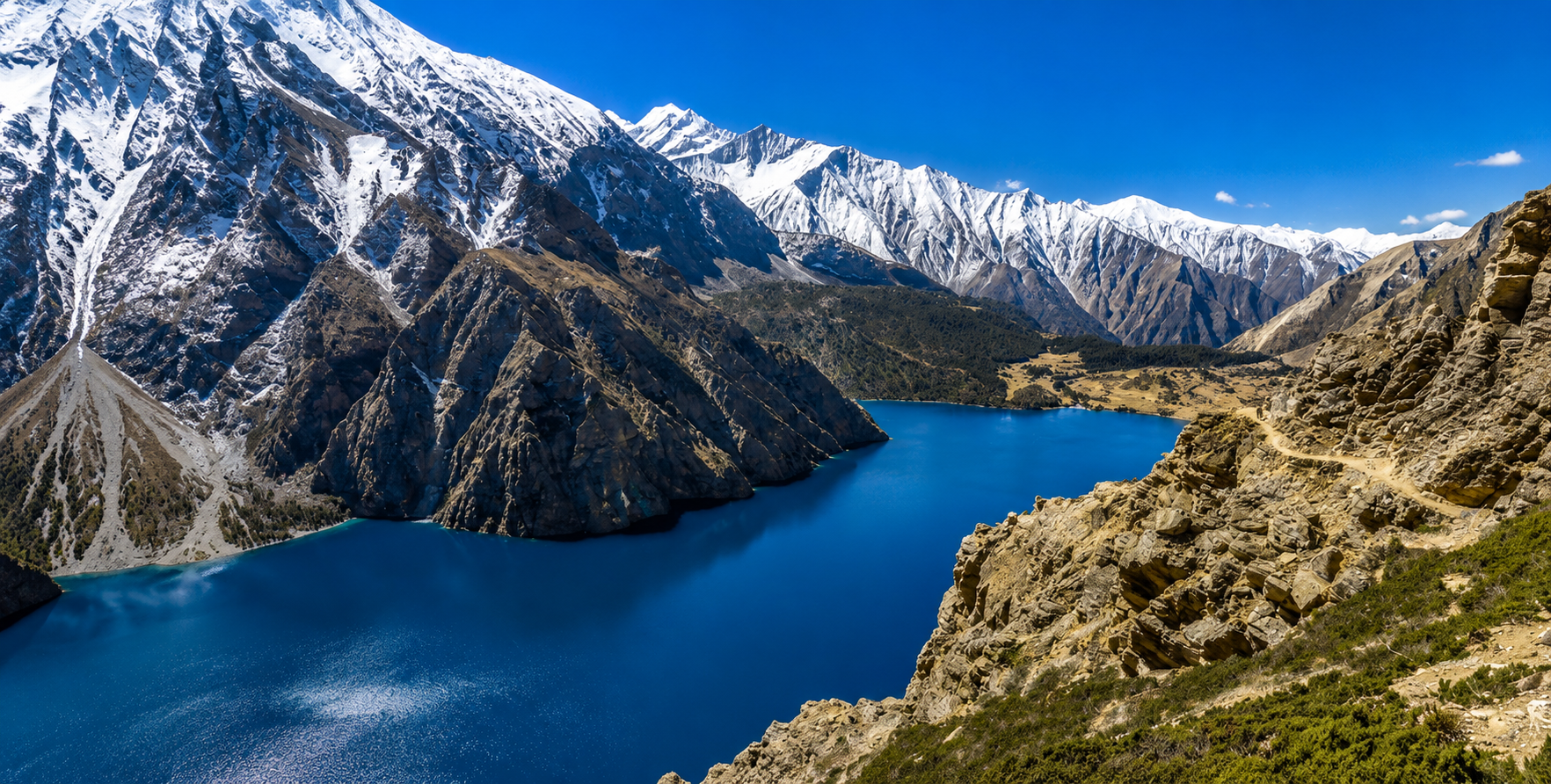
Besisahar to Manang Jeep

Kathmandu to Manang jeep

Besisahar to Manang Jeep — Complete  Guide

The 75 to 83 kilometres of off-road mountain track between Besisahar and Manang is one of Nepal’s most thrilling, beautiful, and demanding jeep drives. From the moment the paved road ends at Besisahar (760 m) and the 4WD jeep begins its climb into the Marsyangdi River gorge, every kilometre brings a new and more dramatic Himalayan landscape — roaring waterfalls, towering cliff walls, ancient Gurung and Tamang villages, dense rhododendron forests, and finally the wide, arid, Tibetan-flavoured valley of Manang (3,519 m) with its extraordinary mountain panorama.

For Annapurna Circuit trekkers, the Besisahar to Manang jeep journey serves a critical purpose: it saves 5 to 7 days of walking on the lower sections of the circuit while delivering trekkers directly to the acclimatisation hub at Manang — fully rested and ready for the high-altitude challenges of Thorong La Pass (5,416 m) and the upper circuit ahead. For adventurous travellers and road trip enthusiasts, it’s the world’s best off-road driving experience.

This complete guide covers every aspect of the Besisahar to Manang jeep journey: the route in full detail, segment-by-segment road conditions, 2026 costs for both shared and private jeep hire, vehicle recommendations, altitude acclimatisation advice, permits, and why Nepal Vehicle Hiring Pvt Ltd is the most trusted jeep hire provider for this demanding off-road route.

Route Overview — Key Facts

Route DetailInformation
Total Off-Road Distance75–83 km (Besisahar to Manang — entirely off-road)
Manang Altitude3,519 m (11,545 ft) above sea level
Besisahar Altitude760 m (2,493 ft) above sea level
Total Altitude Gain2,759 m — from 760 m to 3,519 m
Travel Time (Dry Season)8 to 12 hours — often done over 2 days
Travel Time (Monsoon)10–14+ hours — road conditions variable
Road Type100% off-road throughout — paved road ends at Besisahar
4WD Required?MANDATORY — no sedan, car, or Hiace can safely complete this route
Best VehiclesToyota Land Cruiser, Toyota Hilux 4WD, Mahindra Scorpio 4WD, Bolero 4WD
Shared Jeep CostNPR 4,500–5,500 / USD 35–45 per person (Besisahar to Manang)
Private Jeep CostNPR 25,000–40,000 / USD 200–330 (full vehicle, Besisahar to Manang)
Best SeasonOctober–December and March–May (dry season)
Permits RequiredACAP + TIMS card — inspected at Jagat Army checkpoint

4WD IS NOT OPTIONAL: The Besisahar to Manang road is 100% off-road. No paved sections exist beyond Besisahar. Sedans, standard SUVs, and Hiace vans CANNOT safely complete this route. A high-clearance 4WD vehicle with an experienced driver is mandatory for the entire journey from Besisahar to Manang.

Why Take a Jeep from Besisahar to Manang?

Save 5 to 7 Trekking Days

The Annapurna Circuit from Besisahar to Manang on foot takes 5 to 7 days of walking through the Marsyangdi River valley. While this is a beautiful, culturally rich trekking section, many time-limited trekkers prefer to cover it by jeep—saving nearly a week that can be spent on the more spectacular high-altitude sections of the circuit above Manang, or on side trips to Tilicho Lake and Ice Lake.

Ideal for Trekkers with 10 Days or Fewer

International visitors with tight vacation schedules of 10 to 14 days cannot afford to spend 5 to 7 of those days walking the lower Annapurna Circuit. A jeep from Besisahar to Manang compresses this section to 1 to 2 days, preserving most of the available trekking time for the genuinely spectacular terrain above Manang — the high alpine pastures, glacial valleys, and, finally, the extraordinary crossing of Thorong La Pass.

An Off-Road Adventure in Its Own Right

For many travellers, the Besisahar-to-Manang jeep drive is not a shortcut—it is the main event. The route passes through some of Nepal’s most dramatic gorge country: cliff-face roads carved into mountainsides hundreds of meters above the Marsyangdi River, enormous waterfalls cascading across the road, suspension bridges, ancient villages unchanged for centuries, and progressively more dramatic Himalayan scenery as altitude increases. Every hour of the drive brings a remarkable change in the landscape.

Gradual Acclimatisation Over Two Days

Split over two days with an overnight stop at Chame (2,670 m), the Besisahar-to-Manang jeep journey offers better acclimatisation than the direct single-day trek from Besisahar. Sleeping at Chame before ascending to Manang (3,519 m) on Day 2 is the standard acclimatisation protocol recommended for jeep travellers — and Nepal Vehicle Hiring Pvt Ltd builds this into all Manang jeep itineraries.

The Route — Segment by Segment

SegmentDistanceDurationAltitudeRoad CharacterDifficulty
Besisahar → Syange20 km2.5–3 hrs760 m → 1,100 mBumpy, narrow, rocky trackChallenging
Syange → Jagat12 km1.5 hrs1,100 m → 1,300 mNarrow gorge, cliff edgesVery Challenging
Jagat → Chamche3 km30–45 min1,300 m → 1,430 mHuge cliff walls, waterfallsChallenging
Chamche → Dharapani8 km1 hr1,430 m → 1,860 mValley opening, off-road mixModerate
Dharapani → Chame16 km3–3.5 hrs1,860 m → 2,670 mSteep ascent, pine forestsVery Challenging
Chame → Pisang7 km1 hr2,670 m → 3,200 mApple orchards, valley roadModerate
Pisang → Manang18 km1.5–2 hrs3,200 m → 3,519 mWide Manang valley, arid roadEasy-Moderate

Besisahar

Segment 1 — Besisahar to Syange (20 km, 2.5–3 hours)

The off-road adventure begins immediately at Besisahar. As the Jeep leaves the last paved street and climbs the rocky track above the Marsyangdi River, the character of the journey changes. The road is narrow, rough, and bumpy — the driver engages 4WD, and the vehicle begins the slow, deliberate progress that characterises the entire Besisahar-Manang journey.

This first section passes through Ngadi and Bulbule — two small villages where the first suspension bridges cross the Marsyangdi. The river gorge begins to deepen and narrow, and the first glimpses of the high peaks above become visible.

By Syange (1,100 m), the gorge has become truly dramatic — waterfalls tumble from cliff faces on both sides and the river far below roars through its rocky channel. The road here is often barely wider than a Jeep itself, with sheer drops to the river on one side and cliff walls on the other.

Segment 2 — Syange to Jagat (12 km, 1.5 hours)

Between Syange and Jagat, the gorge deepens further, and the road becomes progressively more challenging. This section involves some of the narrowest and most technically demanding driving on the entire route — cliff-face roads with loose rock surfaces, multiple stream crossings, and occasional landslide debris that requires careful navigation. The views are extraordinary: massive rock walls hundreds of meters high, multiple waterfalls, and the constant, turbulent presence of the Marsyangdi River below.

Jagat (1,300 m) is the location of the ACAP army checkpoint — all passengers must present their Annapurna Conservation Area Permit (ACAP) and TIMS card here. The checkpoint officers are thorough; always have your permits accessible. Jagat has basic tea houses and a small bazaar — a common rest stop after the demanding Syange-Jagat section.

Segment 3 — Jagat to Chamche (3 km, 30–45 minutes)

The short but visually extraordinary stretch from Jagat to Chamche is arguably the most spectacular 3 kilometres of the entire route. The road passes beneath enormous cliff walls — in some places, 200 to 300 meters of sheer rock tower directly above the vehicle. Multiple large waterfalls cascade across or near the road.

The Chamche area is named for the waterfalls (‘chamche’ means ‘waterfall’ in Nepali), and the concentration of falling water here — particularly impressive during and after the monsoon — makes this one of the most photographed sections of the Annapurna Circuit road.

Segment 4 — Chamche to Dharapani (8 km, 1 hour)

Above Chamche, the gorge gradually widens, and the road quality improves slightly. The valley opens as the route passes through Tal (1,675 m) — a large flat settlement in an ancient glacial lake bed — and continues to Dharapani (1,860 m).

Dharapani is an important junction village where the Annapurna Circuit trail meets the road from Tsum Valley and the Manaslu Circuit. The widening valley and warming landscape around Dharapani feel like a relief after the dramatic gorge sections below.

chame village

Segment 5 — Dharapani to Chame 16 km, 3–3.5 hours) — Hardest Section

The climb from Dharapani to Chame is the most physically demanding section of the route for both vehicle and driver. The road gains approximately 800 meters of altitude in 16 km — a steep, sustained ascent through dense rhododendron and pine forest on a narrow, rocky track that requires constant low-range 4WD engagement. In wet conditions, this section becomes extremely challenging — steep, slippery, and prone to minor landslides.

The reward for the long climb is Chame (2,670 m) — the headquarters of Manang District and the largest settlement between Besisahar and Manang. Chame has natural hot springs, apple orchards beginning to appear, several well-equipped guesthouses, restaurants, a telecommunications office, vehicle repair facilities, and the first genuine mountain views of the journey — Annapurna (7,937 m) appearing above the forest ridgeline to the northeast. Most two-day jeep itineraries overnight in Chame.

Overnight in Chame: Nepal Vehicle Hiring Pvt Ltd strongly recommends an overnight stop in Chame. Sleeping at 2,670 m before continuing to Manang (3,519 m) provides critical acclimatisation and avoids the significant AMS risk of driving directly from Besisahar to Manang in a single day.

Segment 6 — Chame to Pisang (7 km, 1 hour)

Above Chame, the terrain transforms dramatically. The forest gives way to open alpine terrain, and the Manang valley begins to reveal itself. Apple orchards line the road — Chame and the surrounding area are famous for high-altitude apple production, and the apple brandy and cider produced here are among the finest in Nepal.

Pisang (3,200 m) offers a spectacular viewpoint with Annapurna II (7,937 m) dramatically visible, and the Upper Pisang Monastery perched on a ridge above the lower village.

Segment 7 — Pisang to Manang (18 km, 1.5–2 hours)

The final section from Pisang to Manang passes through the wide, increasingly arid Manang valley — a landscape that feels more Tibetan than Nepali. The valley floor is broad and flat between towering 7,000-meter walls on all sides.

The road quality on this section is relatively better than the gorge sections below — still off-road but less technically demanding. Braga village, just before Manang, has the famous Braga Gompa — one of the oldest Buddhist monasteries in the Annapurna region with extraordinary frescoes and a massive collection of clay statues.

Manang (3,519 m) appears around the final bend — a cluster of traditional white-washed stone houses beneath the immense south faces of Annapurna III and Gangapurna.

Key Stops Along the Route

StopAltitudeDistance from BesisaharKey Features & Notes
Besisahar760 mStartLast ATM, fuel, permits, paved road ends here
Ngadi / Bulbule840 m15 kmFirst suspension bridges, Marsyangdi views, off-road starts
Syange1,100 m20 kmDeep gorge entry, towering cliffs, waterfalls begin
Jagat1,300 m32 kmArmy checkpoint — ACAP + TIMS inspected here
Chamche1,430 m35 kmMost dramatic cliff section — huge walls, multiple waterfalls
Dharapani1,860 m43 kmManaslu Circuit junction, wider valley, guesthouses
Bagarchap2,160 m47 kmTraditional stone village, first Tibetan-influenced culture
Chame2,670 m59 kmManang District HQ, hot springs, apple orchards — OVERNIGHT
Pisang3,200 m66 kmUpper + Lower Pisang, monastery, Annapurna II views
Braga3,360 m78 kmAncient cave monastery — 500-year-old Braga Gompa
Manang3,519 m83 kmAcclimatisation hub, Gangapurna Lake, HRA clinic

Besisahar

Shared Jeep — Budget Option

Shared jeeps operate from Besisahar throughout the morning (typically 6:00–9:00 AM) and are the most affordable motorised option. They operate on a fill-and-depart basis —a jeep departs when all seats are taken, typically with 7 to 9 passengers sharing the vehicle.

  • Cost: NPR 4,500–5,500 / USD 35–45 per person (Besisahar to Manang, one way)
  • Departure: From Besisahar jeep stand — morning departures (6:00–9:00 AM typically)
  • Capacity: 7–9 passengers; jeep — cramped with full trekking gear
  • Limitation: No hotel pickup, no flexibility in stops, departs only when full
  • Best for: Solo trekkers or pairs on a budget willing to share with other passengers

A private jeep gives your group complete control over departure time, rest stops, and pace. With Nepal Vehicle Hiring Pvt Ltd’s private jeep hire, you get hotel or guesthouse pickup in Besisahar, freedom to stop at every waterfall, viewpoint, and village, and a driver who prioritises your comfort and safety throughout the journey.

  • Cost: NJourney00–40,000 / USD 190–300 (Besisahar to Manang, full vehicle, one way)
  • Booking: Through Nepal Vehicle Hiring Pvt Ltd — book in Kathmandu or online in advance
  • Departure: Flexible — depart from Besisahar at your preferred time
  • Capacity: 4–6 passengers comfortably with luggage on roof rack
  • Includes: Driver, fuel, all tolls — all-inclusive pricing

Group Value: For 6 trekkers sharing a private jeep at NPR 35,000 (USD 265), the per-person cost is approximately USD 44 — comparable to the shared jeep but with the comfort of a private vehicle, hotel pickup, flexible stops, and a professional driver from Nepal Vehicle Hiring Pvt Ltd.

pokhara to kathmandu seorpio

Vehicle Comparison — Which Jeep for Besisahar to Manang?

Vehicle4WD SystemGround ClearanceCapacityBest For Cost (Besisahar–Manang)
Mahindra ScorpioPart-time 4WD180 mm6–7 passengersBudget groups — standard routeNPR 25,000–40,000 / USD 185–230
Mahindra BoleroPart-time 4WD185 mm7–9 passengersLarger groups, popular Jeep jeepNPR 22,000–35,000 / USD 165–210
Toyota Hilux 4WDPart-time + diff lock220 mm5–6 passengersBest off-road performance, safestNPR 30,000–50,000 / USD 230–350
Toyota Land CruiserFull-time 4WD + crawl225 mm6–7 passengersTop-end comfort + max capabilityNPR 40,000–70,000 / USD 300–410

Nepal Vehicle Hiring Pvt Ltd recommends the Toyota Hilux 4WD or the Toyota Land Cruiser for the Besisahar-Manang route. The Hilux provides the best combination of ground clearance (220 mm), off-road capability, reliability, and passenger comfort for this demanding mountain road. The Land Cruiser is the top-end option — maximum clearance, the most advanced 4WD system, and superior interior comfort for the long journey.

Besisahar to Manang Jeep

Road Journeys — Season Guide

SeasonMonthsRoad ConditionDifficulty LevelRecommendation
Autumn (Best)Oct – NovDry, stableHigh but manageableBest season — dry roads, clear views
WinterDec – FebDry but coldHigh — frost risk above ChameGood — cold nights; possible snow near Manang
Spring (Good)Mar – MayMostly dryHigh but manageableExcellent — warming up, rhododendrons
MonsoonJun – SepMuddy, riskyVery High — landslidesCaution — verify daily; 4WD critical

Autumn — October to November (Best Season)

The best season for the Besisahar-to-Manang jeep. Post-monsoon roads are dry and at their most stable. The air is crystal-clear — mountain views from the upper sections (Chame to Manang) are spectacular.

The waterfalls in the gorge sections are still active but not dangerous. October and November are peak trekking months — shared jeeps are readily available, and the Besisahar to Manang route is busy with Annapurna Circuit trekkers.

Winter — December to February

Dry conditions and clear skies make winter a surprisingly good season for the Besisahar-to-Manang jeep. Jeep sections are dry and manageable. Above Chame and toward Manang, frost and occasional light snowfall are possible — the Toyota Hilux and Land Cruiser handle this without difficulty.

Chame and Manang are cold but well served by guesthouses during the trekking season. Fewer trekkers mean more availability and potentially lower prices.

Spring — March to May

Spring is excellent — warming temperatures, rhododendron forests in bloom on the Dharapani to Chame section, and generally dry road conditions. March and April see heavy Annapurna Circuit trekking traffic — book private jeeps well in advance. The Chamche waterfall sections are particularly beautiful in spring when snowmelt swells the falls.

Monsoon — June to September

Monsoon Warning: The Besisahar to Manang off-road track is prone to landslides, mudslides, and surface damage during heavy monsoon rainfall — particularly the gorge sections between Syange and Dharapani. Road closures after major rainfall events can delay journeys by hours or days. A Toyota Land Cruiser or Hilux is mandatory during the monsoon. Nepal Vehicle Hiring Pvt Ltd monitors road conditions daily and will advise on the current status before departure. Always have a contingency plan during the monsoon.

Permits Required

ACAP — Annapurna Conservation Area Permit

  • Cost: NPR 3,000 per person for foreign nationals (approximately USD 22)
  • SAARC nationals: NPR 200 per person
  • Where to obtain: Nepal Tourism Board office in Kathmandu or Besisahar
  • Inspected at: Jagat Army checkpoint — mandatory; cannot proceed without a valid ACAP

TIMS Card — Trekkers’ Information Management System

  • Cost: Approximately USD 10–20 per person for foreign nationals
  • Where to obtain: Nepal Tourism Board or TAAN office, Thamel, Kathmandu

Get both permits in Kathmandu before departure — saves time at Besisahar and avoids any risk at the Jagat checkpoint. Nepal Vehicle Hiring Pvt Ltd can assist with permit information and directions to the Nepal Tourism Board office.

DayRouteDrive TimeOvernightNotes
Day 1Kathmandu → Besisahar5–6 hrs (paved)Besisahar (760 m)Early 5:30 AM departure from KTM; last ATM here
Day 2Besisahar → Chame7–8 hrs (off-road)Chame (2,670 m)8 hrs through gorge, cliff sections, pine forests
Day 3Chame → Manang3–4 hrs (off-road)Manang (3,519 m)Apple orchards, the  Pisang monastery, and a wide valley
Day 4Manang — rest day—Manang (3,519 m)Acclimatisation — Gangapurna Lake, Braga Gompa
Day 5Begin Annapurna CircuitTrek startsYak Kharka / LedarToward Thorong La Pass (5,416 m)

The 3-day approach (Day 1: Kathmandu to Besisahar; Day 2: Besisahar to Chame; Day 3: Chame to Manang) is the safest and most comfortable itinerary for the Kathmandu-to-Manang jeep journey. Overnight in Chame provides critical altitude acclimatisation before the final ascent to Manang at 3,519 m.

Do NOT drive from Besisahar to Manang in a single day — the combination of 8 to 12 hours of rough driving and a 2,759-meter altitude gain is both physically exhausting and a significant AMS risk. Always split the journey with a journey to Chame (2,670 m).

Manang valley-Besisahar to Manang jeep
Manang valley

Altitude Acclimatisation— Essential Advice

Manang at 3,519 m is well into the high-altitude zone where Acute Mountain Sickness (AMS) is a genuine risk. Arriving by jeep rather than trekking up means your body has had less time to adjust to the altitude. Here is essential acclimatisation advice for jeep travellers to Manang:

  • MANDATORY: Sleep at Chame (2,670 m) on Day 2 before ascending to Manang (3,519 m) on Day 3
  • Drink 3–4 litres of water per day throughout the jeep journey — dehydration worsens AMS
  • Take a rest day in Manang on Day 4 before any further ascent — Gangapurna Lake (3,700 m) or Braga Gompa is an ideal acclimatisation walk.
  • AMS symptoms to watch for: Headache, nausea, fatigue, dizziness, loss of appetite
  • Golden rule: If AMS symptoms worsen — DESCEND IMMEDIATELY
  • Discuss Diamox (Acetazolamide) with your doctor before travel — particularly recommended for those arriving from sea-level cities
  • Visit the HRA (Himalayan Rescue Association) clinic in Manang for free altitude briefings — open daily during trekking season

What to Bring for the Besisahar to Manang Jeep Journey

  • ACAP permit and TIMS card: Easily accessible — inspected at Jagat checkpoint
  • Cash (NPR): Besisahar is the last ATM. Carry enough for Chame and Manang accommodation, meals, and contingencies — minimum NPR 15,000–20,000 per person.
  • Travel pillow or cushion: 8 to 12 hours of rough off-road driving — a neck pillow dramatically improves comfort
  • Warm layers: Temperature drops dramatically from Besisahar (warm) to Chame (cool, 2,670 m) to Manang (cold, 3,519 m). Carry a fleece and a down jacket in the cabin — not in the roof rack luggage
  • Dust buff or mask: The dry sections above Dharapani generate considerable dust — essential for comfort
  • Water bottle (2 litres): Carry water for the journey — rest stops are spaced 2 to 3 hours apart
  • Motion sickness medication: The winding gorge road below Dharapani involves hundreds of turns — essential for sensitive travellers
  • Camera accessible: Keep camera in day bag, not roof luggage — the Chamche waterfall section and Chame-Pisang mountain views are among Nepal’s finest photography subjects
  • Snacks and energy food: Carry provisions for the full day; while tea houses exist in villages, stops are not guaranteed
  • First aid kit: Basic medical supplies including blister treatment, painkillers, and altitude medication

Practical Tips for Besisahar to Manang Jeep

  • Book your private jeep with Nepal Vehicle Hiring Pvt Ltd in Kathmandu before reaching Besisahar — private jeeps in Besisahar during peak season (October–November) are in very high demand and may not be available on the same day.
  • Depart Besisahar by 6:30–7:00 AM on Day 2 — the long Dharapani to Chame ascent must be completed before late afternoon light fades.
  • Take fuel in Besisahar — it is the last reliable fuel point before Manang. Nepal Vehicle Hiring Pvt Ltd ensures all vehicles are fully fueled before departure.
  • At the Jagat checkpoint: Have all permits (ACAP and TIMS) immediately accessible — the army checkpoint can take 20 to 30 minutes at busy times. Passengers without permits will not be allowed through.
  • Chamche waterfall section: Ask your driver to pause for 5 to 10 minutes — this is the most photographed section of the entire route and the experience is worth the brief stop.
  • Chame hot springs: If overnighting at Chame, the natural hot spring baths (a short walk from the main guesthouse area) provide extraordinary relief after a day of rough-road travel.
  • Keep luggage on the roof rack secure and locked — while security on this remote road is generally excellent, valuables should always be kept in your day bag inside the vehicle.
  • Inform your trekking agency or hotel of your planned arrival date in Manang — guesthouses fill quickly during peak season, and booking is strongly recommended.
  • For the return journey: Nepal Vehicle Hiring Pvt Ltd arranges return jeep hire from Manang to Besisahar and Kathmandu — book at the same time as the outward journey.
Manang valley-Besisahar to Manang jeep
Manang Journey

Why Choose Nepal Vehicle Hiring Pvt Ltd

  • Off-Road Route Expertise: Our drivers have extensive personal experience on the Besisahar to Manang route — including the most challenging gorge sections, the steep ascent from Dharapani to Chame, and the high-valley road from Chame to Manang. Every challenging section is familiar territory.
  • Best Vehicles for the Route: Toyota Hilux 4WD and Toyota Land Cruiser — the two most capable and reliable vehicles for the Besisahar to Manang off-road. We never send an underpowered vehicle on this demanding mountain track.
  • Altitude-Safe Itinerary: We always recommend and arrange an overnight stop in Chame — the essential acclimatisation measure for jeep travellers to Manang. We never propose a single-day Besisahar-to-Manang itinerary.
  • All-Inclusive Pricing: Driver, fuel, and road tolls are included in the quoted price — no hidden charges at mountain checkpoints or fuel stops.
  • Kathmandu to Manang Full Package: We coordinate the complete Kathmandu-to-Besisahar highway leg AND the Besisahar-to-Manang off-road section as a single booking — one driver, one price, full route coverage.
  • Real-Time Road Monitoring: Our team tracks road conditions on the Marsyangdi valley route daily — monsoon landslide updates, road closures, and construction delays are communicated proactively before departure.
  • Return Journey Arranged. A Manang-to-Besisahar return jeep at the same time as the outward journey — the vehicle is arranged in Manang when your trek or acclimatisation period is complete.
  • 24/7 Booking: WhatsApp, phone, or email — instant confirmation at any time.

Frequently Asked Questions — Besisahar to Manang Jeep

How far is Besisahar from Manang by road?

The off-road distance from Besisahar to Manang is approximately 75- 83 km. This entire section is an unpaved off-road track — the paved highway ends at Besisahar.

How long does the Besisahar-to-Manang jeep journey take?

In dry-season conditions, the journey takes 8 hours by car. Due to the altitude gain and road conditions, the journey is strongly recommended to be split across two days with an overnight stop at Chame (2,670 m) — Day 1: Besisahar to Chame (7–8 hrs), Day 2: Chame to Manang (2.5–3 hrs).

Is a 4WD jeep really necessary for the drive from Besisahar to Manang?

Yes — absolutely mandatory. The entire Besisahar-to-Manang route is off-road, with rocky, narrow tracks, steep ascents, cliff-edge sections, stream crossings, and high-altitude terrain. Sedans, standard cars, and Hiace vans cannot safely complete this route.

A 4WD vehicle with high ground clearance and an experienced off-road driver is essential.

Which is the best vehicle for the trip from Besisahar to Manang?

The Toyota Hilux 4WD is the best overall choice — with 220 mm of ground clearance, proven off-road reliability, and excellent performance on the steep Dharapani-to-Chame section. The Toyota Land Cruiser is the top-end option for groups wanting maximum capability and interior comfort. The Mahindra Scorpio and Bolero are the budget options — capable but less refined than the Japanese 4WDs.

Do I need to stay overnight at Chame?

Yes — strongly recommended. Besisahar to Manang in a single day (an 8–12-hour drive + 2,759 m of altitude gain) is both exhausting and poses a significant AMS risk. Sleeping at Chame (2,670 m) before ascending to Manang (3,519 m) is the standard safe approach followed by Nepal Vehicle Hiring Pvt Ltd and all responsible operators.

What permits do I need for a Besisahar-to-Manang jeep?

ACAP (Annapurna Conservation Area Permit — NPR 3,000 / ~USD 22 per person) and TIMS Card (USD 10–20 per person). Both are inspected at the Jagat Army checkpoint (approximately 32 km from Besisahar). Obtain both in Kathmandu before departure for the smoothest passage through the checkpoint.

Can I take the Besisahar-Manang jeep during the monsoon season?

Yes, but with significant caution. The gorge sections (Syange to Dharapani) are particularly susceptible to landslides and road damage during the heavy monsoon season. Always verify road conditions with Nepal Vehicle Hiring Pvt Ltd on the morning of travel.

A Land Cruiser or Hilux is essential during the monsoon. Journey times can be significantly longer than in the dry season.

Conclusion

The Besisahar to Manang jeep journey is one of the most extraordinary off-road driving experiences in all of Nepal — 75 to 83 kilometres of raw Himalayan adventure through roaring river gorges, enormous waterfall-draped cliff walls, ancient Gurung villages, dense rhododendron forests, and the wide, arid, mountain-ringed valley of Manang. It challenges both vehicle and driver and rewards them with scenery few roads on earth can match.

For Annapurna Circuit trekkers, it is a practical masterpiece — compressing 5 to 7 days of lower-circuit walking into 2 days of jeep travel, delivering trekkers to Manang rested and acclimatised for the extraordinary high-altitude terrain ahead. For adventure travellers, it is a destination in its own right — an off-road trip of the highest order.

Nepal Vehicle Hiring Pvt Ltd is your most trusted partner for jeep rentals from Besisahar to Manang. With specialist 4WD vehicles, experienced off-road drivers, altitude-safe itinerary design including the essential Chame overnight stop, real-time road monitoring, and the ability to book the complete Kathmandu to Manang journey as a single, smooth package, we ensure your arrival at Manang is exactly as it should be: safe, successful, and ready for the mountains ahead.

Book your Besisahar to Manang jeep — Call or WhatsApp: +977 981-4227196

Gmail: [email protected]

Besisahar to Dharapani Jeep Hire: Complete 4WD Transfer Guide for Annapurna Circuit Trekkers

Dharapani trek start point of annapurna range

The Gateway Drive to Nepal’s Greatest Trek

The Besisahar to Dharapani jeep hire is one of Nepal’s most important and dramatic 4WD transfers — the ride that launches trekkers into the heart of the Annapurna Conservation Area (ACAP) and the iconic Annapurna Circuit, widely regarded as one of the greatest trekking routes on earth. Nepal Vehicle Hiring Pvt Ltd provides the most reliable, professional, and experienced private 4WD jeep hire service for this spectacular off-road mountain route.

Covering approximately 40 km along the roaring Marsyangdi River gorge, the Besisahar–Dharapani jeep track ascends from the green subtropical valleys of Lamjung District (760 m) through a landscape of increasing dramatic grandeur — past traditional Gurung and Magar villages, through narrow gorge sections where waterfalls cascade directly onto the road, along cliff-hugging tracks carved into sheer rock faces, through the ancient salt-trade village of Jagat, and finally to the gateway village of Dharapani (1,860 m) — where the classic Annapurna Circuit trek officially begins for most modern trekkers.

The Besisahar–Dharapani section of the Annapurna Circuit was originally a 2-day stage. However, as road construction extended the jeep track deeper into the Marsyangdi valley over the past decade, this section is now motorable by 4WD — and most trekkers choose to ride by jeep from Besisahar to Dharapani, skipping the dusty, vehicle-trafficked lower trail and beginning their genuine wilderness trekking from Dharapani, where the road ends.
The pristine high-mountain trail to Manang and Thorong La begins. This guide explains everything you need to know to make the most of your jeep transfer from Besisahar to Dharapani.

Book now: Nepal Vehicle Hiring – Jeep | All Vehicles | Call/WhatsApp:+977 981-4227196

Besisahar to Dharapani Jeep Hire – Complete Route Overview

RouteBesisahar (760 m) to Dharapani (1,860 m)
Road DistanceApprox. 40 km off-road mountain track
Travel Time3–4 hours (private jeep) | 4–5 hours (shared jeep)
Road ConditionRough, narrow, unpaved off-road – 4WD MANDATORY
Altitude Gain760 m (Besisahar) to 1,860 m (Dharapani)
Key VillagesBhulbhule, Ngadi, Khudi, Syange, Jagat, Chamje, Tal, Dharapani
Best VehicleToyota Land Cruiser (top-end) | Mahindra Scorpio (most popular)
Permits RequiredACAP (Annapurna Conservation Area Permit) + TIMS Card
Best ForAnnapurna Circuit trekkers starting/skipping lower trail sections
AvailabilityDaily – depart Besisahar early morning for the best conditions
Contact+977 981-4227196| vehiclehiringnepal.com

The Annapurna Circuit – Context for Your Jeep Transfer

Before diving into the details of the Besisahar–Dharapani jeep route, it is essential to understand the context of the Annapurna Circuit itself — Nepal’s most complete trekking experience and arguably the finest long-distance mountain trek in the world.

What Is the Annapurna Circuit?

The Annapurna Circuit is a circular trekking route that circumnavigates the entire Annapurna massif — one of the world’s most spectacular mountain ranges, located in the Gandaki Province of north-central Nepal. The full circuit covers approximately 160–175 km of trekking, ascending from the subtropical Marsyangdi River valley (760 m) in the east, climbing through lush rhododendron and oak forests, crossing the Thorong La Pass (5,416 m) — the world’s highest trekking pass — before descending dramatically into the arid trans-Himalayan Mustang region and the Kali Gandaki valley, Nepal’s deepest gorge.

The circuit takes most trekkers 10–21 days to complete, depending on the starting point and pace.

Why Trekkers Start at Dharapani Instead of Besisahar

The classic starting point for the Annapurna Circuit is Besisahar (760 m) in Lamjung District. However, over the past decade, road construction has progressively extended a jeep track from Besisahar up the Marsyangdi valley, passing through villages that were once pure trekking territory. Today, the road reaches Dharapani (1,860 m) and beyond to Chame and Manang.

As a result, the trail between Besisahar and Dharapani has become increasingly dusty, trafficked by jeeps and motorcycles, and less wilderness-like than it once was. Most experienced trekking guides and agencies now recommend starting the trek from Dharapani, where the road effectively ends as a practical jeep route, and the pristine high-mountain trail to Chame, Manang, and Thorong La Pass begins.

The Annapurna Circuit in Brief – Key Stages After Dharapani

From Dharapani (1,860 m), the Annapurna Circuit progresses through these key stages:

  • Dharapani to Chame (2,670 m): 15 km trekking through rhododendron and pine forests, past Bagarchhap, Danakyu, and Timang villages. Spectacular views of Manaslu and Annapurna II emerge. 5–6hours’s walk.
  • Chame to Upper Pisang (3,300 m): 17 km through narrow gorge, dense forest, and first views of the soaring Annapurna III. 5–hour walk.
  • Upper Pisang to Manang (3,540 m): 20 km across a wide-open glacial valley; Tilicho Peak and Gangapurna dominate the skyline—mandatory acclimatisation at Manang.
  • Manang to Thorong Phedi / High Camp (4,450 m): 12 km across alpine meadows. Views of Annapurna II and Gangapurna Glacier.
  • Thorong La Pass (5,416 m) to Muktinath (3,760 m): The great crossing — 15 km, 8–9 hours. World’s highest trekking pass. Descent to the sacred Muktinath Temple.
  • Muktinath to Jomsom to Pokhara: Most trekkers take a jeep or bus from Jomsom to Pokhara via Marpha, Tatopani, and Beni.

Besisahar

Why Hire a Private 4WD Jeep from Besisahar to Dharapani?

Shared jeeps run from Besisahar to Dharapani—departing when full (typically 6–7 passengers per jeep), with no fixed schedule, no luggage guarantees, and stops at every village along the 40 km route. A private 4WD jeep hire from Nepal Vehicle Hiring transforms the experience entirely:

Departure on Your Schedule – Critical for Trekking Timing

The 40 km off-road Besisahar–Dharapani jeep track takes 3–4 hours under ideal conditions. Combined with a 6–7 hour drive from Kathmandu to Besisahar, a total Kathmandu-to-Dharapani day requires departing Kathmandu by 5:30–6:00 AM. With a private jeep, you control every departure time along the chain.

Shared jeeps from Besisahar often wait until full, which can mean standing at the bus park for 1–2 hours — a significant waste of precious trekking-day time.

No Passenger Overcrowding – Luggage and Comfort Protected

Shared jeeps on the Besisahar–Dharapani route are notoriously overcrowded. Seven passengers in a vehicle designed for six, trekking poles strapped to the roof, backpacks wedged between passengers — the shared jeep experience on this off-road mountain track can be genuinely uncomfortable.

With a private jeep, your group has the vehicle to itself—secure trekking backpacks in the boot or on the roof rack under a tarpaulin. Everyone has a proper seat with adequate legroom.

After a long day of travel from Kathmandu, arriving in Dharapani refreshed and comfortable makes a meaningful difference to your first days of trekking.

Expert Local Driver with Off-Road Mountain Experience

The Besisahar–Dharapani jeep track is not a road for inexperienced drivers. It is narrow, steep, and rutted, with cliff drops on one side and rock faces on the other, and features multiple blind corners, river crossings, and sections that become treacherous after rain.

Nepal Vehicle Hiring’s drivers for this route are experienced mountain specialists who have driven the Marsyangdi valley track many times, know every difficult section, and understand the conditions required for safe passage in different seasons.

Flexible Stops at Key Villages and Viewpoints

The Besisahar–Dharapani route passes through villages that, while now accessible by road, still retain significant cultural, scenic, and experiential value. A private jeep lets you stop at Bhulbhule for ACAP permit registration, photograph the Syange waterfall, briefly explore Jagat’s historic lanes, and pause at Tal’s stunning flat valley and waterfall backdrop—all impossible at your own pace on a shared jeep following a shared schedule.

Vehicle Reliability in Remote Terrain

Breaking down on the Besisahar–Dharapani track deep in a remote mountain gorge, with no phone signal and no passing traffic, is a real possibility with poorly maintained vehicles. Nepal Vehicle Hirings regularly inspects and services its fleet before every mountain-route departure.

All vehicles are fully insured and equipped with basic tools, a spare tyre, and a first-aid kit. Our drivers carry emergency contact numbers and are experienced in handling minor mechanical issues in remote locations.

Combined Kathmandu–Besisahar–Dharapani Service

Many trekkers want the convenience of a single vehicle and driver from Kathmandu all the way to Dharapani — rather than switching from a bus to a shared jeep at Besisahar Bus Park. Nepal Vehicle Hiring offers a combined Kathmandu-to-Besisahar-to-Dharapani private jeep service: one booking, one driver, one vehicle for the entire 220+ km journey. This is the most stress-free, comfortable, and time-efficient way for trekking groups to reach the Annapurna Circuit starting point.

Besisahar

Best 4WD Vehicles for the Besisahar to Dharapani Route

The Besisahar–Dharapani jeep track is one of the most technically demanding roads regularly driven in Nepal. All vehicles MUST be genuine 4WD with high ground clearance — standard AWD crossovers, sedans, and vans are entirely unsuitable for this route. Nepal Vehicle Hiring uses only the following proven mountain vehicles:

VehicleCapacityOff-Road RatingGround ClearanceBest For
Toyota Land Cruiser 4WD1–6 paxExcellent220 mmTop-end trekkers / VIP groups
Mahindra Scorpio 4WD1–6 paxExcellent180–200 mmGroups / Standard trekkers
Mahindra Bolero 4WD1–6 paxExcellent180 mmBudget groups
Tata Sumo 4WD1–7 paxGood165 mmLarge budget groups

Toyota Land Cruiser 4WD – The Ultimate Marsyangdi Valley Vehicle

For the Besisahar–Dharapani route, the Toyota Land Cruiser 4WD is without question the finest available vehicle. Its purpose-built off-road architecture — locking differentials, superior suspension travel, 220 mm of ground clearance, a low-range transfer case, and a proven high-torque diesel engine — handles the roughest sections of the Marsyangdi valley track with capabilities other vehicles cannot match.

Passengers experience significantly less jarring on the rocky sections, and the Land Cruiser’s spacious interior accommodates 6 trekkers with full backpacks in genuine comfort. For groups who have invested in a 15–20-day Annapurna Circuit trek, starting the journey in a Toyota Land Cruiser is an investment in both safety and physical well-being that pays dividends on the first days of trekking.

The Mahindra Scorpio 4WD is the most widely used private jeep on Nepal’s mountain trekking transfer routes, and for good reason. Its powerful diesel engine, 180–200 mm ground clearance, genuine 4WD with switchable low-range, and 6-passenger capacity make it the most cost-effective and reliable vehicle for the Besisahar–Dharapani off-road section.

The Scorpio handles the cliff-edge sections, stream crossings, and steep rock-strewn climbs of the Marsyangdi valley track with proven confidence, and its reputation on Nepal’s mountain roads is unimpeachable. For most trekking groups, the Scorpio represents the optimal balance of off-road capability, passenger comfort, luggage capacity, and value for money.

Mahindra Bolero and Tata Sumo – Budget 4WD Alternatives

For group travelling on tighter budgets, the Mahindra Bolero and Tata Sumo 4WD are reliable budget options for the Besisahar–Dharapani route. Both are genuine 4WD vehicles with adequate ground clearance for the route in dry conditions.

The Bolero and Sumo offer slightly less refined interiors than the Scorpio but equivalent off-road capability under standard Marsyangdi valley conditions. Suitable for trekking groups prioritising comfort. Not recommended during or after heavy rainfall, when the more powerful Scorpio or Land Cruiser provides meaningfully superior traction on wet rock and mud sections.

Besisahar to Dharapani Jeep Hire: Complete 4WD Transfer Guide for Annapurna Circuit Trekkers

Besisahar to Dharapani – Detailed Village-by-Village Route Guide

The 40 km Besisahar–Dharapani off-road route is not merely a transfer — it is a journey through one of Nepal’s most dramatically beautiful and culturally rich river valleys. Here is a complete village-by-village guide to what you will see and experience:

Village / CheckpointDistance from BesisaharAltitudeDrive Time from StartHighlights
Bhulbhule7 km840 m30 minAnnapurna Conservation Area entry; ACAP permit check; first Gurung villages
Ngadi / Khudi10 km790 m45 minMarsyangdi River crossing; local villages; wide valley views
Syange15 km1,100 m1–1.5 hrsDramatic gorge entry; seasonal waterfall over road; Mad Honey hunters’ village
Jagat22 km1,330 m1.5–2 hrsFormer Tibet salt-route checkpoint; suspension bridge; cliff-hugging road
Chamje27 km1,410 m2–2.5 hrsMarsyangdi gorge narrows; dense forest; dramatic canyon views
Tal32 km1,700 m2.5–3 hrsFirst village of Manang District; wide flat valley; impressive waterfall backdrop; palm trees
Dharapani40 km1,860 m3–4 hrsACAP checkpoint; Annapurna Circuit proper begins; Manaslu Circuit junction; stone-paved lanes

Besisahar (760 m) – The Annapurna Circuit Gateway Town

Besisahar is the headquarters of Lamjung District and the traditional starting point of the Annapurna Circuit. A bustling small mountain town straddling the Marsyangdi River (“Turbulent River” in Nepal, named for its powerful, churning currents), Besisahar is the last major town with reliable ATMs, well-stocked shops, pharmacies, and vehicle fuel before entering the Annapurna Conservation Area.

The town’s tea houses, trekking supply shops, and guesthouse lodges are always busy with Annapurna Circuit trekkers preparing for their mountain journey.

Besisahar is also where most Annapurna Circuit trekkers obtain their ACAP (Annapurna Conservation Area Permit) and TIMS Card if they have not already secured them in Kathmandu or Pokhara. Nepal vehicle-hiring drivers wait in Besisahar for the permit process and any last-minute supplies before continuing on the off-road section to Dharapani.

Bhulbhule (840 m) – The ACAP Entry Checkpoint

Just 7 km from Besisahar, Bhulbhule is the official entry checkpoint for the Annapurna Conservation Area (ACAP). All trekkers must have their ACAP permit and TIMS card checked and stamped here — whether arriving by foot or by jeep.

The National Trust for Nature Conservation (NTNC) manages the ACAP checkpoint, and the fees collected directly fund conservation in the Annapurna region, including protecting snow leopards, Himalayan tahr, red pandas, and over 400 bird species. The village itself has several guesthouses and a scenic suspension bridge over the Marsyangdi River, which trekkers cross to begin the trail proper from the east bank.

Khudi and Ngadi – River Valley Villages

Beyond Bhulbhule, the jeep track continues through Khudi (790 m) and Ngadi — traditional Gurung and Magar villages set among rice paddies, banana groves, and millet fields. The Marsyangdi River here is wide and powerful, its glacier-fed waters a magnificent turquoise-grey, flanked by forested hills that hint at the increasingly dramatic landscape ahead.

These lower-valley villages are home to the indigenous Gurung people — a community famous throughout Nepal and around the world for producing the legendary Gurkha soldiers who have served in the British and Indian armies for two centuries. The stone-built homes, water mills (called dhiki or kol), and terraced farmland of these villages are among the most photogenic scenes of the lower circuit.

Syange (1,100 m) – Waterfalls, Gorge Entry, and Mad Honey

At Syange, approximately 15 km from Besisahar, the Annapurna Circuit jeep track enters the first true gorge section of the Marsyangdi valley. The road narrows dramatically as it is carved directly into sheer cliffs above the river, with the gorge walls rising hundreds of meters on either side.

The approach to Syange is marked by a spectacular seasonal waterfall that cascades directly across the road during monsoon and early autumn — passengers in the jeep are drenched as the vehicle passes through, an experience that generates both shock and delight in equal measure. In the dry season, the waterfall is reduced to a trickle, but the rocky overhang above the road remains impressively dramatic.

Syange is also associated with Nepal’s legendary “Mad Honey” (Phryngo Mahuri) — a rare hallucinogenic honey produced by the giant Himalayan Cliff Bee (Apis laboriosa) from the nectar of rhododendron flowers. The Gurung honey hunters of Syange and the surrounding cliffs practice the ancient, vertigo-inducing art of cliff-face honey harvesting using traditional rope ladders and smoke pots — a practice documented in the famous Eric Valli National Geographic photographs that brought global attention to this extraordinary Lamjung tradition.

The Gurung people have known the unique psychoactive properties of Mad Honey for millennia, and they use it in very small quantities for medicinal and ritual purposes.

Jagat (1,330 m) – The Ancient Salt Road Checkpoint

Roughly halfway between Besisahar and Dharapani, Jagat is one of the most historically significant villages on the lower Annapurna Circuit. Its name in Nepali means “the world” — reflecting its former importance as a toll and customs post on the ancient Tibet–India salt trade route, where traders from Tibet bringing salt, wool, and dried meat southward paid taxes to the local administration.

The historic trail passed directly through Jagat before descending to the Terai plains.

Today, Jagat retains its stone-built character and its position on a rocky ridge above the Marsyangdi, with the jeep track requiring a suspension bridge crossing and a short, steep climb to reach the village. The approach to Jagat involves some of the most dramatic cliff-edge driving on the entire route — sections where the road is barely wide enough for a single jeep and the drop to the river below is vertigo-inducing.

Chamje (1,410 m) – Into the Deep Gorge

Beyond Jagat, the jeep track descends to Chamje — a small village where the Marsyangdi River gorge narrows to its most extreme point. The gorge walls here are vertical or overhanging in places, with the river far below and the road carved into a thin rock ledge.

Rhododendron, oak, and pine forests cling to every available slope. In spring, the blaze of red and pink rhododendron flowers against the grey cliff walls creates an extraordinary scene of natural beauty.

The sound of the river is constant and powerful at Chamje — the Marsyangdi roaring through the narrows in a permanent white-water thunder that fills the canyon. This is one of the finest sections of the entire Besisahar–Dharapani drive for photography and sheer natural drama.

Tal (1,700 m) – The Flat Valley and the Great Waterfall

At Tal, the dramatic gorge suddenly and unexpectedly opens into a wide, flat valley floor — a geological anomaly formed by an ancient glacial lake that once filled this entire section of the Marsyangdi valley. The name “Tal” literally means “lake” in Nepali, reflecting this origin.

The village sits at the centre of this wide valley on a raised plateau of flat alluvial land, with the Marsyangdi flowing peacefully between engineered embankments (gabions) rather than in its usual fury.

The backdrop to Tal is one of the most iconic natural scenes on the Annapurna Circuit — a magnificent waterfall cascading several hundred meters from the cliff face at the head of the valley, flanked by dense forest. In the foreground, palm trees sway beside traditional stone-built teahouses — an incongruous tropical touch at 1,700 m.

Tal is the first village of Manang District — the cultural transition point from the largely Hindu Lamjung communities of the lower valley to the increasingly Buddhist Gurung and Tibetan-influenced communities of the upper Marsyangdi and Manang.

Dharapani (1,860 m) – Where the Trek Truly Begins

The destination: Dharapani — a small but critically important village at 1,860 meters, marking both the practical end of the Besisahar–Dharapani jeep transfer and the beginning of the pure wilderness trekking section of the Annapurna Circuit. Dharapani is also the junction village for the Manaslu Circuit — the trail to the north leading toward the Nubri Valley and the Manaslu Base Camp region.

The ACAP checkpoint here records all trekkers’ permits and collects conservation-fee data.

Dharapani’s teahouse lodges are simple yet welcoming — and their warm dal bhat, sweet Nepali tea, and campfire evenings mark the beginning of authentic mountain-trekking hospitality. The dramatic view of the Manaslu range (8,163 m) visible to the north from Dharapani is often many trekkers’ first direct sighting of an 8,000-meter peak — a moment of genuine awe that signals the scale and magnificence of what lies ahead on the Annapurna Circuit.Besisahar to Dharapani Jeep Hire

Permits Required for the Besisahar to Dharapani Jeep Route

All visitors to the Annapurna Conservation Area must carry valid permits. These must be obtained BEFORE the jeep departs from Besisahar — the ACAP checkpoint at Bhulbhule will require their presentation. Permits are significantly more expensive and time-consuming to obtain at mountain checkpoints.

Obtain in advance at the NTB (Nepal Tourism Board) offices in Kathmandu, Pokhara, or Besisahar:

PermitRequired ForCost (Foreign)Where to Get
ACAPAll Annapurna Conservation Area visitorsNPR 3,000NTB offices KTM / Pokhara / Besisahar
TIMS CardAll foreign trekkersUSD 20 (~NPR 2,700)NTB / TAAN offices
Manaslu MCAPManaslu Circuit extension onlyNPR 3,000NTB office Besisahar / Kathmandu

ACAP Permit – The Annapurna Conservation Area Entry Pass

The Annapurna Conservation Area Permit (ACAP) is the primary permit required for all visitors entering the Annapurna region — whether on foot or by vehicle. The permit funds the National Trust for Nature Conservation (NTNC), which manages the 7,629 sq. km Annapurna Conservation Area — the largest protected area in Nepal.

The ACAP fees directly support wildlife conservation, trail maintenance, community development, and environmental protection across the entire circuit. Foreign nationals pay NPR 3,000; SAARC nationals pay NPR 1,000; Nepali citizens pay NPR 100.

TIMS Card – Trekker Registration

The TIMS (Trekkers Information Management System) Card is a safety registration system managed by the Nepal Tourism Board. It records trekkers’ personal details, contact information, and trek routes, creating a database that supports search-and-rescue operations in an emergency on the trail.

The TIMS card costs USD 20 for independent trekkers and USD 10 for trekkers using a registered trekking agency. Staff check the card at multiple points along the Annapurna Circuit.

Choosing Your Annapurna Circuit Starting Point – Complete Guide

One of the most important decisions for any Annapurna Circuit trekker in 2026 is where to start the actual trek. The jeep road extension to Dharapani (and beyond to Chame and Manang) has created multiple viable starting points, each with its own advantages and disadvantages. Nepal Vehicle Hiring’s jeep service covers all of these, and our drivers can advise on the best option for your group’s fitness, timeline, and priorities:

Trek Start PointAltitudeProsConsBest For
Besisahar760 mFull circuit; local cultureDusty road walking 40 kmPurist trekkers
Bhulbhule840 mPartial road skip; ACAP startStill near the roadBudget trekkers
Syange1,100 mSkip the dusty lower roadMiss the lower villagesTrekkers with time limits
Jagat1,330 mGood middle-start optionSkip Bhulbhule gorgeModerate trekkers
Dharapani1,860 mPure trekking begins here; the most popular in 2026Miss lower trail entirelyMost trekkers in 2026
Chame2,670 mSkip all road sections; 3 extra daysAltitude gain is fast and expensiveFit/experienced trekkers

Most Annapurna Circuit trekkers in 2026 choose to ride by jeep from Besisahar (or directly from Kathmandu/Pokhara) to Dharapani and begin trekking from there. The reason is straightforward: the 40 km trail from Besisahar to Dharapani now runs alongside a paved road, making it dusty, noisy, and less wild than the original remote trekking trail.

Beyond Dharapani, the road becomes increasingly impractical for most vehicles, and the trail enters genuine wilderness terrain — dense rhododendron forests, dramatic river gorges, traditional alpine villages, and the soaring Himalayan peaks of Annapurna and Manaslu appearing above the treeline. Starting from Dharapani delivers the authentic Annapurna Circuit experience without the compromised lower section.

Chame

Best Time for the Besishahar to Dharapani Jeep Transfer

SeasonMonthsRoad ConditionTrek ConditionsRecommendation
AutumnOct–NovDry & stableBest season: clear viewsHighest recommended
SpringMar–MayGoodRhododendrons; warmHighly recommended
WinterDec–FebCold; possible iceQuiet; snow above 3,500 mModerate; experienced only
MonsoonJun–SepLandslide risk; muddyLeeches; road closuresNot recommended

Autumn Season – October to November

Without question, October and November are the finest months for the Besisahar–Dharapani jeep transfer and the Annapurna Circuit. The monsoon has ended, the roads have dried, the rivers run clear, and the skies are crystal blue with the full panorama of the Annapurna massif, Manaslu, and Lamjung Himal visible in sharp relief.

The rhododendron forest along the route has its deepest autumn foliage, and the waterfalls — including the spectacular one above Syange — are still running strongly from late monsoon discharge but not overflowing onto the road. October and November are peak trekking season — Nepal Vehicle Hiring strongly recommends booking your Besisahar–Dharapani jeep transfer at least 1 week in advance during this period.

Spring Season – March to May

Spring is the second great trekking season for the Annapurna Circuit. March and April bring the extraordinary spectacle of rhododendron forests in full bloom along the Besisahar–Dharapani route — the hillsides between Syange and Tal ablaze with red, pink, and white flowers against the snow-covered mountain backdrop.

Temperatures are warm and pleasant at lower elevations (excellent for the jeep ride), and trail conditions above Dharapani improve progressively as the month advances. May is warm and slightly hazy, but still good — and the Haribodhini Ekadashi festival at Muktinath (usually April–May) draws enormous numbers of pilgrims to the upper Mustang end of the circuit, adding a vibrant cultural dimension to the trek.

Winter – December to February

Winter travel on the Besisahar–Dharapani route is possible but requires extra caution and preparation. The lower sections (Besisahar to Tal) remain drivable in most years because the altitude is too low for significant snowfall. However, the track can be icy in shaded sections and slippery after overnight frost.

Above Dharapani on the trek itself, snow accumulates heavily at altitude, and the Thorong La Pass is frequently closed from December through February. Winter trekkers on the circuit typically need more time, experience, and appropriate equipment.

The road section from Besisahar to Dharapani is quieter in winter — a significant benefit for those who prefer solitude, lower costs, and an uncrowded trail.

Monsoon – June to September

The monsoon season is not recommended for hiring a jeep between Besisahar and Dharapani. Heavy rainfall causes frequent landslides on the cliff-face sections between Syange and Jagat, which can block the road for hours or days. The track becomes extremely muddy and slippery, significantly increasing the risk of vehicle incidents.

The waterfalls — spectacular in the dry season — become dangerous flood cascades that can overwhelm the road. Leeches are rampant on the lower trails from Bhulbhule to Dharapani during the monsoon months.

For determined monsoon trekkers, the Annapurna region’s rain shadow effect (Manang and Mustang districts receive relatively little monsoon rain) makes the upper circuit passable — but reaching Dharapani safely from Besisahar by jeep in July or August requires experienced drivers and close monitoring of road conditions.

Packing and Preparation Guide – Besisahar to Dharapani Jeep Transfer

The Besisahar–Dharapani jeep transfer is the gateway to a major Himalayan trek. Being well-prepared before the jeep departs sets the tone for your entire Annapurna Circuit experience:

Trekking Permits and Documents

  • ACAP Permit: NPR 3,000 (foreign). Obtain in Kathmandu, Pokhara, or Besisahar. Carry the original certificate.
  • TIMS Card: USD 20. Obtain from the NTB offices in Kathmandu or Pokhara. Required from Bhulbhule checkpoint onwards.
  • Passport: Original passport required at all ACAP checkpoints along the circuit.
  • Travel Insurance: Must cover trekking above 5,000 m and helicopter evacuation. Verify your policy before departure from Kathmandu.

Cash and Banking

  • Besisahar ATMs: The last reliable ATM on the Annapurna Circuit is in Besisahar. Draw sufficient Nepali rupees for your entire trek — including accommodation, meals, hot showers, charging fees, and tips. Budget approximately NPR 2,500–4,000 per day for teahouse costs in the lower circuit, rising to NPR 4,000–6,000+ in upper Manang.
  • Small Denominations: Carry notes in small denominations (NPR 100, 200, 500) — teahouses on the trail have limited change.

Essential Gear for the Jeep Ride and First Trek Days

  • Layered Clothing: The Besisahar–Dharapani jeep ride passes through subtropical (760 m) to lower temperate (1,860 m) zones —pack light clothes for the jeep ride, with layers for Dharapani evenings.
  • Trekking Poles: Secure them in the jeep boot or tie them to the roof rack; don’t put them between passengers.
  • Hydration: Carry 1–2 litres of water for the 3–4 hour jeep ride. Water refills are available at all villages along the route.
  • Snacks: Energy bars, biscuits, or fruit for the jeep ride. Restaurants are available at Bhulbhule, Jagat, and Tal.
  • Camera / Drone: The Syange waterfall, Jagat gorge, and Tal valley backdrop make for extraordinary photo opportunities. Have your camera accessible during the jeep ride.

How to Book Your Besisahar to Dharapani Jeep Hire

  • Step 1 – Browse Fleet: Visit com/jeep and review our 4WD fleet.
  • Step 2 – Contact Us: Call or WhatsApp +977 981-4227196 with: your trek start date, number of passengers, volume of luggage and trekking packs, preferred vehicle (Scorpio / Land Cruiser), and whether you need the combined Kathmandu–Besisahar–Dharapani service or only the Besisahar–Dharapani section.
  • Step 3 – Confirm Permits: Confirm that all passengers have valid ACAP and TIMS permits, or advise Nepal Vehicle Hiring to factor in permit acquisition time in Besisahar.
  • Step 4 – Receive Booking Confirmation: We provide your driver’s name, vehicle registration, pick-up location, and departure time.
  • Step 5 – Depart Early: Meet your driver at the agreed point — in Besisahar, ata  Kathmandu hotel, or at Pokhara — and depart as early as possible (6–7 AM maximum) to complete the off-road Besisahar–Dharapani section before the afternoon.

Essential Travel Tips –Besisahar to Dharapani Jeep Transfer

  • Depart Besisahar by 8 AM: The off-road section to Dharapani takes 3–4 hours in good conditions. Departing by 8 AM gets you to Dharapani by noon–1 PM, leaving a full afternoon to rest, settle into your guesthouse, and prepare for the next day’s trek.
  • Obtain Permits Before Besisahar: Getting ACAP and TIMS permits in Kathmandu or Pokhara saves significant time in Besisahar. The NTB office in Kathmandu’s Pradarshani Marg and Pokhara’s Damside area both process permits within 30 minutes on weekday mornings.
  • Sit on the Right Side: For the best views of the Marsyangdi gorge and the waterfalls on the approach to Syange, sit on the right side of the jeep (facing forward) — this is the mountain/river side on the northbound journey from Besisahar to Dharapani.
  • Avoid Sharing Your Jeep with Freight: Local shared jeeps on this route often carry local produce, building materials, and supplies alongside passengers. A private Nepal Vehicle Hiring jeep carries only your group — no freight, no unexpected co-passengers, no impromptu collections along the road.
  • Notify Your Trek Agency or Guesthouse: If your trekking agency or Dharapani guesthouse is expecting you, send your estimated arrival time from Besisahar. Phone signal is available in most villages, but may be unavailable in deep, narrow gorges.
  • Check Weather Forecasts: In monsoon and shoulder seasons, check weather forecasts before departure. Heavy overnight rain can cause landslides that block the Syange–Jagat section for several hours. Nepal Vehicle Hiring’s drivers monitor road conditions and advise on safe departure timing.
  • Budget Extra Time in Besisahar: Plan to spend 1–2 hours in Besisahar for permit checks, last-minute supply purchases, a proper breakfast, and vehicle loading. Rushing this preparation phase adds stress to the entire trek.

Nepal Vehicle Hiring covers the full range of transport options for Annapurna Circuit trekkers and all other Nepal routes:

Frequently Asked Questions – Besisahar to Dharapani Jeep Hire

How far is Besisahar from Dharapani?

The road distance from Besisahar to Dharapani is approximately 40 km along an off-road mountain track that follows the Marsyangdi River valley through Bhulbhule, Syange, Jagat, Chamje, and Tal. Despite the relatively short distance, the rough terrain means the drive takes 3–4 hours by private jeep.

Is a 4WD jeep truly necessary for the Besisahar- Dharapani route?

Yes — absolutely. The Besisahar–Dharapani track is entirely off-road, narrow, rocky, and steep in multiple sections. Standard cars, sedans, SUVs without 4WD, and vans cannot safely navigate this route.

Use only genuine 4WD vehicles with high ground clearance — Toyota Land Cruiser, Mahindra Scorpio, Bolero, or Tata Sumo. Nepal Vehicle Hiring operates exclusively genuine 4WD jeeps for this route.

Can I go from Kathmandu directly to Dharapani by private jeep in one day?

Yes — the combined Kathmandu-Dharapani journey (approx. 220 km) can be completed in a single long day with a very early departure from Kathmandu (5:30–6:00 AM). Expect to arrive at Dharapani in 9–12 hours, including the off-road section from Besisahar. Nepal Vehicle Hiring provides this combined single-day service on request.

Departing earlier is strongly recommended, as it lets you complete the off-road Besisahar–Dharapani section before the afternoon, when road traffic and weather conditions can be less favourable.

Can I continue by jeep from Dharapani to Chame or Manang?

Yes — the jeep road continues beyond Dharapani to Chame (2,670 m, 17 km) and to Manang (3,540 m, 50+ km) in good conditions. However, Nepal Vehicle Hiring and the most experienced trekking guides strongly recommend starting the trek in Dharapani rather than in Chame or Manang.

The trail from Dharapani to Chame passes through some of the most beautiful forest terrain on the entire circuit — driving past it means missing superb biodiversity, wildlife, and classic mountain village culture. Additionally, driving to Manang without proper acclimatisation increases the risk of altitude sickness.

What happens if the road is blocked by a landslide between Besisahar and Dharapani?

Landslide blockages are a real possibility on the Syange–Jagat section, particularly during and after heavy monsoon rainfall. If a blockage occurs, options include: (a) waiting for the road clearance team (typically 2–6 hours for minor blockages), (b) trekking around the blockage on foot, loading equipment after the cleared section, or (c) in extreme cases, returning to Besisahar to overnight and retry the following morning.

Nepal Vehicle Hiring’s drivers are experienced in managing these situations and carry emergency contact numbers. We monitor road conditions before departure and advise clients on the safest timing.

Where can I get ACAP permits and TIMS cards near Besisahar? You can get

ACAP permits and TIMS cards at the NTB office in Besisahar Bazaar (open during standard office hours, Monday–Friday). You can also get them in Kathmandu (Pradarshani Marg area) and Pokhara (Damside), which Nepal Vehicle Hiring recommends as the fastest option. Some private trekking agencies also process permits for clients in advance.

The ACAP checkpoint at Bhulbhule requires both the ACAP certificate and TIMS card — have both ready before passing this checkpoint.

How many people can fit in a private jeep from Besisahar to Dharapani?

A Mahindra Scorpio or Bolero comfortably seats 6 passengers with full trekking backpacks in the boot or on the roof rack. A Toyota Land Cruiser also seats 6 in comfort. If your group is larger than 6, we arrange a second jeep — both departing together to maintain the group dynamic throughout the drive.

Nepal Vehicle Hiring does not overload vehicles — passenger safety and comfort on off-road sections require proper seating for all passengers.

What is included in the Nepal Vehicle Hiring jeep hire price?

Our Besisahar to Dharapani jeep hire rate includes a 4WD vehicle, a professional mountain driver, fuel, and vehicle insurance. Not included: passenger food and refreshments en route, ACAP and TIMS permit fees, and driver gratuity.— We provide a fully transparent quote before booking confirmation to avoid surprise charges on the day.

Can I book the jeep from Pokhara to Besisahar and then to Dharapani?

Yes — Nepal Vehicle Hiring provides a complete private jeep service from Pokhara to Besisahar to Dharapani. The journey from Pokhara to Besisahar takes approximately 3–4 hours via Dumre (paved road), followed by a 3–4-hour off-road section to Dharapani. Total Pokhara–Dharapani journey: approximately 6–8 hours.

Contact us on WhatsApp to arrange this combined service.

Is the Besisahar-to-Dharapani route safe for families and less-experienced travellers?

The jeep ride itself is safe with an experienced driver. However, it is genuinely rough and adventurous, not the kind that suits travellers prone to severe motion sickness or those who are highly anxious about heights and cliff-edge tracks. The gorge section between Syange and Jagat has several dramatic cliff-edge moments that some passengers find startling.

Children and older travellers generally manage well with a calm, experienced driver. If motion sickness is a concern, take medication before departure from Besisahar and sit in the front passenger seat for the most stable ride.

Book Your Besisahar to Dharapani Jeep Hire Today

The Besisahar to Dharapani jeep transfer is the first great adventure of the Annapurna Circuit — 40 km of off-road mountain driving through waterfalls, cliff-face gorges, ancient salt-route villages, and the roaring Marsyangdi River that is, in itself, a memorable experience. Nepal Vehicle Hiring Pvt Ltd provides Nepal’s most trusted, experienced, and professionally equipped 4WD jeep service for this spectacular route.

Whether you are a solo trekker, a group of friends, a family on an adventure journey, or a professional trekking agency arranging transport for your clients, our Toyota Land Cruisers and Mahindra Scorpios, our expert mountain drivers, and our 24/7 booking and support service ensure that your Annapurna Circuit begins exactly as it deserves — in safety, comfort, and genuine mountain adventure.

The trek of a lifetime begins with the right vehicle. Book your Besisahar-to-Dharapani jeep hire today.

Call / WhatsApp:+977 981-4227196  |  Website: vehiclehiringnepal.com  |  Book Your 4WD Jeep Now  |  Nepal Trekking Packages

Chitwan to Birgunj Border Transport: Complete Private Vehicle Hire Guide

Chitwan to Birgunj Border Transport

Your Gateway from Chitwan to India

Whether you have just completed your Chitwan National Park wildlife safari, finished your trekking adventure in Nepal, or wrapped up a business trip across the country—if your next stop is India, the Birgunj–Raxaul border crossing is Nepal’s busiest, best-connected, and most traveller-friendly land border with India. And the most comfortable, direct way to reach it from Chitwan is by private vehicle hire with Nepal Vehicle Hiring Pvt Ltd.

Nepal Vehicle Hiring offers the most reliable, professional, and affordable Chitwan to Birgunj border transport service. Whether you are travelling solo in a private car, with family in a comfortable SUV, or with a large group in a Hiace van or tourist bus, our door-to-door service from your Chitwan resort or Sauraha hotel to the Birgunj border gate takes the stress out of your Nepal-India overland crossing.

The Chitwan to Birgunj route covers approximately 150–160 km via the Mahendra Highway — Nepal’s famous East-West Highway that traverses the flat Terai plains of southern Nepal. In a private vehicle, the journey takes a comfortable 3–4 hours, compared to 4–5 hours by public bus — and with the critical advantage of a direct, non-stop ride from your hotel lobby to the border gate, with no shared vehicles, no uncertain connections, and no last-minute scrambling at Birgunj Bus Park.

Birgunj is much more than just a border checkpoint. As Nepal’s “Commercial Capital” and “Gateway of Nepal”, Birgunj is a fascinating, vibrant Terai city handling over 56% of Nepal’s total trade with India.

Its colonial-era Clock Tower (GhantaGhar), sacred temples, bustling markets, proximity to Gadhimai Temple and Parsa National Park, and its legendary border energy make it an experience in itself — not just a transit point. With a private vehicle from Nepal Vehicle Hiring, you arrive in Birgunj refreshed, on time, and free to explore before crossing.

This comprehensive guide covers everything you need to know about Chitwan to Birgunj border transport—route details, vehicle options, border crossing procedures, onward connections from Raxaul to India, a Birgunj city guide, travel tips, and a complete FAQ.

Book your transport now: Nepal Vehicle Hiring | Jeep Hire Nepal | Hiace Van Hire | Bus Hire Nepal | Call/WhatsApp: +977 981-4227196

Chitwan to Birgunj Border Transport – Route Overview

RouteSauraha / Chitwan National Park -> Birgunj Metropolitan City
Total DistanceApprox. 150-160 km via Mahendra Highway (East-West Highway)
Travel Time3-4 hours by private vehicle | 4-5 hours by public bus
Road TypeMahendra Highway (paved, good condition); flat Terai plains
Border CrossingBirgunj (Nepal) / Raxaul (India, Bihar State)
Border HoursNepal side (Birgunj): 4:00 AM – 8:00 PM | India side (Raxaul): 5:00 AM – 11:00 PM
Vehicle OptionsCar, Jeep (Jeep, Hiace Van, Coaster, Tourist Bus
Pick-UpAny Sauraha hotel, resort, or Chitwan location
Drop-Off OptionsBirgunj city, Birgunj Bus Park, Birgunj-Raxaul Border Gate, Simara Airport
AvailabilityDaily – 24/7 booking, hotel pick-up included
Contact+977 981-4227196 | vehiclehiringnepal.com

KTM to Chitwan

Why Choose a Private Vehicle for Chitwan to Birgunj Transport?

Public buses connect Chitwan (Bharatpur) to Birgunj, but the experience contrasts sharply with a private vehicle hire. Here is a comprehensive comparison of why Nepal Vehicle Hiring’s private transport service is the choice of every discerning traveller making this border crossing:

Direct, Door-to-Door Service from Your Sauraha Resort

The biggest practical advantage of a private vehicle is the pick-up from your exact hotel or resort in Sauraha, Tandi, or anywhere in Chitwan. After your wildlife safari, the last thing you want is to figure out how to get from your jungle lodge to a public bus park in Bharatpur at 6 AM.

Our driver arrives at your hotel door at the agreed time, loads your luggage, and takes you directly to the Birgunj border gate — or to any drop-off point you specify: Birgunj Bus Park, Birgunj city hotel, the border immigration office, or Simara Airport (for domestic connections).

Significant Time Saving on the Mahendra Highway

Private vehicles cover the Chitwan–Birgunj route in 3–4 hours, compared to 4.5–5.5 hours by public bus (which makes multiple unscheduled stops along the Mahendra Highway at Hetauda, Pathlaiya, and suburban Birgunj). For travellers with a fixed flight, a bus connection from Birgunj to India, or a timed border crossing — this 1–2 hour time saving is genuinely meaningful, especially when the border closes at 8 PM on the Nepal side.

Comfort in the Terai Climate

Chitwan and the Terai plains are among Nepal’s hottest regions, with temperatures regularly exceeding 38–42°C from March to October. Our fully air-conditioned private vehicles make the 3–4 hour journey genuinely comfortable. Public buses on the Mahendra Highway are overcrowded, rarely air-conditioned, and can transform the Terai heat into a genuinely exhausting pre-border experience.

Luggage Safety and Security

Most travellers on the Chitwan–Birgunj route carry substantial luggage — safari bags, trekking equipment, souvenir purchases, business samples, or family travel bags. In a private vehicle, your luggage travels securely in the boot under your direct supervision throughout the journey. On public buses, luggage is often loaded onto rooftop racks in the rain, mixed with other passengers’ bags, and subjected to rough handling at every bus-park stop.

Border Timing Flexibility

The Nepal side of the Birgunj–Raxaul border closes at 8:00 PM. If your public bus is delayed, you miss the border entirely and must overnight in Birgunj.

With a private vehicle and a fixed departure time from Chitwan, your driver manages the timing and ensures you arrive at the border gate with sufficient time to complete immigration and customs before closing. Our drivers are experienced with the border timing requirements and factor in Birgunj city traffic on the approach.

Custom Stop Options

On a private vehicle, you control the journey. Stop for breakfast at Hetauda, lunch at Pathlaiya, or fuel at Narayanghat — all at your pace. Our drivers are happy to accommodate any reasonable stop along the Mahendra Highway.

This is particularly valued by travellers who want to photograph the Terai landscape, visit a roadside temple, or stretch their legs between Chitwan and Birgunj.

Group Economics – Better Value for 5+ Passengers

For groups of 5 or more passengers, a private jeep or Hiace van becomes genuinely cost-competitive with multiple public bus tickets — and delivers incomparably better comfort, security, directness, and flexibility. A single Hiace van (13 passengers), shared among a group, significantly reduces the per-person cost while providing the full benefits of private transport.

Chitwan

Available Vehicles – Chitwan to Birgunj Border Transport

Nepal Vehicle Hiring maintains a complete, well-maintained, air-conditioned fleet for the Chitwan–Birgunj route. Every vehicle is driven by a professional, licensed driver with experience on the Mahendra Highway:

VehicleCapacityComfortJourney TimeBest For
Sedan / Hatchback1-4 pax4 Star3-3.5 hrsSolo / Couples
SUV / Scorpio1-6 pax4 Star3-3.5 hrsFamilies / Groups
Land Cruiser 4WD1-6 pax5 Star3-3.5 hrsVIP / Top-end
Toyota Hiace Van8-13 pax4 Star3.5-4 hrsTour Groups
Coaster20-25 pax4 Star4-4.5 hrsLarge Groups
Tourist Bus30-45 pax3-4 Star4.5-5 hrsSchool / Corporate

Private Car / Sedan – Best for Solo Travellers and Couples

A private sedan or hatchback car is the most intimate and comfortable option for solo travellers, couples, and small families of up to 4. The Chitwan–Birgunj Mahendra Highway is entirely paved and flat, making a standard car perfectly suited to this route. Fully air-conditioned, clean, and driven by a professional driver, our private car hire offers the most personal, flexible border transport experience at the most competitive price for small groups.

SUV / Jeep – The All-Round Best Choice

For families of 5–6 passengers and groups with more luggage, a Mahindra Scorpio, Toyota Land Cruiser, or similar SUV is the most popular choice for the Chitwan–Birgunj route. Higher seating position, more luggage space, powerful air conditioning for the Terai heat, and the proven comfort of Nepal’s best mountain and highway 4WDs make these the most requested vehicles for this transfer. View our Jeep Hire page for the full fleet.

Toyota Land Cruiser – The VIP Border Transfer

For travellers seeking the highest level of comfort on the Chitwan–Birgunj run — business executives, diplomatic visitors, VIP safari guests, or anyone who wants the very best — the Toyota Land Cruiser 4WD is the ultimate choice. Its supremely comfortable leather interior, top-tier climate control, generous luggage space, and whisper-smooth ride on the flat Terai highway make the 3–4 hour journey genuinely comfortable.

Toyota Hiace Van – Perfect for Medium Tour Groups

Our Toyota Hiace van (8–13 passengers) is the ideal solution for medium-sized tour groups, families travelling together, and organised pilgrim parties heading to India. The Hiace provides comfortable individual seating, air conditioning, and ample luggage space in the rear for all 8–13 passengers.

Popular among tour operators, Indian pilgrim groups returning from Muktinath or Pashupatinath, and corporate travel parties. View our Hiace Van Hire page.

Coaster and Tourist Bus – Large Group Border Transport

For groups of 20 or more—school excursions, corporate tours, wedding parties, and large pilgrim groups—our Coaster (20–25 passengers) and Tourist Bus (30–45 passengers) offer the most economical and practical border transport solution. The Mahendra Highway is fully bus-accessible, and our professional drivers navigate it with confidence at any group size. View Coaster Hire Nepal and Bus Hire Nepal.

Birgunj-Chitwan to Birgunj Border Transport

Chitwan to Birgunj – Detailed Route & Key Stops

The Chitwan to Birgunj route travels entirely on the Mahendra Highway (East-West Highway / NH01) — Nepal’s most important highway, stretching the full length of the Terai from Mechi in the east to Mahakali in the west. The section from Narayanghat (Chitwan) to Birgunj passes through some of Nepal’s most productive agricultural land, with the flat, wide Terai plains framed by the distant forested Chure Hills to the North. Here is the complete route broken down by segment:

SegmentDistanceTimeKey Landmark / Note
Sauraha to Bharatpur18 km25-30 minCity gateway; Chitwan Hospital; Narayanghat junction
Bharatpur to Narayanghat5 km10 minBusy junction on Mahendra Highway; fuel & snacks
Narayanghat to Hetauda60 km1-1.5 hrsMahendra Highway east; Makwanpur district; forested Terai
Hetauda to Pathlaiya Junction22 km25-30 minIndustrial area; Pathlaiya Junction (BP Highway / Mahendra)
Pathlaiya to Birgunj35 km40-50 minFlat Terai plains; approach to Parsa District; Birgunj suburbs
Birgunj City Centre to Border Gate3 km10-15 minShankaracharya Gate; Nepal Immigration; Raxaul (India) begins

Sauraha to Bharatpur – Leaving the Jungle Behind

The journey begins at your Sauraha resort or hotel, located on the northern edge of Chitwan National Park. Your Nepal Vehicle Hiring driver picks you up at the agreed time and drives the 18 km to Bharatpur City—the fast-growing regional capital of Gandaki Province and home to Bharatpur Airport (BHR), which offers domestic flights to Kathmandu—bharatpur-Narayanghat forms the key junction where the route transitions onto the Mahendra Highway heading east.

The Narayani River, flowing south from the Himalayas through Chitwan, is crossed on a modern bridge at Narayanghat — marking the symbolic departure from the lush jungle region into the broader Terai plains.

Narayanghat to Hetauda – The Heart of the Terai

Heading east from Narayanghat, the Mahendra Highway enters a wide, flat agricultural landscape of rice paddies, mustard fields, and Terai villages. The 60 km stretch to Hetauda is the most peaceful and scenic section of the drive — the road is smooth, wide, and flanked by the dense sal forests of the Parsa Wildlife Reserve to the south.

Hetauda (450 m) is the industrial capital of Madhesh Province, known for its cement factories, industrial estates, and as the site of Nepal’s historic ropeway (cable goods transport system), which once connected the Terai to Kathmandu before highways replaced it. Hetauda is a good midpoint rest stop with restaurants and fuel stations.

Hetauda to Pathlaiya Junction – Gateway to Parsa

From Hetauda, the highway continues east to Pathlaiya. At this strategically important junction, the Tribhuvan Highway (Nepal’s oldest road, linking Birgunj to Kathmandu via the scenic Bhimphedi Pass) meets the Mahendra Highway. Pathlaiya marks the entry into Parsa District — Birgunj’s home district and one of Nepal’s most significant commercial and industrial zones.

The Birgunj Industrial Corridor begins here, with large factories, warehouses, and the infrastructure of Nepal’s busiest trade artery becoming increasingly visible as you approach the city.

Pathlaiya to Birgunj – The Commercial Capital Approaches

The final 35 km from Pathlaiya to Birgunj is through the flat, densely populated Parsa District, passing through suburban industrial areas, truck depots, and commercial zones that serve the Birgunj–Raxaul trade corridor. The approach to Birgunj city is busy with commercial traffic — heavy trucks, tankers, and freight vehicles from India and Nepal forming a constant stream between the border and Nepal’s interior.

Your driver navigates this efficiently, reaching central Birgunj via the inner ring road, avoiding the heaviest freight routes.

Birgunj City Centre to the Border Gate

The final 3 km from Birgunj city centre to the Shankaracharya Gate (Nepal–India Border) passes through the most vibrant part of the city — the bustling GhantaGhar area (Clock Tower junction), the colourful Rani Bazaar, and the lanes of small traders, money changers, and travel agents that service the enormous cross-border traffic. Your driver can drop you at any point in the city or take you directly to the immigration office entrance at the border gate — whichever suits your travel plan.

Chitwan to Birgunj Border Transport

About Birgunj – Nepal’s Commercial Capital and Gateway to India

Birgunj is no ordinary border town. As a Metropolitan City (declared 2017) and Nepal’s most important commercial centre outside Kathmandu, Birgunj offers genuine substance, fascinating contradictions, and significant historical depth. Understanding Birgunj before you arrive transforms what might seem like a transit point into a genuinely rewarding destination in its own right.

Historical Background

Birgunj’s importance dates to the late 19th-century Rana era, when the Rana Prime Ministers (who ruled Nepal for 104 years from 1846 to 1951) recognised its value as Nepal’s primary trade gateway to British India. The city was one of Nepal’s first three municipalities, established under Prime Minister Mohan Shumsher Jang Bahadur Rana.

Its strategic position on the Indian border in Bihar — connecting Nepal directly to the Gangetic Plain and India’s vast market and rail network — made it the natural hub for Nepal’s international trade for over a century. Today, the Birgunj Integrated Check Post (ICP) and Sirsiya Dry Port — Nepal’s only rail-linked inland container depot — handle most of Nepal’s containerised imports from India, making Birgunj the nation’s economic engine.

Birgunj’s Economic Importance

Few statistics capture Birgunj’s centrality to Nepal’s economy more vividly: over 56–60% of Nepal’s total trade with India passes through the Birgunj Customs Office — Nepal’s largest revenue-collecting customs point. The Sirsiya Dry Port has direct rail connectivity to India’s major ports at Kolkata and Visakhapatnam.

Nepal imports fuel, vehicles, machinery, construction materials, textiles, and consumer goods primarily through Birgunj. The city’s industrial estates house sugar mills, cement factories, pharmaceutical plants, and light manufacturing units — making it a genuinely industrious urban centre rather than merely a border bazaar.

Birgunj’s Cultural Character

Culturally, Birgunj blends Nepali Terai culture, Maithili traditions, Hindi-speaking communities, and Indian commercial influences to create a unique urban character unlike any other Nepali city. Hindi is widely spoken alongside Nepali and Maithili, making the city exceptionally accessible for Indian visitors.

The food culture blends Nepali dal bhat with North Indian cuisine—samosas, jalebis, chaat, and thalis are readily available alongside traditional Nepali dishes. The city’s mosques, Hindu temples, and Buddhist chaityas reflect this crossroads community’s multi-religious heritage.

Key Attractions in Birgunj – What to See and Do

If your Chitwan to Birgunj transport arrives with time to spare before your border crossing or onward connection, Birgunj offers a surprisingly rewarding set of attractions and experiences. Here is a complete guide to the city’s highlights:

Attraction / LandmarkDistance from City Centre & Description
Birgunj GhantaGhar (Clock Tower)City centre | Iconic 1976 colonial-era landmark; heart of Birgunj; illuminated at night; best photo stop
Shankaracharya Gate1 km | Grand border gate between Nepal & India; symbolic arch; heavy pedestrian & vehicle traffic
Ghadiarwa Pokhari1.5 km | Serene pond with Hindu shrine; morning yoga & walking culture; popular Chhath Puja site
Shri Gahawa Mai TempleCity | The original temple after which Birgunj was once called ‘Gawaha’; important local shrine
Rani Bazaar MarketCity centre | Famous market for local handicrafts, spices, textiles, and traditional Nepali cuisine
Gadhimai Temple13 km from Birgunj at Kalaiya | One of South Asia’s largest Hindu pilgrimages; Gadhimai Mela every 5 years
Parsa National Park15 km | Buffer zone of Chitwan; tiger, rhino, elephant, leopard; less crowded than Chitwan proper
Simraungadh Ruins40 km | Ancient 12th-14th century capital of the Mithila Kingdom; archaeological ruins; rare historical site
Simara Airport20 km | Nearest airport; Buddha Air daily flights to Kathmandu; convenient domestic connection

Birgunj GhantaGhar (Clock Tower) – Heart of the City

The Birgunj GhantaGhar — Clock Tower — is the city’s undisputed heart and most recognisable landmark. Established in 1976 with help from Japanese schoolchildren from Yogano, Japan (who raised funds and provided a Seiko clock face), the clock tower stands at the city’s main junction as both a practical orientation point and a symbol of civic identity.

Renovated in 2021 to restore full operation, the GhantaGhar is beautifully illuminated at night and surrounded by Birgunj’s most active market zone in Birgunj —tuk-tuks, street vendors, tea stalls, and the constant energy of a city that never really slows down. It is a superb street photography location and the best place to absorb Birgunj’s distinctly border-town atmosphere.

Shankaracharya Gate – The Symbolic Gateway Between Nepal and India

The Shankaracharya Gate is a large ceremonial arch marking the formal boundary between Nepal and India at the Birgunj–Raxaul crossing. Named after Adi Shankaracharya, the revered 8th-century Hindu philosopher and reformer, the gate is a constant scene of cross-border activity — pedestrians, vehicles, traders, pilgrims, and families crossing in both directions throughout the day.

The gate is a photo landmark of Birgunj, and approaching it in a Nepal Vehicle Hiring private car is the most comfortable and organised way to reach this busy international crossing point.

Ghadiarwa Pokhari – The Sacred Pond

Ghadiarwa Pokhari (pond) is a surprisingly serene urban oasis in the heart of bustling Birgunj—a large, tree-fringed pond with a Hindu shrine island and a popular walking circuit beloved by locals for morning exercise, yoga, and evening relaxation. The pond is especially significant during Chhath Puja—one of the most important festivals in the Terai region.

Thousands of devotees gather at dawn and dusk to worship the Sun God, standing waist-deep in the water with offerings of fruit and lit lamps. If your arrival in Birgunj coincides with Chhath Puja (October–November), witnessing this festival at Ghadiarwa Pokhari is a profoundly moving experience.

Gadhimai Temple – A Major Pilgrimage in Easy Reach

Located approximately 13 km from Birgunj in Kalaiya town, the Gadhimai Temple is one of the most significant Hindu pilgrimage sites in Nepal and South Asia. Dedicated to Goddess Gadhimai—a powerful form of the Mother Goddess—the temple hosts the Gadhimai Mela every 5 years, drawing an estimated 2–8 million pilgrims from across Nepal, India, and the global Hindu diaspora, making it potentially the largest religious gathering in the world.

Nepal Vehicle Hiring can arrange a side trip to Gadhimai Temple as part of your Chitwan–Birgunj transport on request.

Parsa National Park – A Less-Visited Wildlife Sanctuary

Immediately adjacent to Chitwan National Park and forming its eastern buffer zone, Parsa National Park (494 sq. km) protects a significant portion of Nepal’s remaining Terai wildlife. Tigers, one-horned rhinoceroses, Asian elephants, leopards, gharial crocodiles, sloth bears, and four-horned antelopes inhabit its dense sal forests and grasslands.

Far less visited than Chitwan, Parsa offers an uncrowded, authentic wildlife experience for travellers with an extra day before crossing the border. Vehicle Hiring can arrange a combined Chitwan–Parsa–Birgunj itinerary on request.

Simraungadh – The Lost Kingdom

Located approximately 40 km from Birgunj, the ruins of Simraungadh (Simrongarh) represent one of Nepal’s most historically significant and least-visited archaeological sites. Simraungadh was the capital of the Mithila Kingdom (12th–14th centuries CE) — a powerful Hindu kingdom that controlled much of the Nepal Terai and influenced art, literature, and religion across a vast region.

The brick ruins of palace complexes, temples, and fortification walls are scattered across a forested area, offering a hauntingly beautiful glimpse into a largely forgotten chapter of Himalayan history—a perfect half-day excursion for history-minded travellers with time in Birgunj.

 Birgunj Border

Birgunj–Raxaul Border Crossing – Complete Guide for Travellers

The Birgunj–Raxaul border crossing is Nepal’s busiest, most important, and most traveller-ready land border with India. It handles a massive daily volume of commercial freight, passenger vehicles, and pedestrian crossings. Understanding the crossing procedures before you arrive eliminates delays and stress:

ItemDetail
Nepal Border (Birgunj)Birgunj Immigration Office, near Shankaracharya Gate; Nepal Armed Police Force; 4:00 AM – 8:00 PM daily
India Border (Raxaul)Indian Immigration & Customs, Raxaul, East Champaran, Bihar; SSB (Sashastra Seema Bal); 5:00 AM – 11:00 PM
Indian Visa RequirementForeign nationals (except Indian citizens) require a valid Indian visa. Obtain BEFORE arriving. E-visa accepted.
Indian CitizensNo visa required for Nepal or India. Official ID (Aadhaar/Voter ID/Passport) needed. Get immigration stamp.
Nepal Visa on Arrival (non-Indian)Available at Birgunj immigration for most nationalities. USD 25/15-day | USD 40/30-day | USD 100/90-day
Indian Currency RestrictionCarrying INR notes above Rs 100 into Nepal is restricted/illegal. Change currency before entry at Birgunj banks.
Customs DeclarationDeclare goods above permitted limits (NPR 25,000 for Nepalis; USD 500 for tourists). Electronics may require declaration.
Vehicle at BorderNepal-registered vehicles cannot typically cross into India. Nepal Vehicle Hiring drops at Birgunj border gate.

Step-by-Step Border Crossing Procedure

Here is the complete step-by-step process for crossing from Nepal (Birgunj) into India (Raxaul):

  • Step 1 – Arrival at Birgunj Border Gate: Your Nepal Vehicle Hiring driver drops you at the Birgunj Immigration Office near the Shankaracharya Gate. Nepal-registered vehicles do not cross into India, so the driver assists with luggage to the immigration entrance.
  • Step 2 – Nepal Immigration Departure Stamp: Present your passport to the Nepal Department of Immigration officer at the Birgunj office. The officer reviews your Nepal entry stamp and issues a departure stamp. Indian citizens: present your Aadhaar card, Voter ID, or passport. Make sure you get an entry stamp when entering Nepal—exiting without one can result in fines and delays.
  • Step 3 – Walk Across the Border: From the Nepal immigration office, walk through the Shankaracharya Gate and across the short no-man’s-land between the two countries to the Indian immigration office in Raxaul. This short walk (200–400 metres) is usually shared with a stream of pedestrians, cyclists, and motorcycle riders crossing in both directions.
  • Step 4 – Indian Immigration Entry: Present your passport and valid Indian visa at the Indian immigration counter in Raxaul. Indian citizens: no visa required — proceed to the Indian nationals counter with your ID document. Foreign nationals with Indian e-visa: ensure your e-visa is for land border entry at Raxaul (not all Indian e-visas permit land border entry — check carefully before booking).
  • Step 5 – Indian Customs: Clear Indian customs and the baggage screening area. Declare goods above permitted limits. Personal items and standard tourist belongings are typically waved through without issue for regular travellers.
  • Step 6 – Onward Transport from Raxaul: Once through customs, you are in Raxaul, Bihar, India. Local auto-rickshaws, taxis, and buses are immediately available for onward connections to Patna, Motihari, and beyond.

Nepal Visa Information for Incoming Travellers (Raxaul to Birgunj)

For travellers arriving at Birgunj from India (Raxaul), entering Nepal by land, the following visa information applies in 2026:

  • Most foreign nationals can obtain a Nepal Visa on Arrival at the Birgunj Immigration Office. Fees: USD 25 (15 days) | USD 40 (30 days) | USD 100 (90 days). Carry passport photos and USD cash.
  • Indian nationals: No visa required for Nepal. Present a valid photo ID (Aadhaar, Voter ID, or Passport) and ensure you get an official immigration entry stamp at the Birgunj office—skip the informal crossing lane some locals use.
  • Note on Indian Currency: Carrying Indian Rupee notes in denominations above Rs 100 into Nepal is illegal. Change or spend larger Indian currency notes before entering Nepal.

Pokhara to Chitwan

Onward Transport from Raxaul to India – Complete Connections Guide

Once across the border at Raxaul, India’s extensive transport network opens up. Here are the key onward connections available from Raxaul:

Destination (India)Distance from RaxaulApprox. TimeTransport Option
Patna110 km3-4 hrsBus/taxi from Raxaul
Motihari40 km1-1.5 hrsAuto / local bus
Varanasi (Benares)285 km5-7 hrsBus or train from Patna
Lucknow430 km7-9 hrsTrain or bus from Patna
Kolkata630 km10-14 hrsTrain (overnight) or bus
Delhi1,100 km16-20 hrsOvernight train from Patna or Muzaffarpur

Raxaul to Patna – The Main Hub Connection

The 110 km journey from Raxaul to Patna is the primary onward route for most travellers crossing from Nepal into India via Birgunj. Patna (the capital of Bihar) has a major railway junction connecting to Delhi, Kolkata, Mumbai, Varanasi, Lucknow, and most of India’s major cities. Shared taxis and buses depart frequently from Raxaul bus stand for Patna (3–4 hours).

Patna Junction railway station offers the most comfortable and time-efficient onward connections to the rest of India. Book Indian railway tickets in advance on the IRCTC platform (irctc.co.in) — particularly important for overnight trains to Delhi and Kolkata.

Raxaul to Varanasi – The Pilgrim Route

Many Hindu pilgrims completing a Nepal pilgrimage circuit (Muktinath–Pashupatinath–Lumbini–Janakpur–Birgunj) continue onward to the holy city of Varanasi (Benares) — one of the world’s oldest continuously inhabited cities and the holiest site in Hinduism. The 285 km journey from Raxaul to Varanasi takes 5–7 hours by road directly, or via Patna by train (2.5–3 hours by Rajdhani or Shatabdi Express).

Nepal Vehicle Hiring can advise on the best onward connection options based on your travel dates and destinations.

Direct Cross-Border Transport Services

Several Nepal–India cross-border bus services operate directly between major Nepali cities and Indian destinations. From Birgunj Bus Park, direct buses run to Patna, Kolkata, and other destinations in Bihar and UP.

These cross-border bus services handle immigration stops (where all passengers exit for border formalities) and are significantly more convenient than managing the crossing independently. Our Nepal Vehicle Hiring driver can drop you at the Birgunj Bus Park for onward cross-border bus connections on request.

Chitwan Riverside Bamboo Huts and Reflections

Other Vehicle Hire Routes Connecting Through Chitwan & Birgunj

Nepal Vehicle Hiring covers the full network of Nepal transport routes. Many travellers combine the Chitwan–Birgunj transport with broader Nepal itineraries. Here are the most popular connecting routes:

Kathmandu to Birgunj Vehicle Hire

For travellers arriving in Kathmandu and heading directly to the Indian border, Nepal Vehicle Hiring offers direct Kathmandu to Birgunj private vehicle hire—approximately 135–150 km via the Tribhuvan Highway or Mahendra Highway (via Hetauda), taking 4–6 hours. This is especially popular for Indian nationals flying into Kathmandu and exiting Nepal by land at Birgunj. See our Jeep Hire page.

Chitwan to Kathmandu Luxury Car Hire

For travellers completing the reverse journey — returning from the Indian border through Chitwan to Kathmandu — Nepal Vehicle Hiring offers the most comfortable Chitwan to Kathmandu luxury car hire. See our dedicated blog for full details and vehicle options on this route.

Pokhara to Chitwan to Birgunj – The Nepal Circuit

For travellers completing Nepal’s famous Golden Triangle circuit (Kathmandu–Pokhara–Chitwan) before exiting at Birgunj, Nepal Vehicle Hiring can arrange the complete transport chain: Pokhara to Chitwan (5 hours), overnight Chitwan safari, then Chitwan to Birgunj border (3.5 hours) — all in well-maintained private vehicles with professional drivers. Contact us to plan the full circuit.

Birgunj to Lumbini Vehicle Hire

For Indian pilgrims entering Nepal at Birgunj–Raxaul and heading to Lumbini (birthplace of Lord Buddha), Nepal Vehicle Hiring provides direct Birgunj to Lumbini private vehicle hire (approximately 230 km, 5–6 hours via Mahendra Highway). Lumbini is Nepal’s most sacred Buddhist site and a UNESCO World Heritage Site, drawing pilgrims from across Asia. See our vehicle hire services.

Explore all our services:

What to Pack – Chitwan to Birgunj Border Travel Checklist

Being well prepared before your Chitwan to Birgunj transport ensures a smooth, stress-free border crossing and onward journey to India. Here is a comprehensive packing and documentation checklist:

Essential Documents

  • Valid Passport: With at least 6 months of validity beyond your intended stay and enough blank visa pages.
  • Nepal Entry/Exit Stamps: Make sure you receive an official Nepal entry stamp when entering the country. Exiting without a stamp can result in fines and delays.
  • Indian Visa (Foreign Nationals): A valid Indian visa (regular or e-visa). CRITICAL: Verify your e-visa permits land border entry at Raxaul — not all Indian e-visas do.
  • Indian Citizens: Valid Aadhaar Card, Voter ID, or Passport. At least one official government-issued photo ID with your current address.
  • Travel Insurance: Carry proof of comprehensive travel insurance including medical evacuation coverage.
  • Flight / Onward Transport Bookings: Copies of your Indian rail/bus tickets, onward flight booking, or hotel reservations for Indian immigration.

Money & Banking

  • Nepali Rupees: Settle all Nepal expenses before the border. Change remaining NPR to INR at Birgunj banks or forex counters before crossing.
  • Indian Rupees (below Rs 100 denominations): Carrying INR above Rs 100 into Nepal is illegal. Ensure any Indian currency you carry into Nepal on return follows this rule.
  • USD / Major Foreign Currency: Useful for Nepal Visa on Arrival (if applicable) and as a backup currency in India.
  • Debit/Credit Cards: International VISA/Mastercard cards work at major ATMs in Birgunj and at Patna/Raxaul. Inform your bank before travel.

Health, Comfort & Safety

  • Water Bottle: The Terai heat is intense — carry 1–2 litres of water for the 3–4 hour Chitwan–Birgunj drive.
  • Snacks: Fruit, nuts, or biscuits for the drive. Substantial food stops are available at Hetauda and Pathlaiya.
  • Medications: Personal prescription medications, basic pain relief, and anti-diarrhoeal tablets (especially important for the Terai heat and change in cuisine).
  • Sunscreen & Hat: The Terai sun is strong — particularly on outdoor portions of the border walk.
  • Lightweight Modest Clothing: Modest dress (covered shoulders and legs) is respectful in both Nepal and India, especially at border immigration offices and temples.
  • Phone Charger & Power Bank: Indian mobile SIM connectivity is available immediately in Raxaul. A charged device is essential for navigation, bookings, and communication.

Essential Travel Tips for Chitwan to Birgunj Border Transport

Timing – The Most Important Factor

The Nepal side of the Birgunj–Raxaul border closes at 8:00 PM. This single fact should govern your entire Chitwan departure timing.

Nepal Vehicle Hiring recommends departing Sauraha by 12:00–1:00 PM at the latest to arrive at the border by 4:00–5:00 PM — giving you ample time for border formalities (which can take 1–2 hours at peak times) and the first section of onward transport from Raxaul before nightfall. Departing earlier (9:00–10:00 AM) is ideal, as this gives you time to explore Birgunj city and the Gadhimai area before the border crossing.

Book in Advance – Especially for Festival Seasons

The Terai region experiences massive seasonal surges in cross-border traffic during Dashain, Tihar, Chhath Puja, Holi, and Diwali. During these periods, the Birgunj–Raxaul border sees extraordinary volumes — queues at immigration can stretch for hours. Nepal Vehicle Hiring recommends booking your Chitwan–Birgunj transport at least 3–5 days in advance during festival periods and departing as early as possible on the day of crossing to beat festival crowds.

Check Your Indian Visa Type Before Arriving

This is one of the most frequently overlooked details for foreign nationals crossing from Nepal to India at Raxaul: not all Indian e-visas permit land border entry. Standard Indian tourist e-visas issued online typically permit entry at designated airports and selected ports of entry — but the Raxaul land border may or may not be included depending on your nationality and the specific visa type.

Verify this on the official Indian government visa portal or contact the Indian Embassy/Consulate before booking your Chitwan–Birgunj transport. Arriving at the border with an e-visa that doesn’t permit land entry will result in denial and a return to Birgunj.

Carry Sufficient Cash in the Right Currencies

The Birgunj–Raxaul crossing area has money exchange counters and ATMs, but they can be congested during peak travel periods. Carry Nepali rupees for any Birgunj city expenses, and have Indian rupees (below Rs 100 notes for Nepal) or US dollars ready for immediate use in Raxaul. Major currency exchange services are available on both the Nepal and India sides of the border but operate on their own schedules.

Simara Airport – Domestic Flight Alternative

If you prefer to fly from Chitwan to Kathmandu rather than travel overland, Simara Airport (SIF) is located approximately 20 km north of Birgunj. It offers daily Buddha Air flights to Kathmandu (25 minutes). Nepal Vehicle Hiring can arrange a combined Chitwan-Simara Airport transfer on request—either as a standalone service or as part of the Chitwan–Birgunj route with a Simara Airport drop-off.

How to Book Your Chitwan to Birgunj Border Transport

Booking your private Chitwan to Birgunj border transport with Nepal Vehicle Hiring is quick, straightforward, and fully confirmed before your travel day:

  • Step 1 – Browse Our Fleet: Visit com and browse our vehicle options — from private cars and jeeps to Hiace vans, coasters, and tourist buses.
  • Step 2 – Contact Us: Call or WhatsApp +977 981-4227196 with: your travel date, preferred departure time from Sauraha/Chitwan, hotel or resort name for pick-up, number of passengers and luggage, preferred vehicle type, and exact drop-off point in Birgunj (city, bus park, border gate, or Simara Airport).
  • Step 3 – Receive Confirmation: We send a booking confirmation with your driver’s name, vehicle registration, and exact pick-up time at your Chitwan hotel.
  • Step 4 – On Travel Day: Your driver arrives at your resort punctually. Your driver loads your luggage, sets the air conditioning, and begins your direct Chitwan–Birgunj border transfer smoothly.
  • Step 5 – Border Drop-Off: Your driver navigates Birgunj traffic efficiently and drops you at a specified location—whether that is the immigration office at the Shankaracharya Gate, the Birgunj Bus Park, a city hotel, or Simara Airport.

Frequently Asked Questions – Chitwan to Birgunj Border Transport

How far is Chitwan from Birgunj?

The road distance from Chitwan (Sauraha) to Birgunj is approximately 150–160 km via the Mahendra Highway (East-West Highway). The exact distance varies slightly depending on your pick-up location within the broader Chitwan area.

How long does the Chitwan to Birgunj journey take by private vehicle?

A private car, jeep, or van covers the route in 3–4 hours, depending on the time of day and any stops along the Mahendra Highway. Public buses take 4–5 hours and involve multiple unscheduled stops. Departing in the morning avoids the busiest midday traffic on the highway and in the Birgunj city approach.

Is a 4WD jeep necessary for Chitwan to Birgunj?

No — the Mahendra Highway from Chitwan to Birgunj is entirely paved and flat. A standard car, sedan, or SUV handles this route perfectly well. 4WD is not required for this highway route (unlike mountain routes such as Muktinath or Kalinchowk).

A jeep or SUV is, however, more comfortable for larger groups and provides more luggage space.

Do Nepal-registered vehicles cross into India at Raxaul?

In most cases, Nepal-registered private vehicles do not enter Indian territory at Raxaul. Nepal Vehicle Hiring drops passengers at the Birgunj Immigration Office and border gate. Onward transport in India is arranged separately from the Indian side of the crossing (auto-rickshaws, Indian taxis, and buses from Raxaul bus stand).

What is the Birgunj border crossing closing time?

The Nepal immigration office at Birgunj closes at 8:00 PM daily. The Indian side (Raxaul) closes at 11:00 PM. Nepal Vehicle Hiring strongly recommends arriving at the Birgunj border by 4:00–5:00 PM at the latest to allow ample time for both Nepal and Indian immigration formalities without rushing.

Can I get an Indian visa at the Raxaul border?

Most foreign nationals cannot obtain Indian visas on arrival at the Raxaul land border. All non-Indian passport holders need a valid Indian visa obtained in advance—either a regular visa from an Indian embassy/consulate or an approved e-visa with land border entry permissions. Indian citizens do not require a visa for Nepal or India.

Always check current Indian government visa policies at the official Indian Embassy website before travel.

Can Nepal Vehicle Hiring arrange a combined Chitwan wildlife safari and Birgunj border transfer?

Yes — this is one of our most popular combined bookings. We can arrange safari accommodation, jeep safari, and border transport as a smooth package: arrive from Kathmandu or Pokhara, spend 2–3 nights on a wildlife safari in Sauraha, then transfer to the Birgunj border at the end of your Nepal stay. Contact us at +977 981-4227196 to plan your complete Nepal end-to-end itinerary.

What happens if I miss the Birgunj border closing time?

If you arrive at the Birgunj border after the Nepal immigration office closes (8:00 PM), you will need to overnight in Birgunj and cross the following morning. Birgunj has a range of hotels from budget guesthouses to mid-range options in the city centre.

Nepal Vehicle Hiring’s drivers are always aware of border timing and factor it into the departure schedule from Chitwan — but if unforeseen delays occur, our team can help you find accommodation in Birgunj on short notice.

Can I book Chitwan to Birgunj transport for a large pilgrim group?

Yes — Nepal Vehicle Hiring frequently handles large pilgrim group transfers on this route. Indian pilgrims completing Nepal Yatra circuits (visiting Pashupatinath, Muktinath, Lumbini, and Janakpur before exiting at Birgunj) are among our most regular clients.

We can accommodate groups of any size — from 5 to 50+ passengers — with the appropriate fleet of jeeps, Hiace vans, coasters, and tourist buses. Early booking (2–4 weeks for large groups) is strongly recommended during pilgrimage festival seasons.

Does Nepal Vehicle Hiring provide the service in reverse – Birgunj to Chitwan?

Yes — we provide Birgunj to Chitwan transport for travellers entering Nepal from India and heading to Chitwan National Park for a wildlife safari. Pick-up from the Birgunj border gate, Birgunj Bus Park, or any Birgunj hotel, with direct drop-off at your Sauraha resort. Contact us at +977 981-4227196 to book your arrival transfer.

Are there any additional costs beyond the vehicle hire rate?

Our Chitwan to Birgunj vehicle hire rate includes the vehicle, professional driver, fuel, and all highway tolls. Not included: personal meals and refreshments en route, Nepal border exit fees (if any apply to your nationality), and driver gratuity. We provide a full, transparent quote at the time of booking—there are no surprise charges on the day of travel.

Book Your Chitwan to Birgunj Border Transport Today

Nepal Vehicle Hiring Pvt Ltd is your most trusted, professional, and reliable partner for the Chitwan to Birgunj border transport in 2026. Whether you are a solo traveller returning to India after a Nepal adventure, a family completing the Nepal Golden Triangle, an Indian pilgrim finishing a sacred Yatra circuit, or a large tour group requiring multiple vehicles — we have the right vehicle, the right driver, and the right experience to make your Nepal exit smooth, comfortable, and completely stress-free.

Our 24/7 availability, hotel pick-up from anywhere in Sauraha and Chitwan, transparent fixed pricing, flight- and border-timing awareness, and complete fleet from private cars to tourist buses make Nepal Vehicle Hiring the first choice of travellers, tour operators, and travel agencies across Nepal for the Chitwan–Birgunj border route.

Don’t leave your Nepal exit to chance. Book your private transport today and arrive at the Birgunj border gate refreshed, on time, and ready for your Indian adventure.

Call / WhatsApp: +977 981-4227196 |E-mail: [email protected]  |  Website: vehiclehiringnepal.com  |  Book Car or Jeep  |  Book Hiace Van  |  Book Bus or Coaster

Kalinchowk Scorpio and Jeep Hire: Private 4WD Guide to Kalinchowk Bhagwati Temple

Scorpio jeeps on the road in Mustang

Nepal’s Most Beloved Weekend Pilgrimage Destination

Set at a commanding 3,842 meters above sea level on a rocky mountain ridge in the Dolakha District of Bagmati Province, the Kalinchowk Bhagwati Temple is one of Nepal’s most beloved, most accessible, and most spiritually powerful pilgrimage destinations. For residents of Kathmandu — only 150 km to the northeast — Kalinchowk offers the perfect mix of high-altitude adventure, sacred Hindu pilgrimage, striking Himalayan panoramas, and winter snowfall, all within reach for a weekend trip.

Nepal Vehicle Hiring Pvt Ltd offers the finest Kalinchok Scorpio and jeep hire service — your most reliable, comfortable, and expert private 4WD vehicle service for the journey to Kalinchowk.

The Kalinchowk experience is, in essence, a journey of three extraordinary acts: First, the 5–6-hour scenic drive from Kathmandu along the Araniko Highway through medieval Bhaktapur, across the Sunkoshi River gorge at Dolalghat, and through the Newari mountain town of Charikot. Second, the steep, striking 15–18 km off-road ascent from Charikot to Kuri Village — a 4WD Scorpio or Land Cruiser adventure through pine and rhododendron forest to the isolated mountain village at 2,300 m.

And third, the pre-dawn hike or cable car ascent to the temple summit — arriving as the first golden light of sunrise transforms the snow-covered peaks of Gaurishankar, Everest, Langtang, Jugal Himal, and Ganesh Himal into a landscape of transcendent, burning beauty.

The central reason a Mahindra Scorpio OR, 4WD is essential for this journey — and why it has become Nepal’s most iconic domestic road-trip vehicle pairing — is the Charikot-to-Kuri Village off-road section. This 15–18 km mountain track is steep, narrow, rocky, and in the winter months covered in snow and ice.

No standard car, van, or microbus can navigate it. The Scorpio’s genuine 4WD system, powerful diesel engine, 180–200 mm ground clearance, and proven mountain reliability make it the vehicle of choice for 95% of Kalinchowk visitors — and Nepal Vehicle Hiring operates a fully maintained, professionally driven fleet dedicated to this route.

Book your Kalinchowk Scorpio or jeep hire now: Nepal Vehicle Hiring – Jeep | All Vehicles | Call/WhatsApp: +977 981-4227196

E-mail: [email protected]
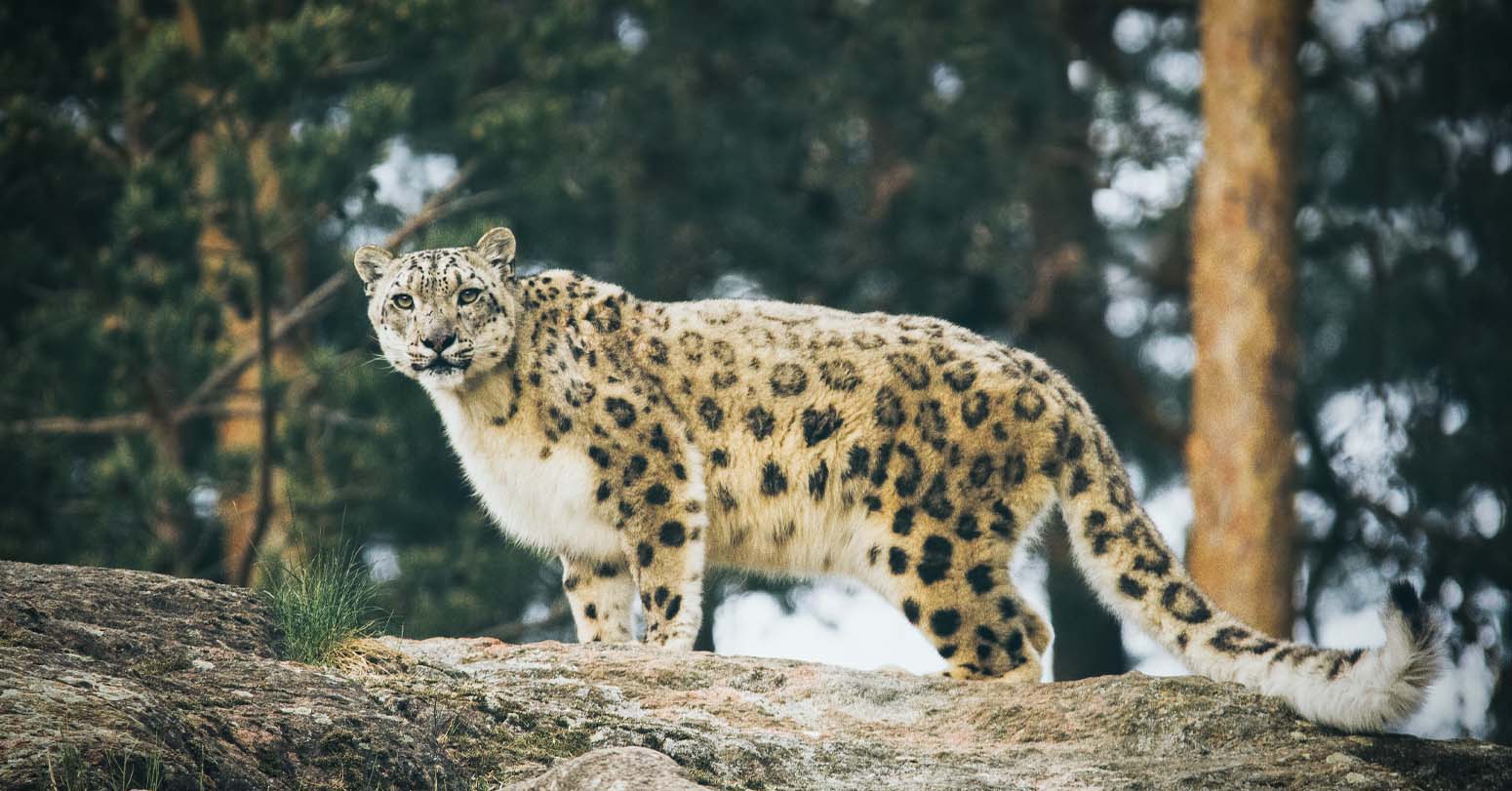
Kalinchok Scorpio & Jeep Hire – Complete Route Overview

Full RouteKathmandu -> Banepa -> Dolalghat -> Charikot -> Kuri Village -> Kalinchowk Temple
Total DistanceApprox. 150 km (Kathmandu to Kalinchowk)
Kathmandu to Charikot132 km via Araniko Highway | 5–6 hours on paved road
Charikot to Kuri Village15–18 km steep off-road mountain track | 1.5–2 hours
Kuri to Temple2 km hike (45–60 min) OR cable car (NPR 500 two-way, 10 min)
AltitudeCharikot: 1,554 m | Kuri Village: 2,300 m | Kalinchowk Temple: 3,842 m
Temperature RangeSummer: up to 29°C | Winter nights: as low as –10°C to –15°C
Best VehicleMahindra Scorpio 4WD (most popular) | Toyota Land Cruiser (top-end)
Recommended Stay1 Night 2 Days (most popular) | 2 Night 3 Days (for winter snow experience)
Best SeasonsWinter (Dec–Feb) for snow | Autumn (Oct–Nov) for Himalayan views | Spring (Mar–May) for rhododendrons
AvailabilityDaily – 24/7 hotel pick-up from Kathmandu
Contact+977 981-4227196 | vehiclehiringnepal.com
Kalinchok Scorpio and Jeep Hire
Kalinchok Bhagawati Temple

About Kalinchowk Bhagwati Temple – History, Significance & Spiritual Importance

The Sacred Geography of Kalinchowk

Kalinchowk Bhagwati Temple sits on a rocky summit ridge within the Gaurishankar Conservation Area (GCA) — a 2,179 sq. km protected zone declared by the Government of Nepal in 2010 to safeguard one of the most ecologically and culturally significant landscapes in the Himalayan region. The Gaurishankar Conservation Area is named for the majestic Gaurishankar peak (7,134 m) visible from the temple summit — a twin-peaked mountain considered sacred by both Hindu and Buddhist traditions as the earthly embodiment of Shiva and Parvati united.

Within the conservation area, the Sunkoshi (Sun Koshi) and Tamakoshi (Tama Kosi) rivers originate — two of Nepal’s major river systems flowing southward through Dolakha and Sindhupalchok districts to join the Koshi system and eventually the Ganges in India.

The temple’s elevation of 3,842 meters (12,605 feet) places it firmly in sub-alpine terrain — above the treeline in winter when deep snow covers the ridge and the surrounding rhododendron and pine forests are white-laden and ice-crystal quiet. In spring and autumn, the ridge is carpeted in flowering rhododendron species (Rhododendron arboreum, R. campanulatum) — Nepal’s national flower — alongside juniper, dwarf bamboo, and alpine grasses.

The Himalayan Monal (Danphe), Nepal’s vibrantly coloured national bird, is frequently sighted in the forest between Kuri Village and the temple trail.

Historical and Religious Background

The Kalinchowk Bhagwati Temple is dedicated to Goddess Bhagwati — one of the most powerful and widely revered manifestations of the divine feminine in Hinduism, representing the supreme Mother Goddess in her aspect as protector, destroyer of evil, and granter of boons. Bhagwati (also known as Durga, Shakti, or Kali in her various forms) is the central deity of the Shakta tradition. This Hindu theological stream regards the Goddess as the ultimate reality and the source of all creation.

The temple is considered one of the Shakti Peethas — sacred sites of the Goddess — within Nepal’s broader network of Shakti pilgrimage sites. Historical and local accounts suggest the site has been a place of worship for many centuries, with the present temple structure established in the 19th century to serve the growing pilgrim community.

The temple became formally incorporated into the Gaurishankar Conservation Area in 2010, ensuring its environmental and cultural heritage is protected for future generations.

The Kalinchowk Bhagwati is particularly famous throughout eastern Nepal for one central spiritual belief: that the Goddess at Kalinchowk fulfils the sincere prayers and desires of devotees who make the difficult pilgrimage to her mountain shrine. This belief — rooted in centuries of devotional tradition and countless personal testimonies — drives tens of thousands of pilgrims to the temple every year, with the largest gatherings during Dashain (October), Navaratri (spring and autumn), Maghe Sankranti (January), and Teej (September).

The temple’s remoteness and the physical effort required to reach it are themselves considered part of the tapasya (spiritual austerity) that purifies the devotee and makes the prayer more powerful.

Architectural Features of the Temple

The Kalinchowk Bhagwati Temple is a relatively modest stone structure, as befits a high-altitude mountain shrine that must withstand severe winter conditions. Its architecture reflects the traditional Himalayan hill temple style — a compact, sturdy stone building with a corrugated metal roof (replacing the original stone slate), wooden door frames carved with traditional motifs, prayer flags fluttering from the roof and surrounding poles, and a simple forecourt for devotees to make offerings.

The main sanctum houses the idol of Goddess Bhagwati, a lack stone image adorned with red cloth, gold jewellery, and fresh flower garlands replenished by the temple priests. The surrounding forecourt has smaller shrines to associated deities — Ganesh (for obstacle removal), Navagraha (the nine planetary deities), and subsidiary forms of the Goddess.

Bells of various sizes hang from the entrance gate, rung by devotees as they enter to announce their presence to the Goddess and to ward off negative energies from the sacred precinct.

The 360-degree panoramic view from the temple forecourt is arguably the most extraordinary feature of the Kalinchowk site — a gift of geography that amplifies the spiritual experience with a reminder of the sublime scale of the Himalayan world. On the clearest days (typically October, November, March, and the occasional February morning after a strong cold front), the visible peaks include: Gaurishankar (7,134 m), Mt Everest (8,849 m) — visible as a distant dark pyramid on the northeast horizon, Langtang Lirung (7,234 m), Dorje Lakpa (6,966 m), Ganesh Himal (7,422 m), Jugal Himal (6,935 m), Shishapangma (8,027 m, Tibet), Langtang II, and the broad sweep of the Kathmandu Valley spread below to the southwest.

Scorpio jeep beside a snow-covered hillside

Among all vehicles used for the Kathmandu–Kalinchowk journey, the Mahindra Scorpio 4WD has become virtually synonymous with the route — to the point where locals, travel agents, and pilgrims across Nepal refer to a Kalinchowk trip simply as “going by Scorpio.” This association is neither accidental nor merely traditional — it is the product of the Scorpio’s remarkable suitability for the specific challenges of the Charikot–Kuri Village off-road section:

Genuine 4-Wheel Drive with Low-Range Transfer Case

The Mahindra Scorpio’s switchable 4WD system — providing both 4H (high-range 4WD) and 4L (low-range 4WD) — is the fundamental technical requirement for the Charikot–Kuri Village mountain track. Low-range 4WD delivers maximum torque multiplication for steep uphill sections with minimal forward speed — essential for crawling over boulders and rock steps on the upper sections of the off-road track.

High-range 4WD provides additional traction on the moderately rough lower sections. Standard SUVs with AWD (all-wheel drive) systems are NOT equivalent to true 4WD — they lack the low-range transfer case that the Kuri Village ascent demands in winter and on wet rock.

Ground Clearance – The Critical Number

The Scorpio’s 180–200 mm of ground clearance is the minimum required for safe passage on the Charikot–Kuri road. The track has numerous exposed rock ledges, embedded boulders, deep ruts, and sudden drop-offs where a vehicle with lower clearance would ground out or lose traction.

By comparison, a standard sedan has 130–150 mm of clearance (dangerously insufficient), and a standard city SUV (crossover) has 160–170 mm of clearance (marginal at best). The Scorpio’s engineering is calibrated for this case—its approach and departure angles let it climb over and descend from obstacles that would stop lower-slung vehicles.

Seven-Passenger Capacity – Maximum Group Value

A key economic advantage of the Scorpio for Kalinchowk groups is its comfortable 6–7 passenger capacity. For a group of 7 friends or family members, the total private Scorpio hire cost is shared across all 7 seats, making the per-person cost comparable to or even cheaper than multiple shared jeep tickets — while delivering the incomparably superior experience of a private vehicle with full control over timing, stops, and comfort.

Nepal Vehicle Hiring’s Scorpios can accommodate 7 adults with day bags; for overnight trips with more luggage, we recommend a maximum of 6 passengers to keep luggage comfortable.

Proven Reliability in Extreme Cold

In December and January, the Kuri Village track can be snow-covered, ice-patched, and sub-zero. The Scorpio’s diesel engine delivers reliable cold-start performance at these temperatures, unlike petrol engines that can struggle in extreme cold.

With snow chains fitted, the Scorpio has proven year after year that it can complete the full Charikot–Kuri round trip safely even in heavy snowfall conditions — though our drivers monitor conditions carefully and will make the professional call to park at Deurali if the final section becomes unsafe.

Cost-Effectiveness for Private Groups

Compared to the Toyota Land Cruiser (the top-end alternative), the Mahindra Scorpio offers similar off-road capability at a more accessible price point — making private Kalinchok jeep hire genuinely affordable for groups of 5–7. Nepal Vehicle Hiring’s Scorpio hire rate is among the most competitive in Kathmandu for this route. See our Jeep Hire page for current pricing.

Complete Vehicle Guide – Kalinchok Scorpio and Jeep Hire 2026

VehicleCapacityOff-Road RatingWinter Snow CapabilityBest For
Mahindra Scorpio 4WD6–7 paxExcellentWith snow chainsFamilies / Friend groups
Toyota Land Cruiser 4WD1–6 paxOutstandingBest in classVIP / Top-end pilgrims
Mahindra Bolero 4WD6–7 paxExcellentWith snow chainsBudget groups
Hiace Van (to Charikot)8–13 paxHighway onlyNot suitable beyond CharikotLarge groups (Charikot base)
MMinibus/ Coaster20–30 paxHighway onlyNot suitable for off-roadLarge group highway transfer

Kalinchowk Scorpio and Jeep Hire: Private 4WD Guide to Kalinchowk Bhagwati Temple

Toyota Land Cruiser 4WD – The Kalinchowk Top-end Experience

For pilgrim families, VIP guests, and those who want the absolute pinnacle of comfort, reliability, and off-road safety on the Kalinchowk route, the Toyota Land Cruiser 4WD stands alone. Its outstanding 220 mm ground clearance, locking front and rear differentials, superior suspension with adjustable ride height, and vast torque reserve make the Charikot–Kuri Village section feel almost effortless compared to lesser vehicles.

The Land Cruiser’s leather-appointed cabin, powerful dual-zone climate control, and noise suppression mean passengers arrive at Kuri Village in remarkable comfort after the bumpy mountain track, which is especially important for elderly devotees, children, and anyone with joint or back sensitivities.

Mahindra Scorpio 4WD – Nepal’s Kalinchowk Workhorse

The Mahindra Scorpio is the undisputed workhorse of the Kalinchowk route and the most widely trusted private vehicle for this journey throughout Nepal. It is the vehicle our drivers know best on this specific road, the vehicle our fleet is most thoroughly trained for, and the vehicle that delivers the best balance of capability, comfort, and value for the typical Kalinchowk group of 4–7 passengers.

Nepal Vehicle Hiring’s Scorpios are maintained to a higher standard than the local rental market — clean interiors, regular service intervals, pre-trip mechanical inspection, and snow chains available from November through February.

Mahindra Bolero 4WD – The Budget 4WD Option

The Mahindra Bolero 4WD shares the Scorpio’s 4WD drivetrain architecture and provides genuine off-road capability for the Kalinchowk route at a slightly reduced price point. The Bolero’s interior is more utilitarian than the Scorpio’s, but it carries 6–7 passengers with comparable mechanical safety on off-road tracks. Recommended for pilgrim groups and budget-conscious families who prioritise cost savings over cabin refinement.

Hiace Van and Mini Bus – For Groups to Charikot Only

For large groups of 8–30 passengers, Nepal Vehicle Hiring provides Toyota Hiace van (8–13 pax) and Mini Bus / Coaster (20–30 pax) transfers from Kathmandu to Charikot on the paved Araniko Highway. From Charikot, the group is transferred to separate local Scorpios for the off-road section to Kuri Village (local shared Scorpios are available from Charikot).

This two-vehicle system is the practical solution for large groups — see our Hiace Van Hire and Coaster Hire pages.

Kathmandu to Kalinchowk – Detailed Route & Segment Guide

The Kathmandu–Kalinchowk road journey offers progressively intensifying scenery — from the cultural richness of the Kathmandu Valley to the dramatic river gorges of the middle hills, and finally to the extraordinary off-road mountain ascent to Kuri Village. Here is the complete route, segment by segment:

Segment / CheckpointDistanceTravel TimeRoad Condition & Key Feature
Kathmandu to Bhaktapur15 km30–40 minPaved Araniko Highway; UNESCO World Heritage City
Bhaktapur to Banepa12 km20–25 minPaved highway; Sanga Giant Shiva Statue en route
Banepa to Dolalghat30 km40–50 minPaved hilly road; Sunkoshi River confluence; scenic gorge
Dolalghat to Mude35 km50–60 minWinding mountain road; forested valleys; Mude rest stop
Mude to Charikot40 km60–75 minHilly paved road; Dolakha district entry; Bhimsen Temple
Charikot to Kuri Village15–18 km1.5–2 hrsSTRICT OFF-ROAD: steep, rocky, narrow – 4WD with high clearance MANDATORY
Kuri Village to Temple2 km45–60 min hike / 10 min cable carHike through rhododendron forest OR cable car (NPR 500 two-way)

Kathmandu to Bhaktapur – Cultural Gateway (15 km | 30–40 min)

The journey departs from your Kathmandu hotel and heads east on the Araniko Highway—Nepal’s famous road to China —following the ancient trade route between the Kathmandu Valley and Tibet. The first major landmark is the historic Bhaktapur (Bhadgaon) — a UNESCO World Heritage City and the most perfectly preserved medieval Newari kingdom-city in the world.

Bhaktapur’s extraordinary Durbar Square, Nyatapola Temple (five-story pagoda), Taumadhi Tole, and the 55-Window Palace are among Nepal’s greatest cultural treasures.

While a full Bhaktapur visit is a separate half-day experience, the drive through the city’s outer ring offers glimpses of its distinctive brick-and-timber architecture, the traditional pottery market at Kumale Tole, and the towering Nyatapola pagoda visible above the rooflines. Your Kalinchowk Scorpio driver can arrange a short Bhoto stop on request.

Banepa to Dolalghat – The Sunkoshi River Gorge (42 km | 60–75 min)

Beyond Banepa — a busy market town 27 km from Kathmandu — the Araniko Highway begins its descent toward the Sunkoshi River at Dolalghat. The Sanga area on this section is home to the spectacular Kailashnath Mahadev Statue — at 43 meters, one of the tallest Shiva statues in the world — visible in its entirety from the highway and a magnificent roadside spectacle.

Dolalghat (57 km from Kathmandu) sits at the confluence of the Sunkoshi and Indrawati rivers — a scenic gorge location popular for picnics, river swimming, and rafting. The suspension bridges over the Sunkoshi at Dolalghat are frequently photographed, and the riverside tea houses are a classic first stop for Kalinchowk groups.

Mude Rest Stop – The Halfway Point (90 km from KTM)

Approximately 90 km from Kathmandu, the Mude rest stop has become a beloved institution on the Kalinchowk Scorpio journey. A cluster of roadside restaurants and tea houses perched on a hillside with sweeping valley views, Mude is the natural halfway lunch or breakfast stop for groups departing Kathmandu early.

The views from Mude — particularly in clear autumn weather — often include the first glimpse of the high Himalayan peaks to the north, which can really raise excitement levels in the jeep as Kalinchowk draws closer. Mude’s dal bhat, thukpa, and fresh chai are excellent value, and the restaurant owners have decades of experience serving Kalinchowk-bound pilgrims and tourists.

Charikot (Bhimeshwar) – The District Capital at 1,554 m

Charikot is the headquarters of Dolakha District — a characterful mountain town built around the ancient Dolakha Bhimsen Temple. At 1,554 m, Charikot’s climate is already noticeably cooler than Kathmandu’s, and the surrounding hills and valleys strongly hint at the dramatic landscapes ahead.

The Dolakha Bhimsen Temple is one of Nepal’s most sacred and mysterious religious sites — an ancient pagoda housing a unique triangular black stone idol of Lord Bhimsen, believed by devotees to represent three divine manifestations simultaneously.

The legendary “sweating idol” phenomenon — where the idol’s surface reportedly becomes moist before major national events — has been documented and discussed by scholars and devotees for centuries, adding an extraordinary mystical dimension to Charikot’s religious heritage. Most Kalinchowk groups visit the Bhimsen Temple on the return journey on Day 2, bookending the day with spiritual significance at both the mountain summit (Kalinchowk Bhagwati) and the valley shrine (Dolakha Bhimsen).

Charikot to Kuri Village – The Essential 4WD Section (15–18 km | 1.5–2 hrs)

The moment your Nepal Vehicle Hiring Scorpio or Land Cruiser leaves the paved Araniko Highway at Charikot and heads northeast onto the mountain track toward Kuri Village, the journey’s character transforms completely. The road immediately narrows to a single-vehicle width, the surface becomes compacted gravel and exposed rock, and the ascent steepens dramatically.

Dense pine and rhododendron forest closes in on both sides of the track, interrupted by occasional valley viewpoints where the full sweep of the surrounding mountain landscape becomes visible — Dolakha’s ridge systems extending in every direction, with the high peaks of the Gaurishankar massif growing progressively closer and more magnificent as altitude is gained.

The Deurali checkpoint — about 15 km from Charikot — is the final major waypoint before Kuri Village, and in winter, the point where snow chains are fitted to the Scorpio’s tyres if snow covers the upper section of the track. Beyond Deurali, the track climbs through its final steep, rocky 3 km section to Kuri Village (2,300 m).

The arrival at Kuri Village, after 6–7 hours of driving from Kathmandu, is always a moment of genuine relief, excitement, and awe — the village’s cluster of mountain lodges, prayer flags, and the towering snow-covered ridge of Kalinchowk above creating an atmosphere of achieved pilgrimage that begins the moment you step out of the jeep.

Kalinchok Scorpio and Jeep Hire

Kuri Village – Your Mountain Base Camp at 2,300 m

Kuri Village is a small but perfectly equipped mountain settlement that has evolved over the past decade into one of Nepal’s most popular weekend escape destinations for Kathmandu residents. There are 15–20 lodges and guesthouses, ranging from simple dormitory teahouses to surprisingly comfortable private-room lodges with attached bathrooms, electric heaters or bukhari (wood-burning stoves), dining halls, and outdoor fire pit/campfire facilities — the essential Kuri Village evening experience.

On winter weekends, the campfire courtyard of every Kuri lodge becomes the social heart of the village — groups singing, roasting corn and sweet potatoes, making snowmen, sledging on improvised slides, and sharing hot raksi (local spirit) and butter tea under a sky of extraordinary star density at this altitude away from light pollution.

In December and January, Kuri Village often has 50–100 cm of snowfall—the entire village transforms into a white landscape of extraordinary photogenic beauty. Snow-laden rhododendron branches arch over the village paths, the rooftops are buried under heavy snow caps, and the surrounding forest is a silent, crystal wonderland.

For most Kathmandu residents who have never experienced significant snowfall, Kuri Village in January offers Nepal’s closest and most accessible snow experience —no special trekking permits, no altitude sickness risk, and no extended holiday—just a Scorpio and two days.

Kalinchowk Bhagwati Temple – Complete Darshan and Visitor Guide

How to Reach the Temple from Kuri Village

From Kuri Village, the Kalinchowk Bhagwati Temple is accessible by two routes:

  • The Hike (2 km | 45–60 minutes): A well-worn stone-stepped and earthen trail climbs steeply from Kuri Village through the upper edge of the rhododendron and juniper forest before emerging onto the open rocky ridge leading to the temple. The hike gains approximately 1,500 m from Kuri to the temple summit. In clear autumn and spring weather, the trail is a magnificent experience in its own right — a gradual unfolding of the Himalayan panorama as altitude is gained, with Gaurishankar appearing first over the ridge and the full panorama expanding as the final approach to the temple opens up. In winter, the hike requires crampons or good-grip boots and is not recommended after heavy recent snowfall unless you have experienced local guides.
  • The Cable Car (NPR 500 two-way | ~10 minutes): Inaugurated in 2018, the Kalinchowk Cable Car has made the temple genuinely accessible to elderly devotees, families with young children, and pilgrims of all physical abilities. The cable car runs from the Kuri Village base station to a point approximately 10–15 minutes’ walk below the temple. The cable car cabin holds approximately 6 passengers per run and operates from approximately 7:00 AM to 5:00 PM daily (check locally for 2026 operating hours, as winter weather can temporarily suspend service). From the cable car’s upper station, a 10–15 minute walking path leads to the temple forecourt.
Kalinchok Scorpio and Jeep Hire
Kalinchowk Bhagwati Temple

The Sunrise Darshan – The Greatest Kalinchowk Experience

Without question, the pre-dawn sunrise hike or the early cable car to Kalinchowk Temple is the defining experience of any visit to Kalinchowk. Departing Kuri Village at 4:30–5:00 AM (with headlamps), pilgrims and trekkers ascend in the dark to reach the temple forecourt as dawn approaches.

The sunrise spectacle at Kalinchowk is extraordinary — the Himalayan peaks first catching the alpenglow (sunrise reddening) before the valley is lit, the snow surfaces burning gold and crimson. At the same time, the sky transitions from deep blue to lavender to orange.

Gaurishankar’s double summit glows like twin torches in the first light, and on clear days, Everest’s distant dark pyramid is visible to the northeast.

After darshan and sunrise, devotees perform puja (ritual worship) at the temple—offering flowers, incense, oil lamps, and prayers to Goddess Bhagwati, and receiving prasad (blessed food offerings) distributed by the temple priests. The priests perform morning aarti (lamp ceremony) at dawn, and the sight of the butter lamps flickering in the mountain wind against the backdrop of snow peaks is one of the most moving religious experiences available in the Nepal hills.

Temple Etiquette and Visiting Guidelines

  • Remove footwear before entering the main temple sanctum.
  • Modest dress is required — shoulders and legs covered for both men and women.
  • Photography is generally permitted in the forecourt and approach; ask the priest before photographing inside the sanctum.
  • Walk clockwise around the temple and any chorten (Buddhist stupa) structures on the ridge.
  • Carry out all waste — the temple conservation area has strict littering prohibitions enforced by local volunteers and NTNC rangers.
  • Animal sacrifice is practised at the temple during major festivals (Dashain, Navaratri) — prepare children and sensitive visitors if visiting then.

kuri valley-Kalinchok Scorpio and Jeep Hire

Full Guide to Kalinchowk Attractions – Complete Visitor Table

Attraction / SiteDistance & Highlights
Kalinchowk Bhagwati Temple (3,842 m)Summit | Main pilgrimage shrine; Goddess Bhagwati idol; 360-degree Himalayan panorama incl. Gaurishankar, Everest, Langtang, Jugal, Ganesh Himal
Kuri Village (2,300 m)Base camp | Traditional mountain village; campfire lodges; snowfall Dec–Feb; rhododendron forest; Himalayan ridge views
Kalinchowk Cable CarKuri base | NPR 500 two-way (2026); 10-minute ride; aerial views of Gaurishankar Conservation Area; walk 10–15 min from cable car top to temple
Dolakha Bhimsen TempleCharikot | One of Nepal’s most sacred Bhimsen shrines; ‘sweating idol’ legend; 15th-century pagoda; annual festival
Charikot Bazaar (Bhimeshwar)132 km from KTM | Dolakha District HQ; old Newari market town; local restaurants; mid-trip rest stop
Sanga Shiva Statue25 km from KTM on Araniko Highway | One of the world’s tallest Shiva statues (Kailashnath Mahadev, 43 m); roadside photo stop
Sunkoshi River Valley at Dolalghat57 km | Scenic confluence of Sunkoshi and Indrawati rivers; picnic spot; rafting; dramatic gorge views
Gaurishankar Conservation AreaSurrounding Kuri & Kalinchowk | 2,179 sq. km protected zone; Gaurishankar peak (7,134 m); Sun Koshi & Tama Koshi river origins; rich wildlife
Deurali Village15 km from Charikot | Last paved road point in winter; snow chains required from here in Dec–Feb; scenic ridgeline views

Best Time for Kalinchok Scorpio & Jeep Hire – Seasonal Guide

SeasonMonthsKalinchok ExperienceOff-Road ConditionRecommendation
WinterDec–FebHeavy snowfall; Kuri becomes a snow paradise; ski-like activitiesSnow chains required; possible Deurali ParkMOST POPULAR – Book 1–2 weeks ahead
AutumnOct–NovCrystal Himalayan panorama; ideal temple darshan; cool & clearDry & excellentBEST FOR VIEWS – Highly recommended
SpringMar–MayRhododendron bloom; warm days; good mountain clarityGood – some muddy sectionsExcellent for nature & pilgrims
SummerJun–SepGreen & lush; cloudy; limited mountain viewsRoad usable; light landslide riskQuiet season; manageable

The winter months — particularly December and January — are by far the most popular season for the Kalinchowk Scorpio hire from Kathmandu. The reason is simple and irresistible: Kuri Village and the Kalinchowk ridge receive heavy, reliable snowfall during these months, transforming the mountain into what countless visitors describe as “Nepal’s Switzerland” or “our own snow paradise”.

For most residents of subtropical Kathmandu—who have never experienced significant snow—a weekend at Kuri Village in January is a unique, exhilarating, and deeply memorable experience.

During peak winter weekends (especially after significant snowfall), demand for Kalinchowk Scorpio hire vastly exceeds supply. Nepal Vehicle Hiring urges all winter visitors to book their Scorpio at least 1–2 weeks in advance — and preferably 2–3 weeks for specific January weekends immediately following snowfall reports. The most experienced and sought-after drivers on this route are booked weeks in advance during the winter peak season.

Autumn (October–November) – Best for Himalayan Views

October and November deliver the clearest, most spectacular Himalayan panoramas from Kalinchowk — the post-monsoon atmosphere is razor-sharp, the peaks are free of cloud, and visibility can extend to Everest, Shishapangma (Tibet), and multiple 7,000+ m peaks. The off-road Charikot–Kuri track is in its best dry-season condition, and the rhododendron forests are displaying their deepest autumn foliage.

The Dashain festival season (usually in October) brings the largest annual pilgrimage to the temple — an extraordinary occasion of collective devotion that transforms the atmosphere around Kuri Village and the Kalinchowk summit. Book at least 5–7 days in advance for October during the Dashain and Navaratri periods.

Spring (March–May) – Rhododendrons and Warm Trekking

Spring brings spectacular rhododendron blooms to the forests between Charikot and Kuri Village — Nepal’s national flower in vivid red, pink, and white — transforming the off-road ascent into a floral tunnel of extraordinary beauty. March and April are warm by day (comfortable for driving and hiking) with good mountain clarity on clear mornings.

The spring Chaitra Dashain and Navaratri festivals (usually in March–April) bring significant numbers of pilgrims to Kalinchowk. The Kuri–Temple hike is most pleasant in April—warm, colourful, and with reliable morning views before afternoon clouds build.

Summer / Monsoon (June–September) – The Quiet Green Season

Summer is the quietest season at Kalinchowk and the most challenging for the Charikot–Kuri off-road track. Heavy monsoon rainfall creates muddy, slippery conditions on the unpaved Kuri section, and landslides are a low risk on steeper sections of the road. Mountain views from the temple are largely obscured by cloud during monsoon months.

However, the lush green landscape along the lower Araniko Highway is exceptionally beautiful in the rain, meaning lower accommodation prices and a peaceful Kuri Village atmosphere. Nepal Vehicle Hiring’s drivers assess road conditions carefully before each summer departure and advise clients on safety and suitability.

OptionDurationBest For
1 Night 2 DaysDay 1: KTM → Kuri | Day 2: Temple → KTMMost popular. Temple darshan + sunrise viewpoint + Dolakha Bhimsen Temple on return
2 Nights 3 DaysDay 1: KTM → Kuri | Day 2: Temple + Kuri explore | Day 3: Temple → KTMBest for winter snow experience. Two mornings at Kuri; snow play on Day 2; darshan on Day 2 or Day 3 at sunrise
Day Trip (Summer only)Depart 4:30–5 AM; return by 10 PMOnly possible May–September. Very long and tiring. Not recommended. 1N2D is far superior.

1 Night 2 Days – The Classic Kalinchowk Scorpio Itinerary

This is the most popular Kalinchowk itinerary for Kathmandu visitors and the format used by the vast majority of Nepal Vehicle Hiring clients:

  • Day 1 – Morning: Depart Kathmandu hotel by 6:30–7:00 AM in the private Scorpio. Drive Araniko Highway: Bhaktapur, Banepa, Sanga Shiva stop (photo), Dolalghat Sunkoshi River viewpoint, Mude rest stop (breakfast or snack).
  • Day 1 – Midday: Arrive at Charikot (12:00–1:00 PM) for lunch. Optional visit to Dolakha Bhimsen Temple in Charikot Bazaar (30 min). Continue the off-road Scorpio climb to Kuri Village, arriving by 3:00–4:00 PM. Check into the lodge.
  • Day 1 – Afternoon/Evening: Explore Kuri Village and surroundings. Snow play and photography in winter. Sunset views from the village ridge. Campfire dinner at the lodge with hot Thakali/Nepali food.
  • Day 2 – Pre-Dawn: Wake at 4:30–5:00 AM. Hike or take the first cable car to Kalinchowk Bhagwati Temple. Watch sunrise over the Himalayas. Perform darshan and puja. Receive prasad from the temple priest.
  • Day 2 – Morning: Descend to Kuri Village for breakfast (9:00–10:00 AM). Check out of the lodge. Board the Scorpio for the return.
  • Day 2 – Return:  Take the Scorpio down the off-road track to Charikot. Visit Dolakha Bhimsen Temple for darshan (if not done on Day 1). Lunch at Charikot. Drive back along the Araniko Highway to Kathmandu, arriving by 6:00–7:00 PM.

2 Night 3 Days – The Full Winter Snow Experience

For winter visitors who want to maximise the Kuri Village snow experience, night photography, and two separate temple visits, the 2 Night 3 Days itinerary is the ideal choice:

  • Day 1: Kathmandu to Kuri Village (same as 1N2D Day 1). Arrive afternoon. Snow activities. Campfire dinner.
  • Day 2: Pre-dawn sunrise hike to Kalinchowk Temple (main darshan). Return to Kuri for breakfast. Full day of snow play, photography, forest walks, and exploration around Kuri Village. Second campfire dinner. Night sky photography (Kuri’s 2,300 m altitude gives superb Milky Way visibility on clear nights away from city lights).
  • Day 3: Optional second sunrise temple hike OR relaxed morning. After breakfast, depart from Kuri by Scorpio. Charikot: Dolakha Bhimsen Temple darshan. Lunch. Return to Kathmandu by evening.

Complete Packing Guide for Your Kalinchowk Trip

CategoryEssential Items
Clothing (Winter)Heavy down jacket, thermal inner layers (top & bottom), fleece mid-layer, waterproof outer shell, gloves, wool hat/beanie, warm socks (2–3 pairs), waterproof hiking boots
Clothing (Spring/Autumn)Light trekking shirt, fleece jacket, windproof outer layer, light trekking trousers, comfortable hiking shoes, thin gloves, sun hat
FootwearWaterproof ankle-support hiking boots mandatory (not trainers) for Kuri–Temple hike in all seasons. In winter: boots with a good grip for icy/snowy trails
Documents & MoneyNational ID or Passport (for lodge check-in), cash in Nepali rupees (Charikot last ATM), cable car fee (NPR 500), lodge payment (NPR 800–1,500/night)
Health & SafetyPersonal medications, basic first aid, lip balm & sunscreen (high UV at altitude), altitude sickness tablets if prone, water purification tablets
Photography GearCamera with fully charged batteries (cold drains batteries fast in winter), extra batteries, lens cloth, wide-angle lens for panorama
MiscellaneousHeadlamp with spare batteries (for pre-dawn hike to temple), water bottle (keep close to body in winter to prevent freezing), energy snacks, power bank

Winter Kalinchowk Special Guide – Snow, Chains, and Cold Weather Tips

Winter (December–February) is Kalinchowk’s peak season for snow lovers, but it requires specific preparation, vehicle equipment, and realistic expectations. Here is a complete winter-specific guide from Nepal Vehicle Hiring:

Winter FactorWhat to Know / What to Do
Snow ChainsMANDATORY from December to February. Nepal Vehicle Hiring fits snow chains at Deurali (15 km before Kuri) if snow is present. Included in winter hire rate.
Deurali to Kuri (snow)If heavy snow blocks the final stretch (Deurali to Kuri), the driver parks at Deurali; passengers continue by local shared transport or on foot. The driver and vehicle wait at Deurali.
Temperature at KuriNight: –10°C to –15°C in Jan–Feb. Pack a heavy down jacket, thermal layers, gloves, a hat, and waterproof boots. No exception.
Temperature at Temple–15°C to –20°C on clear winter mornings at Kalinchowk summit (3,842 m). Sunrise hike requires full cold-weather gear.
Road Check Before BookingNepal Vehicle Hiring monitors road conditions daily in winter. We advise clients on the current snow depth and whether Kuri Village is drivable or requires Deurali Park.
Weekend BookingWinter weekends (Fri–Sun) after snowfall are Nepal’s most popular Kalinchowk dates. Book 1–2 WEEKS in advance. Last-minute winter bookings are almost impossible.
Cable Car in WinterThe cable car operates year-round but may suspend service during heavy snowfall or extreme wind. Always have the hike as a backup plan in winter.

What to Expect at Kuri Village in Peak Winter

When Kuri Village is under significant snowfall — typically 50–100+ cm in January and February after major snowfall events — the experience is genuinely extraordinary. The entire village is blanketed in deep, powdery white, the pine trees bent under snow loads, the surrounding hills an unbroken white canvas with the Gaurishankar massif gleaming above. Activities available in winter Kuri Village include:

  • Snow play and snowball fights across the village’s open areas
  • Improvised sledging using plastic sheets and laundry tubs (local providers rent equipment)
  • Snow trekking and photography along forest trails
  • Snowman building and snow sculpture contests
  • Night sky photography — extraordinary clarity in winter at altitude
  • Campfire evenings with traditional Nepali mountain food, hot butter tea, raksi, and music
  • Sunrise at Kalinchowk Temple with snow-covered peaks — the defining Kalinchowk experience

How to Book Your Kalinchok Scorpio or Jeep Hire with Nepal Vehicle Hiring

  • Step 1 – Browse Fleet: Visit com/jeep and review our Kalinchowk-ready 4WD fleet.
  • Step 2 – Contact Us: Call or WhatsApp +977 981-4227196 with: travel date, group size (up to 7 for Scorpio / up to 6 for Land Cruiser), your Kathmandu hotel pick-up address, chosen itinerary (1N2D or 2N3D), and whether you need snow chains (December–February automatically included in winter hire).
  • Step 3 – Confirm Kuri Lodge: Nepal Vehicle Hiring can assist with Kuri Village lodge recommendations and bookings. In winter peak season, book your Kuri lodge simultaneously with the Scorpio — lodges fill as fast as jeeps on snowfall weekend dates.
  • Step 4 – Receive Confirmation: Your booking confirmation includes the driver’s name, vehicle registration, and pick-up time.
  • Step 5 – Day of Travel: Driver arrives at your Kathmandu hotel at the agreed time. Scorpio is fully prepared, inspected, and ready. The vehicle carries snow chains for the entire winter season. Your Kalinchowk adventure begins.

Frequently Asked Questions – Kalinchok Scorpio & Jeep Hire

How far is Kalinchowk from Kathmandu?

The total distance from Kathmandu to Kalinchowk (Kuri Village) is approximately 150 km — 132 km on the paved Araniko Highway to Charikot, plus 15–18 km of off-road mountain track to Kuri Village. The total journey takes 6–8 hours one way, including the off-road section and a mid-trip rest stop.

Is a Scorpio or 4WD jeep truly mandatory for Kalinchowk?

Yes — unconditionally mandatory from Charikot to Kuri Village. The 15–18 km off-road mountain track has steep gradients, rocky surfaces, narrow ledge sections, and, in winter, heavy snow and ice that make it impassable for standard cars, SUVs without 4WD, vans, and microbuses.

Only genuine 4WD vehicles with high ground clearance — primarily the Mahindra Scorpio, Bolero, and Toyota Land Cruiser — can navigate this section year-round. Nepal Vehicle Hiring does not offer non-4WD vehicles for the Charikot–Kuri section under any circumstances.

What is the cable car cost at Kalinchowk?

The Kalinchowk Cable Car costs approximately NPR 500 for a two-way ticket in 2026 (prices may vary slightly—confirm locally on arrival in Kuri Village). The cable car runs from approximately 7:00 AM to 5:00 PM daily, subject to weather and technical operation. In heavy snowfall or high wind, the cable car may temporarily suspend service.

Nepal Vehicle Hiring recommends having a hike as a backup plan, especially for winter visits.

How cold does it get at Kuri Village and Kalinchowk in winter?

In December and January, temperatures at Kuri Village (2,300 m) can drop to –10°C to –15°C overnight. At the Kalinchowk Temple summit (3,842 m), pre-dawn temperatures during the sunrise hike can drop to –15°C to –20°C on clear nights, with wind chill. Kuri lodges provide blankets and electric heaters or wood-burning stoves, but winter visitors must bring a heavy down jacket, thermal underlayers, and warm gloves.

When should I book for the winter snowfall experience?

For the most popular December–January winter-snowfall weekends, Nepal Vehicle Hiring strongly recommends booking at least 1–2 weeks in advance, and 2–3 weeks in advance for specific high-demand dates (particularly immediately after snowfall news spreads on social media). Winter weekends at Kalinchowk are the most in-demand vehicle hire dates in Nepal’s domestic tourism calendar — last-minute bookings on snowfall weekends are rarely available.

Can I do a day trip to Kalinchowk from Kathmandu?

A same-day return is theoretically possible in summer (May–September) with a 4:30–5:00 AM departure from Kathmandu, arriving at Kuri by 11:00 AM and returning to Kathmandu by 10:00 PM. However, this 17–18-hour day is extremely exhausting and leaves minimal time for temple darshan and the Kuri Village experience.

Nepal Vehicle Hiring strongly recommends the 1 Night 2 Days itinerary for all seasons — it delivers a vastly superior experience for a very reasonable added cost of one night’s lodge accommodation (NPR 800–1,500).

What is included in Nepal Vehicle Hiring’s Scorpio hire rate?

Our Kalinchowk Scorpio hire rate includes the vehicle, a professional mountain driver, fuel for the full round trip, snow chains (fitted at Deurali in the winter months), and all vehicle running costs. Not included: cable car entry fee (NPR 500), Kuri Village lodge accommodation, meals en route and in Kuri, Dolakha Bhimsen Temple entrance (if applicable), and driver gratuity. We provide a fully transparent quote before confirmation.

Can Nepal Vehicle Hiring arrange the Kuri Village lodge along with the Scorpio hire?

Yes — Nepal Vehicle Hiring can recommend and help book Kuri Village lodges alongside your Scorpio hire. In winter peak season, we strongly encourage booking both the vehicle and lodge in the same transaction, as popular Kuri lodges fill as quickly as jeeps on high-demand snowfall weekends. Contact us on WhatsApp, and our team will coordinate both bookings for you.

How many passengers can fit in a Scorpio for the Kalinchowk trip?

The Mahindra Scorpio officially seats 7 passengers. For a 1-night trip with day bags only, 7 passengers are comfortable. For a 2-night trip with larger overnight luggage, Nepal Vehicle Hiring recommends a maximum of 6 passengers to ensure adequate luggage space and comfortable seating throughout the 6–8-hour journey.

For groups of 8 or more, we arrange two Scorpios.

Can I combine a visit to Kalinchowk with a visit to the Dolakha Bhimsen Temple?

Yes — and this is our most recommended itinerary combination. Dolakha Bhimsen Temple is located in Charikot Bazaar — directly on the Kalinchowk route — and adds only 30–45 minutes to the journey.

Most groups visit the Bhimsen Temple either on the way to Kuri Village (Day 1) or on the return to Kathmandu (Day 2). The spiritual double — Kalinchowk Bhagwati (mountain summit) and Dolakha Bhimsen (valley shrine) — makes the Kalinchowk Scorpio tour one of the most complete pilgrimage experiences in eastern Nepal.

What is Deurali, and why is it significant in winter?

Deurali is a small settlement approximately 15 km from Charikot on the Kuri Village track — the last point before the road climbs into the heaviest snow zone in winter. It serves as the snow-chain fitting stop for Nepal Vehicle Hiring’s Scorpios — our driver assesses the snow depth and fits chains here if the final 3 require them.

During extreme snowfall when the Deurali–Kuri section is completely buried, Deurali becomes the vehicle parking point, and passengers continue to Kuri Village on foot (30–40 minutes through snow), by local snowcat (if available), or by shared local tractor. The Nepal Vehicle Hiring driver remains at Deurali and assists passengers on return.

Book Your Kalinchok Scorpio or Jeep Hire Today – Nepal Vehicle Hiring

Nepal Vehicle Hiring Pvt Ltd is Kathmandu’s most trusted, most experienced, and most professionally equipped Scorpio and jeep hire service for Kalinchowk in 2026. Whether you are a Hindu devotee seeking the blessings of Kalinchowk Bhagwati Mata, a Kathmandu family wanting your children’s first snowfall experience at Kuri Village, a photographer chasing the golden Gaurishankar sunrise, a group of friends escaping the city for a campfire mountain weekend, or a nature lover seeking the rhododendron-covered trails of the Gaurishankar Conservation Area — Nepal Vehicle Hiring’s Scorpios, Land Cruisers, and expert mountain drivers are ready to take you there.

With 24/7 booking availability, hotel pick-up from anywhere in Kathmandu, snow chains for winter travel, the best-maintained 4WD fleet on the Kalinchowk route, experienced, professional mountain drivers, and transparent, competitive pricing, Nepal Vehicle Hiring is the first choice for thousands of Kalinchowk visitors every year. Book early — especially for winter weekends. Availability is strictly limited during the peak snowfall season.

Call / WhatsApp: +977 981-4227196  | E-mail: [email protected]
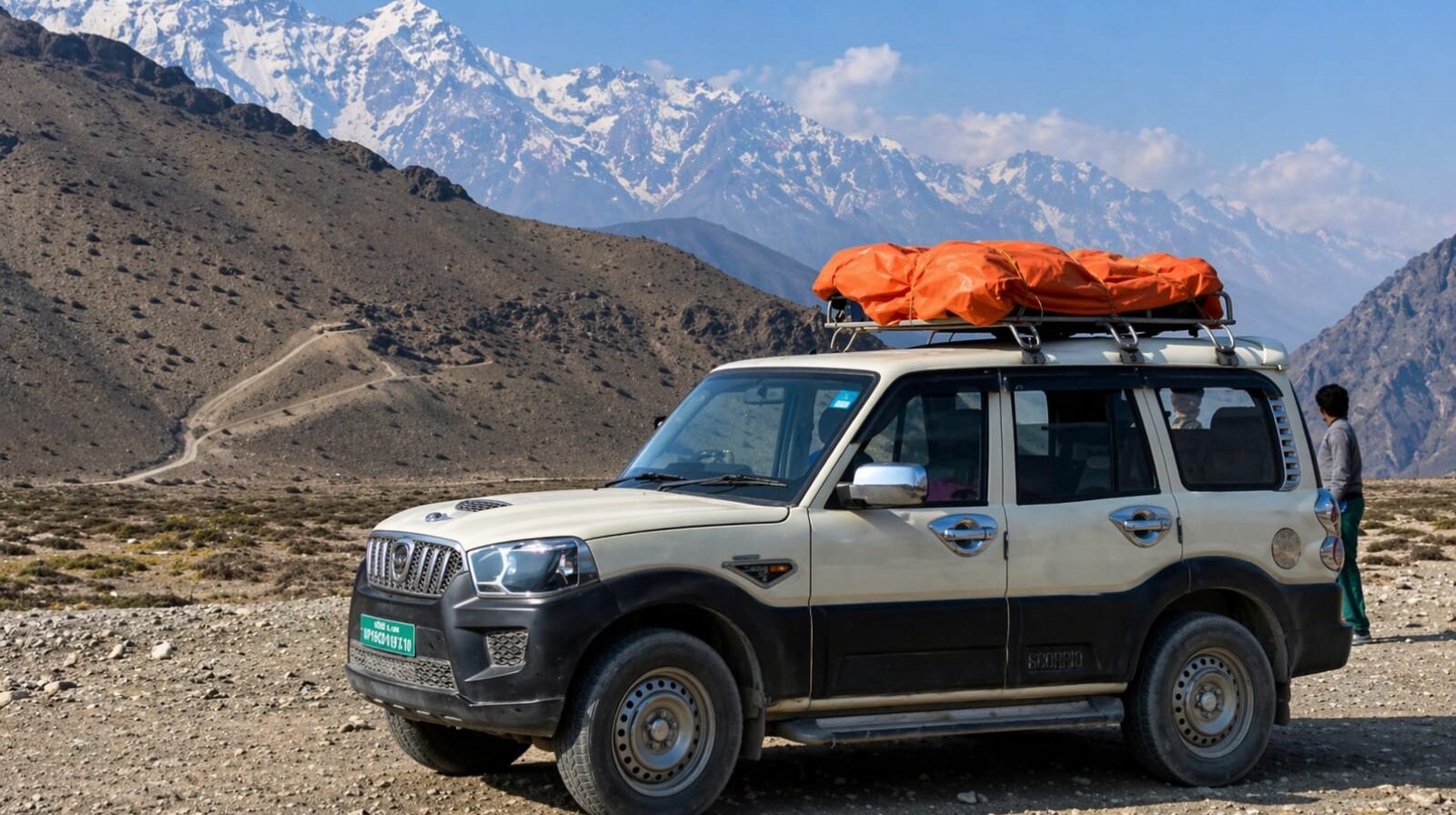
Book Scorpio or Land Cruiser |  Book Hiace or Coaster

Toyota Land Cruiser 4WD Hire in Nepal: The Ultimate Mountain Vehicle

Way to manthali airport bp highway

Toyota Land Cruiser 4WD Hire Nepal | Best Mountain Vehicle

Ask any experienced traveller, trekker, or pilgrimage organiser in Nepal which vehicle they trust for the country’s most challenging mountain roads and remote destinations, and the answer is almost always the same: the Toyota Land Cruiser. For decades, the Land Cruiser has been the defining vehicle of Nepal’s adventure and pilgrimage routes – from the Kali Gandaki gorge to the Manaslu Circuit access roads, from the Mustang desert plateau to the Everest region valleys.

It is not simply popular. In Nepal’s mountain terrain, it is irreplaceable.

This complete guide covers everything you need to know about hiring a Toyota Land Cruiser 4WD in Nepal – its specifications, why it dominates Nepal’s mountain roads, which routes require it, how much it costs to hire, what is included in your booking, and how to reserve one for your  Nepal journey with Vehicle Hiring Nepal.

Why the Toyota Land Cruiser is Nepal’s Most Important Vehicle

Nepal’s geography is extraordinary and unforgiving. The country rises from the flat Terai plains at 100 meters to the world’s highest mountains above 8,000 meters within less than 200 kilometres. The roads connecting these extremes are among the most challenging on earth – steep switchbacks cut into cliff faces, rocky river-crossing tracks, narrow gorge roads with sheer drops, and high-altitude desert tracks subject to ice, snow, and erosion.

In this environment, most vehicles fail. Standard sedans cannot cope with the gradient and surface. Standard SUVs lack the ground clearance and mechanical robustness.

Minivans and buses are too large for the narrow sections and too low for the rocky tracks. The Toyota Land Cruiser was engineered precisely for these conditions – and Nepal’s mountain roads represent exactly the operating environment for which Land Cruiser engineers designed the vehicle.

The result is a relationship between vehicle and landscape that has lasted over 50 years in Nepal. The Land Cruiser is not just a vehicle here. It is the infrastructure through which remote Himalayan communities access the outside world, trekkers reach high-altitude trailheads, and pilgrims complete journeys to the most sacred sites on earth.

Toyota Land Cruiser Specifications – Nepal Fleet 2026-2027

Vehicle Hiring Nepal maintains a fleet of Toyota Land Cruisers in Nepal, specifically prepared and maintained for mountain road operation. Here are the key specifications of the vehicles in our fleet:

SpecificationToyota Land Cruiser 200 SeriesToyota Land Cruiser 70 Series (Troopy)
Engine4.5L V8 Turbo Diesel (1VD-FTV)4.2L Turbo Diesel (1HD-FTE)
Power195–202 kW (261–271 hp)151 kW (202 hp)
Torque650 Nm430 Nm
Transmission6-speed automatic5-speed manual
Drive SystemPart-time 4WD with centre diff lockPart-time 4WD with diff lock
Ground Clearance225 mm230 mm
Approach Angle32 degrees35 degrees
Seating7–8 passengers4–6 passengers (wagon config)
Boot SpaceLarge – fold-down rear seatsLarge – wagon body purpose-built
Fuel Tank93 litres90 litres
Wading Depth700 mm700 mm
A/CFull climate controlStandard A/C

We comprehensively service both Land Cruiser variants in our fleet before every long-distance mountain journey. We check and replace tyres on schedule. We carry recovery equipment (high-lift jack, tow rope, sand boards) in the vehicle for all remote mountain routes.

Our Land Cruisers are equipped with first-aid kits and emergency communication capabilities.

Toyota Land Cruiser 4WD Hire in Nepal – Premium Land Cruiser, Prado, Fortuner and Off-Road Vehicle Rental with Himalayan Mountain Background

What Makes the Land Cruiser Perfect for Nepal’s Mountain Roads

Superior Ground Clearance

With 225 to 230 mm of ground clearance, the Land Cruiser can pass over boulders, ruts, and rough track surfaces that would ground a standard sedan at 150 mm or even a typical city SUV at 180 mm. On the rocky tracks of the Budhi Gandaki valley (Manaslu Circuit access), the Kali Gandaki gorge road (Mustang), or the Soti Khola approach, this clearance is the difference between reaching the destination and getting stuck.

Four-Wheel Drive with Differential Lock

Nepal’s mountain roads frequently involve loose rock, wet clay, steep gradients, and river crossings that overwhelm two-wheel-drive vehicles and even standard 4WD systems without differential locks. The Land Cruiser’s part-time 4WD system with a lockable centre differential provides maximum traction on the most challenging sections – distributing power to all four wheels and preventing wheel spin when one or more wheels lose grip on loose or uneven surfaces.

Engine Torque and Mountain Gradient Performance

The Land Cruiser’s diesel engine produces massive low-end torque – 650 Nm in the 200 Series – which is exactly what mountain road driving demands. Climbing steep gradients in low range, pulling through deep river crossings, and navigating extended rough terrain all require sustained low-speed high-torque performance.

Petrol engines and lower-torque diesels struggle on Nepal’s most demanding climbs. The Land Cruiser’s engine barely notices them.

Long-Range Fuel Capacity

The 93-litre fuel tank of the Land Cruiser 200 Series – combined with the diesel engine’s fuel efficiency – provides a theoretical range of over 800 km between fills. On routes where fuel stations are scarce or unreliable (Mustang, Manaslu, Everest access), this large fuel capacity is a genuine safety and operational advantage. Our drivers always carry additional fuel in jerry cans on the most remote mountain routes.

Structural Strength and Body-on-Frame Construction

Unlike most modern SUVs, which use unibody construction (the body and frame are one unit), the Land Cruiser retains traditional body-on-frame construction – a separate steel ladder frame on which the body is mounted. This construction is significantly stronger under the lateral stresses, impacts, and torsional forces encountered during driving on rough mountain tracks.

After a full day on the Besisahar to Chame road or the Arughat to Soti Khola track, the Land Cruiser’s frame is as rigid as when it started. A unibody vehicle in the same conditions would suffer structural fatigue.

Reliability and Mechanical Simplicity

In remote mountain areas of Nepal, there are no roadside mechanics, Toyota dealerships, or spare parts shops. Vehicle reliability is not a convenience – it is a safety necessity.

The Land Cruiser’s proven mechanical design, robust components, and ease of field repair have made it the most trusted vehicle in remote areas worldwide for over 60 years. Our experienced mountain drivers are also trained in basic field repairs and can address the most common minor mechanical issues without external assistance.

Passenger Comfort on Long Mountain Journeys

Despite its off-road capability, the Land Cruiser 200 Series is a genuinely comfortable vehicle for long-distance travel. The suspension system absorbs the effects of rough road surfaces better than most competitors’. The seats are wide and supportive for multi-hour journeys.

The climate control system maintains a comfortable cabin temperature regardless of outside conditions – essential on both the scorching Terai sections and the cold high-altitude plateau approaches to Muktinath and Lo Manthang.

Toyota Land Cruiser 4WD Hire in Nepal featuring three premium off-road SUVs with a Himalayan mountain background for comfortable and adventurous travel

Toyota Land Cruiser Hire Prices – Nepal

Vehicle Hiring Nepal offers competitive and transparent pricing for Land Cruiser hire across all routes in Nepal in 2026. All prices are for the complete vehicle – not per person – and include driver, fuel, and insurance:

Route / JourneyDistancePrice (USD)Notes
Kathmandu to Pokhara200 kmUSD 300–700One-way, paved highway – Land Cruiser is slightly more expensive than a sedan
Kathmandu to Chitwan145–175 kmUSD 200–500One-way, paved highway + resort access road
Kathmandu to Lumbini280–300 kmUSD 400–800One-way, full highway journey
Kathmandu to Chame185 kmUSD 200–800Mountain track from Besisahar – 4WD essential
Kathmandu to Manang175 kmUSD 220–1000Full mountain circuit road – 4WD mandatory
Kathmandu to Soti Khola140 kmUSD 150–600Remote mountain track – Land Cruiser only
Kathmandu to Arughat142 kmUSD 130–500Partly paved, partly rough – 4WD recommended
Pokhara to Jomsom190 kmUSD 170–350Kali Gandaki gorge – 4WD mandatory from Beni
Pokhara to Muktinath230 kmUSD 200–700Full Kali Gandaki route – 4WD essential
Pokhara to Manang185 kmUSD 200–700Via Besisahar – 4WD mandatory beyond Besisahar
Muktinath to Pokhara (return)230 kmUSD 200–800Return Kali Gandaki descent
Kathmandu to Mustang/Lo Manthang380–420 kmUSD 500–100Multi-day – upper Mustang remote desert roads
Full-day Kathmandu city tourCityUSD 70–300Sightseeing + heritage sites
Full-day Pokhara area tourCity + hillsUSD 65–200Sarangkot, Sikles, Begnas Lake area
Custom / Multi-day (per day)VariesUSD 100–600/dayAll-inclusive day rate for extended bookings

Round-trip pricing is available for all routes at a discounted combined rate. Multi-day bookings (where the driver stays with you for the duration of a trek or pilgrimage tour) are available at a daily rate that, in most cases, includes the driver’s accommodation and meals. Contact Vehicle Hiring Nepal for a precise quote tailored to your itinerary.

Toyota Land Cruiser 4WD Hire in Nepal| Land Cruiser, Prado & Fortuner Rental

Which Nepal Routes Specifically Require a Land Cruiser?

While the Land Cruiser is the recommended vehicle for virtually all mountain routes in Nepal, the following routes specifically require a capable 4WD, and the Land Cruiser is the gold standard for all of them:

Route / DestinationWhy is the Land Cruiser requiredCannot be Done By
Besisahar to Chame (Annapurna Circuit)Rocky mountain track, cliff-edge sections, stream crossingsSedan, Hiace, standard SUV
Chame to Manang (Annapurna Circuit)High-altitude rough track, snow risk in winterSedan, Hiace
Arughat to Soti Khola (Manaslu)Very rough boulder track, narrow cliff edges, river sectionsSedan, Hiace, standard SUV
Beni to Jomsom (Kali Gandaki gorge)Extremely rough gorge track, rocky, narrow cliff sectionsSedan, Hiace, standard SUV
Jomsom to MuktinathHigh-altitude rocky switchbacks, loose surfacesSedan, Hiace
Kagbeni to Lo Manthang (Upper Mustang)Remote desert track, sand, river crossings, isolationSedan, Hiace, standard SUV
Kathmandu to Soti Khola (Manaslu)Combined highway + remote mountain track accessSedan beyond Arughat
Dhunche / Syabrubesi (Langtang)Steep hill road, narrow sections, rough in the wet seasonSedan in the monsoon
Khodpe / Jagat (Manaslu upper sections)Very rough, isolation, river crossingsAny non-4WD vehicle

Private Scorpio jeep with luggage on the roof

Land Cruiser vs Other 4WD Options in Nepal

Nepal’s vehicle hire market offers several 4WD options beyond the Land Cruiser. Here is an honest comparison:

VehicleGround ClearanceReliabilityComfortCapacityPrice (vs LC)Best For
Toyota Land Cruiser 200225 mmExcellentExcellent7 paxHighestAll mountain routes
Toyota Land Cruiser Prado216 mmVery GoodExcellent7 paxHighMost mountain routes
Toyota Fortuner220 mmGoodVery Good7 paxModerateLower mountain routes
Mahindra Scorpio / Bolero180 mmGoodModerate6 paxLowerBudget, moderate roads
Hyundai Tucson / Creta170 mmGoodGood5 paxLowerCity and highway only
Standard Sedan150 mmGoodVery Good4 paxLowestHighway routes only

The Land Cruiser’s combination of ground clearance, low-range 4WD with differential lock, engine torque, structural strength, and proven mountain reliability places it in a category of its own for Nepal’s most demanding routes. The Prado is a very capable alternative for most routes at a slightly lower price point.

The Fortuner and Mahindra options work well for moderate mountain roads but should not be used on the most challenging routes. For remote, technical mountain access roads – Soti Khola, the full Kali Gandaki gorge, Upper Mustang – only the Land Cruiser or Prado should be booked.

The Annapurna Circuit – Pokhara to Manang

The Annapurna Circuit road from Besisahar to Manang is the Land Cruiser’s home territory in central Nepal. The combination of the paved highway section from Pokhara to Besisahar and the progressively rougher mountain track from Besisahar through Chame to Manang at 3,500 m tests the vehicle’s capabilities.

The Land Cruiser handles the transition from highway to mountain track without adjustment – the driver engages 4WD at Besisahar and the vehicle proceeds as confidently on the boulder-strewn gorge sections as it did on the highway.

Mustang and Muktinath – The Kali Gandaki Route

The Kali Gandaki gorge road from Beni to Jomsom and the final switchbacks to Muktinath represent perhaps the most famous Land Cruiser route in Nepal. The gorge sections between Beni and Tatopani – narrow, rocky, with steep drops to the thundering river below – are the defining Land Cruiser roads of Nepal.

No other standard vehicle should attempt these sections. The Land Cruiser navigates them with a combination of driver skill and mechanical capability that makes what looks terrifying from the window feel controlled and safe.

Manaslu Circuit Access – Kathmandu to Soti Khola

The most remote and technically demanding access road among Nepal’s popular trekking destinations runs from Arughat north to Soti Khola through the Budhi Gandaki gorge. Sections of this track are cut directly into cliff faces above the river, cross boulder fields, and navigate stream crossings that would stop any vehicle other than a purpose-built 4WD.

The Land Cruiser’s approach angle (32 degrees), ground clearance, and differential lock make these sections manageable for a skilled driver.

Langtang Valley – Kathmandu to Syabrubesi

The road to Syabrubesi – the starting point for the Langtang Valley trek – climbs steeply from the Trishuli Valley through the hills north of Kathmandu. The road is paved for much of its length but steep, narrow, and winding throughout. In monsoon and winter, sections become slippery enough to require 4WD.

The Land Cruiser handles this road with ease in all seasons and is the preferred vehicle for trekking groups heading to Langtang.

Everest Region – Kathmandu to Salleri or Phaplu

Road access to the Everest region via the Solu Khumbu area (for trekkers who want to start at lower altitudes rather than fly to Lukla) runs via Salleri and Phaplu. The road from Kathmandu to Salleri crosses the Lamosangu highway and then climbs into the eastern hills on a route that alternates between paved sections and rough mountain track.

The Land Cruiser comfortably handles this route in the dry season and manages well even in wet conditions that defeat other vehicles.

Kathmandu Valley Heritage Circuit

The Land Cruiser is not only a mountain vehicle – it is also a supremely comfortable touring vehicle for the Kathmandu Valley’s heritage destinations. A full-day Kathmandu sightseeing tour by Land Cruiser – Pashupatinath, Boudhanath, Swayambhunath, Patan Durbar Square, Bhaktapur – provides exceptional comfort and flexibility.

For heritage travellers who want to cover multiple UNESCO sites in a single day without the physical fatigue of crowded local transport, the Land Cruiser is an excellent choice.

The Land Cruiser and Nepal’s Pilgrimage Routes

Nepal’s most important pilgrimage destinations are in some of its most remote and inaccessible terrain. The Toyota Land Cruiser is the vehicle of choice for the vast majority of organised pilgrimage transport in Nepal:

Muktinath Pilgrimage (Hindu and Buddhist)

Muktinath at 3,710 m is one of the holiest sites in Asia for both Hindu and Buddhist pilgrims. The road from Pokhara to Muktinath via the Kali Gandaki gorge is accessible only to a capable 4WD.

For elderly pilgrims, those with physical limitations, or those travelling in organised groups, the Land Cruiser provides the only practical vehicle-based access to this sacred site. Vehicle Hiring Nepal arranges dozens of Muktinath pilgrimage Land Cruiser journeys each month during peak season.

Lumbini Pilgrimage (Buddhist)

While the road to Lumbini from Kathmandu is primarily a highway, large, organised Buddhist pilgrimage groups from across Nepal, India, and abroad use Land Cruisers and Land Cruiser-based convoys for the Kathmandu-to-Lumbini journey, providing comfortable, air-conditioned transport for senior monks, abbots, and large pilgrimage parties. The Land Cruiser’s 7-seater capacity and top-end comfort make it the natural choice for dignitaries and senior religious figures.

Manakamana Temple Access

While the Manakamana Temple itself is reached by cable car, the drive from Kathmandu to Kurintar (the cable car base) follows the Prithvi Highway and is comfortable in any vehicle. However, Land Cruiser hire is popular for the combined Manakamana Temple visit and Mugling-area pilgrimage circuit, particularly for groups continuing to Muktinath or Lumbini as part of a larger pilgrimage tour.

Our Land Cruiser Fleet – Vehicle Hiring Nepal Standards

Vehicle Hiring Nepal maintains a professionally managed fleet of Toyota Land Cruisers, operated to the highest standards of maintenance, safety, and cleanliness. Here is what we guarantee on every Land Cruiser booking:

Vehicle Maintenance

  • Full service completed before every long-distance mountain journey – oil, filters, brakes, tyres, and belts checked and replaced on schedule.
  • Tyre inspection and rotation before every booking – correct tyre pressure for mountain road operation.
  • Fuel system check – fuel injectors, fuel filter, and fuel tank are inspected regularly. The he
  • The 4WD system function is tested before all bookings requiring 4WD operation.
  • Brake system inspection – disc brakes front and rear checked for wear and function.
  • Battery and electrical system check – critical in cold, high-altitude conditions.

Safety Equipment Carried on All Mountain Routes

  • High-lift jack and base plate for off-road recovery.
  • Two ropes and shackles.
  • First aid kit.
  • Fire extinguisher.
  • Emergency reflective triangles.
  • Torch and spare batteries.
  • Basic tool kit for field repairs.
  • Jerry can with extra fuel on routes with limited fuel availability.

Vehicle Cleanliness and Presentation

  • Interior vacuumed and wiped before every booking.
  • Exterior is washed before every booking.
  • Air conditioning system cleaned and serviced regularly.
  • Seat covers are clean and intact.

Our Land Cruiser Drivers – Experience and Training

A Toyota Land Cruiser is only as good as the driver behind the wheel. Vehicle Hiring Nepal’s Land Cruiser drivers are among the most experienced mountain road drivers in Nepal:

  • Minimum 5 years of mountain road driving experience required for all Vehicle Hiring Nepal Land Cruiser drivers.
  • Specific training on the routes they regularly operate – Kali Gandaki, Manaslu access, Annapurna Circuit, and Everest region roads.
  • Completed first aid training with current certification.
  • Full Nepal driving license with heavy-vehicle and 4WD endorsements.
  • Knowledge of basic vehicle maintenance and field repair procedures.
  • Fluency in Nepali and communicative English for client assistance.
  • Familiarity with altitude sickness recognition and emergency response procedures.
  • Regular performance review and client feedback assessment.

Our drivers are not just vehicle operators – they are experienced mountain guides who understand the terrain, the weather patterns, the road conditions in each season, and the timing requirements (such as the Kali Gandaki wind departure rule) that make the difference between a safe, successful journey and a difficult one. Many of our Land Cruiser drivers have worked the same mountain routes for 10 to 20 years and know every kilometre intimately.

What is Included in Your Land Cruiser Hire

  • Toyota Land Cruiser 4WD with a fully licensed and experienced mountain driver.
  • Full fuel cost for the agreed journey or daily hire.
  • Vehicle insurance covering the full journey.
  • 4WD operation on all sections requiring it – no additional charge for 4WD use.
  • All safety equipment listed above.
  • Air conditioning throughout the journey.
  • Pickup from your hotel or specified address in Kathmandu or Pokhara.
  • Drop-off at your destination – resort, trailhead, temple, or city hotel.
  • Flexible rest stops at appropriate points along the route.
  • Driver’s accommodation and meals during overnight stays (for multi-day bookings).
  • 24/7 WhatsApp contact with both the driver and the Vehicle Hiring Nepal support team.

Not included: Passenger meals and accommodation, trekking permits, national park entry fees, temple entry fees, guide and porter fees, and any additional detour stops beyond the agreed route.

Land Cruiser Hire – Frequently Asked Questions

How many passengers can a Land Cruiser carry in Nepal?

The Toyota Land Cruiser 200 Series seats 7 to 8 passengers, including the driver. For comfortable mountain road travel with luggage, we recommend a maximum of 5 to 6 passengers in the Land Cruiser to allow adequate space for trekking gear, bags, and the natural movement needed on long, rough road journeys. Overloading a vehicle on mountain roads compromises both safety and comfort.

Is the Land Cruiser always necessary, or can I use a cheaper vehicle?

A: For routes on paved highways – Kathmandu to Pokhara, Kathmandu to Chitwan, Kathmandu to Lumbini – a sedan car or standard SUV is perfectly adequate and more cost-effective. The Land Cruiser becomes necessary when the route includes mountain tracks beyond the paved road – specifically from Besisahar onwards on the Annapurna Circuit, from Beni onwards in the Kali Gandaki, from Arughat to Soti Khola on the Manaslu approach, and on Upper Mustang tracks.

When in doubt, ask Vehicle Hiring Nepal, and we will give you an honest recommendation for your specific route.

What is the difference between the Land Cruiser and the Prado for Nepal hire?

The Land Cruiser 200 Series and the Land Cruiser Prado are both excellent mountain vehicles. The 200 Series has a larger V8 engine (more power and torque), slightly more ground clearance, and a larger fuel tank. The Prado has a slightly smaller engine but is still very capable on all standard mountain routes in Nepal.

The 200 Series is the preferred choice for the most demanding routes (Upper Mustang, Manaslu, Soti Khola). The Prado is excellent for the Annapurna Circuit, Muktinath via Kali Gandaki, and most other mountain routes at a slightly lower hire price.

Can the Land Cruiser reach Muktinath in all seasons?

The Land Cruiser can reach Muktinath in most conditions year-round. In the dry seasons (October to May), access is reliable and straightforward.

During the monsoon (June to September), the Beni to Tatopani section of the Kali Gandaki road can experience landslide closures that require waiting or alternative routing – but the Land Cruiser can navigate the conditions when the road is open. In winter (December to February), the switchbacks from Kagbeni to Muktinath may have ice and snow – the Land Cruiser handles these conditions with the appropriate tyre fitting and skilled driving.

How far in advance should I book a Land Cruiser in Nepal?

A: During peak trekking and pilgrimage season (October to November and March to May), Land Cruisers in Nepal are in very high demand. We recommend booking 2 to 4 weeks in advance for peak season travel.

For the most popular routes on specific dates – particularly the Muktinath pilgrimage route during Balachaturdashi or the Annapurna Circuit access during October – book 4 to 6 weeks ahead. Outside peak season, 1 to 2 weeks’ notice is usually sufficient.

What happens if the Land Cruiser breaks down on a remote mountain route?

Our Land Cruisers are comprehensively maintained, and breakdowns are rare. If a mechanical issue occurs on a remote route, your driver carries basic tools and parts for common field repairs.

If the issue cannot be resolved in the field, Vehicle Hiring Nepal has a network of contacts and partner drivers on all major mountain routes who can provide assistance or a replacement vehicle. We will ensure you are not stranded.

That’s why we invest in proper vehicle maintenance and carry backup fuel and recovery equipment on all remote route bookings.

Other Vehicles Available – Vehicle Hiring Nepal Full Fleet

While the Toyota Land Cruiser is our flagship mountain vehicle, Vehicle Hiring Nepal maintains a complete fleet to cover all group sizes and route types:

VehicleTypeCapacityBest UseRoute Suitability
Toyota Land Cruiser 200 / 704WD SUV4–7 paxMountain routes, pilgrimage, trekking accessAll routes, including the most remote
Toyota Land Cruiser Prado4WD SUV4–7 paxMountain routes, comfort touringAll except the most extreme remote
Toyota Fortuner4WD SUV4–7 paxModerate mountain routes, highwayHighway + moderate mountain
Mahindra Bolero / Scorpio4WD SUV4–6 paxBudget mountain optionHighway + moderate 4WD routes
Toyota Hiace VanMinivan7–14 paxGroup highway travelHighway only
Toyota Coaster BusMid bus15–22 paxGroup highway travelHighway only
Sedan (Corolla / Swift)Sedan1–4 paxCity, highway, airport transfersPaved roads only
Full-Size BusCoach25–45 paxLarge group highwayHighway only

Booking Your Toyota Land Cruiser with Vehicle Hiring Nepal

  1. Contact Vehicle Hiring Nepal via WhatsApp or visit vehiclehiringnepal.com.
  2. Tell us your route – starting point, destination, and any intermediate stops.
  3. Confirm your travel dates and preferred departure time.
  4. Provide your group size and approximate luggage volume.
  5. Specify whether you need a one-way journey, a round trip, or a multi-day hire.
  6. Indicate if your route includes sections requiring 4WD operation – we will confirm the appropriate vehicle.
  7. Receive a detailed quote with the full vehicle specification, driver details, and journey plan.
  8. Confirm your booking with a deposit and receive your final booking confirmation.

Final Thoughts – The Land Cruiser and Nepal

In 50 years of mountain road operation in Nepal, no vehicle has proven more capable, more reliable, or more trusted than the Toyota Land Cruiser. It has carried trekkers to the highest trailheads, pilgrims to the most sacred high-altitude shrines, and travellers through the world’s deepest gorges with a consistency that no other vehicle has matched.

In Nepal’s mountain environment, it is not an option among equals – it is the benchmark against which all other vehicles are measured.

Vehicle Hiring Nepal is proud to maintain a fleet of Toyota Land Cruisers operated and maintained to the highest professional standards. Whether you are planning a Muktinath pilgrimage, an Annapurna Circuit trek access journey, a Manaslu Circuit approach, or a multi-destination Nepal tour through mountains and plains, our Land Cruiser fleet and experienced mountain drivers are ready to take you there safely, comfortably, and reliably.

Book your Toyota Land Cruiser hire in Nepal today. WhatsApp: +977 981-4227196 |  Email: [email protected]
If you are planning to explore Nepal, we recommend continuing your journey with our trusted sister companies, Trek Nepal Himalayas and Alpine Luxury Treks. We specialise in organising a wide range of travel experiences across Nepal, from classic trekking adventures to cultural and wildlife tours.

Muktinath to Pokhara and Kathmandu by Jeep: Complete Return Guide

Muktinath-Muktinath to Pokhara and Kathmandu by Jeep

Muktinath to Pokhara and Kathmandu by Jeep – Complete Return Guide

After completing your pilgrimage at the sacred temple complex of Muktinath or finishing the Annapurna Circuit trek, the return journey from Muktinath to Pokhara or Kathmandu is a major logistical step. You have two main options – fly from Jomsom Airport or hire a private jeep to take you back through the magnificent Kali Gandaki gorge.

For most travellers, the private jeep is the preferred choice – it is more reliable than the weather-dependent Jomsom flights, it allows you to enjoy the striking return scenery at your own pace, and it gives you the flexibility to stop at Tatopani’s famous hot springs, the medieval village of Marpha, and the dramatic gorge viewpoints along the way.

This complete 2026 guide covers everything you need to know about hiring a jeep from Muktinath back to Pokhara or Kathmandu – routes, distances, travel times, prices, road conditions, the famous Kali Gandaki wind, key stops along the way, and how to book your vehicle with Vehicle Hiring Nepal.

Your Two Return Options: Jeep vs Flight

From Muktinath and Jomsom, travellers have two main ways to return to the south. Here is a complete comparison:

FactorPrivate Jeep (Muktinath/Jomsom → Pokhara)Flight (Jomsom → Pokhara)
Journey time6–8 hrs (Jomsom to Pokhara)25 minutes
CostUS$313 full jeep (split 4–6 pax)USD 130–250 per person
Weather reliabilityReliable – rarely cancelledFrequently delayed/canceled (afternoon wind)
Departure timeFlexible – depart when you chooseEarly morning only (before 10–11 AM wind)
SceneryFull Kali Gandaki gorge experienceAerial views only – weather permitting
Tatopani hot springsYes – stop en routeNot possible
LuggageUnlimited – full jeep bootLimited – weight restrictions apply
Group travelFull group togetherMay need multiple flights
Kathmandu accessJeep continues to KTM after PokharaFlight to Pokhara, then separate KTM transport
Cancellation riskVery lowHigh – Jomsom flights are cancelled regularly

Our recommendation: For groups of 3 or more, the private jeep is often comparable in total cost to individual flight tickets and far more reliable. The Jomsom to Pokhara flight is one of Nepal’s most frequently delayed domestic routes because of the famous afternoon Kali Gandaki wind.

If your schedule is flexible, the jeep is the better choice. If you’re short on time and can fly during the reliable morning window, the flight is an option.

Muktinath to Pokhara by Jeep – Route Overview

Starting Point: Ranipauwa / Muktinath (3,710 m) or Jomsom (2,720 m)

End Point: Pokhara Lakeside (820 m)

Total Distance: Approximately 230–250 km from Muktinath to Pokhara

Total Travel Time: 7 to 9 hours from Muktinath (including stops)

From Jomsom: Approximately 190–210 km | 5.5 to 7 hours to Pokhara

Main Road: Muktinath – Kagbeni – Jomsom – Marpha – Ghasa – Tatopani – Beni – Baglung – Pokhara

Road Type: Jeep track (Muktinath to Jomsom) + Kali Gandaki gorge rough road (Jomsom to Beni) + paved highway (Beni to Pokhara)

Critical Timing: MUST depart Muktinath/Jomsom before 9:00 AM to avoid the afternoon Kali Gandaki wind

Muktinath to Kathmandu by Jeep – Route Overview

Starting Point: Ranipauwa / Muktinath (3,710 m)

End Point: Kathmandu (1,400 m)

Total Distance: Approximately 430–450 km

Total Travel Time: 2 to 3 days (recommended) – Muktinath to Pokhara Day 1, Pokhara to Kathmandu Day 2

One-Day Option: Possible but exhausting – 13 to 16 hours of driving – not recommended

Main Route: Muktinath – Jomsom – Beni – Pokhara (overnight) – Prithvi Highway – Kathmandu

The Muktinath-to-Kathmandu journey is almost always recommended as a 2-day trip with an overnight stop in Pokhara. The single-day option involves 13 to 16 hours of continuous driving through some of Nepal’s roughest mountain roads and is extremely tiring. Pokhara is a beautiful city worth at least one night and a morning’s exploration before continuing to Kathmandu.

Pokhara to Muktinath via Kali Gandaki — The Sacred Gorge Road

Jeep Prices: Muktinath Return Journeys

RouteVehicleCapacityPrice (USD)Notes
Muktinath → PokharaLand Cruiser 4WD4–6 paxUSD 200–400Full vehicle one-way, driver + fuel
Muktinath → PokharaLand Cruiser Prado4–5 paxUSD 220–500Top-end comfort on rough sections
Muktinath → PokharaMahindra Bolero4–6 paxUSD 170–250Budget 4WD option
Jomsom → PokharaLand Cruiser 4WD4–6 paxUSD 170–400Starting from Jomsom (not Muktinath)
Muktinath → KathmanduLand Cruiser 4WD4–6 paxUSD 380–800Full 2-day journey KTM via Pokhara
Muktinath → KathmanduLand Cruiser 4WD4–6 paxUSD 280–8001 day (not recommended – very long)
Pokhara → Kathmandu (add-on)Sedan / SUV1–5 paxUSD 90–160Second leg after an overnight in Pokhara

All private vehicle prices are for the full vehicle and include the driver and fuel. For a group of 4 to 6 trekkers or pilgrims sharing a Land Cruiser, the per-person cost of the Muktinath to Pokhara jeep works out to approximately USD 33 to USD 65 per person – making it cost-competitive with individual flight tickets while offering significantly more reliability and flexibility.

The Critical Kali Gandaki Afternoon Wind – What You Must Know

Before planning your departure time from Muktinath, you must understand the Kali Gandaki wind. This is the single most important practical consideration for the return jeep journey.

Every day, from about 11:00 AM to 12:00 PM, a powerful thermal wind surges up the Kali Gandaki valley from south to north at 60 to 100 km/h or more. This wind is caused by the massive temperature differential between the hot Terai plains to the south and the cold Himalayan plateau to the north, creating one of the world’s most powerful daily thermal wind systems.

Why the Afternoon Wind Matters for Your Jeep Journey

  • The wind makes driving on the exposed sections of the Kali Gandaki gorge road extremely dangerous and uncomfortable from midday onwards.
  • Visibility drops sharply as the wind picks up thick clouds of dust and sand from the dry valley floor.
  • The wind is bitterly cold even in warm months – temperatures can feel 10 to 15°C colder in strong wind than in still air.
  • The same wind grounds all aircraft at Jomsom Airport daily – another reason flight reliability on this route is poor
  • Sections of the jeep road between Kagbeni and Tatopani are particularly exposed to the wind.

The Golden Rule: Depart Before 9:00 AM

To comfortably complete the exposed Kali Gandaki gorge section before the worst of the wind arrives, depart from Muktinath or Ranipauwa by 7:00 to 8:00 AM at the latest. Departing at 6:30 to 7:00 AM is ideal.

This gives you a full 3 to 4 hours of calm morning driving through the gorge before the wind builds. Travellers who depart late in the morning or after midday face the wind at its worst on the route’s most exposed section

Kathmandu to Muktinath Bus

Stage-by-Stage Road Guide: Muktinath to Pokhara

Stage 1: Muktinath / Ranipauwa to Jomsom (22 km | 1.5 hrs)

The return journey begins with a descent from Muktinath (3,710 m) to Jomsom (2,720 m) via the switchback jeep track. The road passes through Kagbeni – the medieval walled village at the confluence of the Kali Gandaki and Kak rivers.

Kagbeni is worth a brief 20 to 30-minute stop if you have not already visited – the Kag Chode monastery, the ancient stone lanes, and the sweeping Upper Mustang views are extraordinary. From Kagbeni, the track follows the Kali Gandaki south to Jomsom.

Jomsom is Mustang’s district headquarters and a relatively modern town with a small airport, banks, shops, restaurants, and a hospital. It is the main service centre for the upper valley. If you need to refuel, have breakfast, or make any final purchases before the long drive through the gorge, do so in Jomsom.

Stage 2: Jomsom to Marpha (8 km | 20 min)

Just south of Jomsom lies the village of Marpha – widely considered the most beautiful village in the entire Mustang region and one of the finest traditional villages in Nepal. Marpha is famous for its apple orchards, traditional Tibetan-influenced architecture of whitewashed flat-roofed houses and narrow cobbled lanes, and its locally produced apple products – brandy (apple raksi), apple pie, apple cider, and fresh apple juice.

A 20- to 30-minute stop in Marpha is warmly recommended. Walk the main cobbled lane from north to south, pass the ancient Samtenling monastery above the village, and pick up apple brandy or juice for the rest of the journey. The large apple orchard above Marpha turns brilliant gold in autumn – one of the most beautiful sights in all of Mustang.

Stage 3: Marpha to Kalopani (20 km | 40 min)

South of Marpha, the valley widens briefly before the road enters the famous section where the Kali Gandaki gorge reaches its most spectacular dimensions. At Kalopani village (2,530 m), the full panoramic view of Dhaulagiri (8,167 m) and Nilgiri (7,061 m) opens magnificently – two of the world’s highest mountains towering vertically above either side of the valley at what feels like impossibly close range.

Stop here for photos if you didn’t stop on the way up.

Stage 4: Kalopani to Ghasa (10 km | 30 min)

Below Kalopani, the gorge narrows, and the landscape transforms from the arid Mustang plateau into dense subtropical forest. Ghasa (2,010 m) is a beautiful Thakali village surrounded by oak and rhododendron forest – the transition zone between the dry upper valley and the lush lower gorge. The air becomes noticeably warmer and more humid.

The Kali Gandaki River is now loud and powerful below the road.

Stage 5: Ghasa to Tatopani (25 km | 1 hr)

This section passes through the most dramatic section of the Kali Gandaki gorge – narrow cliff walls, cascading waterfalls, including the spectacular Rupse Chhahara falls (visible from the road between Dana and Ghasa), and the river thundering below. Arrive in Tatopani (1,190 m), a riverside village famous for its natural hot springs.

Tatopani hot springs are the most celebrated rest stop along the entire Muktinath-to-Pokhara route. After the days at high altitude and the long morning drive, a 30 to 60-minute soak in the thermal pools beside the Kali Gandaki River is deeply restorative.

The springs are in a developed public bathing area with changing facilities; the entry fee is approximately NPR 200 per person. Tatopani also has the best restaurants on this section of the route – excellent dal bhat, fresh fish from the Kali Gandaki, and cold drinks.

Stage 6: Tatopani to Beni (45 km | 1.5 hrs)

From Tatopani, the rough gorge track continues south through increasingly lower, warmer terrain. Pass through the villages of Kopchepani and Baisari before the gorge opens and the road reaches Beni (830 m) – the busy district headquarters of Myagdi District and the southern terminus of the Kali Gandaki jeep road.

At Beni, the rough mountain track ends and the paved highway begins. The dramatic gorge experience is complete.

Stage 7: Beni to Pokhara (62 km | 1.5 hrs)

From Beni, the road heads east on the fully paved Baglung Highway through the Modi Khola river valley, past Baglung town and the rolling foothills of the Annapurna region. The road is wide, well-paved, and relatively fast. As you approach the Pokhara valley from the west, the Annapurna range and Machhapuchhre (Fishtail) appear ahead.

Arrive in Pokhara Lakeside – your driver will take you directly to your hotel.

Key Distances and Timing: Muktinath to Pokhara

StageFrom – ToDistanceDriving TimeAltitude Drop
1Muktinath → Kagbeni18 km45 min3,710m → 2,810m
2Kagbeni → Jomsom4 km15 min2,810m → 2,720m
3Jomsom → Marpha8 km20 min2,720m → 2,670m
4Marpha → Kalopani20 km40 min2,670m → 2,530m
5Kalopani → Ghasa10 km30 min2,530m → 2,010m
6Ghasa → Tatopani25 km1 hr2,010m → 1,190m
7Tatopani → Beni45 km1.5 hrs1,190m → 830m
8Beni → Pokhara62 km1.5 hrs830m → 820m
TOTALMuktinath → Pokhara192 km7.5–9 hrs3,710m → 820m

The total descent from Muktinath to Pokhara is approximately 2,890 meters – one of the most dramatic altitude drops on any single-day road journey in Nepal. You travel from the high-altitude Himalayan desert at 3,710 m to the subtropical Pokhara valley at 820 m in a single day.

Muktinath

Stage-by-Stage Guide: Pokhara to Kathmandu (Day 2)

After an overnight in Pokhara, most travellers continue to Kathmandu by vehicle the following day. Here is the Day 2 guide:

Distance: Approximately 200 km from Pokhara Lakeside to central Kathmandu

Travel Time: 6 to 7 hours, including the Mugling lunch stop

Best Departure: 7:00 to 8:00 AM from Pokhara to arrive in Kathmandu before evening traffic

Main Road: Pokhara – Prithvi Highway – Mugling – TTrishuli Gorge– Naubise – Kathmandu

Pokhara to Mugling (120 km | 2.5 hrs)

Head east from Pokhara on the Prithvi Highway through the Pokhara foothills, past Damauli and Dumre junction, and along the spectacular Marsyangdi River valley to Mugling junction. Mugling is the standard midpoint lunch stop on the Pokhara to Kathmandu route – numerous restaurants line the highway here serving dal bhat, noodles, and Nepali food. Take 30 to 45 minutes at Mugling.

Mugling to Naubise via Trishuli Gorge (85 km | 1.5 hrs)

From Mugling, the Prithvi Highway follows the beautiful Trishuli River east through a dramatic forested gorge. The river runs green and fast below the road – one of Nepal’s most scenic highway sections. Pass through Malekhu, a riverside town popular for its fresh river-fish restaurants and a good tea-stop option.

The road climbs out of the gorge into the Chandragiri hills, approaching Naubise.

Naubise to Kathmandu (30 km | 45 min – 1.5 hrs traffic dependent)

The final section from Naubise climbs over the Chandragiri foothills and descends into the Kathmandu Valley via Kalanki. This section varies enormously depending on traffic – 45 minutes in clear conditions or up to 1.5 hours in peak-hour Kathmandu traffic.

A 7:00 AM Pokhara departure means arriving at Naubise around 11:00 to 11:30 AM – usually before the worst of the Kathmandu afternoon traffic builds. Your driver will take you directly to your Thamel hotel or any other Kathmandu address.

  • 5:30–6:00 AM: Complete final morning prayers at Muktinath temple. Collect bags from the teahouse
  • 6:30 AM: Depart Ranipauwa by private jeep – critical early departure to beat the wind
  • 7:15 AM: Brief stop at Kagbeni – monastery visit, Shaligram stone search if desired
  • 8:00 AM: Reach Jomsom – breakfast stop 20–30 min
  • 8:30 AM: Continue south – Marpha apple orchards stop 20 min
  • 9:30 AM: Kalopani – photograph Dhaulagiri panorama
  • 10:30–11:00 AM: Ghasa – the wind begins – push south through the gorge
  • 12:00–1:00 PM: Arrive Tatopani – hot spring soak 45–60 min, lunch
  • 2:30 PM: Depart Tatopani south through the lower gorge to Beni
  • 4:00 PM: Beni – paved road begins, faster progress
  • 5:30–6:00 PM: Arrive Pokhara Lakeside – check in to hotel
  • Evening: Celebrate completing the Muktinath pilgrimage/trek on Lakeside
  • Day 1: Muktinath to Pokhara as per Plan A above
  • Day 1 evening/night: Pokhara Lakeside – rest, dinner, optional Lakeside walk
  • Day 2, 7:00 AM: Depart Pokhara for Kathmandu via Prithvi Highway
  • Day 2, 9:30 AM: Mugling lunch stop
  • Day 2, 12:30 PM: Through the Trishuli gorge section – Malekhu tea stop optional
  • Day 2, 2:00–3:00 PM: Naubise – final climb into Kathmandu Valley
  • Day 2, 3:00–4:30 PM: Arrive Kathmandu Thamel (traffic dependent)

Plan C: Overnight in Tatopani, Then Pokhara (3 Days Relaxed)

  • Day 1: Muktinath to Tatopani – arrive in the afternoon, soak in hot springs, overnight in Tatopani
  • Day 2: Tatopani to Pokhara via Beni – arrive midday, full afternoon Pokhara sightseeing
  • Day 3: Pokhara to Kathmandu or fly from Pokhara to Kathmandu

This relaxed 3-day plan is ideal for pilgrims and trekkers who want to fully savour the descent and recover from the high-altitude experience before jumping back into city life.

Muktinath temple

Jomsom to Pokhara by Flight – When It Makes Sense

While the private jeep is the recommended option for most travellers, the Jomsom to Pokhara flight does make sense in certain situations: travellers with very limited time who cannot afford a full day of driving.Solo travellers where splitting jeep costs is not possible, and the flight is cost-competitive. Travellers with injuries, illness, or physical difficulty that make a long, rough jeep ride difficult

  • Emergency return situations when speed is essential

Important Jomsom Flight Facts for 2026

Airlines: Tara Air and Summit Air (small turboprop aircraft)

Flight Duration: 25 minutes to Pokhara

Ticket Price: Approximately USD 130 to USD 160 per person

Departure: Early morning only – all flights depart between 6:00 and 10:30 AM

Cancellation Rate: Very high – Jomsom is one of Nepal’s most disrupted airports due to the afternoon wind and mountain weather

Luggage Limit: 15 kg per person (strict) – excess luggage charges apply

Booking: Booking strongly recommended – seats sell out during peak season

The most important thing to know about Jomsom flights: if you are booked on a morning Jomsom-to-Pokhara flight and it is cancelled due to weather (which happens very frequently), you will need a backup plan. Vehicle Hiring Nepal can arrange a same-day or next-day jeep hire from Jomsom if your flight is cancelled. Always save our WhatsApp number:WhatsApp.

Road Conditions: Muktinath to Pokhara

SectionSurfaceDifficulty4WD Required?Season Notes
Muktinath → KagbeniRocky switchback jeep trackHardYesAltitude, rocky, icy in winter
Kagbeni → JomsomGravel valley trackModerateYesSandy, wind-exposed
Jomsom → MarphaMixed trackModerateYesGood in the dry season
Marpha → GhasaRough Kali Gandaki gorge roadVery HardYesNarrow, rocky, cliff-edge drops
Ghasa → TatopaniRough Gorge RoadHardYesWaterfalls, narrow, rockfall risk
Tatopani → BeniImproving the gravel trackModerate–HardYesLower gorge, better surface
Beni → PokharaFully paved highwayEasyNoGood condition year-round

The section from Jomsom to Beni – particularly the gorge sections from Marpha through Ghasa and Tatopani – is the most challenging driving on the entire Muktinath to Pokhara route. A Toyota Land Cruiser or equivalent 4WD is the only appropriate vehicle for this entire journey. The Beni-to-Pokhara section of the paved highway is straightforward for any vehicle.

Key Stops on the Muktinath to Pokhara Return Journey

Kagbeni – Medieval Gateway Village (20–30 min stop)

The atmospheric medieval village of Kagbeni, at the confluence of the Kali Gandaki and Kak rivers, is one of the most historically interesting villages in Mustang. The ancient Kag Chode Thupten Samphel Ling monastery dates to the 15th century and contains important Buddhist art.

The narrow stone lanes, traditional flat-roofed houses, mani walls, and the view north into the restricted Upper Mustang all make Kagbeni a deeply rewarding brief stop. Many pilgrims collect Shaligram fossils from the Kali Gandaki riverbed near Kagbeni.

Marpha – Apple Village (20–30 min stop)

Marpha is the most beautiful village in the Mustang valley – a compact, pristine settlement of whitewashed stone houses with carved wooden windows, the cobbled main lane shaded by overhanging eaves, and the Samtenling Gompa perched on the hill above. Marpha is famous throughout Nepal for its apples – the orchards above the village were established with assistance from Swiss development cooperation in the 1960s.

Locally distilled apple brandy (known as Marpha raksi or apple raksi) is a regional speciality. Pick up a bottle for the journey south – it is excellent.

Kalopani – The Dhaulagiri Viewpoint (15 min stop)

Kalopani sits in the section of the Kali Gandaki where the gorge opens briefly, and the full scale of Dhaulagiri (8,167 m) and Nilgiri (7,061 m) becomes visible from the valley floor. The vertical distance from the riverbed to the summit of Dhaulagiri above Kalopani is over 5,600 m – one of the most dramatic mountain wall perspectives in the world. Stop here for photographs, even if you paused on the way up.

Tatopani – Hot Springs (45–90 min stop)

Tatopani’s natural hot springs are a must-stop on the return journey. The hot springs pool sits directly beside the Kali Gandaki River, fed by naturally hot geothermal water at approximately 40-45°C. After days at high altitude, the physical and psychological relief of immersing oneself in warm water, surrounded by gorge scenery, is extraordinary.

Most trekkers and pilgrims rate the Tatopani hot spring soak as a highlight of the entire Muktinath journey—entry fee: approximately NPR 150 to NPR 200. Towels and swimwear required.

Beni – Last Mountain Town (15 min fuel and refresh stop)

Beni marks the end of the rough mountain road and the beginning of the paved highway south. The town sits at the confluence of the Kali Gandaki and Myagdi rivers and is a good, brief stop for fuel, a cold drink, and a comfort break before the easier paved section to Pokhara.

Pokhara – Making the Most of Your Stopover

If doing the recommended 2-day Muktinath-to-Kathmandu journey, your overnight stop in Pokhara is not just a transit point – it is an opportunity to enjoy one of Nepal’s finest cities after your high-altitude pilgrimage or trek. Here is what to do in Pokhara on your overnight stopover:

Phewa Lake at Sunset

After arriving in Pokhara in the late afternoon, a walk along the shores of Phewa Lake at sunset is one of the city’s most restorative experiences. The reflection of Machhapuchhre and the Annapurna range in the still lake water at sunset – the mountains turning pink and gold against the darkening sky – is one of Nepal’s most beautiful scenes and a magnificent contrast to the stark Mustang desert you have just left.

Lakeside Dining

Lakeside Pokhara has some of Nepal’s finest restaurants, cafes, and bakeries. After days of teahouse food at altitude, a good Lakeside restaurant meal – whether Nepali, Indian, Italian, or Mexican – is deeply appreciated. The Lakeside strip has options for every budget and appetite.

Sarangkot Sunrise (Optional)

If you have time for a 5:00 AM start, the Sarangkot viewpoint above Pokhara offers a spectacular sunrise over the Annapurna range – a beautiful way to begin your Day 2 drive to Kathmandu. A taxi from Lakeside to Sarangkot takes 30-40 minutes. Return by 8:00 AM, have breakfast, then depart for Kathmandu.

Muktinath to Pokhara and Kathmandu by Jeep

Alternative Return Route: Via Lo Manthang and Jomsom (Upper Mustang)

For travellers who have visited Upper Mustang (Lo Manthang, Chhoser, Lo Gekar), the return journey to Pokhara follows the same route along the Kali Gandaki southward from Jomsom. The Upper Mustang Restricted Area Permit is required only for the zone north of Kagbeni – once you cross back through Kagbeni heading south, you are in standard Lower Mustang, and the normal route to Pokhara applies.

Vehicle Hiring Nepal can arrange combined Upper Mustang and return transport packages.

Tips for the Muktinath to Pokhara and Kathmandu Jeep Journey

  • Always depart Muktinath no later than 7:00 AM – this is the single most important piece of advice for this journey.
  • Book your return jeep at least 1 to 2 days before your planned departure while still at Muktinath or Jomsom – WhatsApp Vehicle Hiring Nepal at +977 981-4227196
  • Carry snacks and water for the full morning drive – the first reliable meal stop is Jomsom (30 min) or Marpha (1 hr from Muktinath)
  • Carry warm layers for the early morning departure from Muktinath – at 3,710 m, the pre-dawn air is very cold even in summer.
  • Motion sickness tablets are recommended for the gorge sections – the Marpha-Tatopani road has many sharp bends.
  • Bring a camera with a charged battery – the gorge scenery and mountain views on the descent are extraordinary.
  • If you want to bathe at Tatopani hot springs, carry a change of clothes and a towel in an accessible bag – not buried deep in your main pack
  • The Beni-to-Pokhara road is fast and paved – relax and enjoy the changing landscape as you descend into the Pokhara valley.
  • If you plan to fly Pokhara to Kathmandu on Day 2 instead of driving, confirm your Pokhara arrival time with your airline and book the flight before departing Muktinath

What is Included in Your Return Vehicle Hire

  • Private 4WD jeep (Toyota Land Cruiser or equivalent) with experienced Kali Gandaki and Mustang route driver
  • Full fuel cost for the complete Muktinath/Jomsom to Pokhara journey
  • Vehicle insurance for the full journey
  • Pickup from your teahouse or hotel in Ranipauwa (Muktinath) at your confirmed departure time
  • Drop-off at your chosen hotel or address in Pokhara Lakeside
  • Stops at Kagbeni, Jomsom, Marpha, Kalopani, Tatopani, and Beni at your discretion
  • Option to continue from Pokhara to Kathmandu on the same booking (Day 2 continuation)
  • 24/7 support before and during the journey

Not included: Tatopani hot spring entry fee (NPR 150–200), personal meals, accommodation in Pokhara (if overnight), and any additional detour stops beyond the agreed route.

How to Book Your Muktinath Return Jeep

  1. Contact Vehicle Hiring Nepal via WhatsApp or visit vehiclehiringnepal.com
  2. Confirm your planned departure date from Muktinath and your group size
  3. Specify your starting point – Ranipauwa (Muktinath) or Jomsom
  4. Specify your destination – Pokhara only, or Pokhara overnight and Kathmandu Day 2
  5. Confirm your departure time – we strongly recommend 6:30 to 7:00 AM
  6. Provide your teahouse or hotel name in Ranipauwa for pickup
  7. Book at least 24 to 48 hours before departure – message us from your Muktinath teahouse via WhatsApp
  8. Receive confirmation with your driver’s name and WhatsApp contact number

WhatsApp: +977 981-4227196
Email: [email protected]
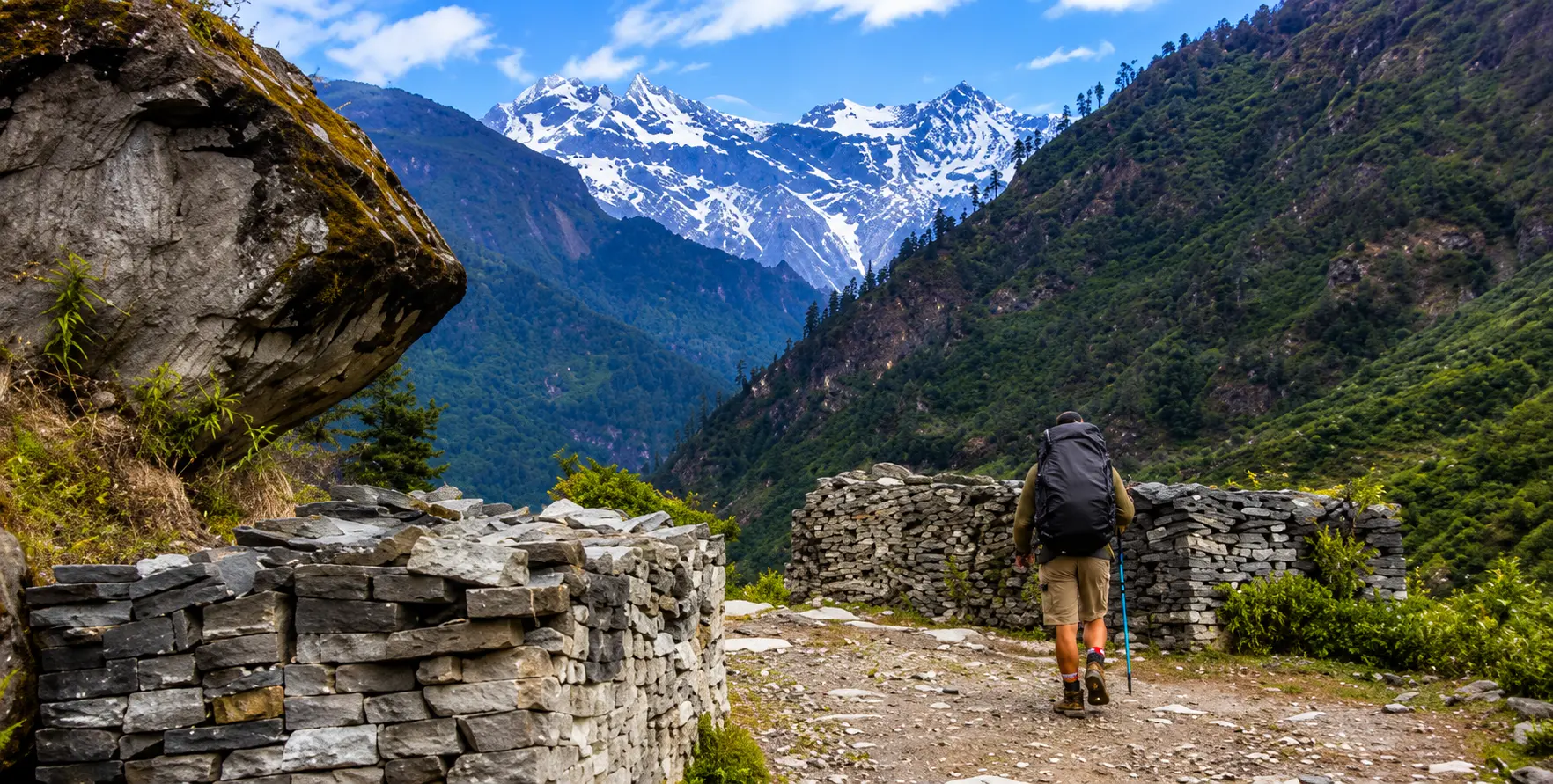
Website: www.vehiclehiringnepal.com

Frequently Asked Questions

How long does the jeep ride from Muktinath to Pokhara take?

The journey from Muktinath (Ranipauwa) to Pokhara Lakeside takes approximately 7 to 9 hours by private jeep, including a breakfast stop in Jomsom, a brief stop in Marpha, and a recommended soak at the Tatopani hot springs. Departing from Muktinath at 6:30 AM, most travellers arrive in Pokhara between 2:00 and 4:00 PM.

Can I do Muktinath to Kathmandu in a single day by jeep?

Technically possible but not recommended. The total distance from Muktinath to Kathmandu via Pokhara is approximately 430 to 450 km, requiring 13 to 16 hours of continuous driving, including rough mountain sections. Very few drivers and travellers are willing to do this in one day.

The two-day option with an overnight in Pokhara is far superior in comfort, safety, and enjoyment.

What happens if the road is blocked by a landslide between Tatopani and Beni?

The Kali Gandaki gorge road between Tatopani and Beni is the most landslide-prone section of the entire route, particularly in and after the monsoon. Our drivers monitor road conditions before departure and maintain contact with local road crews.

In the event of a blockage, the driver will assess the situation – waiting for clearance (minor slides are often cleared within a few hours), or advising an overnight stay in Tatopani until the road reopens. We will keep you informed in real time via WhatsApp.

Is it possible to share a jeep from Jomsom to Pokhara with other travellers?

Local shared jeep services run from Jomsom to Beni when they fill up – typically 6 to 8 passengers. From Beni, local buses and shared vehicles continue to Pokhara. This option costs approximately NPR 1,500 to 2,000 per seat from Jomsom to Beni, and NPR 400 to 600 per seat from Beni to Pokhara.

The disadvantage is unpredictable departure times (shared jeeps wait until full), no flexibility for stops, and basic comfort. For most travellers, especially those who have just completed a pilgrimage or trek, the comfort and reliability of a private vehicle is worth the additional cost.

Can I fly from Pokhara to Kathmandu instead of driving on Day 2?

Yes. The Pokhara-to-Kathmandu domestic flight takes 25 minutes and runs multiple times daily with Yeti Airlines, Buddha Air, and other carriers. The ticket price is approximately USD 80-110 per person.

If you fly from Pokhara, Vehicle Hiring Nepal can arrange a transfer from your Lakeside hotel in Pokhara to Pokhara Airport on the morning of your departure flight.

What should I do if my Jomsom flight is cancelled?

If your Jomsom-to-Pokhara flight is cancelled due to weather – which happens very frequently – contact Vehicle Hiring Nepal immediately via WhatsApp. We can typically arrange a private jeep from Jomsom to Pokhara with a few hours’ notice, subject to driver availability. That is why we always recommend saving our contact in your phone before you arrive in Mustang.

Final Thoughts

The return journey from Muktinath to Pokhara and Kathmandu by private jeep is the final chapter of one of Nepal’s most extraordinary travel experiences. Descending from the sacred high-altitude plateau of Muktinath through the world’s deepest gorge, past soaring Himalayan peaks, through dense rhododendron forest, and into the warm riverside town of Tatopani for a hot spring soak – it is a journey that perfectly complements the spiritual intensity of the Muktinath pilgrimage with the raw, magnificent beauty of the Kali Gandaki valley.

Vehicle Hiring Nepal provides the most reliable and experienced jeep service on the Muktinath-to-Pokhara-and-Kathmandu return route. Our drivers know every bend of the Kali Gandaki road, every timing consideration around the afternoon wind, and every stop worth making on the way down. Book your return jeep with us before you head up to Muktinath, so your return journey is arranged and worry-free from the start.

Book your return jeep from Muktinath to Pokhara or Kathmandu today. WhatsApp: +977 981-4227196 | Website: www.vehiclehiringnepal.com

Pokhara to Kande Jeep Price: Complete Transport and Trek Guide

Pokhara to Kande Jeep

Pokhara to Kande Jeep Price – Complete Transport & Trek Guide

Kande is a prominent, strategic roadhead village set in the middle hills of the Annapurna foothills. About 12 to 15 kilometres northwest of the bustling tourist lakeside grid of Pokhara, Kande serves as the premier, most heavily trafficked logistical launchpad for the iconic Australian Camp Trek, Pothana Village, and sections of the newly popularised Mardi Himal ridge route system.

For decades, global trekkers, independent backpackers, regional researchers, and domestic holidaymakers have recognised Kande as an unparalleled entry portal into the Annapurna Conservation Area Project (ACAP).

The trek from Kande up to the broad geographic spine of Australian Camp at 2,060 meters above sea level delivers some of the most conceptually striking, immediate, and intimate close-up panoramas of the Annapurna Massif, Mt. Machhapuchhre (the iconic Fishtail peak), and the deep-cut green fault lines of the southern Pokhara Valley basin available anywhere in Nepal within a single day’s excursion.

For travellers, trekkers, and climbing parties descending upon Pokhara, arranging highly specialised, reliable, and safe motorised transport to the Kande trailhead is a crucial first step in planning their wilderness deployment. Navigating the localised ecosystem of private jeeps, suburban street taxis, on-demand ride-sharing networks, public transit lines, and luxury multi-passenger vans requires a definitive, meticulously researched reference.

This encyclopedic transport and trail guide provides exhaustive, real-time context on current pricing metrics, road conditions, vehicle categories, trekking route breakdowns, permit configurations, and localised safety parameters to ensure a completely smooth transition from city streets to mountain footpaths.

Where is Kande, and Why Go There?

Geographic Location: Kande Village, Lumle Village Development Committee, Kaski District, Gandaki Province, Western Nepal Basin.

Exact Elevation Metrics: 1,770 meters (5,807 feet) above mean sea level at the highway drop-off point.

Linear & Road Distance: Approximately 12.5 kilometres from Baglung Chowk; roughly 17 to 19 kilometres from the core visual centre of Pokhara Lakeside, depending on your hotel’s exact location within the perimeter.

Motorised Transit Time: 20 to 35 minutes via a high-performance private 4WD jeep or top-end sedan; 45 to 60 minutes via local public microbus routes with multiple intermediate vendor stops.

Current Road Topology: Primarily blacktopped asphalt highway infrastructure along the Pokhara-Baglung corridor, with regional segments undergoing ongoing structural expansions, resulting in localised gravel bypasses and foundational track surfaces.

Recommended Vehicle Class: Standard-layout front-wheel-drive sedans, hatchback taxicabs, and low-clearance passenger cars pass cleanly during dry calendar windows; elevated-clearance SUVs or 4WD jeeps become highly necessary during the intense degradation patterns of the summer monsoon window.

Trekking Connectivity Matrix: Serves as the principal trailhead for the short-circuit Australian Camp loop, the primary access point for Pothana, an alternative starting point for the classic Dhampus ridge walks, and a low-altitude launchpad for the multi-day Mardi Himal base sanctuary pathway.

Core Experiential Fame: Celebrated globally for its rapid transition from vehicle cabins to cinematic mountain environments, dense native rhododendron and sub-alpine oak forest cover, and rich intersectional ethnic cultural landscapes featuring Gurung, Magar, Brahman, and Chhetri homesteading patterns.

Kande sits precisely atop a beautifully defined geographical saddle ridge overlooking the sprawling, fertile valleys of the Modi Khola and the Yamdi Khola. Unlike other, deeper trailheads that require hours of punishing, bone-rattling transit across dangerous unpaved precipices, Kande offers an elegant, remarkably accessible compromise.

The small settlement comprises traditional stone-and-corrugated-iron residences, specialised local logistics shops, agricultural depots, tea stalls, and the checkpoint office for the Annapurna Conservation Area Project. It serves as an energetic economic hub where mountain communities meet the modernised transit arteries of Gandaki Province.

The core philosophy of starting a trek from Kande is vertical optimisation. Because the village sits at an initial altitude of 1,770 meters, hikers gain a significant physical advantage: they start already well above the humid valley floor. The climb from Kande to the panoramic meadows of Australian Camp requires only a 290-meter vertical gain.

This makes it an incredibly safe, physically manageable, and highly rewarding target for multigenerational families, corporate retreat groups, senior travellers, and novice hikers who wish to capture iconic images of 8,000-meter Himalayan giants without exposing themselves to the acute medical risks of high-altitude sickness or extreme cardiovascular exhaustion.

Pokhara to Kande Jeep & Taxi Price

The transport landscape in 2026 reflects shifting economic realities in Nepal, shaped by global fuel fluctuations, infrastructure upgrade levies, and provincial tourist board regulations. For foreign nationals and domestic tourists alike, understanding standardised rates helps avoid arbitrary street-level overcharging.

When analysing these fiscal metrics, travellers must account for variable real-world factors. The rates cited represent standard dry-season operating parameters. During peak trekking seasons in autumn (October-November) and spring (March-April), fleet utilisation rates are near maximum capacity, which can occasionally put upward pressure on on-demand street hailing.

Conversely, pre-booking your vehicle asset through a certified aggregator like Vehicle Hiring Nepal locks in your operational expenditure, shielding you from arbitrary terminal charges or surprise fuel surcharges at drop-off.

Also, ensure the quote explicitly includes drop-off in the high-altitude village of Kande—not the lower highway junction—to avoid unexpected extensions to your first-day itinerary.

Pokhara Airport to Kande Private Vehicle

All Transport Options: Pokhara to Kande

Every traveller operates under a unique framework of time density, economic limits, and comfort requirements. Choosing the right mode of transit requires an objective review of the options available along the Pokhara-Kande corridor.

TransportCostTimeComfortBest for
Pre-booked private vehicleUSD 7–13 per vehicle20–25 minutesExcellentFamilies, groups and tight schedules
Street-hailed taxiNPR 800–1,50025–30 minutesModerateSolo travellers or pairs willing to bargain
Ride-hailing app (Pathao, InDrive)NPR 600–90020–30 minutesGoodBudget travellers with a local SIM
Public microbus or shared tempoNPR 150–250 per person40–55 minutesLow, often crowdedBackpackers on a tight budget

Booked Private Agency Vehicles (Minimum Standard)

Securing an asset via Vehicle Hiring Nepal ensures total logistical control. The client bypasses the chaotic terminal environments of public transport and the unregulated pricing structures of ride-hailing.

The driver arrives directly at the foyer of your Lakeside hotel at the specified time, assists with heavy technical gear and mountaineering duffels, and uses a thoroughly vetted, mechanically sound vehicle. This option completely removes language-barrier anxieties, as professional agency drivers possess conversational fluency in English and extensive training in safely navigating rural terrain.

Street-Hailed Taxis (The Flexible Alternative)

Hailing a compact taxi directly off the street handles immediate, spontaneous travel urges. However, it requires a firm grasp of localised negotiation practices. Taxis in Pokhara are legally outfitted with electronic distance-fare meters.

Yet, drivers almost universally refuse to activate them for out-of-town mountain dispatches, preferring to negotiate a fixed flat rate instead. If you opt for this route, you must firmly establish the final price before setting your footwear inside the vehicle cabin.

Be prepared for potential misunderstandings regarding the exact drop-off zone if the driver is unfamiliar with the upper Kande trailhead layout.

Public Transit Systems (The Cultural Deep-Dive)

For those on shoestring budgets or trying an in-depth cultural lifestyle experiment, local microbuses and shared tempos offer a distinct alternative. To use this system, you must first take a local connector to the Baglung Chowk transit hub, find a vehicle in Nayapul, Lumle, or Beni, and ensure you are conversationally fluent and the driver is well trained to navigate.

This method introduces severe logistical compromises: vehicles do not depart until every square inch of passenger space is fully occupied, storage for massive trekking backpacks is highly restricted (often requiring your expensive gear to be lashed open-air onto the roof rack), and the frequent, sudden stopping intervals turn a brief journey into a lengthy, fatiguing experience.

The Road: Pokhara to Kande

The physical corridor spanning Pokhara and Kande is an intriguing engineering blend of urban boulevards, industrial suburbs, agricultural plains, and winding, high-gradient mountain passes. Understanding the specific sections of this 12- to 119-kilometre roadway helps passengers anticipate terrain changes and prepare mentally for the journey.

Pokhara Lakeside  Chowk (Distance: 5 km | The journey initiates within the pristine tourist locale of Lakeside, running parallel to the calm waters of Phewa Lake. The vehicle winds through Baidam, then transitions onto the expansive, multi-lane urban asphalt at Zero Kilometre, then Divi Chowk.

Turning northward, the driver navigates the commercial heartbeat of central Pokhara, passing major municipal landmarks, banks, and supply depots before reaching Baglung Chowk. This initial phase features typical city traffic, smooth asphalt, traffic wardens, and pedestrians. Departing your hotel before 07:00 AM completely bypasses the school-bus and commercial-commute windows, saving valuable transit time.

Baglung Chowk to the Hemja Plateau (Distance: 4 km | Time: ~8 mins)

Leaving Baglung Chowk, the vehicle enters the Pokhara-Baglung Highway corridor, passing through Hari Ch Timeas as the urban density rapidly thins out. The road drops slightly into the expansive, flat geological terrace of Hemja, locally famed for its intensive agricultural production, traditional brick kilns, and Tibetan refugee settlements (such as Tashiling).

The road through Hemja is exceptionally wide, straight, and well paved, allowing the vehicle to maintain a steady speed. On a clear morning, the right-side windows offer striking, unobstructed views of the entire Annapurna range rising sharply above the low-lying agricultural fields.

Hemja to Naudanda and the Final Ascent (Heading north: 6-10 km | Time: 12-17 mins)

At the northern terminus of the Hemja plateau, the geographical environment changes dramatically. The road reaches the base of the mountains near Phedi and initiates a steady, high-angle snake climb into the foothills.

The asphalt transitions into a series of sharp switchbacks, hairpins, and steep shelf carvings as it climbs toward the ridge town of Naudanda. Here, the road can get rough; ongoing highway expansion means some sections may have exposed gravel, loose shale, or compacted-earth bypasses.

As the vehicle gains altitude, the air temperature drops refreshingly, and the vast urban basin of Pokhara opens up spectacularly behind you. The vehicle passes the scenic ridge of Naudanda and traces the mountain edge for another 3 kilometres to the final crest at Kande Village. The final approach features a well-paved to unpaved track.

Maintain a steady speed; at the trailhead parking, the right-side windows offer views as the vehicle comes to a smooth stop, the engine shuts down, and you step out into the crisp, clean mountain air of Kande at 1,770 meters.

kande-Pokhara to Kande Jeep Price
Kande

Trekking from Kande – Australian Camp and Beyond

Kande is not merely a geographical landmark for motor vehicles; it is a gateway to an extensive network of interconnected wilderness trails stretching deep into the heart of the Annapurna Conservation Area. Below is an exhaustive breakdown of the primary trekking corridors that manifest directly from the Kande trailhead.

The Direct Ascent: Kande to Australian Camp

Trail Distance: 3.2 kilometres of active walking means some elevation gain: Kande (1,770m) to Australian Camp (2,060m) — a net gain of 290 vertical meters.

Average Completion Duration: 1.5 to 2.5 hours, depending on physical fitness levels and photography stops.

Trail Quality & Terrain: Impeccably laid stone steps, well-beaten earthen pathways, and short sections of exposed tree roots winding through deep forest canopies.

The trek begins immediately behind the Kande parking clearing, marked clearly by an official ACAP information signboard. The initial 45 minutes of the trail feature a steep, uncompromising staircase of hand-carved stone steps that test your cardiovascular system. The path winds directly past local terraced fields, allowing hikers to observe traditional agrarian lifestyles up close.

Women tending millet crops, water buffaloes resting in simple stone sheds, and local children walking down to school are common, heartwarming sights.

As you pass the initial ridgeline, the path enters a dense forest sanctuary dominated by native rhododendron, moss-covered oak, and subtropical pine trees. The canopy provides a refreshing shield against the intense morning sun, keeping the trail pleasant.

During March and April, this forest transforms into a vivid sea of crimson, pink, and white blossoms, creating a memorable fairytale aesthetic. The grade softens slightly as you approach the upper ridge—the forest suddenly parts, revealing a wide, flat, grassy meadow.

You have arrived at Australian Camp, and the entire snow-clad wall of the Himalayas instantly fills your field of view.

The Extended Ridge Route: Kande to Pothana Village

For hikers who want to extend their first-day journey beyond Australian Camp, the trail continues along the scenic ridgeline toward the traditional settlement of Pothana at 1,990 meters. The path drops slightly into a cool, shadowed forest saddle before tracing an easy, stone-paved contour trail for about 45 minutes.

Pothana is an exceptionally beautiful Gurung village characterised by clean, blue-painted stone lodges, neatly manicured paths, and an important ACAP tourist check-in station. Pothana offers a slightly quieter, more culturally rich overnight alternative to Australian Camp, while still delivering pristine views of Mt. Machhapuchhre.

The Classic Loop: Kande to Dhampus and Phedi

The Kande-Austrailamp-Pothana trek follows the historic trail down to the grand Gurung settlement of Dhampus (1,700m). This makes a phenomenal 2-day circuit trek. Instead of backtracking to Kande after your overnight stay, you hike along the forested ridgeline to Pothana, then descend a sweeping stone staircase to the wide, terraced shelf of Dhampus.

From Dhampus, a well-engineered trail leads straight down to the highway at Phedi, where your pre-arranged vehicle from Vehicle Hwantg Nepal can pick you up for a smooth ride back to Pokhara.

The Grand Alpine Gateway: The Mardi High-Altitude Connection

For serious trekkers bound for the high-alpine sanctuaries of the Mardi Himal Trek (Maximum Altitude: 4,500m at Base Camp), Kande represents the absolute finest logistical starting point. By launching from Kande, trekkers bypass the lower, dusty river valleys of Mardi Pul or low-altitude dirt roads.

Day 1 carries the team through Australian Camp to Pothana or Deurali (2,100m). Day 2 branches sharply northward along the pristine wilderness ridgeline through Forest Camp (2,550m), leading onward to Low Camp, High Camp, and the spectacular high-altitude viewpoints directly beneath the sheer south face of Mt. Fishtail.

This route design ensures optimal, gradual acclimatisation and maximises time in the forests and high-alpine biomes.

Australian Camp-Pokhara to Kande Jeep Price
Australian Camp

Australian Camp – The View and the Experience

Australian Camp (originally known as ‘Thulo Kharka’ or ‘Big Pasture’) owes its modern name to the pioneering Australian trekking groups and international aid workers who frequented the area in the late 1970s and 1980s, marvelling at its pristine geographic setting. Today, it stands as an elite viewpoint in Gandaki Province.

The Architectural Grandeur of the Mountain Wall

The visual shock of arriving at Australian Camp lies in its spatial immediacy. Unlike views from Pokhara city, where it’s the best backdrop across a wide valley, here you are elevated onto an opposing ridge, with only a deep, narrow green chasm separating you from the high-altitude rock faces.

The panorama is sweeping and uninterrupted: to your far left stands the massive bulk of Dhaulagiri I (8,167m); directly along the ridgeline is the distinct form of Annapurna I (8,091m); to your right, the elegant, sharp architecture of Mt. Machhapuchhre (6,993m) pierces the sky, flanked by Annapurna III and the snow-capped Lamjung Himal.

The Alpenglow Phenomenon: Sunrise and Sunset Protocols

To truly internalise the beauty of Australian Camp, you must stay overnight. As night approaches, the setting sun casts deep ambient and crimson shadows across the massive glaciers of Annapurna South. But sunrise draws photographers from around the globe.

The air is freezing and crisp. Trekkers gather on the viewing platforms as a deep pre-dawn blue envelops the world. Slowly, the highest tip of Mt.

Machhapuchhre catches the first rays of sunlight, igniting into a brilliant, fiery orange alpenglow. Over the next thirty minutes, this golden wave cascades down the mountain, chasing away mist and valley fog and revealing the raw, glittering white majesty of the ice fields.

Teahouse Infrastructure and Hospitality Standards

The overnight experience at Australian Camp is remarkably comfortable, far exceeding the rustic expectations of traditional remote trekking routes. The lodges are well established, offering clean twin-bedded rooms, thick foam mattresses, heavy quilts, and functional attached bathrooms with hot-water heating (powered by solar arrays or gas line inserts).

Most dining rooms are fully enclosed glass structures, letting you enjoy a piping-hot plate of traditional Dal Bhat (lentil soup, rice, vegetable curry, and pickles), generic continental dishes, or Tibetan bread while staying shielded from the biting ridge winds. Cellular connectivity is excellent, with robust 4G signals from both Ncell and NTC networks active across the plateau.

Pokhara to Kande Jeep Price
Australian Camp Area

Trekking Permits for Kande and Australian Camp Area

Entering the mountain environment requires compliance with the statutory conservation frameworks managed by the Government of Nepal and the National Trust for Nature Conservation (NTNC). Ignorance of these requirements can result in heavy financial penalties or being denied entry at the Kande gate.

Permit InstrumentStandard Tariff 2026Primary Issuing BureauOperational Scope & Purpose
ACAP Permit (Foreigners)NPR 3,000 Per Person (~USD 22)Nepal Tourism Board Office, Damside, PokharaA mandatory conservation levy for all foreign nationals.
ACAP Permit (SAARC Nationals)NPR 1,000 Per Person (~USD 7.50)Nepal Tourism Board Office, Damside, PokharaSpecial regional tariff structure for citizens of SAARC countries.
TIMS Card (Trekkers Info System)NPR 2,000 per person (~ 15)Authorised Trekking Agencies / TAAN Office PokharaMandatory safety registration tracking card to monitor wilderness positioning.
Domestic Citizen stayingNPR 100 Per PersonDirectly at the Kande ACAP Gate CheckpointNominal entry and maintenance fee for Nepalese national tourists.

To secure these permits smoothly, hikers must visit the Nepal Tourism Board office in Pokhara (located near the Damside area) the day before their scheduled departure. The office operates from 09:00 AM to 05:00 PM.

Bring your physical passport, a clear digital or paper photocopy of your visa details, and at least four recent passport-sized photographs. If you book your vehicle and trek package through an authorised full-service provider like Vehicle Hiring Nepal, the agency can handle all permit documentation on your behalf and deliver the finalised paperwork to your hotel room for a simple start.

Best Time to Travel from Pokhara to Kande

The climate of the Annapurna foothills is highly cyclical, dictated by the overarching South Asian monsoon system and seasonal altitude shifts. Choosing the right travel window shapes your views and overall comfort.

The Golden Window: Autumn (October to November)

Autumn is the undisputed premier trekking season. The heavy summer monsoon rains have completely washed the atmosphere clean of dust and haze, resulting in crystal-clear skies and near-perfect visibility. Mountain views are guaranteed almost every single day from sunrise to sunset.

The road from Pokhara to Kande is dry and in excellent condition. The teahouses at Australian Camp operate at peak energy, creating a vibrant, international atmosphere. Pre-booking your vehicle during this window is highly critical, as global expeditions heavily book regional transport assets.

The Floral Wonderland: Spring (March to April)

Spring is an extraordinarily auspicious time to visit Kande. The defining characteristic of this window is the spectacular blooming of the rhododendron forests. The landscape becomes a botanical display.

Temperatures are exceptionally warm and pleasant for hiking, though light afternoon cloud cover can occasionally obscure the highest peaks. The morning mountain views remain incredibly sharp and crisp, making it an excellent window for photography and views.

The Sharp & Frosty Clear: Winter (December to February)

Winter brings cold weather, but it also delivers some of the sharpest, clearest morning views of the year. Daytime hiking under the winter sun is very comfortable. Still, as soon as the sun dips behind the ridges, temperatures at Australian Camp can plummet to near or below freezing (0°C to -5°C).

Snow occasionally dusts the upper meadows of Australian Camp, creating a beautiful winter wonderland. If you pack high-quality thermal base layers and a solid down jacket, winter offers a tranquil, uncrowded trail experience.

The Forbidden Window: Summer / Monsoon (June to September)

The monsoon season introduces severe environmental challenges along the Pokhara-Kande corridor. Heavy, relentless rainfall causes localised mudslides, washes out sections of unpaved roads, and turns stone trail stairs into slippery hazards. The mountains are shrouded in thick storm clouds for days on end, and the forests become swarming with active leeches.

Transport costs can rise because you may need high-clearance 4WD jeeps to cross muddy bypasses. Tridealg during this window is generally not recommended unless you are an experienced researcher or an off-season adventurer equipped with technical rain gear and a flexible itinerary.

Kande

Recoclearestokhara to Kande

To maximise your time and energy, pair your transit schedule with a well-structured trekking itinerary. Below are four highly optimised, time-tested route blueprints.

Itinerary Alpha: The Ultimate 1-Day Panoramic Day Hike

  • 07:00 AM — Private agency vehicle picks you up from your Lakeside hotel foyer; departs immediately via the highway.
  • 07:30 AM — Arrival at the Kande trailhead parking zone; complete passport registration at the official ACAP checkpoint station.
  • 07:45 AM — Begin the ascent on the stone stairs, maintaining a steady, regulated pace through the terraced agrarian hamlets.
  • 09:45 AM — Arrive smoothly at the grand plateau of Australian Camp; secure an outdoor table at a local lodge, order hot milk tea, and absorb the massive mountain views.
  • 10:15 AM to 12:15 PM — Two full hours of leisure, photography, and exploration along the ridgelines, because you’ll
  • 12:30 PM- Enjoy a fresh lunch at a local teahouse (ordering traditional Dal Bhat or quick noodles).
  • 01:30 PM — Initiate your descent along the shaded forest path back down toward Kande Village.
  • 03:00 PM — Arrive back at the Kande trailhead; your private vehicle is waiting in the clearing; transfer to the cabin for the drive back.
  • 03:30 PM — Smooth drop-off back at your Lakeside hotel; enjoy a free evening exploring the lakeside restaurants and markets.

Itinerary Beta: The Classic 2-Day Overnight Sunrise Experience (Highly Recommended)

  • Day 1 – 02:00 PM — Vehicle departure from Pokhara Lakeside, taking advantage of open mid-day highway conditions.
  • Day 1 – 02:30 PM — Arrival at Kande; unload gear and initiate the ascent through the cool afternoon forest air.
  • Day 1 – 04:3Arrive, begin the trek, check in to your private room, and watch the steady golden sunset over Dhaulagiri and the Annapurnas.
  • Day 1 – 07:00 PM — Gather in the heated lodge dining hall for a hearty mountain dinner and a trek brief with your team.
  • Day 2 – 05:30 AM — Wake early for the spectacular sunrise and enjoy our colours from the viewpoint. 08:00 AM — Enjoy a relaxed breakfast on the outdoor terrace facing the massive wall of mountains.
  • Day 2 – 09:30 AM —Pack up and begin a scenic stone steps toward Kande.
  • Day 2 – 11:00 AM — Meet your dedicated Vehicle Hiring Nepal driver at Kande; drive comfortably back to transfer to the tong before noon.

Itinerary Gamma: The 3-Day Eco-Cultural Ridge Circuit

  • Day 1 — Private car from Pokhara to Kande; trek to Australian Camp; overnight stay amidst high-altitude panoramic vistas.
  • Day 2 — Sunrise viewing; trek along the forested ridgeline from Deurali to Pothana Village; immerse in local Gurung heritage; overnight stay.
  • Day 3 — Morning trek down through the terraced farmland of Dhampus Village to the roadhead at Phedi; private vehicle pickup and drive back to Pokhara.

Itinerary Delta: The 5-Day Mardi Himal Alpine Ridge Expedition

  • Day 1 — Morning jeep from Pokhara to Kande; trek through Australian Camp to Pothan, then on to Pritam Deurali (Overnight).
  • Day 2 — Trek from Deurali through dense, mossy rhododendron wilderness up to Forest Camp at 2,550 meters (Overnight).
  • Day 3 — Trek from Forest Camp, climbing past Low Camp into the sub-alpine environment of High Camp at 3,580 meters (Overnight).
  • Day 4 — Pre-dawn push to Mardi Himal Upper Viewpoint / Base Camp, then descend to Badal Danda or Low Camp (overnight).
  • Day 5 — Descend via Siding Village or Lwang Phedi; meet your pre-arranged 4WD Jeep from Vehicle Hiring Nepal for an off-road drive back to Pokhara.

Nearby Trekking Trailheads from Pokhara – Price Comparison

To appreciate the logistical and economic value of launching a trek from Kande, it helps to compare it with other major wilderness trailheads within the Pokhara travel orbit.

Trailhead PortalRoad DistancePrivate Fleet Car PriceSUV / 4WD Jeep PriceTransit DurationPrimary Trek Destinations
Kande Gate12 – 19 kmUSD 10-15USD 40-6020 – 35 MinsAustralian Camp, Pothana, Mardi Himal Entry.
Phedi Base9 – 11 kmUSD 10-50USD 20-6015 – 20 MinsDhampus lower route, Sarangkot ridge access.
Nayapul Hub42 kmUSD 40-60USD 60-1001.5 HoursGhorep, a Athenonill, Annapurna Sanctuary.
Birethanti Gate44 kmUSD 40-60USD 60-1001.7 HoursAlternative Poon Hill start, Ghandruk lower tracks.
Kimche Station58 kmN/A (Low Clearance)USD 60-1202.5 HoursDirect upper motorised route to Ghandruk Village.
Besisahar Hub76 kmUSD 90-120USD 120-1502.5 – 3 HoursThe official starting point for the Annapurna Circuit.

This data shows that Kande stands out as the most cost-effective and time-efficient trailhead option near Pokhara. For travellers with tight budgets or limited time, Kande offers a quick, affordable option: in less than 40 minutes after leaving your lakeside hotel room, you’re on a first-rate mountain trail, maximising your time outdoors and protecting your budget.

Village house near Kande with Annapurna South and Machhapuchhre

Time for Getting the Right Price from Pokhara to Kande

Nepal’s local transport ecosystem can feel overwhelming or confusing for international tourists unfamiliar with regional commercial norms. Using these proven, tactical insider strategies helps you secure optimal rates with confidence.

  1. Embrace Pre-Booking Protocols: The best way to ensure a stress-free experience is to book your vehicle through an established, legally registered agency such as Vehicle Hiring Nepal. This eliminates exhausting, emotionally draining street-level haggling after a long flight and guarantees a fully vetted, clean vehicle.
  2. Deconstruct the Drop-off Perimeter: When discussing rates with street taxi drivers, clarify that the travellers cover transport all the way to the upper Kande trailhead parking zone next to the CAPP station, rather than a generic drop-off point along the lower highway loop.
  3. Licence plate classifications: in Nepal, vehicles bearing green licence plates are officially registered tourist vehicles. These drivers undergo enhanced background checks, carry comprehensive insurance policies, and maintain higher vehicle maintenance standards than local black-market drivers. Turn Logistics Simultaneously Transport can be scarce at the Kande trailhead during the afternoon when multiple trekking groups descend. Negotiating a comprehensive round-trip package with your outward driver ensures a dedicated vehicle will be waiting the moment you step off the trail.
  4. Maintain Baseline Local Currency Reserves: Carry an adequate supply of physical Nepalese Rupees (NPR) in small denominations (such as 100, 500, and 1,000 rupee notes). Drivers, local checkpoints, and rural teahouses universally reject foreign credit cards, digital international wallets, and large amounts of foreign currency. What to Bring for the Pokhara to Kande Trek

Even a short, accessible trek requires careful gear selection. Having the right items keeps you safe and comfortable throughout the journey, turning a good trek into an extraordinary one with a green Vehicle Journey.

  • A lightweight, ergonomically sound daypack (20 to 35 litres) with a specialised waterproof rain cover, plus a verified ACAP permit and matching TIMS cards.A standard sealable water bottle or hydration bladder filled with clean, filtered water before departing your hotel.
  • A lightweight, wind-resistant outer jacket or softshell fleece layer, as the high-altitude ridge at Kande can be surprisingly breezy and cool compared to the warm valley floor.

Technical Gear for the Trail and Overnight Stay

  • High-quality, broken-in trekking boots or sturdy trail-running shoes featuring deep-groove rubber outsoles for securing solid traction on wet stone steps.
  • A dependable, high-lumen LED headlamp with fresh batteries is mandatory for safely navigating the pitch-black viewing ridges during early sunrise photography pushes.
  • A lightweight travel sleeping bag liner to provide an extra layer of personal hygiene and insulation beneath standard teahouse quilts.
  • A compact first-aid pouch keeps you safe and comfortable: blister tape, paracetamol, anti-diarrheal medication, and your personal prescriptions.
  • High-protection, broad-spectrum, sun-blocking polarised sunglasses and a wide-brimmed sun hat to shield your skin from intense high-altitude solar radiation.
  • A high-capacity portable power bank with matching charging cables to keep your smartphones and camera batteries functional throughout the cold mountain night.

Return Transport: Kande to Pokhara

Successfully concluding your high-altitude trek requires a smooth, predictable exit strategy back to the urban comfort of Pokhara. Carefully planning your return transport prevents unexpected delays at the trailhead.

The Pre-Arranged Return Pickup Strategy

This remains the undisputed standard of convenience. When you book your outward transit with Vehicle Hiring Nepal, you can arrange your return pickup window at the same time.

Because cellular data connectivity is reliable across the entire Australian Camp and Pothana ridge line, send a Timek WhatsApp message to your assigned driver when you begin your descent from the upper meadows. By the time you complete your walk and arrive at the Kande clearing, your private, Time-conditioned vehicle is already waiting with the engine running, allowing you to load your gear and slide immediately into a comfortable cabin.

Sponpolarised railhead Hailing

If you choose an open-ended itinerary but arrange a return car, you must rely on locating available vehicles passing through the Kande highway corridor. On busy afternoons during peak trekking season, you may find empty taxis waiting near the ACAP gate, looking for passengers returning to the city.

Standard rates mirror the outward leg (NPR 800-1,200 for a compact car). However, during rainy conditions, late evening hours, or low-season windows, vehicle availability drops drastically, which may leave you waiting at the roadside or forced to negotiate with crowded local public microbuses.

What is Included in Your Vehicle Hire with Vehicle Hiring Nepal

When booking commercial transport through a reputable provider, clarity on inclusions and exclusions is essential. Vehicle Hiring Nepal operates under a strict, client-first framework designed to prevent hidden fees or unexpected surcharges.

  • A fully serviced private vehicle tailored to your group size (Top-end Sedan, Mahindra Scorpio SUV, or HiAce Van).
  • The professional, highly experienced, background-checked local driver holding valid commercial driving credentials and specialised training in mountain road safety protocols.
  • Direct, on-time pickup from the lobby of your designated hotel or guesthouse in the Pokhara Lakeside perimeter.
  • All associated operational costs, including clean fuel levies, vehicle maintenance allocations, and comprehensive commercial passenger insurance coverages.
  • Full tracking of all regional highway tolls, municipal environment fees, and localised parking assessments encountered along the transit corridor.
  • 24/7 dedicated customer service support via a direct WhatsApp channel, allowing you to modify pickup timestamps or adjust itinerary parameters smoothly from the trail.

Booking exclusions from standard charter quotes include in-ACAPor TIMS permit fees, personal tea house accommodation and beverage expenses on the trail, professional trekking guide or porter hiring allocations, and voluntary tips for your driver at the end of a successful journey.

How to Book Your Pokhara to Kande Vehicle

Securing your private transport asset for the 2026 trekking season is an efficient, fully digital process that takes less than 5 minutes.

Step 1: Contact the central booking desk at Vehicle Hiring Nepal via our official worldwide WhatsApp hotline at +977 981-4227196, or submit an electronic reservation inquiry through our web platform at vehiclehiringnepal.com.

Step 2: Provide your exact travel date and preferred departure time from Pokhara (07:00 AM is highly recommended for day hikers, while 02:00 PM is optimal for overnight teahouse trekkers).

Step 3: Specify the full name and physical address of your designated hotel or guesthouse in Pokhara Lakeside to ensure smooth driver routing.

Step 4: Confirm your exact passenger count and estimate our total baggage volume so our logistics team can assign the best vehicle class.

Step 5: Indicate whether your requirements call for a one-way dispatch or a comprehensive round-trip return package (including details if your exit point branches to an alternative trailhead, such as Phedi or Dhampus).

Step 6: Receive an instant digital confirmation voucher, including your assigned driver’s mobile number, vehicle license plate details, and an exact flat-rate price guarantee, sent directly to your phone.

Comprehensive Appendix: Frequently Asked Questions (FAQ)

Is a 4WD vehicle strictly mandatory to reach the Kande trailhead safely?

No, a 4WD vehicle is not mandatory during the standard dry trekking windows of autumn, winter, and spring. The entire road network linking central Pokhato to the highway drop-off point, and at Kande, is completely paved with asphalt. Standard front-wheel-drive sedans, local hatchbacks, and tourist vans handle the journey comfortably.

However, if you are travelling during the peak monsoon season (June through September), heavy rainfall can leave loose gravel and deep mud on the short, unpaved trail to the upper trailhead camping zone. In this case, a high-clearance 4WD jeep is highly recommended to prevent wheel slippage and ensure safety.

Can I buy my ACAP trekking permit at the Kande checkpoint?

No. Permits are not sold at the Kande checkpoint. The office functions as a registration and verification post, checking that hikers already have valid permits. Foreign trekkers must secure their paperwork at the official Nepal Tourism Board offices in either Pokhara (Damside) or Kathmandu before setting out.

Attempting to enter the trail without a pre-purchased permit will result in being turned back or facing double-tariff financial penalties. Nepalese domestic citizens, however, can pay their nominal 100 NPR entry levy directly at the gate.

How difficult is the physical hike from Kande up to Australian Camp?

The hike is classified as moderately difficult. The challenge is the first 45 minutes, which features a continuous, relatively steep incline up hand-carved stone steps and requires reasonable cardiovascular fitness. Once you pass the ridge and enter the forested zone, the trail gradient eases considerably, transitioning into a gentler, rolling trail.

Because the net vertical gain is only 290 meters over three kilometres of trail, anyone who can walk unassisted up several flights of stairs can complete this trek by maintaining a slow, steady pace and taking frequent hydration breaks.

Are there ATMs or card payment systems available at Australian Camp or Kande?

No, there are no functioning ATMs or credit card payment terminals anywhere in Kande village or on the Upper Australian Camp plateau. The entire economic ecosystem of the mountain foothills operates strictly on physical cash transactions. All teahouses, local transport operators, and checkpoint stations require payment in Nepalese Rupees (NPR).

You must withdraw sufficient cash from an ATM in Pokhara Lakeside before boarding your vehicle. It is highly recommended to carry smaller denominations (100, 500, and 1,000 rupee notes), as local mountain vendors often lack enough cash to break large 1,000 or 2,000 rupee notes for small purchases.

Is altitude sickness a common risk on the Australian Camp trek?

No, the medical risk of acute mountain sickness (AMS) is exceptionally low on this route. Standard altitude sickness protocols state that atmospheric pressure drops and fluctuations in oxygen density typically affect those who walk above the 2,500-meter altitude threshold.

Because Australian Camp sits well below this mark at 2,060 meters, it offers a very safe alpine environment. While you may feel exertion and heat on the steep stone stairs, you will not encounter high-altitude medical complications, making it an ideal choice for families with young children or senior travellers.

What are the typical operating hours for public microbuses departing Pokhara for Kande?

Local public microbuses and shared tempos bound for the Kande corridor operate primarily between 06:00 AM and 05:00 PM daily, departing from the Baglung Chowk transit hub. However, public transport in rural Nepal does not follow a strict, minute-by-minute timetable.

Vehicles operate on a high-demand, on-demand basis; a microbus will remain at the terminal until every seat is occupied before departing. This creates substantial unpredictability in your travel day.

For travellers bound by strict trekking schedules or those seeking pristine morning visibility windows, public transit is rarely practical, making a pre-booked private vehicle the preferred choice.

Can I safely leave my large travel suitcases inside the private vehicle while I trek?

If you book a continuous, multi-day round-trip charter package with Vehicle Hiring Nepal, we can make special arrangements to coordinate your luggage security. For standard one-way dispatches or basic day-hike configurations, we don’t recommend leaving expensive luggage unattended inside a parked vehicle at the trailhead.

The best practice is to leave your primary, heavy travel suitcases in the secure luggage storage room at your Pokhara Lakeside hotel (a service almost universally provided free of charge for returning guests). Then set out for Kande, carrying only your lightweight trekking daypack with your immediate mountain essentials.

Is safe drinking water readily available for purchase along the Kande trail?

Yes, safe drinking water is widely accessible throughout the route, and lodges along the path sell sealed bottles of mineral water. However, to minimise plastic waste within the vulnerable ecosystem of the Annapurna Conservation Area, travellers are strongly encouraged to bring reusable aluminium or hard-plastic water bottles.

Most established lodges at Australian Camp and Pothana provide safe, UV-treated, or boiled drinking water filtration stations where you can refill your bottles. For convenience, you can arrange purification tablets or a high-performance filtration straw to safely treat local water. We don’t recommend tap water.

Book Your Pokhara to Kande Jeep Transfer with Nepal VehicleOne of the most rewarding short journeys from Pokhara Lakeside: a climb through terraced rice fields and forested hillsides to a ridgetop Gurung village, where the entire Annapurna Himal fills the morning sky. Whether you are making a sunrise day trip, beginning the Mardi Himal with the Kande–Ghandruk circuit, or simply seeking the finest accessible mountain panorama near Pokhara, Dhampus, Kande delivers an experience that is genuinely hard to surpass anywhere in Nepal at this altitude and distance from a major city.

Nepal Vehicle Hiring Pvt Ltd offers the most reliable, professionally driven jeep transfer service on the Pokhara-Kande route. Our 4WD jeeps handle the hill terrain with confidence; our experienced drivers know every switchback and viewpoint on the climb, and our flexible booking service ensures your Kande adventure starts exactly as you planned.

Contact Nepal Vehicle Hiring Pvt Ltd today at vehiclehiringnepal.com to book your Pokhara-to-Kande jeep transfer and experience one of the finest mountain vistas accessible from Pokhara.

WhatsApp: +977 981-4227196
Email:[email protected]
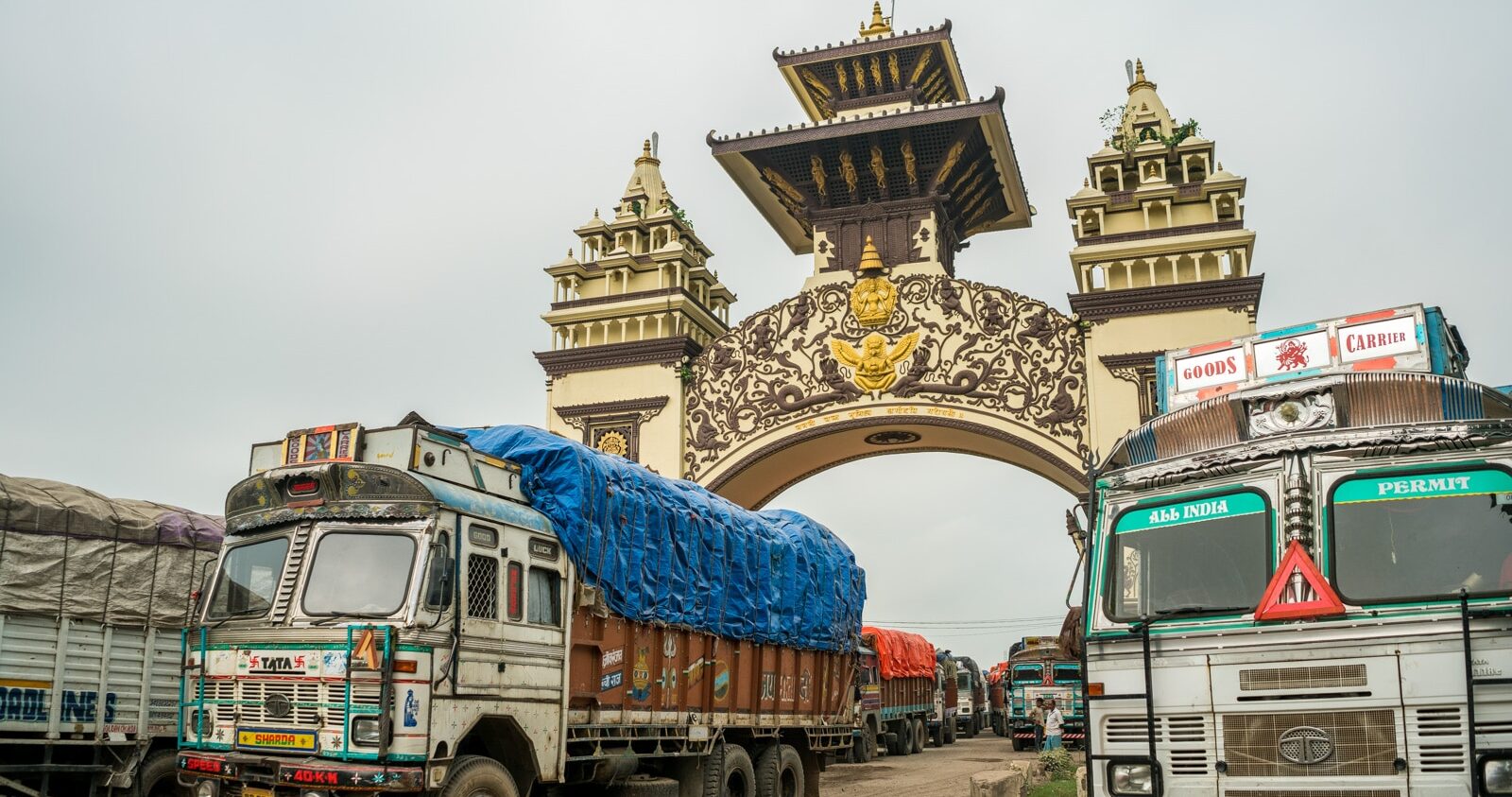
Website: www.vehiclehiringnepal.com

Chat with us