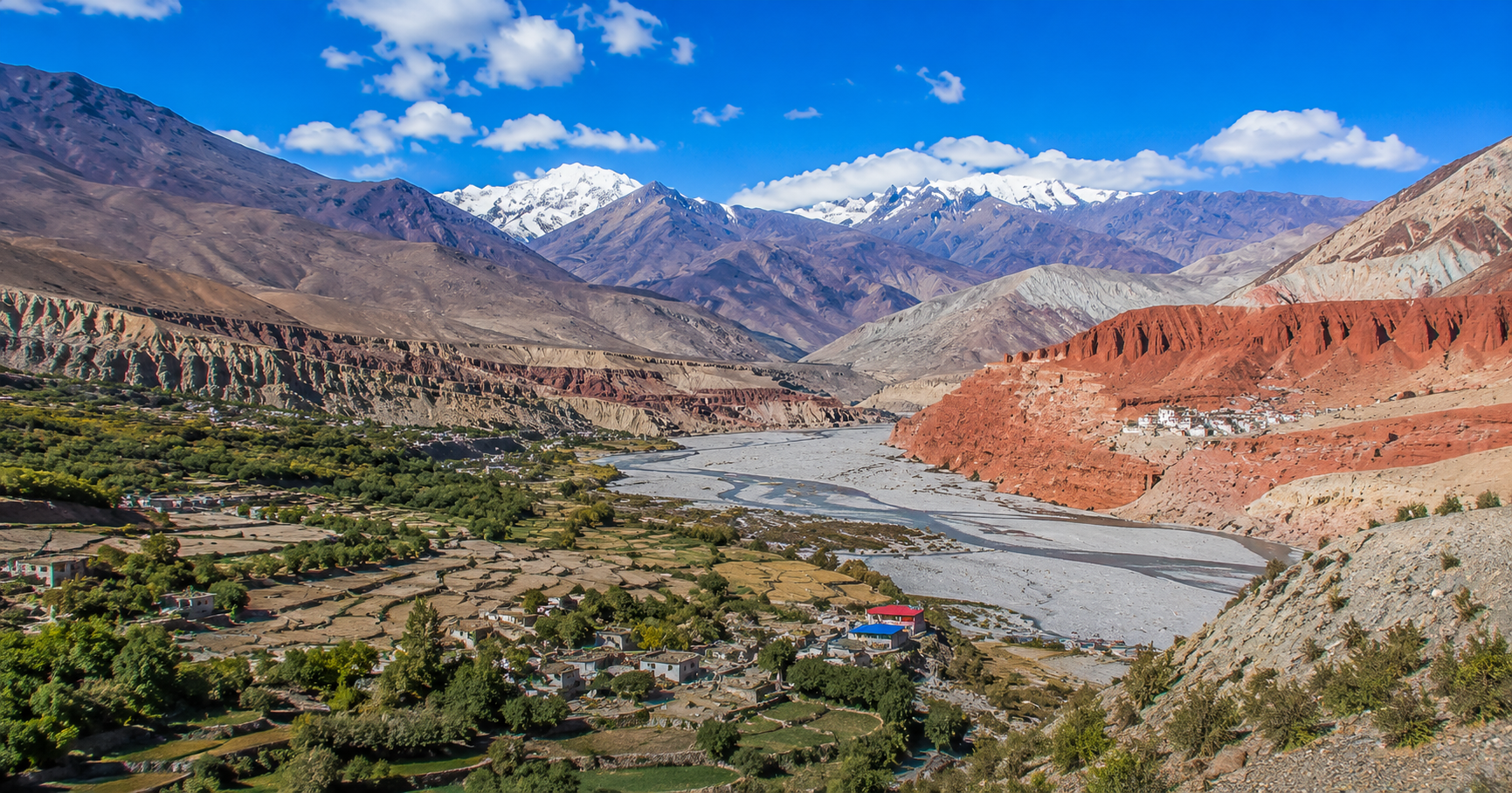
Kathmandu to Besisahar Hiace Transfer: Complete Guide

Besisahar

Kathmandu to Besisahar Hiace Transfer – Complete Guide

Besisahar is the official starting point of the world-famous Annapurna Circuit Trek – one of the finest and most celebrated long-distance treks in the Himalayan world. Located approximately 142 km northwest of Kathmandu at 820 m in the Marsyangdi River valley, Besisahar is where thousands of trekkers begin their journey each year, heading north through the Annapurna Conservation Area toward Manang, the Thorong La Pass, and Muktinath.

A Toyota Hiace van transfer from Kathmandu to Besisahar is the most popular and practical transport option for trekking groups of 7 to 14 people beginning the Annapurna Circuit. This complete 2026 guide covers the full route, road conditions, Hiace transfer prices, what to do in Besisahar before your trek, permits, and everything else your group needs to know before hitting the trail.

Why Choose a Hiace Van for the Journey from Kathmandu to Besisahar?

For trekking groups, the Toyota Hiace van is the best choice for the Kathmandu-to-Besisahar transfer. Here is why:

  • Perfect group-size vehicle – seats 7 to 14 trekkers comfortably, with all trekking packs stored in the rear and on the roof rack
  • Keeps the entire trekking group together from Kathmandu to the trailhead – no splitting across multiple taxis or buses
  • Depart from your Kathmandu hotel at any time – no fixed 7:00 AM tourist bus schedule to rush for
  • Direct hotel-to-trailhead service – your driver picks up from your Thamel or Kathmandu hotel and drops you at the Besisahar ACAP permit checkpoint
  • Full luggage space for 7 to 14 trekkers’ large backpacks, sleeping bags, and trekking gear
  • Air-conditioned throughout the 3.5 to 4.5-hour journey
  • Cost per person for a group of 10 to 12 trekkers (USD 11 to USD 17 each) is highly competitive with local bus ticket prices
  • Same driver available for return pickup from Besisahar, Dharapani, or Nayapul at the end of the circuit

Route Overview: Kathmandu to Besisahar

Distance: Approximately 142 km by road

Travel Time: 3.5 to 4.5 hours by Hiace van

Main Route: Kathmandu – Prithvi Highway – Mugling Junction – Dumre – Besisahar

Road Type: Prithvi Highway (paved, excellent) + Dumre–Besisahar road (mostly paved, some rough patches)

Best Departure: 6:00 to 7:00 AM from Kathmandu to arrive in Besisahar by 10:00 to 11:30 AM

Altitude: Kathmandu 1,400 m → Besisahar 820 m (descent through the Prithvi Highway valleys)

Vehicle Suitability: Toyota Hiace is fully suitable – no 4WD required for the Kathmandu to Besisahar road

Hiace Transfer Prices: Kathmandu to Besisahar

VehicleCapacityOne-Way Price (USD)Round Trip (USD)Notes
Toyota Hiace (standard)7–12 paxUSD 120–160USD 200–250Most popular for trekking groups
Toyota Hiace (high-roof)7–14 paxUSD 130–200USD 220–400More headroom – better for taller trekkers
Toyota Coaster Bus15–22 paxUSD 160–250USD 270–440Larger trekking groups or school trips
Sedan Car1–3 paxUSD 100-120USD 130–200Solo trekker or couple – Hiace not needed
SUV / Scorpio4–5 paxUSD 100- 160USD 160–250Small group of 4–5 trekkers

All prices include the driver, full fuel for the Kathmandu-to-Besisahar journey, and vehicle insurance. Round-trip pricing covers the driver waiting in Besisahar or nearby during the start of your trek and returning you (or your group) from Besisahar, Dharapani, or Nayapul at the end of the circuit. Contact Vehicle Hiring Nepal for exact 2026 pricing based on your travel date.

Detailed Road Guide: Kathmandu to Besisahar

Stage 1: Kathmandu to Mugling Junction (115 km | 2.5 hrs)

Depart your Kathmandu hotel early – 6:00 to 6:30 AM is ideal. Head west on the Prithvi Highway through Naubise and along the spectacular Trishuli River gorge through Malekhu to Mugling Junction. The Trishuli gorge section is one of the most scenic stretches of the journey, with the green river running alongside the road through forested cliffs.

Malekhu is a popular early morning tea stop with riverside tea houses and restaurants. Mugling Junction – approximately 2.5 hours from Kathmandu – is the critical turning point. At Mugling, instead of continuing west toward Pokhara, turn north onto the Dumre road heading toward Besisahar and the Annapurna region.

Mugling is an excellent breakfast or snack stop. Take 20 to 30 minutes here – it is the last busy junction town before the quieter Lamjung hill roads begin.

Stage 2: Mugling to Dumre (25 km | 40 min)

From Mugling, the road heads north along the Marsyangdi River valley. The highway is mostly paved, with some rough patches, and it climbs gradually through terraced farmland on the hillside. Dumre is a small but important junction town on the Prithvi Highway where the dedicated Besisahar road branches north.

This is a good final fuel stop and the last chance to purchase any forgotten supplies before Besisahar.

Stage 3: Dumre to Besisahar (22 km | 40 min)

From Dumre, the road heads north into the Marsyangdi River valley. The surface is mostly paved with some rougher compacted gravel sections. The valley is beautiful – green terraced rice paddies and small farming villages.

On clear days, the Annapurna peaks begin to appear in the distance to the north as you approach Besisahar. Arrival at Besisahar – the district headquarters of Lamjung District and the official gateway town to the Annapurna Circuit.

Distance and Time Summary

StageFrom – ToDistanceTimeNotes
1Kathmandu to Mugling115 km2.5 hrsPrithvi Hwy – paved, scenic gorge
2Mugling to Dumre25 km40 minSecondary road – mostly paved
3Dumre to Besisahar22 km40 minHill road – paved with rough patches
TOTALKTM to Besisahar162 km3.5–4.5 hrsIncluding Mugling break
Kathmandu to Besisahar Hiace Transfer-Hiace Hire in Nepal – Comfortable Group Transportation Service
Besisahar-Nepal

About Besisahar – The Annapurna Circuit Gateway

Official Name: Besisahar, Lamjung District, Gandaki Province

Altitude: 820 m above sea level

Population: Approximately 8,000 – district headquarters and market town

Trek Start: Official starting point of the Annapurna Circuit Trek

Permit Check: ACAP (Annapurna Conservation Area Permit) and TIMS card checked here

Facilities: ATMs (last reliable ones before Manang), pharmacies, gear shops, teahouses, restaurants, medical clinic

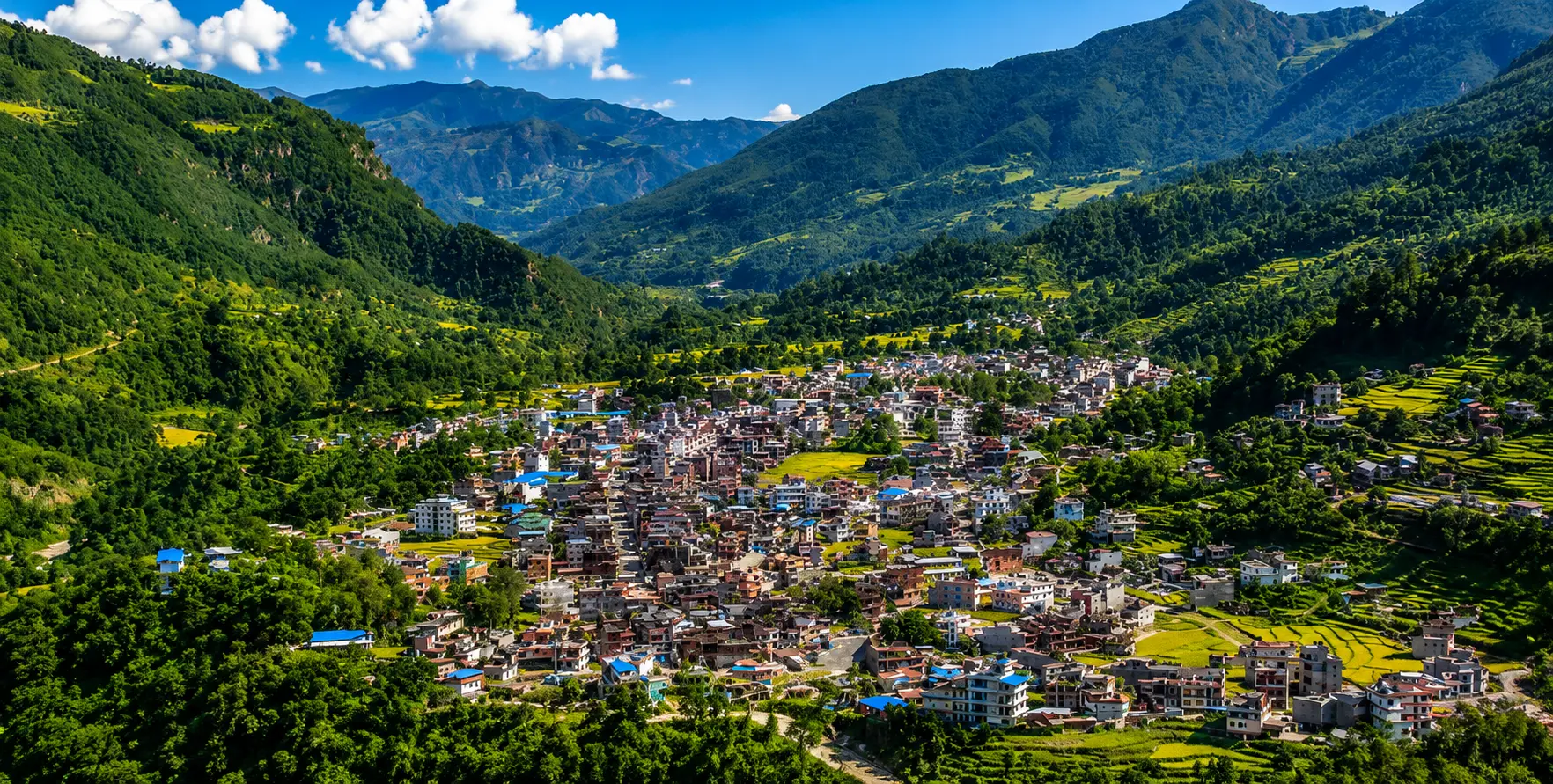
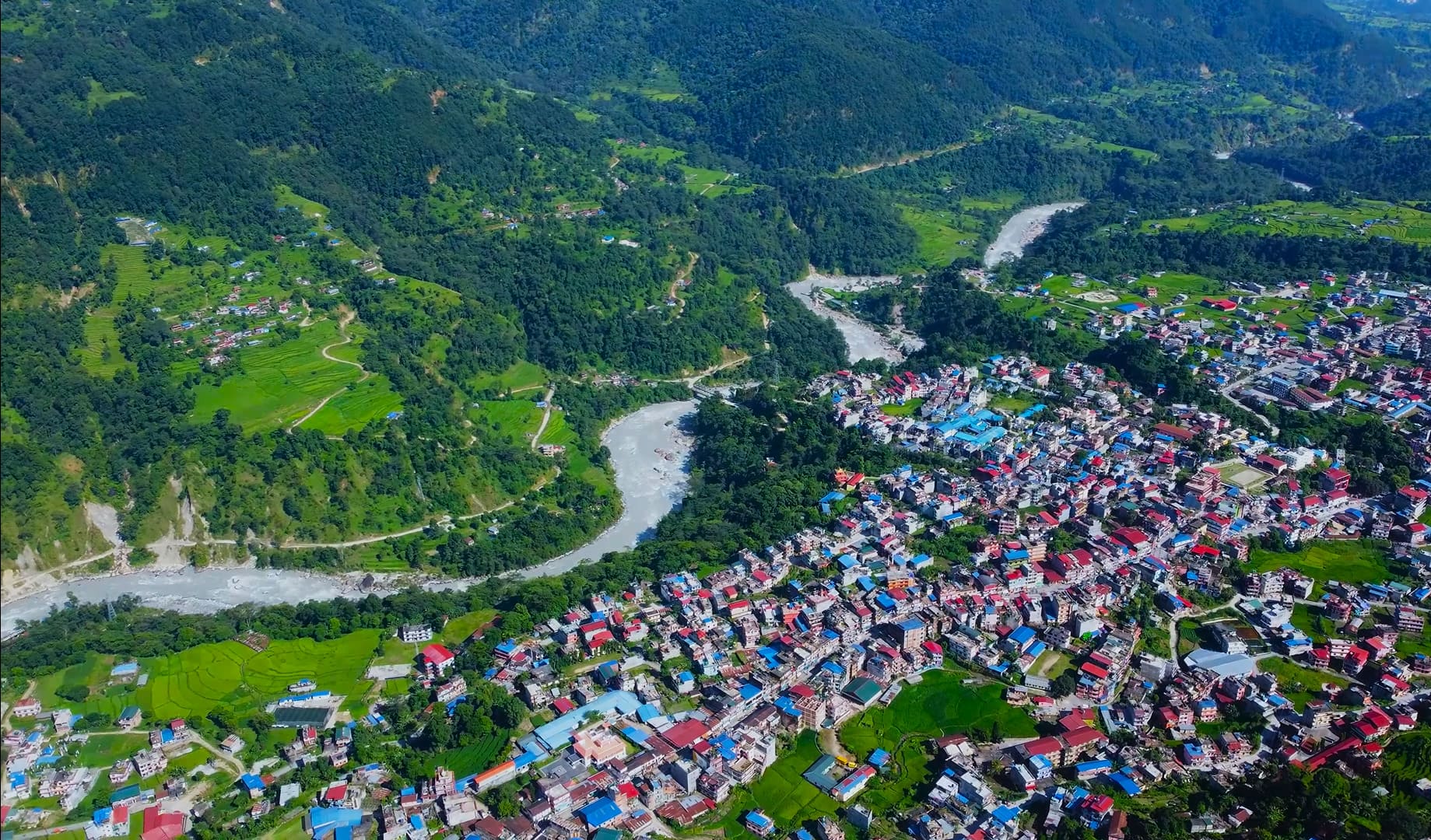
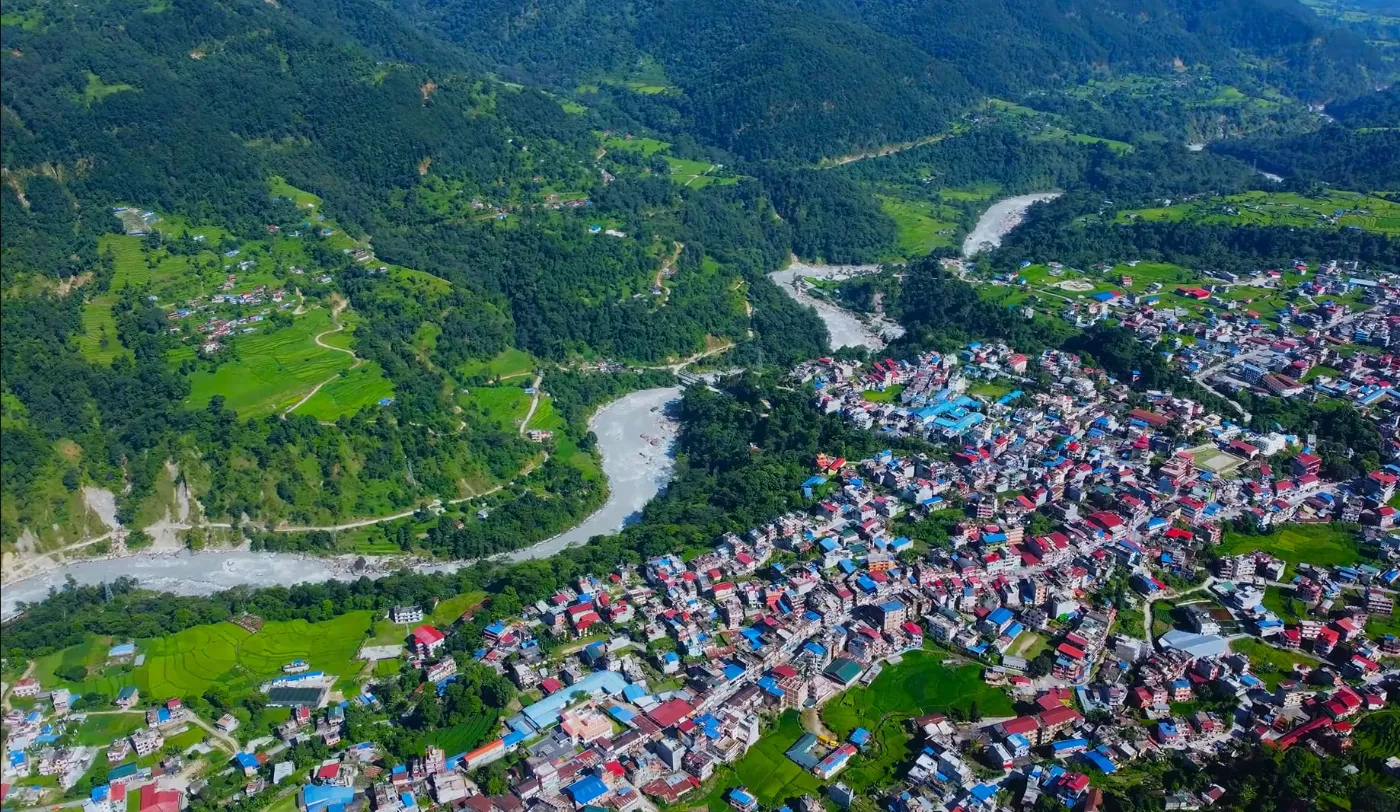
Besisahar is a genuine Nepali market town – busy, colourful, and full of the daily life of the Lamjung district. For trekkers arriving by Hiace from Kathmandu, it is the transition point between the city world and the mountain world. The Marsyangdi River flows fast and green just below the town.

The hills rise dramatically to the north, and the first Annapurna Circuit trail markers are visible from the main bazaar.

What to Do in Besisahar Before Your Trek

  • Register your ACAP permit at the official ACAP checkpoint in Besisahar – your permit must be stamped here before trekking north.
  • Withdraw cash from the ATM – this is the last reliable ATM until Jomsom (via Manang). Budget NPR 40,000 to NPR 60,000 per person for the full circuit, which includes food, accommodation, and permits
  • Final gear check and purchases – Besisahar has small trekking shops selling forgotten items such as trekking poles, gaiters, gloves, headlamps, and batteries at reasonable prices
  • Eat a proper meal at a Besisahar restaurant before hitting the trail – dal bhat is the recommended pre-trek meal for maximum energy.
  • Confirm your porter and guide arrangements if hiring locally – Besisahar has a small but active porter and guide community.
  • Download offline maps to your phone if not already done – signal becomes unreliable beyond. Chame

Trekking Permits for the Annapurna Circuit

All trekkers on the Annapurna Circuit require two permits. These must be obtained in Kathmandu or Pokhara before departure – they can also be purchased in Besisahar, but it is more convenient to arrange in advance:

PermitCost 2026Where to GetChecked At
ACAP – Annapurna Conservation Area PermitNPR 3,000 (USD 22)Nepal Tourism Board – Kathmandu or Pokhara (or Besisahar checkpoint)Besisahar, Chame, Manang, Muktinath, Tatopani
TIMS Card – Trekkers Information Management SystemUSD 10Nepal Tourism Board / TAAN – Kathmandu or PokharaBesisahar checkpoint and multiple points along the route

Obtain your ACAP permit and TIMS card from the Nepal Tourism Board office in Kathmandu (Pradarshani Marg) or in Pokhara (Damside) before your Hiace transfer departs. The Besisahar checkpoint strictly inspects permits – trekkers without valid permits will be sent back or fined. Allow 30 to 60 minutes at the Nepal Tourism Board office.

Annapurna Circuit Trek – Overview from Besisahar

Starting the full Annapurna Circuit from Besisahar means walking the traditional route. Here is what lies ahead:

DayStageDistanceAltitudeHighlights
Day 1Besisahar – Khudi11 km820m → 790mMarsyangdi valley, waterfalls, subtropical forests
Day 2Khudi – Bahundanda11 km790m → 1,310mRice terraces, first Himalayan foothills views
Day 3Bahundanda – Chamje16 km1,310m→1,430mThe gorge narrows dramatically, with suspension bridges
Day 4Chamje – Tal10 km1,430m→1,700mEnter Manang District, a dramatic gorge
Day 5Tal – Dharapani12 km1,700m→1,860mWide valley, Tibetan culture begins, waterfalls
Day 6Dharapani – Chame15 km1,860m→2,710mApple orchards, forest, and Annapurna II appear
Day 7Chame – Pisang17 km2,710m→3,200mPaungda Danda rock face, Upper Pisang monastery
Day 8Pisang – Manang22 km3,200m→3,500mAnnapurna III, Gangapurna glacier, Braga gompa
Day 9Manang (rest day)–3,500mIce Lake hike, Praken Gompa, HRA altitude briefing
Day 10Manang – Yak Kharka10 km3,500m→4,018mHigh pastures, Chulu peaks
Day 11Yak Kharka – Thorong Phedi8 km4,018m→4,450mLast teahouses before the pass
Day 12Thorong La Pass – Muktinath16 km4,450m→5,416m→3,710mThe highest point of the circuit, the sacred Muktinath temple
Day 13Muktinath – Marpha28 km3,710m→2,670mKali Gandaki gorge, Jomsom, apple orchards
Day 14Marpha – Tatopani30 km2,670m→1,190mDhaulagiri views, hot springs
Day 15Tatopani – Ghorepani18 km1,190m→2,874mSteep climb, rhododendron forests
Day 16Ghorepani – Poon Hill – Nayapul21 km2,874m→3,210m→1,070mPoon Hill sunrise, final descent to Nayapul

Total Trek Duration: 16 to 21 days for the full circuit from Besisahar to Nayapul
Total Distance: Approximately 200 to 230 km on the full circuit
Highest Point: Thorong La Pass at 5,416 m
End Point: Nayapul (near Pokhara) – vehicle back to Pokhara from the trailhead
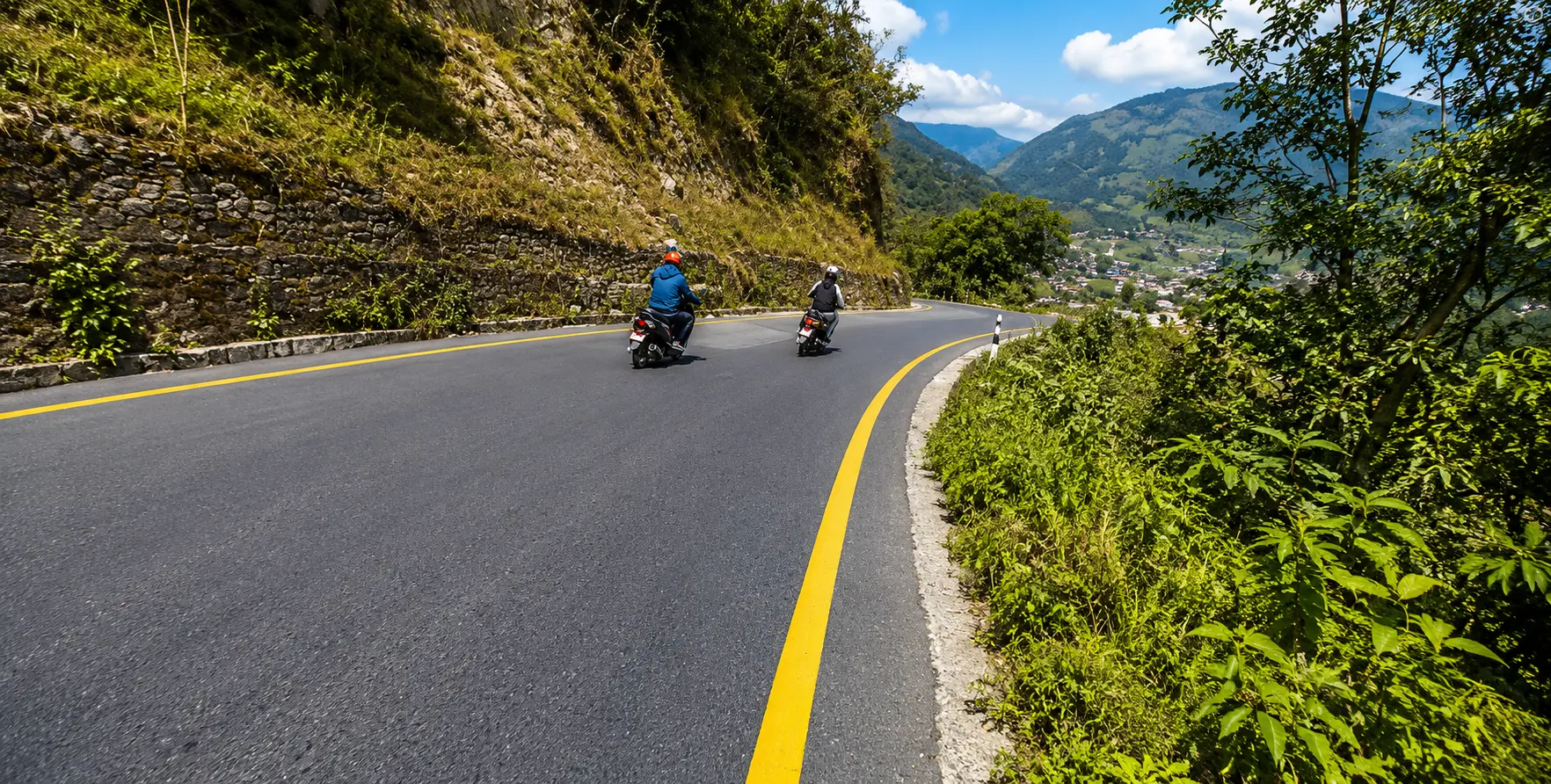
Way to besisahar

Hiace vs Other Transport Options – Kathmandu to Besisahar

TransportCostTravel TimeGroup SizeComfortBest For
Private Hiace VanUSD 120–200 full van3.5–4.5 hrs7–14 paxExcellentTrekking groups – recommended
Private SUVUSD 100–160 full car3.5–4.5 hrs4–5 paxExcellentSmall groups of 4–5
Private SedanUSD 100–120 full car3.5–4.5 hrs1–3 paxGoodSolo trekker or couple
Local Bus (Kathmandu–Besisahar)NPR 400–600/seat5–7 hrsPer seatBasicVery budget – connections required
Tourist Bus to Pokhara + jeepUSD 10–15 + jeep5–7 hrs totalPer seatVariableBudget solo trekkers

For trekking groups of 7 or more, the private Hiace van is almost always the best choice. It keeps the group together, provides full trekking-pack storage, departs from the hotel at the group’s chosen time, and, at USD 11 to USD 17 per person for a group of 10, is cost-competitive with local buses, without the inconvenience of connections and shared seats.

Drive or Trek from Besisahar? Understanding Modern Options

In 2026, the question for Annapurna Circuit trekkers is not just how to get to Besisahar, but how much of the lower circuit to do by vehicle vs on foot. The road from Besisahar has been extended north through much of the lower circuit, and this changes the trekking decisions for many groups:

Option A: Drive to Besisahar, Trek the Full Circuit (16–20 days)

Take the Hiace from Kathmandu to Besisahar and walk the complete traditional circuit from Besisahar to Nayapul. This is the original Annapurna Circuit experience. The lower sections from Besisahar to Chame now run partly alongside the jeep road, but the trail itself remains separate in most places.

For traditionalists and those who want the full circuit distance, this is still a valid and rewarding option.

Option B: Drive to Chame, Trek Upper Circuit (12–14 days)

Take the Hiace from Kathmandu to Besisahar, then continue by local jeep from Besisahar to Chame (2,710 m), and begin trekking from Chame. This skips the lower Marsyangdi gorge section that is now most heavily affected by road construction. Trekking begins at Chame in the circuit’s most scenic high-altitude section—a popular choice for time-limited trekkers.

Vehicle Hiring Nepal can arrange the Besisahar-to-Chame jeep connection.

Option C: Drive to Manang, Trek from Manang (7–10 days)

The most common choice for time-limited trekkers in 2026. Take the Hiace from Kathmandu to Besisahar, then continue by 4WD jeep from Besisahar to Manang (3,500 m), and begin the circuit in Manang. This puts you immediately in the most dramatic, high-altitude section of the circuit – Thorong La, Muktinath, and the Kali Gandaki gorge. Vehicle Hiring Nepal offers the full Kathmandu-to-Manang multi-vehicle package.
Kathmandu to Besisahar Hiace Transfer-Hiace Hire in Nepal – Comfortable Group Transportation Service

Best Time for Kathmandu to Besisahar Hiace Transfer

October to November (Best)

The post-monsoon season is the finest time for the Annapurna Circuit and the Kathmandu-to-Besisahar transfer. Roads are dry, skies are clear, and the Annapurna range is brilliantly visible. October and November are the busiest months – book your Hiace transfer at least 1 to 2 weeks in advance, as trekking groups are numerous.

The morning drive to Besisahar in October light through the Trishuli gorge is beautiful.

March to May (Excellent – Spring)

Spring is the second-best season. Rhododendron forests along the Prithvi Highway hillsides bloom in March and April. The circuit trail above 2,000 m is lined with flowering rhododendrons.

Mountain views are good in the morning. Roads are dry and in good condition—less crowded than in October–November.

December to February (Good – Cold at High Altitude)

The Kathmandu-Besisahar road is fully accessible in winter. The lower circuit trail from Besisahar to Chame is walkable in winter. However, the Thorong La Pass can be snowbound in January and February – check current conditions before committing to the full circuit crossing in the winter months.

June to September (Monsoon – Caution)

The Prithvi Highway and the Dumre–Besisahar road remain accessible during the monsoon. However, the lower circuit trail from Besisahar through the Marsyangdi gorge has significant landslide and leech issues in the monsoon. Most trekking agencies do not recommend the full Annapurna Circuit during the peak monsoon season.

If trekking in the monsoon, drive to Chame or Manang to start above the worst of the gorge road issues.

Accommodation in Besisahar

Besisahar has good accommodation for trekkers arriving by Hiace from Kathmandu. Here is what is available:

  • Budget teahouses: NPR 300 to NPR 600 per night – simple rooms, shared bathrooms, cold water
  • Mid-range guesthouses: NPR 600 to NPR 1,500 – cleaner rooms, some with attached bathrooms, hot bucket water available
  • Better hotels: NPR 1,500 to NPR 3,000 – more comfortable rooms, hot shower, good restaurant
  • Meals available everywhere: Dal bhat, noodles, Tibetan bread, eggs, tea – the pre-trek dal bhat at a Besisahar restaurant is a deeply satisfying way to fuel up
  • Electricity is reliable in Besisahar – charge all devices fully here before the circuit.
  • Mobile signal: NTC and Ncell both work in Besisahar
  • Note: Prices increase significantly once you are on the circuit above Besisahar – enjoy Besisahar prices while you can

What to Pack for the Kathmandu to Besisahar Hiace Journey

  • All trekking permits – ACAP and TIMS card – can be obtained in Kathmandu the day before departure.
  • Sufficient Nepali Rupees – withdraw extra in Kathmandu and top up at Besisahar ATM
  • Snacks and water for the 3.5 to 4.5-hour van journey – stops are limited between Mugling and Besisahar
  • Motion sickness medication, if needed – the Dumre to Besisahar road has some winding sections
  • Camera with a charged battery – Trishuli gorge scenery from the Hiace is excellent
  • All trekking gear packed and organised in your main backpack – ready to trek on arrival
  • Warm base layers accessible in your daypack – mornings in Besisahar can be cool

Group Trekking Tips for the Hiace Transfer

  • Agree on your departure time as a group the evening before – the 6:00 AM departure window requires everyone to be ready by then.
  • Coordinate pickup points if group members are staying at different hotels in Kathmandu – inform Vehicle Hiring Nepal of all pickup addresses at the time of booking.
  • Assign one group member to serve as the logistics contact with the Vehicle Hiring Nepal driver to ensure smooth communication.
  • Load the heaviest packs into the rear luggage area first, smaller bags on top – your Hiace driver will assist with loading
  • If any group member is prone to motion sickness, reserve the front passenger seat for them.
  • Designate someone to handle the Mugling stop timing – the group should agree in advance on 20 or 30 minutes.
  • Have your ACAP and TIMS permits accessible (not buried in the main pack) for the Besisahar checkpoint.

What is Included in Your Hiace Transfer

  • Toyota Hiace van (standard or high-roof) with an experienced, licensed driver
  • Full fuel cost for the complete Kathmandu to Besisahar journey
  • Vehicle insurance
  • Pickup from your hotel or guesthouse in Kathmandu (Thamel or any area)
  • Drop-off at the Besisahar ACAP checkpoint or the Besisahar main bazaar area
  • Tea stop at Malekhu and a full break at Mugling junction
  • Driver available for return pickup from Besisahar, Nayapul, or Dharapani at the end of the circuit (pre-arrange)
  • 24/7 WhatsApp support before and during the journey

Not included: ACAP permit and TIMS card fees, personal meals, teahouse accommodation, guide and porter fees, and any additional stops beyond the agreed route.
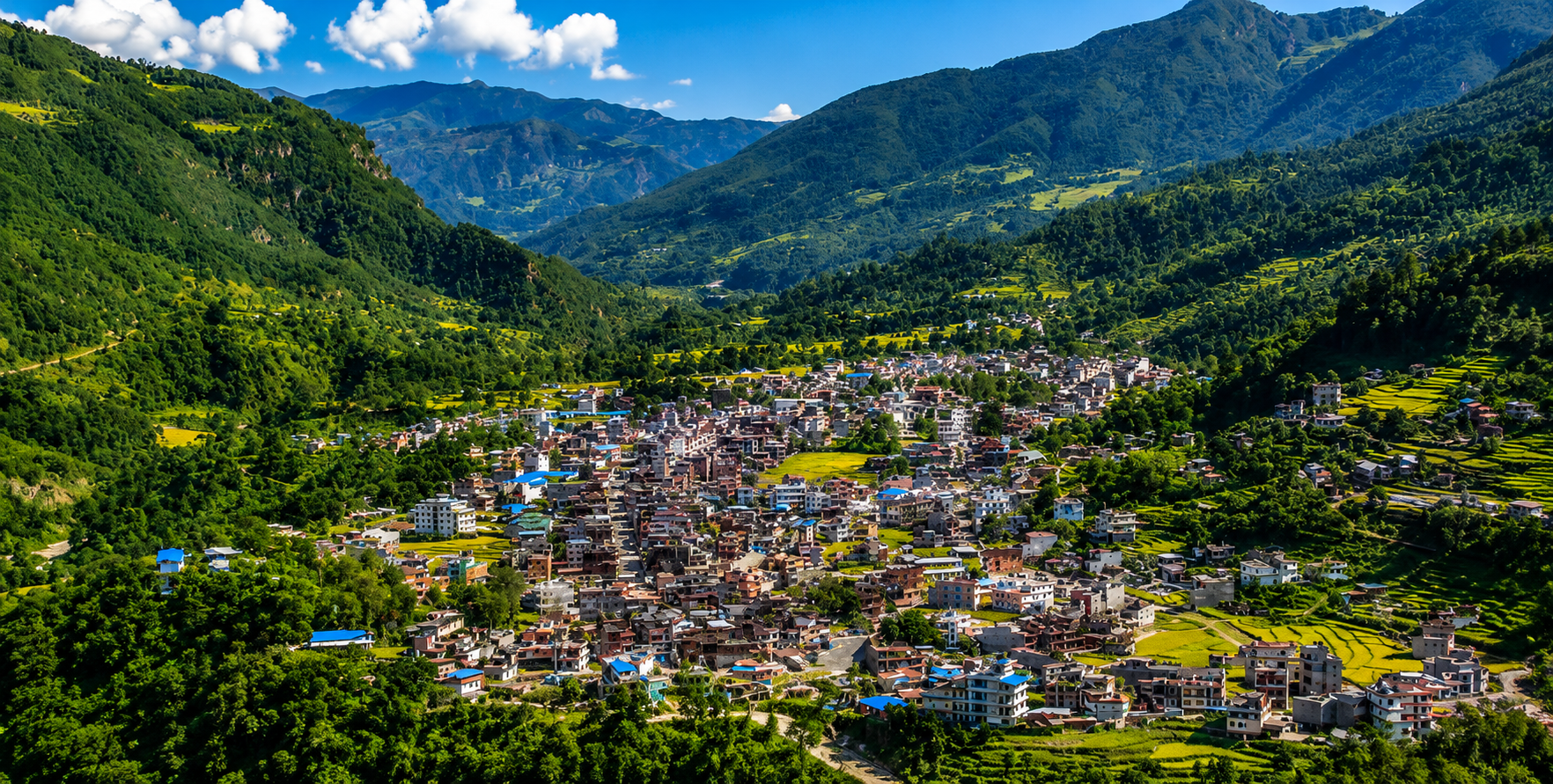
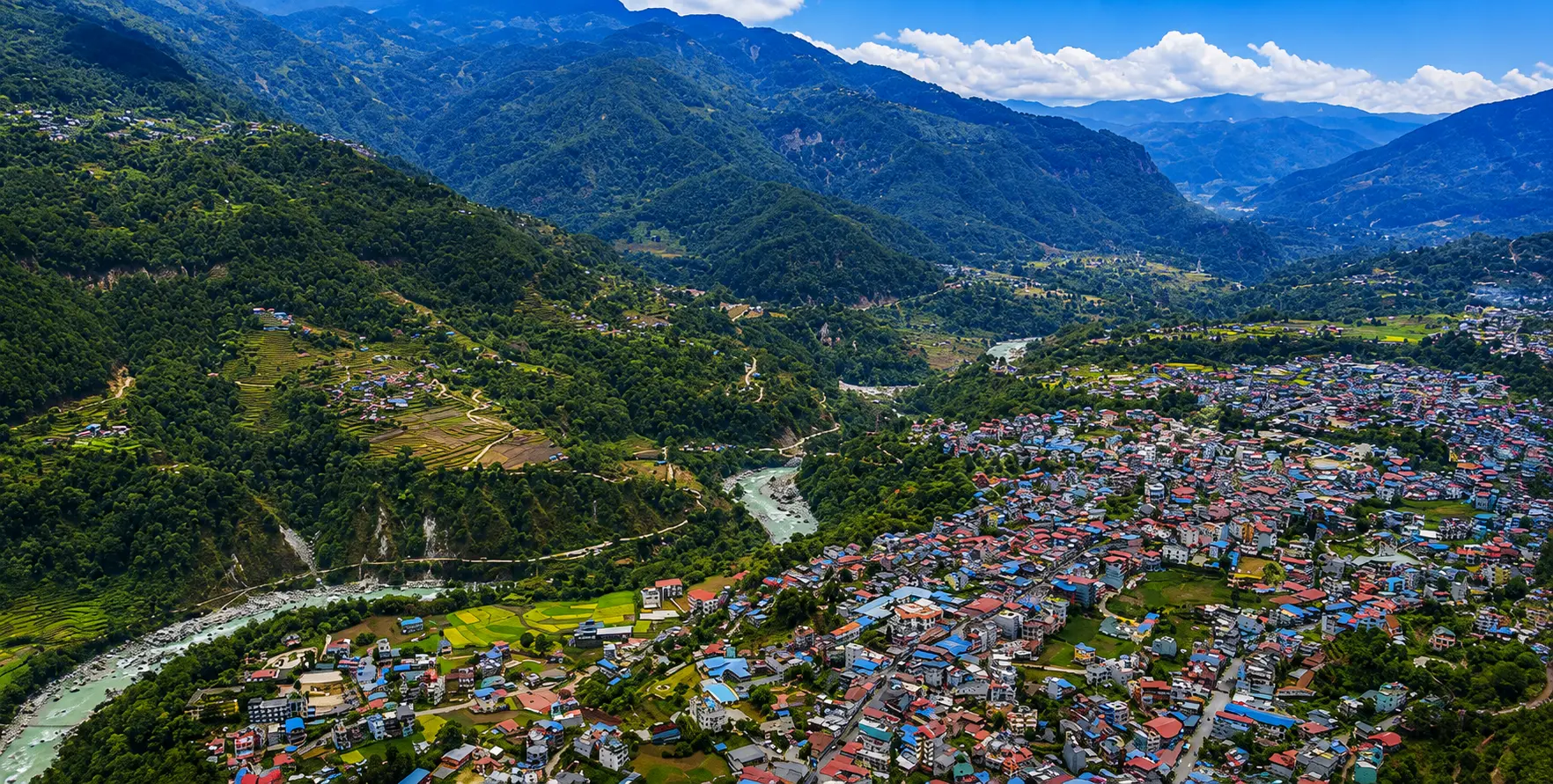
Besisahar town from above

How to Book Your Kathmandu to Besisahar Hiace Transfer

  1. Contact Vehicle Hiring Nepal via WhatsApp at +977 981-4227196 or visit vehiclehiringnepal.com
  2. Confirm your travel date and departure time from Kathmandu (6:00 AM recommended)
  3. Provide all pickup addresses in Kathmandu – hotel names and areas for all group members
  4. Confirm the total group size and the number of trekking packs
  5. Specify destination – Besisahar only, or continuing to Chame or Manang
  6. Request a return pickup arrangement from Nayapul or Dharapani if needed
  7. Receive booking confirmation with driver name, van details, and pickup time

WhatsApp: +977 981-4227196
Email: [email protected]

Frequently Asked Questions

How long does the Hiace transfer from Kathmandu to Besisahar take?

The Hiace van transfer takes approximately 3.5 to 4.5 hours, including a tea break at Malekhu and a 20 to 30-minute break at Mugling junction. Departing Kathmandu at 6:00 AM, most groups arrive in Besisahar between 9:30 and 10:30 AM.

Is a Hiace van the right choice for a group of 6 trekkers?

Yes. A Toyota Hiace comfortably seats 6 to 12 trekkers, with ample space for all luggage. For a group of exactly 6, the Hiace provides spacious seating for everyone, and the per-person cost is USD 20-28 – very reasonable for the convenience and comfort of a private group transfer.

A standard sedan or SUV would be too small for 6 trekkers with full packs.

Can I get permits at Besisahar or must I obtain them in Kathmandu?

You can technically obtain ACAP permits and TIMS cards at the Besisahar permit checkpoint on arrival. However, we strongly recommend getting both permits in Kathmandu at the Nepal Tourism Board office (Pradarshani Marg) before your Hiace departure. This avoids queuing in Besisahar with a fully loaded van, ensures your permits are processed properly, and lets you start trekking immediately upon arrival.

Can the same Hiace driver take us from Besisahar to Chame?

A standard Toyota Hiace van can travel from Besisahar to approximately Khudi or Bahundanda on the very early sections of the mountain track beyond Besisahar. Still, the road beyond becomes too rough and narrow for a Hiace beyond those points.

For travel from Besisahar to Chame or Manang, you’ll need a 4WD Toyota Land Cruiser jeep. Vehicle Hiring Nepal can arrange a Hiace from Kathmandu to Besisahar and a Land Cruiser jeep from Besisahar to Chame as a smooth combined booking.

What is the last ATM before the high sections of the Annapurna Circuit?

The last reliable ATMs are in Besisahar. Manang has a limited e-banking kiosk that is sometimes operational but unreliable. Withdraw all the Nepali Rupees you need for the full circuit in Besisahar – or better yet, in Kathmandu before departure.

Budget NPR 4,000 to NPR 6,000 per person per day for teahouse food and accommodation on the circuit.

What happens at the end of the Annapurna Circuit – how do I get back to Kathmandu?

Most trekkers completing the full Annapurna Circuit end at Nayapul (near Pokhara) after descending from Poon Hill. From Nayapul, Vehicle Hiring Nepal can arrange a private vehicle back to Pokhara Lakeside (45 to 60 minutes), where you can rest, and then a separate vehicle from Pokhara to Kathmandu the following day (6 to 7 hours).

Alternatively, fly from Pokhara to Kathmandu in 25 minutes. Book your return transport when arranging your outward Hiace transfer.

Final Thoughts

The Hiace van transfer from Kathmandu to Besisahar is the essential first step of one of the world’s great trekking adventures. Getting your group from Kathmandu to the Annapurna Circuit trailhead comfortably, on time, and with all gear intact sets the perfect tone for the days and weeks of trekking ahead.

A pre-booked Toyota Hiace with Vehicle Hiring Nepal means no bus park stress, no early morning taxi scramble, no split groups, and no wasted time – just a smooth, direct journey from your Kathmandu hotel to the start of the Marsyangdi valley.

Thousands of trekking groups have trusted Vehicle Hiring Nepal along the Kathmandu-to-Besisahar route. Our Hiace vans are well-maintained, our drivers are experienced on the Prithvi Highway and Dumre road, and our 24/7 WhatsApp support means you are never without help from booking to drop-off.

Book your Kathmandu-to-Besisahar Hiace transfer today. WhatsApp: +977 981-4227196 | Email: [email protected]
Kathmandu to Ilam Vehicle Rental: Car, Scorpio and Hiace Guide

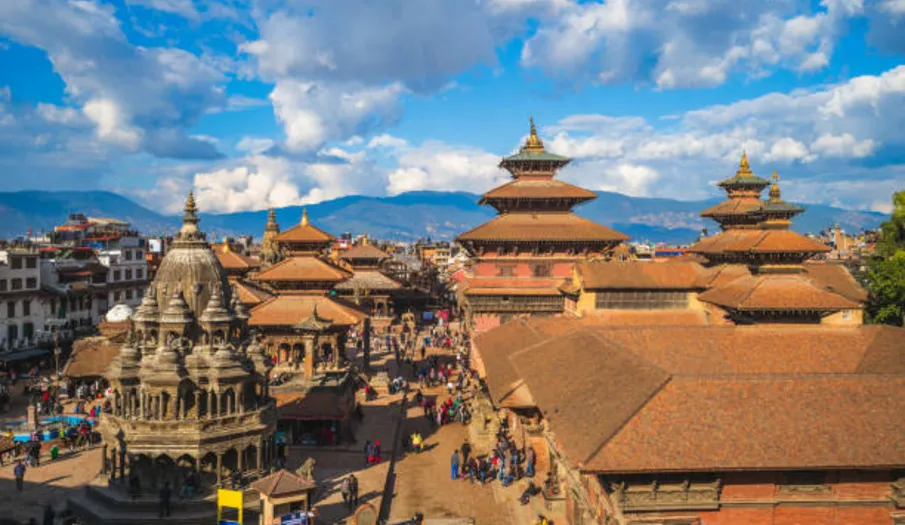
Patan Durbar Square in the Kathmandu Valley

Kathmandu to Ilam Vehicle Rental – Car, Scorpio & Hiace Guide

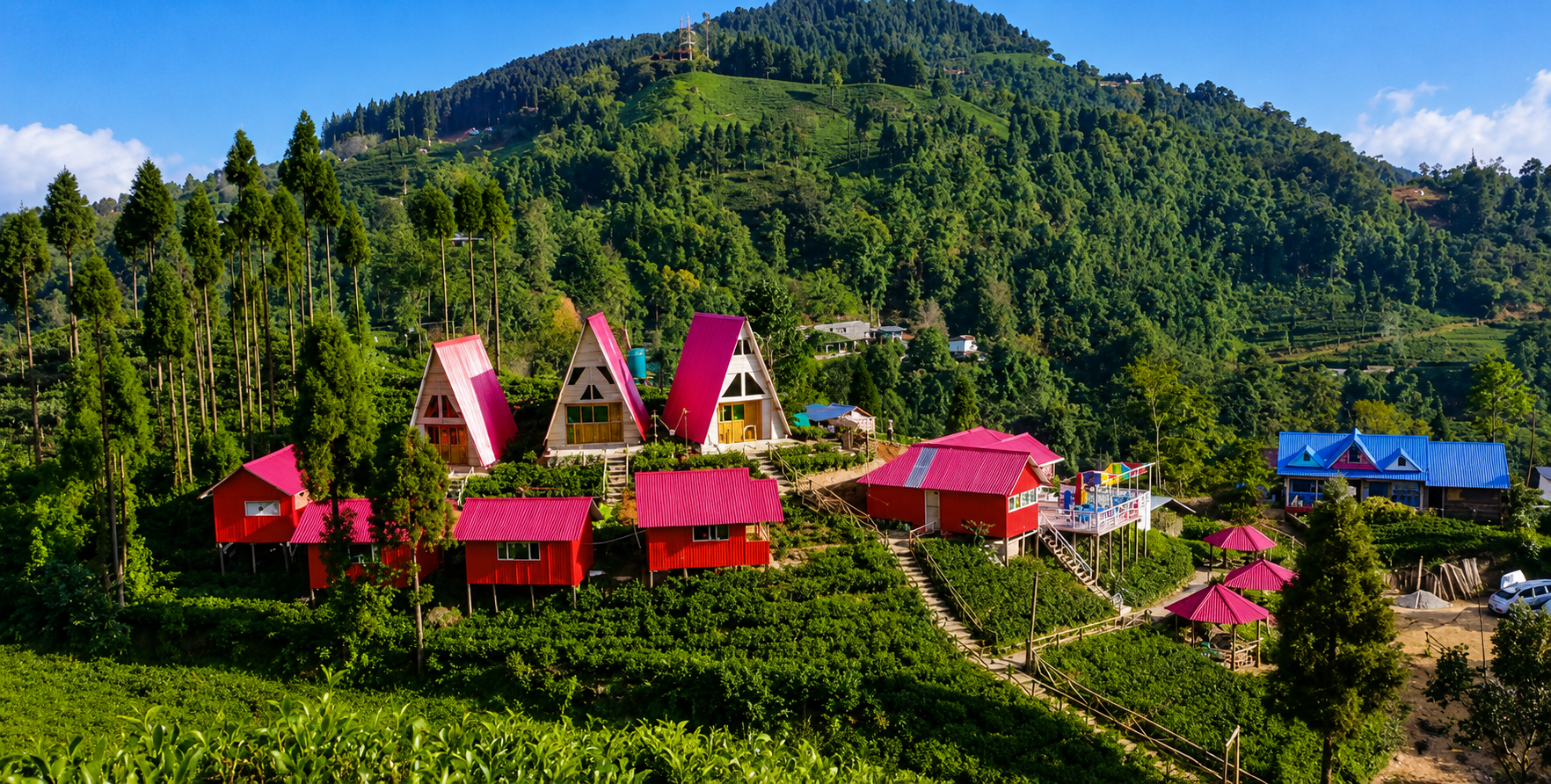
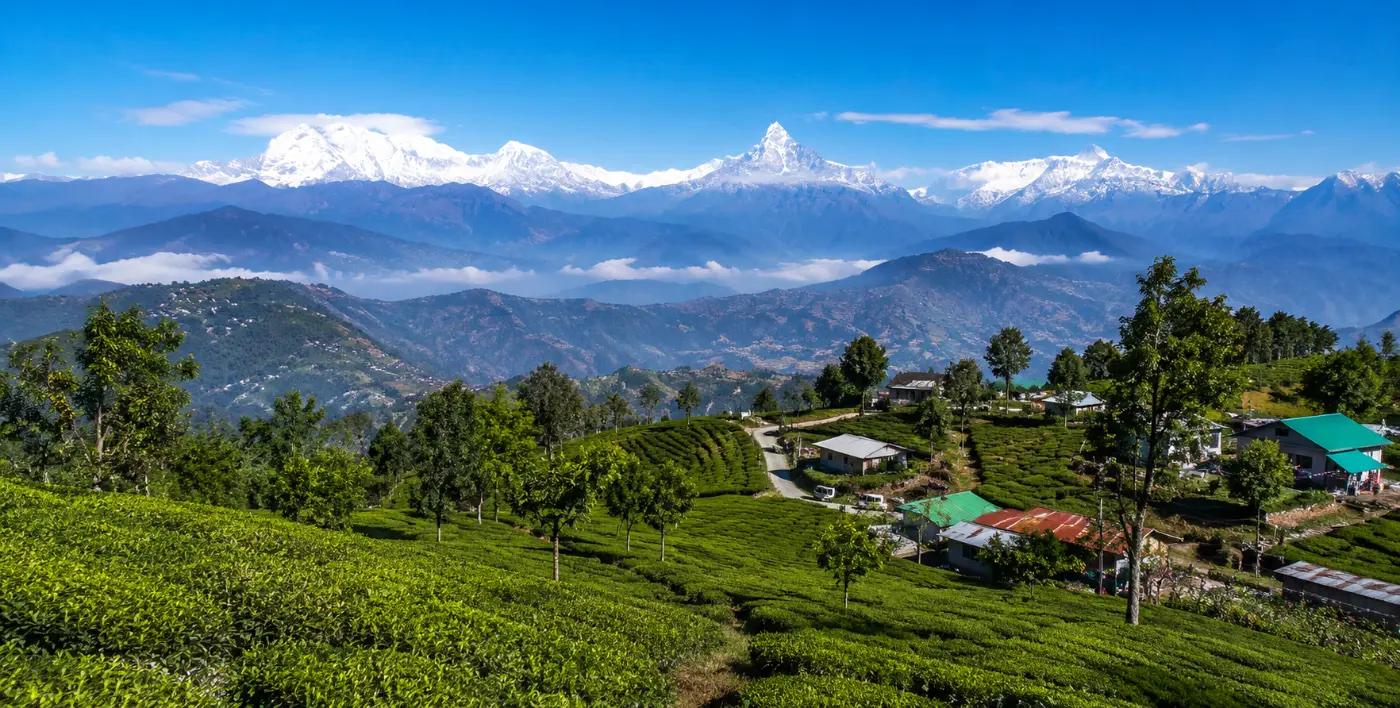
Ilam is Nepal’s most celebrated tea district – a lush, mist-draped highland in the eastern hills of Koshi Province where rolling tea gardens cascade down terraced slopes, cardamom plantations fill the forest floor with fragrance, and panoramic views of Kanchenjunga (8,586 m) – the world’s third-highest mountain – crown the horizon on clear mornings. Ilam is one of Nepal’s finest and least crowded natural destinations, offering a genuine escape from the mountain-circuit tourist trail into the peaceful beauty of eastern Nepal.

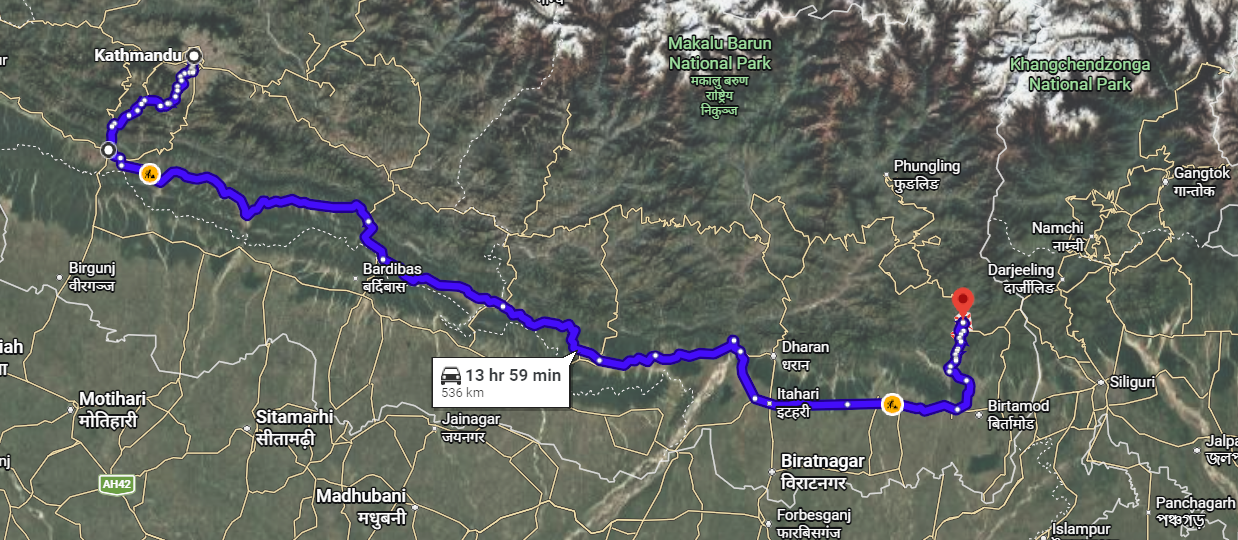
Reaching Ilam from Kathmandu by private vehicle is a long but deeply rewarding road journey of approximately 580-610 km through the Terai plains and eastern hill roads. For this eastern Nepal route, the Mahindra Scorpio and the Toyota Hiace van are the two most popular and practical vehicle choices – powerful enough for the mountain road to Ilam bazaar, spacious enough for group travel, and comfortable for the long highway journey across the Terai.

This complete  guide covers the full route, vehicle options, prices, road conditions, Ilam attractions, and how to book with Vehicle Hiring Nepal.

About Ilam – Nepal’s Tea Garden Paradise

Location: Ilam District, Koshi Province, eastern Nepal

Altitude: Ilam Bazaar at 1,200 m – tea gardens between 900 m and 2,100 m

Distance from KTM: Approximately 580–610 km by road

Famous For: Nepal’s finest orthodox teas, cardamom, Kanchenjunga views, trekking

Key Attractions: Mai Pokhari sacred lake, Shree Antu sunrise hill, Kanyam tea gardens, Phikkal

Travel Time: 12 to 15 hours from Kathmandu – 2-day journey recommended

Best Season: March to May (spring – first flush tea) and October to November (autumn)

Vehicle Options: Kathmandu to Ilam

Mahindra Scorpio – Best Choice for Ilam Road

Capacity: 6 to 9 passengers (7-seat and 9-seat versions)

Engine: 2.2L mHawk turbodiesel – powerful on hill roads

Best for: Groups of 5–8, families, trekkers – ideal for the Ilam hill section

The Mahindra Scorpio is the most popular vehicle on the Kathmandu-Ilam route. Its powerful diesel engine confidently handles the steep, winding road from the Terai plains up to Ilam Bazaar at 1,200 m. Its high ground clearance handles rough patches on eastern hill roads.

The spacious interior comfortably seats 6 to 7 passengers with luggage. For monsoon travel, the Scorpio’s 4WD capability gives it a significant safety advantage on wet hill roads.

Toyota Hiace Van – Best for Larger Groups

Capacity: 7 to 14 passengers

Best for: Groups of 8–14 – tea garden tours, family gatherings, corporate groups

The Toyota Hiace is ideal for larger groups making the Kathmandu-to-Ilam journey. With seating for up to 14 passengers and generous roof rack space for group luggage, the Hiace keeps everyone together for the full 2-day journey. It handles the Ilam hill road competently in dry conditions.

For monsoon travel, two Scorpios are preferred over a single Hiace.

Sedan Car – For Solo Travellers and Couples

Capacity: 1 to 3 passengers

Best for: Solo travellers and couples in the dry season – the Birtamod to Ilam road is manageable in dry conditions.

A sedan suits the main Terai highway section. However, the hill road from Birtamod to Ilam Bazaar and excursions to Mai Pokhari and Shree Antu are better handled by the Scorpio. For groups of 4 or more or monsoon travel, the Scorpio is always preferable.

Nepal Tour Package

Vehicle Rental Prices: Kathmandu to Ilam

VehicleCapacityOne-Way (USD)Round Trip (USD)Notes
Mahindra Scorpio6–9 paxUSD 180–400USD 300–680Best for Ilam Hill Road – recommended
Toyota Hiace Van7–14 paxUSD 200–450USD 340–800Best for groups of 8–14
Sedan Car1–3 paxUSD 140–300USD 240–600Solo/couple – dry season only
SUV4–5 paxUSD 170–300USD 290–800Small group – comfortable and capable
Toyota Coaster Bus15–22 paxUSD 280–450USD 460–800Large group tours to Ilam

All prices include driver, full fuel, and vehicle insurance. The 2-day journey requires an overnight stop; driver accommodation is not included. Contact Vehicle Hiring Nepal for exact pricing.

Kathmandu to Ilam Vehicle Rental: Car, Scorpio and Hiace Guide

Route Overview: Kathmandu to Ilam

Total Distance: Approximately 580–610 km

Total Drive Time: 12 to 15 hours over 2 days

Day 1 Route: Kathmandu – Hetauda – East-West Highway – Itahari – Birtamod (overnight)

Day 2 Route: Birtamod – Kanyam tea gardens – Ilam Bazaar

Overnight Stop: Dharan or Birtamod – approximately 8–9 hours from Kathmandu

Stage-by-Stage Road Guide

Day 1, Stage 1: Kathmandu to Hetauda (95 km | 2.5 hrs)

Depart Kathmandu early – 5:30 to 6:00 AM. Head south through the Kathmandu Valley and descend through the Mahabharat Hills on the Tribhuvan Highway to Hetauda in the Terai. The Tribhuvan Highway is Nepal’s oldest road – winding, historic, and dramatic, with views over the Terai plains from the hill crests.

Hetauda is a good stop for an early-morning breakfast.

Day 1, Stage 2: Hetauda to Itahari via East-West Highway (330 km | 5.5 hrs)

From Hetauda, join the flat East-West Highway and drive east across Nepal’s Terai agricultural heartland. This is the longest section of the journey – a continuous drive through rice paddies, mustard fields, and subtropical forest. Pass through Chitwan, Sarlahi, Mahottari, Dhanusha, and Sunsari districts.

Stop for lunch in the Janakpur area or any larger Terai town. Arrive in Itahari, a busy junction in eastern Nepal. Dharan, 18 km north of Itahari, is the recommended overnight stop with better hotels and a more pleasant atmosphere.

Day 1 Overnight: Dharan or Birtamod

Dharan (Sunsari District) is the recommended overnight stop – a clean, pleasant hill-edge city with good hotels, restaurants, and the famous Budhasubba Temple, worth a brief visit. Alternatively, Birtamod in Jhapa District – 100 km east of Itahari – is closer to Ilam and a good alternative if you prefer a shorter Day 2 drive.

Day 2: Birtamod to Kanyam to Ilam Bazaar (50 km | 2.5–3 hrs)

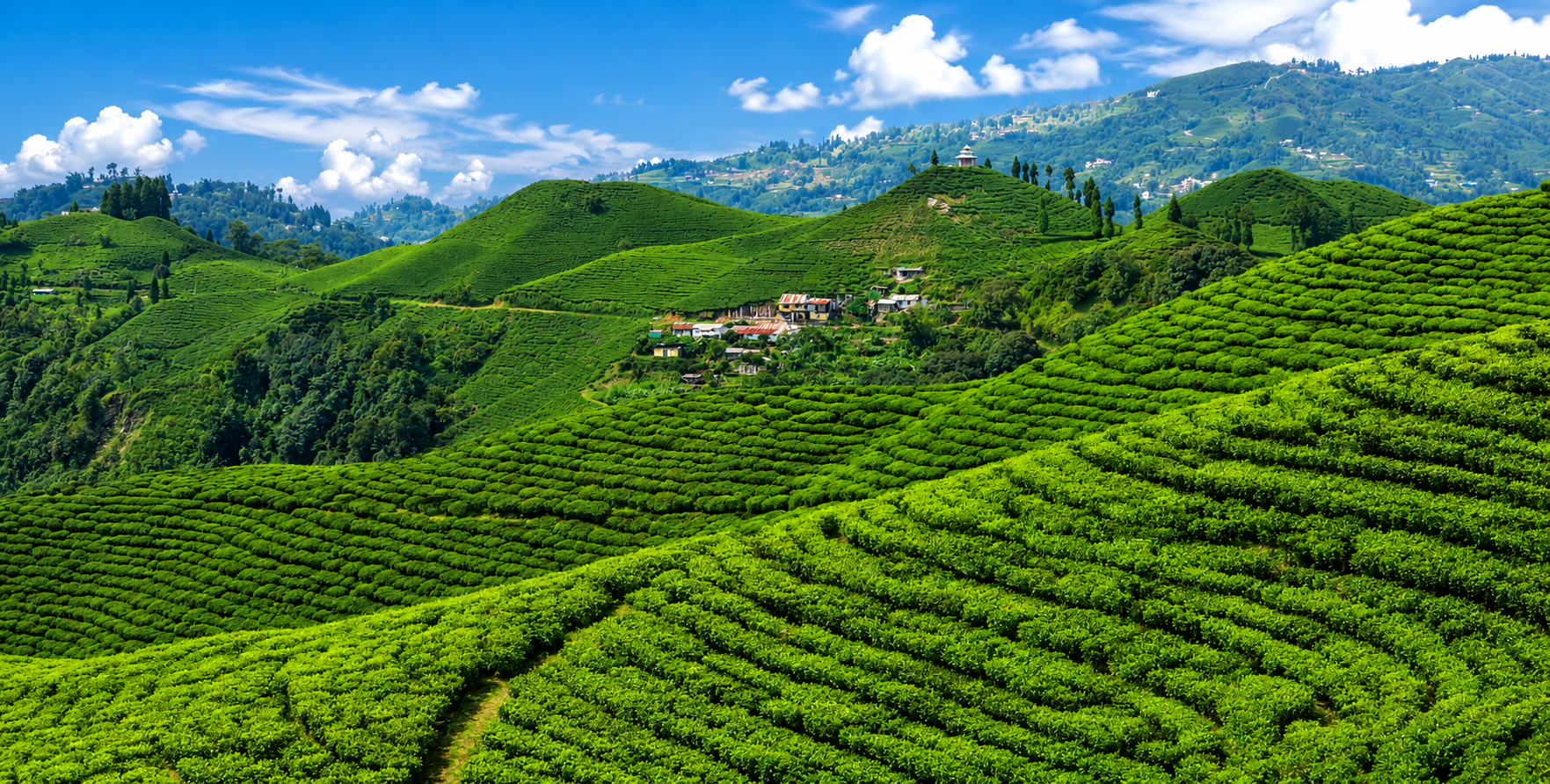
Depart your overnight stop early – 6:30 to 7:00 AM. From Birtamod, the road heads north into the Ilam hills on the Mechi Highway. The scenery transforms dramatically from the flat Terai into a lush green hill landscape of bamboo, cardamom forest, and the first tea gardens appearing on the slopes.

Kanyam (1,050 m) is the must-stop of the entire journey – the most famous tea garden viewpoint in Nepal, where rolling green tea gardens cascade down the hillside, and the Jhapa Terai plains stretch to the horizon far below. On clear October and November mornings, Kanchenjunga (8,586 m) appears above the northeastern horizon – a striking surprise.

Buy fresh Ilam tea directly from garden stalls here. Continue to the Phikkal ridge viewpoint, then on to Ilam Bazaar at 1,200 m.

Distance and Time Summary

StageFrom – ToDistanceDrive TimeNotes
Day 1-AKathmandu → Hetauda95 km2.5 hrsTribhuvan Hwy – winding, scenic
Day 1-BHetauda → Itahari330 km5.5 hrsEast-West Hwy – fast, flat Terai
Day 1-CItahari → Birtamod80 km1.5 hrsTerai highway – paved
OVERNIGHTDharan / Birtamod––Hotel overnight
Day 2-ABirtamod → Kanyam35 km1.5 hrsHill road – winding, scenic tea gardens
Day 2-BKanyam → Ilam Bazaar15 km45 minSteep hill road – Scorpio ideal
TOTALKathmandu → Ilam580 km12–14 hrs2 days, including overnight

Swayambhunath visit during Kathmandu Pokhara TourWhy the Scorpio Excels on the Ilam Hill Road
  • Powerful mHawk diesel engine handles steep climbs from Terai base to Kanyam and Ilam without strain
  • High ground clearance manages rough patches, eroded edges, and surface irregularities on the hill road
  • 4WD capability (on 4WD versions) – essential safety advantage in monsoon wet conditions
  • Shorter wheelbase than Hiace – easier to navigate tight switchbacks on the Kanyam to Ilam section
  • 7 to 9 seats – perfect group size for most Ilam visitor parties without the bulk of a full Hiace on narrow roads
  • Dominant local vehicle in eastern Nepal hill roads – drivers are highly experienced on this specific route

Road Conditions: Kathmandu to Ilam
SectionRoad TypeConditionNotes
KTM → HetaudaPaved mountain roadGoodWinding but well-maintained
Hetauda → ItahariEast-West HighwayVery GoodFast, flat Terai road
Itahari → BirtamodPaved flat highwayGoodStandard Terai highway
Birtamod → KanyamPaved hill roadModerateWinding climb – Scorpio ideal
Kanyam → Ilam BazaarPaved/rough hill roadModerateSteep, narrow – Scorpio best
Ilam → Mai PokhariRough hill trackDifficult4WD/Scorpio required
Ilam → Shree AntuRough hill trackDifficult4WD/Scorpio required – unpaved

Kathmandu to Ilam Vehicle Rental: Car, Scorpio and Hiace Guide

Top Attractions in Ilam District

Kanyam – Tea Garden Viewpoint (Must-Stop)

Nepal’s most iconic tea garden viewpoint – rolling green tea garden rows cascade down the hillside with the Jhapa plains visible far below. In October and November, Kanchenjunga (8,586 m) appears above the northeastern horizon on clear mornings. Buy fresh first-flush Ilam tea directly from garden stalls – incomparably fresher than anything in Kathmandu shops.

Your vehicle passes through Kanyam on the way to Ilam Bazaar – a stop here is mandatory.

Mai Pokhari – Sacred Alpine Lake (2,100 m)

A Ramsar-listed sacred alpine lake 22 km north of Ilam Bazaar, surrounded by an ancient rhododendron forest. Home to over 100 bird species and a red panda habitat. The spring rhododendron bloom around Mai Pokhari (March to April) is spectacular.

The drive requires the Scorpio on the rough hill track—a deeply peaceful and beautiful destination.

Shree Antu Hill – Kanchenjunga Sunrise

The finest sunrise viewpoint in eastern Nepal is at an elevation of approximately 2,200 m. On clear October and November mornings, Kanchenjunga and the entire eastern Himalayan chain appear above the horizon at dawn – a panorama rivalling Sarangkot and Poon Hill in scale and drama. Requires a Scorpio on a rough hill track from Ilam Bazaar.

Ilam Tea Factory Tour

The Ilam Tea Processing Factory near the bazaar accepts small groups for guided tours showing the full tea processing cycle – withering, rolling, oxidation, and drying. The smell of fresh tea in the factory is extraordinary. Tours are usually arranged informally at the factory gate.

Pashupatinagar – Border Ridge Town

A fascinating border town at 1,700 m on the Nepal-India border with a unique cross-border market character. Views from the border ridge are spectacular. The drive through the cardamom forest to reach it is scenic.

Best Time to Visit Ilam

March to May (Best – First Flush Tea Season)

Spring is the finest time to visit Ilam. The first flush tea harvest (March to April) produces the most prized, delicately aromatic teas. Rhododendron forests around Mai Pokhari are in spectacular bloom.

Roads are dry and in good condition, making it the most celebrated time to visit the Ilam tea gardens.

October to November (Excellent – Clear Mountain Views)

Post-monsoon skies are brilliantly clear. Kanchenjunga views from Shree Antu and Kanyam are at their finest. The second flush tea harvest produces rich, full-bodied teas.

Roads are fully dry and in excellent condition.

December to February (Good – Clear but Cold)

Quiet and cold in Ilam. Upper hills can have frost and occasional snow. Kanchenjunga views in winter are extraordinarily sharp.

Good for independent travellers wanting Ilam without crowds.

June to September (Monsoon – Difficult)

Heavy rainfall has made the Birtamod-Ilam hill road wet and slippery. Scorpio 4WD is most valuable during the monsoon. Tea gardens are intensely green, but mountain views are obscured and not recommended unless specifically wanting the monsoon experience.
Kathmandu to Ilam Vehicle Rental: Car, Scorpio and Hiace Guide

Accommodation in Ilam

  • Budget Guesthouse: NPR 500 to NPR 1,200 – simple rooms, shared bathroom, local meals
  • Mid-range Hotel: NPR 1,500 to NPR 3,500 – attached bathroom, hot water, restaurant
  • Better Hotels: NPR 3,500 to NPR 6,000 – comfortable rooms, tea garden views, WiFi
  • Tea Estate Homestay: NPR 1,500 to NPR 3,000 – authentic experience with a tea farming family
  • Kanyam Teahouse: NPR 800 to NPR 2,000 – simple rooms with iconic tea garden views

Practical Tips for the Kathmandu to Ilam Journey

  • Plan a minimum of 2 days – overnight in Dharan or Birtamod. Trying to do itg it in one day (12+ hours) is exhausting.
  • Depart Kathmandu by 5:30 to 6:00 AM on Day 1 to reach Dharan before dark
  • The East-West Highway section is long – carry music, podcasts, or audiobooks for the group
  • Carry Nepali Rupees cash – ATMs in Dharan, Birtamod, and Ilam Bazaar, but not on the hill road
  • Stock up on water and snacks before leaving Birtamod – the hill road has limited, reliable stops
  • Motion sickness tablets are recommended for the Birtamod to Ilam switchback section
  • Visit Kanyam tea gardens in the morning – best light for photography and mountain views
  • Purchase fresh Ilam tea directly at Kanyam stalls – incomparably better than packaged supermarket tea

What is Included in Your Vehicle Rental

  • Mahindra Scorpio, Toyota Hiace, sedan, or SUV as selected – fully maintained and insured
  • Professional driver experienced on the Kathmandu to Ilam eastern Nepal route
  • Full fuel cost for the complete 2-day journey
  • Vehicle insurance throughout
  • Pickup from your Kathmandu hotel
  • Drop-off at your Ilam Bazaar hotel or any Ilam destination
  • Flexibility for Kanyam, Phikkal, and scenic stops on the hill road
  • Return journey from Ilam to Kathmandu on your chosen date
  • 24/7 WhatsApp support

Nepal Tour Package

How to Book Your Kathmandu to Ilam Vehicle

  1. Contact Vehicle Hiring Nepal via WhatsApp at +977 981-4227196 or visit vehiclehiringnepal.com
  2. Choose a vehicle – Scorpio for groups of 5–8, Hiace for groups of 9–14
  3. Confirm travel dates and departure time from Kathmandu (5:30–6:00 AM recommended)
  4. Provide the pickup address in Kathmandu
  5. Specify overnight stop preference – Dharan or Birtamod
  6. Mention special stops – Mai Pokhari, Shree Antu, Pashupatinagar
  7. Receive a full 2-day journey plan with the driver’s name and vehicle details

Frequently Asked Questions

How far is Ilam from Kathmandu by road?

Ilam is approximately 580-610 km from Kathmandu. The journey takes 2 days: Day 1 covers roughly 470 to 500 km to Dharan or Birtamod (8 to 9 hours), and Day 2 covers the remaining 90 to 115 km to Ilam via the scenic Kanyam hill road (3 to 4 hours).

The Birtamod-to-Ilam hill road has steep inclines, sharp switchbacks, and rough-surface sections that benefit from the Scorpio’s powerful diesel engine, high ground clearance, and 4WD capability. Excursions to Mai Pokhari and Shree Antu require a Scorpio or similar 4WD vehicle on rough tracks. For monsoon travel, the Scorpio’s 4WD is essential for safety.

Can I do Kathmandu to Ilam in one day?

Not comfortably. The total drive is 12 to 15 hours, including the challenging Birtamod-to-Ilam hill section. Two days with an overnight in Dharan or Birtamod is the standard approach – giving everyone a proper rest and allowing a relaxed morning arrival in Ilam.

What is the best tea to buy in Ilam?

The most prized is first-flush orthodox tea (March to April) – light, aromatic, and delicately floral. The second flush (June) is fuller, with muscatel notes. Ilam green tea and silver tips (white tea) are also excellent.

Purchase directly at Kanyam garden stalls or from the Ilam Tea Factory for the freshest product.

Is Ilam suitable for families with children?

Yes – the gentle tea garden walks, cultural richness, fresh mountain air, and beautiful natural setting are excellent for families. The main challenge is the long 2-day drive – plan regular stops along the East-West Highway and keep children engaged with the changing landscape through the windows.

Final Thoughts

The road from Kathmandu to Ilam is one of Nepal’s great east-west journeys – a 2-day traverse from the mountain capital across the vast Terai plains and up into the misty tea-covered hills of eastern Nepal where Kanchenjunga watches over rolling green gardens. Ilam is one of Nepal’s most rewarding and under-visited destinations – a place of quiet beauty, fragrant air, and extraordinary tea.

The Mahindra Scorpio and Toyota Hiace are the perfect vehicles for this journey – powerful on the eastern hill roads, spacious for the group and luggage, and reliable across the long Terai highway. Vehicle Hiring Nepal provides both vehicles with experienced Eastern Nepal drivers who know every switchback of the Kanyam road.

Book your Kathmandu-to-Ilam vehicle rental today. WhatsApp: +977 981-4227196 | E-mail: [email protected]

Kathmandu to Pokhara Transfer by Every Vehicle Type

Patan Durbar Square in the Kathmandu Valley

Kathmandu to Pokhara  All Vehicle Transfer – Complete Guide

The road from Kathmandu to Pokhara is Nepal’s most travelled highway – a 200 km journey along the famous Prithvi Highway that connects the mountain capital with the lakeside city of Pokhara. Every day, thousands of travellers make this journey by a wide variety of vehicles: private sedans, SUVs, Hiace vans, Coaster buses, tourist buses, and public buses. Each vehicle type offers a different experience, price point, and level of comfort and flexibility.

Whether you are a solo backpacker on a tight budget, a family of five, a trekking group of twelve, or a corporate team of thirty, Vehicle Hiring Nepal has the perfect vehicle for your Kathmandu-to-Pokhara transfer. This complete guide covers every vehicle option available on this route – with full pricing, vehicle descriptions, comfort comparisons, and expert advice on choosing the right vehicle for your group and travel style.

Route Overview: Kathmandu to Pokhara

Distance: Approximately 200 km by road

Travel Time: 5 to 8 hours, depending on vehicle type and traffic

Main Road: Prithvi Highway – Nepal’s primary east-west arterial highway

Key Milestones: Naubise – Malekhu – Mugling Junction (midpoint/lunch stop) – Damauli – Pokhara

Best Departure: 6:00 to 7:30 AM from Kathmandu to arrive in Pokhara by early to mid-afternoon

Arrival Point: Tourist buses arrive at Lakeside (Baidam). Private vehicles deliver directly to your hotel

Scenic Highlight: Trishuli River gorge (Naubise to Mugling) and final Pokhara valley approach with Annapurna views

All Vehicle Options at a Glance

Here is a complete overview of every vehicle type available from Kathmandu to Pokhara in 2026 – from the most budget-friendly to the most comfortable:

Vehicle TypeCapacityPrice RangeTravel TimeBest For
Standard Tourist Bus (shared)Per seatUSD 10–15/person7–8 hrsSolo budget travellers, backpackers
Deluxe Tourist Bus (shared)Per seatUSD 15–20/person7–8 hrsComfort-seeking solo/couple travelers
Greenline Luxury Bus (shared)Per seatUSD 25–30/person6–7 hrsTop-end comfort includes lunch
Private Tourist Bus (full)25–40 paxUSD 300–500 full7–8 hrsLarge groups, schools, tours
Sedan Car (private)1–3 paxUSD 80–150 full car5–6 hrsCouples, small families, fast travel
SUV / Scorpio4–5 paxUSD 120–200 full5–6 hrsFamilies, small groups with luggage
Toyota Hiace Van (private)7–14 paxUSD 130–200 full5–6 hrsGroups, trekkers, corporate teams
Toyota Coaster Bus (private)15–22 paxUSD 250–400 full6–7 hrsMedium groups, school trips, tours
Full-Size Bus (private)23–45 paxUSD 250–500 full6–7 hrsLarge groups, pilgrimage parties
Private Jeep4–6 paxUS150- 20000 full5–6 hrsGroups needing onward mountain travel

All private vehicle prices are for the complete vehicle – not per person. All prices include the driver, fuel, and vehicle insurance. Tourist bus prices are per seat on a shared service.

Contact Vehicle Hiring Nepal for your exact 2026 quote based on your travel date and group size.

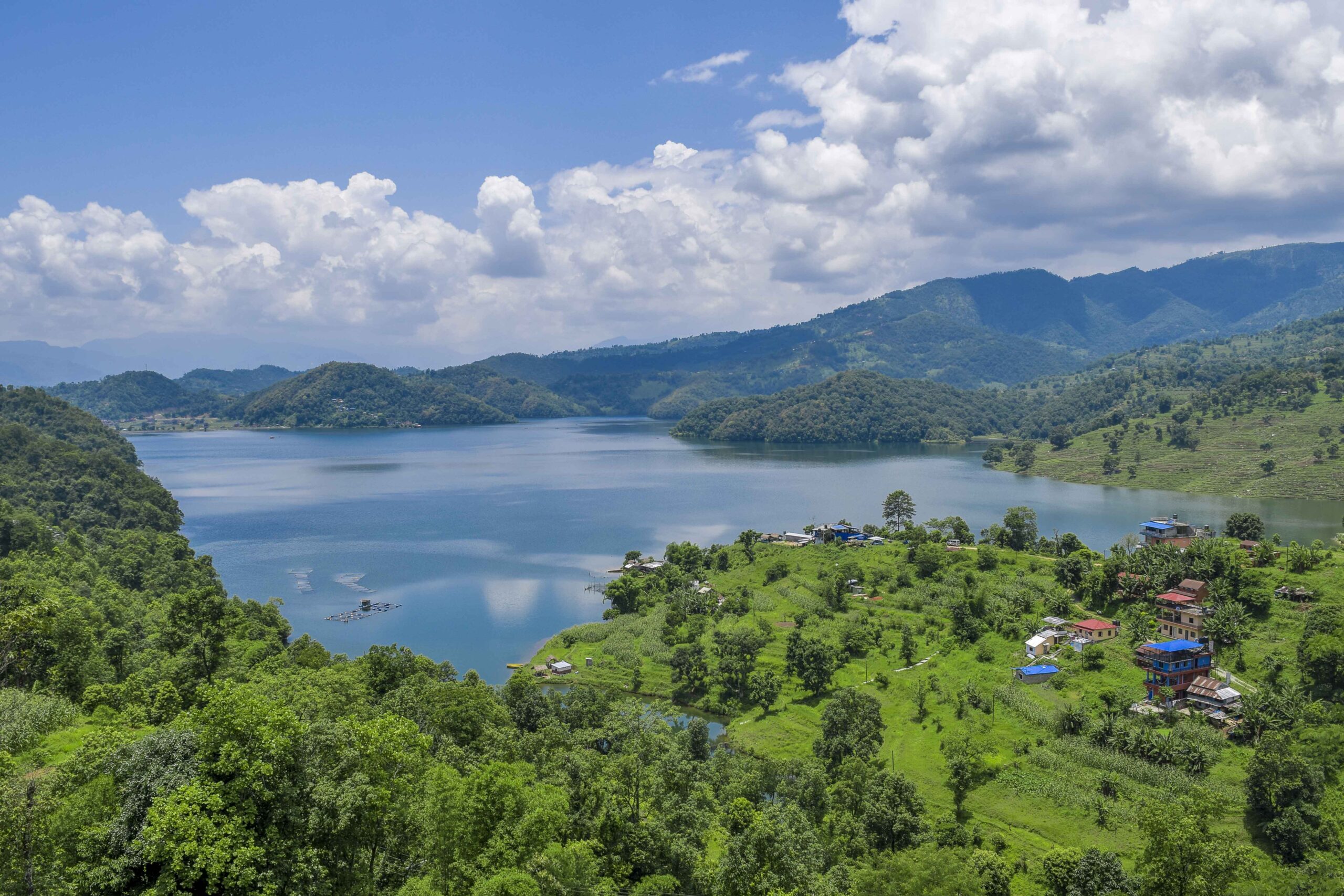
Begnas Lake Pokhara

Private Sedan Car – Kathmandu to Pokhara

Capacity: 1 to 3 passengers

Price: USD 100 to USD 150 for the full vehicle one-way

Travel Time: 5 to 6 hours

Models: MG, Honda City, Suzuki Ciaz, Hyundai Berza, BYD Accent

Who is the Sedan Car Best For?

The sedan car is the ideal choice for solo travellers, couples, and small families of up to 3 people who want a private, comfortable, and fast journey without paying for a larger vehicle. For a couple splitting the cost of the sedan, the per-person price (USD 40 to USD 55 each) is only marginally higher than a deluxe tourist bus ticket – with enormous advantages in flexibility, speed, and comfort.

Sedan Car Advantages

  • Fastest option for small groups – no scheduled stops, no fixed route, depart from your hotel door.
  • Air-conditioned throughout – drive in comfort regardless of outside temperature
  • Flexible departure time – leave at any hour that suits your schedule
  • Door-to-door service – hotel in Kathmandu to hotel in Pokhara Lakeside without leaving the vehicle
  • Stop anywhere you choose – riverside tea stop at Malekhu, photo stop at the Trishuli gorge, lunch at any Mugling restaurant
  • Private and quiet – perfect for couples, families with small children, and business travellers

Sedan Car Limitations

  • Limited boot space – maximum 2 to 3 standard bags plus daypacks
  • Not suitable for large trekking packs (70L+) for more than 2 passengers
  • Only suitable for 3 passengers maximum – not cost-effective for groups of 4+

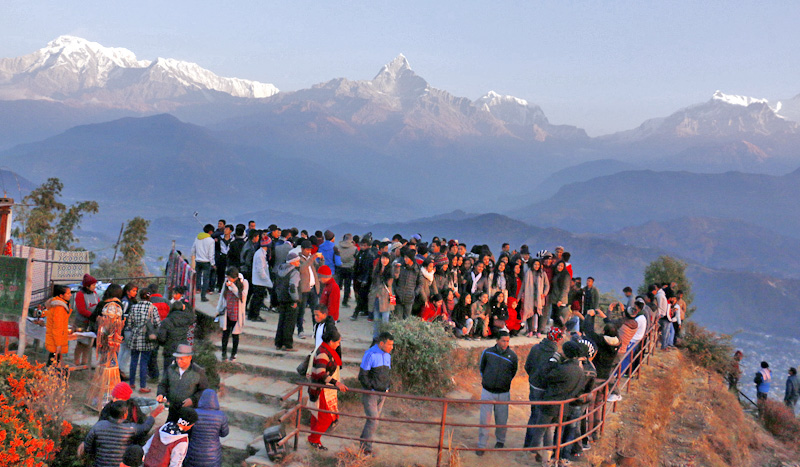
Sarangkot Pokhara

SUV and Jeep – Kathmandu to Pokhara

Capacity: 4 to 6 passengers

Price: USD 150 to USD 200 for the full vehicle one-way

Travel Time: 5 to 6 hours

Models: Private 4Wd Jeep, Scorpio, Sumo

Who is the SUV Best For?

The SUV is the most versatile vehicle for the journey from Kathmandu to Pokhara. A family of 4 to 5, a small group of friends or colleagues, or a group of trekkers with large backpacks will find the SUV offers the best balance of space, comfort, and cost per person across the entire route.

SUV Advantages

  • Spacious interior with genuine comfort for 4 to 5 passengers – not cramped like a sedan with 3
  • Large boot space for trekking packs, family luggage, and camera equipment
  • A high seating position gives excellent road views and a commanding driving presence
  • 4WD capability on Land Cruiser models – essential if continuing onward to Mustang, Manang, or other mountain routes from Pokhara
  • All the flexibility advantages of a private car – door-to-door, depart any time, stop anywhere
  • Per-person cost for a group of 5 (USD 22 to USD 29 each) is less expensive than a deluxe tourist bus

Jeep for Onward Mountain Routes

If you are travelling from Kathmandu to Pokhara and then continuing onward to Mustang, Muktinath, Ghasa, or the Annapurna Circuit, it makes sense to book a  4WD jeep for the full journey from the start. The same vehicle can take you from Kathmandu to Pokhara on Day 1, let you rest overnight, and continue into the Kali Gandaki Valley on Day 2 without changing vehicles or drivers.

Pokhara to Sarangkot Jeep

Toyota Hiace Van – Kathmandu to Pokhara

Capacity: 7 to 14 passengers

Price: USD 160  to USD 250 for the full vehicle one-way

Travel Time: 5 to 6 hours

Model: Toyota Hiace (standard and high-roof versions)

Who is the Hiace Best For?

The Toyota Hiace is Nepal’s most popular group vehicle and the top choice for trekking groups, family gatherings, corporate team travel, and tour groups between 7 and 14 people. For a group of 10 trekkers sharing a Hiace, the per-person cost (USD 13 to USD 17 each) makes it far more economical than any other private vehicle option and comparable to individual tourist bus tickets – while offering the huge advantage of keeping the whole group together in one vehicle.

Hiace Advantages

  • Best value per person for groups of 7 to 14 – often cheaper per seat than tourist bus tickets
  • Keeps the entire group together in one vehicle – no splitting across multiple taxis or buses
  • Full group luggage space for trekking packs, camera bags, and personal luggage
  • Air-conditioned throughout with individual seat recline
  • Private departure from your Kathmandu hotel at any time the group chooses
  • Driver familiar with Pokhara hotel locations – direct drop-off for all passengers
  • Flexible for Mugling lunch stop, Malekhu tea break, or any scenic stop along the route

Hiace vs Tourist Bus – Group Decision Guide

For groups of 7 or more, the Hiace van is almost always a better choice than booking individual seats on tourist buses. You keep the whole group together, depart from your hotel (not the bus park), stop whenever you want, and arrive directly at your hotel in Pokhara.

The per-person price is often similar or lower. The only exception is when group members are arriving in Kathmandu at different times and cannot coordinate a group departure, in which case individual tourist bus tickets may be more practical.

Toyota Coaster Bus – Kathmandu to Pokhara

Capacity: 15 to 22 passengers

Price: USD 250 to USD 400 for the full vehicle one-way

Travel Time: 6 to 7 hours

Model: Toyota Coaster (standard 22-seat configuration)

Who is the Coaster Best For?

The Toyota Coaster is the ideal mid-size bus for medium-large groups of 15 to 22 people. School trips, company outings, cultural tour groups, and extended family travel parties all find the Coaster perfectly sized – smaller than a full bus (making it more agile on the highway) but larger than two Hiace vans (keeping the whole group in one vehicle at a lower combined cost).

Coaster Advantages

  • Keeps groups of 15 to 22 together in a single vehicle – avoids the coordination complexity of two separate Hiace vans
  • More comfortable than a full public bus – dedicated seats, better A/C, cleaner vehicle
  • Per-person cost for a full 22-seat Coaster (USD 8 to USD 10.50 each) is competitive with tourist bus tickets.
  • Comfortable reclining seats with good legroom – better than many shared tourist buses
  • Private departure time and door-to-door service
  • Suitable for luggage undercarriage or roof rack for excess baggage

Coaster for School and Cultural Groups

The Toyota Coaster is extremely popular for school excursions, cultural group tours, and religious pilgrimage parties travelling from Kathmandu to Pokhara. The enclosed, supervised environment of a single Coaster bus is far preferable for school groups than multiple separate vehicles. Vehicle Hiring Nepal has a fleet of well-maintained Coaster buses specifically for group transfers on this route.

Full-Size Private Bus – Kathmandu to Pokhara

Capacity: 23 to 45 passengers (various configurations)

Price: USD 250 to USD 360 for the full vehicle one-way

Travel Time: 6 to 7 hours

Types: Standard bus (30 seats), luxury recliner bus (35–40 seats), sleeper bus (for night journeys)

Who is the Full Bus Best For?

Private full-size bus hire is the choice for large groups of 23 or more – corporate tours, monastery groups, large school trips, extended family gatherings, and conference transport. Chartering a private bus gives all passengers the security and convenience of a private vehicle with the economics of group travel.

Full Bus Advantages

  • Most economical option for large groups – per-person cost for a full 40-seat bus can be as low as USD 6-9. The entire large group travels together in one coordinated vehicle.
  • Private charter means no strangers, no shared stops, and departure at your chosen time.
  • Luggage compartment beneath the bus for excess luggage
  • Option for luxury recliner bus with wider seating, A/C and onboard entertainment
  • Can arrange multiple buses for very large groups – Vehicle Hiring Nepal coordinates multi-vehicle convoys

Tourist Bus (Shared) – Kathmandu to Pokhara

Price: USD 10 to USD 30 per person, depending on service level

Travel Time: 7 to 8 hours (standard) / 6 to 7 hours (Greenline luxury)

Departure: 7:00 AM daily from Kantipath tourist bus park (Thamel area)

Arrival: Pokhara Lakeside (Baidam) tourist bus stop

Standard Tourist Bus – USD 10 to USD 15 per person

The standard tourist bus is a shared coach service with reclining seats and air conditioning, departing Kathmandu at 7:00 AM daily and arriving in Pokhara Lakeside between 2:00 and 3:00 PM. It is designed specifically for international travellers and is a significant step up from local Nepali public buses in terms of comfort and convenience.

One scheduled lunch stop at Mugling (30 to 45 min). Luggage is stored in the undercarriage hold. Suitable for solo and budget-conscious travellers seeking a reasonable travel experience at the lowest price.

Deluxe Tourist Bus – USD 15 to USD 20 per person

The deluxe tourist bus offers wider, more comfortable seats with better legroom, improved air conditioning, and sometimes additional services such as bottled water. The vehicle is typically newer and in better condition than the standard tourist bus. Recommended for travellers who want slightly more comfort than the basic tourist bus without paying Greenline prices.

Nepal  Vehicle Hiring  Luxury Bus – USD 25 to USD 30 per person

Nepal’s premier shared tourist bus service on the Kathmandu-to-Pokhara route. Top-end reclining seats, superior air conditioning, complimentary sit-down lunch at Mugling (included in ticket price), drinking water, and a generally higher standard of vehicle and service. Departs at 8:00 AM.

Greenline is consistently rated the most comfortable and reliable shared bus on this route and is the top recommendation for solo or couple travellers who want the best quality shared-bus option.

Tourist Bus vs Private Vehicle – Who Should Choose What?

FactorTourist Bus (Shared)Private Car/Van
Cost for 1 personUSD 10–30 – cheapest optionUS$120 full car – more expensive
Cost for 4 personsUSD 40–120 total (4 x tickets)USD 120–200 full SUV – often comparable
Cost for 10 personsUSD 200–300 total (10 x tickets)USD 130–250 Hiace – usually cheaper
Departure timeFixed – 7:00 or 8:00 AM onlyAny time you choose
Departure locationTourist bus park (Kantipath)Your hotel door
ArrivalLakeside bus stop (walk/taxi to hotel)Your hotel door
Travel time7–8 hours5–6 hours
StopsFixed – Mugling lunch onlyAnywhere, anytime
LuggageUndercarriage hold (limited)Full boot/van space
PrivacyShared with 30–40 strangersYour group only
Best forSolo, budget, backpackers, couplesGroups, families, trekkers

Key insight: For groups of 4 or more, a private SUV or Hiace van is often more economical per person than individual tourist bus tickets – while providing door-to-door service, faster travel time, and complete flexibility. The tourist bus is truly economical only for solo travellers and couples, for whom the cost of a private vehicle cannot be split among multiple passengers.

The Road: Kathmandu to Pokhara Stage by Stage

The Prithvi Highway from Kathmandu to Pokhara is one of Nepal’s most scenic drives. Here is a complete guide to the route regardless of which vehicle you choose:

Kathmandu to Naubise (30 km | 45 min)

Exit Kathmandu heading west through Kalanki. The road climbs over the Chandragiri foothills before descending to Naubise. Morning rush hour can slow this section – a pre-7:00 AM departure helps.

Clear skies give views back over the Kathmandu Valley as you climb the first ridge.

Naubise to Malekhu (50 km | 1 hr)

The road descends into the spectacular Trishuli River gorge and runs along the riverbank through dense forest. Malekhu is a popular tea and snack stop with riverside restaurants known for fresh fish from the Trishuli River. The left side of the vehicle gives the best views of the river – request a left-side seat on the tourist bus if possible.

Malekhu to Mugling Junction (30 km | 45 min)

Continue along the gorge to Mugling – the busy junction town at the confluence of the Trishuli and Marsyangdi rivers. Mugling is the standard and recommended lunch stop for all vehicles – around the 2.5- to 3-hour mark from Kathmandu. Dozens of roadside restaurants serve dal bhat, noodles, momo, and tea.

Budget 30 to 45 minutes here.

Mugling to Damauli (50 km | 1 hr)

From Mugling, the road turns northwest, following the Marsyangdi River valley. Dumre is the junction for the Annapurna Circuit road heading north. Damauli is a pleasant hill town with views over the confluence of the Seti and Madi rivers.

On clear days, the Annapurna range begins to appear on the northern horizon.

Damauli to Pokhara Lakeside (40 km | 45 min)

The final approach descends gently into the Pokhara valley. On clear mornings, the Annapurna range – including the iconic Machhapuchhre (Fishtail) at 6,993 m – fills the horizon ahead. Private vehicles drop you off directly at your Lakeside hotel.

Tourist buses drop off at the Lakeside (Baidam) bus stop area.

Which Vehicle Should You Choose? – Decision Guide

Not sure which vehicle is right for your group? Use this guide:

Solo Traveler

A tourist bus (standard or Greenline) is your best option. The per-seat price is the lowest available, you meet other travellers, and the journey is perfectly comfortable for a solo rider. If you want privacy and speed, and budget is secondary, a solo sedan car booking is also available.

Couple (2 People)

A shared tourist bus offers the best value per person. However, if you value privacy, flexibility, and a faster journey, splitting a sedan car (USD 40 to USD 55 per person) is a worthwhile upgrade for a much better experience.

Family of 4 to 5

A private SUV or Toyota Fortuner is the clear recommendation. At USD 22 to USD 36 per person (split 4 to 5 ways), the cost is competitive with tourist bus tickets while offering door-to-door service, ample luggage space for family bags, car seats for children, the flexibility to stop for children’s needs, and a much faster journey. A family with young children benefits enormously from the flexibility of a private vehicle.

Trekking Group of 6 to14e

Toyota Hiace van is the outstanding choice. It keeps the whole group together, provides ample space for all trekking packs, departs from your Kathmandu hotel at a time that suits your group, and is economical at USD 13 to USD 43 per person (depending on group size). No more herding everyone onto the 7:00 AM tourist bus or coordinating multiple separate taxis.

Large Group of 15 to 22

Toyota Coaster bus is ideal. A single Coaster keeps the full group coordinated in one vehicle, is more comfortable than squeezing into two Hiace vans, and has a per-person cost that is competitive with tourist bus seats. Perfect for school trips, corporate outings, and cultural group tours.

Very Large Group of 23+

Private full-size bus charter. For groups of 23 or more, a dedicated private bus is the most practical and economical solution. Vehicle Hiring Nepal can also arrange multiple vehicles in a convoy for very large groups that exceed a single bus’s capacity.

Kathmandu to Pokhara by All Vehicle Transfer

Best Time to Travel from Kathmandu to Pokhara

October to November (Peak Season)

The finest time for the Kathmandu to Pokhara journey. Post-monsoon skies are crystal clear, the Annapurna and Manaslu ranges are brilliantly visible from the road, and conditions are ideal. Book all vehicle types – especially tourist bus seats and private vehicles – well in advance, as demand is highest during October and November.

Trekking groups and pilgrimage parties quickly fill vehicles during this peak period.

December to February (Winter – Clear and Quiet)

Winter is excellent for the journey with clear skies and light traffic. Mountain views from the Pokhara valley on arrival are among the year’s sharpest. The Prithvi Highway is fully accessible.

Tourist bus availability is easy. Carry a jacket as the vehicle’s A/C can be cold on winter mornings.

March to May (Spring – Good Season)

Spring is the second-best season, with rhododendrons blooming along the hillsides above the Trishuli gorge. Good mountain views in the morning. Roads are dry and in good condition.

Popular with Annapurna region trekkers heading to Pokhara to start their trek.

June to September (Monsoon)

The Prithvi Highway remains open during monsoon, but heavy rain can slow the journey. Landslides occasionally affect sections of the gorge near Naubise and Mugling. Severe rain can extend journey times by 1 to 2 hours.

Mountain views are generally obscured by cloud. Travel is safe but less comfortable. Private vehicles offer more flexibility during the monsoon than fixed-schedule tourist buses.

Practical Tips for Every Vehicle Type

Tips for Tourist Bus Travelers

  • Book your tourist bus ticket 1 to 3 days in advance during October, November, March, and April – buses fill up in peak season.
  • Request a left-side window seat when purchasing – the left side gives the best Trishuli River views between Naubise and Mugling.
  • Arrive at the tourist bus park on Kantipath by 6:30 AM – buses depart at 7:00 AM sharp and do not wait
  • Keep your daypack with valuables inside the bus – put only checked luggage in the undercarriage hold.
  • The Mugling lunch stop is 30 to 45 minutes – use the facility board; there is an onboard toilet.
  • Dress in layers – tourist bus A/C can be very cold, especially in the morning and in winter months

Tips for Private Vehicle Travelers

  • Depart between 6:00 and 8:00 AM to arrive in Pokhara by early to mid-afternoon, leaving time for sightseeing.s
  • Inform your driver at the time of booking if you want specific stops – Malekhu for tea, Mugling for lunch, and Damauli for a scenic break.
  • For large groups using Hiace or Coaster, confirm luggage arrangement before departure – roof rack if needed for trekking .packs
  • If traveling with children, let us know at the time of booking so we can provide an appropriate vehicle with comfortable seating.
  • The left side of any private vehicle also gives the best gorge views between Naubise and Mugling – arrange seating accordingly.
  • If prone to motion sickness, sit in the front passenger seat and take medication 30 minutes before departure.

Booking Your Kathmandu to Pokhara Vehicle Transfer

Vehicle Hiring Nepal makes booking simple for every vehicle type on the Kathmandu to Pokhara route:

Tourist Bus Ticket Booking

Contact us via WhatsApp or our website with your travel date, preferred bus type (standard, deluxe, or Greenline), and number of passengers. We confirm seat availability and send your ticket details. You can collect your physical ticket from our office in Thamel or receive a digital confirmation.

We can arrange hotel pickup to the bus park if needed.

Private Vehicle Booking

Please tell us your group size, preferred vehicle type, travel date, departure time, and pickup and drop-off addresses. We confirm your booking with driver details, vehicle type, and exact pickup time. Your driver will message you the evening before to confirm the arrangement.

Payment can be made in advance or on the day of travel.

  1. Contact us via WhatsApp or visit vehiclehiringnepal.com
  2. Provide your travel date and preferred departure time
  3. Confirm your group size and luggage requirements
  4. Choose your vehicle type – we advise if you are unsure
  5. Provide pickup address in Kathmandu and drop-off hotel in Pokhara
  6. Receive booking confirmation with driver details and vehicle information

WhatsApp: +977 981-4227196

Email: [email protected]

What is Included in Your Private Vehicle Hire

  • Professional, licensed driver with experience on the Kathmandu to Pokhara route
  • Full fuel cost for the complete journey
  • Vehicle insurance
  • Direct pickup from your Kathmandu hotel or specified address
  • Direct drop-off at your Pokhara hotel or any Lakeside address
  • Flexible rest stops at Malekhu, Mugling, Damauli, or any other point on request
  • 24/7 support before and during the journey

Not included for private vehicles: Personal meals at stops, accommodation, and any additional detour stops beyond Pokhara. Tourist bus tickets do not include hotel pickup (unless specified) or food (except Greenline, which includes lunch).

Frequently Asked Questions

What is the cheapest way to travel from Kathmandu to Pokhara?

The cheapest option is the standard tourist bus, priced at USD 1-15 per person. For solo travelers and couples, this is genuinely the most economical choice. However, for groups of 4 or more, a private Hiace or SUV often works out cheaper per person than individual seats on tourist buses while offering much greater comfort and convenience.

What is the fastest way to travel from Kathmandu to Pokhara by road?

A private sedan car or SUV departing early morning (6:00 AM) with no fixed stops completes the journey in 5 to 5.5 hours – the fastest road option. Tourist buses take 7 to 8 hours due to fixed departure times, scheduled stops, and multiple passenger pickups. Flying from Kathmandu to Pokhara takes 25 minutes but requires airport check-in, transfers, and the risk of weather delays.

Is it safe to travel by tourist bus from Kathmandu to Pokhara?

Yes. Licensed tourist buses operating on the Kathmandu-to-Pokhara route are well-maintained, regularly inspected, and driven by experienced professional drivers. Vehicle Hiring Nepal only sells tickets for licensed, reputable tourist bus operators.

The Prithvi Highway is Nepal’s main national highway and is in good general condition year-round.

Can I book a private bus for my school trip from Kathmandu to Pokhara?

Yes. Vehicle Hiring Nepal specializes in group vehicle bookings, including school trips, corporate outings, and cultural tours. For school groups, we recommend the Toyota Coaster for groups of 15 to 22 students or a full-size bus for larger groups.

All our vehicles are fully insured, and our drivers are experienced in meeting group travel requirements. Contact us with your group size and travel date for a customized quote.

Can I bring large trekking packs on the tourist bus?

Yes, but with limitations. Tourist bus luggage storage is in the undercarriage with a limited total capacity. Very large packs (80L+) can sometimes be difficult to accommodate and may require negotiation with the bus driver for roof storage.

For trekking groups with multiple large packs, a private Hiace van is strongly recommended over the tourist bus – it provides unlimited boot space for all your gear with no risk of luggage issues.

What if I miss the tourist bus departure at 7:00 AM?

If you miss the 7:00 AM tourist bus departure, you have limited options for same-day shared transport. Some operators run a second departure at 8:00 AM (Greenline and select deluxe services). Otherwise, you will need to take a taxi or hire a private vehicle.

Contact Vehicle Hiring Nepal if you miss your bus – we can often arrange a private car or shared taxi within 1 to 2 hours.

Can I travel from Kathmandu to Pokhara at night?

Local overnight buses depart from the Gongabu Bus Park in Kathmandu in the evening (7:00 to 9:00 PM) and arrive in Pokhara in the early morning (3:00 to 5:00 AM). These are basic local buses without A/C and are not recommended for international travelers. Arriving in Pokhara before dawn with luggage is not ideal.

The daytime journey on a tourist bus or private vehicle is significantly preferable.

Final Thoughts

The Kathmandu to Pokhara route is one of Nepal’s most iconic and most travelled road journeys – a 200 km passage through mountain foothills, river gorges, and green valleys that ends with one of the world’s most beautiful city approaches as the Annapurna range fills the horizon over Pokhara. Whether you experience it in a private sedan, a family SUV, a group Hiace van, a shared tourist bus, or a chartered private bus, the journey is memorable and the destination magnificent.

Vehicle Hiring Nepal offers every type of vehicle on this route – from individual tourist bus tickets to full private bus charters. Whatever your group size, budget, or travel preferences, we have the right vehicle for your Kathmandu-to-Pokhara transfer. Book with confidence, knowing your vehicle is reliable, your driver is experienced, and your journey will be completed.

Book your Kathmandu-to-Pokhara vehicle transfer today. WhatsApp: +977 981-4227196 | Website: www.vehiclehiringnepal.com | Email: [email protected]. We are available 24 hours a day, 7 days a week.

Kathmandu to Pokhara Private Jeep: Complete Guide

Patan Durbar Square in the Kathmandu Valley

Kathmandu to Pokhara Private Jeep

When it comes to travelling from Kathmandu to Pokhara, a private jeep hire is the top-end road option – combining the speed and flexibility of a private car with the power, space, and capability of a 4WD vehicle. Whether you are a group of trekkers heading to the Annapurna region with heavy gear, a family wanting maximum comfort on Nepal’s most scenic highway, or a traveller planning to continue onward to Mustang, Jomsom, or the Kali Gandaki valley from Pokhara, a private jeep from Kathmandu meets every requirement with ease.

This complete guide covers everything you need to know about hiring a private jeep from Kathmandu to Pokhara – jeep models, prices, the road route, what makes a jeep the best vehicle choice, how it compares to other options, and how to book your vehicle with Vehicle Hiring Nepal.

Why Choose a Private Jeep from Kathmandu to Pokhara?

A private jeep offers specific advantages over both the tourist bus and a standard sedan car on this route. Here is why trekkers, families, and adventure travellers consistently choose the jeep:

Power and Capacity

Toyota Land Cruisers and Prado jeeps seat 4 to 6 passengers comfortably with full luggage space in the boot. Their larger engines handle the Prithvi Highway’s gradients confidently, and their higher ground clearance provides a better ride over the occasional rough sections of road near Naubise. For trekkers with 70L backpacks, sleeping bags, trekking poles, and camera bags, the jeep boot provides enough space for all gear without compromise.

Onward Mountain Route Capability

The single biggest reason to choose a jeep over a sedan for the Kathmandu-to-Pokhara journey is what comes after Pokhara. If your itinerary continues to Mustang, Muktinath, the Kali Gandaki gorge, Manang, the Annapurna Circuit, Nayapul, or any other mountain destination from Pokhara, you need a 4WD-capable vehicle.

Hiring a Land Cruiser from Kathmandu means the same vehicle, the same experienced driver, and the same comfortable journey continues smoothly from Pokhara into the mountains – no vehicle change, no new driver to brief.

Superior Comfort for Long Journeys

The Toyota Land Cruiser and Prado are among the most comfortable 4WD vehicles available in Nepal. High-quality reclining seats, excellent air conditioning, good sound insulation, and a smooth, high-clearance ride make the 5- to 6-hour Kathmandu-to-Pokhara journey genuinely enjoyable, not merely tolerable. Families with children, elderly travellers, and anyone who values comfort will appreciate the difference between a Land Cruiser and a standard sedan or tourist bus.

Flexibility and Speed

A private jeep departs from your Kathmandu hotel at any time you choose – 5:30 AM for early birds or 8:00 AM for those who prefer a relaxed start. It drops you off directly at your Pokhara hotel, without a bus stop or taxi connection. It covers the 200 km in 5 to 6 hours, 1 to 2 hours faster than the tourist bus on the same route.

Begnas Lake Pokhara

Jeep Models Available: Kathmandu to Pokhara

Vehicle Hiring Nepal provides a range of 4WD jeep models for the Kathmandu-to-Pokhara route. Here is a guide to each:

Toyota Land Cruiser – The Gold Standard

Capacity: 4 to 6 passengers with full luggage

Engine: 4.5L V8 turbodiesel – powerful and fuel-efficient on long highways

Features: Leather seats, powerful A/C, large boot, full 4WD, high ground clearance

Best for: Groups of 4 to 6, trekkers with heavy gear, multi-day mountain journeys from Pokhara

The Toyota Land Cruiser (LC70, LC78, LC79 series) is the most capable and most trusted vehicle in Nepal’s mountain transport fleet. Decades of reliability on Nepal’s roughest roads have made the Land Cruiser the go-to choice for serious mountain travel. The Kathmandu-to-Pokhara journey is smooth, powerful, and comfortable – and when the Pokhara-to-Mustang continuation begins, it is simply the best vehicle available.

Toyota Land Cruiser Prado – Top-end Comfort

Capacity: 4 to 5 passengers with luggage

Engine: 2.8L turbodiesel

Features: Top-end interior, climate control, leather seats, excellent highway ride quality

Best for: Couples, small families, travellers prioritising comfort over maximum luggage capacity

The Prado is a more refined and comfortable vehicle than the workhorse Land Cruiser, with a smoother ride on paved highways, a top-end interior, and a more car-like driving experience. It sacrifices some load capacity compared to the full Land Cruiser. Still, it is an excellent choice for smaller groups seeking the utmost comfort on the Kathmandu-to-Pokhara highway journey.

Toyota Fortuner – Best Value 4WD

Capacity: 5 to 6 passengers with luggage

Engine: 2.8L turbodiesel

Features: 7-seat option, good A/C, comfortable highway ride, solid 4WD

Best for: Families of 4 to 5, groups wanting 4WD capability at a slightly lower price point

The Toyota Fortuner is a popular mid-range SUV that provides genuine 4WD capability at a price point between a standard sedan and the Land Cruiser. Excellent for the Kathmandu-to-Pokhara highway journey and capable on most mountain tracks from Pokhara, though not as capable as the Land Cruiser on the most demanding routes like Soti Khola or Upper Mustang.

Mahindra Bolero / Scorpio – Budget 4WD

Capacity: 4 to 6 passengers

Features: Rugged and capable 4WD, high ground clearance, good boot space

Best for: Budget-conscious trekking groups who need 4WD onward capability

Indian-manufactured Bolero and Scorpio jeeps are widely used in Nepal’s mountain transport network. They are robust, capable, and affordable – a good option for groups where budget is the priority and maximum luxury is not the goal. They’re comfortable on the Pokhara highway, but the ride quality is rougher than Toyota alternatives.

Sarangkot Pokhara

Private Jeep Prices: Kathmandu to Pokhara 2026

Jeep ModelCapacityOne-Way (USD)Round Trip (USD)Best Use
Toyota Land Cruiser4–6 paxUSD 300–600USD 800–1200Full group, heavy gear, mountain onward
Toyota Land Cruiser Prado4–5 paxUSD 300–500USD 700–1200Comfort priority, smaller group
Toyota Fortuner / SUV5–6 paxUSD 300–400USD 700–900Best value 4WD, family, or small group
Mahindra Bolero / Scorpio4–6 paxUSD 120- 200USD 200–450Budget group, 4WD requirement
Sedan Car (for comparison)1–3 paxUSD 100–150USD 200–350No 4WD – Pokhara highway only

All prices include the driver, full fuel for the Kathmandu-to-Pokhara journey, and vehicle insurance. One-way pricing is for the single journey from Kathmandu to Pokhara. Round-trip pricing includes the return journey from Pokhara to Kathmandu on your chosen return date.

For extended multi-day itineraries from Pokhara into Mustang or the Annapurna region, contact Vehicle Hiring Nepal for a combined package quote.

Route Overview: Kathmandu to Pokhara by Jeep

Distance: Approximately 200 km

Travel Time: 5 to 6 hours by private jeep

Main Road: Prithvi Highway – Nepal’s primary east-west arterial highway

Best Departure: 6:00 to 7:00 AM for a comfortable mid-afternoon Pokhara arrival

Recommended Stop: Mugling Junction (halfway) for lunch – 30 min

Arrival: Your Pokhara Lakeside hotel or specified address – direct door-to-door

Stage-by-Stage Road Guide: Kathmandu to Pokhara

Kathmandu to Naubise (30 km | 45 min)

Depart from your Kathmandu hotel and head west through Kalanki. The road climbs through the Chandragiri foothills – a winding but well-paved ascent with views back over the Kathmandu Valley on clear mornings. Descend to Naubise, where the gorge road begins.

Morning traffic from Kathmandu can slow this first section – a 6:00 to 6:30 AM departure beats the worst of it.

Naubise to Malekhu (50 km | 1 hr)

The Prithvi Highway drops into the spectacular Trishuli River gorge and runs alongside the fast-flowing green river through dense forest and dramatic cliff scenery. This is the most beautiful section of the Kathmandu-to-Pokhara drive. Malekhu is a popular riverside stop with tea houses and restaurants famous for fresh fish from the Trishuli River.

Request a left-side seat for the best river views through this section.

Malekhu to Mugling (30 km | 45 min)

Continue west through the deepening gorge to Mugling – the busy junction town at the confluence of the Trishuli and Marsyangdi rivers and the geographical midpoint of the journey. All private vehicles stop here for 20 to 45 minutes.

The Mugling lunch stop is a fixed tradition on this route – dozens of roadside restaurants serve dal bhat, momo, noodles, and cold drinks. Your driver knows the best local options.

Mugling to Damauli (50 km | 1 hr)

From Mugling, the road turns northwest, following the Marsyangdi River toward Pokhara. The landscape opens into a wider, greener valley. Dumre Junction is the turnoff for the Annapurna Circuit road and Besisahar.

Damauli is a pleasant hill town with good views of the Seti and Madi rivers. On clear days, the Annapurna massif appears on the northern horizon as you approach the Pokhara valley.

Damauli to Pokhara Lakeside (40 km | 45 min)

The final approach descends through the Pokhara valley foothills. The Annapurna range – Annapurna South, Machhapuchhre (Fishtail), Annapurna I, and others – fills the entire northern horizon in brilliant detail on clear days. The Phewa Lake valley opens to the south as you enter Pokhara.

Your jeep driver will take you directly to your hotel in Lakeside (Baidam) or wherever you are staying in Pokhara.

Pokhara to Sarangkot Jeep

The Jeep Advantage: Kathmandu to Pokhara to Mountain Destinations

The most compelling reason to hire a jeep rather than a sedan for the Kathmandu-to-Pokhara journey is its off-road capability. A Land Cruiser hired from Kathmandu becomes the vehicle of choice for the most spectacular sections of the journey from Pokhara. Here is what becomes possible with a jeep:

Pokhara to Mustang / Muktinath

The Kali Gandaki gorge road from Beni to Jomsom and up to Muktinath is one of Nepal’s most dramatic and demanding mountain roads. Only a 4WD vehicle with high ground clearance can safely navigate this route. Hiring a Land Cruiser from Kathmandu means your vehicle is already in Pokhara and ready to continue west and north into Mustang the following morning.

Pokhara to Annapurna Circuit (Besisahar / Chame)

Groups beginning the Annapurna Circuit from Besisahar or Chame need 4WD capability beyond Besisahar on the rough Marsyangdi valley track. A Land Cruiser hired from Kathmandu can drive the Prithvi Highway to Pokhara, rest overnight, and continue north to Besisahar and up the mountain track to Chame the following day.

Pokhara to Nayapul / Ghorepani / Ghasa

For trekkers starting the Annapurna Sanctuary, Poon Hill, or Kali Gandaki treks, a jeep provides faster, more comfortable transport from Pokhara to the various trailheads than local shared transport. The same Kathmandu-to-Pokhara jeep can continue the following morning directly to Nayapul, Ghasa, or any Annapurna foothills trailhead.

Who Should Hire a Private Jeep from Kathmandu to Pokhara?

Trekking Groups of 4 to 6 with Heavy Gear

This is the jeep’s core customer on this route. A group of 4 to 6 trekkers with 60 to 80L backpacks, sleeping bags, trekking poles, and camera equipment cannot fit comfortably in a sedan and does not want to split across two vehicles.

The Land Cruiser provides the space, power, and 4WD capability for onward travel from Pokhara in the mountains. At USD 28-36 per person for a group of 4, the price is competitive with quality tourist bus tickets.

Families with Children and Luggage

A family of 4 to 5 with children’s luggage, car seats, camera bags, and personal belongings will find the Land Cruiser or Fortuner genuinely comfortable for the full 5 to 6-hour journey. The flexibility to stop when children need a break, the privacy of a family-only vehicle, and the door-to-door service from a Kathmandu hotel to a Pokhara hotel make the jeep ideal for family travel.

Pilgrims and Travellers Heading to Muktinath

Pilgrims travelling from Kathmandu to Muktinath via Pokhara have no choice but to take a 4WD jeep for the Jomsom-to-Muktinath section. Hiring the jeep from Kathmandu ensures the same vehicle and trusted driver make the full journey – Kathmandu to Pokhara on Day 1, and Pokhara through the Kali Gandaki to Muktinath on Days 2 and 3.

Corporate and Group Travel

Business travellers, conference delegates, and corporate groups value the privacy, comfort, and predictability of a private jeep over shared bus options. The ability to depart at an agreed time, work or rest during the journey, and arrive directly at the destination hotel makes the jeep the professional travel choice for corporate transfers from Kathmandu to Pokhara.

Best Time to Travel from Kathmandu to Pokhara by Jeep

October to November – Peak Season

The finest season for this drive. Post-monsoon skies are brilliantly clear, the Trishuli gorge is vivid green after the rains, and the Annapurna range on the final approach to Pokhara is spectacularly sharp and close. The Prithvi Highway is in excellent condition.

Book your jeep 2 to 4 weeks in advance during October and November,r as trekking group demand is very high.

December to February – Clear Winter

Winter offers exceptional visibility. The mountain views on the approach to Pokhara in December and January are often the sharpest of the year. Traffic is lighter than in peak season.

Roads are clear and in good condition. Carry a fleece or jacket – Pokhara mornings in winter are cool, and the Trishuli gorge can be cold with the vehicle A/C running.

March to May – Spring Season

Spring is excellent. Rhododendrons bloom on the gorge hillsides in March and April. Good mountain views in the morning before the afternoon haze.

Dry roads and comfortable temperatures. Very popular with Annapurna Circuit trekkers heading to Pokhara.

June to September – Monsoon

Travel is possible, but the gorge road can be slow during heavy rain. Occasional landslides affect the Naubise-Mugling section. Journey time can extend to 7- 8 hours during severe rain. rain.

Clouds obscure mountain views; clouds arrive at Pokhara. A private jeep is often preferred over the tourist bus in the monsoon, offering more flexibility for delays and rerouting.

Practical Tips for Your Kathmandu to Pokhara Jeep Journey

  • Depart between 6:00 and 7:00 AM to complete the journey comfortably before the late afternoon and arrive in Pokhara with time to settle in and explore the Lakeside area.
  • Left-side seats in the jeep offer the best views of the Trishuli River between Naubise and Mugling – discuss seating with your group before departure.
  • The Mugling lunch stop is 30 to 45 minutes – use the facilities here, as there are no other major stops.
  • Carry snacks and water for the journey – the tea at Malekhu and lunch at Mugling are the main refreshment stops.
  • Motion sickness tablets are recommended for the Naubise section, which has winding switchbacks.
  • If continuing to Mustang or the Annapurna mountains from Pokhara, confirm the continuation plan with your driver and Vehicle Hiring Nepal before departing Kathmandu.
  • Take photos from the jeep window on the Trishuli Gorge section – the views of the river and cliff walls are excellent from the elevated jeep position.
  • The last 30 km from Damauli to Pokhara offers the best views of the Annapurna range – have your camera ready in the early afternoon when clouds are usually still absent.

Combined Itineraries: Kathmandu to Pokhara Jeep and Beyond

Kathmandu – Pokhara – Mustang / Muktinath

Day 1: Kathmandu to Pokhara by Land Cruiser (5–6 hrs) – overnight at Pokhara Lakeside. Day 2: Pokhara to Tatopani (5–6 hrs) – hot springs, overnight in Tatopani. Day 3: Tatopani to Muktinath via Jomsom (4–5 hrs) – pilgrimage, overnight at Ranipauwa.

Day 4 onward: Muktinath pilgrimage and return. The same Land Cruiser hired from Kathmandu handles every stage of this journey.

Kathmandu – Pokhara – Annapurna Circuit (Besisahar or Chame)

Day 1: Kathmandu to Pokhara by Land Cruiser – overnight in Pokhara. Day 2: Pokhara to Besisahar (3 hrs) and continue to Chame (further 4–5 hrs by 4WD) – overnight in Chame. Day 3: Trek begins from Chame.

Return: Vehicle Hiring Nepal arranges pickup from Nayapul at the end of the circuit.

Kathmandu – Pokhara – Nayapul (Annapurna Sanctuary / Poon Hill)

Day 1: Kathmandu to Pokhara by Land Cruiser – overnight in Pokhara. Day 2 morning: Jeep continues from Pokhara to Nayapul (45 min) – trek begins. Return: pre-arranged vehicle pickup from Nayapul at the end of the trek.

Kathmandu – Chitwan – Pokhara by Jeep

For travellers wanting to combine a Chitwan safari with a visit to Pokhara in one trip: Day 1: Kathmandu to Chitwan (4 hrs). Days 2–3: Safari. Day 4: Chitwan to Pokhara (3.5 hrs).

Days 5+: Pokhara and mountain activities. The same Land Cruiser handles all legs of this itinerary.

What is Included in Your Private Jeep Hire

  • Toyota Land Cruiser, Prado, Fortuner, or Mahindra jeep as selected – fully maintained and insured
  • Experienced, licensed driver with full knowledge of the Kathmandu to Pokhara route
  • Full fuel cost for the Kathmandu to Pokhara journey
  • Vehicle insurance throughout the journey
  • Pickup from your hotel, guesthouse, or any address in Kathmandu
  • Drop-off at your hotel, guesthouse, or any address in Pokhara (Lakeside, Sarangkot, city centre)
  • Mugling lunch stop and any requested scenic or tea stops along the route
  • 24/7 WhatsApp contact with the driver and the Vehicle Hiring Nepal support team

Not included: Personal meals at stops, accommodation in Pokhara, and any continuation journeys beyond Pokhara (quoted separately).

How to Book Your Kathmandu to Pokhara Private Jeep

  1. Contact Vehicle Hiring Nepal via WhatsApp at +977 981-4227196 or visit vehiclehiringnepal.com
  2. Choose your jeep model – Land Cruiser, Prado, Fortuner, 4WD Jeep, Scorpio
  3. Provide your travel date and preferred departure time from Kathmandu
  4. Give your pickup address, hotel name, and area in Kathmandu
  5. Give your drop-off destination – hotel name in Pokhara
  6. Mention any continuation plans from Pokhara – Mustang, Annapurna, Nayapul
  7. Specify any special requirements – roof rack for large packs, child seats, extra luggage space
  8. Receive instant booking confirmation with driver name, jeep model, and pickup time

Frequently Asked Questions

What is the difference between a private jeep and a private sedan from Kathmandu to Pokhara?

Both travel the same paved Prithvi Highway and take the same 5 to 6 hours. The jeep (Land Cruiser or similar) provides significantly more luggage space, seats 4 to 6 passengers comfortably (versus 3 in a sedan), offers 4WD capability for mountain roads beyond Pokhara, sits higher for better views, and costs USD 15 to USD 35 more per vehicle.

For groups of 4 or more, or for travellers continuing to mountain destinations from Pokhara, the jeep is always the better choice.

Is a 4WD jeep necessary for the Kathmandu-to-Pokhara road?

No – the Prithvi Highway from Kathmandu to Pokhara is a fully paved national highway suitable for any vehicle, including sedans and standard cars. You don’t need a 4WD jeep for the Kathmandu-to-Pokhara section itself.

However, if you are continuing from Pokhara to any mountain destination – Mustang, Jomsom, Nayapul for the Kali Gandaki gorge, Besisahar for the Annapurna Circuit – a 4WD jeep becomes essential for those sections. That is why hiring a Land Cruiser from Kathmandu, rather than a sedan, makes excellent sense for trekkers and mountain-bound travellers.

How many passengers can a Land Cruiser carry from Kathmandu to Pokhara?

A standard Toyota Land Cruiser (LC78 or LC79 series) comfortably carries 4 to 6 passengers with full luggage in the boot. Some Land Cruiser configurations have additional seating. The Toyota Land Cruiser Prado typically seats 5 passengers comfortably.

For groups of 7 or more, a Toyota Hiace van or Coaster bus is more appropriate than a single Land Cruiser.

Can I book a one-way jeep from Kathmandu to Pokhara and return by flight?

Yes. Many travellers hire a private jeep one-way from Kathmandu to Pokhara for the scenic drive, then fly back from Pokhara Airport to Kathmandu in 25 minutes at the end of their trip. Vehicle Hiring Nepal can arrange a one-way jeep transfer and also provide a Pokhara-to-airport transfer for your return flight.

Contact us for the best combined pricing.

What jeep is best for continuing to Mustang from Pokhara?

The Toyota Land Cruiser (LC70 series or LC78/79) is the best vehicle for continuing from Pokhara to Mustang via the Kali Gandaki gorge. The gorge road from Beni to Jomsom is one of Nepal’s roughest and most demanding mountain roads – requiring genuine 4WD, high ground clearance, and a powerful diesel engine.

The Land Cruiser excels on this route. The Prado and Fortuner are capable but less suited to the gorge’s most challenging sections. The Bolero is capable but less comfortable for the multi-day Mustang journey.

Can I stop for sightseeing along the Kathmandu-to-Pokhara route?

Yes – a private jeep gives you complete flexibility to stop wherever you wish along the route. Popular stops include the Trishuli riverside at Malekhu for tea and river fish; the Manakamana cable car at Kurintar for the famous Manakamana Temple visit (adds 1.5 to 2 hours); lunch at Mugling; scenic viewpoints above the gorge; and the Marsyangdi River valley between Dumre and Damauli. Let your driver know your preferences when you book.

Final Thoughts

A private jeep from Kathmandu to Pokhara is more than transport – it is the start of a Nepal adventure delivered with maximum comfort, flexibility, and style. The Toyota Land Cruiser on the Prithvi Highway is a perfect pairing – Nepal’s finest road vehicle on one of Nepal’s most scenic drives, delivering you from the mountain capital to the lakeside city with views of the Annapurna range filling the windscreen on the final approach.

For trekkers, the jeep is the obvious choice – it carries all your gear, keeps your group together, and becomes your mountain vehicle the moment you leave Pokhara for the trails. For families, it is the comfortable, flexible, child-friendly alternative to buses. For pilgrims heading to Muktinath, it is the first stage of a sacred journey that the same vehicle will complete all the way to 3,710 m.

Book your Kathmandu-to-Pokhara private jeep with Vehicle Hiking Nepal today. WhatsApp: +977 981-4227196 | Website: www.vehiclehiringnepal.com | Email:[email protected]. We are available 24 hours a day, 7 days a week.

Lumbini to Kathmandu Airport Transfer

Lumbini to Kathmandu Airport Transfer

Introduction – Completing Your Sacred Journey in Comfort

Your pilgrimage to Lumbini — the birthplace of Lord Buddha and one of the most sacred sites on earth — is complete. You have stood at the Maya Devi Temple on the exact ground where Queen Maya Devi gave birth to Prince Siddhartha Gautama in approximately 563 BCE, witnessed the ancient Ashoka Pillar erected in 249 BCE, meditated beside the sacred Puskarini Pond, walked the International Monastic Zone with its 30+ national monasteries, and perhaps stood before the World Peace Pagoda at dawn as the sun rose over the Terai plains.

Now it is time to complete your journey—travel from Lumbini to Tribhuvan International Airport (KTM) in Kathmandu for your onward flight.

Nepal Vehicle Hiring Pvt Ltd provides the most reliable, professional, and comfortable Lumbini to Kathmandu airport transfer service — covering the full range of vehicle options from private cars and luxury Land Cruisers for individual and family travellers to VIP Sofa Buses and Tourist Buses for large pilgrimage groups, Buddhist delegations, and tour parties. Our door-to-door service picks you up from your Lumbini hotel or directly at Maya Devi Temple Gate 5. It delivers you to Tribhuvan International Airport or any hotel in Kathmandu on time, with professional care for every passenger.

The Lumbini to Kathmandu overland transfer covers approximately 280–300 km via the Mahendra Highway (Lumbini to Butwal) and the Prithvi Highway (Butwal to Kathmandu), taking 8–10 hours by private vehicle in comfortable, air-conditioned transport. This guide covers everything you need to plan your return journey from Lumbini—vehicle options, the full route with key stops, Lumbini’s sacred attractions to visit before departure, airport timing guidance, flight alternatives via Bhairahawa Airport, pilgrimage circuit connections, and a complete FAQ.

Book your transfer: Nepal Vehicle Hiring | Bus Hire Nepal | Jeep Hire Nepal | Call/WhatsApp: +977 981-4227196

Lumbini to Kathmandu Airport Transfer – Complete Route Overview

RouteLumbini (Maya Devi Temple / Hotel) to Kathmandu (Tribhuvan International Airport or Hotel)
Total DistanceApprox. 280–300 km via Butwal-Narayanghat-Prithvi Highway
Travel Time8–10 hours by private vehicle | 10–11 hours by tourist bus
Road TypeMahendra Highway (Lumbini–Butwal) + Prithvi Highway (Butwal–Kathmandu) – fully paved
Key Highway StopsBhairahawa, Butwal, Narayanghat/Mugling, Prithvi Highway, Kathmandu Valley
Vehicle OptionsPrivate Car / Sedan, Jeep / SUV, Toyota Land Cruiser, Hiace Van, VIP Sofa Bus, Tourist Bus
Pick-UpAny Lumbini hotel, Maya Devi Temple Gate 5 area, or any Lumbini location
Drop-OffTribhuvan International Airport (KTM), Thamel hotel, any Kathmandu destination
Flight AlternativeBhairahawa (BWA/Gautam Buddha Airport) to KTM: ~35 min | Daily Buddha Air, Yeti Airlines
Best ForPilgrims, Buddhist tour groups, international tourists, post-Lumbini KTM departure
AvailabilityDaily – 24/7 pick-up, door-to-door service
Contact+977 981-4227196  | vehiclehiringnepal.com

About Lumbini – The Birthplace of the Buddha and UNESCO World Heritage Site

Before planning your departure, understanding the profound significance of where you have been deepens the meaning of the entire journey. Lumbini, in the Rupandehi District of Lumbini Province in Nepal’s southwestern Terai plains, is one of the four most sacred sites in Buddhism—alongside Bodh Gaya (where the Buddha attained Enlightenment), Sarnath (where he gave his first teaching), and Kushinagar (where he achieved parinirvana).

Declared a UNESCO World Heritage Site in 1997, Lumbini draws approximately 1.5 million pilgrims and visitors annually from across Nepal, India, Japan, South Korea, Sri Lanka, Thailand, China, Tibet, and the global Buddhist world.

The Lumbini Development Zone — a 4 km by 2.5 km sacred landscape designed by Japanese architect Kenzo Tange in 1978 — encompasses the Maya Devi Temple complex, the Ashoka Pillar, the sacred Puskarini Pond, the International Monastic Zone with over 30 national Buddhist monasteries, the World Peace Pagoda, the Lumbini Museum, the Eternal Flame, and a central canal dividing the Eastern (Theravada) and Western (Mahayana/Vajrayana) monastery zones. No other site in South Asia brings together the religious traditions of so many nations in a single sacred landscape.

Historical Authentication of Lumbini as Buddha’s Birthplace

The historical authenticity of Lumbini as the true birthplace of the historical Buddha rests on two extraordinary archaeological pillars. The first is the Ashoka Pillar (249 BCE) — a 6–7-meter sandstone column erected by the Indian Emperor Ashoka after his personal pilgrimage to Lumbini. The pillar’s Brahmi-script inscription reads:

“Here was born the Buddha, sage of the Sakyas” — making it one of the oldest written records in South Asian history and the primary documentation of Lumbini’s status. The second is a stone marker uncovered in 1996 by a joint UNESCO–Nepal government excavation, found beneath the Maya Devi Temple structure — a commemorative stone slab from the 3rd century BCE matching Emperor Ashoka’s description in his pillar inscription, fixing the precise spot of the birth within the temple with extraordinary historical precision.

The International Monastic Zone – A World in Miniature

The most visually extraordinary aspect of the Lumbini Development Zone is its International Monastic Zone — a 3 km garden extending north from the Maya Devi Temple, divided by a central canal into the Eastern Theravada Zone (on the right, monasteries from Theravada Buddhist countries: Myanmar, Sri Lanka, Thailand, Vietnam, Cambodia) and the Western Mahayana/Vajrayana Zone (on the left, from Tibetan, Chinese, Japanese, Korean, and other Mahayana traditions).

Walking through this zone is like circumambulating the entire Buddhist world in a single afternoon. Each monastery is built in its national architectural style and tradition, housing monks and nuns from their home countries, offering diverse prayer and meditation practices, and serving as a living demonstration of Buddhism’s extraordinary geographical and cultural reach across Asia.

Architecturally distinguished monasteries in the International Zone include the Myanmar Golden Temple (gold-roofed Pagoda), the Chinese Monastery (classical Qing dynasty architecture), the Japanese Peace Pagoda, the Korean Buddhist Temple, the German Monastery (reflecting the Tibetan Buddhist tradition that has taken root in Germany), the Indian Monastery, and the magnificent multi-spired Cambodian Monastery. Nepal Vehicle Hiring recommends allocating a full day to the International Monastic Zone alone — the spiritual and architectural richness rewards unhurried exploration.

Lumbini to Kathmandu Airport Transfer

Lumbini Sacred Sites – Complete Visitor Guide Before Your Transfer

Sacred Site / AttractionSignificance & Highlights
Maya Devi TempleThe spiritual heart of Lumbini. Marks the exact birthplace of Siddhartha Gautama (Lord Buddha, ~563 BCE). Marker stone inside; Ashoka Pillar outside. Sacred Garden. UNESCO World Heritage Site core zone.
Ashoka Pillar (249 BCE)Sandstone pillar erected by Emperor Ashoka after his pilgrimage in 249 BCE. Brahmi inscription: ‘Here was born the Buddha, sage of the Sakyas.’ Primary archaeological proof of Lumbini as Buddha’s birthplace.
Sacred Puskarini PondAn ancient brick-edged sacred pool where Queen Maya Devi bathed before giving birth, and baby Siddhartha received his first ritual bath—used for meditation and reflection by pilgrims worldwide.
International Monastic Zone3 km sacred garden divided into East (Theravada) and West (Mahayana/Vajrayana) zones. 30+ countries have built national monasteries – Myanmar Golden Temple, China, Japan, Thailand, Korea, Germany, India, Sri Lanka, France, Vietnam, and more.
World Peace PagodaA gleaming white Japanese-built stupa symbolising peace and harmony. Constructed by the Nipponzan Myohoji Buddhist order. Visible from across the Lumbini Development Zone. Perfect for meditation and sunrise visits.
Lumbini MuseumHouses archaeological artefacts, Buddhist scriptures, coins, terracotta figures, and historical documents from excavations across the Lumbini Development Zone.
Eternal Flame MonumentThe United Nations’ perpetual flame symbolises world peace. It symbolises the undying light of the Buddha’s teachings across all nations and traditions.
Kapilavastu (Tilaurakot Ruins)27 km from Lumbini. Ancient ruins of Kapilavastu – the royal capital where Prince Siddhartha grew up. Archaeological excavations have revealed palace structures, walls, and artefacts dating from 600 to 400 BCE.

Maya Devi Temple – The Centre of the Buddhist World

The Maya Devi Temple is the spiritual and geographical heart of Lumbini — the site that draws every pilgrim and visitor to the Lumbini Development Zone. The white, low-profile structure preserves and protects the Marker Stone — the precise spot identified by archaeologists and confirmed by Emperor Ashoka’s pillar inscription as the birthplace of Siddhartha Gautama.

Inside the temple, successive layers of brick structures from different eras (from the 3rd century BCE to the medieval period) are visible in a remarkably sophisticated preservation design — standing inside the temple simultaneously occupies multiple centuries of Buddhist devotion.

The temple receives visitors of all faiths and nationalities. Visitors must remove their shoes at the gate. Photography inside the inner sanctum is restricted.

Visitors from every background and belief system describe standing at the Marker Stone—on the ground where, 2,500+ years ago, one of the most transformative human lives in history began—is described by visitors from every background and belief system as one of the most profound moments of their travel lives.

Ashoka Pillar – 2,270 Years of Unbroken Witness

Standing in the open courtyard adjacent to the Maya Devi Temple, the Ashoka Pillar is one of South Asia’s most significant surviving monuments — a living connection to the 3rd century BCE and one of the finest examples of the Ashokan edict pillars that the great Emperor erected across his vast South Asian empire to spread Dharma (Buddhist teaching). The Brahmi-script inscription on the pillar is remarkable not only for its content (confirming Lumbini as the Buddha’s birthplace) but for its extraordinary survival — nearly 2,270 years of exposure to the Terai climate, earthquakes, floods, and the vagaries of history, yet still legible and structurally intact.

An iron stabilising rod runs through the upper section — a modern addition to protect the pillar from cracking caused by centuries of Terai monsoons and temperature cycles.

World Peace Pagoda – Japan’s Gift to the World

The World Peace Pagoda (Shanti Stupa) in Lumbini is one of over 80 World Peace Pagodas built around the world by the Nipponzan Myohoji Buddhist order of Japan, founded by Most Venerable Nichidatsu Fujii in the post-World War II period as a global act of atonement and a symbol of the Buddhist commitment to world peace. Lumbini’s white-domed Pagoda rises above the flat Terai plains and is visible across the entire Development Zone.

Its grounds are maintained as a space for meditation and reflection, and the stupa’s design — incorporating Buddha images from all four directions — invites circumambulation and prayer from visitors of all Buddhist traditions.

Lumbini to Kathmandu Airport Transfer

Lumbini to Kathmandu Transfer Options – Complete Comparison

Transfer OptionJourney TimeCost LevelBest For / Notes
Private Car/Jeep (Nepal VH)8-9 hrsMid-Top-endDoor-to-door. Best flexibility, comfort, and timing control. Recommended for most travellers.
Toyota Land Cruiser (Nepal VH)8-9 hrsTop-endVIP pilgrims, diplomatic, and luxury. Maximum comfort on a long journey.
VIP Sofa Bus Charter (Nepal VH)9-10 hrsMid-Top-end (per group)Best per-head value for groups of 20-30. Luxury comfort. Hotel pick-up.
Deluxe Tourist Bus (Nepal VH)10-11 hrsBudget-MidGroups of 35-45 pax. AC. Comfortable. Fixed departures.
Bhairahawa Flight + KTM Transfer1.5-2 hrs totalHighFastest. BWA flight (35 min) + KTM taxi. Best for tight flight connections.
Public Bus (independent)10-12+ hrsBudgetCheapest. No door-to-door. Multiple bus changes are possible. Not recommended for tourists.

Ashokan Pillar lumbini

For solo travellers, couples, families, and small groups of up to 6 passengers, a private car or SUV/Jeep from Nepal Vehicle Hiring is the most comfortable, flexible, and time-efficient transfer option for the Lumbini–Kathmandu route. Fully air-conditioned, with door-to-door pick-up from your Lumbini hotel or the Maya Devi Temple area and direct delivery to Tribhuvan International Airport Terminal 1 or 2 (or any Kathmandu hotel), the private car transfer covers 280–300 km in about 8–9 hours, with a scheduled Mugling rest stop midway.

The private car’s flexibility in departure timing is its greatest advantage—particularly for travellers with specific flight departure times. Nepal Vehicle Hiring coordinates the Lumbini departure time based on your exact Kathmandu flight time, factoring in the 8–10-hour drive plus a safety buffer for airport check-in and security. Our operations team monitors journey progress and communicates with the driver throughout the journey to ensure on-time airport arrival, regardless of highway conditions.

Option 2 – Toyota Land Cruiser (VIP and Top-end Transfer)

For VIP pilgrims, senior Buddhist clergy, diplomatic visitors, international Buddhist delegations, and top-end tour groups completing a pilgrimage to Lumbini, the Toyota Land Cruiser offers the finest private transfer experience available. Its superior air suspension, deep leather seating, powerful dual-zone climate control, and whisper-quiet, vibration-free cabin transform the 8–10-hour highway journey into a genuinely comfortable, even restorative experience—arriving at Kathmandu Airport refreshed rather than exhausted after a full pilgrimage.

Many senior monks, abbots, and Buddhist teachers from Korea, Japan, Sri Lanka, and Thailand specifically request Land Cruiser transfers for their return journeys. View our Luxury Jeep Hire page.

Kathmandu to Lumbini Tour Package

Option 3 – VIP Sofa Bus (Best Per-Head Value for Large Groups)

For Buddhist tour groups, international monastery delegations, large pilgrimage Yatra parties, and corporate tour groups of 20–30 passengers, the Nepal Vehicle Hiring VIP Sofa Bus private charter delivers the best combination of per-head value and comfort for the Lumbini–Kathmandu transfer. The 2×1 sofa seating (21–30 passengers), full AC with air suspension, WiFi, USB charging at every seat, panoramic windows, and complimentary mineral water ensure that even the 9–10-hour journey is a genuinely restful, connected, and comfortable experience for every group member.

The VIP Sofa Bus private charter departs from your hotel in Lumbini at the agreed time. It delivers the entire group to Tribhuvan International Airport or any destination in Kathmandu in a single, cohesive vehicle — no splitting pilgrim groups across multiple vehicles, no uncertainty about departure timing, and no waiting for shared buses that depart on their own schedule. See our VIP Sofa Bus Hire page.

Option 4 – Tourist Bus (Budget Large Group Transfer)

For larger pilgrim groups of 35–52 passengers that prioritise the most economical per-person transfer cost, Nepal Vehicle Hiring’s Deluxe and Standard Tourist Buses provide reliable, comfortable Lumbini–Kathmandu service. Deluxe buses are air-conditioned with reclining 2×2 seats; standard buses offer non-AC transport at the lowest per-passenger rate.

The Deluxe Tourist Bus is particularly popular for school and college pilgrimages, community religious groups, and domestic Yatra parties travelling from Lumbini back to Kathmandu. See our Bus Hire Nepal page.

Option 5 – Bhairahawa Flight + Kathmandu Transfer (Fastest Option)

For travellers with a tight Kathmandu flight connection or very limited time, the fastest option from Lumbini to Kathmandu is a private Nepal Vehicle Hiring jeep or car from Lumbini to Gautam Buddha International Airport (BWA) in Bhairahawa (22 km, 35 minutes), followed by a domestic flight to Tribhuvan International Airport (KTM) in Kathmandu (~35 minutes). Buddha Air, Yeti Airlines, and Shree Airlines operate multiple daily flights between Bhairahawa and Kathmandu.

Total journey time (Lumbini hotel to KTM terminal): approximately 2–2.5 hours, versus 8–10 hours by road.

Nepal Vehicle Hiring offers the Lumbini-to-Bhairahawa Airport transfer as a standalone service or as part of a broader Nepal pilgrimage circuit. Important note: book your Bhairahawa flight as far in advance as possible, as these are small aircraft with limited capacity and flights can fill quickly, especially during Buddhist festivals and peak pilgrimage seasons (Buddha Jayanti in May, Losar, Vesak).

Lumbini to Kathmandu Airport Transfer

Lumbini to Kathmandu – Detailed Route Guide, Segment by Segment

Segment / CheckpointDistanceDrive TimeRoad & Key Feature
Lumbini (Maya Devi Gate 5)0 km–Departure. Temple area pick-up or hotel. Depart 6:00–7:00 AM
Bhairahawa (Siddharthanagar)22 km30-40 minBustling Terai city. Gautam Buddha International Airport. Last ATM & pharmacy before the highway
Butwal35 km45-60 minKey junction – Mahendra Hwy meets Siddhartha/Prithvi Hwy. Fuel & supplies. Industrial city
Palpa (Tansen) – Optional80 km1.5-2 hrsAncient hilltop Newari town – optional cultural detour. 45 min off the main highway
Narayanghat Junction165 km3-4 hrsMajor Terai-Hills junction. Narayani River. Join Prithvi Highway here. Fuel and rest stop
Mugling215 km4-5 hrsTrishuli-Marsyangdi confluence. Famous fish restaurants. Main rest stop
Malakhu / Prithvi Hwy240 km5-6 hrsTrishuli Gorge section. Scenic river and forest drive
Naubise / Thankot270 km7-8 hrsKathmandu Valley rim. Final hill climb. Valley panorama
Tribhuvan International Airport285-300 km8-10 hrsDESTINATION. Terminal 1 or 2. Drop-off at domestic or international departures. Thamel hotel option

Lumbini to Bhairahawa – The Gateway City (22 km | 30-40 min)

The journey from Lumbini to Kathmandu begins with a short 22 km drive to Bhairahawa (officially Siddharthanagar), the nearest major city and home to Gautam Buddha International Airport (IATA: BWA). Bhairahawa is a bustling, commercially active Terai city with excellent banking facilities (the last major ATM cluster before the long highway journey), pharmacies, restaurants, and transport connections.

The Siddhartha Highway connecting Lumbini to Bhairahawa passes through flat, agricultural Terai landscape — rice paddies, mustard fields, and roadside villages characteristic of Nepal’s southern plains.

Nepal Vehicle Hiring strongly recommends withdrawing sufficient NPR in Bhairahawa before the long highway journey — cash is essential for rest-stop meals, and roadside ATMs beyond Narayanghat are unreliable.

Bhairahawa to Butwal – The Highway Junction (13 km | 15-20 min)

From Bhairahawa, the route continues to Butwal — an important industrial city and highway junction where the Mahendra Highway (East-West Highway), the Siddhartha Highway, and the Prithvi Highway all converge. Butwal is the last major city on the route with comprehensive fuel stations, shops, and restaurants before the route turns northeast toward the Terai plains and eventually the Prithvi Highway.

Butwal to Narayanghat – The Terai Crossing (130 km | 2.5-3 hrs)

This is the longest and in many ways most peaceful segment of the Lumbini–Kathmandu journey — a 130 km drive through the flat, fertile Terai plains of Nepal’s Lumbini and Gandaki provinces. The road passes through the Tansen (Palpa) region — home to one of Nepal’s finest Newari hill towns, visible above the plains from the highway — before descending to the Narayanghat junction at the Narayani River.

Narayanghat is a key fuel stop and rest stop at the junction of the Mahendra and Prithvi Highways, with a wide range of restaurants and service facilities.

Narayanghat to Mugling – The Prithvi Highway Begins (50 km | 1 hr)

From Narayanghat, the route joins the Prithvi Highway heading northeast, and the landscape changes dramatically. The flat Terai plains give way to increasingly hilly terrain as the highway approaches the Marsyangdi River valley at Mugling.

Mugling (approximately 215 km from Lumbini) is the famous highway midpoint celebrated for its freshwater fish restaurants at the Trishuli-Marsyangdi River confluence — the essential midpoint rest stop for all Prithvi Highway travellers. A 30–45-minute stop in Mugling for lunch is one of Nepal’s best-loved road-travel traditions, and Nepal Vehicle Hiring’s drivers always coordinate it.

Mugling to Kathmandu – The Trishuli Gorge and Valley Arrival (85 km | 2-3 hrs)

From Mugling, the Prithvi Highway follows the Trishuli River gorge—one of Nepal’s most dramatic highway landscapes—for about 40 km, with the river roaring through white-water gorges below and forested hillsides rising steeply on both sides. The road then climbs through Naubise and Thankot — the traditional gateway towns at the rim of the Kathmandu Valley — before the dramatic descent into the valley and the approach to Tribhuvan International Airport or Kathmandu city.

Traffic in the Kathmandu Valley can be heavy (particularly at Balkhu, Ring Road, and the Tribhuvan Highway section). Nepal Vehicle Hiring’s drivers use the most efficient routes and monitor traffic conditions to ensure on-time airport delivery.

Lumbini to Kathmandu Airport Transfer

Tribhuvan International Airport (KTM) – Complete Transfer Guide

About Tribhuvan International Airport

Tribhuvan International Airport (IATA: KTM | ICAO: VNKT) is Nepal’s sole international airport, located approximately 6 km east of Kathmandu city centre in Gauchar. The airport operates international and domestic terminals — the International Terminal (Terminal 1 or T1) for all international departures and arrivals, and the Domestic Terminal (Terminal 2 or T2) for Nepal’s domestic routes.

Travellers connecting from Lumbini to an international flight must drop off at Terminal 1; those connecting to another domestic flight (e.g., onward to Pokhara or Bharatpur) use Terminal 2.

Nepal Vehicle Hiring’s drivers confirm the correct terminal with each passenger at the time of booking. Both terminals are within the same airport compound — approximately 500 m apart. Our drivers drop passengers at the correct terminal entrance, provide luggage assistance, and wait for confirmation of safe entry before departing.

Critical Airport Timing – Plan Your Lumbini Departure Around Your Flight

The most important planning factor for your Lumbini airport transfer is your departure time. Nepal Vehicle Hiring provides the following timing guidance for 2026:

  • For international flights from KTM: International check-in closes 60-90 minutes before departure. Immigration and security for international flights take 45-90 minutes at peak times. Nepal Vehicle Hiring recommends arriving at KTM at least 3 hours before international departure. Working backwards: if your flight is at 8:00 PM, target KTM arrival by 5:00 PM → depart Lumbini by 7:00–8:00 AM.
  • For domestic connections from KTM: Domestic check-in closes 30- 45 min before departure. Nepal Vehicle Hiring recommends arriving at T2 at least 1.5 hours before domestic departure.
  • Allow extra time during peak seasons: During major festivals (Dashain, Tihar, Buddha Jayanti), Kathmandu Valley traffic can add 1-2 hours to the final approach. Nepal Vehicle Hiring factors this into departure time calculations.
  • Nepal Vehicle Hiring’s recommendation for most international departures: Depart Lumbini by 6:30–7:00 AM to arrive at Kathmandu Airport by 4:00–5:00 PM, allowing a comfortable time for any flight departing after 7:00 PM.

What Happens If There Are Highway Delays?

Nepal’s highways can experience unexpected delays due to accidents, landslides (particularly in the monsoon on the Prithvi Highway gorge section), festival traffic, and road maintenance. Nepal Vehicle Hiring’s operations team is available 24/7 throughout your transfer and maintains active communication with the driver.

In the event of a significant delay, our team will immediately inform you of the situation, assess whether the overland route can be completed in time, and, if not, arrange an emergency Bhairahawa-to-Kathmandu flight booking through our network as a backup option. This contingency planning is available to all private charter clients and is not available when using public buses.

Lumbini as Part of a Buddhist Pilgrimage Circuit – Vehicle Hire Planning

Most visitors to Lumbini are not travelling alone—they are completing a broader Buddhist pilgrimage circuit in Nepal or a combined cultural tour. Nepal Vehicle Hiring is the preferred transport partner for comprehensive Nepal pilgrimage circuits connecting Lumbini with Nepal’s other great spiritual sites:

Circuit StopSignificanceDistance from LumbiniNepal VH Transport
LumbiniBirthplace of BuddhaStartPick-up point
KapilavastuChildhood of Buddha27 kmJeep side trip
ChitwanWildlife + Nepal culture131 kmJeep or Bus transfer
PashupatinathHoliest Hindu-Buddhist site295 kmKTM transfer
BoudhanathMajor Tibetan Buddhist stupa295 kmKTM city transfer
SwayambhunathMonkey Temple, an ancient stupa300 kmKTM sightseeing
KTM AirportDeparture from Nepal285-300 kmKTM airport drop

The Nepal Buddhist Circuit – A Complete Itinerary Suggestion

Nepal Vehicle Hiring’s most popular multi-day Buddhist Pilgrimage Circuit combines Lumbini with Kathmandu’s sacred Buddhist sites in a comprehensive 3–5 day circuit:

  • Day 1: Arrival in Kathmandu (Tribhuvan Airport) → Hotel transfer → Visit Boudhanath Stupa (Tibetan Buddhism’s world centre), Swayambhunath (Monkey Temple), Pashupatinath.
  • Day 2: Kathmandu to Lumbini by VIP Sofa Bus or private car (8-9 hours via Prithvi and Mahendra Highways). Evening arrival. Check into the Lumbini Hotel.
  • Day 3: Full day in Lumbini Sacred Zone: Maya Devi Temple, Ashoka Pillar, Puskarini Pond, International Monastic Zone, World Peace Pagoda.
  • Day 4 (Optional): Side trip to Kapilavastu (Tilaurakot Ruins, ~27 km) — childhood home of Prince Siddhartha. Return to Lumbini.
  • Day 5: Lumbini to Kathmandu Airport transfer. Depart 6:30-7:00 AM—Mugling fish lunch stop. Arrive KTM 4:00-5:00 PM—international departure.

Historical Place Sagarhawa lumbini

Who Uses the Lumbini-to-Kathmandu Airport Transfer?

International Buddhist Pilgrims and Delegations

The largest single category of Lumbini–Kathmandu transfer clients for Nepal Vehicle Hiring is international Buddhist pilgrims and delegations — groups arriving from South Korea, Japan, Sri Lanka, Thailand, Myanmar, China, Taiwan, Vietnam, India, and Western Buddhist communities in Europe, North America, and Australia. These groups typically travel as organised religious delegations of 10–50 people, led by a senior monk or abbot, following a structured pilgrimage itinerary that ends in Lumbini before the return flight from Kathmandu.

Nepal Vehicle Hiring’s VIP Sofa Bus charter is the most requested vehicle for international Buddhist delegations — the entire group travels together in a single, dignified, comfortable bus from the Lumbini hotel to Kathmandu Airport, with prayer-time stops on request, vegetarian meal arrangements at highway restaurants, and professional care throughout.

Nepal Golden Triangle Tour Completion

Many international tourists complete the Nepal Golden Triangle (Kathmandu–Chitwan–Lumbini) as an extended circuit — adding Lumbini to the classic Kathmandu–Pokhara–Chitwan package. After the Chitwan safari and a pilgrimage or cultural visit to Lumbini, the Lumbini–Kathmandu Airport transfer completes Nepal’s most popular international tour itinerary.

Nepal Vehicle Hiring coordinates the entire transport chain for this circuit—a single booking, consistent vehicle quality, and coordinated timing—making the Nepal Golden Triangle circuit smooth from airport arrival to final departure.

Indian Pilgrims via Sunauli Border

A significant proportion of Lumbini visitors are Indian pilgrims crossing the Nepal-India border at Sunauli (30 km from Lumbini) — particularly from Bihar, Uttar Pradesh, West Bengal, and other Indian states with large Buddhist and Hindu communities. These pilgrims often arrange their Lumbini stay and Kathmandu Airport transfer through Nepal Vehicle Hiring as a complete package—entering Nepal at Sunauli, visiting Lumbini, transferring to Kathmandu for darshan at Pashupatinath, Boudhanath, and Swayambhunath, and departing from Kathmandu on their return flight. Nepal Vehicle Hiring provides the complete Sunauli–Lumbini–Kathmandu vehicle chain on request.

Safety Standards – Lumbini to Kathmandu Airport Transfer

Safety FeatureNepal Vehicle Hiring Standard
Driver LicensingClass A+ commercial license (DoTM) for all bus drivers; Class A for private cars and jeeps
Vehicle InspectionFull mechanical inspection before every long-distance departure: brakes, tyres, AC, lights, fuel, emergency kit
Passenger InsurancePassenger accidental medical insurance is included on all Nepal Vehicle Hiring transfers.
Flight-Timing AwarenessFor Kathmandu Airport drop-offs, the driver monitors journey progress and adjusts the route to ensure a timely arrival at the airport. 24/7 ops contact for any en-route delays.
No Night Mountain DrivingThe Lumbini-Kathmandu route is entirely on flat Terai and highway sections, so night–driving safety is manageable. However, Nepal Vehicle Hiring recommends 6–7 AM departures for daytime arrival.
Two-Driver RotationOn overnight bus services (departing late evening), two licensed drivers rotate throughout the journey to prevent fatigue
Emergency Support A:24/7 Nepal Vehicle Hiring operations line is available throughout every journey. Dispatch registers all driver journey details before departure.

Essential Travel Tips – Lumbini to Kathmandu Airport Transfer

  • Plan Departure Around Your Flight Time: The 8–10-hour journey means departing Lumbini by 6:30–7:00 AM for most international evening flights (7:00–10:00 PM KTM departures). Share your exact flight details with Nepal Vehicle Hiring when booking to get a precise recommended departure time.
  • Withdraw Cash in Bhairahawa: Bhairahawa has reliable ATMs. Withdraw sufficient NPR for the entire journey — Mugling restaurant (NPR 400–700 per person), tips for the driver, and any emergency purchases.
  • Book in Advance During Buddhist Festivals: During Buddha Jayanti (May), Losar (Tibetan New Year, January-February), Vesak, and major Buddhist festival dates, Lumbini is overwhelmed with pilgrims, and vehicle availability is extremely limited. Book your transfer 2–4 weeks in advance during festival periods.
  • Confirm Terminal at Booking: Tell Nepal Vehicle Hiring whether you are departing on an international flight (Terminal 1 drop) or a domestic connection (Terminal 2 drop). Our drivers automatically deliver to the correct terminal entrance once confirmed.
  • VIP Sofa Bus for Large Pilgrim Groups – Book 1 Week Ahead: During peak pilgrimage season, Nepal Vehicle Hiring’s VIP Sofa Buses are in high demand. Book the Lumbini–KTM VIP Sofa Bus at least 7–10 days before your departure.
  • Kapilavastu Side Trip – Add Half a Day: The ruins of Kapilavastu (Tilaurakot, 27 km from Lumbini) — where Prince Siddhartha spent his childhood as a royal prince — are one of Nepal’s most historically significant and least-visited Buddhist sites. If you have a day before your Lumbini–KTM transfer, a morning at Kapilavastu adds an extraordinary dimension to the pilgrimage. Nepal Vehicle Hiring arranges vehicles for Lumbini–Kapilavastu side trips.
  • Terai Heat – Stay Hydrated: The Lumbini area and Terai plains can be intensely hot (35-42°C from March to October). Nepal Vehicle Hiring’s air-conditioned vehicles keep you comfortable throughout, but carry a personal water bottle for any time spent outside the vehicle. Complimentary mineral water is provided on VIP Sofa Bus services.

West Monastic Zone lumbini

How to Book Your Lumbini to Kathmandu Airport Transfer

  • Step 1 – Contact Nepal Vehicle Hiring: Call or WhatsApp +977 981-4227196 or visit com. Share: your Lumbini hotel name, number of passengers, international flight details (airline, flight number, departure time from KTM), preferred vehicle type, and any special requirements (wheelchair access, vegetarian stops, extra luggage).
  • Step 2 – Receive Timing Recommendation: Nepal Vehicle Hiring calculates the optimal departure time for Lumbini based on your KTM flight. We build a safety buffer into all airport transfer timings to protect against unforeseen delays.
  • Step 3 – Confirm and Receive Booking: Receive a written booking confirmation with the driver’s name, vehicle details, pick-up time, and the operations contact number.
  • Step 4 – Day of Transfer: Driver arrives at your Lumbini hotel at the confirmed time. Luggage assistance provided. Air-conditioned vehicle ready. The journey begins.
  • Step 5 – Airport Delivery: The driver delivers your group to the correct KTM terminal entrance with luggage assistance. Confirm your safe entry before departing.

Frequently Asked Questions – Lumbini to Kathmandu Airport Transfer

How far is Lumbini from Kathmandu?

The road distance from Lumbini (Maya Devi Temple area) to Kathmandu is approximately 280–300 km via Bhairahawa, Butwal, Narayanghat, and the Prithvi Highway. Travel time by private vehicle: 8–10 hours, including a stop at Mugling.

How long does the transfer from Lumbini to Kathmandu take?

By private car or jeep: 8–9 hours. By VIP Sofa Bus or Tourist Bus: 9–11 hours. By flight (Lumbini → Bhairahawa Airport → Kathmandu): approximately 2–2.5 hours total, including the Lumbini–Bhairahawa drive and airport wait time.

What is the fastest way to get from Lumbini to Kathmandu?

The fastest option is a private transfer from Lumbini to Bhairahawa Airport (BWA), plus a domestic flight to Kathmandu (KTM), for about 2–2.5 hours total. Flights operate by Buddha Air, Yeti Airlines, and Shree Airlines, with a flight time of about 35 minutes.

However, flights from Bhairahawa can be affected by fog and weather (particularly in winter and early monsoon). Do not use them for time-critical connections without a road backup plan.

Can Nepal Vehicle Hiring pick me up directly from the Maya Devi Temple area?

Yes — Nepal Vehicle Hiring provides direct pick-up from the Maya Devi Temple Gate 5 area, any Lumbini hotel, or any location within the Lumbini Development Zone or Bhairahawa area. Our drivers know the Lumbini layout and all hotel locations.

What vehicles are available for the transfer from Lumbini to Kathmandu Airport?

Nepal Vehicle Hiring offers: Sedan / Car (1–4 pax), SUV/Jeep Scorpio (1–6 pax), Toyota Land Cruiser (1–6 pax, top-end), Toyota Hiace Van (8–13 pax), VIP Sofa Bus (21–30 pax, charter), Deluxe Tourist Bus (35–45 pax), and Standard Bus (45- 52 pax). All are fully maintained and air-conditioned (except the standard bus). Choice depends on group size, budget, and comfort preference.

How early should I depart Lumbini for a 9:00 PM international flight from KTM?

For a 9:00 PM KTM international departure, Nepal Vehicle Hiring recommends arriving at Tribhuvan Airport by 6:00 PM (3 hours before the flight). Working backwards: allow 8–10 hours for the drive, including the Mugling stop. This means departing Lumbini by 8:00 AM at the latest, or 7:00 AM for maximum safety.

Nepal Vehicle Hiring will calculate the exact recommended departure time when you share your flight details.

Is the road from Lumbini to Kathmandu safe?

Yes — the Lumbini–Kathmandu route via Butwal, Narayanghat, and the Prithvi Highway is one of the well-maintained highways. The entire journey is on a paved road. The Prithvi Highway gorge section between Mugling and Kathmandu is a mountain highway that requires a skilled driver.

Nepal Vehicle Hiring’s drivers are licensed and experienced on this specific route. All vehicles carry passenger insurance. The only significant seasonal risk is a landslide on the gorge section during heavy monsoon rainfall (July–August) — Nepal Vehicle Hiring monitors road conditions before every departure.

Can I request a vegetarian-only meal stop for my pilgrim group?

Yes — Nepal Vehicle Hiring’s operations team can pre-arrange vegetarian meal stops at highway restaurants on request. Most restaurants in Mugling and Narayanghat offer purely vegetarian options. Please specify vegetarian requirements when booking your group transfer, and our team will coordinate with the driver and recommended stop locations.

What about my large group’s luggage? Is there enough space?

Nepal Vehicle Hiring’s vehicles provide:

  • Private car (Sedan/SUV): 1-2 large bags per passenger in the boot. Additional bags on the roof rack if pre-arranged.
  • Jeep (Scorpio): Generous rear boot for 6 passengers’ luggage. Large trekking packs fit well.
  • Hiace Van: Rear luggage area for 8-13 passengers’ bags. Additional small bags in overhead racks.
  • VIP Sofa Bus: Underfloor luggage hold (30 kg per passenger) + overhead racks (5 kg). Total capacity is 35+ bags comfortably.

For unusually large equipment (pilgrimage offerings, large donation items, ceremonial materials), please inform Nepal Vehicle Hiring at the time of booking so we can ensure the appropriate vehicle size is available.

Can Nepal Vehicle Hiring arrange the complete Lumbini pilgrimage circuit, including sightseeing in Kathmandu?

Yes — Nepal Vehicle Hiring provides complete Nepal Buddhist Pilgrimage Circuit vehicle arrangements, including: Kathmandu Airport arrival transfer → Kathmandu Buddhist sites (Boudhanath, Swayambhunath, Pashupatinath) → Lumbini → Kapilavastu side trip → Lumbini → Kathmandu Airport departure—single booking, consistent vehicle quality, coordinated timing throughout. Contact us at +977 981-4227196 to plan your complete circuit.

Does Nepal Vehicle Hiring provide receipts and invoices for corporate/organizational clients?

Yes — Nepal Vehicle Hiring provides formal tax invoices, booking receipts, and payment documentation for all vehicle hire services. Corporate clients, NGOs, international Buddhist organisations, and institutional clients that require formal expense-reporting documentation receive full accounting support. Contact our operations team to arrange a corporate account.

Book Your Lumbini to Kathmandu Airport Transfer Today – Nepal Vehicle Hiring

Your Lumbini pilgrimage has been one of the most profound experiences of your spiritual life — standing at the exact birthplace of the Buddha, breathing the same sacred air, witnessing the ancient Ashoka Pillar’s 2,270 years of unbroken witness to humanity’s greatest teachers. The journey home deserves the same quality of care.

Nepal Vehicle Hiring Pvt Ltd’s Lumbini to Kathmandu Airport transfer service delivers professional, comfortable, punctual, door-to-door service for every passenger—from solo travellers in private cars to international Buddhist delegations of 30+ in VIP Sofa Buses. Our flight-timing coordination, 24/7 support, experienced drivers, airport terminal delivery, and complete range of vehicle options make us Nepal’s most trusted transfer partner for the Lumbini–Kathmandu route in 2026.

Every journey from the birthplace of compassion deserves a transfer partner who understands what the journey means. Book your Lumbini-to-Kathmandu Airport transfer today.

Call / WhatsApp: +977 981-4227196 |  E-mail: [email protected]  |  Book Private Car or Jeep  |  Book VIP Sofa Bus or Tourist Bus

Pokhara to Kathmandu Transport

Patan Durbar Square in the Kathmandu Valley

Pokhara to Kathmandu Transport: Complete Guide to All Options, Costs & Tips

Pokhara and Kathmandu are Nepal’s two most important cities — one the adventure and trekking capital beside the Annapurna Himalaya, the other the country’s historical, cultural, and political heart. The 200-kilometre road between them is one of Nepal’s most travelled routes, following the scenic Prithvi Highway through the Trishuli and Marsyangdi river valleys, and hundreds of thousands of travellers take it every year.

In 2026, transport options from Pokhara to Kathmandu range from budget-friendly shared tourist buses to top-end VIP sofa coaches; from private cars for small groups to large Hiace vans for families; and from night buses that let you sleep through the journey to 25-minute domestic flights for those who prioritise speed over comfort. Each option has a distinct price point, comfort level, departure schedule, and travel experience.

At Nepal Vehicle Hiring Pvt Ltd, we offer vehicle services (cars, jeeps, Hiace vans, and buses) for the Pokhara-to-Kathmandu route, along with ticket booking assistance for all tourist bus categories. This comprehensive 2026 guide covers every transport option available, with full cost comparisons, departure details, route highlights, pros and cons, and expert tips to make the Pokhara to Kathmandu journey as comfortable and smooth as possible.

All Pokhara to Kathmandu Transport Options – Quick Comparison

TransportTimeCost Per PersonDepartureComfortBest For
Local/Deluxe Bus7–9 hrsNPR 700–1,200Pokhara Bus Park (6 AM)Low–MediumCheapest option
Tourist Bus (Standard)6–8 hrsNPR 1,000–1,500Lakeside Bus Park (7 AM)MediumBudget independent travellers
VIP Sofa Bus (2+1)6–7 hrsNPR 1,400–2,000Lakeside Bus Park (7–8 AM)HighComfort-conscious solo/couple
Night Sofa BusOvernightNPR 1,500–2,500Lakeside (7–10 PM)Medium-HighSave a night’s hotel
Private Car5–6 hrsNPR 14,000–20,000 (vehicle)Hotel pickupVery HighCouples, small families
Private Jeep5–6 hrsNPR 18,000–28,000 (vehicle)Hotel pickupVery HighGroups of 4–6
Toyota Hiace Van6–7 hrsNPR 25,000–38,000 (vehicle)Hotel pickupVery HighGroups of 7–10
Coaster Bus6–7 hrsNPR 28,000–42,000 (vehicle)Hotel pickupHighGroups of 12–18
Domestic Flight25–30 minUSD 109–150/personPokhara International AirportTop-endMaximum speed

Pokhara to Kathmandu – Journey Quick Facts

DetailInformation
Road DistanceApproximately 200 km
Drive Time (Private Vehicle)5 to 6 hours
Drive Time (Tourist Bus)6 to 8 hours
Main RoutePrithvi Highway – Pokhara → Damauli → Mugling → Kathmandu
Road ConditionMostly paved; ongoing construction near Mugling
Tourist Bus Departure (Lakeside)Pokhara Tourist Bus Park, Lakeside – daily at 7:00 AM
Tourist Bus Departure (Baglung)Pokhara Baglung Bus Park – multiple times
Key Rest StopMugling (~midpoint, Trishuli/Marsyangdi confluence)
Flight Time25 to 30 minutes
Flight PriceUSD 109–150 one way (subject to change)
Best Departure Time7:00 AM – 8:00 AM for a scenic daytime journey

Begnas Lake Pokhara

Tourist Bus Options: Pokhara to Kathmandu 2026

Tourist buses are the most popular choice for independent travellers on the Pokhara-to-Kathmandu journey. Several categories are available at the Pokhara Lakeside Tourist Bus Park:

Standard Tourist Bus (2+2 Seats)

The standard tourist bus operates a fixed daily morning departure from Pokhara Lakeside Bus Park at approximately 7:00 AM. Standard 2+2 seating with air conditioning (in most models), push-back reclining seats, and a window curtain. The most common choice for budget travellers

Standard Bus DetailsInformation
Departure PointPokhara Lakeside Tourist Bus Park
Departure Time7:00 AM daily
Arrival (Kathmandu)Thamel area or Kantipath – approximately 1:30 PM to 3:00 PM
Ticket PriceNPR 1,000–1,300 per person
Seating2+2 push-back reclining
ACYes
Capacity35–40 passengers
Best ForBudget travellers, backpackers

The VIP Sofa Bus is the most popular choice for travellers seeking genuine comfort on the Pokhara-to-Kathmandu route. The 2+1 seating layout means every passenger has either a window or an aisle seat with no middle seat, and the sofa-style reclining seats are significantly wider and more cushioned than standard bus seats.

VIP Sofa Bus DetailsInformation
Departure PointPokhara Lakeside Tourist Bus Park
Departure Time7:00 AM – 8:30 AM (varies by operator)
Arrival (Kathmandu)Approximately 1:00 PM – 2:30 PM
Ticket PriceNPR 1,400–2,000 per person
Seating2+1 wide sofa-style recliners
ACTop-end full AC
Total Seats25–30 passengers
Reading LightYes – individual
USB ChargingSome models
Best ForSolo travellers, couples, and comfort seekers

Night Bus / Night Sofa Bus

For travellers who want to make the most of their time in Pokhara and arrive in Kathmandu ready to start the day, the night bus is an efficient option. Night sofa buses depart Pokhara Lakeside between 7:00 PM and 10:00 PM and arrive in Kathmandu’s Thamel area in the early morning (3:00 AM to 5:00 AM). Top-end sofa buses.

Nig provide blankets. Bus DetailsInformation
Departure PointPokhara Lakeside Tourist Bus Park
Departure Time7:00 PM – 10:00 PM
Arrival (Kathmandu)3:00 AM – 5:00 AM
Ticket PriceNPR 1,500–2,500 per person
BlanketProvided on top-end night sofa buses
Seating2+1 sofa (top-end) or 2+2 (standard)
Best ForTravellers looking to save on hotel accommodation costs
NoteConfirm hotel check-in time for early arrival in Kathmandu

Sarangkot Pokhara

Tourist Bus Type Comparison: Pokhara to Kathmandu 2026

FeatureDeluxe BusTourist BusVIP Sofa BusNight Sofa Bus
Seat Layout2+22+22+12+1 or 2+2
Ticket PriceNPR 700–1,200NPR 1,000–1,500NPR 1,400–2,000NPR 1,500–2,500
LegroomStandardStandard–GoodExcellentGood–Excellent
ACYesYesTop-endTop-end
ReclineBasicPush-backFull sofaFull sofa
Reading LightNoSometimesYesYes
BlanketNoNoNoYes
Arrival TimePMPMPMEarly AM
Hotel SavingsNoNoNoYes (saves 1 night)
Best Comfort Rank4th3rd1st2nd

Pokhara to Sarangkot Jeep

Private Vehicle Options: Pokhara to Kathmandu

Nepal Vehicle Hiring Pvt. Ltd. provides professional private vehicle services along the Pokhara-Kathmandu route. All private vehicles include hotel-to-hotel service, flexible departure time, and freedom to stop anywhere along the route.

VehicleCapacityOne Way (NPR)One Way (USD)Round Trip (NPR)Best For
Private Car (Sedan)2–3 paxNPR 14,000–18,000USD 105–135NPR 24,000–30,000Couples, solo with bags
Private SUV/Crossover3–4 paxNPR 16,000–22,000USD 120–165NPR 28,000–38,000Small family
Private Jeep (Scorpio)4–5 paxNPR 18,000–24,000USD 135–180NPR 30,000–42,000Groups, trekkers
Private Jeep (Hilux/Fortuner)5–6 paxNPR 22,000–30,000USD 165–225NPR 38,000–52,000Top-end groups
Private Land Cruiser5–6 paxNPR 28,000–38,000USD 210–285NPR 48,000–65,000Luxury private travel
Toyota Hiace Van7–10 paxNPR 25,000–38,000USD 185–285NPR 42,000–65,000Large families, groups
Toyota Coaster12–17 paxNPR 32,000–45,000USD 240–335NPR 55,000–75,000Small tour groups
Tourist Bus (Private)25–45 paxNPR 45,000–70,000USD 335–520NPR 75,000–120,000Large tour groups

Note: All private vehicle prices include driver, fuel, and toll charges for the one-way journey from Pokhara to Kathmandu. Prices may vary by season and vehicle availability. Contact Nepal Vehicle Hiring for confirmed quotes.

What Is Included in Your Private Vehicle from Nepal Vehicle Hiring

  • Hotel pickup from your exact accommodation anywhere in Pokhara Lakeside or Pokhara city
  • Air-conditioned private vehicle — well-maintained and regularly serviced
  • Professional, licensed driver experienced on the Pokhara to Kathmandu Prithvi Highway
  • Fuel, toll charges, and driver expenses are included in the quoted price
  • Freedom to stop at Mugling, Bandipur, Damauli, or any attraction along the route on request
  • Drop-off at your exact hotel or accommodation address in Kathmandu
  • Flexible departure time — leave when you are ready, not according to a bus schedule

Pokhara to Kathmandu Transport

Pokhara to Kathmandu by Domestic Flight

For travellers who prioritise speed, the 25- to 30-minute domestic flight from Pokhara International Airport to Tribhuvan International Airport in Kathmandu is the fastest option. The new Pokhara International Airport (opened in 2023) operates multiple daily flights on this route with several airlines.

Flight DetailsInformation
Departure AirportPokhara International Airport (PKR)
Arrival AirportTribhuvan International Airport, Kathmandu (KTM)
Flight Duration25 to 30 minutes
Price RangeUSD 109–150 one way (foreigners); NPR 6,000–8,000 (Nepali citizens)
Airlines OperatingBuddha Air, Yeti Airlines, Shree Airlines, others
Baggage Allowance15–20 kg checked (varies by airline)
FrequencyMultiple daily flights (early morning departures are most common)
Airport to Thamel5 km – approximately 20–30 minutes by taxi
Best ForBusiness travelers, time-sensitive travelers, and those with flight phobias are not applicable.
DrawbackNo road scenery, expensive for groups, and airport check-in time is required. Domestic flight prices in Nepal are significantly higher for foreign passport holders than for Nepali citizens. Prices are subject to change. Always book flights directly with airlines or through reputable agents.

Complete Transport Comparison: Pokhara to Kathmandu

FactorVIP Sofa BusPrivate CarPrivate JeepHiace VanFlight
Journey Time6–7 hours5–6 hours5–6 hours6–7 hours25–30 min
Cost Per PersonNPR 1,400–2,000NPR 3,500–9,000*NPR 3,000–6,000*NPR 2,500–5,400*USD 109–150
Hotel PickupLakeside Bus ParkYes – doorYes – doorYes – doorAirport only
Hotel Drop-offThamel areaYes – doorYes – doorYes – doorAirport only
Departure TimeFixed 7 AMFlexibleFlexibleFlexibleFixed schedule
LuggageUnderfloor compartmentBoot + rackExcellent + rackExcellent + rack15–20 kg checked
Stop FreedomNoneFullFullFullNone
PrivacyShared 25–30 paxCompleteCompleteCompleteShared flight
Best ForSolo/couple budgetCouple/small familyGroups 4–6Groups 7–10Max speed

Per-person cost is calculated by dividing the vehicle price by the typical group size. Private car per person for 2–3 pax, jeep for 4–5 pax, Hiace for 7–9 pax.

Which Transport Option is Right for You?

Your ProfileBest OptionReason
Solo traveller on a budgetVIP Sofa BusBest comfort per rupee for single travellers
le on a budgetVIP Sofa BusTwo adjacent seats or a 2+1 layout for each window
Small family (2+2 children)Private Car or JeepDoor-to-door, flexible, space for bags, no rushing
Group of 4–6Private JeepBest value per person, hotel pickup, fast
Group of 7–10Toyota HiaceAll travel together, AC, hotel pickup, economical
Large group (12–45)Coaster or Tourist BusSingle vehicle, group cohesion, cost-effective
Time-critical travellerDomestic Flight25 min vs 6 hrs – unbeatable when time matters
Night traveller/hotel saverNight Sofa BusSave one night’s accommodation cost
Senior or mobility-limitedPrivate Car or HiaceComfortable boarding, no time pressure, direct
Wants Bandipur stopPrivate VehicleOnly private vehicles are allowed to make off-route stops on request

Pokhara to Kathmandu Route Highlights

The Prithvi Highway from Pokhara to Kathmandu is one of Nepal’s most scenic road journeys. Here are the key highlights along the way:

Pokhara Exit – Seti River Gorge

Shortly after leaving Pokhara, the road crosses the Seti River — a river famous for its remarkably white water caused by glacial flour in suspension. The Seti flows through a deep underground gorge directly beneath parts of Pokhara city. The bridge crossing offers a brief but dramatic view of the gorge.

Damauli – Tanahun District Headquarters

Damauli sits at the confluence of the Seti and Madi rivers, approximately 40 km from Pokhara. It is the first major town on the route and an excellent place to rest, with a riverside setting; the hill town rising above the confluence is attractive, and the local teahouses serve excellent Nepali food.

Bandipur – Optional Heritage Town Detour

The UNESCO candidate heritage hill town of Bandipur lies off the main Prithvi Highway between Damauli and Dumre. This beautifully preserved Newari trading town, with its cobblestone main street, traditional architecture, and panoramic mountain views, is one of Nepal’s finest cultural stops. Adding Bandipur extends the journey by approximately 1 to 1.5 hours, but it is highly recommended for travellers in a private vehicle.

Mugling – The Classic Midway Stop

Mugling sits at the confluence of the Trishuli and Marsyangdi rivers, approximately 105 km from Pokhara and roughly the midpoint of the journey. It is Nepal’s most famous roadside stop — the teahouses and restaurants lining the riverbank serve fresh fish curry, dal bhat, and snacks.

Almost every tourist bus and private vehicle stops here for 20 to 30 minutes. The riverside setting is scenic, and the food is genuinely good.

Prithvi Highway – Trishuli River Gorge

The section of the Prithvi Highway between Mugling and Kathmandu follows the Trishuli River upstream through a dramatic gorge. The road winds alongside the rushing river with forested hillsides above and the occasional Nepali village clinging to the slopes. This is consistently the most photographed section of the entire drive.

Naubise – Final Valley Descent to Kathmandu

From Naubise, the road begins the final descent through the Chandragiri hills into the Kathmandu Valley. The transition from the river gorge terrain to the bowl of the valley is dramatic — the great density of Kathmandu city suddenly appears below as the road descends the final approach. On clear days, you can see the valley and the distant Himalayas from this final ridge section.

Departure Points and Schedules: Pokhara to Kathmandu

Pokhara Lakeside Tourist Bus Park

The Pokhara Lakeside Tourist Bus Park (near Hallan Chowk, Lakeside) is the main departure point for all tourist-class shared buses heading to Kathmandu. The bus park is approximately a 10-minute walk from the central Pokhara Lakeside area, or a short taxi ride (NPR 100 -00).

Bus TypeDeparture TimeTicket PriceArrival KTM
Standard Tourist Bus7:00 AMNPR 1,000–1,3001:30–2:30 PM
VIP Sofa Bus7:00–8:30 AMNPR 1,400–2,0001:00–2:30 PM
Super Deluxe7:00–8:00 AMNPR 1,200–1,6001:15–2:30 PM
Night Sofa Bus7:00–10:00 PMNPR 1,500–2,5003:00–5:00 AM

Private Vehicle Pickup (Nepal Vehicle Hiring)

Nepal Vehicle Hiring offers private vehicle pickup directly from your hotel or guesthouse in Pokhara at any time you specify—no need to travel to a bus station. We recommend a 7:00 AM to 8:00 AM departure for comfortable daytime travel, arriving in Kathmandu between 1:00 PM and 2:00 PM.

Best Time for Pokhara to Kathmandu Travel

Autumn (October to November) – Best Season

Autumn offers the finest road conditions, clearest skies, and most comfortable temperatures for a drive on the Prithvi Highway. The mountain views on the Pokhara departure section and the lush post-monsoon greenery throughout the route make this the finest time of year for the journey. Tourist buses and private vehicles are in peak demand — book in advance.

Spring (March to May) – Excellent

Spring is warm, and the road is in good condition. The Marsyangdi and Trishuli valley sections are particularly beautiful with rhododendrons visible on the hillsides. Mountain views from the Pokhara end of the route are excellent in March and April.

May sees some pre-monsoon haze developing.

Winter (December to February) – Good

Winter travel on the Prithvi Highway is comfortable year-round. Temperatures are cool — bring a light jacket for the journey. Fewer tourists mean less traffic and sometimes better seat availability on tourist buses.

Mountain views near Pokhara can be exceptional in clear winter air.

Monsoon (June to August) – Possible with Caution

The Prithvi Highway near Mugling can experience occasional landslides during the monsoon. Travel is possible, but allow extra time for potential delays. Nepal Vehicle Hiring monitors road conditions and advises clients before departure during the monsoon season.

What to Pack for the Pokhara to Kathmandu Journey

  • Light jacket or fleece – tourist bus AC can be cold, and mountain sections are cooler than Pokhara
  • Water bottle – stay hydrated; Mugling stop is the best refill opportunity
  • Light snacks – biscuits, fruits, nuts for the 6+ hour bus journey
  • Motion sickness tablets – the Trishuli Gorge section has winding roads
  • Camera or phone charged – Marsyangdi valley and Trishuli gorge views are excellent
  • Nepali cash – for the Mugling stop and any incidental expenses
  • Headphones and entertainment for bus travellers – downloaded content for the 6–7-hour journey
  • Travel documents – passport/ID for any checkpoint along the highway

Expert Tips for the Pokhara to Kathmandu Journey

  • For VIP Sofa Bus, book at least 2 to 3 days in advance during October–November and March–April peak seasons – the 25- to 30-seat buses sell out quickly.
  • Arrive at the Lakeside Tourist Bus Park at least 30 minutes before the 7:00 AM departure to find your bus, load luggage, and settle in.
  • For private vehicles, request a Bandipur heritage town stop – it is a remarkable detour that adds only 1 to 1.5 hours and is one of Nepal’s finest cultural experiences.
  • For tourist bus travellers, choose the RIGHT side of the bus (when facing Kathmandu) for the best views of the Trishuli River gorge on the Mugling-to-Kathmandu section.
  • The Mugling rest stop is typically 20 to 30 minutes in; tourist buses stop here, and it’s the best opportunity for a meal on the journey.
  • Night bus travellers should confirm the hotel’s early morning check-in policy before booking – arriving at 4:00 AM at a hotel that opens at 8:00 AM is problematic.
  • Private vehicle from Nepal Vehicle Hiring includes flexible departure – if you want to leave at 9:00 AM rather than 7:00 AM to have a full Pokhara morning, that is entirely your choice.
  • For flight travellers, arrive at Pokhara International Airport at least 1.5 hours before departure – domestic security takes longer than expected.
  • Book the complete Nepal transport sequence with Nepal Vehicle Hiring – Chitwan to Pokhara, Pokhara to Kathmandu, and airport transfers – in a single coordinated arrangement.

How to Book Pokhara to Kathmandu Transport with Nepal Vehicle Hiring

Nepal Vehicle Hiring Pvt Ltd provides both private vehicle hire and tourist bus ticket booking for the Pokhara to Kathmandu route:

  • Step 1: Contact us via phone, WhatsApp, or at vehiclehiringnepal.com
  • Step 2: Tell us your travel date, number of passengers, hotel in Pokhara, and destination hotel in Kathmandu
  • Step 3: Choose your transport type – VIP Sofa Bus ticket, Super Deluxe bus, or private vehicle (car, jeep, Hiace, coaster)
  • Step 4: Receive your booking confirmation with vehicle details, departure time, and driver information
  • Step 5: For private vehicles – your driver arrives at your Pokhara hotel at the confirmed time
  • Step 6: For the tourist bus, we provide guidance on reaching the Lakeside Bus Park and confirming your seat

We recommend booking 2 to 3 days in advance for off-peak travel, and 5 to 7 days in advance during October–November and March–April.

Frequently Asked Questions (FAQ)

How far is Pokhara from Kathmandu?

The road distance from Pokhara to Kathmandu is approximately 200 kilometres along the highway.

How long does the Pokhara to Kathmandu journey take?

By private car or jeep: 5-6 hours. By tourist bus: 6-8 hours. By domestic flight: 25 to 30 minutes.

How much does the Pokhara-to-Kathmandu VIP Sofa Bus ticket cost?

VIP Sofa Bus (2+1 seating) costs NPR 1,400 to 2,000 per person. A standard tourist bus costs NPR 1,000 to 1,500 per person. A night bus costs NPR 1,500 to 2,500 per person.

How much does a private car from Pokhara to Kathmandu cost in 2026?

A private sedan costs US$120 one way. A private jeep costs NPR 18,000 to 24,000. A Toyota Hiace van costs NPR 25,000 to 38,000. All prices include driver and fuel.

Where does the tourist bus depart from in Pokhara?

Tourist buses depart from the Pokhara Lakeside Tourist Bus Park (near Hallan Chowk in the Lakeside area). It is approximately a 10-minute walk from central Lakeside or a short taxi ride. All major tourist bus operators have counters at this bus park.

Can I hire a private vehicle from Pokhara to Kathmandu with hotel pickup?

Yes. Nepal Vehicle Hiring provides hotel-to-hotel private vehicle service – pickup from your hotel in Pokhara and drop-off at your hotel in Kathmandu. Contact us at vehiclehiringnepal.com to book.

Is there a direct flight from Pokhara to Kathmandu?

Yes. Multiple airlines operate direct flights from Pokhara International Airport (PKR) to Tribhuvan International Airport in Kathmandu (KTM). The flight takes 25 to 30 minutes.

Current prices are approximately USD 1109-1109-150 one-way for foreign passport holders.

What is the best transport from Pokhara to Kathmandu for a group of 6 people?

A private jeep (Toyota Fortuner or Hilux) is the ideal option for 6 people. It includes hotel pickup and drop-off in Kathmandu, 5 to 6 hours of travel time, full luggage space, and the flexibility to stop at Bandipur or Mugling. Contact Nepal Vehicle Hiring for a quote.

Can I stop at Bandipur on the way from Pokhara to Kathmandu?

Yes, with a private vehicle from Nepal Vehicle Hiring. Bandipur is a magnificent Newari heritage hill town located approximately 8 km off the Prithvi Highway between Damauli and Dumre. A Bandipur stop adds approximately 1 to 1.5 hours to the journey.

Public tourist buses cannot make this detour.

Book Your Pokhara to Kathmandu Transport with Nepal Vehicle Hiring

The Pokhara to Kathmandu journey is one of Nepal’s great road experiences — the Marsyangdi and Trishuli river gorges, the bustling roadside life of Mugling, the optional heritage town of Bandipur, and the spectacular final descent into the Kathmandu Valley all make the 200-kilometre drive a genuinely engaging travel experience rather than merely functional transport.

Whether you choose the outstanding value of a VIP Sofa Bus, the door-to-door comfort of a private car or jeep, the group convenience of a Toyota Hiace, or the speed of a domestic flight, Nepal Vehicle Hiring Pvt Ltd has the right service for your Pokhara to Kathmandu journey. Thousands of travellers in Nepal choose our tourist bus ticket booking, private vehicle hire, and group transport services every year.

Contact Nepal Vehicle Hiring Pvt Ltd today at vehiclehiringnepal.com to book your Pokhara-to-Kathmandu transport and continue your Nepal adventure with complete confidence.

Direct Bookings & Inquiries /Call / WhatsApp (24/7): +977 981-4227196
E-mail: [email protected]

Kathmandu Airport to Pokhara Vehicle Rental

Patan Durbar Square in the Kathmandu Valley

Kathmandu Airport to Pokhara Vehicle Rental – Complete Guide

You have just landed at Tribhuvan International Airport (TIA/KTM) in Kathmandu — Nepal’s gateway to the world — and your next destination is the magnificent lakeside city of Pokhara, Nepal’s adventure and tourism capital. Whether you are a first-time visitor to Nepal, a seasoned trekker heading to the Annapurna or Dhaulagiri circuits, a couple on a romantic Himalayan getaway, or a pilgrim travelling onward to Muktinath, Nepal Vehicle Hiring Pvt Ltd offers the most reliable, comfortable, and professional private vehicle rental service from Kathmandu Airport to Pokhara.

The drive from Kathmandu to Pokhara is one of Nepal’s most iconic and scenic road journeys, covering approximately 200–210 km via the famous Prithvi Highway through lush river gorges, terraced hillsides, traditional mountain villages, and alongside the dramatic Trishuli River. The journey takes 6–8 hours by private vehicle — and with the right vehicle, the right driver, and optional scenic stops along the way, the drive itself becomes a memorable part of your Nepal experience.

Nepal Vehicle Hiring provides airport meet-and-greet service at TIA’s international and domestic arrivals, direct hotel drop-off in Pokhara, and a complete fleet ranging from luxury sedans and 4WD jeeps to Hiace vans, coasters, and tourist buses—ensuring every traveller and group size finds the perfect vehicle for this landmark journey.

Book now: Nepal Vehicle Hiring | Jeep Hire | Hiace Van Hire | Bus Hire | Call/WhatsApp: +977 981-4227196

Kathmandu Airport to Pokhara Vehicle Rental – Route Overview

DetailInformation
Start PointTribhuvan International Airport (TIA/KTM) – Kathmandu
End PointPokhara (Lakeside, Hotel, Phewa Lake, or Pokhara Airport)
DistanceApprox. 200–210 km via Prithvi Highway
Travel Time6–8 hours by private vehicle (traffic dependent)
Road TypeTribhuvan Highway to Naubise + Prithvi Highway (H02) to Pokhara
Vehicle OptionsSedan, SUV, Jeep (4WD), Hiace Van, Coaster, Tourist Bus
Best ForTourists, pilgrims, trekkers, families, groups, honeymoon couples
Scenic StopsDaman, Mugling, Trishuli River, Manakamana, Damauli
Availability24/7 – Airport meet-and-greet included
Contact+977 981-4227196 | vehiclehiringnepal.com

airport arrival pickup

About Tribhuvan International Airport (TIA/KTM)

Tribhuvan International Airport (IATA: KTM | ICAO: VNKT) is Nepal’s only international airport, located 5.56 km east of Kathmandu city, in the heart of the Kathmandu Valley. Named after the late King Tribhuvan of Nepal, the airport has been Nepal’s primary air gateway since 1949 and today connects Kathmandu to over 40 international destinations in 17 countries, as well as to all major domestic airports across Nepal.

The airport operates two terminals—the International Terminal (handling all international arrivals and departures) and the Domestic Terminal (located approximately 500 meters north and connected by a free shuttle bus). TIA sits at an elevation of 4,390 feet (1,338 m) and handled nearly 9 million passengers in 2023.

It remains Nepal’s principal entry point for international visitors, including those heading to Mount Everest Base Camp, the Annapurna Circuit, Pokhara, Chitwan, and other major destinations.

Nepal Vehicle Hiring maintains a dedicated airport meet-and-greet service at TIA. Your driver will be in the international or domestic arrivals hall with a clearly marked name board, ready to help with luggage and depart for Pokhara immediately upon your arrival, regardless of flight delays or schedule changes.

Why Choose a Private Vehicle from Kathmandu Airport to Pokhara?

Travellers have several options for the Kathmandu–Pokhara journey: tourist buses, domestic flights, or private vehicles. Here is why a private vehicle rental from Nepal Vehicle Hiring is the superior choice for most travellers:

Direct Airport Pick-Up – No Waiting, No Connections

Tourist buses depart from fixed locations in Thamel, Kathmandu—requiring a separate taxi ride from TIA Airport, then queuing for tickets and waiting for departure times. With a private vehicle rental, your driver is at the airport arrivals the moment you land—no connection, no delay, and no carrying your bags through a busy city to a bus park.

Total Comfort for a Long Journey

The Kathmandu–Pokhara road journey takes 6–8 hours. In a private, air-conditioned vehicle, you travel in complete comfort with reclining seats, personal space, and climate control. Tourist buses, however comfortable, still mean sharing space with up to 45 other passengers on a long mountain highway drive.

Flexible Scenic Stops on the Prithvi Highway

The Prithvi Highway between Kathmandu and Pokhara passes some of Nepal’s finest roadside attractions. With a private vehicle, you can stop at Mugling for the famous freshwater fish lunch, take the Manakamana Cable Car to the hilltop temple, pause at scenic Trishuli River viewpoints, or visit Bandipur’s 18th-century Newari bazaar — none of which are possible on a fixed-schedule tourist bus.

Door-to-Door Delivery in Pokhara

Tourist buses drop at fixed stops in Pokhara’s bus park — requiring a further taxi or rickshaw ride to your Lakeside hotel. Your Nepal Vehicle Hiring driver delivers you directly to your hotel, resort, or any Pokhara destination — one vehicle, door-to-door, from TIA Airport to your Pokhara hotel entrance.

Ideal for Groups, Families, and Trekkers

Our fleet accommodates every group size — from 1–4 passengers in a luxury sedan, to 8–13 in a Hiace van, to 30–45 in a tourist bus. Nepal Vehicle Hiring offers tailored vehicle options for trekkers with large backpacks, families with children, elderly travellers, and business groups.

Flight Delay Protection

International flights to Kathmandu frequently arrive late due to weather and transit connections. Nepal Vehicle Hiring monitors your flight status in real time and adjusts your driver’s airport arrival accordingly — at no extra charge. Your vehicle is ready when you are, no matter when you land.

Onward Connections Beyond Pokhara

Nepal Vehicle Hiring can arrange smooth onward vehicle hire from Pokhara to Muktinath, Chitwan, Lumbini, Beni, or any other destination — all pre-arranged in a single booking at Kathmandu Airport. One trusted company handles your entire overland journey in Nepal.

Kathmandu Airport to Pokhara Vehicle Rental

Complete Vehicle Fleet – Kathmandu Airport to Pokhara

Nepal Vehicle Hiring maintains a comprehensive, well-maintained fleet of air-conditioned vehicles for the Kathmandu–Pokhara route. Every vehicle is regularly serviced, inspected before each journey, and staffed by a professional, licensed driver:

VehicleCapacityACLuggageBest For
Luxury Sedan1-4 paxYes2-3 bagsSolo / Couples
SUV / Scorpio 4WD1-5 paxYes3-4 bagsSmall Families
Land Cruiser 4WD1-6 paxYes4-5 bagsVIP / Top-end
Toyota Hiace Van8-13 paxYesLargeGroups / Families
Coaster20-25 paxYesExtra largeLarge Groups
Tourist Bus30-45 paxYesCargo holdSchool / Corporate

Luxury Sedan – The Smart Choice for Solo Travellers & Couples

A private luxury sedan or hatchback is the most efficient and cost-effective vehicle for 1–4 passengers making the Kathmandu–Pokhara journey. Comfortable reclining seats, powerful air conditioning, excellent fuel efficiency, and smooth highway handling make the sedan the top choice for couples, solo travellers, and small families on the Prithvi Highway. Our sedan fleet includes well-maintained Toyota Corollas, Hyundai Tucsons, and similar modern models.

SUV / Jeep (Scorpio / Land Cruiser) – Top-end Family Travel

For families of 4–6 and groups needing a higher seating position, more luggage space, and a more top-end ride, our Mahindra Scorpio, Toyota Land Cruiser, and similar SUV/4WD jeeps deliver an outstanding highway experience. The Land Cruiser, in particular, is the choice of discerning travellers seeking the highest comfort and reliability on the 200+ km Prithvi Highway journey. View our Jeep Hire page to see our full Jeep fleet.

Toyota Hiace Van – Best for Medium Tour Groups

Our Toyota Hiace (8–13 passengers) is the most popular vehicle for small tour groups, family reunions, trekking teams, and school trips, making it ideal for the Kathmandu–Pokhara journey. Spacious, air-conditioned, and driven by an experienced highway driver, the Hiace offers excellent value per head for groups. Ample luggage space accommodates full trekking backpacks.

See our Hiace Van Hire page.

Coaster (20-25 Passengers) – For Large Group Tours

The Coaster mini-bus is ideal for corporate tours, travel agency groups, cultural delegations, and large family parties of 20–25 passengers. Comfortable reclining seats, reliable air conditioning, and a dedicated professional driver make the 6–8-hour Prithvi Highway journey genuinely enjoyable for larger groups. View our Coaster Hire Nepal page.

Tourist Bus (30- 45 Passengers) – School & Corporate Groups

For school trips, corporate events, religious yatras, and large institutional tours, our full-size tourist buses (30–45 passengers) offer the most economical per-head rate on the Kathmandu–Pokhara route. All buses are air-conditioned,  have luggage holds,  and are driven by experienced highway drivers. See our Bus Hire Nepal page.

The Prithvi Highway – A Journey Through Nepal’s Heartland

The road from Kathmandu to Pokhara via the Prithvi Highway (NH-02) is one of Nepal’s most celebrated and scenic drives — not just a transfer, but a journey through the magnificent heart of the country. Completed in 1974, the Prithvi Highway stretches 174 km from Naubise (west of Kathmandu) to Pokhara, following river valleys, cutting through forested gorges, passing ancient temples, and revealing increasingly spectacular Himalayan scenery as it approaches Pokhara.

Begnas Lake Pokhara

Route Segment by Segment

Stop / LandmarkDistance from KTMTime from KTMHighlights
Naubise Junction27 km40–50 minPrithvi Hwy begins, Tribhuvan Hwy ends
Malekhu Bazaar65 km1.5–2 hrsRiver rafting viewpoint, tea stop
Mugling Junction110 km2.5–3.5 hrsFamous freshwater fish restaurants; river confluence
Manakamana Temple120 km3–4 hrsOptional cable car to hilltop Hindu temple (1.5–2 hrs)
Abu Khaireni145 km3.5–4.5 hrsJunction town; detour north to Gorkha District
Dumre Junction155 km4–5 hrsTurn off for Bandipur (8 km uphill)
Damauli / Syangja170 km4.5–5.5 hrsGandaki River views; gateway to western hills
Pokhara Valley Approach195–210 km6–8 hrsPhewa Lake glimpse; Annapurna range first appears

Mugling – The Highway’s Most Famous Food Stop

Approximately midway between Kathmandu and Pokhara, Mugling Bazaar sits at the confluence of the Trishuli and Marsyangdi rivers — one of Nepal’s most famous roadside dining locations. The town is universally celebrated for its freshwater fish restaurants, serving freshly grilled Asla (snow trout) and Mahaseer (golden mahseer), caught from the cold mountain rivers and prepared on the spot with mustard, cumin, and green chillies.

Stopping at Mugling for a fish lunch or hot tea with views of the river confluence is one of the quintessential pleasures of the Kathmandu–Pokhara road journey — and a tradition your Nepal Vehicle Hiring driver will happily facilitate.

Manakamana Temple – The Wish-Fulfilling Goddess

Located above the Trishuli River gorge, approximately 120 km from Kathmandu, the Manakamana Temple is one of Nepal’s most visited pilgrimage sites. Dedicated to Goddess Manakamana (a manifestation of Parvati/Bhagwati), the temple sits at 1, a n elevation of 302 m on a hilltop.

It is reached by cable car (Nepal’s first, opened in 1998), rising 1.2 km from the valley floor. Devotees believe the goddess will fulfil a sincere wish made at Manakamana. The cable car journey itself offers extraordinary aerial views of the Trishuli gorge, the Marsyangdi River, and the Annapurna and Ganesh Himal ranges.

A stop at Manakamana adds approximately 1.5–2 hours to the journey and is highly recommended for first-time travellers.

The Trishuli River – White Water Drama Along the Highway

For much of the Prithvi Highway between Naubise and Mugling, the road hugs the dramatic Trishuli River gorge — a wild, churning, emerald-green mountain river. The Trishuli is one of Nepal’s most popular white-water rafting rivers, and from your private vehicle, you can watch rafting groups navigating the class III-IV rapids below.

On clear days, the forested hillsides above the gorge offer glimpses of snow-capped peaks. The scenery along the Trishuli is perhaps the most consistently dramatic portion of the entire Kathmandu–Pokhara drive.

Bandipur – The Queen of Hills (Optional Detour)

Located 8 km north of Dumre junction (155 km from Kathmandu), the beautifully preserved 18th-century Newari hill town of Bandipur is one of Nepal’s finest undiscovered destinations — a traffic-free bazaar at 1,317 m with extraordinary Himalayan views, ancient temples, and the vast Siddha Cave. For travellers with time, an overnight stop in Bandipur between Kathmandu and Pokhara can turn the journey into a multi-day exploration of Nepal’s heritage heartland.

Ask Nepal Vehicle Hiring about our Kathmandu-to-Bandipur vehicle hire with an onward transfer to Pokhara.

Pokhara – Nepal’s Tourism Capital and Your Destination

After 6–8 hours on the Prithvi Highway, your Nepal Vehicle Hiring driver will take you to Pokhara — Nepal’s second-largest city and undisputed tourism capital, set on the shores of the beautiful Phewa Lake, with the spectacular Annapurna Himalayan range dominating the northern horizon. At 820 m above sea level, Pokhara enjoys a pleasant, subtropical climate and is the starting point for the world’s most popular trekking routes — the Annapurna Circuit, Annapurna Base Camp, Ghorepani-Poon Hill, and the Mustang road to Muktinath.

Pokhara is a city for everyone: adventurers, pilgrims, families, honeymooners, photographers, foodies, and those simply seeking peaceful lakeside days under one of the world’s most dramatic mountain backdrops. The Lakeside (Baidam) district offers the finest concentration of hotels, restaurants, cafes, shops, and tour agencies in Nepal outside Kathmandu.

Pokhara to Pumdikot Mahadev Temple Jeep

Top Attractions in Pokhara – Complete Guide

AttractionHighlights & Why Visit
Phewa LakeNepal’s second-largest lake (5.7 sq km); boating, Tal Barahi Temple island, Annapurna reflections at dawn
Sarangkot Viewpoint360-degree sunrise panorama of Annapurna, Dhaulagiri & Machhapuchchhre; top paragliding launch site
World Peace PagodaBuddhist stupa atop a forested hill; panoramic Phewa Lake and Annapurna views; peaceful meditation spot
Davis Falls (Patale Chango)Unique waterfall that disappears into an underground tunnel, next to Gupteshwor Cave with its fascinating geography.
Gupteshwor Mahadev CaveSacred Shiva cave temple beneath Davis Falls, one of Nepal’s longest caves, and an underground pool
International Mountain MuseumFirst-rate mountaineering museum; exhibits on Himalayan history, culture, summit records, and peak geology
Bindabasini TempleOne of Pokhara’s oldest temples, dedicated to Goddess Bhagwati; morning puja at dawn is very atmospheric
Mahendra Cave & Bat CaveNatural limestone cavern; thousands of resident bats; accessible underground cave walk for families
Begnas & Rupa LakesQuieter sister lakes east of Pokhara; ideal for fishing, kayaking, and peaceful lakeside relaxation.
Seti River GorgeNarrow white river gorge cutting invisibly through Pokhara city; viewing platforms at multiple street-level bridges.

Kathmandu Airport to Pokhara Vehicle

Phewa Lake – The Heart of Pokhara

Pokhara’s defining landmark, Phewa Lake (Phewa Tal) spans 5.7 square kilometres and lies at the city’s heart. On a clear morning, the lake’s calm surface becomes a perfect mirror for the snow-capped Annapurna range — one of the most photographed reflections in all of Asia.

The Tal Barahi Temple, perched on a small island at the lake’s centre, is accessible only by wooden rowboat and is one of Pokhara’s most important Hindu shrines. The Lakeside promenade runs along the eastern shore — lined with cafes, restaurants, kayak rental shops, and peaceful resting spots.

Sarangkot Viewpoint – Sunrise Over the Himalayas

Located at 1,600 meters on a ridge north of Phewa Lake, Sarangkot is Pokhara’s premier viewpoint. The 360-degree panorama takes in the Pokhara Valley to the south and an astonishing, unimpeded view of the Annapurna Massif, Dhaulagiri, and the iconic pyramid of Machhapuchhre (Fishtail) to the north. It is also one of the world’s top launch sites for commercial paragliding.

World Peace Pagoda (Shanti Stupa)

Perched on a forested ridge overlooking Phewa Lake, this brilliant white Buddhist stupa was built by Japanese monks to promote world peace. Accessible via a short hike from the lake or by vehicle, it offers phenomenal sunset views over Pokhara city and the Himalayas.

Davis Falls & Gupteshwor Mahadev Cave

Davis Falls (locally known as Patale Chango) is a unique waterfall where the Pardi Khola stream vanishes into an underground tunnel. Just across the road lies Gupteshwor Mahadev Cave, a 3-km-long cavern containing a sacred Shiva lingam and a viewing platform that looks up at the roaring waters of Davis Falls from below.

Suggested 5-Day Kathmandu to Pokhara Itinerary

To help you plan your journey, here is a popular 5-day itinerary that maximises your time in Pokhara after arriving from Kathmandu Airport:

DayItinerary HighlightsVehicle / Notes
Day 1TIA Airport -> Pokhara via Prithvi Hwy; Mugling fish lunch; arrive Lakeside PMSedan / Jeep / Hiace
Day 2Sarangkot sunrise (5 AM); Phewa Lake boating; World Peace Pagoda; Lakeside eveningHire a city vehicle in Pokhara
Day 3Davis Falls, Gupteshwor Cave, Bindhyabasini Temple, International Mountain MuseumLocal taxi or Nepal VH vehicle
Day 4Begnas Lake day trip or Dhampus Gurung village hike; afternoon freeNepal VH Jeep or day hire
Day 5Free morning; optional paragliding (Sarangkot); departure to Kathmandu or onwardPokhara to KTM return vehicle

Kathmandu Airport to Pokhara Vehicle

Book Your Kathmandu Airport to Pokhara Vehicle Today

The journey from Kathmandu Airport to Pokhara is the beginning of your great Nepal adventure. Do not leave it to chance. With a private vehicle from Nepal Vehicle Hiring, you can enjoy a comfortable, safe, and fully personalised journey along the magnificent Prithvi Highway.

Whether you need a luxury sedan for two, a robust 4WD jeep for a family, or a spacious tourist bus for a large group, our fleet is ready, and our drivers are waiting to welcome you at TIA.

If you plan to explore Kathmandu, we recommend continuing your journey with our trusted sister company, Trek Nepal Himalayas. We specialise in organising a wide range of travel experiences across Nepal, from classic trekking adventures to cultural and wildlife tours.

We look forward to driving you to Pokhara!

Kathmandu to Pokhara VIP Sofa Tourist Bus Ticket

Check the Chitwan VIP Sofa Bus Ticket Price and compare luxury bus services, routes, travel time, seating comfort, onboard facilities, and booking options for a comfortable journey to Chitwan.

Kathmandu to Pokhara VIP Sofa Tourist Bus Ticket

The Kathmandu to Pokhara journey is one of Nepal’s most-travelled tourist routes in Nepal —and for good reason. The 200 km drive along the Prithvi Highway connects Nepal’s capital with its adventure capital, passing through the stunning Trishuli River gorge, the mid-hills landscape of Naubise, and the sprawling green valleys of the western hills before arriving in Pokhara’s legendary lakeside district, with its panoramic Annapurna views.

For independent travellers and budget trekkers, the tourist bus is the most popular way to make this journey — and in 2026, the VIP Sofa Bus has emerged as the clear favourite among international visitors. Offering wide, deeply reclining sofa-style seats in a 2×1 configuration (one seat on one side of the aisle, two on the other), air conditioning, mineral water, USB charging, and a significantly more comfortable ride than the standard tourist bus — all at a fare that remains very affordable — the VIP Sofa Bus represents outstanding value on Nepal’s popular highway route.

This complete 2026 guide covers everything about the Kathmandu to Pokhara VIP sofa tourist bus ticket: all bus types and their differences, exact 2026 fares for Nepali and foreign nationals, departure points and times, the route and stops, major bus companies, booking methods, tips for avoiding scams, a comparison with private jeep hire, and the complete information you need to book the right bus for your Pokhara journey.

Route Overview — Kathmandu to Pokhara by Bus

Route DetailInformation
RouteKathmandu to Pokhara via Prithvi Highway
Road Distance200 km (124 miles)
Advertised Travel Time7 to 8 hours
Realistic Travel Time8 to 10 hours (including stops, traffic, and road conditions)
Morning Departure (Day Bus)7:00 AM from Sorhakhutte Tourist Bus Park, Thamel area
Morning Departure (Coaster/VIP)9:00 AM from Sorhakhutte
Night Bus Departure7:00 PM from Jorpati / Sorhakhutte
Arrival in PokharaTypically 3:00–5:00 PM (morning bus) or 2:00–4:00 AM (night bus)
Departure Point in KathmanduTourist Bus Park, Sorhakhutte (near Thamel / Balaju)
Arrival Point in PokharaTourist Bus Park, Lakeside, Pokhara
Meals IncludedMineral water (all buses); breakfast + lunch (Super VIP/top-end only)

WARNING: Realistic Travel Time: Bus companies advertise 7 hours for the Kathmandu-Pokhara journey, but the realistic 2026 travel time is 8 to 10 hours due to ongoing Prithvi Highway road construction, Kathmandu morning traffic, and the standard 45-minute Mugling rest stop. Plan accordingly — do not book tight afternoon connections on arrival in Pokhara.

Bus Types — Complete Guide to All Options

Bus TypeSeatsSeating Config2026 Fare (Nepali)2026 Fare (Foreign)Best For
Regular Tourist / Deluxe Bus35–45 seats2×2 standardNPR 1,000–1,200USD 12–15Budget travelers
Super Deluxe Bus30–35 seats2×2 widerNPR 1,200–1,400USD 14–17Mid-range budget
VIP Sofa Bus25–30 seats2×1 sofaNPR 1,600–1,800USD 17–20Comfortable, value-for-money
Super VIP / Top-end Sofa Bus21–25 seats2×1 luxury sofaNPR 2,000–2,500USD 20–27Top-end comfort
Greenline / Luxury Coach30–35 seats2×2 luxury reclinerN/AUSD 25–35Full service — meals included
Night VIP Sofa Bus25–30 seats2×1 sofa + blanketNPR 1,600–1,800USD 17–20Budget overnight

Kathmandu to Pokhara Deluxe Bus

Regular Tourist Bus / Deluxe Bus

The standard tourist bus (sometimes called the deluxe bus) is a full-size 35- to 45-seat coach with 2×2 seating — two seats on each side of the central aisle. These are the most affordable options and have been the backbone of the Kathmandu-Pokhara tourist bus market for decades.

Seats are padded but relatively narrow by modern standards. Air conditioning varies — some buses are air-conditioned, some are not. Mineral water is not always included.

The regular tourist bus is a reasonable option for budget travellers who prioritise price above comfort.

Super Deluxe Bus

The super deluxe bus is a newer-generation vehicle with wider 2×2 seating and generally better on-board facilities than the standard deluxe. Seats are described as sofa seats, wider than standard but still in a 2×2 configuration. Air conditioning is standard.

Mineral water is typically included. The super deluxe sits between basic and VIP — good value for travellers who want an upgrade from standard seating without paying full VIP sofa prices.

The VIP Sofa Bus category has transformed the Kathmandu-Pokhara tourist bus market since 2022. The defining characteristic of the VIP Sofa Bus is its 2×1 seating configuration—one wide sofa seat on the left side of the aisle and two on the right —for a total of 25 to 30 seats. This layout gives every passenger significantly more lateral space than a 2×2 bus, and the wide, deeply reclining sofa seats provide genuine comfort on what is otherwise a demanding 8- 10-hour mountain highway journey.

  • Seats: 25–30 per bus (compared to 35–45 on regular buses)
  • Configuration: 2×1 — one seat left, two seats right of the central aisle
  • Seat style: Wide reclining sofa seats with individual armrests
  • Air conditioning: Full cabin — front and rear vents
  • Legroom: Generous — the 2×1 layout means the aisle seat is not cramped
  • Mineral water: 1 bottle per person included
  • USB charging: Available on most buses
  • 2026 Fare: NPR 1,600–1,800 per person (Nepali) / USD 17–20 (foreign nationals)

TIP: Best Value Pick: For most international travelers, the VIP Sofa Bus (USD 17–20) offers the ideal balance of comfort and cost. The seating upgrade over a standard tourist bus (USD 12–15) is significant, and the price difference is modest — typically only USD 5–8 per person. For an 8 to 10 hour journey, the VIP Sofa seat is worth every additional rupee.

Super VIP / Top-end Sofa Bus

The Super VIP or Top-end Sofa Bus is the top tier of the shared bus market — offering the largest individual seats, maximum legroom, the smoothest ride, and top-end on-board service. Some Super VIP operators include breakfast at a highway restaurant and a lunch stop with the ticket price. With only 21 to 25 seats per bus, these vehicles provide a noticeably less crowded atmosphere.

  • Seats: 21–25 per bus — significantly less crowded
  • Configuration: 2×1 extra-wide luxury sofa
  • Features: Maximum legroom, reclining seats, full A/C, blanket (night), water, sometimes breakfast + lunch
  • 2026 Fare: NPR 2,000–2,500 (Nepali) / USD 20–27 (foreign nationals)
  • Best for:  Travellers who want the closest shared-bus experience to private vehicle comfort

Greenline Luxury Coach — Top-end Full Service

Greenline is Nepal’s best-known top-end tourist bus operator and the original luxury option on the Kathmandu-Pokhara route. Greenline offers a full-service experience with breakfast at a highway restaurant and lunch included in the ticket price — the only shared bus service to do so consistently. The coaches are well-maintained, air-conditioned, and operated by professional staff.

  • Seats: 30–35 (2×2 luxury recliner seats)
  • 2026 Fare: USD 25–35 per person (foreign nationals) — includes breakfast and lunch
  • Departure: 7:00 AM from Sorhakhutte / Greenline office
  • Best for travellers who want a fully managed, top-end bus experience with meals included
  • Booking: Available online at the Greenline website or through Thamel travel agents

Night Bus — The Overnight Option

Night buses depart from Jorpati (northeast Kathmandu) at approximately 7:00 PM and arrive in Pokhara around 2:00 to 4:00 AM. Night buses are available in both VIP Sofa and regular configurations. They include blankets for passengers.

  • Departure: 7:00 PM from Jorpati (some routes from Sorhakhutte)
  • Arrival in Pokhara: ~2:00–4:00 AM
  • 2026 Fare: NPR 1,600–1,800 (Nepali) / USD 17–20 (foreign nationals) — same as day VIP
  • Advantage: Save the night’s accommodation; arrive early and gain a full Pokhara day
  • Disadvantage: Road is bumpy — most travellers find sleeping difficult; dark, scenic route missed
  • Best for: Budget-conscious travellers willing to trade sleep quality for accommodation cost savings

Kathmandu to Besisahar Sofa Bus

VIP Sofa Bus vs Regular Tourist Bus — Feature Comparison

FeatureRegular Tourist BusVIP Sofa BusSuper VIP / Top-end
Seat WidthNarrow standardWide sofa — significantly more comfortableExtra-wide luxury sofa
Seat ReclineMinimalFull reclineFull deep recline
LegroomLimitedGenerous — 2×1 layout gives full aisle spaceMaximum legroom
Air ConditioningSometimesYes — full cabin A/CYes — climate-controlled
Mineral WaterNot alwaysYes — 1 bottle includedYes — included
USB ChargingNoMost buses — yesYes
Blanket (Night)NoYesYes — top-end quality
Meals IncludedNoNo (stops at restaurants)Some — breakfast + lunch included
Number of Seats35–4525–3021–25
2026 Foreign FareUSD 12–15USD 17–20USD 20–35

The comparison above makes clear why the VIP Sofa Bus has become the default choice for international travellers on the Kathmandu-Pokhara route. The seat quality difference alone — wide, reclining vs narrow standard — is substantial on an 8- to 10-hour journey, and the top-end is only USD 5 to USD 8 per person.

For anyone who values their physical comfort over 8+ hours of highway driving, the VIP Sofa Bus is the clear choice.

Fares — Complete Price Guide

Bus fares on the Kathmandu-Pokhara route vary depending on the bus type, the booking source, and whether you are a Nepali citizen or a foreign national. Here is the comprehensive 2026 fare guide:

  • Regular Tourist / Deluxe Bus: USD 12–15 per person
  • Super Deluxe Bus: USD 14–17 per person
  • VIP Sofa Bus: USD 17–20 per person — MOST POPULAR for international travellers
  • Super VIP / Top-end Sofa Bus: USD 20–27 per person
  • Greenline Luxury Coach: USD 25–35 per person (breakfast + lunch included)
  • Night VIP Sofa Bus: USD 17–20 per person

For Nepali Citizens (NPR Fares)

  • Regular / Deluxe Bus: NPR 1,000–1,200 per person
  • Super Deluxe Bus: NPR 1,200–1,400 per person
  • VIP Sofa Bus: NPR 1,600–1,800 per person
  • Super VIP / Top-end Sofa Bus: NPR 2,000–2,500 per person

WARNING: Overcharging Warning: Some hotels and Thamel travel agents charge NPR 2,500 or more (USD 20+) for standard VIP Sofa Bus tickets that should cost NPR 1,600–1,800 (USD 17–20). This is a well-known tourist area markup. To get the fair price, book directly at the Sorhakhutte counter, contact bus companies directly by phone or WhatsApp, or book through Nepal Vehicle Hiring Pvt Ltd who provide transparent, no-markup ticket pricing.

TIP: Fair Price Check: The standard VIP Sofa Bus ticket for foreign nationals should cost USD 17 to USD 20 in 2026-2027. If a hotel or agent quotes you USD 25 or more for a VIP Sofa Bus (not Greenline), you are likely being overcharged. Ask specifically which bus company and what the fare includes before paying.

Departure Points — Where to Catch the Bus in Kathmandu

Departure PointAreaBus Types AvailableTiming
Sorhakhutte Bus ParkNear Thamel / BalajuAll VIP sofa, tourist, deluxe buses7:00 AM (main departure)
SorhakhutteNear ThamelCoaster VIP buses9:00 AM
JorpatiNortheast KathmanduNight buses + some VIP services7:00 PM night departure
Gongabu Bus ParkNew Bus Park (2 km N of Thamel)Local and some tourist busesVarious morning times
En-route pickup pointsBalaju, Swayambhunath, KalankiBuses stop at multiple pointsAfter Sorhakhutte’s departure

Kathmandu to Pokhara VIP Sofa Tourist Bus Ticket

Sorhakhutte (Tourist Bus Park) — The Main Departure Hub

Sorhakhutte Tourist Bus Park, located just outside Thamel near Balaju (approximately a 10–15 minute walk or 5-minute taxi from Lakeside Thamel), is the central departure hub for all tourist buses and VIP Sofa Buses on the Kathmandu-Pokhara route. Major tourist bus companies line up their vehicles here from around 6:00 AM onward, and most foreign travellers board the bus here.

Getting to Sorhakhutte from Thamel: A taxi from the heart of Thamel to Sorhakhutte costs approximately NPR 200 to NPR 350 (USD 1.50–2.50). Allow 15 to 20 minutes for the journey, and arrive at Sorhakhutte at least 15 to 20 minutes before your 7:00 AM departure to locate your specific bus, load luggage on the roof rack, and take your seat.

Jorpati — Night Bus and Some VIP Services

Jorpati, located in northeast Kathmandu (Boudha area), is the primary departure point for night buses and some VIP services. The night bus route passes through Boudha, Chhabahil, Sukedhara, Maharajgunj, Basundhara, Samakhusi, Gongabu, Balaju, Swayambhunath, and Kalanki before joining the Prithvi Highway. Travellers staying near Boudha or Jorpati can board here; those in Thamel can board at one of the en-route stops (typically Basundhara or the Gongabu area).

En-Route Boarding Points

All morning buses from Sorhakhutte pick up additional passengers at several points along the route out of Kathmandu — Balaju, Swayambhunath, and Kalanki are the main boarding stops. If your hotel is on this route (western Kathmandu), you may be picked up without travelling to Sorhakhutte. Ask your bus company when booking whether en-route pickup is possible from your location.

The Journey — Route Stops from Kathmandu to Pokhara

Stop on the RouteDistance from KTMApprox. TimeWhat Happens
Sorhakhutte (Thamel)Start7:00 AMDeparture — luggage loaded on the roof
Balaju / Kalanki5–10 km7:15–7:45 AMThe bus collects additional passengers
Naubise42 km8:30–9:00 AMExit Kathmandu Valley — foothills views begin
Malekhu / Benighat82 km10:00–10:30 AMTrishuli River views — some buses stop here
Mugling (Lunch)110 km11:30 AM–12:30 PMMain 30–45 min rest stop — food, toilet
Dumre Junction140 km1:30–2:00 PMAnnapurna Circuit jeep turnoff point
Pokhara (Lakeside)200 km3:00–5:00 PMFinal destination — Pokhara Lakeside

Kathmandu — Early Morning Chaos and Calm

The 7:00 AM departure from Sorhakhutte is a lively, slightly chaotic affair — dozens of buses loading simultaneously, tour group leaders calling names, porters hoisting duffel bags onto roof racks, and tea sellers with thermos flasks threading through the crowd. By 7:15 AM, most buses are moving, clearing Kathmandu’s inner suburbs before the city’s morning traffic builds.

The first hour through Kalanki and Naubise offers views of the first Himalayan foothills rising above the valley rim.

Naubise — Exit from Kathmandu Valley

At approximately 42 km, Naubise marks the point where the Prithvi Highway descends from the Kathmandu Valley into the river-gorge country below. Road quality here has improved significantly in recent years, but ongoing construction creates rough sections and occasional delays. Below Naubise, the highway follows the beautiful Trishuli River westward, one of Nepal’s premier white-water rafting rivers, through a deep gorge of dramatic scenery.

Mugling — The Essential Rest Stop

Mugling, at approximately 110 km from Kathmandu (roughly halfway), is the standard lunch and rest stop for all Kathmandu-Pokhara buses. Most buses stop here for 30 to 45 minutes — enough time for a proper Nepali lunch (dal bhat, curries, noodles), toilet facilities, and a brief walk to stretch your legs after 3 to 4 hours of highway driving.

The Mugling area is famous for fresh river fish and the quality dal bhat served at many highway restaurants. Not all tickets include the meal — budget NPR 3300- 6000 (USD 2–4.50) for lunch at Mugling.

Dumre to Pokhara — Final Approach

Above Mugling, the highway continues westward through Dumre Junction (where the road north to Besisahar and the Annapurna Circuit branches off). After Dumre, the road climbs through the beautiful western hill country before descending into the broad Pokhara Valley.

The first views of Machhapuchhre (Fishtail, 6,993 m) typically appear approximately 30 km before Pokhara — the distinctive double-summit pyramid rising above the horizon on clear days is one of the most anticipated sights of the entire journey.

Arrival at Pokhara Tourist Bus Park

Buses terminate at the Pokhara Tourist Bus Paed in the Lakeside area, within walking distance of most Pokhara tourist hotels, guesthouses, and restaurants. Many hotels and guesthouses send representatives to the bus park to help guests identify their accommodation. Taxis waiting outside the bus park charge NPR 200–400 (USD 1.50–3) to most Lakeside hotels — agree on the fare before boarding.

Tourist bus and coaster hire in Nepal

Major Bus Companies — 2026 & 2027 Guide

Bus Company / ServiceTypeFare (Foreign)DepartureNotable Features
Greenline BusesLuxury coachUSD 25–357:00 AMBreakfast + lunch included, top-end service
Namaste Nepal / VariousVIP Sofa BusUSD 17–207:00 AMMost popular tourist bus category
Hike On Treks / TravelsVIP + Super VIPUSD 20–277:00 AM & 7:00 PMOnline booking, night bus available
Nepal Vehicle RentalTop-end SofaUSD 17–257:00 AM & 9:00 AM2×1 sofa, 25–30 seats
Local Tourist OperatorsDeluxe / SuperUSD 12–177:00 AMBudget — 2×2 seating
Night Bus VIP SofaVIP Sofa (Night)USD 17–207:00 PMOvernight — blanket included, save hotel cost

Note: Bus company names on the Kathmandu-Pokhara route change frequently — operators rebrand, merge, or change names year to year. What remains consistent is the bus type (VIP Sofa, Super Deluxe, etc.) and the departure time (7:00 AM from Sorhakhutte for day buses). When booking, focus on confirming the bus type and seat configuration rather than the company name.

How to Book Your VIP Sofa Bus Ticket

Booking MethodConveniencePriceBest For
Nepal Vehicle Hiring (WhatsApp)Easy — instant replyFair, no commissionBundled with jeep tours and transfers
Directly at the Sorhakhutte counterIn person onlyLowest — no commissionWalk-up same day if available
Hotel booking deskConvenient — arrangedHigher (NPR 500+ markup)Convenience — book from the hotel
Online (bus website)Easy — bookingFairPlanning — confirm the company exists
Thamel travel agentsEasyHigher — commissionPopular with independent travellers

Step-by-Step Booking Guide

Booking a VIP Sofa Bus ticket from Kathmandu to Pokhara is straightforward if you know the process:

  • Step 1 — Decide your travel date and time (morning 7:00 AM, day bus, or 7:00 PM, night bus)
  • Step 2 — Choose your bus type: VIP Sofa (USD 17–20), Super VIP (USD 20–27), or Greenline (USD 25–35)
  • Step 3 — Book via WhatsApp to Nepal Vehicle Hiring Pvt Ltd, directly at the Sorhakhutte counter, or through a reputable Thamel travel agent
  • Step 4 — Pay and receive your ticket — keep it safely accessible for boarding
  • Step 5 — Morning of travel: Set an alarm for 6:00 AM; get to Sorhakhutte Bus Park by 6:40–6:45 AM
  • Step 6 — Find your company’s vehicle in the bus park (your ticket shows the company name); hand luggage to the roof rack handler
  • Step 7 — Board, find your seat number, and enjoy the scenic Prithvi Highway journey

WhatsApp
Email: [email protected]

TIP: Booking Timing: During peak season (October–November and March–May), VIP Sofa buses fill up quickly — particularly for the 7:00 AM departure. Book at least 1 to 2 days in advance to secure your preferred seat. The window and front seats sell out fastest.

Best Time to Take the Kathmandu to Pokhara Bus

October to November (Peak Season)

The most popular time for the Kathmandu-to-Pokhara bus journey is October to November. The skies are clear, Himalayan views from the Pokhara valley are striking, and the road is in excellent condition after the monsoon. Book your bus ticket at least 2–3 days in advance, as buses fill quickly during this peak trekking season.

December to February (Quiet and Clear)

Winter is a beautiful time for the road journey to Pokhara. Traffic is lighter, views of the Annapurna range from the Pokhara valley are among the clearest of the year, and bus tickets are easy to get without booking. Carry a warm jacket as the bus A/C can feel very cold in winter.

March to May (Spring Season)

Spring is excellent for the Pokhara journey with rhododendrons in bloom along the hillsides. The weather is warm and generally dry. Mountain views are good in the morning, sometimes hazy by afternoon—a popular season for Annapurna trekkers heading through Pokhara.

June to September (Monsoon)

The Prithvi Highway remains open during the monsoon, but heavy rain can slow the journey. Landslides occasionally block sections of the road, particularly between Naubise and Mugling. Journey times can extend to 9–10 hours during severe rain.

MCloud often obscures mountain views. Buses run daily, but delays are common. Choose a private vehicle for more flexibility when travelling during the monsoon.

Seat Selection — Getting the Best Seat on the VIP Sofa Bus

Best Seats on a 2×1 VIP Sofa Bus

  • Front seats (rows 1–3): Best panoramic views through the windshield, ideal for photography; however, motion-sickness sufferers may find the front too visually active.
  • Left-side window seats: Views of the Trishuli River gorge on the outward journey — particularly scenic between Naubise and Mugling.
  • Right-side window seats: Views of the Himalayan foothills on the approach to Pokhara — Machhapuchhre appears on the right side as you near Pokhara.
  • Solo seat (single seat on the left side in a 2×1 configuration): Maximum personal space — ideal for solo travellers who want a guaranteed seat and no neighbour
  • Avoid: The very rear seats (rows 6–8 from the back) — most road bumps are felt at the back; less comfortable over long distances.

WARNING: Motion Sickness: The Prithvi Highway between Kathmandu and Pokhara has several winding, hilly sections — particularly the Naubise descent and the road between Mugling and Dumre. If you are susceptible to motion sickness, take medication before boarding, choose a front window seat, keep your eyes on the road horizon, and avoid reading or using your phone during winding sections.

VIP Sofa Bus vs Private Jeep — Which Should You Choose?

FactorVIP Sofa Tourist BusPrivate Jeep (Nepal Vehicle Hiring)
Cost (2 passengers)USD 34–40 totalUSD 130–160 total
Cost (6 passengers)USD 102–120 totalUSD 160–200 total
Cost per person (6 pax)USD 17–20 per personUSD 27–33 per person
Departure timeFixed — 7:00 AMFully flexible — any time
Hotel pickupNo — must reach SorhakhutteYes — door-to-door
Private spaceShared with 25–30 othersYour group only
StopsFixed — Mugling + highway stopsStop anywhere, anytime
Luggage controlRoof rack — shared spaceFull roof rack — your bags only
Travel time8–10 hours5–6 hours (faster, direct route)
Bandipur / side trip en routeNot possibleYes — any detour possible
Best forSolo/pairs on budgetGroups wanting speed + flexibility

When to Choose the VIP Sofa Bus

  • Travelling solo or as a pair: the bus’s per-person cost advantage is greatest for 1 to 2 travellers
  • On a tight budget — USD 17–20 per person is an unbeatable value for the level of comfort provided.
  • No specific schedule requirement — happy to depart at 7:00 AM and arrive whenever the bus arrives.
  • Enjoying the local experience and sharing the journey with other travellers from around the world.
  • No add-on stops required —travelling straight from Kathmandu to Pokhara without side trips.

When to Choose a Private Jeep from Nepal Vehicle Hiring Pvt LtdTravelling

  • g in a group of 4 or more, the cost per person is comparable to a group at large.
  • Wanting hotel pickup in Thamel — no early morning taxi to Sorhakhutte required.
  • Flexible departure time — depart at 6:00 AM, 8:00 AM, or any time that suits your schedule.
  • Planning stops along the way — Manakamana Cable Car, Bandipur heritage town, or riverside rafting viewpoints.
  • Carrying significant luggage — full roof rack for your group only, no scrambling for roof space.
  • Connecting to the onward trailhead — a private jeep can continue from Pokhara directly to Kande, Nayapul, Ghandruk, or Ulleri without changing vehicles.

TIP: Combined Option: Many group travelers use the VIP Sofa Bus for the Kathmandu-Pokhara leg (to save money) and then book a private jeep from Nepal Vehicle Hiring Pvt Ltd for the Pokhara-to-trailhead section (where flexibility and off-road capability matter more). Nepal Vehicle Hiring Pvt Ltd can coordinate your Pokhara trailhead jeep to meet you at the Pokhara Tourist Bus Park on arrival.

Kathmandu to Pokhara VIP Sofa Tourist Bus Ticket

What to Do When You Arrive in Pokhara

Tourist buses drop passengers at the Lakeside (Baidam) bus stop area in Pokhara – the heart of the tourist district. Here is what to do on arrival:

  • Most hotels are within 5–15 minutes walking distance of the Lakeside drop point
  • Taxis are available at the drop point for around NPR 200–400 to most Lakeside hotels
  • Exchange money at Lakeside exchange counters or withdraw from ATMs on the main Lakeside road
  • If arriving in the afternoon on a clear day, take a short walk to the Phewa Lake shore for sunset views of Machhapuchhre and Annapurna
  • If you are trekking, your trekking agency or guide will meet you at your hotel – confirm meeting time in advance.
  • Pokhara’s Sarangkot viewpoint is best visited the morning after arrival – pre-arrange a taxi or vehicle for a 5:00 AM departure.

Avoiding Common Tourist Bus Scams and Problems

  • Overpricing by hotels: Always compare the hotel-quoted bus ticket price with the standard fare (USD 17–20 for VIP Sofa) if the hotel quotes USD 25+ for a VIP Sofa Bus, book directly or contact Nepal Vehicle Hiring Pvt Ltd.
  • Seat substitution: Some operators sell ‘VIP’ tickets but put passengers on standard buses at departure. Always inspect the bus and confirm the seating configuration (2×1 sofa seats) before handing over any luggage.
  • Company name changes: Bus companies rebrand frequently. Focus on the bus type and seat confirmation, not the company name, when booking.
  • Luggage safety: Keep a padlock on your checked luggage (roof rack bags). While theft is rare, large duffel bags on open roof racks are vulnerable at rest stops.
  • Valuables in day bag: Never put passport, camera, laptop, or cash in the roof rack luggage. Keep all valuables in your small day bag under your seat inside the bus.
  • Rest stop purchases: Highway restaurants in Mugling are at standard tourist prices. Budget NPR 400–700 (USD 3–5) for a proper lunch. Cheaper local options are available if you look slightly off the main tourist strip.
  • Arrival location touts: When you arrive at the Pokhara Tourist Bus Park, you will likely be met by aggressive hotel touts and taxi drivers. Stay calm, secure your bags from the roof-rack handlers first, and walk slightly outside the immediate crowd to negotiate a fair, fixed-rate taxi (NPR 200–400) directly to your Lakeside hotel.

Alternative: Bus to Pokhara + Private Jeep Onward

Many smart travellers use a combination approach for Nepal travel – taking the comfortable tourist bus from Kathmandu to Pokhara to save money, then hiring a private jeep from Pokhara for the more adventurous mountain routes onward. This is a popular option for:

  • Trekkers heading to Jomsom, Muktinath, and Mustang – tourist bus to Pokhara, then private jeep from Pokhara
  • Annapurna Circuit trekkers – bus to Pokhara, then jeep to Besisahar or Jagat trailhead
  • Groups where some members want the bus experience, and others prefer vehicle flexibility
  • Budget travellers who want to save on the Kathmandu–Pokhara leg and spend on the Pokhara–Mustang adventure

Vehicle Hiring Nepal can smoothly arrange both legs – a bus ticket from Kathmandu to Pokhara, and a private jeep from Pokhara to your mountain destination. Contact us for a combined package quote.

Kathmandu to Pokhara VIP Sofa Tourist Bus Ticket

Frequently Asked Questions

What time does the VIP Sofa tourist bus leave Kathmandu for Pokhara?

The standard tourist bus departs daily at 7:00 AM from the Sorakhute tourist bus park near Thamel, Kathmandu. Luxury soft buses and some deluxe services depart at 8:00 AM. There are no afternoon tourist bus departures – only night local buses, which are not recommended for tourists.

How long does the bus take from Kathmandu to Pokhara?

The standard tourist bus takes 7 to 8 hours, including the Mugling lunch stop of approximately 30–45 minutes. Express and Greenline buses can complete the journey in 6 to 7 hours. Journey time varies depending on road conditions and traffic.

Where does the tourist bus drop off in Pokhara?

Tourist buses arrive in Pokhara’s Lakeside (Baidam) area, the main tourist district. This is directly beside Phewa Lake with hotels, restaurants, and trekking agencies all within easy walking distance.

Is the tourist bus safe?

Yes. Licensed tourist buses operating on the Kathmandu-to-Pokhara route are well-maintained, regularly inspected, and driven by experienced professional drivers. The Prithvi Highway is Nepal’s national highway and is in good general condition.

Vehicle Hiring Nepal only sells tickets for reputable, licensed tourist bus operators.

Can I book a bus ticket on the same day of travel?

Yes, in most cases, you can purchase a ticket on the morning of travel at the bus park (arrive by 6:30 AM). However, during peak season (October–November and March–May), buses can sell out. We strongly recommend booking at least 1–2 days in advance through Vehicle Hiring Nepal to guarantee your seat.

Is food included in the bus ticket?

Food is NOT included in standard or deluxe tourist bus tickets – you pay for your own lunch at Mugling. Food IS included in the Super VIP luxury bus ticket at USD 30. The Mugling lunch stop has many restaurants with a wide range of food options.

What is the difference between a VIP Sofa tourist bus ticket and a local bus?

Tourist buses are air-conditioned coaches with reclining seats that depart from the Thamel area and drop off at Lakeside Pokhara, designed specifically for international travellers. Local public buses depart from Gongabu Bus Park (far from Thamel), are significantly more crowded and less comfortable, lack A/C, and drop off at Prithvi Chowk bus station in Pokhara, which requires a further taxi ride to Lakeside.

Tourist buses cost more but are worth the extra amount for the comfort and convenience.

Can I take a night bus from Kathmandu to Pokhara?

Local night buses are available, departing around 7:00–9:00 PM and arriving in Pokhara early in the morning, around 3:00–5:00 AM. These are basic local buses without A/C that arrive at Prithvi Chowk in the dark, which isn’t ideal for international travellers unfamiliar with Pokhara. We do not recommend night buses for tourists – the daytime tourist bus journey is far superior.

What if I want to travel with a large group?

For groups of 15 or more, we strongly recommend a private Hiace van or Coaster bus rather than multiple individual bus tickets. A private vehicle is often cost-competitive for large groups, offers door-to-door service, complete departure flexibility, and keeps your entire group together. Contact Vehicle Hiring Nepal for group vehicle quotes.

Book Your Kathmandu to Pokhara VIP Sofa Tourist Bus Ticket with Nepal Vehicle Hiring

The Kathmandu to Pokhara VIP Sofa Bus is Nepal’s best-value top-end shared transport, with ideal reclining seats, powerful air conditioning, large tinted windows, and the scenic Prithvi Highway journey through the Trishuli River gorge for just NPR 12,000-20,000 per person. For solo travellers, couples, and budget-conscious independent travellers, the VIP Sofa Bus is the clear best choice for the Kathmandu-to-Pokhara journey.

For groups, families, and travellers who want door-to-door hotel service with complete flexibility, Nepal Vehicle Hiring’s private vehicle services remain the top-end option — picking you up from your Kathmandu hotel and delivering you to your Pokhara resort entrance in 4 to 5 hours without the morning bus park rush.

Contact Nepal Vehicle Hiring Pvt Ltd today at vehiclehiringnepal.com to book your Kathmandu to Pokhara VIP Sofa Bus ticket or private vehicle transfer — and begin your Annapurna range adventure in the most comfortable way possible.

WhatsApp: +977 981-4227196
Email: [email protected]

Kathmandu to Chitwan VIP Sofa Bus Ticket

KTM to Chitwan

Kathmandu to Chitwan VIP Sofa Bus Ticket: Price, Schedule & Complete Guide

Chitwan National Park — Nepal’s most celebrated wildlife sanctuary and a UNESCO World Heritage Site — is one of the country’s most visited destinations and a must-experience on any Nepal itinerary. The park’s extraordinary concentration of one-horned rhinoceroses, Bengal tigers, wild elephants, gharial crocodiles, and over 544 bird species draws visitors from across Nepal and around the world every year.

For most travellers heading from Kathmandu to Chitwan, the tourist bus is the most popular, practical, and cost-effective transport option. Within the tourist bus category, the VIP Sofa Bus has emerged as Nepal’s top-end shared transport choice—offering wide, reclining sofa-style seats, air conditioning, and a far more comfortable ride than standard buses, at a price point that remains genuinely affordable for independent travellers.

At Nepal Vehicle Hiring Pvt Ltd, we provide complete Kathmandu-to-Chitwan bus ticket booking services, including VIP Sofa Bus, Super Deluxe, and Deluxe Tourist Bus options. This comprehensive 2026 guide covers everything you need to know—ticket prices, bus types, departure points, schedules, seat comparison, how to book, and expert tips to make the Kathmandu to Chitwan bus journey smooth and enjoyable.

Kathmandu to Chitwan by Bus – Journey Quick Facts

DetailInformation
DistanceApproximately 150–160 km
Journey Time5 to 7 hours (depending on traffic and bus type)
Departure Point (Tourist Buses)Sorhakhutte / New Bus Park, Kathmandu
Arrival PointSauraha Bus Park (main gateway to Chitwan NP)
Daily Departures7:00 AM (morning) – some night bus options available
RoadPrithvi Highway + East-West Highway – mostly paved, in good condition
VIP Sofa Bus Ticket PriceNPR 1,000 – 1,800 per person (depending on operator)
Super Deluxe Bus TicketNPR 800 – 1,450 per person
Deluxe Bus TicketNPR 600 – 1200 per person
Private Vehicle AlternativeNPR 8,000–25,000 (door-to-door, Nepal Vehicle Hiring)

Bus Types: Kathmandu to Chitwan

Several categories of tourist buses operate on the Kathmandu-to-Chitwan route. Here is a complete overview from most top-end to most basic:

VIP Sofa Bus (2+1 Configuration) – Top-end Class

The VIP Sofa Bus is the most comfortable shared bus option on the Kathmandu-to-Chitwan route. The defining feature is the 2+1 seating layout — rather than the standard 2+2 bus configuration, the VIP Sofa Bus has only two seats on one side of the aisle and one seat on the other.

This means every passenger has either a window seat or an aisle seat, with no middle seat, and the seats themselves are significantly wider and more generously cushioned than those in standard tourist buses.

VIP Sofa Bus FeaturesDetails
Seating Configuration2+1 (two seats on one side, one seat on the other side)
Total Seats25 to 30 passengers per bus
Seat StyleWide reclining sofa seats with headrests
LegroomExtra legroom – significantly more than standard bus
Air ConditioningFull A/C with individual vents in top-end models
WindowLarge tinted windows with curtains
Reading LightsYes – individual reading lights above each seat
Blanket (Night Bus)Provided on night services
USB ChargingAvailable in some top-end models
Ticket PriceNPR 1,000 – 1,800 per person
Best ForComfort-conscious travellers, senior travellers, and long journeys

Super Deluxe Tourist Bus (2+2 Configuration) – Business Class

The Super Deluxe tourist bus is the next tier below the VIP Sofa Bus. It uses a standard 2+2 seating layout with push-back reclining seats, air conditioning, and curtained windows. While not as spacious as the VIP Sofa configuration, the Super Deluxe bus offers a very comfortable ride at a lower price point.

It is the most popular overall choice for the Kathmandu-to-Chitwan route.

Super Deluxe Bus FeaturesDetails
Seating Configuration2+2
Total Seats30 to 35 passengers
Seat StylePush-back reclining seats
Air ConditioningFull A/C
LegroomGood – more than local buses
Ticket PriceNPR 800 – 1,350 per person
Best ForBudget-conscious travellers wanting more than basic comfort

Deluxe Tourist Bus (2+2 Standard) – Economy Class

The Deluxe Tourist Bus is the most widely available and affordable tourist bus category on the Kathmandu-to-Chitwan route. It offers standard 2+2 seating, air conditioning (in most models), and basic reclining seats. It is a significant upgrade over local public buses and perfectly adequate for the 5- to 7-hour journey.

Deluxe Bus FeaturesDetails
Seating Configuration2+2
Total Seats35 to 40 passengers
Seat StyleBasic push-back
Air ConditioningYes – most models
Ticket PriceNPR 600 – 1200 per person
Best ForBudget travellers, backpackers, and short trips

Night Bus (Overnight Service)

Night buses from Kathmandu to Chitwan depart in the late evening (typically 8:00 PM to 10:00 PM) and arrive in Sauraha early in the morning. Night buses are available in both Sofa/Deluxe configurations and let travellers save a night’s hotel stay by sleeping on the bus. Night buses typically provide blankets on sofa buses.

Night Bus DetailsInformation
Departure Time8:00 PM – 10:00 PM from Kathmandu
Arrival Time2:00 AM – 4:00 AM at Sauraha
Bus TypeSofa Bus or Deluxe (sleeper-style)
BlanketProvided on top-end night buses
Ticket PriceNPR 1,000 – 1,800 per person
Best ForTravellers wanting to save on hotel accommodation costs
NoteEarly morning arrival at Sauraha – confirm resort entry time

Kathmandu to Chitwan Tour Package: Complete Travel Guide

Complete Bus Type Comparison: Kathmandu to Chitwan

FeatureVIP Sofa BusSuper DeluxeDeluxe BusNight Bus
Seat Layout2+12+22+22+1 or 2+2
Ticket Price (NPR)NPR 1,000–1,800NPR 800–1,450NPR 600–1200NPR 1,000–18,00
LegroomExcellentGoodStandardGood
ACTop-end A/CFull A/CFull A/CFull A/C
ReclineFull sofa reclinePush-backBasic push-backFull sofa recline
Window CurtainYesYesSometimesYes
Reading LightYesSometimesNoYes
USB ChargingSome modelsRareNoSome models
BlanketNot standardNoNoYes (night service)
Total Seats25–3030–3535–4025–35
Journey ComfortBestVery GoodGoodGood (sleeping)
Best ForComfort seekersBudget + comfortBudgetHotel cost savings

VIP Sofa Bus Ticket Prices: Kathmandu to Chitwan

Ticket prices for the Kathmandu-to-Chitwan VIP Sofa Bus vary slightly among operators. Here is the  price guide across all major bus categories:

Bus CategoryTicket Price (NPR)Ticket Price (USD Approx.)Seat ConfigNotes
Deluxe Tourist BusNPR 600–1200USD 4.5–102+2Most common, widely available
Super Deluxe BusNPR 800–14,50USD 6–152+2Good value comfort upgrade
VIP Sofa Bus (2+1)NPR 1,000–1800USD 7.5–202+1Best shared bus comfort
VIP Super Deluxe (top-end)NPR 1,250–1,900USD 9.5–202+1Top-tier sofa bus
Night Sofa BusNPR 1,000–1,800USD 7.5–202+1 or 2+2Evening departure, arrives AM
Private Car (Nepal Vehicle Hiring)NPR 8,000–18,000USD 90–11501–4 paxDoor-to-door, private
Private Jeep (Nepal Vehicle Hiring)NPR 12,000–18,000USD 100–2004–6 paxDoor-to-door, private
Toyota Hiace Van (Nepal Vehicle Hiring)NPR 18,000–25,000USD 135–2507–10 paxDoor-to-door, private

Note: All tourist bus ticket prices are per-person fares for shared seating. Private vehicle prices from Nepal Vehicle Hiring are for the full vehicle. Contact Nepal Vehicle Hiring for confirmed private vehicle quotes.

Chitwan rapti river

Departure Points, Schedule, and Bus Operators

Main Tourist Bus Departure Point – Sorhakhutte / New Bus Park

All tourist buses (Sofa Bus, Super Deluxe, and Deluxe) to Chitwan depart from the Sorhakhutte Tourist Bus Park in Kathmandu, also known as the New Bus Park or Nayabazar Bus Park. It is about a 20- 30 minute taxi ride from Thamel. Most operators have ticket counters at Sorhakhutte.

Departure DetailsInformation
Primary Departure PointSorhakhutte Tourist Bus Park, Kathmandu
Location from Thamel~20–30 minutes by taxi (NPR 400–600)
Morning Bus Departure7:00 AM (daily – most operators)
Night Bus Departure8:00 PM – 10:00 PM (select operators)
Arrival at Sauraha (Morning Bus)1:00 PM – 2:30 PM
Arrival at Sauraha (Night Bus)2:00 AM – 4:00 AM
Arrival Point (Chitwan)Sauraha Tourist Bus Park, Chitwan
Sauraha to ResortShort taxi/rickshaw/walk from Sauraha Bus Park

Some Operators Offer Pickup in Thamel

Several tourist bus operators offer complimentary pickup in the Thamel area, particularly for the VIP Sofa pickup and Super Deluxe categories. This means a bus or minivan collects passengers from their Thamel hotel and transfers them to Sorhakhutte to board the main bus. Ask your operator specifically about this service when booking.

Nepal Vehicle Hiring Note: For travellers who want door-to-door pickup anywhere in Kathmandu and drop-off at your resort entrance, Nepal Vehicle Hiring’s private vehicle service is the most convenient. Vehicles depart from your exact hotel at a time you choose and drop you at your resort entrance — no Sorhakhutte morning rush, no waiting for other passengers.

What to Expect on the Kathmandu to Chitwan Bus Journey

Departure: Sorhakhutte Bus Park (7:00 AM)

Buses typically depart at 7:00 AM sharp. Arrive at Sorhakhutte Bus Park at least 30 minutes before departure to find your seat, store your luggage, and settle in. The bus park can be busy in the morning — stay close to your bus operator’s designated boarding area.

Kathmandu to Mugling: 3 to 3.5 Hours

The first section follows the Prithvi Highway west out of Kathmandu, then south along the Trishuli River gorge to Mugling junction. This is the most scenic stretch of the journey — the road passes through the beautiful Trishuli River gorge with dramatic hillsides, cascading rivers, and traditional Nepali villages. Most buses make a 20- to 30-minute meal or tea break at Mugling, the classic midway refreshment stop.

Mugling to Narayanghat / Bharatpur: 1 to 1.5 Hours

After Mugling, the road follows the East-West Highway south through Narayanghat. The landscape flattens from the hilly gorge terrain into the broad Terai lowlands. The Narayanghat area marks the beginning of the flat Terai plains, where subtropical vegetation becomes denser and greener.

Narayanghat to Sauraha: 1 to 1.5 Hours

The final stretch from Narayanghat follows the road east to Bharatpur and then south through the Terai flatlands to Sauraha — the main tourist village and gateway to Chitwan National Park. The bus drops passengers at the Sauraha Bus Park, from where resorts are a short walk, rickshaw ride, or taxi ride away (NPR 100 to 300, depending on the resort’s distance).

Journey Stops and Timeline

Approx. TimeLocationNotes
7:00 AMSorhakhutte Bus Park, KathmanduDeparture – be at the bus park by 6:30 AM
7:00–10:30 AMTrishuli River gorge sectionScenic Prithvi Highway, no major stops
10:30–11:00 AMMugling JunctionMain rest stop – 20–30 min meal/tea break
11:00 AM–12:30 PMNarayanghat / Bharatpur approachTerai entry, flatlands begin
12:30–1:00 PMBharatpur to Sauraha final sectionChitwan District entry
1:00–2:30 PMSauraha Bus Park arrivalJourney ends – total 6–7 hours

Safari chitwan

How to Book a Kathmandu to Chitwan VIP Sofa Bus Ticket

There are several ways to book a Kathmandu to Chitwan tourist bus ticket:

Nepal Vehicle Hiring Pvt Ltd offers tourist bus bookings from Kathmandu to Chitwan, including VIP Sofa Bus, Super Deluxe, and Deluxe categories. By booking through us, you get:

  • Confirmed seats on your preferred bus type and departure date
  • Assistance in selecting the right bus category for your needs and budget
  • WhatsApp and phone booking support in English
  • Bundled option – combine a bus ticket with private vehicle hire for groups travelling together
  • Advice on departure logistics, including Thamel to Sorhakhutte taxi arrangements

Contact Nepal Vehicle Hiring at vehiclehiringnepal.com or via WhatsApp to book your VIP Sofa Bus ticket from Kathmandu to Chitwan.

Option 2: Direct Booking at Sorhakhutte Bus Park

You can purchase tickets at the Sorhakhutte Tourist Bus Park in Kathmandu. Multiple operators have counters there. You can buy tickets on the spot for most services, except during peak season (October, November, March, April), when seats sell out in advance.

Arrive early in the morning (to buy tickets, or go the previous evening to book for the next morning.

Option 3: Thamel Travel Agents and Tour Desks

Many Thamel guesthouses and travel agencies sell Kathmandu-to-Chitwan tourist bus tickets on behalf of operators. This is convenient, but they add a small booking fee (NPR 50-200) on top of the ticket price. Confirm the exact bus company, departure time, and seat class before paying.

Option 4: Online and Digital Booking

Several bus operators in Nepal now accept online bookings through their websites, and they accept digital payments via eSewa, Khalti, mobile banking, and bank transfers. This is increasingly popular for confirmed advance seat reservations. Contact Nepal Vehicle Hiring for guidance on online booking options for the VIP Sofa Bus.

VIP Sofa Bus vs Private Vehicle: Which is Right for You?

The VIP Sofa Bus is Nepal’s best-value shared-comfort transport. But how does it compare to hiring a private vehicle from Nepal Vehicle Hiring for the same journey?

FactorVIP Sofa BusPrivate Vehicle (Nepal Vehicle Hiring)
Cost Per PickupR 1,000–1,800NPR 2,000–7,000 (group of 4–6 split)
PickupSorhakhutte Bus ParkHotel door-to-door in Kathmandu
Drop-offSauraha Bus ParkResort entrance in Sauraha
Departure TimeFixed: 7:00 AMFully flexible
Journey Time6–7 hours4–5 hours (no stops)
ComfortVery Good (sofa seats)Excellent (private AC vehicle)
Luggage SpaceUnderfloor compartmentBoot + roof rack
FlexibilityNone – shared busFull stop anywhere
PrivacyShared with 25–30 paxComplete privacy
Best ForSolo, couple, budgetGroups, families, top-end

For solo travellers and couples, the VIP Sofa Bus is an outstanding value. For groups of 4 or more travellers who want hotel pickup and direct resort delivery, Nepal Vehicle Hiring’s private vehicle pickup is often the better overall choice.

Expert Tips for the Kathmandu to Chitwan VIP Sofa Bus Journey

  • Book your VIP Sofa Bus seat at least 2 to 3 days in advance during October, November, March, and April peak seasons — the 2+1 buses have only 25 to 30 seats and sell out quickly.
  • Arrive at Sorhakhutte Bus Park at least 30 minutes before the 7:00 AM departure – the morning bus park is busy, and you need time to locate your bus and boarding area.
  • For the best seat on the VIP Sofa Bus, book a single seat on the side (left or right, depending on the bus configuration) – this gives you a window to yourself with no one beside you.
  • The Mugling rest stop is typically 20 to 30 minutes – enough for a quick meal but not a leisurely lunch; bring snacks from Kathmandu for the journey.
  • Store your main luggage in the underfloor compartment, but keep a small bag with essentials (water, snacks, camera, documents) in the overhead rack or under your seat.
  • Sit on the right side (facing south) of the bus for the best Trishuli River gorge views on the pickup from Thamel to Mugling.
  • Confirm your resort’s pickup arrangement before the trip – most Chitwan resorts arrange vehicle pickup to the Sauraha Bus Park to collect guests.
  • Night bus travellers: confirm your resort’s early check-in policy before booking a night bus – arriving at 3:00 AM at a closed resort can be problematic
  • Carry motion sickness tablets if sensitive to winding roads – the Trishuli gorge section between Kathmandu and Mugling has many curves.
  • Bring a light jacket or layer even in summer – the VIP Sofa Bus A/C is powerful, and the cabin can get cold, especially during the first few hours of the morning departure.

What to Pack for the Kathmandu to Chitwan Bus Journey

  • Valid ID or passport – for any checkpoint along the route
  • Bus ticket (printed or digital screenshot on phone)
  • Water bottle – at least 1 litre; the Mugling stop is the best chance to refill
  • Light snacks – biscuits, nuts, fruits, energy bars for the 6 to 7 hour journey
  • Light jacket or fleece – VIP Sofa Bus A/C can be very cold
  • Earphones and entertainment – downloaded music, podcasts, or movies for the journey
  • Motion sickness tablets, if needed
  • Neck pillow – useful for a comfortable nap on the VIP Sofa Bus during the pickup hour ride
  • Chitwan resort confirmation and contact number – for pickup coordination at Sauraha Bus Park
  • Insect repellent in your bag for pickup from the moment you arrive in the Terai
  • Nepali cash (NPR) – for the Mugling meal stop and any expenses on arrival in Sauraha

Chitwan to Kathmandu: Return Bus Ticket

The return journey from Chitwan (Sauraha) to Kathmandu by VIP Sofa Bus follows the same route and schedule in reverse. Key details for the return:

Return Journey DetailsInformation
Departure PointSauraha Bus Park, Chitwan
Departure Time7:00 AM (daily – most tourist bus operators)
Arrival in Kathmandu1:00 PM – 2:30 PM at Sorhakhutte Bus Park
Return VIP Sofa Bus PriceNPR 1,000–1,800 per person
Return Super Deluxe PriceNPR 800–1,40 per person
Night Bus Return PickupEnding departures, available pickup, arrives in Kathmandu early AM
Resort PickupMost resorts arrange pickup from the Sauraha Bus Park – confirm pickup
Booking: Rebook pickup throughthrough Nepal Vehicle Hiring or local operators in Sauraha

Nepal Vehicle Hiring can book both outbound and return Chitwan bus tickets together, or arrange a private vehicle return transfer from Sauraha to Kathmandu for groups who prefer private transport on the way back.

Kathmandu to Chitwan VIP Sofa Bus ticket-

What Awaits You in Chitwan National Park

After the comfortable VIP Sofa Bus journey from Kathmandu, Chitwan offers some of Nepal’s finest wildlife and cultural experiences:

Jeep Safari

The jeep safari is Chitwan’s most popular activity — open 4WD jeeps with trained naturalist guides drive through the national park’s core areas at dawn and dusk, when wildlife is most active. One-horned rhinoceroses, spotted deer, gharials, and — for the fortunate — Bengal tigers are regular sightings. A half-day or full-day jeep safari should be the first activity booked for any visit to Chitwan.

Jungle Walk on Foot

Walking through the Chitwan forest on foot with an armed guide and naturalist is the most intimate and thrilling wildlife experience the park offers. Close encounters with rhinoceroses and the possibility (however slim) of a tiger sighting make this one of Nepal’s most adrenaline-charged nature experiences. Available in the morning and afternoon.

Dugout Canoe Ride

A silent, paddle-powered canoe ride on the Rapti or Narayani rivers at dawn is the best way to observe Chitwan’s riverine wildlife — gharial and mugger crocodiles basking on the banks, river birds, otters, and the lush forest reflected in the still water. A peaceful and memorable Chitwan experience for all ages.

Tharu Cultural Program

The traditional Tharu community stick dance performance, held at most Chitwan resorts in the early evening, is a wonderful cultural introduction to the indigenous Tharu people, whose ancestors have called the Terai lowlands home for centuries. The athletic, rhythmic dance is performed with traditional bamboo sticks and is a highlight of any visit to Chitwan.

Elephant Conservation Centre

The Elephant Breeding and Conservation Centre near Sauraha offers an educational and ethical wildlife encounter, allowing visitors to observe rescued elephants in a conservation setting and learn about Chitwan’s elephant management program.

Chitwan-Kathmandu to Chitwan VIP Sofa Bus ticket

Best Time to Travel from Kathmandu to Chitwan

Autumn (October to November) – Peak Season

Autumn is the finest time to visit Chitwan. Wildlife is highly active and visible after the monsoon vegetation flush; the weather is cool and comfortable, and the park is at its most photogenic. The VIP Sofa Bus is in peak demand — book your seat at least 3 to 5 days in advance.

Spring (March to May) – Excellent

Spring offers warm weather, active wildlife, and clear conditions. March and April are particularly recommended. May is warm and getting hotter in the Terai, but still excellent for wildlife.

Winter (December to February) – Good

Winter is the coolest and least humid time in Chitwan. They burn the tall elephant grass in January and February, dramatically improving visibility in the park. Rhinoceros and deer sightings are excellent.

The Terai is pleasantly cool compared to the hot summers.

Monsoon (June to August) – Limited

The Chitwan Terai is extremely hot and humid during the monsoon, with heavy rainfall. The park’s core zone is closed from June to August to protect wildlife. Some outer areas remain accessible, but you won’t get the full safari experience.

During the monsoon, the bus journey can face occasional delays near Mugling due to landslides.

Book Your Kathmandu to Chitwan Bus Ticket with Nepal Vehicle Hiring

Nepal Vehicle Hiring Pvt Ltd makes booking your Kathmandu to Chitwan VIP Sofa Bus ticket simple:

  • Step 1: Contact us via phone, WhatsApp, or at vehiclehiringnepal.com
  • Step 2: Share your travel date, number of passengers, and preferred bus class (VIP Sofa / Super Deluxe / Deluxe)
  • Step 3: Receive your booking confirmation with bus company details, departure time, and seat information
  • Step 4: We provide guidance on Thamel to Sorhakhutte taxi logistics for your departure in the morning
  • Step 5: Board your bus at Sorhakhutte at 7:00 AM and enjoy the journey to Chitwan

For groups who prefer private vehicle transfers instead of or in addition to bus tickets, Nepal Vehicle Hiring provides door-to-door private car, jeep, and Hiace van services along the same Kathmandu-to-Chitwan route. Contact us to compare both options for your group.

Frequently Asked Questions (FAQ)

How much does a VIP Sofa Bus ticket from Kathmandu to Chitwan cost?

VIP Sofa Bus tickets cost between NPR 1,000 and NPR 1,800 per person, depending on the operator and exact bus class. Super Deluxe buses cost NPR 800-1,450 per person. Deluxe buses cost NPR 600-900 per person.

Where does the Kathmandu to Chitwan tourist bus depart from?

All tourist buses depart from Sorhakhutte Tourist Bus Park (also called New Bus Park or Nayabazar Bus Park) in Kathmandu. It is about a 20 to 30-minute taxi ride from Thamel (NPR 400 to 600 by metered taxi).

What time does the Kathmandu to Chitwan bus depart?

Most tourist buses depart at 7:00 AM daily. Night buses depart between 8:00 PM and 10:00 PM. Arrive at the bus park at least 30 minutes before departure.

How long does the Kathmandu to Chitwan bus journey take?

The journey takes 5 to 7 hours by tourist bus, including a stop at Mugling. VIP Sofa buses and Super Deluxe buses are usually slightly faster (5 to 6 hours) than local buses.

What is the difference between a VIP Sofa Bus and a Super Deluxe Bus?

The VIP Sofa Bus uses a 2+1 seating configuration with wide, fully reclining sofa-style seats, more legroom, and individual reading lights. The Super Deluxe uses a standard 2+2 layout with push-back reclining seats. The VIP Sofa is more spacious and comfortable, priced at NPR 1,000 to 1,800, compared to NPR 800 to 1,450 for Super Deluxe.

Where does the bus drop me off in Chitwan?

Tourist buses arrive at the Sauraha Tourist Bus Park. Sauraha is the main tourist gateway to Chitwan National Park. Most resorts arrange pickup from the bus park — confirm this with your resort departure.

Alternatively, taxis, rickshaws, and walking are available from the bus park to nearby resorts (NPR 100-300, depending on distance).

Can I book a VIP Sofa Bus ticket from Kathmandu to Chitwan in advance?

Yes. Booking is strongly recommended, especially during the October, November, March, and April peak seasons, when the 25- to 30-seat VIP Sofa buses sell out days in advance. Contact Nepal Vehicle Hiring to book seats in advance.

Is the VIP Sofa Bus better than a private vehicle for Kathmandu to Chitwan?

The VIP Sofa Bus is an excellent option for solo travellers and couples who want comfortable shared transport at a budget-friendly price. For families of 4 or more, group travellers who want hotel pickup and resort drop-off, Nepal Vehicle Hiring’s private vehicles are more convenient, faster (4 to 5 hours), and often comparably priced when split across a group.

Book Your Kathmandu to Chitwan VIP Sofa Bus Ticket with Nepal Vehicle Hiring

The Kathmandu to Chitwan VIP Sofa Bus is Nepal’s finest value top-end shared transport — wide reclining seats, powerful air conditioning, large tinted windows, and the scenic Prithvi Highway journey through the Trishuli River gorge, all for just NPR 1,000 to 1,800 per person. For lss solo travellers, couples, and budget-conscious independent travellers, the VIP Sofa Bus is the best choice for the Kathmandu-to-Chitwan journey.

For groups, families, and travellers who want door-to-door hotel service with complete flexibility, Nepal Vehicle Hiring’s private vehicle services remain the top-end option, picking you up from your Kathmandu hotel and delivering you to your Chitwan resort entrance in 4 to 5 hours without the morning bus park rush.

Contact Nepal Vehicle Hiring Pvt Ltd today at vehiclehiringnepal.com to book your Kathmandu to Chitwan VIP Sofa Bus ticket or private vehicle transfer — and begin your Chitwan National Park adventure in the most comfortable way possible.

E-mail: [email protected]
WhatsApp:tel: +977 981-4227196

Muktinath to Pokhara and Kathmandu by Jeep: Complete Return Guide

Muktinath-Muktinath to Pokhara and Kathmandu by Jeep

Muktinath to Pokhara and Kathmandu by Jeep – Complete Return Guide

After completing your pilgrimage at the sacred temple complex of Muktinath or finishing the Annapurna Circuit trek, the return journey from Muktinath to Pokhara or Kathmandu is a major logistical step. You have two main options – fly from Jomsom Airport or hire a private jeep to take you back through the magnificent Kali Gandaki gorge.

For most travellers, the private jeep is the preferred choice – it is more reliable than the weather-dependent Jomsom flights, it allows you to enjoy the striking return scenery at your own pace, and it gives you the flexibility to stop at Tatopani’s famous hot springs, the medieval village of Marpha, and the dramatic gorge viewpoints along the way.

This complete 2026 guide covers everything you need to know about hiring a jeep from Muktinath back to Pokhara or Kathmandu – routes, distances, travel times, prices, road conditions, the famous Kali Gandaki wind, key stops along the way, and how to book your vehicle with Vehicle Hiring Nepal.

Your Two Return Options: Jeep vs Flight

From Muktinath and Jomsom, travellers have two main ways to return to the south. Here is a complete comparison:

FactorPrivate Jeep (Muktinath/Jomsom → Pokhara)Flight (Jomsom → Pokhara)
Journey time6–8 hrs (Jomsom to Pokhara)25 minutes
CostUS$313 full jeep (split 4–6 pax)USD 130–250 per person
Weather reliabilityReliable – rarely cancelledFrequently delayed/canceled (afternoon wind)
Departure timeFlexible – depart when you chooseEarly morning only (before 10–11 AM wind)
SceneryFull Kali Gandaki gorge experienceAerial views only – weather permitting
Tatopani hot springsYes – stop en routeNot possible
LuggageUnlimited – full jeep bootLimited – weight restrictions apply
Group travelFull group togetherMay need multiple flights
Kathmandu accessJeep continues to KTM after PokharaFlight to Pokhara, then separate KTM transport
Cancellation riskVery lowHigh – Jomsom flights are cancelled regularly

Our recommendation: For groups of 3 or more, the private jeep is often comparable in total cost to individual flight tickets and far more reliable. The Jomsom to Pokhara flight is one of Nepal’s most frequently delayed domestic routes because of the famous afternoon Kali Gandaki wind.

If your schedule is flexible, the jeep is the better choice. If you’re short on time and can fly during the reliable morning window, the flight is an option.

Muktinath to Pokhara by Jeep – Route Overview

Starting Point: Ranipauwa / Muktinath (3,710 m) or Jomsom (2,720 m)

End Point: Pokhara Lakeside (820 m)

Total Distance: Approximately 230–250 km from Muktinath to Pokhara

Total Travel Time: 7 to 9 hours from Muktinath (including stops)

From Jomsom: Approximately 190–210 km | 5.5 to 7 hours to Pokhara

Main Road: Muktinath – Kagbeni – Jomsom – Marpha – Ghasa – Tatopani – Beni – Baglung – Pokhara

Road Type: Jeep track (Muktinath to Jomsom) + Kali Gandaki gorge rough road (Jomsom to Beni) + paved highway (Beni to Pokhara)

Critical Timing: MUST depart Muktinath/Jomsom before 9:00 AM to avoid the afternoon Kali Gandaki wind

Muktinath to Kathmandu by Jeep – Route Overview

Starting Point: Ranipauwa / Muktinath (3,710 m)

End Point: Kathmandu (1,400 m)

Total Distance: Approximately 430–450 km

Total Travel Time: 2 to 3 days (recommended) – Muktinath to Pokhara Day 1, Pokhara to Kathmandu Day 2

One-Day Option: Possible but exhausting – 13 to 16 hours of driving – not recommended

Main Route: Muktinath – Jomsom – Beni – Pokhara (overnight) – Prithvi Highway – Kathmandu

The Muktinath-to-Kathmandu journey is almost always recommended as a 2-day trip with an overnight stop in Pokhara. The single-day option involves 13 to 16 hours of continuous driving through some of Nepal’s roughest mountain roads and is extremely tiring. Pokhara is a beautiful city worth at least one night and a morning’s exploration before continuing to Kathmandu.

Pokhara to Muktinath via Kali Gandaki — The Sacred Gorge Road

Jeep Prices: Muktinath Return Journeys

RouteVehicleCapacityPrice (USD)Notes
Muktinath → PokharaLand Cruiser 4WD4–6 paxUSD 200–400Full vehicle one-way, driver + fuel
Muktinath → PokharaLand Cruiser Prado4–5 paxUSD 220–500Top-end comfort on rough sections
Muktinath → PokharaMahindra Bolero4–6 paxUSD 170–250Budget 4WD option
Jomsom → PokharaLand Cruiser 4WD4–6 paxUSD 170–400Starting from Jomsom (not Muktinath)
Muktinath → KathmanduLand Cruiser 4WD4–6 paxUSD 380–800Full 2-day journey KTM via Pokhara
Muktinath → KathmanduLand Cruiser 4WD4–6 paxUSD 280–8001 day (not recommended – very long)
Pokhara → Kathmandu (add-on)Sedan / SUV1–5 paxUSD 90–160Second leg after an overnight in Pokhara

All private vehicle prices are for the full vehicle and include the driver and fuel. For a group of 4 to 6 trekkers or pilgrims sharing a Land Cruiser, the per-person cost of the Muktinath to Pokhara jeep works out to approximately USD 33 to USD 65 per person – making it cost-competitive with individual flight tickets while offering significantly more reliability and flexibility.

The Critical Kali Gandaki Afternoon Wind – What You Must Know

Before planning your departure time from Muktinath, you must understand the Kali Gandaki wind. This is the single most important practical consideration for the return jeep journey.

Every day, from about 11:00 AM to 12:00 PM, a powerful thermal wind surges up the Kali Gandaki valley from south to north at 60 to 100 km/h or more. This wind is caused by the massive temperature differential between the hot Terai plains to the south and the cold Himalayan plateau to the north, creating one of the world’s most powerful daily thermal wind systems.

Why the Afternoon Wind Matters for Your Jeep Journey

  • The wind makes driving on the exposed sections of the Kali Gandaki gorge road extremely dangerous and uncomfortable from midday onwards.
  • Visibility drops sharply as the wind picks up thick clouds of dust and sand from the dry valley floor.
  • The wind is bitterly cold even in warm months – temperatures can feel 10 to 15°C colder in strong wind than in still air.
  • The same wind grounds all aircraft at Jomsom Airport daily – another reason flight reliability on this route is poor
  • Sections of the jeep road between Kagbeni and Tatopani are particularly exposed to the wind.

The Golden Rule: Depart Before 9:00 AM

To comfortably complete the exposed Kali Gandaki gorge section before the worst of the wind arrives, depart from Muktinath or Ranipauwa by 7:00 to 8:00 AM at the latest. Departing at 6:30 to 7:00 AM is ideal.

This gives you a full 3 to 4 hours of calm morning driving through the gorge before the wind builds. Travellers who depart late in the morning or after midday face the wind at its worst on the route’s most exposed section

Kathmandu to Muktinath Bus

Stage-by-Stage Road Guide: Muktinath to Pokhara

Stage 1: Muktinath / Ranipauwa to Jomsom (22 km | 1.5 hrs)

The return journey begins with a descent from Muktinath (3,710 m) to Jomsom (2,720 m) via the switchback jeep track. The road passes through Kagbeni – the medieval walled village at the confluence of the Kali Gandaki and Kak rivers.

Kagbeni is worth a brief 20 to 30-minute stop if you have not already visited – the Kag Chode monastery, the ancient stone lanes, and the sweeping Upper Mustang views are extraordinary. From Kagbeni, the track follows the Kali Gandaki south to Jomsom.

Jomsom is Mustang’s district headquarters and a relatively modern town with a small airport, banks, shops, restaurants, and a hospital. It is the main service centre for the upper valley. If you need to refuel, have breakfast, or make any final purchases before the long drive through the gorge, do so in Jomsom.

Stage 2: Jomsom to Marpha (8 km | 20 min)

Just south of Jomsom lies the village of Marpha – widely considered the most beautiful village in the entire Mustang region and one of the finest traditional villages in Nepal. Marpha is famous for its apple orchards, traditional Tibetan-influenced architecture of whitewashed flat-roofed houses and narrow cobbled lanes, and its locally produced apple products – brandy (apple raksi), apple pie, apple cider, and fresh apple juice.

A 20- to 30-minute stop in Marpha is warmly recommended. Walk the main cobbled lane from north to south, pass the ancient Samtenling monastery above the village, and pick up apple brandy or juice for the rest of the journey. The large apple orchard above Marpha turns brilliant gold in autumn – one of the most beautiful sights in all of Mustang.

Stage 3: Marpha to Kalopani (20 km | 40 min)

South of Marpha, the valley widens briefly before the road enters the famous section where the Kali Gandaki gorge reaches its most spectacular dimensions. At Kalopani village (2,530 m), the full panoramic view of Dhaulagiri (8,167 m) and Nilgiri (7,061 m) opens magnificently – two of the world’s highest mountains towering vertically above either side of the valley at what feels like impossibly close range.

Stop here for photos if you didn’t stop on the way up.

Stage 4: Kalopani to Ghasa (10 km | 30 min)

Below Kalopani, the gorge narrows, and the landscape transforms from the arid Mustang plateau into dense subtropical forest. Ghasa (2,010 m) is a beautiful Thakali village surrounded by oak and rhododendron forest – the transition zone between the dry upper valley and the lush lower gorge. The air becomes noticeably warmer and more humid.

The Kali Gandaki River is now loud and powerful below the road.

Stage 5: Ghasa to Tatopani (25 km | 1 hr)

This section passes through the most dramatic section of the Kali Gandaki gorge – narrow cliff walls, cascading waterfalls, including the spectacular Rupse Chhahara falls (visible from the road between Dana and Ghasa), and the river thundering below. Arrive in Tatopani (1,190 m), a riverside village famous for its natural hot springs.

Tatopani hot springs are the most celebrated rest stop along the entire Muktinath-to-Pokhara route. After the days at high altitude and the long morning drive, a 30 to 60-minute soak in the thermal pools beside the Kali Gandaki River is deeply restorative.

The springs are in a developed public bathing area with changing facilities; the entry fee is approximately NPR 200 per person. Tatopani also has the best restaurants on this section of the route – excellent dal bhat, fresh fish from the Kali Gandaki, and cold drinks.

Stage 6: Tatopani to Beni (45 km | 1.5 hrs)

From Tatopani, the rough gorge track continues south through increasingly lower, warmer terrain. Pass through the villages of Kopchepani and Baisari before the gorge opens and the road reaches Beni (830 m) – the busy district headquarters of Myagdi District and the southern terminus of the Kali Gandaki jeep road.

At Beni, the rough mountain track ends and the paved highway begins. The dramatic gorge experience is complete.

Stage 7: Beni to Pokhara (62 km | 1.5 hrs)

From Beni, the road heads east on the fully paved Baglung Highway through the Modi Khola river valley, past Baglung town and the rolling foothills of the Annapurna region. The road is wide, well-paved, and relatively fast. As you approach the Pokhara valley from the west, the Annapurna range and Machhapuchhre (Fishtail) appear ahead.

Arrive in Pokhara Lakeside – your driver will take you directly to your hotel.

Key Distances and Timing: Muktinath to Pokhara

StageFrom – ToDistanceDriving TimeAltitude Drop
1Muktinath → Kagbeni18 km45 min3,710m → 2,810m
2Kagbeni → Jomsom4 km15 min2,810m → 2,720m
3Jomsom → Marpha8 km20 min2,720m → 2,670m
4Marpha → Kalopani20 km40 min2,670m → 2,530m
5Kalopani → Ghasa10 km30 min2,530m → 2,010m
6Ghasa → Tatopani25 km1 hr2,010m → 1,190m
7Tatopani → Beni45 km1.5 hrs1,190m → 830m
8Beni → Pokhara62 km1.5 hrs830m → 820m
TOTALMuktinath → Pokhara192 km7.5–9 hrs3,710m → 820m

The total descent from Muktinath to Pokhara is approximately 2,890 meters – one of the most dramatic altitude drops on any single-day road journey in Nepal. You travel from the high-altitude Himalayan desert at 3,710 m to the subtropical Pokhara valley at 820 m in a single day.

Muktinath

Stage-by-Stage Guide: Pokhara to Kathmandu (Day 2)

After an overnight in Pokhara, most travellers continue to Kathmandu by vehicle the following day. Here is the Day 2 guide:

Distance: Approximately 200 km from Pokhara Lakeside to central Kathmandu

Travel Time: 6 to 7 hours, including the Mugling lunch stop

Best Departure: 7:00 to 8:00 AM from Pokhara to arrive in Kathmandu before evening traffic

Main Road: Pokhara – Prithvi Highway – Mugling – TTrishuli Gorge– Naubise – Kathmandu

Pokhara to Mugling (120 km | 2.5 hrs)

Head east from Pokhara on the Prithvi Highway through the Pokhara foothills, past Damauli and Dumre junction, and along the spectacular Marsyangdi River valley to Mugling junction. Mugling is the standard midpoint lunch stop on the Pokhara to Kathmandu route – numerous restaurants line the highway here serving dal bhat, noodles, and Nepali food. Take 30 to 45 minutes at Mugling.

Mugling to Naubise via Trishuli Gorge (85 km | 1.5 hrs)

From Mugling, the Prithvi Highway follows the beautiful Trishuli River east through a dramatic forested gorge. The river runs green and fast below the road – one of Nepal’s most scenic highway sections. Pass through Malekhu, a riverside town popular for its fresh river-fish restaurants and a good tea-stop option.

The road climbs out of the gorge into the Chandragiri hills, approaching Naubise.

Naubise to Kathmandu (30 km | 45 min – 1.5 hrs traffic dependent)

The final section from Naubise climbs over the Chandragiri foothills and descends into the Kathmandu Valley via Kalanki. This section varies enormously depending on traffic – 45 minutes in clear conditions or up to 1.5 hours in peak-hour Kathmandu traffic.

A 7:00 AM Pokhara departure means arriving at Naubise around 11:00 to 11:30 AM – usually before the worst of the Kathmandu afternoon traffic builds. Your driver will take you directly to your Thamel hotel or any other Kathmandu address.

  • 5:30–6:00 AM: Complete final morning prayers at Muktinath temple. Collect bags from the teahouse
  • 6:30 AM: Depart Ranipauwa by private jeep – critical early departure to beat the wind
  • 7:15 AM: Brief stop at Kagbeni – monastery visit, Shaligram stone search if desired
  • 8:00 AM: Reach Jomsom – breakfast stop 20–30 min
  • 8:30 AM: Continue south – Marpha apple orchards stop 20 min
  • 9:30 AM: Kalopani – photograph Dhaulagiri panorama
  • 10:30–11:00 AM: Ghasa – the wind begins – push south through the gorge
  • 12:00–1:00 PM: Arrive Tatopani – hot spring soak 45–60 min, lunch
  • 2:30 PM: Depart Tatopani south through the lower gorge to Beni
  • 4:00 PM: Beni – paved road begins, faster progress
  • 5:30–6:00 PM: Arrive Pokhara Lakeside – check in to hotel
  • Evening: Celebrate completing the Muktinath pilgrimage/trek on Lakeside
  • Day 1: Muktinath to Pokhara as per Plan A above
  • Day 1 evening/night: Pokhara Lakeside – rest, dinner, optional Lakeside walk
  • Day 2, 7:00 AM: Depart Pokhara for Kathmandu via Prithvi Highway
  • Day 2, 9:30 AM: Mugling lunch stop
  • Day 2, 12:30 PM: Through the Trishuli gorge section – Malekhu tea stop optional
  • Day 2, 2:00–3:00 PM: Naubise – final climb into Kathmandu Valley
  • Day 2, 3:00–4:30 PM: Arrive Kathmandu Thamel (traffic dependent)

Plan C: Overnight in Tatopani, Then Pokhara (3 Days Relaxed)

  • Day 1: Muktinath to Tatopani – arrive in the afternoon, soak in hot springs, overnight in Tatopani
  • Day 2: Tatopani to Pokhara via Beni – arrive midday, full afternoon Pokhara sightseeing
  • Day 3: Pokhara to Kathmandu or fly from Pokhara to Kathmandu

This relaxed 3-day plan is ideal for pilgrims and trekkers who want to fully savour the descent and recover from the high-altitude experience before jumping back into city life.

Muktinath temple

Jomsom to Pokhara by Flight – When It Makes Sense

While the private jeep is the recommended option for most travellers, the Jomsom to Pokhara flight does make sense in certain situations: travellers with very limited time who cannot afford a full day of driving.Solo travellers where splitting jeep costs is not possible, and the flight is cost-competitive. Travellers with injuries, illness, or physical difficulty that make a long, rough jeep ride difficult

  • Emergency return situations when speed is essential

Important Jomsom Flight Facts for 2026

Airlines: Tara Air and Summit Air (small turboprop aircraft)

Flight Duration: 25 minutes to Pokhara

Ticket Price: Approximately USD 130 to USD 160 per person

Departure: Early morning only – all flights depart between 6:00 and 10:30 AM

Cancellation Rate: Very high – Jomsom is one of Nepal’s most disrupted airports due to the afternoon wind and mountain weather

Luggage Limit: 15 kg per person (strict) – excess luggage charges apply

Booking: Booking strongly recommended – seats sell out during peak season

The most important thing to know about Jomsom flights: if you are booked on a morning Jomsom-to-Pokhara flight and it is cancelled due to weather (which happens very frequently), you will need a backup plan. Vehicle Hiring Nepal can arrange a same-day or next-day jeep hire from Jomsom if your flight is cancelled. Always save our WhatsApp number:WhatsApp.

Road Conditions: Muktinath to Pokhara

SectionSurfaceDifficulty4WD Required?Season Notes
Muktinath → KagbeniRocky switchback jeep trackHardYesAltitude, rocky, icy in winter
Kagbeni → JomsomGravel valley trackModerateYesSandy, wind-exposed
Jomsom → MarphaMixed trackModerateYesGood in the dry season
Marpha → GhasaRough Kali Gandaki gorge roadVery HardYesNarrow, rocky, cliff-edge drops
Ghasa → TatopaniRough Gorge RoadHardYesWaterfalls, narrow, rockfall risk
Tatopani → BeniImproving the gravel trackModerate–HardYesLower gorge, better surface
Beni → PokharaFully paved highwayEasyNoGood condition year-round

The section from Jomsom to Beni – particularly the gorge sections from Marpha through Ghasa and Tatopani – is the most challenging driving on the entire Muktinath to Pokhara route. A Toyota Land Cruiser or equivalent 4WD is the only appropriate vehicle for this entire journey. The Beni-to-Pokhara section of the paved highway is straightforward for any vehicle.

Key Stops on the Muktinath to Pokhara Return Journey

Kagbeni – Medieval Gateway Village (20–30 min stop)

The atmospheric medieval village of Kagbeni, at the confluence of the Kali Gandaki and Kak rivers, is one of the most historically interesting villages in Mustang. The ancient Kag Chode Thupten Samphel Ling monastery dates to the 15th century and contains important Buddhist art.

The narrow stone lanes, traditional flat-roofed houses, mani walls, and the view north into the restricted Upper Mustang all make Kagbeni a deeply rewarding brief stop. Many pilgrims collect Shaligram fossils from the Kali Gandaki riverbed near Kagbeni.

Marpha – Apple Village (20–30 min stop)

Marpha is the most beautiful village in the Mustang valley – a compact, pristine settlement of whitewashed stone houses with carved wooden windows, the cobbled main lane shaded by overhanging eaves, and the Samtenling Gompa perched on the hill above. Marpha is famous throughout Nepal for its apples – the orchards above the village were established with assistance from Swiss development cooperation in the 1960s.

Locally distilled apple brandy (known as Marpha raksi or apple raksi) is a regional speciality. Pick up a bottle for the journey south – it is excellent.

Kalopani – The Dhaulagiri Viewpoint (15 min stop)

Kalopani sits in the section of the Kali Gandaki where the gorge opens briefly, and the full scale of Dhaulagiri (8,167 m) and Nilgiri (7,061 m) becomes visible from the valley floor. The vertical distance from the riverbed to the summit of Dhaulagiri above Kalopani is over 5,600 m – one of the most dramatic mountain wall perspectives in the world. Stop here for photographs, even if you paused on the way up.

Tatopani – Hot Springs (45–90 min stop)

Tatopani’s natural hot springs are a must-stop on the return journey. The hot springs pool sits directly beside the Kali Gandaki River, fed by naturally hot geothermal water at approximately 40-45°C. After days at high altitude, the physical and psychological relief of immersing oneself in warm water, surrounded by gorge scenery, is extraordinary.

Most trekkers and pilgrims rate the Tatopani hot spring soak as a highlight of the entire Muktinath journey—entry fee: approximately NPR 150 to NPR 200. Towels and swimwear required.

Beni – Last Mountain Town (15 min fuel and refresh stop)

Beni marks the end of the rough mountain road and the beginning of the paved highway south. The town sits at the confluence of the Kali Gandaki and Myagdi rivers and is a good, brief stop for fuel, a cold drink, and a comfort break before the easier paved section to Pokhara.

Pokhara – Making the Most of Your Stopover

If doing the recommended 2-day Muktinath-to-Kathmandu journey, your overnight stop in Pokhara is not just a transit point – it is an opportunity to enjoy one of Nepal’s finest cities after your high-altitude pilgrimage or trek. Here is what to do in Pokhara on your overnight stopover:

Phewa Lake at Sunset

After arriving in Pokhara in the late afternoon, a walk along the shores of Phewa Lake at sunset is one of the city’s most restorative experiences. The reflection of Machhapuchhre and the Annapurna range in the still lake water at sunset – the mountains turning pink and gold against the darkening sky – is one of Nepal’s most beautiful scenes and a magnificent contrast to the stark Mustang desert you have just left.

Lakeside Dining

Lakeside Pokhara has some of Nepal’s finest restaurants, cafes, and bakeries. After days of teahouse food at altitude, a good Lakeside restaurant meal – whether Nepali, Indian, Italian, or Mexican – is deeply appreciated. The Lakeside strip has options for every budget and appetite.

Sarangkot Sunrise (Optional)

If you have time for a 5:00 AM start, the Sarangkot viewpoint above Pokhara offers a spectacular sunrise over the Annapurna range – a beautiful way to begin your Day 2 drive to Kathmandu. A taxi from Lakeside to Sarangkot takes 30-40 minutes. Return by 8:00 AM, have breakfast, then depart for Kathmandu.

Muktinath to Pokhara and Kathmandu by Jeep

Alternative Return Route: Via Lo Manthang and Jomsom (Upper Mustang)

For travellers who have visited Upper Mustang (Lo Manthang, Chhoser, Lo Gekar), the return journey to Pokhara follows the same route along the Kali Gandaki southward from Jomsom. The Upper Mustang Restricted Area Permit is required only for the zone north of Kagbeni – once you cross back through Kagbeni heading south, you are in standard Lower Mustang, and the normal route to Pokhara applies.

Vehicle Hiring Nepal can arrange combined Upper Mustang and return transport packages.

Tips for the Muktinath to Pokhara and Kathmandu Jeep Journey

  • Always depart Muktinath no later than 7:00 AM – this is the single most important piece of advice for this journey.
  • Book your return jeep at least 1 to 2 days before your planned departure while still at Muktinath or Jomsom – WhatsApp Vehicle Hiring Nepal at +977 981-4227196
  • Carry snacks and water for the full morning drive – the first reliable meal stop is Jomsom (30 min) or Marpha (1 hr from Muktinath)
  • Carry warm layers for the early morning departure from Muktinath – at 3,710 m, the pre-dawn air is very cold even in summer.
  • Motion sickness tablets are recommended for the gorge sections – the Marpha-Tatopani road has many sharp bends.
  • Bring a camera with a charged battery – the gorge scenery and mountain views on the descent are extraordinary.
  • If you want to bathe at Tatopani hot springs, carry a change of clothes and a towel in an accessible bag – not buried deep in your main pack
  • The Beni-to-Pokhara road is fast and paved – relax and enjoy the changing landscape as you descend into the Pokhara valley.
  • If you plan to fly Pokhara to Kathmandu on Day 2 instead of driving, confirm your Pokhara arrival time with your airline and book the flight before departing Muktinath

What is Included in Your Return Vehicle Hire

  • Private 4WD jeep (Toyota Land Cruiser or equivalent) with experienced Kali Gandaki and Mustang route driver
  • Full fuel cost for the complete Muktinath/Jomsom to Pokhara journey
  • Vehicle insurance for the full journey
  • Pickup from your teahouse or hotel in Ranipauwa (Muktinath) at your confirmed departure time
  • Drop-off at your chosen hotel or address in Pokhara Lakeside
  • Stops at Kagbeni, Jomsom, Marpha, Kalopani, Tatopani, and Beni at your discretion
  • Option to continue from Pokhara to Kathmandu on the same booking (Day 2 continuation)
  • 24/7 support before and during the journey

Not included: Tatopani hot spring entry fee (NPR 150–200), personal meals, accommodation in Pokhara (if overnight), and any additional detour stops beyond the agreed route.

How to Book Your Muktinath Return Jeep

  1. Contact Vehicle Hiring Nepal via WhatsApp or visit vehiclehiringnepal.com
  2. Confirm your planned departure date from Muktinath and your group size
  3. Specify your starting point – Ranipauwa (Muktinath) or Jomsom
  4. Specify your destination – Pokhara only, or Pokhara overnight and Kathmandu Day 2
  5. Confirm your departure time – we strongly recommend 6:30 to 7:00 AM
  6. Provide your teahouse or hotel name in Ranipauwa for pickup
  7. Book at least 24 to 48 hours before departure – message us from your Muktinath teahouse via WhatsApp
  8. Receive confirmation with your driver’s name and WhatsApp contact number

WhatsApp: +977 981-4227196
Email: [email protected]
Website: www.vehiclehiringnepal.com

Frequently Asked Questions

How long does the jeep ride from Muktinath to Pokhara take?

The journey from Muktinath (Ranipauwa) to Pokhara Lakeside takes approximately 7 to 9 hours by private jeep, including a breakfast stop in Jomsom, a brief stop in Marpha, and a recommended soak at the Tatopani hot springs. Departing from Muktinath at 6:30 AM, most travellers arrive in Pokhara between 2:00 and 4:00 PM.

Can I do Muktinath to Kathmandu in a single day by jeep?

Technically possible but not recommended. The total distance from Muktinath to Kathmandu via Pokhara is approximately 430 to 450 km, requiring 13 to 16 hours of continuous driving, including rough mountain sections. Very few drivers and travellers are willing to do this in one day.

The two-day option with an overnight in Pokhara is far superior in comfort, safety, and enjoyment.

What happens if the road is blocked by a landslide between Tatopani and Beni?

The Kali Gandaki gorge road between Tatopani and Beni is the most landslide-prone section of the entire route, particularly in and after the monsoon. Our drivers monitor road conditions before departure and maintain contact with local road crews.

In the event of a blockage, the driver will assess the situation – waiting for clearance (minor slides are often cleared within a few hours), or advising an overnight stay in Tatopani until the road reopens. We will keep you informed in real time via WhatsApp.

Is it possible to share a jeep from Jomsom to Pokhara with other travellers?

Local shared jeep services run from Jomsom to Beni when they fill up – typically 6 to 8 passengers. From Beni, local buses and shared vehicles continue to Pokhara. This option costs approximately NPR 1,500 to 2,000 per seat from Jomsom to Beni, and NPR 400 to 600 per seat from Beni to Pokhara.

The disadvantage is unpredictable departure times (shared jeeps wait until full), no flexibility for stops, and basic comfort. For most travellers, especially those who have just completed a pilgrimage or trek, the comfort and reliability of a private vehicle is worth the additional cost.

Can I fly from Pokhara to Kathmandu instead of driving on Day 2?

Yes. The Pokhara-to-Kathmandu domestic flight takes 25 minutes and runs multiple times daily with Yeti Airlines, Buddha Air, and other carriers. The ticket price is approximately USD 80-110 per person.

If you fly from Pokhara, Vehicle Hiring Nepal can arrange a transfer from your Lakeside hotel in Pokhara to Pokhara Airport on the morning of your departure flight.

What should I do if my Jomsom flight is cancelled?

If your Jomsom-to-Pokhara flight is cancelled due to weather – which happens very frequently – contact Vehicle Hiring Nepal immediately via WhatsApp. We can typically arrange a private jeep from Jomsom to Pokhara with a few hours’ notice, subject to driver availability. That is why we always recommend saving our contact in your phone before you arrive in Mustang.

Final Thoughts

The return journey from Muktinath to Pokhara and Kathmandu by private jeep is the final chapter of one of Nepal’s most extraordinary travel experiences. Descending from the sacred high-altitude plateau of Muktinath through the world’s deepest gorge, past soaring Himalayan peaks, through dense rhododendron forest, and into the warm riverside town of Tatopani for a hot spring soak – it is a journey that perfectly complements the spiritual intensity of the Muktinath pilgrimage with the raw, magnificent beauty of the Kali Gandaki valley.

Vehicle Hiring Nepal provides the most reliable and experienced jeep service on the Muktinath-to-Pokhara-and-Kathmandu return route. Our drivers know every bend of the Kali Gandaki road, every timing consideration around the afternoon wind, and every stop worth making on the way down. Book your return jeep with us before you head up to Muktinath, so your return journey is arranged and worry-free from the start.

Book your return jeep from Muktinath to Pokhara or Kathmandu today. WhatsApp: +977 981-4227196 | Website: www.vehiclehiringnepal.com

Chat with us