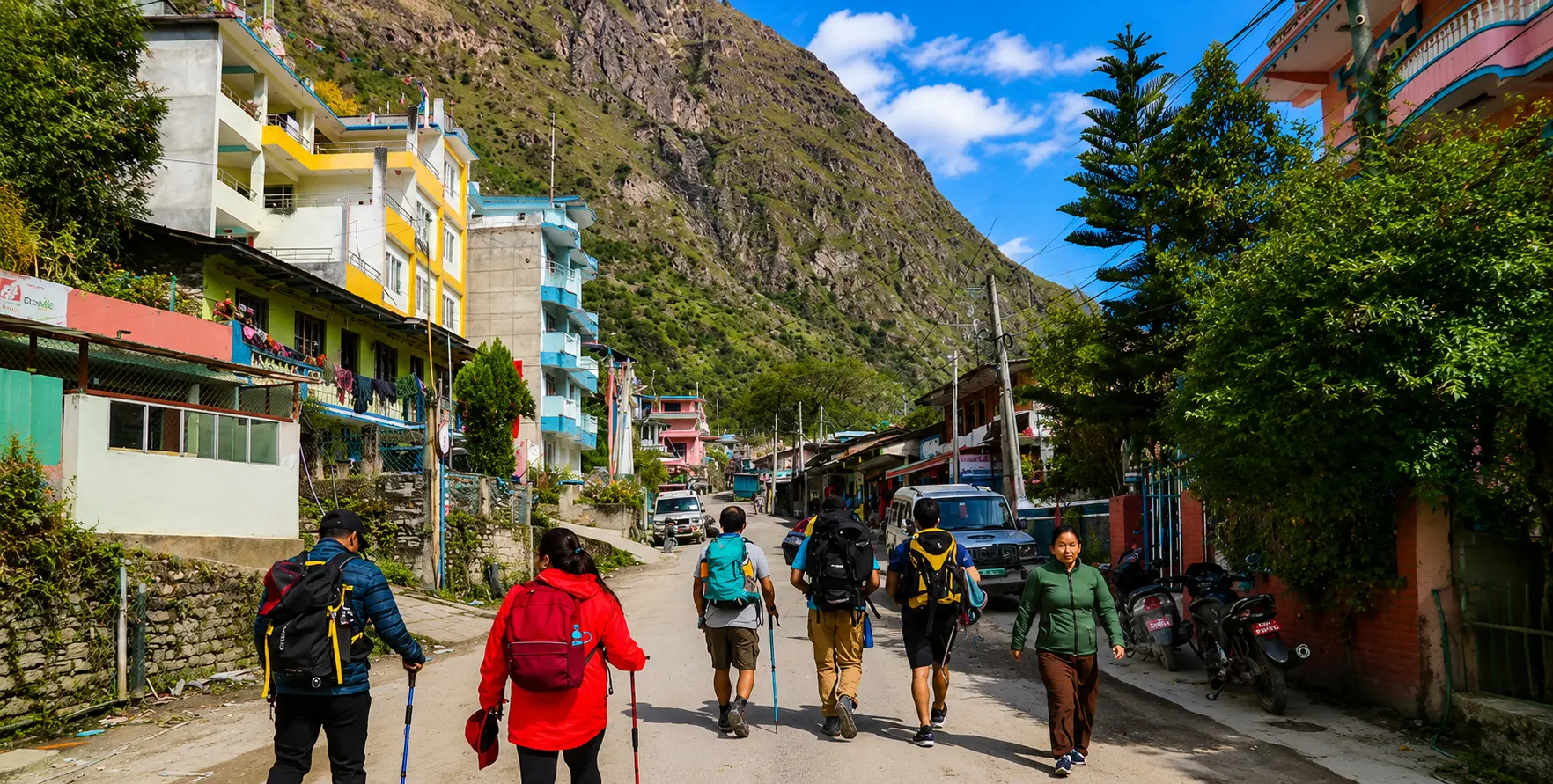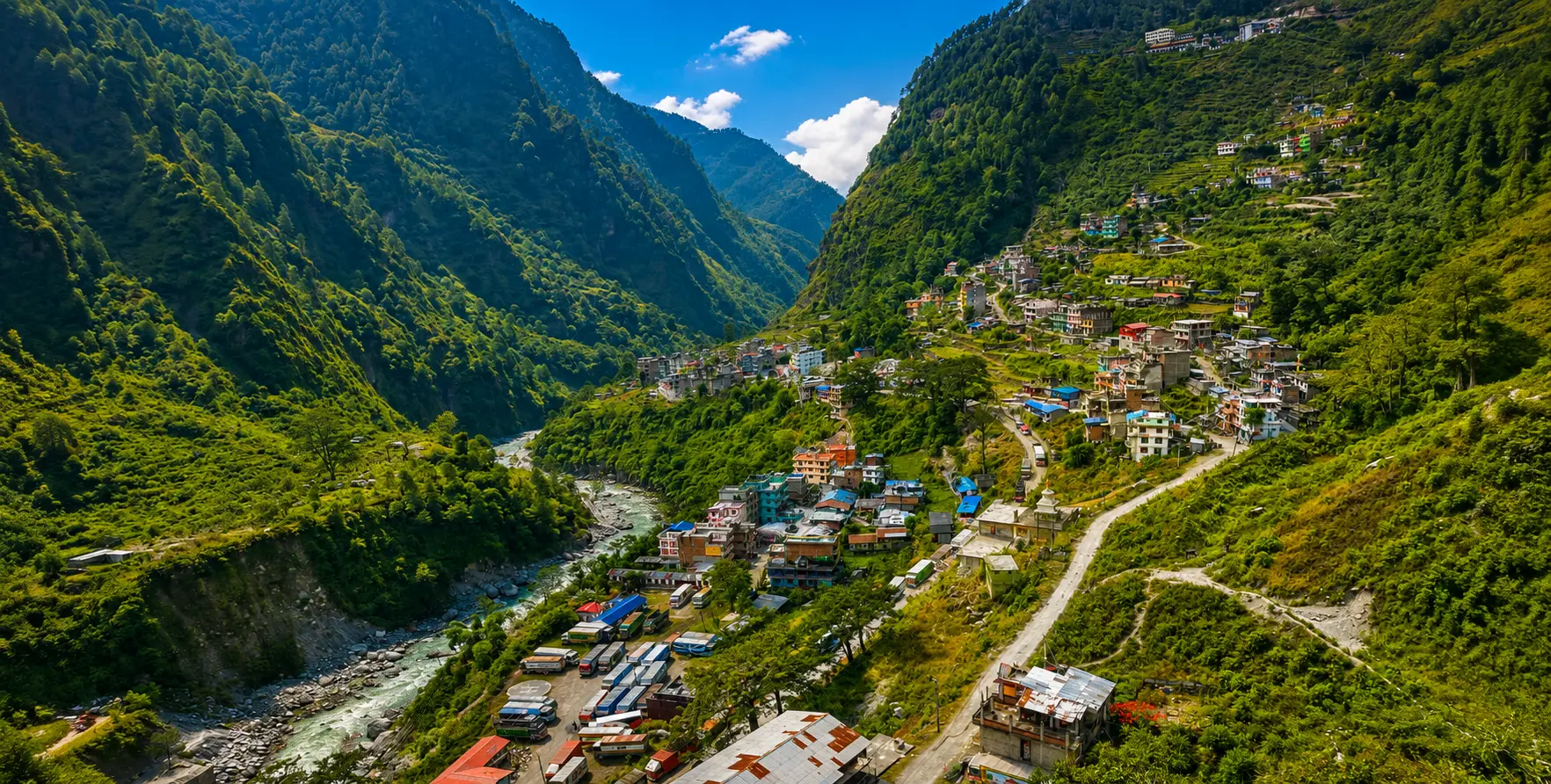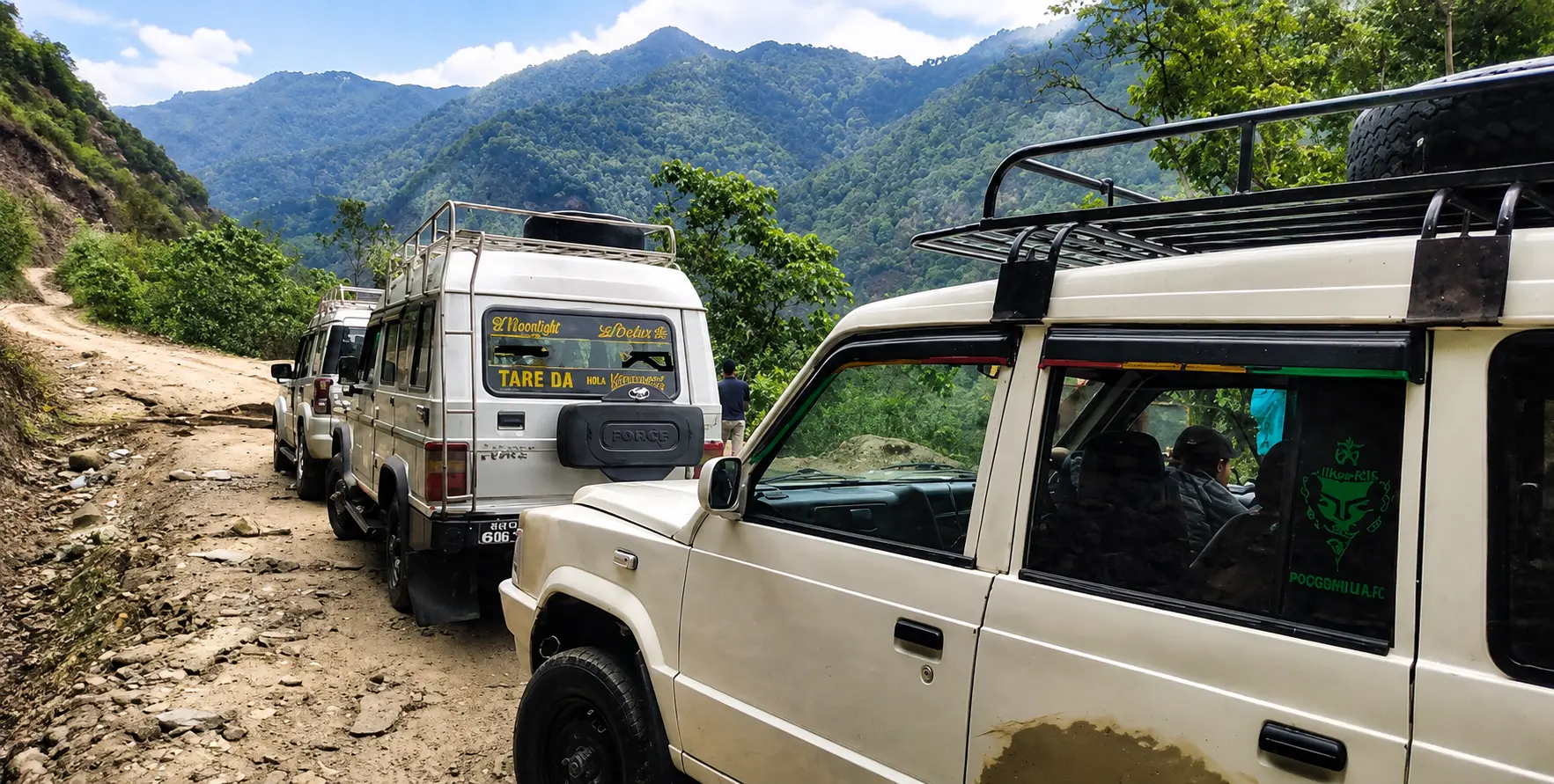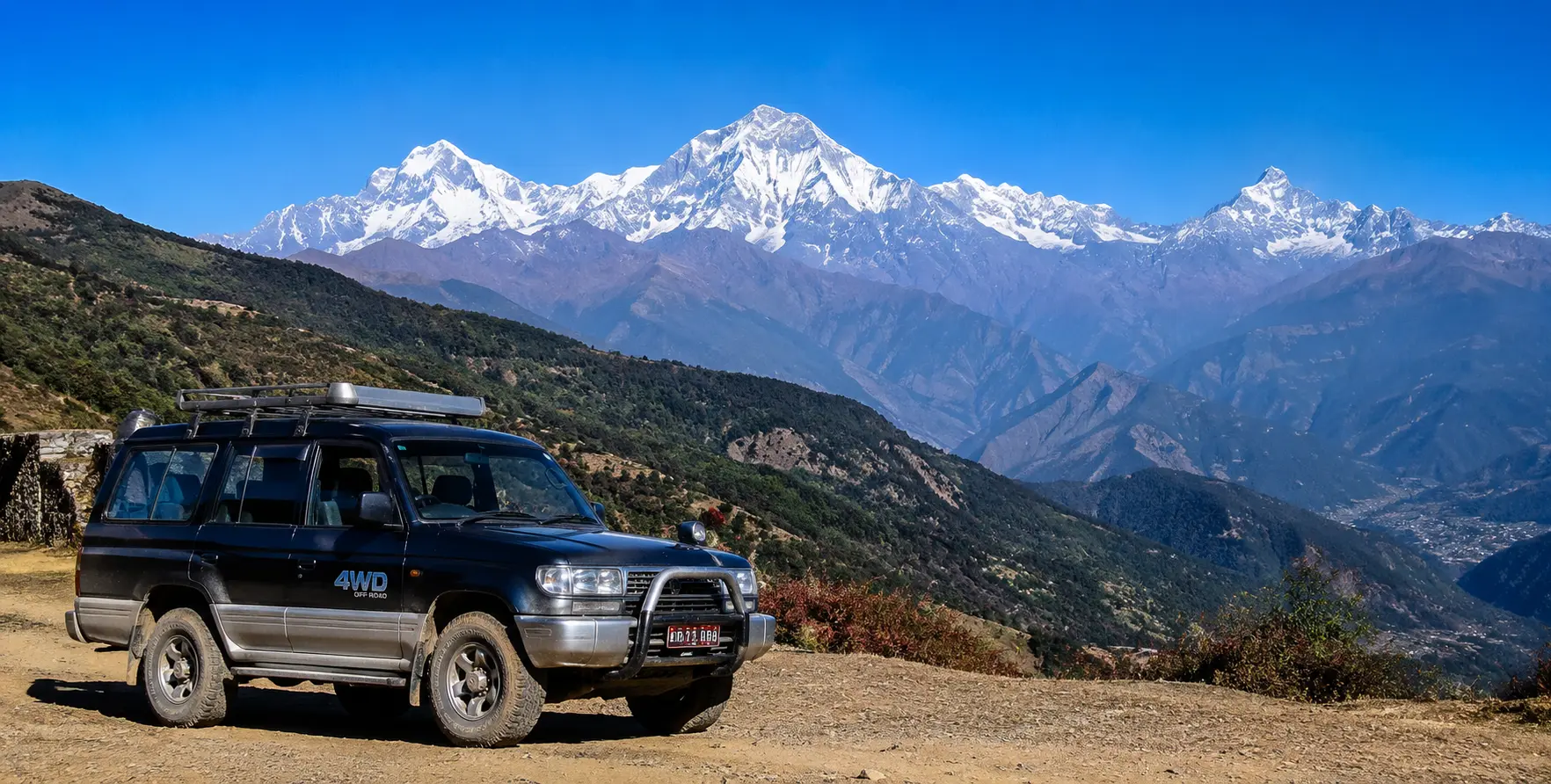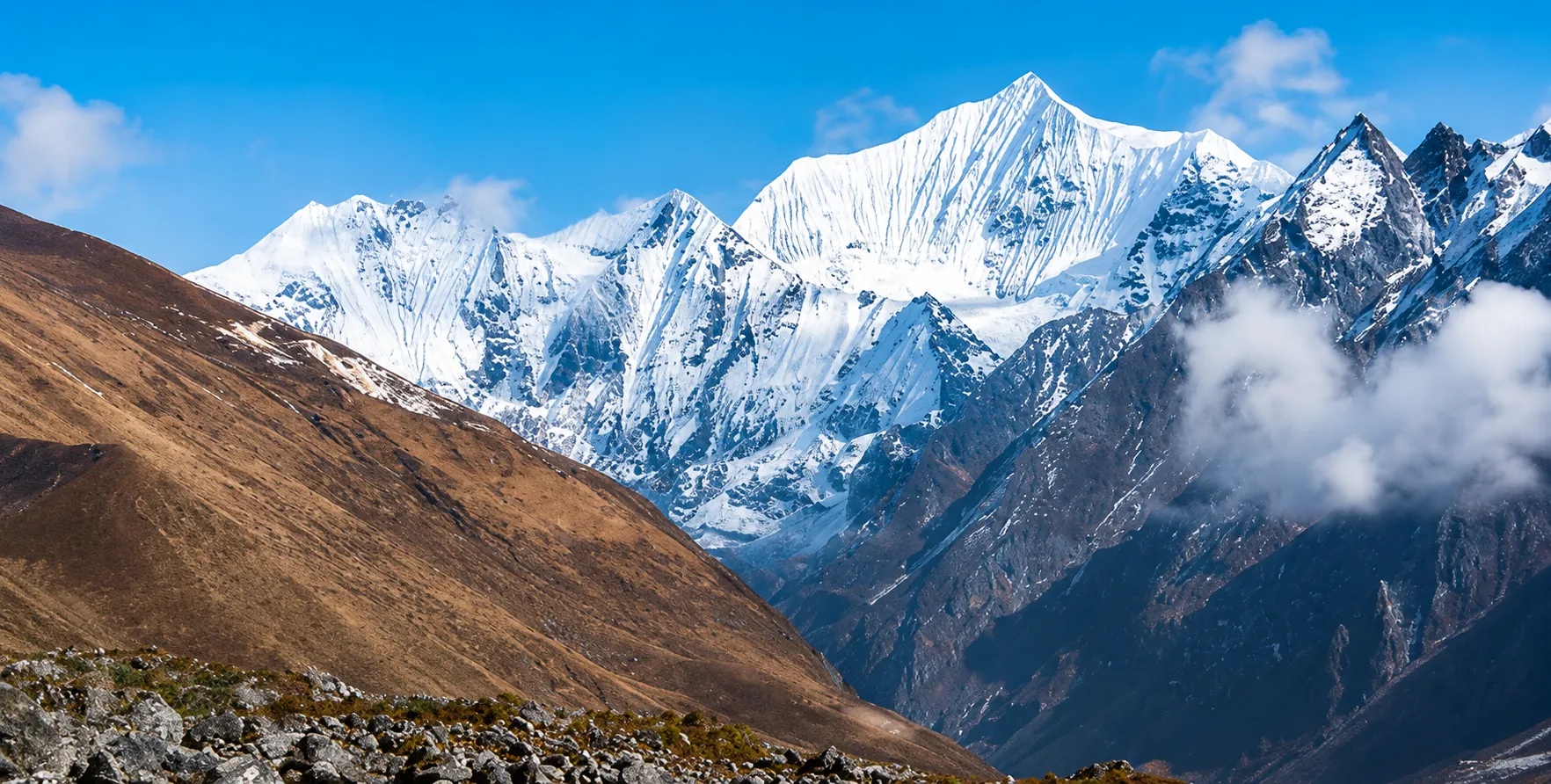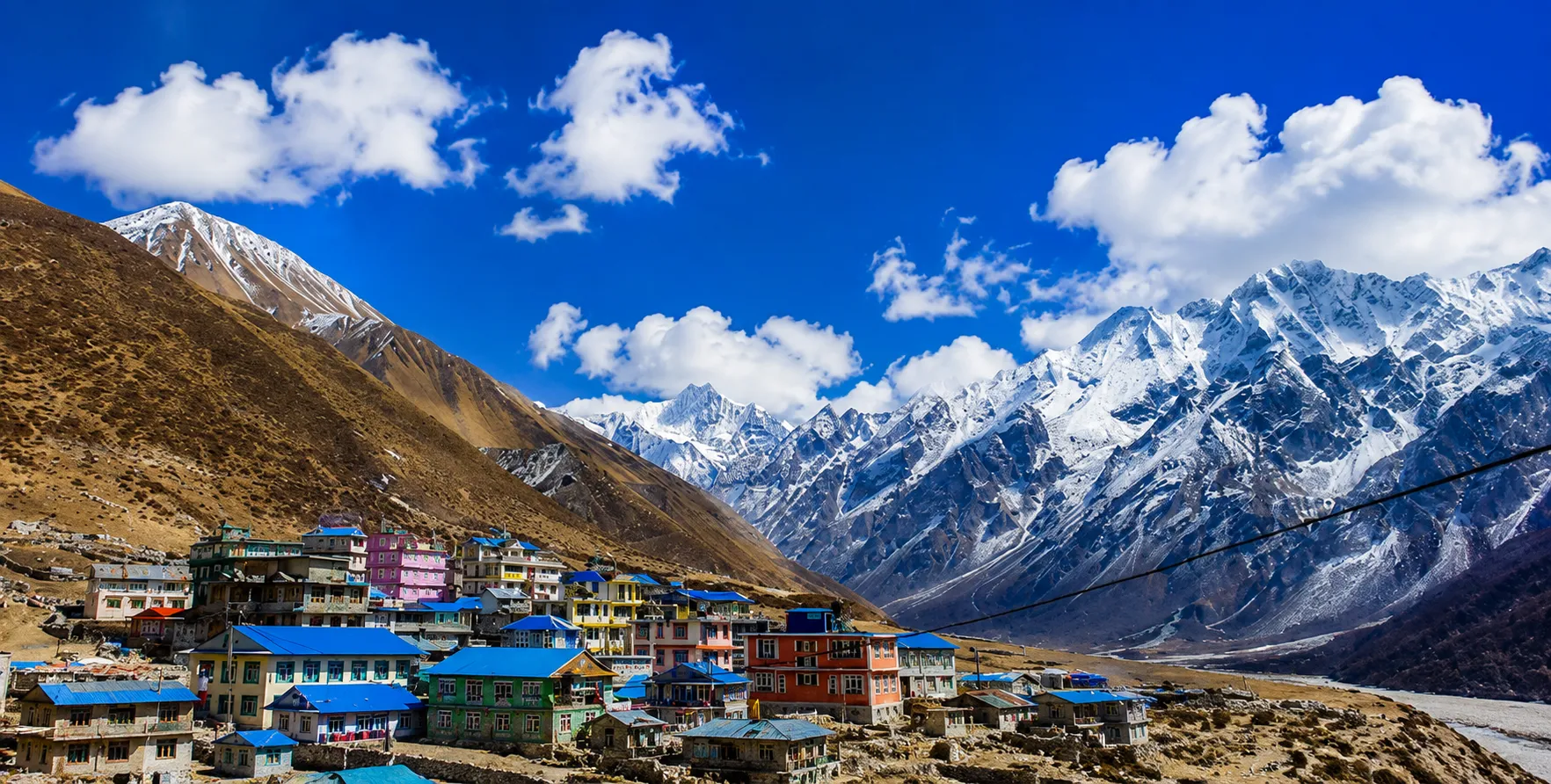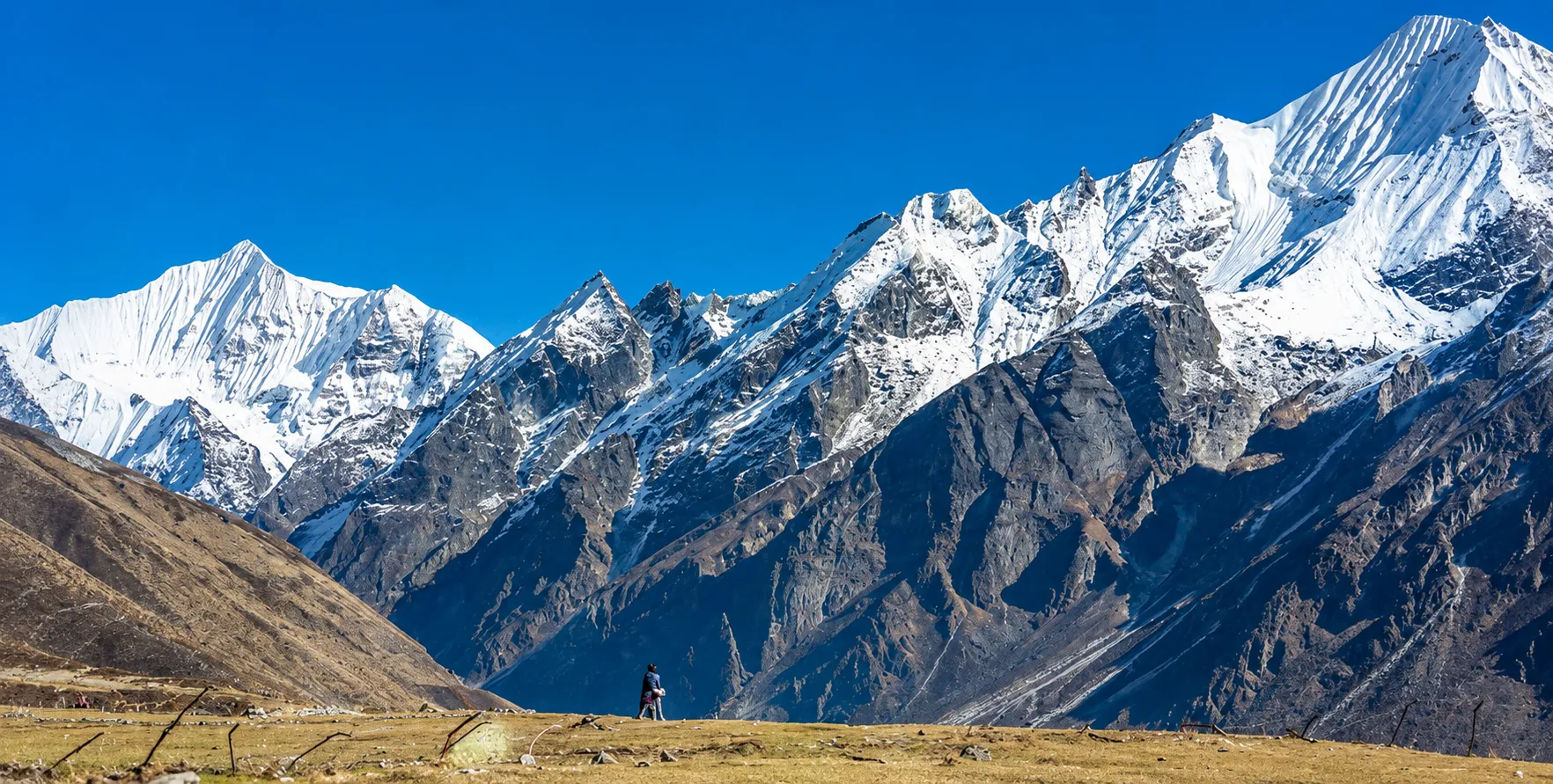
Kathmandu to Pokhara Luxury Jeep Hire

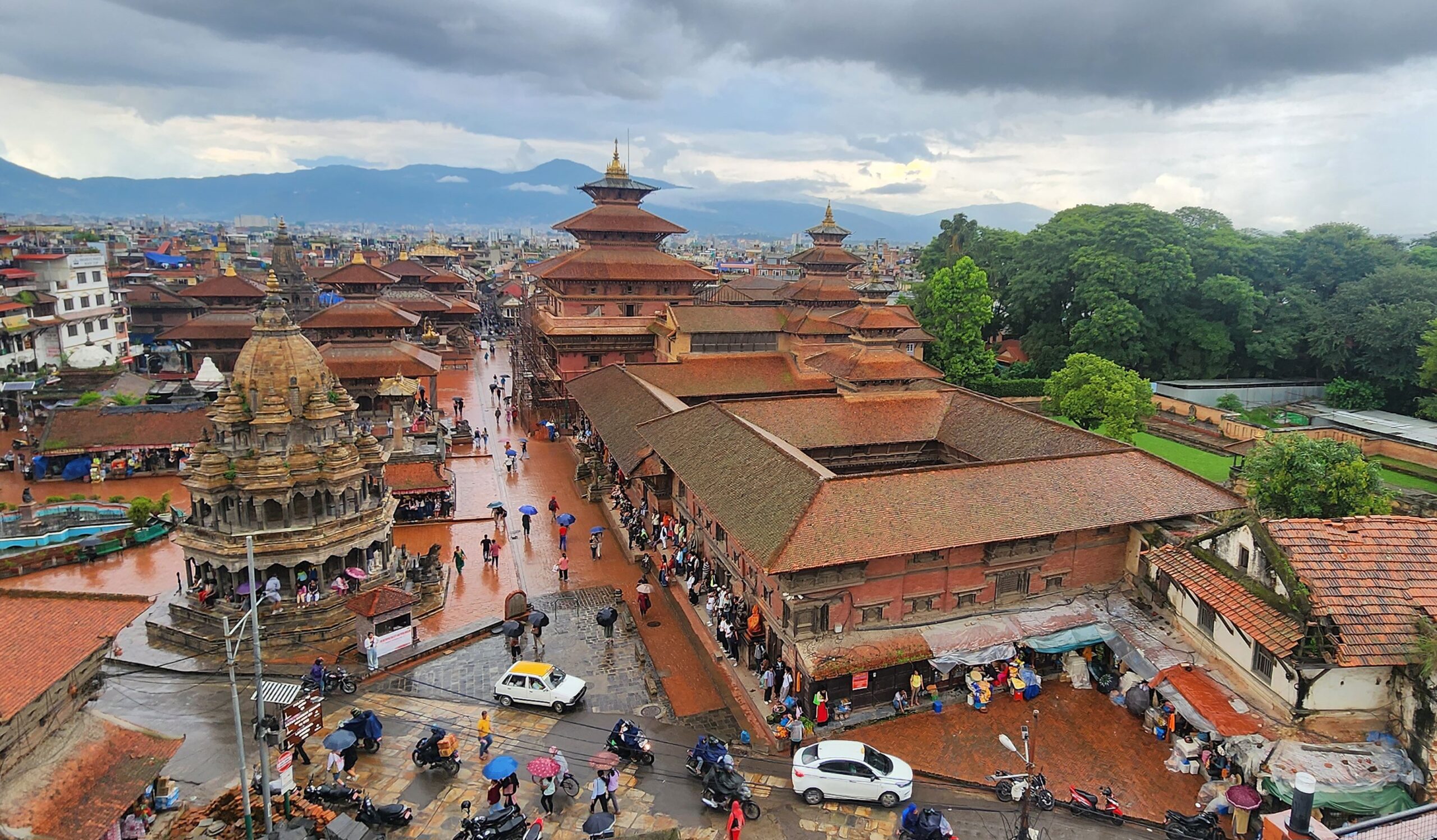
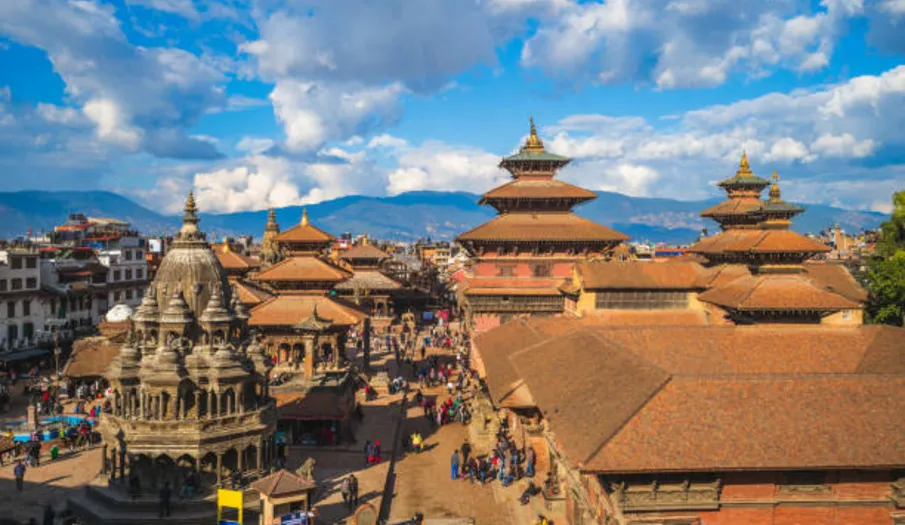
Patan Durbar Square in the Kathmandu Valley

Kathmandu to Pokhara Luxury Jeep Hire

The journey from Kathmandu to Pokhara is, on paper, deceptively simple: 200 kilometres of highway connecting Nepal’s capital to its most celebrated lakeside city. In practice, it is one of the most scenic overland routes in South Asia — a 6- to 8-hour drive through river gorges, terraced hillsides, Himalayan foothills, and ancient temple towns that delivers a concentrated dose of Nepal’s extraordinary natural and cultural landscape before you even arrive.

Depending entirely on the vehicle you choose, it can be either the most comfortable introduction to Nepal travel you will ever experience or a physically exhausting ordeal that leaves you stiff, dusty, and ready for nothing more than a long nap the moment you reach Pokhara’s Lakeside.

This is the key difference between a luxury private jeep hire from Kathmandu to Pokhara and a seat on a tourist bus—or, worse, a local bus. The Prithvi Highway is a two-lane single-carriageway road that passes through five districts, follows the Trishuli River for much of its length, and is currently undergoing major widening and infrastructure upgrades (as of 2024–2026), creating sections of construction delays alongside sections of newly excellent road.

On a tourist bus, you board at a fixed time, sit in a fixed seat, stop at fixed intervals for meals, and arrive when the bus arrives — typically after 8 to 10 hours in peak-season traffic, with no control over the experience. In a private luxury jeep with Nepal Vehicle Hiring, you leave your Thamel hotel when you choose, stop wherever interests you along the way, travel in genuine comfort in a well-maintained top-end SUV with a professional driver, and arrive in Pokhara refreshed and ready to begin your adventure immediately.

For 2026 and 2027, Nepal Vehicle Hiring Pvt. Ltd. offers the finest private jeep hire between Kathmandu and Pokhara in the region — Toyota Land Cruiser and Mahindra Scorpio options with experienced English-speaking drivers, all-inclusive transparent pricing, and the flexibility to turn a 200-kilometre highway drive into a genuinely memorable journey with stops at Manakamana Temple, Bandipur hill station, the Trishuli River gorge, and the mountain panoramas that open up as you approach Pokhara. This comprehensive guide covers everything you need to know—the route, the road, the vehicles, the best stops, seasonal considerations, onward connections from Pokhara, and exactly how to book.
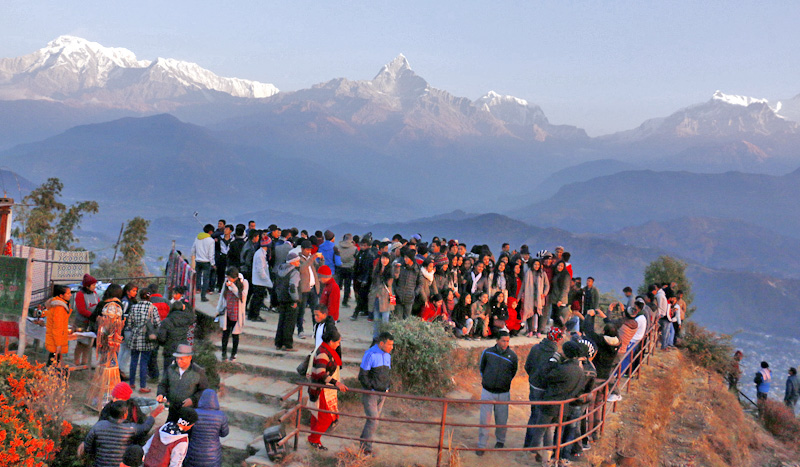
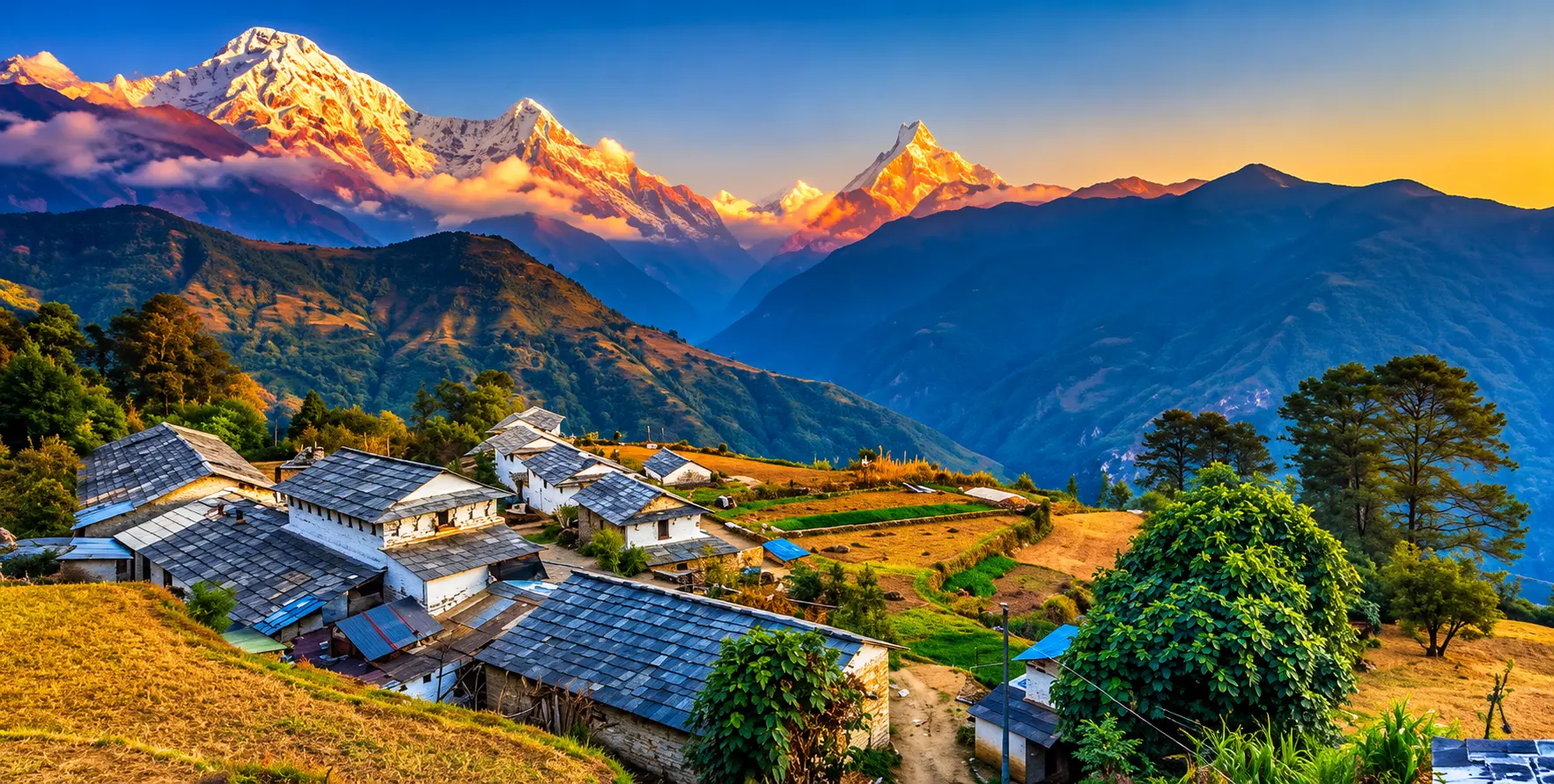
Sarangkot Pokhara

Why Choose a Luxury Private Jeep Hire Over the Tourist Bus?

Let us address the most obvious question directly: the Kathmandu-to-Pokhara bus is a perfectly functional transport option for budget travellers. It is economical, widely available, and delivers you to Pokhara’s tourist bus park, a manageable walk from Lakeside.

If your priority is cost minimisation and you’re comfortable with shared transport on a fixed schedule, the bus is fine. But fine is not what most travellers visiting Nepal are looking for — and for good reason.

The Prithvi Highway is not a smooth motorway. While the journey is advertised as 6–7 hours, the realistic average travel time on a tourist bus is 8–10 hours, and during peak season or road construction it can stretch to 10–12 hours.

The road is currently being widened from a two-lane to a four-lane highway in several sections, which is excellent news for the future but creates temporary construction delays, rough patches, and detours now. On a tourist bus, you experience these delays collectively and passively—you wait, you have no information, and you have no options.

In a private vehicle, your experienced driver navigates around delays, takes alternative sections where available, and keeps you informed and in control.

Beyond the schedule, consider the quality of the experience. The Prithvi Highway follows the Trishuli River gorge for much of its first half — one of Nepal’s most dramatic river landscapes, with steep-sided hills plunging to a fast-moving turquoise river below. This is scenery worth stopping for.

On a tourist bus, you cannot stop. In a private luxury jeep with Nepal Vehicle Hiring, your driver knows every viewpoint, every safe pullout for photos, and every moment the landscape demands attention.

The difference between being delivered to Pokhara and actually experiencing the journey between Kathmandu and Pokhara is the difference between transportation and a travel experience.

Group privacy and conversation matter too. Travelling between Nepal’s two great cities with your family, your trekking companions, or your partner in a private vehicle with only your group aboard is a fundamentally different experience from a shared bus — you can talk freely, make decisions together about where to stop and how long to linger, and arrive in Pokhara having already spent quality time together rather than gritting your teeth through the final hours of a crowded bus journey.

For families with children, couples on a romantic trip to Nepal, and groups with genuinely limited time, the private luxury jeep hire is not an indulgence — it is the intelligent choice.
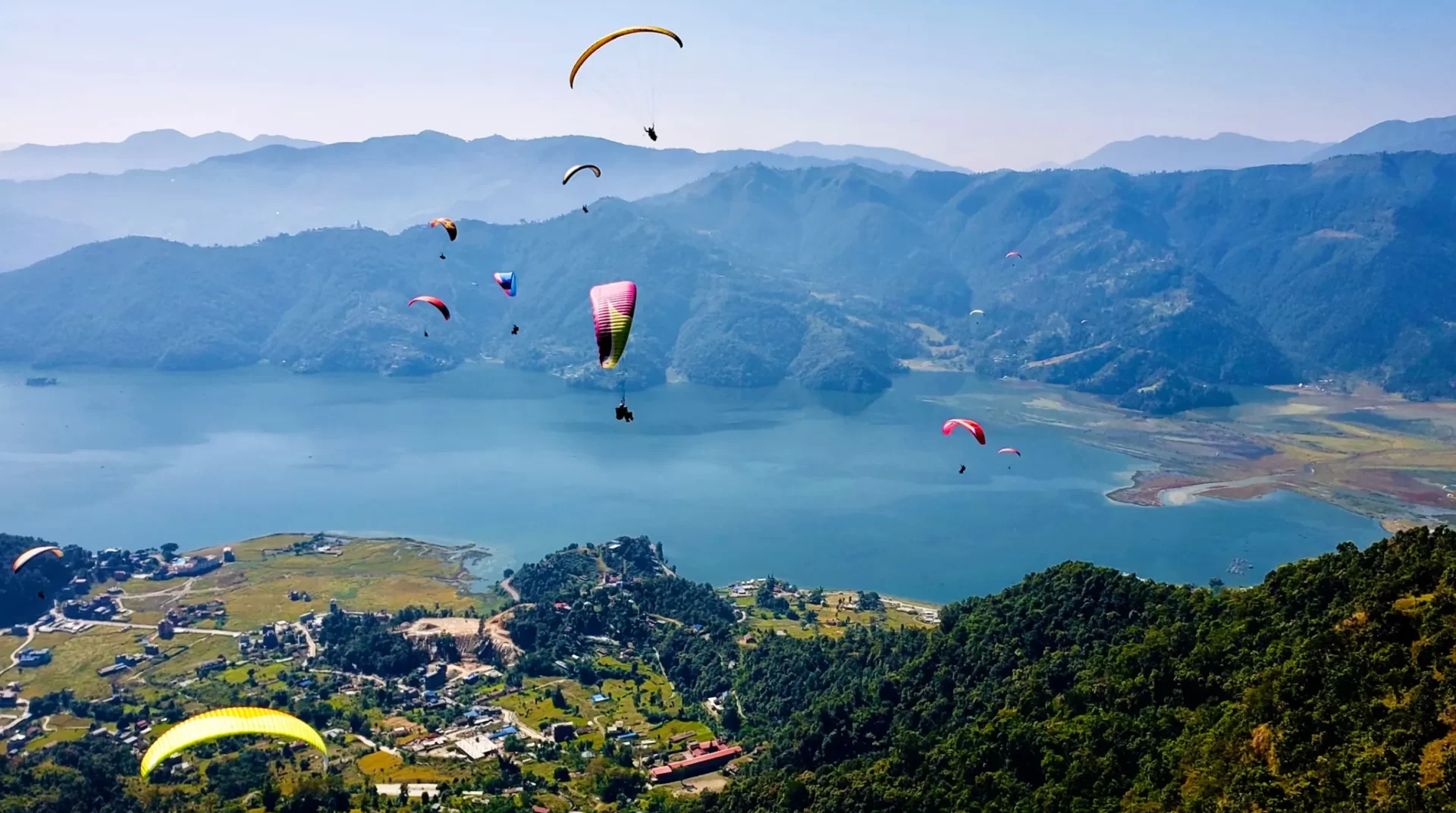
Pokhara to Sarangkot Jeep

The Vehicles: Toyota Land Cruiser and Mahindra Scorpio for the Kathmandu–Pokhara Run

Nepal Vehicle Hiring’s jeep hire fleet for the Kathmandu-to-Pokhara route consists of two primary vehicles, each suited to different group sizes and preferences. Understanding the difference helps you choose the right option for your specific needs.

Toyota Land Cruiser: The Top-end Choice

The Toyota Land Cruiser is the flagship vehicle in Nepal’s top-end private transport sector—the choice for VIP delegations, luxury tour groups, and discerning travellers seeking the best possible road experience. For the Kathmandu-to-Pokhara run, the Land Cruiser’s leather interior, advanced suspension, powerful air conditioning, and spacious cabin make it the most comfortable private vehicle on the Prithvi Highway.

The Land Cruiser seats 4 to 5 passengers in exceptional comfort, with ample luggage space in the rear. Its high ground clearance means construction sections, temporary rough patches, and the occasional pothole on the Prithvi Highway are absorbed without meaningful discomfort reaching the cabin — a significant advantage on a route that, while predominantly paved, includes sections that are far from smooth.

The Land Cruiser’s full 4WD capability also means that if your Pokhara trip is a starting point for a longer journey deeper into Nepal — to Mustang, to Manang, to the Muktinath pilgrim trail — the same vehicle handles every stage without compromise.

The Land Cruiser is particularly recommended for couples and small families of 2 to 4 people, for travellers with medical conditions that make road comfort a priority, for VIP or business travel, and for anyone combining the Kathmandu–Pokhara leg with an onward mountain road journey such as our Pokhara to Mustang jeep service or the Muktinath Yatra itinerary from Pokhara.
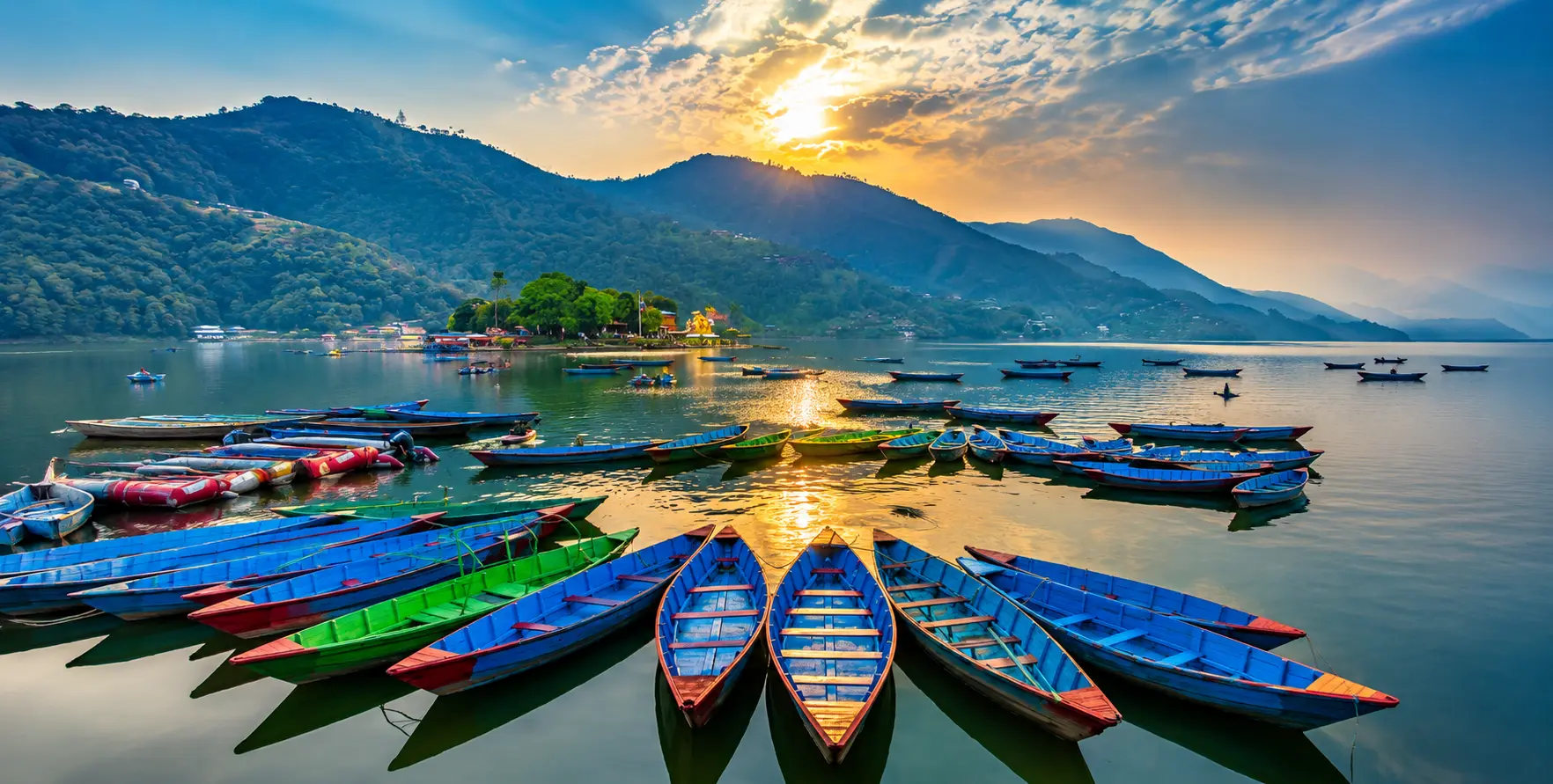
Kathmandu to Pokhara tour

Mahindra Scorpio: The Smart Balance of Comfort and Capacity

The Mahindra Scorpio is Nepal’s most popular top-end SUV for highway and mountain road travel, offering genuine comfort, seating for up to 7 passengers (6 comfortably with luggage), and a robust driving character well-suited to Nepal’s varied road conditions. For groups of 5 to 7, the Scorpio is the standard top-end choice — offering a noticeably better experience than a standard car while avoiding the higher per-passenger cost of the Land Cruiser for smaller groups.

The Scorpio’s high-set seating position is one of its practical advantages on the Kathmandu–Pokhara route — passengers sit elevated enough to see over roadside vegetation and across the Trishuli River valley in a way that lower-slung sedans do not allow. This significantly improves the view throughout the journey.

The Scorpio is also available in 4WD configuration, making it suitable for continued mountain road travel from Pokhara toward Jomsom, Ghorepani, or other Annapurna region destinations after the highway leg is complete.

Nepal Vehicle Hiring offers both the Land Cruiser and Scorpio with all-inclusive pricing: vehicle hire, a professional driver, fuel, driver accommodation for overnight journeys, and all applicable road charges. No hidden costs. No end-of-journey surprises.

For current pricing and availability on the Kathmandu–Pokhara route, contact us directly on WhatsApp or visit our plan your trip page.

The Prithvi Highway: Route Overview

The Prithvi Highway (National Highway 17), named after King Prithvi Narayan Shah, who unified modern Nepal, is the primary road connecting Kathmandu and Pokhara. <cite index=”11-1″>It is a 174-kilometre-long highway connecting Naubise — 26 kilometres west of Kathmandu — to Prithvi Chowk in Pokhara, passing through five districts: Kathmandu, Dhading, Chitwan, Tanahu, and Kaski.</cite> The total driving distance from central Kathmandu (Thamel) to Pokhara Lakeside is approximately 200 to 210 kilometres, accounting for the approach through Kathmandu and the final stretch into Lakeside from the Pokhara highway entry point.

<cite index=”32-1″>The highway has undergone major upgrade initiatives in recent years, primarily focused on widening to convert key sections into four-lane roads. The Muglin-Malekhu road-widening project, spanning approximately 38 kilometres, had reached 35 per cent physical completion as of November 2025, with work accelerating post-monsoon.</cite> Additionally, <cite index=”32-1″>the Nagdhunga-Sisnekhola Tunnel — Nepal’s first modern road tunnel at 2.68 kilometres long with a 9.5-meter-wide lane — links the Tribhuvan Highway directly to the Prithvi Highway near Thankot and Naubise, reducing travel time from Kathmandu by bypassing the steep gradients of the old exit route.</cite> This tunnel is operational and significantly reduces the time spent in Kathmandu’s exit traffic.

For travellers in 2026 and 2027, this means the highway is in transition. Some sections are newly excellent (freshly paved, widened, smooth), while others are actively under construction with temporary road surfaces and reduced speeds. A private luxury jeep with Nepal Vehicle Hiring’s experienced drivers navigates this transition better than any bus service because our drivers know current road conditions in real time and can adjust and reroute accordingly.

The experience will continue to improve year over year as the widening projects are completed, and by late 2026, the most troublesome construction sections are expected to be resolved.
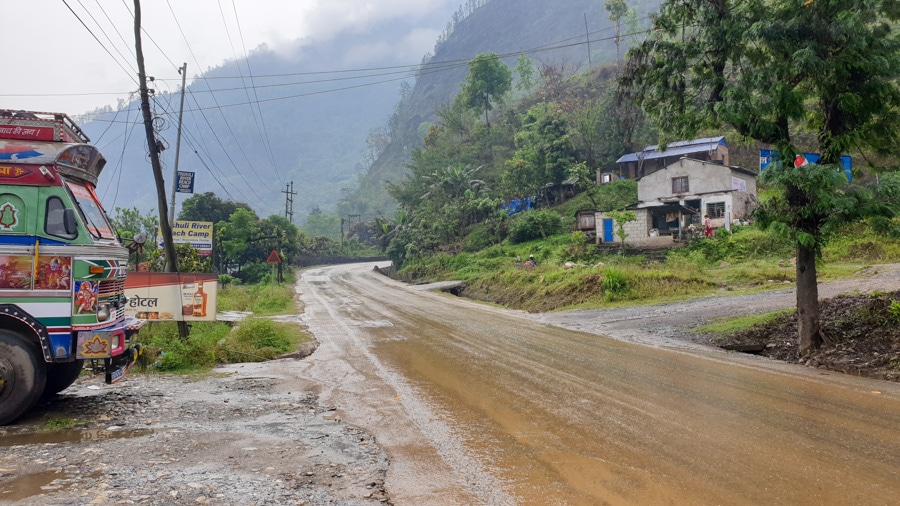
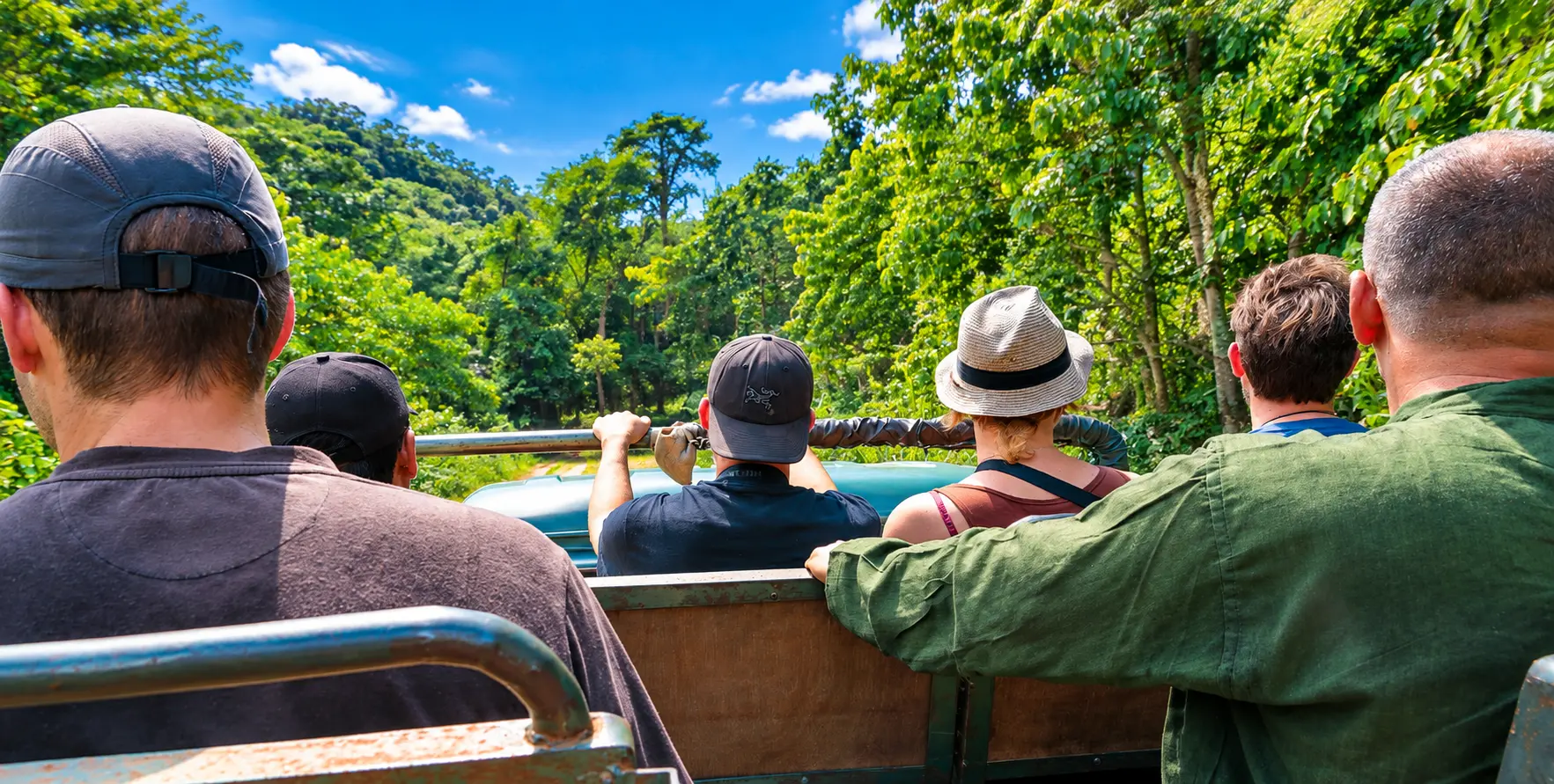
Kathmandu to Pokhara luxury jeep hire with a private Land Cruiser, Prado, or Fortuner on the scenic Prithvi Highway

Key Highway Sections and What to Expect

The first major section from Kathmandu to Naubise (26 km) exits through the Nagdhunga tunnel and descends toward the valley rim — a winding section that is much improved by the tunnel bypass. From Naubise, the highway follows the Trishuli River through Malekhu (48 km from Kathmandu), where the river views are most dramatic, and several riverside restaurants have become reliable breakfast stops for Kathmandu–Pokhara travellers.

The Trishuli here is fast, clear, and flanked by steep forested hills — one of the finest river gorge sections of road in Nepal.

From Malekhu, the road continues through Mugling (96 km from Kathmandu) — a busy junction town at the confluence of the Trishuli and Marsyangdi Rivers where the Prithvi Highway meets the road south to Narayanghat and Chitwan. Mugling is famous for its fish restaurants lining the highway — fresh Trishuli River fish grilled to order, served with beaten rice and local vegetables.

It is the most popular lunch stop on the Kathmandu–Pokhara route and one of the journey’s genuine culinary highlights. Your Nepal Vehicle Hiring driver will know the best places to stop and can factor in a 30- to 45-minute stop in Mugling as part of a relaxed itinerary.

Beyond Mugling, the road leaves the Trishuli. It begins climbing through Dumre (134 km from Kathmandu) — the junction town where the road to Besisahar (and ultimately the Annapurna Circuit via our Besisahar private vehicle service and our Kathmandu to Manang jeep route) branches north.

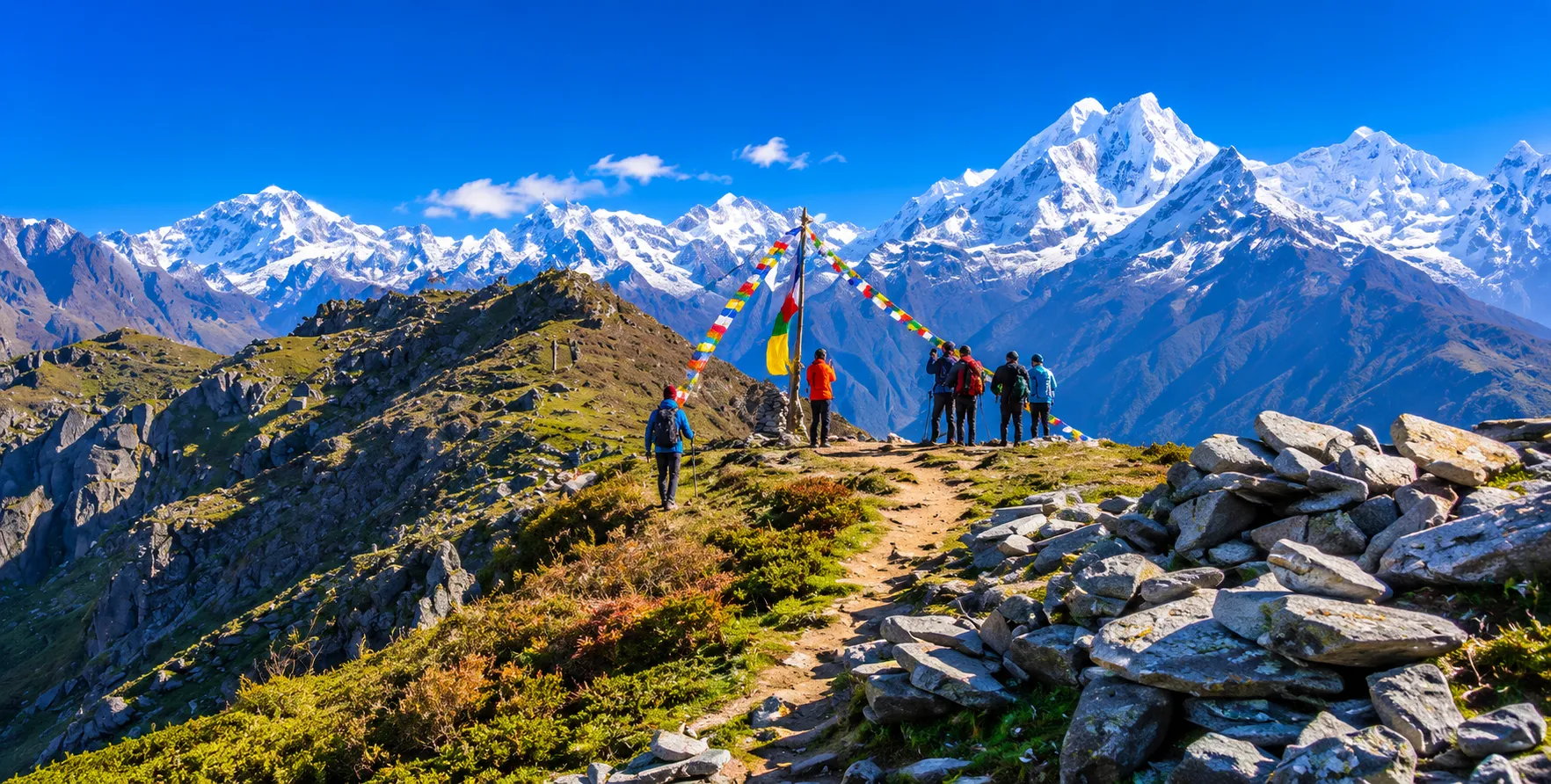
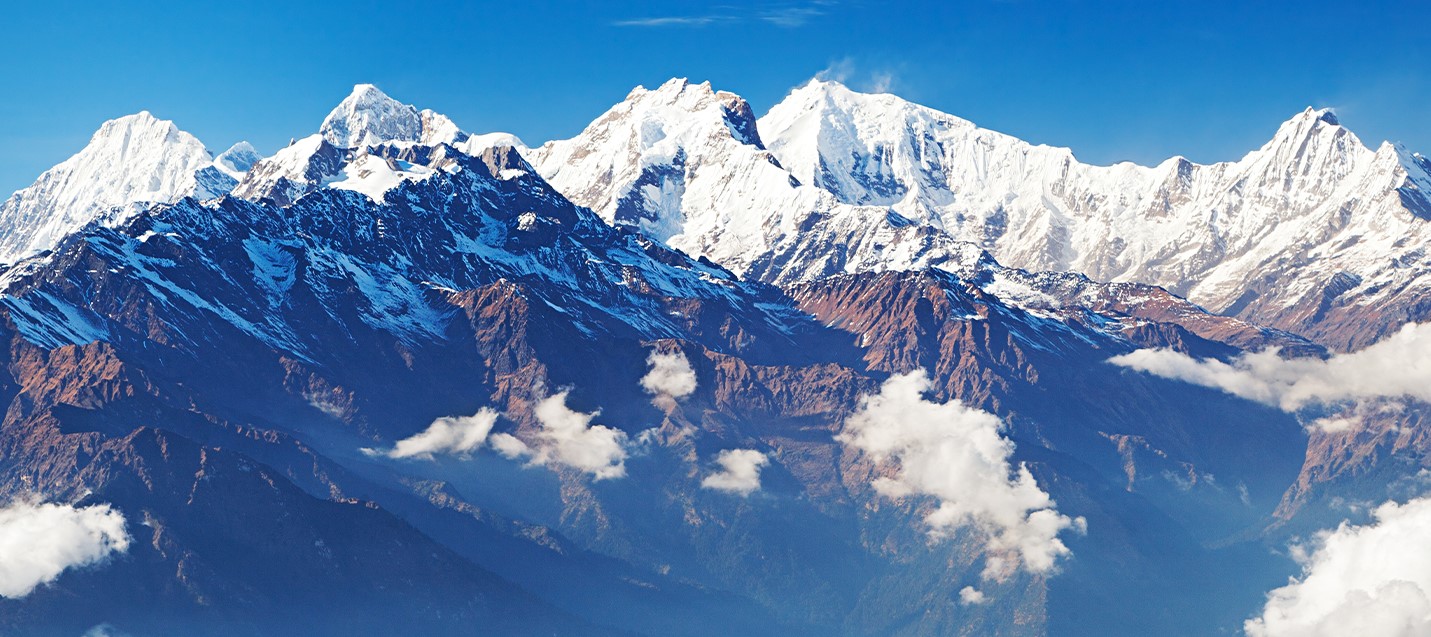
From Dumre, the Prithvi Highway turns west through Damauli (164 km from Kathmandu) before the final descent into Pokhara. The landscape opens up in this final section—the tight river gorge gives way to wider valleys, and on clear days the first genuine views of the Annapurna range appear above the western horizon, drawing steadily closer as you approach the city.

Best Stops Between Kathmandu and Pokhara: Making the Most of Your Journey

One of the greatest advantages of travelling by private luxury jeep hire from Kathmandu to Pokhara is the ability to stop whenever and wherever you choose. The Prithvi Highway corridor contains several destinations that deserve more than a glance from a bus window — and a private vehicle makes it possible to stop at all of them without affecting other passengers or missing a fixed schedule.

Here are the best stops along the route, all easily incorporated into a relaxed 8- to 9-hour journey with Nepal Vehicle Hiring.

Naubise and the Trishuli River: The First Dramatic Landscape

Within 30 minutes of leaving Thamel, the Nagdhunga-Sisnekhola Tunnel delivers you to Naubise and the beginning of the Prithvi Highway’s most dramatic section. The Trishuli River appears below the road almost immediately, and for the next 70 kilometres, the highway alternately hugs and overlooks one of Nepal’s finest river-gorge landscapes.

In the early morning, when ground mist rises from the river,r and the opposite hillsides are still in shadow, the light is particularly beautiful. Several informal viewpoints exist within the first 3 kilometres beyond our driver; they’ll know the best ones for photography without stopping in unsafe spots.

Malekhu Riverside: Breakfast Stop with a View

About 48 kilometres from Kathmandu, the small highway town of Malekhu sits on the banks of the Trishuli River. It has developed a cluster of riverside restaurants that serve excellent breakfasts for early-morning travellers.

Leaving Thamel at 7 AM (the recommended departure time for a relaxed Kathmandu–Pokhara journey), you arrive at Malekhu around 8:30 to 9 AM — exactly the right time for a proper breakfast. The riverside setting, with the Trishuli flowing swiftly below and forested hills framing the view, makes Malekhu a genuinely pleasant 20- to 30-minute stop.

In the dry season, the river is clear turquoise; in the monsoon, it runs silty and powerful. Either way, it is worth a photograph.

Manakamana Temple: Nepal’s Wish-Fulfilling Goddess

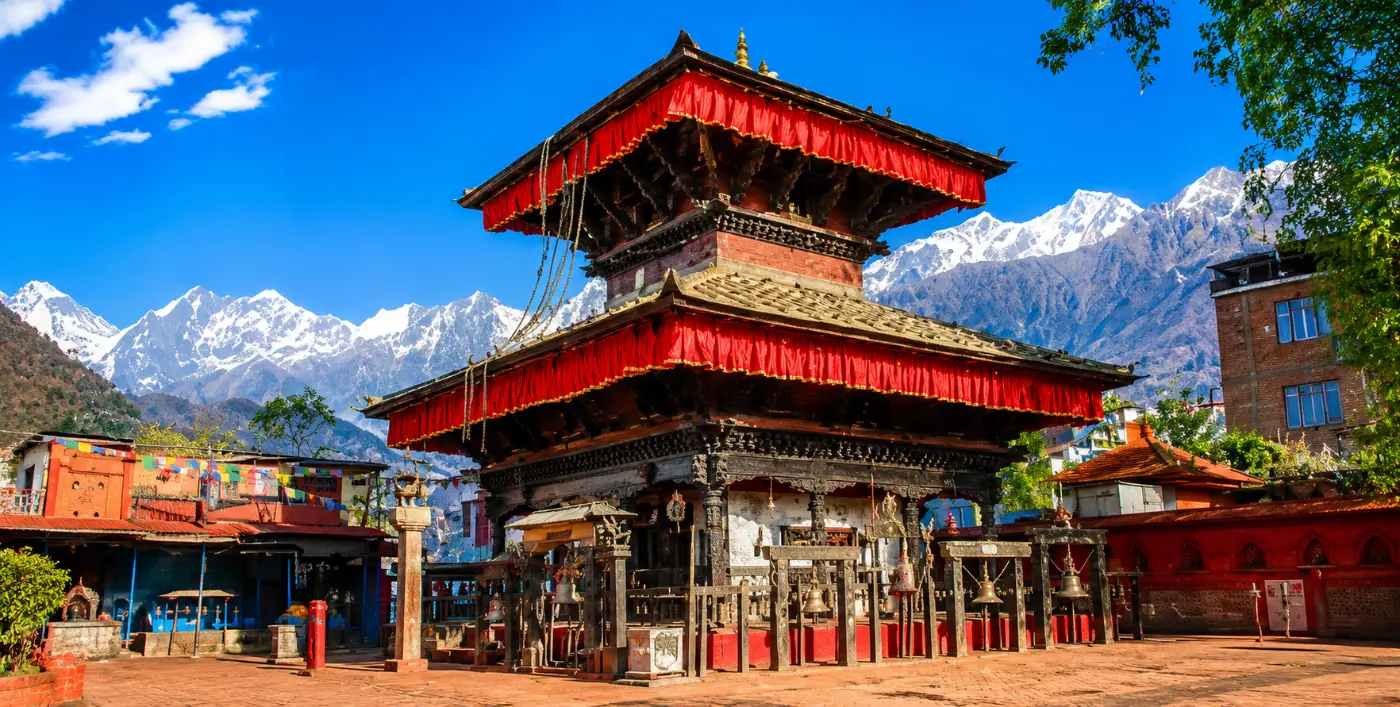
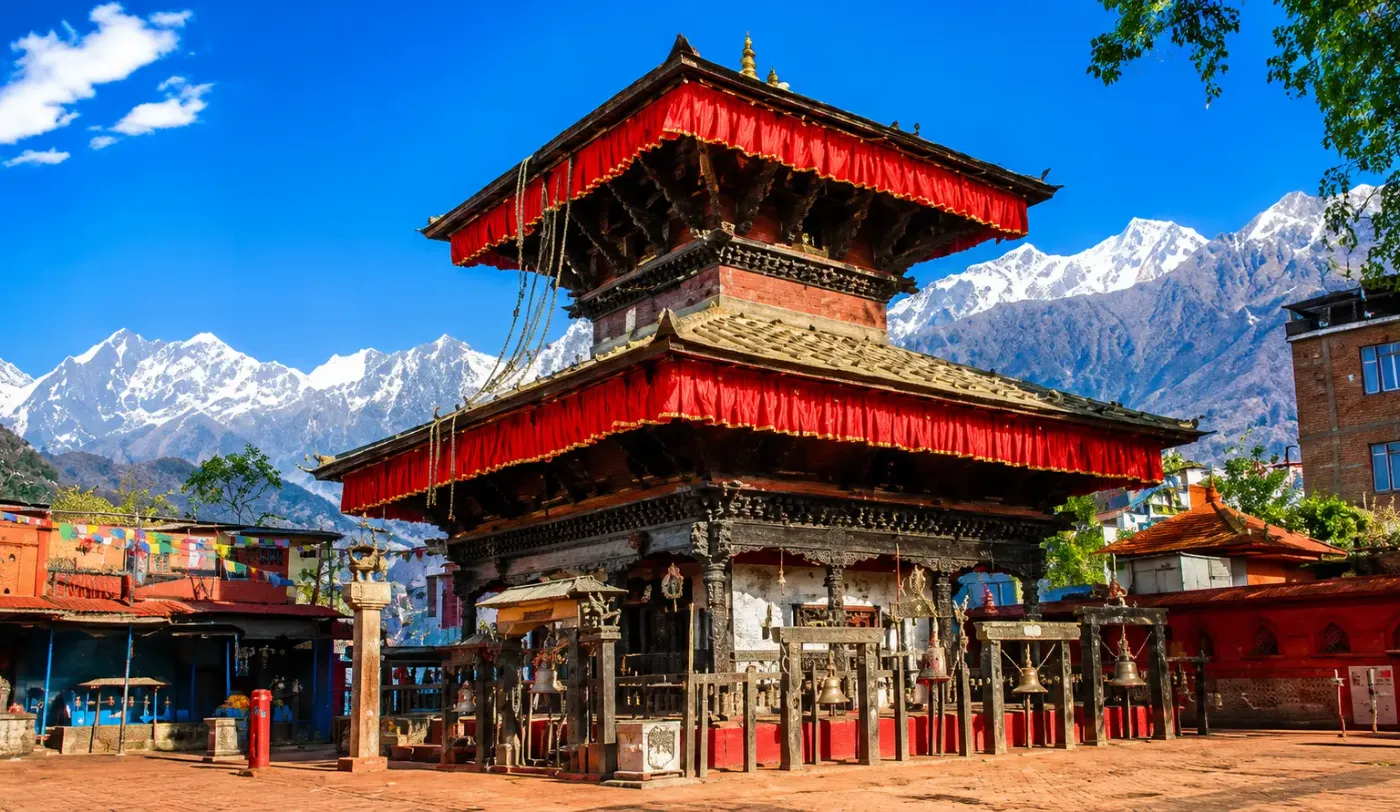
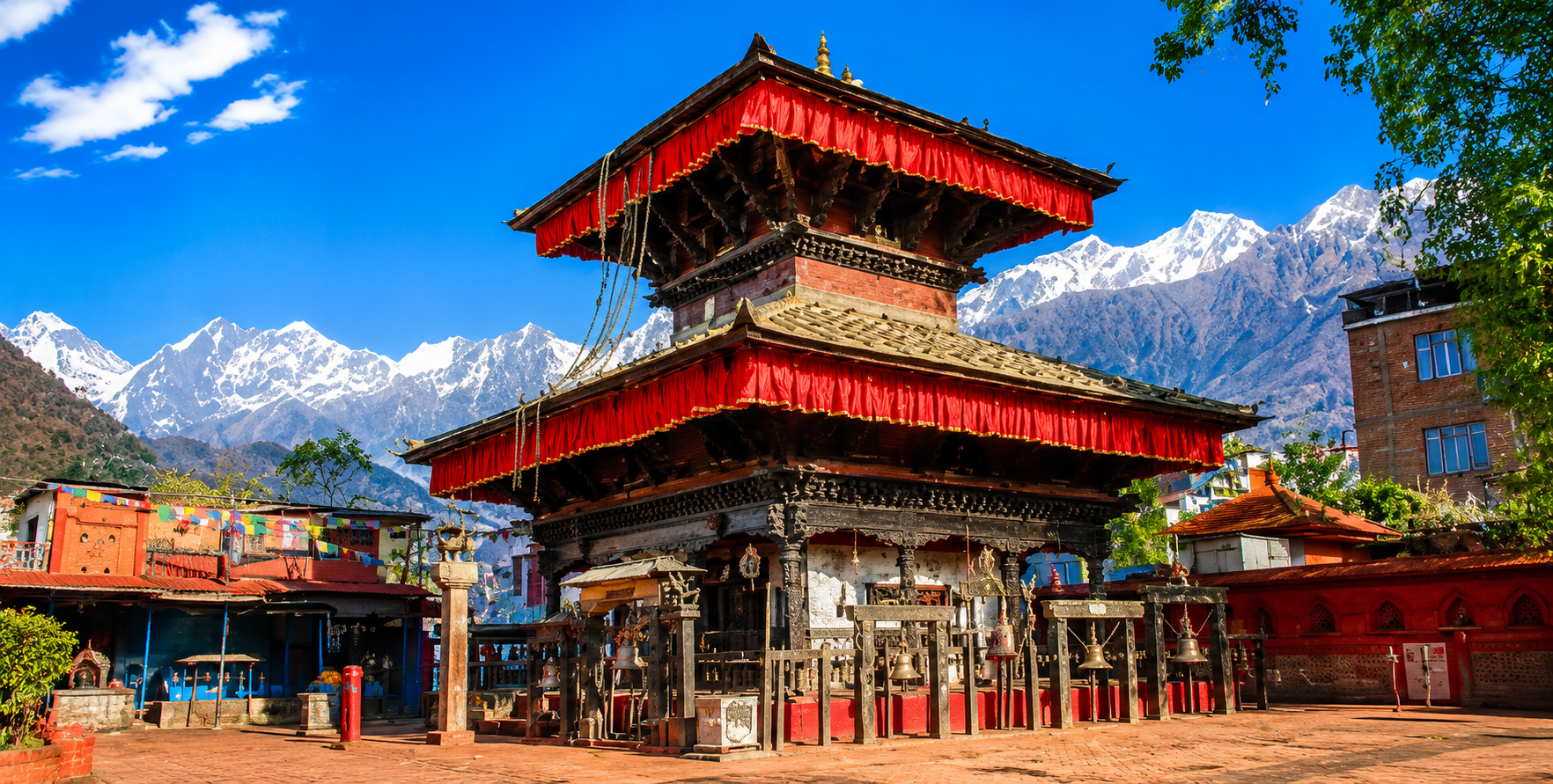
The most significant cultural stop on the Kathmandu–Pokhara highway is Manakamana Temple, accessible via the Manakamana Cable Car from Kurintar base station, approximately 104 kilometres from Kathmandu. The small but important Manakamana Temple sits off the Prithvi Highway just 6 kilometres before Mugling, atop a green hill, dedicated to the goddess Bhagwati, who is said to grant wishes to all who visit.

Built in the 17th century, it is one of Nepal’s most visited pilgrimage sites.tes The cable car ride to the temple offers stunning panoramic views of the Trishuli River and the surrounding hills and takes 10 to 15 minutes each way.

<cite index=”31-1″>The temple’s hilltop location at 1,302 meters above sea level provides panoramic views of the Annapurna range, Manaslu, and Ganesh Himal. Factoring in the cable car ride, temple visit, and any queue time, a Manakamana stop adds about 2 to 3 hours to the journey. Plan journey.

Plan it for days when you are not in a hurry to reach Pokhara — a relaxed 10-hour total journey that includes Manakamana is a rich, complete experience. For pilgrim groups, families, and travellers interested in Nepal’s living Hindu tradition, this stop is highly recommended.

Saturday and public holidays see the largest crowds; Tuesday and Wednesday mornings are the quietest times to visit. With a private jeep hire from Nepal Vehicle Hiring, your driver waits at the Kurintar base station while you ascend — no fixed schedule, no pressure.

Mugling: The River Fish Capital of the Prithvi Highway

The junction town of Mugling, at the confluence of the Trishuli and Marsyangdi Rivers, is the highway’s most famous lunch stop — a strip of riverside restaurants specialising in freshly caught and grilled river fish that has become a genuinely beloved culinary tradition of the Kathmandu–Pokhara journey. The fish — typically asla (Himalayan snow trout) or sahar (golden mahseer) — is caught fresh from the Trishuli each morning, marinated with local spices, and grilled to order over charcoal.

Served with chiura (beaten rice) and simple vegetable curry, it is one of Nepal’s finest informal eating experiences.

Mugling is also where the Prithvi Highway’s most dramatic gorge section ends, and the landscape opens up slightly, making it a natural pause in the journey. A 30- to 45-minute lunch stop in Mugling, eating by the river with the confluence of the Marsyangdi and Trishuli in view, is one of those quiet travel moments that lodge in the memory long after the headline experiences have faded.

Your Nepal Vehicle Hiring driver will have specific restaurant recommendations based on current quality details.

For travellers with the luxury of an extra hour, the historic hilltop town of Bandipur is the most rewarding detour on the entire Kathmandu–Pokhara route. Bandipur is a hilltop settlement 143 kilometres west of Kathmandu and 80 kilometres east of Pokhara, at an elevation of 1,317 metres, offering panoramic views of the Annapurna, Manaslu, and Dhaulagiri ranges.

Its history began in the 19th century, when Newar merchants from Bhaktapur chose it as a trade route between India and Tibet, building houses that reflected traditional Newari style, architecture, and culture.

The result is a perfectly preserved Newari hill town — cobbled streets, traditional shophouses with carved wooden facades, temples and bahals arranged along a pedestrian-only main street, and an unhurried, uncrowded atmosphere that feels increasingly rare in Nepal’s more visited destinations. You can stroll through the town centre to appreciate the traditional architecture, browse local shops, or visit the Siddha Cave — one of the largest caves in Nepal — which is a short trek from Bandipur.

Bandipur requires a short diversion off the Prithvi Highway at Dumre—about 16 kilometres of uphill road to the hilltop town, taking 30 to 40 minutes by private jeep. Adding Bandipur to the Kathmandu–Pokhara journey adds about 2 to 2.5 hours in total (including the drive up, the walk through town, and the return to the highway).

Combining Manakamana and Bandipur in a single journey makes for a deeply rewarding 10- to 11-hour travel day—only really feasible with a private vehicle where you control the schedule. In a private jeep hire with Nepal Vehicle Hiring, this combination is entirely manageable and makes the Kathmandu–Pokhara journey one of the finest day drives in Nepal.
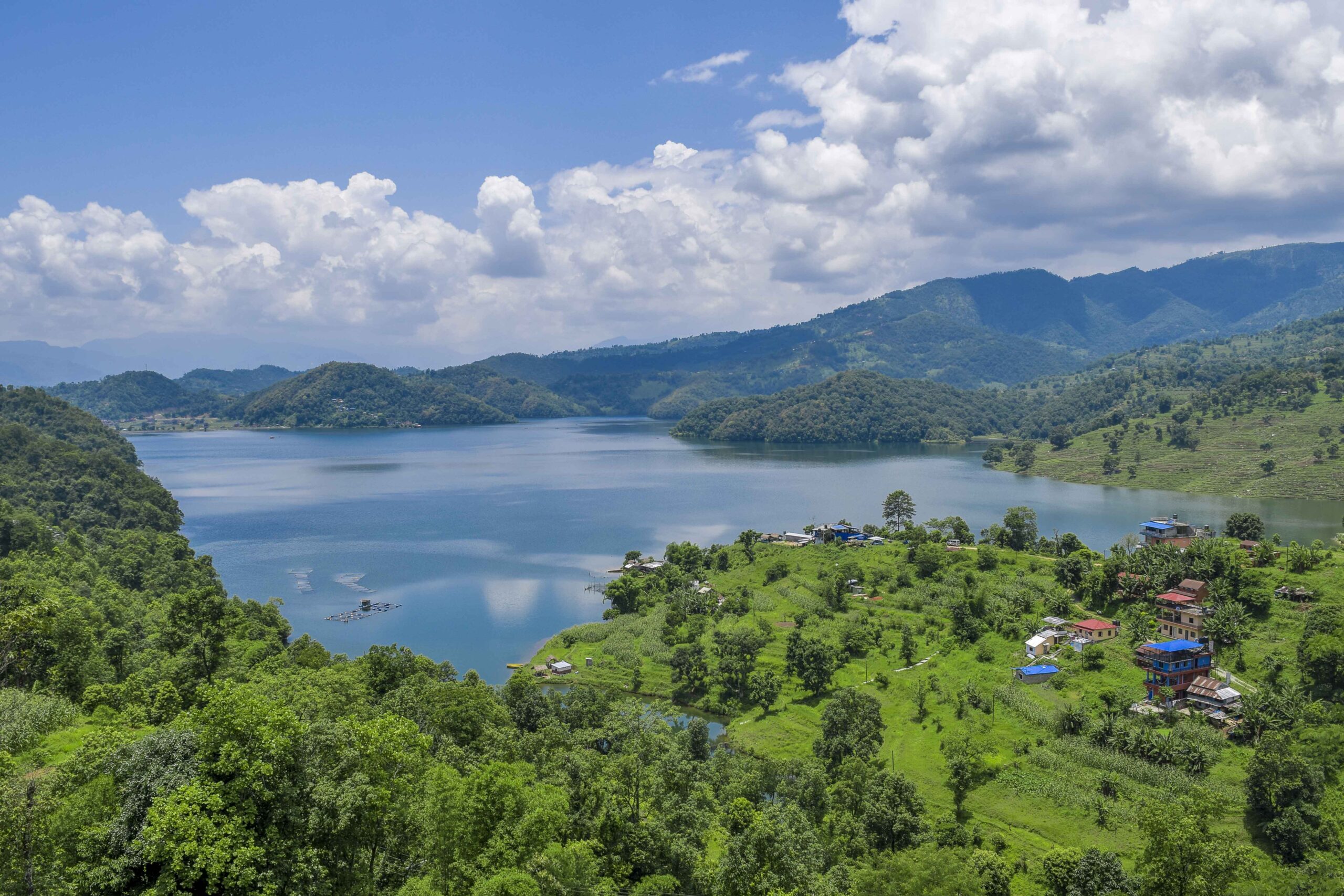
Kathmandu to Pokhara luxury jeep hirewith a private Land Cruiser, Prado, or Fortuner on the scenic Prithvi Highway

Begnas Lake: A Quiet Entry Point Near Pokhara

As you approach Pokhara on the final stretch of the Prithvi Highway, a short detour leads to Begnas Lake — a serene, largely undeveloped lake approximately 15 kilometres east of Pokhara city, surrounded by forest and far less visited than the more famous Phewa Lake at Lakeside. Arriving at Begnas in the late afternoon, when the light is golden on the water and the Annapurna range glows pink in the fading sun, is a gentle and beautiful way to transition from road travel to the Pokhara experience.

For travelers with a private vehicle, this 30-minute detour is effortless. For those staying more than one night in Pokhara, Begnas can also be a half-day excursion from the city—easily arranged with the same Nepal Vehicle Hiring service that brought you from Kathmandu.

Prithvi Highway Road Conditions: What Travellers Need to Know

Travellers planning the Kathmandu-to-Pokhara drive in 2026 and 2027 should understand the current road-development context, which has significant practical implications for journey time and comfort.

The Prithvi Highway Widening Project

The Government of Nepal has committed to expanding the Prithvi Highway from its current two-lane single-carriageway to a four-lane divided highway along its full length. This long-overdue, much-needed infrastructure investment will dramatically improve the journey once complete. However, the widening is not yet complete.

As of early 2026, the most critical sections — particularly the Muglin-Malekhu stretch (approximately 38 kilometres)— were at varying stages of completion, with some newly paved and in excellent condition, while others were still under active construction.

The practical implications for travellers are twofold. First, journey times in 2026 may occasionally be extended due to construction delays — particularly during the post-monsoon period when construction resumes after the wet season. Second, road surfaces in construction zones can be rough, dusty, and bumpy.

A private luxury jeep with quality suspension absorbs these conditions far better than a standard tourist bus or a smaller car. This is one reason Nepal Vehicle Hiring recommends the Land Cruiser or Scorpio over a standard sedan for the Kathmandu–Pokhara route in 2026 and 2027; these vehicles are built for varied road conditions and deliver genuine cabin comfort even over rough patches.

The Nagdhunga-Sisnekhola Tunnel

One of the most significant recent improvements to the Kathmandu exit experience is the Nagdhunga-Sisnekhola Tunnel, Nepal’s first modern highway tunnel, at 2.68 kilometres long. This tunnel bypasses the old Nagdhunga Pass — previously one of the most congested and time-consuming sections of the Kathmandu exit — and connects directly to the Prithvi Highway near Naubise.

Travellers departing Thamel for Pokhara in 2026 benefit from this tunnel, which reduces the Kathmandu exit time by 30 to 60 minutes compared to the pre-tunnel experience. Nepal Vehicle Hiring’s drivers are fully familiar with the tunnel approach and routinely use it for departures bound for Pokhara.

Monsoon Season Road Considerations

The Prithvi Highway passes through several landslide-prone sections, particularly in the Dhading and Chitwan hill sections between Naubise and Mugling. During the monsoon season (June to September), heavy rainfall can trigger landslides that block the highway for a few hours to a full day.

Nepal Vehicle Hiring monitors road conditions daily during the monsoon and keeps clients informed of any significant disruptions. Our drivers carry basic emergency supplies and know the alternative routes where they exist.

Monsoon travel on this route is generally manageable with experienced private transport — far more so than with fixed-schedule bus services that cannot adapt to delays.

When to Leave: Optimal Departure Times for the Kathmandu–Pokhara Drive

The timing of your departure from Kathmandu significantly affects the quality and duration of your Kathmandu-to-Pokhara drive. Nepal Vehicle Hiring consistently recommends the following approach based on years of experience managing this route:

Departing from Thamel between 6:30 and 7:30 AM is the optimal strategy for the Kathmandu–Pokhara luxury jeep drive. Kathmandu traffic is minimal before 8 AM, so you can exit the city quickly via the Nagdhunga Tunnel and reach the Prithvi Highway without the multi-hour delays mid-morning departures from the capital can bring.

An early departure also means you arrive at Malekhu around breakfast time, reach Manakamana or Mugling around midday, and reach Pokhara by mid-afternoon—in time for a relaxed first evening at Lakeside, a sunset walk along Phewa Lake, or, for trekkers, enough time to arrange the following day’s activities.

Early departure is especially important if you plan to stop at Manakamana Temple, as the cable car queue is shortest in the early to mid-morning and gets significantly longer from noon onward. A 7 AM departure from Thamel gets you to Kurintar Cable Car station around 10 AM — ideal timing for a relatively uncrowded temple visit.

Mid-Morning Departure: 8:30 to 10:00 AM — Acceptable but Slower

If an early departure is not practical — due to a late arrival in Kathmandu the previous night, a morning sightseeing commitment, or simply a preference for a later start — an 8:30 to 10:00 AM departure is workable but comes with longer Kathmandu exit times. The ring road and Nagdhunga approach can be heavily congested during the morning rush hour (7:30 to 9:30 AM), and mid-morning departures typically lose 45 to 90 minutes in Kathmandu traffic before reaching the Prithvi Highway.

With this departure window, plan for a 5 to 6 PM arrival in Pokhara, or later if stops are included.

For travellers who want a morning in Kathmandu before departing—a final visit to Boudhanath, a Kathmandu sightseeing tour session, or a morning Bhaktapur Durbar Square day tour before the Pokhara drive—Nepal Vehicle Hiring can coordinate the timing. Hence, the vehicle transitions directly to the Pokhara jeep without any gap in service.

Departures from Kathmandu after 11 AM for the drive to Pokhara are generally inadvisable. The combination of midday Kathmandu traffic, afternoon construction delays on the highway, and the risk of arriving in Pokhara after dark (not dangerous, but reducing your ability to enjoy the Lakeside ambience on arrival) makes afternoon departures a poor option.

Nepal Vehicle Hiring will always advise clients to aim for the morning departure window, and our team will structure your Kathmandu schedule accordingly.

From Pokhara: Onward Journeys with Nepal Vehicle Hiring

For most travellers, the Kathmandu-to-Pokhara luxury jeep hire is not the end of the road; it is the beginning of a broader adventure in Nepal. Pokhara sits at the gateway to some of Nepal’s most extraordinary destinations, and Nepal Vehicle Hiring’s fleet of jeeps, Hiace vans, and Coasters provides smooth onward transport from the city to wherever your journey in Nepal takes you next.

Pokhara to Mustang: The Forbidden Kingdom Awaits

The most dramatic overland journey available from Pokhara is the drive into Upper Mustang — the ancient walled kingdom of Lo Manthang accessible via the Kali Gandaki gorge road through Beni and Jomsom. Our Pokhara to Mustang jeep service covers the entire journey from Pokhara to Lo Manthang in 2 to 3 days, using the same Land Cruiser or Scorpio that brought you from Kathmandu deep into one of Nepal’s most inaccessible and extraordinary destinations.

The Mustang road beyond Kagbeni is among Nepal’s most challenging roads, and an experienced driver and a well-maintained 4WD vehicle are essential.

Pokhara to Muktinath: The Sacred Temple Journey

For pilgrims and culturally motivated travellers, the Muktinath Yatra itinerary takes you from Pokhara northward to Muktinath Temple at 3,710 meters — one of the most sacred sites in both Hinduism and Buddhism, featuring 108 water spouts, an eternal flame, and a Vishnu temple complex that draws hundreds of thousands of pilgrims annually. Our Hiace van handles the Pokhara-to-Jomsom section, with 4WD jeeps taking over for the final approach to Muktinath.

This is the natural extension for Kathmandu–Pokhara travellers whose journey has a spiritual dimension.

Pokhara to Annapurna Circuit Trailheads

For trekkers starting the Annapurna Circuit or heading to specific entry points in the Annapurna Conservation Area, Nepal Vehicle Hiring offers Pokhara-to-Nayapul transportation for the southern circuit approach, plus coordinated connections to Besisahar and Dumre for the eastern circuit entry. The Sarangkot sunrise tour is also one of the most popular Pokhara-based activities we arrange — a dawn departure to the Sarangkot viewpoint ridge for the finest Annapurna panorama in the region before the trekking adventure begins.

Pokhara to Chitwan: Adding the Wildlife Dimension

For travellers combining Pokhara with a Chitwan National Park wildlife experience, our Hiace van and car hire fleet covers the Pokhara-to-Chitwan highway leg (approximately 150 kilometres, 4 to 5 hours). This leg, combined with the Kathmandu–Pokhara luxury jeep hire, forms part of the classic Nepal triangle circuit — one of the finest multi-destination combinations in the country. See our Nepal tour package and Nepal holiday tour pages for complete pre-packaged versions of this circuit.

Pokhara to Lumbini: The Pilgrimage Circuit

Lumbini — the birthplace of the Buddha — lies approximately 20 kilometres southwest of Pokhara via Butwal, a 4- to 5-hour drive on the Siddhartha Highway. For pilgrims completing the full Nepal sacred circuit (Pashupatinath, Muktinath, Lumbini), our Nepal Nekhor tour service coordinates all transport across the complete circuit. We can handle the Lumbini leg from Pokhara with our Hiace van hire or car fleet, depending on group size.
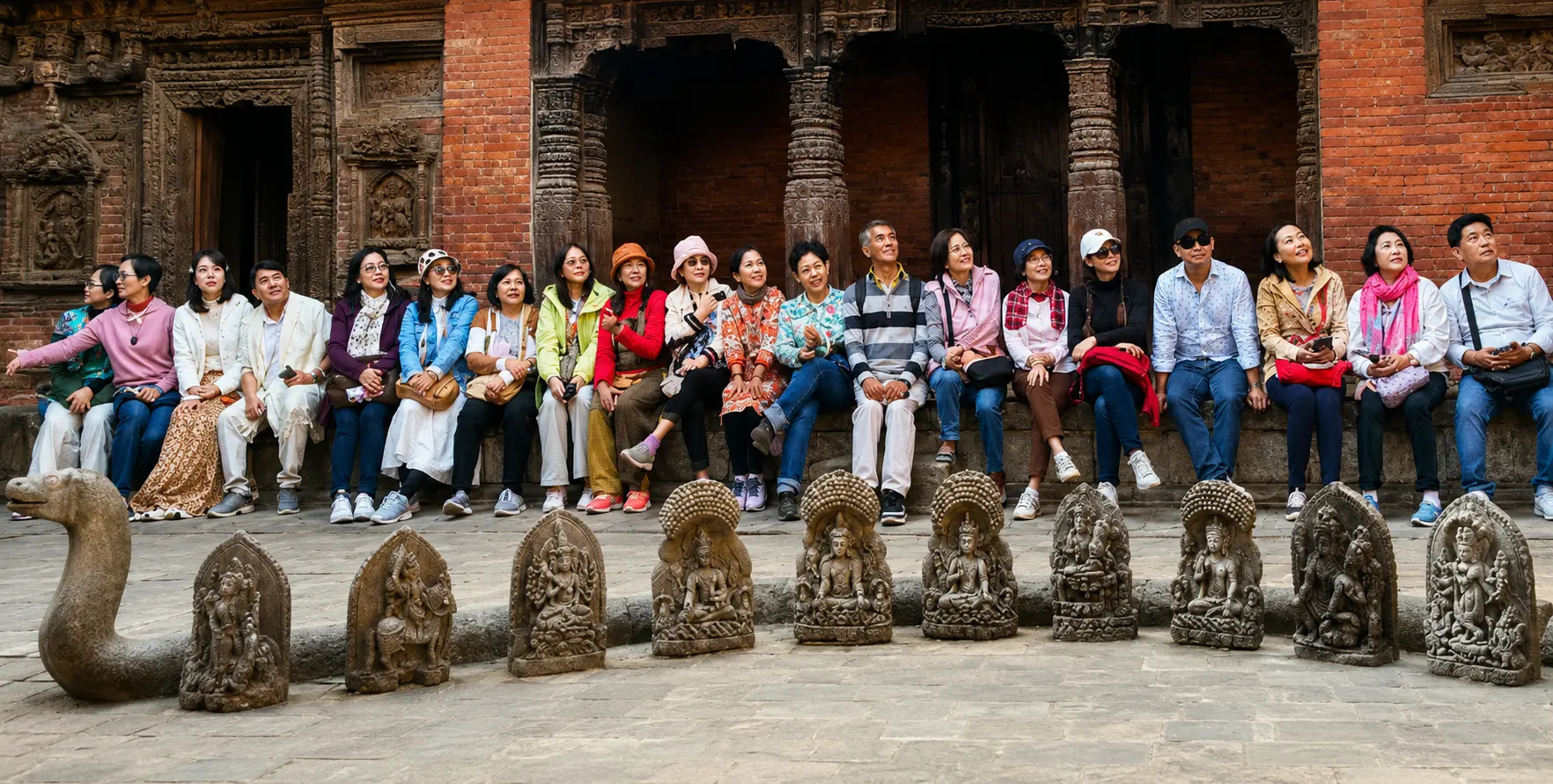
Kathmandu to Pokhara luxury jeep hire with a private Land Cruiser, Prado, or Fortuner on the scenic Prithvi Highway

Combining Your Kathmandu–Pokhara Journey with Kathmandu Valley Sightseeing

Most international travellers arrive in Kathmandu first and spend 1 to 3 days in the valley before departing for Pokhara. Nepal Vehicle Hiring provides comprehensive Kathmandu Valley transport that connects smoothly to the Pokhara departure, meaning a single provider handles every aspect of your Nepal land transport from airport arrival to final destination.

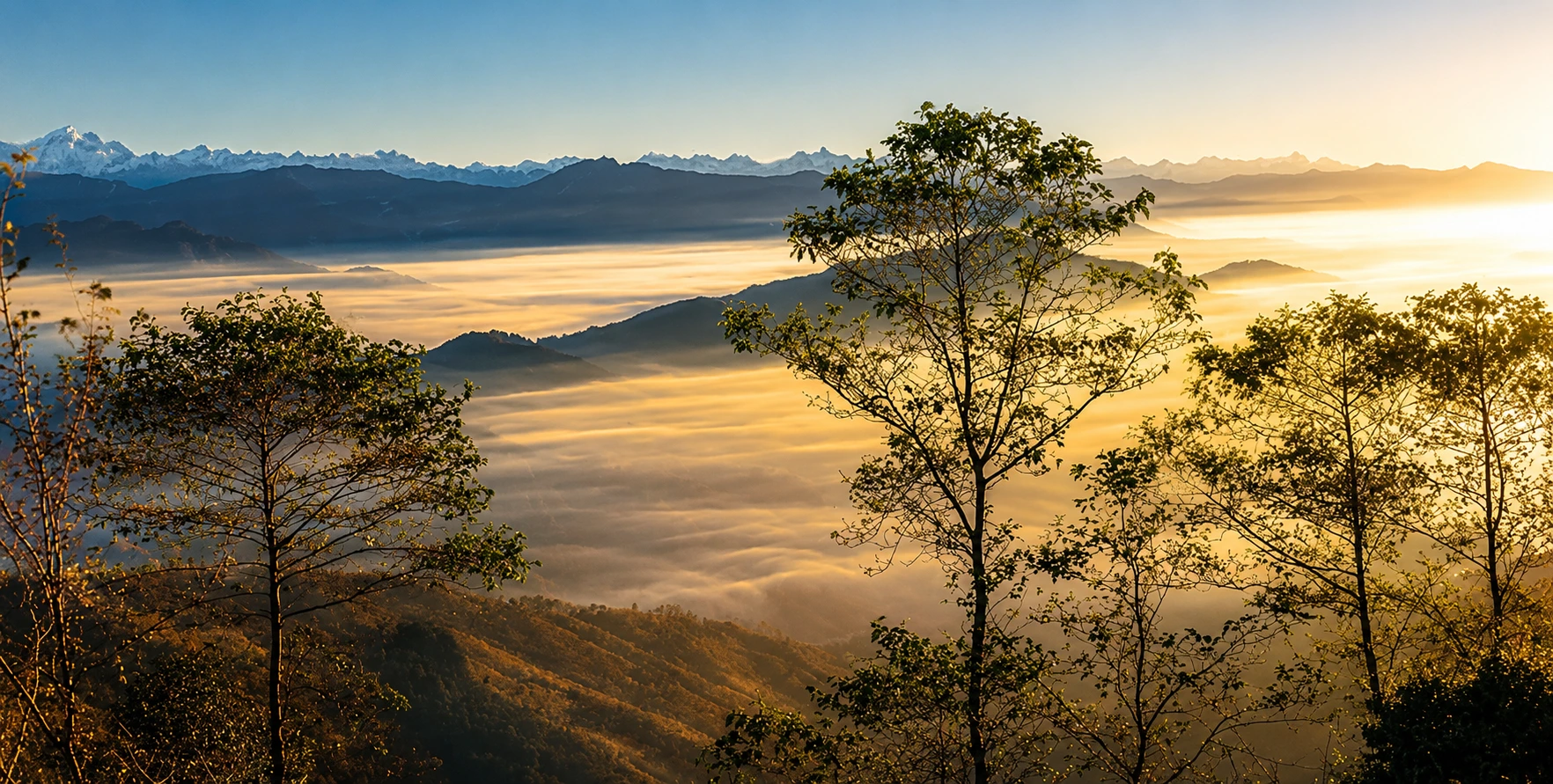
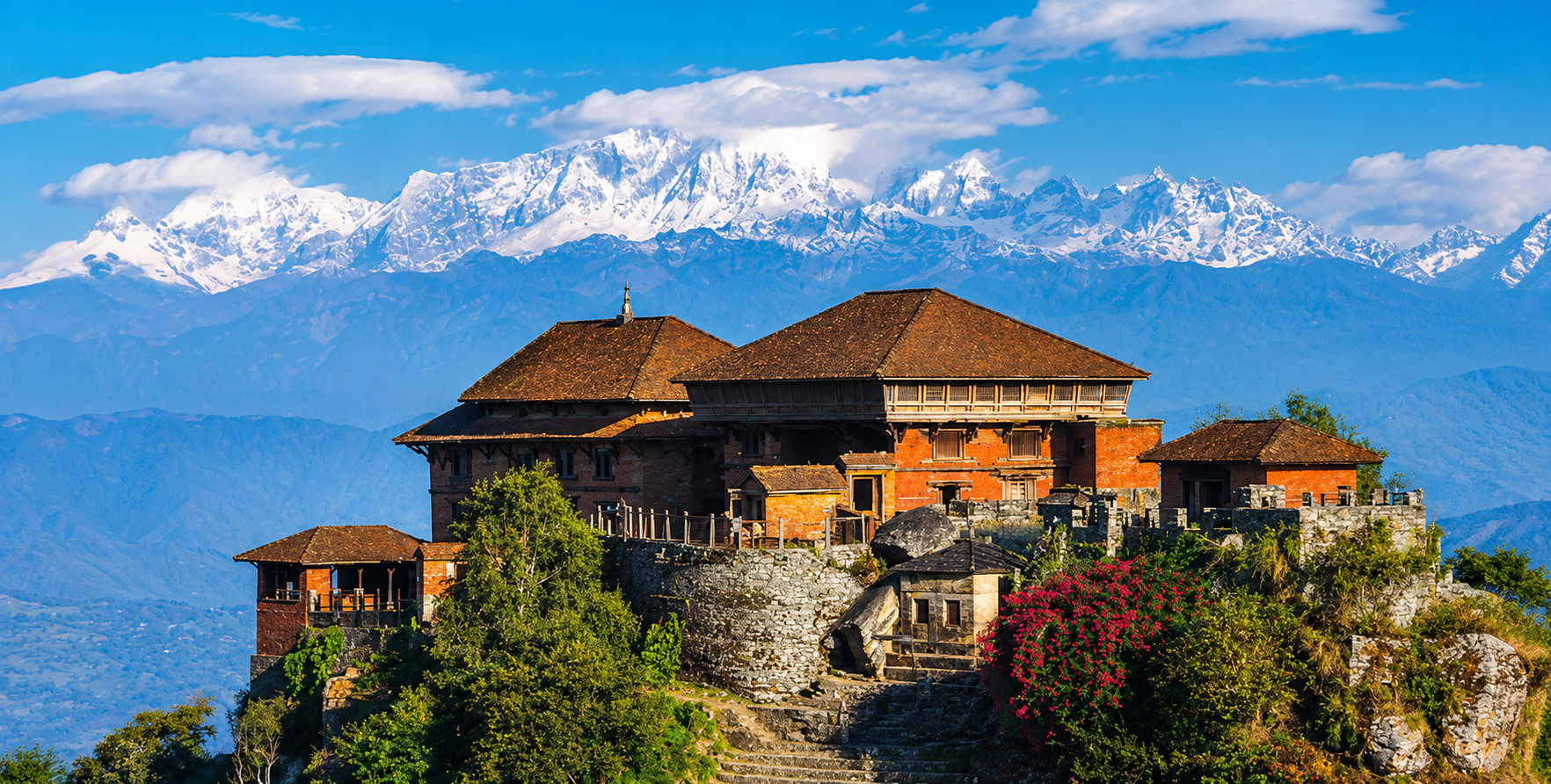
Starting with our Kathmandu airport transfer service on arrival, you can move on to a full Kathmandu sightseeing tour covering Pashupatinath, Boudhanath, Swayambhunath, and Patan Durbar Square, followed by a dedicated Bhaktapur Durbar Square day tour and the Nagarkot sunrise tour via our Kathmandu to Nagarkot vehicle service. This valley program offers two to three days of first-rate cultural experiences before the drive to Pokhara begins.

For trekkers using our mountain approach services — the Kathmandu to Manang jeep, the Kathmandu to Mustang private jeep, or the Besisahar private vehicle — the Pokhara luxury jeep hire naturally fits as either the first leg of a longer mountain road journey or the return transport after the trek circuit is complete. Our operations team coordinates multi-leg itineraries as standard practice, ensuring smooth vehicle transitions and optimised timing for your overall schedule.
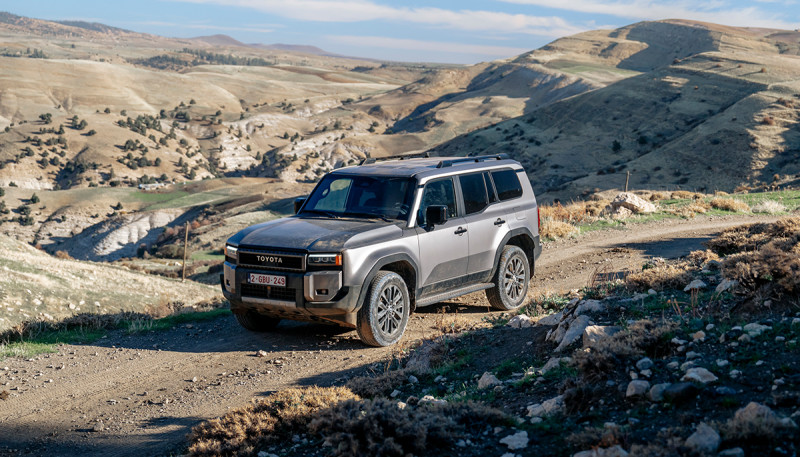
Kathmandu to Pokhara luxury jeep hire with a private Land Cruiser, Prado, or Fortuner on the scenic Prithvi Highway

Who Benefits Most from the Kathmandu to Pokhara Luxury Jeep Hire?

The Kathmandu to Pokhara luxury jeep hire from Nepal Vehicle Hiring is specifically the right choice for the following traveller profiles:

Families with Children Travelling with children on a long highway journey requires flexibility — flexibility to stop for bathroom breaks at any moment, to pull over if a child is feeling carsick on the winding sections of the Prithvi Highway, to stop longer at Manakamana or Bandipur if the children are engaged, and to push through the final section if they are tired and irritable. None of this flexibility exists on a tourist bus. A private jeep with a patient, experienced driver who has ferried families on this route many times gives parents complete control of the journey. It transforms what could be a stressful 8-hour challenge into a manageable, enjoyable family road trip. Our car hire in Nepal covers smaller families of 2 to 4; the Scorpio or Land Cruiser handles families of 4 to 6 with luggage and travel gear.

Couples on Romantic Nepal Trips

The Kathmandu–Pokhara drive in a private vehicle, with the Trishuli River below and the Himalayan foothills rising on either side, is a genuinely romantic journey — provided you have the privacy to appreciate it. A couple travelling in the back of a private Land Cruiser, with the front seat free for luggage and complete privacy to talk, sleep, photograph, and experience the journey together, arrives in Pokhara in an entirely different state of mind from someone who has shared a tourist bus seat for 8 hours.

For honeymoon couples and anniversary travellers, luxury jeep hire is not just more comfortable—it is part of the trip.

Senior Travellers

Long bus journeys on Nepal’s mountain highways can be genuinely demanding for older travellers. The combination of hard seating, no individual climate control, fixed stop schedules, and the physical motion of a bus on a winding road creates conditions that are unnecessarily taxing for people who would prefer to travel comfortably.

A private jeep with leather seating, individual climate control, the ability to stop whenever needed, and a driver who can adjust the pace to comfort rather than schedule makes the Kathmandu–Pokhara journey accessible and enjoyable for senior travellers who might otherwise choose the 25-minute domestic flight as their only alternative.

Business and VIP Travellers

For business travellers visiting Nepal for corporate purposes, NGO work, government delegations, or high-end tourism development, a Toyota Land Cruiser with a professional driver is the standard expectation for overland transport. Nepal Vehicle Hiring provides VIP vehicle hire with Land Cruiser or top-end SUV options that meet international professional travel standards — clean, punctual, comfortable, and driven by a professional who understands the expectations of business travel.

We can also coordinate pickup at Kathmandu airport and deliver directly to any hotel in Pokhara.

Trekkers and Adventure Groups

For trekkers heading to the Annapurna region, a private luxury jeep hire to Pokhara is the ideal way to begin the adventure—arriving rested rather than exhausted, with energy to prepare for the trek ahead, buy remaining supplies, and settle into the Lakeside rhythm before moving on. Groups using our trekking transport services can combine the Kathmandu–Pokhara luxury jeep leg with subsequent jeep hire to Besisahar, Nayapul, or other Annapurna trailheads, handled as a single coordinated multi-leg booking.

Best Season for Kathmandu to Pokhara Luxury Jeep Hire

Spring (March to May): Clear Skies, Moderate Traffic

Spring is one of the finest times for the Kathmandu–Pokhara drive. Rhododendron forests along the highway hills are in full bloom in March and early April; the air is clear, and the Himalayan peaks are visible from multiple sections of the final approach to Pokhara. Trekking season peaks in April and May, so Nepal Vehicle Hiring’s fleet is in high demand—book 4 to 6 weeks in advance for prime spring dates.

Monsoon (June to September): Lush but Variable

The monsoon brings the Prithvi Highway’s most challenging road conditions — occasional landslide delays, muddy construction sections, and reduced visibility. The compensation is the extraordinary lushness of the landscape: the Trishuli River gorge in full monsoon, with waterfalls streaming down every cliff face and the hills an impossibly vivid green, is spectacular.

Nepal Vehicle Hiring operates the Kathmandu–Pokhara route year-round, including during the monsoon, with daily road condition checks and experienced drivers who can navigate seasonal challenges. The Kathmandu-to-Pokhara bus remains available as a budget option during this period, but for comfort and reliability during the monsoon, the private jeep is strongly preferred.

Autumn (September to November): The Premier Season

Autumn is Nepal’s absolute peak travel season for good reason — post-monsoon clarity delivers the finest mountain views of the year, the landscape is lush from the recent rains, and the temperatures are perfect. The final approach to Pokhara on a clear autumn morning, when the entire Annapurna range — Dhaulagiri, Annapurna I through IV, Machapuchre, Lamjung Himal — fills the northern horizon in a panorama of extraordinary scale, is one of Asia’s great road trip moments.

Nepal Vehicle Hiring’s Land Cruiser and Scorpio fleets operate at full capacity during the autumn peak season. Booking 6 to 8 weeks in advance is strongly recommended for travel in October and November.

Winter (December to February): Quiet and Clear

Winter is an underrated season for the Kathmandu–Pokhara drive. Tourist crowds thin dramatically, Nepal vehicle hire vehicles are readily available without extended notice, and the cold, dry air produces crystal-clear mountain visibility that sometimes exceeds even autumn clarity. Daytime highway temperatures are cool and comfortable for road travel.

The only consideration is that if your Pokhara trip is a gateway to a Mustang or Manang mountain road journey, winter mountain passes and high-altitude road sections require careful planning and experienced driver judgment — which Nepal Vehicle Hiring’s team always provides.

Frequently Asked Questions: Kathmandu to Pokhara Luxury Jeep Hire

How long does the drive from Kathmandu to Pokhara take in a private jeep?

With a private luxury jeep and an early departure from Thamel (6:30 to 7:30 AM), the drive takes about 6 to 7 hours without stops. With a Malekhu breakfast stop and a Mugling lunch break, plan for 7.5- 8.5 hours total. Adding Manakamana Temple extends the journey to approximately 10 hours.

Adding both Manakamana and Bandipur makes for a full 11-hour travel day, best suited to travellers who want to experience the complete journey rather than see Pokhara quickly.

What is included in Nepal Vehicle Hiring’s all-in jeep hire price?

Nepal Vehicle Hiring’s pricing for the Kathmandu-to-Pokhara luxury jeep hire includes the vehicle, professional driver, fuel, driver accommodation and meal allowance (for the driver, not the passengers), and all applicable road charges and tolls. It does not include passenger food, cable car tickets at Manakamana, Bandipur entry fees, or any other personal expenses: no hidden charges or end-of-journey additions.

Contact us through the ” Plan Your Trip “ page for a specific price quote.

Can I book a return trip from Pokhara to Kathmandu with the same driver?

Yes — Nepal Vehicle Hiring can arrange both the outward and return journeys as part of a single booking, with the same driver or a different one depending on scheduling. Many travellers book the outward Kathmandu–Pokhara jeep hire and then arrange the return after deciding their Pokhara itinerary.

We can also arrange one-way hire with the vehicle returning independently — both options are available, with pricing reflecting the different configurations.

Is a 4WD necessary for the drive from Kathmandu to Pokhara?

The Prithvi Highway is accessible to standard 2WD vehicles and does not require 4WD capability for the highway leg alone. However, Nepal Vehicle Hiring recommends the Scorpio or Land Cruiser (both 4WD or 4WD-capable) for this route because ongoing highway construction may involve rough, temporary surfaces that benefit from higher ground clearance and better suspension.

Additionally, if your Pokhara visit is a gateway to any onward mountain road journey — Mustang, Muktinath, Manang — a 4WD is mandatory for those sections, so starting with a 4WD vehicle ensures smooth continuity.

How far in advance should I book?

For autumn peak season (October–November) and spring peak season (March–May), we strongly recommend booking 4 to 6 weeks in advance for top-end Land Cruiser options. The Scorpio fleet has more availability and can typically be booked 1 to 2 weeks in advance during non-peak periods.

For festival periods — Dashain in October, Tihar in November, and Tiji Festival in May — book even further in advance, as vehicle demand across the country peaks during these windows. Contact Nepal Vehicle Hiring through our Plan Your Trip page or WhatsApp for current availability.

Can I combine the Kathmandu-to-Pokhara jeep with an Everest Base Camp trek transfer?

Absolutely. Nepal Vehicle Hiring provides comprehensive multi-destination transport coordination in Nepal. If your itinerary includes both an EBC trek (requiring Everest Base Camp trek transport to the airport or Ramechhap airstrip) and a Pokhara visit with Annapurna trekking transport, our operations team coordinates all legs as a single managed itinerary.

This is one of Nepal Vehicle Hiring’s greatest strengths — the ability to handle complex, multi-destination itineraries in Nepal with a single point of contact and a single standard of service throughout.

How to Book Your Kathmandu to Pokhara Luxury Jeep Hire with Nepal Vehicle Hiring

Booking your luxury private jeep hire from Kathmandu to Pokhara with Nepal Vehicle Hiring is straightforward and can be confirmed quickly:

  • Visit www.vehiclehiringnepal.com and browse our jeep hire fleet and service options.
  • Submit your trip details through our plan your trip page — including your travel date, preferred departure time, group size, vehicle preference (Land Cruiser or Scorpio), and any planned en route stops.
  • Our team responds within 24 hours with a confirmed vehicle, driver assignment, and all-in pricing.
  • Confirm the booking, and we will handle everything — hotel pickup, route planning, stop coordination, and onward transport to Pokhara, if required.

Contact us directly at any time:

WhatsApp / Call:WhatsApp
Email:[email protected]

Nepal Vehicle Hiring Pvt. Ltd. is based in Thamel, Kathmandu — the heart of Nepal’s tourism district — and is available seven days a week. Our team speaks English, Nepali, and Hindi and has extensive experience helping international travellers from around the world design and execute Nepal transport itineraries of any complexity.

The 200-kilometre drive from Kathmandu to Pokhara is one of Nepal’s great journeys. The Trishuli River gorge at dawn, pilgrims ascending to Manakamana, fish grilling over charcoal at Mugling, the ancient lanes of Bandipur, the moment when the Annapurna range fills the horizon as you approach Pokhara in the late afternoon all of these belong to you when you travel by private luxury jeep.

Let Nepal Vehicle Hiring ensure you experience each one in the comfort and privacy you deserve.
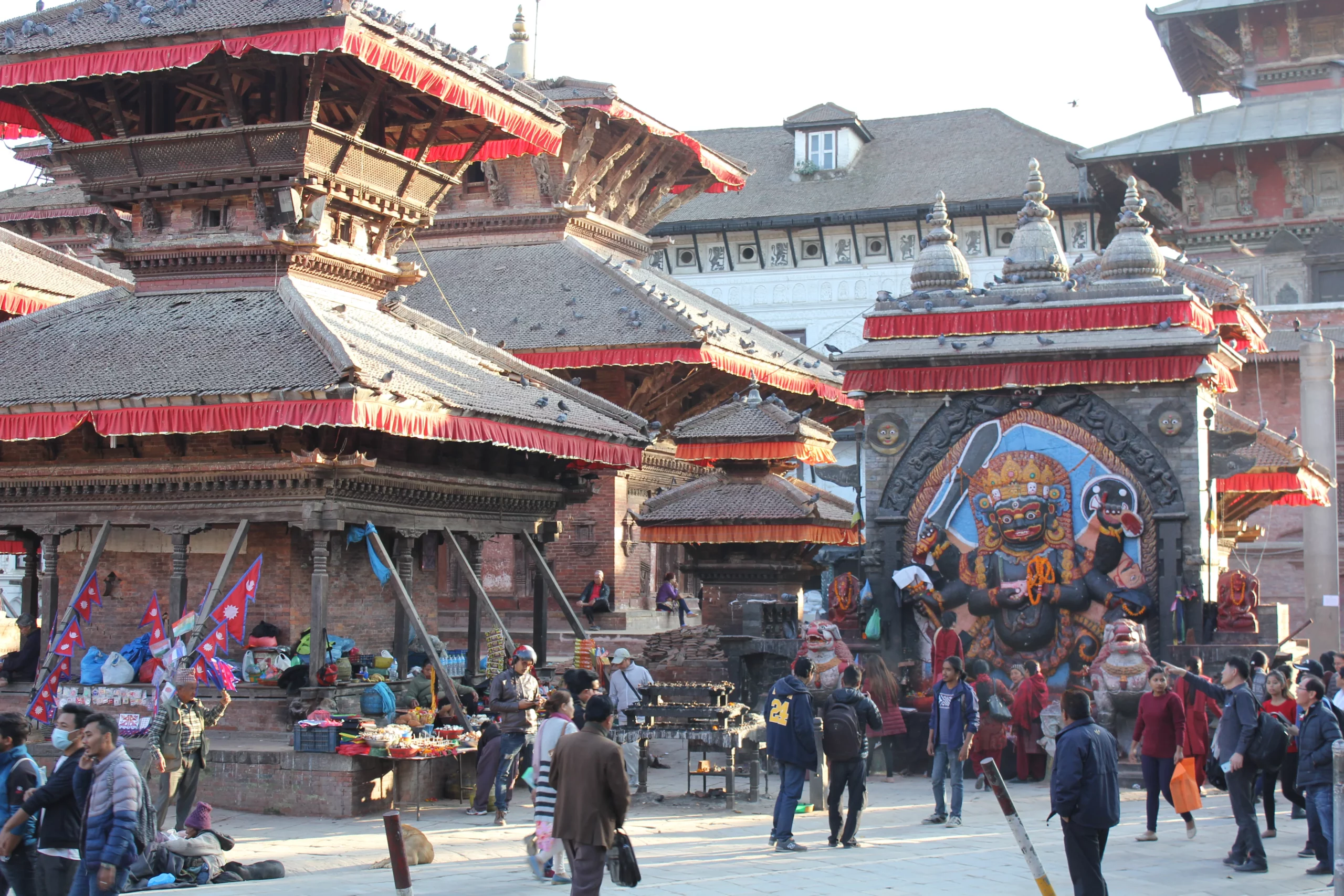
Kathmandu to Tamang Heritage Trail Transport

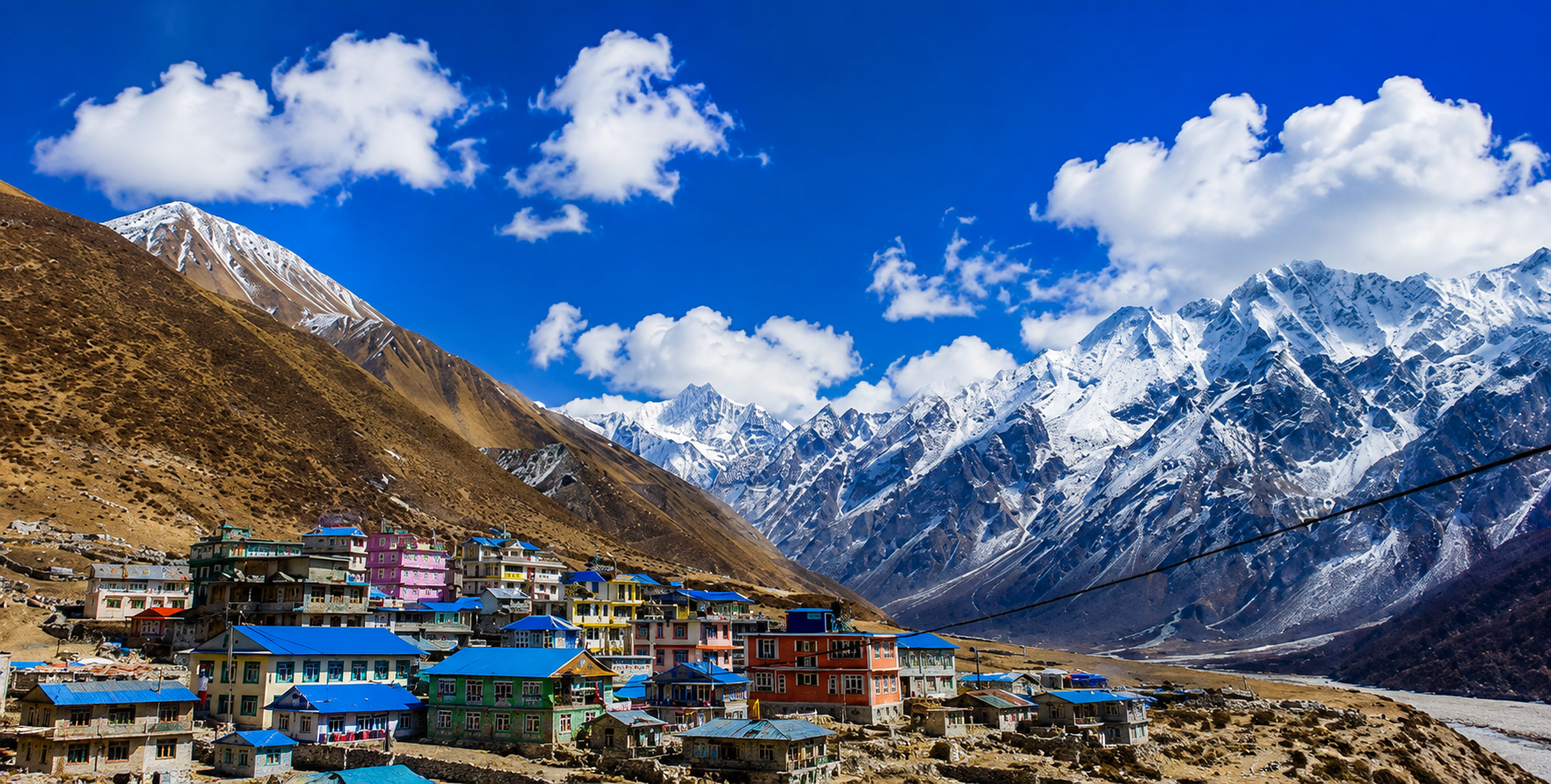
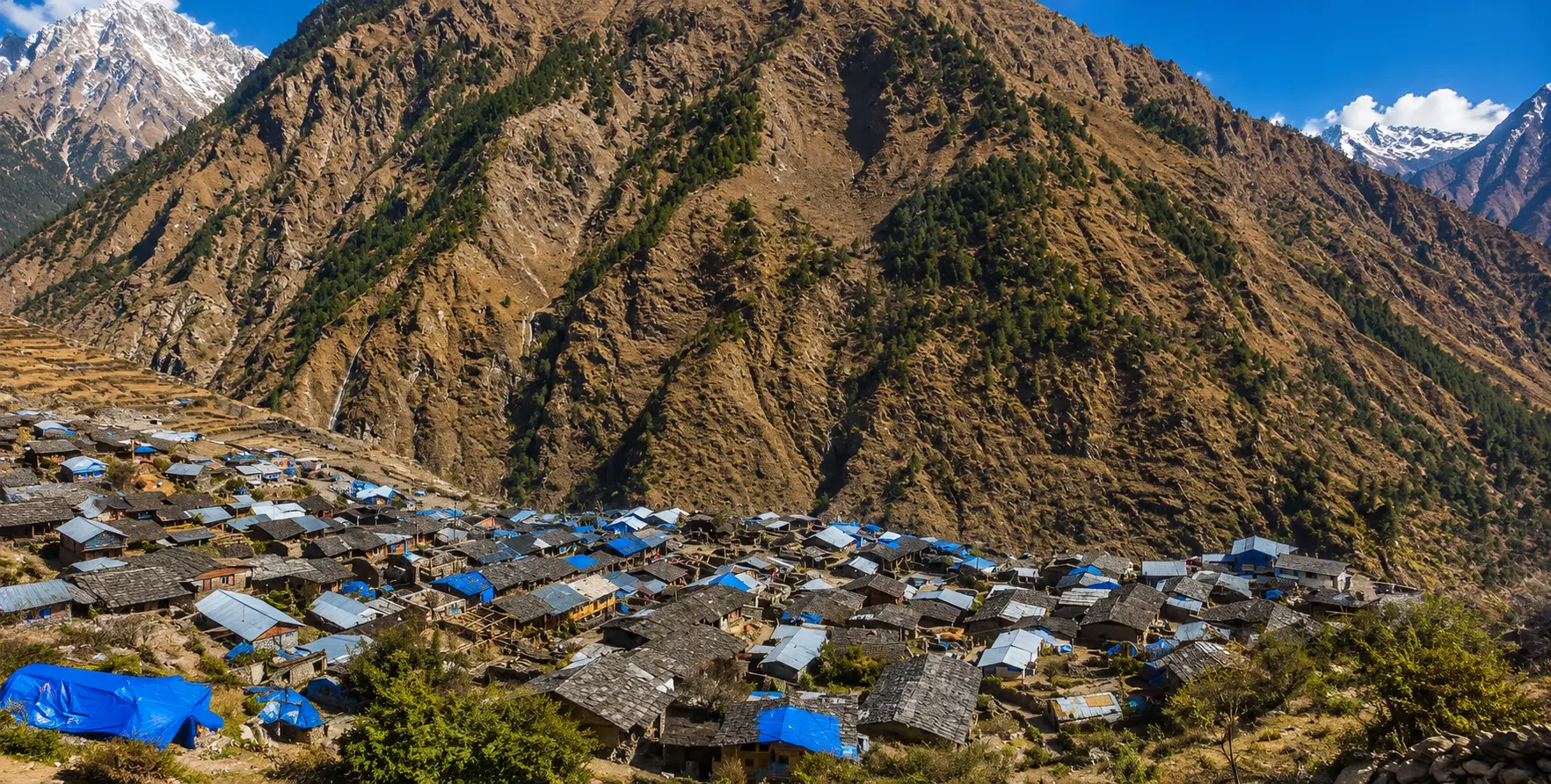
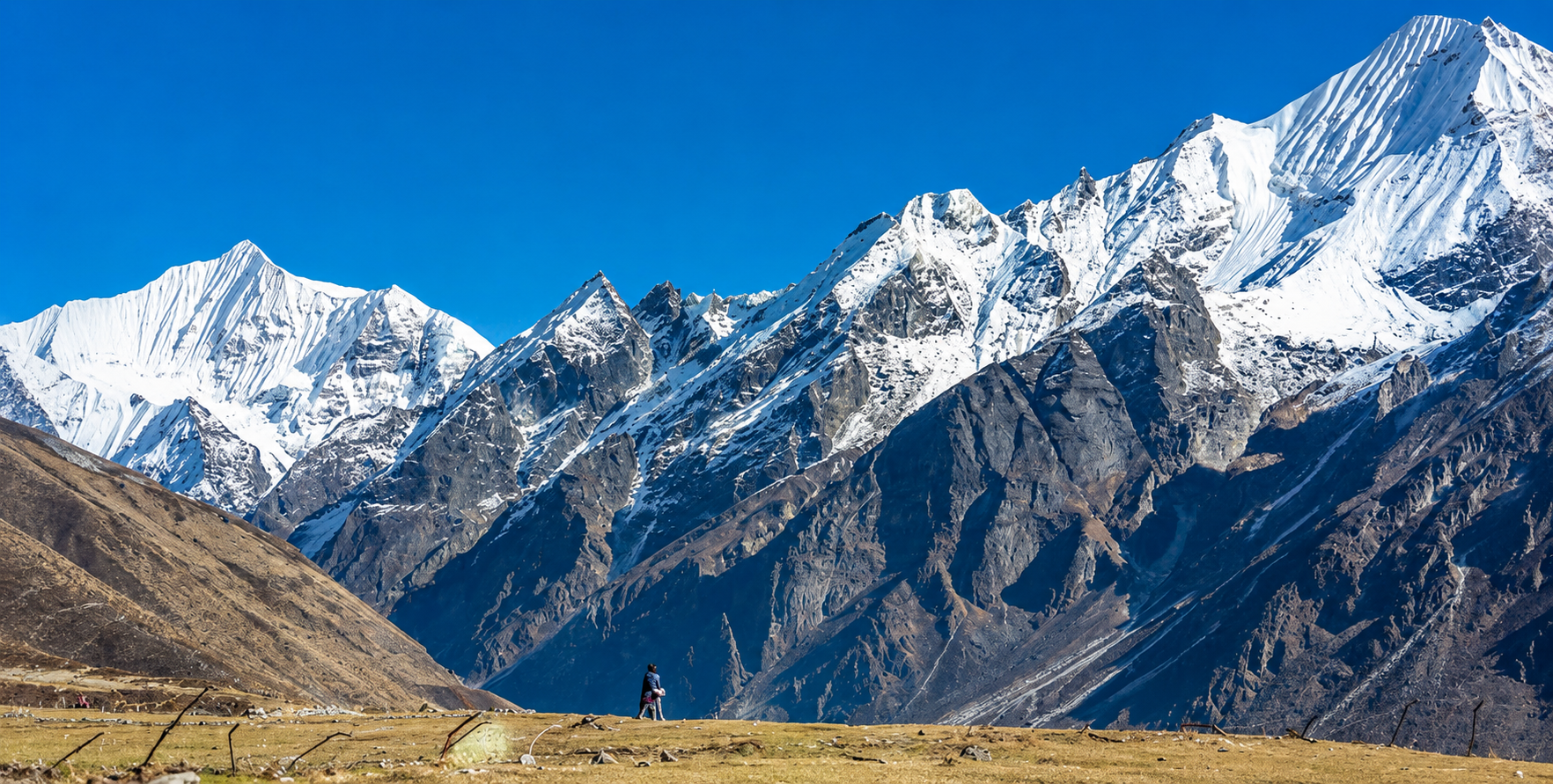
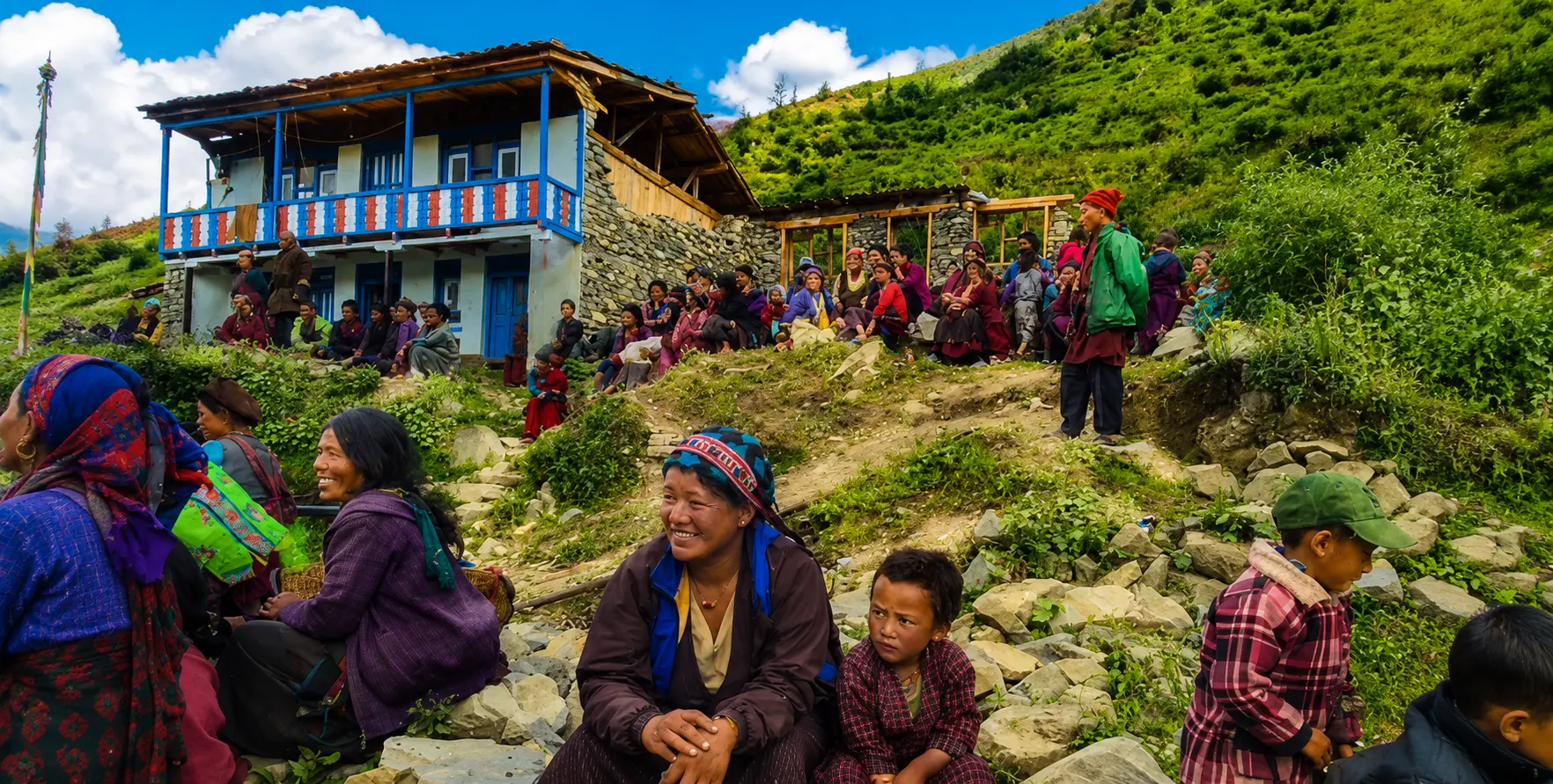
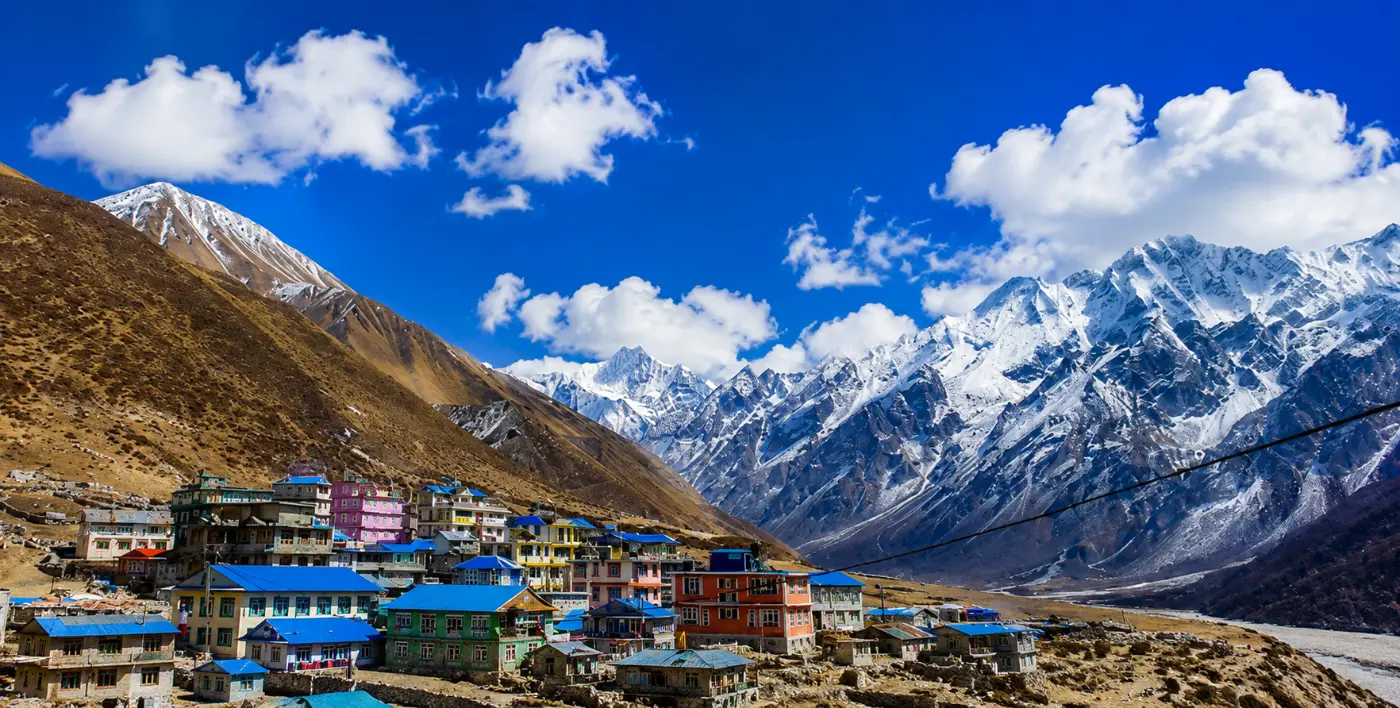
Kathmandu to Tamang Heritage Trail transport with a private 4WD jeep traveling through the Langtang region of Nepal

Kathmandu to Tamang Heritage Trail Transport

The Complete Vehicle Hire and Route Guide to Nepal’s Off-the-Beaten-Path Cultural Trek

Tucked into the Rasuwa district along Nepal’s northern border with Tibet, the 

Tamang Heritage Trail remains one of the country’s most rewarding yet comparatively undiscovered trekking routes. Named for the Tamang people whose Tibetan Buddhist culture, stone-built villages, and centuries-old trade routes define the region, this trek combines striking Himalayan views with a depth of cultural immersion that busier trails often lack.

Reaching the trailhead, however, still means the same demanding drive out of Kathmandu that serves the neighbouring Langtang Valley, and getting that first leg right matters as much as the trek itself.

This guide covers everything travellers need to know about 

vehicle hire and transport for the Kathmandu-to-Tamang Heritage Trail journey, from the drive itself through Trishuli Bazaar and Dhunche to Syabrubesi, to the trekking route’s key villages, permits, seasonal considerations, and how the trail compares to and combines with the better-known Langtang Valley Trek. Nepal Vehicle Hiring has arranged jeep and private vehicle transport along this exact corridor for years, and this article draws directly on that route experience.

What Is the Tamang Heritage Trail

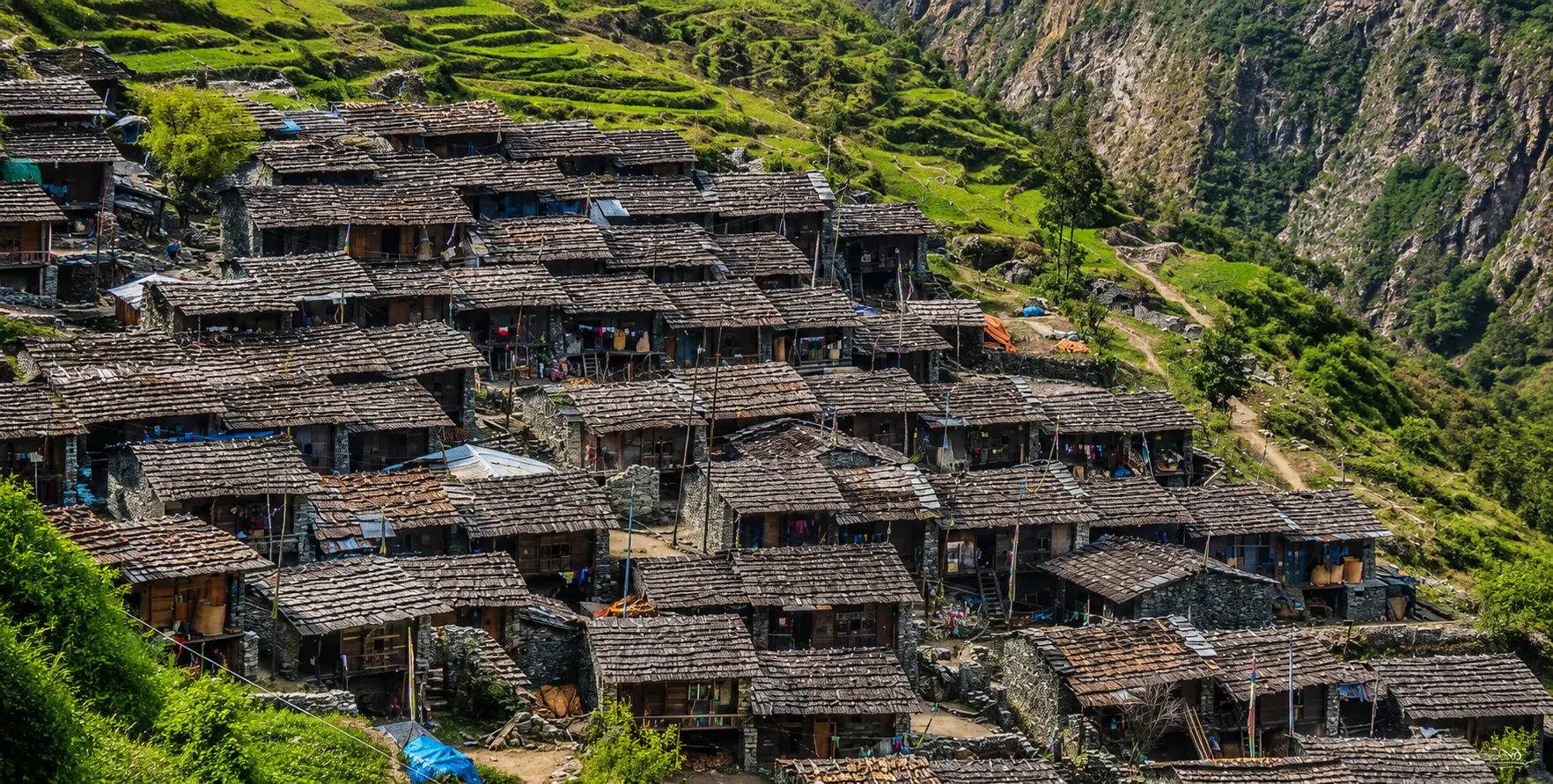
The Tamang Heritage Trail is a relatively new trekking route, established to bring sustainable tourism income directly to Tamang communities in the villages north and west of Syabrubesi. Unlike the more heavily trekked Langtang Valley route, which follows the Langtang Khola directly toward Kyanjin Gompa, the Tamang Heritage Trail loops through a series of traditional villages, including Gatlang, Tatopani, Nagthali, Thuman, and Briddim, each offering homestay accommodation, traditional Tamang architecture, and direct contact with a culture closely tied to Tibetan Buddhism.

The trail’s defining features include the natural hot springs at Tatopani village, sweeping views of Langtang Lirung and the surrounding peaks from the Nagthali Danda viewpoint, centuries-old monasteries and chortens found throughout the route, and a level of homestay-based cultural exchange that has become increasingly rare on Nepal’s busier trekking circuits. For travellers seeking a shorter, culturally rich trek that avoids the crowds of the Everest and Annapurna regions while remaining relatively accessible from Kathmandu, the Tamang Heritage Trail has become an increasingly popular choice.

Geography: Rasuwa District and the Nepal-Tibet Borderlands

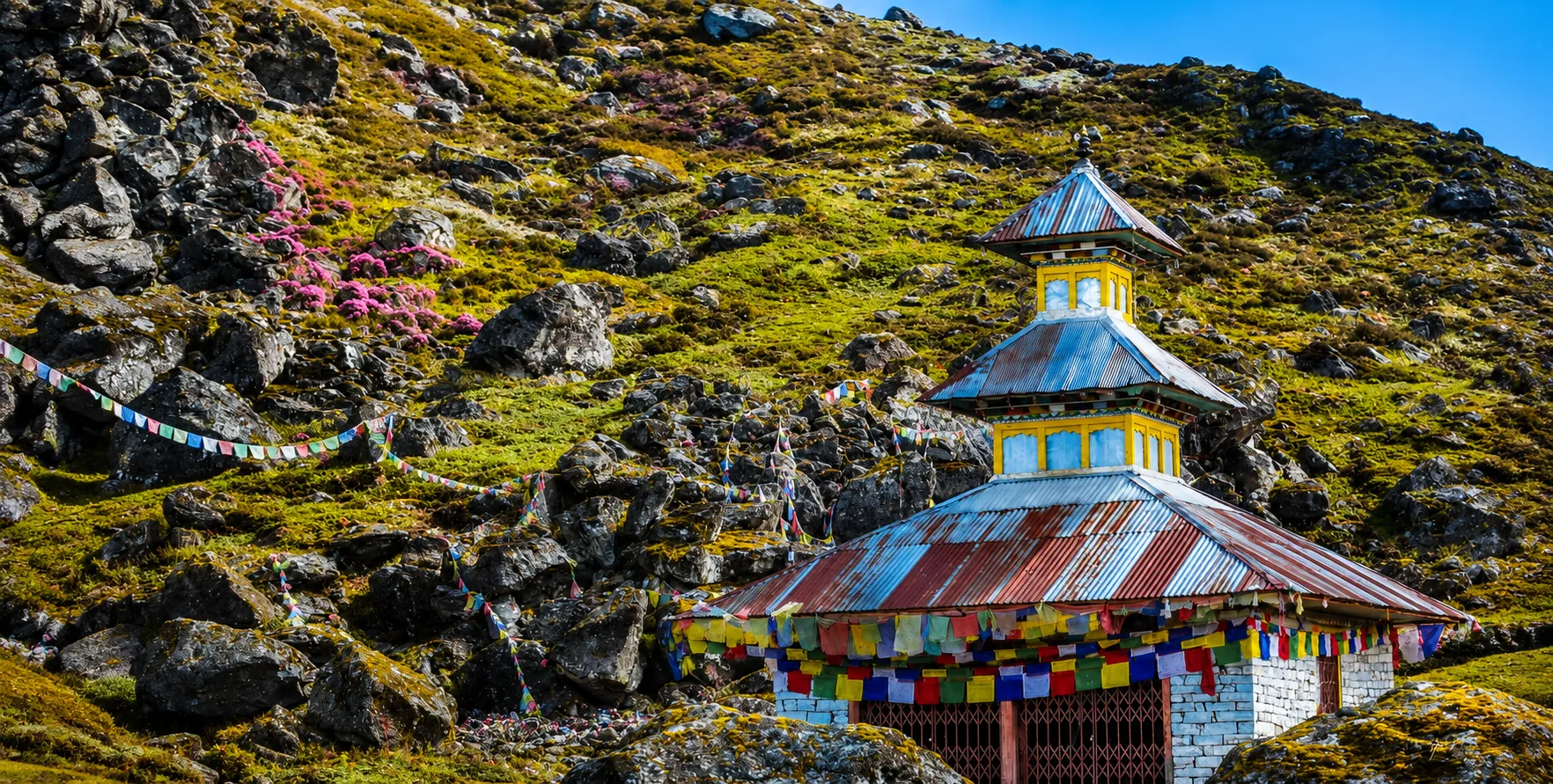
The Tamang Heritage Trail sits within Rasuwa district, largely inside or adjacent to Langtang National Park, in the same broad region as the Langtang Valley and within striking distance of the Rasuwagadhi-Kerung border crossing into Tibet. This proximity to the Tibetan plateau has shaped Tamang culture in the region for centuries, as seen in the area’s monasteries, prayer flags, chortens, and the Tibetan Buddhist practices still actively practised in villages like Gatlang and Thuman.

Elevations along the trail range from around 1,460 meters at Syabrubesi to over 3,650 meters at the Nagthali Danda viewpoint, making it a moderately challenging trek that nonetheless remains accessible to reasonably fit trekkers without requiring the sustained high-altitude endurance of routes like the Everest Base Camp Trek or Annapurna Circuit.

Book reliable Kathmandu to Tamang Heritage Trail transport with private 4WD jeeps and experienced drivers for a comfortable journey to the trek starting point.

The Journey From Kathmandu to Syabrubesi

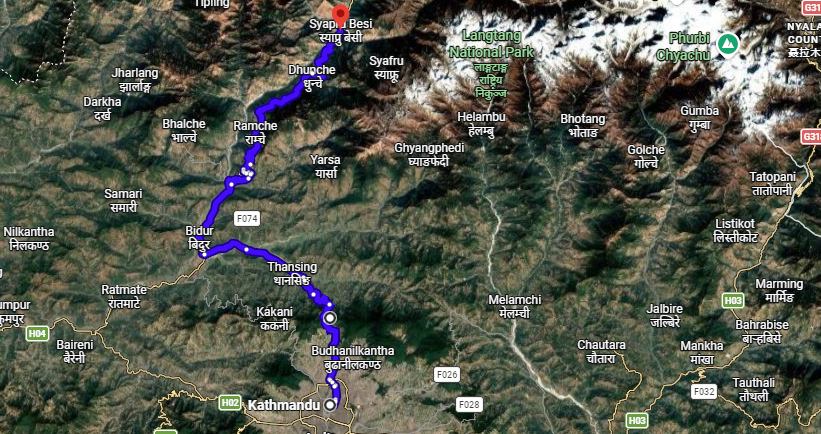
Nearly every Tamang Heritage Trail itinerary begins with the same overland journey used for the neighbouring Langtang Valley Trek: the drive from Kathmandu to Syabrubesi. This roughly 120-kilometre journey typically takes seven to eight hours by private vehicle, longer during the monsoon season or when road repairs are underway. The route climbs out of the Kathmandu Valley through Trishuli Bazaar, follows the Trishuli River valley, and continues through Dhunche, the headquarters of Langtang National Park, before descending to Syabrubesi itself, the trailhead town for both the Tamang Heritage Trail and Langtang Valley routes.

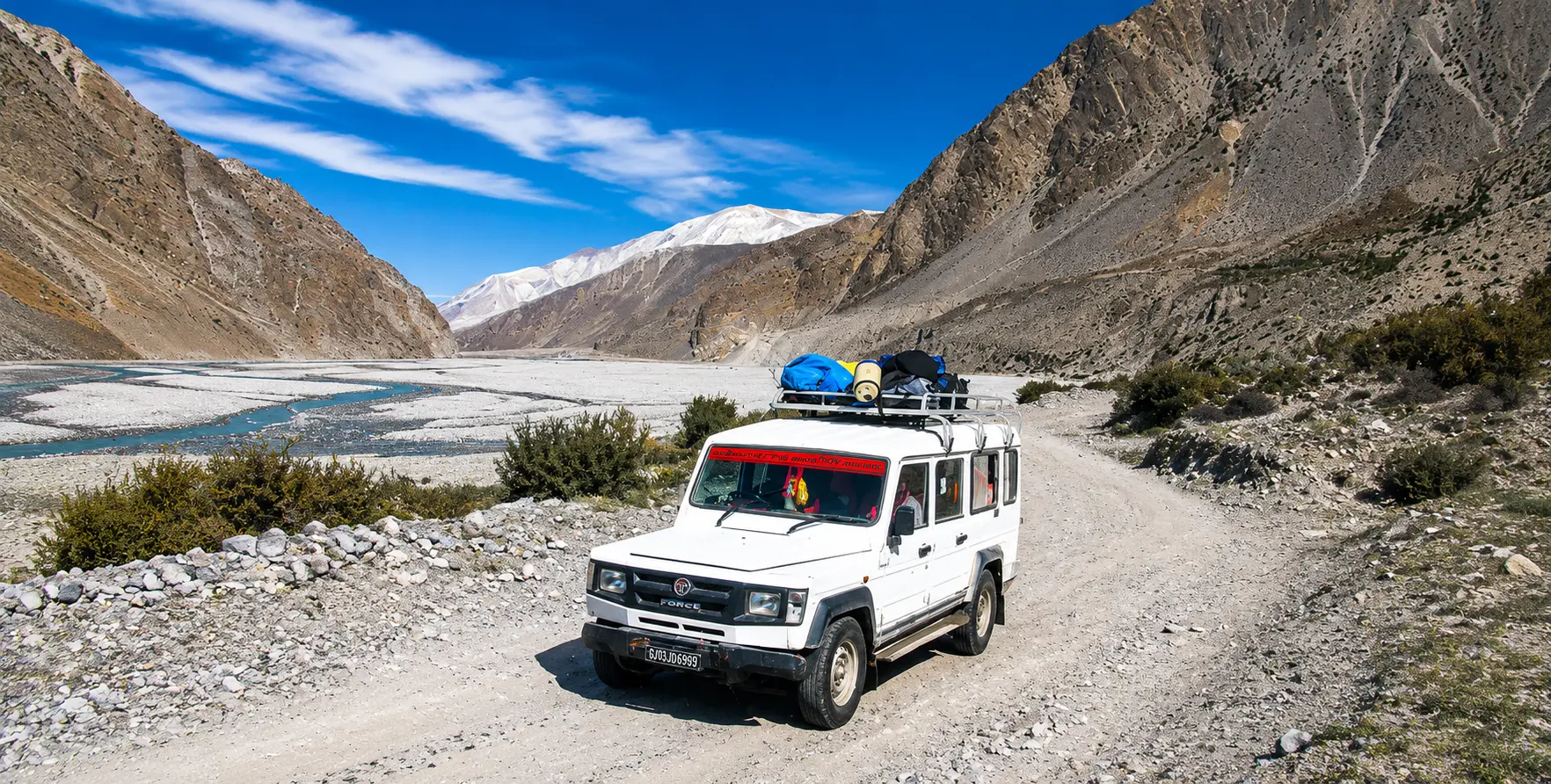
This road ranks among the more physically demanding drives in Nepal’s central hill region, with sharp switchbacks, sections of loose gravel, and occasional landslide-related delays, particularly during and immediately after the monsoon months. We strongly recommend a genuine four-wheel-drive vehicle with an experienced driver familiar with this corridor, rather than a standard car or low-clearance van. Our 

Jeep Hire in Nepal service is built specifically around routes like this one, pairing a Land Cruiser or Prado-class vehicle with a driver experienced on the Trishuli-Dhunche-Syabrubesi corridor.

Travellers combining this trip with time in Kathmandu often begin with a day or two of Valley sightseeing, arranged through our 

Kathmandu sightseeing tour and 

Bhaktapur Durbar Square tour services, along with a 

Kathmandu airport transfer to begin the trip smoothly from the moment they land.

Kathmandu to Tamang Heritage Trail transport with a private 4WD jeep traveling through the Langtang region of Nepal

Vehicle Options for the Syabrubesi Approach

Toyota Land Cruiser and Prado

For small groups of up to four trekkers, a Land Cruiser or Prado remains the most comfortable and reliable option for the Syabrubesi road, offering the ground clearance and suspension needed on the roughest sections between Trishuli Bazaar and Dhunche.

Executive Hiace Vans

Larger trekking groups or families often prefer our 

Hiace hire service for this route, offering considerably more luggage space for group trekking equipment and homestay gifts that visitors to the Tamang villages commonly carry.

Mahindra Bolero and Local Jeeps

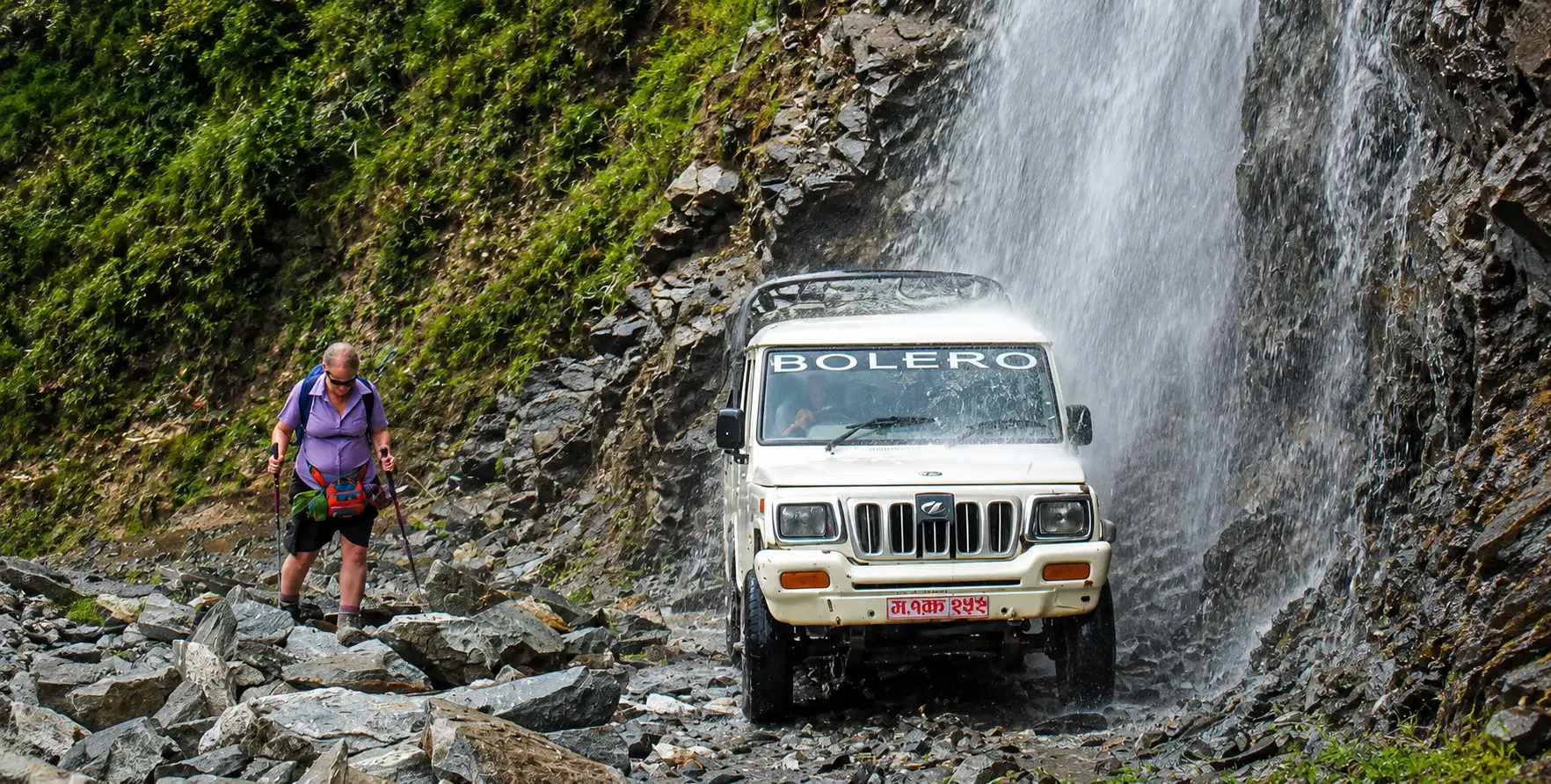
Budget-conscious trekkers travelling in smaller groups often choose a Mahindra Bolero-class jeep, as covered in our 

Mahindra Bolero and Tata Sumo trekking transfer guide, which remain practical and cost-effective options for this corridor.

Kathmandu to Tamang Heritage Trail transport with a private 4WD jeep traveling through the Langtang region of Nepal

The Trekking Route: Villages and Highlights

Syabrubesi: The Gateway Town

Syabrubesi serves as the starting and ending point for both the Tamang Heritage Trail and the Langtang Valley Trek, and most trekkers spend at least one night here before setting out, both to arrange final permit checks and to recover from the long drive from Kathmandu.

Gatlang: A Traditional Tamang Village

A short trek from Syabrubesi, Gatlang is one of the route’s most culturally significant stops, known for its traditional stone houses, the historic Chhechen Gompa monastery, and Parvati Kunda, a small sacred lake associated with local Hindu and Buddhist pilgrimage traditions.

Chilime and Tatopani: Hot Springs on the Trail

The village of Tatopani, not to be confused with the larger settlement of the same name on the Muktinath route, offers natural hot springs that provide a welcome rest for trekkers partway through the loop, along with views of the Chilime hydropower project, which has brought modern infrastructure to this otherwise traditional corner of Rasuwa.

Nagthali Danda: The Trail’s Premier Viewpoint

At over 3,650 meters, Nagthali Danda offers one of the finest panoramic views on the route, with views of Langtang Lirung, Ganesh Himal, and a wide sweep of the surrounding Rasuwa hills. Many trekkers consider this the scenic highlight of the Tamang Heritage Trail experience.

Thuman and Briddim: Homestay Villages

Thuman and Briddim have become particularly well known for their community-run homestay programs, offering trekkers a direct, in-depth experience of Tamang domestic life, food, and Buddhist practice that is rarely available on Nepal’s busier trekking routes. Briddim, in particular, sits close enough to the Langtang Valley trail that some itineraries combine both routes into a single, longer loop.

Kathmandu to Tamang Heritage Trail transport with a private 4WD jeep traveling through the Langtang region of Nepal

Combining the Tamang Heritage Trail With the Langtang Valley Trek

Because both routes share the same Syabrubesi trailhead and overlap in their lower sections, a growing number of trekkers combine the Tamang Heritage Trail with the 

Langtang Valley Trek, offered by our sister company, Alpine Luxury Treks, is combined into a single extended 10- to 14-day itinerary. This combination lets trekkers experience both the cultural depth of the Tamang villages and the dramatic high-alpine scenery of the Langtang Valley itself, including Kyanjin Gompa and the glacial landscape beneath Langtang Lirung, without a second overland journey from Kathmandu.

For travellers deciding between the two routes as a standalone trek, the Tamang Heritage Trail is generally considered the more culturally focused and less physically demanding option, with lower average elevations and a greater emphasis on village life and homestays. At the same time, the Langtang Valley Trek pushes higher into true alpine terrain with more dramatic mountain scenery but fewer cultural stops along the way.

Proximity to the Rasuwagadhi-Kerung Border

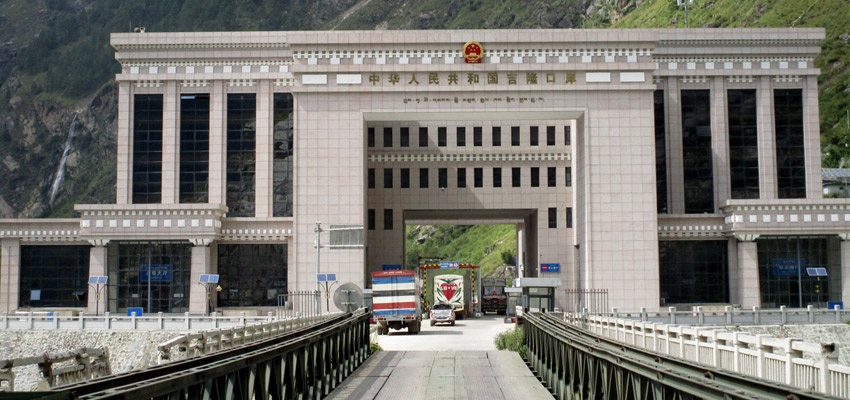
The Tamang Heritage Trail’s villages sit relatively close to the Rasuwagadhi-Kerung border crossing into Tibet, one of the few official overland crossings between Nepal and China. As covered in more depth in our 

Rasuwagadhi Kerung Border Vehicle Hire guide: this border region has historically served as a trade corridor between Tamang communities in Rasuwa and Tibetan traders across the frontier, a history still visible in the architecture, religious practice, and trade goods found in villages like Timure and Thuman. Travellers interested in this border history sometimes extend a Tamang Heritage Trail itinerary with a visit to Timure, though crossing the border itself requires separate arrangements and documentation beyond a standard trekking permit.

Permits Required for the Tamang Heritage Trail

Trekkers on the Tamang Heritage Trail require a Langtang National Park entry permit, since much of the route falls within or adjacent to the park boundary, along with a TIMS (Trekkers’ Information Management System) card, standard requirements for most independent and guided trekking in this region of Nepal. Unlike Upper Mustang or other restricted areas, the Tamang Heritage Trail itself requires no additional permit, making it easier to arrange than some of Nepal’s more remote trekking routes.

Book reliable Kathmandu to Tamang Heritage Trail transport with private 4WD jeeps and experienced drivers for a comfortable journey to the trek starting point.

Best Time of Year for the Tamang Heritage Trail

Spring (March to May)

Rhododendron forests bloom across the lower sections of the trail during this period, and road conditions on the Syabrubesi approach are generally favourable, making spring one of the two peak seasons for this trek.

Summer and Monsoon (June to August)

Heavy rainfall increases landslide risk on the unpaved sections of the Syabrubesi road, and trails can become slippery underfoot. However,  the lush green hillsides during this period have their own particular appeal for travellers willing to accept less predictable conditions.

Autumn (September to November)

This is the year’s clearest skies and most stable road and trail conditions, and the busiest season for both the Tamang Heritage Trail and the neighbouring Langtang Valley Trek. Book vehicles well in advance during this period.

Winter (December to February)

Higher sections of the route, particularly around Nagthali Danda, can see snowfall and freezing overnight temperatures, though the lower villages remain accessible and considerably quieter than during peak season.

Road Safety on the Kathmandu to Syabrubesi Route

The road through Trishuli Bazaar and Dhunche toward Syabrubesi passes through active landslide zones, particularly during and shortly after the monsoon. An experienced driver familiar with this corridor is essential for comfort and safety.

Inspect vehicles for reliable brakes, suspension, and tyres before departure, given the strain this route places on a vehicle compared to ordinary city driving. We select drivers for this corridor specifically for their experience navigating these conditions across multiple seasons.

Kathmandu to Tamang Heritage Trail transport with a private 4WD jeep traveling through the Langtang region of Nepal

Cost Factors for Tamang Heritage Trail Transport

Vehicle hire cost for the Kathmandu-to-Syabrubesi route depends primarily on vehicle class and group size, with a private Land Cruiser or Prado costing more than a shared local jeep but offering considerably greater comfort and flexibility for stops along the way. Groups travelling together can reduce the effective per-person cost significantly compared to individual seats on shared transport.

Our team is glad to prepare a custom quote based on your group size, travel dates, and whether you plan to combine the Tamang Heritage Trail with the Langtang Valley Trek in a single extended itinerary. Visit our

homepage or explore our 

Trekking transport section for further route-specific guidance.

How to Book Your Tamang Heritage Trail Transport

Booking is straightforward: share your group size, preferred travel dates, and whether your itinerary includes an extension into the Langtang Valley, and our team will match the right vehicle, whether a Land Cruiser, Prado, or Hiace, along with a driver experienced on the Trishuli-Dhunche-Syabrubesi corridor. We recommend booking at least two to three weeks ahead during the peak spring and autumn seasons, when vehicles and drivers are in highest demand.

The History Behind the Tamang Heritage Trail

The Tamang Heritage Trail was developed in the years following Nepal’s broader push to diversify trekking tourism beyond the well-established Everest and Annapurna circuits, with support from conservation and community development organisations working alongside local Tamang communities in Rasuwa district. The goal was straightforward: create a trekking route that channelled tourism income directly into villages that had historically relied on subsistence agriculture, animal husbandry, and small-scale trade across the nearby Tibetan border, while showcasing a distinct ethnic culture that remained relatively unknown to international visitors compared to the Sherpa culture of the Everest region or the Gurung and Magar communities of the Annapurna foothills.

Tamang communities in this part of Nepal trace much of their cultural and religious heritage to Tibetan Buddhism, as reflected in the prevalence of chortens, prayer wheels, and monasteries throughout villages such as Gatlang and Thuman. The trail’s community homestay model, particularly well developed in Briddim and Thuman, was designed to keep more tourism revenue within these villages than conventional teahouse trekking, where much of the profit margin can flow to lodge owners who may not be local to the immediate community.

Kathmandu to Tamang Heritage Trail transport with a private 4WD jeep traveling through the Langtang region of Nepal

A Typical Tamang Heritage Trail Itinerary

While itineraries vary by operator and trekking pace, a common Tamang Heritage Trail itinerary spans seven to nine days, including the overland journey from Kathmandu. Day one covers the drive from Kathmandu to Syabrubesi, with an overnight stay at the trailhead.

From there, trekkers typically walk to Gatlang on day two, exploring the village’s monastery and Parvati Kunda before continuing toward Chilime and Tatopani on day three, timed to allow a soak in the natural hot springs. Day four usually involves the climb to Nagthali Danda, either as a base for the night or a day hike from a nearby village, taking in the trail’s best mountain panorama.

The route then descends through Thuman, often with a homestay night, before continuing to Briddim, another key homestay village, and finally looping back to Syabrubesi to complete the circuit. Groups combining this with the Langtang Valley Trek typically add five to seven more days, continuing up the Langtang Khola valley from Syabrubesi rather than returning directly to Kathmandu.

What to Pack for the Tamang Heritage Trail

Because the trail spans elevations from around 1,460 meters at Syabrubesi to over 3,650 meters at Nagthali Danda, layered clothing remains essential, with warm layers especially important for the higher viewpoint sections and cooler evenings in homestay villages. A good pair of broken-in trekking boots, a lightweight rain layer for afternoon showers even outside the monsoon season, and a headlamp for homestays with limited electricity are all worth carrying.

Since much of the route relies on homestays rather than conventional teahouses, a sleeping bag liner and personal toiletries are particularly useful, and small gifts or contributions to host families, discussed in advance with a guide or trekking agency, are appreciated, given the direct nature of the homestay exchange.

Kathmandu to Tamang Heritage Trail transport with a private 4WD jeep traveling through the Langtang region of Nepal

Guides, Porters, and Trekking Support

While the Tamang Heritage Trail can technically be walked independently, given adequate trail signage in recent years, a local guide familiar with the homestay network and Tamang cultural etiquette adds considerably to the experience, both in terms of safety on less-travelled sections of the trail and in facilitating a more meaningful cultural exchange with host families. Porters are widely available in Syabrubesi and help make the trek accessible to a broader range of fitness levels by carrying most of the luggage. In contrast, trekkers carry only a day pack between villages.

Tamang Culture and Buddhist Traditions Along the Trail

Tamang identity in Rasuwa is deeply intertwined with Tibetan Buddhist practice, visible in the mani walls, chortens, and prayer flags that line the trail between villages, and in the daily rhythms of monastery life still active in places like Gatlang’s Chhechen Gompa. Many households along the route maintain small shrine rooms, and it is common to see elderly residents spinning prayer wheels or reciting mantras during quiet moments in the village square.

Traditional Tamang dress, particularly for women, remains in everyday use in some of the more remote villages, distinct from the clothing typically seen in Kathmandu or the more tourism-influenced parts of the Everest and Annapurna regions.

Language also marks a clear cultural boundary along this route. While Nepali serves as the common language for communication with trekkers and guides, Tamang remains the primary language spoken within households and between neighbours in many of the trail’s villages, part of a broader linguistic and cultural distinctiveness that UNESCO and Nepali cultural preservation bodies have taken an active interest in documenting and supporting in recent years.

Local Cuisine on the Tamang Heritage Trail

Food along the trail reflects both the broader Nepali hill diet and specific Tamang influences shaped by proximity to Tibet. Dal bhat remains widely available and the most reliable option throughout the route, but homestay hosts frequently prepare Tamang specialities as well, including varieties of buckwheat-based bread, hearty potato dishes suited to the region’s high-altitude agriculture, and butter tea, a salted, buttery beverage with clear Tibetan influence that appears more frequently here than in Nepal’s more southern trekking regions.

Homestay meals are typically included in the overnight rate, and trekkers often cite sharing a meal cooked over a traditional wood-fired stove as one of the most memorable parts of the experience.

Environmental Considerations Along the Trail

Langtang National Park, which encompasses much of the Tamang Heritage Trail route, remains ecologically significant, home to red pandas, Himalayan tahr, and a range of high-altitude bird species, as well as dense forests of rhododendron, oak, and pine at lower elevations. Trekkers are encouraged to carry out all non-biodegradable waste, minimise the use of firewood-heated water where possible, given the strain on local forest resources, and respect wildlife viewing distances, particularly in the forested sections between Syabrubesi and Gatlang, where wildlife encounters are more likely than on the more heavily trafficked Langtang Valley trail itself.

Comparing the Tamang Heritage Trail to Other Cultural Treks in Nepal

Nepal offers several trekking routes built primarily around cultural immersion rather than high-altitude mountaineering, and the Tamang Heritage Trail compares favourably to alternatives such as the Tsum Valley trek near Manaslu or the lower sections of the Annapurna Circuit around Ghandruk and Landruk, both of which similarly emphasise village culture over summit-focused trekking. What distinguishes the Tamang Heritage Trail is its relative proximity to Kathmandu, requiring only a single day’s overland drive to Syabrubesi rather than the considerably longer approach roads required for Tsum Valley or the more remote sections of Manaslu, making it a practical option for travellers with more limited time who still want a genuinely in-depth cultural trekking experience.

Photography Highlights Along the Route

The Tamang Heritage Trail offers a distinct visual character compared to Nepal’s more famous trekking routes, combining traditional stone architecture, terraced hillside agriculture, and dramatic mountain backdrops in a way that feels less planned for tourism than some of the busier Everest and Annapurna trails. Notable photography opportunities include the weathered stone rooftops and prayer flag-draped alleys of Gatlang, the steam rising from the Tatopani hot springs against a backdrop of forested hillsides, the sweeping 360-degree panorama from Nagthali Danda taking in Langtang Lirung and Ganesh Himal, and the quiet, unposed moments of daily village life visible during homestay evenings in Thuman and Briddim.

Health and Altitude Considerations

While the Tamang Heritage Trail reaches a maximum elevation of around 3,650 meters at Nagthali Danda, considerably lower than high-altitude routes like Everest Base Camp or the Annapurna Circuit’s Thorong La crossing, trekkers should still take basic altitude precautions given the relatively rapid ascent from Syabrubesi’s 1,460 meters over a matter of days. Staying well hydrated, pacing ascents rather than rushing between villages, and watching for symptoms such as headache or unusual fatigue are sensible precautions, particularly for trekkers arriving directly from lower elevations without prior acclimatisation in the Kathmandu Valley.

Kathmandu to Tamang Heritage Trail transport with a private 4WD jeep traveling through the Langtang region of Nepal

Accommodation Standards and Homestay Etiquette

Homestay accommodation along the Tamang Heritage Trail is generally simple, with shared or basic private rooms, communal bathrooms, and meals prepared and eaten with the host family rather than in a separate dining hall, as in conventional teahouses. This arrangement calls for a degree of cultural sensitivity and flexibility not always required on more commercially developed trekking routes: removing shoes before entering living areas, accepting food and tea graciously even if portions feel generous, and showing genuine interest in family life and local customs all contribute to a more rewarding exchange for both trekker and host.

Trekking agencies and guides familiar with each village’s specific etiquette expectations can help first-time visitors navigate this experience comfortably.

Connectivity and Communication Along the Trail

Mobile network coverage along the Tamang Heritage Trail remains more limited and inconsistent than on Nepal’s busier trekking routes, with reasonable signal in Syabrubesi and patchy or absent coverage in some of the more remote homestay villages such as Thuman and Briddim. Trekkers should not rely on continuous connectivity throughout the route and should inform family or travel companions of their general itinerary and expected return date before setting out, particularly given the comparatively lower volume of trekking traffic on this route than on the Langtang Valley or the major Everest and Annapurna circuits.

Currency and Practical Logistics

As with most rural trekking routes in Nepal, cash in Nepali rupees is essential throughout the Tamang Heritage Trail, since card payment infrastructure is effectively nonexistent once travellers leave Kathmandu. Homestay costs, meals, and additional services, such as hot water for washing, are typically paid in cash directly to host families or through a guide who manages group payments.

Withdrawing sufficient cash in Kathmandu before departure, with a reasonable buffer for unexpected costs or delays, remains the most practical approach for this route.

Why This Route Appeals to Repeat Visitors to Nepal

A growing number of trekkers exploring the Tamang Heritage Trail are repeat visitors to Nepal who have already completed one or more of the country’s more famous routes, such as Everest Base Camp or the Annapurna Circuit, and are specifically seeking a different kind of experience on a subsequent trip. For this segment of travellers, the trail’s slower pace, lower trekking traffic, and emphasis on direct cultural exchange over dramatic high-altitude scenery offer a genuinely distinct alternative rather than a repeat of a similar trekking formula.

Trekking agencies increasingly market the Tamang Heritage Trail specifically to this returning-visitor segment, positioning it as a complementary, rather than competing, experience to Nepal’s more famous circuits.

Combining Vehicle Hire With a Broader Rasuwa District Itinerary

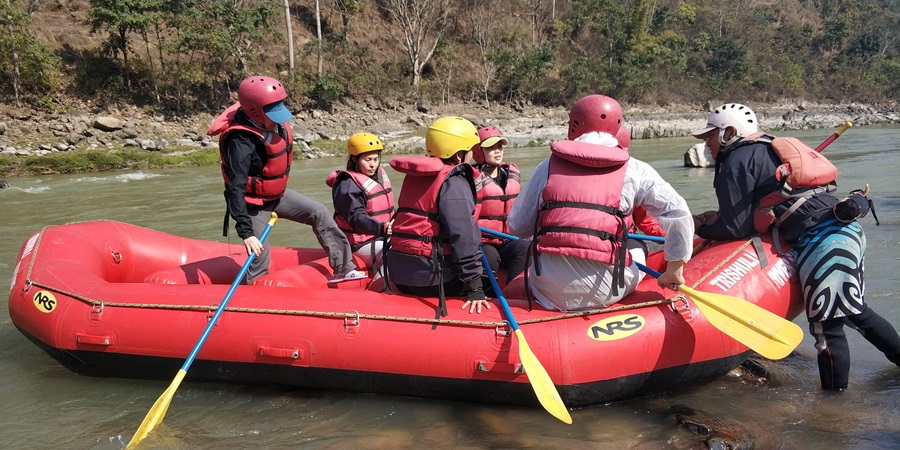
Beyond the Tamang Heritage Trail and Langtang Valley Trek, Rasuwa district offers a handful of additional points of interest that some travellers combine into a longer overland itinerary, including the Chilime hydropower area, the Rasuwagadhi border region, and the broader Trishuli River valley, popular for white-water rafting near Kathmandu. Coordinating these additional stops alongside the core trekking transport requires careful planning for road conditions and driving time.

Our team is well-positioned to help design an extended Rasuwa itinerary that complements your core Tamang Heritage Trail or Langtang Valley transport booking.

The Role of Community Tourism in Sustaining the Trail

Unlike many of Nepal’s trekking routes, where lodges and teahouses are often owned by families from outside the immediate community or even outside the region entirely, the Tamang Heritage Trail’s homestay model was specifically designed to keep tourism revenue within the villages that host trekkers. This community tourism approach has measurably supported local development in villages like Briddim and Thuman by funding school improvements, water infrastructure, and continued investment in the homestay network itself.

Trekkers choosing this route contribute directly to this model simply by trekking it; choosing this trail, in a small way, is a more direct form of community-supporting travel compared to conventional teahouse trekking on busier circuits.

Weather Patterns Specific to the Rasuwa Region

Rasuwa district’s weather is significantly shaped by its position at the base of the Langtang Himal range, with the lower Trishuli valley experiencing a warmer, more monsoon-influenced climate than the higher villages along the Tamang Heritage Trail. Afternoon cloud buildup is common even outside the main monsoon season, particularly around Nagthali Danda, and trekkers seeking the best mountain views are generally advised to plan viewpoint visits for early morning, before cloud cover typically develops later in the day.

This pattern mirrors similar afternoon weather behaviour found throughout much of Nepal’s central hill region, including the better-known Annapurna and Langtang corridors.

Insurance and Emergency Considerations

Given the trail’s relatively remote homestay villages and limited connectivity, trekkers are strongly advised to carry appropriate travel insurance covering trekking activities and, where relevant, emergency helicopter evacuation- standard advice for most of Nepal’s trekking routes, but particularly relevant here given the more limited emergency response infrastructure compared to busier circuits like Everest Base Camp, where helicopter rescue services are more routinely available and rapidly dispatched. A knowledgeable local guide familiar with the nearest emergency evacuation access points, typically via Syabrubesi, adds a meaningful layer of safety for trekkers on this less-travelled route.

Group Size and Booking Considerations for the Trail

The Tamang Heritage Trail’s homestay-based accommodation model means group-size planning matters differently than on conventional teahouse routes. Individual homestay households can typically accommodate only a limited number of trekkers at a time, and larger groups may need to be split across multiple homestays within the same village or coordinated well in advance to ensure adequate capacity, particularly during the busier autumn season.

Trekking agencies and vehicle hire operators working this route regularly, such as Nepal Vehicle Hiring, in coordination with our sister companies, maintain established relationships with homestay families that help ensure smooth group logistics even during peak booking periods.

Kathmandu Sightseeing Tour

Extending the Trip: Kathmandu Valley Sightseeing Before or After

Since most Tamang Heritage Trail itineraries include at least one night in Kathmandu before and after the trek, many travellers use this time to explore the Valley’s cultural heritage sites. A visit to Pashupatinath Temple, Nepal’s most significant Hindu pilgrimage site, or the medieval squares of Bhaktapur, through our 

Bhaktapur Durbar Square tour naturally pairs with a Tamang Heritage Trail itinerary, offering a cultural counterpoint in Kathmandu before heading out to the equally rich but very different cultural landscape of rural Rasuwa. A sunrise excursion through our 

Nagarkot Sunrise Tour Vehicle Service offers an additional Himalayan panorama for travellers with an extra day to spare before or after their trek.

Why Choose Nepal Vehicle Hiring for This Route

Nepal Vehicle Hiring has arranged transport along the Kathmandu-Syabrubesi corridor for years, serving trekkers heading to both the Tamang Heritage Trail and the neighbouring Langtang Valley. We select drivers for this route for their experience navigating the Trishuli-Dhunche-Syabrubesi road across multiple seasons, and we regularly inspect our vehicles, paying particular attention to the brakes, suspension, and tyres this corridor puts under genuine strain. Because we work closely with our sister companies, 

Alpine Luxury Treks and Trek Nepal Himalayas can also help coordinate the trekking and homestay aspects of your itinerary alongside the ground transport, ensuring a single, consistent point of contact for your entire Tamang Heritage Trail journey from Kathmandu pickup to final return.

A Note on Responsible Trekking in Tamang Communities

Visitors to the Tamang Heritage Trail are encouraged to approach the homestay experience with genuine respect for the communities hosting them, recognising that these villages have opened their homes specifically to support sustainable tourism development rather than functioning as a simple commercial transaction. Simple practices, such as asking permission before photographing individuals, particularly during religious ceremonies or private family moments, dressing modestly in keeping with local norms, and showing genuine curiosity about Tamang culture and Buddhist practice rather than treating the visit purely as a scenic backdrop, all contribute to a more respectful and mutually rewarding exchange between trekkers and the communities they pass through.

Nepal Tour Package

Seasonal Booking Patterns for Vehicle Hire on This Route

Demand for private vehicle hire to Syabrubesi follows a similar seasonal rhythm to Nepal’s other major trekking corridors, with autumn representing the peak booking period, followed closely by spring. Because the Tamang Heritage Trail remains less heavily trafficked than the Everest or Annapurna regions, vehicle availability during peak season is generally somewhat easier to secure than on the busiest routes, though booking at least two to three weeks ahead remains sensible, particularly for groups wanting a specific vehicle class or a driver already familiar with combining Tamang Heritage Trail and Langtang Valley logistics in a single itinerary.

The Broader Appeal of Rasuwa District Beyond Trekking

While trekking remains the primary draw for most visitors to Rasuwa district, the region’s proximity to Kathmandu, combined with its dramatic scenery and distinct Tamang culture, has also attracted growing interest from photographers, cultural researchers, and travelers simply seeking a shorter escape from the capital without committing to a full multi-day trek. Day trips or short overnight excursions to Trishuli Bazaar and the lower Rasuwa hills, arranged with a private vehicle, offer travellers with limited time a taste of this landscape and culture, even without undertaking the full Tamang Heritage Trail circuit.

Comparing Vehicle Standards: Then and Now on the Syabrubesi Road

Travellers who have visited this region of Nepal previously, even five or ten years ago, often note a noticeable improvement in both road conditions and vehicle quality along the Kathmandu-Syabrubesi corridor. Sections of the route that were once notoriously rough have seen gradual upgrading, and the vehicles now commonly used for this journey, well-maintained Land Cruisers and Prados rather than older, less reliable jeeps, reflect the same broader shift toward top-end ground transport visible across Nepal’s trekking industry as a whole.

This improvement has made routes like the Tamang Heritage Trail and Langtang Valley meaningfully more accessible to a wider range of travellers, including families and older trekkers who might previously have found the approach road too physically demanding to consider.

Final Practical Tips Before You Go

  • Book your vehicle and, if needed, your homestay coordination at least two to three weeks ahead during peak spring and autumn.
  • Carry sufficient Nepali rupees in cash, since card payment infrastructure is essentially unavailable once you leave Kathmandu.
  • Pack layered clothing to handle the elevation range between Syabrubesi and Nagthali Danda, along with a reliable rain layer.
  • Consider a local guide familiar with the homestay network, both for safety and for a richer cultural exchange with host families.
  • Confirm whether your itinerary combines the Tamang Heritage Trail with the Langtang Valley Trek, as this affects both the trekking duration and the permit requirements.
  • Arrange appropriate travel insurance that covers trekking activities and emergency evacuation, given the route’s relatively remote, low-connectivity villages.

Book reliable Kathmandu to Tamang Heritage Trail transport with private 4WD jeeps and experienced drivers for a comfortable journey to the trek starting point.

How This Trail Fits Into Nepal’s Wider Trekking Landscape

Nepal’s trekking regions each occupy a distinct niche within the country’s broader tourism offering, from the high-altitude prestige of Everest Base Camp to the varied ecological zones of the Annapurna Circuit and the pilgrimage significance of routes toward Muktinath. The Tamang Heritage Trail occupies its own niche within this landscape: a shorter, culturally intensive trek that requires only a single day’s overland travel from Kathmandu, positioned as a genuine alternative for travellers seeking cultural depth without the time commitment or crowds of Nepal’s more famous circuits. As awareness of this route continues to grow, largely through word of mouth among returning visitors and increasing coverage in specialist trekking guides, it seems likely to become a well-established option among Nepal’s mid-length cultural trekking routes over the coming years.

Planning Your Trip With Confidence

Whether you are drawn to the Tamang Heritage Trail for its homestay culture, its relative proximity to Kathmandu, its Buddhist heritage, or simply as a quieter alternative to Nepal’s busier circuits, getting the transport logistics right from the outset makes a considerable difference to how the rest of the trip unfolds. A well-planned journey from Kathmandu to Syabrubesi, in a properly maintained vehicle with a driver experienced on this specific corridor, sets a smooth, comfortable tone for the cultural immersion and mountain scenery that follow on the trail itself.

A Word on Timing Your Village Stops

Experienced guides on the Tamang Heritage Trail generally recommend scheduling daily walking stages to arrive in each village by early to mid-afternoon, both to allow time to explore before dark and to avoid the more frequent afternoon cloud buildup that can obscure mountain views later in the day, particularly around Nagthali Danda. Starting each day’s buildup reasonably early on the climb toward Nagthali itself gives the best chance of clear morning visibility across Langtang Lirung and the surrounding peaks before clouds typically roll in.

Group Versus Independent Trekking on This Route

While independent trekking has become increasingly feasible on the Tamang Heritage Trail given improved trail signage and a well-established homestay network, many travellers still choose to join a small guided group or arrange a private guide, both for the added safety of local route knowledge and for smoother coordination of homestay bookings, particularly during the busier autumn season when individual homestays may already be committed to other groups. Vehicle hire for the Kathmandu-to-Syabrubesi leg works equally well for independent trekkers and organised groups alike;h the main difference is group size and whether trekking logistics beyond transport are arranged separately or as part of a single coordinated package.

Sample Cost Breakdown for Planning Purposes

While exact pricing depends on vehicle class, group size, and season, travellers planning a budget for this trip should account for three main components: private vehicle hire for the Kathmandu to Syabrubesi round trip; homestay accommodation and meals along the trekking route itself, typically charged per night and generally modest compared to conventional teahouse trekking costs; and any guide or porter fees if travelling with support rather than fully independently. Requesting a detailed quote in advance, covering both the vehicle hire and, if desired, coordinated trekking logistics through our sister companies, allows for accurate budgeting well before departure rather than encountering unexpected costs partway through the trip.

Book reliable Kathmandu to Tamang Heritage Trail transport with private 4WD jeeps and experienced drivers for a comfortable journey to the trek starting point.

What Sets This Route Apart From a Simple Sightseeing Drive

The Kathmandu-to-Syabrubesi journey, while demanding, is integral to what makes the Tamang Heritage Trail experience distinctive, rather than merely an obstacle to endure before the real trip begins. The drive itself passes through changing landscapes, from the terraced hillsides near Trishuli Bazaar to the forested slopes approaching Dhunche and the edge of Langtang National Park, offering an early introduction to the ecological and cultural transition between the Kathmandu Valley and the more remote, culturally distinct region travelers are about to enter on foot.

Approaching this leg of the journey with the same attention given to the trek itself, rather than treating it as a purely functional transfer, often enriches the overall sense of arrival once trekkers finally reach Syabrubesi and set out toward Gatlang the following morning.

A Trail Still Coming Into Its Own

The Tamang Heritage Trail remains, in many respects, a trekking route still coming into its own within Nepal’s wider tourism landscape, benefiting from steadily improving road access, a maturing homestay network, and growing recognition among both trekking agencies and independent travellers as a genuinely distinctive alternative to the country’s more famous circuits. For travellers willing to trade some of the dramatic high-altitude scenery of Everest or Annapurna for a deeper, more direct cultural encounter with Tamang communities living close to the Tibetan frontier, this trail offers one of the more rewarding and still comparatively uncrowded trekking experiences currently available in Nepal.

Frequently Asked Questions

How long does the drive from Kathmandu to Syabrubesi take?

The drive typically takes seven to eight hours by private vehicle, depending on road conditions and the season, and can take longer due to landslide-related delays.

Is a 4WD vehicle necessary for this route?

Yes. The road through Trishuli Bazaar and Dhunche includes unpaved, rutted sections that are best handled by a genuine four-wheel-drive vehicle, such as a Toyota Land Cruiser or Prado, rather than a standard car.

Can the Tamang Heritage Trail be combined with the Langtang Valley Trek?

Yes. Both routes share the same Syabrubesi trailhead, and many trekkers combine them into a single 10- to 14-day itinerary that covers both the cultural villages of the Tamang Heritage Trail and the alpine scenery of the Langtang Valley.

What permits are required for this trek?

Trekkers need a Langtang National Park entry permit and a TIMS card. Unlike routes such as Upper Mustang, no special restricted-area permit is required.

What is the best season for the Tamang Heritage Trail?

Spring (March to May) and autumn (September to November) offer the most reliable road and trail conditions, with autumn being the busiest season overall.

Are homestays available along the route?

Yes. Villages including Thuman and Briddim have well-established, community-run homestay programs that offer an in-depth alternative to standard teahouse accommodation.

How difficult is the Tamang Heritage Trail compared to other treks in the region?

It is generally considered less physically demanding than the Langtang Valley Trek or routes like the Everest Base Camp trek, with lower average elevations, yet still includes a challenging climb to the Nagthali Danda viewpoint above 3,650 meters.

Is this trek close to the Nepal-Tibet border?

Yes. The route passes relatively close to the Rasuwagadhi-Kerung border crossing, and trade and religious ties across this same frontier have historically shaped the region’s Tamang culture.

Do I need previous trekking experience for this route?

No prior high-altitude trekking experience is strictly necessary, though a reasonable level of general fitness is helpful given the daily walking distances and the climb to Nagthali Danda. The route is generally considered accessible to both beginners and experienced trekkers.

What is the total trekking distance for the standard loop?

The standard Tamang Heritage Trail loop, from Syabrubesi through Gatlang, Tatopani, Nagthali Danda, Thuman, and Briddim back to Syabrubesi, typically covers 50 to 60 kilometres over 6 to 8 trekking days, depending on the exact route variation and any rest days chosen.

Final Thoughts: A Cultural Journey Worth the Road

The Tamang Heritage Trail offers a rare combination in Nepal’s trekking landscape: genuine cultural immersion, dramatic Himalayan views, and a level of quiet, homestay-based hospitality increasingly hard to find on the country’s busier routes. Reaching it means the same demanding but rewarding drive through Trishuli Bazaar and Dhunche used by trekkers heading into the Langtang Valley, and getting that journey right, with the right vehicle and an experienced driver, sets the tone for everything that follows on the trail itself.

Whether you are drawn by the promise of homestay hospitality, Buddhist heritage, or simply a quieter Himalayan trekking experience, the road to Syabrubesi is where that journey genuinely begins. Contact Nepal Vehicle Hiring today on WhatsApp or visit 

vehiclehiringnepal.com to arrange your private jeep or Hiace for the Kathmandu to Tamang Heritage Trail journey, and to help coordinate homestay logistics or a combined Langtang Valley extension for your trip, however your itinerary through Rasuwa district takes shape.

Kathmandu Sightseeing: Car and SUV Hire Guide

Patan Durbar Square in the Kathmandu Valley

Kathmandu Full Day Sightseeing: Car and SUV Hire Guide

Kathmandu is one of the world’s great cultural capitals, and its sightseeing circuit offers one of Asia’s most concentrated UNESCO heritage experiences. Within an area of roughly 25 by 25 kilometres, the Kathmandu Valley contains seven UNESCO World Heritage Sites, hundreds of active temples and shrines, three former medieval kingdoms each with their own royal square, and a living tradition of Newari art, architecture, and religious practice stretching back more than a thousand years.

The question for any visitor is not whether there is enough to see; it is how to move between sites efficiently, comfortably, and on your own schedule rather than a shared tour bus timetable.

This is precisely the gap a private car or SUV hire fills in the Context of Kathmandu sightseeing, rather than flagging down taxis between sites and navigating a city where meters are rare. Fare negotiation is the norm, or waiting for a shared tourist vehicle that departs on someone else’s schedule; a private car hire gives a traveller or group a dedicated vehicle and driver for the day, moving at their own pace, stopping where they choose, and reaching sites at the times that make the most photographic or devotional sense rather than the most logistically convenient.

At Nepal Vehicle Hiring Pvt Ltd, our Kathmandu sightseeing tour service is built specifically around this model, with a fleet ranging from compact sedans for solo travellers and couples to full-size SUVs for families and groups of five to seven. This guide covers every dimension of that choice: which sites to include, in which order, with which vehicle type, and how to structure a one- or two-day itinerary to get the most out of what the Kathmandu Valley genuinely offers.

This guide is intentionally detailed. Kathmandu rewards preparation — knowing that Pashupatinath is most atmospheric in the early morning, before the cremation ghats fill with the day’s funerary activity, and that Swayambhunath is quietest before 8 AM, when the monkey population is still drowsy.

The tourist groups have not yet arrived, and the Bhaktapur entry ticket allows re-entry over three days, which may affect how you plan your timing. A private car gives you the flexibility to act on this kind of information. This guide gives you the information itself.

Why Private Car or SUV Hire Beats Every Other Sightseeing Option in Kathmandu

Kathmandu’s traffic is real, and its road network is genuinely complicated, especially for visitors unfamiliar with the city. The Ring Road that circles the valley is a useful orientation point.

Still, the old city areas — Thamel, Durbar Square, Asan Bazaar, Boudhanath, Pashupatinath — are connected by a web of narrow lanes, one-way streets, and junctions that don’t match the map intuition you get from other Asian cities. Getting from Swayambhunath to Pashupatinath, for instance, looks like a short distance on a map but can take 45 minutes in mid-morning traffic through the city centre on a shared bus or in a negotiated taxi.

A private car hire eliminates the navigational and negotiation friction of a day of sightseeing. The driver knows the fastest routes between sites at different times of day, knows where to park (which is not obvious at most heritage sites), knows which gate at Pashupatinath the driver can wait at, and can advise on whether the traffic on a particular route is likely to be worse before or after noon.

This local knowledge is part of the hire cost, and it is genuinely valuable in a city where misjudging traffic timing can cost two hours of sightseeing. For families with children or older travellers, the ability to return to the car between sites for water, snacks, rest, and shade is an additional comfort that shared transport cannot provide.

Our Kathmandu sightseeing tour page provides full booking details, while our dedicated Kathmandu one-day urban adventure tour offers a structured itinerary for first-time visitors. Private hires also add a safety and comfort layer that matters in Kathmandu’s traffic density.

Negotiating a taxi fare, particularly in a language the visitor does not speak, creates a potential for overcharging and misunderstanding that is stressful and avoidable. App-based services have improved this somewhat in recent years.

Still, coverage across all heritage sites remains unreliable, and peak-hour surges can make app-based fares comparable to private hire costs, without the continuity of having the same driver throughout the day.

Nepal Tour Package

Choosing the Right Vehicle for Your Kathmandu Full-Day Sightseeing Group

Sedan (Car) — Solo Travellers and Couples

A standard sedan, typically a Hyundai i20, Suzuki Swift, or equivalent, is the most economical option for 1 to 3 passengers on a Kathmandu Valley day tour. Sedans are nimble through narrow old-city lanes, easy to park at heritage sites with limited vehicle access, and fuel-efficient for a full-day city sightseeing circuit covering 50 to 80 kilometres.

The boot space is adequate for daypacks and camera bags. For solo travellers or couples who want to move quickly between sites without the cost of a larger vehicle, the sedan is the default choice. See our car hire in Nepal page for details on the sedan fleet.

SUV / Jeep — Families and Groups of 4 to 7

For families, small groups, or travellers with significant luggage arriving from or departing to a trekking destination on the same day as a Kathmandu sightseeing circuit, an SUV, Mahindra Scorpio, Tata Sumo, or equivalent, provides the seating and luggage capacity that a sedan cannot. The higher ride height also gives rear-seat passengers better views through Kathmandu’s traffic during the drive between sites.

The SUV is also the appropriate vehicle if the sightseeing day is extended to Nagarkot, which involves a hilly road that benefits from ground clearance, or if the group wants to include a detour to one of the valley-rim viewpoints outside the main city circuit. Our jeep hire within the Kathmandu Valley and the broader Jeep fleet page covers SUV options.

Hiace Van — Larger Groups of 8 to 14

Groups of eight or more are best served by a Hiace or equivalent minivan, which can carry the entire party together without splitting into two cars. For school groups, extended-family pilgrimages, or organised cultural tours, the Hiace provides both seating capacity and a slightly elevated cabin, making it easier for the driver to navigate the city. Our Hiace fleet page covers available configurations.

Swayambhunath visit during Kathmandu Pokhara Tour

The Seven UNESCO World Heritage Sites of the Kathmandu Valley

Kathmandu Valley’s seven UNESCO World Heritage Sites — Kathmandu Durbar Square, Patan Durbar Square, Bhaktapur Durbar Square, Swayambhunath, Boudhanath, Pashupatinath, and Changu Narayan — represent one of the world’s most extraordinary concentrations of cultural heritage. They span Newar architecture, Tibetan Buddhism, Shaivite Hinduism, and Vaishnava devotion in a valley small enough to visit all seven in two days by private vehicle.

Kathmandu Durbar Square (Hanuman Dhoka)

The historic royal palace complex of the Kathmandu kingdom sits at the heart of the old city and remains one of Nepal’s most densely layered heritage sites. The Hanuman Dhoka Palace, named for the guardian monkey-god statue at its gate, was the seat of Nepal’s Shah dynasty kings until the nineteenth century and contains a labyrinth of courtyards, audience halls, and ceremonial spaces.

The Kumari Ghar, the residence of Nepal’s Living Goddess, faces the square, and on auspicious days the Kumari appears at her ornate carved window for a brief, much-photographed public appearance. Taleju Temple, visible above the square’s roofline, is the Malla kings’ royal palace and temple, open to the general public only on one day of the year, during Dashain.

The entry fee for foreign visitors is approximately NPR 1,500 in 2026, with the ticket valid for three days.

Swayambhunath Stupa (Monkey Temple)

One of Nepal’s oldest Buddhist shrine complexes, Swayambhunath sits atop a prominent hill on the western edge of the city, its white dome and gold spire painted with the watchful eyes of the Buddha, visible from much of the valley floor. The 365 stone steps leading to the top are lined with small stupas, prayer wheels, and statues, and the hilltop complex offers the best panoramic view of the Kathmandu Valley cityscape available from within the city.

The monkeys that give the site its popular English nickname live throughout the complex and are considered sacred rather than a nuisance, though you should hold camera bags and snack packets firmly. The entry fee for foreign visitors is approximately NPR 200.

Boudhanath Stupa

One of the world’s largest spherical stupas and the spiritual centre of Nepal’s Tibetan Buddhist community, Boudhanath draws pilgrims, monks, and visitors throughout the day in a continuous counterclockwise circumambulation of its massive white dome. The surrounding circular courtyard is lined with Tibetan monasteries, thangka shops, and rooftop cafes, and the atmosphere shifts distinctly from early-morning butter-lamp prayers at the base of the stupa to mid-afternoon tourist hours to the evening kora, when the dome is lit and the butter lamps are relit for the day’s close.

Rebuilt after sustaining damage in the 2015 earthquake, the stupa was restored to its full size and brilliance by 2016 and is now in excellent condition. The entry fee for foreign visitors is approximately NPR 400.

Pashupatinath Temple

Nepal’s most sacred Hindu temple complex, dedicated to Lord Shiva in his form as Pashupati, Lord of Beasts, sits on the banks of the Bagmati River in eastern Kathmandu. Non-Hindu visitors may not enter the main inner sanctum of the primary temple.

Still, they can freely explore the outer complex, which includes dozens of subsidiary shrines, the famous riverside cremation ghats, where open-air funeral pyres burn throughout the day, and the forest ridge above the ghats, populated by sadhus who maintain permanent residences there. Watching a Bagmati riverbank cremation is not voyeuristic if approached respectfully; it is a genuine window into the Hindu understanding of death as a transition rather than an ending, and Pashupatinath makes this visible and accessible in a way that few sacred sites anywhere in the world do.

The entry fee for the outer complex area is approximately NPR 1,000 for foreign visitors.

Patan Durbar Square

The former royal capital of Lalitpur, immediately south of Kathmandu across the Bagmati, many historians and architects consider to contain the finest concentration of Newari craftsmanship in the valley. Krishna Mandir, built entirely of stone rather than the brick-and-wood typical of valley architecture, is a masterpiece of Mughal-influenced Newari design.

Meanwhile, Hiranya Varna Mahavihar, known as the Golden Temple, is an active Buddhist monastery whose interior woodwork and metalwork rank among the most accomplished in Nepal. The Palace Museum, housed in the restored royal Palace, is widely considered Nepal’s best museum and is a strong recommendation for travellers with a genuine interest in the historical and religious context of the palaces across the valley. The entry fee is approximately NPR 1,000 for foreign visitors.

Bhaktapur Durbar Square

Bhaktapur, 13 kilometres east of Kathmandu, is the best-preserved of the three medieval kingdoms and the one that most rewards a dedicated half-day or full-day visit rather than a rushed stop between other sites. The 55-Window Palace, the Nyatapola Temple, and the Dattatraya Temple are the headline monuments.

However, Bhaktapur’s greatest strength is its living urban character: Pottery Square, where traditional clay pots are still made and sun-dried on the street, the woodcarving district around Dattatraya, and the old-town lanes where Bhaktapur cuisine, including the famous juju dhau king curd, is sold fresh from local shops. The entry fee for foreign visitors is approximately NPR 1,800 in 2026, and the ticket is valid for three days, making it worthwhile to buy even if you plan only one day in case you want to return.

Our dedicated Bhaktapur Durbar Square day tour page offers a structured half-day or full-day vehicle hire specifically for Bhaktapur.

Changu Narayan Temple

The oldest surviving temple in the Kathmandu Valley, dating to at least the 4th century CE, Changu Narayan sits on a forested hilltop above the Bhaktapur approach road. It contains some of the finest stone sculpture in the valley, including a multi-armed Vishnu image dated to the Licchavi period and a stone inscription recording the exploits of the 5th-century king Manadeva, the oldest such inscription in Nepal.

Changu Narayan is the least visited of the seven UNESCO sites, which makes it the most peaceful, and the surrounding village retains a genuine agricultural and community character that has been more thoroughly overlaid by tourism in the three Durbar Squares. The entry fee for foreign visitors is approximately NPR 300.

Nagarkot Sunrise Tour

Beyond the UNESCO Circuit: Nagarkot, Other Valley Highlights, and Day Extensions

Nagarkot: Sunrise and Himalayan Panorama

The hilltop settlement of Nagarkot, on the eastern rim of the Kathmandu Valley at approximately 2,100 meters, is the most popular sunrise viewpoint for the Himalayan range within an easy day trip of Kathmandu. On clear mornings, the view from Nagarkot extends from Dhaulagiri in the west across the Ganesh Himal, Langtang, Jugal, and Rolwaling ranges to Makalu and Kanchenjunga in the far east, with Everest visible to the northeast.

The drive from Kathmandu to Nagarkot takes approximately 90 minutes to two hours, making it a viable very early-morning car hire option for a sunrise visit before returning to the city for the main UNESCO sightseeing circuit, or a late-afternoon extension to catch the sunset after a full-valley day. Our Kathmandu-to-Nagarkot vehicle service and Nagarkot sunrise tour services handle this specific excursion.

Chandragiri and Shivapuri: Valley Rim Viewpoints

The Chandragiri Hills, to the southwest of the valley and reachable by cable car from Thankot, offer a different vantage point on the valley and the Himalayan skyline, with the Bhaleshwor Mahadev Temple at the summit adding a religious dimension to the scenic visit. Shivapuri National Park, on the northern rim of the valley, is primarily a hiking and mountain biking destination, but it also offers day hikes to Shivapuri Peak for panoramic views.

The forested approach road from Budhanilkantha makes for a pleasant drive before you reach the park entrance.

Budhanilkantha Temple

The Budhanilkantha temple, 9 kilometres north of central Kathmandu, houses one of Nepal’s most remarkable religious artefacts: a 5-metre stone statue of Vishnu reclining on the cosmic ocean, carved from a single piece of black stone and lying in an open water tank. The artistry is extraordinary, and the scale is unexpected; this is a much larger and more dramatically presented image than most visitors would expect from written descriptions.

Unlike the Pashupatinath inner sanctum, non-Hindus may approach the outer edge of the tank and view the statue directly. It is a strong addition to a second-day Kathmandu Valley circuit and can be easily combined with the Kathmandu historical heritage sites guide for context.

Dakshinkali Temple

Dakshinkali, roughly 22 kilometres southwest of Kathmandu, is one of Nepal’s most important goddess temples and one of the most viscerally intense religious experiences available in the valley. On Tuesdays and Saturdays, which are the major sacrificial days, the temple draws enormous crowds of devotees carrying goats, chickens, and ducks for sacrifice to Kali, and the ritual atmosphere is unlike anything at the valley’s calmer Buddhist and Vaishnava sites.

It is not for all visitors, but for those interested in the blood-sacrifice dimension of Hindu goddess worship and the specific devotional culture of tantric Kali traditions, Dakshinkali is irreplaceable. The drive from Kathmandu takes approximately 45 to 60 minutes, depending on traffic.

Entry Fees at Kathmandu’s Heritage Sites in 2026

Entry fees at Kathmandu’s heritage sites are charged per visit at most sites, with some tickets valid across multiple days, and should be budgeted separately from vehicle hire. The following are the current 2026 fees for foreign (non-SAARC) visitors:

  • Kathmandu Durbar Square — approximately NPR 1,500, valid for three days.
  • Patan Durbar Square — approximately NPR 1,000.
  • Bhaktapur Durbar Square — approximately NPR 1,800, valid for three days.
  • Swayambhunath Stupa — approximately NPR 200.
  • Boudhanath Stupa — approximately NPR 400.
  • Pashupatinath Temple (outer complex) — approximately NPR 1,000.
  • Changu Narayan Temple — approximately NPR 300.

SAARC nationals, including Indian citizens, receive substantially reduced rates at all sites. Nepali citizens enter all heritage sites for free or at a heavily discounted fee. Keep entry tickets, particularly for Bhaktapur and Kathmandu Durbar Square, since they are valid for multiple days and re-entry is permitted; showing a taxi receipt dated within the validity window can help if asked at a checkpoint.

Traffic, Timing, and the Practical Logic of a Kathmandu Sightseeing Day

Kathmandu’s traffic follows predictable patterns that significantly affect how you should structure a sightseeing day, and a good private driver will factor these into routing recommendations. The morning rush from roughly 8 to 10 AM is the worst, particularly on the main Ring Road arteries and the roads into central Kathmandu from the eastern residential areas.

The midday window from 11 AM to 1 PM is generally freer flowing. The afternoon peak from 4 to 7 PM is severe, especially on the roads toward Patan and Bhaktapur.

The practical implication for a sightseeing day is clear: visit sites that are earliest-access-optimal first. Swayambhunath is best before 8 AM, when the morning light is golden, the tourist groups have not yet arrived, and the monkeys are still settling into the day.

Pashupatinath is most atmospheric in the early morning, when the riverside aarti and the first cremations of the day begin. Boudhanath is also better in the early morning for the daily butter-lamp prayers, though the evening kora is equally worth catching if a two-day itinerary allows.

By contrast, Bhaktapur and Patan Durbar Squares are best visited mid-morning to early afternoon, when the light falls well on the stone and brick facade work and the squares are active with local life rather than tour-group crowds.

Parking near heritage sites requires local knowledge. Kathmandu Durbar Square has limited vehicle access to its immediate vicinity, and most drivers park in a designated area several minutes’ walk away. Pashupatinath has a dedicated visitor parking area beyond the outer gate.

Boudhanath has parking along the approach road. Bhaktapur has a dedicated tourist parking area at the city entrance.

A driver who knows these parking points saves meaningful time on a packed sightseeing day — one of the practical advantages of booking a Kathmandu sightseeing tour through an operator whose drivers regularly run this circuit over a random Kathmandu taxi.

Nepal Tour Package

One-Day Kathmandu Sightseeing Itinerary by Private Car

For travellers with a single full day available, this itinerary covers the four core UNESCO sites within Kathmandu city and allows a brief stop in Thamel before evening:

  • 6:00 AM — Arrive before the main tourist rush. Climb the 365 steps in the early morning light, complete the kora around the main stupa, and take in the panoramic valley view before 8 AM.
  • 8:30 AM — Reach the riverside complex as the morning activity is at its height. Walk the outer complex, observe the cremation ghats from the opposite bank, and visit the Gorakhnath Temple area on the hill above.
  • 10:30 AM — Complete a kora around the great stupa, visit one of the surrounding Tibetan monasteries, and take rooftop coffee with a stupa view.
  • 12:30 PM — Lunch in Thamel or Asan Bazaar. A midday break avoids the heat and leaves time for lunch at a recommended local restaurant.
  • 2:00 PM — Kathmandu Durbar Square. The afternoon light falls well on the Hanuman Dhoka Palace facade. Visit the Kumari Ghar courtyard, the Taleju Temple exterior, and Nasal Chowk before the site fills with late-afternoon visitors.
  • 4:30 PM — Optional: Garden of Dreams or Narayanhiti Palace Museum, both within walking distance of Thamel, for a quieter end to the day.

Two-Day Kathmandu Valley Sightseeing Itinerary by Private Car

With two days available, the full valley circuit including Bhaktapur, Patan, Changu Narayan, and Nagarkot becomes achievable at a genuinely comfortable pace:

  • Day 1, Morning — Swayambhunath and Pashupatinath as described in the one-day itinerary above, departing at 6 AM.
  • Day 1, Midday — Boudhanath and lunch in the surrounding Tibetan quarter, with time to browse the thangka galleries and Tibetan artefact shops.
  • Day 1, Afternoon — Patan Durbar Square and the Patan Museum. Allow two to three hours for Patan, the most artistically rich of the three Durbar Squares and the most intellectually rewarding for travellers with a genuine interest in Newari craftsmanship.
  • Day 1, Evening — Drive to Nagarkot for sunset and overnight. The valley view at dusk from Nagarkot is spectacular, and staying there avoids the need for a very early-morning drive from Kathmandu to catch the sunrise. Car hire via our Kathmandu to Nagarkot vehicle
  • Day 2, Early Morning — Nagarkot sunrise. On a clear day, one of the finest Himalayan panoramas is accessible from any road-accessible point in Nepal.
  • Day 2, Morning — Drive to Bhaktapur for a full half-day. Pottery Square, Nyatapola Temple, 55-Window Palace, Dattatraya, and juju dhau king curd at a local shop. Our Bhaktapur Durbar Square day tour page provides a structured itinerary.
  • Day 2, Afternoon — Changu Narayan Temple, the oldest temple in the valley, is quiet and often has few visitors. Then visit Kathmandu Durbar Square, the final UNESCO site, before returning to the hotel.

You can coordinate both one-day and two-day Kathmandu sightseeing itineraries through our Plan a Trip service as part of a broader Nepal itinerary, or book them as standalone day hires directly through our Kathmandu sightseeing tour page. For travellers arriving directly from the airport, our Kathmandu Airport Transfer can start the sightseeing day immediately on arrival, if timing permits.

Kathmandu’s Festival Calendar: Planning Your Sightseeing Around Living Culture

One of the most powerful ways to deepen a Kathmandu sightseeing day is to time it to coincide with one of the valley’s major festivals, when the heritage squares and temple courtyards transform from architectural monuments into living stages for ancient ritual performance. Nepal follows the lunar calendar for most major festivals, so dates shift annually in Gregorian terms, but the approximate seasonal windows stay consistent year to year.

Indra Jatra, held in late August or September at the Kathmandu Durbar Square, is one of the most spectacular festivals in the valley: eight days of masked dances, chariot processions, and public appearances by the Kumari Living Goddess, who blesses the heads of state and the gathered public from her chariot in the square. The festival celebrates the god Indra and the end of the monsoon season, and the Lakhe masked demon dance, performed by young men in elaborate costumes and heavy masks, is one of the finest examples of Newar performing arts tradition visible to any visitor.

Dashain, Nepal’s largest Hindu festival, falls in October and transforms the valley with kite flying, family gatherings, and the smell of marigold garlands. The Pashupatinath area is particularly active during Dashain, with long queues of devotees and dramatic animal sacrifice at the Dashain temples across the valley.

Tihar, the festival of lights that follows Dashain by roughly two weeks, is Nepal’s equivalent of Diwali, with oil lamp and electric light displays decorating every building facade and the five-day festival honouring different animals, deities, and family relationships on successive days.

Bisket Jatra, the Newari New Year festival held in Bhaktapur each April, involves a tug-of-war between the upper and lower parts of the old city over an enormous chariot. This ritual chariot draws enormous crowds.

For travellers in Kathmandu in April, a private car to Bhaktapur during Bisket Jatra offers access to a festival experience most guidebooks understate, and most tour operators fail to schedule around. The key logistical point is that Bhaktapur’s lanes close to vehicle traffic during the chariot procession, and a driver who knows the alternative parking points and approach routes on festival days can make the difference between watching from inside the crowd and being stuck outside the cordon.

For travellers wanting to time their Kathmandu sightseeing to coincide with specific festivals, our Plan a Trip service can advise on the current year’s festival calendar and help structure a day of vehicle hire that captures the best of the heritage circuit alongside whatever living cultural event falls within the travel window.

Combining Kathmandu Full-Day Sightseeing With a Wider Nepal Itinerary

Kathmandu sightseeing almost always forms part of a larger Nepal trip rather than a standalone visit, and the private car hire booked for the valley circuit can connect directly to onward transport legs without rebooking from scratch. The most common continuation from a Kathmandu sightseeing day is the Prithvi Highway transfer to Pokhara, covered by our Kathmandu to Pokhara Bus for group travel or a private vehicle for flexibility.

For trekkers, a Kathmandu sightseeing day followed by a departure to a trekking trailhead—Kathmandu to Syabrubesi Jeep Transfer for Langtang, Kathmandu to Besisahar Private Jeep for the Annapurna Circuit, or Kathmandu to Soti Khola for Manaslu—is the standard start of most Nepal trekking itineraries.

For pilgrims, the Kathmandu Pashupatinath visit is often a starting point rather than an endpoint of a broader pilgrimage circuit that continues to Muktinath via our Kathmandu to Muktinath Jeep service, or to Lumbini via our Kathmandu to Lumbini Bus. For a broader sense of how vehicle hire connects every part of a Nepal itinerary, our Complete Nepal Tourism Guide and unlimited tour and trek vehicle hire guide both expand on the themes introduced here.

Understanding Newari Culture: What the Sightseeing Circuit Is Really About

Most visitors to Kathmandu approach the UNESCO heritage circuit as a series of architecturally impressive monuments to photograph and tick off a list. This approach is entirely valid, but it substantially undersells what is actually available.

The Kathmandu Valley’s temples, squares, and stupas are not archaeological remnants; they are functioning religious and social institutions, most of which are actively used daily by the Newar community whose ancestors built them and whose descendants still maintain them. Understanding even a little of the Newari cultural context transforms a day of Kathmandu sightseeing from an impressive visual experience into something considerably more layered.

The Newar people are the indigenous inhabitants of the Kathmandu Valley, and their civilisation produced the architectural tradition that makes the valley world-famous. Unlike the hill communities of Nepal’s middle mountains, whose cultures are shaped by subsistence agriculture and seasonal herding, the Newars built their identity around urban commerce, religious patronage, and an extraordinarily sophisticated tradition of craft production.

Newar metalworkers, stone carvers, woodcarvers, painters, and architects created every major temple and palace in the valley. Their work spread across the Himalayan region: Newar artisans built the Golden Temple in Lhasa, influenced monastery architecture across Ladakh and Bhutan, and shaped the pagoda temple form that spread from Nepal across East Asia.

The Newar social system is organised around guthi, community associations that maintain the religious festivals, temples, and ritual practices of each neighbourhood. Virtually every festival visible in Kathmandu is a guthi obligation rather than a spontaneous community celebration: the timing, specific rituals, participants, and funds to cover costs are all structured through guthi rules that have governed valley life for centuries.

When you see a procession through Bhaktapur’s old lanes, a community feast laid out in a Patan temple courtyard, or priests performing synchronised rituals at Pashupatinath’s riverside ghats, the underlying organisational structure is almost certainly guthi-based, even if the festival looks spontaneous to an outside observer.

The practical implication for a Kathmandu sightseeing day is that timing matters more than most independent travel guides communicate. The valley is not a museum that opens at 9 AM and closes at 5 PM; it is a living religious city whose most interesting moments- the morning aarti, the midday deity processions, the evening circumambulations, the festival rituals tied to the lunar calendar- happen at times and in places that shift with the season and the religious calendar.

A private car and driver who can respond to spontaneous opportunities, rather than a fixed coach tour schedule, is the transport format that genuinely suits this kind of visit.

Kathmandu full day sightseeing with private car and SUV hire visiting UNESCO heritage sites in Nepal

Kathmandu’s Heritage Sites After the 2015 Earthquake: What Has Changed

The April 2015 Gorkha earthquake, which measured 7.8 on the Richter scale, caused significant damage to the Kathmandu Valley’s heritage sites alongside its devastating human toll. Several structures at Kathmandu Durbar Square collapsed entirely, including the 19th-century Kasthamandap, the ancient wooden pavilion that gave Kathmandu its name and was Nepal’s oldest building.

Dharahara Tower, a 19th-century minaret landmark near the bus park, fell completely. In Bhaktapur, several secondary structures were damaged, while in Patan the damage was less severe and restoration was more advanced. The earthquake also damaged several structures at Swayambhunath and Boudhanath.

By 2026, eleven years after the earthquake, the heritage restoration picture across the valley is substantially positive, with important nuance. Boudhanath was fully restored by 2016 and is in excellent condition. Patan Durbar Square has been largely restored, and the Patan Museum continues to operate at its pre-earthquake standard.

Bhaktapur’s major monuments have been restored, and the city retains its medieval character. Kathmandu Durbar Square has the most visible ongoing work: the Kasthamandap has been rebuilt using traditional materials and methods after a long community consultation process, and restoration of the Hanuman Dhoka Palace complex is ongoing with UNESCO and international conservation funding. The Trailokya Mohan Narayan Temple and several other structures remain scaffolded.

The practical takeaway for 2026 visitors is that the Kathmandu Valley’s heritage experience is fully viable and deeply rewarding, with the caveat that Kathmandu Durbar Square specifically looks different from pre-earthquake photographs, with some structures still scaffolded or enclosed. Visitors interested in the restoration process will find it genuinely fascinating to see traditional Newari carpentry and masonry techniques applied in real time to reconstructing ancient structures.

For the other six UNESCO sites, the visitor experience is essentially unchanged from pre-earthquake conditions.

Photography and the Best Light at Each Kathmandu Heritage Site

The Kathmandu Valley is one of the most photographically extraordinary places in Asia, and a private car that lets you control timing makes the difference between arriving at each site in optimal light and facing the harsh midday conditions that flatten the carved stone and brick facades the valley is famous for.

Swayambhunath is at its photographic best in the early morning before 8 AM, when the first light catches the spire’s gold and the prayer flags stir in the dawn breeze before the day’s wind picks up. The 365-step staircase, with its flanking statues and prayer flags, creates a strong compositional foreground for shots of the spire rising above.

From the hilltop, the valley panorama shot looking east toward Bhaktapur is best in the morning before haze builds.

Pashupatinath’s cremation ghats on the Bagmati River are most active and most photographically atmospheric in the early morning and late afternoon, when natural light falls obliquely across the river,r and the smoke from the ghats catches the light. The rule of thumb here is that photography is acceptable from the opposite bank but should not intrude on families’ grief with a telephoto lens from close range.

A respectful distance and a standard lens, rather than an aggressive telephoto, are more ethical and often more evocative compositions.

Boudhanath’s great dome is most dramatic either in the early morning, when butter lamps are lit and the circumambulation crowd is most devotional, or in the late afternoon, when the western light warms the white dome. The gilded spire catches the last direct sun. The surrounding rooftop cafes provide elevated vantage points for shooting down into the circumambulation crowd, adding a dimension not achievable from ground level.

Bhaktapur’s Nyatapola Temple, Nepal’s tallest pagoda at five stories, is best photographed from the western end of Taumadhi Square in the morning, when eastern sunlight falls across the temple’s face. The 55-Window Palace’s intricately carved windows are best lit in the late morning, when the sun has moved high enough to illuminate the upper windows without casting deep shadows across the lower carvings.

Pottery Square, Bhaktapur’s photographic surprise, is most active mid-morning, when potters are throwing. The palace’s dozens of drying pots cover the square floor in geometric patterns.

Patan Durbar Square’s stone facades photograph best in the low light of early morning or late afternoon, when oblique illumination reveals the texture of the carved stone in a way that flat midday light does not. The golden ratio of Krishna Mandir’s stone columns and the reflections in the royal palace pond near the square offer some of the valley’s best opportunities for architectural photography.

Responsible Visiting: Practical Etiquette at Kathmandu’s Religious Sites

Kathmandu’s heritage sites are working religious places, not theme parks, and several practical etiquette norms apply that are worth understanding before arrival. These are not arbitrary restrictions but reflect genuine religious and cultural significance that the communities maintaining these sites take seriously.

  • Footwear — remove shoes before entering any temple interior, including the inner courtyards of Kathmandu and Patan Durbar Squares, where shrine rooms require it. Carry a lightweight bag for your shoes at sites where shoe storage is not provided, or wear slip-on footwear for easy removal.
  • Clothing — modest clothing covering knees and shoulders is expected at all religious sites. Many sites provide wraps for hire at the entrance gate for visitors who arrive inadequately dressed, but it is more advisable to plan ahead. This applies regardless of personal religious affiliation.
  • Circumambulation direction — Buddhist stupas, including Boudhanath and Swayambhunath, should be circumambulated clockwise. Bon shrines are circumambulated counterclockwise. Following the direction of other worshippers is both respectful and practical.
  • Photography restrictions — photography is prohibited inside many temples’ inner sanctums, including the Kumari Ghar interior and most active shrine rooms in the Durbar Squares. Photography of active rituals, particularly cremation ceremonies at Pashupatinath, requires discretion and a respectful distance. Always look for posted signs restricting photography before pointing a camera into a temple space.
  • Non-Hindu visitors at Pashupatinath — the main Pashupatinath temple inner sanctum is restricted to Hindus only. Non-Hindus are fully welcome in the outer complex and along the riverbank. Attempting to enter the restricted area is both disrespectful and, if discovered, will result in removal. The outer complex is extensive enough that non-Hindu visitors have a full, rich experience without needing or wanting to enter the inner sanctum.
  • Donations and begging — sadhus at Pashupatinath often request a small payment before allowing you to take a photograph. A donation of NPR 50 to 200 is customary if you want a portrait photograph and the sadhu has consented. General donations into temple collection boxes support site maintenance. Don’t feel obligated to give to everyone who approaches; politely declining with a namaste gesture is culturally appropriate.

Frequently Asked Questions About Kathmandu Car and SUV Hire for Sightseeing

How many sites can I realistically visit in a single Kathmandu sightseeing day?

With an early 6 AM start and a private car, you won’t wait for shared transport, so four to five sites in a single day are realistic without feeling rushed. The four core UNESCO city sites — Swayambhunath, Pashupatinath, Boudhanath, and Kathmandu Durbar Square — form a coherent one-day circuit.

Adding Patan or Bhaktapur on the same day is possible but requires a fast pace and is better left for a second day if available.

Is a guide necessary for sightseeing in Kathmandu? Does the car hire driver serve as a guide?

A vehicle hire driver is not a trained cultural guide, and you shouldn’t confuse the two roles. The driver handles navigation, parking, and logistics; a licensed cultural guide explains the historical, religious, and artistic context of each site.

If cultural depth is a priority, hiring a licensed guide as a separate booking on top of the vehicle hire is a genuinely worthwhile addition. However, many travellers find that good preparation from a guidebook or online research, combined with the local knowledge of a driver who has run the circuit hundreds of times,  is enough for a satisfying day of sightseeing without the added cost of a formal guide.

What is the cost of a full-day private car hire for Kathmandu sightseeing?

A full-day private car hire in Kathmandu for a sightseeing circuit typically costs about NPR 5,000 to 7,000 for a sedan and NPR 7,000 to 10,000 for an SUV, including the driver and fuel for the day’s circuit. Entry fees at each site are payable separately by the traveller. Contact us directly for a current quote based on your group size and specific site list.

Can I combine a Kathmandu sightseeing day with an airport arrival on the same day?

Yes, and many travellers do exactly this, particularly those arriving on morning flights who want to make productive use of the day before checking into their hotel. Our Kathmandu Airport Transfer can be extended to a sightseeing day if the flight arrives early enough, with luggage secured in the vehicle or dropped at the hotel before the circuit begins.

Why Book Your Kathmandu Full-Day Sightseeing Car Hire With Nepal Vehicle Hiring

Our drivers run the Kathmandu sightseeing circuit multiple times per week and know the parking situation at every heritage site, the checkpoints where tickets are checked, and the optimal timing for each site in every season. We can match your group size to the right vehicle category from a fleet that spans sedans, SUVs, Hiace vans, and larger buses and coaches for group sightseeing.

And if your Kathmandu day is the start of a wider Nepal trip, we can coordinate the sightseeing day directly into the first leg of your onward travel, whether that means a drive to Pokhara, a trek trailhead transfer, or an airport pickup on departure day.

Book Your Kathmandu Full-Day Sightseeing Car or SUV Hire Today

Whether you are planning a single morning of Kathmandu sightseeing or a full two-day UNESCO valley circuit including Bhaktapur, Nagarkot, and Changu Narayan, Nepal Vehicle Hiring Pvt Ltd can arrange the right car or SUV with an experienced driver who knows every site, every parking point, and every optimal timing window in the valley. Call or message us on WhatsApp, email us at [email protected], or visit vehiclehiringnepal.com to plan your Kathmandu sightseeing day today.

Kathmandu to Panch Pokhari Trek Vehicle: The Sacred Five Lakes Within Reach of the Capital

Kathmandu to Panch Pokhari Trek Vehicle

Kathmandu to Panch Pokhari Trek Vehicle: The Sacred Five Lakes Within Reach of the Capital

Less than a hundred kilometres from the traffic and temple bells of central Kathmandu, in a fold of the Jugal Himal foothills that most visitors to Nepal will never hear mentioned, five — and by some local reckonings as many as seven or nine — high-altitude lakes sit cupped in a glacial basin at roughly 4,100 metres above sea level, ringed by snow peaks and treated, for as long as anyone in the surrounding villages can remember, as one of the most sacred places in the central Himalaya.

Panch Pokhari, literally ‘five lakes,’ is at once astonishingly close to Nepal’s capital and genuinely remote: a destination that can, in principle, be reached and returned from within a single demanding week from Kathmandu, and yet remains so lightly visited that trekkers who make the journey routinely report walking for entire days without encountering another traveller.

This combination — proximity and obscurity, holiness and wildness, all within a single weekend’s drive of one of Asia’s busiest tourist cities — is what makes Panch Pokhari worth understanding in some depth before simply listing bus times and jeep fares. The mountain it sits beneath, Jugal Himal, does not appear on any list of Nepal’s eight-thousanders or even its most photographed seven-thousanders, and the trek that leads to its lakes has never developed anything resembling the teahouse infrastructure of the Annapurna or Everest regions.

Reaching Panch Pokhari is, in a meaningful sense, still an act of genuine travel rather than simply route-following — and the vehicle journey that begins that travel from Kathmandu deserves more than a logistical footnote.

This guide sets out, in greater narrative depth than our standard route guides, both the practical mechanics of getting to Panch Pokhari by vehicle from Kathmandu and the deeper context — religious, ecological, and historical — that makes the destination worth the considerable effort involved. Nepal Vehicle Hiring Pvt Ltd provides private vehicle transport for the road sections of this journey, and what follows draws on that operational experience alongside a wider reading of the route’s history and significance.

A Sacred Lake Cluster the Modern World Almost Forgot

Panch Pokhari occupies a curious position in Nepal’s geography of sacred places. Unlike Muktinath or Pashupatinath, whose fame and pilgrimage infrastructure have been documented in religious texts and built up over centuries of continuous royal and institutional patronage, Panch Pokhari’s standing as a holy site appears to rest almost entirely on continuous oral tradition and the lived devotional practice of the Tamang, Sherpa, and Hindu hill communities of Sindhupalchok, Nuwakot, and Rasuwa districts, who have for generations made the demanding multi-day journey to bathe in and worship at the lakes, particularly during the festival of Janai Purnima in the Nepali month of Shrawan, when thousands of pilgrims — far outnumbering any trekking tourist traffic the route receives in an entire year — converge on the lake basin to change their sacred thread, bathe in the glacial water, and pay respect to the resident deity believed to inhabit the largest of the lakes.

This devotional intensity sits in striking contrast to how little Panch Pokhari has registered in the wider, internationally oriented apparatus of Nepali tourism. There is no Lonely Planet chapter devoted to it in the way there is for Everest Base Camp or the Annapurna Circuit, no government department actively marketing it abroad, and — strikingly, for a site of this religious importance — only the most minimal teahouse infrastructure along most approach routes, meaning that the majority of organised trekking to Panch Pokhari are still run, as they would have been decades ago, as full camping expeditions with cooking crews, tents, and porters rather than the lodge-to-lodge model that now defines trekking in Nepal’s more developed regions.

One small but telling marker of the site’s underlying national significance: Nepal’s postal service selected Panch Pokhari for a commemorative postage stamp in 2011, a modest but genuine official acknowledgement of the lake’s status as a place of cultural value, issued at a time when the route remained almost entirely unknown to the international trekking market that has since begun, slowly, to discover it.

Geographically, the lakes sit at the meeting point of three administrative districts — Sindhupalchok, where the main approach routes and the rural municipality bearing the lake’s own name (Panch Pokhari Thangpal) are located, along with Nuwakot and Rasuwa, whose boundaries converge nearby — and fall within the territory of Langtang National Park, Nepal’s fourth protected area, established in 1976 primarily to safeguard the Langtang valley itself but extending its boundaries eastward to encompass this less-visited corner of the central Himalaya as well. The lake basin sits directly beneath the southern flank of the Jugal Himal range, whose principal summits — Dorje Lakpa at 6,966 metres, Phurbi Chyachu at 6,637 metres, and Madiya at 6,257 metres — form the visual centrepiece of the trek’s mountain panorama, with the more distant and more famous profiles of the Langtang Range and Ganesh Himal visible on the clearest days from the higher viewpoints along the route.

Two Gateways, Two Very Different Journeys

Reaching Panch Pokhari from Kathmandu has historically meant choosing between two distinct overland gateways, each with its own character, driving distance, and implications for how many days of subsequent walking are required to reach the lakes themselves.

The traditional, longer-established gateway runs through Chautara, the district headquarters of Sindhupalchok, which is reached from Kathmandu via the Araniko Highway. The same historic road continues onward, as covered in our dedicated Kodari border guide, to the Nepal-China frontier.

The Kathmandu to Chautara drive covers a road distance most commonly cited at somewhere between 72 and 100 kilometres, depending on the exact starting point in Kathmandu and the precise routing taken, and generally takes 5 to 6 hours by road — a journey that, on paper, sounds almost casually short by the standards of Nepal’s longer trekking transfers,

but which in practice can feel considerably longer given the winding, climbing character of the road as it leaves the Kathmandu Valley and ascends into the Sindhupalchok hills. From Chautara, the classic multi-day walking route proceeds through a sequence of small settlements and high pastures with names that rarely appear on any map smaller than a dedicated trekking chart — Phurse, Sano Okhareni, Thulo Okhareni, Kami Kharka, Pauwa Bas, Hile Bhanjyang, and finally Nasimpati — before the final ascent to the lake basin itself.

This sequence typically requires four to six days of walking in one direction, depending on pace and acclimatisation needs. Increasingly popular alternative gateway approaches from the west, via Melamchi Bazaar and the village of Bhotang, are reached either via the Araniko Highway through Dhulikhel and a turn north at what local drivers refer to as Zero Kilo, or via the slightly different and reportedly somewhat smoother Sankhu-Melamchi road that bypasses some of the more winding sections of the Chautara approach.

From Melamchi, a further stretch of local transport — frequently described by those who have made the journey as an ‘off-road express’ rattling along a track that follows the Indrawati River — leads to Bhotang village, a journey that can itself consume six to seven hours depending on the condition of this final unpaved stretch.

The genuine advantage of the Melamchi-Bhotang approach is what follows it: from Bhotang, the walking distance to Panch Pokhari is considerably shorter than from Chautara, with some operators now advertising itineraries that reach the lakes in as little as two to three days of trekking from this starting point, a substantial reduction that has made the Melamchi gateway an increasingly common choice among both Nepali domestic trekkers and the small but growing number of international visitors discovering the route.

There is, in addition, a third and more recently documented possibility for those determined to minimise walking time further: at least one detailed independent account of the trek notes that a four-wheel-drive vehicle, with sufficiently careful and experienced driving on what is frankly described as poor road surface, can in current conditions continue beyond the standard road-head all the way to a place called Dukhang Kharka, just beyond the village of Deurali, on the approach toward Chhimti, effectively pushing the drivable road considerably further into the hills than either of the two more established gateways would suggest, though this should be treated as an emerging and somewhat informal option rather than a fully established route, and one that depends heavily on current road maintenance and the specific vehicle and driver involved.

Nepal Tour Package

The Drive Through Sindhupalchok — What the Road Actually Shows You

Whichever gateway is chosen, the drive out of the Kathmandu Valley toward Sindhupalchok district shares a common early character with several of the other eastern and northeastern routes described elsewhere in our blog series — the climb out through Bhaktapur and Banepa, the hilltop pause at Dhulikhel with its often spectacular view back across the terraced valley toward the distant Himalayan skyline on a clear morning, and the gradual transition from the dense urban fabric of the capital into the genuinely rural, terraced, and increasingly forested hill country that characterises most characterizeof Sindhupalchokhat distinguishes the approach to Chautara and the wider Panch Pokhari gateway region from the more heavily trafficked Araniko Highway corridor toward Kodari is the relative quietness of the road beyond the main highway turn-off. The increasingly visible presence of Tamang cultural markers — distinctive monastery architecture, prayer flags strung across mountain passes, and

the particular rhythm of agricultural life in villages where Tibetan Buddhist practice sits alongside, and in many households is genuinely intertwined with, the Hindu devotional traditions that also draw pilgrims to the lakes themselves. Sindhupalchok is, more than almost any other district within a half-day’s drive of Kathmandu, a place where this Tamang cultural presence remains genuinely dominant rather than diluted by the kind of rapid urbanisation that has shaped much of the periphery of the Kathmandu Valley over the past three decades.

The district’s more recent history carries its own weight. Sindhupalchok was among the districts most severely affected by the catastrophic earthquake of April 2015. The visible evidence of reconstruction—newer concrete buildings standing beside the occasional still-damaged older structure, communities that have rebuilt with deliberate attention to earthquake-resistant design—forms an unavoidable part of the landscape a traveller passes through en route to Chautara or Melamchi today.

This is not incidental background; the resilience and continuity of the pilgrimage tradition to Panch Pokhari through and beyond this period of disruption is itself a quiet testament to how deeply rooted the site’s religious significance remains in the communities of this region.

A Trek That Has Resisted the Teahouse Economy

Perhaps the single most distinctive feature of the Panch Pokhari trek, when set against the wider pattern of trekking tourism development that has transformed routes like Poon Hill, Annapurna Base Camp, and even much of the Everest region over the past three decades, is how little teahouse infrastructure has developed along its main approach corridors. Multiple independent and operator accounts of the trek explicitly describe it as a camping or semi-camping experience: a journey for which most organisers still bring porters carrying kitchen equipment, precisely because the string of villages between Chautara or Bhotang and the lake basin itself does not yet offer the kind of dependable, bed-for-every-trekker lodge network that has become standard on Nepal’s more internationally developed trails.

This absence of infrastructure cuts in two directions, and both deserve honest acknowledgement. On one hand, it means Panch Pokhari remains logistically more demanding and more expensive per day than an equivalent teahouse-based trek of similar duration elsewhere in Nepal — camping treks require more staff, more equipment, and more planning, and the absence of guaranteed accommodation at each overnight stop means a degree of flexibility and self-sufficiency that a first-time Himalayan trekker, of the kind discussed in our dedicated guide for first-time visitors, may find more challenging than the relatively well-trodden Annapurna or Langtang routes.

On the other hand, it is precisely this absence of infrastructure that preserves what makes the destination genuinely special: an experience of walking for days through forest, high pasture, and finally stark alpine terrain with minimal evidence of the commercial trekking economy that has, in some of Nepal’s more famous destinations, begun to shape the character of the trail itself noticeably.

Some recent accounts of the route do note the gradual emergence of basic homestay and simple lodge accommodation in larger waypoint villages such as Bhotang, suggesting that the infrastructure picture is slowly, unevenly evolving — a pattern entirely consistent with how trekking development has historically proceeded elsewhere in Nepal, beginning with the larger gateway settlements and only gradually extending further along the trail as visitor numbers justify the investment. Travelers planning a Panch Pokhari trek in the near future should expect.

They should indeed welcome a journey that still requires more self-sufficiency and more careful planning through a properly equipped trekking agency than the country’s headline routes — this is, in significant part, exactly what continues to make the destination worth visiting.

The Mountains That Watch Over the Lakes

The mountain panorama visible from the higher sections of the Panch Pokhari trek, and from the lake basin itself, centres on the Jugal Himal range — a comparatively little-known massif by the standards of Nepal’s most famous peaks, but one that rewards close attention precisely because of how rarely it features in the broader popular imagination of Himalayan mountaineering. Dorje Lakpa, at 6,966 meters, the range’s highest summit, takes its name from a protective deity in Tibetan Buddhist cosmology and presents a dramatically fluted, ice-draped face to trekkers approaching from the south — a peak that, despite its considerable height, remains far less frequently climbed or even photographed than mountains of comparable altitude in the more heavily trafficked Khumbu or Annapurna regions.

Phurbi Chyachu, at 6,637 meters, and Madiya, at 6,257 meters, complete the immediate Jugal Himal skyline visible from the Panch Pokhari area, their names and relatively modest mountaineering history reflecting the same broader pattern of obscurity that characterizes the whole region. On the clearest days, and from the highest viewpoints along the trekking route (particularly the ridge above Nasimpati on the traditional Chautara approach, or the viewpoint immediately above the lakes themselves), this immediate panorama extends to encompass the more distant and considerably more famous profiles of the Langtang Range to the northwest,

its highest summit Langtang Lirung reaching 7,234 metres, and Ganesh Himal further west again, at 7,422 metres one of the most visually striking peaks in the central Himalaya despite its own relative obscurity outside specialist mountaineering circles. On exceptional days, trekkers and pilgrims at Panch Pokhari can also glimpse the more distant Rolwaling Range to the east, completing a panorama that, in clear conditions, offers an essentially uninterrupted sweep of central Himalayan summits from a vantage point that very few foreign visitors to Nepal will ever stand upon.

The lakes themselves sit within a glacially carved basin whose physical setting — bare rock, scattered alpine tarns, and the characteristic stark beauty of terrain immediately below the permanent snowline — is itself part of the destination’s appeal, distinct in character from the more vegetated high-altitude landscapes of, for example, the Annapurna Sanctuary or the Khumbu valley floor near Everest Base Camp. Local tradition holds that the largest of the lakes never fully freezes even in the depths of winter, a detail frequently repeated by pilgrims and trekking guides alike as evidence of the site’s sacred and somewhat mysterious character, regardless of its precise hydrological explanation.

Kathmandu to Panch Pokhari Trek Vehicle

A Living Pilgrimage, Not a Historical Curiosity

It would be a mistake to approach Panch Pokhari purely through the lens of trekking tourism, however genuine and growing that interest now is. For the communities of Sindhupalchok, Nuwakot, and Rasuwa who have sustained the pilgrimage tradition for generations, the site’s primary identity remains devotional rather than recreational.

The Janai Purnima festival, falling on the full moon of the Nepali month of Shrawan (typically July or August), draws the largest annual concentration of visitors to the lake basin — substantially larger, by most accounts, than the total number of international trekkers who visit across the entire rest of the year combined.

Pilgrims undertake the same demanding multi-day approach described in this guide, often on foot for the entire journey from much further afield than Kathmandu, specifically to bathe in the lakes’ frigid water, to change the sacred janai thread worn by many Hindu men and some women as a marker of ritual purity, and to pay homage to the deity understood to reside within the largest lake.

In practical terms, this devotional dimension shapes several aspects of planning and approaching a visit to Panch Pokhari. Travellers visiting outside the Janai Purnima period will encounter a far quieter, more contemplative site — appropriate for trekkers and photographers seeking solitude — while those who specifically wish to witness or participate in the pilgrimage tradition should plan their visit deliberately around the festival date, with the understanding that accommodation and porter availability will be under considerably greater pressure during this peak devotional period than at any other time of year.

Visitors of any background are generally welcomed at the lakes with the same open hospitality that characterises pilgrimage sites throughout Nepal. Still, the same baseline etiquette that applies at any of the country’s sacred sites — modest dress, respectful behaviour around any pilgrims engaged in worship or ritual bathing, and a general sensitivity to the site’s primary religious function — applies with particular relevance here, given how much more central that devotional function remains at Panch Pokhari than at many of Nepal’s more internationally tourism-oriented sacred destinations.

Practical Reference — Key Facts, Routes, and Permits

Key Fact Detail
Panch Pokhari Altitude 4,100 m (the main lake cluster; outlying lakes and ridge points reach higher)
Location Sindhupalchok District (Panch Pokhari Thangpal Rural Municipality), bordering Nuwakot and Rasuwa, within Langtang National Park
Meaning ‘Panch Pokhari’ translates literally as ‘Five Ponds/Lakes’ in Nepali
Religious Significance Sacred to both Hindus and Buddhists; a major pilgrimage gathering during Janai Purnima
Mountains Visible Dorje Lakpa (6,966 m), Phurbi Chyachu (6,637 m), Madiya (6,257 m), and the wider Jugal Himal, Langtang, and Rolwaling ranges
Gateway Towns Chautara (traditional, Sindhupalchok HQ) or Melamchi Bazaar / Bhotang (newer, faster approach)
Drive Distance from Kathmandu Approximately 72–100 km, depending on the gateway chosen
National Recognition Nepal’s postal service issued a commemorative stamp featuring Panch Pokhari in 2011
Trek Character Largely a camping/basic-lodge trek — limited teahouse infrastructure compared to Nepal’s major trekking corridors
Route Option Drive Distance Drive Time Trek Days to Lakes Character
Via Chautara (traditional) 72–100 km 5–6 hours 4–6 days one way Longer but more established; passes through Phurse, Kami Kharka, Pauwa Bas, Hile Bhanjyang, Nasimpati
Via Melamchi / Bhotang (newer) 60–80 km to Melamchi/Bhotang area 3–4 hours to Melamchi, then 6–7 hrs further local transport/jeep to Bhotang 2–3 days one way Faster overall, increasingly the preferred gateway

Private vehicle costs for this route are worth noting precisely because they differ from the more standardised pricing of major trekking corridors. One detailed first-hand account of the trek records a reserved eight-seat Bolero jeep, booked for the Kathmandu-to-Chhimti leg of a Melamchi-gateway itinerary, at a one-way fare of NPR 12,000 for the full vehicle — a figure consistent with the kind of private 4WD pricing seen on other moderately remote hill routes covered elsewhere in this blog series, and a useful benchmark for travellers budgeting their own Panch Pokhari journey.

Nepal Vehicle Hiring Pvt Ltd provides comparable private vehicle hire — sedan for the paved sections as far as conditions allow, and 4WD Scorpio or Hilux for the rougher final approaches toward Chautara, Melamchi, Bhotang, or, where current road conditions and driver experience permit, the more advanced drop-off points toward Deurali and Chhimti.

Swayambhunath visit during Kathmandu Pokhara Tour

Permits and Practical Requirements

Permit / Requirement Approx. Cost Notes
Langtang National Park Entry Permit NPR 3,000 (USD 22) for foreign nationals Panch Pokhari falls within the Langtang National Park boundaries
TIMS Card USD 10–20 per person Recommended for all organised trekking
censed Guide USD 20–30 per day Mandatory under Nepal’s current trekking guide regulation; essential given limited infrastructure and lack of marked trail signage
Camping Equipment / Crew Varies by operator Most itineraries are organised as camping, given the sparse teahouse coverage.

Because Panch Pokhari sits within Langtang National Park, the standard national park entry permit applies. Trekkers should arrange it in Kathmandu before departure rather than assuming it can be processed informally en route, given the limited administrative infrastructure along much of the trail.

The combination of high altitude, sparse trail signage, limited rescue infrastructure, and the camping-based logistics most itineraries require makes the now-mandatory licensed guide requirement considerably more than a bureaucratic formality on this particular route — local knowledge of the trail, the weather, and the specific demands of the various overnight stops is genuinely important here in a way that it may not be on Nepal’s better-signed and more heavily trafficked major trekking corridors.

4WD Jeep rental in Nepal for off-road tours and mountain trekking-Kathmandu to Panch Pokhari Trek Vehicle

Season, Altitude, and Honest Expectations

The two recommended trekking windows for Panch Pokhari follow the same broad seasonal logic that governs trekking across most of Nepal: spring, roughly March through May, when rhododendron forests along the lower sections of the trail come into vivid bloom and temperatures at altitude become more tolerable without yet bringing the full intensity of pre-monsoon haze; and autumn, roughly September through November or into early December by some operators’ reckoning, when post-monsoon air clarity delivers the sharpest possible views of the Jugal Himal, Langtang, and Ganesh Himal panorama from the lake basin and surrounding ridges.

At a maximum altitude of approximately 4,100 meters — with some accounts suggesting nearby ridge viewpoints and outlying lake features reach somewhat higher still — Panch Pokhari sits comfortably within the altitude range where Acute Mountain Sickness becomes a genuine consideration, though one considerably less severe than the demands of Everest Base Camp or Annapurna Circuit’s high passes.

The same fundamental altitude principles outlined in our dedicated Muktinath altitude health guide apply here: gradual ascent, adequate hydration, attentiveness to early symptoms, and a willingness to adjust pace or itinerary if needed. Given the camping-based structure of most itineraries and the flexibility this affords compared to teahouse-dependent routes elsewhere, trekkers and their guides generally have more latitude to adjust daily distances in response to the group’s acclimatisation, a genuine logistical advantage that the route’s lack of fixed accommodation infrastructure provides.

Monsoon season, June through August, is generally avoided for the trek itself given the obvious challenges of camping-based travel through forest and high pasture terrain during heavy rainfall — though it is worth noting that this is precisely the period encompassing Janai Purnima, meaning that the pilgrims who form the majority of annual visitors to the lakes frequently do make this exact journey during the wettest part of the year, a testament to how much more central the devotional motivation is than fair-weather convenience for the communities who sustain this tradition.

Why So Few Travellers Know This Place — And Why That Is Changing

It is worth briefly asking why a sacred lake cluster this close to Kathmandu, beneath mountains this dramatic, has remained so far outside the mainstream of Nepal’s trekking tourism for so long — and what that obscurity has meant for the destination’s character. Part of the explanation is simply infrastructural: the absence of an established teahouse network, the relative remoteness of even the closer Melamchi gateway compared to routes accessible by a single short flight or a smooth paved highway, and the lack of an iconic single peak or a globally recognised name (like Annapurna, or even Langtang) to anchor international marketing efforts.

Part of the explanation is also, more simply, that the route’s primary historical function has been devotional rather than touristic — a pilgrimage maintained by and for the communities of the surrounding districts, rather than a destination developed with an external visitor market specifically in mind.

This is visibly beginning to change. The emergence of the faster Melamchi-Bhotang gateway, the gradual appearance of basic homestay accommodation in larger waypoint villages, and a steadily growing number of detailed trip reports and trekking agency itineraries explicitly marketing Panch Pokhari as an accessible short adventure from Kathmandu all point toward a destination on the early edge of broader discovery — in a position not unlike where routes such as Mardi Himal or Mohare Danda sat a decade or more ago, before they developed into the increasingly well-established alternative trekking options they represent today.

For travellers drawn to the idea of reaching a place this close to Kathmandu that still genuinely feels, for now, like a frontier rather than a circuit, the window to experiencing Panch Pokhari in something close to its current, lightly visited state may not remain open indefinitely.

The Descent and the Loop — Completing the Journey Differently Than You Began It

One of the more thoughtful features of several established Panch Pokhari itineraries is that they do not simply retrace the outward route on the way back to Kathmandu, but instead descend via an entirely different valley system, transforming the trek from a straightforward there-and-back walk into a genuine loop that exposes travellers to a second, distinct slice of Sindhupalchok’s hill geography. From the lake basin, this descent typically proceeds via Tupi Danda — also recorded in some accounts as Brongdogyang — a ridge settlement offering a final, lingering view back toward Dorje Lakpa and the Jugal Himal skyline before the trail drops in earnest toward the valley floor.

From Tupi Danda, the trail continues down through Dhap, a settlement sitting at a considerably lower altitude than anywhere visited on the ascent, before reaching Melamchi Bazaar, where the trekking portion of the journey ends and onward transport — whether a waiting private jeep arranged in advance, or a local bus connection back toward the Araniko Highway corridor — resumes the road journey to Kathmandu.

This particular descent sequence, often summarised by operators as ‘Panch Pokhari to Tupi Danda to Dhap to Melamchi,’ typically requires a further two to three days of walking beyond the lakes themselves, meaning that a complete loop itinerary — Kathmandu to Chautara, the multi-day ascent to the lakes, and this alternative descent back to Melamchi — can occupy anywhere from eight to fifteen days door to door, depending on pacing, rest days, and the specific combination of gateway and exit route chosen.

The practical advantage of this loop structure, beyond the simple variety it offers, is that it allows trekking groups to arrange their outward and return vehicle transport from two entirely different points — meaning a private jeep booked for the initial Kathmandu-to-Chautara leg need not retrace its steps to collect the same group at the end of the trek, but can instead be arranged to meet the party at Melamchi Bazaad, considerably simplifying the logistics for any operator or independent group managing their own transport.

Nepal Vehicle Hiring Pvt Ltd routinely coordinates exactly this kind of asymmetric pickup-and-drop-off arrangement for multi-day trekking itineraries elsewhere in our route guides, and the same flexible approach applies readily to a Panch Pokhari loop itinerary.

4WD Jeep rental in Nepal for off-road tours and mountain trekking-Kathmandu to Panch Pokhari Trek Vehicle

The Forests and Wildlife of the Eastern Langtang Frontier

Although the bulk of attention paid to Langtang National Park’s ecology understandably centres on the more frequently visited Langtang valley itself — the park’s namesake and the location of its most developed trekking infrastructure — the eastern reaches of the park encompassing the Panch Pokhari approach corridors share much of the same underlying ecological character, shaped by the same dramatic altitudinal range and monsoon-influenced climate that defines this section of the central Himalaya.

The lower elevations of the trek, particularly the forested sections between Chautara and the higher pastures around Kami Kharka and Pauwa Bas, pass through dense temperate forest dominated by oak and, at the right time of year, spectacular stands of rhododendron — Nepal’s national flower, discussed in greater detail in our dedicated Annapurna Conservation Area feature, but no less vivid a presence on these eastern slopes than on the more famous Ghorepani ridge further west.

As the trail climbs beyond the forest line toward Hile Bhanjyang and Nasimpati, the vegetation transitions through increasingly hardy alpine scrub and seasonal high pasture, used historically and to this day by local herding families for grazing cattle, sheep, and goats during the warmer months — a traditional pastoral economy that long predates any trekking tourism interest in the region and that continues to shape the rhythm of village life along the route, with many of the simple shelters and kharka (pasture huts) that trekkers pass and occasionally overnight in having been built originally, and still primarily used, for this herding purpose rather than for tourist accommodation.

Langtang National Park’s broader faunal inventory, including red panda, Himalayan tahr, and a range of high-altitude pheasant species, also extends into this eastern sector of the park. However, the relative lack of dedicated wildlife research focused specifically on the Panch Pokhari corridor, compared to the more intensively studied Langtang Valley proper, means detailed local population data for this area remain far less well documented in the conservation literature than for the park’s more famous western section.

This relative ecological obscurity is, in its own way, simply one more expression of the broader pattern that defines Panch Pokhari throughout this guide: a place of genuine natural and cultural significance that has, for reasons of geography, infrastructure, and historical attention, remained on the quieter margin of Nepal’s more thoroughly documented and more heavily visited protected landscapes — a margin that, for the traveller willing to make the journey, is precisely where some of the country’s most rewarding and least crowded experiences continue to be found.

Panch Pokhari Among Kathmandu’s Other Near Escapes

To understand fully what Panch Pokhari offers, it helps to place it briefly alongside the handful of other trekking destinations that share its basic positioning — close enough to Kathmandu to reach within a day or two of road and trail travel, yet substantial enough in altitude and mountain scenery to constitute a genuine Himalayan experience rather than a simple hill walk. The Helambu region, reached via a broadly similar northeastern approach through Sundarijal or the Melamchi corridor, offers a gentler, more thoroughly teahouse-developed alternative populated largely by Hyolmo and Sherpa communities, with views that, while pleasant, rarely match the dramatic close-range mountain wall that Panch Pokhari delivers.

Gosaikunda, the sacred alpine lake reached via Syabrubesi and the Langtang approach corridor covered in our dedicated Kathmandu-to-Syabrubesi transport guide, shares Panch Pokhari’s combination of religious significance and high-altitude lake scenery, and indeed draws a broadly comparable pilgrim tradition during Janai Purnima, but benefits from the considerably more developed teahouse infrastructure of the main Langtang trekking corridor, making it logistically simpler though arguably less untouched in character.

Within this comparative landscape, Panch Pokhari occupies a distinct niche: it is, by most informed accounts, the least developed and least visited of the three, the most demanding in terms of required self-sufficiency and camping logistics, and — for travellers who specifically value that lack of development — correspondingly the most rewarding in terms of the genuine sense of discovery and solitude it still offers.

A trekker choosing between these three broadly similar near-Kathmandu options is, in effect, choosing a point along a spectrum running from maximum comfort and infrastructure (Helambu), through a well-established middle ground combining real high-altitude drama with reasonable logistical support (Gosaikunda and the wider Langtang valley), to the genuinely wilder and more demanding experience that Panch Pokhari continues to represent even as its own infrastructure slowly, unevenly develops.

This positioning matters both practically and descriptively, as it should directly inform how a prospective visitor plans their trip. Travellers whose primary interest is maximum mountain scenery with minimal logistical complexity are generally better served by Gosaikunda or the broader Langtang Valley itinerary.

Travellers specifically seeking the particular combination that only Panch Pokhari currently offers — comparable sacred-lake and high-mountain drama, but delivered through a journey that still demands real self-sufficiency, still passes through villages where the trekking economy has only lightly taken root, and still rewards the kind of travellers willing to embrace a camping-based itinerary organised through an experienced agency — will find that Panch Pokhari has, for now, no close substitute within comparable distance of Kathmandu.

Getting There — A Practical Note from Nepal Vehicle Hiring Pvt Ltd

For the vehicle portion of a Panch Pokhari journey specifically, Nepal Vehicle Hiring Pvt Ltd provides private hire along both principal gateway corridors — the Araniko Highway approach toward Chautara, and the Sankhu or Dhulikhel-via-Zero-Kilo approach toward Melamchi Bazaar and onward local connection to Bhotang. Given the rougher and less consistently maintained road conditions beyond the main highway sections on both routes, a 4WD vehicle — Scorpio or Hilux from our fleet — is generally the right choice rather than a standard sedan, particularly for the final approach into Chautara, Melamchi, or Bhotang itself, and especially for any itinerary attempting to push the drivable road further toward Deurali or Chhimti.

Because most Panch Pokhari itineraries are organised through trekking agencies running camping-based expeditions with dedicated crew and equipment, Nepal Vehicle Hiring Pvt Ltd typically coordinates directly with these agencies or their clients to provide the specific road transport legs required — the outward journey from Kathmandu to whichever gateway and drop-off point the chosen itinerary uses, and the return journey from wherever the trek itinerary concludes, whether that is back through the original gateway or via the alternative descent routes (such as Tupi Danda, Dhap, and Melamchi) that several established itineraries use to create a complete loop rather than retracing the same path in both directions.

Frequently Asked Questions

How far is Panch Pokhari from Kathmandu, and how long does the journey take?

The drive to the nearest gateway town—either Chautara or Melamchi Bazaar—covers roughly 72-100 km and takes about 5-6 hours by road. From there, reaching the lakes themselves requires an additional 2 to 6 days of trekking, depending on the chosen gateway and itinerary, with the Melamchi-Bhotang approach generally offering the shorter walking distance.

Is Panch Pokhari a teahouse trek or a camping trek?

Predominantly a camping trek. Most of the route between the gateway towns and the lake basin lacks the established teahouse infrastructure found on Nepal’s major trekking corridors. However, basic homestay accommodation is gradually emerging in some larger waypoint villages such as Bhotang; most organised itineraries bring tents, a cooking crew, and porters.

What makes Panch Pokhari religiously significant?

Panch Pokhari is a sacred site for both Hindus and Buddhists, and is the focus of a major annual pilgrimage during the Janai Purnima festival in the Nepali month of Shrawan (July–August), when thousands of pilgrims travel to bathe in the lakes and change the sacred janai thread. Nepal’s postal service formally recognised the site’s significance by issuing a commemorative stamp featuring Panch Pokhari in 2011.

What mountains can be seen from Panch Pokhari?

The immediate panorama is dominated by the Jugal Himal range, including Dorje Lakpa (6,966 m), Phurbi Chyachu (6,637 m), and Madiya (6,257 m). On clear days, you can also see the more distant Langtang Range (including Langtang Lirung at 7,234 m), Ganesh Himal (7,422 m), and the Rolwaling Range.

What permits are required for the Panch Pokhari trek?

A Langtang National Park entry permit (approximately NPR 3,000 / USD 22 for foreign nationals) is required, along with a TIMS card and a licensed guide; the latter is mandatory under Nepal’s current trekking regulations and especially important given the route’s limited infrastructure and trail signage.

When is the best time to visit Panch Pokhari?

Spring (March to May) and autumn (September to November/December) offer the best trekking conditions, with clear mountain views and manageable trail conditions. The Janai Purnima festival period in July/August draws the largest pilgrim crowds but coincides with monsoon rains, which most trekking-focused visitors prefer to avoid.

Conclusion

Panch Pokhari occupies a rare position in Nepal’s crowded landscape of trekking destinations: a place close enough to Kathmandu to reach within a single demanding week, sacred enough to draw thousands of devoted pilgrims every year regardless of tourism infrastructure, and remote enough, even now, to offer the kind of genuine trail solitude that has become increasingly difficult to find on the country’s better-known routes.

The mountains that watch over its five — or seven, or nine, depending on whom you ask — glacial lakes may never carry the global name recognition of Everest or Annapurna. Still, the journey to stand beside them, beginning with the long climbing drive out through Sindhupalchok’s Tamang villages and ending at a basin of still water reflecting the ice walls of Dorje Lakpa, offers something increasingly rare: a Himalayan experience that still feels, in every sense, like a discovery rather than a checklist.

For those weighing whether this particular journey is the right one for their own Nepal itinerary, the honest answer offered throughout this guide is that Panch Pokhari rewards a specific kind of traveller — one with sufficient time to accommodate a longer and less predictable schedule than Nepal’s headline routes, sufficient comfort with camping-based logistics rather than guaranteed lodge beds, and a genuine interest in the layered religious, cultural, and ecological texture of a destination that has not yet been substantially reshaped by the demands of mass trekking tourism. For that traveller, few experiences within a week’s reach of Kathmandu offer as much.

Nepal Vehicle Hiring Pvt Ltd is glad to provide the private vehicle transport that begins this journey from Kathmandu, along whichever gateway corridor — Chautara or Melamchi — best suits your chosen itinerary, and we hope this guide has offered not just the practical route information you need, but a genuine sense of why this lightly visited corner of the central Himalaya is worth the effort of reaching.

Plan your Panch Pokhari journey — Call or WhatsApp: +977 981-4227196
E-mail:[email protected]

Kathmandu Historical Heritage Sites: The Complete Travel Guide

Patan Durbar Square in the Kathmandu Valley

Why Kathmandu Historical Heritage Sites Are Unlike Anywhere on Earth

Kathmandu, Nepal’s capital, is a place where ancient civilisations and modern life coexist in extraordinary harmony. Set in the foothills of the great Himalayas, this vibrant city is not merely a gateway to mountain trekking—it is one of the most culturally rich and historically significant destinations on the planet. Every alley, every courtyard, every carved wooden window in Kathmandu holds a story stretching back over a thousand years.

The Kathmandu Valley is home to seven UNESCO World Heritage Sites, all recognised for their outstanding universal value and inscribed in 1979. These sites — spread across the three ancient cities of Kathmandu, Patan, and Bhaktapur — represent the pinnacle of Newari civilisation, showcasing striking pagoda-style temples, intricately carved palaces, colossal Buddhist stupas, and sacred Hindu shrines that have been continuously worshipped for centuries.

What makes Kathmandu’s heritage sites truly exceptional is that they are not dead museum pieces. They are living, breathing cultural landscapes. Priests still perform ancient rituals at dawn.

Tibetan monks still circumambulate the great stupas. Communities still gather in centuries-old courtyards for festivals and prayers. The Newar people, the valley’s indigenous inhabitants, continue to weave their art, music, and spirituality into every corner of these sacred spaces.

In this comprehensive guide, we will take you through each of the seven UNESCO-listed heritage sites in detail — covering the history, architecture, spiritual significance, practical travel information, entry fees, and insider tips to make your Kathmandu heritage tour truly memorable. Because exploring seven sites spread across a busy city can be physically and logistically challenging, we will also show you the smartest way to travel between them: hire a private vehicle from Nepal Vehicle Hiring Pvt. Ltd., your trusted, affordable, and reliable transportation partner in Nepal.

Quick Facts: Kathmandu Valley UNESCO World Heritage Sites

At a Glance — Kathmandu Heritage Sites
Total UNESCO Sites: 7 Monument Zones in Kathmandu Valley
UNESCO Inscription Year: 1979 (updated 2006)
Total Area: 188.95 hectares across three districts
Civilisations Represented: Licchavi, Malla, and Shah Dynasties
Religions: Hinduism and Buddhism (often at the same site)
Best Time to Visit: October–December and March–May
All 7 sites can be covered in 1–2 days with a private vehicle
Estimated Total Entry Fees (Foreigner): Approx. NPR 5,000–6,000

Kathmandu Durbar Square (Hanuman Dhoka) — The Royal Heart of the Capital

History & Significance

Kathmandu Durbar Square, also known as Hanuman Dhoka Durbar Square, is the historical and cultural epicentre of Nepal’s capital city. The name ‘Durbar’ means royal court in Nepali, and this sprawling complex was the seat of power for Nepal’s greatest royal dynasties—the Malla kings (12th–18th century) and later the Shah dynasty—until the royal palace was relocated to Narayanhiti in the 19th century.

The square was originally founded in the 3rd century, though the majority of the present structures date from the 12th to the 18th century — the so-called ‘Golden Age’ of Newari art and architecture. During this era, Kathmandu was a thriving hub on the trade route between India and Tibet, and its rulers invested their wealth in building some of Asia’s most spectacular religious and civic monuments.

Walking into Hanuman Dhoka today feels like stepping into another era entirely. A dense cluster of pagoda-style temples, medieval courtyards, ancient statues, and intricately carved wooden balconies dominates the square. It is a visual feast that overwhelms the senses in the best way.

Nepal Tour Package

Key Monuments Inside the Square

  • Hanuman Dhoka Palace Complex — The sprawling royal residence, named after the monkey god Hanuman, whose statue guards the entrance. The palace houses over 40 courtyards and the remarkable nine-story Basantapur Tower, which offers panoramic views of the entire valley.
  • Kumari Ghar (House of the Living Goddess) — One of the square’s most fascinating features is the residence of the Kumari, a young girl selected from the Shakya community and venerated as the living embodiment of the goddess Taleju. Visitors gather in the courtyard to glimpse her at the window between 10:00 AM and 12:00 PM daily.
  • Taleju Temple — The tallest and most magnificent temple in the entire square, built in 1564 by King Mahendra Malla. This three-tiered pagoda is considered the tutelary goddess temple of the Malla kings and is open to non-Hindus only during the Dasain festival.
  • Kal Bhairav — A massive stone relief of Lord Shiva in his fearsome Bhairav manifestation, standing over 10 feet tall. It is believed that anyone who lies before this image will suffer immediate punishment.
  • Kasthamandap — The legendary wooden pavilion believed to have been built from a single tree in the 12th century. This structure gave Kathmandu its very name, though the original was destroyed in the 2015 earthquake and has since been painstakingly reconstructed.
  • Indra Chowk and Asan Bazaar — The vibrant market areas surrounding the square, where vendors sell spices, thangka paintings, prayer beads, and traditional Newari crafts.

Entry Fee & Visiting Hours

Entry Fee: NPR 1,000 for foreign nationals | NPR 150 for SAARC citizens | Free for Nepali nationals

Open Hours: 7:00 AM – 7:00 PM (Daily) | Tribhuvan Museum inside: 10:30 AM – 3:00 PM (Closed Tuesday)

Insider Tips for Kathmandu Durbar Square

  • Arrive early (before 9 AM) for fewer crowds and better lighting for photography.
  • Hire a licensed local guide (approx. NPR 500–800/hour) — the square’s history is incredibly rich and impossible to appreciate fully without expert context.
  • Visit Kumari Ghar between 10 AM and 12 PM to catch a glimpse of the living goddess.
  • Explore the backstreets behind the square to discover hidden temples and authentic Newari life.
  • Be respectful inside temple premises — remove shoes before entering, dress modestly, and ask permission before photographing individuals.

Patan Durbar Square — The City of Fine Arts and Craftsmanship

History & Significance

Patan, also known by its ancient Sanskrit name, Lalitpur (City of Beauty), lies just 5 kilometres south of Kathmandu. Its history dates back to the 2nd century BC, and it is one of Nepal’s oldest continuously inhabited cities. Patan was the capital of one of the three Malla kingdoms that divided the Kathmandu Valley, and its rulers were celebrated throughout the subcontinent for their extraordinary patronage of art, sculpture, and architecture.

Patan Durbar Square is widely regarded as the most architecturally refined of the three Durbar Squares in the Kathmandu Valley. Its symmetry, proportion, and the extraordinary density of temples, courtyards, and sculptures make it arguably the greatest achievement of Newari artistic heritage. The square’s monuments survived the 2015 earthquake better than other sites, and today it stands in remarkable condition.

Patan artisans have produced exquisite bronze sculptures, thangka paintings, and stone carvings for centuries, and this tradition continues today. The streets surrounding the Durbar Square are lined with workshops where you can watch artisans at work using techniques passed down through generations.

Swayambhunath visit during Kathmandu Pokhara Tour

Key Monuments Inside the Square

  • The Royal Palace of Patan — Built primarily during the reign of King Siddhi Narayan Malla in the 17th century, the palace is a masterpiece of Newari architecture. It contains three main courtyards: Mul Chowk (the oldest, used for secret royal rituals), Sundari Chowk (featuring the sacred sunken royal bath, Tusha Hiti), and Mani Keshav Narayan Chowk.
  • Patan Museum — housed inside the royal palace complex — is considered one of Asia’s finest museums. Its collection of medieval Hindu and Buddhist bronze sculptures, stone carvings, and ritual objects is striking. The museum itself is a masterclass in heritage conservation.
  • Krishna Mandir — An extraordinary stone temple built in 1637 by King Siddhi Narayan Malla in a shikhara style (North Indian temple style) rather than the typical Newari pagoda. Its 21 pinnacles and detailed stone panels depicting scenes from the Mahabharata and Ramayana make it unique in the valley.
  • Bhimsen Temple — A multi-storied temple dedicated to Bhimsen, the patron deity of traders, this striking red-and-white structure dominates the northern end of the square.
  • Char Narayan Temple — Dedicated to Lord Vishnu, this temple is notable for its erotic carvings on the roof struts — a common feature in Newari temple architecture believed to ward off lightning and serve as tantric teachings.

Entry Fee & Visiting Hours

Entry Fee: NPR 1,000 (approx. USD 7.50) for foreign nationals | NPR 150 for SAARC | Free for Nepali nationals

Patan Museum: NPR 400 additional | Open 9:00 AM – 5:00 PM (Closed Tuesday)

Insider Tips for Patan Durbar Square

  • Do not miss the Patan Museum — it is easily among the top five museums in all of South Asia.
  • Visit the Mahaboudha Temple nearby — an incredible shikhara-style temple covered entirely in terracotta Buddha tiles.
  • Explore Tumari Chowk and the artisan workshops in the surrounding Mangal Bazaar for authentic bronze work and Newari handicrafts.
  • The square is best enjoyed on foot — the vehicle drop-off point is a short walk away, and many of the finest details are best discovered at a slow, leisurely pace.

Bhaktapur Durbar Square — Nepal’s Best-Preserved Medieval City

History & Significance

Bhaktapur, meaning ‘City of Devotees,’ is the most remarkably preserved medieval city in the Kathmandu Valley. Located 13 kilometres east of Kathmandu, it was the capital of the unified Malla Kingdom from the 12th to the 15th century and later of one of the three independent Malla kingdoms.

When the Shah dynasty conquered the valley in the late 18th century, Bhaktapur lost its political prominence — and that is precisely why it has been so magnificently preserved. Without modern commercial development, its ancient streets, temples, and courtyards have remained largely unchanged for centuries.

Walking through Bhaktapur is an experience unlike any other in Nepal. The city’s narrow, brick-paved lanes, traditional Newari houses with carved wooden windows, and remarkable collection of temples and public squares create an atmosphere that is both ancient and intensely alive. Bhaktapur is home to two of the seven UNESCO World Heritage Sites: Bhaktapur Durbar Square and Changu Narayan Temple.

The city is also famous for its unique Newari culture, its distinctive pottery tradition in Pottery Square, and the extraordinary Nyatapola Temple — the tallest pagoda in Nepal. Bhaktapur’s residents are deeply proud of their heritage and actively participate in preserving and celebrating their living cultural traditions.

Nepal Tour Package

Key Monuments in Bhaktapur

  • 55-Window Palace — Built by King Bhupatindra Malla in the 15th century and completed in 1427, this magnificent palace features 55 elaborately carved windows. The intricate woodwork of the windows is considered one of the finest examples of Newari craftsmanship in the world.
  • Nyatapola Temple — Nepal’s tallest pagoda temple, standing five stories (30 meters). Built in 1702 by King Bhupatindra Malla and completed in just seven months, this temple is dedicated to the goddess Siddhi Lakshmi and has never been seriously damaged by any earthquake.
  • Bhairavnath Temple — A three-storied temple dedicated to Bhairav, the fierce aspect of Lord Shiva. The temple was destroyed in the 2015 earthquake and subsequently rebuilt to its original design.
  • Golden Gate (Sun Dhoka) — Considered the finest piece of art in the valley, this gilded gateway to the Royal Palace courtyard is an extraordinary example of repoussé metalwork.
  • Pottery Square (Talako Tole) — One of Bhaktapur’s most authentic living traditions, where local potters still produce ceramic wares using traditional techniques on hand-operated wheels.
  • Tachupal Tole (Dattatreya Square) — Bhaktapur’s oldest part, centred on the ancient Dattatreya Temple and the Peacock Window — another stunning example of Newari woodcarving.

Entry Fee & Visiting Hours

Entry Fee: NPR 1,500 for foreign nationals (highest of any heritage zone) | NPR 150 for SAARC | Free for Nepali nationals

Open: Daily, all day (most monuments accessible from sunrise to sunset)

Insider Tips for Bhaktapur

  • Plan at least 3-4 hours for Bhaktapur — it is the most complex and richly detailed of the three Durbar Squares.
  • Try Juju Dhau (King Curd) — Bhaktapur’s famous yoghurt sold in earthenware pots and considered Nepal’s finest
  • Also try Chatamari (Newari rice crepes) and Kwati (mixed bean soup) at local restaurants near the square.
  • The Bisket Jatra festival in April (Nepali New Year) is the most spectacular time to visit Bhaktapur.
  • Bhaktapur is best reached by private vehicle — the drive from Kathmandu is about 30–45 minutes, and a private car from Nepal Vehicle Hiring Pvt. Ltd. can make multiple stops en route.

Pashupatinath Temple — The Holiest Hindu Shrine in Nepal

History & Significance

Pashupatinath Temple is not simply a monument — it is the beating spiritual heart of Hindu Nepal, nd one of the most sacred pilgrimage sites for Hindus anywhere in the world. Dedicated to Lord Pashupati, a manifestation of Lord Shiva as ‘Lord of Animals,’ this ancient temple complex sits on the banks of the holy Bagmati River in eastern Kathmandu.

It draws hundreds of thousands of pilgrims from Nepal, India, and across the globe every year.

The main temple is believed to date back to the 4th or 5th century, though some accounts place its origins even earlier, in the 1st century BC. The temple complex as seen today was built in the early 15th century in the classic Newari pagoda style, featuring two-tiered roofs covered in gilded copper.

The complex was listed as a UNESCO World Heritage Site in 1979 and remains one of Nepal’s most visited sites.

Pashupatinath’s spiritual atmosphere is unlike anything else. Along the ghats (sacred riverbank steps) of the Bagmati River, Hindu cremation ceremonies (last rites) are conducted daily and openly.

This may seem confronting to Western visitors, but it is a deeply sacred and ancient tradition that Hindus regard as the most auspicious way to reach moksha (liberation from the cycle of rebirth). Witnessing these ceremonies — with respect and sensitivity — can be one of the most profoundly moving experiences of a lifetime.

What to See at Pashupatinath

  • Main Pashupatinath Temple — The inner sanctum houses a sacred Shiva lingam (symbolic representation of Lord Shiva) and is accessible only to Hindus. Non-Hindus can admire the exterior and the surrounding area, which offers excellent views across the river.
  • The Arya Ghats — The cremation ghats where funeral pyres burn daily. Visitors may observe respectfully from across the river without disturbing the ceremonies.
  • The Sadhus — Holy men (sadhus) in saffron robes with ash-covered faces gather near the temple, offering blessings and posing for photographs (a small donation is expected).
  • Guheswari Temple — A significant Shakti temple near Pashupatinath, dedicated to the goddess Sati.
  • The Surrounding Forest and Deer Park — The peaceful forest surrounding the temple complex is home to deer and monkeys, offering a tranquil contrast to the busy temple area.

Entry Fee & Visiting Hours

Entry Fee: NPR 1,000 for foreign nationals | NPR 150 for SAARC | Free for Nepali nationals and Hindus

Open: 4:00 AM – 12:00 PM and 1:00 PM – 9:00 PM daily | Best visited at sunrise or during evening Aarti (6:30–7:30 PM)

Insider Tips for Pashupatinath

  • The evening Aarti ceremony (around 6:30–7:30 PM) is a magnificent, deeply moving ritual with fire, chanting, and bells — absolutely not to be missed.
  • Come early in the morning to witness the Maha Shivaratri festival if your visit coincides with it (February/March) — thousands of sadhus from across Asia gather here.
  • Dress conservatively — shoulders and knees covered — out of respect for the religious atmosphere.
  • Photography of the cremation ceremonies is sensitive — observe respectfully and always ask before photographing individuals.

Boudhanath Stupa — The Greatest Buddhist Stupa in Nepal

History & Significance

Boudhanath Stupa (also spelt Bauddhanath) is one of the world’s largest Buddhist stupas and the most important centre of Tibetan Buddhism outside Tibet. Rising to a height of 36 meters, its massive white dome and golden spire dominate Kathmandu’s northeastern skyline, creating one of Asia’s most instantly recognisable skylines.

The stupa’s origins are shrouded in legend. Still, most believe it was built in the 5th century during the Licchavi period, possibly over the remains of a Licchavi king. It became a major stopping point on the ancient trade route between Nepal and Tibet.

Over the centuries, it grew into a significant centre of Tibetan Buddhist pilgrimage and learning. Following the Chinese occupation of Tibet in 1959, thousands of Tibetan refugees settled around the stupa, and today the Boudhanath area is one of the most vibrant and authentic Tibetan cultural enclaves outside Tibet.

The stupa was inscribed on the UNESCO World Heritage Site in 1979 and suffered significant damage during the 2015 earthquake. It was beautifully restored over the following years and today stands in magnificent condition, once again drawing hundreds of thousands of pilgrims and visitors annually.

What to See at Boudhanath

  • The Great Stupa — The enormous white dome representing the universe, topped by a gilded tower bearing the all-seeing eyes of the Buddha on each of its four sides. Strings of colourful triangular flags radiate from the spire in all directions.
  • Circumambulation (Kora) — Walk clockwise around the stupa’s base alongside Tibetan pilgrims spinning the 147 prayer wheels that line the perimeter. This meditative practice is deeply meaningful and can be done multiple times.
  • The Surrounding Monasteries — Over 50 Tibetan Buddhist gompas (monasteries) surround the stupa, many of which are open to respectful visitors. Attending a puja (prayer ceremony) inside one of these monasteries is a memorable experience.
  • Rooftop Cafes — Several cafes around the stupa offer rooftop seating with spectacular views of the stupa’s dome, particularly atmospheric at dawn and dusk.

Entry Fee & Visiting Hours

Entry Fee: NPR 400 for foreign nationals | Free for SAARC and Nepali nationals

Open: Dawn to dusk daily | Best visited at sunrise or at dusk when butter lamps are lit

Insider Tips for Boudhanath

  • Visit at dawn (around 5:30–6:30 AM) when the local Tibetan community performs morning kora — the atmosphere is extraordinarily peaceful and authentic.
  • Losar (Tibetan New Year, usually in February) is the most spectacular festival time, with the stupa decorated with thousands of butter lamps and thangkas.
  • The surrounding streets are excellent for shopping — thangka paintings, singing bowls, mala beads, and Buddhist ritual objects are available at competitive prices.

Swayambhunath (Monkey Temple) — The Ancient Hilltop Stupa of Kathmandu

History & Significance

Swayambhunath, popularly known as the Monkey Temple, is one of the oldest and most revered Buddhist sites in the world and one of Nepal’s most iconic images. Perched on a hillock 77 meters above the Kathmandu Valley floor, the stupa can be seen from virtually anywhere in the city, its golden spire glittering in the sunlight and its Buddha eyes gazing serenely in all four directions.

Swayambhunath’s origins stretch back over 2,500 years, making it the oldest Buddhist monument in the entire Kathmandu Valley. According to legend, the valley was once a great lake, and when the Bodhisattva Manjushri drained it with his sword to create habitable land, he chose the Swayambhu hillock as a sacred site.

The name itself means ‘Self-Existent’ — a reference to the belief that the stupa arose spontaneously from the earth without human construction.

The site is sacred to both Buddhists and Hindus, exemplifying the remarkable religious syncretism that characterises all of Kathmandu’s heritage. Alongside Buddhist shrines and Tibetan prayer flags, you will find Hindu temples dedicated to Saraswati and Harati Devi. The resident troops of rhesus macaques — from which the popular nickname ‘Monkey Temple’ derives — add a memorable element of wildness to the spiritual atmosphere.

What to See at Swayambhunath

  • The Great Stupa — The white dome topped by a square harmika (tower) bearing the Buddha’s omniscient eyes. On certain auspicious days, the stupa is wrapped in a golden plate and circumambulated by thousands of pilgrims.
  • The 365 Steps — The main approach to the stupa from the east involves climbing 365 stone steps, one for each day of the year. The ascent is lined with statues of deities, Tibetan prayer wheels, and, of course, the famous monkeys.
  • The Viewpoint — From the hilltop, you are rewarded with a panoramic 360-degree view of the entire Kathmandu Valley — mountains, temples, green hills, and the urban sprawl.
  • Dewa Dharma Monastery — A beautiful Tibetan monastery at the site that offers a serene space for meditation.
  • Harati Devi Temple — A Hindu temple dedicated to the goddess of smallpox and children’s health, located near the main stupa and always busy with local devotees.

Entry Fee & Visiting Hours

Entry Fee: NPR 200 for foreign nationals | Free for SAARC and Nepali nationals

Open: 24 hours daily | Best at sunrise (5:30–7:00 AM) for golden light and morning rituals

Insider Tips for Swayambhunath

  • Visit at sunrise for golden light on the stupa and extraordinary views over the morning mist in the valley below.
  • Keep a firm grip on any food, bags, or sunglasses — the monkeys are famously opportunistic thieves.
  • A road also leads to the western entrance, making it accessible for those who prefer not to climb the 365 steps.

Changu Narayan Temple — Nepal’s Oldest Temple and Lesser-Known Spot

History & Significance

Changu Narayan is Nepal’s oldest standing temple and one of the most historically significant sites in the Kathmandu Valley — yet tourists often overlook it as they rush between more famous sites. Located approximately 12 kilometres northeast of Kathmandu on a forested hilltop near Bhaktapur, this temple complex is a true hidden treasure that rewards those who make the effort to visit.

The temple is dedicated to Lord Vishnu and is believed to have been built as early as the 4th century AD, during the Licchavi period. It houses a stone inscription dated to 464 AD — the oldest written inscription found anywhere in Nepal — making it an invaluable record of the valley’s early history.

The courtyard surrounding the temple is essentially an open-air museum of 5th-century stone sculpture, displaying some of the finest examples of Licchavi-era art ever discovered.

The UNESCO monument zone of Changu Narayan was inscribed in 1979 and encompasses both the temple complex and the traditional Newari village of Changu that surrounds it. The village itself is a living example of traditional Newari settlement patterns and community life.

What to See at Changu Narayan

  • The Main Temple — A two-tiered pagoda structure with gilded metal roofing and finely carved struts depicting the ten incarnations of Lord Vishnu. The main deity inside is the Vishvarupa Vishnu — a form with multiple heads and arms.
  • The Stone Sculpture Gallery — The courtyard is lined with extraordinary Licchavi-era stone sculptures, including the famous eight-armed Vishnu image and the Garuda kneeling before the temple.
  • The Ancient Inscription — The stone inscription from 464 AD, written in Sanskrit, records the victories of King Manadeva — the oldest such inscription in Nepal.
  • Changu Narayan Village — The traditional Newari village around the temple is an authentic, unhurried community with a small local museum that displays traditional crafts and artefacts.

Entry Fee & Visiting Hours

Entry Fee: NPR 300 for foreign nationals | NPR 100 for SAARC | Free for Nepali nationals

Open: Daily 6:00 AM – 7:00 PM | Best combined with a Bhaktapur visit (12 km away)

Insider Tips for Changu Narayan

  • Combine this site with Bhaktapur Durbar Square on the same day, as they are geographically close and both on the eastern side of the valley.
  • The views from the hilltop toward the eastern Himalayas are spectacular — bring a camera with a good zoom lens.
  • Because this is the least visited of the seven sites, you will often find the courtyard beautifully quiet and peaceful.

Complete Entry Fee Summary — All 7 UNESCO World  Heritage Sites (2026)

Below is a consolidated table of entry fees for all UNESCO World Heritage monument zones in the Kathmandu Valley. Prices are in Nepali Rupees (NPR). Note that children under 10 years are typically admitted free at most sites.

Heritage Site Foreigner SAARC Open Hours
Kathmandu Durbar Square NPR 1,000 NPR 150 7:00 AM – 7:00 PM
Patan Durbar Square NPR 1,000 NPR 150 9:00 AM – 5:00 PM
Bhaktapur Durbar Square NPR 1,500 NPR 150 Sunrise – Sunset
Pashupatinath Temple NPR 1,000 NPR 150 4:00 AM – 9:00 PM
Boudhanath Stupa NPR 400 Free Dawn – Dusk
Swayambhunath Stupa NPR 200 Free Open 24 Hours
Changu Narayan Temple NPR 300 NPR 100 6:00 AM – 7:00 PM

Total Estimated Entry Fees: Approximately NPR 5,400 for a foreigner visiting all 7 sites (roughly USD 40). SAARC citizens pay approximately NPR 700 total for all sites.

How to Travel Between Kathmandu Historical Heritage Sites: Why a Private Vehicle Is the Best Option

The seven UNESCO heritage sites of Kathmandu Valley span three districts—Kathmandu, Lalitpur (Patan), and Bhaktapur—covering nearly 200 square kilometres. While public transport exists, covering all seven sites efficiently and comfortably usually requires a private vehicle, especially if you are travelling with family, a group, or luggage.

Transportation Options Compared

  • Public Buses & Tempos: The cheapest option but extremely crowded, slow, and difficult to navigate for first-time visitors. Routes are complex, and the vehicles are not air-conditioned. Not recommended for heritage sightseeing.
  • Taxis: Available 24/7 in Kathmandu. Convenient for short trips but can be expensive for a full-day multi-site tour, especially if the driver tries to negotiate per trip rather than a day rate.
  • Ride-Hailing Apps (Pathao, inDriver): Good for individual journeys within the city but not ideal for multi-stop heritage tours with waiting time at each site.
  • Private Vehicle Hire with Driver: By far, the most comfortable, convenient, and ultimately cost-effective option for a full-day heritage tour. A dedicated vehicle with a professional driver lets you set your own pace, make spontaneous stops, and avoid the stress of navigation.

Why Choose Nepal Vehicle Hiring Pvt. Ltd.

Nepal Vehicle Hiring Pvt. Ltd. (vehiclehiringnepal.com) is one of Nepal’s most trusted and experienced private vehicle rental companies, operating from the heart of Thamel, Kathmandu. With over 50k + happy customers and a 5.0 TripAdvisor rating from 200+ reviews, we are the vehicle hire company of choice for travellers seeking reliability, comfort, and value.

Why Book Your Heritage Tour Vehicle with Nepal Vehicle Hiring Pvt. Ltd.
50,000+ satisfied customers | 5.0 TripAdvisor rating
Fleet of well-maintained, air-conditioned Cars, Jeeps, Hiace Vans, Coasters & Buses
Professional, bilingual drivers (English, Nepali, Hindi)
24/7 customer support — WhatsApp: +977 981-4227196
Hotel pickup & drop-off included | No hidden charges
Flexible itinerary — you control the schedule
Best price guaranteed | Direct booking, no middlemen
Licensed & registered company (Reg No. 219204)

Available Vehicle Fleet for Heritage Site Tours

Vehicle Type Best For Capacity Features
Car (Sedan/SUV) Solo or couple 1-3 pax AC, comfortable, city-friendly
Jeep / Fortuner Groups & trekkers 4-6 pax 4WD, rugged terrain, luggage space
Hiace Van Medium groups 7-14 pax Spacious, AC, ideal for families
Coaster Bus Large groups 15-25 pax Group tours are cost-effective
Tourist Bus Budget travellers 30+ pax Intercity routes, economical
  • 7:30 AM — Hotel pickup from Thamel or your accommodation in a private, air-conditioned vehicle
  • 8:00 AM — Swayambhunath Stupa (Monkey Temple) — sunrise visit, 60–90 minutes
  • 9:30 AM — Kathmandu Durbar Square (Hanuman Dhoka) — 60–90 minutes
  • 11:30 AM — Pashupatinath Temple — 60 minutes (observe morning rituals and Sadhus)
  • 1:00 PM — Boudhanath Stupa — 45–60 minutes (lunch available at surrounding cafes)
  • 2:30 PM — Drive to Patan (15 min) — Patan Durbar Square & Museum — 90 minutes
  • 4:30 PM — Drive to Bhaktapur (30 min) — Bhaktapur Durbar Square — 90–120 minutes
  • 7:00 PM — Return to hotel in Kathmandu

Optional Day 2 Addition: Changu Narayan Temple can be combined with Bhaktapur on a second day, including a scenic hike or private vehicle drop to the hilltop. Nepal Vehicle Hiring also offers customised multi-day itineraries across Nepal.

Best Time to Visit Kathmandu’s Historical Heritage Sites

Kathmandu has a temperate climate year-round, but certain seasons offer significantly better conditions for heritage sightseeing. Here is a season-by-season breakdown:

October – December (Post-Monsoon — BEST Season)

This is the absolute peak season for visiting Kathmandu’s heritage sites. The monsoon rains have cleared the air of pollution and dust, leaving the skies bright blue and the mountains dramatically visible on the horizon. Temperatures are mild and comfortable (15–25°C during the day).

The festivals of Dasain (September/October) and Tihar/Diwali (October/November) add extraordinary cultural colour to this period, with heritage sites decorated and alive with celebrants.

March – May (Pre-Monsoon — EXCELLENT)

Spring in Kathmandu is beautiful. Temperatures warm up pleasantly (20–28°C), and the surrounding hills burst into colour with rhododendron blooms. The cultural festival of Holi (March) brings joy and colour to the streets.

This is also an excellent time for combining heritage visits with trekking in the Himalayas.

December – February (Winter) — Winter months are cool and dry, with clear skies. Heritage sites are less crowded during the off-season, which is ideal for photography and peaceful exploration. Temperatures can drop to 3–5°C at night but are typically pleasant during daylight hours. Boudhanath is particularly spectacular during Losar (Tibetan New Year, usually in February).

June – September (Monsoon — CHALLENGING)

The monsoon season brings heavy rainfall and humidity that can make outdoor sightseeing uncomfortable. Many trails become slippery, and cloud cover can obscure mountain views. However, the valley’s greenery is lush and beautiful, entry fees are lower, and heritage sites are virtually crowd-free.

With a private vehicle and a flexible schedule, even a monsoon visit can be rewarding.

Essential Practical Tips for Visiting Kathmandu Historical Heritage Sites

What to Wear

  • Dress conservatively at all religious sites — shoulders and knees should be covered for both men and women.
  • Comfortable walking shoes that are easy to slip on and off (you must remove shoes before entering temples).
  • A light jacket or shawl for cooler mornings, particularly October–February.
  • Sunscreen and a hat are essential for summer visits, as midday sun can be intense at altitude.

What to Bring

  • Cash in Nepali Rupees (NPR) — entry fees and most local vendors prefer cash. ATMs are available near major sites but can be unreliable.
  • A reusable water bottle — hydration is important, especially if you are climbing many steps.
  • Camera with a wide-angle lens — the architecture, sculptures, and scale of these sites demand wide-angle photography.
  • A portable power bank for your phone — full-day tours drain smartphone batteries.
  • A guidebook or offline map app — detailed notes on each site’s history greatly enhance your appreciation.

Cultural Etiquette

  • Always walk clockwise around stupas and temples — this is the prescribed direction of circumambulation in both Hinduism and Buddhism.
  • Never point the soles of your feet toward a deity or shrine — this is considered deeply disrespectful in Nepali culture.
  • Do not touch statues, sacred objects, or offerings unless explicitly invited to do so.
  • At Pashupatinath, observe the cremation ghats with quiet, respectful silence — photography of the ceremonies should be done with extreme discretion.
  • When entering monasteries, bow to the main deity and speak softly.

Photography Tips

  • The golden hours at sunrise and sunset provide the most atmospheric light for heritage photography.
  • The rooftop cafes around Boudhanath Stupa offer excellent elevated photography angles.
  • Ask permission before photographing monks, sadhus, or devotees — most will be happy to oblige, and a small donation or a genuine smile of thanks is always appreciated.
  • The 55-Window Palace in Bhaktapur and the Golden Gate are best photographed in the morning light.

Major Festivals at Kathmandu Historical Heritage Sites — Plan Your Visit Around These

Kathmandu’s heritage sites spectacularly come to life during the valley’s many festivals. These celebrations are not tourist performances — they are genuine, ancient religious events observed for centuries and among the most authentic cultural experiences in Asia.

Indra Jatra (August/September): The eight-day festival celebrating the god Indra and the living goddess Kumari takes place in and around Kathmandu Durbar Square. The Kumari is carried through the city in a chariot procession, one of the most spectacular events on the Kathmandu calendar.

Dasain (October): Nepal’s biggest festival, celebrating the goddess Durga’s victory over the buffalo demon Mahishasura. Kathmandu Durbar Square and Patan Durbar Square are decorated magnificently, and the 10th day (Bijaya Dashami) sees the streets filled with celebration.

Tihar / Diwali (October/November): The five-day festival of lights transforms Kathmandu into a glittering spectacle of oil lamps and marigold garlands. Boudhanath and Swayambhunath are particularly beautiful during this festival.

Maha Shivaratri (February/March): Thousands of Hindu pilgrims, sadhus, and devotees gather at Pashupatinath Temple for this major annual festival dedicated to Lord Shiva. The atmosphere is extraordinarily charged with devotion and spectacle.

Losar — Tibetan New Year (February): Boudhanath becomes the epicentre of Tibetan New Year celebrations, with the stupa decorated with thousands of butter lamps and special pujas performed in surrounding monasteries.

Bisket Jatra (April/Nepali New Year): Bhaktapur’s New Year festival is among the most unique in Nepal — featuring the erection of a massive wooden pole (lingo) and chariot processions through the medieval streets.

Frequently Asked Questions (FAQ)

Can I visit all 7 UNESCO sites in one day?

Yes, it is physically possible to visit all seven sites in a single day, but it requires an early start (around 7:00–7:30 AM), a private vehicle, and a well-planned itinerary. It is better to dedicate one full day to the sites in Kathmandu city (Hanuman Dhoka, Swayambhunath, Pashupatinath, Boudhanath) and a second day to Patan, Bhaktapur, and Changu Narayan. Nepal Vehicle Hiring Pvt. Ltd. offers both single-day and multi-day private vehicle packages.

Is there a combined ticket for all heritage sites?

No, there is currently no single combined pass for all seven UNESCO sites in Kathmandu Valley. Each site has its own separate entry fee system. Foreigners must pay at each site individually.

Carry enough cash (NPR) at all times, as most entry counters do not accept card payments.

Which heritage site is the most important to visit?

All seven sites offer unique and irreplaceable experiences. However, if you are limited in time, Pashupatinath, Boudhanath, and Bhaktapur Durbar Square are often considered the three most profound and distinctive experiences. Pashupatinath offers unparalleled spiritual intensity, Boudhanath offers peace and architectural grandeur, and Bhaktapur offers the most complete medieval urban experience.

How do I book a private vehicle for the heritage site tour?

Contact Nepal Vehicle Hiring Pvt. Ltd. directly via phone/WhatsApp at +977 981-4227196, email vehiclehiringnepal.com, or book online at vehiclehiringnepal.com. Share your group size, preferred pickup time, hotel name, and which sites you want to visit, and their team will arrange a customised vehicle with a professional driver.

Are guides available at the heritage sites?

Licensed local guides are available for hire at all seven sites, typically at rates of NPR 500–800 per hour per group. Having an expert guide dramatically enhances the experience at these complex, multi-layered sites. Nepal Vehicle Hiring Pvt. Ltd. can also connect you with recommended English-speaking heritage guides.

Are the heritage sites safe for solo female travellers?

Yes, Kathmandu’s heritage sites are generally safe and well-visited. Use normal travel precautions—stay aware of your surroundings, dress conservatively, and ideally visit with a guide or in a trusted private vehicle that can advise on local customs and safe areas.

How much should I budget for a full-day heritage tour?

A comprehensive one-day budget estimate for a foreign visitor: Entry fees for all sites (NPR 5,400) + private vehicle hire (NPR 6,000–8,000 for a car or jeep for the full day) + guide fees (NPR 3,000–5,000) + meals (NPR 800–1,500) + miscellaneous = Total approximately NPR 15,000–20,000 (USD 110–150). This is exceptional value for a day of first-rate cultural exploration.

Conclusion —Kathmandu Historical Heritage Sites: A Journey Through Civilisations

Kathmandu’s seven UNESCO World Heritage Sites represent one of the greatest concentrations of cultural, spiritual, and architectural achievement anywhere on earth. In the space of a single valley — and in a single remarkable day — you can walk through royal palaces built in the 12th century, circumambulate stupas that have been sacred for over 2,500 years, witness living religious traditions that connect the present to the most ancient roots of human civilisation, and marvel at woodcarving, bronze casting, and stone sculpture that has never been surpassed in the centuries since it was created.

These are not sites that you merely ‘tick off a list.’ They are places that change you — that shift your perspective on what human beings are capable of creating and preserving, and what it means to live in deep, generational connection to a place and a history.

To make the most of your Kathmandu heritage experience, plan well, dress respectfully, carry cash for entry fees, and — above all — give yourself time. Time to sit in an ancient courtyard and absorb the atmosphere. Time to talk with the locals who have grown up in the shadow of these monuments.

Time to let the weight of history settle around your shoulders and the sound of temple bells carry you somewhere outside of ordinary time.

To keep your journey between these extraordinary sites smooth, comfortable, and completely stress-free, trust Nepal Vehicle Hiring Pvt. Ltd.—your dedicated, professional, and affordable vehicle hire partner in Nepal. From airport transfers to full-day heritage sightseeing tours and multi-day excursions to Pokhara, Lumbini, Chitwan, and beyond, Nepal Vehicle Hiring is with you every kilometre of the way.

Book Your Kathmandu Historical Heritage Sites Tour Vehicle Today!

Website: www.vehiclehiringnepal.com
Phone / WhatsApp: +977 981-4227196
Email: [email protected]
Office: Bhagawatisthan, Thamel, Kathmandu, Nepal
Fleet: Car | Jeep | Hiace Van | Coaster | Tourist Bus
50k+ Happy Customers | 5.0 Rating |15k+ TripAdvisor Reviews
Private Heritage Tour | Airport Transfers | Multi-Day Nepal Tours
WhatsApp us anytime — we respond 24/7!

Kathmandu to Gorkha Jeep Service: The Complete Guide

Kathmandu to Gorkha Jeep Service

Why Gorkha Should Be on Every Nepal Itinerary

Gorkha is one of Nepal’s most historically and spiritually significant destinations in Nepal —yet it remains one of the country’s best-kept secrets among international tourists. While Kathmandu, Pokhara, and Chitwan attract the lion’s share of visitor attention, the ancient hilltop city of Gorkha quietly holds the keys to Nepal’s greatest story: the unification of the nation.

From Gorkha — from its magnificent hilltop palace-fortress now known as Gorkha Durbar — King Prithvi Narayan Shah launched his ambitious and ultimately successful campaign in the 18th century to unite the dozens of independent principalities of the Himalayan region into a single kingdom. The name ‘Gorkha’ itself resonates through world history, having given its name to the legendary Gurkha soldiers who have served in the British and Indian armies for over two centuries and earned a global reputation for extraordinary courage, loyalty, and fighting ability.

Beyond its royal and military heritage, Gorkha District is home to the sacred Manakamana Temple—one of Nepal’s most important Hindu pilgrimage sites —dedicated to the wish-fulfilling goddess Bhagwati. It is also the gateway to two of Nepal’s most spectacular and less-trodden trekking routes: the Manaslu Circuit Trek and the Tsum Valley Trek, both of which begin in Gorkha District and offer extraordinary Himalayan experiences in areas still largely untouched by mass tourism.

For all these reasons—historical depth, spiritual significance, natural grandeur, and trekking access—the journey from Kathmandu to Gorkha rewards every type of traveller. The most comfortable, flexible, and efficient way to make that journey is to hire a private jeep or vehicle from Nepal Vehicle Hiring Pvt. Ltd., your trusted transportation partner in Nepal.

This complete guide covers everything you need to know: the full route with distances and highlights, road conditions along the Prithvi Highway, the cost of private jeep hire for different vehicle types, the key attractions in Gorkha, the best time to visit, practical travel tips, and answers to the most common questions about the Kathmandu to Gorkha jeep service.

Kathmandu to Gorkha — Quick Reference

Destination: Gorkha Bazar, Gorkha District, Gandaki Province, Nepal
Altitude: Gorkha Bazar approx. 1,000 m | Gorkha Durbar approx. 1,100 m
Total Distance: Approx. 139–145 km from Kathmandu (Thamel) to Gorkha Bazar
Total Drive Time: 4–5 hours (one way, direct route via Prithvi Highway + Gorkha spur road)
Route: Kathmandu → Nagdhunga → Naubise → Malekhu → Kurintar → Anbu Khaireni → Gorkha
Vehicle: Car, Jeep, Hiace, Coaster, or Bus — road is paved and suitable for all vehicle types
Permits: No trekking permits needed for Gorkha Bazar/Durbar visit | Manaslu/Tsum require special permits
Best Season: October–December and February–May (avoid heavy monsoon July–August)
Key Attractions: Gorkha Durbar, Gorakhnath Cave, Manakamana Temple, Old Bazaar, Manaslu/Tsum trekking
Book With: Nepal Vehicle Hiring Pvt. Ltd. | +977 981-4227196

Gorkha: The Birthplace of Modern Nepal

Historical Significance — Where Nepal Was Born

To understand Gorkha is to understand Nepal itself. For centuries, the Kathmandu Valley and the surrounding Himalayan region were divided into dozens of small, often warring principalities — each with its own king, culture, and ambitions.

The Gorkha Kingdom, ruled by the Shah dynasty from the small but strategically positioned hilltop fortress now known as Gorkha Durbar, was one of these principalities. But it differed from others in one crucial respect: it was far more ambitious.

In 1743, a young prince named Prithvi Narayan Shah ascended the throne of Gorkha at just 20 years old; at that moment, he devoted his entire life—his military genius, his diplomatic cunning, and his extraordinary personal will—to a single goal: unifying all the Himalayan principalities into one nation. Over the next 25 years, through a combined military strategy, careful alliance-building, and sheer determination, he succeeded.

By 1769, Kathmandu, Patan, and Bhaktapur had fallen to his forces, and Prithvi Narayan Shah became the first king of unified Nepal.

The palace from which he launched this world-changing campaign — Gorkha Durbar — still stands today on its hilltop above Gorkha Bazar, in remarkable condition. It is not merely a museum piece: it is the nation’s literal birthplace and one of the most historically charged sites in the subcontinent.

Walking through its courtyards and temples, with the panoramic Himalayan skyline spread across the northern horizon, is an experience of rare historical power.

The name ‘Gorkha’ carries global resonance in another dimension too. When the British East India Company encountered the Gorkha warriors during the Anglo-Nepalese War (1814–1816), they were so impressed by their fighting qualities that they immediately began recruiting them into their own army.

The ‘Gurkha’ soldiers — a British corruption of ‘Gorkha’ — went on to serve with extraordinary distinction in conflicts across Asia, Africa, and Europe, earning Victoria Crosses and an unparalleled reputation for courage. Today, Gurkha regiments continue to serve in the British Army, and the Gorkha connection is a source of immense pride throughout the district.

Gorkha’s Geography and Character

Gorkha District is part of Gandaki Province (Province No. 4). It covers dramatic terrain ranging from the subtropical Terai lowlands in the south to the high Himalayan peaks—including Manaslu (8,163 m), the eighth-highest mountain in the world—in the north.

The district headquarters, Gorkha Bazar, sits at approximately 1,000 meters above sea level on a broad ridgeline above the Modi Khola and Daraudi River valleys, with spectacular views northward toward the snow-capped peaks of the Manaslu, Ganesh Himal, and Himalchuli ranges.

The district’s population comprises Brahmin, Chhetri, Gurung, Magar, Newar, and Tamang communities, each contributing to a rich cultural mosaic evident in the district’s festivals, architecture, food, and daily life. The town is compact and pleasant — a genuine Nepali hill town with a market area, several good hotels and restaurants, and an atmosphere that feels more authentic than the heavily visited hubs of Kathmandu or Pokhara.

Gorkha as a Trekking Gateway

Beyond its historical and spiritual appeal, Gorkha is the primary gateway to two of Nepal’s finest restricted trekking routes. The Manaslu Circuit Trek — a spectacular 14–18 day trek around the world’s eighth-highest mountain, passing through remote Buddhist villages, ancient monasteries, and the dramatic Larkya La Pass (5,106 m) — begins in Arughat and Soti Khola in Gorkha District.

The Tsum Valley Trek, an even more remote and culturally extraordinary journey into a hidden Tibetan-influenced valley near the Nepal-Tibet border, also departs from Gorkha District. For trekkers planning either of these routes, private jeep hire from Kathmandu to Gorkha and beyond is an essential part of the journey.

Manakamana Temple in Gorkha

The Complete Route: Kathmandu to Gorkha by Jeep

Route Overview

The journey from Kathmandu to Gorkha follows the famous Prithvi Highway (NH17) westward from Kathmandu to Anbu Khaireni, where a spur road branches north to Gorkha Bazar. The Prithvi Highway is one of Nepal’s most important and well-maintained road arteries, connecting Kathmandu with Pokhara and passing through spectacular Himalayan river gorge scenery along the way.

The total distance from Kathmandu to Gorkha Bazar is approximately 139–145 km, making it one of the shorter major destination drives from the capital.

Route Segment Distance Road Type Est. Drive Time
Kathmandu (Thamel) → Nagdhunga Checkpoint 15 km City roads + valley exit — paved 30–45 min
Nagdhunga → Naubise Junction 10 km Winding hill descent — paved tarmac 20–30 min
Naubise → Malekhu (Trishuli River) 45 km Prithvi Highway — excellent tarmac, river valley 45–60 min
Malekhu → Kurintar (Manakamana Base) 25 km Prithvi Highway — paved, river gorge section 25–35 min
Kurintar → Anbu Khaireni Junction 15 km Prithvi Highway — paved 15–20 min
Anbu Khaireni → Gorkha Bazar 24 km Gorkha spur road — paved, hilly 35–50 min
TOTAL: Kathmandu → Gorkha Bazar 139–145 km Paved highway + spur road 4–5 hours

Note: Drive times are estimates for normal traffic conditions. Morning traffic leaving Kathmandu (7:00–9:00 AM) and festival season congestion at Kurintar/Manakamana can add 30–60 minutes to the total journey time. An early start from Kathmandu (6:30–7:00 AM) is always recommended.

Stage-by-Stage Route Narrative

Stage 1 — Kathmandu to Nagdhunga (15 km, 30–45 min): The journey begins at your hotel in Thamel or anywhere in Kathmandu and heads westward through the city toward the Kathmandu Valley rim. The road climbs steeply to the Nagdhunga pass — the western gateway of the Kathmandu Valley at approximately 2,100 meters — before descending dramatically down the Chandragiri hillside toward Naubise.

On a clear day, the views from the Nagdhunga area back over the Kathmandu Valley and westward toward the distant Himalayan peaks are spectacular. The driver will navigate the city traffic efficiently, and once past Nagdhunga, the drive opens up significantly.

Stage 2 — Naubise to Malekhu (45 km, 45–60 min): Below Nagdhunga, the road descends to Naubise Junction — where the Tribhuvan Highway (the old Kathmandu–India road) branches south — and then joins the Prithvi Highway following the Trishuli River westward. This section of the drive is one of the most scenically dramatic in Nepal.

The highway clings to the cliff faces above the rushing Trishuli River, passing through tunnels, over steel bridges, and alongside vertical gorge walls draped in subtropical vegetation. The river itself is a spectacular torrent of blue-green glacial water, and on weekends you will often see groups of rafters and kayakers on the water below.

The towns of Galchhi, Gajuri, and Malekhu are important stopping points along this section.

Stage 3 — Malekhu to Kurintar (25 km, 25–35 min): The road continues through the deepening Trishuli gorge, now with the river on one side and increasingly dramatic cliff faces on the other. Kurintar is the base station for the Manakamana Cable Car and is located approximately 104 km from Kathmandu.

If your itinerary includes a Manakamana Temple visit — and it is highly recommended — Kurintar is where you will leave the highway, park the vehicle, and take the cable car up to the temple (approximately 10 minutes, 2.8 km). The Kurintar cable car station has a parking area where your driver will comfortably wait.

Stage 4 — Kurintar to Anbu Khaireni Junction (15 km, 15–20 min): Beyond Kurintar, the Prithvi Highway continues westward through the Marsyangdi and Modi River confluence area to Mugling — the famous junction town — and then on to Anbu Khaireni, where the Gorkha spur road branches northward off the main highway. This junction is well-marked and about from Kathmandu.

Stage 5 — Anbu Khaireni to Gorkha Bazar (24 km, 35–50 min): The final stretch from Anbu Khaireni to Gorkha Bazar follows a paved but hilly, winding spur road northward, climbing from the valley floor at about 600 meters to Gorkha Bazar at about 1,000 meters. This section passes through traditional villages, terraced agricultural land, and subtropical forest, with increasingly dramatic views northward toward the Manaslu and Ganesh Himal ranges appearing as the road gains elevation.

The road is paved throughout and accessible to all vehicle types, though the climb and curves make a comfortable vehicle particularly welcome.

Kathmandu to Gorkha: Checkpoint Distance & Time Table

Key Checkpoint Km from Kathmandu Altitude Drive Time from Kathmandu
Nagdhunga (Valley Exit) 15 km 2,100 m 30–45 min
Naubise Junction 25 km 900 m 45–60 min
Malekhu 70 km 540 m 1.5–2.0 hrs
Kurintar (Manakamana Base) 104 km 480 m 2.5–3.0 hrs
Mugling Junction 110 km 400 m 2.5–3.0 hrs
Anbu Khaireni Junction 115 km 540 m 3.0–3.5 hrs
Gorkha Bazar 139–145 km 1,000 m 4.0–5.0 hrs
Gorkha Durbar (hilltop) ~141–147 km 1,100 m 4.0–5.0 hrs + 45 min walk

Road Conditions: Kathmandu to Gorkha

Overall Road Quality Assessment

The Kathmandu-Gorkha route is one of Nepal’s best-maintained intercity routes. The majority of the journey follows the Prithvi Highway — a national highway of significant strategic importance that the Department of Roads regularly maintains.

Unlike many Nepal mountain destinations that require 4WD vehicles and rough off-road driving, the Kathmandu to Gorkha journey is accessible to standard cars, jeeps, Hiace vans, and buses, with no significant technical road challenges. This makes Gorkha one of the most comfortable and accessible destinations for all travellers, including families, elderly visitors, and pilgrims.

Kathmandu to Naubise — City and Valley Exit

The first section through Kathmandu city can be slow because of traffic, especially during the morning peak (8:00–10:00 AM) and evening peak (4:00–7:00 PM). The Nagdhunga pass area is well-maintained, and the road is good throughout. A 6:30–7:00 AM departure beats most city traffic and gets you past Nagdhunga well before congestion builds.

This section is suitable for all vehicle types.

Naubise to Kurintar — Prithvi Highway Gorge Section

This is the most scenically spectacular section of the drive, and the road is generally in good condition year-round. The highway follows the Trishuli River gorge and is subject to occasional landslides during and immediately after the monsoon (June–September). The Department of Roads clears landslides relatively promptly, but monsoon-season travellers should allow extra time.

During the dry season (October–May), the road is excellent, and the drive is fast and enjoyable. This section is fully suitable for cars, jeeps, vans, and buses.

Kurintar to Anbu Khaireni — Continued Highway

This short section continues along the well-maintained Prithvi Highway and is in good condition year-round. Traffic around Mugling junction can be heavy, particularly on weekends and public holidays, as Mugling is a major truck stop and transit point. Allow extra time on Friday afternoons and weekends.

Anbu Khaireni to Gorkha Bazar — Gorkha Spur Road

The 24 km spur road from Anbu Khaireni to Gorkha Bazar is paved throughout and is accessible to all vehicle types, including standard cars and tourist buses. The road climbs steadily and winds through several switchbacks on the ascent to Gorkha, but these are manageable for any competent driver.

Road conditions on this section are generally good, but can deteriorate slightly during the monsoon due to water runoff and occasional minor landslides in the steeper sections. Nepal Vehicle Hiring Pvt. Ltd. monitors road conditions and will advise on any seasonal issues before your departure.

Vehicle Suitability for Kathmandu to Gorkha
Standard Car (Sedan/SUV): FULLY SUITABLE — paved road throughout
4WD Jeep (Fortuner/Hilux): IDEAL — comfortable and handles all conditions
Hiace Van (up to 14 pax): FULLY SUITABLE — excellent for larger groups
Coaster Bus (15–25 pax): SUITABLE — all roads can accommodate
Tourist Bus (30+ pax): SUITABLE — widely used on this route
Unlike on high-altitude mountain routes, a 4WD is NOT mandatory for Gorkha — but is always preferred for comfort on the spur road’s switchbacks.

Nepal Tour Package

Kathmandu to Gorkha Jeep Service Cost

Private Vehicle Hire — One Way, Kathmandu to Gorkha

A private vehicle hire from Kathmandu to Gorkha gives you full control over your journey: hotel pickup at your chosen time, the flexibility to stop at Manakamana Temple or other roadside highlights, your own schedule throughout the day, and door-to-door delivery to your hotel or lodge in Gorkha Bazar. This is the most popular and recommended option for families, groups, pilgrims, and trekkers beginning the Manaslu or Tsum Valley routes.

Vehicle Type Passenger Capacity One-Way Cost (Kathmandu→Gorkha) Round Trip Cost
Private Car (Sedan / SUV) 1–4 passengers NPR 8,000–15,000 / USD 58–100 NPR 14,000–25,000
4WD Jeep (Scorpio/Bolero) 1–5 passengers NPR 10,000–20,000 / USD 73–150 NPR 17,000–30,000
4WD Jeep (Fortuner/Hilux) 1–6 passengers NPR 13,000–17,000 / USD 95–124 NPR 21,000–28,000
Hiace Van 7–14 passengers NPR 16,000–25,000 / USD 116–200 NPR 26,000–40,000
Coaster Bus 15–25 passengers NPR 22,000–30,000 / USD 160–218 NPR 36,000–50,000

Included in private hire price: Driver service, fuel for full journey, vehicle insurance, hotel pickup from anywhere in Kathmandu (Thamel area and beyond), parking at Kurintar if visiting Manakamana, all tolls and road fees.

Not included: Manakamana Cable Car ticket (approx. NPR 1,650 per person return), passenger meals and accommodation, Gorkha Durbar entry fee (if applicable), driver meals and accommodation for multi-day bookings.

Gorkha as a Day Trip from Kathmandu

Given the relatively short distance and drive time (4–5 hours each way), Gorkha makes an excellent and achievable day trip from Kathmandu — particularly if combined with a Manakamana Cable Car visit at Kurintar. A typical Kathmandu day trip itinerary: depart Kathmandu by 6:30 AM, visit Manakamana Temple at Kurintar (cable car ride + darshan + return cable car, approximately 2–3 hours), arrive Gorkha Bazar for lunch, visit Gorkha Durbar (1–2 hours walk + exploration), and return to Kathmandu by 7:00–8:00 PM.

This is a long but highly rewarding day that covers two of Nepal’s most significant historical and spiritual sites.

For a more relaxed experience, we recommend spending one or two nights in Gorkha to fully absorb the Durbar, the old bazaar, the Gorakhnath Cave, and the Manaslu range’s extraordinary sunrise views. Nepal Vehicle Hiring Pvt. Ltd. can arrange your return vehicle for any date you specify.

Kathmandu to Gorkha Jeep Service

Key Attractions in Gorkha — What to See and Do

1. Gorkha Durbar — The Palace-Fortress That Built a Nation

Gorkha Durbar is the undisputed highlight of any visit to Gorkha and one of Nepal’s most significant historical monuments. Perched on a dramatic hilltop at approximately 1,100 meters — about 45 minutes to one hour on foot from Gorkha Bazar along a well-maintained, stone-paved path with beautiful views — the Durbar complex includes several distinct structures of great historical and religious significance.

The Palace (Durbar) itself was built in the 16th century during the reign of Ram Shah and served as the royal residence of the Gorkha Shah kings for over two centuries, until Prithvi Narayan Shah moved the capital to Kathmandu in 1769. The architecture is a superb example of Newari craftsmanship; intricately carved wooden windows, doors, and struts adorn the multi-storied structures, built from warm-red brick on a commanding stone foundation. The panoramic views from the Durbar hilltop are extraordinary.

On clear days, the entire central Himalayan arc from Dhaulagiri to Langtang is visible, with Manaslu and Ganesh Himal dominating the northern skyline.

The Durbar complex also contains two important temples: the Gorkha Kalika Temple — a Tantric goddess temple that houses the tutelary deity of the Shah kings and is accessible only to Hindus — and the Gorakhnath Temple, a small but highly sacred shrine dedicated to the sage Gorakhnath, believed to be the divine guardian of the Gorkha kingdom and the source of the name ‘Gorkha’ itself. The Gorakhnath Temple marks the site of the sage’s footprint, preserved in stone, and is an important pilgrimage site for devotees.

2. Gorakhnath Cave — Sacred Sanctuary of the Guardian Sage

Immediately adjacent to the Gorkha Durbar, the Gorakhnath Cave is one of the district’s most sacred sites. According to legend, the saint and yogi Gorakhnath — a revered figure in the Nath tradition of Hindu asceticism — meditated in this cave for many years.

The cave is believed to have been deliberately chosen by Prithvi Narayan Shah’s ancestors as the site for their kingdom’s fortress precisely because of its sacred association with Gorakhnath. The cave is small but richly decorated with offerings, oil lamps, and ritual objects, and the atmosphere of concentrated spirituality is palpable. Non-Hindu visitors may observe respectfully from the exterior.

3. Manakamana Temple — The Wish-Fulfilling Goddess

Although technically located at Kurintar — about 30–35 km south of Gorkha Bazar on the Prithvi Highway — the Manakamana Temple is the most famous attraction in Gorkha District, and nearly every visitor to Gorkha combines it with a Durbar visit. The temple is dedicated to the goddess Manakamana (Bhagwati) — a manifestation of Parvati, the consort of Lord Shiva — who is believed to grant devotees’ wishes.

The name ‘Manakamana’ comes from the Sanskrit words ‘mana’ (heart/desire) and ‘kamana’ (wish), meaning ‘fulfiller of heart’s desires.’

The temple sits at an altitude of 1,302 meters on a ridge above the Trishuli River. It is the first cable car system — a 2. m ropeway built with Austrian engineering that takes about 5 minutes each way.

The cable car ride itself is an extraordinary experience, offering panoramic views over the river gorge, the surrounding Gorkha hills, and northward toward the distant snowy peaks of Manaslu and the Himalayan chain. The temple complex at the top is a major pilgrimage centre, drawing tens of thousands of devotees annually.

The temple is open daily from approximately 7:00 AM to 6:00 PM. Cable car tickets cost approximately NPR 1,650 per person (return) for foreign visitors. Animal sacrifice (primarily goats and chickens) is a traditional practice at the temple, and visitors should be prepared to observe this as part of the authentic pilgrimage experience.

4. Gorkha Museum — Preserving the Royal Heritage

The Gorkha Museum, located within the Gorkha Durbar complex, houses an important collection of artefacts related to the history of the Shah dynasty and the unification of Nepal. The collection includes royal weapons, official seals, photographs, traditional musical instruments, garments, and other items that illuminate daily life and the political history of the Gorkha kingdom.

For visitors interested in the historical dimensions of Gorkha’s significance, the museum provides essential context that greatly enriches the Durbar experience.

5. The Old Bazaar (Gorkha Bazar) — Authentic Nepali Hill Town Life

The old market area of Gorkha Bazar is a genuinely authentic, un-touristed Nepali hill town centre, in contrast to the heavily touristed markets of Kathmandu and Pokhara. The main street is lined with traditional shops selling local produce, hardware, textiles, spices, and foodstuffs alongside several restaurants and teahouses serving excellent dal bhat and local specialities.

The older buildings in the bazaar retain traditional Newari and hill-town characteristics largely lost elsewhere. Spending an hour wandering the bazaar, chatting with local shopkeepers, and having tea at a teahouse is an authentic and rewarding experience in Nepal.

6. Ligligkot — Ancient Hilltop Fort with Panoramic Views

Ligligkot is an ancient hilltop fortress approximately 3–4 km from Gorkha Bazar, accessible by a pleasant hiking trail. The site is historically significant as the seat of a pre-Shah ruler of the Gorkha area, and it is famous for an ancient tradition: a running race was held at Ligligkot each year, with the winner declared the local king.

Today, this tradition continues as a celebrated annual race. The hilltop offers outstanding panoramic views of the entire Gorkha District, the river valleys below, and the Himalayan peaks to the north.

7. Gateway to Manaslu Circuit & Tsum Valley Treks

For trekkers planning the Manaslu Circuit Trek or Tsum Valley Trek, Gorkha is not just a destination but the essential gateway. From Gorkha Bazar, the road continues north to Arughat (further), then to Soti Khola and Machha Khola—the starting points of the Manaslu Circuit. Nepal Vehicle Hiring Pvt. Ltd. can extend your jeep hire from Kathmandu through Gorkha to Soti Khola or Machha Khola, providing complete door-to-trailhead transportation for your trek.

Kathmandu to Gorkha Jeep Service

Best Time to Travel from Kathmandu to Gorkha

October to December — Post-Monsoon Autumn (IDEAL)

Autumn is the prime time for the Kathmandu-to-Gorkha trip and for travel throughout the Gorkha region. The monsoon rains have ended, clearing the air of haze and dust, and the mountains stand in crystal-clear definition against brilliant blue skies.

The Manaslu and Ganesh Himal ranges—visible from Gorkha Durbar—are at their most spectacular in September and November. Temperatures in Gorkha Bazar are pleasantly warm during the day (18–25°C) and cool at night (8–12°C).

The festival season of Dasain and Tihar (October–November) adds rich cultural colour to a Gorkha visit, with traditional celebrations particularly vibrant in hill towns such as Gorkha Bazar. This is also the prime season for the Manaslu Circuit Trek.

February to May — Spring (EXCELLENT)

Spring is the second peak season for Gorkha visits. Temperatures warm progressively from February through May, and the surrounding hills are adorned with blooming rhododendrons and wildflowers that add spectacular colour to the drive and the views from Gorkha Durbar. The mountain views are generally clear in the mornings before afternoon cloud build-up.

This is also an excellent trekking season for the Manaslu Circuit and Tsum Valley routes, making spring the busiest period for trekkers passing through Gorkha.

December to January — Winter (GOOD)

Winter brings cool, dry, clear conditions that are excellent for mountain photography and uncrowded exploration of the Durbar. Temperatures in Gorkha Bazar can drop to 5–8°C during the day in January, with cold nights (0–5°C). Mountain views are often exceptional in winter because of the dry, clear air.

Manakamana Temple is best visited in winter on weekdays, when the cable car queues are shorter, and the surrounding views are stunning in the clear winter light.

June to September — Monsoon (POSSIBLE)

The monsoon season brings heavy rainfall to Gorkha District. While the landscape becomes lush and spectacularly green, travel is difficult on the Prithvi Highway gorge section and occasional road damage occurs on the Anbu Khaireni spur road.

Monsoon can affect travel, but the Pashupatinath Temple remains extremely busy throughout the monsoon, with local pilgrims visiting during festivals. For those travelling during the monsoon, Vehicle Hiring Pvt. Ltd. provides up-to-date road condition reports and monsoon-season driving expertise to ensure safe, efficient travel.

Why Choose Nepal Vehicle Hiring Pvt. Ltd. for Kathmandu to Gorkha

Nepal Vehicle Hiring Pvt. Ltd. is Kathmandu’s most trusted private vehicle hire company, with an unmatched track record of safe, professional, and customer-focused service. Our fleet covers every size and style of vehicle for the Kathmandu-to-Gorkha route— from compact private cars for solo travellers to spacious Hiace vans and Coaster buses for pilgrim groups, family parties, or trekking teams.

Why Nepal Vehicle Hiring Is Your Best Choice for Gorkha
50,000+ satisfied customers | 5.0 TripAdvisor rating | 15,000+ verified reviews
Complete fleet: Car | Jeep | Hiace | Coaster | Tourist Bus — all well-maintained
Experienced drivers familiar with the Prithvi Highway and the Gorkha spur road
Bilingual drivers — English, Nepali, Hindi — can brief you on route history and highlights
Hotel pickup from anywhere in Kathmandu (Thamel, Lazimpat, Durbar Marg, all areas)
Flexible itinerary — Manakamana Cable Car stop, Kurintar riverside, scenic viewpoints
Transparent all-inclusive pricing — no hidden charges; fuel;; nd driver always included
24/7 WhatsApp support: +977 981-4227196
Can extend hire beyond Gorkha to Arughat, Soti Khola, and Machha Khola for the Manaslu Trek
Licensed & registered | Company Reg. No. 219204 | Bhagawatisthan, Thamel, Kathmandu

Our Vehicle Fleet for the Kathmandu to Gorkha Route

Vehicle Capacity Best For Key Features
Private Car (Sedan/SUV) 1–4 pax Couples, small families, business travellers Comfortable, fuel-efficient, AC, good for smooth highway driving
4WD Jeep (Fortuner/Hilux) 1–6 pax Families, small groups, trekkers Spacious, AC, handles all road types, luggage capacity
4WD Land Cruiser 1–7 pax Larger groups want maximum comfort Top-end comfort, excellent luggage space, and powerful
Hiace Van 7–14 pax Pilgrim groups, trekking teams, family reunions Economical per person, AC, rear luggage area
Coaster Bus 15–25 pax Large pilgrim groups, tour groups Cost-effective for large groups, comfortable seating
Tourist Bus (shared) Individual Budget solo travellers Cheapest option — not private, less flexible

Special Service: Gorkha Pilgrimage Package

Nepal Vehicle Hiring Pvt. Ltd. offers a popular Gorkha Pilgrimage Package that combines the Kathmandu-to-Gorkha journey with a dedicated stop at the Manakamana Temple in Kurintar. The package includes hotel pickup in Kathmandu, a scheduled stop at Kurintar for a cable car visit to Manakamana Temple (cable car ticket purchased separately), a continuation to Gorkha Bazar, vehicle waiting time during your Gorkha Durbar visit, and a return drive to Kathmandu.

This is the most efficient and comfortable way to cover both major Gorkha attractions in a single day trip. Contact our team for pricing on pilgrimage packages.

Swayambhunath visit during Kathmandu Pokhara Tour

How to Book Your Kathmandu to Gorkha Jeep Service

Step-by-Step Booking Process

  • Step 1 — Contact Nepal Vehicle Hiring Pvt. Ltd. via WhatsApp (+977 981-4227196), phone call, email ([email protected]), or through the website contact form at vehiclehiringnepal.com.
  • Step 2 — Share your travel details: travel date, number of passengers, pickup address/hotel name in Kathmandu, preferred departure time, whether you want one-way or return service, and if you wish to include a Manakamana Cable Car stop at Kurintar.
  • Step 3 — Select your vehicle from the available fleet options based on your group size and comfort preference. Our team will recommend the best match.
  • Step 4 — Receive your booking confirmation via WhatsApp or email, including the driver’s name, vehicle plate number, driver’s contact number, and confirmed pickup time.
  • Step 5 — On the day of travel, be ready at your hotel lobby 5–10 minutes before the agreed pickup time. Your driver will WhatsApp you when they are 10 minutes away.
  • Step 6 — Relax and enjoy the journey! Your driver will handle all navigation and can advise on the best stops, meal options, and historical context along the route.
  • Step 7 — For return journeys, your driver will drop you at your Gorkha hotel and return on your specified date — or the same vehicle can take you back to Kathmandu the same day if booked as a day trip.

Booking Tips

  • Book at least 2–3 days in advance during peak season (October–November and March–May).
  • For Manaslu Circuit or Tsum Valley trekkers, book your jeep to Gorkha or beyond (Arughat/Soti Khola) as a package with your trekking permits to ensure coordinated logistics.
  • Specify your preferred departure time when booking — 6:30 AM is recommended for Kathmandu to Gorkha to ensure arrival with full daylight and time for Durbar exploration.
  • If combining Manakamana and Gorkha Durbar in one day, allow at least 2 hours for the cable car visit (including queue time on busy weekends and festival days) and at least 1.5–2 hours for the Durbar visit plus the 45-minute walk up.

Practical Travel Tips: Kathmandu to Gorkha

What to Carry

  • Cash in Nepali Rupees (NPR) — Gorkha Bazar has ATMs (Nepal Bank and NIC Asia), but carry some cash from Kathmandu as a backup.
  • Manakamana Cable Car ticket — approximately NPR 1,650 per person, return, for foreign nationals (2026 rate).
  • Comfortable walking shoes — the path from Gorkha Bazar to Gorkha Durbar is an approximately 45-minute uphill walk on stone steps and a wide path. Good footwear is essential.
  • Sunscreen and hat — the hilltop Durbar is fully exposed, and midday sun at 1,100 meters can be intense.
  • Light jacket — mornings can be cool, particularly during October–February visits.
  • Camera or phone fully charged — the mountain views from Gorkha Durbar are exceptional and warrant serious photography.
  • Water bottle — hydration is important, particularly on the uphill walk to the Durbar.

Manakamana Temple Visit — Important Notes

  • Cable car operating hours: approximately 9:00 AM – 5:30 PM (last cable car down around 5:00 PM). Do NOT arrive at Kurintar after 4:00 PM if you plan to visit — the cable car will be closing.
  • Weekends and public holidays have extremely long cable car queues (1–3-hour waits). Visit on a weekday if possible for significantly shorter queues.
  • Saturdays are the busiest days at Manakamana — hundreds of devotees bring animals for sacrifice. Expect large crowds and animal sacrifice if you visit on a Saturday.
  • Dress conservatively for the temple visit — shoulders and knees covered for both men and women.
  • Your vehicle driver will park at Kurintar and wait. Confirm waiting time and any extra charges for extended stops when booking.

The Gorkha Durbar Walk — What to Expect

  • The walk from Gorkha Bazar to Gorkha Durbar takes about 45–60 minutes at a comfortable pace, with a climb of about 100 vertical meters on a well-maintained, stone-paved road lined with trees.
  • The path is not strenuous but requires reasonable fitness and comfortable footwear — flip-flops and high heels are not appropriate.
  • A vehicle road also reaches the Durbar parking area from the north side of Gorkha Bazar — VIPs and physically limited visitors use this. Ask your driver if this alternative approach is possible for your group.
  • The Gorkha Kalika Temple inside the Durbar complex is open only to Hindu worshippers. Non-Hindus may view the exterior but must not enter.
  • Remove shoes before entering any temple area within the Durbar complex.

Food and Accommodation in Gorkha

Gorkha Bazar has several good hotels and guesthouses offering comfortable rooms for overnight stays. The Gorkha Hill Resort, Gorkha Gaun Resort, and Hotel Gorkha Inn are popular options with good mountain views and reasonable rates (NPR 1,500–4,000/room depending on standard). Several restaurants in the bazaar serve excellent dal bhat, momos, noodle dishes, and local specialities.

The standard and accommodation in Gorkha are authentic and genuine, less polished than the tourist facilities in Kathmandu or Pokhara, but warm, clean, and excellent value.

Kathmandu to Gorkha: Transport Options Compared

Transport Option Cost Time Comfort Flexibility Best For
Private Jeep/Car — Nepal Vehicle Hiring NPR 9,000–25,000 4–5 hrs ★★★★★ ★★★★★ Best overall — families, groups, pilgrims, trekkers
Hiace Van (private) — Nepal Vehicle Hiring NPR 17,000–30,000 4–5 hrs ★★★★★ ★★★★★ Groups of 7–14, pilgrim groups, trekking teams
Tourist Bus (Kathmandu–Gorkha spur) NPR 400–600/seat 5–6 hrs ★★★☆☆ ★★☆☆☆ Budget individual travellers

Frequently Asked Questions

How far is Gorkha from Kathmandu, and how long does the drive take?

Gorkha Bazar is approximately 139–145 km from Kathmandu (Thamel) by road. The drive takes approximately 4–5 hours under normal traffic conditions, following the Prithvi Highway to Anbu Khaireni, then the Gorkha spur road northward. With a 6:30–7:00 AM departure from Kathmandu, you can expect to arrive in Gorkha Bazar by 11:00 AM–12:00 noon, with plenty of time to explore.

Do I need a 4WD jeep for the Kathmandu-Gorkha route?

No — unlike many Nepal mountain destinations, the Kathmandu to Gorkha route is fully paved throughout and is accessible to standard cars, jeeps, vans, and buses. A 4WD is not mandatory.

However, a jeep or SUV is more comfortable on the winding Gorkha spur road and is recommended for groups that want a more comfortable, versatile vehicle. Nepal Vehicle Hiring Pvt. Ltd. offers both standard cars and 4WD jeeps for this route.

Can I combine Manakamana Temple and Gorkha Durbar in a one-day trip from Kathmandu?

Yes, this is a very popular and achievable combination. Depart Kathmandu by 6:30 AM, stop at Kurintar for the Manakamana Cable Car (allow 2–3 hours including the ride, temple darshan, and return cable car), continue to Gorkha Bazar for lunch and then Gorkha Durbar (allow 2–3 hours including the walk and exploration), and return to Kathmandu by 7:00–9:00 PM.

It is a long but extremely rewarding day that covers two of Nepal’s most significant sites. Nepal Vehicle Hiring Pvt. Ltd. offers this as a specific Gorkha Day Trip package.

Is Gorkha suitable for families with children and elderly travellers?

Absolutely. The Kathmandu-Gorkha road is paved, comfortable, and accessible. Gorkha Bazar is a pleasant and safe town. The Manakamana Cable Car is a very family-friendly attraction suitable for all ages. The walk to Gorkha Durbar (45–60 minutes uphill) may be too demanding for elderly visitors or very young children, but an alternative vehicle road exists. Contact Nepal Vehicle Hiring Pvt. Ltd. to discuss mobility options for group members with mobility limitations.

What should I do if I’m starting the Manaslu Circuit Trek from Gorkha?

Nepal Vehicle Hiring Pvt. Ltd. offers extended jeep hire services from Kathmandu through Gorkha to the Manaslu Trek starting points: Arughat (approx. 40 km north of Gorkha), Soti Khola (approx. 70 km from Gorkha), and Machha Khola (approx. 80 km from Gorkha). The road beyond Gorkha is rougher and requires a 4WD vehicle.

We can also arrange your required Manaslu Restricted Area Permit, ACAP permit, and TIMS card as part of your booking. Contact our team for a full Manaslu trekking transportation package.

How much does the Manakamana Cable Car cost?

As of 2026, the Manakamana Cable Car costs approximately NPR 1,650 per person for the return journey for foreign nationals. SAARC nationals pay approximately for a return journey.  For a Nepal journey, subsidised rates apply. Children under a certain height ride free or at a reduced rate.

Cable car operating hours are approximately 9:00 AM to 5:30 PM daily. The ride takes approximately 10 minutes each way.

How do I book the Kathmandu-to-Gorkha jeep service with Nepal Vehicle Hiring?

Booking is simple and fast. Contact Nepal Vehicle Hiring Pvt. Ltd. via WhatsApp at +977 981- 4227196, by phone, email at [email protected], or through the contact form at vehiclehiringnepal.com. Share your travel date, group size, pickup location in Kathmandu, and preferred departure time.

Our team will respond within minutes during business hours and confirm your booking with the driver’s details. We recommend booking 2–3 days in advance during peak season.

Conclusion: Gorkha — Where Nepal’s Greatest Story Began

Gorkha is a destination unlike any other in Nepal. While most of Nepal’s famous tourist sites are defined primarily by natural scenery or Buddhist heritage, Gorkha’s) greatness is rooted in political history — in the extraordinary story of how one small kingdom on a Himalayan hilltop gave birth to an entire nation.

Standing at Gorkha Durbar, looking north across the river valleys toward the snow-crowned peaks of Manaslu and the Himalayan giants, with the wind carrying the whispers of prayer flags and the sound of temple bells from below, it is impossible not to feel the weight of that story and the extraordinary human will that drove it.

Add to this the spiritual grandeur of Manakamana Temple — where thousands of devotees come to seek the blessings of the wish-fulfilling goddess — the authentic warmth of Gorkha Bazar, the dramatic scenery of the Prithvi Highway gorge drive, and the extraordinary trekking possibilities into the wild Manaslu and Tsum Valley wilderness beyond, and Gorkha emerges as one of the most multi-dimensionally rewarding destinations in Nepal.

Reaching Gorkha comfortably and efficiently is straightforward with Nepal Vehicle Hiring Pvt. Ltd. Whether you are a solo pilgrim wanting a private car for the day, a family of six needing a comfortable Fortuner for a Manakamana–Gorkha combination trip, a group of 14 trekkers requiring a Hiace Van to the Manaslu trailhead, or a large pilgrim party of 25 needing a comfortable Coaster bus, we have the right vehicle, the right driver, and the right service for your journey.

Book your Kathmandu to Gorkha jeep service with Nepal Vehicle Hiring Pvt. Ltd. today — and let us take you to where Nepal’s greatest story was written.

Book Your Kathmandu to Gorkha Jeep Service Today!

Website: www.vehiclehiringnepal.com
Phone / WhatsApp: +977 981-4227196 (Available 24/7)
✉ Email:[email protected]
Office: Bhagawatisthan, Thamel, Kathmandu, Nepal
Fleet: Car | 4WD Jeep (Fortuner/Hilux/Land Cruiser) | Hiace Van | Coaster | Tourist Bus
50,000+ Happy Customers | 5.0 TripAdvisor Rating | 15,000+ Verified Reviews
Route: Kathmandu → Kurintar (Manakamana) → Gorkha Bazar → Gorkha Durbar
Day Trip & Overnight Options | Hotel Pickup from Kathmandu | Transparent Pricing
Manaslu Trek Transport: Kathmandu → Gorkha → Arughat → Soti Khola → Machha Khola
Licensed & Registered | Company Reg. No. 219204 | Best Price Guaranteed

Kathmandu to Ghandruk Private Jeep: The Complete Guide

Kathmandu to Ghandruk Private Jeep hire -mountain peak with clear blue sky in the Himalayas

Kathmandu to Ghandruk Private Jeep hire-Why Ghandruk Deserves a Private Jeep from Kathmandu.

Set at an altitude of 2,012 meters (6,601 feet) in the foothills of the magnificent Annapurna range, Ghandruk is one of Nepal’s most beloved and best-preserved Gurung villages. With ancient cobblestone lanes winding between centuries-old, slate-roofed stone houses, extraordinary panoramic views of Annapurna South, Machapuchare (Fishtail), Hiunchuli, and Gangapurna, and a deep, living connection to proud Gurung cultural heritage, Ghandruk is far more than a trekking waypoint.

It is a destination in its own right — a place where mountain grandeur and authentic Himalayan village life meet in perfect, unhurried harmony.

For travellers coming from Kathmandu, reaching Ghandruk requires a two-stage journey: first from Kathmandu to Pokhara (approximately 200 km), and then from Pokhara through the Annapurna foothills to Ghandruk (approximately 55–61 km). In total, the Kathmandu-Ghandruk distance by road is approximately 260–265 km, making it a full-day journey.

While public buses and shared jeeps are budget options for individual travellers, hiring a private jeep from Kathmandu to Ghandruk — with a single professional driver handling the entire journey — offers an unmatched combination of comfort, flexibility, and door-to-door convenience.

This complete guide covers everything you need to know about planning and booking a Kathmandu to Ghandruk private jeep: the full route with distances and highlights, road conditions for each segment, pricing for different vehicle types, required permits, the best time to travel, what to expect in Ghandruk, and why Nepal Vehicle Hiring Pvt. Ltd. is the trusted choice for this iconic Nepal journey.

Whether you are heading to Ghandruk as a standalone cultural destination, as the starting point for the Annapurna Base Camp trek, as a first night on the Poon Hill route, or simply for a spectacular Himalayan village experience, this guide will prepare you perfectly.

Kathmandu to Ghandruk — Quick Reference

Destination: Ghandruk Village, Kaski District, Gandaki Province
Altitude: 2,012 m (6,601 ft) above sea level
Total Distance: Approx. 260–265 km (Kathmandu to Ghandruk)
Total Drive Time: 9–12 hours (one way, including Pokhara transit)
Route: Kathmandu → Mugling → Pokhara → Nayapul → Birethanti → Syauli Bazar → Ghandruk
Vehicle: 4WD Jeep recommended (Fortuner, Hilux, Scorpio) — essential for the final 10 km
Permits: ACAP (NPR 3,000/person) + TIMS Card (NPR 2,000/person)
Best Season: October–December and March–May
Gateway To: Annapurna Base Camp, Poon Hill, Gurung Heritage Trail
Book With: Nepal Vehicle Hiring Pvt. Ltd. |+977 981-4227196

Kathmandu to Ghandruk Private Jeep hire -Scenic Himalayan valley landscape

Ghandruk Village: Understanding Your Destination

A Living Cultural Treasure at the Foot of the Annapurnas

Ghandruk is not simply a village on a trekking map—it is one of the most culturally significant and visually spectacular communities in Nepal. Located about 32 km northwest of Pokhara in Kaski District, Ghandruk is Nepal’s second-largest Gurung village and the heart of Gurung cultural heritage in the Annapurna region.

Its population of around 1,200 people maintains a way of life shaped by centuries of mountain living, Gurung tradition, and the unique geography of the Annapurna Conservation Area.

The village is architecturally distinctive — steep, flagstone-paved lanes connect clusters of closely built stone houses with flat slate roofs, traditional wooden windows, and gardens planted with marigolds and other mountain flowers. The surrounding landscape is a patchwork of terraced fields cultivating corn, millet, wheat, and potatoes, interspersed with patches of rhododendron and oak forest.

The overall impression is of a village that has organically grown from and with its landscape over many centuries, rather than being imposed upon it.

Ghandruk’s most striking attribute is its mountain panorama. From various points in the village — and especially from the lodges and viewpoints on the upper ridge — the entire southern face of the Annapurna Massif is visible in extraordinary detail. Annapurna South (7,219 m) dominates the northern skyline.

The perfect pyramid of Machapuchare (Fishtail, 6,993 m) rises to the east. Hiunchuli (6,441 m) and Gangapurna (7,455 m) complete a mountain panorama that rivals anything in the Himalayan world. On clear mornings, the peaks glow in shades of pink and gold at sunrise — a sight of heartbreaking beauty.

The Gurung People: Culture, Heritage, and Hospitality

The Gurung people — or Tamu, as they call themselves — are one of Nepal’s most prominent ethnic groups, with a proud warrior heritage and a rich spiritual and artistic tradition. Gurung men have served with extraordinary distinction in the Gurkha regiments of the British and Indian armies since the early 19th century, and the Ghandruk area has produced some of Gurkha history’s most decorated soldiers.

Walking through Ghandruk, you will often see elders wearing military medals or decorations, and the local Gurkha Memorial Museum commemorates this remarkable legacy.

Gurung culture is also defined by its distinct language, music, festivals, and spiritual practices—a blend of Tibetan Buddhism, animist Bon traditions, and Hindu influences. The village gompa (monastery) at Ghandruk is the spiritual centre of community life, and the annual festivals of Lhosar (Gurung New Year), Tamu Lhosar, and Rodhi celebrations bring the village to life with music, dance, and traditional dress.

Visitors who time their trip with these festivals witness Ghandruk at its most vibrant and authentic.

The Gurung people’s hospitality is legendary among trekkers. Local families run Ghandruk’s teahouses and lodges and take pride in providing genuine warmth, excellent food, and personal attention to guests. Tasting local food — dhido (millet porridge), gundruk soup (fermented greens), and locally made raksi (grain spirit) — while sitting on a lodge terrace with a direct view of Annapurna South is a quintessential Nepal experience.

Why Ghandruk Is the Perfect Short Himalayan Destination

  • Low altitude (2,012 m) means no risk of altitude sickness — suitable for all ages and fitness levels.
  • Road access now reaches the village directly so you can visit without trekking.
  • First-rate mountain views of multiple 7,000 m+ peaks from the village itself.
  • Rich, authentic Gurung cultural experience — far more genuine than tourist-facing Pokhara.
  • Gateway to multiple major treks: Annapurna Base Camp, Poon Hill/Ghorepani, Mardi Himal, Gurung Heritage Trail.
  • Excellent accommodation ranging from family-run teahouses to comfortable lodge rooms.
  • Close enough for a day trip from Pokhara — or a comfortable 2–3-day Kathmandu weekend escape.
Ghandruk
4WD Jeep Rental Nepal

The Complete Route: Kathmandu to Ghandruk by Private Jeep Hire

Route Overview

The journey from Kathmandu to Ghandruk has two distinct phases: the first follows Nepal’s main Prithvi Highway westward from Kathmandu to Pokhara (approximately 200 km), and the second follows the Annapurna feeder roads southward from Pokhara through the foothills to Ghandruk (approximately 55–65 km). These two phases differ entirely: the highway drive is fast and straightforward, while the Ghandruk approach becomes progressively more adventurous and mountain-road in nature.

Route Segment Distance Road Type Est. Drive Time
Kathmandu (Thamel) → Mugling Junction 110 km Prithvi Highway — good tarmac 2.0–2.5 hrs
Mugling → Pokhara (Lakeside) 90 km Prithvi Highway — paved, scenic river valley 1.5–2.0 hrs
Pokhara → Nayapul / Birethanti 42 km Beni Baglung Highway — paved, smooth 1.0–1.5 hrs
Birethanti → Syauli Bazar / Kimche 10 km Narrow mountain road — paved then rough 0.5–1.0 hrs
Syauli Bazar / Kimche → Ghandruk 5–8 km Off-road mountain track — 4WD essential 0.5–1.0 hrs
TOTAL: Kathmandu → Ghandruk 260–265 km Mixed highway and off-road 9–12 hours

Note: All times are approximate for a direct journey. Add 30–60 minutes for meal stops, permit checks at Birethanti, and roadside scenic pauses. Departing Kathmandu between 5:30 and 6:00 AM is strongly recommended to arrive in Ghandruk in daylight.

Stage-by-Stage Route Narrative

Stage 1 — Kathmandu to Mugling (110 km, approx. 2–2.5 hours): The journey begins at your hotel in Thamel or wherever you are staying in Kathmandu. Heading west through the city, you join the Prithvi Highway — Nepal’s main arterial road connecting Kathmandu to Pokhara and the western regions.

The road initially climbs out of the Kathmandu Valley through the town of Thankot before descending dramatically into the Trishuli River Valley. The Prithvi Highway then follows the Trishuli River gorge westward, offering a spectacular drive through steep, forested hillsides.

Mugling is the major junction town at the confluence of the Trishuli and Marsyangdi rivers — a busy roadside settlement with restaurants where many drivers stop for an early breakfast.

Stage 2 — Mugling to Pokhara (90 km, approx. 1.5–2 hours): West of Mugling, the highway leaves the Trishuli River and crosses into the Modi Khola watershed, passing through the town of Dumre and continuing through rolling countryside to Pokhara. This section passes through some of Nepal’s most productive agricultural land — wide river valleys with rice paddies, banana plantations, and traditional Brahmin and Chhetri villages.

As you approach Pokhara, you get your first distant glimpses of the Annapurna and Dhaulagiri ranges on the northern horizon. The drive is comfortable on well-maintained tarmac throughout.

Stage 3 — Pokhara to Nayapul / Birethanti (42 km, approx. 1–1.5 hours): From Pokhara, the jeep heads south along the Beni–Baglung Highway, following the Modi Khola River valley upstream toward the Annapurna foothills. This is a smooth, scenic drive through rice terraces, riverside villages, and gradually ascending hills.

Nayapul (approx. 1,070 m) is the traditional gateway town for the Annapurna Base Camp and Poon Hill treks, and Birethanti (approx. 1,025 m), just beyond it, is the ACAP permit checkpoint where all trekkers and jeep passengers must show their permits. If you have not yet obtained your ACAP and TIMS permits, Birethanti is the last point where you can do so.

Stage 4 — Birethanti to Syauli Bazar / Kimche (10 km, approx. 30–60 minutes): Beyond Birethanti, the character of the road changes completely. The paved Beni–Baglung Highway ends, and a narrower, rougher mountain road begins, climbing steeply up the Modi Khola valley through increasingly dramatic Annapurna foothills scenery.

The villages of Hile and Syauli Bazar (also known as Kimche) mark the point where vehicles must switch to 4WD. Views of Machapuchare and the Annapurna range open up spectacularly as you gain altitude.

Stage 5 — Kimche / Syauli Bazar to Ghandruk (5–8 km, approx. 30–60 minutes): The final section of the drive is the most dramatic and the most technically demanding. The jeep track climbs steeply from Kimche (approx. 1,640 m) to Ghandruk (approx. 2,012 m) — a gain of nearly 400 vertical meters over a rough, narrow, unpaved track.

This section requires genuine 4WD capability and an experienced mountain driver. The reward is extraordinary: as the jeep crests the final ridge, Ghandruk village suddenly appears spread across the hillside, with the full wall of the Annapurna range filling the northern horizon in one of the most cinematic arrival moments in all of Nepal travel.

Road Conditions: What to Expect on Each Segment

Kathmandu to Pokhara — Prithvi Highway

The Prithvi Highway is Nepal’s most important road connection and is generally well-maintained with tarmac throughout. The road is two lanes in most sections, widening to a divided carriageway in some newer stretches. The drive follows river gorges with spectacular scenery but also experiences heavy truck and bus traffic, particularly in the morning.

Landslides can occasionally affect sections of the road during and immediately after the monsoon season (June–September). During the winter and dry season (October–May), road conditions are generally excellent throughout. The stretch from Mugling onwards to Pokhara tends to be smoother and faster.

Pokhara to Birethanti — Beni Baglung Highway

This section is paved and in good condition year-round. The road narrows in places as it follows the Modi Khola River valley, and traffic can be congested around the market towns of Lumle and Chandrakot during busy periods. The road passes through several small towns where local buses and motorcycles share the road.

This section is passable in a standard car, though your jeep driver will handle it easily.

Birethanti to Kimche — Mixed Paved and Rough Road

Beyond the Birethanti checkpoint, the road quality deteriorates. Some sections have new tarmac or concrete paving, while others revert to compacted gravel and earth. This section is narrow and requires careful driving, especially when passing oncoming traffic.

In the monsoon, this section is prone to minor landslides and road damage. A standard car can manage this section carefully, but a jeep is more appropriate and comfortable.

Kimche to Ghandruk — 4WD Mountain Track

This final 5–8 km section is the most challenging of the entire Kathmandu to Ghandruk route. The track is unpaved, often rocky, and climbs steeply with tight switchbacks. In dry conditions (October–May), an experienced 4WD driver will navigate it confidently in 30–45 minutes.

During the monsoon, sections of this track can become muddy, rutted, and occasionally blocked by minor landslides. In the worst monsoon conditions, the jeep may only reach Kimche, requiring passengers to walk the final 3–4 hours to Ghandruk village.

Nepal Vehicle Hiring Pvt. Ltd. monitors road conditions and will advise on current access before your departure.

Important Vehicle Requirement
Standard cars and sedans are NOT suitable for the Kimche–Ghandruk section.
Regular Pokhara taxis will not take you to Ghandruk village.
Use only 4WD Jeeps (Fortuner, Hilux, Scorpio, Land Cruiser) for the full route.
Nepal Vehicle Hiring Pvt. Ltd. provides exclusively 4WD vehicles for the Ghandruk route.
Our drivers have specific experience on the Birethanti–Ghandruk mountain track.

Distance, Altitude & Time Reference Table

Checkpoint Distance from Kathmandu Altitude Drive Time from Kathmandu
Mugling Junction 110 km 300 m 2.0–2.5 hrs
Dumre 140 km 380 m 2.5–3.0 hrs
Pokhara (Lakeside) 200 km 820 m 4.0–5.0 hrs
Nayapul 242 km 1,070 m 5.5–6.5 hrs
Birethanti (Permit Check) 245 km 1,025 m 5.5–6.5 hrs
Syauli Bazar / Kimche 255 km 1,640 m 7.0–8.0 hrs
Ghandruk Village 260–265 km 2,012 m 9–12 hrs

Note: Times are one-way estimates for departures from Kathmandu at 5:30–6:00 AM. Road conditions, traffic, meal stops, and permit checks will affect actual travel time. During peak season (Oct–Nov, Mar–May), entry to Mugling and Pokhara may be congested.

Stone houses of Ghandruk village

Kathmandu to Ghandruk Private Jeep Hire Cost

Private Jeep Hire — Full Route Kathmandu to Ghandruk

A private jeep hire from Kathmandu to Ghandruk is the most convenient, comfortable, and flexible way to complete this journey. Your vehicle collects you from your hotel in Kathmandu at the agreed time, handles the entire 260+ km journey, and drops you directly at your lodge or teahouse in Ghandruk: no transfers, no missed connections, no shared-vehicle discomfort.

Vehicle Type Passenger Capacity One-Way Cost (Kathmandu–Ghandruk) Return Cost
4WD Jeep (Scorpio/Bolero) 1–5 passengers USD 230–280 / NPR 31,000–38,000 USD 200–250 / NPR 27,000–34,000
4WD Toyota Fortuner 1–6 passengers USD 270–330 / NPR 37,000–45,000 USD 240–290 / NPR 33,000–40,000
4WD Toyota Hilux 1–5 passengers USD 260–310 / NPR 35,000–42,000 USD 230–270 / NPR 31,000–37,000
4WD Land Cruiser 1–7 passengers USD 320–390 / NPR 43,000–53,000 USD 280–340 / NPR 38,000–46,000

What’s Included: Driver service and professional expertise, fuel for the full journey, vehicle insurance, hotel pickup in Kathmandu (Thamel area or any central location), and parking fees at all stops.

What’s Not Included: ACAP permit (NPR 3,000/person), TIMS card (NPR 2,000/person), passenger travel insurance, meals and accommodation for passengers, driver meals and accommodation for multi-day bookings.

Cost Per Person Breakdown (Based on Group Size)

Group Size Vehicle Recommended Total Vehicle Cost Cost Per Person (approx.)
1–2 people 4WD Scorpio USD 250 USD 125–250/person
3–4 people 4WD Fortuner USD 300 USD 75–100/person
5–6 people 4WD Land Cruiser USD 350 USD 58–70/person
7+ people Land Cruiser or Hiace USD 370–420 USD 53–60/person

A private jeep hire becomes increasingly excellent value as the group size increases. For families or groups of 4–6, the per-person cost rivals or beats tourist bus + shared jeep combinations, while delivering vastly superior comfort, flexibility, and door-to-door service.

Kathmandu to Ghandruk via Pokhara Stopover Option

Many travellers choose to break the Kathmandu-to-Ghandruk journey with a night in Pokhara — particularly those who want to obtain their ACAP and TIMS permits in Pokhara, explore Pokhara Lakeside, or prefer a less rushed travel pace. Nepal Vehicle Hiring Pvt. Ltd. can arrange a two-day itinerary: Day 1 — Kathmandu to Pokhara by private vehicle; Day 2 — Pokhara to Ghandruk by private 4WD jeep.

This popular option lets you comfortably explore both Pokhara and Ghandruk. Contact our team to arrange a combined itinerary quote.

Kathmandu to Ghandruk Private Jeep hire-Traditional mountain village in Nepal with local houses and scenic views
Authentic Nepalese Village

Permits Required: Kathmandu to Ghandruk

Ghandruk lies within the Annapurna Conservation Area — Nepal’s largest protected area, covering over 7,629 square kilometres of stunning Himalayan terrain. All visitors to the Annapurna Conservation Area, including those arriving by private vehicle rather than trekking in, must carry valid permits. Obtain these before reaching the permit checkpoint at Birethanti.

Permit Who Needs It Cost Where to Obtain
ACAP (Annapurna Conservation Area Permit) All foreign nationals entering the Annapurna Conservation Area NPR 3,000 per person (approx. USD 22) Nepal Tourism Board offices in Kathmandu (Pradarshani Marg) or Pokhara (Damside/Lakeside), or at checkpoints
TIMS Card (Trekkers’ Information Management System) All foreign trekkers and visitors in the Annapurna region NPR 2,000 per person for individuals (NPR 1,000 through registered agencies) Same as ACAP — Nepal Tourism Board offices
ACAP (SAARC Nationals) Visitors from India, Bangladesh, Pakistan, Sri Lanka, Bhutan, the Maldives, and Afghanistan NPR 1,500 per person Same as above
TIMS (SAARC Nationals) SAARC visitors NPR 1,500 per person Same as above
Nepali Nationals Nepali citizens ACAP: NPR 100 | No TIMS required Same as above

Permit Tips: Obtain both permits on the morning before your planned departure from Kathmandu (the Nepal Tourism Board office in Pradarshani Marg opens at 10:00 AM, so arrive at 9:45 AM during peak season). Alternatively, you can obtain permits at the Pokhara office (Damside) if you stop in Pokhara en route.

Always carry two passport-sized photographs and a photocopy of your passport’s photo page. Keep permits accessible throughout your stay in the Annapurna area — checkpoints at Birethanti and within the ACAP zone are strictly enforced.

Best Time to Hire a Private Jeep from Kathmandu to Ghandruk

October to December — Autumn (IDEAL Season)

The October to December window is widely considered the finest time to visit Ghandruk and the Annapurna region. The monsoon rains have ended, clearing the air of dust and haze, and the Himalayan peaks stand sharp and glittering against vivid blue skies.

Temperatures in Ghandruk at this time are perfect for both driving and exploring the village: pleasant days (15–22°C) and cool, crisp nights (5–10°C). The post-monsoon landscape is incredibly lush and green, with wildflowers still blooming in the lower forests.

October coincides with Nepal’s biggest festivals — Dasain and Tihar — which add extraordinary cultural colour to any visit to Ghandruk, and December brings quiet, clear days ideal for photography.

March to May — Spring (EXCELLENT Season)

Spring is the second peak season for the Kathmandu-to-Ghandruk jeep hire, and arguably the most visually spectacular. The rhododendron forests between 2,000–3,500 m burst into brilliant red, pink, and white blooms in March and April, turning the hillsides along the Ghandruk approach into a living mix of colour.

The mountain views are generally clear in the mornings before afternoon clouds build up, and temperatures are warm and comfortable. The Gurung community celebrates Tamu Lhosar (Gurung New Year) in December, along with various spring festivals that add cultural richness to a spring visit.

December to February — Winter (GOOD for the Adventurous)

Winter offers the clearest skies of the year, with extraordinary mountain views and very few fellow travellers. The roads from Kathmandu to Pokhara and from Pokhara to Birethanti are generally fine in winter.

However, the mountain track from Kimche to Ghandruk can become icy or snow-affected in severe cold, and the final few kilometres may require chains or extra caution. Temperatures in Ghandruk drop to -5 to -10°C at night in January, so warm gear is essential.

For those who value solitude and prefer the village at its quietest, winter is a genuinely rewarding time to visit.

June to September — Monsoon (CHALLENGING but Possible)

The monsoon season transforms the Annapurna foothills into a landscape of extraordinary, almost tropical greenery and cascading waterfalls. However, heavy rainfall frequently damages the mountain road section between Kimche and Ghandruk, and during severe monsoon periods, landslides may block the route, or the jeep may only reach Kimche, requiring a 3–4-hour walk to the village.

If you are committed to travelling during the monsoon, Nepal Vehicle Hiring Pvt. Ltd. can provide real-time road condition updates and help you plan your journey accordingly. Monsoon pricing is also generally lower due to reduced demand.

Kathmandu to Ghandruk Private Jeep hire-Remote Himalayan village with stone houses

What to See and Do in Ghandruk Village

A private jeep from Kathmandu delivers you directly to Ghandruk, setting you up perfectly to explore one of Nepal’s richest and most rewarding mountain villages. Here is a guide to the best experiences the village offers:

The Gurung Museum (Ghandruk Museum)

Located in the heart of the village, the Ghandruk Museum is a treasure trove of Gurung cultural artefacts, traditional dress, weapons, household implements, photographs, and historical records. It also commemorates the remarkable military service of Ghandruk’s Gurkha soldiers, with a dedicated Gurkha Memorial section displaying medals, uniforms, and veterans’ personal accounts. The museum is small but expertly planned and provides essential context for everything you observe in the village.

The Village Walk — Cobblestone Lanes and Mountain Views

The single most rewarding activity in Ghandruk requires only a comfortable pair of shoes and a few hours. The village’s steep flagstone lanes wind between stone houses, past ancient gompas, terraced gardens, and community gathering points, revealing constantly changing views of the surrounding mountains.

The upper part of the village, above the main lodge area, offers the most unobstructed Annapurna panoramas. Sunrise from the upper ridge—when the peaks catch the first golden light—is an experience that consistently leaves visitors speechless.

The Gompa — Ghandruk’s Tibetan Buddhist Monastery

The village gompa is the spiritual and social centre of Gurung community life. The monks who reside here follow a Tibetan Buddhist tradition that incorporates elements of the Gurung animist Bon faith — a distinctive synthesis found throughout the Gurung communities of the Annapurna region. Visitors are welcome to observe prayers (respectfully, from the doorway) and to examine the spectacular thangka paintings, ritual objects, and architectural detailing of the monastery interior.

Day Hikes from Ghandruk

  • Ghandruk to Tadapani (3-4 hours, 2,610 m): A beautiful forest walk climbing through dense rhododendron forest to the viewpoint village of Tadapani, offering 360-degree Himalayan views.
  • Ghandruk to Chhomrong (4-5 hours, 2,170 m): The main route toward Annapurna Base Camp, initially descending to the Modi Khola River before climbing steeply to the large Gurung village of Chhomrong.
  • Ghandruk Viewpoint Walk (1-2 hours): A loop around the upper village to the dedicated sunrise viewpoint, the best spot for Annapurna South and Machapuchare photography.
  • Ghandruk to Birethanti (2-3 hours, descent): A pleasant downhill walk back toward the jeep pickup point, passing through forest and riverside scenery.

Trek Starting Points from Ghandruk

Ghandruk’s greatest asset for trekkers is its strategic location as a hub connecting multiple major Annapurna routes. Arriving by private jeep from Kathmandu, you can begin trekking immediately without the multi-day walk-in that the trailhead at Nayapul requires:

  • Annapurna Base Camp Trek (ABC): Ghandruk → Chhomrong → Sinuwa → Bamboo → Deurali → Machhapuchhare Base Camp → ABC (4,130 m). Approximately 4–5 days from Ghandruk.
  • Poon Hill / Ghorepani Trek: Ghandruk → Tadapani → Ghorepani → Poon Hill (3,210 m). Approximately 2–3 days from Ghandruk.
  • Mardi Himal Trek: Ghandruk → Forest Camp → High Camp → Mardi Himal Base Camp (4,500 m). Approximately 3–4 days from Ghandruk.
  • Gurung Heritage Trail: A cultural circuit visiting traditional Gurung villages,s including Ghandruk, Kimche, Landruk, and Dhampus—approximately 3–5 days.

Local Food and Dining in Ghandruk

Ghandruk’s teahouses and lodges offer a surprisingly wide range of food for such a remote village. Standard teahouse menus include dal bhat (the national dish — lentil soup, rice, and vegetable curry), noodle soup, pasta, fried rice, pancakes, porridge, and fresh apple juice.

For a more authentic Gurung food experience, ask your lodge owner to prepare traditional dishes: dhido (buckwheat porridge eaten with gundruk and pickle), sel roti (ring-shaped rice-flour doughnut), and tongba (warm millet beer) are particular highlights. Many lodges also bake fresh bread and cakes — a delightful treat after a mountain day.

Why Nepal Vehicle Hiring Pvt. Ltd. Is the Right Choice for Kathmandu to Ghandruk

The Kathmandu-to-Ghandruk journey is a full-day, long-distance mountain drive that combines highway travel with challenging off-road tracks. It requires the right vehicle, an experienced and trustworthy driver, and a company with the local knowledge to handle the journey’s demands. Nepal Vehicle Hiring Pvt. Ltd. has delivered this same standard of service to thousands of satisfied customers for years.

Why Trust Nepal Vehicle Hiring for Kathmandu to Ghandruk
50,000+ satisfied customers | 5.0 TripAdvisor |15000+ verified 5-star reviews
All-4WD fleet: Fortuner, Hilux, Land Cruiser, Scorpio — mountain-road ready
Drivers experienced on the Birethanti–Ghandruk mountain track and the full Kathmandu–Pokhara highway
Bilingual drivers — English, Nepali, Hindi — can explain route highlights and cultural context
Hotel pickup in Kathmandu (Thamel) or anywhere in Kathmandu Valley
Flexible itinerary — stop at viewpoints, temples, or river cafes along the way
Real-time road condition monitoring — we advise on any monsoon or seasonal issues
Transparent all-inclusive pricing — fuel, driver, vehicle — no hidden charges
24/7 support: +977 981-4227196
Licensed & registered company | Reg. No. 219204 | Bhagawatisthan, Thamel, Kathmandu

Our Vehicle Fleet for the Kathmandu to Ghandruk Route

Vehicle Capacity Route Suitability Best For
Toyota Fortuner 4WD 1–6 pax Excellent — handles full highway + mountain track perfectly Small groups, families, and comfortable group travel
Toyota Hilux 4WD 1–5 pax Excellent — powerful, good load capacity Couples, trekkers with heavy gear
Toyota Land Cruiser 4WD 1–7 pax Outstanding — the gold standard for mountain roads Larger groups want maximum comfort
Mahindra Scorpio 4WD 1–5 pax Good — cost-effective for budget-conscious travellers Solo/couple, budget-aware groups

How to Book Your Kathmandu to Ghandruk Private Jeep

  • Step 1 — Contact Nepal Vehicle Hiring Pvt. Ltd. via WhatsApp (+977 981-4227196), phone, email [email protected], or website (vehiclehiringnepal.com).
  • Step 2 — Share your travel date, group size, pickup hotel name and address in Kathmandu, preferred departure time, and whether you need one-way or return vehicle service.
  • Step 3 — Confirm your vehicle preference (Fortuner, Hilux, or Land Cruiser is recommended for this route).
  • Step 4 — Receive your booking confirmation with the driver’s name, vehicle plate number, driver’s phone number, and pickup time.
  • Step 5 — Obtain your ACAP and TIMS permits the day before departure from the Nepal Tourism Board office at Pradarshani Marg, Kathmandu (open from 10:00 A; go early during peak season).
  • Step 6 — Be ready in your hotel lobby at least 10 minutes before the agreed pickup time (recommended departure time from Kathmandu: 5:30–6:00 AM).
  • Step 7 — Your driver will call/WhatsApp you when they are 10 minutes from your hotel. Your Ghandruk adventure begins!
Nepal Tour Package
4WD Jeep Rental Nepal

Practical Tips for Your Kathmandu to Ghandruk Private Jeep Journey

Departure Time — Start as Early as Possible

A 5:30–6:00 AM departure from Kathmandu is ideal. This early start lets you pass the Mugling junction before the main truck and bus traffic builds up, reach Pokhara by midday for a comfortable lunch stop, and arrive in Ghandruk with 2–3 hours of daylight to spare for settling in and exploring the village. Departures after 7:00 AM risk traffic delays around Mugling and a stressful evening arrival on the mountain track.

The Mugling Stop — Breakfast on the River

Most Kathmandu–Pokhara drivers know the best riverside restaurants at Mugling, where you can have an early breakfast of roti, eggs, and tea while watching the Trishuli River rush past. This is a standard and enjoyable stop, adding about 20–30 minutes to the journey. If your driver suggests a specific restaurant, trust their recommendation — they know the clean, reliable spots that have served Kathmandu–Pokhara travellers for years.

The Pokhara Midday Stop — Optional Lakeside Visit

If your schedule allows, a 45–60-minute stop in Pokhara at the Lakeside (Phewa Lake) is a lovely addition to the journey. You can have lunch with a view of the lake, get your ACAP and TIMS permits at the Pokhara Tourism Board office if you haven’t already, and stretch your legs before the more adventurous second half of the drive. Nepal Vehicle Hiring Pvt. Ltd. can add a stop in Pokhara to your itinerary.

What to Pack for the Drive

  • Warm clothing — temperatures in Ghandruk can drop to 5–10°C even in the trekking season. Carry a down jacket and layers in your daypack, not buried in luggage.
  • Cash in Nepali Rupees — the last ATMs are in Pokhara. Stock up there. Ghandruk lodges do not reliably accept cards.
  • ACAP and TIMS permit— must be physically carried (printed documents with passport-sized photos).
  • Snacks and water for the road — the Kimche to Ghandruk section is not a good time to discover you are hungry.
  • Motion sickness tablets — the Birethanti–Ghandruk mountain track involves steep switchbacks.
  • Camera or phone fully charged — the drive through the Prithvi Highway gorge and the final mountain approach to Ghandruk are extraordinarily photogenic.
  • Headlamp or torch — essential equipment for any mountain village stay.

Accommodation in Ghandruk

Ghandruk has a good range of accommodation for a village of its size. Options range from basic teahouses with shared bathrooms (NPR 300–600/room) to comfortable lodge rooms with private bathrooms, hot showers, and terrace views of Annapurna (NPR 800–2,000/room). Popular lodges include Gurung Cottage, Hotel Excellent, and Himalayan Lodge.

During peak season (October–November and March–May), book accommodation in advance — the village fills up quickly. Nepal Vehicle Hiring Pvt. Ltd. can recommend specific lodges based on your budget and preferences.

Altitude and Health at Ghandruk

At 2,012 meters, Ghandruk is well within the altitude range where almost all visitors will feel perfectly comfortable. Some visitors may get mild headaches on the first evening, especially if they come directly from Kathmandu (1,400 meters) in a single day. Still, serious altitude sickness at this elevation is extremely rare.

Staying well hydrated, avoiding alcohol on the first night, and taking a gentle acclimatisation walk rather than a strenuous hike on day one are sensible precautions.

Swayambhunath visit during Kathmandu Pokhara Tour

Frequently Asked Questions — Kathmandu to Ghandruk Private Jeep

Is a private jeep from Kathmandu to Ghandruk possible in one day?

Yes, it is possible, but it requires an early start — ideally 5:30 AM from Kathmandu. The total journey of approximately 260–265 km takes 9–12 hours, depending on traffic, road conditions, and meal stops.

With a 5:30 AM departure, you can expect to arrive in Ghandruk between 3:3 and 5:30 PM, giving you time to settle in before dark. An overnight stopover in Pokhara is recommended for a more relaxed experience.

Can a regular car make the drive from Kathmandu to Ghandruk?

A regular car can comfortably handle the Kathmandu-to-Pokhara highway section and the Pokhara-to-Birethanti section. However, the Kimche-Ghandruk section (the final 5–8 km) requires a 4WD vehicle with adequate ground clearance. Nepal Vehicle Hiring Pvt. Ltd. provides 4WD jeeps exclusively for the full Kathmandu-to-Ghandruk route, ensuring your vehicle can complete the journey safely.

What is included in the jeep hire price?

The jeep hire price from Nepal Vehicle Hiring Pvt. Ltd. includes driver service, fuel for the entire journey, vehicle insurance, and parking fees. It does not include ACAP and TIMS permits (NPR 3,000 + NPR 2,000 per person), passenger travel insurance, meals and accommodation for passengers, or driver meals/accommodation for overnight bookings.

Can I arrange a return jeep from Ghandruk to Kathmandu?

Absolutely. Nepal Vehicle Hiring Pvt. Ltd. can arrange a return vehicle hire from Ghandruk to Kathmandu on your preferred date. The return journey is priced similarly to the outward trip.

Many trekkers book a one-way jeep to Ghandruk, complete their Annapurna Base Camp or Poon Hill trek, and then arrange return transport from Nayapul or Pokhara. Contact our team to arrange your preferred return option.

Do I need permits to travel by jeep to Ghandruk (not trekking)?

Yes. All visitors entering the Annapurna Conservation Area — whether travelling by vehicle or on foot — must carry valid ACAP and TIMS permits. The permit checkpoint at Birethanti strictly enforces this requirement and will not allow vehicles to pass without valid permits for all passengers.

Get your permits in Kathmandu (Pradarshani Marg) or Pokhara (Damside) before you leave.

Can I visit Ghandruk as a day trip from Pokhara?

Yes — Ghandruk makes an excellent and popular day trip from Pokhara. The Pokhara to Ghandruk section is approximately 55–61 km and takes 3–4 hours each way by private jeep, leaving ample time in the village before the return drive. Nepal Vehicle Hiring Pvt. Ltd. also offers Ghandruk day trip packages from Pokhara — contact us for pricing.

How far in advance should I book?

During peak trekking seasons (October–November and March–May), book your private jeep at least 3–5 days in advance. Quality 4WD vehicles with experienced drivers on the Ghandruk route are in high demand during peak season. You can often arrange off-season bookings with 24–48 hours’ notice.

Contact Nepal Vehicle Hiring Pvt. Ltd. via WhatsApp to check availability.

Kathmandu to Ghandruk: All Transport Options Compared

Option Total Cost Total Time Comfort Door-to-Door Best For
Private Jeep — Nepal Vehicle Hiring USD 230–390 9–12 hrs ★★★★★ Yes Best overall — families, groups, comfort travellers
Tourist Bus (Kathmandu–Pokhara) + Shared Jeep USD 15–30/pax 13–16 hrs+ ★★★☆☆ No Budget solo travellers with time to spare
Flight (Kathmandu–Pokhara) + Private Jeep USD 100–180/pax 4–5 hrs ★★★★☆ Partial Time-pressed travellers, couples
Tourist Bus + Walking from Nayapul USD 10–20/pax 2+ days trek ★★☆☆☆ No Budget trekkers wanting a full experience
Private Car (standard) — NOT recommended USD 150–200 9–12 hrs ★★★☆☆ Partial Cannot complete the Kimche–Ghandruk section

Conclusion: Begin Your Annapurna Journey in Style

The Kathmandu to Ghandruk private jeep hire is one of Nepal’s great land journeys — a full-day adventure that begins in the ancient capital of the Himalayas, rolls across the lush valleys of the Gandaki Province, climbs into the rhododendron foothills of the Annapurna range, and delivers you at sunset to one of the most beautiful and culturally vibrant mountain villages on the planet.

Ghandruk rewards the traveler who arrives prepared and present. The stone lanes and Gurung hospitality, the extraordinary mountain panorama, the ancient gompa bells and prayer flags, the taste of fresh-brewed Gurung tea on a lodge terrace with Annapurna South blazing gold in the last light of the day — these are the experiences that remain long after the journey home.

Whether Ghandruk is your final destination or the starting gun for an Annapurna Base Camp, Poon Hill, or Mardi Himal trek, arriving by private jeep from Kathmandu with Nepal Vehicle Hiring Pvt. Ltd. means you arrive rested, comfortable, and ready for the mountain experience ahead. Our professional drivers, well-maintained 4WD fleet, transparent pricing, and 24/7 support take all the logistical stress out of the journey — leaving you free to watch the mountains grow on the horizon and savour the extraordinary privilege of being in Nepal.

Book early, especially in peak season. The mountains will wait — but the best jeeps won’t.

Book Your Kathmandu to Ghandruk Private Jeep Today!
Website: www.vehiclehiringnepal.com
Phone / WhatsApp: +977 981-4227196 (24/7 Support)
Email:[email protected]
Office: Bhagawatisthan, Thamel, Kathmandu, Nepal
Fleet: Toyota Fortuner | Toyota Hilux | Land Cruiser | Mahindra Scorpio (All 4WD)
15,000+ Happy Customers | 5.0 Star TripAdvisor Rating | 5,000+ Verified Reviews
Full Route: Kathmandu → Pokhara → Nayapul → Birethanti → Ghandruk
Hotel Pickup in Kathmandu | Experienced Mountain Drivers | Best Price Guaranteed
One-Way & Return Options | Pokhara Day Trip Packages | Custom Itineraries Available

Kathmandu to Kodari Border Transport

Patan Durbar Square in the Kathmandu Valley

Kathmandu to Kodari Border Transport

At the far northeastern edge of Nepal, where the towering walls of the Sun Koshi gorge funnel the ancient trade route between the Indian subcontinent and the Tibetan plateau, lies Kodari — Nepal’s gateway to China. Situated at 2,515 meters above sea level in the rugged hills of Sindhupalchok District, Kodari is the Nepali side of the Nepal-China international border crossing, connected to the Tibetan town of Zhangmu (Khasa) across the famous Sino-Nepal Friendship Bridge.

The 115-kilometre route from Kathmandu to Kodari follows the Araniko Highway—one of Nepal’s most historically significant roads —built in the 1960s with Chinese assistance on an ancient yak track that for centuries carried Newar merchants, Buddhist pilgrims, and Himalayan trade goods between the Kathmandu Valley and Lhasa. Today, the Araniko Highway remains Nepal’s primary overland link with China, carrying cross-border trade, pilgrims, and travellers through some of the country’s most dramatic gorge scenery.

This complete transport guide covers everything about the Kathmandu to Kodari journey: the full route and its key stops, all vehicle options and costs, the famous Tatopani hot springs, the Kodari border crossing details, road conditions and safety, the best season for travel, and why a private vehicle from Nepal Vehicle Hiring Pvt Ltd is the most reliable and comfortable way to make this extraordinary mountain border journey.

Kodari — Nepal’s Gateway to China

Kodari is a small border village in Sindhupalchok District, Bagmati Province, situated at the end of the Araniko Highway on the banks of the Bhote Koshi (Sun Koshi) River. The village occupies a dramatically narrow section of the river gorge — steep Himalayan walls rise on both sides, the river thunders through the gorge below, and the Sino-Nepal Friendship Bridge spans the border between Nepal and Tibet.

The crossing point at Kodari connects Nepal to Zhangmu (also known as Dram or Khasa in Nepali) on the Chinese side — a bustling trade town in Nyalam County, Shigatse Prefecture, Tibet Autonomous Region. From Zhangmu, China National Highway 318 continues northward toward Shigatse and ultimately Lhasa — the historic overland route that once linked Kathmandu with the Tibetan heartland.

Historical Significance of the Kodari Route

The Kodari road follows one of Asia’s most important trade routes. For centuries before the Araniko Highway was built, Newar merchants from the Kathmandu Valley made the arduous journey on foot and by yak over the Himalayan passes to trade in Lhasa — carrying salt, grain, wool, and luxury goods in both directions.

The route was so important to the Kathmandu Valley economy that the Newar trading communities of Lhasa became a permanent and culturally significant presence in Tibet for hundreds of years.

The Araniko Highway was built between 1963 and 1967 with Chinese technical and financial assistance, transforming the ancient yak track into a motorable road. It was named after Araniko, the famous 13th-century Nepali architect and artist who travelled to the Yuan Dynasty court of Kublai Khan and designed the White Pagoda (Bai Ta) in Beijing, among many other celebrated works of Nepali artistic influence in China.

  • Highway name: Araniko Highway / National Highway 34
  • Built: 1963–1967 with Chinese assistance
  • Named after: Araniko — legendary 13th-century Nepali architect who worked in China
  • Length: 112.83 km (70.11 miles) from Maitighar, Kathmandu to Kodari border
  • Strategic significance: Nepal’s only overland route connecting directly with China
  • China side connection: China National Highway 318 — continuing to Lhasa and Shanghai

Key Facts at a Glance — Kathmandu to Kodari

Route Detail Information
Total Road Distance 115 km (Kathmandu to Kodari border)
Kodari Altitude 2,515 m (8,251 ft) above sea level
Highway Araniko Highway (NH 34) — built by China in the 1960s
Travel Time by Private Vehicle 3.5 to 5 hours, depending on road conditions
Road Type Paved — but mountainous, steep, and landslide-prone beyond Barabise
Nepal Border Point Kodari / Tatopani border crossing (Sindhupalchok District)
China Side Border Town Zhangmu (also called Dram or Khasa) — Tibet, China
Friendship Bridge Sino-Nepal Friendship Bridge — spans the Sun Koshi River
Key Stops En Route Bhaktapur, Banepa, Dhulikhel, Panchkhal, Dolalghat, Barabise, Tatopani
4WD Required? Recommended beyond Barabise — steep, narrow mountain road
Best Season October–May (dry season) — avoid monsoon for safest travel
Border Status (2026) Open for local trade and Nepali-Chinese nationals; tourists verify current status.

Border Status Notice 2026: The Kodari/Tatopani border crossing status for international tourists can change based on Nepal-China bilateral agreements and security considerations. In 2026, the crossing is open to local cross-border trade and to Nepali and Chinese nationals.

International tourists should verify the current border status with Nepal’s Department of Immigration (immigration.gov.np) or the Chinese Embassy in Kathmandu BEFORE planning any crossing. Nepal Vehicle Hiring Pvt Ltd can provide the most current information at the time of booking.

The Route — Kathmandu to Kodari Step by Step

Stop Distance from KTM Altitude Road Type Key Notes
Kathmandu (Maitighar) Start (1,400 m) — City roads Departure — Thamel hotel pickup
Bhaktapur 16 km 1,401 m Paved highway Ancient UNESCO heritage city
Banepa 30 km 1,200 m Paved highway Junction town — road continues northeast
Dhulikhel 35 km 1,550 m Paved highway Himalayan panorama viewpoint — photo stop
Panchkhal 50 km 868 m Paved highway Descending valley — Indrawati River views
Dolalghat 65 km 640 m Paved highway Sunkoshi–Indrawati confluence — scenic rest stop
Lamosangu / Jiri Junction 79 km 610 m Paved highway Turn-off for Jiri (Everest lower approach)
Barabise 90 km 1,000 m Paved — narrows here Last major town before Tatopani/Kodari
Tatopani 107 km 1,067 m Mountain road Famous hot springs — purification bathing
Kodari Border 115 km 2,515 m Steep mountain road Nepal–China border, Sino-Nepal Friendship Bridge

Kathmandu to Kodari Border Transport

Kathmandu to Dhulikhel (35 km, 45 minutes)

The Araniko Highway begins at Maitighar Junction in central Kathmandu and heads northeast through Bhaktapur, Banepa, and Sanga before reaching the hilltop town of Dhulikhel. This initial section is a well-maintained paved highway in excellent condition.

The morning drive from Kathmandu offers progressively better views as you leave the city behind and the Himalayan foothills begin to dominate the horizon. Dhulikhel — a charming traditional town at 1,550 meters — offers one of the finest panoramic Himalayan views accessible by road near Kathmandu, including peaks from Manaslu to Ganesh Himal, and, on clear days, the distant summit of Everest itself.

Nepal Vehicle Hiring Pvt Ltd drivers always pause briefly here on the outward journey for photos.

Dhulikhel to Dolalghat (30 km, 45 minutes)

Below Dhulikhel, the Araniko Highway descends steeply through the Panchkhal valley toward the Indrawati and Sun Koshi river systems. This section offers spectacular views of the deeply incised river valleys, terraced hillsides, and the distant snow-capped ridgeline of the Himalayan range.

Dolalghat, situated at the confluence of the Indrawati and Sun Koshi rivers at 640 meters, is a common brief rest stop — the river confluence here is both scenic and sacred, and many travellers step out for a few minutes to take in the valley panorama.

Dolalghat to Barabise (25 km, 45 minutes)

Above Dolalghat, the route continues northeast along the Sun Koshi River gorge. The road passes through Lamosangu, where a turn-off leads south toward Jiri, the traditional starting point of the Everest trekking approach before Lukla Airport was built.

The road narrows progressively as it approaches Barabise (~90 km from Kathmandu), where the gorge walls begin to steepen and close in on both sides. Barabise is the last significant town before the more challenging section of the highway — with fuel stations, restaurants, and basic facilities for travellers to rest.

Barabise to Tatopani (17 km, 45 minutes)

Beyond Barabise, the Araniko Highway enters its most challenging section. The road becomes narrow, steep, and increasingly exposed — carved into the cliff face above the roaring Bhote Koshi River gorge.

This section is considered one of the most hazardous in Nepal because of its extreme steepness, narrow width, and high risk of landslides during and after monsoon rains. The scenery, however, is extraordinary — towering rock walls, cascading waterfalls, and the turbulent turquoise-green river hundreds of meters below.

A 4WD vehicle with an experienced driver is strongly recommended for this section.

Tatopani (107 km from Kathmandu, 1,067 m altitude) is the most popular destination stop on the entire Kathmandu-Kodari route — home to the famous natural hot spring pools that draw visitors and pilgrims from across Nepal and India. Many day-trip travellers from Kathmandu visit Tatopani specifically for the hot springs and do not continue to the border.

Tatopani to Kodari (8 km, 30 minutes)

The final 8 km from Tatopani to the Kodari border is the steepest and narrowest section of the entire Araniko Highway. The road climbs sharply from Tatopani (1,067 m) to the Kodari border point (2,515 m) — a gain of almost 1,500 meters in just 8 km. The gradient is severe, the road is very narrow (passing two vehicles requires extreme care at some points), and the drop to the river below is daunting.

This section demands a skilled, experienced mountain-road driver and a well-maintained vehicle. Nepal Vehicle Hiring Pvt Ltd assigns drivers with specific experience in this section for all Kodari bookings.

Nepal Tour Package

All Transport Options — Kathmandu to Kodari

Transport Option Capacity 2026 Cost Travel Time Best For
Private Sedan Car 1–3 passengers NPR 8,000–15,000 / USD 60–100 3.5–4.5 hrs Small groups, day trip to Tatopani
Private Jeep (4WD) 4–6 passengers NPR 12,000–25,000 / USD 90–160 3.5–4.5 hrs Groups, off-road reliability, border transfer
Private Hiace Van 7–14 passengers NPR 16,000–30,000 / USD 120–200 4–5 hrs Trade groups, large pilgrim/tour parties
Private Coaster Bus 15–25 passengers NPR 20,000–40,000 / USD 150–250 4.5–5.5 hrs Large organised group
us (Kathmandu–Barabise) Many passengers NPR 350–500 per person 5–7 hrs Budget travellers — Barabise only
Shared Jeep (Sumo) 7–9 passengers NPR 800–1,200 per person 4–5 hrs Budget — departs from New Bus Park
Day Return Package 1–6 passengers NPR 15,000–22,000 / USD 115–165 Full day (round trip) Tatopani Hot Springs Day Trip

A private 4WD jeep is the most recommended vehicle for the Kathmandu-to-Kodari route. The steep, narrow road beyond Barabise and the extreme gradient of the Tatopani-to-Kodari section are best handled by a 4WD vehicle with good ground clearance and low-range capability.

For groups of 4 to 6, the per-person cost of a private jeep is very competitive with shared transport while offering complete flexibility, hotel pickup, and the ability to stop at Tatopani hot springs for any length of time.

  • Vehicle: Mahindra Scorpio 4WD, Toyota Hilux 4WD
  • Capacity: 4–6 passengers with luggage
  • 2026 cost: NPR 12,000–25,000 / USD 90–180 (full vehicle, one way)
  • Includes: Driver, fuel, road tolls — all-inclusive
  • Hotel pickup: Door-to-door from your hotel in Kathmandu

Private Sedan Car — Suitable for Tatopani

A private sedan is suitable and comfortable for the Kathmandu-Tatopani section of the paved highway. For travellers whose destination is Tatopani hot springs only (not continuing to Kodari), a sedan is perfectly adequate and more economical. The Tatopani-to-Kodari section is steep and manageable in a sedan with an experienced driver in dry conditions, but a 4WD is much preferred for safety and confidence.

  • 2026 cost: NPR 8,000–20,000 / USD 60–140 (Kathmandu to Tatopani/Kodari, one way)
  • Best for: Day trips to Tatopani hot springs; small groups of 1–3

Private Hiace Van — Groups of 7–14

For larger groups, a Toyota Hiace van is the most economical mode of group transport on the Kathmandu-Barabise section of the paved highway. Note that the Hiace van, while capable on the paved road to Barabise, can be challenging on the very steep and narrow Tatopani-to-Kodari section — Nepal Vehicle Hiring Pvt Ltd assesses current road conditions before confirming Hiace hire for the full Kodari route.

  • 2026 cost: NPR 16,000–30,000 / USD 120–225 (full vehicle, one way to Kodari

Tatopani Hot Springs — The Must-Stop Highlight

Feature Detail
Location Tatopani village, Sindhupalchok District — ~107 km from Kathmandu
Name Meaning ‘Tatopani’ = Hot Water in Nepali
Temperature Natural spring water: 43–46°C (109–115°F)
Religious Significance Hindus believe bathing here cleanses sins — many pilgrims combine it with the Kodari trip.
Setting Riverside pools on the bank of the Bhote Koshi River — beautiful gorge scenery
Facilities Public and private bathing pools, changing rooms, tea shops, and  basic guesthouses
Entry Fee NPR 100–200 per person
Best Time to Visit October–April — avoid monsoon when river levels rise dangerously

The Tatopani hot springs are the most celebrated attraction on the entire Kathmandu-Kodari route and a destination in their own right for many visitors from Kathmandu. Situated beside the Bhote Koshi River in the dramatic gorge below the main road, the natural hot spring pools offer an extraordinary combination of therapeutic mineral water, spectacular mountain-gorge scenery, and the unique atmosphere of a place equally valued by Hindu pilgrims performing ritual purification and by tired hikers and travellers seeking physical rejuvenation.

Geothermally heated groundwater feeds the springs, emerging at 43 to 46°C—warm enough for long, deeply relaxing soaks. The bathing pools — both open-air communal pools and smaller semi-private enclosures — are set directly beside the river, with the sound of rushing water and the sight of towering cliffs creating an experience unlike any spa or wellness facility.

Most Kathmandu-Kodari day-trip travellers plan a 1- to 2-hour stop in Tatopani, and many wish they had planned longer.

Tatopani Day Trip: Nepal Vehicle Hiring Pvt Ltd’s most popular Kathmandu-Kodari booking is the one-day round trip specifically to Tatopani hot springs — depart Kathmandu at 6:30 AM, arrive Tatopani by 10:30 AM, enjoy 2+ hours in the hot springs and lunch at a riverside restaurant, depart Tatopani by 2:00 PM, arrive Kathmandu by 6:00 PM. A perfect restorative day trip from the city.

Swayambhunath visit during Kathmandu Pokhara Tour

The Kodari Border — Nepal–China Crossing

Border Detail Information
Nepal Side Kodari / Tatopani border post — Sindhupalchok District
China Side Zhangmu (Dram / Khasa) — Nyalam County, Shigatse Prefecture, Tibet
Friendship Bridge Sino-Nepal Friendship Bridge — spans the Sun Koshi (Bhote Koshi) River
Border Type Nepal–China international land border crossing
Local Trade Active daily cross-border trade in Chinese goods
Tourist Status (2026) Verify current entry permissions with immigration before travel — check the latest Nepal government notices.
Common Crossers Nepal-China trade business people, Tibetan pilgrims, and overland travellers (when open)
Khasa Market (Chinese Side) Popular for electronics, clothing, and household goods at Chinese prices
Documents Required Valid passport + China visa for crossing; Nepal ID for Nepali nationals
Nearest Nepal Customs Tatopani Customs Office — all goods are inspected here

The Sino-Nepal Friendship Bridge

The Sino-Nepal Friendship Bridge is the actual point of border crossing between Nepal and China — a modest bridge spanning the Sun Koshi (Bhote Koshi) River with Kodari on the Nepali bank and Zhangmu (Khasa) on the Chinese/Tibetan bank. The bridge was originally built as a symbol of Nepal-China friendship and the conclusion of the Araniko Highway project in the 1960s.

On the Nepal side, the bridge approach is flanked by the Nepal immigration and customs posts. On the Chinese side, it leads directly into the commercial town of Zhangmu.

Zhangmu (Khasa) — The Tibetan Trade Town

Zhangmu (called Khasa in Nepali) is a bustling commercial town on the steep slopes of the Tibetan Plateau, with streets lined with shops selling Chinese electronics, textiles, household goods, and a wide range of consumer products at prices significantly lower than in Kathmandu. For Nepali shoppers and traders, the Khasa market has long been a destination for affordable Chinese goods that are unavailable or more expensive in Nepal.

The town is connected to Lhasa via China National Highway 318 — the famous overland route across the Tibetan plateau.

The April 2015 earthquake severely damaged both Kodari and Zhangmu, temporarily closing the border. The border was subsequently reopened for local trade, and international tourist crossings resumed for a period. In 2026, verify the border’s status for international tourists before travel — Nepal Vehicle Hiring Pvt Ltd maintains current border status information and will advise clients accordingly.

Tibet Overland Travel — Lhasa via Kodari

Before the 2015 earthquake disruptions, the Kodari border was the starting point for one of the world’s most celebrated overland journeys — the Nepal-Tibet Friendship Highway from Kathmandu to Lhasa via Zhangmu, Shigatse, and the Tibetan plateau. The route passes through some of the world’s most extraordinary high-altitude landscapes, including Gyirong Valley, Everest North Base Camp, and the vast open spaces of the Tibetan plateau.

For travellers reaching Kodari to continue to Tibet, Nepal Vehicle Hiring Pvt Ltd can provide the Kathmandu-to-Kodari border transfer as the first leg of their overland Tibet adventure.

Road Conditions — Safety Guide

Section Road Condition Risk Level Notes
Kathmandu to Dhulikhel Excellent paved Low Araniko Highway — national standard
Dhulikhel to Dolalghat Good paved — descending Low-Moderate Winding valley descent
Dolalghat to Barabise Paved — progressively narrower Moderate River gorge begins — traffic from trade trucks
Barabise to Tatopani Narrow mountain road High Steep, prone to rockfall — 4WD recommended
Tatopani to Kodari Very steep, narrow road Very High Most challenging section — expert driving essential
Monsoon Season (Jun–Sep) ALL sections Very High — landslides Road closures are frequent — verify before travel

Landslide Risk — The Critical Safety Issue

The Araniko Highway beyond Barabise is one of Nepal’s most landslide-prone road sections. The extremely steep Himalayan hillsides on both sides of the Bhote Koshi gorge are inherently unstable — heavy rainfall triggers regular rockfalls and mudslides that can block the road for hours or days.

During and immediately after monsoon season (June–September), landslides commonly close the Barabise to Kodari section. The 2015 Gorkha earthquake caused catastrophic landslide damage to this section, closing the route for months.

Nepal Vehicle Hiring Pvt Ltd monitors road conditions on the Araniko Highway daily throughout the year and will proactively advise clients if the Barabise-Kodari section is unsafe for travel on any given day. During the monsoon, we may recommend limiting the journey to Tatopani (which is generally more accessible) rather than continuing to Kodari.

Trade Truck Traffic

The Araniko Highway carries significant cross-border trade traffic — heavy trucks loaded with Chinese goods heading from Zhangmu toward Kathmandu and beyond. These trucks are slow, wide, and challenging to pass on the narrow mountain road beyond Barabise.

Passing trade trucks on the cliff-edge sections of the Tatopani-Kodari road requires experienced drivers who know the road’s passing points and exercise appropriate caution. Nepal Vehicle Hiring Pvt Ltd’s drivers are familiar with the trade truck traffic patterns on this route.

Season Guide

Season Months Road Safety Views Recommendation
Autumn Oct–Nov Good — dry Clear Himalayan views Best season — dry roads
Winter Dec–Feb Good — cold, clear Excellent mountain views Very good — fewer visitors
Spring Mar–May Good — warming Clear to hazy Good — pleasant temperature
Monsoon Jun–Sep Dangerous — landslides Poor — clouds NOT recommended — road closure risk

Monsoon Season Warning (June–September): The Barabise- Kodari section is extremely dangerous during heavy monsoon rainfall. Landslides, rockfalls, and flash flooding can close the road without warning. Nepal Vehicle Hiring Pvt Ltd does NOT recommend the Kathmandu-to-Kodari journey during the peak monsoon months.

If travel during this period is essential, a 4WD vehicle with an experienced driver, real-time road-condition verification on the morning of travel, and a contingency plan to stop at Tatopani or Barabise if the road ahead is blocked are mandatory.

Kathmandu to Kodari Border Transport

What to See and Do on the Kathmandu–Kodari Route

Dhulikhel — Mountain Viewpoint

Dhulikhel’s ridge position at 1,550 meters provides one of the finest accessible Himalayan panoramas near Kathmandu — a sweeping view from Ganesh Himal in the west to Numbur Himal in the east, with Gauri Shankar, Melungtse, and other prominent peaks visible on clear mornings. The traditional Newar town of Dhulikhel also has ancient stone temples, traditional courtyards, and charming lanes, making a 30-minute stop for exploration on the outward journey worthwhile.

Dolalghat — River Confluence

Dolalghat sits at the meeting point of the Sun Koshi and Indrawati rivers — a location of scenic and spiritual significance in Nepali tradition. The riverside area has a pleasant atmosphere for a brief stop, and the sound of the two rivers merging in the forested gorge is calming and beautiful. The Dolalghat suspension bridge offers a good vantage point for photography of the confluence.

Bhote Koshi River — White Water Rafting

The Bhote Koshi River — the fast-flowing river that accompanies the Araniko Highway for much of the Barabise-to-Kodari section — is one of Nepal’s finest and most intense white water rafting rivers. Several adventure sports operators run rafting day trips and multi-day expeditions on the Bhote Koshi.

Combining a Kodari road trip with a Bhote Koshi rafting experience makes for an outstanding two-day Kathmandu day-trip adventure that Nepal Vehicle Hiring Pvt Ltd can arrange as part of a combined transport package.

Tatopani Hot Springs — See Section 5

The Tatopani hot springs (described in full in Section 5 above) are the primary tourist attraction on the entire route and should not be missed. Whether as the final destination for a relaxing day trip from Kathmandu or as an intermediate stop on the way to Kodari, Tatopani’s riverside hot pools are one of Nepal’s most distinctive and therapeutic experiences.

Kodari Border Viewpoint

The Kodari border area itself — even for those not crossing into China — offers a unique experience: the dramatic end-point of the Araniko Highway at the Sino-Nepal Friendship Bridge, the sight of the Bhote Koshi gorge plunging toward the border, and the fascinating cultural atmosphere of a Nepal-China frontier town where trade and culture intersect. You can photograph the bridge from the Nepali side, and the border market area has local vendors and the distinctive feel of a remote Himalayan crossing point.

Practical Tips for Kathmandu to Kodari Transport

  • Depart Kathmandu by 6:30–7:00 AM for a day trip — this reaches Tatopani by 10:30 AM, allowing 2+ hours at the hot springs before the return drive.
  • Book a 4WD jeep rather than a sedan for the full Kodari route — the Tatopani-to-Kodari section is steep and narrow; 4WD and an experienced driver are strongly recommended.
  • Verify border status before travel — check current Nepal-China border policies with the Department of Immigration or the Chinese Embassy in Kathmandu if planning to cross into Tibet.
  • Carry NPR cash — there are no reliable ATMs beyond Barabise. Carry adequate NPR for meals, the Tatopani entry fee, hot-spring bathing, and any purchases en route.
  • Bring swimwear and a towel for Tatopani — changing facilities are available, but a towel and swimwear make the hot-spring experience much more comfortable.
  • Motion sickness medication is essential — the Araniko Highway has hundreds of winding curves, and the steep Tatopani-Kodari section is particularly twisting.
  • Check road conditions on the morning of travel during monsoon and post-monsoon months — Nepal Vehicle Hiring Pvt Ltd monitors the Araniko Highway daily and will advise on current conditions.
  • Bring a warm layer — Kodari at 2,515 m is significantly cooler than Kathmandu (1,400 m), especially on winter mornings and in the open gorge’s wind.
  • Allow adequate time at Tatopani — most travellers feel they had too little time at the hot springs rather than too much. Build 1.5 to 2.5 hours into the Tatopani stop.
  • Photography: The Bhote Koshi gorge from the Tatopani-Kodari road is exceptionally photogenic — keep your camera accessible in the vehicle during the final 15 km.

Why Choose Nepal Vehicle Hiring Pvt Ltd

  • Route-Specific Drivers: Our drivers have extensive personal experience on the full Araniko Highway, including the challenging Barabise-Tatopani-Kodari section. They know the trade truck passing points, the best photo stops, and every checkpoint on the route.
  • 4WD Verified: For the Kodari route, Nepal Vehicle Hiring Pvt Ltd exclusively provides 4WD Scorpions or Hiluxes — never a standard sedan or 2WD — for the steep mountain section beyond Barabise.
  • Real-Time Road Monitoring: We track Araniko Highway conditions, landslide reports, and road closures daily—especially during and after monsoon rainfall. You will always be informed of the current road status before departure.
  • Flexible Itinerary: Whether your destination is Tatopani hot springs only, the Kodari border, or onward to Tibet, Nepal Vehicle Hiring Pvt Ltd designs the transfer around your specific purpose and timing.
  • Day Return Packages: Our Kathmandu-Tatopani-Kodari-return day packages are our most popular Araniko Highway service — full-day private vehicle with driver, all-inclusive, returning to Kathmandu the same evening.
  • Transparent All-Inclusive Pricing: Driver, fuel, road tolls — included in every quote. No hidden charges at mountain checkpoints.
  • 24/7 Booking: WhatsApp or phone at +977 981-4227196 — instant confirmation at any time.

Frequently Asked Questions — Kathmandu to Kodari 2026

How far is Kathmandu from the Kodari border?

The road distance from Kathmandu to the Kodari Nepal-China border is approximately 115 km (71 miles) via the Araniko Highway.

How long does it take to drive from Kathmandu to Kodari?

A private vehicle takes about 3.5 to 5 hours from Kathmandu to Kodari, depending on road conditions, trade-truck traffic, and stops at Tatopani. The Tatopani-to-Kodari final section (8 km) is the slowest due to the steep, narrow road.

What is the cost of a private jeep from Kathmandu to Kodari?

A private 4WD jeep hire from Kathmandu to Kodari costs approximately NPR 12,000 to 25,000 (USD 90 to180) for the full vehicle (one-way). A round-trip day return package including a stop at the Tatopani hot springs costs approximately NPR 15,000 to NPR 30,000 (USD 115 to USD 225).

Is the Nepal-China border at Kodari open to tourists in 2026?

Verify the status of the Kodari/Tatopani border crossing for international tourists with Nepal’s Department of Immigration (immigration.gov.np) or the Chinese Embassy in Kathmandu before travel. The border is open for local cross-border trade. For international tourists, the current status depends on bilateral Nepal-China agreements and may change.

Nepal Vehicle Hiring Pvt Ltd maintains current information and will advise at the time of booking.

What is Tatopani on the Kodari route?

Tatopani is a village approximately 107 km from Kathmandu on the Araniko Highway, famous for its natural geothermal hot spring pools beside the Bhote Koshi River. The springs produce water at 43–46°C and are revered for both their therapeutic properties and their religious significance in the Hindu tradition. Entry costs approximately NPR 100–200 per person.

Most Kathmandu-Kodari day-trip travellers include a 1- 2-hour soak at the hot spring in Tatopani.

Is a D vehicle necessary for the Kathmandu-Kodari route?

A 4WD vehicle is strongly recommended for the full Kathmandu-to-Kodari route — particularly the steep Tatopani-to-Kodari section (8 km with an extreme gradient). For travel only to Tatopani, a standard sedan is adequate in dry conditions. For the full route to Kodari and beyond, a 4WD with an experienced driver is the safe and recommended choice.

When is the best time to visit Kodari and Tatopani?

October to May (dry season) is the best time to visit. Autumn (October–November) and winter (December–February) offer the clearest Himalayan views and safest road conditions. Monsoon season (June–September) is not recommended for the Barabise- Kodari section due to landslide risk.

Can I combine the Kodari trip with white water rafting?

Yes — the Bhote Koshi River alongside the Araniko Highway is one of Nepal’s finest white water rafting rivers. Nepal Vehicle Hiring Pvt Ltd can arrange a combined private vehicle transfer with Bhote Koshi rafting as a one- or two-day adventure from Kathmandu.

Conclusion

The Kathmandu to Kodari journey along the Araniko Highway is one of Nepal’s most historically significant, scenically dramatic, and adventurously challenging road trips — a 115-kilometre journey from the ancient Newari city of Kathmandu to the Nepal-China border at the edge of the Tibetan plateau, through some of the country’s most spectacular gorge scenery, past the famous Tatopani hot springs, and to a frontier crossing that has connected two of Asia’s greatest civilisations for years.

Whether your goal is a relaxing day trip to the Tatopani hot springs, a visit to the dramatic Kodari border and Sino-Nepal Friendship Bridge, onward travel to Tibet via Zhangmu, or simply the pleasure of one of Nepal’s most scenic and historically rich mountain drives, Nepal Vehicle Hiring Pvt Ltd provides the most reliable, experienced, and comfortable private vehicle transport for this extraordinary Araniko Highway journey.

With 4WD vehicles matched to the road’s demands, drivers with specific Kodari route experience, real-time road condition monitoring, flexible day-return packages, and transparent all-inclusive pricing, Nepal Vehicle Hiring Pvt Ltd is your most trusted transport partner for the Kathmandu to Kodari border journey.

Book your Kathmandu to Kodari transfer — Call or WhatsApp: +977 981-4227196

Website: www.vehiclehiringnepal.com   E-mail: [email protected]

Kathmandu to Langtang Trek Vehicle Hire: The Complete Guide

High-quality panoramic view of a colorful mountain village with blue-roof houses below snow-capped Himalayan peaks under a bright blue sky in Nepa

Why the Right Vehicle Makes Your Langtang Trek

The Langtang Valley Trek is one of Nepal’s most celebrated and cherished trekking routes — a striking journey into one of the Himalayas’ most spectacular and culturally rich valleys, just north of Kathmandu. Often described as a ‘valley of glaciers,’ Langtang offers extraordinary high-altitude scenery dominated by the towering Langtang Lirung (7,227 m), Ganesh Himal (7,422 m), and the Jugal Himal range, combined with a deeply authentic encounter with the Tamang people — one of Nepal’s most distinctive and welcoming Himalayan communities.

Unlike trekking routes that require flights to remote mountain airports, the Langtang Valley Trek begins with a road journey directly from Kathmandu — and that road journey is itself a significant, memorable part of the overall experience. The drive from Kathmandu to Syabrubesi — the trailhead village at the gateway of Langtang National Park — covers approximately 120–122 km through a progressively dramatic sequence of landscapes: Kathmandu’s urban sprawl giving way to terraced hillside agriculture, then to the wild gorge of the Trishuli River, then to the increasingly high and remote terrain of the Rasuwa District as you climb toward the Himalayan frontier.

Getting this vehicle journey right — choosing the right vehicle type, booking with a reliable, professional provider, understanding the road conditions and the three available route options, and knowing exactly what to expect at every stage — lays the physical and psychological foundation for your entire Langtang trekking experience. A comfortable, timely, well-managed journey by vehicle means you arrive in Syabrubesi rested and ready to trek.

A poorly planned one — an overcrowded public bus, an inexperienced driver on mountain roads, or a last-minute scramble for shared transport — means you begin your adventure already tired and stressed.

This complete guide to the Kathmandu to Langtang trek vehicle hire covers everything you need: the full route narrative with the three road options, checkpoint distances and altitudes, road conditions by season, private jeep hire costs for all vehicle types, the permits required, the spectacular scenic highlights of the drive, the character of Syabrubesi as your trek starting point, and a clear comparison of all transport options — so you can make the best possible decision for your Langtang journey.

Nepal Vehicle Hiring Pvt. Ltd. — with its trusted 4WD fleet, experienced high-altitude mountain drivers, hotel pickup from anywhere in Kathmandu, and 24/7 WhatsApp support — is the vehicle partner of choice for trekkers heading to Langtang and throughout Nepal.

Kathmandu to Langtang Trek Vehicle — Quick Reference

Trek Trailhead: Syabrubesi Village, Rasuwa District, Bagmati Province
Syabrubesi Altitude: 1,460–1,550 m (4,790–5,085 ft)
Road Distance: Approx. 120–122 km (Kathmandu Thamel to Syabrubesi)
Drive Time: 5–7 hours (private jeep) | 7–10 hours (public/shared bus)
Route Options: 3 routes — Galchhi/Trishuli, Kakani Scenic, Tokha/Bidur
Vehicle Requirement: 4WD Jeep strongly recommended (Fortuner, Hilux, Land Cruiser)
Permits: Langtang National Park Permit (NPR 3,000/person) + TIMS Card (NPR 2,000)
Best Season: October–December and March–May
Trek Gateway To: Langtang Valley, Kyanjin Gompa, Tserko Ri, Tamang Heritage Trail, Helambu
Book With: Nepal Vehicle Hiring Pvt. Ltd. | +977 981-4227196

High-quality panoramic view of a colorful mountain village with blue-roof houses below snow-capped Himalayan peaks under a bright blue sky in Nepal

Langtang Valley: Nepal’s Closest High-Alpine Trekking Destination

Why Langtang Is Called the ‘Valley of Glaciers’

The Langtang Valley is a long north-south glacial valley in the Rasuwa District, carved over millennia by the Langtang Khola River and its tributaries, which descend from the high peaks of the Nepal-Tibet border. The valley floor rises from Syabrubesi at about 1,460 meters to the extraordinary Kyanjin Gompa at 3,870 meters—a gain of over 2,400 vertical meters that takes trekkers through a full spectrum of Himalayan ecological zones in just three to four days of walking.

The name ‘Valley of Glaciers’ reflects the extraordinary concentration of glacial ice in the valley’s upper reaches. The Langtang Glacier, Lirung Glacier, and Yala Glacier all descend from peaks above 6,000 meters that ring the upper valley, creating an ice-carved landscape unlike anything else accessible from Kathmandu in a single day’s drive.

From Kyanjin Gompa, the highest point most trekkers reach, the view northward into the glacial amphitheatre of Langtang Lirung and eastward toward the Tibetan Plateau is one of Nepal’s finest high-altitude panoramas.

The valley gained international attention for devastating reasons in April 2015, when the great Nepal earthquake triggered a catastrophic ice avalanche from Langtang Lirung that buried much of Langtang village and killed hundreds of residents and trekkers. The subsequent recovery and rebuilding of the Langtang Valley community have been among Nepal’s most remarkable post-disaster stories — the Tamang people have rebuilt their villages, reopened their teahouses, and welcomed trekkers back with characteristic warmth and resilience.

Trekking in Langtang today is not only a spectacular adventure but a meaningful act of support for a community that has demonstrated extraordinary strength.

Syabrubesi: Your Trek Gateway Village

Syabrubesi is a small but lively market town at the confluence of the Langtang Khola and Bhote Koshi rivers, serving as the primary gateway to all treks in the Langtang region. Situated at approximately 1,460–1,550 meters in a dramatic river valley surrounded by forested hillsides, Syabrubesi has grown significantly since the 2015 earthquake reconstruction and now offers a good range of accommodation, restaurants, shops, and facilities for trekkers.

The town has a strong Tamang cultural character—most residents are Tamang, and the architecture, food, and community life reflect this distinct Tibetan-influenced culture.

From Syabrubesi, three distinct trekking routes fan outward: the main Langtang Valley Trek heading eastward up the Langtang Khola; the Tamang Heritage Trail heading south through traditional Tamang villages toward Gatlang, Tatopani, and Briddim; and the Helambu Trek heading south over the Lauribina La Pass toward the Helambu Valley and eventually Kathmandu. This makes Syabrubesi one of Nepal’s most strategically important trek trailheads, as a single-vehicle journey from Kathmandu provides access to three distinct and wonderful trekking experiences.

The Langtang Valley Trek — Overview

The classic Langtang Valley Trek itinerary lasts 7 to 10 days in total, including the drive from Kathmandu. After arriving in Syabrubesi by private jeep on Day 1, trekkers follow the Langtang Khola River Valley upstream through the subtropical forest villages of Bamboo and Ramche, climbing through increasingly alpine terrain to Lama Hotel (2,470 m), then Langtang Village (3,430 m, rebuilt after 2015), then Mundu and Kyanjin Gompa (3,870 m).

Optional high-altitude day hikes from Kyanjin include the spectacular Kyanjin Ri (4,773 m) and the extraordinary Tserko Ri (5,033 m) — one of the finest viewpoints in the entire Langtang region. The return follows the same valley route back to Syabrubesi, where a private vehicle picks up trekkers and returns them to Kathmandu.

Kathmandu to Syabrubeshi jeep Route
Kathmandu to Syabrubesi Route

The Complete Route: Kathmandu to Syabrubesi (Three Options)

Route Overview — Three Roads to Syabrubesi

Unlike most Nepal trek trailhead drives, which follow a single road, the Kathmandu-to-Syabrubesi journey offers three distinct route options. Each has a different road quality, scenery, drive time, and suitability for different vehicle types. Understanding these three routes is essential for planning your vehicle hire effectively.

Route Distance Drive Time (Private Jeep) Road Quality Best For
Route 1: Galchhi/Trishuli Highway (Standard) 120–122 km 5–6 hrs Best — mostly paved, smooth highway All travellers, first-timers, buses & jeeps
Route 2: Kakani Scenic Route 115–118 km 6–7 hrs Mixed — paved but often rougher, narrower Clear days, mountain view lovers, jeeps only
Route 3: Tokha/Bidur Route 118–120 km 5.5–6.5 hrs Good — paved highway via Tokha Alternative to Route 1, also bus-friendly

The Galchhi/Trishuli Highway route is the most commonly used and most reliable road from Kathmandu to Syabrubesi. It follows the Prithvi Highway westward from Kathmandu to Galchhi (approximately 70 km), then turns northward onto the Pasang Lhamu Highway — the main road connecting Kathmandu to the Rasuwa District and the Nepal-Tibet border.

This highway follows the spectacular Trishuli River gorge northward through Trishuli Bazaar and Betrawati before climbing steeply to Dhunche and descending to Syabrubesi.

Checkpoint Distance from Kathmandu Altitude Drive Time from KTM
Balaju / Ring Road (Kathmandu exit) 5 km 1,350 m 15–20 min
Galchhi Junction (Prithvi Hwy turnoff) 68 km 800 m 1.5–2.0 hrs
Trishuli Bazaar 76 km 870 m 2.0–2.5 hrs
Betrawati 88 km 1,000 m 2.5–3.0 hrs
Kalikasthan 95 km 1,200 m 3.0–3.5 hrs
Ramche (Landslide Zone / NP Entry) 108 km 1,700 m 4.0–4.5 hrs
Dhunche (District HQ / Permit Check) 112 km 2,030 m 4.5–5.0 hrs
Thulo Bharkhu 117 km 1,800 m 5.0–5.5 hrs
Syabrubesi (Trek Trailhead) 120–122 km 1,460 m 5.5–6.5 hrs

Stage 1 — Kathmandu to Galchhi (68 km, ~1.5–2 hours): Leaving Kathmandu through Balaju and heading northwest, the road joins the Prithvi Highway — Nepal’s main arterial highway — and heads through the Trishuli River valley. The first hour is through the urban and semi-urban outskirts of the Kathmandu Valley before the road descends dramatically into the Trishuli gorge.

At Galchhi, you leave the Prithvi Highway and turn northward onto the Pasang Lhamu Highway toward the Langtang region. This section is well-paved and the fastest part of the journey.

Stage 2 — Galchhi to Betrawati via Trishuli Bazaar (20 km, ~1 hour): The Pasang Lhamu Highway follows the west bank of the Trishuli River northward through the dramatic gorge landscape. The Trishuli River is a celebrated whitewater rafting destination, and on weekends, you will often see rafting groups on the turquoise water far below the road.

Trishuli Bazaar is a significant town with restaurants, ATMs, and fuel stations — the last reliable ATM before Syabrubesi. Betrawati, a few kilometres farther north, marks where the valley begins to narrow and the road starts climbing more steeply into the Rasuwa hills.

Stage 3 — Betrawati to Dhunche via Kalikasthan and Ramche (24 km, ~1.5–2 hours): This is the most dramatic and demanding section of the drive. Beyond Betrawati, the road climbs steeply through Kalikasthan — where, on clear days, the first extraordinary views of the Langtang range (Langtang Lirung at 7,227 m and Ganesh Himal at 7,422 m) appear on the northern horizon.

The road then passes through the Ramche Landslide Zone — a 3 km section of unpaved or poorly maintained road that is the most technically challenging part of the entire journey, particularly after rainfall. Nepal Vehicle Hiring Pvt. Ltd.’s 4WD vehicles handle this section comfortably. Dhunche (2,030 m), the district headquarters of Rasuwa, is the Langtang National Park permit checkpoint — all trekkers must show permits here.

Stage 4 — Dhunche to Syabrubesi (10 km, ~45–60 minutes): The final stretch from Dhunche descends steeply from 2,030 meters down to Syabrubesi at 1,460 meters through a series of tight switchbacks with dramatic views of the Bhote Koshi valley and the distant Langtang peaks. The road is narrow and winding but paved.

This section gives you your first clear views of the extraordinary river confluence at Syabrubesi and the forested hillsides that frame the entrance to the Langtang Valley. Arriving in Syabrubesi after this spectacular final descent feels like arriving somewhere genuinely remote and wild — the perfect psychological preparation for the trek ahead.

Route 2: Kakani Scenic Route

The Kakani route branches northward from the Kathmandu Valley via the scenic ridge village of Kakani (2,073 m) — a beautiful hilltop settlement with panoramic Himalayan views that is popular with Kathmandu day-trippers. The road climbs from Kathmandu through Nagarjun Forest Reserve to Kakani, then descends to rejoin the Pasang Lhamu Highway near Trishuli Bazaar.

The Kakani route offers potentially spectacular mountain views (Ganesh Himal, Langtang range, and Manaslu on a clear morning). Still, road conditions are often worse than on the Galchhi Highway, and the road is narrower and more winding throughout.

Nepal Vehicle Hiring Pvt. Ltd. recommends this route only for jeep hire (not buses) and only in the dry season with a clear weather forecast. The total drive time is about 6–7 hours because of slower road sections.

Route 3: Tokha / Bidur Route

The Tokha route exits Kathmandu northward through the Tokha area and descends to Bidur before joining the main Pasang Lhamu Highway near Betrawati. This route is slightly shorter than the Galchhi highway in distance, but not significantly faster because road conditions in the Tokha area can be slow.

Some local buses use it, and it suits jeeps and standard vehicles. Nepal Vehicle Hiring Pvt. Ltd. drivers know all three routes and will recommend the best option based on current road conditions, weather, and your vehicle type.

Langtang valley trek

Road Conditions: Kathmandu to Syabrubesi

Kathmandu to Galchhi — Prithvi Highway

The Prithvi Highway section from Kathmandu to Galchhi is a well-maintained, two-lane tarmac road in good condition year-round. This section carries significant heavy vehicle traffic (trucks, buses) heading toward Pokhara and the western regions. Early morning departures (before 7:00 AM) beat the worst of the truck traffic.

Road conditions on this section are excellent in the dry season and generally good in the monsoon, with occasional traffic delays due to minor accidents or construction works.

Galchhi to Betrawati — Pasang Lhamu Highway (Trishuli Section)

The Pasang Lhamu Highway from Galchhi to Betrawati is paved and in reasonable condition. The road follows the Trishuli River gorge and is occasionally damaged by landslides during and immediately after the monsoon season (June–September).

The road is narrower than the Prithvi Highway with less room for passing vehicles, but experienced mountain drivers navigate it comfortably. This section is suitable for all vehicle types in the dry season. During the monsoon, 4WD vehicles are preferred.

Betrawati to Dhunche — The Mountain Climb

This is the most road-condition-sensitive section of the entire Kathmandu-to-Syabrubesi journey. The road climbs over 1,000 vertical meters from Betrawati to Dhunche through increasingly steep and winding terrain. The Ramche Landslide Zone (approximately 3 km before Dhunche) is the most consistently challenging section — unpaved or poorly maintained, narrow, and prone to post-rain surface damage.

In 2026, this section is reported to be better maintained than in previous years. Still, it remains bumpy and rough, and a 4WD vehicle with an experienced mountain driver has a clear advantage over standard vehicles and buses.

Dhunche to Syabrubesi — Final Descent

The descent from Dhunche to Syabrubesi follows a winding, narrow paved road through multiple steep switchbacks. The road is technically demanding for drivers but manageable for all 4WD vehicles. In the monsoon, this section can be affected by minor landslides from the hillsides above the road.

In the dry season, conditions are generally good. This section is not suitable for large buses.

Road Section Condition (Dry Season) Condition (Monsoon) 4WD Required?
Kathmandu to Galchhi (Prithvi Hwy) Excellent — paved, smooth Good — minor traffic delays possible No — all vehicles are suitable
Galchhi to Betrawati (Pasang Lhamu Hwy) Good — paved River Gorge Road Fair — occasional landslide risk Recommended but not mandatory
Betrawati to Ramche (Mountain climb) Fair to Good — winding, paved Challenging — rough surface, wet Strongly recommended
Ramche Landslide Zone (3 km) Rough — unpaved sections Very Challenging — muddy, unstable YES — 4WD essential
Dhunche to Syabrubesi (descent) Good — paved, steep switchbacks Fair — minor landslide risk Strongly recommended
Critical Vehicle Warning for Langtang Route
Standard sedans and non-4WD cars are NOT recommended beyond Betrawati.
Large tourist buses cannot safely access the final descent to Dhunche–Syabrubesi.
4WD Jeep (Fortuner, Hilux, Land Cruiser, Scorpio) is the IDEAL vehicle for this route.
All Nepal Vehicle Hiring Pvt. Ltd. jeeps are 4WD and driven by mountain-road specialists.
A private 4WD jeep is 2–3 hours faster than a public bus on the Langtang route.
The Ramche Landslide Zone (3 km) is the most challenging section — 4WD handles it best.

Langtang valley trek

Kathmandu to Syabrubesi Vehicle Hire Cost

Private Jeep Hire — One Way, Kathmandu to Syabrubesi

A private jeep hire from Kathmandu to Syabrubesi is the most popular, comfortable, and efficient way for trekking groups, families, and serious trekkers to reach the Langtang trailhead. Hotel pickup from anywhere in Kathmandu, flexible departure times, stops at viewpoints and tea stalls en route, and door-to-trailhead delivery make private hire the clear choice for anyone who values comfort and convenience over minimal cost.

Vehicle Type Capacity One-Way Cost (Kathmandu→Syabrubesi) Return Cost (Syabrubesi→Kathmandu)
4WD Jeep (Scorpio/Bolero) 1–5 passengers NPR 18,000–22,000 / USD 130–160 NPR 16,000–20,000 / USD 116–145
4WD Toyota Fortuner 1–6 passengers NPR 22,000–28,000 / USD 160–204 NPR 20,000–25,000 / USD 145–182
4WD Toyota Hilux 1–5 passengers NPR 20,000–26,000 / USD 145–189 NPR 18,000–23,000 / USD 130–167
4WD Toyota Land Cruiser 1–7 passengers NPR 27,000–35,000 / USD 196–254 NPR 24,000–32,000 / USD 174–232
Hiace Van (to Dhunche only) 7–14 passengers NPR 25,000–32,000 / USD 182–232 NPR 22,000–28,000 / USD 160–204

Price Inclusions: Professional driver experienced on mountain roads, fuel for the complete journey, vehicle insurance, hotel pickup from anywhere in Kathmandu (Thamel, Lazimpat, Durbar Marg, all central areas), all road tolls and fees, and a vehicle emergency kit.

Price Exclusions: Langtang National Park permit (NPR 3,000/person), TIMS Card (NPR 2,000/person), passenger meals and accommodation, driver meals and accommodation (for multi-day bookings with vehicle waiting in Syabrubesi).

Cost Per Person by Group Size

Group Size Vehicle Total Vehicle Cost
1–2 people 4WD Scorpio / Bolero NPR 18,000–22,000
3–4 people 4WD Fortuner NPR 22,000–26,000
5–6 people 4WD Land Cruiser NPR 26,000–32,000
7–10 people Hiace Van (to Dhunche) NPR 26,000–32,000

For groups of 4 or more, a private 4WD jeep from Nepal Vehicle Hiring Pvt. Ltd. becomes comparable in per-person cost to shared jeep options — while delivering the enormous advantages of hotel pickup, flexible timing, and guaranteed delivery to Syabrubesi without the uncertainty and discomfort of shared transport.

Langtang valley

Shared Jeep and Bus Options — Budget Alternatives

Transport Option Cost Departure Journey Time
Private Jeep — Nepal Vehicle Hiring NPR 18,000–35,000 (full vehicle) Flexible, hotel pickup 5–7 hrs
Shared Jeep (Syabrubesi) NPR 1,400–1,800/person 7 AM, Machhapokhari Bus Park 6–8 hrs
Tourist Bus (Kathmandu–Syabrubesi) NPR 800–1,200/person 6–7 AM, various operators 7–10 hrs
Local Public Bus NPR 300–500/person Early AM, Machhapokhari 8–12 hrs

Vehicle Waiting Service — Syabrubesi Standby

For trekkers who want their private vehicle to remain in Syabrubesi and be available for immediate return at trek completion (without pre-arranging a separate return vehicle), Nepal Vehicle Hiring Pvt. Ltd. offers a vehicle standby service. The vehicle and driver remain in Syabrubesi for the duration of your trek, ready to depart on your schedule.

This is particularly useful for trekkers with tight return flight schedules. Standby pricing is available on request — contact our team for a customised quote based on your trek duration.

Required Permits: Kathmandu to Langtang The Langtang Valley Trek enters Langtang National Park — Nepal’s fourth-largest national park, covering 1,710 square kilometres of outstanding Himalayan terrain, including glaciers, alpine meadows, dense forests, and the internationally important Langtang Biosphere Reserve. All trekkers entering the park must carry valid permits, which are checked at the Dhunche Army Checkpoint and again at the Langtang National Park entrance.
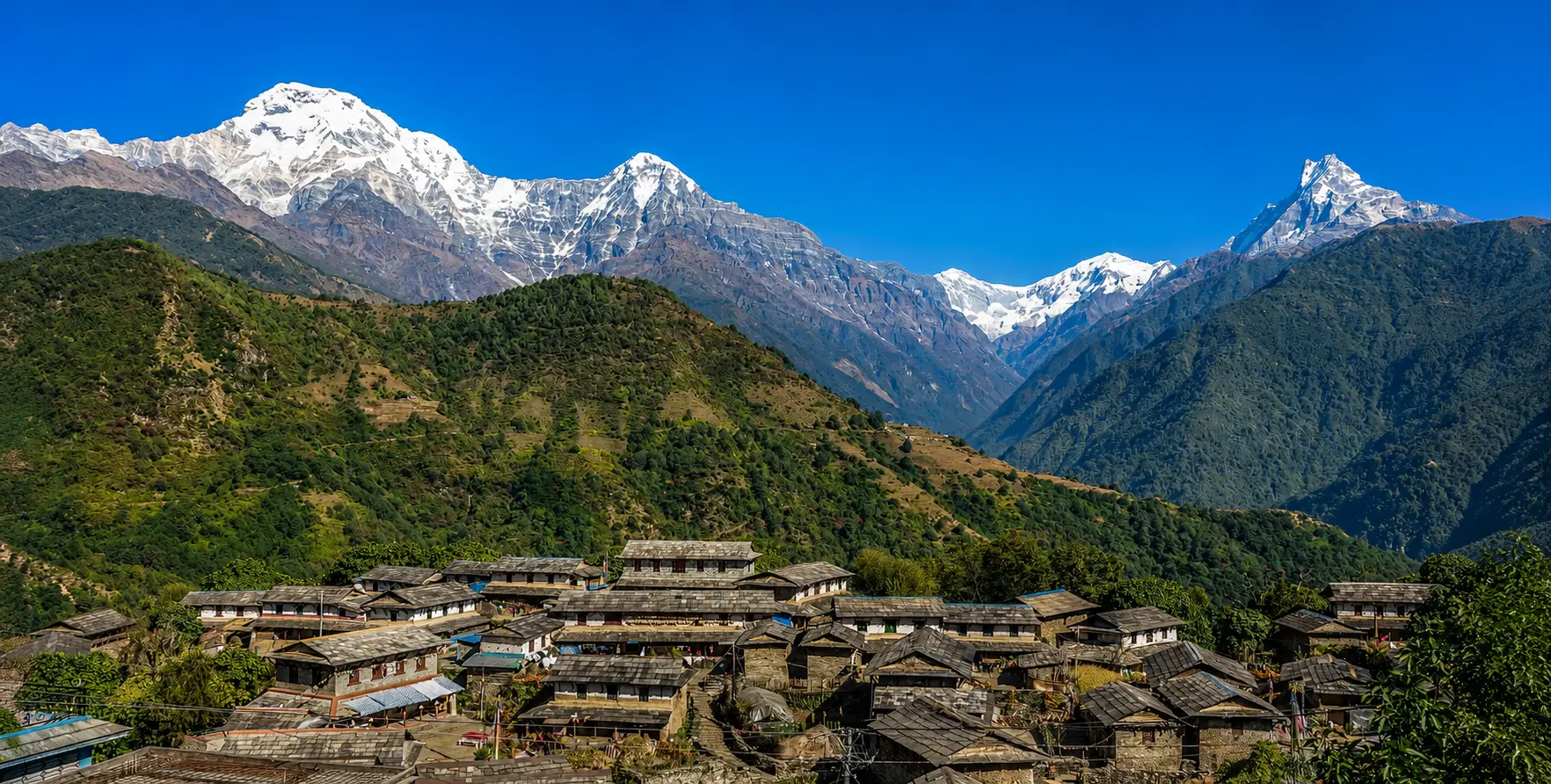
Since April 2023, trekking in Langtang National Park also requires a licensed guide. Checkpoints enforce this rule strictly, and it is non-negotiable. Nepal Vehicle Hiring Pvt. Ltd. can connect you with trusted licensed guide services as part of your trip planning.

Permit / Document Who Needs It Cost Where to Obtain
Langtang National Park Entry Permit All foreign visitors entering Langtang National Park (including vehicle transit to Syabrubesi) NPR 3,000/person (approx. USD 22) Nepal Tourism Board offices, Kathmandu (Bhrikuti Mandap or Pradarshani Marg) or Trishuli Bazaar checkpoint
TIMS Card (Trekkers’ Information Management System) All foreign trekkers NPR 2,000/person individual (NPR 1,000 through registered agencies) Nepal Tourism Board offices — same locations as above
SAARC Nationals — National Park Permit India, Bangladesh, Pakistan, Sri Lanka, Bhutan, Maldives, Afghanistan NPR 1,500/person Same as above
SAARC Nationals — TIMS SAARC visitors NPR 1,500/person Same as above
Nepali Nationals Nepali citizens NPR 100 entry permit | No TIMS required Same as above
Licensed Guide (MANDATORY since 2023) Required for ALL trekkers in Langtang National Park — enforced at checkpoints USD 25–35/day (guide fee) Book through registered trekking agencies in Kathmandu or Pokhara

Permits can be obtained at the Nepal Tourism Board office in Kathmandu (Bhrikuti Mandap, near Tundikhel — open Sunday to Friday, 10:00 AM to 5:00 PM). Carry two passport-sized photographs and your original passport for each permit application. Alternatively, permits can sometimes be obtained at the Dhunche checkpoint, but queues are common during peak season — obtaining permits in Kathmandu the day before departure is strongly recommended.

The mandatory requirement for a licensed guide has been fully enforced since its introduction in April 2023. Trekkers without a licensed guide are turned back at the Langtang National Park checkpoints. Nepal Vehicle Hiring Pvt. Ltd. can provide contact details for reputable licensed guide services in Kathmandu.

Scenic Highlights of the Kathmandu to Syabrubesi Drive

The Kathmandu-to-Syabrubesi vehicle journey is far more than a logistical transfer — it is a spectacular introduction to the landscapes and atmosphere of the Langtang region. Here are the key scenic and cultural highlights to watch for en route:

The Trishuli River Gorge (Galchhi to Betrawati)

After turning north at Galchhi, the road enters the Trishuli River gorge—one of Nepal’s most dramatic river landscapes. The Trishuli River is a major whitewater rafting destination, and its churning blue-green waters, visible far below the road, create a spectacular backdrop to the drive.
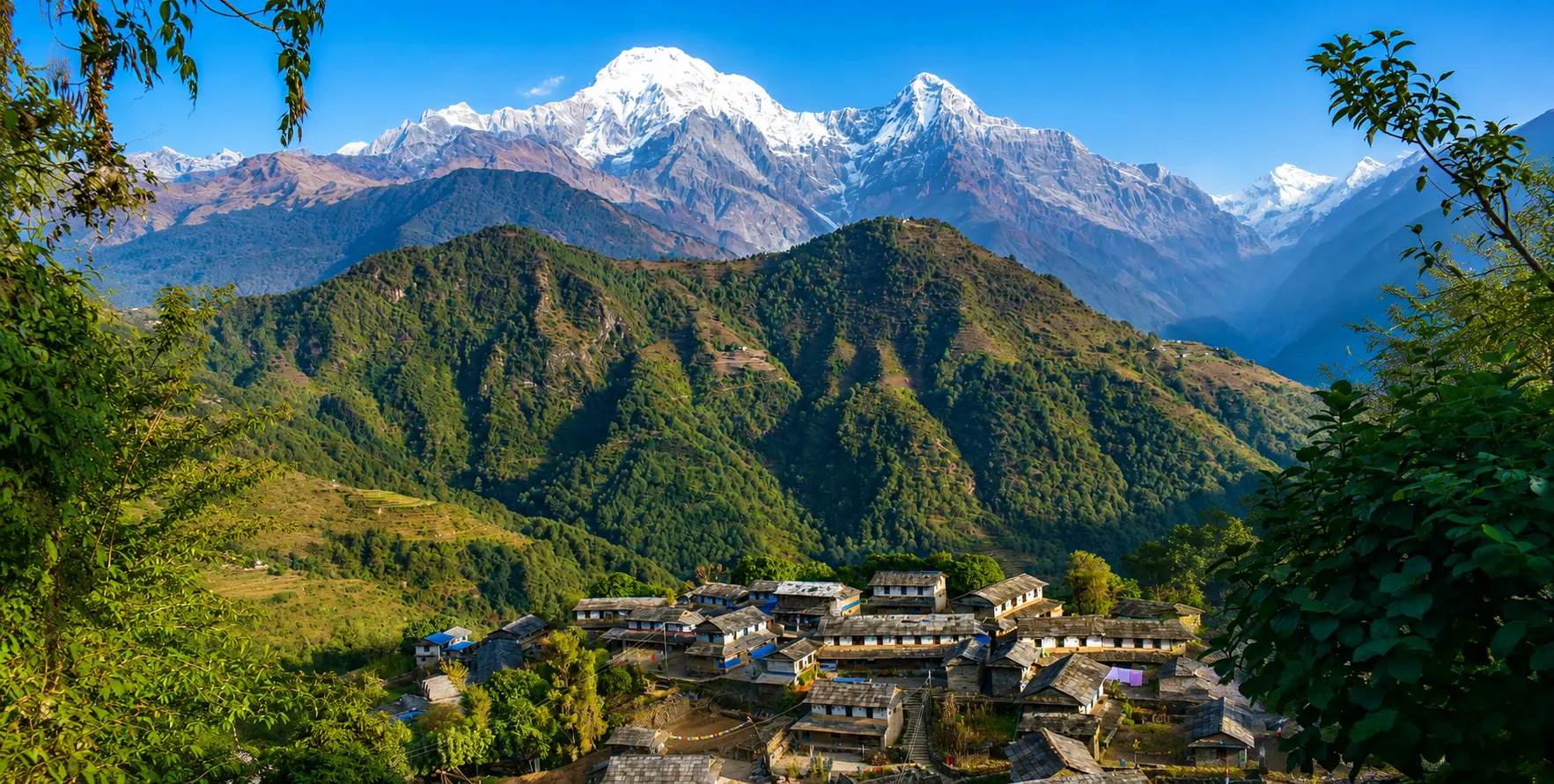
The gorge walls rise steeply on both sides, draped in subtropical vegetation, and the road clings to the cliffside in places with vertiginous drops to the river below. On weekends in season, you will often see groups of rafters navigating the rapids — a vivid reminder that Nepal’s adventure tourism extends far beyond trekking.

Trishuli Bazaar — Last Major Town Before the Mountains

Trishuli Bazaar is a significant town approximately 76 km from Kathmandu and the last sizable settlement on the Kathmandu-Syabrubesi route. The town has several good restaurants, ATMs (the last reliable ones before Syabrubesi — withdraw here!), fuel stations, and basic shops. Many drivers stop here for breakfast or an early tea break.
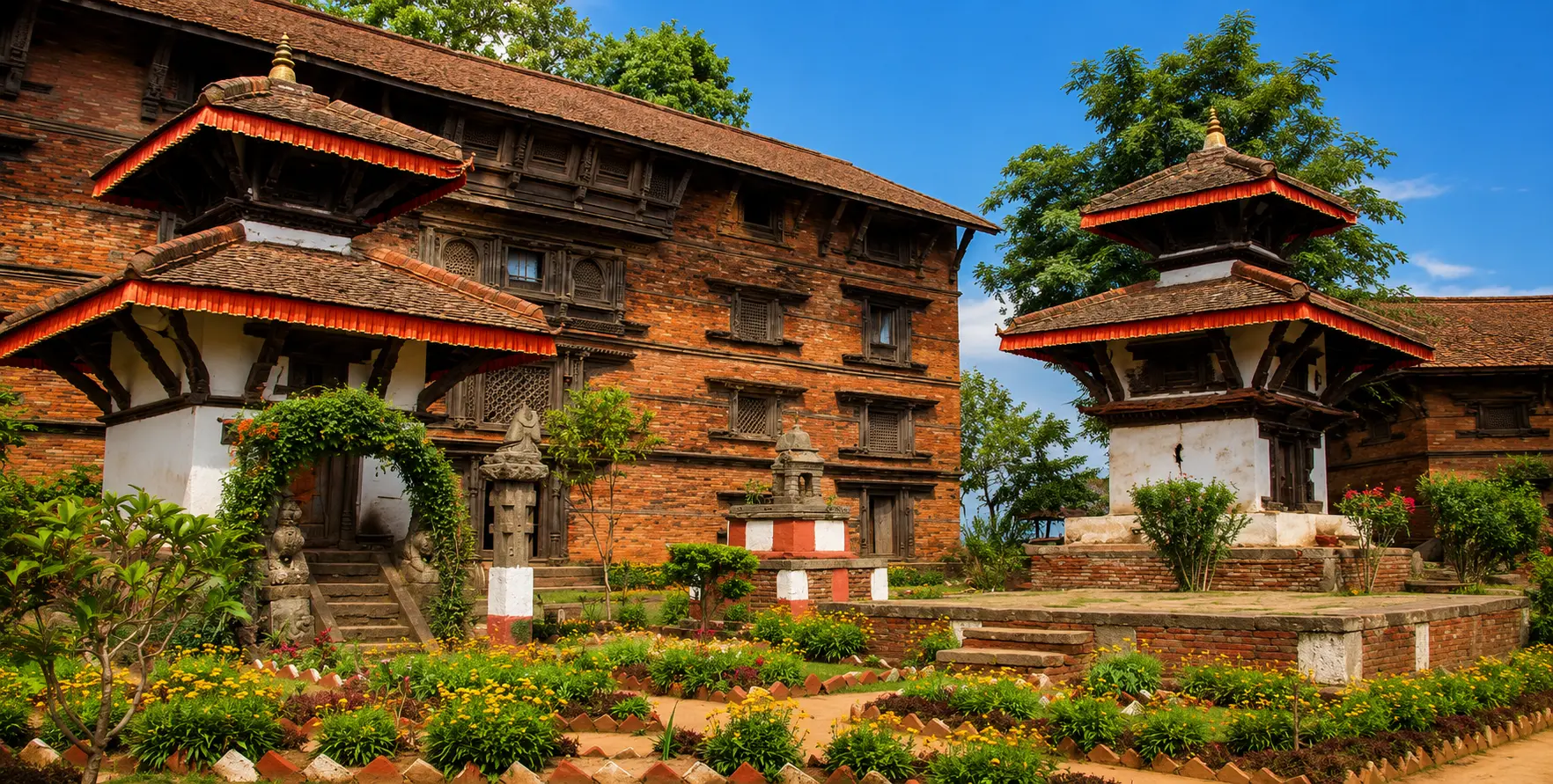
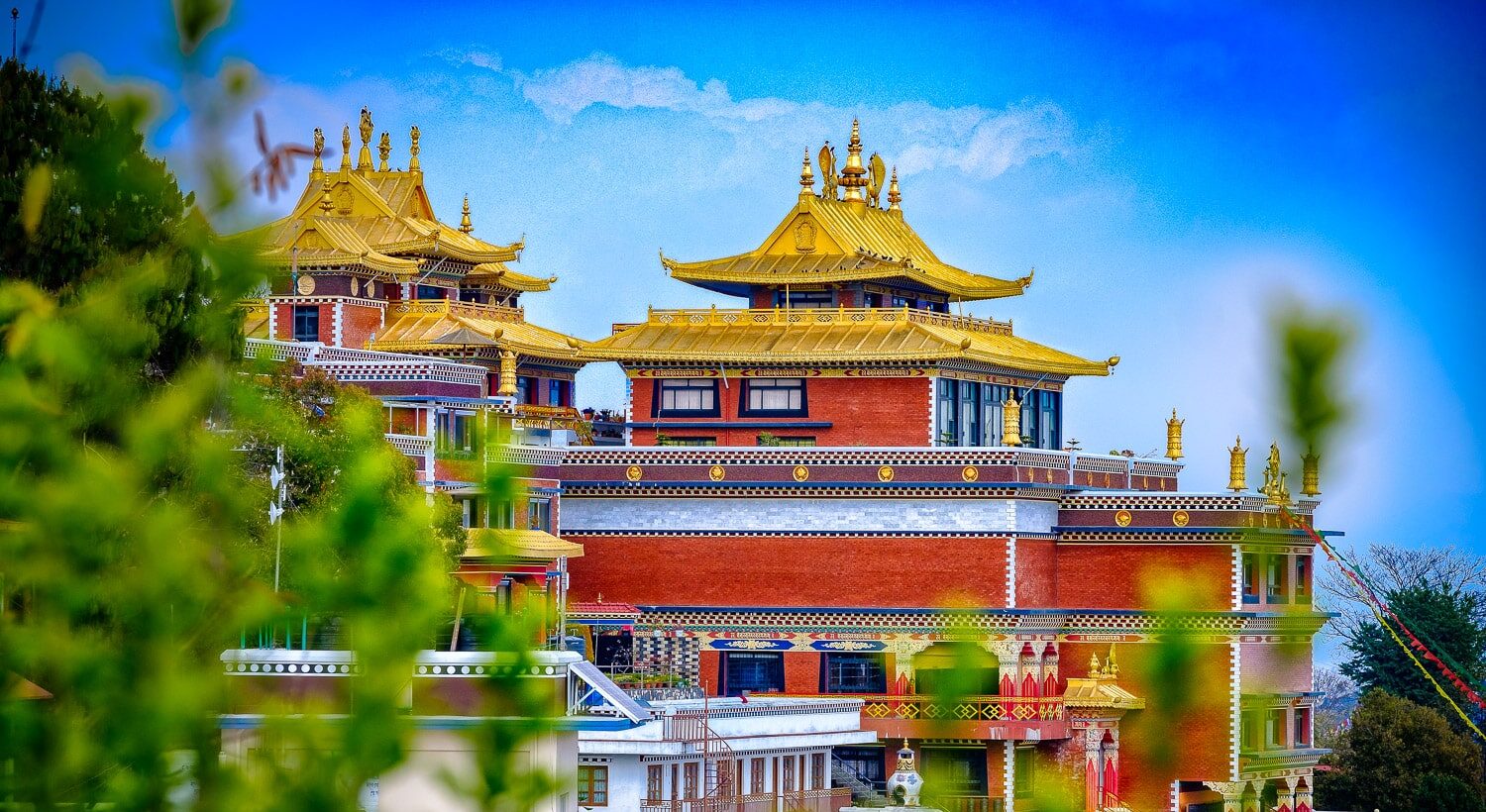
The surrounding area is historically significant as the site of the Trishuli Hydropower Project, one of Nepal’s earliest major hydroelectric developments.

Kalikasthan — First Himalayan Peak Views

Just beyond the village of Kalikasthan, at approximately 1,200 meters, the valley opens. On clear mornings, the first extraordinary views of the Langtang and Ganesh Himal ranges appear on the northern horizon.

Ganesh Himal (7,422 m) — named after the elephant-headed Hindu deity — and Langtang Lirung (7,227 m) are often the first peaks visible, rising white and massive against the blue sky. Ask your Nepal Vehicle Hiring driver to slow down at the Kalikasthan viewpoint for photographs — it is one of the finest roadside Himalayan views accessible from Kathmandu.

The Ramche Landslide Zone — Evidence of Nepal’s Raw Power

The Ramche area, just before Dhunche, is where the road passes through an active landslide zone that has periodically blocked or damaged the Kathmandu–Syabrubesi road over the years. In 2016, a major landslide temporarily dammed the Trishuli River near this area.

In 2026, the road through Ramche is better maintained than in previous years but remains the roughest section of the journey. This is where your 4WD vehicle earns its value — navigating the unpaved, potholed 3 km section with the confidence and capability that a standard car or bus cannot match.

Dhunche — The Mountain Town Gateway

Dhunche (2,030 m) is the district headquarters of Rasuwa District and the Langtang National Park permit checkpoint. The town sits on a broad ridge with stunning views of the surrounding forested mountains and — on clear days — distant Himalayan peaks.

It has a small bazaar, several teahouses and restaurants, a fuel station (the last one before Syabrubesi), and the national park entry gate where they check permits. Most travellers stop briefly in Dhunche for tea and a permit check.

The landscape at Dhunche — pine and rhododendron forests stretching over hillsides in every direction, with mountain peaks rising above the tree line — announces unambiguously that you have arrived in the Himalayas.

Thulo Bharkhu — Valley Views Before the Final Descent

Between Dhunche and Syabrubesi, the road passes through the Thulo Bharkhu area at approximately 1,800 meters — a spectacular viewpoint above the Bhote Koshi valley. Here, looking down into the deep river valley below and north toward the Nepal-Tibet border peaks, the scale and wildness of the Langtang region become fully apparent for the first time.

The descent from Thulo Bharkhu to Syabrubesi, with its numerous steep switchbacks, is exhilarating in a well-driven 4WD vehicle and marks the final chapter of your drive before reaching the trailhead.

Ultra-clear panoramic view of snow-covered Himalayan mountains with rocky foreground, brown hills, and soft clouds under a bright blue sky in Nepal.

Best Time to Travel from Kathmandu to Langtang

October to December — Autumn Peak Season (BEST)

The post-monsoon autumn season is the finest time for the Kathmandu-to-Syabrubesi drive and the Langtang Valley Trek. October and November offer the most reliably clear mountain views — the air has been washed crystal-clean by the monsoon rains, and Langtang Lirung, Ganesh Himal, and the Jugal Himal chain stand in striking clarity above the valleys. Road conditions are at their best after the monsoon damage has been repaired.

Temperatures in Syabrubesi are pleasant (15–22°C by day) and cool at night. The drive through the Trishuli gorge in October is spectacular, with lush monsoon vegetation still green and the river full and dramatic. This is the most popular season for Langtang trekkers — book your vehicle well in advance.

March to May — Spring Season (EXCELLENT)

Spring is the second peak season for Langtang trekking and the Kathmandu–Syabrubesi drive. The rhododendron forests on the hillsides between Betrawati and Dhunche burst into magnificent bloom in March and April, creating a spectacular floral display visible from the road. Mountain views are generally clear in the mornings before afternoon cloud build-up.

Temperatures warm up progressively through May. The Trishuli River is typically lower and calmer in spring, and the road conditions are generally good following the winter dry period.

December to February — Winter (POSSIBLE WITH PREPARATION)

Winter offers the clearest, coldest conditions on the Kathmandu-to-Syabrubesi route. The mountain views from Kalikasthan in December are often extraordinary — sharp and crystal-clear in the dry winter air. However, snow can fall on the road above Dhunche in January, and the descent from Dhunche to Syabrubesi can become icy.

Nepal Vehicle Hiring Pvt. Ltd. monitors winter road conditions and can advise whether chains or other precautions are needed. Syabrubesi itself rarely receives significant snow, but temperatures are cold (5–10°C by day, -5°C or colder at night). The Langtang Valley trek is possible in winter for well-prepared trekkers.

June to September — Monsoon (CHALLENGING)

The monsoon season brings the most challenging road conditions on the Kathmandu-Syabrubesi route. The Ramche Landslide Zone is most active during heavy monsoon rainfall and can block the road for hours or even days. Landslides also affect sections of the Trishuli Gorge Road between Galchhi and Betrawati.

Nepal Vehicle Hiring Pvt. Ltd. monitors road conditions in real time during the monsoon and will advise clients honestly about current conditions before departure. If road conditions permit, a private 4WD jeep is the only practical vehicle choice for monsoon-season travel on this route.

Why Choose Nepal Vehicle Hiring Pvt. Ltd. for Your Langtang Trek Vehicle

The Kathmandu to Syabrubesi road is one of Nepal’s most demanding and interesting vehicle journeys — a full day on mountain roads that transitions from city highway to remote Himalayan valley. It requires an experienced driver, a capable 4WD vehicle, and a company that knows the route thoroughly in all conditions. Thousands of Langtang trekkers have trusted Nepal Vehicle Hiring Pvt. Ltd. to deliver exactly this standard of service.

Why Nepal Vehicle Hiring Is Your Best Partner for Langtang
50,000+ satisfied customers | 5.0  TripAdvisor | 15,000+ verified 5-star reviews
All-4WD fleet — Fortuner, Hilux, Land Cruiser, Scorpio — all mountain-road ready
Drivers with specific experience on the Pasang Lhamu Highway & Ramche section
Bilingual drivers — English, Nepali, Hindi — will brief you on route highlights
Hotel pickup from anywhere in Kathmandu — Thamel, Lazimpat, Durbar Marg, all areas
Flexible departure — leave at 5:30 AM or 7:00 AM — your schedule, your choice
Real-time road condition monitoring — especially critical for monsoon travel
Return vehicle pickup from Syabrubesi on your specified date — pre-arranged and guaranteed
Transparent all-inclusive pricing — fuel, driver, vehicle, tolls — no hidden charges
24/7 WhatsApp support: +977 981-4227196 | Licensed & Registered | Reg. No. 219204

Our Fleet for the Kathmandu to Syabrubesi Route

Vehicle Capacity Why It’s Right for Langtang Best Group Size
4WD Toyota Fortuner 1–6 pax Powerful engine handles the Tamche zone, spacious cabin, excellent AC 4–6 people ideal
4WD Toyota Hilux 1–5 pax High ground clearance, proven mountain performer, good luggage space 3–5 people ideal
4WD Toyota Land Cruiser 1–7 pax Top-end comfort for long mountain drives, maximum reliability 5–7 people ideal
4WD Scorpio / Bolero 1–5 pax Cost-effective, capable 4WD, good for budget-conscious groups 2–4 people ideal
Hiace Van (to Dhunche) 7–14 pax For larger groups — note: only to Dhunche, not full Syabrubesi descent 7–14 people (to Dhunche)

Step-by-Step Booking Guide

  • Step 1 — Contact Nepal Vehicle Hiring via WhatsApp (+977 981-4227196), phone, email ([email protected]), or Website (vehiclehiringnepal.com).
  • Step 2 — Share your travel date, group size, Kathmandu hotel name/address, preferred departure time, and whether you need one-way drop-off or return pickup (or both).
  • Step 3 — Choose your vehicle from our recommendations based on group size and budget.
  • Step 4 — Receive the booking confirmation with the driver’s name, vehicle plate number, and driver’s WhatsApp contact.
  • Step 5 — Obtain the Langtang National Park permit and TIMS card from the Nepal Tourism Board office in Kathmandu, the day before departure (at Bhrikuti Mandap, open from 10:00 AM).
  • Step 6 — Arrange your licensed guide if you have not already done so (mandatory since April 2023).
  • Step 7 — Be ready in your hotel lobby at the agreed time — typically 5:30–6:30 AM for the Kathmandu-Syabrubesi trip. Your driver WhatsApps when 10 minutes away.
  • Step 8 — Enjoy the spectacular drive! Your driver will suggest the best stops for views, tea, and meals along the way.

Practical Tips for Your Kathmandu to Langtang Trek Vehicle Journey

A 5:30–6:30 AM departure from Kathmandu is strongly recommended for the Langtang trek vehicle journey. This early start beats the worst of Kathmandu’s morning traffic, allows you to reach Trishuli Bazaar by mid-morning for a comfortable breakfast stop, pass through the Ramche section in good daylight, arrive in Dhunche for a late lunch and permit check, and reach Syabrubesi by mid-afternoon with time to settle into your guesthouse before dark.

Departures after 8:00 AM risk arriving in Syabrubesi in the dark — particularly in winter when daylight hours are shorter.

The ATM Stop at Trishuli Bazaar — Essential

No ATMs are operating between Trishuli Bazaar and Kathmandu on the return journey (most ATMs in Dhunche are unreliable). Budget your cash carefully for the full trek: accommodation and meals (approximately NPR 1,500–2,500 per person per day), guide and porter fees (NPR 2,000–3,000/day for a guide, NPR 1,500–2,000/day for a porter), monastery entrance fees, and incidental expenses.

A trekker doing a 7-day Langtang Valley Trek should carry at least NPR 30,000–40,000 per person in cash. Withdraw at the Trishuli Bazaar ATM on the way — do not rely on Dhunche or Syabrubesi machines.

Motion Sickness Preparation

The Kathmandu to Syabrubesi road has over 1,000 turns, bends, and switchbacks — the route is justifiably famous among Nepalese drivers for its twisting mountain-road character, especially the sections above Betrawati and the descent from Dhunche. If you or any member of your group is susceptible to motion sickness, take appropriate medication before departure (30–60 minutes before the journey begins).

The front passenger seat offers the smoothest ride and the least exposure to motion sickness. Nepal Vehicle Hiring Pvt. Ltd. drivers drive smoothly and at a pace appropriate to the conditions, but the mountain road character is inherent to this route.

What to Pack for the Vehicle Journey

  • Motion sickness medication — taken 30–60 minutes before departure if you are susceptible.
  • Langtang National Park permit and TIMS card — must be in your daypack before leaving Kathmandu.
  • Cash in Nepali Rupees — withdraw from Kathmandu; supplement at Trishuli Bazaar ATM.
  • Snacks and water for the road — approximately 1–1.5 litres of water per person for the drive.
  • Light layers and a jacket — Syabrubesi (1,460 m) is noticeably cooler than Kathmandu, especially in the afternoon or in winter.
  • Camera fully charged — the Trishuli Gorge, Kalikasthan mountain views, and the Dhunche–Syabrubesi descent offer excellent photo opportunities.
  • A small bag of personal essentials is accessible during the drive — most luggage can go in the rear storage area.

Altitude and Acclimatisation at Syabrubesi

Syabrubesi, at 1,460 meters, is well within the altitude range; acclimatisation means visitors should feel comfortable, with no altitude symptoms. However, the Langtang Valley Trek climbs significantly from here, reaching Kyanjin Gompa at 3,870 meters, with optional day hikes to 4,700–5,000 meters.

Proper acclimatisation during the trek itself—taking rest days, drinking plenty of water, and acclimatising—is essential. Most 7–10-day Langtang itineraries are appropriately paced for safe altitude gain. Your licensed guide will advise on acclimatisation during the trek.

Frequently Asked Questions

How long does the drive from Kathmandu to Syabrubesibesi take?

In a private 4WD jeep departing Kathmandu at 6:00 AM, the drive to Syabrubesi takes about 5.5–7 hours, including a breakfast stop in Trishuli Bazaar and a permit check in Dhunche. Public buses and shared jeeps take 7–10 hours or more because of multiple stops and slower driving on mountain roads. A private jeep from Nepal Vehicle Hiring Pvt. Ltd. typically saves 2–3 hours compared with public transport.

Is a 4WD vehicle really necessary for the drive from Kathmandu to Syabrubesi?

Yes — a 4WD vehicle is strongly recommended and, by many measures, essential. The Ramche Landslide Zone (3 km before Dhunche) is unpaved and rough, and after rainfall it becomes muddy and unstable. The descent from Dhunche to Syabrubesi involves steep, tight switchbacks.

A standard car will struggle and potentially fail in these sections. All Nepal Vehicle Hiring Pvt. Ltd. vehicles for this route are 4WD Jeeps (Fortuner, Hilux, Land Cruiser, or Scorpio), ensuring your journey is safe and comfortable throughout.

Do I need permits to ride in a private vehicle to Syabrubesi?

Yes. Even if you are travelling to Syabrubesi by private vehicle rather than trekking on foot, you must carry a valid Langtang National Park permit and TIMS card. The Dhunche Army Checkpoint and Langtang National Park entry gate check all passengers — trekkers and vehicle passengers alike.

Obtain your permits from the Nepal Tourism Board office in Kathmandu before your departure day.

Can I arrange a return vehicle pickup from Syabrubesi after my trek?

Absolutely — this is one of Nepal Vehicle Hiring Pvt. Ltd.’s most popular services for Langtang trekkers. Please tell us your expected trek completion date and time when booking, and we will assign a vehicle for your Syabrubesi pickup on that date. Your driver will WhatsApp you the evening before to confirm timing.

If your trek runs over or under schedule, contact us via WhatsApp, and we will adjust the pickup accordingly.

What other treks can I do from Syabrubesi?

Syabrubesi is the gateway to three major trekking routes: the Langtang Valley Trek (the most popular, 7–10 days round trip), the Tamang Heritage Trail (a spectacular cultural circuit through traditional Tamang villages, 5–8 days), and the Helambu Trek (a lower-altitude cultural trek through the Helambu Valley, 5–7 days, finishing near Kathmandu). Nepal Vehicle Hiring Pvt. Ltd. provides vehicle hire for all three route trailheads from Kathmandu and return transport from various finishing points, depending on your chosen route.

How much cash should I carry for the Langtang Trek?

There are no ATMs between Trishuli Bazaar and Kathmandu on the mountain road. Withdraw sufficient NPR in Kathmandu (and top up at Trishuli Bazaar on the way). Budget approximately NPR 1,500–2,500 per person per day for teahouse accommodation and meals on the trek.

A 7-day Langtang trek budget (excluding permits, guide, porter, and vehicle hire) is approximately NPR 15,000–25,000 per person. Carry an additional 20% buffer for unexpected expenses, emergency needs, or extended stays.

How do I book a Kathmandu-to-Syabrubesi jeep with Nepal Vehicle Hiring?

Contact Nepal Vehicle Hiring Pvt. Ltd. via WhatsApp (+977 981-4227196), phone, email ([email protected]), or the booking form at vehiclehiringnepal.com. Share your travel date, group size, Kathmandu hotel address, and preferred departure time. Our team responds within minutes during business hours.

We recommend booking 3–5 days in advance during peak season (October–November and March–May), when 4WD vehicles for the Langtang route are in high demand.

Kathmandu to Syabrubesi: All Transport Options Compared

Transport Option Cost Time Comfort Reliability Door-to-Door Best For
Private Jeep — Nepal Vehicle Hiring NPR 18,000–35,000 5–7 hrs ★★★★★ ★★★★★ Yes Groups, families, and serious trekkers
Shared Jeep (Machhapokhari) NPR 1,400–1,800/person 6–8 hrs ★★★☆☆ ★★★☆☆ No Solo/couple on moderate budget
Tourist Bus NPR 800–1,200/person 7–10 hrs ★★★☆☆ ★★★☆☆ No Budget groups, non-time-sensitive
Local Public Bus NPR 300–500/person 8–12 hrs ★★☆☆☆ ★★☆☆☆ No Extreme budget, high tolerance for discomfort
Private Car (non-4WD) NPR 12,000–18,000 6–8 hrs ★★★☆☆ ★★☆☆☆ Partial NOT recommended — fails at Ramche section

Conclusion: Your Langtang Adventure Starts with the Right Vehicle

The Langtang Valley Trek is one of Nepal’s greatest short Himalayan adventures — a journey into a glacial valley of extraordinary beauty, rich wildlife, and Tamang cultural depth, accessible from Kathmandu in a single day’s drive. The vehicle journey from Kathmandu to Syabrubesi — following the Trishuli River gorge northward through progressively wilder,d more dramatic mountain terrain — is a spectacular experience that deserves to be enjoyed, not endured.

With Nepal Vehicle Hiring Pvt. Ltd., the Kathmandu-to-Syabrubesi drive is exactly that: an experience. A professional 4WD vehicle will collect you from your hotel before dawn. A smooth run through the morning-lit Trishuli gorge.

A breakfast stop at Trishuli Bazaar as the mountains begin to appear on the northern horizon. The confident navigation of the Ramche section would defeat a lesser vehicle. The dramatic first views of Langtang Lirung and Ganesh Himal from Kalikasthan.

The descent into Syabrubesi as afternoon light fills the river valley. Your first cup of Tamang butter tea at a riverside guesthouse, knowing the real walking begins tomorrow.

That is the Langtang experience at its best. And Nepal Vehicle Hiring Pvt. Ltd. is the vehicle partner that makes it possible.

Book your Kathmandu-to-Langtang trek vehicle today. Our team is available 24/7 on WhatsApp; peak season books up fast, and the mountains are waiting.

Book Your Kathmandu-to-Langtang Trek Vehicle Today!

Website: www.vehiclehiringnepal.com
Phone / WhatsApp: +977 981-4227196  (24/7 — we respond fast)
Email: [email protected]
Office: Bhagawatisthan, Thamel, Kathmandu, Nepal
Route: Kathmandu → Galchhi → Trishuli → Betrawati → Dhunche → Syabrubesi
Fleet: 4WD Fortuner | 4WD Hilux | Land Cruiser | Scorpio | Hiace Van
50,000+ Happy Customers | 5.0 TripAdvisor | 15,000+ Verified Reviews
Hotel Pickup from Kathmandu | Flexible Departure | Return Pickup Available
3 Route Options: Galchhi Standard | Kakani Scenic | Tokha/Bidur
Real-Time Road Condition Monitoring | Licensed & Registered | Reg. No. 219204

Kathmandu to Chitwan Transfer

Chitwan

Kathmandu to Chitwan Transfer: Complete Guide to Car, Jeep, Bus & Van Options

Chitwan National Park — Nepal’s first and most celebrated national park, and a UNESCO World Heritage Site — is the country’s most visited wildlife destination and an essential stop on almost every Nepal itinerary. After the temples, monuments, and cultural richness of Kathmandu Valley, the transition to the lush Terai lowlands of Chitwan — with one-horned rhinoceroses grazing in the grasslands, Bengal tigers moving through the forest, wild elephants at the riverside, and over 544 bird species filling the trees — is one of the most dramatic and rewarding journeys in Asia.

The transfer from Kathmandu to Chitwan covers about 150 to 170 kilometres along the Prithvi Highway and the East-West Highway, taking 5 to 7 hours depending on the mode of transport and traffic conditions. In 2026, travellers will have a wide range of transfer options available —from budget-friendly shared tourist buses to top-end private cars, from spacious family jeeps to large Hiace vans for groups, and from VIP sofa coaches to full coaster buses for larger parties.

At Nepal Vehicle Hiring Pvt Ltd, we offer a complete range of Kathmandu-to-Chitwan transfer services, including private cars, jeeps, Hiace vans, coaster buses, and tourist bus ticket booking. This comprehensive 2026 guide covers every available option, including full cost comparisons, departure details, route highlights, the optional Bandipur detour, seasonal guidance, and expert tips to ensure every Kathmandu-to-Chitwan transfer is smooth, comfortable, and genuinely enjoyable.

All Kathmandu to Chitwan Transfer Options –  Quick Comparison

Transfer Option Time Cost Departure Comfort Best For
Local / Deluxe Bus 6–8 hrs NPR 500–900/person Gongabu Bus Park (6 AM) Low Cheapest shared option
Tourist Bus (Standard) 5–7 hrs NPR 1,000–1,300/person Sorhakhutte Tourist Park (7 AM) Medium Budget independent
VIP Sofa Bus (2+1) 5–6 hrs NPR 1,400–2,000/person Sorhakhutte Tourist Park (7 AM) High Comfort-seeking solo/couple
Night Bus Overnight NPR 1,000–1,800/person Gongabu / Sorhakhutte (7–10 PM) Medium Save hotel cost
Private Car (Sedan/SUV) 4–5 hrs NPR 12,000–20,000 (vehicle) Hotel pickup Very High Couple, small family
Private Jeep (4WD) 4–5 hrs NPR 15,000–24,000 (vehicle) Hotel pickup Very High Group of 4–6
Toyota Hiace Van 5–6 hrs NPR 20,000–30,000 (vehicle) Hotel pickup Very High Group of 7–10
Toyota Coaster 5–6 hrs NPR 28,000–42,000 (vehicle) Hotel pickup High Group of 12–18
Tourist Bus (Private) 5–7 hrs NPR 38,000–60,000 (vehicle) Hotel pickup High Group of 25–40

Kathmandu to Chitwan – Journey Quick Facts

Detail Information
Road Distance Approximately 150–170 km
Drive Time (Private Vehicle) 4 to 5 hours
Drive Time (Tourist Bus) 5 to 7 hours
Main Route Kathmandu → Prithvi Highway → Mugling → East-West Highway → Bharatpur → Sauraha
Key Rest Stop Mugling (midpoint) – Trishuli riverside lunch
Tourist Bus Departure Sorhakhutte Tourist Bus Park, Kathmandu – 7:00 AM
Arrival Point Sauraha Bus Park or direct to the resort (private vehicle)
Best Departure Time 7:00 AM – 8:00 AM for a comfortable daytime journey
Road Condition Mostly paved; ongoing upgrades near Mugling junction
Scenic Highlight Trishuli River gorge, Narayanghat river plains

Private Vehicle Transfer: Kathmandu to Chitwan

Nepal Vehicle Hiring Pvt Ltd provides professional hotel-to-resort private vehicle transfer services for the Kathmandu-to-Chitwan route. All private vehicles include hotel pickup in Kathmandu and direct resort drop-off in Sauraha:

Pokhara to Chitwan

Private Car – Best for Couples and Small Families

A private car is the ideal choice for solo travellers, couples, and small families of up to 4 people seeking comfort, speed, and door-to-door service for the Kathmandu-to-Chitwan transfer.

Car Type Capacity One Way (NPR) One Way (USD) Round Trip (NPR)
Standard Sedan (Dzire/Etios) 2–3 pax NPR 12,000–15,000 USD 90–120 NPR 20,000–30,000
SUV / Crossover 3–4 pax NPR 14,000–18,000 USD 105–150 NPR 24,000–40,000
Top-end SUV 4 pax NPR 17,000–22,000 USD 127–200 NPR 29,000–55,000

The private 4WD jeep is the most popular vehicle for the Kathmandu-to-Chitwan transfer, especially for trekking groups heading to or returning from Chitwan. It offers more space, higher seating, and better luggage capacity than a standard car.

Jeep Type Capacity One Way (NPR) One Way (USD) Round Trip (NPR)
Standard Jeep (Scorpio/Bolero) 4–5 pax NPR 15,000–26,000 USD 112–150 NPR 26,000–40,000
4WD Jeep (Hilux/Fortuner) 5–6 pax NPR 18,000–24,000 USD 135–300 NPR 31,000–55,000
Top-end 4WD (Land Cruiser) 5–6 pax NPR 22,000–30,000 USD 165–400 NPR 38,000–90,000

Toyota Hiace Van – Best for Groups of 7 to 10

The Toyota Hiace van is the most practical and economical private vehicle for larger family groups and small tour parties travelling from Kathmandu to Chitwan.

Detail Information
Seating Capacity 7 to 10 passengers comfortably
One-Way Cost NPR 20,000–30,000 (USD 150–225)
Round Trip Cost NPR 34,000–52,000 (USD 255–390)
Air Conditioning Full front and rear AC
Luggage Space Large rear boot + roof rack
Best For Extended families, small tour groups, mixed groups

Chitwan Riverside Bamboo Huts and Reflections

Coaster Bus and Tourist Bus – Large Groups

For groups of 12 or more, Nepal Vehicle Hiring offers coaster buses and full tourist buses for the Kathmandu to Chitwan transfer:

Vehicle Capacity One Way (NPR) One Way (USD) Best For
Toyota Coaster 12–18 pax NPR 28,000–42,000 USD 210–315 Medium tour groups, corporate
Mini Bus 20–25 pax NPR 35,000–50,000 USD 260–375 Mid-large groups
Tourist Bus (Private) 25–40 pax NPR 38,000–60,000 USD 285–450 Large tour groups, schools

Note: All private vehicle prices include driver, fuel, and toll charges for the one-way journey from Kathmandu to Chitwan/Sauraha. Contact Nepal Vehicle Hiring for confirmed quotes for your specific travel date and group size.

What Is Included in Your Nepal Vehicle Hiring Private Transfer

  • Hotel pickup from your exact accommodation anywhere in Kathmandu – Thamel, Lazimpat, Boudha, or any area
  • Air-conditioned private vehicle – well-maintained and regularly serviced
  • Professional, licensed driver experienced on the Kathmandu to Chitwan Prithvi Highway
  • Fuel, toll charges, and all driver expenses are included in the quoted price
  • Freedom to stop at Mugling, Bandipur, Narayanghat, or any attraction on request
  • Direct drop-off at your resort or hotel entrance in Sauraha, Chitwan
  • Flexible departure time – leave Kathmandu when you are ready
  • 24-hour Nepal Vehicle Hiring operations contact for any in-journey support

Tourist Bus Options: Kathmandu to Chitwan

Shared tourist buses are the most popular choice for independent travellers and backpackers on the Kathmandu-to-Chitwan route. Here is the complete guide to all bus categories:

Bus Type Seat Layout Ticket Price (NPR) Ticket Price (USD) Departure Comfort
Local / Deluxe Bus 2+2 NPR 500–900 USD 3.7–6.7 Gongabu Bus Park, 6 AM Low–Medium
Standard Tourist Bus 2+2 NPR 1,000–1,300 USD 7.5–9.7 Sorhakhutte, 7 AM Medium
Super Deluxe Bus 2+2 NPR 1,200–1,600 USD 9–12 Sorhakhutte, 7 AM Good
VIP Sofa Bus 2+1 NPR 1,400–2,000 USD 10.5–15 Sorhakhutte, 7–8 AM High
Night Bus 2+1 or 2+2 NPR 1,000–1,800 USD 7.5–13.5 Gongabu/Sorhakhutte, 7–10 PM Medium

Departure point for tourist buses: Sorhakhutte Tourist Bus Park (also called New Bus Park), about 20- 30 minutes by taxi from Thamel (NPR 400–600). Arrive at least 30 minutes before the 7:00 AM departure.

Kathmandu to Chitwan Tour Package: Complete Travel Guide

Complete Transfer Comparison: Kathmandu to Chitwan

Factor VIP Sofa Bus Private Car Private Jeep Hiace Van Local Bus
Journey Time 5–6 hrs 4–5 hrs 4–5 hrs 5–6 hrs 6–8 hrs
Cost (per person, est.) NPR 1,400–2,000 NPR 3,000–7,300* NPR 2,500–6,000* NPR 2,000–4,300* NPR 500–900
Hotel Pickup Sorhakhutte Bus Park Yes – door Yes – door Yes – door Gongabu Bus Park
Drop-off Sauraha Bus Park Resort entrance Resort entrance Resort entrance Sauraha Bus Park
Departure Time Fixed 7 AM Fully flexible Fully flexible Fully flexible Fixed 6 AM
Luggage Space Underfloor Good Excellent Excellent Very limited
Stop Freedom None Full Full Full None
Privacy Shared 25–30 pax Complete Complete Complete No
Best For Solo/couple budget Couple/small family Groups 4–6 Groups 7–10 Cheapest

* Per-person cost based on typical group size: car per 2–3 pax, Jeep per 4–5 pax, Hiace per 7–9 pax.

Kathmandu to Chitwan Route – Highlights and Stops

The Prithvi Highway from Kathmandu to Chitwan is a beautiful and varied road journey. Here are the key highlights and recommended stops along the way:

Kathmandu Valley Exit – Chandragiri Hills

As the vehicle leaves Kathmandu, the road climbs through the Chandragiri hills at the valley rim before descending steeply through the Naubise area. This transition from Kathmandu’s dense urban bowl to the open river valley below is dramatic and immediate. On clear days, you can see the Himalayan range behind you as you exit the valley.

Prithvi Highway – Trishuli River Gorge

After Naubise, the Prithvi Highway follows the Trishuli River through a spectacular gorge. The road winds alongside the rushing river for approximately 60 kilometres from Naubise to Mugling, with forested hillsides above, cascading side streams, and traditional Nepali villages clinging to the slopes. This is consistently the most scenic section of the entire Kathmandu-to-Chitwan road journey.

Mugling – The Essential Midway Stop

Mugling sits at the confluence of the Trishuli and Marsyangdi rivers, approximately 90-100 km from Kathmandu, and is Nepal’s most famous roadside stop. Almost every tourist bus and private vehicle stops here for 20 to 30 minutes. Riverside restaurants serve fresh fish curry (Mugling fish curry is legendary throughout Nepal), dal bhat, and snacks.

The riverside setting with the two rivers meeting below is scenic and refreshing. For families with children, Mugling is an excellent stretch-your-legs opportunity.

Bandipur – Optional UNESCO Heritage Town Detour

Bandipur is one of Nepal’s most remarkable heritage destinations — a beautifully preserved Newari hilltop trading town about 8 km off the Prithvi Highway between Dumre and Mugling. With its cobblestone main street, traditional Newari architecture, panoramic mountain views of the Annapurna and Manaslu ranges, and the nearby Siddha Cave (Nepal’s largest cave), Bandipur is an outstanding cultural detour that adds approximately 1 to 1.5 hours to the journey.

With a private vehicle from Nepal Vehicle Hiring, this stop is entirely flexible and on request.

Narayanghat – Terai Entry

After Mugling, the route turns south on the East-West Highway and begins the final descent to the Terai lowlands. Narayanghat is the major city at the Terai entry point, situated at the confluence of the Narayani and Rapti rivers. The transition from the hilly gorge terrain to the flat, green Terai landscape is noticeable and dramatic — the temperature rises, the vegetation becomes denser and more tropical, and Nepal’s character shifts completely.

Bharatpur to Sauraha – Chitwan Approach

From Narayanghat, the route continues to Bharatpur — the administrative headquarters of Chitwan District and one of Nepal’s largest cities — before the final approach road to Sauraha, the main tourist gateway to Chitwan National Park. The approach to Sauraha via Bharatpur passes through flat Terai countryside, with occasional views of the Rapti River and the national park forest on the southern horizon.

Route Overview Table: Kathmandu to Sauraha

Stage Section Distance Road Time Notes
1 Kathmandu to Naubise 30 km Prithvi Hwy – paved 45 min Valley exit, Chandragiri Hills
2 Naubise to Mugling 65 km Prithvi Hwy – gorge road 1.5–2 hrs Trishuli River gorge – most scenic section
3 Mugling Rest Stop 0 km – 20–30 min Riverside lunch or snacks – all vehicles stop
4 Mugling to Narayanghat 35 km East-West Hwy 45 min Terai entry, flat lowlands
5 Narayanghat to Bharatpur 15 km Paved – good 20 min Major city, East-West Highway
6 Bharatpur to Sauraha 22 km Good approach road 30 min National park edge, resort area
TOTAL Kathmandu to Sauraha ~167 km Mostly paved 4–5 hrs (private) Classic Nepal highway journey

Which Transfer Option is Right for You?

Your Profile Best Option Reason
Solo traveller, budget VIP Sofa Bus (NPR 1,400–2,000) Best comfort-to-cost ratio for single travellers
Couple on a tight budget Tourist Bus or Sofa Bus Two adjacent seats, affordable, morning schedule
A couple wanting comfort Private Car (Sedan/SUV) Door-to-door, flexible, fast, private
Family of 4 Private SUV or Jeep Space for bags, flexibility, and hotel pickup
Family of 5–6 Private Jeep (Hilux/Fortuner) All family together, boot space, fast
Group of 7–10 Toyota Hiace Van One vehicle, hotel pickup, economical per head
Group of 12–18 Toyota Coaster All together, AC, a professional driver
Large group 25+ Private Tourist Bus Maximum capacity, single vehicle, group cohesion
Night traveller Night Bus (NPR 1,000–1,800) Save accommodation costs, arrive early
Wants Bandipur stop Any private vehicle Only private vehicles are allowed off-route detours
Chitwan
Chitwan

What Awaits You at Chitwan National Park

After the Kathmandu to Chitwan transfer, one of Nepal’s greatest wildlife experiences awaits:

Chitwan National Park – UNESCO World Heritage Site

Established in 1973, Chitwan National Park covers 952 square kilometres of subtropical lowland forest, grassland, and river systems. It is home to over 700 one-horned rhinoceroses, a significant population of Bengal tigers (over 100 individuals), wild Asian elephants, gharial and mugger crocodiles, and 544 bird species. Chitwan is consistently rated as one of the finest wildlife destinations in Asia.

Jeep Safari – The Premier Chitwan Experience

The open 4WD jeep safari through the national park’s core zones at dawn and dusk is the most popular and rewarding Chitwan activity. Trained naturalist guides know the best wildlife areas and maximise sightings of rhinoceroses, deer, crocodiles, and occasionally tigers. A half-day or full-day jeep safari is the recommended first activity for any visit to Chitwan.

Jungle Walk on Foot

Walking through Chitwan’s forests on foot with an armed guide is the most intimate wildlife experience the park offers. The proximity to nature — smelling the vegetation, hearing the birds, following tracks — creates a thrilling connection with the jungle ecosystem that no vehicle-based safari can replicate.

Dugout Canoe Ride

A silent dawn canoe on the Rapti River is the finest way to observe Chitwan’s riverine wildlife — gharials and mugger crocodiles basking on the banks, river kingfishers, otters, and occasionally elephants drinking at the water’s edge. One of the most peaceful and memorable experiences available in Chitwan.

Tharu Cultural Program

The traditional Tharu community stick dance performed at Chitwan resorts every evening is a colourful, energetic cultural introduction to the indigenous Tharu people, the original inhabitants of the Terai lowlands whose remarkable immunity to malaria allowed them to settle this region for centuries before modern development.

KTM to Chitwan

Best Time for the Kathmandu to Chitwan Transfer

Autumn (October to November) – Best Season

Autumn is the finest time for the Kathmandu-to-Chitwan transfer and a visit to Chitwan. The road is in excellent post-monsoon condition, the weather is comfortable (cool in Kathmandu, warm in Chitwan), and wildlife sightings in the park are excellent after the monsoon vegetation flush.

The Trishuli Gorge section of the Prithvi Highway is particularly beautiful in autumn. This is peak season — book all transport in advance.

Spring (March to May) – Excellent

Spring offers warm weather, good road conditions, and active wildlife. March and April are ideal — temperatures are comfortable, and the park’s wildlife is very visible. May becomes hot in the Terai.

The Prithvi Highway is scenic, with rhododendrons visible on the hillsides above the gorge.

Winter (December to February) – Good

Winter is excellent for Chitwan wildlife—the tall elephant grass is burned in late January, dramatically improving visibility in the park. The road is in good condition year-round. Temperatures in Chitwan are cool and comfortable for wildlife walking.

The Kathmandu-to-Chitwan transfer is comfortable with the right layers of clothing.

Monsoon (June to August) – Possible with Caution

The Prithvi Highway can experience occasional landslides near Mugling during the heavy monsoon season. Chitwan’s core zone is closed from June to August. The road journey is generally fine, but allow extra time.

Nepal Vehicle Hiring monitors conditions and advises clients accordingly.

Expert Tips for the Kathmandu to Chitwan Transfer

  • Book your VIP Sofa Bus seat at least 2 to 3 days in advance during October–November and March–April – the25-5 to 30-seat buses sell out quickly.
  • For private vehicles, book at least 2 to 3 days in advance during the off-peak season and 5 to 7 days in advance during peak trekking and wildlife seasons.
  • Depart Kathmandu between 7:00 AM and 8:00 AM to arrive in Sauraha by early afternoon, with time to settle in and do an afternoon jungle activity.
  • For Sorhakhutte Bus Park departures, take a taxi from Thamel at 6:00 AM to arrive at the bus park with 30 minutes to spare before the 7:00 AM bus.
  • Request a Bandipur heritage town stop if you have a private vehicle – it is directly on the route and is one of Nepal’s most rewarding cultural detours.
  • The Mugling stop is typically 20 to 30 minutes – use it for the famous riverside fish curry or a quick lunch.
  • For families with young children, a private vehicle is strongly recommended – the flexibility to make toilet stops, take snack breaks, and maintain child-friendly pacing makes a significant difference.
  • Confirm your Chitwan resort’s arrival procedure before departure – most resorts send a representative to Sauraha Bus Park for tourist bus arrivals.
  • For private vehicle passengers, Nepal Vehicle Hiring drivers drop you off directly at your resort entrance – no need to navigate the Sauraha bus park.
  • Nepal Vehicle Hiring can book the complete Nepal transport sequence – Pokhara to Chitwan, Chitwan to Kathmandu, or Kathmandu to Chitwan, then Pokhara – in a single coordinated arrangement.

What to Pack for the Kathmandu to Chitwan Transfer

  • Light summer clothing for Chitwan (the Terai is hot and humid)
  • Light jacket for the air-conditioned bus or vehicle cabin
  • Water bottle – stay hydrated during the 4- to 6-hour journey
  • Light snacks – biscuits, fruits, energy bars for the journey
  • Insect repellent – essential from the moment you arrive in Chitwan
  • Camera – the Trishuli River gorge and Mugling riverside are excellent photo subjects
  • Motion sickness tablets, if needed – the Prithvi Highway gorge section has curves
  • Nepali cash – for the Mugling stop and resort arrival expenses
  • Chitwan Resort confirmation and contact number for arrival coordination

How to Book Your Kathmandu to Chitwan Transfer with Nepal Vehicle Hiring

Booking your transfer with Nepal Vehicle Hiring Pvt Ltd is simple:

  • Step 1: Contact us via phone, WhatsApp, or at vehiclehiringnepal.com
  • Step 2: Tell us your travel date, number of passengers, hotel name in Kathmandu, and resort/hotel in Sauraha, Chitwan
  • Step 3: Choose your transfer type – private Jeep, Hiace van, coaster, or tourist bus ticket
  • Step 4: Mention any special requirements – Bandipur stop, child seats, extra luggage, flexible timing
  • Step 5: Receive your booking confirmation with driver details, vehicle information, and exact pickup time
  • Step 6: Your driver arrives at your Kathmandu hotel at the confirmed time and takes you directly to your Chitwan resort

We recommend booking 2 to 3 days in advance for off-peak dates and 5 to 7 days in advance for the October–November and March–April peak seasons.

Frequently Asked Questions (FAQ)

How far is Kathmandu from Chitwan?

The road distance from Kathmandu to Chitwan (Sauraha) is approximately 115- 70 kilometres via the Prithvi Highway and the East-West Highway.

How long does the Kathmandu-to-Chitwan transfer take?

By private car or jeep: 4-5 hours, including a stop in Mugling. By tourist bus: 5-7 hours. By local bus: 6 hours.

How much does a private car from Kathmandu to Chitwan cost in 2026?

A private sedan costs US$120 one way. An SUV costs NPR 14,000 to 22,000. A private jeep costs NPR 15,000 to 26,000. A Toyota Hiace van costs NPR 20,000 to 35,000. All include driver and fuel.

Where does the tourist bus to Chitwan depart from in Kathmandu?

Tourist buses to Chitwan depart from Sorhakhutte Tourist Bus Park (also called New Bus Park) in Kathmandu, approximately 20 to 30 minutes by taxi from Thamel, with daily departures at 7:00 AM. Arrive at least 30 minutes early.

Can I stop at Bandipur on the way from Kathmandu to Chitwan?

Yes, with a private vehicle from Nepal Vehicle Hiring. Bandipur is approximately 8 km off the Prithvi Highway between Dumre and Mugling. A stop in Bandipur adds approximately 1 to 1.5 hours to the journey and is highly recommended for first-time visitors to Nepal.

What is the best transport for a family of 5 from Kathmandu to Chitwan?

A private 4WD jeep (Toyota Fortuner or Hilux) is ideal for 5 people. It includes hotel pickup, resort drop-off, 4 to 5 hours of travel time, full luggage space, and the freedom to stop anywhere. Contact Nepal Vehicle Hiring for a confirmed quote.

Is there a direct flight from Kathmandu to Chitwan?

No scheduled domestic flight runs to Sauraha/Chitwan. Road transport by private vehicle or tourist bus is the standard transfer option. The nearest airport to Chitwan is Bharatpur Airport (used mainly by charter flights).

Can I book a return vehicle from Chitwan to Kathmandu at the same time?

Yes. Nepal Vehicle Hiring provides return transfers from Chitwan to Kathmandu and round-trip packages at a combined price. Book both legs together for a smooth Nepal itinerary.

Contact us at vehiclehiringnepal.com.

Book Your Kathmandu to Chitwan Transfer with Nepal Vehicle Hiring

The Kathmandu to Chitwan transfer is one of Nepal’s great road journeys — a transition from the ancient temples and urban energy of the Kathmandu Valley through the spectacular Trishuli River gorge, past the charming heritage town of Bandipur, and into the warm, lush Terai lowlands where the wildlife of Chitwan National Park awaits. Every kilometre of this 150- to 170-kilometre journey offers something new, and arriving at your Chitwan resort with the afternoon free for a first jungle activity is the perfect beginning to one of Nepal’s finest wildlife experiences.

Whether you travel by the excellent-value VIP Sofa Bus, the door-to-door comfort of a private Jeep, the group convenience of a Toyota Hiace, or the large-group logistics of a coaster or tourist bus — Nepal Vehicle Hiring Pvt Ltd has the right vehicle, the right driver, and the right service for your Kathmandu to Chitwan transfer.

Contact Nepal Vehicle Hiring Pvt Ltd today at vehiclehiringnepal.com to book your Kathmandu-to-Chitwan transfer and begin your Chitwan National Park adventure in complete comfort and style.

Book your Kathmandu-to-Chitwan transfer today. WhatsApp: +977 981-4227196 | Email: [email protected]

Chat with us