Korala – Nepal’s Gateway to Tibet: The Mustang Jeep Route to the Nepal-China Border

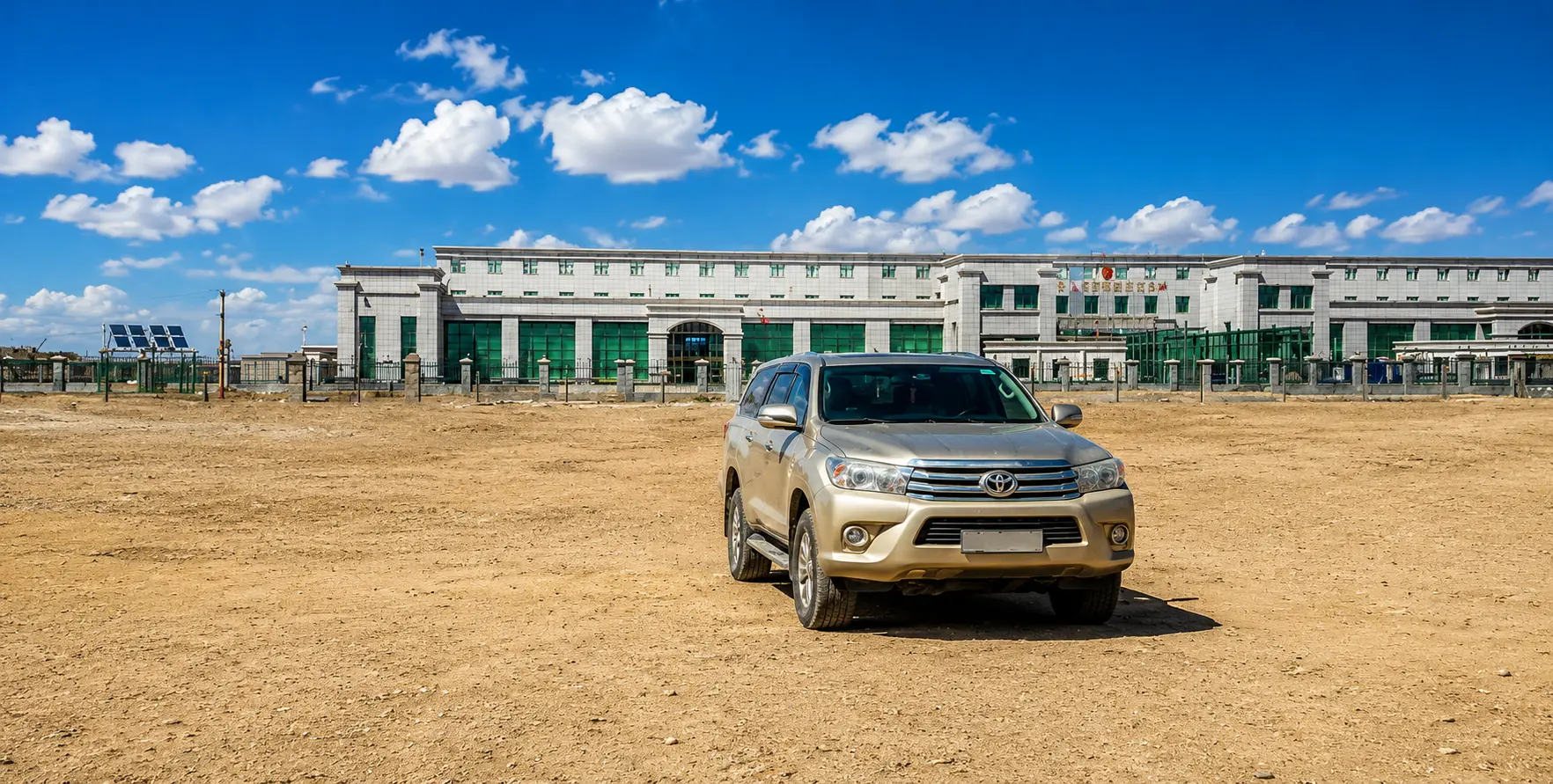
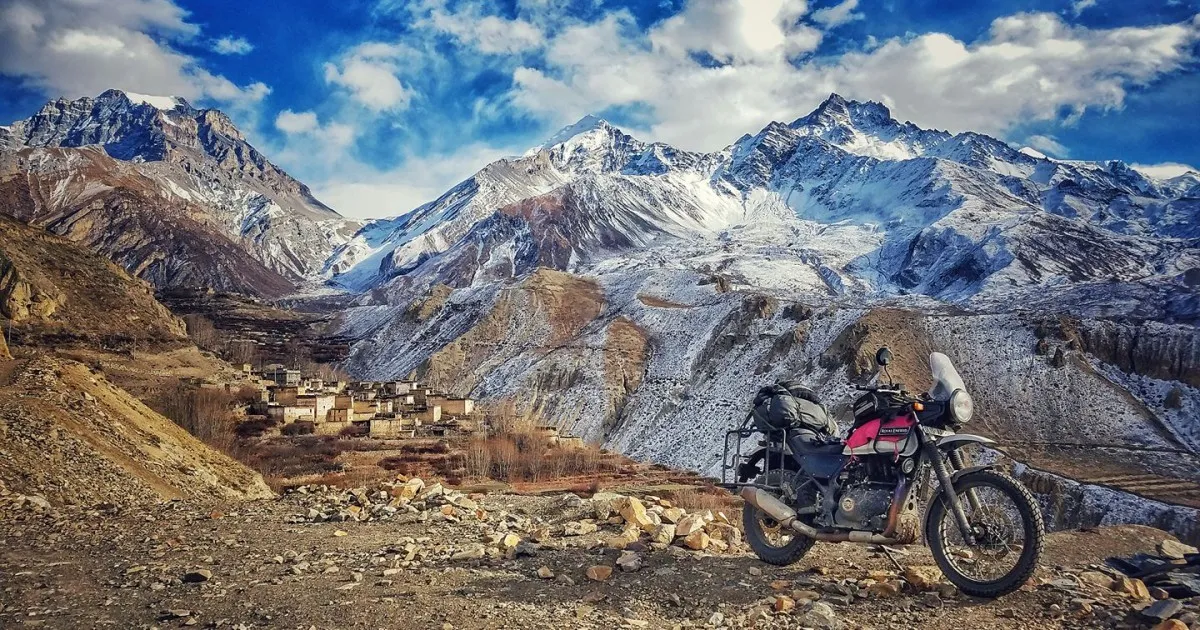
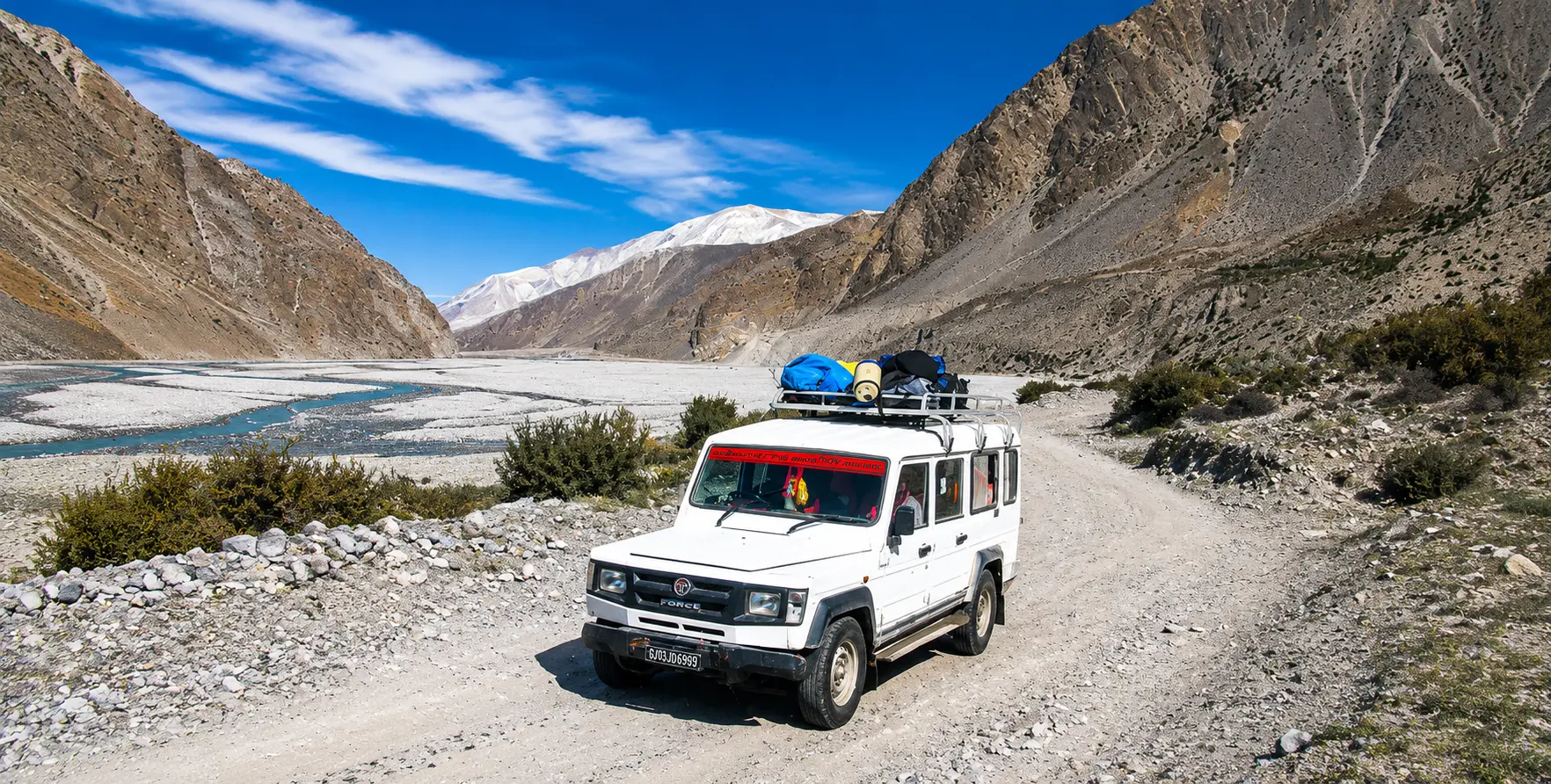
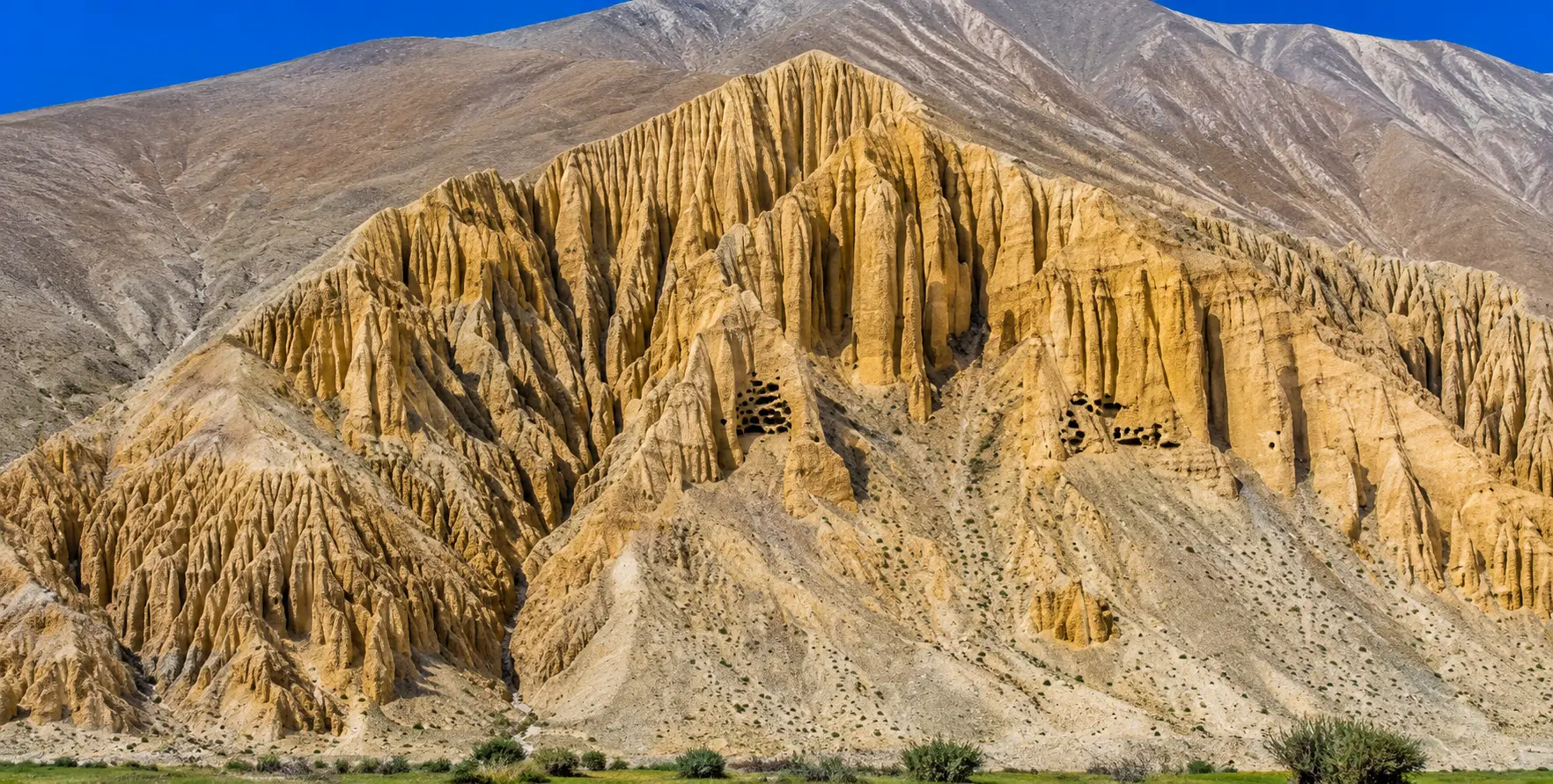
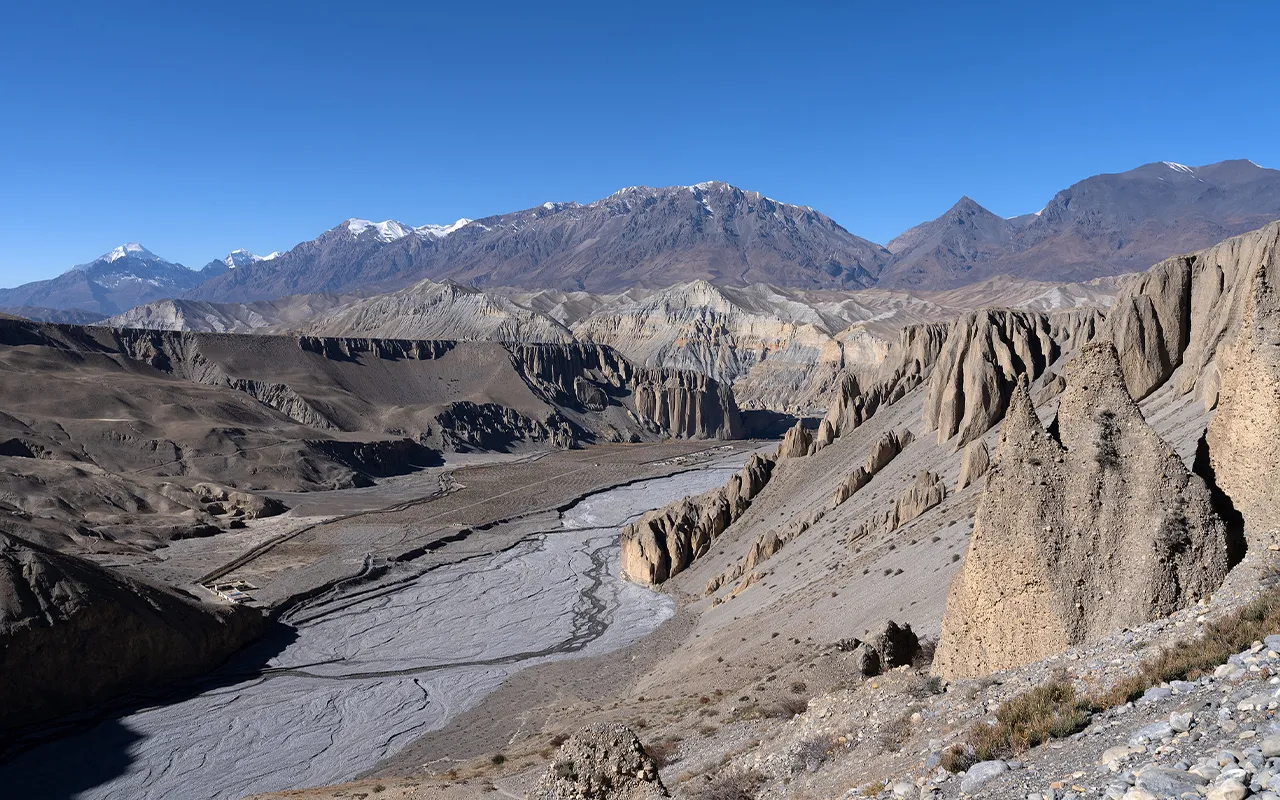
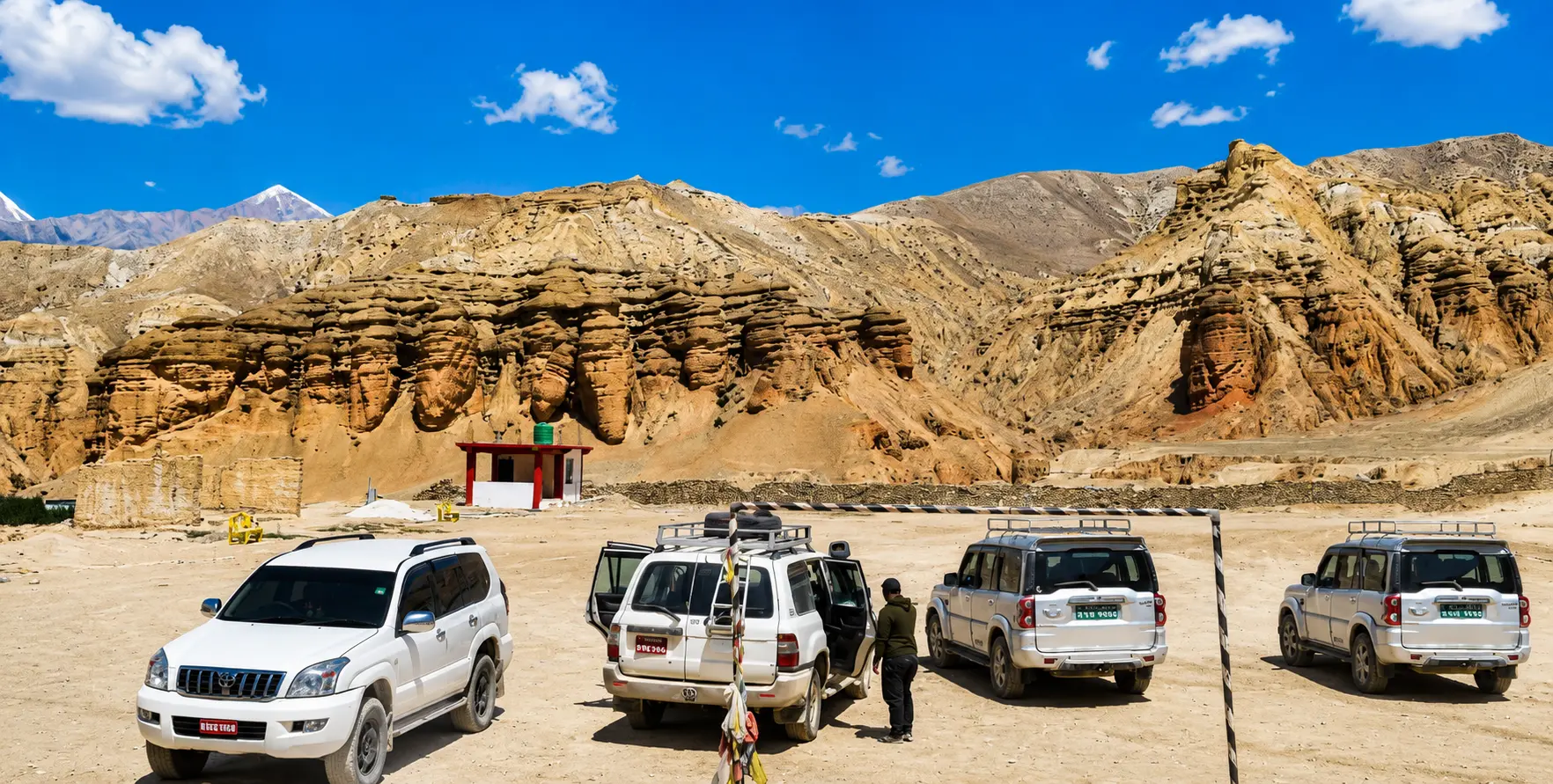
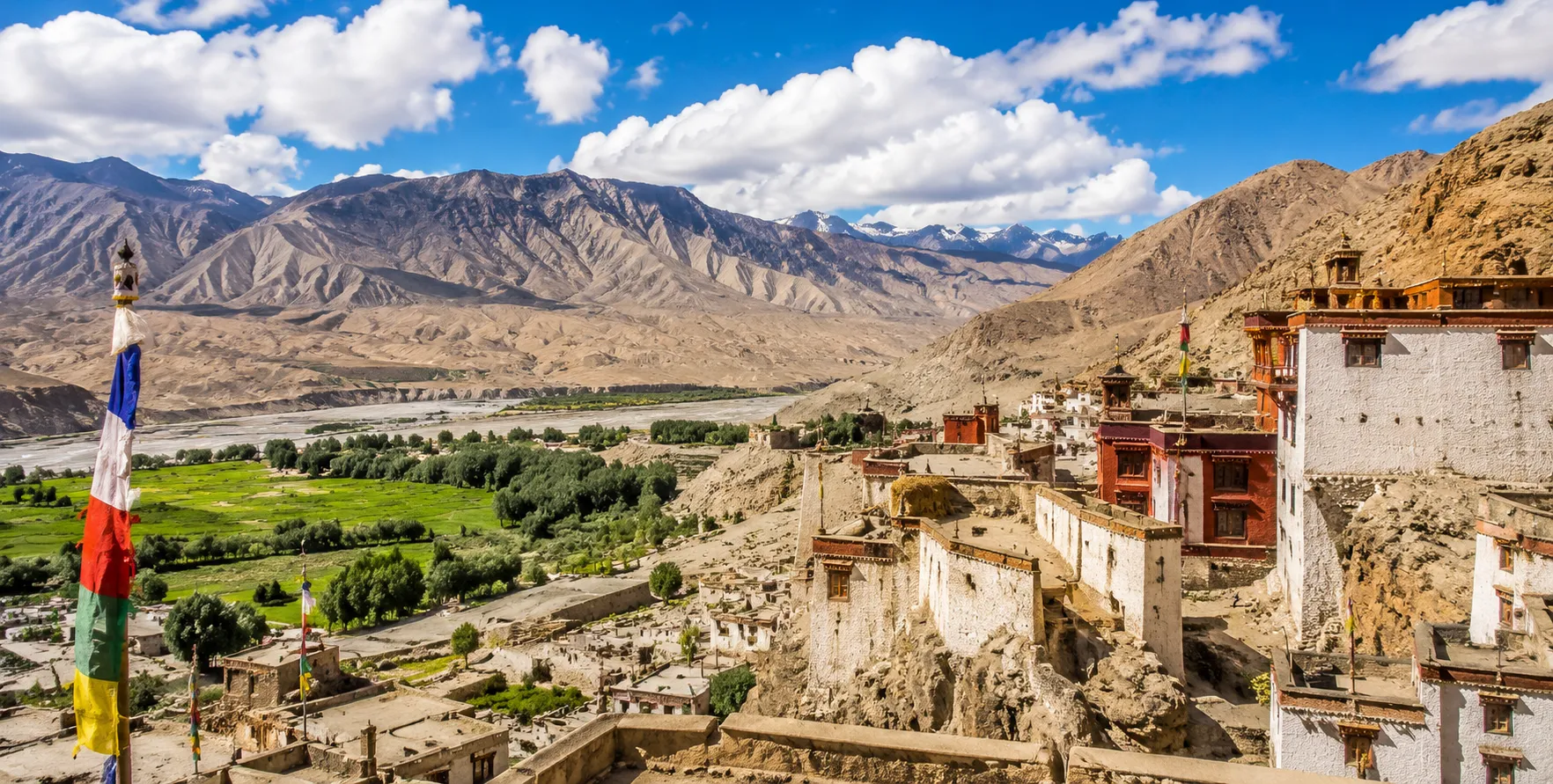
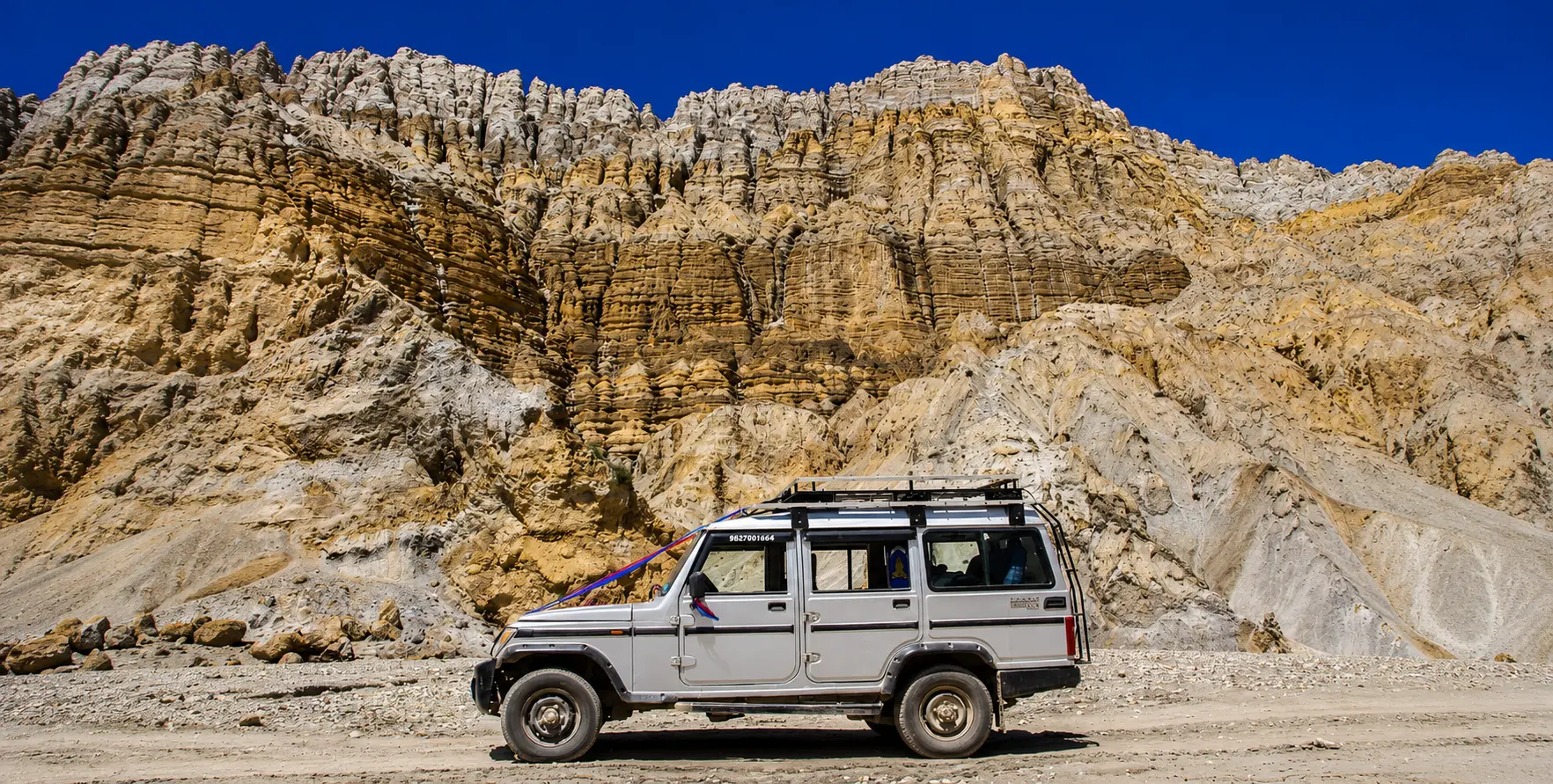
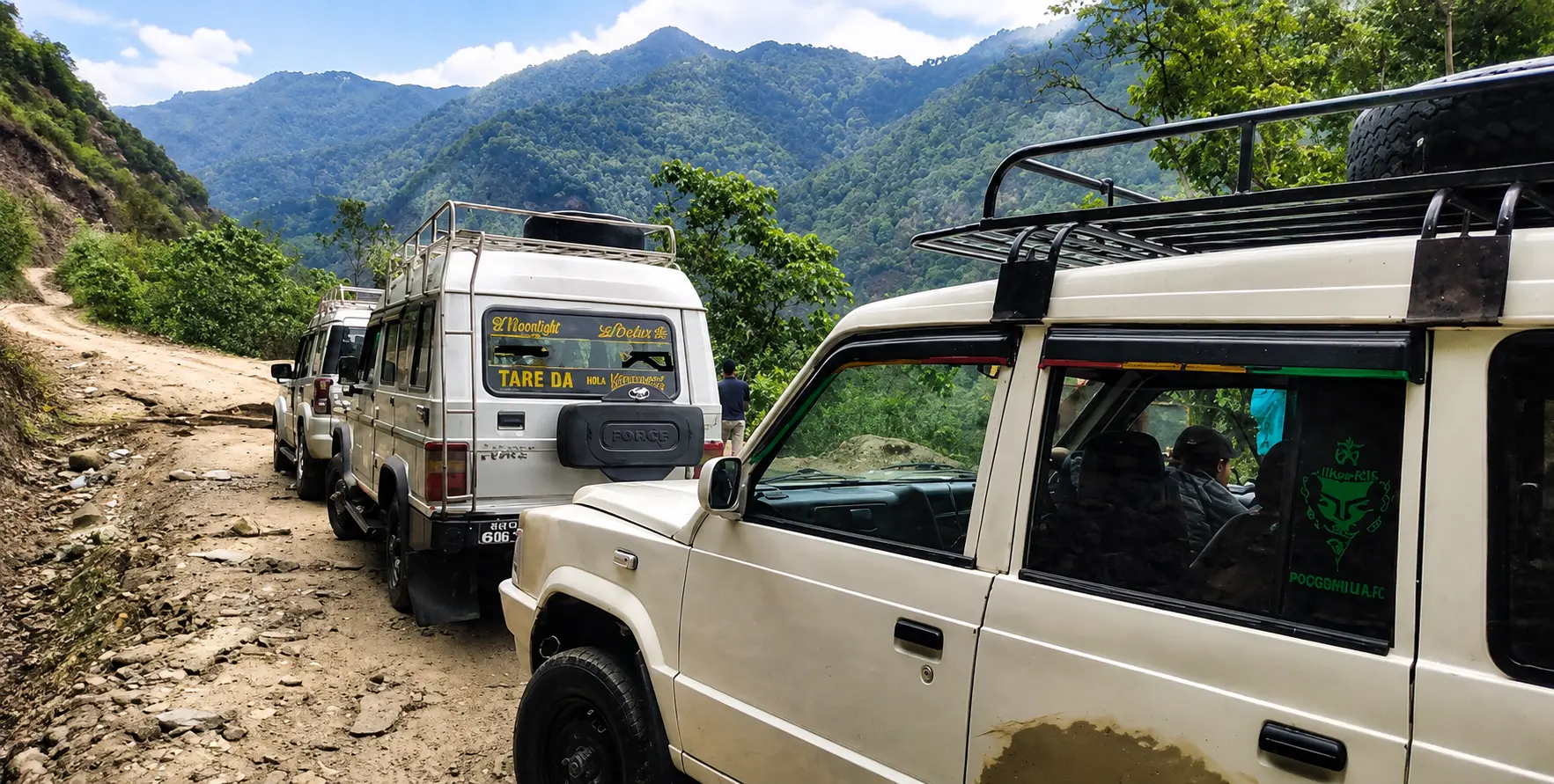
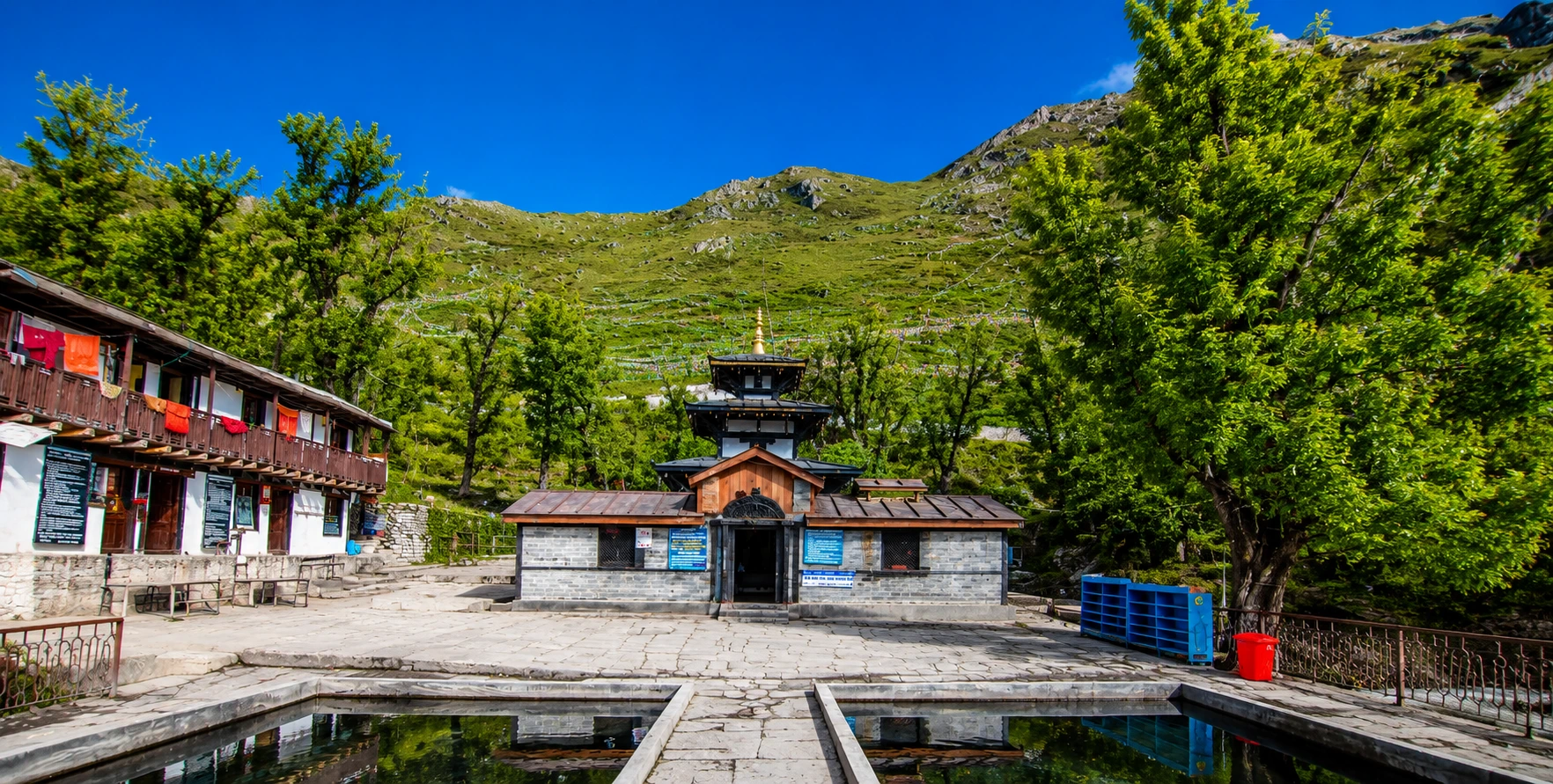
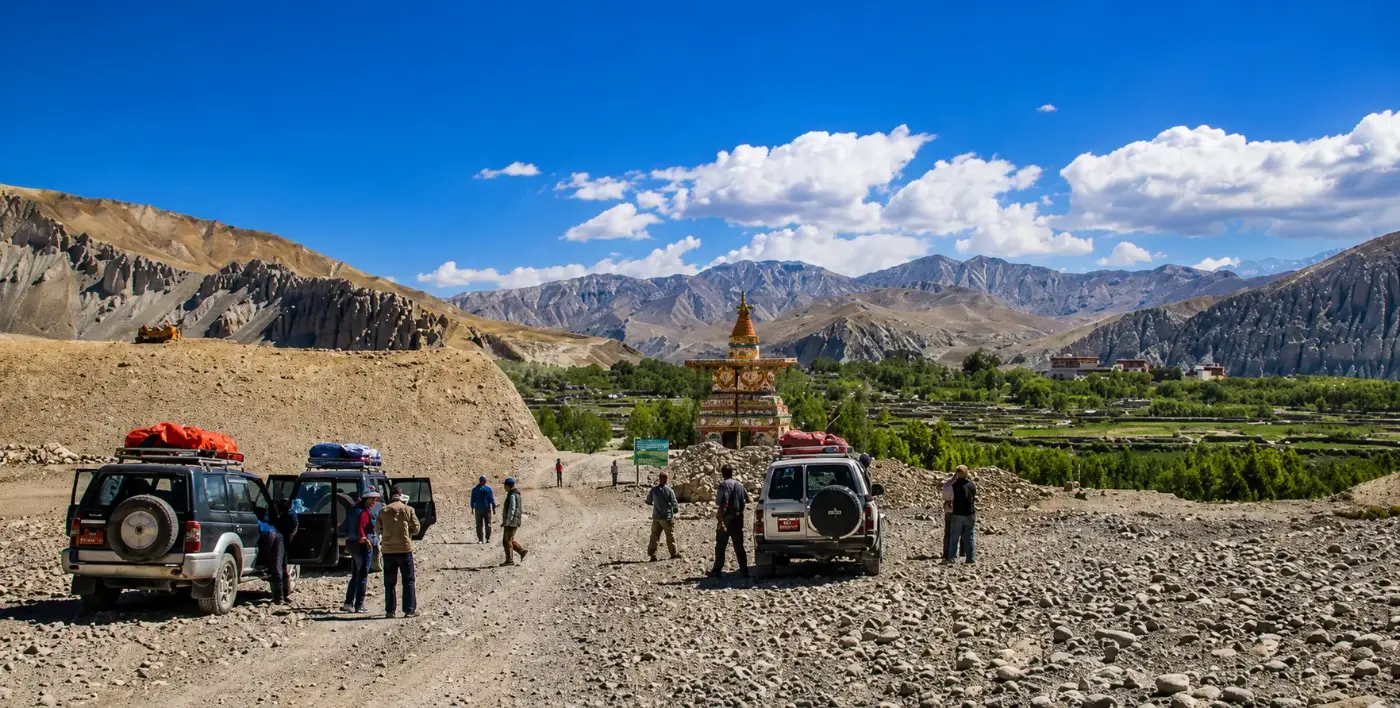
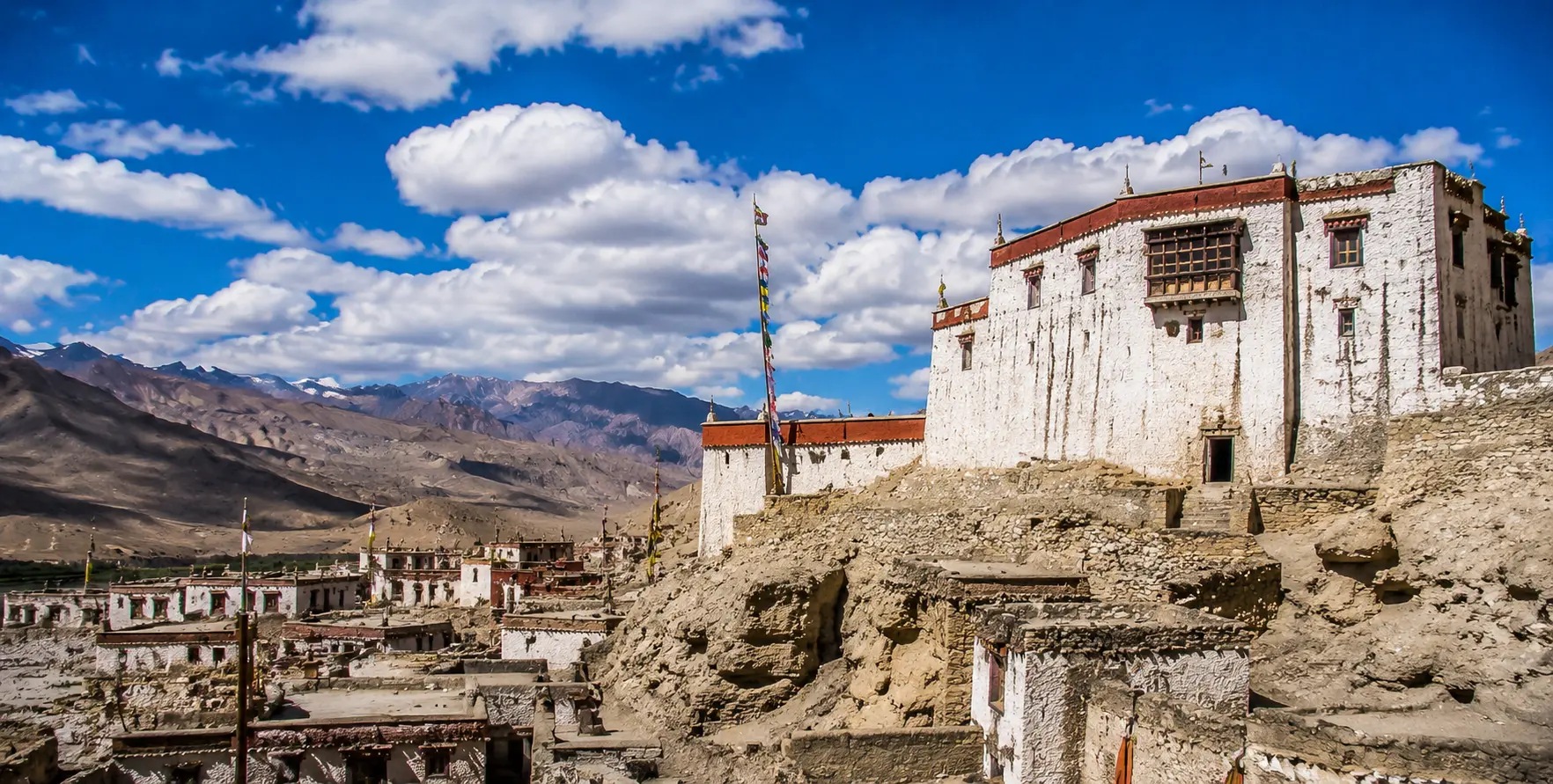
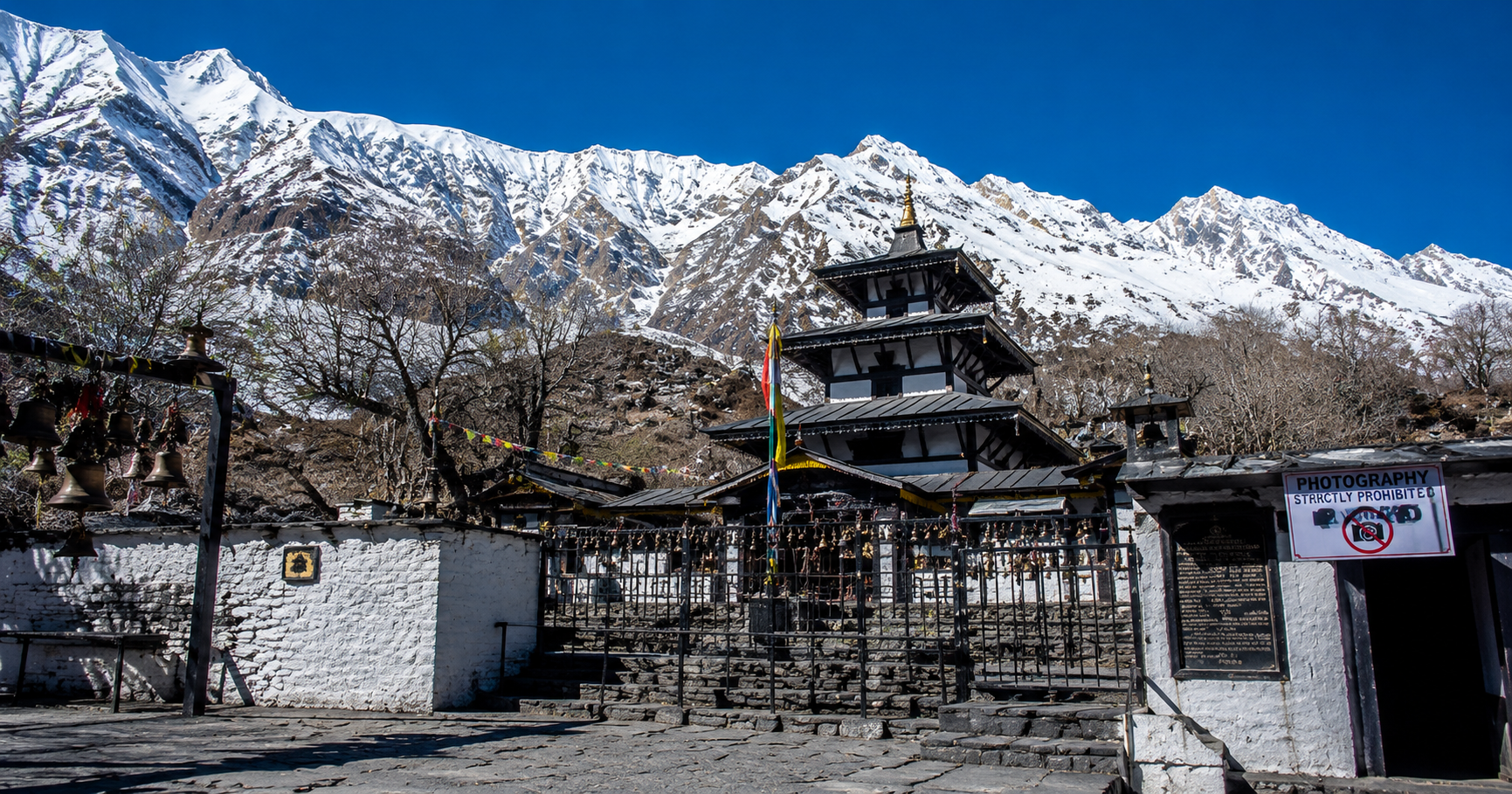
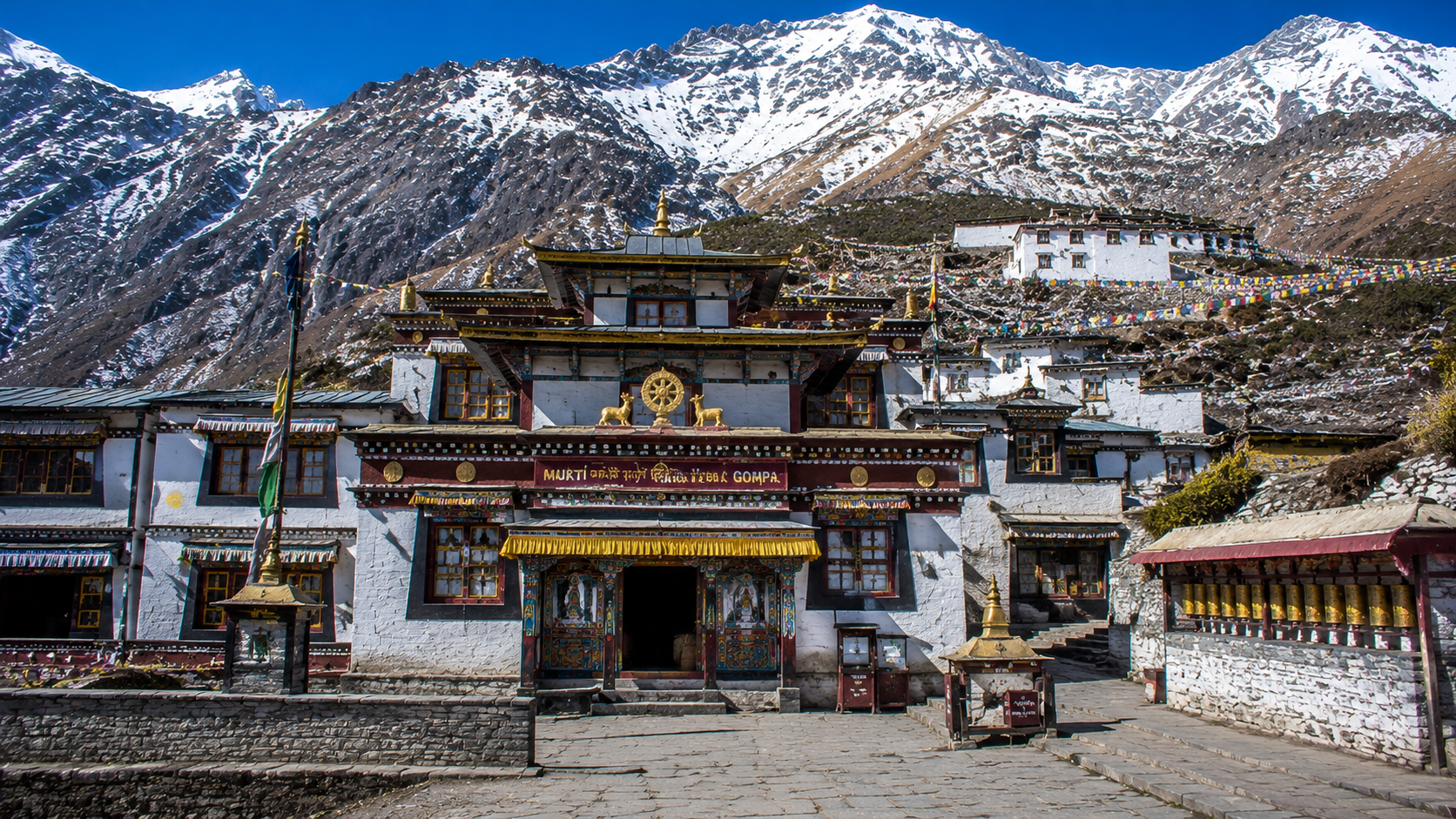
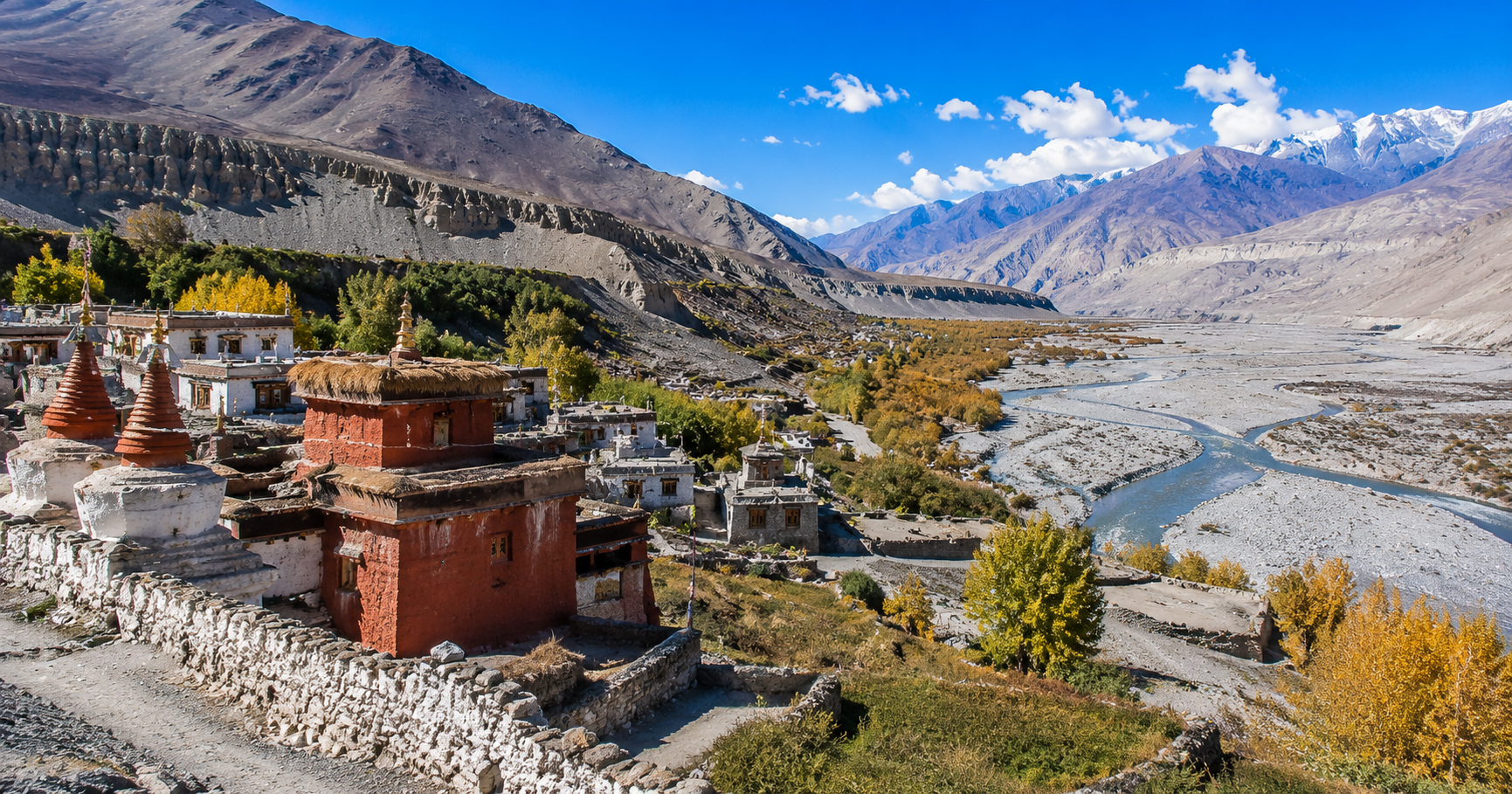
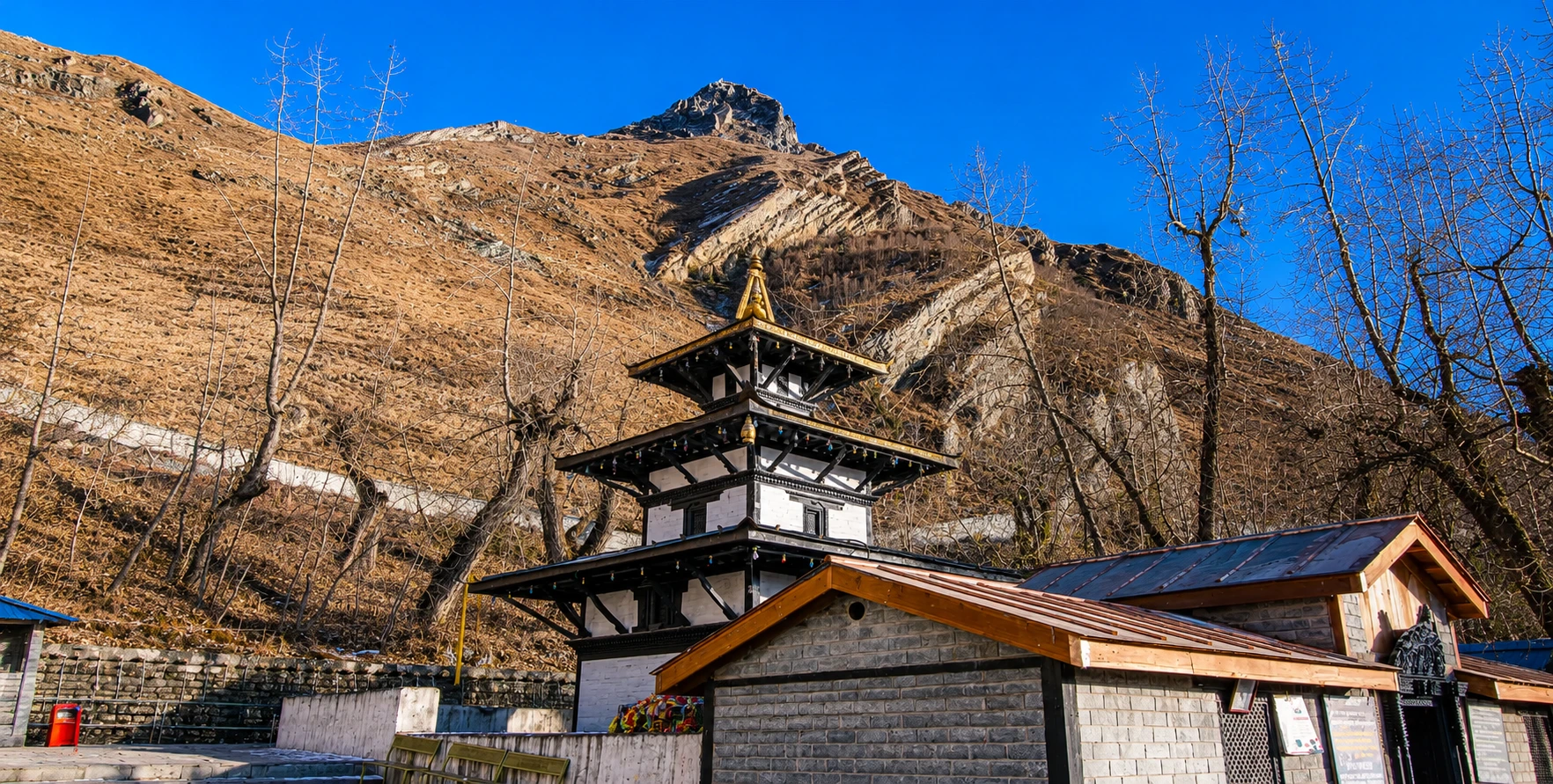
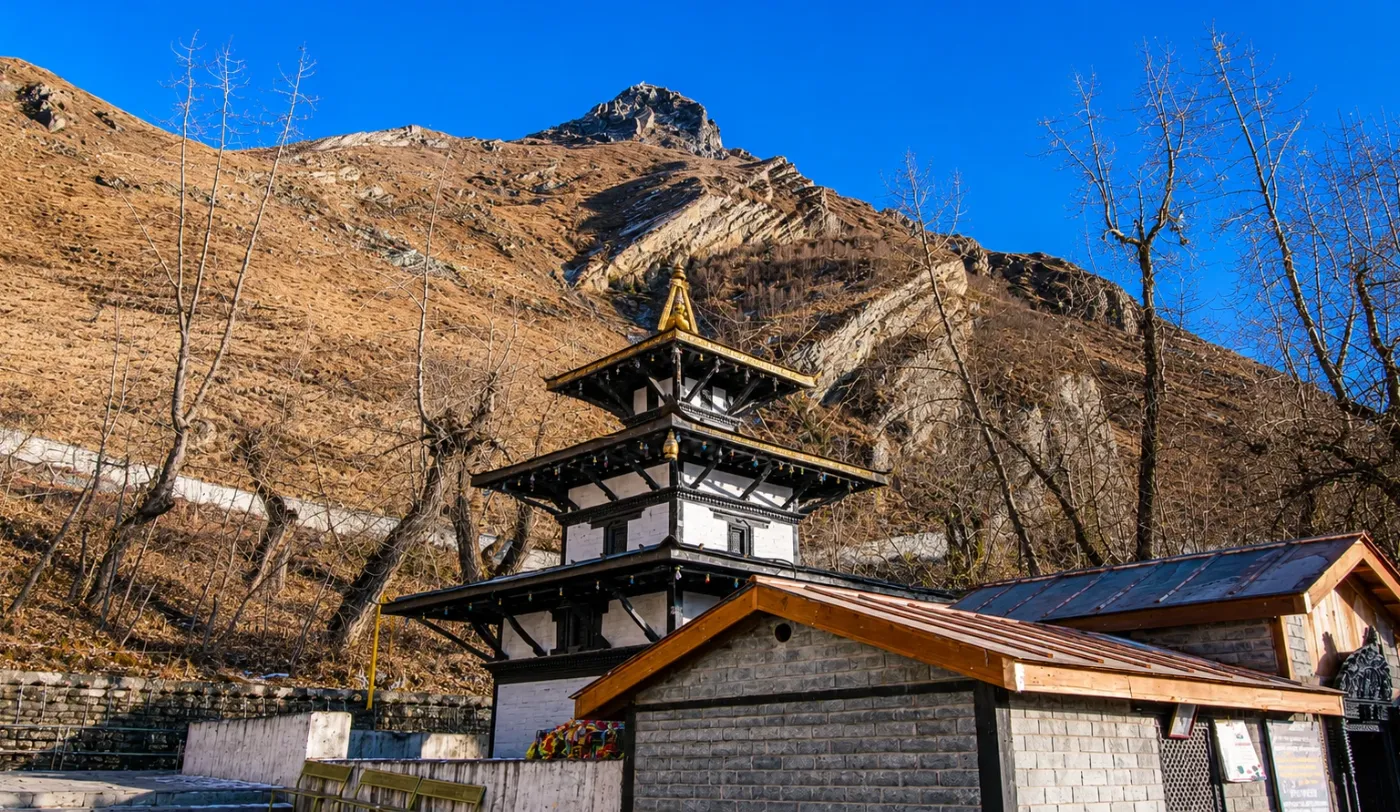
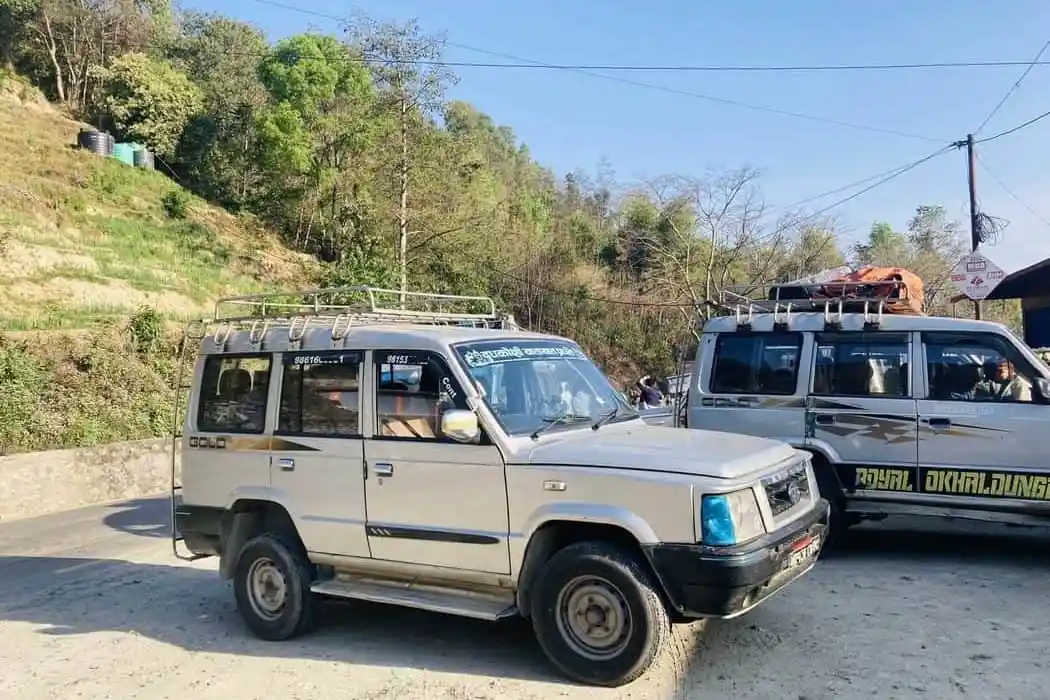
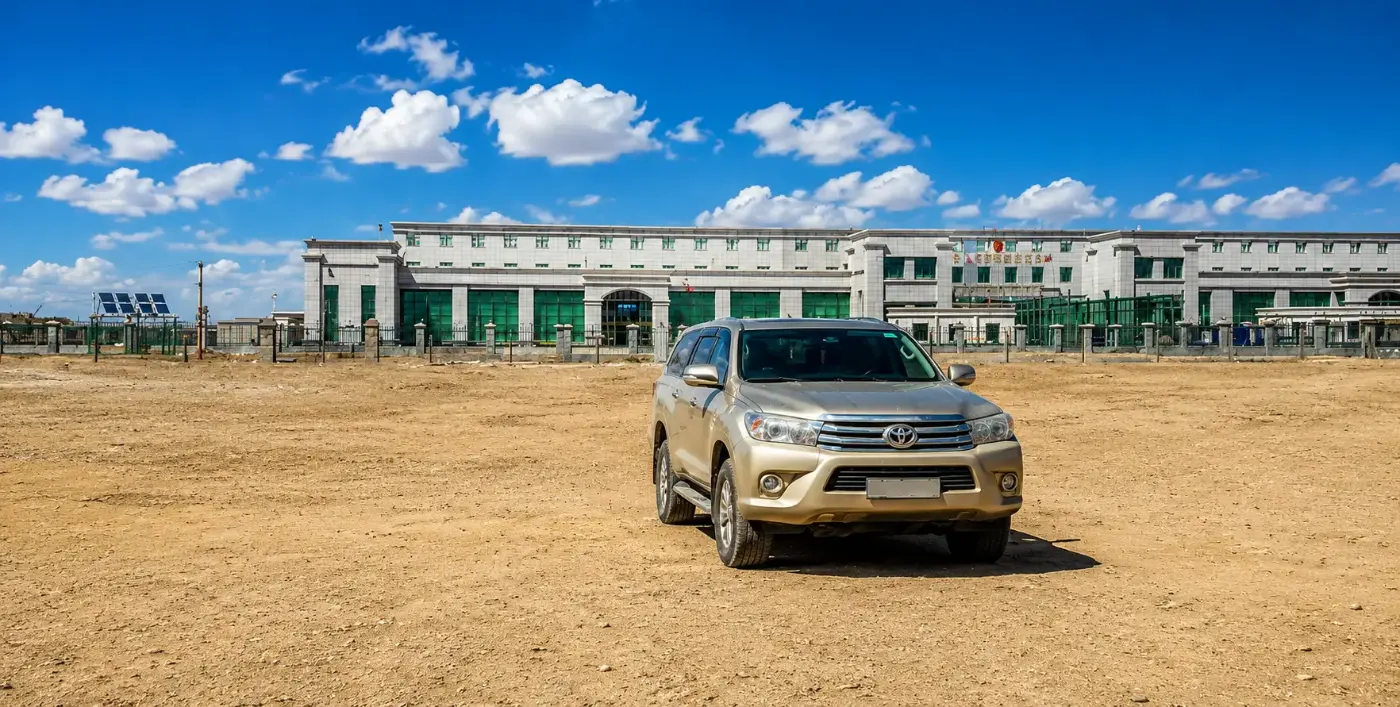
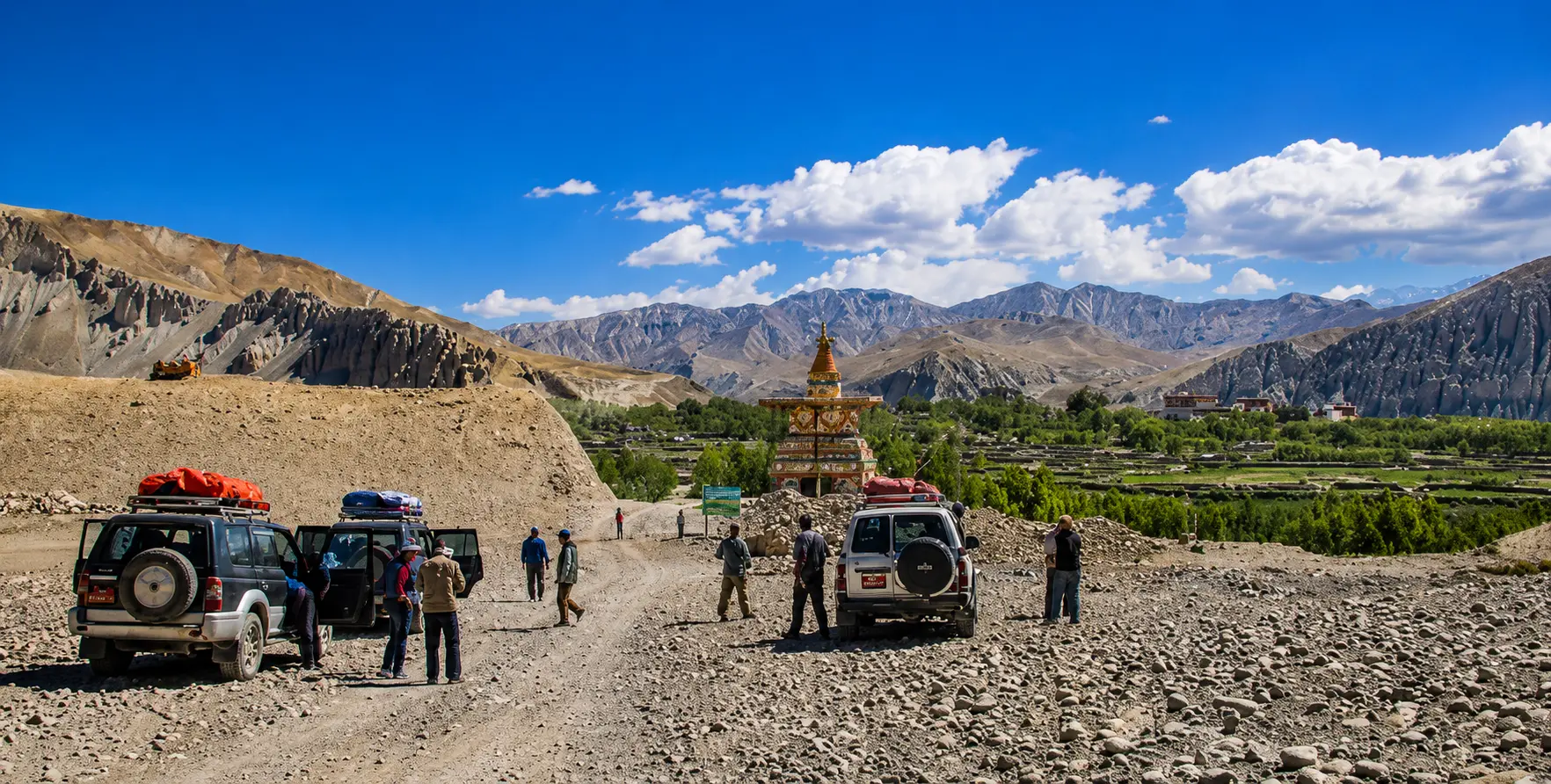
Private 4WD jeep traveling to Korala Tibet Border via Upper Mustang with spectacular Himalayan mountain scenery

Korala Tibet Border Nepal – Nepal’s Gateway to Tibet: The Mustang Jeep Route to the Nepal-China Border

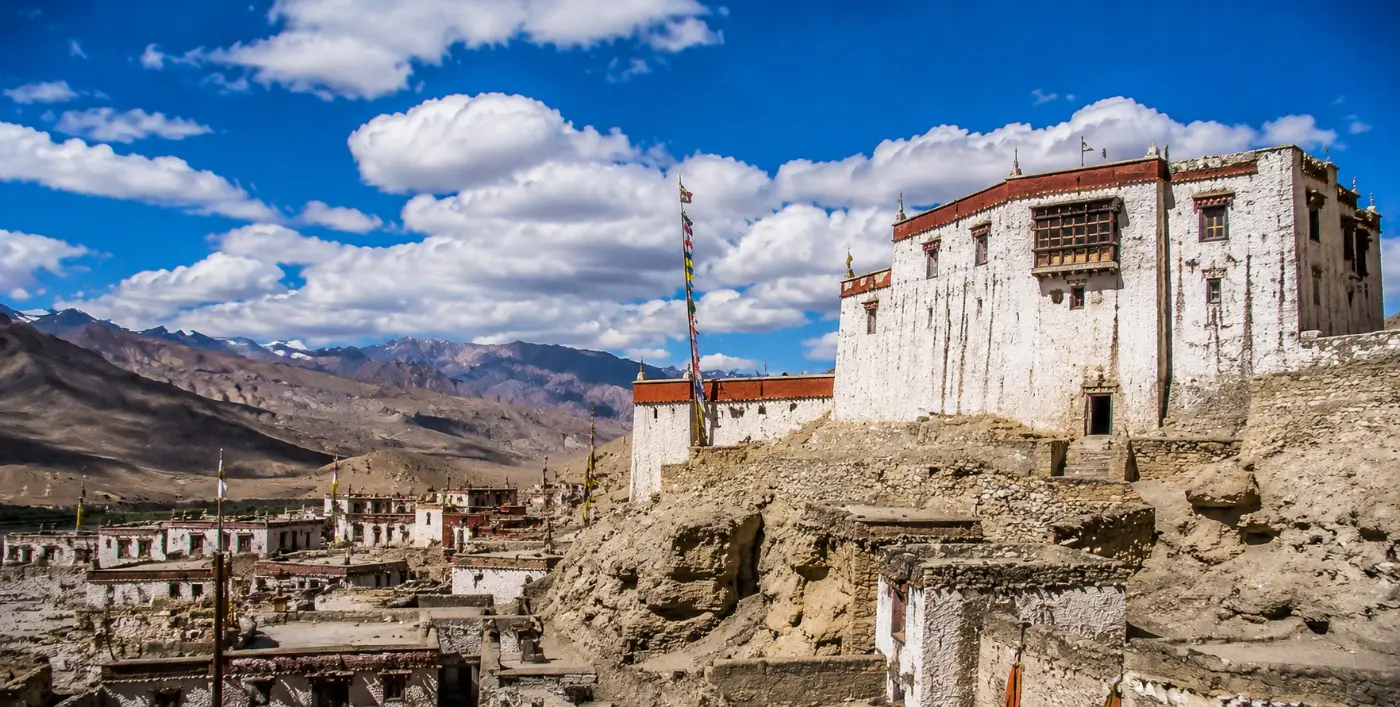
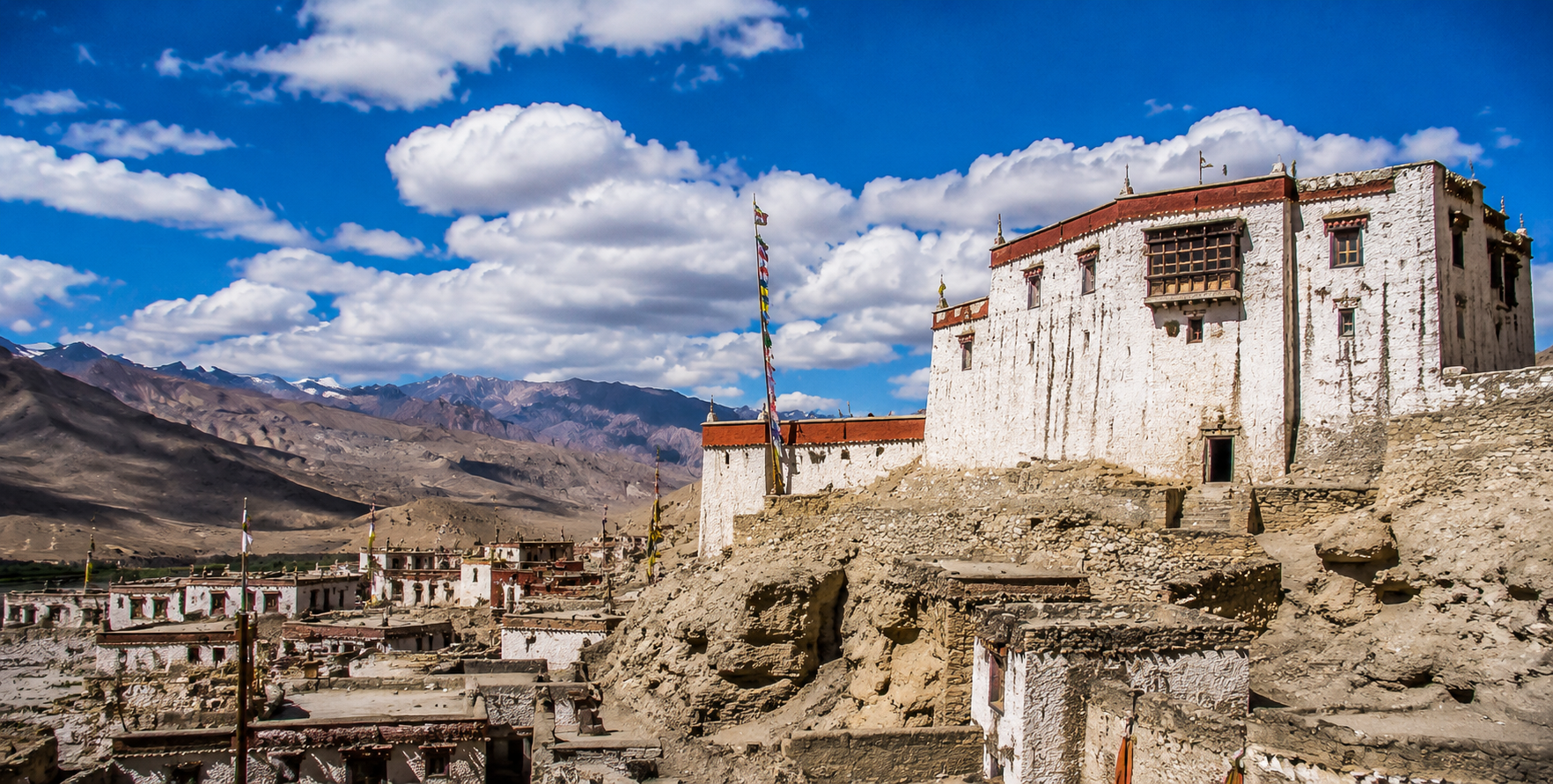
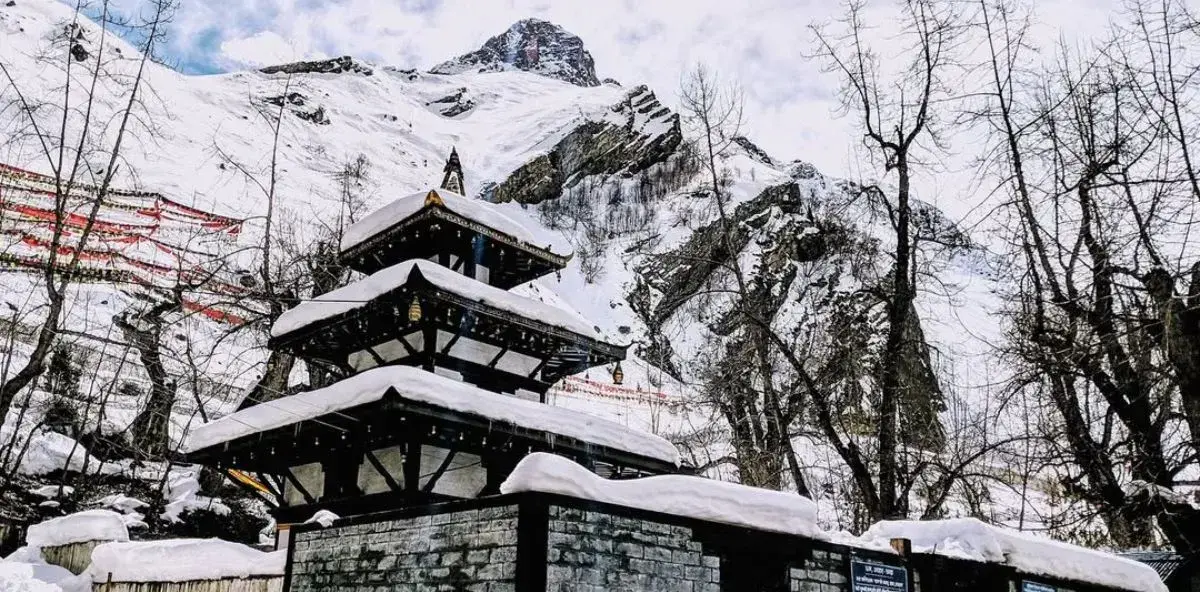
High on the wind-scoured plateau north of Lo Manthang, where the Kali Gandaki River has its source, and the Trans-Himalayan desert finally surrenders to the Tibetan Plateau, lies Korala — a remote mountain pass at 4,610–4,660 meters that holds a unique distinction in the entire Himalayan range: it is the lowest drivable crossing point between the Tibetan Plateau and the Indian subcontinent.

For centuries, this gentle saddle in the world’s highest mountain wall was the primary conduit of the great salt trade between Tibet and Nepal — the route that built the wealth of the Kingdom of Lo and its walled capital, Lo Manthang. Then, in the 1960s, it was sealed—a casualty of Cold War geopolitics, CIA-backed Khampa resistance operations, and the deepening freeze between Nepal’s northern neighbour and the outside world.

For over sixty years, Korala stood as a closed gate on one of Asia’s most sensitive frontiers.

In 2026, that long closure is — for the first time in two generations — coming to an end. The Nechung immigration office became operational in November 2025, and Korala has rapidly transformed from a sealed military frontier into Nepal’s newest and most talked-about Himalayan gateway — recording over 6,000 domestic tourists in a single two-day period and generating more than NPR 200 crore in trade and customs revenue within just 14 days of expanded operations.

For pilgrims, Korala now offers a shorter, more direct, and significantly more affordable overland route to Mount Kailash and Lake Mansarovar than the traditional Kerung (Rasuwagadhi) crossing — and for travellers and photographers, it offers one of the most extraordinary jeep journeys remaining anywhere in Nepal: a drive through the walled medieval kingdom of Lo Manthang to the literal edge of Chinese-controlled Tibet.

Nepal Vehicle Hiring Pvt Ltd provides private 4WD jeep hire for the complete Pokhara/Jomsom to Lo Manthang and Korala border route — Nepal’s most demanding and most rewarding extreme off-road jeep journey. This guide covers Korala’s history, the current 2026 border situation, the full road route, vehicle requirements, permits, the new Kailash Mansarovar pilgrimage connection, and a comprehensive FAQ.

Book your Korala / Upper Mustang jeep: Nepal Vehicle Hiring – Luxury Jeep | All Vehicles | Call/ WhatsApp
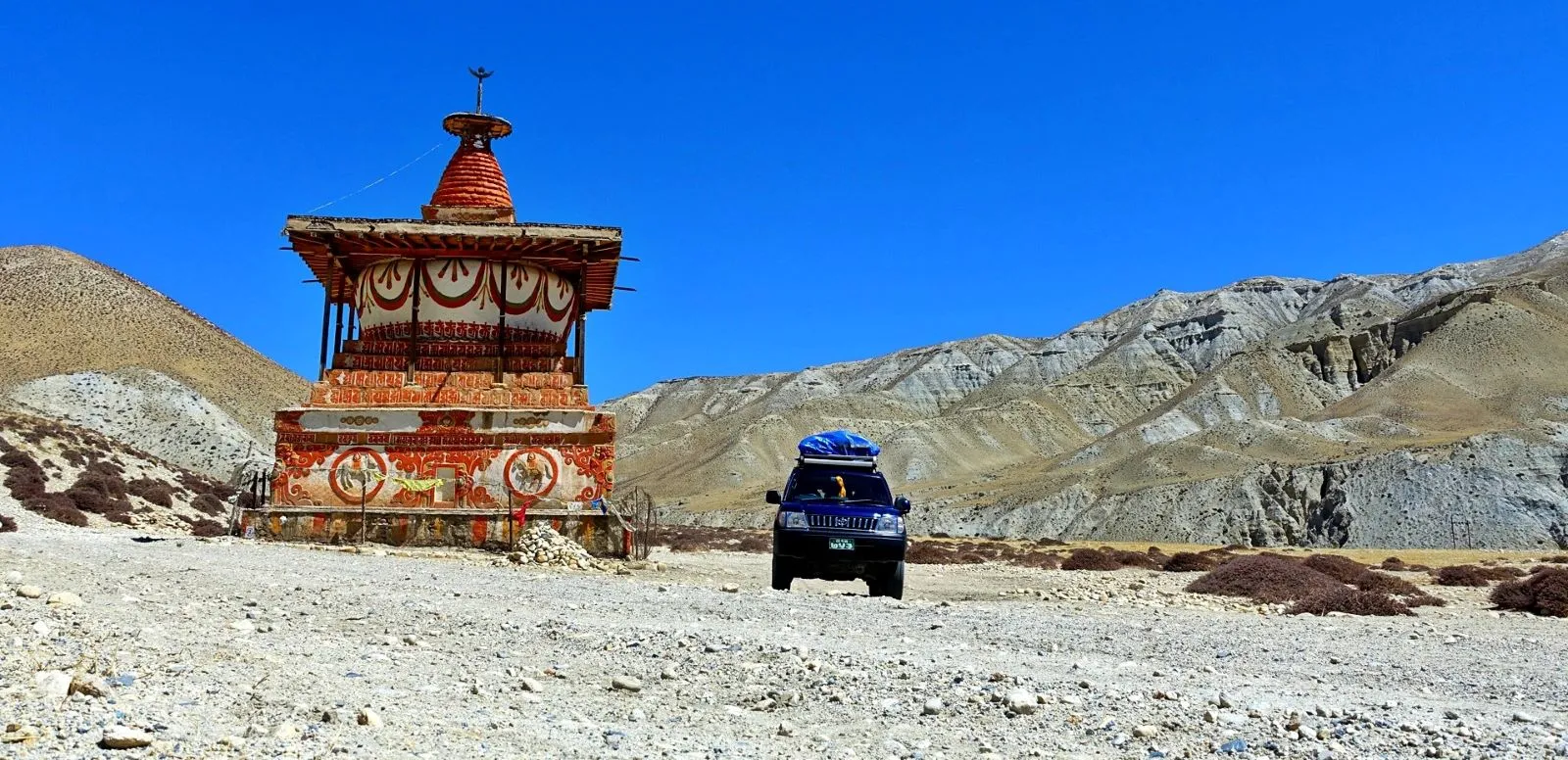
Korala – Nepal’s Gateway to Tibet: The Mustang Jeep Route to the Nepal-China Border

Korala Tibet Border Nepal – Complete Overview

LocationKorala Pass, Lo Manthang Rural Municipality, Upper Mustang, Gandaki Province, Nepal
Altitude4,610–4,660 m – the lowest drivable pass across the main Himalayan range
Border WithTibet Autonomous Region, China (Nechung–Liji customs point)
Status (2026)Active vehicle border crossing – reopened in 2023; immigration office at Nechung operational since Nov 2025
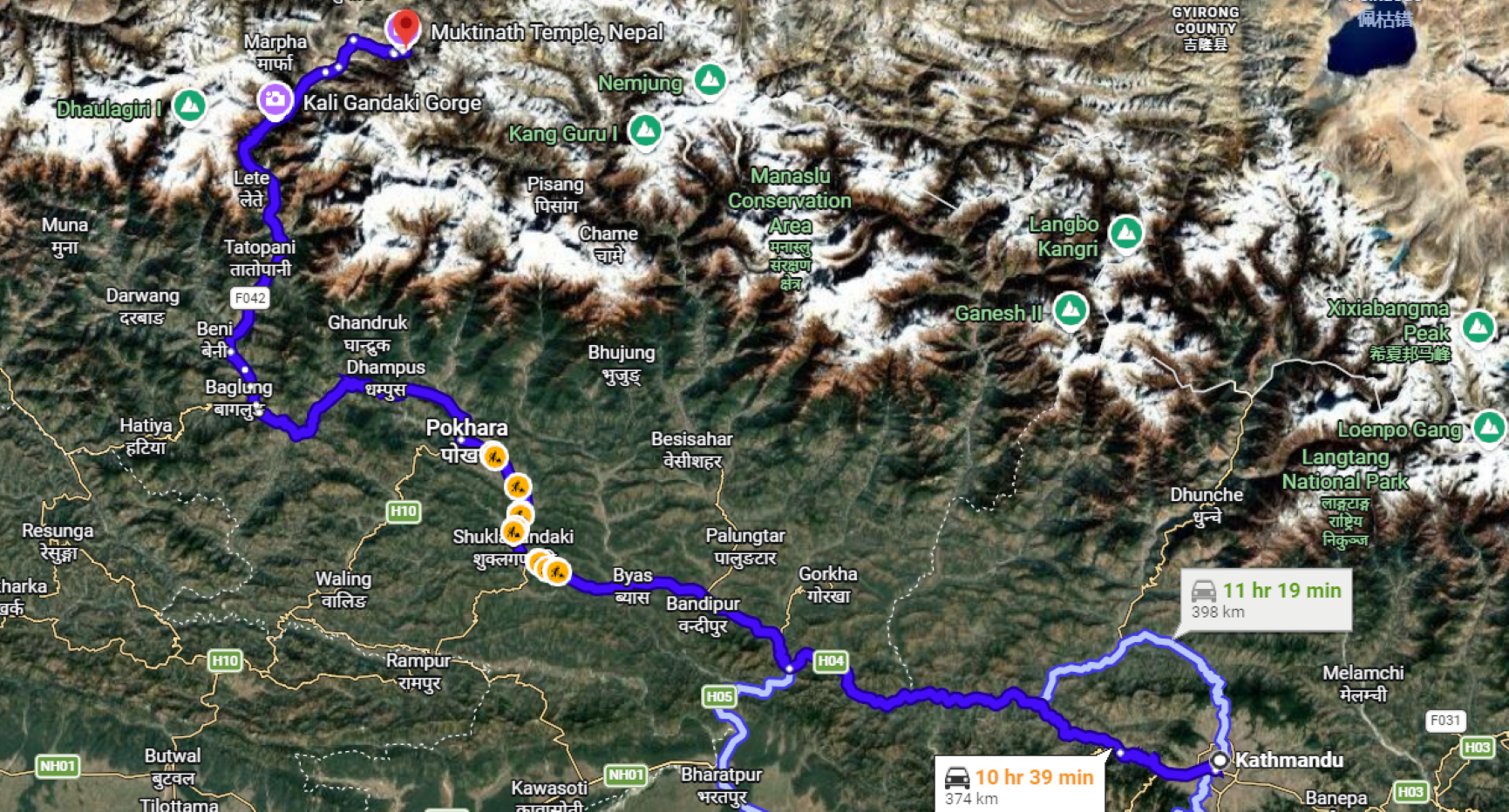
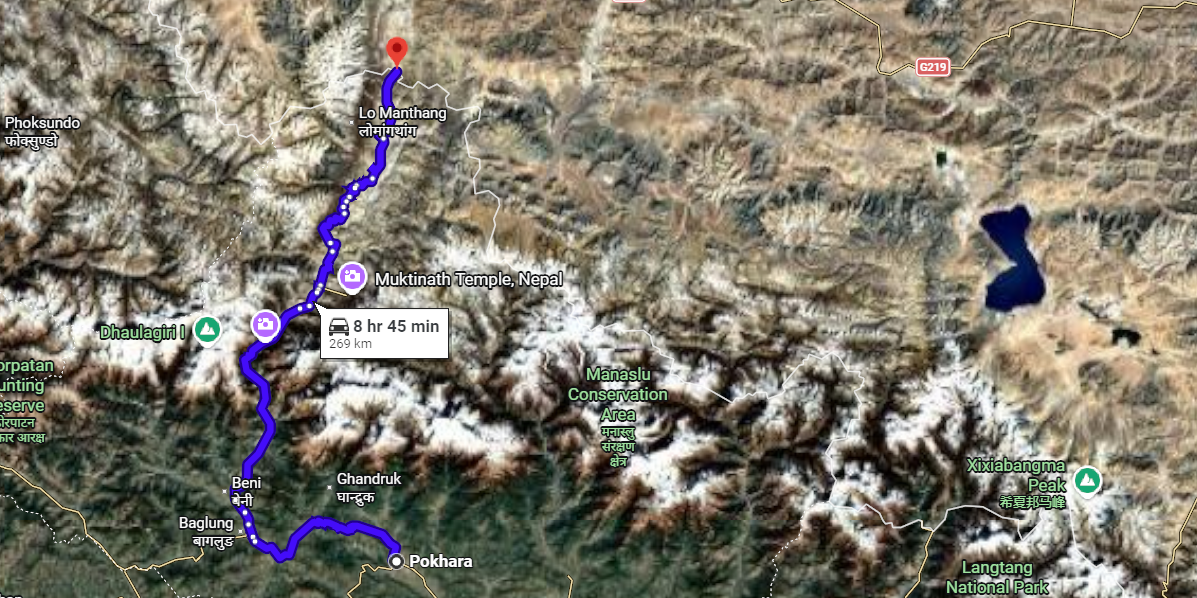
Route from PokharaPokhara → Jomsom (flight or road) → Lo Manthang (96 km jeep track) → Korala (~30 min further)
Road Distance (Pokhara–Korala)Approx. 400 km via Beni, Jomsom, Kagbeni, Lo Manthang
Vehicle Required4WD MANDATORY – Toyota Land Cruiser strongly recommended above Kagbeni
Permits RequiredRestricted Area Permit (RAP) USD 50/day + ACAP ~USD 30 + TIMS USD 20 + licensed guide mandatory
Why It MattersNew, shorter, more affordable overland route to Mount Kailash & Lake Mansarovar via Tibet
Best SeasonJune–September (rain-shadow desert, dry even in monsoon) and October–November
Crossing StatusOpen to Nepali/Chinese/3rd-country pilgrims with a Chinese visa; NOT open for casual foreign tourists crossing the border
ContactWhatsApp | vehiclehiringnepal.com

Private 4WD jeep traveling to Korala Tibet Border via Upper Mustang with spectacular Himalayan mountain scenery

Important – Understand What Korala Currently Is and Is Not

Before any practical planning, it is essential to understand the precise current status of the Korala crossing in 2026, since this is a rapidly evolving and highly sensitive international border: 

  • Korala is an officially active vehicle border crossing between Nepal and the Tibet Autonomous Region of China, with functioning customs facilities at Nechung (Nepal side) and Lektse (Chinese side).
  • Crossing INTO Tibet requires a valid Chinese visa and registration with the Nechung immigration office — this is not a casual walk-up tourist border crossing. Chinese and foreign nationals entering NEPAL through Korala receive a 150-day on-arrival visa, but the reverse direction (from Tibet into Nepal) requires advance Chinese visa arrangements.
  • The pilgrimage and trade use case is currently the primary driver of Korala’s reopening — specifically, supporting the Kailash Mansarovar Yatra for Nepali, Indian, and third-country pilgrims, as well as cross-border trade in consumer goods, pashmina, agricultural products, and yarsagumba.
  • For most travellers — independent tourists, photographers, and trekkers — the realistic, fully achievable experience is the jeep journey to the Korala border post itself, standing at the fenced boundary line, viewing the Tibetan plateau and the Chinese military outpost in the distance, and returning to Lo Manthang. This is now a well-established and increasingly popular day excursion included in many Upper Mustang jeep tour itineraries.
  • Always verify the current border status with your trekking agency and Nepal Vehicle Hiring before finalising any itinerary — border-crossing regulations for this sensitive frontier can change with little notice, and Nepal Vehicle Hiring’s operations team monitors developments closely.
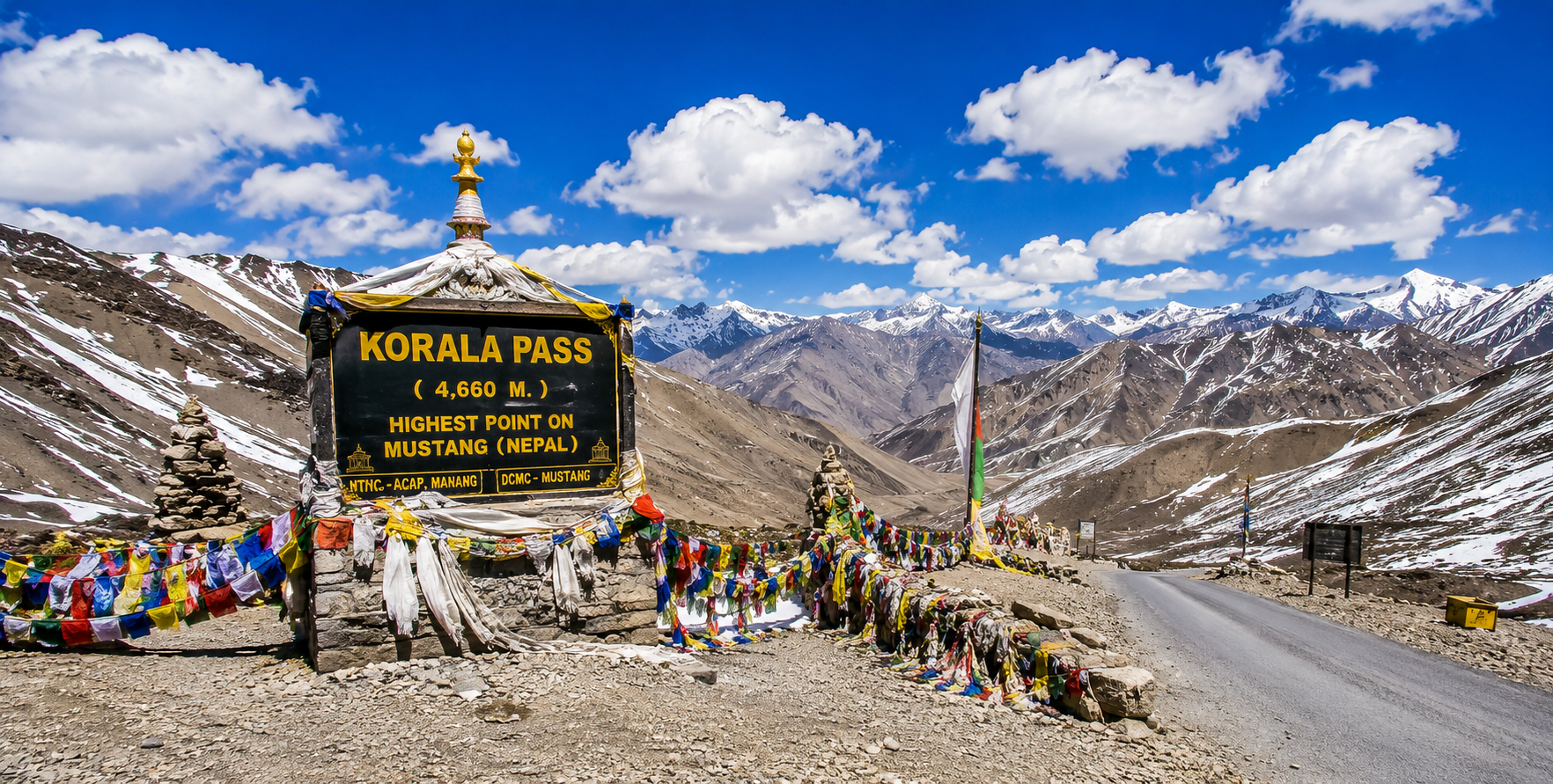
Private 4WD jeep traveling to Korala Tibet Border via Upper Mustang with spectacular Himalayan mountain scenery

The History of Korala – From Salt Road to Sealed Frontier to Reopening

PeriodKey Development
Ancient eraKorala (4,660 m) was used for centuries as the main salt-trade route between Tibet and the Kingdom of Lo; it was the foundation of Lo Manthang’s wealth and culture
1959–1960sTibetan Khampa guerrilla fighters use Mustang as a CIA-supported base for raids into Tibet; border tension rises sharply
1961Nepal and China formally sign a border agreement; the international boundary is fixed slightly north of the traditional Korala marker stupa
1960s–1990sBorder sealed by China; salt trade collapses; Mustang’s economy and Lo Manthang go into prolonged decline
1992Upper Mustang formally opens to foreign trekkers for the first time as a Restricted Area
2012Nepal and China agree to open 6 additional official border crossings, including Korala
2016Nepal government announces that Korala is expected to become the third most important Nepal-China crossing
2022–2023Chinese-side border infrastructure (Lektse port) completed; Nepali-side road and Nechung port developed; crossing formally opens for cargo.
Nov 2025Nechung immigration office becomes operational – first Nepali civilian delegation crosses into Tibet via Korala with Chinese visit visas
2026Korala opens as a pilgrimage gateway to Mount Kailash & Lake Mansarovar; over 6,000 domestic tourists are recorded in a single 2-day period; trade revenue exceeds NPR 200 crore in 14 days.

Private 4WD jeep traveling to Korala Tibet Border via Upper Mustang with spectacular Himalayan mountain scenery

The Ancient Salt Trade – The Foundation of Mustang’s Civilisation

For much of a millennium, Korala Pass was the most important commercial artery connecting the Tibetan Plateau with the fertile lowlands of Nepal and India. Its unique geographical significance—at only 4,660 m, it is the lowest pass crossing the main Himalayan range anywhere along its 2,400 km length—made it accessible to heavily laden mule and yak caravans in a way the higher, more treacherous passes elsewhere in the Himalaya were not.

Through Korala flowed Tibetan rock salt, harvested from the high-altitude lakes of the Changthang plateau, traded for grain, textiles, and manufactured goods from the Kali Gandaki valley and beyond. The Thakali people of the middle Kali Gandaki valley became the great commercial intermediaries of this trade, accumulating substantial wealth as middlemen — while further north, the Kingdom of Lo Manthang, founded in 1380 CE by Ame Pal, built its entire walled capital city, its monasteries, and its semi-autonomous political identity on the revenues and cultural exchange this trade route generated.

Cold War Closure – The CIA, the Khampas, and the Sealed Border

The pass’s long and largely peaceful commercial history was abruptly and dramatically interrupted in the late 1950s and 1960s, when Tibetan Khampa guerrilla fighters — armed and supported by the CIA — used the remote, sparsely governed terrain of Upper Mustang as a base for cross-border raids into Tibet against the People’s Liberation Army.

A tragic border incident — in which a Nepalese officer was mistakenly killed by Chinese border guards who believed him to be a Tibetan rebel — accelerated the crisis. In 1961, Nepal and China formally signed a border agreement fixing the international boundary slightly north of the traditional Korala marker, a stone stupa that had for centuries marked the unofficial frontier.

After the dramatic flight of the 17th Karmapa, Ogyen Trinley Dorje, across this same border area in December 1999, China built a substantial border fence—a visible, physical symbol of how completely the once-thriving trade route had been severed.

The economic consequences for Mustang were severe and long-lasting. With its primary commercial lifeline cut, the region — already remote and difficult to access from the Nepali side — entered decades of economic decline and depopulation, as younger generations of Loba (the people of Lo) migrated to Kathmandu, Pokhara, and abroad in search of livelihoods that the isolated, trade-starved valley could no longer provide.

The only remaining echo of the great salt trade was a modest twice-yearly cross-border trade fair, permitted under careful supervision, where traders from both sides could meet for a few days at the sealed border—a fragile and symbolic remnant of what had once been a flourishing commercial corridor.

The Reopening – Infrastructure, Diplomacy, and  Breakthrough

The modern reopening of Korala has been a gradual, carefully managed diplomatic and infrastructure process spanning more than a decade. In 2012, Nepal and China agreed in principle to open six additional official border crossings, with Korala identified as one of the most strategically important. By 2016, the Nepali government was publicly projecting Korala as set to become the third most significant Nepal-China border crossing, after Rasuwagadhi-Kerung and Tatopani-Khasa.

Physical construction proceeded steadily through the following years: the Nepali government built the motorable road from Jomsom through Lo Manthang to the Korala border itself, while on the Chinese side, port facilities at Lektse in Shigatse Prefecture were completed, alongside a parallel new immigration and customs facility at Nechung, on the Nepali side in Chhoser, Lomanthang Rural Municipality.

The crossing formally reopened for cargo and limited cross-border trade in 2023 — but the truly transformative breakthrough came in November 2025, when the Nechung immigration office finally became fully operational, allowing — for the first time since the 1960s — Nepali citizens with valid Chinese visit visas to cross into Tibet through Korala formally.

A historic first delegation of 13 local representatives, led by Lomanthang Rural Municipality Chairperson Tashi Nhurbu Gurung, made the symbolic crossing — a moment that local leaders, including Mustang Chamber of Commerce President Raju Lalchan, described as “a big achievement for the entire Gandaki Province.”
Private 4WD jeep traveling to Korala Tibet Border via Upper Mustang with spectacular Himalayan mountain scenery

The Jeep Route to Korala – Pokhara / Jomsom to Lo Manthang and Beyond

SegmentDistanceTimeRoad & Highlights
Pokhara to Jomsom165–200 km8–9 hrs (road) / 25 min (flight)Beni, Tatopani, Kali Gandaki gorge – the world’s deepest river gorge between Annapurna and Dhaulagiri
Jomsom to Kagbeni12 km30–45 minLast ACAP checkpoint before Upper Mustang Restricted Area; Kali Gandaki riverbed track
Kagbeni to Charang50 km3–4 hrsRAP checkpoint at Kagbeni; trans-Himalayan high desert; red cliffs of Dhakmar; Ghami village
Charang to Lo Manthang20 km1.5–2 hrsWalled medieval city (3,810 m); 600-year-old Kingdom of Lo capital; royal palace; ancient monasteries
Lo Manthang to Korala24–30 km45 min – 1 hrFinal off-road jeep track; trans-Himalayan desert plateau; PILLAR 24 Nepal-China border marker

Pokhara to Jomsom – Entering the Trans-Himalayan World

The journey to Korala begins with the now-classic Pokhara to Jomsom route — either a dramatic 25-minute mountain flight past the flanks of the Annapurna and Dhaulagiri massifs, or an equally spectacular 8–9 hour jeep drive via Beni and the Kali Gandaki gorge — widely considered the deepest river gorge on Earth, with the Kali Gandaki flowing in the shadow of two 8,000-metre peaks (Annapurna I and Dhaulagiri I) standing on either bank. Nepal Vehicle Hiring operates this route regularly as part of our broader Muktinath and Upper Mustang jeep services — see our Pokhara Airport to Muktinath Jeep Rental guide for full route details. blog.
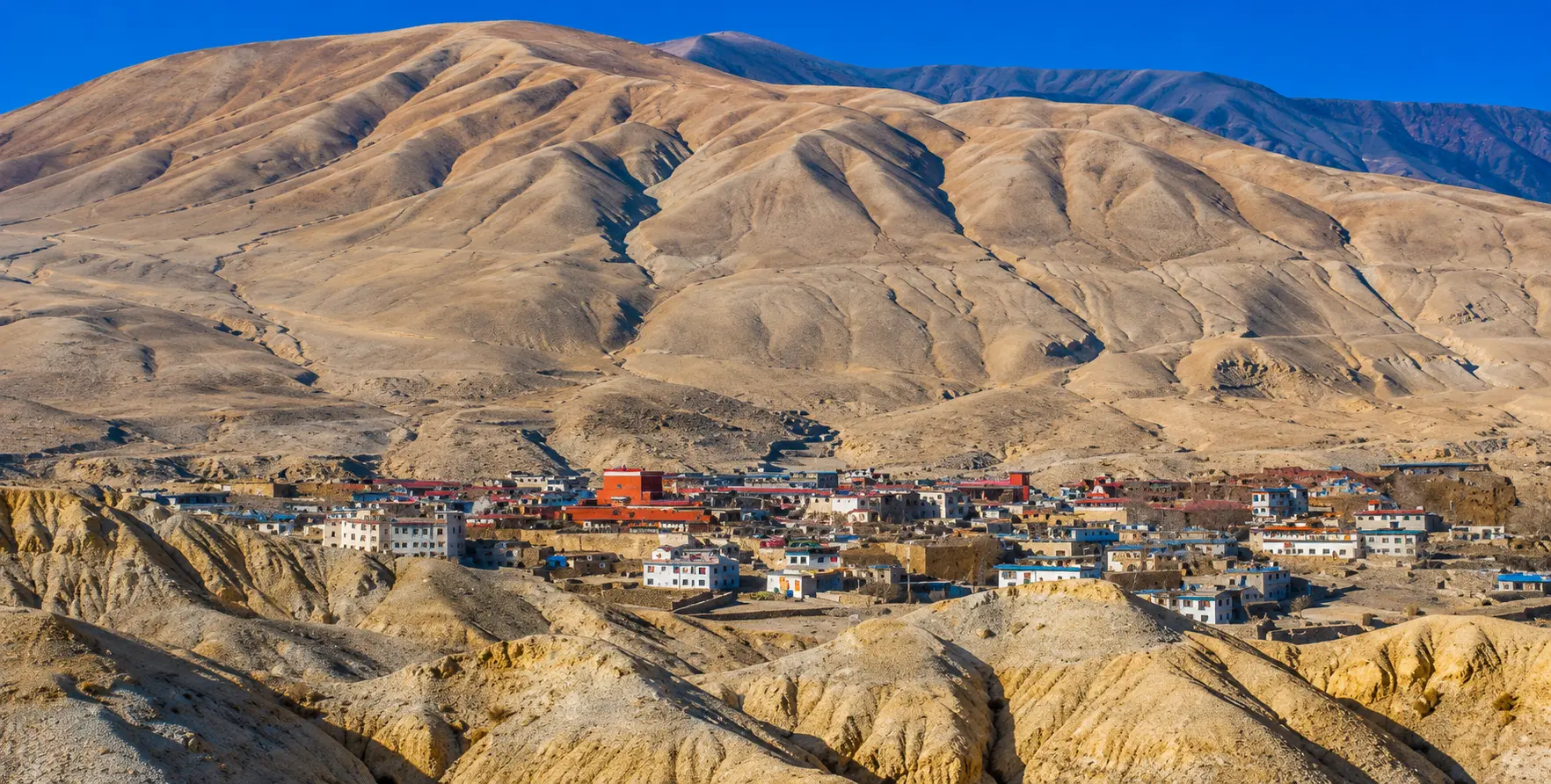
Private 4WD jeep traveling to Korala Tibet Border via Upper Mustang with spectacular Himalayan mountain scenery

Jomsom to Lo Manthang – Entering the Forbidden Kingdom

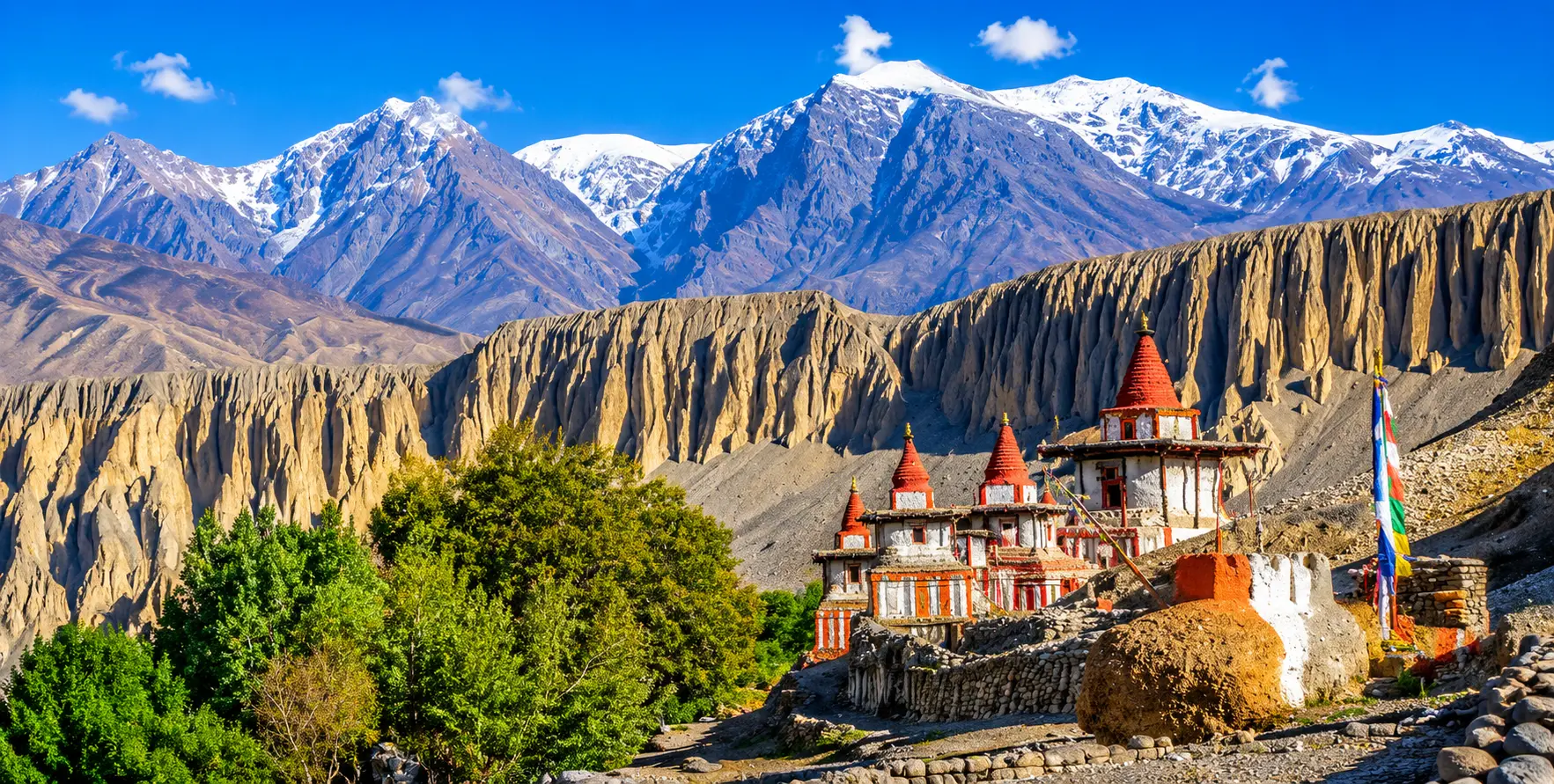
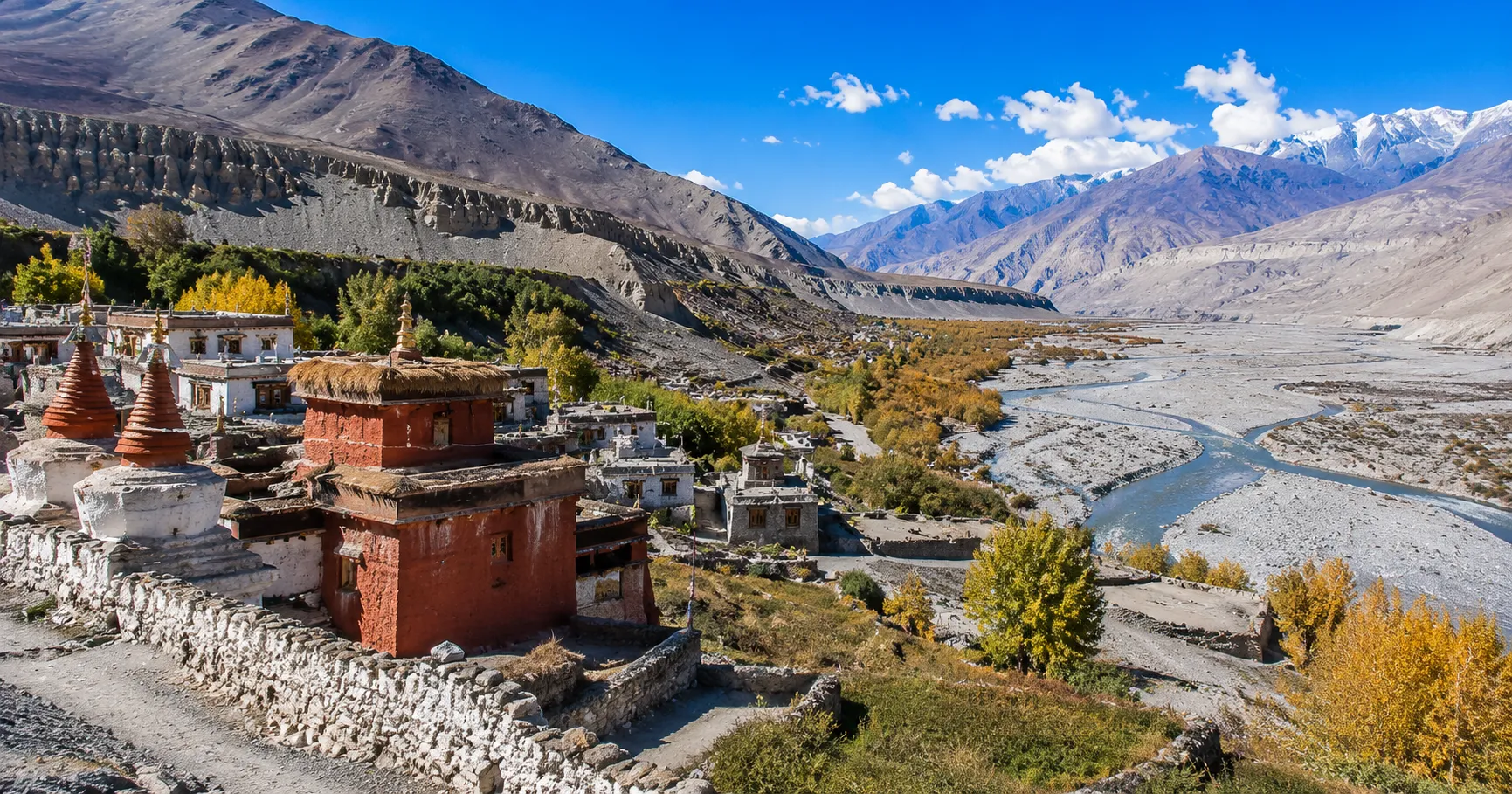
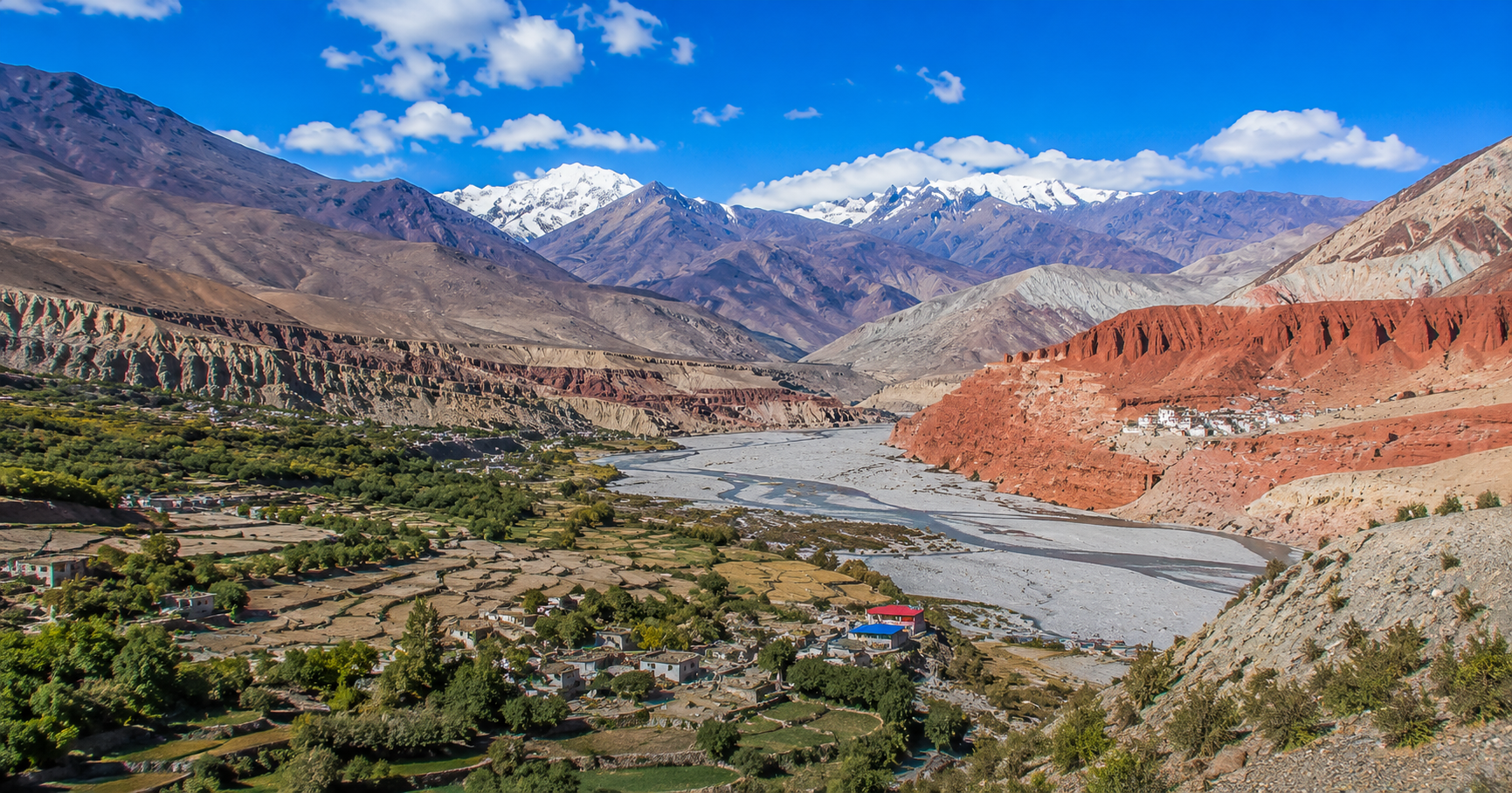
From Jomsom, the route continues north through Kagbeni (2,810 m) — the final ACAP checkpoint and the formal gateway into the Upper Mustang Restricted Area. Beyond Kagbeni, the landscape transforms completely: lush valley vegetation gives way to a genuine trans-Himalayan high-altitude desert — eroded red and ochre cliffs, wind-sculpted canyon formations, scattered chortens and mani walls, and the famous sky caves carved into vertical rock faces by communities seeking refuge and meditation retreat over many centuries.

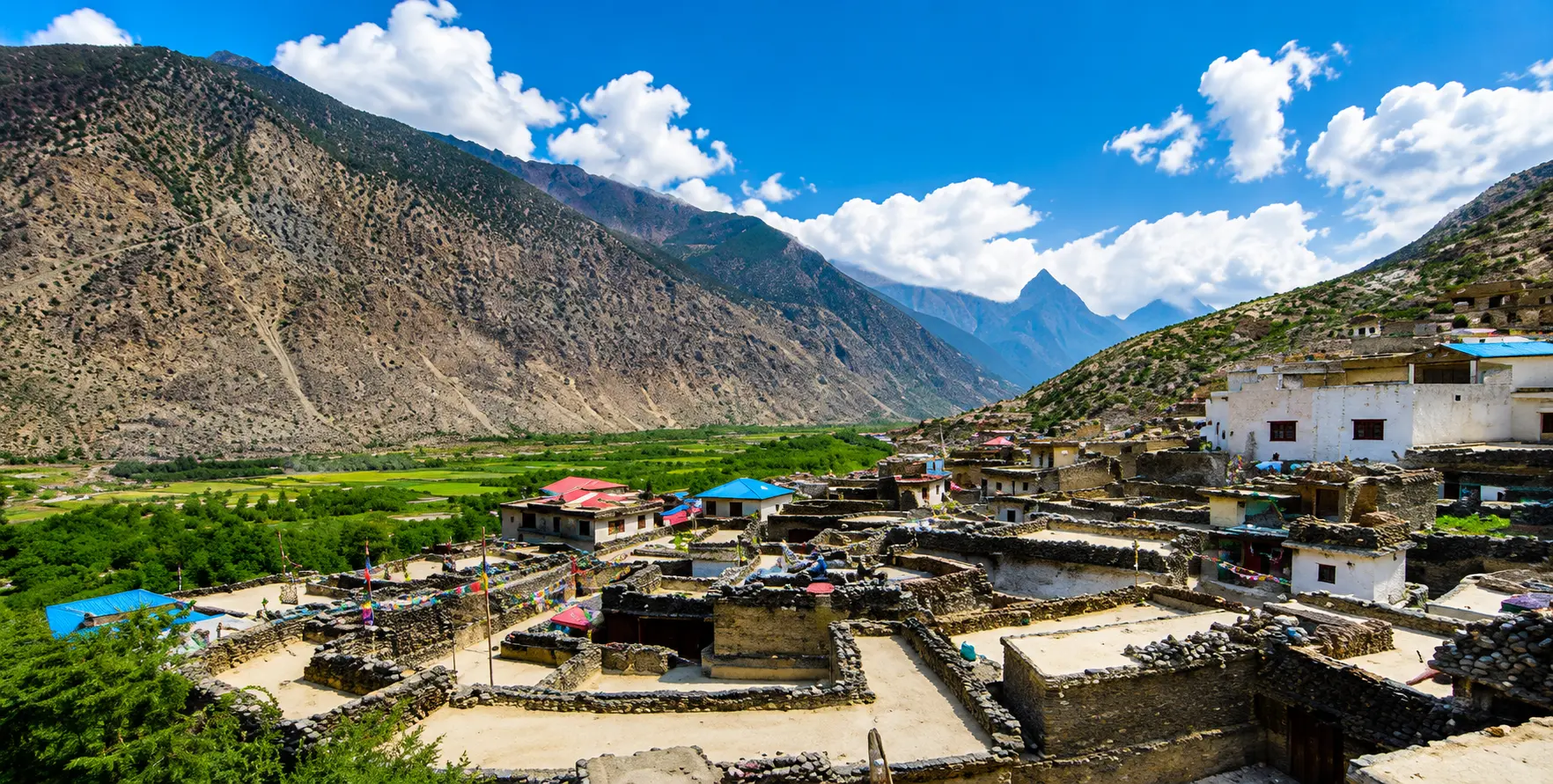
The jeep track passes through Chele, Ghami, Charang, and the dramatic red cliffs of Dhakmar before arriving at Lo Manthang (3,810 m) — the walled medieval capital of the former Kingdom of Lo, home to approximately 1,300 people of Tibetan descent and one of the last intact medieval Tibetan Buddhist urban environments anywhere in the world.

Lo Manthang to Korala – The Final Approach to the Border

From Lo Manthang, the road to Korala covers the final 24–30 km of off-road jeep track across the high trans-Himalayan plateau, taking about 45 minutes to an hour. This is among the most remote and dramatic drivable sections of road anywhere in Nepal — a windswept, treeless, near-lunar landscape where the only vegetation is sparse high-altitude scrub, and the only sounds are wind and the engine of your own vehicle.

The road climbs gradually to the Korala pass itself at 4,610–4,660 m, where travellers can stand at the fenced international boundary, view the ancient marker stupa just south of the formally demarcated line, and look north into the vast, empty expanse of the Tibetan plateau, with the Chinese military outpost visible in the distance. As of 2026, the Nepal side of Nechung port has functioning customs and immigration facilities, a significant change from the bare, unstaffed frontier of even a few years earlier.
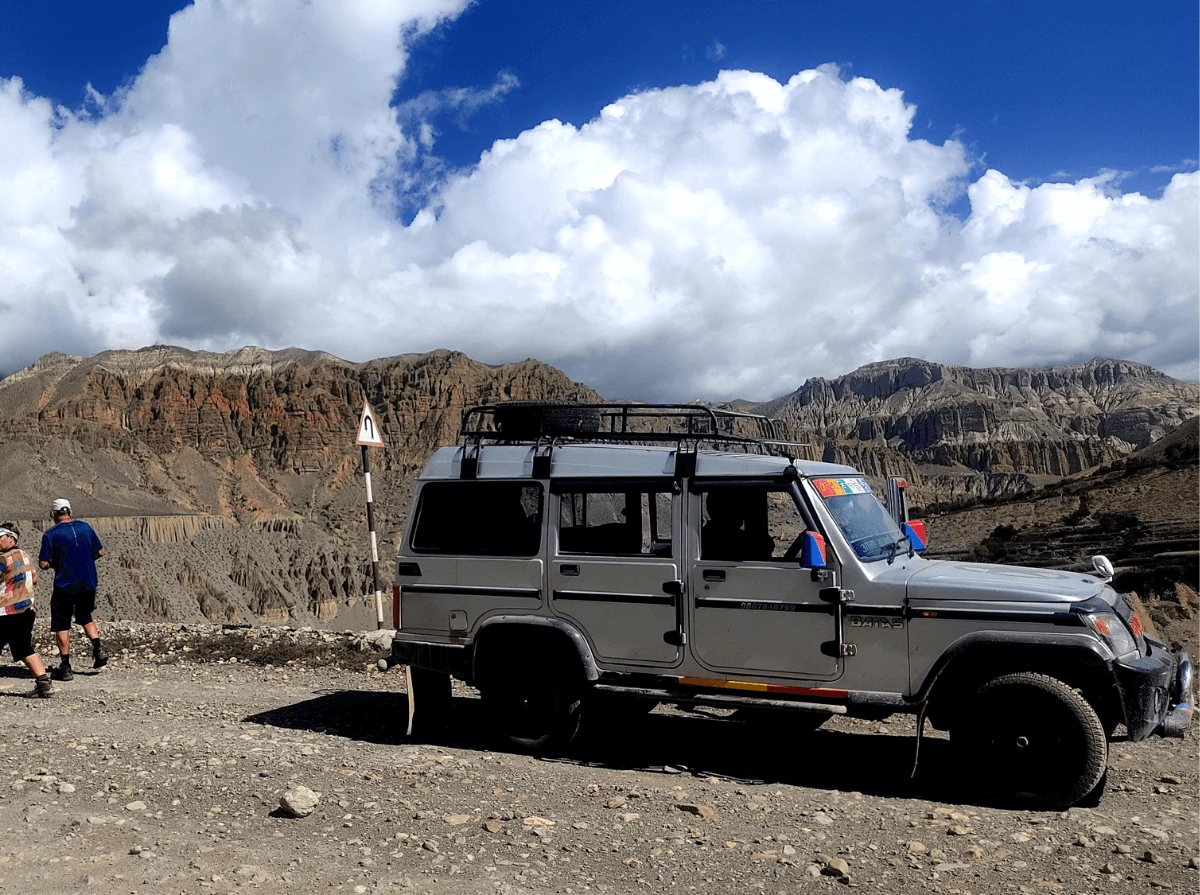
Private 4WD jeep traveling to Korala Tibet Border via Upper Mustang with spectacular Himalayan mountain sceneryPrivate 4WD jeep traveling to Korala Tibet Border via Upper Mustang with spectacular Himalayan mountain scenery

Korala and the New Mustang Route to Mount Kailash and Mansarovar

Perhaps the single most significant practical consequence of Korala’s opening is the emergence of a genuinely new, shorter, and more affordable overland pilgrimage route to Mount Kailash and Lake Mansarovar — sacred to Hindus, Buddhists, Jains, and followers of the indigenous Tibetan Bon religion alike. For Hindu pilgrims in particular, Mount Kailash (6,638 m) is revered as the eternal abode of Lord Shiva, and circumambulating it — along with bathing in the pristine waters of Lake Mansarovar — is believed to confer profound spiritual merit and liberation.

Until recently, virtually all overland pilgrims travelling to Kailash reached it via the Rasuwagadhi-Kerung border crossing in the Langtang region. This route involved a significant detour through central Nepal before entering Tibet. The Korala route offers a dramatically more direct alternative for pilgrims already in or travelling through Mustang and Gandaki Province.

From Som, it is approximately 96 km by jeep to Lo Manthang (around 4.5 hours), followed by a short drive to the Nechung-Liji customs point at Korala. From the Chinese side, modern paved roads at Xiong Wazhen in Shigatse Prefecture connect onward — a roughly 580 km, six-hour drive — to Mount Kailash and Lake Mansarovar.

Pilgrims can now overnight in Lo Manthang and reach the Nepal-Tibet border at Korala within just half an hour the following morning — a logistical transformation compared to the older routes.

According to Immigration Office Chief Pravesh Baduwal, this route is also significantly more economical, with pilgrims travelling the traditional Indian routes to Kailash often spending upwards of NPR 200,000 per person. In contrast, the Mustang-Korala route offers a substantially cheaper path to the same sacred destination.

Chinese and foreign nationals entering Nepal through Korala are granted a 150-day free on-arrival visa. However, foreign pilgrims travelling in the opposite direction—into Tibet—must still complete standard formalities, including a USD 500 restricted-area entry fee and an additional cap charge, arranged through a registered trekking or pilgrimage agency.

Nepal Vehicle Hiring provides the essential first-leg jeep transport for any Korala-route Kailash Mansarovar pilgrimage — the private 4WD journey from Pokhara or Jomsom through Kagbeni, Lo Manthang, and to the Korala customs point itself, where pilgrims transition to the Tibet-side arrangements coordinated by their registered pilgrimage agency.
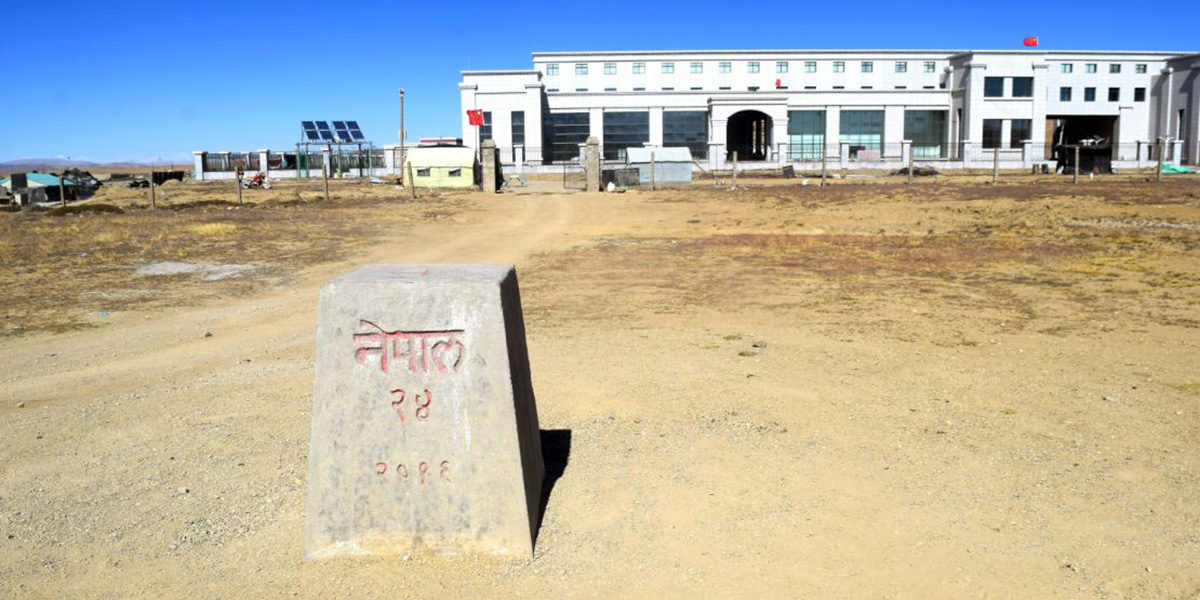
Private 4WD jeep traveling to Korala Tibet Border via Upper Mustang with spectacular Himalayan mountain scenery

The Geography and Natural Significance of Korala

Korala’s elevation of 4,610–4,660 m makes it not merely a convenient trade route but a genuine geographical landmark of the entire Himalayan range. As the lowest pass crossing the main Himalayan chain along its full length, it forms a critical point on the watershed ridgeline — sitting precisely on the drainage divide between the Yarlung Tsangpo river basin (which becomes the Brahmaputra) to the north and the Ganges river basin to the south.

Remarkably, the Kali Gandaki River—one of Nepal’s seven major river systems and the river that has carved the world’s deepest gorge between Annapurna and Dhaulagiri —flows along the southern side of Pass Korala. Passists and mountaineers also note Korala’s role as a key connecting col on the long ridgeline linking K2 to Mount Everest within the broader Himalayan-Karakoram chain. This detail places this remote, little-known pass within one of the planet’s most significant topographic frameworks. The landscape immediately surrounding Korala is classic high trans-Himalayan desert—situated firmly within the rain shadow of the Annapurna and Dhaulagiri ranges, which intercept most monsoon moisture from the Bay of Bengal before it can reach Upper Mustang. The result is a landscape of striking aridity: bare,, eroded hillsides in shades of ochre, red, and gre;; sparse vegetation; and an intensity of light and colour that feels genuinely otherworldly—closer in character to the Tibetan plateau itself than to any other part of Nepal.

This rain-shadow effect also makes Upper Mustang, including the Korala excursion, one of the very few regions in Nepal that remain fully accessible and enjoyable even during the summer monsoon season (June–August), when most of the rest of the country is shrouded in cloud and rain.

Permits and Requirements for the Korala Jeep Excursion

PermitCostApplies ToNotes
Restricted Area Permit (RAP)USD 50 per person per dayUpper Mustang beyond Kagbeni, incl. Korala excursion2026 reform: pay only for actual days, no 10-day minimum
ACAPUSD 30 (NPR 3,000)All Annapurna Conservation Area incl. MustangObtain in Kathmandu or Pokhara before departure
TIMS CardUSD 20All foreign trekkers in conservation areasStandard safety registration
Licensed GuideIncluded in the agency packageMandatory – checked at KagbeniSolo trekking has been permitted since March 2026, but a guide is still required.
Tibet entry (if crossing)Chinese visit visa + cap chargeOnly those physically crossing into Tibet at KoralaNOT for casual tourists – separate from RAP; arranged via registered agency

The 2026 Restricted Area Permit Reform

A significant change for travellers in 2026 is the reform of the Upper Mustang Restricted Area Permit (RAP) system. The previous flat USD 500 fee for a mandatory minimum 10-day stay has been replaced by a flexible USD 50 per person per day rate, calculated based on the actual number of days spent in the restricted zone beyond Kagbeni.

This makes shorter jeep tours to Lo Manthang and Korala significantly more affordable than under the old system.

For example, a 5-day jeep tour now costs approximately USD 250 in RAP fees, down from the previous flat USD 500. Additionally, as of March 2026, the historic ‘minimum two-person’ group requirement has been lifted, officially permitting solo trekkers and travellers to obtain permits in their own name — though a licensed guide remains mandatory for all visitors, checked at the Kagbeni checkpoint.

Distinguishing the RAP Excursion from Actually Crossing the Border: Travellers need to understand the distinction between two very different activities: (1) the jeep excursion to Korala viewpoint/border post, which is covered entirely by the standard Upper Mustang RAP, ACAP, and TIMS permits that any Upper Mustang visitor already holds — no additional permit is required to drive to and view the border simply

(2) physically crossing into Tibet at Korala, which requires a separate Chinese visit visa, registration through the Nechung immigration office, and (for foreign nationals specifically) the standard USD 500 restricted area fee plus cap charge on the Chinese side — arranged exclusively through a registered pilgrimage or trekking agency with established Tibet-side partnerships. The vast majority of Nepal Vehicle Hiring’s Korala jeep clients undertake activity (1) — the spectacular jeep drive to the border itself.
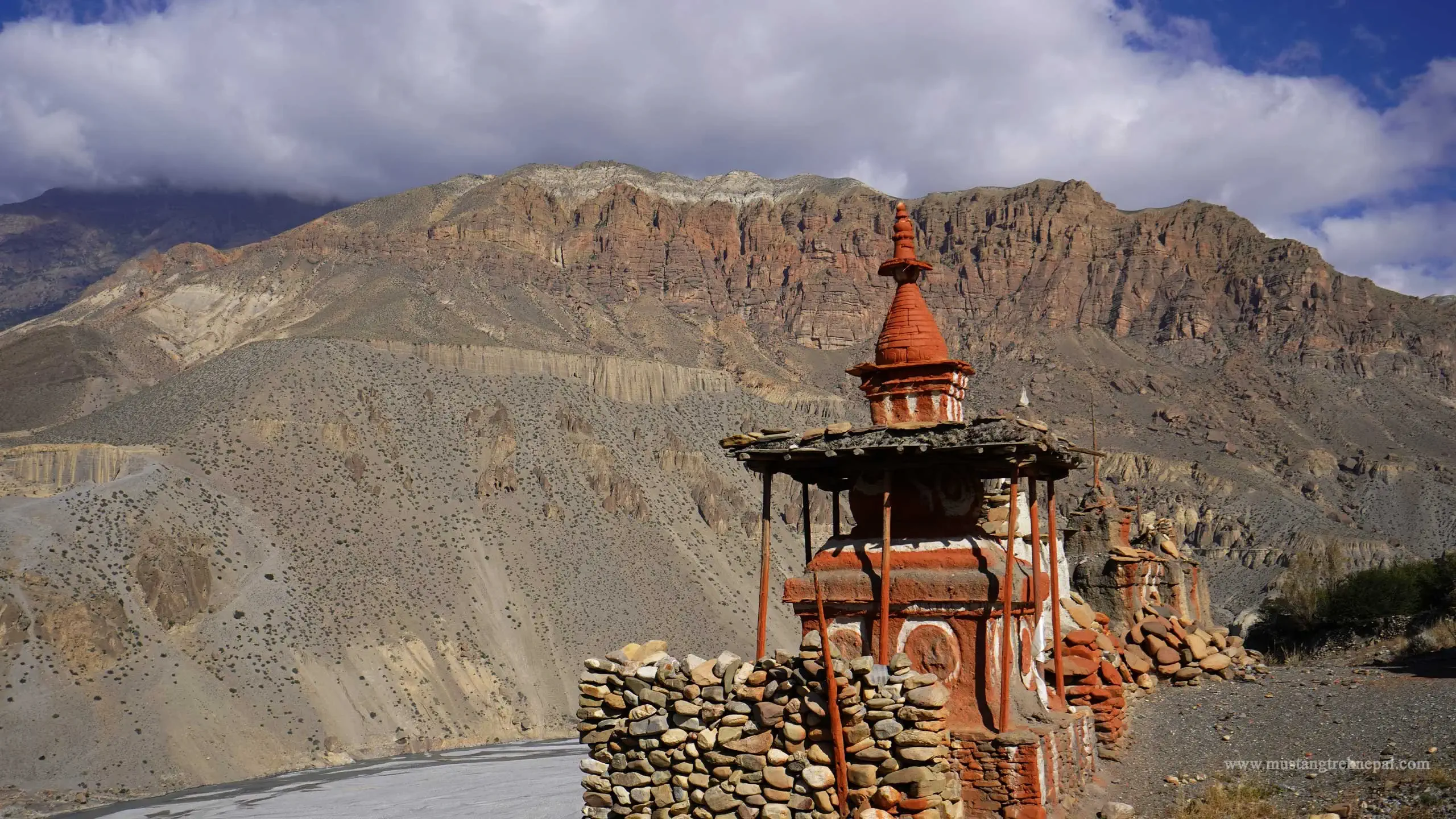
Mustang

Best Vehicles for the Lo Manthang and Korala Jeep Route

Toyota Land Cruiser 4WD – The Only Vehicle for This Terrain

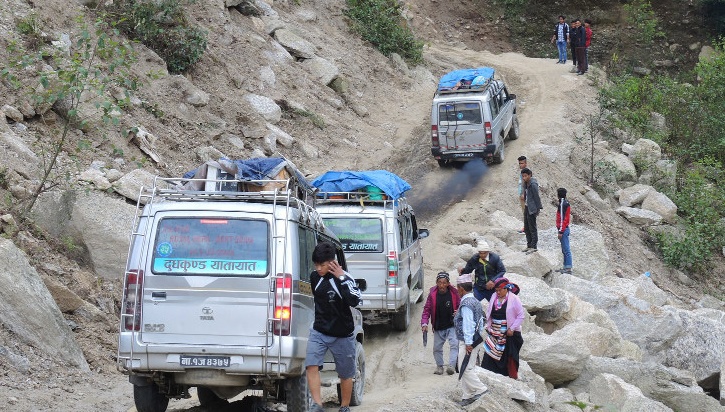
Nepal Vehicle Hiring deploys Toyota Land Cruiser 4WD vehicles (LC300 and LC200 series) exclusively for the Kagbeni-Lo Manthang-Korala route — the single most demanding extreme off-road jeep journey in our entire Nepal route network. The 82 km Kagbeni–Lo Manthang track alone is widely regarded as Nepal’s most challenging highway-accessible off-road route, with exposed cliff sections, loose scree fields, river crossings, and sustained altitude above 3,800 m for its entire length.

The additional 24–30 km of final approach from Lo Manthang to Korala adds genuinely extreme high-altitude desert terrain, with climbs to over 4,600 m. The Land Cruiser’s 225 mm ground clearance, locking differentials, multi-terrain select system, and proven mechanical reliability at extreme altitude are not luxuries on this route — they are the minimum standard required for safe, reliable travel. See our Luxury Jeep Hire Nepal page for full Land Cruiser specifications.

While the Mahindra Scorpio and Bolero are excellent, fully proven vehicles for most of Nepal’s mountain routes, including the Kagbeni to Lo Manthang section in good conditions, Nepal Vehicle Hiring’s specific professional recommendation for the final Lo Manthang–Korala extension is the Land Cruiser exclusively. The combination of extreme altitude (above 4,600 m), the genuinely remote and unsupported nature of this final stretch, and the proximity to a sensitive international border makes the additional margin of mechanical reliability and high-altitude engine performance that the Land Cruiser provides a genuine safety consideration rather than a comfort preference.
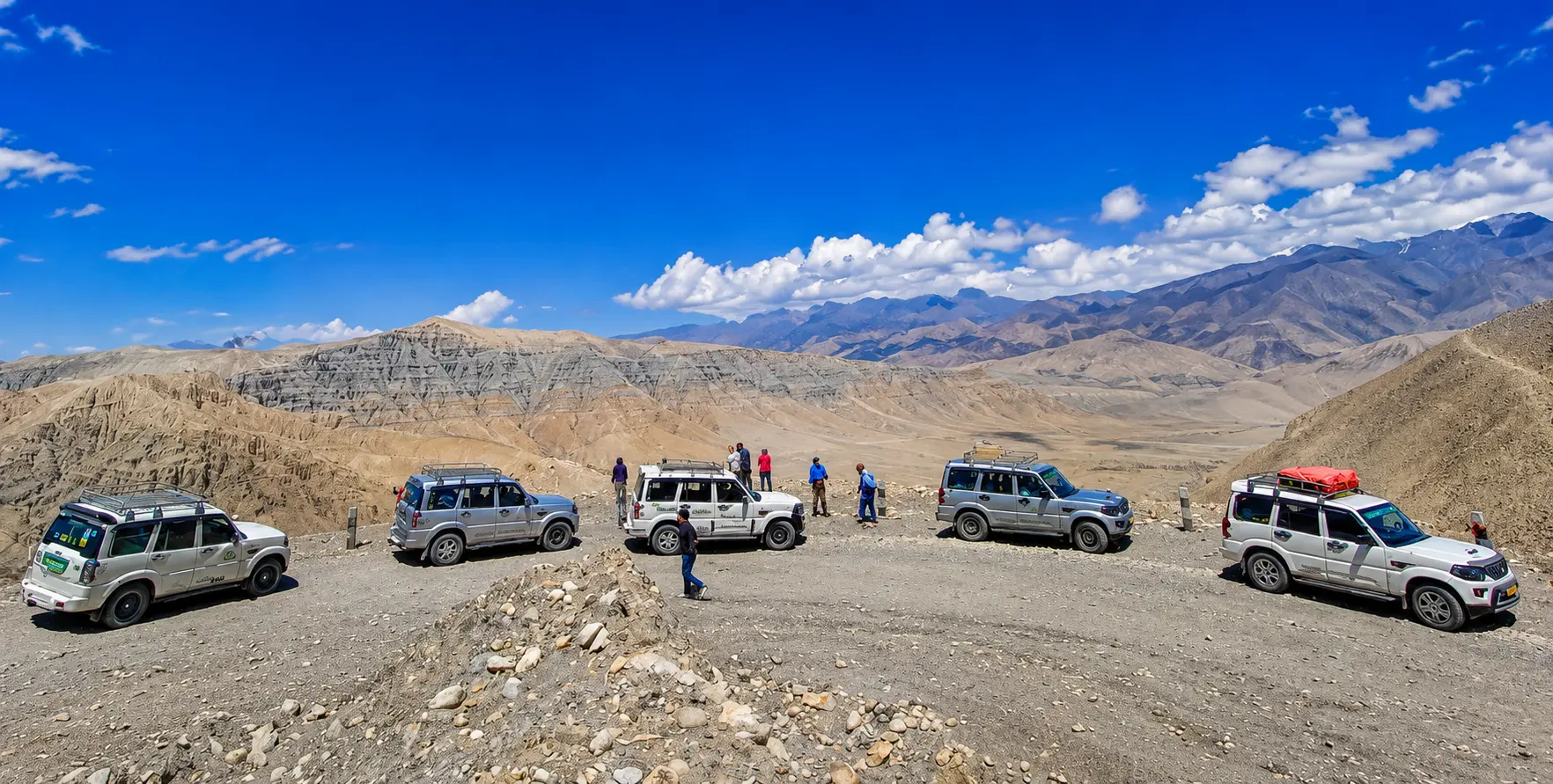
Explore Korala Tibet Border Nepal in 2026 with a private 4WD jeep via Upper Mustang. Discover Lo Manthang, Korala Pass, breathtaking Himalayan landscapes, and border region adventures.

Best Time to Visit Korala – Seasonal Guide

Korala and the wider Upper Mustang region benefit from a unique seasonal calendar compared to the rest of Nepal, owing to their position deep within the Annapurna-Dhaulagiri rain shadow:

  • June to September (Monsoon): Paradoxically, it is one of the best times to visit Korala and Upper Mustang, precisely because the rain shadow keeps the region largely dry while the rest of Nepal experiences heavy monsoon rainfall and landslide risk. The Pokhara–Beni–Jomsom approach road can have monsoon-related delays, but once you reach the Mustang rain-shadow zone, conditions are typically excellent. This is also the peak season for the Kailash Mansarovar Yatra via the Tibetan plateau, with most pilgrimage operators recommending May to September for the crossing.
  • October to November (Autumn): Excellent visibility, stable road conditions, and comfortable daytime temperatures make this Nepal’s classic peak-trekking and jeep-touring season for Upper Mustang and Korala alike. Expect cold nights at Lo Manthang and Korala (sub-zero).
  • March to May (Spring): A strong second option, with good road conditions and warming temperatures, though afternoon winds in the Kali Gandaki valley sections can be strong — early morning starts are recommended.
  • December to February (Winter): Extremely cold at the Korala altitude, with the possibility of snow closure on sections of the route. Not recommended for the Korala extension without specific local guidance and a highly experienced driver-guide team.

Why Travel to Korala – The Experience

Standing at One of Asia’s Most Storied Frontiers

There are few places in the world where a traveller can stand at a genuine, functioning international border between two of the planet’s most significant civilisations in a landscape of such stark, silent, high-altitude beauty, with over a thousand years of trade, conflict, faith, and human exchange embedded in the very ground underfoot. The ancient marker stupa, the ruins of historic trade infrastructure, the new customs buildings, and the fenced demarcation line with the Chinese military post visible across the plateau together create an experience that is simultaneously historically profound, geopolitically fascinating, and visually extraordinary.

The Ultimate Extension to an Upper Mustang Jeep Tour

For travellers who have already committed to the substantial investment of time, permit fees, and travel required to reach Lo Manthang, the Korala extension represents a relatively modest additional time commitment (45 minutes to 1 hour each way) for an outsized increase in the depth and uniqueness of the experience. Many Upper Mustang jeep tour itineraries — including those operated by Nepal Vehicle Hiring’s partner trekking agencies — now build in a dedicated half-day or full-day excursion to Korala as the symbolic culmination of the journey to “the end of the road” in Nepal’s far northern frontier.
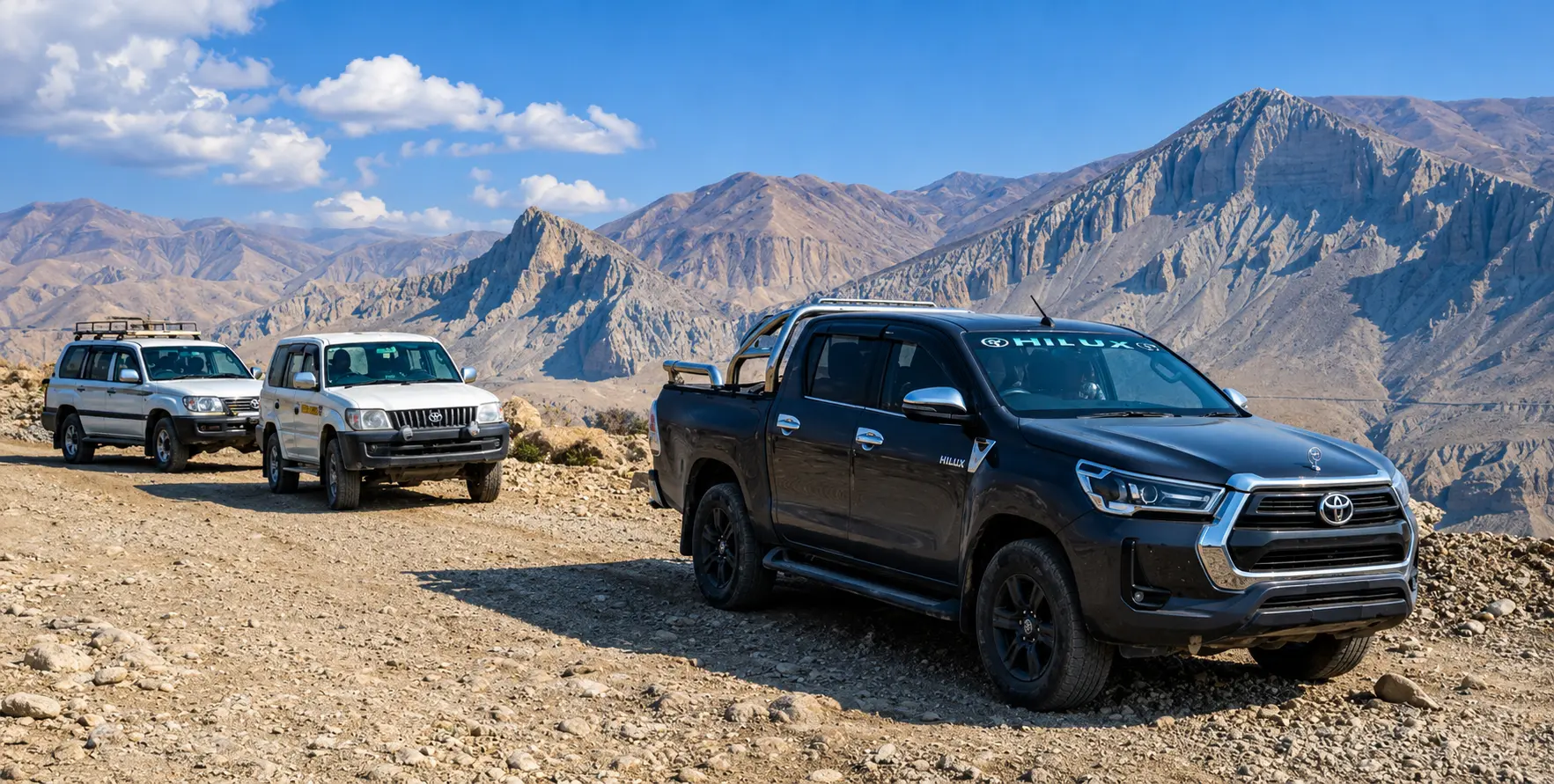
Explore Korala Tibet Border Nepal in 2026 with a private 4WD jeep via Upper Mustang. Discover Lo Manthang, Korala Pass, breathtaking Himalayan landscapes, and border region adventures

Essential Travel Tips – Korala Jeep Excursion

  • Confirm Current Border Access Status: Given the rapidly evolving nature of this reopening, always confirm the current status of Korala access with your vehicle hiring and trekking agency as you finalise your itinerary, as conditions and regulations at this sensitive frontier can change.
  • Acclimatise Properly Before Lo Manthang and Korala: With Korala at 4,610–4,660 m, proper acclimatisation through the Kagbeni–Lo Manthang ascent is essential. Do not attempt a rushed single-day dash to Korala without prior altitude exposure.
  • Pack for Extreme Cold and Wind: Temperatures at Korala can be bitterly cold even in summer, with strong, sustained winds across the exposed plateau. A down jacket, a windproof outer layer, gloves, and a warm hat are essential year-round.
  • Carry Cash – No Facilities Beyond Lo Manthang: There are no ATMs or shops beyond Lo Manthang. Carry sufficient Nepali Rupees for the entire Upper Mustang and Korala excursion.
  • Respect the Sensitivity of the Border Zone: Photography restrictions may apply near the immediate customs and military facilities. Always follow your guide’s and driver’s specific guidance at the border post itself.
  • Book a Land Cruiser Well in Advance: Given the surging interest in Korala following its 2025–2026 reopening, Nepal Vehicle Hiring recommends booking Land Cruiser jeep hire for this route 3–4 weeks in advance, particularly during the June–September and October–November peak windows.

Frequently Asked Questions – Korala Tibet Border Nepal

Can foreign tourists cross the border at Korala into Tibet?

Crossing into Tibet at Korala requires a valid Chinese visit visa and registration through the Nechung immigration office, arranged through a registered pilgrimage or trekking agency — it is not a casual walk-up tourist crossing. Foreign nationals also pay a USD 500 restricted area fee plus an additional cap charge.

Most independent travellers instead take a jeep excursion to the Korala border post and viewpoint, which requires only the standard Upper Mustang RAP, ACAP, and TIMS permits.

How far is Korala from Kathmandu and Pokhara?

From Pokhara, the road distance to Korala via Beni, Jomsom, Kagbeni, and Lo Manthang is approximately 400 km. From Jomsom, it is about 96 km by jeep to Lo Manthang (around 4.5 hours), with Korala a further 24–30 km (45 minutes to 1 hour) beyond.

What vehicle do I need to reach Korala?

A genuine 4WD vehicle is mandatory, and Nepal Vehicle Hiring strongly recommends the Toyota Land Cruiser exclusively for the Lo Manthang- Korala extension, given the extreme altitude (over 4,600 m), remote terrain, and proximity to a sensitive international border zone.

Is Korala part of the new Kailash Mansarovar pilgrimage route?

Yes — since the Nechung immigration office became operational in November 2025, Korala has emerged as a new, shorter, and more affordable overland route to Mount Kailash and Lake Mansarovar for pilgrims, connecting via Nechung-Liji customs to Xiong Wazhen in Shigatse Prefecture and onward to Kailash (approximately 580 km / 6 hours on the Tibetan side).

What permits do I need for the Korala jeep excursion?

The standard Upper Mustang Restricted Area Permit (RAP – USD 50/day as of 2026), ACAP (~USD 30), and TIMS Card (USD 20) cover the jeep excursion to the Korala border post. A licensed guide is mandatory and is checked at the Kagbeni checkpoint. No additional permit is required to view the border,  as long as you are not physically crossing into Tibet.

What is the best time of year to visit Korala?

October–November and March–May are the classic peak seasons. Notably, because Upper Mustang sits in the Annapurna-Dhaulagiri rain shadow, June–September (monsoon) is also a genuinely excellent and increasingly popular time to visit, as the region remains largely dry while most of Nepal experiences heavy rainfall.

Can Nepal Vehicle Hiring arrange the full Pokhara-to-Korala jeep journey?

Yes — Nepal Vehicle Hiring provides complete private 4WD Land Cruiser jeep hire for the full Pokhara/Jomsom-to-Kagbeni, Lo Manthang, and Korala border route, including experienced high-altitude drivers familiar with this extreme route. Contact us on WhatsApp to plan your Korala jeep excursion or your first-leg transport to Kailash Mansarovar.

Book Your Korala Border Jeep Excursion Today – Nepal Vehicle Hiring

Korala represents something genuinely rare in 2026 Nepal travel: a historic frontier reopening in real time, a journey to the literal edge of the Tibetan plateau, and a route steeped in a thousand years of salt-trade history, Cold War drama, and renewed 21st-century diplomacy — all reachable by private 4WD jeep from Pokhara through the walled medieval kingdom of Lo Manthang. Nepal Vehicle Hiring Pvt Ltd’s Toyota Land Cruiser fleet and experienced high-altitude drivers make this extraordinary journey to Nepal’s northern frontier safe and comfortable.

Call / WhatsApp |  Website: vehiclehiringnepal.com  |  Book Land Cruiser for Upper Mustang & Korala  |  Nepal Trekking Packages
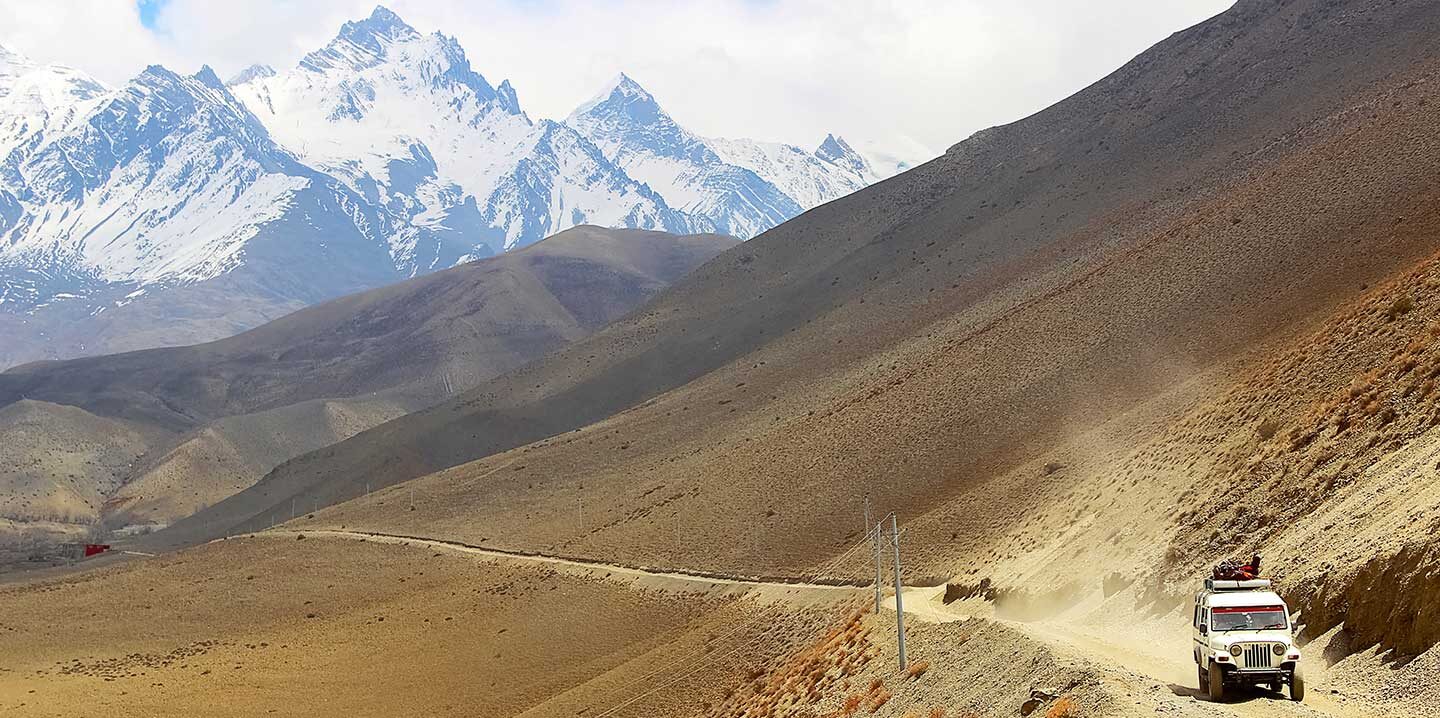
Upper Mustang Jeep Tour: Nepal’s Hidden Kingdom

Mustang

Hidden Kingdom Adventure Nepal: The Ultimate Upper Mustang Jeep & 4WD Guide

Somewhere above the deepest gorge on Earth, beyond a police checkpoint at the edge of a medieval village, lies a landscape so remote, so culturally preserved, and so visually unlike anything else in South Asia that first-time visitors consistently struggle to find the language to describe it. The high-altitude desert plateau of Upper Mustang — wedged between the Annapurna and Dhaulagiri ranges to the south and the Tibetan border to the north — is Nepal’s last great secret, a place where the 21st century has arrived slowly and incompletely, where Tibetan Buddhist monasteries founded in the 14th century still perform unbroken ritual traditions, where the wind-carved cliffs conceal cave cities inhabited for millennia, and where the ancient walled capital of Lo Manthang feels less like a tourist destination than a living museum of a civilisation that the outside world nearly forgot.

Upper Mustang’s nickname as the Forbidden Kingdom is not merely poetic. Until 1992, when Nepal opened the region to international visitors for the first time, this territory was genuinely off-limits to foreigners — its isolation preserved by a combination of government restriction, difficult terrain, and the determined cultural self-sufficiency of the Loba people, the ethnic Tibetan community who have lived in these high valleys for centuries and who continue to regard Lo Manthang’s hereditary king, despite the formal abolition of Nepal’s monarchy in 2008, as their traditional ruler and spiritual authority.

The cultural continuity that this long isolation preserved is precisely what makes Upper Mustang so extraordinary to visit today: it offers an encounter with Tibetan Buddhist civilization in a form more complete, more undisturbed, and more emotionally authentic than anything available in Tibet itself, where decades of Chinese cultural management have fundamentally altered the landscape of traditional practice.

In 2025 and 2026, Upper Mustang is more accessible than ever and considerably more affordable than it was a year ago. A landmark government decision effective from late 2025 replaced the old mandatory flat-fee permit structure — USD 500 per person for ten days regardless of actual visit duration — with a flexible daily rate of USD 50 per person per day, making shorter jeep tours and overland adventures economically practical for a much broader range of international visitors.

The combination of this permit reform, improvements to road conditions toward Lo Manthang, and the growing quality of jeep tour operations serving the region has created an ideal moment to explore Nepal’s hidden kingdom on four wheels.

This guide from Nepal Vehicle Hiring Pvt Ltd (vehiclehiringnepal.com) covers everything relevant to planning a hidden kingdom adventure in Nepal’s Upper Mustang region by private jeep or 4WD vehicle — the landscape, culture, and key destinations, the complete route from Pokhara or Kathmandu, vehicle requirements, accurate 2025/26 permit costs, practical travel information, and the specific vehicle hire arrangements that make the difference between an adventure that unfolds smoothly and one that unravels at a checkpoint because of missing documentation or an underpowered vehicle stranded on a river crossing.

Hidden Kingdom Adventure Nepal Upper Mustang Jeep Tour with a 4WD jeep driving through the dramatic landscapes of Lo Manthang

The Kingdom of Lo: History, Culture, and What Makes It Unlike Anywhere Else

To understand why the Upper Mustang adventure captures the imagination so completely, it helps to grasp something of the territory’s history and the cultural forces that have shaped it into what it is today. Mustang, whose name derives from the Tibetan word ‘Monthang’ meaning fertile plain, was an independent kingdom for centuries before its formal integration into the Kingdom of Nepal in 1795, and even after that integration, maintained a degree of de facto autonomy that allowed it to preserve its Tibetan cultural identity long after the surrounding regions had adopted the Hindu and Nepali cultural frameworks that define the rest of the country.

The Kingdom of Lo at its historical height controlled the trade routes connecting the Tibetan plateau with the Indian subcontinent through the Kali Gandaki Valley — one of the most important commercial corridors in the Himalayan region, carrying salt, wool, and grain southward and rice, spices, and manufactured goods northward. This trade gave the Loba people both the economic resources to build the extraordinary monasteries and palace complexes that define Lo Manthang’s architectural heritage and the cultural connections with the Tibetan Buddhist world that shaped every dimension of their spiritual and artistic life.

The Sakya school of Tibetan Buddhism established its dominant presence in Mustang during the 14th and 15th centuries.

The monasteries built during this period, including the magnificent Jampa Lhakhang and Thubchen Monastery in Lo Manthang, contain some of the finest surviving examples of Tibetan Buddhist mural painting from this era — artworks of extraordinary quality that have been remarkably preserved by the region’s extreme dryness and long isolation from the outside world.

Hidden Kingdom Adventure Nepal Upper Mustang Jeep Tour with a 4WD jeep driving through the dramatic landscapes of Lo Manthang

Today, the Loba people number only a few thousand, distributed across a handful of villages in Upper and Lower Mustang. Their way of life combines traditional pastoral agriculture — yak herding, barley and buckwheat cultivation, apple orcharding in the lower valleys — with an increasing involvement in the tourism economy that has grown significantly since the region’s opening in 1992. Despite this growing external contact, the cultural fabric of Upper Mustang remains genuinely distinct from any other part of Nepal, from the Tibetan language still spoken as the primary tongue in most Upper Mustang villages, to the traditional dress worn for festivals and ceremonies, to the architectural style of the whitewashed mud-brick compound houses and monastery complexes that give Lo Manthang its particular medieval appearance.

For travelers arriving by jeep after the long approach from Pokhara, entering Lo Manthang through its ancient gateway feels genuinely unlike any other arrival in Nepal. The walled city, roughly 150 meters on its long axis, contains within its perimeter the royal palace, four principal monasteries, several hundred traditional houses, and a population that carries its extraordinary heritage with a quiet dignity that the respectful visitor immediately senses.

Sitting in the monastery courtyard during evening prayers, listening to the deep resonance of butter-lamp rituals and the rhythmic percussion of the ceremony, it becomes easy to understand why travelers who have experienced every corner of Nepal consistently describe Upper Mustang as the place that has affected them most deeply.

Hidden Kingdom Adventure Nepal Upper Mustang Jeep Tour with a 4WD jeep driving through the dramatic landscapes of Lo Manthang

The Hidden Kingdom’s Adventure Landscape: What You Will See and Experience

Lo Manthang: The Ancient Walled Capital

Lo Manthang is the undisputed centerpiece of the Upper Mustang adventure. This walled city has stood since the 14th century, and it continues to function as the cultural and spiritual capital of the Loba people today. Approached by jeep across the high plateau, the city materializes from the desert landscape with an almost theatrical abruptness — the whitewashed walls rising from the ochre Earth, the monastery rooftops visible above the perimeter, the mountains of Tibet visible in the distance on clear days.

Within the walls, visitors can explore the royal palace, the four ancient monasteries with their extraordinary fresco collections, and the narrow lanes where traditional Loba life unfolds with minimal concession to the modern world.

Hidden Kingdom Adventure Nepal Upper Mustang Jeep Tour with a 4WD jeep driving through the dramatic landscapes of Lo Manthang

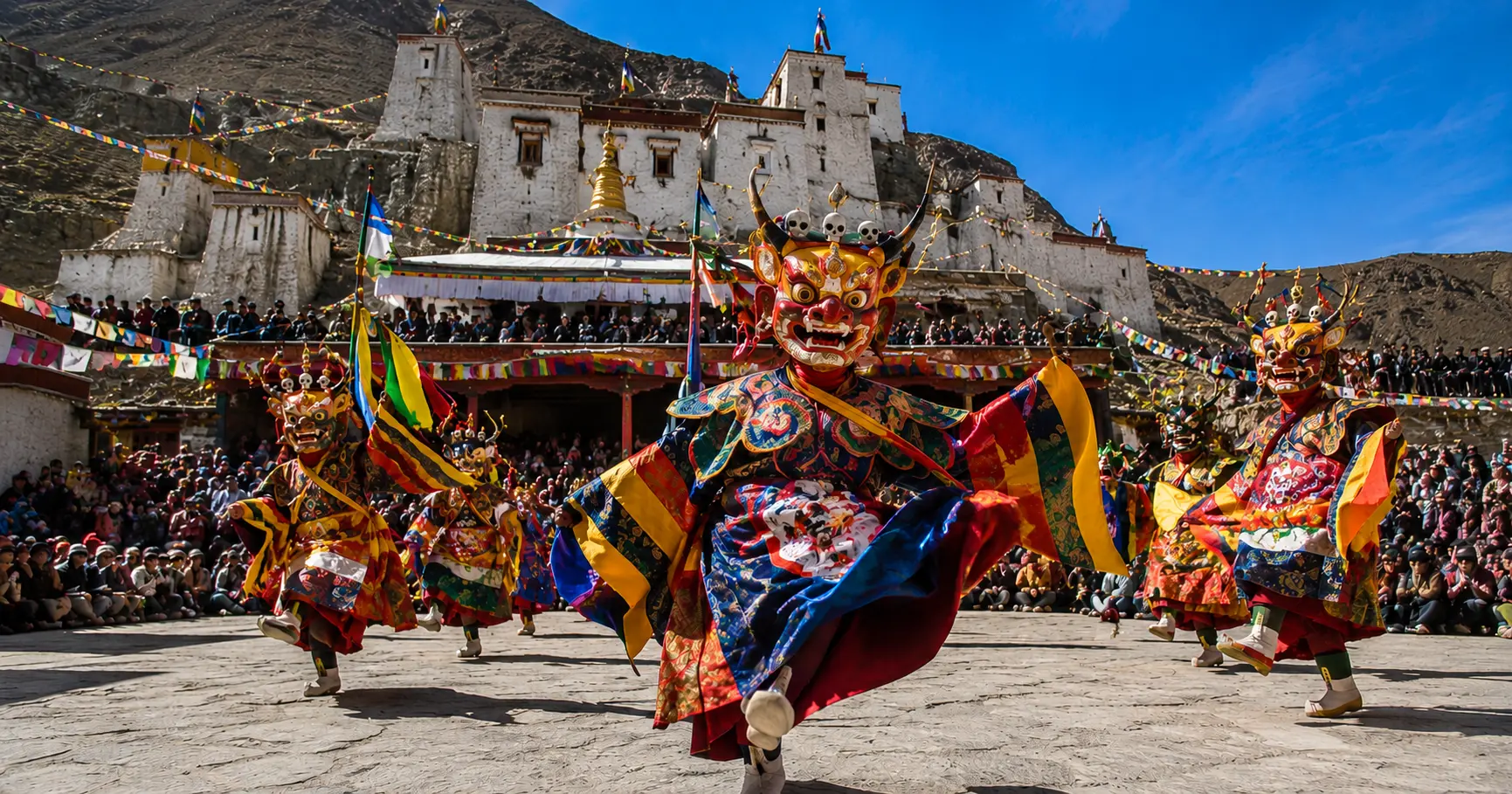
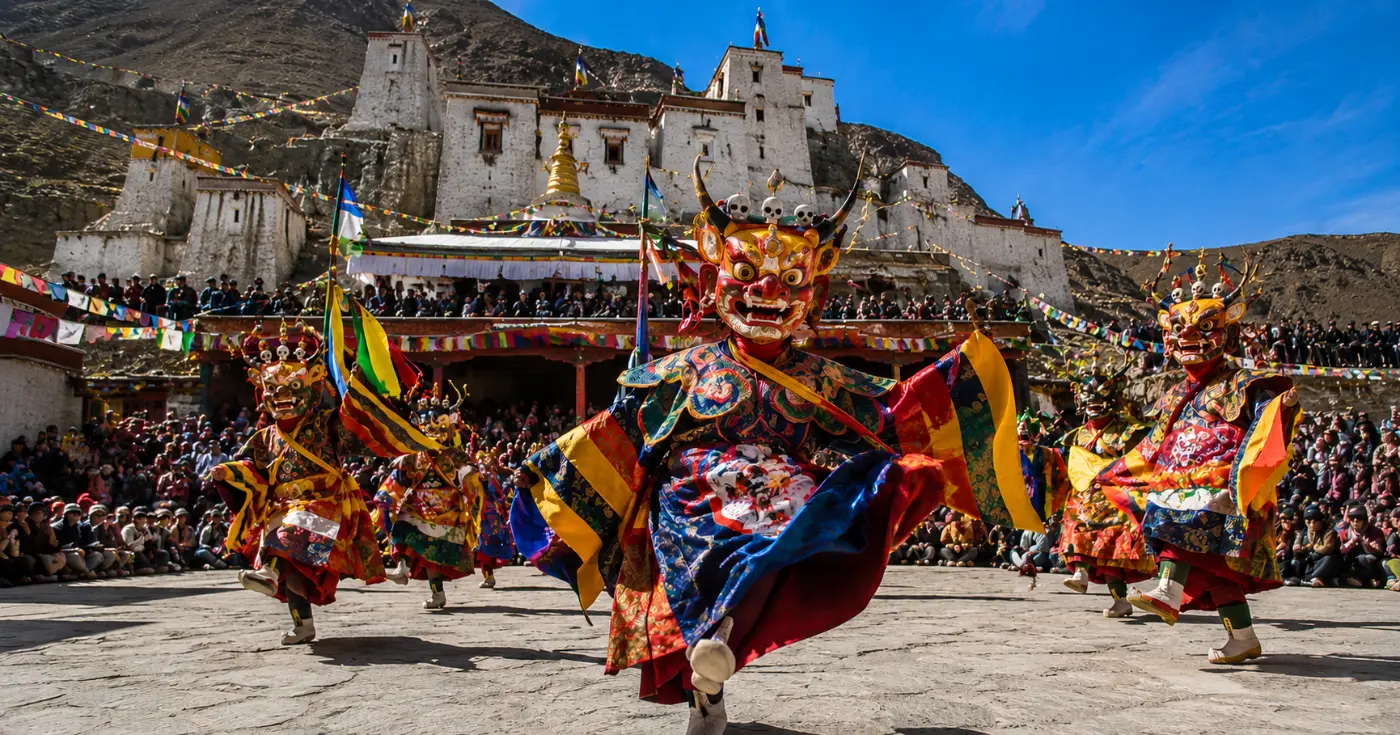
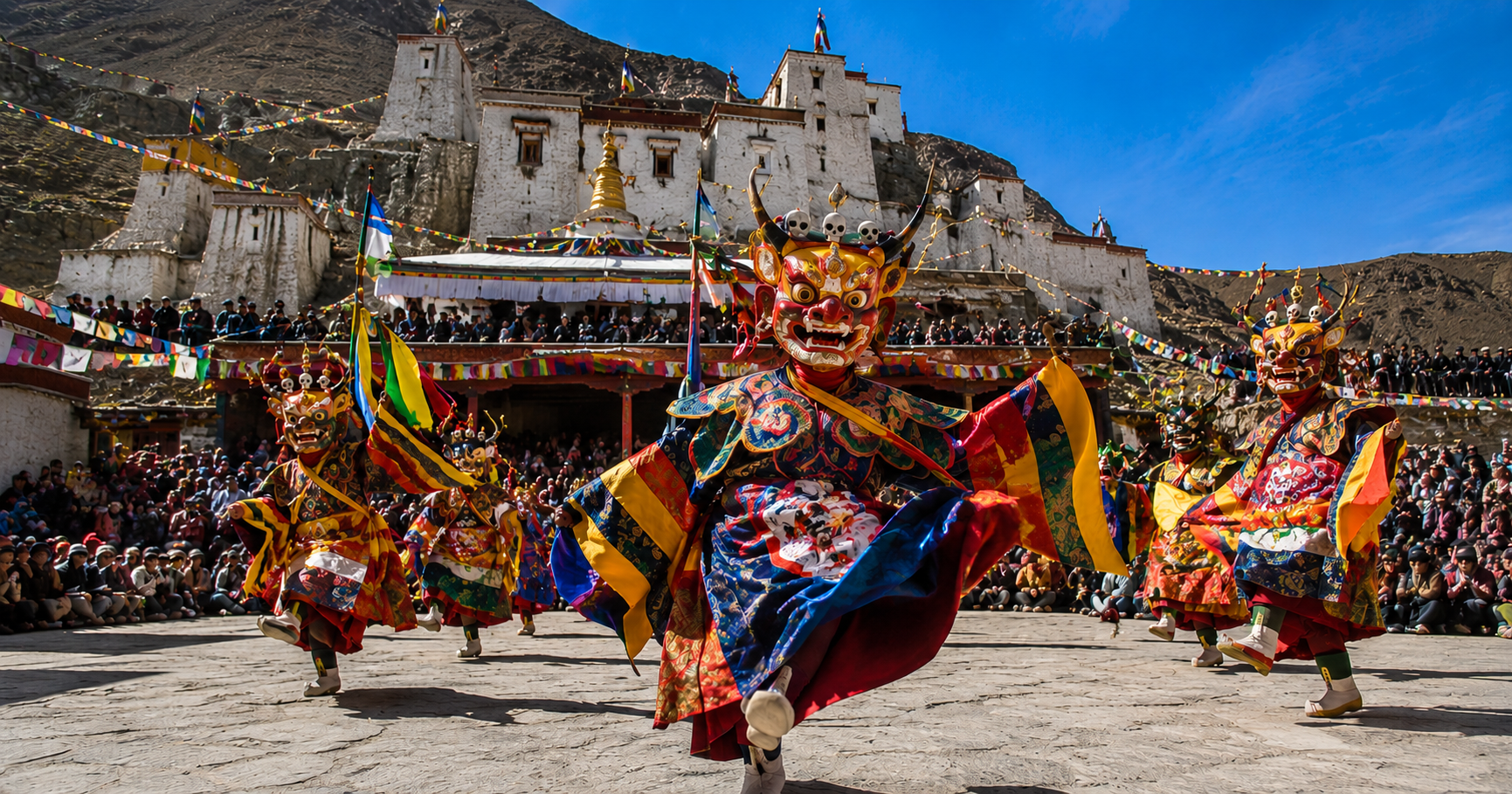
The Tiji Festival, held annually in Lo Manthang in May according to the Tibetan lunar calendar, represents the most spectacular cultural event in the entire Upper Mustang calendar — a three-day ritual drama enacting the triumph of good over evil, performed by monks in elaborate costumes and masks against the backdrop of the city’s ancient monastery. Travelers who time their jeep tour to coincide with Tiji witness something genuinely irreplaceable: a centuries-old living tradition performed in its original setting by a community for whom it carries deep religious meaning, not a cultural display staged for tourist consumption.

The Sky Caves of Chhoser and Mustang’s Cliff Dwellings

Among the most extraordinary features of the Upper Mustang landscape are the sky caves — thousands of hand-carved cavities cut into the sheer cliff faces that characterize much of the region’s dramatic topography. The caves of Chhoser village, accessible by a short jeep detour from the main Lo Manthang route, have been partially excavated by archaeologists who discovered within them human remains, manuscripts, paintings, and artifacts dating back more than a thousand years, suggesting a tradition of cliff habitation that predates the foundation of Lo Manthang itself.

Other cave complexes elsewhere in the Upper Mustang plateau contain meditation chambers, burial sites, and storage areas whose full significance archaeologists are still working to understand. Visiting these remarkable sites by jeep, which can reach cliff faces and canyon viewpoints that would require days of walking to access on foot, represents one of the clearest practical advantages of the vehicle-based approach to exploring the hidden kingdom.

The Kali Gandaki Gorge and Mustang’s Desert Landscapes

The approach to Upper Mustang through the Kali Gandaki Gorge is in itself one of the great road journeys of the Himalayan world. The Kali Gandaki River runs between the massifs of Dhaulagiri and Annapurna — the world’s seventh and tenth highest peaks respectively — in a gorge that, measured from the surrounding summits to the river below, qualifies as the deepest in the world.

The jeep road from Beni through Tatopani, Ghasa, Lete, Kalopani, Tukuche, and Marpha to Jomsom follows this extraordinary corridor, the views shifting constantly between soaring mountain walls, dramatic waterfalls, ancient terrace agriculture, and the increasingly desert-like character of the landscape as altitude increases and rainfall decreases northward into Mustang’s rain shadow.

Hidden Kingdom Adventure Nepal Upper Mustang Jeep Tour with a 4WD jeep driving through the dramatic landscapes of Lo Manthang

Above Kagbeni, where Upper Mustang’s restricted zone begins, the landscape transforms into something that feels genuinely foreign to most visitors from subtropical or temperate regions — an arid, wind-sculpted plateau of ochre, red, and grey rock formations carved by millennia of erosion into canyons, columns, and ridgelines of extraordinary visual drama. The famous eroded badlands around Chele and Ghami, the vast open plateau approaching Lo Manthang, and the windswept passes connecting the region’s scattered villages all contribute to a landscape that alternates between austere beauty and dramatic spectacle, photographed compulsively by virtually every visitor and still somehow more extraordinary in person than any image can capture.

Ancient Monasteries and the Living Tradition of Tibetan Buddhism

Throughout the Upper Mustang plateau, the monasteries, prayer walls, and chortens of Tibetan Buddhism are not the ruins of a departed civilization but the active infrastructure of a living faith, maintained by monks and supported by lay communities who have practiced these traditions without interruption across multiple centuries. Beyond Lo Manthang’s principal monasteries, numerous smaller gompa throughout the region offer encounters with monastic life that range from the magnificent to the intimately human — a single elderly monk maintaining a remote hillside shrine, a community gathering for a local festival, or simply the sight of the classic Tibetan landscape element of prayer flags streaming in the mountain wind above a pass that pilgrims have crossed for hundreds of years.

Hidden Kingdom Adventure Nepal Upper Mustang Jeep Tour with a 4WD jeep driving through the dramatic landscapes of Lo Manthang

The Complete Jeep Route: Pokhara to Lo Manthang

The standard overland jeep route to Upper Mustang begins in Pokhara, Nepal’s second city and the most practical base for organizing this adventure. It covers a total distance of approximately 235 kilometers to Lo Manthang.

The journey, typically structured over two to three days of driving, depending on the itinerary’s pace and the number of stops, passes through some of the most spectacular road scenery in Nepal before entering the restricted zone at Kagbeni. Here is a complete stage-by-stage breakdown:

Stage 1: Pokhara to Jomsom (approx. 143 km / 6–9 hours)

The first driving stage from Pokhara follows the Kali Gandaki Highway through Beni, Tatopani, and Marpha to Jomsom, the district headquarters of Mustang, at 2,720 meters. This is a long day’s drive on a road that transitions from a reasonably maintained highway in its lower sections to an increasingly rough, unpaved mountain track as it climbs through the gorge.

The road crosses the Kali Gandaki River at several points, with concrete bridges at major crossings but occasional shallower fords elsewhere that make the 4WD capability of a proper jeep genuinely valuable. Jomsom itself is a pleasant mountain town with good accommodation options, a landing strip for domestic flights that many travelers use as an alternative to the overland drive for this first stage, and a warm welcome from the local Thakali community, whose distinctive cuisine — including the famous buckwheat dishes of the Kali Gandaki Valley — provides an excellent introduction to the culinary culture of the Mustang region.

Discover the Hidden Kingdom Adventure Nepal Upper Mustang Jeep Tour with a private 4WD jeep, exploring ancient monasteries, desert valleys, Himalayan scenery, and the unique culture of the former Kingdom of Lo.

Stage 2: Jomsom to Kagbeni and the Restricted Zone Entry (approx. 18 km / 45 min)

From Jomsom, a relatively short drive of approximately 18 kilometers leads to Kagbeni village at 2,810 meters — the gateway to Upper Mustang and the location of the police checkpoint where all restricted area permits are verified. Kagbeni itself is a remarkably well-preserved medieval village of narrow alleys, traditional architecture, and an ancient monastery perched dramatically above the confluence of the Kali Gandaki and Jhong Khola rivers.

Many jeep tour itineraries include a walking exploration of Kagbeni village. At the same time, permits are processed at the checkpoint, making this a worthwhile stop in its own right rather than merely a bureaucratic pause.

Stage 3: Kagbeni to Chele and Syangboche (approx. 30 km / 2–3 hours)

Beyond Kagbeni, the road enters the restricted zone, and the landscape changes dramatically. The track climbs steeply out of the Kali Gandaki valley onto the Mustang plateau through a series of switchbacks that demand both vehicle capability and driver experience.

The villages of Chele (3,050 m) and Syangboche (3,800 m) mark the key stops on this stage, with viewpoints of the extraordinary eroded canyon country and the first sightings of the characteristic red-banded cliffs that define much of Upper Mustang’s visual character. A detour to the Chhoser sky caves is practical from this stage, requiring only a short additional journey on a manageable track.

Discover the Hidden Kingdom Adventure Nepal Upper Mustang Jeep Tour with a private 4WD jeep, exploring ancient monasteries, desert valleys, Himalayan scenery, and the unique culture of the former Kingdom of Lo.

Stage 4: Ghami, Charang and the Approach to Lo Manthang (approx. 60 km / 3–4 hours)

The final approach to Lo Manthang passes through the villages of Ghami and Charang, each with its own monasteries and traditional architecture, across a high plateau where the altitude exceeds 4,000 meters, and the open scale of the Tibetan-influenced landscape delivers its full impact. Lo Manthang appears ahead as the road descends slightly onto the plateau on which it sits, the white perimeter walls and the monastery rooftops visible against the backdrop of the mountains.

Arriving in the late afternoon, checking into one of Lo Manthang’s small guesthouses, and walking the ancient streets as the day’s light fades over the surrounding peaks is an experience that most visitors describe as one of the most emotionally powerful moments of their entire Nepal journey.

Vehicle Requirements for the Upper Mustang Hidden Kingdom Route

The Upper Mustang route makes absolutely non-negotiable demands on the vehicle used to travel it. This is not a route where the vehicle’s quality is a matter of comfort preference; it is a matter of whether the journey is physically possible and safe. Several characteristics are essential, and Nepal Vehicle Hiring Pvt Ltd provides vehicles that meet all of them as standard on every Upper Mustang booking.

Ground clearance is the first and most visible requirement. The road between Jomsom and Lo Manthang includes sections where the track surface consists of large rocks, deep ruts, or loose substrate that would either damage a low-clearance vehicle’s undercarriage directly or cause it to ground out and become immovable.

A minimum of 220mm of ground clearance, as provided by a Toyota Land Cruiser or equivalent, is the practical baseline for this route. Standard SUVs and crossovers with lower clearance should not be used.

Upper Mustang Trek

Low-range four-wheel drive is the second essential. The switchback climbs above Kagbeni, the steep descents between plateau sections, and the technical river approaches all require the maximum torque at low speed that only a proper low-range transfer case provides.

All-wheel drive systems in crossovers and comfort SUVs, designed for traction on slippery tarmac rather than genuine low-speed technical terrain, are inadequate for the demands of the Upper Mustang route and should not be considered as equivalents.

Driver experience specific to this route is the third essential. Nepal Vehicle Hiring Pvt Ltd assigns drivers to Upper Mustang bookings exclusively from among those who have personally completed the Pokhara to Lo Manthang route multiple times, who know the precise location of the route’s key technical challenges, who understand how seasonal variation affects specific sections of the track, and who have the calm, methodical driving approach that this terrain demands.

This is emphatically not a route for drivers whose experience is confined to Kathmandu Valley streets or highway transfers.

Mechanical reliability and recent servicing round out the non-negotiable requirements. A breakdown anywhere between Kagbeni and Lo Manthang places travelers in a genuinely remote situation where recovery options are limited and potentially very expensive. Every vehicle Nepal Vehicle Hiring Pvt Ltd dispatches to Upper Mustang undergoes a thorough mechanical inspection and full servicing before departure, with particular attention to tires, brakes, cooling system, and drivetrain components that experience the greatest stress in this terrain.

Upper Mustang Jeep Route: Stage by Stage Summary

StageRouteDistanceDrive TimeAltitudeRoad Type
1Pokhara → Jomsom143 km6–9 hrs820–2,720 mMixed paved & rough dirt
2Jomsom → Kagbeni18 km45 min2,720–2,810 mMainly paved
3Kagbeni → Chele / Syangboche30 km2–3 hrs2,810–3,800 mOff-road 4WD track
4Syangboche → Ghami → Lo Manthang60 km3–4 hrs3,800–3,840 mHigh plateau track
TotalPokhara → Lo Manthang251 km2–3 days820–3,840 mMixed — 4WD essential beyond Kagbeni

Hidden Kingdom Adventure Nepal Upper Mustang Jeep Tour with a 4WD jeep driving through the dramatic landscapes of Lo Manthang

2025/26 Permits for Upper Mustang: Everything Changed

One of the most significant developments affecting travel in Upper Mustang in recent years is the government’s landmark change to the restricted area permit fee structure, which took effect in late 2025. This change directly affects the cost and practical accessibility of the hidden kingdom adventure and is essential to understand before planning any visit to Upper Mustang.

NEW 2025: As of late 2025, the Government of Nepal has replaced the old mandatory USD 500 flat fee (for a fixed 10-day period) with a flexible daily rate of USD 50 per person per day inside the restricted zone. This means travelers now pay only for the exact number of days they spend beyond Kagbeni, making short jeep tours of 4–7 days significantly more affordable than under the previous structure.

Under the old system, a 5-day jeep tour still cost the same USD 500 as a full 10-day trek, which strongly discouraged shorter visits and made the overall Upper Mustang permit one of the most expensive trekking access fees in the world. The new daily rate creates a genuinely flexible cost structure that reflects actual visit duration, encourages more diverse itinerary options, and opens Upper Mustang to travelers who want a focused jeep adventure rather than a full two-week expedition.

Complete 2025/26 Permit Requirements

PermitRequired ForCostWhere to Obtain
Upper Mustang Restricted Area Permit (RAP)All foreign nationals entering beyond KagbeniUSD 50 per person per day (NEW 2025)Through a registered trekking agency (Kathmandu or Pokhara)
Annapurna Conservation Area Permit (ACAP)All visitors, including the approach road to KagbeniNPR 3,000 (~USD 22–25) per person flat feeNepal Tourism Board, Kathmandu or Pokhara
TIMS CardMost overland visitors (not required for Jomsom flight-in/out)USD 20 per personNepal Tourism Board or a registered agency
Minimum group sizeRAP cannot be issued to solo foreign travelersMin. 2 foreign nationals requiredTravel with at least one other international visitor
Licensed guideMandatory — independent travel in restricted areas is not permittedIncluded in reputable tour packagesMust be arranged through a registered Nepal agency

Jeep hire mustang

Vehicle Hire Costs for the Upper Mustang Adventure (2025/26)

Vehicle hire for the Upper Mustang jeep tour is one of the most significant cost components of the overall adventure, reflecting the demanding nature of the route, the top-end required for proper 4WD vehicles maintained specifically for this terrain, and the multi-day driver commitment involved. The following costs represent current market rates for private vehicle hire on this specific route:

Route SegmentVehicleCost (NPR)Cost (USD)Notes
Pokhara → Jomsom (one-way)4WD Jeep (Land Cruiser/Scorpio)NPR 28,000–38,000$210–$285Road only, no flight
Jomsom → Lo Manthang (one-way)4WD Jeep (Land Cruiser required)NPR 20,000–30,000$150–$225Restricted zone segment
Pokhara → Lo Manthang (full)Private 4WD JeepNPR 45,000–65,000$338–$488Full overland, one-way
Pokhara ↔ Lo Manthang (return)Private 4WD JeepNPR 80,000–120,000$600–$900Complete round-trip, multi-day
Jomsom (arrival by flight) → Lo Manthang ↔ Pokhara4WD JeepNPR 40,000–55,000$300–$413Fly in, drive out
Day hire in the Lo Manthang area4WD Jeep with driverNPR 12,000–18,000$90–$135Local sightseeing, caves, day trips

Tip: A group of four to six travelers sharing a single private 4WD jeep significantly reduces the per-person vehicle hire cost, making the Upper Mustang adventure considerably more economical for groups than for solo or couple travelers. Contact vehiclehiringnepal.com for group discount rates.

Hidden Kingdom Adventure Nepal Upper Mustang Jeep Tour with a 4WD jeep driving through the dramatic landscapes of Lo Manthang

Best Season for the Hidden Kingdom Jeep Adventure

Upper Mustang’s rain-shadow geography gives it one of the most distinctive seasonal profiles of any Nepal travel destination, making it accessible and rewarding during periods when most other Nepal trekking and adventure routes are compromised by monsoon rainfall. This exceptional characteristic is one of the region’s most practical assets for travelers with specific travel windows.

Spring, from March through May, is widely regarded as the finest overall season for the Upper Mustang jeep adventure. The combination of clear skies, comfortable daytime temperatures, the dramatic floral display of the lower Mustang valley’s apple orchards and wildflowers, and the timing of the Tiji Festival in Lo Manthang during May creates an experience that many travelers consider the definitive Upper Mustang visit.

The Tiji Festival specifically draws experienced Nepal travelers who time return visits to coincide with this extraordinary cultural event, and booking both permits and vehicles well in advance is essential for May departures.

Monsoon season, from June through August, is when the upper Mustang’s rain-shadow advantage becomes most practically significant. While the approach road from Pokhara to Beni and beyond can be affected by landslides during heavy monsoon periods, the restricted zone north of Kagbeni receives minimal rainfall.

It remains largely accessible, making this the preferred season for experienced travelers who want to avoid the peak autumn and spring crowds while still experiencing the extraordinary high-plateau landscape. The golden light of summer afternoons over the Mustang desert, combined with the dramatic monsoon cloud formations building over the surrounding peaks, creates particularly beautiful photographic conditions that many serious photographers seek out during this period.

Autumn, from September through November, brings the stable, clear conditions that characterize Nepal’s peak trekking season to Upper Mustang as well, with excellent road conditions following the monsoon’s departure, outstanding mountain visibility, and the full range of accommodation and service availability in both Jomsom and Lo Manthang. October is the busiest month, with significant competition for vehicle bookings and accommodation, making early reservation through vehiclehiringnepal.com particularly important for this period.

Winter, from December through February, brings cold temperatures to the high plateau and can close higher sections of the road due to snow, making it the least reliable season for the full Pokhara-to-Lo Manthang overland journey. Short winter visits to Jomsom and Lower Mustang remain possible and can be rewarding in their own right.

Still, the complete hidden kingdom adventure to Lo Manthang is best reserved for the more reliably accessible spring, summer, and autumn windows.

Discover the Hidden Kingdom Adventure Nepal Upper Mustang Jeep Tour with a private 4WD jeep, exploring ancient monasteries, desert valleys, Himalayan scenery, and the unique culture of the former Kingdom of Lo.

Essential Practical Information for the Hidden Kingdom Adventure

Acclimatization and Altitude Awareness

Lo Manthang sits at approximately 3,840 meters, and the road between Kagbeni and Lo Manthang climbs through terrain approaching 4,000 meters at certain points. While these altitudes are significantly lower than the extreme elevations of classic Nepal trekking passes, altitude-related discomfort — headache, fatigue, and sleep disruption — is a realistic possibility for travelers who ascend rapidly from lower elevations without allowing time for physiological adjustment.

The jeep tour’s pace, while faster than trekking, still provides some natural acclimatization opportunity through the staged ascent from Pokhara’s 820 meters through Jomsom at 2,720 meters and Kagbeni at 2,810 meters before reaching Lo Manthang. A rest day in Jomsom before proceeding north is generally recommended by experienced operators as a practical acclimatization measure for visitors coming directly from low-altitude locations.

Accommodation Along the Route

Teahouse accommodation is available at all major stops along the Upper Mustang jeep route, from Jomsom and Marpha in Lower Mustang through Kagbeni, Chele, Ghami, and Charang to Lo Manthang itself. The standard of accommodation progressively simplifies as the route goes deeper into the restricted zone, with Lo Manthang’s guesthouses offering clean basic rooms with shared facilities and hearty local meals but none of the creature comforts associated with established trekking corridors.

Electricity is increasingly available through solar systems, but hot water and private bathrooms cannot be counted on as standard in the deeper sections of the route. Travelers accustomed to comfort-oriented trekking accommodation should calibrate expectations accordingly — the experience itself more than compensates for any physical simplicity.

Mobile Connectivity and Communication

Mobile network coverage in Upper Mustang is available at certain locations along the route, primarily in Jomsom and in some sections of the main valleys, but becomes increasingly sporadic and unreliable beyond Kagbeni. Travelers should not rely on mobile connectivity for navigation or communication beyond the lower sections of the route.

They shouldn’t be family or travel companions; communication gaps of 1 to 2 days are entirely normal during the deeper sections of the Upper Mustang adventure. Nepal Vehicle Hiring Pvt Ltd provides drivers with emergency contact protocols and local network knowledge that help manage communication expectations appropriately.

  • Carry sufficient NPR cash for the complete Upper Mustang journey — ATMs are available in Jomsom but nowhere beyond.
  • Obtain all permits before leaving Pokhara — permit processing is not available beyond the main tourism offices.
  • Dress in warm layers even in summer — evenings above 3,000 m can be dramatically colder than in Pokhara.
  • Carry water purification — bottled water becomes scarce and expensive beyond Kagben .i
  • Pack sun protection rated SPF 50 or higher — UV intensity at altitude is severe.
  • Confirm the vehicle’s condition, including the spare tire and recovery equipment, before departing Pokhar.a
  • Book in advance — particularly for May (Tiji Festival) and October, when vehicle and accommodation availability is tightest

Discover the Hidden Kingdom Adventure Nepal Upper Mustang Jeep Tour with a private 4WD jeep, exploring ancient monasteries, desert valleys, Himalayan scenery, and the unique culture of the former Kingdom of Lo.

Why Book Your Hidden Kingdom Adventure with Nepal Vehicle Hiring Pvt Ltd

The Upper Mustang hidden kingdom adventure is not a journey where the quality of the vehicle hire provider is a secondary consideration. The route’s technical demands, the importance of proper permit coordination, the need for genuinely experienced mountain drivers, and the consequences of vehicle failure in a remote restricted area all mean that the choice of transport provider directly shapes not just the comfort but the safety and success of the entire experience.

Nepal Vehicle Hiring Pvt Ltd has been arranging vehicle transport to Upper Mustang for travelers who value reliable, professional, and genuinely capable mountain vehicle hire. Our Upper Mustang fleet consists exclusively of properly maintained Toyota Land Cruisers and equivalent vehicles, serviced specifically for the demands of this route before every departure.

Our drivers assigned to Upper Mustang bookings have personally completed the Pokhara-to-Lo Manthang route on multiple occasions, giving them the route-specific knowledge, technical driving confidence, and local community connections that make a meaningful, practical difference on this journey.

We provide transparent, all-inclusive pricing for every Upper Mustang booking, clearly distinguishing vehicle hire costs from the separate permit, guide, and accommodation costs that complete the adventure’s budget picture. We work alongside registered trekking agencies to help coordinate permit applications for clients who need this support, and we provide practical pre-departure guidance on everything from cash requirements to packing recommendations, drawing on years of supporting travelers on exactly this route.

Hidden Kingdom Adventure Nepal Upper Mustang Jeep Tour with a 4WD jeep driving through the dramatic landscapes of Lo Manthang

Beyond Upper Mustang: Other Hidden Kingdom Experiences in Nepal

While Upper Mustang is rightly the centerpiece of the hidden kingdom narrative in Nepal, the country contains several other regions that share this quality of extraordinary remoteness, cultural preservation, and restricted-area exclusivity. Nar-Phu Valley, accessed from the Annapurna Circuit route near Koto village, is perhaps the most accessible of these additional hidden kingdom destinations, involving a restricted area permit and a dedicated guide arrangement.

The vehicle hire for Nar-Phu begins with the same Kathmandu or Pokhara to Besisahar and Chame transfer that any Annapurna Circuit trekker requires, revealing a side of the Annapurna region of remote Tibetan Buddhist communities and high pastures almost absent from the main circuit experience.

Upper Dolpo, accessible by domestic flight and overland travel in the far west of Nepal, represents perhaps the most extreme version of the hidden kingdom experience available anywhere in the country — the landscape that inspired Peter Matthiessen’s The Snow Leopard, where the ancient Bon Buddhist tradition survives in its most undiluted form on Earth. Phoksundo Lake, the luminous turquoise jewel at 3,611 meters, is accessible to visitors willing to undertake the approach to this remote region.

Humla district, bordering Tibet in Nepal’s far northwest, is the starting point for the overland journey toward Tibet’s sacred Mount Kailash, one of the great adventure journeys of the Himalayan world. Nepal Vehicle Hiring Pvt Ltd arranges vehicle hire for all of these hidden kingdom destinations with the same commitment to appropriate vehicle selection, experienced drivers, and transparent pricing that defines our Upper Mustang service — providing a single, trusted transport partner across every restricted and remote destination in Nepal’s extraordinary adventure portfolio.

Frequently Asked Questions

Can I visit Upper Mustang independently without a guide?

No. Upper Mustang is a restricted area, and Nepalese law requires all foreign visitors to be accompanied by a licensed guide arranged through a registered Nepal trekking agency. Independent travel in the restricted zone is not permitted and will result in being turned back at the Kagbeni checkpoint. This rule applies equally to trekkers, jeep tour participants, and motorcyclists.

How much does the Upper Mustang restricted area permit cost in 2025/26?

As of late 2025, the permit costs USD 50 per person per day for the days spent inside the restricted zone north of Kagbeni. This replaced the old USD 500 flat fee for a minimum 10-day period.

A 5-day jeep tour to Lo Manthang now costs USD 250 per person in restricted area permit fees, compared to USD 500 under the previous structure. You also need an ACAP (NPR 3,000) and a TIMS card (USD 20). A licensed guide is mandatory.

How long does the jeep journey from Pokhara to Lo Manthang take?

The complete overland journey from Pokhara to Lo Manthang covers approximately 25 kilometers. It is typically spread over 25 kilometers of appropriate acclimatization stops, cultural visits along the route, and realistic daily driving distances on roads that are demanding enough to make sustained multi-hour driving at speed impractical. Most itineraries overnight in Jomsom on the first night and Chele or Ghami on the second before reaching Lo Manthang on day three.

Can the Upper Mustang route be done in a standard SUV?

No. The road beyond Kagbeni requires a proper 4WD vehicle with high ground clearance, low-range gearing, and robust construction. Standard SUVs and crossovers are not suitable and should not be used on this route. Nepal Vehicle Hiring Pvt Ltd provides only Land Cruiser and equivalent vehicles for Upper Mustang bookings — vehicles specifically suited to and maintained for the demands of this terrain.

Is Upper Mustang accessible during the monsoon season?

Yes — this is one of Upper Mustang’s unique advantages. The restricted zone north of Kagbeni sits in a rain shadow. It receives minimal monsoon rainfall, making it one of the few Nepal adventure destinations accessible and enjoyable during the June to August monsoon period.

The approach road from Pokhara can be affected by landslides during heavy monsoon, so timing and conditions should be checked with your vehicle hire provider before departure.

What is the best time to visit Upper Mustang for the Tiji Festival?

The Tiji Festival is held in Lo Manthang each year in May, with exact dates determined by the Tibetan lunar calendar (typically mid to late May). Booking both permits, vehicles, and accommodation well in advance — ideally two to three months before departure — is essential for May visits, as this is the single most popular time for Upper Mustang travel and availability across all categories becomes tight very early.

Planning the hidden kingdom adventure also invites a deeper reflection on what distinguishes genuinely transformative travel from ordinary tourism, a distinction that matters to the growing number of travelers who seek experiences that shift their understanding of the world rather than simply adding another destination to a list. Upper Mustang offers this quality in a form that few other accessible destinations anywhere can match.

The encounter with Lo Manthang’s living medieval culture, the scale of the Mustang desert plateau seen from a high jeep track at sunset, the intimacy of a butter-tea conversation with a Loba elder in a monastery courtyard, the physical journey itself across the world’s deepest gorge and onto a plateau that feels genuinely Tibetan — these are not experiences that can be adequately prepared for or fully anticipated. Thearrivee, and transform.

Nepal Vehicle Hiring Pvt Ltd exists to make the practical arrangements around this transformation as smooth, reliable, and uncomplicated as possible, so that the adventure itself can claim all the attention and energy it deserves.

Conclusion: Answer the Call of the Hidden Kingdom

Upper Mustang is one of the last places on Earth where a traveler can genuinely feel they have arrived somewhere the world has not yet fully found. The ancient walled city of Lo Manthang, the extraordinary sky caves carved into orange cliffs a thousand years ago, the desert plateau that seems to belong more to Central Asia than to the Himalayan Nepal most visitors know, the Tibetan Buddhist traditions carried unbroken through centuries of isolation.

The dramatic mountain landscapes of the Kali Gandaki Gorge and the high Mustang plateau combine to create an adventure that is less like tourism and more like a journey into living history.

The 2025/26 permit reform, replacing the old USD 500 flat fee with a flexible USD 50-per-day structure, has made the hidden kingdom more financially accessible than at any point in its three decades of international openness. With improving road infrastructure toward Lo Manthang and the growing quality of vehicle and driver services on this route, there has never been a better time to plan the Upper Mustang adventure.

Nepal Vehicle Hiring Pvt Ltd stands ready to provide the right vehicle, the right driver, and the right practical support to make your hidden kingdom journey unfold exactly as it should.

Pokhara to Mustang Road Overview: Complete Jeep Guide

Pokhara to Mustang Road Overview with a 4WD jeep traveling through the Kali Gandaki Valley toward Upper Mustang

Pokhara to Mustang Road Overview: Complete Jeep Guide

A road in Nepal begins beside the reflections of the Annapurna range on Phewa Lake in Pokhara and ends in a 14th-century walled city on the edge of the Tibetan Plateau. It passes through the world’s deepest gorge, climbs through apple orchards and ancient salt-trading villages, and crosses a rain shadow boundary where the monsoon loses its grip.

The landscape shifts from a green valley to high desert in a few kilometres. Eventually, it delivers the traveller to one of Asia’s most extraordinary destinations: Lo Manthang, the ancient capital of the Kingdom of Lo—what the world knows as Upper Mustang.

The Pokhara-to-Mustang road is not a single road but a sequence of roads, each with its own character and demands. It begins on a well-paved highway heading northwest through the Myagdi hills, transitions to a rougher mountain track at Beni, follows the Kali Gandaki River gorge through some of the most dramatic scenery in the Himalayan world, and eventually becomes a high-altitude off-road track that only a capable 4WD vehicle with an experienced mountain driver can navigate safely.

The total distance from Pokhara to Lo Manthang is approximately 222 kilometres, but those kilometres bear no resemblance to a conventional 222-kilometre road. They are 222 kilometres of Nepal — variable, demanding, spectacular, and utterly unlike anything you will have driven through before.

Nepal Vehicle Hiring Pvt. Ltd., based in Thamel, Kathmandu, offers the definitive Pokhara to Mustang jeep service for this route — well-maintained 4WD vehicles, experienced mountain road drivers who know every section from Pokhara’s Lakeside to Lo Manthang’s palace gates, and an all-in pricing model that removes uncertainty from one of Nepal’s most logistically complex journeys. This guide provides a complete, research-backed road overview for every kilometre of the Pokhara–Mustang route — distances, altitudes, road conditions, key villages, permit requirements, best stops, and everything else you need to understand and prepare for this extraordinary overland journey.

Whether you are comparing it with the Kathmandu-to-Mustang private jeep option, planning a combined Muktinath Yatra itinerary, or building a broader Nepal tour package that includes Mustang alongside Kathmandu, Pokhara, and Chitwan — this guide has everything you need.

Pokhara to Mustang Road Overview with a 4WD jeep traveling through the Kali Gandaki Valley toward Upper Mustang

Pokhara to Mustang: Full Route Overview and Distance Breakdown

The complete road journey from Pokhara to Lo Manthang is broken into four distinct legs, each with its own road surface, difficulty level, and character. Understanding these legs before you travel helps you set realistic expectations and plan your overnight stops.

Leg 1: Pokhara to Beni — 85 km, 2.5 to 3 hours

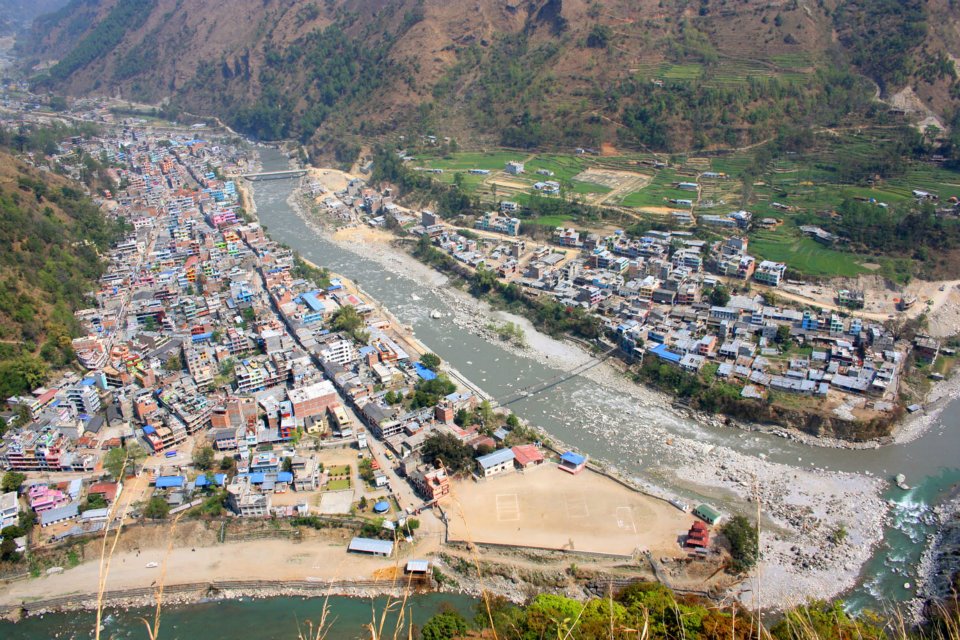
The journey begins in Pokhara’s Lakeside district and heads northwest on a well-maintained paved road through the foothills of Myagdi District. The road passes through Naudanda (Nine Hills) — a ridge viewpoint offering some of the finest panoramic views of the Annapurna range available by road, including Annapurna South, Machhapuchare (the Fishtail), Annapurna I, and Dhaulagiri — before descending to the Modi Khola valley and continuing to Beni (830 m), the headquarters of Myagdi District and the last substantial town before the road turns serious.

The Pokhara–Beni road is mostly blacktop and well maintained. It is comfortable for standard vehicles and passes through increasingly dramatic hill country as it approaches Beni.

The Sarangkot sunrise tour vehicle many visitors use for the pre-dawn Pokhara mountain panorama often transitions directly into the Beni departure — travellers who watch the Annapurna sunrise from Sarangkot and then depart for Mustang the same morning make good use of the northward mountain view that anchors both experiences. Beni itself is a compact town at the confluence of the Myagdi and Kali Gandaki rivers, with basic facilities, fuel, and the last reliable ATM before the mountains.

Pokhara to Mustang Road Overview with a 4WD jeep traveling through the Kali Gandaki Valley toward Upper Mustang

Leg 2: Beni to Jomsom — 85 km, 5 to 6 hours

Beyond Beni, the road changes character entirely. The blacktop surface becomes intermittent and ultimately disappears as the road follows the Kali Gandaki River north through an extraordinary gorge.

This section — roughly 85 kilometres from Beni to Jomsom — is the most dramatic and most demanding leg of the Pokhara–Mustang drive, and it is where the 4WD requirement becomes absolute. The road is a mix of gravel, compacted rock, and rough track that requires high ground clearance and four-wheel-drive capability, particularly through river-crossing sections and the narrow cliff passages above the Kali Gandaki gorge.

The Kali Gandaki gorge between Beni and Jomsom is widely recognised as the world’s deepest river gorge, with the Kali Gandaki River flowing between Dhaulagiri (8,167 m) to the west and Annapurna I (8,091 m) to the east, two of the world’s highest peaks standing barely 35 kilometres apart, with the gorge floor at approximately 1,200 meters. The vertical relief of approximately 7,000 meters from the gorge floor to the mountain summit is unmatched anywhere on Earth, and the experience of driving through this gorge — with the river roaring below and the colossal mountain walls closing in from both sides — is one of the most viscerally impressive natural environments accessible by road anywhere in Nepal.

Key stops along the Beni–Jomsom leg include:

  • Tatopani (1,190 m) — a small village famous throughout Nepal for its natural hot springs beside the Kali Gandaki River. After the rough road from Beni, a 30-minute soak in the thermal pools at Tatopani is one of the most restorative experiences on the entire journey. The village also serves as a lunch stop for most Mustang-bound vehicles, with a cluster of teahouses offering dal bhat and the opportunity to rest before the harder road ahead. Tatopani lies about 21 kilometres north of Beni.
  • Ghasa (2,010 m) — the boundary village between the Annapurna Conservation Area’s lower zone and the upper Mustang region. Ghasa marks the point where the vegetation changes dramatically — the lush subtropical forest of the lower gorge gives way to more arid pine and juniper as the altitude rises. The rain shadow begins to assert itself. Ghasa itself is a traditional Thakali village worth a brief stop to see the stone houses, prayer flags, and the landscape transition that defines this crucial boundary point.
  • Kalopani (2,530 m) — arguably the finest mountain viewpoint accessible by road on the entire Beni–Jomsom leg. The Dhaulagiri Icefall — a massive cascade of glacial ice on the eastern face of Dhaulagiri — is directly visible from the road at Kalopani, and at certain times of day (particularly early morning) the icefall catches the light in a way that makes it one of the most spectacular sights in all of Nepal. Several small guesthouses have established themselves at Kalopani specifically to capture the dawn and dusk views. Tukuche Peak (6,920 m), Nilgiri (7,061 m), and Annapurna I also dominate the view here.
  • Marpha (2,667 m) — the apple orchard capital of Nepal, with beautifully whitewashed, immaculately maintained stone-paved lanes, is famous for producing the finest apples in Nepal and the apple brandy distilled from them. Marpha apple products—dried fruit, juice, brandy—are sold in teahouses across the Annapurna and Mustang regions. Stopping in Marpha to walk its pristine alleys and visit its monastery is a highlight of the lower Mustang drive. The village sits just 14 kilometres south of Jomsom.

The Rupse Waterfall — a spectacular 300-meter cascade visible from the road — is another memorable sight on this leg, typically encountered between Tatopani and Ghasa. Your Nepal Vehicle Hiring driver will know exactly where to pull over safely for the best view of the waterfall and the gorge section below it.

Pokhara to Mustang Road Overview with a 4WD jeep traveling through the Kali Gandaki Valley toward Upper Mustang

Leg 3: Jomsom to Kagbeni — 11 km, 30 to 45 minutes

Jomsom (2,720 m) is the district headquarters of Mustang District and the main hub of the Kali Gandaki valley — a surprisingly substantial town with an airport (the small Jomsom Airport receives daily morning flights from Pokhara), government offices, banks, lodges, and trekking equipment shops. Jomsom is the natural overnight stop for vehicles driving up from Beni in a single day, and most travellers spend their first night in the Mustang region there before continuing north the following morning.

From Jomsom, the road continues 11 kilometres north to Kagbeni (2,810 m) — the medieval gateway village that marks the beginning of Upper Mustang’s restricted zone. The 11-kilometre Jomsom-to-Kagbeni section follows the Kali Gandaki River bank on a relatively flat, easy road taking 30 to 45 minutes by jeep.

Kagbeni is one of the most architecturally compelling villages in the entire Mustang region — a cluster of medieval stone buildings, narrow underpass lanes, a dramatically sited red-walled monastery (Kagbeni Gompa), and a confluence of rivers that lends the village a natural drama, reinforced by the sheer scale of the surrounding mountain walls. The Kagbeni checkpoint at the village’s northern exit is where all Restricted Area Permits are checked before allowing entry into Upper Mustang — no traveller passes this point without the RAP, regardless of any other documentation they carry.

Leg 4: Kagbeni to Lo Manthang — 61 km, 3.5 to 5 hours

The Kagbeni-to-Lo Manthang section is what gives Upper Mustang its character and reputation. Beyond the checkpost, the road leaves the Kali Gandaki valley behind and enters the true rain-shadow plateau. This landscape shifts from narrow gorge to broad canyon country to high desert plateau over 61 kilometres.

This section requires the most capable vehicle and the most experienced driver, with steep climbs, exposed traverses above deep gorges, seasonal river fords, and road surfaces ranging from compacted gravel to loose rock to raw Earth that turns to mud after any rain.

The Kagbeni–Lo Manthang journey passes through the following key villages and waypoints, each deserving attention:

Pokhara to Mustang Road Overview with a 4WD jeep traveling through the Kali Gandaki Valley toward Upper Mustang

The Villages of Upper Mustang: What You See Between Kagbeni and Lo Manthang

Chhusang / Chhuksang (2,980 m): First Village of the Forbidden Kingdom

Approximately 20 kilometres north of Kagbeni, Chhusang (also written Chhuksang) is the first substantial village inside the Upper Mustang restricted zone, sitting at the confluence of the Kali Gandaki and a smaller side valley at 2,980 meters. The village is notable for its striking, eroded red-sandstone cliffs above the settlement — one of the first clear signs that the landscape has shifted into the extraordinary geological theatre of the Mustang plateau.

From Chhusang, a short side trip takes you to the abandoned village of Tetang and the ruins of Gompa Gang monastery, perched dramatically on a clifftop above the valley. Chhusang typically serves as the first overnight stop for jeep tours that prefer to spread the Kagbeni–Lo Manthang drive over two days rather than a single long push.

Chele (3,050 m): Entry to Canyon Country

Chele, approximately 7 kilometres north of Chhusang, announces the full drama of Upper Mustang’s canyon landscape. The road from Chhusang to Chele passes through a narrow gorge where the cliffs glow in shades of ochre, rust, and purple, and where the wind — the famous Mustang wind that blows strongly from the north every afternoon as warm air rises from the plains — begins to make its presence felt.

Chele village itself sits at 3,050 meters on a bench above the gorge, with a small monastery, traditional flat-roofed Tibetan-style houses, and views north toward the expanding plateau. The route from Chele begins a sustained climb toward the Syangboche plateau, which provides one of the most dramatic driving sections on the entire Pokhara–Mustang road.

Samar (3,660 m) and the Chungsi Cave

The village of Samar at 3,660 meters is a rewarding pause point — a traditional Loba (Lo-pa) community with a well-maintained gompa, stone walls hung with prayer flags, and a wide plateau view that opens dramatically north and east toward the high Mustang landscape. Between Chele and Samar, and then continuing toward Syangboche, the route passes near the Chungsi Cave Monastery — an ancient meditation cave revered as a site where Guru Padmasambhava (Guru Rinpoche) is said to have meditated during his 8th-century journey through the Himalayan kingdoms.

The cave is set dramatically in a canyon wall, accessible by a short trail from the main jeep road. It contains ancient paintings and offerings, making it one of the most spiritually resonant stops in Upper Mustang.

Syangboche (3,800 m): The High Plateau Begins

Syangboche, at 3,800 meters, marks the point at which the road gains the Upper Mustang plateau in earnest. At this elevation, the landscape is definitely high-altitude desert. The same barren, wind-scoured terrain characterises the Tibetan Plateau immediately, with sparse grasses, low scrub, and the bone-dry air of the deep rain shadow.

The road at Syangboche crosses the Syangboche La pass (3,850 m) and the nearby Nyi La (4,020 m) — two of the higher passes on the Kagbeni–Lo Manthang route, where the driving demands are at their greatest, and the mountain views are at their most expansive. Dhaulagiri, Tukuche, Nilgiri, Tilicho Peak, and Damodar Danda are all potentially visible from the high points near Syangboche on a clear day.

Pokhara to Mustang Road Overview with a 4WD jeep traveling through the Kali Gandaki Valley toward Upper Mustang

Ghami / Ghemi (3,520 m): The Longest Mani Wall in Nepal

Ghami (also spelt Ghemi), at 3,520 meters, is one of Upper Mustang’s larger and more historically significant villages — a warm, sheltered settlement in a broad valley bowl with substantial cultivated land (barley and buckwheat fields that glow gold in autumn) and one of the most photogenic cultural features on the entire route: the longest mani wall in Nepal. This extraordinary structure — a wall of stones, each carved with Buddhist prayers and mantras, stretching for hundreds of meters — represents centuries of accumulated devotion from the Loba community.

Walking along the mani wall, reading the carved inscriptions, and looking across Ghami’s fields to the surrounding plateau is one of Upper Mustang’s most quietly moving cultural experiences. Ghami also has a centuries-old monastery, colourful chortens, and traditional architecture that has changed little in several hundred years.

Dhakmar (3,820 m): The Red Cliffs

Dhakmar is not the largest village on the route, but it may be the most visually extraordinary. The settlement sits at 3,820 meters beneath a massive escarpment of blood-red sandstone cliffs that glow with an almost surreal intensity at sunrise and sunset — the crimson walls loom above the whitewashed village, creating a colour contrast photographers describe as one of the finest natural compositions in the Himalayas.

The Dhakmar cliffs are honeycombed with ancient cave dwellings carved into the rock face at various levels — some accessible only by ladder, others permanently sealed — that are believed to date back more than two thousand years. The drive through Dhakmar — particularly in the late afternoon when the western light catches the cliff face — is one of the highlights of the full Mustang road journey.

Tsarang / Charang (3,560 m): The Palace and the Ancient Monastery

Tsarang (also known as Charang), at 3,560 metres, is the second-largest settlement in Upper Mustang and one of its most historically significant. The five-story Charang Palace — one of the oldest palace structures in the Mustang region — rises dramatically above the village on a hilltop.

At the same time, the Tsarang Gompa (Charang Monastery), built in the 14th century, houses an outstanding collection of ancient thangka paintings, clay sculptures, and Buddhist manuscripts, representing some of the finest religious art in the Himalayan world. The monastery’s inner sanctum murals are particularly remarkable — highly detailed iconographic paintings in the Western Tibetan style that have survived largely intact due to the extreme aridity of the Mustang climate.

Tsarang is approximately 2 kilometres south of Lo Manthang and typically serves as the penultimate overnight stop before arriving at the capital.

Lo Manthang (3,840 m): The Walled Capital

The road winds through Lo Manthang — 3,840 meters above sea level — surrounded by high mud-brick walls that have enclosed the ancient capital of the Kingdom of Lo since its founding in 1380 AD by King Ame Pal. Inside those walls, whitewashed houses line narrow alleys, the five-story royal palace of the King of Lo rises above everything, and the monasteries of Thubchen Gompa, Chode Gompa, and Jampa Lhakhang house some of the finest Buddhist art in the entire Himalayan world.

The city that the road has been building toward for 222 kilometres from Pokhara is genuinely worth every kilometre of the approach. This living medieval city has survived at the edge of the world, with its culture, architecture, and spiritual traditions essentially intact.

Nepal Vehicle Hiring’s Pokhara to Mustang jeep service takes you to Lo Manthang’s gates after a journey most travellers describe as one of the finest overland adventures of their lives. The route’s mix of gorge driving, plateau landscapes, ancient villages, and the steady reveal of the Tibetan cultural world makes the 222-kilometre drive from Pokhara to Lo Manthang not just a way to reach a destination, but a travel experience in its own right.

Pokhara to Mustang Road Overview with a 4WD jeep traveling through the Kali Gandaki Valley toward Upper Mustang

Lower Mustang: The Valley Between Jomsom and Kagbeni

Many travellers focus exclusively on Upper Mustang north of Kagbeni, but the Lower Mustang valley between Jomsom and Kagbeni deserves attention in its own right. This section, which does not require the Restricted Area Permit, contains some of the most interesting cultural landscapes in Gandaki Province, and any vehicle-based Mustang journey should set aside time to explore it properly.

Jomsom itself is worth half a day — the town sits between two dramatic mountain walls with a wide valley floor swept by the famous Mustang wind that builds every afternoon. The small Jomsom Museum covers the cultural and natural history of the Mustang region, and the ACAP office in Jomsom is where you can get conservation area permits if you didn’t arrange them in Pokhara or Kathmandu.

Jomsom’s airport offers twice-daily morning flights from Pokhara — typically Twin Otter or Dornier aircraft that land before the afternoon wind makes flying impossible — and is the flight option for travellers who want to reach Jomsom quickly, then drive or trek northward from there.

Muktinath Temple (3,710 m) — accessible via the Jomsom–Muktinath side road — is one of the most important sacred sites in both Hinduism and Buddhism, located 21 kilometres north of Kagbeni and eastward up the Jhong Khola valley. Our dedicated Muktinath Yatra itinerary covers this section in detail for pilgrims and spiritual travellers.

The Muktinath visit can be incorporated into the Pokhara–Mustang itinerary as a side trip before the main push to Lo Manthang, or as a stop on the return journey.

Pokhara to Mustang Road Overview with a 4WD jeep traveling through the Kali Gandaki Valley toward Upper Mustang

Road Conditions on the Pokhara to Mustang Route: Section by Section

Understanding road conditions on each section of the Pokhara–Mustang route is essential for planning your vehicle choice, overnight schedule, and expectations for the journey. The route spans a dramatic range of road quality—from smooth blacktop to raw mountain track—and conditions change significantly with the seasons.

Pokhara to Beni: Good Blacktop

The Pokhara to Beni section (85 km) is on a predominantly well-maintained paved road with occasional construction sections. Standard vehicles can handle this leg, though Nepal Vehicle Hiring always deploys a 4WD jeep from the outset, given the conditions on the onward mountain road.

The road is two lanes for most of its length, narrowing to a single lane in hill sections. Expect 2.5 to 3 hours of comfortable driving with clear mountain views on good-weather mornings.

Beni to Tatopani: Rough Begins

The 21 kilometres from Beni to Tatopani mark the beginning of the rough road. Blacktop becomes patchy and then disappears, replaced by compacted gravel and loose rock. River crossing points exist in this section.

The road follows the Kali Gandaki River bank closely, with occasional drops to the river’s edge that demand careful driving. This section takes approximately 1.5 to 2 hours.

Pokhara to Mustang Road Overview with a 4WD jeep traveling through the Kali Gandaki Valley toward Upper Mustang

Tatopani to Jomsom: The Gorge Road

The remaining 64 kilometres from Tatopani to Jomsom through Ghasa, Kalopani, Tukuche, Marpha, and the upper gorge are the most demanding road section below Kagbeni—consistently rough, narrow in places, and requiring full 4WD engagement through the steeper switchbacks and river-level sections where the road cuts across unstable scree fans. The afternoon wind in the Kali Gandaki gorge is one of the world’s most powerful valley wind systems, building every afternoon from the south and making conditions increasingly difficult for open vehicles and motorcycles after midday.

This is why Nepal Vehicle Hiring recommends leaving Beni early (by 7 AM), so you complete the gorge section before the winds pick up. The Tatopani–Jomsom section takes 3.5 to 4.5 hours depending on conditions.

Kagbeni to Lo Manthang: Full Off-Road

The 61 kilometres from Kagbeni to Lo Manthang via Chhusang, Chele, Syangboche, Ghami, Dhakmar, and Tsarang are genuinely off-road—unpaved throughout, with stream crossings, steep climbs, exposed cliff-edge sections, and surfaces ranging from packed gravel to loose shale to raw earth. The passes near Syangboche (Nyi La) are the highest points on the road, where thin air reduces engine performance,e and driver fatigue requires careful management.

This section should be planned as a two-day drive for comfortable overland travel — Kagbeni to Ghami (approximately 40 km, 4 to 5 hours) on day one, and Ghami to Lo Manthang via Tsarang (approximately 21 km, 2 to 3 hours) on day two. Some itineraries with strong drivers and good conditions complete the full Kagbeni–Lo Manthang section in a single long day (7 to 8 hours), but this is physically demanding and leaves little time for en route village exploration.

Monsoon Season Road Conditions (June to September)

The Beni–Jomsom section is particularly vulnerable to monsoon-season disruption. Landslides, rockfalls, and road washouts occur regularly between June and September in the Kali Gandaki gorge, and the road is often blocked for hours to several days during heavy monsoon rain. Nepal Vehicle Hiring’s drivers monitor road conditions daily during the monsoon and will proactively advise clients if the route is blocked or alternative scheduling is required.

The Upper Mustang section north of Kagbeni is significantly drier during the monsoon season because it lies within the Himalayan rain shadow. Road conditions there are generally manageable even in the monsoon months, making Upper Mustang one of the few Nepal mountain destinations that remain fully accessible year-round.

Travellers specifically targeting monsoon visits to the green lower valley, combined with the dry upper plateau, can do so with proper planning and a reliable 4WD vehicle.

Pokhara to Mustang Road Overview with a 4WD jeep traveling through the Kali Gandaki Valley toward Upper Mustang

Permits Required for the Pokhara to Mustang Road Journey

The Pokhara–Mustang road journey crosses several administrative and conservation zone boundaries, each with its own permit requirement. Understanding the full permit picture before departure avoids delays at checkpoints and ensures your itinerary is not disrupted.

Annapurna Conservation Area Permit (ACAP)

The ACAP is required for all foreign nationals entering the Annapurna Conservation Area, which covers the Beni–Jomsom corridor and the lower Mustang region. The current fee (2026) is NPR 3,000 (approximately USD 22–25) per person and is valid for the duration of your visit without a daily limit.

You can obtain ACAP permits at the Nepal Tourism Board office in Kathmandu, the ACAP office in Pokhara or Beni, or through a registered travel or trekking agency. Nepal Vehicle Hiring coordinates ACAP permit processing through our partner agencies as part of the full Mustang jeep service.

Upper Mustang Restricted Area Permit (RAP)

Entry into Upper Mustang—specifically, the zone north of Kagbeni—requires a Restricted Area Permit (RAP). In November 2025, the Government of Nepal formally overhauled the RAP fee structure, replacing the old flat-fee system (USD 500 per person for the first 10 days) with a daily rate of USD 50 per person per day for the exact number of days spent inside the restricted zone.

This means a 3-day visit to Lo Manthang costs USD 150 per person; a 5-day visit costs USD 250 per person — a far more flexible and equitable system that makes shorter visits significantly more affordable than before.

The RAP must be arranged through a licensed Nepal trekking or tour agency; foreign nationals cannot obtain it independently. All foreign visitors to Upper Mustang must also travel with a licensed guide.

As of March 2026, the minimum group size requirement has been removed, meaning solo foreign travellers can enter Upper Mustang as long as they have the RAP and a licensed guide. Nepal Vehicle Hiring works with licensed partner agencies to arrange all permit processing in Pokhara or Kathmandu before departure, ensuring clients arrive at the Kagbeni checkpoint fully documented and ready to proceed without delay.

TIMS Card

The TIMS (Trekkers’ Information Management System) card requirement has been revised in recent years. It is no longer mandatory for travellers holding a valid ACAP permit for the Annapurna and Mustang regions. However, requirements can change, and Nepal Vehicle Hiring recommends confirming the current TIMS requirements with our team at the time of booking rather than assuming they have not changed since this guide was published.

Pokhara to Mustang Road Overview with a 4WD jeep traveling through the Kali Gandaki Valley toward Upper Mustang

The following 7-day itinerary is Nepal Vehicle Hiring’s recommended schedule for a Pokhara–Mustang jeep journey that balances comfortable driving stages with meaningful time for village exploration and acclimatisation. You can adjust it based on acclimatisation constraints and interests.

  • Day 1: Pokhara to Jomsom via Beni, Tatopani, Ghasa, Kalopani, and Marpha. Depart Pokhara by 6:30 AM. Breakfast at Malekhu or Tatopani. Lunch at Kalopani with Dhaulagiri Icefall view. Visit Marpha Apple Village. Overnight in Jomsom. (195 km, 7 to 8 hours with stops.)
  • Day 2: Jomsom exploration and Muktinath side trip. Morning drive to Muktinath Temple (3,710 m) via Kagbeni — see Muktinath Yatra itinerary. Return to Kagbeni for permit registration and overnight. Explore Kagbeni’s medieval lanes and monastery.
  • Day 3: Kagbeni to Ghami via Chhusang, Chele, Chungsi Cave, Samar, and Syangboche. Permit checkpoint at Kagbeni exit. Chungsi Cave stop. Nyi La Pass crossing. Overnight in Ghami. (Approximately 40 km, 5 to 6 hours.)
  • Day 4: Ghami to Lo Manthang via Dhakmar and Tsarang. Dhakmar Red Cliff stop—Tsarang Palace and Gompa visit. Arrive in Manthang late in the afternoon. Explore Thubchen, Chode, and Jampa monasteries. Overnight in Lo Manthang. (Approximately 25 km, 3 to 4 hours.)
  • Day 5: Lo Manthang exploration and Chhoser side trip. Day in the walled city — King’s Palace, Tashi Gephel Palace courtyard, village lanes. Afternoon excursion to Chhoser Valley (Jhong Cave). Overnight Lo Manthang.
  • Day 6: Lo Manthang to Jomsom return via Tsarang, Ghami, Samar, Kagbeni. Permit exit at Kagbeni. Overnight Jomsom.
  • Day 7: Jomsom to Pokhara via Marpha, Tatopani (hot spring stop), Beni. Arrive in Pokhara in the afternoon. Return to the Lakeside Hotel.

This itinerary uses Nepal Vehicle Hiring’s Pokhara-to-Mustang jeep service throughout. The service includes all vehicle, driver, and fuel costs. The client arranges accommodation and food independently or through our partner agency.

Contact us through the “Plan Your Trip “ page to receive a full quote and a customised itinerary.

Mustang

Vehicle Requirements: Customarily, a 4WD Jeep Will Do

The Pokhara to Mustang road is one of Nepal’s most vehicle-demanding routes, and a capable 4WD with an experienced mountain driver is not a suggestion — it is an absolute necessity. Here is why any other vehicle type is unsuitable:

Standard Cars and Sedans: Not Suitable Beyond Beni

Standard cars and sedans — regardless of brand or age — are completely unsuitable for the Beni–Jomsom road. The river crossings, loose rock surfaces, steep-gradient sections, and narrow cliff passages require ground clearance that no standard car provides.

Cars that attempt the Beni–Jomsom road are routinely damaged by rocks scraping the undercarriage, get stuck at river crossings, and can’t climb the steeper gradient sections. Nepal Vehicle Hiring never deploys sedans or standard cars above Beni for the Mustang route.

Hiace Vans: Suitable for Jomsom Only

Nepal Vehicle Hiring’s Hiace van hire is an excellent vehicle for the Pokhara-to-Beni and Pokhara-to-Jomsom road sections, used by groups of 8 to 14 who want to travel to the Lower Mustang region and Jomsom without the full Upper Mustang jeep requirement. The Hiace handles the Beni–Jomsom road reasonably well in good conditions, though it is more susceptible to monsoon-related road damage than a dedicated 4WD.

Beyond Jomsom toward Kagbeni and certainly beyond Kagbeni into Upper Mustang, the Hiace is not appropriate. For Upper Mustang itself, the 4WD jeep takes over from the Hiace at Jomsom.

4WD Jeep: The Only Appropriate Vehicle for Upper Mustang

Nepal Vehicle Hiring’s 4WD jeep hire fleet — Mahindra Scorpio and Toyota Land Cruiser options — is the right vehicle for the full Pokhara–Lo Manthang journey. Both vehicles offer high ground clearance, full 4WD capability, a robust suspension rated for rough mountain roads, and the power-to-weight ratio needed to tackle the Nyi La and Syangboche La passes at elevations over 4,000 meters.

Our mountain road drivers for the Mustang route have specific experience on every section from Pokhara’s Lakeside to Lo Manthang’s gates—a depth of local knowledge no city driver with a GPS can replicate. Fortravellers beginning their Nepal journey in Kathmandu rather than Pokhara can book Nepal Vehicle Hiring’s Kathmandu-to-Mustang private jeep to cover the full overland journey from the capital, including the Prithvi Highway leg to Pokhara and then the full Pokhara–Muroad as described in this guide.

Pokhara to Mustang Road Overview with a 4WD jeep traveling through the Kali Gandaki Valley toward Upper Mustang

Trekkingvs. Jeep on the Pokhara–Mustang Route: What’s Right for You?

Before the road to Lo Manthang was constructed (it reached Kagbeni in the early 2000s and was gradually extended to Lo Manthang over the following decade), trekking was the only way to reach Upper Mustang. The classic Upper Mustang Trek from Jomsom to Lo Manthang covers approximately 125 kilometres return and takes 10 to 14 days of walking.

It remains a deeply rewarding experience and arguably the most authentic way to encounter the landscape and villages of Mustang — the pace of walking offers a level of observation and engagement with the environment that driving simply cannot match.

However, the road’s presence has changed the calculation in important ways. The jeep road now follows the same valley as the trekking trail for much of the route, meaning trekkers share the track with vehicle traffic and lose some of the solitude that characterised the pre-road trek.

Many experienced guides now recommend a hybrid approach — using a jeep for some sections (typically the lower gorge from Beni to Jomsom, and the return journey from Lo Manthang) while walking the finest trekking sections (the upper plateau between Kagbeni and Lo Manthang). Nepal Vehicle Hiring’s trekking transport services are designed for this hybrid approach—vehicle drop-off at the trekking start point, vehicle pickup at the trek end point, coordinated as a single smooth booking.

For travellers with limited time, a 7-day full-jeep journey from Pokhara to Lo Manthang and back covers the essential landscape and cultural highlights, leaving more time to explore Lo Manthang itself. For travellers with 14+ days and a genuine appetite for Himalayan trekking, the walking approach to Upper Mustang is one of Nepal’s finest trekking experiences— right alongside the Annapurna Circuit and the Everest Base Camp trek in terms of landscape and cultural rewards.

Jeep hire mustang

Best Time to Drive the Pokhara to Mustang Road

Spring (March to May): The Premier Season

Spring is the most popular season for the Pokhara–Mustang jeep drive, and for good reason. The skies are clear, the mountain views are at their pre-monsoon finest, and the Tiji Festival — typically held in May at Lo Manthang — is the most spectacular cultural event in the Mustang calendar.

The road is in its best annual condition in spring: the previous monsoon’s damage has been repaired over winter, the surfaces are dry and compacted, and the passes near Syangboche are snow-free. Nepal Vehicle Hiring’s Pokhara-to-Mustang jeep service is in the highest demand during April and May — booking 6 to 8 weeks in advance is strongly recommended for the spring window.

Monsoon (June to August): Surprisingly Good for Upper Mustang

Upper Mustang is one of the few mountain destinations in Nepal that are actively recommended during the monsoon. The rain shadow blocks almost all monsoon precipitation north of Kagbeni, meaning the plateau landscape is dry and clear even as the rest of Nepal disappears under cloud.

The lower gorge section from Beni to Jomsom is more challenging during the monsoon due to landslide risk, and Nepal Vehicle Hiring recommends a careful day-by-day assessment of road conditions for this section. But above Jomsom, and certainly above Kagbeni, the monsoon months offer a unique combination of clear plateau sky and vivid green lower-valley views with their own photographic and experiential appeal.

Autumn (September to November): Post-Monsoon Clarity

Autumn is Nepal’s peak trekking season and one of the finest times for the Mustang drive. Post-monsoon clarity delivers extraordinary mountain views; the road has been assessed and partially repaired after monsoon damage; and the autumn harvest gives the Ghami and Tsarang barley fields a warm golden character.

October in Lo Manthang, with the harvest complete and the plateau landscape in its late-season clarity, is one of Nepal’s finest travel moments. Book in advance — autumn demand is second only to spring for our Mustang jeep service.

Winter (December to February): Cold but Possible

Winter visits to Upper Mustang are possible but require careful planning. Lo Manthang can drop to minus 20 to minus 25 degrees Celsius at night in January and February; most teahouses reduce capacity or close entirely, and the Nyi La and Syangboche La passes may be snow-covered and icy.

The Beni–Jomsom road section is generally passable in winter, except during heavy snowfall. Winter suits experienced cold-weather travellers seeking the solitude and stark beauty of Mustang in its quietest season.

Luxuury jeep hire mustang

Connecting to the Pokhara–Mustang Road from Kathmandu and Beyond

For most international travellers, the Pokhara–Mustang road begins not in Pokhara but in Kathmandu. The journey from Nepal’s capital adds approximately 200 kilometres and 6 to 7 hours of additional highway driving (or a 25-minute domestic flight) to the total Mustang itinerary. Nepal Vehicle Hiring coordinates the full journey from Kathmandu through a single booking.

Starting with a Kathmandu airport transfer on arrival, travellers typically spend 1 to 2 days in the Kathmandu Valley — our Kathmandu sightseeing service, the Bhaktapur Durbar Square day tour, and the Nagarkot sunrise tour via our Kathmandu-to-Nagarkot vehicle are the most popular Kathmandu Valley additions before the Mustang departure. The Kathmandu-to-Pokhara bus or a private Hiace van hire covers the capital-to-Pokhara leg, with the Mustang jeep departing from Pokhara’s Lakeside the following morning.

Travellers combining Mustang with other Nepal destinations can draw on Nepal Vehicle Hiring’s full fleet: car hire in Nepal for Kathmandu Valley sightseeing, Coaster bus hire, or full bus hire for large-group highway sections, plus dedicated mountain-road jeeps for every section above Beni. Complete Nepal holiday tour packages can include Mustang as the centrepiece of a broader itinerary covering Kathmandu, Pokhara, Chitwan, and Lumbini—all coordinated by a single team with a single point of contact throughout.

Frequently Asked Questions: Pokhara to Mustang Road

How many days does the drive from Pokhara to Lo Manthang take?

The minimum comfortable drive is 3 days from Pokhara to Lo Manthang (Day 1: Pokhara to Jomsom, Day 2: Jomsom to Ghami, Day 3: Ghami to Lo Manthang). Most travellers prefer a 3- to 4-day approach that adds more time in Lo Manthang itself, and our recommended 7-day return itinerary (including 2 nights in Lo Manthang and a Muktinath side trip) offers the best balance of drive time, village exploration, and acclimatisation.

Can a standard car handle the Pokhara-to-Mustang journey?

No. Standard cars are not suitable beyond Beni. Tourist buses are not suitable beyond Jomsom. The road from Kagbeni to Lo Manthang — and indeed from Beni onward — requires a 4WD vehicle with high ground clearance.

Nepal Vehicle Hiring uses only its dedicated 4WD jeep fleet for the Mustang route.

What is the total road distance from Pokhara to Lo Manthang?

The total road distance from Pokhara’s Lakeside to Lo Manthang is approximately 222 kilometres, broken down as follows: Pokhara to Beni (85 km), Beni to Jomsom (85 km), Jomsom to Kagbeni (11 km), and Kagbeni to Lo Manthang (61 km).

Is the Pokhara-to-Mustang road safe?

With the right vehicle and an experienced driver, the Pokhara–Mustang road is safe and manageable. The risks — rough road surfaces, river crossings, landslide zones in the lower gorge, thin air at altitude — are all manageable by an experienced operator. Nepal Vehicle Hiring’s mountain road drivers have extensive experience on every section of this route and are equipped to handle the conditions typical of Himalayan mountain roads.

Can I fly to Jomsom and drive to Lo Manthang from there?

Yes—this is a popular approach for travellers with limited time. The 220- to 25-minute morning flight from Pokhara to Jomsom (operated by Yeti Airlines and other carriers) saves approximately 7 to 8 hours of driving. From Jomsom, Nepal Vehicle Hiring can arrange a 4WD jeep for the onward journey to Kagbeni and Lo Manthang.

Jomsom flights are frequently cancelled due to weather and wind conditions, so build flexibility into your schedule and always have a road trip as a backup option. Nepal Vehicle Hiring’s Pokhara-to-Mustang service can be configured for a Jomsom departure if you fly the first leg.

How do I book a jeep from Pokhara to Mustang with Nepal Vehicle Hiring?

Contact us through our Plan Your Trip page, WhatsApp, or email [email protected] with your travel dates, group size, and preferred itinerary. We respond within 24 hours with a full vehicle proposal, driver assignment, and all-in pricing.

Muktinath temple of mustang

Book Your Pokhara to Mustang Jeep with Nepal Vehicle Hiring

Nepal Vehicle Hiring Pvt. Ltd., based in Thamel, Kathmandu, is your specialist transport partner for the Pokhara–Mustang road journey. Our fleet, our drivers, and our permit coordination services are designed specifically for this extraordinary route, and our team is available seven days a week to help you plan and book the perfect Mustang overland adventure.

Services available for the Pokhara–Mustang route:

Contact us:

The road from Pokhara to Lo Manthang is 222 kilometres of Nepal at its most extraordinary — gorges, villages, plateau, wind, altitude, and at the end of it all, a walled city that has survived on the roof of the world for seven centuries. Nepal Vehicle Hiring will get you there and bring you back safely, in the comfort a journey of this calibre deserves.

Essential Packing List for the Pokhara to Mustang Road Journey

The Pokhara to Mustang route spans elevations from 830 meters at Beni to 3,840 meters at Lo Manthang, crossing warm subtropical gorges and frigid high-altitude plateaus in the same overland journey. Packing correctly for this remarkable range of conditions matters, especially for first-time Himalayan travellers who may underestimate how quickly the temperature, terrain, and environment change as the road climbs northward.

Here is what Nepal Vehicle Hiring recommends packing for the full Pokhara-to-Lo Manthang jeep journey.

Warm layers: a down jacket is essential above Jomsom, particularly in the evenings when temperatures drop sharply even in spring and autumn. A thermal base layer, a fleece mid-layer, and a windproof outer shell cover all conditions, from the Beni gorge heat at lower altitudes to the bitter cold of o Manthang above 3,800 meters.

Sun protection: At 3,840 meters, UV radiation is significantly more intense than at sea level. Sunscreen with SPF 50 or higher, UV-blocking sunglasses rated for high altitude, and a wide-brimmed hat or warm wool cap are essential above Kagbeni. Snow blindness and severe sunburn are real risks at Lo Manthang’s altitude if you neglect proper protection.

Cash in Nepali Rupees: There are no ATMs above Jomsom. Carry sufficient rupees for accommodation, food, gratuities, and any emergency expenses for the full Upper Mustang stay. NPR 15,000 to 25,000 per person for a five- to seven-day Upper Mustang visit is a reasonable working minimum, but personal spending on souvenirs, additional excursions, and tips for the licensed guide should be factored in separately.

Altitude medication: Diamox (acetazolamide) can be used preventively at altitudes above 3,000 meters and is particularly relevant for the Kagbeni-to-Lo Manthang section. Consult a qualified doctor before travel. Carry basic ibuprofen for headaches and oral rehydration salts for altitude-related dehydration as standard altitude management tools throughout the journey.

Dust protection: the road above Kagbeni generates significant dust during the dry season, particularly on the exposed plateau sections between Chele and Ghami. A scarf, buff, or quality dust mask for use when the jeep window is open helps protect your lungs and eyes during dustier sections. This is one of the most overlooked practical preparations for the Upper Mustang jeep journey.

Offline maps and a power bank: mobile signal is available in Jomsom and Kagbeni, but becomes very patchy above Kagbeni, inside the restricted zone. Download offline maps covering the Upper Mustang route before departing from  Pokhara. A fully charged power bank ensures your camera, phone, and GPS remain functional throughout the multi-day journey when vehicle charging points may not be available.

Mustang Full Guide: Upper and Lower Mustang Vehicle Hire

Mustang

Mustang Full Guide: Upper & Lower Mustang — Jeep Tour, Trek & Vehicle Hire

The name Mustang conjures one of the most evocative landscapes in all of Nepal — a high-altitude world where wind-carved canyons of ochre and rust-red rock drop to the turquoise-blue waters of the Kali Gandaki River, where medieval walled cities perch on desert plateaus, where ancient Buddhist monasteries hold centuries of sacred art in near-perfect preservation, and where the skyline is defined by some of the most dramatic peaks on Earth: Dhaulagiri at 8,167 metres to the west, Annapurna at 8,091 metres to the east, and the striking Nilgiri massif looming directly above the valley floor.

Mustang is one of the most remarkable places you can reach by vehicle anywhere on the planet — and for travellers willing to commit to the journey, it delivers cultural and natural richness that stays with visitors for the rest of their lives.

Many first-time travellers do not realise that ‘Mustang’ encompasses two distinct geographic and administrative zones, each with its own character, permit requirements, key destinations, and optimal vehicle hire arrangements. Lower Mustang — also known as Southern Mustang or simply the Kali Gandaki Valley — covers the region from the Kali Gandaki gorge’s lower reaches at Beni through the dramatic river canyon to the ancient gateway town of Kagbeni, encompassing

the famous villages of Tatopani, Ghasa, Kalopani, Tukuche, Marpha, Jomsom, and Muktinath. Lower Mustang requires only the standard Annapurna Conservation Area Permit (ACAP) and is open to all visitors, with no special restrictions or group-size requirements. It is Nepal’s most dramatic highway drive destination, a journey that most visitors describe as extraordinary even before the formal trekking begins.

Upper Mustang — formerly the independent Kingdom of Lo — begins at the police and ACAP checkpoint just north of Kagbeni and extends northward to the ancient walled capital of Lo Manthang and beyond toward the Nepal-Tibet border near the Korala Pass. Upper Mustang is an officially restricted area, closed to foreign visitors until 1992 and still controlled.

Entry requires a special Restricted Area Permit (RAP) costing USD 500 per person for the first ten days (with USD 50 per day thereafter under the new daily extension rule), a minimum group of two foreign nationals, and a licensed guide at all times. This additional layer of control has kept Upper Mustang genuinely less visited than the main Annapurna corridors, preserving a cultural and landscape character that feels  — authentically off the beaten path.

This complete guide to Guideom Nepal Vehicle Hiring Pvt Ltd (vehiclehiringnepal.com) covers both regions in full detail, drawing on thorough 2 research into accommodation costs, permit fees, jeep distances, driving times, road conditions, and cultural content. Every distance, cost, and timing figure reflects current information from multiple verified sources.

Whether you are planning a 3-day Lower Mustang overland escape, a 10-day Upper Mustang jeep tour, a classic 14-day trek over the Thorong La Pass, or a combined circuit that covers both regions in one journey, this guide gives you everything you need to plan your Mustang adventure with total confidence.

Understanding Mustang: Geography, History, and Culture

Geographic Setting

Mustang District sits in the Gandaki Province of north-central Nepal, immediately north of the Annapurna Conservation Area and sandwiched between two of the world’s eight-thousanders. The district is bisected from north to south by the Kali Gandaki River, which flows through what is widely described as the world’s deepest gorge — a designation based on the vertical drop from the summits of Annapurna and Dhaulagiri on either side to the river between them, a difference of nearly 6,000 meters.

The Kali Gandaki Gorge is the primary geographic feature that has shaped both Mustang’s landscape and human history, serving for millennia as the most practical high-altitude trade corridor between the Tibetan plateau to the north and the Indo-Gangetic plains to the south.

Upper Mustang, north of Kagbeni, sits in the pronounced rain shadow cast by the Annapurna and Dhaulagiri massifs, receiving minimal monsoon rainfall and developing a landscape strikingly reminiscent of the Tibetan Plateau, which it geographically and culturally resembles. The contrast between the lush, green terraced hillsides on the approach from Beni and the stark, wind-sculpted desert of the upper valley is one of the most dramatic landscape transitions in Nepal, occurring over just a few hours of driving as the valley narrows and climbs beyond Marpha and Jomsom.

The Kingdom of Lo: A History

Upper Mustang’s historical identity is inseparable from the Kingdom of Lo. This independent Tibetan-culture kingdom controlled this valley from the 14th century through its formal integration into the Kingdom of Nepal in 1795. It maintained cultural and administrative autonomy for decades thereafter.

Founded by the Loba chieftain Ame Pal around 1380 CE, the Kingdom of Lo established its capital at Lo Manthang — still the principal settlement of Upper Mustang today — and built the elaborate palace, monastery, and city wall complex that defines the walled city’s extraordinary appearance.

The kingdom’s wealth came mainly from controlling the trans-Himalayan trade route and collecting customs duties on the salt and grain caravans that passed through Lo Manthang on the route between Tibet and India.

The formal abolition of Nepal’s monarchy in 2008 technically ended Lo Manthang’s royal lineage. Still, the current Loba king — Jigme Dorje Palbar Bista — remains respected by the Loba community as a traditional cultural authority and spiritual figure.

Upper Mustang’s population numbers about 6,000, all of whom follow Tibetan Buddhism, speak the Tibetan-derived Loba language as their primary tongue, and maintain traditions of dress, ceremony, and agricultural practice that connect them far more closely to the Tibetan plateau than to Nepal’s more familiar hill cultures.

Tiji festival Upper mustang-Mustang Full Guide: Upper & Lower Mustang Vehicle Hire
Tiji Festival, Upper Mustang

The Tiji Festival: Mustang’s Most Spectacular Event

No cultural event in all of Nepal’s calendar quite matches the Tiji Festival of Lo Manthang for sheer visual and spiritual impact. Held annually in Lo Manthang over three days in May according to the Tibetan lunar calendar — the 2026 dates fall on May 13-15 — the Tiji Festival enacts a mythological narrative of the triumph of Jono over the demon who threatened to destroy the world by creating drought and flooding.

The festival involves three days of elaborate masked dance performances by monks from Lo Manthang’s principal monasteries, wearing costumes and masks of extraordinary craftsmanship, who perform before the entire assembled community in the courtyard of the ancient city. For travellers who time their Upper Mustang visit to coincide with Tiji, the experience transcends ordinary cultural tourism and becomes a more genuine spiritual witness.

Lower Mustang: Key Destinations, Road Guide & Vehicle Hire

Lower Mustang — the section of Mustang District south of Kagbeni, roughly corresponding to the Kali Gandaki corridor from Beni to the Upper Mustang checkpoint — is one of Nepal’s most dramatic and diverse overland destinations, offering a concentration of natural and cultural highlights within a relatively compact driving distance that makes it ideal for travellers with limited time who still want a genuinely extraordinary Himalayan experience.

The Drive: Pokhara to Jomsom via Kali Gandaki Gorge

The overland journey from Pokhara to Jomsom — the administrative centre of Mustang District and the main hub for Lower Mustang tourism — covers approximately 143 to 197 kilometres, depending on the specific route, and takes between 7 and 11 hours by private 4WD jeep. The route follows the Bhupi Sherchan Highway from Pokhara through Beni (109 km, approximately 3 hours on smooth concrete road), then transitions to rough off-road driving through Tatopani, Ghasa, Kalopani, Tukuche, and Marpha before reaching Jomsom.

The off-road Beni to Jomsom section covers about 60 kilometres and takes 4 to 5 hours, making the road conditions the dominant factor in the journey’s demands.

This drive through the Kali Gandaki Gorge is one of Nepal’s great overland journeys, combining geological drama — the vertical canyon walls tower hundreds of meters above the road on both sides in the most confined sections — with cultural richness, from the ancient hot springs at Tatopani to the wind-carved rock formations of the upper gorge and the apple orchards of Marpha. The road runs alongside a river famous for its saligram fossils—ancient ammonite stones that Hindu tradition associates with Lord Vishnu and that lie scattered throughout the riverbed in numbers that astonish first-time visitors.

Key Villages and Destinations in Lower Mustang

Tatopani — Natural Hot Springs and Gorge Drama (1,190 m)

Tatopani — whose name literally means ‘hot water’ in Nepali — is one of the most popular rest stops along the Kali Gandaki corridor, famous for its natural sulfur hot springs that draw trekkers and vehicle travellers for a restorative soak after hours of mountain road travel. The springs sit directly beside the river, and the contrast between the hot mineral water and the cold, rushing Kali Gandaki alongside creates an atmospheric bathing experience unlike anything available in more conventional tourist destinations.

The village suffered significant damage in the 2015 earthquake but has been substantially rebuilt, and its cluster of lodges, teahouses, and hot spring facilities now serves the steady stream of overland travellers and trekkers passing through on the Annapurna Circuit.

Marpha — The Apple Capital of Nepal (2,667 m)

Marpha is arguably the most charming village in all of Lower Mustang, a beautifully preserved Thakali settlement of whitewashed stone houses connected by narrow, flagstone-paved lanes so narrow that vehicles cannot pass and only pedestrians and pack animals move through. Marpha is famous throughout Nepal for its apple orchards — the valley’s microclimate and altitude create ideal conditions for apple cultivation — and the local apple products, including fresh apples, apple brandy (a locally distilled spirit with a cult following among trekkers), apple pie, apple juice, and dried apple rings ar, are among the most distinctive culinary specialities anywhere on the Nepal trekking circuit.

A short walk through Marpha village’s covered lanes, plus a visit to the ancient Sakya monastery and the local distillery, is an essential stop on any Lower Mustang vehicle tour.

kagbeni-Mustang Full Guide: Upper & Lower Mustang Vehicle Hire

Jomsom — The Hub of Mustang (2,720 m)

Jomsom is the administrative capital of Mustang district, a busy and surprisingly well-equipped small town strung along the banks of the Kali Gandaki River at an elevation of 2,720 meters. The town has a domestic airport — serviced by Tara Air and other carriers with regular flights from Pokhara (a spectacular 20-to-25-minute flight that costs USD 120 to USD 140 per person one-way, though subject to frequent weather delays) — alongside a Nepal Bank branch with an ATM, several comfortable hotels and teahouses, restaurants, shops, and the full complement of trekking support services.

Jomsom functions as the principal base and staging point for both Lower Mustang day trips and the onward approach to Upper Mustang, and most multi-day Mustang itineraries include at least one overnight here.

Just 5 kilometres from Jomsom, the freshwater Dhumba Lake, at 2,830 metres near Thini Village, offers a peaceful detour with striking mountain reflections on calm mornings. At the same time, the ancient Bon-tradition monastery in Lupra village — one of Nepal’s last surviving Bon communities, where just 14 families maintain a 12th-century monastery through a hereditary priesthood system — offers a genuinely rare encounter with Nepal’s pre-Buddhist religious tradition on any trekking circuit.

Kagbeni — Gateway to the Hidden Kingdom (2,804 m)

Kagbeni is one of the most atmospheric villages in the entire Kali Gandaki corridor — a medieval Tibetan-influenced settlement of narrow alleyways, ancient mud-brick houses, prayer wheels, and chortens, dominated by a hilltop monastery visible from a considerable distance as the vehicle approaches from Jomsom along the flat riverbed track. The village sits at the confluence of the Kali Gandaki and Kag Khola rivers and has historically served as the gateway settlement controlling access to Upper Mustang, a role maintained today by the police checkpoint just north of the village, where all visitors must present their permits before continuing into the restricted zone.

Kagbeni rewards a leisurely exploration on foot — the monastery contains frescoes and statues of genuine antiquity, the village’s covered lanes create a maze-like atmosphere distinct from any other settlement in Nepal, and the views from the terrace above the village toward the Upper Mustang plateau to the north and the Annapurna peaks to the south are outstanding. Many vehicle tour operators include a one- to two-hour stop in Kagbeni specifically for this exploration, separate from any time spent at the checkpoint processing permits.

Muktinath — The Sacred Shrine at 3,710 Meters

Muktinath Temple complex, situated at 3,710 meters at the foot of the Thorong La Pass, is the most sacred destination in the entire Mustang region for millions of Hindu and Buddhist pilgrims who visit Nepal annually. As one of the 108 Divya Desams (holy Vishnu shrines) in the Hindu tradition and as the site of the natural miracle of an eternal flame burning above a spring of water — considered one of the most auspicious natural phenomena in Himalayan religious geography — Muktinath draws pilgrims from across India, Nepal, and the broader Hindu and Buddhist world.

The temple complex includes the main Vishnu shrine, the 108 sacred water spouts (Muktidhara) where devotees take ritual baths in icy mountain water, the Jwala Devi temple, where a natural gas flame burns perpetually, and an adjoining Buddhist monastery maintained by Tibetan Buddhist monks.

The drive from Jomsom to Muktinath covers approximately 19 kilometres of relatively smooth, paved road (the final stage from Kagbeni northward is largely paved and takes about 45 minutes to 1 hour by jeep), making Muktinath one of the most accessible high-altitude pilgrimage destinations in Nepal. Private jeep hire from Jomsom to Muktinath costs NPR 3,000 to NPR 4,500 for the full vehicle — an extremely reasonable rate for access to one of Nepal’s holiest sites.

Mustang Full Guide: Upper & Lower Mustang Vehicle Hire)

Lower Mustang Key Sites: Quick Reference

Village/SiteAltitudeDistance from PokharaKey AttractionNo Permit Needed
Tatopani1,190 m85 kmNatural hot springs, gorge sceneryYes
Marpha2,667 m130 kmApple orchards, Thakali culture, distilleryYes (ACAP only)
Jomsom2,720 m143 kmDistrict HQ, ATM, airport, Dhumba Lake, Bon monasteryYes (ACAP only)
Kagbeni2,804 m155 kmMedieval village, gateway to Upper MustangYes (ACAP only)
Muktinath3,710 m197 kmSacred Hindu/Buddhist temple, 108 spouts, eternal flameYes (ACAP only)

Upper Mustang: The Forbidden Kingdom in Detail

Beyond the Kagbeni checkpoint, where the restricted area permit is verified and stamped, the landscape and experience of Mustang transform into something markedly different from anything in Lower Mustang — or indeed anywhere else in Nepal. The desert plateau stretches northward with an austere grandeur that feels fundamentally Tibetan rather than Nepali; the villages become increasingly remote and traditional, and the sense of entering a place that the modern world has touched only lightly intensifies with every kilometre gained toward Lo Manthang.

Chele, Syangboche and the Approach Plateau (3,055–3,930 m)

The first two major villages north of Kagbeni in the Upper Mustang restricted zone are Chele (approximately 3,055 m, reached 30 km north of Kagbeni by a rough 4WD track taking 2 to 3 hours) and Syangboche (3,800 m, a further 30 km north and 2 to 3 more hours of rough driving).

The road between Kagbeni and Chele involves the most technically demanding driving of the entire Mustang route — steep switchbacks above the Kali Gandaki gorge, narrow cliff-side tracks carved into the rock face, and the kind of loose-surface gradient that demands both low-range gearing and experienced driver judgment. Beyond Chele, the road climbs to the plateau proper at Syangboche, crossing Syangboche Pass at about 3,800 meters and offering panoramic views of the Mustang landscape in all directions.

Along this section, the sky caves carved into the ochre cliff faces appear with increasing frequency—the remarkable ancient cave complexes that archaeologists believe served as habitation, burial, meditation retreat, and storage sites for Mustang’s prehistoric and early-medieval inhabitants. The Chhoser sky caves, accessible via a short detour off the main route approximately 20 kilometres north of Lo Manthang, are the most extensively documented and most dramatically photogenic of these cave complexes, with thousands of individual chambers cut into cliff faces at heights that would have required sophisticated rope-and-ladder systems for access.

Ghami and Tsarang: Villages of the High Plateau (3,520–3,560 m)

Ghami (also spelt Ghiling or Geling in some itineraries) is a significant village on the Upper Mustang plateau, at approximately 3,520 meters, offering excellent views of the surrounding desert landscape and the distant peaks of Tibet to the north. The village has a monastery and several well-preserved traditional houses. It serves as a standard overnight stop on both trekking and jeep tour itineraries between Syangboche and Lo Manthang.

The area around Ghami is notable for its collection of ancient mani walls — long stone barriers inscribed with Buddhist mantras — that stretch for hundreds of meters along the route, creating one of the most distinctive visual elements of the Upper Mustang plateau.

Tsarang (also written as Charang), at approximately 3,560 meters, is another significant cultural stop between Ghami and Lo Manthang, with a hilltop dzong (fortress) and a large monastery containing significant 14th-century murals and statuary.

The fort at Tsarang, though largely ruined, commands dramatic views across the plateau and provides context for the Kingdom of Lo’s military history during its period of greatest political independence. Tsarang is also notable for its traditional Loba houses with flat roofs and painted walls, which distinguish Upper Mustang’s domestic architecture from Lower Mustang’s stone houses.

Lo Manthang: The Walled Capital (3,840 m)

Lo Manthang is the destination toward which every Mustang itinerary ultimately points — an ancient walled city that has stood since the 14th century and that continues to function as the cultural, spiritual, and administrative heart of the Loba community. Approaching Lo Manthang by vehicle across the plateau, the city materialises with startling suddenness from the desert landscape — the white-painted perimeter walls, approximately 150 meters along the long axis, rising abruptly from the ochre Earth, with the monastery rooftops visible above.

Lo-Manthang-Mustang Full Guide: Upper & Lower Mustang Vehicle Hire

Within the walls, Lo Manthang rewards careful, unhurried exploration. The three principal monasteries — Thubchen Gompa, Jampa Gompa (Champa Lhakhang), and Chode Gompa — contain some of the finest surviving examples of 14th- and 15th-century Tibetan Buddhist mural painting and sculptural art anywhere in the world, preserved in extraordinary condition by the region’s extreme dryness and its long closure to the outside world.

The Royal Palace, a four-story mud-brick structure that served as the residence of the Kingdom of Lo’s hereditary rulers, stands at the centre of the city and can be visited with appropriate permissions, offering a glimpse into the domestic and ceremonial life of a medieval Himalayan royal family.

The streets of Lo Manthang are narrow and labyrinthine, connecting the monasteries, palace, residential compounds, and community spaces of a living urban settlement that has maintained its traditional character despite the growing number of visitors it receives each year. The morning atmosphere — monks processing to prayer, elderly Loba residents completing their daily kora (circumambulation) of the city’s perimeter, the smell of butter lamps drifting from open monastery doors — offers one of the most authentically medieval urban experiences in Asia.

Beyond Lo Manthang: Luri Gompa and the Korala Pass Area

For travellers with extra time and an appetite for deeper exploration, two destinations north of Lo Manthang extend the Upper Mustang adventure into territory even fewer visitors reach. Luri Gompa, located approximately aa4-hour drive from Lo Manthang at an altitude of 4,950 meters, is one of the oldest monasteries in the Mustang region, featuring remarkable cave-monastery architecture and some of the finest ancient Buddhist art in the Upper Mustang system.

Most Upper Mustang jeep tour itineraries of 10 days or more include a day excursion to Luri Gompa.

The Korala Pass area, approximately 20 kilometres north of Lo Manthang and accessible by a rough 4WD track, brings vehicles to the Nepal-Tibet border — a sealed checkpoint that is not open to international crossing but that provides one of the most dramatic frontier viewpoints in all of Nepal, looking north across the Tibetan plateau toward the distant interior.

The drive from Lo Manthang to Korala passes through Tingkhar village and the Chhoser sky cave complex, making the excursion one of the most rewarding full-day activities in the entire Upper Mustang program.

Upper Mustang Jeep Route: Stage by Stage

StageRouteDistanceDrive TimeAltitudeRoad Type
1Pokhara → Jomsom143 km7–9 hrs820–2,720 mPaved + rough off-road
2Jomsom → Kagbeni18 km45 min2,720–2,804 mMainly paved
3Kagbeni → Chele / Syangboche60 km4–5 hrs2,804–3,930 m4WD off-road track
4Syangboche → Ghami → Tsarang45 km3–4 hrs3,520–3,560 mRough plateau track
5Tsarang → Lo Manthang15 km1–1.5 hrs3,840 mPlateau track
6 (Optional)Lo Manthang → Luri Gompa45 km4 hrs3,950 mVery rough track
7 (Optional)Lo Manthang → Korala area20 km1.5–2 hrs4,200–4,660 mRough 4WD track
TOTAL (Pokhara to Lo Manthang)280 km2–3 full driving daysUp to 3,840 mMixed

Permits for Mustang: Complete  Guide

The permit structure for Mustang is one of the most important practical elements to understand before planning any trip to the region, since costs and requirements differ significantly between Lower and Upper Mustang and have changed in recent years.

Lower Mustang Permits (South of Kagbeni)

Travel through Lower Mustang — the entire Kali Gandaki corridor from Beni through Tatopani, Marpha, Jomsom, Kagbeni, and Muktinath — requires only the Annapurna Conservation Area Permit (ACAP).

This costs NPR 3,000 (approximately USD 22-25) for non-SAARC nationals and NPR 200 for SAARC nationals (India, Bangladesh, Sri Lanka, Pakistan, Bhutan, Maldives). No restricted-area permit, guide requirement, or minimum group size applies to travel in Lower Mustang. The TIMS card (NPR 2,000 for non-SAARC) is additionally required for trekkers, but may be waived for those travelling by flight both in and out via Jomsom.

Note: A lower Mustang ACAP entry fee of approximately USD 25 applies to all visitors to the conservation area, including vehicle tour travellers who are not trekking. Confirm the current exact rate with your operator or the Nepal Tourism Board before departure.

Kagbeni-Mustang Full Guide: Upper & Lower Mustang Vehicle Hire

Upper Mustang Permits (North of Kagbeni)

Entering the restricted zone north of Kagbeni requires a Restricted Area Permit (RAP) in addition to the ACAP. Nepal’s Department of Immigration manages the RAP, which can only be arranged through a government-registered trekking agency — individual travellers cannot obtain it directly. The key requirements and costs as of 2025/26 are:

PermitCostDurationWho IssuesGroup Requirement
Restricted Area Permit (RAP)USD 500 per personFirst 10 days inside restricted zoneDepartment of Immigration (via agency)Minimum 2 foreign nationals + licensed guide
P extensionUSD 50 per person per dayEach additional day beyond 10SameSame
ACAP (Annapurna Conservation Area)NPR 3,000 non-SAARC / NPR 200 SAARCFull duration of tripNepal Tourism BoardNone
TIMS CardNPR 2,000 non-SAARC / NPR 1,000 SAARCFull duration of tripNepal Tourism Board / TAANNone
Licensed Guide (mandatory)Arranged through an agencyFull Upper Mustang durationTAAN-registeredMust be licensed

Complete Vehicle Hire Costs: Pokhara to Mustang

The following cost tables consolidate vehicle hire rates for both Lower and Upper Mustang journeys, based on current market research. All Nepal Vehicle Hiring Pvt Ltd’s rates are fully inclusive of the vehicle, an experienced driver, fuel, and tolls.

Route / ServiceVehicleCost (NPR)Cost (USD)DurationNotes
Pokhara → Jomsom (one-way overland)4WD JeepNPR 28,000–38,000$210–$2857–9 hrsKali Gandaki Gorge route
Pokhara → Jomsom (return)4WD JeepNPR 48,000–65,000$360–$488Multi-dayRound trip with waiting
Jomsom → Muktinath (private hire)Private JeepNPR 3,000–4,500$22–$341–1.5 hrsFull vehicle hire
Jomsom → Kagbeni (private hire)Private JeepNPR 1,500–3,000$11–$2230–45 minGateway to Upper Mustang
Pokhara → Lo Manthang (full overland)Land CruiserNPR 45,000–65,000$338–$4882–3 daysOne way, full Upper Mustang
Pokhara ⇔ Lo Manthang (round trip)Land CruiserNPR 80,000–120,000$600–$9008–12 daysFull Upper Mustang jeep tour
Lo Manthang day hire (excursions)4WD JeepNPR 12,000–18,000$90–$135Full dayKorala, Luri Gompa, Chhoser
Kathmandu → Pokhara (for Mustang approach)SUV / Toyota FortunerNPR 17,000–22,000$128–$1656–8 hrsIf flying Pokhara→Jomsom
Pokhara → Jomsom by flight (note only)Domestic flightUSD 120–140 one-way$120–$14020–25 minNot a jeep, but a common alternative

Tip: For the complete Upper Mustang round trip from Pokhara, booking a Toyota Land Cruiser VX or Prado (rather than a standard jeep) adds approximately NPR 20,000 to NPR 30,000 to the total vehicle hire cost but transforms the quality of the multi-day driving experience significantly — a worthwhile investment given that driving may account for 6 to 9 hours on some itinerary days.

Mustang Full Guide: Upper & Lower Mustang Vehicle Hire-Luxury 4WD Jeep Hire in Nepal features three premium off-road SUVs with a Himalayan mountain background for comfortable and adventurous travel.

Getting to Mustang: All Transport Options Compared

The overland jeep journey from Pokhara through the Kali Gandaki Gorge is the most in-depth and experientially complete way to approach Mustang, combining the dramatic scenery of the world’s deepest gorge with stops at Tatopani, Marpha, and Jomsom before reaching the Upper Mustang gateway at Kagbeni.

This approach is strongly preferred by experienced Nepal travellers specifically because the gorge journey is itself a major highlight — one that the flight from Pokhara to Jomsom completely bypasses. A private 4WD jeep from Pokhara to Jomsom costs US$203 one-way, takes 7 to 9 hours, and accommodates up to 6 passengers plus luggage.

Flight: Pokhara to Jomsom

The domestic flight from Pokhara to Jomsom operates on a tight weather window—flights run only from about 7:00 AM to 11:00 AM each day, as afternoon winds in the Kali Gandaki Gorge make flying impossible. The one-way cost of USD 120-140 per person makes this considerably more expensive per passenger than a shared jeep.

However, it saves approximately 7 hours of driving and offers spectacular aerial views of Dhaulagiri and Annapurna that the road approach cannot match. Flights are notoriously susceptible to weather-related cancellations, and travellers relying on the Jomsom flight for a time-sensitive connection should always build in at least one backup day into their itinerary. Many seasoned Mustang travellers prefer to fly one way and drive the other, combining aerial views with the gorge experience.

Kathmandu to Pokhara: Setting Up the Mustang Approach

For travellers starting in Kathmandu, the first step is reaching Pokhara — either by domestic flight (30-40 minutes, approximately USD 80-100 per person) or by private vehicle along the Prithvi Highway (200 km, approximately 6-8 hours, NPR 17,000-22,000 for a private car or SUV).

Nepal Vehicle Hiring Pvt Ltd provides comfortable private vehicle transfers for this first leg as part of a coordinated Mustang tour package, allowing travellers to combine the Kathmandu-Pokhara scenic drive with an early arrival in Pokhara and position themselves for a next-morning departure toward Mustang.

Best Season for Upper and Lower Mustang

Mustang’s seasonal calendar differs meaningfully from most of Nepal’s other trekking and travel destinations, mainly because Upper Mustang’s rain-shadow location gives it access windows that don’t exist in rain-exposed destinations in Nepal.

SeasonMonthsLower MustangUpper MustangRoad ConditionsRecommended?
SpringMar–MayExcellent — clear, warm daysExcellent — Tiji Festival in MayGood, dryHighly recommended
MonsoonJun–AugDifficult — road disruptionsUNIQUE advantage — rain shadow, dryPoor (lower), Good (upper)Upper only
AutumnSep–NovExcellent — best conditionsExcellent — clear skiesExcellentBest overall
WinterDec–FebCold but passable (lower reaches)Difficult — snow, closed passesVariable — snow above 3000mLower only

The unique monsoon advantage of Upper Mustang deserves emphasis: while June through August is Nepal’s least favourite season for virtually every other region due to rain, leeches, and poor visibility, Upper Mustang sits in the rain shadow of the Annapurna and Dhaulagiri ranges and receives minimal monsoon precipitation.

This makes it the only major Nepal trekking/jeep tour destination where June, July, and August represent a genuinely viable and even enjoyable travel window — indeed som, some experienced travellers specifically choose this period for the emptier trails, lower accommodation rates, and the dramatic quality of the monsoon clouds building over the surrounding peaks while the Upper Mustang plateau remains dry and clear.

Mustang Full Guide: Upper & Lower Mustang Vehicle Hire-Luxury 4WD Jeep Hire in Nepal features three premium off-road SUVs with a Himalayan mountain background for comfortable and adventurous travel.

Practical Tips for Mustang Travel

  • Book permits well in advance for Upper Mustang — the RAP application requires passport copies, photos, a detailed itinerary, and a guarantee letter from a registered agency, and takes 2 to 3 working days to process.
  • Withdraw sufficient NPR cash in Pokhara before departure — Jomsom has ATMs, but they are sometimes unreliable; carry enough for all expected expenses, including accommodation, meals, and local jeeps.
  • Depart Pokhara by 6:00–7:00 AM for the overland drive to Jomsom to ensure a comfortable mid-afternoon arrival in Jomsom or Kagbeni with daylight for settling in.
  • The strong afternoon winds in the Kali Gandaki Gorge — typically starting from around noon and reaching considerable strength by 2:00–3:00 PM — affect both driving comfort and aircraft operations; schedule demanding sections of the drive or any walking for morning .hours
  • Carry warm layers at all times — temperatures at Lo Manthang (3,840 m) can drop sharply even in summer. The journey from Lo Manthang to the Korala Pass area reaches 4,660 m, where conditions can be genuinely cold. Mobile connectivity: NTC and Ncell coverage is available in Jomsom, Kagbeni, and Muktinath,th but becomes sporadic further north into Upper Mustang; download offline maps and key information before departing Jomsom.
  • Photography: Upper Mustang’s extraordinary landscape rewards early morning and late afternoon light — the high-altitude colours are most vivid before the afternoon wind and dust haze build
  • Altitude: Lo Manthang at 3,840 m is high enough to cause altitude sickness in some visitors; anyone arriving quickly from Pokhara (820 m) should plan a rest day and stay hydrated
  • Book accommodation in Lo Manthang in advance during peak season (October–November and the Tiji Festival period in May) — accommodation is limited and fills quickly

Suggested Itineraries: Lower and Upper Mustang

Option A: 3-Day Lower Mustang Overland Escape (From Pokhara)

Day 1: Early departure from Pokhara by private 4WD jeep; drive through Beni, Tatopani (hot springs stop), Ghasa, and Kalopani; explore Marpha village; reach Jomsom by late afternoon. Day 2: Jomsom area exploration (Dhumba Lake, Lupra Bon monastery), afternoon drive to Kagbeni for village exploration and overnight.

Day 3: Morning drive from Kagbeni to Muktinath (45 min), temple visit and ritual bath, return to Jomsom, drive back toward Pokhara (overnight at Tatopani or continue to Pokhara). Total vehicle hire is approximately NPR 35,000 to NPR 55,000 for the complete private jeep arrangement.

Option B: 8-Day Upper Mustang Jeep Tour (From Pokhara)

Day 1: Pokhara to Jomsom overland (7-9 hrs). Day 2: Jomsom to Kagbeni (permit check), continue to Chele (4-5 hrs). Day 3: Chele to Lo Manthang via Syangboche, Ghami, Tsarang (6-8 hrs).

Day 4: Lo Manthang exploration — Thubchen, Jampa, Chode monasteries, palace. Day 5: Korala Pass / Chhoser cave excursion by jeep (full day). Day 6: Lo Manthang to Jomsom (return south, 6-8 hrs).

Day 7: Jomsom to Pokhara (7-9 hrs). Day 8: Rest/buffer day or extend in Pokhara. Total RAP permit cost: USD 500 per person (5 days inside restricted zone at current daily rate structure).

Total vehicle hire: NPR 80,000 to NPR 110,000 for a complete private jeep.

Option C: 14-Day Classic Upper Mustang Trek + Jeep Return

This itinerary combines the classic Annapurna Circuit approach — flying or driving to Jomsom, then trekking north through Kagbeni and the full Upper Mustang restricted zone to Lo Manthang over 6-7 days of walking — with a return by private jeep from Lo Manthang back to Jomsom and then Pokhara, saving 4-5 days of return walking while still completing the northward journey on foot at the trek’s natural pace. Vehicle hire for the return leg from Lo Manthang to Pokhara: NPR 40,000 to NPR 55,000.

Mustang Full Guide: Upper & Lower Mustang Vehicle Hire-Luxury 4WD Jeep Hire in Nepal features three premium off-road SUVs with a Himalayan mountain background for comfortable and adventurous travel.

Frequently Asked Questions

What is the difference between Upper and Lower Mustang?

Lower Mustang covers the Kali Gandaki corridor from Beni through Tatopani, Marpha, Jomsom, Kagbeni, and Muktinath. It requires only the ACAP permit and is open to all visitors without group restrictions.

Upper Mustang begins north of the Kagbeni checkpoint, covers Lo Manthang and beyond, and requires a Restricted Area Permit (RAP) of USD 500 per person for 10 days (USD 50/day extension), a mandatory licensed guide, and a minimum of 2 foreign nationals travelling together.

How much does the Upper Mustang permit cost?

The Upper Mustang Restricted Area Permit costs USD 500 per person for the first 10 days inside the restricted zone, with USD 50 per person per day for any additional days beyond 10.  Individual-day permits can be issued without a mandatory 10-day minimum, making shorter tours more cost-effective. You also need the ACAP (NPR 3,000, non-SAARC) and the TIMS card (NPR 2,000, non-SAARC).

Total permit costs for a 7-day Upper Mustang tour: approximately USD 520–540 per person.

How long does the drive from Pokhara to Lo Manthang take?

The overland drive from Pokhara to Lo Manthang covers approximately 280 kilometres. It typically takes 2 to 3 full driving days, with overnight stops at Jomsom (Day 1) and Ghami or Chele (Day 2) before reaching Lo Manthang on Day 3. A single-day drive for the entire distance is not practical given the road conditions and distance involved.

Can I visit Upper Mustang without a guide?

No. A licensed guide is mandatory for all foreign visitors to Upper Mustang. Independent travel in the restricted zone is not permitted. Your guides must be registered with TAAN (Trekking Agencies’ Association of Nepal) and hold a current license.

The guide requirement applies equally to jeep tour travellers and trekkers.

Is a 4WD jeep necessary for the entire Mustang route?

A 4WD vehicle is essential from Beni onward on the overland approach, and absolutely required for all driving north of Kagbeni into Upper Mustang. The road from Beni to Jomsom is approximately half off-road with rough, bumpy surfaces.

Beyond Kagbeni, the track to Lo Manthang is entirely off-road and requires a proper 4WD, high ground clearance, and an experienced mountain driver. Do not use standard cars or vans north of Beni.

When is the Tiji Festival in 2026?

The 2026 Tiji Festival in Lo Manthang falls on May 13–15, according to the Tibetan lunar calendar. This is the most spectacular cultural event in Upper Mustang and one of the finest cultural experiences available anywhere in Nepal. Vehicle hire and accommodation in Lo Manthang fill quickly for the Tiji Festival period — booking 6 to 8 weeks in advance is strongly recommended.

What vehicle does Nepal Vehicle Hiring Pvt Ltd recommend for Upper Mustang?

For the complete Pokhara-to-Lo Manthang overland journey, Nepal Vehicle Hiring Pvt Ltd recommends a Toyota Land Cruiser (VX or Prado series) as the optimal combination of interior comfort and genuine off-road capability for this demanding multi-day route. For Lower Mustang only (Pokhara to Jomsom/Muktinath), a Toyota Fortuner or equivalent is appropriate and offers good value.

All vehicles are provided with experienced mountain drivers familiar with the specific demands of the Kali Gandaki corridor and the Upper Mustang track.

Conclusion: Your Mustang Adventure Starts Here

Mustang is, without exaggeration, one of the most extraordinary travel destinations anywhere on Earth — a region where an ancient kingdom’s medieval capital still stands intact, where a landscape of desert canyons and wind-sculpted rock formations frames the world’s highest peaks, where the Kali Gandaki River cuts the world’s deepest gorge between walls of ochre and stone, and where a living Tibetan Buddhist culture maintains traditions that centuries of isolation have kept almost perfectly preserved.

Lower Mustang is accessible to every traveller with an ACAP permit and a reliable 4WD vehicle; Upper Mustang rewards those willing to invest in additional permits, offering a journey that consistently delivers one of the most profound experiences a Nepali destination can offer

Nepal Vehicle Hiring Pvt Ltd provides private 4WD vehicle hire for every stage of Lower and Upper Mustang travel—from the first overland kilometre out of Pokhara to the final frontier excursion to the Korala Pass area north of Lo Manthang. Our vehicles are maintained for the demands of the Kali Gandaki corridor and the Upper Mustang track; our drivers are experienced on these roads in every season, and our transparent, all-inclusive pricing in both NPR and USD ensures you know exactly what your Mustang adventure costs before you confirm a booking.

Whether you are planning a compact 3-day Lower Mustang overland escape, a full 10-day Upper Mustang jeep tour to Lo Manthang and beyond, or a combined itinerary that takes in the hot springs of Tatopani, the apple orchards of Marpha, the sacred ghats of Muktinath, the medieval streets of Lo Manthang, and the frontier drama of the Korala Pass all within a single well-organised journey, Nepal Vehicle Hiring Pvt Ltd has the right vehicle, the right driver, and the right experience to make your Mustang adventure everything it deserves to be.

Book Your Mustang Vehicle Hire Today  

WhatsApp: +977 981-4227196
E-mail:[email protected]

Lower Mustang (Jomsom, Muktinath)  |  Upper Mustang (Lo Manthang, Korala)  |  4WD Jeep & Land Cruiser

Upper Mustang 4WD Jeep: Complete Rental and Hire Guide

Upper Mustang 4WD Jeep: Complete Rental and Hire Guide

Upper Mustang 4WD Jeep – Complete Rental and Hire Guide

Upper Mustang is a destination you can’t reach without a properly equipped 4WD jeep. This high-altitude desert kingdom in the rain shadow of the Annapurna and Dhaulagiri ranges is connected to the rest of Nepal by jeep tracks alone – remote, rough, and at times extreme – winding through one of the most dramatic landscapes on earth, from the deep gash of the Kali Gandaki gorge to the wind-eroded plateau surrounding the medieval walled city of Lo Manthang.

Vehicle Hiring Nepal specialises in 4WD jeep rental for Upper Mustang, providing well-maintained Toyota Land Cruisers and experienced mountain drivers for travellers heading into this restricted and extraordinary region. This complete 2026 guide covers our full jeep fleet, rental options from both Kathmandu and Pokhara, prices, the Upper Mustang permit system, road conditions, and everything you need to plan your 4WD adventure into the Forbidden Kingdom.

Why Upper Mustang Requires a 4WD Jeep – No Exceptions

Unlike many of Nepal’s mountain regions, where a capable SUV might suffice in good conditions, Upper Mustang allows no compromise on vehicle choice. Here is why:

  • No paved roads exist anywhere within Upper Mustang itself – every meter of road from Kagbeni northward is an unpaved track
  • The terrain is a high-altitude desert plateau with loose sand, rocks, and wind-eroded surfaces that shift with the weather and season.
  • Altitudes range from 2,800 m at Kagbeni to over 3,840 m at Lo Manthang, with several passes exceeding 3,800 m along the route.
  • Remoteness is extreme – between villages, there may be no other vehicles, no fuel stations, and no mobile signal for hours at a time.
  • Weather can change suddenly – wind, dust storms, and occasional snow at higher elevations all demand a vehicle with reliable traction and power.
  • The approach itself, through the Kali Gandaki gorge from Beni to Jomsom, is one of Nepal’s roughest and most technically demanding jeep tracks, even before Upper Mustang begins.

For all of these reasons, Vehicle Hiring Nepal uses only genuine 4WD Toyota Land Cruisers for Upper Mustang journeys – never a standard SUV, sedan, or 2WD vehicle of any kind.

Our Upper Mustang 4WD Jeep Fleet

Toyota Land Cruiser (Standard) – The Workhorse

Capacity: 4 to 6 passengers with full luggage

Engine: 4.5L V8 turbodiesel

Strengths: Maximum power and durability; the most trusted vehicle for Upper Mustang’s roughest sections

The standard Land Cruiser (LC78/LC79 series) is the backbone of our Upper Mustang fleet. Built for decades of reliable service on the world’s harshest roads, it is the vehicle of choice for the Kali Gandaki gorge and the remote plateau tracks north of Kagbeni. Robust, powerful, and easily serviceable even in remote areas, it remains the gold standard for travel in Upper Mustang.

Toyota Land Cruiser Prado – Top-end Comfort

Capacity: 4 to 5 passengers with luggage

Engine: 2.8L turbodiesel

Strengths: More refined ride quality, top-end interior, strong 4WD capability

For travellers who want the comfort of a more modern, top-end interior without sacrificing genuine 4WD capability, the Land Cruiser Prado is an excellent choice for Upper Mustang. It handles the gorge and plateau tracks confidently while offering a smoother, more comfortable ride on the longer driving days.

Mahindra Bolero / Scorpio – Budget 4WD

Capacity: 4 to 6 passengers

Strengths: Rugged, affordable, widely used by local drivers throughout the region

For budget-conscious groups who still need genuine 4WD capability, the Mahindra Bolero and Scorpio offer a more affordable alternative to the Toyota Land Cruiser while remaining capable on Upper Mustang tracks. Ride comfort is somewhat rougher than the Toyota options, but the off-road capability is reliable.

Upper Mustang Jeep Rental Prices

ServiceVehicleCapacityPrice (USD)Duration
Pokhara → Lo Manthang → PokharaLand Cruiser4–6 paxUSD 850–1,100Round trip, 6–8 days
Pokhara → Lo Manthang (one-way)Land Cruiser4–6 paxUSD 500–650One-way, 3–4 days
Kathmandu → Lo Manthang → KathmanduLand Cruiser4–6 paxUSD 1,100–1,400Round trip via Pokhara, 7–9 days
Jomsom → Lo Manthang → JomsomLand Cruiser4–6 paxUSD 350–450Round-trip, if flying to Jomsom
Kagbeni → Lo Manthang (Upper section only)Local 4WD4–6 paxUSD 180–240One-way, day trip option
Lo Manthang local day toursLand Cruiser4–6 paxUSD 60–90/dayChhoser caves, Lo Gekar, Namgyal
Land Cruiser Prado (top-end)Prado4–5 pax+15–20% on the aboveSame routes, top-end comfort
Mahindra Bolero/Scorpio (budget)Bolero/Scorpio4–6 pax-20–25% on the aboveSame routes, budget option

All prices include the driver, full fuel, and vehicle insurance for the complete journey. Driver accommodation during multi-day stays in Upper Mustang is arranged separately. Contact Vehicle Hiring Nepal for an exact 2026 quote tailored to your specific itinerary, group size, and travel dates.

Upper Mustang 4WD jeep

The Upper Mustang Restricted Area Permit

Before booking your 4WD jeep, you must secure the mandatory Upper Mustang Restricted Area Permit. Vehicle Hiring Nepal provides jeep transport only – permits must be arranged separately through the Department of Immigration or a licensed trekking agency.

Permit DetailInformation
Permit NameUpper Mustang Restricted Area Permit (RAP)
Cost 2026USD 500 per person for the first 10 days, USD 50 per additional day
Where to ApplyDepartment of Immigration, Kathmandu (Maitighar) – not available en route
Minimum Group2 foreign nationals minimum – solo foreign travel is not permitted
Guide RequirementA licensed Nepali trekking guide must accompany all foreign visitors at all times.
Additional PermitsACAP (NPR 3,000) and a TIMS card (USD 10) are also required
CheckpointStrictly checked at Kagbeni and at multiple points within Upper Mustang

Plan to obtain your permit in Kathmandu at least 1-2 days before your jeep departure for Pokhara or Jomsom. We can advise on the permit process and recommend trusted, licensed trekking agencies, but you must process the permit separately from your vehicle booking.

Jeep Routes into Upper Mustang

Route 1: Via Pokhara (Most Common)

Distance: Pokhara to Lo Manthang approximately 316 km

Duration: 3 to 4 days driving (recommended for acclimatisation)

Path: Pokhara – Beni – Tatopani – Jomsom – Kagbeni – Chele – Ghami – Charang – Lo Manthang

The Pokhara route is the standard approach for most travellers, combining the spectacular Kali Gandaki Gorge drive with the high-plateau crossing into Upper Mustang. This route allows for gradual acclimatisation with overnight stops at Tatopani, Jomsom, and within Upper Mustang itself.

Route 2: Via Kathmandu (Extended)

Distance: Kathmandu to Lo Manthang, approximately 516 km via Pokhara

Duration: 4 to 5 days driving

Path: Kathmandu – Pokhara (Day 1) – then standard Pokhara route (Days 2–4)

For travellers beginning their Nepal trip in Kathmandu, you can hire the same Land Cruiser for the full journey, with an additional day of driving from Kathmandu to Pokhara before joining the standard Upper Mustang route.

Route 3: Fly to Jomsom, Jeep from There (Fastest)

Flight: Pokhara to Jomsom by air, 25 minutes

Jeep Distance: Jomsom to Lo Manthang, approximately 82 km

Duration: 1 to 2 days driving from Jomsom

For time-limited travellers, flying from Pokhara to Jomsom and picking up the 4WD jeep there cuts 2 to 3 days off the total journey. The trade-off is less gradual acclimatisation and dependency on the Jomsom flight, which is subject to the famous Kali Gandaki afternoon wind and frequent delays.

Road Conditions on the Upper Mustang Jeep Track

SectionSurfaceDifficultyNotes
Beni → TatopaniRough gravel gorge trackModerate–HardCliff-edge sections, narrow
Tatopani → JomsomVery rough gorge trackHardAfternoon wind, rockfall risk
Jomsom → KagbeniGravel Valley TrackModerateSandy, wind-exposed
Kagbeni → CheleRemote rocky trackHardFirst Upper Mustang section
Chele → GhamiHigh plateau desert trackVery HardAltitude, exposed, remote
Ghami → CharangPlateau trackHardWind erosion, loose surface
Charang → Lo ManthangFinal approach trackModerate–HardImproving the surface near the city

Every section of this route demands a genuine 4WD vehicle. No point along the Beni-to-Lo Manthang track is a safe or sensible place for a 2WD vehicle.

What Your Jeep Driver Provides on the Upper Mustang Route

  • Years of specific experience navigating the Kali Gandaki gorge and Upper Mustang plateau tracks
  • Knowledge of the critical timing windows to avoid the Kali Gandaki afternoon wind
  • Familiarity with seasonal road conditions, river crossing points, and current landslide or weather risks
  • Vehicle recovery skills for the rare situations where the jeep needs assistance crossing a difficult section
  • Local knowledge of teahouses, fuel stops, and rest points throughout the remote route
  • Coordination with your licensed guide and itinerary throughout the Upper Mustang permit zone

Customising Your Upper Mustang Jeep Itinerary

Vehicle Hiring Nepal can tailor your Upper Mustang 4WD jeep rental to match your specific interests and time available:

  • Standard 8-day round trip from Pokhara – the most popular option, allowing full exploration of Lo Manthang and key day trips
  • Extended 10-day itinerary including the Tiji Festival (April–May) – book significantly in advance
  • Fast 6-day fly-in option via Jomsom for time-limited travellers
  • Combined itinerary continuing from Upper Mustang to the Annapurna Circuit or onward to Manang
  • Day-tour add-ons in Lo Manthang – Sky Caves of Chhoser, Lo Gekar Monastery, Namgyal Gompa, Nam La Pass
  • Photography-focused itineraries with extra time at key viewpoints for sunrise and sunset light

Mustang

Best Time for Upper Mustang 4WD Jeep Travel

April to May (Tiji Festival Season)

Peak season coincides with the spectacular Tiji Festival in Lo Manthang. Book your jeep well in advance – 8 to 12 weeks ahead for Tiji dates.

June to September (Mustang’s Secret Dry Season)

While the rest of Nepal experiences monsoon, Upper Mustang lies in a rain shadow and remains largely dry and accessible. A wonderful, lightly visited season for jeep travel into the region.

October to November (Excellent, Post-Monsoon Clarity)

Outstanding visibility and dry road conditions make this one of the best seasons for the Upper Mustang jeep journey, with brilliant, clear skies and the autumn light bringing out the ochre and red tones of the plateau landscape.

December to March (Cold but Accessible)

Winter travel is possible with an experienced driver, but the higher sections may have snow and ice. Not recommended for first-time Upper Mustang visitors.

What is Included in Your Jeep Hire

  • Toyota Land Cruiser, Prado, or Mahindra jeep as selected, fully maintained and insured
  • Experienced driver specifically trained on Upper Mustang and Kali Gandaki gorge routes
  • Full fuel cost for the complete journey
  • Vehicle insurance throughout
  • Pickup from your Pokhara or Kathmandu hotel
  • Drop-off at your Lo Manthang accommodation
  • All standard route stops – Beni, Tatopani, Marpha, Jomsom, Kagbeni
  • Day-tour vehicle service within Lo Manthang for round-trip bookings
  • 24/7 WhatsApp support throughout your journey

Not included: Upper Mustang Restricted Area Permit (USD 500), ACAP permit, TIMS card, mandatory licensed guide fees, driver accommodation in Lo Manthang, your accommodation, and personal meals.

How to Book Your Upper Mustang 4WD Jeep

  1. First, arrange your Upper Mustang Restricted Area Permit and licensed guide in Kathmandu.
  2. Contact Vehicle Hiring Nepal via WhatsApp at +977 981-4227196 or visit vehiclehiringnepal.com
  3. Choose your jeep model – Land Cruiser, Prado, or Bolero/Scorpio
  4. Confirm your route – via Pokhara, via Kathmandu, or the fly-to-Jomsom option
  5. Provide your travel dates and group size
  6. Specify any day-tour add-ons in Lo Manthang
  7. Receive booking confirmation with driver details and full itinerary

WhatsApp: +977 981-4227196
Email:[email protected]

Frequently Asked Questions

Can I rent just the jeep without a guide?

Vehicle Hiring Nepal provides only the jeep and driver. However, Nepali law requires all foreign visitors to Upper Mustang to be accompanied by a licensed trekking guide at all times within the restricted area. You must arrange this guide separately through a licensed trekking agency – your jeep driver does not substitute for this legal requirement.

What is the difference between hiring from Pokhara versus Jomsom?

Hiring your jeep from Pokhara means the same vehicle and driver will take you through the full Kali Gandaki gorge experience over 3 to 4 days, with excellent gradual acclimatisation. Hiring from Jomsom (after flying there) cuts the journey to 1 to 2 days, but you miss the dramatic gorge drive and have less time to acclimatise before reaching higher altitudes in Upper Mustang.

Is the Land Cruiser necessary, or can a Scorpio handle the route?

Both can technically complete the route, but the Land Cruiser offers superior power, comfort, and reliability on the most demanding sections, particularly the high plateau north of Kagbeni. The Scorpio is a capable, more affordable alternative for budget-conscious groups comfortable with a rougher ride.

How many days should I allow for the round trip?

A minimum of 6 days from Pokhara (flying to Jomsom and back) or 8 days from Pokhara (full road round trip) is recommended to properly experience Lo Manthang and its surrounding sites without rushing. Add 2 days if including the Tiji Festival.

Final Thoughts

A 4WD jeep is not simply the recommended way to reach Upper Mustang – it is the only way. The combination of remote, unpaved tracks, high altitude, and extreme terrain makes a properly equipped Land Cruiser an absolute necessity for safely and comfortably reaching Lo Manthang and the surrounding sacred sites of this extraordinary kingdom.

Vehicle Hiring Nepal’s fleet of Toyota Land Cruisers and experienced Upper Mustang drivers are ready to take you into one of the most remarkable corners of the Himalayan world. Book your 4WD jeep today.

WhatsApp: +977 981-4227196 | Website: www.vehiclehiringnepal.com | Email: [email protected]

Pokhara to Mustang Border Route Jeep

Mustang
Pokhara to Mustang Border Route Jeep: Lo Manthang, Korala & Upper Mustang Complete Guide

The jeep journey from Pokhara to the Mustang-Tibet border at Korala is one of the most extraordinary overland adventures available anywhere in the Himalayan world. The route travels from the lakeside paradise of Pokhara through the world’s deepest river gorge — the Kali Gandaki — past thermal hot springs, ancient Thakali villages, and the famous apple orchards of Marpha, to Jomsom and then northward into the high desert of Upper Mustang: a landscape of eroded red and ochre cliffs, ancient cave monasteries, medieval walled villages, and the legendary walled city of Lo Manthang — for centuries the capital of the independent Kingdom of Lo.

In a landmark development for Nepal’s overland adventure travel, the road from Pokhara to the Kora La Tibet border was fully opened in November 2025 — making the complete Pokhara-to-Mustang-to-Tibet border route drivable by jeep for the first time. This road, which connects Nepal to Tibet at the Korala border crossing about 23 kilometres north of Lo Manthang, has transformed the Upper Mustang experience and opened a new chapter for overland adventure travel in Nepal.

At Nepal Vehicle Hiring Pvt Ltd, we provide professional Land Cruiser and Hilux jeep services along the Pokhara-Upper Mustang border route. This comprehensive 2026 guide covers every aspect of the journey: the full route, all vehicle options and costs, the latest permit regulations, key destinations, road conditions, suggested itineraries, and expert tips to help you prepare for one of the greatest jeep adventures in Asia.

IMPORTANT  UPDATE: Korala Border Road and New Permit System

Road Opening: The Korala Tibet border road was formally opened in November 2025, making the Pokhara-to-Korala route fully drivable by jeep for the first time.

New Permit Pricing: The previous flat Upper Mustang Restricted Area Permit fee of USD 500 for 10 days has been replaced in 2026 with a per-day fee of USD 50 per person.

Upper Mustang Permit – Key ChangesDetails
Previous Permit SystemUSD 500 flat fee per person for 10 days (now discontinued)
New 2026 SystemUSD 50 per person per day in the Upper Mustang restricted area
Minimum Group RequirementMinimum 2 people with a licensed government-approved guide
Permit Area CoverageNorth of Kagbeni – all of Upper Mustang, including Lo Manthang and Korala
Where to ObtainDepartment of Immigration or Nepal Tourism Board, Kathmandu
Processing TimeAllow 3-5 working days in Kathmandu.
Road to KoralaOpened November 2025 – first time jeep-accessible to the Tibet border

Note: The new USD 50/day permit system means a standard 8-day Upper Mustang jeep tour now costs USD 400 per person in permit fees alone, compared to USD 500 previously for 10 days. For shorter 5- to 6-day tours, the new system is actually more economical than the previous flat fee. Always verify current permit pricing with the Department of Immigration before departure, as regulations may continue to evolve.

Pokhara to Mustang Border Route Jeep

About Upper Mustang – The Last Forbidden Kingdom

Upper Mustang (known as Lo in Tibetan) is one of Nepal’s most culturally intact and visually extraordinary regions. For centuries, this was an independent kingdom — the Kingdom of Lo — with its own royalty, language, governance, and ancient Bon-Buddhist traditions that have remained largely untouched by the modern world.

Nepal integrated Mustang in the 18th century, but the region retained much of its autonomous character and was only opened to foreign visitors in 1992.

The landscape of Upper Mustang is unlike anything else in Nepal — a Trans-Himalayan plateau wilderness of eroded red and ochre cliffs shaped by ancient lake beds and wind erosion, dry riverbeds, sparse juniper forests, and ancient cave systems carved into the cliff faces that served as dwellings, meditation retreats, and storage facilities for thousands of years. The culture is profoundly Tibetan — the architecture, food, dress, religion, and language all belong to the same cultural sphere as Tibet itself.

Upper Mustang Key FactsDetails
CapitalLo Manthang (walled city at 3,840 m)
DistrictMustang District, Gandaki Province
Altitude Range2,750 m (Kagbeni) to 4,660 m (Korala Border Pass)
Distance from Pokhara420–430 km to Lo Manthang; ~453 km to Korala Border
Korala (Tibet Border) Altitude4,660 meters
Distance from Korala to Lo Manthang23 km north
PopulationApproximately 7,000 (mostly Loba Tibetan people)
ReligionTibetan Buddhism and ancient Bon religion
Famous ForLo Manthang walled city, sky caves, ancient monasteries, Tiji Festival
Road StatusFully drivable Pokhara to Korala as of November 2025
Restricted AreaYes, north of Kagbeni requires an Upper Mustang permit

The Complete Jeep Route: Pokhara to Mustang Tibet Border (Korala)

The complete Pokhara-to-Kora La Tibet border jeep route covers approximately 453 kilometres. It follows one of the world’s most spectacular overland corridors — from the subtropical hills of Pokhara through the Kali Gandaki gorge to the high Trans-Himalayan plateau. Here is the complete route:

StageSectionDistanceDrive TimeRoadKey Highlights
1Pokhara to Beni75 km2.5–3 hrsPaved highwayKushma Bridge, Baglung, Myagdi Valley
2Beni to Tatopani42 km2 hrsRough Gorge RoadRupse Waterfall, Kali Gandaki gorge entry
3Tatopani to Marpha70 km3 hrsRough off-roadGhasa, Kalopani, Dhaulagiri views, Marpha
4Marpha to Jomsom7 km30 minSandy riverbedKali Gandaki riverbed crossing, Jomsom bazaar
5Jomsom to Kagbeni18 km45 minRough jeep trackUpper Mustang entry, medieval village
6Kagbeni to Lo Manthang90 km5–7 hrsOff-road plateauChuksang, Ghami, Tsarang – ancient villages
7Lo Manthang to Korala23 km1.5–2 hrsNew road, roughTibet border pass at 4,660 m
TOTALPokhara to Korala453 kmMulti-dayMixedFirst-rate overland adventure

Pokhara to Mustang Border Route Jeep

Stage-by-Stage Jeep Route Guide

Stage 1: Pokhara to Beni – 75 km (2.5 to 3 hours)

The adventure begins in Pokhara, with a northwestward drive along the smooth Baglung Highway. The road passes through Baglung Bazaar before descending to Beni, the district headquarters of Myagdi District, at the confluence of the Myagdi and Kali Gandaki rivers at 830 meters. The optional detour to the Kushma Suspension Bridge (Nepal’s highest and longest suspension bridge) is a worthwhile 20-minute stop before Beni.

Stage 2: Beni to Tatopani – 42 km (2 hours)

After Beni, the road enters the Kali Gandaki gorge, and the surface immediately becomes rough. The track passes through the villages of Baglung, Dana, and the area of the spectacular Rupse Waterfall. Tatopani village (1,190 m) is famous throughout Nepal for its natural geothermal hot springs on the Kali Gandaki riverbank — the perfect first overnight stop or a soak before continuing.

Stage 3: Tatopani to Marpha – 70 km (3 hours)

The most spectacular section of the Kali Gandaki drive. The road climbs through the world’s deepest gorge — flanked by Dhaulagiri (8,167 m) and Annapurna I (8,091 m) — passing Ghasa, Kalopani, Lete, Kobang, Larjung, and Tukuche before reaching Marpha (2,670 m).

Marpha is the most beautiful and most celebrated village on the entire Mustang route — famous for its apple orchards, apple brandy, whitewashed stone lanes, and the dramatic backdrop of Dhaulagiri rising directly above.

Stage 4: Marpha to Jomsom – 7 km (30 minutes)

The short but memorable crossing of the wide sandy Kali Gandaki riverbed from Marpha to Jomsom. The landscape has fully transformed into a high-altitude semi-desert — the Mustang valley opens wide, the mountains are enormous and close, and the powerful afternoon valley winds begin to blow. Jomsom (2,720 m) is the district headquarters of Mustang District, with a small airport, bustling bazaar, and the last reliable services before the remote upper valley.

Stage 5: Jomsom to Kagbeni – 18 km (45 minutes)

From Jomsom, the road heads north through the wide sandy Kali Gandaki riverbed to Kagbeni (2,810 m) — the medieval walled village that marks the entry into the Upper Mustang restricted area. Kagbeni is one of the most atmospheric and most visually striking villages in Nepal — its ochre-coloured stone buildings, ancient monastery, and narrow covered lanes are entirely Tibetan in character. The Upper Mustang permit checkpoint is here.

Stage 6: Kagbeni to Lo Manthang – 90 km (5 to 7 hours)

The most dramatic and most extraordinary section of the entire route. North of Kagbeni, the landscape transforms completely into the high Trans-Himalayan plateau. The road passes through Chuksang (3,050 m), Chele (3,050 m), Syangbochen, Ghami (3,520 m), and the impressive cliff paintings of the Ghami Monastery, then climbs to Tsarang (3,720 m) — with its ancient five-story palace — before the final spectacular approach to Lo Manthang.

Lo Manthang (3,840 m) is the capital of the ancient Kingdom of Lo and the crown jewel of Upper Mustang. The walled city — one of the last intact walled cities in the Himalayan world — contains the King’s Palace (a five-story whitewashed mansion), the Champa Lhakhang and Thupchen Lhakhang monasteries (which contain some of the finest medieval Buddhist murals in existence), and the Chyodi Monastery.

Arriving at Lo Manthang’s gates by jeep as the sun sets over the Tibetan plateau is genuinely memorable.

Stage 7: Lo Manthang to Korala Tibet Border – 23 km (1.5 to 2 hours)

The newly opened road (November 2025) from Lo Manthang continues north to the Korala border pass at approximately 4,660 meters — the official Nepal-Tibet frontier. The landscape on this final section is pure high-altitude desert plateau — expansive, austere, and magnificent in its stark emptiness. Korala Pass was historically one of the most important salt and trade routes between Nepal and Tibet, and traders, pilgrims, and travellers have used it for thousands of years.

At Korala, you can see the Nepal border gate and the beginning of Chinese (Tibetan) territory. Foreign visitors can approach the border, but crossing into Tibet requires separate Chinese visas and permits that are not covered by the Nepal Upper Mustang permit. The view from Korala — south toward the entire Upper Mustang valley and north toward the Tibetan plateau — is extraordinary.

photo

Vehicle Options: Pokhara to Mustang Border Route

Nepal Vehicle Hiring Pvt Ltd provides the following 4WD vehicles for the Pokhara to Upper Mustang and the Korala border jeep route:

VehicleCapacityPokhara to Jomsom (NPR)Pokhara to Lo Manthang (NPR)Pokhara to Korala (NPR)Best For
Toyota Land Cruiser4–5 paxNPR 35,000–50,000NPR 65,000–95,000NPR 80,000–115,000Maximum capability and comfort – recommended
Toyota Hilux (4WD)4–5 paxNPR 25,000–38,000NPR 50,000–75,000NPR 62,000–92,000Best all-round for Upper Mustang
Mahindra Scorpio (4WD)4–5 paxNPR 18,000–28,000NPR 35,000–52,000NPR 44,000–65,000Budget – adequate for the dry season

Note: All prices are for one-way vehicle hire, including driver and fuel from Pokhara. These are approximate rates for the full vehicle. Prices vary by season, road conditions, and vehicle availability. A Toyota Land Cruiser or Hilux is strongly recommended for the Kagbeni-to-Lo Manthang section and is mandatory for Korala. Contact Nepal Vehicle Hiring for confirmed expedition quotes.

  • 225mm+ ground clearance handles the deeply rutted plateau roads north of Kagbeni
  • Legendary reliability — in a region where breakdown recovery takes days, Land Cruiser reliability is not optional
  • Full-time 4WD with a low-range transfer case for the steep rocky climbs north of Ghami
  • Large fuel tank with extended range — fuel is unavailable north of Jomsom; full tanks plus spare jerricans required
  • V8 or straight-6 turbodiesel maintains power at 4,000+ meter altitude
  • Spacious interior for 4 to 5 passengers with full camping and expedition gear

Complete Cost Guide: Pokhara to Mustang Border Route

Here is the full cost breakdown for a complete Pokhara to Lo Manthang / Korala jeep tour :

Cost ItemCost (NPR)Cost (USD)Notes
Private Land Cruiser (Pokhara to Lo Manthang return)NPR 130,000–190,000USD 970–1,415Multi-day return trip – most popular package
Private Land Cruiser (Pokhara to Korala return)NPR 160,000–230,000USD 1,190–1,715Includes the road to the Tibet border
Private Hilux (Pokhara to Lo Manthang return)NPR 100,000–150,000USD 745–1,115Best value capable 4WD
ACAP Permit (per person)NPR 3,000USD 22Annapurna Conservation Area
Upper Mustang Permit (NEW 2026 – per day/person)USD 50/day/personUSD 50/dayMin. 2 pax + guide mandatory
TIMS Card (per person)NPR 2,000USD 15Required for the trekking component
Licensed Guide (mandatory)NPR 3,000–5,000/dayUSD 22–37/dayUpper Mustang regulation
Accommodation (per night)NPR 800–2,000/personUSD 6–15/personGuesthouses in the Lo Manthang area
Meals (per day)NPR 1,500–3,000/personUSD 11–22/personLimited options in Upper Mustang
Emergency jerrican fuelNPR 2,000–4,000/jerricanUSD 15–30Essential – no fuel north of Jomsom

Example total cost for a 4-person group on a 10-day Pokhara to Lo Manthang tour: Vehicle (Land Cruiser round trip) NPR 160,000 + Upper Mustang permit (4 pax × USD 50 × 7 days in restricted area) = USD 1,400 + ACAP and TIMS = NPR 20,000 + guide fees and accommodation/meals = approximately USD 3,500 to 4,500 total for the full group for the vehicle and permit portions.

Jeep hire mustang

Key Destinations Along the Pokhara to Mustang Border Route

Tatopani – The Hot Spring Pit Stop

The natural geothermal hot springs of Tatopani (1,190 m) on the Kali Gandaki riverbank are among Nepal’s most celebrated. After the rough gorge road from Beni, a soak in the warm mineral pools beside the rushing glacial river is an excellent first-night reward before the serious mountain driving begins. Tatopani has multiple simple guesthouses and good local restaurants.

Marpha – The Apple Capital of Nepal

Marpha (2,670 m) is arguably the most beautiful village along the entire Pokhara-to-Mustang route. This perfectly preserved Thakali stone village, with its covered alleys, whitewashed buildings, ancient chortens, and magnificent apple orchards, is a masterpiece of Himalayan vernacular architecture. Local apple brandy and apple cider are world-famous among Himalayan travellers.

Marpha deserves at least a 45-minute exploration stop — walk the covered lanes, visit the gompa, and have a glass of the famous local apple chang.

Jomsom – Gateway of the Mustang Valley

Jomsom (2,720 m) is Mustang’s district headquarters and the last town with reliable services, an airport, and ATMs before Upper Mustang. The Jomsom bazaar has a fascinating mix of Thakali and Tibetan culture, excellent local restaurants, and the remarkable Eco Museum with displays of Shaligram fossils and Mustang natural history. All jeep parties heading to Upper Mustang stop in Jomsom to fuel up, resupply, and verify permits.

Kagbeni – The Medieval Gateway

Kagbeni (2,810 m) is the Upper Mustang permit checkpoint and one of Nepal’s most historically and visually compelling villages. The ancient walled settlement of ochre-coloured stone buildings, crowned by a large red gompa monastery and situated at the confluence of the Kali Gandaki and Kak rivers, feels entirely medieval and entirely Tibetan.

The narrow covered alleys, ancient stupas, and the sudden view of the barren Upper Mustang plateau above create an atmosphere of time travel. Do not rush through Kagbeni — allow at least 1 hour for exploration.

Ghami – Ancient Mani Wall and Cliff Paintings

Ghami (3,520 m) contains Nepal’s longest mani wall, a continuous stone wall with thousands of carved Buddhist prayer stones stretching about 300 meters through the centre of the village. The Ghami Monastery contains ancient wall paintings of exceptional quality. The approach to Ghami from the south also offers the most dramatic views of the eroded red cliff formations that define the Upper Mustang landscape.

Tsarang – The Ancient Palace Village

Tsarang (also known as Charang, 3,720 m) is the second most important settlement in Upper Mustang after Lo Manthang. The five-story ancient palace of the local lords, the large red gompa housing remarkable medieval murals and clay sculptures, and the panoramic plateau views make Tsarang one of the finest villages along the entire route.

Lo Manthang – The Forbidden City

Lo Manthang (3,840 m) is the climax of the entire journey. The ancient walled city — with its 200 or so houses enclosed within whitewashed mud-brick walls and four major monasteries — is the capital of the former Kingdom of Lo and the last intact walled city in the Himalayan world.

The King’s Palace, the Champa Lhakhang and Thupchen Lhakhang monasteries (with 600-year-old murals), and the Chyodi Monastery form a cultural treasure of global significance.

Beyond the sights, Lo Manthang has an otherworldly atmosphere — the flat-roofed Tibetan houses, prayer flags on every rooftop, elderly Loba women spinning wool, monks debating in the monastery courtyard, and the vast silence of the surrounding plateau create an experience of profound cultural authenticity that is increasingly rare in the modern Himalayan world.

Korala – The Tibet Border Pass

Korala (approximately 4,660 m) is the Nepal-Tibet frontier at the northern end of the Upper Mustang valley —now accessible by jeep following the road opening in November 2025. Nepal’s immigration post and the corresponding Chinese structures on the Tibetan side flank the pass. The view from Korala is extraordinary: south across the entire Upper Mustang plateau with Lo Manthang visible below, and north into the vast, empty Tibetan tableland.

The Korala crossing was historically one of the most important salt trade routes connecting Nepal and Tibet.

Pokhara to Mustang Border Route Jeep

Permits for the Pokhara to Mustang Border Route

PermitCost (2026)Required ForWhere to Obtain
ACAP – Annapurna Conservation Area PermitNPR 3,000 (foreigners)Lower Mustang area – Jomsom, Muktinath, TatopaniNepal Tourism Board, Pokhara Lakeside
Upper Mustang Restricted Area Permit (NEW)USD 50 per person per dayNorth of Kagbeni – Lo Manthang, KoralaDepartment of Immigration, Kathmandu
TIMS CardNPR 2,000 (foreigners)All trekking componentsNepal Tourism Board, Pokhara or Kathmandu
Licensed Guide (Mandatory)NPR 3,000–5,000/dayUpper Mustang – mandatory per ACAP regulationLicensed agency in Pokhara or Kathmandu
Vehicle Road PermitArranged by Nepal Vehicle Hiring4WD vehicles on Mustang roadsNepal Vehicle Hiring manages

Permit Important Note: The Upper Mustang permit is now USD 50 per person per day (changed from the previous USD 500 flat fee for 10 days). For a typical 7-day Upper Mustang stay, this means USD 350 per person in permit fees. For shorter 5-day visits, the new system costs USD 250 per person — less than the old flat fee. Plan your days in Upper Mustang carefully to manage permit costs.

Suggested Itineraries: Pokhara to Mustang Border Route

Option A: 8-Day Pokhara to Lo Manthang Jeep Tour

DayDrive / ActivityNightAltitude
Day 1Pokhara to Tatopani (via Beni, Rupse Waterfall)Tatopani1,190 m
Day 2Tatopani to Jomsom (via Marpha – apple orchard stop)Jomsom2,720 m
Day 3Jomsom to Kagbeni – permit checkpoint – drive to ChuksangChuksang3,050 m
Day 4Chuksang to Ghami (ancient Mani wall, monastery)Ghami3,520 m
Day 5Ghami to Lo Manthang via TsarangLo Manthang3,840 m
Day 6Lo Manthang full exploration day (monasteries, palace, walled city)Lo Manthang3,840 m
Day 7Lo Manthang to Jomsom (return drive)Jomsom2,720 m
Day 8Jomsom to Pokhara (return via Marpha, Tatopani)Pokhara820 m

Option B: 10-Day Pokhara to Korala Tibet Border Jeep Tour

DayDrive / ActivityNightAltitude
Day 1Pokhara to TatopaniTatopani1,190 m
Day 2Tatopani to Jomsom (Marpha stop, Muktinath option)Jomsom2,720 m
Day 3Jomsom – Muktinath Temple visit – KagbeniKagbeni2,810 m
Day 4Kagbeni to Ghami via Chuksang and CheleGhami3,520 m
Day 5Ghami to Lo Manthang via TsarangLo Manthang3,840 m
Day 6Lo Manthang full day – monasteries, palace, Namgyal GompaLo Manthang3,840 m
Day 7Drive Lo Manthang to the Kora La Tibet border (23 km) – explorationLo Manthang4,660 m border
Day 8Lo Manthang to Ghami (southern return route)Ghami3,520 m
Day 9Ghami to Jomsom via the alternate valleyJomsom2,720 m
Day 10Jomsom to PokharaPokhara820 m

Pokhara to Mustang Border Route Jeep

Best Season for the Pokhara to Mustang Border Jeep Route

Spring (March to June) – Best Season for Upper Mustang

Spring and early summer are the finest seasons for the Pokhara-to-Upper Mustang jeep route. Upper Mustang lies in a rain shadow north of the Himalayan range and receives very little monsoon rainfall, making it uniquely accessible when most of Nepal is in the wet season.

May is particularly special as it coincides with the Tiji Festival in Lo Manthang — a three-day sacred Buddhist ceremony of extraordinary cultural significance. The road conditions are excellent, and the plateau views are spectacular in the clear pre-monsoon air.

Autumn (September to November) – Excellent

Post-monsoon autumn delivers outstanding visibility and excellent road conditions on the Kali Gandaki gorge section and the Upper Mustang plateau. October’s famous clear skies provide outstanding views of Dhaulagiri, Annapurna, and the Mustang plateau. Apple harvest season in Marpha (late September to October) is a bonus.

Book vehicles well in advance for October and November.

Monsoon (July to August) – Possible with Caution

Because Upper Mustang is in a rain shadow, the plateau itself has relatively little rain during the monsoon. However, the Pokhara-Tatopani gorge section of the Kali Gandaki road can be affected by landslides during the monsoon season. The Beni-to-Tatopani section requires caution.

Nepal Vehicle Hiring monitors road conditions and provides advice before confirming monsoon-season bookings.

The plateau north of Kagbeni, at elevations ranging from 000 to 4,600 meters, experiences severe cold and significant snowfall in winter. Snow can completely block the road to Lo Manthang and Korala for weeks at a time. Nepal Vehicle Hiring does not operate the Upper Mustang jeep route during the winter months.

The Kali Gandaki Wind – Critical Departure Time Advisory

The Kali Gandaki valley experiences powerful afternoon winds that funnel through the gorge from the Tibetan plateau every day, intensifying from approximately 11:00 AM to 12:00 PM onward. These winds create dangerous driving conditions on the sandy sections of the Kali Gandaki riverbed and strong dust storms between Tatopani and Jomsom.

Nepal Vehicle Hiring requires all jeeps on the Pokhara-Jomsom section to depart Pokhara between 6:00 AM and 6:30 AM at the absolute latest. This is non-negotiable for safety on the Kali Gandaki route.

Essential Packing List for the Mustang Border Jeep Tour

  • All permits arranged in Kathmandu before departure (ACAP, Upper Mustang permit, TIMS) – carried in waterproof document pouch
  • Warm down jacket and thermal layers – Lo Manthang nights can be below –5 °C even in spring and autumn
  • Windproof outer layer – the Kali Gandaki valley winds and the Mustang plateau winds are powerful
  • Face mask, buff scarf, or balaclava – the dust on the plateau road is severe.
  • Sunscreen SPF 50+, UV-blocking sunglasses, and a wide-brimmed hat – UV intensity at 3,800 m is extreme
  • Water bottles (minimum 2 litres) plus water purification tablets – clean water is scarce north of Kagbeni.
  • Sufficient Nepali cash for all expenses – there are NO ATMs north of Jomsom.
  • High-energy snacks and emergency food rations – restaurants are very limited north of Kagbeni
  • Camera with multiple charged batteries and power banks – exceptional photography throughout the route
  • Altitude medication (Diamox) – consult your doctor before departure for the Lo Manthang and Korala stages
  • Offline maps (Maps.me – Mustang region) – no mobile data north of Jomsom
  • Sleeping bag rated to -10°C for Lo Manthang guesthouse nights

Expert Tips for the Pokhara to Mustang Border Jeep Route

  • Book your Land Cruiser or Hilux at least 2 to 3 weeks in advance – Upper Mustang-bound vehicles are in very high demand during May (Tiji Festival) and October–November.
  • Begin permit processing in Kathmandu at least 5 to 7 working days before departure – the Upper Mustang permit requires advance processing.
  • Always depart Pokhara between 6:00 AM and 6:30 AM to complete the Kali Gandaki gorge section before the afternoon winds intensify.
  • Fuel up completely in Jomsom – there is no fuel available anywhere north of Jomsom to Lo Manthang or Korala; carry at least 2 spare jerricans (20 litres) in the Land Cruiser.
  • Carry all the Nepali cash you need from Pokhara or Jomsom – there are absolutely no ATMs, bank facilities, or digital payment options between Kagbeni and Lo Manthang.
  • Stop at Marpha for at least 45 minutes – the apple brandy, the covered lanes, and the Dhaulagiri views make it the finest village on the entire route.
  • Always spend at least one full rest day in Lo Manthang (not just a drive-through) – the monasteries, the King’s Palace, and the walled-city atmosphere take time to appreciate.
  • For the Korala border visit, depart Lo Manthang early morning to complete the 23 km border road and return before afternoon weather develops on the high plateau.
  • Nepal Vehicle Hiring can arrange a combined Pokhara-to-Mustang package, including vehicle hire, permit guidance, guide arrangement, and all logistics in a single booking.

–

How to Book Your Pokhara to Mustang Border Route Jeep

Booking your Upper Mustang jeep with Nepal Vehicle Hiring Pvt Ltd requires careful planning:

  • Step 1: Contact us at vehiclehiringnepal.com or via WhatsApp, ideally 3 to 4 weeks before departure
  • Step 2: Share your planned dates, group size, desired itinerary (Lo Manthang only, or including Korala), and departure point (Pokhara or Kathmandu)
  • Step 3: Nepal Vehicle Hiring provides a full itinerary and cost breakdown, including vehicle, permit guidance, and guide arrangement referrals
  • Step 4: Begin permit collection in Kathmandu with our documentation checklist
  • Step 5: Vehicle pre-expedition service and driver briefing at Nepal Vehicle Hiring base
  • Step 6: Depart Pokhara at 6:00 AM and begin one of the world’s greatest jeep adventures

Book at least 3 weeks in advance for the spring and autumn peak seasons, and 2 weeks ahead for other periods.

Frequently Asked Questions (FAQ)

Is the road from Pokhara to the Mustang-Tibet border (Korala) now open?

Yes. The road from Pokhara to the Kora Tibet border via Lo Manthang was officially opened in November 2025 and is now drivable by a capable 4WD jeep. This major 2026 development has made it possible to complete the overland journey from Pokhara to the Mustang border for the first time.

How much does the Upper Mustang permit cost

The permit system changed in 2026. The previous flat fee of USD 500 for 10 days has been replaced by a USD 50-per-person-per-day charge in the Upper Mustang restricted area. A minimum group of 2 people with a licensed guide is mandatory.

How far is Pokhara from Lo Manthang?

The road distance from Pokhara to Lo Manthang is approximately 420-430 kilometres; the drive takes 2 full driving days via Tatopani, Jomsom, Kagbeni, Ghami, and Tsarang.

How far is Lo Manthang from the Kora Tibet border?

Korala is approximately 23 kilometres from Lo Manthang. The drive from Lo Manthang to the Korala border post takes approximately 1.5 to 2 hours on the newly opened road.

What vehicle is best for Upper Mustang and the Kora La road?

The Toyota Land Cruiser is the recommended vehicle for the full route, including the stretch from Lo Manthang to Korala. The Toyota Hilux is an excellent and more economical alternative for experienced mountain drivers. Standard jeeps (Scorpio/Bolero) are adequate for Jomsom but struggle on the rougher plateau sections north of Kagbeni.

Can I visit the Tibet border at Korala as a foreign visitor?

Yes, foreign visitors with a valid Upper Mustang Restricted Area Permit can visit the Korala border post on the Nepal side. Crossing into Tibet requires separate Chinese visas and Tibet Travel Permits that are not part of the Nepal permit system. Contact Nepal Vehicle Hiring for the current border visit regulations.

What is the Tiji Festival, and when does it take place?

The Tiji Festival is the most sacred annual ceremony in Upper Mustang — a three-day Buddhist ritual performed by monks in Lo Manthang to celebrate the defeat of a demon and ensure the renewal of the valley’s life. The festival falls in May according to the Tibetan lunar calendar (exact dates vary annually) and is the single most spectacular cultural event in Upper Mustang. Visiting during Tiji is one of Nepal’s most rewarding experiences.

Book Your Pokhara to Mustang Border Route Jeep with Nepal Vehicle Hiring

The Pokhara to Mustang Tibet border jeep journey is Nepal’s greatest overland adventure — a journey that begins in the subtropical lakeside beauty of Pokhara, traverses the world’s deepest river gorge through the Kali Gandaki, climbs to the high Trans-Himalayan plateau of Upper Mustang, and reaches the Nepal-Tibet frontier at Korala, where the Himalayan range finally meets the great emptiness of the Tibetan plateau. Along the way: the apple orchards of Marpha, the medieval lanes of Kagbeni, the ancient murals of Lo Manthang’s monasteries, the silence of the plateau dawn, and views of the Annapurna and Dhaulagiri massifs from every angle and every altitude.

Nepal Vehicle Hiring Pvt Ltd provides the most reliable, well-prepared, and experienced 4WD jeep services for the Pokhara-Upper Mustang and Kora La border routes. Our Land Cruisers and Hilux vehicles, expert Mustang road drivers, and complete expedition logistics make us the preferred vehicle partner for one of the world’s greatest jeep adventures.

Contact Nepal Vehicle Hiring Pvt Ltd today at vehiclehiringnepal.com to book your Pokhara-to-Mustang border-route jeep and experience the last forbidden kingdom of the Himalayas.

Direct Bookings & Inquiries: vehiclehiringnepal.com
Call / WhatsApp (24/7): +977 981-4227196
E-mail: [email protected]

Muktinath Pilgrimage and Mustang Tour

Muktinath pilgrimage and Mustang tour
Mukinath temple

Muktinath Pilgrimage & Mustang Tour

Few journeys in all of Asia combine spiritual depth, natural grandeur, and cultural richness as completely as the Muktinath pilgrimage and Mustang tour. This route — from the lakeside city of Pokhara, up through the world’s deepest gorge along the Kali Gandaki River, through Thakali villages and apple orchards to the wind-swept desert plateau of Mustang — takes travellers from the subtropical Himalayan foothills to the edge of the Tibetan plateau in a single, extraordinary overland journey.

At its heart lies Muktinath Temple (3,710 m) — one of the most sacred sites in all of Hinduism and Tibetan Buddhism, where 108 sacred water spouts purify pilgrims of lifetimes of sin, and an eternal flame burns beside a mountain spring in a miracle that devotees regard as the co-existence of all five natural elements. Beyond Muktinath, the ancient walled kingdom of Upper Mustang—for centuries forbidden to outsiders and still one of the most intact examples of medieval Tibetan civilisation anywhere on earth—awaits those with the time and spirit to venture deeper into the ‘Forbidden Kingdom.’

This complete guide covers the full Muktinath pilgrimage and Mustang tour by private jeep, route stops, sacred sites, tour packages, costs, permits, itineraries, altitude advice, and the extraordinary Upper Mustang extension to Lo Manthang — with Nepal Vehicle Hiring Pvt Ltd as your trusted transport partner for every kilometre of this memorable journey.

Muktinath Temple — The Sacred Place of Liberation

Religious and Historical Significance

Muktinath Temple — known in Sanskrit as Muktikshetra (the field of liberation/moksha) — is simultaneously one of the most important Vishnu shrines in the Hindu tradition and one of the 24 Tantric places (Siddha Kshetra) sacred to Tibetan Buddhism. This rare dual sanctity makes Muktinath one of the most religiously significant pilgrimage destinations in the entire Himalayan world.

For Hindus, Muktinath is the 105th of the 108 Divya Desams — the sacred Vishnu temples of Sri Vaishnavism — and one of the Char Dham pilgrimage sites that devout Hindus aspire to visit in a lifetime. The temple enshrines the Salagrama Sila — sacred black ammonite fossils found only in the Kali Gandaki River, considered natural manifestations of Lord Vishnu — alongside the famous 108 water spouts that flow year-round from the sacred mountain springs.

Bathing under all 108 spouts is believed to purify a pilgrim of the sins accumulated over 108 previous lives.

For Tibetan Buddhists, Muktinath is one of the most important Dakini lands — sacred to Guru Padmasambhava (Guru Rinpoche) and the site of significant Vajrayana Buddhist teachings and blessings. The Jwala Mai Monastery within the Muktinath complex houses the eternal natural gas flame that burns beside a stream of water—a phenomenon Buddhists regard as the co-existence of fire and water, symbolising the inseparability of all phenomena in the Buddhist view of reality.

For the Kirant people and followers of Nepal’s ancient Bon tradition, Muktinath has been a sacred site for thousands of years before either Hinduism or Buddhism arrived in the region, adding a third layer of pre-Hindu indigenous spiritual significance to this extraordinary place.

Key Sacred Features at Muktinath

Sacred FeatureReligious SignificanceExperience
108 Water Spouts108 sacred Gandaki springs — cleanse sins of 108 birthsBathe under all 108 spouts for complete spiritual purification
Eternal Flame (Jwala Mai)Natural gas flame burning beside a stream — fire + water coexistWitness the miracle of ‘Panch Tatwa’ — all 5 elements in one spot
Vishnu Temple (Main)105th Vishnu Divya Desam — place of liberation/mokshaDarshan of Lord Vishnu / Muktinath idol
Buddhist Monastery (Jwala Mai)Ancient Tibetan Buddhist gompa at the same complexGompa prayer, butter lamps, thangka paintings
Shaligram ShilasSacred black ammonite fossils from Kali Gandaki — natural Vishnu symbolsCollect Shaligrams from the riverbed at Kagbeni
Horse Ride to TempleTraditional pilgrimage approach — horseback from RanipauwaHorse hire available at Ranipauwa village (NPR 1,000)
Muktinath KundaSacred pond adjacent to the main templeRitual bathing in the cold, sacred waters
Muktinath pilgrimage and Mustang tour
Muktidhara

The 108 Water Spouts — The Most Powerful Ritual

The 108 golden water spouts arranged in a semicircle around the main Muktinath temple complex define the site and form the central ritual of the Muktinath pilgrimage. Fed by underground sacred springs, the spouts flow year-round — even in the depths of Mustang winter, when temperatures plunge well below freezing, the water continues to flow.

Pilgrims traditionally pass under all 108 spouts while reciting prayers, tolerating the intensely cold water (often near-freezing) in an act of devotional surrender that is both physically demanding and spiritually cleansing. Many pilgrims make multiple circuits of the 108 spouts — particularly during Shivaratri and other major festivals.

Mustang — The Last Forbidden Kingdom

Mustang District encompasses both Lower Mustang (south of Kagbeni, including the Muktinath area) and Upper Mustang (north of Kagbeni, historically closed to outsiders). Together, they form one of Nepal’s most extraordinary cultural and geographical destinations. This high-altitude region was an independent kingdom for over 500 years and maintains a culture more closely related to Tibet than to Nepal.

Lower Mustang — Accessible to All

Lower Mustang covers the area from Beni through the Kali Gandaki gorge to Kagbeni, including Jomsom, Marpha, and Muktinath. This area is accessible to all visitors with a standard ACAP permit (NPR 3,000 / USD 22) and is part of the standard Muktinath pilgrimage route.

The Lower Mustang landscape shifts from the lush subtropical foothills near Beni to the increasingly arid, wind-scoured terrain of the Kali Gandaki valley—a visual transformation unlike anything else in Nepal.

Key Lower Mustang destinations include Tatopani (natural hot springs), Ghasa (traditional Thakali village), Marpha (Nepal’s apple capital, famous for apple brandy and cider), Jomsom (the windy gateway town with the world-famous airstrip), and Kagbeni (the medieval walled village at the Upper Mustang boundary).

Upper Mustang — The Forbidden Kingdom

North of Kagbeni, Upper Mustang was a closed, restricted area for most of the 20th century — one of the last truly ‘forbidden kingdoms’ in Asia. This isolation preserved a living example of medieval Tibetan civilisation that has largely disappeared from Tibet itself under Chinese governance.

The ancient walled capital of Lo Manthang (3,840 m), with its palace of the Lo kings, its 1,200-year-old Lo Gekar Monastery (the oldest Buddhist monastery in the Mustang region), and its extraordinary frescoed cave temples, represents a cultural heritage of immeasurable value.

Upper Mustang was opened to trekkers with special permits in 1992. Since 2014, the route from Jomsom to Lo Manthang has been accessible by jeep, transforming the Upper Mustang experience from a demanding 14-day trek into an achievable 8- to 10-day jeep tour for those who lack the time or physical capacity for trekking.

Key Facts at a Glance

DetailInformation
Muktinath Temple Altitude3,710 m (12,172 ft) — Lower Mustang
Lo Manthang (Upper Mustang)3,840 m (12,598 ft) — ancient walled city
Jomsom (Gateway Town)2,720 m (8,924 ft) — Mustang District HQ
Kagbeni (Upper Mustang Gateway)2,810 m (9,219 ft)
Distance — Pokhara to Muktinath168 km | 6–8 hrs by jeep
nce — Pokhara to Lo Manthang245 km | 9–12 hrs by jeep (days
Distance — Kathmandu to Muktinath368 km | 2 days via Pokhara
Vehicle Required4WD Jeep (mandatory): Toyota Land Cruiser / Hilux / Scorpio
Lower Mustang Permit (Muktinath)ACAP: NPR 3,000 (USD 22) per person
Upper Mustang Restricted Area PermitUSD 50 per day per person (2026 rate) — previously USD 500/10 days
Best SeasonOctober–November (Autumn) and March–May (Spring)
Key ReligionHindu (Vishnu), Buddhist (Guru Rinpoche), Bon (Tibetan animist)
Muktinath pilgrimage and Mustang tour
Muktinath route map

The Route — All Stops from Pokhara to Lo Manthang

StopAltitudeDistance from PokharaKey Features
Pokhara827 mStartLake, Annapurna views, tour starting point
Beni830 m75 kmJunction town — off-road begins north of here
Tatopani1,190 m115 kmFamous hot springs on the Kali Gandaki River bank
Galeshwor Mahadev1,025 m110 kmAncient Shiva temple — riverside pilgrimage point
Ghasa2,010 m130 kmEntry to the Thakali homeland — traditional stone village
Marpha2,670 m145 kmApple capital of Nepal — orchards, brandy, monastery
Jomsom2,720 m150 kmDistrict HQ, airstrip, ATM, Dhumba Lake, windy town
Kagbeni2,810 m165 kmGateway to Upper Mustang — medieval walled village
Jharkot3,550 m180 kmAncient fortress, Buddhist monastery, hilltop village
Ranipauwa3,710 m168 kmGateway settlement to the Muktinath temple complex
Muktinath Temple3,710 m168 km108 water spouts, eternal flame, Vishnu temple, monastery
Chhusang2,980 m175 kmUpper Mustang entry checkpoint — permit checked here
Chele3,050 m200 kmFirst village in Upper Mustang beyond Chhusang
Ghiling3,570 m215 kmHigh plateau village — dramatic ochre landscape
Tsarang (Charang)3,560 m230 kmAncient palace ruins, famous red monastery
Lo Manthang3,840 m245 kmWalled capital of the ancient Mustang kingdom

Beni — Where the Off-Road Adventure Begins

Beni (830 m) is the junction town where the Beni Baglung Highway from Pokhara ends and the Kali Gandaki road begins its dramatic mountain climb. The change in road character at Beni is immediate and profound — the smooth highway gives way to the wilder, more exciting road that follows the Kali Gandaki River northward into the heart of the Annapurna and Dhaulagiri massifs. From Beni, every kilometre brings new and increasingly dramatic scenery.

Tatopani Hot Springs — The Essential Stop

Tatopani (1,190 m) — literally ‘hot water’ in Nepali — is the most popular rest stop on the entire Pokhara to Muktinath route. Pilgrims and travellers have known the famous natural hot spring pools on the banks of the Kali Gandaki River for centuries.

The hot springs are believed to have curative properties for skin diseases and joint conditions. After the dusty, bumpy drive from Beni, a soak in Tatopani’s warm, mineral-rich water provides extraordinary physical relief. Most Muktinath jeep tours stop here for 30 to 60 minutes on both the outward and return journeys.

Galeshwor Mahadev Temple — Sacred Starting Point

Just before Tatopani, the small but spiritually significant Galeshwor Mahadev Temple sits on a dramatic cliff face beside the Kali Gandaki gorge. An ancient Shiva temple, Galeshwor Mahadev is considered a sacred starting point for the Muktinath pilgrimage by many devout pilgrims, who perform ritual bathing in the Kali Gandaki here before ascending to Muktinath.

The Rupse Chhahara waterfall — approximately 310 meters high and one of Nepal’s most spectacular waterfalls — is visible from the road near Galeshwor.

Marpha — The Apple Capital of Nepal

Marpha (2,670 m) is the most celebrated village in the lower Mustang valley — a traditional Thakali settlement famous throughout Nepal for its apple orchards, cider, and apple brandy. The village has an unusual microclimate that makes it the only area in Nepal where apples grow in abundance at this altitude.

Traditional whitewashed stone houses with carved wooden balconies line narrow cobblestone lanes. The local apple products — fresh apples, apple juice, apple jam, apple brandy (locally called aarak), and dried apple rings — are widely sought after and make excellent gifts.

The 300-year-old Marpha Monastery is one of the finest Buddhist gompas in the lower Kali Gandaki valley.

Jomsom — The Windy Gateway

Jomsom (2,720 m) is the headquarters of Mustang District and the main transport hub of the Kali Gandaki valley. The town is famous for its extreme afternoon winds — the Kali Gandaki gorge acts as a natural wind tunnel, and in the dry season, powerful gusts make outdoor activity challenging by early afternoon.

For this reason, jeep travel in the Jomsom area is best done in the morning. Jomsom has the most reliable ATM in Mustang (Nepal Bank Limited), multiple guesthouses and restaurants, a small market area, the Dhumba Lake viewpoint (a beautiful glacial lake 5 km west of town), and the Jomsom Mukti Airport — one of Nepal’s most challenging and dramatic domestic airstrips.

Kagbeni — Gateway to the Forbidden Kingdom

Kagbeni (2,810 m) is the last settlement before Upper Mustang — a spectacularly preserved medieval Tibetan-style walled village at the confluence of the Kali Gandaki and Kag Khola rivers. The village’s distinctly red-and-white-painted gompa (monastery) towers above a labyrinth of narrow mud-brick lanes and traditional Tibetan houses that have changed little for centuries.

The Kali Gandaki riverbed below Kagbeni is the richest source of Shaligram Shilas — the sacred black ammonite fossils that Hindus regard as natural manifestations of Lord Vishnu. Pilgrims traditionally search the river gravel for Shaligrams to take home as sacred objects of worship.

Jharkot and Ranipauwa — Final Approach to Muktinath

The final approach to Muktinath passes through Jharkot (3,550 m) — an ancient hilltop fortress village with a well-preserved Buddhist monastery — and Ranipauwa (3,710 m), the small settlement immediately below the Muktinath temple complex where most pilgrims stay overnight. Horse hire for the final approach to the temple is available at Ranipauwa for pilgrims who prefer not to walk the steep path to the temple entrance.

Muktinath pilgrimage and Mustang tour
Mustang valley

Upper Mustang — The World of Lo Manthang

DestinationAltitudeDistance from KagbeniKey Features
Kagbeni2,810 mStart (Upper Mustang checkpoint)Medieval mud-brick village, Kali Gandaki confluence, permit entry
Chhusang2,980 m15 kmFirst upper section — cave dwellings, Kali Gandaki canyon
Chele3,050 m30 kmFirst official Upper Mustang village, ancient trail junction
Samar3,560 m50 kmTraditional Tibetan-style village, chortens, and a maple forest
Syangbochen3,780 m60 kmHigh-altitude pass crossing area, dramatic views
Ghiling3,570 m70 kmWell-preserved village, gompa, traditional farming life
Ghami3,520 m85 kmLongest mani wall in Nepal, an ancient monastery
Tsarang (Charang)3,560 m95 kmPalace of the kings of Mustang, red monastery, ancient frescoes
Lo Manthang3,840 m115 kmWalled capital — Lo Gekar Monastery (1,200 years old), King’s palace
Chosar / Lori Caves4,000 m130 kmSky caves — ancient human burial caves carved into cliff faces

Lo Manthang — The Walled Capital

Lo Manthang (3,840 m) is one of Asia’s most extraordinary places. The ancient walled capital of the Kingdom of Lo has been continuously inhabited for over 600 years and is one of the best-preserved medieval walled towns in the Himalayan world.

Entering through the single gateway in the massive mud-brick walls, visitors find a living community of Loba people — descendants of Tibetan migrants — going about their daily lives in a townscape that looks more like a film set for a medieval epic than a real inhabited settlement.

Inside the walls: the Lo-Manthang Palace — home of the Lo Rajas (kings of Mustang) for centuries; the Thubchen Monastery (founded circa 1440 CE) with its extraordinary collection of ancient Buddhist frescoes; the Jampa Gompa (founded circa 1387 CE) housing a massive clay statue of Maitreya Buddha; and numerous smaller shrines, chortens, and prayer walls lining every lane.

Lo Gekar Monastery — The Oldest in Mustang

About 15 km from Lo Manthang, Lo Gekar Monastery (also spelt Ghar Gompa) is the oldest Buddhist monastery in the Mustang region, believed to have been founded by Guru Padmasambhava in the 8th century CE during his historic journey from India to Tibet. The monastery sits on a dramatic promontory above a deep canyon and contains some of the oldest Buddhist frescoes and ritual art in the entire Himalayan region.

The journey to Lo Gekar from Lo Manthang is an adventure in itself — crossing high passes with views of the Tibetan plateau.

Sky Caves — Chosar and Lori

One of Upper Mustang’s most extraordinary and least understood features is its network of human-made caves carved into the vertical cliff faces — some at heights of hundreds of meters, apparently accessible only with ropes or ladders that have long since disappeared. These ‘sky caves’ — thousands of them throughout Upper Mustang — were used for habitation, meditation, and burial for thousands of years before the current settlement pattern developed.

Recent archaeological research has revealed that some caves contain remarkably preserved mummies, manuscripts, and ritual objects dating back over 2,000 years. The most accessible sky caves are at Chosar and Lori, approximately 15 km north of Lo Manthang.

The Tiji Festival — Upper Mustang’s Greatest Celebration

The Tiji (also written Tenchi or Yartung) Festival is Upper Mustang’s most important religious event and one of Nepal’s most spectacular cultural festivals. Held annually for three days in Lo Manthang during the month of Vaishakh (April or May), the Tiji Festival celebrates Dorje Jono’s victory over a demon who was causing drought and havoc in the kingdom of Mustang.

Monks perform elaborate masked dances (cham) in the Lo Manthang courtyard over three days, enacting Dorje Jono’s battle and victory.

The festival draws more international visitors each year and is considered one of Asia’s most authentic and visually magnificent cultural events. Nepal Vehicle Hiring Pvt Ltd offers special Tiji Festival tour packages, with bookings available for 2026 and 2027.

Muktinath pilgrimage and Mustang tour
Tiji Festival Mustang

Tour Packages — All Options
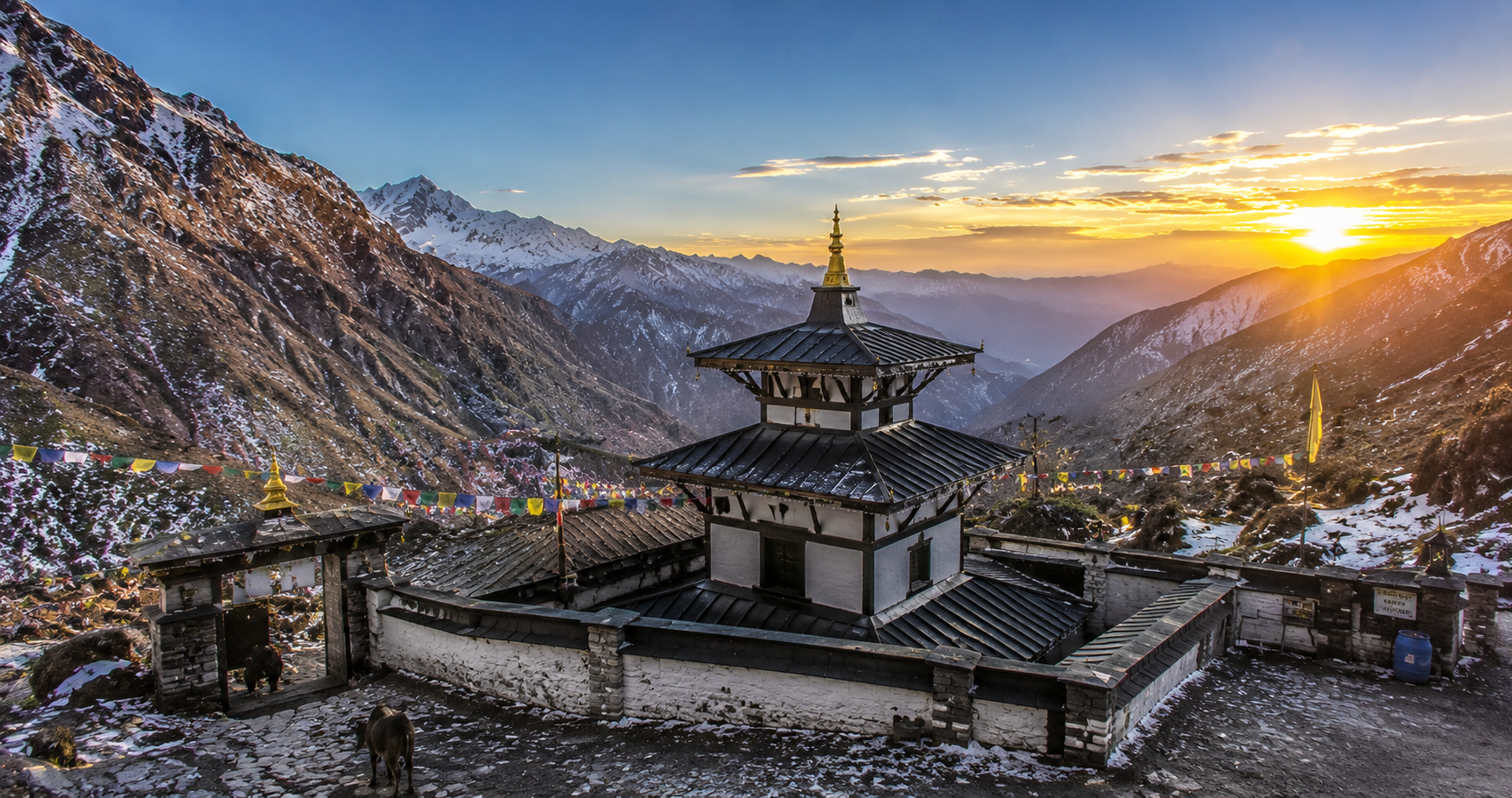
Tour PackageDurationFrom Vehicle CostIncludes MuktinathIncludes Lo Manthang
Muktinath Darshan (Short)3–4 daysPokharaUSD 500–700 (full jeepsNo
Lower Mustang Tour5–6 daysPokharaUSD 700–950 (full jeepsNo
Muktinath from Kathmandu5–7 daysKathmanduUSD 900–1,200 (full jeepsNo
Upper Mustang + Muktinath10–12 daysPokhara / KTMUSD 1,600–2,200 (Land Cruiser)YesYes
Tiji Festival Tour (Upper Mustang)12–14 daysKathmanduUSD 1,800–2,500 (Land Cruiser)YesYes
Muktinath + Chitwan + Pokhara Circuit9–11 daysKathmanduUSD 900–1,200 (full jeep)sNo

Package 1 — Short Muktinath Darshan (3–4 Days from Pokhara)

The most popular and time-efficient Muktinath tour — designed for pilgrims and visitors who want the complete Muktinath temple experience from Pokhara without extending to Upper Mustang. The 3-day round trip from Pokhara covers Tatopani, Marpha, Jomsom, Kagbeni, and Muktinath in a well-paced itinerary, with a critical acclimatisation night in Jomsom (Day 1) before ascending to Muktinath (Day 2).

DayRouteKey ActivityOvernight
Day 1Pokhara → Tatopani → Ghasa → JomsomKali Gandaki drive, hot springs stop, acclimatise at JomsomJomsom guesthouse (2,720 m)
Day 2Jomsom → Kagbeni → Jharkot → MuktinathTemple darshan, 108 spouts, Jwala Mai, monasteryMuktinath or Jomsom
Day 3Muktinath → Marpha → Tatopani → PokharaReturn drive, Marpha apple village, Tatopani hot spring soakPokhara

Package 2 — Complete Upper Mustang Tour with Muktinath (9–10 Days)

The complete Upper Mustang and Muktinath tour — Nepal’s most extraordinary overland journey. This 9-day route from Pokhara combines the Muktinath pilgrimage with the full Upper Mustang jeep expedition to Lo Manthang, the sky caves, and the ancient monasteries of the Forbidden Kingdom.

DayRouteKey ActivityOvernight
Day 1Pokhara → Tatopani → JomsomFull Kali Gandaki scenic drive, hot springs stopJomsom (2,720 m)
Day 2Jomsom → Kagbeni → MuktinathMorning acclimatisation walk, afternoon temple darshanMuktinath (3,710 m)
Day 3Muktinath → Kagbeni → Chhusang → CheleUpper Mustang permit check, enter the restricted area, canyon driveChele (3,050 m)
Day 4Chele → Samar → GhilingHigh plateau drive, ancient villages, chortens, and mani wallsGhiling (3,570 m)
Day 5Ghiling → Ghami → Tsarang → Lo ManthangTsarang palace ruins, red monastery, arrive at Lo ManthangLo Manthang (3,840 m)
Day 6Lo Manthang exploration, full dayLo Gekar monastery, royal palace, sky caves (Chosar/Lori)Lo Manthang
Day 7Lo Manthang → Tsarang → Ghami returnThe reverse route sheds a different light on canyon wallsGhami or Ghiling
Day 8Ghiling → Chele → Chhusang → JomsomExit Upper Mustang, permit check-out, return to JomsomJomsom (2,720 m)
Day 9Jomsom → Marpha → Tatopani → PokharaApple village visit, hot springs, full return drive to PokharaPokhara (827 m)

Package 3 — Muktinath from Kathmandu (5–7 Days)

For visitors based in Kathmandu who want to include Muktinath in their Nepal itinerary without a separate Pokhara-based tour, Nepal Vehicle Hiring Pvt Ltd offers comprehensive Kathmandu-to-Muktinath jeep packages. The route follows the Prithvi Highway from Kathmandu to Pokhara on Day 1, then proceeds via the standard Kali Gandaki route to Jomsom (Day 2) and Muktinath (Day 3), returning to Kathmandu via Pokhara.

Permits Required — Complete Guide

Permit TypeArea CoveredCost Where to ObtainWho Needs It
ACAP (Annapurna Conservation Area)Beni to Kagbeni (Lower Mustang / Muktinath)NPR 3,000 (~USD 22) per personNepal Tourism Board, Pokhara or KathmanduAll visitors to Muktinath
Upper Mustang Restricted Area PermitKagbeni to Lo Manthang and beyondUSD 50 per day per person (2026 rate)Nepal Tourism Board, KathmanduOnly for Upper Mustang beyond Kagbeni
TIMS CardAll trekking areas in NepalUSD 10–20 per personNepal Tourism Board / TAAN, Pokhara or KTMAll foreign trekkers
Mustang Heritage Trust FeeUpper MustangUSD 10–20 per personCollected at the Kagbeni checkpointAll Upper Mustang visitors

Important Permit Changes in 2026

The Upper Mustang Restricted Area Permit structure changed in 2026. Previously, the permit cost USD 500 per person for a mandatory minimum of 10 days. From 2026, the permit costs USD 50 per day per person, with no mandatory minimum number of days.

For a 10-day visit, the total cost remains USD 500 per person — but shorter stays (for example, a 5-day Upper Mustang visit) now cost USD 250 per person instead of the previous mandatory USD 500. This change makes short Upper Mustang visits significantly more affordable.

Permit Verification: Permit fees in Nepal can change. Always verify the current Upper Mustang permit rate with Nepal Vehicle Hiring Pvt Ltd or the Nepal Tourism Board in Kathmandu or Pokhara before your trip. Rates cited in this guide are the most current available at the time of writing.

Where to Get Permits: The Nepal Tourism Board issues ACAP and TIMS at its offices in Pokhara (Lakeside area) and Kathmandu (Bhrikuti Mandap). You must obtain the Upper Mustang Restricted Area Permit in Kathmandu or Pokhara (not at the checkpoint in Kagbeni). Obtain all permits before departing Pokhara.

Muktinath temple of mustang
4WD jeep

Vehicle Hire Details — Muktinath and Mustang Route

Why a 4WD Jeep is Essential

The Pokhara-to-Muktinath route and the Upper Mustang road are among Nepal’s most demanding jeep routes. A high-clearance 4WD vehicle is not optional—it is mandatory from Beni northward. The Kali Gandaki road involves rough gravel surfaces, river crossings, steep ascents, narrow cliff-edge sections, and — on the Upper Mustang section — some of the most dramatic off-road terrain in the entire Himalayan region.

  • Toyota Land Cruiser 4WD: Best vehicle for Upper Mustang — maximum clearance, advanced 4WD, reliable performance on the toughest sections. Recommended for the full Lo Manthang route.
  • Toyota Hilux 4WD: Excellent for Lower Mustang and Muktinath — highly capable, reliable, comfortable for 5–6 passengers.
  • Mahindra Scorpio 4WD: Good budget option for Lower Mustang and Muktinath — capable but less comfortable than Hilux for very long mountain routes.
  • Sedan or Hiace: NOT recommended beyond Beni — the road quality from Beni northward requires 4WD ground clearance.

Vehicle Hire Costs

  • Pokhara to Muktinath (return, 3–4 days): USD 500–700 (full vehicle, Toyota Hilux or Scorpio)
  • Pokhara to Lo Manthang (return, 9–10 days): USD 1,600–2,200 (full vehicle, Toyota Land Cruiser preferred)
  • Kathmandu to Muktinath (return, 5–7 days): USD 900–1,200 (full vehicle)
  • All-inclusive: Driver, fuel, road tolls — no hidden charges
  • Capacity: Hilux/Scorpio comfortably seats 4–6 passengers; Land Cruiser seats 6–7

Altitude Health — Essential Muktinath and Upper Mustang Advice

Both Muktinath (3,710 m) and Lo Manthang (3,840 m) are in the high-altitude zone where Acute Mountain Sickness (AMS) is a genuine risk. For comprehensive altitude health information, refer to our dedicated blog ‘Altitude and Health: Essential Muktinath Advice.’ Here are the essential points:

Never drive from Pokhara directly to Muktinath in a single day; a 2,883 m altitude gain in one day carries a high risk of AMS. Always stay overnight in Jomsom (2,720 m) first — this single precaution dramatically reduces the risk of AMS.

  • Day 1: Pokhara to Jomsom — sleep at Jomsom (2,720 m), rest and acclimatise
  • Day 2: Jomsom to Muktinath (3,710 m) — safe ascent after one night at altitude
  • For Upper Mustang: The ascent from Jomsom to Lo Manthang is gradual (over 3–4 days) — generally good acclimatisation profile
  • Symptoms of AMS: Headache, nausea, fatigue, dizziness, loss of appetite — rest immediately, do not ascend further
  • Golden Rule: If symptoms worsen at a higher altitude — DESCEND IMMEDIATELY
  • Diamox (Acetazolamide): Discuss with your doctor before travel — particularly for elderly pilgrims and sea-level visitors from India
  • Travel insurance: Must cover helicopter evacuation at 3,700+ m — verify before purchase
  • Emergency descent from Muktinath to Jomsom: 1.5 hours by jeep. Emergency evacuation to Pokhara by flight from Jomsom (~25 min) or helicopter (~20 min)
Muktinath pilgrimage and Mustang tour
muktinath temple

Best Season for Muktinath Pilgrimage and Mustang Tour

SeasonMonthsRoad ConditionMuktinath ViewsUpper MustangBest For
Autumn (Best)Oct–NovDry, excellentCrystal clearOpen — idealPilgrimage + touring
Spring (Best)Mar–MayDry, goodClear + warmOpen — Tiji FestivalTiji Festival (May)
WinterDec–FebCold, accessibleVery clear, coldOpen but coldQuiet pilgrimage
MonsoonJun–SepSome rainy sectionsVariable — often clear (rain shadow)Open but rough roadsNot ideal

Autumn — October to November (Peak Season)

Post-monsoon autumn is the finest season for the Muktinath pilgrimage and Mustang tour. The monsoon has cleared the air and washed the landscape to a vivid clarity — the views of Dhaulagiri, Annapurna, and Nilgiri from the Kali Gandaki valley in October and November are simply striking.

Roads are dry and in excellent condition throughout the route. The Upper Mustang landscape in autumn — golden light on ochre cliffs, deep blue sky, prayer flags against white Himalayan peaks — is visually memorable. Accommodation and vehicles are in high demand — book 2 to 4 weeks in advance.

Spring — March to May (Tiji Festival Season)

Spring brings warming temperatures, rhododendron forests in full bloom on the lower approach sections, and — most importantly for Upper Mustang visitors — the spectacular Tiji Festival in Lo Manthang (typically in late April or early May). For cultural travellers and those interested in Buddhist traditions, timing a visit to coincide with the Tiji Festival is one of Nepal’s great travel experiences.

March and April also see large Hindu pilgrimages to Muktinath for Ram Navami. Roads are dry and in good condition.

Winter — December to February

Winter offers the quietest and most intimate Muktinath experience. The pilgrimage site feels more spiritually concentrated with fewer visitors. Views from Muktinath and the Kali Gandaki valley are extraordinarily clear in winter light.

The major caveat is temperature — nights at Muktinath and Lo Manthang can be exceptionally cold (below -15°C at higher elevations). Warm clothing, including a high-quality sleeping bag and down layers, is essential. Maha Shivaratri (February–March) brings the largest annual pilgrimage gathering to Muktinath — one of Nepal’s most powerful and moving religious events.

Monsoon — June to September

The Mustang region is unique in Nepal in that it falls largely in the rain shadow of the Annapurna-Dhaulagiri massif and receives relatively little direct monsoon rainfall compared to most of Nepal. The Kali Gandaki valley and Upper Mustang plateau are often clear and sunny even when the rest of Nepal is experiencing heavy monsoon rain.

However, rain-related damage and landslides can affect the approach roads from Pokhara through Beni and the Tatopani area. The route is generally passable, but road conditions vary — always verify before travel. The Shravan Sombar (August Mondays) draws large numbers of pilgrims to Muktinath even during the monsoon season.

Muktinath pilgrimage and Mustang tour

What to See and Do — Beyond the Temple

Dhumba Lake, Jomsom

Just 5 km west of Jomsom town, the beautiful Dhumba Lake sits at 2,830 m below the dramatic face of Nilgiri North. The glacially fed lake is crystal clear and surrounded by rocky moorland—a peaceful, scenic escape from the windy Jomsom bazaar. The walk from Jomsom to Dhumba Lake takes approximately 45 minutes and provides excellent morning views of Nilgiri and Dhaulagiri.

Shaligram Collecting at Kagbeni

The gravel beds of the Kali Gandaki River below Kagbeni are among the most sacred—and geologically extraordinary—stretches of river on earth. The black, disc-shaped fossils found here are ammonites (ancient marine molluscs from the Jurassic period (~130 million years old)) preserved when the ancient Tethys Sea dried up, and the Himalayan range rose.

Hindus regard these Shaligrams as natural manifestations of Lord Vishnu and carry them home as objects of worship. Searching the river gravel for Shaligrams — with permission from local authorities — is one of the most memorable activities on the Muktinath route.

Wind Sports and Paragliding at Jomsom

The extreme afternoon winds in Jomsom (a reliable thermal-generating wind channel that begins around noon each day and can reach 60–70 km/h) have made the town famous among paragliding and wind sports enthusiasts. Several local operators offer morning tandem paragliding experiences from the Jomsom ridgeline before the winds become too strong — providing extraordinary aerial views of the Kali Gandaki gorge and surrounding massifs.

Thakali Cultural Experience

The Mustang valley from Ghasa through Jomsom is the traditional heartland of the Thakali people — one of Nepal’s most distinctive and entrepreneurially successful indigenous communities. Traditionally, the Thakali salt traders and innkeepers of the ancient Kali Gandaki trade route between Nepal and Tibeli are known for their exceptional cuisine (Thakali dal bhat is widely regarded as the finest version of Nepal’s national dish), their beautifully designed traditional stone houses, and their warmly welcoming hospitality.

Several Thakali cultural homestays and heritage guesthouses operate in Marpha and Jomsom — a deeply authentic cultural experience.

kagbeni-Muktinath pilgrimage and Mustang tour
kagbeni valley

Practical Tips for Muktinath Pilgrimage and Mustang Tour

  • Obtain all permits in Pokhara or Kathmandu before departure: ACAP (NPR 3,000), TIMS (USD 10–20), and Upper Mustang Restricted Area Permit (USD 50/day) — the Upper Mustang permit cannot be obtained at the Kagbeni checkpoint.
  • Book vehicles and accommodation 1 to 2 weeks in advance for the Tiji Festival (April–May) and Shivaratri (February) — these are the two peak-demand periods.
  • Always spend the night in Jomsom before ascending to Muktinath — this is the single most important altitude-safety measure. Nepal Vehicle Hiring Pvt Ltd builds this into all Muktinath itineraries.
  • Carry NPR cash from Pokhara: Withdraw at the Pokhara ATM. The Jomsom ATM (Nepal Bank) is the last reliable cash machine. Carry enough for the entire Mustang stay, including accommodation, meals, offerings, and horse hire at Muktinath.
  • For Muktinath darshan: Wear modest, conservative clothing. Remove footwear at the temple gate. Women may wish to bring a shawl to cover the head. Offerings of flowers, milk, and coconut are appropriate for Lord Vishnu.
  • Carry warm clothing even in spring and autumn: Muktinath nights can drop below 0°C even in October and April. Lo Manthang nights can be much colder. A down jacket, thermal base layers, a warm hat, and gloves are essential.
  • Pack a headlamp for early morning temple visits and pre-dawn ritual bathing under the 108 spouts — the most spiritually concentrated time at the temple.
  • The Kali Gandaki road gets very dusty and windy in the afternoon (particularly near Jomsom) — a buff or dust mask is recommended, especially on open sections of the road.
  • For Upper Mustang: Photography rules apply near religious sites — always ask permission before photographing local people, religious ceremonies, or monastery interiors.
  • For the Tiji Festival: Book accommodation in Lo Manthang 3 to 4 months in advance—the limited guesthouses inside the Lo Manthang walls fill up early for the festival period.

Why Choose Nepal Vehicle Hiring Pvt Ltd

  • Muktinath and Mustang Specialist: Nepal Vehicle Hiring Pvt Ltd operates the Pokhara-to-Jomsom-to-Muktinath-to-Lo Manthang route regularly—our drivers know every checkpoint, road condition, overnight stop, and permit requirement along the full Mustang circuit.
  • Right Vehicle for Every Section: Toyota Hilux for Lower Mustang and Muktinath; Toyota Land Cruiser for the demanding Upper Mustang road to Lo Manthang. We never send an underpowered vehicle on this challenging route.
  • Altitude-Safe Itinerary Design: Every Nepal Vehicle Hiring Pvt Ltd Muktinath tour includes the mandatory Jomsom acclimatisation. We never design same-day Pokhara-to-Muktinath itineraries.
  • Permit Assistance: We guide all clients through the ACAP, TIMS, and Upper Mustang Restricted Area Permit process — helping arrange permits in Pokhara or Kathmandu before departure.
  • Festival Tour Expertise: Nepal Vehicle Hiring Pvt. Organises dedicated Tiji Festival and Shivaratri pilgrimage tours with bookings for the 2026 and 2027 seasons.
  • Complete Mustang Packages: From the short 3-day Muktinath darshan to the full 10-day Upper Mustang expedition — all tour formats available with single-booking convenience.
  • 24/7 Booking and Support: WhatsApp, phone, or email anytime — instant confirmation and emergency support throughout the tour.

Frequently Asked Questions — Muktinath Pilgrimage & Mustang Tour

How many days do I need for the Muktinath pilgrimage tour?

The minimum is 3 days from Pokhara (Day 1 Pokhara-Jomsom, Day 2 Muktinath, Day 3 return to Pokhara). For a more relaxed experience with time to properly explore Marpha, Kagbeni, and the Kali Gandaki Valley, 4 to 5 days is recommended. The full Upper Mustang extension to Lo Manthang adds 5-6 more days.

What is the cost of the Muktinath jeep tour from Pokhara?

A private jeep hire from Pokhara for a 3-day Muktinath round trip costs approximately USD 500-700 for the entire vehicle (Toyota Hilux or Scorpio), including driver and fuel. For 6 passengers sharing, the cost is approximately USD 83-117 per person for all vehicle transport.

What is the Upper Mustang permit?

As of 2026, the Upper Mustang Restricted Area Permit costs USD 50 per person per day — down from the previous rate of USD 500 for a mandatory minimum of 10 days. For a standard 10-day Upper Mustang visit, the total permit cost is USD 500 per person. For shorter visits, the per-day rate applies.

Always verify the current rate with Nepal Vehicle Hiring Pvt Ltd or the Nepal Tourism Board before travel.

Can elderly pilgrims visit Muktinath safely?

Yes, many elderly pilgrims visit Muktinath every year. Key requirements include a 2-day approach with a Jomsom acclimatisation night, medical clearance from a doctor before travel, discussing Diamox with their doctor, travelling with a companion, and a flexible itinerary that allows rest if needed.

Horse hire is available at Ranipauwa village for the final approach to the temple. Nepal Vehicle Hiring Pvt Ltd’s private jeeps provide door-to-door comfort throughout the journey.

Is the Upper Mustang accessible year-round?

Yes — Upper Mustang is accessible by jeep year-round in normal conditions, unlike many Himalayan trekking destinations. The jeep road from Jomsom to Lo Manthang is open year-round, with occasional temporary closures after heavy snowfall. The Tiji Festival (April–May) and the autumn (October–November) are the most popular periods to visit.

What is the Tiji Festival, and when does it occur?

The Tiji Festival is the most important three-day religious festival in the Lo Manthang region, held annually in Vaishakh (typically late April or early May). Buddhist monks perform elaborate masked dances (cham) in the courtyard of Lo Manthang over three days to celebrate Dorje Jono’s victory over the demon.

It is one of Asia’s most spectacular and authentic cultural festivals. Nepal Vehicle Hiring Pvt Ltd offers tour bookings for the Tiji Festival in 2026 and 2027.

Do I need a guide for Upper Mustang?

Yes — a licensed guide is mandatory for the Upper Mustang Restricted Area permit. Nepal Vehicle Hiring Pvt Ltd can connect you with licensed local guides for the Upper Mustang section of the tour. For Lower Mustang and Muktinath only, a guide is not legally required but is strongly recommended for first-time visitors.

What is the difference between Lower Mustang and Upper Mustang?

Lower Mustang covers the area from Beni to Kagbeni — including Tatopani, Marpha, Jomsom, and Muktinath. It is open to all visitors with the standard ACAP permit. Upper Mustang is the restricted area north of Kagbeni, including Chhusang, Ghiling, Tsarang, and Lo Manthang.

It requires the special Upper Mustang Restricted Area Permit (USD 50/day in 2026) and a mandatory licensed guide.

How long does it take to drive from Pokhara to Jomsom?

The drive from Pokhara to Jomsom is about 150 km and takes 5 to 7 hours by private jeep, depending on road conditions, stops at Tatopani hot springs and Marpha apple village, and wind conditions near Jomsom. Depart Pokhara by 6:00–7:00 AM to arrive in Jomsom comfortably before the strong afternoon winds begin.

Muktinath temple-Muktinath pilgrimage and Mustang tour

Conclusion

The Muktinath pilgrimage and Mustang tour is, quite simply, one of the greatest overland journeys on earth. From Pokhara’s lakeside serenity to the dramatic Kali Gandaki gorge, through the apple orchards of Marpha and the wind-swept airstrip town of Jomsom, to the sacred 108 water spouts of Muktinath and — for those who venture further — the ancient walled world of Lo Manthang in the Forbidden Kingdom of Upper Mustang, this is a journey that crosses not just geographical distances but spiritual, cultural, and historical worlds.

Whether your purpose is devout pilgrimage to one of Hinduism’s holiest Vishnu temples, Buddhist heritage exploration in the cave monasteries and gompas of Upper Mustang, cultural adventure in the living medieval city of Lo Manthang, or simply the sheer physical and visual magnificence of the Kali Gandaki drive through the world’s deepest gorge, the Muktinath and Mustang route delivers an experience of enduring depth and power.

Nepal Vehicle Hiring Pvt Ltd is your most trusted partner for this exceptional journey. We offer specialist 4WD vehicles, experienced drivers who know every kilometre of the Kali Gandaki and Upper Mustang roads, altitude-safe itinerary design, and permit assistance.

With the flexibility to create exactly the tour you need — from a 3-day Muktinath darshan to a 12-day Upper Mustang expedition — we are ready to take you to one of the most extraordinary places on earth.

Book your Muktinath & Mustang tour today — Call or WhatsApp: +977 981-4227196

Website: www.vehiclehiringnepal.com

Kathmandu to Mustang (Muktinath)

Muktinath temple of mustang

Mustang – the ancient forbidden kingdom of Nepal – is one of the most extraordinary destinations in the entire Himalayan region. From the sacred pilgrimage site of Muktinath Temple at 3,710 m to the medieval walled city of Lo Manthang at 3,840 m, Mustang draws pilgrims, adventure travellers, and photographers from around the world.

Travelling from Kathmandu to Mustang by private vehicle is a once-in-a-lifetime road adventure that combines dramatic mountain highways, river crossings, and some of Asia’s most remote roads.

This complete guide covers every vehicle option – jeep, car, Hiace van, and bus – with routes, prices, permits, road conditions, best travel times, and expert tips for the journey from Kathmandu to Mustang and Muktinath.

Kathmandu to Mustang

There are two main ways to reach Mustang from Kathmandu by road – both passing through Pokhara and Beni before entering the Kali Gandaki valley and climbing north to the Mustang district.

Total Distance: Approximately 380–420 km from Kathmandu to Jomsom (district headquarters of Mustang)

Kathmandu to Muktinath: Approximately 430–450 km

Total Travel Time: 2 to 3 days by road (usually broken into 2 overnight stops at Pokhara and Tatopani or Ghasa)

Main Route: Kathmandu – Pokhara – Beni – Tatopani – Ghasa – Marpha – Jomsom – Muktinath

Road Type: Prithvi Highway (paved) + Annapurna Circuit Road (gravel / rough mountain track beyond Beni)

Altitude Range: Kathmandu 1,400 m → Jomsom 2,720 m → Muktinath 3,710 m → Lo Manthang 3,840 m

Vehicle Required: 4WD Jeep mandatory beyond Beni – sedans and minivans cannot proceed on the Kali Gandaki gorge road

Two Route Options: Which Way to Mustang?

The standard and most reliable route from Kathmandu to Mustang. Follow the Prithvi Highway to Pokhara (6–7 hrs), rest overnight, then continue west to Beni (2 hrs) and north into the Kali Gandaki gorge towards Tatopani, Ghasa, Marpha, and Jomsom. This is the route all vehicles use to reach Mustang.

Route B: Via Prithvi Highway – Damauli – Beni (Direct, Avoiding Pokhara)

A slightly shorter alternative that bypasses central Pokhara via the Damauli–Baglung highway and reaches Beni from the east. This route saves about 45 minutes but is less commonly used, as most travellers prefer to overnight in Pokhara. It is equally viable for 4WD vehicles.

kathmandu to mustang
Muktinath route map

Vehicle Options: Jeep, Car, Hiace & Bus Compared

Choosing the right vehicle for the Kathmandu-to-Mustang route is critical – this is not a route where all vehicles are equal. Here is a complete comparison of every vehicle option:

VehicleCapacityCan you reach Jomsom?Can you reach Muktinath?Best For
Sedan Car1–3 paxOnly to BeniNoPokhara/Beni only
SUV (light 4WD)4–5 paxBeni to TatopaniRisky in wetSmall groups, dry season only
Land Cruiser (4WD)4–6 paxYes – all yearYesBest choice for Mustang
Toyota Prado (4WD)4–5 paxYes – all yearYesComfort + capability
Hiace Van7–14 paxTo Beni/TatopaniNoGroups to lower Mustang
Tourist Bus25–40 paxTo Pokhara onlyNoBudget Kathmandu–Pokhara leg
Local Jeep (Jomsom)4–6 paxYesYesJomsom–Muktinath last leg

Important: Beyond Beni, only 4WD vehicles with high ground clearance can safely navigate the Kali Gandaki gorge road. We recommend a Land Cruiser or equivalent for the full Kathmandu-to-Muktinath route.

Muktinath temple mustang

Detailed Road Guide: Kathmandu to Mustang

The journey from Kathmandu to Mustang typically takes at least 2 days. Most travellers break the journey into three stages. Here is the full road guide:

Day 1: Kathmandu to Pokhara (200 km | 6–7 hrs)

Depart Kathmandu early morning (6:00–7:00 AM) via the Prithvi Highway. Pass through Naubise, along the scenic Trishuli River gorge, through Malekhu and Mugling (lunch stop), then continue west past Damauli and into the Pokhara valley. Arrive in Pokhara by early to mid-afternoon.

Overnight in Pokhara –a great opportunity to explore Phewa Lake,  the Lakeside area, and enjoy clear Annapurna range views in the morning before your next stage.

Day 2: Pokhara to Tatopani or Ghasa (130 km | 5–6 hrs by 4WD)

Depart Pokhara early (6:00 AM). Drive west to Naya Pul and Baglung, then turn north at Beni – the last major town before the mountain road begins. Beyond Beni, the road follows the Kali Gandaki River north through one of the deepest gorges on Earth – flanked by Dhaulagiri (8,167 m) and Annapurna I (8,091 m) on either side.

Key stops along this section:

  • Beni (830 m) – Last major town; fuel up here; last reliable ATM and mobile signal
  • Tatopani (1,190 m) – Famous natural hot springs, excellent lunch stop
  • Ghasa (2,010 m) – Good mid-mountain overnight option with basic lodges
  • Kalopani (2,530 m) – Spectacular views of Dhaulagiri and Nilgiri from the road
  • Marpha (2,670 m) – Apple orchards, Tibetan architecture, famous apple brandy

Overnight at Tatopani, Ghasa, or Marpha, depending on your pace and preference.

Day 3: Tatopani / Ghasa to Jomsom and Muktinath (80–100 km | 4–5 hrs)

The final mountain stage climbs into the Mustang valley. The road surface becomes increasingly rough and windy as you approach Jomsom. The famous Kali Gandaki wind begins in the early afternoon – a strong, cold headwind that sweeps up the valley daily, making afternoon travel uncomfortable.

Plan to reach Jomsom by midday.

  • Jomsom (2,720 m) – District headquarters of Mustang, airport, lodges, teahouses
  • Kagbeni (2,810 m) – Entry point to Upper Mustang restricted area
  • Muktinath Temple (3,710 m) – Sacred Hindu and Buddhist pilgrimage site, 108 water spouts
  • Ranipauwa (3,760 m) – Village and accommodation area adjacent to Muktinath

Road Conditions: What to Expect on Each Section

SectionDistanceSurfaceDifficultyNotes
Kathmandu – Pokhara200 kmPaved highwayEasyGood condition, Prithvi Highway
Pokhara – Beni62 kmMostly pavedEasy-Moderate. TheBaglung highway has some rough patches
Beni – Tatopani45 kmGravel / rough trackModerateNarrow gorge road, river crossings
Tatopani – Ghasa25 kmRough gravel trackDifficultSteep, narrow, occasional rockfall
Ghasa – Jomsom55 kmVery rough/rocky trackVery DifficultWind from noon, exposed cliff roads
Jomsom – Kagbeni18 kmGravel desert trackModerateFlat valley, sandy sections
Kagbeni – Muktinath22 kmRough rocky switchbacksDifficultHigh altitude, steep climb to 3,710m
Kagbeni – Lo Manthang80 kmRemote desert trackVery DifficultUpper Mustang permit required

The Kali Gandaki gorge road is one of the most dramatic and challenging roads in Nepal. Beyond Beni, a 4WD with high clearance is absolutely mandatory. Road quality improves slightly in the dry season (October–May) and worsens significantly during the monsoon.

Muktinath Temple in Mustang

Permits Required for Mustang and Muktinath 2026

Mustang requires more permits than almost any other region of Nepal. Arrange ALL permits in Kathmandu or Pokhara before departure – none are available on the road:

PermitArea CoveredCost 2026 (Approx.)Where to Obtain
ACAP – Annapurna Conservation Area PermitBeni onwards (Lower Mustang)NPR 3,000  (USD 22)Nepal Tourism Board, Kathmandu or Pokhara
TIMS Card – Trekkers Information ManagementRequired for all trekkersUSD 10Nepal Tourism Board / TAAN office
Upper Mustang Restricted Area PermitKagbeni to Lo ManthangUSD 500 for 10 days (+USD 50 per extra day)Dept. of Immigration, Kathmandu
Upper Mustang requires a licensed guideMandatory for Upper Mustang onlyGuide fee separateLicensed trekking agency

Best Time to Travel from Kathmandu to Mustang 2026

March to May (Excellent)

Spring is one of the best seasons for the Kathmandu-to-Mustang route. Rhododendrons bloom across the Annapurna foothills, skies are clear, temperatures are warm at lower altitudes, and roads are dry and in good condition. The famous Upper Mustang Tiji Festival typically falls in May and is one of Nepal’s most spectacular cultural events.

Book vehicles and accommodation well in advance for this period.

June to August (Unique – Mustang’s Secret Season)

While monsoon makes most of Nepal wet and cloudy, Mustang lies in a rain shadow behind the Annapurna and Dhaulagiri ranges. The Mustang valley receives very little monsoon rain and stays remarkably dry and sunny, while the rest of Nepal is drenched.

This makes June to August a unique and increasingly popular time to visit Mustang. However, the road south of Tatopani can be affected by monsoon landslides – confirm road conditions before departure.

September to November (Best Overall)

The post-monsoon period is arguably the finest time for the full journey from Kathmandu to Mustang. Skies are crystal clear with spectacular views of Dhaulagiri, Annapurna, Nilgiri, and the Mustang plateau. Roads have dried out, and conditions are optimal.

October is the peak month – book vehicles 4–6 weeks in advance. The drive through the golden autumn landscape of the Kali Gandaki valley is memorable.

December to February (Cold but Possible)

Winter travel to Lower Mustang and Jomsom is possible for most of the season. Muktinath and upper areas can be snowbound in December and January – confirm conditions before attempting the Kagbeni–Muktinath switchbacks in winter. Lo Manthang is generally inaccessible by road in deep winter.

Clear, cold, and beautifully quiet – few travellers attempt Mustang in winter.

Kathmandu to Mustang (Muktinath)

Top Destinations in Mustang – Complete Visitor Guide

Muktinath Temple (3,710 m)

One of the most sacred pilgrimage sites in all of Asia, revered by both Hindus and Buddhists. The Mukti Dhaam temple complex contains the sacred flame of natural gas burning from the rock, 108 water spouts of holy Gandaki water, and the Jwala Mai fire temple.

For Hindu pilgrims, a bath in the 108 spouts is considered to wash away all sins. The surrounding high-altitude desert and snow-capped peaks are striking. Entry is free and open to all faiths.

Jomsom (2,720 m)

Mustang’s district headquarters is a busy, surprisingly modern town perched in the wind-scoured Kali Gandaki valley. Jomsom has a domestic airport with daily flights to Pokhara (25 min), plus good hotels, restaurants, and shops. The river splits the town into old and new sections.

The famous afternoon wind can reach 80–100 km/h – plan your activities for the morning.

Marpha (2,670 m)

Often called the most beautiful village in Mustang, Marpha is a medieval, whitewashed Tibetan-style village famous for its apple orchards, apple brandy (local raksi), and the annual autumn apple harvest. The compact village has cobbled lanes, traditional flat-roofed houses, and a beautiful monastery—an ideal overnight stop between Ghasa and Jomsom.

Kagbeni (2,810 m)

The atmospheric medieval village of Kagbeni sits at the confluence of the Kali Gandaki and Kak rivers and marks the entry point to Upper Mustang. The ancient red-walled Kag Chode Thupten Samphel Ling monastery dominates the village. Beyond Kagbeni, a Restricted Area permit for Upper Mustang is required.

The views of the Mustang plateau opening up beyond Kagbeni are extraordinary.

Lo Manthang (3,840 m) – Upper Mustang

The ancient walled capital of the former Kingdom of Mustang, Lo Manthang, is one of the most extraordinary and remote destinations in the entire Himalayan region. The medieval city walls, palace of the Lo Raja (King of Mustang), ancient cave monasteries, and the surrounding lunar landscape of red and ochre cliffs are unlike anything else in Nepal. Requires the USD 500 Upper Mustang Restricted Area Permit.

Tiji Festival – Lo Manthang (May)

The three-day Tiji Festival in Lo Manthang each May is one of Nepal’s most spectacular and authentic cultural festivals. Masked monks perform ancient cham dances recounting the legend of the demon who threatened to destroy Mustang. The festival draws increasing numbers of visitors each year – book vehicles 8–10 weeks in advance if travelling for Tiji.

Muktinath to Thorong La – Annapurna Circuit

Muktinath is also a key waypoint on the famous Annapurna Circuit Trek. Trekkers arriving at Muktinath after crossing the Thorong La Pass (5,416 m) from Manang often take a private jeep down to Jomsom and Pokhara. Vehicle Hiring Nepal can arrange jeep pickups from Muktinath for Annapurna Circuit trekkers on their descent.

Itinerary A: Kathmandu – Muktinath (5 Days)

  • Day 1: Kathmandu to Pokhara by private vehicle (6–7 hrs) – overnight in Pokhara
  • Day 2: Pokhara to Tatopani or Marpha by 4WD jeep (5–6 hrs) – overnight en route
  • Day 3: Drive to Jomsom and Muktinath Temple – full day sightseeing, overnight Muktinath/Ranipauwa
  • Day 4: Explore Muktinath, Kagbeni village – drive back to Jomsom or Marpha, overnight
  • Day 5: Return drive to Pokhara or Kathmandu

Itinerary B: Kathmandu – Lo Manthang – Upper Mustang (9 Days)

  • Day 1: Kathmandu to Pokhara by vehicle – overnight in Pokhara
  • Day 2: Pokhara to Marpha by 4WD jeep – overnight in Marpha
  • Day 3: Marpha to Jomsom to Kagbeni – overnightin  Kagbeni (Upper Mustang permit check)
  • Day 4: Kagbeni to Chele or Syangboche – overnight in Upper Mustang
  • Day 5: Drive to Lo Manthang – full day exploration of the walled city and monasteries
  • Day 6: Lo Manthang day trips – Sky Caves (Chosar), Nyphu Gompa, Nam La
  • Day 7: Return to Kagbeni / Jomsom
  • Day 8: Jomsom to Pokhara by vehicle
  • Day 9: Pokhara to Kathmandu

Itinerary C: Kathmandu – Muktinath with Pokhara Extension (7 Days)

  • Day 1: Kathmandu to Pokhara – city sightseeing, overnight in Pokhara
  • Day 2: Pokhara sightseeing – Sarangkot sunrise, Phewa Lake, World Peace Pagoda
  • Day 3: Pokhara to Tatopani – hot spring soak, overnight in Tatopani
  • Day 4: Tatopani to Jomsom – Marpha apple orchards, overnight Jomsom
  • Day 5: Jomsom to Muktinath – temple visit, Kagbeni, overnight Muktinath
  • Day 6: Return to Pokhara by jeep
  • Day 7: Pokhara to Kathmandu

Mustang

The Kali Gandaki Wind – Essential Travel Tip

The Kali Gandaki valley experiences one of the world’s strongest thermal wind systems. Every afternoon from about 12:00–1:00 PM, a powerful wind sweeps up the valley from south to north at 60–100 km/h. This wind makes driving extremely dangerous and uncomfortable from midday onwards.

  • Always plan to complete driving in the Kali Gandaki valley before midday
  • Depart Tatopani or Ghasa no later than 7:00 AM to reach Jomsom by noon
  • Jomsom airport flights are grounded in the afternoon due to this same wind – another reason to arrive early
  • Morning hours (6:00–11:00 AM) in Mustang are calm, clear, and ideal for driving and trekking
  • Plan all Muktinath temple visits and Kagbeni exploration in the morning

Altitude Sickness – Know Before You Go

Mustang reaches a significant altitude. Muktinath is at 3,710 m and Lo Manthang at 3,840 m. Altitude sickness (Acute Mountain Sickness – AMS) is a real risk for travellers who ascend too quickly.

  • Ascend gradually – do not drive from Pokhara directly to Muktinath in one day.
  • Spend at least one night at Jomsom (2,720 m) before ascending to Muktinath (3,710 m)
  • Stay well hydrated – drink 3–4 litres of water per day at altitude
  • Avoid alcohol for the first 48 hours at altitude
  • Carry Diamox (acetazolamide) – consult your doctor before travel for dosage advice.
  • Know the symptoms of AMS: headache, nausea, dizziness, fatigue, loss of appetite.
  • If symptoms worsen, descend immediately – do not ascend further.

What to Pack for the Kathmandu to Mustang Journey

For the Vehicle Journey

  • Warm clothing and a windproof jacket – the Kali Gandaki valley wind is intense and cold
  • Sunglasses and sunscreen – high-altitude UV radiation is extreme in the Mustang Desert.
  • Sufficient snacks and litres of water per person – stops are limited in the gorge.
  • Motion sickness tablets – the gorge road is very winding
  • Camera with a charged battery – scenery is extraordinary throughout
  • Power bank – limited charging opportunities beyond Jomsom

Documents and Essentials

  • Passport with all required permits (ACAP, TIMS, Upper Mustang if applicable)
  • Emergency cash in Nepali Rupees – ATMs only available in Jomsom (sometimes out of service)
  • Travel insurance covering high-altitude helicopter evacuation (strongly recommended)
  • First aid kit with altitude sickness medication

What is Included in Your Vehicle Hire with Vehicle Hiring Nepal?

  • Private 4WD jeep (Toyota Land Cruiser or equivalent) with experienced Mustang route driver
  • Full fuel cost for the entire journey – Kathmandu to Mustang and return
  • Vehicle insurance coverage
  • Hotel pickup in Kathmandu and drop-off at your Mustang destination
  • Flexible rest stops at Mugling, Pokhara, Tatopani, and Marpha
  • Driver accommodation during your Mustang stay (pre-arranged)
  • 24/7 WhatsApp support throughout the entire journey
  • Option for a multi-day round trip with a driver waiting at Jomsom or Muktinath

Not included: Trekking/restricted-area permits, accommodation, personal meals, entry fees, guide fees, and additional detour stops (available at extra cost).

How to Book Your Vehicle for Kathmandu to Mustang

  1. Visit vehiclehiringnepal.com and select 4WD Jeep hire
  2. Choose your destination: Jomsom / Muktinath / Lo Manthang / Kagbeni
  3. Select your travel dates and preferred departure time from Kathmandu
  4. Specify the number of passengers and luggage requirements
  5. Indicate if you need multi-day driver waiting service at Mustang
  6. Submit your booking form or contact us via WhatsApp for instant confirmation
  7. Receive driver details, vehicle information, and full journey plan

WhatsApp: +977 981-4227196
Email: [email protected]

Frequently Asked Questions

Can I drive from Kathmandu to Muktinath in one day?

No. The journey from Kathmandu to Muktinath is approximately 430–450 km and involves very rough mountain roads beyond Beni. You need at least 2 overnight stops for a safe, comfortable journey. Trying to do this in one day would be exhausting and potentially dangerous.

Is a jeep necessary, or can I take a Hiace van?

A Hiace van can travel comfortably from Kathmandu to Pokhara and from Pokhara to Beni. Beyond Beni, the road through the Kali Gandaki gorge is too rough, narrow, and technical for a Hiace van. A 4WD jeep (Land Cruiser or equivalent) is mandatory from Beni onwards.

Many groups take a Hiace to Pokhara and switch to a local jeep service from there.

Can I fly to Jomsom and hire a jeep from there to Muktinath?

Yes. Tara Air and Summit Air operate daily flights from Pokhara to Jomsom (a 25-minute flight). From Jomsom, a local jeep to Muktinath takes 1.5 to 2 hours via Kagbeni.

This is a popular option for travellers short on time. Vehicle Hiring Nepal can arrange Jomsom-based jeeps for this final leg.

What is the Upper Mustang Restricted Area Permit, and do I need it?

The Upper Mustang Restricted Area Permit costs USD 500 for the first 10 days and is required for all travel north of Kagbeni – including Lo Manthang, Lo Gekar, Ghar Gompa, and the Tibetan border area. If you are only visiting Jomsom, Marpha, Tatopani, and Muktinath (which are in Lower Mustang), you do NOT need this permit – only ACAP and TIMS are required.

Is Mustang safe to visit?

Yes. Mustang is a peaceful and safe destination. The main challenges are road conditions, altitude, and weather – not safety or security: local communities welcome visitors, and the trekking infrastructure is well established.

Standard travel precautions and altitude awareness are all that is required.

How far in advance should I book my vehicle for the Mustang?

During peak season (October–November and April–May), we strongly recommend booking your vehicle 3 to 6 weeks in advance. If you’re travelling for the Tiji Festival in Lo Manthang (May), book 8 to 10 weeks ahead,d as vehicles are in extremely high demand. Outside peak seasons, 1 to 2 weeks’ notice is usually sufficient.

Can I combine Mustang with Pokhara and Annapurna in one trip?

Absolutely. Mustang, Pokhara, and the Annapurna region are all connected, and many travellers combine them in a single extended trip. A popular itinerary is: Kathmandu – Pokhara – Mustang – Muktinath – Pokhara (via Jomsom by vehicle) – return to Kathmandu.

Vehicle Hiring Nepal can arrange multi-destination vehicles for the entire circuit.

Final Thoughts

The road from Kathmandu to Mustang is one of the great overland journeys of Asia – a multi-day adventure through the world’s deepest gorge, past two of the highest mountains on Earth, and into the ancient Tibetan plateau kingdom of Mustang. Whether you are a Hindu or Buddhist pilgrim visiting the sacred waters of Muktinath, an explorer heading to the medieval walled city of Lo Manthang, or simply a traveller seeking the extraordinary, the journey itself is as memorable as the destination.

With a private vehicle from Vehicle Hiring Nepal, you travel at your own pace, stop where you choose, and arrive at each destination with the freedom and comfort that only a private hire can provide. Our experienced Mustang route drivers know every challenging kilometre of this road. They will ensure your journey is safe, smooth, and full of the raw, magnificent beauty of the Himalayan landscape.

Ready to begin your Mustang journey in 2026? Contact Vehicle Hiring Nepal today. WhatsApp: +977 981-4227196 |  Email: [email protected] Website: www.vehiclehiringnepal.com

Chat with us