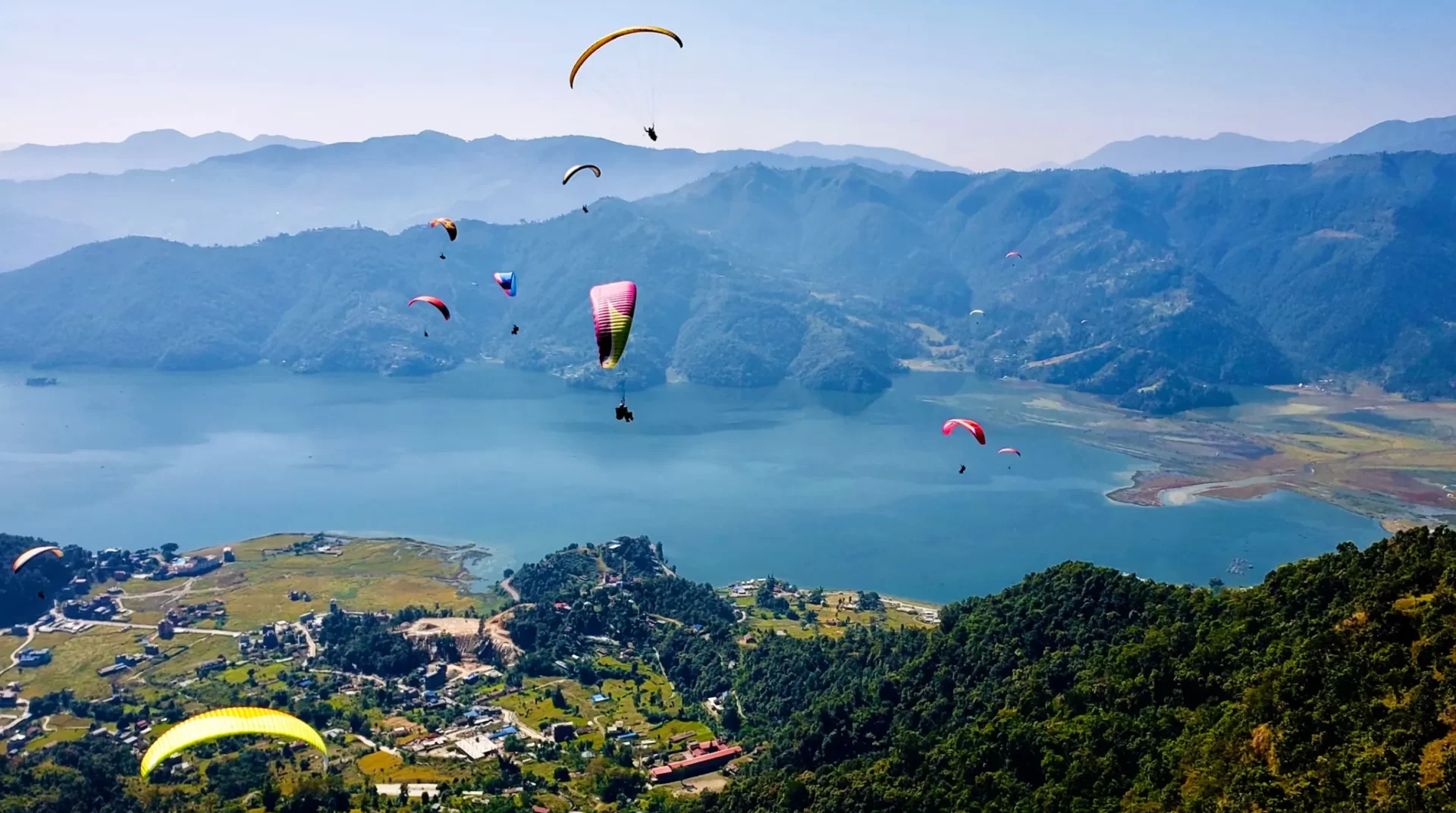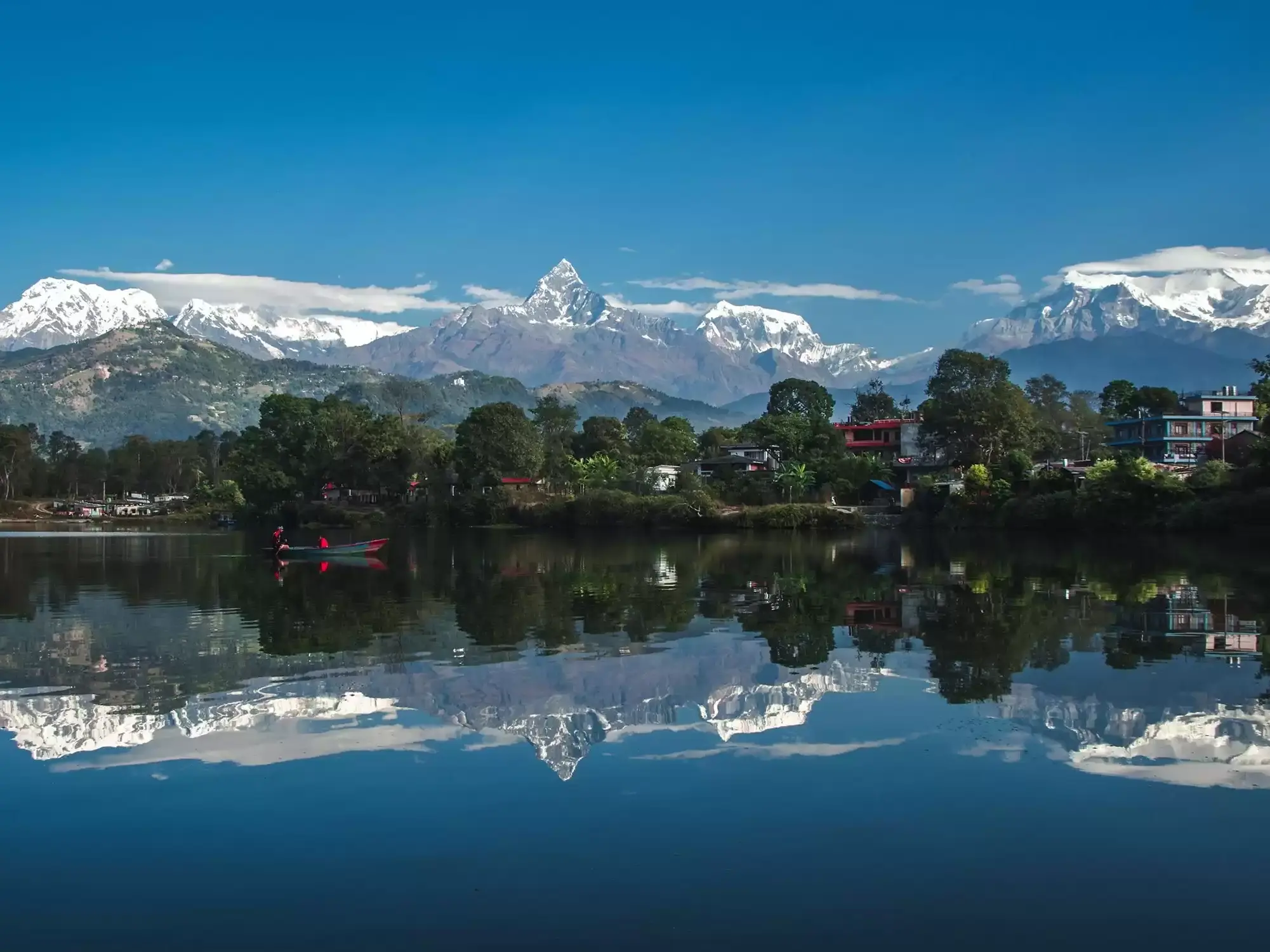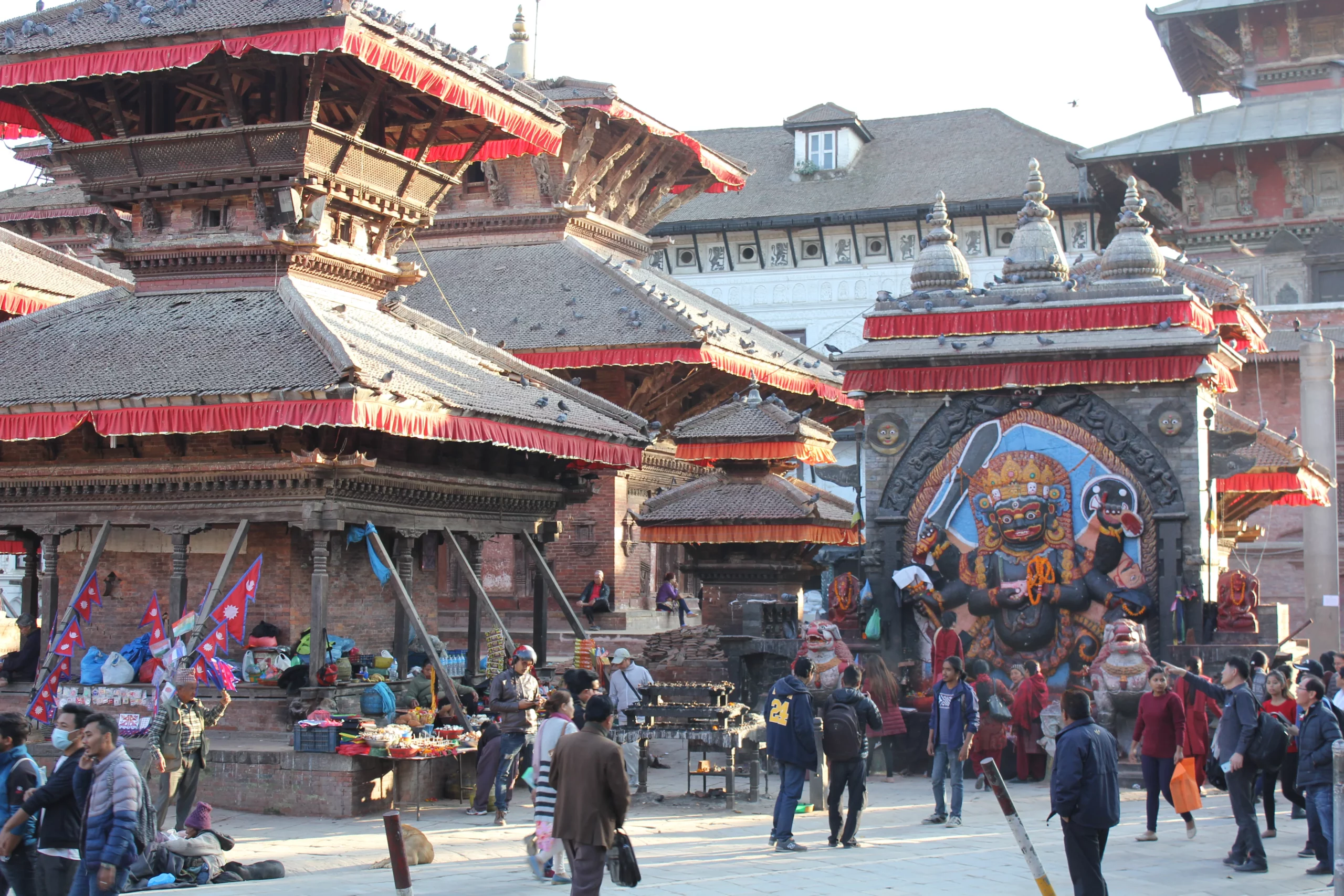
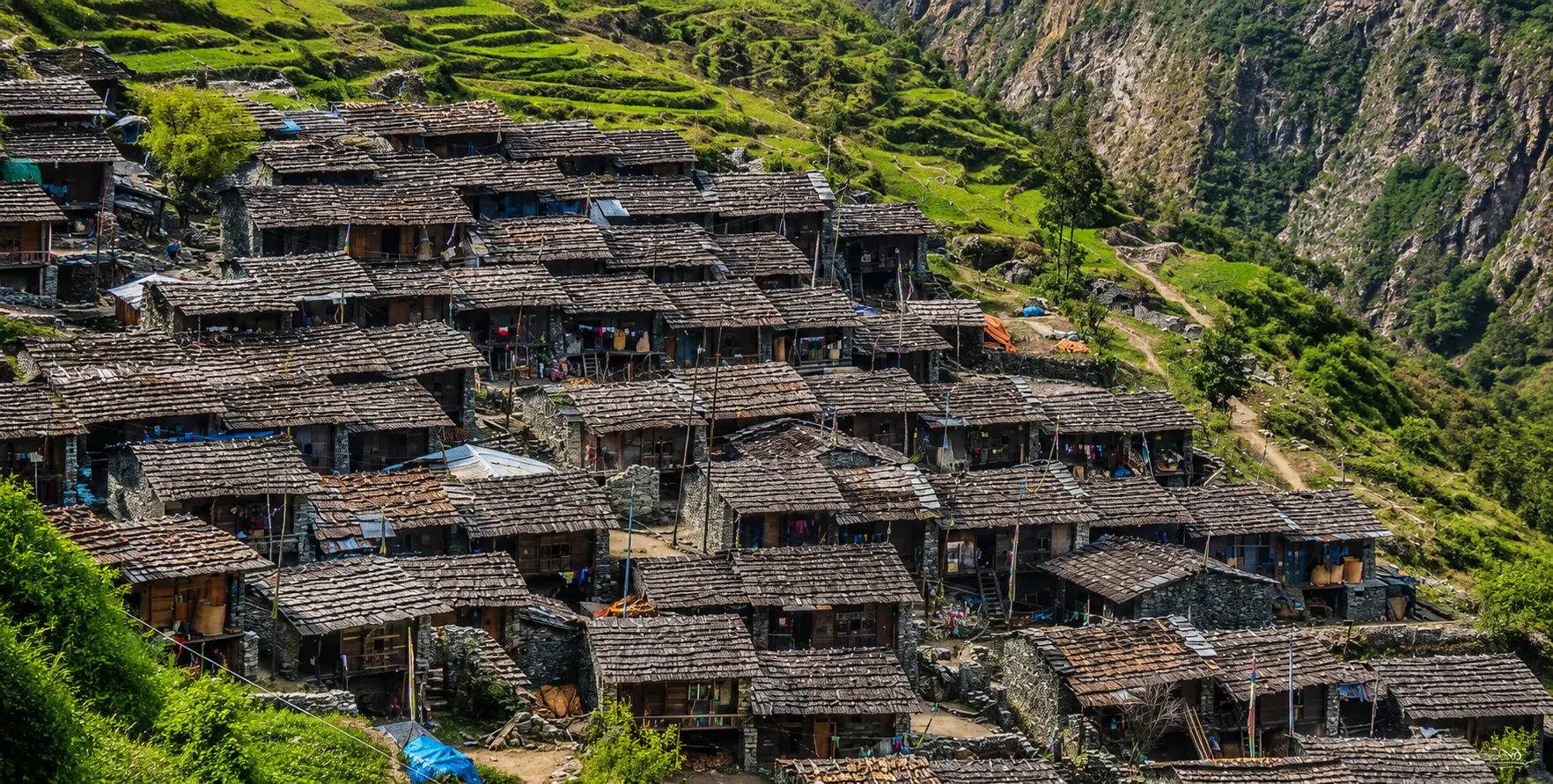
Kathmandu to Tamang Heritage Trail Transport

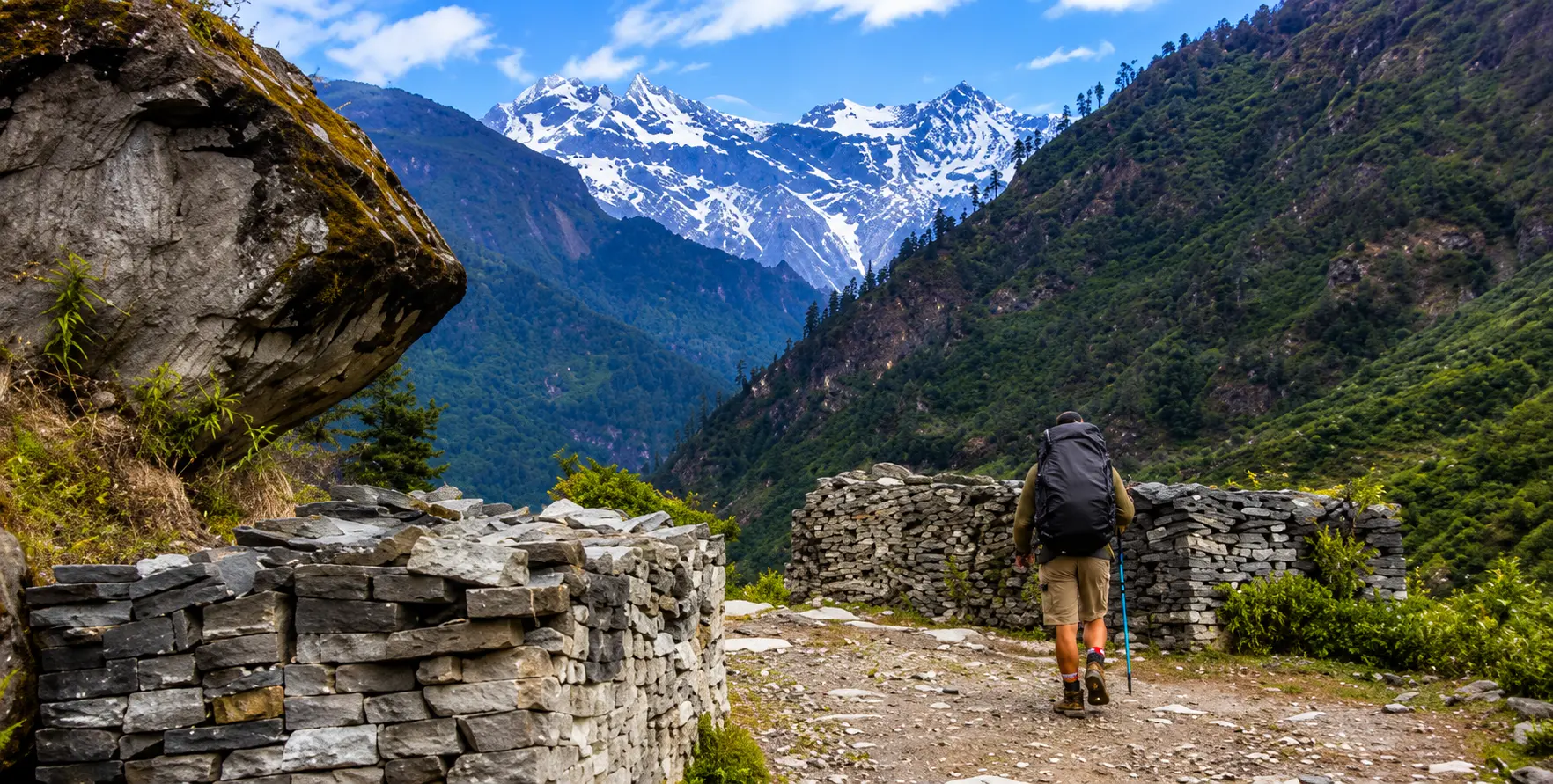
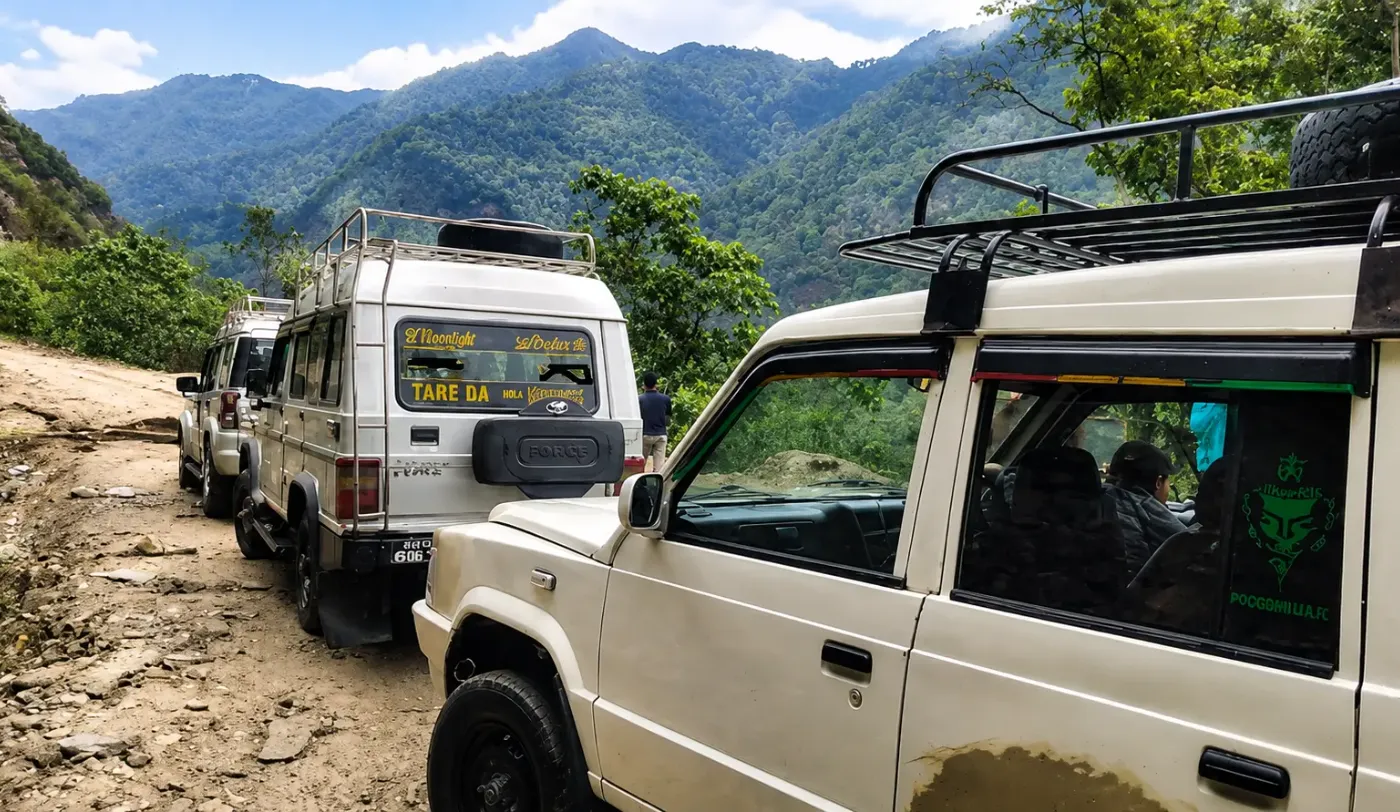
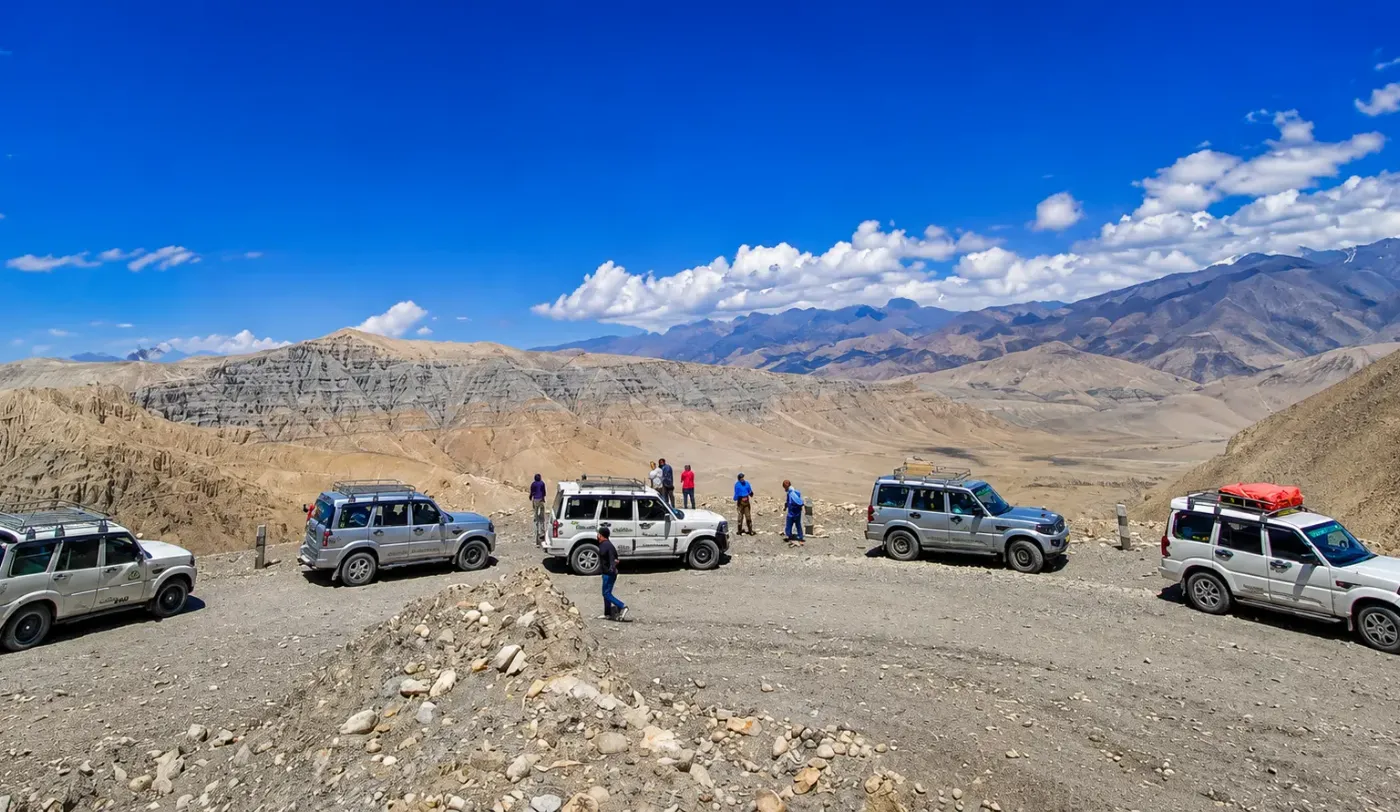
Kathmandu to Tamang Heritage Trail transport with a private 4WD jeep traveling through the Langtang region of Nepal

Kathmandu to Tamang Heritage Trail Transport

The Complete Vehicle Hire and Route Guide to Nepal’s Off-the-Beaten-Path Cultural Trek

Tucked into the Rasuwa district along Nepal’s northern border with Tibet, the 

Tamang Heritage Trail remains one of the country’s most rewarding yet comparatively undiscovered trekking routes. Named for the Tamang people whose Tibetan Buddhist culture, stone-built villages, and centuries-old trade routes define the region, this trek combines striking Himalayan views with a depth of cultural immersion that busier trails often lack.

Reaching the trailhead, however, still means the same demanding drive out of Kathmandu that serves the neighbouring Langtang Valley, and getting that first leg right matters as much as the trek itself.

This guide covers everything travellers need to know about 

vehicle hire and transport for the Kathmandu-to-Tamang Heritage Trail journey, from the drive itself through Trishuli Bazaar and Dhunche to Syabrubesi, to the trekking route’s key villages, permits, seasonal considerations, and how the trail compares to and combines with the better-known Langtang Valley Trek. Nepal Vehicle Hiring has arranged jeep and private vehicle transport along this exact corridor for years, and this article draws directly on that route experience.

What Is the Tamang Heritage Trail

The Tamang Heritage Trail is a relatively new trekking route, established to bring sustainable tourism income directly to Tamang communities in the villages north and west of Syabrubesi. Unlike the more heavily trekked Langtang Valley route, which follows the Langtang Khola directly toward Kyanjin Gompa, the Tamang Heritage Trail loops through a series of traditional villages, including Gatlang, Tatopani, Nagthali, Thuman, and Briddim, each offering homestay accommodation, traditional Tamang architecture, and direct contact with a culture closely tied to Tibetan Buddhism.

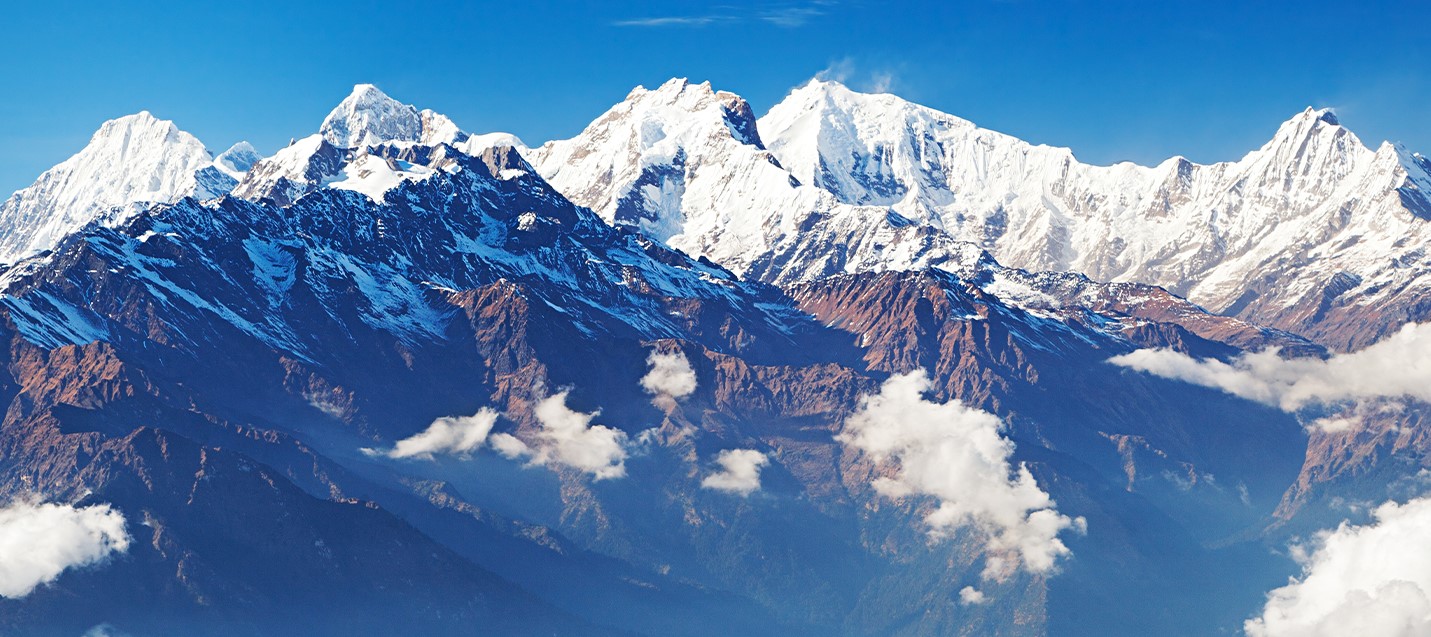
The trail’s defining features include the natural hot springs at Tatopani village, sweeping views of Langtang Lirung and the surrounding peaks from the Nagthali Danda viewpoint, centuries-old monasteries and chortens found throughout the route, and a level of homestay-based cultural exchange that has become increasingly rare on Nepal’s busier trekking circuits. For travellers seeking a shorter, culturally rich trek that avoids the crowds of the Everest and Annapurna regions while remaining relatively accessible from Kathmandu, the Tamang Heritage Trail has become an increasingly popular choice.

Geography: Rasuwa District and the Nepal-Tibet Borderlands

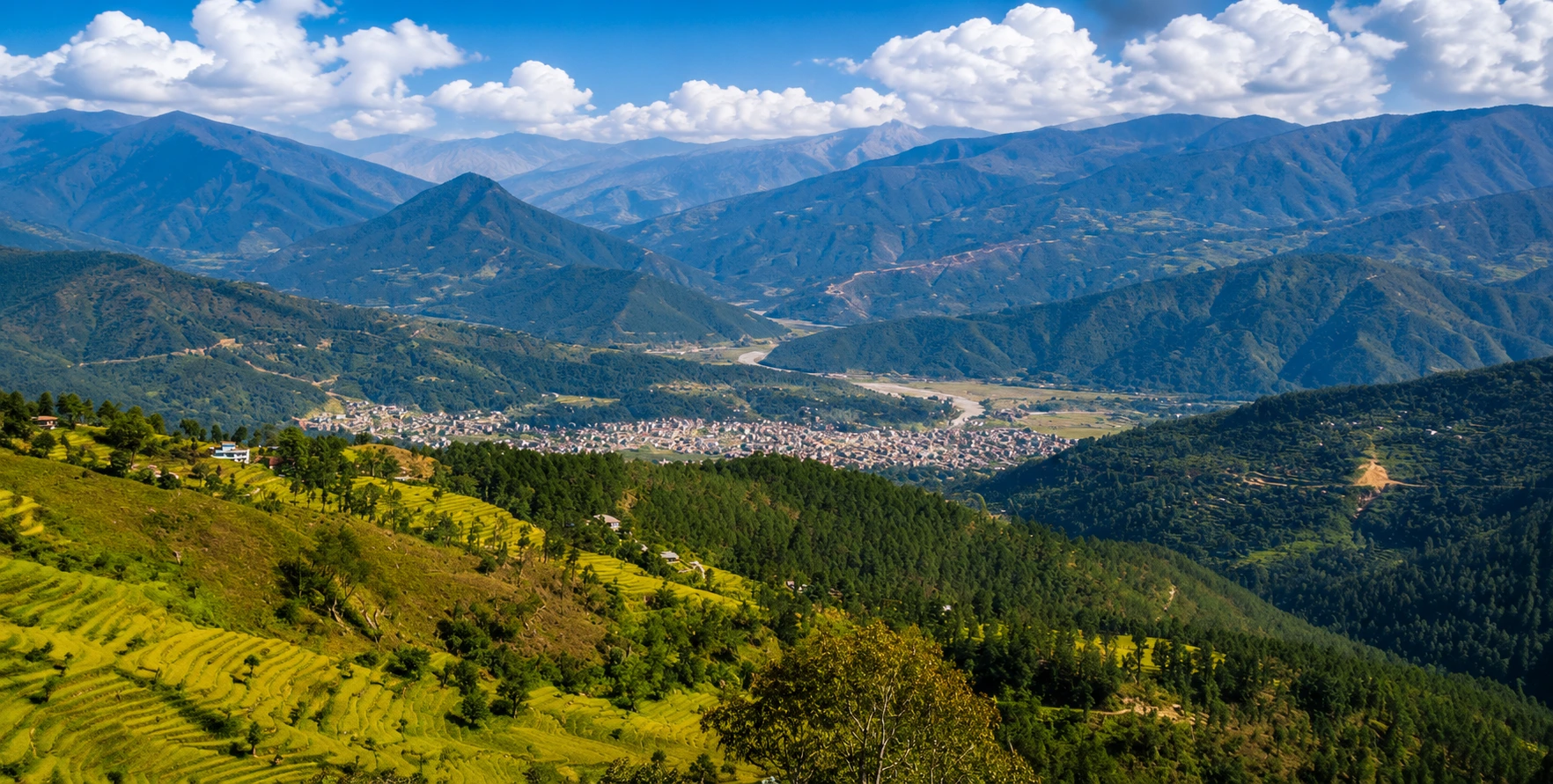
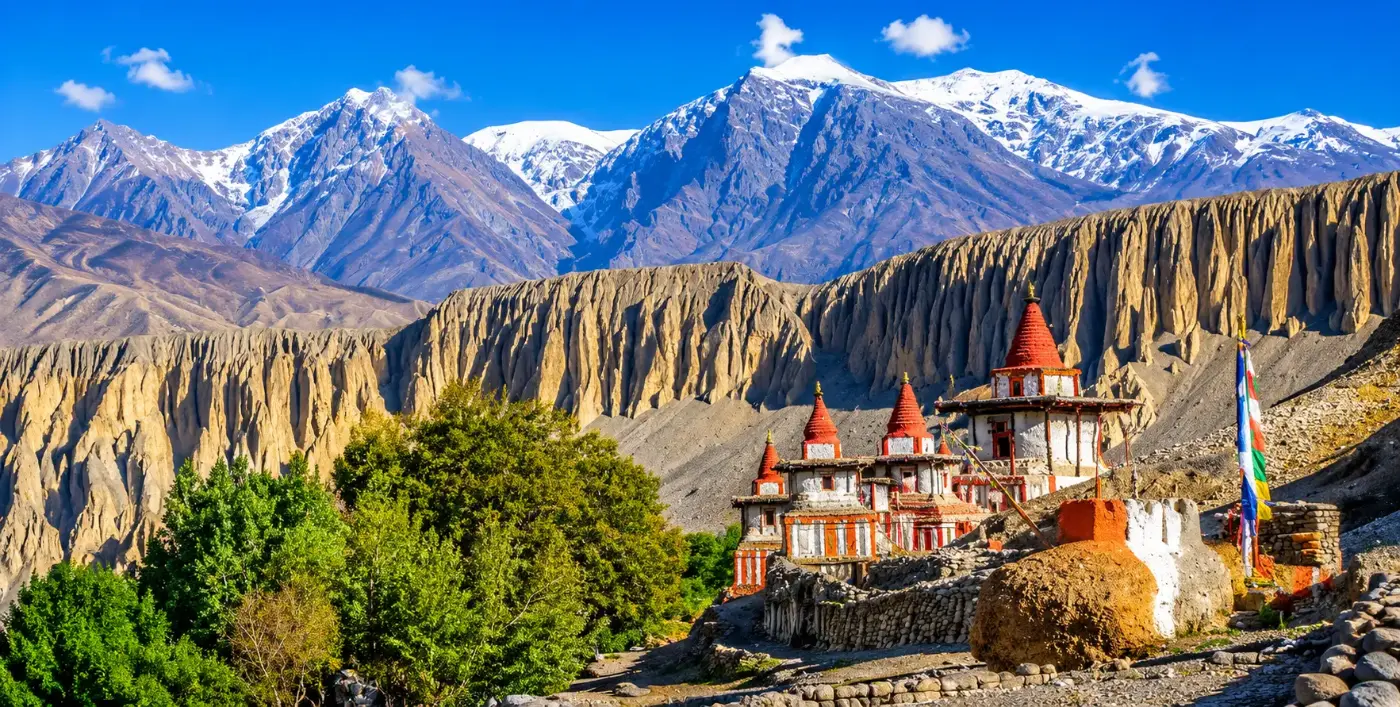
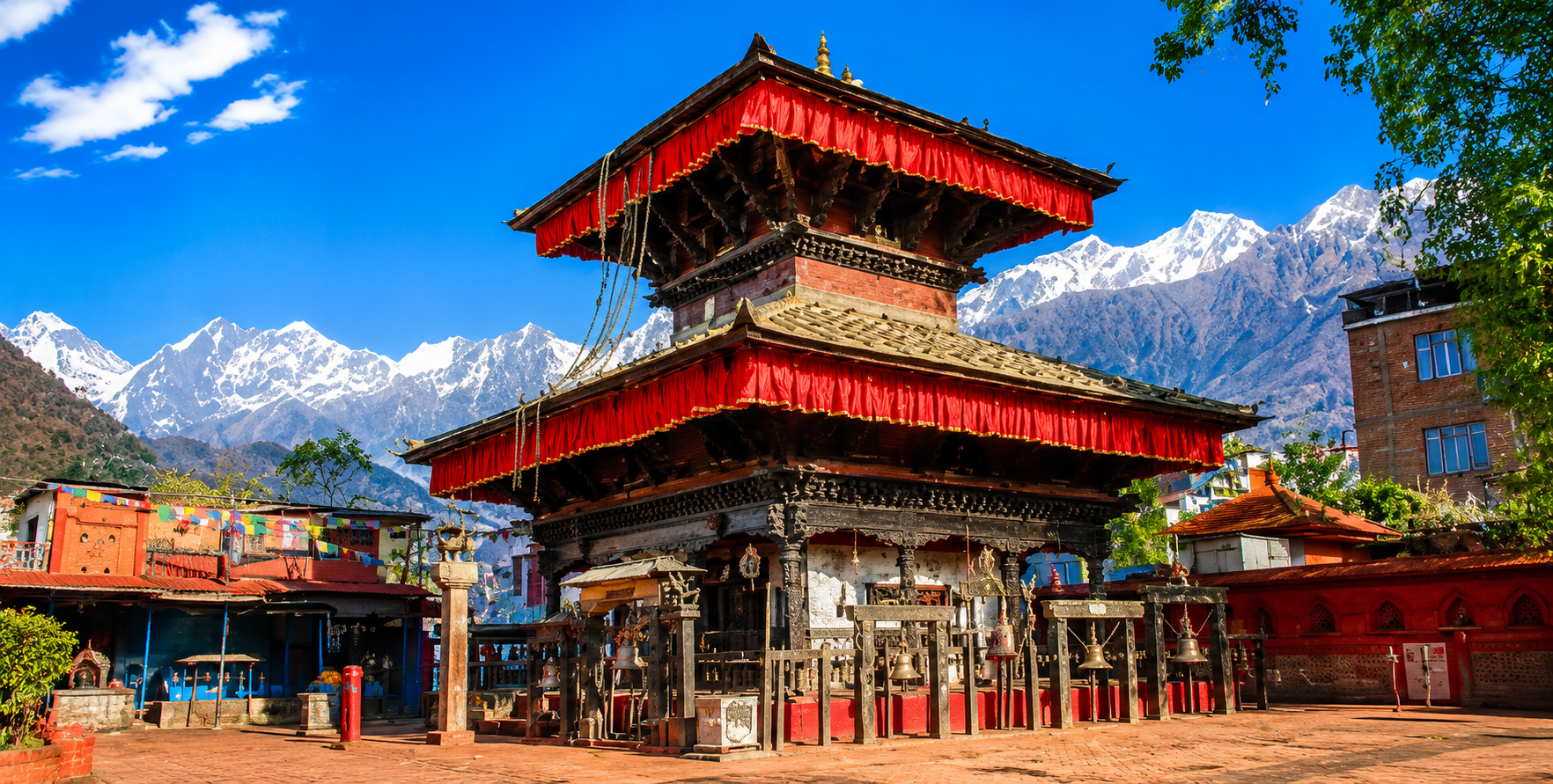
The Tamang Heritage Trail sits within Rasuwa district, largely inside or adjacent to Langtang National Park, in the same broad region as the Langtang Valley and within striking distance of the Rasuwagadhi-Kerung border crossing into Tibet. This proximity to the Tibetan plateau has shaped Tamang culture in the region for centuries, as seen in the area’s monasteries, prayer flags, chortens, and the Tibetan Buddhist practices still actively practised in villages like Gatlang and Thuman.

Elevations along the trail range from around 1,460 meters at Syabrubesi to over 3,650 meters at the Nagthali Danda viewpoint, making it a moderately challenging trek that nonetheless remains accessible to reasonably fit trekkers without requiring the sustained high-altitude endurance of routes like the Everest Base Camp Trek or Annapurna Circuit.
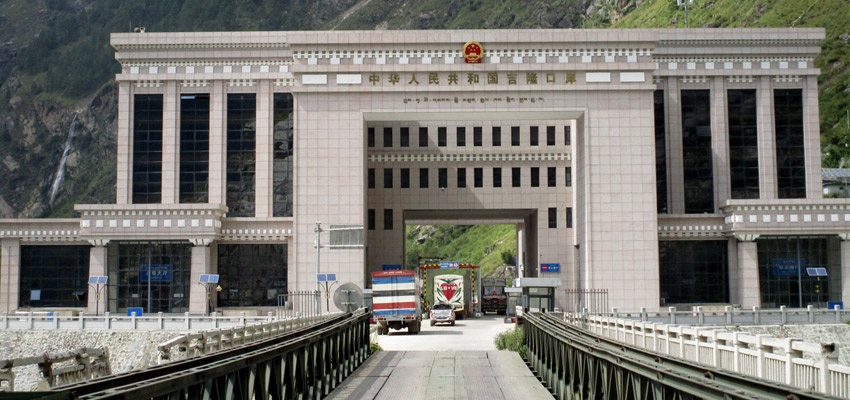
Book reliable Kathmandu to Tamang Heritage Trail transport with private 4WD jeeps and experienced drivers for a comfortable journey to the trek starting point.

The Journey From Kathmandu to Syabrubesi

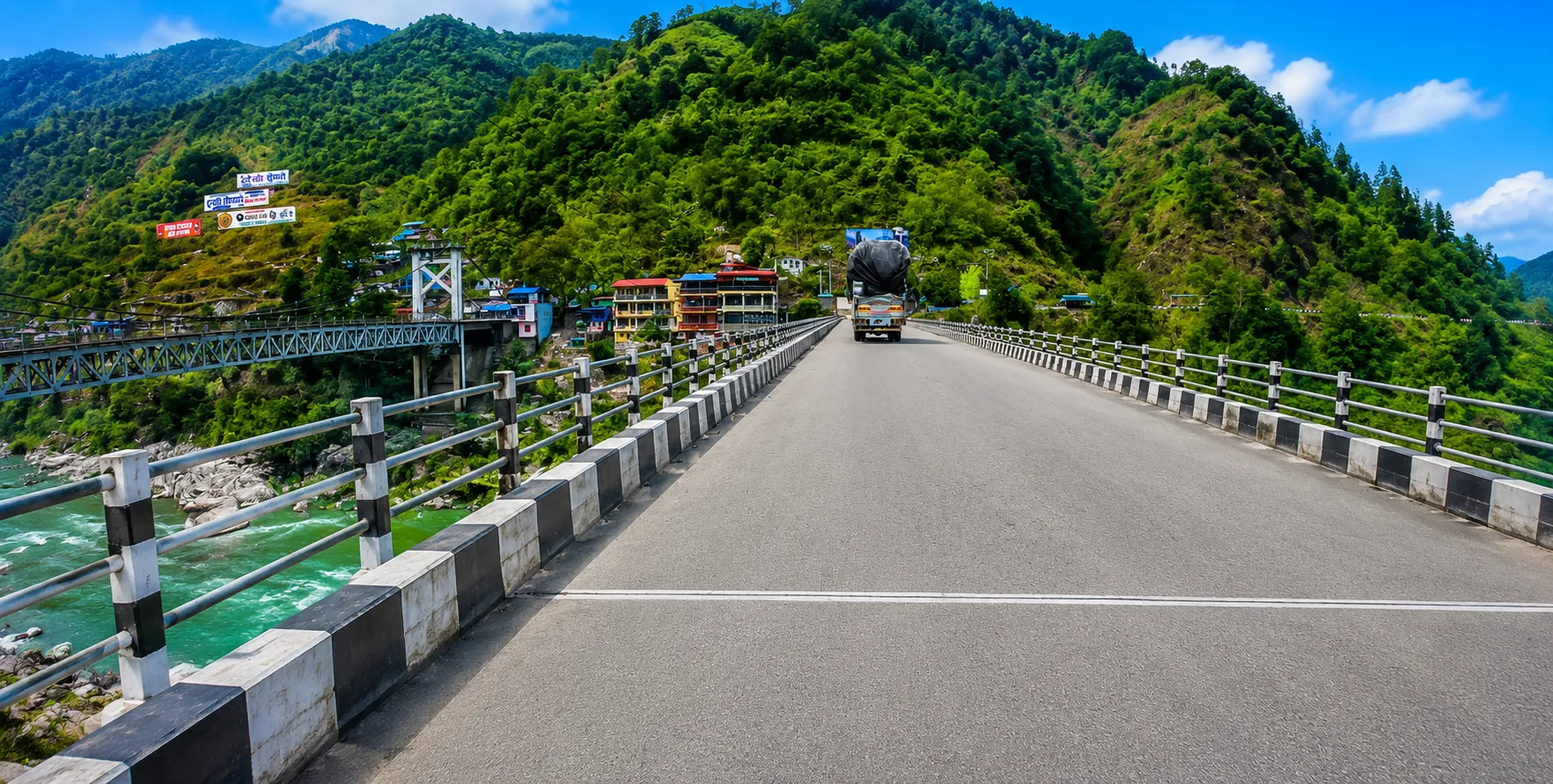
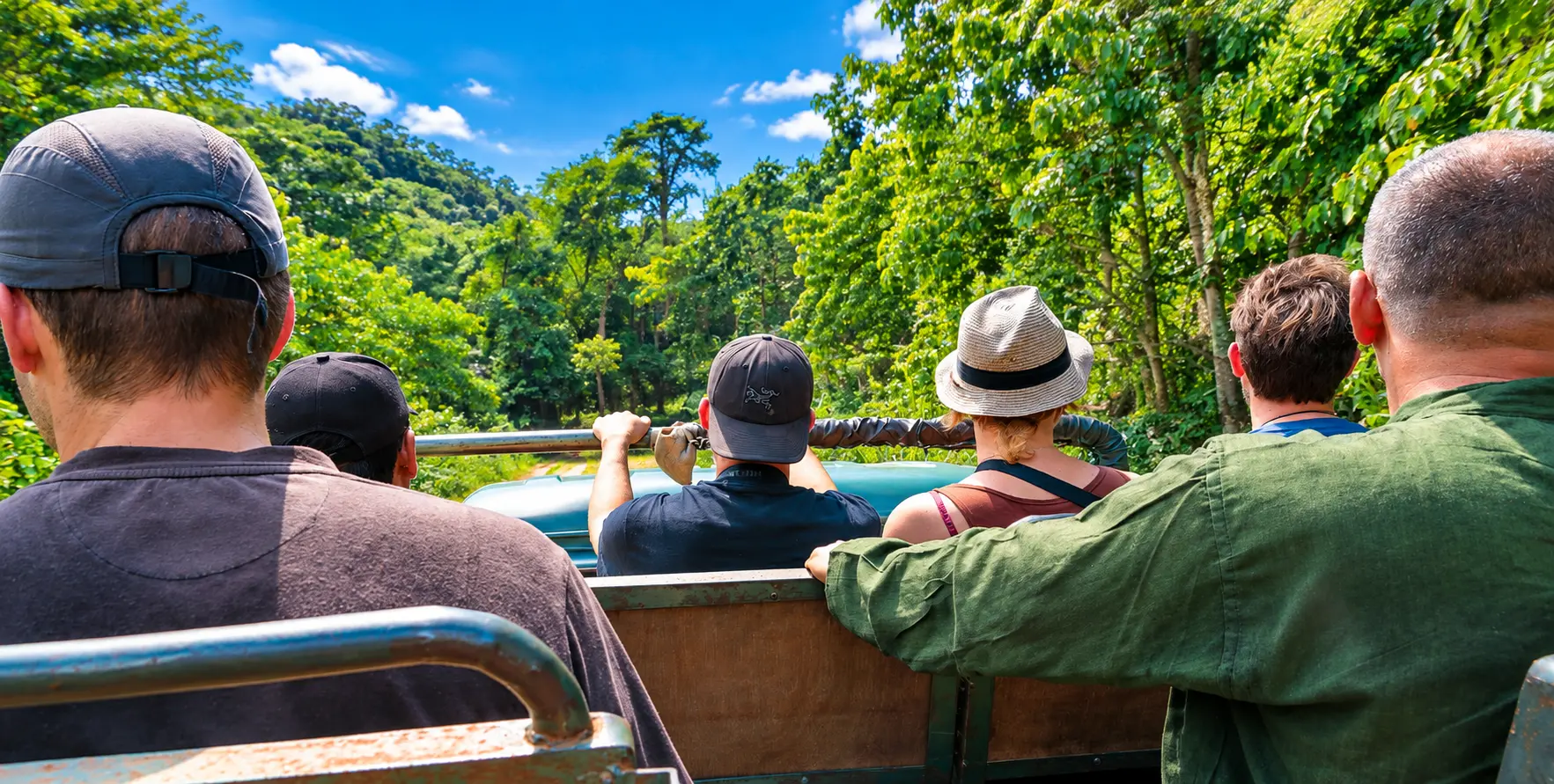
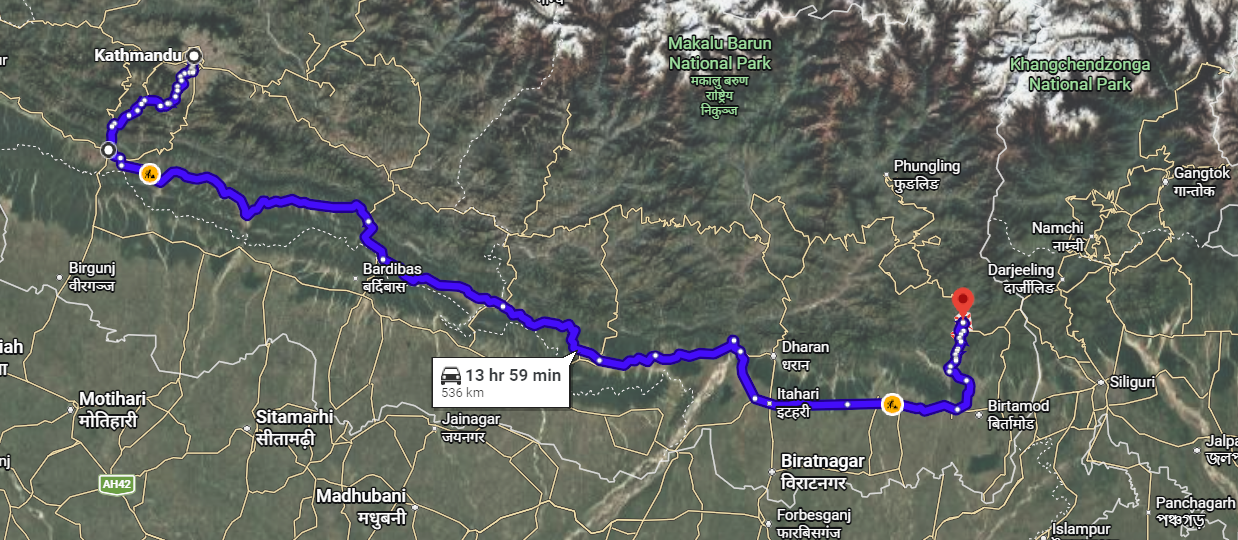
Nearly every Tamang Heritage Trail itinerary begins with the same overland journey used for the neighbouring Langtang Valley Trek: the drive from Kathmandu to Syabrubesi. This roughly 120-kilometre journey typically takes seven to eight hours by private vehicle, longer during the monsoon season or when road repairs are underway. The route climbs out of the Kathmandu Valley through Trishuli Bazaar, follows the Trishuli River valley, and continues through Dhunche, the headquarters of Langtang National Park, before descending to Syabrubesi itself, the trailhead town for both the Tamang Heritage Trail and Langtang Valley routes.

This road ranks among the more physically demanding drives in Nepal’s central hill region, with sharp switchbacks, sections of loose gravel, and occasional landslide-related delays, particularly during and immediately after the monsoon months. We strongly recommend a genuine four-wheel-drive vehicle with an experienced driver familiar with this corridor, rather than a standard car or low-clearance van. Our 

Jeep Hire in Nepal service is built specifically around routes like this one, pairing a Land Cruiser or Prado-class vehicle with a driver experienced on the Trishuli-Dhunche-Syabrubesi corridor.

Travellers combining this trip with time in Kathmandu often begin with a day or two of Valley sightseeing, arranged through our 

Kathmandu sightseeing tour and 

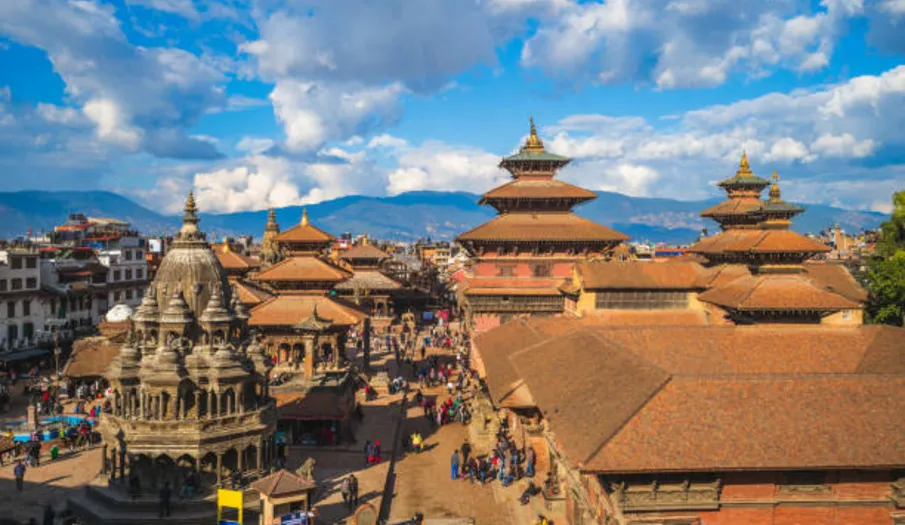
Bhaktapur Durbar Square tour services, along with a 

Kathmandu airport transfer to begin the trip smoothly from the moment they land.
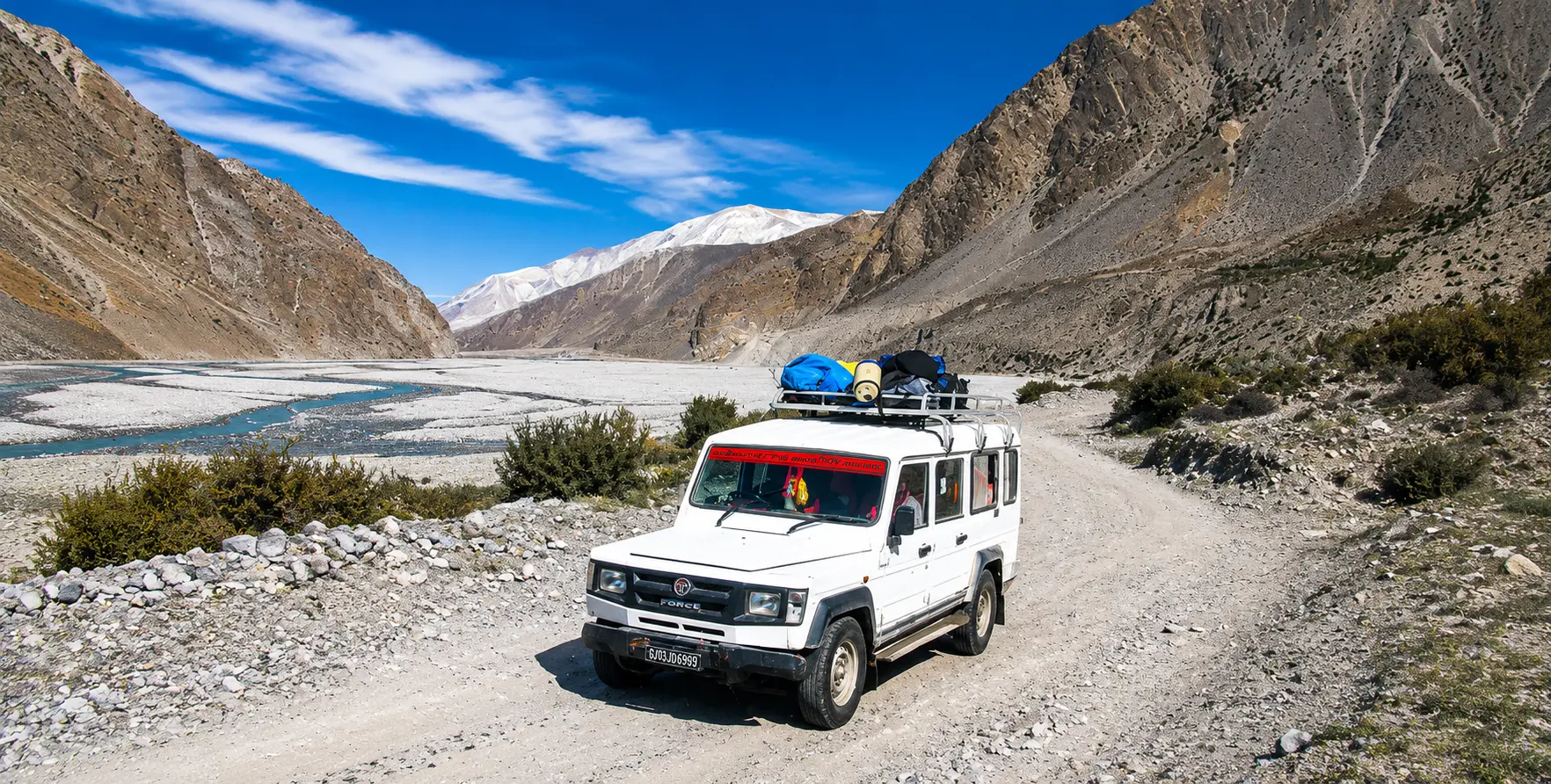
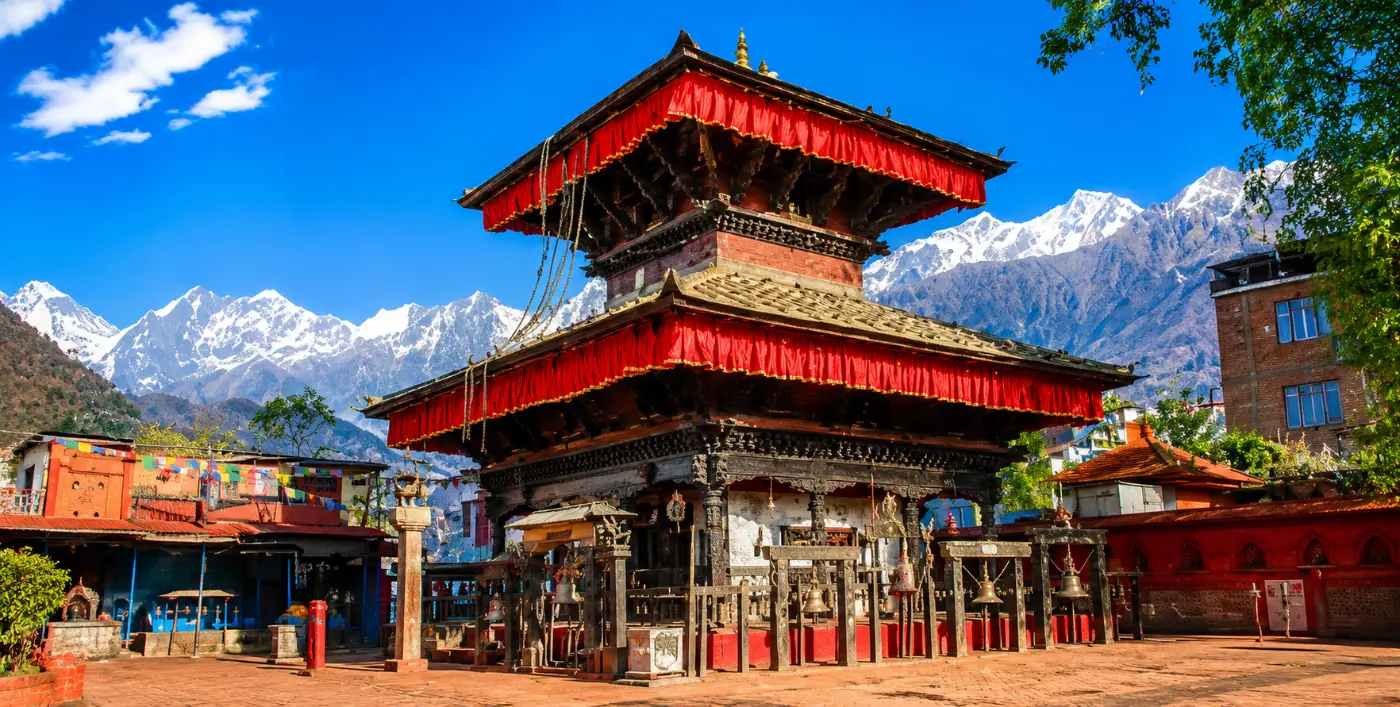
Kathmandu to Tamang Heritage Trail transport with a private 4WD jeep traveling through the Langtang region of Nepal

Vehicle Options for the Syabrubesi Approach

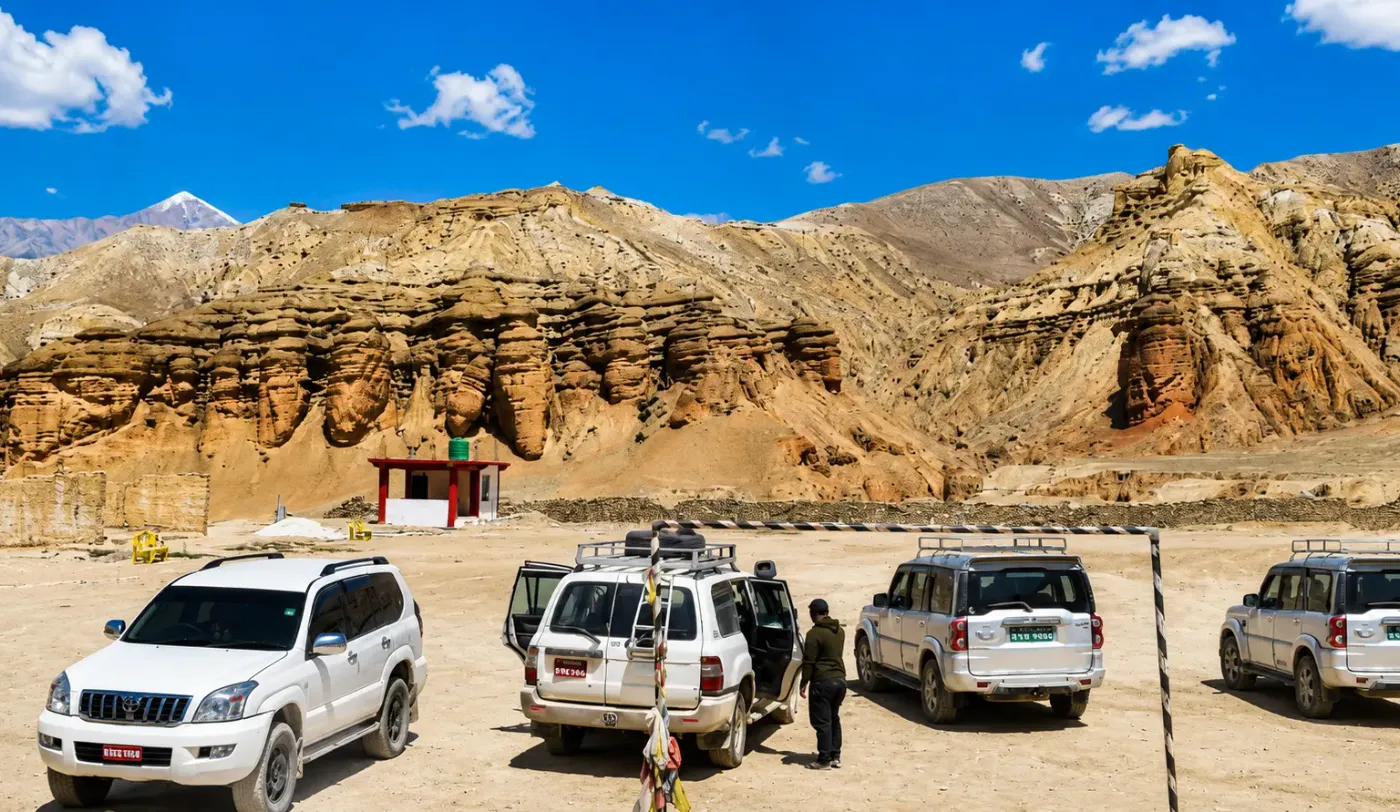
Toyota Land Cruiser and Prado

For small groups of up to four trekkers, a Land Cruiser or Prado remains the most comfortable and reliable option for the Syabrubesi road, offering the ground clearance and suspension needed on the roughest sections between Trishuli Bazaar and Dhunche.

Executive Hiace Vans

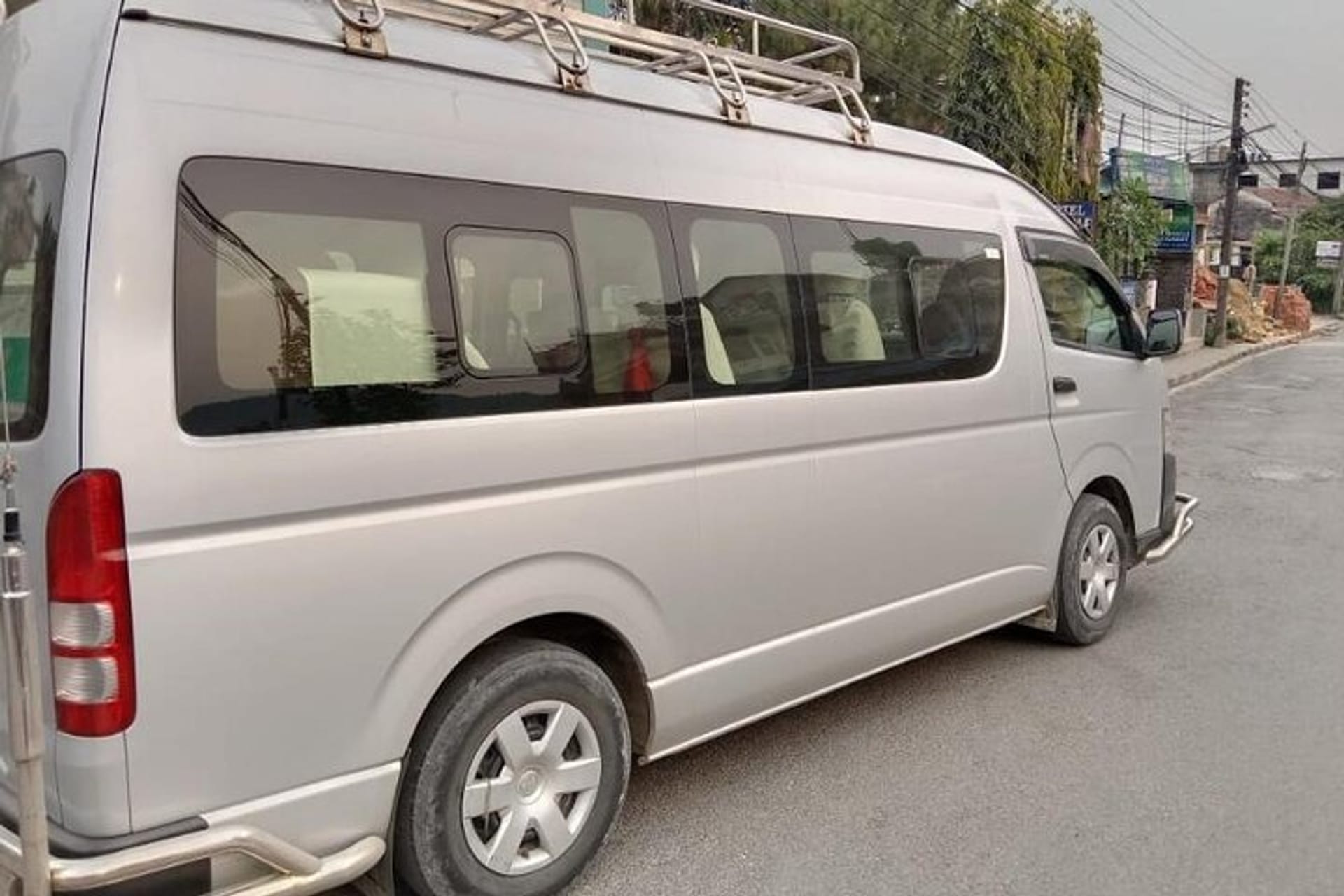
Larger trekking groups or families often prefer our 

Hiace hire service for this route, offering considerably more luggage space for group trekking equipment and homestay gifts that visitors to the Tamang villages commonly carry.

Mahindra Bolero and Local Jeeps

Budget-conscious trekkers travelling in smaller groups often choose a Mahindra Bolero-class jeep, as covered in our 

Mahindra Bolero and Tata Sumo trekking transfer guide, which remain practical and cost-effective options for this corridor.
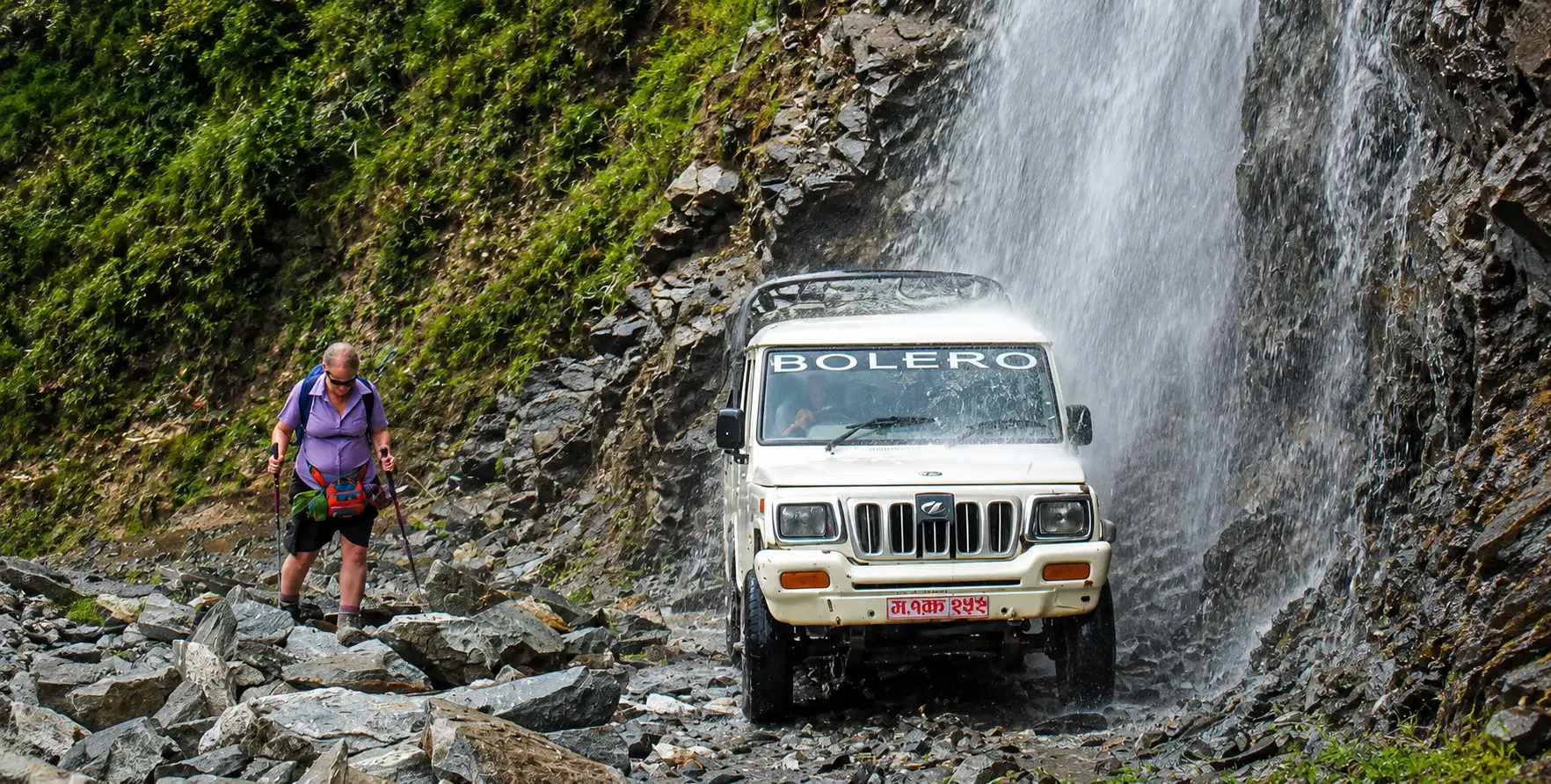
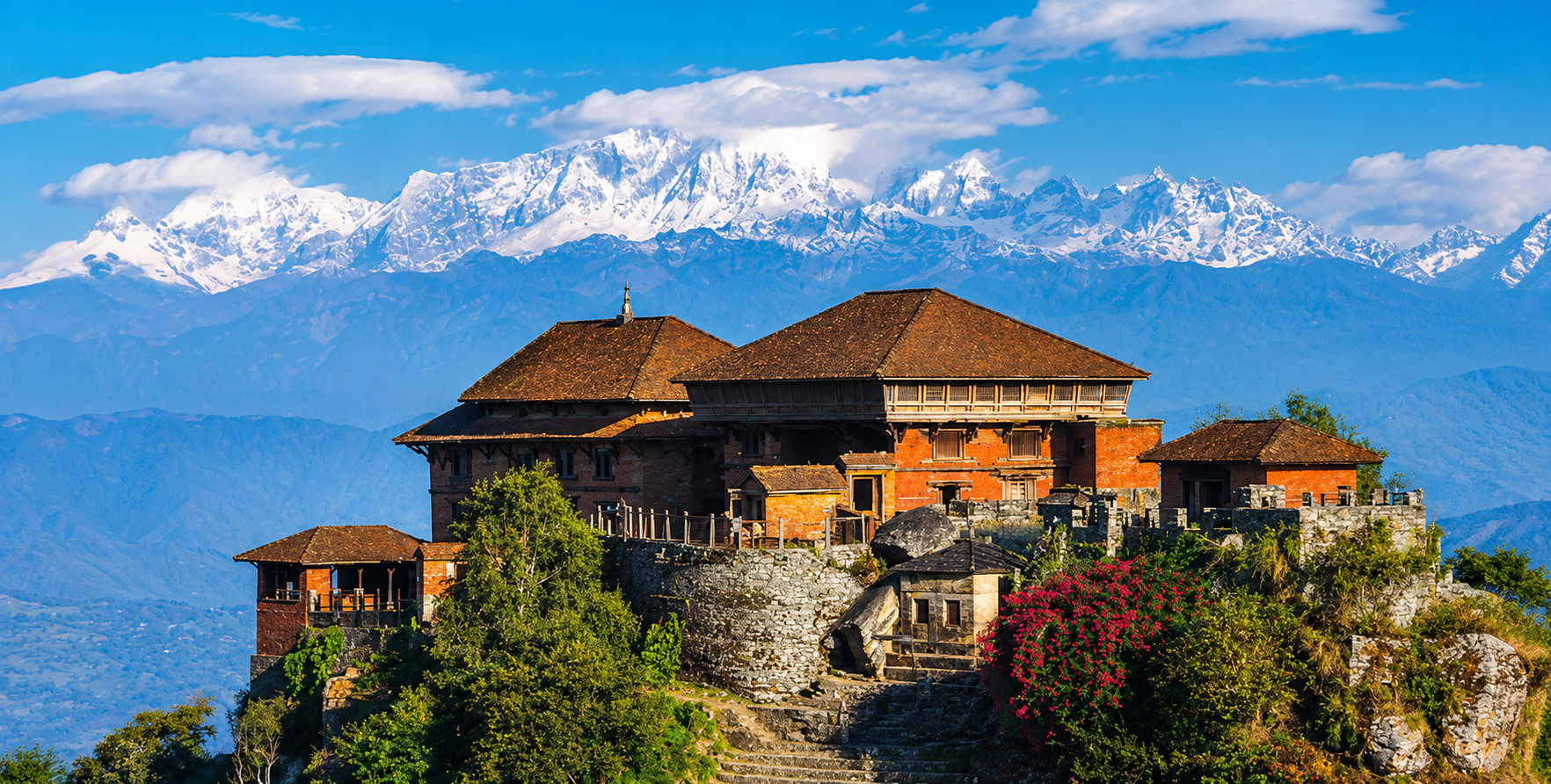
Kathmandu to Tamang Heritage Trail transport with a private 4WD jeep traveling through the Langtang region of Nepal

The Trekking Route: Villages and Highlights

Syabrubesi: The Gateway Town

Syabrubesi serves as the starting and ending point for both the Tamang Heritage Trail and the Langtang Valley Trek, and most trekkers spend at least one night here before setting out, both to arrange final permit checks and to recover from the long drive from Kathmandu.

Gatlang: A Traditional Tamang Village

A short trek from Syabrubesi, Gatlang is one of the route’s most culturally significant stops, known for its traditional stone houses, the historic Chhechen Gompa monastery, and Parvati Kunda, a small sacred lake associated with local Hindu and Buddhist pilgrimage traditions.

Chilime and Tatopani: Hot Springs on the Trail

The village of Tatopani, not to be confused with the larger settlement of the same name on the Muktinath route, offers natural hot springs that provide a welcome rest for trekkers partway through the loop, along with views of the Chilime hydropower project, which has brought modern infrastructure to this otherwise traditional corner of Rasuwa.

Nagthali Danda: The Trail’s Premier Viewpoint

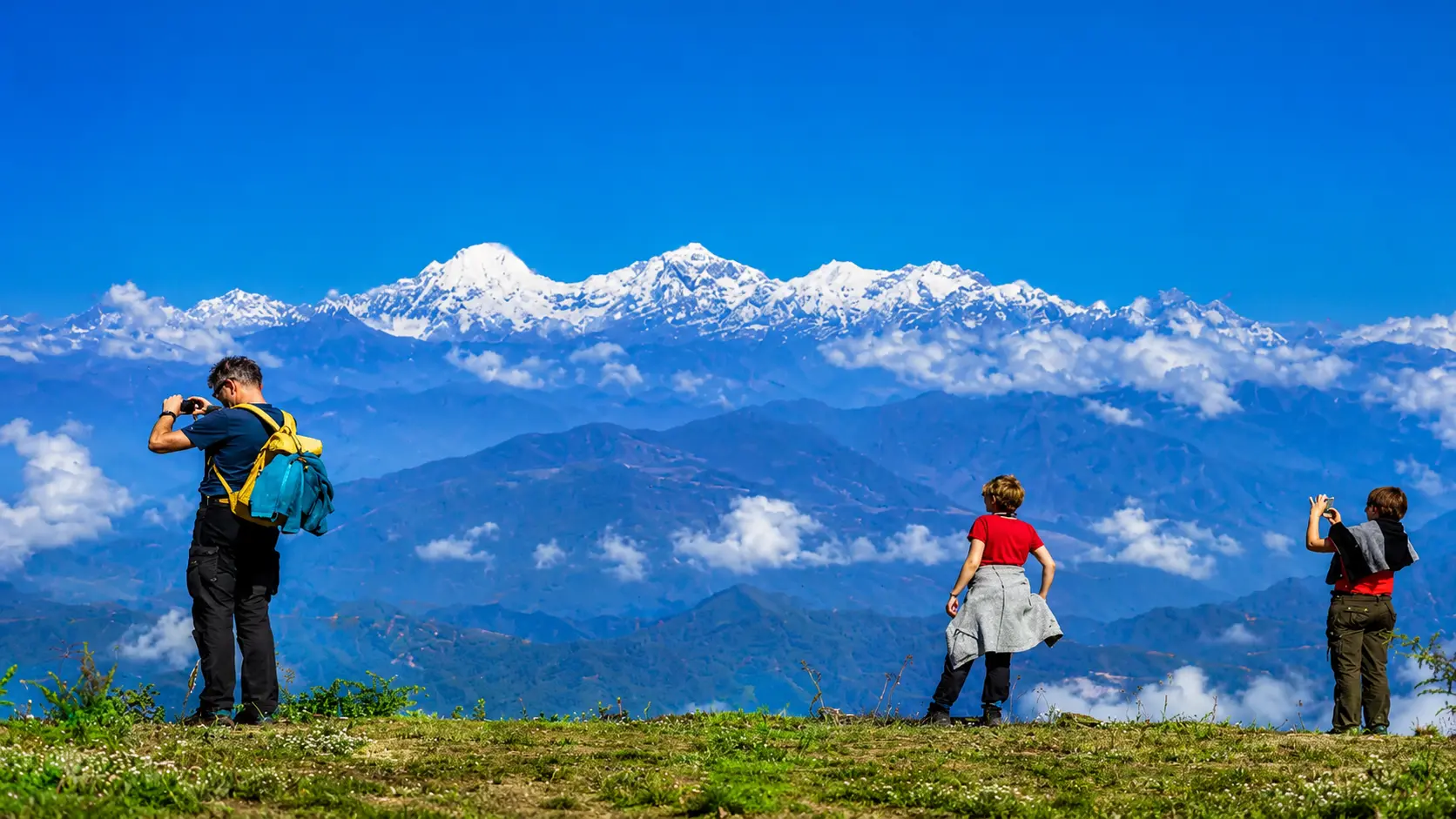
At over 3,650 meters, Nagthali Danda offers one of the finest panoramic views on the route, with views of Langtang Lirung, Ganesh Himal, and a wide sweep of the surrounding Rasuwa hills. Many trekkers consider this the scenic highlight of the Tamang Heritage Trail experience.

Thuman and Briddim: Homestay Villages

Thuman and Briddim have become particularly well known for their community-run homestay programs, offering trekkers a direct, in-depth experience of Tamang domestic life, food, and Buddhist practice that is rarely available on Nepal’s busier trekking routes. Briddim, in particular, sits close enough to the Langtang Valley trail that some itineraries combine both routes into a single, longer loop.
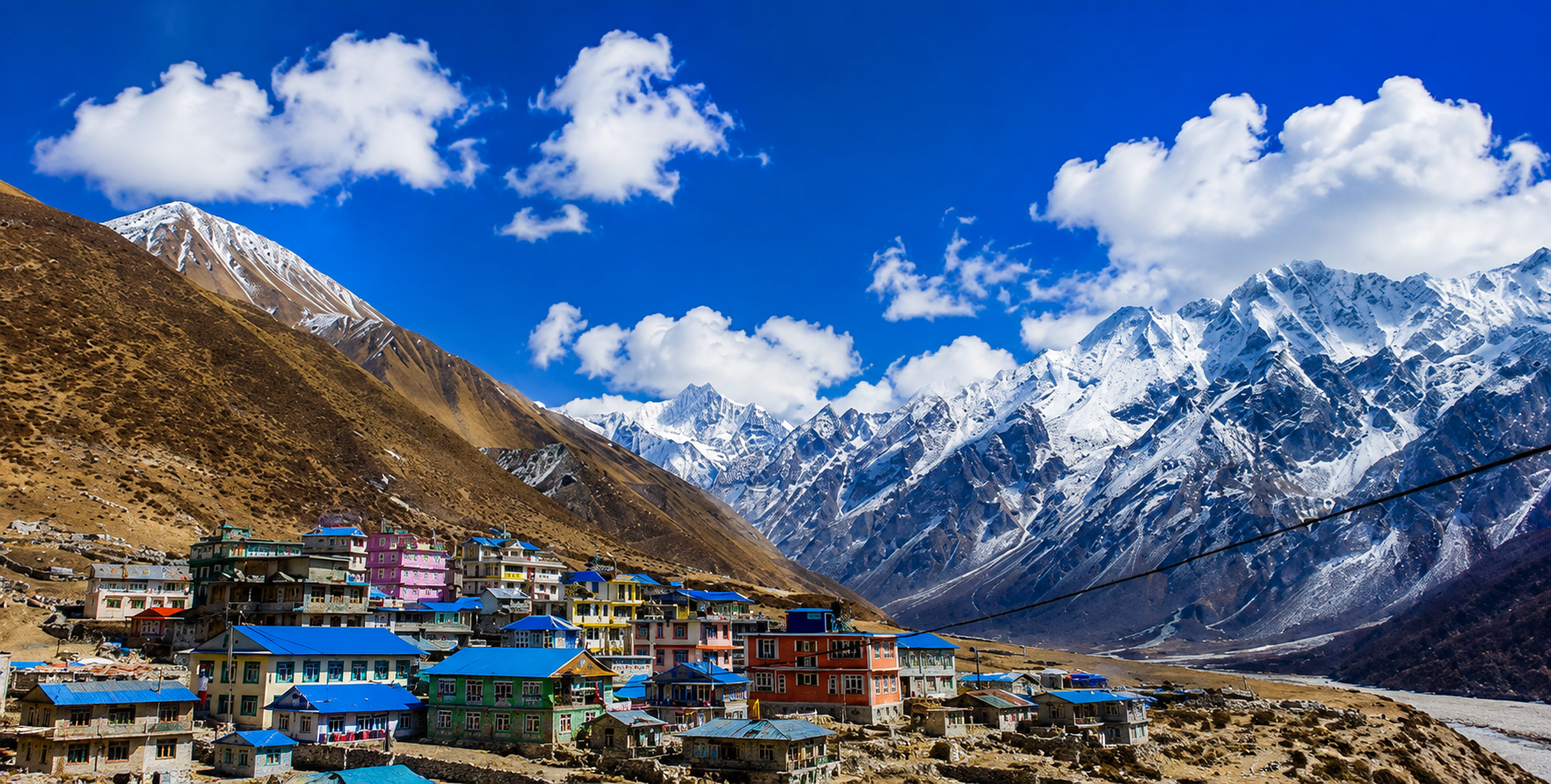
Kathmandu to Tamang Heritage Trail transport with a private 4WD jeep traveling through the Langtang region of Nepal

Combining the Tamang Heritage Trail With the Langtang Valley Trek

Because both routes share the same Syabrubesi trailhead and overlap in their lower sections, a growing number of trekkers combine the Tamang Heritage Trail with the 

Langtang Valley Trek, offered by our sister company, Alpine Luxury Treks, is combined into a single extended 10- to 14-day itinerary. This combination lets trekkers experience both the cultural depth of the Tamang villages and the dramatic high-alpine scenery of the Langtang Valley itself, including Kyanjin Gompa and the glacial landscape beneath Langtang Lirung, without a second overland journey from Kathmandu.

For travellers deciding between the two routes as a standalone trek, the Tamang Heritage Trail is generally considered the more culturally focused and less physically demanding option, with lower average elevations and a greater emphasis on village life and homestays. At the same time, the Langtang Valley Trek pushes higher into true alpine terrain with more dramatic mountain scenery but fewer cultural stops along the way.

Proximity to the Rasuwagadhi-Kerung Border

The Tamang Heritage Trail’s villages sit relatively close to the Rasuwagadhi-Kerung border crossing into Tibet, one of the few official overland crossings between Nepal and China. As covered in more depth in our 

Rasuwagadhi Kerung Border Vehicle Hire guide: this border region has historically served as a trade corridor between Tamang communities in Rasuwa and Tibetan traders across the frontier, a history still visible in the architecture, religious practice, and trade goods found in villages like Timure and Thuman. Travellers interested in this border history sometimes extend a Tamang Heritage Trail itinerary with a visit to Timure, though crossing the border itself requires separate arrangements and documentation beyond a standard trekking permit.

Permits Required for the Tamang Heritage Trail

Trekkers on the Tamang Heritage Trail require a Langtang National Park entry permit, since much of the route falls within or adjacent to the park boundary, along with a TIMS (Trekkers’ Information Management System) card, standard requirements for most independent and guided trekking in this region of Nepal. Unlike Upper Mustang or other restricted areas, the Tamang Heritage Trail itself requires no additional permit, making it easier to arrange than some of Nepal’s more remote trekking routes.
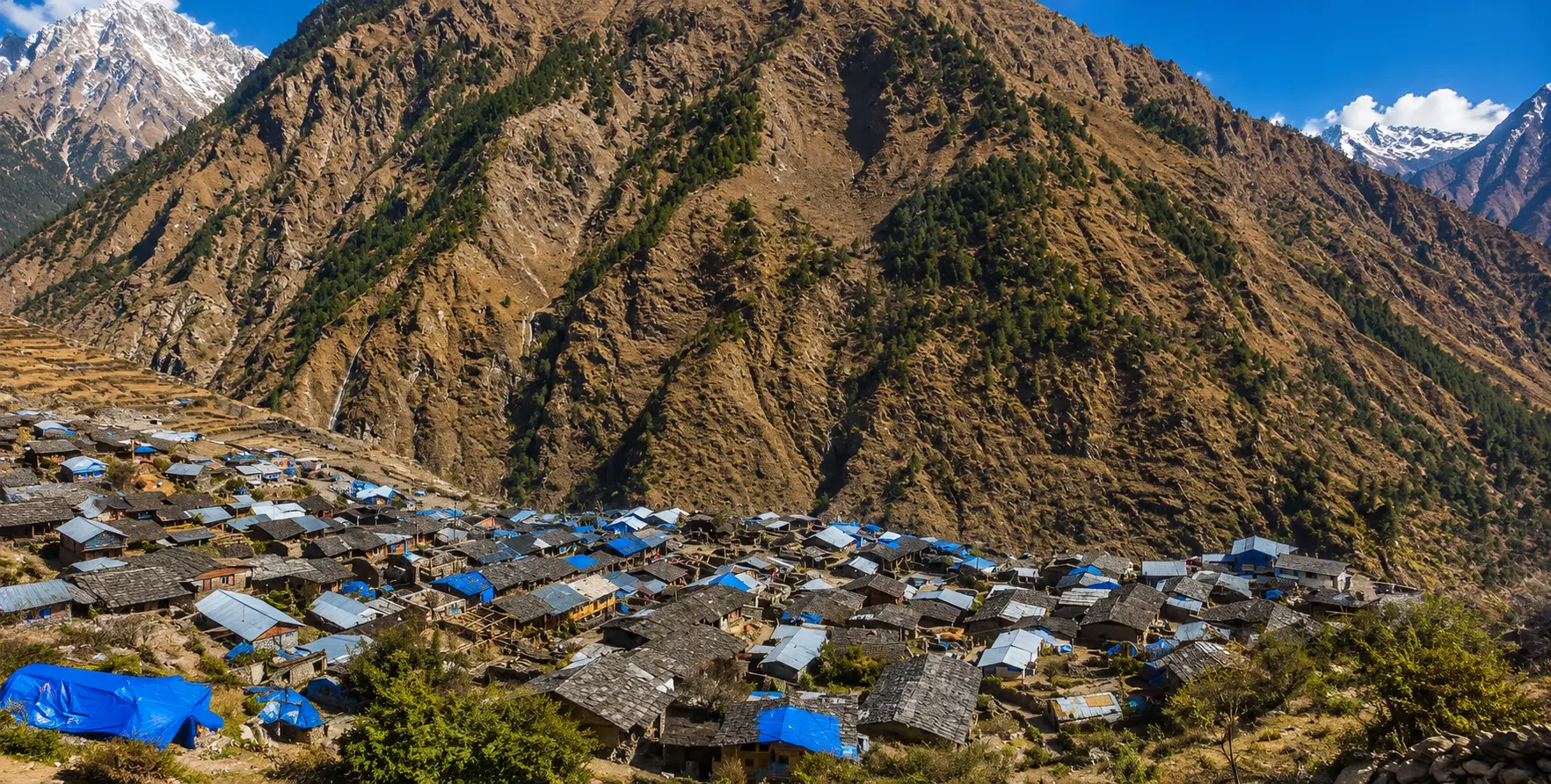
Book reliable Kathmandu to Tamang Heritage Trail transport with private 4WD jeeps and experienced drivers for a comfortable journey to the trek starting point.

Best Time of Year for the Tamang Heritage Trail

Spring (March to May)

Rhododendron forests bloom across the lower sections of the trail during this period, and road conditions on the Syabrubesi approach are generally favourable, making spring one of the two peak seasons for this trek.

Summer and Monsoon (June to August)

Heavy rainfall increases landslide risk on the unpaved sections of the Syabrubesi road, and trails can become slippery underfoot. However,  the lush green hillsides during this period have their own particular appeal for travellers willing to accept less predictable conditions.

Autumn (September to November)

This is the year’s clearest skies and most stable road and trail conditions, and the busiest season for both the Tamang Heritage Trail and the neighbouring Langtang Valley Trek. Book vehicles well in advance during this period.

Winter (December to February)

Higher sections of the route, particularly around Nagthali Danda, can see snowfall and freezing overnight temperatures, though the lower villages remain accessible and considerably quieter than during peak season.

Road Safety on the Kathmandu to Syabrubesi Route

The road through Trishuli Bazaar and Dhunche toward Syabrubesi passes through active landslide zones, particularly during and shortly after the monsoon. An experienced driver familiar with this corridor is essential for comfort and safety.

Inspect vehicles for reliable brakes, suspension, and tyres before departure, given the strain this route places on a vehicle compared to ordinary city driving. We select drivers for this corridor specifically for their experience navigating these conditions across multiple seasons.
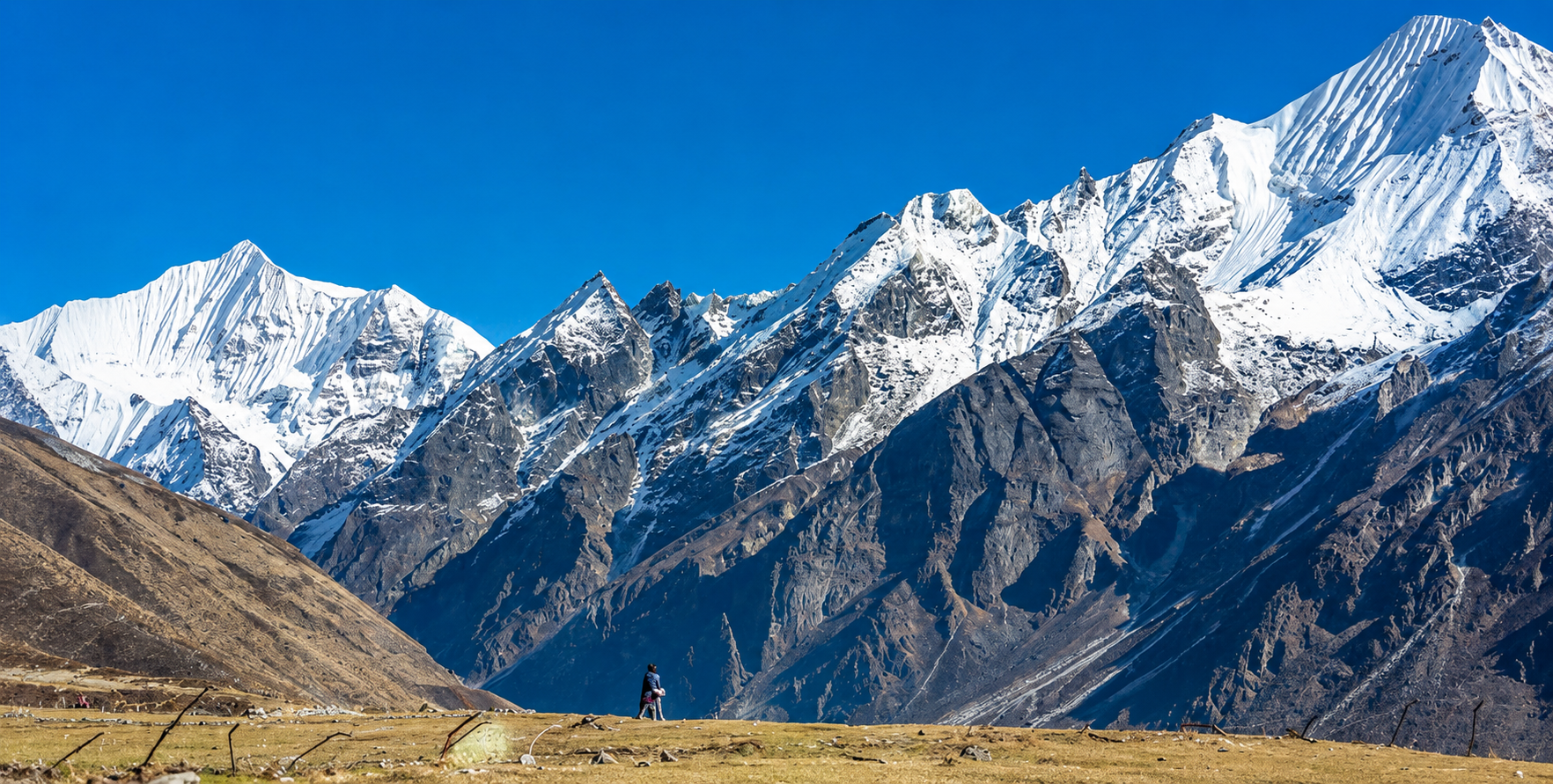
Kathmandu to Tamang Heritage Trail transport with a private 4WD jeep traveling through the Langtang region of Nepal

Cost Factors for Tamang Heritage Trail Transport

Vehicle hire cost for the Kathmandu-to-Syabrubesi route depends primarily on vehicle class and group size, with a private Land Cruiser or Prado costing more than a shared local jeep but offering considerably greater comfort and flexibility for stops along the way. Groups travelling together can reduce the effective per-person cost significantly compared to individual seats on shared transport.

Our team is glad to prepare a custom quote based on your group size, travel dates, and whether you plan to combine the Tamang Heritage Trail with the Langtang Valley Trek in a single extended itinerary. Visit our

homepage or explore our 

Trekking transport section for further route-specific guidance.

How to Book Your Tamang Heritage Trail Transport

Booking is straightforward: share your group size, preferred travel dates, and whether your itinerary includes an extension into the Langtang Valley, and our team will match the right vehicle, whether a Land Cruiser, Prado, or Hiace, along with a driver experienced on the Trishuli-Dhunche-Syabrubesi corridor. We recommend booking at least two to three weeks ahead during the peak spring and autumn seasons, when vehicles and drivers are in highest demand.

The History Behind the Tamang Heritage Trail

The Tamang Heritage Trail was developed in the years following Nepal’s broader push to diversify trekking tourism beyond the well-established Everest and Annapurna circuits, with support from conservation and community development organisations working alongside local Tamang communities in Rasuwa district. The goal was straightforward: create a trekking route that channelled tourism income directly into villages that had historically relied on subsistence agriculture, animal husbandry, and small-scale trade across the nearby Tibetan border, while showcasing a distinct ethnic culture that remained relatively unknown to international visitors compared to the Sherpa culture of the Everest region or the Gurung and Magar communities of the Annapurna foothills.

Tamang communities in this part of Nepal trace much of their cultural and religious heritage to Tibetan Buddhism, as reflected in the prevalence of chortens, prayer wheels, and monasteries throughout villages such as Gatlang and Thuman. The trail’s community homestay model, particularly well developed in Briddim and Thuman, was designed to keep more tourism revenue within these villages than conventional teahouse trekking, where much of the profit margin can flow to lodge owners who may not be local to the immediate community.
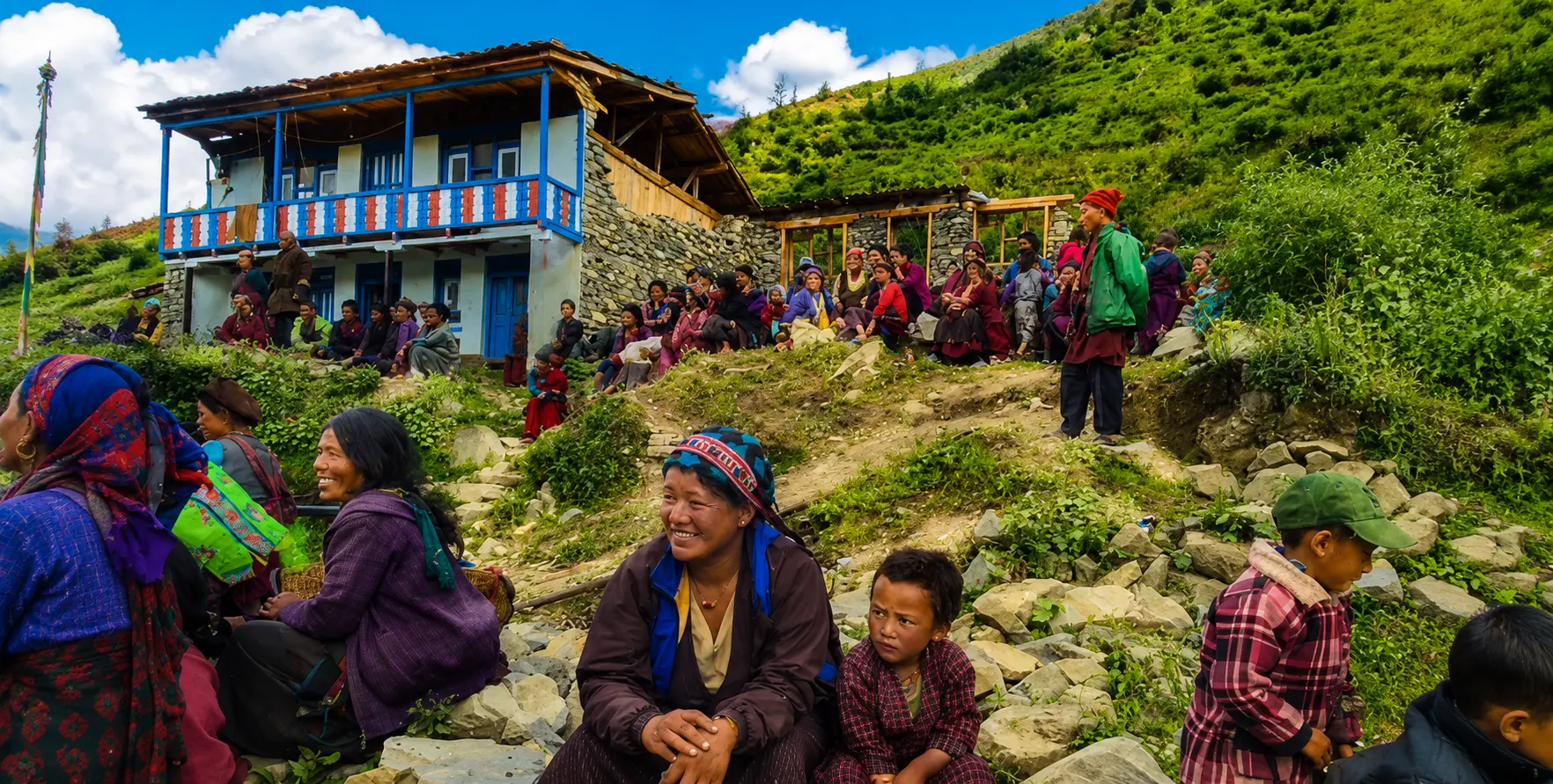
Kathmandu to Tamang Heritage Trail transport with a private 4WD jeep traveling through the Langtang region of Nepal

A Typical Tamang Heritage Trail Itinerary

While itineraries vary by operator and trekking pace, a common Tamang Heritage Trail itinerary spans seven to nine days, including the overland journey from Kathmandu. Day one covers the drive from Kathmandu to Syabrubesi, with an overnight stay at the trailhead.

From there, trekkers typically walk to Gatlang on day two, exploring the village’s monastery and Parvati Kunda before continuing toward Chilime and Tatopani on day three, timed to allow a soak in the natural hot springs. Day four usually involves the climb to Nagthali Danda, either as a base for the night or a day hike from a nearby village, taking in the trail’s best mountain panorama.

The route then descends through Thuman, often with a homestay night, before continuing to Briddim, another key homestay village, and finally looping back to Syabrubesi to complete the circuit. Groups combining this with the Langtang Valley Trek typically add five to seven more days, continuing up the Langtang Khola valley from Syabrubesi rather than returning directly to Kathmandu.

What to Pack for the Tamang Heritage Trail

Because the trail spans elevations from around 1,460 meters at Syabrubesi to over 3,650 meters at Nagthali Danda, layered clothing remains essential, with warm layers especially important for the higher viewpoint sections and cooler evenings in homestay villages. A good pair of broken-in trekking boots, a lightweight rain layer for afternoon showers even outside the monsoon season, and a headlamp for homestays with limited electricity are all worth carrying.

Since much of the route relies on homestays rather than conventional teahouses, a sleeping bag liner and personal toiletries are particularly useful, and small gifts or contributions to host families, discussed in advance with a guide or trekking agency, are appreciated, given the direct nature of the homestay exchange.
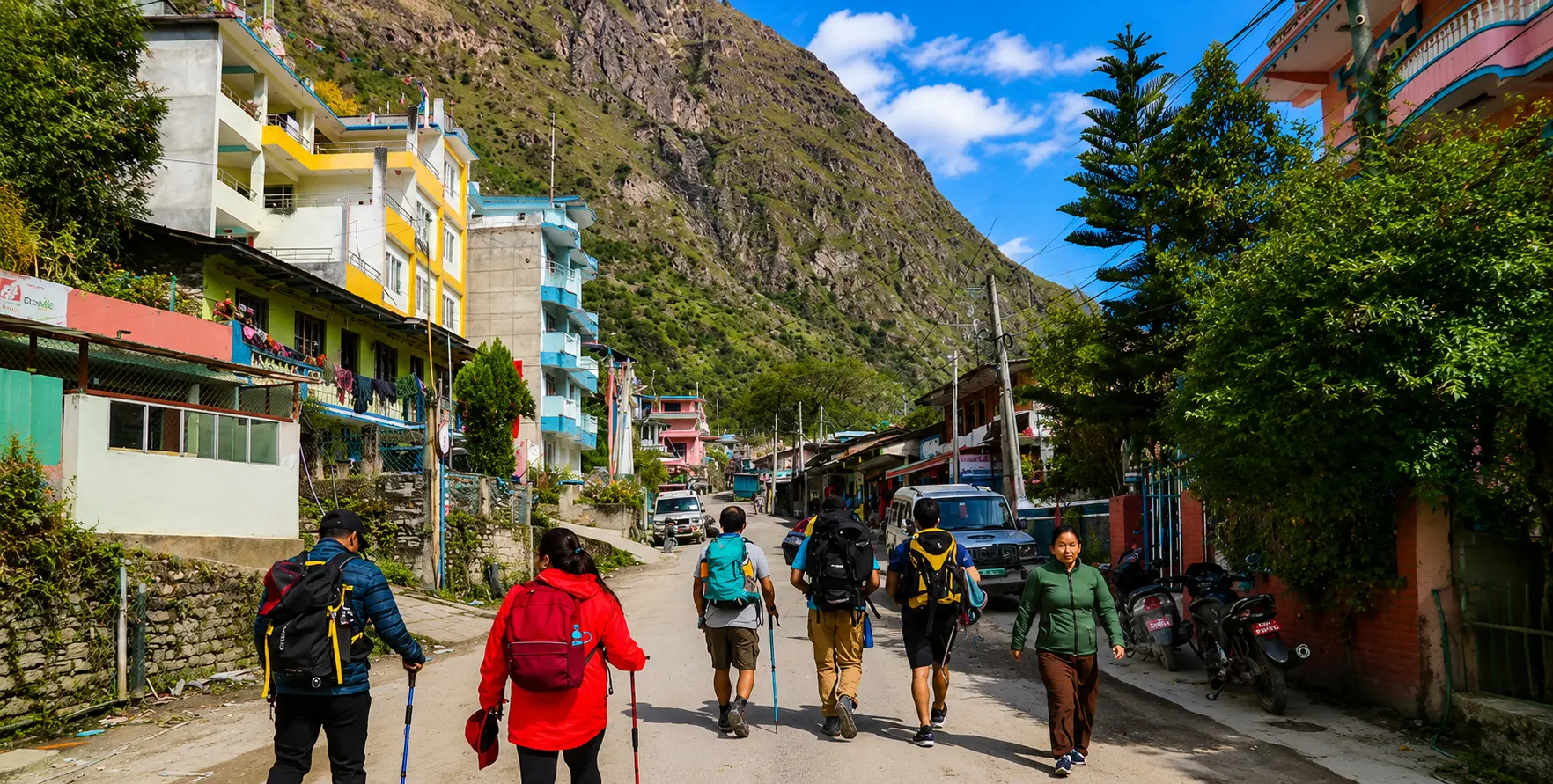
Kathmandu to Tamang Heritage Trail transport with a private 4WD jeep traveling through the Langtang region of Nepal

Guides, Porters, and Trekking Support

While the Tamang Heritage Trail can technically be walked independently, given adequate trail signage in recent years, a local guide familiar with the homestay network and Tamang cultural etiquette adds considerably to the experience, both in terms of safety on less-travelled sections of the trail and in facilitating a more meaningful cultural exchange with host families. Porters are widely available in Syabrubesi and help make the trek accessible to a broader range of fitness levels by carrying most of the luggage. In contrast, trekkers carry only a day pack between villages.

Tamang Culture and Buddhist Traditions Along the Trail

Tamang identity in Rasuwa is deeply intertwined with Tibetan Buddhist practice, visible in the mani walls, chortens, and prayer flags that line the trail between villages, and in the daily rhythms of monastery life still active in places like Gatlang’s Chhechen Gompa. Many households along the route maintain small shrine rooms, and it is common to see elderly residents spinning prayer wheels or reciting mantras during quiet moments in the village square.

Traditional Tamang dress, particularly for women, remains in everyday use in some of the more remote villages, distinct from the clothing typically seen in Kathmandu or the more tourism-influenced parts of the Everest and Annapurna regions.

Language also marks a clear cultural boundary along this route. While Nepali serves as the common language for communication with trekkers and guides, Tamang remains the primary language spoken within households and between neighbours in many of the trail’s villages, part of a broader linguistic and cultural distinctiveness that UNESCO and Nepali cultural preservation bodies have taken an active interest in documenting and supporting in recent years.

Local Cuisine on the Tamang Heritage Trail

Food along the trail reflects both the broader Nepali hill diet and specific Tamang influences shaped by proximity to Tibet. Dal bhat remains widely available and the most reliable option throughout the route, but homestay hosts frequently prepare Tamang specialities as well, including varieties of buckwheat-based bread, hearty potato dishes suited to the region’s high-altitude agriculture, and butter tea, a salted, buttery beverage with clear Tibetan influence that appears more frequently here than in Nepal’s more southern trekking regions.

Homestay meals are typically included in the overnight rate, and trekkers often cite sharing a meal cooked over a traditional wood-fired stove as one of the most memorable parts of the experience.

Environmental Considerations Along the Trail

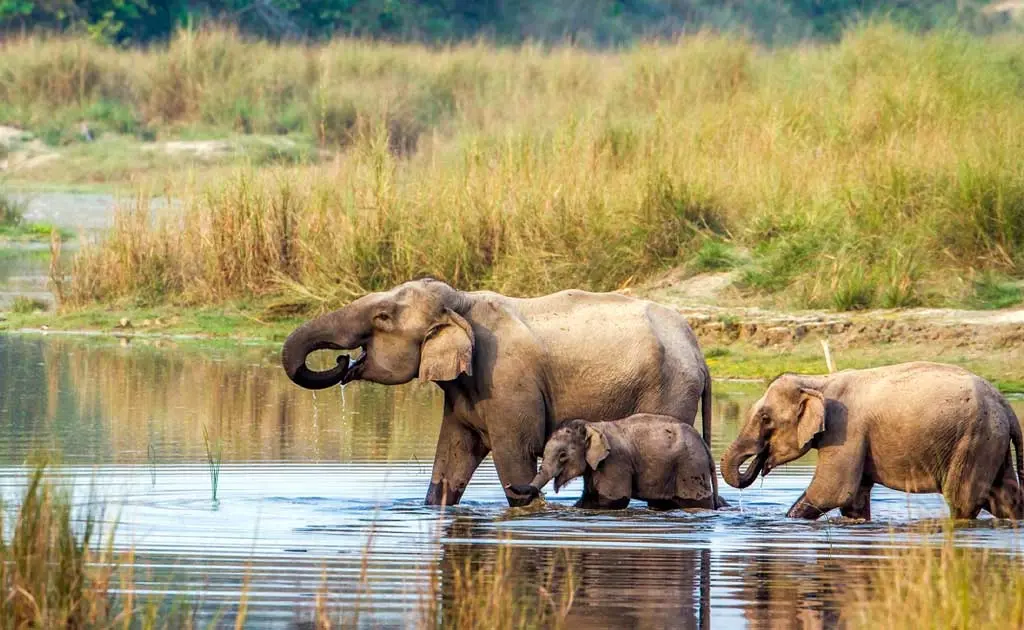
Langtang National Park, which encompasses much of the Tamang Heritage Trail route, remains ecologically significant, home to red pandas, Himalayan tahr, and a range of high-altitude bird species, as well as dense forests of rhododendron, oak, and pine at lower elevations. Trekkers are encouraged to carry out all non-biodegradable waste, minimise the use of firewood-heated water where possible, given the strain on local forest resources, and respect wildlife viewing distances, particularly in the forested sections between Syabrubesi and Gatlang, where wildlife encounters are more likely than on the more heavily trafficked Langtang Valley trail itself.

Comparing the Tamang Heritage Trail to Other Cultural Treks in Nepal

Nepal offers several trekking routes built primarily around cultural immersion rather than high-altitude mountaineering, and the Tamang Heritage Trail compares favourably to alternatives such as the Tsum Valley trek near Manaslu or the lower sections of the Annapurna Circuit around Ghandruk and Landruk, both of which similarly emphasise village culture over summit-focused trekking. What distinguishes the Tamang Heritage Trail is its relative proximity to Kathmandu, requiring only a single day’s overland drive to Syabrubesi rather than the considerably longer approach roads required for Tsum Valley or the more remote sections of Manaslu, making it a practical option for travellers with more limited time who still want a genuinely in-depth cultural trekking experience.

Photography Highlights Along the Route

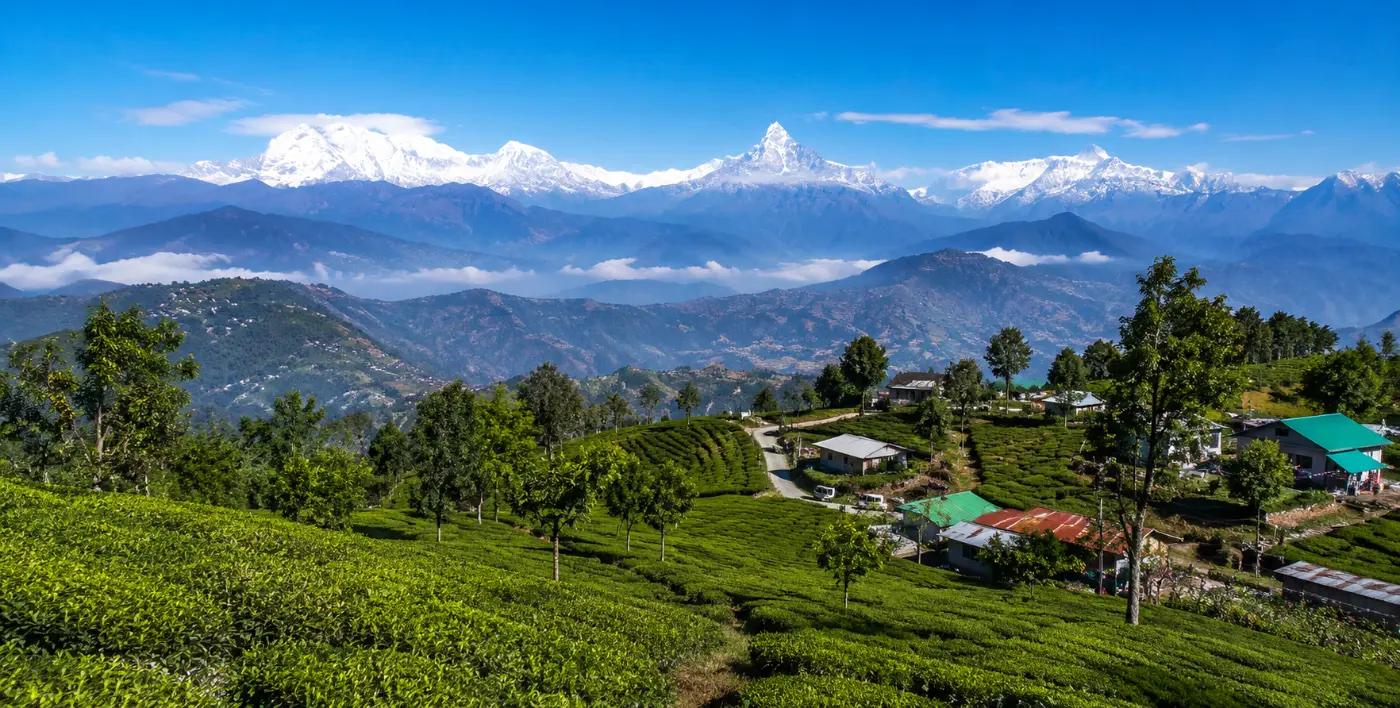
The Tamang Heritage Trail offers a distinct visual character compared to Nepal’s more famous trekking routes, combining traditional stone architecture, terraced hillside agriculture, and dramatic mountain backdrops in a way that feels less planned for tourism than some of the busier Everest and Annapurna trails. Notable photography opportunities include the weathered stone rooftops and prayer flag-draped alleys of Gatlang, the steam rising from the Tatopani hot springs against a backdrop of forested hillsides, the sweeping 360-degree panorama from Nagthali Danda taking in Langtang Lirung and Ganesh Himal, and the quiet, unposed moments of daily village life visible during homestay evenings in Thuman and Briddim.

Health and Altitude Considerations

While the Tamang Heritage Trail reaches a maximum elevation of around 3,650 meters at Nagthali Danda, considerably lower than high-altitude routes like Everest Base Camp or the Annapurna Circuit’s Thorong La crossing, trekkers should still take basic altitude precautions given the relatively rapid ascent from Syabrubesi’s 1,460 meters over a matter of days. Staying well hydrated, pacing ascents rather than rushing between villages, and watching for symptoms such as headache or unusual fatigue are sensible precautions, particularly for trekkers arriving directly from lower elevations without prior acclimatisation in the Kathmandu Valley.
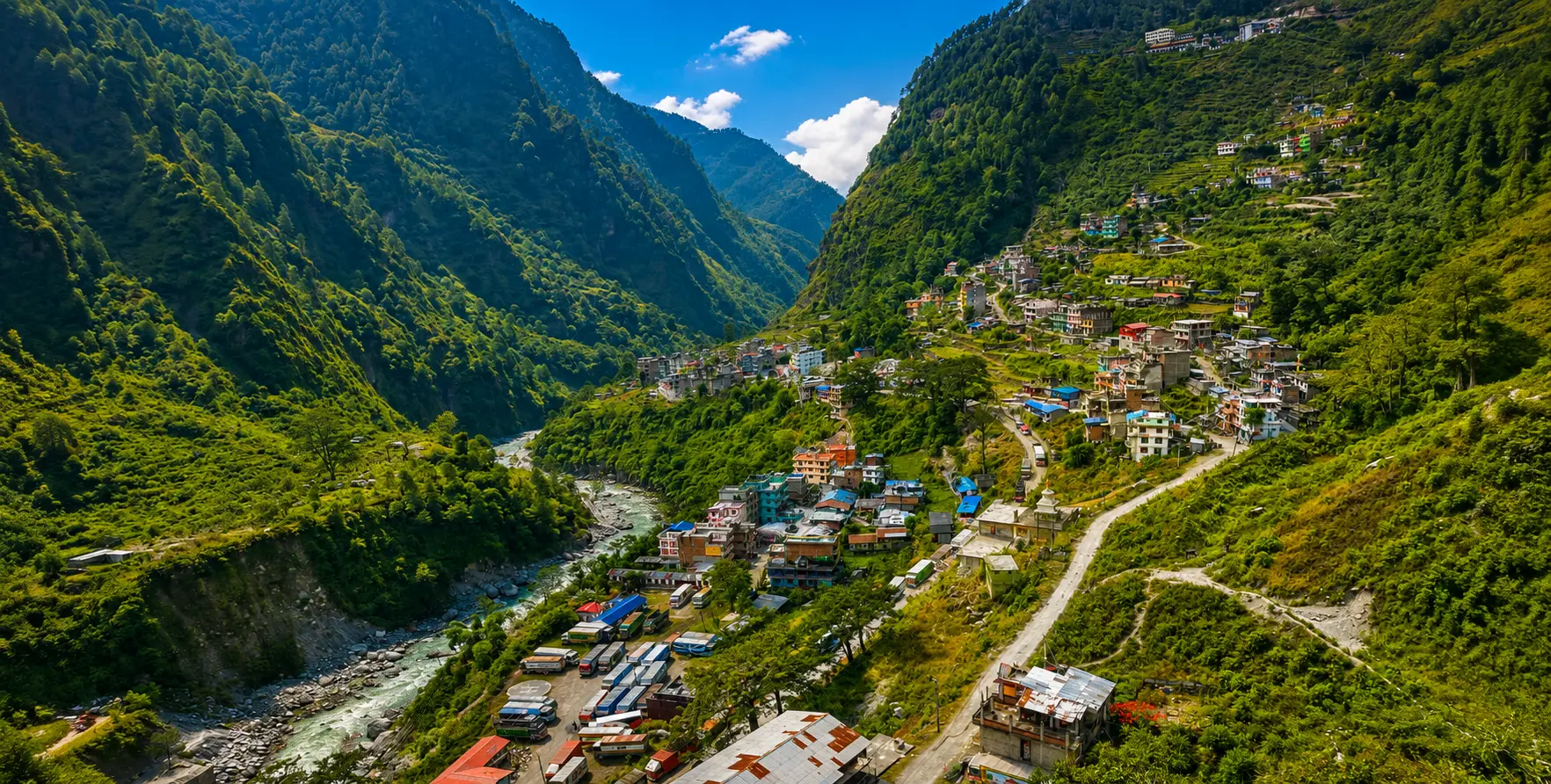
Kathmandu to Tamang Heritage Trail transport with a private 4WD jeep traveling through the Langtang region of Nepal

Accommodation Standards and Homestay Etiquette

Homestay accommodation along the Tamang Heritage Trail is generally simple, with shared or basic private rooms, communal bathrooms, and meals prepared and eaten with the host family rather than in a separate dining hall, as in conventional teahouses. This arrangement calls for a degree of cultural sensitivity and flexibility not always required on more commercially developed trekking routes: removing shoes before entering living areas, accepting food and tea graciously even if portions feel generous, and showing genuine interest in family life and local customs all contribute to a more rewarding exchange for both trekker and host.

Trekking agencies and guides familiar with each village’s specific etiquette expectations can help first-time visitors navigate this experience comfortably.

Connectivity and Communication Along the Trail

Mobile network coverage along the Tamang Heritage Trail remains more limited and inconsistent than on Nepal’s busier trekking routes, with reasonable signal in Syabrubesi and patchy or absent coverage in some of the more remote homestay villages such as Thuman and Briddim. Trekkers should not rely on continuous connectivity throughout the route and should inform family or travel companions of their general itinerary and expected return date before setting out, particularly given the comparatively lower volume of trekking traffic on this route than on the Langtang Valley or the major Everest and Annapurna circuits.

Currency and Practical Logistics

As with most rural trekking routes in Nepal, cash in Nepali rupees is essential throughout the Tamang Heritage Trail, since card payment infrastructure is effectively nonexistent once travellers leave Kathmandu. Homestay costs, meals, and additional services, such as hot water for washing, are typically paid in cash directly to host families or through a guide who manages group payments.

Withdrawing sufficient cash in Kathmandu before departure, with a reasonable buffer for unexpected costs or delays, remains the most practical approach for this route.

Why This Route Appeals to Repeat Visitors to Nepal

A growing number of trekkers exploring the Tamang Heritage Trail are repeat visitors to Nepal who have already completed one or more of the country’s more famous routes, such as Everest Base Camp or the Annapurna Circuit, and are specifically seeking a different kind of experience on a subsequent trip. For this segment of travellers, the trail’s slower pace, lower trekking traffic, and emphasis on direct cultural exchange over dramatic high-altitude scenery offer a genuinely distinct alternative rather than a repeat of a similar trekking formula.

Trekking agencies increasingly market the Tamang Heritage Trail specifically to this returning-visitor segment, positioning it as a complementary, rather than competing, experience to Nepal’s more famous circuits.

Combining Vehicle Hire With a Broader Rasuwa District Itinerary

Beyond the Tamang Heritage Trail and Langtang Valley Trek, Rasuwa district offers a handful of additional points of interest that some travellers combine into a longer overland itinerary, including the Chilime hydropower area, the Rasuwagadhi border region, and the broader Trishuli River valley, popular for white-water rafting near Kathmandu. Coordinating these additional stops alongside the core trekking transport requires careful planning for road conditions and driving time.

Our team is well-positioned to help design an extended Rasuwa itinerary that complements your core Tamang Heritage Trail or Langtang Valley transport booking.

The Role of Community Tourism in Sustaining the Trail

Unlike many of Nepal’s trekking routes, where lodges and teahouses are often owned by families from outside the immediate community or even outside the region entirely, the Tamang Heritage Trail’s homestay model was specifically designed to keep tourism revenue within the villages that host trekkers. This community tourism approach has measurably supported local development in villages like Briddim and Thuman by funding school improvements, water infrastructure, and continued investment in the homestay network itself.

Trekkers choosing this route contribute directly to this model simply by trekking it; choosing this trail, in a small way, is a more direct form of community-supporting travel compared to conventional teahouse trekking on busier circuits.

Weather Patterns Specific to the Rasuwa Region

Rasuwa district’s weather is significantly shaped by its position at the base of the Langtang Himal range, with the lower Trishuli valley experiencing a warmer, more monsoon-influenced climate than the higher villages along the Tamang Heritage Trail. Afternoon cloud buildup is common even outside the main monsoon season, particularly around Nagthali Danda, and trekkers seeking the best mountain views are generally advised to plan viewpoint visits for early morning, before cloud cover typically develops later in the day.

This pattern mirrors similar afternoon weather behaviour found throughout much of Nepal’s central hill region, including the better-known Annapurna and Langtang corridors.

Insurance and Emergency Considerations

Given the trail’s relatively remote homestay villages and limited connectivity, trekkers are strongly advised to carry appropriate travel insurance covering trekking activities and, where relevant, emergency helicopter evacuation- standard advice for most of Nepal’s trekking routes, but particularly relevant here given the more limited emergency response infrastructure compared to busier circuits like Everest Base Camp, where helicopter rescue services are more routinely available and rapidly dispatched. A knowledgeable local guide familiar with the nearest emergency evacuation access points, typically via Syabrubesi, adds a meaningful layer of safety for trekkers on this less-travelled route.

Group Size and Booking Considerations for the Trail

The Tamang Heritage Trail’s homestay-based accommodation model means group-size planning matters differently than on conventional teahouse routes. Individual homestay households can typically accommodate only a limited number of trekkers at a time, and larger groups may need to be split across multiple homestays within the same village or coordinated well in advance to ensure adequate capacity, particularly during the busier autumn season.

Trekking agencies and vehicle hire operators working this route regularly, such as Nepal Vehicle Hiring, in coordination with our sister companies, maintain established relationships with homestay families that help ensure smooth group logistics even during peak booking periods.

Kathmandu Sightseeing Tour

Extending the Trip: Kathmandu Valley Sightseeing Before or After

Since most Tamang Heritage Trail itineraries include at least one night in Kathmandu before and after the trek, many travellers use this time to explore the Valley’s cultural heritage sites. A visit to Pashupatinath Temple, Nepal’s most significant Hindu pilgrimage site, or the medieval squares of Bhaktapur, through our 

Bhaktapur Durbar Square tour naturally pairs with a Tamang Heritage Trail itinerary, offering a cultural counterpoint in Kathmandu before heading out to the equally rich but very different cultural landscape of rural Rasuwa. A sunrise excursion through our 

Nagarkot Sunrise Tour Vehicle Service offers an additional Himalayan panorama for travellers with an extra day to spare before or after their trek.

Why Choose Nepal Vehicle Hiring for This Route

Nepal Vehicle Hiring has arranged transport along the Kathmandu-Syabrubesi corridor for years, serving trekkers heading to both the Tamang Heritage Trail and the neighbouring Langtang Valley. We select drivers for this route for their experience navigating the Trishuli-Dhunche-Syabrubesi road across multiple seasons, and we regularly inspect our vehicles, paying particular attention to the brakes, suspension, and tyres this corridor puts under genuine strain. Because we work closely with our sister companies, 

Alpine Luxury Treks and Trek Nepal Himalayas can also help coordinate the trekking and homestay aspects of your itinerary alongside the ground transport, ensuring a single, consistent point of contact for your entire Tamang Heritage Trail journey from Kathmandu pickup to final return.

A Note on Responsible Trekking in Tamang Communities

Visitors to the Tamang Heritage Trail are encouraged to approach the homestay experience with genuine respect for the communities hosting them, recognising that these villages have opened their homes specifically to support sustainable tourism development rather than functioning as a simple commercial transaction. Simple practices, such as asking permission before photographing individuals, particularly during religious ceremonies or private family moments, dressing modestly in keeping with local norms, and showing genuine curiosity about Tamang culture and Buddhist practice rather than treating the visit purely as a scenic backdrop, all contribute to a more respectful and mutually rewarding exchange between trekkers and the communities they pass through.

Nepal Tour Package

Seasonal Booking Patterns for Vehicle Hire on This Route

Demand for private vehicle hire to Syabrubesi follows a similar seasonal rhythm to Nepal’s other major trekking corridors, with autumn representing the peak booking period, followed closely by spring. Because the Tamang Heritage Trail remains less heavily trafficked than the Everest or Annapurna regions, vehicle availability during peak season is generally somewhat easier to secure than on the busiest routes, though booking at least two to three weeks ahead remains sensible, particularly for groups wanting a specific vehicle class or a driver already familiar with combining Tamang Heritage Trail and Langtang Valley logistics in a single itinerary.

The Broader Appeal of Rasuwa District Beyond Trekking

While trekking remains the primary draw for most visitors to Rasuwa district, the region’s proximity to Kathmandu, combined with its dramatic scenery and distinct Tamang culture, has also attracted growing interest from photographers, cultural researchers, and travelers simply seeking a shorter escape from the capital without committing to a full multi-day trek. Day trips or short overnight excursions to Trishuli Bazaar and the lower Rasuwa hills, arranged with a private vehicle, offer travellers with limited time a taste of this landscape and culture, even without undertaking the full Tamang Heritage Trail circuit.

Comparing Vehicle Standards: Then and Now on the Syabrubesi Road

Travellers who have visited this region of Nepal previously, even five or ten years ago, often note a noticeable improvement in both road conditions and vehicle quality along the Kathmandu-Syabrubesi corridor. Sections of the route that were once notoriously rough have seen gradual upgrading, and the vehicles now commonly used for this journey, well-maintained Land Cruisers and Prados rather than older, less reliable jeeps, reflect the same broader shift toward top-end ground transport visible across Nepal’s trekking industry as a whole.

This improvement has made routes like the Tamang Heritage Trail and Langtang Valley meaningfully more accessible to a wider range of travellers, including families and older trekkers who might previously have found the approach road too physically demanding to consider.

Final Practical Tips Before You Go

  • Book your vehicle and, if needed, your homestay coordination at least two to three weeks ahead during peak spring and autumn.
  • Carry sufficient Nepali rupees in cash, since card payment infrastructure is essentially unavailable once you leave Kathmandu.
  • Pack layered clothing to handle the elevation range between Syabrubesi and Nagthali Danda, along with a reliable rain layer.
  • Consider a local guide familiar with the homestay network, both for safety and for a richer cultural exchange with host families.
  • Confirm whether your itinerary combines the Tamang Heritage Trail with the Langtang Valley Trek, as this affects both the trekking duration and the permit requirements.
  • Arrange appropriate travel insurance that covers trekking activities and emergency evacuation, given the route’s relatively remote, low-connectivity villages.
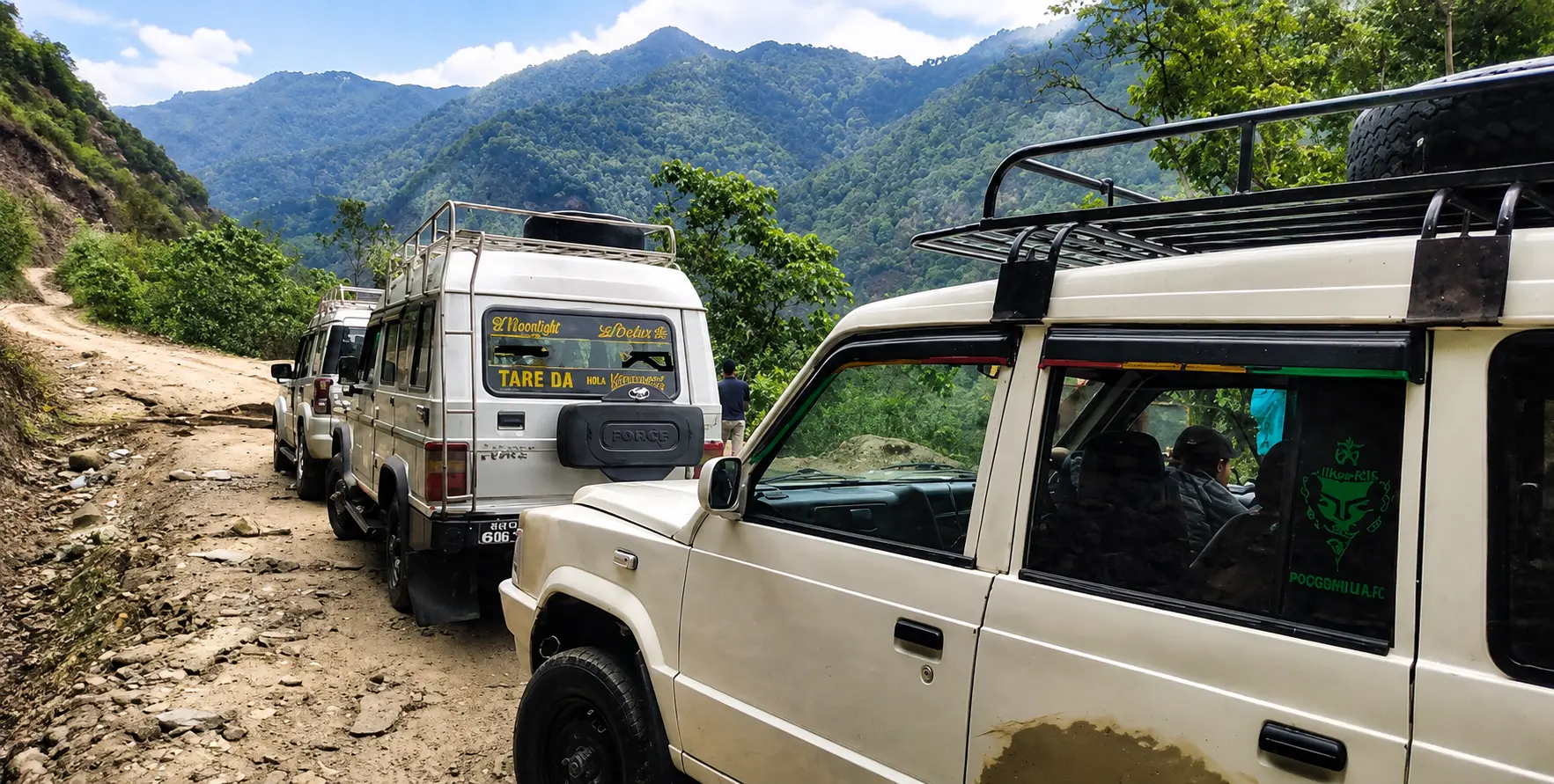
Book reliable Kathmandu to Tamang Heritage Trail transport with private 4WD jeeps and experienced drivers for a comfortable journey to the trek starting point.

How This Trail Fits Into Nepal’s Wider Trekking Landscape

Nepal’s trekking regions each occupy a distinct niche within the country’s broader tourism offering, from the high-altitude prestige of Everest Base Camp to the varied ecological zones of the Annapurna Circuit and the pilgrimage significance of routes toward Muktinath. The Tamang Heritage Trail occupies its own niche within this landscape: a shorter, culturally intensive trek that requires only a single day’s overland travel from Kathmandu, positioned as a genuine alternative for travellers seeking cultural depth without the time commitment or crowds of Nepal’s more famous circuits. As awareness of this route continues to grow, largely through word of mouth among returning visitors and increasing coverage in specialist trekking guides, it seems likely to become a well-established option among Nepal’s mid-length cultural trekking routes over the coming years.

Planning Your Trip With Confidence

Whether you are drawn to the Tamang Heritage Trail for its homestay culture, its relative proximity to Kathmandu, its Buddhist heritage, or simply as a quieter alternative to Nepal’s busier circuits, getting the transport logistics right from the outset makes a considerable difference to how the rest of the trip unfolds. A well-planned journey from Kathmandu to Syabrubesi, in a properly maintained vehicle with a driver experienced on this specific corridor, sets a smooth, comfortable tone for the cultural immersion and mountain scenery that follow on the trail itself.

A Word on Timing Your Village Stops

Experienced guides on the Tamang Heritage Trail generally recommend scheduling daily walking stages to arrive in each village by early to mid-afternoon, both to allow time to explore before dark and to avoid the more frequent afternoon cloud buildup that can obscure mountain views later in the day, particularly around Nagthali Danda. Starting each day’s buildup reasonably early on the climb toward Nagthali itself gives the best chance of clear morning visibility across Langtang Lirung and the surrounding peaks before clouds typically roll in.

Group Versus Independent Trekking on This Route

While independent trekking has become increasingly feasible on the Tamang Heritage Trail given improved trail signage and a well-established homestay network, many travellers still choose to join a small guided group or arrange a private guide, both for the added safety of local route knowledge and for smoother coordination of homestay bookings, particularly during the busier autumn season when individual homestays may already be committed to other groups. Vehicle hire for the Kathmandu-to-Syabrubesi leg works equally well for independent trekkers and organised groups alike;h the main difference is group size and whether trekking logistics beyond transport are arranged separately or as part of a single coordinated package.

Sample Cost Breakdown for Planning Purposes

While exact pricing depends on vehicle class, group size, and season, travellers planning a budget for this trip should account for three main components: private vehicle hire for the Kathmandu to Syabrubesi round trip; homestay accommodation and meals along the trekking route itself, typically charged per night and generally modest compared to conventional teahouse trekking costs; and any guide or porter fees if travelling with support rather than fully independently. Requesting a detailed quote in advance, covering both the vehicle hire and, if desired, coordinated trekking logistics through our sister companies, allows for accurate budgeting well before departure rather than encountering unexpected costs partway through the trip.
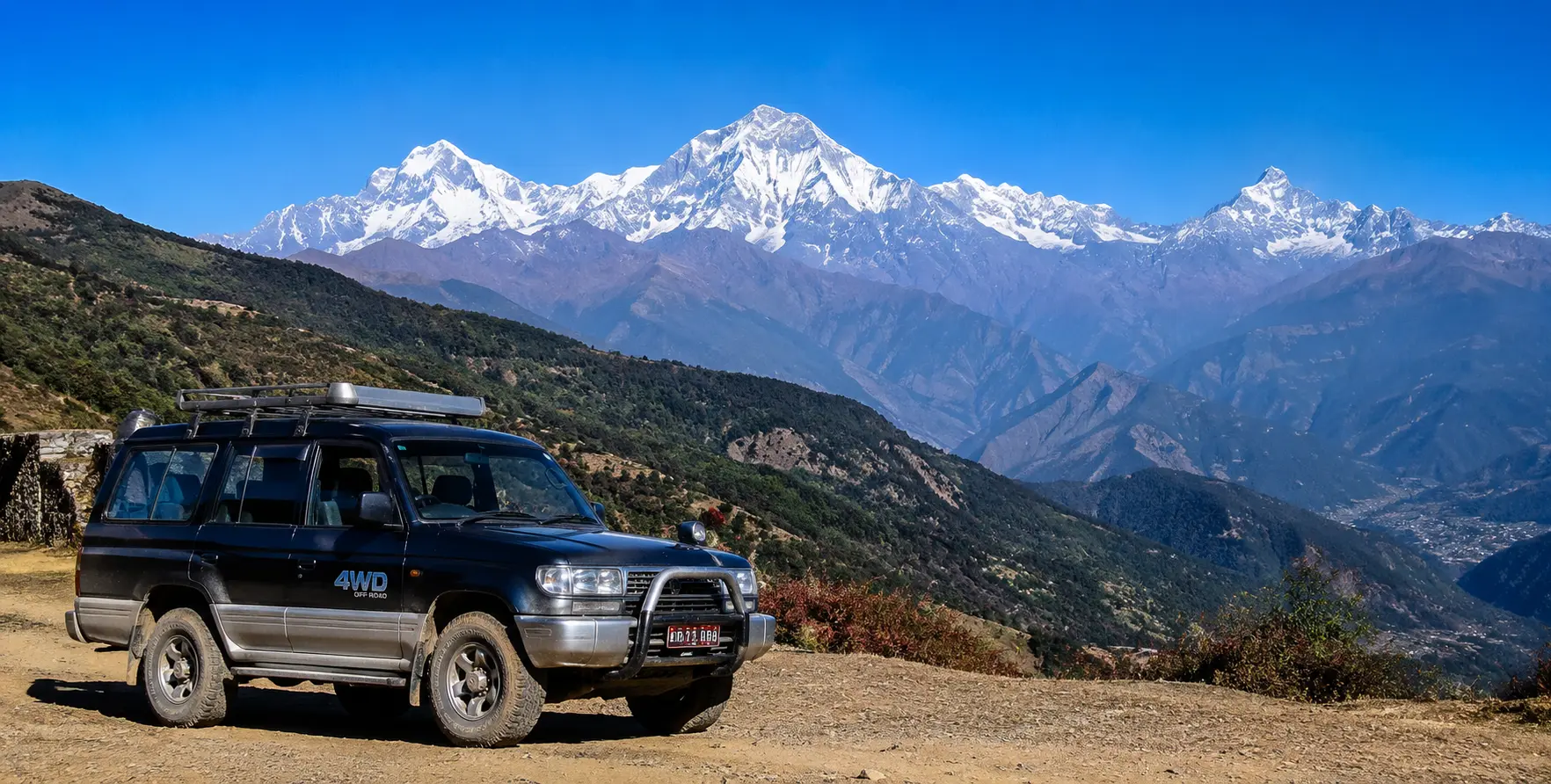
Book reliable Kathmandu to Tamang Heritage Trail transport with private 4WD jeeps and experienced drivers for a comfortable journey to the trek starting point.

What Sets This Route Apart From a Simple Sightseeing Drive

The Kathmandu-to-Syabrubesi journey, while demanding, is integral to what makes the Tamang Heritage Trail experience distinctive, rather than merely an obstacle to endure before the real trip begins. The drive itself passes through changing landscapes, from the terraced hillsides near Trishuli Bazaar to the forested slopes approaching Dhunche and the edge of Langtang National Park, offering an early introduction to the ecological and cultural transition between the Kathmandu Valley and the more remote, culturally distinct region travelers are about to enter on foot.

Approaching this leg of the journey with the same attention given to the trek itself, rather than treating it as a purely functional transfer, often enriches the overall sense of arrival once trekkers finally reach Syabrubesi and set out toward Gatlang the following morning.

A Trail Still Coming Into Its Own

The Tamang Heritage Trail remains, in many respects, a trekking route still coming into its own within Nepal’s wider tourism landscape, benefiting from steadily improving road access, a maturing homestay network, and growing recognition among both trekking agencies and independent travellers as a genuinely distinctive alternative to the country’s more famous circuits. For travellers willing to trade some of the dramatic high-altitude scenery of Everest or Annapurna for a deeper, more direct cultural encounter with Tamang communities living close to the Tibetan frontier, this trail offers one of the more rewarding and still comparatively uncrowded trekking experiences currently available in Nepal.

Frequently Asked Questions

How long does the drive from Kathmandu to Syabrubesi take?

The drive typically takes seven to eight hours by private vehicle, depending on road conditions and the season, and can take longer due to landslide-related delays.

Is a 4WD vehicle necessary for this route?

Yes. The road through Trishuli Bazaar and Dhunche includes unpaved, rutted sections that are best handled by a genuine four-wheel-drive vehicle, such as a Toyota Land Cruiser or Prado, rather than a standard car.

Can the Tamang Heritage Trail be combined with the Langtang Valley Trek?

Yes. Both routes share the same Syabrubesi trailhead, and many trekkers combine them into a single 10- to 14-day itinerary that covers both the cultural villages of the Tamang Heritage Trail and the alpine scenery of the Langtang Valley.

What permits are required for this trek?

Trekkers need a Langtang National Park entry permit and a TIMS card. Unlike routes such as Upper Mustang, no special restricted-area permit is required.

What is the best season for the Tamang Heritage Trail?

Spring (March to May) and autumn (September to November) offer the most reliable road and trail conditions, with autumn being the busiest season overall.

Are homestays available along the route?

Yes. Villages including Thuman and Briddim have well-established, community-run homestay programs that offer an in-depth alternative to standard teahouse accommodation.

How difficult is the Tamang Heritage Trail compared to other treks in the region?

It is generally considered less physically demanding than the Langtang Valley Trek or routes like the Everest Base Camp trek, with lower average elevations, yet still includes a challenging climb to the Nagthali Danda viewpoint above 3,650 meters.

Is this trek close to the Nepal-Tibet border?

Yes. The route passes relatively close to the Rasuwagadhi-Kerung border crossing, and trade and religious ties across this same frontier have historically shaped the region’s Tamang culture.

Do I need previous trekking experience for this route?

No prior high-altitude trekking experience is strictly necessary, though a reasonable level of general fitness is helpful given the daily walking distances and the climb to Nagthali Danda. The route is generally considered accessible to both beginners and experienced trekkers.

What is the total trekking distance for the standard loop?

The standard Tamang Heritage Trail loop, from Syabrubesi through Gatlang, Tatopani, Nagthali Danda, Thuman, and Briddim back to Syabrubesi, typically covers 50 to 60 kilometres over 6 to 8 trekking days, depending on the exact route variation and any rest days chosen.

Final Thoughts: A Cultural Journey Worth the Road

The Tamang Heritage Trail offers a rare combination in Nepal’s trekking landscape: genuine cultural immersion, dramatic Himalayan views, and a level of quiet, homestay-based hospitality increasingly hard to find on the country’s busier routes. Reaching it means the same demanding but rewarding drive through Trishuli Bazaar and Dhunche used by trekkers heading into the Langtang Valley, and getting that journey right, with the right vehicle and an experienced driver, sets the tone for everything that follows on the trail itself.

Whether you are drawn by the promise of homestay hospitality, Buddhist heritage, or simply a quieter Himalayan trekking experience, the road to Syabrubesi is where that journey genuinely begins. Contact Nepal Vehicle Hiring today on WhatsApp or visit 

vehiclehiringnepal.com to arrange your private jeep or Hiace for the Kathmandu to Tamang Heritage Trail journey, and to help coordinate homestay logistics or a combined Langtang Valley extension for your trip, however your itinerary through Rasuwa district takes shape.
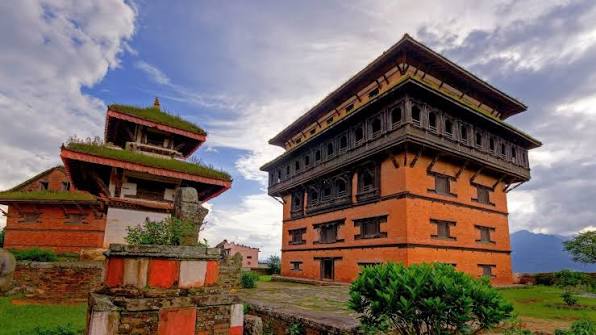
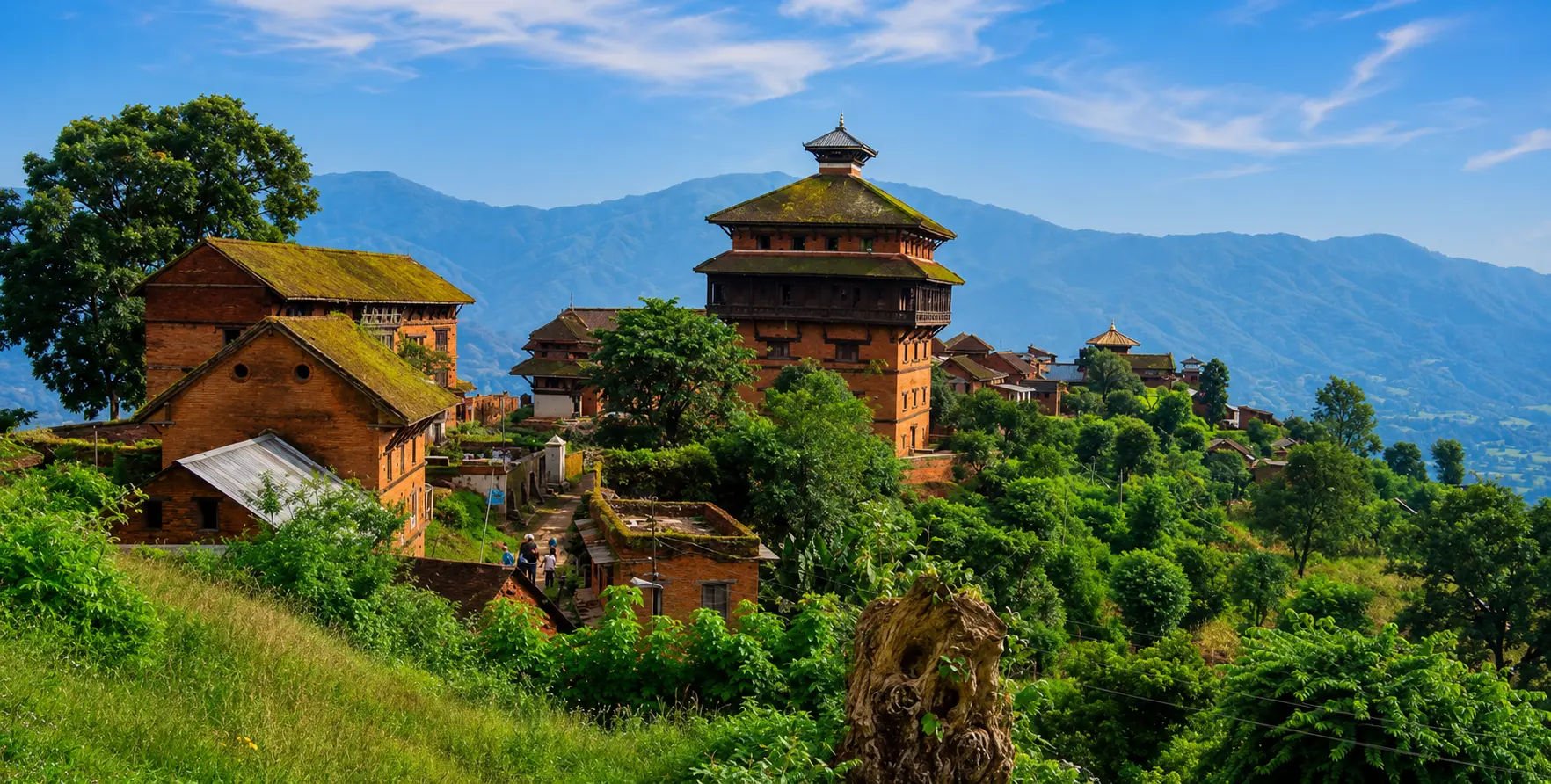
Nuwakot Historical and Spiritual Sites: The Complete Travel and Transport Guide

Nuwakot Historical and Spiritual Sites Guide 2026 featuring Trishuli Bazaar, temples, heritage monuments, and scenic Himalayan landscapes in Nepal.
including temples, heritage villages, and scenic viewpoints.

Nuwakot Historical and Spiritual Sites Guide – The Complete Travel and Transport Guide

At some point on the drive northwest from Kathmandu, roughly an hour and a quarter out of the capital, the road begins to climb from the bank of the Trishuli River, and the landscape changes character in a way that announces you have left the orbit of the city and entered something older.

The hills steepen, the terraced fields become more pronounced, and then—perched on a ridge commanding a sweep of valley and mountain that explains why it was chosen—the seven-story silhouette of Nuwakot Durbar appears against the sky. It is one of the most arresting first sights in Nepal’s entire historical geography, and it is still, astonishingly, one of the least visited.

Nuwakot is where modern Nepal was born. Not in Kathmandu, where Prithvi Narayan Shah eventually planted his capital, but here, on this strategic hilltop above the confluence of the Trishuli and Tadi rivers, where in 1744 CE he won the battle that would trigger the unification of what had been fifty-four separate principalities into a single nation.

Nuwakot was Nepal’s capital for approximately twenty-five years during the height of the Shah dynasty’s unification campaign, and the seven-story palace that dominates the hilltop today — built partly with skilled labourers brought from Lalitpur and partly on the foundations of earlier Malla structures — is one of the finest surviving examples of traditional Nepali palace architecture anywhere in the country.

But Nuwakot is not merely a history lesson. It is simultaneously a living spiritual landscape of active temples, festivals of genuinely ancient origin, and sacred river confluences still visited by pilgrims today.

The Sindure Jatra, which takes place every April, is considered by scholars of Nepali religious culture to be one of the most complex and spiritually potent festivals in the entire country — and it happens here, in this quiet hilltop town, virtually unobserved by the tourist trail that runs straight past its turnoff toward Langtang and Gorkha. This complete guide explores every dimension of Nuwakot’s historical and spiritual identity and tells you exactly how to get there and experience it well.

If you’re travelling to Nepal for the best trek and planning to explore Kathmandu, we recommend continuing your journey with our trusted sister companies, Trek Nepal Himalayas and Alpine Luxury Treks. We specialise in organising a wide range of treks across Nepal, from classic trekking adventures to cultural and wildlife tours.

Our top offerings include iconic journeys such as the Everest Base Camp Trek, in-depth Kathmandu sightseeing tours, striking Nagarkot sunrise experiences, exciting Chitwan jungle safaris, and luxury packages. We can also arrange short hikes, heritage tours, mountain flights, and customised travel plans tailored to your schedule and interests.

Whether you are looking for a budget-friendly trip or a luxury trekking experience with top-end lodges, private guides, and high-end services, we manage every detail professionally. Our goal is to provide a smooth transition from your trekking adventure to a comfortable) and a memorable travel experience in Nepal.

Understanding Nuwakot — The City of Nine Forts

District: Nuwakot District, Bagmati Province, Nepal

District HQ: Bidur (also written Bidewar), the modern administrative centre

Historical Capital: Nuwakot town (Nuwakot Bazaar), approximately 6 km above Bidur

Altitude: Nuwakot Durbar sits at approximately 1,128 m; Bidur at approximately 600 m; Devighat at 600 m

Distance from Kathmandu: Approximately 65–75 km by road, 1.5 to 2 hours by private vehicle

Name Origin: From Nawakot — Nawa meaning nine, Kot meaning fort or hilltop holy place. Nuwakot is surrounded by nine strategic hilltops, each with its own fort or sacred site.
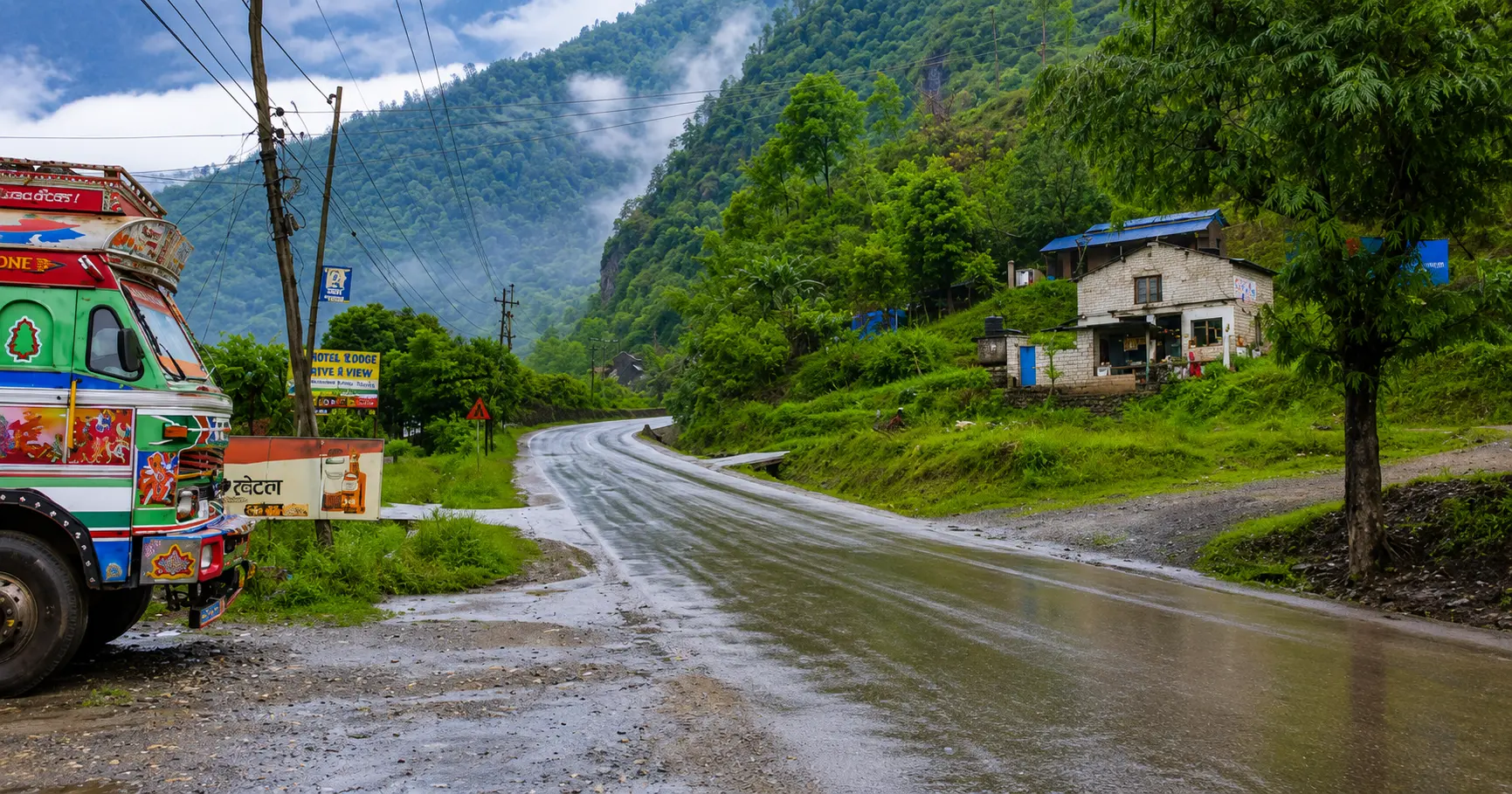
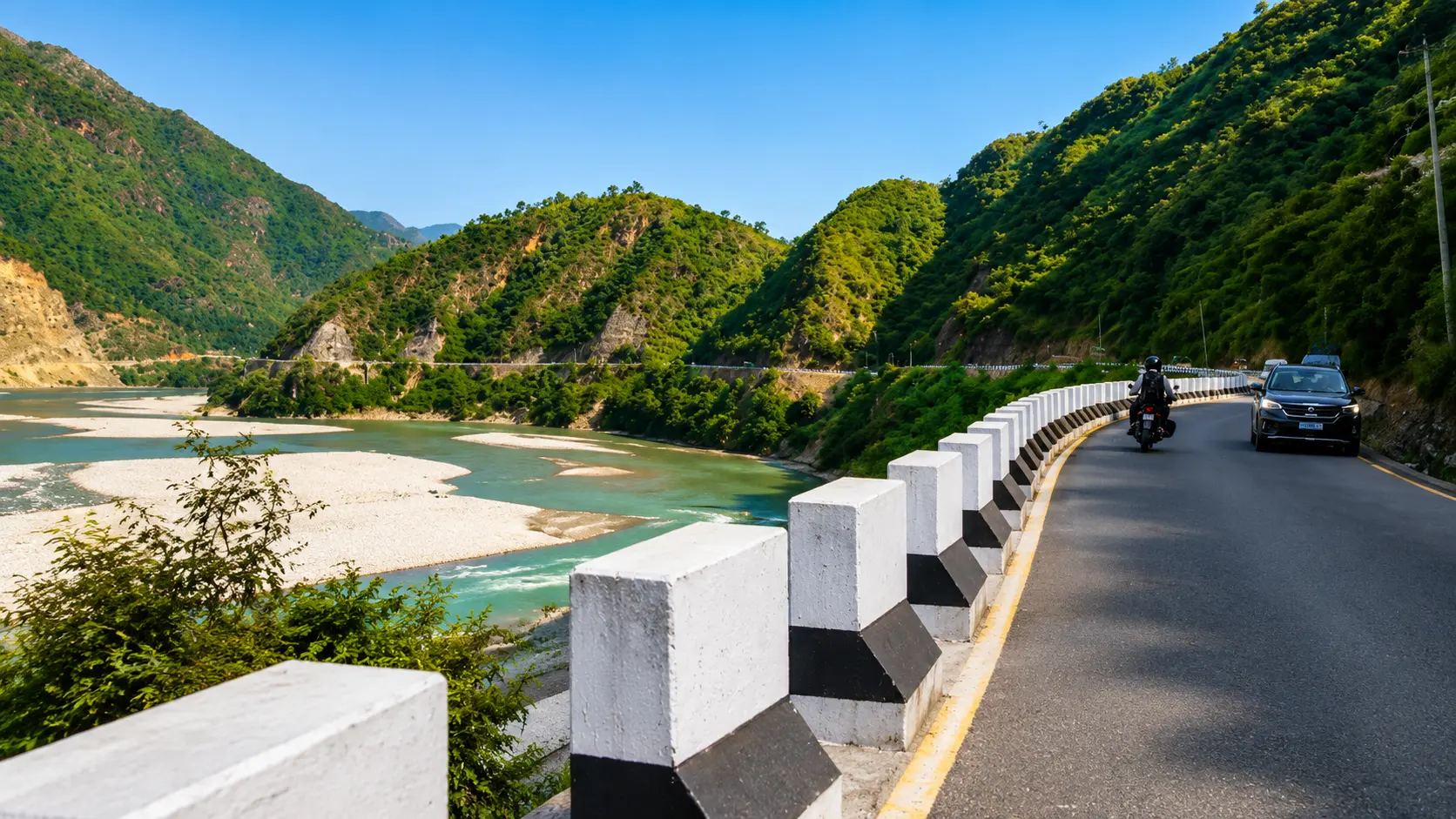
Nuwakot Historical and Spiritual Sites Guide 2026 featuring Trishuli Bazaar, temples, heritage monuments, and scenic Himalayan landscapes in Nepal.
Nuwakot-durbar

The district of Nuwakot covers 1,121 square kilometres in the middle hills of central Nepal, bounded by Sindhupalchowk and Kathmandu to the east, Dhading and Rasuwa to the west, Rasuwa to the north, and Dhading and Kathmandu to the south. It is a district of rivers — the Trishuli (Narayani), Tadi, Sali, Linkhu, and Falankhu all flow through its valleys — and of hills, each ridge carrying its own story of military strategy, trade routes, and divine protection.

The name Nawakot originally referred to a specific set of nine fortified hilltops in the district — Belkot, Dhuwakot, Dhaibungkot, Pyaskot, Bhairamkot (also called Bhairabkot), Malakot, Simalkot, Salyankot, and Kalikakot — each commanding a strategic view over the approaches to the Kathmandu Valley. This network of forts was not merely military; it was also spiritual.

According to local tradition, nine deities oversee and protect Nuwakot from these nine hills, making the district as much a sacred geography as a military one.

The town that bears the district’s name sits atop one of these strategic ridges, its hilltop palace and cluster of temples surveying the Trishuli valley below with the easy authority of a site that has commanded attention for over a thousand years.

Nuwakot and the Birth of Modern Nepal — The Historical Context

To understand why Nuwakot matters as a historical site, you must understand Nepal’s political reality before 1744. The territory that is now Nepal was then divided into fifty-four separate principalities — kingdoms, city-states, and hill chiefdoms — each ruling its own small domain, competing and occasionally warring with its neighbours, and unable to present a unified response to the growing power of the East India Company in the Indian subcontinent to the south.

The three Malla kingdoms of the Kathmandu Valley — Kantipur, Patan, and Bhaktapur — were the wealthiest and most culturally developed, controlling the vital trans-Himalayan trade routes between India and Tibet. Nuwakot was a key node on this trade network, sitting at the western entrance to the Kathmandu Valley and controlling traffic on the trade road north toward the Kerung Pass into Tibet.

Prithvi Narayan Shah, who became king of the small principality of Gorkha in 1743 CE at age twenty, quickly understood that Nepal’s fragmentation made it vulnerable. He travelled to Varanasi to study statecraft and acquire firearms, observed the Malla kingdom’s political dysfunction up close, and decided that Nuwakot, controlling the western approach to the Kathmandu Valley and the Tibet trade route, was the essential first strategic prize in his unification campaign.

His first attack on Nuwakot in 1743 failed. But a year later, on 2 October 1744, with a better-equipped army attacking from three directions, Prithvi Narayan Shah took Nuwakot from its Malla-aligned defenders. It was the first domino in the sequence that would ultimately lead to Nepal’s creation.

The significance of this single military victory is difficult to overstate. By controlling Nuwakot, Prithvi Narayan Shah could cut off the Kathmandu Valley’s access to its Tibet trade revenues—its economic lifeblood—while using the hilltop as a base to surround and gradually strangle the three kingdoms. Over the following twenty-two years,

working outward from Nuwakot as his western stronghold, he systematically took the strategic positions surrounding the valley before finally capturing Kathmandu in 1768. Nuwakot served as Nepal’s de facto capital for approximately twenty-five years, housing the court, the treasury, the military command, and the administrative apparatus of an expanding kingdom.

It was also at Nuwakot that Prithvi Narayan Shah’s life ended. On 11 January 1775, on his 52nd birthday, in a poignant coincidence, the first king of unified Nepal died at Devighat, the sacred river confluence at the foot of Nuwakot Hill, where the Trishuli and Tadi rivers meet.

His cremation was performed on the banks of the river at Devighat, as he had reportedly wished. The site of his death and cremation remains a pilgrimage point today, adding another layer of historical-spiritual significance to a district already rich in both.

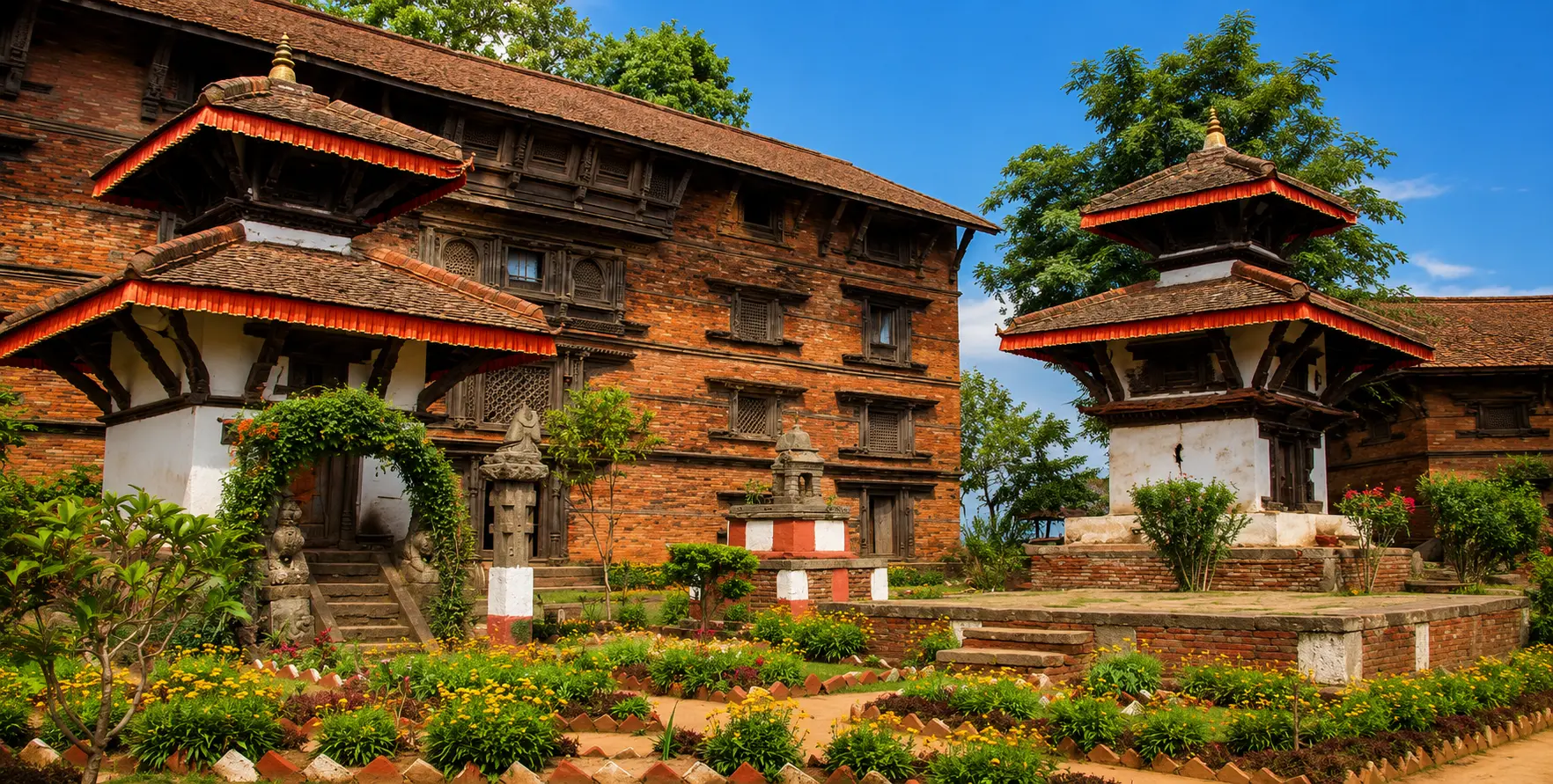
Nuwakot Durbar, the historic seven-storey palace and ancient royal fortress in Nuwakot District, Nepal.
Nuwakot Durbar is one of Nepal’s most important historical landmarks, showcasing traditional architecture, royal heritage, and panoramic Himalayan views.

Nuwakot Durbar — The Seven-Storey Palace

Official Status: UNESCO World Heritage Tentative List (nominated 2008)

Construction Period: 1744–1762 CE, under the oversight of governors Kalu Pande and Balbhadra Kunwar

Architecture: Traditional Newari/Malla style with seven stories, carved wooden windows, and pagoda-roof elements — labourers brought from Lalitpur (Patan) for the finest woodwork

Current State: Under ongoing restoration following the 2015 Gorkha earthquake; scaffolding covers portions, but the complex remains open and freely accessible to visitors

The seven-story palace — Saat Tale Darbar — is the defining structure of Nuwakot and one of the tallest and most architecturally distinctive traditional palaces in Nepal. It rises from the hilltop in classic Newari multi-story style, its progressively narrowing floors and tiered roofs giving it a visual authority that dominates the skyline for kilometres in every direction.

The palace was not built from scratch in 1744 — it expanded and incorporated earlier Malla-period structures on the same site — but the main construction under Prithvi Narayan Shah’s governors transformed it into the royal palace of a kingdom in the process of becoming a nation.

The architectural language of Nuwakot Durbar is deliberately drawn from the finest Newari palace tradition — the same tradition that produced the Durbar Squares of Kathmandu, Patan, and Bhaktapur. The intricately carved wooden windows, the carved roof struts with their mythological figures, the brick masonry alternating with timber framing, and the steeply pitched pagoda rooflines all speak the visual grammar of Malla-period sacred and royal architecture, even as they serve the political ambitions of the Shah dynasty that displaced the Mallas.

Prithvi Narayan Shah was not simply building a military headquarters; he was building a statement of cultural legitimacy, drawing on the most prestigious architectural tradition available to him and employing the most skilled artisans — the master woodcarvers and bricklayers of Lalitpur — to execute it.

Nuwakot Historical and Spiritual Sites Guide 2026 featuring Trishuli Bazaar, temples, heritage monuments, and scenic Himalayan landscapes in Nepal.

The Palace Complex — Key Structures

The Seven-Storey Main Palace (Saat Tale Darbar): The central and tallest structure, serving as the royal residence, throne hall, and administrative centre of Prithvi Narayan Shah’s government. Currently under earthquake restoration.

Ranga Mahal (The Dance Hall): Built in 1726 as an entertainment and cultural annex, facing west, with a distinctive greasy-brick construction. Originally built for the three Malla kings of the Kathmandu Valley as a leisure space during their visits to Nuwakot. Still standing and accessible.

Garad Ghar (Guard House): The eastern structure housed the palace garrison and ammunition store. The prison cells (used during the Shah period) remain visible within the complex.

Rana Bahadur Shah’s House: The northern structure was built in 1795, later rebuilt during King Mahendra’s reign after its original collapse, and named for the troubled Shah king who spent periods of his turbulent reign at Nuwakot.

The Bhairav Temple: Immediately adjacent to the palace complex, this is one of Nuwakot’s oldest temples — a site of active worship and the focal point of the Sindure Jatra festival. It has a golden roof, with characteristic red brick construction and carved wooden struts. The heavy sindoor smeared on its ancient carved doorway testifies to the depth and continuity of local devotion.

The Taleju Temple: Visible on a small rise just before the approach to the main palace, the Taleju Temple dates to approximately 1564 CE — making it older than the Saat Tale Darbar itself. Taleju Bhawani was the royal patron deity of the Malla dynasty; her presence here reflects Nuwakot’s Malla-period significance before the Shah conquest. The Taleju temple opens twice yearly for animal sacrifice.

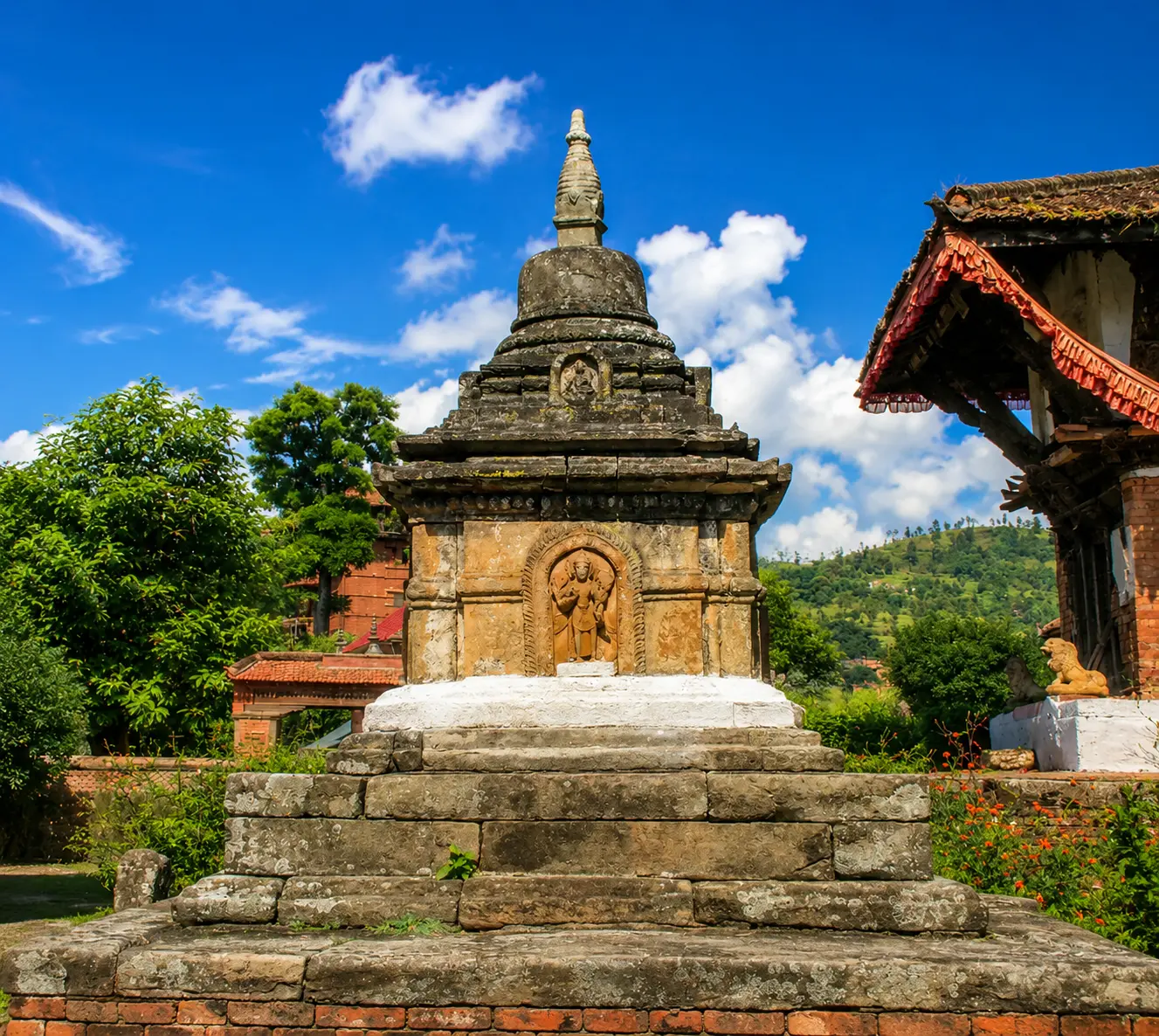
Buddhist Stupa: A small Buddhist stupa on the northern side of the complex whose original construction date is unknown, but which bears an inscription recording its renovation by Prithvi Narayan Shah in 1773. In 2023 (2080 BS), residents added additional chaityas and Buddhist statues to the site.

Lampati (Patan King’s Palace): A two-story structure with a glazed tile roof adjacent to the Bhairavi temple, historically used as a palace by the king of Patan during visits to Nuwakot and now converted to a museum. The Topkhana (arsenal) and Barudkhana (powder store) are also located within the wider complex.

The 2015 Gorkha earthquake, whose epicentre was near Nuwakot, caused significant damage to the palace complex. Restoration work has been ongoing but slow — a common frustration among recent visitors, who find portions of the Durbar covered with scaffolding or cloth.

Despite these limitations, the open areas of the complex remain freely accessible, and the views from the palace terrace — over the Trishuli valley, the forested ridges, and, on clear days, the distant snow peaks of the Ganesh Himal range — remain fully intact. A small, privately run museum adjacent to the Durbar Square houses traditional artefacts and is warmly recommended.

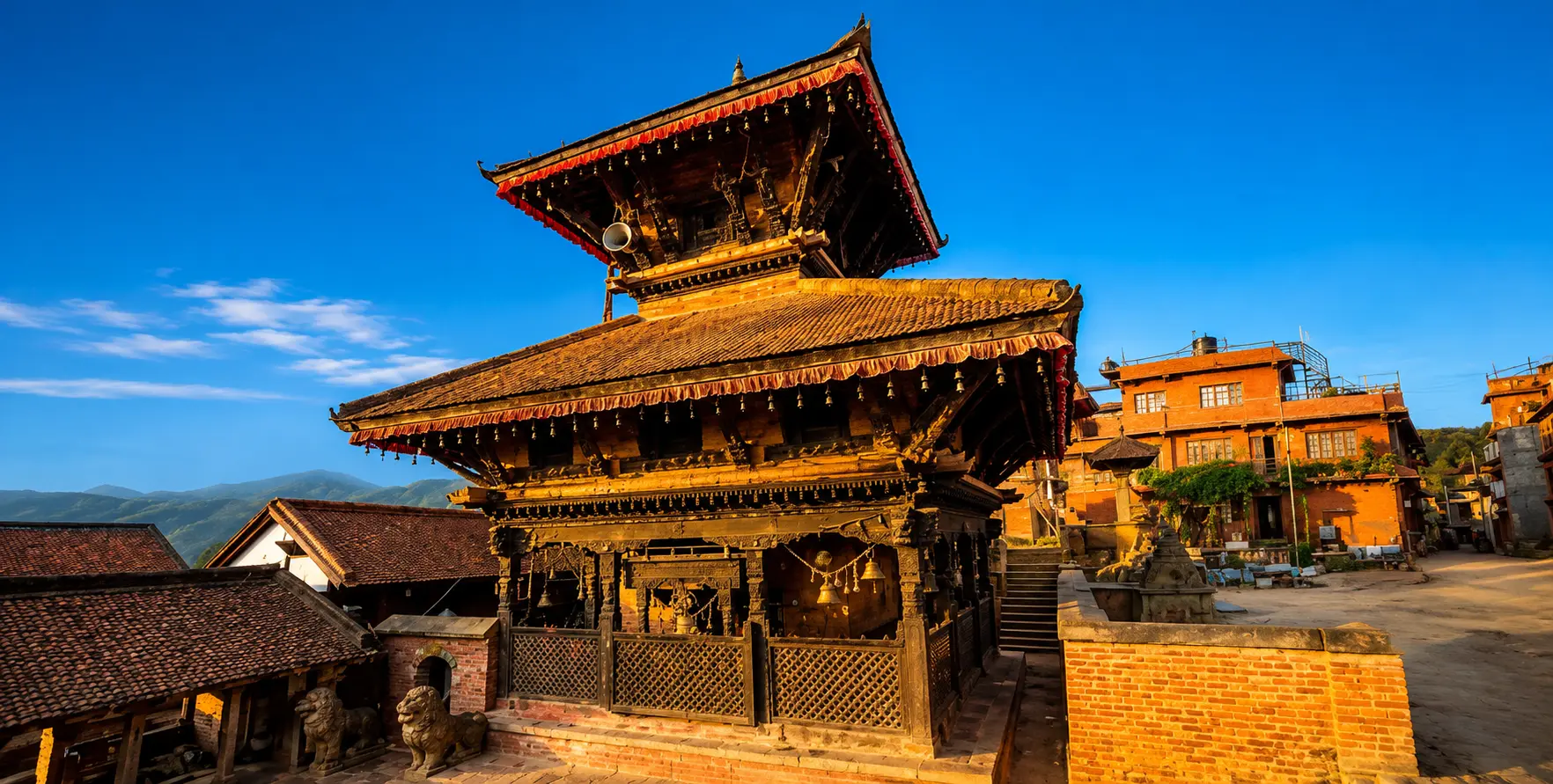
Bhairavi Temple in Nuwakot, Nepal, a sacred Hindu shrine dedicated to Goddess Bhairavi and an important center of Tantric worship.
Bhairavi Temple is one of Nuwakot’s most revered spiritual landmarks, preserving centuries-old Tantric traditions, festivals, and devotion to Goddess Bhairavi.

Bhairavi Temple and the Living Tradition of the Tantric Goddess

The Bhairavi temple at Nuwakot Durbar Square is not simply a historic artefact — it is a living centre of active religious devotion, maintained and served by the local Newar community of Nuwakot with the same seriousness and continuity that have characterised its worship since the Shah period.

Bhairavi is one of the Das Mahavidyas — the ten tantric divine mothers — and in her Nuwakot manifestation she is the patron goddess of the entire district, revered as the protector of the community, the source of fertility and agricultural prosperity, and the cosmic power that determines the fate of the region. She is understood not as a remote or abstract divinity but as an immediate, present, and demanding divine personality who must be regularly propitiated through specific ritual forms — hence the animal sacrifices that mark the major festival occasions.

The temple’s architecture follows the classic Nepali tiered pagoda style in red brick with elaborately carved wooden struts depicting erotic and mythological scenes — a standard feature of tantric temple iconography in the Newari tradition, intended to express the full spectrum of cosmic power, including its creative sexual dimension.

The heavy accumulation of sindoor vermilion powder) On the doorway and threshold marks how actively, and for how long, this goddess has been worshipped. Each application of sindoor is an individual act of devotion. The layered effect of decades or centuries of offerings creates a surface that is at once an artwork and a devotional record.

Inside the main sanctum, which is accessible to Hindu devotees, the goddess’s image is served by priests who conduct daily puja according to the specific ritual requirements of Bhairavi’s tantric tradition — not the simplified, brahminical Shaiva rites of many other Nepali temples, but a more complex and esoteric practice rooted in the Shakta-Tantric tradition that has been continuously maintained in the Nuwakot Newar community for centuries.

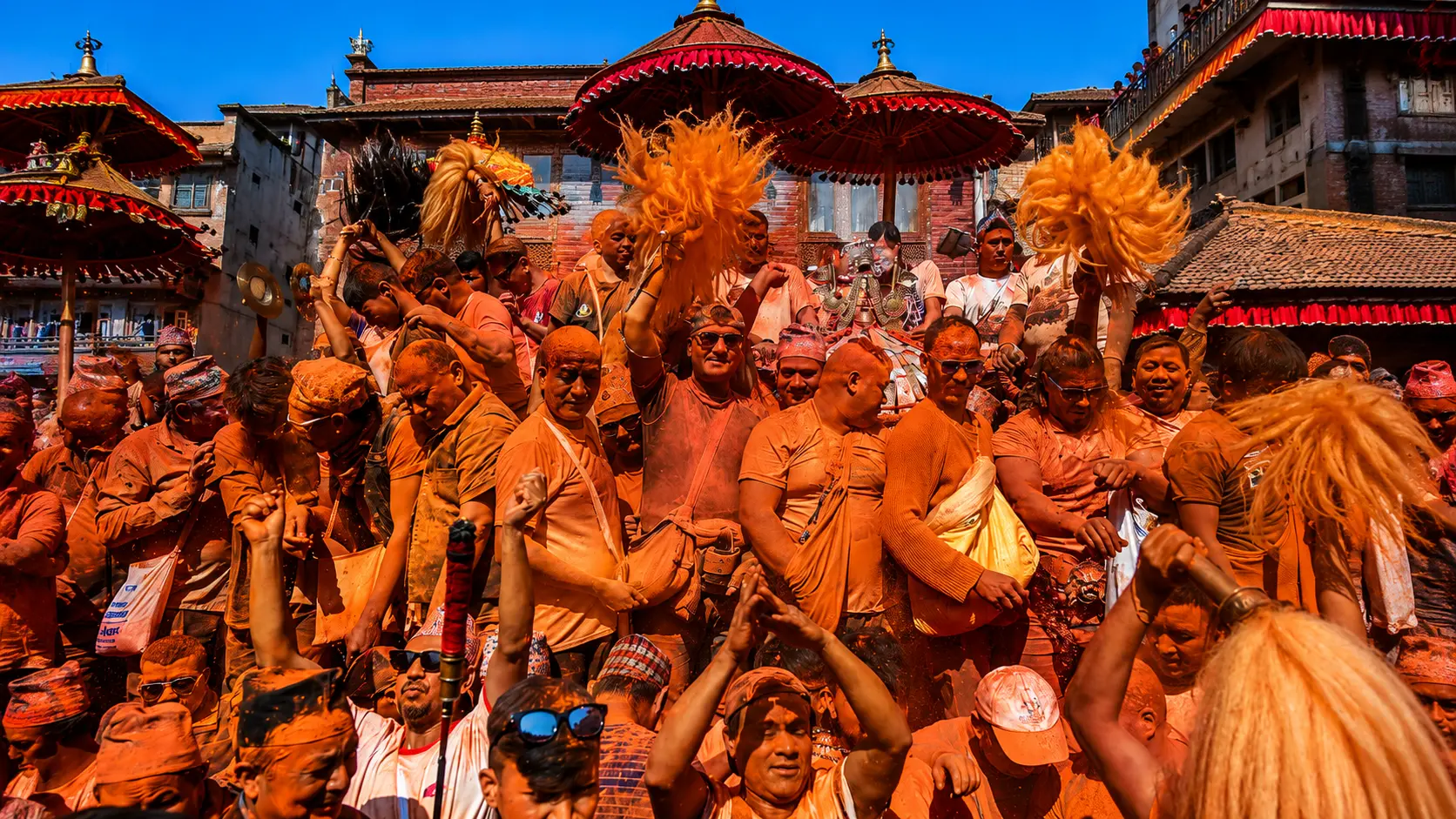
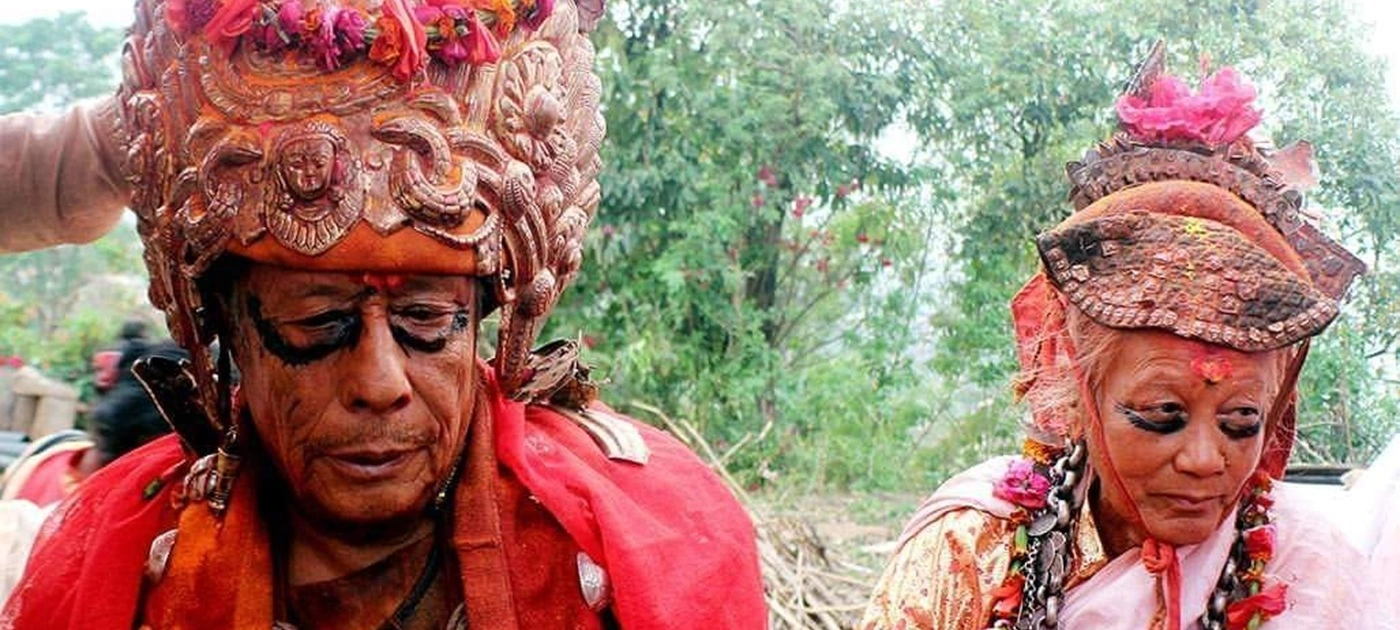
Devotees celebrating Sindure Jatra in Nuwakot, Nepal, covered in red vermilion powder during the traditional Hindu festival.
Sindure Jatra is one of Nepal’s most extraordinary hidden festivals, where devotees in Nuwakot celebrate with vermilion powder, sacred rituals, music, and centuries-old traditions.

The Sindure Jatra — Nepal’s Most Extraordinary Hidden Festival

If there is one reason above all others to time a visit to Nuwakot precisely, it is the Sindure Jatra — the Vermillion Powder Festival — which takes place every year in the Nepali month of Chaitra/Baishakh (approximately April), and which is regarded by scholars of Nepali religious culture as one of the most complex, most ancient, and most spiritually intense festivals in the entire country.

The festival runs for twelve consecutive days, beginning on the 14th lunar day (Chaturdashi) of the bright fortnight of Chaitra. It centres on Goddess Bhairavi of Nuwakot and her relationship with her elder sister, Goddess Jalapa Devi, who resides at Devighat—the sacred river confluence at the foot of Nuwakot hill, 4 to 5 hours away by chariot procession.

The entire twelve days are structured around the theological premise that the younger sister (Bhairavi) must make an annual pilgrimage to visit the elder sister (Jalapa Devi). This family obligation humanises the divine in a way that reflects the deepest Nepali religious sensibility.

The Preparation Phase — Days One to Nine

The preparations for the Sindure Jatra begin weeks before the formal opening. On the eighth lunar day, the Dhami—the spirit medium and primary ritual officiant of the festival, a hereditary role within the Nuwakot Newar community—begins collecting rice from households for sacred fermentation, walking through Nuwakot and beating a drum.

On the ninth day, the community identifies a specific pine tree in the surrounding forest, ritually worships it to appease the spirits within, then ceremonially fells it and shapes it into a 63-foot pole to be raised in front of the Bhairavi temple during the festival.

On the thirteenth day of preparation, nine men undertake a ritual journey to Devighat — the elder sister’s home — carrying a fully black or fully white uncastrated goat as a formal offering of invitation to the goddess. They accompany the journey with prayers asking the elder sister’s permission and blessing for the younger sister’s forthcoming visit.

The response — whether the offering is accepted — is interpreted as an oracle about the condition of the two goddesses’ relationship and, by extension, the spiritual condition of Nuwakot itself.

On the first formal day of the festival (Day 1), the Dhami undergoes an ablution ritual with Nuwakot’s own living Kumari—the prepubescent girl regarded as a manifestation of the divine feminine. This tradition parallels Kathmandu’s famous Kumari tradition. The bath symbolises the purification necessary before Dhami enters the elevated state of ritual possession.

He is then dressed in an elaborate red ceremonial costume with gold and silver accessories, including a nine-headed Naga crown, earrings, bangles, a chain necklace, and an Astamatrika necklace — the regalia of a divine consort.

Devotees preparing for Sindure Jatra in Nuwakot with traditional rituals, temple worship, offerings, and cultural ceremonies during the first nine days.
The first nine days of Sindure Jatra focus on sacred preparations, daily temple rituals, community gatherings, and traditional offerings that lead to the festival’s grand celebration.

The Chariot Procession — The Heart of the Festival

The festival’s most spectacular and physically demanding element is the chariot procession of Goddess Bhairavi — considered the longest in all of Nepal. The chariot, mounted with masks of twelve different gods and goddesses, is pulled by hundreds of community members from the palace complex at Nuwakot Durbar down the steep hill road to Devighat at the Trishuli-Tadi confluence — a journey of 4 to 5 hours each way on foot, through the terraced hillsides and river valleys below the palace.

At Devighat, in the presence of Jalapa Devi and at the sacred confluence of the two rivers, the Dhami enters the deepest state of possession available in the Nepali ritual tradition. The Bajracharya guru performs an esoteric tantric puja, including the sacrifice of a fully black, uncastrated goat.

In this state of possession, the Dhami is understood to receive direct communication from the goddess about Nepal’s future — a national prophecy whispered in confidence to the State Representative present at the ceremony, who then communicates it to the relevant authorities. This divinatory function has no parallel in any other major Nepali festival and gives the Sindure Jatra significance that extends beyond the local community to the national level.

The midnight return of the chariot from Devighat to Nuwakot — completing the 4- to 5-hour uphill journey through the night — is followed by a rest at Dharampani, approximately 550 meters below the Durbar Square, before the final approach to the temple on the third day. The closing ceremony on the 31st of Chaitra (the last day of the Nepali year) consists of the Sindure itself — the throwing of sindoor (vermillion powder) that gives the festival its popular name.

Beginning with the festival guardian scattering sindoor over the priest, who then scatters it over the assembled devotees, the act cascades outward through the crowd in a red tide that marks the Nepali New Year and the completion of another annual cycle of the younger sister’s visit to her elder.

The Festival Calendar — Key Dates

Sindure Jatra follows the Nepali lunar calendar, so its exact Gregorian dates shift each year. The festival typically falls between mid-April and early May. In Nepal, the festival is expected to begin around the 14th day of the bright fortnight of Chaitra in the Nepali calendar — contact Vehicle Hiring Nepal or check with local sources for the dates as the Nepali year progresses.

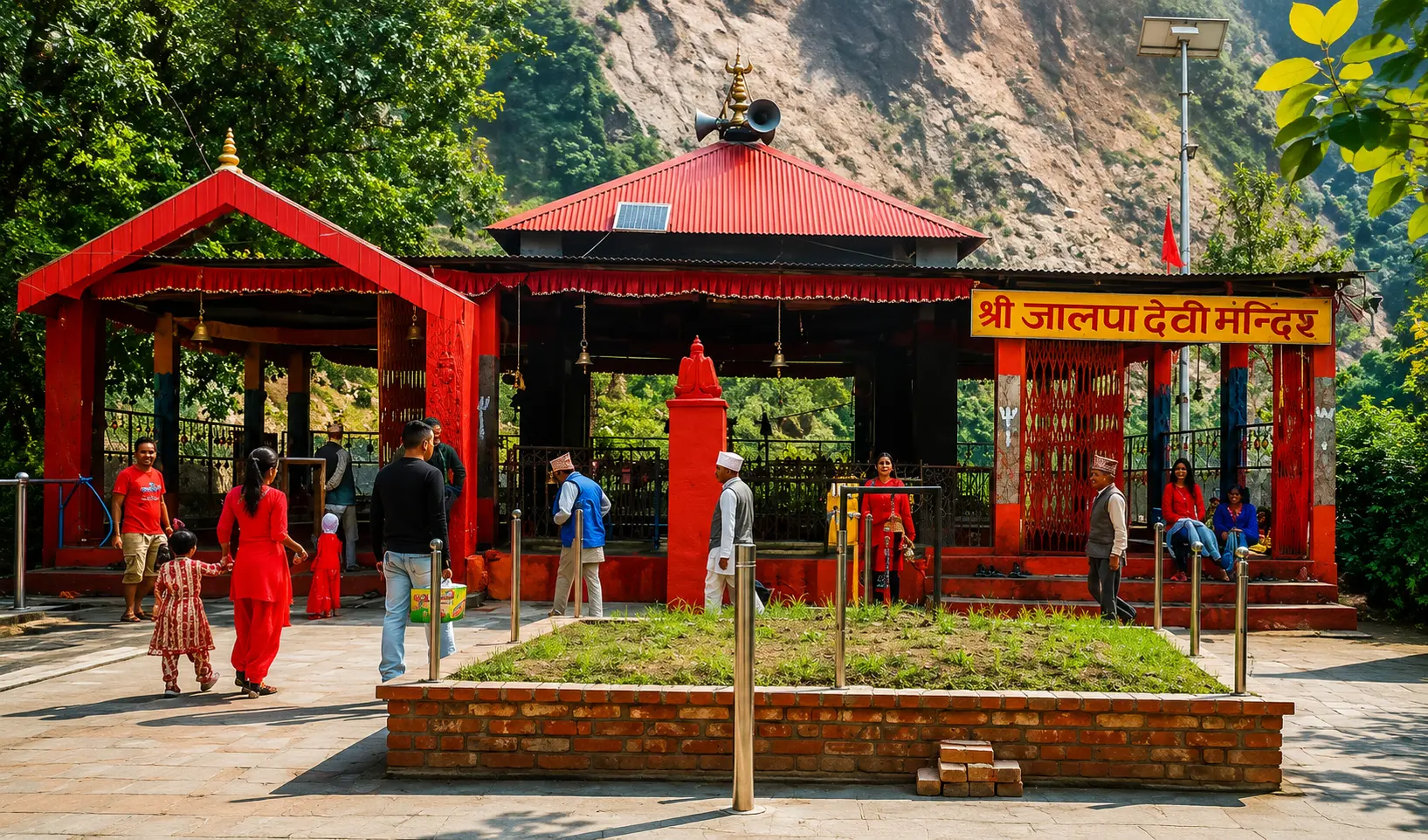
Devighat Jalpa Devi Temple, a sacred Hindu pilgrimage site in Nuwakot, Nepal, surrounded by hills and the Trishuli River.
Devighat Jalpa Devi Temple is one of Nuwakot’s most revered spiritual destinations, attracting pilgrims with its peaceful setting, ancient traditions, and religious significance.

Devighat — Where Nepal’s Founder Died and the Rivers Meet

Location: Approximately 7 km north of Bidur at the confluence of the Trishuli (Gandaki) and Tadi (Suryamati) rivers, Nuwakot District

Altitude: Approximately 600 m

Significance: Sacred river confluence; site of Jalapa Devi temple; site of King Prithvi Narayan Shah’s death (11 January 1775) and cremation

Devighat — the Goddess’s Bathing Place — is one of those sites where historical and spiritual significance overlap so completely that it is impossible to discuss either dimension without immediately invoking the other. The confluence of the Trishuli and Tadi rivers has been considered sacred for reasons that predate written record — river confluences (triveni or dwariveni) hold profound spiritual significance in the Hindu and Kirat traditions, regarded as places where the boundary between the human and divine worlds thins and ritual bathing is especially efficacious.

The Jalapa Devi temple at Devighat is the elder sister of Nuwakot’s Bhairavi—a relationship that, as the Sindure Jatra demonstrates, is not merely mythological but enacted annually in one of Nepal’s most elaborate ritual sequences. Jalapa Devi’s temple sits at the water’s edge, and the sight of Bhairavi’s chariot arriving after its long downhill journey from the palace, to be received at the riverside temple by her elder sister, is one of the most visually and emotionally compelling moments in Nepali religious public life.

Devighat’s historical dimension is equally profound. Prithvi Narayan Shah died here on his 52nd birthday, 11 January 1775, just seven years after completing the unification of Nepal by capturing Kathmandu. According to historical accounts, he was cremated at Devighat, as he wished.

This choice reflects his personal connection to Nuwakot as the foundation of his life’s work. The site of his cremation remains visible and is visited by pilgrims seeking to understand the physical geography of Nepal’s founding.

The Chaitra Purnima festival—held on the full moon day of the Nepali month of Chaitra—brings hundreds of thousands of devotees to Devighat for ritual bathing at the river confluence, making it one of the larger religious gatherings in Bagmati Province. The golden light of the sunrise and sunset on the Trishuli-Tadi confluence, with the forested hills of Nuwakot rising on all sides, makes Devighat also one of the most photographically beautiful sacred river sites in the central hills.

The Trishuli River flowing through Nuwakot, Nepal, offering sacred pilgrimage sites, scenic landscapes, rafting, kayaking, and outdoor adventure.
The Trishuli River is one of Nepal’s most iconic rivers, combining spiritual significance with thrilling white-water rafting, riverside scenery, and cultural heritage in Nuwakot.

The Trishuli River — Sacred Waters and Adventure

River Name Origin: The Trishuli takes its name from Shiva’s trishul (trident). According to legend, Shiva struck his trident into the ground high in the Himalayas at Gosaikunda, creating three wells that became the river’s source — hence Trisuli, the River of the Trident.

River Course: Originates in the Gyirong district of Tibet, enters Nepal through the Rasuwa valley at the Kerung gorge, flows south through Nuwakot, and joins the Narayani River at Devghat near Narayanghat before eventually reaching the Ganges.

Rafting Classification: Grade III to III+, suitable for both beginners and experienced rafters

The Trishuli River is both one of Nepal’s most sacred waterways and its most popular rafting river—a pairing that is not as simple as it may seem. This pairing is not as simple as it may seem, since the Trishuli’s sacred character comes from the same qualities that make it a thrilling rafting destination: its descent from the high Himalayas through deep gorges and its powerful, clear-water flow through the middle hills.

The Trishuli has been one of Nepal’s most important trade arteries since ancient times, carrying goods between the Kathmandu Valley and Tibet via the Kerung Pass. Nuwakot’s strategic position on this trade route made it valuable to Prithvi Narayan Shah—controlling Nuwakot meant controlling the flow of goods and revenues between the valley and its Tibetan trading partners.

The river was not merely a geographic feature but an economic and political resource.

For modern visitors, the Trishuli’s rafting stretch between Charaudi (near Galchhi) and Mugling offers a full-day or multi-day adventure through alternating rapids and calm stretches, with Nuwakot and Dhading’s forested hillsides rising on either bank. The Grade III to III+ rapids are sufficiently exciting for most visitors without being genuinely dangerous, and the river’s relatively easy access from Kathmandu — the put-in point at Charaudi is approximately 70 km from the capital on the Prithvi Highway — makes it the most frequently rafted river in Nepal.

Overnight camping on the river’s sandy beaches, with fire-lit evenings under the stars of the Nuwakot hills, is one of central Nepal’s finest adventure experiences.

Other Spiritual and Historical Sites in Nuwakot District

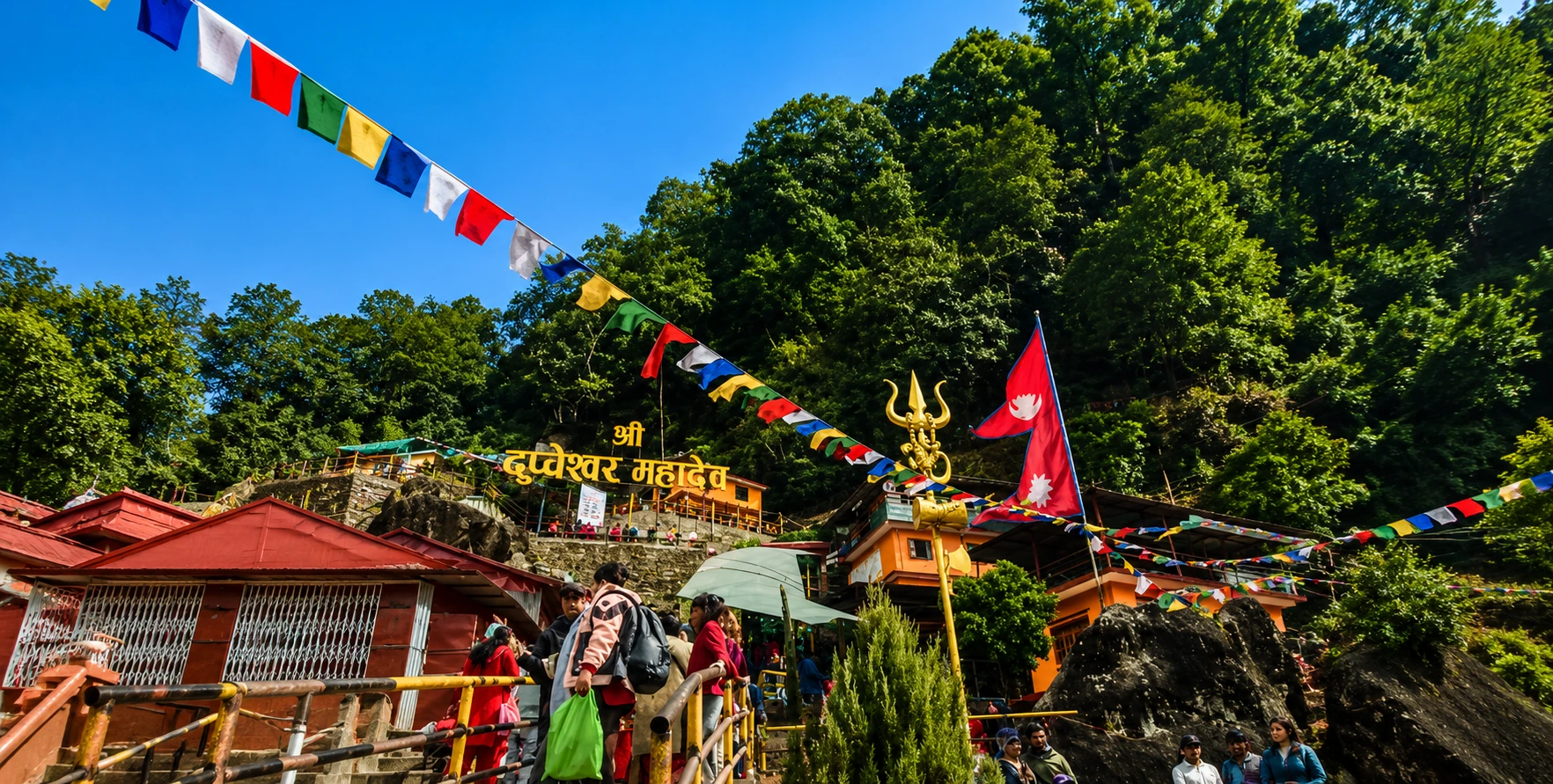
Dupcheshwar Mahadev Temple, a sacred cave temple dedicated to Lord Shiva in Dupcheshwar Rural Municipality, Nuwakot, Nepal.
Dupcheshwar Mahadev Temple is one of Nepal’s most revered Shiva pilgrimage sites, known for its sacred cave, natural beauty, and annual Maha Shivaratri celebrations.

Dupcheshwar Mahadev Temple

Located about 18 km from Bidur in the Dupcheshwar Rural Municipality, the Dupcheshwar Mahadev Temple is one of Nuwakot District’s most sacred Hindu sites—a Shiva temple perched on a commanding hilltop, offering panoramic views of the Ganesh Himal, Langtang, and surrounding ranges. Devotees consider the temple especially powerful on Maha Shivaratri and on the full moons in the Hindu calendar. The approach road passes through beautiful mid-hill countryside.

Indrakamala Mai Temple

About 18 km from Bidur and 8 km from the Kakani Rural Municipality Office, the Indrakamala Mai temple is an important local goddess shrine that reflects the dense matrix of sacred sites that characterises the Nuwakot hill. Its traditional temple preserves practices specific to the district’s indigenous communities.

Kakani — Panoramic Viewpoint and Colonial Heritage

On the eastern edge of Nuwakot District, Kakani sits at approximately 2,073 m on a ridge that has long been a popular viewpoint and weekend retreat for Kathmandu residents. Kakani’s panoramic views encompass Manaslu (8,163 m), Ganesh Himal, Langtang, and, on exceptionally clear days, the entire central Himalayan chain from Dhaulagiri in the west to Everest in the east.

During the British Raj, Kakani served as a retreat for senior officials of the British Residency in Kathmandu — a legacy reflected in the remains of a small colonial bungalow. A short but rewarding trek connects Kakani to the high ridge viewpoints above.

Kakani panoramic viewpoint in Nuwakot, Nepal, offering spectacular Himalayan mountain views, forests, and historic colonial heritage.
Kakani Panoramic Viewpoint | Himalayan Views and Colonial Heritage, Nepal

Belkot

The small farming village of Belkot sits on a ridge across the valley from Nuwakot town, offering perhaps the finest distant view of the Nuwakot palace complex from the opposite hillside. Belkot was one of the nine forts of the Nawakot system and still retains traces of its historic fortification.

The view from Belkot toward the Saat Tale Darbar at dawn, when the morning light picks out the palace’s seven stories against the backdrop of hills and sky, is one of the finest historical landscape views in the central hills.

Trishuli Bazaar

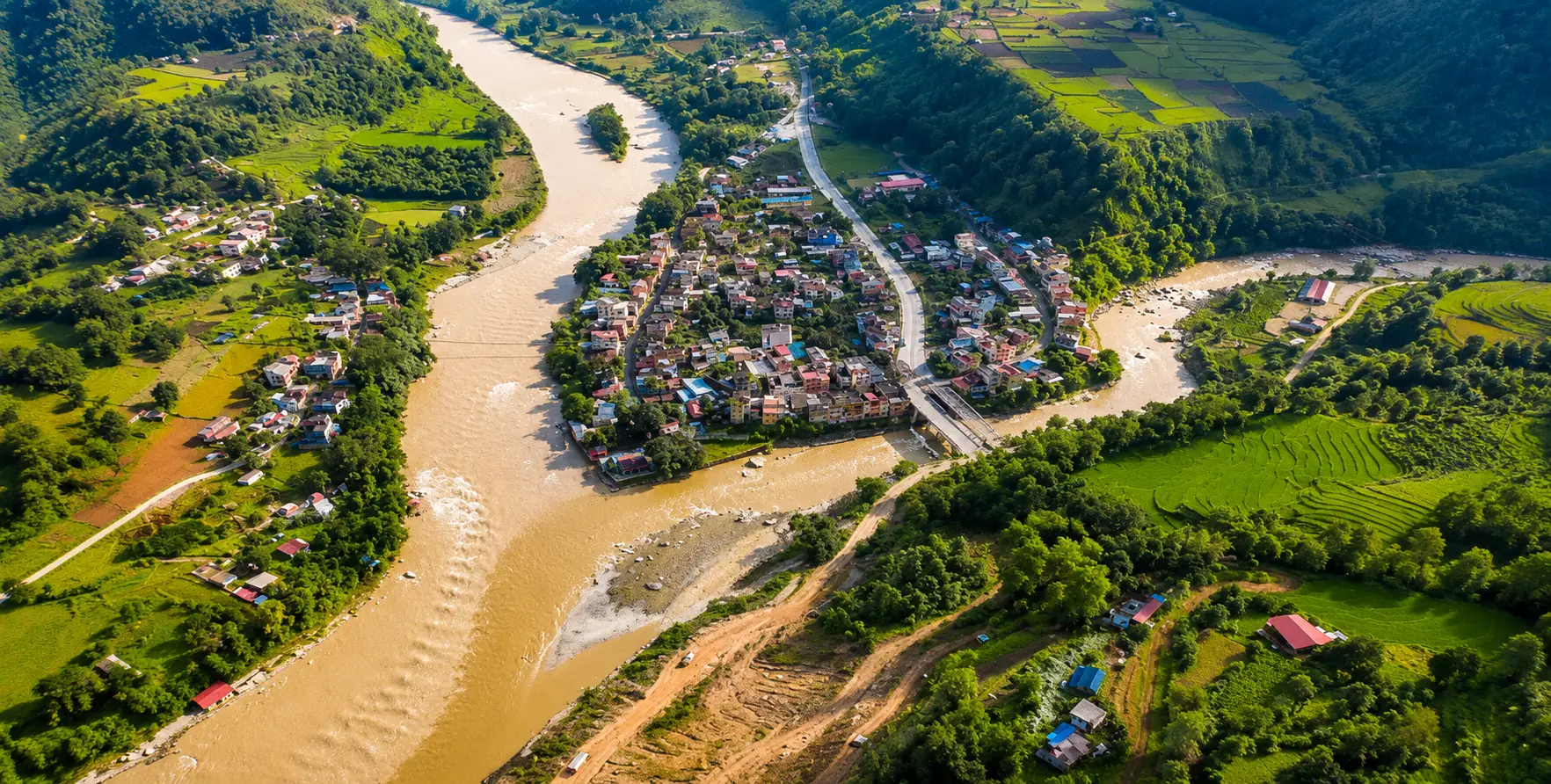
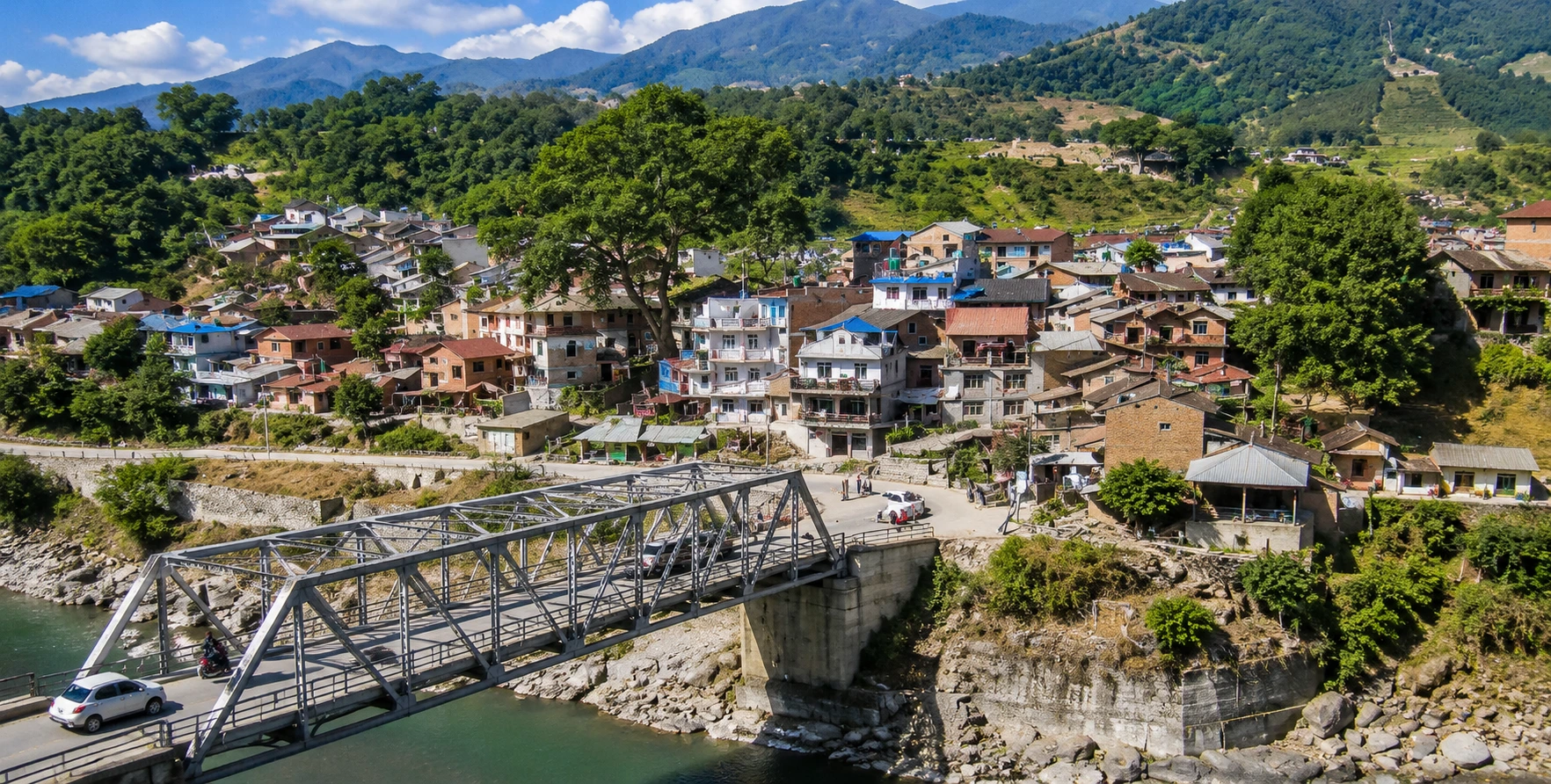
The modern town of Trishuli, on the banks of the Trishuli River below Bidur, is Nuwakot’s commercial heart and the main hub for river rafting operations on this stretch of the river. The riverside market, suspension bridges, and daily life of a Nepali river town are worth an hour or two of exploration, and the town’s tea stalls and local restaurants offer some of the best food in the lower Nuwakot valley.

Old Trishuli Bazaar in Nuwakot, Nepal, featuring the historic market town, Trishuli River, suspension bridge, and surrounding green hills.
Old Trishuli Bazaar is Nuwakot’s historic commercial centre, known for its traditional architecture, riverside setting, and role as a gateway to northern Nepal.

The Cultural Life of Nuwakot — Ethnic Diversity and Festival Calendar

Nuwakot is described locally as a ‘mini-Nepal within Nepal’ — a characterisation that accurately reflects its unusual ethnic and cultural diversity. The district’s population includes significant communities of Tamang, Newar, Magar, Brahmin, Chhetri, Sherpa, Gurung, and others, with corresponding diversity in languages (Nepali, Tamang, Newari, and others are all spoken), cultural practices, and religious traditions.

This diversity stems directly from the district’s historic position at the intersection of trade routes, military corridors, and ethnic migration patterns.

The Newar community of Nuwakot town is the primary custodian of the palace complex’s festivals and religious traditions — including the Sindure Jatra, the Narayan Jatra, the Gai Jatra (the Cow Festival honouring the dead), the Shipai Jatra, the Lakhe dance (performed by a masked dancer representing the protective demon-deity), and Krishna Janmashtami. These festivals, which follow the Newari cultural calendar closely aligned with the Kathmandu Valley tradition, give Nuwakot town a distinctive festive identity rooted in one of Nepal’s most sophisticated urban cultural traditions.

The Tamang community, which dominates much of the surrounding district outside the town, maintains its own distinct tradition of festivals, sacred practices, and shamanic ritual that runs parallel to the Newar temple tradition. The annual cycles of Tamang Buddhist practice, including Loshar (Tamang New Year, celebrated differently from the Tibetan Loshar), sacred site pilgrimages to high-altitude lakes and ridges, and community ritual gatherings, add further layers to the district’s religious calendar.

Kathmandu to Nuwakot — How to Get There

Distance: Approximately 65–75 km depending on route

Travel Time: 1.5 to 2.5 hours by private vehicle

Main Route (Fastest): Kathmandu → Kakani or Balaju → Prithvi Highway → Galchhi junction → turn north along the Trishuli River Highway → Bidur/Trishuli → Nuwakot Bazaar (6 km above Bidur)

Scenic Route (Kakani Road): Kathmandu → Kakani (viewpoint stop recommended) → descend to Nuwakot via the winding hill road — adds 30–45 minutes but offers magnificent valley and mountain views.

Road Condition: The main route via Galchhi and the Trishuli Highway is well paved and in good condition. The final 6 km climb from Bidur to Nuwakot Bazaar is narrower but paved and manageable by any vehicle.

Vehicle TypeCapacityPrice KTM → Nuwakot (one-way)Price Full Day ReturnBest For
Sedan Car1–3 paxUSD 40–60USD 70–100Couple, solo, day trip
SUV / Fortuner4–5 paxUSD 55–80USD 90–130Small family, comfortable
Toyota Hiace Van7–14 paxUSD 90–130USD 150–200Groups, school trips
Mahindra Scorpio6–9 paxUSD 65–95USD 110–160Larger family, pilgrimage group
Toyota Coaster Bus15–22 paxUSD 140–190USD 230–300Large groups, cultural tours

All prices include the driver, fuel, and vehicle insurance. Full-day return pricing means the driver accompanies you in Nuwakot for the full day and returns you to Kathmandu in the evening. For overnight stays or multi-day Nuwakot visits, daily rates apply from the second day.

Contact Vehicle Hiring Nepal for exact 2026 pricing.

Sample Itineraries for Nuwakot’s Historical and Spiritual Sites

Day Trip: Nuwakot Durbar, Bhairavi Temple, and Devighat

  • 6:30 AM: Depart Kathmandu by private vehicle
  • 8:00–8:30 AM: Arrive Nuwakot Bazaar — walk to Nuwakot Durbar, explore the palace complex and Ranga Mahal, and visit the privately run artefact museum adjacent to the square
  • 9:30 AM: Bhairavi Temple darshan and the Taleju Temple
  • 10:30 AM: Walk the Nuwakot ridge viewpoint — panoramic views of the Trishuli valley and Ganesh Himal range
  • 11:30 AM: Drive down to Devighat (20–30 min) — visit Jalapa Devi temple, walk the river confluence, see the cremation site of Prithvi Narayan Shah
  • 1:00 PM: Lunch at Trishuli Bazaar riverside restaurant
  • 2:30 PM: Return to Kathmandu (1.5–2 hrs)
  • 4:00–4:30 PM: Arrive in Kathmandu

Weekend: Nuwakot, Rafting, and Kakani

  • Day 1 (Saturday): Kathmandu to Nuwakot via Kakani (viewpoint stop, 45 min). Nuwakot Durbar complex and temples (2 hrs). Lunch. Devighat sacred site visit. Overnight at The Famous Farm or Bidur homestay.
  • Day 2 (Sunday): Trishuli River rafting from Charaudi (full day, including Grade III rapids). Return to Kathmandu via Trishuli Bazaar in the evening.

Sindure Jatra Festival Visit (April)

  • Day 1: Depart Kathmandu at 6:00 AM. Arrive in Nuwakot in time for morning festival ceremonies. Witness the chariot preparation and early rituals at the Bhairavi temple.
  • Day 1 Evening: Overnight in Nuwakot — essential for witnessing the full midnight chariot procession to Devighat and back.
  • Day 2: Full festival day — chariot procession to Devighat (4–5 hours), tantric puja at the river confluence, midnight return procession.
  • Day 3 (optional): Sindure throwing ceremony on New Year’s Day and return to Kathmandu.

Where to Stay in Nuwakot

  • The Famous Farm — The standout accommodation option, a heritage property in a nearly 100-year-old mud-brick farmhouse set in organic gardens with views of the Ganesh Himal range and the royal palace. This ‘eco-luxury hotel’ offers hot showers, excellent fusion and traditional Nepali cuisine, and wooden balconies with arguably the finest view of any hotel in Nuwakot District. Recommended for overnight visits.
  • Hotel Trishuli and Hotel Water Tower — Standard mid-range hotel options in Bidur town, suitable for straightforward overnight stays with basic facilities.
  • Homestays — The local Nuwakot community offers homestays in traditional homes within and around the Durbar Square area, providing an atmospheric, close-to-the-festival experience, particularly during Sindure Jatra: basic comforts, excellent cultural immersion.
  • Kakani Resort Options — For travellers combining Nuwakot with Kakani, several small resorts and lodges on the Kakani ridge offer mountain views and comfortable accommodation at 2,073 m.
Panoramic view of Nuwakot, Nepal during the best travel season, featuring green hills, clear Himalayan skies, historic landmarks, and traditional villages.
The best time to visit Nuwakot is during spring (March to May) and autumn (September to November), when the weather is clear, the mountain views are spectacular, and festivals bring the region to life.

Best Time to Visit Nuwakot

April (Sindure Jatra — Most Culturally Significant)

The Sindure Jatra in Chaitra/Baishakh (around April) is the strongest reason to time your Nuwakot visit. The twelve-day festival turns Nuwakot Durbar Square into one of Nepal’s most extraordinary living cultural events, with the chariot procession to Devighat genuinely unlike anything else in Nepali festival culture. Book your vehicle with Vehicle Hiring Nepal at least 4 to 6 weeks ahead for festival dates.

October to November (Best General Season)

Post-monsoon clarity brings the finest mountain views from Nuwakot’s ridge, with the Ganesh Himal and Langtang ranges especially vivid in the post-monsoon air. The Dashain festival (October) brings its own festive atmosphere to the temples. Roads are dry and in excellent condition.

The weather is cool and comfortable at Nuwakot’s altitude of 1,128 m.

December to February (Quiet and Clear)

Winter is quiet in Nuwakot. Maha Shivaratri in February- March brings a surge of pilgrims to Dupcheshwar Mahadev. The mountain views on clear winter mornings can be exceptional.

Nights are cold, but the days are pleasant for walking through the palace complex and along the hill paths.

March to May (Spring — Rhododendron Season)

The approach roads through the mid-hills show beautiful rhododendron colour in March and April, and the Sindure Jatra falls in this window. May can be warm at the lower valley elevations.

Monsoon (June to September — Still Accessible)

The Nuwakot road remains accessible throughout the monsoon, though occasional landslides can affect the lower sections. The terraced fields become intensely green, and the Trishuli River is at its most powerful. Not the prime season for mountain views, but atmospheric and relatively crowd-free.

Practical Tips for Visiting Nuwakot

  • Depart Kathmandu early for a day trip — 6:30 to 7:00 AM ensures you reach the palace complex in the cool morning light, with time to explore fully before the midday heat sets in.
  • The road from Bidur to Nuwakot Bazaar is narrow in sections — inform your driver which specific sites you wish to reach so they can take the appropriate approach roads.
  • Carry Nepali Rupees cash — ATMs are available in Bidur and Trishuli Bazaar but not in Nuwakot town itself.
  • Wear appropriate clothing for both temple visits (covered shoulders and legs) and outdoor walking (comfortable shoes — the palace complex and ridge paths involve uneven stone surfaces)
  • Photography of the cremation rituals and inside the main temple sanctums requires careful judgment — ask local guides before photographing sensitive ceremonies.
  • For the Sindure Jatra, approach the festival as a respectful observer rather than a tourist spectacle — stay silent during rituals, follow the local crowd, and accept that some elements are not intended for general visitors.
  • Book the Famous Farm in advance for the Sindure Jatra period and in October–November — available rooms are limited.
  • Combine your Nuwakot visit with a morning or an afternoon of river rafting for a day that blends spirituality, culture, and adventure in a single rewarding circuit.

How to Book Your Kathmandu to Nuwakot Vehicle

  1. Contact Vehicle Hiring Nepal via WhatsApp or visit vehiclehiringnepal.com
  2. Specify your preferred travel date — mention Sindure Jatra if timing your visit for the festival.
  3. Confirm your group size — we recommend the appropriate vehicle for your party.
  4. Please tell us your planned itinerary — Durbar only, Durbar + Devighat, a day trip, or an overnight stay.t
  5. Receive your booking confirmation with driver details and pickup time.

WhatsApp
Email: [email protected]
Website: www.vehiclehiringnepal.com

Frequently Asked Questions

How far is Nuwakot from Kathmandu and how long does the drive take?

Nuwakot Durbar is approximately 65-75 km from Kathmandu, depending on the route taken. By private vehicle, the drive takes 1.5 to 2 hours on the main route via the Prithvi Highway and the Trishuli River Road. The scenic route via Kakani adds 30 to 45 minutes but offers spectacular Himalayan views from the Kakani ridge.

Is the Nuwakot Durbar open to visitors despite the earthquake restoration?

Yes. The palace complex at Nuwakot Durbar remains open and freely accessible to all visitors despite the ongoing earthquake restoration work. Some portions of the main seven-story palace are covered with scaffolding.

Still, the Ranga Mahal, the Garad Ghar, the Bhairavi and Taleju temples, the Buddhist stupa, and the surrounding complex are all accessible and rewarding. The views from the palace terrace are completely unaffected by the restoration work.

When exactly is the Sindure Jatra?

Tindure Jatra follows the Nepali lunar calendar, so its Gregorian dates shift each year. The festival begins on the 14th day of the bright fortnight of Chaitra (approximately mid-April 2026) and continues for twelve days.

Contact Vehicle Hiring Nepal or check with a local tourism source in Nuwakot in early 2026 for the exact festival opening date. Book your vehicle and accommodation as soon as the date is confirmed — Nuwakot’s limited accommodation fills quickly for festival dates.

Can Nuwakot be visited as a day trip from Kathmandu?

Yes, comfortably. A day trip covering Nuwakot Durbar, Bhairavi Temple, the ridge viewpoint, and Devighat is achievable in approximately 8 to 9 hours total, including the 1.5- to 2-hour drive each way. Departing Kathmandu at 6:30 AM and returning by 4:30 to 5:00 PM is the standard day-trip pattern.

For the Sindure Jatra chariot procession to Devighat and midnight return, an overnight stay in Nuwakot is necessary.

Is rafting on the Trishuli River available on the same day as a visit to Nuwakot?

Yes. The Trishuli River rafting put-in point at Charaudi is on the Prithvi Highway, approximately 15 to 20 minutes from the Galchhi junction, where the Nuwakot road branches off. A combined itinerary — rafting in the morning followed by an afternoon visit to Nuwakot Durbar and Devighat — or the reverse sequence is entirely practical and makes for an excellent full-day circuit from Kathmandu.

Final Thoughts

Nuwakot is one of those destinations in Nepal whose significance is almost the exact opposite of its current popularity. It is where the nation of Nepal was decisively born — the site of the battle that began the unification, the capital that housed the court and the campaign for a quarter-century, and the riverside sacred site where the unifier died and was cremated.

It is also the home of one of Nepal’s most complex and spiritually potent festivals, a magnificent traditional palace in the finest Newari architectural tradition, a cluster of active temples with centuries of continuous devotional practice, and a sacred river confluence still visited by pilgrims and marked by the holiest kind of departure any Nepali king could wish for.

And yet Nuwakot receives a fraction of the visitors that pass through it every day on the road to Langtang, to Trishuli rafting, and onward to Pokhara. For travellers who understand what lies behind the sign at the hilltop turnoff, this is not a failure of the destination but an invitation and an opportunity to experience a genuinely significant and beautiful corner of Nepal’s historical and spiritual geography in the kind of quiet that is increasingly difficult to find at more celebrated sites.

Vehicle Hiring Nepal makes the journey from Kathmandu to Nuwakot simple, comfortable, and flexible, with a private car or van from your hotel door to the palace gate, timed to your interests, whether for an early-morning festival or a combined rafting and heritage day. Whatever brings you to Nuwakot, we will get you there.

Book your Kathmandu-to-Nuwakot vehicle today. WhatsApp | Website: www.vehiclehiringnepal.com

Best Time to Visit Nepal

Best Time to Visit Nepal

Ask ten different travellers about the best time to visit Nepal, and you will likely get ten different answers, and all of them could be correct, depending on what each traveller actually wants from their trip. Nepal’s dramatic elevation range, from the steamy lowland Terai near sea level to summits above 8,000 meters, means the country never experiences a single uniform season.

A month that delivers perfect high-altitude trekking weather might be uncomfortably hot in Chitwan.

At the same time, a month ideal for wildlife viewing might be too cold for comfortable trekking above 4,000 meters. This guide breaks down Nepal’s seasons and months in detail, covering weather, trekking conditions, festivals, wildlife viewing, and costs, so you can match your trip dates to your actual priorities rather than relying on a single generic recommendation.

Whichever month you choose, reliable travel between Nepal’s varied regions matters as much as timing. Throughout this guide, we highlight where vehicle hire in Nepal makes a meaningful difference, as road conditions vary considerably with the seasons, particularly on mountain routes.

Quick Answer: Nepal’s Two Peak Seasons

For most travellers, the best time to visit Nepal is autumn (late September through November) or spring (March through May). Autumn delivers the most reliable clear skies of the year, following the monsoon’s cleansing rains, with stable, dry weather and excellent mountain visibility lasting through most of the season. Spring runs a close second, combining good visibility with blooming rhododendron forests and longer daylight hours, though afternoon cloud builds more readily than in autumn.

Both seasons represent Nepal’s peak tourist periods, meaning higher prices, busier trails, and the need to book trekking permits, teahouses, and vehicle hire well in advance, particularly for popular routes. For travellers with flexible dates, even shifting a planned trip by a week or two within these broader windows, toward late October or early November rather than the very first week of October, for instance, can noticeably ease both pricing pressure and trail congestion without meaningfully sacrificing weather reliability.

For travellers prioritising lower costs, quieter trails, or specific interests such as wildlife viewing or off-the-beaten-path regions, winter and even the monsoon season each have genuine advantages, covered in detail below.

Autumn (September to November): Nepal’s Premier Season

September

September marks the tail end of the monsoon, and the transformation it brings is dramatic. By the end of the month, the rains have largely cleared, washing dust and haze from the air and leaving the countryside vivid green and freshly washed. Early September can still see scattered rain, but conditions improve steadily as the month progresses, with the second half offering increasingly reliable trekking weather.

October

October is widely considered Nepal’s single best trekking month and the peak of the autumn tourist season. Skies are reliably clear, temperatures are comfortable for both valley sightseeing and high-altitude trekking, and visibility for Himalayan panoramas is at its best all year.

This is also peak season for popular trekking routes, including Everest Base Camp and the Annapurna Circuit, so book teahouse accommodation, domestic flights to Lukla, and jeep hire in Nepal to mountain trailheads well in advance.

November

November frequently delivers the clearest skies of the year, as the dry post-monsoon air tends to have minimal haze. Trekking conditions remain excellent throughout the month, with daytime temperatures still comfortable, though nights grow noticeably colder at altitude as the month progresses toward winter.

November also tends to have slightly thinner crowds than October’s peak, making it an excellent compromise month for travellers who want autumn’s clarity without October’s busiest trail traffic.

Why Autumn Works So Well

The combination of dry weather, clear mountain visibility, and comfortable temperatures makes autumn ideal for virtually every activity Nepal offers: trekking toward Everest Base Camp or Annapurna Base Camp, sunrise viewing from Nagarkot or Sarangkot, wildlife safaris in Chitwan, and comfortable city sightseeing in Kathmandu and Bhaktapur. Road conditions on mountain routes are also most stable in autumn, since monsoon-related landslide damage is typically cleared and repaired by the start of the season.

Spring (March to May): Nepal’s Second Peak Season

March

March marks the proper start of spring, with rhododendron forests beginning to bloom across the mid-hills and daylight hours lengthening noticeably compared to winter. Temperatures climb steadily through the month, and trekking conditions improve week by week. However, afternoon clouds can occasionally obscure views, a pattern that becomes more pronounced as spring progresses.

April

April is widely regarded as the single best month for trekking in Nepal, combining warm, comfortable daytime temperatures (typically 15–28°C in the valleys) with rhododendron forests at their most spectacular and still-clear morning visibility before afternoon haze builds. This is Nepal’s second major peak season, so book popular routes and accommodation well in advance, and expect 4WD jeep hire to trekking trailheads to be in high demand.

April also hosts Bisket Jatra, a colourful nine-day festival celebrated with dramatic flair in Bhaktapur, where a massive chariot is pulled through the city streets.

May

May is one of the warmest months of the year, with temperatures climbing into the low-to-mid 30s °C in Kathmandu and Pokhara, and even higher in the Terai. It offers the last reliable window for spring trekking before the monsoon arrives in June, with rhododendron season past its peak but mountain views still generally good, especially in the first half of the month.

Afternoon clouds and occasional showers become increasingly common as May progresses, signalling the approaching change of season.

Winter (December to February): Clear Skies, Cold Nights

December

December brings Nepal’s coldest temperatures but also some of its clearest, driest skies, since cold air holds less moisture than autumn or spring. Crowds thin out noticeably compared to the October–November peak, making December an appealing month for travellers who prioritise quieter trails and lower accommodation prices over warmth.

December is also one of the best months for wildlife viewing in Chitwan National Park, where dry conditions and excellent visibility improve the odds of spotting rhinos and, with good fortune, tigers gathering near waterholes.

January

January is Nepal’s coldest month, with Kathmandu Valley nights regularly dropping to around 1–3°C and high-altitude regions experiencing significantly harsher cold, with night temperatures at places like Namche Bazaar or Everest Base Camp routinely falling well below freezing. High mountain passes are frequently snow-blocked during this period, making high-altitude trekking impractical.

However, lower-elevation treks and cultural sightseeing remain entirely feasible. Tiger-watching season in Chitwan begins mid-month as villagers cut back tall grasses, improving wildlife visibility.

February

February starts cold but warms progressively as the month advances, marking the gradual transition toward spring. Late February sees the genuine start of the spring trekking season at lower elevations, though higher peaks may remain obscured by lingering winter cloud. Crowds remain low throughout the month, and Holi, Nepal’s vibrant festival of colour, often falls in late February or early March depending on the lunar calendar.

Why Winter Appeals to Budget and Quiet-Trail Travellers

Winter offers a genuinely different Nepal experience: dramatically fewer crowds on popular trails and at major sightseeing destinations, noticeably lower accommodation and vehicle hire prices compared to peak season, and, on clear days, exceptional mountain visibility thanks to the dry winter air. The trade-off is genuinely cold conditions, particularly at altitude, and the closure of some high mountain passes, meaning winter trekking itineraries generally need to stay at lower elevations than their autumn or spring equivalents.

Monsoon (June to Early September): The Misunderstood Season

June

June marks the arrival of the monsoon across most of Nepal, with regular afternoon and overnight rainfall becoming the norm. Trekking in most regions becomes considerably more difficult, with muddy trails, increased leech activity at lower elevations in forested areas, and a real risk of landslides affecting both walking trails and mountain roads.

Most rain falls overnight or in concentrated afternoon bursts rather than as constant all-day drizzle. This pattern catches some first-time monsoon visitors by surprise when their mornings turn out far more pleasant than they had expected based on the season’s reputation alone. Most of the rain falls overnight or in the afternoon, often leaving mornings fresh, clear, and surprisingly pleasant before clouds build later in the day.

July and August

July is typically the wettest month of the year, with August close behind, and it’s also Nepal’s quietest tourist period for most regions. Trekking is not recommended on the standard Everest or Annapurna routes during the peak monsoon, given the landslide risk and poor visibility, though travellers seeking a different kind of Nepal experience still have real options.

Upper Mustang and Upper Dolpa sit in the rain shadow of the main Himalayan range and remain comparatively dry even at the height of monsoon elsewhere in the country, making this an excellent — and distinctly uncrowded — season to explore these high-desert regions by 4WD jeep. Kathmandu Valley sightseeing also remains entirely feasible throughout the monsoon, since city streets and major temple complexes are unaffected by the landslide risk that closes mountain trails.

Early September

Early September still carries lingering monsoon rain in most years, though conditions noticeably improve as the month progresses toward the clear, dry weather of true autumn. Climate variability in recent years has occasionally delayed monsoon rains slightly into September relative to historical norms, so travellers planning early-September trips should build some weather flexibility into mountain itineraries.

Why Some Travellers Choose Monsoon Deliberately

Monsoon season offers the lowest prices of the year across flights, hotels, and tour packages, often 20–40% below peak-season rates, alongside dramatically thinner crowds at every major destination. The landscape itself transforms into vivid, saturated green, particularly striking on the terraced hillsides of the mid-hills, and travellers focused on cultural sightseeing in Kathmandu, the rain-shadow regions of Mustang and Dolpa, or simply avoiding peak-season crowds often find the monsoon a genuinely rewarding, if less conventional, time to visit.

Best Time to Visit Nepal

Best Months for Trekking, by Route

Everest Base Camp Trek

The best months for the Everest Base Camp trek are October, November, March, and April. October and November offer the clearest post-monsoon skies and most stable weather, while March and April bring warmer temperatures and overlap with the spring mountaineering season.

January and February are too cold for the full trek because of extreme cold at high camps like Gorak Shep, and June through September should be avoided because of landslide risk and poor visibility on the standard route.

Annapurna Circuit and Annapurna Base Camp

Similarly, autumn and spring offer the best conditions for both the Annapurna Circuit and Annapurna Base Camp treks, with the route to Besisahar reached via private vehicle, which is busiest during these peak windows. Winter trekking on the lower Annapurna routes, including the popular Ghorepani–Poon Hill loop, is accessible via bus from Pokhara to Nayapul and remains considerably quieter than during peak season.

Upper Mustang and Upper Dolpa

These rain-shadow regions are the exception to Nepal’s general seasonal pattern, remaining accessible and comparatively dry even during the height of the monsoon, making June through August a genuinely good window for visiting Mustang specifically, alongside the more conventional autumn and spring seasons.

Manaslu Circuit

The Manaslu Circuit, typically accessed via Kathmandu to Soti Khola by jeep, follows the same autumn and spring preference as Everest and Annapurna, with the Larkya La pass crossing requiring stable weather and clear conditions, best found in October–November and March–May.

KTM to Chitwan

Best Time for Wildlife Viewing in Chitwan

Wildlife viewing in Chitwan National Park is best during the dry months of October through April, when vegetation has been cut back, and animals congregate more predictably around the remaining water sources, improving the odds of seeing rhinos, deer, and, with good fortune, Bengal tigers.

December and January are particularly favoured for tiger watching, as villagers traditionally cut tall grasses for thatch around mid-January, dramatically improving sightlines across the park. Chitwan is commonly combined with Pokhara via the Pokhara-to-Chitwan bus. This route works well in nearly any season, given its lower elevation and less monsoon disruption than mountain routes.

Festival Season: Timing Your Trip Around Nepal’s Biggest Celebrations

Nepal’s festival calendar is concentrated heavily in the autumn peak season, adding a cultural dimension to what is already the country’s most popular travel window. Dashain, Nepal’s largest Hindu festival, typically falls in September or October and lasts roughly 15 days, centred on family gatherings and kite flying, with many businesses operating reduced hours during the festival’s peak days.

Tihar, the festival of lights, is followed by two to three weeks of transformation, with homes and streets lit by oil lamps and marigold garlands.

Spring brings its own festival highlights: Holi, the boisterous festival of colours, falls in March, while Bisket Jatra animates Bhaktapur in April with its dramatic chariot-pulling ceremony.

Buddha Jayanti, which marks the Buddha’s birth, typically falls in April or May and draws large crowds to Lumbini, Boudhanath, and Swayambhunath. Travellers who want to experience one of these major festivals should check the exact dates each year, since several follow the lunar calendar and shift accordingly.

Travel Costs by Season

Nepal’s pricing closely follows its tourism calendar. Peak season — autumn and spring — sees the highest prices across flights, hotels, trekking permits, and vehicle hire, along with the tightest availability for popular routes and accommodation, so booking — ideally a month or more ahead — for the most sought-after trekking trailheads and teahouses is strongly advised.

Monsoon season offers the steepest discounts, typically 20–40% below peak rates across flights, hotels, and tour packages. In contrast, winter, excluding the brief Christmas and New Year period, also offers better value than the autumn and spring peaks, without the monsoon’s trekking limitations.

Vehicle hire pricing follows a similar pattern: jeep hire and other transport to popular trekking trailheads are busiest and least flexible on short notice during October–November and March–May, while the same routes are typically easier to book, sometimes even at slightly better rates, during the quieter winter and monsoon windows.

Choosing Your Travel Month by Activity

High-altitude trekking (Everest, Annapurna, Manaslu): October–November or March–April for the most reliable conditions and clearest mountain views.

Budget travel and avoiding crowds: Monsoon (June–August) or winter (December–February, outside the holiday period) for significantly lower prices and thinner crowds.

Wildlife safari in Chitwan: October through April, with December–January offering the best tiger-watching conditions specifically.

Rain-shadow trekking in Mustang or Dolpa: Any season works, including monsoon, given the dry, rain-shadow climate of these specific districts.

Cultural and festival travel: September–October for Dashain and Tihar, or March–April for Holi and Bisket Jatra.

Kathmandu Valley sightseeing only: Nearly any season works well, since temple complexes, Durbar Squares, and city touring are minimally affected by monsoon rain or winter cold compared to high-altitude trekking.

Private jeeps on a mountain road in Nepal
Vehicle hire in Nepal

How Season Affects Vehicle Travel and Road Conditions

Nepal’s road conditions vary considerably by season, directly affecting which vehicle hire option in Nepal suits a given trip. During autumn and spring, mountain roads toward trekking trailheads are typically in their best condition of the year, having been cleared and repaired following monsoon damage, making jeep hire both more comfortable and more predictable in timing.

The Kathmandu–Pokhara highway, served by the Kathmandu -Pokhara bus, remains fully paved and passable in almost all conditions. However, monsoon rain can still cause occasional delays due to landslides on the steeper sections through the hills.

During the monsoon, mountain roads toward remote trailheads like Soti Khola or the upper reaches of Besisahar can experience temporary washouts, making experienced local drivers, who know current road conditions and alternative routes, especially valuable during this period. Winter generally offers stable road conditions at lower and mid elevations, though the highest mountain passes, including sections of the Mustang and Manang jeep routes, can close temporarily following snowfall.

Temperature and Climate Zones Explained

Nepal’s climate cannot be understood through a single national temperature line, since the country spans an extraordinary elevation range within a relatively narrow north-south distance. The Terai zone in the south, bordering India, lies near sea level and experiences a subtropical climate, with summer temperatures regularly exceeding 35°C and humid, monsoon-heavy conditions for much of the year.

The mid-hill region, including Kathmandu and Pokhara, enjoys a far more temperate climate, with comfortable daytime temperatures for most of the year and a genuine four-season pattern recognisable to visitors from temperate countries.

Above roughly 3,000 meters, conditions shift into genuine alpine territory, with even summer nights dropping close to freezing and winter nights regularly falling well below it. This means that a single Nepal itinerary spanning the Terai, the mid-hills, and a high-altitude trek can expose travellers to three distinct climate zones within the same trip, regardless of which season they choose, making layered clothing and flexible planning essential rather than optional for any itinerary that crosses these elevation bands.

Travellers sometimes underestimate how stark this contrast can be in a single day of travel, packing as though the whole trip will resemble Kathmandu’s comfortable valley climate, only to find themselves underprepared once a jeep or trekking trail carries them several thousand meters higher within hours.

As a rough rule of thumb, temperature drops by roughly one degree Celsius for every hundred meters of elevation gained, meaning a comfortable 25°C afternoon in Kathmandu at 1,400 meters can correspond to a distinctly chilly single-digit temperature at a 3,500-meter trekking village on the very same day, a pattern worth remembering when packing for any Nepal itinerary that includes meaningful elevation gain.

Understanding Nepal’s Rainfall Patterns

Nepal’s monsoon rainfall is not evenly distributed across the country, which surprises many first-time visitors expecting uniform wet-season conditions nationwide. The eastern and central regions, including the commonly the commonly trekked Everest and Annapurna area, receive substantially more monsoon rainfall than the western and trans-Himalayan regions, where the main Himalayan range blocks much of the moisture carried up from the Bay of Bengal.

This rain-shadow effect is why Upper Mustang, Upper Dolpa, and parts of Manang remain comparatively dry even during the peak monsoon elsewhere in the country, a pattern consistent enough that experienced trekking operators actively route monsoon-season clients toward these districts.

Even within the wetter regions during monsoon, rainfall timing follows a fairly predictable daily pattern: the heaviest rain typically falls overnight or in the afternoon, often leaving mornings clear, fresh, and surprisingly pleasant before clouds build through the day. Travellers visiting during the shoulder months of late May, early June, or early September can use this pattern to their advantage by scheduling outdoor activities and photography for the mornings, when visibility and comfort are typically at their best, even during an otherwise unsettled period of the year.

Daylight Hours and Trekking Schedules

Daylight availability shifts meaningfully across Nepal’s seasons and directly affects trekking itinerary planning, particularly for longer daily walking stages. Summer months around the June solstice offer Nepal’s longest days, with daylight lasting past 7 pm in Kathmandu, giving trekkers and drivers considerably more flexibility for longer stages or delayed starts.

Winter months around the December solstice see daylight shrink to a much tighter window, often requiring trekking parties and mountain drivers alike to plan departures before dawn to ensure they arrive at the day’s destination with enough daylight remaining.

This seasonal variation in daylight also affects vehicle travel planning for long highway or mountain routes. A six-to-eight-hour drive between Kathmandu and Pokhara comfortably fits within a single daylight window during summer’s long days. Still, during the shorter days of December and January, an early morning departure becomes considerably more important to avoid arriving after dark on routes that are best driven, particularly on mountain sections, in daylight.

This is equally true for jeep routes into trekking trailheads, where the combination of shorter winter daylight and the slower average speeds typical of unpaved mountain roads makes a pre-dawn start genuinely necessary rather than merely advisable for reaching some of the more distant trailheads within a single comfortable driving day.

Shoulder Season Strategy: Late May, Early September, Late February

Travellers seeking to balance good conditions with lower prices and thinner crowds often deliberately target Nepal’s shoulder seasons, rather than choosing strictly between peak season and off-season. Late May offers the final window of spring trekking before monsoon arrives, with rhododendron season past its peak but mountain views often still excellent in the mornings, alongside noticeably lower accommodation demand as the peak spring crowd has largely departed.

Early-to-mid September similarly catches the tail end of the monsoon, with conditions improving rapidly through the month and significantly lower prices than the imminent October peak. However, some weather risk remains given the lingering chance of late monsoon rain.

Late February occupies a similar shoulder position between winter and spring, with rising temperatures, thinning winter crowds, and the first blooms of the approaching rhododendron season, while still avoiding the higher prices and busier trails of the March–April spring peak. These shoulder windows reward flexible travellers willing to accept slightly more variable weather in exchange for better value and quieter trails than the immediately adjacent peak months.

Regional Variation: Same Month, Different Experience

Because Nepal’s geography spans such dramatic elevation contrasts, the same calendar month can offer genuinely different experiences depending on which region a traveller visits. January in Chitwan, at low elevation in the Terai, offers comfortably mild daytime temperatures well suited to wildlife safaris, while January at Everest Base Camp brings genuinely dangerous cold, with night temperatures plunging far below freezing at the highest camps.

Similarly, July in Kathmandu means daily monsoon rain and humid, overcast conditions, while July in Upper Mustang, just a few hundred kilometres away across the Himalayan rain shadow, can deliver clear skies and dry, dusty trekking conditions more reminiscent of a high desert than the wet, green hillsides typical of central Nepal during the same month.

This regional variation means that a generic answer to ‘when is the best time to visit Nepal’ is only ever a starting point; the more useful question for trip planning is almost always ‘when is the best time to visit the specific regions I want to see’, since the right month for a Chitwan-and-Kathmandu trip can differ substantially from the right month for an Everest Base Camp trek or an Upper Mustang jeep expedition, even though all three fall within the borders of the same country.

Working through this region-by-region lens before settling on travel dates, rather than starting with a single calendar month and working backwards, tends to produce itineraries that more closely match traveller expectations once they arrive.

Packing Differently for Each Season

Autumn and Spring Packing

These peak seasons generally call for layered clothing suited to warm daytime temperatures in the valleys and noticeably cooler conditions at altitude or after sunset. A light fleece or down layer, comfortable trekking shoes, sun protection, and a light rain jacket cover most contingencies, with additional insulated layers needed only for treks climbing above roughly 3,500 meters.

Winter Packing

Winter visitors need genuinely warm layers even for city-based itineraries, given Kathmandu’s cold nights, and serious cold-weather gear, including a quality down jacket and warm sleeping bag, for any trekking above 3,000 meters. A warm hat, gloves, and thermal base layers are essential, not optional, for winter trekking itineraries, alongside sun protection, since winter’s clear skies still carry significant UV exposure at altitude despite the cold air temperature.

Monsoon Packing

Monsoon travel calls for genuinely waterproof outer layers rather than simple water-resistant jackets, quick-drying clothing given the high humidity and frequent rain, and footwear with good grip for muddy, slippery trail and road conditions. A dry bag or waterproof pack cover protects electronics and important documents, and insect repellent becomes considerably more important given increased mosquito and leech activity in lower-elevation forested areas during this season.

Air Quality Considerations in Kathmandu Valley

Kathmandu Valley’s air quality varies meaningfully by season, a factor worth considering for travellers with respiratory sensitivities or those hoping for clear mountain views directly from the valley. Pre-monsoon months, particularly March and April, can see elevated haze and particulate levels due to dry conditions, agricultural burning in the wider region, and dust, occasionally reducing visibility even on otherwise clear days.

The monsoon rains that follow have a dramatic cleansing effect, and the immediate post-monsoon period of late September through November typically delivers the valley’s cleanest air and clearest long-distance visibility of the year, reinforcing autumn’s reputation as Nepal’s premier travel season from multiple angles at once, not just weather stability.

Best Time to Visit Nepal
Airport pickup

Best Time to Visit Nepal for First-Time Visitors

First-time visitors to Nepal, especially those on a single trip with no strong preference for a specific activity, are generally best served by visiting in October or April. Both months combine reliable weather, manageable temperatures across the full elevation range that a typical itinerary might cover, and the widest range of fully operational tourist infrastructure, from teahouses and guesthouses to scheduled domestic flights and vehicle hire.

October in particular offers the bonus of overlapping with Nepal’s major autumn festivals, giving first-time visitors a chance to witness Dashain or Tihar celebrations alongside their sightseeing and trekking activities.

For first-time visitors specifically combining Kathmandu sightseeing, a Pokhara stay, and perhaps a short trek or jungle safari, both October and April support the full range of activities comfortably: clear conditions for a Kathmandu sightseeing tour, reliable views from Nagarkot or Sarangkot, good trekking weather for shorter routes like Poon Hill, and decent wildlife viewing odds in Chitwan, even though these are not technically the peak wildlife-viewing months of deep winter.

Best Time to Visit Nepal for Returning Travellers. Travellers who have already experienced Nepal’s classic autumn or spring peak season and are returning for a second or third trip often deliberately choose winter or monsoon for a meaningfully different experience of the same country. Returning visitors frequently report that winter’s quieter trails and clearer light produce some of their most memorable photography, despite the cold. At the same time, monsoon-season visits to Upper Mustang or a purely cultural, Kathmandu-focused itinerary offer a side of Nepal that peak-season crowds can sometimes obscure.

Some returning travellers also use a second or third Nepal trip to explore regions skipped on their first visit entirely, such as the far-eastern Kanchenjunga region or the remote western districts opened more recently to independent trekking, choosing a season specifically around that new region’s particular climate pattern rather than defaulting automatically to the same autumn or spring window used on their original trip.

This pattern of season-travellers deliberately seeking out Nepal’s quieter, less conventional seasons reflects a broader truth about the country: there is no single wrong time to visit, only different trade-offs between weather reliability, crowd levels, cost, and which activities and regions take priority for your trip.

How Nepal’s Best Time to Visit Compares to Neighbouring Regions: Travelling to Nepal, and combining it with visits to neighbouring Bhutan or northern India, often requires reconciling slightly different optimal seasons across these adjoining regions. Tibet’s high-altitude plateau climate aligns reasonably well with Nepal’s autumn and spring windows, making combined Nepal-Tibet itineraries via routes through the Korala border area near Upper Mustang a logical pairing during these shared peak seasons. Bhutan’s climate follows a broadly similar monsoon pattern to Nepal, meaning the same October-November and March-April windows that suit Nepal also tend to suit a combined Nepal-Bhutan itinerary well.

Northern India’s plains, including common gateway cities for travellers entering or exiting Nepal overland, experience considerably hotter summers than Nepal’s hill regions, meaning travellers combining Nepal with northern India destinations like Varanasi or Delhi should factor in that India’s plains can become uncomfortably hot in April and May, even while Nepal’s mid-hill regions remain pleasantly warm during the same weeks, a useful planning distinction for multi-country South Asia itineraries. Nepal-specific seasonal guidance often overlooks this, especially when planning broader regional trips.

Climate Change and Shifting Seasonal Patterns

Nepal’s traditionally reliable seasonal patterns have become more variable in recent years, a trend widely attributed to broader climate change affecting the Himalayan and South Asian region. Monsoon onset and withdrawal dates have become somewhat less predictable than the historical norms long used for trip planning, with some recent years seeing monsoon rains extend into September, beyond what the traditional calendar would suggest, narrowing the reliable window for early-autumn travel slightly compared to past decades.

Glacial retreat across Nepal’s high mountain regions has also become more visible in recent years, with several popular trekking routes showing noticeably different glacial landscapes compared to photographs from even a decade or two earlier.

Trekking agencies and conservation area authorities have responded by updating route guidance and, in some cases, repositioning teahouse infrastructure and trail sections where glacial melt has destabilised previously stable ground, a reminder that even well-established trekking routes can see meaningful year-to-year changes worth checking immediately before departure rather than relying solely on older trip reports or guidebooks.

While these long-term shifts do not fundamentally change the broad seasonal guidance in this article, travellers planning trips close to the traditional season boundaries, such as early September or late May, may benefit from checking more recent, specific weather forecasts and trail condition reports rather than relying purely on historical seasonal averages, given this increasing year-to-year variability.

Booking Timeline: When to Reserve Based on Your Travel Month

For October and November travel, booking trekking permits, teahouse accommodation on popular routes, and jeep hire to major trailheads should ideally be done one to three months in advance, particularly for the most popular routes like Everest Base Camp and the Annapurna Circuit, where capacity can be genuinely tight during the heart of peak season. For travel in March and April, a similar one- to two-month booking window is advisable, with slightly more flexibility than during the October peak, given marginally lower overall visitor volumes.

Winter and monsoon travel generally allows considerably more flexible, closer-to-departure booking, since demand is lower across accommodation, vehicle hire, and trekking permits alike. That said, travellers with fixed international flight dates or limited trip windows are still well served by booking key logistics, particularly any required mountain jeep transport, at least a week or two ahead even in the lower season, to guarantee vehicle availability on the specific dates needed rather than risking a last-minute scramble.

Frequently Asked Questions

What is the single best month to visit Nepal?

October is generally considered the single best all-around month, combining the clearest skies, most stable weather, and best trekking conditions of the year. However, it is also the busiest and most expensive month, so you’ll need to book popular routes and accommodation early.

Is it worth visiting Nepal during monsoon season?

Yes, especially for travellers focused on Kathmandu Valley sightseeing, rain-shadow regions like Upper Mustang and Upper Dolpa, or simply seeking lower prices and thinner crowds. Standard high-altitude trekking routes like Everest Base Camp and the Annapurna Circuit are not recommended during peak monsoon (June–August) due to landslide risk and poor visibility.

When should I avoid trekking to Everest Base Camp?A void

January and February for a full Everest Base Camp trek because of extreme cold at high camps, and avoid June through September because of monsoon-related landslide risk and poor visibility on the standard route.

What is the cheapest time to visit Nepal?

Monsoon season (June–August) offers the lowest prices of the year, typically 20–40% below peak-season rates across flights, hotels, and tour packages, with winter (excluding the Christmas and New Year period) also offering better value than the autumn and spring peaks.

Is Nepal good to visit in December?

Yes. December offers clear, dry skies, noticeably thinner crowds than the October–November peak, and excellent conditions for wildlife viewing in Chitwan National Park. However, nights are cold, particularly at higher elevations, and high-altitude trekking becomes increasingly limited as the month progresses toward January’s deep winter cold.

Many travellers choose December for a quieter, more contemplative version of the classic Nepal sightseeing circuit, trading a few degrees of warmth for noticeably thinner crowds at sites that feel considerably more congested during the October peak season.

Do I need to book a vehicle hire further in advance during peak season?

Yes. During October–November and March–May, popular jeep-hire routes to major trekking trailheads can become genuinely constrained, and booking one to two weeks ahead is strongly advised to guarantee availability on your exact travel dates.

Month-by-Month Snapshot: A Quick Reference. For travellers who want a quick reference rather than reading the full month-by-month breakdown above, here is a condensed summary of what each month typically offers, recognising that conditions vary year to year and by region

  • January: Coldest month, clear skies, low-altitude trekking only; good for Chitwan wildlife viewing and quiet cultural sightseeing.
  • February: Still cold but warming; spring trekking season begins late in the month; thin crowds. Holi festival often falls in late February or early March.
  • March: Spring proper begins; rhododendrons start blooming; temperatures warm; trails increasingly busy.
  • April: Widely considered the single best trekking month alongside October, peak rhododendron bloom, Bisket Jatra festival in Bhaktapur.
  • May: Warmest month, last reliable spring trekking window before monsoon, building afternoon cloud and occasional showers.
  • June: Monsoon arrives; standard trekking routes become difficult; Mustang and Dolpa remain dry, rain-shadow exceptions.
  • July: The wettest month nationally and the quietest tourist period, good for cultural sightseeing and travel in rain-shadow regions.
  • August: Still wet but easing slightly toward the month’s end; landscapes lush and green; low-season pricing throughout.
  • September: Monsoon clears progressively through the month, and conditions improve week by week toward the autumn peak.
  • October: Peak trekking month, with the clearest skies, busiest trails, and highest prices; Dashain and Tihar often fall within this window.
  • November: Often the clearest skies of the entire year, excellent trekking conditions, slightly thinner crowds than in October.
  • December: Cold but dry and clear, thinning crowds, excellent Chitwan wildlife viewing, comfortable lower-elevation travel.

A Note on Indoor and Alternative Activities in Off-Peak Months

Travellers visiting during winter’s coldest weeks or monsoon’s wettest stretches need not abandon outdoor activity entirely, since Nepal offers a meaningful range of activities less affected by weather extremes than high-altitude trekking. Cooking classes, traditional craft workshops, and museum visits in Kathmandu and Patan provide engaging indoor alternatives during heavy rain or bitter cold, while short, lower-elevation excursions to places like Bandipur or Dhulikhel remain comfortable for nearly the entire calendar year, given their moderate mid-hill elevations.

Scenic mountain flights, which climb close to the Himalayan range for dramatic aerial views in under an hour, operate reasonably reliably outside the very wettest weeks of peak monsoon, offering travellers a way to see Everest, Lhotse, and Makalu up close even during a winter or shoulder-season visit when a full trek is not part of the itinerary. Combined with a comfortable Kathmandu sightseeing tour and a day trip to Bhaktapur, these alternative activities round out a satisfying Nepal itinerary even in months that are not technically considered ideal for high-altitude trekking.

Is it safe to drive on Nepal’s mountain roads during the monsoon?

Driving remains possible but requires experienced local drivers familiar with current conditions, as monsoon rain increases the risk of landslides on the steeper, unpaved sections of mountain roads. Reputable jeep hire operators monitor road conditions closely during the monsoon.

They will reroute or delay departures when a specific stretch becomes genuinely unsafe, which is one of the strongest arguments for booking experienced local drivers rather than self-driving on unfamiliar mountain roads during this season.

Which season has the best photography conditions in Nepal?

Late autumn, particularly November, generally offers the best overall conditions for photography, combining the year’s clearest air with still-comfortable temperatures for extended outdoor shooting sessions. Winter’s clear but bitterly cold conditions also produce excellent results for photographers willing to brave the cold for crisp, high-contrast mountain light.

At the same time, monsoon’s dramatic cloud formations and saturated green landscapes appeal to photographers seeking a moodier, less conventional aesthetic than Nepal’s standard clear-sky postcard imagery.

Combining Multiple Regions Across a Single Trip: Travellers planning a comprehensive Nepal itinerary spanning Kathmandu, Pokhara, Chitwan, and a trek often find that a single fixed travel month rarely suits all regions and activities equally well, so it’s worth considering trip sequencing alongside seasonal timing. An itinerary that begins with Kathmandu sightseeing, moves to a Pokhara-based trek, and concludes with a Chitwan safari can be timed. Hence, the trekking portion falls within the optimal autumn or spring window. At the same time, the more weather-flexible Kathmandu and Chitwan segments absorb any shoulder-season uncertainty at the start or end of the trip.

This kind of sequencing also meaningfully affects transport planning. A traveller starting in late September, for instance, might find early days in Kathmandu still affected by lingering monsoon showers, while their later trekking days in October enjoy the season’s best conditions, and their final Chitwan safari via the Pokhara to Chitwan bus benefits from the drier, clearer skies typical of early autumn in the lower-elevation Terai.

Thinking through regional and activity sequencing, rather than picking a single travel month and assuming it suits the entire itinerary equally, tends to yield noticeably better trip outcomes for multi-region travel in Nepal.

Final Thoughts: Matching the Season to Your Trip

There is no universally best time to visit Nepal, only the best time for the specific trip you want to take. Autumn delivers the most reliable clear skies and the best all-round conditions for trekking, sightseeing, and photography, making it the natural default choice for first-time visitors without strong scheduling constraints.

Spring offers a close second, with the bonus of blooming rhododendrons and longer daylight hours. Winter rewards travellers willing to embrace cold nights with dramatically quieter trails, lower prices, and some of the clearest skies of the year, while monsoon, often unfairly dismissed entirely, offers genuine value for cultural travel, rain-shadow trekking in Mustang and Dolpa, and substantial cost savings for budget-conscious visitors.

Whichever season you choose, Nepal Vehicle Hiring Pvt Ltd adjusts its fleet and route planning to match seasonal road conditions, from peak-season jeep hire to mountain trailheads in October and April, to monsoon-ready vehicles for Mustang’s rain-shadow roads in July, to comfortable winter transport for Chitwan wildlife safaris via the Pokhara to Chitwan bus. Browse our full range of vehicle hire in Nepal, or explore a complete Nepal tour package tailored to the season and activities that matter most to you.

Still deciding when to travel? Contact our team; we help travellers match their ideal Nepal itinerary to the right season, route, and vehicle every day of the year.

Adventure Bike Rental in Nepal: Complete Guide to Routes and Requirements

Royal Enfield Himalayan 450, KTM 390 Adventure R, Royal Enfield Himalayan 411, Royal Enfield Classic 350, Royal Enfield Classic 500, Bajaj Pulsar and Hero adventure motorcycles in Mustang Valley with the ancient Mustang Kingdom, Nepal.

Adventure Bike Rental Nepal – Complete Guide to Routes and Requirements

There is a particular sensation that no other form of travel in Nepal quite replicates: the moment a motorbike crests the final switchback above Beni and the lush, dripping greenery of the lower Kali Gandaki valley gives way, almost without warning, to the stark ochre cliffs and the thin, high-altitude light of the Mustang rain shadow. In a car or jeep, you watch this transition through the window.

On a motorbike, you feel the air temperature drop, you smell the change in vegetation, you lean into the same wind that bends the prayer flags above Kagbeni. This is the essential appeal of adventure motorbike riding in Nepal — a country whose mountain roads were never designed for comfort but were, almost by accident, designed for exactly this kind of riding: narrow, technical, constantly changing in surface and gradient, and threaded through some of the most overwhelming mountain scenery on the planet.

Nepal has, over the past decade, quietly become one of the most significant adventure motorcycling destinations in Asia, drawing riders not only from Europe and North America but increasingly from across the wider region, all converging on Kathmandu’s Thamel district and Pokhara’s Lakeside in search of the same thing: a Royal Enfield, a tank of fuel, and a road that climbs into the highest mountains on Earth. In 2026, this scene has matured considerably — rental fleets have modernised with newer adventure-specific machines, permit systems for restricted areas like Upper Mustang have been reformed to be more accessible, and the gap between casual scooter rental and serious expedition-grade touring has become sharply defined.

This is also, candidly, one of the riskier and more demanding forms of travel in Nepal, and an honest guide must treat it as such. Nepal’s roads mix tarmac, dirt, gravel, sand, and sometimes nothing at all within the same kilometre. Altitude affects both rider and machine.

Night riding is genuinely dangerous. And the documentation requirements — an International Driving Permit with a motorcycle endorsement, the correct insurance, and, in certain regions, specific government permits — are not mere bureaucratic formalities but genuine prerequisites for both legal riding and meaningful financial protection if something goes wrong.

This guide from Nepal Vehicle Hiring Pvt Ltd provides the complete, currently researched picture of adventure bike rental in Nepal: the machines available, the major touring routes from gentle Kathmandu Valley loops to the demanding heights of Upper Mustang, the legal and insurance requirements every rider must satisfy, realistic costs, and the honest comparison between self-guided rental and supported guided touring that every prospective rider should weigh before committing.

For travellers who prefer a four-wheeled alternative on the same spectacular routes, Nepal Vehicle Hiring provides private 4WD jeep hire across Nepal’s mountain regions. Call/ WhatsApp

Choosing Your Machine – What You Should Actually Ride in Nepal

The single most consequential decision in planning an adventure motorbike trip in Nepal is choosing the right machine — and in 2026, the answer has become remarkably clear and consistent across virtually every experienced operator in the country.

Royal Enfield Himalayan 450, KTM 390 Adventure, R Himalayan 4,11 Classic,350, 500, Bajaj Hero Motorcycle Tour, Mustang Nepal

The Royal Enfield Himalayan – Nepal’s Definitive Touring Bike

As one veteran Nepal motorcycle tour operator who has run Himalayan tours for years and personally ridden every major route the country offers, I put it bluntly: there is really only one serious choice for touring Nepal — the Royal Enfield Himalayan 411cc. This isn’t marketing language; it reflects a hard-won practical consensus built on years of breakdowns, river crossings, and remote-area repairs.

The reasoning is entirely pragmatic rather than aspirational. Parts are everywhere — every mechanic in even the smallest mountain town in Nepal knows this bike intimately, and a mechanical failure in a place like Tatopani or Jomsom can typically be addressed locally, something that would be impossible with a top-end European adventure bike.

The Himalayan’s long-travel suspension, 21-inch front wheel, and manageable curb weight make it genuinely capable on poor surfaces without requiring the rider to be an expert off-road specialist. Its fuel economy of approximately 25–30 km per litre is a genuinely important practical factor on routes like Upper Mustang, where petrol stations can be 100 km apart and running dry in a remote high-altitude desert is a serious problem rather than a minor inconvenience.

And critically, the rental cost of about USD 35–50 per day, including basic insurance, puts it within reach of most travellers, whereas a top-end adventure machine—assuming one could even be found for rent in Nepal—would cost three times as much.

The newer Royal Enfield Himalayan 450 has also entered Nepal’s rental fleets in 2026, offering a more modern engine platform, improved electronics, and better ergonomics than the long-running 411cc model, while retaining the essential virtues of widespread parts availability and manageable weight. Riders booking through more established 2026-era rental operations in Thamel and Pokhara’s Lakeside increasingly find the 450 alongside the proven 411cc, and the choice between them generally comes down to personal preference for the newer, more refined platform versus the older engine’s proven reliability.

Adventure-Specific Alternatives – KTM and CFMoto

A smaller but growing segment of Nepal’s top-end rental market now offers genuine adventure-touring machines such as the KTM 390 Adventure R and the CFMoto 450MT, typically through specialist operators who pair rental with mandatory guided support rather than offering self-rental. These machines offer more modern suspension technology, better off-road ergonomics, and noticeably sharper performance than the Himalayan, appealing to experienced riders seeking a more technically capable platform for routes such as the roughest sections of Upper Mustang.

The trade-off is straightforward: these bikes cost significantly more to rent, parts and specialist mechanical support are far less available outside Kathmandu and Pokhara, and most operators require an accompanying guide rather than permitting independent self-rental. For experienced adventure riders seeking a more capable machine and willing to pay the top-end and accept the guided-tour requirement, these represent a genuine upgrade over the Himalayan; for most visiting riders, the Himalayan remains the more practical and easier-to-arrange choice.

Smaller Bikes and Scooters – For City and Short-Range Use Only

Nepal’s rental market also includes a wide range of smaller commuter and trail bikes — the Honda XR150, Bajaj Pulsar, Yamaha FZ, and various 125cc–150cc scooters — typically priced from USD 15–25 per day for the smallest machines, rising to USD 25–40 for mid-range 200cc–250cc bikes. These are genuinely appropriate and sensible choices for city riding in Kathmandu or Pokhara, short excursions to nearby valley-rim destinations like Nagarkot or Dhulikhel, and gentle exploration for riders with no intention of attempting serious mountain touring.

Several reputable operators also stock the Royal Enfield Classic 350, Honda CRF 250L, and KTM Duke 250 as mid-tier options between commuter scooters and the full adventure-touring Himalayan—capable machines for moderate mountain riding but generally less suited to the most demanding high-altitude, restricted-area routes than the purpose-built Himalayan.

Royal Enfield Himalayan 450 KTM 390 Adventure R Himalayan 411 Classic 350 500 Bajaj Hero Motorcycle Tour Mustang Nepal
Adventure bike Nepal

Where to Rent – Kathmandu, Pokhara and the Established Rental Ecosystem

Nepal’s adventure bike rental market is concentrated in two locations, each serving a slightly different purpose in a typical rider’s itinerary.

Thamel, Kathmandu – The Largest Selection

Thamel is Nepal’s largest motorbike rental hub by a clear margin, with dozens of rental shops clustered along the district’s main streets offering everything from basic scooters to fleets of Royal Enfield Himalayans. This concentration of competing operators in Thamel generally produces the most competitive pricing in the country, and the sheer volume of available stock means a rider arriving without a reservation can usually still find an appropriate machine, particularly outside the absolute peak October–November season.

Thamel is the natural starting point for riders planning to begin their Nepal motorcycle journey directly from Kathmandu — whether heading toward Pokhara and onward to Mustang, exploring the Kathmandu Valley rim roads as a standalone short tour, or undertaking a longer circuit through Gorkha, the southern plains, and back.

Lakeside, Pokhara – Smaller but Strategically Positioned

Pokhara’s Lakeside rental scene is smaller than Thamel’s but increasingly significant, and in 2026 it will be notably elevated by the arrival of more professional, higher-standard operators. One recent 2026 review captures the shift well, describing a Pokhara rental operation offering brand-new KTM 390 Adventure R and Himalayan 450 machines kept in genuinely well-maintained condition, and noting that this represents the new standard for Upper Mustang motorbike hire in 2026.

Pokhara’s strategic value is geographic: it sits at the natural gateway to the Mustang and Manang regions, meaning riders beginning their Mustang or Annapurna Circuit tour from Pokhara save the day or more of riding that a Kathmandu start would otherwise require, and arrive at the most demanding section of their route with a machine and body that are already warmed up rather than fatigued from the long initial transit.

Most riders adopt a hybrid approach: renting in Kathmandu, riding the relatively straightforward Prithvi Highway to Pokhara as the first leg of the tour, then continuing from Pokhara into the mountains — though renting directly in Pokhara for Mustang-focused itineraries is an entirely viable and increasingly well-supported alternative.

Chitwan and Lumbini – Limited but Present

A handful of shops in Chitwan and Lumbini also offer scooter rentals. However, the selection is genuinely limited, and you shouldn’t rely on these locations as a primary rental source for any serious adventure-touring plan. They are useful primarily for riders who have already completed a mountain circuit and want a scooter for local exploration during the Terai leg of a broader Nepal trip.

The Documentation You Actually Need – And the Gap Most Riders Fall Into

This is, without exaggeration, the most important section of this guide because it addresses a genuine, well-documented gap between what is legally and practically required to ride a motorbike in Nepal and what most rental shops actually enforce when handing over the keys.

The International Driving Permit – Legally Required, Rarely Checked at the Rental Desk

Nepal requires an International Driving Permit (IDP) with a motorcycle endorsement for all foreign riders, obtained from your home country’s automobile association before you travel. It typically costs USD 15–30 and is valid for one year.

Critically, your home license must itself carry a motorcycle endorsement — the IDP is a translation document and cannot grant permissions your underlying license does not already have. A car-only license, translated into an IDP, still does not authorise motorcycle riding in Nepal.

Here is the uncomfortable reality most guidebooks gloss over, as one detailed 2026 specialist guide states directly: many rental shops in Thamel and Lakeside Pokhara do not ask to see an IDP or even a driving license—they hand over the keys once you pay the rental fee and a deposit. This creates a genuinely dangerous false sense of security among travellers, who reasonably but incorrectly conclude that if the rental shop didn’t ask for documentation, the documentation must not really matter.

It does matter — enormously, in two completely separate and serious ways.

First, the legal exposure: police checkpoints are common on every major highway in Nepal, with the Prithvi Highway between Kathmandu and Pokhara alone featuring several, and checkpoint frequency increases substantially on routes popular with tourist riders, including the road toward Upper Mustang, the Annapurna Circuit highway section, and the Kathmandu Valley rim roads. Officers at these checkpoints routinely ask foreign riders for documentation. If you cannot produce a valid IDP, you face an on-the-spot fine — typically NPR 1,000–5,000 — and your bike may be held until the correct documents are produced, a genuinely disruptive outcome in the middle of a remote multi-day tour.

Royal Enfield Himalayan 450 adventure motorcycle in Mustang Valley with Himalayan mountains, Ne

Second, and far more consequential, is the insurance exposure. Travel insurance companies are explicit and consistent on this point: if you are involved in an accident while riding without a valid license — meaning an IDP plus an underlying home license with a motorcycle endorsement — your claim will almost certainly be denied.

This denial applies specifically to medical evacuation, which in remote mountain areas of Nepal typically means a helicopter rescue costing USD 5,000–15,000 — a sum that becomes the rider’s personal financial responsibility entirely if the insurance claim is rejected on documentation grounds.

As the specialist guide summarises with appropriate bluntness: riding without an IDP effectively means riding without insurance, regardless of what your policy says on paper. The roughly USD 20 cost of obtaining the IDP before travel is trivial compared to this level of financial exposure, and Nepal Vehicle Hiring strongly urges every prospective rider to obtain a proper IDP with a motorcycle endorsement before arriving in Nepal, regardless of whether any individual rental shop asks for it.

For Extended Stays – The Nepali Driving License Option

Riders planning to stay in Nepal for more than three months or intending to return for multiple riding trips over time should consider obtaining a genuine Nepali driving license from the Department of Transport Management in Ekantakuna, Lalitpur. This provides more durable and unambiguous legal standing than repeatedly relying on an IDP, which has only a one-year validity and must be renewed and reissued by the rider’s home country for each subsequent trip.

Insurance – Standard Travel Policies Do Not Cover This

A second critical gap that catches many riders unprepared is that standard travel insurance policies do not cover motorbike riding. This is not a Nepal-specific quirk — it reflects the general international insurance industry treatment of motorcycling as a higher-risk activity requiring specific coverage.

Riders need a policy that explicitly includes motorbike touring as a covered activity, and ideally one that specifically covers helicopter evacuation from remote mountain areas, given the realistic possibility of needing exactly this kind of rescue on Nepal’s more remote routes. Budget USD 120–250 for a two-week policy that includes appropriate motorcycle cover.

Established providers, including World Nomads and True Traveller, offer adventure sports add-ons that specifically include motorbike riding. However, riders should always check the engine capacity limit on any policy, as some policies exclude bikes with engines over 125 cc. This category includes virtually every adventure-touring machine discussed in this guide, including the Royal Enfield Himalayan. Separately, most Nepal rental shops themselves do not offer comprehensive insurance on the rented bike — confirm precisely what damage and theft coverage, if any, is included in your rental agreement before signing, since the gap between what the rental company covers and what your personal travel insurance covers can otherwise leave significant financial exposure unaddressed on both sides.

Deposits and Security – Protecting Yourself as Much as the Rental Shop

Every legitimate rental shop in Nepal requires a security deposit, with the amount varying by vehicle value: a Royal Enfield typically requires a USD 400–500 cash deposit. In contrast,e a smaller scooter might require only USD 200. Some shops will accept a colour photocopy of your passport in place of a cash deposit, and a small but growing number of more established operators now accept credit card pre-authorisation. However, this remains relatively rare in Nepal.

The one absolute rule every rider should follow without exception: never hand over your original passport as a deposit, regardless of how the rental shop frames the request or how reputable the shop appears. A photocopy serves the same verification purpose without exposing you to the serious practical and legal complications of being without your original travel document in a foreign country.

Kathmandu Valley Day Rides – The Essential Warm-Up

Before committing to a multi-day mountain tour, every rider — but particularly anyone new to riding in Nepal’s specific conditions — should spend one to three days riding the Kathmandu Valley rim roads: the loop through Nagarkot, Dhulikhel, and Bhaktapur that circles the eastern and southeastern edge of the valley.

This route offers genuinely rewarding riding in its own right — climbing to Nagarkot’s celebrated Himalayan viewpoint, descending through the preserved Newari heritage town of Dhulikhel, and threading the medieval brick lanes around Bhaktapur — while remaining entirely on paved or well-maintained roads, with regular fuel stations, mobile phone coverage throughout, and a forgiving margin for the inevitable early mistakes of adjusting to Nepal’s specific traffic culture and road surface unpredictability.

Experienced Nepal motorcycle tour operators explicitly recommend this Kathmandu Valley loop as a good warm-up before a longer tour, and the reasoning goes well beyond simple skill-building. It lets a rider assess a rental machine’s mechanical condition and their own physical comfort before committing to a route where a problem cannot be easily resolved.

It provides an early, low-stakes encounter with Nepal’s distinctive road hazards — unmarked potholes, animals on the road, motorcycles and trucks overtaking at blind corners, and the complete absence of the predictable lane discipline that riders from most other countries take for granted.

Royal Enfield Himalayan 450, KTM 390 Adventure R, Royal Enfield Himalayan 411, Royal Enfield Classic 350, Royal Enfield Classic 500, Bajaj Pulsar and Hero adventure motorcycles in Mustang Valley with the ancient Mustang Kingdom, Nepal.

The Lower Mustang Loop – Nepal’s Finest Accessible Adventure Ride

For riders seeking a substantial, scenically extraordinary mountain tour without the additional permit complexity and cost of the restricted Upper Mustang zone, the Lower Mustang loop — Jomsom to Muktinath and back, typically completed as part of a five-to-seven-day circuit from Pokhara — is what one veteran operator calls their favourite ride in Nepal. Crucially, this route requires no restricted-area permit, making it significantly more affordable and logistically simpler than its Upper Mustang counterpart while still delivering an experience of comparable visual and emotional power.

The route begins in Pokhara, descends to Beni, and then follows the Kali Gandaki River valley northward into the rain shadow of the Annapurna massif. The landscape transformation along this stretch is one of the most dramatic in all of Nepal’s road network: lush subtropical forest gives way, within a matter of hours of riding, to arid, almost Tibetan high desert terrain, the vegetation thinning and the cliff colours shifting toward ochre and red as the road climbs and the surrounding peaks intercept the monsoon moisture that would otherwise reach this valley.

The section between Beni and Jomsom is where a rider’s actual technical skill is genuinely tested. The road here is carved directly into cliff faces, crosses rivers sometimes via proper bridges and sometimes via simple fords with no bridge at all, and turns to deep, loose gravel in extended sections.

After rainfall, rockfalls can block the route for hours– a genuine operational hazard rather than a remote theoretical risk, and one that underscores why daylight-only riding and conservative pacing matter so much on this stretch.

Along the way, riders pass through Tatopani, where the natural hot springs provide a genuinely necessary and deeply welcome opportunity to soothe a body that has spent hours absorbing the impact of a technical gravel road; Marpha, known across Nepal as the country’s apple brandy capital and one of the most architecturally beautiful traditional villages on the entire route; and finally Jomsom itself — windy, dusty, and dramatically surrounded by peaks exceeding 8,000 metres on both sides of the valley.

The undisputed high point of the Lower Mustang loop, both literally and in every other sense, is Muktinath Temple at 3,710 metres, a site sacred to both Hindus and Buddhists, situated directly beneath the Thorong La pass, with the full Annapurna range rising dramatically behind it. Riders typically spend a night at Jomsom or Muktinath before retracing the route back to Pokhara, completing a circuit that delivers an extraordinarily complete sample of Nepal’s mountain riding character — technical gravel sections, river crossings, dramatic altitude and climate transition, deep cultural immersion in Thakali and Tibetan-influenced villages, and a genuinely sacred destination as its emotional centrepiece — all without the restricted area bureaucracy of the Upper Mustang zone proper.

Upper Mustang – Nepal’s Flagship Adventure Motorbike Destination

Upper Mustang is, by consistent consensus among virtually every Nepal motorcycle tour operator, the single most popular and most celebrated advanced motorbike route in the entire country — and in 2026, a significant regulatory change will make it considerably more accessible than it has been for the preceding decade.

The 2026 Permit Reform – Why This Is the Year to Go

For years, accessing Upper Mustang required payment of a flat USD 500 Restricted Area Permit fee regardless of how many days a visitor actually spent in the region — a structure that effectively penalised shorter, more focused itineraries and made Upper Mustang a significant financial commitment even for riders who only wanted a few days in the restricted zone. In 2026, the Nepalese government fundamentally restructured this system, replacing the flat fee with a daily rate of USD 50 per person.

As one Nepal permit specialist summarises the practical effect: this reform delivers a lower overall permit cost for shorter visits, genuinely flexible travel durations, and makes the route considerably more accessible to adventure riders while still protecting the region’s unique culture and environment and continuing to support local Mustang communities through permit revenue.

The practical consequence for motorbike tourers specifically: a focused four-to-five-day Upper Mustang ride now costs meaningfully less in permit fees than it would have under the old flat-rate system, while riders planning a more extended exploration of the region still have the option to pay proportionally for additional days rather than being forced into an inflexible single fee structure regardless of actual time spent in the restricted zone.

Royal Enfield Himalayan 450 adventure motorcycle in Mustang Valley with Himalayan mountains, Nepal.
Royal-Enfield-Himalayan 450-adventure-motorcycle

What the Restricted Area Permit Requires

Beyond the daily permit fee, Upper Mustang has two additional mandatory requirements that riders must understand before planning their route. First, an Annapurna Conservation Area Permit (ACAP), costing approximately NPR 3,000 (around USD 20), is also required, since the route to Upper Mustang necessarily passes through ACAP territory in its lower sections before reaching the restricted zone proper.

Second, and most significantly for riders accustomed to independent travel elsewhere in Nepal: a licensed guide is mandatory throughout Upper Mustang, and independent unguided travel in this region is not permitted under any circumstances.

This guide requirement is not bureaucratic friction to be worked around—it reflects Upper Mustang’s status as a genuinely sensitive border region adjoining the Tibet Autonomous Region of China, where Nepal’s government carefully manages foreign access for both cultural preservation and broader diplomatic reasons. Reputable motorbike tour operators handle all of these permits and guide arrangements as a standard, fully included component of any Upper Mustang package.

The Riding Experience – Beyond Jomsom, Into the Forbidden Kingdom

Where the Lower Mustang loop turns back at Muktinath, Upper Mustang continues considerably further north, through Kagbeni and into the genuinely otherworldly high desert terrain of the former Kingdom of Lo, climaxing at the walled medieval capital of Lo Manthang — a settlement whose Tibetan Buddhist culture, royal palace, and ancient monasteries remained substantially isolated from the outside world until the region first opened to foreign visitors in 1992.

Riders describe the terrain in this section as feeling genuinely like crossing into a different country entirely — eroded red and ochre cliffs, scattered chortens and mani walls, ancient cave dwellings carved into vertical rock faces, and an atmosphere of profound, windswept remoteness unlike anywhere else accessible by road in Nepal. A typical guided Upper Mustang motorbike tour runs about eleven days. It starts around USD 1,990 per person for a genuinely private tour involving only the booking party rather than a mixed group of strangers, reflecting the comprehensive logistics, permit handling, accommodation, and support infrastructure required for this remote and regulated region.

The Annapurna Circuit by Road – A Demanding Seven-to-Ten-Day Alternative

For riders who want the cultural and scenic breadth of the famous Annapurna Circuit trekking route but prefer to experience it on a motorbike rather than on foot, a road-based version of the circuit — typically structured as a seven-to-ten-day tour following the trekking route via Manang and the Thorong Phedi approach — has become an increasingly established option in Nepal’s adventure riding scene. This is a genuinely demanding route, with some sections extremely rough — considerably more technically challenging in places than the Lower Mustang loop, given the steeper gradients, higher average altitude, and rougher track surfaces on the eastern Manang side of the circuit.

This route is generally recommended only for riders with prior off-road or adventure-touring experience, or those undertaking it as part of a fully guided and supported tour with a backup vehicle.

The Solo Long-Distance Circuit – What a Genuine Independent Journey Looks Like

Beyond structured tour routes, some of the most compelling testimony to Nepal motorbike touring comes from riders who have undertaken genuinely independent, extended journeys covering much of the country in a single rental period. One documented example, shared on a respected international motorcycle rental review platform: a rider collected a Honda CRF 250L in Kathmandu, spent a couple of days riding around the city before heading west to Pokhara, obtained trekking permits there and rode up the western side of the Annapurna region through Beni into Jomsom, continued through the Mustang region to Muktinath where the road literally ended, completed several days of high-altitude hiking, then returned to Pokhara before riding on to Gorkha, descending from the Himalayan foothills to Lumbini at the Indian border, crossing the southern Terai plains to Sauraha for a Chitwan National Park wildlife safari, and finally riding back to Kathmandu to close the loop — a journey the rider himself described as an amazing solo journey with some of the toughest riding but most rewarding scenes I have ever seen, completed over twenty-five days for a total rental cost of approximately USD 900 cash, with the CRF 250 singled out as, in the rider’s own assessment, absolutely the best bike for the environment.

This kind of extended, multi-region solo circuit represents the genuine outer edge of what independent adventure riding in Nepal can deliver: a journey spanning the full vertical range of the country’s geography, from the high Himalaya down to the subtropical Terai plains, woven together entirely on two wheels and entirely on the rider’s own schedule. It is also, candidly, not a journey to attempt as a first experience of riding in Nepal — the rider in this account had clearly developed sufficient comfort and competence with Nepal’s specific riding conditions before attempting a route of this length and diversity, and the same progression — starting with shorter, better-supported routes before attempting an extended independent circuit — is the responsible approach for any rider new to the country.

KTM 390 Adventure R motorcycle on the scenic roads of Mustang, Nepal
Explore Mustang Valley with the powerful KTM 390 Adventure R.

Self-Guided Rental Versus Guided Tour – An Honest Comparison

Every prospective motorbike rider in Nepal eventually faces the same fundamental decision: rent a motorbike independently and plan your own route, or join a guided tour with organised support. Both are entirely legitimate approaches, and the right choice depends heavily on a rider’s experience level, risk tolerance, and the specific route under consideration.

Self-guided rental is, on the surface, considerably cheaper — a Royal Enfield Himalayan rental at USD 35–50 per day compares favourably with guided tour packages that run into the thousands of dollars for a comparable duration. But as one experienced operator frames the real trade-off: self-guided looks cheaper on paper, but consider what you actually lose — there is no backup jeep if the bike breaks down, which does happen; no mechanic on hand; no guide who actually knows the specific roads, their danger points, and local driving patterns; no pre-arranged accommodation in remote villages where finding a bed can otherwise be genuinely difficult; and no organised support if something goes seriously wrong in a remote area with no mobile signal.

For a rider’s first Nepal motorbike trip specifically, the consistent professional recommendation is that a guided tour is worth the cost difference, precisely because the margin for serious consequence from a relatively minor problem — a mechanical failure, a moderate fall, a missed turn onto an unmarked track — is considerably higher in Nepal’s mountain regions than in most other adventure riding destinations.

On a guided tour, the structure typically involves the guide riding ahead and setting the pace appropriate to the group’s collective skill level. At the same time, a backup support vehicle follows behind, carrying tools, spare parts, and a first-aid kit, so if a bike breaks down or a rider has an accident, organised help is available almost immediately rather than hours or potentially days away. This support structure is particularly valuable on routes like Upper Mustang, where remoteness, altitude, and limited mobile coverage compound the consequences of any breakdown or incident without nearby support.

There is also a social dimension worth noting: riding as part of an organised group tour means travelling alongside fellow riders from genuinely different countries and backgrounds, each bringing their own story to the trail, with shared costs for accommodation and meals reducing the individual financial burden compared to solo travel. At the same time, you still retain meaningful choices about pace and engagement on the road itself. Many riders describe this social dimension — the people they meet along the way — as nearly as significant to their overall experience as the riding and scenery themselves.

Altitude, Weather, and the Physical Demands of Himalayan Riding

Riding a motorbike at altitude is a meaningfully different physical and mechanical proposition from riding at sea level, and Nepal’s mountain routes routinely push well above 33,000 meters— Muktinath at 3,710 m, Manang on the Annapurna Circuit road well above that, and sections of Upper Mustang reaching even higher.

The thinner air at these altitudes affects both rider and machine simultaneously. For the rider, it means reduced physical stamina, a real possibility of altitude-related symptoms such as headache and fatigue developing over the course of a multi-day ascent, and a generally heightened sense of physical exertion even during what would otherwise be unremarkable riding — the same acclimatisation principles that apply to trekkers at equivalent altitudes apply equally to riders.

A sensible itinerary builds in the same gradual altitude gain and adequate rest as a responsible trekking schedule. For the machine, engine power output drops noticeably at altitude, particularly on carburetted engines such as those found on older Royal Enfield models, since the thinner air contains proportionally less oxygen for combustion — riders should expect their bike to feel meaningfully less responsive above 3,000 metres than it did at the start of the trip, and should adjust their riding expectations and overtaking decisions accordingly rather than assuming consistent performance throughout a route with significant altitude variation.

Night riding deserves its own explicit and unambiguous warning, repeated consistently across every credible Nepal motorcycle guide: do not ride after dark. The reasoning is straightforward and serious — many vehicles in rural Nepal operate without functioning lights, road markings are essentially non-existent outside the main cities, and potholes and other hazards that would be easily visible in daylight become genuinely invisible at night.

Every multi-day Nepal motorbike itinerary should be structured with generous daylight margins, building in earlier-than-strictly-necessary departure times and conservative daily distance targets specifically to avoid the situation of arriving at a destination after dark because the day’s riding took longer than anticipated — a situation that, on Nepal’s mountain roads, is unfortunately common even for experienced and well-prepared riders.

adventure bike rental in NepalRoyal Enfield Himalayan 450 KTM 390 Adventure R Himalayan 411 Classic 350 500 Bajaj Hero Motorcycle Tour Mustang Nepal

Costs, Cash, and Practical Logistics on the Road

Fuel prices in Nepal have risen meaningfully through 2025 and into 2026, with petrol in Kathmandu reaching approximately NPR 202 per litre (around USD 1.35) by April 2026, following three separate price increases driven by broader geopolitical disruptions to fuel supply chains. Prices outside Kathmandu typically run five to ten rupees higher per litre, reflecting transport costs to more remote fuel stations.

A Royal Enfield Himalayan averaging around 30 km per litre means a rider covering 100–150 km in a typical riding day should budget roughly USD 4–7 in daily fuel costs, or approximately USD 30–50 for fuel across a complete seven-day tour. On routes like Upper Mustang, where considerable distances can separate fuel stations, riders should carry a spare fuel container as a genuine practical precaution rather than an optional extra.

Cash management is a consistently emphasised practical point in every credible 2026 Nepal motorcycle guide: card payments are unreliable outside Kathmandu and Pokhara, and while ATMs do exist in larger towns,s including Chitwan, Pokhara, and Lumbini, they are not guaranteed to function reliably or accept foreign-issued cards. Riders should carry sufficient Nepali rupees in cash for their entire trip duration before departing from a major city, budgeting approximately NPR 3,000–5,000 (USD 20–33) per day for personal spending on a guided tour, where accommodation and most meals are typically pre-arranged and included, rising to NPR 5,000–8,000 (USD 33–53) per day for self-guided riders who must independently cover food, fuel, and accommodation at each stop.

Essential Practical Tips for Adventure Bike Rental in Nepal

  • Obtain a Genuine IDP with Motorcycle Endorsement Before Travel: Do not rely on the fact that a rental shop fails to ask for documentation — this does not exempt you from the legal and insurance requirements, and the financial exposure from an unrecognised claim during a serious accident vastly outweighs the modest cost of arranging proper documentation in advance.
  • Confirm Your Travel Insurance Specifically Covers Motorbike Touring: Standard travel policies typically exclude motorcycling entirely. Buy a specific adventure sports add-on or specialist policy, and check the engine capacity limit, since many policies exclude bikes above 125cc—a category that includes the Royal Enfield Himalayan and most genuine touring machines.
  • Choose the Royal Enfield Himalayan for Serious Touring: Its combination of nationwide parts availability, manageable weight, capable suspension, and reasonable fuel economy makes it the consistently recommended choice for any route beyond Kathmandu Valley day rides.
  • Never Hand Over Your Original Passport as a Rental Deposit: A colour photocopy serves the same verification purpose without the serious complications of travelling without your original passport.
  • Complete a Kathmandu Valley Warm-Up Ride First: The Nagarkot-Dhulikhel-Bhaktapur loop offers a valuable, lower-stakes introduction to Nepal’s riding conditions before committing to a remote multi-day mountain tour.
  • Budget Realistic Fuel and Cash Reserves: Carry sufficient Nepali rupees for your full trip, as card and ATM reliability drops sharply outside Kathmandu and Pokhara, and carry a spare fuel container on routes with widely spaced petrol stations such as Upper Mustang.
  • Never Ride After Dark: Build conservative daily distance targets and early departure times into every multi-day itinerary specifically to avoid arriving at any destination after nightfall.
  • Strongly Consider a Guided Tour for Your First Nepal Ride: The backup vehicle, mechanical support, local route knowledge, and pre-arranged accommodation a guided tour provides offer real risk reduction, especially on remote or restricted-area routes like Upper Mustang.
  • Confirm Upper Mustang Permit and Guide Arrangements in Advance: Independent unguided riding in Upper Mustang is not permitted under any circumstances. Reputable operators arrange the ACAP permit, the daily Restricted Area Permit, and the mandatory licensed guide as a single integrated package.

Muglin

Frequently Asked Questions

What is the best motorbike to rent for touring Nepal?

The Royal Enfield Himalayan (411cc or the newer 450cc) is the consistently recommended choice for genuine adventure touring in Nepal, thanks to its nationwide spare-parts availability, capable long-travel suspension, manageable weight, and reasonable fuel economy of about 30 km per litre. Rental costs are approximately USD 35–50 per day, including basic insurance.

Do I really need an International Driving Permit to rent a motorbike in Nepal?

Yes, legally and practically. While many rental shops do not check for an IDP at the point of rental, this does not exempt riders from the legal requirement, and riding without one effectively voids most travel insurance coverage in the event of an accident — including helicopter medical evacuation, which can cost USD 5,000–15,000. Obtain your IDP with a motorcycle endorsement from your home country before travelling to Nepal.

What permits are required for motorbike travel in Upper Mustang?

Upper Mustang requires a Restricted Area Permit at USD 50 per person per day (reduced from a flat USD 500 fee in 2026), plus an ACAP permit of approximately NPR 3,000, and a mandatory licensed guide — independent unguided riding in this region is not permitted under any circumstances.

Is the Lower Mustang loop suitable for less experienced riders?

Lower Mustang is more accessible than Upper Mustang in terms of permits. However, it’s still a genuinely technical route, particularly the Beni-to-Jomsom section, which involves cliff-carved roads, river crossings, and loose gravel. Riders should have some prior off-road experience or join a guided tour with backup support.

How much should I budget for a week-long motorbike tour in Nepal?

For self-guided rental: approximately USD 250–350 for bike rental, USD 30–50 for fuel, and USD 230–370 for cash expenses (accommodation, food) over seven days — roughly USD 500–750 total. Guided tours, which include accommodation, permits, a guide, and backup vehicle support, typically start from around USD 1,990 for an eleven-day private Upper Mustang tour.

Should I rent independently or join a guided motorbike tour?

For first-time Nepal riders, a guided tour is strongly recommended—the backup vehicle, mechanic, local route knowledge, and pre-arranged accommodation provide meaningful risk reduction on Nepal’s demanding, remote mountain roads. Experienced riders comfortable with technical off-road conditions and self-sufficient travel may reasonably choose independent rental, particularly for the unrestricted Lower Mustang and Kathmandu Valley routes.

Plan Your Nepal Adventure with Nepal Vehicle Hiring

Adventure motorbike riding in Nepal delivers an experience that no other form of travel quite matches — the direct, unfiltered sensation of the Himalaya’s changing air, light, and terrain passing immediately around you rather than through a window. It is also a serious undertaking that rewards careful preparation: the right machine, genuine documentation, appropriate insurance, and an honest assessment of your own experience level against the demands of routes like Upper Mustang and the Annapurna Circuit road.

For travellers who prefer the comfort, capacity, and professional driver support of four-wheeled travel across these same extraordinary routes, Nepal Vehicle Hiring Pvt Ltd provides private 4WD jeep and Land Cruiser hire to Mustang, Muktinath, the Annapurna region, and across Nepal’s complete mountain road network, with experienced route-specific drivers and full transparency on pricing and service.

Call / WhatsApp |  E-mail: [email protected]    |  Book Your Nepal Vehicle  |  Nepal Trekking Packages

Nepal Vehicle Rental: Complete Guide to Car, Jeep, Van and Bus Hire

Why Your Vehicle Choice Defines Your Nepal Experience

Nepal is not a destination you pass through — it is a country you move through, physically and experientially, across an extraordinary range of landscapes, altitudes, cultures, and road conditions that can change dramatically in a single day’s travel. In the morning, you might be in Kathmandu at 1,350 m, threading through the medieval lanes of Bhaktapur’s Durbar Square.

By afternoon, a private jeep has carried you to Kalinchowk at 3,842 m, where snow covers the rhododendron ridges and the Himalayan panorama fills every direction. By the following week, a VIP Sofa Bus will deliver you to the birthplace of the Buddha in Lumbini’s subtropical plains, 600 km and 1,000 m below your morning’s altitude.

This physical and experiential range — Nepal’s defining characteristic as a travel destination — makes choosing a vehicle not merely a logistical consideration but a fundamental determinant of your entire experience in Nepal. The wrong vehicle leaves you stranded in Besisahar while your group heads to Dharapani on the Annapurna Circuit.

The wrong vehicle leaves elderly pilgrims exhausted by a 9-hour bus journey that should have been a 9-hour Land Cruiser journey. The wrong vehicle — a standard car where a 4WD Scorpio was required — leaves you looking at Muktinath on a map rather than standing at its sacred temple.

In Nepal, the vehicle is not incidental to the journey. It is the journey.

This guide — Nepal Vehicle Hiring Pvt Ltd’s ultimate Nepal vehicle rental guide 2026 — is the most comprehensive resource available on private vehicle hire in Nepal. It covers every vehicle type in our fleet, every major route across the country, seasonal road conditions, permit requirements, traveller profiles, and recommended vehicles, Nepal’s unique driving environment, 10 golden rules for Nepal vehicle hire, and a complete FAQ answering every question we receive from travellers, tour operators, and corporate clients.

Whether you are planning your first Nepal visit or your tenth, whether you are coming alone or with a group of fifty, whether your destination is the nearest heritage site or the most remote corner of Upper Mustang — this guide is designed to help you choose the right vehicle and travel Nepal with complete confidence.

Plan your Nepal journey now: Nepal Vehicle Hiring | Jeep Hire | Bus Hire | Hiace Van Hire | Call/WhatsApp: +977 981-4227196

Private jeeps parked in Mustang

Understanding Nepal’s Road Network – The Foundation of Vehicle Hire Planning

Nepal’s Four Road Categories – What Each Means for Vehicle Choice

Nepal’s road network is among the most geographically diverse in the world—spanning smooth, wide Terai highways (like the Mahendra and Prithvi Highways) to precarious cliff-edge off-road mountain tracks above 4,000 meters, where the road is barely wide enough for a single vehicle. Understanding these four categories is the starting point for selecting the right vehicle:

  • Category 1 – Major Paved Highways: The Prithvi Highway (Kathmandu–Pokhara), Mahendra Highway (East- West), Tribhuvan Highway (Kathmandu–Birgunj), Araniko Highway (Kathmandu–Tibet border). These well-maintained paved roads are accessible to all vehicle types, including standard cars, Hiace vans, and tourist buses. Journey times are predictable, and comfort levels are high.
  • Category 2 – Secondary Paved Roads: District roads and regional connections, such as the Pokhara–Baglung Highway, Sindhuli–Okhaldhunga road, and Bardibas–Janakpur route. Paved but often narrower, with sections of road damage, sharp bends, and moderate gradients. Accessible to most vehicles but less comfortable in standard cars on longer journeys. Hiace vans and jeeps are recommended.
  • Category 3 – Unpaved / Gravel Mountain Roads: The Beni–Muktinath Kali Gandaki valley road, sections of the Besisahar–Dharapani Annapurna road, and numerous district and rural roads across the hills. Loose gravel, ruts, river crossings, and steep gradients define these routes. A 4WD with high ground clearance is required – standard vehicles cannot operate safely here.
  • Category 4 – Extreme Off-Road Tracks: The Kagbeni–Lo Manthang (Upper Mustang) track, Karnali Highway sections, Charikot–Kuri Village (Kalinchowk), and other remote mountain tracks—Rocky and narrow, with cliff-edge drops, boulder fields, and altitudes above 3,500 m. Only a Toyota Land Cruiser 4WD or equivalent can reliably and safely navigate these routes.

Scorpio jeeps on the road in Mustang

The 4WD Question – When It Is Mandatory, When It Is Optional

The single most frequently asked question in Nepal vehicle hire is: “Do I need a 4WD vehicle?” The answer depends entirely on your route and the current road conditions. Nepal Vehicle Hiring’s clear guidance:

Nepal’s Unique Driving Environment – What Every Traveller Should Know

Nepal’s driving environment is unlike any other country in South Asia — and understanding its unique characteristics sets realistic expectations and ensures you choose the right vehicle and driver for your journey:

  • Traffic Density – Kathmandu Valley: Kathmandu city traffic is among the densest and most chaotic in South Asia — motorcycles, buses, cars, tuk-tuks, and pedestrians competing for road space with minimal lane discipline. Nepal Vehicle Hiring’s drivers are experienced urban navigators who know the most efficient routes across the city at all hours. Budget extra time for all valley road journeys, especially during morning (8–10 AM) and evening (5–8 PM) rush hours.
  • Mountain Road Hazards: Narrow roads with no barriers, cliff-edge drops, blind corners, oncoming traffic in the same lane, loose rock surfaces, and seasonal landslide debris are all normal features of Nepal’s mountain road environment. These are not reasons to avoid Nepal’s mountain routes — they are reasons to use an experienced, professional driver and the right vehicle.
  • Altitude Effects on Vehicles: Above 3,000 m, standard petrol engines lose up to 30% of their effective power output due to reduced atmospheric oxygen. Diesel engines (used in Land Cruisers and Scorpios) are far less affected by altitude, making them a much better choice for high-altitude routes to Muktinath, Upper Mustang, and Manang.
  • Monsoon Road Changes: Nepal’s June–September monsoon delivers extraordinarily heavy rainfall (Kathmandu receives 1,400 mm; Lumle near Pokhara receives 5,000 mm), causing frequent landslides on mountain roads and significant flooding on Terai routes. Nepal Vehicle Hiring monitors road conditions daily during the monsoon and clearly communicates route safety and alternatives to all clients.
  • Checkpoints and Permits: Nepal has numerous police and army checkpoints on mountain routes, particularly in the Annapurna Conservation Area, Manaslu, and Restricted Area regions. All passengers must carry valid permits (ACAP, TIMS, Restricted Area Permit) and identity documents. Nepal Vehicle Hiring’s drivers are familiar with all checkpoint locations and requirements.

Nepal Vehicle Hiring’s Complete Fleet – Every Vehicle Explained

Vehicle TypeCapacityACOff-Road?Best Use Case in Nepal
Sedan / Hatchback Car1–4 paxYesNoCity tours, airport transfers, Kathmandu Valley sightseeing, and highway transfers (flat roads)
Mahindra Scorpio 4WD1–7 paxYesYes – excellentMountain treks, Muktinath, Kalinchowk, Besisahar–Dharapani, Ulleri, all off-road routes
Toyota Land Cruiser 4WD1–6 paxYesYes – outstandingVIP, Upper Mustang, Karnali, extreme routes, long-distance luxury mountain expeditions
Mahindra Bolero 4WD1–7 paxYesYes – excellentBudget mountain routes, trekking access, Kalinchowk, similar to Scorpio
Toyota Hiace Van8–13 paxYesNo – highwayGroup tours, families, pilgrimages, airport group transfers, tourist circuits
Coaster Mini Bus18–25 paxYesNo – highwayMedium groups, school excursions, moderate hill routes (not off-road)
VIP Sofa Bus (2×1)21–30 paxYesNo – highwayTop-end long-distance groups, pilgrims, international tourists, KTM–Pokhara/Lumbini
Deluxe Tourist Bus (2×2)30–45 paxMostNo – highwayLarge tour groups, pilgrimages, school groups, and all major highway routes
Standard / Non-AC Bus45–52 paxNoNoBudget large groups, domestic local travel, seasonal off-peak transport

Private Car / Sedan – Best for City and Highway Transfers

The private car or sedan — ranging from compact hatchbacks to mid-size sedans — is ideal for solo travellers, couples, small families of up to 4 passengers, and anyone travelling exclusively on Nepal’s paved highways and city road network. The private car’s greatest strengths are cost-effectiveness for small groups, maximum schedule flexibility, full air conditioning, and door-to-door hotel pick-up.

It is the recommended vehicle for: Kathmandu Valley heritage sightseeing, airport transfers, Kathmandu–Chitwan highway runs, and all Category 1 and 2 route journeys with groups of 1–4.

Nepal Vehicle Hiring’s private car fleet is regularly maintained, fully insured, and driven by licensed professional drivers. All our private cars are air-conditioned and available 24/7. Private cars are not suitable for off-road mountain routes beyond Beni, Tikhedhunga, or Charikot—for those destinations, a genuine 4WD vehicle is required, regardless of the driver’s confidence.

Mahindra Scorpio 4WD – Nepal’s Most Versatile Mountain Vehicle

The Mahindra Scorpio 4WD is the single most widely used and trusted private vehicle for Nepal’s mountain routes, for very good reason. Its genuine switchable 4WD system (4H and 4L modes), 180–200 mm ground clearance, powerful diesel engine, 6–7-passenger capacity, and proven reliability in Nepal’s most challenging terrain make it the gold standard for off-road travel in Nepal at the most accessible price point.

The Scorpio is the vehicle of choice for the Muktinath route, Kalinchowk, Besisahar–Dharapani, Pokhara–Ulleri, and dozens of other mountain routes across Nepal. Nepal Vehicle Hiring’s Scorpio fleet is among the finest in the country—regularly serviced, inspected before each mountain journey, and equipped with snow chains for winter operation. See our Jeep Hire page.

Toyota Land Cruiser 4WD – Nepal’s Top-end Mountain Vehicle

The Toyota Land Cruiser — in its 300, 200, 250 Prado, and 150 Prado variants — represents the absolute pinnacle of 4WD performance, comfort, and reliability available in Nepal’s vehicle hire market. Its 220+ mm ground clearance, locking differentials, multi-terrain select system, crawl control, air suspension, and top-end leather interior deliver a categorically superior experience on Nepal’s most demanding routes — Upper Mustang, Karnali, high-altitude Muktinath approaches, and any extreme Category 4 road — and provide meaningful improvements in comfort, safety, and high-altitude performance over the Scorpio on standard mountain routes.

For VIP pilgrims, international luxury tourists, corporate executives, diplomatic visitors, and honeymooners, the Land Cruiser is not a vehicle choice but a travel standard. See our Luxury Jeep Hire page.

Toyota Hiace Van – The Group Highway Workhorse

The Toyota Hiace (8–13 passengers) is Nepal’s most popular vehicle for medium-sized group highway travel—and for good reason. Its spacious interior, comfortable seating, full air conditioning, adequate luggage space, and competitive group pricing make it the most cost-effective per-head private vehicle for groups of 8–13 on Nepal’s highway routes.

Widely used for: pilgrimage groups to Lumbini, Janakpur, and Manakamana; family group circuit tours; trekking group transfers to Besisahar, Syabrubesi, and Salleri; school and college heritage tours; medium corporate group outings. The Hiace is not suitable for off-road mountain routes — when groups of 8+ need off-road capability (e.g., for Kalinchowk or Besisahar–Dharapani), two or more Scorpios or Land Cruisers are the correct solution. See our Hiace Van Hire page.

VIP Sofa Bus – Nepal’s Finest Group Highway Travel

The VIP Sofa Bus (2×1 seating, 21–30 passengers) is Nepal’s top-end group highway bus — featuring sofa-style reclining seats with wide individual space, full AC, WiFi (on major routes), USB charging at every seat, air suspension, panoramic windows, and complimentary mineral water. It offers the most comfortable group bus travel experience on Nepal’s highway network. It is the preferred choice for international tour operators, Buddhist pilgrimage delegations, top-end corporate groups, and senior traveller parties.

The VIP Sofa Bus is exclusively for highway use — not suitable for off-road or hill routes. See our VIP Sofa Bus Hire page.

Tourist Bus and Coaster – Flexible Group Options

Nepal Vehicle Hiring’s Coaster Mini Bus (18–25 passengers) and Deluxe Tourist Bus (30–45 passengers) cover the full range of medium- and large-group highway travel at competitive per-head rates. The Coaster is particularly valued by groups needing more flexibility than a full tourist bus—its compact size lets it navigate secondary roads and reach hill destinations (Charikot, Bandipur) that full-size buses cannot.

The Deluxe Tourist Bus is the standard vehicle for school excursions, large pilgrimage groups, corporate team outings, and wedding party transport. See Coaster Hire and Bus Hire Nepal.

Best Vehicle for Every Major Nepal Route – Complete Reference

Destination / RouteDistance4WD Needed?Recommended Vehicle
Kathmandu to Pokhara200 kmNoCar, Jeep, Hiace, VIP Sofa Bus, Tourist Bus
Kathmandu to Chitwan150 kmNoCar, Jeep, Hiace, VIP Sofa Bus
Kathmandu to Muktinath400 kmYES – MandatoryToyota Land Cruiser, Scorpio, Bolero
Kathmandu to Kalinchowk150 kmYES – MandatoryScorpio, Bolero, Land Cruiser
Kathmandu to Lumbini280 kmNoCar, Jeep, VIP Sofa Bus, Tourist Bus
Pokhara to Muktinath200 kmYES – MandatoryLand Cruiser, Scorpio, Bolero
Pokhara to Ulleri / Ghorepani52–70 kmYES – MandatoryScorpio, Land Cruiser, Bolero
Besisahar to Dharapani40 kmYES – MandatoryLand Cruiser, Scorpio, Bolero
Nepalgunj to Bardiya74 kmNoCar, Jeep, Hiace, Bus
Kathmandu to Bandipur143 kmRecommendedScorpio, Land Cruiser for Dumre Hill section
Upper Mustang (Lo Manthang)500 kmYES – OutstandingLand Cruiser 4WD only – no other vehicle is suitable
Chitwan to Birgunj160 kmNoCar, Jeep, Hiace, Bus
Lumbini to Kathmandu280 kmNoCar, Jeep, Hiace, VIP Sofa Bus, Tourist Bus

Nepal Vehicle Hire by Traveller Profile – Who Needs What

Traveller ProfileBest Nepal Vehicle Hiring Solution
Solo or Couple – Standard BudgetPrivate Sedan or Car for city and highway transfers. Scorpio 4WD for mountain routes.
Family (4–6 people)Mahindra Scorpio or Toyota Land Cruiser 4WD – covers all routes, including mountains, with full comfort and luggage space.
Small Friend Group (5–7)Scorpio or Land Cruiser for mountain routes. Hiace Van for highway group travel at a reduced per-person cost.
Medium Group (8–15 pax)Toyota Hiace Van (8–13 pax) for all highway routes. Scorpio convoy for off-road mountain routes.
Large Group (20–30 pax)VIP Sofa Bus (top-end) or Coaster (mid-range) for highway routes. Multiple Scorpios for mountain off-road routes.
Large Group (35–52 pax)Deluxe Tourist Bus (AC) or Standard Bus. VIP Sofa Bus is not available at this capacity – book two VIP Sofa Buses for 50–60 pax.
VIP / Corporate / DiplomaticToyota Land Cruiser 300 (LC300) private hire. Most top-end comfort and capability. Professional uniformed driver.
Buddhist / Hindu Pilgrim GroupVIP Sofa Bus or Land Cruiser, depending on group size. Prayer stop flexibility, vegetarian meal coordination, and senior-passenger support.
Trekking Group (Annapurna Circuit, Everest, Langtang)Scorpio or Land Cruiser for trailhead transfers. Hiace from Kathmandu/Pokhara to Besisahar, Syabrubesi, or Salleri.

Seasonal Vehicle Hire Guide – Nepal

SeasonMonthsHighway RoadsMountain Off-RoadVehicle Hire Tip
AutumnOct–NovExcellentDry and stable – bestBook 1–2 weeks ahead. Peak demand. Finest season for all routes.
SpringMar–MayGoodGood – some soft sectionsBook 5–7 days ahead. Rhododendrons bloom. Great driving conditions.
WinterDec–FebCold; some frostSnow chains are required above 2,000 mLand Cruiser or Scorpio with chains for mountains. Book early for Kalinchowk.
MonsoonJun–SepLandslide risk on Prithvi & hilly roadsMuddy; some routes closed4WD is mandatory for all mountain routes. Check conditions daily. Terai routes are safer.

Autumn (October–November) – Peak Season, Peak Demand

October and November are Nepal’s finest travel months and the most in-demand period for private vehicle hire. Post-monsoon road conditions are at their best across the country — the Prithvi Highway is clear and dry, the Kali Gandaki valley road is stable, Kalinchowk’s off-road section is in optimal condition, and every mountain route is at its most accessible.

Clear skies, sharp mountain views, and the extraordinary festive atmosphere of Dashain and Tihar make this Nepal’s travel high season without rival.

Vehicle hire during the peak autumn season is characterised by very high demand and limited availability of top-end vehicles—particularly Land Cruisers for Muktinath and Scorpios for Kalinchowk. Nepal Vehicle Hiring strongly recommends booking 1–2 weeks in advance for jeep hire and 3–5 days for bus hire during October and November. Festival dates (Dashain, Tihar, Chhath Puja) see particularly concentrated demand — book 2–3 weeks ahead for these dates.

Spring (March–May) – The Rhododendron Season

Spring is the second-best Nepal travel season, offering warm temperatures, good road conditions, and the spectacular rhododendron bloom along Nepal’s mid-hill routes from March through April. Mountain views are excellent through April, with some haze building in May.

Spring is particularly rewarding for the Pokhara–Ghorepani jeep hire (Route 1), the Kalinchowk Scorpio hire, and the Muktinath and Annapurna Circuit jeep routes. The Haribodhini Ekadashi festival at Muktinath (usually April–May) brings significant pilgrim traffic — book Muktinath jeep hire 2+ weeks ahead during festival dates.

Winter (December–February) – Snow and Silence

Winter is Nepal’s quietest travel season — offering dramatically reduced crowds, lower accommodation prices, and, on certain routes, the year’s most powerful experiences. The Kalinchowk Scorpio hire in December and January for snowfall experiences is paradoxically the most in-demand period in Nepal’s domestic winter tourism calendar — book 2–3 weeks ahead for weekend snowfall dates.

Mountain routes above 3,000 m require snow chains on 4WD vehicles from December. Highway routes (Kathmandu–Pokhara, Kathmandu–Lumbini) are fully operational year-round with no winter disruption.

Monsoon (June–September) – Navigate with Caution

The monsoon season brings Nepal’s most challenging driving conditions — particularly on mountain and hilly routes where frequent landslides, muddy off-road sections, and reduced visibility create real hazards. Nepal Vehicle Hiring monitors road conditions daily during monsoon and communicates openly with all clients about route safety.

Terai highway routes (Kathmandu–Lumbini, Kathmandu–Chitwan, Lumbini–Kathmandu) are generally safe year-round. Mountain routes (Muktinath, Kalinchowk, Besisahar–Dharapani) carry a genuine risk during heavy rainfall and are advisable only with experienced 4WD drivers who actively monitor conditions.

Permits Required for Nepal Vehicle Hire Routes – Complete Reference

PermitWhere RequiredCost (Foreign)Where to Obtain
ACAPAnnapurna region (Muktinath, Ghorepani, Besisahar, Jomsom)NPR 3,000NTB Kathmandu / Pokhara / Besisahar
TIMS CardAll Annapurna / trekking regionsUSD 20NTB / TAAN offices KTM / Pokhara
Manaslu MCAPManaslu Circuit, Tsum ValleyNPR 3,000NTB Kathmandu office
Upper Mustang RAPAbove Kagbeni toward Lo ManthangUSD 500 / 10 daysRegistered trekking agency only
Gaurishankar CAKalinchowk / Kuri Village areaNPR 1,000Paid at the area entry point

Nepal Vehicle Hiring advises all clients to obtain permits in Kathmandu or Pokhara before departure — not at mountain checkpoints, where costs are higher, processing is slower, and delays can compromise your journey timing. The NTB (Nepal Tourism Board) offices in Kathmandu (Pradarshani Marg) and Pokhara (Damside) process ACAP and TIMS permits in 30 minutes on weekday mornings. Nepal Vehicle Hiring can advise on permit requirements for any route when you book.

10 Golden Rules for Nepal Vehicle Hire – Nepal Vehicle Hiring’s Expert Advice

Rule 1: Always Match Vehicle to Route – Not Budget to Route

The most costly mistake in Nepal vehicle hire is choosing a vehicle based on price rather than route requirements. A standard SUV that costs NPR 3,000 less per day than a Scorpio but cannot navigate the Kalinchowk off-road section hasn’t saved you money — it’s wasted the entire journey cost plus the price of a wasted travel day.

Nepal Vehicle Hiring’s booking team asks about your full route before recommending a vehicle, ot the other way around. Always confirm that your chosen vehicle suits every segment of your planned journey.

Rule 2: Book Early – Especially for Mountain Jeeps in Peak Season

Nepal’s finest mountain vehicles — Land Cruisers for Upper Mustang, Scorpios for Kalinchowk, experienced drivers for the Muktinath route — are finite resources in very high demand during peak season. Booking 10 days ahead versus 1 day ahead in October can mean the difference between a Land Cruiser and… no vehicle at all.

Nepal Vehicle Hiring operates on a first-confirmed, first-served basis. Book in advance. Always.

Rule 3: Depart Early – Mountain Roads Belong to the Morning

Nepal’s mountain roads are safest and most pleasant in the early morning, before traffic builds, passing vehicles raise dust, and afternoon winds begin in the Kali Gandaki and other mountain valleys. Nepal Vehicle Hiring recommends departures of 6:00–7:00 AM for all mountain-route journeys and 6:30–7:30 AM for long highway routes (Kathmandu–Pokhara, Lumbini–Kathmandu).

Early departure for the Muktinath section is particularly critical — the Jomsom valley afternoon winds (sometimes gale-force from midday onward) make driving later in the day genuinely hazardous.

Rule 4: Always Carry Cash – Nepal’s Mountain Areas Are Card-Free

The last reliable ATMs for most mountain routes are in Pokhara (for western Nepal routes) and Besisahar (for Annapurna Circuit routes). Beyond these cities, teahouses, guesthouses, restaurants, cable cars, and permit checkpoints accept only cash. Nepal Vehicle Hiring recommends: withdraw sufficient NPR before departing on any mountain journey.

For multi-day Muktinath or Upper Mustang trips, carry at least NPR 15,000–20,000 per person for accommodation, food, and unforeseen expenses.

Rule 5: Obtain All Permits Before Departure

Permits obtained at mountain checkpoints cost significantly more than those obtained in advance at NTB offices in Kathmandu or Pokhara. Beyond the cost, buying at checkpoints is time-consuming and causes significant delays.

Nepal Vehicle Hiring builds permit-check time at Nayapul (Annapurna) and Beni (Mustang routes) into our journey timing calculations — but only if permits are already in hand. Without permits obtained in advance, delays can be 1–2 hours, and costs can be significantly higher.

Rule 6: Trust Your Driver’s Road Assessment

Nepal Vehicle Hiring’s mountain drivers are professional specialists, not just vehicle operators. When a Nepal Vehicle Hiring driver says “today we park at Hile, not Ulleri” or “the Deurali section requires chains before we continue”, they are making a professional safety assessment based on years of experience with that specific road in those specific conditions.

Pressuring drivers to proceed on roads they have assessed as unsafe is a primary cause of vehicle accidents in Nepal’s mountains. Trust the driver. Safety is not negotiable.

Rule 7: Know the Altitude – Prepare Your Body for Mountain Routes

Destinations like Muktinath (3,760 m), Kalinchowk (3,842 m), and Thorong La Pass (5,416 m) are at altitudes where acute mountain sickness (AMS) is a genuine medical risk for visitors ascending rapidly from Kathmandu (1,350 m)—common symptoms: persistent headache, nausea, fatigue, and dizziness. Nepal Vehicle Hiring recommends: never drive to 3,500+ m on your first day of arrival in Nepal; spend a night at an intermediate altitude (Jomsom at 2,743 m for Muktinath, Kuri Village at 2,300 m for Kalinchowk); drink 3–4 litres of water daily at altitude; carry Diamox if prescribed by your doctor.

Rule 8: Private Charter Beats Shared Transport for Comfort and Control

Nepal Vehicle Hiring operates an exclusively private charter model — your group hires the entire vehicle. This isn’t a top-end service; it is the standard every Nepali journey deserves.

Shared jeeps — the public alternatives on routes like Besisahar–Dharapani or Nayapul–Ghorepani — are overcrowded, depart on unpredictable schedules, carry freight alongside passengers, and stop anywhere along the route without notice. The per-person cost difference between a shared jeep and a Nepal Vehicle Hiring private jeep, split across a group of 5–7, is often smaller than travellers expect — and the difference in comfort, safety, and flexibility is enormous.

Rule 9: Plan Around Your Flight – Not the Other Way

Nepal’s long-distance route travel times — Lumbini to Kathmandu Airport (8–10 hours), Chitwan to Kathmandu (4–5 hours), Pokhara to Kathmandu (6–8 hours) — must be planned backwards from your departure flight time, not forward from your desired departure time. Nepal Vehicle Hiring’s operations team performs this flight-backwards timing calculation for every airport transfer booking, providing a recommended departure time for Lumbini / Chitwan / Pokhara that ensures you arrive at the airport with a 3-hour international buffer and a 1.5-hour domestic buffer. Always share your flight details with Nepal Vehicle Hiring when booking.

Rule 10: Nepal Vehicle Hiring Is Available 24/7 – Always Communicate

Every Nepal journey can bring the unexpected — a highway landslide, a flight delay that disrupts the departure chain, a sudden change in weather on a mountain route, or a passenger’s medical issue. Nepal Vehicle Hiring’s 24/7 operations line on WhatsApp is staffed throughout all operating hours.

It can reroute, reschedule, substitute vehicles, contact emergency services, and resolve any travel issues that arise during your Nepal journey. Communication prevents the unexpected from becoming a crisis.

Nepal Vehicle Hiring – Complete Services Overview

Service CategoryNepal Vehicle Hiring Key Routes & Blog Links
Mountain Jeep RoutesMuktinath (from KTM & Pokhara), Upper Mustang, Kalinchowk, Besisahar–Dharapani, Pokhara–Ulleri, Pokhara–Ghorepani
Pilgrimage TransfersLumbini transfers, Janakpur airport, Muktinath Yatra, Manakamana, Pashupatinath sightseeing, Pokhara to Muktinath
City to City HighwayKathmandu–Pokhara, Kathmandu–Chitwan, Kathmandu–Lumbini, Kathmandu–Birgunj, Chitwan–Birgunj, Lumbini–Kathmandu
Airport TransfersLumbini to KTM Airport, Janakpur Airport Transfer, Nepalgunj to Bardiya, Pokhara Airport to Muktinath
Heritage & SightseeingKathmandu Valley (7 UNESCO sites), Bhaktapur, Nagarkot, Dhulikhel, Bandipur, Kalinchowk, Panauti–Namobuddha
Luxury & VIP ServicesLand Cruiser hire Nepal, Chitwan luxury car, Muktinath top-end jeep, corporate Nepal travel, diplomatic transfers.
Bus & Large GroupVIP Sofa Bus hire Nepal, Tourist Bus hire Nepal, Coaster hire Nepal, Hiace Van hire Nepal
Trekking TransfersBesisahar–Dharapani (Annapurna), Pokhara–Ulleri (Poon Hill), Salleri (Everest), Syabrubesi (Langtang)

Why Nepal Vehicle Hiring Is Nepal’s Most Trusted Vehicle Hire Partner

Nepal Vehicle Hiring Pvt Ltd was established with one mission: to provide Nepal’s most reliable, most professional, and most customer-focused private vehicle hire service. In a market where quality standards vary enormously between operators, Nepal Vehicle Hiring has built its reputation on five non-negotiable pillars:

  • Fleet Quality: Every Nepal Vehicle Hiring vehicle is regularly serviced, mechanically inspected before every mountain departure, fully insured, and green-plated (legally registered for tourist use).
  • Driver Expertise: All drivers hold valid DoTM licenses at the appropriate category level, have route-specific experience, are English-speaking, and have completed Nepal Vehicle Hiring’s internal safety training program.
  • Transparency: We disclose full pricing in writing before booking confirmation. No hidden charges. No surprise fees on travel day. What is quoted is what is charged.
  • 24/7 Support: Nepal Vehicle Hiring’s operations team is available around the clock — not just for bookings but for real-time journey support, emergency response, and problem resolution throughout every trip.
  • Range and Coverage: From a single private car for a Kathmandu Valley heritage day tour to a convoy of Land Cruisers for an Upper Mustang expedition to a VIP Sofa Bus for a 30-person international Buddhist delegation — Nepal Vehicle Hiring covers every scale, every route, every vehicle category, every corner of Nepal.

Explore our complete service library — each blog is a detailed guide to a specific route, vehicle type, or destination:

Frequently Asked Questions

The Mahindra Scorpio 4WD is the most widely used private vehicle for Nepal’s mountain routes — particularly popular for Muktinath, Kalinchowk, Besisahar–Dharapani, Pokhara–Ulleri, and Pokhara–Ghorepani. It offers the best balance of genuine 4WD capability, passenger comfort (6–7 seats), luggage space, and cost-effectiveness. For routes demanding maximum off-road performance and passenger luxury — Upper Mustang, Karnali, VIP pilgrimages — the Toyota Land Cruiser is the top-end choice.

Is a driver included with Nepal Vehicle Hiring vehicles?

Yes — all Nepal Vehicle Hiring vehicle hires include a professional, licensed driver as standard. Nepal Vehicle Hiring does not offer self-drive for safety, legal, and practical reasons (Nepal’s mountain road conditions require route-specific local expertise that visiting drivers cannot practically possess). Our drivers are not merely vehicle operators — they are experienced Nepal travel professionals who enhance the journey with local knowledge, cultural insight, and genuine care for passenger wellbeing.

Can I hire a vehicle for multiple days / a full Nepal circuit?

Yes — multi-day, full-circuit vehicle hire is one of Nepal Vehicle Hiring’s most popular services. We arrange Kathmandu–Pokhara–Chitwan–Kathmandu circuits, Kathmandu–Muktinath–Kathmandu Yatra trips, Nepal Golden Triangle circuits, and custom multi-week itineraries with the same vehicle and driver throughout — ensuring continuity, consistency, and the deep local relationship between driver and passenger group that multi-day travel creates.

How far in advance should I book a vehicle hire in Nepal?

Standard periods: 2–5 days ahead. Peak tourist season (Oct–Nov, Mar–May): 7–14 days ahead. Festival periods (Dashain, Tihar, Vivah Panchami): 2–4 weeks ahead.

Winter Kalinchowk snowfall weekends (Dec–Jan): 1–2 weeks ahead. Upper Mustang expeditions: 3–4 weeks ahead (permit + vehicle combined). For large groups (20+ passengers): always at least 2 weeks, regardless of season.

What is included in the Nepal Vehicle Hiring price?

All Nepal Vehicle Hiring hires include the vehicle, professional driver, fuel for the agreed route, vehicle insurance, and all vehicle running costs. Not included: trekking or conservation area permits (ACAP, TIMS, Restricted Area), passenger food and accommodation, driver accommodation on multi-day trips (quoted separately and transparently), and driver gratuity. Fully transparent pricing is provided before booking confirmation — no hidden charges.

Can Nepal Vehicle Hiring pick me up from my hotel?

Yes — hotel pick-up from any hotel, guesthouse, resort, or specified address in Kathmandu, Pokhara, Chitwan, Lumbini, and all major cities in Nepal is standard for private vehicle bookings. This is one of the key advantages of private hire over public transport — no secondary taxi to a bus park, no navigating an unfamiliar city with heavy luggage. Your driver arrives at your hotel at the agreed time.

What is the difference between a VIP Sofa Bus and a VIP Deluxe Bus?

The key difference is seating configuration. VIP Sofa Bus: 2×1 seats (one on the right, two on the left) — 21–30 passengers with exceptional personal space. VIP Deluxe Bus: 2×2 seats — 30–40 passengers with good but standard bus comfort.

The Sofa Bus is superior for long-distance comfort (especially overnight travel), but the Deluxe Bus accommodates a larger group at a lower per-head cost.

How do I know which vehicle is right for my trip to Nepal?

The three key questions that determine your Nepal vehicle: (1) How many passengers? (2) Which routes will you travel — highway only or mountain off-road? (3) What are your comfort and budget priorities? Nepal Vehicle Hiring’s booking team asks these questions and recommends the right vehicle based on your answers. Use the vehicle-by-route table in this guide as a reference, or call us at +977 981-4227196 for personalised advice.

Are Nepal Vehicle Hiring vehicles safe for families with children?

Yes — Nepal Vehicle Hiring’s fleet is fully insured and maintained to high safety standards. Our drivers are experienced in family group travel and adapt their driving style accordingly.

For families with young children, the Toyota Land Cruiser Prado (7-seat) and Mahindra Scorpio are the most recommended family vehicles, offering easy rear-door access, spacious seating, ample boot space for family luggage, and the smoothest available ride on mountain routes. Child seat requests can be accommodated — advise us at the time of booking.

Can I book a vehicle hire in Nepal from outside Nepal?

Yes — Nepal Vehicle Hiring accepts bookings from anywhere in the world via WhatsApp, email, and the website (vehiclehiringnepal.com). International clients frequently book months in advance to secure top-end vehicles for peak-season Nepal itineraries. We coordinate all booking details, confirmations, and itinerary planning remotely and provide full booking documentation via WhatsApp or email before travel.

Your Nepal Journey Starts Here – Book with Nepal Vehicle Hiring Today

Nepal is one of the most extraordinary travel destinations on earth — a country that compresses tundra and tropics, ancient kingdoms and Himalayan wilderness, sacred pilgrimage and high adventure, Buddhist monasteries and Hindu temples into a landscape barely the size of England. To do it justice —to reach its heights and depths, to connect its ancient cities and remote mountain valleys—you need the right vehicle, the right driver, and the right partner.

Nepal Vehicle Hiring Pvt Ltd has partnered with thousands of travellers, pilgrims, trekkers, tour operators, and corporate clients across Nepal. Our complete fleet — from private cars to luxury Land Cruisers, from Hiace vans to VIP Sofa Buses — our professional, licensed, route-experienced drivers, and our 24/7 customer service and operations support make Nepal Vehicle Hiring Nepal’s most trusted private vehicle hire service in 2026.

Whatever your Nepal destination — and whatever your group size, budget, or travel style — Nepal Vehicle Hiring has the perfect vehicle and the perfect service for your perfect Nepal journey.

Call / WhatsApp: +977 981-4227196 |  Website: vehiclehiringnepal.com  |  Book a Jeep or Car  |  Book a Bus or Van

Kathmandu to Gorkha Jeep Service: The Complete Guide

Kathmandu to Gorkha Jeep Service

Why Gorkha Should Be on Every Nepal Itinerary

Gorkha is one of Nepal’s most historically and spiritually significant destinations in Nepal —yet it remains one of the country’s best-kept secrets among international tourists. While Kathmandu, Pokhara, and Chitwan attract the lion’s share of visitor attention, the ancient hilltop city of Gorkha quietly holds the keys to Nepal’s greatest story: the unification of the nation.

From Gorkha — from its magnificent hilltop palace-fortress now known as Gorkha Durbar — King Prithvi Narayan Shah launched his ambitious and ultimately successful campaign in the 18th century to unite the dozens of independent principalities of the Himalayan region into a single kingdom. The name ‘Gorkha’ itself resonates through world history, having given its name to the legendary Gurkha soldiers who have served in the British and Indian armies for over two centuries and earned a global reputation for extraordinary courage, loyalty, and fighting ability.

Beyond its royal and military heritage, Gorkha District is home to the sacred Manakamana Temple—one of Nepal’s most important Hindu pilgrimage sites —dedicated to the wish-fulfilling goddess Bhagwati. It is also the gateway to two of Nepal’s most spectacular and less-trodden trekking routes: the Manaslu Circuit Trek and the Tsum Valley Trek, both of which begin in Gorkha District and offer extraordinary Himalayan experiences in areas still largely untouched by mass tourism.

For all these reasons—historical depth, spiritual significance, natural grandeur, and trekking access—the journey from Kathmandu to Gorkha rewards every type of traveller. The most comfortable, flexible, and efficient way to make that journey is to hire a private jeep or vehicle from Nepal Vehicle Hiring Pvt. Ltd., your trusted transportation partner in Nepal.

This complete guide covers everything you need to know: the full route with distances and highlights, road conditions along the Prithvi Highway, the cost of private jeep hire for different vehicle types, the key attractions in Gorkha, the best time to visit, practical travel tips, and answers to the most common questions about the Kathmandu to Gorkha jeep service.

Kathmandu to Gorkha — Quick Reference

Destination: Gorkha Bazar, Gorkha District, Gandaki Province, Nepal
Altitude: Gorkha Bazar approx. 1,000 m | Gorkha Durbar approx. 1,100 m
Total Distance: Approx. 139–145 km from Kathmandu (Thamel) to Gorkha Bazar
Total Drive Time: 4–5 hours (one way, direct route via Prithvi Highway + Gorkha spur road)
Route: Kathmandu → Nagdhunga → Naubise → Malekhu → Kurintar → Anbu Khaireni → Gorkha
Vehicle: Car, Jeep, Hiace, Coaster, or Bus — road is paved and suitable for all vehicle types
Permits: No trekking permits needed for Gorkha Bazar/Durbar visit | Manaslu/Tsum require special permits
Best Season: October–December and February–May (avoid heavy monsoon July–August)
Key Attractions: Gorkha Durbar, Gorakhnath Cave, Manakamana Temple, Old Bazaar, Manaslu/Tsum trekking
Book With: Nepal Vehicle Hiring Pvt. Ltd. | +977 981-4227196

Gorkha: The Birthplace of Modern Nepal

Historical Significance — Where Nepal Was Born

To understand Gorkha is to understand Nepal itself. For centuries, the Kathmandu Valley and the surrounding Himalayan region were divided into dozens of small, often warring principalities — each with its own king, culture, and ambitions.

The Gorkha Kingdom, ruled by the Shah dynasty from the small but strategically positioned hilltop fortress now known as Gorkha Durbar, was one of these principalities. But it differed from others in one crucial respect: it was far more ambitious.

In 1743, a young prince named Prithvi Narayan Shah ascended the throne of Gorkha at just 20 years old; at that moment, he devoted his entire life—his military genius, his diplomatic cunning, and his extraordinary personal will—to a single goal: unifying all the Himalayan principalities into one nation. Over the next 25 years, through a combined military strategy, careful alliance-building, and sheer determination, he succeeded.

By 1769, Kathmandu, Patan, and Bhaktapur had fallen to his forces, and Prithvi Narayan Shah became the first king of unified Nepal.

The palace from which he launched this world-changing campaign — Gorkha Durbar — still stands today on its hilltop above Gorkha Bazar, in remarkable condition. It is not merely a museum piece: it is the nation’s literal birthplace and one of the most historically charged sites in the subcontinent.

Walking through its courtyards and temples, with the panoramic Himalayan skyline spread across the northern horizon, is an experience of rare historical power.

The name ‘Gorkha’ carries global resonance in another dimension too. When the British East India Company encountered the Gorkha warriors during the Anglo-Nepalese War (1814–1816), they were so impressed by their fighting qualities that they immediately began recruiting them into their own army.

The ‘Gurkha’ soldiers — a British corruption of ‘Gorkha’ — went on to serve with extraordinary distinction in conflicts across Asia, Africa, and Europe, earning Victoria Crosses and an unparalleled reputation for courage. Today, Gurkha regiments continue to serve in the British Army, and the Gorkha connection is a source of immense pride throughout the district.

Gorkha’s Geography and Character

Gorkha District is part of Gandaki Province (Province No. 4). It covers dramatic terrain ranging from the subtropical Terai lowlands in the south to the high Himalayan peaks—including Manaslu (8,163 m), the eighth-highest mountain in the world—in the north.

The district headquarters, Gorkha Bazar, sits at approximately 1,000 meters above sea level on a broad ridgeline above the Modi Khola and Daraudi River valleys, with spectacular views northward toward the snow-capped peaks of the Manaslu, Ganesh Himal, and Himalchuli ranges.

The district’s population comprises Brahmin, Chhetri, Gurung, Magar, Newar, and Tamang communities, each contributing to a rich cultural mosaic evident in the district’s festivals, architecture, food, and daily life. The town is compact and pleasant — a genuine Nepali hill town with a market area, several good hotels and restaurants, and an atmosphere that feels more authentic than the heavily visited hubs of Kathmandu or Pokhara.

Gorkha as a Trekking Gateway

Beyond its historical and spiritual appeal, Gorkha is the primary gateway to two of Nepal’s finest restricted trekking routes. The Manaslu Circuit Trek — a spectacular 14–18 day trek around the world’s eighth-highest mountain, passing through remote Buddhist villages, ancient monasteries, and the dramatic Larkya La Pass (5,106 m) — begins in Arughat and Soti Khola in Gorkha District.

The Tsum Valley Trek, an even more remote and culturally extraordinary journey into a hidden Tibetan-influenced valley near the Nepal-Tibet border, also departs from Gorkha District. For trekkers planning either of these routes, private jeep hire from Kathmandu to Gorkha and beyond is an essential part of the journey.

Manakamana Temple in Gorkha

The Complete Route: Kathmandu to Gorkha by Jeep

Route Overview

The journey from Kathmandu to Gorkha follows the famous Prithvi Highway (NH17) westward from Kathmandu to Anbu Khaireni, where a spur road branches north to Gorkha Bazar. The Prithvi Highway is one of Nepal’s most important and well-maintained road arteries, connecting Kathmandu with Pokhara and passing through spectacular Himalayan river gorge scenery along the way.

The total distance from Kathmandu to Gorkha Bazar is approximately 139–145 km, making it one of the shorter major destination drives from the capital.

Route SegmentDistanceRoad TypeEst. Drive Time
Kathmandu (Thamel) → Nagdhunga Checkpoint15 kmCity roads + valley exit — paved30–45 min
Nagdhunga → Naubise Junction10 kmWinding hill descent — paved tarmac20–30 min
Naubise → Malekhu (Trishuli River)45 kmPrithvi Highway — excellent tarmac, river valley45–60 min
Malekhu → Kurintar (Manakamana Base)25 kmPrithvi Highway — paved, river gorge section25–35 min
Kurintar → Anbu Khaireni Junction15 kmPrithvi Highway — paved15–20 min
Anbu Khaireni → Gorkha Bazar24 kmGorkha spur road — paved, hilly35–50 min
TOTAL: Kathmandu → Gorkha Bazar139–145 kmPaved highway + spur road4–5 hours

Note: Drive times are estimates for normal traffic conditions. Morning traffic leaving Kathmandu (7:00–9:00 AM) and festival season congestion at Kurintar/Manakamana can add 30–60 minutes to the total journey time. An early start from Kathmandu (6:30–7:00 AM) is always recommended.

Stage-by-Stage Route Narrative

Stage 1 — Kathmandu to Nagdhunga (15 km, 30–45 min): The journey begins at your hotel in Thamel or anywhere in Kathmandu and heads westward through the city toward the Kathmandu Valley rim. The road climbs steeply to the Nagdhunga pass — the western gateway of the Kathmandu Valley at approximately 2,100 meters — before descending dramatically down the Chandragiri hillside toward Naubise.

On a clear day, the views from the Nagdhunga area back over the Kathmandu Valley and westward toward the distant Himalayan peaks are spectacular. The driver will navigate the city traffic efficiently, and once past Nagdhunga, the drive opens up significantly.

Stage 2 — Naubise to Malekhu (45 km, 45–60 min): Below Nagdhunga, the road descends to Naubise Junction — where the Tribhuvan Highway (the old Kathmandu–India road) branches south — and then joins the Prithvi Highway following the Trishuli River westward. This section of the drive is one of the most scenically dramatic in Nepal.

The highway clings to the cliff faces above the rushing Trishuli River, passing through tunnels, over steel bridges, and alongside vertical gorge walls draped in subtropical vegetation. The river itself is a spectacular torrent of blue-green glacial water, and on weekends you will often see groups of rafters and kayakers on the water below.

The towns of Galchhi, Gajuri, and Malekhu are important stopping points along this section.

Stage 3 — Malekhu to Kurintar (25 km, 25–35 min): The road continues through the deepening Trishuli gorge, now with the river on one side and increasingly dramatic cliff faces on the other. Kurintar is the base station for the Manakamana Cable Car and is located approximately 104 km from Kathmandu.

If your itinerary includes a Manakamana Temple visit — and it is highly recommended — Kurintar is where you will leave the highway, park the vehicle, and take the cable car up to the temple (approximately 10 minutes, 2.8 km). The Kurintar cable car station has a parking area where your driver will comfortably wait.

Stage 4 — Kurintar to Anbu Khaireni Junction (15 km, 15–20 min): Beyond Kurintar, the Prithvi Highway continues westward through the Marsyangdi and Modi River confluence area to Mugling — the famous junction town — and then on to Anbu Khaireni, where the Gorkha spur road branches northward off the main highway. This junction is well-marked and about from Kathmandu.

Stage 5 — Anbu Khaireni to Gorkha Bazar (24 km, 35–50 min): The final stretch from Anbu Khaireni to Gorkha Bazar follows a paved but hilly, winding spur road northward, climbing from the valley floor at about 600 meters to Gorkha Bazar at about 1,000 meters. This section passes through traditional villages, terraced agricultural land, and subtropical forest, with increasingly dramatic views northward toward the Manaslu and Ganesh Himal ranges appearing as the road gains elevation.

The road is paved throughout and accessible to all vehicle types, though the climb and curves make a comfortable vehicle particularly welcome.

Kathmandu to Gorkha: Checkpoint Distance & Time Table

Key CheckpointKm from KathmanduAltitudeDrive Time from Kathmandu
Nagdhunga (Valley Exit)15 km2,100 m30–45 min
Naubise Junction25 km900 m45–60 min
Malekhu70 km540 m1.5–2.0 hrs
Kurintar (Manakamana Base)104 km480 m2.5–3.0 hrs
Mugling Junction110 km400 m2.5–3.0 hrs
Anbu Khaireni Junction115 km540 m3.0–3.5 hrs
Gorkha Bazar139–145 km1,000 m4.0–5.0 hrs
Gorkha Durbar (hilltop)~141–147 km1,100 m4.0–5.0 hrs + 45 min walk

Road Conditions: Kathmandu to Gorkha

Overall Road Quality Assessment

The Kathmandu-Gorkha route is one of Nepal’s best-maintained intercity routes. The majority of the journey follows the Prithvi Highway — a national highway of significant strategic importance that the Department of Roads regularly maintains.

Unlike many Nepal mountain destinations that require 4WD vehicles and rough off-road driving, the Kathmandu to Gorkha journey is accessible to standard cars, jeeps, Hiace vans, and buses, with no significant technical road challenges. This makes Gorkha one of the most comfortable and accessible destinations for all travellers, including families, elderly visitors, and pilgrims.

Kathmandu to Naubise — City and Valley Exit

The first section through Kathmandu city can be slow because of traffic, especially during the morning peak (8:00–10:00 AM) and evening peak (4:00–7:00 PM). The Nagdhunga pass area is well-maintained, and the road is good throughout. A 6:30–7:00 AM departure beats most city traffic and gets you past Nagdhunga well before congestion builds.

This section is suitable for all vehicle types.

Naubise to Kurintar — Prithvi Highway Gorge Section

This is the most scenically spectacular section of the drive, and the road is generally in good condition year-round. The highway follows the Trishuli River gorge and is subject to occasional landslides during and immediately after the monsoon (June–September). The Department of Roads clears landslides relatively promptly, but monsoon-season travellers should allow extra time.

During the dry season (October–May), the road is excellent, and the drive is fast and enjoyable. This section is fully suitable for cars, jeeps, vans, and buses.

Kurintar to Anbu Khaireni — Continued Highway

This short section continues along the well-maintained Prithvi Highway and is in good condition year-round. Traffic around Mugling junction can be heavy, particularly on weekends and public holidays, as Mugling is a major truck stop and transit point. Allow extra time on Friday afternoons and weekends.

Anbu Khaireni to Gorkha Bazar — Gorkha Spur Road

The 24 km spur road from Anbu Khaireni to Gorkha Bazar is paved throughout and is accessible to all vehicle types, including standard cars and tourist buses. The road climbs steadily and winds through several switchbacks on the ascent to Gorkha, but these are manageable for any competent driver.

Road conditions on this section are generally good, but can deteriorate slightly during the monsoon due to water runoff and occasional minor landslides in the steeper sections. Nepal Vehicle Hiring Pvt. Ltd. monitors road conditions and will advise on any seasonal issues before your departure.

Vehicle Suitability for Kathmandu to Gorkha
Standard Car (Sedan/SUV): FULLY SUITABLE — paved road throughout
4WD Jeep (Fortuner/Hilux): IDEAL — comfortable and handles all conditions
Hiace Van (up to 14 pax): FULLY SUITABLE — excellent for larger groups
Coaster Bus (15–25 pax): SUITABLE — all roads can accommodate
Tourist Bus (30+ pax): SUITABLE — widely used on this route
Unlike on high-altitude mountain routes, a 4WD is NOT mandatory for Gorkha — but is always preferred for comfort on the spur road’s switchbacks.

Nepal Tour Package

Kathmandu to Gorkha Jeep Service Cost

Private Vehicle Hire — One Way, Kathmandu to Gorkha

A private vehicle hire from Kathmandu to Gorkha gives you full control over your journey: hotel pickup at your chosen time, the flexibility to stop at Manakamana Temple or other roadside highlights, your own schedule throughout the day, and door-to-door delivery to your hotel or lodge in Gorkha Bazar. This is the most popular and recommended option for families, groups, pilgrims, and trekkers beginning the Manaslu or Tsum Valley routes.

Vehicle TypePassenger CapacityOne-Way Cost (Kathmandu→Gorkha)Round Trip Cost
Private Car (Sedan / SUV)1–4 passengersNPR 8,000–15,000 / USD 58–100NPR 14,000–25,000
4WD Jeep (Scorpio/Bolero)1–5 passengersNPR 10,000–20,000 / USD 73–150NPR 17,000–30,000
4WD Jeep (Fortuner/Hilux)1–6 passengersNPR 13,000–17,000 / USD 95–124NPR 21,000–28,000
Hiace Van7–14 passengersNPR 16,000–25,000 / USD 116–200NPR 26,000–40,000
Coaster Bus15–25 passengersNPR 22,000–30,000 / USD 160–218NPR 36,000–50,000

Included in private hire price: Driver service, fuel for full journey, vehicle insurance, hotel pickup from anywhere in Kathmandu (Thamel area and beyond), parking at Kurintar if visiting Manakamana, all tolls and road fees.

Not included: Manakamana Cable Car ticket (approx. NPR 1,650 per person return), passenger meals and accommodation, Gorkha Durbar entry fee (if applicable), driver meals and accommodation for multi-day bookings.

Gorkha as a Day Trip from Kathmandu

Given the relatively short distance and drive time (4–5 hours each way), Gorkha makes an excellent and achievable day trip from Kathmandu — particularly if combined with a Manakamana Cable Car visit at Kurintar. A typical Kathmandu day trip itinerary: depart Kathmandu by 6:30 AM, visit Manakamana Temple at Kurintar (cable car ride + darshan + return cable car, approximately 2–3 hours), arrive Gorkha Bazar for lunch, visit Gorkha Durbar (1–2 hours walk + exploration), and return to Kathmandu by 7:00–8:00 PM.

This is a long but highly rewarding day that covers two of Nepal’s most significant historical and spiritual sites.

For a more relaxed experience, we recommend spending one or two nights in Gorkha to fully absorb the Durbar, the old bazaar, the Gorakhnath Cave, and the Manaslu range’s extraordinary sunrise views. Nepal Vehicle Hiring Pvt. Ltd. can arrange your return vehicle for any date you specify.

Kathmandu to Gorkha Jeep Service

Key Attractions in Gorkha — What to See and Do

1. Gorkha Durbar — The Palace-Fortress That Built a Nation

Gorkha Durbar is the undisputed highlight of any visit to Gorkha and one of Nepal’s most significant historical monuments. Perched on a dramatic hilltop at approximately 1,100 meters — about 45 minutes to one hour on foot from Gorkha Bazar along a well-maintained, stone-paved path with beautiful views — the Durbar complex includes several distinct structures of great historical and religious significance.

The Palace (Durbar) itself was built in the 16th century during the reign of Ram Shah and served as the royal residence of the Gorkha Shah kings for over two centuries, until Prithvi Narayan Shah moved the capital to Kathmandu in 1769. The architecture is a superb example of Newari craftsmanship; intricately carved wooden windows, doors, and struts adorn the multi-storied structures, built from warm-red brick on a commanding stone foundation. The panoramic views from the Durbar hilltop are extraordinary.

On clear days, the entire central Himalayan arc from Dhaulagiri to Langtang is visible, with Manaslu and Ganesh Himal dominating the northern skyline.

The Durbar complex also contains two important temples: the Gorkha Kalika Temple — a Tantric goddess temple that houses the tutelary deity of the Shah kings and is accessible only to Hindus — and the Gorakhnath Temple, a small but highly sacred shrine dedicated to the sage Gorakhnath, believed to be the divine guardian of the Gorkha kingdom and the source of the name ‘Gorkha’ itself. The Gorakhnath Temple marks the site of the sage’s footprint, preserved in stone, and is an important pilgrimage site for devotees.

2. Gorakhnath Cave — Sacred Sanctuary of the Guardian Sage

Immediately adjacent to the Gorkha Durbar, the Gorakhnath Cave is one of the district’s most sacred sites. According to legend, the saint and yogi Gorakhnath — a revered figure in the Nath tradition of Hindu asceticism — meditated in this cave for many years.

The cave is believed to have been deliberately chosen by Prithvi Narayan Shah’s ancestors as the site for their kingdom’s fortress precisely because of its sacred association with Gorakhnath. The cave is small but richly decorated with offerings, oil lamps, and ritual objects, and the atmosphere of concentrated spirituality is palpable. Non-Hindu visitors may observe respectfully from the exterior.

3. Manakamana Temple — The Wish-Fulfilling Goddess

Although technically located at Kurintar — about 30–35 km south of Gorkha Bazar on the Prithvi Highway — the Manakamana Temple is the most famous attraction in Gorkha District, and nearly every visitor to Gorkha combines it with a Durbar visit. The temple is dedicated to the goddess Manakamana (Bhagwati) — a manifestation of Parvati, the consort of Lord Shiva — who is believed to grant devotees’ wishes.

The name ‘Manakamana’ comes from the Sanskrit words ‘mana’ (heart/desire) and ‘kamana’ (wish), meaning ‘fulfiller of heart’s desires.’

The temple sits at an altitude of 1,302 meters on a ridge above the Trishuli River. It is the first cable car system — a 2. m ropeway built with Austrian engineering that takes about 5 minutes each way.

The cable car ride itself is an extraordinary experience, offering panoramic views over the river gorge, the surrounding Gorkha hills, and northward toward the distant snowy peaks of Manaslu and the Himalayan chain. The temple complex at the top is a major pilgrimage centre, drawing tens of thousands of devotees annually.

The temple is open daily from approximately 7:00 AM to 6:00 PM. Cable car tickets cost approximately NPR 1,650 per person (return) for foreign visitors. Animal sacrifice (primarily goats and chickens) is a traditional practice at the temple, and visitors should be prepared to observe this as part of the authentic pilgrimage experience.

4. Gorkha Museum — Preserving the Royal Heritage

The Gorkha Museum, located within the Gorkha Durbar complex, houses an important collection of artefacts related to the history of the Shah dynasty and the unification of Nepal. The collection includes royal weapons, official seals, photographs, traditional musical instruments, garments, and other items that illuminate daily life and the political history of the Gorkha kingdom.

For visitors interested in the historical dimensions of Gorkha’s significance, the museum provides essential context that greatly enriches the Durbar experience.

5. The Old Bazaar (Gorkha Bazar) — Authentic Nepali Hill Town Life

The old market area of Gorkha Bazar is a genuinely authentic, un-touristed Nepali hill town centre, in contrast to the heavily touristed markets of Kathmandu and Pokhara. The main street is lined with traditional shops selling local produce, hardware, textiles, spices, and foodstuffs alongside several restaurants and teahouses serving excellent dal bhat and local specialities.

The older buildings in the bazaar retain traditional Newari and hill-town characteristics largely lost elsewhere. Spending an hour wandering the bazaar, chatting with local shopkeepers, and having tea at a teahouse is an authentic and rewarding experience in Nepal.

6. Ligligkot — Ancient Hilltop Fort with Panoramic Views

Ligligkot is an ancient hilltop fortress approximately 3–4 km from Gorkha Bazar, accessible by a pleasant hiking trail. The site is historically significant as the seat of a pre-Shah ruler of the Gorkha area, and it is famous for an ancient tradition: a running race was held at Ligligkot each year, with the winner declared the local king.

Today, this tradition continues as a celebrated annual race. The hilltop offers outstanding panoramic views of the entire Gorkha District, the river valleys below, and the Himalayan peaks to the north.

7. Gateway to Manaslu Circuit & Tsum Valley Treks

For trekkers planning the Manaslu Circuit Trek or Tsum Valley Trek, Gorkha is not just a destination but the essential gateway. From Gorkha Bazar, the road continues north to Arughat (further), then to Soti Khola and Machha Khola—the starting points of the Manaslu Circuit. Nepal Vehicle Hiring Pvt. Ltd. can extend your jeep hire from Kathmandu through Gorkha to Soti Khola or Machha Khola, providing complete door-to-trailhead transportation for your trek.

Kathmandu to Gorkha Jeep Service

Best Time to Travel from Kathmandu to Gorkha

October to December — Post-Monsoon Autumn (IDEAL)

Autumn is the prime time for the Kathmandu-to-Gorkha trip and for travel throughout the Gorkha region. The monsoon rains have ended, clearing the air of haze and dust, and the mountains stand in crystal-clear definition against brilliant blue skies.

The Manaslu and Ganesh Himal ranges—visible from Gorkha Durbar—are at their most spectacular in September and November. Temperatures in Gorkha Bazar are pleasantly warm during the day (18–25°C) and cool at night (8–12°C).

The festival season of Dasain and Tihar (October–November) adds rich cultural colour to a Gorkha visit, with traditional celebrations particularly vibrant in hill towns such as Gorkha Bazar. This is also the prime season for the Manaslu Circuit Trek.

February to May — Spring (EXCELLENT)

Spring is the second peak season for Gorkha visits. Temperatures warm progressively from February through May, and the surrounding hills are adorned with blooming rhododendrons and wildflowers that add spectacular colour to the drive and the views from Gorkha Durbar. The mountain views are generally clear in the mornings before afternoon cloud build-up.

This is also an excellent trekking season for the Manaslu Circuit and Tsum Valley routes, making spring the busiest period for trekkers passing through Gorkha.

December to January — Winter (GOOD)

Winter brings cool, dry, clear conditions that are excellent for mountain photography and uncrowded exploration of the Durbar. Temperatures in Gorkha Bazar can drop to 5–8°C during the day in January, with cold nights (0–5°C). Mountain views are often exceptional in winter because of the dry, clear air.

Manakamana Temple is best visited in winter on weekdays, when the cable car queues are shorter, and the surrounding views are stunning in the clear winter light.

June to September — Monsoon (POSSIBLE)

The monsoon season brings heavy rainfall to Gorkha District. While the landscape becomes lush and spectacularly green, travel is difficult on the Prithvi Highway gorge section and occasional road damage occurs on the Anbu Khaireni spur road.

Monsoon can affect travel, but the Pashupatinath Temple remains extremely busy throughout the monsoon, with local pilgrims visiting during festivals. For those travelling during the monsoon, Vehicle Hiring Pvt. Ltd. provides up-to-date road condition reports and monsoon-season driving expertise to ensure safe, efficient travel.

Why Choose Nepal Vehicle Hiring Pvt. Ltd. for Kathmandu to Gorkha

Nepal Vehicle Hiring Pvt. Ltd. is Kathmandu’s most trusted private vehicle hire company, with an unmatched track record of safe, professional, and customer-focused service. Our fleet covers every size and style of vehicle for the Kathmandu-to-Gorkha route— from compact private cars for solo travellers to spacious Hiace vans and Coaster buses for pilgrim groups, family parties, or trekking teams.

Why Nepal Vehicle Hiring Is Your Best Choice for Gorkha
50,000+ satisfied customers | 5.0 TripAdvisor rating | 15,000+ verified reviews
Complete fleet: Car | Jeep | Hiace | Coaster | Tourist Bus — all well-maintained
Experienced drivers familiar with the Prithvi Highway and the Gorkha spur road
Bilingual drivers — English, Nepali, Hindi — can brief you on route history and highlights
Hotel pickup from anywhere in Kathmandu (Thamel, Lazimpat, Durbar Marg, all areas)
Flexible itinerary — Manakamana Cable Car stop, Kurintar riverside, scenic viewpoints
Transparent all-inclusive pricing — no hidden charges; fuel;; nd driver always included
24/7 WhatsApp support: +977 981-4227196
Can extend hire beyond Gorkha to Arughat, Soti Khola, and Machha Khola for the Manaslu Trek
Licensed & registered | Company Reg. No. 219204 | Bhagawatisthan, Thamel, Kathmandu

Our Vehicle Fleet for the Kathmandu to Gorkha Route

VehicleCapacityBest ForKey Features
Private Car (Sedan/SUV)1–4 paxCouples, small families, business travellersComfortable, fuel-efficient, AC, good for smooth highway driving
4WD Jeep (Fortuner/Hilux)1–6 paxFamilies, small groups, trekkersSpacious, AC, handles all road types, luggage capacity
4WD Land Cruiser1–7 paxLarger groups want maximum comfortTop-end comfort, excellent luggage space, and powerful
Hiace Van7–14 paxPilgrim groups, trekking teams, family reunionsEconomical per person, AC, rear luggage area
Coaster Bus15–25 paxLarge pilgrim groups, tour groupsCost-effective for large groups, comfortable seating
Tourist Bus (shared)IndividualBudget solo travellersCheapest option — not private, less flexible

Special Service: Gorkha Pilgrimage Package

Nepal Vehicle Hiring Pvt. Ltd. offers a popular Gorkha Pilgrimage Package that combines the Kathmandu-to-Gorkha journey with a dedicated stop at the Manakamana Temple in Kurintar. The package includes hotel pickup in Kathmandu, a scheduled stop at Kurintar for a cable car visit to Manakamana Temple (cable car ticket purchased separately), a continuation to Gorkha Bazar, vehicle waiting time during your Gorkha Durbar visit, and a return drive to Kathmandu.

This is the most efficient and comfortable way to cover both major Gorkha attractions in a single day trip. Contact our team for pricing on pilgrimage packages.

Swayambhunath visit during Kathmandu Pokhara Tour

How to Book Your Kathmandu to Gorkha Jeep Service

Step-by-Step Booking Process

  • Step 1 — Contact Nepal Vehicle Hiring Pvt. Ltd. via WhatsApp (+977 981-4227196), phone call, email ([email protected]), or through the website contact form at vehiclehiringnepal.com.
  • Step 2 — Share your travel details: travel date, number of passengers, pickup address/hotel name in Kathmandu, preferred departure time, whether you want one-way or return service, and if you wish to include a Manakamana Cable Car stop at Kurintar.
  • Step 3 — Select your vehicle from the available fleet options based on your group size and comfort preference. Our team will recommend the best match.
  • Step 4 — Receive your booking confirmation via WhatsApp or email, including the driver’s name, vehicle plate number, driver’s contact number, and confirmed pickup time.
  • Step 5 — On the day of travel, be ready at your hotel lobby 5–10 minutes before the agreed pickup time. Your driver will WhatsApp you when they are 10 minutes away.
  • Step 6 — Relax and enjoy the journey! Your driver will handle all navigation and can advise on the best stops, meal options, and historical context along the route.
  • Step 7 — For return journeys, your driver will drop you at your Gorkha hotel and return on your specified date — or the same vehicle can take you back to Kathmandu the same day if booked as a day trip.

Booking Tips

  • Book at least 2–3 days in advance during peak season (October–November and March–May).
  • For Manaslu Circuit or Tsum Valley trekkers, book your jeep to Gorkha or beyond (Arughat/Soti Khola) as a package with your trekking permits to ensure coordinated logistics.
  • Specify your preferred departure time when booking — 6:30 AM is recommended for Kathmandu to Gorkha to ensure arrival with full daylight and time for Durbar exploration.
  • If combining Manakamana and Gorkha Durbar in one day, allow at least 2 hours for the cable car visit (including queue time on busy weekends and festival days) and at least 1.5–2 hours for the Durbar visit plus the 45-minute walk up.

Practical Travel Tips: Kathmandu to Gorkha

What to Carry

  • Cash in Nepali Rupees (NPR) — Gorkha Bazar has ATMs (Nepal Bank and NIC Asia), but carry some cash from Kathmandu as a backup.
  • Manakamana Cable Car ticket — approximately NPR 1,650 per person, return, for foreign nationals (2026 rate).
  • Comfortable walking shoes — the path from Gorkha Bazar to Gorkha Durbar is an approximately 45-minute uphill walk on stone steps and a wide path. Good footwear is essential.
  • Sunscreen and hat — the hilltop Durbar is fully exposed, and midday sun at 1,100 meters can be intense.
  • Light jacket — mornings can be cool, particularly during October–February visits.
  • Camera or phone fully charged — the mountain views from Gorkha Durbar are exceptional and warrant serious photography.
  • Water bottle — hydration is important, particularly on the uphill walk to the Durbar.

Manakamana Temple Visit — Important Notes

  • Cable car operating hours: approximately 9:00 AM – 5:30 PM (last cable car down around 5:00 PM). Do NOT arrive at Kurintar after 4:00 PM if you plan to visit — the cable car will be closing.
  • Weekends and public holidays have extremely long cable car queues (1–3-hour waits). Visit on a weekday if possible for significantly shorter queues.
  • Saturdays are the busiest days at Manakamana — hundreds of devotees bring animals for sacrifice. Expect large crowds and animal sacrifice if you visit on a Saturday.
  • Dress conservatively for the temple visit — shoulders and knees covered for both men and women.
  • Your vehicle driver will park at Kurintar and wait. Confirm waiting time and any extra charges for extended stops when booking.

The Gorkha Durbar Walk — What to Expect

  • The walk from Gorkha Bazar to Gorkha Durbar takes about 45–60 minutes at a comfortable pace, with a climb of about 100 vertical meters on a well-maintained, stone-paved road lined with trees.
  • The path is not strenuous but requires reasonable fitness and comfortable footwear — flip-flops and high heels are not appropriate.
  • A vehicle road also reaches the Durbar parking area from the north side of Gorkha Bazar — VIPs and physically limited visitors use this. Ask your driver if this alternative approach is possible for your group.
  • The Gorkha Kalika Temple inside the Durbar complex is open only to Hindu worshippers. Non-Hindus may view the exterior but must not enter.
  • Remove shoes before entering any temple area within the Durbar complex.

Food and Accommodation in Gorkha

Gorkha Bazar has several good hotels and guesthouses offering comfortable rooms for overnight stays. The Gorkha Hill Resort, Gorkha Gaun Resort, and Hotel Gorkha Inn are popular options with good mountain views and reasonable rates (NPR 1,500–4,000/room depending on standard). Several restaurants in the bazaar serve excellent dal bhat, momos, noodle dishes, and local specialities.

The standard and accommodation in Gorkha are authentic and genuine, less polished than the tourist facilities in Kathmandu or Pokhara, but warm, clean, and excellent value.

Kathmandu to Gorkha: Transport Options Compared

Transport OptionCostTimeComfortFlexibilityBest For
Private Jeep/Car — Nepal Vehicle HiringNPR 9,000–25,0004–5 hrs★★★★★★★★★★Best overall — families, groups, pilgrims, trekkers
Hiace Van (private) — Nepal Vehicle HiringNPR 17,000–30,0004–5 hrs★★★★★★★★★★Groups of 7–14, pilgrim groups, trekking teams
Tourist Bus (Kathmandu–Gorkha spur)NPR 400–600/seat5–6 hrs★★★☆☆★★☆☆☆Budget individual travellers

Frequently Asked Questions

How far is Gorkha from Kathmandu, and how long does the drive take?

Gorkha Bazar is approximately 139–145 km from Kathmandu (Thamel) by road. The drive takes approximately 4–5 hours under normal traffic conditions, following the Prithvi Highway to Anbu Khaireni, then the Gorkha spur road northward. With a 6:30–7:00 AM departure from Kathmandu, you can expect to arrive in Gorkha Bazar by 11:00 AM–12:00 noon, with plenty of time to explore.

Do I need a 4WD jeep for the Kathmandu-Gorkha route?

No — unlike many Nepal mountain destinations, the Kathmandu to Gorkha route is fully paved throughout and is accessible to standard cars, jeeps, vans, and buses. A 4WD is not mandatory.

However, a jeep or SUV is more comfortable on the winding Gorkha spur road and is recommended for groups that want a more comfortable, versatile vehicle. Nepal Vehicle Hiring Pvt. Ltd. offers both standard cars and 4WD jeeps for this route.

Can I combine Manakamana Temple and Gorkha Durbar in a one-day trip from Kathmandu?

Yes, this is a very popular and achievable combination. Depart Kathmandu by 6:30 AM, stop at Kurintar for the Manakamana Cable Car (allow 2–3 hours including the ride, temple darshan, and return cable car), continue to Gorkha Bazar for lunch and then Gorkha Durbar (allow 2–3 hours including the walk and exploration), and return to Kathmandu by 7:00–9:00 PM.

It is a long but extremely rewarding day that covers two of Nepal’s most significant sites. Nepal Vehicle Hiring Pvt. Ltd. offers this as a specific Gorkha Day Trip package.

Is Gorkha suitable for families with children and elderly travellers?

Absolutely. The Kathmandu-Gorkha road is paved, comfortable, and accessible. Gorkha Bazar is a pleasant and safe town. The Manakamana Cable Car is a very family-friendly attraction suitable for all ages. The walk to Gorkha Durbar (45–60 minutes uphill) may be too demanding for elderly visitors or very young children, but an alternative vehicle road exists. Contact Nepal Vehicle Hiring Pvt. Ltd. to discuss mobility options for group members with mobility limitations.

What should I do if I’m starting the Manaslu Circuit Trek from Gorkha?

Nepal Vehicle Hiring Pvt. Ltd. offers extended jeep hire services from Kathmandu through Gorkha to the Manaslu Trek starting points: Arughat (approx. 40 km north of Gorkha), Soti Khola (approx. 70 km from Gorkha), and Machha Khola (approx. 80 km from Gorkha). The road beyond Gorkha is rougher and requires a 4WD vehicle.

We can also arrange your required Manaslu Restricted Area Permit, ACAP permit, and TIMS card as part of your booking. Contact our team for a full Manaslu trekking transportation package.

How much does the Manakamana Cable Car cost?

As of 2026, the Manakamana Cable Car costs approximately NPR 1,650 per person for the return journey for foreign nationals. SAARC nationals pay approximately for a return journey.  For a Nepal journey, subsidised rates apply. Children under a certain height ride free or at a reduced rate.

Cable car operating hours are approximately 9:00 AM to 5:30 PM daily. The ride takes approximately 10 minutes each way.

How do I book the Kathmandu-to-Gorkha jeep service with Nepal Vehicle Hiring?

Booking is simple and fast. Contact Nepal Vehicle Hiring Pvt. Ltd. via WhatsApp at +977 981- 4227196, by phone, email at [email protected], or through the contact form at vehiclehiringnepal.com. Share your travel date, group size, pickup location in Kathmandu, and preferred departure time.

Our team will respond within minutes during business hours and confirm your booking with the driver’s details. We recommend booking 2–3 days in advance during peak season.

Conclusion: Gorkha — Where Nepal’s Greatest Story Began

Gorkha is a destination unlike any other in Nepal. While most of Nepal’s famous tourist sites are defined primarily by natural scenery or Buddhist heritage, Gorkha’s) greatness is rooted in political history — in the extraordinary story of how one small kingdom on a Himalayan hilltop gave birth to an entire nation.

Standing at Gorkha Durbar, looking north across the river valleys toward the snow-crowned peaks of Manaslu and the Himalayan giants, with the wind carrying the whispers of prayer flags and the sound of temple bells from below, it is impossible not to feel the weight of that story and the extraordinary human will that drove it.

Add to this the spiritual grandeur of Manakamana Temple — where thousands of devotees come to seek the blessings of the wish-fulfilling goddess — the authentic warmth of Gorkha Bazar, the dramatic scenery of the Prithvi Highway gorge drive, and the extraordinary trekking possibilities into the wild Manaslu and Tsum Valley wilderness beyond, and Gorkha emerges as one of the most multi-dimensionally rewarding destinations in Nepal.

Reaching Gorkha comfortably and efficiently is straightforward with Nepal Vehicle Hiring Pvt. Ltd. Whether you are a solo pilgrim wanting a private car for the day, a family of six needing a comfortable Fortuner for a Manakamana–Gorkha combination trip, a group of 14 trekkers requiring a Hiace Van to the Manaslu trailhead, or a large pilgrim party of 25 needing a comfortable Coaster bus, we have the right vehicle, the right driver, and the right service for your journey.

Book your Kathmandu to Gorkha jeep service with Nepal Vehicle Hiring Pvt. Ltd. today — and let us take you to where Nepal’s greatest story was written.

Book Your Kathmandu to Gorkha Jeep Service Today!

Website: www.vehiclehiringnepal.com
Phone / WhatsApp: +977 981-4227196 (Available 24/7)
✉ Email:[email protected]
Office: Bhagawatisthan, Thamel, Kathmandu, Nepal
Fleet: Car | 4WD Jeep (Fortuner/Hilux/Land Cruiser) | Hiace Van | Coaster | Tourist Bus
50,000+ Happy Customers | 5.0 TripAdvisor Rating | 15,000+ Verified Reviews
Route: Kathmandu → Kurintar (Manakamana) → Gorkha Bazar → Gorkha Durbar
Day Trip & Overnight Options | Hotel Pickup from Kathmandu | Transparent Pricing
Manaslu Trek Transport: Kathmandu → Gorkha → Arughat → Soti Khola → Machha Khola
Licensed & Registered | Company Reg. No. 219204 | Best Price Guaranteed

Why Private Vehicle Hire Is the Smartest Way to Travel Nepal

Why private vehicle hire is the smartest way to travel in Nepal: The Decision That Shapes Every Other Decision

Before a single temple is visited, before a single mountain peak appears on the horizon, before a single trek begins — every traveller to Nepal makes one decision that will quietly shape the quality, safety, and success of their entire trip: how will I actually get around? It rarely receives the attention it deserves. Travellers spend weeks researching trekking routes, comparing hotels, and reading about festivals and food — then, almost as an afterthought, book whatever transport seems cheapest or most obvious.

In most countries, this casual approach to transport planning is harmless. In Nepal, it is arguably the single most consequential logistical decision of the entire journey.

Nepal does not have a forgiving transport infrastructure. It is one of the most topographically extreme nations on Earth. This landscape climbs from the steamy Terai plains at near sea level to the summit of Mount Everest at 8,849 m within a horizontal distance of barely 150 km. Its roads are carved

through some of the planet’s youngest, most geologically unstable mountains, are routinely severed by monsoon landslides, and, according to the World Health Organisation’s most recent data, carry one of the highest road fatality rates in Asia — at 28.2 deaths per 100,000 population, nearly double the Asia-Pacific regional average of 15.2. Against this backdrop, the question of which vehicle, with which driver, on which route,e stops being a matter of preference and becomes a matter of genuine consequence — for your safety, your time, your budget, and the overall quality of memories you carry home.

This in-depth guide from Nepal Vehicle Hiring Pvt Ltd makes the complete, evidence-based case for why private vehicle hire is the smartest way to travel Nepal in 2026 — examining the country’s unique geography and road safety data, a full and honest cost comparison against every alternative, the often-underestimated value of time and flexibility, the psychological and physical wellbeing dimension of comfortable travel, and practical guidance for matching the right vehicle to the right traveller.

This is not a simple sales pitch — it is a thorough, transparent analysis designed to help you make the right transport decision for your specific journey in Nepal, whichever option you ultimately choose.

Explore your options: Nepal Vehicle Hiring | Jeep Hire | Bus & Hiace Hire | Call/WhatsApp: +977 981-4227196

Prithivi highway road png

Understanding Nepal’s Geography – Why ‘Normal’ Transport Rules Don’t Apply

To understand why private vehicle hire occupies such a uniquely important position in Nepal travel, it helps to understand precisely why Nepal’s roads behave so differently from roads in most of the world.

A Country Built on the World’s Youngest Mountains

The Himalayas are the youngest major mountain range on the planet — still actively rising as the Indian tectonic plate continues to collide with the Eurasian plate at roughly 4–5 cm per year. This ongoing geological Youth means Nepal’s mountain slopes are inherently unstable, steep, and prone to erosion and landslides in a way that older, more settled mountain ranges (the Alps, the Appalachians) are not.

Roads cut into these slopes are cut into rock and soil that, geologically speaking, is still being formed. This reality has direct, daily consequences for anyone travelling by road in the hilly and mountainous regions.

The Monsoon Factor – Six Months of Compounding Risk

Nepal’s monsoon season (roughly June to September) delivers extraordinarily heavy, geographically concentrated rainfall — areas like Lumle near Pokhara receive over 5,000 mm of rain annually, among the highest rainfall totals anywhere in Asia. Research published in the Journal of Sustainable Development and Peace examining the Mugling–Narayanghat road corridor — one of Nepal’s most heavily used highway sections — found that rainfall is the primary trigger of landslides along this route, compounded by geological structure, rock weathering, and slope conditions.

Separate academic analysis has documented that the density of landslide events in Nepal roughly quadrupled between 2011 and 2020, with researchers linking much of this increase to lingering soil instability from the 2015 Gorkha earthquake combined with rising monsoon intensity — a sobering reminder that Nepal’s road risk profile is not static; it has been actively worsening in recent years even as the country’s tourism numbers grow.

Roads That Were Never Designed for High-Volume Tourism

Much of Nepal’s road network was constructed primarily to connect rural communities to district headquarters and basic services — not to carry the volume and diversity of tourist traffic the country now receives. The Department of Roads’ own infrastructure data show that only 17% of Nepal’s roads meet a 3-star or better international safety rating for pedestrians, and only 35% for vehicle occupants—meaning the vast majority of the network falls below internationally recognised safety benchmarks.

Combined with only 78 fatalities recorded per 1,000 km of road network — among the highest road-infrastructure fatality densities in the Asia-Pacific region— the picture is clear: Nepal’s roads are not a forgiving environment for poorly chosen, poorly maintained, or poorly driven vehicles.

A Tourism Boom Meeting Infrastructure Strain

This challenging infrastructure picture exists alongside genuinely strong tourism growth. Nepal welcomed 1,158,459 international tourists in 2025, with February 2026 arrivals exceeding pre-pandemic benchmarks for the first time. In Mustang district alone, the Beni–Jomsom road corridor recorded more than seven lakh (700,000) tourist movements in the 2025/26 season, with over 27,000 vehicles carrying nearly 130,000 visitors during the single peak month of Jestha.

Industry analysis makes it clear that this surge is placing increasing pressure on road infrastructure, safety systems, and transport management — with the sustainable development of transport networks described as essential to ensuring smooth access and long-term tourism stability. In other words, the roads are getting busier far faster than they are getting safer or wider — making the quality of your specific vehicle and driver more important than ever, not less.

The Safety Case – What the Data Actually Shows

Safety is not an abstract consideration in travel planning in Nepal — it is a documented, quantifiable, and genuinely significant factor that should directly inform your choice of transport. Here is what the most current data and official travel advisories actually say:

Nepal Road Safety Indicator Data Point
Estimated annual road fatalities (WHO)Approx. 8,000 deaths per year
Fatality rate per 100,000 population28.2 – nearly double the Asia-Pacific average of 15.2
Fatalities per 1,000 km of road78 – among the highest road-infrastructure fatality densities in the region
Annual growth rate of road fatalities (2016-2021)+5.4% per year
Roads rated 3-star+ for vehicle occupant safetyOnly 35% of Nepal’s road network
Economic cost of crashes (2021)Approx. USD 3 billion – about 7% of Nepal’s GDP
Vehicle type most associated with serious tourist-affecting accidentsOverloaded, poorly maintained public/local buses – rarely registered tourist vehicles

What Official Government Travel Advisories Say

Independent of any commercial interest, multiple national governments issue explicit guidance on this exact question. The UK Foreign, Commonwealth & Development Office states plainly that “bus accidents are common in Nepal… buses are often overcrowded, poorly regulated and poorly maintained… tourist buses usually offer a higher standard of comfort and safety.” The Australian Government’s Smartraveller service advises travellers to “avoid public buses and vans. They’re overcrowded and poorly maintained.

Intercity buses often have serious accidents,” while also separately noting that accidents involving private hire cars and jeeps can occur and advising passengers to ask drivers to slow down if concerned — a reminder that vetting your specific operator matters even within the private hire category.

Long-time Nepal travel community discussion on platforms like Tripadvisor consistently reinforces this same pattern from a ground-level, experiential perspective: “Nepal unfortunately has many road accidents involving buses. These are almost always ‘regular’ buses, not ‘tourist’ buses… I cannot recall a serious accident involving a tourist bus in which passengers were injured.

This is an important distinction: the safety gap in Nepal is not simply ‘bus versus private vehicle’ — it is fundamentally about vehicle registration status, maintenance standards, driver licensing category, and operator accountability. A reputable, registered tourist vehicle — whether a private jeep, a Hiace van, or a VIP tourist bus — sits in a categorically different risk tier from an unregistered local public bus.

Why Private Vehicles Outperform on This Specific Risk Profile

Several structural factors explain why registered private vehicle hire consistently outperforms public and informal transport options on safety:

  • Maintenance accountability: A private hire company’s entire business model depends on vehicle reliability and passenger safety. Public buses, by contrast, frequently operate under thin margins that incentivise deferred maintenance and overloading.
  • Driver licensing and vetting: Reputable Nepal vehicle hire operators require Class A+ commercial licensing, route-specific experience verification, and ongoing performance monitoring — standards rarely enforced uniformly across the informal public transport sector.
  • No overloading: A private vehicle carries exactly the passengers and luggage it is rated for. Overloading — a documented major contributor to Nepal’s bus accident rate — is structurally impossible when you control the booking.
  • Daylight-only and weather-aware driving: Private operators can adjust departure timing around weather and daylight; fixed-schedule public services often cannot.
  • Single-group luggage and passenger control: No risk of unknown co-passengers, unsecured shared rooftop luggage, or unpredictable mid-route stops to pick up additional, unvetted passengers.

Bg highway

The Real Cost Comparison – Why ‘Cheaper’ Often Isn’t

The most common objection to private vehicle hire is straightforward: surely it costs more than public transport? On a pure per-ticket basis for a solo traveller, this is often true. But a genuinely honest cost comparison must account for far more than the headline fare:

FactorLocal Public BusTourist / Deluxe BusSelf-Drive RentalPrivate Vehicle Hire
Upfront CostLowestLow-ModerateModerateModerate-Higher
Per-Group Cost (4-6 pax)Adds up fast per ticketAdds up per ticketFixed + fuel + riskOften the cheapest per-head for groups
Hidden CostsTime loss, theft risk, discomfortFixed schedule constraintsFines, accident liability, fuel, navigation stressNone – fully transparent quote
Schedule ControlNone – fixed departuresLimited – fixed departuresFull – but you bear all riskFull – departs when you say
Driver Local ExpertiseVariableGoodNone – you navigateRoute-specific, vetted, experienced
Door-to-DoorNo – bus park onlyNo – fixed terminalsYes, if confident drivingYes – hotel to hotel
Insurance & LiabilityUnclearStandardYour full liabilityVehicle + passenger insurance included
Suitable for Mountain Off-RoadNoNoNot recommendedYes – purpose-built 4WD fleet

The Group Economics That Change Everything

For solo backpackers on the tightest possible budget, a local bus ticket will always be the cheapest line-item cost. But the moment a group of 4 or more travels together — which describes the overwhelming majority of Nepal visitors, whether families, friend groups, or trekking parties — the economics shift decisively.

A private Mahindra Scorpio or Bolero hired for a group of 6–7 splits its total cost across every passenger, frequently landing at a per-person rate comparable to, or even below, individual tourist bus tickets — while delivering door-to-door service, full luggage security, and a private, comfortable cabin that no shared bus or shared jeep can match at any price.

The Hidden Costs Rarely Counted

A complete cost analysis must include the expenses that rarely appear in a simple fare comparison but are entirely real:

  • Lost time has economic value: A public bus journey that takes 9 hours instead of a private vehicle’s 6–7 hours represents 2–3 hours of holiday time permanently lost — time that could have been spent at a destination, resting, or pursuing an activity.
  • Secondary transport to bus parks: Public buses depart from fixed terminals, often requiring a separate taxi to reach the departure point — a cost and time burden that hotel-to-hotel private pickup eliminates.
  • Theft and loss risk: Rooftop luggage on shared buses, mixed among strangers’ bags, carries a documented risk of theft that does not exist when your private vehicle carries only your group’s belongings inside a locked, attended cabin.
  • Missed connections: A delayed public bus that causes a missed domestic flight or a missed trekking permit deadline can cost vastly more than any transport fare saved.
  • Health and recovery costs: Arriving exhausted, dehydrated, or injured from a rough, overcrowded journey can compromise the days that follow — a cost rarely tallied but very real.

Self-Drive Rental – Why It Rarely Makes Financial Sense in Nepal

For travellers considering self-drive rental as a ‘cheaper’ private alternative, the honest assessment is sobering. Nepal’s inconsistent road rule enforcement, lack of lane discipline, narrow mountain roads with blind corners and no barriers, and the unfamiliarity of foreign visitors with local driving culture combine to create a meaningfully higher personal risk and liability burden that a hired driver fully absorbs.

Add the requirement for an International Driving Permit, the complexity of foreign driving licence conversion, and the very real financial exposure in the event of an accident (vehicle damage, third-party liability, and — in cases involving livestock such as Nepal’s protected sacred cows — direct compensation obligations to owners), and self-drive frequently ends up costing more, in both money and stress, than simply hiring a professional driver.

Time and Flexibility – The Resource You Cannot Buy Back

Every traveller has a finite, non-renewable resource that no amount of money can purchase more of: the days of their actual trip. Nepal’s unpredictable road conditions make flexibility and real-time problem-solving capabilities among the most underrated benefits of private vehicle hire.

ScenarioWhy Private Vehicle Hire Wins
Sudden landslide or road closureThe driver reroutes in real time using local knowledge; the operations team coordinates alternatives—a scheduled bus stops, leaving passengers stranded for hours.
Tight international flight connectionThe driver calculates departure time backwards from your exact flight; the driver monitors traffic and adjusts pace. Buses run fixed schedules regardless of your itinerary.
Sudden bandh (general strike)Registered tourist vehicles with green plates are typically exempt or can use back routes; public transport usually stops entirely.
Elderly or mobility-limited travellersDoor-to-door pickup, no crowded bus-park transfers, and driver assistance with luggage and boarding at every stop.
Spontaneous photo or viewpoint stop.Stop anywhere, any time, for as long as you like – impossible on a fixed-route bus.
Group travel: valuable equipment.Luggage stays in a locked, single-group vehicle the entire journey – no rooftop strapping of strangers’ bags.
Mountain or off-road trailhead access4WD with an experienced driver is often the only way to reach the destination.

The Compounding Value of Door-to-Door Service

Public and tourist bus services operate from fixed terminals, not your hotel—a detail that sounds minor until you are navigating Kathmandu’s chaotic early-morning traffic with heavy luggage, searching for a departure point in an unfamiliar city at 6 AM, possibly in the rain. A private vehicle collects you directly from your hotel lobby. It delivers you directly to your destination—eliminating an entire category of logistical friction, lost time, and unnecessary stress that compounds across every leg of a multi-stop Nepal itinerary.

Real-Time Adaptability in an Unpredictable Country

Beyond landslides and weather, Nepal’s transport landscape includes periodic bandhs (general strikes) and political demonstrations that can disrupt travel with limited notice. Current 2026 travel guidance notes that registered tourist vehicles can often continue operating or use alternative routes during such disruptions, whereas standard public transport services typically halt entirely.

A private vehicle hire company with an active 24/7 operations team monitoring conditions can adapt your itinerary in real time— rerouting around a closure, adjusting timing around a protest, or simply making the judgment call your fixed-schedule bus ticket cannot.

The Wellbeing Dimension – Comfort Is Not a Luxury, It Is a Safety Factor

It is tempting to frame comfort as a secondary, almost indulgent consideration next to safety and cost. In Nepal’s specific travel context, this framing is genuinely mistaken. Physical comfort and rest are directly connected to the safety and success of everything that follows a long journey,p, especially since many Nepal itineraries combine long transit days with strenuous activities such as trekking, high-altitude acclimatisation, or early pilgrimage starts.

Altitude, Fatigue, and the Compounding Risk of a Rough Journey

Many of Nepal’s most rewarding destinations — Muktinath, Kalinchowk, Upper Mustang, the Annapurna and Langtang trailheads — sit at significant altitudes, where dehydration, exhaustion, and poor sleep directly worsen the risk of acute mountain sickness. A traveller who arrives at a high-altitude starting point after 9 cramped, jolting hours on an overcrowded public bus, unable to properly hydrate or rest,

begins their trek or pilgrimage from a meaningfully worse physical baseline than one who arrives in a private vehicle with air conditioning, proper seating, and the ability to stop for water, food, and rest exactly when needed. This is not a marginal comfort difference — it is a genuine contributor to acclimatisation success and overall trip safety.

The Particular Vulnerability of Night Bus Travel

Nepal travel guidance is consistently clear on one specific point: avoid overnight public buses where possible. As one detailed transport analysis puts it: “the reality is that most passengers get very little sleep regardless of seat quality… night bus travel carries specific safety concerns… the risk of theft is higher on overnight journeys, particularly for luggage stored on the roof of the bus, and there is the documented danger of drivers falling asleep.” A private vehicle hire — with a single, vetted, accountable driver, secured luggage inside the cabin, and the flexibility to schedule rest stops — removes nearly every one of these specific, well-documented risk factors.

Travelling with Children, Elderly Family Members, or Health Considerations

For families travelling with children, groups including elderly parents or grandparents, or any traveller managing a condition, a private vehicle hire becomes the clear choice. The ability to stop immediately for a bathroom break, manage motion sickness, adjust air conditioning to a comfortable temperature, recline properly for rest, and avoid the physical jostling of an overcrowded public bus represents a fundamentally different and more humane way to experience Nepal’s long-distance road journeys.

The Driver – Nepal’s Most Underrated Safety and Cultural Asset

It is easy to focus entirely on the vehicle itself and overlook the single most important variable in the entire equation: the driver. On Nepal’s demanding road network, driver experience and route-specific knowledge are not a minor add-on — they are arguably the single largest determinant of journey safety.

Route-Specific Knowledge That Cannot Be Replicated

A professional Nepal Vehicle Hiring driver assigned to, for example, the Besisahar–Dharapani off-road section of the Annapurna Circuit, or the Charikot–Kuri Village track to Kalinchowk, typically has driven that exact route dozens or hundreds of times. This driver knows precisely which blind corners require a horn warning, which river crossings become impassable after specific rainfall thresholds,

where the road surface deteriorates seasonally, and when local conditions mean a planned route should be altered entirely. This is knowledge built over years, route by route — and it is simply unavailable to a self-driving tourist or, frequently, to a public bus driver rotating across multiple unfamiliar routes.

A Cultural Bridge, Not Just a Transport Service

Beyond pure safety, an experienced Nepal driver functions as a genuine cultural and logistical resource throughout the journey — explaining roadside landmarks, advising on the best stop for lunch, helping navigate permit checkpoints, providing real-time updates on destination conditions, and often becoming a trusted, friendly presence that significantly enriches the overall travel experience in a way no anonymous bus ticket ever could.

Access – Reaching Places Public Transport Simply Cannot

Perhaps the most practical argument for private vehicle hire is the simplest: for a large share of Nepal’s most rewarding destinations, private 4WD vehicle hire is not merely the smartest option — it is the only option. Public buses do not, and structurally cannot, serve:

  • Off-road mountain trailheads: Besisahar to Dharapani (Annapurna Circuit), Pokhara to Ulleri or Ghorepani (Poon Hill), and Charikot to Kuri Village (Kalinchowk) — all require a genuine 4WD with high ground clearance, which standard buses lack.
  • High-altitude pilgrimage routes: Muktinath via the Kali Gandaki valley, and the new Upper Mustang Korala border route, demand experienced 4WD drivers on terrain no public service touches.
  • Remote cultural and heritage circuits: The Tamang Heritage Trail gateway at Syabrubesi and dozens of similar community-tourism routes depend entirely on private vehicle access.
  • Time-sensitive multi-stop circuits: Combining Kathmandu Valley heritage sites, Chitwan wildlife safari, Lumbini pilgrimage, and a Pokhara extension within a single trip is realistically achievable only with a coordinated private-vehicle itinerary.

For travellers whose Nepal itinerary includes any of these destinations — which describes most visitors pursuing the country’s signature trekking, pilgrimage, and adventure experiences — the ‘public transport versus private hire’ debate is, in practical terms, already settled before it begins.

Who Benefits Most – Matching the Right Traveller to the Right Choice

Traveller TypeWhy Private Vehicle Hire Is the Smart Choice
First-time visitor to NepalRemoves the steepest part of the learning curve – navigation, language, fare negotiation, and route safety are all handled for you
Family with children or seniorsSafety margin, comfort, and flexibility matter more than marginal savings; door-to-door service eliminates risky transfers
Trekking groups4WD access to remote trailheads is often the only way to reach the starting point at all, saving days of walking time
Business and diplomatic travellersTime efficiency, professional presentation, and itinerary control are non-negotiable.
Photographers and content creatorsFull control over timing for golden-hour light, unlimited stops, no fixed-schedule constraints
Pilgrims and spiritual travellersMulti-stop temple circuits, flexible prayer-time pacing, and respectful, patient drivers
Budget-conscious groups of 4-7Per-head cost frequently matches or beats public transport once time, safety, and convenience are weighted in

Private vehicle hire is not a one-size-fits-all prescription — a solo backpacker on an extremely tight budget travelling only between Kathmandu and Pokhara may reasonably choose a tourist bus and travel perfectly safely and happily. But for the substantial majority of Nepal’s visitors — families, groups, trekkers, pilgrims, business travellers, photographers, and anyone valuing time, safety, and genuine flexibility — the evidence consistently points in one direction.

How to Choose the Right Private Vehicle Hire Partner in Nepal

Given that the safety benefits of private vehicle hire depend heavily on choosing a genuinely reputable, properly registered operator, here is what to verify before booking:

  • Green tourist number plates: Nepal’s government issues distinct green plates for registered tourist vehicles — a basic but important verification point.
  • Driver licensing category: Confirm Class A+ commercial licensing for bus and large vehicle drivers, and appropriate categories for jeeps and cars.
  • Passenger and vehicle insurance: A reputable operator will confirm this in writing before travel, without hesitation.
  • Transparent, written pricing: No hidden charges, with the full quote — vehicle, driver, fuel, insurance — provided in advance.
  • Route-specific driver experience: Particularly important for off-road, high-altitude, or extreme routes such as Upper Mustang, Kalinchowk in winter, or the Annapurna Circuit access roads.
  • 24/7 operations support: A genuine emergency rerouting contact, not just a booking phone number.

Nepal Vehicle Hiring Pvt Ltd meets every one of these standards across our complete fleet — from private cars and 4WD jeeps to Hiace vans, Coasters, and VIP Sofa Buses — supported by our complete vehicle hire services and an experienced, route-vetted driver team.

Frequently Asked Questions – Private Vehicle Hire in Nepal

Is private vehicle hire really safer than public buses in Nepal?

Yes — official government travel advisories from the UK, Australia, and others, along with documented road safety data, consistently confirm this. The core safety gap isn’t vehicle type alone, but registration, maintenance accountability, driver licensing, and overloading practices—all areas where registered private tourist vehicles consistently and measurably outperform informal public transport.

Is private vehicle hire significantly more expensive than public transport?

For a solo traveller on the cheapest possible budget, yes, on a pure per-ticket basis. But for any group of 4 or more, the per-person cost of private hire is frequently comparable to or lower than individual public or tourist bus fares — once you also factor in the real value of saved time, eliminated secondary transport costs, luggage security, and avoided missed-connection risk, private hire is very often the more economical choice overall.

Can private vehicle hire reach Nepal’s mountain trekking trailheads?

Yes — and for many of Nepal’s most popular trailheads (Besisahar, Ulleri, Ghorepani, Syabrubesi, Kalinchowk’s Kuri Village), private 4WD vehicle hire is not just the best option; it is the only practical option, since public buses do not serve these off-road mountain access routes.

What about a self-drive rental as a cheaper private alternative?

Self-driving is generally not recommended in Nepal due to inconsistent road-rule enforcement, narrow, unmarked mountain roads, an unfamiliar local driving culture, and significant personal liability exposure in the event of an accident. Hiring a professional local driver transfers this risk and stress away from the traveller and often proves more cost-effective once insurance, fuel, and liability are fully accounted for.

Does private vehicle hire help during landslides, strikes, or other disruptions?

Yes — this is one of its most significant practical advantages. A private operator with 24/7 operations support can reroute, reschedule, or adapt your journey in real time. In contrast, fixed-schedule public transport services typically halt entirely during such disruptions, leaving passengers stranded without support.

Is private vehicle hire worth it for a short Kathmandu–Pokhara trip only?

Even for this relatively straightforward route, private hire offers meaningful advantages: hotel-to-hotel pickup, flexible departure timing, the ability to stop at viewpoints or for photography, and a 6–8-hour journey time versus 7–9+ hours on public buses. For groups of 4 or more, the per-person cost difference versus a tourist bus is often minimal.

Conclusion – Travel Nepal the Smart Way

Nepal rewards travellers who come prepared for its unique demands — a country of extraordinary beauty built on extraordinarily young, unstable mountains, where road conditions, monsoon weather, and infrastructure capacity all combine to make transport one of the most consequential decisions of any visit.

The evidence — from official government travel advisories, independent road safety statistics, and the lived experience of millions of travellers — converges clearly: private vehicle hire delivers a meaningfully safer, more time-efficient, more flexible, more comfortable, and very often more cost-effective way to experience Nepal than public buses, informal shared transport, or self-drive rental.

Nepal Vehicle Hiring Pvt Ltd brings together a maintained, fully insured fleet spanning private cars, 4WD jeeps, Land Cruisers, Hiace vans, Coasters, and VIP Sofa Buses, professional, route-experienced drivers, transparent pricing, and 24/7 operational support — the complete package that makes private vehicle hire genuinely the smartest way to travel in Nepal.

Call / WhatsApp: +977 981-4227196 |  Website: vehiclehiringnepal.com  |  Book Your Private Vehicle  |  Explore All Services

Kathmandu to Chitwan Transfer

Chitwan

Kathmandu to Chitwan Transfer: Complete Guide to Car, Jeep, Bus & Van Options

Chitwan National Park — Nepal’s first and most celebrated national park, and a UNESCO World Heritage Site — is the country’s most visited wildlife destination and an essential stop on almost every Nepal itinerary. After the temples, monuments, and cultural richness of Kathmandu Valley, the transition to the lush Terai lowlands of Chitwan — with one-horned rhinoceroses grazing in the grasslands, Bengal tigers moving through the forest, wild elephants at the riverside, and over 544 bird species filling the trees — is one of the most dramatic and rewarding journeys in Asia.

The transfer from Kathmandu to Chitwan covers about 150 to 170 kilometres along the Prithvi Highway and the East-West Highway, taking 5 to 7 hours depending on the mode of transport and traffic conditions. In 2026, travellers will have a wide range of transfer options available —from budget-friendly shared tourist buses to top-end private cars, from spacious family jeeps to large Hiace vans for groups, and from VIP sofa coaches to full coaster buses for larger parties.

At Nepal Vehicle Hiring Pvt Ltd, we offer a complete range of Kathmandu-to-Chitwan transfer services, including private cars, jeeps, Hiace vans, coaster buses, and tourist bus ticket booking. This comprehensive 2026 guide covers every available option, including full cost comparisons, departure details, route highlights, the optional Bandipur detour, seasonal guidance, and expert tips to ensure every Kathmandu-to-Chitwan transfer is smooth, comfortable, and genuinely enjoyable.

All Kathmandu to Chitwan Transfer Options –  Quick Comparison

Transfer OptionTimeCostDepartureComfortBest For
Local / Deluxe Bus6–8 hrsNPR 500–900/personGongabu Bus Park (6 AM)LowCheapest shared option
Tourist Bus (Standard)5–7 hrsNPR 1,000–1,300/personSorhakhutte Tourist Park (7 AM)MediumBudget independent
VIP Sofa Bus (2+1)5–6 hrsNPR 1,400–2,000/personSorhakhutte Tourist Park (7 AM)HighComfort-seeking solo/couple
Night BusOvernightNPR 1,000–1,800/personGongabu / Sorhakhutte (7–10 PM)MediumSave hotel cost
Private Car (Sedan/SUV)4–5 hrsNPR 12,000–20,000 (vehicle)Hotel pickupVery HighCouple, small family
Private Jeep (4WD)4–5 hrsNPR 15,000–24,000 (vehicle)Hotel pickupVery HighGroup of 4–6
Toyota Hiace Van5–6 hrsNPR 20,000–30,000 (vehicle)Hotel pickupVery HighGroup of 7–10
Toyota Coaster5–6 hrsNPR 28,000–42,000 (vehicle)Hotel pickupHighGroup of 12–18
Tourist Bus (Private)5–7 hrsNPR 38,000–60,000 (vehicle)Hotel pickupHighGroup of 25–40

Kathmandu to Chitwan – Journey Quick Facts

DetailInformation
Road DistanceApproximately 150–170 km
Drive Time (Private Vehicle)4 to 5 hours
Drive Time (Tourist Bus)5 to 7 hours
Main RouteKathmandu → Prithvi Highway → Mugling → East-West Highway → Bharatpur → Sauraha
Key Rest StopMugling (midpoint) – Trishuli riverside lunch
Tourist Bus DepartureSorhakhutte Tourist Bus Park, Kathmandu – 7:00 AM
Arrival PointSauraha Bus Park or direct to the resort (private vehicle)
Best Departure Time7:00 AM – 8:00 AM for a comfortable daytime journey
Road ConditionMostly paved; ongoing upgrades near Mugling junction
Scenic HighlightTrishuli River gorge, Narayanghat river plains

Private Vehicle Transfer: Kathmandu to Chitwan

Nepal Vehicle Hiring Pvt Ltd provides professional hotel-to-resort private vehicle transfer services for the Kathmandu-to-Chitwan route. All private vehicles include hotel pickup in Kathmandu and direct resort drop-off in Sauraha:

Pokhara to Chitwan

Private Car – Best for Couples and Small Families

A private car is the ideal choice for solo travellers, couples, and small families of up to 4 people seeking comfort, speed, and door-to-door service for the Kathmandu-to-Chitwan transfer.

Car TypeCapacityOne Way (NPR)One Way (USD)Round Trip (NPR)
Standard Sedan (Dzire/Etios)2–3 paxNPR 12,000–15,000USD 90–120NPR 20,000–30,000
SUV / Crossover3–4 paxNPR 14,000–18,000USD 105–150NPR 24,000–40,000
Top-end SUV4 paxNPR 17,000–22,000USD 127–200NPR 29,000–55,000

The private 4WD jeep is the most popular vehicle for the Kathmandu-to-Chitwan transfer, especially for trekking groups heading to or returning from Chitwan. It offers more space, higher seating, and better luggage capacity than a standard car.

Jeep TypeCapacityOne Way (NPR)One Way (USD)Round Trip (NPR)
Standard Jeep (Scorpio/Bolero)4–5 paxNPR 15,000–26,000USD 112–150NPR 26,000–40,000
4WD Jeep (Hilux/Fortuner)5–6 paxNPR 18,000–24,000USD 135–300NPR 31,000–55,000
Top-end 4WD (Land Cruiser)5–6 paxNPR 22,000–30,000USD 165–400NPR 38,000–90,000

Toyota Hiace Van – Best for Groups of 7 to 10

The Toyota Hiace van is the most practical and economical private vehicle for larger family groups and small tour parties travelling from Kathmandu to Chitwan.

DetailInformation
Seating Capacity7 to 10 passengers comfortably
One-Way CostNPR 20,000–30,000 (USD 150–225)
Round Trip CostNPR 34,000–52,000 (USD 255–390)
Air ConditioningFull front and rear AC
Luggage SpaceLarge rear boot + roof rack
Best ForExtended families, small tour groups, mixed groups

Chitwan Riverside Bamboo Huts and Reflections

Coaster Bus and Tourist Bus – Large Groups

For groups of 12 or more, Nepal Vehicle Hiring offers coaster buses and full tourist buses for the Kathmandu to Chitwan transfer:

VehicleCapacityOne Way (NPR)One Way (USD)Best For
Toyota Coaster12–18 paxNPR 28,000–42,000USD 210–315Medium tour groups, corporate
Mini Bus20–25 paxNPR 35,000–50,000USD 260–375Mid-large groups
Tourist Bus (Private)25–40 paxNPR 38,000–60,000USD 285–450Large tour groups, schools

Note: All private vehicle prices include driver, fuel, and toll charges for the one-way journey from Kathmandu to Chitwan/Sauraha. Contact Nepal Vehicle Hiring for confirmed quotes for your specific travel date and group size.

What Is Included in Your Nepal Vehicle Hiring Private Transfer

  • Hotel pickup from your exact accommodation anywhere in Kathmandu – Thamel, Lazimpat, Boudha, or any area
  • Air-conditioned private vehicle – well-maintained and regularly serviced
  • Professional, licensed driver experienced on the Kathmandu to Chitwan Prithvi Highway
  • Fuel, toll charges, and all driver expenses are included in the quoted price
  • Freedom to stop at Mugling, Bandipur, Narayanghat, or any attraction on request
  • Direct drop-off at your resort or hotel entrance in Sauraha, Chitwan
  • Flexible departure time – leave Kathmandu when you are ready
  • 24-hour Nepal Vehicle Hiring operations contact for any in-journey support

Tourist Bus Options: Kathmandu to Chitwan

Shared tourist buses are the most popular choice for independent travellers and backpackers on the Kathmandu-to-Chitwan route. Here is the complete guide to all bus categories:

Bus TypeSeat LayoutTicket Price (NPR)Ticket Price (USD)DepartureComfort
Local / Deluxe Bus2+2NPR 500–900USD 3.7–6.7Gongabu Bus Park, 6 AMLow–Medium
Standard Tourist Bus2+2NPR 1,000–1,300USD 7.5–9.7Sorhakhutte, 7 AMMedium
Super Deluxe Bus2+2NPR 1,200–1,600USD 9–12Sorhakhutte, 7 AMGood
VIP Sofa Bus2+1NPR 1,400–2,000USD 10.5–15Sorhakhutte, 7–8 AMHigh
Night Bus2+1 or 2+2NPR 1,000–1,800USD 7.5–13.5Gongabu/Sorhakhutte, 7–10 PMMedium

Departure point for tourist buses: Sorhakhutte Tourist Bus Park (also called New Bus Park), about 20- 30 minutes by taxi from Thamel (NPR 400–600). Arrive at least 30 minutes before the 7:00 AM departure.

Kathmandu to Chitwan Tour Package: Complete Travel Guide

Complete Transfer Comparison: Kathmandu to Chitwan

FactorVIP Sofa BusPrivate CarPrivate JeepHiace VanLocal Bus
Journey Time5–6 hrs4–5 hrs4–5 hrs5–6 hrs6–8 hrs
Cost (per person, est.)NPR 1,400–2,000NPR 3,000–7,300*NPR 2,500–6,000*NPR 2,000–4,300*NPR 500–900
Hotel PickupSorhakhutte Bus ParkYes – doorYes – doorYes – doorGongabu Bus Park
Drop-offSauraha Bus ParkResort entranceResort entranceResort entranceSauraha Bus Park
Departure TimeFixed 7 AMFully flexibleFully flexibleFully flexibleFixed 6 AM
Luggage SpaceUnderfloorGoodExcellentExcellentVery limited
Stop FreedomNoneFullFullFullNone
PrivacyShared 25–30 paxCompleteCompleteCompleteNo
Best ForSolo/couple budgetCouple/small familyGroups 4–6Groups 7–10Cheapest

* Per-person cost based on typical group size: car per 2–3 pax, Jeep per 4–5 pax, Hiace per 7–9 pax.

Kathmandu to Chitwan Route – Highlights and Stops

The Prithvi Highway from Kathmandu to Chitwan is a beautiful and varied road journey. Here are the key highlights and recommended stops along the way:

Kathmandu Valley Exit – Chandragiri Hills

As the vehicle leaves Kathmandu, the road climbs through the Chandragiri hills at the valley rim before descending steeply through the Naubise area. This transition from Kathmandu’s dense urban bowl to the open river valley below is dramatic and immediate. On clear days, you can see the Himalayan range behind you as you exit the valley.

Prithvi Highway – Trishuli River Gorge

After Naubise, the Prithvi Highway follows the Trishuli River through a spectacular gorge. The road winds alongside the rushing river for approximately 60 kilometres from Naubise to Mugling, with forested hillsides above, cascading side streams, and traditional Nepali villages clinging to the slopes. This is consistently the most scenic section of the entire Kathmandu-to-Chitwan road journey.

Mugling – The Essential Midway Stop

Mugling sits at the confluence of the Trishuli and Marsyangdi rivers, approximately 90-100 km from Kathmandu, and is Nepal’s most famous roadside stop. Almost every tourist bus and private vehicle stops here for 20 to 30 minutes. Riverside restaurants serve fresh fish curry (Mugling fish curry is legendary throughout Nepal), dal bhat, and snacks.

The riverside setting with the two rivers meeting below is scenic and refreshing. For families with children, Mugling is an excellent stretch-your-legs opportunity.

Bandipur – Optional UNESCO Heritage Town Detour

Bandipur is one of Nepal’s most remarkable heritage destinations — a beautifully preserved Newari hilltop trading town about 8 km off the Prithvi Highway between Dumre and Mugling. With its cobblestone main street, traditional Newari architecture, panoramic mountain views of the Annapurna and Manaslu ranges, and the nearby Siddha Cave (Nepal’s largest cave), Bandipur is an outstanding cultural detour that adds approximately 1 to 1.5 hours to the journey.

With a private vehicle from Nepal Vehicle Hiring, this stop is entirely flexible and on request.

Narayanghat – Terai Entry

After Mugling, the route turns south on the East-West Highway and begins the final descent to the Terai lowlands. Narayanghat is the major city at the Terai entry point, situated at the confluence of the Narayani and Rapti rivers. The transition from the hilly gorge terrain to the flat, green Terai landscape is noticeable and dramatic — the temperature rises, the vegetation becomes denser and more tropical, and Nepal’s character shifts completely.

Bharatpur to Sauraha – Chitwan Approach

From Narayanghat, the route continues to Bharatpur — the administrative headquarters of Chitwan District and one of Nepal’s largest cities — before the final approach road to Sauraha, the main tourist gateway to Chitwan National Park. The approach to Sauraha via Bharatpur passes through flat Terai countryside, with occasional views of the Rapti River and the national park forest on the southern horizon.

Route Overview Table: Kathmandu to Sauraha

StageSectionDistanceRoadTimeNotes
1Kathmandu to Naubise30 kmPrithvi Hwy – paved45 minValley exit, Chandragiri Hills
2Naubise to Mugling65 kmPrithvi Hwy – gorge road1.5–2 hrsTrishuli River gorge – most scenic section
3Mugling Rest Stop0 km–20–30 minRiverside lunch or snacks – all vehicles stop
4Mugling to Narayanghat35 kmEast-West Hwy45 minTerai entry, flat lowlands
5Narayanghat to Bharatpur15 kmPaved – good20 minMajor city, East-West Highway
6Bharatpur to Sauraha22 kmGood approach road30 minNational park edge, resort area
TOTALKathmandu to Sauraha~167 kmMostly paved4–5 hrs (private)Classic Nepal highway journey

Which Transfer Option is Right for You?

Your ProfileBest OptionReason
Solo traveller, budgetVIP Sofa Bus (NPR 1,400–2,000)Best comfort-to-cost ratio for single travellers
Couple on a tight budgetTourist Bus or Sofa BusTwo adjacent seats, affordable, morning schedule
A couple wanting comfortPrivate Car (Sedan/SUV)Door-to-door, flexible, fast, private
Family of 4Private SUV or JeepSpace for bags, flexibility, and hotel pickup
Family of 5–6Private Jeep (Hilux/Fortuner)All family together, boot space, fast
Group of 7–10Toyota Hiace VanOne vehicle, hotel pickup, economical per head
Group of 12–18Toyota CoasterAll together, AC, a professional driver
Large group 25+Private Tourist BusMaximum capacity, single vehicle, group cohesion
Night travellerNight Bus (NPR 1,000–1,800)Save accommodation costs, arrive early
Wants Bandipur stopAny private vehicleOnly private vehicles are allowed off-route detours
Chitwan
Chitwan

What Awaits You at Chitwan National Park

After the Kathmandu to Chitwan transfer, one of Nepal’s greatest wildlife experiences awaits:

Chitwan National Park – UNESCO World Heritage Site

Established in 1973, Chitwan National Park covers 952 square kilometres of subtropical lowland forest, grassland, and river systems. It is home to over 700 one-horned rhinoceroses, a significant population of Bengal tigers (over 100 individuals), wild Asian elephants, gharial and mugger crocodiles, and 544 bird species. Chitwan is consistently rated as one of the finest wildlife destinations in Asia.

Jeep Safari – The Premier Chitwan Experience

The open 4WD jeep safari through the national park’s core zones at dawn and dusk is the most popular and rewarding Chitwan activity. Trained naturalist guides know the best wildlife areas and maximise sightings of rhinoceroses, deer, crocodiles, and occasionally tigers. A half-day or full-day jeep safari is the recommended first activity for any visit to Chitwan.

Jungle Walk on Foot

Walking through Chitwan’s forests on foot with an armed guide is the most intimate wildlife experience the park offers. The proximity to nature — smelling the vegetation, hearing the birds, following tracks — creates a thrilling connection with the jungle ecosystem that no vehicle-based safari can replicate.

Dugout Canoe Ride

A silent dawn canoe on the Rapti River is the finest way to observe Chitwan’s riverine wildlife — gharials and mugger crocodiles basking on the banks, river kingfishers, otters, and occasionally elephants drinking at the water’s edge. One of the most peaceful and memorable experiences available in Chitwan.

Tharu Cultural Program

The traditional Tharu community stick dance performed at Chitwan resorts every evening is a colourful, energetic cultural introduction to the indigenous Tharu people, the original inhabitants of the Terai lowlands whose remarkable immunity to malaria allowed them to settle this region for centuries before modern development.

KTM to Chitwan

Best Time for the Kathmandu to Chitwan Transfer

Autumn (October to November) – Best Season

Autumn is the finest time for the Kathmandu-to-Chitwan transfer and a visit to Chitwan. The road is in excellent post-monsoon condition, the weather is comfortable (cool in Kathmandu, warm in Chitwan), and wildlife sightings in the park are excellent after the monsoon vegetation flush.

The Trishuli Gorge section of the Prithvi Highway is particularly beautiful in autumn. This is peak season — book all transport in advance.

Spring (March to May) – Excellent

Spring offers warm weather, good road conditions, and active wildlife. March and April are ideal — temperatures are comfortable, and the park’s wildlife is very visible. May becomes hot in the Terai.

The Prithvi Highway is scenic, with rhododendrons visible on the hillsides above the gorge.

Winter (December to February) – Good

Winter is excellent for Chitwan wildlife—the tall elephant grass is burned in late January, dramatically improving visibility in the park. The road is in good condition year-round. Temperatures in Chitwan are cool and comfortable for wildlife walking.

The Kathmandu-to-Chitwan transfer is comfortable with the right layers of clothing.

Monsoon (June to August) – Possible with Caution

The Prithvi Highway can experience occasional landslides near Mugling during the heavy monsoon season. Chitwan’s core zone is closed from June to August. The road journey is generally fine, but allow extra time.

Nepal Vehicle Hiring monitors conditions and advises clients accordingly.

Expert Tips for the Kathmandu to Chitwan Transfer

  • Book your VIP Sofa Bus seat at least 2 to 3 days in advance during October–November and March–April – the25-5 to 30-seat buses sell out quickly.
  • For private vehicles, book at least 2 to 3 days in advance during the off-peak season and 5 to 7 days in advance during peak trekking and wildlife seasons.
  • Depart Kathmandu between 7:00 AM and 8:00 AM to arrive in Sauraha by early afternoon, with time to settle in and do an afternoon jungle activity.
  • For Sorhakhutte Bus Park departures, take a taxi from Thamel at 6:00 AM to arrive at the bus park with 30 minutes to spare before the 7:00 AM bus.
  • Request a Bandipur heritage town stop if you have a private vehicle – it is directly on the route and is one of Nepal’s most rewarding cultural detours.
  • The Mugling stop is typically 20 to 30 minutes – use it for the famous riverside fish curry or a quick lunch.
  • For families with young children, a private vehicle is strongly recommended – the flexibility to make toilet stops, take snack breaks, and maintain child-friendly pacing makes a significant difference.
  • Confirm your Chitwan resort’s arrival procedure before departure – most resorts send a representative to Sauraha Bus Park for tourist bus arrivals.
  • For private vehicle passengers, Nepal Vehicle Hiring drivers drop you off directly at your resort entrance – no need to navigate the Sauraha bus park.
  • Nepal Vehicle Hiring can book the complete Nepal transport sequence – Pokhara to Chitwan, Chitwan to Kathmandu, or Kathmandu to Chitwan, then Pokhara – in a single coordinated arrangement.

What to Pack for the Kathmandu to Chitwan Transfer

  • Light summer clothing for Chitwan (the Terai is hot and humid)
  • Light jacket for the air-conditioned bus or vehicle cabin
  • Water bottle – stay hydrated during the 4- to 6-hour journey
  • Light snacks – biscuits, fruits, energy bars for the journey
  • Insect repellent – essential from the moment you arrive in Chitwan
  • Camera – the Trishuli River gorge and Mugling riverside are excellent photo subjects
  • Motion sickness tablets, if needed – the Prithvi Highway gorge section has curves
  • Nepali cash – for the Mugling stop and resort arrival expenses
  • Chitwan Resort confirmation and contact number for arrival coordination

How to Book Your Kathmandu to Chitwan Transfer with Nepal Vehicle Hiring

Booking your transfer with Nepal Vehicle Hiring Pvt Ltd is simple:

  • Step 1: Contact us via phone, WhatsApp, or at vehiclehiringnepal.com
  • Step 2: Tell us your travel date, number of passengers, hotel name in Kathmandu, and resort/hotel in Sauraha, Chitwan
  • Step 3: Choose your transfer type – private Jeep, Hiace van, coaster, or tourist bus ticket
  • Step 4: Mention any special requirements – Bandipur stop, child seats, extra luggage, flexible timing
  • Step 5: Receive your booking confirmation with driver details, vehicle information, and exact pickup time
  • Step 6: Your driver arrives at your Kathmandu hotel at the confirmed time and takes you directly to your Chitwan resort

We recommend booking 2 to 3 days in advance for off-peak dates and 5 to 7 days in advance for the October–November and March–April peak seasons.

Frequently Asked Questions (FAQ)

How far is Kathmandu from Chitwan?

The road distance from Kathmandu to Chitwan (Sauraha) is approximately 115- 70 kilometres via the Prithvi Highway and the East-West Highway.

How long does the Kathmandu-to-Chitwan transfer take?

By private car or jeep: 4-5 hours, including a stop in Mugling. By tourist bus: 5-7 hours. By local bus: 6 hours.

How much does a private car from Kathmandu to Chitwan cost in 2026?

A private sedan costs US$120 one way. An SUV costs NPR 14,000 to 22,000. A private jeep costs NPR 15,000 to 26,000. A Toyota Hiace van costs NPR 20,000 to 35,000. All include driver and fuel.

Where does the tourist bus to Chitwan depart from in Kathmandu?

Tourist buses to Chitwan depart from Sorhakhutte Tourist Bus Park (also called New Bus Park) in Kathmandu, approximately 20 to 30 minutes by taxi from Thamel, with daily departures at 7:00 AM. Arrive at least 30 minutes early.

Can I stop at Bandipur on the way from Kathmandu to Chitwan?

Yes, with a private vehicle from Nepal Vehicle Hiring. Bandipur is approximately 8 km off the Prithvi Highway between Dumre and Mugling. A stop in Bandipur adds approximately 1 to 1.5 hours to the journey and is highly recommended for first-time visitors to Nepal.

What is the best transport for a family of 5 from Kathmandu to Chitwan?

A private 4WD jeep (Toyota Fortuner or Hilux) is ideal for 5 people. It includes hotel pickup, resort drop-off, 4 to 5 hours of travel time, full luggage space, and the freedom to stop anywhere. Contact Nepal Vehicle Hiring for a confirmed quote.

Is there a direct flight from Kathmandu to Chitwan?

No scheduled domestic flight runs to Sauraha/Chitwan. Road transport by private vehicle or tourist bus is the standard transfer option. The nearest airport to Chitwan is Bharatpur Airport (used mainly by charter flights).

Can I book a return vehicle from Chitwan to Kathmandu at the same time?

Yes. Nepal Vehicle Hiring provides return transfers from Chitwan to Kathmandu and round-trip packages at a combined price. Book both legs together for a smooth Nepal itinerary.

Contact us at vehiclehiringnepal.com.

Book Your Kathmandu to Chitwan Transfer with Nepal Vehicle Hiring

The Kathmandu to Chitwan transfer is one of Nepal’s great road journeys — a transition from the ancient temples and urban energy of the Kathmandu Valley through the spectacular Trishuli River gorge, past the charming heritage town of Bandipur, and into the warm, lush Terai lowlands where the wildlife of Chitwan National Park awaits. Every kilometre of this 150- to 170-kilometre journey offers something new, and arriving at your Chitwan resort with the afternoon free for a first jungle activity is the perfect beginning to one of Nepal’s finest wildlife experiences.

Whether you travel by the excellent-value VIP Sofa Bus, the door-to-door comfort of a private Jeep, the group convenience of a Toyota Hiace, or the large-group logistics of a coaster or tourist bus — Nepal Vehicle Hiring Pvt Ltd has the right vehicle, the right driver, and the right service for your Kathmandu to Chitwan transfer.

Contact Nepal Vehicle Hiring Pvt Ltd today at vehiclehiringnepal.com to book your Kathmandu-to-Chitwan transfer and begin your Chitwan National Park adventure in complete comfort and style.

Book your Kathmandu-to-Chitwan transfer today. WhatsApp: +977 981-4227196 | Email: [email protected]

Kathmandu to Ilam Vehicle Rental: Car, Scorpio and Hiace Guide

Patan Durbar Square in the Kathmandu Valley

Kathmandu to Ilam Vehicle Rental – Car, Scorpio & Hiace Guide

Ilam is Nepal’s most celebrated tea district – a lush, mist-draped highland in the eastern hills of Koshi Province where rolling tea gardens cascade down terraced slopes, cardamom plantations fill the forest floor with fragrance, and panoramic views of Kanchenjunga (8,586 m) – the world’s third-highest mountain – crown the horizon on clear mornings. Ilam is one of Nepal’s finest and least crowded natural destinations, offering a genuine escape from the mountain-circuit tourist trail into the peaceful beauty of eastern Nepal.

Reaching Ilam from Kathmandu by private vehicle is a long but deeply rewarding road journey of approximately 580-610 km through the Terai plains and eastern hill roads. For this eastern Nepal route, the Mahindra Scorpio and the Toyota Hiace van are the two most popular and practical vehicle choices – powerful enough for the mountain road to Ilam bazaar, spacious enough for group travel, and comfortable for the long highway journey across the Terai.

This complete  guide covers the full route, vehicle options, prices, road conditions, Ilam attractions, and how to book with Vehicle Hiring Nepal.

About Ilam – Nepal’s Tea Garden Paradise

Location: Ilam District, Koshi Province, eastern Nepal

Altitude: Ilam Bazaar at 1,200 m – tea gardens between 900 m and 2,100 m

Distance from KTM: Approximately 580–610 km by road

Famous For: Nepal’s finest orthodox teas, cardamom, Kanchenjunga views, trekking

Key Attractions: Mai Pokhari sacred lake, Shree Antu sunrise hill, Kanyam tea gardens, Phikkal

Travel Time: 12 to 15 hours from Kathmandu – 2-day journey recommended

Best Season: March to May (spring – first flush tea) and October to November (autumn)

Vehicle Options: Kathmandu to Ilam

Mahindra Scorpio – Best Choice for Ilam Road

Capacity: 6 to 9 passengers (7-seat and 9-seat versions)

Engine: 2.2L mHawk turbodiesel – powerful on hill roads

Best for: Groups of 5–8, families, trekkers – ideal for the Ilam hill section

The Mahindra Scorpio is the most popular vehicle on the Kathmandu-Ilam route. Its powerful diesel engine confidently handles the steep, winding road from the Terai plains up to Ilam Bazaar at 1,200 m. Its high ground clearance handles rough patches on eastern hill roads.

The spacious interior comfortably seats 6 to 7 passengers with luggage. For monsoon travel, the Scorpio’s 4WD capability gives it a significant safety advantage on wet hill roads.

Toyota Hiace Van – Best for Larger Groups

Capacity: 7 to 14 passengers

Best for: Groups of 8–14 – tea garden tours, family gatherings, corporate groups

The Toyota Hiace is ideal for larger groups making the Kathmandu-to-Ilam journey. With seating for up to 14 passengers and generous roof rack space for group luggage, the Hiace keeps everyone together for the full 2-day journey. It handles the Ilam hill road competently in dry conditions.

For monsoon travel, two Scorpios are preferred over a single Hiace.

Sedan Car – For Solo Travellers and Couples

Capacity: 1 to 3 passengers

Best for: Solo travellers and couples in the dry season – the Birtamod to Ilam road is manageable in dry conditions.

A sedan suits the main Terai highway section. However, the hill road from Birtamod to Ilam Bazaar and excursions to Mai Pokhari and Shree Antu are better handled by the Scorpio. For groups of 4 or more or monsoon travel, the Scorpio is always preferable.

Nepal Tour Package

Vehicle Rental Prices: Kathmandu to Ilam

VehicleCapacityOne-Way (USD)Round Trip (USD)Notes
Mahindra Scorpio6–9 paxUSD 180–400USD 300–680Best for Ilam Hill Road – recommended
Toyota Hiace Van7–14 paxUSD 200–450USD 340–800Best for groups of 8–14
Sedan Car1–3 paxUSD 140–300USD 240–600Solo/couple – dry season only
SUV4–5 paxUSD 170–300USD 290–800Small group – comfortable and capable
Toyota Coaster Bus15–22 paxUSD 280–450USD 460–800Large group tours to Ilam

All prices include driver, full fuel, and vehicle insurance. The 2-day journey requires an overnight stop; driver accommodation is not included. Contact Vehicle Hiring Nepal for exact pricing.

Kathmandu to Ilam Vehicle Rental: Car, Scorpio and Hiace Guide

Route Overview: Kathmandu to Ilam

Total Distance: Approximately 580–610 km

Total Drive Time: 12 to 15 hours over 2 days

Day 1 Route: Kathmandu – Hetauda – East-West Highway – Itahari – Birtamod (overnight)

Day 2 Route: Birtamod – Kanyam tea gardens – Ilam Bazaar

Overnight Stop: Dharan or Birtamod – approximately 8–9 hours from Kathmandu

Stage-by-Stage Road Guide

Day 1, Stage 1: Kathmandu to Hetauda (95 km | 2.5 hrs)

Depart Kathmandu early – 5:30 to 6:00 AM. Head south through the Kathmandu Valley and descend through the Mahabharat Hills on the Tribhuvan Highway to Hetauda in the Terai. The Tribhuvan Highway is Nepal’s oldest road – winding, historic, and dramatic, with views over the Terai plains from the hill crests.

Hetauda is a good stop for an early-morning breakfast.

Day 1, Stage 2: Hetauda to Itahari via East-West Highway (330 km | 5.5 hrs)

From Hetauda, join the flat East-West Highway and drive east across Nepal’s Terai agricultural heartland. This is the longest section of the journey – a continuous drive through rice paddies, mustard fields, and subtropical forest. Pass through Chitwan, Sarlahi, Mahottari, Dhanusha, and Sunsari districts.

Stop for lunch in the Janakpur area or any larger Terai town. Arrive in Itahari, a busy junction in eastern Nepal. Dharan, 18 km north of Itahari, is the recommended overnight stop with better hotels and a more pleasant atmosphere.

Day 1 Overnight: Dharan or Birtamod

Dharan (Sunsari District) is the recommended overnight stop – a clean, pleasant hill-edge city with good hotels, restaurants, and the famous Budhasubba Temple, worth a brief visit. Alternatively, Birtamod in Jhapa District – 100 km east of Itahari – is closer to Ilam and a good alternative if you prefer a shorter Day 2 drive.

Day 2: Birtamod to Kanyam to Ilam Bazaar (50 km | 2.5–3 hrs)

Depart your overnight stop early – 6:30 to 7:00 AM. From Birtamod, the road heads north into the Ilam hills on the Mechi Highway. The scenery transforms dramatically from the flat Terai into a lush green hill landscape of bamboo, cardamom forest, and the first tea gardens appearing on the slopes.

Kanyam (1,050 m) is the must-stop of the entire journey – the most famous tea garden viewpoint in Nepal, where rolling green tea gardens cascade down the hillside, and the Jhapa Terai plains stretch to the horizon far below. On clear October and November mornings, Kanchenjunga (8,586 m) appears above the northeastern horizon – a striking surprise.

Buy fresh Ilam tea directly from garden stalls here. Continue to the Phikkal ridge viewpoint, then on to Ilam Bazaar at 1,200 m.

Distance and Time Summary

StageFrom – ToDistanceDrive TimeNotes
Day 1-AKathmandu → Hetauda95 km2.5 hrsTribhuvan Hwy – winding, scenic
Day 1-BHetauda → Itahari330 km5.5 hrsEast-West Hwy – fast, flat Terai
Day 1-CItahari → Birtamod80 km1.5 hrsTerai highway – paved
OVERNIGHTDharan / Birtamod––Hotel overnight
Day 2-ABirtamod → Kanyam35 km1.5 hrsHill road – winding, scenic tea gardens
Day 2-BKanyam → Ilam Bazaar15 km45 minSteep hill road – Scorpio ideal
TOTALKathmandu → Ilam580 km12–14 hrs2 days, including overnight

Swayambhunath visit during Kathmandu Pokhara TourWhy the Scorpio Excels on the Ilam Hill Road

  • Powerful mHawk diesel engine handles steep climbs from Terai base to Kanyam and Ilam without strain
  • High ground clearance manages rough patches, eroded edges, and surface irregularities on the hill road
  • 4WD capability (on 4WD versions) – essential safety advantage in monsoon wet conditions
  • Shorter wheelbase than Hiace – easier to navigate tight switchbacks on the Kanyam to Ilam section
  • 7 to 9 seats – perfect group size for most Ilam visitor parties without the bulk of a full Hiace on narrow roads
  • Dominant local vehicle in eastern Nepal hill roads – drivers are highly experienced on this specific route

Road Conditions: Kathmandu to Ilam

SectionRoad TypeConditionNotes
KTM → HetaudaPaved mountain roadGoodWinding but well-maintained
Hetauda → ItahariEast-West HighwayVery GoodFast, flat Terai road
Itahari → BirtamodPaved flat highwayGoodStandard Terai highway
Birtamod → KanyamPaved hill roadModerateWinding climb – Scorpio ideal
Kanyam → Ilam BazaarPaved/rough hill roadModerateSteep, narrow – Scorpio best
Ilam → Mai PokhariRough hill trackDifficult4WD/Scorpio required
Ilam → Shree AntuRough hill trackDifficult4WD/Scorpio required – unpaved

Kathmandu to Ilam Vehicle Rental: Car, Scorpio and Hiace Guide

Top Attractions in Ilam District

Kanyam – Tea Garden Viewpoint (Must-Stop)

Nepal’s most iconic tea garden viewpoint – rolling green tea garden rows cascade down the hillside with the Jhapa plains visible far below. In October and November, Kanchenjunga (8,586 m) appears above the northeastern horizon on clear mornings. Buy fresh first-flush Ilam tea directly from garden stalls – incomparably fresher than anything in Kathmandu shops.

Your vehicle passes through Kanyam on the way to Ilam Bazaar – a stop here is mandatory.

Mai Pokhari – Sacred Alpine Lake (2,100 m)

A Ramsar-listed sacred alpine lake 22 km north of Ilam Bazaar, surrounded by an ancient rhododendron forest. Home to over 100 bird species and a red panda habitat. The spring rhododendron bloom around Mai Pokhari (March to April) is spectacular.

The drive requires the Scorpio on the rough hill track—a deeply peaceful and beautiful destination.

Shree Antu Hill – Kanchenjunga Sunrise

The finest sunrise viewpoint in eastern Nepal is at an elevation of approximately 2,200 m. On clear October and November mornings, Kanchenjunga and the entire eastern Himalayan chain appear above the horizon at dawn – a panorama rivalling Sarangkot and Poon Hill in scale and drama. Requires a Scorpio on a rough hill track from Ilam Bazaar.

Ilam Tea Factory Tour

The Ilam Tea Processing Factory near the bazaar accepts small groups for guided tours showing the full tea processing cycle – withering, rolling, oxidation, and drying. The smell of fresh tea in the factory is extraordinary. Tours are usually arranged informally at the factory gate.

Pashupatinagar – Border Ridge Town

A fascinating border town at 1,700 m on the Nepal-India border with a unique cross-border market character. Views from the border ridge are spectacular. The drive through the cardamom forest to reach it is scenic.

Best Time to Visit Ilam

March to May (Best – First Flush Tea Season)

Spring is the finest time to visit Ilam. The first flush tea harvest (March to April) produces the most prized, delicately aromatic teas. Rhododendron forests around Mai Pokhari are in spectacular bloom.

Roads are dry and in good condition, making it the most celebrated time to visit the Ilam tea gardens.

October to November (Excellent – Clear Mountain Views)

Post-monsoon skies are brilliantly clear. Kanchenjunga views from Shree Antu and Kanyam are at their finest. The second flush tea harvest produces rich, full-bodied teas.

Roads are fully dry and in excellent condition.

December to February (Good – Clear but Cold)

Quiet and cold in Ilam. Upper hills can have frost and occasional snow. Kanchenjunga views in winter are extraordinarily sharp.

Good for independent travellers wanting Ilam without crowds.

June to September (Monsoon – Difficult)

Heavy rainfall has made the Birtamod-Ilam hill road wet and slippery. Scorpio 4WD is most valuable during the monsoon. Tea gardens are intensely green, but mountain views are obscured and not recommended unless specifically wanting the monsoon experience.

Kathmandu to Ilam Vehicle Rental: Car, Scorpio and Hiace Guide

Accommodation in Ilam

  • Budget Guesthouse: NPR 500 to NPR 1,200 – simple rooms, shared bathroom, local meals
  • Mid-range Hotel: NPR 1,500 to NPR 3,500 – attached bathroom, hot water, restaurant
  • Better Hotels: NPR 3,500 to NPR 6,000 – comfortable rooms, tea garden views, WiFi
  • Tea Estate Homestay: NPR 1,500 to NPR 3,000 – authentic experience with a tea farming family
  • Kanyam Teahouse: NPR 800 to NPR 2,000 – simple rooms with iconic tea garden views

Practical Tips for the Kathmandu to Ilam Journey

  • Plan a minimum of 2 days – overnight in Dharan or Birtamod. Trying to do itg it in one day (12+ hours) is exhausting.
  • Depart Kathmandu by 5:30 to 6:00 AM on Day 1 to reach Dharan before dark
  • The East-West Highway section is long – carry music, podcasts, or audiobooks for the group
  • Carry Nepali Rupees cash – ATMs in Dharan, Birtamod, and Ilam Bazaar, but not on the hill road
  • Stock up on water and snacks before leaving Birtamod – the hill road has limited, reliable stops
  • Motion sickness tablets are recommended for the Birtamod to Ilam switchback section
  • Visit Kanyam tea gardens in the morning – best light for photography and mountain views
  • Purchase fresh Ilam tea directly at Kanyam stalls – incomparably better than packaged supermarket tea

What is Included in Your Vehicle Rental

  • Mahindra Scorpio, Toyota Hiace, sedan, or SUV as selected – fully maintained and insured
  • Professional driver experienced on the Kathmandu to Ilam eastern Nepal route
  • Full fuel cost for the complete 2-day journey
  • Vehicle insurance throughout
  • Pickup from your Kathmandu hotel
  • Drop-off at your Ilam Bazaar hotel or any Ilam destination
  • Flexibility for Kanyam, Phikkal, and scenic stops on the hill road
  • Return journey from Ilam to Kathmandu on your chosen date
  • 24/7 WhatsApp support

Nepal Tour Package

How to Book Your Kathmandu to Ilam Vehicle

  1. Contact Vehicle Hiring Nepal via WhatsApp at +977 981-4227196 or visit vehiclehiringnepal.com
  2. Choose a vehicle – Scorpio for groups of 5–8, Hiace for groups of 9–14
  3. Confirm travel dates and departure time from Kathmandu (5:30–6:00 AM recommended)
  4. Provide the pickup address in Kathmandu
  5. Specify overnight stop preference – Dharan or Birtamod
  6. Mention special stops – Mai Pokhari, Shree Antu, Pashupatinagar
  7. Receive a full 2-day journey plan with the driver’s name and vehicle details

Frequently Asked Questions

How far is Ilam from Kathmandu by road?

Ilam is approximately 580-610 km from Kathmandu. The journey takes 2 days: Day 1 covers roughly 470 to 500 km to Dharan or Birtamod (8 to 9 hours), and Day 2 covers the remaining 90 to 115 km to Ilam via the scenic Kanyam hill road (3 to 4 hours).

The Birtamod-to-Ilam hill road has steep inclines, sharp switchbacks, and rough-surface sections that benefit from the Scorpio’s powerful diesel engine, high ground clearance, and 4WD capability. Excursions to Mai Pokhari and Shree Antu require a Scorpio or similar 4WD vehicle on rough tracks. For monsoon travel, the Scorpio’s 4WD is essential for safety.

Can I do Kathmandu to Ilam in one day?

Not comfortably. The total drive is 12 to 15 hours, including the challenging Birtamod-to-Ilam hill section. Two days with an overnight in Dharan or Birtamod is the standard approach – giving everyone a proper rest and allowing a relaxed morning arrival in Ilam.

What is the best tea to buy in Ilam?

The most prized is first-flush orthodox tea (March to April) – light, aromatic, and delicately floral. The second flush (June) is fuller, with muscatel notes. Ilam green tea and silver tips (white tea) are also excellent.

Purchase directly at Kanyam garden stalls or from the Ilam Tea Factory for the freshest product.

Is Ilam suitable for families with children?

Yes – the gentle tea garden walks, cultural richness, fresh mountain air, and beautiful natural setting are excellent for families. The main challenge is the long 2-day drive – plan regular stops along the East-West Highway and keep children engaged with the changing landscape through the windows.

Final Thoughts

The road from Kathmandu to Ilam is one of Nepal’s great east-west journeys – a 2-day traverse from the mountain capital across the vast Terai plains and up into the misty tea-covered hills of eastern Nepal where Kanchenjunga watches over rolling green gardens. Ilam is one of Nepal’s most rewarding and under-visited destinations – a place of quiet beauty, fragrant air, and extraordinary tea.

The Mahindra Scorpio and Toyota Hiace are the perfect vehicles for this journey – powerful on the eastern hill roads, spacious for the group and luggage, and reliable across the long Terai highway. Vehicle Hiring Nepal provides both vehicles with experienced Eastern Nepal drivers who know every switchback of the Kanyam road.

Book your Kathmandu-to-Ilam vehicle rental today. WhatsApp: +977 981-4227196 | E-mail: [email protected]

Kathmandu to Pokhara Transfer by Every Vehicle Type

Patan Durbar Square in the Kathmandu Valley

Kathmandu to Pokhara  All Vehicle Transfer – Complete Guide

The road from Kathmandu to Pokhara is Nepal’s most travelled highway – a 200 km journey along the famous Prithvi Highway that connects the mountain capital with the lakeside city of Pokhara. Every day, thousands of travellers make this journey by a wide variety of vehicles: private sedans, SUVs, Hiace vans, Coaster buses, tourist buses, and public buses. Each vehicle type offers a different experience, price point, and level of comfort and flexibility.

Whether you are a solo backpacker on a tight budget, a family of five, a trekking group of twelve, or a corporate team of thirty, Vehicle Hiring Nepal has the perfect vehicle for your Kathmandu-to-Pokhara transfer. This complete guide covers every vehicle option available on this route – with full pricing, vehicle descriptions, comfort comparisons, and expert advice on choosing the right vehicle for your group and travel style.

Route Overview: Kathmandu to Pokhara

Distance: Approximately 200 km by road

Travel Time: 5 to 8 hours, depending on vehicle type and traffic

Main Road: Prithvi Highway – Nepal’s primary east-west arterial highway

Key Milestones: Naubise – Malekhu – Mugling Junction (midpoint/lunch stop) – Damauli – Pokhara

Best Departure: 6:00 to 7:30 AM from Kathmandu to arrive in Pokhara by early to mid-afternoon

Arrival Point: Tourist buses arrive at Lakeside (Baidam). Private vehicles deliver directly to your hotel

Scenic Highlight: Trishuli River gorge (Naubise to Mugling) and final Pokhara valley approach with Annapurna views

All Vehicle Options at a Glance

Here is a complete overview of every vehicle type available from Kathmandu to Pokhara in 2026 – from the most budget-friendly to the most comfortable:

Vehicle TypeCapacityPrice RangeTravel TimeBest For
Standard Tourist Bus (shared)Per seatUSD 10–15/person7–8 hrsSolo budget travellers, backpackers
Deluxe Tourist Bus (shared)Per seatUSD 15–20/person7–8 hrsComfort-seeking solo/couple travelers
Greenline Luxury Bus (shared)Per seatUSD 25–30/person6–7 hrsTop-end comfort includes lunch
Private Tourist Bus (full)25–40 paxUSD 300–500 full7–8 hrsLarge groups, schools, tours
Sedan Car (private)1–3 paxUSD 80–150 full car5–6 hrsCouples, small families, fast travel
SUV / Scorpio4–5 paxUSD 120–200 full5–6 hrsFamilies, small groups with luggage
Toyota Hiace Van (private)7–14 paxUSD 130–200 full5–6 hrsGroups, trekkers, corporate teams
Toyota Coaster Bus (private)15–22 paxUSD 250–400 full6–7 hrsMedium groups, school trips, tours
Full-Size Bus (private)23–45 paxUSD 250–500 full6–7 hrsLarge groups, pilgrimage parties
Private Jeep4–6 paxUS150- 20000 full5–6 hrsGroups needing onward mountain travel

All private vehicle prices are for the complete vehicle – not per person. All prices include the driver, fuel, and vehicle insurance. Tourist bus prices are per seat on a shared service.

Contact Vehicle Hiring Nepal for your exact 2026 quote based on your travel date and group size.

Begnas Lake Pokhara

Private Sedan Car – Kathmandu to Pokhara

Capacity: 1 to 3 passengers

Price: USD 100 to USD 150 for the full vehicle one-way

Travel Time: 5 to 6 hours

Models: MG, Honda City, Suzuki Ciaz, Hyundai Berza, BYD Accent

Who is the Sedan Car Best For?

The sedan car is the ideal choice for solo travellers, couples, and small families of up to 3 people who want a private, comfortable, and fast journey without paying for a larger vehicle. For a couple splitting the cost of the sedan, the per-person price (USD 40 to USD 55 each) is only marginally higher than a deluxe tourist bus ticket – with enormous advantages in flexibility, speed, and comfort.

Sedan Car Advantages

  • Fastest option for small groups – no scheduled stops, no fixed route, depart from your hotel door.
  • Air-conditioned throughout – drive in comfort regardless of outside temperature
  • Flexible departure time – leave at any hour that suits your schedule
  • Door-to-door service – hotel in Kathmandu to hotel in Pokhara Lakeside without leaving the vehicle
  • Stop anywhere you choose – riverside tea stop at Malekhu, photo stop at the Trishuli gorge, lunch at any Mugling restaurant
  • Private and quiet – perfect for couples, families with small children, and business travellers

Sedan Car Limitations

  • Limited boot space – maximum 2 to 3 standard bags plus daypacks
  • Not suitable for large trekking packs (70L+) for more than 2 passengers
  • Only suitable for 3 passengers maximum – not cost-effective for groups of 4+

Sarangkot Pokhara

SUV and Jeep – Kathmandu to Pokhara

Capacity: 4 to 6 passengers

Price: USD 150 to USD 200 for the full vehicle one-way

Travel Time: 5 to 6 hours

Models: Private 4Wd Jeep, Scorpio, Sumo

Who is the SUV Best For?

The SUV is the most versatile vehicle for the journey from Kathmandu to Pokhara. A family of 4 to 5, a small group of friends or colleagues, or a group of trekkers with large backpacks will find the SUV offers the best balance of space, comfort, and cost per person across the entire route.

SUV Advantages

  • Spacious interior with genuine comfort for 4 to 5 passengers – not cramped like a sedan with 3
  • Large boot space for trekking packs, family luggage, and camera equipment
  • A high seating position gives excellent road views and a commanding driving presence
  • 4WD capability on Land Cruiser models – essential if continuing onward to Mustang, Manang, or other mountain routes from Pokhara
  • All the flexibility advantages of a private car – door-to-door, depart any time, stop anywhere
  • Per-person cost for a group of 5 (USD 22 to USD 29 each) is less expensive than a deluxe tourist bus

Jeep for Onward Mountain Routes

If you are travelling from Kathmandu to Pokhara and then continuing onward to Mustang, Muktinath, Ghasa, or the Annapurna Circuit, it makes sense to book a  4WD jeep for the full journey from the start. The same vehicle can take you from Kathmandu to Pokhara on Day 1, let you rest overnight, and continue into the Kali Gandaki Valley on Day 2 without changing vehicles or drivers.

Pokhara to Sarangkot Jeep

Toyota Hiace Van – Kathmandu to Pokhara

Capacity: 7 to 14 passengers

Price: USD 160  to USD 250 for the full vehicle one-way

Travel Time: 5 to 6 hours

Model: Toyota Hiace (standard and high-roof versions)

Who is the Hiace Best For?

The Toyota Hiace is Nepal’s most popular group vehicle and the top choice for trekking groups, family gatherings, corporate team travel, and tour groups between 7 and 14 people. For a group of 10 trekkers sharing a Hiace, the per-person cost (USD 13 to USD 17 each) makes it far more economical than any other private vehicle option and comparable to individual tourist bus tickets – while offering the huge advantage of keeping the whole group together in one vehicle.

Hiace Advantages

  • Best value per person for groups of 7 to 14 – often cheaper per seat than tourist bus tickets
  • Keeps the entire group together in one vehicle – no splitting across multiple taxis or buses
  • Full group luggage space for trekking packs, camera bags, and personal luggage
  • Air-conditioned throughout with individual seat recline
  • Private departure from your Kathmandu hotel at any time the group chooses
  • Driver familiar with Pokhara hotel locations – direct drop-off for all passengers
  • Flexible for Mugling lunch stop, Malekhu tea break, or any scenic stop along the route

Hiace vs Tourist Bus – Group Decision Guide

For groups of 7 or more, the Hiace van is almost always a better choice than booking individual seats on tourist buses. You keep the whole group together, depart from your hotel (not the bus park), stop whenever you want, and arrive directly at your hotel in Pokhara.

The per-person price is often similar or lower. The only exception is when group members are arriving in Kathmandu at different times and cannot coordinate a group departure, in which case individual tourist bus tickets may be more practical.

Toyota Coaster Bus – Kathmandu to Pokhara

Capacity: 15 to 22 passengers

Price: USD 250 to USD 400 for the full vehicle one-way

Travel Time: 6 to 7 hours

Model: Toyota Coaster (standard 22-seat configuration)

Who is the Coaster Best For?

The Toyota Coaster is the ideal mid-size bus for medium-large groups of 15 to 22 people. School trips, company outings, cultural tour groups, and extended family travel parties all find the Coaster perfectly sized – smaller than a full bus (making it more agile on the highway) but larger than two Hiace vans (keeping the whole group in one vehicle at a lower combined cost).

Coaster Advantages

  • Keeps groups of 15 to 22 together in a single vehicle – avoids the coordination complexity of two separate Hiace vans
  • More comfortable than a full public bus – dedicated seats, better A/C, cleaner vehicle
  • Per-person cost for a full 22-seat Coaster (USD 8 to USD 10.50 each) is competitive with tourist bus tickets.
  • Comfortable reclining seats with good legroom – better than many shared tourist buses
  • Private departure time and door-to-door service
  • Suitable for luggage undercarriage or roof rack for excess baggage

Coaster for School and Cultural Groups

The Toyota Coaster is extremely popular for school excursions, cultural group tours, and religious pilgrimage parties travelling from Kathmandu to Pokhara. The enclosed, supervised environment of a single Coaster bus is far preferable for school groups than multiple separate vehicles. Vehicle Hiring Nepal has a fleet of well-maintained Coaster buses specifically for group transfers on this route.

Full-Size Private Bus – Kathmandu to Pokhara

Capacity: 23 to 45 passengers (various configurations)

Price: USD 250 to USD 360 for the full vehicle one-way

Travel Time: 6 to 7 hours

Types: Standard bus (30 seats), luxury recliner bus (35–40 seats), sleeper bus (for night journeys)

Who is the Full Bus Best For?

Private full-size bus hire is the choice for large groups of 23 or more – corporate tours, monastery groups, large school trips, extended family gatherings, and conference transport. Chartering a private bus gives all passengers the security and convenience of a private vehicle with the economics of group travel.

Full Bus Advantages

  • Most economical option for large groups – per-person cost for a full 40-seat bus can be as low as USD 6-9. The entire large group travels together in one coordinated vehicle.
  • Private charter means no strangers, no shared stops, and departure at your chosen time.
  • Luggage compartment beneath the bus for excess luggage
  • Option for luxury recliner bus with wider seating, A/C and onboard entertainment
  • Can arrange multiple buses for very large groups – Vehicle Hiring Nepal coordinates multi-vehicle convoys

Tourist Bus (Shared) – Kathmandu to Pokhara

Price: USD 10 to USD 30 per person, depending on service level

Travel Time: 7 to 8 hours (standard) / 6 to 7 hours (Greenline luxury)

Departure: 7:00 AM daily from Kantipath tourist bus park (Thamel area)

Arrival: Pokhara Lakeside (Baidam) tourist bus stop

Standard Tourist Bus – USD 10 to USD 15 per person

The standard tourist bus is a shared coach service with reclining seats and air conditioning, departing Kathmandu at 7:00 AM daily and arriving in Pokhara Lakeside between 2:00 and 3:00 PM. It is designed specifically for international travellers and is a significant step up from local Nepali public buses in terms of comfort and convenience.

One scheduled lunch stop at Mugling (30 to 45 min). Luggage is stored in the undercarriage hold. Suitable for solo and budget-conscious travellers seeking a reasonable travel experience at the lowest price.

Deluxe Tourist Bus – USD 15 to USD 20 per person

The deluxe tourist bus offers wider, more comfortable seats with better legroom, improved air conditioning, and sometimes additional services such as bottled water. The vehicle is typically newer and in better condition than the standard tourist bus. Recommended for travellers who want slightly more comfort than the basic tourist bus without paying Greenline prices.

Nepal  Vehicle Hiring  Luxury Bus – USD 25 to USD 30 per person

Nepal’s premier shared tourist bus service on the Kathmandu-to-Pokhara route. Top-end reclining seats, superior air conditioning, complimentary sit-down lunch at Mugling (included in ticket price), drinking water, and a generally higher standard of vehicle and service. Departs at 8:00 AM.

Greenline is consistently rated the most comfortable and reliable shared bus on this route and is the top recommendation for solo or couple travellers who want the best quality shared-bus option.

Tourist Bus vs Private Vehicle – Who Should Choose What?

FactorTourist Bus (Shared)Private Car/Van
Cost for 1 personUSD 10–30 – cheapest optionUS$120 full car – more expensive
Cost for 4 personsUSD 40–120 total (4 x tickets)USD 120–200 full SUV – often comparable
Cost for 10 personsUSD 200–300 total (10 x tickets)USD 130–250 Hiace – usually cheaper
Departure timeFixed – 7:00 or 8:00 AM onlyAny time you choose
Departure locationTourist bus park (Kantipath)Your hotel door
ArrivalLakeside bus stop (walk/taxi to hotel)Your hotel door
Travel time7–8 hours5–6 hours
StopsFixed – Mugling lunch onlyAnywhere, anytime
LuggageUndercarriage hold (limited)Full boot/van space
PrivacyShared with 30–40 strangersYour group only
Best forSolo, budget, backpackers, couplesGroups, families, trekkers

Key insight: For groups of 4 or more, a private SUV or Hiace van is often more economical per person than individual tourist bus tickets – while providing door-to-door service, faster travel time, and complete flexibility. The tourist bus is truly economical only for solo travellers and couples, for whom the cost of a private vehicle cannot be split among multiple passengers.

The Road: Kathmandu to Pokhara Stage by Stage

The Prithvi Highway from Kathmandu to Pokhara is one of Nepal’s most scenic drives. Here is a complete guide to the route regardless of which vehicle you choose:

Kathmandu to Naubise (30 km | 45 min)

Exit Kathmandu heading west through Kalanki. The road climbs over the Chandragiri foothills before descending to Naubise. Morning rush hour can slow this section – a pre-7:00 AM departure helps.

Clear skies give views back over the Kathmandu Valley as you climb the first ridge.

Naubise to Malekhu (50 km | 1 hr)

The road descends into the spectacular Trishuli River gorge and runs along the riverbank through dense forest. Malekhu is a popular tea and snack stop with riverside restaurants known for fresh fish from the Trishuli River. The left side of the vehicle gives the best views of the river – request a left-side seat on the tourist bus if possible.

Malekhu to Mugling Junction (30 km | 45 min)

Continue along the gorge to Mugling – the busy junction town at the confluence of the Trishuli and Marsyangdi rivers. Mugling is the standard and recommended lunch stop for all vehicles – around the 2.5- to 3-hour mark from Kathmandu. Dozens of roadside restaurants serve dal bhat, noodles, momo, and tea.

Budget 30 to 45 minutes here.

Mugling to Damauli (50 km | 1 hr)

From Mugling, the road turns northwest, following the Marsyangdi River valley. Dumre is the junction for the Annapurna Circuit road heading north. Damauli is a pleasant hill town with views over the confluence of the Seti and Madi rivers.

On clear days, the Annapurna range begins to appear on the northern horizon.

Damauli to Pokhara Lakeside (40 km | 45 min)

The final approach descends gently into the Pokhara valley. On clear mornings, the Annapurna range – including the iconic Machhapuchhre (Fishtail) at 6,993 m – fills the horizon ahead. Private vehicles drop you off directly at your Lakeside hotel.

Tourist buses drop off at the Lakeside (Baidam) bus stop area.

Which Vehicle Should You Choose? – Decision Guide

Not sure which vehicle is right for your group? Use this guide:

Solo Traveler

A tourist bus (standard or Greenline) is your best option. The per-seat price is the lowest available, you meet other travellers, and the journey is perfectly comfortable for a solo rider. If you want privacy and speed, and budget is secondary, a solo sedan car booking is also available.

Couple (2 People)

A shared tourist bus offers the best value per person. However, if you value privacy, flexibility, and a faster journey, splitting a sedan car (USD 40 to USD 55 per person) is a worthwhile upgrade for a much better experience.

Family of 4 to 5

A private SUV or Toyota Fortuner is the clear recommendation. At USD 22 to USD 36 per person (split 4 to 5 ways), the cost is competitive with tourist bus tickets while offering door-to-door service, ample luggage space for family bags, car seats for children, the flexibility to stop for children’s needs, and a much faster journey. A family with young children benefits enormously from the flexibility of a private vehicle.

Trekking Group of 6 to14e

Toyota Hiace van is the outstanding choice. It keeps the whole group together, provides ample space for all trekking packs, departs from your Kathmandu hotel at a time that suits your group, and is economical at USD 13 to USD 43 per person (depending on group size). No more herding everyone onto the 7:00 AM tourist bus or coordinating multiple separate taxis.

Large Group of 15 to 22

Toyota Coaster bus is ideal. A single Coaster keeps the full group coordinated in one vehicle, is more comfortable than squeezing into two Hiace vans, and has a per-person cost that is competitive with tourist bus seats. Perfect for school trips, corporate outings, and cultural group tours.

Very Large Group of 23+

Private full-size bus charter. For groups of 23 or more, a dedicated private bus is the most practical and economical solution. Vehicle Hiring Nepal can also arrange multiple vehicles in a convoy for very large groups that exceed a single bus’s capacity.

Kathmandu to Pokhara by All Vehicle Transfer

Best Time to Travel from Kathmandu to Pokhara

October to November (Peak Season)

The finest time for the Kathmandu to Pokhara journey. Post-monsoon skies are crystal clear, the Annapurna and Manaslu ranges are brilliantly visible from the road, and conditions are ideal. Book all vehicle types – especially tourist bus seats and private vehicles – well in advance, as demand is highest during October and November.

Trekking groups and pilgrimage parties quickly fill vehicles during this peak period.

December to February (Winter – Clear and Quiet)

Winter is excellent for the journey with clear skies and light traffic. Mountain views from the Pokhara valley on arrival are among the year’s sharpest. The Prithvi Highway is fully accessible.

Tourist bus availability is easy. Carry a jacket as the vehicle’s A/C can be cold on winter mornings.

March to May (Spring – Good Season)

Spring is the second-best season, with rhododendrons blooming along the hillsides above the Trishuli gorge. Good mountain views in the morning. Roads are dry and in good condition.

Popular with Annapurna region trekkers heading to Pokhara to start their trek.

June to September (Monsoon)

The Prithvi Highway remains open during monsoon, but heavy rain can slow the journey. Landslides occasionally affect sections of the gorge near Naubise and Mugling. Severe rain can extend journey times by 1 to 2 hours.

Mountain views are generally obscured by cloud. Travel is safe but less comfortable. Private vehicles offer more flexibility during the monsoon than fixed-schedule tourist buses.

Practical Tips for Every Vehicle Type

Tips for Tourist Bus Travelers

  • Book your tourist bus ticket 1 to 3 days in advance during October, November, March, and April – buses fill up in peak season.
  • Request a left-side window seat when purchasing – the left side gives the best Trishuli River views between Naubise and Mugling.
  • Arrive at the tourist bus park on Kantipath by 6:30 AM – buses depart at 7:00 AM sharp and do not wait
  • Keep your daypack with valuables inside the bus – put only checked luggage in the undercarriage hold.
  • The Mugling lunch stop is 30 to 45 minutes – use the facility board; there is an onboard toilet.
  • Dress in layers – tourist bus A/C can be very cold, especially in the morning and in winter months

Tips for Private Vehicle Travelers

  • Depart between 6:00 and 8:00 AM to arrive in Pokhara by early to mid-afternoon, leaving time for sightseeing.s
  • Inform your driver at the time of booking if you want specific stops – Malekhu for tea, Mugling for lunch, and Damauli for a scenic break.
  • For large groups using Hiace or Coaster, confirm luggage arrangement before departure – roof rack if needed for trekking .packs
  • If traveling with children, let us know at the time of booking so we can provide an appropriate vehicle with comfortable seating.
  • The left side of any private vehicle also gives the best gorge views between Naubise and Mugling – arrange seating accordingly.
  • If prone to motion sickness, sit in the front passenger seat and take medication 30 minutes before departure.

Booking Your Kathmandu to Pokhara Vehicle Transfer

Vehicle Hiring Nepal makes booking simple for every vehicle type on the Kathmandu to Pokhara route:

Tourist Bus Ticket Booking

Contact us via WhatsApp or our website with your travel date, preferred bus type (standard, deluxe, or Greenline), and number of passengers. We confirm seat availability and send your ticket details. You can collect your physical ticket from our office in Thamel or receive a digital confirmation.

We can arrange hotel pickup to the bus park if needed.

Private Vehicle Booking

Please tell us your group size, preferred vehicle type, travel date, departure time, and pickup and drop-off addresses. We confirm your booking with driver details, vehicle type, and exact pickup time. Your driver will message you the evening before to confirm the arrangement.

Payment can be made in advance or on the day of travel.

  1. Contact us via WhatsApp or visit vehiclehiringnepal.com
  2. Provide your travel date and preferred departure time
  3. Confirm your group size and luggage requirements
  4. Choose your vehicle type – we advise if you are unsure
  5. Provide pickup address in Kathmandu and drop-off hotel in Pokhara
  6. Receive booking confirmation with driver details and vehicle information

WhatsApp: +977 981-4227196

Email: [email protected]

What is Included in Your Private Vehicle Hire

  • Professional, licensed driver with experience on the Kathmandu to Pokhara route
  • Full fuel cost for the complete journey
  • Vehicle insurance
  • Direct pickup from your Kathmandu hotel or specified address
  • Direct drop-off at your Pokhara hotel or any Lakeside address
  • Flexible rest stops at Malekhu, Mugling, Damauli, or any other point on request
  • 24/7 support before and during the journey

Not included for private vehicles: Personal meals at stops, accommodation, and any additional detour stops beyond Pokhara. Tourist bus tickets do not include hotel pickup (unless specified) or food (except Greenline, which includes lunch).

Frequently Asked Questions

What is the cheapest way to travel from Kathmandu to Pokhara?

The cheapest option is the standard tourist bus, priced at USD 1-15 per person. For solo travelers and couples, this is genuinely the most economical choice. However, for groups of 4 or more, a private Hiace or SUV often works out cheaper per person than individual seats on tourist buses while offering much greater comfort and convenience.

What is the fastest way to travel from Kathmandu to Pokhara by road?

A private sedan car or SUV departing early morning (6:00 AM) with no fixed stops completes the journey in 5 to 5.5 hours – the fastest road option. Tourist buses take 7 to 8 hours due to fixed departure times, scheduled stops, and multiple passenger pickups. Flying from Kathmandu to Pokhara takes 25 minutes but requires airport check-in, transfers, and the risk of weather delays.

Is it safe to travel by tourist bus from Kathmandu to Pokhara?

Yes. Licensed tourist buses operating on the Kathmandu-to-Pokhara route are well-maintained, regularly inspected, and driven by experienced professional drivers. Vehicle Hiring Nepal only sells tickets for licensed, reputable tourist bus operators.

The Prithvi Highway is Nepal’s main national highway and is in good general condition year-round.

Can I book a private bus for my school trip from Kathmandu to Pokhara?

Yes. Vehicle Hiring Nepal specializes in group vehicle bookings, including school trips, corporate outings, and cultural tours. For school groups, we recommend the Toyota Coaster for groups of 15 to 22 students or a full-size bus for larger groups.

All our vehicles are fully insured, and our drivers are experienced in meeting group travel requirements. Contact us with your group size and travel date for a customized quote.

Can I bring large trekking packs on the tourist bus?

Yes, but with limitations. Tourist bus luggage storage is in the undercarriage with a limited total capacity. Very large packs (80L+) can sometimes be difficult to accommodate and may require negotiation with the bus driver for roof storage.

For trekking groups with multiple large packs, a private Hiace van is strongly recommended over the tourist bus – it provides unlimited boot space for all your gear with no risk of luggage issues.

What if I miss the tourist bus departure at 7:00 AM?

If you miss the 7:00 AM tourist bus departure, you have limited options for same-day shared transport. Some operators run a second departure at 8:00 AM (Greenline and select deluxe services). Otherwise, you will need to take a taxi or hire a private vehicle.

Contact Vehicle Hiring Nepal if you miss your bus – we can often arrange a private car or shared taxi within 1 to 2 hours.

Can I travel from Kathmandu to Pokhara at night?

Local overnight buses depart from the Gongabu Bus Park in Kathmandu in the evening (7:00 to 9:00 PM) and arrive in Pokhara in the early morning (3:00 to 5:00 AM). These are basic local buses without A/C and are not recommended for international travelers. Arriving in Pokhara before dawn with luggage is not ideal.

The daytime journey on a tourist bus or private vehicle is significantly preferable.

Final Thoughts

The Kathmandu to Pokhara route is one of Nepal’s most iconic and most travelled road journeys – a 200 km passage through mountain foothills, river gorges, and green valleys that ends with one of the world’s most beautiful city approaches as the Annapurna range fills the horizon over Pokhara. Whether you experience it in a private sedan, a family SUV, a group Hiace van, a shared tourist bus, or a chartered private bus, the journey is memorable and the destination magnificent.

Vehicle Hiring Nepal offers every type of vehicle on this route – from individual tourist bus tickets to full private bus charters. Whatever your group size, budget, or travel preferences, we have the right vehicle for your Kathmandu-to-Pokhara transfer. Book with confidence, knowing your vehicle is reliable, your driver is experienced, and your journey will be completed.

Book your Kathmandu-to-Pokhara vehicle transfer today. WhatsApp: +977 981-4227196 | Website: www.vehiclehiringnepal.com | Email: [email protected]. We are available 24 hours a day, 7 days a week.

Chat with us