Mahendranagar–Banbasa Pickup and Drop Vehicle Guide

Mahendranagar Basbasa Pickup and Drop Vehicle

At the far western edge of Nepal, where the Mahakali River marks the formal international boundary with India, sits Mahendranagar, officially known as Bhimdatta Municipality, the administrative headquarters of Kanchanpur district and one of Nepal’s most significant far-western gateway cities. Just outside the town, the Basbasa border crossing connects directly to Banbasa on the Indian side in Uttarakhand state, making it one of Nepal’s busiest and most economically important land border crossings along its western frontier.
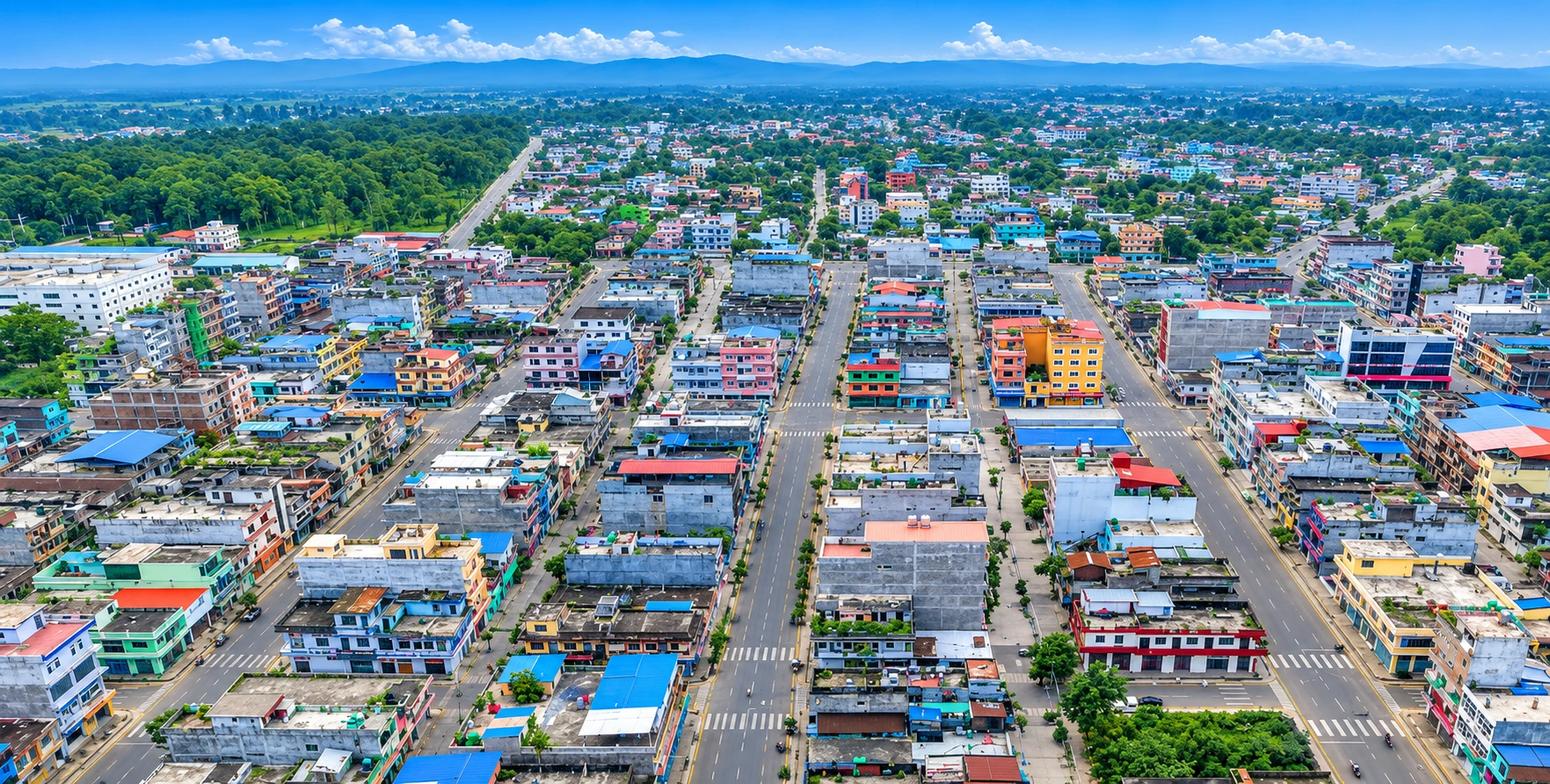
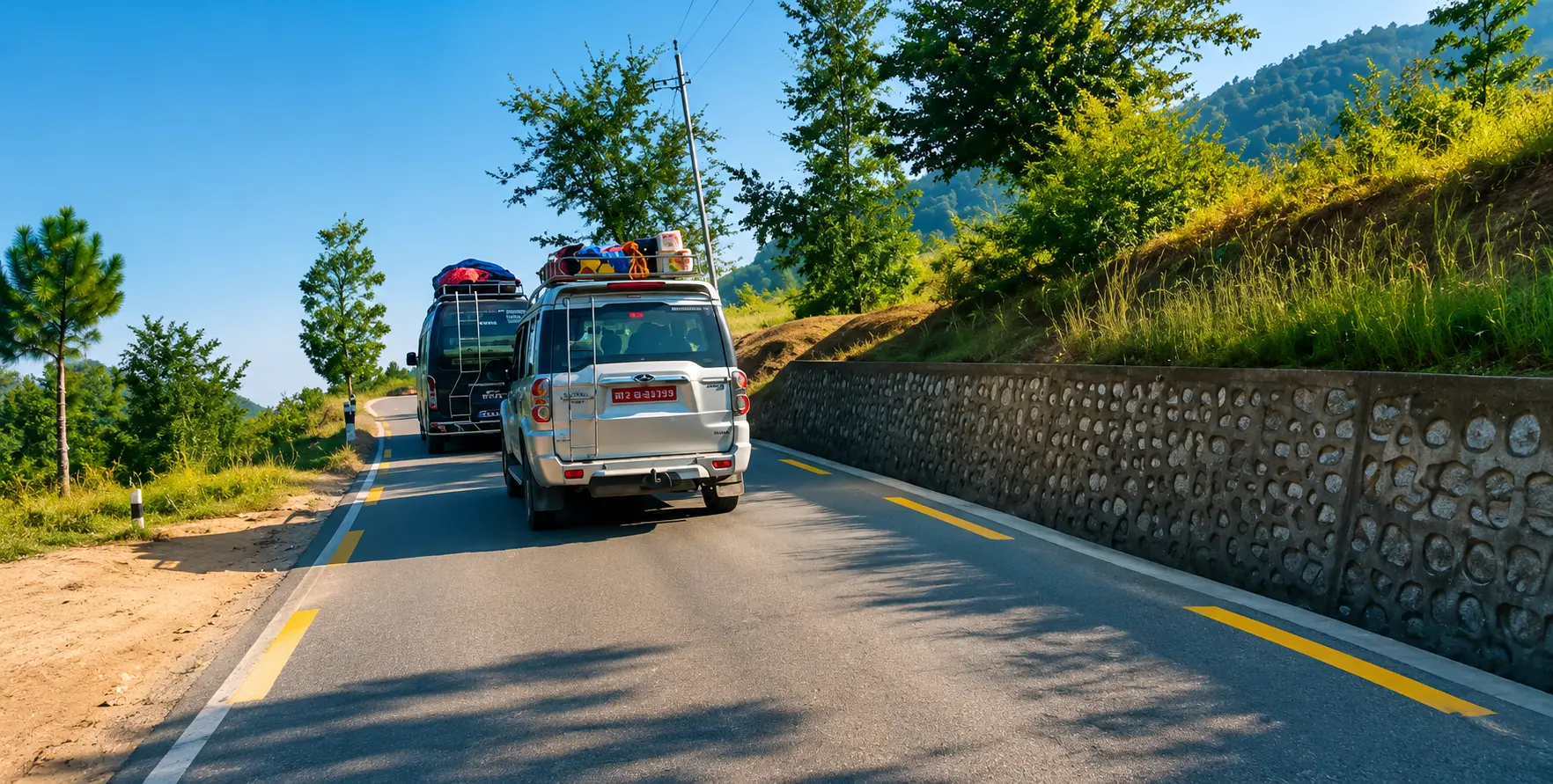
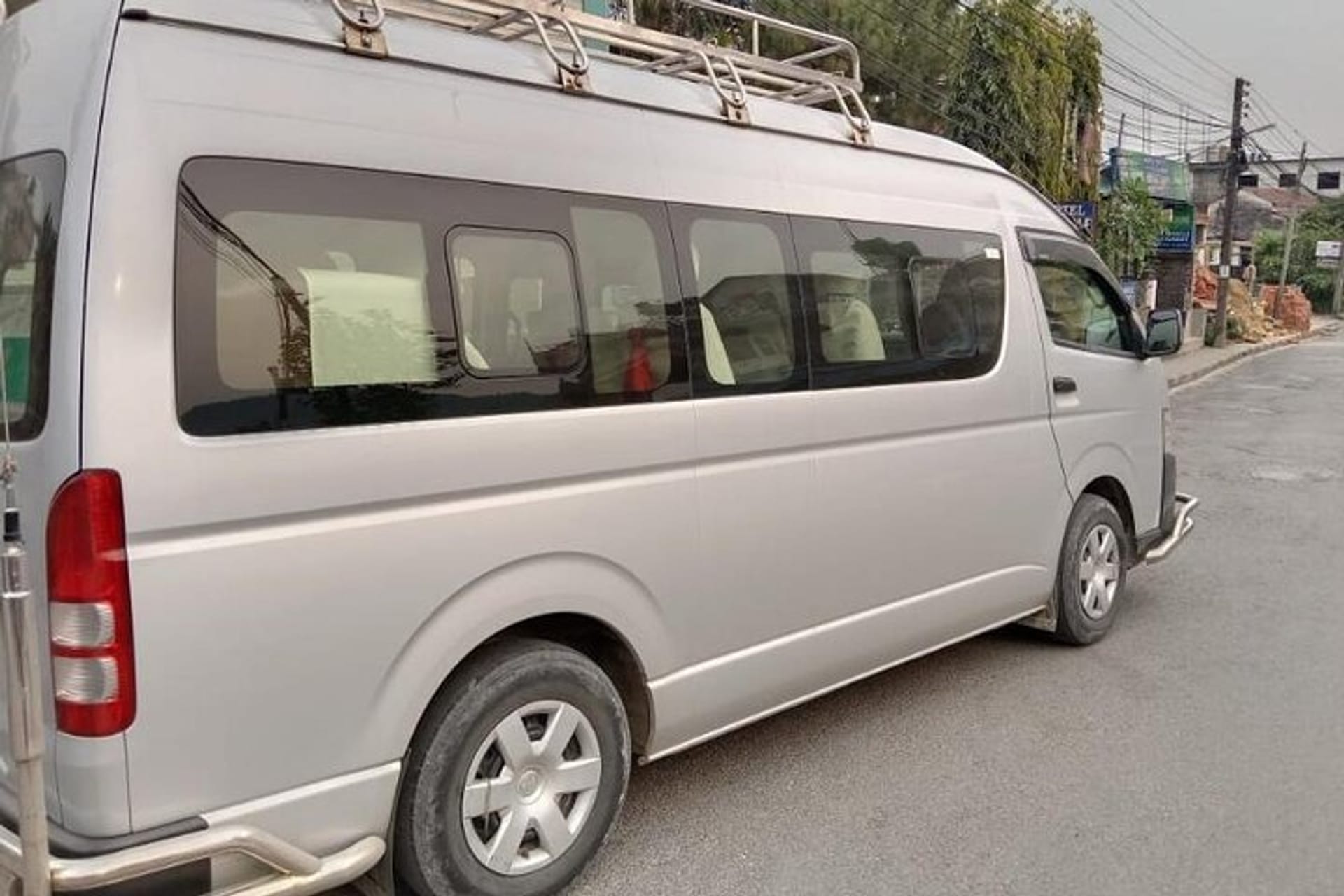
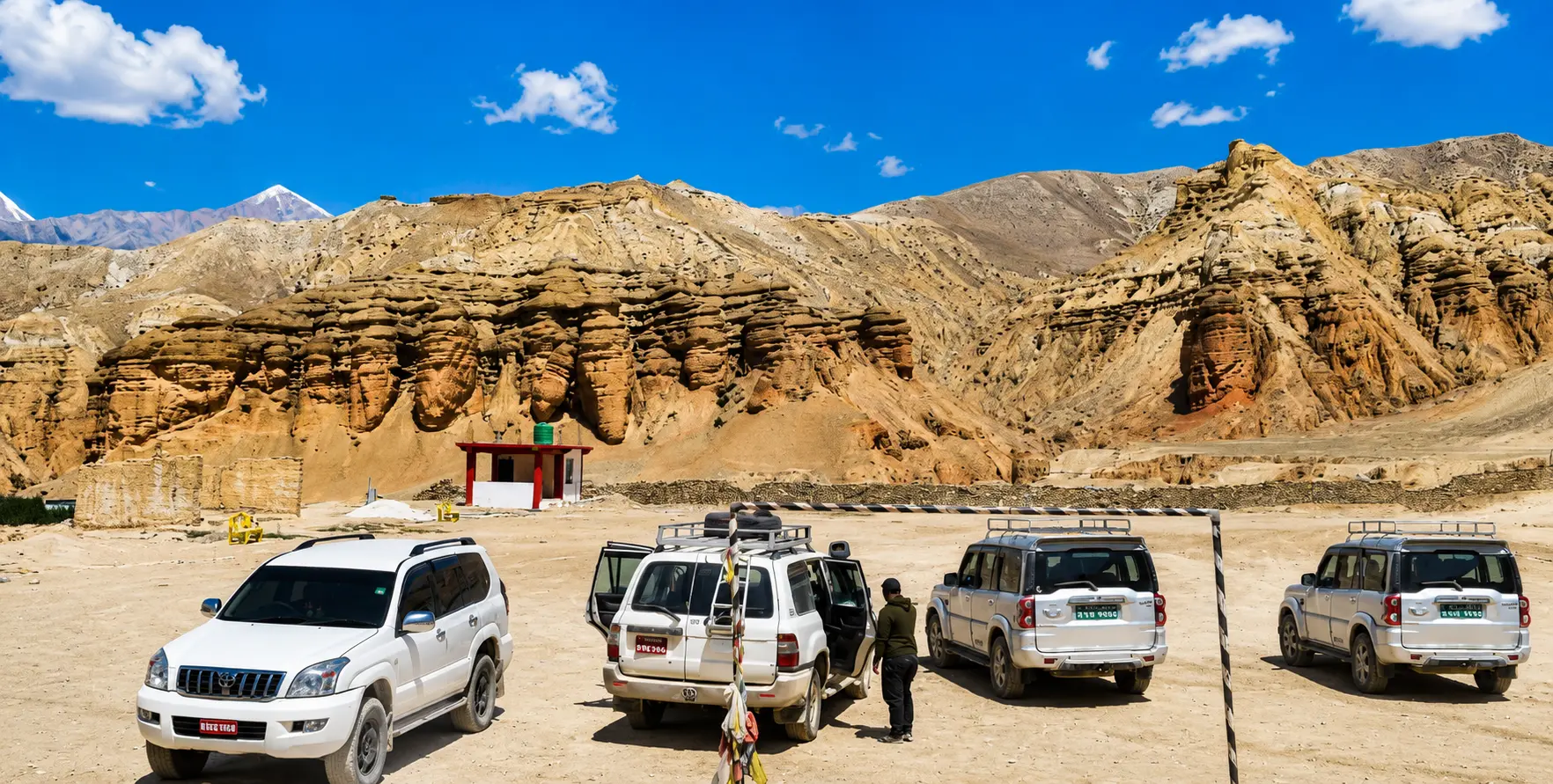
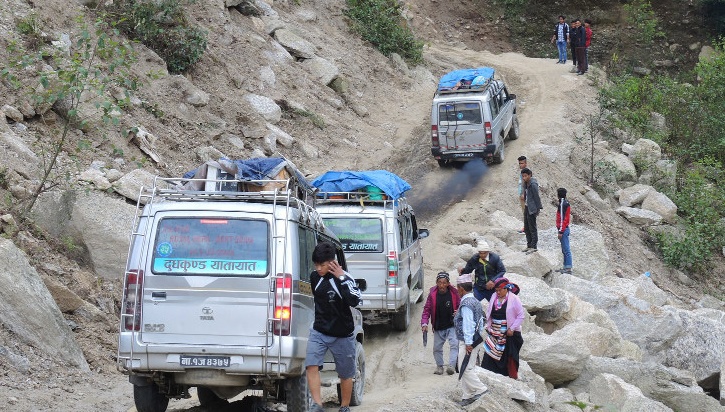
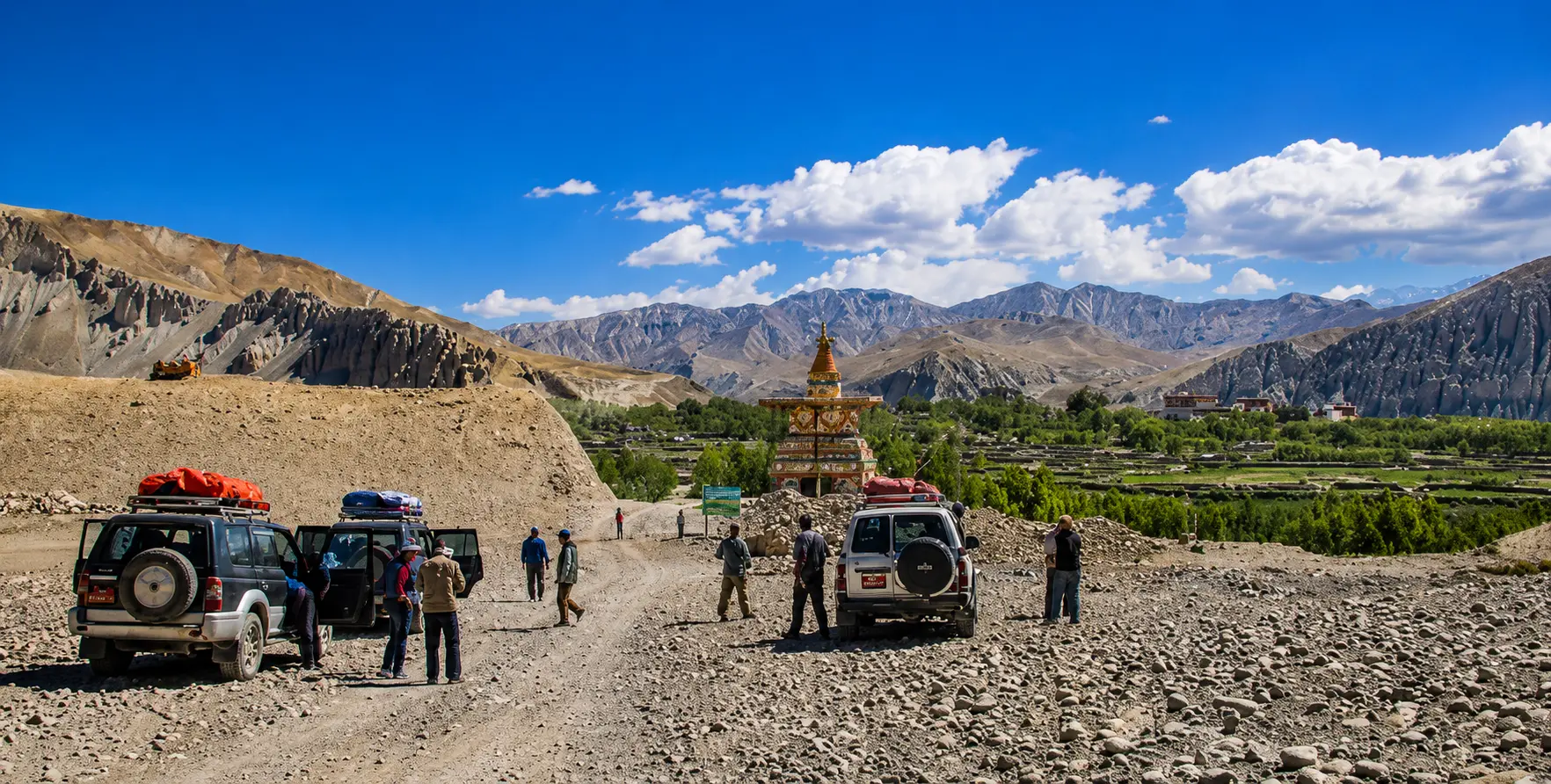
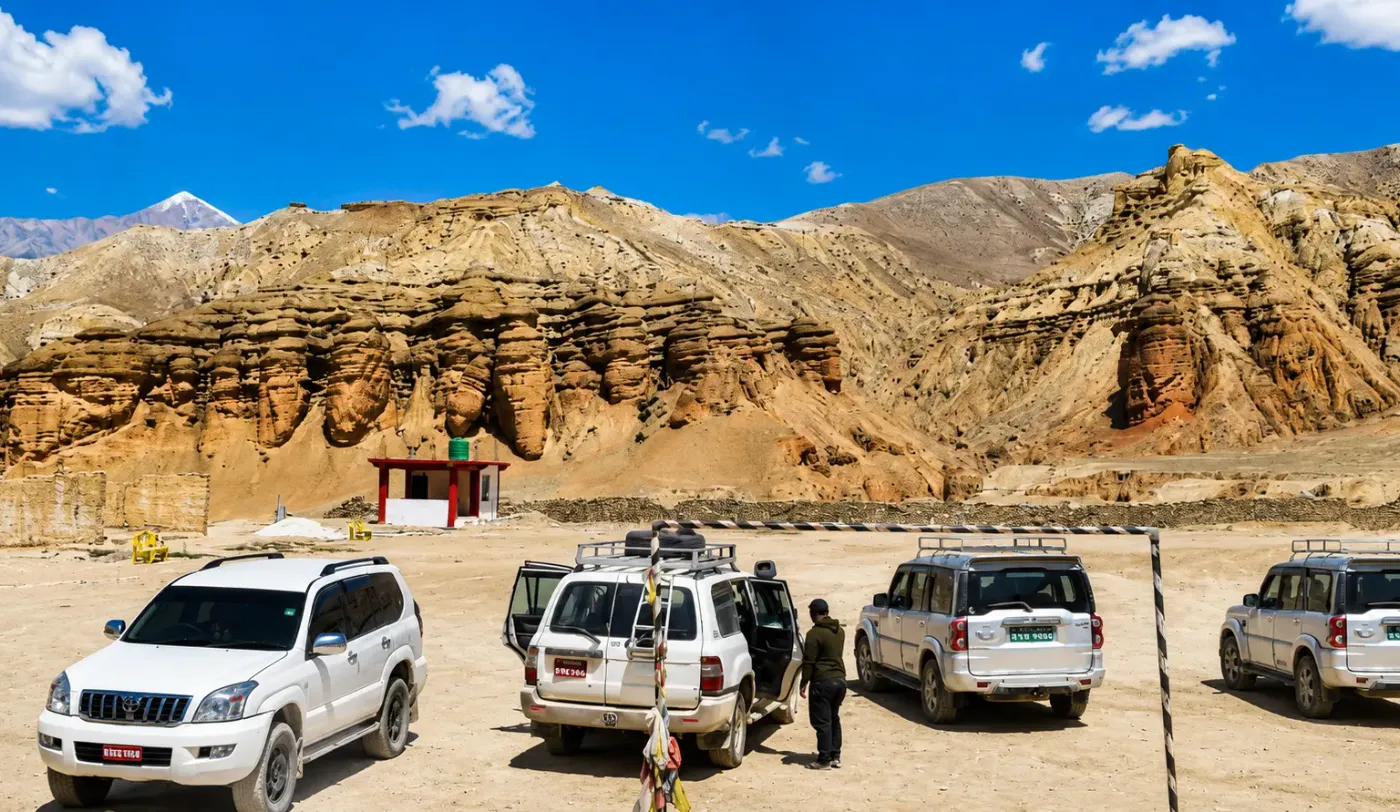
Mahendranagar Basbasa pickup and drop service with private jeep, car, and taxi at the Nepal–India borde

This guide covers everything travelers and businesses need to know about arranging. 

Mahendranagar Basbasa pickup and drop-off vehicle services: the geography and significance of this far-western gateway, the Basbasa border crossing itself, airport pickup options, nearby Shuklaphanta National Park, onward connections across far-western Nepal, and how to arrange reliable ground transport for business, wildlife tourism, pilgrimage, or cross-border travel through this corner of the country. Nepal Vehicle Hiring supports travellers throughout Nepal, and this guide draws on our understanding of this far-western corridor’s specific transport needs.

Where Is Mahendranagar

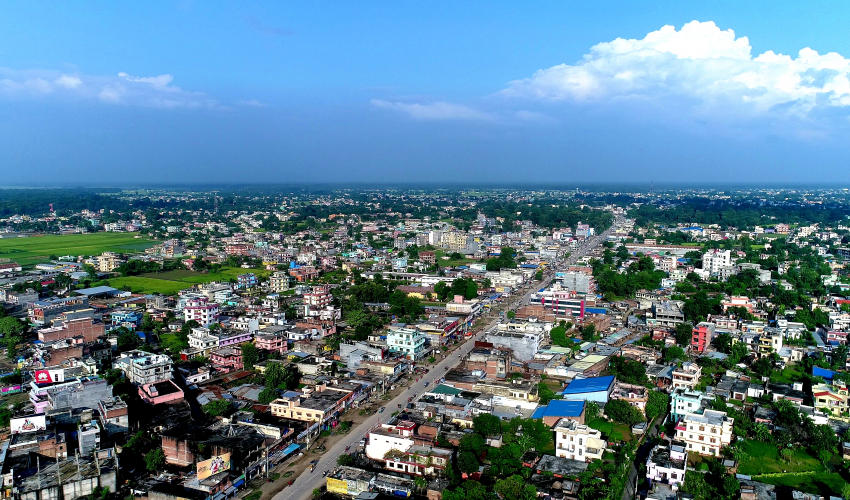
Mahendranagar, formerly known as Bhimdatta Municipality, serves as the administrative headquarters of Kanchanpur district in Nepal’s Sudurpashchim, or Far-Western, Province. Sitting near the Mahakali River, which forms the international border with India along this stretch, the city occupies a strategically significant position at the very western edge of Nepal’s Terai plains, considerably further from Kathmandu than most of the destinations covered in our other guides, reflecting the sheer geographic breadth of Nepal from east to west.

This far-western position has historically made Mahendranagar an important trade and administrative centre, and the city has grown considerably in recent decades as both a commercial hub for the surrounding agricultural region and a transit point for cross-border trade and travel with India.
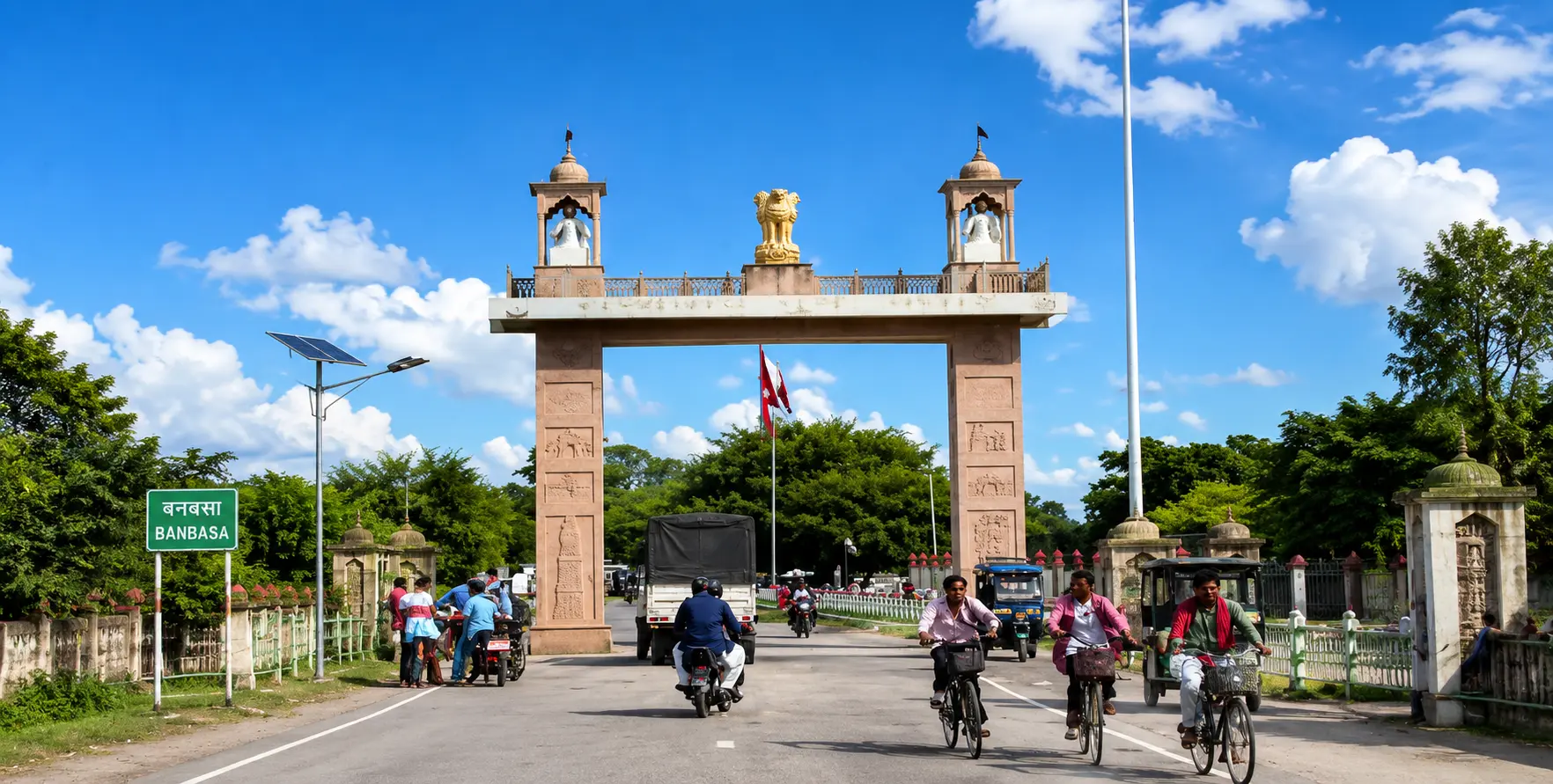
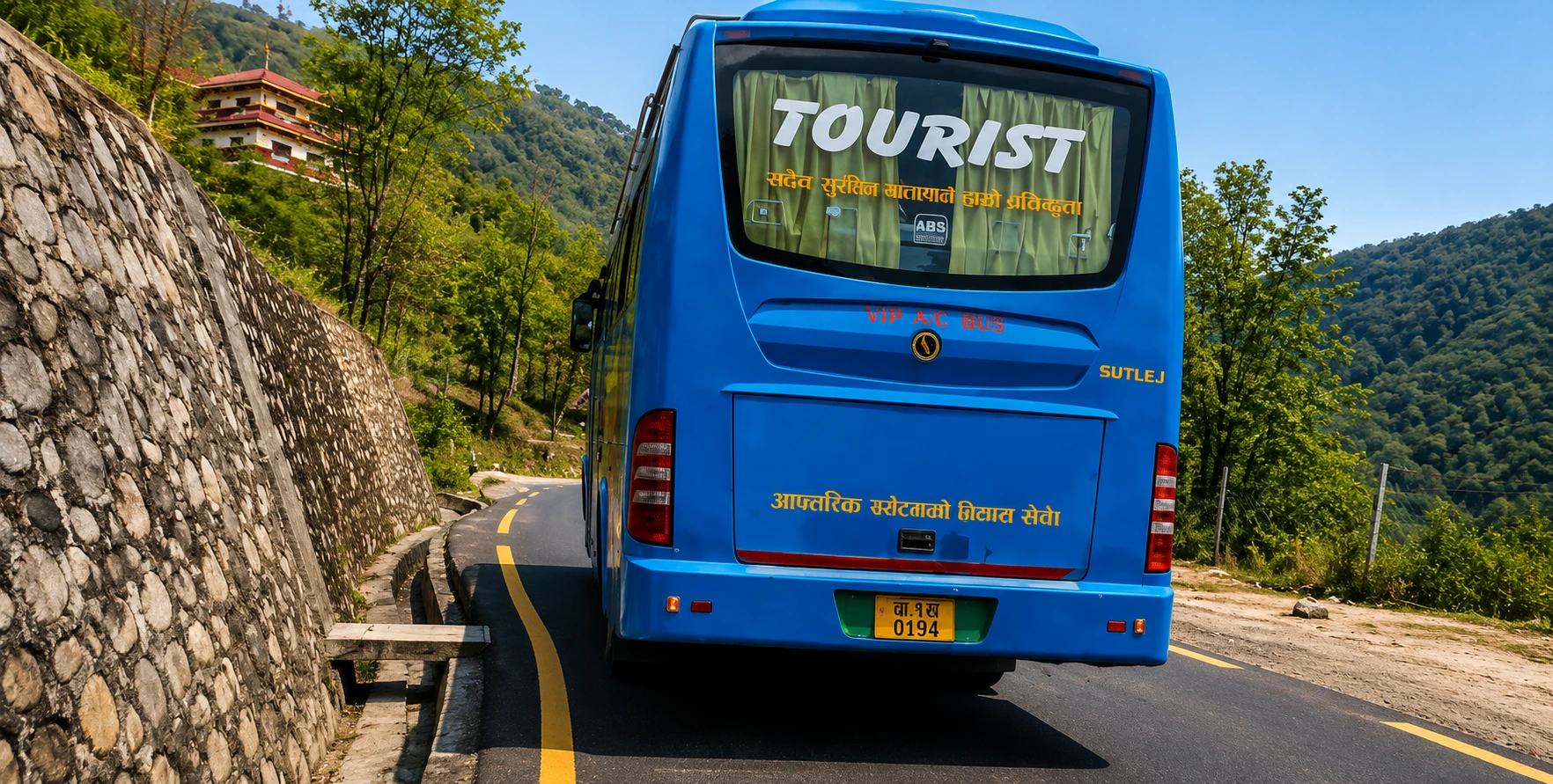
Mahendranagar Basbasa pickup and drop service with private jeep, car, and taxi at the Nepal–India border.

The Basbasa Border Crossing

The Basbasa crossing itself, connecting directly to Banbasa in India’s neighbouring Uttarakhand state, ranks among the most significant land border crossings along Nepal’s western frontier, handling substantial trade traffic alongside passenger travel between the two countries. This crossing serves not only bilateral Nepal-India trade and travel but also acts as a transit point for travellers continuing into India, whether for business, pilgrimage, or onward travel to Indian cities such as Delhi, accessible via road and rail connections from the Indian side of the border.

For Nepali citizens working across the border in India, and for Indian citizens engaged in cross-border trade or family connections, this crossing is a vital daily transport corridor, distinct from the more purely tourist-oriented border crossings found elsewhere in Nepal.

Pickup and Drop Vehicle Services at Mahendranagar

Reliable pickup and drop vehicle service at Mahendranagar typically serves several distinct traveller needs: airport transfers for those flying into the region’s small local airstrip, border crossing transfers for travellers arriving from or departing toward Basbasa and Banbasa, and onward connections toward Shuklaphanta National Park or further along Nepal’s Mahakali Highway toward Dhangadhi and the rest of far-western Nepal. A dependable local vehicle service that coordinates these transport needs removes considerable uncertainty for travellers navigating this less-visited but genuinely significant corner of the country.
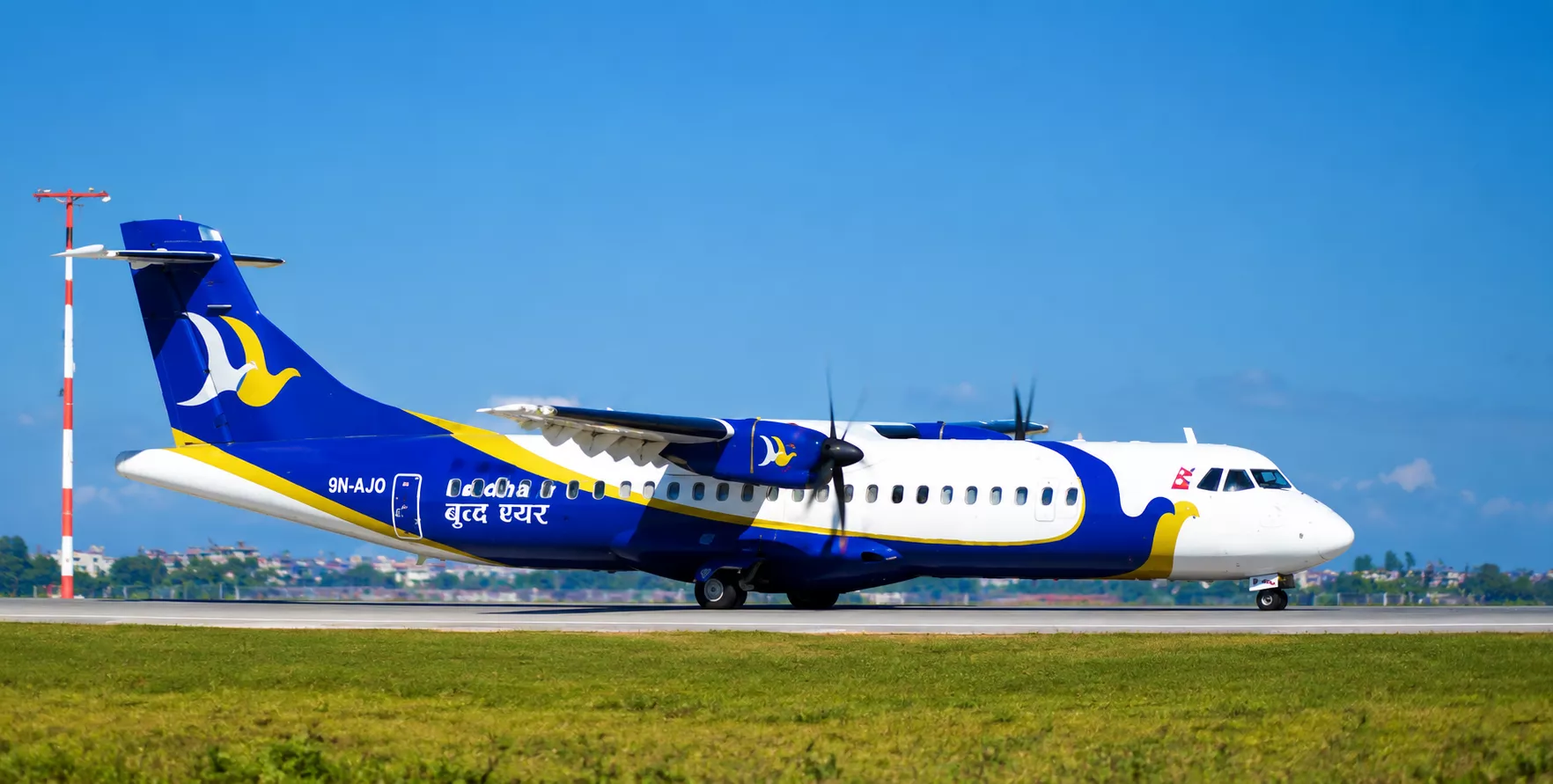
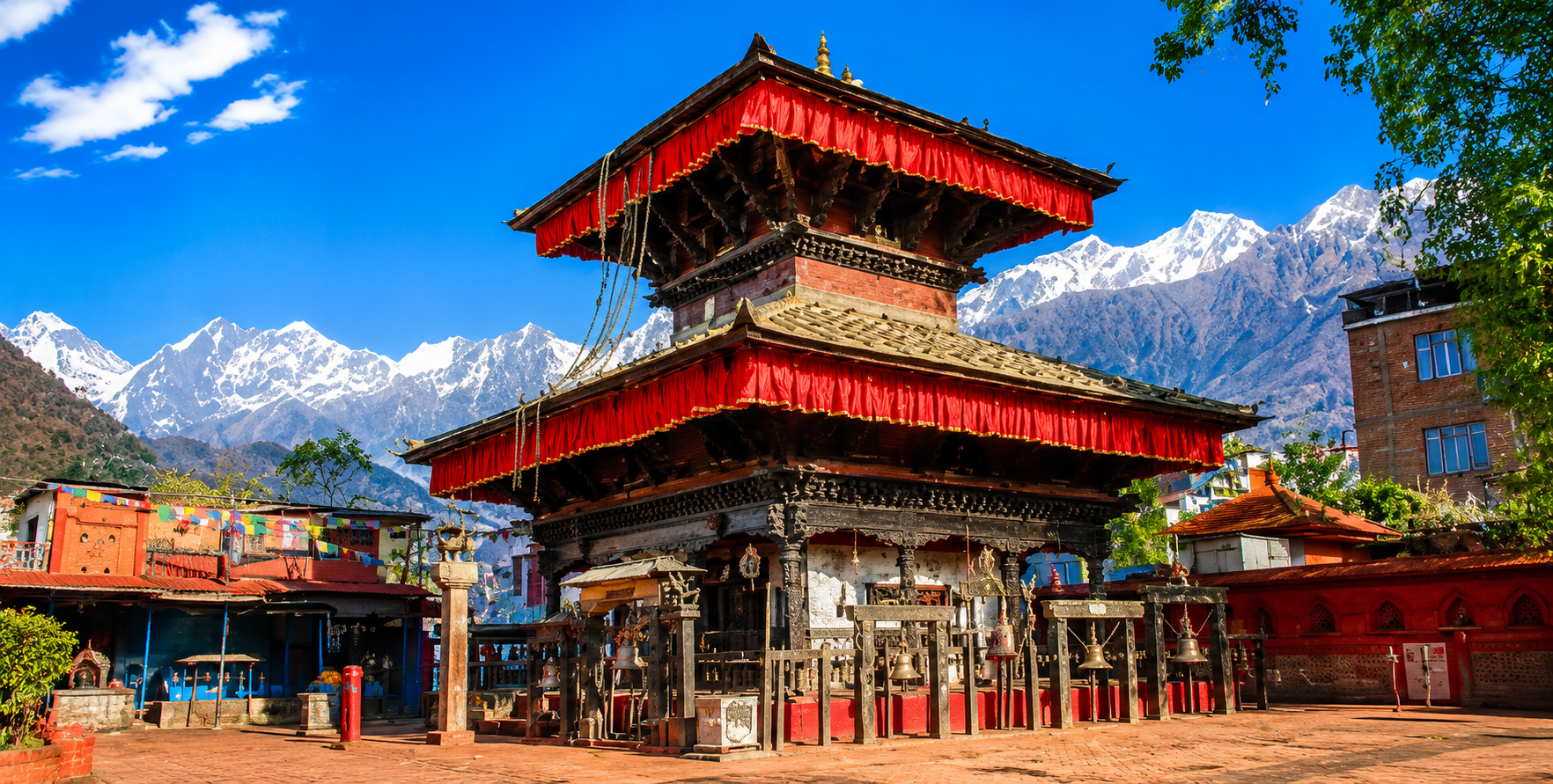
Mahendranagar Basbasa pickup and drop service with private jeep, car, and taxi at the Nepal–India border.

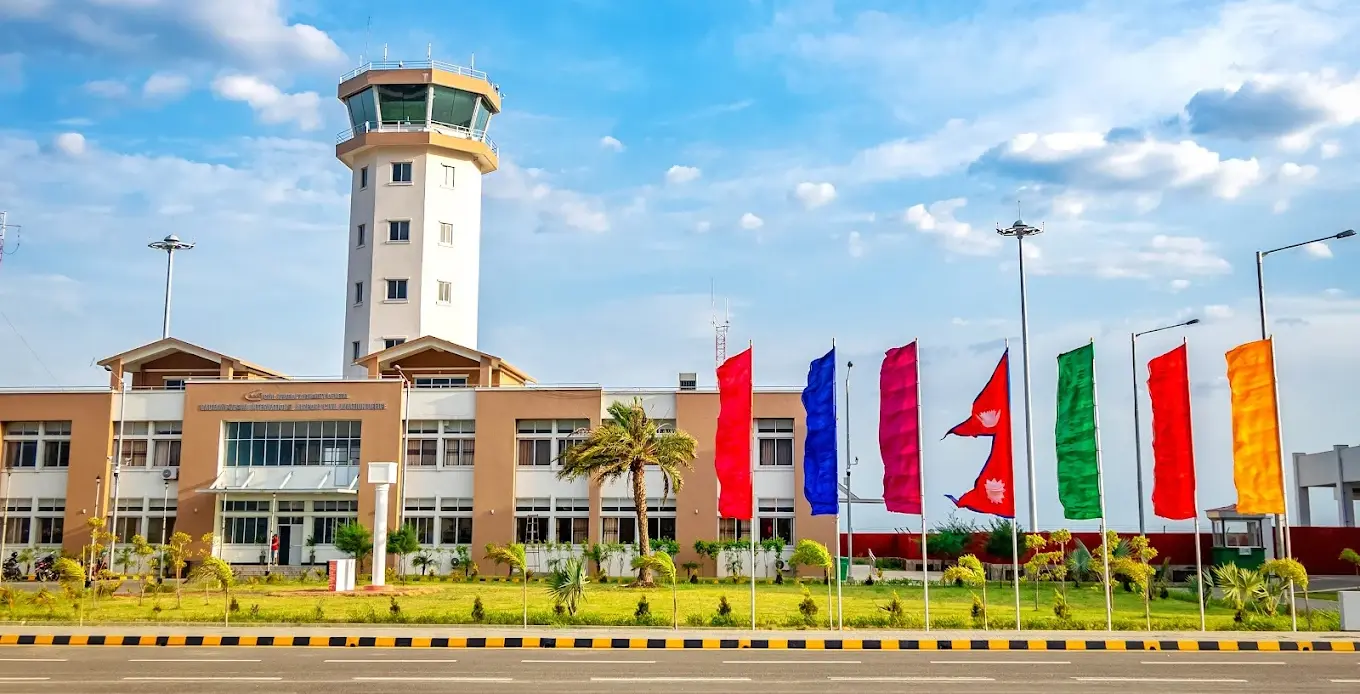
Mahendranagar’s Local Airport

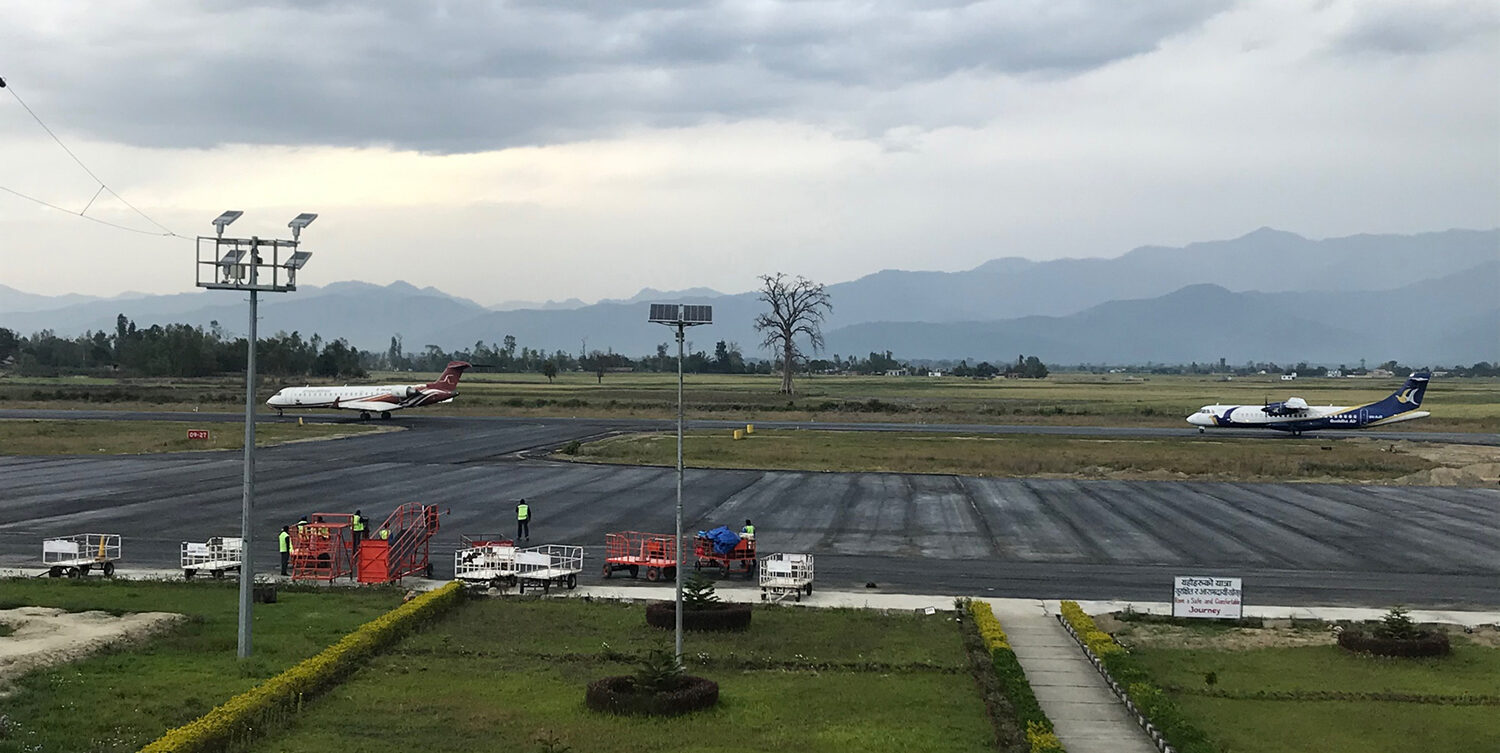
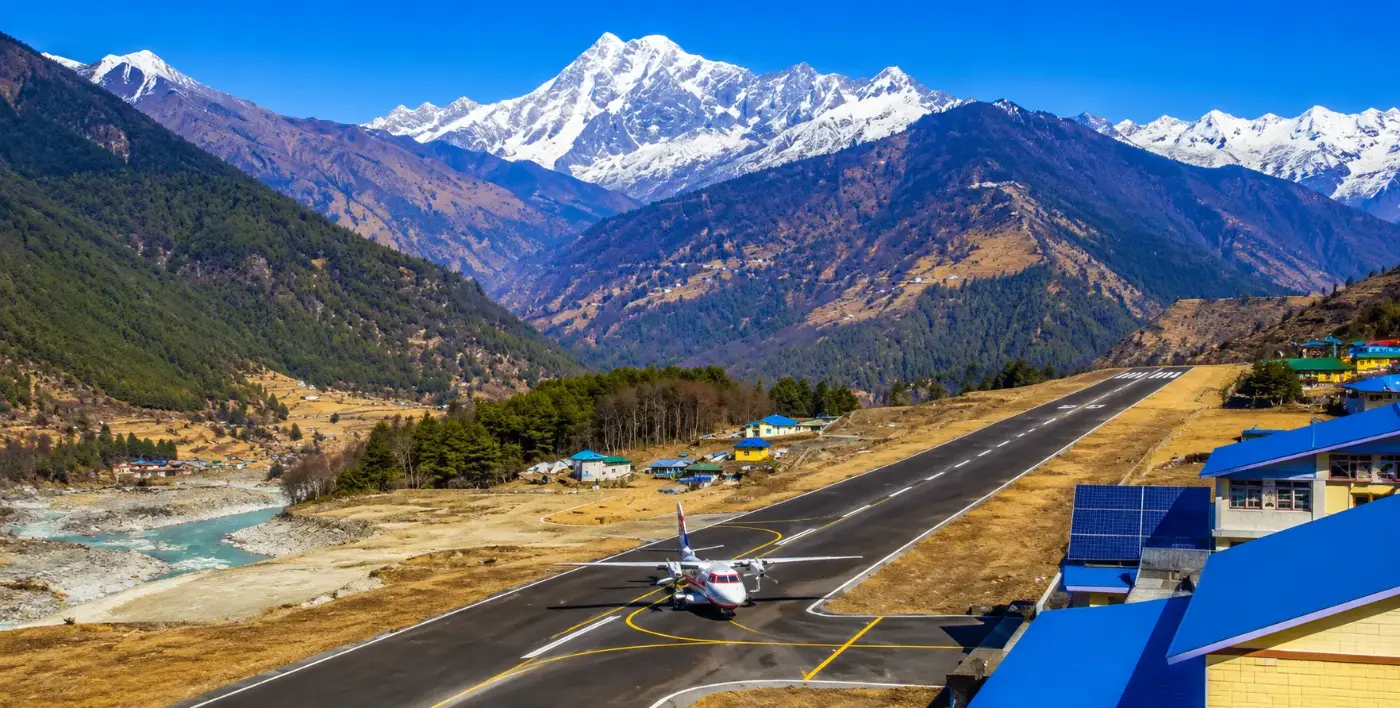
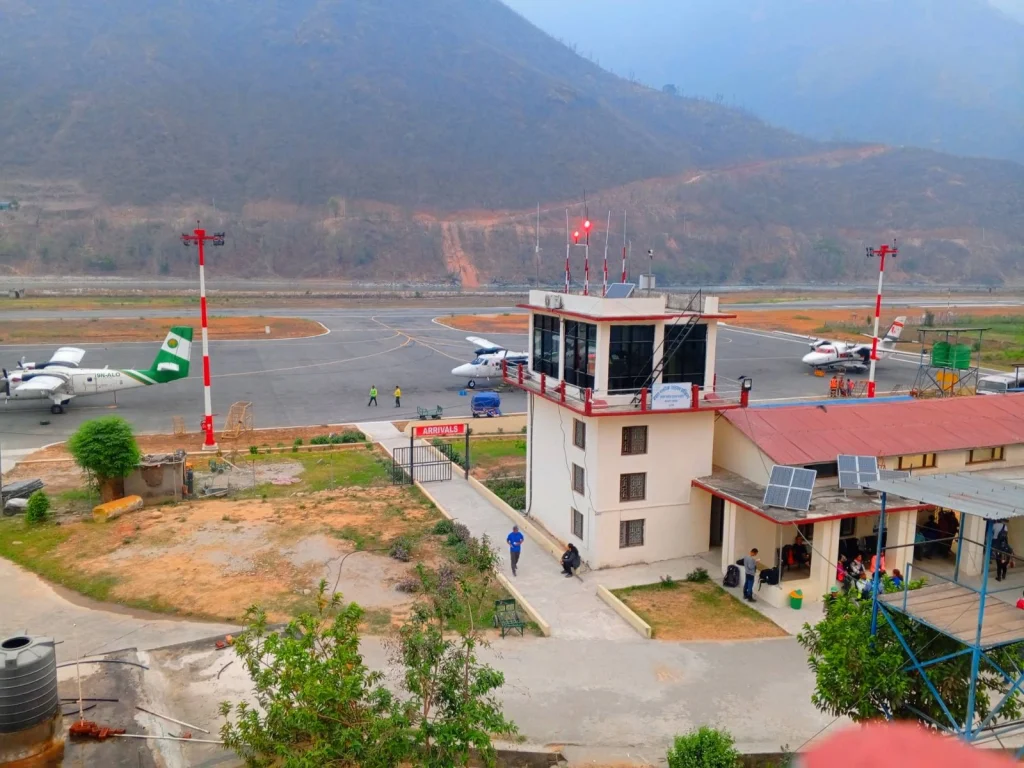
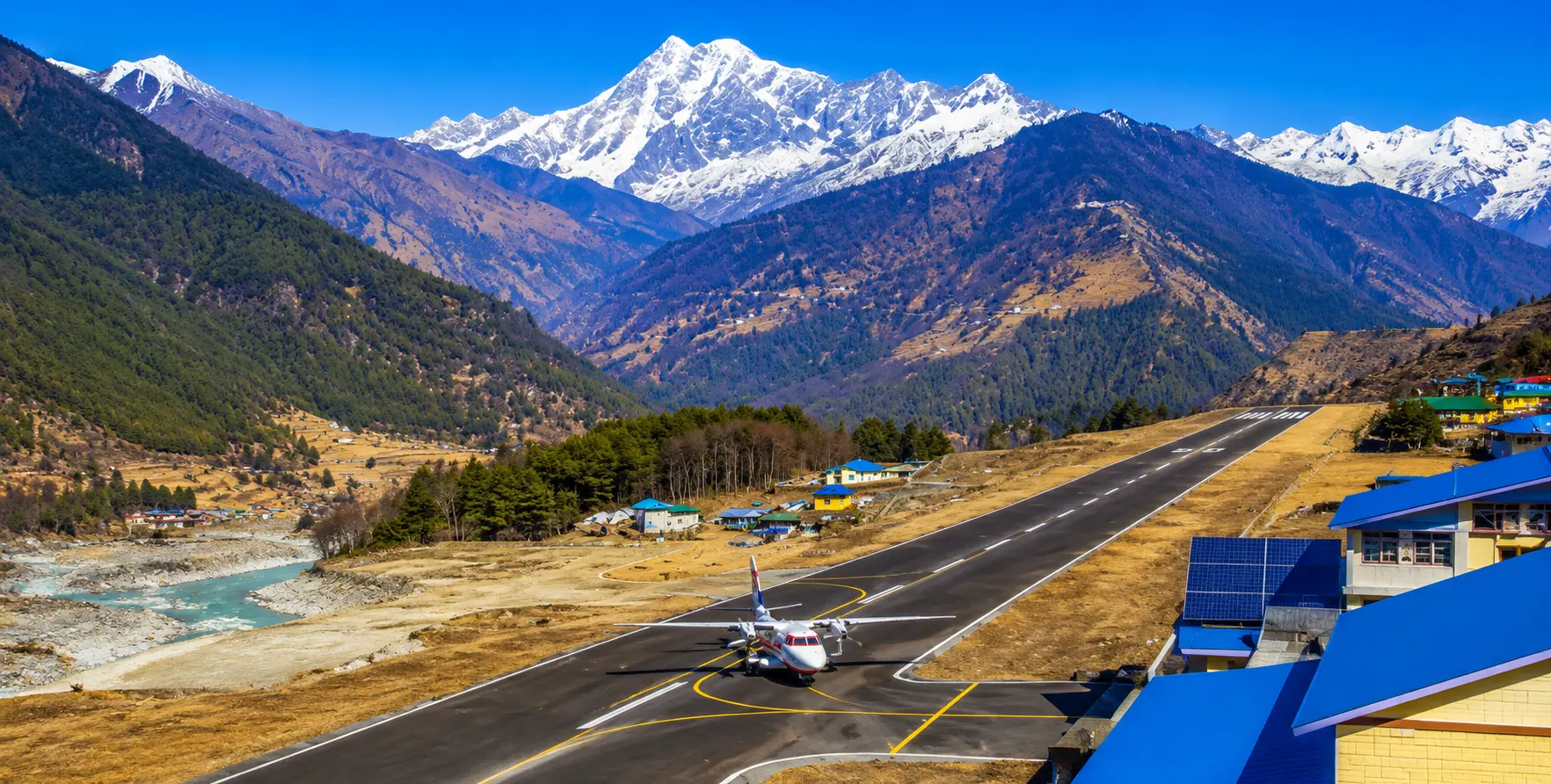
Mahendranagar is served by a small domestic airstrip with limited flights to Kathmandu and other parts of Nepal, offering an alternative to the considerably longer overland journey from the capital, given the distance to this far-western corner of the country. Reliable airport pickup service ensures travellers flying into this airstrip can connect smoothly to their onward destination, whether a border crossing at Basbasa, a wildlife excursion to Shuklaphanta, or further travel along the Mahakali Highway.

Vehicle Options for This Region

Private Car for Border and City Transfers

For straightforward airport pickups, border-crossing transfers, or general transport within Mahendranagar, a standard private car offers a comfortable, efficient option suited to this generally flat, well-connected Terai region.

Jeep and SUV for Shuklaphanta and Rural Access

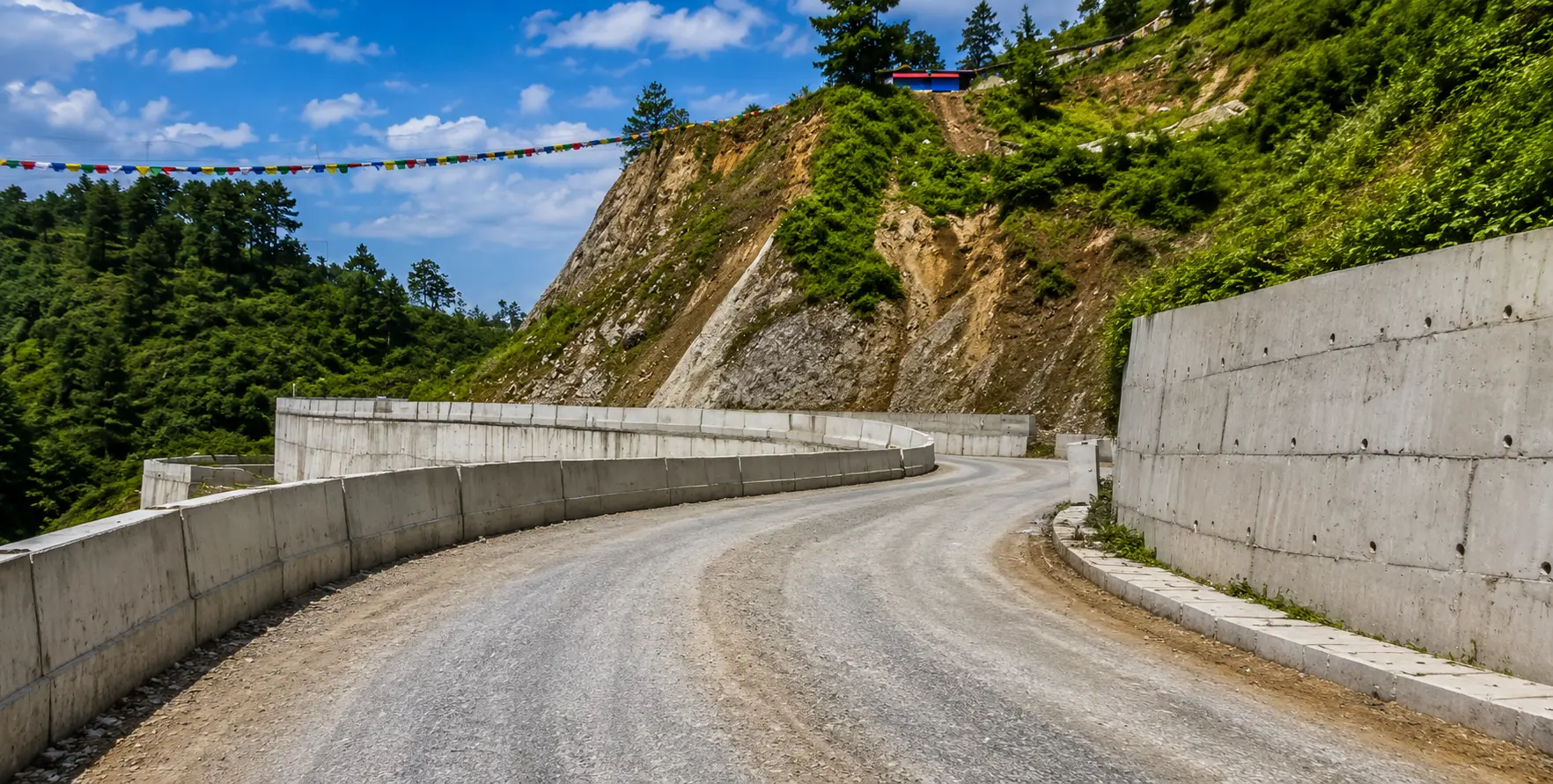
Travellers heading toward Shuklaphanta National Park or more rural sections of Kanchanpur district benefit from a 4WD vehicle, given the less developed road conditions found away from the main highway corridors.

Vans and Buses for Group and Business Travel

Larger groups, whether business delegations, pilgrimage groups transiting toward India, or wildlife tourism parties, can be accommodated with larger vehicle bookings suited to the group size.
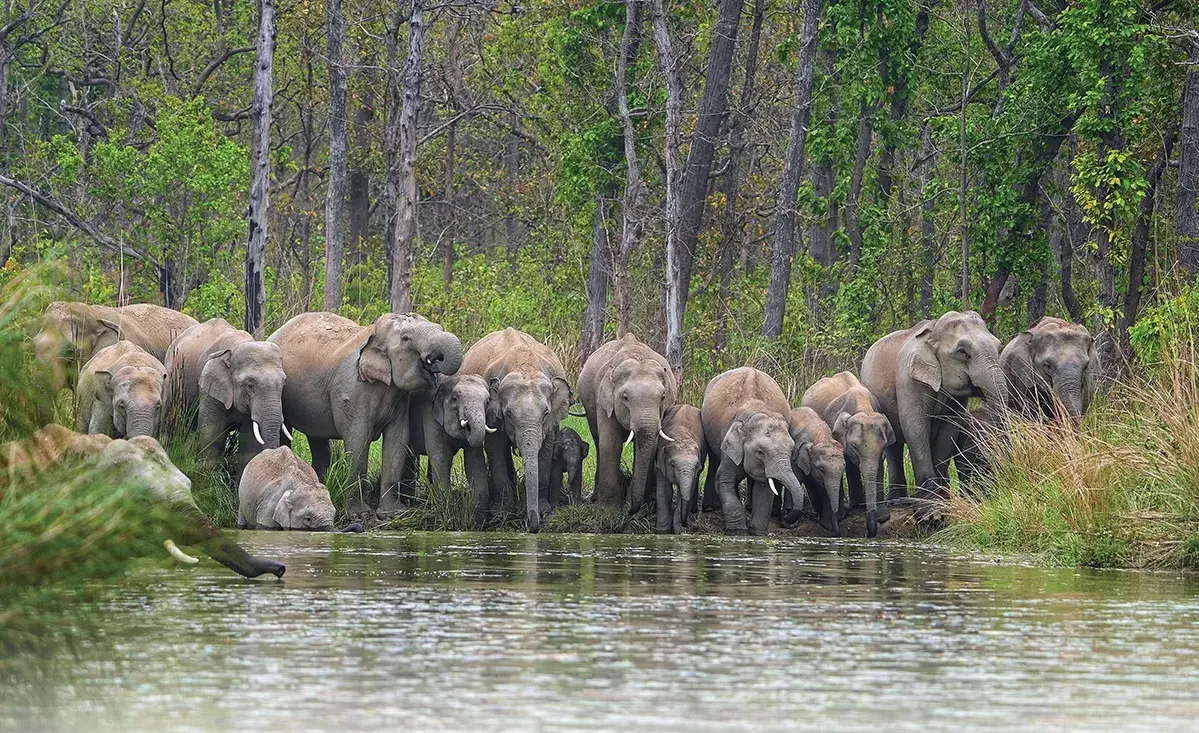
Mahendranagar Basbasa pickup and drop service with private jeep, car, and taxi at the Nepal–India border.

Shuklaphanta National Park

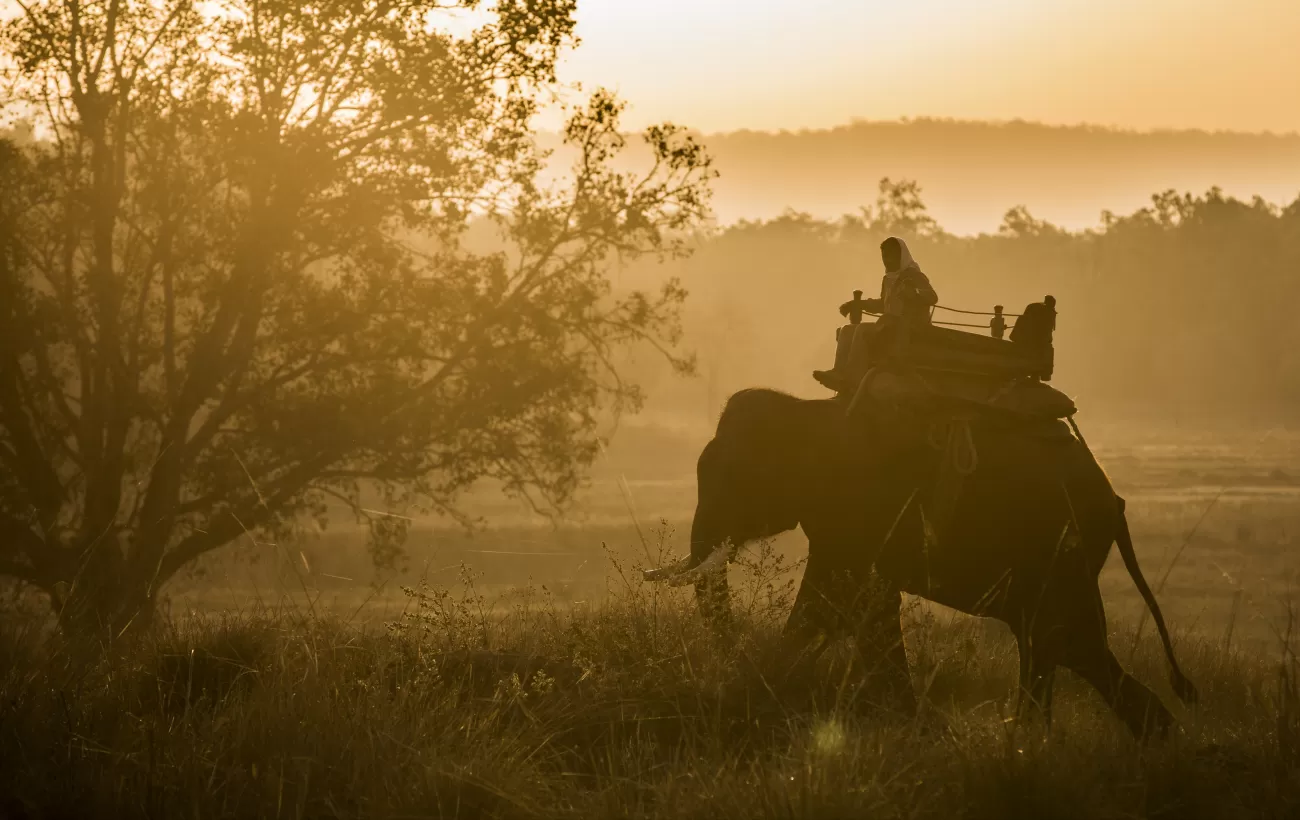
Just a short distance from Mahendranagar, Shuklaphanta National Park protects one of Nepal’s most significant remaining grassland ecosystems, home to the country’s largest population of swamp deer (locally known as barasingha), along with Bengal tigers, wild elephants, and a wide range of Terai wildlife and bird species. Considerably less visited than Chitwan National Park further east, Shuklaphanta offers a genuinely quieter wildlife tourism experience for travellers willing to venture into this far-western corner of Nepal, and reliable vehicle transport from Mahendranagar makes this park a practical addition to any trip through the region.

Onward Connections Across Far-Western Nepal

Mahendranagar serves as a starting point for onward travel along the Mahakali Highway toward Dhangadhi and the broader far-western Terai region, as well as connections to the hill and mountain districts further north within Sudurpashchim Province. Business travellers, government officials, and NGO workers active throughout this region commonly use Mahendranagar as a base or transit point, given its position and relatively developed transport infrastructure compared to more remote parts of far-western Nepal.
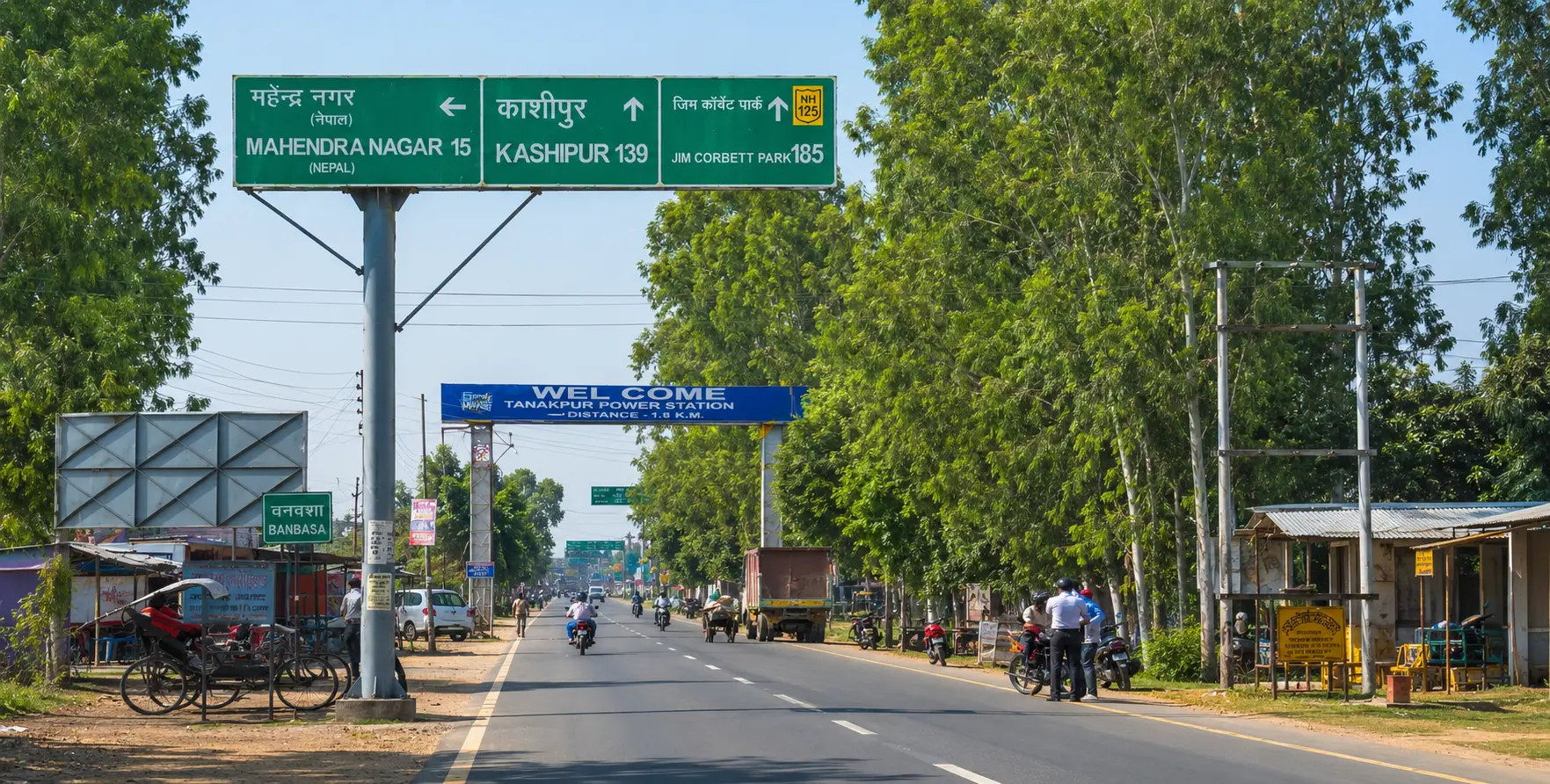
Mahendranagar Basbasa pickup and drop service with private jeep, car, and taxi at the Nepal–India border.

Cross-Border Travel Toward India

Beyond the immediate Basbasa-Banbasa crossing, travellers continuing into India often use this route as a gateway to destinations such as Delhi or the hill stations of Uttarakhand, thanks to the road and rail connections available from the Indian side of the border. Business travellers and pilgrims alike use this corridor as a practical alternative to flying, particularly for those already based in far-western Nepal rather than Kathmandu.

Best Time of Year for This Region

Winter (October to February)

Generally the most comfortable season for travel and wildlife viewing at Shuklaphanta, with milder Terai temperatures than the intense summer heat this region experiences.

Summer (March to June)

Considerably hot given this region’s low-elevation Terai climate, with temperatures often exceeding those found in Kathmandu or the hill regions covered in our other guides.

Monsoon (July to September)

Heavy rainfall affects road conditions throughout the region, and travellers should expect potential delays given the flatter, flood-prone terrain characteristic of this part of the Terai.

Cost Factors for Mahendranagar Vehicle Services

Vehicle rental cost in this region depends on vehicle class, trip duration, and whether the booking involves a straightforward airport or border transfer versus an extended itinerary including Shuklaphanta or onward travel across far-western Nepal. Because this region is far from Kathmandu, most bookings use locally based vehicles and drivers familiar with the area, and our team is happy to help coordinate arrangements for travellers planning a visit to this part of Nepal.
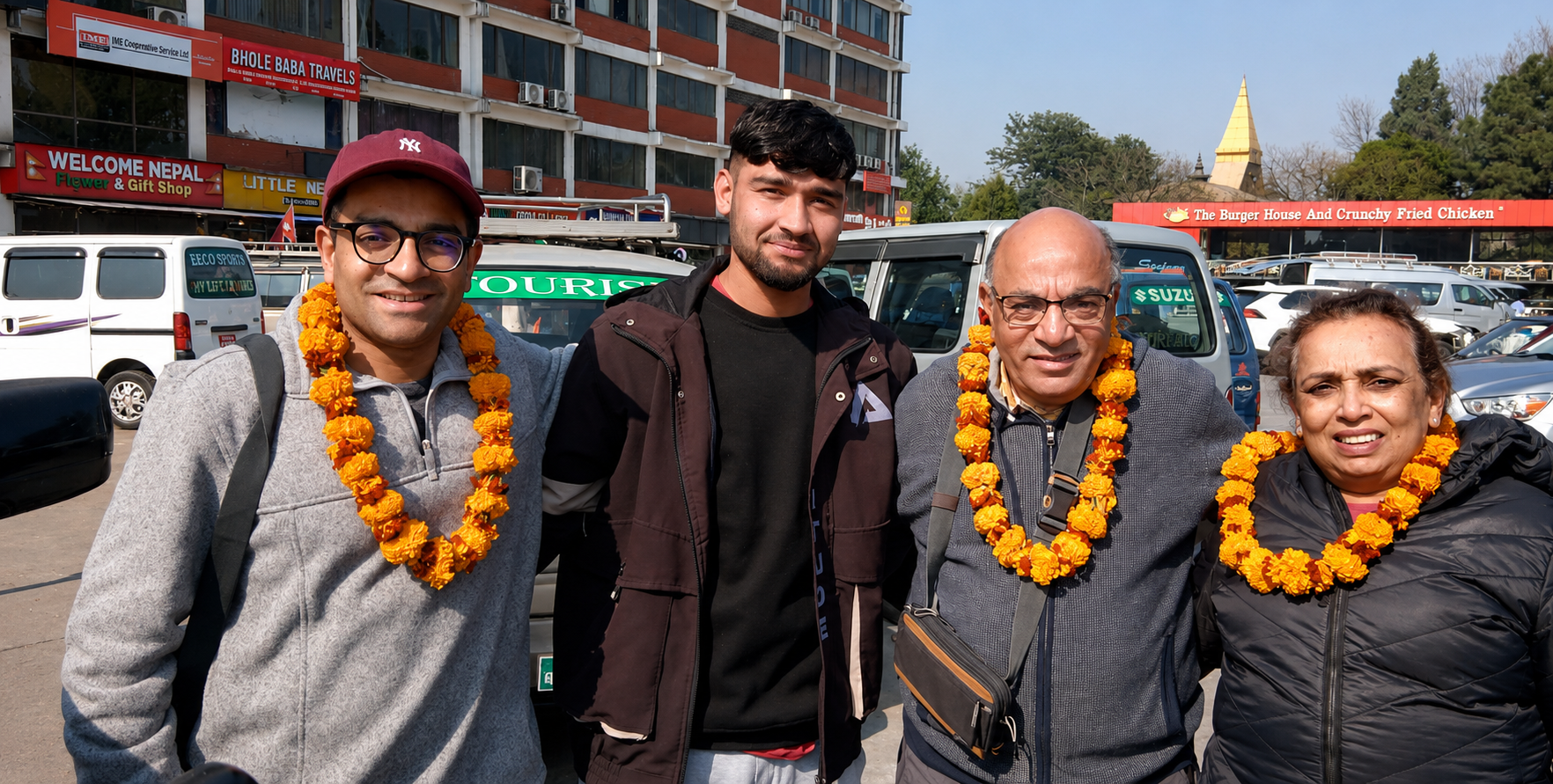
Airport pickup

How to Book Your Mahendranagar Transport

Start by sharing your travel dates, specific transport needs (airport pickup, border-crossing transfer, or a wildlife-focused itinerary toward Shuklaphanta), and group size. Because this region is far from our core Kathmandu and Pokhara operating areas, advance coordination helps us arrange the right vehicle and driver for your far-western Nepal itinerary.

Travellers whose itinerary spans both far-western Nepal and the more established Kathmandu and Pokhara-based routes may find these related guides useful:

Frequently Asked Questions

How far is Mahendranagar from Kathmandu?

Mahendranagar sits at Nepal’s far western edge, a considerable distance from Kathmandu, typically requiring either a domestic flight or a long, multi-day overland journey.

Can I arrange a vehicle for border crossing transfers at Basbasa?

Yes. We can arrange pickup and drop-off for travellers crossing at Basbasa toward Banbasa, India, or arriving from India into Nepal at this crossing.

Is Shuklaphanta National Park worth visiting compared to Chitwan?

Shuklaphanta offers a much quieter wildlife experience, with a genuinely significant swamp deer population, and appeals to travellers seeking a less commercialised alternative to Chitwan’s busier tourism infrastructure.

Does Mahendranagar have its own airport?

Yes, a small domestic airstrip serves Mahendranagar with limited flight connections to other parts of Nepal, offering an alternative to the long overland journey from Kathmandu.

Can I continue from Mahendranagar into India by road?

Yes. The Basbasa-Banbasa crossing provides direct road access into India’s Uttarakhand state, with onward connections toward Delhi and other Indian destinations.

What is the best season to visit this region?

Winter, from October through February, offers the most comfortable travel conditions given this region’s hot Terai climate during summer months.

Final Thoughts: Nepal’s Far-Western Gateway

Mahendranagar and the Basbasa border crossing may sit far outside Nepal’s typical tourist circuit. Still, this far-western gateway plays a genuinely significant role in the country’s cross-border trade, regional administration, and access to the quieter wildlife landscapes of Shuklaphanta National Park. Reliable pickup and drop-off services in this region support the varied travellers who pass through, whether for business, wildlife tourism, or cross-border journeys into India.

Please do get in touch with Nepal Vehicle Hiring today on WhatsApp or visit 

vehiclehiringnepal.com to discuss your transport needs for Mahendranagar, Basbasa, and Nepal’s far-western region, whether for business travel, cross-border logistics, or a wildlife excursion into Shuklaphanta National Park.

The History and Development of Bhimdatta Municipality

Mahendranagar, officially renamed Bhimdatta Municipality in recent years, reflects a broader pattern of Nepali municipal renaming and has a history closely tied to the settlement and development of the far-western Terai. This region saw later, more gradual settlement than the central Terai areas closer to Kathmandu and Chitwan, given its remoteness and malaria-prone conditions that historically limited permanent settlement in parts of Nepal’s lowland Terai until mid-twentieth-century malaria eradication programs made the region more habitable.

The city’s growth into its current role as Kanchanpur district’s administrative and commercial centre reflects this broader pattern of Terai development, alongside its specific strategic significance as a border gateway.

Kanchanpur District: Geography and Economy

Kanchanpur district, with Mahendranagar as its headquarters, sits at the extreme western edge of Nepal’s Terai region, bordered by the Mahakali River and India to the west and south. The district’s economy centres on agriculture, given the fertile Terai plains characteristic of the region, alongside the commercial and trade activity generated by its border position.

This mix of agriculture and cross-border trade has shaped Kanchanpur’s economic development differently from Nepal’s more mountainous districts, whose economies typically centre on tourism, remittances, or hydropower rather than agriculture and border trade.

Sudurpashchim Province in National Context

Mahendranagar’s position within Sudurpashchim, or Far-Western, Province places it in one of Nepal’s seven federal provinces established under the country’s 2015 constitution, a province that has historically received less infrastructure investment and tourism development attention than provinces closer to Kathmandu. This relative underdevelopment has both challenges and advantages for travellers: infrastructure and services remain less developed than in more heavily visited parts of Nepal.

Still, destinations like Shuklaphanta National Park offer a genuinely uncrowded alternative to the country’s more famous tourist attractions.
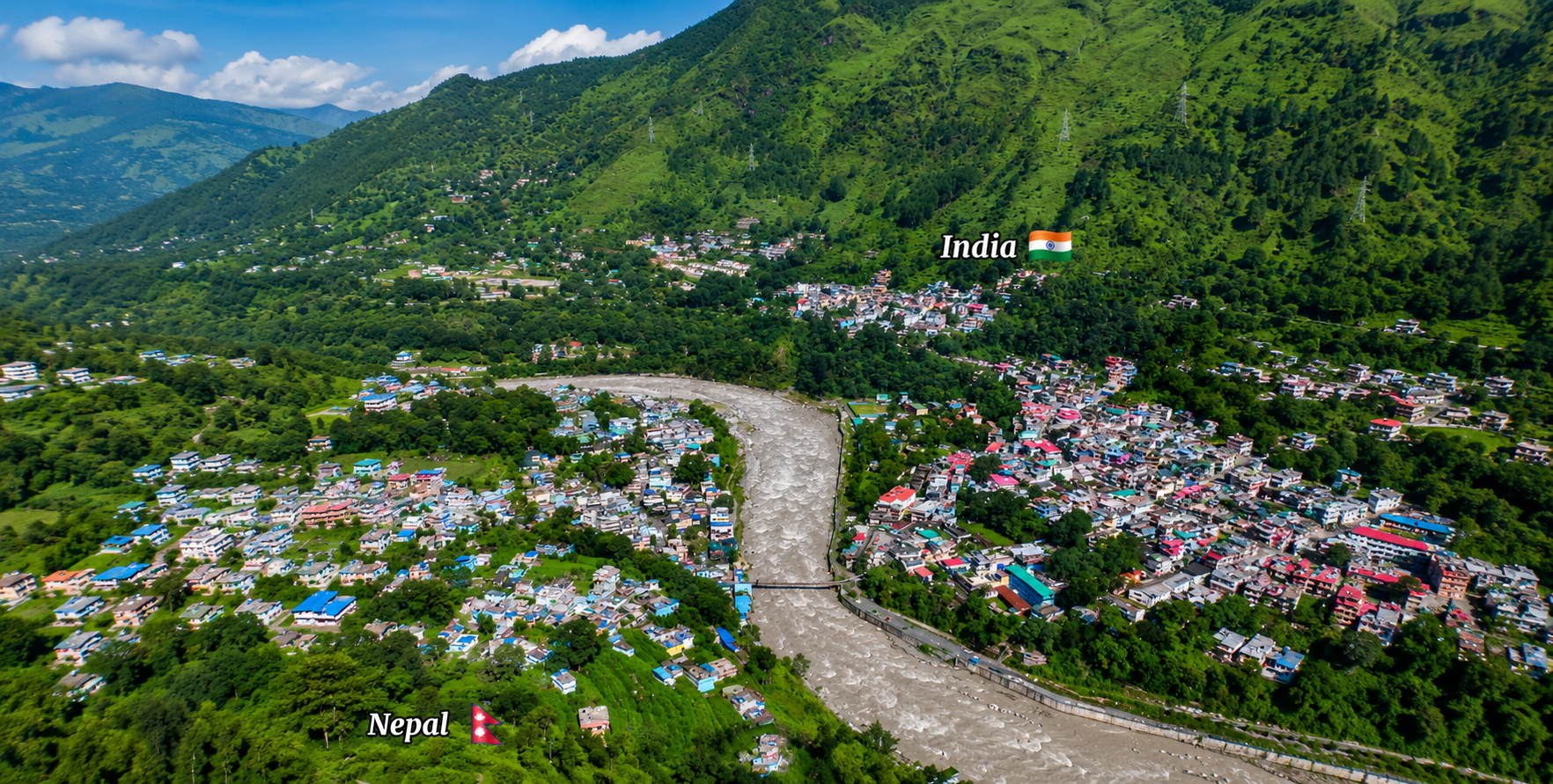
Alternative Text: Mahendranagar Basbasa pickup and drop service with private jeep, car, and taxi at the Nepal–India border.

The Mahakali River and Its Border Significance

The Mahakali River, known as the Sharda River on the Indian side, forms a natural boundary between Nepal and India along a considerable stretch of the western frontier, including the section near Mahendranagar and Basbasa. This river has longstanding significance for bilateral water resource management between the two countries, alongside its role as a natural border marker, and the Mahakali Treaty governing shared water resources along this river remains an important part of the broader Nepal-India bilateral relationship, adding a further layer of significance to this border region beyond its role in trade and passenger transit.

Trade Activity Through the Basbasa Crossing

The Basbasa-Banbasa crossing handles substantial bilateral trade traffic, with goods moving in both directions between Nepal and India, reflecting the broader economic interdependence between the two countries along their shared open border. This trade activity has historically supported Mahendranagar’s development as a commercial hub, with warehousing, customs facilities, and related logistics businesses clustering around the crossing to support cross-border commerce.

Business travellers engaged in this trade increasingly rely on organised vehicle transport to move efficiently between Mahendranagar, the border crossing itself, and onward destinations either within Nepal or across into India.

Pilgrimage Connections Through This Border Crossing

Beyond trade, the Basbasa crossing also serves pilgrims and religious travellers moving between Nepal and India, given the shared Hindu religious heritage and numerous significant pilgrimage sites found on both sides of this open border. Travellers from far-western Nepal sometimes use this crossing as a starting point for pilgrimage journeys to significant Indian religious sites.

In contrast, Indian pilgrims occasionally use the same crossing to enter Nepal, reflecting the porous, culturally connected nature of this stretch of the Nepal-India border.
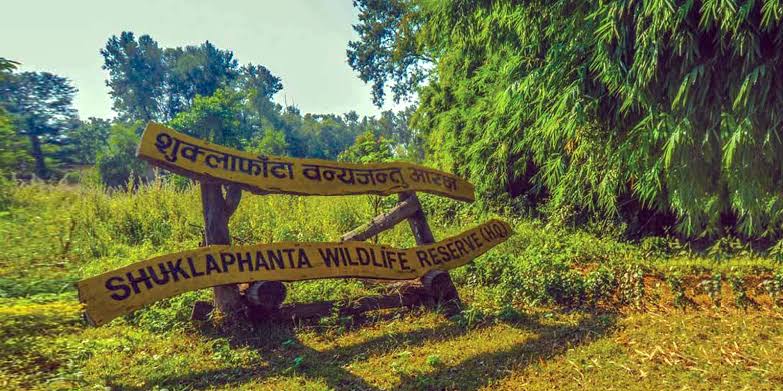
Mahendranagar Basbasa pickup and drop service with private jeep, car, and taxi at the Nepal–India border.

Comparing Shuklaphanta to Nepal’s Other Wildlife Parks

Shuklaphanta National Park’s relative obscurity compared to Chitwan reflects both its more remote far-western location and Nepal’s broader tourism infrastructure development pattern, which has historically concentrated around Kathmandu, Pokhara, and the more centrally located Chitwan National Park. For wildlife enthusiasts specifically seeking Nepal’s swamp deer population, found in its largest concentration anywhere in the country at Shuklaphanta, this park offers something genuinely unique compared to Chitwan or Bardia National Park, Nepal’s other major Terai wildlife destinations, each of which has developed its own distinct wildlife tourism niche within the country’s broader protected area network.

Local Culture in Far-Western Nepal

Kanchanpur district and the broader far-western Terai region have a distinct cultural landscape compared to central and eastern Nepal, with Tharu indigenous communities and various hill-origin communities who have settled in the region over recent generations forming the area’s demographic base. This far-western Tharu culture, while sharing broad similarities with Tharu communities further east near Chitwan, has developed a distinct regional character that reflects the area’s history and its close, ongoing cultural exchange with neighbouring communities across the Indian border.

Business Travel Considerations for This Region

Companies engaged in cross-border trade through the Basbasa crossing, or those operating agricultural, logistics, or general commercial activities in Kanchanpur district, benefit from establishing reliable, ongoing vehicle transport arrangements rather than seeking ad hoc transport for each business trip. Given the region’s distance from Kathmandu, most such businesses work with local transport providers who know the area’s roads, border procedures, and general travel needs, rather than trying to coordinate transport remotely from the capital.

A Typical Itinerary Combining Mahendranagar and Shuklaphanta

Travellers specifically visiting this region for wildlife tourism typically combine a stay in or near Mahendranagar with a dedicated excursion into Shuklaphanta National Park, often across two to three days to allow adequate time for wildlife viewing given the park’s considerable size and the more dispersed wildlife populations typical of its grassland habitat compared to the denser forest viewing conditions found in some other Nepali parks. A typical itinerary might include arrival via the local airstrip or a long overland journey, a day or two of guided safari activity within Shuklaphanta itself, and a final day allowing for either onward travel further into far-western Nepal or a return journey toward Kathmandu.

Health and Practical Considerations for This Region

Given this region’s low-elevation Terai climate, travellers should expect much warmer temperatures than in Kathmandu or Nepal’s hill and mountain regions, especially during the hot pre-monsoon months. Basic precautions typical of Terai travel throughout Nepal, including appropriate insect protection given the region’s proximity to wetland and grassland habitat, and adequate hydration given the heat, remain relevant considerations for travellers visiting Mahendranagar and the surrounding Shuklaphanta region.

Communication and Connectivity in Far-Western Nepal

Mobile network coverage in Mahendranagar is generally reliable, reflecting its status as a major district headquarters and commercial centre. However, coverage becomes more variable in the more rural sections of Kanchanpur district and within Shuklaphanta National Park itself. Travellers should not assume the same level of connectivity found in Kathmandu or Pokhara throughout this region, especially once they leave Mahendranagar’s immediate urban area.

Currency and Practical Logistics

As in most of Nepal outside major tourist centres, cash in Nepali rupees remains essential throughout Mahendranagar and the surrounding region, with card payment infrastructure far more limited than in Kathmandu or Pokhara. Travellers planning any cross-border activity toward Banbasa should also consider Indian rupee requirements for that portion of their journey, given the practical realities of transacting on either side of the border.
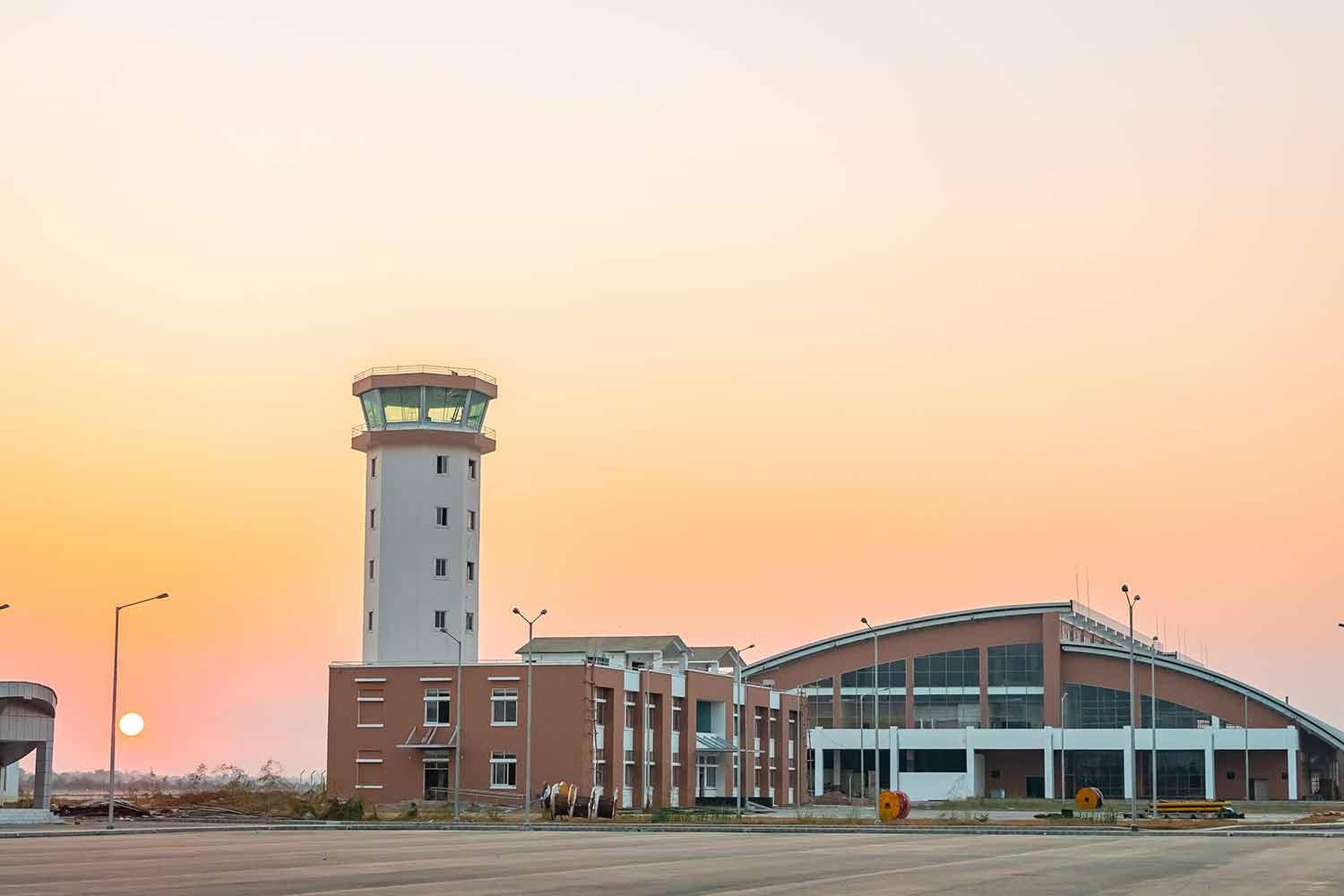
Gautam,Buddhai,Airport,In,Bhairahawa,,Nepal.,The,International,Terminal,Is

Why Choose a Local, Established Vehicle Provider for This Region

Given Mahendranagar’s considerable distance from Kathmandu and Pokhara, and the local knowledge required for border-crossing procedures, Shuklaphanta park access, and general navigation throughout Kanchanpur district, working with a vehicle provider familiar with the region offers clear advantages over coordinating transport remotely from Kathmandu alone. Local familiarity with current border-crossing conditions, seasonal road conditions specific to this Terai region, and the practical logistics of reaching Shuklaphanta matter greatly for a smooth travel experience in this less-visited part of Nepal.

Combining This Region With a Broader Far-Western Nepal Itinerary

Travellers with additional time sometimes combine a Mahendranagar and Shuklaphanta visit with further exploration of Sudurpashchim Province, including the hill districts further north within the same province, though these areas generally require considerably more planning and local knowledge given their more remote, less developed transport infrastructure compared to Mahendranagar and the immediate Terai region around it. Such extended itineraries typically require working closely with a locally based operator who is genuinely familiar with these more remote districts.

The Role of NGOs and Development Organisations in This Region

Given Sudurpashchim Province’s historically lower level of infrastructure development than other parts of Nepal, non-governmental organisations and agencies have a meaningful presence in the region, working on rural development, health, and Education initiatives throughout Kanchanpur district and the broader far-western region. These organisations often require local transport for staff and program activities, creating another distinct segment of transport demand in this region beyond the tourism, trade, and general business travel already discussed.

Seasonal Wildlife Viewing Patterns at Shuklaphanta

Wildlife viewing conditions at Shuklaphanta vary considerably by season, with the drier winter months generally offering the best visibility across the park’s characteristic open grassland habitat, since vegetation growth during and immediately after the monsoon can significantly reduce visibility for wildlife spotting. The park’s swamp deer population, along with other resident wildlife, tends to be most visible during these clearer winter viewing conditions, making the October through February period particularly popular among the relatively modest number of wildlife tourists who make the journey to this far-western park each year.

What to Pack for a Mahendranagar and Shuklaphanta Trip

  • Lightweight, breathable clothing given this region’s hot Terai climate, particularly outside the cooler winter months.
  • Insect protection suited to the grassland and wetland habitat found throughout Shuklaphanta National Park.
  • Sufficient Nepali rupees in cash, and Indian rupees if planning any cross-border activity toward Banbasa.
  • Basic first-aid supplies and any personal medication you need, given this region’s distance from major medical facilities.
  • Appropriate documentation for cross-border travel if your itinerary includes crossing at Basbasa toward India.

Road Connections Between Mahendranagar and Dhangadhi

The Mahakali Highway connects Mahendranagar to Dhangadhi, the largest city in far-western Nepal and headquarters of Kailali district, a journey covering a moderate distance across the flat Terai terrain characteristic of this region. Dhangadhi has a more developed regional airport with more frequent flights to Kathmandu than Mahendranagar’s smaller airstrip, and many travellers to this region fly into Dhangadhi before continuing to Mahendranagar by road, given the larger airport’s generally more reliable schedule.

Reliable vehicle transport along this Mahakali Highway corridor supports this common travel pattern for visitors to Nepal’s far-western region.

Understanding the Broader Sudurpashchim Transport Network

Beyond the Mahendranagar-Dhangadhi corridor, Sudurpashchim Province’s transport network extends into considerably more challenging hill and mountain terrain further north, connecting the Terai lowlands to remote hill districts that, in some cases, remain among the least accessible parts of Nepal given their distance from both Kathmandu and the more developed road networks found in central Nepal. This broader network context helps explain why Mahendranagar and Dhangadhi, in the more accessible Terai portion of the province, serve as important gateways and staging points for travel deeper into this less-developed far-western region.

Cross-Border Trade Patterns and Their Transport Implications

The volume and pattern of cross-border trade through Basbasa fluctuate according to broader Nepal-India trade policy and seasonal agricultural cycles, given the significant agricultural trade component moving through this crossing. Business travellers and logistics operators engaged in this trade need vehicle transport that can adapt to these fluctuations, sometimes requiring more vehicles during peak agricultural trading seasons and fewer during quieter periods, a dynamic distinct from the more predictable, tourism-season-driven demand patterns seen on Nepal’s trekking-focused transport corridors covered throughout our other guides.

A Note on Safety and Border Crossing Procedures

Travellers crossing at Basbasa should ensure all necessary documentation, including passports and any required visas for onward travel into India, is in order before arriving at the border, since immigration and customs procedures at this crossing follow standard bilateral protocol. Working with a vehicle provider or local guide familiar with current crossing procedures helps ensure a smooth experience, particularly for travellers unfamiliar with this specific border crossing’s practical requirements.

Combining Business and Wildlife Tourism in a Single Trip

Some business travellers visiting Mahendranagar for trade extend their trip with a short wildlife excursion to Shuklaphanta, taking advantage of their presence in this less-visited region. This combined itinerary requires coordinating both a business-appropriate transport schedule and a separate wildlife-focused excursion, something a locally knowledgeable vehicle provider can arrange as part of a single overall visit.

Government and Administrative Travel Through Mahendranagar

As the headquarters of Kanchanpur district and a major centre in Sudurpashchim Province, Mahendranagar sees regular government and administrative travel tied to provincial and district-level governance functions, along with border security and customs administration necessarily concentrated at a major crossing point like Basbasa. This administrative travel forms another distinct segment of the transport demand in this region, often requiring flexible, on-demand vehicle arrangements suited to government schedules and requirements rather than fixed tourist itineraries.

The Broader Significance of Far-Western Nepal’s Development

Mahendranagar and the broader Kanchanpur district’s continued development reflects national conversations about balanced regional development, given the historical concentration of infrastructure investment and tourism attention around Kathmandu, Pokhara, and the country’s central and eastern regions. Continued investment in this far-western region’s transport infrastructure, tourism development around Shuklaphanta, and border trade facilities at Basbasa are part of this broader development conversation, and reliable vehicle transport services play a practical role in supporting whatever development this region sees in the years ahead.

Final Practical Tips Before You Go

  • Confirm current border crossing requirements and documentation well before your planned Basbasa transit if continuing into India.
  • Consider flying into Dhangadhi rather than Mahendranagar directly if seeking more reliable flight scheduling from Kathmandu.
  • Book vehicle transport in advance given this region’s distance from our core operating areas and the value of working with genuinely local expertise.
  • Pack for hot Terai conditions, particularly outside the cooler winter months.
  • Consider combining a Shuklaphanta wildlife excursion with any business or border-crossing trip that brings you to this region.

A Comparison With Nepal’s Other Border Crossings

Nepal maintains several significant land border crossings with India, each serving a somewhat different regional and trade purpose. The Basbasa crossing near Mahendranagar serves far-western Nepal specifically, connecting to Uttarakhand in India, distinct from the Birgunj crossing further east, covered in our companion guide to 

Kathmandu to Hetauda vehicle rental, which serves as Nepal’s busiest overall land crossing connecting to Bihar in India. Understanding these crossings and their connections to different Indian states helps travellers and businesses plan their cross-border journey based on their actual origin and destination on both sides of the border.

Wildlife Conservation Efforts at Shuklaphanta

Shuklaphanta National Park’s conservation significance extends beyond its swamp deer population to broader efforts protecting the park’s grassland ecosystem, one of the last significant remaining examples of this habitat type in Nepal’s Terai region, given how much of the country’s original grassland habitat has been converted to agricultural use over recent decades. Conservation organisations around the park focus on habitat protection, anti-poaching efforts, and community engagement with local Tharu and other communities living near the park boundary, reflecting the broader pattern of community-based conservation increasingly common throughout Nepal’s protected area network.

Historical Trade Routes Through This Region

Long before the formal establishment of the modern Basbasa border crossing, this general region of far-western Nepal served as a historical trade corridor connecting the hill regions of what is now Sudurpashchim Province to the plains and onward into the Indian subcontinent, a trade pattern reflecting the broader historical relationship between Nepal’s hill kingdoms and the lowland trade networks of northern India. This historical trade significance helps explain the standing importance of this general border region, predating the specific modern infrastructure now found at Mahendranagar and Basbasa.

Supporting Both Nepali and Indian Travellers at This Crossing

The Basbasa-Banbasa crossing supports genuinely bidirectional travel, helping Nepali citizens travel into India for work, trade, or family reasons, and Indian citizens travel into Nepal for similar purposes, reflecting the deeply interconnected nature of communities on either side of this border. Vehicle transport services in this region should be prepared to serve both directions of this cross-border travel pattern, rather than assuming travel flows purely in one direction.

Additional Frequently Asked Questions

Is Mahendranagar safe for tourists to visit?

Yes, Mahendranagar and the surrounding region are generally safe for travellers. However, as with any less-visited part of Nepal, working with a locally knowledgeable guide or vehicle provider helps ensure a smooth experience, given the more limited tourism infrastructure than in Kathmandu or Pokhara.

How long does it take to reach Shuklaphanta from Mahendranagar?

The park sits a relatively short distance from Mahendranagar. You can reach it in about an hour by vehicle, making it a practical day trip for any visit to the region.

Can I arrange a multi-day safari package at Shuklaphanta?

Yes, though options are more limited than in Chitwan because the park has less overall tourism development. Local lodges and guides can arrange multi-day wildlife-viewing itineraries for interested travellers.

What documents do I need to cross into India at Basbasa?

Standard passport and any required Indian visa documentation apply for this crossing, as with any other formal Nepal-India border crossing. Confirm current requirements before travel, as visa policies can change.

Is there a significant language barrier in this region?

Nepali remains the primary language throughout the region, alongside Tharu and other local languages, with Hindi also widely understood given the proximity to India and ongoing cross-border interaction.

Can business travellers arrange recurring transport for regular trips to this region?

Yes. Companies with regular business activity in Kanchanpur district, or those that require recurring border-crossing transport, can arrange standing vehicle arrangements suited to their ongoing needs.

The Growing Potential for Tourism Development in This Region

As Nepal’s tourism sector matures and travellers increasingly seek alternatives to the country’s most famous, and increasingly crowded, destinations, far-western Nepal’s natural attractions, including Shuklaphanta National Park’s swamp deer population and grassland ecosystem, offer real potential for continued tourism development in the years ahead. This potential development would likely bring improved transport infrastructure and vehicle service options to the region, building on the foundation already provided by Mahendranagar’s role as district headquarters and border gateway.

A Closing Perspective on This Far-Western Gateway

Mahendranagar and the Basbasa border crossing represent a genuinely distinct piece of Nepal’s transport and travel landscape, shaped by cross-border trade, regional administration, and a still largely undiscovered wildlife destination in Shuklaphanta National Park, rather than the trekking and cultural heritage tourism that defines most of Nepal’s more famous destinations. Understanding this region’s character, and working with vehicle transport providers who understand its specific needs, helps ensure a smooth experience for whatever business, wildlife, or cross-border purpose brings travellers to this far-western corner of the country.

Combining a Far-Western Trip With Nepal’s Wider Attractions

Travellers with enough time sometimes combine a visit to Mahendranagar and Shuklaphanta with the more established attractions covered in our other guides, whether Kathmandu’s cultural heritage sites, Pokhara’s lakeside setting, or the trekking regions further east. Given the considerable distance involved, this kind of combined itinerary typically requires flying between the far-western region and Kathmandu or Pokhara, rather than attempting a purely overland journey connecting these distant parts of the country within a single reasonable trip duration.

Understanding Nepal’s East-West Geographic Scale

Mahendranagar’s distance from Kathmandu reminds you of Nepal’s east-west scale. Despite its relatively modest overall area, the country stretches from its far-eastern districts near Kanchenjunga to its far-western border with India near Mahendranagar and the Mahakali River.

This scale means that travel between different regions of Nepal often requires more careful planning around domestic flights or lengthy overland journeys than visitors unfamiliar with the country’s actual geography might initially assume, a consideration worth factoring into any itinerary spanning both far-western Nepal and the country’s more central regions.

Local Guides and Their Value in This Region

Because far-western Nepal has less tourism infrastructure than Kathmandu, Pokhara, or Chitwan, a knowledgeable local guide adds particular value for travellers visiting Shuklaphanta National Park or exploring the broader Kanchanpur district. Local guides bring genuine wildlife-spotting expertise specific to Shuklaphanta’s grassland habitat, along with cultural knowledge of the Tharu and other communities in the surrounding area, enriching what might otherwise be a purely transit-focused visit to this part of Nepal.

Practical Considerations for International Visitors

International visitors planning a trip to this region should note that Mahendranagar and the surrounding area see considerably fewer international tourists than Nepal’s more established destinations, meaning English-language services, international-standard accommodation, and general tourism infrastructure remain more limited than visitors accustomed to Kathmandu or Pokhara might expect. This isn’t a barrier to visiting, but a genuine consideration to factor into realistic expectations for anyone planning a trip to this far-western corner of Nepal specifically for its wildlife or border-crossing significance.

Combining Vehicle Hire With Our Wider Nepal Network

While Mahendranagar and the Basbasa border crossing are a considerable distance from our core Kathmandu- and Pokhara-based operating areas, travellers whose broader Nepal itinerary spans both this far-western region and more established destinations can still coordinate their overall trip planning through a single point of contact. Our core services cover: 

Kathmandu sightseeing, 

Kathmandu airport transfer, 

car hire in Pokhara, and we can coordinate 

Pokhara to Chitwan transport alongside your far-western Nepal plans, even when you arrange the Mahendranagar leg of your journey through locally based partners more familiar with the region.

Why Reliable Ground Transport Matters in Border Regions

Border regions like Mahendranagar and Basbasa are especially important for reliable ground transport, given the formal, time-sensitive nature of border-crossing procedures and the economic significance of the cross-border trade these crossings support. A missed or unreliable transport connection at a border crossing carries greater consequences than a similar delay on a purely domestic tourist route, whether through missed business meetings, disrupted trade logistics, or complications with time-sensitive visa or permit arrangements, making dependable, well-coordinated vehicle service particularly valuable in this context.

Environmental Context of the Shuklaphanta Grasslands

Shuklaphanta’s grassland ecosystem, among the most significant remaining examples of this habitat type in Nepal, plays an important ecological role beyond simply supporting its notable swamp deer population, including watershed protection functions and supporting a broader web of grassland-dependent species beyond the more visible large mammals that draw most visitor attention. This ecological significance has drawn increasing conservation research and international attention to the park in recent years, gradually raising its profile beyond the relatively small number of dedicated wildlife tourists who have historically made the journey to this far-western destination.

A Final Word on Planning Your Visit

Whether you’re visiting Mahendranagar for cross-border trade through Basbasa, wildlife tourism at Shuklaphanta, government or NGO work in the region, or to experience a less-visited corner of Nepal, careful planning and coordination with locally knowledgeable transport providers make a considerable difference to how smoothly your visit unfolds. This far-western gateway rewards travellers willing to venture beyond Nepal’s more established tourist circuit with genuine cultural and natural experiences difficult to find anywhere else in the country.

Seasonal Business Cycles Affecting Transport Demand

Transport demand through Mahendranagar and Basbasa fluctuates according to several distinct seasonal cycles beyond the standard tourism seasonality discussed earlier, including agricultural trading seasons that affect cross-border trade volume, and periodic increases in cross-border passenger travel tied to major Hindu festivals celebrated on both sides of the border, given the shared religious calendar between Nepal and northern India. Vehicle providers serving this region need to remain attentive to these varied demand cycles, distinct from the purely trekking-season-driven patterns seen elsewhere in Nepal’s tourism-focused transport corridors.

The Contrast Between This Region and Nepal’s Mountain Tourism

Mahendranagar and the Basbasa border crossing offer a genuinely useful point of contrast with the mountain trekking and pilgrimage routes covered throughout most of our other guides, a reminder that Nepal’s transport and travel landscape extends well beyond its famous Himalayan attractions into the flat, agriculturally significant, and internationally connected Terai plains along its southern and western borders. This contrast reflects Nepal’s geographic and economic diversity, from the world’s highest mountains in the north to major international trade gateways in the south and west, each requiring different transport services and local expertise to support effectively.

Building Long-Term Knowledge of This Region

Supporting travellers and businesses in a region as specific and distinct as Mahendranagar and Basbasa requires genuine, ongoing local knowledge rather than simply extending standard Kathmandu-based tourist transport services into an unfamiliar region. Understanding current border-crossing procedures, seasonal road conditions specific to this Terai border area, and the practical needs of the varied traveller base using this corridor, from traders to pilgrims to wildlife tourists to government officials, requires a specialised approach distinct from standard tourism transport services elsewhere in Nepal.

Insurance and Documentation for Cross-Border Travel

Travellers planning to cross at Basbasa into India should confirm that their travel insurance policy covers cross-border activities and ensure all relevant documentation, including passports, visas, and any vehicle-related paperwork if driving across the border directly, is arranged well in advance. These requirements differ somewhat from purely domestic Nepal travel and warrant specific attention given the international nature of this particular journey segment.

The Value of Advance Communication for This Region

Given Mahendranagar’s distance from our core operating areas and the specialized specialised knowledge required for this specific corridor, travelers and businesses planning a visit to this region benefit considerably from early, detailed communication regarding their specific transport needs, whether airport pickup, border crossing transfer, Shuklaphanta wildlife access, or broader business travel throughout Kanchanpur district. This advance communication lets you coordinate with locally knowledgeable transport partners well before your travel dates, ensuring a smoother overall experience in this less-visited but genuinely significant part of Nepal.

Reflecting on Nepal’s Full Range of Travel Purposes

This guide’s focus on Mahendranagar and Basbasa, a region defined by trade, border administration, and quiet wildlife tourism rather than the trekking and cultural heritage experiences covered throughout most of our other guides, reflects our broader commitment to supporting the full range of genuine travel purposes that bring people to and through Nepal, not only its most famous and heavily marketed attractions. Business travellers, cross-border traders, development workers, and the small but growing number of wildlife tourists drawn to Shuklaphanta’s grasslands all deserve the same quality of reliable, well-informed ground transport service as trekkers heading toward Everest or pilgrims travelling to Muktinath, even though this particular corner of Nepal rarely features in the country’s standard tourism marketing.

Thank You for Reading

We hope this guide has provided genuinely useful insight into Mahendranagar, the Basbasa border crossing, and the broader far-western Nepal region surrounding them, and we look forward to helping coordinate your own transport needs for whatever business, wildlife, or cross-border purpose brings you to this distinctive corner of the country.

One Final Practical Note: Before finalising plans, we recommend confirming current conditions and requirements directly with our team or a locally based partner, given both the seasonal variability of road and border conditions in this Terai region and the more limited general information available online for this less-visited part of Nepal compared to the country’s more famous destinations.

Wishing You Smooth Travels

From the bustling cross-border trade at Basbasa to the quiet grasslands of Shuklaphanta National Park, Mahendranagar and its surrounding region offer a distinctive slice of Nepal, shaped as much by international trade and border administration as by natural beauty and wildlife. We wish you safe, smooth, and well-coordinated travels through this far-western gateway, whatever purpose brings you here.

Where to Learn More

For travellers wanting to learn more about combining a far-western Nepal visit with the rest of the country’s attractions, our other guides covering Kathmandu, Pokhara, Chitwan, and Nepal’s major trekking and pilgrimage routes offer a useful starting point for planning the broader portions of a Nepal itinerary, even where the Mahendranagar-specific leg requires its own dedicated local coordination given the region’s distinct character and considerable distance from these more established destinations.

A Brief Word on Regional Pride

Residents of Kanchanpur district and the broader far-western region take genuine pride in their area’s unique cultural heritage, agricultural productivity, and role as Nepal’s gateway to this particular stretch of the Indian border, and visitors who take time to appreciate this local identity, rather than treating the region purely as a transit point on the way to somewhere else, often find their visit considerably more rewarding as a result.

Thank you very much indeed for reading all the way through this detailed and comprehensive guide, and safe, pleasant travels wherever your own personal journey through Nepal’s far west ultimately takes you next.
Sudurpaschim Tour Transportation

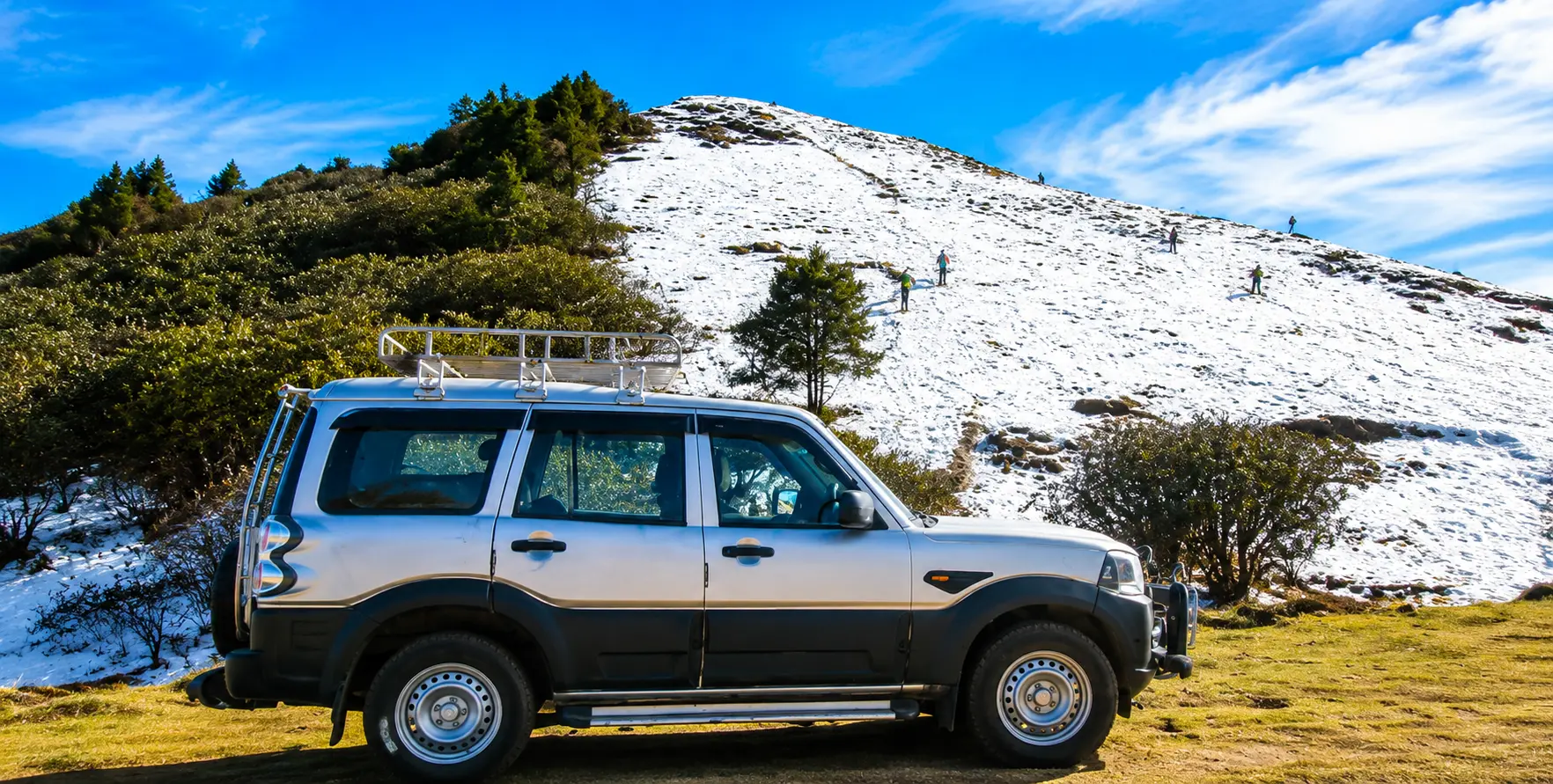
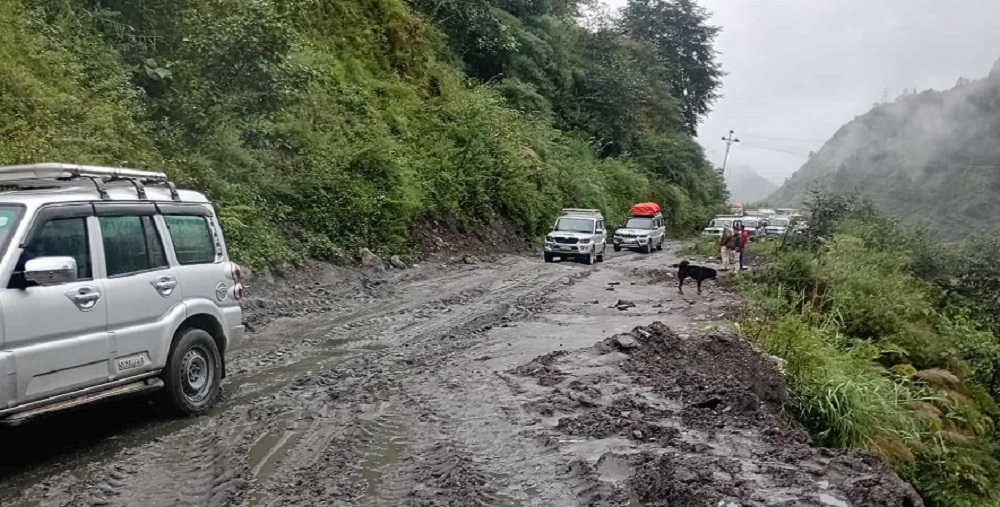
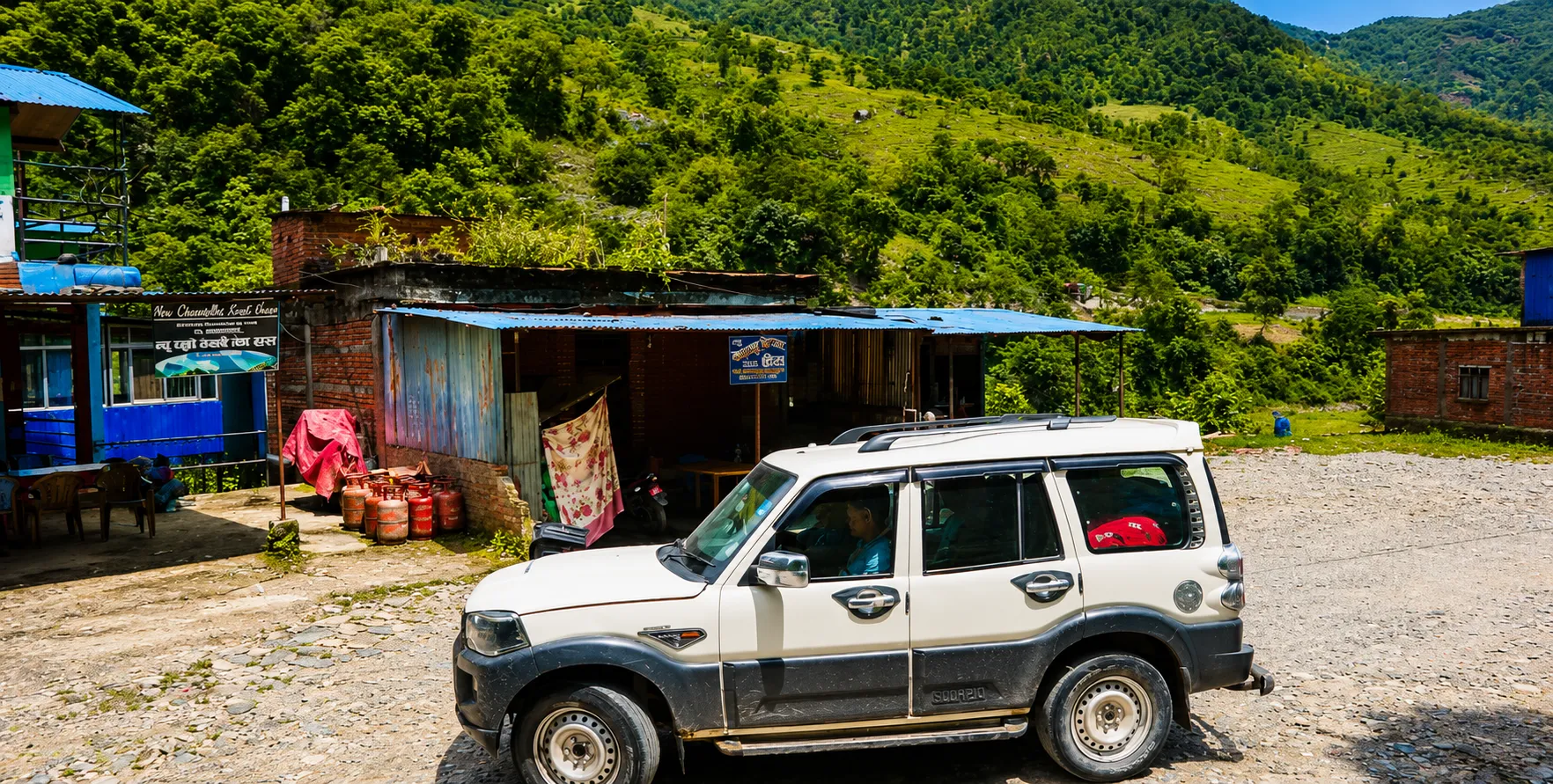
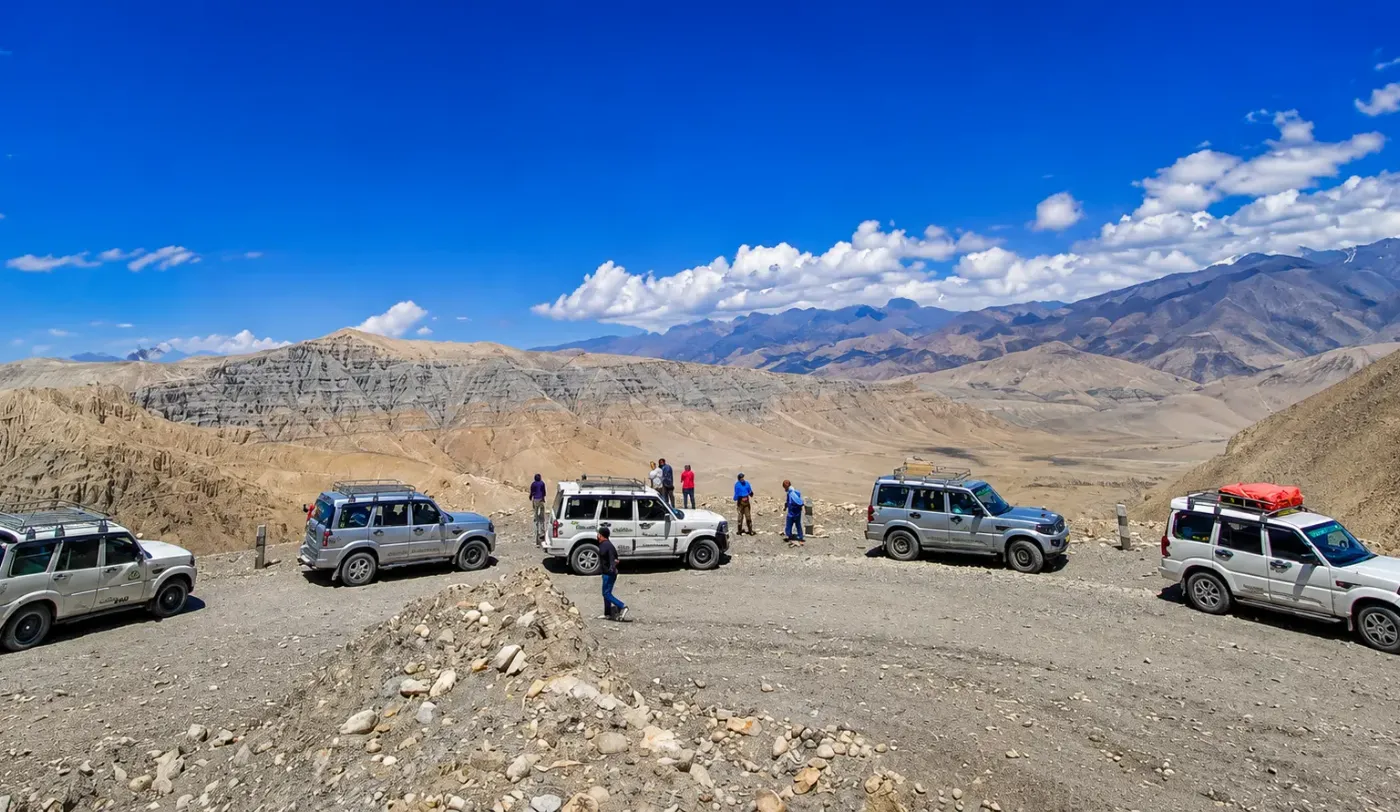
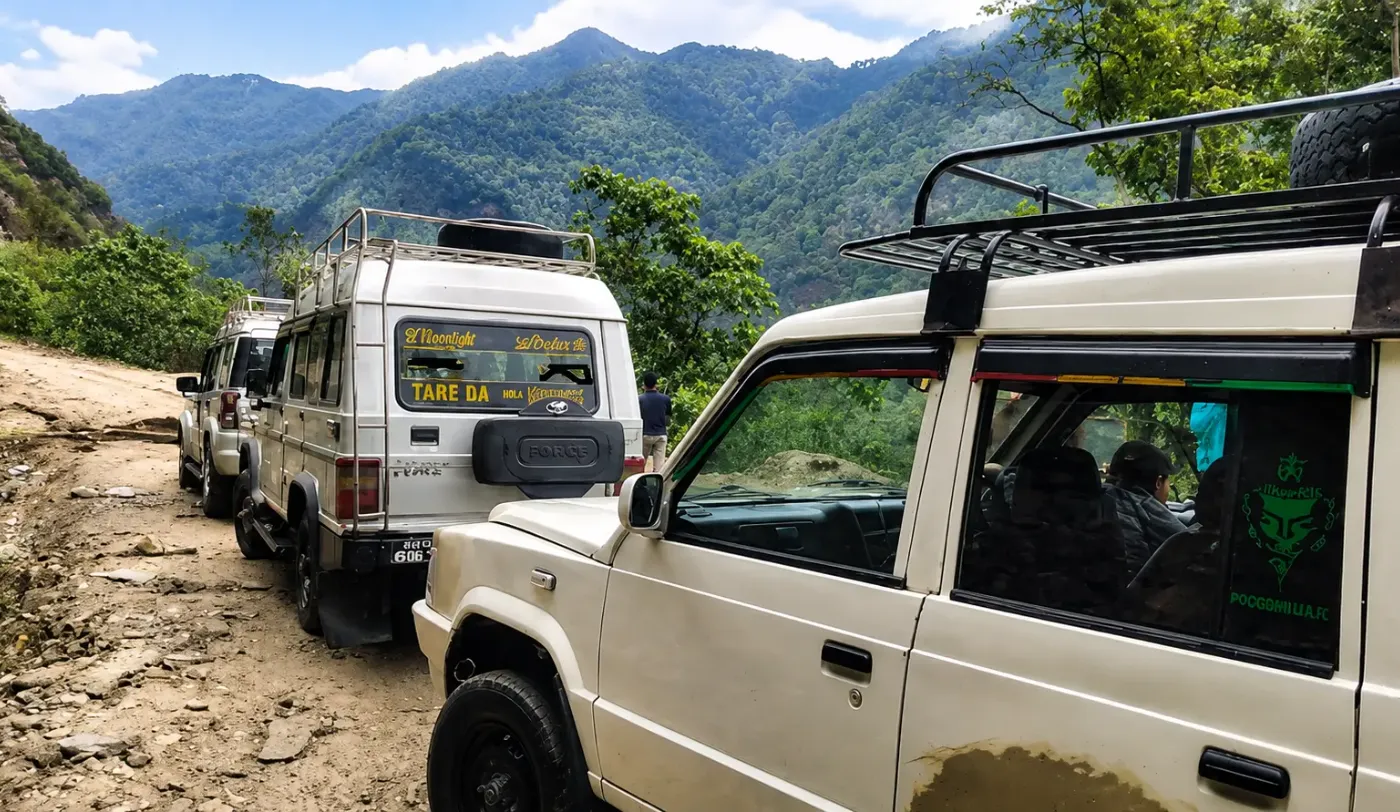
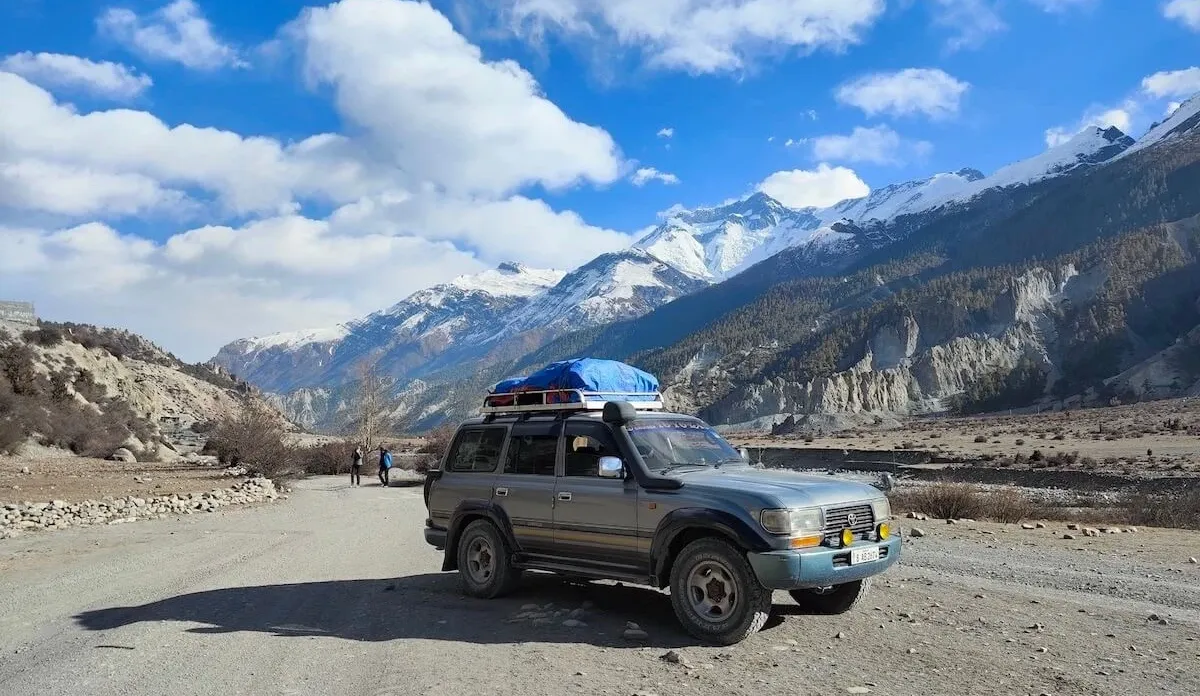
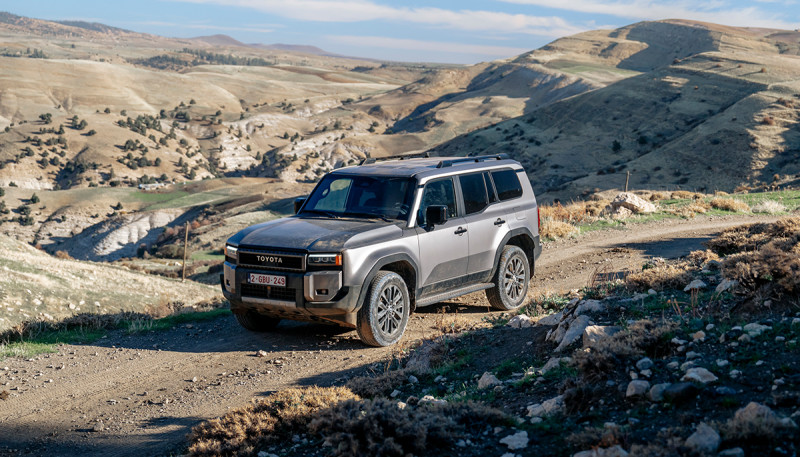
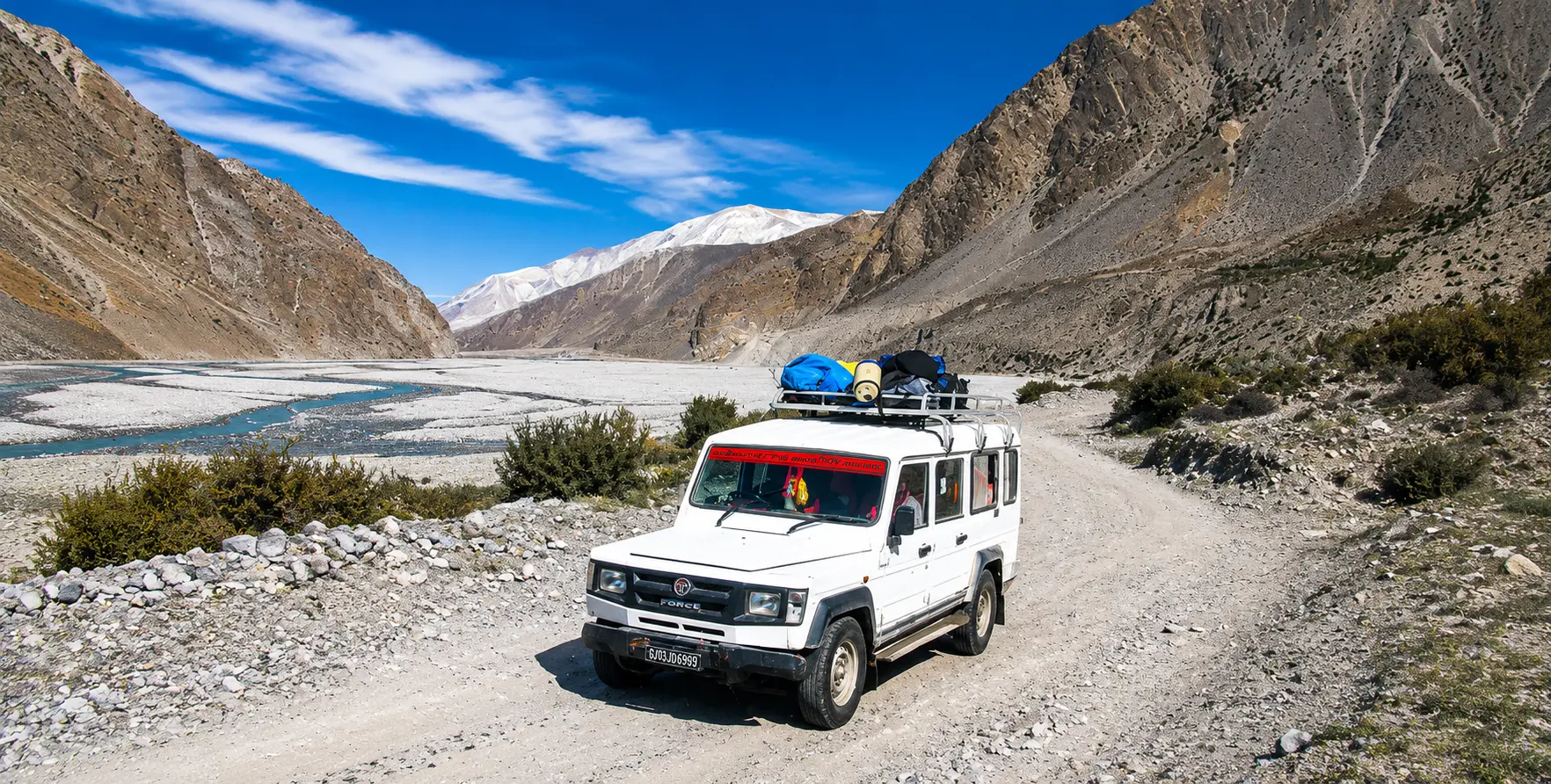
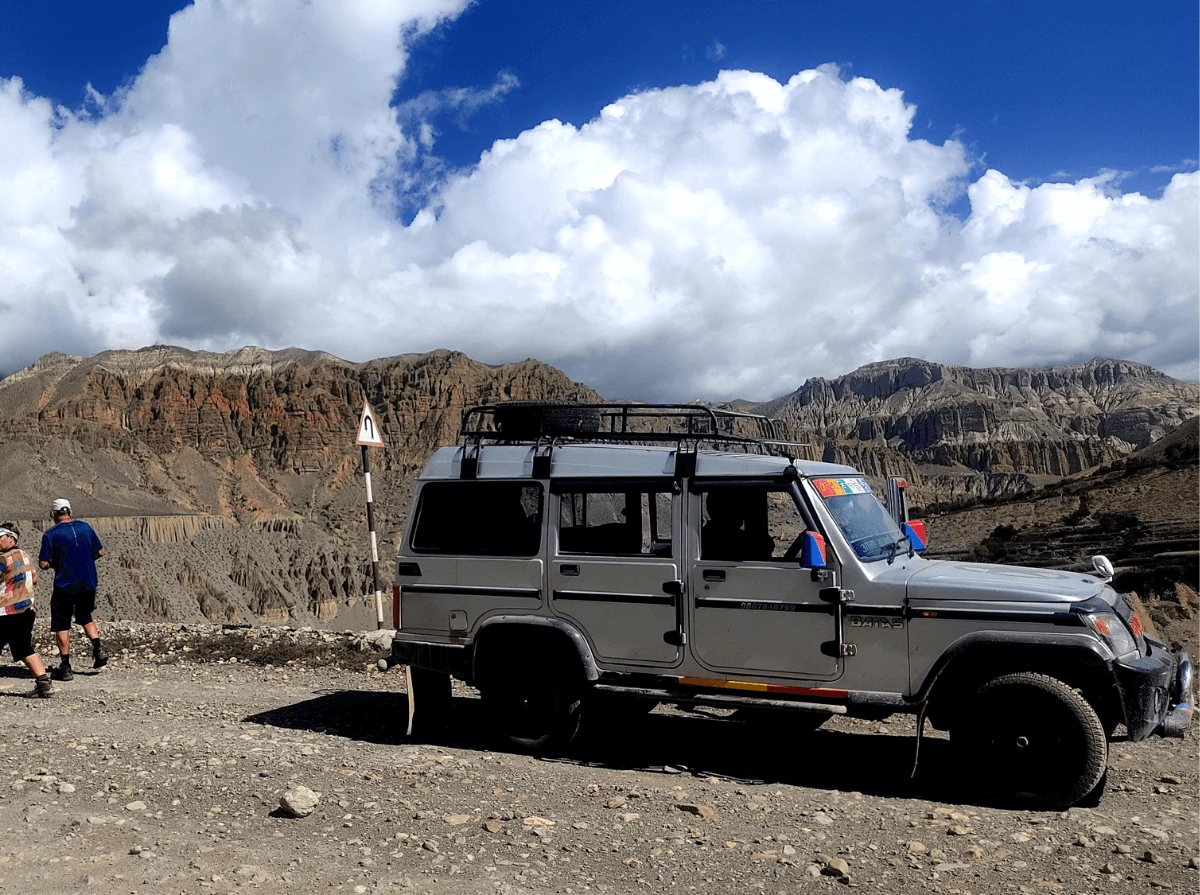
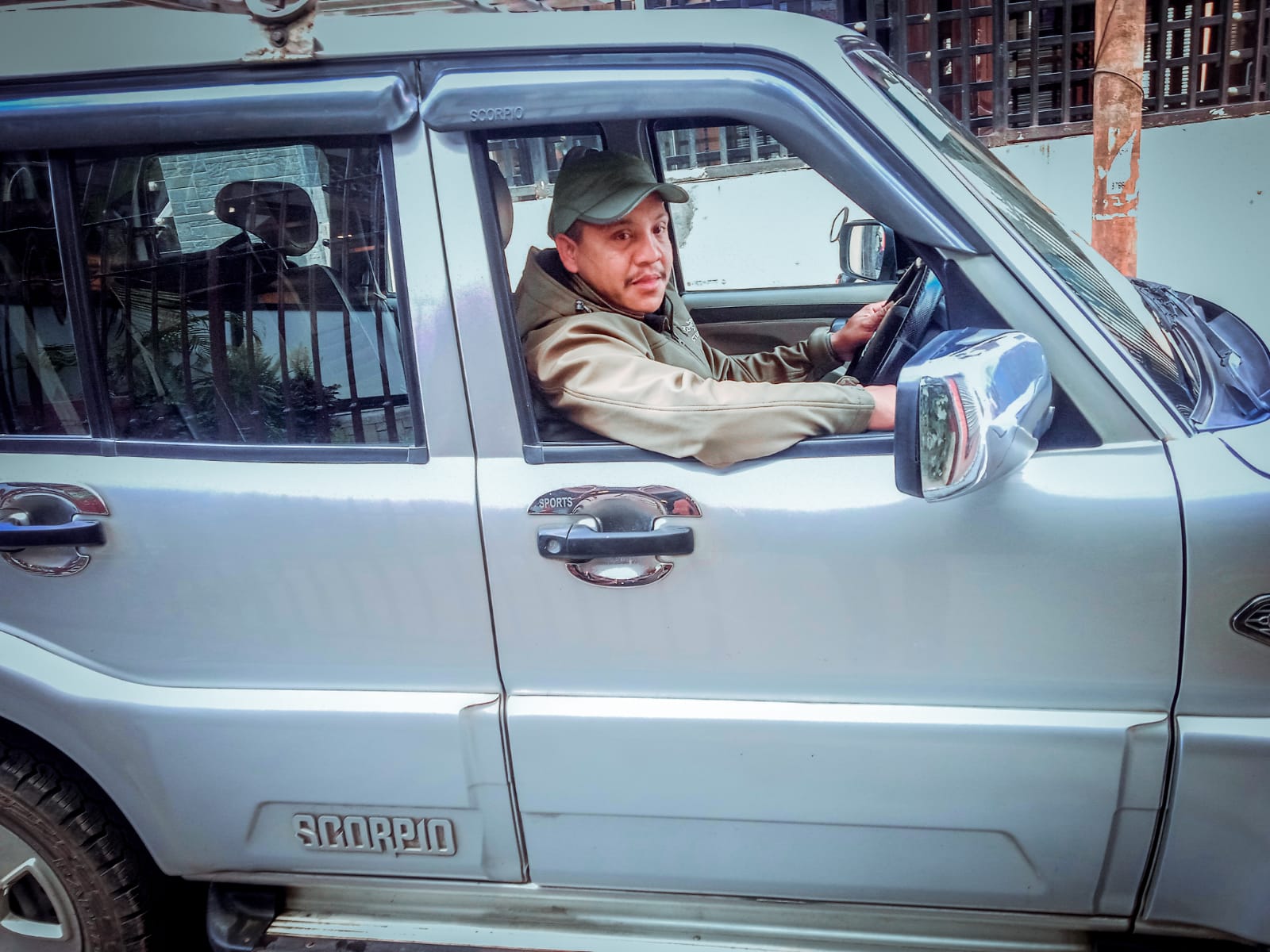
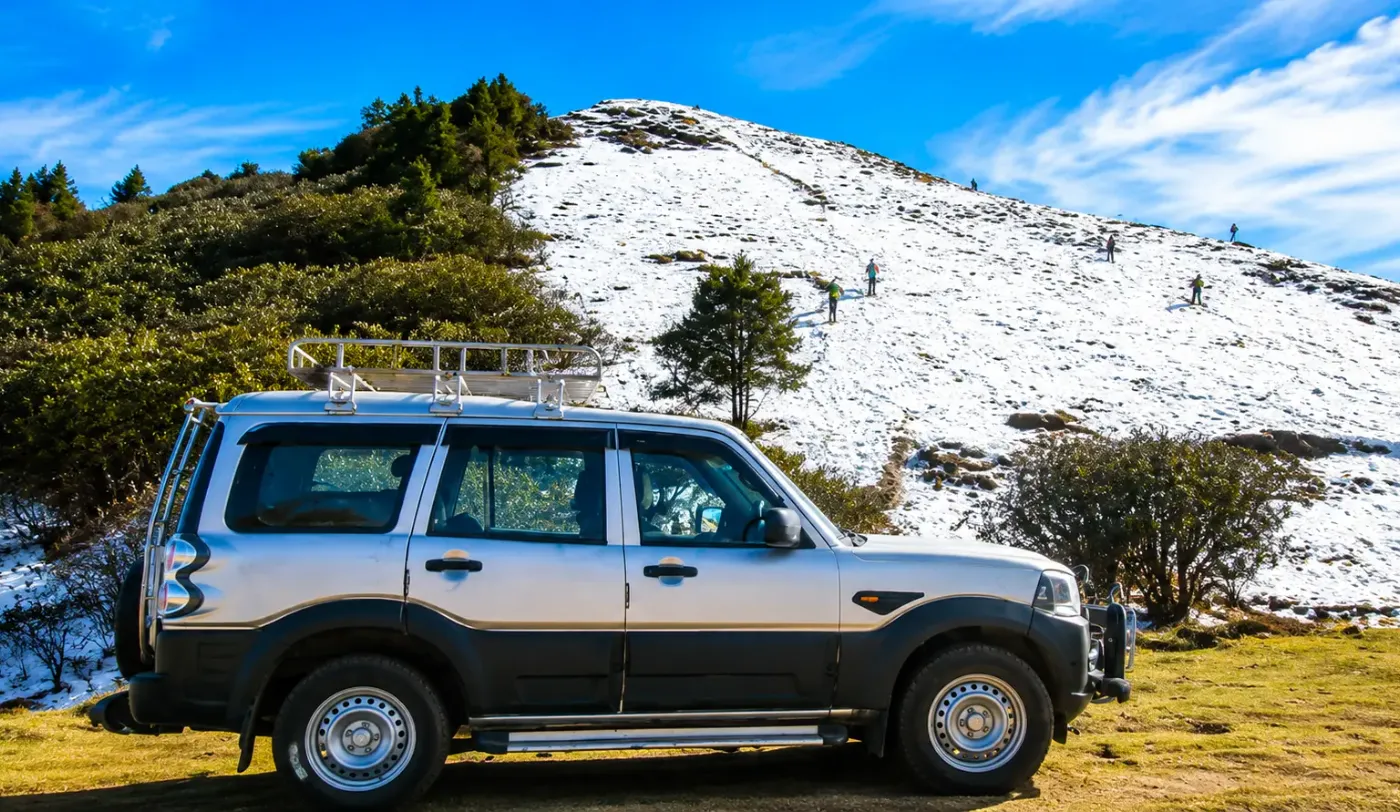
Scorpio jeep beside a snow-covered hillside

Sudurpaschim Tour Transportation – Complete Vehicle Hire Guide for Far-West Nepal

A section of Nepal most travellers never see, most tour operators rarely include, and most guidebooks cover in a paragraph or two before moving on to the more familiar destinations of Kathmandu, Pokhara, and the Annapurna Circuit. It is a region that comprises nine districts, a geography ranging from subtropical Terai plains to peaks exceeding 7,000 meters, two of Nepal’s finest national parks and wildlife reserves, ancient pilgrimage temples drawing hundreds of thousands of Hindu devotees annually, and some of the most genuinely remote and archaeologically rich trekking terrain in the entire Himalayan chain.

This is Sudurpashchim Province — Far-West Nepal — and in, it is undergoing a moment of genuine, government-supported transformation in its tourism infrastructure, making this precisely the right time to explore it.

Sudurpashchim Province sits in Nepal’s extreme northwestern corner, bordering India’s Uttarakhand state to the south and west and the Tibet Autonomous Region of China to the north. It encompasses nine districts—Achham, Baitadi, Bajhang, Bajura, Dadeldhura, Darchula, Doti, Kailali, and Kanchanpur—covering approximately 19,539 square kilometres.

Its capital, Dhangadhi in Kailali District, serves as the province’s primary air and road gateway. The region is home to extraordinary natural and cultural treasures: Khaptad National Park and its ancient Shiva ashram, Shuklaphanta Wildlife Reserve with the largest population of swamp deer in Nepal, the Api Nampa Conservation Area sheltering Nepal’s westernmost 7,000-meter peaks, the sacred Badimalika Temple at high altitude in Bajura, the Ramaroshan religious lakes in Achham, and the Mahakali River forming the dramatic natural border with India for hundreds of kilometres.

 In a development that signals a decisive shift in Nepal’s tourism strategy toward these long-neglected western regions, the national government’s 100-day governance reform action plan specifically included organising trekking routes for Ramaroshan in Achham, Badimalika in Bajura, and Api Himal in Darchula as priority tourism development targets. The government has launched studies and planning processes to connect these destinations into a coherent trekking and tourism infrastructure—recognising that Sudurpashchim’s tourism potential has been systematically underutilised and that correcting this represents both an economic opportunity for the province’s communities and a meaningful addition to Nepal’s overall adventure tourism portfolio.

However, one honest reality must be stated at the outset: transportation is the central challenge and defining factor of every Sudurpashchim tour. The sheer distance from Kathmandu — 20–24 hours by road, or a 65-minute domestic flight to Dhangadhi followed by further road travel — combined with the province’s limited internal road infrastructure, makes transport planning not a secondary logistical concern but the primary determinant of whether a Sudurpashchim tour is feasible, enjoyable, and safely managed.

This guide from Nepal Vehicle Hiring Pvt Ltd provides the complete, honest, current picture of what Sudurpashchim transportation actually involves in 2026 — the routes, the vehicles required, the realistic timeframes, the permits, and how professional private vehicle hire transforms what could be an exhausting, unpredictable journey into a memorable part of one of Nepal’s most extraordinary regional tourism experiences.

For trekking packages in this region, connect with Trek Nepal Himalayas — our sister company offering guided trekking across Nepal i, including Far-West destinations. For luxury itineraries, see Alpine Luxury Treks. For vehicle booking: vehiclehiringnepal.com | Call/ WhatsApp

Book Sudurpaschim Tour Transportation with private cars, 4WD jeeps, Scorpio SUVs, Hiace vans, Coaster buses, and tourist buses for comfortable travel to Khaptad National Park, Api Himal, Shuklaphanta National Park, Mahendranagar, Dhangadhi, and other top destinations in Far Western Nepal.

Understanding Sudurpashchim – The Region’s Geography and Transport Context

Before planning transport in Sudurpashchim, you must understand the province’s extraordinary geographic diversity and how it shapes every transport decision. Sudurpashchim is not a single landscape — it is a complete altitudinal and ecological transect of the Himalayan system compressed into a single provincial boundary, from the tropical Terai grasslands and forests of Kailali and Kanchanpur at near sea level to the permanent snow and glaciers of Api Himal (7,132 m) and Saipal (7,031 m) in the northern districts of Darchula and Bajhang.

The southern Terai districts — Kailali (capital: Dhangadhi) and Kanchanpur (capital: Mahendranagar) — are connected to the national road network via the Mahendra Highway (East-West Highway), which runs the length of Nepal’s Terai plains and provides the most reliable all-season road access to the province from both Kathmandu (from the east) and India’s Banbasa border crossing (from the south). These districts have reasonable road infrastructure, functioning fuel stations, reliable mobile phone coverage, and ATM access in their main centres.

They are also home to Shuklaphanta Wildlife Reserve, Ghodaghodi Lake, and the Tharu cultural heartland—destinations that are genuinely accessible for day trips and 2- to 3-day tour itineraries from Dhangadhi.

The middle hills — Dadeldhura, Doti, Achham, Baitadi — occupy the transitional zone between the Terai and the high Himalaya, with elevations ranging from approximately 800 meters to 3,000 meters. This band of territory contains Khaptad National Park, the Ramaroshan pilgrimage lakes, and much of the province’s most historically and culturally rich landscape.

Road access in this zone is more variable — some district headquarters are connected by paved or gravel roads, while others remain accessible only by difficult mountain tracks or on foot. Mobile coverage thins considerably outside main centres

The high Himalayan districts — Bajhang, Bajura, Darchula — contain the most remote and most dramatically spectacular terrain in the province. As one 2026 specialist transport guide confirms with admirable directness: in Api Himal Rural Municipality in Darchula district, the local unit’s headquarters is still not connected by a motorable road, and many localities have no access to electricity.

This isn’t a criticism, but a practical reality that shapes every transport plan for this area: reaching the northern districts of Sudurpashchim requires a flight, one or more long drives, and, in many cases, a multi-day walk before you reach your destination. Nepal Vehicle Hiring’s coverage in this zone extends to the last motorable road point in each district, after which travel shifts to trekking and porter support.

Book Sudurpaschim Tour Transportation with private cars, 4WD jeeps, Scorpio SUVs, Hiace vans, Coaster buses, and tourist buses for comfortable travel to Khaptad National Park, Api Himal, Shuklaphanta National Park, Mahendranagar, Dhangadhi, and other top destinations in Far Western Nepal.

Getting to Sudurpashchim – The Air-and-Road Strategy

Kathmandu to Dhangadhi by Air – The Only Practical Starting Point

For any visitor planning a reasonably timed and comfortable Sudurpashchim tour, the journey should begin with a domestic flight from Tribhuvan International Airport (TIA) in Kathmandu to Dhangadhi Airport in Kailali District. The flight takes about 65 minutes and is operated daily by Buddha Air, Yeti Airlines, and Shree Airlines.

Dhangadhi is the province’s largest city and commercial hub, and its airport serves as the primary gateway not only for the city but also for all further road and trekking travel into the province’s northern and western reaches.

Any honest Sudurpashchim transport guide must address the pricing reality of this flight directly, because it is the single most cited reason foreign tourists avoid this province. Nepal’s dual-pricing system applies to domestic flights, and as the Kathmandu Post confirmed in April 2026, a round-trip ticket to Sudurpashchim for a foreigner can cost over NPR 60,000 — more than a flight from Kathmandu to Delhi.

This dollar-fare system for foreign nationals on domestic routes is the primary reason foreign tourist visits to both Karnali and Sudurpashchim remain far below the region’s potential. Nepali nationals pay a substantially lower fare for the same seat on the same aircraft.

While the government has acknowledged this barrier and discussions about reform are ongoing, the dual-pricing system remains in place as of mid-2026. Nepal Vehicle Hiring recommends that international visitors planning Sudurpashchim tours budget NPR 30,000–35,000 per person one way for the Kathmandu–Dhangadhi flight and build this cost explicitly into their trip planning before arrival.

Alternatively, Nepalgunj Airport in Banke District (an adjacent province) provides access to Sudurpashchim destinations via a further 4–5 hour road journey north to Dhangadhi. Nepalgunj sometimes offers marginally lower domestic flight fares from Kathmandu and is a reasonable alternative starting point for itineraries focused on the Bajura and Bajhang districts rather than Kailali.

Kathmandu to Dhangadhi by Road – The Extreme Option

The overland road journey from Kathmandu to Dhangadhi is, in its full form, a marathon 20–24-hour drive via the Prithvi Highway, BP Highway, and then the Mahendra East-West Highway westward through the Terai. This route passes through Bharatpur (Chitwan), Butwal, Kohalpur (near Nepalgunj), and then westward through Kailali District to Dhangadhi.

While the Mahendra Highway is the most continuously paved of Nepal’s major roads, covering the full 700+ km in a single day is genuinely punishing for passengers and is not recommended without strategic overnight stops. For travellers with specific reasons to prefer road travel — extreme budget constraints, a dislike of flying, or a desire to experience the Terai crossing — Nepal Vehicle Hiring provides private vehicle hire for the full Kathmandu to Dhangadhi overland route, typically split as Kathmandu to Butwal (Day 1, approximately 7–8 hours) and Butwal to Dhangadhi (Day 2, approximately 8–9 hours).

This two-day Terai crossing is a rewarding experience in its own right, passing through the heart of Nepal’s subtropical southern belt with its paddy fields, sal forests, and Tharu village communities.

Book Sudurpaschim Tour Transportation with private cars, 4WD jeeps, Scorpio SUVs, Hiace vans, Coaster buses, and tourist buses for comfortable travel to Khaptad National Park, Api Himal, Shuklaphanta National Park, Mahendranagar, Dhangadhi, and other top destinations in Far Western Nepal.

Dhangadhi – The Base for All Sudurpashchim Transportation

Every Sudurpashchim tour of any ambition begins and ends in Dhangadhi — not because Dhangadhi is itself the primary destination (though it has genuine character and interest), but because it is the transport, logistics, and services hub from which all provincial routes radiate. Understanding what Dhangadhi offers and what it connects to is essential for planning any effective Sudurpashchim tour.

Dhangadhi is Sudurpashchim Province’s largest city, with a population exceeding 150,000. It has functioning ATMs, several mid-range hotels, fuel stations, vehicle repair workshops, and the domestic airport that connects to Kathmandu.

The Mahakali Highway (also called the Mahendra Highway western extension) runs through the city, providing onward connections to Kanchanpur District (southeast) and northward toward Doti, Dadeldhura, and the higher districts. Nepal Vehicle Hiring’s Dhangadhi-based fleet is positioned here to coordinate all provincial tours—drivers familiar with the specific roads, conditions, and checkpoints across the entire Sudurpashchim region—combined with Kathmandu-dispatched vehicles and drivers for the initial air-and-road pickup that connects Dhangadhi Airport to the tour starting point.

The most important practical advice for any visitor arriving in Dhangadhi: complete all ATM withdrawals, fuel purchases, SIM card top-ups, and supply purchasing in Dhangadhi before heading north or west into the province’s more remote districts. As specialist transport guides confirm: reliable mobile signal and banking stop around Darchula on the northern routes, and equivalent service thresholds apply to the Achham, Bajura, and Bajhang routes heading into the high country.

Dhangadhi is the last reliable services point for every destination in the province.

Book Sudurpaschim Tour Transportation with private cars, 4WD jeeps, Scorpio SUVs, Hiace vans, Coaster buses, and tourist buses for comfortable travel to Khaptad National Park, Api Himal, Shuklaphanta National Park, Mahendranagar, Dhangadhi, and other top destinations in Far Western Nepal.

Shuklaphanta Wildlife Reserve – The Southern Safari Circuit

The Shuklaphanta Wildlife Reserve, about 22 km west of Mahendranagar in Kanchanpur District, is the most accessible protected area in Sudurpashchim from Dhangadhi and one of Nepal’s most ecologically significant reserves. Covering 305 square kilometres of terai grassland, sal forest, and riverine habitat along the Mahakali River, Shuklaphanta is most famous as the home of the largest herd of swamp deer (Barasingha) in Nepal — with over 2,000 individuals recorded in recent counts — alongside Bengal tigers, one-horned rhinoceroses, wild elephants, leopards, sloth bears, four-horned antelopes, and over 500 bird species.

By most wildlife specialists, it is one of Nepal’s most biodiverse and least visited major wildlife areas—offering a genuine frontier safari experience without the crowds that characterise Chitwan and Bardiya in peak season.

Nepal Vehicle Hiring provides private jeep and Land Cruiser hire from Dhangadhi to Shuklaphanta, covering the 75 km road distance via Mahendranagar in approximately 2–2.5 hours. The approach road is on the Mahendra Highway — paved and reliable in all seasons.

Within the reserve, 4WD jeep hire for wildlife safari circuits is available through the reserve’s management infrastructure and local operators coordinated by Nepal Vehicle Hiring. A standard two-day Shuklaphanta tour from Dhangadhi includes a Day 1 drive to Mahendranagar, check-in at reserve-adjacent accommodation, a dawn jeep safari, a canoe river float on the Shuklaphanta wetlands, and a return on Day 2.

The reserve’s relative remoteness from Nepal’s main tourism circuit limits teahouse and lodge options, but genuine wilderness lodges exist; we strongly recommend booking well in advance through Nepal Vehicle Hiring or our sister companies for peak-season visits.

Shuklaphanta is also the most realistic single-day excursion from Dhangadhi for visitors who have arrived by flight and want to experience Far-West Nepal’s extraordinary wildlife without committing to a multi-day overland tour of the higher districts. A dawn departure from Dhangadhi, a morning safari in the reserve, and a return to Dhangadhi for an evening flight back to Kathmandu is logistically feasible with Nepal Vehicle Hiring’s door-to-door vehicle coordination — see Nepalgunj to Shuklaphanta vehicle service.

Book Sudurpaschim Tour Transportation with private cars, 4WD jeeps, Scorpio SUVs, Hiace vans, Coaster buses, and tourist buses for comfortable travel to Khaptad National Park, Api Himal, Shuklaphanta National Park, Mahendranagar, Dhangadhi, and other top destinations in Far Western Nepal.

Ghodaghodi Lake – The Ramsar Wetland Day Trip

Located just 28 km northeast of Dhangadhi in Kailali District, Ghodaghodi Lake is a Ramsar-listed wetland complex of extraordinary biodiversity, designated for international conservation significance as part of the Ghodaghodi Lake Conservation Area, covering 2,563 hectares of lake, marshland, and sal forest. The lake complex is home to 30+ fish species, numerous reptiles, including gharial and mugger crocodiles, over 140 bird species, and a resident population of wild elephants and deer that move through the sal forest surrounding the lake.

The historical temples on the lakeshore, including the famous Ghodaghodi Temple, make this both a wildlife and cultural destination—pilgrims and birdwatchers share the same lakeside environment in the quiet Tharu community landscape surrounding the water.

Nepal Vehicle Hiring provides private car or jeep hire from Dhangadhi to Ghodaghodi Lake in approximately 45 minutes to 1 hour on the highway. This is Sudurpashchim’s most accessible nature destination and pairs well with a Dhangadhi city exploration on the same day.

For birdwatching enthusiasts, the dawn boat trip on Ghodaghodi Lake offers some of the best freshwater birding in Far-West Nepal, with open-billed storks, painted storks, kingfishers, raptors, and migratory waterfowl in season. Nepal Vehicle Hiring’s Dhangadhi to Ghodaghodi Lake day trip vehicle service includes hotel pickup at any Dhangadhi accommodation and return delivery.

Book Sudurpaschim Tour Transportation with private cars, 4WD jeeps, Scorpio SUVs, Hiace vans, Coaster buses, and tourist buses for comfortable travel to Khaptad National Park, Api Himal, Shuklaphanta National Park, Mahendranagar, Dhangadhi, and other top destinations in Far Western Nepal.

Khaptad National Park – The Far West’s Himalayan Sanctuary

Khaptad National Park is, in the considered assessment of everyone who has visited it, one of Nepal’s most beautiful and most under-visited protected areas — a 225 square kilometre alpine sanctuary in the far-western hills at elevations between 1,400 and 3,300 metres, characterised by vast meadows (khaptads), dense temperate forests of oak, maple, and rhododendron, clear rivers, sacred lakes, and Himalayan wildlife including Himalayan black bear, musk deer, and over 270 bird species.

The park’s crowning cultural feature is the ashram of the revered saint Khaptad Baba (Swami Sachidananda Saraswati), who lived here for decades and whose influence transformed the park into both a wildlife sanctuary and a place of deep spiritual significance for Hindu pilgrims from far-western Nepal and the adjacent Indian border region.

Reaching Khaptad National Park is one of the more logistically complex transport challenges in Sudurpashchim, and understanding the specific route is essential for realistic tour planning. The standard approach starts in Dhangadhi, where Nepal Vehicle Hiring’s private jeep hire covers the road journey to the park entry points.

The most commonly used access route follows the Dhangadhi to Doti (Silgadhi) highway northward — approximately 120 km, taking 5–6 hours by 4WD vehicle — and then continues to Sanfebagar (Achham), the administrative base closest to the park’s main entry point. From Sanfebagar, a further 3–4 hour drive on increasingly rough mountain track leads to the park boundary, beyond which entry is on foot.

The full Dhangadhi to Khaptad road journey therefore takes at least two days by vehicle, with an overnight stop typically in Doti or Dadeldhura.

Nepal Vehicle Hiring’s 4WD vehicles — Scorpio, Bolero, and Land Cruiser — are the appropriate vehicle choices for the entire Dhangadhi–Doti–Sanfebagar approach route. Standard cars and highway vehicles are not suitable beyond Doti.

The Land Cruiser, with its superior ground clearance and altitude performance, is especially recommended for the Sanfebagar-to-park-boundary section, where the track deteriorates significantly, and 4WD low-range capability becomes operationally important. Nepal Vehicle Hiring coordinates the full Dhangadhi-to-Khaptad transport package, including overnight accommodation stops and return-journey coordination.

For trekking within the park, connect with Trek Nepal Himalayas for a licensed guide and trekking support.

Book Sudurpaschim Tour Transportation with private cars, 4WD jeeps, Scorpio SUVs, Hiace vans, Coaster buses, and tourist buses for comfortable travel to Khaptad National Park, Api Himal, Shuklaphanta National Park, Mahendranagar, Dhangadhi, and other top destinations in Far Western Nepal.

Darchula and the Api Himal Base Camp Approach – Nepal’s Most Remote Western Trek

The Api Himal Base Camp approach in Darchula District represents the most geographically remote and logistically demanding destination in Sudurpashchim Province — and in 2026, one of the most exciting emerging trekking destinations in all of Nepal, given its inclusion in the government’s 100-day tourism development action plan and the extraordinary scenery it offers around Api Himal (7,132 m), Nepal’s westernmost 7,000-metre peak and one of the most technically challenging unclimbed objectives in the Himalayan range. As one 2026 specialist expedition guide puts it with characteristic understatement: reaching Api Base Camp is, honestly, half the adventure.

The transport route to Api Himal Base Camp follows a precise, multi-stage plan that Nepal Vehicle Hiring’s experienced western Nepal fleet delivers as an integrated service. The journey begins with the Kathmandu to Dhangadhi flight (65 minutes), after which a Nepal Vehicle Hiring vehicle meets the party at Dhangadhi Airport for the northward road journey.

The Dhangadhi to Darchula road is about 200–220 km via the Mahakali Highway, following the Mahakali River northward through a landscape that shifts from flat Terai plains to increasingly steep middle hill terrain as the road climbs toward Darchula on the Indian border. This section takes 8–10 hours by private 4WD vehicle and is typically split into two days — Dhangadhi to Chainpur or Doti for Day 1, then Doti to Darchula for Day 2 — with overnight stops at available guesthouses in the intermediate towns.

Road conditions on this Mahakali Highway corridor have improved in recent years but remain far more demanding than Nepal’s main eastern highway network. As one 2026 Api Himal trek specialist describes the route: the drive is the trek before the trek — Dhangadhi to the Gokuleshwor and Darchula area runs roughly 8–10 hours and is usually split over two days, with a final off-road leg to the Makarighat trailhead.

The final section from Darchula town to the Makarighat or Khalanga trailhead—where the actual trek to Api Base Camp begins—is an off-road mountain track requiring 4WD and experienced driving. Nepal Vehicle Hiring deploys the Toyota Land Cruiser on Darchula district routes, providing the ground clearance, mechanical reliability, and experienced high-altitude drivers this remote frontier road demands.

At Darchula itself, Nepal Vehicle Hiring’s service reaches its road-end boundary. Beyond the Makarighat trailhead, all transport transitions to trekking on foot with guide and porter support.

The Api Himal Base Camp trek from Makarighat takes about 10–12 days round trip, through traditional Rai and Byansi community villages, rhododendron forests, and high alpine terrain, before reaching the base camp at about 3,900–4,100 meters, with Api Himal (7,132 m) towering above. Trek Nepal Himalayas provides complete trekking support for this route — licensed guides, porters, camping equipment, and food — as a coordinated service alongside Nepal Vehicle Hiring’s road transport.

No restricted area permit is required for Api Himal Base Camp, but you must have an Api Nampa Conservation Area permit and a TIMS card. Obtain these at NTB offices in Kathmandu before departure, as getting them in Darchula is significantly more complex and time-consuming.

Book Sudurpaschim Tour Transportation with private cars, 4WD jeeps, Scorpio SUVs, Hiace vans, Coaster buses, and tourist buses for comfortable travel to Khaptad National Park, Api Himal, Shuklaphanta National Park, Mahendranagar, Dhangadhi, and other top destinations in Far Western Nepal.

Badimalika Temple – The High-Altitude Pilgrimage of Bajura

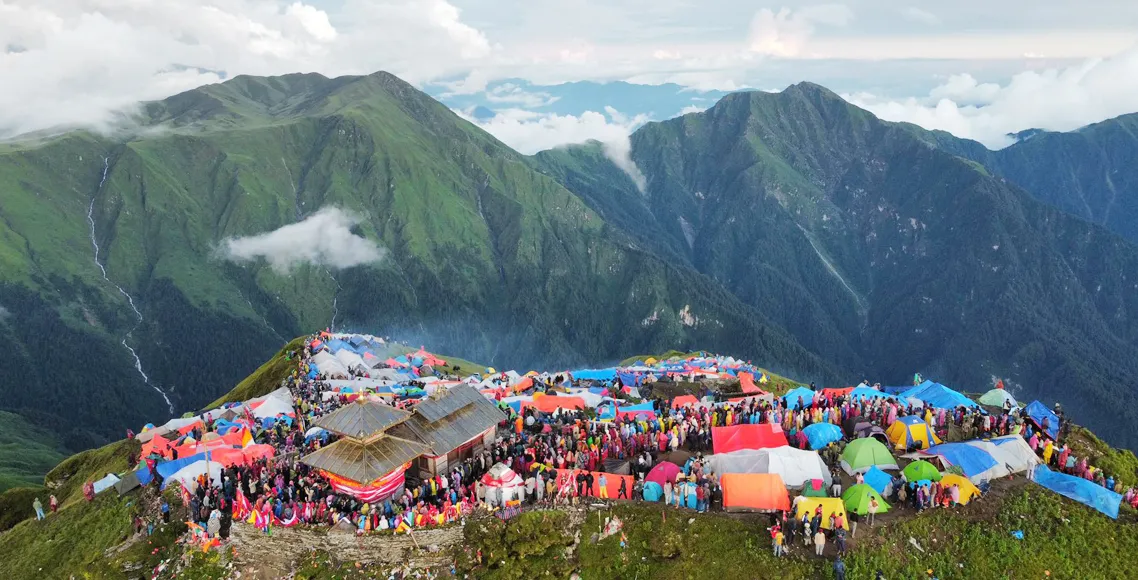
Badimalika Temple in Bajura District is one of Nepal’s most important and least internationally known high-altitude Hindu pilgrimage sites — a Shakti temple perched at over 3,500 metres on a mountain ridge in the far-western hills, dedicated to Goddess Durga in her Badi Malika form, and drawing hundreds of thousands of Hindu pilgrims from Nepal and India’s Uttarakhand across the border every year during the main festival periods, particularly the Janaibhadra and Navaratri festivals. For the government’s 2026 tourism development action plan, Badimalika is one of the three specifically named priority destinations for route organisation in Sudurpashchi, in recognition of its significant existing pilgrimage traffic and its potential for organised cultural tourism beyond purely devotional visitors.

The transport approach to Badimalika follows the Kathmandu to Nepalgunj or Dhangadhi flight, then road to Sanfebagar (Achham District) or Martadi (Bajura District). From Dhangadhi, the road to Martadi covers approximately 300 km and takes 2–3 days by road through Doti and Achham.

From Nepalgunj, the route heads north through Kohalpur and Surkhet into Bajura, with the journey to Sanfebagar (the main access town for the Badimalika approach) taking approximately 8–10 hours by private 4WD from Nepalgunj.

Nepal Vehicle Hiring coordinates private jeep hire from Nepalgunj or Dhangadhi to the Badimalika approach roads, with Scorpio and Bolero 4WD vehicles suitable for this section’s rough district roads. The trek from the road-end point to Badimalika Temple itself takes 1–3 days depending on the specific access trail used.

Pilgrimage groups—which make up most Badimalika visitors—typically travel in large parties of 20–50 people. Hence, Nepal Vehicle Hiring’s Coaster minibus or Tourist Bus hire is the best option for the highway sections of this journey, with a 4WD jeep convoy for the district-road approach. Nepal Vehicle Hiring coordinates multi-vehicle logistics for large pilgrimage groups as a standard service — contact our operations team on WhatsApp for custom group pilgrimage transport quotations for Badimalika.

Book Sudurpaschim Tour Transportation with private cars, 4WD jeeps, Scorpio SUVs, Hiace vans, Coaster buses, and tourist buses for comfortable travel to Khaptad National Park, Api Himal, Shuklaphanta National Park, Mahendranagar, Dhangadhi, and other top destinations in Far Western Nepal.

Ramaroshan – The Sacred Lakes of Achham

Ramaroshan in Achham District is the third destination selected in Nepal’s 2026 Far-West tourism development initiative—a sacred high-altitude lake complex at about 2,000 meters that draws Hindu pilgrims for its temples and the ritual significance of bathing in the Ramaroshan lakes on specific auspicious calendar dates. The area’s landscape of rolling alpine meadows, traditional far-western hill community villages, and Himalayan viewpoints makes it an appealing trekking destination beyond its purely religious significance — one that the government’s 2026 action plan aims to connect into a coherent, way-marked trekking circuit comparable to the more established routes of the Annapurna or Langtang regions.

The transport approach to Ramaroshan starts in Dhangadhi or Nepalgunj, with 4WD vehicle hire covering the Achham district roads to the nearest trailhead at Sanfebagar or Mangalsen. Nepal Vehicle Hiring’s Scorpio or Bolero 4WD service for Achham district handles this approach road reliably in dry season conditions.

During the monsoon, Achham district roads carry a significant landslide risk, and Nepal Vehicle Hiring monitors conditions daily before dispatching vehicles on this route. The trek from the road end to Ramaroshan lakes takes 2–3 days through beautiful far-western hill country, with accommodation in basic community guesthouses and, increasingly, organised homestay programs developed with support from the Provincial Tourism Board.

The Mahendranagar and Kanchanpur Circuit – Border Culture and Terai Nature

Mahendranagar, the headquarters of Kanchanpur District, sits at Nepal’s extreme southwestern corner, directly adjacent to the Indian border crossing at Banbasa. It is a significant commercial border town with a distinctly different cultural character from Dhangadhi, reflecting the centuries of trans-border cultural and economic exchange between Far-West Nepal and India’s Kumaon region.

The surrounding Kanchanpur District contains Shuklaphanta Wildlife Reserve, the Mahakali River corridor, and a network of Tharu community villages whose traditional culture — architecture, festivals, agricultural practices, and forest management traditions — has been substantially better preserved in this far-western Terai than in more accessible regions closer to Kathmandu.

Nepal Vehicle Hiring’s Dhangadhi to Mahendranagar private transfer covers the 75 km Mahendra Highway journey in approximately 2–2.5 hours. For visitors entering Nepal from the Indian border at Banbasa, Nepal Vehicle Hiring provides Mahendranagar border pickup service—meeting arrivals at the Nepal immigration post and providing direct transfer to any Mahendranagar hotel, onward to Dhangadhi, or connecting directly to the provincial tour circuit.

The Mahendranagar to Shuklaphanta Wildlife Reserve transfer covers approximately 22 km in under an hour, making Shuklaphanta the natural first or last stop on any Kanchanpur circuit.

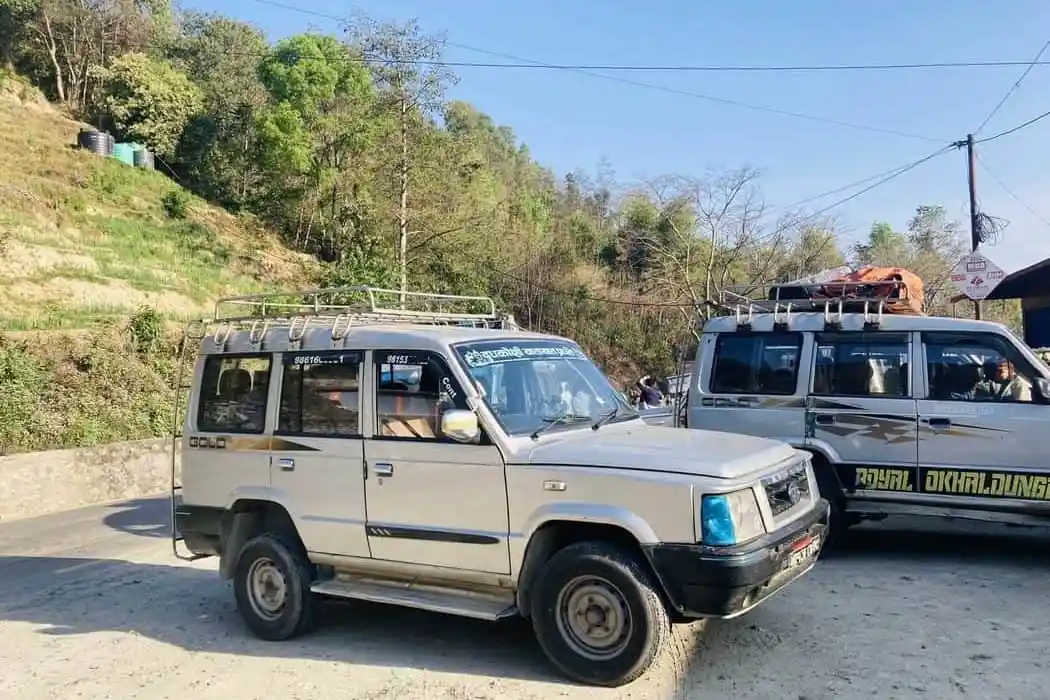
Share jeep

The Best Vehicles for Sudurpashchim Tours – What You Actually Need

Sudurpashchim’s extreme geographic range — from Terai highway to remote Himalayan district track — means that no single vehicle category covers every situation in a comprehensive provincial tour. Nepal Vehicle Hiring recommends that you plan any serious Sudurpashchim itinerary in transport stages, matching the vehicle to each stage’s specific demands rather than trying to use a single vehicle for the entire journey.

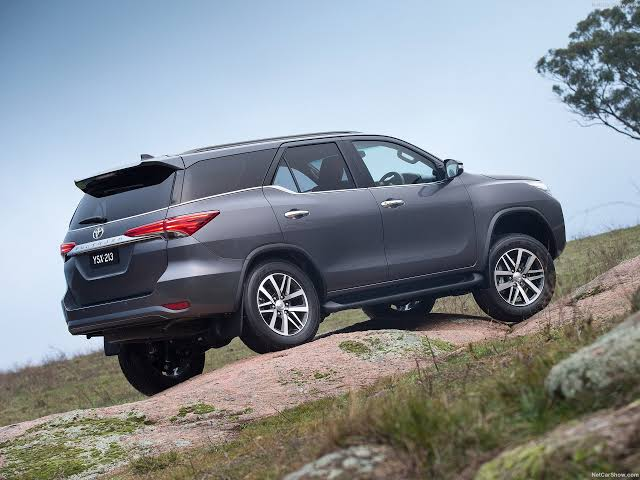
For the Terai highway sections — Dhangadhi city transfers, Ghodaghodi Lake day trips, Mahendranagar connections, and the Shuklaphanta approach — a private car or standard SUV is adequate and comfortable. The Mahendra Highway is paved and well-maintained throughout these sections and does not require 4WD. For groups of 8–13 on this highway section, the Toyota Hiace van provides the best per-head comfort and cost efficiency.

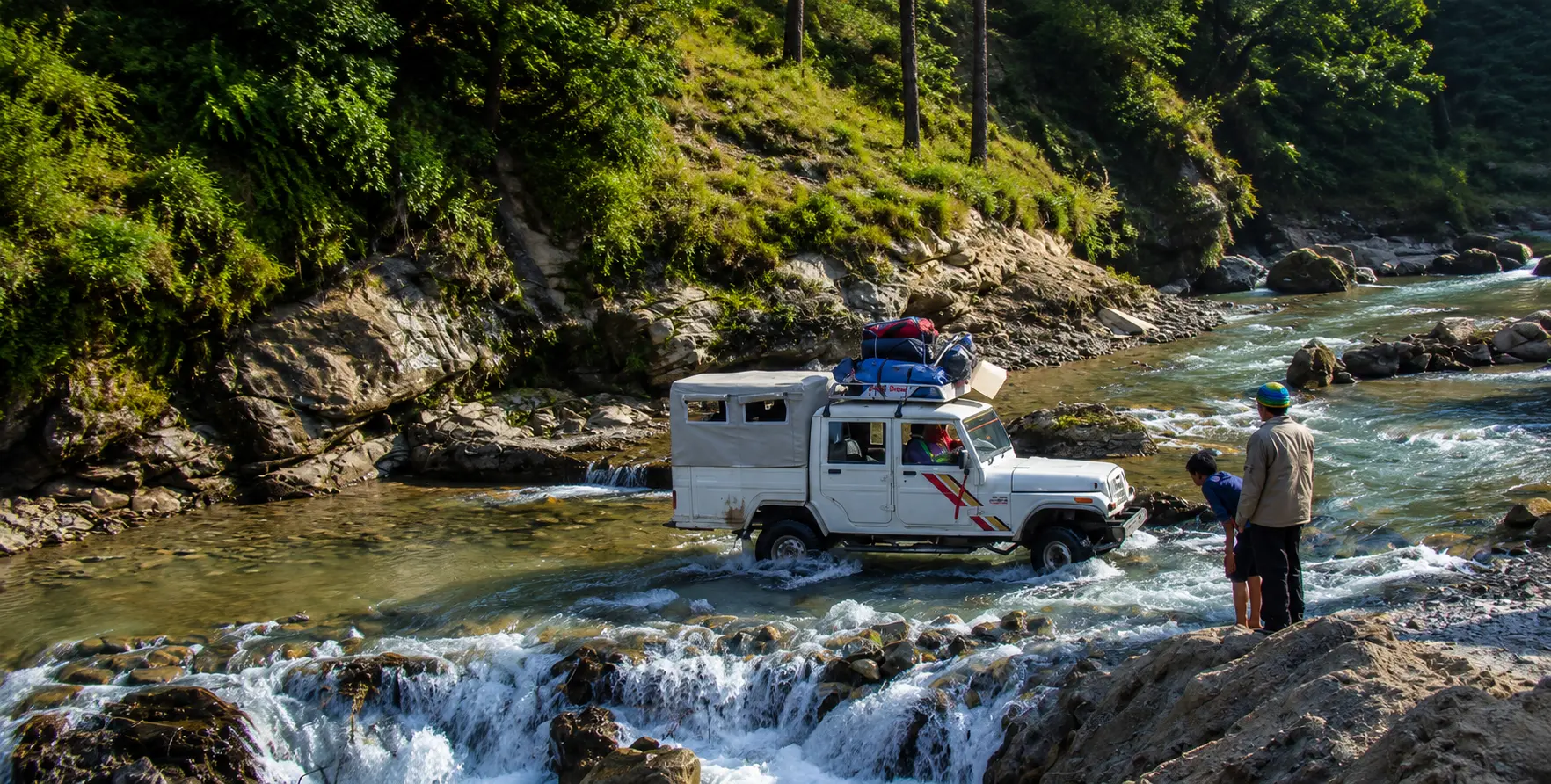
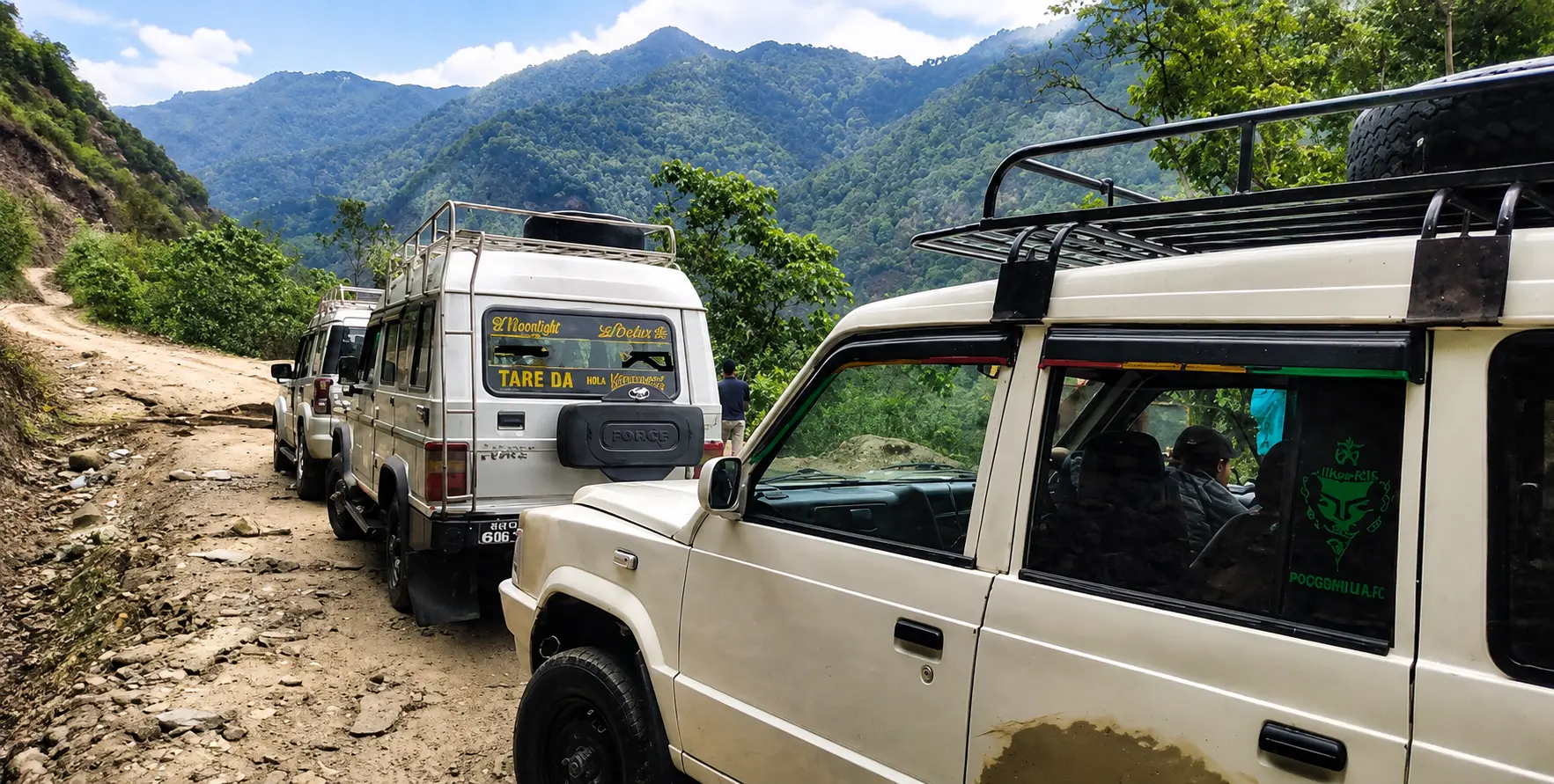
For the middle hills district roads — Doti, Dadeldhura, Achham, Bajura approaches — the Mahindra Scorpio 4WD or Bolero 4WD is the appropriate minimum specification. These roads combine unpaved gravel tracks, seasonal erosion, moderate river crossings, and gradients that standard vehicles cannot safely manage.

The Scorpio and Bolero’s switchable 4WD, high ground clearance, and proven reliability on Nepali mountain district roads make them the operational standard for all middle-hills Sudurpashchim district driving.

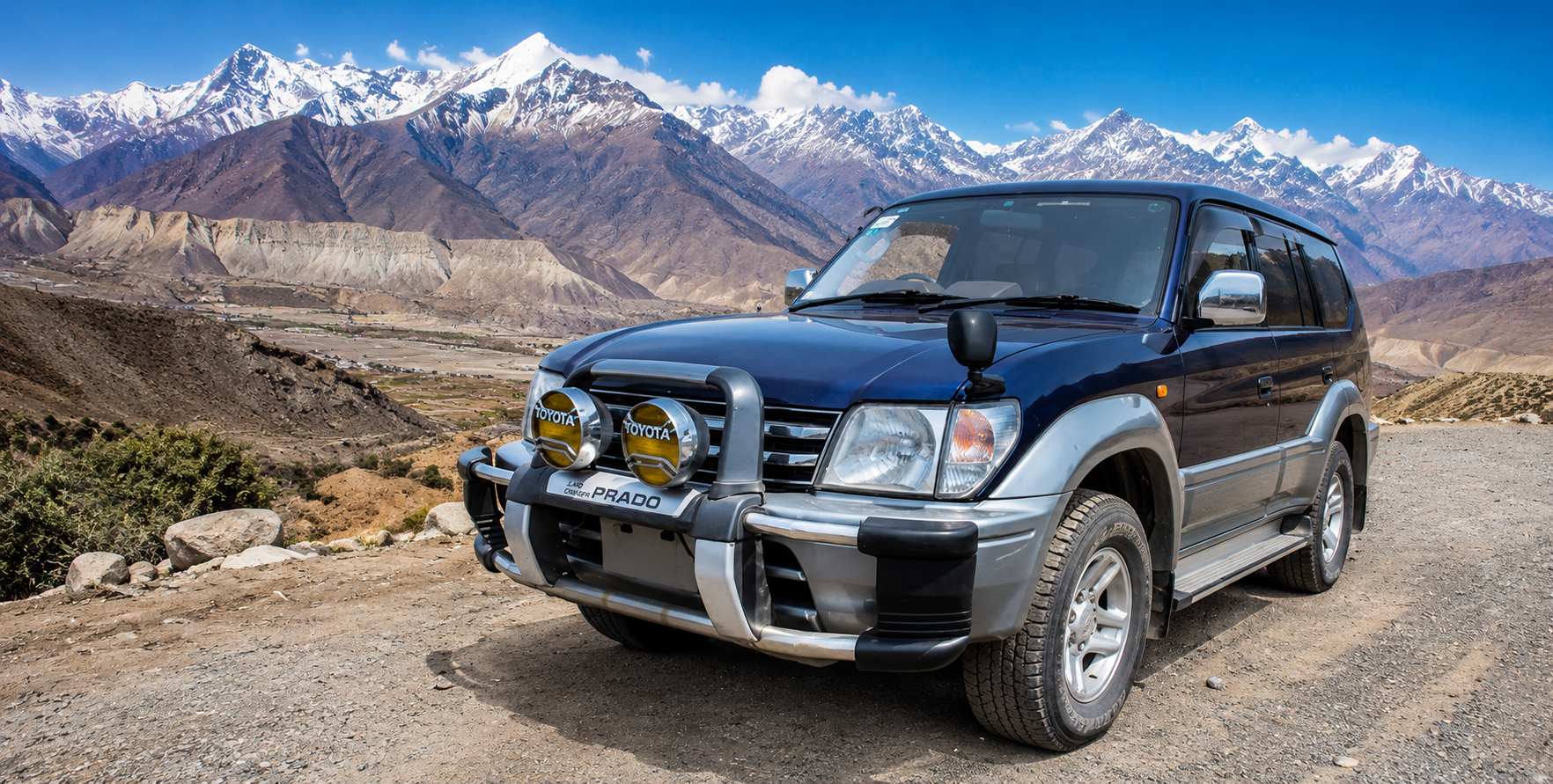
For the most remote high-district sections — the Darchula Mahakali Highway approach to Api Himal, and the final approach tracks to Khaptad National Park — Nepal Vehicle Hiring recommends and deploys the Toyota Land Cruiser 4WD exclusively. As the Api Himal specialist guide confirms: road conditions can be rough and time-consuming in this region, and the Land Cruiser’s 225+ mm ground clearance, multi-terrain management, and comprehensive mechanical self-sufficiency provide a meaningfully larger safety margin on terrain where a breakdown is a genuinely consequential event rather than a minor inconvenience.

The Land Cruiser is also significantly more comfortable on extended multi-day drives, which the Darchula approach inevitably involves.

Permits Required for Sudurpashchim Tour Destinations

Permit requirements across Sudurpashchim vary significantly by destination. It’s best to obtain them in Kathmandu before departure rather than at provincial checkpoints, where processing is slower and, in some cases, not possible for foreign nationals.

For Shuklaphanta Wildlife Reserve, you need to reserve entry permits, payable at the reserve headquarters in Mahendranagar or at the main gate. Under the dual-pricing system, current fees for foreign nationals are significantly higher than for Nepali nationals, and Nepal Vehicle Hiring advises confirming current fee levels with our operations team before travel, as these are subject to revision.

For Khaptad National Park, you can obtain the Khaptad National Park Entry Permit (NPR 1,000 for Nepali nationals, higher for foreign nationals) at the park headquarters or through NTB in Kathmandu. TIMS cards are also required for trekking within the park.

For Api Nampa Conservation Area (covering the Api Himal approach in Darchula District), an Api Nampa Conservation Area permit and TIMS card are mandatory. These are obtained through NTB Kathmandu. No restricted area permit is currently required for Api Himal Base Camp, but a licensed guide is strongly advised given the terrain’s remoteness.

For Badimalika and Ramaroshan, specific temple entry fees and district conservation area permits may apply, and requirements are evolving as the government implements its 2026 tourism development action plan and builds new tourism infrastructure. Nepal Vehicle Hiring advises all Sudurpashchim-bound clients to contact our operations team for the most current permit information specific to their planned destinations.

Book Sudurpaschim Tour Transportation with private cars, 4WD jeeps, Scorpio SUVs, Hiace vans, Coaster buses, and tourist buses for comfortable travel to Khaptad National Park, Api Himal, Shuklaphanta National Park, Mahendranagar, Dhangadhi, and other top destinations in Far Western Nepal.

Seasonal Considerations – When to Visit Sudurpashchim

Sudurpashchim’s geographic diversity means travel seasons vary significantly by zone and destination, so understanding these differences is essential for any transport planning in the province.

The Terai destinations — Shuklaphanta Wildlife Reserve, Ghodaghodi Lake, Mahendranagar, and Dhangadhi city — are best visited between October and April. The Terai summer (May–September) brings intense heat (temperatures regularly exceeding 40°C in June–August), monsoon flooding of some grassland and wetland areas, and reduced wildlife visibility due to dense vegetation.

Wildlife viewing at Shuklaphanta is best between November and March, when grassland vegetation is lower and large swamp deer herds are most visible in the open meadows. Nepal Vehicle Hiring’s Dhangadhi to Shuklaphanta service runs year-round but recommends October to March for optimal wildlife viewing.

The middle hills destinations — Khaptad National Park, Ramaroshan, Badimalika — are most accessible and most rewarding between April–May (spring, with rhododendron bloom on approach roads) and October–November (autumn, with clear mountain views). The monsoon (June–September) makes the district roads to these destinations genuinely dangerous due to landslides and the high probability of temporary road closures.

Nepal Vehicle Hiring does not recommend attempting the Achham, Bajura, or Khaptad approaches during the peak monsoon month. Nepal Vehicle Hiring monitors district road conditions daily from June through September for clients with committed travel dates during this period.

The Api Himal approach in Darchula is best attempted between October–November and April–May. The Mahakali Highway from Dhangadhi to Darchula is accessible year-round in dry conditions. Still, it requires careful assessment during and immediately after heavy rainfall given the river crossings and unstable road sections in the upper stretches.

Practical Tips for Sudurpashchim Tour Transportation

  • Fly to Dhangadhi, Don’t Drive: The 20–24 hour overland journey from Kathmandu to Dhangadhi consumes two full days of tour time. Unless budget is the absolute primary constraint, the 65-minute domestic flight to Dhangadhi Airport is the best way to start any Sudurpashchim tour.
  • Complete All Services in Dhangadhi Before Heading North: ATMs, fuel, SIM card top-up, permit copies, and food supply purchases should all be completed in Dhangadhi. Reliable banking and connectivity cease around Darchula on the northern routes and around Martadi on the Bajura routes.
  • Budget Extra Buffer Days for Remote Routes: Specialist guides for both Api Himal and Badimalika consistently recommend building one to two extra contingency days into any Sudurpashchim itinerary, given the genuine probability of road delays, weather events, or vehicle issues on the province’s more remote district roads.
  • Choose 4WD for All Routes Beyond Dhangadhi City: Standard cars are appropriate only for the Mahendra Highway Terai sections. Any route north of Dhangadhi toward the hills and mountains — Doti, Dadeldhura, Achham, Darchula — requires genuine 4WD capability, with a Land Cruiser strongly preferred for Darchula and Khaptad routes.
  • Inform Nepal Vehicle Hiring of Your Complete Itinerary at Booking: The logistics of a Sudurpashchim tour — multiple vehicle stages, overnight stops in intermediate towns, permit requirements, and the coordination between road transport and trekking support — benefit enormously from being planned as a complete integrated service from the outset rather than booked stage by stage.
  • Connect Trekking Support With Road Transport Booking: For any destination beyond the road-end point — Api Himal Base Camp, Badimalika, Ramaroshan, Khaptad interior — Trek Nepal Himalayas provides licensed guides, porter support, and complete trek logistics that integrate directly with Nepal Vehicle Hiring’s road transport service.
  • Dual-Pricing Awareness: Foreign nationals will pay significantly higher fees than Nepali nationals for domestic flights, national park permits, and some other services in Sudurpashchim. Budget for this reality explicitly rather than discovering it at the time of payment.

Frequently Asked Questions – Sudurpashchim Tour Transportation

What is Sudurpashchim Province and why visit it?

Sudurpashchim Province (Far-West Nepal) is Nepal’s nine-district westernmost province, containing Khaptad National Park, Shuklaphanta Wildlife Reserve, Api Himal (Nepal’s westernmost 7,000 m peak), Badimalika Temple, Ramaroshan sacred lakes, and the Mahakali River corridor. In 2026, the government has specifically named Sudurpashchim tourism development as a national priority, with three new trekking route organisations underway. It offers Nepal’s most authentic frontier adventure tourism experience, without the crowds of the better-known eastern circuits.

What is the best way to get from Kathmandu to Dhangadhi?

A 65-minute domestic flight to Dhangadhi Airport, operated by Buddha Air, Yeti Airlines, and Shree Airlines, is strongly recommended over the 20–24-hour overland option for any visitor with a meaningful itinerary in the province. Note that foreign nationals pay a significantly higher dollar fare than Nepali nationals — budget approximately NPR 30,000–35,000 per person one way.

For the onward journey from Dhangadhi to provincial destinations, Nepal Vehicle Hiring provides complete 4WD and top-end vehicle hire.

Which vehicle does Nepal Vehicle Hiring recommend for Sudurpashchim tours?

The best vehicle depends on the specific destination. A private car is adequate for Terai highway sections (Ghodaghodi Lake, Shuklaphanta, Mahendranagar). Scorpio or Bolero 4WD is the minimum for all routes into the hills (Khaptad, Ramaroshan, Badimalika approaches).

Toyota Land Cruiser is strongly recommended for Darchula-Mahakali Highway (Api Himal) and the most challenging district tracks.

Is Sudurpashchim safe for tourists?

Yes — Sudurpashchim is considered safe for tourists following standard Nepal travel precautions. The main challenges are logistical rather than safety-related: distance, limited infrastructure, and variable road conditions, not security concerns. Nepal Vehicle Hiring recommends using experienced local guides (connect with Trek Nepal Himalayas) for all trekking beyond the road-end points and building buffer days into the itinerary for road delays, a genuine feature of far-western district travel.

Can Nepal Vehicle Hiring arrange complete transport for the Sudurpashchim tour?

Yes — Nepal Vehicle Hiring provides complete integrated transport coordination for Sudurpashchim tours: Dhangadhi Airport pickup, all inter-district road transfers, 4WD hire for district roads, overnight stop coordination, and return airport transfers. For trekking components, we connect clients with Trek Nepal Himalayas and for top-end itineraries with Alpine Luxury Treks—contact: WhatsApp or vehiclehiringnepal.com.

Book Your Sudurpashchim Tour Transport with Nepal Vehicle Hiring

Sudurpashchim Province is Nepal at its most frontier: a region of extraordinary natural beauty, ancient pilgrimage culture, some of the finest unvisited wildlife habitat in South Asia, and the westernmost Himalayan peaks of a country already defined by the world’s highest mountains. It is also, honestly, a region where your transport planning determines whether you reach these extraordinary places or logistics defeat you before you arrive.

The distances are real, the roads are challenging, and the rewards—for those who plan correctly—are unlike anything else in Nepal.

Nepal Vehicle Hiring Pvt Ltd’s Sudurpashchim tour transport service provides the complete road logistics for Far-West Nepal — from Dhangadhi Airport pickup to the last motorable road point at Api Himal trailhead, Khaptad park boundary, or Badimalika approach — with experienced western-Nepal drivers, appropriate 4WD vehicles, and the 24/7 operational support that remote-region travel requires. Working with Trek Nepal Himalayas and Alpine Luxury Treks for the trekking and guided adventure components, we offer Nepal’s most complete Sudurpashchim tour support service.

Call / WhatsApp |  vehiclehiringnepal.com  |  treknepalhimalayas.com  |  alpineluxurytreks.com

Everest Region Road Access and Jeep Rental Guide

Explore the complete Everest Region Road Access and Jeep Rental Guide with the best road routes, private 4WD jeep hire, travel times, road conditions, and transportation options to Salleri, Surke, and the Everest Base Camp trekking region.

Everest Region Road Access and Jeep Rental Guide

Kathmandu → Salleri → Phaplu → Khari Khola → Thamdanda → Surke — The Complete Alternative to the Lukla Flight

Everest Region Road Access — Quick Reference

Primary Road Gateway: Salleri (2,375 m) and Phaplu (2,413 m) — Solukhumbu District
Distance Kathmandu to Salleri/Phaplu: 266–270 km via BP Koirala Highway
Drive Time: 8–10 hours by private 4WD jeep (Kathmandu to Salleri)
2026 Road End: Thamdanda (2,780 m) — extended toward Surke/Paiya near Lukla
Vehicle: 4WD Jeep ESSENTIAL — Toyota Fortuner, Land Cruiser or Hilux
Private Jeep Cost: NPR 28,000–45,000 (Kathmandu to Salleri/Phaplu, one-way)
Extended to Kharikhola/Thamdanda: NPR 38,000–60,000
Why Use Road: Flight cancellations at Lukla are frequent — road is the weather-proof alternative
Trek Permits: Sagarmatha National Park Permit + TIMS + Khumbu Pasang Lhamu Fee
Book: Nepal Vehicle Hiring Pvt. Ltd. | WhatsApp | [email protected]

Introduction: The Road That Changes Everything for Everest Trekkers

For decades, there was only one way to begin the Everest Base Camp Trek: fly from Kathmandu to Lukla on one of the world’s most storied and most nerve-wracking mountain flights — a 35-minute journey in a small Twin Otter aircraft onto a 527-metre runway perched at 2,860 metres on a Himalayan hillside, with a 12 per cent gradient, a sheer drop at the lower end, and a reputation as one of the most dangerous commercial airports on the planet. For most trekkers, the Lukla flight was simply part of the Everest experience — celebrated, feared, endured, and ultimately remembered as one of the trip’s most viscerally exciting moments of the enti e trip.

But the weather made no concessions to schedules or itineraries, and for many trekkers the reality of the Lukla flight was days of delays, canceled bookings, cascading itinerary failures, and the particular misery of sitting in Kathmandu or Ramechhap Airport watching the mountain clouds that stood between them and the world’s greatest trek.

A genuine, increasingly well-developed alternative exists. The road to the Everest region — specifically the route via the BP Koirala Highway from Kathmandu through the Solu Khumbu region to Salleri, Phaplu, Khari Khola, Thamdanda, and now reaching within striking distance of Surke near Lukla — has become a serious, viable, and in many respects superior alternative to the famous flight for trekkers who want to skip the Lukla air lottery and instead experience the extraordinary cultural and geographic landscape of the Solu Khumbu foothills before ascending into the high Humbu on foot.

Nepal Vehicle Hiring Pvt. Ltd. provides the private 4WD jeep service that makes this alternative not just possible but genuinely comfortable, flexible, and rewarding.

This deep-research guide covers the complete picture of Everest region road access and jeep rental in 2026 — the current state of the road network, the specific routes and their drive times, why the road option is gaining rapidly in popularity among experienced Everest trekkers, the vehicle requirements for each section, the complete 2026 cost picture, the permits required, and how Nepal Vehicle Hiring Pvt. Ltd. delivers the most reliable, well-organized version of the Kathmandu to Salleri and Kathmandu to Phaplu jeep transfer that anchors this whole alternative approach to the Everest Base Camp Trek.

Explore the complete Everest Region Road Access and Jeep Rental Guide with the best road routes, private 4WD jeep hire, travel times, road conditions, and transportation options to Salleri, Surke, and the Everest Base Camp trekking region.

The Lukla Flight Problem — Why Trekkers Are Choosing the Road

Lukla Airport: The Statistics Behind the Stress

Tenzing-Hillary Airport at Lukla has been consistently rated as one of the world’s most dangerous commercial airports for decades, and the operational challenges that make it so stem not just from the runway’s physical characteristics but from a meteorological and geographical situation that creates fundamental unpredictability. The airport operates entirely on visual flight rules —meaning that if visibility at either Lukla or Kathmandu’s Tribhuvan International Airport falls below minimum standards, all flights are cancelled, and the backlog of waiting passengers builds rapidly.

During the monsoon season (June–September), flights can be grounded for days at a time. During spring trekking season (March–May), the afternoon cloud buildup narrows the morning flight window, and any delay cascades through the entire day’s schedule.

Even in the supposedly reliable autumn season (October–November), fog and cloud over the Kathmandu Valley can ground the early morning flights that most Lukla schedules rely on.

The practical consequence for trekkers is significant: a meaningful percentage of EBC trekkers experience at least one or two days of Lukla flight delay during their trip, and those whose schedules are not sufficiently flexible — who have pre-booked Kathmandu hotel checkout dates, international flight connections, or work commitments — face the specific anguish of watching their trek shrink day by day as the weather refuses to cooperate. Since the Lukla flight was restructured to operate primarily from Ramechhap Airport (to reduce Kathmandu airspace congestion), the situation has become more complex: trekkers now need to reach Ramechhap (about 130 km from Kathmandu by road, an extra logistical step) for their Lukla flight.

This reorganisation solves some problems but adds transport complexity and another potential point of failure in the Lukla flight system.

Explore the complete Everest Region Road Access and Jeep Rental Guide with the best road routes, private 4WD jeep hire, travel times, road conditions, and transportation options to Salleri, Surke, and the Everest Base Camp trekking region.

The Road as the Weather-Proof Alternative

The road to the Everest region via Salleri and Phaplu is completely independent of the weather conditions that ground Lukla flights. A private 4WD jeep from Nepal Vehicle Hiring Pvt. Ltd. departs your Kathmandu hotel at the agreed time, drives the BP Koirala Highway regardless of cloud, fog, or precipitation, and delivers trekkers to their chosen road-end point on a schedule that depends only on road conditions — which, while variable, do not produce the complete groundings that weather delivers to the Lu la flight system.

This weather independence is, for many trekkers, the single most compelling advantage of the road approach — the certainty of departure and arrival that the flight cannot guarantee.

Beyond the weather advantage, the road to Salleri and Phaplu offers something the Lukla flight cannot: the extraordinary human and cultural landscape of the Solukhumbu region. This mid-hill country lies between Kathmandu and the high Khumbu that 90 per cent of Everest Base Camp trekkers fly over without ever experiencing. The BP Highway corridor passes through Rai and Tamang villages, Sherpa settlements, rhododendron forests, and the Solu plateau—a landscape of authentic Himalayan mid-hill culture that trekkers who experience it on the road approach as one of the most unexpectedly rewarding dimensions of the whole Everest journey.

Explore the complete Everest Region Road Access and Jeep Rental Guide with the best road routes, private 4WD jeep hire, travel times, road conditions, and transportation options to Salleri, Surke, and the Everest Base Camp trekking region.

The  Road Network — Current Access Points and Distances

The BP Koirala Highway — Nepal’s Most Important Trekking Road

The BP Koirala Highway is the backbone of Everest region road access —a major inter-regional road connecting Kathmandu to Nepal’s eastern hill districts via Banepa, Dhulikhel, Khurkot, and Okhaldhunga, then entering the Solukhumbu District toward Salleri. This is the same highway locals use to travel to the eastern hills, with commercial traffic serving the Solukhumbu region’s increasingly growing economy and the growing number of Everest Base Camp trekkers who have discovered this road alternative.

In 2026, the BP Highway is paved for most of its length and is one of Nepal’s better-quality regional road connections. This standard enables the consistent eight- to ten-hour drive time between Kathmandu and Salleri in a capable private vehicle.

Explore the complete Everest Region Road Access and Jeep Rental Guide with the best road routes, private 4WD jeep hire, travel times, road conditions, and transportation options to Salleri, Surke, and the Everest Base Camp trekking region.

The BP Highway route exits Kathmandu eastward through Banepa and Dhulikhel — the same initial section used for the Kathmandu to Nagarkot tour and the Bhaktapur day trip before branching away from the valley rim — and then descends into the Sun Koshi River valley before climbing again into the mid-hill terrain of Okhaldhunga and Sol khumbu districts. The drive through these mid-hill landscapes, particularly the Sun Koshi gorge and the increasingly remote Solu Khumbu foothills, is one of Nepal’s most visually varied and culturally rewarding road journeys.

This experience stands on its own as a worthy part of the Everest trek, not just a means to an end.

Kathmandu to Salleri — The Primary Gateway (267 km)

Salleri (2,375 m), the headquarters of Solukhumbu District, is the primary gateway for the Everest region road approach and the most established point where trekkers in private jeeps arrive to begin their walk toward the Khumbu. The distance from Kathmandu to Salleri is approximately 266.9 to 270 km, depending on the specific route and measurement.

By private 4WD jeep from Nepal Vehicle Hiring Pvt. Ltd., the journey takes about eight to nine hours with a single rest stop, and you must depart Kathmandu by 5:00 AM to arrive in Salleri before dark.

Explore the complete Everest Region Road Access and Jeep Rental Guide with the best road routes, private 4WD jeep hire, travel times, road conditions, and transportation options to Salleri, Surke, and the Everest Base Camp trekking region.

Salleri itself is a well-developed small district town with comfortable guesthouse accommodation, restaurants, ATMs, pharmacies and the full range of services one expects from a district headquarters. It serves as an excellent overnight base before continuing on foot or by vehicle toward the higher Khumbu.

Trek to begin walking from Salleri face approximately three to four trekking days to reach Namche Bazaar — the famous trading hub and acclimatisation top of the Everest Base Camp Trek — passing through the extraordinary cultural landscape of the Solu Khumbu foothills in a way the Lukla flight entirely skips. Those who walk it consistently describe this lower-Khumbu section through Phaplu, Ringmo, Takshindu La, Nunthala, and Phakding as one of the finest and most culturally authentic parts of the entire Everest region trekking experience.

Kathmandu to Phaplu — The Airport Alternative (268 km)

Phaplu (2,413 m) sits approximately 5 km above Salleri on the same road and is perhaps most familiar to trekkers as the location of Phaplu Airport — one of three small airports in the Solukhumbu District, handling flights from Kathmandu on small aircraft when weather permits By private jeep, Phaplu is reached in essentially the same time as Salleri — approximately eight to nine hours from Kathmandu — and represents, for many trekkers, the preferred road terminus because of its slightly higher elevation starting point for the walk-in and the marginally more established trekking infrastructure relative to Salleri The private jeep cost to Phaplu from Kathmandu is essentially identical to the Salleri cost — the additional 5 km does not materially change the vehicle pricing.

Private 4WD jeep driving on the mountain road to the Everest Region with panoramic Himalayan scenery

From Phaplu, you can walk all the way into the Khumbu on the classic lower-Sotakeute, or take a local jeep transfer north to Khari Khola to shorten the approach-day walk. This combination — private jeep from Kathmandu to Phaplu for the comfortable, efficient main journey, followed by a shorter local jeep transfer from Phaplu to Khari Khola — is one of the most popular and practical itinerary structures for trekkers using the road approach to the Everest region in 2026.

Salleri to Khari Khola — The Extended Road (19 km beyond Salleri)

Khari Khola (approximately 2,070 m) lies 19 kilometres north of Salleri along a significantly rougher road than the BP Highway section used for the Kathmandu to Salleri leg. This extension, though short, takes about 45 minutes to an hour in a capable 4WD jeep because of the road quality and gradient.

From Khari Khola, trekkers join the classic trail about two trekking days from Namche Bazaar—significantly reducing the approach walk compared to starting from Salleri or Phaplu, while still experiencing a meaningful section of lower Khumbu landscape. Khari Khola is particularly popular with EBC trekkers on tighter schedules who want to cut approach days while still using the road alternative to Lukla flights.
Private 4WD jeep driving on the mountain road to the Everest Region with panoramic Himalayan scenery

Thamdanda — The 2026 Road End (2,780 m)

Thamdanda, at 2,780 meters, is the current furthest practical vehicle endpoint for Everest region road access in 2026—a small settlement where the road currently terminates and where the walk to Paiya and beyond begins. The drive from Kathmandu to Thamdanda covers approximately 320 to 330 km. In a capable 4WD jeep, it takes ten to twelve hours, making it a very long single-day drive that many operators recommend splitting into two days with an overnight stop in Salleri or Khari Kola.

From Thamdanda, it is about four to five hours of walking to Surke, and another hour to Lukla. Arriving in Lukla by road thus avoids the famous airport entirely—entering it from below on foot rather than above by aircraft.

The road extension to Thamdanda is genuinely transformative for Everest Base Camp trekkers who use it. By driving to Thamdanda and walking the remaining sections to Surke and Lukla, the total approach walking distance from the road-end to Namche Bazaar is reduced to approximately one trekking day — a dramatic reduction from the three to four days of approach walking needed from Salleri, and a compelling option for any trekker who wants the complete freedom of the road approach without the additional days of lower-altitude walking.

Explore the complete Everest Region Road Access and Jeep Rental Guide with the best road routes, private 4WD jeep hire, travel times, road conditions, and transportation options to Salleri, Surke, and the Everest Base Camp trekking region.

The Road to Surke — The Near-Future Extension

According to road development reports from the Khumbu Pasang Lhamu Rural Municipality, the road is being progressively extended from Thamdanda toward Surke (approximately 2,310 m), a village immediately below Lukla Airport.  Survey work for this extension is complete, and construction is ongoing, with the road reaching parts of the Surke approach area in 20 5-2026. When complete, the Surke extension will make the road approach essentially equivalent to the Lukla flight in terms of access: trekkers arriving by jeep from Kathmandu will reach the same point as those arriving by aircraft, but without the weather dependency, the flight cost, and the airport anxiety. This development is widely regarded as one of the most significant changes in Everest region trekking logistics in many years.

Cost Comparison: Road vs Lukla Flight

The cost comparison between the road approach to the Everest region and the Lukla flight is more nuanced than a simple number comparison, but directionally very clear  A one-way Lukla flight from Kathmandu (or from Ramechhap, plus the Kathmandu to Ramechhap vehicle transfer) costs foreign nationals approximately USD 180 to 220 per person each way — making the round-trip flight cost approximately USD 360 to 440 per person, exclusive of the booking fees, hotel nights during weather delays, and the cost of the Ramechhap transfer that is now required for most morning flights.

Explore the complete Everest Region Road Access and Jeep Rental Guide with the best road routes, private 4WD jeep hire, travel times, road conditions, and transportation options to Salleri, Surke, and the Everest Base Camp trekking region.

A private 4WD jeep from Nepal Vehicle Hiring Pvt. Ltd. from Kathmandu to Salleri or Phaplu costs approximately NPR 28,000 to 45,000 (USD 200 to 300) for the entire vehicle — which, shared between a group of four to six trekkers, produces a per-person cost of approximately USD 35 to 70 each way  Even for a solo traveller paying the full vehicle cost, the one-way jeep rental at USD 200 to 300 is still lower than a single one-way Lukla flight, and t. The road saves the second flight entirely.

For groups of four or more, the economic case for the road is overwhelming — the total vehicle hire cost for a group return journey is often lower than the cost of a single person’s round-trip Lukla flights.

The Cultural Dimension: What the Flight Misses

Perhaps the most compelling case for the road approach to the Everest region is not the cost or the weather independence, but what the road shows you that the Lukla flight skips entirely. The BP Highway corridor from Kathmandu through the Solu Khumbu foothills passes through one of Nepal’s most culturally rich and least touristically developed landscapes — Rai villages with their distinctive cultural traditions and local deities, Sherpa communities in the mid-hills that preceded the high Khumbu settlement and maintain a more diverse economic base than the trek-focused higher villages, Tamang communities with their Buddhist monasteries and chorten networks, and the extraordinary Solu plateau landscape with its apple orchards, Takshindu La pass (3,071 m) panoramas, and the famous Takshindu Monastery that has been welcoming travelers on this ancient route for centuries.

Trekkers who drive to Salleri and walk in through the lower Solu Khumbu are essentially recreating the experience of the historic Jiri to Everest Base Camp route — the route used by the earliest serious trekkers to the Everest region before Lukla Airport was built in 1964 and by Sir Edmund Hillary’s support teams in the years following the first Everest ascent. This historic route through the lower Khumbu is currently walked by fewer than 5 per cent of EBC trekkers — and those who choose it consistently describe it as the most authentic and culturally rich section of their entire Nepal experience.

Private 4WD jeep driving on the mountain road to the Everest Region with panoramic Himalayan scenery

The Jeep Rental: Vehicle Requirements for Each Road Section

The BP Koirala Highway from Kathmandu to Salleri and Phaplu is paved for the majority of its length and is in generally good condition by Nepal mid-hill road standards. In the dry season, well-maintained standard vehicles can manage the route.

Still, Nepal Vehicle Hiring Pvt. Ltd. recommends a 4WD Toyota Fortuner or Land Cruiser for all Everest region road transfers for consistent reasons: the BP Highway includes several sections of rough or damaged surface that benefit from higher ground clearance; the route passes through areas with periodic landslide risk where a robust vehicle provides greater safety margin; and the very long drive time of eight to ten hours makes the comfort and stability of a quality 4WD vehicle significantly more valuable for trekkers who need to arrive at the road end in reasonable condition for the walking that follows.

The Toyota Fortuner — the most popular option in Nepal Vehicle Hiring Pvt. Ltd.’s fleet for this route — offers the right mix of cabin comfort for the long journey, enough luggage space for trek gear, and genuine 4WD capability for the road’s variable sections. For groups of six or seven, the Toyota Land Cruiser is the recommended upgrade—its larger cabin, superior engine torque for long, sustained mountain grades, and top-end passenger space make it the first choice for full groups undertaking the Kathmandu to Salleri jeep rental.

Private 4WD jeep driving on the mountain road to the Everest Region with panoramic Himalayan scenery

Salleri to Khari Khola and Thamdanda — 4WD Mandatory

Beyond Salleri and Phaplu, the road toward Khari Khola and Thamdanda becomes progressively rougher and more technically demanding, transitioning from the relatively well-maintained BP Highway standard to a rough jeep track that requires genuine 4WD capability to navigate reliably. This section—particularly the Khari Khola to Thamdanda segment—involves narrow mountain tracks, significant gradient changes, river proximity, and a road surface that deteriorates substantially during and after the monsoon.

We recommend a Toyota Hilux 4WD or Land Cruiser for the Khari Khola to Thamdanda section, as its higher ground clearance and more robust off-road drivetrain provide the additional capability this terrain demands.

Nepal Vehicle Hiring Pvt. Ltd. currently operates the Kathmandu to Salleri/Phaplu transfer using its main 4WD fleet from the capital. For the extension from Salleri to Khari Khola and Thamdanda, the company coordinates with local operators who use vehicles adapted for the upper road section—ensuring the right vehicle type for each segment of the journey.

Trekkers who want to travel beyond Phaplu to Khari Khola or Thamdanda should discuss this with the Nepal Vehicle Hiring Pvt. Ltd. team when booking so they can coordinate the full vehicle arrangement in advance.

The Everest Region Road Transfer — Stage by Stage

Stage 1: Kathmandu to Banepa and Dhulikhel (31 km / 1 hour)

The Kathmandu to Salleri jeep departs from your hotel in Kathmandu at the recommended time and heads eastward through the capital toward Banepa and Dhulikhel — the same initial stretch used for the Bhaktapur heritage tour and the eastern valley rim approach before branching onto the Highway southward. The Kathmandu Valley exit via Banepa is straightforward and well-paved, with the road reaching Dhulikhel at approximately 1,550 meters — a popular starting point for the BP Highway’s descent toward the Sun Koshi valley.

Private 4WD jeep driving on the mountain road to the Everest Region with panoramic Himalayan scenery

Stage 2: Dhulikhel to Khurkot via Sun Koshi (70 km / 2.5 hours)

From Dhulikhel, the BP Koirala Highway descends through switchbacks to the Sun Koshi River valley at Dolalaghat bridge, then climbs again through the mid-hill terrain of Sindhuli District toward Khurkot. This section of approximately 70 kilometres contains some of the most varied and visually rich landscape of the entire Kathmandu to Salleri road journey — the Sun Koshi River gorge scenery, the progressive change in vegetation character from the Kathmandu Valley‘s temperate zone to the subtropical character of the lower river valleys, and the first encounters with the Tamang and Rai communities whose villages line the highways it climbs toward the Solukhumbu District border  Khurkot is the junction where the BP Highway meets the Khurkot Ghurmi Madhya Pahadi Highway, marking the transition into the final section toward Okhaldhunga and Solukhumbu.

Private 4WD jeep driving on the mountain road to the Everest Region with panoramic Himalayan scenery

Stage 3: Khurkot to Salleri via Okhaldhunga (166 km / 4.5–5 hours)

The longest and most scenic section of the Kathmandu to Salleri drive runs from Khurkot through Okhaldhunga and into Solukhumbu District toward Salleri. This section covers about 166 kilometres. It takes four to five hours in a capable private 4WD jeep.

The road climbs progressively through the Solu Khumbu foothills, passes the district headquarters of Okhaldhunga, and continues through the increasingly Sherpa-influenced cultural landscape of the upper Solu region before reaching Salleri. This section also passes through the zone most susceptible to seasonal landslides—an important consideration for monsoon-season travel planning, when Nepal Vehicle Hiring Pvt. Ltd.‘s real-time road condition monitoring is most valuable for ensuring a safe, efficient journey.

Permits Required for the Everest Region Trek via Road Access

Sagarmatha National Park Entry Permit

All trekkers entering the Everest region need a Sagarmatha National Park Entry Permit, including those using the road approach via Salleri and Phapu  The cost is NPR 3,000 for foreign nationals  Trekkers can obtain the permit at the Nepal Tourism Board office in Kathmandu or at the National Park entry checkpoints on the trail  Trekkers using the road approach from Salleri or Phaplu enter the Sagarmatha National Park boundary later in the trek than those flying to Lukla—typically on the classic route—and the permit is checked at the Monjo checkpoint  The most reliable approach is to obtain this permit in Kathmandu before the Salleri jeep transfer.

Khumbu Pasang Lhamu Rural Municipality Fee

A Khumbu Pasang Lhamu Rural Municipality Trekking Fee of NPR 2,000 per person is levied on all trekkers entering the Khumbu Pasang Lhamu municipality area — which includes the upper Everest region above Mo jo. This fee funds local development and conservation within the municipality and is collected at the Monjo checkpoint on the classic EBC route.

Trekkers using the road approach from Salleri pass through this checkpoint the same way as those arriving from Lukla and pay the same fee.

TIMS Card

The TIMS Card (NPR 2,000 for individual trekkers) must be obtained from the Nepal Tourism Board in Kathmandu before departure  As with all Nepal trekking permits, obtaining this card in Kathmandu the day before the Salleri jeep transfer is the most reliable and time-efficient approach  Nepal Vapproachiring Pvt. Ltd. includes permit reminders in all Everest region transfer booking confirmations.

Private 4WD jeep driving on the mountain road to the Everest Region with panoramic Himalayan sceneryCost Guide: Everest Region Jeep Rental 2026 (Verified Rates)
The following cost information for Everest region jeep rental reflects all-inclusive pricing from Nepal Vehicle Hiring Pvt. Ltd., covering the driver, fuel, vehicle insurance, and hotel pickup from anywhere in Kathmandu.

Kathmandu to Salleri or Phaplu — One-Way: NPR 28,000 to 45,000 | NPR 35,000 to 60,000. These reflect the long distance of about 267 km, requiring a 9- to 10-hour drive, and the fuel consumption of a 4W operating on mixed BP Highway terrain for a full day.

Kathmandu to Khari Khola — One-Way: NPR 35,000 to 48,000 (Toyota Fortuner or Hilux)  The extension from Salleri to Khari Khola (19 km on rough road) adds about NPR 7,000 to 12,000 to the Salleri base rate, reflecting additional vehicle time and road difficulty.

Kathmandu to Thamdanda — One-Way (Full Road Extension): NPR 45,000 to 60,000. This complete Everest region road jeep rental package covers the entire current road extent from Kathmandu to the trek start point closest to Lukla . he rate reflects the very long single-day or two-day journey and the significantly more demanding road conditions on the upper section.

Return Pickup (Salleri/Phaplu to Kathmandu): US$350 (4Wd Jeep) — slightly lower than outbound due to the partial uphill character of the Salleri approach road. As with all Nepal Vehicle Hiring Pvt. Ltd. services, you can pre-book the return pickup and adjust the date via  WhatsApp during the trek.

Per-person economics for groups: for a group of four sharing a Fortuner jeep rental to Salleri, the per-person one-way cost is approximately NPR 7,000 to 8,750 (USD 51 to 64) — dramatically less than the USD 180 to 220 Lukla flight and with a significantly better journey experience included.

Everest expeditions

Planning Your Everest Region Road Transfer — Practical Guide

Optimal Departure Timing

The Kathmandu to Salleri jeep transfer requires the earliest departure of any standard Nepal trekking trailhead transfer — Nepal Vehicle Hiring Pvt. Ltd. recommends departing your Kathmandu hotel at 5:00 AM or earlier for the Salleri route. This early start is non-negotiable for a single-day transfer — the nine to ten hour drive time means that a 5:00 AM departure from Kathmandu delivers trekkers to Salleri by approximately 2:00 to 4:00 PM, leaving adequate time to check into accommodation before dark  Departures after 6:00 AM risk arriving in Salleri after nightfall, which is uncomfortable and adds no trekking value.

Two-Day Transfer Option for Thamdanda

For trekkers who want to reach the road end at Thamdanda rather than beginning their walk from Salleri, a two-day transfer is the preferred arrangement — Day 1 from Kathmandu to Salleri overnight, Day 2 from Salleri to Thamdanda in a local jeep, arriving at the walk-in point in the morning with a full day’s walking available  Nepal Vehicle Hiring Pvt. Ltd. coordinates the full two-day arrangement, including the Salleri accommodation recommendation and the local jeep coordination for the upper section.

Pre-Transfer Kathmandu Activities

Trekkers arriving in Kathmandu with one or two days before the Salleri transfer have excellent sightseeing options. Nepal Vehicle Hiring Pvt. Ltd.‘s Kathmandu sightseeing tour covers Boudhanath Stupa, Pashupatinath Temple, Swayambhunath, and Patan Durbar Square in a si. le day  The Bhaktapur Durbar Square day tour and Nagarkot sunrise tour are further excellent options for pre-trek engagement with Nepal’s extraordinary heritage.

Nepal Vehicle Hiring Pvt. Ltd. — The Trusted Everest Road Access Partner

Nepal Vehicle Hiring Pvt. Ltd. brings to the Everest region road transfer service the same qualities that have made it Nepal’s most trusted private vehicle hire company across its full range of services: meticulously maintained 4WD vehicles — Toyota Fortuner, Toyota Land Cruiser, and Toyota Hilux — experienced drivers with specific knowledge of the BP Koirala Highway and the Solukhumbu District road network, transparent all-inclusive pricing, and the 24-hour support on WhatsApp that keeps clients informed and connected throughout one of Nepal’s most logistically demanding trekking transfer journeys.

Whether you are planning a Kathmandu to Salleri jeep hire to begin the Everest Base Camp Trek by road, a private jeep rental to Phaplu,  as the weather-independent alternative to the Lukla flight, or a complete Kathmandu to Thamdanda vehicle service that takes you to within walking distance of the famous Lukla Airport approach trail, Nepal Vehicle Hiring Pvt. Ltd. has the vehicle, the driver, and the operational expertise to make the journey reliable, comfortable, and genuinely enriching.

Book Your Everest Region Jeep Rental with Nepal Vehicle Hiring

Website: www.vehiclehiringnepal.com
WhatsApp(24/7 — 5 AM Departures Available)
✉Email: [email protected]
Office: Bhagawatisthan, Thamel, Kathmandu, Nepal
Fleet: Toyota Fortuner 4WD | Toyota Land Cruiser | Toyota Hilux 4WD
Routes: Kathmandu → Salleri | Kathmandu → Phaplu | → Khari Khola | → Thamdanda
Return Pickup: Salleri/Phaplu to Kathmandu — pre-book, date-flexible via WhatsApp
8,000+ Happy Customers | 5.0 TripAdvisor | 200+ Verified Reviews
All-Inclusive Pricing | Hotel Pickup | Experienced Mountain Drivers
Licensed & Registered | Company Reg. No. 219204 | Best Value Guaranteed

Frequently Asked Questions — Everest Region Road Access and Jeep Rental

How far is it by road from Kathmandu to Salleri or Phaplu?

The road distance from Kathmandu to Salleri is approximately 266.- 270 km via the BP Koirala Highway. Phaplu is about 5 km further, making the total distance to Phaplu about 272 km.  By private 4WD jeep from Nepal Vehicle Hiring Pvt. Ltd., the drive takes eight to nine hours with a single rest stop, requiring a 5:00 AM departure from Kathmandu for a comfortable pre-dark arrival.

Is the road approach to the Everest region better than the Lukla flight?

The road approach is better in specific and significant ways  For example: it is completely weather-independent (no cancellations), substantially less expensive for groups of 3 or more, and delivers trekkers through the extraordinary Solu Khumbu cultural landscape that the flight skips entirely  The Lukla flight is better when time is the absolute priority and budget is secondary — it delivers trekkers to the heart of the Khumbu in 35 minutes instead of 8 hours  For most independent trekkers and groups traveling in 2026, the combination of private jeep transfer to Salleri or Phaplu followed by the walk-in through the lower Khumbu represents the most rewarding, most reliable, and most cost-effective approach to the Everest Base Camp Trek.

Can I drive all the way to Lukla?

Not yet, but the road is getting closer. the road extends to approximately Thamdanda (2,780 m) and partially toward Surke (near Lukla)  From Thamdanda, it takes about four to five hours to walk to Surke and one more hour to Lukla  Complete road access to Lukla or Surke is expected within the next few years as road construction continues  Nepal Vehicle Hiring Pvt. Ltd. provides the most current road-end information at the time of booking.

How much does a Kathmandu-to-Salleri jeep rental cost?

A private Toyota Fortuner 4WD jeep from Nepal Vehicle Hiring Pvt. Ltd., from Kathmandu to Salleri or Phaplu, costs approximately NPR 28,000 to 45,000 (USD 200–400), all-inclusive, for the full vehicle  For a group of four sharing the vehicle, the per-person cost is approximately NPR 7,000 to 8,750—significantly less than the USD 180 to 220 cost of a Lukla flight per person  Contact Nepal Vehicle Hiring Pvt. Ltd. on WhatsApp for a quote based on your dates and group size.

What vehicle is best for the Kathmandu to Salleri road?

A Toyota Fortuner 4WD is the standard recommendation for the Kathmandu to Salleri transfer for groups of two to five, or groups of six or seven. The Toyota Land Cruiser provides the best cabin space and performance for the long journey.  For the extension beyond Salleri toward Khari Khola and Thamdandawe, we specifically recommend the Toyota Hilux 4Wd for its high ground clearance and mechanical robustness on the more demanding upper road.

Conclusion: The Road Is Open — The Everest Adventure Begins Here

The Everest region road access represents one of the most significant and positive changes in Nepal trekking logistics of the past decade. The road to Salleri, Phaplu, Khari Khola, and now Thamdanda has transformed what was once a binary choice — fly to Lukla or don’t go to Everest — into a genuine and in many ways superior alternative that is weather-independent, cost-effective for groups, and culturally enriching in ways the flight cannot replicate The ancient Solu Khumbu landscape that the road corridor reveals — the Rai villages, the Sherpa settlements, the rhododendron forests, the Takshindu Monastery, the extraordinary mid-hill cultural geography that Hillary’s earliest support teams walked through — is waiting to be rediscovered by the 95 percent of Everest trekkers who have never seen it.

Nepal Vehicle Hiring Pvt. Ltd. is the trusted jeep rental partner that makes this road approach comfortable, reliable, and well-organised—with hotel pickup and the extraordinary BP Highway journey to the Salleri or Phaplu road-end, and back again at the trek’s end with the same quality vehicle and driver. Contact us today on WhatsApp  or vehiclehiringnepal. om. The road to Everest is open — and it is extraordinary.

Kathmandu Car Rental

Patan Durbar Square in the Kathmandu Valley

Kathmandu Car Rental | Best Car Hire Service Nepal

Kathmandu engages all your senses. From ancient, prayer-flag-draped stupas to bustling alleyways filled with the aroma of spices and fresh momos, Nepal’s vibrant capital is rich with history and culture. Navigating its lively streets, UNESCO World Heritage Sites, and surrounding mountain viewpoints should feel like an adventure—not a stressful chore.

While public transport can be crowded and fixed tour itineraries often feel rushed, booking a private vehicle gives you total control over your journey. Whether you need a smooth airport transfer, a full day of sightseeing, or a scenic drive up into the hills, our vehicle rental services ensure you travel safely, comfortably, and on your own terms.

Sightseeing & Travel Packages

We offer transparent pricing and tailored packages for every travel style, from solo travellers and families to large tour groups.

jarakpur to kathmandu car

Kathmandu Valley Full-Day Sightseeing Tour

Duration: Up to 6 Hours (Covers 3 to 4 major sites)

Experience Nepal’s historical and spiritual heart at your own pace. Our full-day city tour takes you directly to Kathmandu’s most iconic UNESCO World Heritage Sites without the hassle of hailing taxis or navigating local bus routes.

  • Swayambhunath (The Monkey Temple): Perched high on a hill, this ancient stupa offers panoramic views across the entire Kathmandu Valley, surrounded by playful resident monkeys and fluttering prayer flags.
  • Boudhanath Stupa: One of the world’s largest spherical stupas and the focal point of Tibetan Buddhism in Nepal. Spin prayer wheels alongside local pilgrims as you soak in the peaceful atmosphere.
  • Pashupatinath Temple: A sacred Hindu temple complex situated along the banks of the Bagmati River, offering profound insights into Nepal’s spiritual traditions and open-air cremation rituals.
  • Kathmandu Durbar Square: Walk through the historic seat of Nepalese royalty, home to intricate wooden architecture, ancient courtyards, and the Kumari Ghar (residence of the Living Goddess).

Vehicle Pricing (Full-Day Tour)

Vehicle TypeCapacityDurationPrice (NPR)

Sedan / Car

3 Passengers + Driver

Max 6 Hours

Rs. 6,000- 8,000(USD 60-80)

4×4 Jeep

7 Passengers + Driver

Max 6 Hours

Rs. 10,000- 12,000(USD 80-90

HiAce Van

14 Passengers + Driver

Max 6 Hours

Rs. 10,000- 15,000(USD 90-100)

Coaster / Bus

35 Passengers + Driver

Max 6 Hours

Rs. 25,000 – 30,000(USD 10-160)

Kathmandu Car Rental

Chandragiri Hills Day Trip

Duration: Up to 6 Hours (Round Trip)

Escape the city hustle with a scenic drive to the base of Chandragiri Hills. On the valley’s southwestern rim, Chandragiri is famous for its state-of-the-art cable car ride to the summit. On clear days, the peak offers sweeping views of the Himalayan range—including Mount Everest—alongside the historic Bhaleshwor Mahadev Temple. Your driver will drop you at the cable car station, wait comfortably while you explore, and bring you back smoothly.

Kathmandu Car Rental

Nagarkot Transfers (One-Way Pickup or Drop)

Nagarkot is renowned for offering some of the best mountain sunrise and sunset views in Nepal. If you’ve already booked your accommodation or plan to trek back down through local villages, our one-way pickup or drop-off service ensures a smooth, stress-free drive along the winding hill roads.

Vehicle Pricing (One-Way Drop or Pickup)

Vehicle TypeCapacityPrice (NPR)

Sedan / Car

3 Passengers + Driver

Rs. 8,000

4×4 Jeep

7 Passengers + Driver

Rs. 10,000

HiAce Van

14 Passengers + Driver

Rs. 15,000

Coaster / Bus

35 Passengers + Driver

Rs. 30,000

Nagarkot Sunrise Tour-Kathmandu Car Rental

Nagarkot Overnight Package (Round Trip)

Spend a relaxing night in the hills to catch both the sunset and the striking golden sunrise over the Himalayas. Our overnight package covers private transport to Nagarkot, driver accommodation/allowance, and your return trip to Kathmandu the following day.

Vehicle Pricing (Overnight Trip)

Vehicle TypeCapacityPrice (NPR)

Sedan / Car

3 Passengers + Driver

Rs. 12,000

4×4 Jeep

7 Passengers + Driver

Rs. 15,000

HiAce Van

14 Passengers + Driver

Rs. 20,000

Coaster / Bus

35 Passengers + Driver

Rs. 35,000

Kathmandu Car Rental

Tribhuvan International Airport (TIA) Transfers

Start or end your journey in Nepal without the stress of flights. Your driver will track your arrival time, meet you outside the terminal with a personalised sign, help with your luggage, and drive you comfortably to your Kathmandu hotel.

Vehicle Pricing (Airport Transfer)

Vehicle TypeCapacityPrice (NPR)

Sedan / Car

3 Passengers + Driver

Rs. 3,000

4×4 Jeep

7 Passengers + Driver

Rs. 4,000

HiAce Van

14 Passengers + Driver

Rs. 6,000

Coaster / Bus

35 Passengers + Driver

Rs. 10,000

Nepal Tour Package

Why Rent a Private Vehicle in Kathmandu?

  • Total Flexibility: Travel at your own pace without feeling rushed by rigid tour groups. Want to stay an extra hour enjoying tea overlooking Boudhanath? Your vehicle waits for you.

  • Comfort & Climate Control: Kathmandu’s weather can be hot or dusty depending on the season. Relax in clean, air-conditioned vehicles with ample legroom and space for luggage.

  • Experienced Local Drivers: Navigating Nepal’s traffic and narrow streets requires local expertise. Our professional, vetted drivers know the safest, fastest routes so that you can relax.

  • Transparent Rates: No hidden charges or unexpected taxi haggling. Your clear upfront price includes fuel, driver fees, and vehicle rental.

Essential Travel Tips for a Smooth Rental Experience

  1. Book Ahead in Peak Tourist Months: Autumn (Sept–Nov) and Spring (March–May) are busy travel seasons in Nepal. Book early to secure your vehicle and get the best rates.

  2. Inspect the Vehicle: Before you set off, do a quick walkaround with your driver to make sure it meets your comfort and luggage needs.

  3. Keep Essentials Handy: Carry a copy of your passport/ID, basic cash for entrance fees or personal purchases, and a water bottle for your day trips.

  4. Communicate Flexible Plans: If you wish to make extra stops or adjust your timings, coordinate with your driver or our support team beforehand.

Swayambhunath visit during Kathmandu Pokhara Tour

Frequently Asked Questions (FAQ)

Are driver charges included in the rental price?

Yes! All quoted prices include the vehicle, driver allowances, and fuel. You do not need to hire or pay a driver separately.

How experienced are the drivers?

Our drivers are seasoned professionals who specialise in tourist transportation. They hold valid commercial licenses, have extensive experience on mountain roads and in local city traffic, and prioritise safety at all times.

What documents do I need to book a vehicle?

Booking is simple. International travellers only need to provide a copy of their passport and a valid contact number (such as WhatsApp).

What payment options do you accept?

We accept cash (NPR), local bank transfers, digital wallets, and major credit/debit cards.

What happens if I need to extend my trip or change plans mid-route?

We understand travel schedules change! Just contact our support team as early as possible to request an extension or itinerary change, and we will adjust your schedule based on vehicle availability. Does insurance cover the vehicle?

Yes, all our rental vehicles are fully insured and maintained in strict accordance with safety regulations.

College Tour Vehicle Service in Nepal

Prithivi highway road png

College Tour Vehicle Service in Nepal: Safe, Comfortable & Affordable Student Group Transportation Guide

Every year, colleges, universities, and schools across Nepal organise a wide range of educational tours, study excursions, and field trips that take students well beyond the classroom, from the medieval Durbar Squares of the Kathmandu Valley to the wildlife-rich lowlands of Chitwan and the pilgrimage significance of Lumbini. Behind every successful college tour sits a less visible but genuinely critical piece of planning: reliable, safe, and properly coordinated 

college tour vehicle service capable of moving large student groups efficiently and safely across the country.

This guide covers everything educational institutions need to know about arranging vehicle transport for college and school tours in Nepal: vehicle options for different group sizes, popular educational tour destinations, safety standards specific to student transport, planning and coordination logistics, cost factors for group bookings, and how to combine an academic tour with the wider cultural and natural experiences Nepal has to offer. Nepal Vehicle Hiring has coordinated transport for college and school groups nationwide for years, and this guide draws directly on that experience.

Bg highway

What a College Tour Vehicle Service Actually Involves

Arranging reliable transport for a college or school tour differs considerably from booking a single private vehicle for an individual traveller or small family group. Institutional bookings typically involve larger groups, often 40 to 60 students plus accompanying teachers and staff, multi-day itineraries spanning several destinations, strict safety and supervision requirements, and a level of budget accountability that individual travellers rarely need to navigate.

A genuine college tour vehicle service accounts for all of these factors from the outset, rather than simply scaling up a standard tourist vehicle booking.

In practice, this typically means carefully coordinating multiple vehicles at once, such as a combination of buses or coasters for the main student group alongside smaller vehicles for staff or equipment, planning realistic daily schedules that account for educational site visit durations rather than purely tourist sightseeing pace, and maintaining clear, ongoing communication with the coordinating teacher or administrator responsible for the trip’s overall success.

Vehicle Options for College and School Groups

Coaster and Full-Size Bus

For larger student groups, our 

Coaster and Bus hire fleet remains the standard choice, offering the seating capacity needed to keep an entire class or year group travelling together rather than splitting across multiple smaller vehicles. This consolidation also simplifies supervision, as teachers can keep the full group in sight and stay in easy communication throughout the journey.

Executive Hiace for Smaller Groups

For smaller classes, university department trips, or staff accompanying a larger student group in a separate vehicle, our 

Hiace hire service offers a more manageable vehicle size, with reclining seating and ample luggage capacity, for shorter research or study trips.

Private Cars for Faculty and Equipment

Larger college tours often need a separate vehicle for faculty coordinators, guest lecturers, or specialised scientific field-study gear, alongside the main group transport, without overloading the primary student vehicle.

Kathmandu Valley Heritage Sites

For history, architecture, and broader cultural studies programs, the Kathmandu Valley’s UNESCO World Heritage Durbar Squares offer an unmatched educational resource in a compact geographic area. Our 

Kathmandu sightseeing tour and 

Colleges frequently book Bhaktapur Durbar Square tour services for exactly this kind of heritage and architecture-focused excursion.

Chitwan National Park for Biology and Environmental Studies

Book a reliable College Tour Vehicle Service in Nepal with tourist buses, Coaster buses, Hiace vans, private cars, and 4WD jeeps for safe, comfortable, and affordable educational trips.
Chitwan

Biology, environmental science, and wildlife conservation programs regularly organise dedicated field trips to Chitwan National Park, one of Nepal’s premier wildlife destinations and a UNESCO World Heritage Site. Our 

Pokhara to Chitwan bus service supports colleges combining a Pokhara stay with a Chitwan field study extension.

Lumbini for Religious and Historical Studies

Religious studies, history, and Buddhist philosophy programs often organise excursions to Lumbini, the birthplace of Lord Buddha, arranged through our 

Kathmandu to Lumbini bus service, offering students direct engagement with one of Buddhism’s most significant historical sites.

Pokhara for Geography and Environmental Field Studies

Geography and environmental science programs frequently use Pokhara and the surrounding Annapurna foothills as a practical field study location, examining topics from glacial lake formation to rural agricultural practices, supported by our 

car hire in Pokhara and 

Kathmandu to Pokhara bus service.

Safety Standards Specific to Student Transport

Transporting groups of students carries a different safety and liability profile than standard tourist transport, and a genuine college tour vehicle service should reflect this in its operating standards. This includes drivers specifically briefed on student group conduct and supervision cooperation with accompanying teachers, vehicles maintained to a consistently high standard given the larger passenger loads typically involved, clear emergency contact and response protocols shared with the coordinating institution before departure, and realistic daily travel schedules that avoid excessive driving hours or late-night travel wherever possible.

Planning and Coordination for Institutional Bookings

Successful college tour transport planning typically begins well before the trip, often several weeks to a few months out, depending on group size and itinerary complexity. Key planning elements include confirming exact student and staff numbers to determine appropriate vehicle count and class, agreeing a detailed day-by-day itinerary accounting for educational site visit durations rather than standard tourist pacing, establishing clear points of contact between the vehicle provider and the coordinating teacher or administrator, and confirming payment and invoicing arrangements suited to institutional procurement processes rather than individual traveller billing.

Combining Educational Tours With Broader Cultural Experiences

Many college tours combine their core educational objectives with broader cultural experiences that enrich the overall trip. A sunrise excursion through our 

Nagarkot sunrise tour vehicle service offers a memorable shared experience for a student group beyond the core academic itinerary, while a properly organised 

Kathmandu airport transfer ensures a smooth, well-supervised arrival for groups travelling from other parts of Nepal or internationally.

Cost Factors for College Tour Vehicle Bookings

Institutional vehicle bookings benefit from meaningful economies of scale compared to individual traveller transport, since a single Coaster or Bus booking covers an entire student group rather than requiring multiple smaller vehicle bookings. Cost factors include total group size and resulting vehicle count, trip duration and total distance covered across the itinerary, and any additional vehicles required for faculty or equipment.

Our team is glad to prepare a detailed institutional quote based on your specific group size, itinerary, and travel dates. Visit our

homepage or explore our full 

vehicle fleet for further details.

Best Time of Year for College Tours

Most college and school tours in Nepal are scheduled around the academic calendar, typically clustering in autumn and spring, which also align with Nepal’s most reliable weather and road conditions. This overlap helps institutional trip planning, since the same October-to-November and March-to-May windows favoured by trekkers and tourists also offer the most predictable travel conditions for larger-group transport over longer distances between Kathmandu, Pokhara, Chitwan, and Lumbini.

College students traveling in a tourist bus and Hiace van during an educational tour in Nepal

How to Book Your College Tour Vehicle Service

Booking begins when you share your total group size, proposed itinerary, and travel dates with our team, so we can recommend the right vehicle combination and prepare a detailed quote tailored to your institution’s budget and procurement requirements. We recommend starting at least four to six weeks before your intended travel dates, especially for larger groups or during peak autumn and spring seasons, to ensure vehicle availability and proper route planning.

Frequently Asked Questions

What is the ideal vehicle for a college tour of forty to fifty students?

A full-size Coaster or Bus is generally the most efficient choice for groups of this size, keeping the entire student group together in a single vehicle for easier supervision and coordination.

How far in advance should we book college tour transport?

We recommend booking at least four to six weeks ahead, especially for larger groups or trips during the peak autumn and spring seasons when vehicle demand is highest.

Can you arrange vehicle hire for multi-day, multi-destination college tours?

Yes. We commonly arrange multi-day itineraries spanning Kathmandu, Pokhara, Chitwan, and Lumbini for college tours, with vehicles and drivers coordinated across the full schedule.

Are drivers experienced with student group supervision needs?

We brief drivers assigned to institutional bookings specifically on cooperating with accompanying teachers and staff on student conduct and supervision expectations during transport.

Can we arrange separate vehicles for faculty and equipment?

Yes. We can book a standard private car or smaller van alongside the main student vehicle for faculty coordinators, guest lecturers, or specialised equipment.

Does the vehicle service handle payment through institutional procurement processes?

Yes. We can accommodate invoicing and payment arrangements that suit school or university procurement requirements, rather than standard individual traveller billing.

Can college tours combine educational visits with cultural or scenic experiences?

Yes. Many institutions pair core educational site visits with cultural experiences, such as a Nagarkot sunrise excursion or a Bhaktapur heritage tour, to enrich the overall trip.

What happens if our group size changes close to the travel date?

Contact our team as early as possible if group numbers change, since this may affect vehicle count and class. We will do our best to accommodate changes, but earlier notice gives us more flexibility.

Final Thoughts: Supporting Nepal’s Educational Tourism

College and school tours play a genuinely important role in Nepal’s broader educational and tourism landscape, giving students direct, memorable engagement with history, culture, wildlife, and geography that no classroom can fully replicate. Reliable, safety-conscious 

college tour vehicle service forms the practical backbone that makes these experiences possible, moving student groups safely and efficiently between Nepal’s most significant educational destinations.

Please do get in touch with Nepal Vehicle Hiring today on WhatsApp or visit 

vehiclehiringnepal.com to arrange transport for your next college or school educational tour anywhere in Nepal, whether a single-day heritage excursion or a full multi-region academic field study program.

Why Institutions Choose a Dedicated Vehicle Service Over Ad Hoc Arrangements

Many schools and colleges initially attempt to arrange tour transport informally, contacting individual drivers or smaller local operators directly rather than working with an established vehicle hire company experienced in institutional bookings. This approach frequently creates problems that only become apparent once a trip is underway: inconsistent vehicle quality across a fleet assembled from multiple informal sources, drivers unfamiliar with the specific needs of supervising a large student group, unclear liability and insurance arrangements in the event of an incident, and considerable administrative burden placed on teachers who end up effectively managing transport logistics themselves rather than focusing on the educational content of the trip.

Working with a single, established provider that understands institutional requirements from the outset removes most of this friction by consolidating vehicle quality, driver briefing, and administrative coordination under one accountable point of contact.

The Role of the Coordinating Teacher or Administrator

Every successful college tour depends on clear communication between the vehicle provider and the teacher, department head, or administrator responsible for the trip. This individual typically serves as the single point of contact for confirming final student numbers, communicating itinerary changes, and relaying supervision or safety requirements specific to their institution’s policies.

Establishing this relationship early in the planning process, rather than only in the days immediately before departure, lets both the vehicle provider and the coordinating staff member address logistical questions well ahead of the trip, reducing the likelihood of last-minute complications.

Group Size Planning and Vehicle Allocation

Determining the right vehicle mix for a college tour depends on more than dividing total students by a single vehicle’s seating capacity. Institutions should also account for luggage space if the trip involves an overnight stay, whether faculty require a separate vehicle for flexibility independent of the main student group’s schedule, and whether the itinerary involves any splitting of the larger group into smaller subgroups for specific activities, such as a subset of students attending a specialised laboratory or museum session.

Others pursue a different educational activity nearby. Sharing these details with your vehicle provider during initial planning allows for more accurate, cost-effective vehicle allocation than a simple headcount-based estimate.

Educational Value of Field-Based Learning in Nepal

Nepal offers an unusually rich range of field-based learning opportunities in a relatively compact geographic area, allowing colleges to design multidisciplinary itineraries in history, religious studies, biology, geography, and cultural anthropology in a single, well-planned trip. A history or archaeology program might pair a visit to Kathmandu Durbar Square with a trip to the ancient city of Bhaktapur, examining centuries of Newar architectural evolution in a single day.

A biology or environmental science program might pair a Chitwan wildlife safari with a discussion of conservation policy and community-based tourism models. A religious studies or philosophy program might combine a Lumbini visit with a stop at Kathmandu’s Pashupatinath or Swayambhunath, examining both Buddhist and Hindu religious practice within the same broader trip.

This kind of multi-site, multidisciplinary approach is one of the genuine strengths of organising a college tour in Nepal, and reliable vehicle transport makes it practical to move efficiently between these varied educational sites within a limited trip duration.

International College and University Partnerships

Beyond Nepali educational institutions organising domestic tours, Nepal Vehicle Hiring also supports international colleges and universities bringing study abroad groups, exchange programs, or short-term academic field courses to Nepal. These international bookings often require additional coordination, including airport transfers for arriving international students, accommodation-linked transport schedules coordinated with a partner institution or local academic host, and sometimes English-speaking drivers or guides to support international students less familiar with local customs and language. Our experience coordinating transport for both domestic and international educational groups allows us to adapt our service to whichever kind of institutional booking a given college or university requiresBook a reliable College Tour Vehicle Service in Nepal with tourist buses, Coaster buses, Hiace vans, private cars, and 4WD jeeps for safe, comfortable, and affordable educational trips.

Combining Academic Tours With Light Adventure Activities

Some college tours, particularly those with an outdoor Education, physical Education, or adventure tourism studies component, combine their core academic itinerary with a lighter adventure activity such as a short day hike toward Poon Hill or a rafting experience on a river near Pokhara or Trishuli. These activities require careful coordination between the vehicle provider and any additional adventure activity operator involved, ensuring transport schedules align with activity start times and that students receive appropriate safety briefings before any physical activity begins.

Driver Selection and Training for Institutional Bookings

Drivers assigned to college tour bookings carry more responsibility than those handling standard tourist transport, given the larger passenger loads and the presence of a supervising teacher who depends on the driver’s cooperation to maintain order and safety throughout the journey. Nepal Vehicle Hiring selects drivers for institutional bookings specifically for their experience with group transport, their ability to communicate clearly with coordinating teachers about schedule changes or route conditions, and a demonstrated track record of safe, defensive driving appropriate to carrying a full vehicle of students rather than a smaller private group.

This selection process reflects the genuinely different risk profile and responsibility involved in institutional transport compared to individual tourist bookings.

Insurance and Liability Considerations for Educational Institutions

Schools and colleges organising student tours typically carry their own institutional liability insurance covering student activities, and any vehicle hire provider used for these tours must carry appropriate commercial vehicle insurance covering passengers as a complementary layer of protection. Institutions should confirm this detail directly with their chosen vehicle provider before finalising a booking.

Reputable operators such as Nepal Vehicle Hiring can readily provide documentation confirming current insurance coverage upon request, giving coordinating teachers and school administrators the assurance they need for institutional risk management and parental communication about trip safety.

Communicating With Parents and Guardians About Trip Transport

Many schools and colleges include transport safety information in broader parental communication about an educational tour, especially for younger student groups or trips with all-day travel. Trip providers experienced in institutional bookings can typically provide relevant safety and vehicle information, such as vehicle age, driver experience summaries, and insurance confirmation, to support this kind of parental communication and help coordinating teachers address safety questions with concrete, verifiable information rather than general reassurance alone.

Seasonal and Academic Calendar Considerations

College and school tours in Nepal typically cluster around specific points in the academic calendar, often coinciding with term breaks, dedicated field trip weeks, or the period following major examinations when institutions have more scheduling flexibility. This clustering means vehicle demand for institutional bookings can spike during certain weeks of the academic year, particularly the broader October-to-November and March-to-May periods, which also see peak tourist demand for the same fleet.

Institutions planning tours during these popular windows should book early to secure preferred vehicle types and avoid availability constraints when academic and general tourist demand overlap.

Designing a Multi-Day College Tour Itinerary

A well-designed multi-day college tour balances educational content with realistic travel and rest time, avoiding the temptation to overpack a schedule to visit as many sites as possible in a limited trip. A common structure for a five-to-seven-day Nepal college tour might begin with a day or two in the Kathmandu Valley covering Durbar Square heritage sites and a Bhaktapur excursion, followed by a scenic drive to Pokhara for geography or environmental field study, an extension to Chitwan for wildlife and conservation-focused biology students, and a final return journey to Kathmandu or direct departure from Pokhara depending on the group’s onward travel plans.

Building in adequate rest time between travel days and site visits, rather than scheduling back-to-back activities with no buffer, generally produces a more successful and enjoyable trip for both students and accompanying staff.

Managing Large Groups at Cultural and Historical Sites

Visiting popular cultural sites such as Kathmandu’s Durbar Square or Bhaktapur with a large student group requires more coordination than smaller tourist groups, both to manage the logistics of moving a large group through a crowded historical site and to ensure meaningful educational engagement rather than a rushed, superficial visit. Many institutions find it helpful to split a larger group into smaller subgroups for guided site visits, each accompanied by a local guide familiar with the site’s historical and architectural significance, before reconvening as a full group for the return journey.

Vehicle providers experienced in institutional bookings can help coordinate these subgroup logistics, ensuring vehicles are positioned appropriately for pickup once the educational site visit concludes.

College students traveling in a tourist bus and Hiace van during an educational tour in Nepal

Budget Planning for Institutional Vehicle Hire

Schools and colleges typically operate under defined budget constraints for organising student tours, often requiring detailed cost breakdowns to support internal approval processes or parental fee communication. A transparent college tour vehicle service should provide clear, itemised quotes covering vehicle hire, driver costs, and any additional charges such as toll fees or extended trip days, allowing coordinating staff to accurately budget the transport component of an overall tour cost alongside accommodation, meals, entrance fees, and any guide services arranged separately.

Institutions should request this detailed quote early in their planning process to support internal budget approval and compare quotes from different vehicle hire providers.

First Aid and Emergency Preparedness During Student Transport

Given the number of students typically involved in a college tour, basic first aid preparedness during transport is an important consideration alongside general vehicle safety. Vehicles used for institutional bookings should carry a basic first aid kit, and drivers should be briefed on the nearest medical facilities along the route, especially on longer journeys between major cities where rural stretches limit medical infrastructure.

Coordinating teachers should also confirm in advance whether any students have specific medical needs or allergies that the vehicle provider and driver should know about during the journey.

Case Study: A Typical University Field Study Tour

Consider a typical environmental science department organising a week-long field study tour combining classroom learning with direct site observation. The trip might begin with a Kathmandu Valley orientation day, examining urban environmental challenges and heritage conservation issues around Bhaktapur, before travelling to Pokhara for two days of freshwater ecology study around Phewa Lake and glacial geography observation in the surrounding Annapurna foothills.

The itinerary could then continue to Chitwan for a multi-day wildlife conservation and community-based tourism module, examining the ecological and socioeconomic dimensions of protected area management, before returning to Kathmandu. Throughout this itinerary, consistent vehicle transport from a single provider, rather than arranging separate local transport at each destination, ensures continuity in driver familiarity with the group’s specific needs, simplifies overall trip logistics for the coordinating faculty member, and typically produces a more cost-effective outcome than arranging fragmented local transport at each stop.

Coordinating With Local Guides and Site Educators

Many college tours benefit from engaging local guides or subject-matter educators at specific sites, such as a Bhaktapur heritage guide with architectural expertise, a Chitwan naturalist guide for wildlife identification, or a Lumbini-based Buddhist studies scholar offering deeper religious and historical context than a standard tourist guide might provide. Coordinating vehicle arrival and departure times with these additional local experts requires clear communication among the vehicle provider, the coordinating teacher, and the local guide or educator, and institutions should build this coordination into their planning timeline well before the trip to ensure all parties are aligned on schedule.

Accessibility Considerations for Students With Disabilities

Institutions organising tours that include students with mobility or other disabilities should discuss specific accessibility requirements with their vehicle provider during initial planning, since vehicle selection, boarding assistance, and site accessibility at various educational destinations can vary considerably across Nepal. While accessibility infrastructure at some historical and natural sites remains more limited than in many other countries, careful planning, including realistic assessment of which sites and activities are genuinely accessible for all students, and appropriate vehicle selection to support any mobility aids required, helps ensure a more inclusive tour experience for the full student group.

Environmental Responsibility in Institutional Group Travel

Educational institutions increasingly consider the environmental footprint of their study tours as part of broader sustainability commitments, and vehicle selection plays a meaningful role. Consolidating a larger student group into an appropriately sized Coaster or Bus, rather than splitting the same group across multiple smaller vehicles, considerably reduces the group’s overall transport footprint.

Institutions with specific sustainability reporting requirements can ask their vehicle provider for information on vehicle age, fuel type, and maintenance standards as part of their own environmental impact assessment for a given tour.

Multi-Institution and Combined School Tours

Some college tours involve multiple institutions travelling together, such as a joint tour between partner schools or a combined university department trip spanning several faculties, requiring coordination across multiple coordinating teachers or administrators rather than a single point of contact. These combined bookings benefit especially from working with an established vehicle provider that can manage communication across multiple institutional stakeholders, ensuring everyone receives consistent information on schedules, safety protocols, and any changes that arise during planning or the trip itself.

Technology and Communication for Institutional Bookings

Modern college tour planning increasingly relies on clear digital communication among the vehicle provider, coordinating teachers, and, sometimes, school administration overseeing budget approval. Confirmed booking documentation, driver contact details shared in advance, and a clear point of contact for any day-of-trip changes or questions all contribute to a smoother institutional booking experience.

Some institutions also request real-time location sharing or check-in protocols for larger, multi-vehicle tours, allowing coordinating staff to track group progress across a multi-day itinerary, particularly valuable for university-level trips where students might be split into smaller subgroups pursuing different activities on a given day.

Handling Itinerary Changes During a College Tour

Despite careful planning, college tours occasionally require itinerary adjustments once underway, whether due to weather, road conditions, a site closure, or simply a change in the group’s pace compared to the original schedule. A genuine college tour vehicle service should offer the flexibility to accommodate reasonable itinerary adjustments during a trip, working directly with the coordinating teacher to revise pickup times, routes, or daily schedules as needed, rather than rigidly adhering to an original plan regardless of changing circumstances on the ground.

This flexibility is a key advantage of working with an experienced, responsive local vehicle provider rather than a rigid, pre-paid package booked entirely in advance through an overseas intermediary.

Building Long-Term Relationships With Educational Institutions

Many schools, colleges, and universities organise recurring annual or biannual tours as part of their academic calendar, and building a long-term relationship with a single, trusted vehicle provider offers real benefits for these bookings. A provider familiar with an institution’s specific preferences, typical group sizes, and preferred destinations can streamline planning considerably for each subsequent tour, reducing the administrative burden on coordinating teachers who might otherwise need to research and vet a new vehicle provider for each trip.

Nepal Vehicle Hiring works with several educational institutions on exactly this kind of recurring basis, building institutional knowledge of each school or college’s specific needs over multiple years of collaboration.

Combining College Tours With Broader Regional Educational Circuits

Some universities, particularly those with international studies, South Asian studies, or comparative religion programs, combine their Nepal college tour with a broader regional educational circuit spanning neighbouring countries. For institutions considering this kind of extended regional program, our sister companies’ 

Nepal, Tibet, and Bhutan tour packages offer a template for a multi-country educational itinerary, which can be adapted for an academic audience by adding more structured educational content alongside the standard touring itinerary.

Preparing Students Before Departure

A well-organised college tour benefits from proper student preparation before departure, and vehicle providers can support this by supplying practical information such as expected travel times between destinations, realistic rest-stop availability on longer routes, and general guidance on appropriate conduct during group transport. Coordinating teachers often incorporate this information into pre-trip briefings alongside academic preparation materials, helping students understand both the educational objectives and the practical logistics of the days ahead.

The Value of a Single Coordinated Provider Across a Multi-Region Tour

For college tours spanning multiple regions in Nepal, using a single vehicle provider that can coordinate transport across the entire itinerary, rather than arranging separate local transport at each destination, offers significant practical advantages. This includes consistent vehicle and driver quality throughout the trip, simplified overall communication and invoicing for the coordinating institution, and the ability for the provider to build genuine familiarity with the group’s specific needs and preferences across the full duration of a multi-day tour, rather than each new local operator needing to learn these details from scratch at each new destination.

Supporting Research and Thesis Fieldwork

Beyond standard undergraduate educational tours, Nepal Vehicle Hiring also supports graduate students and faculty researchers conducting thesis or academic fieldwork that requires reliable transport to specific research sites, whether a village for anthropological research, a protected area for ecological data collection, or a historical site for archaeological or architectural documentation. These research-focused bookings often involve more flexible, less rigidly scheduled itineraries than standard tours, sometimes requiring a vehicle and driver on standby across an extended period while a researcher conducts fieldwork at a single location, a service our team can accommodate with appropriate planning and clear communication regarding the researcher’s specific access and timing needs.

Feedback and Continuous Improvement for Institutional Partners

Institutions organising recurring tours benefit from providing feedback to their vehicle provider after each trip, helping refine future bookings based on what worked well and what could be improved. This might include feedback on driver performance, itinerary pacing, or communication during planning, all of which help build a stronger, more effective working relationship for future tours.

Nepal Vehicle Hiring welcomes this feedback from our institutional partners and uses it to refine how we support educational group travel across Nepal continuously.

Comparing Vehicle Hire Providers for Institutional Bookings

Schools and colleges evaluating different vehicle hire providers for an upcoming tour should look beyond simple price comparison to consider factors specifically relevant to institutional group travel: demonstrated experience with student group bookings rather than purely individual tourist transport, clear insurance and liability documentation, transparent, itemised pricing that supports internal budget approval processes, and a genuine willingness to engage in the kind of detailed planning that a multi-day, multi-site educational tour requires. A provider offering the lowest headline price but limited institutional booking experience may ultimately prove more costly in terms of the coordinating teacher’s administrative burden and potential logistical complications during the trip itself.

Why Nepal Vehicle Hiring Supports Educational Institutions

Beyond the commercial relationship, supporting educational tourism reflects our team’s genuine belief in the role travel and direct site engagement play in effective learning. Nepal’s extraordinary concentration of historical, cultural, religious, and natural sites within a relatively compact and increasingly well-connected road network makes it an unusually rich destination for exactly this kind of field-based Education, and we take genuine pride in being part of the logistics that make these learning experiences possible for student groups from Nepal and internationally alike.

A Sample Cost Structure for Institutional Planning Purposes

While exact costs depend heavily on group size, vehicle class, and itinerary length, institutions can generally expect college tour vehicle costs to scale primarily with total distance covered and number of days the vehicle and driver are engaged, rather than purely with student headcount once an appropriate vehicle class has been selected for the group size involved. For example, a single-day Kathmandu Valley heritage tour for a class of thirty to forty students typically costs considerably less per student than a multi-day itinerary spanning Kathmandu, Pokhara, and Chitwan, given the substantial difference in total vehicle engagement time and distance covered.

Requesting a detailed, itemised quote early in the planning process allows accurate budgeting against whichever itinerary an institution is considering.

Combining Multiple Grade Levels or Departments in One Tour

Larger schools and universities sometimes organise combined tours involving multiple grade levels or academic departments travelling together, whether to share transport costs across a larger combined group or to support cross-disciplinary learning objectives spanning several subject areas within a single trip. These combined bookings require clear communication about which staff member holds overall coordinating responsibility, and experienced vehicle providers can help structure vehicle allocation when a single tour serves the differing needs of multiple grade levels or departments simultaneously.

Weather and Seasonal Route Planning for Institutional Tours

Just as individual trekkers and tourists plan around Nepal’s seasonal weather patterns, institutions organising college tours should factor seasonal road conditions into their itinerary planning, particularly for routes connecting Kathmandu, Pokhara, and Chitwan that involve longer highway travel through hill terrain prone to monsoon-season landslide activity. When possible, schedule tours during the more reliable autumn or spring windows to reduce the risk of weather-related itinerary disruption; institutions constrained to specific academic calendar dates outside these windows should build additional schedule flexibility into their planning to accommodate potential weather-related delays.

Cultural Sensitivity Training for Student Groups

Many colleges include cultural sensitivity briefings in pre-departure preparation to help students understand appropriate conduct at religious sites such as Pashupatinath, Swayambhunath, or Lumbini, along with general etiquette expectations for interacting with local communities during the tour. Vehicle providers and drivers experienced in supporting educational tours can often supplement this preparation with practical, on-the-ground guidance during the trip itself, helping reinforce appropriate conduct expectations at specific sites as the group moves through their itinerary.

Documentation and Record-Keeping for Institutional Trips

Schools and colleges typically maintain documentation for organised student trips, including transport provider details, insurance confirmation, and itinerary records, for internal record-keeping and, in some cases, regulatory or accreditation requirements specific to the institution’s home country or governing educational body. A professional college tour vehicle service should be able to readily supply whatever documentation an institution requires to support this kind of record-keeping, including formal booking confirmations, insurance certificates, and, if requested, driver licensing and vehicle registration information.

Why Group Cohesion Matters During Educational Transport

Keeping a student group together during transport, rather than splitting into multiple smaller vehicles that depart at different times, supports better cohesion and easier supervision throughout a college tour. This matters particularly for younger student groups or trips to unfamiliar destinations, where a coordinating teacher benefits from having the full group accessible for briefings, headcounts, and general supervision during transit between sites, rather than managing communication across multiple vehicles travelling independently.

Final Practical Tips for Institutions Planning a College Tour

  • Begin vehicle booking discussions at least four to six weeks ahead of your travel dates, earlier for larger groups or peak season travel.
  • Confirm final student and staff numbers as early as possible to ensure accurate vehicle allocation.
  • Request detailed, itemised quotes to support internal budget approval processes.
  • Establish a single coordinating point of contact between your institution and the vehicle provider.
  • Confirm insurance and safety documentation in advance to support communication with parents and institutional risk management.
  • Build realistic rest time into multi-day itineraries rather than over-scheduling educational site visits.

Additional Frequently Asked Questions

Can college tours be arranged during weekends or short breaks rather than full term time?

Yes. We commonly arrange shorter weekend or long-weekend tours for closer destinations such as the Kathmandu Valley or Pokhara, which require less overall travel time than a full multi-region itinerary.

Yes, though this falls outside standard educational tour bookings; our team can discuss specific requirements for this kind of institutional group transport separately.

Can vehicles be booked for a single day trip rather than a multi-day tour?

Yes. Colleges commonly arrange single-day educational excursions, such as a Kathmandu Valley heritage tour or a Nagarkot day trip, without requiring a longer multi-day commitment.

What happens if a vehicle breaks down during a college tour?

Reputable providers maintain contingency plans for this scenario, including backup vehicle arrangements, and our team conducts regular vehicle inspections to minimise this risk during institutional bookings.

How College Tours Contribute to Nepal’s Broader Tourism Economy

Beyond their educational value, college and school tours contribute meaningfully to Nepal’s broader tourism economy by supporting local guides, generating site entrance-fee revenue that funds ongoing heritage and conservation work, and benefiting hospitality businesses in destinations such as Pokhara and Chitwan that rely on group bookings throughout the academic touring season. This economic contribution, though less visible than individual leisure tourism, is a genuine and growing part of Nepal’s overall tourism sector, especially as international study abroad and exchange programs increasingly include Nepal for South Asian studies, environmental science, and comparative religion coursework.

Looking Ahead: The Growing Role of Educational Tourism in Nepal

As international awareness of Nepal’s educational tourism potential grows and infrastructure connecting the country’s main educational destinations improves, university tours are likely to become an increasingly significant part of Nepal’s tourism sector. Vehicle hire providers that genuinely understand institutional booking requirements, rather than treating educational group travel as simply a larger version of standard tourist transport, are best positioned to support this continued growth in the years ahead.

A Note on Booking Confirmation and Contracts

For institutional peace of mind and to support internal procurement and approval processes, schools and colleges should request written booking confirmation detailing vehicle type, driver information, the agreed itinerary, total cost, and payment terms before finalising any college tour vehicle booking. This written confirmation protects both the institution and the vehicle provider by ensuring all parties share a clear, documented understanding of the agreed arrangement well before the trip begins.

It provides a useful reference point if changes or clarifications are needed as the travel date approaches.

Supporting Alumni and Reunion Group Travel

Beyond current student tours, colleges and universities occasionally organise alum reunion trips or donor engagement visits to Nepal, particularly for institutions with an established history of student exchange or field study programs in the country. These trips share many of the same institutional booking characteristics as standard student tours, including coordinating group size and planning multi-site itineraries.

However, they emphasise comfort and a more relaxed pace suited to an older travelling group. Our team is equally well positioned to support this kind of institutional-adjacent group travel alongside standard student tours.

Closing Thoughts on Institutional Trust and Reliability

Ultimately, the value of a genuine college tour vehicle service comes down to trust and reliability built through consistent, well-communicated institutional bookings over time. Schools and colleges depend on their vehicle provider not just to move students from one place to another, but to do so safely and predictably, with clear communication that lets coordinating teachers focus on the trip’s educational content rather than logistical firefighting.

This is the standard Nepal Vehicle Hiring aims to meet with every institutional booking, whether a single-day Kathmandu Valley excursion or a multi-week, multi-region academic field study tour.

Getting Started With Your Institutional Booking

Whether you are a Kathmandu-based school planning a one-day Bhaktapur heritage excursion, a university department organising a multi-week field research programme spanning several regions of Nepal, or an international institution bringing a study abroad cohort for the first time, the process begins the same way: sharing your group size, proposed itinerary, and travel dates with our team so we can recommend the right combination of vehicles and prepare a detailed, transparent quote suited to your institution’s specific needs and budget.

A Final Word for Coordinating Teachers and Administrators

Organising a college tour is rarely a small undertaking, and the transport component, while sometimes treated as a purely logistical afterthought, genuinely shapes how smoothly the entire trip unfolds for both students and accompanying staff. Investing the time to properly vet and coordinate with an experienced college tour vehicle service, rather than defaulting to the cheapest or most convenient informal arrangement, consistently pays off in fewer complications, safer travel, and ultimately a more successful and memorable educational experience for the students who are, after all, the entire reason the tour exists in the first place.

Thank You for Considering Nepal Vehicle Hiring

We genuinely appreciate the ongoing trust educational institutions across Nepal and beyond place in us to support their student tours safely, reliably, and consistently well, and we look forward to helping plan and coordinate your very next college or school excursion anywhere across Nepal, however large or small it may be.

Manakamana Temple Cable Car and Vehicle Combo Tour

Manakamana temple

Manakamana Temple Cable Car & Vehicle Combo Tour | Day Trip Guide

Manakamana Temple is Nepal’s most visited pilgrimage site and one of its most spiritually charged destinations, perched at 1,302 meters on a dramatic ridgeline in the Gorkha district, overlooking the confluence of the Trishuli and Marsyangdi River valleys with panoramic views stretching north to the Manaslu, Himalchuli, and Annapurna ranges on clear days. 

The Manakamana Temple cable car and vehicle combo tour has become the definitive way to visit this sacred site, combining the scenic drama of a 10-minute aerial cable car ride across the Trishuli gorge with the convenience and comfort of a private or shared vehicle transfer along the Prithvi Highway — Nepal’s main artery connecting Kathmandu and Pokhara.

This guide covers everything you need to plan the trip in 2026: cable car pricing, operating hours, distances, vehicle options from both Kathmandu and Pokhara, the temple itself, and how to structure the visit as a standalone excursion or as a natural stop within a longer Kathmandu–Pokhara road journey.

Nepal Vehicle Hiring Pvt Ltd arranges private vehicle transfers to Manakamana from both Kathmandu and Pokhara, with a full range of car hire, jeep hire, Hiace van hire, and bus hire options to match every group size and budget. For same-day bookings and inquiries, email [email protected] or message us on WhatsApp.

Private car and 4WD jeep at the Manakamana Cable Car station with Manakamana Temple in the background

Manakamana Temple: History, Legend, and Spiritual Significance

The name Manakamana comes from two Nepali words: mana, meaning heart, and kamana, meaning wish or desire. Together, they translate as the goddess who fulfils the heart’s wishes or, more colloquially, the wish-granting goddess—a description that has shaped the site’s identity as a place of petitionary prayer across centuries of devotional tradition.

Together, they translate as the goddess who fulfils the heart’s wishes, a title that captures the devotional relationship between the deity and her pilgrims that has drawn worshippers to this hilltop for centuries.

The temple is dedicated to Goddess Bhagwati, worshipped here as an incarnation of Parvati, the divine consort of Lord Shiva, in her wish-granting aspect — one of the Shakti Peethas, the sacred sites of the divine feminine widely venerated across the Hindu world.

The founding legend of Manakamanacentress is about a queen who lived with King Ram Shah of Gorkha in the 17th century. According to tradition, the queen was a manifestation of the goddess herself and met with divine beings in secret at night. Upon discovering her true nature, the king vowed to keep her secret.

Still, when he died, the truth was revealed, and the queen ascended into the sacred rock on the hilltop, becoming the permanent divine presence worshipped at the temple today.

Private car and 4WD jeep at the Manakamana Cable Car station with Manakamana Temple in the background

King Ram Shah is remembered as one of Nepal’s most just rulers, celebrated in Nepalese folklore for settling disputes impartially, and the site’s association with his reign adds historical depth to its religious significance.

The main temple structure, painstakingly rebuilt after the 2015 earthquake through a community-led effort that secured both local and government funds, follows the traditional Newari pagoda style, with a gilded metal roof and ornate wooden carvings typical of Nepal’s finest temple craftsmanship. The reconstruction is widely regarded as faithfully restoring the structure’s original character rather than rebuilding quickly with substitute materials.

The inner sanctum houses the sacred image of Goddess Bhagwati. Devotees typically offer flowers, coconuts, and, in traditional practice, live animals as sacrificial offerings, continuing a ritual tradition that predates the modern era and remains active today, a visible reminder that Manakamana is a living place of worship rather than a heritage attraction.

The temple’s position on the Gorkha district ridge, within the cultural and historical heartland of the Shah dynasty that unified modern Nepal in the 18th century, gives it an additional layer of national significance beyond its purely religious importance, connecting the site to the broader narrative of Nepali state formation in a way that resonates deeply with Nepali pilgrims who make the journey as an expression of both devotional faith and national cultural pride. Gorkha itself, roughly 23 kilometres west of Manakamana, is the ancestral home of the Shah kings and the site of Gorkha Durbar, another magnificent hilltop palace and temple complex that some visitors combine with a Manakamana trip into a single extended day excursion.

Private car and 4WD jeep at the Manakamana Cable Car station with Manakamana Temple in the background

The Manakamana Cable Car: Engineering, Operation, and the Ride

The Manakamana cable car is Nepal’s first commercial ropeway system, inaugurated on 24 November 1998 and engineered by the Austrian firm Doppelmayr Group, one of the world’s leading manufacturers of cable car and gondola systems. The system operates 34 passenger gondola cabins, each seating 6 passengers comfortably, plus 3 cargo cabins that transport goods to and from the hilltop village and temple complex.

Together, the passenger cabins carry approximately 600 passengers per hour at peak capacity, serving well over a million pilgrims and visitors annually.

The cable car route covers 2.8 kilometres in approximately 10 minutes each way, rising roughly 1,000 meters in elevation from the base station at Kurintar on the Prithvi Highway to the top station near the temple complex at 1,302 meters, a rate of elevation gain per minute that rivals dedicated mountain cable cars found at far higher absolute altitudes elsewhere in the region. The ride itself crosses directly over the dramatic Trishuli River gorge, offering passengers a bird’s-eye view of the swift green river below, the steeply terraced hillsides of the surrounding Gorkha and Chitwan districts falling away in both directions, and — on clear days, particularly in the autumn and winter months — unobstructed views of Manaslu, Himalchuli, Ganesh Himal, and the eastern Annapurna ranges stretching in an unbroken line across the northern horizon.

This panorama surprises many visitors who arrive expecting a functional transport ride and instead find themselves looking at one of Nepal’s finest accessible Himalayan viewscapes. In clear conditions, first-time visitors often describe the view from the gondola as unexpectedly spectacular, rivalling dedicated Himalayan viewpoints that take considerably more effort to reach.

The gorge opening beneath the gondola immediately after departure from the base station is a moment of genuine drama that catches even experienced cable car riders off guard on their first crossing.

Private car and 4WD jeep at the Manakamana Cable Car station with Manakamana Temple in the background–

Cable Car Operating Hours

  • Opening time: 8:00 AM daily
  • Closing time: 5:00 PM daily (last gondola departs before 5:00 PM)
  • Lunch break: 12:00 PM – 1:30 PM (cable car operations pause during this window)

The 12:00–1:30 PM lunch break suspension is the single most important operational detail that first-time visitors to Manakamana need to know, as it catches a meaningful number of visitors off guard each day, particularly those who have driven from Kathmandu with a leisurely start and arrive at the base station just as operations are closing for the midday break, facing a 90-minute wait before the next gondola departs. Planning your vehicle departure from Kathmandu or Pokhara to arrive at the base station before noon or after 1:30 PM helps you avoid a potentially long wait during the hottest part of the day.

Cable Car Ticket Prices (2026)

  • Adult (standard) – two-way: approximately NPR 640–675 per person
  • Child (3–4 feet height): approximately NPR 385 per person (two-way)
  • Student (with valid ID): approximately NPR 480 per person (two-way)
  • Senior citizen (60+ with ID): approximately NPR 450 per person (two-way)
  • Differently abled: approximately NPR 320 per person (two-way)

The ticket prices quoted above are the standard rates for Nepali/SAARC citizens. Foreign nationals may be charged at a somewhat higher rate — confirming current foreigner rates directly at the Kurintar base station or via a tour operator before departure is recommended.

Tickets are purchased at the bottom station (Kurintar) and are not available for confirmed advance online purchase through official channels as of 2026, making the standard process an in-person purchase on arrival at the base station — one of the few remaining major Nepal attractions that operates purely on a walk-in ticket basis rather than pre-booking, which underscores the importance of arriving early on busy days rather than assuming tickets will be available at any convenient time. On busy festival days, queues can be long; arriving early in the morning is strongly advised for weekend and festival visits.

Private car and 4WD jeep at the Manakamana Cable Car station with Manakamana Temple in the background

Cable Car Baggage Rules

Passengers are permitted to carry personal items into the gondola cabins, with excess baggage charged at approximately NPR 17 per kilogram above a standard limit. Pilgrims carrying puja materials, flower offerings, and coconuts are typically accommodated without issue, while larger items should be enquired about at the base station before queuing. Animals carried for ritual sacrifice are transported separately through the cargo cabin system rather than the passenger gondolas.

Distances and Drive Times to Manakamana

Manakamana’s position almost exactly midway along the Prithvi Highway between Kathmandu and Pokhara makes it naturally suited to both a standalone day trip from either city and a strategic midpoint stop on the Kathmandu–Pokhara road journey. The key distances are:

  • Kathmandu to Kurintar base station: approximately 104–106 km by road via the Prithvi Highway, typically 2.5 to 3 hours depending on traffic.
  • Pokhara to Kurintar base station: approximately 100–102 km by road, typically 2 to 2.5 hours depending on traffic and conditions.
  • Chitwan (Sauraha) to Kurintar base station: approximately 62 km, typically 1 to 1.5 hours, making Manakamana an extremely convenient excursion from a Chitwan jungle safari base.
  • Gorkha to Manakamana: approximately 23 km, easily combined with a Gorkha Durbar visit on the same day for travellers with more time.

The Prithvi Highway between Kathmandu and Kurintar is fully paved and maintained, Nepal’s primary west-bound national highway, suitable for standard cars, jeeps, Hiace vans, and tourist buses, and generally passable year-round even during monsoon, making it one of the more reliable highway stretches for scheduled day-trip planning regardless of season. Traffic on the Kathmandu side can add 30–60 minutes to drive times during morning rush hours, making an early departure from Kathmandu, typically between 6:00 and 7:00 AM, the best approach for a day trip that aims to arrive at the cable car base station before the midday closure and before the peak festival-day queues build through the morning.

Manakamana Temple in Gorkha

Vehicle Hire Options for the Manakamana Combo Tour

Nepal Vehicle Hiring Pvt Ltd offers the Manakamana combo tour in all major vehicle categories so that travellers can match the vehicle to their group size, comfort level, and budget. The Prithvi Highway route is fully paved and well-maintained, meaning car hire in Nepal suits solo travellers and couples perfectly. Larger families and small groups can also travel comfortably in a Hiace van hire or a private jeep hire.

Private Car Hire (Sedan or SUV)

A private car hire from Kathmandu for a Manakamana day trip provides door-to-door service from your hotel, a comfortable 5-seater vehicle for small groups, and the flexibility to stop for photos, breakfast, or refreshments along the Prithvi Highway at your own pace rather than following a shared bus schedule. This is the preferred option for couples, solo travellers, and small families of up to four who prioritise private, flexible transport over economy of scale.

Jeep or 4WD Hire

A jeep hire is an excellent choice for groups of five to seven who want a single, comfortable vehicle for the Manakamana day trip, with the added benefit of higher seating positions and better luggage capacity than a standard sedan. The Prithvi Highway portion is fully paved, so this route doesn’t strictly require four-wheel drive.

Still, the extra space and seating comfort of a Mahindra Scorpio or similar SUV make the drive noticeably more comfortable for a full-capacity group on a return trip with over five hours of total driving time.

Hiace Van Hire for Groups

For groups of eight to fourteen people — extended families, tour groups, corporate pilgrimage outings — a Hiace van hire is the most practical and cost-effective single-vehicle solution. A Hiace carries the whole group in one vehicle, keeping everyone together in the cable car queue rather than coordinating separate smaller vehicles, and its individual reclining seats make the 2.5–3 hour highway drive each way much more comfortable than a shared public bus bench.

Tourist Bus or Coaster for Larger Groups

For groups exceeding fourteen people, a tourist bus or coaster charter offers the most economical per-person cost and a comfortable journey on the highway sections. Large group Manakamana excursions — school trips, corporate pilgrimages, and community group outings — most commonly use this format, combining a full-size tourist coach for the highway transfer with the cable car experience at the hilltop.

Private car and 4WD jeep at the Manakamana Cable Car station with Manakamana Temple in the background

Combining Manakamana with Kathmandu–Pokhara Transfer

One of the most popular and logistically elegant uses of the Manakamana combo tour is as a built-in stop on the journey between Kathmandu and Pokhara, or vice versa. Instead of driving straight through to Pokhara in a single 6–8 hour stretch, travellers who stop at Manakamana split the journey into two comfortable halves, arrive refreshed, and add a genuinely memorable pilgrimage experience to what would otherwise be a purely transit day.

This approach works smoothly with car hire in Nepal, jeep hire, or Hiace hire on an intercity route, and our team plans the timing accordingly. As a result, your arrival at Kurintar avoids both the lunch break window and the heaviest morning queue periods.

Suggested Day Trip Itinerary from Kathmandu

Full Day Trip Schedule

5:30–6:30 AM: Departure from your Kathmandu hotel by private vehicle. We strongly recommend an early start, especially on weekends and festival days, to reach the cable car base station before queues lengthen through the morning. Nepal Vehicle Hiring Pvt Ltd arranges pickups from Thamel, Patan, Bhaktapur, and other locations in the Kathmandu Valley.

8:30–9:30 AM: Arrival at Kurintar base station. Purchase cable car tickets at the base station counter (NPR 640–675 per adult, two-way). Board the gondola for the 10-minute ride across the Trishuli gorge to the hilltop station.

9:30 AM–12:00 PM: Temple visit and Darshan (religious devotion). The temple complex typically takes 30–60 minutes to visit, including queuing for the inner sanctum, making offerings and exploring the surrounding courtyards and views. Use the remaining time before the cable car lunch closure for lunch at one of the hilltop restaurants, Himalayan-view photography, and exploring the small market area near the top station.

12:00–1:30 PM: Lunch break on the hilltop (cable car operations paused). This is an ideal window for a relaxed meal at one of the rooftop restaurants overlooking the Trishuli valley, with views of the Marsyangdi River confluence and, on clear days, the Annapurna and Manaslu ranges.

1:30–2:00 PM: Return cable car ride to Kurintar base station.

2:00–5:00 PM: Return drive to Kathmandu, arriving mid-afternoon. Total day trip duration is approximately 10–11 hours, with comfortable pacing and the midday lunch break included.

Combined Kathmandu–Manakamana–Pokhara Schedule

6:00 AM: Depart Kathmandu by private vehicle toward Pokhara.

9:00 AM: Arrive in Pokhara, take the cable car to the hilltop, and complete temple Darshan.

11:00 AM–1:30 PM: Hilltop lunch with Himalayan views during the cable car break.

1:30 PM: Return cable car descent, rejoin vehicle at base station.

4:00–5:00 PM: Arrival in Pokhara, time for a Lakeside sunset walk before dinner.

What to Do and See at Manakamana Temple

Temple Darshan (Devotional Visit)

The central purpose of a Manakamana visit is Darshan, the auspicious sight of the deity—an act that, in Hindu theology, is itself considered a form of blessing: a two-way exchange between the worshipper and the divine rather than merely passive observation. At Manakamana, Darshan means approaching the image of Goddess Bhagwati in the main temple’s inner sanctum through a queue that moves at the pace of the presiding priests’ ritual activities.

Devotees typically queue in turn to enter the inner sanctum, offering flowers, incense, and coconuts to the presiding priests, who conduct the puja on their behalf. The queue inside the temple complex can range from 15 minutes on quiet weekdays to well over an hour on major festival days, particularly Dashain, Tihar, and auspicious days in the Nepali calendar when pilgrimage traffic peaks.

Private car and 4WD jeep at the Manakamana Cable Car station with Manakamana Temple in the background

Himalayan Views from the Ridgeline

On clear days, particularly in autumn (October–November) and winter (December–February), the ridgeline around Manakamana offers expansive views of multiple Himalayan peaks. Manaslu, the eighth-highest mountain in the world at 8,163 meters, dominates the northern skyline. Himalchuli (7,893m), Ganesh Himal (7,422m), and the eastern Annapurna massif are also visible from various points along the temple ridge.

The pre-monsoon spring season (March–April) also delivers good views, though afternoon haze builds more readily. Monsoon season (June–September) significantly reduces visibility from the hilltop.

The Cable Car Ride Itself

Many visitors report that the cable car ride is one of the highlights of the Manakamana trip, not just functional transport to the temple. The aerial crossing directly over the Trishuli River gorge, with the white-water river visible hundreds of meters below, the terraced hillsides dropping steeply away on both sides, and the gradual revelation of the Himalayan panorama as the gondola gains elevation, makes for a genuinely dramatic 10-minute experience that many visitors photograph extensively from inside the gondola cabin.

Private car and 4WD jeep at the Manakamana Cable Car station with Manakamana Temple in the background

Hilltop Village and Market

The small settlement surrounding the top cable car station has developed a modest but pleasant market of souvenir stalls, puja material shops selling flowers, incense, and other ritual offerings, and a range of restaurants serving Nepali dal bhat alongside basic continental food options catering specifically to the mix of domestic pilgrims and foreign tourists who make up the site’s diverse daily visitor population. Several rooftop restaurants with valley and mountain views have become popular for extended post-Darshan lunches, particularly during the enforced cable car pause between noon and 1:30 PM, when visitors have time to settle into a meal rather than rushing back to the gondola queue.

Traditional Trek (For the Adventurous)

A traditional walking trail to Manakamana Temple exists for travellers who want to approach the site on foot rather than by cable car, following the steep route used by pilgrims for centuries before the 1998 cable car opening, and still maintained as an active walking path for devotees who make the climb as part of a specific religious vow or want the unfiltered experience of arriving at a hilltop temple on foot rather than by gondola. The trail climbs steeply from the highway through terraced farmland and forest, typically taking 2.5 to 3.5 hours up and 1.5 to 2.5 hours down, and offers an in-depth experience of the rural landscape, with occasional encounters with traditional pilgrims making the journey on foot as part of a religious vow.

Most foreign visitors use the cable car for practicality, while trekking enthusiasts who choose the traditional trail describe the experience of arriving at the temple after a genuine climb as adding meaningful depth to the devotional experience — a sentiment shared by traditional pilgrims who occasionally choose to walk as part of a religious vow even now that the cable car alternative exists.

Combining Manakamana with Other Nearby Destinations

Gorkha Durbar

Gorkha, the ancestral home of the Shah dynasty and the birthplace of King Prithvi Narayan Shah, who unified Nepal in the 18th century, sits approximately 2 kilometres northwest of Manakamana and is a natural addition for travellers with a full day available or those who want to deepen the historical and cultural dimension of their Gorkha district visit beyond the pilgrimage experience alone. Gorkha Durbar, the magnificent hilltop palace and temple complex, requires a 20-minute climb but offers extraordinary architecture and sweeping views.

Combining Manakamana Temple and Gorkha Durbar in a single day is best done with a private car or jeep hire rather than public transport, since coordinating the cable car timing with the Gorkha side trip requires flexible vehicle scheduling.

Private car and 4WD jeep at the Manakamana Cable Car station with Manakamana Temple in the background

Pokhara as an Overnight Extension

For travellers starting from Kathmandu, a Manakamana stop as part of a Kathmandu-to-Pokhara Bus journey or private vehicle transfer creates a natural rhythm for the trip: a meaningful pilgrimage stop at the midpoint rather than a single long driving day with nothing to show for the transit time. Pokhara’s Sarangkot sunrise tour on the morning after arrival adds a spectacular Himalayan viewpoint experience that bookends the Manakamana hilltop views from the previous day with an entirely different mountain panorama.

Chitwan National Park

Manakamana also sits within striking distance of Chitwan National Park, about 6 kilometres from Sauraha, making it an excellent half-day addition for travellers based at a Chitwan jungle resort who want a cultural and spiritual experience alongside wildlife activities. The Pokhara to C passes near Kurintar on the Prithvi Highway, and travellers comfortable with flexible scheduling can arrange this journey more easily with a private vehicle than a scheduled bus.

Private car and 4WD jeep at the Manakamana Cable Car station with Manakamana Temple in the background

Kathmandu Sightseeing Travellers based in Kathmandu who want to combine Manakamana with a broader valley sightseeing day sometimes add a Bhaktapur Durbar Square day tour to the day before or after, or include a Kathmandu sightseeing tour on a separate day within the same trip, making Manakamana the outdoor pilgrimage day and Kathmandu Valley the cultural heritage day of a well-rounded two-day Kathmandu program.

Best Time to Visit Manakamana Temple. You can visit Manakamana Temple year-round, and unlike many of Nepal’s high-altitude destinations, no single season closes it or seriously disrupts it. That said, timing choices meaningfully affect the experience:

Autumn (October–November)

Autumn delivers the clearest Himalayan views from the ridgeline, the most stable cable car operating conditions, and comfortably cool temperatures at the hilltop. This is also Nepal’s peak festival season, so Dashain and Tihar bring large pilgrim crowds to the Annapurna region, with queue times for the cable car and the temple’s inner sanctum reaching their annual peaks.

Visitors who want autumn’s clear skies without the festival crowds should target the first half of October before Dashain begins, or the calmer window between Dashain and Tihar, typically one to two weeks apart depending on the lunar calendar year, when crowd levels drop perceptibly before Tihar brings a second surge of festival-season pilgrimage traffic.

Private car and 4WD jeep at the Manakamana Cable Car station with Manakamana Temple in the background

Spring (March–May)

Spring brings warming temperatures and generally good conditions, with the best Himalayan views in the mornings before afternoon haze builds. This is a comfortable season for the trip, with moderate pilgrimage crowds compared to major festival weeks.

Winter (December–February)

Winter offers the clearest air of the year and can deliver spectacular mountain views from the hilltop on cold, cloudless mornings. The hilltop is noticeably cooler than Kathmandu in winter, making a light jacket or warm layer advisable for the cable car ride and hilltop visit. Pilgrimage crowds are lighter than in peak season, making this an excellent window for visitors who want a more personal, less crowded temple experience.

Monsoon (June–September)

Monsoon brings regular rain and significantly reduces hilltop visibility, making Himalayan views less reliable. The temple itself remains fully operational, and the cable car runs normally except during exceptional weather. Still, reduced visibility, humidity, and occasional heavy rain make monsoon the least popular season for this excursion.

Visitors who cannot avoid monsoon dates will still find the temple and cable car fully accessible, but should not expect clear mountain views and should carry adequate rain protection.

Private car and 4WD jeep at the Manakamana Cable Car station with Manakamana Temple in the background

Practical Information for the Manakamana Cable Car Tour

What to Wear and Bring

  • Modest clothing appropriate for temple entry: covered shoulders and knees for both men and women.
  • Comfortable walking shoes, since the hilltop area involves short walks on stone surfaces between the top station and the temple complex.
  • A light jacket or layer, particularly for winter visits or early morning cable car rides when the gorge breeze can make the gondola noticeably cool.
  • Sunscreen and sunglasses, since the hilltop ridgeline has limited shade and the UV exposure at 1,300 meters is meaningful even on overcast days.
  • Puja materials if participating in devotional offerings (flowers, coconuts, and incense are also available for purchase from stalls at the base station and near the top station). Carry enough cash in Nepali Rupees, since cable car tickets, hilltop restaurants, and souvenir stalls are cash-only, and ATMs aren’t available on site.

Photography Tips

The cable car gondola offers excellent photo opportunities, especially on the outward (ascending) journey when the Trishuli River gorge drops away below, and the Himalayan range comes into view ahead. The best light for mountain photography at the hilltop is in the first 1–2 hours after arrival, before afternoon haze or cloud reduces visibility and contrast on distant peaks.

The temple courtyard offers photogenic architectural subjects, though photography inside the inner sanctum is restricted; confirm with attending priests before attempting.

Travelers booking a private vehicle through Nepal Vehicle Hiring Pvt Ltd benefit from the flexibility to depart at the optimal time for their specific visa; our team advises on queue expectations for particular dates and times when you enquire. Reach us at [email protected] or WhatsApp to plan your Manakamana vehicle and timing around your preferred visit window.

Book a Manakamana Temple Cable Car and Vehicle Combo Tour with a private car, 4WD jeep, SUV, or Hiace for a smooth, comfortable, and memorable pilgrimage experience.

Why Choose a Private Vehicle Over a Tourist Bus for Manakamana

Shared tourist buses serving the Manakamana day trip from Kathmandu offer the lowest per-person cost and remain a perfectly functional option for budget-conscious solo travellers; however, private vehicle hire offers several practical advantages that make it the preferred choice for most families, couples, and groups visiting Manakamana with any degree of schedule flexibility.

  • Flexible departure time: Private vehicles depart from your hotel at whatever time suits your Manakamana timing plan, rather than fixed bus departure windows that may not align with your preferred cable car arrival time.
  • Direct hotel pickup: A private car hire or Hiace collects from your exact accommodation, eliminating the need to travel to an independent bus departure point in Kathmandu at 5:30 or 6:00 AM i; nd privacy: A private cabin means your own group throughout, with luggage, puja materials, and children accommodated without the shared space constraints of a tourist bus.
  • Flexibility for additional stops: Gorkha Durbar, riverside lunch stops, or a return-route Chitwan detour are all easily added to a private vehicle day, while shared bus tours follow fixed itineraries that cannot accommodate individual additions.
  • Midday flexibility: During the cable car lunch break (12:00–1:30 PM), private vehicle visitors can use the driver to drive briefly into a nearby village, join a riverside lunch spot, or wait comfortably in the vehicle, while shared bus groups are constrained to the hilltop and base station facilities.

The Manakamana Cable Car in Nepal’s Tourism History

The inauguration of the Manakamana cable car on 24 November 1998 marked a genuine turning point in Nepal’s domestic tourism and pilgrimage landscape, not simply as a transport convenience but as a demonstration that Austrian-engineered cable car technology could be successfully deployed and maintained in the complex terrain and operating environment of the middle Himalayan hills. Before the cable car, reaching Manakamana required a 3–4 hour steep walk each way, limiting the temple’s practical accessibility to physically capable pilgrims willing to dedicate a full, demanding day to the journey.

The cable car reduced that journey to 10 minutes, immediately opening the site to elderly pilgrims, families with young children, and visitors with limited time or physical capability who could not have made the original trek.

The commercial and social impact of this transformation was profound. Annual pilgrimage numbers, constrained by the physical and time barriers of the steep approach trail, grew rapidly after 1998 and have continued to grow steadily through the 2010s and 2020s, firmly establishing Manakamana as Nepal’s most-visited single-day pilgrimage destination by annual visitor throughput.

This title is likely to hold given the continued growth of both domestic Nepali religious tourism and international interest in authentic Hindu pilgrimage experiences. The cable car operator, Manakamana Darshan Pvt Ltd, has consistently operated the service as a financially self-sustaining enterprise while directing a portion of revenues toward community development in both Manakamana Gaun Palika and the surrounding Darechock Gaun Palika municipality — specifically 1% of ticket revenue to each — an example of structured tourism revenue sharing with directly affected local communities that other Nepali heritage sites have studied as a potential model for broader application.

Manakamana’s Role in Nepali Hindu Festival Culture

The festival calendar significantly shapes visits to Manakamana, and understanding which festivals drive peak pilgrimage periods helps travellers plan visits that either share the energy of a major festival or avoid the heaviest crowds, depending on personal preference. The busiest period at Manakamana is Dashain, Nepal’s most important Hindu festival, which typically lasts about fifteen days in September or October.

During Dashain, the goddess Bhagwati in her various warrior manifestations is the primary deity of national veneration, making Manakamana — as one of Nepal’s most prominent Bhagwati shrines — a focal point of Dashain pilgrimage on a scale that can overwhelm the cable car’s capacity to serve the demand, even at maximum throughput of 600 passengers per hour.

The eighth and ninth days of Dashain, Mahashtami and Mahanavami, are the festival’s most intensely devotional days and draw the largest single-day pilgrimage crowds of the year, including ritual animal sacrifice integral to the Dashain celebration at Manakamana and major goddess temples across the country. Visitors who want to experience the full cultural and devotional intensity of Dashain-season Manakamana should prepare for very early morning arrival ( potentially 5:00–6:00 A)M, long queues, and a far more in-depth, emotionally intense atmosphere than a typical weekend visit; those who prefer a quieter, more personal experience should avoid the Dashain window.

Comparing the Manakamana Cable Car Experience with Other Nepal Viewpoints

The Manakamana cable car experience occupies a distinct niche among Nepal’s aerial and elevated viewpoint options, and comparing it with alternatives helps travellers understand what makes it unique and how to place it within a broader Nepal itinerary. The Sarangkot sunrise tour above Pokhara offers a more classically Himalayan panorama and closer views of the Annapurna range.

Still, it’s a sunrise drive rather than a cable car experience, and it lacks the active pilgrimage dimension that gives Manakamana its distinctive character.

The Nagarkot sunrise tour east of Kathmandu similarly delivers Himalayan panoramas from a road-accessible hilltop, again without a cable car component. Manakamana’s combination of a genuine cable car crossing, an active sacred temple, Himalayan views, and the unique social atmosphere of mass pilgrimage places it in a category of its own among Nepal’s day excursion options.

This experience is simultaneously more dramatic in its engineering, more spiritually charged in its destination, and more culturally rich in its visitor population than any other standard Nepal day trip.

Overnight Stay Options Near Manakamana

While most visitors treat Manakamana as a day trip, overnight stay options exist for travellers who prefer a more relaxed schedule, want to be at the temple for dawn puja before the cable car queues build, or are on a longer spiritual retreat at the site. The hilltop settlement near the top cable car station has several small guesthouses and basic hotels for pilgrims who want to attend the temple’s early-morning puja before the day-trip crowds arrive.

At the same time, more comfortable resort options exist at Kurintar on the Prithvi Highway riverside, where a cluster of riverside resorts has developed specifically to serve the transit and excursion market on this most-travelled stretch of Nepal’s highway network, offering swimming pools, garden dining, and comfortable rooms alongside the Trishuli River at prices significantly below Kathmandu or Pokhara hotel rates.

Nepal Vehicle Hiring Pvt Ltd can arrange drop-off for overnight stay visitors and a next-morning pickup from either the Kurintar base station or an agreed Prithvi Highway point for the onward journey to Pokhara or the return to Kathmandu — mention an overnight component when enquiring at [email protected] or WhatsApp. We will build the vehicle plan around your specific schedule.

Frequently Asked Questions

How long does the Manakamana cable car ride take?

The cable car ride takes approximately 10 minutes each way, covering 2.8 kilometres of aerial cable and rising roughly 1,000 meters in elevation from the Kurintar base station on the Prithvi Highway to the top station adjacent to the temple complex, a ratio of elevation gain to horizontal distance that makes it one of the steeper cable car gradients in South Asia.

What is the cable car ticket price for foreign visitors?

 The standard adult two-way cable car ticket costs approximately NPR 640–675. Foreign visitor rates may be slightly higher and should be confirmed at the Kurintar base station on arrival.

What time does the Manakamana cable car close for lunch?

The cable car pauses all passenger operations between 12:00 PM and 1:30 PM daily for staff rest and routine checks. Visitors should plan to arrive early enough to allow time for the ascent, temple visit, and descent before 12:00 PM, or plan to spend the lunch window at the hilltop and descend after 1:30 PM.

How far is Manakamana from Kathmandu?

The Kurintar cable car base station is about 104–106 kilometres from central Kathmandu by road via the Prithvi Highway, typically a 22.5-3-hour drive depending on departure time and traffic.

Can non-Hindus visit Manakamana Temple?

Yes, foreign and non-Hindu visitors are generally welcome at Manakamana Temple. The most sacred inner sanctum has specific protocols for removing footwear and modest dress, and some inner areas may restrict access for non-devotees. Still, the overall complex and cable car are fully open to all visitors regardless of religion or nationality.

Is a guide necessary for a Manakamana day trip?

A guide is not strictly required for the Manakamana cable car and temple visit, since the site is compact and well signposted. Still, an English-speaking guide adds meaningful context to the temple’s history, deity iconography, and ritual practices you may observe during the visit. Nepal Vehicle Hiring Pvt Ltd can arrange guide services alongside your vehicle booking — enquire at [email protected] or WhatsApp

Can I book the Manakamana vehicle and cable car combo in advance?

Private vehicle transfers to Manakamana from Kathmandu or Pokhara can be booked in advance through Nepal Vehicle Hiring Pvt Ltd, ensuring your preferred vehicle category and departure time are confirmed before your visit date. You must purchase cable car tickets in person at the Kurintar base station on the day and cannot reserve them in advance through official channels. To book your vehicle combo, email [email protected] or message us on WhatsApp.

Book Your Manakamana Cable Car and Vehicle Combo Tour

Nepal Vehicle Hiring Pvt Ltd offers private vehicle transfers to Manakamana from both Kathmandu and Pokhara, with daily availability across all vehicle categories. Whether you want a private car hire for two, a jeep hire for a family group, or a Hiace van for a larger party, our experienced drivers know the Prithvi Highway route and Kurintar timing requirements well, ensuring you arrive on time and return comfortably the same day.

To make a booking or request a quote, reach us by email at [email protected] or call or message us directly on WhatsApp. You can also explore our full range of vehicle hire in Nepal or browse a complete Nepal tour package that includes Manakamana alongside Kathmandu, Pokhara, and Chitwan in a single coordinated itinerary. Our contact page is also available for inquiries at any time.

Final Thoughts: Why Manakamana Belongs on Every Nepal Itinerary

Manakamana Temple and its cable car approach is one of those rare travel experiences that simultaneously satisfies every kind of visitor — the religious pilgrim seeking divine blessing, the cultural traveller wanting a living encounter with active Hindu worship, the adventure traveller drawn by the aerial cable car drama and the hilltop Himalayan view, and the practical traveller who appreciates that this extraordinary experience is accessible within a single day from either of Nepal’s two major tourism cities without any particular physical fitness or technical preparation.

The cable car ride itself, an engineering achievement that transformed centuries of arduous pilgrimage trail into a 10-minute aerial crossing above the Trishuli gorge, is a remarkable symbol of how Nepal navigates the relationship between ancient spiritual tradition and modern infrastructure, using technology to widen access to sacred experience rather than displace it. The hilltop temple remains entirely and authentically alive with devotion, unchanged in its ritual character by the gondola, which now delivers several thousand pilgrims a day instead of the slower trickle that once made the steep footpath climb the only option.

For travellers already planning a Nepal itinerary that includes the Kathmandu–Pokhara corridor, adding a Manakamana stop requires no significant detour and no additional travel day, only good timing, an early-morning start, and a flexible private vehicle that can be arranged directly through Nepal Vehicle Hiring Pvt Ltd with a single message or phone call. Contact us at [email protected] or WhatsApp +977 WhatsApp — we will have your Manakamana combo tour planned and confirmed in a single conversation.

Luxury 4WD vs Standard SUV Hire in Nepal

Private jeeps on a mountain road in Nepal

Luxury 4WD vs standard SUV hire in Nepal: Which Should You Hire in Nepal

Once a traveller has decided that a route genuinely requires 4WD capability — a Mustang pilgrimage, a Manaslu trailhead, a high pass crossing toward Muktinath — the next decision is rarely about whether to take a jeep at all, but which kind. This is the heart of the luxury 4WD vs standard SUV question that travellers constantly ask when they contact Nepal Vehicle Hiring Pvt Ltd to plan a mountain itinerary.

Both tiers can handle Nepal’s roughest roads. The real differences lie in comfort, interior space, ride quality, status, and price — and getting this choice right meaningfully changes how a multi-day mountain journey actually feels, not just how much it costs.

This guide compares Nepal’s two dominant mountain vehicle tiers in detail: the standard workhorse SUV/jeep category, typically the Mahindra Scorpio or Mahindra Bolero, against the luxury 4WD category, typically the Toyota Land Cruiser Prado. Both are available through our jeep hire fleet, and by the end of this guide you should have a clear sense of which one actually suits your trip, rather than simply defaulting to whichever option a booking page lists first.

Quick Verdict: Luxury 4WD vs Standard SUV Hire in Nepal, Which Should You Choose?

Choose a standard SUV (Scorpio or Bolero) if: you are budget-conscious, travelling in a smaller group of four or fewer, prioritise raw off-road capability over interior polish, or are heading to a genuinely rugged trekking trailhead where vehicle condition matters more than vehicle prestige.

Choose a luxury 4WD (Land Cruiser Prado) if: ride comfort on multi-day mountain drives matters to you, you are travelling for a honeymoon, anniversary, or corporate VIP transfer, your budget comfortably covers a top-end daily rate, or you want the smoothest, quietest possible experience on Nepal’s roughest roads.

For exact 2026 rates on either vehicle tier, reach out directly by email at [email protected] or call or message us on WhatsApp — we will quote both options against your specific itinerary so you can compare real numbers rather than estimates.

Private jeep on the road to Manang

The Standard SUV Category: Mahindra Scorpio and Bolero

The Mahindra Scorpio is Nepal’s most widely used mountain vehicle, and for good reason. With roughly 180mm of ground clearance, a genuinely capable 4WD drivetrain, and seating for up to seven passengers including the driver, the Scorpio handles everything from the steep switchbacks toward the Soti Khola trailhead for Manaslu, to the high-altitude tracks of Upper Mustang, to pilgrimage routes toward Muktinath and other sacred high-altitude sites.

The Mahindra Bolero, a slightly more rugged, basic sibling, offers a similar capability profile at an even lower price, trading some cabin refinement for cost savings.

What You Get with a Standard SUV

  • Genuine 4WD capability suited to Nepal’s roughest unpaved mountain roads, with high ground clearance built specifically for this terrain.
  • Seating for up to seven passengers, with rooftop luggage capacity for trekking gear, making it practical for families and small trekking groups.
  • Air conditioning and reasonably comfortable cloth or basic leatherette seating on most tourist-grade models.
  • The lowest cost-per-day among 4WD-capable vehicle options, typically NPR 7,500–9,000 per day within the Kathmandu Valley, with multi-day mountain rates scaling from there.
  • Wide availability across Nepal’s vehicle hire market, since the Scorpio and Bolero make up most providers’ mountain-capable fleet.

Where the Standard SUV Falls Short

The standard SUV category doesn’t offer the same cabin refinement, suspension smoothness, or interior quietness as a top-end vehicle. On long, multi-hour mountain drives over genuinely rough terrain, this difference compounds noticeably: a Scorpio’s firmer, more utilitarian suspension transmits considerably more road feedback to passengers than a Land Cruiser Prado’s more sophisticated suspension tuning, an important consideration for travellers prone to motion sickness, with back or joint sensitivities, or simply seeking the smoothest possible ride for a special-occasion trip.

The Luxury 4WD Category: Toyota Land Cruiser Prado

The Toyota Land Cruiser Prado occupies a distinct tier in Nepal’s mountain vehicle market. With roughly 225–230mm of ground clearance, a sophisticated multi-terrain 4WD system offering selectable drive modes for sand, mud, rock, and snow, and a noticeably more refined cabin than the Scorpio or Bolero, the Prado is widely regarded as Nepal’s top-end off-road vehicle of choice.

It remains fully capable on the same rough roads the standard SUV category handles, including the Mustang, Manaslu, and Muktinath routes, but delivers a considerably smoother, quieter, and more comfortable ride throughout.

What You Get with a Luxury 4WD

  • Superior ground clearance and a more sophisticated multi-terrain 4WD system with selectable drive modes for varying surface conditions.
  • A noticeably smoother, more controlled ride on rough terrain, thanks to more advanced suspension engineering than the standard SUV category offers.
  • Top-end interior finishes, including higher-quality leather or leatherette seating, better sound insulation, and an overall more refined cabin experience.
  • Additional safety features including hill descent control, vehicle stability control, and a more comprehensive airbag and traction control suite.
  • A genuine prestige factor appropriate for VIP transfers, honeymoons, corporate executive travel, and milestone celebrations.

Where the Luxury 4WD Costs More

All of this refinement comes at a meaningfully higher daily rate than the standard SUV category, reflecting both the vehicle’s considerably higher purchase and maintenance cost and the top-end service experience it delivers. For travellers on a tighter budget, or those who value raw off-road capability over cabin comfort, this top-end may not deliver proportional value, especially on shorter routes where the comfort difference has less time to compound.

Side-by-Side: How the Two Categories Actually Compare

Off-Road Capability

Both vehicle categories handle Nepal’s roughest unpaved mountain roads competently, and neither should be considered inadequate for routes like Upper Mustang, Manaslu, or high-altitude pilgrimage sites. The Land Cruiser Prado’s higher ground clearance and more sophisticated multi-terrain system give it a slight technical edge on the most extreme sections, particularly river crossings and very steep, loose-surface climbs.

Still, this edge rarely decides most standard tourist itineraries, where an experienced driver in either vehicle category navigates the terrain competently.

Ride Comfort

This is where the two categories diverge most noticeably. The Land Cruiser Prado’s suspension tuning absorbs road irregularities much better than the Scorpio or Bolero, reducing fatigue on long, multi-hour mountain drives, minimising passenger jostling, and keeping the cabin quieter overall thanks to better sound insulation. For day trips or shorter routes, this difference matters less; for multi-day itineraries with several consecutive long driving days, the comfort gap becomes increasingly significant.

Passenger and Luggage Capacity

Both vehicle categories typically seat up to seven passengers, including the driver, and offer rooftop luggage capacity for trekking gear and bags. The Land Cruiser Prado generally offers a more spacious,d better-configured interior, with more comfortable rear-seat legroom and more usable boot space behind the rear seats. In contrast, the Scorpio’s interior is perfectly functional but noticeably more compact and utilitarian.

Price

Standard SUV hire typically runs NPR 7,500–9,000 per day within the Kathmandu Valley for short trips, with multi-day mountain itineraries priced accordingly higher based on route distance and duration. Luxury 4WD hire commands a meaningfully higher daily rate, reflecting the vehicle’s significantly higher market value and operating costs.

For an exact, itemised comparison against your specific route and travel dates, email us at [email protected] or call/WhatsApp — we quote both tiers side by side so you can weigh the actual cost difference against your priorities.

Brand Recognition and Status

For travellers who want their transport to match a top-end travel experience (honeymoons, anniversaries, VIP corporate transfers, or simply the best available option), the Land Cruiser Prado has clear international brand recognition and a strong reputation for comfort and genuine off-road pedigree. The Scorpio, while highly respected in Nepal and the wider South Asian market for its off-road toughness, doesn’t carry the same global luxury association.

When the Standard SUV Is Genuinely the Better Choice

Budget-conscious trekkers and backpackers heading to a trailhead like Besisahar or Soti Khola rarely need the Prado’s extra comfort for a satisfying journey; the Scorpio handles these routes capably at a meaningfully lower cost, freeing up budget for permits, gear, or extra trekking days. Groups of experienced, adventure-focused travellers who see the rough ride as part of the authentic mountain experience often prefer the rugged, no-frills character of the standard SUV category over a more cushioned, hotel-on-wheels feel.

Shorter routes, where cumulative fatigue has less time to build, also tilt the calculation toward the standard SUV: a half-day excursion to a sunrise viewpoint or a single-day trailhead transfer rarely justifies the luxury top-end the way a five- or six-day mountain circuit might.

When the Luxury 4WD Is Genuinely Worth the Top-end

Multi-day mountain itineraries, particularly those spanning a week or more on consistently rough terrain, are where the Land Cruiser Prado’s comfort advantage compounds most meaningfully, since the cumulative fatigue difference between a firm utilitarian ride and a well-cushioned, well-insulated cabin becomes genuinely significant across many consecutive hours of mountain driving. Honeymooners, anniversary travellers, and anyone marking a special occasion in Nepal often find the top-end vehicle experience becomes part of the celebration, not just a transport detail.

Corporate and VIP transfers, including executive site visits, diplomatic travel, and high-profile guest transport, are another clear case for the luxury tier, where vehicle presentation and passenger comfort reflect directly on the travelling party’s professional image. Families travelling with elderly members or anyone with back, joint, or motion-sickness sensitivities also often find the Prado’s smoother ride makes a meaningful, tangible difference to how enjoyable a multi-day mountain trip feels, particularly on demanding routes like the drive toward Upper Mustang or high-altitude pilgrimage sites near Muktinath.

Route-by-Route: Matching Vehicle Tier to Specific Nepal Journeys

Kathmandu to Soti Khola (Manaslu Trailhead)

This route, served by our Kathmandu to Soti Khola jeep service, involves a genuinely rough, multi-hour drive along the Budhi Gandaki valley. A standard SUV handles this route competently and is the most common choice among independent trekkers. At the same time, a luxury 4WD is worth considering for travellers who want to arrive at the trailhead as fresh and comfortable as possible before starting a demanding multi-day trek.

Kathmandu to Salleri Phaplu (Everest Region Approach)

The overland route toward the lower Everest region via Salleri Phaplu suits all vehicle types: SUVs as the standard, budget-conscious travellers as the default, and luxury options for those wanting maximum comfort before an already physically demanding trek begins.

Besisahar and the Annapurna Circuit Trailhead

The drive to Besisahar includes paved highway sections alongside rougher approach roads, so either vehicle category handles it comfortably; the choice largely comes down to group size, budget, and personal comfort priorities rather than any genuine capability gap between the two tiers on this route.

Sarangkot Sunrise Excursion

For a shorter excursion like the Sarangkot sunrise tour, the comfort difference between vehicle tiers matters far less given the short drive, making the standard SUV the more cost-effective default for most travellers on this route.

Pilgrimage Routes to Muktinath

High-altitude pilgrimage routes toward Muktinath climb well above 3,000 meters on demanding mountain roads, making the luxury tier a strong option, especially for older pilgrims or those making the journey as part of a significant religious or family milestone where comfort and safety both carry extra weight.

Understanding the Full Cost Difference

Beyond the base daily rate, several factors affect the total cost comparison between vehicle tiers. Fuel consumption differs modestly between the two categories, with the larger, heavier Land Cruiser Prado typically consuming somewhat more fuel per kilometre than the lighter Scorpio. This difference becomes more noticeable on longer multi-day itineraries.

Driver costs remain broadly comparable between tiers, since the same experienced mountain drivers typically operate across both vehicle categories within a given provider’s fleet. However, some top-end bookings include a driver specifically experienced with VIP-standard service expectations.

For an exact comparison tailored to your specific itinerary, dates, and group size, the most reliable approach is to request itemised quotes for both vehicle tiers directly. Email [email protected] with your route and travel dates, or call or message us on WhatsApp, and we will provide a clear side-by-side comparison so you can make an informed decision based on real numbers rather than general estimates.

Group Size and Vehicle Tier Decisions

Both the standard SUV and luxury 4WD categories typically seat up to seven passengers including the driver, but the practical comfort experience at full capacity differs meaningfully between tiers. A Scorpio carrying seven passengers and a full luggage load feels considerably more cramped than the same group in a Land Cruiser Prado, given the Prado’s generally more spacious interior dimensions and better-configured rear seating.

Groups of four or fewer experience this capacity difference far less acutely in either vehicle, making the comfort-versus-cost decision largely independent of capacity concerns for smaller travelling parties. For couples specifically, both the standard SUV and luxury 4WD offer plenty of effective space for two passengers, meaning the choice between tiers comes down purely to comfort preference, occasion significance, and budget rather than any practical space requirement that distinguishes the two categories at low passenger counts.

For groups exceeding seven passengers, neither single vehicle suffices regardless of tier, and splitting across two vehicles, or considering a Hiace van for paved-road sections of a mixed itinerary, becomes the more practical solution.

Driver Experience Across Both Vehicle Tiers

Regardless of which vehicle tier a traveller chooses, driver experience remains the single most important factor in trip safety and enjoyment, a point covered in detail in our broader vehicle hire guides. Reputable providers maintain experienced mountain drivers across both the standard SUV and luxury 4WD fleets, with top-end vehicle assignments sometimes specifically matched to drivers with additional training in VIP-standard service delivery, including more polished communication, more careful vehicle presentation, and closer attention to passenger comfort preferences throughout a multi-day journey.

When booking either vehicle tier for a demanding mountain route, it’s still worth asking specifically about the assigned driver’s experience on your intended itinerary, since route familiarity affects trip quality as much as the vehicle itself, regardless of the comfort tier.

How to Book Either Vehicle Tier

Booking either a standard SUV or luxury 4WD through Nepal Vehicle Hiring Pvt Ltd is straightforward. Reach out with your exact itinerary, including pickup location, destination, dates, and passenger count, via email at [email protected] or by calling or messaging us on WhatsApp. We’ll send a clear, itemised quote for the vehicle tier you requested.

We are also happy to provide a side-by-side comparison of both standard and luxury options against the same itinerary if you are still deciding which tier best fits your trip and budget.

Confirmation typically requires a partial deposit, with the balance settled on arrival or trip completion. For peak season travel (October–November and March–May), booking at least one to two weeks ahead is strongly advised for either vehicle tier, since both categories see high demand during Nepal’s busiest trekking months, with the luxury tier in particular facing more limited overall fleet numbers compared to the more widely available standard SUV category.

This fleet size difference means booking a luxury 4WD several weeks ahead of travel gives you much more certainty of securing the exact vehicle and driver combination you want. In contrast, last-minute luxury-tier bookings risk downgrading to the standard category at peak times due to availability constraints, regardless of willingness to pay the top-end rate.

Maintenance Standards and Vehicle Reliability

When sourced through a reputable provider, both vehicle tiers undergo regular mechanical inspection and maintenance suited to Nepal’s demanding road conditions, though the underlying maintenance economics differ between categories. The Land Cruiser Prado’s higher purchase price and parts cost generally correlate with stricter maintenance schedules and a younger average fleet age among top-end providers, since the vehicle represents a larger capital investment that operators are motivated to protect through diligent upkeep.

The Scorpio and Bolero, while individually less expensive to maintain, see considerably higher usage volume across Nepal’s tourist transport market, so fleet age and condition can vary more widely between providers; it’s worth confirming a specific vehicle’s age and condition before booking, particularly for longer, more remote itineraries. Requesting a vehicle’s model year and recent mechanical history before confirming a multi-day mountain route booking is reasonable and welcomed by reputable providers as a sign of a well-prepared traveller, not an unusual or unwelcome request.

Asking directly about a specific vehicle’s age, mileage, and recent maintenance history, regardless of which tier you choose, is a reasonable and welcome question for any reputable provider. Feel free to ask this directly when you contact us at [email protected] or via WhatsApp — we are transparent about our fleet condition across both vehicle tiers.

Fuel Efficiency and Environmental Considerations

Travellers weighing environmental impact alongside comfort and budget should note that the lighter, smaller-engined standard SUV category generally delivers somewhat better fuel efficiency per kilometre than the larger, heavier Land Cruiser Prado, translating to a modestly lower carbon footprint per trip for travellers prioritising this factor, for travellers wanting to minimise environmental impact further, regardless of vehicle tier, sharing a single vehicle across a full travelling group rather than booking multiple smaller vehicles remains the most effective lever.

This consideration applies equally across both the standard and luxury vehicle categories covered in this guide. Combining this group-sharing approach with a route that efficiently sequences multiple destinations, rather than making repeated separate journeys to the same general area, further reduces both the total distance driven and the associated fuel consumption and emissions per traveller across the full itinerary.

Technical Specifications Compared

Engine and Power

The Mahindra Scorpio is typically equipped with a diesel engine in the 2.0–2.2 litre range, producing power figures well suited to Nepal’s hilly terrain without excessive fuel consumption, while the Toyota Land Cruiser Prado’s larger 2.7–2.8 litre engine delivers noticeably more torque and a smoother power delivery, particularly useful for maintaining steady momentum on long, steep mountain climbs where the Scorpio’s smaller engine occasionally has to work harder to maintain pace.

Luxury 4WD and standard SUV parked side by side for comparison on Nepal's scenic mountain roads

Ground Clearance and Suspension

Ground clearance is one of the most frequently cited specifications when comparing these two vehicle categories, and for good reason on Nepal’s rutted mountain roads. The Scorpio offers roughly 180mm of ground clearance, enough for most tourist-accessible mountain routes in Nepal.

In contrast, the Land Cruiser Prado’s 225–230mm clearance provides a meaningful additional buffer against the deepest ruts, rocks, and uneven surfaces found on the roughest sections of routes like the Mustang jeep road or the approach to Manaslu’s trailhead. Suspension engineering compounds this difference: the Prado’s more sophisticated independent suspension absorbs bumps and irregularities far more effectively than the Scorpio’s more basic, utilitarian setup.

4WD System Sophistication

Both vehicles offer genuine four-wheel drive, but the systems differ in sophistication. The Scorpio’s 4WD system is a straightforward, robust setup well suited to consistent off-road performance without excessive complexity, making it relatively simple and inexpensive to maintain or repair if something goes wrong on a remote route.

The Land Cruiser Prado’s multi-terrain 4WD system offers selectable drive modes for sand, mud, rock, and snow, plus hill descent control and advanced traction management, giving drivers finer control over the vehicle’s behaviour across genuinely varied terrain in a single day’s drive.

Safety Features

The Land Cruiser Prado generally offers a more comprehensive safety feature set than the Scorpio, including a fuller airbag suite, vehicle stability control, and more advanced traction control systems as standard. The Scorpio, particularly in more recent model years, has also improved its safety features considerably compared to older generations, now commonly including front airbags and ABS brakes as standard on tourist-fleet vehicles. However, it does not match the Prado’s full top-end safety suite.

Interior Experience: A Closer Look

Seating Comfort

The Land Cruiser Prado’s seats are generally better cushioned and more supportive than the Scorpio’s, with a noticeable difference in long-distance comfort that becomes increasingly apparent after several consecutive hours of mountain driving. The Prado also typically offers more generous rear-seat legroom, an important consideration for taller passengers or anyone planning to spend many hours seated on a multi-day mountain itinerary.

Noise and Vibration

Cabin noise insulation differs meaningfully between the two categories. The Land Cruiser Prado’s more advanced sound deadening keeps road and engine noise considerably more muted than the Scorpio, where the more basic construction allows more road noise, engine sound, and vibration to reach the cabin, particularly noticeable on rougher unpaved sections where the difference in overall ride refinement becomes most apparent to passengers.

Climate Control

Both vehicle categories typically offer functional air conditioning suitable for Nepal’s warmer lowland routes. However, the Prado’s climate control system generally offers more precise temperature regulation and better airflow distribution throughout the cabin than the more basic systems in standard SUV models.

This difference becomes particularly noticeable during the warm spring months, when the Terai and lower-mid-hill sections of a mountain approach route can be genuinely hot before the ascent to cooler elevations begins, a stretch where a well-functioning, precisely controllable climate system provides meaningfully more comfort than a basic air conditioning unit that either blasts at full power or barely cools at lower settings.

Luggage and Storage

Rooftop luggage capacity is broadly comparable between the two vehicle categories, with both able to accommodate substantial trekking gear and luggage loads when needed. Experienced mountain drivers in either category typically handle luggage strapping and waterproofing with equal skill, given how often they do this for trekking clients during peak seasons, so this aspect rarely differentiates the two tiers in practice.

The Land Cruiser Prado’s interior storage and boot space behind the rear seats tend to be more generously proportioned and better organised. In contrast, the Scorpio’s more compact interior requires slightly more careful luggage packing for larger groups travelling with substantial gear.

Compare luxury 4WD vs standard SUV hire in Nepal to choose the best vehicle for trekking, tours, road trips, and remote Himalayan adventures based on comfort, performance, and value.

Performance Across Different Nepal Terrain Types

Paved Highway Sections

On Nepal’s paved highways, such as the Prithvi Highway connecting Kathmandu and Pokhara, both vehicle categories perform comparably well, with the Prado offering a marginally smoother, quieter highway cruise thanks to its more refined suspension and sound insulation. At the same time, the Scorpio remains capable and comfortable for this kind of paved travel, with no meaningful performance gap.

Gravel and Unpaved District Roads

On unpaved district roads connecting smaller towns to trekking trailheads, the comfort gap between the two vehicle categories widens noticeably, with the Prado’s superior suspension and ground clearance delivering a visibly smoother ride over rutted, uneven surfaces. However, the Scorpio remains entirely safe and functional across this terrain type as well.

Steep Mountain Switchbacks

On the steepest mountain switchback sections, such as those approaching Soti Khola or the upper reaches of the Mustang jeep road, both vehicles’ 4WD systems engage effectively. However, the Prado’s more sophisticated traction management and additional torque from its larger engine provide a slightly more confident, controlled feeling on the most demanding climbs, particularly in wet or loose-surface conditions.

Compare luxury 4WD vs standard SUV hire in Nepal to choose the best vehicle for trekking, tours, road trips, and remote Himalayan adventures based on comfort, performance, and value.

River Crossings and Extreme Conditions

For the rare routes involving shallow river crossings or genuinely extreme off-road conditions, the Land Cruiser Prado’s higher ground clearance and more advanced 4WD system provide a meaningful additional safety margin, though experienced drivers in either vehicle category generally navigate these sections successfully when conditions are within normal seasonal parameters rather than during flood-stage water levels, which neither vehicle category should attempt regardless of capability.

Who Actually Books Each Vehicle Tier

Based on patterns we observe across our jeep hire bookings, the standard SUV category attracts predominantly independent trekkers, backpacker groups, budget-conscious families, and travellers for whom the vehicle is purely functional transport to a trailhead rather than part of the travel experience itself. These travellers generally prioritise reaching their destination reliably and affordably over comfort during the journey.

The luxury 4WD category, by contrast, attracts a noticeably different customer profile: honeymoon and anniversary travellers, corporate clients arranging executive transfers, older travellers, those with specific comfort needs, and a meaningful segment of repeat Nepal visitors who, having already experienced the standard SUV category on a previous trip, specifically choose to upgrade on a subsequent visit. Multi-generational family groups, where comfort considerations for elderly or very young travellers carry extra weight, often lean toward the top-end tier even when budget considerations might otherwise favour the standard option.

How Each Vehicle Performs Across Nepal’s Seasons

During autumn and spring peak season, when mountain roads are typically in their best annual condition following post-monsoon repairs, the practical performance gap between the two vehicle categories narrows somewhat, though passengers travelling in the Prado still notice a quieter, smoother highway cruise even on the most well-maintained road surfaces, since both handle well-maintained roads competently. The rear differential, while still present, matters somewhat less on good-condition surfaces.

During monsoon season, when roads toward destinations like Soti Khola or remote Mustang sections can deteriorate significantly with rutting and washouts, the Land Cruiser Prado’s superior ground clearance and traction system provide a more noticeable practical advantage, alongside its comfort benefits, making the luxury tier a more compelling consideration for monsoon-season mountain travel specifically.

Winter conditions, including occasional light snow at higher elevations on routes toward Mustang or Manang, also favour the Prado’s more sophisticated traction management, particularly its dedicated snow drive mode. However, both vehicle categories generally avoid the highest passes during the heaviest snow periods, regardless of capability, deferring to seasonal road closures rather than attempting passage through genuinely hazardous winter conditions.

Experienced local drivers, regardless of vehicle tier, will generally advise against attempting a pass known to be blocked by fresh snowfall, even when the vehicle is technically capable, since recovery options in genuinely remote mountain areas are limited and the risk-reward calculation for pressing on through a blocked pass rarely favours continuing.

Why the Price Gap Exists: Market Context

Understanding why these two vehicle categories command such different rental rates requires a brief look at Nepal’s underlying vehicle market. A new Toyota Land Cruiser Prado carries an official Nepal price well into the tens of millions of rupees, reflecting both the vehicle’s genuine engineering sophistication and Nepal’s substantial import duties on top-end vehicles, considerably higher than the comparable duty structure applied to the more modestly priced Mahindra Scorpio.

This Indian-manufactured vehicle benefits from preferential trade terms between Nepal and India.

This capital-cost difference flows directly into rental pricing, since hire rates must cover depreciation, maintenance, and insurance proportional to the vehicle’s market value, alongside driver salaries and operating costs that remain broadly similar across both tiers. This pricing logic helps explain why the luxury tier top-end, while substantial, reflects genuine underlying cost differences rather than an arbitrary markup.

For travellers surprised by the price gap when they first see quotes for both categories side by side, this context helps explain why the difference is structural rather than simply a provider choosing to charge more for the same underlying service, and why attempting to negotiate a luxury 4WD down to standard SUV pricing is unlikely to succeed with any reputable provider operating a genuine top-end fleet.

Mitsubishi Pajero and Other Top-end 4WD Options

Beyond the Land Cruiser Prado and the Mahindra Scorpio or Bolero, Nepal’s vehicle hire market also includes a small number of Mitsubishi Pajero and Pajero Sport options in certain top-end fleet categories, offering a middle ground between the standard and luxury tiers in terms of both capability and price. The Pajero’s reputation for genuine off-road durability, earned over decades of international rally and expedition use, makes it a respected choice for travellers who want a Japanese-engineered, high-performance 4WD at a lower daily rate than the Prado, while still stepping above the basic standard SUV category.

Pajero availability varies considerably across providers, so travellers interested in this option should enquire directly when requesting quotes.

Combining Vehicle Tiers Across a Multi-Leg Nepal Itinerary

Many Nepal itineraries combine legs that genuinely benefit from different vehicle tiers, and you can arrange a mixed-tier vehicle plan across a single trip rather than defaulting to one vehicle category throughout. For example, a traveller arriving in Kathmandu for city sightseeing might find a standard car hire sufficient for the valley portion of their trip, then switch to a luxury 4WD for a multi-day mountain itinerary, where the added comfort becomes genuinely worthwhile.

Conversely, a group might choose the luxury tier for the Kathmandu-to-trailhead transfer to arrive as fresh as possible, then take a standard bus for the return highway leg, where the comfort differential is less significant, and cost savings are welcome.

Nepal Vehicle Hiring Pvt Ltd handles this kind of multi-tier itinerary planning, matching different vehicle categories to different legs of the same trip and coordinating them as a single booking rather than multiple separate arrangements with different providers. This integrated approach also makes mid-trip adjustments, such as extending a mountain leg or adding a return-route sightseeing stop, far simpler to coordinate than with separately booked providers, since a single point of contact manages the complete logistics from the original booking through final drop-off.

What International Travellers Say About Each Category: Travellers from Europe, North America, and Australia who have used both vehicle tiers across different Nepal trips consistently report that the comfort difference becomes most pronounced and most appreciated on the longest, roughest driving days, with the gap between vehicle categories feeling far less significant on day trips or shorter transfers than the price difference might initially suggest it should.

This feedback pattern is consistent enough across international traveller profiles that we now routinely recommend a minimum of three full mountain driving days as the informal threshold at which upgrading to the luxury tier consistently receives positive retrospective endorsement from travellers who make the switch, versus those who stick with the standard category for similarly long itineraries and more frequently wish they had upgraded. A six-hour drive across reasonable mountain roads in a standard SUV is perfectly manageable, if somewhat tiring, for most travellers.

A six-hour drive on genuinely rough terrain, compounded over three or four consecutive days, is where the Land Cruiser Prado’s suspension and seat quality noticeably change the experience from merely endurable to genuinely comfortable. Several repeat Nepal visitors have described the upgrade to the luxury tier as the single most impactful change they made to a second or third Nepal itinerary compared to their first trip, not because the standard SUV category was unsafe or uncomfortable in any absolute sense, but because the cumulative relief of a smoother, quieter ride over many consecutive mountain driving days made the overall journey feel considerably less physically demanding.

Short-duration visitors and those whose mountain driving is limited to a single long day often report that the standard SUV category met their needs fully. In contrast, longer-trip travellers with extended mountain itineraries are more likely to wish, in retrospect, that they had chosen the top-end tier.

How Nepal Vehicle Hiring Pvt Ltd Approaches Vehicle Allocation

At Nepal Vehicle Hiring Pvt Ltd, we take vehicle condition and appropriate driver-vehicle pairing seriously across both tiers. Our standard SUV fleet includes well-maintained Mahindra Scorpio vehicles with experienced drivers who regularly run the most popular trekking trailhead routes, from Soti Khola to Besisahar to Salleri Phaplu, giving them firsthand knowledge of current road conditions and seasonal variations on each route.

Our luxury 4WD tier uses Toyota Land Cruiser Prado vehicles matched with drivers experienced in delivering the higher service standard appropriate for top-end bookings, including VIP transfers, honeymoon travel, and executive corporate itineraries.

Across both tiers, our fleet undergoes regular mechanical inspections suited to Nepal’s demanding road environment, and our team is available at [email protected] or via  WhatsApp to answer specific questions about vehicle condition, recent maintenance, or a driver’s experience on a particular route before you confirm a booking.

Checklist: Which Vehicle Tier Is Right for Your Nepal Trip?

Before reaching out for a quote, working through the following checklist helps clarify which vehicle tier genuinely fits your trip priorities:

  • Trip duration and driving days: Three or more full days of mountain driving favour the luxury tier significantly; single-day trailhead transfers are fine in the standard category.
  • Occasion type: Honeymoons, anniversaries, VIP or corporate travel clearly favour the luxury tier; standard trekking logistics favour the standard category.
  • Passenger comfort sensitivity: Back problems, joint sensitivity, a history of motion sickness, or travelling with elderly passengers all favour the luxury tier.
  • Budget: If the price difference between tiers matters, the standard category delivers fully capable mountain transport without the top-end cost.
  • Route difficulty: Standard tourist mountain routes suit either tier; monsoon-season travel or genuinely extreme terrain slightly favours Prado’s additional ground clearance and traction sophistication.
  • Group size at full capacity: Groups filling all seven seats will find the Prado noticeably more comfortable at maximum capacity than the more compact standard SUV interior.

Frequently Asked Questions

Is a Land Cruiser Prado actually necessary for Nepal’s mountain roads, or is it just a luxury upgrade?

For most standard tourist routes, including Mustang, Manaslu, and Muktinath, a standard SUV like the Scorpio or Bolero is entirely capable, meaning the Prado represents a genuine comfort upgrade rather than a strict necessity. The Prado’s marginally superior ground clearance and multi-terrain system do offer a slight technical edge on the most extreme sections, but this rarely makes the difference between a route being passable or impassable for a typical tourist itinerary.

The decision is therefore almost always about comfort, prestige, and personal value judgment rather than any technical threshold the standard SUV category fails to meet, a framing that clarifies the choice considerably for travellers accustomed to assuming top-end pricing must correspond to access to something the lower tier cannot do at all.

How much more does a luxury 4WD cost compared to a standard SUV in Nepal?

The exact price difference varies by route, duration, and season. Still, the luxury tier commands a meaningfully higher daily rate, generally 40-80% above standard SUV pricing for comparable routes. For an exact, current comparison, email [email protected] or WhatsApp with your specific itinerary.

Can a standard SUV handle the road to Upper Mustang?

Yes. The Mahindra Scorpio and similar standard SUVs are the most commonly used vehicles on the Upper Mustang jeep route and handle the high-altitude, partially unpaved roads competently. The Land Cruiser Prado offers a more comfortable ride on the same route but is not strictly required for a safe or successful journey.

Which vehicle is better for a honeymoon or anniversary trip in Nepal?

The luxury 4WD category generally suits honeymoon, anniversary, or other special-occasion travel better, with superior comfort, a more refined interior, and stronger prestige, making the vehicle feel like part of a memorable, elevated travel experience rather than purely functional transport.

Many couples specifically mention the Prado’s private, quiet cabin as contributing to a more relaxed journey atmosphere during multi-day mountain drives, where the quality of hours spent in transit becomes part of the overall trip memory rather than something to endure between the obvious highlights.

Do both vehicle categories come with an experienced driver?

Yes, both the standard SUV and luxury 4WD categories at Nepal Vehicle Hiring Pvt Ltd include an experienced local driver as standard. You are welcome to ask specifically about a driver’s route experience when booking, via email at [email protected] or WhatsApp.

Is it worth paying for a luxury 4WD on a short, single-day trip?

Generally, no, unless comfort or prestige is a specific priority regardless of trip length. The comfort advantage of a luxury 4WD compounds most meaningfully over multiple consecutive days of mountain driving; for a single short excursion, a standard SUV typically delivers comparable practical value at a noticeably lower cost.

Final Thoughts: There Is No Universally Better Choice

Neither the standard SUV nor the luxury 4WD category is objectively the better vehicle for Nepal; each serves a genuinely different traveller priority. The most common booking mistake is choosing a vehicle category based on abstract prestige or an arbitrarily low budget ceiling rather than mapping the actual comfort-versus-cost trade-off against the specific number of mountain driving days, the occasion type, and the passenger composition of the individual trip being planned.

The standard SUV delivers reliable, fully capable mountain transport at a meaningfully lower price, making it the natural default for budget-conscious trekkers, larger groups watching costs, and shorter routes where the comfort differential matters less. It also suits travellers who value the rugged, unfiltered character of a simpler vehicle on mountain terrain, and for whom a smoother, more insulated ride would diminish, rather than enhance, the sense of adventure they seek on a Nepal mountain journey.

The luxury 4WD delivers a noticeably smoother, quieter, more refined experience that adds value on longer multi-day mountain itineraries, special occasions, and any trip where comfort and prestige matter as much as raw capability.

Nepal Vehicle Hiring Pvt Ltd offers both vehicle tiers in our jeep hire fleet, along with our full range of car, Hiace, and bus hire options. Browse our complete range of vehicle hires in Nepal and explore a fully arranged Nepal tour package built around the vehicle tier that matches your trip.

Still deciding between a standard SUV and a luxury 4WD for your Nepal itinerary? Email us directly at [email protected] or call or WhatsApp — we will walk through your specific route, group size, and budget, the number of mountain driving days involved, and the occasion type, then recommend the vehicle tier that genuinely fits your trip rather than simply defaulting to whichever option has more available vehicles on your requested dates, or contact our team through our website for a full itemised quote.

Dolpo Region Vehicle Hire

PokharaDolpo Region Vehicle Hire Nepal
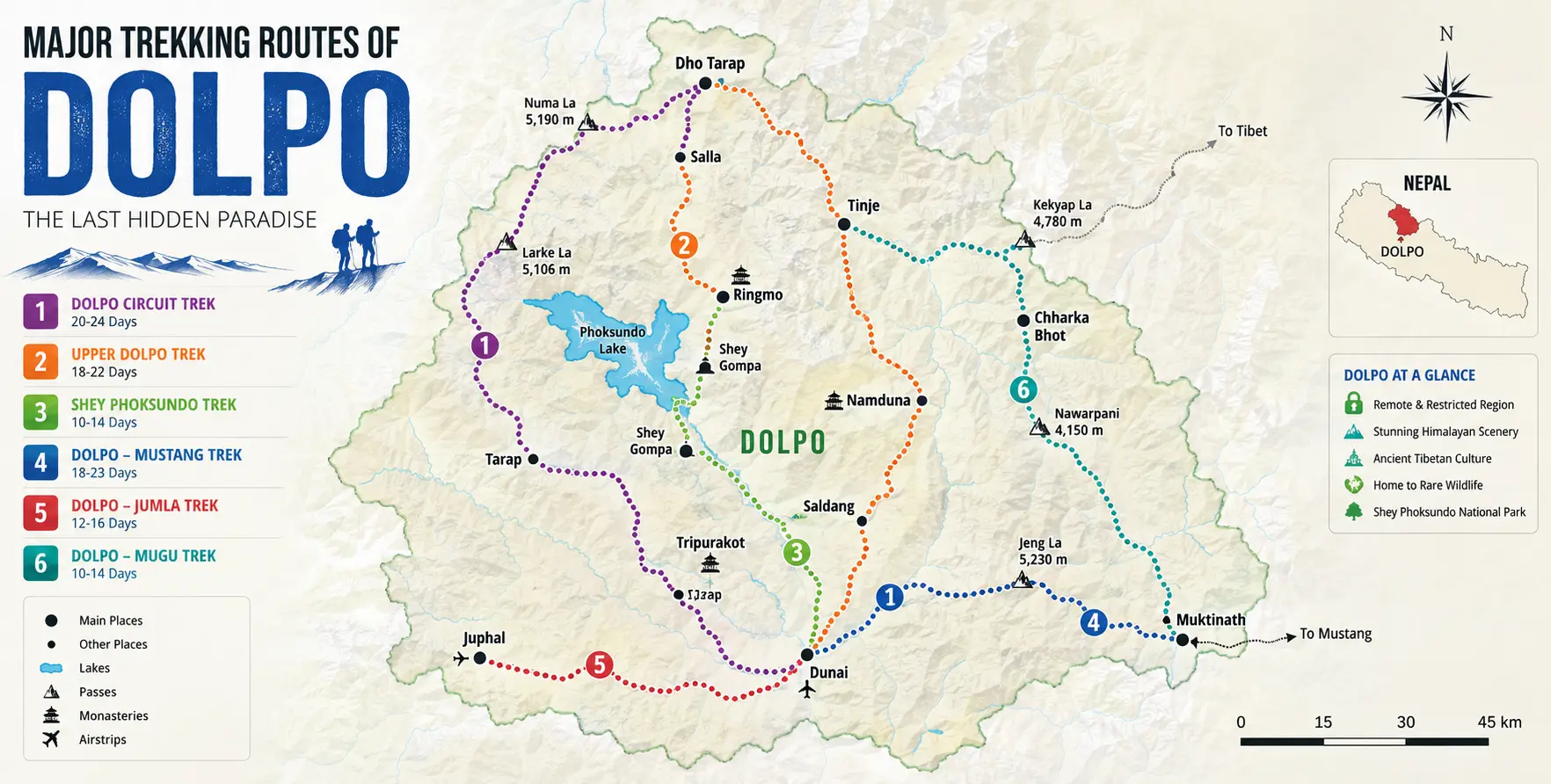
At some point, usually somewhere on the long drive west from Surkhet along the Karnali Highway, Nepal stops looking like the Nepal most travellers know. The terraced farmland and roadside tea shops thin out. The valley narrows.

The road turns to gravel, then compacted dirt, then something that demands the full attention of an experienced driver and the full capability of a high-clearance 4WD vehicle.

The mountains ahead take on the stark, ochre-grey palette of the trans-Himalayan plateau rather than the green-forested profile of the mid-hills. And somewhere in that transition, it becomes clear why Dolpo is called Nepal’s last frontier: not as a marketing phrase, but as a plain geographic fact.

Dolpo, officially Dolpa District, is Nepal’s largest district by area, covering 7,889 square kilometres in the country’s far northwest. Most of it lies within Shey Phoksundo National Park, Nepal’s largest national park.

It borders Tibet to the north, is hemmed in by the Dhaulagiri massif to the east, and is separated from the rest of the country’s road network by the Karnali River system and the high passes of the Himalayan rain shadow belt.

The entire district has a population of roughly 36,700 people, most of them Dolpo-pa, a community of Tibetan-influenced semi-nomads who follow a blend of Bon and Tibetan Buddhist traditions that has remained essentially unchanged for centuries. Until 1989, the entire region was closed to foreign trekkers. Only the southern fringe of Lower Dolpo was opened that year, and Upper Dolpo remained off-limits until 1992.

This guide is written for travellers planning a Dolpo expedition in 2026, focusing on vehicle hire and transport logistics that can make or break the trip. Dolpo is not a place where improvising ground transport works; every leg of the journey, from Kathmandu to Nepalgunj, from Nepalgunj onward by air or road, from the Juphal airstrip or Dunai road-end to the trek start, and all the way back, requires planning and the right vehicle on the right road.

At Nepal Vehicle Hiring Pvt Ltd, we operate the overland jeep route from Kathmandu to Dunai via the Karnali Highway, maintain detailed knowledge of both air and road access options to this remote region, and have covered the Shey Phoksundo Lake Jeep Tour on our Shey Phoksundo Lake Jeep Tour page. This guide pulls together everything a traveler needs to understand before making transport decisions for what is, by any measure, Nepal’s most logistically demanding trekking destination.

Siddhartha Highway

Understanding Dolpo’s Geography: Why Getting There Is Half the Expedition

Dolpo’s geography explains its isolation more clearly than any historical account. The district sits north of the main Himalayan watershed in the trans-Himalayan rain shadow, the same high-altitude desert belt that also shelters Upper Mustang, Ladakh, and parts of western Tibet.

This position means that while the monsoon drenches most of Nepal from June through September, Dolpo remains comparatively dry, receiving only a fraction of the rainfall that falls on the mountains to its south. This is ecologically significant, producing a landscape of semi-arid highlands, sparse juniper scrub, and high alpine pasture that feels fundamentally different from the rhododendron forests and terraced hillsides of Nepal’s middle hills.

The district divides naturally into two zones, and that distinction matters enormously for transport and permit planning. Lower Dolpo encompasses the southern portion of the district, including Dunai (the district headquarters), the Bheri and Suli Gad river valleys, and most critically, Shey Phoksundo Lake, Nepal’s deepest lake at approximately 145 meters and one of the most visually arresting places in the entire Himalayan region.

Upper Dolpo, also called Inner Dolpo, lies north of Phoksundo Lake and encompasses the high-altitude valleys of Tarap, Panzang, Nangkhong, and Tsharka, along with Shey Gompa, the Crystal Mountain pilgrimage circuit, and the villages of Saldang, Dho Tarap, and Tinje, communities that sit among the highest permanently inhabited settlements on Earth.

The four main valleys of Dolpo — Tsharka, Tarap, Panzang, and Nangkhong — each support small communities of Dolpo-pa people who move between lower valley winter settlements and high summer pastures with their yaks, goats, and sheep in a seasonal transhumance pattern that has defined life here for generations. The high passes connecting these valleys to the outside world, including Kang La (5,350 m), Jeng La (5,110 m), Numa La (5,190 m), Baga La (5,070 m), and Shey La (5,000 m), are the physical barriers that keep Dolpo as remote and self-contained as it is, and that make every crossing in an Upper Dolpo itinerary a genuine high-altitude undertaking rather than a scenic stroll.

Dolpo’s geography also explains why it remained closed to foreign trekkers until 1989, later than almost any other district in Nepal. The combination of its position on the Tibetan border, the political sensitivity of trans-Himalayan communities with cross-border cultural and trade ties to Tibet, and the sheer difficulty of administering or monitoring access to a region this remote all contributed to a closure policy that remained in place for decades after the rest of Nepal opened to trekking tourism in the 1960s and 1970s.

Even after the 1989 partial opening, Upper Dolpo remained closed until 1992, and the restricted-area permit system that still governs access today directly continues that policy of managed, monitored entry rather than open access.

Private 4WD jeep traveling through the rugged mountain roads of the Dolpo Region in western Nepal

The Bon Religion and the Cultural Character of Dolpo

Dolpo is the heartland of the Bon religion in Nepal, and understanding this is essential to understanding why the region draws the particular travellers it does. Bon is Tibet’s pre-Buddhist indigenous spiritual tradition, predating the introduction of Buddhism to the Tibetan plateau by centuries.

While Tibetan Buddhism largely displaced it across most of Tibet after the eighth century, isolated communities in western Nepal, particularly in Dolpo, maintained Bon practice in relatively pure form because the region’s extreme remoteness protected it from the forces of religious standardisation that swept the rest of the plateau.

The sacred geography of Dolpo is organized around Bon cosmological principles rather than Buddhist ones, most visibly in the Crystal Mountain, a natural rock formation near Shey Gompa that serves as the center of a kora, or ritual circumambulation circuit, walked by Bon pilgrims in a counterclockwise direction, opposite to the clockwise direction used by Buddhist pilgrims. Shey Gompa, sometimes called the Crystal Monastery, is a 900-year-old monastery that serves as a spiritual convergence point: its architecture and many of its practices reflect the Bon tradition.

At the same time, it also functions within the broader landscape of Tibetan Buddhism, which now exerts influence across the region. The Shey Festival, held annually in August at the full moon, draws pilgrims from across Dolpo and Tibet for a multi-day celebration of ritual dance, prayer, and community gathering.

The villages of Dolpo, particularly in Upper Dolpo, are physically unlike any other settlements in Nepal. Their stone houses, flat roofs, and compact, fortress-like layout reflect an architectural tradition adapted to the extreme cold, high winds, and sparse timber of the trans-Himalayan environment, with each village containing its own small gompa or prayer space and often several mani walls covered in carved mantras and prayer stones.

The anthropologist and writer David Snellgrove documented Dolpo extensively in the 195.

The region later became internationally famous through Peter Matthiessen’s book The Snow Leopard, published in 1978 and widely considered one of the finest pieces of nature and spiritual writing in the English language, which followed a journey through Dolpo with the biologist George Schaller in search of the Himalayan blue sheep and the elusive snow leopard.

Private 4WD jeep traveling through the rugged mountain roads of the Dolpo Region in western Nepal

Shey Phoksundo Lake: The Defining Visual Experience of the Region

No single feature of Dolpo is as immediately and viscerally arresting as Shey Phoksundo Lake, and that is saying something, given the landscape’s overall visual intensity. Sitting at 3,611 meters above sea level in a deep rock basin carved by glacial action, Phoksundo is Nepal’s deepest lake at approximately 145 meters.

It is internationally known for the extraordinary colour of its water: a shade of cobalt and turquoise so vivid that photographs of it are frequently mistaken for digital enhancement by viewers unfamiliar with the lake, when in fact the colour is entirely natural, produced by the specific mineral content and clarity of the glacial water combined with the high-altitude sunlight above it.

The lake sits below the village of Ringmo, one of the most scenic inhabited locations in Nepal, with its stone houses, prayer flags, and terraced barley and buckwheat fields arranged above the lakeshore in a composition that has served as the backdrop for numerous documentary films and photography expeditions. Nepal’s highest waterfall, Phoksundo Falls, tumbles into the lake from Tweste, audible from Ringmo long before it appears on the approach trail.

The lake is sacred to the Bon tradition and to the Buddhist communities of Ringmo, both of which maintain prohibitions against fishing or harming the lake’s waters or the surrounding landscape. Our Shey Phoksundo Lake Jeep Tour page covers both overland and flight-assisted approaches in detail.

Book reliable Dolpo Region vehicle hire in Nepal with private 4WD jeeps and Scorpio SUVs for safe and comfortable travel to Upper Dolpo, Lower Dolpo, Dunai, Juphal, and remote trekking destinations.

Getting to Dolpo: The Two Transport Strategies and How Vehicle Hire Fits Each

Reaching Dolpo requires a fundamental choice between two transport strategies early in the planning process, because the right answer depends on how much time a traveller has, what budget they are working with, and whether they want the overland journey itself to be part of the experience. This is not a simple car-versus-bus decision; it is a question of whether to fly directly into the Juphal airstrip or drive the Karnali Highway overland, and that choice cascades into every subsequent logistics decision for the trip.

Option One: The Flight Approach via Nepalganj and Juphal

The vast majority of trekking groups visiting Dolpo arrive by the two-flight air route: a domestic flight from Kathmandu to Nepalgunj, a flat Terai city near the Indian border in the west of Nepal, followed the next morning by a short STOL (Short Take-Off and Landing) flight from Nepalgunj to Juphal, the only airstrip in Dolpa district, situated at 2,475 meters in a narrow valley. The Kathmandu–Nepalgunj leg takes roughly 55 minutes and is operated by multiple domestic carriers, including Yeti Airlines and Shree Airlines.

The Nepalgunj–Juphal leg takes approximately 25 to 35 minutes and is operated by Summit Airlines and Tara Airlines, which specialise in the STOL operations needed to land on Juphal’s short, now blacktopped runway.

Book reliable Dolpo Region vehicle hire in Nepal with private 4WD jeeps and Scorpio SUVs for safe and comfortable travel to Upper Dolpo, Lower Dolpo, Dunai, Juphal, and remote trekking destinations.

Juphal’s airstrip was only a grass runway until 2017, when it was finally surfaced, improving reliability somewhat. That said, Juphal is one of Nepal’s most weather-sensitive airstrips, and delays and cancellations due to morning fog, wind, or low cloud are a routine feature of the travel experience here.

Building in at least two buffer days at Nepalgunj before the Juphal flight, and at least one buffer day at Juphal before the return flight from Dunai, is not optional caution but standard operational planning for any serious Dolpo expedition. Groups that fail to build these buffers often end up without downstream connections or scrambling to rebook onward flights planned too tightly around a non-guaranteed airstrip schedule.

The per-person round-trip cost for the full Kathmandu–Nepalgunj–Juphal–Nepalgunj–Kathmandu flight sequence typically ranges from USD 450 to 550, reflecting the top-end pricing of STOL services into mountain airstrips. For a trekking group of four to six people, the total flight cost therefore rivals or exceeds the cost of an overland 4WD vehicle hire for the same journey, which is one of the reasons the overland route is worth seriously considering as an alternative for groups willing to invest the additional driving days in exchange for a significantly richer overland experience.

That said, for expeditions focused on maximising actual trekking time in Upper Dolpo rather than on the approach, the flight route remains the standard choice. Our Kathmandu Airport Transfer handles the Kathmandu end of this logistics chain.

Option Two: The Overland Karnali Highway Jeep Route

The overland route from Kathmandu to Dunai is one of Nepal’s most demanding and rewarding vehicle-hire journeys, covering roughly three to four full days of driving along the Karnali Highway. The general route runs from Kathmandu west to Nepalgunj, then north from Nepalgunj through Surkhet and along the Karnali River corridor toward Dunai, the district headquarters of Dolpa.

Our dedicated Shey Phoksundo Lake Jeep Tour page covers this overland route in detail, including stage-by-stage information and current road conditions along the Surkhet-to-Dunai section of the Karnali Highway, the most demanding and scenically spectacular portion of the drive.

The road to Dunai, completed in 2018 after years of construction, represents a major change from the pre-2018 situation, when trek crews had to walk for five full days from the road end near Surkhet to reach Dunai. Now a jeep can reach Dunai from the south, though the Surkhet-to-Dunai section of the road remains unpaved, narrow, and highly subject to seasonal damage.

The road currently ends at Dunai; no vehicular road extends further north into Upper Dolpo, meaning that any trip beyond Dunai and the Phoksundo lake trail must be completed entirely on foot with porter and guide support. A plan exists to extend the road north up the Tarap Khola valley toward Dho Tarap, but this is a multi-year infrastructure project and not relevant to any trip planning in 2026.

Book reliable Dolpo Region vehicle hire in Nepal with private 4WD jeeps and Scorpio SUVs for safe and comfortable travel to Upper Dolpo, Lower Dolpo, Dunai, Juphal, and remote trekking destinations.

The correct vehicle for the overland route is non-negotiable: a Toyota Hilux, Land Cruiser, or equivalent heavy-duty 4WD is the minimum appropriate vehicle for the Surkhet-to-Dunai section of the Karnali Highway. No other vehicle should be used.

The road features steep grades, river crossings, and completely unpaved sections, making standard jeep categories used on the Annapurna and Langtang routes inadequate for this specific corridor. Our Jeep fleet includes vehicles appropriate for this route, and the overland Karnali Highway trip should be specified at the booking stage so we can assign the correct vehicle category rather than a standard hill-road jeep.

The overland journey costs approximately NPR 80,000 to 150,000 for a full Kathmandu-to-Dunai vehicle hire, covering a group of four to five passengers, with the wide price range reflecting differences in vehicle quality, fuel costs, driver allowances for the multiday commitment, and whether the booking includes multiday transport or is a one-way drop.

This total is comparable to or lower than the per-group flight cost for the same journey, which matters for trekking groups of four or more already planning to travel together. The overland route adds approximately three to four extra days to the overall trip duration compared to the flight approach.

Still, those days are spent driving through some of the most remote and visually dramatic valley scenery in western Nepal, which experienced Dolpo travelers consistently describe as a worthwhile addition rather than wasted time.

The Combined Approach: Drive In, Fly Out

The strategy that experienced Dolpo operators most frequently recommend for travellers with enough time and budget flexibility is a combined approach: drive the Karnali Highway overland to Dunai on the way in, experiencing the full journey through western Nepal, and then fly out from Juphal to Nepalgunj and Kathmandu at the end of the trek, saving the days that would otherwise be spent retracing the driving route on the return leg.

This combination maximises the overland experience on the approach, avoids the logistical complexity of coordinating a vehicle at Dunai for the return trip, and leaves the flight-delay buffer days to be absorbed at the more comfortable Nepalgunj end rather than the basic Dunai end of the journey. Our Shey Phoksundo Lake Jeep Tour page recommends this combined approach for adventurous travellers who want the full Dolpa experience.

Book reliable Dolpo Region vehicle hire in Nepal with private 4WD jeeps and Scorpio SUVs for safe and comfortable travel to Upper Dolpo, Lower Dolpo, Dunai, Juphal, and remote trekking destinations.

Permits for Dolpo: The Most Complex Permit Structure in Nepal Trekking

Dolpo has the most layered permit requirement of any trekking destination in Nepal, and getting this wrong has serious consequences: trekkers turned back at checkpoints, expeditions cancelled after flights have already been paid for, and significant financial penalties for carrying the wrong documentation. The permit structure differs between Lower Dolpo and Upper Dolpo, and trekkers combining both zones need to understand how the two permit sets interact.

Lower Dolpo Permits

For travel within Lower Dolpo, which includes the Phoksundo Lake trail and the area accessible from Dunai and Juphal without crossing north of the lake, three documents are required. The first is the Lower Dolpo Restricted Area Permit (RAP), priced at USD 20 per person per week, with USD 5 per additional day beyond the first week.

The second is the Shey Phoksundo National Park Entry Permit, priced at approximately USD 30 for foreign nationals. The third is a TIMS card, which remains required for far-western Nepal, including the Dolpo corridor, unlike in the Everest and Annapurna regions, where TIMS enforcement has lapsed.

Upper Dolpo Permits

For travel north of Phoksundo Lake into Inner Dolpo, trekkers need an additional Upper Dolpo Restricted Area Permit in addition to all Lower Dolpo documents, since they must still transit Lower Dolpo to enter and exit. The Upper Dolpo RAP carries the same fee structure as the Upper Mustang permit: USD 500 per person for the first ten days, then USD 50 per additional day.

For a standard 24-to-28-day Upper Dolpo itinerary, the total permit cost per person, including both restricted-area permits and the national park permit, approaches or exceeds USD 570, making Upper Dolpo one of the most expensive trekking destinations in Nepal on a pure permit basis before any other costs are considered.

The Solo Trekking Rule Update

A significant regulatory change took effect when the Government of Nepal officially removed the previous requirement of at least two foreign trekkers per group for restricted-area permits, including Dolpo. Solo trekkers can now obtain a Dolpo Restricted Area Permit provided they are accompanied by a licensed guide and book through a registered trekking agency.

This is a meaningful change for independent travellers who previously had to find a second person to meet the minimum group requirement.

Still, it does not change the requirement for agency processing or the guide mandate, both of which remain strictly enforced. All restricted area permits, regardless of group size, must be obtained through a registered trekking agency via the Department of Immigration and cannot be purchased directly by an individual trekker.

Processing Time and Practical Logistics

Restricted area permits for Dolpo require more lead time than standard conservation area permits and should be arranged by your trekking agency as soon as your booking is confirmed, ideally several weeks before departure rather than in the days leading up to travel. Upper Dolpo permits, in particular, are processed by the Department of Immigration and verified against your passport number at multiple checkpoints along the route; permits that have not cleared processing before a trek begins cannot simply be collected en route.

Carry all cash for permits, as with all cash for the trip, from Kathmandu, since there are no banking facilities beyond Surkhet in this corridor.

Book reliable Dolpo Region vehicle hire in Nepal with private 4WD jeeps and Scorpio SUVs for safe and comfortable travel to Upper Dolpo, Lower Dolpo, Dunai, Juphal, and remote trekking destinations.

Wildlife in Shey Phoksundo National Park

Shey Phoksundo National Park, covering 3,555 square kilometres, is Nepal’s largest national park and protects one of the most intact and diverse trans-Himalayan ecosystems in the entire Himalayan range. The park’s elevation ranges from 2,130 meters in the lower river valleys to 6,883 meters at the summit of Kanjiroba Himal, encompassing subtropical river gorges, temperate forests, alpine meadows, and permanent snow and ice within a single protected area.

The park’s flagship species is the snow leopard, one of the most elusive and most intensely studied large predators in the world, which hunts the park’s healthy population of Himalayan blue sheep (bharal) across the rocky ridgelines above 4,000 meters. The park is considered one of the most important snow leopard habitats remaining in the Himalayan region.

While sightings are never guaranteed, the chance of glimpsing this famously elusive cat is higher in Dolpo than in almost any other part of Nepal’s protected area network, particularly for trekkers spending time near the Shey Gompa area in Upper Dolpo. Peter Matthiessen and George Schaller’s 1973 expedition, which inspired The Snow Leopard, was a scientific survey of the blue sheep population in this very area.

Beyond snow leopards, the park harbours Himalayan wolf, Himalayan black bear, musk deer, Himalayan tahr, grey wolf, ghoral (a goat-antelope), and Tibetan gazelle in the higher areas, along with a rich bird community that includes the Himalayan monal pheasant, snow partridge, lammergeier, Himalayan griffon vulture, and a wide range of high-altitude passerine species. The high-altitude wetlands in the park’s northern sections, including small lakes and seasonal marshes above Dolpo’s main valleys, support migratory waterbirds during spring and autumn passage, adding a birdwatching dimension to what is already one of Nepal’s most ecologically significant landscapes.

The yartsagumba (Cordyceps sinensis), a parasitic fungus that grows from caterpillar larvae at elevations between 3,500 and 5,200 meters, is an important economic resource for Dolpo communities, harvested in enormous quantities each spring and sold at extremely high prices for its reputed medicinal properties in Chinese and Tibetan herbal medicine markets.

Yartsagumba harvesting brings seasonal labour migration from surrounding districts into Dolpo’s high pastures each May and June, temporarily tripling or quadrupling the human population in some areas, and is a significant part of the local economy that travellers can observe directly if passing through the region during the harvest window.

Book reliable Dolpo Region vehicle hire in Nepal with private 4WD jeeps and Scorpio SUVs for safe and comfortable travel to Upper Dolpo, Lower Dolpo, Dunai, Juphal, and remote trekking destinations.

The Major Trekking Routes of Dolpo

The Phoksundo Lake Trek (Lower Dolpo, 8 to 10 Days)

The most accessible Dolpo trekking itinerary focuses on Lower Dolpo and Phoksundo Lake, typically running eight to ten days from Juphal. After the flight from Kathmandu to Juphal via Nepalgunj, or the overland drive to Dunai via the Karnali Highway, covered in detail in our Shey Phoksundo Lake Jeep Tour guide, the trekking route follows the Bheri River from Dunai to Suligad checkpoint, then climbs up the Suli Gad gorge through dense forest to the village of Ringmo and the lake shore.

This route does not require the Upper Dolpo RAP and is therefore considerably less expensive than a full Inner Dolpo expedition. Basic teahouse accommodation is available in Ringmo and along the lower trail sections, though the upper trail retains the basic, self-sufficient character of all Dolpo trekking.

The Lower Dolpo Circuit Trek (14 to 18 Days)

The Lower Dolpo Circuit extends the Phoksundo Lake itinerary into a loop that crosses several significant passes, including Numa La (5,190 m) and Baga La (5,070 m), traverses the Tarap Valley, and returns to Dunai via a different route from the approach. This circuit is physically demanding given the high-pass crossings and the fully camping-based logistics required from Phoksundo onward. Still, it covers considerably more cultural and landscape variety than the straight lake-and-back approach.

The Upper Dolpo Circuit Trek (24 to 42 Days)

The full Upper Dolpo expedition is one of Nepal’s most demanding and most extraordinary trekking experiences, crossing multiple passes above 5,000 meters to reach the high valleys of Inner Dolpo: Shey Gompa and the Crystal Mountain pilgrimage circuit, the villages of Saldang and Dho Tarap, the high pastures of Panzang and Nangkhong, and onward connections that can link through to Mustang or the Annapurna region via Sangda La and the Jomsom corridor for trekkers planning a connected far-western Nepal expedition. This route is not a teahouse trek in any sense; it requires full camping equipment, a licensed guide, a kitchen crew, porters or yaks, and extensive preparation, making it a true expedition rather than a long day hike.

Camping Logistics: Why Upper Dolpo Is a Full Expedition, Not a Teahouse Trek

The most important practical distinction between a Dolpo trip and a Poon Hill or Langtang Valley trek is the complete absence of teahouse accommodation infrastructure in Upper Dolpo, and the very limited infrastructure in Lower Dolpo beyond Ringmo. Every Upper Dolpo expedition operates on a fully self-contained camping basis: a dining tent, sleeping tents for all trekkers, a separate kitchen tent, a cook and kitchen staff, and a team of porters or yak handlers to carry all of this equipment plus the food supply for the entire duration of the trek between resupply points.

This camping requirement is not simply a comfort consideration; it is a logistical and safety necessity. Villages in Inner Dolpo are genuinely remote, genuinely small, and genuinely unable to reliably provide a trekking group with food, cooking gas, or accommodation.

Carrying everything in from Juphal or Dunai and carefully managing the food supply throughout the full itinerary is an operational skill that experienced Dolpo trekking operators have refined over the years. This is one reason this trip should not be planned as a do-it-yourself exercise by trekkers unfamiliar with expedition-scale logistics, regardless of how experienced they may be on teahouse-standard Nepal treks.

Yaks are the preferred carrying animal in the high sections of Dolpo above 4,000 meters, replacing the lowland porters who typically manage loads on Nepal’s other trekking routes. Yak hire logistics are arranged through local community channels in the valleys adjacent to the high passes and require coordination through a trekking agency with established relationships in the specific valley communities, since yak availability is seasonal, tied to the agricultural and transhumance calendar of the local Dolpo-pa households, and not standardised in the way that porter hiring in Kathmandu or Pokhara is.

When to Go: Seasonal Timing for Dolpo and Vehicle Access

Dolpo’s rain-shadow position gives it a genuinely different seasonal character from the rest of Nepal and meaningfully expands the viable travel window compared to the Annapurna or Everest regions. Because the main Himalayan watershed blocks most monsoon moisture from reaching Dolpo’s high valleys, the region is, in theory, trekkable from spring through autumn, including the June to August monsoon period when most of the rest of Nepal’s trekking network is at its wettest and most difficult.

In practice, the most reliably clear and comfortable window for Upper Dolpo remains April through May and September through October, when high-pass crossings above 5,000 meters carry the least risk of snowfall, and the mountain views are at their clearest. The monsoon months in Dolpo itself are drier than the rest of Nepal.

However, not entirely without weather risk: morning cloud cover can still reduce visibility on the high passes, even in July and August. The most significant seasonal constraint is not weather but the condition of the Karnali Highway for the overland approach: the Surkhet-to-Dunai road section is vulnerable to landslide disruption during the monsoon months, and trekkers relying on the overland jeep route should not attempt it between late June and mid-September without current road condition information from a knowledgeable local operator.

Winter, from December through February, closes Upper Dolpo completely for most practical purposes, with deep snow covering the high passes and the Juphal airstrip, which is sometimes snowbound for extended periods. March and November are viable for Lower Dolpo and the Phoksundo Lake trail at lower elevations, but remain risky for Upper Dolpo pass crossings, particularly if early-winter or late-spring snowfall has left unexpected accumulations on key passes.

Combining Dolpo With a Wider Western Nepal Itinerary

Dolpo’s position in far-western Nepal makes it a natural complement to several other regional destinations for travellers planning an extended itinerary in western Nepal rather than a single-focus Dolpo expedition. The most obvious connection is to Upper Mustang, which lies immediately east of Dolpo and can be combined with a Dolpo expedition via high-pass routes, including the Sangda La route between the Tarap valley and the Jomsom corridor.

Our Kathmandu-to-Mustang private jeep and Upper Mustang 4WD Jeep services cover the Eastern approach to Mustang. Meanwhile, the Dolpo-to-Mustang connection from the west requires the high-altitude trail between Dolpo and the Kali Gandak Valley above Jomsom.

Rara Lake, Nepal’s largest lake and another of the country’s most remote and spectacular natural destinations, lies in Mugu district adjacent to Dolpo and is increasingly combined with Dolpo in extended far-western Nepal itineraries for travellers with three to four weeks available. Bardia National Park in the western Terai, easily reached via Nepalgunj, offers a natural wildlife add-on at the start or end of a Dolpo trip, since trekkers already flying through Nepalgunj can add a two- or three-day tiger and elephant safari at Bardia without significant additional routing effort.

Our broader Nepal Tour Package can incorporate any of these western Nepal combinations into a single coordinated itinerary.

Why Nepal Vehicle Hiring for Your Dolpo Transport

The overland Karnali Highway approach to Dolpo is genuinely not a route for a standard hill-road jeep booking. It requires a heavy-duty 4WD, a driver with specific experience on the Surkhet-to-Dunai section of unpaved road, a pre-trip road condition assessment, and the logistical flexibility to manage multi-day driver accommodation and allowances along a route with very limited service facilities.

We operate this specific route through our Shey Phoksundo Lake Jeep Tour service, using Toyota Hilux or Land Cruiser vehicles and drivers who know the seasonal risk points along this corridor.

For travellers who prefer the flight approach, we handle the Kathmandu-end logistics, including Kathmandu Airport Transfers to the domestic terminal for the Nepalgunj connection, and we can coordinate with trekking agencies managing the Juphal flight on the Nepalgunj end. Our broader Jeep fleet and route knowledge extend to every major vehicle access point in this far-western Nepal corridor, and our Plan a Trip service can help structure the full transport sequence for a Dolpo expedition, from the first departure from Kathmandu to the final return, as a single coordinated booking.

Book reliable Dolpo Region vehicle hire in Nepal with private 4WD jeeps and Scorpio SUVs for safe and comfortable travel to Upper Dolpo, Lower Dolpo, Dunai, Juphal, and remote trekking destinations.

The Dolpo-Pa People: Life at the Edge of the Inhabitable World

Any serious engagement with Dolpo as a travel destination requires understanding something about who actually lives there, since the Dolpo-pa people and their way of life are as much a defining feature of the experience as the landscape or the wildlife. The term Dolpo-pa refers broadly to the Tibetan-descended communities of the Dolpa district.

However, the region encompasses several distinct ethnic subgroups, including the Bon-following communities of the high valleys, the more Buddhism-influenced communities of the lower river areas, and the Kaike-speaking Magar communities of the Tarap valley, who maintain a distinct linguistic and cultural identity from their Tibetan-descended neighbours.

The fundamental economic and social pattern of Dolpo-pa life is transhumance: a seasonal movement between lower valley winter settlements, where barley, buckwheat, and other cold-adapted crops are grown at around 3,000 to 3,800 meters, and high summer pastures above 4,000 meters, where yak, sheep, and goat herds graze on alpine grasses through the summer months. This movement is not a simple commute; it involves the semi-dismantling and relocation of household operations across an elevation range that would qualify as base camp altitude in most of the world, and it has shaped every aspect of Dolpo-pa material culture, from the design of their portable felt tents to the layout of their stone winter houses built to withstand months of cold and isolation.

Trade with Tibet was historically the economic backbone of Dolpo society, with Dolpo-pa traders carrying salt from the Tibetan plateau south through the high passes to exchange for grain, metal tools, and other lowland goods in the Nepalese market towns. This salt trade, which may have been operating for a thousand years or more, was disrupted by the closing of the Tibet border to informal trade after the Chinese occupation of Tibet in 1950, and communities that had built their entire economic model around it faced severe hardship.

The yartsagumba harvest has in many ways replaced the salt trade as the primary cash economy for high-altitude Dolpo-pa communities, bringing seasonal income that now funds the purchase of manufactured goods, school fees, and infrastructure improvements that the salt trade once covered. Filmmaker and photographer Eric Valli documented the salt trade in his 1999 film Himalaya (also released as Caravan), filmed in Dolpo, with local community members playing all roles.

The film won the César Award in France, was nominated for the Academy Award for Best Foreign Language Film, and introduced the landscape and people of Dolpo to an international audience previously unaware of the region. Its images of yak caravans crossing high passes against a backdrop of stark Himalayan peaks remain the most widely seen visual representation of Dolpo’s way of life.

The film’s locations, particularly the Shey Phoksundo Lake area and the high passes above it, are a specific draw for travellers who encountered Dolpo through this film before ever planning a visit.

Preparing for a Dolpo Expedition: What You Need Beyond a Standard Nepal Trek Kit

A Dolpo expedition requires far more preparation than a standard Nepal teahouse trek, and travellers who underestimate this difference often struggle in entirely avoidable ways. The following reflects the specific preparation requirements for the overland vehicle approach combined with a Lower or Upper Dolpo trekking itinerary, beyond the general Nepal trekking kit described in our broader guides.

  • Sleeping bag rated to -20°C — Upper Dolpo nights at high camp can be significantly colder than the -15°C recommended for Annapurna or Langtang, and a bag rated to -15°C may leave a trekker genuinely cold on the coldest nights above 4,500 meters.
  • Full camping kit or confirmed agency provision — there is no teahouse accommodation in Upper Dolpo and very limited options in Lower Dolpo beyond Ringmo. If you are trekking without an organised agency, you must carry your own tent, stove, fuel, and food from Dunai or Juphal. If trekking with an agency, confirm in writing before booking that the package includes camping equipment, a kitchen crew, and a cook.
  • All cash for the entire trip must be drawn in Kathmandu — there are no ATMs or banking facilities anywhere in Dolpa district. The last reliable ATM access point is Surkhet on the overland route or Nepalgunj on the flight route. Carry enough cash for all food, accommodation, permit top-ups, porter wages, emergency expenses, and return transport, plus a meaningful emergency buffer.
  • Comprehensive travel insurance explicitly covering helicopter evacuation — helicopter evacuation from Upper Dolpo is logistically complex and extremely expensive, involving a multi-leg flight sequence. Travel insurance that does not explicitly name helicopter evacuation from remote trekking areas as a covered benefit is inadequate for this destination.
  • Satellite communicator or personal locator beacon — mobile phone coverage is nonexistent in Upper Dolpo and minimal in most of Lower Dolpo outside Dunai itself. A Garmin inReach or equivalent satellite messenger provides the only reliable emergency communication in the high-valley sections of any Dolpo itinerary.
  • Altitude acclimatisation preparation — Upper Dolpo pass crossings at 5,100 to 5,350 meters require significantly better acclimatisation than typical teahouse treks in the Annapurna or Langtang region. Trekkers should build in acclimatisation days at Phoksundo Lake and Shey Gompa before attempting the highest passes, and should treat any signs of altitude sickness on the high trail with immediate seriousness, given the distance to medical care.
  • Sun protection rated for high-altitude UV — the combination of high elevation, reflective snow, and the clear, dry atmosphere of the rain-shadow plateau produces UV exposure significantly higher than at comparable altitudes in more humid mountain environments. SPF 50+ sunscreen, UV-blocking sunglasses, and a wide-brimmed hat are non-negotiable.

Frequently Asked Questions About Dolpo Vehicle Hire and Transport

Can I drive all the way to Phoksundo Lake, or does the road stop before the lake?

The road currently ends at Dunai, the district headquarters of Dolpa, roughly 77 kilometres south of Phoksundo Lake. From Dunai, the trail to the lake follows the Bheri and Suli Gad river valleys on foot, typically taking two to three days of walking each way.

No road extends beyond Dunai to the lake, and no road serves any part of Upper Dolpo as of 2026, though infrastructure projects are ongoing.

Is the overland Karnali Highway route suitable year-round?

No. The Surkhet-to-Dunai section is vulnerable to landslide closure during the monsoon months, typically June through mid-September. Outside this period, particularly from October through May, the road is generally motorable in a heavy-duty 4WD vehicle. However, confirm road conditions with a knowledgeable local operator before departure, given the road’s remote location and limited maintenance resources.

Can I combine the overland drive with a flight out?

Yes, and this is the strategy most experienced operators recommend for travellers with sufficient time. Drive the Karnali Highway overland to Dunai on the approach, trek through Lower or Upper Dolpo as planned, then fly out from Juphal to Nepalgunj and Kathmandu at the end of the expedition, saving the multi-day return drive and absorbing any multi-day buffer from the Juphal flight at the more comfortable Nepalgunj end.

Do I still need a minimum group of two for the Dolpo Restricted Area Permit in 2026?

No, as of now, the Government of Nepal has removed the minimum group size requirement for restricted-area trekking. Solo trekkers can now obtain a Dolpo Restricted Area Permit provided they are accompanied by a licensed guide and book through a registered trekking agency. The agency processing requirement and guide mandate both remain in effect.

What is the total vehicle hire cost for the Kathmandu to Dunai overland route?

The overland vehicle hire for a Toyota Hilux or Land Cruiser from Kathmandu to Dunai for a group of four to five passengers typically costs between NPR 80,000 and NPR 150,000 for the full journey, depending on vehicle quality, fuel costs at the time of travel, driver allowances for the multiday trip, and whether the booking is one-way or multiday, and the return leg. For current pricing and vehicle availability, contact us directly via vehiclehiringnepal.com or WhatsApp

Plan Your Dolpo Expedition Transport Today

Dolpo is Nepal’s most logistically demanding destination, and every transport decision matters more here than anywhere else in the country. Whether you are planning the overland Karnali Highway approach in a heavy-duty 4WD — three to four full driving days through some of the most dramatic and least-visited river valley scenery in western Nepal — coordinating Kathmandu-end logistics for the Nepalganj-Juphal flight route with its weather-delay buffers and luggage weight constraints, or combining both into a drive-in, fly-out expedition strategy that maximises the overland experience without duplicating the return road, Nepal Vehicle Hiring Pvt Ltd brings the route knowledge, the right vehicles, and the experienced drivers that this specific corridor demands.

This is not a destination where a generically booked jeep and an unfamiliar driver will do; the Karnali Highway approach specifically requires preparation, local knowledge, and a vehicle matched to what the road actually demands. Call or message us on WhatsApp or visit vehiclehiringnepal.com to start planning the most extraordinary vehicle hire in Nepal.

Jeep or SUV?

Jeep and SUV? Choosing the Right Hire Vehicle for Nepal’s Mountain Roads

Muglin

Every trekker, expedition team, and overland traveller who has ever planned a journey into Nepal’s mountains eventually faces the same question: should I hire a jeep or will an SUV do the job? It sounds like a simple decision, but in a country where road conditions can shift from smooth tarmac to boulder-strewn riverbeds within a single kilometre, the answer carries real weight.

Choose the wrong vehicle, and you may find yourself stranded on a landslide-prone mountain track, paying for repairs to a vehicle that was never designed for the terrain, or simply enduring a far less comfortable journey than necessary. Choose the right vehicle, and the drive to your trailhead becomes part of the adventure, not an obstacle.

At Nepal Vehicle Hiring Pvt Ltd, we field this exact question almost daily from travellers planning everything from a short cultural tour around the Kathmandu Valley to a multi-day expedition into the high passes of Upper Mustang or Manang. The honest answer is that no single choice fits every journey.

The right vehicle depends entirely on where you are going, how many people are travelling with you, how much luggage you are carrying, what time of year you are travelling, and how much comfort you are willing to trade for cost savings. This guide walks through every dimension of that decision in detail, so that by the end, you will know with confidence whether a jeep or an SUV is the right hire vehicle for your specific journey in Nepal.

Before diving into the comparison, it helps to clarify what we mean by ‘jeep’ and ‘SUV’ in the Nepal context, because the terminology can be confusing for international visitors. In everyday Nepali usage, the word ‘jeep’ rarely refers to the American Jeep brand.

Instead, it is used as a catch-all term for rugged, body-on-frame four-wheel-drive vehicles built for off-road work — most commonly the Mahindra Scorpio, Mahindra Bolero, Toyota Land Cruiser, and similar utilitarian vehicles. These are the vehicles you will see lined up.

Jeeps stand in Besisahar, Syabrubesi, and Pokhara, ready to climb into the hills. The word ‘SUV’, on the other hand, is generally used in Nepal to describe more comfort-oriented, often unibody or semi-monocoque vehicles such as the Toyota Fortuner, Toyota Prado, Hyundai Tucson, or Mahindra XUV700 — vehicles that blend off-road capability with a noticeably more refined ride, better sound insulation, and a more car-like driving experience.

This guide treats ‘jeep’ as shorthand for the rugged, traditionally built 4WD vehicles favored for genuinely rough mountain tracks, and ‘SUV’ as shorthand for the more comfort-focused 4WD and AWD vehicles favored for highways, semi-paved roads, and shorter excursions. Understanding this distinction is the first step toward making the right choice for your trip.

Bg highway

Understanding Nepal’s Road Conditions Before You Choose

You can’t make a sensible decision between a jeep and an SUV without first understanding the sheer diversity of road conditions you might encounter in Nepal. The country’s road network can be loosely divided into three broad categories, and the vehicle you need changes dramatically depending on which category your journey falls into.

The first category is the paved highway network connecting major cities — Kathmandu to Pokhara, Kathmandu to Chitwan, Pokhara to Lumbini, and similar well-trodden routes. These roads are generally asphalted, though often narrow, winding, and shared with slow-moving trucks, buses, motorcycles, and the occasional herd of goats.

On these routes, almost any vehicle will get you from point A to point B without drama. A sedan, a van, an SUV, or a jeep will all perform adequately, and the choice here often comes down to comfort, passenger capacity, and budget rather than necessity.

The second category is the semi-improved district road network — roads that connect district headquarters to more remote towns, often paved in sections but reverting to gravel, dirt, or broken tarmac elsewhere. Examples include the road from Pokhara to Besisahar, much of the route from Kathmandu to Syabrubesi, and the lower stretches of road toward Arughat in the Manaslu region.

These roads require a vehicle with reasonable ground clearance and sturdy suspension, even if full low-range four-wheel drive isn’t strictly necessary for the entire journey. A capable SUV can often handle these roads competently, though a Jeep will always feel more at home.

The third category is the true mountain track—unpaved, narrow, frequently affected by landslides, river crossings, and steep switchback climbs that gain hundreds of meters of elevation within a few kilometres. This category includes the road from Besisahar to Chame and onward to Manang, the final approach to Lo Manthang in Upper Mustang, and stretches of road in the Manaslu and Dolpo regions.

On these tracks, nothing replaces a properly built 4WD jeep with low-range gearing, strong underbody protection, and an experienced driver who knows how to read the terrain ahead. Attempting these roads in a standard SUV—let alone a sedan or van—is not simply uncomfortable; it can be genuinely unsafe and may leave the vehicle stuck, damaged, or unable to proceed.

Recognizing which category your planned route falls into is the single most important factor in deciding between a jeep and an SUV. Many travellers choose a vehicle based on comfort alone, without first determining whether the road itself even allows a less rugged vehicle to pass safely.

What Exactly Is a ‘Jeep’ in Nepal, and Why Does It Dominate Mountain Routes?

The vehicles Nepali drivers and trekkers call ‘jeeps’ share a handful of defining characteristics that make them uniquely suited to the country’s most demanding roads. First and foremost is ground clearance.

A typical Mahindra Scorpio or Bolero sits noticeably higher off the ground than a passenger car or even many crossover SUVs, allowing it to pass over rocks, ruts, and washouts that would otherwise scrape or damage the undercarriage of a lower vehicle. This single feature is often the deciding factor between a vehicle that completes a mountain journey and one that does not.

Second is the construction style. Most jeeps used in Nepal’s hire fleet are built on a traditional body-on-frame chassis, similar to a pickup truck, rather than the unibody construction used in most modern SUVs and crossovers.

Body-on-frame construction is inherently more resistant to the twisting and flexing stresses that occur when one wheel is lifted high on a rock while another dips into a rut — a common occurrence on Nepal’s roughest tracks. This robustness comes at the cost of a stiffer, bumpier ride on smooth roads, but it’s what lets these vehicles survive years of punishing mountain use without structural damage.

Third is the drivetrain. Genuine 4WD Jeeps used on Nepal’s mountain routes typically include a proper low-range transfer case, allowing the driver to select a gear ratio suited to crawling over obstacles at very low speeds with maximum torque.

This differs fundamentally from the ‘all-wheel drive’ systems found in many crossover SUVs, which are designed primarily to improve traction on slippery paved roads rather than provide genuine rock-crawling capability. When a driver needs to ease a vehicle down a steep, loose-surface switchback above a river gorge, low-range gearing can mean the difference between a controlled descent and a frightening loss of control.

Fourth, and often overlooked by first-time visitors, is repairability. The jeeps used throughout Nepal — predominantly Mahindra and Toyota models — are mechanically simple by modern automotive standards, and spare parts plus mechanics familiar with these vehicles are available even in fairly remote district towns.

If something goes wrong on a remote mountain road, a local mechanic in a town like Besisahar or Jomsom is far more likely to have the knowledge and parts needed to fix a Mahindra Scorpio than a more complex, electronically sophisticated modern SUV. This practical consideration matters enormously when you are days away from the nearest city.

Taken together, these characteristics explain why genuine jeeps remain the default and recommended vehicle for nearly all of Nepal’s classic trekking trailhead routes — Besisahar to Chame and Manang on the Annapurna Circuit, the road to Jomsom and Lo Manthang in Upper Mustang, the approach to Soti Khola and Arughat for the Manaslu Circuit, and similar rugged corridors. Any provider who suggests a standard SUV for these specific routes is either unfamiliar with current road conditions or willing to compromise your safety and comfort for a marginal cost saving.

What Exactly Is an ‘SUV’ in Nepal, and Where Does It Excel?

If jeeps are defined by their ruggedness, SUVs in Nepal’s hire market are defined by balance—a deliberate compromise between off-road capability and everyday comfort. Vehicles such as the Toyota Fortuner, Toyota Prado, Mahindra XUV700, and similar mid-size SUVs sit at an interesting midpoint: many do retain genuine four-wheel-drive systems and respectable ground clearance, but they are engineered first and foremost around passenger comfort, refined handling on paved roads, and a smoother, quieter ride than a traditional jeep can offer.

This makes SUVs the better choice for many Nepal travel scenarios that don’t involve the roughest mountain tracks. Consider a family flying into Kathmandu for a two-week holiday that includes sightseeing around the Kathmandu Valley, a scenic drive to Pokhara, a few days relaxing by Phewa Lake, and perhaps a half-day excursion to Sarangkot for sunrise views.

None of this itinerary requires the rock-crawling capability of a true jeep. What it does require is a comfortable, air-conditioned cabin, smooth highway manners, decent luggage space, and a pleasant ride for several hours straight.

An SUV delivers exactly this, with considerably more comfort than a traditional Jeep, whose stiffer suspension and more basic interior trim are keenly felt on longer paved-road journeys.

SUVs also tend to offer better noise insulation, more comfortable seating with proper lumbar support, and often features like rear air-conditioning vents, which matter a great deal on a four- or five-hour highway drive. For travellers whose itinerary centres on cultural tourism, shorter treks accessible by good roads (such as Nayapul for Annapurna Base Camp or Ghorepani Poon Hill), wildlife safaris in Chitwan, or general sightseeing circuits, an SUV is often the more sensible and pleasant choice.

Where SUVs begin to show their limitations is on the genuinely rough mountain tracks described earlier. While top-end SUVs like the Toyota Prado do offer serious off-road hardware and can, with a skilled driver, handle many of Nepal’s rougher roads competently, the lower-cost mid-range SUVs more commonly available in hire fleets — and certainly any vehicle marketed as an SUV but built on a car-like unibody platform with modest ground clearance — are not engineered for the punishment of routes like Besisahar to Chame or the final stretches into Upper Mustang.

Travellers who insist on an SUV for these roads, perhaps for comfort, often face slower progress, a higher risk of underbody damage, and, in some cases, are unable to continue and must transfer to a jeep partway through the journey.

The Fundamental Trade-Off: Comfort Versus Capability

At the heart of the jeep-versus-SUV decision lies a trade-off you can’t fully escape, no matter how much a hire company markets a particular vehicle. Capability and comfort sit, broadly speaking, at opposite ends of a spectrum.

The very features that make a Jeep capable of surviving Nepal’s harshest mountain tracks — stiff, heavy-duty suspension, a tall and narrow stance, basic interior trim, firm seats designed to withstand years of abuse — are the same features that make it a less comfortable vehicle to sit in for hour after hour on a smooth highway. Conversely, the features that make an SUV pleasant on a long paved drive — softer, more compliant suspension tuning, sound-deadening materials, plush seating — are often the very features that limit its ability to absorb the punishment of a genuinely rough mountain road without component failure or driver discomfort from excessive body roll and impact harshness.

This is not a marketing exaggeration or a simplification designed to sell one vehicle category over another; it reflects genuine engineering reality. A vehicle’s suspension, chassis, and ground clearance are tuned during design and manufacture toward a particular use case, and few vehicles excel equally at both ends of the spectrum.

Even the most expensive and capable SUVs, which can certainly handle moderate off-road conditions well, will still find genuine high-mountain tracks more punishing than a purpose-built jeep, simply because their underlying engineering philosophy prioritises different outcomes.

Understanding this trade-off helps travellers set realistic expectations. If your journey is entirely on paved or well-graded roads, you can enjoy the comfort benefits of an SUV without any meaningful capability compromise, because the road conditions never demand more than the SUV can deliver.

If your journey includes any meaningful stretch of genuine mountain track, you must accept that a Jeep will deliver superior safety and reliability, even though the ride may be noticeably firmer and louder than in a more comfort-oriented vehicle. No vehicle perfectly satisfies both ends of this spectrum, and recognising this honestly, rather than hoping for an unrealistic compromise, leads to far better trip planning.

Cost Considerations: Is a Jeep Always More Expensive Than an SUV?

Many first-time visitors assume that a rugged 4WD Jeep must automatically cost more to hire than a comfort-oriented SUV. Still, Nepal’s vehicle hire market is far more nuanced. Pricing depends far more on the specific route, the season, vehicle age and condition, and the particular model within each category than on whether the vehicle is broadly classified as a jeep or an SUV.

On routes that genuinely require a jeep — such as Besisahar to Chame, Pokhara to Jomsom overland, or Kathmandu to Arughat for the Manaslu Circuit — jeep hire often costs more than an equivalent SUV would on an easier route, not because jeeps are inherently more expensive vehicles, but because these routes are longer, more time-consuming, more fuel-intensive, and place greater wear on the vehicle and driver. A driver navigating eight hours of rough mountain track earns and deserves a higher day rate than a driver completing a comfortable four-hour highway transfer, and this is reflected in the final hire cost regardless of vehicle category.

On routes where both a jeep and an SUV are viable options — for instance, Kathmandu to Pokhara — a mid-range SUV will often cost somewhat more to hire than a basic jeep of similar age, because SUVs generally have a higher purchase price, more expensive parts, and are marketed toward a customer base willing to pay a top-end for comfort. A top-end SUV like a Toyota Prado, hired for a multi-day sightseeing tour, can be considerably more expensive than a Mahindra Scorpio jeep covering the same distance, simply because the vehicle sits at a higher price point in the market.

The most reliable way to think about cost is not ‘jeep versus SUV’ in the abstract, but rather ‘which specific vehicle, on which specific route, for how many days, in which season.’ A Mahindra Bolero jeep hired for a short transfer in the dry season will almost always be cheaper than a Toyota Fortuner SUV hired for the same transfer, but that same Bolero jeep hired for a demanding multi-day mountain expedition in monsoon season, requiring an experienced driver and additional contingency time, may end up costing more than a comfort-oriented SUV used for an easy highway tour.

Always request a route-specific quote from Nepal Vehicle Hiring Pvt Ltd rather than assuming a fixed price applies to both vehicle categories.

Passenger Capacity, Luggage Space, and Group Dynamics

Beyond road suitability and cost, the practical question of how many people and how much luggage you are travelling with plays a significant role in the jeep-versus-SUV decision. Most traditional jeeps used in Nepal’s hire fleet, such as the Mahindra Scorpio or Bolero, are configured to seat four to six passengers comfortably.

However, they are sometimes advertised with higher nominal seating capacities that become genuinely uncomfortable once you factor in luggage, trekking gear, and the realities of mountain road conditions. Toyota Land Cruiser jeeps, often used for top-end mountain hire, typically offer a comfortable four- to six-passenger capacity with considerably more luggage space in the rear.

Mid-size SUVs like the Toyota Fortuner generally offer comparable seating, often configured for five to seven passengers across three rows. However, in most SUVs, the third row is best reserved for children or shorter journeys, as legroom becomes cramped for adults on longer drives.

Top-end SUVs like the Toyota Prado tend to offer a more genuinely comfortable seven-seat configuration with better third-row space and more sophisticated luggage management, though at a correspondingly higher hire cost.

For trekking groups carrying duffel bags, trekking poles, and expedition equipment in addition to personal luggage, both jeeps and SUVs can struggle to accommodate the load if the group size approaches the maximum seating capacity. A group of six trekkers with full gear will often find that hiring two smaller jeeps, rather than one larger vehicle, offers more realistic comfort and luggage space, even though it costs more overall.

This is a conversation worth having with your vehicle hire provider before finalising a booking, since group size and luggage volume can change which vehicle configuration makes sense, regardless of the jeep-versus-SUV question.

Solo travellers and couples enjoy considerably more flexibility, since either a jeep or an SUV will comfortably accommodate two passengers and a reasonable amount of luggage with room to spare. In these cases, you can decide almost entirely based on road conditions and personal comfort preferences, without worrying about passenger-capacity constraints.

4WD Jeep and SUV driving on Nepal's mountain roads, comparing the best hire vehicles for Himalayan travel

Why the Driver Often Matters More Than the Vehicle Itself

It is worth pausing to make a point that experienced travellers in Nepal often learn the hard way: your driver’s skill and local knowledge often matter as much as, or more than, the vehicle category you hired. A highly experienced driver who has navigated the Besisahar-to-Chame road hundreds of times will extract noticeably better performance, safety, and passenger comfort from even a modest jeep than an inexperienced driver would in the same vehicle.

Conversely, an inexperienced or overly cautious driver in a capable SUV may struggle with sections of road that a skilled mountain driver would handle confidently and smoothly.

This is one of the central reasons Nepal Vehicle Hiring Pvt Ltd places such heavy emphasis on driver experience and route-specific knowledge when assigning vehicles to bookings. We match drivers to routes based on their familiarity with that route’s seasonal quirks, known trouble spots, best rest stops and the driving technique its combination of surface, gradient and width demands.

A driver who regularly covers the Kathmandu-to-Syabrubesi route will instinctively know exactly how to approach the Ramche landslide zone near Dhunche, when traffic tends to back up at narrow points, and which sections demand extra caution during or after rainfall.

When evaluating a vehicle hire quote, it is therefore worth asking not just ‘what vehicle will I be travelling in’ but also ‘how experienced is the driver with this specific route.’ A slightly less top-end vehicle paired with a highly experienced, route-specific driver will almost always deliver a safer and more satisfying journey than a top-end vehicle paired with a driver unfamiliar with the road’s particular challenges.

How Season Changes the Jeep-and-SUV Equation

Nepal’s dramatic seasonal variation adds another layer of complexity to the vehicle choice decision, one that many first-time visitors fail to appreciate until they are already fully on the road. During the dry, stable conditions of autumn (September through November) and spring (March through May), many semi-improved roads that would otherwise demand a jeep become passable, with some caution, in a capable SUV.

Firm, dry road surfaces, predictable conditions, and the absence of standing water or fresh landslide debris widen the margin for vehicle choice during these peak trekking seasons.

Monsoon season (June through August) changes this calculation entirely. Heavy rainfall transforms previously manageable gravel and dirt roads into slick, rutted, landslide-prone hazards almost overnight. Roads that an SUV might handle comfortably in October can become genuinely dangerous, or entirely impassable, during a heavy monsoon downpour in July.

During this period, the safety margin provided by a proper jeep’s low-range gearing, superior ground clearance, and robust construction becomes far more valuable, even on routes that might otherwise suit SUVs in drier months. Nepal Vehicle Hiring Pvt Ltd routinely recommends upgrading to a full jeep for monsoon-season travel on routes where an SUV might ordinarily suffice in dry conditions, purely as a safety precaution against the unpredictability of landslide-affected mountain roads.

Winter (December through February) introduces a different set of challenges, particularly on higher-altitude routes approaching 3,000 meters, where snow and ice can affect road surfaces even when lower sections remain perfectly dry. On routes like Besisahar toward Manang, or Jomsom toward Lo Manthang, winter conditions at altitude can demand jeep-level capability even when the lower portions of the same route would be entirely manageable in an SUV during the dry season.

Seasonal awareness, in other words, is not a minor footnote to the jeep-versus-SUV decision; it can fundamentally shift which vehicle category is appropriate for the same physical route, depending purely on when you are travelling

With the underlying principles established, it helps to walk through how this decision plays out on some of Nepal’s most frequently travelled routes; concrete examples often clarify abstract guidance far more effectively than general rules alone.

On the Kathmandu to Pokhara highway, one of the country’s busiest and best-maintained long-distance routes, either a jeep or an SUV will perform perfectly adequately. Here, the decision genuinely comes down to comfort preference and budget. Families and travellers prioritising a smooth, quiet ride for the five-to-six-hour drive will generally prefer an SUV.

At the same time, budget-conscious solo travellers or small groups happy to trade some comfort for cost savings often opt for a jeep with no practical disadvantage.

On the route from Pokhara to Besisahar, the gateway to the Annapurna Circuit, conditions are mixed: the road is mostly paved but narrows considerably and includes some rougher patches, particularly in the final approach to Besisahar itself. A capable SUV will generally manage this route without major difficulty in good weather.

However, a jeep remains the more comfortable and confident choice, especially during monsoon season or if your journey continues beyond Besisahar onto the rougher Chame road immediately afterwards.

Beyond Besisahar, on the legendary stretch toward Chame and Manang, the calculation changes entirely. This is unambiguously Jeep territory. The unpaved, narrow, cliff-edge mountain track demands the ground clearance, low-range gearing, and structural robustness that only a properly built jeep can reliably provide.

Attempting this route in a standard SUV, no matter how capable it is on other Nepali roads, is not a sensible choice, and any hire provider suggesting otherwise should be treated with caution.

The route from Kathmandu to Syabrubesi, the gateway to the Langtang region, sits somewhere between these extremes. Much of the journey follows reasonably maintained roads through Trishuli Bazaar, but the final stretch through the Ramche landslide zone near Dhunche presents genuine off-road challenges, particularly after rainfall.

A jeep is generally the recommended choice here, especially for groups travelling with significant trekking gear. However, a well-driven SUV can sometimes manage this route in favourable dry-season conditions.

For the popular Annapurna Base Camp and Ghorepani Poon Hill trailheads, accessed via Nayapul from Pokhara, the road is well paved and well maintained for virtually its entire length. This is one of the clearest cases where an SUV, or even a standard car, performs perfectly well, and there is no meaningful capability advantage to choosing a Jeep for this particular transfer.

Upper Mustang, by contrast, represents the far end of the spectrum. The overland route from Pokhara through Jomsom toward Lo Manthang traverses some of the most demanding high-altitude road-accessible terrain in Nepal, combining rough surfaces, river crossings, and significant altitude gain. Take this route only in a proper 4WD jeep with an experienced high-altitude driver, regardless of how capable a particular SUV may seem on paper.

The Manaslu Circuit trailhead approach via Arughat or Soti Khola similarly demands jeep-level capability for the rougher final sections, even though the initial portion of the journey from Kathmandu follows reasonably maintained roads. As with Langtang, the deciding factor tends to be the final approach kilometres rather than the overall journey, reinforcing the importance of considering your entire route rather than just its easiest sections when making a vehicle decision.

4WD Jeep and SUV driving on Nepal's mountain roads, comparing the best hire vehicles for Himalayan travel

Quick Reference: Jeep and SUV by Route The Hybrid Approach: Combining Vehicles Across a Single Trip

RouteRoad CharacterRecommended Vehicle
Kathmandu ↔ PokharaPaved highway, well-maintainedEither — comfort preference decides
Pokhara → BesisaharMostly paved, some rough patchesSUV (dry season), Jeep (monsoon)
Besisahar → Chame / ManangUnpaved mountain track, cliff edgesJeep only
Kathmandu → Syabrubesi (Langtang)Mixed paved/rough, landslide zone near DhuncheJeep recommended
Pokhara → Nayapul (ABC / Poon Hill)Fully paved, well-maintainedSUV or standard car
Pokhara → Jomsom → Lo Manthang (Upper Mustang)High-altitude rough track, river crossingsJeep only
Kathmandu → Arughat / Soti Khola (Manaslu)Mixed, rough final approachJeep recommended
Kathmandu ↔ ChitwanPaved highwayEither — SUV preferred for comfort

One strategy experienced Nepal travellers and trekking agencies increasingly favour is the hybrid approach — using an SUV for the comfortable, paved portions of a journey and switching to a jeep only for the genuinely demanding mountain sections. This approach makes particular sense for itineraries that begin in Kathmandu or Pokhara, traverse well-maintained highways for most of the distance, and encounter rough terrain only on the final approach to a specific trailhead.

For example, a trekker heading to the Manaslu Circuit might travel comfortably from Kathmandu to the outskirts of Gorkha in a smooth SUV, then transfer to a dedicated jeep for the final, rougher stretch toward Soti Khola or Arughat. While this requires an additional vehicle change and slightly more logistical coordination, it lets travellers enjoy maximum comfort wherever the road permits, while still ensuring genuine off-road capability is available exactly where it is needed most.

This hybrid strategy does involve additional cost and planning complexity, since it requires coordinating two separate vehicles and a smooth transfer point between them, as well as the logistics of moving luggage and trekking gear between vehicles. For travellers with flexible budgets and a strong preference for comfort wherever possible, however, it represents an excellent middle path between the pure comfort of an SUV and the pure capability of a jeep.

Nepal Vehicle Hiring Pvt Ltd can arrange exactly this kind of hybrid multi-vehicle itinerary for clients who want the best of both worlds across a longer, more complex journey.

4WD Jeep and SUV driving on Nepal's mountain roads, comparing the best hire vehicles for Himalayan travel

Safety Implications of Choosing the Wrong Vehicle

It would be a disservice to readers not to address the safety implications of choosing an unsuitable vehicle for Nepal’s more demanding mountain roads. This is not merely a matter of comfort or convenience; it has genuine consequences for traveller safety, particularly on routes with steep gradients, narrow cliff-edge sections, and unpredictable surface conditions.

A vehicle with insufficient ground clearance attempting a rough mountain track risks not just minor underbody scrapes but potentially serious damage to critical components such as the fuel tank, exhaust system, or drivetrain, damage that can leave a traveller stranded in remote areas far from professional repair services. A vehicle without proper low-range gearing attempting a steep, loose-surface descent may struggle to maintain controlled speed, increasing the risk of skidding or loss of control on exactly the kind of cliff-edge roads where such an incident would be most dangerous.

A vehicle without adequate structural robustness may still mechanically fail under the sustained stress of rough-road use, again potentially in locations far from any assistance.

Beyond the vehicle itself, choosing an inappropriate vehicle category often correlates with inadequate driver preparation for the specific demands of mountain driving. Drivers experienced mainly in highway and city driving, even if technically competent, may lack the skills to read mountain terrain, judge the safest line through a rough section, or respond appropriately to an unexpected obstacle on a narrow, cliffed road.

This is why Nepal Vehicle Hiring Pvt Ltd insists on matching vehicle category to route difficulty as a firm policy, rather than accommodating whatever vehicle preference a client requests when that preference would compromise safety on a known difficult route.

Note: If a vehicle hire provider offers to take you on a known rough mountain route in a vehicle category that seems inadequate for the terrain — particularly a standard SUV, van, or sedan on routes like Besisahar to Chame or the approach to Upper Mustang — treat this as a significant warning sign about that provider’s standards, regardless of the price being offered.

Altitude, Temperature, and Engine Performance Considerations

A factor that receives surprisingly little attention in most vehicle comparison discussions, but matters considerably in Nepal’s high-altitude trekking regions, is how altitude affects engine performance and overall vehicle behaviour. As elevation increases, atmospheric oxygen density decreases, reducing the power output of naturally aspirated internal combustion engines, the type used in most jeeps and many mid-range SUVs in Nepal’s hire fleet.

This effect becomes increasingly noticeable above roughly 2,500 to 3,000 meters, exactly the altitude range where many trekking trailheads, such as the road to Manang or sections of the Upper Mustang route, are located.

Vehicles equipped with turbocharged engines tend to cope somewhat better with this altitude-related power loss than naturally aspirated equivalents, since the turbocharger partially compensates for reduced air density. This is one reason experienced Nepal vehicle hire providers often favour specific engine configurations for their highest-altitude routes, and it is a legitimate question to ask your provider when booking a vehicle for a route that climbs significantly above 3,000 meters.

Temperature extremes present a related consideration. Vehicles operating in the high mountains may face overnight temperatures well below freezing, particularly in winter, which can affect battery performance, diesel fuel gelling in poorly maintained vehicles, and general cold-start reliability.

A well-maintained jeep from a reputable provider like Nepal Vehicle Hiring Pvt Ltd will be properly prepared for these conditions, with appropriate fuel additives and battery maintenance during the colder months. However, confirm directly with your provider if your itinerary includes overnight stops at high altitude during winter travel.

Fuel Consumption and Practical Running Costs

Beyond the headline hire price, it is worth understanding how fuel consumption differs between jeeps and SUVs, since this affects not only environmental considerations but also the practical cost structure of longer journeys, particularly on routes where fuel must be carried in reserve due to limited availability at remote petrol stations. Traditional jeeps, with their heavier body-on-frame construction and less aerodynamically refined shapes, generally consume more fuel per kilometre than comparably sized SUVs built on more efficient unibody platforms, particularly at highway speeds where aerodynamic drag becomes a bigger factor.

However, this efficiency gap narrows considerably, and sometimes reverses, on genuinely rough mountain terrain, where a Jeep’s low-range gearing and torque characteristics let it climb steep, technical sections more efficiently than an SUV could, even if the SUV could technically attempt the same climb. An SUV labouring up a low-traction gradient in a higher gear ratio than ideal for the terrain, or requiring multiple attempts to find traction, can, in practice, consume more fuel for that section than a Jeep equipped with proper low-range capability designed for this scenario.

For motor travellers, fuel consumption differences are already factored into the hire price quoted by providers like Nepal Vehicle Hiring Pvt Ltd, since our quotes are typically all-inclusive of fuel for the agreed route. It remains useful background knowledge, however, for travellers planning lengthy or remote multi-day itineraries, where understanding how their chosen vehicle category operates, including refuelling, can inform better trip planning and realistic expectations.  Refuellingueling Vehicle Choice to Traveller Type

Different traveller categories have different priorities, and it is worth explicitly considering how traveller type interacts with the jeep-versus-SUV decision, beyond the purpose-based analysis already covered.

Solo backpackers and budget-conscious independent trekkers often prioritise cost; for these travellers, a jeep is the more economical choice, particularly when shared jeep services are available on popular routes, splitting the cost across multiple unrelated passengers. The firmer ride and more basic interior of a jeep matter less to travellers already accustomed to teahouse accommodation and basic trekking infrastructure.

Families travelling with younger children, in particular, often place a much higher top-end on ride comfort, since long journeys on rough roads can be genuinely distressing for young passengers prone to motion sickness or discomfort from extended periods on firm seating. For families whose itinerary permits it—meaning routes that do not strictly require jeep-level capability—an SUV is often the better choice, even at a higher hire cost, for the well-being of young travellers during transfers.

Photography enthusiasts and travellers who prioritise their journey often find that the specific vehicle category matters less than the flexibility of a private hire arrangement, regardless of whether the hire is a jeep or an SUV. Both vehicle categories, when hired privately rather than as part of a shared service, offer the flexibility to stop freely for photographs, viewpoints, and cultural sites along the route — a significant advantage over shared jeep or bus services regardless of which vehicle category is ultimately chosen.

Expedition teams and trekking groups carrying substantial technical equipment, climbing gear, or scientific instruments often find that the load-carrying capability and underbody protection of a proper jeep outweigh any comfort considerations, since equipment damage or loss represents a far more serious problem than passenger discomfort during the approach journey. For these groups, jeep hire is often the default choice regardless of the specific road conditions, simply as a precaution against equipment damage.

Older travellers or those with mobility considerations sometimes find the higher step-in height and firmer ride of traditional jeeps more physically demanding than the often more accessible cabin height and softer ride of a comfort-oriented SUV. For these travellers, where road conditions permit, a car is the more comfortable and practical option, and this is worth discussing openly with your provider when booking.

Discover whether a Jeep and SUV is the best hire vehicle for Nepal's mountain roads by comparing comfort, road performance, safety, and suitability for Himalayan adventures.

How Nepal Vehicle Hiring Pvt Ltd Helps You Choose Correctly

Given the complexity outlined throughout this guide, the jeep-versus-SUV decision is rarely a simple binary choice that can be made correctly without route-specific knowledge. This is precisely the gap that Nepal Vehicle Hiring Pvt Ltd exists to fill for our clients.

Rather than simply renting out the vehicle a customer initially requests, our team actively discusses the specific route, season, group size, luggage requirements, and comfort priorities for each booking. We provide an honest recommendation based on current road conditions and years of accumulated, route-specific experience.

This consultative approach occasionally means recommending a less expensive jeep over a more profitable SUV hire when the route genuinely demands it. It also means recommending the comfort of an SUV over a jeep when the route doesn’t require additional capability and the traveller would benefit more from a smoother ride.

We believe this honest, route-specific guidance builds far more trust and long-term value for our clients than simply maximising Aniooking’s revenue, and it reflects our broader commitment to safe, reliable, and genuinely helpful service across every journey we arrange.

Our fleet includes a full range of vehicles across both categories—from rugged Mahindra Scorpio and Bolero jeeps for the most demanding mountain routes, to top-end Toyota Land Cruiser jeeps, to comfort-oriented Toyota Fortuner and Prado SUVs for highway touring and easier trailhead approaches. We regularly maintain and inspect every vehicle in our fleet to meet Nepali road conditions.

We match every driver to routes based on demonstrated experience with that terrain, rather than on general familiarity with driving in Nepal.

Jeep vs SUV: Core Characteristics Compared

CharacteristicTraditional Jeep (Scorpio, Bolero, Land Cruiser)SUV (Fortuner, Prado, XUV700)
Ground ClearanceHigh — built for rocks, ruts, washoutsModerate to good — varies by model
ConstructionBody-on-frame, highly robustOften unibody or semi-monocoque, more refined
DrivetrainTrue 4WD with low-range gearing4WD/AWD, often without true low-range
Ride Comfort (paved roads)Firm, utilitarianSmooth, car-like
Ride Comfort (rough roads)Superior — designed for this terrainCompromised — softer suspension struggles
Repairability in remote areasExcellent — parts and mechanics widely availableLimited — fewer rural mechanics are familiar with the model
Best Suited ForBesisahar–Chame, Upper Mustang, Manaslu approachKathmandu–Pokhara, Nayapul, Chitwan, sightseeing
Typical Passenger ComfortBasic but functionalHigher — better seating, insulation, AC

Common Mistakes Travellers Make When Choosing Between a Jeep and SUV

Having guided thousands of clients through this decision over the years, I’ve seen certain recurring mistakes clearly. The first and most common is choosing a vehicle based solely on the easiest or most scenic-sounding portion of a route, while overlooking a shorter but more demanding final stretch.

A traveller’s journey to Manaslu, for instance, might focus on the comfortable initial highway drive from Kathmandu and underestimate the genuinely rough final approach to Soti Khola, leading to an SUV booking that proves inadequate for the complete journey.

The second common mistake is assuming that a higher-priced SUV automatically offers superior capability to a lower-priced Jeep, based purely on the assumption that higher cost equals better performance. As this guide has explained at length, capability and price do not correlate in any simple way between these two vehicle categories; a well-priced jeep will frequently outperform a considerably more expensive SUV on genuinely rough mountain terrain, regardless of the price difference.

The third mistake is failing to account for seasonal variation, booking a vehicle appropriate for dry-season conditions without considering that the same journey undertaken during monsoon season may demand significantly greater capability. Travellers planning trips during the shoulder seasons, in particular, should discuss current road conditions directly with their hire provider rather than relying on general assumptions based on typical seasonal patterns.

The fourth mistake is underestimating the volume of luggage and equipment when selecting vehicle capacity, leading to an uncomfortably cramped journey regardless of whether a jeep or an SUV was chosen. Trekking groups, in particular, should share their full equipment list with their hire provider before finalising a vehicle category and size, rather than assuming a given seating capacity automatically accommodates the final amount of luggage.

The fifth and final common mistake is selecting a vehicle hire provider based purely on price without adequately investigating driver experience and vehicle maintenance standards. As this guide has emphasised, an experienced, route-specific driver’s skill often matters as much as the vehicle category itself, and a slightly higher hire cost from a provider with genuinely experienced mountain drivers and well-maintained vehicles often offers far better value than a marginally cheaper option that compromises on either.

A Practical Decision Framework for Your Next Booking

By bringing together everything covered in this guide, travellers can approach their jeep-versus-SUV decision with a straightforward sequence of questions. Start by honestly assessing the full route, including its most demanding sections rather than just its average character, and decide whether any portion genuinely requires jeep-level off-road capability.

If any meaningful stretch of your journey falls into the rough mountain track category described earlier in this guide, a jeep should be your default choice for the entire journey, or at a minimum for that specific demanding section if a hybrid multi-vehicle approach is feasible.

Next, consider the season and whether current conditions might make your route harder than its typical dry-season character. If you are travelling during the winter at higher altitudes, lean toward the more capable option even on routes that might otherwise permit an SUV during more favourable months; the travel composition, including passenger count, presence of children or older travellers, equipment volume, and overall comfort, will guide your final decision.

Finally, and perhaps most importantly, discuss your complete itinerary honestly and in detail with your vehicle hire provider, rather than simply requesting a specific vehicle category based on your own assumptions. A reputable provider like Nepal Vehicle Hiring Pvt Ltd will ask detailed questions about your route, timing, and priorities precisely because this information is essential to recommending the vehicle that will actually serve your journey safely and comfortably, rather than simply fulfilling whatever initial request you submitted.

Ultimately, there is no universally correct answer to the question of which vehicle is best for your journey. Trightect answer depends entirely on where you are going, when you are going, who ou are travelling with, and what you are carrying.

What remains constant across all scenarios is the need for honest, route-specific guidance from an experienced local provider, combined with a realistic understanding of the trade-off between comfort and capability that defines this decision at its core.

Conclusion: Let Local Expertise Guide Your Choice

Choosing between a jeep and an SUV for your Nepal journey is ultimately a decision about matching the right tool to the right task. A jeep’s rugged capability makes it the indispensable choice for Nepal’s true mountain trailhead routes, where comfort must yield to safety and reliability on demanding terrain.

An SUV’s refined comfort makes it the superior choice for highway touring, cultural sightseeing, and easier trailhead approaches where the road never demands more than a well-built, comfort-oriented vehicle can deliver. Understanding this distinction and applying it honestly to your specific itinerary rather than your initial vehicle preference is the surest path to a safe, comfortable, and genuinely enjoyable journey through Nepal’s extraordinary landscapes.

Nepal Vehicle Hiring Pvt Ltd has spent years building the route-specific knowledge and well-maintained, diverse vehicle fleet needed to guide travellers through this decision. Whether your journey demands the rugged capability of a Mahindra Scorpio jeep on the road to Manang, the comfort of a Toyota Fortuner SUV on the highway to Pokhara, or a thoughtfully planned hybrid combination of both across a longer itinerary, our team is ready to provide honest, experienced guidance and a well-matched vehicle for every stage of your Nepal adventure.

Nepal Vehicle Rental

Scorpio jeeps on the road in Mustang

Vehicle Rental In Nepal: Your Route to Amazing Adventures

Nepal resists easy movement by design. In the space of roughly 200 kilometres, measured north to south at its widest point, the land rises from the malarial lowlands of the Terai at under 100 meters above sea level to the summit of Sagarmatha at 8,849 meters — a vertical compression of nearly every climate zone on earth, achieved with almost no flat ground in between.

No national railway network exists, no river system is navigable for any meaningful distance through the hill country, and the topography is so relentlessly vertical that even the country’s capital sat in a valley reached, until 1956, by nothing more substantial than a mule track. Every meaningful journey in Nepal, for as long as the country has existed in anything resembling its present form, has depended on a road — and for the overwhelming majority of visitors and many Nepalis themselves, that road is travelled not by personal car ownership but by hired vehicle.

This single geographic fact — that roughly three-quarters of Nepal’s territory is mountain and hill country where wheeled transport of any kind was, within living memory, simply impossible — explains more about the structure of the country’s modern vehicle rental industry than any regulation, price list, or fleet specification ever could. Every operator, every driver, and every traveller booking a private jeep today is, knowingly or not, operating within a transport system that is still actively catching up with a landscape that spent most of recorded human history trying to defeat wheeled vehicles entirely, and continues, in places, to do so even now.

This foundational fact makes vehicle rental—not merely a convenience but a structural necessity—the backbone of how Nepal actually moves. Trekkers reach trailheads by jeep before a single boot touches the trail.

Pilgrims reach sacred temples thousands of meters above sea level by the same private vehicles that, an hour earlier, navigated city traffic in Kathmandu. Wildlife safari guests reach the subtropical plains of Chitwan, heritage travellers reach the medieval squares of Bhaktapur, and cross-border travellers reach the edges of India, China, and beyond — all threaded together by a relatively young, still-evolving, and surprisingly well-organised vehicle rental industry that this guide sets out to explain in genuine depth.

What follows is not simply a list of vehicle types and prices, as covered in our companion guides to private vehicle hire and the complete Nepal vehicle fleet. It is a deeper look at how Nepal’s roads were built, how its vehicle rental sector came to be regulated, how the colour of a license plate quietly encodes the entire structure of who is permitted to drive whom and where, how the country’s hydropower abundance is reshaping its vehicle fleet in real time, and ultimately, how all of this assembles into the practical decision a traveller faces today: which vehicle. On this road, for which adventure?

Find the best vehicle rental in Nepal with affordable prices on cars, 4WD jeeps, Hiace vans, Coaster buses, tourist buses, and luxury vehicles for tours, trekking, and business travel.

A Country Built Without Roads, Then Built Entirely Around Them

It is worth pausing on a fact that modern visitors rarely consider: Kathmandu, the seat of Nepali political and economic life for centuries, had no motorable road connection to the rest of the world until the mid-1950s. Before the Tribhuvan Rajpath was completed between 1953 and 1956 with Indian engineering and financial assistance, every vehicle that ever reached the Kathmandu Valley — and there were, by the early twentieth century, a small number of cars belonging to the Rana ruling family — had to be carried in pieces on the backs of porters over the mountain passes, then reassembled once inside the valley.

The Tribhuvan Rajpath changed this permanently, connecting Kathmandu to Birgunj on the Indian border and, through it, to the entire Indian road and rail network beyond.

HighwayBuilt / OpenedSignificance
Tribhuvan Rajpath1953–1956 (Indian assistance)Nepal’s first highway — the first road link between Kathmandu and the outside world
Araniko Highway1963–1967 (Chinese assistance)First overland link to Tibet/China via Kodari, named after the 13th-century Nepali architect
Prithvi HighwayCompleted 1973Kathmandu–Pokhara link opened the western hills and Annapurna region to road tourism
East-West (Mahendra) HighwayBuilt in stages, 1960s–2000s~1,028 km spanning Nepal’s entire Terai, from Mechi to Mahakali — the nation’s central spine
BP (Sindhuli) HighwayCompleted in stages through the 2010s–2020sDirect Kathmandu–Bardibas link, bypassing the older Mugling–Narayanghat detour

Each of the highways in this brief history was built not as a tourism project but as an act of national integration and, in several cases, geopolitical positioning — the Araniko Highway in particular, completed with Chinese assistance in the 1960s and explored in depth in our dedicated Kodari border guide, gave Nepal its first land link to Tibet, a strategically significant counterweight to the country’s near-total historical dependence on routes through India. The much more recent BP Highway, cutting a direct path from Kathmandu to the eastern Terai and substantially shortening journeys that previously required the long detour through Mugling and Narayanghat, reflects a newer phase of road-building aimed specifically at reducing Kathmandu’s relative isolation from its own eastern districts.

This history makes clear that Nepal’s road network — and, by extension, its vehicle rental industry — remains a comparatively young and continuously evolving system. Routes that were impassable for any vehicle a generation ago, such as the off-road jeep tracks now reaching deep into the Annapurna Circuit’s Marsyangdi valley or partway up toward Upper Mustang, are themselves part of an ongoing process of road extension that continues to reshape which adventures are accessible by vehicle and which still require trekking on foot.

A traveller renting a vehicle in Nepal today is, in a very real sense, part of the latest chapter of a road-building story barely seventy years old.

Vehicle rental in Nepal featuring private cars, 4WD jeeps, Hiace vans, Coaster buses, and tourist buses at the best price

The Quiet Bureaucracy Behind Every Rented Vehicle

Renting a vehicle in Nepal involves stepping into a regulatory architecture that, while largely invisible to the passenger in the back seat, governs nearly every aspect of the journey: who is licensed to drive, what category a vehicle is registered under, what colour its license plate must be, and what rates may legally be charged for its hire. The Department of Transport Management, operating under Nepal’s Ministry of Physical Infrastructure and Transport, issues every vehicle registration in the country through its network of Transport Management Offices, historically organised at the zonal level and still commonly referred to by the zone-code prefixes — Ba, Pa, and others — that appear on every Nepali number plate.

One of the more genuinely interesting and under-appreciated aspects of this system, from a deep-research perspective, is how directly the colour of a vehicle’s license plate encodes its legal purpose. Private vehicles carry white plates with black lettering. Public transport and standard tourist-category vehicles carry yellow plates with black lettering.

Under a dedicated regulation, vehicles registered specifically for tourist carriage must carry green plates and follow a mandated chauffeur dress code, designed to distinguish a genuine licensed tourist vehicle and its professionally presented driver from an ordinary private car. Government-owned vehicles carry white plates with red lettering, and foreign or diplomatic vehicles carry white plates with blue lettering.

Plate ColourVehicle CategoryLettering
WhitePrivate vehiclesBlack letters
YellowPublic transport and standard tourist-category vehiclesBlack letters
GreenVehicles specifically registered for tourist carriage (per dedicated tourist-vehicle regulation)Black letters, with mandated chauffeur dress code
White (red letters)Government-owned vehiclesRed letters
White (blue letters)FForeign/diplomatic vehiclesBlue letters

This system has not been without genuine controversy, and the controversy itself is instructive about how Nepal’s transport bureaucracy actually functions in practice. A plan to replace Nepal’s traditional plates with digitally embossed, RFID-chip-equipped versions was first floated in the government’s Three-Year Interim Plan covering 2007 to 2010. Still, it was not launched until the 2015–16 fiscal year, when the government awarded the contract to the Bangladeshi firm Tiger IT.

The project subsequently became entangled in years of dispute: the original design replaced Nepal’s traditional Devanagari script with Latin lettering, prompting a public outcry and a Supreme Court petition that led the Court to halt the rollout in 2018; the contractor itself was separately blocked by the World Bank in 2019 over allegations of corrupt bidding practices in an unrelated Bangladeshi project, yet the Nepali government proceeded with the contract regardless; and as recently as April 2026

Nepal’s Central Federation of Public Transport was still publicly urging vehicle owners not to install the new embossed plates until it resolved further practical concerns. For a traveller simply hoping to book a jeep to a mountain trailhead, none of this bureaucratic history is visible — but it is a genuine and ongoing part of the institutional environment within which every vehicle rental company in Nepal, including Nepal Vehicle Hiring Pvt Ltd, must operate.

Vehicle rental in Nepal featuring private cars, 4WD jeeps, Hiace vans, Coaster buses, and tourist buses at the best price

The Association That Standardised an Industry

Before 2004, Nepal’s tourist vehicle hire sector operated with far less coordination than it does today—individual operators set their own rates with little reference to any shared industry standard. This created genuine unpredictability for both visitors and operators. The founding of the Nepal Tourist Vehicle Association (NTVA) in Nepali year 2060 B.S.

(2004 in the Gregorian calendar) changed this by bringing together vehicle owners and transporters serving foreign and domestic visitors under a single coordinating body. NTVA’s membership has grown steadily since its founding.

The association now counts 65 distinct vehicle companies among its members, collectively responsible for publishing and periodically updating the standardised tourist vehicle rate schedules — hourly, daily, and route-specific — that legitimate operators across the country, including Nepal Vehicle Hiring Pvt Ltd, generally reference as the baseline for fair and transparent pricing.

This standardisation matters more than it might first appear. In an industry where a visitor typically has no independent way to verify whether a quoted price for a Kathmandu-to-Pokhara private jeep is fair, inflated, or suspiciously cheap, the existence of an industry association that periodically publishes reference rates provides a genuine, if imperfect, anchor against which both operators and travellers can calibrate expectations.

It is a quiet but structurally important piece of how trust functions in a tourism economy built so heavily on private, individually negotiated vehicle hire rather than fixed-price public transport.

From Trolley Bus to Electric Taxi — Nepal’s Surprisingly Long Electric Vehicle History

It comes as a genuine surprise to most visitors that Nepal’s relationship with electric vehicles did not begin with the recent global EV boom but stretches back exactly half a century. In 1975, Kathmandu briefly operated a trolleybus service connecting the capital to neighbouring Bhaktapur — an early, government-led experiment in electric public transport that did not survive in its original form but set a precedent that would resurface decades later.

In the 1990s, the distinctive Safa Tempo — a small, boxy electric three-wheeler — began appearing on Kathmandu’s streets. In 1999, regulatory action specifically targeting polluting diesel tempos accelerated the wider adoption of these electric alternatives, making Kathmandu one of the earliest cities in South Asia to have a meaningful fleet of zero-emission public transport vehicles, decades before the term ‘EV’ entered everyday vocabulary.

This long and largely self-driven history helps explain why Nepal has, in the 2020s, emerged as one of the fastest-growing electric-vehicle markets in South Asia — a development with direct and growing relevance to the vehicle rental sector specifically. The underlying logic is, in environmental and economic terms, almost unanswerably strong: Nepal generates more than 90 per cent of its electricity from hydropower, a renewable resource the country has in genuine abundance given its mountain river systems, while importing virtually half its petroleum fuel at high cost and with balance-of-payments strain.

Every litre of diesel a tourist jeep burns on the long drive to Jomsom is fuel Nepal has paid hard currency to import; every kilowatt-hour an electric vehicle draws from the grid is, overwhelmingly, generated domestically from rainfall and gravity.

EV Policy Element2026 StatusRelevance to Vehicle Rental
Hydropower’s share of electricityOver 90% of Nepal’s electricity generationMakes EV charging genuinely low-carbon, unlike most of South Asia
Government EV transition targetGoal to replace ICE vehicle imports with EVs by 2031Signals a long-term shift in the national rental and private fleet composition
Charging infrastructure~490+ public charging stations nationwide (early 2026), concentrated on Kathmandu–Pokhara and East-West Highway corridorsDirectly relevant to long-distance tourist vehicle routes covered in this guide
EV import volume19,477 units imported in the first eight months of FY 2025/26 (NPR 16.33 billion)Reflects the rapid pace of EV adoption across Nepal’s vehicle market
Provincial EV mandatesBagmati Province requires all new taxis to be electric from 2024 onwardAn early signal of where broader tourist and rental fleet regulation may move

The Government of Nepal has backed this logic with sustained policy support: a stated ambition to replace internal combustion engine vehicle imports with electric alternatives entirely by 2031, a tax structure that has remained deliberately stable and favourable toward EVs across recent fiscal years specifically to signal policy reliability to importers and buyers, and — as recently as April 2026 — Cabinet approval for legal provisions permitting the retrofitting of existing petrol and diesel vehicles with electric powertrains, a measure that could eventually allow part of Nepal’s existing tourist vehicle fleet to transition to electric propulsion without requiring complete vehicle replacement. Import data for the first eight months of the 2025–26 fiscal year recorded 19,477 electric vehicle units entering Nepal, worth NPR 16.33 billion, with Chinese manufacturers — BYD, Changan’s Deepal brand, Seres, and MG — accounting for the vast majority of this volume.

For the vehicle rental sector specifically, the most directly relevant infrastructure development is the steady build-out of public charging stations along exactly the corridors that long-distance tourist vehicle hire depends upon most heavily: the Kathmandu–Pokhara highway and the East-West Mahendra Highway spanning the Terai.

With approximately 490 charging stations operating nationwide as of early 2026 and continued expansion projected, the practical case for electric vehicles serving Nepal’s major tourist routes — as opposed to its more remote, charging-infrastructure-poor mountain tracks — strengthens with each passing year. Bagmati Province’s mandate that all newly registered taxis be electric from 2024 onward offers an early signal of where broader provincial regulation of commercial and tourist vehicle fleets may eventually move, even if mountain off-road tourist jeep hire — given current battery range and charging limitations at altitude — remains, for now, firmly the domain of diesel-powered 4WD vehicles.

Scorpio jeep beside a snow-covered hillside

Why Nepal Rents Drivers, Not Just Cars

Visitors arriving from countries where self-drive car rental is the overwhelming norm are often surprised to discover that self-drive hire is, by comparison, a marginal and rarely offered option across most of Nepal’s tourist vehicle market. The default model — and the model Nepal Vehicle Hiring Pvt Ltd, like virtually every established operator in the country, follows as standard practice — is chauffeur-driven hire: a vehicle and a professional, licensed local driver supplied together as a single package, rather than a bare vehicle handed over to a self-driving visitor.

Several genuinely structural factors explain why this model dominates so completely. Nepal’s mountain roads, even where paved, frequently involve hairpin gradients, single-lane bridges, unmarked livestock crossings, and the locally specific hazard knowledge — which exact bend tends to ice over first, which stretch of riverbank track becomes impassable after a particular rainfall threshold — that a visiting driver, however experienced on roads at home, cannot be expected to possess.

International driving permit recognition and local licensing requirements add further legal complexity for any visitor wishing to drive independently. At a more basic level, the driving culture and traffic conventions of Nepal’s crowded city streets and narrow mountain roads alike differ enough from most international visitors’ home experience that, in practice, a chauffeur-driven model functions as much as a safety measure as a convenience.

This is also, importantly, an employment structure with genuine economic significance reaching well beyond the vehicle rental transaction itself. A professional driver’s livelihood, and frequently that of his extended family, depends directly on the chauffeur-driven hire model that dominates Nepali tourist transport — meaning that every private jeep booking is, in a small but real way, also a direct contribution to a specific household’s income in a country where formal employment opportunities, particularly outside Kathmandu and Pokhara, remain limited.

Matching the Vehicle to the Adventure

Nepal’s vehicle rental fleet, as covered in this guide’s earlier sections, has evolved over the decades into a genuinely differentiated spectrum of vehicle types, each suited to a specific combination of terrain, group size, and adventure type.

Vehicle TypeBest Matched AdventureTypical Capacity
Private SedanCity heritage circuits, airport transfers, and Terai highway routes1–3 passengers
Mahindra Scorpio 4WDMountain trailheads, pilgrimage routes, and moderate off-road4–6 passengers
Toyota Hilux / Fortuner 4WDDemanding off-road — Annapurna Circuit, Muktinath, Langtang5–6 passengers
Toyota Land Cruiser 4WDExtreme remote routes — Upper Mustang, Rara Lake, VIP touring6–7 passengers
Toyota Hiace VanGroup highway travel — Pokhara, Chitwan, Lumbini tours12–14 passengers
Tourist Coaster / BusLarge pilgrimage groups, corporate and wedding parties24–45 passengers

The underlying logic connecting vehicle type to adventure type runs throughout every destination-specific guide in our wider blog series: a private sedan comfortably handles the smooth highway sections to Pokhara, Chitwan, or Lumbini, and the city streets of the Kathmandu Valley’s heritage circuit, but cannot safely attempt the off-road gorge sections of the Annapurna Circuit beyond Besisahar, the rough final approach to Halesi Mahadev, or the high-altitude Jomsom-to-Muktinath track. A 4WD Scorpio or Hilux extends real capability into exactly these mountain off-road corridors.

A Land Cruiser becomes necessary only at the very end of the spectrum — Upper Mustang’s canyon roads to Lo Manthang, or the rare and genuinely demanding route to Rara Lake in Nepal’s far northwest. Larger Hiace vans and tourist buses exist to serve the economics of group travel on Nepal’s paved highway network, where per-person cost falls dramatically as group size rises.

Still, they can’t follow a trekking group onto genuinely off-road mountain tracks.

The Economics of a Booking

The cost structure underlying any Nepal vehicle rental booking is shaped by a handful of consistent factors that recur across every route covered in our wider guide series: vehicle type and its corresponding fuel consumption and maintenance cost; distance and the corresponding driver time and fuel required; road difficulty, with off-road mountain routes generally commanding higher rates than equivalent-distance paved highway journeys due to greater vehicle wear, slower average speeds, and the specialised driving skill required; and seasonality, with October–November and March–May — Nepal’s two peak trekking and tourism windows — generally seeing tighter vehicle availability and correspondingly less room for rate negotiation than the quieter monsoon and deep winter months.

NTVA’s standardised rate publications, discussed earlier in this guide, provide the industry-wide reference point against which individual operator quotes can be assessed. However, actual market rates inevitably vary somewhat by operator reputation, vehicle condition and age, specific inclusions (fuel, tolls, and driver accommodation on multi-day routes, for example), and the simple dynamics of supply and demand on any given booking date.

A transparent, all-inclusive quote—covering driver, fuel, and tolls with no hidden charges added on arrival—remains, across virtually every guide in this blog series, the clearest marker distinguishing a reliable operator from a less trustworthy one.

Vehicle rental in Nepal featuring private cars, 4WD jeeps, Hiace vans, Coaster buses, and tourist buses at the best price

Roads, Risk, and the Driver’s Real Expertise

Nepal’s road safety record, like that of many mountainous developing nations with rapidly growing vehicle fleets, carries genuine and well-documented challenges — narrow roads, mixed traffic of pedestrians, livestock, motorcycles, and heavy vehicles sharing the same carriageway, and mountain sections where landslide risk, particularly during the monsoon, can alter road conditions with little warning. Against this backdrop, the practical expertise of a genuinely experienced local driver constitutes far more than simple convenience; it is, in a very direct sense, the primary safety system protecting passengers on routes where formal infrastructure — guardrails, lighting, emergency services response time — often lags well behind what travellers on more developed road networks might assume as a baseline.

This expertise is built specifically through repeated, route-specific experience: knowing exactly which stretch of the Araniko Highway tends to develop fog at a particular hour, which precise section of the Besisahar-to-Manang gorge road requires low-range 4WD engagement regardless of how dry conditions appear, and how a particular vehicle’s braking performance changes when fully loaded with passengers and roof-rack luggage on a long mountain descent. This accumulated, route-specific knowledge — not simply a valid driving license — genuinely differentiates a professional Nepali tourist vehicle driver from any visitor who might otherwise attempt the same roads independently.

Nepal Vehicle Hiring Pvt Ltd considers this expertise the single most important criterion for selecting and retaining drivers across our fleet.

How Bookings Actually Happen — The WhatsApp Economy

Despite Nepal’s rapidly growing digital infrastructure and the proliferation of formal booking platforms and travel agency websites, the practical reality of how the large majority of Nepal vehicle rental transactions are actually arranged remains strikingly direct: a phone call or, increasingly and now overwhelmingly, a WhatsApp message, exchanged between a traveller or their trekking agency and a vehicle operator, often initiated within hours rather than weeks of the planned departure date. This is not a sign of an underdeveloped industry; it reflects the genuine flexibility that mountain travel in Nepal requires — flight delays to Lukla, sudden changes in trekking itinerary, last-minute group size adjustments — none of which a rigid, pre-paid, non-negotiable online booking system handles nearly as gracefully as a direct conversation with an operator capable of adjusting a vehicle assignment within minutes.

Nepal Vehicle Hiring Pvt Ltd operates squarely within this same WhatsApp-driven booking culture, while bringing the consistency, transparent pricing, and verified vehicle standards that distinguish a professionally run operation from the more informal, individually negotiated arrangements that still characterise parts of the wider market. A booking conversation typically begins with the basic logistics — date, group size, pickup location, destination — and concludes, usually within minutes during business hours, with a confirmed vehicle, driver, and all-inclusive price.

Where This Leaves the Traveller Today

Pulling together the threads of this guide — a seventy-year road-building history still actively extending into Nepal’s remotest valleys, a regulatory architecture encoded quietly into every license plate colour, an industry association that has spent two decades standardising what would otherwise be unpredictable pricing, a half-century-old and rapidly accelerating electric vehicle transition powered by domestic hydropower, and a chauffeur-driven hire culture rooted as much in genuine safety logic as in convenience — the practical task facing any traveller renting a vehicle in Nepal today is considerably more informed than it might first appear.

Choosing the right vehicle for a specific adventure is not simply a matter of group size and budget, though both matter enormously. It is also a question of which decade of Nepal’s road-building history your specific destination belongs to: a smooth, fully paved, EV-charging-corridor journey to Pokhara or Chitwan belongs to the country’s oldest and most mature highway infrastructure; a jeep journey into the Marsyangdi gorge toward Manang belongs to a frontier of road-building that is, even now, still actively extending; and a trek that begins with a flight to Lukla or a multi-day camping approach to a destination like Panch Pokhari belongs to terrain that road-building, at least for now, has not yet reached at all.

Nepal Vehicle Hiring Pvt Ltd exists to help travellers navigate this layered reality, matching the right vehicle, the right driver, and the right route knowledge to wherever in this seventy-year continuum of Nepali road history your adventure falls.

Nepal’s First Highway Tunnel — and the Bureaucracy of Building One

No discussion of Nepal’s evolving road network would be complete without the single most ambitious infrastructure project currently reshaping how vehicles move in and out of the Kathmandu Valley: the Nagdhunga–Sisnekhola Tunnel, Nepal’s first modern highway tunnel, bored through the mountain that has for decades formed the single most notorious bottleneck on the entire Tribhuvan Highway corridor connecting Kathmandu to Dhading and, beyond it, to Pokhara and the rest of western Nepal. The existing surface road over Nagdhunga is a chronic source of delay for every vehicle rental operator running routes west or south from Kathmandu — nineteen hairpin bends, a section perpetually vulnerable to landslides, and a stretch that the project’s own planning documents estimate currently consumes roughly half an hour in each direction even without traffic congestion or weather disruption.

Construction on the tunnel began in October 2019, with an original 42-month completion target that would have opened it sometime in 2023. It did not go that way. The COVID-19 pandemic halted work for extended periods, local protests over compensation and construction impacts caused further obstruction, and a series of genuine geological and engineering challenges pushed the project’s cost from an initial estimate of roughly NPR 22 billion to more than NPR 27 billion, financed through a concessional loan from the Japan International Cooperation Agency alongside direct contributions from the Government of Nepal.

By late 2025, with the physical tunnel boring and lining work reported at 97 to 98 per cent complete, Prime Minister Pushpa Kamal Dahal publicly described the project as marking Nepal’s entry into what he termed the ‘tunnel age’ — a genuinely significant moment for a country that had, until this point, never bored a single highway tunnel through any of its mountains.

And yet the tunnel’s opening has, as of mid-2026, still not occurred on schedule, amid a sequence of delays that itself offers a small but genuinely instructive case study in how infrastructure is actually built and operated in Nepal. The government first promised a January 2026 opening, then revised this to April 2026 to coincide with the Nepali New Year, and has since acknowledged that even this date cannot be firmly guaranteed.

The reasons are threefold,d and each one is revealing in its own right: first, selecting a qualified operator to actually run the tunnel — an entirely new operational category for Nepal, requiring 24-hour staffing, jet fan and CCTV systems, emergency response capability, and digital toll collection — required an international tender process that took far longer than anticipated, eventually awarding a five-year operating contract to Yus .in

ART, a joint venture between Chinese and Nepali firms, after technical and financial evaluation of ten competing international bidders; second, a significant landslide at the tunnel’s Dhading-side entrance required engineers to develop a permanent, monsoon-resistant stabilisation solution rather than a temporary fix, given that the entire point of the tunnel is to bypass exactly this kind of landslide vulnerability. Third, the construction of toll plazas at both ends, without which the tunnel cannot legally begin commercial operation regardless of its physical readiness, has proceeded on its own separate and slower timeline.

For the vehicle rental sector specifically, the tunnel’s eventual opening — whenever it finally occurs — promises to meaningfully reshape journey times on one of Nepal’s busiest tourist corridors: official estimates suggest the Sisnekhola-to-Balambhu travel time could fall from over thirty minutes to as little as seven, bypassing the nineteen hairpin bends and chronic landslide risk of the existing surface road entirely.

Toll rates of NPR 65 for cars and vans entering Kathmandu and NPR 60 for exiting have already been fixed by a government gazette notification, with planners estimating that roughly 859 vehicles will enter and 646 will exit the valley through the tunnel daily once operations stabilise. Whether this estimate proves accurate will depend substantially on how quickly Nepal’s tourist vehicle operators — including Nepal Vehicle Hiring Pvt Ltd — incorporate the new route into routine Kathmandu-to-Pokhara and Kathmandu-to-Chitwan trip planning once the tunnel finally and definitively opens.

Vehicle rental in Nepal featuring private cars, 4WD jeeps, Hiace vans, Coaster buses, and tourist buses at the best price

The Monsoon Problem — Why a Road That Was Fine in October May Not Be Fine in July

Underlying every route guide in our wider blog series, and underlying this guide’s broader argument that Nepal’s road network remains a young and still-evolving system, sits a recurring seasonal reality that any serious account of Nepal vehicle rental must address directly: roughly three-quarters of Nepal’s total land area consists of hills and high mountains, and the overwhelming majority of the country’s highway network beyond the flat southern Terai consists of two-lane roads winding through precisely this steep, geologically young, and monsoon-saturated terrain.

Nepal’s monsoon, arriving each year from roughly June through September, does not simply make travel uncomfortable; it repeatedly damages the road surface itself in ways that can change a route’s drivability from one week to the next.

The scale of this disruption, in any given monsoon season, is substantial enough that Nepal’s Department of Roads maintains running, location-specific restoration data rather than treating monsoon damage as a single seasonal event: recent reporting on highway conditions recorded two-way traffic restored at 345 separate landslide-affected locations nationwide, with one-way traffic (meaning traffic must alternate direction, typically controlled by a traffic officer or temporary signal at the damaged section) still in effect at a further 408 locations.

The Nagdhunga–Mugling road specifically — one of the most heavily used tourist vehicle corridors in the entire country, carrying virtually all Kathmandu-to-Pokhara and Kathmandu-to-Chitwan traffic before the Nagdhunga tunnel’s eventual completion — has its own well-documented roster of chronically landslide-prone sections with names familiar to every experienced Nepali driver: Mauwa Khola, Hukdi Khola, Fishling, Kali Khola, Simaltal, Jalbire, and Ghopte Bhir among them, each requiring its own seasonal monitoring and repeated repair.

This is precisely why every transport-specific guide in our blog series, from the Kodari border crossing to the Besisahar–Manang off-road route to the Kathmandu–Kakarbhitta long-distance corridor, repeatedly emphasises the same practical point: a private vehicle hire booking with an operator who actively monitors current road conditions is not a luxury add-on but a genuine, sometimes safety-critical, service.

A road that carried smooth two-way traffic in October may be reduced to single-lane alternating traffic, or briefly closed entirely, after a single heavy monsoon downpour in July — a reality that no fixed online booking platform can account for in real time, but which an experienced local operator, in direct daily contact with drivers actually on these roads, generally can.

Insurance, Liability, and the Question Few Travellers Think to Ask

Amid the excitement of planning a Himalayan adventure, remarkably few travellers ask what insurance coverage applies to a hired vehicle before booking. Yet it sits at the centre of the regulatory and commercial structure this guide has described. Under Nepal’s Motor Vehicles and Transport Management framework, every registered commercial and tourist vehicle must carry at least third-party insurance, covering injury or damage to people and property outside the vehicle itself.

Reputable tourist vehicle operators, including Nepal Vehicle Hiring Pvt Ltd, offer more comprehensive coverage that also extends to passengers in the vehicle. However, the specific scope, exclusions, and claim procedures can vary meaningfully between operators in ways that are not always obvious from a simple price quote.

This matters in practical terms for several genuinely common scenarios that arise on Nepal’s roads: a landslide-damaged section forcing an unplanned detour or delay, a mechanical breakdown on a remote mountain track far from any service centre, or, in rarer but real cases, an accident involving another vehicle or a pedestrian on a narrow mountain road. A traveller booking through an established, NTVA-aligned operator benefits from a vehicle that is not only mechanically maintained to a higher standard but also genuinely insured in a way that protects the traveller’s own interests, rather than simply meeting the bare legal minimum required to keep the vehicle on the road.

This is one of the less visible but more consequential differences between booking through a transparent, established operator and accepting an informally negotiated arrangement with an unverified individual driver — a distinction this guide has returned to repeatedly, because it is, in the end, one of the clearest practical markers of trustworthiness in an industry built so heavily on direct, person-to-person negotiation rather than fixed institutional contracts. Travellers are also well served by ensuring their own personal travel insurance policy — a requirement explored in detail in our dedicated guide to Muktinath altitude health, where helicopter evacuation coverage is the central concern — extends to cover road travel incidents as well as the trekking and altitude-related risks more commonly discussed.

A policy that covers high-altitude rescue but excludes road traffic incidents, or vice versa, leaves a real gap in protection for a journey that, as this guide emphasised, depends on vehicles and roads as much as it depends on trails and altitude.

Why Choose Nepal Vehicle Hiring Pvt Ltd

  • Complete Fleet Coverage: From private sedans for Kathmandu Valley heritage circuits to Land Cruisers for Upper Mustang expeditions, this guide covers every vehicle category, all available from one trusted operator.
  • NTVA-Aligned Transparent Pricing: Our quotes are benchmarked against industry-standard rates, with driver, fuel, and tolls included — no hidden charges added after booking.
  • Route-Specific Driver Expertise: Our drivers bring the accumulated, route-specific knowledge this guide describes as the single most important safety factor on Nepal’s mountain routes.
  • Operating Within Nepal’s Evolving Regulatory Framework: We maintain full compliance with the Department of Transport Management’s registration, licensing, and standards for tourist vehicle plates and chauffeur presentation, as described in this guide.
  • 24/7 WhatsApp Booking: Reflecting the booking culture this guide has explained, we respond to inquiries directly and quickly — often within minutes during business hours.
  • A Genuine Stake in Nepal’s Road Future: As Nepal’s highway network continues to expand and its vehicle fleet gradually electrifies, we are committed to adapting alongside an industry that, as this guide has shown, never stops evolving.

Frequently Asked Questions — Vehicle Rental In Nepal

Why is chauffeur-driven hire the standard in Nepal rather than self-drive rental?

Nepal’s mountain roads, mixed traffic conditions, and locally specific hazards make professional local driving expertise a genuine safety necessity, not just a convenience. Licensing complexity for visiting drivers and the broader driving culture also support this model, which is why nearly all established Nepali operators, including Nepal Vehicle Hiring Pvt Ltd, offer vehicles and drivers as a single package.

What do the different license plate colours in Nepal mean?

White plates with black letters denote private vehicles; yellow plates with black letters denote public transport and standard tourist-category vehicles; green plates (with a mandated chauffeur dress code) denote vehicles specifically registered for tourist carriage; white plates with red letters denote government vehicles; and white plates with blue letters denote foreign or diplomatic vehicles.

What is the Nepal Tourist Vehicle Association (NTVA)?

NTVA was founded in 2004 (2060 B.S.) by tourist vehicle operators and transporters to coordinate and standardise the tourist vehicle hire industry. It now counts 65 member vehicle companies and periodically publishes reference rate schedules that legitimate operators use as a transparent pricing benchmark.

Is Nepal moving toward electric vehicles for tourist transport?

Yes, gradually. Nepal generates over 90% of its electricity from hydropower and has set a target to replace imports of combustion-engine vehicles with EVs by 2031. Charging infrastructure is expanding fastest along paved highway corridors such as Kathmandu-Pokhara and the East-West Highway. However, remote mountain off-road routes remain the domain of diesel-powered 4WD vehicles because of charging infrastructure and range limitations at altitude.

How do I get a fair price when renting a vehicle in Nepal?

Request an all-inclusive quote covering driver, fuel, and tolls, and compare it against NTVA’s published reference rates where possible. Booking with an established, transparent operator like Nepal Vehicle Hiring Pvt Ltd, rather than negotiating informally on arrival, is the most reliable way to avoid hidden charges.

When was Nepal’s first road built, and why does this matter for vehicle rental today?

The Tribhuvan Rajpath, completed between 1953 and 1956, was Nepal’s first highway connecting Kathmandu to the outside world. This relatively recent history explains why Nepal’s road network, and the vehicle rental industry built on it, remain young and continuously evolving systems—with new off-road routes still actively extending into previously roadless mountain valleys today.

What is the Nagdhunga Tunnel and how does it affect vehicle rental journeys?

The Nagdhunga–Sisnekhola Tunnel is Nepal’s first modern highway tunnel, built to bypass the chronically congested and landslide-prone Nagdhunga section of the Tribhuvan Highway, which connects Kathmandu to Dhading. Once fully operational, it is expected to cut travel time on this stretch from over 30 minutes to as little as 7 minutes, benefiting Kathmandu-Pokhara and Kathmandu-Chitwan journeys by vehicle. As of 2026, its commercial opening has been repeatedly delayed by operator selection and landslide-stabilisation work.

Conclusion

Nepal Vehicle Rental is not simply a transactional convenience layered on top of the country’s mountains, temples, and trails — it is the connective infrastructure that makes nearly every Nepali adventure possible in the first place, built upon seventy years of road history, a quietly sophisticated regulatory architecture, an industry association that has spent two decades standardising fair pricing, a vehicle fleet now in the early stages of a hydropower-driven electric transition that few visitors ever think to ask about, and — as the still-unfinished Nagdhunga tunnel saga makes clear — a road network that continues, in real time, to be built, delayed, rebuilt, and gradually improved by a government and an engineering sector still learning, project by project, how to do this work at the scale modern tourism now demands.

Understanding this depth does not change which vehicle you need for your own journey — but it does change how you understand the road beneath you, and the driver beside you, as you travel it. Every jeep that climbs toward Manang, every sedan that glides smoothly toward Pokhara, every tourist bus carrying a pilgrim party toward Lumbini moves through a system shaped by sixty years of highway diplomacy, four decades of EV policy experimentation, and a regulatory bureaucracy still actively working out how to manage its own modernisation.

Nepal Vehicle Hiring Pvt Ltd is glad to be your route to that adventure, wherever in Nepal’s vast and still-evolving road network it takes you.

Book your Nepal vehicle rental — Call or WhatsApp

Email: [email protected]

Chat with us