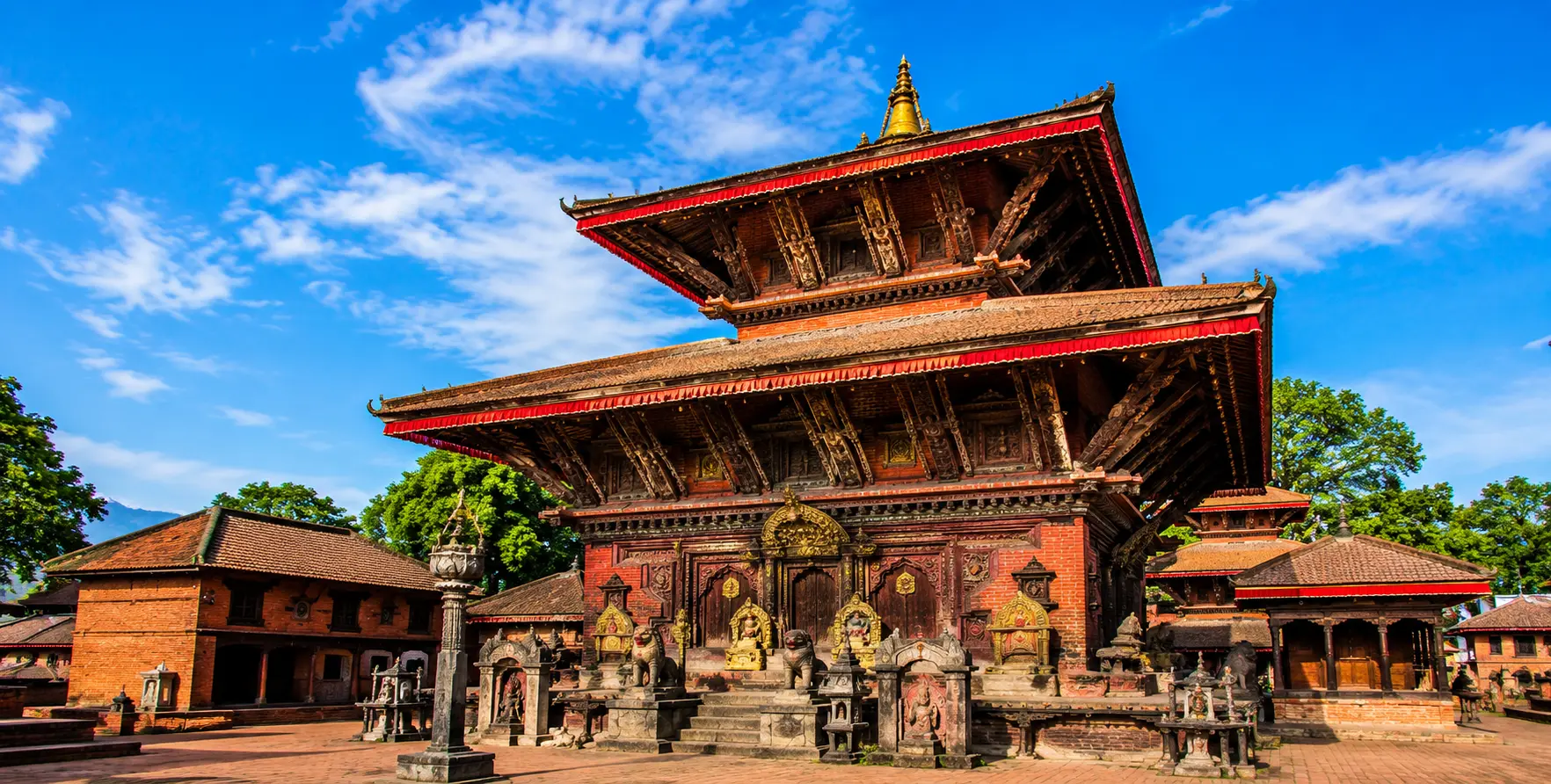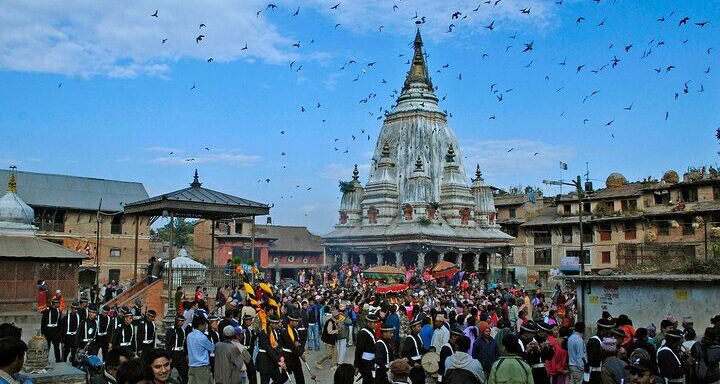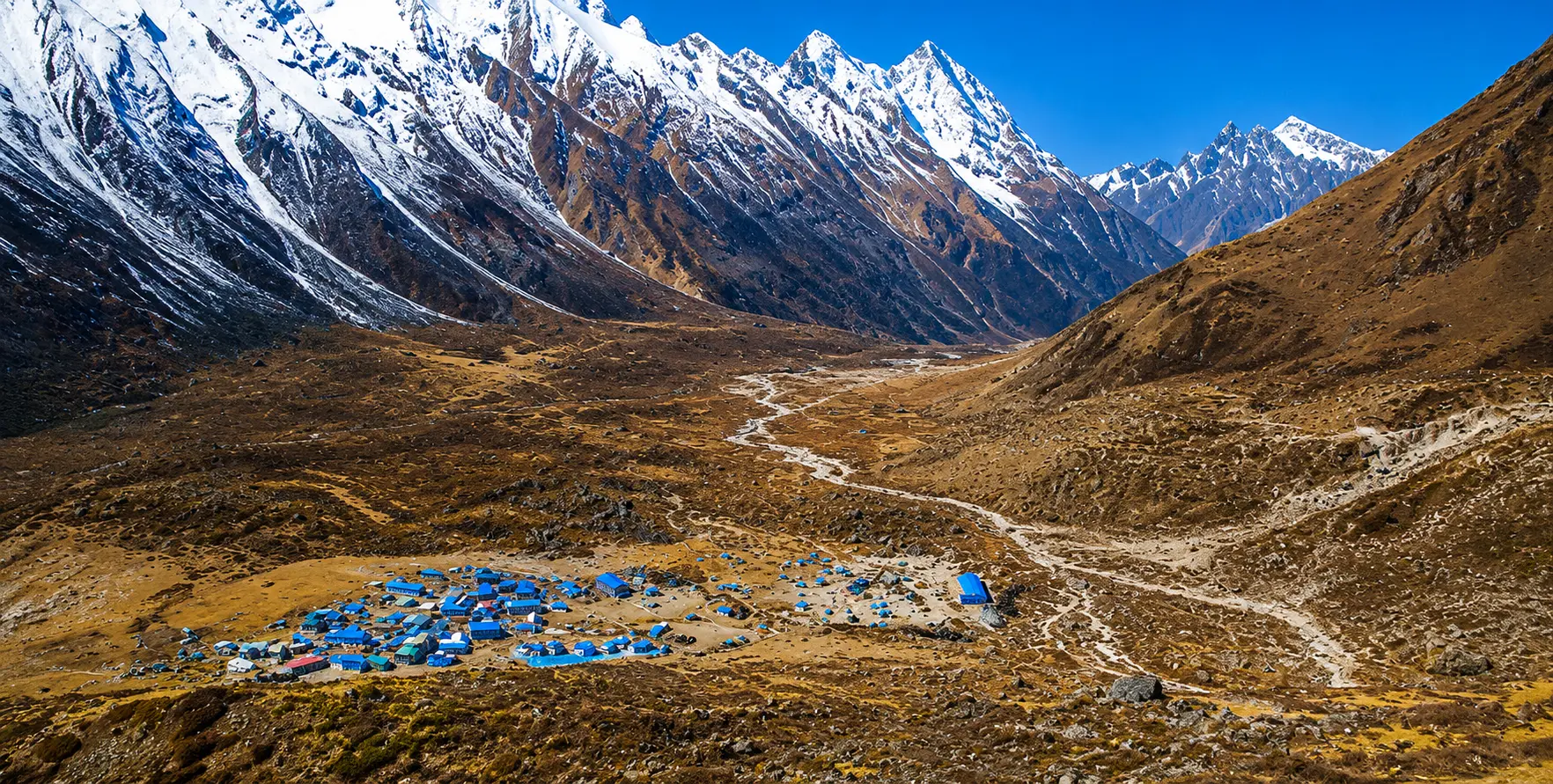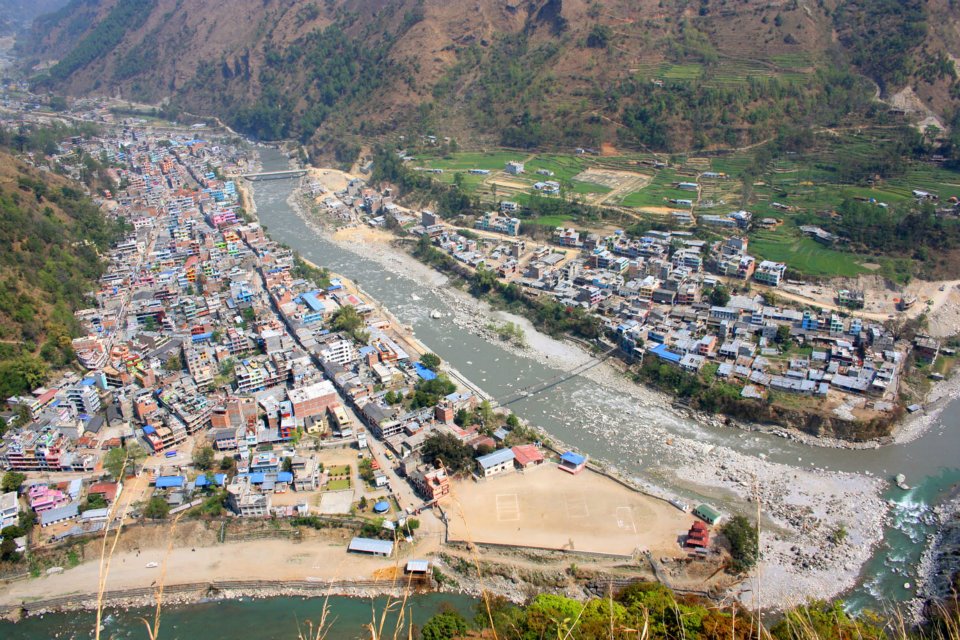
Pokhara Historical and Spiritual Places: The Complete Travel and Transport Guide

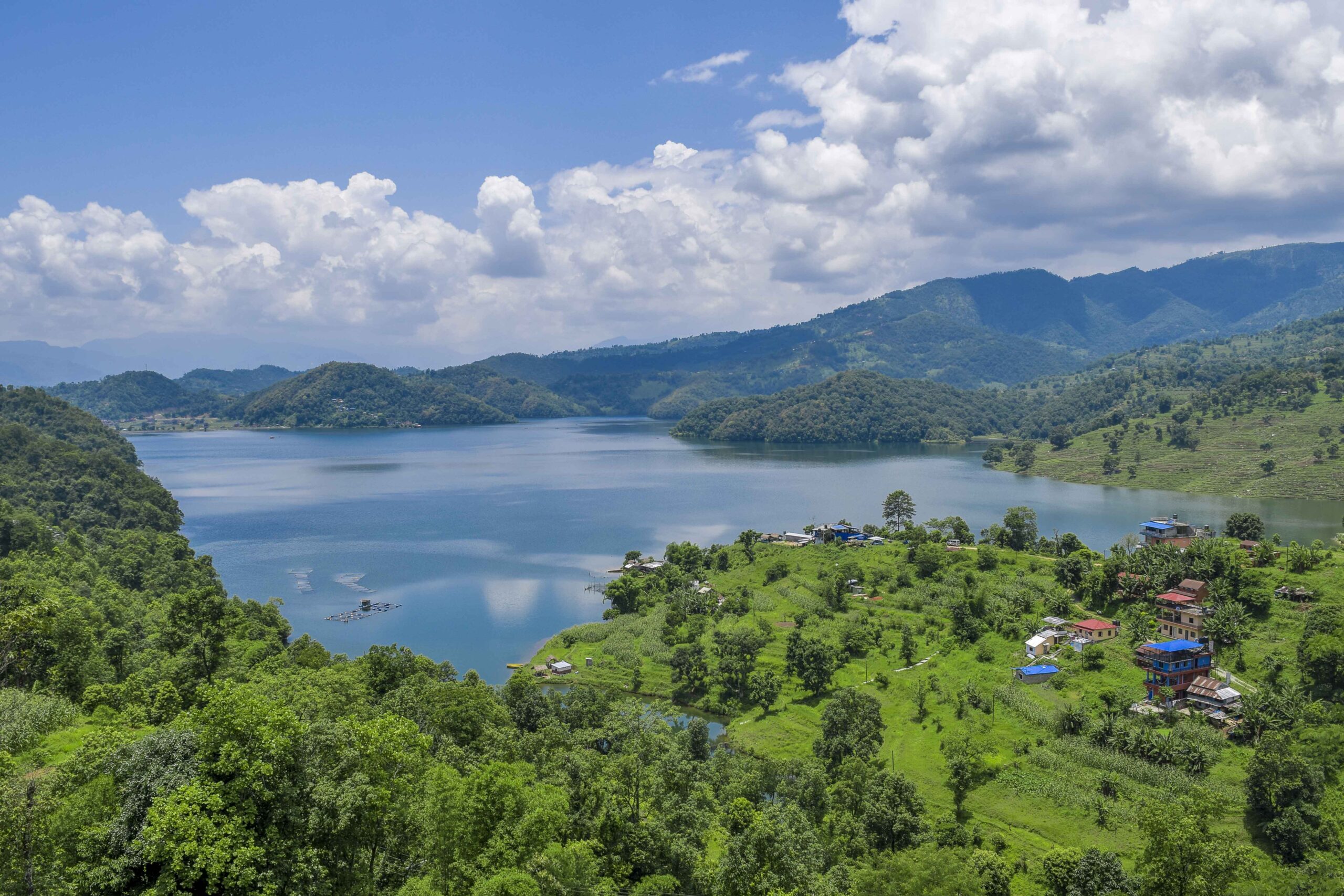
Begnas Lake Pokhara

Pokhara Historical and Spiritual Places – The Complete  Travel and Transport Guide

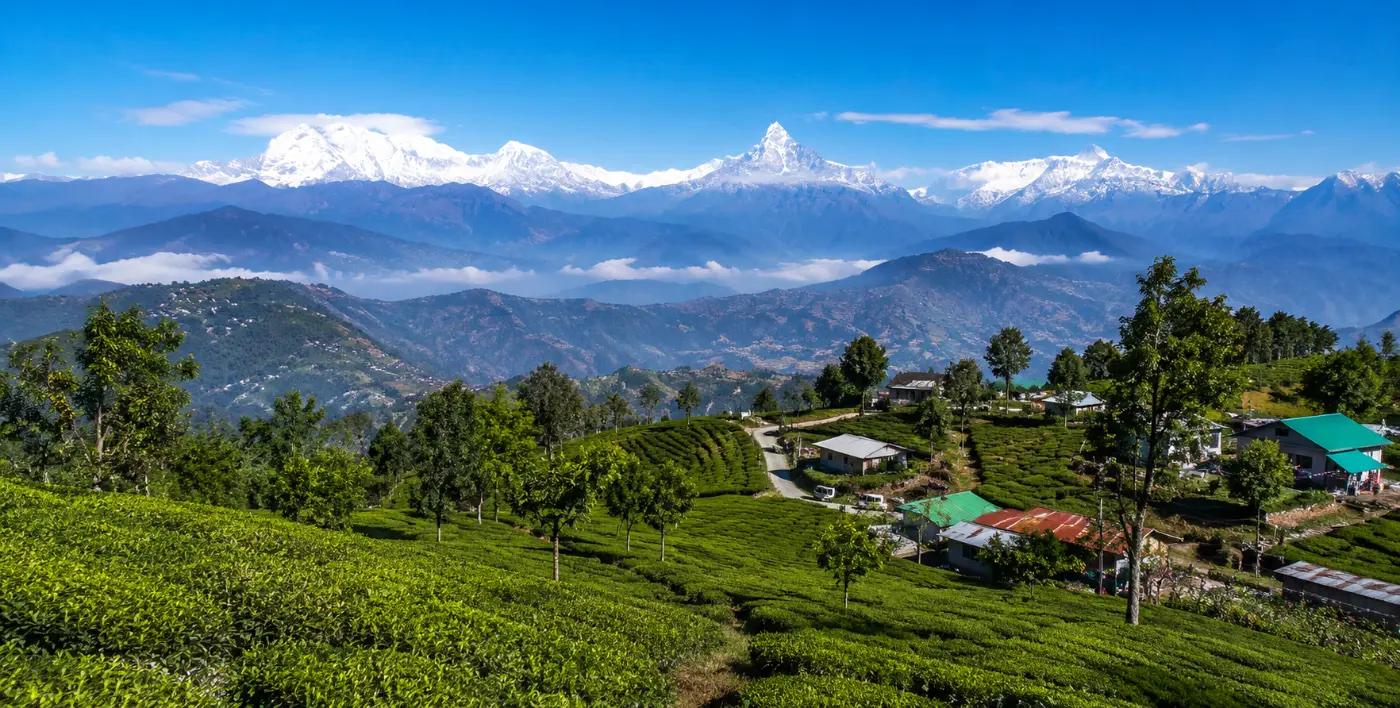
Most visitors who arrive in Pokhara come for the view — the mirror-still surface of Phewa Lake reflecting the soaring white triangle of Machhapuchhre, the Annapurna range filling the entire northern horizon with an improbable wall of ice and rock. This view, experienced from the Lakeside promenade at dawn or the Sarangkot ridge at sunrise, is one of Asia’s great visual experiences and fully deserves the international reputation that draws hundreds of thousands of travellers to Pokhara each year.

But Pokhara is not, and never has been, only a landscape. It is also a city of genuine historical depth, of ancient temples with origin stories reaching back to the Kaski kingdom that ruled this valley for centuries before Prithvi Narayan Shah’s unification, of sacred caves where Shiva’s presence is said to have been continuously worshipped since before recorded time, of Buddhist monasteries preserving Tibetan culture in exile since 1959, and of a living folk-religious tradition that imbues its lake, its hills, its rivers, and its very geography with spiritual significance.

The historical and spiritual dimensions of Pokhara are, in many ways, the city’s best-kept secret. The modern tourist strip of Lakeside—with its paragliding launches, coffee shops, trekking agencies, and boutique hotels—is less than sixty years old, a product of the post-1960s trekking boom.

Beneath and behind it lies a Pokhara of a much older identity: a Newari trading town of the Kaski kingdom, a waystation on the India-Tibet salt trade route, a city whose most important landmarks are not viewpoints but temples, not adventure start points but pilgrimage sites. This guide explores the deeper Pokhara, documenting its historical and spiritual sites in careful detail and explaining how a private vehicle hire from Vehicle Hiring Nepal makes exploring the full scope of the city’s cultural landscape easy, comfortable, and richly rewarding.

Pokhara and the Kaski Kingdom — A Historical Foundation

The Pokhara Valley lies in the heart of what was historically the Kaski Kingdom — one of the Baize Rajya (twenty-two kingdoms) that fragmented what is now western Nepal during the medieval period. The Kaski kings, ruling from their palace at Kasthamandap in the town of Kaski (not to be confused with Kathmandu’s Kasthamandap), maintained authority over the Pokhara valley and the surrounding trade routes as part of a larger western hill political geography that also included the kingdoms of Parbat, Lamjung, Tanahun, and Gorkha.

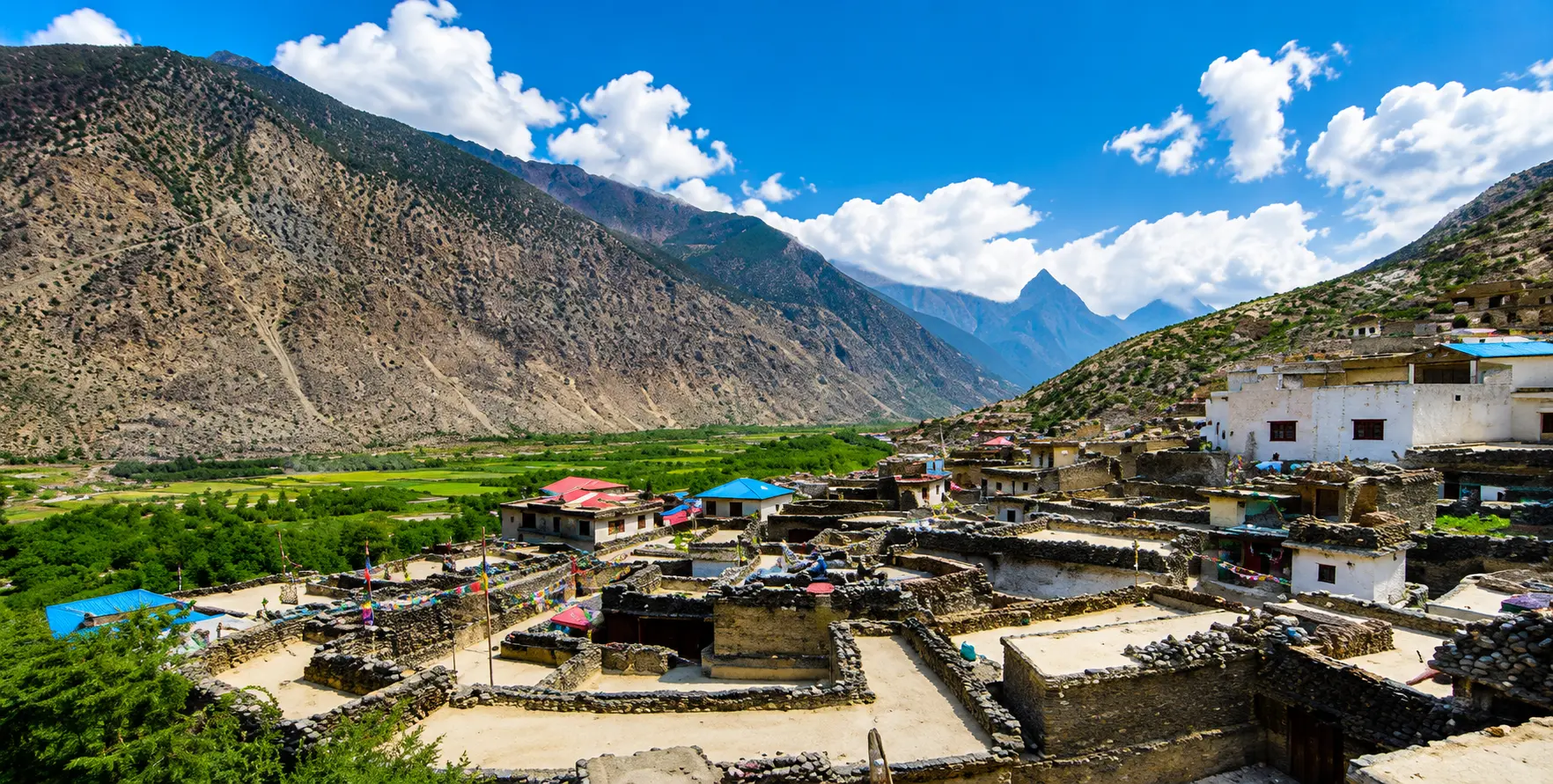
Pokhara’s importance as a human settlement derived originally not from its scenic beauty but from its position on the trans-Himalayan trade network. The valley sits at a natural junction where goods moving between the Indian plains and the Tibetan plateau passed through on their way north via the Kali Gandaki gorge and the Mustang corridor.

Salt from Tibet, wool, and animal products moved south; grain, manufactured goods, and devotional items moved north. Pokhara’s Old Bazaar — the area around Bindhyabasini temple — was the commercial and cultural heart of this trade.

In this market town, Newar merchants who had migrated west from the Kathmandu Valley established the trading networks that would define the city’s pre-modern economy.

The Kaski kings ruled this valley until Prithvi Narayan Shah’s unification campaign absorbed it in the 1780s, just over a decade after he captured Kathmandu. The kingdom’s religious and cultural legacy survives most visibly in the temples and sacred sites the Kaski rulers established or patronised—Barahi, Barahi, and others—which remain active centres of Hindu devotion today.

Most of Pokhara’s old city was destroyed in a catastrophic fire in 1949 that locals say started at the Bindhyabasini temple and consumed much of the Old Bazaar. This tragedy wiped out many physical records of the Kaski-period city.

Still, the temples themselves, rebuilt on their original sites, preserve the continuity of the devotional traditions that preceded the fire.

Bindhyabasini Temple — Pokhara’s Oldest and Most Sacred

Location: Mohariya Tole, Old Bazaar area, Pokhara — on a small hillock 3,002 feet (915 m) above sea level

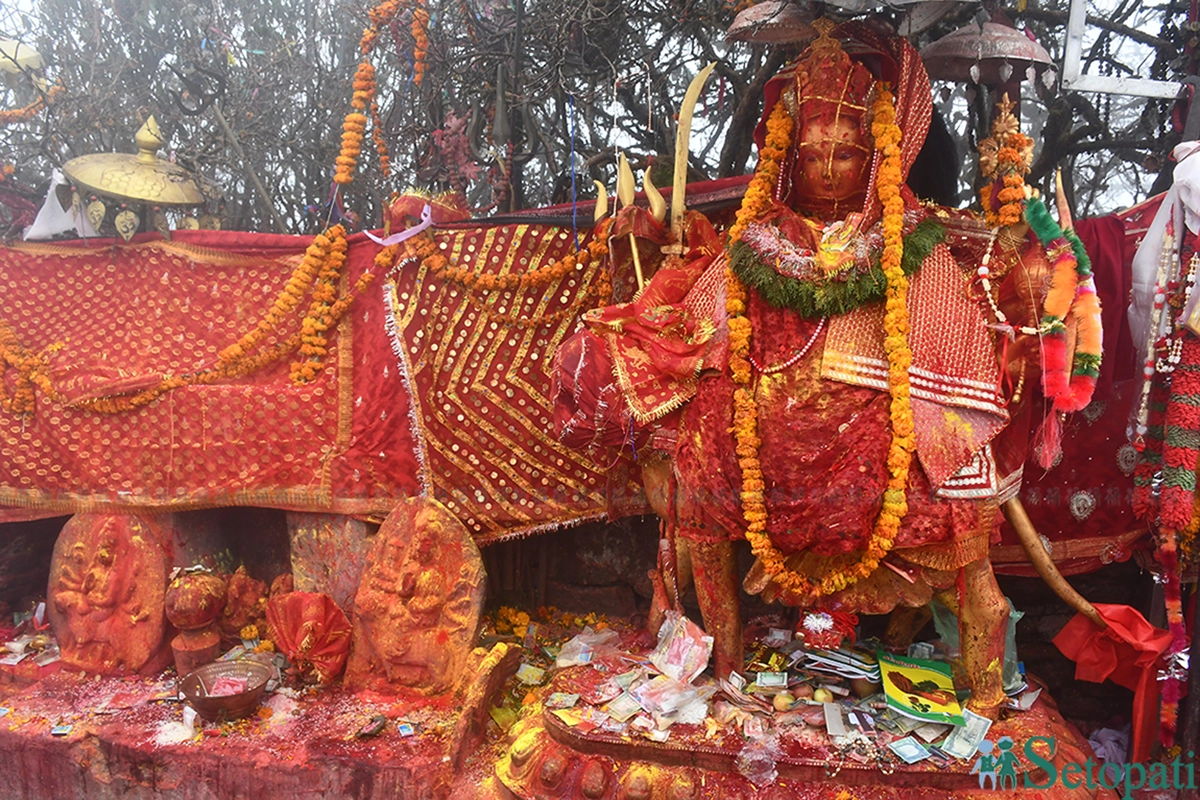
Deity: Goddess Bindhyabasini — an incarnation of Durga/Kali, the guardian deity of Pokhara city

Age: Established in the 17th–18th century (over 300 years of documented worship)

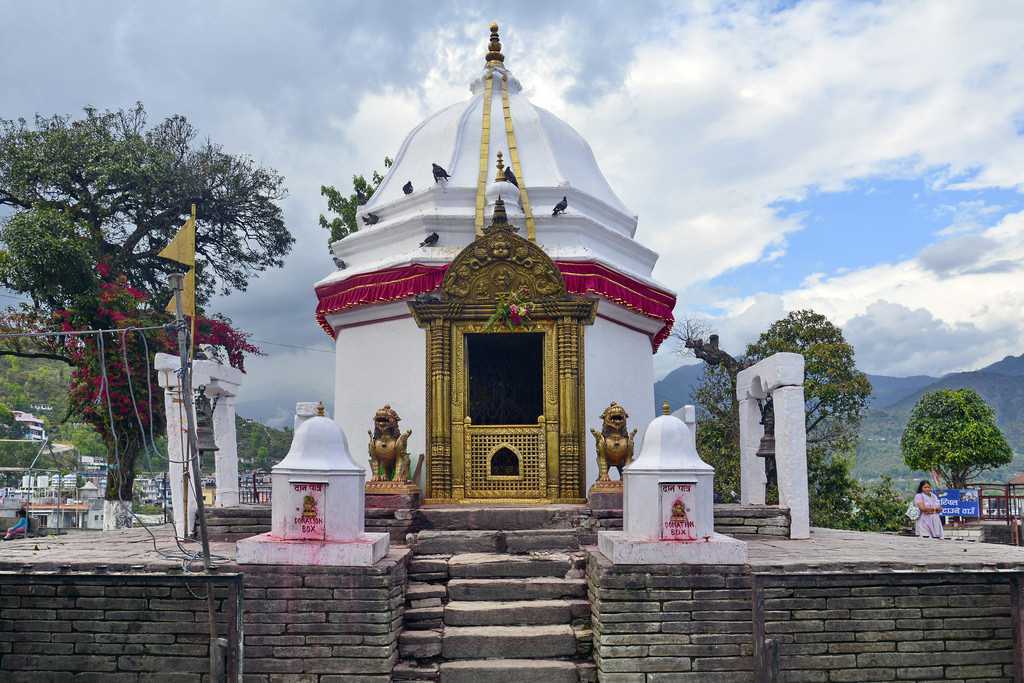
Architecture: White octagonal shikhara-style temple with dome, golden carved metal gate, two golden lions at the entrance

Daily Puja: Nitya Puja begins at 4:00 AM daily; devotees may enter after 5:30 AM

Entry: Free (no entry fee); NPR 20 car park fee; donations welcome
Pokhara Historical and Spiritual Places

Bindhyabasini Temple is the oldest, most revered, and most historically rooted sacred site in Pokhara — the city’s spiritual anchor, the temple from which the Settlement of Pokhara grew outward, and the goddess the local community understands as the guardian deity and protector of the entire valley. Understanding the city’s spiritual geography begins here.

The temple’s origin story blends myth and documented history in the characteristically Nepali way. According to one primary account, King Siddhi Narayan Shah of Kaski visited Vindhyachal mountain in Uttar Pradesh while on pilgrimage in India. In this region, people worship the original Bindhyabasini (Vindhyavasini) goddess.

Deeply moved by the goddess’s power, he sent trusted men to retrieve her sacred image and bring it to Pokhara. During the return journey, the bearers made camp on the hillock in what is now the Mohariya Tole area.

The following morning, the goddess’s image could not be lifted from the ground—a divine sign universally interpreted in Nepali religious tradition as the goddess choosing her own abode. The temple was established on there, and the goddess has been worshipped there ever since.

An alternative version attributes the foundation to King Khadgaman Malla of Parbat, who had a similar divine directive. Both accounts agree on the essential elements: the goddess’s image was brought from Vindhyachal, India; she chose her own location by becoming immovable; and the Kaski kingdom established her temple on that chosen site.

The multiplicity of founding accounts is itself characteristic of major Nepali sacred sites, reflecting the convergence of several devotional communities’ claims to the site’s sanctity over time.

The goddess dwells in the temple not as a sculptural image in the conventional sense but as a Shaligram — a sacred ammonite fossil from the Kali Gandaki River regarded throughout the Hindu tradition as a natural manifestation of Vishnu, and here specifically of the Divine Mother in her fierce aspect. This aniconic, geological form of the divine — older than any human image, shaped by the river and the earth over millions of years — gives the goddess’s presence at Bindhyabasini a quality of primordial authority that no carved idol could replicate.

The Temple Complex

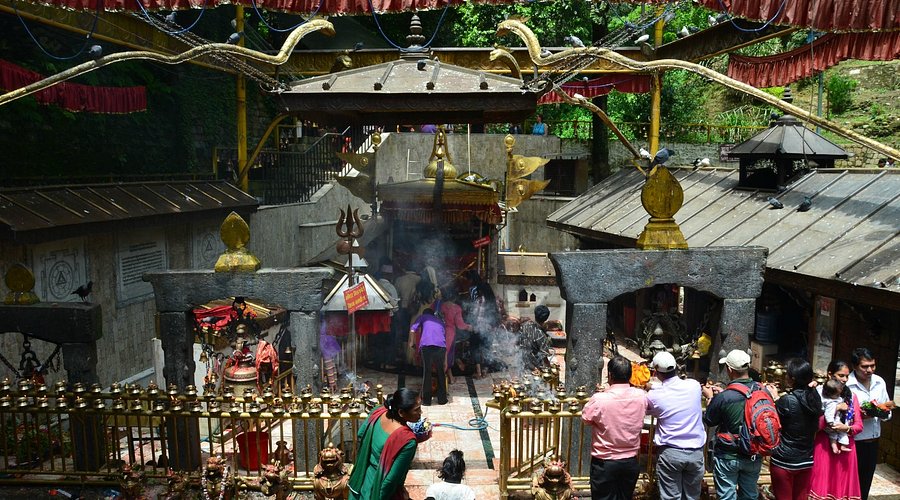
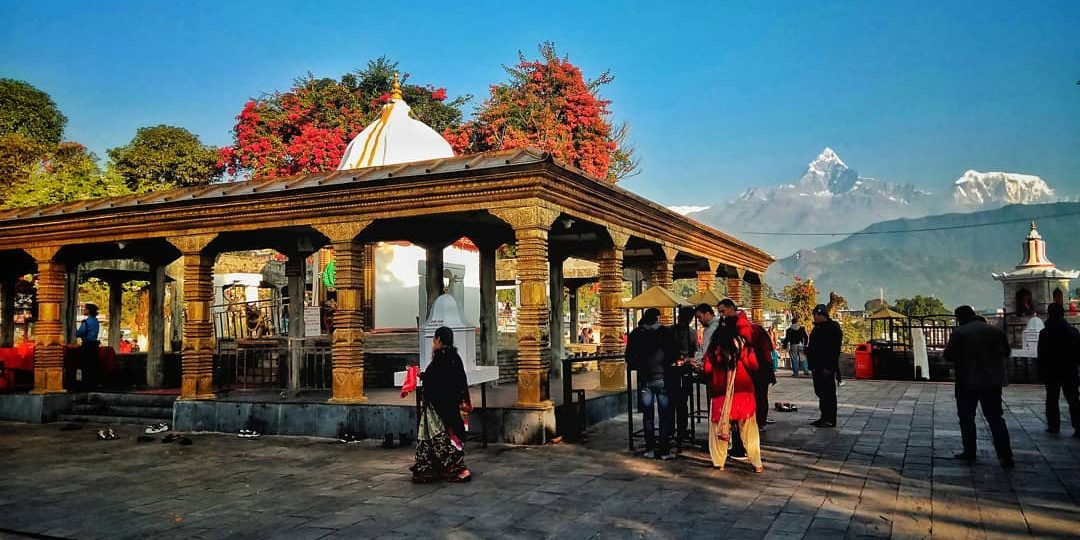
The main Bindhyabasini temple sits on a raised platform surrounded by a park-like compound that includes a remarkable collection of smaller shrines dedicated to the Hindu pantheon: Saraswati (goddess of learning and the arts), Hanuman (the monkey-god of devotion and strength), Shiva (in his Lingam form), Vishnu with Lakshmi, Ganesh (the elephant-headed remover of obstacles), and Jogi Paati — a rest house for wandering ascetics (jogis). On the opposite side of the compound sits the Krishna Mandir, where Krishna Janmashtami (the birthday of Lord Krishna) is celebrated annually with great devotion.
Pokhara Historical and Spiritual Places

The main white octagonal temple, built in the Shikhara style with a distinctive dome, creates a visually striking contrast with the more common pagoda-style temple architecture found elsewhere in Nepal. The octagonal form—rare in Nepali temple architecture—reflects specific geometric principles associated with Tantric sacred architecture, in which the eight directions of space are understood to require ritual acknowledgement and protection.

The golden carved metal gate at the main entrance and the two golden metal lions flanking it are recent additions, reflecting the local Dharmic committee’s ongoing investment in the temple’s physical upkeep.

The view from the temple’s elevated hillock encompasses the entire city of Pokhara spread below to the south and east, with Phewa Lake visible in the middle distance, and, on clear mornings, the Annapurna and Machhapuchhre ranges in spectacular proximity to the north. This combination of spiritual power and physical beauty makes Bindhyabasini’s hilltop one of the finest places in Pokhara to pause and understand the city’s relationship with both its sacred geography and its natural setting.

Festivals at Bindhyabasini

The temple is the focal point of Pokhara’s major Hindu festival calendar. The Navaratri (nine nights of the goddess) is celebrated in both Chaitra (spring) and Ashwin (autumn) and is most significant, featuring nine days of continuous Devi Bhagwat Purana recitation, Durga Bali animal-sacrifice rituals, and Havan (sacred fire) ceremonies.

Maha Shivaratri draws large crowds to the Shiva shrine within the complex. Teej (the women’s festival in August) fills the temple with red-sari-clad women celebrating marital devotion. Krishna Janmashtami brings festivity to the adjacent Krishna Mandir.

Every Saturday — the sacred day of Bhagwati worship in the Nepali tradition — hundreds of devotees arrive from across Pokhara for special puja, and the compound throbs with hymn-singing accompanied by traditional Nepali musical instruments.
Pokhara Historical and Spiritual Places

Tal Barahi Temple — The Island Goddess of Phewa Lake

Location: A small island at the centre of Phewa Lake, accessible by a 10- to 15-minute boat ride from the Lakeside boat ghats

Deity: Goddess Barahi — a two-armed incarnation of Durga, specifically associated with boars and protection from water

Age: Founded by the Kaski Kingdom in the 18th century; reconstructed in its current form circa 1971 CE (2017 BS) under King Mahendra

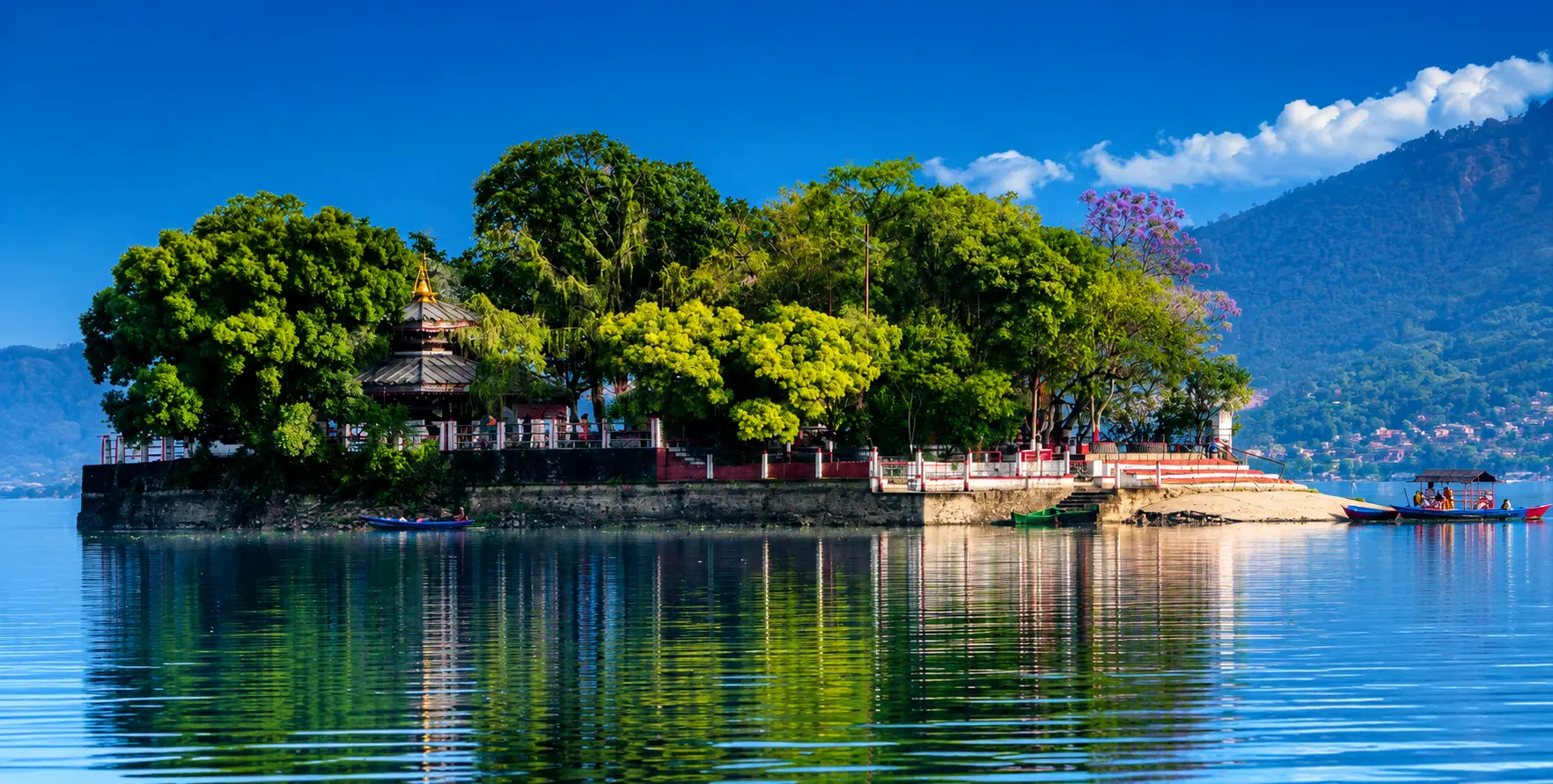
Architecture: Two-story pagoda-style temple in traditional Newari red brick and timber construction

Boat Fare: NPR 50–100 shared boat; NPR 800–1,000 private boat (2026 rates)

Aarti Timings: 7:00 AM and 6:00 PM daily

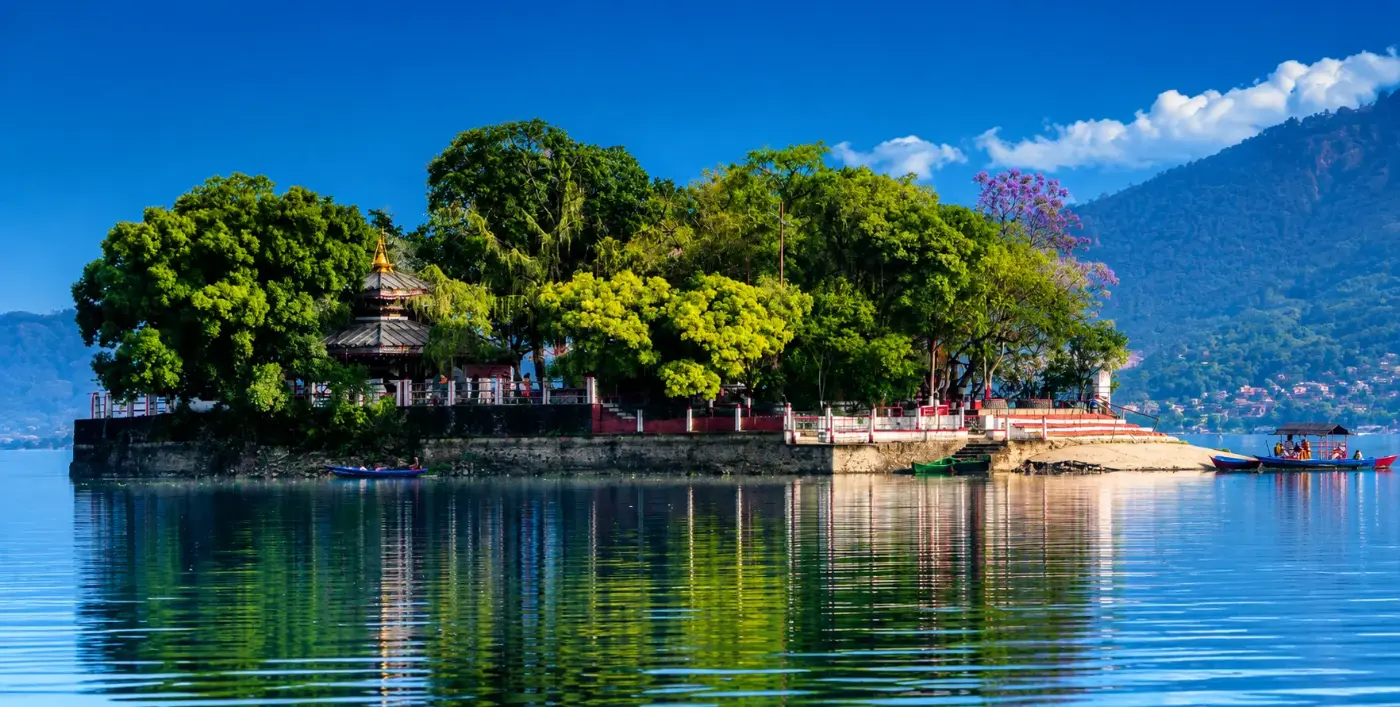
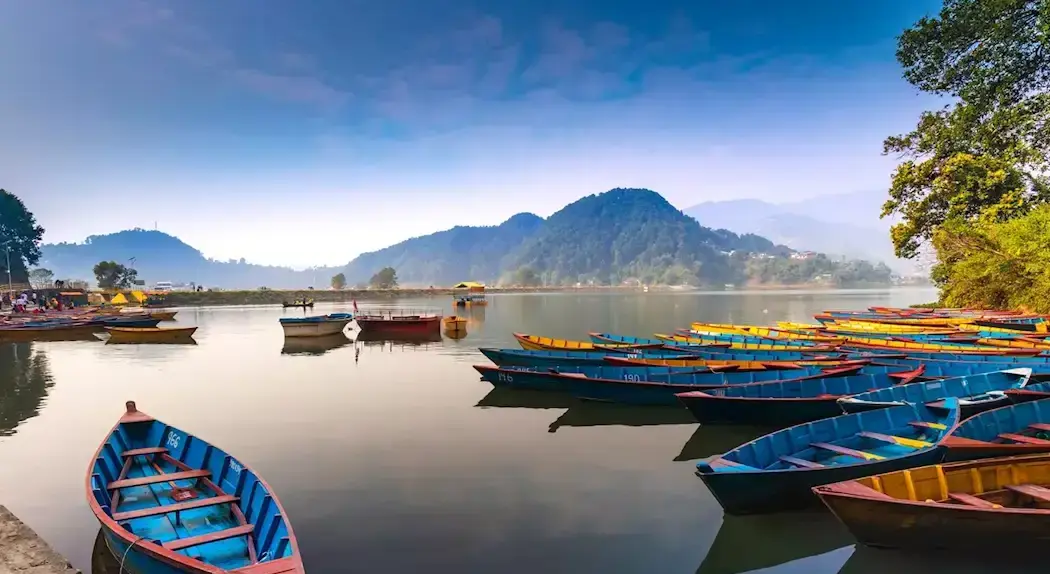
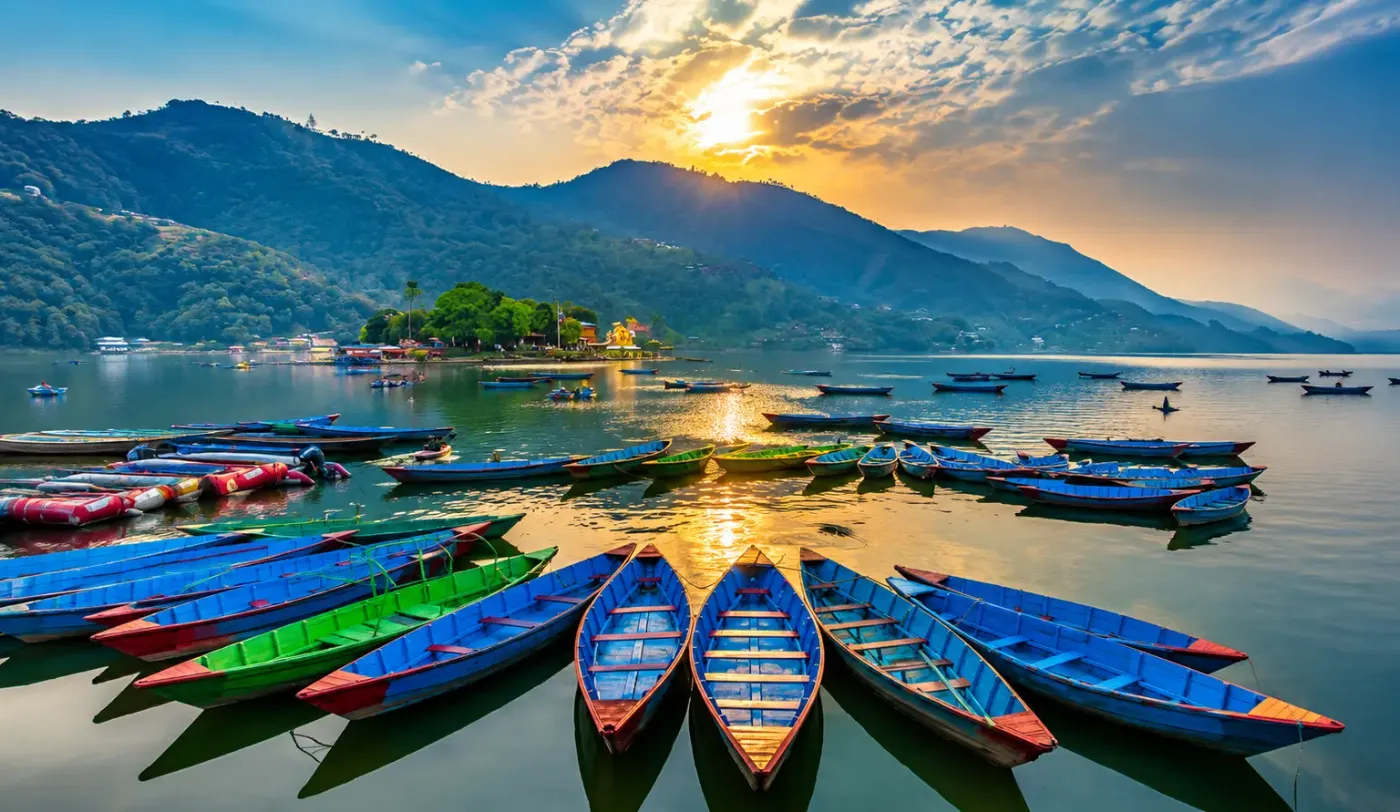
The Tal Barahi Temple — the Lake Barahi Temple — is arguably Pokhara’s most photographed sacred site and one of the most visually distinctive temple settings in all of Nepal. The small island on which it stands, barely large enough for the temple complex and its surrounding trees, rises from the centre of Phewa Lake like a divine apparition—the two-story red-brick pagoda roofline silhouetted against the Annapurna range on clear mornings in a composition that has become one of Pokhara’s defining images.

Goddess Barahi is a manifestation of Durga, specifically associated with water and Vishnu’s boar form (the Varaha avatar). Her worship on this lake island reflects a specific geographical theology: a powerful goddess installed at the centre of the valley’s largest body of water, ensuring its protection and the safety of those who depend on it.

The Kaski kings who established the temple understood that Phewa Lake was the valley’s most important water resource—feeding the surrounding farmland through its outlet streams—and placing the goddess at its centre was an act of both devotion and practical statecraft.

The boat approach to the temple is itself an essential part of the experience. The 10-to 15-minute row across the lake — in the traditional wooden rowboats that remain the only permitted means of access — lets the temple island grow gradually from a distant silhouette into a detailed sacred space, with the mountain panorama expanding behind it as you move farther from the Lakeside shore.

The reflections of the Annapurna range and Machhapuchhre in the lake’s still morning water, seen from a boat at eye level, are among the most beautiful natural sights in western Nepal.

On the island, devotees remove their footwear and climb the carved wooden steps to the main sanctum, where they worship Goddess Barahi in both anthropomorphic and symbolic forms. The daily aarti at 7:00 AM — lamp flames, bells, and the scent of incense rising over the lake in the morning light — is one of Pokhara’s most serene and spiritually charged moments.

Animal sacrifice, particularly of ducks and goats, is an important element of Barahi worship, especially on Saturdays and during the Dashain festival.
Pokhara Historical and Spiritual Places

Gupteshwor Mahadev Cave — Shiva’s Hidden Sanctuary

Location: Approximately 2 km west of the Davis Falls viewpoint, Pokhara — near the western end of Phewa Lake

Deity: Lord Shiva in his Mahadev (Great God) form, worshipped within a natural limestone cave system.

Cave Length: Approximately 3 km of documented passages; approximately 300–350 m of the main passage is open to public visit

Entry Fee: NPR 100 for Nepali citizens; NPR 300 for SAARC nationals; NPR 500 for non-SAARC foreign visitors (2025–26 rates)

Opening Hours: Daily, approximately 7:00 AM to 6:00 PM

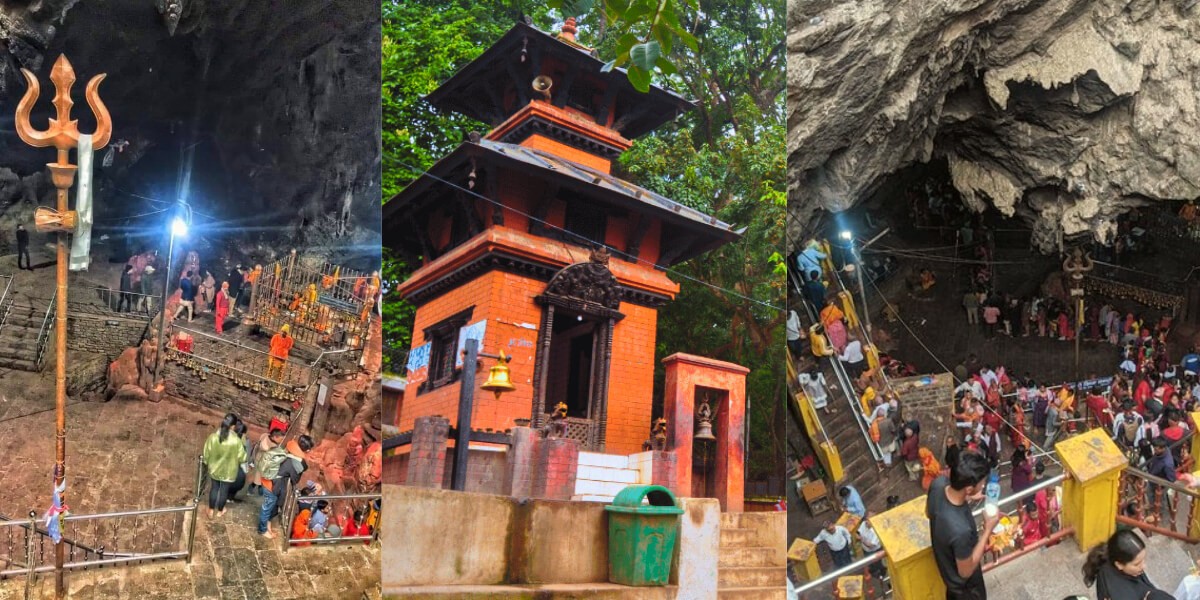
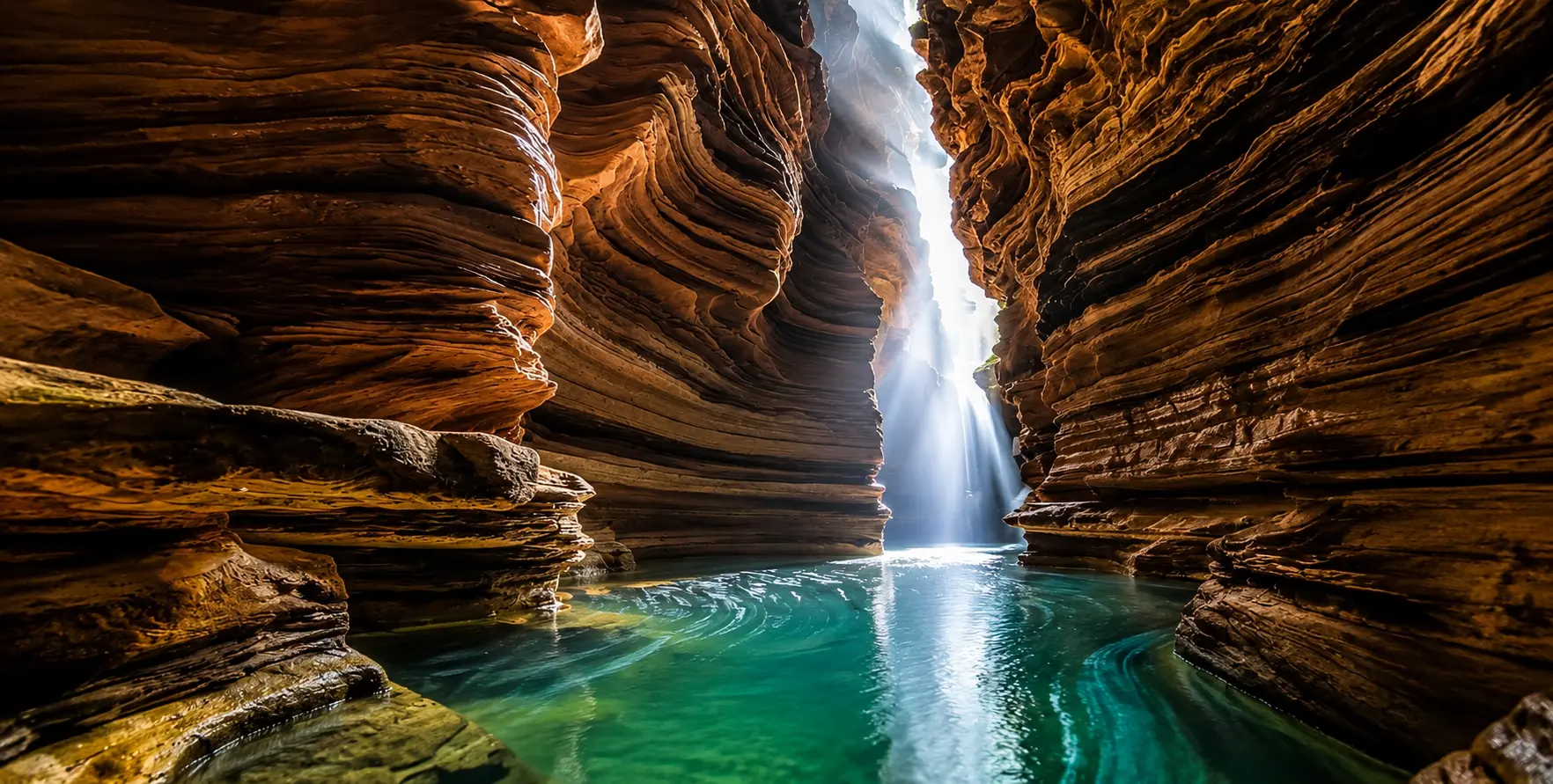
Gupteshwor Mahadev Cave is Pokhara’s most extraordinary natural sacred site — a limestone cavern system of remarkable geological beauty and profound spiritual significance that extends for approximately 33 kilometres through the hillside above the Pardi stream. The cave’s name is perfectly descriptive: Gupt means hidden, and Eshwor is another name for Shiva. The Hidden Shiva.

The sense of encountering the divine in a form that is not immediately visible — present in the darkness of the cave, in the geological formations that devotees read as manifestations of divine energy, in the underground stream that eventually emerges as Davis Falls (Patale Chhango, the Falls of the Underworld) — is precisely what gives Gupteshwor its distinctive spiritual character.

The cave entrance opens at the top of a rocky stairway descending from the road, and the first section is large enough to walk through comfortably before narrowing into passages that require crouching and careful footwork. Artificial lighting illuminates the cave’s geological formations—stalactites, stalagmites, columns, and flowstones built up by centuries of mineral-laden water dripping through limestone—creating a dramatically beautiful underground landscape of dripping stone and reflected water.

At the deepest publicly accessible point of the cave sits the sacred Shiva Lingam  he primary sacred object of the Gupteshwor shrine natural stone formation worshipped as a manifestation of Shiva’s presence since before documented history. The Lingam is perpetually wet from the cave’s interior moisture, a condition regarded as auspicious in Shiva worship — the Lingam is understood to be continuously anointed by the earth itself, requiring no human ritual bathing.

Priests conduct daily puja at this deepest shrine, and the cave’s enclosed acoustics, incense smoke, dripping water, and lingering darkness make worship here profoundly different from any open-air temple.

The connection between Gupteshwor and Davis Falls is one of Pokhara’s most intriguing natural-sacred links. The underground stream that flows through part of the Gupteshwor cave system emerges dramatically at Davis Falls (Patale Chhango). At this underground waterfall, the Pardi stream plunges into a sinkhole, disappears into the earth, and then re-emerges below.

From within the Gupteshwor cave, you can hear and see this underground waterfall at the cave’s deepest accessible point— adding a further dimension of natural drama to the experience of being underground with Shiva. Maha Shivaratri brings the largest annual pilgrimage crowd to Gupteshwor.
Pokhara Historical and Spiritual Places

World Peace Pagoda (Shanti Stupa) — Buddhism Over the Lake

Location: Anadu Hill, south of Phewa Lake, at approximately 1,100 m elevation

Type: Shanti Stupa (Peace Pagoda) — one of 80 such pagodas worldwide, and one of two in Nepal

Builder: Nichidatsu Fujii, Japanese Buddhist monk, founder of the Nipponzan-Myohoji order; local Buddhists assisted

Foundation: Foundation laid 1947; construction began 1973; inaugurated October 30, 1999

Approach: Approximately a 1- to 1.5-hour hike from Lakeside (steep trail through forest); or vehicle access to a point 30 minutes below the stupa; or a short boat ride to the south shore, then hike

Views: 360-degree panorama of Phewa Lake, Pokhara city, and the Annapurna and Dhaulagiri ranges

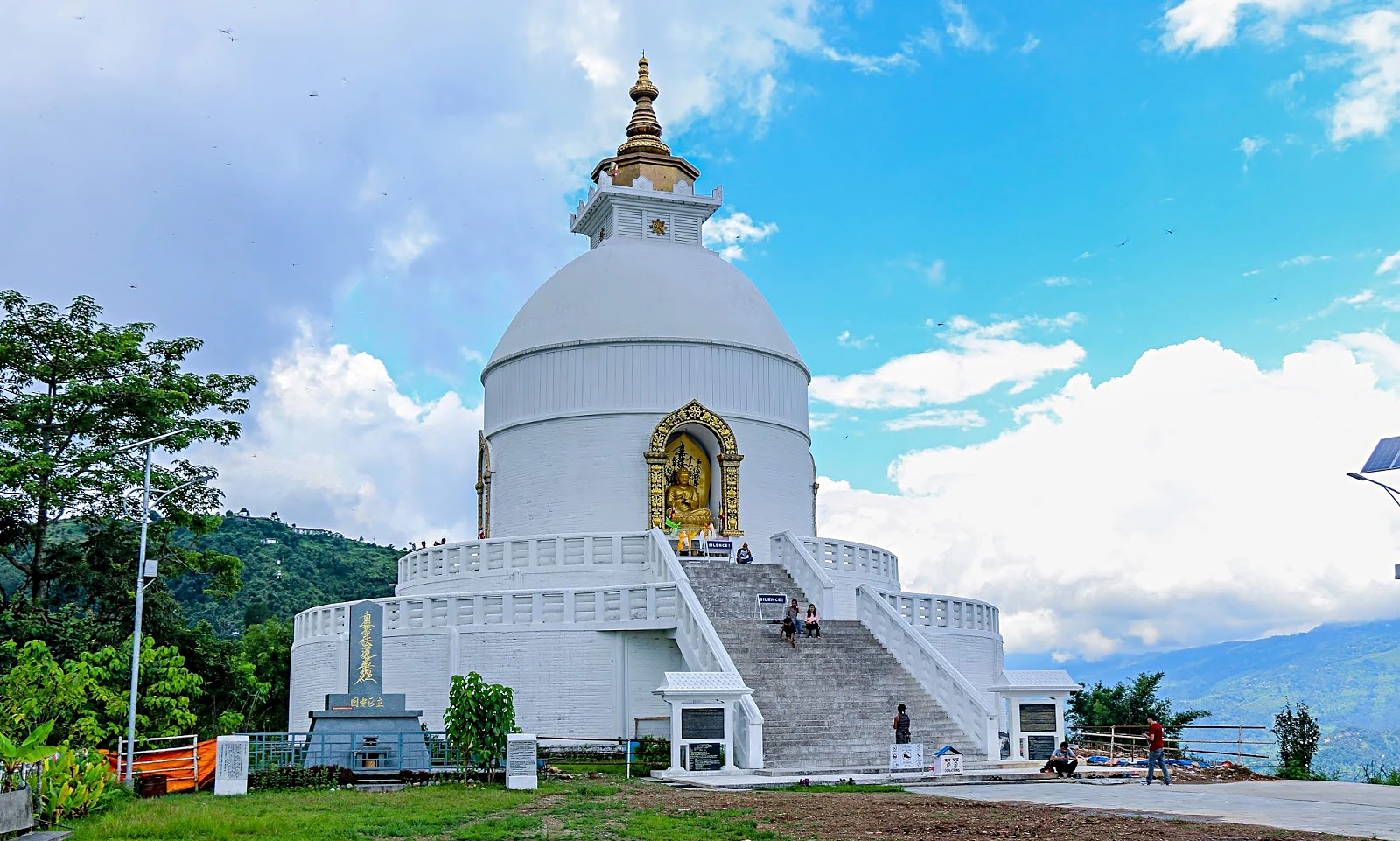
The World Peace Pagoda on Anadu Hill above the southern shore of Phewa Lake is one of Pokhara’s most architecturally striking landmarks and a major modern Buddhist sacred site. This gleaming white stupa stands on a high ridge with panoramic views across the Pokhara valley, the full extent of Phewa Lake, and, on the clearest days, the full sweep of the Himalaya from Dhaulagiri in the west to Manaslu in the east.

Nichidatsu Fujii (1885–1985), a Japanese Buddhist monk of the Nipponzan-Myohoji order, initiated the Shanti Stupa movement and dedicated his life to building Peace Pagodas worldwide as physical symbols of the Buddhist aspiration toward non-violence and global peace. Fujii had met Mahatma Gandhi in 1931 and been deeply influenced by his philosophy of non-violent resistance; the Peace Pagodas were conceived as a response to the atomic bombings of Hiroshima and Nagasaki in 1945, embodying the Buddhist vow that such violence should never be repeated.

The Pokhara pagoda is one of 80 Shanti Stupas built worldwide by the Nipponzan-Myohoji order.

The stupa is a large white dome in the traditional hemispherical form, surmounted by a golden spire (harmika) and encircled at its base by four gilded Buddha images representing the four directions—the birth, Enlightenment, first teaching, and parinirvana of the Buddha. The platform surrounding the stupa provides the finest 360-degree viewpoint in the entire Pokhara valley at its level, combining the spiritual experience of circumambulating a sacred stupa (clockwise, as is the universal Buddhist practice) with one of Nepal’s finest mountain panoramas.

The hike to the pagoda through the forested Anadu Hill is a significant part of the experience for most visitors — a 1- to 1.5-hour ascent through subtropical forest where rhesus macaques are commonly sighted, birds are abundant, and the increasing elevation gradually reveals the Pokhara valley in its full extent below. The sunrise view from the pagoda platform — the Annapurna range turning gold, the lake still dark below, and the first light catching the white dome — is one of the finest possible beginnings to a Pokhara day.
Pokhara Historical and Spiritual Places

Pumdikot — The Hill of 216 Shiva Lingas and the Giant Shiva

Location: Pumdikot Hill, Pokhara-8, approximately 7 km from central Pokhara

Altitude: Approximately 1,500 m — the highest major sacred site accessible by vehicle in the Pokhara valley

Significance: 216 sacred Shiva Lingas; Shakti Peetha (seat of divine energy); historic Malla, Magar, and Shah dynasty fort and worship site

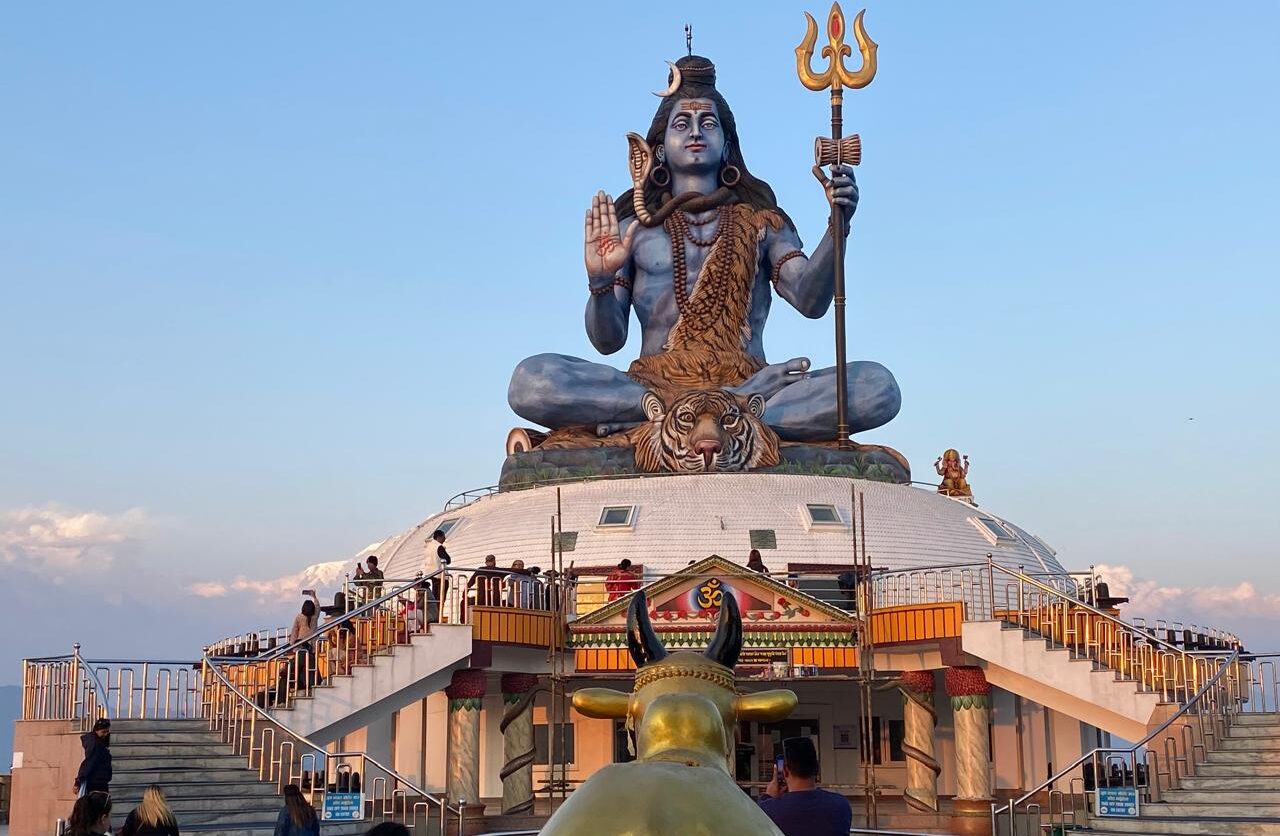
The Giant Shiva: A 51-meter (167-foot) tall Shiva statue — one of the tallest Shiva statues in the world — was inaugurated in recent years and is visible from across the Pokhara valley.

Pumdikot Hill is one of Pokhara’s most richly layered sacred and historical sites. This high hilltop has served as a military fortification, a Shakti Peetha of concentrated divine energy, a Shiva shrine of ancient origin, and, most recently, the site of one of the world’s tallest Shiva statues, which has transformed Pumdikot into a landmark visible from virtually every point in the Pokhara valley.

The hill’s spiritual identity is defined by its 216 Shiva Lingas — which hold considerable ritual significance in Hindu sacred numerology. The lingas are distributed across the hilltop in a pattern that maps the site’s sacred geography, each an individual object of worship within a larger, integrated devotional landscape.

This density of sacred objects gives Pumdikot a quality different from most individual temple sites: it is less a place with a single divine focus and more a sacred environment in which the divine permeates the entire hillside.

The site’s designation as a Shakti Peetha places it among the most powerful divine feminine sacred sites in the subcontinent—points in the landscape where the concentrated energy of the goddess (Shakti) is understood to reside and be accessible to worshippers in a particularly direct form. During the Malla, Magar, and Shah dynasties, the Bhumeshwor Temple at the summit hosted specific royal rituals for prosperity and military victory — a practice reflecting the understanding that controlling the high ground meant not only a strategic military advantage but also a spiritual one.

The 51-meter Shiva statue at Pumdikot — seated in a meditative posture and visible from across the valley — is the site’s most recent addition and has quickly become one of Pokhara’s most-visited viewpoints for devotees and visitors alike. The view from the statue’s base, encompassing the full Pokhara valley, Phewa Lake, the city, and the unbroken Himalayan wall from Dhaulagiri through Annapurna to Manaslu, rivals anything available from Sarangkot and is considerably less crowded.

Chaitee Dashain in April and Haritalika Teej in September bring the largest festival gatherings to Pumdikot.
Pokhara Historical and Spiritual Places

Pokhara Old Bazaar and the Newari Heritage Quarter

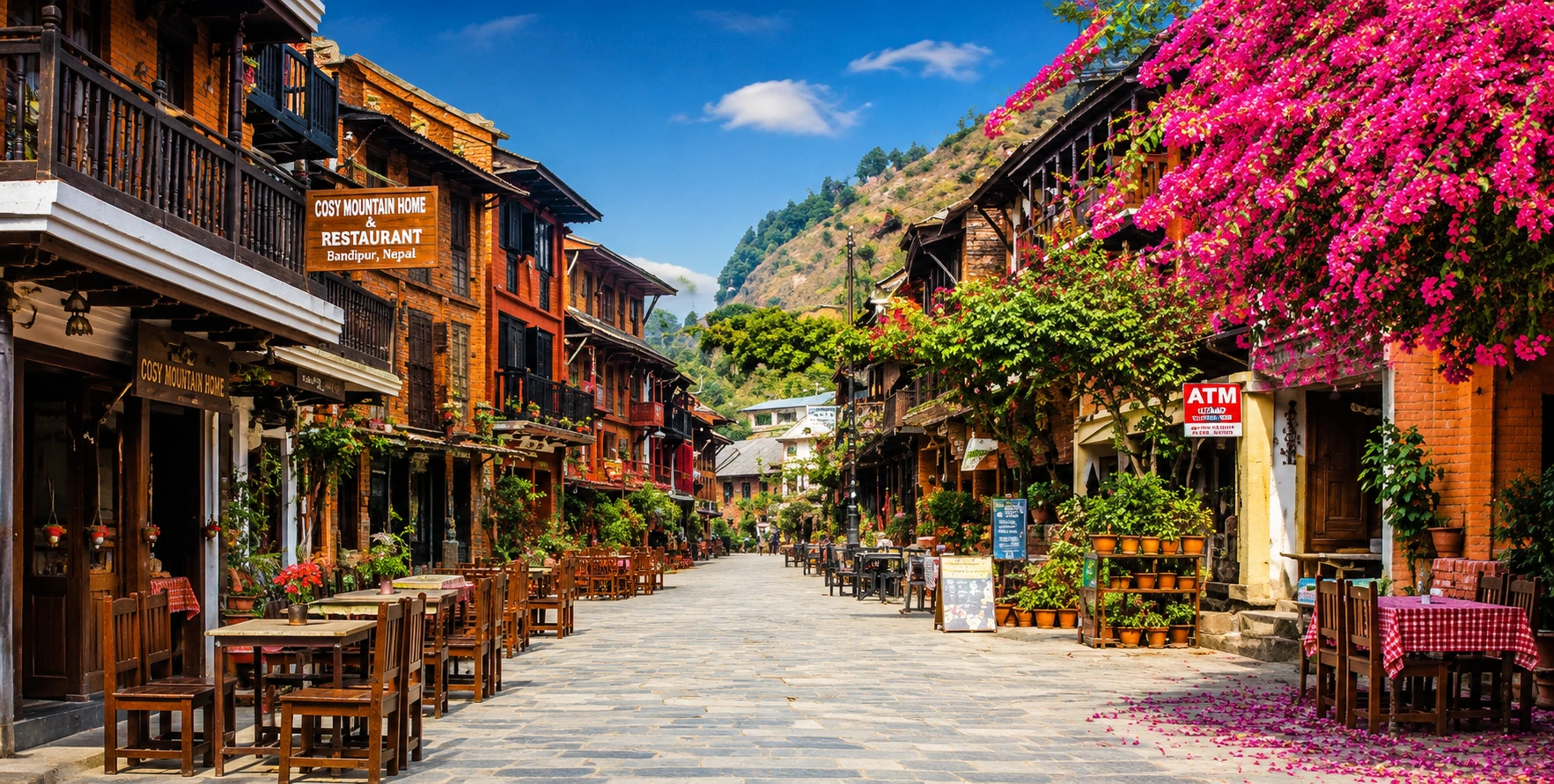
Pokhara’s Old Bazaar — stretching roughly between the Bindhyabasini temple to the north and the Mahendrapul bridge to the south, along what was historically the main trading street — is one of the city’s most historically significant and least tourist-visited areas. The bazaar is not a museum-piece heritage precinct; it is a living market, densely packed with shops selling hardware, textiles, spices, and everyday necessities, whose architectural fabric — stone-paved lanes, multi-story timber-framed houses with carved wooden windows and brick facades — preserves visible echoes of the Newar trading town that occupied this site before the 1949 fire.

The Newar merchant community that settled here from the Kathmandu Valley established Pokhara’s old town as a trade hub, bringing the community organisation, architectural tradition and religious practices, including the construction of the Bindhyabasini and Barahi temples and the festival calendar, that shaped the pre-modern city. Wandering the Old Bazaar’s lanes, past chaityas (small Buddhist shrines) at street corners, water-spout systems (dhara) fed by traditional underground aquifers, and the workshops of traditional artisans, is a form of historical reading unavailable at any formal heritage site.

Among the specific features of the Old Bazaar worth locating are the traditional Newar courtyard houses (bahal-style compounds with inner courtyards), the Bhimsen Mandir (the patron deity of Newar merchants, whose worship was a commercial institution throughout the Kathmandu Valley trading world), and several smaller shrines associated with specific Newar community festivals that are conducted with complete continuity from the pre-modern period but virtually without outside visitors. The Old Bazaar’s morning market, when fresh vegetables, local cheese (churpi), and Pokhara’s own dried fish from Phewa Lake are sold from street-side stalls, is also one of the most authentic daily-life experiences available in the city.
Pokhara Historical and Spiritual Places

Tibetan Refugee Settlements and Buddhist Monasteries

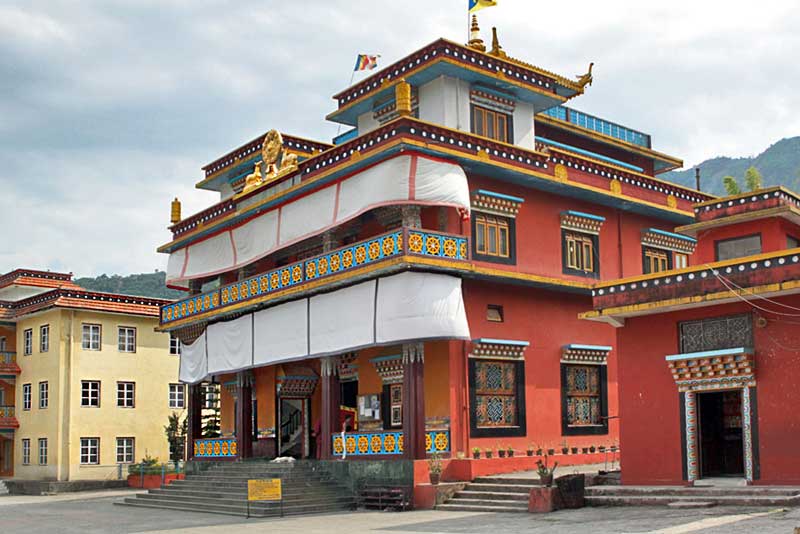
Pokhara hosts some of Nepal’s largest and most culturally significant Tibetan refugee settlements, established following the Tibetan uprising of 1959 and the subsequent flight of tens of thousands of Tibetans across the Himalayan border into Nepal. The Tibetan communities of Pokhara — concentrated in camps at Tashi Palkhel (Hyangja) and Tashiling (Prithvi Narayan Campus area) — have built vibrant cultural institutions including monasteries, schools, craft workshops, and cultural centres that are today among the finest accessible windows into Tibetan Buddhist culture available anywhere outside Tibet itself.

Jangchub Choeling Monastery

Location: Near the Tibetan Camp, Pokhara

Founded: 1967 CE, under the guidance of Lama Dupsing Rinpoche and with the blessings of His Holiness the 14th Dalai Lama

Jangchub Choeling is one of Pokhara’s most important Tibetan Buddhist monasteries, founded in 1967 by Tibetan refugees who arrived in Nepal following 1959. The monastery contains shrines dedicated to Lord Buddha in multiple forms, including Avalokiteshvara (the bodhisattva of compassion) and Manjushri (the bodhisattva of wisdom), as well as elaborately painted thangkas, ritual implements, and the continuous sound of monks in prayer that fills the surrounding lanes at sunrise.

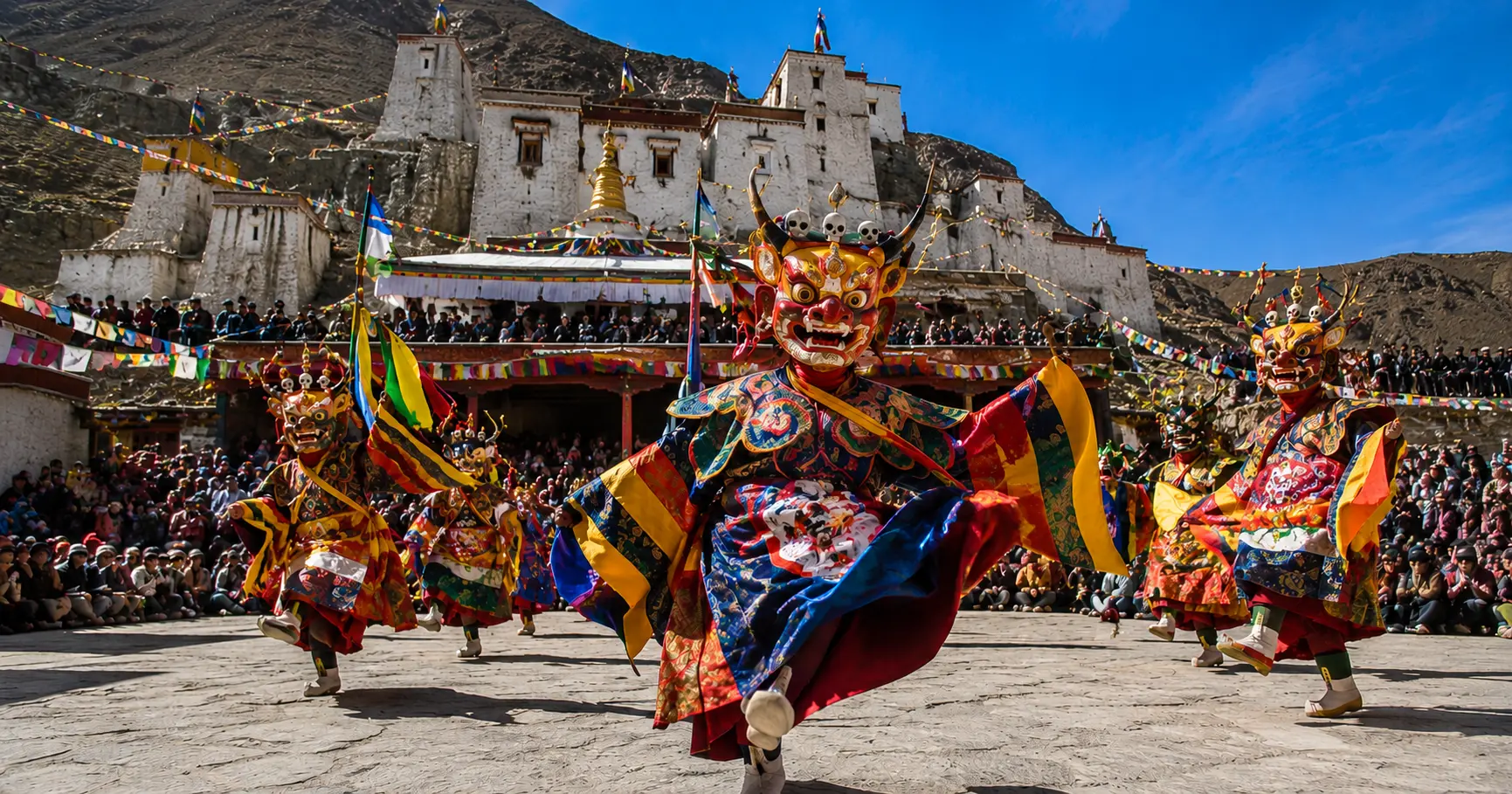
The most spectacular public event associated with Jangchub Choeling is the Mahakala Dance and Rally observed during Sonam Losar (Tibetan New Year, falling in January or February) in the month of Magh. The Mahakala (Great Black) deity is a fierce protector figure in Vajrayana Buddhism, and monks perform a masked dance (Cham) in elaborate costumes to represent the subjugation of negative forces.

The ritual culminates in the burning of a Mahakala effigy, understood to carry away all demons and negative forces affecting the community. This festival draws both Tibetan Buddhists and Hindus — a characteristic Pokhara blending of traditions that would be unimaginable in most other religious contexts.

Tashi Palkhel (Hyangja) Tibetan Settlement

The Tashi Palkhel settlement at Hyangja, approximately 4 km northwest of central Pokhara, is one of the largest and most self-sufficient Tibetan refugee communities in Nepal. The settlement’s Monastery (Ngyiwa Monastery), schools, carpets and craft workshops, and community cultural centre together form a remarkably complete transplanted Tibetan community — a village of Tibet set within the mid-hills of western Nepal, where the traditional material culture, language, food (butter tea, tsampa, momos), religious practice, and social organisation of Tibet are maintained with remarkable fidelity and warmth.

Visitors are genuinely welcome; the carpet workshops, in particular, are worth the time, as you can observe traditional Tibetan carpet-weaving and wool dyeing firsthand.
Pokhara Historical and Spiritual Places

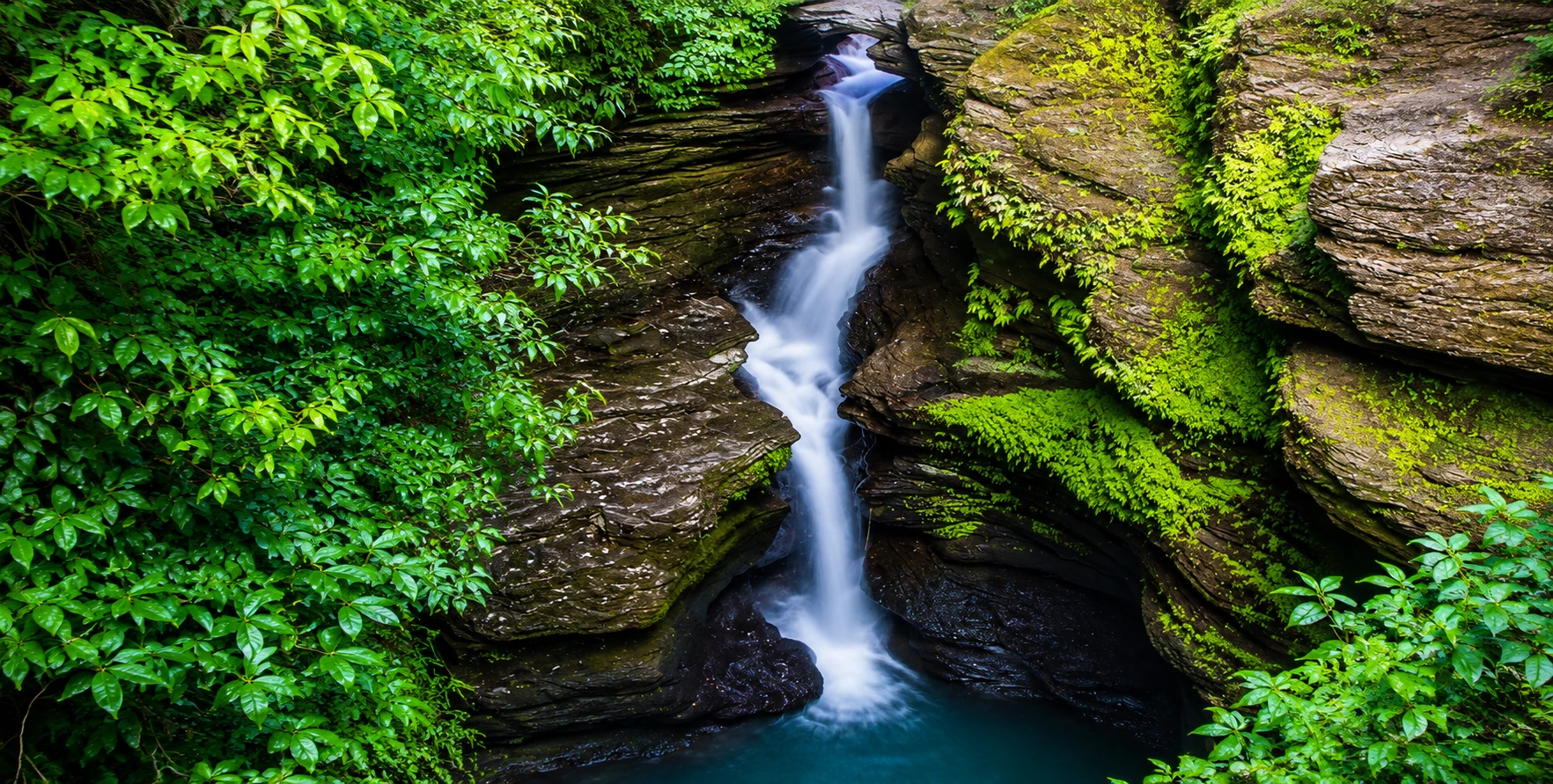
Seti River Gorge and the Sacred Waters

Location: Running through the heart of Pokhara city, the Seti Gandaki River flows in a gorge up to 6meterses deep but only a few meters wide — often completely hidden under the city’s streets and buildings

Sacred Name: Seti means ‘white’ in Nepali — the river carries glacial meltwater from the Annapurna range that is perpetually milky-white from fine glacial sediment

Viewpoints: K.I. Singh Bridge (Khadka Bridge), Mahendrapul Bridge, Ram Ghat, Bagar area gorge viewpoints

The Seti Gandaki River — the White River — is one of Pokhara’s most extraordinary geological and sacred features, and one of its least-publicised. The river flows from the slopes of Annapurna IV and Annapurna II, carrying glacial sediment that gives it a perpetually milky-white colouration the colour of fresh snowmelt, of purification, of the sacred whiteness associated in Hindu iconography with spiritual clarity.

As it enters the Pokhara valley, the Seti Gandaki has carved a limestone gorge of extraordinary dimensions: up to 60 meters deep but in places only 3 to 5 meters wide, it flows largely underground through the city itself, completely invisible from street level except at specific viewpoints where the gorge opens enough to reveal the white water thundering far below.

The Seti’s sacred status in Pokhara’s religious geography is twofold. First, it is a perennial river of glacial origin. This perpetually flowing, never-drying river is a fundamental sacred attribute in the Hindu tradition, associated with the constant flow of divine grace.

Second, its milky whiteness is read as inherently purifying—bathing in the Seti is considered especially efficacious for removing ritual impurity, and its banks at Ram Ghat are used for cremation and post-death ritual bathing, in direct parallel to the role of the Bagmati at Pashupatinath in Kathmandu.

The gorge viewpoints, particularly at the K.I. Singh Bridge and the Mahendrapul area reveal something almost supernatural: a narrow crack in the earth, barely distinguishable from a distance, through which the sound of roaring water rises from invisible depths.

Looking down into the Seti gorge for the first time is consistently startling — the disproportion between the narrow, almost invisible slot at street level and the dramatic hidden river far below is one of Pokhara’s most memorable natural surprises, made more powerful by the white water’s sacred associations.
Pokhara Historical and Spiritual Places

Sarangkot — Historical Fort and Sacred Sunrise Viewpoint

Location: Approximately 5 km northwest of Pokhara Lakeside, 1,592 m elevation

Historical: Site of a Kaski Kingdom fort (kot) — one of the strategic hilltops commanding the Pokhara valley approach

Viewpoint: The most celebrated sunrise viewpoint in western Nepal, with panoramic views of Dhaulagiri, the Annapurna range, and Machhapuchhre

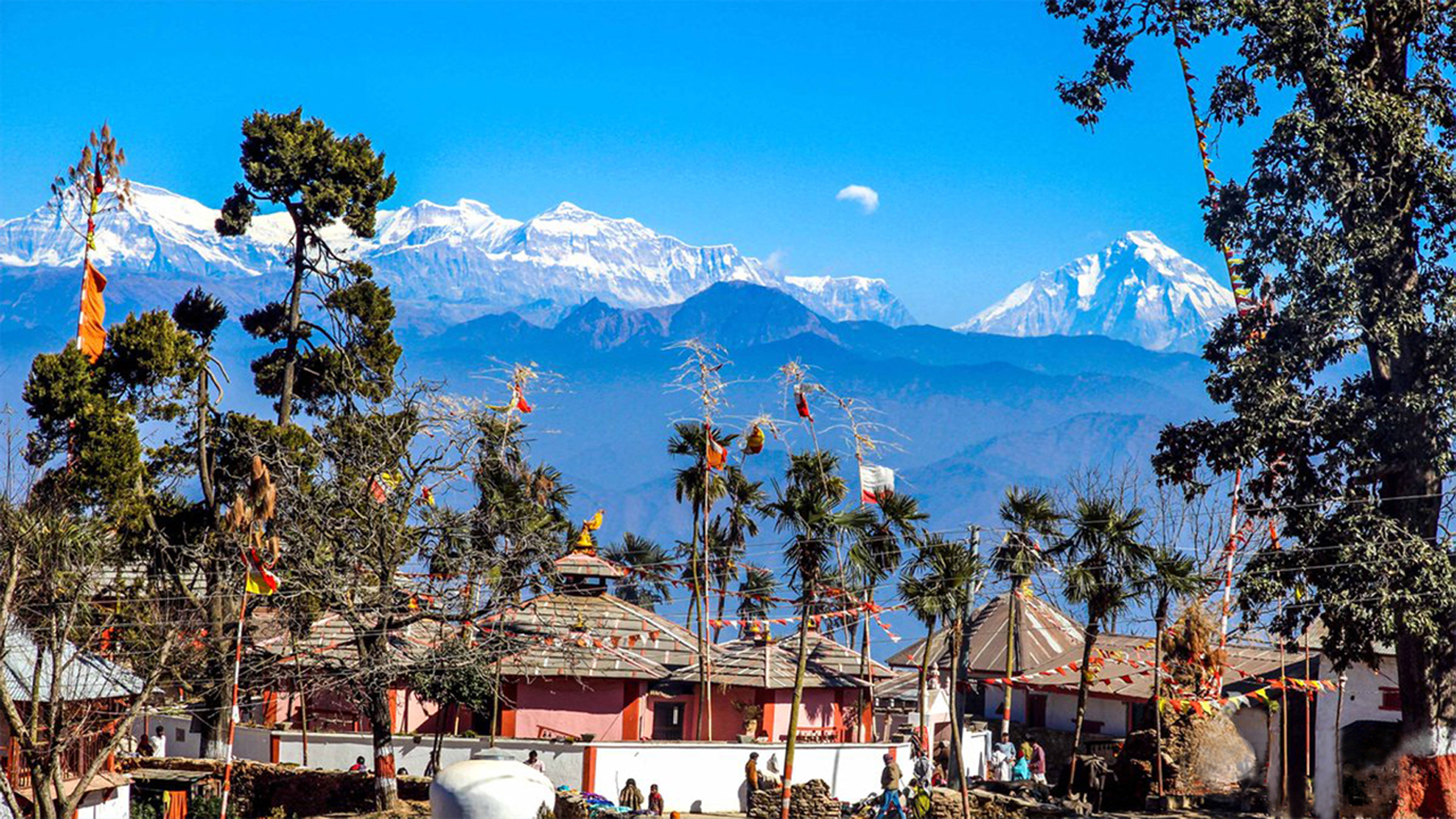
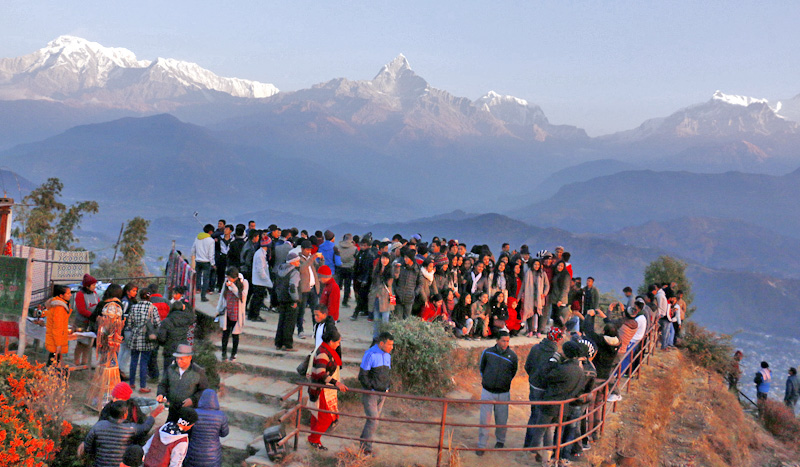
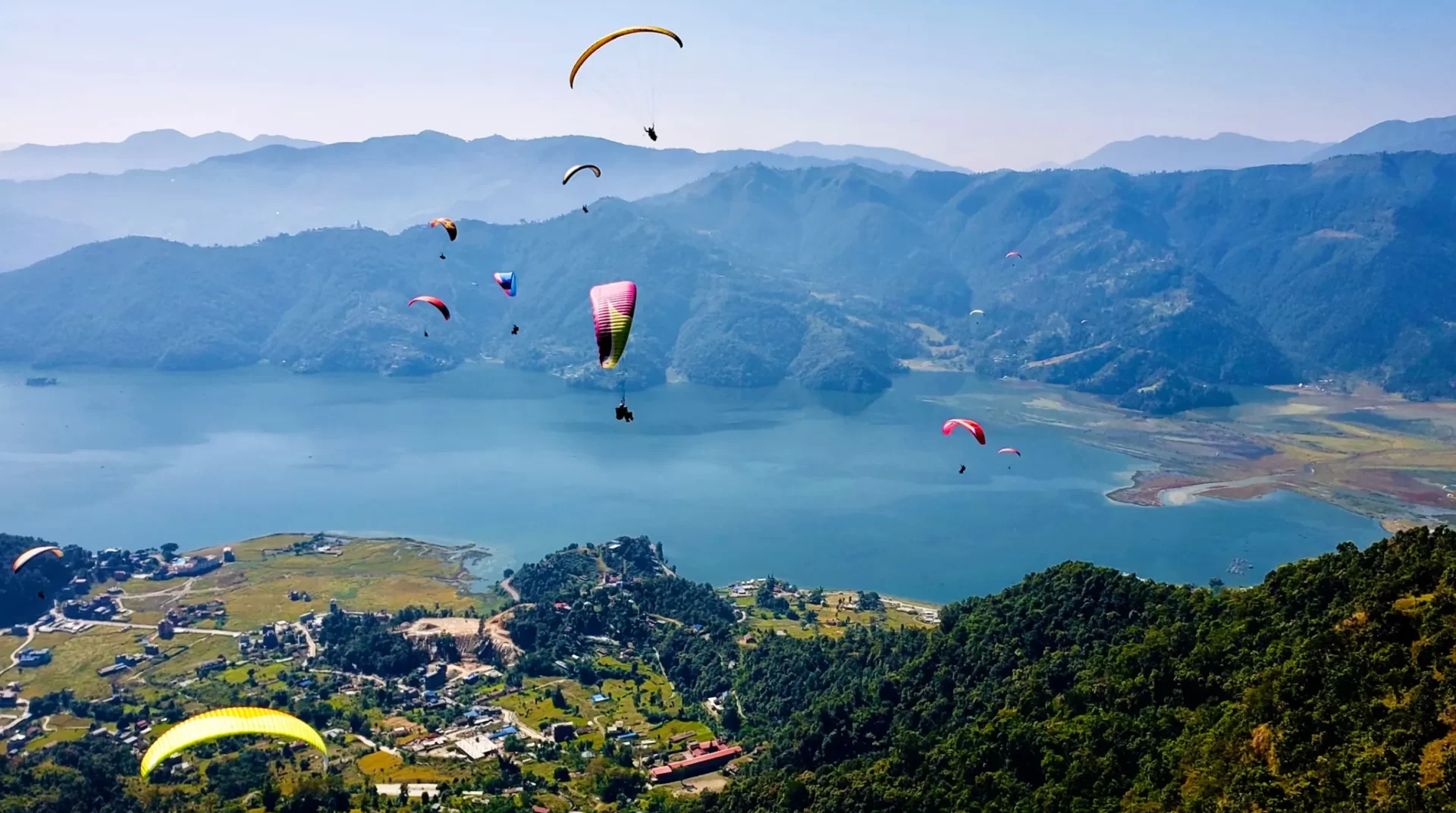
Sarangkot’s fame today rests almost entirely on its reputation as a sunrise viewpoint and paragliding launch site — the ridge from which Pokhara’s most iconic mountain panorama unfolds each clear morning. But Sarangkot was not always a tourist attraction; it was a Kaski Kingdom military fortification, one of the strategic hilltops (kot) from which the Kaski rulers surveyed and controlled the Pokhara valley.

The ruins of the old fort remain, small but visible, on the highest point of the Sarangkot ridge, and a small Kali temple at the summit continues to receive devotees who have made the ascent for devotion rather than mountain photography for centuries.

The sunrise at Sarangkot is, without exaggeration, one of Nepal’s most accessible Himalayan viewpoints; the ridge faces directly north toward the Annapurna range, with Machhapuchhre’s distinctive double summit as the closest major peak at approximately 6,993 m and about 25 km away.

This proximity creates an overwhelming sense of the mountain’s scale that more distant views cannot replicate. At sunrise, the sequence in which the peaks catch the light—first the highest summits in pale pink, then progressively richer gold and orange cascading down the faces as the sun clears the eastern horizon—is a spectacle powerful enough to arrest even the most jaded traveller.

Vehicle Hiring: Nepal vehicles access Sarangkot via the road from Pokhara to the lower viewpoint, from where the final section is a 10- to 15-minute walk to the summit. For sunrise visits, departures from Lakeside are typically from 5:00 to 5:30 AM, with the vehicle waiting below while the group ascends to the summit for sunrise and returns afterwards.
Pokhara Historical and Spiritual Places

Davis Falls (Patale Chhango) — The Underworld Waterfall

Location: Approximately 2 km southwest of Pokhara airport, on the road toward Gupteshwor Cave

Name Meanings: Patale Chhango = Underworld Waterfall (Nepali); ‘Davis Falls’ = named after Mrs Davis (or David), a Swiss tourist who was swept into the falls in 1961

Season: Most spectacular during and immediately after monsoon (July–September); reduced flow in dry season

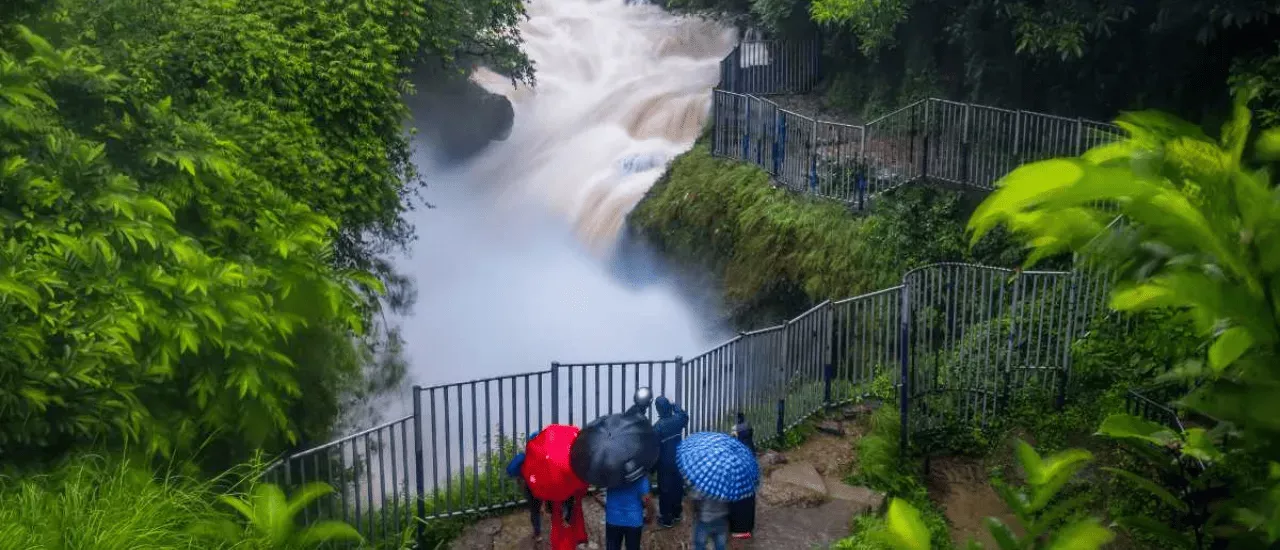
Davis Falls — or Patale Chhango, the Underworld Waterfall — is one of Pokhara’s most unusual natural attractions and one of the city’s most distinctive sacred-natural sites. The falls occur where the Pardi stream suddenly plunges into a sinkhole in the limestone bedrock and disappears underground, reappearing below as a subterranean waterfall before flowing through the cave system connected to Gupteshwor Mahadev and eventually re-emerging further downhill.

The disappearance of the water into the earth — its descent into the Patale (the Hindu underworld realm below the surface) — is understood in local sacred geography as a place where the boundary between the visible and invisible worlds is especially thin, and where Shiva’s subterranean presence (in the form of the Gupteshwor Lingam just 200 meters away) is most immediate.

The falls are most dramatic during the monsoon season when the Pardi stream is in full flood — a great roaring volume of water vanishing into the limestone with a sound that reverberates through the surrounding hillside.

In the dry winter months, the flow reduces significantly, but the geological structure — the sinkhole, the underground passage, and the connection to Gupteshwor Cave — remains equally interesting. The paved viewing area allows safe observation of the plunge point, and the signage explaining the geological-hydrological connection to Gupteshwor adds an interpretive dimension to the visit.

Pokhara Regional Museum — Understanding the Valley’s History

Location: Near Prithvi Narayan Campus, central Pokhara

Established: 1960 CE — one of Nepal’s older regional museums

The Pokhara Regional Museum houses a collection of archaeological and ethnographic artefacts from Gandaki Province, including traditional tools, domestic objects, musical instruments, religious artefacts, costumes, and photographs documenting the pre-modern material culture of the Pokhara valley and its surrounding hill communities. For visitors who want to understand the historical and cultural context of the sites they are visiting across Pokhara, the museum provides an excellent orientation — the Kaski kingdom objects,

the Thakali and Gurung community artefacts, and the documentation of traditional trade-route culture all help explain the deeper history visible at the valley’s temples and ghats. Often overlooked in favour of more visually dramatic sites, it rewards a 1- to 2-hour visit for travellers interested in historical depth.
Pokhara Historical and Spiritual Places

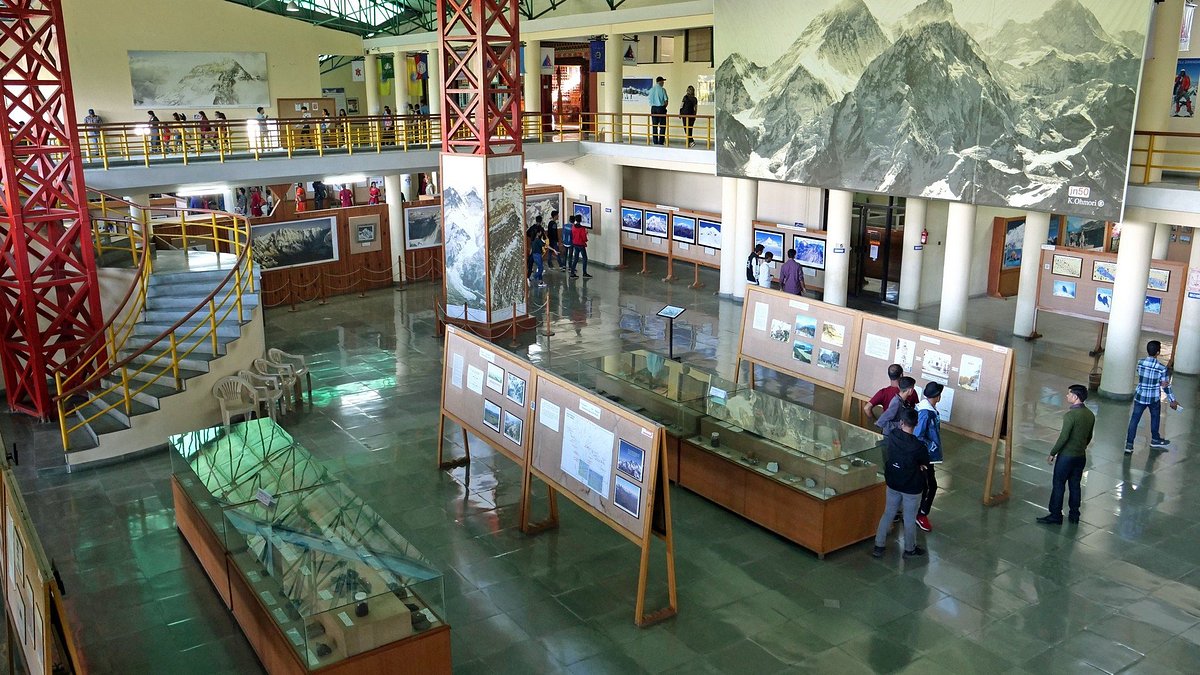
International Mountain Museum — The Highest Peaks on Earth

Location: Pokhara-6 (near the airport), approximately 3 km from Lakeside

Established: 2002 CE

Content: Comprehensive exhibition on the world’s major mountain ranges, Himalayan climbing history, mountain peoples of Nepal, and mountaineering equipment through the ages

The International Mountain Museum is one of Nepal’s finest specialist museums and one of the most visited cultural attractions in Pokhara — a comprehensive celebration of the Himalayan world, its mountains, its peoples, and the remarkable history of high-altitude mountaineering. The museum covers the geology of the Himalaya (formed by the collision of the Indian and Eurasian tectonic plates approximately 50 million years ago), the history of Himalayan exploration and climbing including the 1953 first ascent of Everest and subsequent ascents of all fourteen 8,000-metre peaks, and the traditional cultures of the mountain communities — Sherpa, Gurung, Tamang, Thakali, and others — whose identity is inseparable from the great peaks among which they have lived for centuries.

For visitors to Pokhara who will trek into the Annapurna region, the museum provides an invaluable contextual foundation — understanding the geological history, the cultural significance, and the physical demands of the mountains they are about to enter adds dimensions of meaning to the trek that pure physical preparation cannot supply. The large-scale models of the major peaks, the exhibits on indigenous mountain spirituality (including the roles of deities and sacred sites in Himalayan communities), and the documentation of expedition history are all well presented and well translated into English.

Devis Fall, Seti Gorge and Gupteshwor — The Sacred Triangle

The area immediately west of Pokhara’s airport — within a radius of about 1 to 2 km — contains three of the city’s most distinctive natural-sacred sites: Gupteshwor Mahadev Cave, Davis Falls (Patale Chhango), and the Seti Gorge viewpoints. These three sites are geologically and spiritually interconnected in a way that makes visiting them as a single circuit deeply rewarding.

The geological connection: the Pardi stream disappears at Davis Falls into the limestone sinkhole, flows underground through the limestone, passes (audibly and visibly at one point) through the Gupteshwor cave system where the Shiva Lingam is enshrined, and eventually re-emerges as part of the Seti Gandaki’s contribution to the Pokhara valley’s hydrology. Water that you see disappearing at Davis Falls, in other words, flows past the feet of Shiva’s sacred Lingam before re-emerging downstream.

The sacred reading of this geology is clear: the water descends into the underworld (Patale), passes through Shiva’s hidden domain (Gupteshwor), and re-emerges purified as part of the sacred Seti — the White River. It is a complete sacred hydrological cycle, comprehensible once you understand the underlying geology, and deeply meaningful within the framework of Shaiva sacred geography, in which Shiva is associated with rivers (the Ganga flows from his hair), caves and mountains, and the underground as much as the sky.
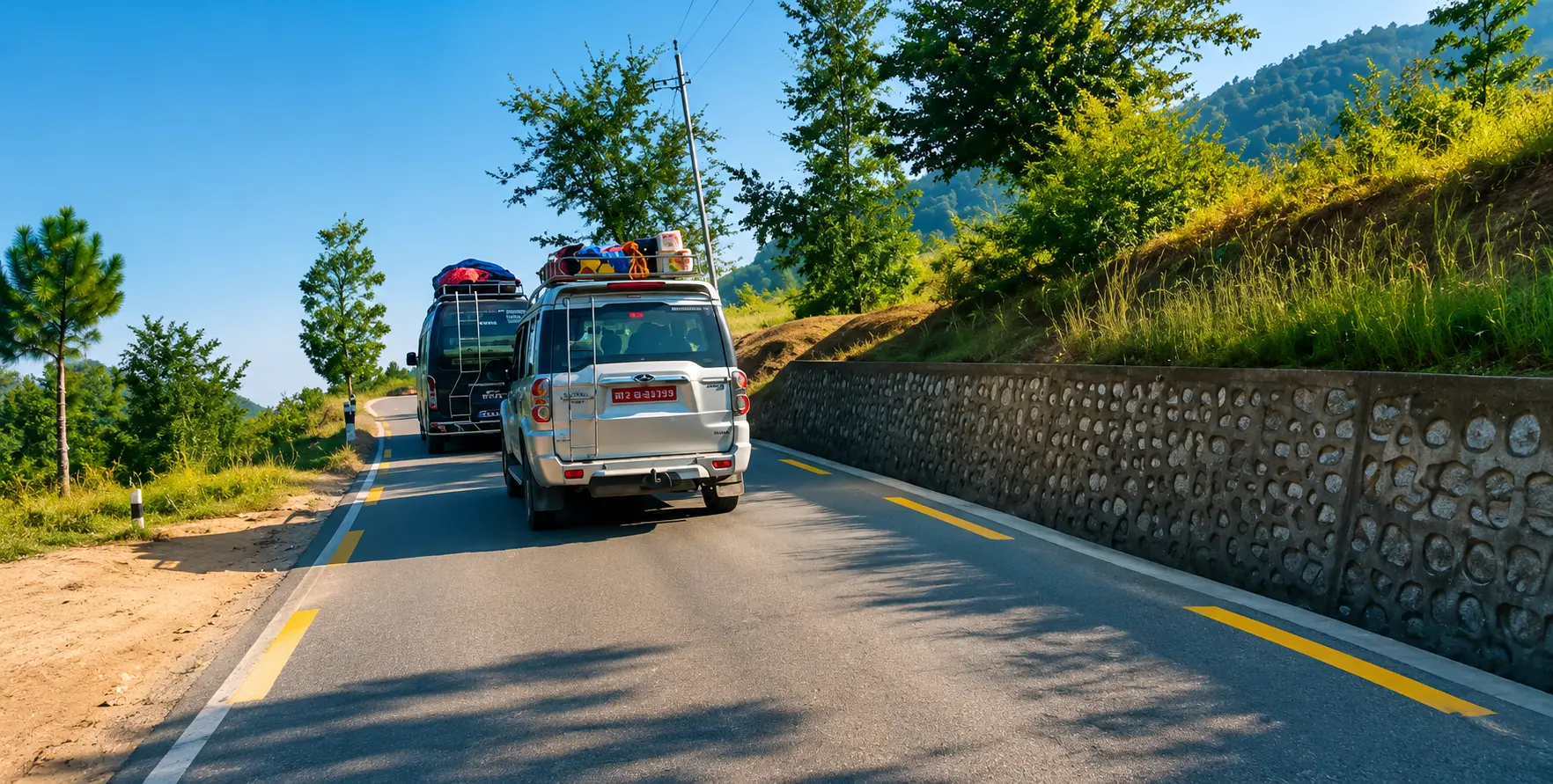
Pokhara to Sarangkot Jeep

Getting Around Pokhara’s Historical and Spiritual Sites by Private Vehicle

Pokhara’s historical and spiritual sites are spread across a valley about 10 to 15 km from east to west and north to south. While some sites — Bindhyabasini, the Old Bazaar — are walkable from central Lakeside, others require meaningful travel: Pumdikot is 7 km and 1,500 m elevation from the city centre; the Tibetan settlements are 4 km northwest; the World Peace Pagoda requires either a 1.5-hour hike or a multi-vehicle approach; and combining multiple sites in a single day without a vehicle is impractical.

A private vehicle from Vehicle Hiring Nepal is the most efficient and comfortable way to combine Pokhara’s diverse historical and spiritual sites in a single half-day or full-day circuit:

SiteDistance from LakesideTime RequiredBest For
Bindhyabasini Temple3 km north45–60 minAll visitors — oldest temple, city views
Old Bazaar3.5 km north45–90 minCultural/historical interest
Tal Barahi TempleBoat from Lakeside Ghat45–90 minTemple + lake experience
Gupteshwor Cave8 km southwest60–90 minSacred cave, geology, Shiva worship
Davis Falls8 km southwest20–30 minNatural sacred site, near Gupteshwor
World Peace Pagoda9 km (then 30 min walk)2–3 hrsBuddhism, panoramic views
Pumdikot (Giant Shiva)7 km, 1,500 m alt1.5–2 hrsShiva shrine, best valley panorama
Sarangkot5 km northwest2–3 hrs (sunrise)Sunrise, Fort history, mountain views
Tibetan Camps (Hyangja)4 km northwest1–2 hrsTibetan Buddhist culture, carpets
International Mountain Museum3 km from Lakeside1.5–2 hrsMountain history, Himalayan culture
Seti River Gorge2–4 km (multiple points)30–45 minSacred river, geological wonder
Pokhara Regional Museum3 km central1–2 hrsHistorical context, valley culture

Sample Itineraries for Pokhara’s Historical and Spiritual Sites

Half-Day Circuit (4–5 Hours) — Core Sacred Sites

  • 8:00 AM: Bindhyabasini Temple — morning puja atmosphere at Pokhara’s oldest temple, panoramic city views from the hilltop
  • 9:00 AM: Old Bazaar — walk the historic lanes, Bhimsen Mandir, traditional Newar architecture
  • 10:00 AM: Seti River Gorge viewpoint at Mahendrapul or K.I. Singh Bridge — the hidden sacred river
  • 10:30 AM: Drive to Gupteshwor Cave — underground Shiva sanctuary, geological marvel
  • 11:30 AM: Davis Falls (Patale Chhango) — the underworld waterfall
  • 12:00 PM: Return to Lakeside — lunch at Lakeside Restaurant
  • Afternoon: Optional boat ride to Tal Barahi Temple for the 6:00 PM evening aarti

Full Day: Pokhara Sacred Sites and Panoramic Viewpoints

  • 5:00 AM: Depart Lakeside for Sarangkot — sunrise over the Annapurna range from the historic fort ridge
  • 7:30 AM: Return to Lakeside — breakfast
  • 9:00 AM: Bindhyabasini Temple morning visit — Saturday puja if available, otherwise quieter weekday atmosphere
  • 10:00 AM: Old Bazaar cultural walk
  • 11:00 AM: Drive to Pumdikot — 216 Shiva Lingas, Shakti Peetha, giant Shiva statue, finest valley panorama
  • 1:00 PM: Lunch at a Pumdikot area restaurant or return to Lakeside
  • 2:30 PM: Gupteshwor Mahadev Cave and Davis Falls circuit
  • 4:00 PM: Boat to Tal Barahi Temple — on the lake for sunset light, attend the 6:00 PM aarti
  • 6:30 PM: Return to Lakeside

Cultural Full Day: Tibetan Monasteries and Buddhist Pokhara

  • 8:00 AM: Tashi Palkhel (Hyangja Tibetan Settlement — monastery, carpet workshop, cultural center
  • 10:30 AM: Jangchub Choeling Monastery — Buddhist shrines, thangkas, monks in prayer
  • 12:00 PM: Lunch at a Tibetan restaurant in the settlement area
  • 2:00 PM: World Peace Pagoda — boat to south shore, hike to stupa (1 to 1.5 hrs), panoramic views
  • 4:30 PM: Tal Barahi Temple by boat for the evening aarti
  • 6:30 PM: Return to Lakeside

Kathmandu to Pokhara tour

Kathmandu to Pokhara by Private Vehicle — Connecting the Two Cities

Most visitors to Pokhara’s historical and spiritual sites arrive from Kathmandu. Vehicle Hiring Nepal provides all vehicle types for the Kathmandu to Pokhara transfer — the natural gateway to Pokhara’s cultural landscape:

VehicleCapacityKTM → Pokhara One-WayTravel TimeBest For
Sedan Car1–3 paxUSD 80–1205–6 hrsCouples, solo
SUV / Fortuner4–5 paxUSD 110–1605–6 hrsSmall families
Toyota Hiace Van7–14 paxUSD 130–2005–6 hrsGroups, pilgrimages
Coaster Bus15–22 paxUSD 175–3306–7 hrsLarge groups
Tourist Busper seatUSD 10–30/person7–8 hrsSolo, budget

The Kathmandu to Pokhara road via the Prithvi Highway passes Manakamana Temple’s cable car base station at Kurintar — a natural en-route pilgrimage stop for groups heading to Pokhara with a spiritual itinerary.
Pokhara-Pokhara Historical and Spiritual Places

Best Time to Visit Pokhara’s Historical and Spiritual Sites

October to November — Peak Season, Finest Mountain Views

Post-monsoon clarity reveals the Annapurna range in full sharpness from every viewpoint, from Sarangkot to Pumdikot. Dashain (October) fills Bindhyabasini and Tal Barahi with devotees and the festive atmosphere of Nepal’s greatest celebration. The weather is crisp and cool, ideal for hikes to Pumdikot and the World Peace Pagoda.

December to February — Clear and Quiet

Maha Shivaratri (February) brings large crowds to Gupteshwor Mahadev and Bindhyabasini. Sonam Losar (January–February) brings the Mahakala Dance festival at Jangchub Choeling Monastery — one of Pokhara’s finest cultural events. Mountain views in December and January are often at their sharpest.

March to May — Spring Rhododendron Season

Spring is excellent for all Pokhara activities. The World Peace Pagoda hike and Pumdikot approach are beautiful with blooming rhododendrons. Pre-monsoon morning mountain views are superb before afternoon haze builds.

Teej in August-September brings a major surge of women’s festival activity to Bindhyabasini.

Monsoon (June to September)

Davis Falls and the Seti Gorge are most dramatic during monsoon floods. The lake and valley are intensely green. However, clouds obscure mountain views and the World Peace Pagoda hike becomes slippery.

The sacred sites themselves are fully operational year-round.

Practical Tips for Visiting Pokhara’s Sacred Sites

  • Dress modestly at all temple sites—cover shoulders and knees, and remove footwear before entering any temple structure.
  • Saturday is the most auspicious and most crowded day at Bindhyabasini and Tal Barahi — expect large local crowds aan nd intense devotional atmosphere; plan accordingly.
  • For Tal Barahi, take the boat early in the morning (7:00–8:30 AM) for the morning aarti and the finest lake light; the Annapurna range reflected in the morning lake is unmatched.
  • For Gupteshwor Cave, wear closed shoes — the cave passages are uneven and damp; avoid white or light clothing as the cave walls are occasionally wet with mineral deposits.
  • For Sarangkot sunrise, arrive at the viewpoint 20 to 30 minutes before the scheduled sunrise time — the pre-dawn approach in darkness is part of the experience.n ce
  • For the World Peace Pagoda hike, carry water and wear sun protection — the upper sections are fully exposed; hire a local guide for the forest trail if unfamiliar with the route.
  • The Tibetan settlements welcome visitors to their monasteries and workshops, but photograph monks and religious rituals only with permission — these are active religious communities, not tourist attractions.
  • Carry NPR cash for entry fees, boat fare, temple donations, and small purchases — card payments are rarely available at sacred sites.
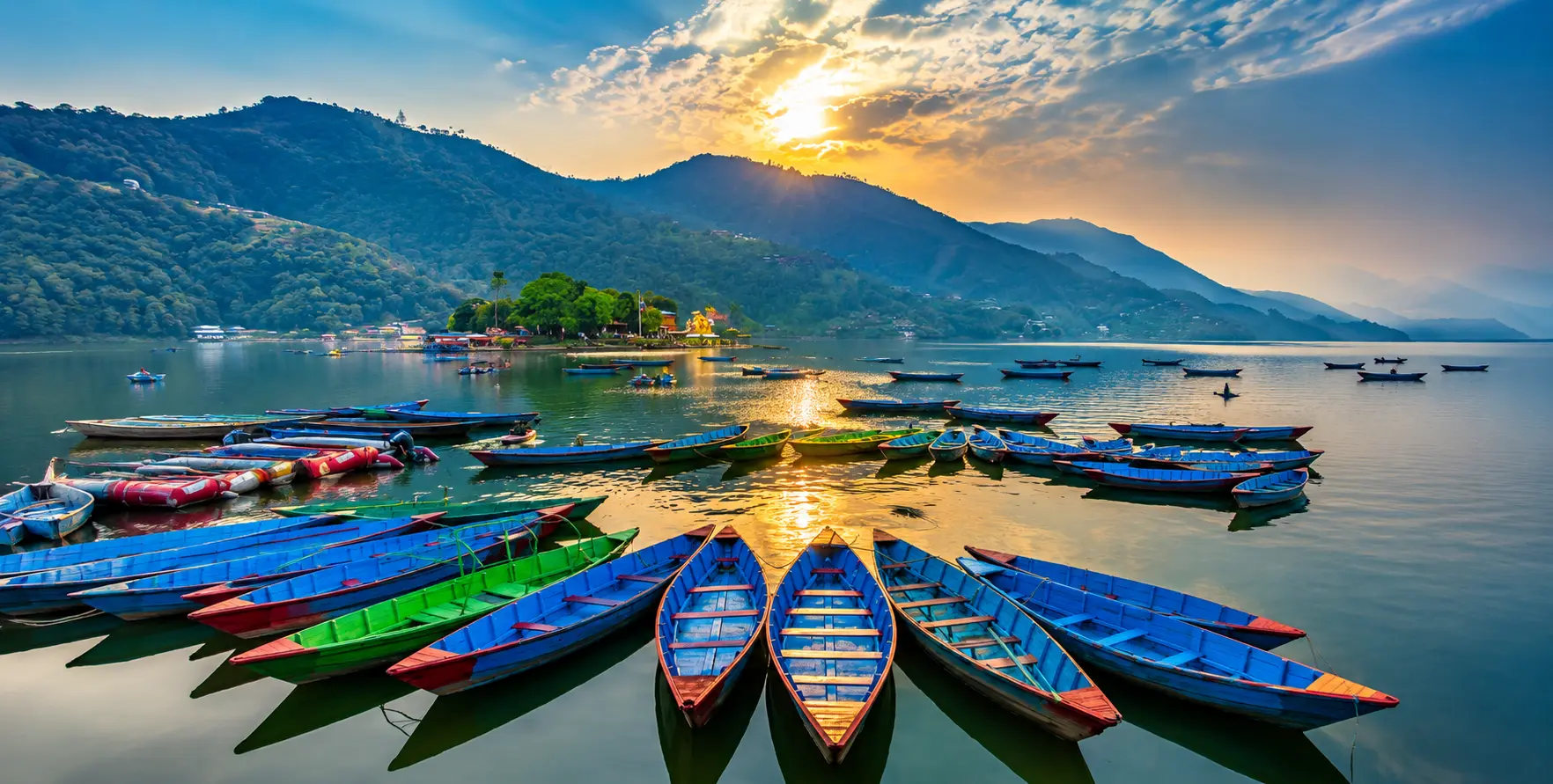
Boats on Phewa Lake in Pokhara

How to Book Your Pokhara Historical and Spiritual Tour Vehicle

  1. Contact Vehicle Hiking Nepal via WhatsApp or visit vehiclehiringnepal. com. Please tell us your current location — Kathmandu (we arrange Kathmandu-to-Pokhara transfer + local Pokhara vehicle) or already in Pokhara.
  2. Confirm your group size and preferred sacred sites itinerary
  3. Specify any festival or early-morning timing requirements (Sarangkot sunrise, Bindhyabasini Saturday puja)
  4. Receive booking confirmation with driver details and vehicle information

WhatsApp
Email:[email protected]

Frequently Asked Questions

Which is the oldest temple in Pokhara?

Bindhyabasini Temple is the oldest temple in Pokhara, with more than 300 years of documented history, established by the Kaski Kingdom in the 17th century. The goddess’s image was brought from Vindhyachal in Uttar Pradesh, India, and the temple was established at its current location in the Mohariya Tole area of the Old Bazaar after the image became immovable at that spot—interpreted as a divine sign indicating her chosen abode.

How do you reach Tal Barahi Temple on Phewa Lake?

Tal Barahi Temple is located on a small island in the middle of Phewa Lake and can only be reached by boat. Boats depart from the main boat ghats at Lakeside (Baidam) continuously during daylight hours.

A shared boat costs approximately NPR 50-100 per person for the 10-15-minute crossing; a private boat costs approximately NPR 800-1,000. The morning aarti at 7:00 AM and the evening aarti at 6:00 PM are the most spiritually significant times to visit.

Is the World Peace Pagoda accessible by vehicle?

The World Peace Pagoda is not fully accessible by vehicle—the final section requires a 30-minute hike from the vehicle access point, or about 1 to 1.5 hours from the lake shore if approaching by boat and trail. Vehicle Hiring Nepal drives you as close as the road allows, and the driver waits below while you complete the walk to the pagoda and back.

The combined boat-and-trail approach from the south shore of Phewa Lake is the most scenic option.

What is the best time of day to visit Bindhyabasini Temple?

Early morning—particularly between 5:30 and 8:00 AM—is the best time to visit Bindhyabasini. The Nitya Puja begins at 4:00 AM, and by 5:30 AM the temple is active with morning worship in the day’s most contemplative atmosphere, before tourist groups arrive and the market at the base of the hill becomes noisy. Saturday mornings are the most devotionally intense but also the most crowded.

How far is Pumdikot from Pokhara and how do you get there?

Pumdikot Hill is about 7 km from central Pokhara, at an altitude of about 1,500 m. A private vehicle from Vehicle Hiring Nepal takes you to the Pumdikot parking area at the base of the final ascent, from where the giant Shiva statue, the 216 Shiva Lingas, and the Shakti Peetha viewpoint are a short walk away.

The drive takes approximately 20 to 30 minutes from Lakeside. Pumdikot is one of the most rewarding single-site visits in the Pokhara valley for the combination of spiritual significance and panoramic views.

Can you combine historical and spiritual sites with adventure activities in Pokhara?

Yes — this combination is one of the most rewarding ways to experience Pokhara fully. A typical Pokhara day might begin with Sarangkot sunrise (fort history + mountain views), continue with a temple circuit (Bindhyabasini, Old Bazaar, Gupteshwor), and close with an afternoon paragliding session from Sarangkot before the Tal Barahi evening aarti on the lake.

Vehicle Hiring Nepal provides transport for the sacred and historical portions of the day, while adventure operators handle paragliding arrangements — we coordinate vehicle timing with your activity schedule.

Final Thoughts

Pokhara’s identity as a first-rate adventure travel and mountain-view destination is entirely deserved — but it is not the whole story of what this city is and has been. The Bindhyabasini temple that anchors the Old Bazaar has welcomed pilgrims and merchants for three centuries, long before the first trekking permit was issued.

The Tal Barahi temple on its lake island was being worshipped during the Kaski kings’ era and into the Shah period before the first international traveller ever arrived in Nepal. Gupteshwor’s sacred Lingam has been offered daily puja in its underground darkness since before written record.

These ancient devotional traditions do not compete with Pokhara’s modern identity as an adventure hub; they deepen and enrich it, giving the city a cultural and spiritual substance that no mountain view alone can provide.

For visitors willing to move beyond the Lakeside promenade and the sunrise-view tower, and for pilgrims who understand that Pokhara is as much a sacred landscape as a scenic one, the city’s historical and spiritual sites offer an entirely different and deeply satisfying Nepal experience — accessible, authentic, and profoundly connected to the living religious and cultural traditions that make Nepal one of the great spiritual destinations on earth.

Vehicle Hiring Nepal provides reliable, comfortable, and expert-guided private vehicle transport for the full range of Pokhara’s historical and spiritual sites, from Kathmandu to Pokhara and throughout the city’s sacred geography. Book your Pokhara cultural tour vehicle today. WhatsApp | Website: www.vehiclehiringnepal.com
Plan Your Nepal Pilgrimage in Comfort: Private Vehicle Hire Guide for Muktinath, Pashupatinath and More

Kathmandu to Muktinath Bus

Plan Your Nepal pilgrimage: Private Vehicle Hire Guide for Muktinath, Pashupatinath & More.

Nepal is, in the deepest sense, a pilgrimage country. Long before it became a destination for trekkers and mountaineers, it was — and remains — one of the world’s great living centres of Hindu and Buddhist devotion, holding within its borders the birthplace of the Buddha, one of the four holiest Shiva temples on earth, a high-altitude shrine where fire and water emerge from the same rock, and mountain-top goddesses whose blessings are still sought by hundreds of thousands of devotees each year.

For millions of Hindu and Buddhist pilgrims from Nepal, India, and across the world, a journey through Nepal’s sacred geography is not a holiday in the conventional sense — it is an act of faith, often planned around specific festival dates, specific vows, and a specific, deeply personal sense of what each sacred site is meant to provide.

What very few pilgrimage guides explain in practical detail is the transport reality behind these journeys. Nepal’s sacred sites are scattered across an extraordinarily varied landscape — from the dense lanes of central Kathmandu to a 3,710-meter Himalayan plateau, from the flat, humid Terai plains to a 3,794-meter ridge in the far eastern hills.

Moving between them depends on the right vehicle, an experienced driver, and a flexible itinerary that can accommodate early-morning darshan timings, festival crowds, and the unhurried atmosphere pilgrimage rightly deserves.

This comprehensive 2026 guide brings together everything a pilgrim or pilgrimage tour planner needs to know about touring Nepal’s major sacred sites by private vehicle — detailed profiles of the country’s most important pilgrimage destinations, realistic road distances and travel times, vehicle recommendations, multi-site circuit itineraries, the Hindu festival calendar, pilgrimage etiquette, and complete booking guidance from Vehicle Hiring Nepal.

For travellers who have completed their trek and are planning to explore Kathmandu, we recommend continuing your journey with our trusted sister company, Trek Nepal Himalayas. We specialise in organising a wide range of travel experiences across Nepal, from classic trekking adventures to cultural and wildlife tours.

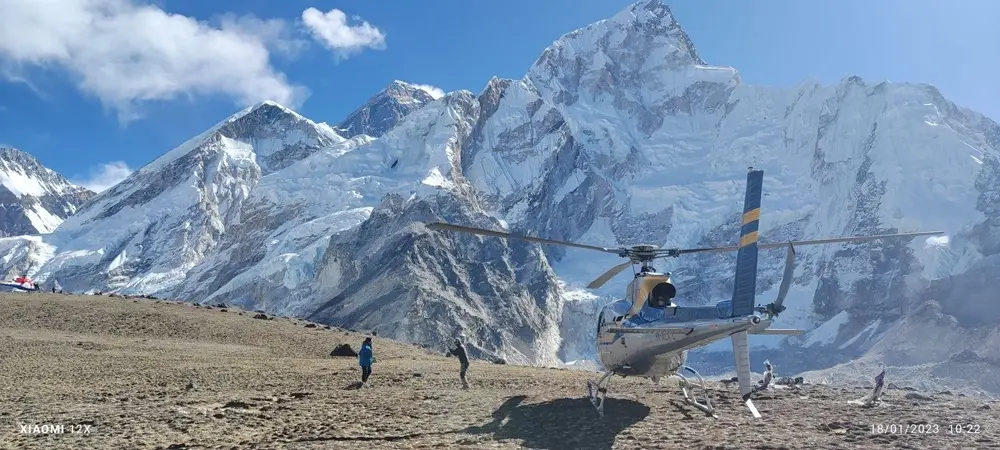
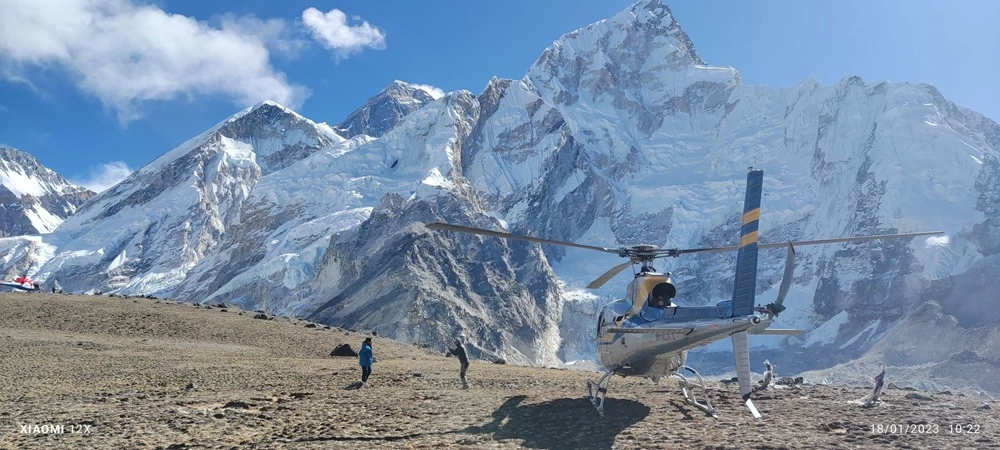
Our top offerings include iconic journeys such as the Everest helicopter tour, in-depth Kathmandu sightseeing tours, striking Nagarkot sunrise experiences, and exciting Chitwan jungle safari and luxury packages. We can also arrange short hikes, heritage tours, mountain flights, and customised travel plans tailored to your schedule and interests.

Whether you are looking for a budget-friendly trip or a luxury trekking experience with top-end lodges, private guides, and high-end services, we manage every detail professionally. Our goal is to provide a smooth transition from your trekking adventure to a comfortable) and a memorable travel experience in Nepal.

Muktinath

Why Nepal pilgrimage Private vehicle hire is the Right Choice for pilgrimage travel.

Public transport in Nepal is extensive but built primarily around commuter and budget-backpacker needs — not the specific rhythms of pilgrimage. A private vehicle changes the entire character of a pilgrimage journey in ways that matter deeply to devotees:

  • Early darshan access — the most spiritually significant times at temples like Pashupatinath and Muktinath are pre-dawn and early morning, before crowds build. Only a private vehicle reliably gets you there for a 4:30 or 5:00 AM Mangala Aarti.
  • Flexibility around ritual timing — pujas, vow-fulfilment ceremonies, and extended prayer — cannot be rushed to fit a bus schedule.
  • Carrying pilgrimage offerings — flowers, fruit, coconuts, ghee lamps, and other ritual items — is far easier in a private vehicle than on a crowded bus.
  • Group cohesion — families and community pilgrimage parties can pray and sing bhajans together throughout the journey.
  • Access to remote sites — Muktinath and Pathivara- cannot be reached by standard public transport beyond a certain point.
  • Comfort for elderly pilgrims undertaking demanding multi-day or high-altitude journeys where fatigue must be carefully managed
  • Festival-period reliability — during Maha Shivaratri and Dashain, public transport becomes severely overcrowded; a pre-booked private vehicle guarantees your arrival

Pashupatinath Temple — The Spiritual Heart of Nepal

Location: Gaushala, Kathmandu, approximately 4 km from Tribhuvan International Airport

Deity: Lord Shiva, worshipped as Pashupati — Lord of All Living Beings

Status: UNESCO World Heritage Site (1979); one of the four most important Shiva pilgrimage sites in the world

Opening Hours: 4:00 AM to 12:00 PM, then 5:00 PM to 9:00 PM daily. Mangala Aarti 5:00 AM; Sandhya Aarti 6:00 PM; Bagmati Ganga Aarti 6:00–7:30 PM

Entry Fee 2026: NPR 1,000 for non-SAARC foreign visitors; free for Nepali and Indian citizens

Pashupatinath is Nepal’s most sacred and most visited temple, dating to at least the 5th century C in its present form. The complex covers about 264 hectares along the Bagmati River and includes over 500 temples, shrines, ashrams, and monuments—an entire sacred city rather than a single building.

The central sanctum, housing the unique four-faced Shiva lingam, is open only to Hindu devotees — a rule strictly enforced and worth knowing in advance for any group, including non-Hindu members. Non-Hindu visitors are warmly welcomed throughout the extensive outer complex, including the eastern bank terraces directly across the Bagmati River, which offer an excellent and respectful view of the golden temple roofline and the rituals taking place below.

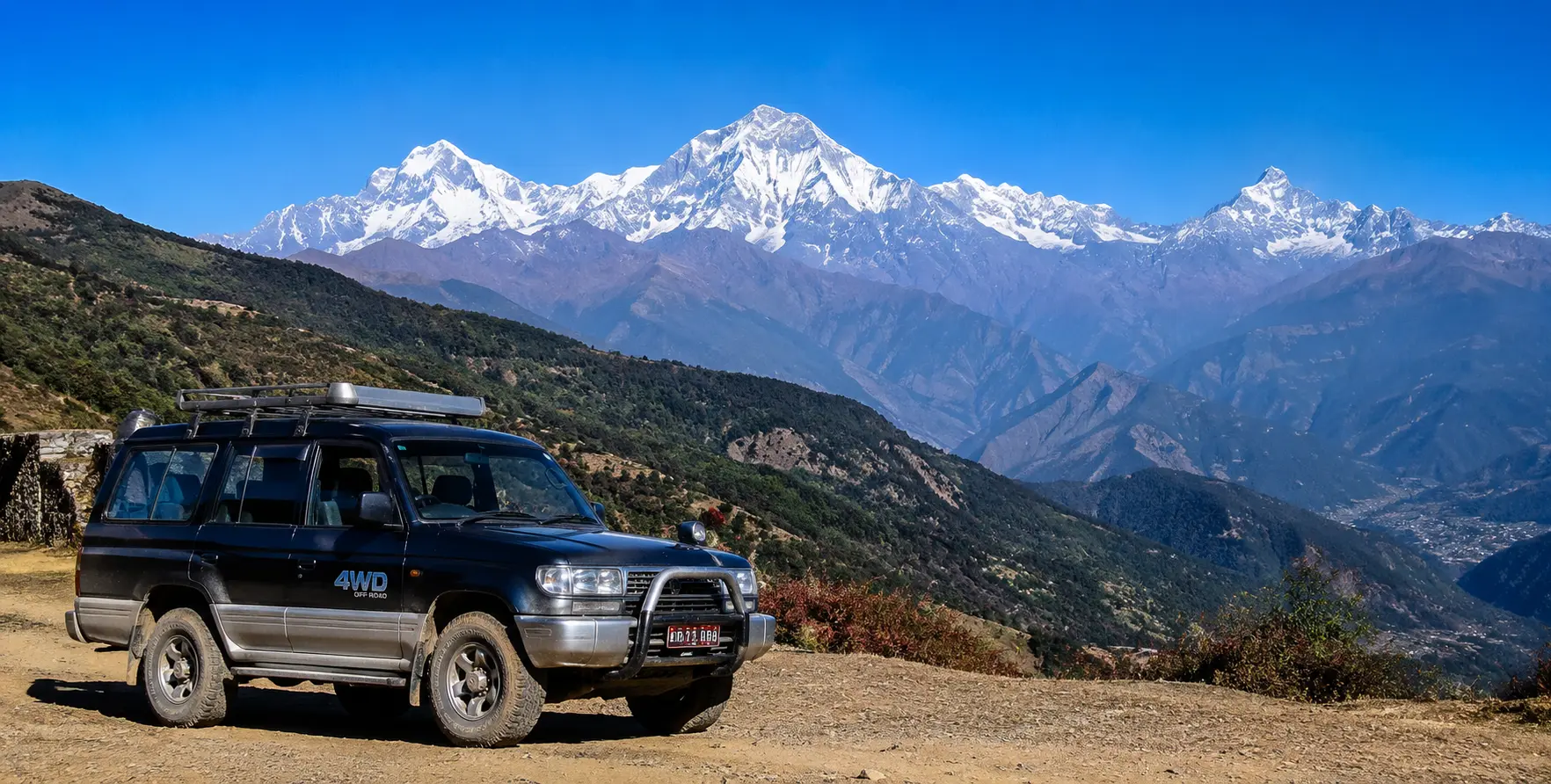
Nepal Tour PackageNepal pilgrimage private vehicle hire with cars, Scorpio, Hiace, and 4WD jeeps for temple tours and sacred destinations

The Bagmati River ghats at Pashupatinath are themselves profoundly significant. Arya Ghat is used for traditional Hindu cremation ceremonies — a sight many visitors find emotionally intense but spiritually illuminating, offering a direct encounter with the Hindu understanding of death as a passage rather than an ending. The Deer Park (Mrigasthali), the Guhyeshwari Shakti Peeth, and the ashrams housing resident sadhus all form part of a complete Pashupatinath pilgrimage.

Maha Shivaratri, in February or March, draws over one million devotees, including thousands of sadhus from across Nepal and India, for an overnight vigil of fire rituals and continuous worship. Teej, in August or September, fills the complex with women in red saris.

Bala Chaturdashi in November–December brings a moving night-long lamp offering at the river. Each festival intensifies the devotional atmosphere and demands early vehicle booking.

Vehicle Recommendation: Sedan or SUV from any Kathmandu hotel — Pashupatinath is most efficiently combined with Boudhanath, Swayambhunath, and Dakshinkali in a single private vehicle day circuit.

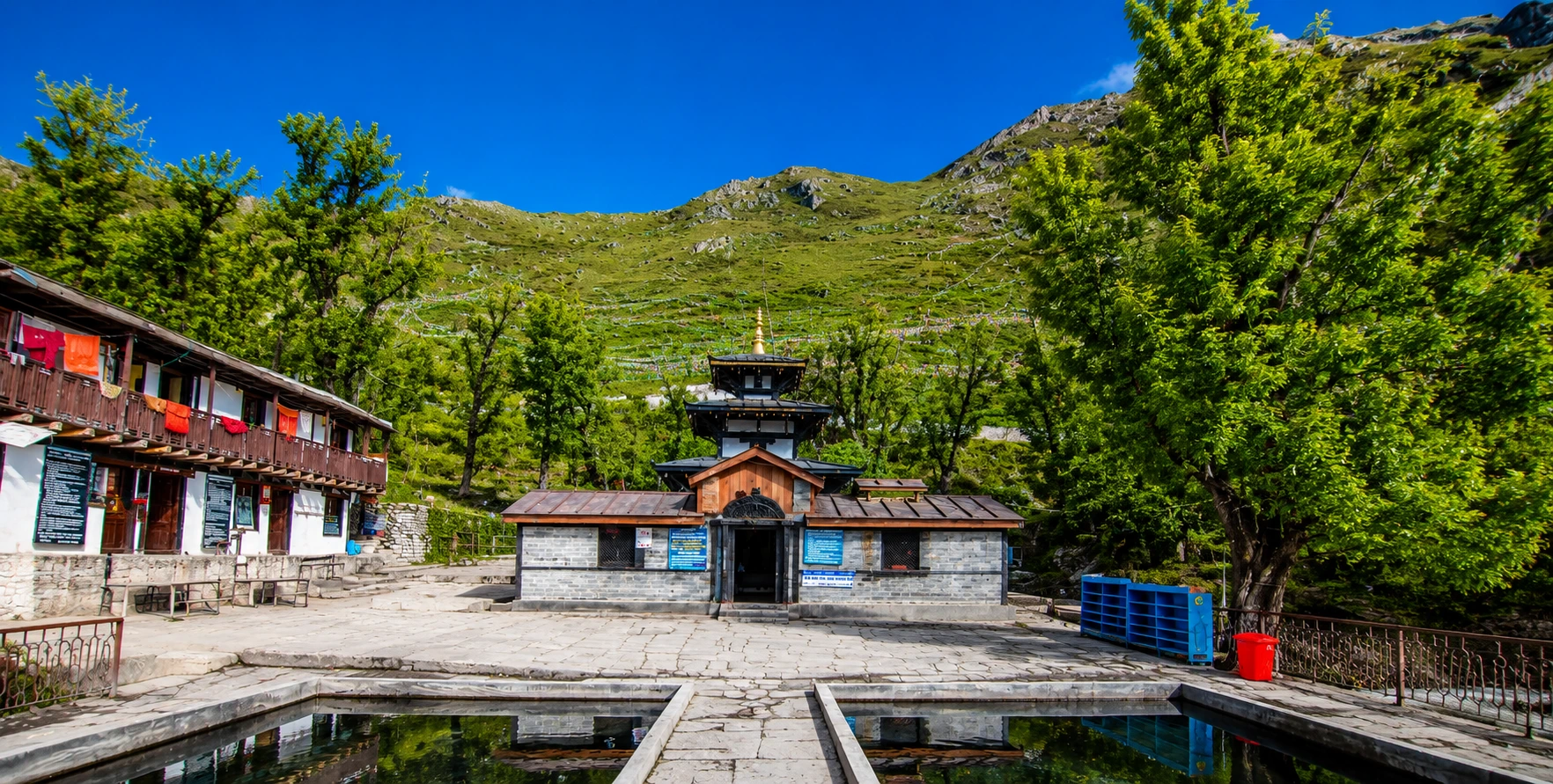
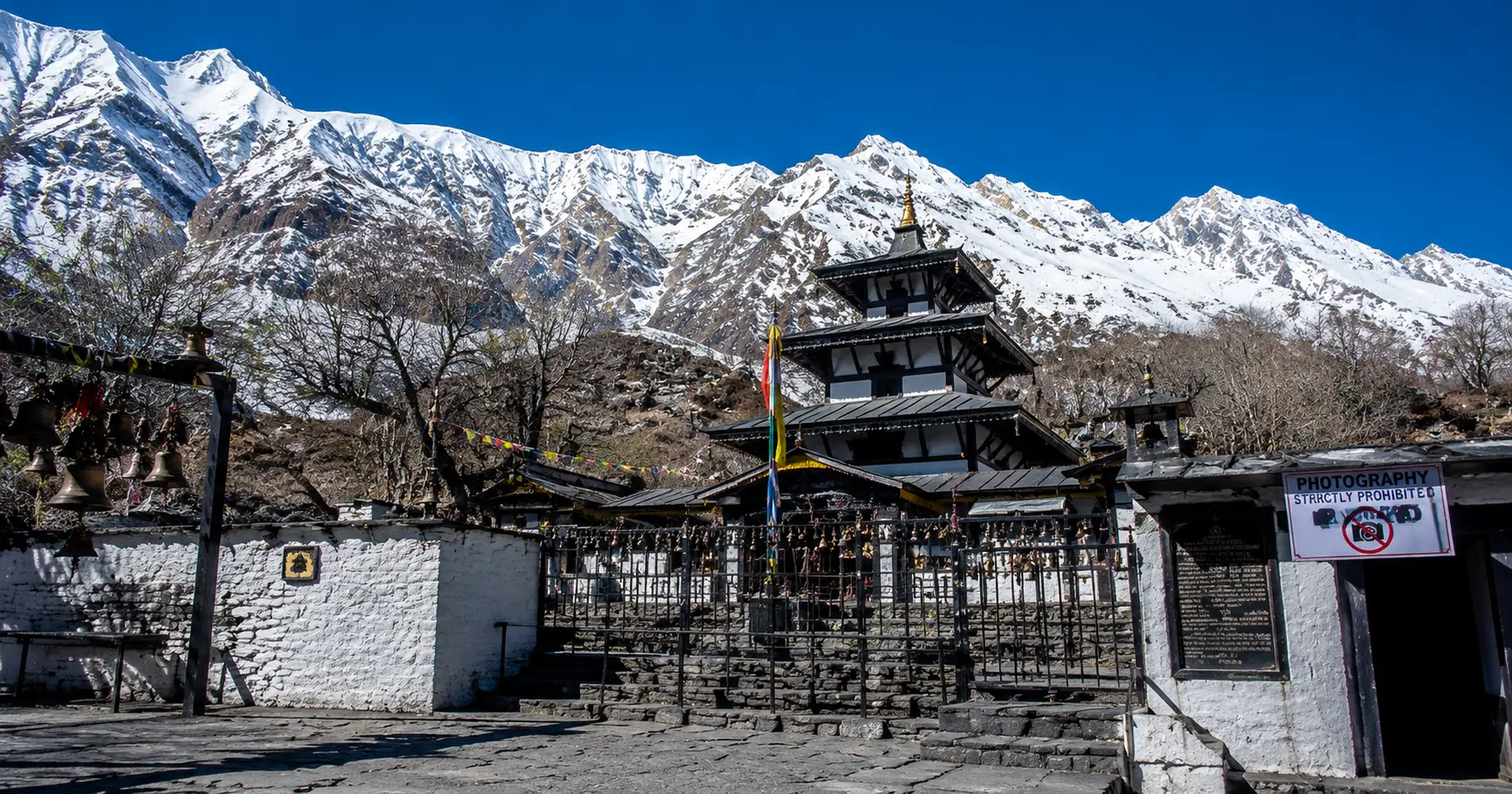
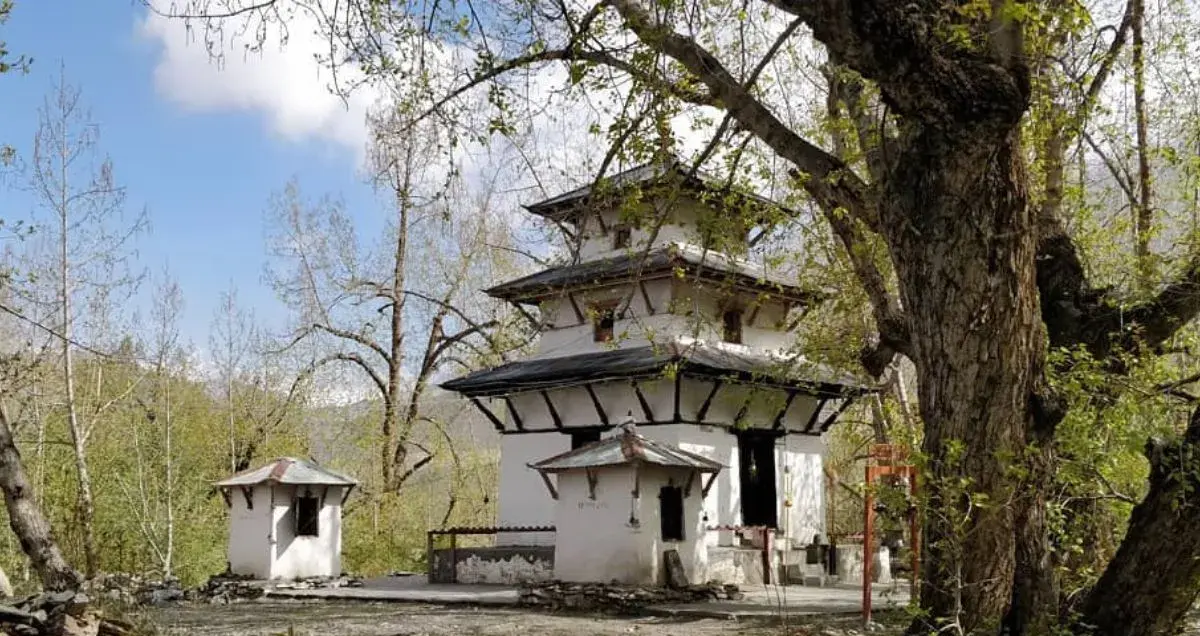
Muktinath Temple — The High-Altitude Sanctuary of Fire and Water

Location: Ranipauwa, Mustang District, 3,710 m above sea level

Deities: Lord Vishnu (Hindu) and Chumig Gyatsa — the Hundred Waters (Tibetan Buddhist Vajrayana)

Distance from Pokhara: Approximately 220–230 km, typically a 3-day round trip via the Kali Gandaki gorge

Distance from Kathmandu: Approximately 470–490 km via Pokhara — best done as 5- 5- 7-day circuit

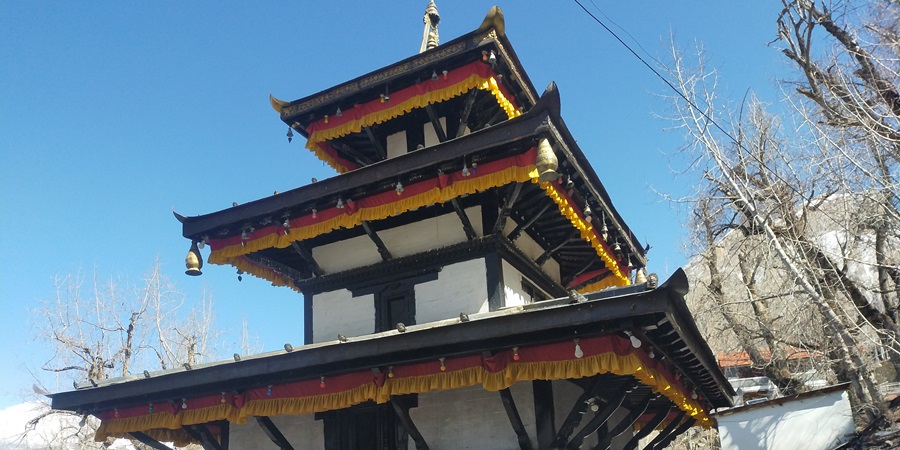
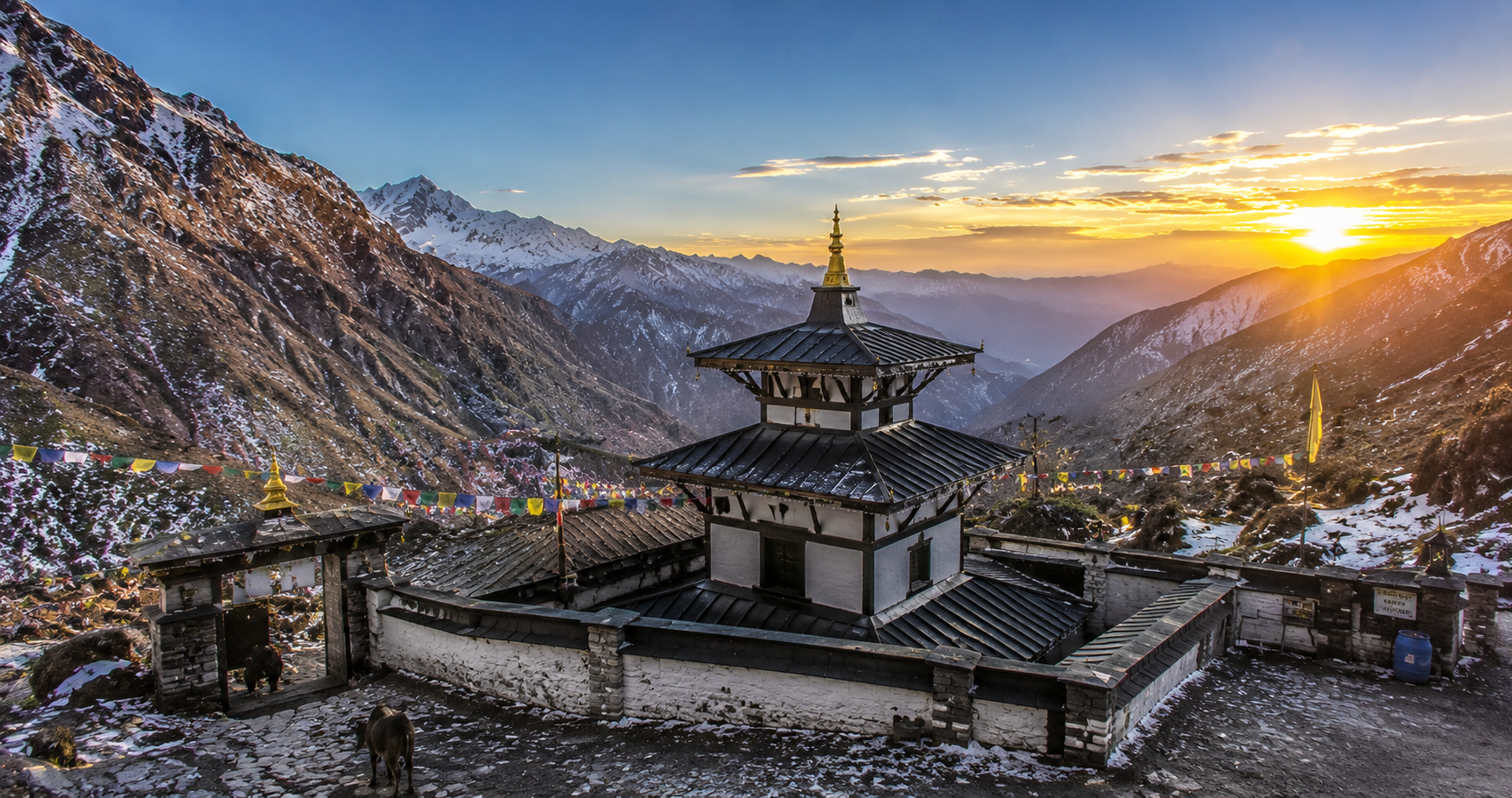
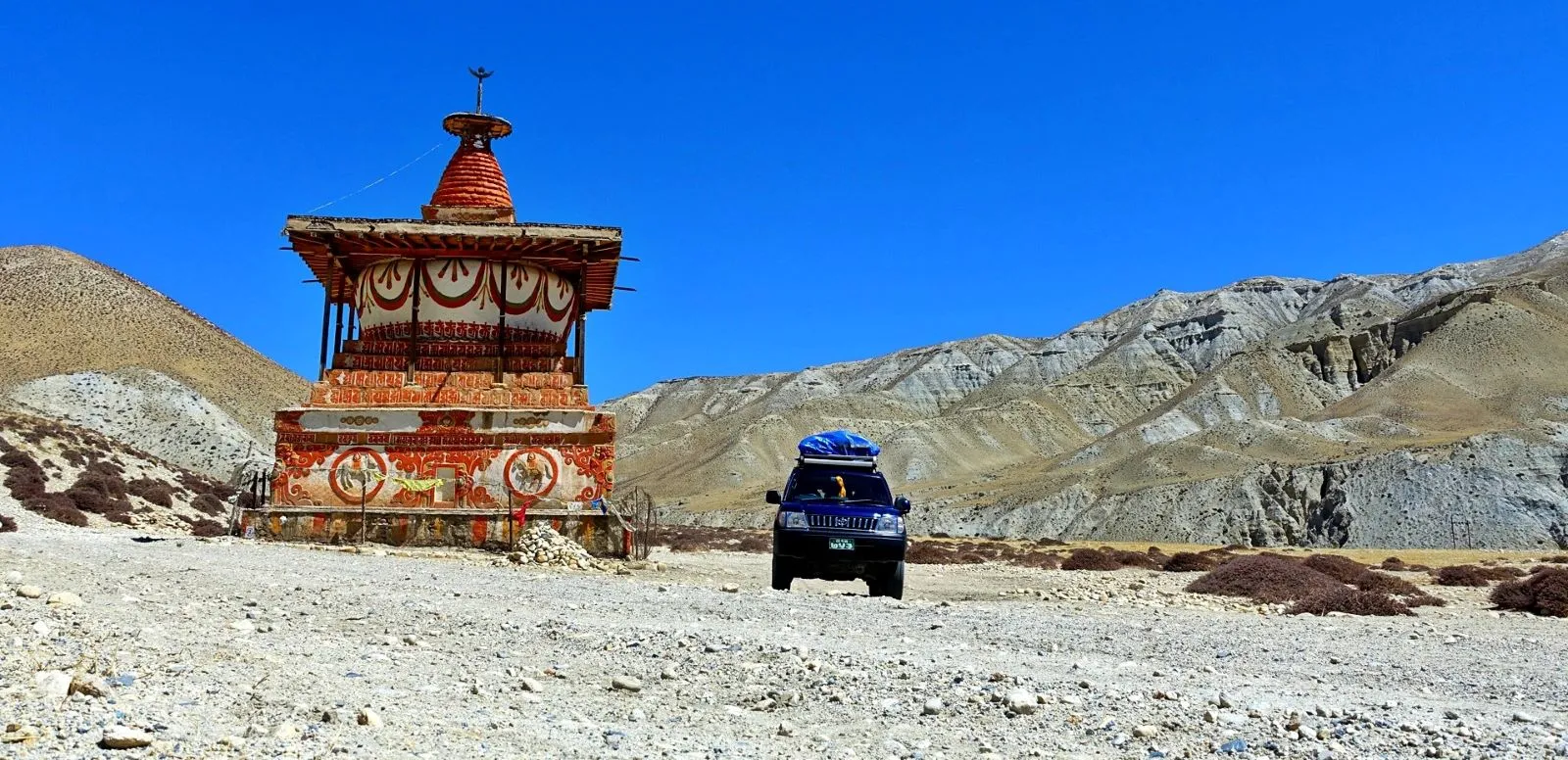
Muktinath is unique even within Nepal’s extraordinary sacred geography — one of the very few sites worshipped with equal devotion by both Hindus and Buddhists. For Hindus, it is one of the eight Swayam Vyakta Kshetras of Vishnu and is believed to grant Mukti — liberation from the cycle of rebirth.

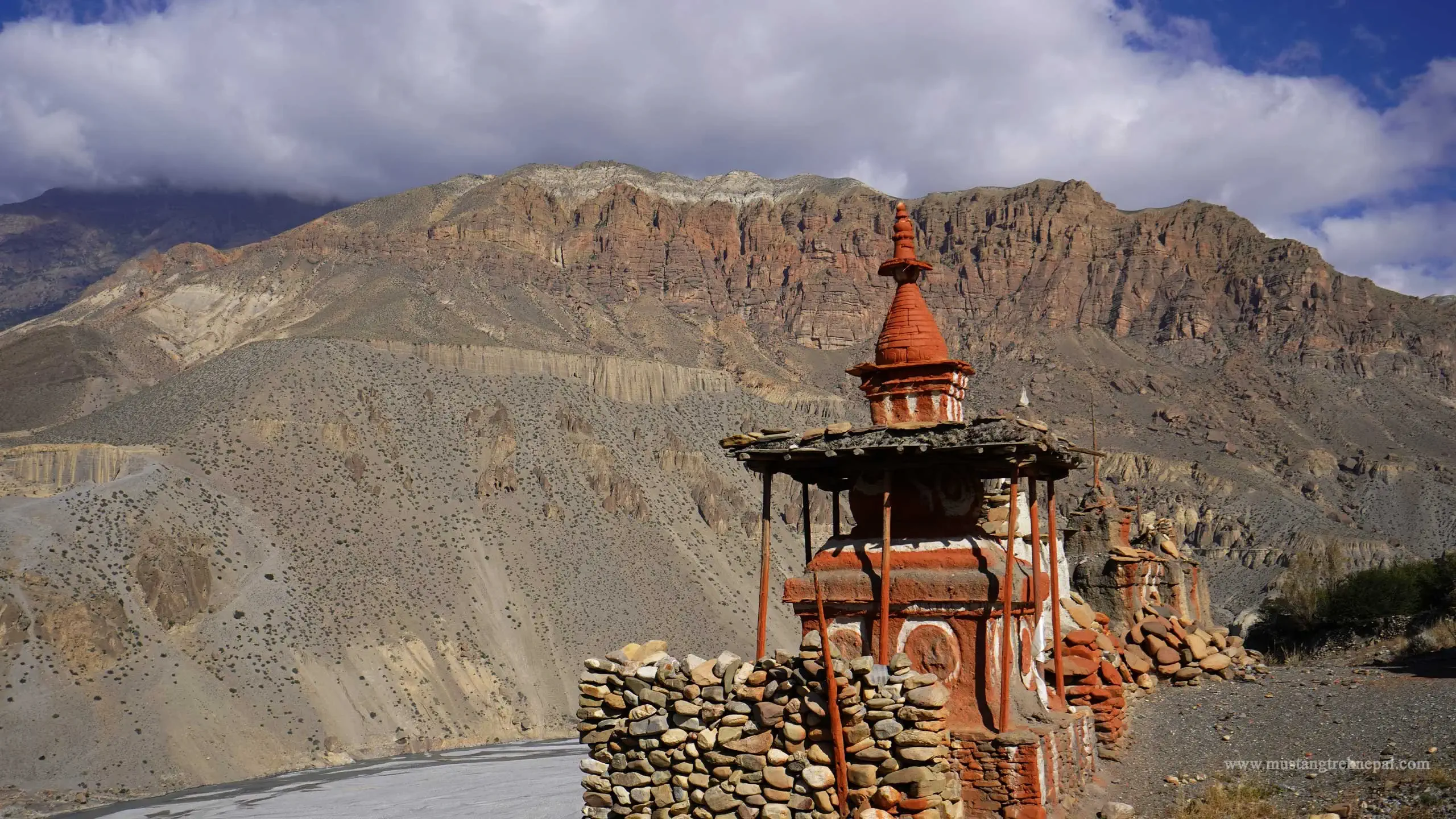
For Tibetan Buddhists, it is revered as Chumig Gyatsa and is one of the 24 Tantric places sacred to Vajrayogini. Both traditions share the site without conflict, their distinct rituals unfolding side by side on the same windswept plateau.

Muktinath-Nepal pilgrimage private vehicle hire with cars, Scorpio, Hiace, and 4WD jeeps for temple tours and sacred destinations

The 108 stone water spouts in the shape of bull’s heads, fed by a glacial spring, are the most distinctive and most physically demanding feature of a Muktinath pilgrimage. Devotees undertake a ritual circuit of all 108 spouts, bathing briefly under each — an act of profound devotional courage given the near-freezing water temperature at 3,710 m, believed to cleanse a lifetime of accumulated sin.

The adjacent Jwala Mai Temple protects a natural gas flame that burns continuously above a spring of water — fire and water together, a phenomenon regarded as a visible symbol of the meeting of cosmic opposites and as one of the most astonishing natural-sacred sites in all of Nepal.

Pilgrims collect the Shaligram stones found in the Kali Gandaki riverbed near Kagbeni and Mustang — ammonite fossils regarded as sacred manifestations of Vishnu himself — on the approach road and carry them home as powerful devotional objects. A Muktinath pilgrimage naturally includes a Shaligram collection walk, and many families return year after year specifically for this purpose.

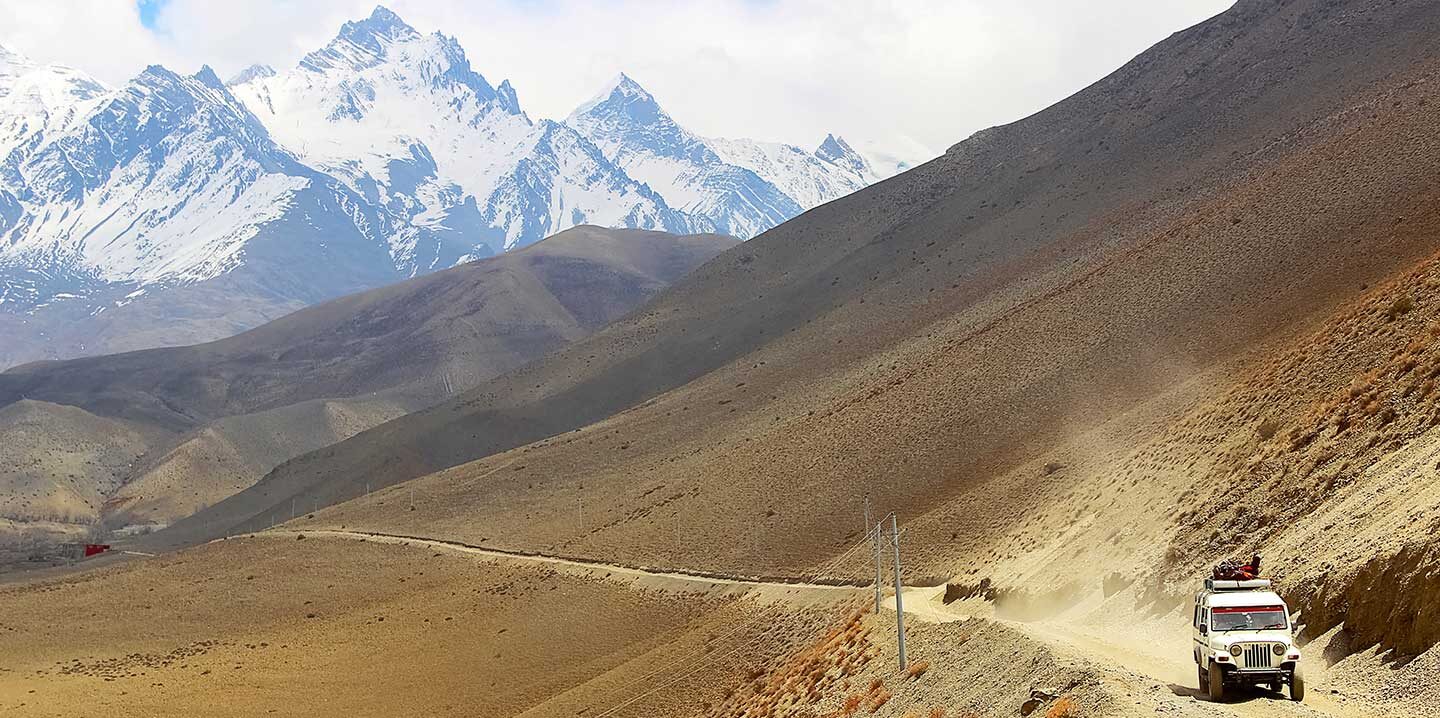
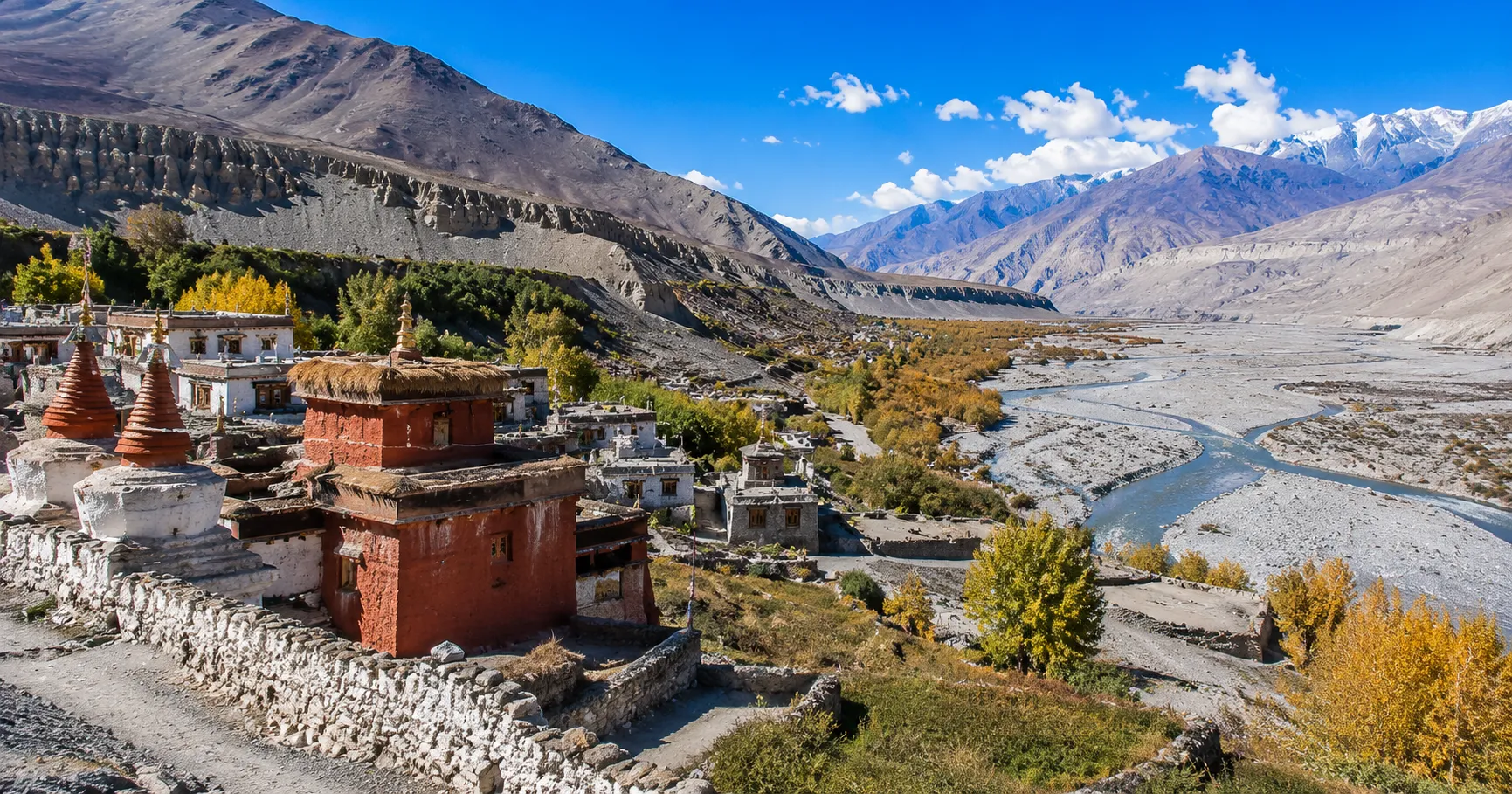
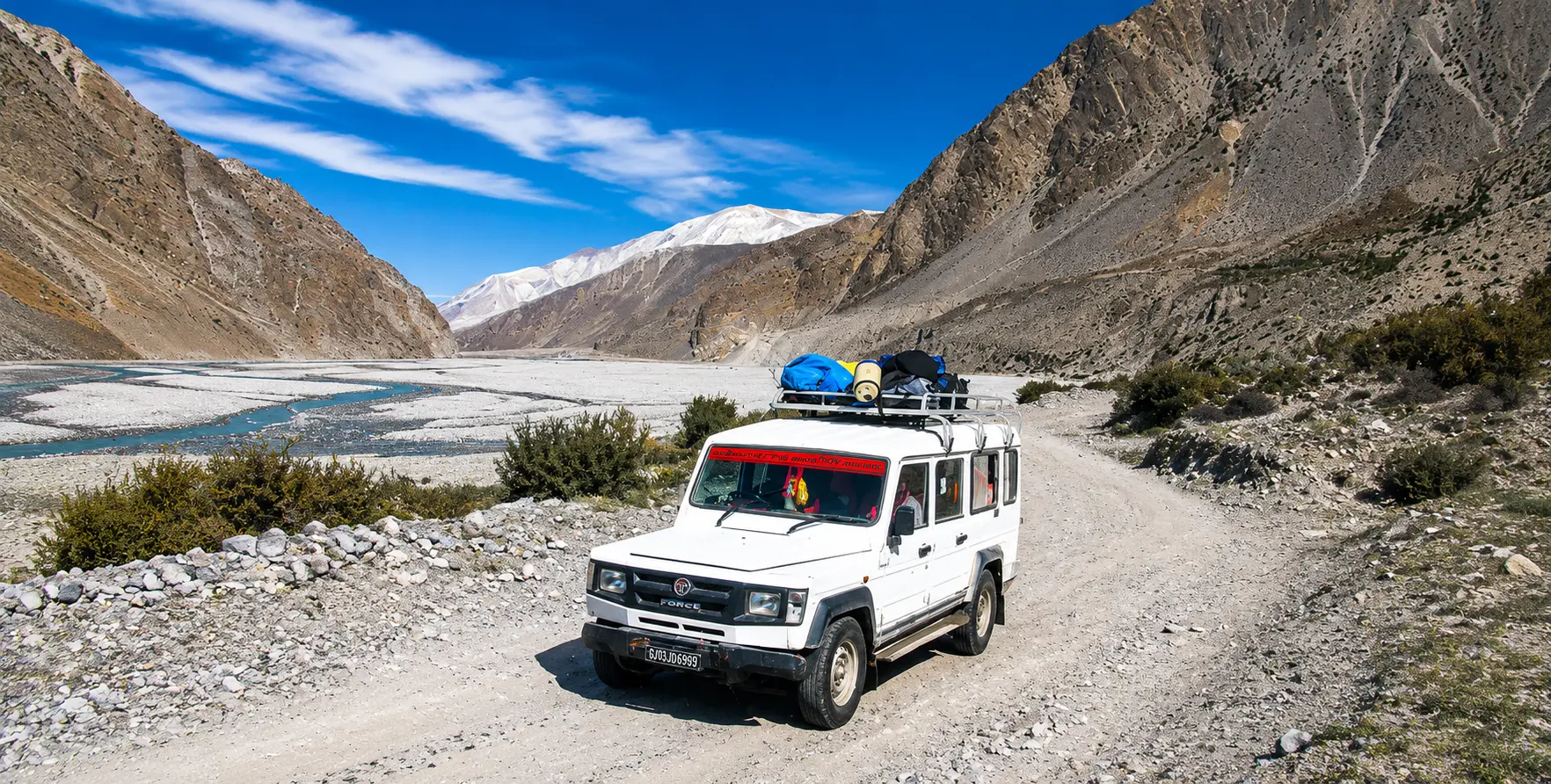
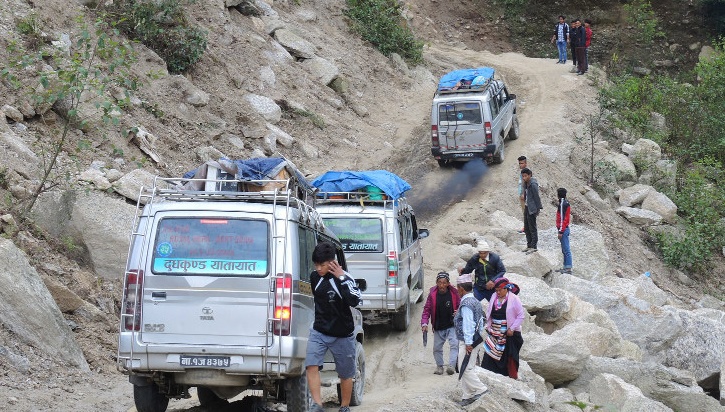
The road journey to Muktinath is itself a major part of the pilgrimage — winding through the Kali Gandaki, which, at the gorge between Dhaulagiri and Annapurna, is the world’s deepest valley, past the medieval apple village of Marpha and the district headquarters of Jomsom. Critically, all driving through the Kali Gandaki gorge must be completed before midday, when the famous thermal wind arrives from the south at 60 to 100 km/h, making driving genuinely dangerous and grounding all Jomsom Airport flights simultaneously.

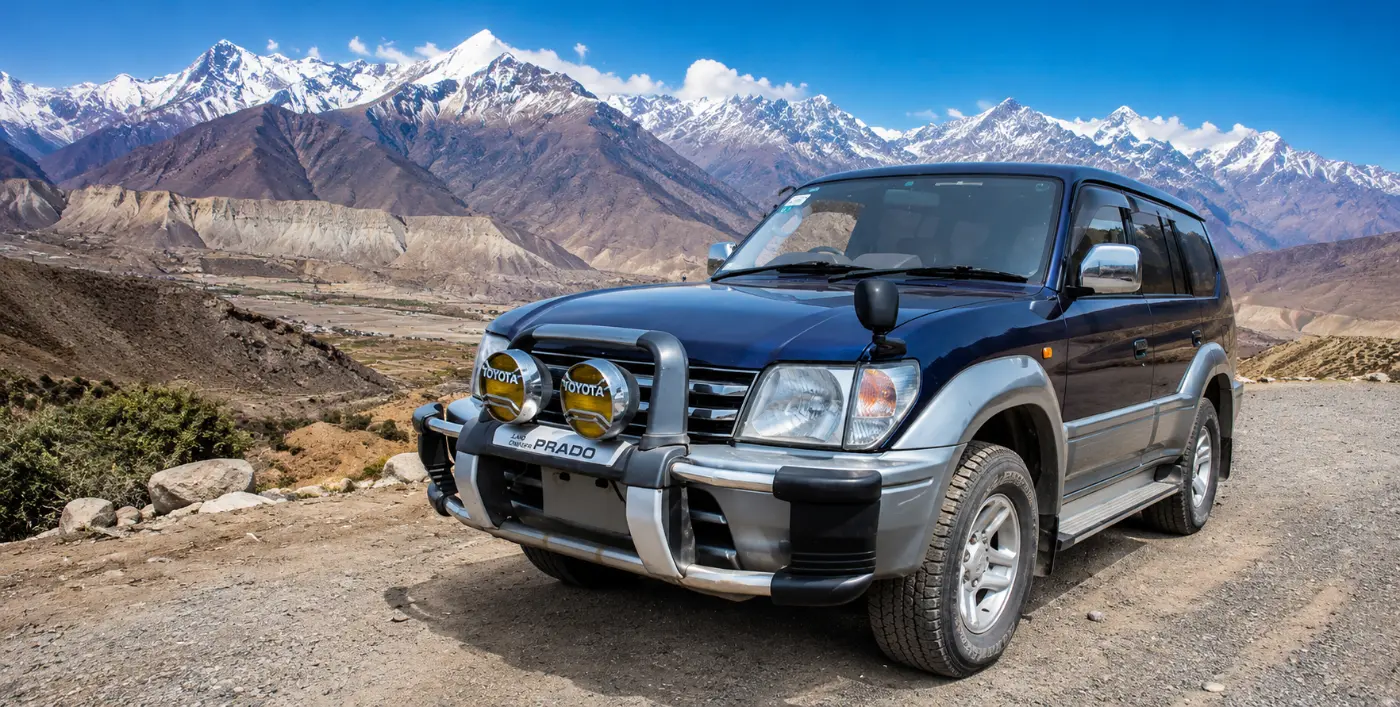
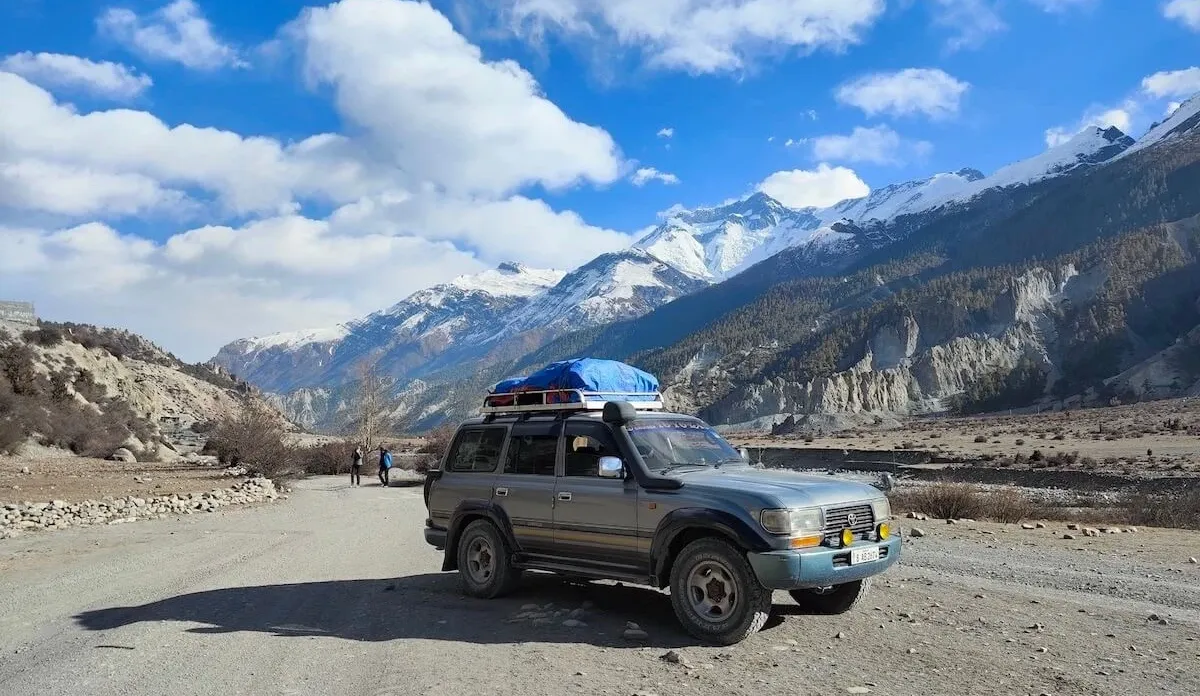
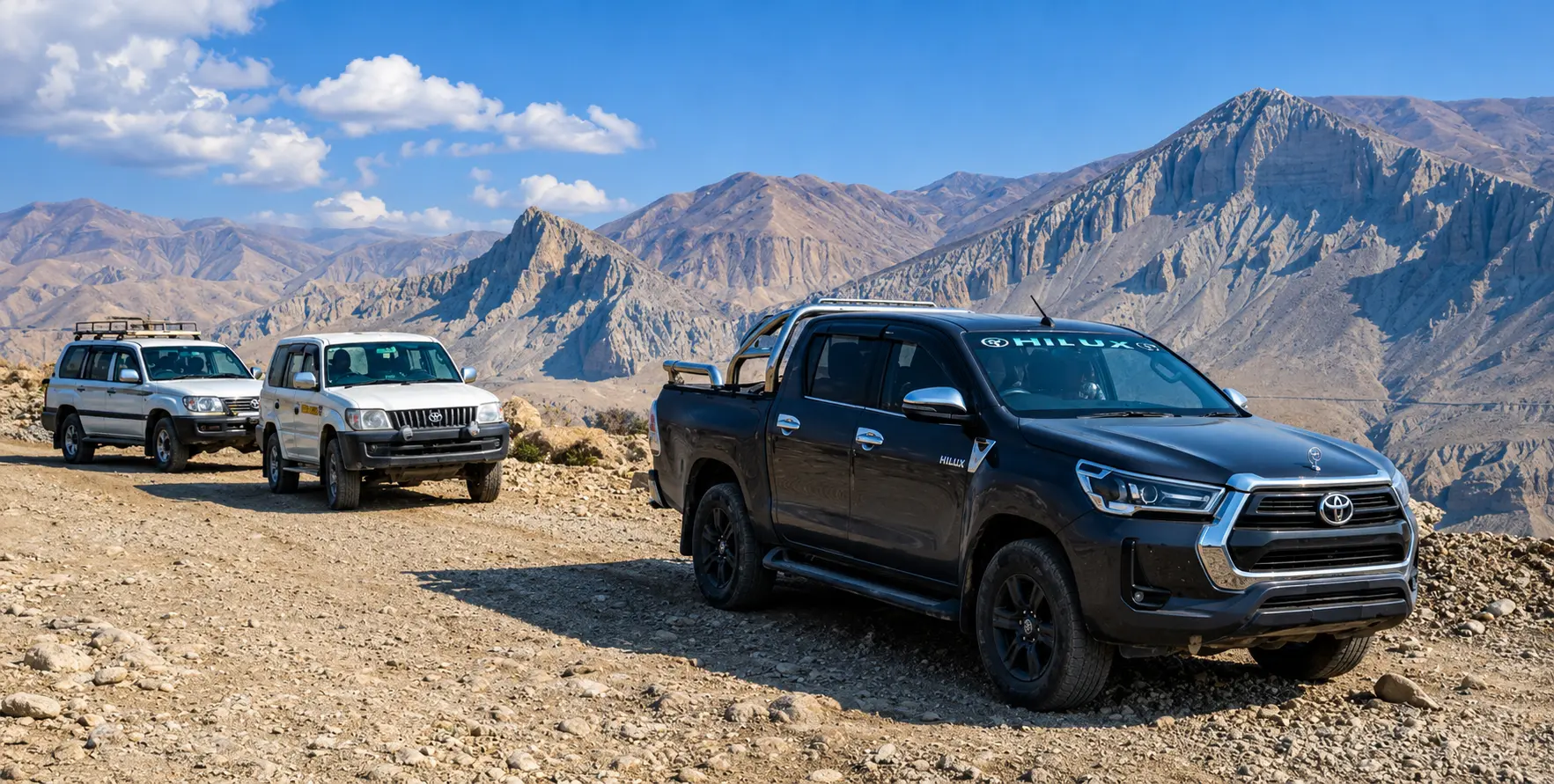
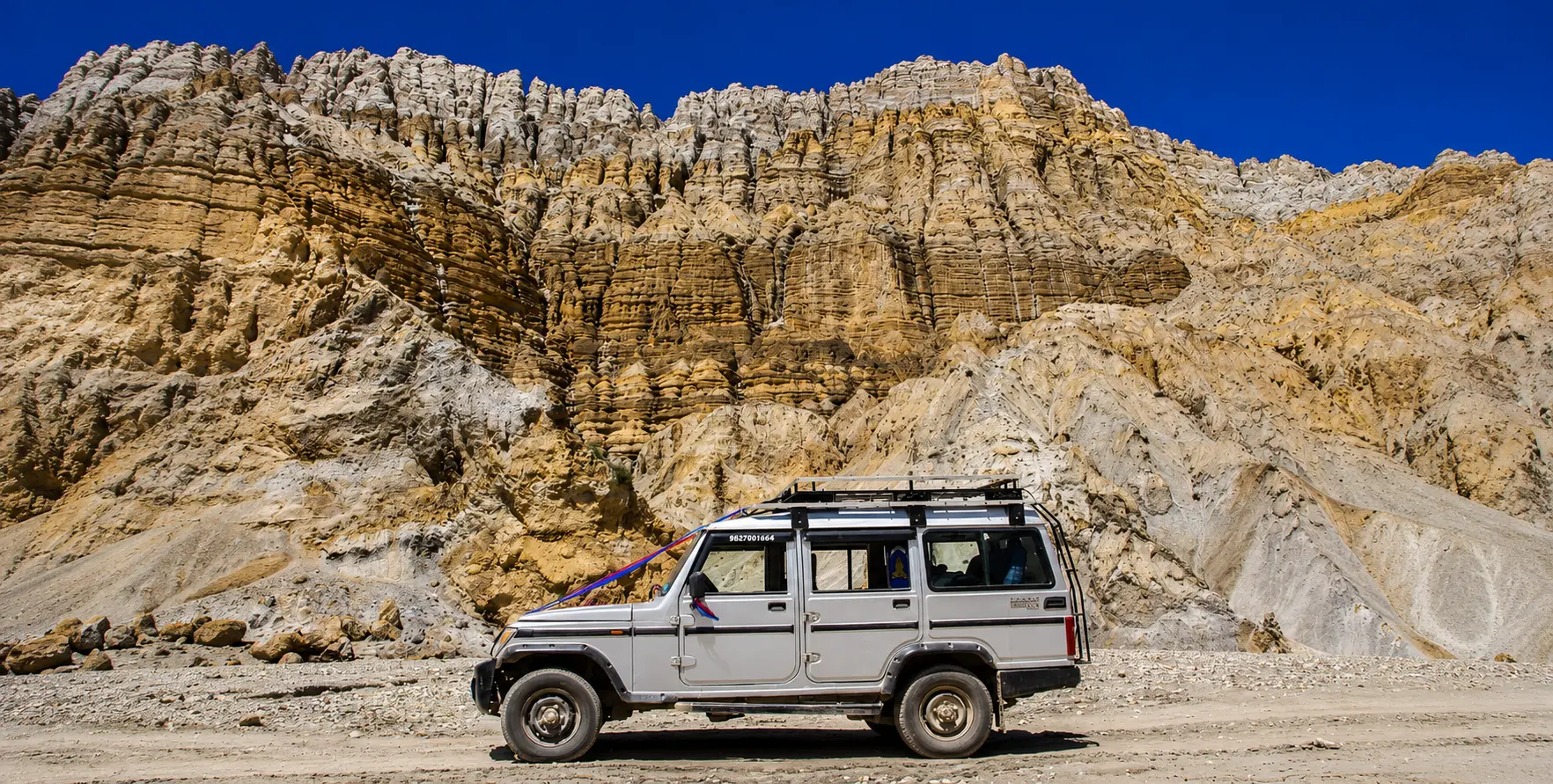
Vehicle Requirement: Toyota Land Cruiser 4WD — absolutely mandatory. No sedan, van, or standard SUV is appropriate beyond Beni. Round-trip hire from Pokhara: approximately USD 500–650; from Kathmandu as part of a full circuit: USD 700–900.

Nepal pilgrimage private vehicle hire with cars, Scorpio, Hiace, and 4WD jeeps for temple tours and sacred destinations

Manakamana Temple — The Wish-Fulfilling Goddess

Location: Gorkha District, 1,302 m, accessed via cable car from Kurintar on the Prithvi Highway

Deity: Goddess Bhagwati, an incarnation of Parvati, is revered as the fulfiller of sincere, heartfelt wishes.

Distance from Kathmandu: Approximately 105–110 km to Kurintar, roughly halfway to Pokhara

Cable Car Fare 2026: NPR 2,700 round trip for non-SAARC foreigners; NPR 1,000 for Indian/SAARC citizens; NPR 770 for Nepali citizens (rates subject to revision — confirm at booking)

Cable Car Duration: Approximately 10 minutes each way, covering 2.8–3 km above the Trishuli River valley

Manakamana is one of Nepal’s most beloved and most accessible pilgrimage destinations, combining genuine devotional power with one of the country’s most enjoyable visitor experiences. The name is perfectly descriptive: Mana (heart/mind) and Kamana (wish)—the goddess who fulfils the heartfelt wishes of sincere devotees.

Uniquely among major Nepali Hindu temples, the presiding priest at Manakamana comes from the Magar community rather than a traditional Brahmin lineage — the current priest is the 17th generation in this unbroken line of service.

Nepal’s first commercial cable car, opened in November 1998, transformed what was once a strenuous three-hour uphill walk into a scenic 10-minute ride in 34 six-person cabins, handling up to 660 passengers per hour. The cable car operates from 9:00 AM to 5:00 PM with a lunch break from 12:00 to 1:30 PM.

Arriving at or before the 9:00 AM opening is strongly recommended to avoid long queues—particularly on Saturdays, public holidays, and during Dashain, when waits of 5 to 10 hours have been recorded.

The cable car serves not only devotees but also small animals offered in sacrifice at the temple — goats are transported in the standard passenger cabins for a one-way fare, in one of Nepal’s more unusual co-passenger experiences. Pilgrims traditionally carry puja baskets containing marigolds, incense, red cloth, fruit, and coconuts for offerings at the goddess shrine, all of which can be easily transported in a private vehicle from Kathmandu.

Manakamana sits directly on the Prithvi Highway between Kathmandu and Pokhara, making it a natural en route stop for pilgrims driving to Muktinath or Pokhara. Most Vehicle Hiring Nepal pilgrimage clients stop at Kurintar’s cable car base station for 2 to 3 hours while the driver waits below, then continue west after visiting the temple.

Vehicle Recommendation: Any private vehicle on the Kathmandu–Pokhara corridor accommodates a Manakamana stop. No separate vehicle arrangement is required — notify us at the time of booking to include the Kurintar wait in the day’s schedule.

Nepal pilgrimage private vehicle hire with cars, Scorpio, Hiace, and 4WD jeeps for temple tours and sacred destinations

Lumbini — The Birthplace of the Buddha

Location: Rupandehi District, Lumbini Province, southwestern Terai plains

Significance: The exact birthplace of Siddhartha Gautama, the historical Buddha, approximately 623 BCE; UNESCO World Heritage Site

Distance from Kathmandu: Approximately 280–300 km, 7 to 8 hours by private vehicle

Nearest Airport: Gautam Buddha International Airport, Bhairahawa (BWA), approximately 22 km east

Lumbini occupies a position in Buddhist pilgrimage comparable to Pashupatinath’s standing for Hindus — the single most sacred site of its tradition anywhere on earth. The Sacred Garden protects the Maya Devi Temple, marking the precise birthplace of the Buddha; the Ashoka Pillar, erected in 249 BCE, which archaeologically confirms the site’s authenticity; and the Puskarini Pond, where Queen Maya Devi bathed before giving birth and where the infant Buddha received his first ritual bath.

Together, these form the innermost sacred core of a complex that, at its full extent, covers many square kilometres within the Lumbini Development Zone.

The surrounding Monastic Zone contains over 40 monasteries built by Buddhist nations from across the world — the Chinese Zhong Hua monastery with its sweeping curved rooflines, the Royal Thai monastery with its gleaming white prangs, the Korean, Japanese, Sri Lankan, Burmese, and Cambodian monasteries each reflecting their own national sacred architectural tradition. A cycle or electric rickshaw through the full Monastic Zone is among the most architecturally and culturally diverse journeys available at any single pilgrimage site in Asia.

For pilgrims combining Hindu and Buddhist devotion in a single Nepal journey, Lumbini and Pashupatinath form the natural pairing — one the supreme Hindu site, the other the supreme Buddhist one. For purely Buddhist pilgrimage groups, Lumbini is typically combined with Kapilavastu/Tilaurakot (27 km west, where the Buddha grew up), Devghat, and sometimes onward to Kathmandu’s Boudhanath and Swayambhunath, creating a complete Buddhist Nepal circuit.

Vehicle Recommendation: Sedan or SUV for 1 to 5 passengers; Toyota Hiace for groups of 7 to 14. From Lumbini, the same vehicle can continue directly to Chitwan for a wildlife add-on or return to Kathmandu.

Nepal pilgrimage private vehicle hire with cars, Scorpio, Hiace, and 4WD jeeps for temple tours and sacred destinations.

Janakpur — The Sacred City of Sita and Mithila

Location: Dhanusha District, Madhesh Province, central-eastern Terai

Significance: Birthplace of Goddess Sita, capital of the ancient Mithila kingdom, site of Sita’s marriage to Lord Rama

Distance from Kathmandu: Approximately 380–400 km, 7 to 8 hours by private vehicle

Janakpur is one of Hinduism’s most beloved cities, at the heart of the Ramayana narrative as the realm of King Janak, Sita’s father, and the setting for the legendary swayamvara where Lord Rama won Sita’s hand by bending and stringing Shiva’s divine bow. The magnificent Janaki Mandir — built in 1910 in a striking style that blends Hindu and Mughal architectural traditions — dominates the city and is considered one of Nepal’s most beautiful temples, its white marble towers and ornate, carved facade creating an architectural impression unlike any other in the country.

The sacred ponds of Dhanush Sagar and Ganga Sagar, believed to have been created by Lord Rama and linked to specific episodes in the Ramayana, form part of the ritual circuit devotees complete. The Ram Mandir, the Vivah Mandap pavilion where Sita and Rama’s wedding is traditionally re-enacted, and the numerous smaller shrines associated with specific Ramayana characters and events all contribute to an extraordinarily rich devotional geography compressed within a single city.

Vivah Panchami, held in November or December on the fifth day of Margashirsha Shukla Panchami according to the Hindu lunar calendar, is Janakpur’s greatest festival — a city-wide celebration re-enacting the wedding of Sita and Rama with elaborate processions, music, and devotional gatherings that draw enormous crowds from Nepal and neighbouring Bihar state in India. The Mithila folk painting tradition, unique to this region and now recognised internationally for its distinctive geometric and naturalistic visual language, adds a vivid cultural dimension to any visit to Janakpur.

Vehicle Recommendation: Sedan or SUV for the direct Terai highway journey. Janakpur is also served by a domestic airport with flights from Kathmandu, making a fly-in/drive-out approach possible for time-limited pilgrims.

Nepal pilgrimage private vehicle hire with cars, Scorpio, Hiace, and 4WD jeeps for temple tours and sacred destinations

Pathivara Devi Temple — The Powerful Goddess of the Eastern Hills

Location: Taplejung District, far eastern Nepal, 3,794 m above sea level

Deity: Pathivara Devi — a fierce manifestation of Shakti, especially revered by Kirat (Limbu, Rai) and Hindu communities

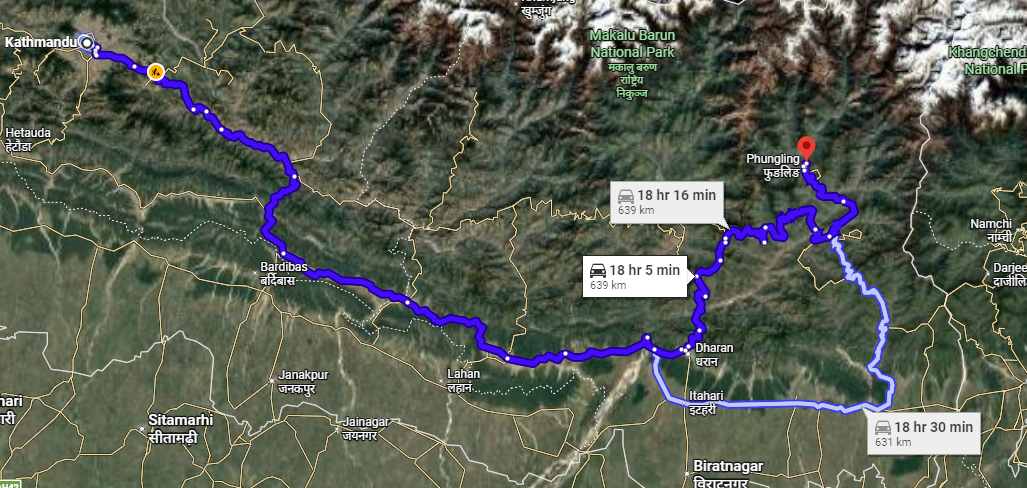
Distance from Kathmandu: 615–650 km to Phungling (Taplejung Bazaar) by road, plus a 7–10 km uphill walk to the temple

Annual Visitors: Over 500,000 pilgrims annually, with peak attendance during Dashain (October)

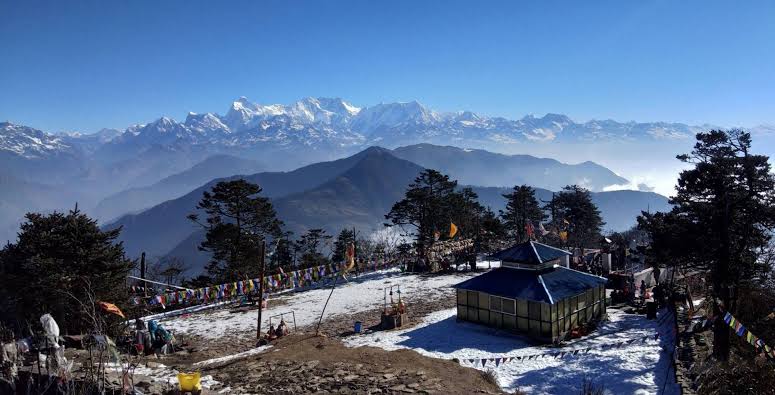
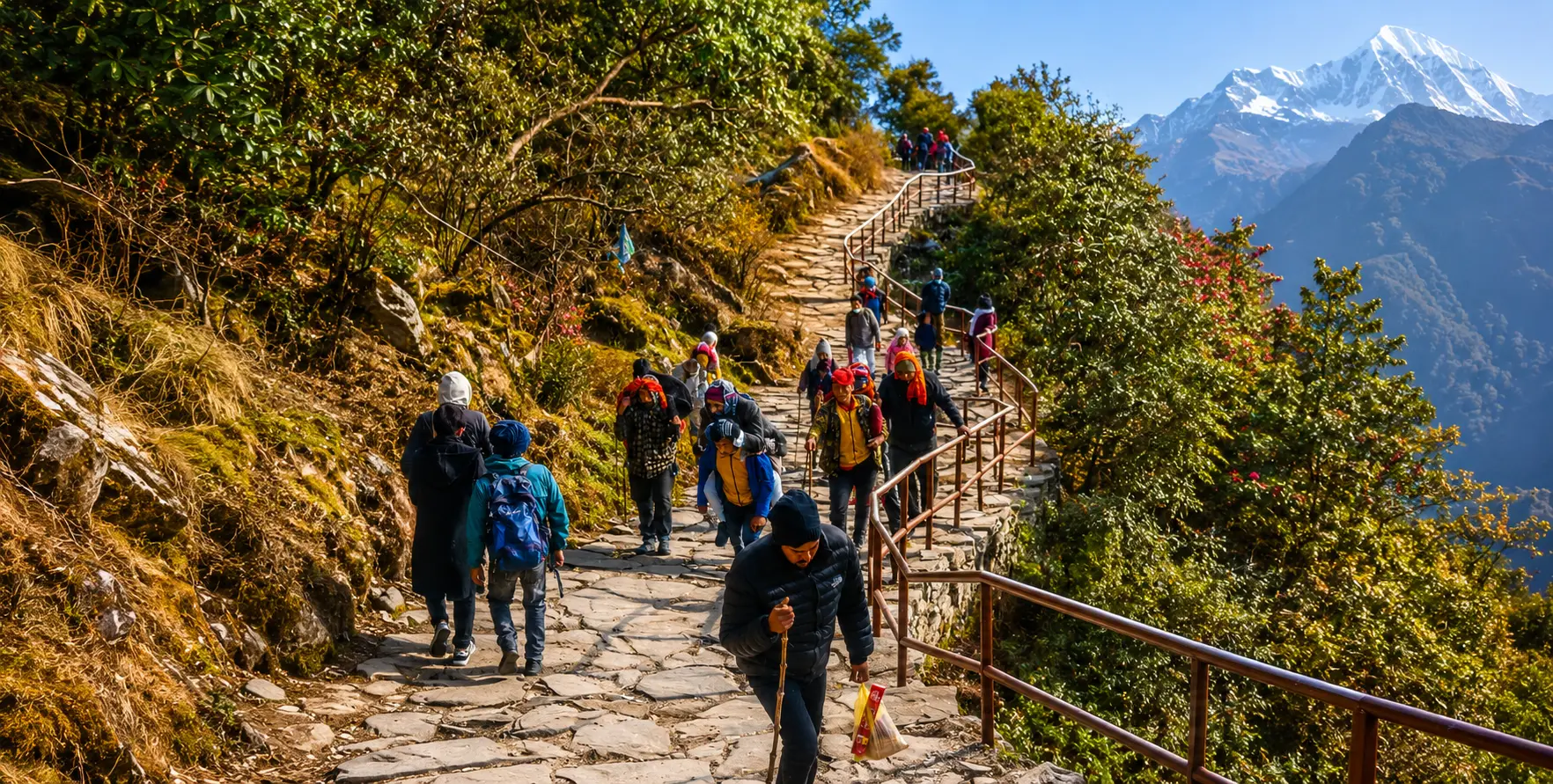
Pathivara is one of Nepal’s most powerful pilgrimage sites and one of the country’s most physically demanding — requiring a 2-day drive from Kathmandu, followed by a 3- to 5-hour uphill walk to reach the goddess’s shrine. Pilgrims cannot reach the temple by vehicle: they travel by road to Phungling or the higher village of Chitlang, then complete the final 7 to 10 km on foot or by pony.

For the hundreds of thousands of devotees who make this journey each year, the physical effort is itself an act of devotion.

The goddess is worshipped at a simple stone shrine centred on a sacred trishul, with the temple complex on the high ridge at 3,794 m, offering an extraordinary panoramic view of Kanchenjunga (8,586 m), Makalu (8,485 m), and Everest (8,849 m) on clear mornings. Animal sacrifice is a major, highly visible part of Pathivara devotional practice, especially intense during Dashain.

Porter and pony services at the Chitlang trailhead make the ascent more accessible for elderly devotees.

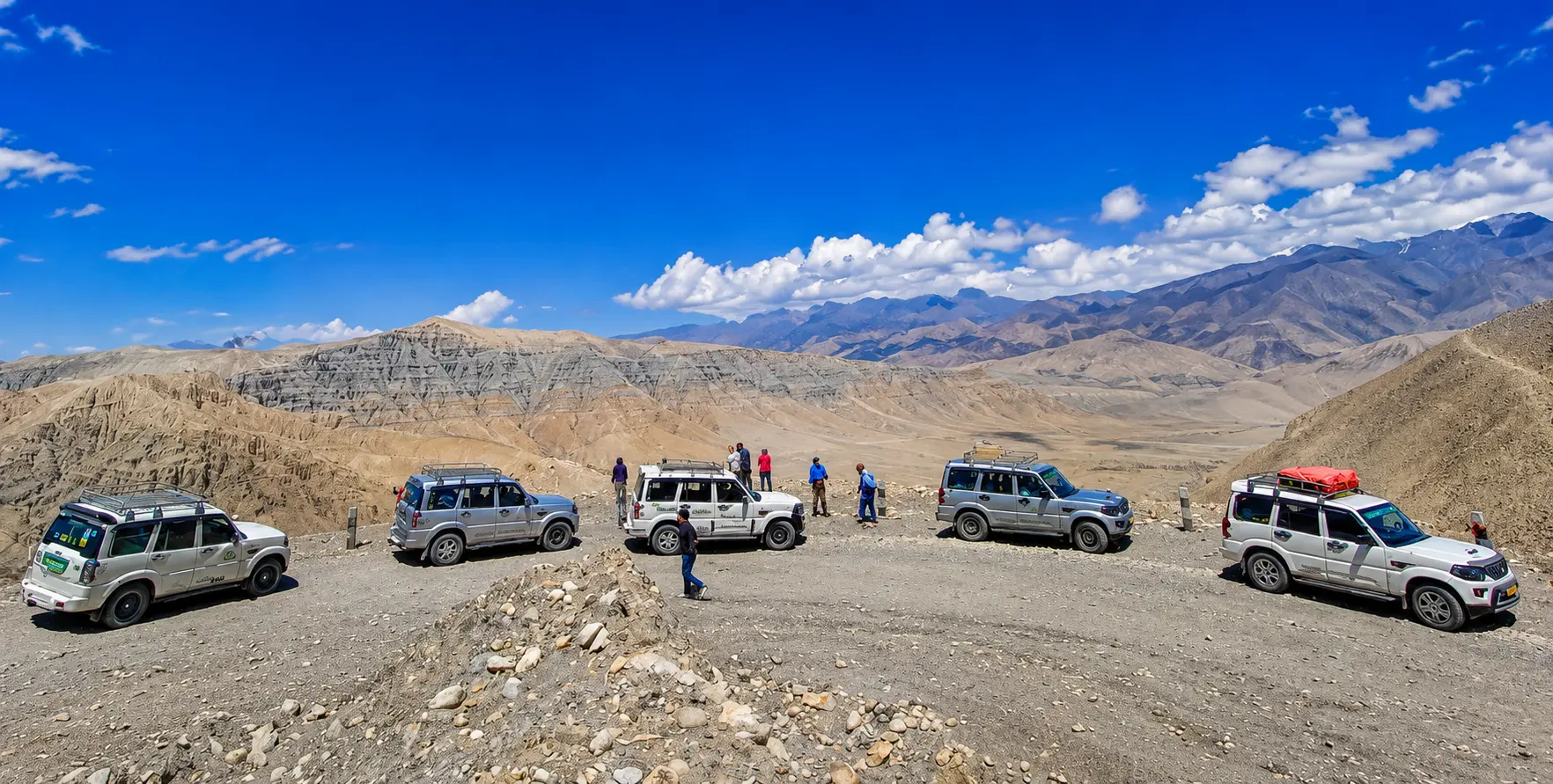
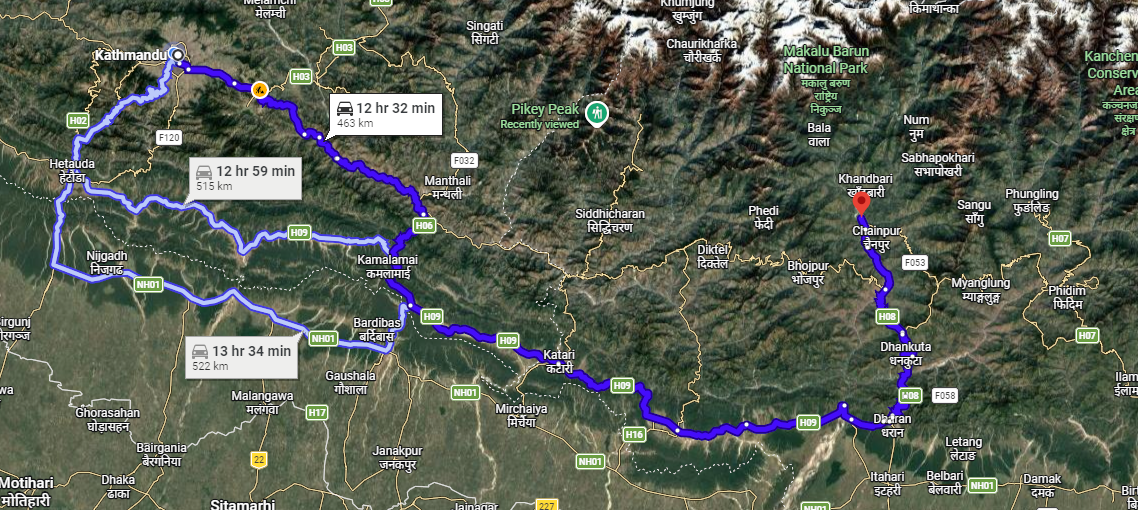
Vehicle Recommendation: Mahindra Scorpio — the standard vehicle on this route, widely used by local drivers throughout eastern Nepal for its powerful engine and hill road capabilities—a 2-day journey from Kathmandu via an overnight in Dharan. Round-trip hire is approximately USD 370–460.

Nepal pilgrimage private vehicle hire with cars, Scorpio, Hiace, and 4WD jeeps for temple tours and sacred destinations

Dakshinkali and the Southern Valley Shakti Circuit

Location: Pharping, southern Kathmandu Valley, approximately 22 km from central Kathmandu

Deity: Goddess Kali in her fierce protective aspect

One of the most powerful Shakti sites within easy reach of Kathmandu, Dakshinkali sits at the confluence of two sacred streams at the base of a forested gorge, its open-air shrine the focus of regular animal sacrifice rituals — particularly intense on Tuesdays and Saturdays. The setting itself powerfully shapes the site’s atmosphere: a steep stone stairway descends into a narrow, tree-shaded ravine, with the continuous sound of flowing water.

This rawness and immediacy of devotional practice make Dakshinkali distinctly different in character from the formal grandeur of Pashupatinath.

The southern Kathmandu Valley around Pharping also contains the Vajrayogini temple — a significant Tantric Buddhist site — and cave meditation sites associated with Guru Rinpoche (Padmasambhava) in the same forest, making this corner of the valley a rewarding combined Hindu-Buddhist pilgrimage half a day from any Kathmandu hotel.

Vehicle Recommendation: Sedan or SUV for a half-day hire from Kathmandu. Frequently combined with Dakshinkali, Pharping, and the Chobar Adinath temple in a single circuit.

Travel comfortably to Nepal's sacred pilgrimage sites with private vehicle hire, including cars, SUVs, Scorpio, Hiace vans, Coaster buses, and 4WD jeeps driven by experienced professionals.

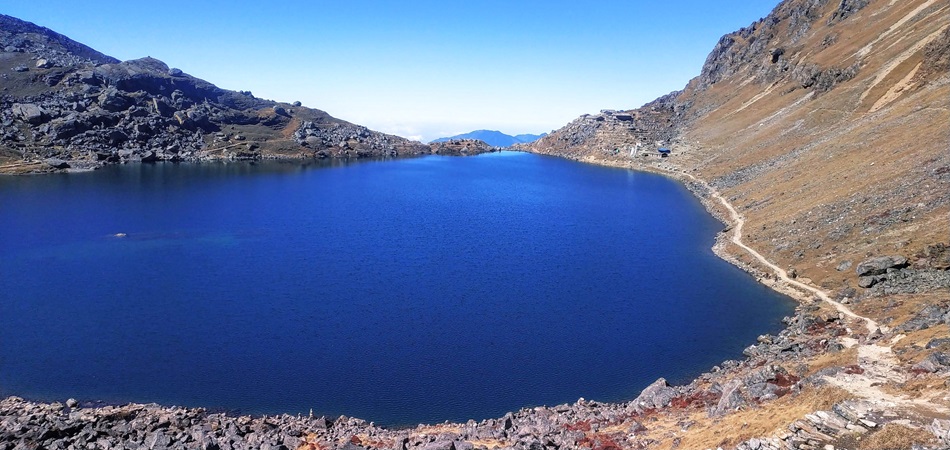
Gosaikunda — The Sacred Alpine Lake of Lord Shiva

Location: Rasuwa District, Langtang region, 4,380 m above sea level

Significance: Sacred lake believed to have been created when Shiva struck the ground with his trident after drinking cosmic poison

Road Access: Vehicle to Dhunche or Syabrubesi trailhead (approximately 115–130 km from Kathmandu, 4–5 hours), then 2 to 3 days trekking each way

Gosaikunda cannot be reached by vehicle — the sacred lake sits at 4,380 m and requires a genuine multi-day trek from the road head. However, Vehicle Hiring Nepal provides the essential first and last legs: private vehicle hire from Kathmandu to the Langtang trailheads at Dhunche or Syabrubesi, where the trek begins, and return pickup at the end of the trek.

Janai Purnima in August—when devotees undertake ritual bathing in the freezing lake waters—brings significant pilgrimage traffic to the Langtang road and makes advance vehicle booking important during this festival period.

Vehicle Recommendation: Scorpio or Hiace is recommended, given the rough final sections of the Dhunche road. Round-trip to trailhead approximately USD 180–250.

halesi-Travel comfortably to Nepal's sacred pilgrimage sites with private vehicle hire, including cars, SUVs, Scorpio, Hiace vans, Coaster buses, and 4WD jeeps driven by experienced professionals.

Halesi Mahadev — The Cave Temple of the East

Location: Khotang District, eastern mid-hills

Deity: Lord Shiva, worshipped within a remarkable natural limestone cave system

Distance from Kathmandu: Approximately 270–300 km, 8–9 hours by private vehicle via the eastern hill roads

Halesi Mahadev is one of Nepal’s most unusual sacred sites — a natural cave temple where the rock formations themselves are read as manifestations of Shiva’s presence. Devotees believe Shiva took refuge within these caves from a pursuing demon, and the underground chambers are understood to represent different aspects of the deity.

Pilgrims enter and move through a series of narrow, dark passages and caverns, performing rituals at specific points within—a dramatically different and profoundly intimate pilgrimage experience than open-air temple worship.

Halesi holds particular significance as a genuine point of convergence between Hindu and Kirat (indigenous eastern Nepali) spiritual traditions. For Rai and Limbu communities, the site is revered within their indigenous Kirat religion, not merely as a Hindu temple — creating a rare shared sacred space that mirrors Muktinath’s role in bridging Hindu and Buddhist devotion on the opposite side of the country. Maha Shivaratri draws the largest annual crowds.

Vehicle Recommendation: Scorpio or SUV. A round trip from Kathmandu is approximately USD 280–360, typically done as a 2-day round trip with an overnight in Khotang.

Travel comfortably to Nepal's sacred pilgrimage sites with private vehicle hire, including cars, SUVs, Scorpio, Hiace vans, Coaster buses, and 4WD jeeps driven by experienced professionals.

Swargadwari — The Gateway to Heaven

Location: Pyuthan District, mid-western Nepal hills, approximately 1,800 m

Significance: A major ashram and pilgrimage centre established by the revered sage Swargadwari Baba in the late 19th century

Distance from Kathmandu: Approximately 400–450 km, 9–11 hours by private vehicle

Swargadwari — literally the Gateway to Heaven — is a pilgrimage destination of a different character from the deity-centred temple sites that dominate this guide. Set on a high wooded ridge in mid-western Nepal with sweeping valley views, it is primarily an ashram complex and spiritual retreat centre established in the lineage of Swargadwari Baba, whose tradition of ascetic practice, teaching, and meditation continues today.

Devotees arrive seeking darshan of the ashram’s presiding mahant (head), spiritual teaching, puja in the ashram’s temple, and the specific blessing associated with this lineage of sages—a practice rooted in Nepal’s sant and renunciate tradition as much as in temple worship. The site is widely known within Nepali and North Indian devotional circles.

It is less internationally prominent than Pashupatinath or Lumbini, which contributes to a quieter, more contemplative pilgrimage atmosphere.

Vehicle Recommendation: Scorpio or SUV for the mid-western hill road sections. Often combined with a Lumbini visit as part of a western Nepal pilgrimage circuit. Round-trip approximately USD 320–420.

Muktinath temple

Vehicle Fleet for Nepal Pilgrimage Touring

Nepal’s pilgrimage landscape spans every terrain category, and Vehicle Hiring Nepal’s fleet is specifically matched to each type of sacred journey:

Sedan Car — Kathmandu Valley and Flat Terai Routes

Toyota Corolla, Honda City, or equivalent. Ideal for Pashupatinath, Boudhanath, Swayambhunath, Dakshinkali, Janakpur, and Lumbini — flat or well-paved routes serving 1 to 3 pilgrims. Economical, air-conditioned, door-to-door service from your hotel.

Toyota Fortuner or SUV — Small Family Pilgrimage Groups

Capacity: 4 to 5. Versatile and comfortable for small families, it combines Kathmandu Valley sites with a Manakamana stop, a Lumbini journey, or the Gosaikunda trailhead approach. Good highway and moderate hill road capability.

Mahindra Scorpio — Eastern and Western Hill Pilgrimages

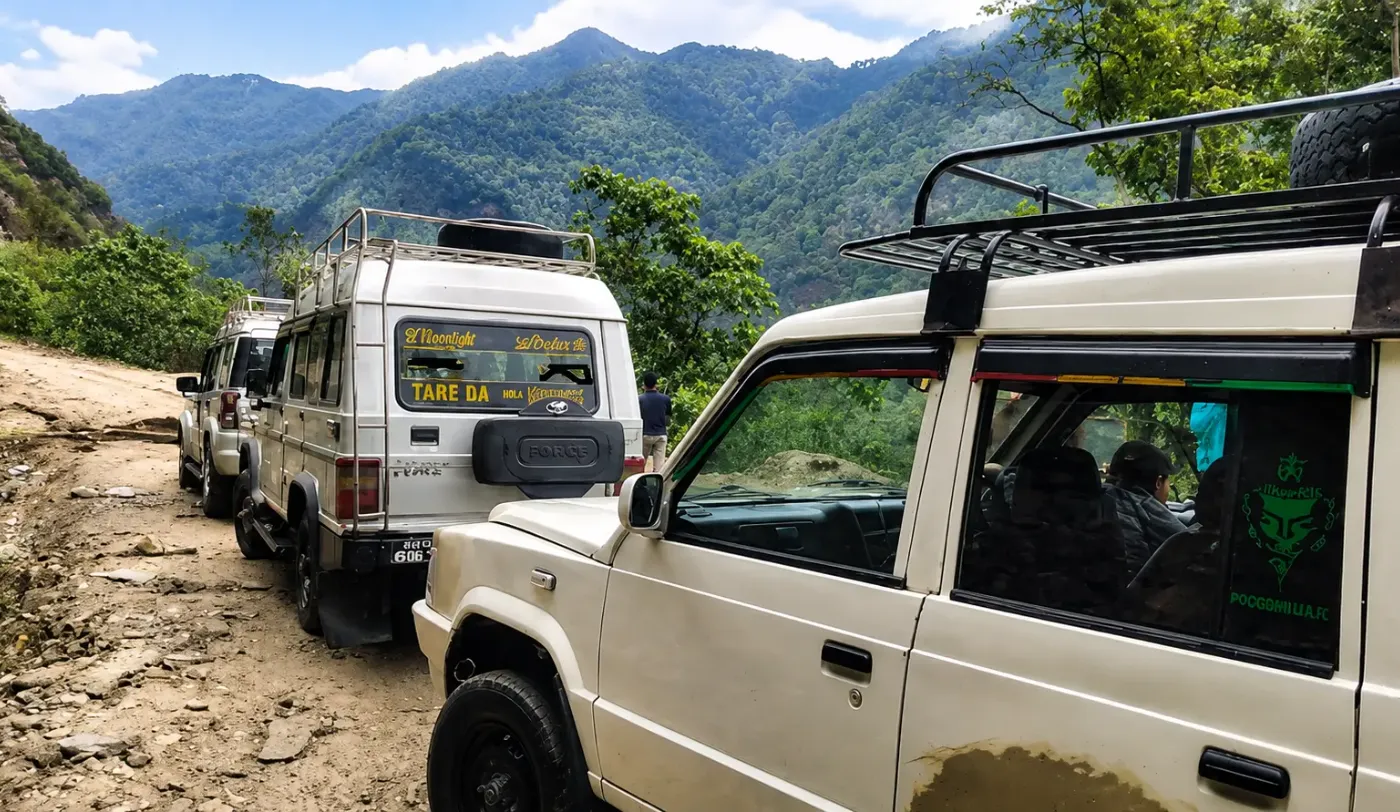
Capacity: ty 6 to 9. The standard and recommended vehicle for the long hill-road journeys to Pathivara (Taplejung) and Halesi Mahadev (Khotang). Powerful diesel engine, high ground clearance, and the vehicle most commonly used by experienced local drivers on eastern Nepal’s steepest road sections.

Toyota Land Cruiser — Muktinath and Upper Kali Gandaki

Capacity: 4 to 6. Non-negotiable for the Muktinath pilgrimage route through the Kali Gandaki gorge. The most powerful and capable vehicle in the fleet, essential for the gorge track between Beni and Jomsom and the final ascent to Ranipauwa at 3,710 m.

Toyota Hiace Van — Large Pilgrimage Groups

Capacity: 7 to 14. The preferred choice for extended family groups, temple committees, and community pilgrimage parties travelling together to Lumbini, Janakpur, Pathivara, or multi-site circuits in the Kathmandu Valley.

Toyota Coaster Bus — Organised Pilgrimage Parties

Capacity: 15 to 22. For large jatra and yatra groups, organised pilgrimage societies, and temple tour parties covering multiple sacred sites in a single chartered vehicle.

Muktinath temple

Pilgrimage Vehicle Rental Prices

Route / Pilgrimage CircuitVehiclePrice (USD)Journey Duration
Kathmandu Valley full circuit (Pashupatinath, Boudhanath, Swayambhunath, Dakshinkali)Sedan/SUVUSD 50–100Full day
Kathmandu → Manakamana return (incl. cable car wait)Sedan/SUVUSD 90–200Full day
Kathmandu → Lumbini (one-way)Sedan/SUV/HiaceUSD 130–2507–8 hrs driving
Kathmandu → Janakpur (one-way)Sedan/SUVUSD 130–2007–8 hrs driving
Pokhara → Muktinath → Pokhara (round trip)Land Cruiser 4WDUSD 500–6503–4 days
Kathmandu → Muktinath → Kathmandu (full circuit via Pokhara)Land Cruiser 4WDUSD 700–9005–7 days
Kathmandu → Pathivara/Taplejung (round trip)ScorpioUSD 370–56004–5 days
Kathmandu → Halesi Mahadev (round trip)Scorpio/SUVUSD 280–3602–3 days
Kathmandu → Gosaikunda trailhead (Dhunche) returnScorpio/HiaceUSD 180–2502 days (vehicle only)
Kathmandu → Swargadwari (round trip)Scorpio/SUVUSD 320–4203–4 days
Grand Nepal Pilgrimage Circuit (Lumbini + Muktinath + Kathmandu Valley)Land Cruiser/HiaceUSD 900–1,2009–11 days

All prices include the driver, full fuel, and vehicle insurance. Multi-day journeys include driver accommodation arrangements at standard local rates, organised separately. Prices are indicative of 2026 rates — contact Vehicle Hiring Nepal for an exact quote based on your specific pilgrimage circuit, group size, and travel dates.

Sample Itinerary: 3-Day Kathmandu Valley and Manakamana Pilgrimage

  • Day 1 (AM): Pashupatinath Temple at dawn — arrive for Mangala Aarti ~5:00 AM; time in the outer complex, Bagmati ghats, and deer park; Guhyeshwari Temple visit
  • Day 1 (PM): Boudhanath Stupa — afternoon kora (circumambulation); Swayambhunath at golden hour for the finest valley views
  • Day 2: Dakshinkali and the southern valley — early morning Kali puja, Pharping Vajrayogini temple, cave sites of Guru Rinpoche, return to Kathmandu for afternoon rest
  • Day 3: Kathmandu to Manakamana and return — depart 7:00 AM, arrive Kurintar ~9:30 AM, cable car up (depart before 10:00 AM to avoid queues), darshan and offerings at the goddess shrine, cable car down, lunch, return to Kathmandu by evening.

Sample Itinerary: 7-Day Muktinath Pilgrimage Circuit from Kathmandu

  • Day 1: Kathmandu to Pokhara by private vehicle (5–6 hrs) — Manakamana stop en route (2–3 hrs), arrive Pokhara in the evening, overnight Lakeside
  • Day 2: Pokhara to Tatopani by Land Cruiser (5–6 hrs, depart 6:00 AM) — en route, we pass Beni and enter the Kali Gandaki gorge. Afternoon hot spring soak at Tatopani, overnight
  • Day 3: Tatopani to Jomsom (4–5 hrs, MUST depart by 6:30 AM) — past Kalopani (Dhaulagiri views), Marpha village and apple orchards. Arrive in Jomsom before noon to beat the wind; overnight
  • Day 4: Jomsom to Muktinath via Kagbeni (1.5–2 hrs) — Kagbeni permit check and Shaligram stone search; arrive Ranipauwa by mid-morning; 108 spouts ritual bath; Jwala Mai flame darshan; main temple worship; overnight Ranipauwa
  • Day 5: Morning prayers at Muktinath; return descent to Tatopani (5–6 hrs); hot spring second visit; overnight Tatopani
  • Day 6: Tatopani to Pokhara (4–5 hrs) — Phewa Lake evening; rest and celebration
  • Day 7: Pokhara to Kathmandu by private vehicle (5–6 hrs) — return complete

Sample Itinerary: 10-Day Grand Nepal Pilgrimage Circuit

  • Day 1: Kathmandu Valley — Pashupatinath (dawn Aarti), Boudhanath, Swayambhunath
  • Day 2: Dakshinkali and Pharping sacred sites; afternoon rest
  • Day 3: Kathmandu to Lumbini by private vehicle (7–8 hrs) via Manakamana stop
  • Day 4: Full Lumbini pilgrimage day — Maya Devi Temple at dawn, Sacred Garden, full Monastic Zone by bicycle, Tilaurakot excursion
  • Day 5: Lumbini to Pokhara by private vehicle (4–5 hrs) — Phewa Lake evening
  • Day 6: Pokhara to Tatopani (Land Cruiser, 5–6 hrs) — Kali Gandaki Gorge entry
  • Day 7: Tatopani to Muktinath via Jomsom (5–6 hrs) — arrive Ranipauwa, begin rituals
  • Day 8: Full Muktinath pilgrimage day — all 108 spouts, Jwala Mai, extended temple time
  • Day 9: Return descent from Muktinath to Pokhara via Tatopani
  • Day 10: Pokhara to Kathmandu — return complete

The Nepal Hindu Pilgrimage Festival Calendar 2026

FestivalApprox. 2026 DatePrimary Site(s)Crowd Level
Maha ShivaratriFebruary 18Pashupatinath (1M+ devotees), Halesi MahadevExtremely crowded — book vehicle 6–8 weeks ahead
Chaitra DasainMarch–AprilPathivara, Dakshinkali, temples nationwideHeavy — book 4–6 weeks ahead
Janai PurnimaAugust 9,Gosaikunda (trekking pilgrims), KumbheshwarModerate — 2–3 weeks’ notice
TeejAugust 21Pashupatinath (large women’s pilgrimage)Heavy — book 4 weeks ahead
Dashain (Vijaya Dashami)October 2Pathivara (peak season), Dakshinkali, all templesExtremely crowded — book 6–10 weeks ahead
Vivah PanchamiNovember 25Janakpur (Sita-Rama wedding re-enactment)Very heavy locally — book early
Bala ChaturdashiNovember 30Pashupatinath (night vigil and lamp offering)Moderate
Maghe SankrantiJanuary 14Devghat, Triveni River confluences nationwideModerate — 2 weeks notice

Festival dates follow the Hindu lunar calendar and shift annually relative to the Gregorian calendar. The dates above are indicative estimates for 2026 — always verify exact current-year dates through a reputable Nepal pilgrimage source before finalising travel plans. Festival periods bring profound spiritual intensity but also the year’s highest demand for vehicles, accommodation, and services at all sacred sites.

Pilgrimage Etiquette — How to Honour Each Sacred Site

A private vehicle gives you the flexibility to arrive at the right time and in the right frame of mind for pilgrimage. The following etiquette guidance applies across virtually all of Nepal’s major Hindu and Buddhist sacred sites:

Dress and Physical Preparation

  • Cover shoulders and knees at all sacred sites — loose, modest clothing in natural fabrics is recommended.
  • Carry a scarf or shawl for additional coverage where required — available to purchase near the temple entrance.s
  • Avoid leather items (belts, bags, certain shoes) at major Hindu sites, including Pashupatinath — leather is considered ritually impure in this context.
  • Remove footwear before entering any temple structure; carry a small bag for shoes where dedicated storage is absent.
  • For high-altitude pilgrimages (Muktinath, Gosaikunda, Pathivara), pack warm layers regardless of the season, and start drinking 4 litres of water daily the day before the ascent.

During Worship and Ritual

  • Respect main sanctum access restrictions for non-Hindus at sites including Pashupatinath and Guhyeshwari — the outer complexes remain fully open and offer rich experiences
  • Photography is strictly prohibited inside main sanctums and near cremation ghats at Pashupatinath — always ask before photographing sadhus, who may or may not welcome it.
  • Move clockwise around stupas and sacred circumambulation paths (kora) — this applies at Boudhanath, Muktinath, and other Buddhist-influenced sites.
  • Accept prasad (blessed food) offered by priests with both hands and consume it respectfully; do not discard it.
  • Maintain silence in the innermost sacred areas — whispered prayer is appropriate; loud conversation is not.

Offerings and Donations

  • Puja items (marigolds, sindoor, incense, rice, coins, ghee, fruit) can be purchased from vendors at every major temple entrance — bring Nepali rupees, as card payments are not available.
  • Drop donation boxes receive contributions from pilgrims of all means — give what feels appropriate, not what is expected.
  • For formal puja bookings at Pashupatinath (managed by the Pashupatinath Area Development Trust), arrangements must be made in advance, and payment must be made through designated banks — do not use third-party intermediaries.

Health and Safety for Pilgrimage Travel in Nepal

  • High-altitude pilgrimage (Muktinath at 3,710 m, Pathivara at 3,794 m, Gosaikunda at 4,380 m) carries a real risk of AMS (Acute Mountain Sickness) — do not ascend too rapidly, stay well hydrated, and descend if symptoms such as severe headache, vomiting, or confusion develop.
  • Travel insurance covering medical evacuation is strongly recommended for any pilgrimage above 3,000 m — helicopter rescue from Muktinath and the Gosaikunda trail is not infrequently required. A physician should assess pre-existing cardiac or respiratory conditions before high-altitude pilgrimage — consult your doctor and consider acetazolamide (Diamox) for prevention.
  • Elderly pilgrims should pace the 108-spout circuit at Muktinath gently and avoid the full cold-water immersion if it poses a health risk — even partial completion of the ritual is considered spiritually valid by most priests.
  • The Kali Gandaki gorge road is physically demanding — vehicle motion sickness is common on the switchback sections between Tatopani and Ghasa. Carry medication if susceptible.

What is included in your Nepal pilgrimage? Private vehicle hire

  • Appropriate vehicle for your specific pilgrimage route, fully maintained and insured
  • Experienced driver familiar with darshan timings, festival crowd patterns, and the specific roads to each sacred site
  • Full fuel cost and vehicle insurance for the entire journey
  • Pickup from and drop-off at your Kathmandu, Pokhara, or other hotel
  • Flexible scheduling to accommodate early-morning and ritual-specific timing requirements
  • Waiting time at each pilgrimage site is included as standard
  • 24/7 support throughout your journey

Not included: temple entry fees, puja and ritual costs, priest fees, sacred offerings, personal meals, accommodation, and any licensed guide fees required for restricted trekking areas. Vehicle Hiring Nepal arranges transport only.

How to Book Your Nepal Pilgrimage: Private Vehicle Hire

  1. Contact Vehicle Hiring Nepal via WhatsApp or visit vehiclehiringnepal.com
  2. Please tell us which sacred sites you wish to visit and your available travel dates.
  3. Mention any specific festival, ritual, or early darshan timing requirement.s
  4. Confirm your group size — we recommend the right vehicle for your specific route and numbers.
  5. We propose a complete pilgrimage itinerary tailored to your devotional priorities and timeframe.
  6. Receive booking confirmation with driver details, vehicle information, and full daily schedule.

Frequently Asked Questions: Nepal pilgrimage and private vehicle hire.

Can non-Hindu travellers visit Nepal’s pilgrimage sites?

Yes. While the main sanctums of certain temples — most notably Pashupatinath and Guhyeshwari — restrict entry to Hindu devotees only, the extensive outer complexes, ghats, and surrounding areas of virtually every major pilgrimage site remain open and welcoming to all visitors. Lumbini, as a Buddhist site, is of course open to all faiths worldwide.

Non-Hindu visitors to Pashupatinath often find the outer complex experience — the Bagmati ghats, the sadhus, the deer park, the evening Aarti from the eastern terraces — among the most moving cultural encounters available anywhere in Nepal.

How many days does it take to complete the Nepal pilgrimage circuit?

A focused Kathmandu Valley and Manakamana circuit takes 2 to 3 days. Adding Muktinath requires 5 to 7 days, given the road distances and acclimatisation needs. A grand circuit that combines Lumbini, Muktinath, Manakamana, and the Kathmandu Valley takes 10 days.

Extending to eastern sites such as Pathivara or Halesi adds 3 to 5 more days. Vehicle Hiring Nepal can design a custom itinerary for any timeframe.

Is it possible to visit Muktinath without the multi-day road journey?

Yes. Flying from Kathmandu to Pokhara (25 min), then to Jomsom (25 min), cuts the journey to a single day of travel, followed by a short jeep ride to Muktinath. This approach suits pilgrims with limited time or those for whom the rough mountain road is physically demanding.

However, it sacrifices the dramatic overland experience and the gradual acclimatisation the road journey provides. Jomsom flights are subject to weather delays — always build buffer days for return.

What is the best vehicle for an elderly or multi-generational pilgrimage family?

A Toyota Hiace van offers the best combination of interior space, comfort, and luggage capacity for multi-generational family groups on flat or moderately rough terrain. For Muktinath specifically, the terrain requires a Toyota Land Cruiser regardless of group size or age—our drivers on this route are experienced in pacing the high-altitude journey for elderly pilgrims.

They can adjust overnight stops to optimise acclimatisation. Always inform us of any specific health concerns at the time of booking.

Can Vehicle Hiring Nepal arrange puja bookings at the temples?

We provide only vehicle transport and logistical support. The respective temple administration manages specific puja bookings, ritual arrangements, and priest fees at each temple. It’s best to arrange these independently or through a dedicated pilgrimage tour operator.

We are happy to advise on the general process, timing, and typical costs for puja arrangements at each major site.

How far in advance should I book during festival season?

For Maha Shivaratri and Dashain — the two peak seasons — book your pilgrimage vehicle 6 to 10 weeks in advance. Vehicle supply becomes genuinely limited during these periods as demand across all of Nepal’s transport services peaks simultaneously. For standard non-festival pilgrimage travel, 1 to 2 weeks’ notice is generally sufficient for most routes, though Muktinath bookings always benefit from as much lead time as possible.

Final Thoughts

Nepal’s pilgrimage geography is one of the world’s great sacred landscapes. In this country,e the divine feels genuinely close, where ancient ritual continues without interruption, and where the physical effort of reaching a high-altitude shrine or completing a ritual circuit is understood as inseparable from the spiritual purpose of the journey itself.

From the lamp-lit dawn aarti at Pashupatinath to the icy immersion of 108 spouts at Muktinath, from the wish-fulfilling goddess at Manakamana to the fierce power of Pathivara beneath the eastern Himalaya, Nepal offers pilgrims an unparalleled richness of sacred experience within a relatively compact geographic space.

Planning that experience with the right transport is not a logistics detail to be left until last — it is, in many ways, the foundation on which the entire pilgrimage rests. The right vehicle and driver mean arriving for the pre-dawn darshan, having space for the entire family and all its offerings, moving between sites at the pace of devotion rather than bus schedules, and being supported throughout by someone who understands what the journey means.

Vehicle Hiring Nepal has served pilgrims and pilgrimage groups across Nepal’s sacred geography for years—from Kathmandu Valley day circuits to multi-day Muktinath journeys and the long road east to Pathivara. We are ready to bring you to the sites that matter most to you, in comfort and with the respect your pilgrimage deserves.

Book your Nepal pilgrimage vehicle today. WhatsApp | Website: www.vehiclehiringnepal.com | Email:[email protected]. Jai Mahadev!
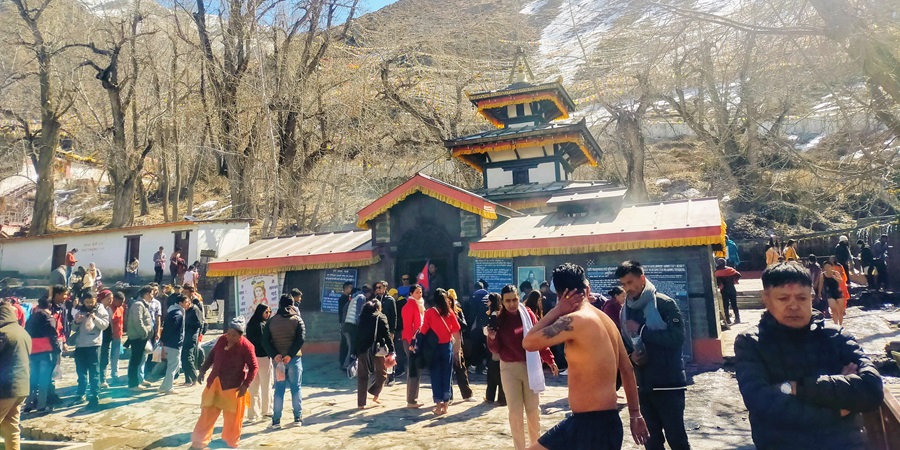
Nepal’s Top 5 Road Trips by Private Vehicle

Private jeeps on a mountain road in Nepal

Nepal top 5 road trips by private vehicle

Nepal is a land of extraordinary contrasts — from the fertile Terai plains to the snow-capped peaks of the Himalayas. While trekking attracts millions of visitors each year, some of the most memorable experiences in Nepal happen on the road.

Whether you are a trekker heading to a trailhead, a pilgrim journeying to a sacred temple, or a family exploring Nepal’s natural wonders, traveling by private vehicle hire gives you the freedom, comfort, and flexibility that public buses cannot match.

At Nepal Vehicle Hiring Pvt. Ltd., based in Thamel, Kathmandu, we have been helping travelers explore Nepal by private car, jeep, Hiace van, Coaster, and bus for many years. In this guide, we present Nepal’s top 5 road trips for private vehicles — covering the routes, distances, travel times, vehicle recommendations, and hiring rates for 2026. Whether you are traveling solo, as a couple, as a family, or as a larger group, we have the right vehicle for your Nepal road trip adventure.

The Kathmandu-to-Pokhara road trip is arguably the most popular drive in Nepal. Stretching approximately 200 km along the iconic Prithvi Highway, this route winds through river gorges, terraced hillsides, and lush valleys before arriving at Nepal’s lakeside city — Pokhara. It is the gateway to the Annapurna region and a beloved destination for trekkers, tourists, and honeymooners alike.

Private jeep on the road to Manang

Traveling by private vehicle is far more comfortable than the public tourist bus, giving you the flexibility to stop at scenic viewpoints and riverside dhabas (local restaurants) and enjoy the journey at your own pace.

Route Guide: Kathmandu to Pokhara

StopDistance from KTMTravel TimeRoad Type
KathmanduStart—City roads
Naubise30 km45 minHighway
Mugling110 km2.5 hrsPrithvi Hwy
Pokhara200 km6–7 hrsPrithvi Hwy

Best Vehicle: Private Car (4 pax), Hiace Van (12 pax), Coaster (25 pax), or full Bus for large groups.
Best Time: October to May. Avoid the peak monsoon months (July–August) when landslides can cause road delays.

Kathmandu to Chitwan — Wildlife, Nature & Jungle Safari

The Kathmandu to Chitwan road trip is one of Nepal’s most exciting drives — taking you from the capital city down to the subtropical jungle of Chitwan National Park, a UNESCO World Heritage Site and home to the one-horned rhinoceros, Bengal tiger, and hundreds of bird species.

The approximately 165 km drive follows the Prithvi Highway before joining the Mahendra Highway through the Terai lowlands. The drive takes around 4–5 hours by private vehicle, making it a comfortable day trip from Kathmandu or a perfect start to a multi-day wildlife holiday.]

Route Guide: Kathmandu to Chitwan

StopDistance from KTMTravel TimeRoad Type
KathmanduStart—City roads
Narayanghat145 km4 hrsPrithvi/Mahendra Hwy
Chitwan NP Gate165 km4.5–5 hrsMahendra Hwy

Best Vehicle: Private Car (4 pax), Hiace Van (12 pax for tour groups), or Coaster for larger resort groups.
Best Time: October to June. Peak wildlife viewing is from November to March, when vegetation is lower and animals are easier to spot.

Kathmandu to Lumbini — The Sacred Pilgrimage Road Trip

Lumbini, the birthplace of Lord Gautam Buddha, is one of the most important pilgrimage sites in the world and a UNESCO World Heritage Site. The Kathmandu-to-Lumbini road trip covers approximately 310 km and takes 8–9 hours by private vehicle, passing through Hetauda, Butwal, and the tranquil Terai plains of Rupandehi District.

This route is especially popular with Buddhist pilgrims from Nepal, India, Sri Lanka, Japan, China, and Southeast Asia. Traveling by private vehicle hire — whether a car, van, Coaster, or bus — allows pilgrimage groups to travel together, stop at roadside shrines, and arrive at Lumbini refreshed and on schedule.

Route Guide: Kathmandu to Lumbini

StopDistance from KTMTravel TimeRoad Type
KathmanduStart—City roads
Hetauda125 km3.5 hrsBP Hwy / Pushpalal Hwy
Butwal260 km7 hrsMahendra Hwy
Lumbini310 km8–9 hrsSiddhartha Hwy

Best Vehicle: Private Car for small groups, Hiace Van (12 pax), Coaster (25 pax), or full Bus for large pilgrimage groups.
Best Time: October to March. The Buddha Jayanti festival (April/May) draws huge crowds — book well in advance.

Kathmandu to Manang — The Annapurna Circuit Jeep Road

The drive from Kathmandu to Manang is one of the most dramatic and adventurous road trips in the entire Himalayas. Following the Marsyangdi River valley deep into the Annapurna Conservation Area, this route is used by trekkers beginning or ending the famous Annapurna Circuit trek.

The road from Besisahar to Manang is a rugged mountain track accessible only by 4WD jeep. It climbs through dramatic gorges, suspension bridges, pine forests, and traditional Gurung and Manangi villages before reaching Manang at approximately 3,500 meters above sea level. A standard car or van cannot handle this road — a 4WD jeep is essential.

Route Guide: Kathmandu to Manang

StopDistance from KTMTravel TimeRoad Type
KathmanduStart—City roads
Besisahar175 km5 hrsPrithvi + mountain road
Chame295 km9–10 hrsGravel/offroad
Manang350 km11–12 hrsHigh altitude track

Best Vehicle: 4WD Jeep (max 7 pax). No other vehicle type is suitable beyond Besisahar.
Best Time: March to May and September to November. The road is often closed in winter (December–February) due to snow.

Kathmandu to Muktinath — The Ultimate Nepal Road Trip

The Kathmandu-to-Muktinath trip is the king of Nepal’s road adventures. This multi-day epic journey takes you from the bustling capital to one of Nepal’s most sacred Hindu and Buddhist pilgrimage sites at 3,710 meters above sea level in the Mustang district.

The route follows the Prithvi Highway to Pokhara, then climbs north through the Kali Gandaki Gorge — the world’s deepest gorge — passing through Beni, Tatopani, Ghasa, and Jomsom before the final ascent to Muktinath Temple. This entire journey requires a 4WD jeep and an experienced high-altitude driver. It is typically completed over 2–3 days with overnight stays in Jomsom or Muktinath.

Nepal top 5 road trips by private vehicle featuring scenic Himalayan highways, private jeeps, and iconic travel destinations

Route Guide: Kathmandu to Muktinath

StopDistance from KTMTravel TimeRoad Type
KathmanduStart—City roads
Pokhara200 km6–7 hrsPrithvi Hwy
Beni295 km9 hrsHwy + mountain
Ghasa355 km11 hrsMountain road
Muktinath420 km13–14 hrsOffroad/4WD only

Best Vehicle: 4WD Jeep (max 7 pax). This is the only vehicle approved for the Mustang mountain roads.
Best Time: March to May and September to November. Restricted Area Permit is required for Upper Mustang.

Nepal Road Trip Vehicle Hire Prices 2026

Below are the approximate prices for private vehicle hire for Nepal’s top 5 road trips. All prices are in Nepalese Rupees (NPR) and include the driver, fuel, tolls, and parking. Prices vary based on season, vehicle condition, and duration.

Contact Nepal Vehicle Hiring for a personalized quote.

RouteVehicleCapacityOne-Way (NPR)Round Trip (NPR)Notes
KTM–PokharaCar/Sedan4 pax8,000–12,00014,000–20,000AC available
KTM–PokharaHiace Van12 pax15,000–22,00026,000–38,000Popular group option
KTM–ChitwanCar/Sedan4 pax7,000–10,00012,000–18,000AC available
KTM–ChitwanHiace Van12 pax13,000–18,00022,000–32,000Good for families
KTM–LumbiniCar/Sedan4 pax10,000–15,00018,000–26,000Pilgrimage special
KTM–LumbiniCoaster Bus25 pax28,000–40,00050,000–70,000Group pilgrimage
KTM–Manang4WD Jeep7 pax22,000–32,00040,000–55,000Jeep only, rough road
KTM–Muktinath4WD Jeep7 pax30,000–45,00055,000–80,000Multi-day trip

Note: Prices above are approximate and subject to change based on season and availability. Meals, accommodation, and entry/permit fees are not included. Contact us for a custom quote.

Nepal top 5 road trips by private vehicle featuring scenic Himalayan highways, private jeeps, and iconic travel destinations

What Is Included in Your Nepal Vehicle Hire?

When you book a private vehicle with Nepal Vehicle Hiring Pvt. Ltd., every journey includes:

  • Experienced, English-speaking driver with a valid Nepal license
  • Fuel charges for the full journey
  • All road tolls and parking fees
  • Vehicle insurance coverage
  • 24/7 customer support from our Thamel, Kathmandu office
  • Well-maintained, clean vehicles with air conditioning (where applicable)

Not included in the hire price:

  • Meals and refreshments for the driver or passengers
  • Accommodation during multi-day trips
  • Entry fees, national park permits, or restricted area permits
  • Guide or trekking porter fees

Best Time to Plan the Top 5 Road Trips in Nepal by Private Vehicle

Nepal’s road trip season closely follows the trekking calendar. The two best windows for a Nepal road trip by private vehicle are:

Autumn Season (September to November): This is Nepal’s most popular travel season. Clear skies, excellent mountain views, comfortable temperatures, and dry roads make this the ideal time for road trips to Pokhara, Chitwan, Manang, and Muktinath. Book vehicles early as demand is very high.

Spring Season (March to May): The second most popular season. Temperatures are rising, rhododendrons are in bloom, and roads are generally clear. Perfect for all five routes on this list.

Winter (December to February): Lower-altitude routes such as Kathmandu to Pokhara, Chitwan, and Lumbini are perfectly fine. High-altitude routes to Manang and Muktinath may be closed due to snow — always check road conditions before booking.

Monsoon (June to August): The Prithvi Highway and Terai routes are generally passable, but landslides can cause delays. High-altitude mountain roads are not recommended during the monsoon.

Nepal top 5 road trips by private vehicle featuring scenic Himalayan highways, private jeeps, and iconic travel destinations

Road Trip Travel Tips for Nepal

  • Always book your private vehicle at least 3–7 days in advance, and 10–15 days ahead for peak season (October–November, March–April).
  • Carry a valid photo ID or passport — there are police checkpoints on most major highways.
  • For Annapurna Circuit and Mustang routes, obtain the required ACAP (Annapurna Conservation Area Permit) and TIMS card before departure.
  • Bring warm layers even in spring and autumn — temperatures drop sharply at altitudes above 2,000 meters.
  • Keep cash (NPR) handy as ATMs are scarce beyond Besisahar and Beni.
  • Inform your driver of any schedule preferences — private hire means complete flexibility to stop at viewpoints, temples, or local restaurants.
  • For the Muktinath route, plan for 2–3 days, including overnight stays in Jomsom or Kagbeni.

Why Book Your Nepal Top 5 Road Trips by Private Vehicle with Nepal Vehicle Hiring?

Nepal Vehicle Hiring Pvt. Ltd. is Kathmandu’s trusted private vehicle hire company, based in Thamel — the heart of Nepal’s tourism district. Here is why thousands of travelers choose us every year:

  • 8,000+ happy customers served across Nepal
  • 5-star ratings on TripAdvisor and Google Reviews
  • Modern, well-maintained fleet: Cars, Jeeps, Hiace Vans, Coasters, and Buses
  • Experienced drivers who know every route in Nepal — highways and mountain roads
  • Transparent pricing — no hidden fees, no surprises
  • 24/7 customer support and flexible booking
  • Thamel, Kathmandu office — easy airport and hotel pickup
  • Customized itineraries for tours, trekking transfers, pilgrimages, and group travel

Frequently Asked Questions

What is the best vehicle for the Kathmandu to Pokhara road trip?
A private car or Hiace van is ideal for the Kathmandu–Pokhara road trip. Cars offer comfort for small groups, while a Hiace van is perfect for families or groups of up to 12 passengers.

Is a 4WD jeep necessary for the Annapurna Circuit road (Manang)?
Yes, absolutely. Beyond Besisahar, the roads become rough gravel and mountain tracks. A 4WD jeep is the only suitable vehicle for reaching Chame and Manang safely, especially during or after monsoon season.

How far in advance should I book a private vehicle in Nepal?
We recommend booking at least 3–7 days in advance for standard routes like Pokhara and Chitwan, and for high-altitude routes to Manang or Muktinath; booking 10–15 days in advance is advisable, especially during peak trekking season (October–November and March–April).

Are tolls and fuel included in the hire price?
Yes. All Nepal Vehicle Hiring packages include driver charges, fuel, tolls, and parking fees. Meals, accommodation, and entry permits are not included and are the traveler’s responsibility.

Can I hire a vehicle for a multi-day road trip in Nepal?
Absolutely. We offer both single-day and multi-day vehicle hire across all routes. Multi-day trips to Mustang, Manang, or Muktinath are popular, a nd our drivers are experienced on all mountain roads.

What vehicles do you offer for large group road trips?
For larger groups, we offer Hiace vans (up to 12 passengers), Coaster buses (up to 25 passengers), and full-size buses (up to 50 passengers). All vehicles are well-maintained and driven by experienced drivers.

Is it safe to travel by road to Muktinath?
Yes, with the right vehicle and an experienced driver. The route from Pokhara to Muktinath via Mustang requires a 4WD jeep. Our drivers are trained on these high-altitude routes, and all safety precautions are strictly followed.

Conclusion

Nepal is one of the most spectacular road trip destinations in Asia. From the tropical jungles of Chitwan to the sacred heights of Muktinath, every route tells a different story and reveals a different face of this incredible country. Whether you are a first-time visitor or a seasoned traveler to Nepal, a private vehicle hire is the most comfortable, flexible, and rewarding way to explore Nepal’s roads in 2026.

Nepal Vehicle Hiring Pvt. Ltd. is ready to take you there. Our professional drivers, well-maintained fleet, and unbeatable customer service ensure that every kilometer of your Nepal road trip is safe, smooth, and memorable. Contact us today to book your private vehicle and start planning your Nepal road trip adventure.

Upper Mustang Jeep Tour: Nepal’s Hidden Kingdom

Mustang

Hidden Kingdom Adventure Nepal: The Ultimate Upper Mustang Jeep & 4WD Guide

Somewhere above the deepest gorge on Earth, beyond a police checkpoint at the edge of a medieval village, lies a landscape so remote, so culturally preserved, and so visually unlike anything else in South Asia that first-time visitors consistently struggle to find the language to describe it. The high-altitude desert plateau of Upper Mustang — wedged between the Annapurna and Dhaulagiri ranges to the south and the Tibetan border to the north — is Nepal’s last great secret, a place where the 21st century has arrived slowly and incompletely, where Tibetan Buddhist monasteries founded in the 14th century still perform unbroken ritual traditions, where the wind-carved cliffs conceal cave cities inhabited for millennia, and where the ancient walled capital of Lo Manthang feels less like a tourist destination than a living museum of a civilisation that the outside world nearly forgot.

Upper Mustang’s nickname as the Forbidden Kingdom is not merely poetic. Until 1992, when Nepal opened the region to international visitors for the first time, this territory was genuinely off-limits to foreigners — its isolation preserved by a combination of government restriction, difficult terrain, and the determined cultural self-sufficiency of the Loba people, the ethnic Tibetan community who have lived in these high valleys for centuries and who continue to regard Lo Manthang’s hereditary king, despite the formal abolition of Nepal’s monarchy in 2008, as their traditional ruler and spiritual authority.

The cultural continuity that this long isolation preserved is precisely what makes Upper Mustang so extraordinary to visit today: it offers an encounter with Tibetan Buddhist civilization in a form more complete, more undisturbed, and more emotionally authentic than anything available in Tibet itself, where decades of Chinese cultural management have fundamentally altered the landscape of traditional practice.

In 2025 and 2026, Upper Mustang is more accessible than ever and considerably more affordable than it was a year ago. A landmark government decision effective from late 2025 replaced the old mandatory flat-fee permit structure — USD 500 per person for ten days regardless of actual visit duration — with a flexible daily rate of USD 50 per person per day, making shorter jeep tours and overland adventures economically practical for a much broader range of international visitors.

The combination of this permit reform, improvements to road conditions toward Lo Manthang, and the growing quality of jeep tour operations serving the region has created an ideal moment to explore Nepal’s hidden kingdom on four wheels.

This guide from Nepal Vehicle Hiring Pvt Ltd (vehiclehiringnepal.com) covers everything relevant to planning a hidden kingdom adventure in Nepal’s Upper Mustang region by private jeep or 4WD vehicle — the landscape, culture, and key destinations, the complete route from Pokhara or Kathmandu, vehicle requirements, accurate 2025/26 permit costs, practical travel information, and the specific vehicle hire arrangements that make the difference between an adventure that unfolds smoothly and one that unravels at a checkpoint because of missing documentation or an underpowered vehicle stranded on a river crossing.

Hidden Kingdom Adventure Nepal Upper Mustang Jeep Tour with a 4WD jeep driving through the dramatic landscapes of Lo Manthang

The Kingdom of Lo: History, Culture, and What Makes It Unlike Anywhere Else

To understand why the Upper Mustang adventure captures the imagination so completely, it helps to grasp something of the territory’s history and the cultural forces that have shaped it into what it is today. Mustang, whose name derives from the Tibetan word ‘Monthang’ meaning fertile plain, was an independent kingdom for centuries before its formal integration into the Kingdom of Nepal in 1795, and even after that integration, maintained a degree of de facto autonomy that allowed it to preserve its Tibetan cultural identity long after the surrounding regions had adopted the Hindu and Nepali cultural frameworks that define the rest of the country.

The Kingdom of Lo at its historical height controlled the trade routes connecting the Tibetan plateau with the Indian subcontinent through the Kali Gandaki Valley — one of the most important commercial corridors in the Himalayan region, carrying salt, wool, and grain southward and rice, spices, and manufactured goods northward. This trade gave the Loba people both the economic resources to build the extraordinary monasteries and palace complexes that define Lo Manthang’s architectural heritage and the cultural connections with the Tibetan Buddhist world that shaped every dimension of their spiritual and artistic life.

The Sakya school of Tibetan Buddhism established its dominant presence in Mustang during the 14th and 15th centuries.

The monasteries built during this period, including the magnificent Jampa Lhakhang and Thubchen Monastery in Lo Manthang, contain some of the finest surviving examples of Tibetan Buddhist mural painting from this era — artworks of extraordinary quality that have been remarkably preserved by the region’s extreme dryness and long isolation from the outside world.

Hidden Kingdom Adventure Nepal Upper Mustang Jeep Tour with a 4WD jeep driving through the dramatic landscapes of Lo Manthang

Today, the Loba people number only a few thousand, distributed across a handful of villages in Upper and Lower Mustang. Their way of life combines traditional pastoral agriculture — yak herding, barley and buckwheat cultivation, apple orcharding in the lower valleys — with an increasing involvement in the tourism economy that has grown significantly since the region’s opening in 1992. Despite this growing external contact, the cultural fabric of Upper Mustang remains genuinely distinct from any other part of Nepal, from the Tibetan language still spoken as the primary tongue in most Upper Mustang villages, to the traditional dress worn for festivals and ceremonies, to the architectural style of the whitewashed mud-brick compound houses and monastery complexes that give Lo Manthang its particular medieval appearance.

For travelers arriving by jeep after the long approach from Pokhara, entering Lo Manthang through its ancient gateway feels genuinely unlike any other arrival in Nepal. The walled city, roughly 150 meters on its long axis, contains within its perimeter the royal palace, four principal monasteries, several hundred traditional houses, and a population that carries its extraordinary heritage with a quiet dignity that the respectful visitor immediately senses.

Sitting in the monastery courtyard during evening prayers, listening to the deep resonance of butter-lamp rituals and the rhythmic percussion of the ceremony, it becomes easy to understand why travelers who have experienced every corner of Nepal consistently describe Upper Mustang as the place that has affected them most deeply.

Hidden Kingdom Adventure Nepal Upper Mustang Jeep Tour with a 4WD jeep driving through the dramatic landscapes of Lo Manthang

The Hidden Kingdom’s Adventure Landscape: What You Will See and Experience

Lo Manthang: The Ancient Walled Capital

Lo Manthang is the undisputed centerpiece of the Upper Mustang adventure. This walled city has stood since the 14th century, and it continues to function as the cultural and spiritual capital of the Loba people today. Approached by jeep across the high plateau, the city materializes from the desert landscape with an almost theatrical abruptness — the whitewashed walls rising from the ochre Earth, the monastery rooftops visible above the perimeter, the mountains of Tibet visible in the distance on clear days.

Within the walls, visitors can explore the royal palace, the four ancient monasteries with their extraordinary fresco collections, and the narrow lanes where traditional Loba life unfolds with minimal concession to the modern world.

Hidden Kingdom Adventure Nepal Upper Mustang Jeep Tour with a 4WD jeep driving through the dramatic landscapes of Lo Manthang

The Tiji Festival, held annually in Lo Manthang in May according to the Tibetan lunar calendar, represents the most spectacular cultural event in the entire Upper Mustang calendar — a three-day ritual drama enacting the triumph of good over evil, performed by monks in elaborate costumes and masks against the backdrop of the city’s ancient monastery. Travelers who time their jeep tour to coincide with Tiji witness something genuinely irreplaceable: a centuries-old living tradition performed in its original setting by a community for whom it carries deep religious meaning, not a cultural display staged for tourist consumption.

The Sky Caves of Chhoser and Mustang’s Cliff Dwellings

Among the most extraordinary features of the Upper Mustang landscape are the sky caves — thousands of hand-carved cavities cut into the sheer cliff faces that characterize much of the region’s dramatic topography. The caves of Chhoser village, accessible by a short jeep detour from the main Lo Manthang route, have been partially excavated by archaeologists who discovered within them human remains, manuscripts, paintings, and artifacts dating back more than a thousand years, suggesting a tradition of cliff habitation that predates the foundation of Lo Manthang itself.

Other cave complexes elsewhere in the Upper Mustang plateau contain meditation chambers, burial sites, and storage areas whose full significance archaeologists are still working to understand. Visiting these remarkable sites by jeep, which can reach cliff faces and canyon viewpoints that would require days of walking to access on foot, represents one of the clearest practical advantages of the vehicle-based approach to exploring the hidden kingdom.

The Kali Gandaki Gorge and Mustang’s Desert Landscapes

The approach to Upper Mustang through the Kali Gandaki Gorge is in itself one of the great road journeys of the Himalayan world. The Kali Gandaki River runs between the massifs of Dhaulagiri and Annapurna — the world’s seventh and tenth highest peaks respectively — in a gorge that, measured from the surrounding summits to the river below, qualifies as the deepest in the world.

The jeep road from Beni through Tatopani, Ghasa, Lete, Kalopani, Tukuche, and Marpha to Jomsom follows this extraordinary corridor, the views shifting constantly between soaring mountain walls, dramatic waterfalls, ancient terrace agriculture, and the increasingly desert-like character of the landscape as altitude increases and rainfall decreases northward into Mustang’s rain shadow.

Hidden Kingdom Adventure Nepal Upper Mustang Jeep Tour with a 4WD jeep driving through the dramatic landscapes of Lo Manthang

Above Kagbeni, where Upper Mustang’s restricted zone begins, the landscape transforms into something that feels genuinely foreign to most visitors from subtropical or temperate regions — an arid, wind-sculpted plateau of ochre, red, and grey rock formations carved by millennia of erosion into canyons, columns, and ridgelines of extraordinary visual drama. The famous eroded badlands around Chele and Ghami, the vast open plateau approaching Lo Manthang, and the windswept passes connecting the region’s scattered villages all contribute to a landscape that alternates between austere beauty and dramatic spectacle, photographed compulsively by virtually every visitor and still somehow more extraordinary in person than any image can capture.

Ancient Monasteries and the Living Tradition of Tibetan Buddhism

Throughout the Upper Mustang plateau, the monasteries, prayer walls, and chortens of Tibetan Buddhism are not the ruins of a departed civilization but the active infrastructure of a living faith, maintained by monks and supported by lay communities who have practiced these traditions without interruption across multiple centuries. Beyond Lo Manthang’s principal monasteries, numerous smaller gompa throughout the region offer encounters with monastic life that range from the magnificent to the intimately human — a single elderly monk maintaining a remote hillside shrine, a community gathering for a local festival, or simply the sight of the classic Tibetan landscape element of prayer flags streaming in the mountain wind above a pass that pilgrims have crossed for hundreds of years.

Hidden Kingdom Adventure Nepal Upper Mustang Jeep Tour with a 4WD jeep driving through the dramatic landscapes of Lo Manthang

The Complete Jeep Route: Pokhara to Lo Manthang

The standard overland jeep route to Upper Mustang begins in Pokhara, Nepal’s second city and the most practical base for organizing this adventure. It covers a total distance of approximately 235 kilometers to Lo Manthang.

The journey, typically structured over two to three days of driving, depending on the itinerary’s pace and the number of stops, passes through some of the most spectacular road scenery in Nepal before entering the restricted zone at Kagbeni. Here is a complete stage-by-stage breakdown:

Stage 1: Pokhara to Jomsom (approx. 143 km / 6–9 hours)

The first driving stage from Pokhara follows the Kali Gandaki Highway through Beni, Tatopani, and Marpha to Jomsom, the district headquarters of Mustang, at 2,720 meters. This is a long day’s drive on a road that transitions from a reasonably maintained highway in its lower sections to an increasingly rough, unpaved mountain track as it climbs through the gorge.

The road crosses the Kali Gandaki River at several points, with concrete bridges at major crossings but occasional shallower fords elsewhere that make the 4WD capability of a proper jeep genuinely valuable. Jomsom itself is a pleasant mountain town with good accommodation options, a landing strip for domestic flights that many travelers use as an alternative to the overland drive for this first stage, and a warm welcome from the local Thakali community, whose distinctive cuisine — including the famous buckwheat dishes of the Kali Gandaki Valley — provides an excellent introduction to the culinary culture of the Mustang region.

Discover the Hidden Kingdom Adventure Nepal Upper Mustang Jeep Tour with a private 4WD jeep, exploring ancient monasteries, desert valleys, Himalayan scenery, and the unique culture of the former Kingdom of Lo.

Stage 2: Jomsom to Kagbeni and the Restricted Zone Entry (approx. 18 km / 45 min)

From Jomsom, a relatively short drive of approximately 18 kilometers leads to Kagbeni village at 2,810 meters — the gateway to Upper Mustang and the location of the police checkpoint where all restricted area permits are verified. Kagbeni itself is a remarkably well-preserved medieval village of narrow alleys, traditional architecture, and an ancient monastery perched dramatically above the confluence of the Kali Gandaki and Jhong Khola rivers.

Many jeep tour itineraries include a walking exploration of Kagbeni village. At the same time, permits are processed at the checkpoint, making this a worthwhile stop in its own right rather than merely a bureaucratic pause.

Stage 3: Kagbeni to Chele and Syangboche (approx. 30 km / 2–3 hours)

Beyond Kagbeni, the road enters the restricted zone, and the landscape changes dramatically. The track climbs steeply out of the Kali Gandaki valley onto the Mustang plateau through a series of switchbacks that demand both vehicle capability and driver experience.

The villages of Chele (3,050 m) and Syangboche (3,800 m) mark the key stops on this stage, with viewpoints of the extraordinary eroded canyon country and the first sightings of the characteristic red-banded cliffs that define much of Upper Mustang’s visual character. A detour to the Chhoser sky caves is practical from this stage, requiring only a short additional journey on a manageable track.

Discover the Hidden Kingdom Adventure Nepal Upper Mustang Jeep Tour with a private 4WD jeep, exploring ancient monasteries, desert valleys, Himalayan scenery, and the unique culture of the former Kingdom of Lo.

Stage 4: Ghami, Charang and the Approach to Lo Manthang (approx. 60 km / 3–4 hours)

The final approach to Lo Manthang passes through the villages of Ghami and Charang, each with its own monasteries and traditional architecture, across a high plateau where the altitude exceeds 4,000 meters, and the open scale of the Tibetan-influenced landscape delivers its full impact. Lo Manthang appears ahead as the road descends slightly onto the plateau on which it sits, the white perimeter walls and the monastery rooftops visible against the backdrop of the mountains.

Arriving in the late afternoon, checking into one of Lo Manthang’s small guesthouses, and walking the ancient streets as the day’s light fades over the surrounding peaks is an experience that most visitors describe as one of the most emotionally powerful moments of their entire Nepal journey.

Vehicle Requirements for the Upper Mustang Hidden Kingdom Route

The Upper Mustang route makes absolutely non-negotiable demands on the vehicle used to travel it. This is not a route where the vehicle’s quality is a matter of comfort preference; it is a matter of whether the journey is physically possible and safe. Several characteristics are essential, and Nepal Vehicle Hiring Pvt Ltd provides vehicles that meet all of them as standard on every Upper Mustang booking.

Ground clearance is the first and most visible requirement. The road between Jomsom and Lo Manthang includes sections where the track surface consists of large rocks, deep ruts, or loose substrate that would either damage a low-clearance vehicle’s undercarriage directly or cause it to ground out and become immovable.

A minimum of 220mm of ground clearance, as provided by a Toyota Land Cruiser or equivalent, is the practical baseline for this route. Standard SUVs and crossovers with lower clearance should not be used.

Upper Mustang Trek

Low-range four-wheel drive is the second essential. The switchback climbs above Kagbeni, the steep descents between plateau sections, and the technical river approaches all require the maximum torque at low speed that only a proper low-range transfer case provides.

All-wheel drive systems in crossovers and comfort SUVs, designed for traction on slippery tarmac rather than genuine low-speed technical terrain, are inadequate for the demands of the Upper Mustang route and should not be considered as equivalents.

Driver experience specific to this route is the third essential. Nepal Vehicle Hiring Pvt Ltd assigns drivers to Upper Mustang bookings exclusively from among those who have personally completed the Pokhara to Lo Manthang route multiple times, who know the precise location of the route’s key technical challenges, who understand how seasonal variation affects specific sections of the track, and who have the calm, methodical driving approach that this terrain demands.

This is emphatically not a route for drivers whose experience is confined to Kathmandu Valley streets or highway transfers.

Mechanical reliability and recent servicing round out the non-negotiable requirements. A breakdown anywhere between Kagbeni and Lo Manthang places travelers in a genuinely remote situation where recovery options are limited and potentially very expensive. Every vehicle Nepal Vehicle Hiring Pvt Ltd dispatches to Upper Mustang undergoes a thorough mechanical inspection and full servicing before departure, with particular attention to tires, brakes, cooling system, and drivetrain components that experience the greatest stress in this terrain.

Upper Mustang Jeep Route: Stage by Stage Summary

StageRouteDistanceDrive TimeAltitudeRoad Type
1Pokhara → Jomsom143 km6–9 hrs820–2,720 mMixed paved & rough dirt
2Jomsom → Kagbeni18 km45 min2,720–2,810 mMainly paved
3Kagbeni → Chele / Syangboche30 km2–3 hrs2,810–3,800 mOff-road 4WD track
4Syangboche → Ghami → Lo Manthang60 km3–4 hrs3,800–3,840 mHigh plateau track
TotalPokhara → Lo Manthang251 km2–3 days820–3,840 mMixed — 4WD essential beyond Kagbeni

Hidden Kingdom Adventure Nepal Upper Mustang Jeep Tour with a 4WD jeep driving through the dramatic landscapes of Lo Manthang

2025/26 Permits for Upper Mustang: Everything Changed

One of the most significant developments affecting travel in Upper Mustang in recent years is the government’s landmark change to the restricted area permit fee structure, which took effect in late 2025. This change directly affects the cost and practical accessibility of the hidden kingdom adventure and is essential to understand before planning any visit to Upper Mustang.

NEW 2025: As of late 2025, the Government of Nepal has replaced the old mandatory USD 500 flat fee (for a fixed 10-day period) with a flexible daily rate of USD 50 per person per day inside the restricted zone. This means travelers now pay only for the exact number of days they spend beyond Kagbeni, making short jeep tours of 4–7 days significantly more affordable than under the previous structure.

Under the old system, a 5-day jeep tour still cost the same USD 500 as a full 10-day trek, which strongly discouraged shorter visits and made the overall Upper Mustang permit one of the most expensive trekking access fees in the world. The new daily rate creates a genuinely flexible cost structure that reflects actual visit duration, encourages more diverse itinerary options, and opens Upper Mustang to travelers who want a focused jeep adventure rather than a full two-week expedition.

Complete 2025/26 Permit Requirements

PermitRequired ForCostWhere to Obtain
Upper Mustang Restricted Area Permit (RAP)All foreign nationals entering beyond KagbeniUSD 50 per person per day (NEW 2025)Through a registered trekking agency (Kathmandu or Pokhara)
Annapurna Conservation Area Permit (ACAP)All visitors, including the approach road to KagbeniNPR 3,000 (~USD 22–25) per person flat feeNepal Tourism Board, Kathmandu or Pokhara
TIMS CardMost overland visitors (not required for Jomsom flight-in/out)USD 20 per personNepal Tourism Board or a registered agency
Minimum group sizeRAP cannot be issued to solo foreign travelersMin. 2 foreign nationals requiredTravel with at least one other international visitor
Licensed guideMandatory — independent travel in restricted areas is not permittedIncluded in reputable tour packagesMust be arranged through a registered Nepal agency

Jeep hire mustang

Vehicle Hire Costs for the Upper Mustang Adventure (2025/26)

Vehicle hire for the Upper Mustang jeep tour is one of the most significant cost components of the overall adventure, reflecting the demanding nature of the route, the top-end required for proper 4WD vehicles maintained specifically for this terrain, and the multi-day driver commitment involved. The following costs represent current market rates for private vehicle hire on this specific route:

Route SegmentVehicleCost (NPR)Cost (USD)Notes
Pokhara → Jomsom (one-way)4WD Jeep (Land Cruiser/Scorpio)NPR 28,000–38,000$210–$285Road only, no flight
Jomsom → Lo Manthang (one-way)4WD Jeep (Land Cruiser required)NPR 20,000–30,000$150–$225Restricted zone segment
Pokhara → Lo Manthang (full)Private 4WD JeepNPR 45,000–65,000$338–$488Full overland, one-way
Pokhara ↔ Lo Manthang (return)Private 4WD JeepNPR 80,000–120,000$600–$900Complete round-trip, multi-day
Jomsom (arrival by flight) → Lo Manthang ↔ Pokhara4WD JeepNPR 40,000–55,000$300–$413Fly in, drive out
Day hire in the Lo Manthang area4WD Jeep with driverNPR 12,000–18,000$90–$135Local sightseeing, caves, day trips

Tip: A group of four to six travelers sharing a single private 4WD jeep significantly reduces the per-person vehicle hire cost, making the Upper Mustang adventure considerably more economical for groups than for solo or couple travelers. Contact vehiclehiringnepal.com for group discount rates.

Hidden Kingdom Adventure Nepal Upper Mustang Jeep Tour with a 4WD jeep driving through the dramatic landscapes of Lo Manthang

Best Season for the Hidden Kingdom Jeep Adventure

Upper Mustang’s rain-shadow geography gives it one of the most distinctive seasonal profiles of any Nepal travel destination, making it accessible and rewarding during periods when most other Nepal trekking and adventure routes are compromised by monsoon rainfall. This exceptional characteristic is one of the region’s most practical assets for travelers with specific travel windows.

Spring, from March through May, is widely regarded as the finest overall season for the Upper Mustang jeep adventure. The combination of clear skies, comfortable daytime temperatures, the dramatic floral display of the lower Mustang valley’s apple orchards and wildflowers, and the timing of the Tiji Festival in Lo Manthang during May creates an experience that many travelers consider the definitive Upper Mustang visit.

The Tiji Festival specifically draws experienced Nepal travelers who time return visits to coincide with this extraordinary cultural event, and booking both permits and vehicles well in advance is essential for May departures.

Monsoon season, from June through August, is when the upper Mustang’s rain-shadow advantage becomes most practically significant. While the approach road from Pokhara to Beni and beyond can be affected by landslides during heavy monsoon periods, the restricted zone north of Kagbeni receives minimal rainfall.

It remains largely accessible, making this the preferred season for experienced travelers who want to avoid the peak autumn and spring crowds while still experiencing the extraordinary high-plateau landscape. The golden light of summer afternoons over the Mustang desert, combined with the dramatic monsoon cloud formations building over the surrounding peaks, creates particularly beautiful photographic conditions that many serious photographers seek out during this period.

Autumn, from September through November, brings the stable, clear conditions that characterize Nepal’s peak trekking season to Upper Mustang as well, with excellent road conditions following the monsoon’s departure, outstanding mountain visibility, and the full range of accommodation and service availability in both Jomsom and Lo Manthang. October is the busiest month, with significant competition for vehicle bookings and accommodation, making early reservation through vehiclehiringnepal.com particularly important for this period.

Winter, from December through February, brings cold temperatures to the high plateau and can close higher sections of the road due to snow, making it the least reliable season for the full Pokhara-to-Lo Manthang overland journey. Short winter visits to Jomsom and Lower Mustang remain possible and can be rewarding in their own right.

Still, the complete hidden kingdom adventure to Lo Manthang is best reserved for the more reliably accessible spring, summer, and autumn windows.

Discover the Hidden Kingdom Adventure Nepal Upper Mustang Jeep Tour with a private 4WD jeep, exploring ancient monasteries, desert valleys, Himalayan scenery, and the unique culture of the former Kingdom of Lo.

Essential Practical Information for the Hidden Kingdom Adventure

Acclimatization and Altitude Awareness

Lo Manthang sits at approximately 3,840 meters, and the road between Kagbeni and Lo Manthang climbs through terrain approaching 4,000 meters at certain points. While these altitudes are significantly lower than the extreme elevations of classic Nepal trekking passes, altitude-related discomfort — headache, fatigue, and sleep disruption — is a realistic possibility for travelers who ascend rapidly from lower elevations without allowing time for physiological adjustment.

The jeep tour’s pace, while faster than trekking, still provides some natural acclimatization opportunity through the staged ascent from Pokhara’s 820 meters through Jomsom at 2,720 meters and Kagbeni at 2,810 meters before reaching Lo Manthang. A rest day in Jomsom before proceeding north is generally recommended by experienced operators as a practical acclimatization measure for visitors coming directly from low-altitude locations.

Accommodation Along the Route

Teahouse accommodation is available at all major stops along the Upper Mustang jeep route, from Jomsom and Marpha in Lower Mustang through Kagbeni, Chele, Ghami, and Charang to Lo Manthang itself. The standard of accommodation progressively simplifies as the route goes deeper into the restricted zone, with Lo Manthang’s guesthouses offering clean basic rooms with shared facilities and hearty local meals but none of the creature comforts associated with established trekking corridors.

Electricity is increasingly available through solar systems, but hot water and private bathrooms cannot be counted on as standard in the deeper sections of the route. Travelers accustomed to comfort-oriented trekking accommodation should calibrate expectations accordingly — the experience itself more than compensates for any physical simplicity.

Mobile Connectivity and Communication

Mobile network coverage in Upper Mustang is available at certain locations along the route, primarily in Jomsom and in some sections of the main valleys, but becomes increasingly sporadic and unreliable beyond Kagbeni. Travelers should not rely on mobile connectivity for navigation or communication beyond the lower sections of the route.

They shouldn’t be family or travel companions; communication gaps of 1 to 2 days are entirely normal during the deeper sections of the Upper Mustang adventure. Nepal Vehicle Hiring Pvt Ltd provides drivers with emergency contact protocols and local network knowledge that help manage communication expectations appropriately.

  • Carry sufficient NPR cash for the complete Upper Mustang journey — ATMs are available in Jomsom but nowhere beyond.
  • Obtain all permits before leaving Pokhara — permit processing is not available beyond the main tourism offices.
  • Dress in warm layers even in summer — evenings above 3,000 m can be dramatically colder than in Pokhara.
  • Carry water purification — bottled water becomes scarce and expensive beyond Kagben .i
  • Pack sun protection rated SPF 50 or higher — UV intensity at altitude is severe.
  • Confirm the vehicle’s condition, including the spare tire and recovery equipment, before departing Pokhar.a
  • Book in advance — particularly for May (Tiji Festival) and October, when vehicle and accommodation availability is tightest

Discover the Hidden Kingdom Adventure Nepal Upper Mustang Jeep Tour with a private 4WD jeep, exploring ancient monasteries, desert valleys, Himalayan scenery, and the unique culture of the former Kingdom of Lo.

Why Book Your Hidden Kingdom Adventure with Nepal Vehicle Hiring Pvt Ltd

The Upper Mustang hidden kingdom adventure is not a journey where the quality of the vehicle hire provider is a secondary consideration. The route’s technical demands, the importance of proper permit coordination, the need for genuinely experienced mountain drivers, and the consequences of vehicle failure in a remote restricted area all mean that the choice of transport provider directly shapes not just the comfort but the safety and success of the entire experience.

Nepal Vehicle Hiring Pvt Ltd has been arranging vehicle transport to Upper Mustang for travelers who value reliable, professional, and genuinely capable mountain vehicle hire. Our Upper Mustang fleet consists exclusively of properly maintained Toyota Land Cruisers and equivalent vehicles, serviced specifically for the demands of this route before every departure.

Our drivers assigned to Upper Mustang bookings have personally completed the Pokhara-to-Lo Manthang route on multiple occasions, giving them the route-specific knowledge, technical driving confidence, and local community connections that make a meaningful, practical difference on this journey.

We provide transparent, all-inclusive pricing for every Upper Mustang booking, clearly distinguishing vehicle hire costs from the separate permit, guide, and accommodation costs that complete the adventure’s budget picture. We work alongside registered trekking agencies to help coordinate permit applications for clients who need this support, and we provide practical pre-departure guidance on everything from cash requirements to packing recommendations, drawing on years of supporting travelers on exactly this route.

Hidden Kingdom Adventure Nepal Upper Mustang Jeep Tour with a 4WD jeep driving through the dramatic landscapes of Lo Manthang

Beyond Upper Mustang: Other Hidden Kingdom Experiences in Nepal

While Upper Mustang is rightly the centerpiece of the hidden kingdom narrative in Nepal, the country contains several other regions that share this quality of extraordinary remoteness, cultural preservation, and restricted-area exclusivity. Nar-Phu Valley, accessed from the Annapurna Circuit route near Koto village, is perhaps the most accessible of these additional hidden kingdom destinations, involving a restricted area permit and a dedicated guide arrangement.

The vehicle hire for Nar-Phu begins with the same Kathmandu or Pokhara to Besisahar and Chame transfer that any Annapurna Circuit trekker requires, revealing a side of the Annapurna region of remote Tibetan Buddhist communities and high pastures almost absent from the main circuit experience.

Upper Dolpo, accessible by domestic flight and overland travel in the far west of Nepal, represents perhaps the most extreme version of the hidden kingdom experience available anywhere in the country — the landscape that inspired Peter Matthiessen’s The Snow Leopard, where the ancient Bon Buddhist tradition survives in its most undiluted form on Earth. Phoksundo Lake, the luminous turquoise jewel at 3,611 meters, is accessible to visitors willing to undertake the approach to this remote region.

Humla district, bordering Tibet in Nepal’s far northwest, is the starting point for the overland journey toward Tibet’s sacred Mount Kailash, one of the great adventure journeys of the Himalayan world. Nepal Vehicle Hiring Pvt Ltd arranges vehicle hire for all of these hidden kingdom destinations with the same commitment to appropriate vehicle selection, experienced drivers, and transparent pricing that defines our Upper Mustang service — providing a single, trusted transport partner across every restricted and remote destination in Nepal’s extraordinary adventure portfolio.

Frequently Asked Questions

Can I visit Upper Mustang independently without a guide?

No. Upper Mustang is a restricted area, and Nepalese law requires all foreign visitors to be accompanied by a licensed guide arranged through a registered Nepal trekking agency. Independent travel in the restricted zone is not permitted and will result in being turned back at the Kagbeni checkpoint. This rule applies equally to trekkers, jeep tour participants, and motorcyclists.

How much does the Upper Mustang restricted area permit cost in 2025/26?

As of late 2025, the permit costs USD 50 per person per day for the days spent inside the restricted zone north of Kagbeni. This replaced the old USD 500 flat fee for a minimum 10-day period.

A 5-day jeep tour to Lo Manthang now costs USD 250 per person in restricted area permit fees, compared to USD 500 under the previous structure. You also need an ACAP (NPR 3,000) and a TIMS card (USD 20). A licensed guide is mandatory.

How long does the jeep journey from Pokhara to Lo Manthang take?

The complete overland journey from Pokhara to Lo Manthang covers approximately 25 kilometers. It is typically spread over 25 kilometers of appropriate acclimatization stops, cultural visits along the route, and realistic daily driving distances on roads that are demanding enough to make sustained multi-hour driving at speed impractical. Most itineraries overnight in Jomsom on the first night and Chele or Ghami on the second before reaching Lo Manthang on day three.

Can the Upper Mustang route be done in a standard SUV?

No. The road beyond Kagbeni requires a proper 4WD vehicle with high ground clearance, low-range gearing, and robust construction. Standard SUVs and crossovers are not suitable and should not be used on this route. Nepal Vehicle Hiring Pvt Ltd provides only Land Cruiser and equivalent vehicles for Upper Mustang bookings — vehicles specifically suited to and maintained for the demands of this terrain.

Is Upper Mustang accessible during the monsoon season?

Yes — this is one of Upper Mustang’s unique advantages. The restricted zone north of Kagbeni sits in a rain shadow. It receives minimal monsoon rainfall, making it one of the few Nepal adventure destinations accessible and enjoyable during the June to August monsoon period.

The approach road from Pokhara can be affected by landslides during heavy monsoon, so timing and conditions should be checked with your vehicle hire provider before departure.

What is the best time to visit Upper Mustang for the Tiji Festival?

The Tiji Festival is held in Lo Manthang each year in May, with exact dates determined by the Tibetan lunar calendar (typically mid to late May). Booking both permits, vehicles, and accommodation well in advance — ideally two to three months before departure — is essential for May visits, as this is the single most popular time for Upper Mustang travel and availability across all categories becomes tight very early.

Planning the hidden kingdom adventure also invites a deeper reflection on what distinguishes genuinely transformative travel from ordinary tourism, a distinction that matters to the growing number of travelers who seek experiences that shift their understanding of the world rather than simply adding another destination to a list. Upper Mustang offers this quality in a form that few other accessible destinations anywhere can match.

The encounter with Lo Manthang’s living medieval culture, the scale of the Mustang desert plateau seen from a high jeep track at sunset, the intimacy of a butter-tea conversation with a Loba elder in a monastery courtyard, the physical journey itself across the world’s deepest gorge and onto a plateau that feels genuinely Tibetan — these are not experiences that can be adequately prepared for or fully anticipated. Thearrivee, and transform.

Nepal Vehicle Hiring Pvt Ltd exists to make the practical arrangements around this transformation as smooth, reliable, and uncomplicated as possible, so that the adventure itself can claim all the attention and energy it deserves.

Conclusion: Answer the Call of the Hidden Kingdom

Upper Mustang is one of the last places on Earth where a traveler can genuinely feel they have arrived somewhere the world has not yet fully found. The ancient walled city of Lo Manthang, the extraordinary sky caves carved into orange cliffs a thousand years ago, the desert plateau that seems to belong more to Central Asia than to the Himalayan Nepal most visitors know, the Tibetan Buddhist traditions carried unbroken through centuries of isolation.

The dramatic mountain landscapes of the Kali Gandaki Gorge and the high Mustang plateau combine to create an adventure that is less like tourism and more like a journey into living history.

The 2025/26 permit reform, replacing the old USD 500 flat fee with a flexible USD 50-per-day structure, has made the hidden kingdom more financially accessible than at any point in its three decades of international openness. With improving road infrastructure toward Lo Manthang and the growing quality of vehicle and driver services on this route, there has never been a better time to plan the Upper Mustang adventure.

Nepal Vehicle Hiring Pvt Ltd stands ready to provide the right vehicle, the right driver, and the right practical support to make your hidden kingdom journey unfold exactly as it should.

Kathmandu: A Hidden Historical, Magnificent and Spiritual Valley – Complete Guide

Patan Durbar Square in the Kathmandu Valley

Kathmandu: A Hidden, Historical, Magnificent and Spiritual Valley – Complete  Guide

Some places on Earth carry the accumulated weight of human civilisation—physically, almost viscerally —where the past isn’t something read about in guidebooks. Still, something breathes in the incense smoke, sounds in the temple bells, and touches the carved surfaces of a doorway worn smooth by two thousand years of hands.

The Kathmandu Valley is one of those places — and, in the view of many serious students of world culture and religious history, the single most concentrated expression of Asian civilisation’s spiritual and artistic achievement that still exists in a living, inhabited, functioning form.

Its own ancient texts describe the valley as Nepal Mandala—a sacred geometric space in the Himalayan foothills where the divine and the human have always occupied the same geography. According to the Swayambhu Purana, one of the valley’s most ancient religious texts, the land itself was created by divine intervention: when Bodhisattva Manjushree drained the primordial lake Nagdaha by cutting the valley rim at Chobar Gorge with his sword of wisdom, the fertile valley floor emerged — and on the hill where a sacred lotus had bloomed in the middle of the lake, the Swayambhunath stupa arose of its own accord — ‘self-existent’ (Swayambhu) — the first sacred monument of a civilization that would spend the next two thousand years building one of the most extraordinary concentrations of religious architecture anywhere on Earth.

This guide is not a standard tourism itinerary — it is an invitation to understand what the Kathmandu Valley actually is: a hidden historical world whose documented civilisation stretches back to the Kirat period around 700 BCE; a magnificent artistic achievement in which the Newar people created temples, sculptures, urban squares, and carved facades that rank among the finest craft traditions in all of Asia; and a living spiritual valley where Hinduism and Buddhism have coexisted, intertwined, and created each other for over seventeen centuries in a syncretic tradition found nowhere else on Earth. The valley has been inscribed as a UNESCO World Heritage Site since 1979, covering seven monument zones — but this designation barely scratches the surface of what the Kathmandu Valley contains and means.

Nepal Vehicle Hiring Pvt Ltd provides private jeep and car hire for heritage and spiritual circuits across the Kathmandu Valley — connecting visitors to every layer of this extraordinary place, from the major UNESCO sites to the hidden corners where the most authentic encounters with Nepal’s living spiritual culture await. Book your Kathmandu heritage circuit | Call/WhatsApp

The Seven UNESCO World Heritage Monument Zones –  Complete Reference

Monument ZoneEraDistance from ThamelEntry Fee (Foreign)Defining Significance
Pashupatinath TempleLicchavi 5th c.5 km eastNPR 1,000Nepal’s holiest Hindu shrine; sacred Bagmati River; Panchamukha Shiva Linga; cremation ghats; Maha Shivaratri
Boudhanath StupaPost 600 CE8 km eastNPR 400Largest stupa in Nepal; heart of Tibetan Buddhism outside Tibet; kora circumambulation; 108 deities at base
Swayambhunath StupaOver 2,000 yrs3 km westNPR 200Valley’s oldest monument; self-arisen stupa; all-seeing Buddha eyes; 365 sacred steps; syncretism of faiths
Kathmandu Durbar SquareMalla–ShahCity centreNPR 1,000Hanuman Dhoka Palace; Kumari Ghar (Living Goddess); Taleju Temple; Kal Bhairav statue; Indra Jatra festival
Patan Durbar SquareMalla period5 km southNPR 1,000Most artistically refined square; Krishna Mandir; Patan Museum; Golden Temple; finest Newari metalwork
Bhaktapur Durbar SquareMalla period14 km eastNPR 1,800Best-preserved medieval city; Nyatapola Pagoda; 55-Window Palace; Pottery Square; Peacock Window
Changu Narayan TempleLicchavi 464 CE12 km NENPR 300Oldest temple in the valley; Nepal’s earliest inscription, 464 CE; open-air Licchavi sculpture museum

Nepal Tour Package

The Hidden History – A Valley Written in 2,700 Years of Human Civilisation

Documented human communities have continuously inhabited the Kathmandu Valley for at least 2,700 years — and the archaeological and mythological record extends considerably further. What makes this history particularly extraordinary is not merely its length but its unbroken continuity: unlike many of the world’s ancient civilisations, the Kathmandu Valley was never abandoned, never reduced to ruins awaiting archaeological excavation, never conquered to the point of cultural erasure.

The ancient trade route connecting India to Tibet passed through this valley for millennia — bringing wealth, cultural exchange, and the meeting of two of Asia’s greatest civilizational streams, Hindu and Buddhist, in a single geographical space that became their common home.

The Kirat Period – Nepal’s First Documented Kingdom

The Kirat dynasty, arriving from the northeastern hill regions approximately 700 BCE, represents the earliest documented political entity in the valley’s written and archaeological record. The Kiratas appear in the epic Mahabharata as martial people of the hills who controlled the valley during the time of the historical Buddha.

Nepali Buddhist tradition holds that the Buddha himself visited the Kathmandu Valley during the reign of the Kirat king Jitedasti. This unverifiable but culturally resonant claim speaks to the depth of the valley’s Buddhist identity. The most significant physical remnant of Kirat occupation is Hadigaon (Handigaon) in eastern Kathmandu—a modern neighbourhood built atop the ruins of what was once the valley’s oldest royal site, where 2,700 years of layered history lie beneath the street surface.

According to the Gopal Raja Vamsavali, Nepal’s oldest royal chronicle, the Kiratas ruled for about 29 king-generations before the Licchavi dynasty gradually supplanted them.

Dynasty / PeriodEraCapitalGreatest Legacy
Prehistoric / GopalMythologicalValley lake / NagdahaManjushree legend; geological lake; foundation mythology; first settlement narratives
Kirat Dynasty700 BCE – 300 CEHadigaonFirst documented rulers; Mahabharata references; Buddhist tradition of Buddha visiting during the Kirat reign
Licchavi Dynasty300 – 879 CEHadigaon / ValleySanskrit inscriptions from 464 CE; Changu Narayan; Hindu-Buddhist synthesis; trade conduit India-Tibet
Thakuri / Transitional879 – 1200 CEVariousPolitical fragmentation; cultural continuity; Newari art foundations; lost period in historiography
Malla Dynasty (United)1200 – 1484 CEKathmandu ValleyCultural and artistic zenith; pagoda architecture refined; trans-Himalayan trade dominance
Three Malla City-States1484 – 1769 CEKTM, Patan, BhaktapurThree rival kingdoms; Durbar Squares built; Nyatapola Pagoda; Krishna Mandir; Newar art at its zenith
Shah Dynasty1769 – 2008 CEKathmanduPrithvi Narayan Shah unification; preservation of Malla heritage; modern Nepal; constitutional monarchy to republic

The Licchavi Miracle – When Stone Became Nepal’s Memory

The Licchavi dynasty (approximately 300–879 CE) represents the most important single turning point in the Kathmandu Valley’s recorded history. These rulers — with deep connections to the Licchavi republic of ancient India, from which the Buddha’s own mother, Queen Maya Devi, came — began systematically documenting their acts in Sanskrit stone inscriptions, creating Nepal’s first genuine historical archive.

The Changu Narayan inscription of 464 CE, recording the military campaigns and donations of King Mandeva I (Manadeva), is simultaneously Nepal’s oldest written document, the foundational text of Nepali historiography, and one of the finest pieces of political Sanskrit literature of its era. Standing before this stone inscription in the Changu Narayan temple courtyard today — reading the first page of Nepal’s written history, carved 1,560 years ago into stone that has outlasted every political structure it described — is one of the most quietly extraordinary experiences available to any visitor to Nepal.

The Licchavi period also produced the valley’s most artistically sophisticated stone sculptures—the Vishnu images at Changu Narayan and Budhanilkantha —whose carving quality rivals the finest Gupta-era sculpture of contemporary India. Most significantly, the Licchavis provided the cultural transmission belt between India and Tibet that shaped the first phase of Buddhist civilisation: Nepali princess Bhrikuti (7th century CE), daughter of King Amshuvarma, married the Tibetan king Songtsen Gampo and is credited in Tibetan tradition as one of the two consorts who brought Buddhism to Tibet and civilised its court.

The Malla Golden Age – When Rivalry Created Art

The Malla dynasty’s arrival in the 12th century initiated what is, by any measure of artistic output, one of the most sustained and extraordinary creative periods in Asian civilizational history. The critical catalyst was the 1484 division of the kingdom between the three sons of King Yaksha Malla — creating the independent city-states of Kathmandu (Kantipur), Patan (Lalitpur), and Bhaktapur.

What followed was three centuries of intense, politically charged artistic rivalry in which each Malla king understood that the quality and magnificence of his temples, palaces, and festivals directly asserted divine favour, royal legitimacy, and cultural superiority over his neighbours.

This competitive devotion — where political ambition and genuine religious sincerity were utterly inseparable — produced the three Durbar Squares, the soaring Nyatapola Pagoda (1702), the incomparable Krishna Mandir (1637), the golden temple facades, the carved peacock windows, and the entire architectural vocabulary that defines Nepal’s cultural identity to this day. Scholarly consensus holds that the multi-tiered pagoda form that spread across East and Southeast Asia originated in Nepal and was transmitted to China along Buddhist trade routes—making the Newar architects of the Malla period one of the most influential architectural communities in Asian history, despite their near-complete obscurity in standard world-history narratives.

Swayambhunath visit during Kathmandu Pokhara Tour

The Magnificent Spiritual Valley – Where Two Great Faiths Became One

The Kathmandu Valley’s most profound and distinctive spiritual characteristic is one that surprises and moves virtually every thoughtful visitor: Hinduism and Buddhism do not merely coexist here — they have intertwined, fertilised each other, and created a third thing, a Nepali religious synthesis that belongs fully to neither tradition and is utterly unique to this valley. The same deity is worshipped with different names in the Hindu and Buddhist traditions.

The same temple courtyard hosts both Buddhist monks and Hindu priests. Followers of both faiths celebrate the same festival. The Kumari — the Living Goddess — is chosen from the Buddhist Shakya caste and worshipped as the incarnation of the Hindu goddess Taleju, with priests of both faiths performing her installation ceremonies.

This is not religious confusion or compromise — it is a sophisticated, centuries-old theological achievement that the entire world would do well to study.

Sacred SiteFaithCore RitualBest Time to Visit
PashupatinathHinduEvening Sandhya Aarti on Bagmati ghats; Maha Shivaratri vigil; Arya Ghat cremation rites5–7 PM daily for Sandhya Aarti. Maha Shivaratri (Feb/Mar) for mass pilgrimage gathering
BoudhanathBuddhistKora (clockwise circumambulation); butter lamp offerings; monks chanting 108 prayersDawn and dusk, when the kora atmosphere is deepest; Losar (Tibetan New Year) for an extraordinary atmosphere
SwayambhunathBothDawn circumambulation; prayer wheel circuit; 365 steps as spiritual ascentSunrise – valley mist below; Buddha Jayanti (May full moon) for mass celebration
Kumari Ghar (Durbar Sq.)BothDarshan (brief appearance of the Living Goddess); Indra Jatra chariot processionMorning for a chance of Kumari darshan; September for Indra Jatra (Sep 23-30, 2026)
Changu NarayanHinduVishnu puja; reading 5th-century stone inscription; sculpture contemplationEarly morning or late afternoon for a quiet atmosphere; Kartik (Oct/Nov) for Haribodini Ekadashi
Guhyeshwari TempleHindu (Shakti)Tantric Shakti worship; yoni pitha shrine; inner mysteries (non-Hindus: outer complex only)Early morning puja; Navaratri festival (Oct) for maximum devotional energy
Nagi Gomba (Shivapuri)BuddhistSilent meditation; forest walking practice; monk teachings occasionally open to guestsAny morning – arriving early before tourism; most powerful in October-November clarity

Nepal Tour Package

Pashupatinath – Where the Cycle of Life and Death Is Visible to All

No place in the Kathmandu Valley — arguably no place in all of Nepal — carries the accumulated spiritual charge of Pashupatinath Temple. Situated on the banks of the Bagmati River in eastern Kathmandu (5 km from Thamel), Pashupatinath is simultaneously Nepal’s most important Hindu shrine, one of the four most significant Shiva temples in the world, and a UNESCO World Heritage Site.

Its 1,500+ year history of continuous worship, royal patronage, artistic development, and pilgrimage has created a temple complex of extraordinary scope — 492 associated temples and shrines, 15 Shivalaya (Shiva lingas), major ghats (cremation and bathing platforms) on both banks of the Bagmati, ashrams for sadhus (wandering holy men), and the main temple: a two-tiered golden-roofed pagoda with silver-plated doors, housing the Panchamukha (five-faced) Shiva Linga — one of the most theologically complex and artistically magnificent sacred objects in Hinduism.

The Panchamukha Linga at Pashupatinath is not merely a religious symbol — it is a complete cosmological statement in carved stone. Each of the five faces — Sadyojata (west, Earth), Vamadeva (north, Water), Aghora (south, Fire), Tatpurusha (east, Air), and Ishana (top, Ether/Sky) — represents one of the five cosmic elements and a distinct philosophical aspect of Shiva’s nature.

The name Pashupatinath encapsulates one of the deepest insights of Shaiva philosophy: Pashu (the individual soul), Pasha (the bonds of ignorance that bind it), and Pati (the Lord who liberates it) — the entire Shaiva Siddhanta philosophical framework compressed into a single name. This is a temple where architecture, iconography, philosophy, and living practice are a single undivided whole.

The experience at Pashupatinath that most profoundly affects visitors is the Arya Ghat, the cremation ghat on the Bagmati River bank, visible from the opposite bank, where non-Hindus stand. Here, in the Air of a warm Kathmandu afternoon, the Hindu understanding of death, rebirth, and liberation plays out literally and without ceremony.

Funeral pyres burn. Families stand in ritual mourning. Priests chant Sanskrit verses.

Ashes enter the sacred river. The cycle of life, death, and renewal — which most of the modern world conceals behind institutional walls and clinical euphemism — is here visible, accepted, sacred, and profoundly ordinary.

Few experiences anywhere in the world dissolve the defensive distance between the observer and the great human universal of mortality more powerfully. The Sandhya Aarti (evening fire ceremony) at 5–7 PM daily adds a layer of ritual beauty to this confrontation with the sacred, making the Pashupatinath evening one of the most powerful spiritual encounters any traveller on Earth can have.

Boudhanath – The Great Mandala of Compassion

If Pashupatinath is the valley’s Hindu heart, Boudhanath is its Buddhist soul — and the two sites together, barely 4 km apart, demonstrate with perfect concision the depth of the Kathmandu Valley’s dual spiritual inheritance. The Boudhanath Stupa — one of the world’s largest spherical stupas, standing 38 metres high with a base circumference of 107 metres — is also the primary centre of Tibetan Buddhist culture outside Tibet itself.

When the Chinese occupation of Tibet from 1959 onward drove tens of thousands of Tibetan refugees into Nepal, Boudhanath became the centre of their exile community — and the 50+ Tibetan Buddhist monasteries that now surround the stupa have transformed the area into one of the world’s most concentrated and active centres of Vajrayana Buddhist scholarship, practice, and art.

The stupa’s iconographic program is a complete cosmological statement. The white hemispheric dome (anda) represents Earth; the square gilded harmika above it represents the four directions and the mind of Enlightenment; the thirteen rings of the spire represent the thirteen stages on the path to Enlightenment; and the crowning parasol represents the Buddha’s sovereignty over all states of existence.

The two enormous, all-seeing eyes painted on each face of the harmika—arguably Nepal’s most recognisable religious image—represent the Buddha’s omniscient awareness, watching over the valley in all four directions. The 108 niches at the base of the dome, each housing a specific deity with a dedicated prayer wheel, form a three-dimensional mandala of the Buddhist universe.

The experience of walking the kora (clockwise circumambulation) of Boudhanath at dawn or dusk — when hundreds of Tibetan pilgrims in traditional dress, monks in maroon robes, and devotees from across the Buddhist world move in a great slow circle around the vast dome, prayer wheels spinning, lips moving in the mantra Om Mani Padme Hum — is one of the most profoundly peaceful, community-felt, and spiritually resonant experiences available to any human being anywhere Eaon EarthThe atmosphere at Boudhanath is not merely religious — it is genuinely compassionate in the specific Mahayana Buddhist sense: a place where the entire community is engaged in a practice oriented toward the liberation of all beings without exception, and where the palpable sincerity of that intention creates a remarkable, tangible peace.

Swayambhunath – The Soul of Kathmandu

Swayambhunath — the ‘Self-Arisen One’ — is the valley’s oldest and perhaps its most mythologically potent sacred site. The stupa’s origin in the valley’s creation mythology—arising spontaneously from the sacred lotus that bloomed in the centre of the primordial lake Nagdaha as Manjushree’s sword drained it—gives it a cosmological priority no other site in the valley can claim.

The site’s documented history extends back at least 1,500 years, with Buddhist texts from the 5th century CE describing it as already ancient and venerated.

Climbing the 365 stone steps that rise to the Swayambhunath hilltop — accompanied by the resident population of rhesus monkeys (hence its popular Western name, ‘Monkey Temple’) who are considered sacred and protected — is the paradigmatic spiritual ascent of the valley: each step corresponds to one day of the year, and the physical effort of the climb is understood as a spiritual preparation for arrival at the summit. At the top, the gleaming white dome, the gilded harmika with its all-seeing eyes, the forest of prayer flags radiating from the spire in every direction, and the panoramic view of the entire Kathmandu Valley below combine to create an experience of arrival at the sacred centre that is simultaneously geographical, physical, and spiritual.

From a cultural-historical perspective, Swayambhunath is particularly extraordinary because it perfectly embodies the Hindu-Buddhist synthesis that defines the Kathmandu Valley. The site is simultaneously a major Buddhist stupa complex and a significant Hindu pilgrimage site, with Hindu temples, shrines to Saraswati and Manjushree, Tibetan Buddhist monasteries, Hindu priests, and Buddhist monks all sharing the same hilltop complex in a centuries-old arrangement of mutual respect and shared sacred space that the rest of the world might profitably study.

The Three Magnificent Cities – Kathmandu, Patan and Bhaktapur

Kathmandu Durbar Square – The Stage of Sacred Kingship

The Kathmandu Durbar Square (Hanuman Dhoka) served as the political and ceremonial heart of the Malla and Shah kingdoms — the stage on which royal coronations, state festivals, military triumphs, and religious ceremonies were enacted before the valley’s population for over five centuries. Its 50+ temples and shrines span multiple centuries of Malla and Shah patronage, making it one of the most architecturally layered religious complexes in South Asia.

The Kasthamandap — the ancient communal pavilion from which Kathmandu takes its name, recently reconstructed using traditional Newar timber-joinery after the 2015 earthquake damage — stands at the square’s heart, its very name a foundation myth: built, according to tradition, from the timber of a single miraculous tree.

The Kumari Ghar (House of the Living Goddess) occupies one side of the square — a three-story, ornately carved building housing the Kumari, a pre-pubescent girl chosen from the Newar Buddhist Shakya caste as the living vessel of the goddess Taleju. The selection process is extraordinary in its rigour: candidates must be between four and five years old, free of any scar or blemish, meeting 32 physical perfections (lakshanas) derived from Hindu-Buddhist theology, and must pass a psychological test of extraordinary demands — walking fearlessly through a dark courtyard filled with severed buffalo heads while masked dancers perform aggressive dances around hethemThe Kumari who passes this test is considered to have demonstrated that she houses the divine Shakti (energy) of Taleju and is installed as a living goddess — worshipped daily, consulted by politicians, and revered as Nepal’s supreme religious authority until puberty ends her term.

The Indra Jatra festival (September 23–30, 2026) is the one occasion on which the Kumari is carried through the city in a towering ceremonial chariot — the single most spectacular religious procession in Nepal.

Patan – The City of Beauty and Metal

Patan (Lalitpur — City of Beauty), 5 km south of Kathmandu across the Bagmati River, is, by most architectural and artistic measures, the finest of the three valley cities — where the Newar craft tradition reached its most refined expression in metalwork, stone sculpture, and temple architecture. The Shakya community of Patan — Buddhist metalworkers of extraordinary skill — produced lost-wax bronze castings of deities that were exported across the Himalayan world, from Bengal to Lhasa, and that are today among the most sought-after objects in major museum collections worldwide.

The Patan Durbar Square is more intimate and more artistically refined than Kathmandu’s square — its atmosphere more scholarly, its scale more contemplative. The Krishna Mandir (1637), built entirely from stone in the shikhara style by King Siddhi Narasimha Malla, rises with 21 gilded pinnacles above friezes depicting the Mahabharata and Ramayana in stone relief that rivals the finest medieval Indian temple carving.

The Patan Museum within the Mul Chowk palace courtyard is widely regarded as the finest museum of Himalayan art in the world—its collection of bronze statues, copper repoussé artwork, and ritual objects is displayed in beautifully restored palace rooms. And the Hiranya Varna Mahavihara (Golden Temple) — a Buddhist monastery whose gilded facade, encrusted with centuries of devotional metalwork, creates an atmosphere of layered sacred time — represents the Newar Buddhist monastic tradition in its most visually concentrated form.

Bhaktapur – The Medieval City Frozen in Time. Bhaktapur (City of Devotees), 14 km east of Kathmandu on the valley’s eastern ridge, is Nepal’s most completely preserved medieval city. This urban landscape comes closest to what the Mallas built. Strict control over modern development within the historic core, combined with the Bhaktapurians‘ great civic pride in their heritage, has preserved a medieval urban environment where daily life still flows through ancient brick-paved courtyards, essentially unchanged for centuries.

The Nyatapola Pagoda (1702) — Nepal’s tallest temple at 30 meters, built by King Bhupatindra Malla in just four years — is the supreme surviving example of Malla-era architecture. It rises on a five-stepped plinth flanked by paired stone guardians of increasing power: Malla wrestlers, elephants, lions, gryphons, and the Tantric goddesses Baghini and Singhini.

It’s perfect proportional refinement — each tier slightly smaller, each roofline slightly steeper — that creates an optical illusion of even greater height. The Nyatapola has survived every earthquake since its completion in 1702, including the devastating 1934 and 2015 earthquakes, with minimal structural damage — a testament to the Newar architects’ profound empirical understanding of seismic forces, achieved centuries before the discipline of earthquake engineering existed.

The Peacock Window in the adjacent Jaiside neighbourhood — a pierced timber screen carved in the form of a peacock’s displayed tail feathers, commissioned in the 1century, still intact — is considered the finest piece of decorative woodcarving in Nepal and among the most accomplished in all of South Asia.

The Living Valley – Festivals That Keep the Ancient World Alive

The Kathmandu Valley’s festivals are not performances for tourists — they are the living continuation of theological, agricultural, political, and community traditions stretching back centuries. They are the mechanism by which the valley’s ancient religious culture reproduces itself across generations, ensuring that the cosmological worldview embedded in its architecture and iconography is not merely preserved as heritage but actively lived as reality.

FestivalPeriod (2026)Primary LocationSignificance
Indra JatraSep 23–30, 2026Kathmandu Durbar Sq.8-day festival: Living Goddess Kumari chariot procession; masked Lakhey dances; Pulu Kisi elephant dance; political legitimation ritual; city boundary rites for the dead
DashainOct 2–12, 2026Valley-wide; Kathmandu Durbar Sq.Nepal’s most important festival; 15 days celebrating Durga’s victory over evil; animal sacrifice; Tika (blessing) ceremony; family reunions across the country
Tihar / DeepawaliOct 20–24, 2026Valley-wideFestival of lights; 5 days honouring crows, dogs, cows, Laxmi, and brothers; illuminated streets; Laxmi puja draws Lakshmi of wealth into the home
Maha Shivarat Feb February 26, 2026Pashupatinath Feb February 26Lord Shiva’s great night; hundreds of thousands of pilgrims; sadhus from across South Asia; all-night vigil; sacred cannabis use permitted; most powerful Hindu event at Pashupatinath
Losar (Tibetan New Year Feb February 28, 2026Boudhanath Stupa Feb February 28Tibetan New Year February 28; processions of monks and community; February 28; ter sculptures; kora with traditional Tibetan dress; Boudhanath at its most vibrant
Buddha Jayanti May 12, 2026SwayambhunathBirthday of Gautama Buddha; mass pilgrimage to Swayambhunath; candlelit circumambulations; white-clad devotees; one of the most visually beautiful nights in the valley
Rato Machhendranath JatraApr–May 2026 (every 4 yrs)Patan / LalitpurMonth-long chariot festival of the Rain God; tallest chariot in South Asia; Bhoto Jatra (Jewelled Vest display); ancient Newari fertility and harvest tradition

Kathmandu Hidden Historical Magnificent Spiritual Valley featuring ancient temples, stupas, heritage squares, and sacred cultural landmarks

Indra Jatra 2026 – The Festival That Defines Kathmandu

Of all the valley’s hundreds of annual festivals, Indra Jatra (September 23–30, 2026) most completely encapsulates what the Kathmandu Valley actually is. This eight-day eruption of chariot processions, masked dances, sacred rice beer, political ceremony, and communal grief operates simultaneously on five distinct registers: mythological (the story of Indra’s capture by the valley’s inhabitants), agricultural (securing the rice harvest), political (legitimising state authority through the Kumari’s blessing), communal (honouring the year’s dead), and cosmological (maintaining the sacred geography of the city through processional re-enactment).

The founding myth is remarkable in its cosmic irreverence: Lord Indra, king of the gods, came secretly to the Kathmandu Valley to steal a specific flower for his mother, was caught by the valley’s residents, who did not recognise him, and was imprisoned and paraded through the streets like a common thief. The festival commemorates this event — and through it, the extraordinary theological assertion that the people of the Kathmandu Valley are sufficiently powerful in sacred terms to arrest the king of heaven.

Every head of state of Nepal since the Malla period has received the Kumari’s blessing during Indra Jatra as an act of political legitimation — the Gorkha conqueror Prithvi Narayan Shah famously chose the day of Indra Jatra in 1769 to march into Kathmandu precisely to claim this blessing. The festival is living proof that in the Kathmandu Valley, mythology and politics have always been the same language.

The Hidden Sacred Sites – What Most Visitors Never Find

Beyond the famous seven UNESCO World Heritage sites, the Kathmandu Valley contains a second, less-visited layer of spiritual and historical significance—sacred sites, ancient villages, and hidden shrines frequented by local devotees, pilgrims, and serious students of Himalayan culture but largely absent from standard tourist itineraries. These are, in many ways, the places where the most authentic encounter with the valley’s living spiritual culture occurs.

Guhyeshwari Temple – The Valley’s Tantric Heart

Just 400 meters from the Pashupatinath complex, Guhyeshwari Temple is one of Nepal’s most important Tantric shrines —and one of the least discussed in tourism literature. The temple is a yoni pitha (a sacred site of the goddess’s creative power) — one of the 51 pitha sites across the Indian subcontinent where, according to Shakta mythology, parts of the goddess Sati’s body fell after her divine dismemberment.

Non-Hindus are not admitted to the inner sanctum. Still, the outer temple complex, the devotional atmosphere, and the significance of understanding why this site exists 400 meters from the holiest Shiva temple in Nepal — the pairing of Shiva and Shakti as complementary cosmic principles — provide essential context for the entire Pashupatinath complex.

Pharping – Where the Cliff Face Itself Is Sacred

Pharping, 15 km south of Kathmandu on the valley’s southern rim, is one of the most spiritually charged locations in the entire Himalayan Buddhist world. In this village, the cliff face is literally sacred, marked by the impression of Guru Rinpoche’s (Padmasambhava’s) face in the rock above his meditation cave. The Asura Cave at Pharping is one of three places in the Kathmandu Valley where the great 8th-century Vajrayana master is said to have meditated and attained realisation. It is still in active use as a meditation retreat by Tibetan Buddhist practitioners from across the world.

The Vajrayogini Temple above the cave — a Tantric goddess temple of great antiquity built into the cliff — and the beautiful Sekh Narayan Temple carved from the cliff face below together make Pharping a concentrated sacred site of extraordinary depth and authenticity, virtually unknown to most visitors yet profoundly significant in Himalayan religious history.

Explore Kathmandu's hidden historical, magnificent, and spiritual valley through ancient temples, UNESCO World Heritage Sites, sacred monasteries, royal palaces, and centuries of living culture.

Changu Narayan – Reading Nepal’s Oldest Temple

Changu Narayan (12 km northeast of Kathmandu), the oldest temple in the valley and home to Nepal’s earliest written inscription (464 CE), is the single destination in the Kathmandu Valley that most directly connects the visitor to the Licchavi period — to the time when Nepal’s history was first written down in the carved Sanskrit of royal proclamations. The temple’s courtyard is a genuine open-air museum of Licchavi-era stone sculpture: Vishnu in his ten avatars, the magnificent Garuda image, Narasimha (the man-lion), Trivikrama (the cosmic measurer), all carved between the 5th and 9th centuries CE with an artistic sophistication that matches anything produced in contemporary India.

The quiet Changu village above the Bhaktapur rim — reached by Nepal Vehicle Hiring jeep in 45 minutes from Thamel and famous for the Nagarkot-to-Changu Narayan descent trail — is one of the valley’s most rewarding half-day destinations for the historically minded visitor.

Bungamati and Khokana – The Twin Sacred Villages

The twin villages of Bungamati and Khokana, 8 km south of Patan, represent the finest surviving examples of traditional Newar mandala urbanism — the medieval town-planning principle in which the village is organised around a central temple as a physical mandala, with streets radiating outward from the sacred centre. Bungamati is the winter home of Rato Machhendranath — the Rain God — whose chariot is brought here in winter and kept until the great Jatra festival in spring.

Khokana’s traditional mustard oil press (kol)—still operating with a wooden mechanism unchanged from the Malla period—offers one of the most tangible, immediate connections to medieval Newar agricultural life in the valley.

Explore Kathmandu's hidden historical, magnificent, and spiritual valley through ancient temples, UNESCO World Heritage Sites, sacred monasteries, royal palaces, and centuries of living culture.

Exploring Kathmandu’s Historical and Spiritual Valley with Nepal Vehicle Hiring

The Kathmandu Valley’s seven UNESCO monument zones span 30+ km of valley terrain, from Changu Narayan in the northeast to Bungamati in the south, with the major spiritual sites of Pashupatinath and Boudhanath in the east and Swayambhunath in the west. Navigating this geography efficiently, comfortably, and with the timing flexibility heritage and spiritual sites demand — early morning at Pashupatinath for the dawn puja, mid-morning at Bhaktapur before tourist coaches arrive, sunset at Swayambhunath for the finest light on the valley below — is only practical with a private vehicle.

As one 2026 heritage tour specialist puts it: “trying to cram all seven Kathmandu UNESCO World Heritage Sites into one day using public transport involves navigating heavy traffic and leaves no time for cultural immersion. To truly appreciate the history and spiritual atmosphere, it is better to split the sites over two or three days with a private driver”. Nepal Vehicle Hiring Pvt Ltd’s private car, jeep, and Hiace van hire for Kathmandu Valley heritage circuits provides exactly this: door-to-door hotel pickup, flexible timing, driver knowledge of traffic patterns and alternative routes, and the capacity to spend exactly the right amount of time at each site without the constraint of bus schedules or shared vehicle departures.

DayMorningAfternoonNepal VH Service
Day 1Pashupatinath Temple (arrive by 6 AM for dawn puja); Guhyeshwari Temple; Boudhanath Stupa kora walkSwayambhunath Stupa at sunset; Kathmandu Durbar Square evening walk; Kumari Ghar vigilNepal VH private car; hotel pickup 5:30 AM; day circuit with driver-guide
Day 2Patan Durbar Square; Hiranya Varna Mahavihara (Golden Temple); Krishna Mandir; Patan MuseumBhaktapur Durbar Square; Nyatapola Pagoda; Pottery Square; 55-Window Palace; Peacock WindowNepal VH Hiace for groups; private car for 1-4 pax; full day with driver
Day 3Changu Narayan Temple (Nepal’s oldest, 464 CE); walk down through Newar villages to BhaktapurKirtipur hilltop medieval fort town; Dhulikhel heritage town and Himalayan viewNepal VH jeep hire; Changu Narayan drop-off; Kirtipur-Dhulikhel circuit
Day 4Pharping Vajrayogini Temple and Asura Cave (Guru Rinpoche meditation cave); Dakshinkali TempleBungamati (Rato Machhendranath winter home); Khokana traditional oil-press villageNepal VH private car; southern valley spiritual circuit
Day 5Budhanilkantha reclining Vishnu (5th-century Licchavi statue); Bishnudwar sacred river-source hike in Shivapuri NPNagarjun / Jamacho Buddhist monastery summit (2,130 m); valley panorama and prayerNepal VH car hire; Budhanilkantha to Nagarjun full day sacred circuit

Dress Code and Cultural Respect at Heritage Sites

All of the Kathmandu Valley’s heritage sites are active religious centres, not museums. Respectful behaviour is not a recommendation; it is a requirement and a moral obligation to the communities for whom these places are sacred. Key points:

  • Dress Code: Shoulders and knees covered at all times. Remove shoes before temple entry. Remove leather items (belts, bags) before entering some inner sanctums.
  • Photography: Ask permission before photographing individuals, especially at Pashupatinath ghats and during rituals. Photography of the Kumari is strictly prohibited.
  • Cremation Ghats (Pashupatinath): Observe with respect from the designated viewpoints on the opposite bank. Do not approach or photograph cremation ceremonies disrespectfully.
  • Non-Hindu Restriction: The main sanctum of the Pashupatinath temple is restricted to Hindus. Guhyeshwari’s inner sanctum is restricted to Hindus. The outer complexes of both are accessible to all.
  • Behaviour at Boudhanath Kora: If you join the kora, always walk clockwise. Silence is appreciated in the inner circuit areas.

Kathmandu Hidden Historical Magnificent Spiritual Valley featuring ancient temples, stupas, heritage squares, and sacred cultural landmarks

Resilience and Renewal – The Valley After 2015

On 25 April 2015, a 7.8 magnitude earthquake struck near Kathmandu, killing nearly 9,000 people and causing catastrophic damage to many of the heritage sites described in this guide. The Kasthamandap was destroyed, the Kathmandu and Patan Durbar Squares suffered significant temple damage, and thousands of traditional Newar homes collapsed. The tragedy was total and immediate.

What followed in the decade since 2015 is a story of remarkable resilience, community-led reconstruction, and a genuine triumph of traditional knowledge. Today, the Kasthamandap has been completely reconstructed using traditional Newar timber-frame joinery without metal nails or concrete—master Newar carpenters drawing on multi-generational craft knowledge to rebuild as their ancestors did.

The Nyatapola Pagoda of Bhaktapur was undamaged, its medieval seismic engineering proving its worth once more after 313 years. Most damaged structures across all seven UNESCO zones have been rebuilt or significantly restored.

In 2024, UNESCO Creative Cities Network designated Kathmandu a UNESCO Creative City of Films — a recognition that the valley’s extraordinary cultural legacy continues to generate living creative energy, not merely historical preservation.

Frequently Asked Questions

When was the Kathmandu Valley inscribed as a UNESCO World Heritage Site?

The Kathmandu Valley was inscribed as a UNESCO World Heritage Site in 1979, covering seven monument zones: the three Durbar Squares of Kathmandu, Patan, and Bhaktapur; the Buddhist stupas of Swayambhunath and Boudhanath; and the Hindu temple complexes of Pashupatinath and Changu Narayan. The inscription recognised their outstanding universal value for cultural heritage, artistic achievement, and living religious significance.

What is the significance of Pashupatinath Temple?

Pashupatinath is Nepal’s most sacred Hindu temple, dedicated to Lord Shiva as Pashupati (Lord of Beings). Its significance operates on multiple levels: theological (the Panchamukha five-faced Shiva Linga encodes a complete cosmological philosophy), historical (1,500+ years of continuous worship from the Licchavi period), political (rulers of Nepal were historically stewards of Pashupatinath, not absolute kings), and experiential: the cremation ghats on the Bagmati River provide an open encounter with the Hindu sacred understanding of life, death, and liberation that is available nowhere else in the world with such directness and depth.

What is the Kumari and why is she significant?

The Kumari is the Living Goddess of the Kathmandu Valley — a pre-pubescent girl chosen from the Newar Buddhist Shakya caste as the living vessel of the goddess Taleju. She is selected through a rigorous process involving 32 physical perfections (lakshanas) and a psychological endurance test.

The Kumari represents the valley’s unique Hindu-Buddhist synthesis: chosen from the Buddhist community, worshipped as a Hindu goddess, and served by priests of both faiths. She is the most extraordinary religious institution in South Asia and the central figure of the Indra Jatra festival.

Is Kathmandu historically significant beyond its temples?

Absolutely— for centuries, Kathmandu was a major nexus of trans-Himalayan trade, where the cultural worlds of India and Tibet met and exchanged. The valley’s Licchavi-period Sanskrit inscriptions from 464 CE are the oldest written documents in Nepal; the Malla-period pagoda architectural tradition may have been the origin of the pagoda form that spread across all of East and Southeast Asia; and the Newar Buddhist metalwork tradition produced some of the finest religious bronzes in Asian art history, examples of which are now in the collections of major museums worldwide.

What is Indra Jatra and when does it take place?

Indra Jatra is Kathmandu’s largest and most complex street festival, running September 23–30, 2026. It commemorates the mythological arrest of Lord Indra by the valley’s residents.

It simultaneously celebrates the agricultural harvest, the communal rites for the year’s dead, the political legitimisation of the state through the Kumari’s blessing, and the cosmological renewal of the city’s sacred geography. The festival features the Kumari chariot procession, Lakhey (demon) masked dances, Pulu Kisi (elephant) dance, and the erection of the ceremonial pole (Yosin) at Hanuman Dhoka.

How should I plan a vehicle-based heritage circuit of the Kathmandu Valley?

Nepal Vehicle Hiring recommends at least 3 days to complete the circuit of seven UNESCO sites plus hidden sacred sites. Day 1: Pashupatinath (dawn, before crowds) + Guhyeshwari + Boudhanath kora + Swayambhunath sunset. Day 2: Patan Durbar Square + Golden Temple + Bhaktapur full afternoon.

Day 3: Changu Narayan + Kirtipur + Pharping sacred circuit. Private car or jeep hire from Nepal Vehicle Hiring provides the flexibility, timing control, and door-to-door service that make this circuit achievable without rushed transitions between sites.

What makes the Kathmandu Valley unique compared to other heritage sites in Asia?

Three qualities combine to make the Kathmandu Valley uniquely extraordinary: (1) Density — seven UNESCO-inscribed monument zones within a single valley, representing 2,000 years of civilisational achievement in a 30 km diameter; (2) Living continuity — unlike many heritage sites, the valley’s temples, shrines, and festivals are actively used by their communities daily, not preserved as static museums; and (3) Unique religious synthesis — the Kathmandu Valley’s Hindu-Buddhist syncretic tradition, manifested in the Kumari institution, the shared sacred sites, and the inseparable interweaving of both faiths in every aspect of Newar cultural life, is found nowhere else Earthrth and represents a model of religious coexistence and creative synthesis of permanent world significance.

Explore the Historical, Magnificent, and Spiritual Kathmandu Valley with Nepal Vehicle Hiring

The Kathmandu Valley is not merely a UNESCO World Heritage Site — it is one of the most remarkable accumulations of human spiritual aspiration, artistic achievement, and civilizational continuity anywhere on Earth. From the 5th-century Sanskrit inscription at Changu Narayan that is Nepal’s first written word, to the Kumari’s brief appearance at her Durbar Square window that has moved kings and commoners alike for centuries, to the dawn kora at Boudhanath where hundreds of pilgrims circle the great mandala of compassion in the early morning mist, to the evening Aarti fire at Pashupatinath where the sacred and the mortal meet at the burning ghat’s edge — every hour in this valley offers encounters of depth, beauty, and meaning that few places on Earth can match.

Nepal Vehicle Hiring Pvt Ltd provides private car, jeep, and Hiace van hire for Kathmandu Valley heritage and spiritual circuits — from the full seven-site UNESCO circuit to the hidden sacred sites of Pharping, Bungamati, Kirtipur, and Changu Narayan, with experienced drivers, flexible timing, door-to-door hotel service, and 24/7 support.

Call / WhatsApp  |  Website: vehiclehiringnepal.com  |  Book Heritage Sightseeing Vehicle  |  Nepal Trekking Packages

Pokhara to Mustang Road Overview: Complete Jeep Guide

Pokhara to Mustang Road Overview with a 4WD jeep traveling through the Kali Gandaki Valley toward Upper Mustang

Pokhara to Mustang Road Overview: Complete Jeep Guide

A road in Nepal begins beside the reflections of the Annapurna range on Phewa Lake in Pokhara and ends in a 14th-century walled city on the edge of the Tibetan Plateau. It passes through the world’s deepest gorge, climbs through apple orchards and ancient salt-trading villages, and crosses a rain shadow boundary where the monsoon loses its grip.

The landscape shifts from a green valley to high desert in a few kilometres. Eventually, it delivers the traveller to one of Asia’s most extraordinary destinations: Lo Manthang, the ancient capital of the Kingdom of Lo—what the world knows as Upper Mustang.

The Pokhara-to-Mustang road is not a single road but a sequence of roads, each with its own character and demands. It begins on a well-paved highway heading northwest through the Myagdi hills, transitions to a rougher mountain track at Beni, follows the Kali Gandaki River gorge through some of the most dramatic scenery in the Himalayan world, and eventually becomes a high-altitude off-road track that only a capable 4WD vehicle with an experienced mountain driver can navigate safely.

The total distance from Pokhara to Lo Manthang is approximately 222 kilometres, but those kilometres bear no resemblance to a conventional 222-kilometre road. They are 222 kilometres of Nepal — variable, demanding, spectacular, and utterly unlike anything you will have driven through before.

Nepal Vehicle Hiring Pvt. Ltd., based in Thamel, Kathmandu, offers the definitive Pokhara to Mustang jeep service for this route — well-maintained 4WD vehicles, experienced mountain road drivers who know every section from Pokhara’s Lakeside to Lo Manthang’s palace gates, and an all-in pricing model that removes uncertainty from one of Nepal’s most logistically complex journeys. This guide provides a complete, research-backed road overview for every kilometre of the Pokhara–Mustang route — distances, altitudes, road conditions, key villages, permit requirements, best stops, and everything else you need to understand and prepare for this extraordinary overland journey.

Whether you are comparing it with the Kathmandu-to-Mustang private jeep option, planning a combined Muktinath Yatra itinerary, or building a broader Nepal tour package that includes Mustang alongside Kathmandu, Pokhara, and Chitwan — this guide has everything you need.

Pokhara to Mustang Road Overview with a 4WD jeep traveling through the Kali Gandaki Valley toward Upper Mustang

Pokhara to Mustang: Full Route Overview and Distance Breakdown

The complete road journey from Pokhara to Lo Manthang is broken into four distinct legs, each with its own road surface, difficulty level, and character. Understanding these legs before you travel helps you set realistic expectations and plan your overnight stops.

Leg 1: Pokhara to Beni — 85 km, 2.5 to 3 hours

The journey begins in Pokhara’s Lakeside district and heads northwest on a well-maintained paved road through the foothills of Myagdi District. The road passes through Naudanda (Nine Hills) — a ridge viewpoint offering some of the finest panoramic views of the Annapurna range available by road, including Annapurna South, Machhapuchare (the Fishtail), Annapurna I, and Dhaulagiri — before descending to the Modi Khola valley and continuing to Beni (830 m), the headquarters of Myagdi District and the last substantial town before the road turns serious.

The Pokhara–Beni road is mostly blacktop and well maintained. It is comfortable for standard vehicles and passes through increasingly dramatic hill country as it approaches Beni.

The Sarangkot sunrise tour vehicle many visitors use for the pre-dawn Pokhara mountain panorama often transitions directly into the Beni departure — travellers who watch the Annapurna sunrise from Sarangkot and then depart for Mustang the same morning make good use of the northward mountain view that anchors both experiences. Beni itself is a compact town at the confluence of the Myagdi and Kali Gandaki rivers, with basic facilities, fuel, and the last reliable ATM before the mountains.

Pokhara to Mustang Road Overview with a 4WD jeep traveling through the Kali Gandaki Valley toward Upper Mustang

Leg 2: Beni to Jomsom — 85 km, 5 to 6 hours

Beyond Beni, the road changes character entirely. The blacktop surface becomes intermittent and ultimately disappears as the road follows the Kali Gandaki River north through an extraordinary gorge.

This section — roughly 85 kilometres from Beni to Jomsom — is the most dramatic and most demanding leg of the Pokhara–Mustang drive, and it is where the 4WD requirement becomes absolute. The road is a mix of gravel, compacted rock, and rough track that requires high ground clearance and four-wheel-drive capability, particularly through river-crossing sections and the narrow cliff passages above the Kali Gandaki gorge.

The Kali Gandaki gorge between Beni and Jomsom is widely recognised as the world’s deepest river gorge, with the Kali Gandaki River flowing between Dhaulagiri (8,167 m) to the west and Annapurna I (8,091 m) to the east, two of the world’s highest peaks standing barely 35 kilometres apart, with the gorge floor at approximately 1,200 meters. The vertical relief of approximately 7,000 meters from the gorge floor to the mountain summit is unmatched anywhere on Earth, and the experience of driving through this gorge — with the river roaring below and the colossal mountain walls closing in from both sides — is one of the most viscerally impressive natural environments accessible by road anywhere in Nepal.

Key stops along the Beni–Jomsom leg include:

  • Tatopani (1,190 m) — a small village famous throughout Nepal for its natural hot springs beside the Kali Gandaki River. After the rough road from Beni, a 30-minute soak in the thermal pools at Tatopani is one of the most restorative experiences on the entire journey. The village also serves as a lunch stop for most Mustang-bound vehicles, with a cluster of teahouses offering dal bhat and the opportunity to rest before the harder road ahead. Tatopani lies about 21 kilometres north of Beni.
  • Ghasa (2,010 m) — the boundary village between the Annapurna Conservation Area’s lower zone and the upper Mustang region. Ghasa marks the point where the vegetation changes dramatically — the lush subtropical forest of the lower gorge gives way to more arid pine and juniper as the altitude rises. The rain shadow begins to assert itself. Ghasa itself is a traditional Thakali village worth a brief stop to see the stone houses, prayer flags, and the landscape transition that defines this crucial boundary point.
  • Kalopani (2,530 m) — arguably the finest mountain viewpoint accessible by road on the entire Beni–Jomsom leg. The Dhaulagiri Icefall — a massive cascade of glacial ice on the eastern face of Dhaulagiri — is directly visible from the road at Kalopani, and at certain times of day (particularly early morning) the icefall catches the light in a way that makes it one of the most spectacular sights in all of Nepal. Several small guesthouses have established themselves at Kalopani specifically to capture the dawn and dusk views. Tukuche Peak (6,920 m), Nilgiri (7,061 m), and Annapurna I also dominate the view here.
  • Marpha (2,667 m) — the apple orchard capital of Nepal, with beautifully whitewashed, immaculately maintained stone-paved lanes, is famous for producing the finest apples in Nepal and the apple brandy distilled from them. Marpha apple products—dried fruit, juice, brandy—are sold in teahouses across the Annapurna and Mustang regions. Stopping in Marpha to walk its pristine alleys and visit its monastery is a highlight of the lower Mustang drive. The village sits just 14 kilometres south of Jomsom.

The Rupse Waterfall — a spectacular 300-meter cascade visible from the road — is another memorable sight on this leg, typically encountered between Tatopani and Ghasa. Your Nepal Vehicle Hiring driver will know exactly where to pull over safely for the best view of the waterfall and the gorge section below it.

Pokhara to Mustang Road Overview with a 4WD jeep traveling through the Kali Gandaki Valley toward Upper Mustang

Leg 3: Jomsom to Kagbeni — 11 km, 30 to 45 minutes

Jomsom (2,720 m) is the district headquarters of Mustang District and the main hub of the Kali Gandaki valley — a surprisingly substantial town with an airport (the small Jomsom Airport receives daily morning flights from Pokhara), government offices, banks, lodges, and trekking equipment shops. Jomsom is the natural overnight stop for vehicles driving up from Beni in a single day, and most travellers spend their first night in the Mustang region there before continuing north the following morning.

From Jomsom, the road continues 11 kilometres north to Kagbeni (2,810 m) — the medieval gateway village that marks the beginning of Upper Mustang’s restricted zone. The 11-kilometre Jomsom-to-Kagbeni section follows the Kali Gandaki River bank on a relatively flat, easy road taking 30 to 45 minutes by jeep.

Kagbeni is one of the most architecturally compelling villages in the entire Mustang region — a cluster of medieval stone buildings, narrow underpass lanes, a dramatically sited red-walled monastery (Kagbeni Gompa), and a confluence of rivers that lends the village a natural drama, reinforced by the sheer scale of the surrounding mountain walls. The Kagbeni checkpoint at the village’s northern exit is where all Restricted Area Permits are checked before allowing entry into Upper Mustang — no traveller passes this point without the RAP, regardless of any other documentation they carry.

Leg 4: Kagbeni to Lo Manthang — 61 km, 3.5 to 5 hours

The Kagbeni-to-Lo Manthang section is what gives Upper Mustang its character and reputation. Beyond the checkpost, the road leaves the Kali Gandaki valley behind and enters the true rain-shadow plateau. This landscape shifts from narrow gorge to broad canyon country to high desert plateau over 61 kilometres.

This section requires the most capable vehicle and the most experienced driver, with steep climbs, exposed traverses above deep gorges, seasonal river fords, and road surfaces ranging from compacted gravel to loose rock to raw Earth that turns to mud after any rain.

The Kagbeni–Lo Manthang journey passes through the following key villages and waypoints, each deserving attention:

Pokhara to Mustang Road Overview with a 4WD jeep traveling through the Kali Gandaki Valley toward Upper Mustang

The Villages of Upper Mustang: What You See Between Kagbeni and Lo Manthang

Chhusang / Chhuksang (2,980 m): First Village of the Forbidden Kingdom

Approximately 20 kilometres north of Kagbeni, Chhusang (also written Chhuksang) is the first substantial village inside the Upper Mustang restricted zone, sitting at the confluence of the Kali Gandaki and a smaller side valley at 2,980 meters. The village is notable for its striking, eroded red-sandstone cliffs above the settlement — one of the first clear signs that the landscape has shifted into the extraordinary geological theatre of the Mustang plateau.

From Chhusang, a short side trip takes you to the abandoned village of Tetang and the ruins of Gompa Gang monastery, perched dramatically on a clifftop above the valley. Chhusang typically serves as the first overnight stop for jeep tours that prefer to spread the Kagbeni–Lo Manthang drive over two days rather than a single long push.

Chele (3,050 m): Entry to Canyon Country

Chele, approximately 7 kilometres north of Chhusang, announces the full drama of Upper Mustang’s canyon landscape. The road from Chhusang to Chele passes through a narrow gorge where the cliffs glow in shades of ochre, rust, and purple, and where the wind — the famous Mustang wind that blows strongly from the north every afternoon as warm air rises from the plains — begins to make its presence felt.

Chele village itself sits at 3,050 meters on a bench above the gorge, with a small monastery, traditional flat-roofed Tibetan-style houses, and views north toward the expanding plateau. The route from Chele begins a sustained climb toward the Syangboche plateau, which provides one of the most dramatic driving sections on the entire Pokhara–Mustang road.

Samar (3,660 m) and the Chungsi Cave

The village of Samar at 3,660 meters is a rewarding pause point — a traditional Loba (Lo-pa) community with a well-maintained gompa, stone walls hung with prayer flags, and a wide plateau view that opens dramatically north and east toward the high Mustang landscape. Between Chele and Samar, and then continuing toward Syangboche, the route passes near the Chungsi Cave Monastery — an ancient meditation cave revered as a site where Guru Padmasambhava (Guru Rinpoche) is said to have meditated during his 8th-century journey through the Himalayan kingdoms.

The cave is set dramatically in a canyon wall, accessible by a short trail from the main jeep road. It contains ancient paintings and offerings, making it one of the most spiritually resonant stops in Upper Mustang.

Syangboche (3,800 m): The High Plateau Begins

Syangboche, at 3,800 meters, marks the point at which the road gains the Upper Mustang plateau in earnest. At this elevation, the landscape is definitely high-altitude desert. The same barren, wind-scoured terrain characterises the Tibetan Plateau immediately, with sparse grasses, low scrub, and the bone-dry air of the deep rain shadow.

The road at Syangboche crosses the Syangboche La pass (3,850 m) and the nearby Nyi La (4,020 m) — two of the higher passes on the Kagbeni–Lo Manthang route, where the driving demands are at their greatest, and the mountain views are at their most expansive. Dhaulagiri, Tukuche, Nilgiri, Tilicho Peak, and Damodar Danda are all potentially visible from the high points near Syangboche on a clear day.

Pokhara to Mustang Road Overview with a 4WD jeep traveling through the Kali Gandaki Valley toward Upper Mustang

Ghami / Ghemi (3,520 m): The Longest Mani Wall in Nepal

Ghami (also spelt Ghemi), at 3,520 meters, is one of Upper Mustang’s larger and more historically significant villages — a warm, sheltered settlement in a broad valley bowl with substantial cultivated land (barley and buckwheat fields that glow gold in autumn) and one of the most photogenic cultural features on the entire route: the longest mani wall in Nepal. This extraordinary structure — a wall of stones, each carved with Buddhist prayers and mantras, stretching for hundreds of meters — represents centuries of accumulated devotion from the Loba community.

Walking along the mani wall, reading the carved inscriptions, and looking across Ghami’s fields to the surrounding plateau is one of Upper Mustang’s most quietly moving cultural experiences. Ghami also has a centuries-old monastery, colourful chortens, and traditional architecture that has changed little in several hundred years.

Dhakmar (3,820 m): The Red Cliffs

Dhakmar is not the largest village on the route, but it may be the most visually extraordinary. The settlement sits at 3,820 meters beneath a massive escarpment of blood-red sandstone cliffs that glow with an almost surreal intensity at sunrise and sunset — the crimson walls loom above the whitewashed village, creating a colour contrast photographers describe as one of the finest natural compositions in the Himalayas.

The Dhakmar cliffs are honeycombed with ancient cave dwellings carved into the rock face at various levels — some accessible only by ladder, others permanently sealed — that are believed to date back more than two thousand years. The drive through Dhakmar — particularly in the late afternoon when the western light catches the cliff face — is one of the highlights of the full Mustang road journey.

Tsarang / Charang (3,560 m): The Palace and the Ancient Monastery

Tsarang (also known as Charang), at 3,560 metres, is the second-largest settlement in Upper Mustang and one of its most historically significant. The five-story Charang Palace — one of the oldest palace structures in the Mustang region — rises dramatically above the village on a hilltop.

At the same time, the Tsarang Gompa (Charang Monastery), built in the 14th century, houses an outstanding collection of ancient thangka paintings, clay sculptures, and Buddhist manuscripts, representing some of the finest religious art in the Himalayan world. The monastery’s inner sanctum murals are particularly remarkable — highly detailed iconographic paintings in the Western Tibetan style that have survived largely intact due to the extreme aridity of the Mustang climate.

Tsarang is approximately 2 kilometres south of Lo Manthang and typically serves as the penultimate overnight stop before arriving at the capital.

Lo Manthang (3,840 m): The Walled Capital

The road winds through Lo Manthang — 3,840 meters above sea level — surrounded by high mud-brick walls that have enclosed the ancient capital of the Kingdom of Lo since its founding in 1380 AD by King Ame Pal. Inside those walls, whitewashed houses line narrow alleys, the five-story royal palace of the King of Lo rises above everything, and the monasteries of Thubchen Gompa, Chode Gompa, and Jampa Lhakhang house some of the finest Buddhist art in the entire Himalayan world.

The city that the road has been building toward for 222 kilometres from Pokhara is genuinely worth every kilometre of the approach. This living medieval city has survived at the edge of the world, with its culture, architecture, and spiritual traditions essentially intact.

Nepal Vehicle Hiring’s Pokhara to Mustang jeep service takes you to Lo Manthang’s gates after a journey most travellers describe as one of the finest overland adventures of their lives. The route’s mix of gorge driving, plateau landscapes, ancient villages, and the steady reveal of the Tibetan cultural world makes the 222-kilometre drive from Pokhara to Lo Manthang not just a way to reach a destination, but a travel experience in its own right.

Pokhara to Mustang Road Overview with a 4WD jeep traveling through the Kali Gandaki Valley toward Upper Mustang

Lower Mustang: The Valley Between Jomsom and Kagbeni

Many travellers focus exclusively on Upper Mustang north of Kagbeni, but the Lower Mustang valley between Jomsom and Kagbeni deserves attention in its own right. This section, which does not require the Restricted Area Permit, contains some of the most interesting cultural landscapes in Gandaki Province, and any vehicle-based Mustang journey should set aside time to explore it properly.

Jomsom itself is worth half a day — the town sits between two dramatic mountain walls with a wide valley floor swept by the famous Mustang wind that builds every afternoon. The small Jomsom Museum covers the cultural and natural history of the Mustang region, and the ACAP office in Jomsom is where you can get conservation area permits if you didn’t arrange them in Pokhara or Kathmandu.

Jomsom’s airport offers twice-daily morning flights from Pokhara — typically Twin Otter or Dornier aircraft that land before the afternoon wind makes flying impossible — and is the flight option for travellers who want to reach Jomsom quickly, then drive or trek northward from there.

Muktinath Temple (3,710 m) — accessible via the Jomsom–Muktinath side road — is one of the most important sacred sites in both Hinduism and Buddhism, located 21 kilometres north of Kagbeni and eastward up the Jhong Khola valley. Our dedicated Muktinath Yatra itinerary covers this section in detail for pilgrims and spiritual travellers.

The Muktinath visit can be incorporated into the Pokhara–Mustang itinerary as a side trip before the main push to Lo Manthang, or as a stop on the return journey.

Pokhara to Mustang Road Overview with a 4WD jeep traveling through the Kali Gandaki Valley toward Upper Mustang

Road Conditions on the Pokhara to Mustang Route: Section by Section

Understanding road conditions on each section of the Pokhara–Mustang route is essential for planning your vehicle choice, overnight schedule, and expectations for the journey. The route spans a dramatic range of road quality—from smooth blacktop to raw mountain track—and conditions change significantly with the seasons.

Pokhara to Beni: Good Blacktop

The Pokhara to Beni section (85 km) is on a predominantly well-maintained paved road with occasional construction sections. Standard vehicles can handle this leg, though Nepal Vehicle Hiring always deploys a 4WD jeep from the outset, given the conditions on the onward mountain road.

The road is two lanes for most of its length, narrowing to a single lane in hill sections. Expect 2.5 to 3 hours of comfortable driving with clear mountain views on good-weather mornings.

Beni to Tatopani: Rough Begins

The 21 kilometres from Beni to Tatopani mark the beginning of the rough road. Blacktop becomes patchy and then disappears, replaced by compacted gravel and loose rock. River crossing points exist in this section.

The road follows the Kali Gandaki River bank closely, with occasional drops to the river’s edge that demand careful driving. This section takes approximately 1.5 to 2 hours.

Pokhara to Mustang Road Overview with a 4WD jeep traveling through the Kali Gandaki Valley toward Upper Mustang

Tatopani to Jomsom: The Gorge Road

The remaining 64 kilometres from Tatopani to Jomsom through Ghasa, Kalopani, Tukuche, Marpha, and the upper gorge are the most demanding road section below Kagbeni—consistently rough, narrow in places, and requiring full 4WD engagement through the steeper switchbacks and river-level sections where the road cuts across unstable scree fans. The afternoon wind in the Kali Gandaki gorge is one of the world’s most powerful valley wind systems, building every afternoon from the south and making conditions increasingly difficult for open vehicles and motorcycles after midday.

This is why Nepal Vehicle Hiring recommends leaving Beni early (by 7 AM), so you complete the gorge section before the winds pick up. The Tatopani–Jomsom section takes 3.5 to 4.5 hours depending on conditions.

Kagbeni to Lo Manthang: Full Off-Road

The 61 kilometres from Kagbeni to Lo Manthang via Chhusang, Chele, Syangboche, Ghami, Dhakmar, and Tsarang are genuinely off-road—unpaved throughout, with stream crossings, steep climbs, exposed cliff-edge sections, and surfaces ranging from packed gravel to loose shale to raw earth. The passes near Syangboche (Nyi La) are the highest points on the road, where thin air reduces engine performance,e and driver fatigue requires careful management.

This section should be planned as a two-day drive for comfortable overland travel — Kagbeni to Ghami (approximately 40 km, 4 to 5 hours) on day one, and Ghami to Lo Manthang via Tsarang (approximately 21 km, 2 to 3 hours) on day two. Some itineraries with strong drivers and good conditions complete the full Kagbeni–Lo Manthang section in a single long day (7 to 8 hours), but this is physically demanding and leaves little time for en route village exploration.

Monsoon Season Road Conditions (June to September)

The Beni–Jomsom section is particularly vulnerable to monsoon-season disruption. Landslides, rockfalls, and road washouts occur regularly between June and September in the Kali Gandaki gorge, and the road is often blocked for hours to several days during heavy monsoon rain. Nepal Vehicle Hiring’s drivers monitor road conditions daily during the monsoon and will proactively advise clients if the route is blocked or alternative scheduling is required.

The Upper Mustang section north of Kagbeni is significantly drier during the monsoon season because it lies within the Himalayan rain shadow. Road conditions there are generally manageable even in the monsoon months, making Upper Mustang one of the few Nepal mountain destinations that remain fully accessible year-round.

Travellers specifically targeting monsoon visits to the green lower valley, combined with the dry upper plateau, can do so with proper planning and a reliable 4WD vehicle.

Pokhara to Mustang Road Overview with a 4WD jeep traveling through the Kali Gandaki Valley toward Upper Mustang

Permits Required for the Pokhara to Mustang Road Journey

The Pokhara–Mustang road journey crosses several administrative and conservation zone boundaries, each with its own permit requirement. Understanding the full permit picture before departure avoids delays at checkpoints and ensures your itinerary is not disrupted.

Annapurna Conservation Area Permit (ACAP)

The ACAP is required for all foreign nationals entering the Annapurna Conservation Area, which covers the Beni–Jomsom corridor and the lower Mustang region. The current fee (2026) is NPR 3,000 (approximately USD 22–25) per person and is valid for the duration of your visit without a daily limit.

You can obtain ACAP permits at the Nepal Tourism Board office in Kathmandu, the ACAP office in Pokhara or Beni, or through a registered travel or trekking agency. Nepal Vehicle Hiring coordinates ACAP permit processing through our partner agencies as part of the full Mustang jeep service.

Upper Mustang Restricted Area Permit (RAP)

Entry into Upper Mustang—specifically, the zone north of Kagbeni—requires a Restricted Area Permit (RAP). In November 2025, the Government of Nepal formally overhauled the RAP fee structure, replacing the old flat-fee system (USD 500 per person for the first 10 days) with a daily rate of USD 50 per person per day for the exact number of days spent inside the restricted zone.

This means a 3-day visit to Lo Manthang costs USD 150 per person; a 5-day visit costs USD 250 per person — a far more flexible and equitable system that makes shorter visits significantly more affordable than before.

The RAP must be arranged through a licensed Nepal trekking or tour agency; foreign nationals cannot obtain it independently. All foreign visitors to Upper Mustang must also travel with a licensed guide.

As of March 2026, the minimum group size requirement has been removed, meaning solo foreign travellers can enter Upper Mustang as long as they have the RAP and a licensed guide. Nepal Vehicle Hiring works with licensed partner agencies to arrange all permit processing in Pokhara or Kathmandu before departure, ensuring clients arrive at the Kagbeni checkpoint fully documented and ready to proceed without delay.

TIMS Card

The TIMS (Trekkers’ Information Management System) card requirement has been revised in recent years. It is no longer mandatory for travellers holding a valid ACAP permit for the Annapurna and Mustang regions. However, requirements can change, and Nepal Vehicle Hiring recommends confirming the current TIMS requirements with our team at the time of booking rather than assuming they have not changed since this guide was published.

Pokhara to Mustang Road Overview with a 4WD jeep traveling through the Kali Gandaki Valley toward Upper Mustang

The following 7-day itinerary is Nepal Vehicle Hiring’s recommended schedule for a Pokhara–Mustang jeep journey that balances comfortable driving stages with meaningful time for village exploration and acclimatisation. You can adjust it based on acclimatisation constraints and interests.

  • Day 1: Pokhara to Jomsom via Beni, Tatopani, Ghasa, Kalopani, and Marpha. Depart Pokhara by 6:30 AM. Breakfast at Malekhu or Tatopani. Lunch at Kalopani with Dhaulagiri Icefall view. Visit Marpha Apple Village. Overnight in Jomsom. (195 km, 7 to 8 hours with stops.)
  • Day 2: Jomsom exploration and Muktinath side trip. Morning drive to Muktinath Temple (3,710 m) via Kagbeni — see Muktinath Yatra itinerary. Return to Kagbeni for permit registration and overnight. Explore Kagbeni’s medieval lanes and monastery.
  • Day 3: Kagbeni to Ghami via Chhusang, Chele, Chungsi Cave, Samar, and Syangboche. Permit checkpoint at Kagbeni exit. Chungsi Cave stop. Nyi La Pass crossing. Overnight in Ghami. (Approximately 40 km, 5 to 6 hours.)
  • Day 4: Ghami to Lo Manthang via Dhakmar and Tsarang. Dhakmar Red Cliff stop—Tsarang Palace and Gompa visit. Arrive in Manthang late in the afternoon. Explore Thubchen, Chode, and Jampa monasteries. Overnight in Lo Manthang. (Approximately 25 km, 3 to 4 hours.)
  • Day 5: Lo Manthang exploration and Chhoser side trip. Day in the walled city — King’s Palace, Tashi Gephel Palace courtyard, village lanes. Afternoon excursion to Chhoser Valley (Jhong Cave). Overnight Lo Manthang.
  • Day 6: Lo Manthang to Jomsom return via Tsarang, Ghami, Samar, Kagbeni. Permit exit at Kagbeni. Overnight Jomsom.
  • Day 7: Jomsom to Pokhara via Marpha, Tatopani (hot spring stop), Beni. Arrive in Pokhara in the afternoon. Return to the Lakeside Hotel.

This itinerary uses Nepal Vehicle Hiring’s Pokhara-to-Mustang jeep service throughout. The service includes all vehicle, driver, and fuel costs. The client arranges accommodation and food independently or through our partner agency.

Contact us through the “Plan Your Trip “ page to receive a full quote and a customised itinerary.

Mustang

Vehicle Requirements: Customarily, a 4WD Jeep Will Do

The Pokhara to Mustang road is one of Nepal’s most vehicle-demanding routes, and a capable 4WD with an experienced mountain driver is not a suggestion — it is an absolute necessity. Here is why any other vehicle type is unsuitable:

Standard Cars and Sedans: Not Suitable Beyond Beni

Standard cars and sedans — regardless of brand or age — are completely unsuitable for the Beni–Jomsom road. The river crossings, loose rock surfaces, steep-gradient sections, and narrow cliff passages require ground clearance that no standard car provides.

Cars that attempt the Beni–Jomsom road are routinely damaged by rocks scraping the undercarriage, get stuck at river crossings, and can’t climb the steeper gradient sections. Nepal Vehicle Hiring never deploys sedans or standard cars above Beni for the Mustang route.

Hiace Vans: Suitable for Jomsom Only

Nepal Vehicle Hiring’s Hiace van hire is an excellent vehicle for the Pokhara-to-Beni and Pokhara-to-Jomsom road sections, used by groups of 8 to 14 who want to travel to the Lower Mustang region and Jomsom without the full Upper Mustang jeep requirement. The Hiace handles the Beni–Jomsom road reasonably well in good conditions, though it is more susceptible to monsoon-related road damage than a dedicated 4WD.

Beyond Jomsom toward Kagbeni and certainly beyond Kagbeni into Upper Mustang, the Hiace is not appropriate. For Upper Mustang itself, the 4WD jeep takes over from the Hiace at Jomsom.

4WD Jeep: The Only Appropriate Vehicle for Upper Mustang

Nepal Vehicle Hiring’s 4WD jeep hire fleet — Mahindra Scorpio and Toyota Land Cruiser options — is the right vehicle for the full Pokhara–Lo Manthang journey. Both vehicles offer high ground clearance, full 4WD capability, a robust suspension rated for rough mountain roads, and the power-to-weight ratio needed to tackle the Nyi La and Syangboche La passes at elevations over 4,000 meters.

Our mountain road drivers for the Mustang route have specific experience on every section from Pokhara’s Lakeside to Lo Manthang’s gates—a depth of local knowledge no city driver with a GPS can replicate. Fortravellers beginning their Nepal journey in Kathmandu rather than Pokhara can book Nepal Vehicle Hiring’s Kathmandu-to-Mustang private jeep to cover the full overland journey from the capital, including the Prithvi Highway leg to Pokhara and then the full Pokhara–Muroad as described in this guide.

Pokhara to Mustang Road Overview with a 4WD jeep traveling through the Kali Gandaki Valley toward Upper Mustang

Trekkingvs. Jeep on the Pokhara–Mustang Route: What’s Right for You?

Before the road to Lo Manthang was constructed (it reached Kagbeni in the early 2000s and was gradually extended to Lo Manthang over the following decade), trekking was the only way to reach Upper Mustang. The classic Upper Mustang Trek from Jomsom to Lo Manthang covers approximately 125 kilometres return and takes 10 to 14 days of walking.

It remains a deeply rewarding experience and arguably the most authentic way to encounter the landscape and villages of Mustang — the pace of walking offers a level of observation and engagement with the environment that driving simply cannot match.

However, the road’s presence has changed the calculation in important ways. The jeep road now follows the same valley as the trekking trail for much of the route, meaning trekkers share the track with vehicle traffic and lose some of the solitude that characterised the pre-road trek.

Many experienced guides now recommend a hybrid approach — using a jeep for some sections (typically the lower gorge from Beni to Jomsom, and the return journey from Lo Manthang) while walking the finest trekking sections (the upper plateau between Kagbeni and Lo Manthang). Nepal Vehicle Hiring’s trekking transport services are designed for this hybrid approach—vehicle drop-off at the trekking start point, vehicle pickup at the trek end point, coordinated as a single smooth booking.

For travellers with limited time, a 7-day full-jeep journey from Pokhara to Lo Manthang and back covers the essential landscape and cultural highlights, leaving more time to explore Lo Manthang itself. For travellers with 14+ days and a genuine appetite for Himalayan trekking, the walking approach to Upper Mustang is one of Nepal’s finest trekking experiences— right alongside the Annapurna Circuit and the Everest Base Camp trek in terms of landscape and cultural rewards.

Jeep hire mustang

Best Time to Drive the Pokhara to Mustang Road

Spring (March to May): The Premier Season

Spring is the most popular season for the Pokhara–Mustang jeep drive, and for good reason. The skies are clear, the mountain views are at their pre-monsoon finest, and the Tiji Festival — typically held in May at Lo Manthang — is the most spectacular cultural event in the Mustang calendar.

The road is in its best annual condition in spring: the previous monsoon’s damage has been repaired over winter, the surfaces are dry and compacted, and the passes near Syangboche are snow-free. Nepal Vehicle Hiring’s Pokhara-to-Mustang jeep service is in the highest demand during April and May — booking 6 to 8 weeks in advance is strongly recommended for the spring window.

Monsoon (June to August): Surprisingly Good for Upper Mustang

Upper Mustang is one of the few mountain destinations in Nepal that are actively recommended during the monsoon. The rain shadow blocks almost all monsoon precipitation north of Kagbeni, meaning the plateau landscape is dry and clear even as the rest of Nepal disappears under cloud.

The lower gorge section from Beni to Jomsom is more challenging during the monsoon due to landslide risk, and Nepal Vehicle Hiring recommends a careful day-by-day assessment of road conditions for this section. But above Jomsom, and certainly above Kagbeni, the monsoon months offer a unique combination of clear plateau sky and vivid green lower-valley views with their own photographic and experiential appeal.

Autumn (September to November): Post-Monsoon Clarity

Autumn is Nepal’s peak trekking season and one of the finest times for the Mustang drive. Post-monsoon clarity delivers extraordinary mountain views; the road has been assessed and partially repaired after monsoon damage; and the autumn harvest gives the Ghami and Tsarang barley fields a warm golden character.

October in Lo Manthang, with the harvest complete and the plateau landscape in its late-season clarity, is one of Nepal’s finest travel moments. Book in advance — autumn demand is second only to spring for our Mustang jeep service.

Winter (December to February): Cold but Possible

Winter visits to Upper Mustang are possible but require careful planning. Lo Manthang can drop to minus 20 to minus 25 degrees Celsius at night in January and February; most teahouses reduce capacity or close entirely, and the Nyi La and Syangboche La passes may be snow-covered and icy.

The Beni–Jomsom road section is generally passable in winter, except during heavy snowfall. Winter suits experienced cold-weather travellers seeking the solitude and stark beauty of Mustang in its quietest season.

Luxuury jeep hire mustang

Connecting to the Pokhara–Mustang Road from Kathmandu and Beyond

For most international travellers, the Pokhara–Mustang road begins not in Pokhara but in Kathmandu. The journey from Nepal’s capital adds approximately 200 kilometres and 6 to 7 hours of additional highway driving (or a 25-minute domestic flight) to the total Mustang itinerary. Nepal Vehicle Hiring coordinates the full journey from Kathmandu through a single booking.

Starting with a Kathmandu airport transfer on arrival, travellers typically spend 1 to 2 days in the Kathmandu Valley — our Kathmandu sightseeing service, the Bhaktapur Durbar Square day tour, and the Nagarkot sunrise tour via our Kathmandu-to-Nagarkot vehicle are the most popular Kathmandu Valley additions before the Mustang departure. The Kathmandu-to-Pokhara bus or a private Hiace van hire covers the capital-to-Pokhara leg, with the Mustang jeep departing from Pokhara’s Lakeside the following morning.

Travellers combining Mustang with other Nepal destinations can draw on Nepal Vehicle Hiring’s full fleet: car hire in Nepal for Kathmandu Valley sightseeing, Coaster bus hire, or full bus hire for large-group highway sections, plus dedicated mountain-road jeeps for every section above Beni. Complete Nepal holiday tour packages can include Mustang as the centrepiece of a broader itinerary covering Kathmandu, Pokhara, Chitwan, and Lumbini—all coordinated by a single team with a single point of contact throughout.

Frequently Asked Questions: Pokhara to Mustang Road

How many days does the drive from Pokhara to Lo Manthang take?

The minimum comfortable drive is 3 days from Pokhara to Lo Manthang (Day 1: Pokhara to Jomsom, Day 2: Jomsom to Ghami, Day 3: Ghami to Lo Manthang). Most travellers prefer a 3- to 4-day approach that adds more time in Lo Manthang itself, and our recommended 7-day return itinerary (including 2 nights in Lo Manthang and a Muktinath side trip) offers the best balance of drive time, village exploration, and acclimatisation.

Can a standard car handle the Pokhara-to-Mustang journey?

No. Standard cars are not suitable beyond Beni. Tourist buses are not suitable beyond Jomsom. The road from Kagbeni to Lo Manthang — and indeed from Beni onward — requires a 4WD vehicle with high ground clearance.

Nepal Vehicle Hiring uses only its dedicated 4WD jeep fleet for the Mustang route.

What is the total road distance from Pokhara to Lo Manthang?

The total road distance from Pokhara’s Lakeside to Lo Manthang is approximately 222 kilometres, broken down as follows: Pokhara to Beni (85 km), Beni to Jomsom (85 km), Jomsom to Kagbeni (11 km), and Kagbeni to Lo Manthang (61 km).

Is the Pokhara-to-Mustang road safe?

With the right vehicle and an experienced driver, the Pokhara–Mustang road is safe and manageable. The risks — rough road surfaces, river crossings, landslide zones in the lower gorge, thin air at altitude — are all manageable by an experienced operator. Nepal Vehicle Hiring’s mountain road drivers have extensive experience on every section of this route and are equipped to handle the conditions typical of Himalayan mountain roads.

Can I fly to Jomsom and drive to Lo Manthang from there?

Yes—this is a popular approach for travellers with limited time. The 220- to 25-minute morning flight from Pokhara to Jomsom (operated by Yeti Airlines and other carriers) saves approximately 7 to 8 hours of driving. From Jomsom, Nepal Vehicle Hiring can arrange a 4WD jeep for the onward journey to Kagbeni and Lo Manthang.

Jomsom flights are frequently cancelled due to weather and wind conditions, so build flexibility into your schedule and always have a road trip as a backup option. Nepal Vehicle Hiring’s Pokhara-to-Mustang service can be configured for a Jomsom departure if you fly the first leg.

How do I book a jeep from Pokhara to Mustang with Nepal Vehicle Hiring?

Contact us through our Plan Your Trip page, WhatsApp, or email [email protected] with your travel dates, group size, and preferred itinerary. We respond within 24 hours with a full vehicle proposal, driver assignment, and all-in pricing.

Muktinath temple of mustang

Book Your Pokhara to Mustang Jeep with Nepal Vehicle Hiring

Nepal Vehicle Hiring Pvt. Ltd., based in Thamel, Kathmandu, is your specialist transport partner for the Pokhara–Mustang road journey. Our fleet, our drivers, and our permit coordination services are designed specifically for this extraordinary route, and our team is available seven days a week to help you plan and book the perfect Mustang overland adventure.

Services available for the Pokhara–Mustang route:

Contact us:

The road from Pokhara to Lo Manthang is 222 kilometres of Nepal at its most extraordinary — gorges, villages, plateau, wind, altitude, and at the end of it all, a walled city that has survived on the roof of the world for seven centuries. Nepal Vehicle Hiring will get you there and bring you back safely, in the comfort a journey of this calibre deserves.

Essential Packing List for the Pokhara to Mustang Road Journey

The Pokhara to Mustang route spans elevations from 830 meters at Beni to 3,840 meters at Lo Manthang, crossing warm subtropical gorges and frigid high-altitude plateaus in the same overland journey. Packing correctly for this remarkable range of conditions matters, especially for first-time Himalayan travellers who may underestimate how quickly the temperature, terrain, and environment change as the road climbs northward.

Here is what Nepal Vehicle Hiring recommends packing for the full Pokhara-to-Lo Manthang jeep journey.

Warm layers: a down jacket is essential above Jomsom, particularly in the evenings when temperatures drop sharply even in spring and autumn. A thermal base layer, a fleece mid-layer, and a windproof outer shell cover all conditions, from the Beni gorge heat at lower altitudes to the bitter cold of o Manthang above 3,800 meters.

Sun protection: At 3,840 meters, UV radiation is significantly more intense than at sea level. Sunscreen with SPF 50 or higher, UV-blocking sunglasses rated for high altitude, and a wide-brimmed hat or warm wool cap are essential above Kagbeni. Snow blindness and severe sunburn are real risks at Lo Manthang’s altitude if you neglect proper protection.

Cash in Nepali Rupees: There are no ATMs above Jomsom. Carry sufficient rupees for accommodation, food, gratuities, and any emergency expenses for the full Upper Mustang stay. NPR 15,000 to 25,000 per person for a five- to seven-day Upper Mustang visit is a reasonable working minimum, but personal spending on souvenirs, additional excursions, and tips for the licensed guide should be factored in separately.

Altitude medication: Diamox (acetazolamide) can be used preventively at altitudes above 3,000 meters and is particularly relevant for the Kagbeni-to-Lo Manthang section. Consult a qualified doctor before travel. Carry basic ibuprofen for headaches and oral rehydration salts for altitude-related dehydration as standard altitude management tools throughout the journey.

Dust protection: the road above Kagbeni generates significant dust during the dry season, particularly on the exposed plateau sections between Chele and Ghami. A scarf, buff, or quality dust mask for use when the jeep window is open helps protect your lungs and eyes during dustier sections. This is one of the most overlooked practical preparations for the Upper Mustang jeep journey.

Offline maps and a power bank: mobile signal is available in Jomsom and Kagbeni, but becomes very patchy above Kagbeni, inside the restricted zone. Download offline maps covering the Upper Mustang route before departing from  Pokhara. A fully charged power bank ensures your camera, phone, and GPS remain functional throughout the multi-day journey when vehicle charging points may not be available.

Pokhara to Everest Region Tourist Transport: Complete Guide

Everest expeditions

Pokhara to Everest Region Transport – Complete Guide

The Everest region – home to the world’s highest mountain, the legendary Sherpa culture, the famous Hillary Step, and the iconic viewpoints of Kala Patthar and Gokyo Ri – is the most sought-after trekking destination in Nepal and one of the most iconic adventure destinations on earth. For travellers already in Pokhara after exploring the Annapurna region, how to get from Pokhara to the Everest region is both common and important.

Unlike the Annapurna region, which sits right on Pokhara’s doorstep, the Everest region lies on the opposite side of Nepal, requiring a journey back through or via Kathmandu. Multiple transport options exist for this cross-country journey, each with different prices, travel times, comfort levels, and conveniences.

This complete 2026 guide covers every tourist transport option from Pokhara to the Everest region – bus, private car, domestic flight, and combinations – with prices, journey details, and expert advice from Vehicle Hiring Nepal.

For travellers looking for the best trekking and planning to explore Kathmandu, we recommend continuing your journey with our trusted sister companies, Trek Nepal Himalayas and Alpine Luxury Treks. We specialise in organising a wide range of travel experiences across Nepal, from classic trekking adventures to cultural and wildlife tours.

Our top offerings include iconic journeys such as the Everest Base Camp Trek, in-depth Kathmandu sightseeing tours, striking Nagarkot sunrise experiences, exciting Chitwan jungle safaris, and luxury packages. We can also arrange short hikes, heritage tours, mountain flights, and customised travel plans tailored to your schedule and interests.

Whether you are looking for a budget-friendly trip or a luxury trekking experience with top-end lodges, private guides, and high-end services, we manage every detail professionally. Our goal is to provide a smooth transition from your trekking adventure to a comfortable) and a memorable travel experience in Nepal.

Understanding the Geography: Why Pokhara to Everest is Not Direct

Many travellers are surprised to learn that getting from Pokhara to the Everest region isn’t a straightforward, direct journey. Here is why:

Pokhara Location: West-central Nepal, Gandaki Province, Annapurna foothills

Everest Region Location: Eastern Nepal, Koshi Province, Solukhumbu District

Direct Distance: Approximately 200 km as the crow flies – but there is no direct road

Road Route via Kathmandu: Approximately 600–650 km total: Pokhara → Kathmandu (200 km) → Kathmandu to Salleri or Phaplu (330 km) or fly to Lukla

The Key Hub: Kathmandu is the unavoidable transit hub for all Pokhara to Everest region journeys

Whether you travel by bus, private car, or a combination of flights, Kathmandu serves as the central transit point between Pokhara in the west and the Everest region in the east. From Kathmandu, travellers either fly to Lukla (the primary gateway for Everest treks) or take a vehicle south and east to Salleri, Phaplu, or Jiri – the road access points to the lower Everest region.

All Transport Options: Pokhara to Everest Region

Route OptionModeTotal TimeTotal Cost (est.)Best For
Pokhara → Kathmandu (bus) → fly LuklaBus + flight1.5–2 daysUSD 25–40 bus + USD 160–190 flight/personBudget travellers, backpackers
Pokhara → Kathmandu (private car) → fly to LuklaCar + flight1–1.5 daysUSD 80–110 car + USD 160–190 flightFamilies, groups, comfort
Fly Pokhara → Kathmandu → fly LuklaFlight + flightSame dayUSD 80–110 + USD 160–190/personFast, short on time
Pokhara → KTM (car) → drive to Salleri/PhapluCar + car2–3 daysUSD 80–110 + USD 180–250 vehicleTrekkers starting the lower circuit
Pokhara → KTM (car) → drive to JiriCar + car2 daysUSD 80–110 + USD 130–170 vehicleJiri route for traditional trekkers
Pokhara → KTM (bus) → drive to SalleriBus + jeep3 daysUSD 15–25 bus + USD 180–250 vehicleBudget group, lower Everest entry

Book Pokhara to Everest Region Transport with a private Scorpio or 4WD jeep for a comfortable journey connecting to your Everest trekking adventure.

The most popular route for travellers heading from Pokhara to the Everest region is to first travel from Pokhara to Kathmandu, spend a night in Kathmandu, and then fly from Kathmandu to Lukla the following morning. This is the standard route for most Everest Base Camp trekkers starting from Pokhara.

Stage 1: Pokhara to Kathmandu

Transport ModeTravel TimePriceDepartureComfort
Private Car / SUV (1–5 pax)5–6 hrsUSD 80–120full carAny timeExcellent – door-to-door
Private Hiace Van (7–14 pax)5–6 hrsUSD 130–190 full vanAny timeExcellent – group together
Tourist Bus (shared)7–8 hrsUSD 10–15 per person7:00 AM fixedGood – shared with others
Greenline Luxury Bus (shared)6–7 hrsUSD 25–30 per person8:00 AM fixedVery Good – includes lunch
Domestic Flight25 minUSD 80–110 per personMultiple dailyFastest – no road scenery

Stage 2: Kathmandu to Lukla by Flight

Airlines: Tara Air, Summit Air, Sita Air – daily flights in season

Flight Duration: 35 to 45 minutes

Ticket Price 2026: USD 160 to USD 200 per person, one-way

Departure: Multiple flights 6:00 to 11:00 AM – all flights complete before noon due to mountain weather

Lukla Airport: Tenzing-Hillary Airport at 2,860 m – famous as one of the world’s most extreme airports

Booking: Book at least 2 to 4 weeks in advance in peak season (March–May and October–November)

Cancellation Risk: Moderate to high – Lukla flights are weather-dependent and frequently delayed in monsoon and winter

Vehicle Hiring Nepal provides private car or bus transfers from Pokhara to Kathmandu. We do not sell Lukla flight tickets but can advise on booking. The Lukla flight must be booked through a licensed travel agency or directly with Tara Air / Summit Air.

Everest bace camp

Option B: Fly Pokhara to Kathmandu + Fly to Lukla (Same Day)

For travellers with very limited time who want to reach the Everest region as quickly as possible, you can fly from Pokhara to Kathmandu and then from Kathmandu to Lukla the same day, subject to flight timing.

Pokhara to Kathmandu flight: First flights depart approximately 6:30 to 7:00 AM, arriving in Kathmandu 7:00 to 7:30 AM

Transfer to domestic terminal: 15 to 20 minutes by taxi within Tribhuvan Airport

Kathmandu to Lukla: Flights depart from 6:00 to 10:30 AM – connecting from Pokhara in time for a 9:00–11:00 AM Lukla flight is possible

Total flight cost: USD 80–110 (Pokhara–KTM) + USD 160–190 (KTM–Lukla) = USD 240–300 per person

Risk: If your Pokhara–Kathmandu flight is delayed, you may miss your Lukla flight – allow buffer time

This same-day flight combination is possible but involves risk. We recommend arriving in Kathmandu the evening before and flying to Lukla the following morning for a stress-free start to your Everest trek. Vehicle Hiring Nepal can arrange airport transfers within Kathmandu for the domestic terminal connection.

Pokhara to Everest Region Transport with a private 4WD jeep and Scorpio on Nepal's scenic mountain highways

Option C: Pokhara to Kathmandu + Drive to Salleri / Phaplu

For trekkers who want to begin the Everest region experience at a lower altitude and take the traditional lower Solu Khumbu approach, driving from Kathmandu to Salleri or Phaplu is an increasingly popular alternative to flying to Lukla. This route avoids unreliable Lukla flights and provides more gradual altitude acclimatisation.

Kathmandu to Salleri by Private Vehicle

  • Distance: Approximately 330 km from Kathmandu to Salleri
  • Travel Time: 8 to 10 hours by private jeep or car
  • Road Type: Kathmandu to Khimti (paved) + Khimti to Salleri (rough mountain road – 4WD recommended)
  • Vehicle: Toyota Land Cruiser or SUV recommended for the Khimti to Salleri section
  • Price: USD 180 to USD 250 for a private Land Cruiser from Kathmandu to Salleri
  • Altitude: Salleri at 2,420 m – good acclimatisation point before trekking higher

Kathmandu to Phaplu by Private Vehicle

  • Distance: Approximately 300 km
  • Travel Time: 7 to 9 hours
  • Road Type: Paved to Khimti, then rough mountain road
  • Price: USD 170 to USD 350 private vehicle
  • Altitude: Phaplu at 2,413 m – district hospital, small airport

Both Salleri and Phaplu are in the Solu Khumbu district and serve as alternative entry points to the Everest trekking region that avoid the Lukla flight. From Salleri or Phaplu, trekking routes head north to Namche Bazaar and the Khumbu Valley.

This lower entry takes 2 to 3 additional trekking days compared to starting in Lukla. Still, it provides important acclimatisation and passes through beautiful lower Solu villages that most Everest trekkers rarely see.

Pokhara to Everest Region Transport with a private 4WD jeep and Scorpio on Nepal's scenic mountain highways

Option D: Pokhara to Kathmandu + Drive to Jiri (Classic Route)

Jiri is the traditional starting point of the Everest trek – the route walked by Sir Edmund Hillary and Tenzing Norgay’s expedition support team in 1953 and by all Everest trekkers until Lukla Airport opened in 1964. The Jiri to Namche Bazaar route takes 8 to 10 days of trekking but offers a rich, diverse cultural experience through the Jirel, Sherpa, and Tamang communities of the lower Solu Khumbu.

  • Kathmandu to Jiri Distance: Approximately 188 km
  • Travel Time: 5 to 7 hours by private vehicle
  • Road Type: Araniko Highway to Lamosangu, then Jiri road – rough sections
  • Price: USD 130 to USD 170 by private car or USD 170 to USD 250 by Land Cruiser
  • Trek from Jiri to Namche: 8 to 10 days walking (vs 2 days from Lukla)
  • Best For: Traditionalists, trekkers wanting the full Everest experience, those with time

Complete Journey Plans: Pokhara to Everest Region

Plan A: Standard Fast Route (3 Days to Namche)

  • Day 1: Pokhara to Kathmandu by private car (5–6 hrs) – overnightin  Thamel
  • Day 2: Kathmandu sightseeing and trek preparation – permits, gear, briefing
  • Day 3 AM: Fly Kathmandu to Lukla (35–45 min, depart 6:30–9:00 AM)
  • Day 3: Trek Lukla to Phakding (2,610 m) – 3 to 4 hours trekking
  • Day 4: Trek Phakding to Namche Bazaar (3,440 m) – 5 to 6 hours

Plan B: Comfortable 3-Day Approach via Kathmandu

  • Day 1: Pokhara to Kathmandu by tourist bus (7–8 hrs) or private car (5–6 hrs)
  • Day 2: Kathmandu – Pashupatinath, Boudhanath sightseeing, permits, equipment
  • Day 3: Fly Kathmandu to Lukla – begin trek to Phakding
  • Day 4: Phakding to Namche Bazaar
  • Day 5: Namche acclimatisation day

Plan C: Budget Route via Bus

  • Day 1: Tourist bus Pokhara to Kathmandu (7–8 hrs, USD 10–15)
  • Day 2: Kathmandu preparation day
  • Day 3: Fly from Kathmandu to Lukla and trek to Phakding

Plan D: Adventure Route via Jiri or Salleri (Road to Everest)

  • Day 1: Private vehicle Pokhara to Kathmandu (5–6 hrs)
  • Day 2: Kathmandu to Salleri by private vehicle (8–10 hrs) or Jiri (5–7 hrs)
  • Day 3 onwards: Trek from Salleri/Jiri to Namche Bazaar (8–10 days)

Pokhara to Everest Region Transport with a private 4WD jeep and Scorpio on Nepal's scenic mountain highways

Pokhara to Kathmandu – Vehicle Options and Prices

The first leg of any Pokhara-to-Everest-region journey is the Pokhara-to-Kathmandu transfer. Here are all your options:

Vehicle / ServiceCapacityPriceTravel TimeBest For
Private Sedan Car1–3 paxUSD 80–150 full car5–6 hrsCouples, solo with luggage, fast travel
Private SUV / Fortuner4–5 paxUSD 100–180 full car5–6 hrsFamilies, small groups
Private Hiace Van7–14 paxUSD 130–200 full van5–6 hrsTrekking groups, large families
Private Coaster Bus15–22 paxUSD 175–280 full bus6–7 hrsLarge groups, expeditions
Standard Tourist BusPer seatUSD 10–15/person7–8 hrsSolo budget traveler
Greenline Luxury BusPer seatUSD 25–30/person6–7 hrsComfort-seeking solo/couple
Domestic Flight (Pokhara-KTM)Per seatUSD 80–200/person25 minNo time for road, time-critical

Book Pokhara to Everest Region Transport with a private Scorpio or 4WD jeep for a comfortable journey connecting to your Everest trekking adventure.

Kathmandu to Lukla – Flight Information

The Kathmandu-to-Lukla domestic flight is the most critical and weather-sensitive transport link in the Everest region. Here is everything you need to know:

Airlines and Flight Details

Airlines: Tara Air (most popular), Summit Air, Sita Air

Aircraft Type: Twin Otter (small 19-seat turboprop) – designed specifically for mountain airports

Duration: 35 to 45 minutes, Kathmandu to Lukla

Route: Kathmandu (TIA) → Lukla (Tenzing-Hillary Airport, 2,860 m)

Departure Time: All Lukla flights depart from  6:00 to 11:00 AM – no afternoon flights due to mountain weather

Ticket Price: USD 160 to USD 250 per person one-way in 2026 (peak season top-end applies)

Luggage Limit: 15 kg per person, including hand luggage – strict weight limits

Excess Luggage: USD 2 to USD 3 per kg approximately

Book Pokhara to Everest Region Transport with a private Scorpio or 4WD jeep for a comfortable journey connecting to your Everest trekking adventure.

Lukla Flight Reliability

The Kathmandu-to-Lukla route is one of the most frequently delayed domestic routes in Nepal. Understanding the reliability issues is essential for planning:

  • Weather window: All flights operate early in the morning before mountain clouds and wind develop. After 11:00 AM, Lukla frequently becomes inaccessible.
  • Cancellation rate: In peak season (March–May and October–November), delays are common but usually short (same day). During the monsoon (June–September) and winter (December–February), cancellations are frequent and can last for multiple days.
  • Booking lead time: Book Lukla flights 2 to 4 weeks in advance in peak season – seats sell out quickly
  • Always build 1 to 2 extra days into your itinerary as a buffer for Lukla flight delays – this is essential for all Everest trekkers.
  • If your Lukla flight is cancelled, Vehicle Hiring Nepal can assist with alternative transport or same-day accommodation changes in Kathmandu.

Helicopter Alternative to Lukla

For travellers with budget flexibility, a private helicopter charter from Kathmandu to Lukla (or directly to Namche Bazaar at 3,440 m or even to Everest Base Camp at 5,364 m) is available. Helicopter service completely bypasses flight delays and delivers passengers in 20 to 25 minutes, with no weather restrictions.

Cost: USD 1,200-2,000 for a helicopter charter (shared among 4-5 passengers). Vehicle Hiring Nepal can connect you with licensed helicopter charter operators in Kathmandu.

Kathmandu to Salleri / Phaplu – Vehicle Hire Guide

For trekkers choosing the road access route to the Everest region from Kathmandu, here is the vehicle guide for the Kathmandu to Salleri and Kathmandu to Phaplu routes:

RouteDistanceTravel TimeVehiclePrice (USD)Road Condition
Kathmandu → Jiri188 km5–7 hrsSedan or SUVUSD 130–280Paved to Lamosangu, then rough
Kathmandu → Salleri330 km8–10 hrsLand CruiserUSD 180–250Rough from Khimti – 4WD needed
Kathmandu → Phaplu300 km7–9 hrsLand CruiserUSD 170–230Rough mountain road – 4WD needed
Kathmandu → Kinja230 km6–8 hrsLand CruiserUSD 150–250Rough section from Lamosangu

Book Pokhara to Everest Region Transport with a private Scorpio or 4WD jeep for a comfortable journey connecting to your Everest trekking adventure.

The Everest Region – What Awaits You

After the transport journey from Pokhara to the Everest region, here is what awaits trekkers and adventurers:

Everest Base Camp Trek (EBC) – The Classic

Duration: 12 to 16 days round trip from Lukla

Max Altitude: Everest Base Camp at 5,364 m or Kala Patthar at 5,643 m

Difficulty: Strenuous – for fit trekkers with proper acclimatisation

Highlights: Namche Bazaar, Tengboche Monastery, Dingboche, Lobuche, Gorakshep, EBC, Kala Patthar

The Everest Base Camp Trek is the world’s most famous trek – a pilgrimage to the foot of the world’s highest mountain through the landscape of the legendary Sherpa culture, ancient monasteries, and the raw beauty of the Khumbu valley. Standing at Kala Patthar with Everest rising above you is one of the defining experiences of a lifetime of travel.

Gokyo Lakes Trek

Duration: 12 to 16 days from Lukla

Max Altitude: Gokyo Ri at 5,357 m

Highlights: Gokyo Lakes (turquoise glacial lakes), Gokyo Ri panorama, Ngozumpa Glacier (Nepal’s longest)

The Gokyo Lakes offer many trekkers an alternative to the EBC route with arguably better Everest views from Gokyo Ri. The five turquoise glacial lakes of the Gokyo valley are among the most beautiful natural features in the entire Khumbu region.

Book Pokhara to Everest Region Transport with a private Scorpio or 4WD jeep for a comfortable journey connecting to your Everest trekking adventure.

Three Passes Trek

Duration: 18 to 21 days

Passes: Renjo La (5,360 m), Cho La (5,420 m), Kongma La (5,535 m)

Difficulty: Very Strenuous – experienced high-altitude trekkers only

The Three Passes Trek is the finest and most demanding long-distance route in the Khumbu – crossing three high mountain passes while visiting EBC, Gokyo Lakes, and multiple Sherpa villages. It is widely considered one of the great trekking circuits in the Himalayan world.

Everest Panorama Trek (Shorter Option)

Duration: 7 to 10 days

Max Altitude: Tengboche Monastery (3,867 m) or Dingboche (4,410 m)

Best For: Trekkers with limited time or who want the Khumbu experience without going all the way to EBC

The Everest Panorama Trek offers magnificent views of the Everest region, including Ama Dablam, Lhotse, Nuptse, and Everest itself, without the full commitment of the EBC route. Ideal for travellers combining Pokhara and Everest in a 3-week Nepal itinerary.

Trekking Permits for the Everest Region

PermitCost 2026Where to GetNotes
Sagarmatha National Park Entry PermitNPR 3,000 (USD 22) for foreignersNepal Tourism Board, Kathmandu, or at the Monjo checkpointMandatory – checked at Monjo gate near Namche
TIMS Card – Trekkers Information ManagementUSD 10Nepal Tourism Board / TAAN, Kathmandu or PokharaRequired for all trekkers on the EBC route
Khumbu Pasang Lhamu Rural Municipality FeeNPR 2,000 (USD 15)Paid at the checkpoint near Lukla or PhakdingLocal municipality entry fee – newer requirement

Arrange all permits in Kathmandu before departing for Lukla. The Nepal Tourism Board office in Kathmandu (Pradarshani Marg) is the best place to get both the Sagarmatha National Park permit and TIMS card in a single visit. Permit checks are thorough at the Monjo checkpoint near Namche Bazaar.

Nepal Tour Package-Pokhara to Everest Region Transport with a private 4WD jeep and Scorpio on Nepal's scenic mountain highways

Combining Pokhara and Everest in One Nepal Trip

Many travellers want to experience both the Annapurna region (from Pokhara) and the Everest region on a single trip to Nepal. Here are the most practical combined itineraries:

Nepal Classic Circuit – 21 to 25 Days

  • Days 1–2: Arrivein  Kathmandu – sightseeing, permits
  • Days 3–4: Kathmandu to Pokhara by private vehicle or bus
  • Days 5–7: Pokhara – Annapurna region activity (Poon Hill trek or Sarangkot/sightseeing)
  • Day 8: Pokhara to Kathmandu by private vehicle or bus
  • Day 9: Kathmandu overnight
  • Day 10: Fly Kathmandu to Lukla – begin Everest Base Camp Trek
  • Days 10–22: Everest Base Camp Trek (12-day round-trip to Lukla)
  • Day 23: Fly Lukla to Kathmandu
  • Days 24–25: Kathmandu – depart

Annapurna Circuit + Everest Base Camp – 35 to 40 Days

  • Days 1–3: Kathmandu – arrive, sightseeing, permits
  • Day 4: Kathmandu to Besisahar by Hiace (Annapurna Circuit start)
  • Days 4–20: Full Annapurna Circuit (via Thorong La to Muktinath, Jomsom, Nayapul)
  • Day 21: Nayapul to Pokhara – rest in Pokhara Lakeside
  • Day 22: Pokhara to Kathmandu by private vehicle
  • Day 23: Kathmandu – rest, restock, permits
  • Day 24: Fly Kathmandu to Lukla – Everest trek begins
  • Days 24–36: Everest Base Camp Trek
  • Day 37: Fly Lukla to Kathmandu – depart Nepal

Short Nepal – Pokhara + Everest Panorama – 18 Days

  • Days 1–2: Kathmandu
  • Day 3: Pokhara by vehicle
  • Days 4–5: Pokhara sightseeing
  • Day 6: Pokhara to Kathmandu
  • Day 7: Fly to Lukla – Everest Panorama Trek begins
  • Days 7–15: Everest Panorama Trek to Tengboche and back to Lukla
  • Day 16: Fly Lukla to Kathmandu
  • Days 17–18: Kathmandu – depart

Pokhara to Everest Region Transport with a private 4WD jeep and Scorpio on Nepal's scenic mountain highways

Best Time for Pokhara to Everest Region Transport

October to November (Peak Season – Best)

The finest season for both Pokhara and the Everest region. Clear skies, brilliant mountain views, and optimal trekking conditions. Lukla flights are most reliable in October and November.

Book all transport – Pokhara-to-Kathmandu vehicle, Lukla flights, and trekking permits – at least 4 to 6 weeks in advance, as demand is at its highest.

March to May (Excellent – Spring Season)

Spring is excellent for both regions. Rhododendrons bloom magnificently in the lower Khumbu valleys. Everest can be climbed in May – the mountain is alive with expedition activity.

Lukla flights are generally reliable in the morning window. Book 4 to 6 weeks ahead.

December to February (Cold – Possible)

Winter is possible for experienced trekkers. Lukla flights are less reliable in January–February because of the weather. The Everest region is cold and clear – some say the mountain views are the finest of the year in December: very few trekkers and a unique, quiet atmosphere.

The Everest region receives significant monsoon rainfall from June through September. Trail conditions are difficult, leeches are present at lower altitudes, and Lukla flights are highly unreliable. Unlike Upper Mustang, which is dry during the monsoon, the Khumbu Valley receives full monsoon rain—so it’s not recommended for the standard Everest region trek.

Some experienced trekkers do the Three Passes route during the monsoon for its unique atmosphere, but it is not for beginners.

Practical Tips: Pokhara to Everest Region

  • Always plan 1 to 2 buffer days in Kathmandu before your Lukla flight – delays are common, and starting an Everest trek stressed by flight delays is not ideal.
  • Book Lukla flights as early as possible – seats fill up 4 to 6 weeks ahead in peak season
  • The 15 kg luggage limit on Lukla flights is strict – pack your main trekking pack carefully and hire a porter for any excess gear.
  • Obtain a Sagarmatha National Park permit and a TIMS card in Kathmandu on the day before your Lukla flight.
  • Take the private car option from Pokhara to Kathmandu if you have trekking gear and large bags – the tourist bus luggage hold has limited space, and your gear is not well-protected
  • Arrange your Kathmandu accommodation before leaving Pokhara – Thamel fills up fast in peak season.
  • If your Lukla flight is cancelled on your first attempt, remain calm – delays of 1 to 2 days are very common. Have a book, a local SIM card, and a plan to explore Kathmandu while you wait.
  • The road route via Salleri or Jiri avoids all flight uncertainty – strongly consider this option if you have 10 to 12 days for the lower approach.h
  • Travel insurance covering helicopter evacuation from the Khumbu is essential for all Everest region trekkers.s

What Vehicle Hiring Nepal Provides for This Route

Vehicle Hiring Nepal specialises in the ground transport portion of the Pokhara to Everest region journey:

  • Private car, Hiace van, or bus transfer from Pokhara to Kathmandu – all vehicle types and group sizes
  • Airport transfers within Kathmandu – hotel to domestic terminal for Lukla flight
  • Kathmandu to Jiri / Salleri / Phaplu vehicle hire for road-access Everest routes
  • Return transport from Kathmandu to Pokhara at the end of your Everest trip
  • 24/7 support – if your Lukla flight is cancelled, contact us for same-day Kathmandu accommodation transfer or itinerary adjustment assistance
  • Multi-destination Nepal circuit arrangements – Kathmandu, Pokhara, Chitwan, Everest, Annapurna

We do not sell Lukla flight tickets or arrange trekking permits – these must be obtained through licensed travel agencies and the Nepal Tourism Board. However, we can recommend reliable partners for both.

Everest mountain range

How to Book Your Pokhara to Everest Region Transport

  1. Contact Vehicle Hiring Nepal via WhatsApp or visit vehiclehiringnepal.com
  2. Please tell us your current location (Pokhara) and your Everest Region destination plan.
  3. Confirm your travel dates – Pokhara departure date and Kathmandu overnight date.
  4. Choose your Pokhara to Kathmandu vehicle – car, Hiace, or bus, depending on the group size.e
  5. Specify whether you need a Kathmandu airport transfer for your morning flight to Lukla.
  6. Specify whether you need a Kathmandu-to-Jiri or Kathmandu-to-Salleri vehicle for the road access option.
  7. Receive booking confirmation with driver details and complete journey plan.

Frequently Asked Questions

Is there a direct road from Pokhara to the Everest region?

No. No direct road connects Pokhara to the Everest region. All road routes must pass through or via Kathmandu. The shortest road route is approximately km5- 650 km total (Pokhara → Kathmandu → Salleri/Jiri) and takes 3 days of driving.

Most trekkers take the Pokhara-to-Kathmandu road or bus, then fly from Kathmandu to Lukla.

How many days should I budget for travel from Pokhara to Lukla?

Budget for a minimum of 2 days: Day 1 – Pokhara to Kathmandu (5 to 8 hours depending on transport); Day 2 – Kathmandu preparation and fly to Lukla (morning flight). We recommend 3 days to allow a full day in Kathmandu for sightseeing, permit processing, and gear preparation without rushing.

What if I only have 2 weeks in Nepal – can I do both Pokhara and Everest?

Yes, but it requires a tight schedule. A 14-day itinerary combining Pokhara and Everest Panorama Trek is possible: 2 days in Kathmandu, 1 day Pokhara to Kathmandu transfer (or fly 25 min), 2 days Pokhara sightseeing, 1 day back to Kathmandu, 1 day fly to Lukla, 7 days Everest Panorama Trek to Tengboche and return to Lukla, fly back to Kathmandu, depart. This is achievable with good planning and no flight delays.

Is the road from Kathmandu to Salleri better than the Lukla flight?

The road to Salleri avoids all flight uncertainty and provides a more gradual altitude acclimatisation – both significant advantages. The disadvantage is that it adds 8 to 10 hours of rough-road driving and 2 to 3 days of lower-altitude trekking before reaching the classic Everest scenery above Namche.

For trekkers with 18 or more days available, the road to Salleri is a genuinely superior experience. For those with 12 to 14 days, the Lukla flight is more practical.

Final Thoughts

Getting from Pokhara to the Everest region requires planning. Still, the journey itself – through Kathmandu, with its UNESCO heritage sites, and the final dramatic flight over mountain valleys to Lukla – is part of the Everest adventure. The view of Everest and Ama Dablam from your first high ridge above Namche Bazaar makes every hour of travel from Pokhara feel like the most worthwhile journey you have ever made.

Vehicle Hiring Nepal handles ground transport for Pokhara-to-Everest journeys with the reliability and expertise we bring to every Nepal route. From your Pokhara hotel to Kathmandu, from Kathmandu airport to your Thamel hotel, and from Kathmandu to the Jiri or Salleri trailhead – we have the right vehicle, the right driver, and the right support for every leg of your journey.

Book your Pokhara-to-Everest-region transport today. WhatsApp | Website: www.vehiclehiringnepal.com | Email:[email protected]

Kathmandu to Pathivara Transport

Nepal Tour Package

Kathmandu to Pathivara Transport – Complete Pilgrimage Guide

Pathivara Devi Temple – perched at a striking altitude of 3,794 meters in the high Himalayan ridges of Taplejung District in far eastern Nepal – is one of the most powerful and most revered Hindu pilgrimage sites in the entire country. Millions of devotees from Nepal, India, and across the world travel to Pathivara each year to seek the blessings of Goddess Pathivara – a fierce manifestation of Shakti believed to fulfil wishes, remove obstacles, and grant liberation.

The temple is surrounded by the majestic Kanchenjunga (8,586 m), Makalu (8,485 m), and Everest (8,849 m) on clear days – a Himalayan panorama of extraordinary scale and beauty.

Getting from Kathmandu to Pathivara is a long, multi-day journey across the Teppan to the far eastern corner of the country. The route is demanding, the roads are challenging in sections, and the final approach to the temple is on foot – but for devotees who complete this pilgrimage, it is one of the most deeply transformative journeys in Nepal.

This complete 2026 guide covers every transport option from Kathmandu to Pathivara – private car, Scorpio jeep, Hiace van, bus, and flight combinations – with full route details, prices, road conditions, pilgrimage tips, and booking information.

About Pathivara Devi – The Sacred Goddess of the East

Temple Name: Pathivara Devi Mandir (also Pathibhara Devi Temple)

Location: Phungling Municipality, Taplejung District, Koshi Province, far eastern Nepal

Altitude: 3,794 m above sea level

Distance from KTM: Approximately 600–650 km by road

Distance from Taplejung Bazaar: Approximately 10 km on foot from Phungling (Taplejung Bazaar)

Trek to Temple: 3 to 5 hours uphill walk from Phungling / Chitlang – no vehicle access to temple

Deity: Pathivara Devi – a form of Goddess Durga / Shakti revered as the fulfiller of wishes

Famous For: Wish-fulfilling power, Kanchenjunga and eastern Himalayan panorama, deep pilgrimage tradition

Annual Visitors: Over 500,000 pilgrims and tourists annually

Pathivara Devi is considered one of the Shakti Peethas of Nepal – one of the most powerful divine feminine sacred sites – and is particularly revered among the Limbu, Rai, Sherpa, and Brahmin communities of eastern Nepal and the Indian Darjeeling-Sikkim region. The goddess is depicted as a fierce, powerful deity.

Devoted pilgrims who complete the arduous journey and offer sincere prayers at her shrine believe she grants prosperity, health, success, and liberation.

The temple itself is simple –a temple shrine with a trident (trishul) and the sacred image of the goddess – but the atmosphere at 3,794 m on the Himalayan ridge, with the great eastern peaks surrounding the sacred site and prayer flags streaming in the mountain wind, is one of profound spiritual power. Many pilgrims report extraordinary experiences of grace and answered prayers after completing the Pathivara pilgrimage.

Swayambhunath visit during Kathmandu Pokhara Tour

Understanding the Journey: Kathmandu to Pathivara

The Kathmandu-to-Pathivara journey is one of Nepal’s longest domestic pilgrimages. Here is the key information:

Total Road Distance: Approximately 600–650 km from Kathmandu to Phungling (Taplejung Bazaar)

Road Journey Time: 12 to 16 hours of driving – done over 2 to 3 days

Trek to Temple: 10 km from Phungling – 3 to 5 hours uphill walk (no vehicle access)

Total Journey: 3 to 5 days from Kathmandu to the temple and back – minimum recommended

Main Road Route: Kathmandu – East-West Highway – Itahari – Dharan – Taplejung road – Phungling – Pathivara (walk)

Alternative Route: Fly Kathmandu to Biratnagar / Taplejung, then vehicle/walk to Pathivara

The journey from Kathmandu to Pathivara is a true pilgrimage – long, challenging, and deeply rewarding. Unlike many Nepali pilgrimages, Pathivara cannot be reached by vehicle all the way – the final 10 km to the Temple is on foot, ascending from Phungling through rhododendron forest and past smaller shrines to the main Pathivara temple at 3,794 m.

This walk itself is considered part of the pilgrimage, and many devotees perform it barefoot as an act of devotion.

Vehicle Options: Kathmandu to Taplejung (Phungling)

For the road journey from Kathmandu to Phungling (Taplejung Bazaar), Vehicle Hiring Nepal provides three main vehicle options, each suited to different group sizes and comfort preferences:

Nepal Tour Package

Mahindra Scorpio – Best Choice for Eastern Nepal Hill Roads

Capacity: 6 to 9 passengers

Engine: 2.2L mHawk turbodiesel – powerful on steep eastern hill roads

4WD: Available – essential for the Dharan to Taplejung mountain section

Best for: Groups of 5 to 7 pilgrims – ideal balance of capacity and hill road capability

The Mahindra Scorpio is the vehicle of choice for the Kathmandu-Taplejung route. The road from Dharan to Phungling (Taplejung) is one of eastern Nepal’s most winding, steep, and demanding mountain roads – rising from 400 m at Dharan to over 1,700 m at Taplejung over approximately 170 km of switchbacks and narrow hill roads.

The Scorpio’s powerful diesel engine, high ground clearance, and 4WD capability handle this section with confidence. Local drivers along this route predominantly use Scorpios and Boleros – a testament to the vehicle’s suitability.

Kathmandu Durbar Square

Toyota Hiace Van – Best for Larger Pilgrimage Groups

Capacity: 7 to 14 passengers

Best for: Groups of 8 to 14 pilgrims – families, community pilgrimage parties

The Toyota Hiace is a practical choice for larger pilgrim groups that need to stay together throughout the long journey. The Hiace handles the flat Terai East-West Highway section comfortably and the Dharan-to-Taplejung hill road in dry conditions.

For monsoon travel (June to September), the Scorpio’s 4WD gives it an advantage on the wetter hill roads – for monsoon pilgrimages, two Scorpios may be preferable to a single Hiace for groups of 10 to 14.

Sedan Car – For Small Groups and Individuals

Capacity: 1 to 3 passengers

Best for: Solo pilgrims or couples in the dry season

A standard sedan can reach Phungling in the dry season. Still, the steep, winding Dharan-to-Taplejung road and the occasional rough patches on the final approach to Phungling make a more capable vehicle preferable. For pilgrims travelling solo or in pairs, the sedan is economical, but even small groups should consider the Scorpio on this route.

Local Jeep from Taplejung / Chitlang

From Phungling (Taplejung Bazaar) and from Chitlang (a village approximately 3 km above Phungling on the Pathivara approach road), local jeeps and 4WD vehicles can carry pilgrims to the Chitlang base point – the last vehicle access point before the walking trail to the temple begins. This section from Phungling to Chitlang takes approximately 30 to 45 minutes by local jeep. From Chitlang, the walk to Pathivara takes 2.5 to 3.5 hours.

Kathmandu to Pathivara Transport with a private Scorpio and 4WD jeep traveling through the mountain roads of eastern Nepal

Vehicle Rental Prices: Kathmandu to Taplejung

VehicleCapacityOne-Way (USD)Round Trip (USD)Notes
Mahindra Scorpio6–9 paxUSD 220–350USD 370–800Best for this route – recommended
Toyota Hiace Van7–14 paxUSD 250–400USD 420–900Best for groups of 8–14
Sedan Car1–3 paxUSD 170–300USD 290–400Budget option – dry season only
SUV4–5 paxUSD 200–300USD 340–800Good for small groups – comfortable
Toyota Coaster Bus15–22 paxUSD 340–430USD 570–1000Large pilgrimage groups

All prices include the driver, full fuel for the complete journey, and vehicle insurance. The Kathmandu to Taplejung journey takes 2 to 3 days; driver accommodation during overnight stops is arranged separately and is not included in the vehicle price.

Round-trip pricing covers the full return journey from Phungling back to Kathmandu on your chosen return date. Contact Vehicle Hiring Nepal for exact 2026 pricing.

Route Overview: Kathmandu to Phungling (Taplejung)

Total Distance: Approximately 615–650 km

Total Driving Time: 14 to 17 hours – done over 2 to 3 days

Main Route: Kathmandu – Tribhuvan/Araniko Hwy – East-West Hwy – Itahari – Dharan – Basantpur – Taplejung/Phungling

Overnight Stops: Day 1 – Dharan or Birtamod (8–9 hrs from KTM) | Day 2 – Taplejung/Phungling (7–8 hrs from Dharan)

Critical Section: Dharan to Taplejung (170 km, 6–8 hrs) – steep mountain road, 4WD/Scorpio essential

Kathmandu to Pathivara Transport with a private Scorpio and 4WD jeep traveling through the mountain roads of eastern Nepal

Stage-by-Stage Road Guide: Kathmandu to Pathivara

Day 1, Stage 1: Kathmandu to Hetauda (95 km | 2.5 hrs)

Depart Kathmandu from 5:30 to 6:00 AM via the Tribhuvan Highway – Nepal’s historic first road, winding dramatically over the Mahabharat Range from the Kathmandu Valley to the Terai plains below. The Tribhuvan Highway is steep, winding, and scenic, with spectacular views over the Terai from the Daman ridge at about 2,322 m. Hetauda is a Terai industrial city and a good stop for an early-morning breakfast.

Day 1, Stage 2: Hetauda to Itahari (260 km | 4.5 hrs)

From Hetauda, join the East-West Highway heading east. This long, flat Terai highway section passes through the rice paddies, mustard fields, and subtropical forests of the Chitwan, Sarlahi, and Sunsari districts. The road is wide, paved, and generally fast.

Pass through Narayanghat, Gaur, and Lahan, and arrive at Itahari Junction in Sunsari District – the major junction for traffic heading north to Dharan and east to Biratnagar and the Indian border.

Day 1 Overnight: Dharan or Birtamod

From Itahari, continue 20 km north to Dharan – the recommended overnight stop for Day 1. Dharan is an attractive city at the base of the Siwalik Hills with good hotels, restaurants, and the famous Budhasubba Temple. Alternatively, continue 80 km east to Birtamod in Jhapa District if you prefer to be further east for the Day 2 morning start. Total Day 1 driving: approximately 8 to 9 hours from Kathmandu.

Day 2, Stage 3: Dharan to Taplejung / Phungling (170 km | 6–8 hrs)

This is the most challenging and most spectacular section of the entire journey – the long mountain climb from Dharan (400 m) through the eastern hill districts to Phungling / Taplejung Bazaar (1,700 m). Depart Dharan by 6:30 AM.

The road heads north from Dharan into the Siwalik and Mahabharat hills through Dhankuta District, Tehrathum District, and finally Taplejung District. Key towns and landmarks:

  • Dhankuta (1,150 m) – district headquarters, 50 km from Dharan, good morning tea stop. Beautiful hill town with panoramic views
  • Hile (1,900 m) – a busy market town on the ridge with excellent views. Famous junction – the road to Taplejung branches here
  • Basantpur (2,200 m) – the highest point on the Taplejung road, a small market town with tea shops and the first views of the eastern Himalayan range, including Kanchenjunga on clear days
  • Taplejung / Phungling (1,700 m) – the district headquarters, final vehicle destination before the walk to Pathivara begins. Has hotels, restaurants, ATMs, and shops

The Dharan-Taplejung road is one of eastern Nepal’s most winding and demanding mountain roads. It climbs through dense forest, terraced rice paddies, and traditional Limbu and Rai villages. The road is paved in most sections but has rough patches, particularly after the monsoon.

Narrow sections and hairpin bends are frequent from Dhankuta onwards. The Scorpio is the ideal vehicle for this section.

Distance and Time Summary

StageFrom – ToDistanceTimeRoad Type
Day 1-AKathmandu → Hetauda95 km2.5 hrsTribhuvan Hwy – winding mountain road
Day 1-BHetauda → Itahari260 km4.5 hrsEast-West Hwy – flat paved Terai
Day 1-CItahari → Dharan20 km30 minCity road – paved
OVERNIGHTDharan––Hotel overnight
Day 2-ADharan → Dhankuta50 km2 hrsHill road – paved, steep
Day 2-BDhankuta → Basantpur70 km2.5 hrsMountain road – winding, rough patches
Day 2-CBasantpur → Phungling50 km2 hrsHill road – steep descent to Taplejung
Day 3-APhungling → Chitlang (jeep)3 km30 minRough track – local jeep
Day 3-BChitlang → Pathivara (walk)7 km2.5–3.5 hrsMountain footpath – uphill walk
TOTALKTM → Pathivara548 km + 10 km walk3 daysPaved + mountain road + footpath

Book Kathmandu to Pathivara Transport with a private Scorpio or 4WD jeep for a safe and comfortable journey to the sacred Pathivara Temple in Taplejung.

The Trek to Pathivara Temple

The vehicle journey ends at Phungling (Taplejung Bazaar) or Chitlang, from where all pilgrims continue on foot to the temple. This walk is not optional – there is no vehicle access to Pathivara Temple itself.

Route Options to the Temple

Option A – Phungling to Pathivara directly: 10 km, 5 hours uphill. Starts at the bazaar level (1,700 m) and climbs to 3,794 m. Steep in sections.

Passes multiple rest stops, small shrines, and teahouses along the trail.

Option B – Jeep to Chitlang, then walk: Take a local jeep from Phungling to Chitlang (3 km, 30 min), then walk 7 km from Chitlang to the Pathivara temple (2.5 to 3.5 hours). This is the most popular approach as it reduces total walking time.

Option C – Overnight at Chitlang: Drive to Phungling on Day 2, take a local jeep to Chitlang, overnight at Chitlang teahouses, and begin the walk to Pathivara at dawn on Day 3 for the morning light.

Book Kathmandu to Pathivara Transport with a private Scorpio or 4WD jeep for a safe and comfortable journey to the sacred Pathivara Temple in Taplejung.

The Walking Trail

The trail from Chitlang to Pathivara passes through a rhododendron forest, open meadows with increasingly expansive mountain views, and past several smaller sacred shrines and rest points. The path is well-marked and heavily used by pilgrims – you will never be alone on the trail during peak pilgrimage season.

Steel handrails and stone steps have been installed on the steepest sections in recent years, making the climb more manageable for elderly pilgrims and devotees with limited mobility.

As you ascend, the mountain panorama opens progressively. At the Pathivara temple ridge (3,794 m), on clear days you can see Kanchenjunga (8,586 m) to the northeast, Makalu (8,485 m) to the northwest, Everest (8,849 m) in the far west, and the rolling eastern Himalayan ranges in all directions – one of the most extraordinary panoramic views available at any pilgrimage site in Nepal.

Porters and Pony Service

For elderly pilgrims, those with limited mobility, or those carrying heavy offerings, porter and pony services are available from Phungling and Chitlang. Porters carry bags and personal items for approximately NPR 1,000 to NPR 2,000 per trip.

Ponies can carry devotees who are unable to walk the full distance to the temple for approximately NPR 3,000 to NPR 5,000 for the full ascent. Local community members operate these services at the Chitlang departure point.

Pathivara Temple – Pilgrimage Experience

The Goddess Pathivara

Pathivara Devi is a fierce manifestation of the Divine Mother – an aspect of Shakti and Durga worshipped primarily by the Kirat (Limbu, Rai) communities of eastern Nepal who consider her the supreme tribal goddess, and by Hindu devotees from across Nepal and India who revere her as a wish-fulfilling goddess of immense power. The name Pathivara may derive from ‘path’ (way/road) and ‘vara’ (boon/blessing) – the goddess who grants boons on the path – or from the Limbu language term for the deity.

Pathivara Devi is worshipped in a simple stone shrine with a prominent trishul (trident) – the symbol of Shakti’s power – as the primary sacred object. The goddess does not have an elaborate anthropomorphic image in the main shrine – she is considered to be formlessly present in the sacred site itself, in the mountain rock, the wind, and the surrounding peaks.

The Sacred Animals

Pathivara is one of Nepal’s most active animal sacrifice pilgrimage sites. Each year, devotees offer thousands of goats, ducks, and other animals to the goddess as they fulfil vows or seek blessings. Temple priests conduct the sacrifice in the dedicated sacrificial area adjacent to the main shrine.

For visitors who are unfamiliar with or uncomfortable with animal sacrifice, this is worth knowing before the visit – the pilgrimage atmosphere during high season (particularly Dashain in October) is very intense.

The Temple Complex

The Pathivara temple complex at 3,794 m includes the main goddess shrine, smaller secondary shrines, a sacred dhara (water spout) where pilgrims bathe ritually, prayer flag lines strung from poles across the ridge, stone rest areas for pilgrims, and basic teahouses with food and tea. The Taplejung District government and the Pathivara Development Committee have developed improved facilities, including permanent pilgrim rest areas and a small visitor information centre.

Pilgrimage Rituals

The traditional Pathivara pilgrimage sequence for devotees:

  1. Bathe at the sacred dhara (water spout) on arrival – ritual purification before entering the main shrine
  2. Offer flowers, marigold garlands, incense, red cloth, and fruit at the main goddess shrine
  3. Perform pradakshina (circumambulation) of the main shrine clockwise
  4. Offer animal sacrifice if making a vow-fulfilment offering – conducted by temple priests
  5. Sit in meditation or prayer at the viewpoint ridge – facing the Kanchenjunga massif
  6. Take darshan of all secondary shrines and sacred stones on the temple ridge
  7. Purchase and string a prayer flag from the temple complex as an offering
  8. Descend with the feeling of having received the goddess’s blessing and grace

Kathmandu to Pathivara Transport with a private Scorpio and 4WD jeep traveling through the mountain roads of eastern Nepal

Alternative Route: Fly to Biratnagar or Taplejung, then drive / Trek

Fly Kathmandu to Biratnagar + Drive to Taplejung

Flight: Kathmandu to Biratnagar – 45 minutes, USD 80 to USD 110 per person

Drive Biratnagar to Taplejung: Approximately 290 km, 7 to 9 hours by Scorpio or Hiace

Vehicle from Biratnagar: Scorpio NPR 8,000 to NPR 12,000 / Hiace NPR 10,000 to NPR 15,000 (local hire rates)

Total time: 1-day flight + drive vs 2 days full road from Kathmandu

Flying to Biratnagar saves the long Kathmandu-to-Terai driving day. It allows you to complete the Biratnagar-to-Taplejung journey in a single day, arriving in Taplejung the same evening as your flight. This option works well for time-limited pilgrims and is particularly popular during peak pilgrimage season when the road from Kathmandu is congested.

Fly Kathmandu to Taplejung (Suketar Airport)

Flight: Kathmandu to Suketar (Taplejung) – approximately 1 hour, USD 130 to USD 160 per person

Airlines: Tara Air, Summit Air – small aircraft, weather-dependent

Advantage: Arrives directly in Taplejung – eliminates all road travel from Kathmandu

Disadvantage: Suketar Airport is very weather-sensitive – frequent delays and cancellations

From the airport: Suketar Airport is approximately 3 km from Phungling – short local transport to the bazaar

Flying directly to Taplejung / Suketar Airport is the fastest way to begin the Pathivara pilgrimage, cutting travel time from 2 to 3 road days to a single 1-hour flight. However, Suketar is one of Nepal’s most weather-affected small airports, and cancellations are common – always build buffer days into your itinerary. Vehicle Hiring Nepal does not sell these flight tickets but can advise on booking through licensed agencies.

All Transport Options Summary: Kathmandu to Pathivara

Kathmandu to Pathivara Transport with a private Scorpio and 4WD jeep traveling through the mountain roads of eastern Nepal

Peak Pilgrimage Seasons at Pathivara

Dashain – October (Biggest Season)

Vijaya Dashami during the Dashain festival (September to October) is the single busiest and most auspicious time at Pathivara. Hundreds of thousands of pilgrims from Nepal and India ascend to the temple during the Dashain fortnight. Animal sacrifices reach their highest volume.

The atmosphere is intensely devotional and festive. The road from Kathmandu to Taplejung is at its most congested – allow extra travel days. Book vehicles 4 to 8 weeks in advance for the Dashain season.

Chaitra Dashain – March / April (Second Major Season)

The spring Dashain (Chaitra Dasain) in March and April is the second peak pilgrimage season at Pathivara. Rhododendron forests below the temple are in magnificent bloom. The weather is generally good.

A smaller but significant pilgrimage season – book vehicles 2 to 4 weeks ahead.

Year-Round Pilgrimage

Unlike many Nepali sacred sites, Pathivara receives pilgrims year-round. The Temple is always accessible (weather permitting), and pilgrims arrive every day. Outside of Dashain and Chaitra Dasain, visitor numbers are lower and the atmosphere more contemplative.

The temple’s power is considered equally present in all seasons.

Monsoon Season (June to September)

The Dharan-Taplejung road is most challenging during the monsoon. Landslides can temporarily block sections of the road and make driving conditions difficult. The trail to the Temple becomes slippery; leeches are present in the forest section.

Travel is possible but requires an experienced driver and a capable 4WD vehicle (Scorpion is recommended). Monsoon clouds may obscure mountain views from the Temple, but many devoted pilgrims choose to travel specifically during the monsoon.

Kathmandu to Pathivara Transport with a private Scorpio and 4WD jeep traveling through the mountain roads of eastern Nepal

Accommodation: Phungling and Chitlang

Phungling (Taplejung Bazaar) – 1,700 m

Phungling has a good range of accommodation for pilgrims arriving after the long journey from Kathmandu:

  • Basic Guesthouse: NPR 400 to NPR 800 per night – simple rooms, shared bathroom, cold water, local food
  • Mid-range Hotel: NPR 800 to NPR 2,000 per night – better rooms, hot water available, restaurant
  • Better Hotels: NPR 2,000 to NPR 4,000 – comfortable rooms, hot shower, Wi-Fi, good Nepali and Indian food
  • Phungling has ATMs, pharmacies, shops for pilgrimage supplies (marigolds, incense, red cloth), and local restaurants
  • Electricity is available but can be unreliable – charge devices during daylight hours

Chitlang – 2,100 m (Last Vehicle Point)

Chitlang has basic teahouses for pilgrims who wish to overnight here before the morning ascent to the temple:

  • Teahouse rooms: NPR 300 to NPR 600 per night – very basic, blankets provided, shared facilities
  • Simple meals available – dal bhat, noodles, eggs, tea
  • The advantage of overnighting in Chitlang is a shorter 7 km walk to the Temple on the morning of the Temple pilgrimage, rather than the full 10 km from Phungling.

At the temple (3,794 m)

Basic pilgrim shelter is available adjacent to the Pathivara temple complex – simple dormitory-style accommodation with blankets for pilgrims who wish to spend the night at the sacred site. Bring a sleeping bag for warmth at this altitude. Food is very basic at the temple level.

Road Conditions: Kathmandu to Taplejung

SectionSurfaceDifficultyVehicle NeededMonsoon Risk
KTM → Hetauda (Tribhuvan Hwy)Paved mountain roadModerateAny vehicleLow
Hetauda → Itahari (East-West)Paved flat highwayEasyAny vehicleLow (flooding risk)
Itahari → DharanPaved city roadEasyAny vehicleLow
Dharan → DhankutaPaved hill roadModerateScorpio/SUVModerate
Dhankuta → BasantpurPaved/rough mountainHardScorpio/4WDHigh – landslide risk
Basantpur → PhunglingMixed paved/roughModerate-HardScorpio/4WDHigh – landslide risk
Phungling → Chitlang (jeep)Rough trackHardLocal 4WD onlyVery High
Chitlang → Pathivara (walk)Mountain footpathStrenuous walkWalk onlySlippery trail

Kathmandu to Pathivara Transport with a private Scorpio and 4WD jeep traveling through the mountain roads of eastern Nepal

Best Time to Travelfrom  Kathmandu to Pathivara

October (Dashain – Peak Pilgrimage)

The most auspicious and most crowded time. Vijaya Dashami is considered the most powerful day for Pathivara worship. The road from Dharan to Taplejung has been fully repaired after the monsoon and is in the best condition of the year.

Clear post-monsoon skies offer the finest Kanchenjunga views from the temple. Book vehicles and accommodation 4 to 8 weeks ahead.

March to April (Chaitra Dasain and Spring)

The spring pilgrimage season, with rhododendrons blooming beautifully in the forest below the Temple. Good weather, less crowded than Dashain, and excellent morning mountain views. Highly recommended for first-time pilgrims who want a quieter experience.

November to February (Post-Dashain / Winter)

After Dashain, crowds thin and the road is in good, dry condition. November is excellent – clear skies and cool temperatures. December and January bring cold at the temple altitude (below 0°C at night) and occasional frost on the path.

February is improving and still quiet. Good for pilgrims who prefer a contemplative rather than aestival atmosphere.

May and early June

Pre-monsoon season. Roads are dry, temperatures are warm at lower altitudes, and crowds are moderate. As the monsoon approaches in late May and June, road conditions deteriorate and landslide risk increases along the Dhankuta-Taplejung section.

What to Pack for the Kathmandu to Pathivara Journey

For the Long Vehicle Journey

  • Water – 2 litres per person minimum for each driving day
  • Snacks and food for the long East-West Highway section – limited quality food stops in remote sections
  • Motion sickness tablets – the Dharan to Taplejung road has extremely winding sections
  • Warm layer for the hill sections – Dhankuta, Basantpur, and Taplejung are significantly cooler than the Terai
  • Cash in NPR – ATMs in Dhankuta and Taplejung but not on the mountain road sections

For the Pilgrimage Trek to Pathivara

  • Comfortable trekking or walking shoes with good grip – the trail is steep and can be slippery.
  • Warm jacket and wind layer – at 3,794 m the temperature drops sharply, ly and the wind can be very cold.
  • Rain poncho or waterproof jacket – weather at 3,794 m can change quickly
  • Pilgrimage offerings: fresh marigold garlands, red cloth or sindoor, incense, coconut, and fruit – purchased at Phungling bazaar
  • Enough NPR for teahouse food on the trail, porter if needed, and temple donation
  • Personal medications and basic first aid
  • Headlamp – for early morning ascents before dawn
  • Sunscreen and sunglasses – UV radiation is strong at 3,794 m

Kathmandu to Pathivara Transport with a private Scorpio and 4WD jeep traveling through the mountain roads of eastern Nepal

Practical Tips for the Kathmandu to Pathivara Pilgrimage

  • Plan the vehicle journey for at least 2 days – overnight in Dharan, then Taplejung on Day 2. Never attempt to reach Taplejung from Kathmandu in a single day
  • Depart Kathmandu from 5:30 to 6:00 AM on Day 1 to reach Dharan by late afternoon, with time to rest.
  • Depart Dharan by 6:30 AM on Day 2 for Taplejung – the Dhankuta to Taplejung section is long and windy.ng
  • Book your Taplejung hotel in advance for Dashain season – accommodation fills up weeks in advance.
  • Take the local jeep from Phungling to Chitlang before beginning the walk – it saves significant energy for the actual ascent to the temple.
  • Hire a local porter in Chitlang if you’re carrying heavy offerings or if any group member needs assistance – they know the trail well.
  • Begin the temple ascent from Chitlang before 8:00 AM on clear mornings for the best Kanchenjunga views and to avoid afternoon clouds.
  • Wear modest, clean clothing for the pilgrimage – traditional dress is respected and appreciated at the temple
  • The Dharan to Taplejung section is one of Nepal’s most winding hill roads – take motion sickness medication 30 minutes before this section if needed.
  • Keep emergency cash separate from your main wallet – remote eastern Nepal roads have limited services.

What is Included in Your Vehicle Rental

  • Mahindra Scorpio, Toyota Hiace, or selected vehicle – fully maintained and insured
  • Professional driver experienced on the Kathmandu to Taplejung,g eastern Nepal route
  • Full fuel cost for the complete journey
  • Vehicle insurance throughout
  • Pickup from your Kathmandu hotel at your confirmed departure time
  • Drop-off at Phungling (Taplejung Bazaar)
  • Overnight stop in Dharan with the driver arranging their own accommodation
  • Return journey from Phungling to Kathmandu on your confirmed return date
  • 24/7 support during the journey

Not included: Driver’s overnight accommodation (driver arranges own), local jeep from Phungling to Chitlang (NPR 500–800 per seat), porter and pony hire at Chitlang, pilgrimage offerings, your accommodation, personal meals, and any additional detour stops.

Kathmandu to Pathivara Transport with a private Scorpio and 4WD jeep traveling through the mountain roads of eastern Nepal

How to Book Your Kathmandu to Pathivara Transport

  1. Contact Vehicle Hiring Nepal via WhatsApp or visit vehiclehiringnepal.com
  2. Choose your vehicle – Scorpio for groups of 5–8, Hiace for groups of 9–14, Fortuner for 4–5
  3. Confirm your pilgrimage travel dates and Dashain or Chaitra Dasain timing, if applicable.
  4. Provide your pickup address in Kathmandu.
  5. Confirm overnight stop preference – Dharan or Birtamod for Day 1
  6. Specify the return date from Phungling to Kathmandu
  7. Receive a booking confirmation with the driver’s name, vehicle details, and a 2-day journey plan

Frequently Asked Questions

How far is the Pathivara Temple from Kathmandu?

The road distance from Kathmandu to Phungling (Taplejung Bazaar, the vehicle’s endpoint) is approximately 615-650 km. From Phungling, the walk to Pathivara Temple is 10 km (or 7 km from Chitlang, reached by local jeep from Phungling). The total journey from Kathmandu to Pathivara Temple typically takes 3 days.

Can I visit Pathivara on a single-day trip from Kathmandu?

No. The road distance alone from Kathmandu to Phungling is 615 to 650 km – requiring 2 full days of driving even before the walk to the temple. A minimum of 3 days is required: Day 1 – Kathmandu to Dharan; Day 2 – Dharan to Phungling; Day 3 – walk to the Pathivara temple and return to Phungling. A 5-day round trip from Kathmandu is more comfortable and recommended.

Is the Pathivara temple accessible for elderly pilgrims?

Yes, with appropriate assistance. The pony service from Chitlang to near the temple and the porter service for carrying bags make the pilgrimage accessible to elderly and less mobile devotees. The stone staircase and handrail sections on the trail have been improved in recent years.

Many elderly pilgrims from India and Nepal complete the Pathivara pilgrimage with the help of porters and ponies. Inform Vehicle Hiring Nepal at the time of booking if you have elderly group members so that we can advise on the best approach.

What is the best vehicle for the Dhara- Taplejung road?

The Mahindra Scorpio is the best vehicle for the Dhara-Taplejung section. The road is steep, winding, and has rough patches – particularly from Dhankuta to Basantpur and on the final descent to Phungling. Local transport on this route overwhelmingly uses Scorpios and Boleros – a clear indication of which vehicles handle the road best.

The Scorpio’s high ground clearance, 4WD, and powerful diesel engine come in handy on this demanding road.

Are there ATMs along the route from Kathmandu to Taplejung?

ATMs are available in Dharan, Dhankuta, and Phungling (Taplejung Bazaar). No ATMs are available on the mountain road between these towns. Withdraw sufficient Nepali Rupees in Dharan to cover all expenses through to Phungling and beyond – including local jeep hire, porter fees, offerings, and accommodation—budget approximately NPR 5,000 -0,000 per person beyond Dharan for the full Pathivara pilgrimage.

How far in advance should I book for the Dashain season?

For the Dashain (October) pilgrimage, book your vehicle 6 to 10 weeks in advance. Pathivara is one of Nepal’s busiest pilgrimage destinations during Dashain, and vehicles, accommodation, and guides are in extremely high demand. For Chaitra Dasain (March–April), we recommend booking 3 to 5 weeks in advance.

Outside of these peak seasons, 1 to 2 weeks’ notice is usually sufficient.

Final Thoughts

The journey from Kathmandu to Pathivara is one of Nepal’s most demanding and most rewarding pilgrimages – a3-3 to 5-day odyssey from the Kathmandu Valley across the breadth of the country to the far eastern Himalayas, ending with a challenging ascent to a sacred ridge at 3,794 m where the Goddess Pathivara holds court beneath the gaze of Kanchenjunga, Makalu, and Everest. It is not an easy journey – but for the millions of devotees who complete it each year, it is one that changes lives, fulfils vows, and brings the deepest blessings.

Vehicle Hiring Nepal provides reliable, experienced transport for the Kathmandu-Taplejung route. Our Scorpio and Hiace drivers know the winding Dhankuta to Taplejung road intimately, understand the pilgrimage timing requirements around Dashain and Chaitra Dasain, and provide the dependable service this sacred journey deserves.

Book your Kathmandu-to-Pathivara transport today. WhatsApp | Website: www.vehiclehiringnepal.com | Email: [email protected]. Jai Pathivara Devi!
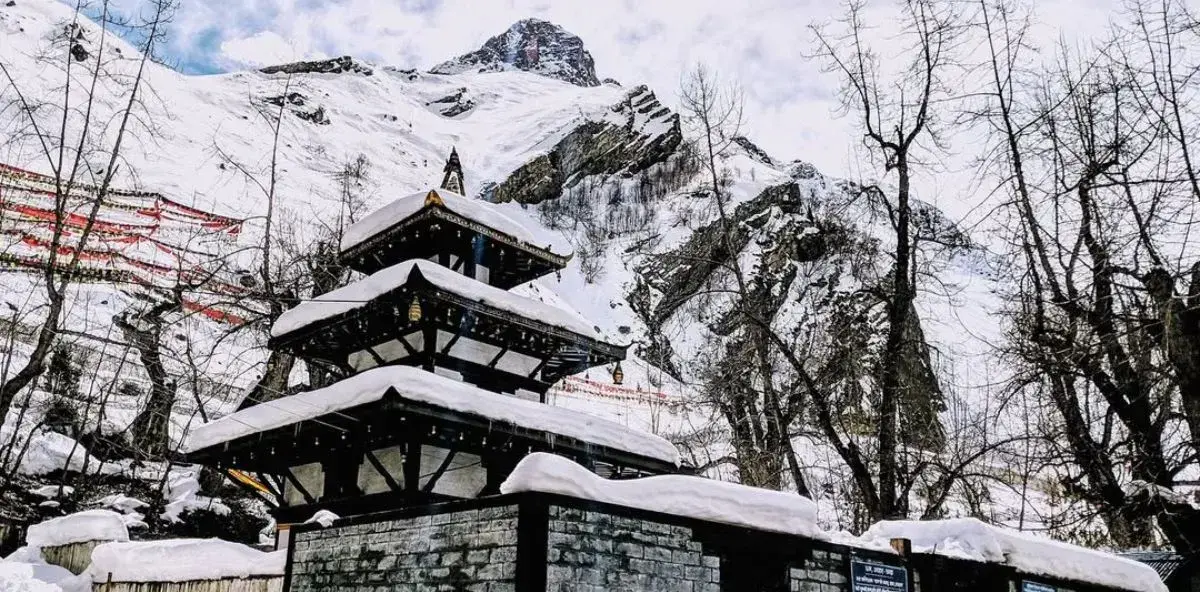
Eastern Nepal Tour Vehicle Rental

Eastern Nepal Tour Vehicle Rental

Eastern Nepal Tour Vehicle Rental – The Complete  Travel and Transport Guide

Eastern Nepal is the country’s least explored and most quietly extraordinary region — a sweep of land stretching from the steaming Terai plains along the Indian border, through the forested Siwalik and Mahabharat hill ranges, up into the rolling tea gardens of Ilam, and finally into the high Himalaya around Kanchenjunga, the third-highest mountain on earth.

While Kathmandu, Pokhara, and the Annapurna and Everest regions absorb most of Nepal’s visitors, eastern Nepal remains a region of wide-open road journeys, uncrowded sacred sites, wetland wildlife reserves, tea estates, and mountain panoramas that rival anything in the country’s more famous corners.

Properly touring eastern Nepal is fundamentally a transport challenge. The region is vast, the distances between highlights are considerable, and much of the most rewarding territory — the Pathivara pilgrimage trail, the Kanchenjunga foothills, the remote eastern hill roads to Ilam and Taplejung — depends on capable vehicles and experienced local drivers rather than on the bus networks and domestic flights that serve the rest of Nepal’s tourist circuit.

This is where reliable vehicle rental becomes the single most important factor in determining whether an eastern Nepal trip is a smooth, rewarding journey or a frustrating series of delays and connections.

This in-depth guide draws together everything a traveller needs to plan an eastern Nepal tour by private vehicle — the full geography and major destinations of the region, vehicle types and rental prices, road conditions and journey times, permit requirements for the restricted areas, seasonal planning advice, sample itineraries from 5 to 14 days, and detailed practical guidance for booking the right vehicle with Vehicle Hiring Nepal.

Why Eastern Nepal Deserves a Place on Your Itinerary

Most first-time visitors to Nepal never venture east of the Kathmandu Valley and the Everest approach road. This is understandable — the established circuits of Kathmandu, Pokhara, Chitwan, and the Everest and Annapurna trekking regions are excellent and well-served by tourism infrastructure.

But travelers who do make the journey east discover a Nepal that feels distinctly different: quieter roads, a stronger Kirat and Limbu cultural presence, some of the country’s finest tea, and a version of the Himalaya — the Kanchenjunga massif — that very few foreign visitors ever see up close.

Eastern Nepal also offers a logical and rewarding way to extend a trip to Nepal beyond the standard week or two. For travellers who have already experienced Kathmandu, Pokhara, and perhaps a short Annapurna trek, a swing east into Ilam, Pathivara, and the eastern wildlife reserves provides an entirely fresh set of experiences without repeating ground already covered elsewhere in the country.

  • Genuine off-the-beaten-path travel within a well-established and stable tourism country
  • Nepal’s finest tea-growing region, rivalling Darjeeling just across the border
  • One of the subcontinent’s most powerful Hindu pilgrimage sites: Pathivara.
  • Close-range views of Kanchenjunga (8,586 m), the world’s third-highest mountain, from accessible roadside viewpoints
  • Significant wetland wildlife at Koshi Tappu, including Nepal’s last wild water buffalo population and first-rate birdwatching
  • A rich Mithila cultural heartland around Janakpur, sacred to Hindus as the birthplace of Sita.
  • Far lower visitor density than western Nepal’s major circuits, even during peak season

The Geography of Eastern Nepal — What You’re Touring

Eastern Nepal spans Koshi Province and parts of Madhesh Province, encompassing several distinct geographic and climatic zones that a single tour itinerary can move through within a matter of days:

The Eastern Terai

The flat, fertile lowland belt along the Indian border, running from Janakpur in the west through Rajbiraj, Itahari, and Biratnagar to the Mechi River at the eastern extremity. This zone is hot, agriculturally rich, and dotted with significant cultural and wildlife sites, including Janakpur and the Koshi Tappu Wildlife Reserve.

The Siwalik and Mahabharat Mid-Hills

North of the Terai, the land rises through the Siwalik (Churia) range and the Mahabharat range into the mid-hill belt that includes Dharan, Dhankuta, Hile, and Basantpur. This transition zone features forested ridges, traditional Rai and Limbu villages, and increasingly cool temperatures as elevation rises.

The High Eastern Hills

Further north and east, the terrain rises into the genuinely high hill country of Ilam District and Taplejung District — tea garden country around 1,000 to 2,200 m, with the sacred Pathivara temple ridge reaching 3,794 m and the foothills of the Kanchenjunga massif beginning beyond.

The Kanchenjunga Himalaya

At the far northeastern edge of Nepal, the Kanchenjunga Conservation Area protects the approaches to the world’s third-highest mountain (8,586 m), a restricted trekking region of extraordinary biodiversity and very low visitor numbers compared to Everest or Annapurna.

What makes this geographic progression unique within Nepal is its compactness relative to the dramatic change in character it contains. A traveller can leave the sweltering, mango-grove flatlands of the Terai in the morning and, within a single long but comfortable day’s drive, stand among tea bushes in the cool hill air of Ilam, with the option of continuing further into alpine and high-Himalayan terrain over the following days.

Few single road corridors in Nepal — or indeed in the wider Himalayan region — compress so much climatic and cultural variation into a journey that can be completed entirely by private vehicle without recourse to flights or multi-day treks for the lower and middle sections.

Eastern Nepal Tour Vehicle Rental

Key Destinations for an Eastern Nepal Tour

Ilam — Nepal’s Tea Garden Capital

Ilam Bazaar (1,200 m) and the surrounding tea estates, including the iconic Kanyam viewpoint, form the most photogenic and most visited destination in eastern Nepal outside the high mountains. Rolling tea gardens, cardamom forest, the sacred Mai Pokhari wetland lake, and the Shree Antu sunrise viewpoint with its Kanchenjunga panorama make Ilam a complete destination in its own right.

Pathivara Devi Temple

One of Nepal’s most powerful Hindu pilgrimage sites, Pathivara sits at 3,794 m above Taplejung, reached by vehicle to Phungling (Taplejung Bazaar) or Chitlang, followed by a multi-hour uphill walk. Hundreds of thousands of devotees visit annually, particularly during the Dashain festival.

Kanchenjunga Conservation Area

For serious trekkers, the Kanchenjunga Circuit and Kanchenjunga Base Camp treks reach the base of the world’s third-highest mountain through one of Nepal’s most pristine and least-visited conservation areas, rich in red panda, snow leopard, and Himalayan black bear habitat, as well as exceptional rhododendron forests.

Koshi Tappu Wildlife Reserve

A 176 sq km Ramsar-listed wetland reserve along the Sapta Koshi River in the Terai, Koshi Tappu protects Nepal’s last surviving population of wild water buffalo (Arna) alongside Gangetic river dolphins, gharial crocodiles, and an extraordinary concentration of birdlife — 441 recorded species including many winter migrants from as far as Siberia. It is one of Asia’s premier birdwatching destinations, reached by jeep and boat safaris along the river.

Dharan

A clean, pleasant city at the foot of the Siwalik hills in Sunsari District, Dharan serves as the natural overnight stopping point on the long road journey toward Ilam and Taplejung, and is itself worth a visit for the Budhasubba Temple and its relaxed, leafy atmosphere — quite different from the dustier Terai towns further south.

Biratnagar

Nepal’s second-largest city and the industrial and commercial hub of eastern Nepal, Biratnagar has an internationally capable airport, making it a useful gateway for travellers who want to fly in or out of eastern Nepal rather than making the full road journey from Kathmandu in both directions.

Janakpur

In the central-eastern Terai, Janakpur is one of Hinduism’s most sacred cities, revered as the birthplace of Goddess Sita and the site of her marriage to Lord Rama. The stunning Janaki Mandir, built in a distinctive Mughal-influenced style, and the vibrant Mithila folk painting tradition make Janakpur a rich cultural detour for travellers touring the eastern Terai.

Itahari and Birtamod

These busy junction towns are less destinations in themselves than essential waypoints — Itahari is the key crossroads connecting the East-West Highway to the Dharan and Biratnagar roads. At the same time, Birtamod in Jhapa District is the launching point for the scenic climb to Ilam via Kanyam.

Dhankuta and Hile

Strung along the winding road between Dharan and Basantpur, Dhankuta (1,150 m) is one of eastern Nepal’s most attractive hill towns—a former British Gurkha recruitment centre with relaxed, orderly charm, stone-paved streets, and excellent panoramic views over the surrounding terraced hills.

A little further on, Hile (1,900 m) is a busy market junction known for its Tibetan and Sherpa-influenced trading community, its dried meat and Tibetan bread stalls, and its position as the historic gateway to both Sankhuwasabha district (home of Makalu Barun National Park) and the road north toward Taplejung. Both towns make excellent rest stops on the long drive from Dharan to Taplejung and reward travellers willing to spend a night instead of pushing straight through.

Sandakpur and the Tinjure–Milke–Jaljale Ridge

For travellers with extra time and an interest in trekking, the ridge running from Tinjure through Milke Danda to Jaljale, above Hile and Basantpur, contains the world’s largest contiguous rhododendron forest, blazing scarlet and pink across the hillsides each spring. The Sandakpur viewpoint, on the Nepal-India-Sikkim border tri-junction further east, offers an extraordinary eye-level panorama of the Kanchenjunga massif’s southern face — considered by many photographers to be one of the finest accessible Himalayan viewpoints anywhere in Nepal, and reachable by a combination of jeep transport and a short trek from the Ilam or Phidim side.

Kakarvitta and the Mechi Border Region

At Nepal’s far eastern extremity, Kakarvitta on the Mechi River marks the international border crossing with India’s West Bengal and serves as a logical first or final stop for travellers extending an eastern Nepal circuit toward Darjeeling and Sikkim. The flat, fertile Jhapa District surrounding Kakarvitta is itself an important tea and agricultural area, distinct in character from the more famous hill gardens of Ilam above it.

The Living Culture of Eastern Nepal — Kirat, Limbu, and Rai Heritage

Much of eastern Nepal’s hill country, from the Arun valley through Dhankuta, Hile, Ilam, and Taplejung, is the traditional homeland of the Kirat peoples — principally the Limbu and Rai communities, who together represent one of Nepal’s oldest documented ethnic and cultural groups, with their own languages, scripts, animist-influenced religious traditions, and distinctive cuisine. Touring eastern Nepal by vehicle gives travellers a far closer view of this living culture than the standard Kathmandu-Pokhara circuit typically offers.

The Limbu homeland (Limbuwan) historically spans the area between the Arun and Mechi rivers, including much of Taplejung, Panchthar, and Ilam districts — the very corridor that an eastern Nepal vehicle tour passes through on the way to Pathivara and Kanchenjunga. Limbu villages are often recognisable by their distinctive bamboo-and-timber architecture, prayer flags that blend Buddhist and animist Yumaism traditions, and the warm hospitality they extend to travellers passing through on the long hill roads.

Rai communities, concentrated through the mid-hills around Dhankuta, Bhojpur, and Khotang, maintain their own rich tradition of Sakela and Sakewa festivals — vibrant communal dances performed twice yearly to mark the agricultural cycle, accompanied by drumming and circular dance formations that visiting travellers occasionally have the good fortune to witness if their journey coincides with these celebrations.

Eastern Nepal’s food culture reflects this heritage in ways distinct from the dal-bhat-dominant cuisine of central and western Nepal. Look out for kinema (a fermented soybean dish unique to the eastern hills), sisnu ko jhol (stinging nettle soup), gundruk (fermented leafy greens, found throughout Nepal but especially prevalent here), locally distilled tongba (warm fermented millet beer served in a wooden vessel with a bamboo straw, a Limbu speciality particularly associated with Ilam and Taplejung), and the distinctive Dhankuta-style dried buffalo meat (sukuti) sold in the market stalls of Hile.

A private vehicle tour lets your driver stop at small, family-run eateries along these roads that serve the most authentic versions of these dishes—places a fixed-schedule bus journey would pass by.

Share jeep

Vehicle Fleet for Eastern Nepal Touring

Eastern Nepal’s combination of long, flat Terai highways and steep, winding hill roads means that vehicle choice matters more here than almost anywhere else in Nepal. Vehicle Hiring Nepal provides a complete fleet suited to every stage of a journey in eastern Nepal.

Sedan Car

Capacity: 1 to 3 passengers

Suitable for flat, paved Terai highway sections (Kathmandu to Itahari, Itahari to Janakpur, or Biratnagar), but not recommended for Ilam and Taplejung hill roads, where ground clearance and engine power matter.

Mahindra Scorpio

Capacity: 6 to 9 passengers

The standout vehicle for touring eastern Nepal. The Scorpio’s powerful diesel engine and high ground clearance match the steep, winding roads to Ilam, Kanyam, and Taplejung, while still being comfortable and spacious enough for the long Terai highway sections. Local drivers across eastern Nepal overwhelmingly favour the Scorpio for this reason.

Toyota Hiace Van

Capacity: 7 to 14 passengers

Ideal for larger groups and families wanting to stay together for the full circuit. Handles the Terai sections excellently and manages the Ilam and Dharan-Taplejung hill roads well in dry conditions. However, the Scorpio retains an edge in wet or monsoon conditions on the steepest switchback sections.

Toyota Fortuner / SUV

Capacity: 4 to 5 passengers

A comfortable middle option between the sedan and the Scorpio—good highway manners with genuine 4WD capability for the hill sections, ideal for small families or groups of 4 prioritising comfort.

Toyota Coaster Bus

Capacity: 15 to 22 passengers

For larger tour groups, school trips, and pilgrimage parties touring multiple destinations in eastern Nepal together.

Bp highway

Understanding the Economics of Group Size on Eastern Nepal Routes

Because vehicle hire in eastern Nepal is priced per vehicle rather than per passenger, group size matters far more here than on shorter, more commonly travelled routes. A solo traveller or couple booking a Scorpio for the full Kathmandu–Dharan–Ilam–Taplejung circuit effectively covers the entire USD 700- 950 cost, either alone or split two ways.

In contrast, a group of six or seven sharing the same vehicle reduces the per-person cost to a range comparable to, or even below, stringing together local buses and shared jeeps for the same journey, while offering far greater comfort, flexibility, and time efficiency.

For solo travellers and couples, two practical strategies help manage this cost. First, the fly-in, drive-out hybrid approach described in this guide significantly reduces total vehicle days and, therefore, total cost, since you pay only for ground transport on the shorter regional legs rather than the full Kathmandu-to-Taplejung distance in both directions.

Second, Vehicle Hiring Nepal can sometimes coordinate solo or two-person bookings with other small groups travelling similar eastern Nepal dates and routes, splitting vehicle costs informally — ask us about this option when you enquire, particularly during the busier October-November and Dashain pilgrimage periods when multiple small groups are commonly travelling the same corridor simultaneously.

DestinationDistance from KTMDrive TimeTypical Stop Pattern
Itahari480 km8–9 hrsDay 1 overnight point
Dharan500 km8.5–9.5 hrsDay 1 overnight point (recommended)
Biratnagar520 km9–10 hrsDay 1 overnight or fly instead
Janakpur380 km7–8 hrsSingle long day or fly to Janakpur
Birtamod580 km9.5–10.5 hrsDay 1 overnight point for Ilam
Ilam Bazaar610 km12–14 hrs total2-day journey via Dharan/Birtamod
Phungling (Taplejung)615–650 km14–17 hrs total2-day journey via Dharan
Koshi Tappu (Kusaha gate)430 km8 hrsVia Itahari, separate detour

Almost every destination in eastern Nepal beyond the immediate Terai requires at least one overnight stop en route from Kathmandu. Dharan and Birtamod are the two standard overnight bases used by Vehicle Hiring Nepal drivers, chosen for their good accommodation options and strategic position for continuing to either Ilam or Taplejung the following day.

The Standard Eastern Nepal Road Route

Most eastern Nepal vehicle tours follow a common backbone route, branching off at different points depending on the specific itinerary:

Kathmandu to Hetauda (Tribhuvan Highway)

The journey begins on Nepal’s oldest highway, climbing over the Mahabharat range via the scenic Daman ridge before descending to the Terai at Hetauda—a winding but well-maintained mountain road of about 95 km.

Hetauda to Itahari (East-West Highway)

The long, flat backbone of the journey — Nepal’s main East-West Highway running approximately 280 km through the agricultural heartland of the central and eastern Terai, passing through or near Narayanghat, Gaur, Lahan, and Siraha before reaching the major junction of Itahari in Sunsari District.

Itahari Branch Points

From Itahari, routes branch in three directions depending on the destination: south to Biratnagar and the Indian border crossing area; north to Dharan and onward into the eastern hills toward Dhankuta, Hile, Basantpur, and Taplejung; or further east along the Terai to Birtamod and Jhapa District for the Ilam hill road via Kanyam.

The Eastern Hill Roads

Both the Dharan–Taplejung road and the Birtamod–Ilam road share the same fundamental character: winding, steep, partially rough mountain roads climbing from the Terai floor into tea garden and forest country, demanding a capable vehicle and an experienced local driver.

Permits and Restricted Areas in Eastern Nepal

Several of eastern Nepal’s premier destinations require specific permits, especially the Kanchenjunga region. Vehicle Hiring Nepal provides transport only; you must arrange trekking permits through a registered trekking agency.

DestinationPermit Required2026 Cost (approx.)Notes
Kanchenjunga Conservation AreaRestricted Area Permit (RAP)USD 20/week (first 4 weeks), USD 25/week afterLicensed guide mandatory; as of March 2026, solo trekkers with a guide may now apply; a group of 2 is no longer required
Kanchenjunga Conservation AreaKanchenjunga Conservation Area Permit (KCAP)NPR 2,000 (~USD 15–20)One-time fee, no daily charge, valid for the full trek
Koshi Tappu Wildlife ReserveReserve Entry PermitNPR 1,000/day (foreigners)Per-day fee, paid at the reserve gate, plus 13% VAT
Pathivara / Taplejung areaNone required for the temple itself—No restricted-area permit is required for the Pathivara pilgrimage by road or on foot.
Ilam and the general eastern hillsNone—Open area, no special permit required

Note that Nepal’s restricted-area permit system has recently changed. As of March 2026, solo foreign trekkers can obtain restricted-area permits for regions such as Kanchenjunga, provided they are accompanied by a licensed guide booked through a registered trekking agency, removing the previous requirement for a minimum group of two trekkers.

This is a meaningful change for solo travellers planning a Kanchenjunga extension to their eastern Nepal trip — always confirm current rules with your trekking agency before finalising plans, as permit policy can continue to evolve.

In practice, the permit process works as follows for travellers planning a Kanchenjunga extension: your registered trekking agency submits your passport details, passport photographs, a copy of your Nepal visa, and proof of travel insurance to the Department of Immigration in Kathmandu, which issues the Restricted Area Permit. The Kanchenjunga Conservation Area Permit is processed separately, either through the Nepal Tourism Board office in Kathmandu or directly at the conservation area entry checkpoint near Taplejung.

Ideally, finalise both permits before your vehicle departs Kathmandu, since you can’t complete processing once you are already in the eastern hills. Vehicle Hiring Nepal coordinates your road transport timing to align with your agency’s permit-processing schedule, so build in at least one full day in Kathmandu for this step before departure if a Kanchenjunga trek is part of your plan.

Unlike the Kanchenjunga region, neither the Pathivara pilgrimage nor general touring in Ilam, Dharan, Dhankuta, or the Terai destinations requires any special permit beyond the standard Nepal entry visa. These areas are fully open and can be visited independently or with only a driver, without the licensed-guide requirement that applies specifically to the restricted Kanchenjunga zone.

Sample Itinerary: 5-Day Eastern Nepal Highlights Tour

  • Day 1: Kathmandu to Dharan by private Scorpio (8.5–9.5 hrs) — overnight Dharan, evening visit to Budhasubba Temple
  • Day 2: Dharan to Koshi Tappu Wildlife Reserve (2–3 hrs) — afternoon jeep and boat safari, overnight at a reserve camp
  • Day 3: Koshi Tappu to Dharan, continue toward Ilam via Birtamod and Kanyam (5–6 hrs) — overnight in Ilam Bazaar
  • Day 4: Full day in Ilam — tea garden walks, Kanyam viewpoint, optional Mai Pokhari excursion
  • Day 5: Return journey toward Kathmandu (begin 2-day return, or fly out from Biratnagar/Bhadrapur if time-limited)

Sample Itinerary: 7-Day Culture, Tea, and Wildlife Circuit

  • Day 1: Kathmandu to Janakpur by private vehicle (7–8 hrs) — Janaki Mandir, Mithila art quarter
  • Day 2: Janakpur to Itahari/Dharan (4–5 hrs) — onward connection toward eastern hills
  • Day 3: Dharan to Koshi Tappu (2–3 hrs) — full wildlife reserve day, overnight at reserve camp
  • Day 4: Koshi Tappu to Birtamod, continue to Ilam via Kanyam (5–6 hrs) — overnight in Ilam
  • Day 5: Full Ilam day — tea factory tour, Shree Antu sunrise viewpoint for Kanchenjunga panorama
  • Day 6: Ilam to Dharan, return journey begins (5–6 hrs) — overnight Dharan or Itahari
  • Day 7: Dharan/Itahari to Kathmandu (8.5–9.5 hrs) — arrival evening

Sample Itinerary: 10-Day Pathivara Pilgrimage and Eastern Highlights

  • Day 1: Kathmandu to Dharan by private Scorpio (8.5–9.5 hrs) — overnight Dharan
  • Day 2: Dharan to Phungling/Taplejung via Dhankuta and Basantpur (6–8 hrs) — overnight in Taplejung
  • Day 3: Local jeep to Chitlang, trek to Pathivara Temple (3,794 m), pilgrimage rituals, overnight in Chitlang or Phungling
  • Day 4: Return descent to Phungling, rest day or short local excursions
  • Day 5: Phungling to Birtamod via the Taplejung road (6–7 hrs) — overnight in Birtamod
  • Day 6: Birtamod to Ilam via Kanyam (1.5–2 hrs) — afternoon tea garden exploration, overnight in Ilam
  • Day 7: Full Ilam day — Shree Antu sunrise, Mai Pokhari excursion
  • Day 8: Ilam to Koshi Tappu via Itahari (5–6 hrs) — afternoon wildlife activity, overnight reserve camp
  • Day 9: Koshi Tappu to Dharan or Itahari (2–3 hrs) — rest, local sightseeing
  • Day 10: Return to Kathmandu (8.5–9.5 hrs)

Sample Itinerary: 14-Day Complete Eastern Nepal and Kanchenjunga Extension

  • Days 1–2: Kathmandu to Dharan, then Taplejung — Pathivara pilgrimage as in the 10-day itinerary above
  • Day 3: Pathivara pilgrimage day
  • Day 4: Taplejung to Suketar/Phungling — jeep to Kanchenjunga trek starting point (e.g., Mitlung or Chiruwa)
  • Days 5–12: Kanchenjunga Conservation Area trekking (lower circuit or base camp approach) with licensed guide — separate from vehicle hire, arranged through trekking agency
  • Day 13: Return jeep transfer from trek end point to Birtamod or Bhadrapur
  • Day 14: Birtamod/Bhadrapur to Ilam for a final day of tea garden relaxation, or fly out from Bhadrapur Airport

This extended itinerary combines the full eastern Nepal road circuit with a genuine Kanchenjunga trekking experience, best suited to travellers with both the time and trekking fitness for a serious mountain extension. Vehicle Hiring Nepal handles all the road transport segments; the Kanchenjunga trek itself requires a separate arrangement with a licensed trekking agency and guide.

Eastern Nepal Tour Vehicle Rental

Flying as a Time-Saving Alternative

For travellers with limited time, eastern Nepal offers useful domestic flight connections that can be combined with vehicle hire on the ground to cut total travel time dramatically:

Flight RouteDurationApprox. Price (USD)Saves vs Road
Kathmandu → Biratnagar45 minUSD 80–1109 hours of road time
Kathmandu → Bhadrapur (Jhapa, for Ilam)50 minUSD 90–12010 hours of road time
Kathmandu → Taplejung (Suketar)~1 hrUSD 130–16014–16 hours of road time
Kathmandu → Janakpur30 minUSD 70–1007–8 hours of road time

A popular hybrid approach is to fly one direction (typically into Biratnagar or Bhadrapur) and arrange ground vehicle hire from the airport onward for the remainder of the circuit, then complete the return leg by road or by a second flight. Vehicle Hiring Nepal can meet you at any of these airports with your vehicle ready for the onward journey — specify your flight arrival details when booking.

Best Time to Tour Eastern Nepal

October to November (Best Overall)

Post-monsoon clarity delivers the finest Kanchenjunga views from Shree Antu and the Ilam hills, dry and stable road conditions throughout the hill sections, and the second-flush tea harvest at its peak. This is also the peak Dashain pilgrimage season at Pathivara — expect significant crowds and book vehicles 4 to 8 weeks in advance.

March to May (Excellent — First Flush Tea Season)

Spring brings Nepal’s most prized first-flush tea harvest in Ilam, blooming rhododendron forests in the mid-hills and around Mai Pokhari, and good morning mountain visibility. Chaitra Dasain brings a second, smaller pilgrimage peak to Pathivara.

December to February (Good for Culture and Lowlands, Cold in the Hills)

Clear skies and comfortable temperatures make this an excellent season for Koshi Tappu birdwatching (peak migratory season) and Terai cultural sites like Janakpur. However,gh Ilam and especially Pathivara and Taplejung can be genuinely cold, with possible frost and occasional snow at the highest points.

June to September (Monsoon — Selective Travel)

Heavy rain affects the Dharan–Taplejung and Birtamod–Ilam hill roads, increasing landslide risk and requiring an experienced 4WD driver. The Terai sections and Koshi Tappu remain accessible, and the tea gardens are at their lushest, but this is generally the most challenging season for a full eastern Nepal circuit.

Bp Highway-Eastern Nepal Tour Vehicle Rental

Road Conditions Summary

SectionSurfaceVehicle NeededDifficulty
Kathmandu → HetaudaPaved mountain roadAny vehicleModerate
Hetauda → Itahari (East-West Hwy)Paved flat highwayAny vehicleEasy
Itahari → DharanPaved city roadAny vehicleEasy
Itahari → BiratnagarPaved flat highwayAny vehicleEasy
Itahari → BirtamodPaved flat highwayAny vehicleEasy
Dharan → Dhankuta → Basantpur → TaplejungPaved/rough mountain roadScorpio/4WDHard
Birtamod → Kanyam → IlamPaved winding hill roadScorpio/SUVModerate
Itahari → Koshi TappuPaved/gravel local roadJeep/SUVEasy–Moderate
Phungling → Chitlang → PathivaraLocal track + footpathLocal 4WD + walkHard (final section on foot)

Practical Tips for an Eastern Nepal Vehicle Tour

  • Plan a minimum of 7 to 10 days for a satisfying circuit covering Ilam, Pathivara, or Kanchenjunga, and Koshi Tappu together — eastern Nepal’s distances are genuinely large.
  • Always budget at least one overnight stop (Dharan or Birtamod) between Kathmandu and any hill destination — attempting these drives in a single day is exhausting and unsafe.
  • Book your Scorpio or Hiace well ahead for October–November and the Dashain pilgrimage period, when both vehicles and Taplejung/Ilam accommodation can sell out.
  • Carry sufficient Nepali Rupees cash — ATMs are reliable in Dharan, Itahari, Biratnagar, Birtamod, and Ilam Bazaar, but not on the hill road sections between them
  • Pack layers — the temperature range across an eastern Nepal circuit can span from over 35°C in the Terai to near freezing at Pathivara or in the Kanchenjunga foothills
  • If combining with a Kanchenjunga trek, arrange your licensed guide and permits in Kathmandu well in advance — these cannot be obtained locally in eastern Nepal.
  • Consider the fly-in, drive-out (or vice versa) hybrid approach if your total trip time is limited to 5 to 7 .days
  • Discuss your specific interests with Vehicle Hiring Nepal when booking — our drivers know lesser-visited viewpoints, tea estates, and local food stops throughout the region.
  • If birdwatching at Koshi Tappu is a priority, plan your visit for the October to March migratory season, when species diversity is at its annual peak.l peak
  • Where possible, build a rest day into Ilam or Dharan rather than treating every day as a transit day — the long Terai and hill road sections are tiring, and eastern Nepal rewards slowness.e r pac.e
  • If you plan to cross into India at Kakarvitta as part of a wider regional trip, confirm current visa and border-crossing requirements well in advance, as these are separate from your Nepal vehicle requirements. booking
  • Keep a paper copy of any restricted-area permits on your person at all times within the Kanchenjunga zone — checkpoints inspect physical documents and do not always accept digital. al copies

Pokhara-Eastern Nepal Tour Vehicle Rental

Eastern Nepal Compared to Nepal’s Other Touring Region Travellers weighing whether to add eastern Nepal to an existing Kathmandu–Pokhara–Chitwan itinerary often want a clear sense of how the region compares in practical terms. The biggest difference is distance and time: eastern Nepal’s key sites sit much farther from Kathmandu than Pokhara or Chitwan, so a worthwhile eastern circuit requires at least a week, not the 2 to 4 days that suffice for a Pokhara or Chitwan add-on.

In exchange for the greater time investment, eastern Nepal offers something the more established circuits no longer offer: genuine quiet. Even at the height of the October-November season, Ilam’s tea gardens, the Koshi Tappu wetlands, and the Pathivara pilgrimage trail (outside the specific Dashain festival days) see only a fraction of the visitor numbers found in Pokhara’s Lakeside or on the main Annapurna and Everest trekking trails.

Road infrastructure, while perfectly serviceable with the right vehicle, is also noticeably less developed than the main Kathmandu–Pokhara corridor, which is precisely why vehicle choice and driver experience matter more here than almost anywhere else in the country.

For travellers who have already experienced Nepal’s classic circuit and want a meaningfully different second or third visit, or for first-time visitors with two weeks or more who want to travel beyond the standard tourist trail, eastern Nepal is often the right answer.

Why Choose Vehicle Hiring Nepal for Eastern Nepal Touring

  • A full fleet of Scorpios, Hiace vans, SUVs, sedans, and Coaster buses suited to eastern Nepal’s mixed Terai and hill terrain.
  • Drivers with genuine experience on the Dharan–Taplejung and Birtamod–Ilam roads, not generic Kathmandu-based drivers unfamiliar with the region
  • Complete itinerary planning support — we can design a full multi-day circuit tailored to your interests, whether culture, wildlife, tea, or pilgrimage-focused
  • Airport pickup coordination at Biratnagar and Bhadrapur for travellers combining flights with ground touring
  • Transparent, fixed pricing agreed before travel begins
  • 24/7 support throughout your eastern Nepal journey

How to Book Your Eastern Nepal Tour Vehicle

  1. Contact Vehicle Hiring Nepal via WhatsApp or visit vehiclehiringnepal. co. Please tell us your interests — tea gardens, pilgrimage, wildlife, culture, or a full combined circuit.
  2. Share your available travel dates and group size.
  3. We recommend the ideal vehicle and propose a day-by-day itinerary matched to your timeframe.
  4. Confirm pickup location — Kathmandu hotel or Biratnagar/Bhadrapur airport
  5. Receive your booking confirmation with driver details and complete itinerary

WhatsApp
Email: [email protected]
Website: www.vehiclehiringnepal.com
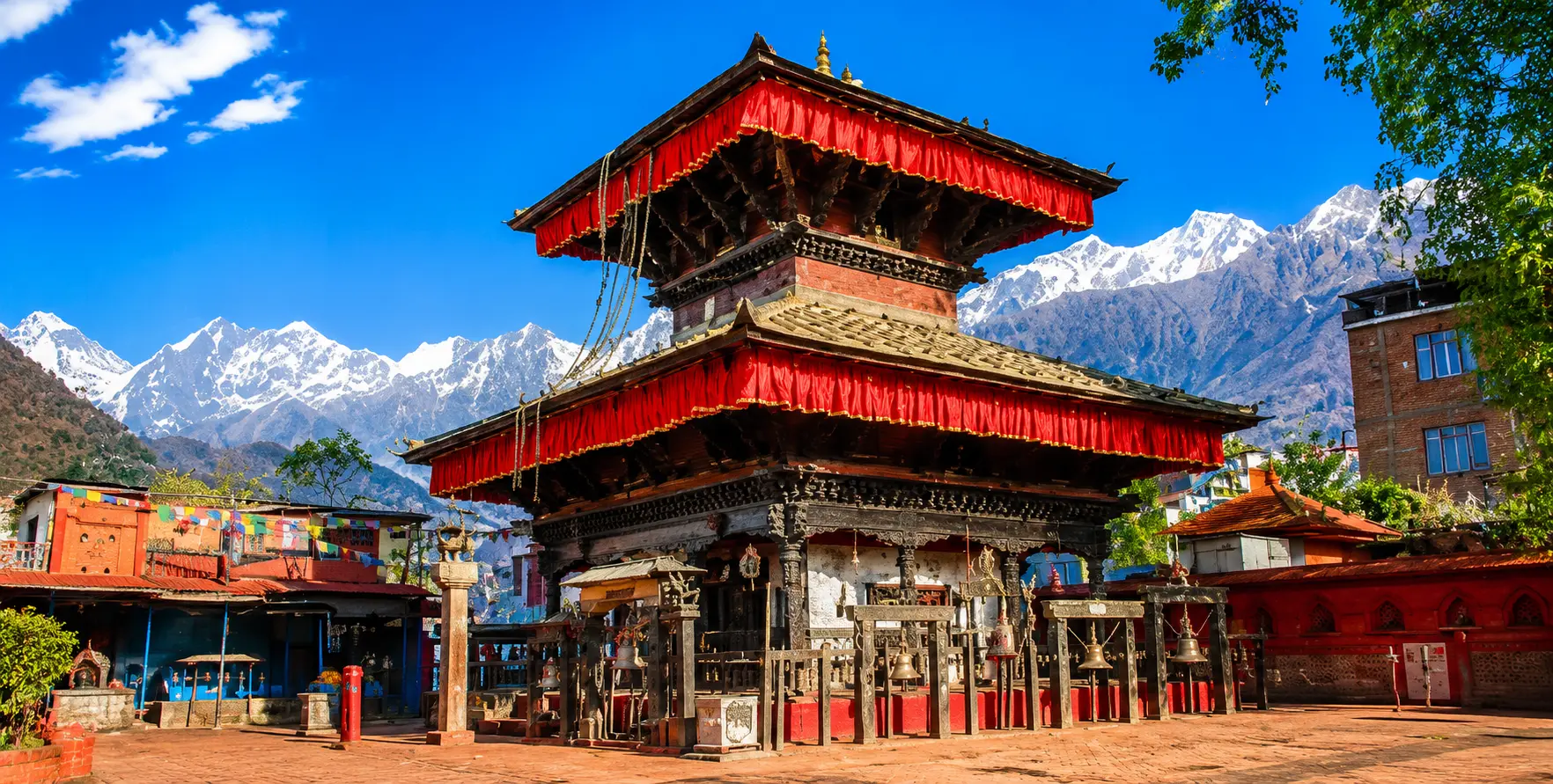
Frequently Asked Questions

How many days are realistically needed for an eastern Nepal tour?

A minimum of 5 days allows a focused Ilam and Koshi Tappu circuit. A genuinely satisfying tour covering Ilam, Pathivara, and Koshi Tappu together requires 7 to 10 days, given the substantial driving distances involved. Adding a Kanchenjunga trekking extension pushes the total to 14 days or more.

Is it better to fly or drive to eastern Nepal?

It depends on your time budget. Driving the full route from Kathmandu allows you to see the Terai and mid-hills along the way and is more economical for groups sharing a vehicle, but it takes 1.5 to 2 full days each way. Flying into Biratnagar or Bhadrapur and arranging ground transport from there saves significant time and is the better choice for travellers with 5 to 7 days or less.

Do I need a 4WD vehicle for the whole eastern Nepal circuit?

Not for the Terai sections (Kathmandu to Itahari, Janakpur, Biratnagar, Koshi Tappu access roads), which are flat paved highways suitable for any vehicle. A 4WD-capable vehicle like the Mahindra Scorpio is especially important for the Dharan–Taplejung and Birtamod–Ilam hill roads, where steep gradients and occasional rough surfaces are present.

Can Vehicle Hiring Nepal arrange the Kanchenjunga trekking permits and a guide as well?

We provide vehicle transport for the road portions of your journey, including transfers to and from Kanchenjunga trek starting points. You must arrange the Restricted Area Permit, Kanchenjunga Conservation Area Permit, and a mandatory licensed guide for the trek itself through a registered trekking agency— we are happy to recommend trusted partners for this part of your planning.

What is the most efficient eastern Nepal route for a 7-day trip?

The most efficient 7-day circuit combines Dharan, Koshi Tappu, and Ilam, looping back through Itahari to Kathmandu — covering wildlife, tea culture, and scenic hill roads without the additional 2 to 3 days required to reach Taplejung and Pathivara as well. Travellers who want to include Pathivara should budget at least 9 to 10 days.

Is eastern Nepal safe and comfortable for solo travellers and families alike?

Yes. Eastern Nepal is part of the same stable, welcoming tourism environment as the rest of the country, and both solo travellers and families often appreciate the relative lack of crowds. The main practical considerations are the longer travel distances and the importance of booking a properly equipped vehicle and an experienced driver for the hill road sections — both of which Vehicle Hiring Nepal arranges as standard.

Can I combine an eastern Nepal vehicle tour with onward travel to Darjeeling or Sikkim in India?

Yes, this is a popular extension for travellers with sufficient time. The Kakarvitta border crossing near Birtamod provides direct road access into West Bengal, from where Darjeeling and Sikkim are readily reached. Vehicle Hiring Nepal can arrange your transport up to the Kakarvitta border; onward travel and transport within India fall outside our service area and must be arranged separately on the Indian side.

Final Thoughts

Eastern Nepal rewards travellers willing to commit the extra days that its road distances demand, offering a side of the country that feels genuinely uncrowded and unhurried even during Nepal’s busiest tourist seasons elsewhere. From the tea-scented hills of Ilam to the wetland birdlife of Koshi Tappu and the powerful pilgrimage atmosphere of Pathivara beneath Kanchenjunga’s Ganges, this region offers depth and variety that fully justify the journey east.

What makes eastern Nepal a travel destination is also what makes it demand careful transport planning: its size, its mix of flat highway and steep hill terrain, and its relative distance from Nepal’s central tourism infrastructure.

A capable vehicle and an experienced eastern Nepal driver are not a convenience here so much as the foundation on which the entire trip is built — get the transport right, and Ilam, Pathivara, Koshi Tappu, and the Kanchenjunga foothills open up as one of the most rewarding regional circuits anywhere in the country. Get it wrong, and the same distances that make eastern Nepal special can instead make for a frustrating, exhausting trip.

Vehicle Hiring: Nepal’s fleet of Scorpios, Hiace vans, and SUVs, combined with drivers who genuinely know the eastern hill roads, makes touring this remarkable region straightforward, safe, and comfortable. Whether you are planning a focused 5-day tea and wildlife trip or a full 14-day circuit extending into the Kanchenjunga foothills, we have the right vehicle and the local expertise to get you there.

Start planning your tour of eastern Nepal today. WhatsApp | Website: www.vehiclehiringnepal.com | Email: [email protected]
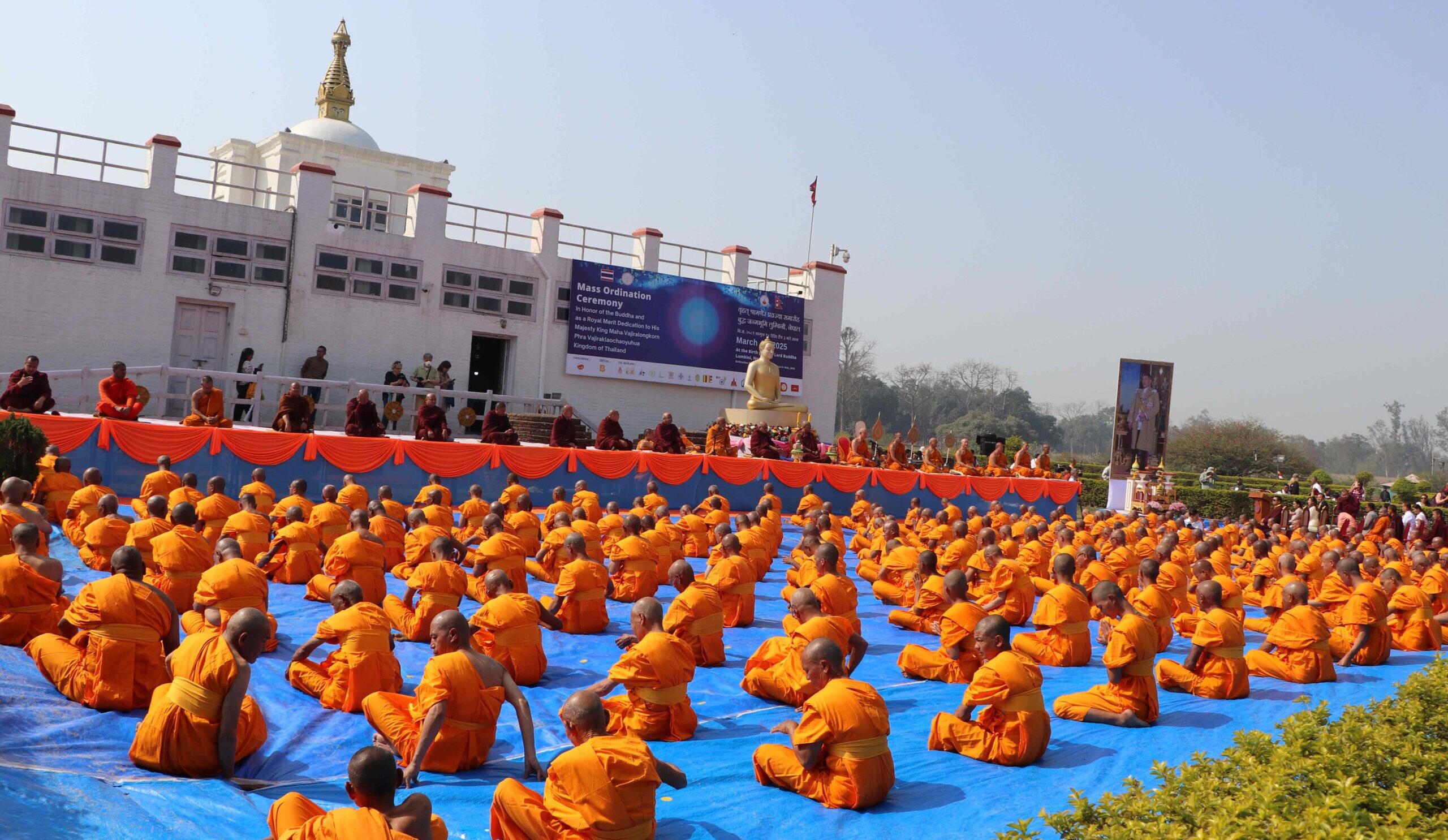
Kathmandu to Tumlingtar Private Jeep

Kathmandu to Tumlingtar Private Jeep

Kathmandu to Tumlingtar Private Jeep

Tumlingtar is one of those small, unassuming Himalayan gateway towns whose importance vastly exceeds its size. Sitting at a modest altitude of around 410 to 460 metres on the floor of the Arun Valley in Sankhuwasabha District, in Nepal’s far eastern Koshi Province, Tumlingtar serves as the principal access point for the Makalu Base Camp Trek — the journey to the foot of the world’s fifth-highest mountain — as well as the increasingly popular Tumlingtar to Lukla trekking route that links the relatively undiscovered Makalu region with the world-famous Everest region via the high pass of Salpa Bhanjyang.

For decades, the overwhelming majority of trekkers heading to Makalu reached Tumlingtar by the short 35- to 50-minute domestic flight from Kathmandu — a journey that, on a clear day, offers some of the most spectacular aerial Himalayan views available on any Nepal domestic route. But Tumlingtar is also connected to Kathmandu by road — a long, genuinely demanding 425-kilometre overland journey through the hills of Sindhuli, the flat Terai stretch of the East-West Highway, and the climbing eastern hill roads through Dharan, Hile, and Khandbari — and for trekkers with the time, the budget constraints, or simply the inclination for a proper overland Himalayan road adventure, a private jeep from Kathmandu to Tumlingtar is an increasingly viable and genuinely rewarding alternative to flying.
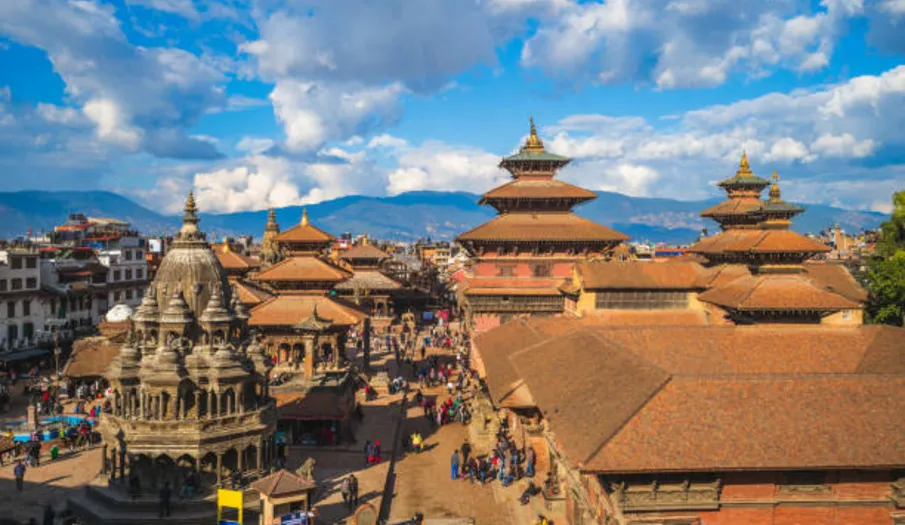
This complete guide covers everything about the Kathmandu to Tumlingtar private jeep journey: the full route, all transport options and their costs, the onward jeep connection from Tumlingtar to Num for Makalu trekkers, permits, seasonal road conditions, and why Nepal Vehicle Hiring Pvt Ltd is a reliable private vehicle partner for this long but rewarding eastern Nepal journey.

Kathmandu to Tumlingtar Private Jeep

Tumlingtar — Gateway to the Makalu and Arun Valley Region

Tumlingtar’s significance lies almost entirely in its function as a transport hub rather than as a destination in itself. The small airstrip town sits on a flat river terrace above the Arun River, surrounded by terraced farmland and a scattering of basic guesthouses, shops, and Jeep stands that serve trekkers continuing onward into the mountains.

From here, the road climbs steadily into the hills toward Khandbari — the headquarters of Sankhuwasabha District and the last town with reliable services before the trek toward Makalu Base Camp genuinely begins.

The Makalu Base Camp Trek itself is one of Nepal’s most rewarding and least crowded major trekking routes — a journey through the Makalu Barun National Park and Conservation Area to the foot of Makalu (8,463 m), the world’s fifth-highest mountain, via the dramatic Barun Valley. Unlike the Everest and Annapurna regions, Makalu has little teahouse infrastructure along much of its route, and trekkers should expect a more remote, basic experience—simple timber lodges, family-run homestays, and a genuine sense of travelling through a landscape tourism has only lightly touched.

  • Altitude: Approximately 410–460 m (Tumlingtar town itself, on the Arun Valley floor)
  • District: Sankhuwasabha District, Koshi Province, far eastern Nepal
  • Primary function: Gateway airstrip and road-head for Makalu Base Camp Trek and Tumlingtar-Lukla Trek
  • Facilities: Domestic airport, basic guesthouses, jeep stand, small market
  • Best known for: The starting point most trekkers use before continuing by Jeep to Num or Chichira to begin walking toward Makalu

Kathmandu to Tumlingtar Private Jeep

Key Facts at a Glance — Kathmandu to Tumlingtar

Route DetailInformation
Total Road Distance425 km (Kathmandu to Tumlingtar)
Tumlingtar Altitude410–460 m (Sankhuwasabha District, Koshi Province)
Travel Time by Private Jeep8 to 10 hours — often split across 2 days
Flight AlternativeKathmandu to Tumlingtar Airport — 35 to 50 minutes
Flight CostUSD 120–200 one way; USD 250–400 round trip
Road TypeMostly paved (BP Highway + East-West Highway) with unpaved sections near Khandbari.
General RouteKathmandu → Bardibas (BP Highway) → Itahari → Dharan → Hile → Khandbari → Tumlingtar
4WD Required?Recommended for the final Khandbari–Tumlingtar stretch; not mandatory for the main highway sections
Gateway ForMakalu Base Camp Trek, Arun Valley, Tumlingtar–Lukla Trek, Sankhuwasabha cultural region
Onward from TumlingtarJeep to Khandbari (30 min) and onward to Num/Chichira (Makalu trek start) — 4 to 7 hours off-road
Permits RequiredMakalu Barun National Park / Conservation Area entry fee + TIMS card

This is a Long Overland Journey: At approximately 425 km with sections of genuinely rough road near Khandbari, the Kathmandu-Tumlingtar drive is among the longer domestic road journeys commonly undertaken in Nepal. Nepal Vehicle Hiring Pvt Ltd generally recommends splitting this journey across two days, with an overnight stop in the Itahari or Dharan area, rather than attempting the full distance in a single very long driving day.

Nepal Tour Package

Why Choose a Private Jeep Over Flying?

For most Makalu-bound trekkers, the domestic flight from Kathmandu to Tumlingtar remains the fastest and most practical option — but it has limitations, and a private jeep journey offers real, specific advantages for the right kind of traveller.

  • Flight reliability: Tumlingtar flights, like most of Nepal’s mountain domestic routes, are subject to weather-related delays and cancellations, particularly during monsoon and periods of poor visibility — a private jeep removes this uncertainty entirely.
  • Luggage flexibility: Domestic flights to small Nepali airstrips have strict baggage weight limits; a private jeep has no such restrictions, making it useful for expedition-level gear or larger groups with substantial equipment.
  • Budget for larger groups: For a group of 5 to 6 sharing a private jeep, the per-person cost can be comparable to, or even lower than, the combined cost of multiple flight tickets, especially when fares rise during peak booking periods.
  • The journey itself as an experience: The overland route passes through some of eastern Nepal’s most beautiful and least-visited hill country — the tea gardens around Hile, the market town of Dharan, and the dramatic final descent into the Arun Valley — offering a cultural and scenic dimension that a 40-minute flight cannot provide.
  • No flight availability on short notice: Tumlingtar flights run on a limited daily schedule with few seats; a private jeep can depart at any time that suits your schedule.

Nepal Vehicle Hiring Pvt Ltd’s Honest Advice: For trekkers on a tight overall itinerary, flying remains the more time-efficient choice. For groups with flexible schedules, a genuine interest in overland travel, or budget considerations that favour road transport for larger parties, the private jeep journey is a worthwhile alternative, not simply a fallback option.

All Transport Options — Kathmandu to Tumlingtar

Transport OptionCapacity2026 CostTravel TimeBest For
Private Sedan Car1–3 passengersNPR 32,000–42,000 / USD 240–3158–10 hrs (or 2-day split)Small groups on paved sections
Private Jeep (4WD)4–6 passengersNPR 38,000–52,000 / USD 285–3908–10 hrs (or 2-day split)Trekkers with gear, families, and groups
Private Hiace Van7–14 passengersNPR 48,000–65,000 / USD 360–4909–11 hrs (or 2-day split)Larger trekking or expedition groups
Tourist BusMany passengersNPR 1,200–1,800 per person14–18 hrs (overnight)Budget travellers — long and tiring
Domestic FlightPer seatUSD 120–160 one way35–50 minFastest — best for time-pressed trekkers
Flight + Local Jeep ComboPer seat + shared/private jeepUSD 120–160 + USD 25–30 (Tumlingtar–Num)1.5–2 hrs totalMost common choice for Makalu trekkers

Swayambhunath visit during Kathmandu Pokhara Tour

A private 4WD jeep is the most practical and comfortable choice for trekking groups travelling by road. The vehicle’s roof rack and cargo capacity comfortably handle full expedition gear for 4 to 6 passengers, and the higher ground clearance is genuinely useful on rougher road sections near Khandbari and on any onward continuation toward Num.

  • 2026 cost: NPR 38,000–52,000 (USD 285–390) for the full vehicle, one way
  • Includes: Driver, fuel, road tolls — all-inclusive from Nepal Vehicle Hiring Pvt Ltd
  • Recommended approach: Split across 2 days with an overnight stop in Itahari or Dharan

Domestic Flight — The Standard Choice

Yeti Airlines, Tara Air, and other domestic carriers operate scheduled flights between Kathmandu’s Tribhuvan International Airport and Tumlingtar Airport, typically once or twice daily depending on season and demand. The flight takes approximately 35 to 50 minutes and offers genuinely spectacular views of the eastern Himalayan foothills and, on the clearest days, distant glimpses of Makalu and Everest themselves.

  • 2026 fare: USD 120–160 per person, one way; USD 250–310 round trip
  • Baggage allowance: Typically 10–15 kg checked plus hand luggage — verify with your specific airline
  • Weather sensitivity: Flights can be delayed or cancelled due to poor visibility, particularly outside the core autumn and spring trekking seasons

Kathmandu to Tumlingtar Private Jeep

The Route — Kathmandu to Tumlingtar Step by Step

StopDistance from KTMRoadKey Notes
KathmanduStartCity roadsHotel pickup — departure via BP Highway
Sindhuli Hills / BP Highway100 kmBP Highway (hill road)Winding hill section — scenic but slower
Bardibas165–180 kmBP Highway joins the East-West HighwayMajor junction — fuel and food stop
Itahari330 kmEast-West (Mahendra) HighwayMajor eastern junction — common overnight stop
Dharan350 kmPaved link roadEastern hill town — last major city before climbing
Hile390 kmPaved, increasingly windingDhankuta District — tea-growing hill town, viewpoint
Khandbari415 kmMixed paved/roughSankhuwasabha District HQ — fuel, permits, ATM
Tumlingtar425 kmLocal descent roadArun Valley floor — airstrip, jeep stand, trek gateway

Kathmandu to Tumlingtar Private Jeep

Kathmandu to Bardibas — The BP Highway Hill Crossing

The journey begins on the BP Highway, climbing through the hill districts of Kavrepalanchok and Sindhuli before descending to Bardibas, where the route joins the East-West (Mahendra) Highway — Nepal’s principal Terai artery. This initial hill section is winding and slower, but much more direct than the older alternative route via Mugling and Narayanghat.

Bardibas to Itahari — The Long Flat Stretch

From Bardibas, the East-West Highway runs flat and fast through the fertile Terai plains of eastern Nepal, passing through a succession of market towns before reaching Itahari — the major transport junction of eastern Nepal and a natural overnight stopping point for travellers splitting the journey across two days.

Itahari to Dharan and the Climb to Hile

From Itahari, the route turns north toward Dharan, a substantial hill-edge city at the foot of the Mahabharat range, before beginning a steady climb into the hills of Dhankuta District toward Hile — a charming hill town known for its tea gardens and as an important junction for routes continuing further into Nepal’s eastern hill country, including toward Tumlingtar and, in the other direction, toward Basantapur and the trekking routes of the Sankhuwasabha and Solukhumbu border country.

Hile to Khandbari to Tumlingtar — The Final Descent

Beyond Hile, the road continues through increasingly rugged and scenic hill terrain to Khandbari, the headquarters of Sankhuwasabha District and the last significant town with reliable fuel, an ATM, and other services before the final descent to Tumlingtar on the floor of the Arun Valley. This final stretch includes some rougher, partially unpaved sections, and a 4WD vehicle is genuinely useful, though not strictly mandatory in good dry-season conditions.

Onward from Tumlingtar — The Jeep to Num for Makalu Trekkers

For most travellers using Tumlingtar as a gateway, the journey to Kathmandu is only the first leg. The actual start of the Makalu Base Camp Trek lies considerably further into the hills, at the village of Num (or, for some itineraries, the alternative starting point of Chichira) — reached by a further jeep journey of 4 to 7 hours, depending on road conditions, through Khandbari and the dramatic descending and re-ascending terrain that characterises the approach to the Arun River and Barun Valley region.

StopDistance from TumlingtarRoad TypeNotes
Khandbari12–15 kmPavedDistrict headquarters — last reliable services
Leguwaghat / Hururu40–50 kmOff-road, roughDescending toward the Arun River valley
Num Bazaar100–120 kmOff-road, steep, roughMakalu Base Camp Trek starting point — overnight
ChichiraSlightly beyond Num (alt. start)Off-roadAlternative trek starting village
  • Shared Jeep (Tumlingtar to Num): Approximately USD 25–30 per person
  • Private Jeep (Tumlingtar to Num): Approximately USD 150–200 for the full vehicle (5–6 seats)
  • Road character: Increasingly rough and off-road as the route descends toward the Arun River and climbs again toward Num — a 4WD vehicle is genuinely required for this section, regardless of how the main Kathmandu-Tumlingtar leg was completed

Nepal Vehicle Hiring Pvt Ltd can coordinate both the Kathmandu-Tumlingtar leg and the onward Tumlingtar-Num connection as a single, smooth booking for trekkers undertaking the complete overland approach to Makalu Base Camp, eliminating the need to arrange local transport separately upon arrival in Tumlingtar.

Kathmandu to Tumlingtar Private Jeep

What to See Along the Way

Dharan — The Gateway City of the Eastern Hills

Dharan, a substantial and historically significant town at the foot of the Mahabharat range, has long served as a major recruitment and transit point for the British and Indian Gurkha regiments and retains a distinctive cosmopolitan character shaped by generations of military service and the resulting connections to the wider world. The town has good hotels, restaurants, and facilities, making it a sensible overnight stop for travellers splitting the Kathmandu-Tümlingtar journey across two days.

Hile — Tea Gardens and Mountain Views

Hile, perched on a ridge in Dhankuta District, is known for its tea cultivation — a tradition shared with the more famous tea districts further south near Ilam — and, on clear days, offers genuinely impressive views of the eastern Himalayan range, including distant glimpses of Makalu itself. The town’s bazaar has a distinctive hill-trading character, having historically served as an important stop on trade routes connecting the high country to the Terai plains.

Khandbari and the Arun Valley

Khandbari, the headquarters of Sankhuwasabha District, sits on a ridge above the dramatic Arun Valley and serves as the last significant service town before the final descent to Tumlingtar. The surrounding Sankhuwasabha District is home to a rich mix of ethnic communities, including Rai, Sherpa, and Bhote populations, each contributing to a cultural diversity that rewards travellers willing to spend time exploring beyond the immediate transit corridor.

Permits Required

  • Makalu Barun National Park entry fee: Required for all foreign nationals entering the park area on the Makalu Base Camp Trek — obtainable in Kathmandu or at the park entry point
  • TIMS Card: Recommended for trekkers continuing beyond Tumlingtar into the Makalu region — obtainable through the Nepal Tourism Board or a registered trekking agency
  • Licensed guide: Increasingly required under Nepal’s broader 2023 guide regulation for trekking in remote and restricted areas, including Makalu Barun

Arrange your Makalu Barun permits in Kathmandu before departure — facilities for permit processing become progressively more limited the further east and the closer to the mountains you travel.

Kathmandu to Tumlingtar Private Jeep

Season Guide — Best Time for the Journey

SeasonMonthsRoad & Flight ConditionsRecommendation
AutumnOct–NovGood road conditions, reliable flightsBest season — peak Makalu trekking period
WinterDec–FebCold but generally clear; occasional fog delays flightsGood — quieter, clear Himalayan views
SpringMar–MayGood road conditions, rhododendrons bloomingExcellent — second peak season
MonsoonJun–SepRisky — landslide-prone hill sections, frequent flight cancellationsAvoid if possible — high disruption risk

Because this journey combines flat Terai highway driving with substantial hill-road sections, seasonal road conditions matter considerably more here than on a purely flat-plains route. The Hile-Khandbari-Tumlingtar stretch, in particular, can be affected by monsoon-season landslides and surface damage, and Nepal Vehicle Hiring Pvt Ltd monitors current conditions on this corridor and provides proactive advice before departure.

Practical Tips for the Kathmandu to Tumlingtar Journey

  • Decide early whether to split the journey across two days with an overnight stop in Itahari or Dharan — this is the recommended approach for comfort given the substantial distance involved.
  • Book your private Jeeps at least 5 days in advance during the peak Makalu trekking season (October–November and March–May).
  • Carry NPR cash — ATMs become less reliable beyond Itahari and Dharan; Khandbari has the last consistently functioning ATM before Tumlingtar.
  • If continuing to Num for the Makalu trek, confirm whether your booking includes this connecting leg or you need to arrange it separately on arrival in Tumlingtar.
  • Pack for the full range of conditions — the journey passes from the mild Kathmandu Valley climate through hot Terai plains to cooler eastern hill country, all within a single long drive.
  • Arrange your Makalu Barun National Park permits and any required guide services in Kathmandu before departure.
  • Build in buffer days if your itinerary depends on a specific onward flight or trek start date — road conditions and the additional Tumlingtar-Num jeep leg can introduce delays, particularly outside the core dry seasons.

Why Choose Nepal Vehicle Hiring Pvt Ltd

  • Long-Distance Route Experience: Our drivers are experienced on the full eastern Nepal corridor — the BP Highway, the East-West Highway, and the hill roads through Dharan, Hile, and Khandbari to Tumlingtar.
  • Flexible One-Day or Two-Day Planning: We can arrange this journey as a single long driving day or, as generally recommended, a comfortable two-day journey with an overnight stop in Itahari or Dharan.
  • Onward Connection Coordination: We can arrange the connecting Tumlingtar-to-Num jeep leg for Makalu-bound trekkers as part of a single smooth booking.
  • All Vehicle Types: Private sedan, 4WD jeep, or Hiace van — sized correctly for your group, with full luggage capacity for trekking and expedition gear.
  • Transparent All-Inclusive Pricing: Every quote includes the driver, fuel, and road tolls for this substantial cross-country journey.
  • 24/7 Booking: WhatsApp or call WhatsApp — plan this longer eastern Nepal journey with full itinerary support.

Frequently Asked Questions

How far is Kathmandu from Tumlingtar by road?

The road distance from Kathmandu to Tumlingtar is about 425 km and takes 8 to 10 hours by private vehicle; alternatively, we recommend splitting the journey over two days with an overnight stop in Itahari or Dharan.

What is the 2026 cost of a private jeep from Kathmandu to Tumlingtar?

A private 4WD jeep costs about NPR 38,000 to NPR 52,000 (USD 285 to USD 390) for the full vehicle, one way, including driver and fuel; a private sedan costs slightly less, ranging from NPR 32,000 to NPR 42,000.

Is it better to fly or drive to Tumlingtar?

Flying (35 to 50 minutes, USD 120–160 one way) is faster and the standard choice for most trekkers, but is subject to weather-related delays and cancellations. A private jeep takes 8 to 10 hours but offers reliable scheduling, no baggage restrictions, and can be more economical for larger groups.

How do I get from Tumlingtar to the Makalu Base Camp trailhead?

From Tumlingtar, a further 4- to 7-hour journey via Khandbari leads to Num (or the alternative starting village of Chichira), where the Makalu Base Camp Trek actually begins. A shared jeep costs approximately USD 25–30 per person; a private jeep costs USD 150–200 for the full vehicle.

Is a 4WD vehicle necessary for the journey from Kathmandu to Tumlingtar?

The main highway sections (BP Highway and East-West Highway) suit any vehicle type. The final stretch from Hile through Khandbari to Tumlingtar includes rougher, partially unpaved sections, so a 4WD jeep is recommended, especially outside the dry season. The onward Tumlingtar-to-Num leg of the Makalu trek requires a 4WD vehicle.

What permits do I need for the Makalu region?

Foreign nationals require the Makalu Barun National Park entry permit, and trekkers should also carry a TIMS card. Nepal’s broader 2023 trekking guide regulation increasingly requires a licensed guide for this remote, restricted region. Arrange all permits in Kathmandu before departure.

Conclusion

The journey from Kathmandu to Tumlingtar is a genuine eastern Nepal road adventure — 425 kilometers through hill country, Terai plains, tea-growing ridges, and a dramatic final descent into the Arun Valley, leading to the gateway of one of the Himalaya’s most rewarding and least-visited major trekking regions. Whether you choose to fly for speed and convenience or take the long road for budget, flexibility, or the simple pleasure of seeing eastern Nepal unfold mile by mile, reaching Tumlingtar is the first real step toward the wild, remote grandeur of the Makalu Barun region.

Nepal Vehicle Hiring Pvt Ltd provides experienced, reliable private vehicle hire for this substantial cross-country journey with flexible one- or two-day itinerary planning, coordinated onward connections to Num for Makalu trekkers, and a full range of vehicle options to suit any group size and budget.

Book your Kathmandu to Tumlingtar transfer — Call or WhatsApp

E-mail: [email protected]

Chat with us