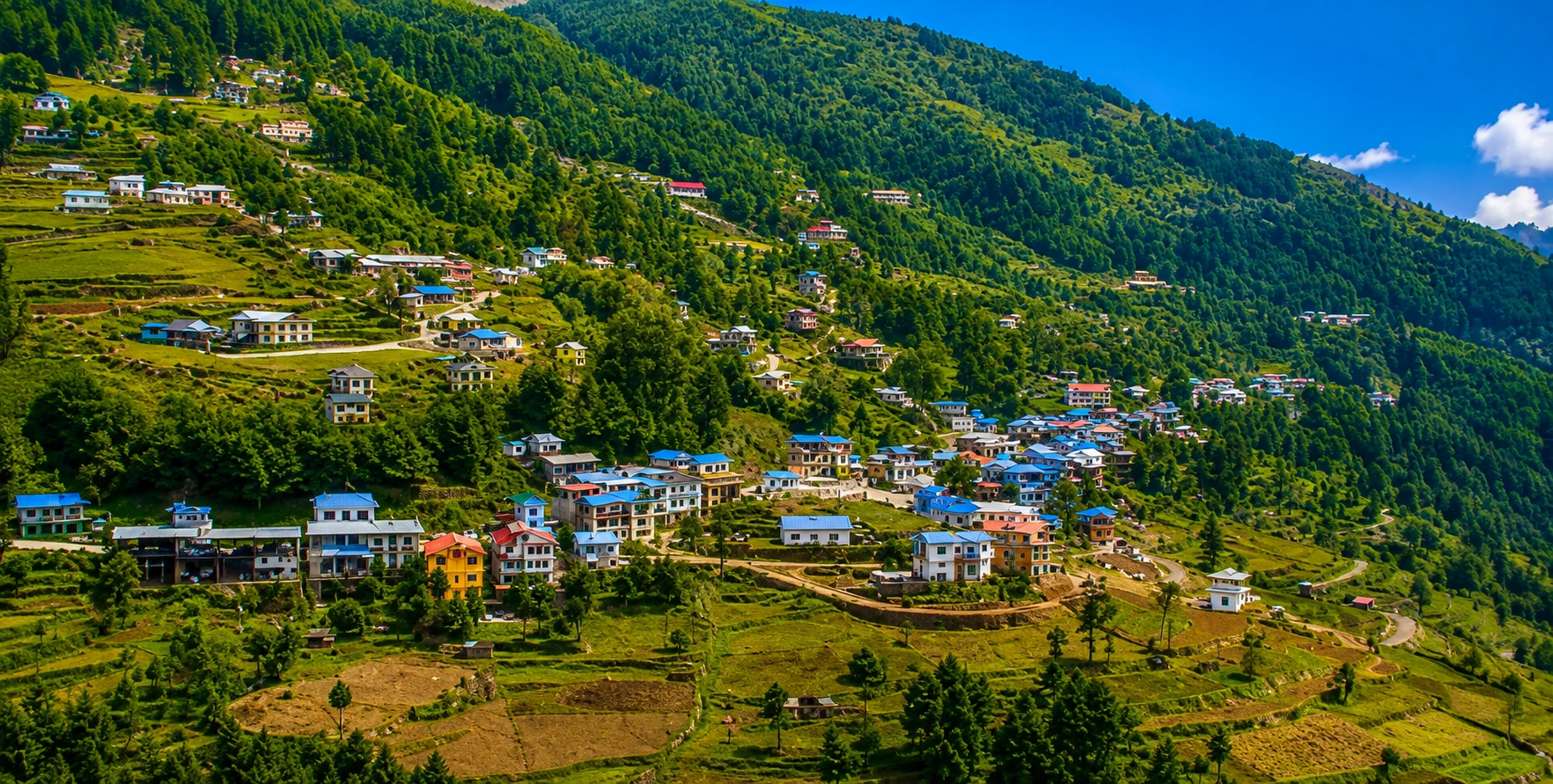
Pikey Peak, at 4,065 metres in Nepal’s Solukhumbu District, has earned a reputation that few moderate-altitude viewpoints anywhere in the Himalaya can match: it is widely said to have been described by Sir Edmund Hillary himself as offering the finest panoramic mountain view in the entire Everest region — a single, sweeping vantage point from which Everest, Lhotse, Makalu, Kanchenjunga, and dozens of other major Himalayan summits arrange themselves across the horizon in an uninterrupted sunrise panorama. Unlike Everest Base Camp, reaching this view requires no flight to Lukla, no multi-day acclimatisation schedule, and no risk of serious altitude sickness — making Pikey Peak one of the most accessible, genuinely first-rate Himalayan viewpoints in Nepal.
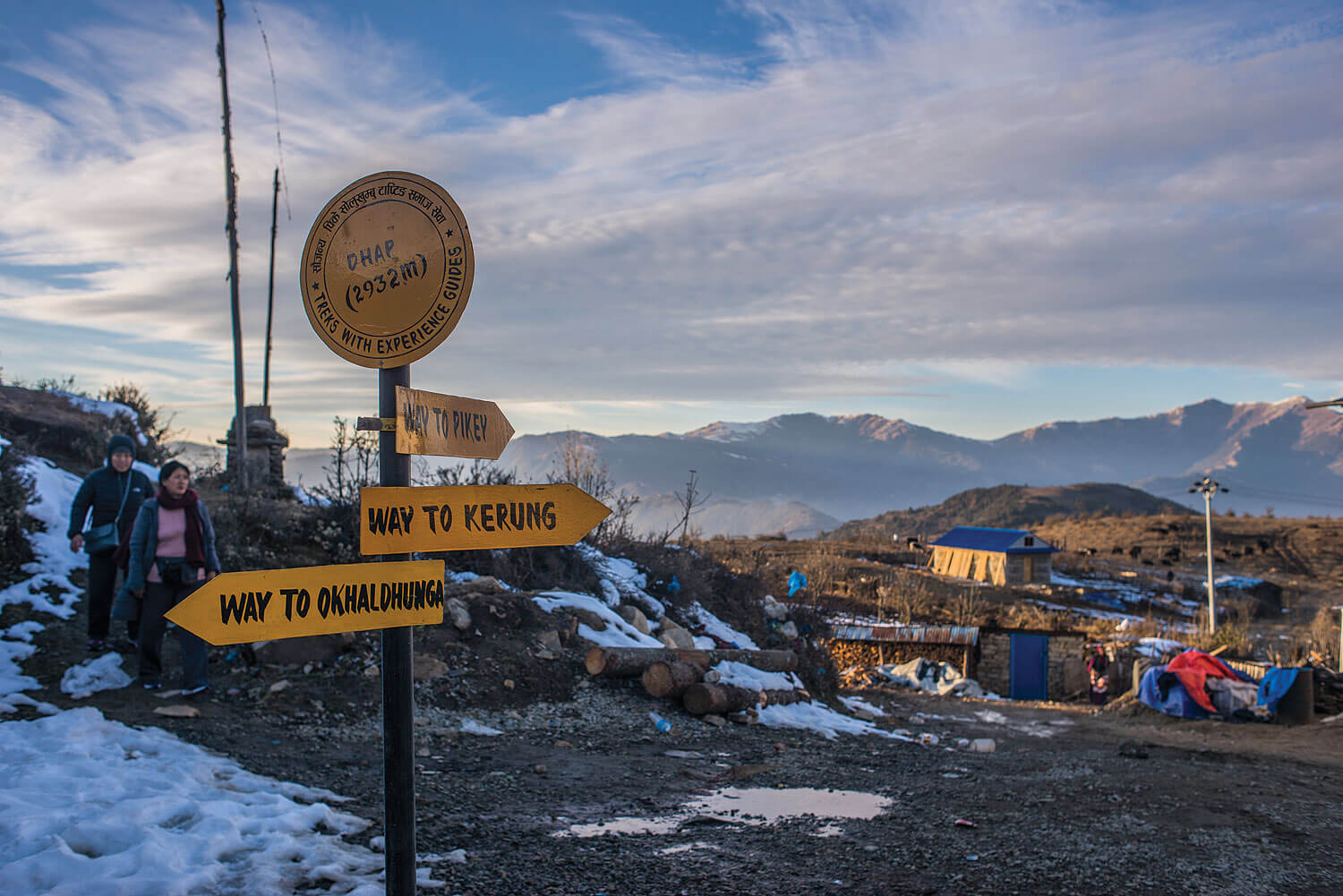
Getting to the Pikey Peak trek, however, begins with a road journey rather than a flight — and this is where careful transport planning matters. The trek’s most common starting point, the small hill village of Dhap, lies approximately 230 to 280 kilometres from Kathmandu by road, depending on the exact route taken, and the journey typically takes 6 to 10 hours, whether you travel by private jeep, shared jeep, or local bus.
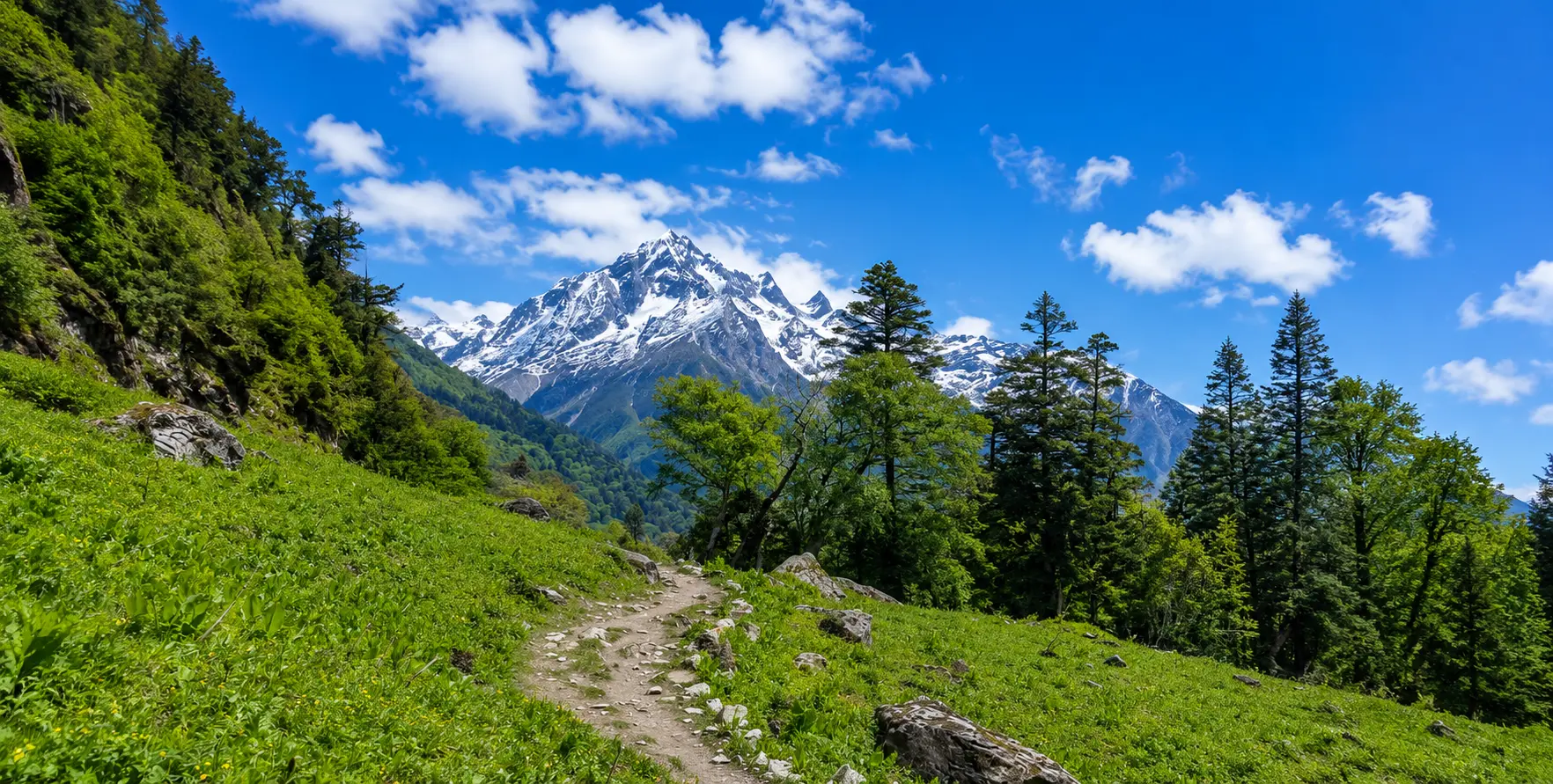
The trek then continues on foot through Jhapre, the Pikey Peak Base Camp area, and the summit viewpoint, before descending through the Sherpa village of Junbesi to finish in Phaplu or Salleri—from where travellers either drive back to Kathmandu or take a short domestic flight.
This complete guide covers everything about transport for the Kathmandu to Pikey Peak Trek: the full route to Dhap, all transport options and their costs, the return journey from Phaplu or Salleri, required permits, a sample trek itinerary, and why Nepal Vehicle Hiring Pvt Ltd is a reliable private vehicle partner for the road sections of this increasingly popular short Himalayan trek.
Pikey Peak — Sir Edmund Hillary’s Finest Viewpoint
Pikey Peak sits on a forested ridge in Solukhumbu District, well south and west of the main Everest trekking corridor that runs through Lukla, Namche Bazaar, and the Khumbu Valley toward Everest Base Camp. Because it lies outside the core high-altitude Khumbu region, Pikey Peak offers a fundamentally different trekking experience: lower maximum altitude (4,065 m at the summit, compared to 5,364 m at Everest Base Camp), correspondingly lower risk of altitude sickness, a shorter overall trek duration, and — perhaps most appealing to many travellers — a trail that remains genuinely quiet even during Nepal’s busiest trekking months, when the main Everest Base Camp trail can feel crowded with hundreds of trekkers.
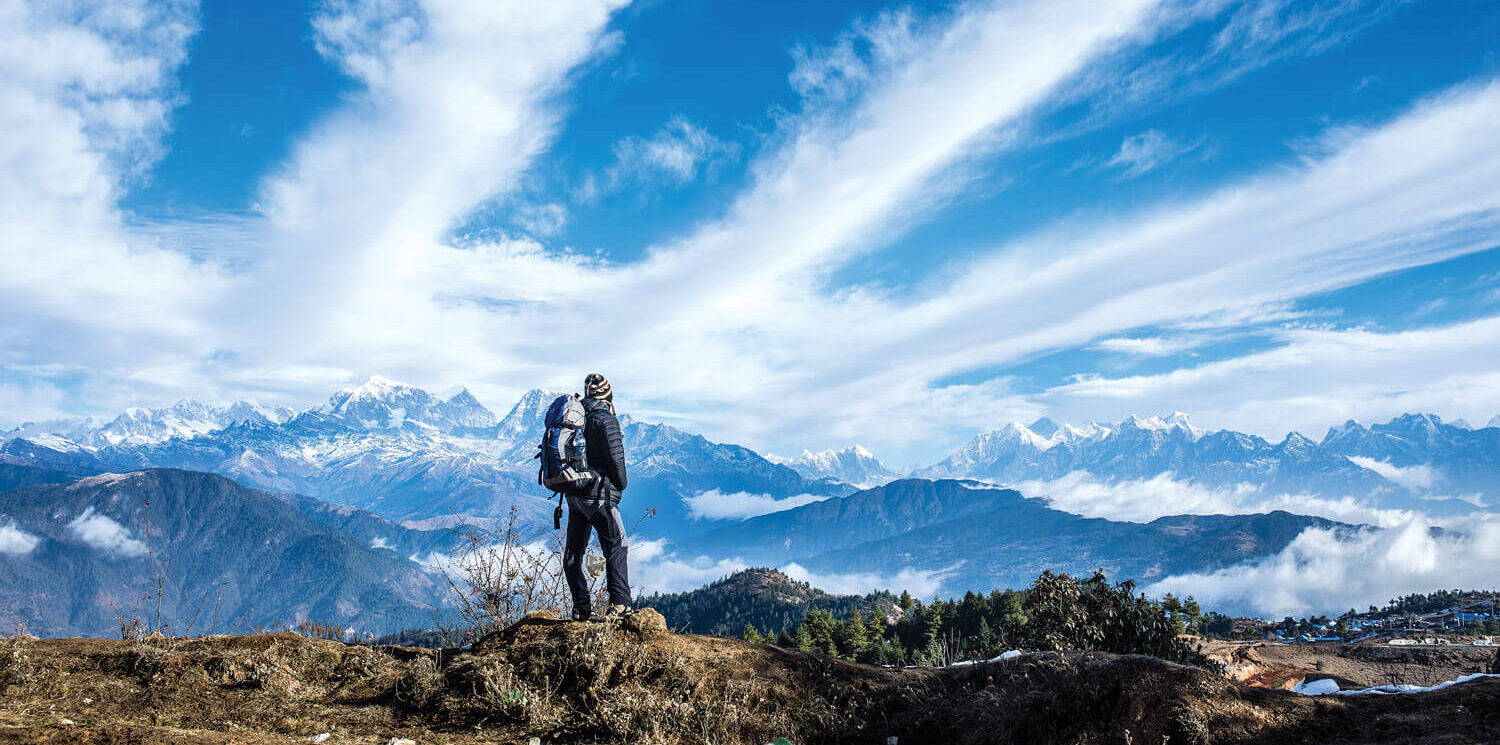
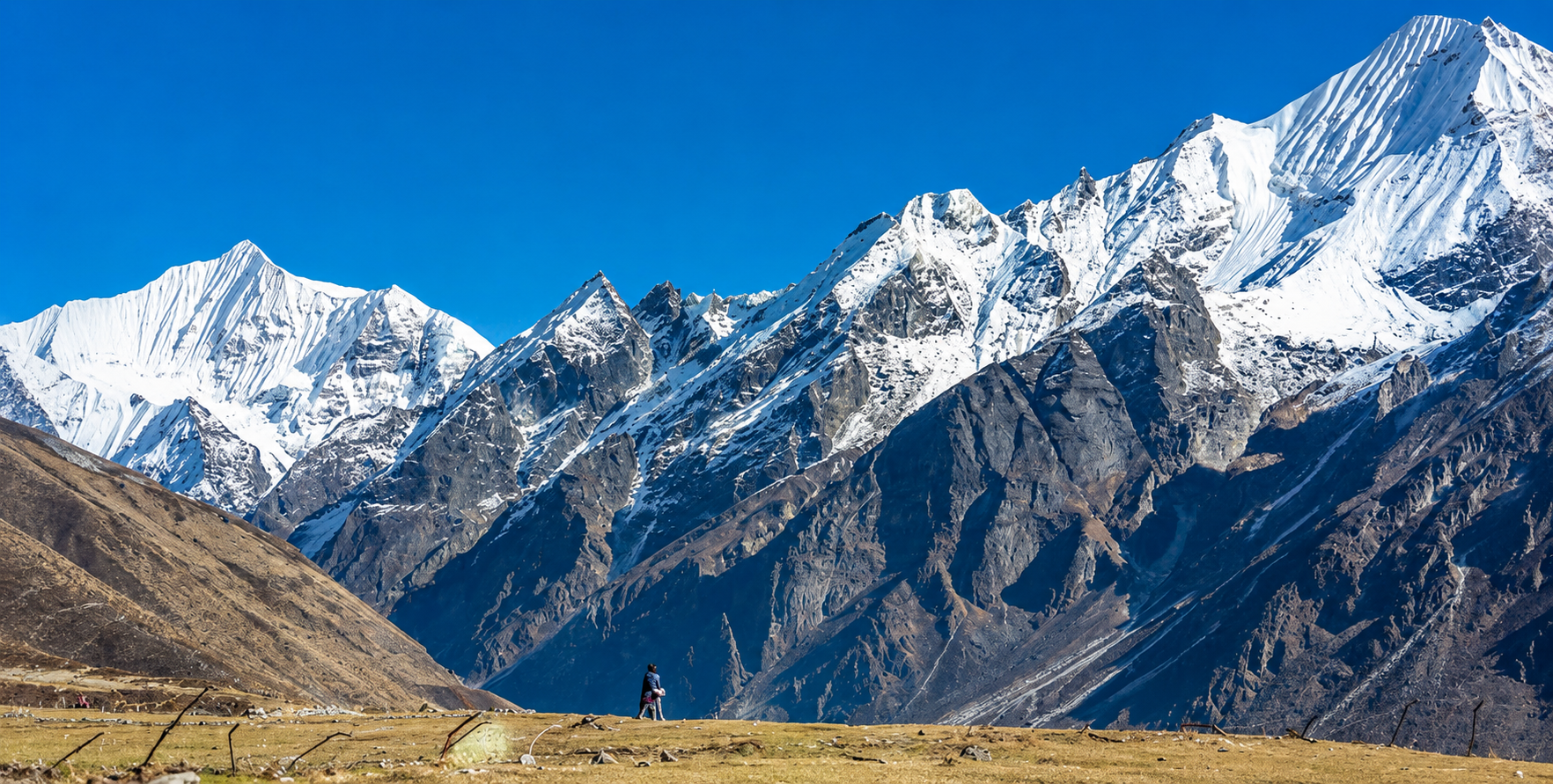
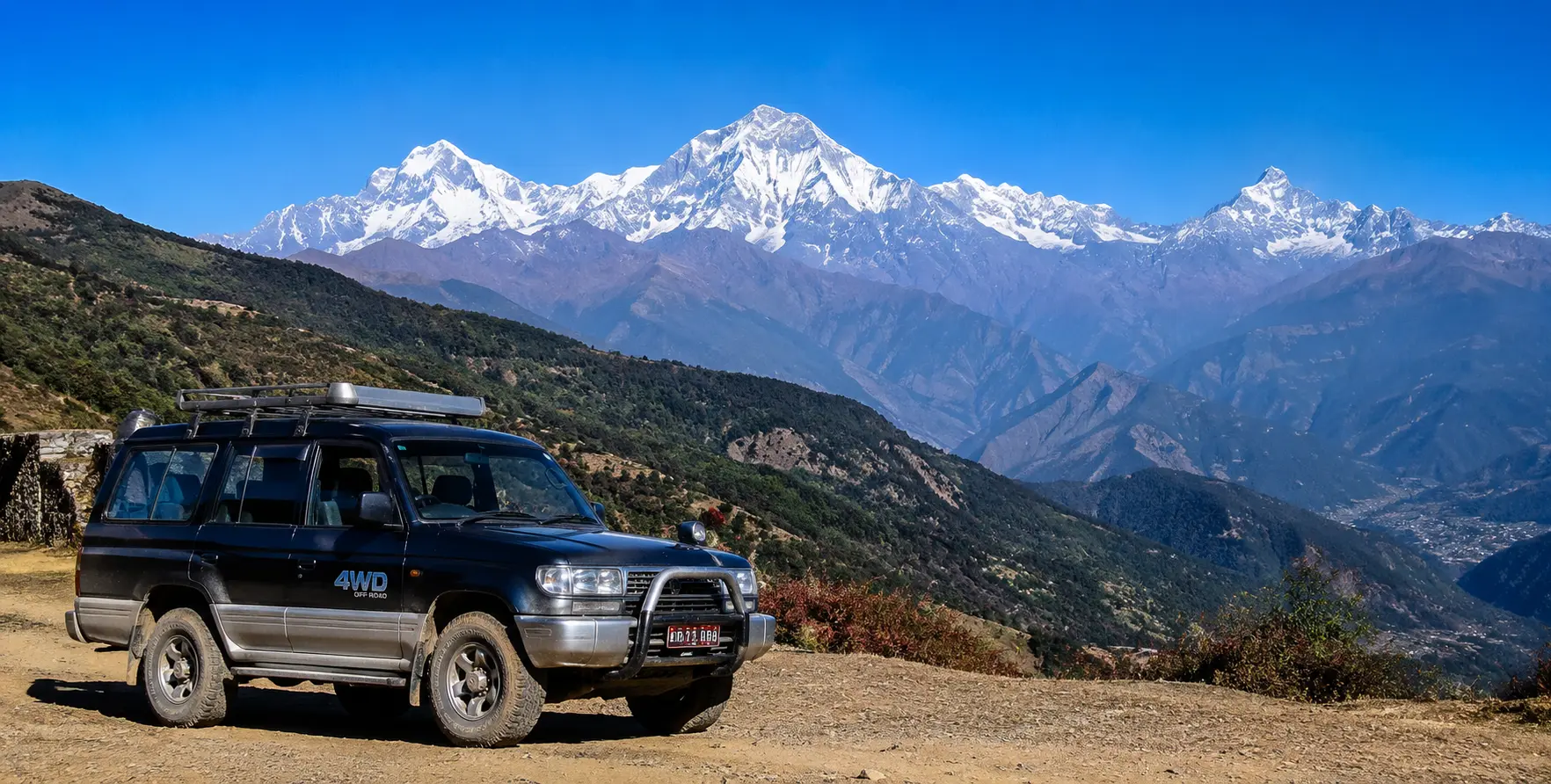
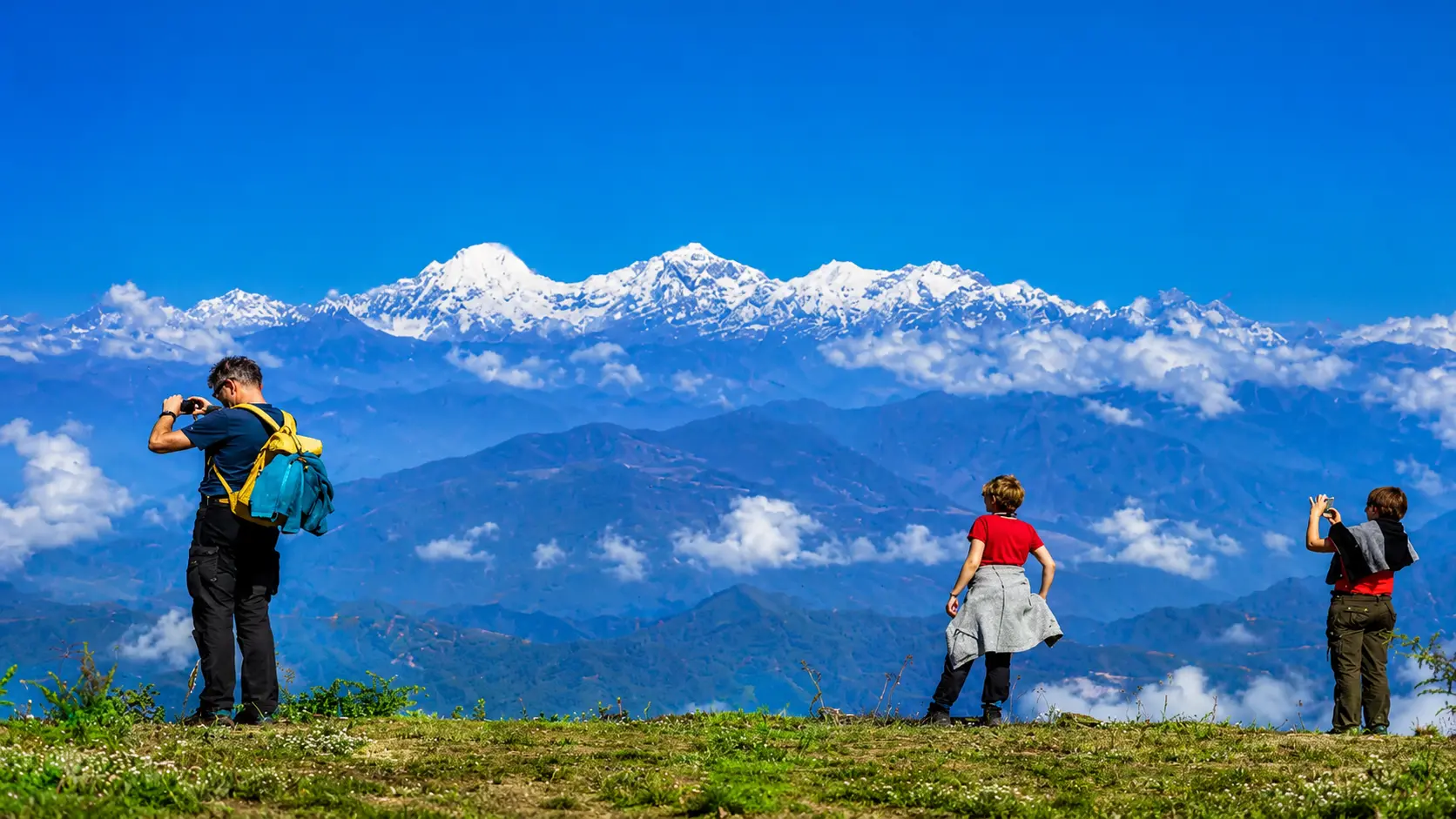
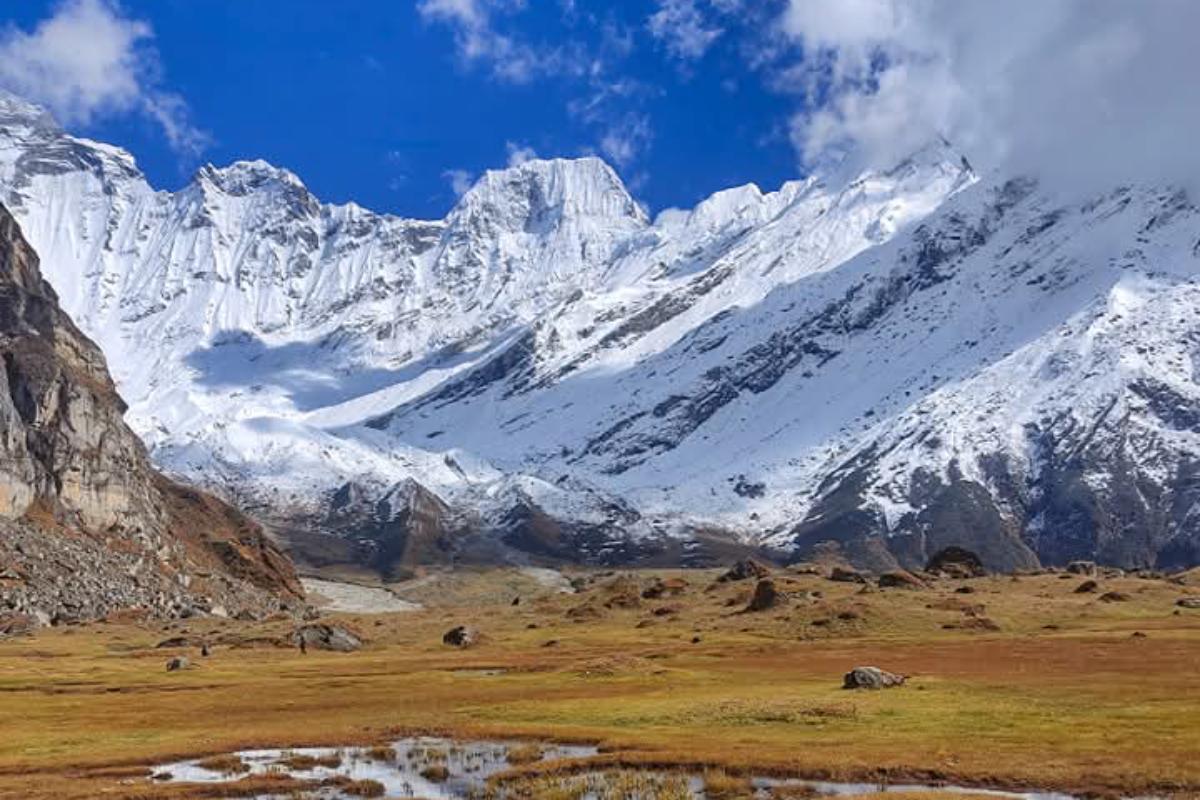
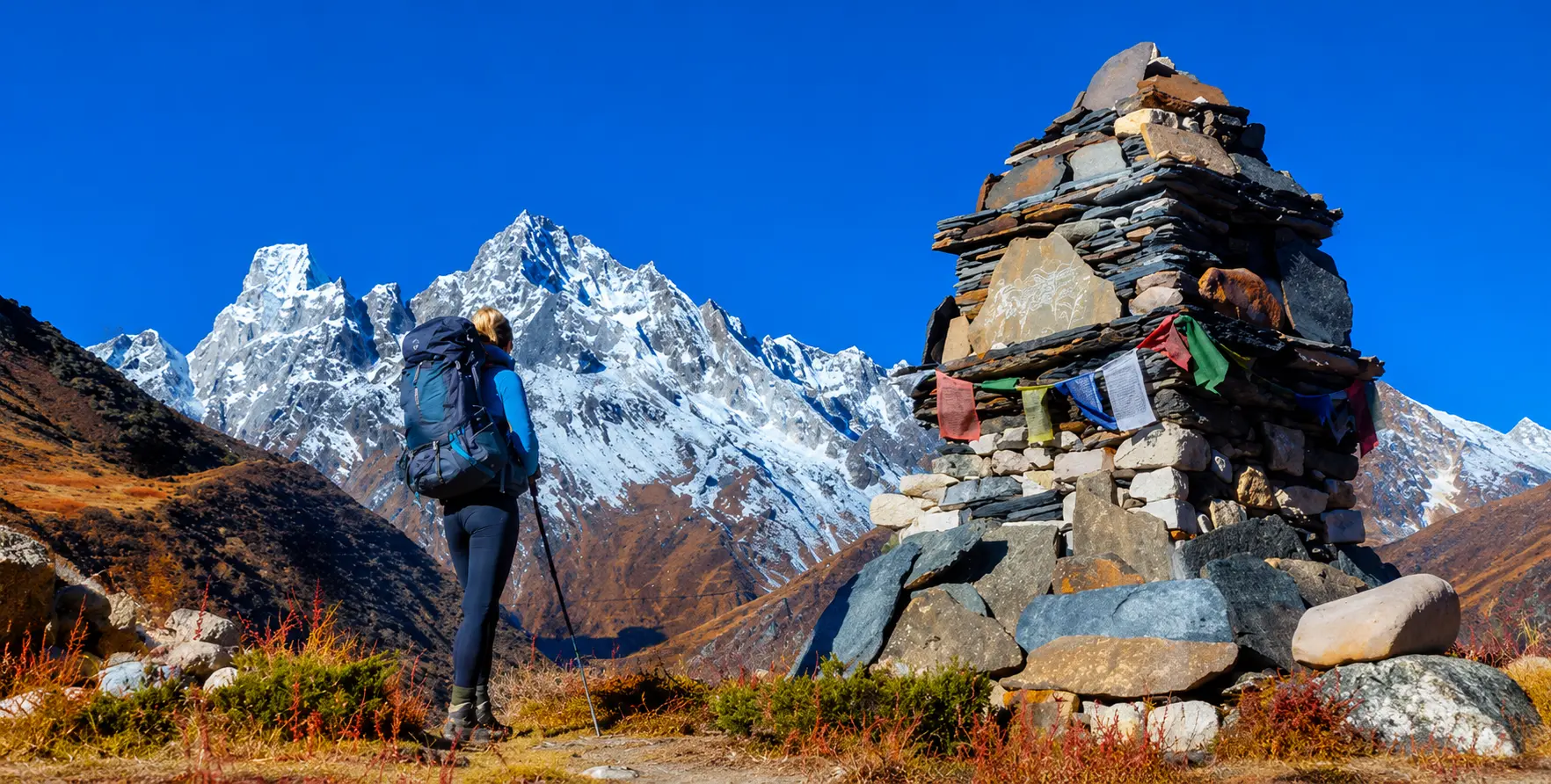
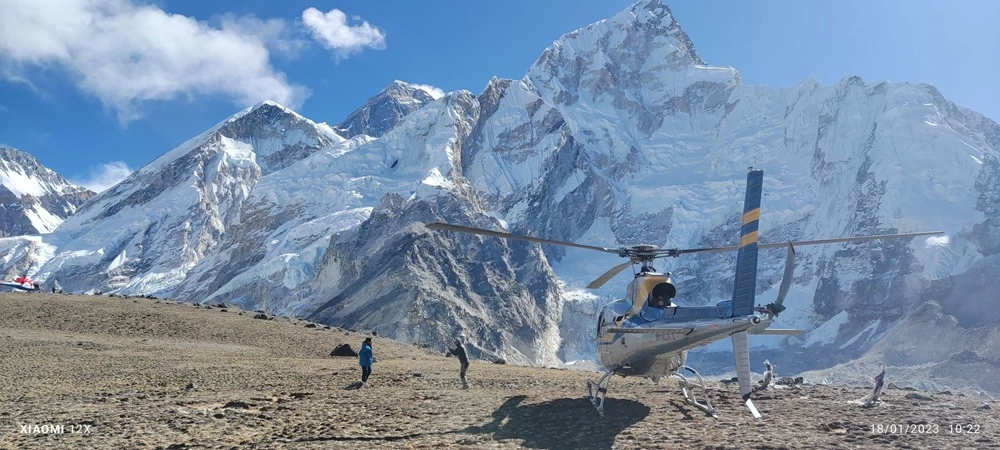
What Pikey Peak does not sacrifice, remarkably, is the quality of the mountain view itself. From the summit viewpoint at dawn, a 270-degree-plus panorama opens across the entire eastern Himalayan range: Everest, Lhotse, and Nuptse cluster together on one section of the horizon, Makalu rises distinctly to the east, and on exceptionally clear days even Kanchenjunga — far to the east on the Sikkim border — becomes visible, alongside the closer peaks of the Rolwaling and Gaurishankar ranges to the west.
The trek’s relatively forgiving altitude profile and shorter duration (typically 5 to 9 days depending on the specific itinerary chosen) have made it one of Nepal’s fastest-growing short trekking options in recent years, frequently recommended as either a standalone trek for travellers with limited time or as an excellent lower-altitude acclimatisation and orientation trek before a more demanding Everest region expedition.
Key Facts at a Glance — Kathmandu to Pikey Peak
Route Detail
Information
Trek Region
Solukhumbu District (lower Everest region foothills)
Standard Start Point
Dhap Bazaar / Dhap Village ~2,900 m)
Standard End Point
Phaplu or Salleri
Pikey Peak Altitude
4,065 m (summit viewpoint)
Distance — Kathmandu to Dhap
230–280 km (sources vary by exact route)
Drive Time — Private Jeep
6 to 7 hours (direct) — often 8–10 hrs realistically with stops
Mandatory — licensed guide required since the April 2023 regulation
Why Trekkers Choose Pikey Peak
Panoramic Everest/Lhotse/Makalu views at moderate altitude, far fewer crowds than EBC
The Route — Kathmandu to Dhap
Stop
Distance from KTM
Road
Key Notes
Kathmandu
Start (1,400 m)
City roads
Early departure — typically 5:00–7:00 AM
Dhulikhel
35 km
Paved — Araniko/BP Highway
Hill viewpoint, photo stop on clear mornings
Khurkot
105–126 km
BP Highway
Standard breakfast/rest stop
Ghurmi Junction
150 km
BP Highway
Route continues toward Okhaldhunga/Solukhumbu
Okhaldhunga area
175–200 km
Mixed paved/rough
District headquarters area — last reliable fuel/ATM
Dhap Village
230–280 km
Local hill road
Trek starting point — altitude 2,900 m
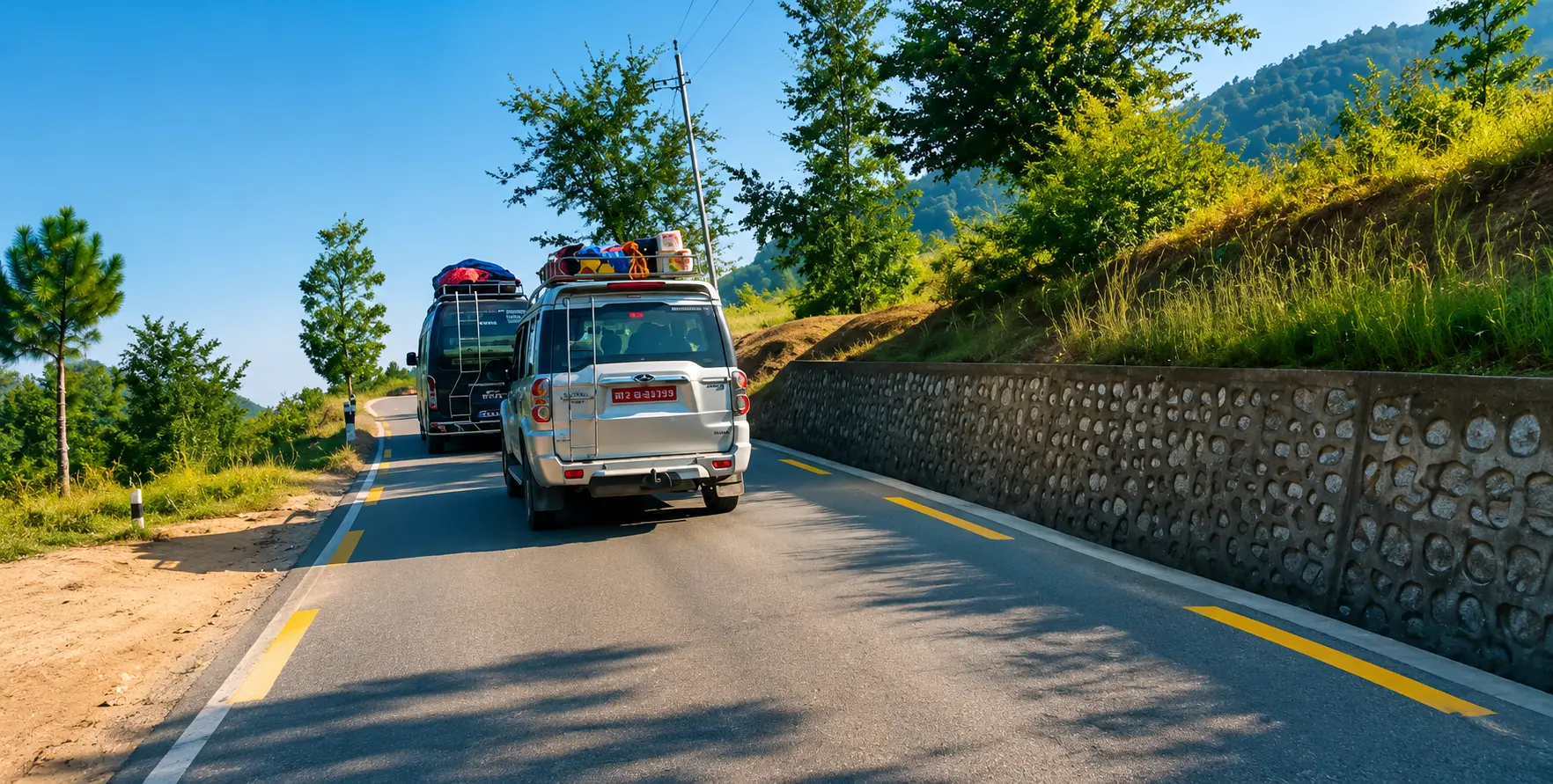
The journey to Dhap follows the same BP Highway corridor used for several of our other eastern Nepal route guides — heading northeast from Kathmandu through Dhulikhel and Nagarkot, then descending onto the BP Highway proper through Khurkot and Ghurmi Junction before turning into the Solukhumbu foothills toward Dhap.
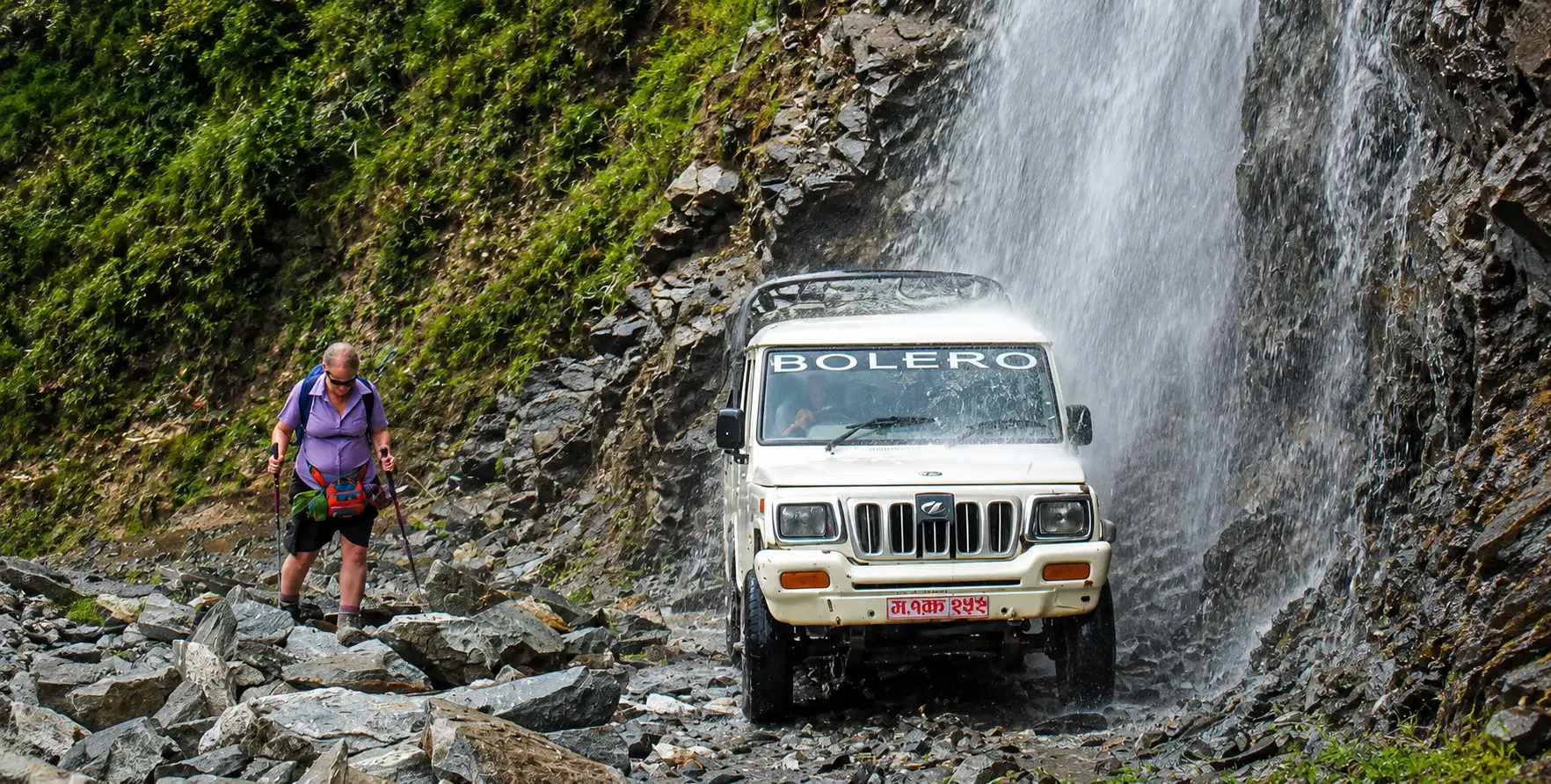
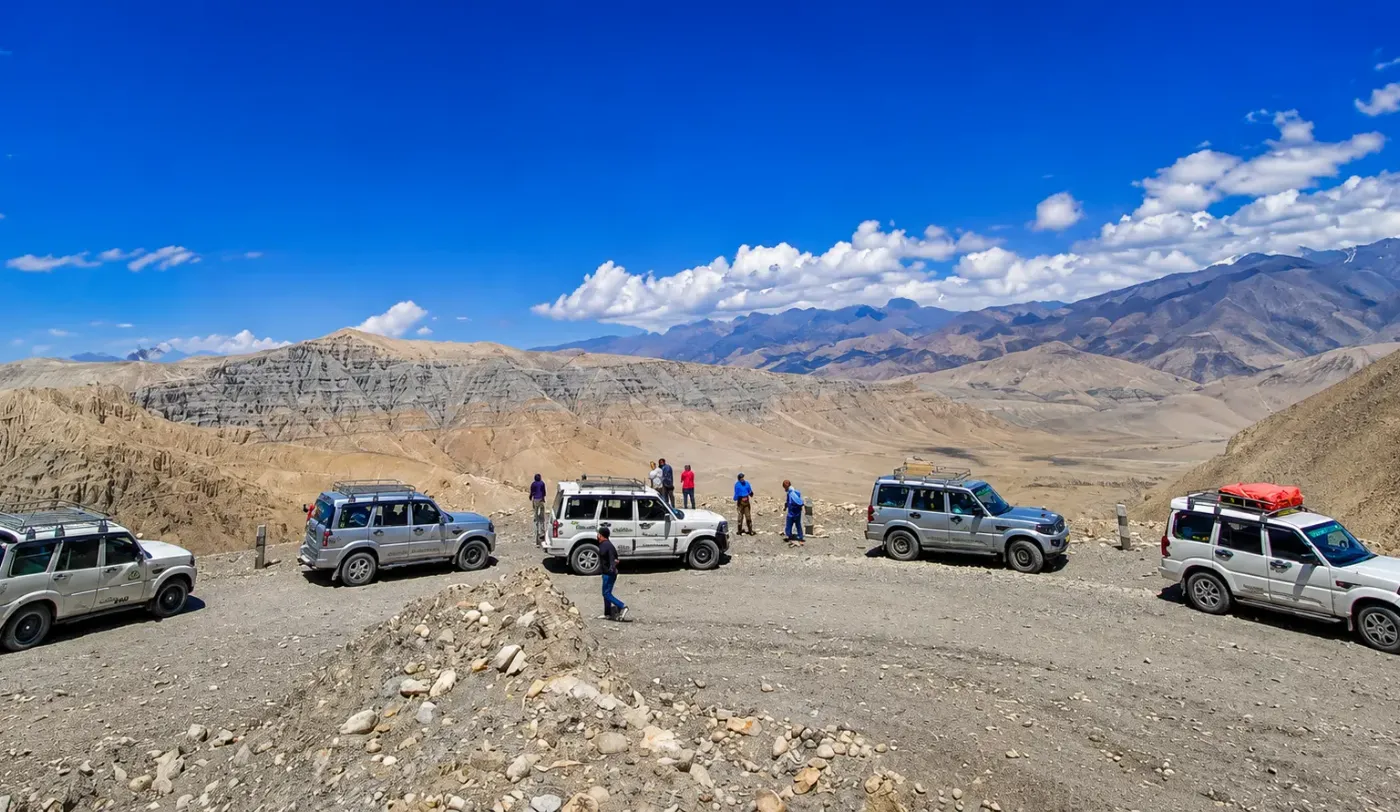
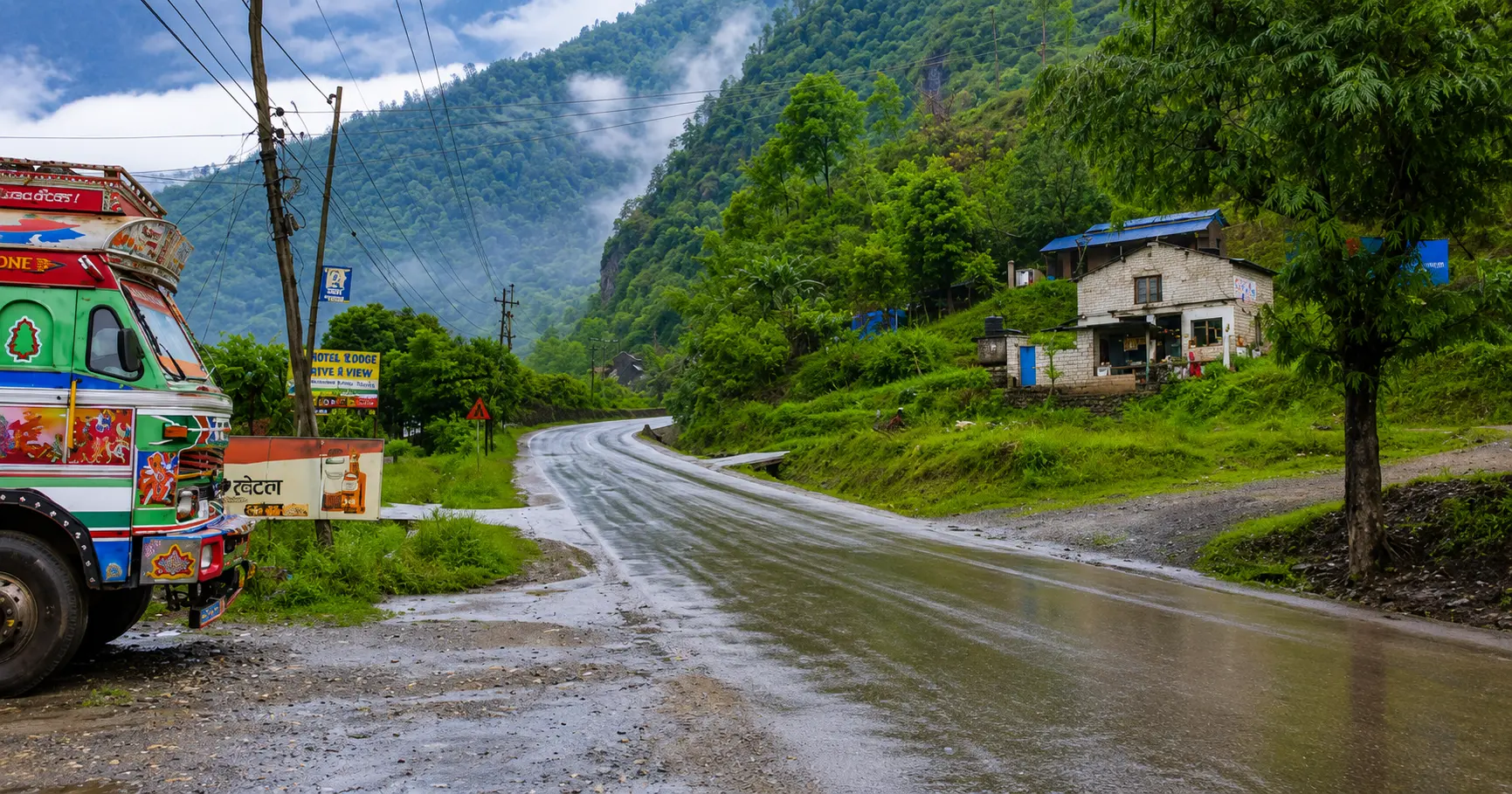
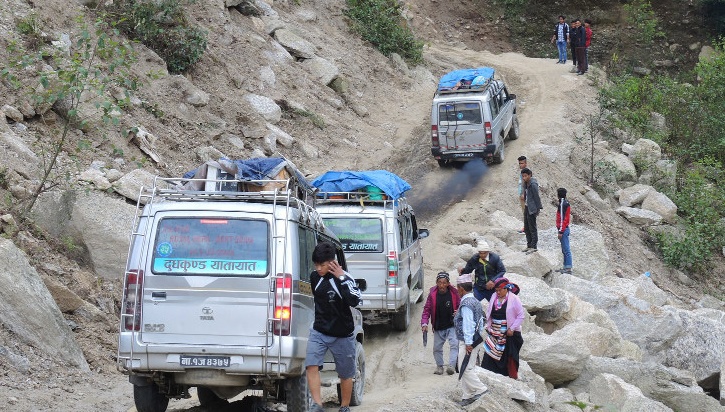
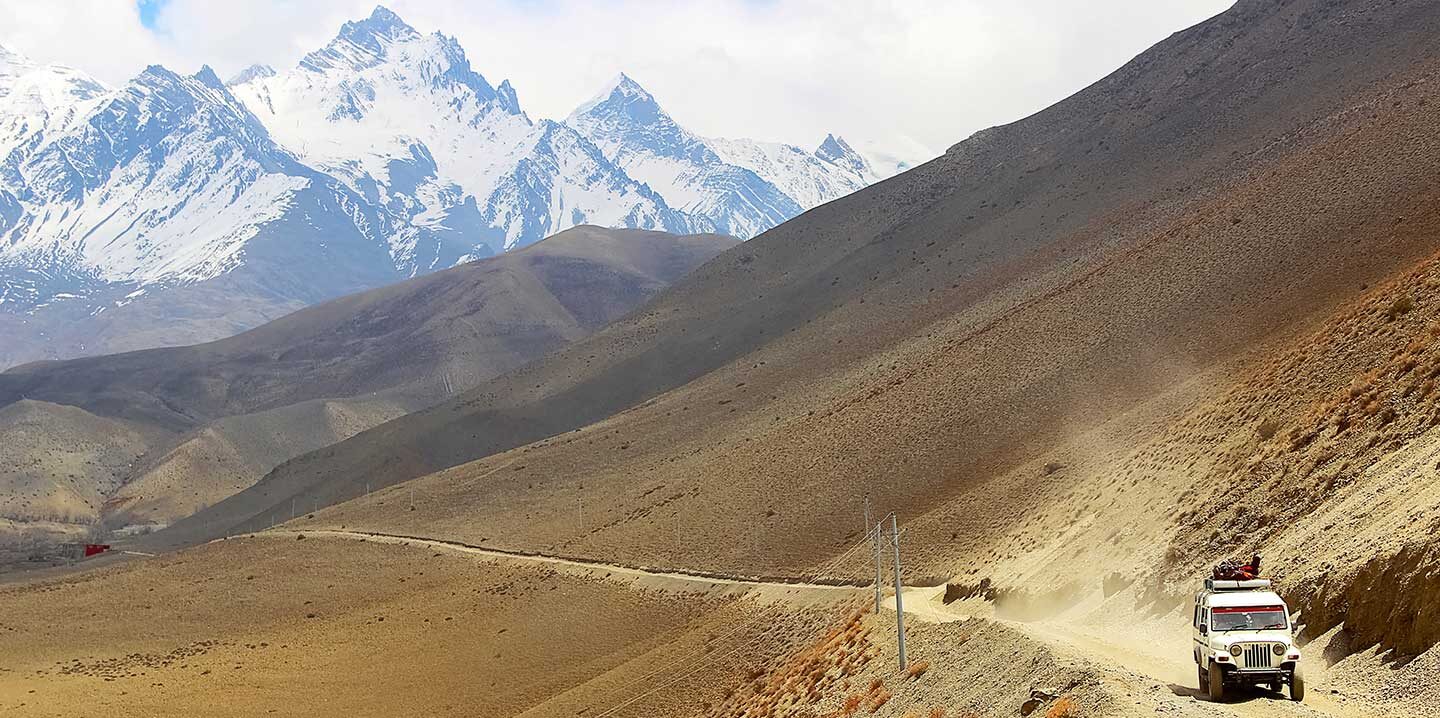
The road is paved for most of the distance, with the final stretch into Dhap on rougher, more rural hill roads that make a 4WD vehicle genuinely worthwhile, even if not strictly mandatory in good dry-season conditions.
Most jeep departures for Pikey Peak leave Kathmandu very early — typically between 5:00 AM and 7:00 AM — both to allow sufficient daylight for the long drive and to take advantage of generally lighter early-morning traffic leaving the Kathmandu Valley. Trekking agencies and shared jeep services commonly depart from the Machhapokhari area of Kathmandu.
At the same time, private vehicle hire through Nepal Vehicle Hiring Pvt Ltd offers door-to-door pickup from any hotel in Kathmandu at whatever time best suits your schedule.
All Transport Options — Kathmandu to Dhap
Transport Option
Capacity
2026 Cost (one way)
Travel Time
Best For
Local Bus (Kathmandu–Dhap)
Many passengers
USD 8–12 per person
8–10 hrs
Tightest budget — basic, frequent stops
Shared Jeep
Up to 7 passengers
USD 20–35 per person
8–10 hrs
Budget travellers are comfortable sharing
Private Jeep (Scorpio/Hilux 4WD)
4–7 passengers
USD 200–300 (full vehicle)
6–7 hrs (often 8–9 hrs realistic)
Groups, comfort, flexible departure
Private Jeep Round Trip Package
4–7 passengers
USD 400–500 (full vehicle, both ways)
Same as above
Most popular choice for trekking groups
Return Flight (Phaplu–Kathmandu)
Per seat
USD 100–180
~30 min
Fastest return — book in advance, limited seats
Private Jeep — The Recommended Choice
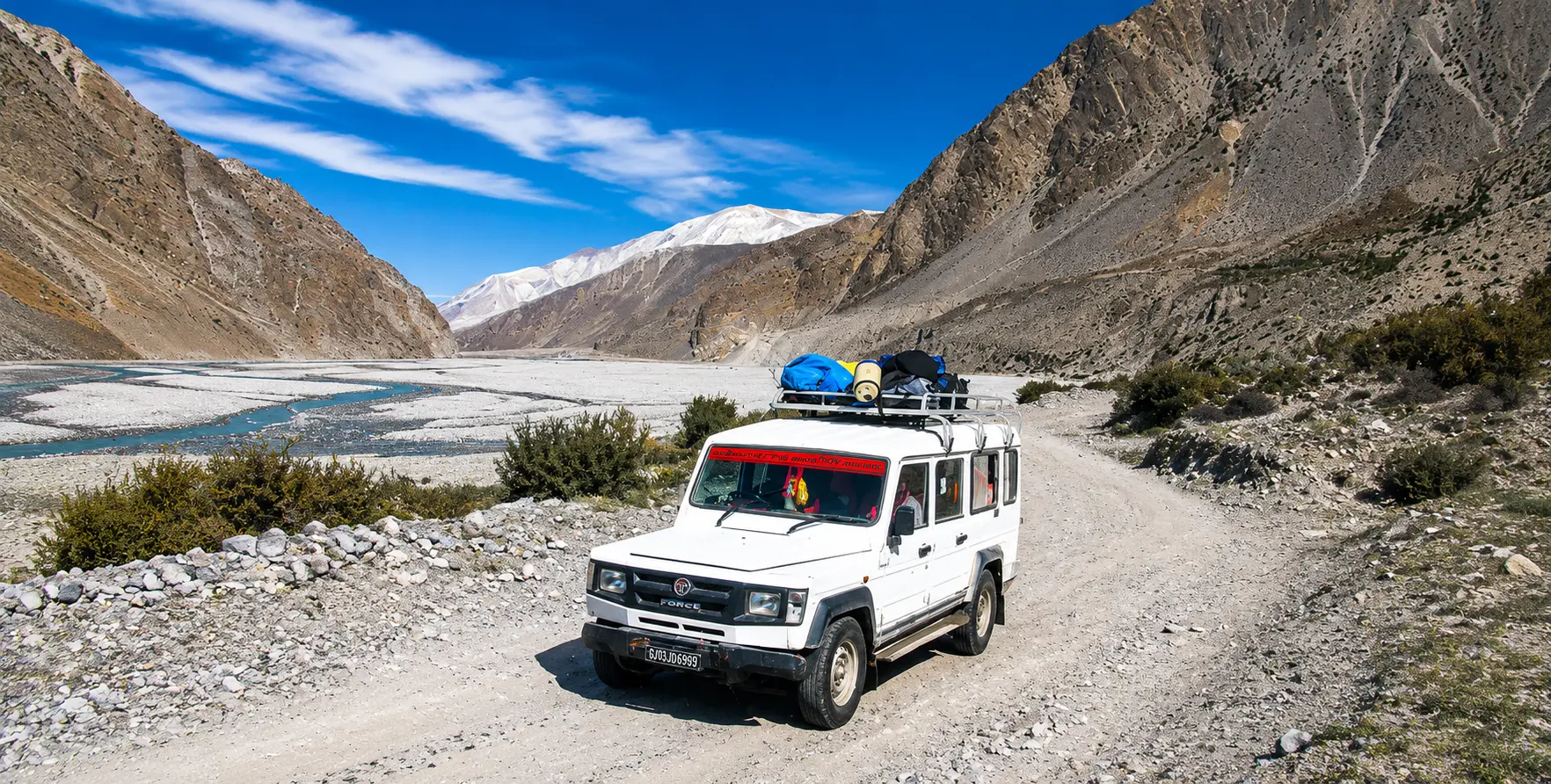
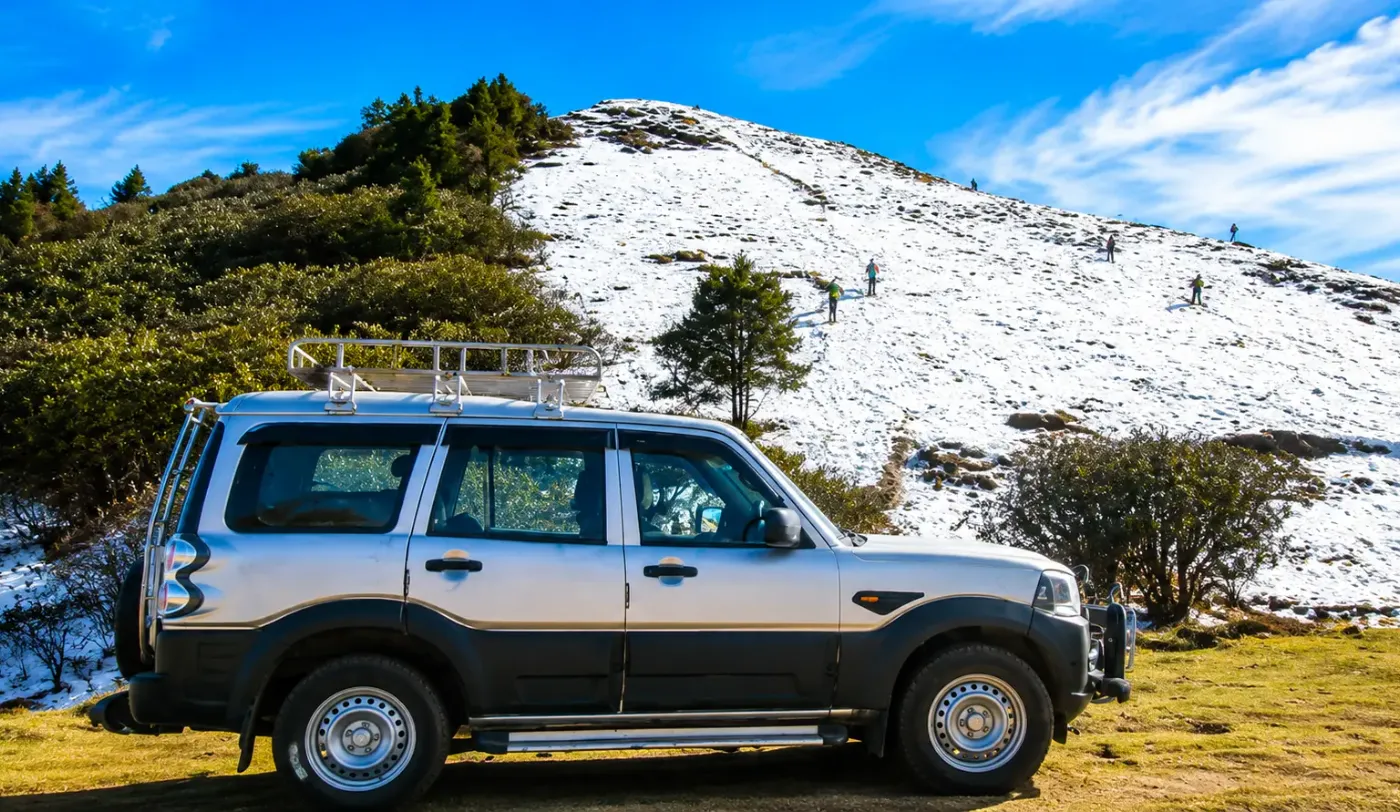
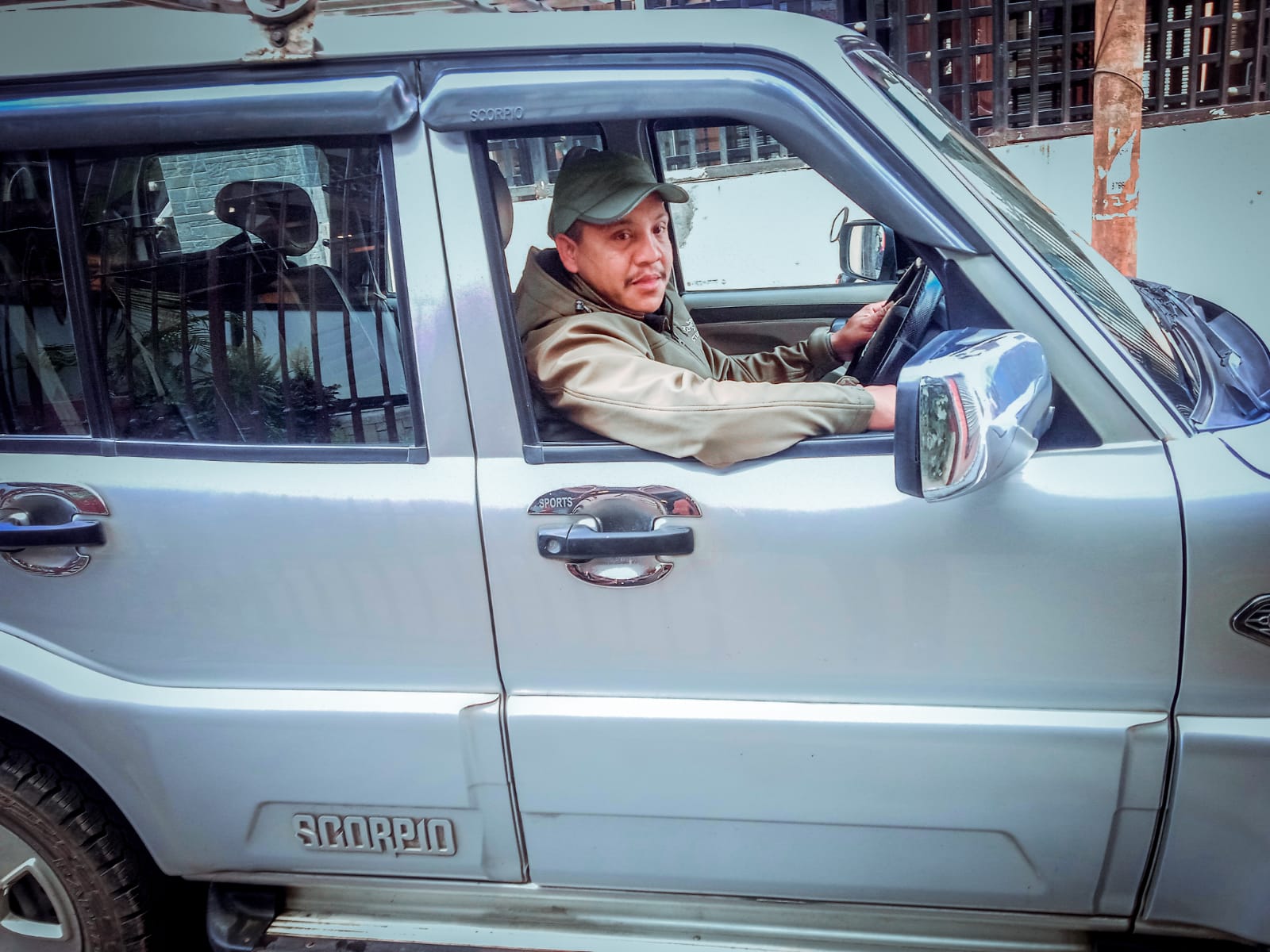
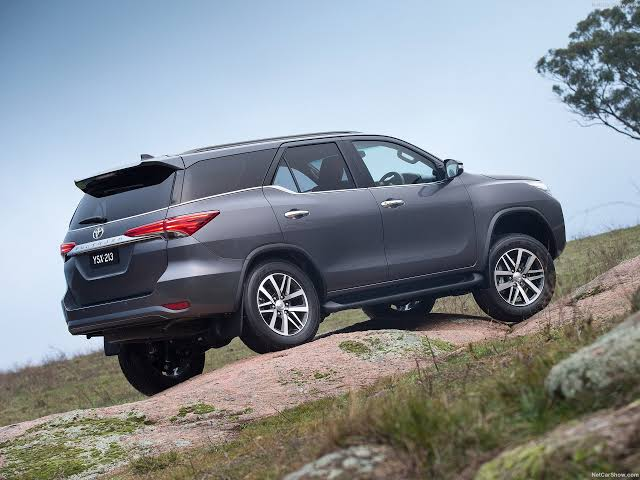
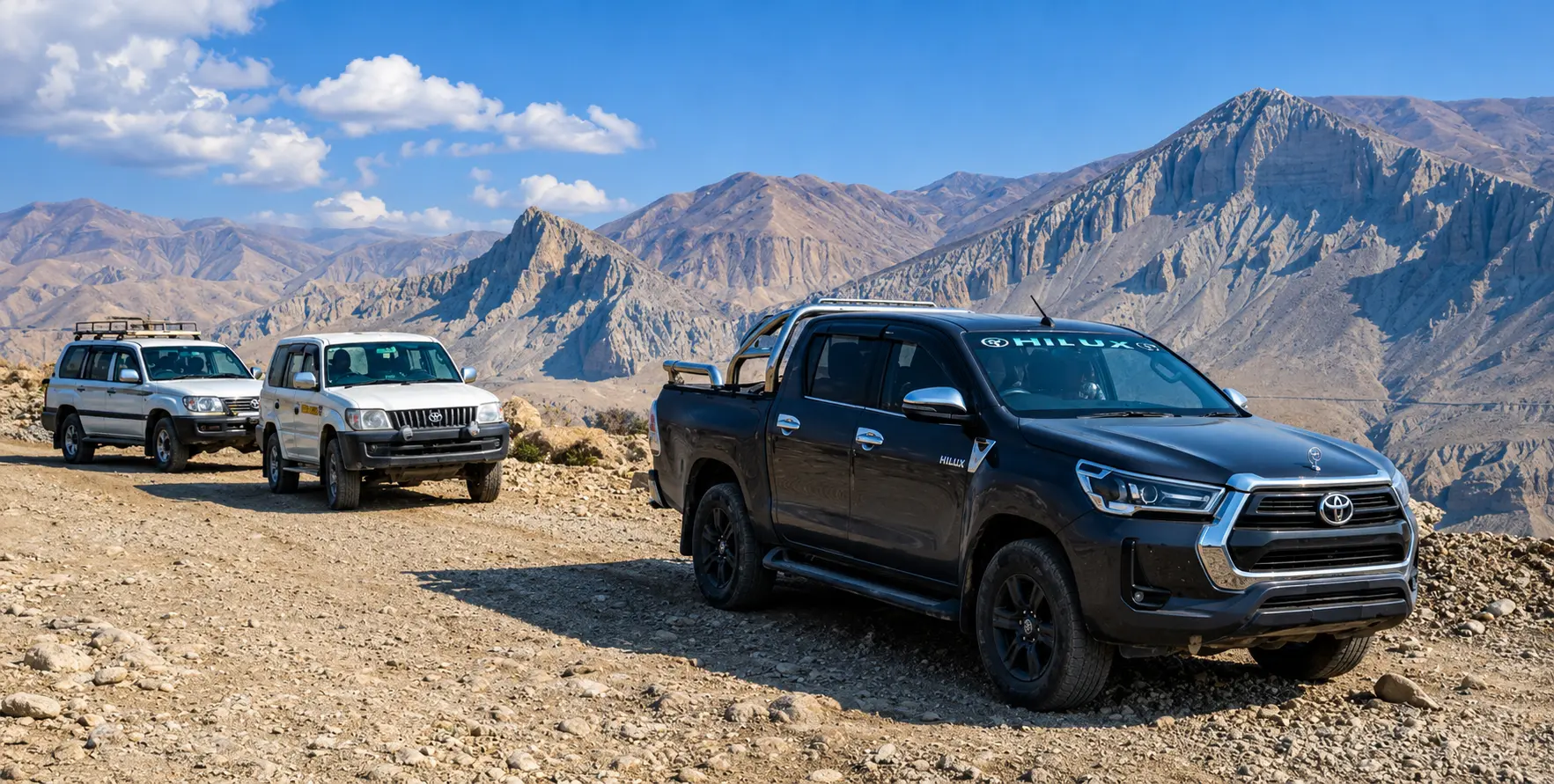
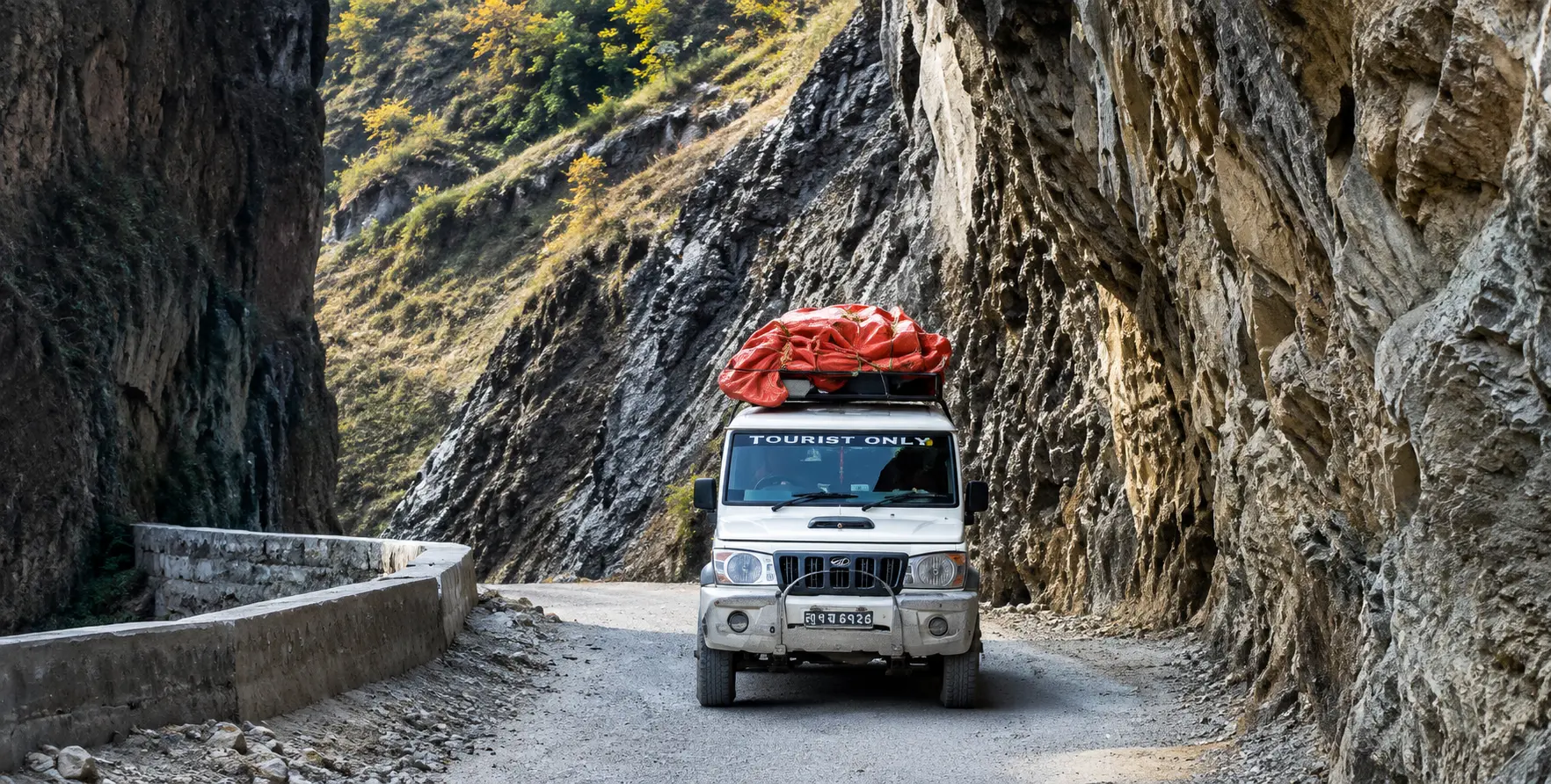
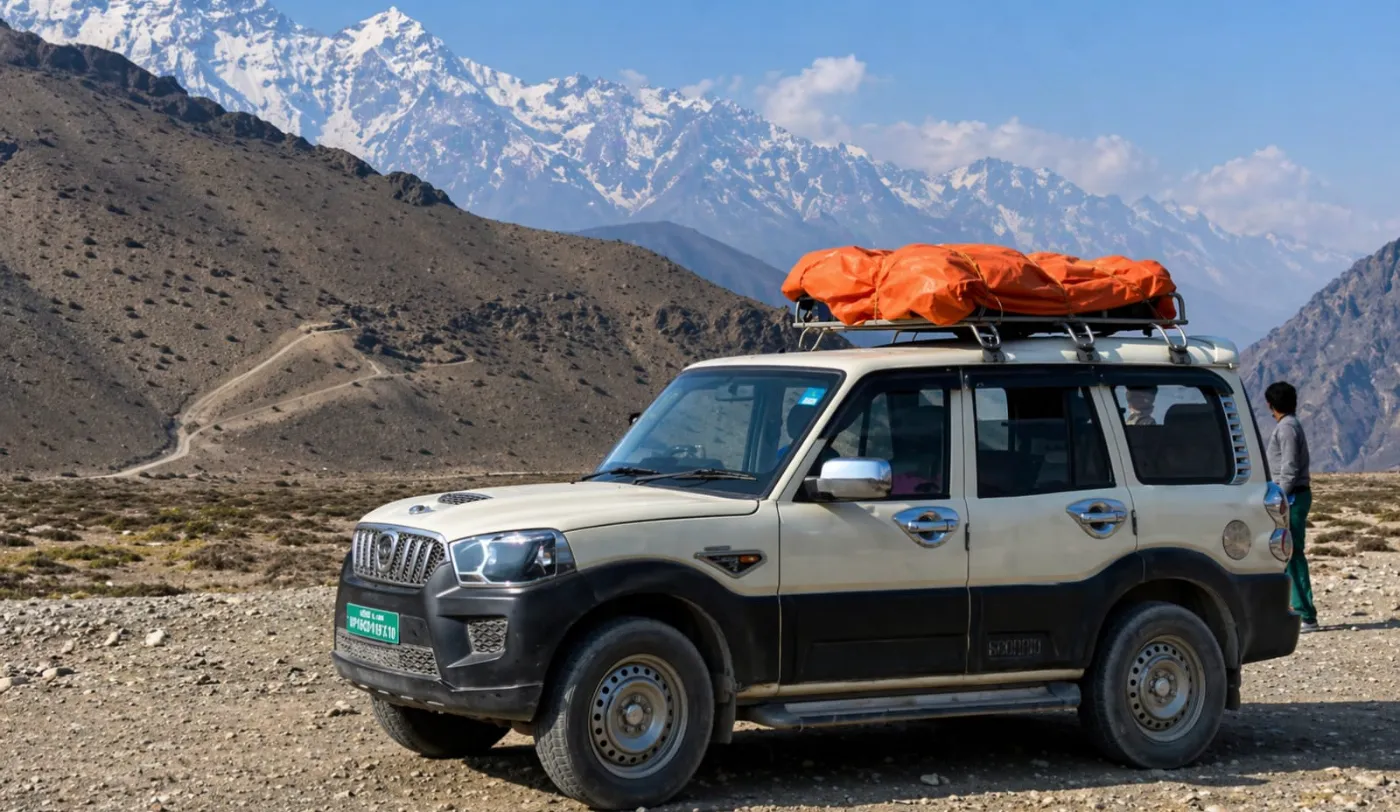
A private 4WD jeep is the most comfortable and flexible way to reach Dhap, especially given the genuinely long driving distance. Nepal Vehicle Hiring Pvt Ltd provides Mahindra Scorpio 4WD and Toyota Hilux 4WD vehicles for this route, both well-suited to the rougher final approach into Dhap and capable of carrying full trekking gear on the roof rack for groups of 4 to 7 passengers.
One-way cost: USD 200–300 for the full vehicle
Round-trip package: USD 400–500 for the full vehicle, both legs
Departure: Flexible — typically 5:00–7:00 AM for the best daylight driving window
Group Value: For 6 trekkers sharing a private jeep round trip at USD 450, the per-person cost is about USD 75 for the entire outward and return journey—comparable to shared jeep fares but with vastly superior comfort, hotel pickup, and schedule flexibility.
Shared Jeep — Mid-Range Budget Option
Shared jeeps, typically seating up to 7 passengers, operate between Kathmandu and Dhap on a fill-and-depart basis. This is a reasonable middle ground between the cheapest local bus option and a fully private vehicle, though departure times and comfort levels are less predictable.
Cost: USD 20–35 per person, one way
Travel time: 8 to 10 hours
Best for: Budget travellers comfortable sharing with other trekkers
Local Bus — Cheapest Option
Local buses connect Kathmandu to destinations along the BP Highway corridor toward Okhaldhunga, with some services continuing to or near Dhap. This is the most economical option but takes the longest, with frequent stops and the least comfortable seating.
Cost: USD 8–12 per person, one way
Travel time: 8 to 10 hours, sometimes longer with transfers
Best for: Extremely budget-conscious solo travellers with flexible schedules
The Return Journey — Phaplu or Salleri to Kathmandu
The Pikey Peak Trek typically finishes at Phaplu or the nearby town of Salleri, both of which offer two distinct return options to Kathmandu.
Return by Road
The drive from Salleri or Phaplu back to Kathmandu covers approximately 267 km. It takes 7 to 8 hours and passes through Jir, historically the traditional overland starting point for Everest expeditions before the construction of Lukla’s airstrip made flying the standard approach. This route offers its own scenic and cultural rewards, taking in traditional hill villages and a genuine sense of how Everest-bound expeditions travelled before the era of mountain flights.
Private jeep: Similar pricing structure to the outward journey — USD 200–300 one way
Shared jeep/bus: USD 20–35 per person
Return by Flight
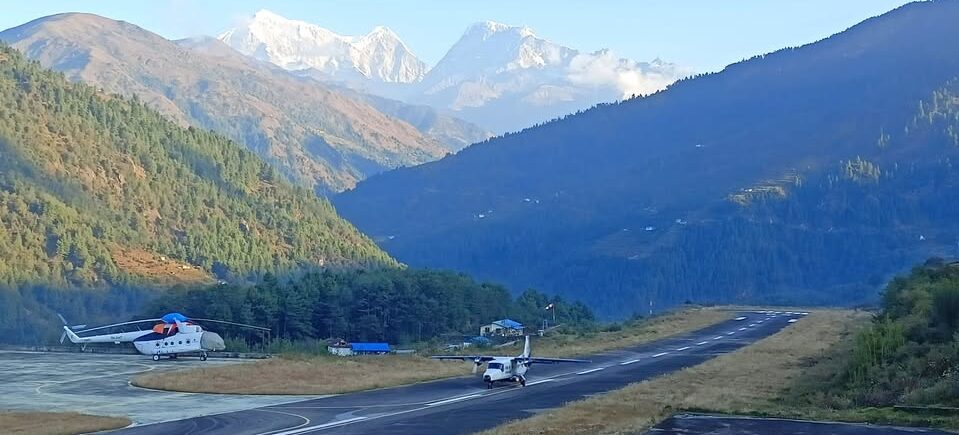
For trekkers who prefer to save time on the return leg, a short domestic flight connects Phaplu Airport directly to Kathmandu in approximately 30 minutes.
Cost: Approximately USD 100–180 per person
Note: Flights are not daily, and seats are limited — book well in advance, particularly during peak trekking season
Weather: Like all of Nepal’s mountain domestic routes, Phaplu flights are subject to occasional weather-related delays
Popular Combination: Many trekkers choose a private jeep for the outward journey to Dhap (for comfort and reliable timing at the start of the trek) and a flight from Phaplu back to Kathmandu at the end of the trek — combining the best of both transport options across the two legs of the journey.
Permits Required for the Pikey Peak Trek
Permit
Cost (approx.)
Required When
Notes
Pikey Peak / Local Area Permit
NPR 2,000 (USD 15) per person
Always, for the standard Dhap–Phaplu route
Collected at local checkpoint
TIMS Card
NPR 2,000 (USD 15) per person
Always
Obtainable via Nepal Tourism Board or trekking agency
Gaurishankar Conservation Area Permit (GCAP)
NPR 3,000 (USD 23) per person
Only if starting from the Shivalaya/Jiri route
NOT required for the standard Dhap–Phaplu route
Sagarmatha National Park Permit
NPR 3,000 (USD 22) per person
Only if the itinerary extends into Sagarmatha NP territory
Verify with your guide if your route includes this
Licensed Guide (mandatory 2026)
USD 25–35 per day
Always, per the April 2023 regulation
Arranged through any registered trekking agency
Route Matters for Permits: The standard Dhap-to-Phaplu route does NOT require the Gaurishankar Conservation Area Permit — this is only needed if your itinerary starts from Shivalaya or Jiri instead. Confirm your exact planned route with your trekking agency before assuming which permits apply to your specific itinerary.
Sample Pikey Peak Trek Itinerary
Day
Activity
Altitude/Notes
Day 1
Drive Kathmandu → Dhap (6–10 hrs by jeep)
2,900 m — overnight in Dhap
Day 2
Trek Dhap → Jhapre
Forest trail, gradual ascent
Day 3
Trek Jhapre → Pikey Peak Base Camp
Approaching the viewpoint ridge
Day 4
Pre-dawn hike to Pikey Peak summit (4,065 m) → Jasmane Bhanjyang
Panoramic Everest, Lhotse, Makalu sunrise view
Day 5
Trek to Junbesi
Sherpa village, monastery, apple orchards
Day 6
Trek to Phaplu / Salleri
5–6 hrs walking
Day 7
Drive (or fly) Phaplu/Salleri → Kathmandu
7–8 hrs by road, or ~30 min by flight
This 7-day itinerary is one of the most common formats for the Pikey Peak Trek. However, trekking operators also offer shorter 5- to 6-day versions and longer 9- to 10-day versions with additional acclimatisation or side-trip days. The pre-dawn ascent to the Pikey Peak summit viewpoint on Day 4 is the unquestioned highlight of the entire trek — most itineraries time this specifically to catch the sunrise illuminating the Everest, Lhotse, and Makalu panorama.
Season Guide — Best Time for the Journey and Trek
Season
Months
Road & Trail Conditions
Recommendation
Autumn
Oct–Nov
Excellent — dry, clear
Best season — peak Everest panorama clarity
Winter
Dec–Feb
Good but cold; possible light snow near summit
Good — quiet, very clear skies
Spring
Mar–May
Good — dry, rhododendron forests in bloom
Excellent — second peak season
Monsoon
Jun–Sep
Variable — landslide risk on hill roads
Manageable at this lower altitude vs EBC, but views are often clouded
Because Pikey Peak’s maximum altitude is considerably lower than Everest Base Camp, the trek itself remains viable across a slightly wider range of conditions than higher-altitude alternatives — though the clearest and most rewarding mountain panoramas are still concentrated in the core autumn and spring trekking seasons.
The road journey to Dhap, passing through genuine hill country along the BP Highway corridor, is more affected by monsoon-season conditions than the trek itself, and Nepal Vehicle Hiring Pvt Ltd monitors current road conditions on this route and will proactively advise before departure during the wetter months.
Practical Tips for Pikey Peak Trek Transport
Book your private jeep at least 3 to 5 days in advance during peak season (October–November and March–May) — Pikey Peak’s growing popularity has significantly increased demand for vehicles on this route in recent years.
Depart Kathmandu by 5:00–7:00 AM at the latest — the long drive to Dhap requires the full daylight hours available.
If planning to fly back from Phaplu, book your flight as early as possible — seats are limited, and the route does not operate daily.
Confirm with your trekking agency exactly which permits your specific route requires — the Dhap-to-Phaplu standard route has different permit requirements from the alternative Shivalaya/Jiri starting route.
Carry NPR cash for the journey — ATMs become unreliable beyond Okhaldhunga and are unavailable in Dhap itself.
Pack layers for a wide temperature range — the journey moves from the mild Kathmandu Valley climate to the cooler hill altitude of Dhap at 2,900 meters.
A licensed guide is mandatory for this trek under Nepal’s 2023 regulations — arrange this through a registered trekking agency before departure, along with your transport booking.
If your group is splitting outward and using different return transport modes (jeep outward, flight return, for example), confirm baggage-handling arrangements in advance so gear isn’t left stranded at the wrong end of the route.
Why Choose Nepal Vehicle Hiring Pvt Ltd
Eastern Nepal Route Experience: Our drivers know the BP Highway corridor and the hill roads leading into Dhap and the broader lower Solukhumbu region.
Flexible Departure Timing: We accommodate the early 5:00–7:00 AM departures this route typically requires, with door-to-door pickup from any hotel in Kathmandu.
Round Trip Coordination: Book your outward Kathmandu-to-Dhap jeep and your return Phaplu/Salleri-to-Kathmandu transport as a single coordinated package.
Right Vehicle for the Terrain: Scorpio 4WD and Toyota Hilux 4WD vehicles suit the rougher final approach into Dhap, with full luggage capacity for trekking gear.
Transparent All-Inclusive Pricing: Every quote includes the driver, fuel, and road tolls.
24/7 Booking: WhatsApp or call WhatsApp — book your Pikey Peak trek transport with full itinerary support.
Frequently Asked Questions — Kathmandu to Pikey Peak
How far is Dhap from Kathmandu, and how long does the drive take?
Dhap, the standard starting point for the Pikey Peak Trek, is approximately 230-280 km from Kathmandu, depending on the exact route. A private jeep takes about 6 to 7 hours in good conditions, though 8 to 10 hours is more realistic, accounting for stops and road conditions. Shared jeeps and local buses typically take 8 to 10 hours.
What is the 2026 cost of a private jeep from Kathmandu to Dhap?
A private jeep costs approximately USD 200 to USD 300 for a full-vehicle one-way trip (carrying 4 to 7 passengers). A round-trip package, covering both the outward journey to Dhap and the return from Phaplu or Salleri, typically costs USD 400-500.
Can I fly back from the Pikey Peak Trek instead of driving?
Yes. A short domestic flight connects Phaplu Airport to Kathmandu in approximately 30 minutes and costs USD 100-180 per person. Flights are not daily and have limited seats, so booking is recommended, particularly during peak trekking season.
Do I need the Gaurishankar Conservation Area Permit for the Pikey Peak Trek?
Only if your itinerary starts from Shivalaya or Jiri rather than the standard Dhap starting point. If you begin your trek from Dhap and finish at Phaplu or Salleri — the most common itinerary — you do not need the Gaurishankar Conservation Area Permit, only the Pikey Peak Local Area Permit and a TIMS card.
Is a guide mandatory for the Pikey Peak Trek?
Yes. Since Nepal’s April 2023 regulation, a licensed guide is mandatory for the Pikey Peak Trek, as for virtually all major trekking routes in Nepal. Arrange this through a registered trekking agency before you depart.
Why is Pikey Peak recommended over Everest Base Camp for some trekkers?
Pikey Peak’s summit altitude of 4,065 metres is considerably lower than Everest Base Camp’s 5,364 metres, resulting in significantly lower altitude sickness risk, a shorter overall trek duration (typically 5 to 9 days versus 12 to 16 days for EBC), and a much quieter trail experience, while still offering a comparably spectacular panoramic view of Everest, Lhotse, Makalu, and the surrounding Himalayan range.
Conclusion
The journey to Pikey Peak begins, like so many of Nepal’s great trekking adventures, with a long and genuinely scenic road journey — out of the Kathmandu Valley, along the BP Highway, and into the forested hills of lower Solukhumbu, before the trek itself carries travellers up to one of the finest and most accessible Himalayan panoramas anywhere in Nepal. For trekkers seeking the visual reward of an Everest-region viewpoint without the altitude risk, crowds, or extended time commitment of the classic Everest Base Camp trek, Pikey Peak offers one of the best-value Himalayan experiences available today.
Nepal Vehicle Hiring Pvt Ltd provides reliable, comfortable private vehicle hire for both legs of this journey — the outward drive to Dhap and the return from Phaplu or Salleri — with flexible early departure times, the right 4WD vehicle for the terrain, and transparent, all-inclusive pricing for trekkers of all group sizes.
Book your Pikey Peak trek transport — Call or WhatsApp
The journey from Kathmandu to Pokhara is, on paper, deceptively simple: 200 kilometres of highway connecting Nepal’s capital to its most celebrated lakeside city. In practice, it is one of the most scenic overland routes in South Asia — a 6- to 8-hour drive through river gorges, terraced hillsides, Himalayan foothills, and ancient temple towns that delivers a concentrated dose of Nepal’s extraordinary natural and cultural landscape before you even arrive.
Depending entirely on the vehicle you choose, it can be either the most comfortable introduction to Nepal travel you will ever experience or a physically exhausting ordeal that leaves you stiff, dusty, and ready for nothing more than a long nap the moment you reach Pokhara’s Lakeside.
This is the key difference between a luxury private jeep hire from Kathmandu to Pokhara and a seat on a tourist bus—or, worse, a local bus. The Prithvi Highway is a two-lane single-carriageway road that passes through five districts, follows the Trishuli River for much of its length, and is currently undergoing major widening and infrastructure upgrades (as of 2024–2026), creating sections of construction delays alongside sections of newly excellent road.
On a tourist bus, you board at a fixed time, sit in a fixed seat, stop at fixed intervals for meals, and arrive when the bus arrives — typically after 8 to 10 hours in peak-season traffic, with no control over the experience. In a private luxury jeep with Nepal Vehicle Hiring, you leave your Thamel hotel when you choose, stop wherever interests you along the way, travel in genuine comfort in a well-maintained top-end SUV with a professional driver, and arrive in Pokhara refreshed and ready to begin your adventure immediately.
For 2026 and 2027, Nepal Vehicle Hiring Pvt. Ltd. offers the finest private jeep hire between Kathmandu and Pokhara in the region — Toyota Land Cruiser and Mahindra Scorpio options with experienced English-speaking drivers, all-inclusive transparent pricing, and the flexibility to turn a 200-kilometre highway drive into a genuinely memorable journey with stops at Manakamana Temple, Bandipur hill station, the Trishuli River gorge, and the mountain panoramas that open up as you approach Pokhara. This comprehensive guide covers everything you need to know—the route, the road, the vehicles, the best stops, seasonal considerations, onward connections from Pokhara, and exactly how to book.
Why Choose a Luxury Private Jeep Hire Over the Tourist Bus?
Let us address the most obvious question directly: the Kathmandu-to-Pokhara bus is a perfectly functional transport option for budget travellers. It is economical, widely available, and delivers you to Pokhara’s tourist bus park, a manageable walk from Lakeside.
If your priority is cost minimisation and you’re comfortable with shared transport on a fixed schedule, the bus is fine. But fine is not what most travellers visiting Nepal are looking for — and for good reason.
The Prithvi Highway is not a smooth motorway. While the journey is advertised as 6–7 hours, the realistic average travel time on a tourist bus is 8–10 hours, and during peak season or road construction it can stretch to 10–12 hours.
The road is currently being widened from a two-lane to a four-lane highway in several sections, which is excellent news for the future but creates temporary construction delays, rough patches, and detours now. On a tourist bus, you experience these delays collectively and passively—you wait, you have no information, and you have no options.
In a private vehicle, your experienced driver navigates around delays, takes alternative sections where available, and keeps you informed and in control.
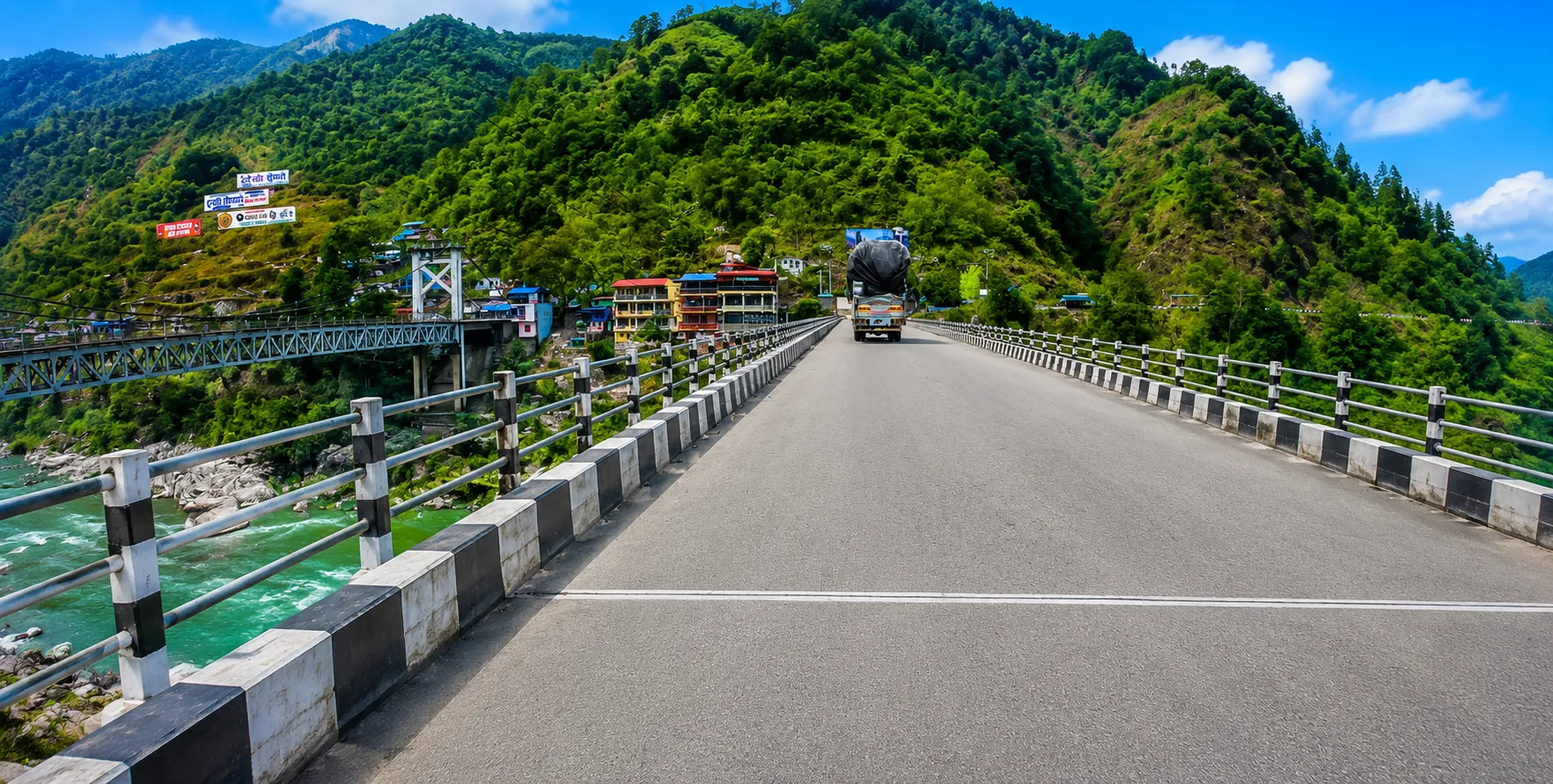
Beyond the schedule, consider the quality of the experience. The Prithvi Highway follows the Trishuli River gorge for much of its first half — one of Nepal’s most dramatic river landscapes, with steep-sided hills plunging to a fast-moving turquoise river below. This is scenery worth stopping for.
On a tourist bus, you cannot stop. In a private luxury jeep with Nepal Vehicle Hiring, your driver knows every viewpoint, every safe pullout for photos, and every moment the landscape demands attention.
The difference between being delivered to Pokhara and actually experiencing the journey between Kathmandu and Pokhara is the difference between transportation and a travel experience.
Group privacy and conversation matter too. Travelling between Nepal’s two great cities with your family, your trekking companions, or your partner in a private vehicle with only your group aboard is a fundamentally different experience from a shared bus — you can talk freely, make decisions together about where to stop and how long to linger, and arrive in Pokhara having already spent quality time together rather than gritting your teeth through the final hours of a crowded bus journey.
For families with children, couples on a romantic trip to Nepal, and groups with genuinely limited time, the private luxury jeep hire is not an indulgence — it is the intelligent choice.
The Vehicles: Toyota Land Cruiser and Mahindra Scorpio for the Kathmandu–Pokhara Run
Nepal Vehicle Hiring’s jeep hire fleet for the Kathmandu-to-Pokhara route consists of two primary vehicles, each suited to different group sizes and preferences. Understanding the difference helps you choose the right option for your specific needs.
Toyota Land Cruiser: The Top-end Choice
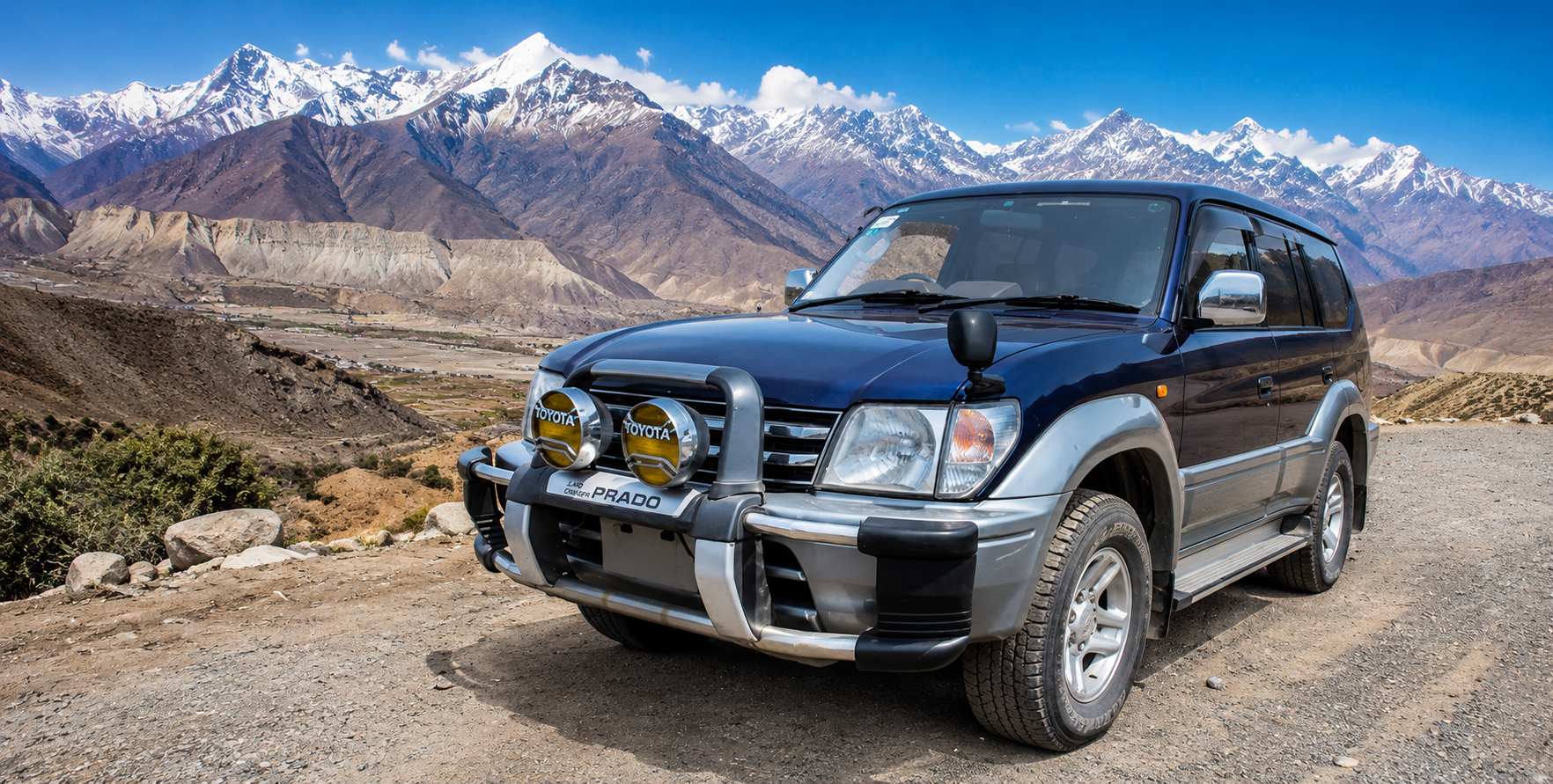
The Toyota Land Cruiser is the flagship vehicle in Nepal’s top-end private transport sector—the choice for VIP delegations, luxury tour groups, and discerning travellers seeking the best possible road experience. For the Kathmandu-to-Pokhara run, the Land Cruiser’s leather interior, advanced suspension, powerful air conditioning, and spacious cabin make it the most comfortable private vehicle on the Prithvi Highway.
The Land Cruiser seats 4 to 5 passengers in exceptional comfort, with ample luggage space in the rear. Its high ground clearance means construction sections, temporary rough patches, and the occasional pothole on the Prithvi Highway are absorbed without meaningful discomfort reaching the cabin — a significant advantage on a route that, while predominantly paved, includes sections that are far from smooth.
The Land Cruiser’s full 4WD capability also means that if your Pokhara trip is a starting point for a longer journey deeper into Nepal — to Mustang, to Manang, to the Muktinath pilgrim trail — the same vehicle handles every stage without compromise.
The Land Cruiser is particularly recommended for couples and small families of 2 to 4 people, for travellers with medical conditions that make road comfort a priority, for VIP or business travel, and for anyone combining the Kathmandu–Pokhara leg with an onward mountain road journey such as our Pokhara to Mustang jeep service or the Muktinath Yatra itinerary from Pokhara.
Mahindra Scorpio: The Smart Balance of Comfort and Capacity
The Mahindra Scorpio is Nepal’s most popular top-end SUV for highway and mountain road travel, offering genuine comfort, seating for up to 7 passengers (6 comfortably with luggage), and a robust driving character well-suited to Nepal’s varied road conditions. For groups of 5 to 7, the Scorpio is the standard top-end choice — offering a noticeably better experience than a standard car while avoiding the higher per-passenger cost of the Land Cruiser for smaller groups.
The Scorpio’s high-set seating position is one of its practical advantages on the Kathmandu–Pokhara route — passengers sit elevated enough to see over roadside vegetation and across the Trishuli River valley in a way that lower-slung sedans do not allow. This significantly improves the view throughout the journey.
The Scorpio is also available in 4WD configuration, making it suitable for continued mountain road travel from Pokhara toward Jomsom, Ghorepani, or other Annapurna region destinations after the highway leg is complete.
Nepal Vehicle Hiring offers both the Land Cruiser and Scorpio with all-inclusive pricing: vehicle hire, a professional driver, fuel, driver accommodation for overnight journeys, and all applicable road charges. No hidden costs. No end-of-journey surprises.
For current pricing and availability on the Kathmandu–Pokhara route, contact us directly on WhatsApp or visit our plan your trip page.
The Prithvi Highway: Route Overview
The Prithvi Highway (National Highway 17), named after King Prithvi Narayan Shah, who unified modern Nepal, is the primary road connecting Kathmandu and Pokhara. <cite index=”11-1″>It is a 174-kilometre-long highway connecting Naubise — 26 kilometres west of Kathmandu — to Prithvi Chowk in Pokhara, passing through five districts: Kathmandu, Dhading, Chitwan, Tanahu, and Kaski.</cite> The total driving distance from central Kathmandu (Thamel) to Pokhara Lakeside is approximately 200 to 210 kilometres, accounting for the approach through Kathmandu and the final stretch into Lakeside from the Pokhara highway entry point.
<cite index=”32-1″>The highway has undergone major upgrade initiatives in recent years, primarily focused on widening to convert key sections into four-lane roads. The Muglin-Malekhu road-widening project, spanning approximately 38 kilometres, had reached 35 per cent physical completion as of November 2025, with work accelerating post-monsoon.</cite> Additionally, <cite index=”32-1″>the Nagdhunga-Sisnekhola Tunnel — Nepal’s first modern road tunnel at 2.68 kilometres long with a 9.5-meter-wide lane — links the Tribhuvan Highway directly to the Prithvi Highway near Thankot and Naubise, reducing travel time from Kathmandu by bypassing the steep gradients of the old exit route.</cite> This tunnel is operational and significantly reduces the time spent in Kathmandu’s exit traffic.
For travellers in 2026 and 2027, this means the highway is in transition. Some sections are newly excellent (freshly paved, widened, smooth), while others are actively under construction with temporary road surfaces and reduced speeds. A private luxury jeep with Nepal Vehicle Hiring’s experienced drivers navigates this transition better than any bus service because our drivers know current road conditions in real time and can adjust and reroute accordingly.
The experience will continue to improve year over year as the widening projects are completed, and by late 2026, the most troublesome construction sections are expected to be resolved.
Key Highway Sections and What to Expect
The first major section from Kathmandu to Naubise (26 km) exits through the Nagdhunga tunnel and descends toward the valley rim — a winding section that is much improved by the tunnel bypass. From Naubise, the highway follows the Trishuli River through Malekhu (48 km from Kathmandu), where the river views are most dramatic, and several riverside restaurants have become reliable breakfast stops for Kathmandu–Pokhara travellers.
The Trishuli here is fast, clear, and flanked by steep forested hills — one of the finest river gorge sections of road in Nepal.
From Malekhu, the road continues through Mugling (96 km from Kathmandu) — a busy junction town at the confluence of the Trishuli and Marsyangdi Rivers where the Prithvi Highway meets the road south to Narayanghat and Chitwan. Mugling is famous for its fish restaurants lining the highway — fresh Trishuli River fish grilled to order, served with beaten rice and local vegetables.
It is the most popular lunch stop on the Kathmandu–Pokhara route and one of the journey’s genuine culinary highlights. Your Nepal Vehicle Hiring driver will know the best places to stop and can factor in a 30- to 45-minute stop in Mugling as part of a relaxed itinerary.
Beyond Mugling, the road leaves the Trishuli. It begins climbing through Dumre (134 km from Kathmandu) — the junction town where the road to Besisahar (and ultimately the Annapurna Circuit via our Besisahar private vehicle service and our Kathmandu to Manang jeep route) branches north.
From Dumre, the Prithvi Highway turns west through Damauli (164 km from Kathmandu) before the final descent into Pokhara. The landscape opens up in this final section—the tight river gorge gives way to wider valleys, and on clear days the first genuine views of the Annapurna range appear above the western horizon, drawing steadily closer as you approach the city.
Best Stops Between Kathmandu and Pokhara: Making the Most of Your Journey
One of the greatest advantages of travelling by private luxury jeep hire from Kathmandu to Pokhara is the ability to stop whenever and wherever you choose. The Prithvi Highway corridor contains several destinations that deserve more than a glance from a bus window — and a private vehicle makes it possible to stop at all of them without affecting other passengers or missing a fixed schedule.
Here are the best stops along the route, all easily incorporated into a relaxed 8- to 9-hour journey with Nepal Vehicle Hiring.
Naubise and the Trishuli River: The First Dramatic Landscape
Within 30 minutes of leaving Thamel, the Nagdhunga-Sisnekhola Tunnel delivers you to Naubise and the beginning of the Prithvi Highway’s most dramatic section. The Trishuli River appears below the road almost immediately, and for the next 70 kilometres, the highway alternately hugs and overlooks one of Nepal’s finest river-gorge landscapes.
In the early morning, when ground mist rises from the river,r and the opposite hillsides are still in shadow, the light is particularly beautiful. Several informal viewpoints exist within the first 3 kilometres beyond our driver; they’ll know the best ones for photography without stopping in unsafe spots.
Malekhu Riverside: Breakfast Stop with a View
About 48 kilometres from Kathmandu, the small highway town of Malekhu sits on the banks of the Trishuli River. It has developed a cluster of riverside restaurants that serve excellent breakfasts for early-morning travellers.
Leaving Thamel at 7 AM (the recommended departure time for a relaxed Kathmandu–Pokhara journey), you arrive at Malekhu around 8:30 to 9 AM — exactly the right time for a proper breakfast. The riverside setting, with the Trishuli flowing swiftly below and forested hills framing the view, makes Malekhu a genuinely pleasant 20- to 30-minute stop.
In the dry season, the river is clear turquoise; in the monsoon, it runs silty and powerful. Either way, it is worth a photograph.
The most significant cultural stop on the Kathmandu–Pokhara highway is Manakamana Temple, accessible via the Manakamana Cable Car from Kurintar base station, approximately 104 kilometres from Kathmandu. The small but important Manakamana Temple sits off the Prithvi Highway just 6 kilometres before Mugling, atop a green hill, dedicated to the goddess Bhagwati, who is said to grant wishes to all who visit.
Built in the 17th century, it is one of Nepal’s most visited pilgrimage sites.tes The cable car ride to the temple offers stunning panoramic views of the Trishuli River and the surrounding hills and takes 10 to 15 minutes each way.
<cite index=”31-1″>The temple’s hilltop location at 1,302 meters above sea level provides panoramic views of the Annapurna range, Manaslu, and Ganesh Himal. Factoring in the cable car ride, temple visit, and any queue time, a Manakamana stop adds about 2 to 3 hours to the journey. Plan journey.
Plan it for days when you are not in a hurry to reach Pokhara — a relaxed 10-hour total journey that includes Manakamana is a rich, complete experience. For pilgrim groups, families, and travellers interested in Nepal’s living Hindu tradition, this stop is highly recommended.
Saturday and public holidays see the largest crowds; Tuesday and Wednesday mornings are the quietest times to visit. With a private jeep hire from Nepal Vehicle Hiring, your driver waits at the Kurintar base station while you ascend — no fixed schedule, no pressure.
Mugling: The River Fish Capital of the Prithvi Highway
The junction town of Mugling, at the confluence of the Trishuli and Marsyangdi Rivers, is the highway’s most famous lunch stop — a strip of riverside restaurants specialising in freshly caught and grilled river fish that has become a genuinely beloved culinary tradition of the Kathmandu–Pokhara journey. The fish — typically asla (Himalayan snow trout) or sahar (golden mahseer) — is caught fresh from the Trishuli each morning, marinated with local spices, and grilled to order over charcoal.
Served with chiura (beaten rice) and simple vegetable curry, it is one of Nepal’s finest informal eating experiences.
Mugling is also where the Prithvi Highway’s most dramatic gorge section ends, and the landscape opens up slightly, making it a natural pause in the journey. A 30- to 45-minute lunch stop in Mugling, eating by the river with the confluence of the Marsyangdi and Trishuli in view, is one of those quiet travel moments that lodge in the memory long after the headline experiences have faded.
Your Nepal Vehicle Hiring driver will have specific restaurant recommendations based on current quality details.
For travellers with the luxury of an extra hour, the historic hilltop town of Bandipur is the most rewarding detour on the entire Kathmandu–Pokhara route. Bandipur is a hilltop settlement 143 kilometres west of Kathmandu and 80 kilometres east of Pokhara, at an elevation of 1,317 metres, offering panoramic views of the Annapurna, Manaslu, and Dhaulagiri ranges.
Its history began in the 19th century, when Newar merchants from Bhaktapur chose it as a trade route between India and Tibet, building houses that reflected traditional Newari style, architecture, and culture.
The result is a perfectly preserved Newari hill town — cobbled streets, traditional shophouses with carved wooden facades, temples and bahals arranged along a pedestrian-only main street, and an unhurried, uncrowded atmosphere that feels increasingly rare in Nepal’s more visited destinations. You can stroll through the town centre to appreciate the traditional architecture, browse local shops, or visit the Siddha Cave — one of the largest caves in Nepal — which is a short trek from Bandipur.
Bandipur requires a short diversion off the Prithvi Highway at Dumre—about 16 kilometres of uphill road to the hilltop town, taking 30 to 40 minutes by private jeep. Adding Bandipur to the Kathmandu–Pokhara journey adds about 2 to 2.5 hours in total (including the drive up, the walk through town, and the return to the highway).
Combining Manakamana and Bandipur in a single journey makes for a deeply rewarding 10- to 11-hour travel day—only really feasible with a private vehicle where you control the schedule. In a private jeep hire with Nepal Vehicle Hiring, this combination is entirely manageable and makes the Kathmandu–Pokhara journey one of the finest day drives in Nepal.
Begnas Lake: A Quiet Entry Point Near Pokhara
As you approach Pokhara on the final stretch of the Prithvi Highway, a short detour leads to Begnas Lake — a serene, largely undeveloped lake approximately 15 kilometres east of Pokhara city, surrounded by forest and far less visited than the more famous Phewa Lake at Lakeside. Arriving at Begnas in the late afternoon, when the light is golden on the water and the Annapurna range glows pink in the fading sun, is a gentle and beautiful way to transition from road travel to the Pokhara experience.
For travelers with a private vehicle, this 30-minute detour is effortless. For those staying more than one night in Pokhara, Begnas can also be a half-day excursion from the city—easily arranged with the same Nepal Vehicle Hiring service that brought you from Kathmandu.
Prithvi Highway Road Conditions: What Travellers Need to Know
Travellers planning the Kathmandu-to-Pokhara drive in 2026 and 2027 should understand the current road-development context, which has significant practical implications for journey time and comfort.
The Prithvi Highway Widening Project
The Government of Nepal has committed to expanding the Prithvi Highway from its current two-lane single-carriageway to a four-lane divided highway along its full length. This long-overdue, much-needed infrastructure investment will dramatically improve the journey once complete. However, the widening is not yet complete.
As of early 2026, the most critical sections — particularly the Muglin-Malekhu stretch (approximately 38 kilometres)— were at varying stages of completion, with some newly paved and in excellent condition, while others were still under active construction.
The practical implications for travellers are twofold. First, journey times in 2026 may occasionally be extended due to construction delays — particularly during the post-monsoon period when construction resumes after the wet season. Second, road surfaces in construction zones can be rough, dusty, and bumpy.
A private luxury jeep with quality suspension absorbs these conditions far better than a standard tourist bus or a smaller car. This is one reason Nepal Vehicle Hiring recommends the Land Cruiser or Scorpio over a standard sedan for the Kathmandu–Pokhara route in 2026 and 2027; these vehicles are built for varied road conditions and deliver genuine cabin comfort even over rough patches.
The Nagdhunga-Sisnekhola Tunnel
One of the most significant recent improvements to the Kathmandu exit experience is the Nagdhunga-Sisnekhola Tunnel, Nepal’s first modern highway tunnel, at 2.68 kilometres long. This tunnel bypasses the old Nagdhunga Pass — previously one of the most congested and time-consuming sections of the Kathmandu exit — and connects directly to the Prithvi Highway near Naubise.
Travellers departing Thamel for Pokhara in 2026 benefit from this tunnel, which reduces the Kathmandu exit time by 30 to 60 minutes compared to the pre-tunnel experience. Nepal Vehicle Hiring’s drivers are fully familiar with the tunnel approach and routinely use it for departures bound for Pokhara.
Monsoon Season Road Considerations
The Prithvi Highway passes through several landslide-prone sections, particularly in the Dhading and Chitwan hill sections between Naubise and Mugling. During the monsoon season (June to September), heavy rainfall can trigger landslides that block the highway for a few hours to a full day.
Nepal Vehicle Hiring monitors road conditions daily during the monsoon and keeps clients informed of any significant disruptions. Our drivers carry basic emergency supplies and know the alternative routes where they exist.
Monsoon travel on this route is generally manageable with experienced private transport — far more so than with fixed-schedule bus services that cannot adapt to delays.
When to Leave: Optimal Departure Times for the Kathmandu–Pokhara Drive
The timing of your departure from Kathmandu significantly affects the quality and duration of your Kathmandu-to-Pokhara drive. Nepal Vehicle Hiring consistently recommends the following approach based on years of experience managing this route:
Early Departure: 6:30 to 7:30 AM — The Recommended Window
Departing from Thamel between 6:30 and 7:30 AM is the optimal strategy for the Kathmandu–Pokhara luxury jeep drive. Kathmandu traffic is minimal before 8 AM, so you can exit the city quickly via the Nagdhunga Tunnel and reach the Prithvi Highway without the multi-hour delays mid-morning departures from the capital can bring.
An early departure also means you arrive at Malekhu around breakfast time, reach Manakamana or Mugling around midday, and reach Pokhara by mid-afternoon—in time for a relaxed first evening at Lakeside, a sunset walk along Phewa Lake, or, for trekkers, enough time to arrange the following day’s activities.
Early departure is especially important if you plan to stop at Manakamana Temple, as the cable car queue is shortest in the early to mid-morning and gets significantly longer from noon onward. A 7 AM departure from Thamel gets you to Kurintar Cable Car station around 10 AM — ideal timing for a relatively uncrowded temple visit.
Mid-Morning Departure: 8:30 to 10:00 AM — Acceptable but Slower
If an early departure is not practical — due to a late arrival in Kathmandu the previous night, a morning sightseeing commitment, or simply a preference for a later start — an 8:30 to 10:00 AM departure is workable but comes with longer Kathmandu exit times. The ring road and Nagdhunga approach can be heavily congested during the morning rush hour (7:30 to 9:30 AM), and mid-morning departures typically lose 45 to 90 minutes in Kathmandu traffic before reaching the Prithvi Highway.
With this departure window, plan for a 5 to 6 PM arrival in Pokhara, or later if stops are included.
For travellers who want a morning in Kathmandu before departing—a final visit to Boudhanath, a Kathmandu sightseeing tour session, or a morning Bhaktapur Durbar Square day tour before the Pokhara drive—Nepal Vehicle Hiring can coordinate the timing. Hence, the vehicle transitions directly to the Pokhara jeep without any gap in service.
Afternoon Departure: Not Recommended
Departures from Kathmandu after 11 AM for the drive to Pokhara are generally inadvisable. The combination of midday Kathmandu traffic, afternoon construction delays on the highway, and the risk of arriving in Pokhara after dark (not dangerous, but reducing your ability to enjoy the Lakeside ambience on arrival) makes afternoon departures a poor option.
Nepal Vehicle Hiring will always advise clients to aim for the morning departure window, and our team will structure your Kathmandu schedule accordingly.
From Pokhara: Onward Journeys with Nepal Vehicle Hiring
For most travellers, the Kathmandu-to-Pokhara luxury jeep hire is not the end of the road; it is the beginning of a broader adventure in Nepal. Pokhara sits at the gateway to some of Nepal’s most extraordinary destinations, and Nepal Vehicle Hiring’s fleet of jeeps, Hiace vans, and Coasters provides smooth onward transport from the city to wherever your journey in Nepal takes you next.
Pokhara to Mustang: The Forbidden Kingdom Awaits
The most dramatic overland journey available from Pokhara is the drive into Upper Mustang — the ancient walled kingdom of Lo Manthang accessible via the Kali Gandaki gorge road through Beni and Jomsom. Our Pokhara to Mustang jeep service covers the entire journey from Pokhara to Lo Manthang in 2 to 3 days, using the same Land Cruiser or Scorpio that brought you from Kathmandu deep into one of Nepal’s most inaccessible and extraordinary destinations.
The Mustang road beyond Kagbeni is among Nepal’s most challenging roads, and an experienced driver and a well-maintained 4WD vehicle are essential.
Pokhara to Muktinath: The Sacred Temple Journey
For pilgrims and culturally motivated travellers, the Muktinath Yatra itinerary takes you from Pokhara northward to Muktinath Temple at 3,710 meters — one of the most sacred sites in both Hinduism and Buddhism, featuring 108 water spouts, an eternal flame, and a Vishnu temple complex that draws hundreds of thousands of pilgrims annually. Our Hiace van handles the Pokhara-to-Jomsom section, with 4WD jeeps taking over for the final approach to Muktinath.
This is the natural extension for Kathmandu–Pokhara travellers whose journey has a spiritual dimension.
Pokhara to Annapurna Circuit Trailheads
For trekkers starting the Annapurna Circuit or heading to specific entry points in the Annapurna Conservation Area, Nepal Vehicle Hiring offers Pokhara-to-Nayapul transportation for the southern circuit approach, plus coordinated connections to Besisahar and Dumre for the eastern circuit entry. The Sarangkot sunrise tour is also one of the most popular Pokhara-based activities we arrange — a dawn departure to the Sarangkot viewpoint ridge for the finest Annapurna panorama in the region before the trekking adventure begins.
Pokhara to Chitwan: Adding the Wildlife Dimension
For travellers combining Pokhara with a Chitwan National Park wildlife experience, our Hiace van and car hire fleet covers the Pokhara-to-Chitwan highway leg (approximately 150 kilometres, 4 to 5 hours). This leg, combined with the Kathmandu–Pokhara luxury jeep hire, forms part of the classic Nepal triangle circuit — one of the finest multi-destination combinations in the country. See our Nepal tour package and Nepal holiday tour pages for complete pre-packaged versions of this circuit.
Pokhara to Lumbini: The Pilgrimage Circuit
Lumbini — the birthplace of the Buddha — lies approximately 20 kilometres southwest of Pokhara via Butwal, a 4- to 5-hour drive on the Siddhartha Highway. For pilgrims completing the full Nepal sacred circuit (Pashupatinath, Muktinath, Lumbini), our Nepal Nekhor tour service coordinates all transport across the complete circuit. We can handle the Lumbini leg from Pokhara with our Hiace van hire or car fleet, depending on group size.
Combining Your Kathmandu–Pokhara Journey with Kathmandu Valley Sightseeing
Most international travellers arrive in Kathmandu first and spend 1 to 3 days in the valley before departing for Pokhara. Nepal Vehicle Hiring provides comprehensive Kathmandu Valley transport that connects smoothly to the Pokhara departure, meaning a single provider handles every aspect of your Nepal land transport from airport arrival to final destination.
For trekkers using our mountain approach services — the Kathmandu to Manang jeep, the Kathmandu to Mustang private jeep, or the Besisahar private vehicle — the Pokhara luxury jeep hire naturally fits as either the first leg of a longer mountain road journey or the return transport after the trek circuit is complete. Our operations team coordinates multi-leg itineraries as standard practice, ensuring smooth vehicle transitions and optimised timing for your overall schedule.
Who Benefits Most from the Kathmandu to Pokhara Luxury Jeep Hire?
Families with Children Travelling with children on a long highway journey requires flexibility — flexibility to stop for bathroom breaks at any moment, to pull over if a child is feeling carsick on the winding sections of the Prithvi Highway, to stop longer at Manakamana or Bandipur if the children are engaged, and to push through the final section if they are tired and irritable. None of this flexibility exists on a tourist bus. A private jeep with a patient, experienced driver who has ferried families on this route many times gives parents complete control of the journey. It transforms what could be a stressful 8-hour challenge into a manageable, enjoyable family road trip. Our car hire in Nepal covers smaller families of 2 to 4; the Scorpio or Land Cruiser handles families of 4 to 6 with luggage and travel gear.
Couples on Romantic Nepal Trips
The Kathmandu–Pokhara drive in a private vehicle, with the Trishuli River below and the Himalayan foothills rising on either side, is a genuinely romantic journey — provided you have the privacy to appreciate it. A couple travelling in the back of a private Land Cruiser, with the front seat free for luggage and complete privacy to talk, sleep, photograph, and experience the journey together, arrives in Pokhara in an entirely different state of mind from someone who has shared a tourist bus seat for 8 hours.
For honeymoon couples and anniversary travellers, luxury jeep hire is not just more comfortable—it is part of the trip.
Senior Travellers
Long bus journeys on Nepal’s mountain highways can be genuinely demanding for older travellers. The combination of hard seating, no individual climate control, fixed stop schedules, and the physical motion of a bus on a winding road creates conditions that are unnecessarily taxing for people who would prefer to travel comfortably.
A private jeep with leather seating, individual climate control, the ability to stop whenever needed, and a driver who can adjust the pace to comfort rather than schedule makes the Kathmandu–Pokhara journey accessible and enjoyable for senior travellers who might otherwise choose the 25-minute domestic flight as their only alternative.
Business and VIP Travellers
For business travellers visiting Nepal for corporate purposes, NGO work, government delegations, or high-end tourism development, a Toyota Land Cruiser with a professional driver is the standard expectation for overland transport. Nepal Vehicle Hiring provides VIP vehicle hire with Land Cruiser or top-end SUV options that meet international professional travel standards — clean, punctual, comfortable, and driven by a professional who understands the expectations of business travel.
We can also coordinate pickup at Kathmandu airport and deliver directly to any hotel in Pokhara.
Trekkers and Adventure Groups
For trekkers heading to the Annapurna region, a private luxury jeep hire to Pokhara is the ideal way to begin the adventure—arriving rested rather than exhausted, with energy to prepare for the trek ahead, buy remaining supplies, and settle into the Lakeside rhythm before moving on. Groups using our trekking transport services can combine the Kathmandu–Pokhara luxury jeep leg with subsequent jeep hire to Besisahar, Nayapul, or other Annapurna trailheads, handled as a single coordinated multi-leg booking.
Best Season for Kathmandu to Pokhara Luxury Jeep Hire
Spring (March to May): Clear Skies, Moderate Traffic
Spring is one of the finest times for the Kathmandu–Pokhara drive. Rhododendron forests along the highway hills are in full bloom in March and early April; the air is clear, and the Himalayan peaks are visible from multiple sections of the final approach to Pokhara. Trekking season peaks in April and May, so Nepal Vehicle Hiring’s fleet is in high demand—book 4 to 6 weeks in advance for prime spring dates.
Monsoon (June to September): Lush but Variable
The monsoon brings the Prithvi Highway’s most challenging road conditions — occasional landslide delays, muddy construction sections, and reduced visibility. The compensation is the extraordinary lushness of the landscape: the Trishuli River gorge in full monsoon, with waterfalls streaming down every cliff face and the hills an impossibly vivid green, is spectacular.
Nepal Vehicle Hiring operates the Kathmandu–Pokhara route year-round, including during the monsoon, with daily road condition checks and experienced drivers who can navigate seasonal challenges. The Kathmandu-to-Pokhara bus remains available as a budget option during this period, but for comfort and reliability during the monsoon, the private jeep is strongly preferred.
Autumn (September to November): The Premier Season
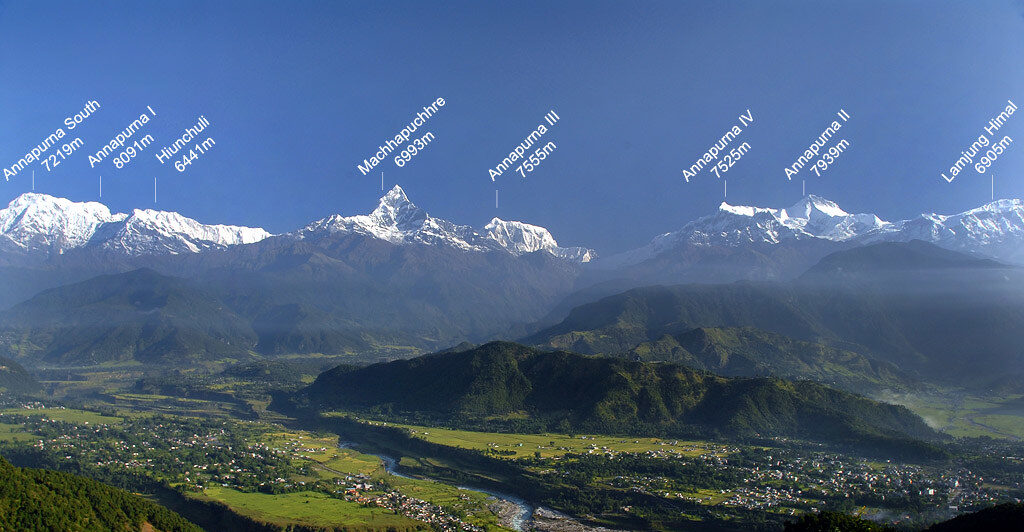
Autumn is Nepal’s absolute peak travel season for good reason — post-monsoon clarity delivers the finest mountain views of the year, the landscape is lush from the recent rains, and the temperatures are perfect. The final approach to Pokhara on a clear autumn morning, when the entire Annapurna range — Dhaulagiri, Annapurna I through IV, Machapuchre, Lamjung Himal — fills the northern horizon in a panorama of extraordinary scale, is one of Asia’s great road trip moments.
Nepal Vehicle Hiring’s Land Cruiser and Scorpio fleets operate at full capacity during the autumn peak season. Booking 6 to 8 weeks in advance is strongly recommended for travel in October and November.
Winter (December to February): Quiet and Clear
Winter is an underrated season for the Kathmandu–Pokhara drive. Tourist crowds thin dramatically, Nepal vehicle hire vehicles are readily available without extended notice, and the cold, dry air produces crystal-clear mountain visibility that sometimes exceeds even autumn clarity. Daytime highway temperatures are cool and comfortable for road travel.
The only consideration is that if your Pokhara trip is a gateway to a Mustang or Manang mountain road journey, winter mountain passes and high-altitude road sections require careful planning and experienced driver judgment — which Nepal Vehicle Hiring’s team always provides.
Frequently Asked Questions: Kathmandu to Pokhara Luxury Jeep Hire
How long does the drive from Kathmandu to Pokhara take in a private jeep?
With a private luxury jeep and an early departure from Thamel (6:30 to 7:30 AM), the drive takes about 6 to 7 hours without stops. With a Malekhu breakfast stop and a Mugling lunch break, plan for 7.5- 8.5 hours total. Adding Manakamana Temple extends the journey to approximately 10 hours.
Adding both Manakamana and Bandipur makes for a full 11-hour travel day, best suited to travellers who want to experience the complete journey rather than see Pokhara quickly.
What is included in Nepal Vehicle Hiring’s all-in jeep hire price?
Nepal Vehicle Hiring’s pricing for the Kathmandu-to-Pokhara luxury jeep hire includes the vehicle, professional driver, fuel, driver accommodation and meal allowance (for the driver, not the passengers), and all applicable road charges and tolls. It does not include passenger food, cable car tickets at Manakamana, Bandipur entry fees, or any other personal expenses: no hidden charges or end-of-journey additions.
Contact us through the ” Plan Your Trip “ page for a specific price quote.
Can I book a return trip from Pokhara to Kathmandu with the same driver?
Yes — Nepal Vehicle Hiring can arrange both the outward and return journeys as part of a single booking, with the same driver or a different one depending on scheduling. Many travellers book the outward Kathmandu–Pokhara jeep hire and then arrange the return after deciding their Pokhara itinerary.
We can also arrange one-way hire with the vehicle returning independently — both options are available, with pricing reflecting the different configurations.
Is a 4WD necessary for the drive from Kathmandu to Pokhara?
The Prithvi Highway is accessible to standard 2WD vehicles and does not require 4WD capability for the highway leg alone. However, Nepal Vehicle Hiring recommends the Scorpio or Land Cruiser (both 4WD or 4WD-capable) for this route because ongoing highway construction may involve rough, temporary surfaces that benefit from higher ground clearance and better suspension.
Additionally, if your Pokhara visit is a gateway to any onward mountain road journey — Mustang, Muktinath, Manang — a 4WD is mandatory for those sections, so starting with a 4WD vehicle ensures smooth continuity.
How far in advance should I book?
For autumn peak season (October–November) and spring peak season (March–May), we strongly recommend booking 4 to 6 weeks in advance for top-end Land Cruiser options. The Scorpio fleet has more availability and can typically be booked 1 to 2 weeks in advance during non-peak periods.
For festival periods — Dashain in October, Tihar in November, and Tiji Festival in May — book even further in advance, as vehicle demand across the country peaks during these windows. Contact Nepal Vehicle Hiring through our Plan Your Trip page or WhatsApp for current availability.
Can I combine the Kathmandu-to-Pokhara jeep with an Everest Base Camp trek transfer?
Absolutely. Nepal Vehicle Hiring provides comprehensive multi-destination transport coordination in Nepal. If your itinerary includes both an EBC trek (requiring Everest Base Camp trek transport to the airport or Ramechhap airstrip) and a Pokhara visit with Annapurna trekking transport, our operations team coordinates all legs as a single managed itinerary.
This is one of Nepal Vehicle Hiring’s greatest strengths — the ability to handle complex, multi-destination itineraries in Nepal with a single point of contact and a single standard of service throughout.
How to Book Your Kathmandu to Pokhara Luxury Jeep Hire with Nepal Vehicle Hiring
Booking your luxury private jeep hire from Kathmandu to Pokhara with Nepal Vehicle Hiring is straightforward and can be confirmed quickly:
Submit your trip details through our plan your trip page — including your travel date, preferred departure time, group size, vehicle preference (Land Cruiser or Scorpio), and any planned en route stops.
Our team responds within 24 hours with a confirmed vehicle, driver assignment, and all-in pricing.
Confirm the booking, and we will handle everything — hotel pickup, route planning, stop coordination, and onward transport to Pokhara, if required.
Nepal Vehicle Hiring Pvt. Ltd. is based in Thamel, Kathmandu — the heart of Nepal’s tourism district — and is available seven days a week. Our team speaks English, Nepali, and Hindi and has extensive experience helping international travellers from around the world design and execute Nepal transport itineraries of any complexity.
The 200-kilometre drive from Kathmandu to Pokhara is one of Nepal’s great journeys. The Trishuli River gorge at dawn, pilgrims ascending to Manakamana, fish grilling over charcoal at Mugling, the ancient lanes of Bandipur, the moment when the Annapurna range fills the horizon as you approach Pokhara in the late afternoon all of these belong to you when you travel by private luxury jeep.
Let Nepal Vehicle Hiring ensure you experience each one in the comfort and privacy you deserve.
The Complete Vehicle Hire and Route Guide to Nepal’s Off-the-Beaten-Path Cultural Trek
Tucked into the Rasuwa district along Nepal’s northern border with Tibet, the
Tamang Heritage Trail remains one of the country’s most rewarding yet comparatively undiscovered trekking routes. Named for the Tamang people whose Tibetan Buddhist culture, stone-built villages, and centuries-old trade routes define the region, this trek combines striking Himalayan views with a depth of cultural immersion that busier trails often lack.
Reaching the trailhead, however, still means the same demanding drive out of Kathmandu that serves the neighbouring Langtang Valley, and getting that first leg right matters as much as the trek itself.
This guide covers everything travellers need to know about
vehicle hire and transport for the Kathmandu-to-Tamang Heritage Trail journey, from the drive itself through Trishuli Bazaar and Dhunche to Syabrubesi, to the trekking route’s key villages, permits, seasonal considerations, and how the trail compares to and combines with the better-known Langtang Valley Trek. Nepal Vehicle Hiring has arranged jeep and private vehicle transport along this exact corridor for years, and this article draws directly on that route experience.
What Is the Tamang Heritage Trail
The Tamang Heritage Trail is a relatively new trekking route, established to bring sustainable tourism income directly to Tamang communities in the villages north and west of Syabrubesi. Unlike the more heavily trekked Langtang Valley route, which follows the Langtang Khola directly toward Kyanjin Gompa, the Tamang Heritage Trail loops through a series of traditional villages, including Gatlang, Tatopani, Nagthali, Thuman, and Briddim, each offering homestay accommodation, traditional Tamang architecture, and direct contact with a culture closely tied to Tibetan Buddhism.
The trail’s defining features include the natural hot springs at Tatopani village, sweeping views of Langtang Lirung and the surrounding peaks from the Nagthali Danda viewpoint, centuries-old monasteries and chortens found throughout the route, and a level of homestay-based cultural exchange that has become increasingly rare on Nepal’s busier trekking circuits. For travellers seeking a shorter, culturally rich trek that avoids the crowds of the Everest and Annapurna regions while remaining relatively accessible from Kathmandu, the Tamang Heritage Trail has become an increasingly popular choice.
Geography: Rasuwa District and the Nepal-Tibet Borderlands
The Tamang Heritage Trail sits within Rasuwa district, largely inside or adjacent to Langtang National Park, in the same broad region as the Langtang Valley and within striking distance of the Rasuwagadhi-Kerung border crossing into Tibet. This proximity to the Tibetan plateau has shaped Tamang culture in the region for centuries, as seen in the area’s monasteries, prayer flags, chortens, and the Tibetan Buddhist practices still actively practised in villages like Gatlang and Thuman.
Elevations along the trail range from around 1,460 meters at Syabrubesi to over 3,650 meters at the Nagthali Danda viewpoint, making it a moderately challenging trek that nonetheless remains accessible to reasonably fit trekkers without requiring the sustained high-altitude endurance of routes like the Everest Base Camp Trek or Annapurna Circuit.
The Journey From Kathmandu to Syabrubesi
Nearly every Tamang Heritage Trail itinerary begins with the same overland journey used for the neighbouring Langtang Valley Trek: the drive from Kathmandu to Syabrubesi. This roughly 120-kilometre journey typically takes seven to eight hours by private vehicle, longer during the monsoon season or when road repairs are underway. The route climbs out of the Kathmandu Valley through Trishuli Bazaar, follows the Trishuli River valley, and continues through Dhunche, the headquarters of Langtang National Park, before descending to Syabrubesi itself, the trailhead town for both the Tamang Heritage Trail and Langtang Valley routes.
This road ranks among the more physically demanding drives in Nepal’s central hill region, with sharp switchbacks, sections of loose gravel, and occasional landslide-related delays, particularly during and immediately after the monsoon months. We strongly recommend a genuine four-wheel-drive vehicle with an experienced driver familiar with this corridor, rather than a standard car or low-clearance van. Our
Jeep Hire in Nepal service is built specifically around routes like this one, pairing a Land Cruiser or Prado-class vehicle with a driver experienced on the Trishuli-Dhunche-Syabrubesi corridor.
Travellers combining this trip with time in Kathmandu often begin with a day or two of Valley sightseeing, arranged through our
For small groups of up to four trekkers, a Land Cruiser or Prado remains the most comfortable and reliable option for the Syabrubesi road, offering the ground clearance and suspension needed on the roughest sections between Trishuli Bazaar and Dhunche.
Executive Hiace Vans
Larger trekking groups or families often prefer our
Hiace hire service for this route, offering considerably more luggage space for group trekking equipment and homestay gifts that visitors to the Tamang villages commonly carry.
Mahindra Bolero and Local Jeeps
Budget-conscious trekkers travelling in smaller groups often choose a Mahindra Bolero-class jeep, as covered in our
Syabrubesi serves as the starting and ending point for both the Tamang Heritage Trail and the Langtang Valley Trek, and most trekkers spend at least one night here before setting out, both to arrange final permit checks and to recover from the long drive from Kathmandu.
Gatlang: A Traditional Tamang Village
A short trek from Syabrubesi, Gatlang is one of the route’s most culturally significant stops, known for its traditional stone houses, the historic Chhechen Gompa monastery, and Parvati Kunda, a small sacred lake associated with local Hindu and Buddhist pilgrimage traditions.
Chilime and Tatopani: Hot Springs on the Trail
The village of Tatopani, not to be confused with the larger settlement of the same name on the Muktinath route, offers natural hot springs that provide a welcome rest for trekkers partway through the loop, along with views of the Chilime hydropower project, which has brought modern infrastructure to this otherwise traditional corner of Rasuwa.
Nagthali Danda: The Trail’s Premier Viewpoint
At over 3,650 meters, Nagthali Danda offers one of the finest panoramic views on the route, with views of Langtang Lirung, Ganesh Himal, and a wide sweep of the surrounding Rasuwa hills. Many trekkers consider this the scenic highlight of the Tamang Heritage Trail experience.
Thuman and Briddim: Homestay Villages
Thuman and Briddim have become particularly well known for their community-run homestay programs, offering trekkers a direct, in-depth experience of Tamang domestic life, food, and Buddhist practice that is rarely available on Nepal’s busier trekking routes. Briddim, in particular, sits close enough to the Langtang Valley trail that some itineraries combine both routes into a single, longer loop.
Combining the Tamang Heritage Trail With the Langtang Valley Trek
Because both routes share the same Syabrubesi trailhead and overlap in their lower sections, a growing number of trekkers combine the Tamang Heritage Trail with the
Langtang Valley Trek, offered by our sister company, Alpine Luxury Treks, is combined into a single extended 10- to 14-day itinerary. This combination lets trekkers experience both the cultural depth of the Tamang villages and the dramatic high-alpine scenery of the Langtang Valley itself, including Kyanjin Gompa and the glacial landscape beneath Langtang Lirung, without a second overland journey from Kathmandu.
For travellers deciding between the two routes as a standalone trek, the Tamang Heritage Trail is generally considered the more culturally focused and less physically demanding option, with lower average elevations and a greater emphasis on village life and homestays. At the same time, the Langtang Valley Trek pushes higher into true alpine terrain with more dramatic mountain scenery but fewer cultural stops along the way.
Proximity to the Rasuwagadhi-Kerung Border
The Tamang Heritage Trail’s villages sit relatively close to the Rasuwagadhi-Kerung border crossing into Tibet, one of the few official overland crossings between Nepal and China. As covered in more depth in our
Rasuwagadhi Kerung Border Vehicle Hire guide: this border region has historically served as a trade corridor between Tamang communities in Rasuwa and Tibetan traders across the frontier, a history still visible in the architecture, religious practice, and trade goods found in villages like Timure and Thuman. Travellers interested in this border history sometimes extend a Tamang Heritage Trail itinerary with a visit to Timure, though crossing the border itself requires separate arrangements and documentation beyond a standard trekking permit.
Permits Required for the Tamang Heritage Trail
Trekkers on the Tamang Heritage Trail require a Langtang National Park entry permit, since much of the route falls within or adjacent to the park boundary, along with a TIMS (Trekkers’ Information Management System) card, standard requirements for most independent and guided trekking in this region of Nepal. Unlike Upper Mustang or other restricted areas, the Tamang Heritage Trail itself requires no additional permit, making it easier to arrange than some of Nepal’s more remote trekking routes.
Best Time of Year for the Tamang Heritage Trail
Spring (March to May)
Rhododendron forests bloom across the lower sections of the trail during this period, and road conditions on the Syabrubesi approach are generally favourable, making spring one of the two peak seasons for this trek.
Summer and Monsoon (June to August)
Heavy rainfall increases landslide risk on the unpaved sections of the Syabrubesi road, and trails can become slippery underfoot. However, the lush green hillsides during this period have their own particular appeal for travellers willing to accept less predictable conditions.
Autumn (September to November)
This is the year’s clearest skies and most stable road and trail conditions, and the busiest season for both the Tamang Heritage Trail and the neighbouring Langtang Valley Trek. Book vehicles well in advance during this period.
Winter (December to February)
Higher sections of the route, particularly around Nagthali Danda, can see snowfall and freezing overnight temperatures, though the lower villages remain accessible and considerably quieter than during peak season.
Road Safety on the Kathmandu to Syabrubesi Route
The road through Trishuli Bazaar and Dhunche toward Syabrubesi passes through active landslide zones, particularly during and shortly after the monsoon. An experienced driver familiar with this corridor is essential for comfort and safety.
Inspect vehicles for reliable brakes, suspension, and tyres before departure, given the strain this route places on a vehicle compared to ordinary city driving. We select drivers for this corridor specifically for their experience navigating these conditions across multiple seasons.
Cost Factors for Tamang Heritage Trail Transport
Vehicle hire cost for the Kathmandu-to-Syabrubesi route depends primarily on vehicle class and group size, with a private Land Cruiser or Prado costing more than a shared local jeep but offering considerably greater comfort and flexibility for stops along the way. Groups travelling together can reduce the effective per-person cost significantly compared to individual seats on shared transport.
Our team is glad to prepare a custom quote based on your group size, travel dates, and whether you plan to combine the Tamang Heritage Trail with the Langtang Valley Trek in a single extended itinerary. Visit our
Booking is straightforward: share your group size, preferred travel dates, and whether your itinerary includes an extension into the Langtang Valley, and our team will match the right vehicle, whether a Land Cruiser, Prado, or Hiace, along with a driver experienced on the Trishuli-Dhunche-Syabrubesi corridor. We recommend booking at least two to three weeks ahead during the peak spring and autumn seasons, when vehicles and drivers are in highest demand.
The History Behind the Tamang Heritage Trail
The Tamang Heritage Trail was developed in the years following Nepal’s broader push to diversify trekking tourism beyond the well-established Everest and Annapurna circuits, with support from conservation and community development organisations working alongside local Tamang communities in Rasuwa district. The goal was straightforward: create a trekking route that channelled tourism income directly into villages that had historically relied on subsistence agriculture, animal husbandry, and small-scale trade across the nearby Tibetan border, while showcasing a distinct ethnic culture that remained relatively unknown to international visitors compared to the Sherpa culture of the Everest region or the Gurung and Magar communities of the Annapurna foothills.
Tamang communities in this part of Nepal trace much of their cultural and religious heritage to Tibetan Buddhism, as reflected in the prevalence of chortens, prayer wheels, and monasteries throughout villages such as Gatlang and Thuman. The trail’s community homestay model, particularly well developed in Briddim and Thuman, was designed to keep more tourism revenue within these villages than conventional teahouse trekking, where much of the profit margin can flow to lodge owners who may not be local to the immediate community.
A Typical Tamang Heritage Trail Itinerary
While itineraries vary by operator and trekking pace, a common Tamang Heritage Trail itinerary spans seven to nine days, including the overland journey from Kathmandu. Day one covers the drive from Kathmandu to Syabrubesi, with an overnight stay at the trailhead.
From there, trekkers typically walk to Gatlang on day two, exploring the village’s monastery and Parvati Kunda before continuing toward Chilime and Tatopani on day three, timed to allow a soak in the natural hot springs. Day four usually involves the climb to Nagthali Danda, either as a base for the night or a day hike from a nearby village, taking in the trail’s best mountain panorama.
The route then descends through Thuman, often with a homestay night, before continuing to Briddim, another key homestay village, and finally looping back to Syabrubesi to complete the circuit. Groups combining this with the Langtang Valley Trek typically add five to seven more days, continuing up the Langtang Khola valley from Syabrubesi rather than returning directly to Kathmandu.
What to Pack for the Tamang Heritage Trail
Because the trail spans elevations from around 1,460 meters at Syabrubesi to over 3,650 meters at Nagthali Danda, layered clothing remains essential, with warm layers especially important for the higher viewpoint sections and cooler evenings in homestay villages. A good pair of broken-in trekking boots, a lightweight rain layer for afternoon showers even outside the monsoon season, and a headlamp for homestays with limited electricity are all worth carrying.
Since much of the route relies on homestays rather than conventional teahouses, a sleeping bag liner and personal toiletries are particularly useful, and small gifts or contributions to host families, discussed in advance with a guide or trekking agency, are appreciated, given the direct nature of the homestay exchange.
Guides, Porters, and Trekking Support
While the Tamang Heritage Trail can technically be walked independently, given adequate trail signage in recent years, a local guide familiar with the homestay network and Tamang cultural etiquette adds considerably to the experience, both in terms of safety on less-travelled sections of the trail and in facilitating a more meaningful cultural exchange with host families. Porters are widely available in Syabrubesi and help make the trek accessible to a broader range of fitness levels by carrying most of the luggage. In contrast, trekkers carry only a day pack between villages.
Tamang Culture and Buddhist Traditions Along the Trail
Tamang identity in Rasuwa is deeply intertwined with Tibetan Buddhist practice, visible in the mani walls, chortens, and prayer flags that line the trail between villages, and in the daily rhythms of monastery life still active in places like Gatlang’s Chhechen Gompa. Many households along the route maintain small shrine rooms, and it is common to see elderly residents spinning prayer wheels or reciting mantras during quiet moments in the village square.
Traditional Tamang dress, particularly for women, remains in everyday use in some of the more remote villages, distinct from the clothing typically seen in Kathmandu or the more tourism-influenced parts of the Everest and Annapurna regions.
Language also marks a clear cultural boundary along this route. While Nepali serves as the common language for communication with trekkers and guides, Tamang remains the primary language spoken within households and between neighbours in many of the trail’s villages, part of a broader linguistic and cultural distinctiveness that UNESCO and Nepali cultural preservation bodies have taken an active interest in documenting and supporting in recent years.
Local Cuisine on the Tamang Heritage Trail
Food along the trail reflects both the broader Nepali hill diet and specific Tamang influences shaped by proximity to Tibet. Dal bhat remains widely available and the most reliable option throughout the route, but homestay hosts frequently prepare Tamang specialities as well, including varieties of buckwheat-based bread, hearty potato dishes suited to the region’s high-altitude agriculture, and butter tea, a salted, buttery beverage with clear Tibetan influence that appears more frequently here than in Nepal’s more southern trekking regions.
Homestay meals are typically included in the overnight rate, and trekkers often cite sharing a meal cooked over a traditional wood-fired stove as one of the most memorable parts of the experience.
Environmental Considerations Along the Trail
Langtang National Park, which encompasses much of the Tamang Heritage Trail route, remains ecologically significant, home to red pandas, Himalayan tahr, and a range of high-altitude bird species, as well as dense forests of rhododendron, oak, and pine at lower elevations. Trekkers are encouraged to carry out all non-biodegradable waste, minimise the use of firewood-heated water where possible, given the strain on local forest resources, and respect wildlife viewing distances, particularly in the forested sections between Syabrubesi and Gatlang, where wildlife encounters are more likely than on the more heavily trafficked Langtang Valley trail itself.
Comparing the Tamang Heritage Trail to Other Cultural Treks in Nepal
Nepal offers several trekking routes built primarily around cultural immersion rather than high-altitude mountaineering, and the Tamang Heritage Trail compares favourably to alternatives such as the Tsum Valley trek near Manaslu or the lower sections of the Annapurna Circuit around Ghandruk and Landruk, both of which similarly emphasise village culture over summit-focused trekking. What distinguishes the Tamang Heritage Trail is its relative proximity to Kathmandu, requiring only a single day’s overland drive to Syabrubesi rather than the considerably longer approach roads required for Tsum Valley or the more remote sections of Manaslu, making it a practical option for travellers with more limited time who still want a genuinely in-depth cultural trekking experience.
Photography Highlights Along the Route
The Tamang Heritage Trail offers a distinct visual character compared to Nepal’s more famous trekking routes, combining traditional stone architecture, terraced hillside agriculture, and dramatic mountain backdrops in a way that feels less planned for tourism than some of the busier Everest and Annapurna trails. Notable photography opportunities include the weathered stone rooftops and prayer flag-draped alleys of Gatlang, the steam rising from the Tatopani hot springs against a backdrop of forested hillsides, the sweeping 360-degree panorama from Nagthali Danda taking in Langtang Lirung and Ganesh Himal, and the quiet, unposed moments of daily village life visible during homestay evenings in Thuman and Briddim.
Health and Altitude Considerations
While the Tamang Heritage Trail reaches a maximum elevation of around 3,650 meters at Nagthali Danda, considerably lower than high-altitude routes like Everest Base Camp or the Annapurna Circuit’s Thorong La crossing, trekkers should still take basic altitude precautions given the relatively rapid ascent from Syabrubesi’s 1,460 meters over a matter of days. Staying well hydrated, pacing ascents rather than rushing between villages, and watching for symptoms such as headache or unusual fatigue are sensible precautions, particularly for trekkers arriving directly from lower elevations without prior acclimatisation in the Kathmandu Valley.
Accommodation Standards and Homestay Etiquette
Homestay accommodation along the Tamang Heritage Trail is generally simple, with shared or basic private rooms, communal bathrooms, and meals prepared and eaten with the host family rather than in a separate dining hall, as in conventional teahouses. This arrangement calls for a degree of cultural sensitivity and flexibility not always required on more commercially developed trekking routes: removing shoes before entering living areas, accepting food and tea graciously even if portions feel generous, and showing genuine interest in family life and local customs all contribute to a more rewarding exchange for both trekker and host.
Trekking agencies and guides familiar with each village’s specific etiquette expectations can help first-time visitors navigate this experience comfortably.
Connectivity and Communication Along the Trail
Mobile network coverage along the Tamang Heritage Trail remains more limited and inconsistent than on Nepal’s busier trekking routes, with reasonable signal in Syabrubesi and patchy or absent coverage in some of the more remote homestay villages such as Thuman and Briddim. Trekkers should not rely on continuous connectivity throughout the route and should inform family or travel companions of their general itinerary and expected return date before setting out, particularly given the comparatively lower volume of trekking traffic on this route than on the Langtang Valley or the major Everest and Annapurna circuits.
Currency and Practical Logistics
As with most rural trekking routes in Nepal, cash in Nepali rupees is essential throughout the Tamang Heritage Trail, since card payment infrastructure is effectively nonexistent once travellers leave Kathmandu. Homestay costs, meals, and additional services, such as hot water for washing, are typically paid in cash directly to host families or through a guide who manages group payments.
Withdrawing sufficient cash in Kathmandu before departure, with a reasonable buffer for unexpected costs or delays, remains the most practical approach for this route.
Why This Route Appeals to Repeat Visitors to Nepal
A growing number of trekkers exploring the Tamang Heritage Trail are repeat visitors to Nepal who have already completed one or more of the country’s more famous routes, such as Everest Base Camp or the Annapurna Circuit, and are specifically seeking a different kind of experience on a subsequent trip. For this segment of travellers, the trail’s slower pace, lower trekking traffic, and emphasis on direct cultural exchange over dramatic high-altitude scenery offer a genuinely distinct alternative rather than a repeat of a similar trekking formula.
Trekking agencies increasingly market the Tamang Heritage Trail specifically to this returning-visitor segment, positioning it as a complementary, rather than competing, experience to Nepal’s more famous circuits.
Combining Vehicle Hire With a Broader Rasuwa District Itinerary
Beyond the Tamang Heritage Trail and Langtang Valley Trek, Rasuwa district offers a handful of additional points of interest that some travellers combine into a longer overland itinerary, including the Chilime hydropower area, the Rasuwagadhi border region, and the broader Trishuli River valley, popular for white-water rafting near Kathmandu. Coordinating these additional stops alongside the core trekking transport requires careful planning for road conditions and driving time.
Our team is well-positioned to help design an extended Rasuwa itinerary that complements your core Tamang Heritage Trail or Langtang Valley transport booking.
The Role of Community Tourism in Sustaining the Trail
Unlike many of Nepal’s trekking routes, where lodges and teahouses are often owned by families from outside the immediate community or even outside the region entirely, the Tamang Heritage Trail’s homestay model was specifically designed to keep tourism revenue within the villages that host trekkers. This community tourism approach has measurably supported local development in villages like Briddim and Thuman by funding school improvements, water infrastructure, and continued investment in the homestay network itself.
Trekkers choosing this route contribute directly to this model simply by trekking it; choosing this trail, in a small way, is a more direct form of community-supporting travel compared to conventional teahouse trekking on busier circuits.
Weather Patterns Specific to the Rasuwa Region
Rasuwa district’s weather is significantly shaped by its position at the base of the Langtang Himal range, with the lower Trishuli valley experiencing a warmer, more monsoon-influenced climate than the higher villages along the Tamang Heritage Trail. Afternoon cloud buildup is common even outside the main monsoon season, particularly around Nagthali Danda, and trekkers seeking the best mountain views are generally advised to plan viewpoint visits for early morning, before cloud cover typically develops later in the day.
This pattern mirrors similar afternoon weather behaviour found throughout much of Nepal’s central hill region, including the better-known Annapurna and Langtang corridors.
Insurance and Emergency Considerations
Given the trail’s relatively remote homestay villages and limited connectivity, trekkers are strongly advised to carry appropriate travel insurance covering trekking activities and, where relevant, emergency helicopter evacuation- standard advice for most of Nepal’s trekking routes, but particularly relevant here given the more limited emergency response infrastructure compared to busier circuits like Everest Base Camp, where helicopter rescue services are more routinely available and rapidly dispatched. A knowledgeable local guide familiar with the nearest emergency evacuation access points, typically via Syabrubesi, adds a meaningful layer of safety for trekkers on this less-travelled route.
Group Size and Booking Considerations for the Trail
The Tamang Heritage Trail’s homestay-based accommodation model means group-size planning matters differently than on conventional teahouse routes. Individual homestay households can typically accommodate only a limited number of trekkers at a time, and larger groups may need to be split across multiple homestays within the same village or coordinated well in advance to ensure adequate capacity, particularly during the busier autumn season.
Trekking agencies and vehicle hire operators working this route regularly, such as Nepal Vehicle Hiring, in coordination with our sister companies, maintain established relationships with homestay families that help ensure smooth group logistics even during peak booking periods.
Extending the Trip: Kathmandu Valley Sightseeing Before or After
Since most Tamang Heritage Trail itineraries include at least one night in Kathmandu before and after the trek, many travellers use this time to explore the Valley’s cultural heritage sites. A visit to Pashupatinath Temple, Nepal’s most significant Hindu pilgrimage site, or the medieval squares of Bhaktapur, through our
Bhaktapur Durbar Square tour naturally pairs with a Tamang Heritage Trail itinerary, offering a cultural counterpoint in Kathmandu before heading out to the equally rich but very different cultural landscape of rural Rasuwa. A sunrise excursion through our
Nagarkot Sunrise Tour Vehicle Service offers an additional Himalayan panorama for travellers with an extra day to spare before or after their trek.
Why Choose Nepal Vehicle Hiring for This Route
Nepal Vehicle Hiring has arranged transport along the Kathmandu-Syabrubesi corridor for years, serving trekkers heading to both the Tamang Heritage Trail and the neighbouring Langtang Valley. We select drivers for this route for their experience navigating the Trishuli-Dhunche-Syabrubesi road across multiple seasons, and we regularly inspect our vehicles, paying particular attention to the brakes, suspension, and tyres this corridor puts under genuine strain. Because we work closely with our sister companies,
Alpine Luxury Treks and Trek Nepal Himalayas can also help coordinate the trekking and homestay aspects of your itinerary alongside the ground transport, ensuring a single, consistent point of contact for your entire Tamang Heritage Trail journey from Kathmandu pickup to final return.
A Note on Responsible Trekking in Tamang Communities
Visitors to the Tamang Heritage Trail are encouraged to approach the homestay experience with genuine respect for the communities hosting them, recognising that these villages have opened their homes specifically to support sustainable tourism development rather than functioning as a simple commercial transaction. Simple practices, such as asking permission before photographing individuals, particularly during religious ceremonies or private family moments, dressing modestly in keeping with local norms, and showing genuine curiosity about Tamang culture and Buddhist practice rather than treating the visit purely as a scenic backdrop, all contribute to a more respectful and mutually rewarding exchange between trekkers and the communities they pass through.
Seasonal Booking Patterns for Vehicle Hire on This Route
Demand for private vehicle hire to Syabrubesi follows a similar seasonal rhythm to Nepal’s other major trekking corridors, with autumn representing the peak booking period, followed closely by spring. Because the Tamang Heritage Trail remains less heavily trafficked than the Everest or Annapurna regions, vehicle availability during peak season is generally somewhat easier to secure than on the busiest routes, though booking at least two to three weeks ahead remains sensible, particularly for groups wanting a specific vehicle class or a driver already familiar with combining Tamang Heritage Trail and Langtang Valley logistics in a single itinerary.
The Broader Appeal of Rasuwa District Beyond Trekking
While trekking remains the primary draw for most visitors to Rasuwa district, the region’s proximity to Kathmandu, combined with its dramatic scenery and distinct Tamang culture, has also attracted growing interest from photographers, cultural researchers, and travelers simply seeking a shorter escape from the capital without committing to a full multi-day trek. Day trips or short overnight excursions to Trishuli Bazaar and the lower Rasuwa hills, arranged with a private vehicle, offer travellers with limited time a taste of this landscape and culture, even without undertaking the full Tamang Heritage Trail circuit.
Comparing Vehicle Standards: Then and Now on the Syabrubesi Road
Travellers who have visited this region of Nepal previously, even five or ten years ago, often note a noticeable improvement in both road conditions and vehicle quality along the Kathmandu-Syabrubesi corridor. Sections of the route that were once notoriously rough have seen gradual upgrading, and the vehicles now commonly used for this journey, well-maintained Land Cruisers and Prados rather than older, less reliable jeeps, reflect the same broader shift toward top-end ground transport visible across Nepal’s trekking industry as a whole.
This improvement has made routes like the Tamang Heritage Trail and Langtang Valley meaningfully more accessible to a wider range of travellers, including families and older trekkers who might previously have found the approach road too physically demanding to consider.
Final Practical Tips Before You Go
Book your vehicle and, if needed, your homestay coordination at least two to three weeks ahead during peak spring and autumn.
Carry sufficient Nepali rupees in cash, since card payment infrastructure is essentially unavailable once you leave Kathmandu.
Pack layered clothing to handle the elevation range between Syabrubesi and Nagthali Danda, along with a reliable rain layer.
Consider a local guide familiar with the homestay network, both for safety and for a richer cultural exchange with host families.
Confirm whether your itinerary combines the Tamang Heritage Trail with the Langtang Valley Trek, as this affects both the trekking duration and the permit requirements.
Arrange appropriate travel insurance that covers trekking activities and emergency evacuation, given the route’s relatively remote, low-connectivity villages.
How This Trail Fits Into Nepal’s Wider Trekking Landscape
Nepal’s trekking regions each occupy a distinct niche within the country’s broader tourism offering, from the high-altitude prestige of Everest Base Camp to the varied ecological zones of the Annapurna Circuit and the pilgrimage significance of routes toward Muktinath. The Tamang Heritage Trail occupies its own niche within this landscape: a shorter, culturally intensive trek that requires only a single day’s overland travel from Kathmandu, positioned as a genuine alternative for travellers seeking cultural depth without the time commitment or crowds of Nepal’s more famous circuits. As awareness of this route continues to grow, largely through word of mouth among returning visitors and increasing coverage in specialist trekking guides, it seems likely to become a well-established option among Nepal’s mid-length cultural trekking routes over the coming years.
Planning Your Trip With Confidence
Whether you are drawn to the Tamang Heritage Trail for its homestay culture, its relative proximity to Kathmandu, its Buddhist heritage, or simply as a quieter alternative to Nepal’s busier circuits, getting the transport logistics right from the outset makes a considerable difference to how the rest of the trip unfolds. A well-planned journey from Kathmandu to Syabrubesi, in a properly maintained vehicle with a driver experienced on this specific corridor, sets a smooth, comfortable tone for the cultural immersion and mountain scenery that follow on the trail itself.
A Word on Timing Your Village Stops
Experienced guides on the Tamang Heritage Trail generally recommend scheduling daily walking stages to arrive in each village by early to mid-afternoon, both to allow time to explore before dark and to avoid the more frequent afternoon cloud buildup that can obscure mountain views later in the day, particularly around Nagthali Danda. Starting each day’s buildup reasonably early on the climb toward Nagthali itself gives the best chance of clear morning visibility across Langtang Lirung and the surrounding peaks before clouds typically roll in.
Group Versus Independent Trekking on This Route
While independent trekking has become increasingly feasible on the Tamang Heritage Trail given improved trail signage and a well-established homestay network, many travellers still choose to join a small guided group or arrange a private guide, both for the added safety of local route knowledge and for smoother coordination of homestay bookings, particularly during the busier autumn season when individual homestays may already be committed to other groups. Vehicle hire for the Kathmandu-to-Syabrubesi leg works equally well for independent trekkers and organised groups alike;h the main difference is group size and whether trekking logistics beyond transport are arranged separately or as part of a single coordinated package.
Sample Cost Breakdown for Planning Purposes
While exact pricing depends on vehicle class, group size, and season, travellers planning a budget for this trip should account for three main components: private vehicle hire for the Kathmandu to Syabrubesi round trip; homestay accommodation and meals along the trekking route itself, typically charged per night and generally modest compared to conventional teahouse trekking costs; and any guide or porter fees if travelling with support rather than fully independently. Requesting a detailed quote in advance, covering both the vehicle hire and, if desired, coordinated trekking logistics through our sister companies, allows for accurate budgeting well before departure rather than encountering unexpected costs partway through the trip.
What Sets This Route Apart From a Simple Sightseeing Drive
The Kathmandu-to-Syabrubesi journey, while demanding, is integral to what makes the Tamang Heritage Trail experience distinctive, rather than merely an obstacle to endure before the real trip begins. The drive itself passes through changing landscapes, from the terraced hillsides near Trishuli Bazaar to the forested slopes approaching Dhunche and the edge of Langtang National Park, offering an early introduction to the ecological and cultural transition between the Kathmandu Valley and the more remote, culturally distinct region travelers are about to enter on foot.
Approaching this leg of the journey with the same attention given to the trek itself, rather than treating it as a purely functional transfer, often enriches the overall sense of arrival once trekkers finally reach Syabrubesi and set out toward Gatlang the following morning.
A Trail Still Coming Into Its Own
The Tamang Heritage Trail remains, in many respects, a trekking route still coming into its own within Nepal’s wider tourism landscape, benefiting from steadily improving road access, a maturing homestay network, and growing recognition among both trekking agencies and independent travellers as a genuinely distinctive alternative to the country’s more famous circuits. For travellers willing to trade some of the dramatic high-altitude scenery of Everest or Annapurna for a deeper, more direct cultural encounter with Tamang communities living close to the Tibetan frontier, this trail offers one of the more rewarding and still comparatively uncrowded trekking experiences currently available in Nepal.
Frequently Asked Questions
How long does the drive from Kathmandu to Syabrubesi take?
The drive typically takes seven to eight hours by private vehicle, depending on road conditions and the season, and can take longer due to landslide-related delays.
Is a 4WD vehicle necessary for this route?
Yes. The road through Trishuli Bazaar and Dhunche includes unpaved, rutted sections that are best handled by a genuine four-wheel-drive vehicle, such as a Toyota Land Cruiser or Prado, rather than a standard car.
Can the Tamang Heritage Trail be combined with the Langtang Valley Trek?
Yes. Both routes share the same Syabrubesi trailhead, and many trekkers combine them into a single 10- to 14-day itinerary that covers both the cultural villages of the Tamang Heritage Trail and the alpine scenery of the Langtang Valley.
What permits are required for this trek?
Trekkers need a Langtang National Park entry permit and a TIMS card. Unlike routes such as Upper Mustang, no special restricted-area permit is required.
What is the best season for the Tamang Heritage Trail?
Spring (March to May) and autumn (September to November) offer the most reliable road and trail conditions, with autumn being the busiest season overall.
Are homestays available along the route?
Yes. Villages including Thuman and Briddim have well-established, community-run homestay programs that offer an in-depth alternative to standard teahouse accommodation.
How difficult is the Tamang Heritage Trail compared to other treks in the region?
It is generally considered less physically demanding than the Langtang Valley Trek or routes like the Everest Base Camp trek, with lower average elevations, yet still includes a challenging climb to the Nagthali Danda viewpoint above 3,650 meters.
Is this trek close to the Nepal-Tibet border?
Yes. The route passes relatively close to the Rasuwagadhi-Kerung border crossing, and trade and religious ties across this same frontier have historically shaped the region’s Tamang culture.
Do I need previous trekking experience for this route?
No prior high-altitude trekking experience is strictly necessary, though a reasonable level of general fitness is helpful given the daily walking distances and the climb to Nagthali Danda. The route is generally considered accessible to both beginners and experienced trekkers.
What is the total trekking distance for the standard loop?
The standard Tamang Heritage Trail loop, from Syabrubesi through Gatlang, Tatopani, Nagthali Danda, Thuman, and Briddim back to Syabrubesi, typically covers 50 to 60 kilometres over 6 to 8 trekking days, depending on the exact route variation and any rest days chosen.
Final Thoughts: A Cultural Journey Worth the Road
The Tamang Heritage Trail offers a rare combination in Nepal’s trekking landscape: genuine cultural immersion, dramatic Himalayan views, and a level of quiet, homestay-based hospitality increasingly hard to find on the country’s busier routes. Reaching it means the same demanding but rewarding drive through Trishuli Bazaar and Dhunche used by trekkers heading into the Langtang Valley, and getting that journey right, with the right vehicle and an experienced driver, sets the tone for everything that follows on the trail itself.
Whether you are drawn by the promise of homestay hospitality, Buddhist heritage, or simply a quieter Himalayan trekking experience, the road to Syabrubesi is where that journey genuinely begins. Contact Nepal Vehicle Hiring today on WhatsApp or visit
vehiclehiringnepal.com to arrange your private jeep or Hiace for the Kathmandu to Tamang Heritage Trail journey, and to help coordinate homestay logistics or a combined Langtang Valley extension for your trip, however your itinerary through Rasuwa district takes shape.
Experience top-end travel with luxury vehicle hire in Nepal. Book comfortable SUVs and luxury vehicles for city tours, business trips, airport transfers, weddings, and Himalayan road journeys.
Why Luxury Vehicle Hire Is Transforming Nepal Travel
How Top-end Ground Transport Is Reshaping Trekking, Touring, and Pilgrimage Across Nepal
A decade ago, most visitors to Nepal accepted a simple trade-off: comfort or authenticity, but rarely both. Long jeep rides on rutted mountain roads, crowded local buses, and unpredictable airport pickups were treated as an unavoidable part of the adventure, the price paid for reaching the Himalayas. That trade-off is disappearing fast.
Across airport transfers, trekking logistics, pilgrimage journeys, and city touring,
Luxury vehicle hire in Nepal is quietly but fundamentally changing what a trip to Nepal actually feels like, and the shift is visible in nearly every corner of the country’s travel industry.
This article explores why that shift is happening, where it is most evident, and what it means for travellers planning a trip to Nepal in the years ahead. Nepal Vehicle Hiring has been central to this transformation, coordinating top-end ground transport across trekking routes, pilgrimage corridors, airport transfers, and touring itineraries. This piece draws on firsthand experience to show that travel in Nepal is changing.
The Shift: From Basic Transport to a Top-end Experience
For most of Nepal’s modern tourism history, ground transport was treated as a logistical necessity rather than part of the travel experience itself. Trekkers endured the journey to reach the trail; pilgrims endured the drive to reach the temple; tour groups endured the transfer to reach the hotel.
What has changed is a growing recognition among both travellers and operators that the journey itself can be comfortable, memorable, and well-organised, rather than something to be survived.
This shift mirrors a broader global trend in travel, where the quality of the experience is judged end-to-end rather than only at the destination. Travellers who would never accept a poorly maintained rental car at home increasingly expect the same standard in Nepal, and operators investing in modern vehicles, trained drivers, and professional logistics are capturing this growing market segment. Our own
Airport Transfers: Setting the Tone From Touchdown
Nowhere is this transformation more visible than at the airport. A private, professionally driven vehicle waiting inside the arrivals hall, with real-time flight tracking and a clean, comfortable cabin, has replaced the chaotic taxi rank as the expected standard for a growing share of visitors. As we explored in detail in our
Luxury Airport Transfer Nepal guide. This shift is accelerating as Pokhara’s international airport matures, Gautam Buddha International Airport in Bhairahawa expands, and traveller expectations rise in step with Nepal’s growing profile as a top-end travel destination. Our
car hire in Pokhara are both built directly around this expectation, giving travellers a calm, dependable start to their trip rather than a stressful scramble on arrival.
Trekking Transport: Comfort Without Sacrificing Access
Trekking logistics are perhaps the clearest example of how luxury vehicle hire is changing the shape of travel in Nepal, as covered in our In the In the In the
Luxury Vehicles for Trekking in Nepal guide, a top-end Land Cruiser or Prado turns the often-gruelling approach roads to major trailheads into a genuinely comfortable part of the journey, rather than an ordeal to endure before the real adventure begins.
This matters enormously given how demanding these roads can be. The drive to Besisahar, gateway to the
Annapurna Circuit Trek, offered by our sister company Alpine Luxury Treks, is the route to Syabrubesi for the
Manaslu Circuit Trek, and the classic overland approach through Salleri and Phaplu toward the
Everest Base Camp Trek all involve long, rough drives where vehicle quality and driver experience directly affect how a trekker feels on day one of their trip. Our dedicated
Pilgrimage Travel: Sacred Journeys Made More Accessible
Pilgrimage travel has benefited just as much from this shift as trekking has. As detailed in our
Muktinath Temple: Vehicle Hire and Pilgrimage Route Guide, the demanding overland journey through Beni, Tatopani, Ghasa, and Jomsom toward one of Nepal’s most sacred shrines is now far more accessible to older pilgrims and families than it once was, purely because vehicle quality and driver experience have improved so significantly along this corridor.
The same pattern applies to other major pilgrimage routes across Nepal, including journeys to
Pashupatinath Temple in Kathmandu, and to Lumbini, the birthplace of Lord Buddha, reachable through our
Korala Tibet border route also reflects how the same top-end transport standard is now expected across culturally and religiously significant routes, not only the most famous ones.
City and Valley Touring: A New Standard for Sightseeing
Beyond trekking and pilgrimage, everyday sightseeing around the Kathmandu Valley and Pokhara has quietly absorbed the same expectations. A sunrise excursion through our Nagarkot Sunrise Tour Vehicle Service, a heritage walk arranged via our
Sarangkot sunrise tour vehicles in Pokhara are all now commonly booked as private, comfortable experiences rather than shared, schedule-bound group tours. Longer regional connections, such as our
Kathmandu to Pokhara, BBus and private vehicle services from us, and private vehicle services from
Pokharato Lumbinireflects the same demand for flexible, comfortable travel between Nepal’s major tourist regions.
Corporate Travel and the MICE Sector
Nepal’s growth as a destination for meetings, incentives, conferences, and exhibitions has brought a wave of corporate travellers who expect top-end ground transport as standard. Reliable, punctual, professionally presented transport has become a genuine competitive factor for hotels and conference venues courting this market, and our
Hiace hire service is increasingly booked by companies moving delegations and incentive groups around Kathmandu and Pokhara, with the same consistency expected at any major international business destination.
Weddings, Honeymoons, and Celebration Travel
Nepal’s growing popularity as a destination for honeymoons and small destination weddings, particularly around Pokhara’s lakeside setting, has added another dimension to this transformation. Couples planning these trips increasingly treat ground transport as part of the overall experience design, choosing private vehicles that reflect the occasion rather than a purely functional transfer.
This trend aligns with and complements our sister companies’ luxury lodge trek offerings, where a private vehicle transfer bookends a honeymoon trek through the Annapurna or Everest regions, offering genuine comfort from start to finish.
Combining Vehicle Hire With Luxury Trekking and Touring Packages
Perhaps the clearest sign of how thoroughly this transformation has taken hold is the growing number of travellers booking vehicle hire and trekking or touring together as a single, coordinated experience, rather than arranging each piece separately. Because Nepal Vehicle Hiring works closely with our sister companies,
Trek Nepal Himalaya, we can coordinate ground transport for any of their luxury lodge treks, classic teahouse treks, helicopter tour packages, or combined packages.
Everest Base Camp Luxury Lodge Trek, where top-end ground transport and a well-run trekking itinerary reinforce each other rather than operating as separate, disconnected bookings.
Technology and the Digital Booking Expectation: Traveller expectations around booking and communication have shifted just as much as expectations around the vehicles themselves. Real-time flight tracking, clear digital booking confirmations, direct driver contact details shared in advance, and live updates during a journey are now considered standard rather than exceptional, particularly among travellers accustomed to this level of service in other major travel markets. Operators that have invested in this kind of digital infrastructure alongside their physical fleet are best positioned to meet rising expectations through 2026 and beyond.
Driver Training and the Human Side of the Transformation
None of this shift would matter without the people behind the wheel. Across every category discussed here, from airport pickups to multi-day mountain transfers, driver training has become as important a differentiator as vehicle quality itself.
Drivers who understand mountain roads, communicate clearly in English, handle luggage and equipment carefully, and remain calm and professional regardless of road conditions or schedule pressure are central to what makes a vehicle hire experience feel genuinely top-end rather than simply expensive.
Sustainability Alongside Comfort
Interestingly, this shift toward top-end vehicle hire has not come at the expense of sustainability considerations. Well-maintained, properly serviced vehicles run more efficiently than older, poorly kept cars, and consolidating group travel into appropriately sized vehicles reduces the overall number of trips needed for a given group.
Many travellers now ask specifically about vehicle age, fuel efficiency, and driver welfare when booking top-end transport, and operators who can answer these questions honestly are increasingly favoured over those who cannot.
The Broader Economic Impact Across Nepal
This transformation extends well beyond traveller comfort. Top-end vehicle hire supports skilled drivers, vehicle maintenance businesses, and guesthouse networks along popular routes, from Tatopani and Marpha on the Muktinath corridor to Besisahar and Syabrubesi on trekking routes. As demand for higher-standard ground transport grows, it creates a stronger incentive to invest in vehicle quality, driver training, and road infrastructure, benefiting the wider tourism economy rather than only travellers who can afford a top-end transfer.
What This Means for Travellers Planning a Trip
For travellers planning a trip to Nepal in the near future, this transformation translates into more choice and, generally, greater reliability than in years past. Whether the plan centers on a trek toward Everest or Annapurna, a pilgrimage to Muktinath or Lumbini, a business trip tied to Nepal’s growing MICE sector, or simply a comfortable, well-organised tour of the Kathmandu Valley and Pokhara, top-end ground transport is now a realistic and increasingly well-established option rather than a rare luxury reserved for a small handful of travelers.
A Closer Look: Why the Timing Is Right
Several forces are converging at once to accelerate this transformation, and understanding them helps explain why the shift toward top-end vehicle hire feels so pronounced right now rather than gradual and unremarkable. Nepal’s tourism sector has recovered strongly in recent years, bringing renewed investment into vehicle fleets, driver training, and road infrastructure that had previously seen only limited upgrades.
At the same time, a new generation of travelers, having grown up with app-based ride booking, real-time tracking, and transparent pricing in their home countries, arrives in Nepal expecting a comparable standard rather than accepting the older model of unmarked taxis and informal negotiation.
Social media and travel content have also played a quiet but significant role, with photos and videos of comfortable private Land Cruisers navigating dramatic mountain roads increasingly shaping how prospective travellers imagine a trip to Nepal, well before they book their first flight. This visibility creates its own momentum, as operators who can deliver on that expectation gain a clear advantage over those still offering an older, rougher standard of service.
Traveller Segments Driving the Shift
Returning Visitors With Higher Expectations
Travellers who have visited Nepal before, sometimes years or even decades earlier, often notice this transformation most clearly, since they have a direct point of comparison with how transport used to work. Many actively seek out top-end options on a return visit, having experienced the older, more difficult standard firsthand and having no interest in repeating it.
First-Time Visitors From Mature Travel Markets
Travellers arriving from markets with well-established top-end travel norms, including much of Europe, North America, Australia, and increasingly parts of Asia, tend to expect a certain baseline of comfort and reliability regardless of destination, and Nepal’s ground transport sector has adapted accordingly to meet this expectation rather than lose these travellers to competing Himalayan destinations.
Multi-Generational and Family Groups
Families travelling together across generations, from young children to grandparents, have particular comfort and safety needs that a top-end vehicle meets far more effectively than a shared bus or an ageing local jeep, and this segment has grown steadily as more families choose Nepal for a shared, once-in-a-lifetime trip.
A Case in Point: One Journey, Multiple Transformed Legs
Consider a typical present-day itinerary and how this shift now touches nearly every stage. A traveler lands at Tribhuvan International Airport and is met by a uniformed driver who tracks their flight in real time, rather than searching for a handwritten sign in a crowded arrivals hall.
A day of Kathmandu Valley sightseeing follows in a private vehicle, taking in Bhaktapur’s medieval squares and a sunrise view from Nagarkot, rather than a fixed-schedule group tour. From there, a comfortable Land Cruiser carries the traveller toward a trekking trailhead such as Besisahar or Syabrubesi, arriving rested rather than exhausted.
After days on the trail, the same coordinated logistics bring the traveller back to Kathmandu in time for a relaxed final night before departure. A decade ago, nearly every leg of this journey would have involved some degree of discomfort, uncertainty, or improvisation. Today, each stage is handled with a consistent, professional standard, and that consistency, more than any single vehicle upgrade, is what genuinely defines this transformation.
Looking Ahead: What Continued Growth Looks Like
As this transformation continues through 2026, 2027, and beyond, several developments seem likely to shape its next phase. Continued airport expansion, particularly around Pokhara, should keep shifting demand toward locally based top-end transport rather than routing everything through Kathmandu.
Growing demand for luxury lodge trekking, supported by our sister companies’ expanding itineraries, should further deepen the integration between vehicle hire and trekking logistics. Rising corporate and MICE travel should continue pushing consistent, professional ground transport standards into market segments previously served by more basic, ad hoc arrangements.
How Nepal Compares to Other Himalayan Destinations
Nepal is not alone in seeing rising demand for top-end ground transport, but its position at the heart of the world’s most famous mountain range gives this transformation particular weight. Neighbouring destinations offering Himalayan trekking and touring, including parts of northern India and Bhutan, have seen similar shifts toward higher-standard vehicles and more professional driver services, and Nepal’s tourism sector has had to keep pace to remain competitive for travellers weighing multiple Himalayan options.
Because Nepal offers by far the widest range of trekking regions, from Everest and Annapurna to Langtang, Manaslu and Mustang, the pressure to deliver consistent, high-quality ground transport across a much larger road network has, if anything, been greater here than in more compact competing destinations.
Fleet Investment and What It Actually Involves
Building a genuinely top-end vehicle hire operation involves considerably more than simply purchasing newer cars. It requires ongoing investment in regular mechanical servicing, particularly for vehicles working the punishing unpaved routes to Besisahar, Syabrubesi, and Soti Khola, where brakes, suspension, and tyres wear far faster than in ordinary city driving.
It requires a genuine training pipeline for drivers, covering not only safe mountain driving but also customer service, English communication, and route-specific knowledge built up over repeated trips along the same corridors. And it requires an administrative and technological backbone to support real-time flight tracking, digital booking confirmation, and reliable communication among drivers, dispatchers, and clients throughout the journey.
Operators who have consistently made these investments are well positioned to capture the growing top-end segment of Nepal’s travel market.
The Role of Trekking and Tour Agencies in Accelerating the Shift
Trekking and touring agencies have played an important, if sometimes underappreciated, role in accelerating this transformation. As agencies such as our sister companies, Alpine Luxury Treks and Trek Nepal Himalayas, have expanded their luxury lodge trek offerings, they have simultaneously raised client expectations for every other part of the itinerary, including ground transport.
A traveller booking a five-star lodge trek naturally expects vehicle transfers to and from the trailhead to match that standard, and agencies have responded by partnering closely with vehicle hire operators who can deliver consistently, rather than leaving ground transport as an afterthought arranged separately by the traveller.
Insurance, Regulation, and the Formalisation of the Industry
Alongside rising comfort expectations, Nepal’s vehicle hire sector has also gradually formalised, with more operators carrying proper commercial vehicle insurance, maintaining transparent pricing structures, and operating under clear company registration rather than informal, individually negotiated arrangements. This formalisation matters enormously for traveller confidence, particularly for those booking multi-day trekking transfers or pilgrimage journeys into remote regions, since it provides real accountability if something goes wrong, whether that is a mechanical breakdown, a scheduling misunderstanding, or a safety incident on a difficult mountain road.
Customer Service Culture and the Human Element
Perhaps the least visible yet most important part of this transformation is a broader cultural shift in how ground transport providers view their role. Where drivers were once viewed primarily as a functional necessity, getting the traveller from one point to another, many operators now train and position drivers as an active part of the overall travel experience: knowledgeable about local history and culture, attentive to comfort and safety, and genuinely invested in how the traveller feels about their trip to Nepal as a whole.
This shift in mindset, as much as any specific vehicle upgrade, is what separates a merely functional transfer from a genuinely top-end one.
What Hasn’t Changed, and Why That Still Matters
This transformation has limits. Nepal’s mountain roads remain genuinely challenging, weather-dependent, and occasionally affected by landslides or seasonal closures regardless of how top-end the vehicle or how experienced the driver. No investment in vehicles can prepare for the fundamental physical reality of travelling through the world’s highest mountain range, and travellers should still expect long days, occasional delays, and a need for flexibility, particularly during the monsoon season.
The underlying difficulty of the terrain hasn’t changed. Still, travellers can now move through it more comfortably, safely, and predictably. That distinction is worth keeping in mind when planning a trip: top-end vehicle hire improves the experience considerably, but it does not, and should not, remove the genuine adventure at the heart of travel in Nepal.
Frequently Asked Questions
Is luxury vehicle hire only relevant for wealthy travellers?
No. While top-end vehicles cost more than a shared bus or basic jeep, the price difference is often modest relative to the overall cost of a Nepal trip, and travellers on a standard mid-range budget now choose a private vehicle for at least the most demanding legs of their journey, such as trekking transfers or pilgrimage routes.
Which routes benefit most from top-end vehicle hire?
Long, unpaved routes with significant elevation change, such as the roads to Besisahar, Syabrubesi, Soti Khola, and Muktinath, show the clearest benefit, since vehicle quality and driver experience directly affect comfort and safety on these corridors.
Can luxury vehicle hire be combined with a trekking or touring package?
Yes. Nepal Vehicle Hiring coordinates directly with our sister companies, Alpine Luxury Treks and Trek Nepal Himalayas, to arrange smooth ground transport around any trekking, pilgrimage, or luxury touring itinerary.
Is this trend limited to Kathmandu and Pokhara?
No. The shift toward top-end ground transport is visible across trekking corridors, pilgrimage routes, and regional connections throughout Nepal, including increasingly remote areas such as Upper Mustang and the Manaslu region.
How has airport infrastructure influenced this transformation?
The expansion of Pokhara International Airport and the gradual growth of Gautam Buddha International Airport in Bhairahawe both increased demand for top-end ground transport outside Kathmandu, allowing travellers to start their trips with a direct, comfortable connection to their final destinations.
Does top-end vehicle hire compromise environmental responsibility?
Not necessarily. Well-maintained vehicles operate more efficiently than poorly serviced older cars, and consolidating group travel into appropriately sized vehicles can reduce a group’s overall transport footprint compared to multiple smaller, less efficient trips.
What should travellers look for when choosing a vehicle hire provider?
Look for a properly registered company with a well-maintained fleet, trained and experienced drivers, transparent pricing, and clear digital communication, including flight tracking for airport transfers and realistic route planning for mountain roads.
Is this transformation likely to continue through
All current indicators, including airport expansion, growing demand for luxury trekking, and rising corporate and MICE travel, point to continued growth in top-end ground transport standards across Nepal in the coming years.
Seasonal Demand Patterns and Booking Behaviour
This transformation has also changed how far in advance travellers now plan their ground transport. A decade ago, arranging a jeep or car in Nepal was often a same-day or next-day affair, negotiated informally on arrival.
Today, particularly during the peak spring and autumn trekking seasons, travellers often book top-end vehicles and experienced drivers weeks in advance, mirroring booking patterns already familiar from flights and trekking permits. This shift reflects growing traveller awareness that the best vehicles and most experienced drivers are a limited resource during peak season.
Early booking is now important for securing quality ground transport, as it has long been for securing a good trekking guide or a well-located hotel room.
Regional Variation Across Nepal’s Trekking and Touring Zones
This transformation has not been uniform across Nepal. The Kathmandu Valley, Pokhara, and the most popular Annapurna and Everest approach routes have seen the fastest and most visible upgrades in vehicle standards and driver training, simply because traveller volume and competition are highest there.
More remote corridors, including the roads toward Manaslu, Upper Mustang, and parts of the far western region, are following the same trajectory but at a slower pace, reflecting lower traveller numbers and, in some cases, more challenging road conditions that limit how quickly top-end vehicle standards can be established. Travellers planning trips to these more remote regions should expect an earlier stage of this transformation, though the trajectory remains consistently upward.
The Connection Between Vehicle Quality and Trip Safety. This transformation is not simply about comfort for its own sake. A well-maintained vehicle with proper suspension, reliable brakes, and adequate ground clearance, driven by someone genuinely experienced on a specific mountain corridor, is measurably safer than an older, poorly serviced vehicle driven by someone less familiar with the route. As Nepal’s top-end vehicle hire sector has grown, it has, in a very real sense, also driven a broader safety upgrade across the country’s most demanding roads, even though safety is rarely the primary marketing angle.
How This Transformation Shapes First Impressions of Nepal
Traveller reviews and word-of-mouth recommendations increasingly reference the quality of ground transport as part of an overall assessment of a trip to Nepal, alongside more traditional factors like trekking guide quality, lodge comfort, and scenery. This shift has raised the stakes for operators across the industry, since a single poor ground transport experience, whether a late airport pickup or an uncomfortable trekking transfer, can now meaningfully affect how a traveller describes their entire trip to friends, family, and online audiences, regardless of how well every other part of the itinerary went.
Operators that recognise this link between transport quality and overall trip perception are investing accordingly, treating ground transport as a core part of the travel product rather than a peripheral logistics detail.
Practical Advice for Travellers Navigating This Shift
For travellers trying to make sense of Nepal’s rapidly changing ground transport landscape, a few practical principles help. First, book top-end vehicle hire as early as reasonably possible, particularly for peak-season trekking or pilgrimage transfers, since the best vehicles and most experienced drivers are in high demand during the busiest times.
Second, ask specific questions when booking about the vehicle’s age, the driver’s experience on your particular route, and what happens in the event of a flight delay or road closure, rather than relying on general marketing claims. Third, consider coordinating your entire journey, from airport pickup through trekking or touring transfers, with a single provider where possible, since this consistency tends to produce a smoother overall experience than piecing together transport from multiple separate operators.
How Nepal Vehicle Hiring Fits Into This Broader Shift
Nepal Vehicle Hiring has grown alongside this transformation, expanding from a general vehicle hire service into a company that coordinates top-end ground transport across nearly every major category discussed in this article: airport transfers, trekking trailhead transport, pilgrimage routes, Kathmandu Valley and Pokhara sightseeing, and corporate and group logistics. Our close working relationship with our sister companies, Alpine Luxury Treks and Trek Nepal Himalayas, reflects exactly the kind of coordinated, end-to-end approach that this broader industry shift has made increasingly important, allowing travellers to plan an entire Nepal journey, from the first airport pickup to the final trekking transfer, through a single, consistent point of contact rather than a patchwork of separate arrangements.
A Note on Cultural Sensitivity Amid Modernisation
As ground transport standards rise across Nepal, it remains important that this modernisation does not come at the expense of the cultural texture that makes travel here distinctive in the first place. The best top-end vehicle hire experiences in Nepal combine genuine comfort and reliability with drivers who remain deeply knowledgeable about local culture, history, and etiquette, rather than adopting a generic, placeless service standard imported wholesale from elsewhere.
Nepal’s transformation in ground transport is, at its best, additive rather than replacement; it adds comfort and reliability atop the country’s existing cultural depth rather than displacing it.
The Growing Overlap Between Vehicle Hire and the Trekking Economy
As luxury vehicle hire has expanded, it has become increasingly intertwined with the broader trekking and tourism economy rather than functioning as a standalone service. Guesthouses along popular approach roads, from Tatopani and Marpha on the Muktinath corridor to smaller settlements along the Besisahar and Syabrubesi routes, have adapted to serve a growing volume of comfortable, well-organised traffic, often coordinating directly with transport operators on overnight stops, meal planning, and last-minute itinerary changes.
This deepening relationship among vehicle hire operators, guesthouses, and trekking agencies has created a more resilient, better-coordinated travel ecosystem along Nepal’s major routes, benefiting nearly everyone involved, from the traveller enjoying a smoother journey to the local businesses that support it along the way.
Local drivers have also become an increasingly skilled and specialised workforce as a direct result of this shift. Where driving jobs in Nepal’s tourism sector were once viewed as relatively low-skill positions, the growing demand for drivers who combine mountain driving expertise, English communication skills, and genuine customer service ability has elevated these roles considerably, creating a stronger career path and better working conditions for drivers who invest in developing this broader skill set.
What Travellers Consistently Say About the Difference
Feedback from travellers who have experienced both the older, more basic standard of Nepali ground transport and the newer, top-end alternative tends to converge on a few consistent themes. Travellers often note how much less physically draining a long mountain transfer feels in a well-maintained vehicle with a skilled driver than in an older jeep on the same road.
They mention the psychological relief of a clearly identified driver waiting at the airport, removing a source of low-grade anxiety that often accompanies international arrival in an unfamiliar country. And they mention, perhaps most tellingly, that the quality of the journey itself has become something they now actively remember and discuss, rather than a forgettable, purely functional part of the trip they were relieved to have survived.
A Broader Reflection on Travel and Comfort in Challenging Terrain
There is a long-standing romantic notion in travel writing that discomfort is somehow inseparable from authenticity, that a rough, uncomfortable journey is more genuine than a smooth, well-organised one. Nepal’s experience over the past several years suggests a more nuanced reality: the mountains, temples, and culture that draw travellers to Nepal remain as authentic and challenging as ever, regardless of how comfortable the vehicle that carries them there is.
A smoother better-organised journey to the trailhead does not diminish the genuine physical and spiritual challenge of the trek that follows; if anything, arriving rested and unstressed allows travellers to engage more fully with the parts of the experience that actually matter, the trail itself, the temple, the summit view, or the quiet moment of reflection at a sacred shrine, rather than spending that energy simply recovering from the journey to get there.
Bringing It All Together Across a Full Nepal Itinerary
Stepping back across everything covered in this article, the pattern is consistent: airport transfers, trekking trailhead transport, pilgrimage journeys, city and valley touring, corporate travel, and celebration trips have all moved in the same direction, toward greater comfort, reliability, and professionalism in ground transport. Each of these categories once operated as a largely separate, often improvised part of a trip to Nepal.
Today, they increasingly form a single, connected chain of top-end service, coordinated from the moment a traveller lands to the moment they depart, whether that journey includes a five-star lodge trek to Everest Base Camp, a pilgrimage to Muktinath, a business conference in Kathmandu, or simply a relaxed week of Valley sightseeing and lakeside relaxation in Pokhara.
This connected approach matters because travel experiences are rarely remembered as a series of disconnected logistics; they are remembered as a whole. A traveller who begins their trip with a smooth, professional airport pickup, continues through comfortable, well-organised transfers to their trekking trailhead or pilgrimage site, and finishes with an equally well-coordinated return journey is far more likely to describe the entire trip as smooth and well-run, even if the destinations themselves vary enormously in character.
That sense of seamlessness, more than any individual vehicle feature, is the real product of this transformation.
Why This Matters for Nepal’s Tourism Future
Nepal competes for travellers against destinations across Asia and beyond, many of which have invested heavily in polished, end-to-end travel experiences. The continued growth of top-end ground transport gives Nepal’s tourism sector a genuine competitive advantage, allowing it to pair its unmatched natural and cultural assets- the highest mountains on earth, deeply rooted Hindu and Buddhist heritage, and some of the richest trekking terrain anywhere- with a standard of ground logistics that no longer undercuts those assets.
As more travellers choose Nepal specifically because they trust the full journey will be well handled, not only the destination itself, this transformation becomes not just a traveller’s convenience but a genuine driver of the country’s ongoing tourism growth.
A Final Snapshot of the Transformation in Numbers and Everyday Terms
While comprehensive nationwide statistics on top-end vehicle hire remain limited, the everyday signs of this transformation are visible to anyone who has travelled through Nepal across multiple years: newer vehicles on major trekking corridors, more uniformed drivers at Tribhuvan International Airport’s arrivals hall, a wider range of vehicle classes available through established operators, and a growing number of trekking and tour packages that explicitly include top-end ground transport as a core part of the itinerary rather than an optional add-on. None of these signs individually proves a dramatic industry-wide shift.
Still, taken together, across airport transfers, trekking logistics, pilgrimage routes, and city touring alike, they describe a travel sector that has moved decisively toward comfort, professionalism, and reliability as standard expectations rather than rare exceptions.
Frequently Asked Questions, Continued
How does this transformation affect budget travellers?
Budget travellers continue to have access to shared buses, local jeeps, and public transport at lower cost, and this transformation has not eliminated those options. What has changed is the range of choice available above that baseline, giving travellers of varying budgets a genuine spectrum of options rather than a single, uniformly rough standard for everyone.
Are luxury vehicles available in more remote parts of Nepal?
Availability in more remote regions, such as Upper Mustang or the far western districts, is improving but remains more limited than in the well-established Kathmandu, Pokhara, and central trekking corridors. Booking well in advance is particularly important for top-end vehicle hire in these more remote areas.
What role do trekking agencies play in this shift?
Trekking and touring agencies have driven much of this transformation by raising client expectations across the entire itinerary, not just the trek or tour itself, and by encouraging closer coordination between agencies and vehicle hire operators.
Is this trend specific to international travellers, or does it affect domestic tourism too?
While international travellers have driven much of the visible demand for top-end vehicle hire, domestic tourism within Nepal, including for weddings, family trips, and pilgrimage journeys, has also increasingly embraced higher standards of comfort and reliability in ground transport.
How can travellers verify a vehicle hire company meets top-end standards before booking?
Look for clear company registration, transparent pricing, verifiable reviews, and a willingness to answer specific questions about vehicle age, driver experience, and contingency planning for delays or route disruptions.
Final Practical Takeaways
Book top-end ground transport as early as possible, particularly during peak spring and autumn seasons, when the best vehicles and drivers are in highest demand.
Consider coordinating airport transfer, sightseeing, and trekking or pilgrimage transport through a single provider for a smoother, more consistent overall journey.
Ask specific questions about vehicle age, driver route experience, and contingency plans for delays rather than relying solely on general marketing claims.
Recognise that top-end vehicle hire improves comfort and reliability but does not eliminate the genuine physical challenges of Himalayan travel, particularly during the monsoon season.
Look for operators who combine modern vehicles and professional drivers with genuine cultural knowledge and local hospitality, rather than a generic, imported service standard.
Final Thoughts: A Journey Worth Getting Right
Nepal’s landscapes and cultural sites have always been the reason travellers come, and that fundamental appeal has never needed improving. What has changed, steadily and significantly, is everything that connects a traveller to those landscapes and sites: the pickup at the airport, the drive to the trailhead, the journey to a sacred shrine, the transfer between cities.
Getting that connective tissue right, comfortably, reliably, and professionally, is what this transformation in Nepal travel has ultimately been about, and it is a change worth recognising for what it is: not a departure from Nepal’s authentic character, but a long-overdue upgrade to the experience of reaching it.
Contact Nepal Vehicle Hiring today on WhatsApp or visit
vehiclehiringnepal.com to arrange your top-end vehicle for trekking, pilgrimage, touring, or airport transfer anywhere in Nepal.
From your very first pickup at the airport to the final drive back for your departure flight, our team is ready to help make every leg of your Nepal journey as comfortable, reliable, and memorable as the destinations themselves.
Whatever shape your 2026 or 2027 Nepal itinerary takes, whether centred on a Himalayan trek, a sacred pilgrimage, a business trip, or simply a relaxed cultural tour of the Kathmandu Valley and Pokhara, the same underlying principle applies: the journey between destinations deserves the same care and attention as the destinations themselves, and that is precisely the standard this ongoing transformation in Nepal’s vehicle hire sector continues to build toward, one comfortable,well-organized journey at a time.
A Closing Thought on Value
Ultimately, the value of this transformation is best measured not in the price difference between a shared jeep and a private Land Cruiser, but in the quality of the memories a traveller carries home. A pilgrim who reaches Muktinath rested rather than exhausted, a trekker who begins the Annapurna Circuit refreshed rather than depleted, a family who lands in Kathmandu and steps calmly into a waiting vehicle rather than scrambling through a chaotic taxi rank, all describe a materially different experience of Nepal than travellers faced a decade ago.
That difference, multiplied across the tens of thousands of journeys taken through this country each season, is what genuine transformation in an industry actually looks like: not a single dramatic change, but a steady, cumulative improvement in how well a country’s transport matches the extraordinary places it connects.
Nepal Vehicle Hiring remains committed to that steady improvement, one journey, one traveller, and one carefully planned itinerary at a time.
For anyone weighing how to plan their next Nepal trip, that commitment translates into a simple, practical promise: whichever route you take, whichever mountain you aim for, and whichever temple or city you visit, the journey to get there will be treated with the same care, professionalism, and attention as the destination itself.
That is, in the end, the real story behind why luxury vehicle hire is transforming travel in Nepal: not a passing trend in comfort, but a lasting shift in how seriously the country’s tourism sector now treats every part of the journey, from the first mile to the last.
We look forward to being part of that journey with you, whenever and wherever it takes you across Nepal.
From the winding road to Muktinath, to the long haul toward Everest and Annapurna, to the calm, professional pickup waiting at Tribhuvan International Airport, every one of these journeys tells the same underlying story about where Nepal’s travel industry is heading. Comfort, reliability, and genuine care for the traveller experience are no longer optional extras reserved for a narrow luxury segment; they are steadily becoming the baseline expectation across the country’s trekking, touring, and pilgrimage routes alike.
That is the real measure of transformation, not a single flashy upgrade, but a broad, sustained shift in how an entire industry chooses to treat the people who travel through it, one vehicle, one driver, and one carefully planned journey at a time.
Thank you for taking the time to explore why this shift matters. We hope it helps you plan a smoother, more comfortable, and truly memorable journey through Nepal, wherever your travels take you next, whether that is a quiet valley temple, a bustling city street, or a remote mountain trailhead waiting at the end of the road.
We hope the vehicle that carries you there reflects how much the journey itself has come to matter in modern Nepal travel.
Safe travels, and we look forward to welcoming you to Nepal soon.
including temples, heritage villages, and scenic viewpoints.
Nuwakot Historical and Spiritual Sites Guide – The Complete Travel and Transport Guide
At some point on the drive northwest from Kathmandu, roughly an hour and a quarter out of the capital, the road begins to climb from the bank of the Trishuli River, and the landscape changes character in a way that announces you have left the orbit of the city and entered something older.
The hills steepen, the terraced fields become more pronounced, and then—perched on a ridge commanding a sweep of valley and mountain that explains why it was chosen—the seven-story silhouette of Nuwakot Durbar appears against the sky. It is one of the most arresting first sights in Nepal’s entire historical geography, and it is still, astonishingly, one of the least visited.
Nuwakot is where modern Nepal was born. Not in Kathmandu, where Prithvi Narayan Shah eventually planted his capital, but here, on this strategic hilltop above the confluence of the Trishuli and Tadi rivers, where in 1744 CE he won the battle that would trigger the unification of what had been fifty-four separate principalities into a single nation.
Nuwakot was Nepal’s capital for approximately twenty-five years during the height of the Shah dynasty’s unification campaign, and the seven-story palace that dominates the hilltop today — built partly with skilled labourers brought from Lalitpur and partly on the foundations of earlier Malla structures — is one of the finest surviving examples of traditional Nepali palace architecture anywhere in the country.
But Nuwakot is not merely a history lesson. It is simultaneously a living spiritual landscape of active temples, festivals of genuinely ancient origin, and sacred river confluences still visited by pilgrims today.
The Sindure Jatra, which takes place every April, is considered by scholars of Nepali religious culture to be one of the most complex and spiritually potent festivals in the entire country — and it happens here, in this quiet hilltop town, virtually unobserved by the tourist trail that runs straight past its turnoff toward Langtang and Gorkha. This complete guide explores every dimension of Nuwakot’s historical and spiritual identity and tells you exactly how to get there and experience it well.
If you’re travelling to Nepal for the best trek and planning to explore Kathmandu, we recommend continuing your journey with our trusted sister companies, Trek Nepal Himalayas and Alpine Luxury Treks. We specialise in organising a wide range of treks across Nepal, from classic trekking adventures to cultural and wildlife tours.
Whether you are looking for a budget-friendly trip or a luxury trekking experience with top-end lodges, private guides, and high-end services, we manage every detail professionally. Our goal is to provide a smooth transition from your trekking adventure to a comfortable) and a memorable travel experience in Nepal.
District HQ: Bidur (also written Bidewar), the modern administrative centre
Historical Capital: Nuwakot town (Nuwakot Bazaar), approximately 6 km above Bidur
Altitude: Nuwakot Durbar sits at approximately 1,128 m; Bidur at approximately 600 m; Devighat at 600 m
Distance from Kathmandu: Approximately 65–75 km by road, 1.5 to 2 hours by private vehicle
Name Origin: From Nawakot — Nawa meaning nine, Kot meaning fort or hilltop holy place. Nuwakot is surrounded by nine strategic hilltops, each with its own fort or sacred site.
Nuwakot-durbar
The district of Nuwakot covers 1,121 square kilometres in the middle hills of central Nepal, bounded by Sindhupalchowk and Kathmandu to the east, Dhading and Rasuwa to the west, Rasuwa to the north, and Dhading and Kathmandu to the south. It is a district of rivers — the Trishuli (Narayani), Tadi, Sali, Linkhu, and Falankhu all flow through its valleys — and of hills, each ridge carrying its own story of military strategy, trade routes, and divine protection.
The name Nawakot originally referred to a specific set of nine fortified hilltops in the district — Belkot, Dhuwakot, Dhaibungkot, Pyaskot, Bhairamkot (also called Bhairabkot), Malakot, Simalkot, Salyankot, and Kalikakot — each commanding a strategic view over the approaches to the Kathmandu Valley. This network of forts was not merely military; it was also spiritual.
According to local tradition, nine deities oversee and protect Nuwakot from these nine hills, making the district as much a sacred geography as a military one.
The town that bears the district’s name sits atop one of these strategic ridges, its hilltop palace and cluster of temples surveying the Trishuli valley below with the easy authority of a site that has commanded attention for over a thousand years.
Nuwakot and the Birth of Modern Nepal — The Historical Context
To understand why Nuwakot matters as a historical site, you must understand Nepal’s political reality before 1744. The territory that is now Nepal was then divided into fifty-four separate principalities — kingdoms, city-states, and hill chiefdoms — each ruling its own small domain, competing and occasionally warring with its neighbours, and unable to present a unified response to the growing power of the East India Company in the Indian subcontinent to the south.
The three Malla kingdoms of the Kathmandu Valley — Kantipur, Patan, and Bhaktapur — were the wealthiest and most culturally developed, controlling the vital trans-Himalayan trade routes between India and Tibet. Nuwakot was a key node on this trade network, sitting at the western entrance to the Kathmandu Valley and controlling traffic on the trade road north toward the Kerung Pass into Tibet.
Prithvi Narayan Shah, who became king of the small principality of Gorkha in 1743 CE at age twenty, quickly understood that Nepal’s fragmentation made it vulnerable. He travelled to Varanasi to study statecraft and acquire firearms, observed the Malla kingdom’s political dysfunction up close, and decided that Nuwakot, controlling the western approach to the Kathmandu Valley and the Tibet trade route, was the essential first strategic prize in his unification campaign.
His first attack on Nuwakot in 1743 failed. But a year later, on 2 October 1744, with a better-equipped army attacking from three directions, Prithvi Narayan Shah took Nuwakot from its Malla-aligned defenders. It was the first domino in the sequence that would ultimately lead to Nepal’s creation.
The significance of this single military victory is difficult to overstate. By controlling Nuwakot, Prithvi Narayan Shah could cut off the Kathmandu Valley’s access to its Tibet trade revenues—its economic lifeblood—while using the hilltop as a base to surround and gradually strangle the three kingdoms. Over the following twenty-two years,
working outward from Nuwakot as his western stronghold, he systematically took the strategic positions surrounding the valley before finally capturing Kathmandu in 1768. Nuwakot served as Nepal’s de facto capital for approximately twenty-five years, housing the court, the treasury, the military command, and the administrative apparatus of an expanding kingdom.
It was also at Nuwakot that Prithvi Narayan Shah’s life ended. On 11 January 1775, on his 52nd birthday, in a poignant coincidence, the first king of unified Nepal died at Devighat, the sacred river confluence at the foot of Nuwakot Hill, where the Trishuli and Tadi rivers meet.
His cremation was performed on the banks of the river at Devighat, as he had reportedly wished. The site of his death and cremation remains a pilgrimage point today, adding another layer of historical-spiritual significance to a district already rich in both.
Nuwakot Durbar is one of Nepal’s most important historical landmarks, showcasing traditional architecture, royal heritage, and panoramic Himalayan views.
Nuwakot Durbar — The Seven-Storey Palace
Official Status: UNESCO World Heritage Tentative List (nominated 2008)
Construction Period: 1744–1762 CE, under the oversight of governors Kalu Pande and Balbhadra Kunwar
Architecture: Traditional Newari/Malla style with seven stories, carved wooden windows, and pagoda-roof elements — labourers brought from Lalitpur (Patan) for the finest woodwork
Current State: Under ongoing restoration following the 2015 Gorkha earthquake; scaffolding covers portions, but the complex remains open and freely accessible to visitors
The seven-story palace — Saat Tale Darbar — is the defining structure of Nuwakot and one of the tallest and most architecturally distinctive traditional palaces in Nepal. It rises from the hilltop in classic Newari multi-story style, its progressively narrowing floors and tiered roofs giving it a visual authority that dominates the skyline for kilometres in every direction.
The palace was not built from scratch in 1744 — it expanded and incorporated earlier Malla-period structures on the same site — but the main construction under Prithvi Narayan Shah’s governors transformed it into the royal palace of a kingdom in the process of becoming a nation.
The architectural language of Nuwakot Durbar is deliberately drawn from the finest Newari palace tradition — the same tradition that produced the Durbar Squares of Kathmandu, Patan, and Bhaktapur. The intricately carved wooden windows, the carved roof struts with their mythological figures, the brick masonry alternating with timber framing, and the steeply pitched pagoda rooflines all speak the visual grammar of Malla-period sacred and royal architecture, even as they serve the political ambitions of the Shah dynasty that displaced the Mallas.
Prithvi Narayan Shah was not simply building a military headquarters; he was building a statement of cultural legitimacy, drawing on the most prestigious architectural tradition available to him and employing the most skilled artisans — the master woodcarvers and bricklayers of Lalitpur — to execute it.
The Palace Complex — Key Structures
The Seven-Storey Main Palace (Saat Tale Darbar): The central and tallest structure, serving as the royal residence, throne hall, and administrative centre of Prithvi Narayan Shah’s government. Currently under earthquake restoration.
Ranga Mahal (The Dance Hall): Built in 1726 as an entertainment and cultural annex, facing west, with a distinctive greasy-brick construction. Originally built for the three Malla kings of the Kathmandu Valley as a leisure space during their visits to Nuwakot. Still standing and accessible.
Garad Ghar (Guard House): The eastern structure housed the palace garrison and ammunition store. The prison cells (used during the Shah period) remain visible within the complex.
Rana Bahadur Shah’s House: The northern structure was built in 1795, later rebuilt during King Mahendra’s reign after its original collapse, and named for the troubled Shah king who spent periods of his turbulent reign at Nuwakot.
The Bhairav Temple: Immediately adjacent to the palace complex, this is one of Nuwakot’s oldest temples — a site of active worship and the focal point of the Sindure Jatra festival. It has a golden roof, with characteristic red brick construction and carved wooden struts. The heavy sindoor smeared on its ancient carved doorway testifies to the depth and continuity of local devotion.
The Taleju Temple: Visible on a small rise just before the approach to the main palace, the Taleju Temple dates to approximately 1564 CE — making it older than the Saat Tale Darbar itself. Taleju Bhawani was the royal patron deity of the Malla dynasty; her presence here reflects Nuwakot’s Malla-period significance before the Shah conquest. The Taleju temple opens twice yearly for animal sacrifice.
Buddhist Stupa: A small Buddhist stupa on the northern side of the complex whose original construction date is unknown, but which bears an inscription recording its renovation by Prithvi Narayan Shah in 1773. In 2023 (2080 BS), residents added additional chaityas and Buddhist statues to the site.
Lampati (Patan King’s Palace): A two-story structure with a glazed tile roof adjacent to the Bhairavi temple, historically used as a palace by the king of Patan during visits to Nuwakot and now converted to a museum. The Topkhana (arsenal) and Barudkhana (powder store) are also located within the wider complex.
The 2015 Gorkha earthquake, whose epicentre was near Nuwakot, caused significant damage to the palace complex. Restoration work has been ongoing but slow — a common frustration among recent visitors, who find portions of the Durbar covered with scaffolding or cloth.
Despite these limitations, the open areas of the complex remain freely accessible, and the views from the palace terrace — over the Trishuli valley, the forested ridges, and, on clear days, the distant snow peaks of the Ganesh Himal range — remain fully intact. A small, privately run museum adjacent to the Durbar Square houses traditional artefacts and is warmly recommended.
Bhairavi Temple is one of Nuwakot’s most revered spiritual landmarks, preserving centuries-old Tantric traditions, festivals, and devotion to Goddess Bhairavi.
Bhairavi Temple and the Living Tradition of the Tantric Goddess
The Bhairavi temple at Nuwakot Durbar Square is not simply a historic artefact — it is a living centre of active religious devotion, maintained and served by the local Newar community of Nuwakot with the same seriousness and continuity that have characterised its worship since the Shah period.
Bhairavi is one of the Das Mahavidyas — the ten tantric divine mothers — and in her Nuwakot manifestation she is the patron goddess of the entire district, revered as the protector of the community, the source of fertility and agricultural prosperity, and the cosmic power that determines the fate of the region. She is understood not as a remote or abstract divinity but as an immediate, present, and demanding divine personality who must be regularly propitiated through specific ritual forms — hence the animal sacrifices that mark the major festival occasions.
The temple’s architecture follows the classic Nepali tiered pagoda style in red brick with elaborately carved wooden struts depicting erotic and mythological scenes — a standard feature of tantric temple iconography in the Newari tradition, intended to express the full spectrum of cosmic power, including its creative sexual dimension.
The heavy accumulation of sindoor vermilion powder) On the doorway and threshold marks how actively, and for how long, this goddess has been worshipped. Each application of sindoor is an individual act of devotion. The layered effect of decades or centuries of offerings creates a surface that is at once an artwork and a devotional record.
Inside the main sanctum, which is accessible to Hindu devotees, the goddess’s image is served by priests who conduct daily puja according to the specific ritual requirements of Bhairavi’s tantric tradition — not the simplified, brahminical Shaiva rites of many other Nepali temples, but a more complex and esoteric practice rooted in the Shakta-Tantric tradition that has been continuously maintained in the Nuwakot Newar community for centuries.
Sindure Jatra is one of Nepal’s most extraordinary hidden festivals, where devotees in Nuwakot celebrate with vermilion powder, sacred rituals, music, and centuries-old traditions.
The Sindure Jatra — Nepal’s Most Extraordinary Hidden Festival
If there is one reason above all others to time a visit to Nuwakot precisely, it is the Sindure Jatra — the Vermillion Powder Festival — which takes place every year in the Nepali month of Chaitra/Baishakh (approximately April), and which is regarded by scholars of Nepali religious culture as one of the most complex, most ancient, and most spiritually intense festivals in the entire country.
The festival runs for twelve consecutive days, beginning on the 14th lunar day (Chaturdashi) of the bright fortnight of Chaitra. It centres on Goddess Bhairavi of Nuwakot and her relationship with her elder sister, Goddess Jalapa Devi, who resides at Devighat—the sacred river confluence at the foot of Nuwakot hill, 4 to 5 hours away by chariot procession.
The entire twelve days are structured around the theological premise that the younger sister (Bhairavi) must make an annual pilgrimage to visit the elder sister (Jalapa Devi). This family obligation humanises the divine in a way that reflects the deepest Nepali religious sensibility.
The Preparation Phase — Days One to Nine
The preparations for the Sindure Jatra begin weeks before the formal opening. On the eighth lunar day, the Dhami—the spirit medium and primary ritual officiant of the festival, a hereditary role within the Nuwakot Newar community—begins collecting rice from households for sacred fermentation, walking through Nuwakot and beating a drum.
On the ninth day, the community identifies a specific pine tree in the surrounding forest, ritually worships it to appease the spirits within, then ceremonially fells it and shapes it into a 63-foot pole to be raised in front of the Bhairavi temple during the festival.
On the thirteenth day of preparation, nine men undertake a ritual journey to Devighat — the elder sister’s home — carrying a fully black or fully white uncastrated goat as a formal offering of invitation to the goddess. They accompany the journey with prayers asking the elder sister’s permission and blessing for the younger sister’s forthcoming visit.
The response — whether the offering is accepted — is interpreted as an oracle about the condition of the two goddesses’ relationship and, by extension, the spiritual condition of Nuwakot itself.
On the first formal day of the festival (Day 1), the Dhami undergoes an ablution ritual with Nuwakot’s own living Kumari—the prepubescent girl regarded as a manifestation of the divine feminine. This tradition parallels Kathmandu’s famous Kumari tradition. The bath symbolises the purification necessary before Dhami enters the elevated state of ritual possession.
He is then dressed in an elaborate red ceremonial costume with gold and silver accessories, including a nine-headed Naga crown, earrings, bangles, a chain necklace, and an Astamatrika necklace — the regalia of a divine consort.
The first nine days of Sindure Jatra focus on sacred preparations, daily temple rituals, community gatherings, and traditional offerings that lead to the festival’s grand celebration.
The Chariot Procession — The Heart of the Festival
The festival’s most spectacular and physically demanding element is the chariot procession of Goddess Bhairavi — considered the longest in all of Nepal. The chariot, mounted with masks of twelve different gods and goddesses, is pulled by hundreds of community members from the palace complex at Nuwakot Durbar down the steep hill road to Devighat at the Trishuli-Tadi confluence — a journey of 4 to 5 hours each way on foot, through the terraced hillsides and river valleys below the palace.
At Devighat, in the presence of Jalapa Devi and at the sacred confluence of the two rivers, the Dhami enters the deepest state of possession available in the Nepali ritual tradition. The Bajracharya guru performs an esoteric tantric puja, including the sacrifice of a fully black, uncastrated goat.
In this state of possession, the Dhami is understood to receive direct communication from the goddess about Nepal’s future — a national prophecy whispered in confidence to the State Representative present at the ceremony, who then communicates it to the relevant authorities. This divinatory function has no parallel in any other major Nepali festival and gives the Sindure Jatra significance that extends beyond the local community to the national level.
The midnight return of the chariot from Devighat to Nuwakot — completing the 4- to 5-hour uphill journey through the night — is followed by a rest at Dharampani, approximately 550 meters below the Durbar Square, before the final approach to the temple on the third day. The closing ceremony on the 31st of Chaitra (the last day of the Nepali year) consists of the Sindure itself — the throwing of sindoor (vermillion powder) that gives the festival its popular name.
Beginning with the festival guardian scattering sindoor over the priest, who then scatters it over the assembled devotees, the act cascades outward through the crowd in a red tide that marks the Nepali New Year and the completion of another annual cycle of the younger sister’s visit to her elder.
The Festival Calendar — Key Dates
Sindure Jatra follows the Nepali lunar calendar, so its exact Gregorian dates shift each year. The festival typically falls between mid-April and early May. In Nepal, the festival is expected to begin around the 14th day of the bright fortnight of Chaitra in the Nepali calendar — contact Vehicle Hiring Nepal or check with local sources for the dates as the Nepali year progresses.
Devighat Jalpa Devi Temple is one of Nuwakot’s most revered spiritual destinations, attracting pilgrims with its peaceful setting, ancient traditions, and religious significance.
Devighat — Where Nepal’s Founder Died and the Rivers Meet
Location: Approximately 7 km north of Bidur at the confluence of the Trishuli (Gandaki) and Tadi (Suryamati) rivers, Nuwakot District
Altitude: Approximately 600 m
Significance: Sacred river confluence; site of Jalapa Devi temple; site of King Prithvi Narayan Shah’s death (11 January 1775) and cremation
Devighat — the Goddess’s Bathing Place — is one of those sites where historical and spiritual significance overlap so completely that it is impossible to discuss either dimension without immediately invoking the other. The confluence of the Trishuli and Tadi rivers has been considered sacred for reasons that predate written record — river confluences (triveni or dwariveni) hold profound spiritual significance in the Hindu and Kirat traditions, regarded as places where the boundary between the human and divine worlds thins and ritual bathing is especially efficacious.
The Jalapa Devi temple at Devighat is the elder sister of Nuwakot’s Bhairavi—a relationship that, as the Sindure Jatra demonstrates, is not merely mythological but enacted annually in one of Nepal’s most elaborate ritual sequences. Jalapa Devi’s temple sits at the water’s edge, and the sight of Bhairavi’s chariot arriving after its long downhill journey from the palace, to be received at the riverside temple by her elder sister, is one of the most visually and emotionally compelling moments in Nepali religious public life.
Devighat’s historical dimension is equally profound. Prithvi Narayan Shah died here on his 52nd birthday, 11 January 1775, just seven years after completing the unification of Nepal by capturing Kathmandu. According to historical accounts, he was cremated at Devighat, as he wished.
This choice reflects his personal connection to Nuwakot as the foundation of his life’s work. The site of his cremation remains visible and is visited by pilgrims seeking to understand the physical geography of Nepal’s founding.
The Chaitra Purnima festival—held on the full moon day of the Nepali month of Chaitra—brings hundreds of thousands of devotees to Devighat for ritual bathing at the river confluence, making it one of the larger religious gatherings in Bagmati Province. The golden light of the sunrise and sunset on the Trishuli-Tadi confluence, with the forested hills of Nuwakot rising on all sides, makes Devighat also one of the most photographically beautiful sacred river sites in the central hills.
The Trishuli River is one of Nepal’s most iconic rivers, combining spiritual significance with thrilling white-water rafting, riverside scenery, and cultural heritage in Nuwakot.
The Trishuli River — Sacred Waters and Adventure
River Name Origin: The Trishuli takes its name from Shiva’s trishul (trident). According to legend, Shiva struck his trident into the ground high in the Himalayas at Gosaikunda, creating three wells that became the river’s source — hence Trisuli, the River of the Trident.
River Course: Originates in the Gyirong district of Tibet, enters Nepal through the Rasuwa valley at the Kerung gorge, flows south through Nuwakot, and joins the Narayani River at Devghat near Narayanghat before eventually reaching the Ganges.
Rafting Classification: Grade III to III+, suitable for both beginners and experienced rafters
The Trishuli River is both one of Nepal’s most sacred waterways and its most popular rafting river—a pairing that is not as simple as it may seem. This pairing is not as simple as it may seem, since the Trishuli’s sacred character comes from the same qualities that make it a thrilling rafting destination: its descent from the high Himalayas through deep gorges and its powerful, clear-water flow through the middle hills.
The Trishuli has been one of Nepal’s most important trade arteries since ancient times, carrying goods between the Kathmandu Valley and Tibet via the Kerung Pass. Nuwakot’s strategic position on this trade route made it valuable to Prithvi Narayan Shah—controlling Nuwakot meant controlling the flow of goods and revenues between the valley and its Tibetan trading partners.
The river was not merely a geographic feature but an economic and political resource.
For modern visitors, the Trishuli’s rafting stretch between Charaudi (near Galchhi) and Mugling offers a full-day or multi-day adventure through alternating rapids and calm stretches, with Nuwakot and Dhading’s forested hillsides rising on either bank. The Grade III to III+ rapids are sufficiently exciting for most visitors without being genuinely dangerous, and the river’s relatively easy access from Kathmandu — the put-in point at Charaudi is approximately 70 km from the capital on the Prithvi Highway — makes it the most frequently rafted river in Nepal.
Overnight camping on the river’s sandy beaches, with fire-lit evenings under the stars of the Nuwakot hills, is one of central Nepal’s finest adventure experiences.
Other Spiritual and Historical Sites in Nuwakot District
Dupcheshwar Mahadev Temple is one of Nepal’s most revered Shiva pilgrimage sites, known for its sacred cave, natural beauty, and annual Maha Shivaratri celebrations.
Dupcheshwar Mahadev Temple
Located about 18 km from Bidur in the Dupcheshwar Rural Municipality, the Dupcheshwar Mahadev Temple is one of Nuwakot District’s most sacred Hindu sites—a Shiva temple perched on a commanding hilltop, offering panoramic views of the Ganesh Himal, Langtang, and surrounding ranges. Devotees consider the temple especially powerful on Maha Shivaratri and on the full moons in the Hindu calendar. The approach road passes through beautiful mid-hill countryside.
Indrakamala Mai Temple
About 18 km from Bidur and 8 km from the Kakani Rural Municipality Office, the Indrakamala Mai temple is an important local goddess shrine that reflects the dense matrix of sacred sites that characterises the Nuwakot hill. Its traditional temple preserves practices specific to the district’s indigenous communities.
Kakani — Panoramic Viewpoint and Colonial Heritage
On the eastern edge of Nuwakot District, Kakani sits at approximately 2,073 m on a ridge that has long been a popular viewpoint and weekend retreat for Kathmandu residents. Kakani’s panoramic views encompass Manaslu (8,163 m), Ganesh Himal, Langtang, and, on exceptionally clear days, the entire central Himalayan chain from Dhaulagiri in the west to Everest in the east.
During the British Raj, Kakani served as a retreat for senior officials of the British Residency in Kathmandu — a legacy reflected in the remains of a small colonial bungalow. A short but rewarding trek connects Kakani to the high ridge viewpoints above.
Kakani Panoramic Viewpoint | Himalayan Views and Colonial Heritage, Nepal
Belkot
The small farming village of Belkot sits on a ridge across the valley from Nuwakot town, offering perhaps the finest distant view of the Nuwakot palace complex from the opposite hillside. Belkot was one of the nine forts of the Nawakot system and still retains traces of its historic fortification.
The view from Belkot toward the Saat Tale Darbar at dawn, when the morning light picks out the palace’s seven stories against the backdrop of hills and sky, is one of the finest historical landscape views in the central hills.
Trishuli Bazaar
The modern town of Trishuli, on the banks of the Trishuli River below Bidur, is Nuwakot’s commercial heart and the main hub for river rafting operations on this stretch of the river. The riverside market, suspension bridges, and daily life of a Nepali river town are worth an hour or two of exploration, and the town’s tea stalls and local restaurants offer some of the best food in the lower Nuwakot valley.
Old Trishuli Bazaar is Nuwakot’s historic commercial centre, known for its traditional architecture, riverside setting, and role as a gateway to northern Nepal.
The Cultural Life of Nuwakot — Ethnic Diversity and Festival Calendar
Nuwakot is described locally as a ‘mini-Nepal within Nepal’ — a characterisation that accurately reflects its unusual ethnic and cultural diversity. The district’s population includes significant communities of Tamang, Newar, Magar, Brahmin, Chhetri, Sherpa, Gurung, and others, with corresponding diversity in languages (Nepali, Tamang, Newari, and others are all spoken), cultural practices, and religious traditions.
This diversity stems directly from the district’s historic position at the intersection of trade routes, military corridors, and ethnic migration patterns.
The Newar community of Nuwakot town is the primary custodian of the palace complex’s festivals and religious traditions — including the Sindure Jatra, the Narayan Jatra, the Gai Jatra (the Cow Festival honouring the dead), the Shipai Jatra, the Lakhe dance (performed by a masked dancer representing the protective demon-deity), and Krishna Janmashtami. These festivals, which follow the Newari cultural calendar closely aligned with the Kathmandu Valley tradition, give Nuwakot town a distinctive festive identity rooted in one of Nepal’s most sophisticated urban cultural traditions.
The Tamang community, which dominates much of the surrounding district outside the town, maintains its own distinct tradition of festivals, sacred practices, and shamanic ritual that runs parallel to the Newar temple tradition. The annual cycles of Tamang Buddhist practice, including Loshar (Tamang New Year, celebrated differently from the Tibetan Loshar), sacred site pilgrimages to high-altitude lakes and ridges, and community ritual gatherings, add further layers to the district’s religious calendar.
Kathmandu to Nuwakot — How to Get There
Distance: Approximately 65–75 km depending on route
Travel Time: 1.5 to 2.5 hours by private vehicle
Main Route (Fastest): Kathmandu → Kakani or Balaju → Prithvi Highway → Galchhi junction → turn north along the Trishuli River Highway → Bidur/Trishuli → Nuwakot Bazaar (6 km above Bidur)
Scenic Route (Kakani Road): Kathmandu → Kakani (viewpoint stop recommended) → descend to Nuwakot via the winding hill road — adds 30–45 minutes but offers magnificent valley and mountain views.
Road Condition: The main route via Galchhi and the Trishuli Highway is well paved and in good condition. The final 6 km climb from Bidur to Nuwakot Bazaar is narrower but paved and manageable by any vehicle.
Vehicle Type
Capacity
Price KTM → Nuwakot (one-way)
Price Full Day Return
Best For
Sedan Car
1–3 pax
USD 40–60
USD 70–100
Couple, solo, day trip
SUV / Fortuner
4–5 pax
USD 55–80
USD 90–130
Small family, comfortable
Toyota Hiace Van
7–14 pax
USD 90–130
USD 150–200
Groups, school trips
Mahindra Scorpio
6–9 pax
USD 65–95
USD 110–160
Larger family, pilgrimage group
Toyota Coaster Bus
15–22 pax
USD 140–190
USD 230–300
Large groups, cultural tours
All prices include the driver, fuel, and vehicle insurance. Full-day return pricing means the driver accompanies you in Nuwakot for the full day and returns you to Kathmandu in the evening. For overnight stays or multi-day Nuwakot visits, daily rates apply from the second day.
Contact Vehicle Hiring Nepal for exact 2026 pricing.
Sample Itineraries for Nuwakot’s Historical and Spiritual Sites
Day Trip: Nuwakot Durbar, Bhairavi Temple, and Devighat
6:30 AM: Depart Kathmandu by private vehicle
8:00–8:30 AM: Arrive Nuwakot Bazaar — walk to Nuwakot Durbar, explore the palace complex and Ranga Mahal, and visit the privately run artefact museum adjacent to the square
9:30 AM: Bhairavi Temple darshan and the Taleju Temple
10:30 AM: Walk the Nuwakot ridge viewpoint — panoramic views of the Trishuli valley and Ganesh Himal range
11:30 AM: Drive down to Devighat (20–30 min) — visit Jalapa Devi temple, walk the river confluence, see the cremation site of Prithvi Narayan Shah
1:00 PM: Lunch at Trishuli Bazaar riverside restaurant
2:30 PM: Return to Kathmandu (1.5–2 hrs)
4:00–4:30 PM: Arrive in Kathmandu
Weekend: Nuwakot, Rafting, and Kakani
Day 1 (Saturday): Kathmandu to Nuwakot via Kakani (viewpoint stop, 45 min). Nuwakot Durbar complex and temples (2 hrs). Lunch. Devighat sacred site visit. Overnight at The Famous Farm or Bidur homestay.
Day 2 (Sunday): Trishuli River rafting from Charaudi (full day, including Grade III rapids). Return to Kathmandu via Trishuli Bazaar in the evening.
Sindure Jatra Festival Visit (April)
Day 1: Depart Kathmandu at 6:00 AM. Arrive in Nuwakot in time for morning festival ceremonies. Witness the chariot preparation and early rituals at the Bhairavi temple.
Day 1 Evening: Overnight in Nuwakot — essential for witnessing the full midnight chariot procession to Devighat and back.
Day 2: Full festival day — chariot procession to Devighat (4–5 hours), tantric puja at the river confluence, midnight return procession.
Day 3 (optional): Sindure throwing ceremony on New Year’s Day and return to Kathmandu.
Where to Stay in Nuwakot
The Famous Farm — The standout accommodation option, a heritage property in a nearly 100-year-old mud-brick farmhouse set in organic gardens with views of the Ganesh Himal range and the royal palace. This ‘eco-luxury hotel’ offers hot showers, excellent fusion and traditional Nepali cuisine, and wooden balconies with arguably the finest view of any hotel in Nuwakot District. Recommended for overnight visits.
Hotel Trishuli and Hotel Water Tower — Standard mid-range hotel options in Bidur town, suitable for straightforward overnight stays with basic facilities.
Homestays — The local Nuwakot community offers homestays in traditional homes within and around the Durbar Square area, providing an atmospheric, close-to-the-festival experience, particularly during Sindure Jatra: basic comforts, excellent cultural immersion.
Kakani Resort Options — For travellers combining Nuwakot with Kakani, several small resorts and lodges on the Kakani ridge offer mountain views and comfortable accommodation at 2,073 m.
The best time to visit Nuwakot is during spring (March to May) and autumn (September to November), when the weather is clear, the mountain views are spectacular, and festivals bring the region to life.
Best Time to Visit Nuwakot
April (Sindure Jatra — Most Culturally Significant)
The Sindure Jatra in Chaitra/Baishakh (around April) is the strongest reason to time your Nuwakot visit. The twelve-day festival turns Nuwakot Durbar Square into one of Nepal’s most extraordinary living cultural events, with the chariot procession to Devighat genuinely unlike anything else in Nepali festival culture. Book your vehicle with Vehicle Hiring Nepal at least 4 to 6 weeks ahead for festival dates.
October to November (Best General Season)
Post-monsoon clarity brings the finest mountain views from Nuwakot’s ridge, with the Ganesh Himal and Langtang ranges especially vivid in the post-monsoon air. The Dashain festival (October) brings its own festive atmosphere to the temples. Roads are dry and in excellent condition.
The weather is cool and comfortable at Nuwakot’s altitude of 1,128 m.
December to February (Quiet and Clear)
Winter is quiet in Nuwakot. Maha Shivaratri in February- March brings a surge of pilgrims to Dupcheshwar Mahadev. The mountain views on clear winter mornings can be exceptional.
Nights are cold, but the days are pleasant for walking through the palace complex and along the hill paths.
March to May (Spring — Rhododendron Season)
The approach roads through the mid-hills show beautiful rhododendron colour in March and April, and the Sindure Jatra falls in this window. May can be warm at the lower valley elevations.
Monsoon (June to September — Still Accessible)
The Nuwakot road remains accessible throughout the monsoon, though occasional landslides can affect the lower sections. The terraced fields become intensely green, and the Trishuli River is at its most powerful. Not the prime season for mountain views, but atmospheric and relatively crowd-free.
Practical Tips for Visiting Nuwakot
Depart Kathmandu early for a day trip — 6:30 to 7:00 AM ensures you reach the palace complex in the cool morning light, with time to explore fully before the midday heat sets in.
The road from Bidur to Nuwakot Bazaar is narrow in sections — inform your driver which specific sites you wish to reach so they can take the appropriate approach roads.
Carry Nepali Rupees cash — ATMs are available in Bidur and Trishuli Bazaar but not in Nuwakot town itself.
Wear appropriate clothing for both temple visits (covered shoulders and legs) and outdoor walking (comfortable shoes — the palace complex and ridge paths involve uneven stone surfaces)
Photography of the cremation rituals and inside the main temple sanctums requires careful judgment — ask local guides before photographing sensitive ceremonies.
For the Sindure Jatra, approach the festival as a respectful observer rather than a tourist spectacle — stay silent during rituals, follow the local crowd, and accept that some elements are not intended for general visitors.
Book the Famous Farm in advance for the Sindure Jatra period and in October–November — available rooms are limited.
Combine your Nuwakot visit with a morning or an afternoon of river rafting for a day that blends spirituality, culture, and adventure in a single rewarding circuit.
How to Book Your Kathmandu to Nuwakot Vehicle
Contact Vehicle Hiring Nepal via WhatsApp or visit vehiclehiringnepal.com
Specify your preferred travel date — mention Sindure Jatra if timing your visit for the festival.
Confirm your group size — we recommend the appropriate vehicle for your party.
Please tell us your planned itinerary — Durbar only, Durbar + Devighat, a day trip, or an overnight stay.t
Receive your booking confirmation with driver details and pickup time.
How far is Nuwakot from Kathmandu and how long does the drive take?
Nuwakot Durbar is approximately 65-75 km from Kathmandu, depending on the route taken. By private vehicle, the drive takes 1.5 to 2 hours on the main route via the Prithvi Highway and the Trishuli River Road. The scenic route via Kakani adds 30 to 45 minutes but offers spectacular Himalayan views from the Kakani ridge.
Is the Nuwakot Durbar open to visitors despite the earthquake restoration?
Yes. The palace complex at Nuwakot Durbar remains open and freely accessible to all visitors despite the ongoing earthquake restoration work. Some portions of the main seven-story palace are covered with scaffolding.
Still, the Ranga Mahal, the Garad Ghar, the Bhairavi and Taleju temples, the Buddhist stupa, and the surrounding complex are all accessible and rewarding. The views from the palace terrace are completely unaffected by the restoration work.
When exactly is the Sindure Jatra?
Tindure Jatra follows the Nepali lunar calendar, so its Gregorian dates shift each year. The festival begins on the 14th day of the bright fortnight of Chaitra (approximately mid-April 2026) and continues for twelve days.
Contact Vehicle Hiring Nepal or check with a local tourism source in Nuwakot in early 2026 for the exact festival opening date. Book your vehicle and accommodation as soon as the date is confirmed — Nuwakot’s limited accommodation fills quickly for festival dates.
Can Nuwakot be visited as a day trip from Kathmandu?
Yes, comfortably. A day trip covering Nuwakot Durbar, Bhairavi Temple, the ridge viewpoint, and Devighat is achievable in approximately 8 to 9 hours total, including the 1.5- to 2-hour drive each way. Departing Kathmandu at 6:30 AM and returning by 4:30 to 5:00 PM is the standard day-trip pattern.
For the Sindure Jatra chariot procession to Devighat and midnight return, an overnight stay in Nuwakot is necessary.
Is rafting on the Trishuli River available on the same day as a visit to Nuwakot?
Yes. The Trishuli River rafting put-in point at Charaudi is on the Prithvi Highway, approximately 15 to 20 minutes from the Galchhi junction, where the Nuwakot road branches off. A combined itinerary — rafting in the morning followed by an afternoon visit to Nuwakot Durbar and Devighat — or the reverse sequence is entirely practical and makes for an excellent full-day circuit from Kathmandu.
Final Thoughts
Nuwakot is one of those destinations in Nepal whose significance is almost the exact opposite of its current popularity. It is where the nation of Nepal was decisively born — the site of the battle that began the unification, the capital that housed the court and the campaign for a quarter-century, and the riverside sacred site where the unifier died and was cremated.
It is also the home of one of Nepal’s most complex and spiritually potent festivals, a magnificent traditional palace in the finest Newari architectural tradition, a cluster of active temples with centuries of continuous devotional practice, and a sacred river confluence still visited by pilgrims and marked by the holiest kind of departure any Nepali king could wish for.
And yet Nuwakot receives a fraction of the visitors that pass through it every day on the road to Langtang, to Trishuli rafting, and onward to Pokhara. For travellers who understand what lies behind the sign at the hilltop turnoff, this is not a failure of the destination but an invitation and an opportunity to experience a genuinely significant and beautiful corner of Nepal’s historical and spiritual geography in the kind of quiet that is increasingly difficult to find at more celebrated sites.
Vehicle Hiring Nepal makes the journey from Kathmandu to Nuwakot simple, comfortable, and flexible, with a private car or van from your hotel door to the palace gate, timed to your interests, whether for an early-morning festival or a combined rafting and heritage day. Whatever brings you to Nuwakot, we will get you there.
Nepal is a country that defies the ordinary in almost every dimension — its mountains are the highest on earth, its cultural heritage spans more than two thousand years of continuous civilisation, its religious diversity encompasses the birthplace of the Buddha and some of Hinduism’s most sacred shrines, and its biological range stretches from subtropical jungle at barely a hundred metres above sea level to permanent ice fields at more than eight thousand metres within a horizontal distance of less than two hundred kilometres.
But for anyone planning actually to travel through this extraordinary country by road, there is one fundamental geographic reality that shapes everything else: Nepal’s terrain is among the most demanding and varied on the planet, and the roads that traverse it range from smooth modern tarmac on the major inter-city highways to near-impassable mountain tracks that cling to cliff faces above thousand-metre drops, cross unbridged seasonal rivers, and wind through high-altitude desert at forty-five hundred metres where the air itself is thin enough to reduce engine performance.
In this landscape, the choice of vehicle is not a matter of preference or comfort alone — it is a matter of safety, reliability, and whether you can actually reach your destination. A standard city car that performs perfectly well on Kathmandu’s ring roads will struggle seriously on the rough approach road to a Himalayan trekking trailhead, may fail on the rocky jeep tracks of Upper Mustang, and is likely to be outright dangerous on the steep, unpaved switchbacks that provide the only vehicular access to dozens of Nepal’s most extraordinary destinations.
For these roads, and for the full range of Nepal’s geographic and climatic extremes, the four-wheel-drive vehicle is not a luxury add-on but the essential tool — the difference between a journey that reaches its destination and one that turns back defeated.
Four-wheel drive vehicles have been central to Nepal’s transportation landscape for decades. The specific models that have earned the greatest trust — the Toyota Land Cruiser, the Toyota Fortuner, the Toyota Hilux, and the Toyota Land Cruiser Prado — are the same vehicles that governments, military forces, United Nations agencies, major international NGOs, and serious expedition teams have relied upon in Nepal’s most demanding conditions for generation after generation.
These are not vehicles that are famous because of marketing campaigns or dealership promotions; they are famous in Nepal because they work, consistently and reliably, in conditions that defeat lesser machines, and because their mechanical simplicity and the wide availability of parts and skilled mechanics throughout the country means that when something does go wrong in a remote location, there is a genuine chance of getting it fixed on-site rather than being stranded indefinitely.
This deep-research guide is a complete resource for anyone planning to travel in Nepal by four-wheel drive vehicle — whether you are hiring a vehicle with a professional driver from Nepal Vehicle Hiring Pvt. Ltd., considering a self-drive arrangement for specific routes, seeking to understand which vehicle type is genuinely appropriate for your specific itinerary, or simply wanting to understand why the four-wheel drive is so comprehensively dominant in Nepal’s road transport landscape.
We will explore what four-wheel drive actually means and why it matters specifically in Nepal’s conditions, examine the major 4WD models available for hire in the country in detail, analyse which routes require a 4WD and which do not, discuss what to look for when choosing a hire provider and vehicle, and address the full practical dimension of planning and executing a 4WD-based Nepal journey.
Understanding Four-Wheel Drive — What It Actually Means and Why It Matters in Nepal
The Mechanics of Four-Wheel Drive in Plain Language
The term ‘four-wheel drive’ is used loosely in everyday speech, often applied to any vehicle that appears capable and rugged regardless of its actual drivetrain configuration. In precise mechanical terms, however, four-wheel drive describes a specific powertrain system in which torque from the engine is transmitted to all four of the vehicle’s wheels simultaneously or on demand, rather than only to the front two wheels (front-wheel drive) or the rear two wheels (rear-wheel drive) as in standard passenger vehicles.
This configuration is especially important in challenging terrain. By powering all four wheels, the vehicle can keep moving even when one, two, or, in some cases, three wheels spin uselessly on a low-traction surface, because the remaining wheel or wheels that retain traction continue to receive driving force.
In practice, the distinction between different four-wheel drive systems matters considerably when choosing a vehicle for Nepal’s specific road conditions. Full-time four-wheel drive — as found in the Toyota Land Cruiser — keeps all four wheels engaged permanently, regardless of road conditions, providing maximum traction and eliminating the need for the driver to manually engage or disengage the four-wheel drive system based on terrain.
Part-time four-wheel drive — as found in the Toyota Fortuner and Toyota Hilux — can be switched between two-wheel drive for normal highway driving (where fuel efficiency is better and tire wear is reduced on consistent tarmac surfaces) and four-wheel drive for challenging terrain. Additionally, most serious four-wheel drive vehicles for Nepal offer a low-range gearing option, accessed through a separate transfer case lever, which multiplies the torque available to the wheels at very low speeds — essential for the steep ascents, technical rocky sections, and slow-moving river crossings that characterize Nepal’s most demanding vehicle routes.
Ground clearance is the companion concept to four-wheel drive that matters equally in Nepal’s conditions. Ground clearance — the distance between the lowest structural point of the vehicle’s underside and the ground surface — determines whether the vehicle can pass over rocks, ruts, and rough surface irregularities without damaging its undercarriage or becoming beached on a high center point between wheel ruts.
Nepal’s mountain tracks regularly present surface features that would beach a low-clearance city car or standard sedan, and the high ground clearance — typically between 200 and 310 millimeters depending on the model — of the major four-wheel drive hire vehicles is an equally important technical specification as the drive system itself.
Nepal’s Road Reality — Why Standard Cars Cannot Go Everywhere
The fundamental issue with Nepal’s road network is not that it is uniformly poor — the main inter-city highways such as the Prithvi Highway between Kathmandu and Pokhara, the Mahendra Highway crossing the Terai, and the Arniko Highway toward the Tibetan border are paved and generally maintained to a standard that a standard sedan handles comfortably. The issue is the extraordinary diversity of road conditions within Nepal’s territory, and the reality that many of the country’s most spectacular and rewarding destinations are accessible only via roads that fall well outside what a standard passenger vehicle can reliably manage.
Consider the road from Kathmandu to Syabrubesi, the gateway to the Langtang Valley trek: it begins on paved Kathmandu city streets, transitions to a reasonable mid-grade district road for the initial approach, and then climbs through a series of increasingly rough, narrow, and exposure-edged switchbacks above the Trishuli River gorge where rock falls from the hillsides above deposit debris on the road surface and where the edge of the track may drop several hundred metres without barriers. A skilled driver in a capable 4WD vehicle handles this road with confidence; a standard car, pushed beyond its design parameters, risks mechanical damage and worse.
Or consider the track from Jomsom toward Lo Manthang in Upper Mustang — essentially a rough desert jeep trail through an arid plateau at 3,000 to 4,000 meters, crossing seasonal river channels and winding through loose compacted gravel and sand where the absence of road definition in the surrounding landscape means the route is often identified as much by instinct and local knowledge as by any visible road surface. No amount of skilled driving will make a standard sedan appropriate for this terrain; a capable 4WD Land Cruiser or Hilux, in the hands of an experienced driver, covers it with complete confidence.
The monsoon season—typically June through September—adds another dimension to Nepal’s road challenge. Heavy rainfall causes landslides and debris flows across roads throughout the hill and mountain regions, periodically blocking routes entirely or leaving road surfaces severely damaged; it causes rivers to rise to levels that cross or approach the road in low-lying sections; and it saturates the earth surfaces of unpaved tracks to a degree where traction becomes critically limited even for capable four-wheel drive vehicles, and catastrophically inadequate for standard cars.
In the monsoon season, a 4WD vehicle’s combination of all-wheel traction, high ground clearance, and the mechanical robustness to push through or recover from mud and debris is less a preference than a necessity for travel in Nepal’s mountain districts.
What Makes Nepal’s High-Altitude Roads Uniquely Demanding
Beyond traction and ground clearance, the high-altitude dimensions of Nepal’s most remote road journeys introduce a further vehicle performance consideration that is frequently underestimated by travelers planning their first Himalayan road trip: the effect of altitude on engine performance. At sea level, a vehicle’s engine operates in atmospheric conditions that provide approximately 1.225 kilograms of air per cubic metre, sufficient oxygen for the combustion process to develop the engine’s rated power.
At 3,500 meters, the air density has dropped to roughly 65 per cent of sea-level density, meaning the engine receives 35 per cent less oxygen per intake cycle. Consequently, it develops only around 65 percent of its rated sea-level power.
At 5,000 meters, where some of Nepal’s roads pass, the power deficit is even more dramatic.
The practical consequence of this altitude-related power reduction is that vehicles that feel adequately powerful at sea level can feel genuinely labored and sluggish on Nepal’s highest mountain roads — particularly on the steep ascents that precede major passes such as the Thorong La on the Annapurna Circuit or the high passes of the Upper Mustang approach.
The modern turbocharged diesel engines that power the Toyota Land Cruiser, Fortuner, and Hilux — specifically the 22.8-litre and 4.5-litre units common in these models — are significantly less affected by altitude than naturally aspirated engines, because the turbocharger compensates partially for the reduced air density by compressing the intake charge to a higher pressure before it enters the combustion chamber. This is one of the specific technical reasons why these particular vehicles are so highly favored for Nepal’s high-altitude routes over alternatives powered by smaller or less capable engines.
The Toyota Land Cruiser — Nepal’s Definitive Prestige 4WD
A Vehicle Forged by Seven Decades of Himalayan Reliability
The Toyota Land Cruiser occupies a position in Nepal’s vehicular landscape that is genuinely unique — not merely the most respected four-wheel drive vehicle available for hire in the country, but a cultural institution in its own right, woven into the fabric of how Nepal’s most powerful institutions have moved through the country’s most challenging terrain for more than half a century. Walk into any government compound in Kathmandu, any major international NGO’s operational area, any United Nations sub-office in a remote district headquarters, and you will find Toyota Land Cruisers — their distinctive silhouette instantly recognisable, their white bodywork often bearing the emblems of the organisations whose missions they serve.
This ubiquity is no coincidence; it is the earned result of a vehicle whose performance, reliability, and mechanical longevity have been repeatedly proven under conditions that would destroy lesser machines.
Hire a luxury Toyota Land Cruiser for safe, comfortable, and reliable transportation to Nepal’s most popular trekking destinations, including Everest, Annapurna, Langtang, and Mustang.
The Land Cruiser’s history in Nepal is intertwined with the country’s opening to the outside world in the 1950s, when the first foreign expeditions and development organizations began operating and immediately faced the challenge of moving people and equipment across terrain that had previously been traversed only on foot or by animal.
The Land Cruiser — first introduced by Toyota in 1951 as a utilitarian off-road vehicle and progressively refined through successive generations — proved, from its earliest deployments in Nepal, to be the vehicle best suited to combining the off-road performance needed for mountain tracks with the mechanical robustness required for reliability far from any service center. Seven decades later, that reputation has not merely survived; successive generations of the Land Cruiser that have served in Nepal have continuously reinforced it.
The Land Cruiser 200 series — the model most commonly found in Nepal Vehicle Hiring Pvt. Ltd.’s top-end fleet and across the Nepal hire market generally — represents the platform’s most developed and refined expression before the recent introduction of the Land Cruiser 300 series.
Its 4.5-liter V8 turbodiesel engine delivers 261 horsepower and an extraordinary 650 Newton-Meters of torque — enough to haul the vehicle’s substantial mass through the most demanding gradients or technical obstacles with power to spare, and enough to maintain meaningful performance even at the high altitudes where most other engines are noticeably gasping.
The full-time four-wheel-drive system, with its torque-splitting center differential and electronically controlled Multi-Terrain Select system offering specific calibrations for mud, loose rock, and other surface types, represents the most sophisticated and capable off-road drivetrain configuration available in the Nepal hire market.
Inside, the Land Cruiser 200’s cabin is a genuinely top-end space — leather seating for up to seven passengers across three rows, dual-zone automatic air conditioning that maintains consistent temperature regardless of exterior conditions, top-end audio, USB charging throughout, and the commanding, elevated riding position that gives the driver exceptional forward visibility and gives passengers a sense of security and space that no smaller vehicle can replicate.
On the long driving days that characterize Nepal’s most ambitious road itineraries — the fourteen-hour drive from Kathmandu to the Solu Khumbu, the multi-day Upper Mustang expedition — this cabin quality translates into the difference between travelers who arrive ready to engage with their destination and travelers who arrive exhausted and cramped.
The Land Cruiser’s single genuine disadvantage in Nepal’s hire market is its size. Its substantial wheelbase and wide body track make it the least agile of the major 4WD models in extremely tight or narrow situations — some of the most constricted village lanes and narrow bridge crossings in remote hill districts require a degree of precision and local knowledge from the driver that a more compact vehicle would not demand. Nepal Vehicle Hiring Pvt.
Ltd. addresses this through driver assignment: Land Cruiser bookings for mountain routes are always serviced by drivers with specific multi-year experience with that vehicle model and on those route types, ensuring that the vehicle’s superior capabilities are matched with driver expertise to deploy them effectively.
The Land Cruiser Prado — Top-end Capability in a More Agile Package
The Toyota Land Cruiser Prado offers travelers the Land Cruiser’s prestige, engineering pedigree, and off-road capability in a slightly more compact, urban-agile package, a genuinely excellent alternative. Built on a shorter wheelbase than the full-size Land Cruiser, the Prado combines a top-end cabin finish — leather upholstery, touchscreen infotainment, ambient lighting, advanced connectivity — with the Kinetic Dynamic Suspension System that is one of the most sophisticated passive suspension systems offered in any four-wheel drive vehicle in its class, automatically adjusting damping response to surface conditions without driver input.
In Nepal’s specific context, the Prado’s combination of genuine off-road capability and urban maneuverability makes it particularly well suited to itineraries that mix demanding mountain road sections with heritage city sightseeing — the sort of journey that combines, for example, a Kathmandu Durbar Square heritage circuit with onward travel to Pokhara and from there to the Annapurna region trailheads.
Where the full-size Land Cruiser’s dimensions can be a minor liability in the congested lanes of Bhaktapur’s old city or Patan’s bazaar neighborhoods, the Prado’s slightly shorter body handles these environments with significantly more ease while losing nothing essentially in off-road performance for subsequent mountain driving. Nepal Vehicle Hiring Pvt. Ltd. recommends the Prado specifically for VIP and corporate clients whose itineraries require frequent transitions between city environments and mountain routes, and for families with children where the more accessible cabin height and slightly more compact dimensions improve the daily logistics of boarding and alighting at multiple stops.
The Toyota Fortuner — Nepal’s Most Popular 4WD Hire Vehicle
The Democratic Mountain Machine
If the Land Cruiser is Nepal’s prestige four-wheel drive and the Hilux is its workhorse, the Toyota Fortuner is its democratically acclaimed favourite — the vehicle that appears in every significant segment of Nepal’s hire market, from budget-conscious trekking groups sharing the cost of a trailhead transfer to mid-level corporate transport and from family sightseeing tours around the Kathmandu Valley to moderately serious off-road adventures on the mountain approach roads.
The Fortuner’s extraordinary popularity in Nepal is earned by what is, in the context of this market, an almost uniquely balanced combination of qualities: genuine and proven four-wheel drive capability, comfortable and well-equipped passenger cabin, adequate but not excessive purchase price, and a maintenance and parts ecosystem that is so comprehensively embedded in Nepal’s vehicle servicing landscape that finding a qualified Fortuner mechanic and obtaining required parts is straightforward even in secondary cities and larger regional centres far from Kathmandu.
The Fortuner’s 2.8-litre turbodiesel engine — the same powerplant found in the Land Cruiser Prado and shared across Toyota’s global four-wheel drive range — delivers 201 horsepower and 500 Newton metres of torque in its most current specification, figures that translate in practice into performance that is entirely adequate for the great majority of Nepal’s road conditions, including the steep ascents, rough gravel, and technical mountain tracks that characterise the trekking trailhead approach roads and Himalayan regional routes that form the backbone of most visitors’ Nepal itineraries.
The 279-millimetre ground clearance — actually higher than that of the Land Cruiser Prado — is among the best of any stock passenger 4WD in the Nepal market, giving the Fortuner a meaningful advantage over vehicles with standard sedan-style clearances on the rocky and rutted surfaces common on mountain tracks.
What the Fortuner communicates to travellers in Nepal’s practical road context is perhaps best captured by this observation: it is the vehicle that experienced Nepali drivers and seasoned tour operators most instinctively reach for when planning a genuinely demanding route that does not specifically require the Land Cruiser’s additional capability or prestige.
The route from Pokhara to Muktinath through the Kali Gandaki gorge — a challenging, rewarding, and, in places, technically demanding drive that most visitors to the Annapurna region’s sacred sites take — a driver can handle with complete confidence in a Fortuner. The approach roads to the Gosaikunda Lake trekking circuit, the road to Salleri in the Solu Khumbu, the Bandipur ascent, the Gorkha approach — all of these are well within the Fortuner’s documented capability and its established performance history on Nepal’s roads.
For travelers whose itinerary includes Upper Mustang beyond Kagbeni or other genuinely extreme off-road terrain, the Fortuner performs adequately in dry conditions but is generally considered to be at or near its capability limits on the most technically demanding desert tracks of the far Mustang plateau, where the Land Cruiser’s additional chassis strength, V8 engine power, and full-time four-wheel drive system provide a meaningful margin of additional confidence. Nepal Vehicle Hiring Pvt.
Ltd. assesses each booking individually and recommends the Land Cruiser for the upper sections of the Upper Mustang routes and other similarly demanding terrain, while confirming the Fortuner as the appropriate and entirely sufficient choice for the vast majority of Nepal’s 4WD-requiring destinations.
The Fortuner in Group Travel — Economics That Make the Case Stronger
One of the Fortuner’s most practically significant advantages in Nepal’s hire market is the economics of group travel. A Fortuner accommodates six passengers comfortably, excluding the driver — meaning that a group of four to six travellers sharing a private hire can divide the vehicle cost to produce a per-person figure that is genuinely competitive with, and often lower than, comparable VIP bus or shared jeep alternatives, while delivering the door-to-hotel service, complete scheduling flexibility, and private cabin comfort that no shared option can match.
Nepal Vehicle Hiring Pvt. Ltd. consistently recommends that travelling families or groups of four or more people seriously evaluate the private Fortuner hire option against the shared transport alternatives they may initially consider, because the economics frequently favour the private option more clearly than travellers initially expect, particularly when the additional value of hotel pickup, flexible timing, and the freedom to stop at viewpoints and points of interest along the route is factored into the comparison.
The Toyota Hilux — The Indestructible Workhorse of Nepal’s Mountains
The Vehicle That Refuses to Fail
If you were to design, from first principles, the ideal vehicle for Nepal’s most challenging and remote road environments — prioritising mechanical reliability above all else, then off-road capability, then load-carrying capacity, and treating passenger comfort as a secondary consideration — you would arrive at something very close to the Toyota Hilux.
The Hilux is a pickup truck: its cabin accommodates four or five passengers depending on configuration, and its open load bed provides substantial carrying capacity for gear, equipment, camping supplies, fuel jerry cans, or any other combination of loads that a Nepal mountain expedition might require. It is mechanically simpler than either the Land Cruiser or the Fortuner.
This relative simplicity translates directly into easier repairs in remote locations where workshop equipment is basic and spare parts may be limited.
The Hilux’s reputation in Nepal and across the developing world’s most demanding operating environments is legendary. Documentary programs and overland travelers have repeatedly demonstrated the Hilux’s capacity to survive conditions that destroy other vehicles — high-speed crashes, immersion in salt water, rooftop fires, decade-long service with minimal maintenance — and to continue functioning in some capacity when vehicles of any other brand would be completely inoperable.
In Nepal’s specific context, this legendary robustness translates into practical confidence: operators who deploy Hilux vehicles in remote district areas where mechanical failure could mean days of delay before rescue or recovery know that the probability of catastrophic mechanical failure is as low as for any vehicle on Nepal’s roads, and that in the event of failure, the relatively straightforward mechanical architecture of the Hilux diesel engine gives a skilled driver or local mechanic the best chance of effecting a roadside repair.
The 2025 Hilux specification available in Nepal’s hire market — typically the 2.8-liter turbodiesel producing 201 horsepower and 500 Newton meters of torque — is essentially identical in powertrain to the Fortuner. The high-clearance Hilux exceeds the Fortuner’s ground clearance at 310 millimetres in some configurations, giving it a meaningful advantage on the most rock-strewn and technically rough sections of Nepal’s mountain tracks.
The part-time four-wheel drive system with shift-on-the-fly engagement covers most situations on Nepal’s challenging roads, and the low-range transfer case option provides the extra mechanical advantage needed for the steepest gradients on the most demanding mountain tracks.
Where the Hilux gives up something compared to the Fortuner and Land Cruiser is in cabin sophistication and passenger comfort over long road sections. The pickup cab is less ergonomically refined than the SUV-bodied vehicles, road noise penetration is somewhat higher, and the rear seating in the double-cab configuration is less spacious than the Fortuner’s rear bench.
For itineraries that involve primarily challenging off-road terrain with relatively short driving segments — the kind of journey characteristic of remote district access, expedition support, or gear-heavy trekking team transport — these differences are of minimal practical importance.
For long highway drives where passenger comfort is a priority, the Fortuner or Land Cruiser is a better choice. Nepal Vehicle Hiring Pvt. Ltd. recommends the Hilux specifically for heavy-equipment loads, the most technically demanding off-road sections, expedition support roles where the open truck bed is a functional advantage, and any situation where the client’s primary concern is absolute mechanical robustness in a remote environment.
Hilux in Nepal’s Most Remote Destinations
The Toyota Hilux has earned a specific and well-deserved reputation as the vehicle of choice for Nepal’s most remote and logistically challenging destinations. The road to Rara Lake in the far western Mugu District — a multi-day overland journey through some of Nepal’s least-developed terrain, covering unpaved tracks that cross high passes and seasonal rivers far from any significant population center — is typically handled by Hilux convoys carrying fuel, food, and supplies for expeditions that cannot rely on local resupply.
The approach to Dolpo, the remote trans-Himalayan district popularized by Peter Matthiessen’s celebrated book ‘The Snow Leopard,’ involves vehicle tracks so rough and exposed that the Hilux handles them more confidently than any of its four-wheel-drive competitors in Nepal’s hire market. Nepal Vehicle Hiring Pvt. Ltd.’s Hilux fleet specifically serves these extreme destinations, with experienced drivers whose knowledge of these remote routes is built on many years of operating in these precise environments.
Routes That Genuinely Require a 4WD Vehicle in Nepal
The Definitive Guide to When Four-Wheel Drive Is Non-Negotiable
One of the most frequently asked questions about Nepal vehicle hire is precisely which routes require a four-wheel drive vehicle and which can be handled by a standard car or taxi. The honest answer is more nuanced than a simple list because road conditions in Nepal vary by season, recent weather events, and the pace of ongoing road improvement work that progressively upgrades some previously rough routes to paved or improved-surface standards.
With that caveat clearly stated, the following destinations are those Nepal Vehicle Hiring Pvt. Ltd. considers proper for a 4WD vehicle — either a Fortuner, Hilux, or Land Cruiser — to be truly necessary rather than merely preferable.
Upper Mustang, the ancient Forbidden Kingdom north of Jomsom, is the most unambiguous case. The road from Kagbeni northward into the restricted zone deteriorates rapidly from the paved standard of the highway south of Jomsom to a rough desert track of compacted gravel, loose sand, and rocky surfaces that requires genuine four-wheel drive capability, high ground clearance, and a driver experienced in reading the surface conditions of this specific terrain.
The afternoon winds in the Kali Gandaki valley, which regularly gust to 60-80 kilometers per hour, add a further driving challenge that experienced drivers with the right vehicle handle with confidence and inexperienced drivers in inappropriate vehicles find genuinely hazardous.
Muktinath Temple, one of Nepal’s most important Hindu and Buddhist pilgrimage sites at 3,800 meters in the Mustang District, is accessible by road from Jomsom via a progressively rougher track that climbs steeply on a partly graveled, partly unpaved surface toward the temple complex. While standard vehicles occasionally attempt this route in dry conditions, Nepal Vehicle Hiring Pvt. Ltd. consistently recommends a 4WD Fortuner or Land Cruiser for all Muktinath vehicle journeys, particularly given the altitude and the consequences of a breakdown or roadway incident at this remote elevation with limited rescue infrastructure.
Syabrubesi, the gateway town for the Langtang Valley trek, is reached from Kathmandu by a road that begins reasonably well but becomes progressively rougher and more exposed as it follows the Trishuli River gorge northward into the Rasuwa District. Several sections of this road involve narrow ledge tracks above significant drops, and landslide debris from the hillsides above is a periodic hazard, particularly during the monsoon.
The Trishuli Gorge Road to Syabrubesi is one of Nepal’s most frequently cited examples of a route where a 4WD vehicle provides a genuinely meaningful safety margin over a standard car, and where an experienced, locally knowledgeable driver is as important a consideration as the vehicle itself.
The approach roads to Manang in the upper Marsyangdi Valley — the crucial acclimatisation stop on the Annapurna Circuit trek — follow progressively rougher mountain tracks above Besisahar, with sections of road ranging from rough gravel to rocky single-track that benefit significantly from the four-wheel drive system and high ground clearance of an appropriate vehicle. Similar conditions characterise the approach roads to Ghandruk in the Annapurna foothills, the road to Tsum Valley in the Gorkha District, the access track to the Api Himal trailhead at Makarigaad in far-western Nepal, and the overland route to Rara Lake in the Mugu District.
In contrast, the following major routes are entirely manageable by well-maintained standard cars and do not require 4WD: the Prithvi Highway between Kathmandu and Pokhara, the Mahendra Highway across the Terai, the road to Chitwan’s Sauraha area, the road to Lumbini from Bhairahawa, the road to Gorkha from the Prithvi Highway junction, and the road to Dhulikhel or Nagarkot from Kathmandu. For these destinations, a private car or standard SUV is entirely adequate, and a 4WD vehicle hire, while offering greater confidence and comfort, adds an unnecessary cost for travellers managing their budgets carefully.
Choosing the Right 4WD Hire Provider — What Matters Most
Vehicle Condition and Maintenance Standards
Nepal’s vehicle hire market includes operators ranging from highly professional fleet operators with rigorous maintenance standards to informal one-vehicle operators whose approach to mechanical upkeep may be significantly more casual. For any 4WD hire that involves mountain routes — where a mechanical failure can leave travellers stranded in genuinely remote and potentially hazardous locations — the hire provider’s maintenance standards are not merely a quality-of-experience consideration but a genuinely important safety issue.
Before confirming any 4WD booking for a demanding Neroute in Nepal, ask the provider about their vehicle maintenance schedule, when the specific vehicle assigned to your booking was last serviced, and whether the vehicle has been driven on the route you are planning. A professional operator like Nepal Vehicle Hiring Pvt. Ltd. will answer these questions with specific, verifiable information; an operator who responds vaguely or evasively is a warning sign worth taking seriously.
Specific mechanical checks that experienced Nepal travellers recommend confirming before a 4WD mountain journey include: tyre condition and tread depth on all four tyres plus the spare, brake condition and brake fluid level, engine oil level and condition, coolant level, and the integrity and operability of the four-wheel drive engagement mechanism — since a 4WD system that is technically present but malfunctions when actually needed defeats the entire purpose of hiring a four-wheel drive vehicle in the first place. Nepal Vehicle Hiring Pvt. Ltd. conducts a systematic pre-departure check on all vehicles assigned to mountain routes, and clients are welcome to observe or participate in it before departure.
Driver Experience on Specific Routes
Driver experience in Nepal’s four-wheel-drive hire context cannot be overstated; it is the single quality that most clearly distinguishes a genuinely professional hire provider from a merely adequate one. Driving a 4WD vehicle competently on Nepal’s mountain roads is a skilled discipline that requires specific knowledge of the routes involved — the location of the narrowest sections, the timing of traffic flows at key junction points, the specific approach techniques required for the most technically demanding bends and gradients, the current condition of any sections subject to recent weather damage — combined with the practical experience of having driven those routes repeatedly over many seasons.
A driver who is technically licensed and perfectly competent on Kathmandu’s city roads but has never driven the Gokuleshwor-to-Makarigaad approach road to the Api Himal trek trailhead, or the route from Kagbeni into Upper Mustang, is a genuinely different proposition from a driver who has made those specific journeys dozens of times and carries the route knowledge in their instincts as much as their conscious memory. Nepal Vehicle Hiring Pvt. Ltd. assigns drivers to mountain routes based on documented experience with those routes — asking clients in advance about specific destinations and matching them with drivers whose records include those exact locations — rather than assigning the next available driver from a general pool.
Communication and Support During the Journey
For multi-day 4WD journeys in Nepal’s remoter regions — the kind of trip that takes a vehicle and driver into areas with limited or no mobile coverage, where any emergency would require coordination with the hire provider’s operations team back in Kathmandu or Pokhara — the quality of the hire provider’s communication infrastructure and emergency support capability becomes a material consideration. Nepal Vehicle Hiring Pvt. Ltd.
maintains 24-hour WhatsApp communication with clients throughout all journeys, provides clients with direct contact details for the operations team in addition to the driver’s personal number, and coordinates in advance with drivers on mountain routes to ensure they carry emergency contact lists, basic mechanical tools, and have confirmed knowledge of the nearest fuel sources and basic accommodation options at each major waypoint on the route.
This level of operational support may seem excessive for a straightforward day trip to Nagarkot or a Kathmandu-to-Pokhara highway run — and for those journeys, it is indeed more infrastructure than the situation demands. But for a seven-day Upper Mustang expedition, a five-day Rara Lake overland, or an Api Himal access drive through Nepal’s far-western districts, knowing that a professional team with real knowledge of the terrain and established emergency protocols is in communication throughout the journey is not a luxury but a genuine component of journey safety planning.
Seasonal Considerations for 4WD Vehicles in Nepal
Autumn — The Season of Maximum Confidence
October and November represent, by wide consensus among experienced Nepal operators and travelers, the optimal period for four-wheel-drive travel on Nepal’s mountain routes. The monsoon season ends in late September or early October, and the weeks that follow bring clear skies, moderate temperatures, dry road surfaces, and recently completed monsoon-season road repairs, creating the best overall road conditions of the year across virtually every region of the country.
Four-wheel drive vehicles can operate at their maximum capability on dry surfaces — traction is optimal, visibility is excellent, and the mountain panoramas from high-altitude routes are at their clearest and most spectacular. Nepal Vehicle Hiring Pvt. Ltd. sees its highest demand for 4WD hire precisely in October and November, and early booking during this period is essential.
Spring — Rhododendrons, Clear Mornings, and Excellent Roads
March, April, and May bring Nepal’s second peak travel season, and for 4WD travel in particular, spring offers an excellent combination of conditions. Road surfaces remain dry and well-maintained following the post-monsoon autumn repairs; morning visibility is generally good before the afternoon cloud build-up that characterizes the pre-monsoon period; and the rhododendron forests that line the mid-altitude mountain approach roads on routes such as the Annapurna Circuit and the Helambu Trek are in spectacular bloom.
The spring months are also the preferred season for Everest and Annapurna mountaineering expeditions, meaning that expedition support vehicle hire — typically requiring the most capable 4WD options in the fleet — is at its annual peak.
Monsoon — Caution, Capability, and Specific Opportunities
The monsoon season from June through September is the most challenging period for four-wheel drive travel in Nepal and, simultaneously, the time when 4WD capability is most essential rather than merely convenient. Landslides — a constant risk in Nepal’s steep, rain-saturated hill terrain — periodically block roads across the mountain districts, and a 4WD vehicle’s capability is tested not only by traction conditions but also by the need to navigate around or through debris that has settled on road surfaces.
Several of Nepal’s 4WD routes are considered genuinely too risky to travel during the peak monsoon without current, specific road-condition intelligence, and Nepal Vehicle Hiring Pvt. Ltd. maintains real-time contact with drivers on key routes during the monsoon to provide clients with accurate, up-to-date information before confirming monsoon-season mountain bookings.
There is, however, one notable exception to the general monsoon caution for 4WD travel: Upper Mustang. The Mustang plateau lies in the rain shadow of the Annapurna range.
It receives comparatively little direct monsoon rainfall, so the plateau’s road conditions remain reasonable throughout much of the monsoon season, even as the approach roads below Jomsom experience heavier rainfall. Upper Mustang in July and August, in fact, sees some of its lowest visitor numbers — making it one of the rare destinations in Nepal where the monsoon season offers a genuine advantage in terms of solitude and reduced competition for accommodation, combined with reasonable road conditions for suitably capable 4WD vehicles.
Winter — Clear Air, Cold Roads, and Specific Pass Closures
December through February brings the coldest conditions to Nepal’s mountain regions, with temperatures at high-altitude points along major 4WD routes dropping well below zero at night and remaining below freezing for much of the day at passes above 4,000 meters. The resulting risk of ice formation on road surfaces—particularly on the shadow sides of steep sections where frost persists through daylight hours—adds a specific driving challenge to winter mountain driving.
An experienced driver in the right vehicle can handle this 4WD travel confidently, but it poses a genuine hazard for any vehicle-driver combination not specifically prepared for icy surface conditions. Nepal Vehicle Hiring Pvt. Ltd. recommends winter mountain 4WD bookings specifically for drivers with documented winter route experience and ensures that vehicles dispatched for winter high-altitude routes carry appropriate cold-weather equipment, including tyre chains, for the most ice-exposed sections.
What to Check Before You Hire — A Practical Pre-Departure Checklist
Hiring a 4WD vehicle for a Nepal mountain journey means trusting a mechanical system with your safety, comfort, and schedule in an environment where mechanical failure has consequences far more serious than in an urban setting. The following practical checks are those that Nepal 4WD travellers confirm before beginning any mountain journey, and that Nepal Vehicle Hiring Pvt. Ltd. conducts SMS as part of its standard pre-departure protocol for all mountain route bookings.
The tires on all four wheels, plus the spare, should be visually inspected for adequate tread depth, proper inflation, and the absence of sidewall damage or bubbling, which might indicate internal structural weakness. In Nepal’s rocky mountain tracks, tire punctures are not uncommon, and departing with a spare that is already damaged or improperly inflated removes the single most important backup for the most frequent type of t mechanical incident encountered on these routes.
Start the engine and let it warm sufficiently before departure so you can identify and address any unusual sounds, vibrations, or warning lights before committing the vehicle to a remote route where finding a mechanic may be a day’s journey away.
Test the four-wheel drive system before departure—engage both the 4WD high-range and, if the route requires it, the 4WD low-range settings, confirming the transfer case engages cleanly and that no warning lights or mechanical resistance indicate a developing fault. The brakes should be checked for consistent response and the absence of pulling to one side that might indicate a partially seized caliper — brake reliability on Nepal’s steep descents is a non-negotiable safety requirement.
And the vehicle carries an adequate basic toolkit, tyre levers, a functioning jack with a rated capacity sufficient for the vehicle’s weight, tyre pump or CO2 inflation system, basic hand tools, nd, if the route involves river crossings or genuinely remote terrain, a tow rope and recovery shackles.
Nepal Vehicle Hiring Pvt. Ltd.’s standard pre-departure protocol covers all of these checks as routine, and clients booking 4WD mountain routes through the company can verify completion of the protocol before departure. For travellers hiring through any other provider, requesting to see evidence of a recent mechanical inspection and asking specifically about tyre condition and four-wheel-drive system operability is both entirely reasonable and professionally appropriate — a quality provider will welcome, rather than resist, this kind of informed client engagement.
4WD Vehicle Hire Costs in Nepal — Understanding the Pricing Landscape
Four-wheel drive vehicle hire pricing in Nepal reflects a combination of vehicle model, journey complexity, duration, route difficulty, and the driver’s quality and experience. Understanding how these factors interact helps travellers evaluate quotations from different providers and make informed decisions about value rather than simply selecting the cheapest option, a strategy that in Nepal’s 4WD hire market carries specific risks given the safety implications of mechanical reliability and driver experience on mountain routes.
Within the Kathmandu Valley and on the main inter-city highways — including the Prithvi Highway to Pokhara, the road to Chitwan, and the Arniko Highway corridor — 4WD hire rates from Nepal Vehicle Hiring Pvt. Ltd. for a full day of private vehicle use start from approximately NPR 12,000 to 16,000 for a Fortuner, NPR 14,000 to 18,000 for a Hilux, and NPR 18,000 to 25,000 for a Land Cruiser. These rates reflect all-inclusive pricing covering the driver, fuel for the agreed route, vehicle insurance, and all road tolls.
These cost elements can add up significantly on longer journeys and are sometimes presented as additions to a lower-appearing headline rate by providers who price with less transparency.
For long-distance mountain routes — the Pokhara to Muktinath journey, the Kathmandu to Syabrubesi run, the trailhead transfers for the Annapurna Circuit or Langtang treks — rates are calculated on a per-journey basis rather than daily, reflecting the specific distance, road conditions, fuel consumption, and driver time involved. A private Fortuner from Pokhara to Muktinath, for example, is typically priced between NPR 25,000 and 32,000 one-way, with the Land Cruiser commanding a top-end of roughly 30 to 40 percent over the Fortuner rate for the same journey.
Multi-day expeditions to Upper Mustang, Rara Lake, or the Api Himal area involve daily rates for vehicle and driver combined with driver accommodation allowances for overnight stays, producing total package costs that can range from NPR 80,000 to 150,000 or above for a full multi-day expedition — significant sums that reflect both the exceptional capability of the vehicle required and the specialized expertise and time commitment of the experienced driver serving these demanding routes.
One pricing dynamic worth understanding clearly: the cheapest 4WD quotation available for a demanding Nepal mountain route is rarely the best value, and is sometimes a genuine safety risk. The cost of maintaining a 4WD vehicle to the mechanical standard required for reliable operation on mountain routes, paying a driver with real experience on those specific routes a wage that reflects that specialized expertise, and carrying adequate insurance for the vehicle and its passengers all have minimum costs that reputable operators cannot fall below without cutting corners somewhere in the service or safety chain.
Nepal Vehicle Hiring Pvt. Ltd. prices transparently and competitively within the market for quality service — not as the cheapest option, but as the option that delivers genuine value across all the dimensions — vehicle quality, driver expertise, operational support, and transparent pricing — that combine to make a Nepal 4WD journey safe, reliable, and genuinely rewarding.
Nepal Vehicle Hiring Pvt. Ltd. — Your Trusted 4WD Partner
Nepal Vehicle Hiring Pvt. Ltd. has built its reputation as Nepal’s most trusted private vehicle hire company through a consistent and uncompromising commitment to exactly the qualities that matter most in the 4WD hire context: well-maintained vehicles, professionally experienced drivers matched to specific routes, transparent all-inclusive pricing, and the operational support infrastructure that backs up every booking with genuine 24-hour client service capability.
Our 4WD fleet encompasses the full range of the major models discussed throughout this guide — Toyota Land Cruiser, Toyota Land Cruiser Prado, Toyota Fortuner, and Toyota Hilux — maintained to a service schedule that goes beyond the manufacturer’s minimum requirements and subjected to a pre-departure inspection protocol before every mountain route booking. Our driver team is not a pool of generalists but a group of specialists, each with documented experience with specific Nepal route types, assigned to bookings based on that route-specific knowledge rather than simple availability.
The company’s 8,000-plus satisfied clients and consistent 5.0 TripAdvisor rating are the testimonial record of this approach — not the marketing claim of an aspirational provider but the earned recognition of an operator whose actual performance in Nepal’s most demanding road environments has consistently met and frequently exceeded client expectations. Whether your 4WD requirement is a single-day Kathmandu Valley sightseeing circuit, a trailhead transfer to the start of the Annapurna Circuit, a multi-day Muktinath pilgrimage journey from Pokhara, or a full Upper Mustang expedition, Nepal Vehicle Hiring Pvt. Ltd. has the vehicle, the driver, and the operational support to make that journey happen with the reliability, safety, and genuine quality of experience that Nepal’s extraordinary terrain and extraordinary destinations deserve.
Book Your 4WD Vehicle with Nepal Vehicle Hiring Pvt. Ltd.
All-Inclusive Pricing | Experienced Mountain Drivers | 24/7 Operational Support
Licensed & Registered | Company Reg. No. 219204 | Best Value Guaranteed
Frequently Asked Questions
Do I really need a 4WD vehicle for the journey from Kathmandu to Pokhara?
No — the Prithvi Highway between Kathmandu and Pokhara is a paved, well-maintained highway that standard cars, taxis, and tourist buses can handle. A 4WD vehicle provides extra comfort and confidence on this route but isn’t required. For journeys continuing beyond Pokhara into the Annapurna region, approach roads—the road to Nayapul, Ghandruk, Bhadaure, or especially the road toward Muktinath via Jomsom— make a 4WD vehicle increasingly important and, in some sections, genuinely necessary.
What is the difference between 4WD and AWD?
Four-wheel drive and all-wheel drive are related but distinct concepts. AWD systems, typically found in crossover SUVs and some passenger cars, automatically distribute power between axles via electronically controlled multi-plate clutches, generally without a true low-range gear option.
4WD systems, as found in the Land Cruiser, Fortuner, and Hilux, typically include a dedicated transfer case that provides a low-range option that multiplies available torque at very low speeds — the feature most relevant for Nepal’s steep-gradient sections and technical, rocky terrain where maximum torque at very low wheel speeds is required. For Nepal’s most demanding mountain routes, genuine 4WD with low-range capability is significantly more appropriate than AWD-only systems.
Can I drive a 4WD hire vehicle in Nepal myself?
Self-drive hire of 4WD vehicles is technically possible through some operators in Nepal. Still, Nepal Vehicle Hiring Pvt. Ltd. does not offer self-drive for its top-end 4WD fleet and strongly advises against self-drive on Nepal’s challenging mountain routes for visitors unfamiliar with local road conditions.
The combination of left-hand traffic, variable road surfaces, frequent unmarked hazards, and the specialized route knowledge required to navigate Nepal’s mountain tracks safely makes hiring a professional driver not merely a convenience but a genuine safety advantage. Our driver-inclusive hire service ensures that vehicle capability is matched with the human expertise to deploy it effectively.
How far in advance should I book a 4WD vehicle for a mountain route in Nepal?
For the Kathmandu Valley and main highway routes, 48-72 hours’ notice is generally sufficient. For specific mountain route bookings during peak season (October-November and March-May), at least 1 week’s notice is recommended.
For multi-day Upper Mustang or Rara Lake expeditions, booking two to three weeks in advance ensures the specific vehicle model and driver experience level you require are available rather than already committed to other bookings. Nepal Vehicle Hiring Pvt. Ltd. advises confirming the complete vehicle, driver, and route details at the time of booking, rather than leaving any element to be sorted on the day of departure.
Conclusion: The Right Vehicle for the World’s Most Extraordinary Roads
Nepal’s roads are as diverse as the country itself — from the smooth modernity of a resurfaced Terai highway to the raw, demanding reality of a remote Himalayan district track where the road is defined as much by the absence of a cliff on one side as by the presence of any engineered surface. For the full range of this diversity, and for the specific section that encompasses Nepal’s most spectacular, most remote, and most rewarding destinations, the four-wheel-drive vehicle is not an optional upgrade but the essential foundation of any serious road-based journey in Nepal.
Understanding which 4WD model genuinely suits your specific itinerary — the Land Cruiser for the most demanding terrain and largest groups, the Fortuner for the broadest range of Nepal’s mountain approach roads at the best balance of capability and economy, the Hilux for the most technically demanding terrain and the heaviest loads — and combining that vehicle with a driver whose experience genuinely matches the route being attempted, is the formula for Nepal road travel that is both safe and richly rewarding. The terrain is extraordinary, the destinations are memorable, and the vehicle that gets you there reliably and safely makes the difference between a journey that becomes a story you tell for decades and one that becomes a lesson learned the hard way.
Nepal Vehicle Hiring Pvt. Ltd. — with its meticulously maintained fleet, its experienced and route-specific driver team, its transparent pricing, and its 24-hour operational support — is the partner that brings this formula to life for every traveller who chooses to explore Nepal’s extraordinary roads. Contact our team today, share your itinerary, and let us recommend the right vehicle and the right driver for the journey you have been planning. The mountains are waiting.
Nepal Annapurna Circuit Road – Complete Vehicle Hire and Trekking Guide
The Annapurna Circuit has been called, with only modest exaggeration, one of the world’s greatest treks. A 160–230 km loop encircling the Annapurna Massif through some of the planet’s most diverse Himalayan landscapes — from the subtropical warmth of the lower Marsyangdi River valley, through the extraordinary cultural depth of Manangi and Thakali villages, to the high-altitude drama of Thorong La Pass at 5,416 m and the sacred, wind-scoured pilgrimage town of Muktinath — the circuit has drawn adventurous travellers from across the world since it was first opened to foreigners in 1977. At its peak in the early 2000s, it was Nepal’s single most-trekked route. Despite significant changes over the past two decades, it remains one of the most rewarding multi-week trekking experiences on Earth.
But the Annapurna Circuit is not the circuit of 2000 — and anyone who arrives without understanding the fundamental transformation of the past decade will be neither prepared for what they find nor equipped to make the smart decisions about vehicle hire, route planning, and NATT trail alternatives that will determine the quality of their experience.
The core change is simple to state but complex in its implications: a vehicle road now runs from Besisahar to Manang (3,540 m) on the eastern side of the circuit, and from Beni through Jomsom to Muktinath (3,760 m) on the western side. Where trekkers once walked every step of the classic circuit, they can now drive jeeps through what were once the circuit’s first 5–6 days of walking — saving enormous amounts of time, but fundamentally altering the nature of the lower circuit experience.
This guide by Nepal Vehicle Hiring Pvt Ltd is the most comprehensive resource on the Annapurna Circuit road — covering the complete jeep road in segment-by-segment detail, the NATT (Natural Annapurna Trekking Trails) system that provides off-road alternatives, the full vehicle hire options for every segment, the correct approach to acclimatisation when using jeep shortcuts, a recommended 8-day vehicle-optimised circuit itinerary, permits, seasonal conditions, and the frank honest assessment of what the circuit offers today versus what it was — and why, above Chame, the Annapurna Circuit is every bit as magnificent as it ever was.
Explore the Nepal Annapurna Circuit Road with reliable vehicle hire, including private jeeps, SUVs, and trekking transport for a safe Himalayan adventure.
The Annapurna Circuit Road – What Was Built, When, and What It Changed
A Decade of Road Construction That Changed Everything
Road construction in the Annapurna region did not happen overnight — it was a gradual, decade-long process that began in the early 2000s and accelerated through the mid-2010s. The lower Marsyangdi Valley, from Besisahar northward, was the first section to receive a jeep track — initially rough, seasonal, and passable only by the most capable 4WD vehicles.
Year by year, this track was extended, improved, and pushed further northward — past Bhulbhule, past Jagat, through the dramatic Chamje gorge, through Dharapani, through Bagarchhap and Chame, and ultimately all the way to Manang (3,540 m) — the circuit’s traditional acclimatisation base. On the western side, the Beni-Jomsom Kali Gandaki Valley road connected Pokhara to Jomsom and onward to Muktinath (3,760 m), replacing days of trekking with an accessible jeep track.
The impact of this road construction is deeply controversial within Nepal’s trekking community — and an honest assessment must acknowledge both the genuine losses and the genuine gains. The losses are real: villages like Dharapani, Bagarchhap, and Chame—which quiet trekking stops received steady foot traffic—now sit adjacent to a busy, dusty jeep road used for local transport, construction vehicles, and tourist jeeps.
The walking experience in the lower Marsyangdi Valley below Chame is now significantly diminished compared to the classic era. As one guide put it, “Besisahar to Chame and Jomsom to Tatopani have the highest concentration of road impact.”
But the gains — and the intelligent response to the road that most experienced trekkers and operators now take — are equally real: the lower circuit sections that the road has most affected were always the least scenically spectacular and most physically taxing early sections of the trek, walking through warm lowland terrain before the mountains fully reveal themselves. Taking a jeep to skip these sections and starting the actual trekking at Chame or Dharapani is not a compromise of the circuit—it maximises the quality of every trekking day, putting you in genuine mountain terrain from day one.
Explore the Nepal Annapurna Circuit Road 2026 with reliable vehicle hire, including private jeeps, SUVs, and trekking transport for a safe Himalayan adventure.
What the Road Has Not Touched – The Upper Circuit Remains Magnificent
For all the debate about road construction, the most important fact for any prospective Annapurna Circuit trekker in 2026 is this: the circuit’s most magnificent sections remain entirely road-free and unchanged. The NATT high route from Upper Pisang through Ghyaru and Ngawal to Manang — which follows the high ridge above the road with views passengers below never see — is a pristine trail.
The entire Manang-to-Thorong La Pass section is untouched by vehicles. The Thorong La crossing itself at 5,416 m remains the same defining, life-changing experience it always was. The descent to Muktinath’s sacred temple is unchanged.
The Tilicho Lake side trip (4,919 m) — widely considered one of the finest 2–3-day diversions in Nepal — is entirely road-free. And the NATT trail system, actively maintained and signed by ACAP, provides marked alternatives to nearly every road-adjacent section that remains on the lower circuit.
The Annapurna Circuit Road – Segment by Segment Guide
The Annapurna Circuit jeep journey from Kathmandu follows the Prithvi Highway westward, Nepal’s main highway corridor connecting Kathmandu to Pokhara. The route turns north at Dumre junction (approximately 140 km from Kathmandu) onto the Besisahar road, passing through increasingly hilly terrain and traditional Gurung villages as it climbs to Besisahar (760 m) — the administrative headquarters of Lamjung District and the official start of the Annapurna Circuit.
The 180 km drive from Kathmandu takes 6–7 hours in a private vehicle departing at 6:30–7:00 AM.
At Besisahar, the road transitions from paved highway to rough jeep track — and here the 4WD requirement begins. Nepal Vehicle Hiring recommends confirming 4WD engagement before leaving Besisahar and having passengers use the toilet at Besisahar’s basic facilities, as the next reliable stop is Jagat (1,300 m), about 5 km and 1.5–2 hours further.
From Pokhara, the 80 km drive to Besisahar is significantly shorter (3–4 hours), and many trekking groups prefer to stage from Pokhara rather than Kathmandu — particularly for circuits that finish in Jomsom with a flight back to Pokhara.
The Besisahar to Jagat (25 km, 1.5–2 hrs) and Jagat to Dharapani (20 km, 1–1.5 hrs) sections follow the Marsyangdi River northward through a dramatically deepening gorge. This is the section that best illustrates both the beauty and the challenge of the circuit road: the river crashes through narrow canyon walls, waterfalls plunge from the clifftops, suspension bridges swing above turbulent water, and the jeep track — sometimes barely wider than the vehicle itself — threads between the cliff face on one side and an unbarriered drop on the other.
It is magnificent, demanding driving — and it is precisely here that Nepal Vehicle Hiring’s experienced mountain drivers, familiar with every section of this track in all conditions, provide their greatest practical value.
The village of Tal (1,700 m), between Jagat and Dharapani, sits in an extraordinary natural amphitheatre — a wide flat valley floor surrounded by towering cliff walls, with the Marsyangdi entering through a narrow gorge at the northern end and the most dramatic waterfall on the entire circuit cascading from the western cliff. The NATT trail here offers an east-bank river trail that avoids the road and provides the best walking experience in the lower circuit — and trekkers who opt to walk even part of this section (having ridden to Tal from Besisahar) experience one of the circuit’s truly spectacular spots in its proper context.
Dharapani-to-chame-road
Dharapani to Chame – Entering the Upper Valley
The Dharapani to Chame section (25 km, 1.5–2 hours by jeep) marks a clear shift from subtropical lower valley to genuine Himalayan mountain terrain. From Dharapani (1,860 m), the road climbs through Bagarchhap, Danaque, Timang, and Koto — passing through pine and rhododendron forests as the air cools and the mountain views grow dramatically larger.
At Timang, the Manaslu range (8,163 m) is visible in the background — one of the great mountain panoramas of the entire approach.
The road reaches Chame (2,670 m) — the district headquarters of Manang District — with banks, accommodation, equipment shops, and medical facilities, the last such services before Manang. For most Nepal Vehicle Hiring clients, Chame is the best first overnight stop on jeep-assisted circuit itineraries—well placed for acclimatisation and to begin the true upper-circuit walk the following morning.
Chame to Manang – The Upper Track Where Road and Mountain Merge
From Chame, the road continues another 30 km to Manang (3,540 m) — but the vast majority of experienced trekkers and guiding services choose to walk this section rather than drive it, using the NATT high route via Upper Pisang, Ghyaru (3,730 m), and Ngawal (3,657 m) — the ridge trail that sits 400+ metres above the road and offers views of Annapurna II (7,937 m), Annapurna IV (7,525 m), and Gangapurna (7,455 m) that are among the finest accessible mountain panoramas in Nepal.
Nepal Vehicle Hiring’s recommended 8-day optimised itinerary (see itinerary table below) uses the jeep to reach Chame on Day 1, then walks the NATT high route from Chame to Manang over Days 2–3 — the approach that virtually all experienced trekking operators describe as the ideal modern Annapurna Circuit strategy.
Chame-to-manang
The Western Road – Jomsom to Muktinath and Beyond
On the western side of the circuit, the road from Beni through the Kali Gandaki gorge to Jomsom and onward to Muktinath is one of Nepal’s most celebrated jeep drives — and Nepal Vehicle Hiring’s most frequently booked single-route jeep service. The Kali Gandaki gorge section between Beni and Tatopani is astonishing — the world’s deepest gorge running between the 8,000+ meter flanks of Annapurna I and Dhaulagiri I.
In places, the road threads along the riverbed and crosses side streams on wooden bridges. Above Tatopani, the landscape transforms completely: the lush gorge vegetation gives way to the extraordinary ochre and grey terrain of the Kali Gandaki rain shadow as the road climbs to Jomsom — the most atmospheric stopping point on the western descent, with its whitewashed stone houses, apple orchards, and immediate sense of proximity to Tibet.
From Jomsom, the 22 km road to Muktinath (3,760 m) via Kagbeni climbs steeply into the Muktinath Valley—the home to Nepal’s most significant combined Hindu-Buddhist pilgrimage site. 108 stone water spouts ring the Vishnu temple courtyard at Muktinath; pilgrims of both faiths bathe in the icy waters and circumambulate the temple complex.
The Jwa,y a Mai temple near the remarkable natural eternal flame fed by underground natural gas escaping through the rock face — one of Nepal’s most extraordinary natural and religious phenomena. Nepal Vehicle Hiring provides complete Pokhara-to-Muktinath Jeep Rental and Kathmandu-to-Muktinath Tour services along this western route.
Muktinath-temple
The NATT System – How to Trek the Annapurna Circuit Without the Road
ACAP (the Annapurna Conservation Area Project) recognised that the expanding road network threatened the circuit’s core trekking experience and responded by developing and maintaining the NATT (Natural Annapurna Trekking Trails) system — a network of marked, maintained off-road trail alternatives to road-adjacent sections throughout the circuit. Blue-and-white NATT markers at trail junctions guide trekkers away from roads and onto historic foot trails—many of which are dramatically more scenic, higher, quieter, and more culturally authentic than the road sections they replace.
NATT Section
Altitude Range
Distance / Time
Why Take This Route
Tal to Dharapani East Bank
1,700-1,860 m
8 km / 3-4 hrs
Follows the east bank of the Marsyangdi River; quieter and more scenic than the roadside west bank trail; dramatic Tal waterfall bowl
Upper Pisang to Ghyaru to Ngawal
3,300-3,730 m
12 km / 6-7 hrs
THE most important NATT section. Ridge trail 400+ m above the road. Ghyaru village views of Annapurna II—juniper descends into Manang. No vehicles.
Braga Village Circuit (Manang area)
3,3,460-,590 m
~4 km / 2 hrs
Ancient fortified village above Manang. 500-year-old monastery. Extraordinary Annapurna III views. Off-road and totally peaceful.
Kangla Pass variant (Nar Phu entry)
3,400-5,322 m
5-7 extra days
Restricted area extension into Nar Phu Valley. Traditional Tibetan Buddhist villages. USD 90 permit per week. Extremely wild and uncrowded.
Tilicho Lake Side Trip
3,540-4,919 m
2-3 extra days
The highest lake of its size in the world. Entirely road-free. Turquoise water ringed by 7,000 m peaks. One of Nepal’s finest 2-3 day diversions.
Kagbeni to Muktinath via High Trail
2,810-3,760 m
15 km / 6-7 hrs
Trek via Jhong and Khinga villages rather than the jeep track. Ancient cave dwellings. Upper Mustang character. Dramatically quieter than the road.
Upper-pisang
The Upper Pisang to Ngawal High Route – The Circuit’s Most Important Walking Decision
Of all the NATT alternatives, the Upper Pisang-to-Ghyaru-to-Ngawal high-ridge route is the single most important trekking decision on the modern Annapurna Circuit. At this point, the road runs through Lower Pisang — dusty, busy, and offering none of the extraordinary views the ridge above delivers.
The NATT alternative climbs to Upper Pisang (3,300 m) — a dramatically sited village above the gorge — then continues along the ridge through Ghyaru (3,730 m). In this traditional village,the entire Annapurna range from Annapurna II to Gangapurna is laid out in an unbroken 180-degree arc, and onward to Ngawal (3,657 m), from which the forest descent into Manang follows ancient mani walls and juniper stands rather than the jeep track.
Experienced trekking guides universally recommend this high route, and Nepal Vehicle Hiring’s recommended 8-day itinerary includes it on Day 3. The views from Ghyaru alone — genuinely one of the finest mountain panoramas accessible without technical climbing in Nepal — justify the additional 2–3 hours over the lower road route.
This section of the circuit best shows the key truth of modern Annapurna Circuit trekking: the road has changed the lower sections, but the upper circuit is every bit as magnificent as it ever was for those who know where to look and which trails to take.
Thorong La Pass – The Circuit’s Heart Remains Untouched
All debate about the Annapurna Circuit road ultimately comes down to the same conclusion: above Manang (3,540 m), the circuit is completely road-free and exactly what it always was — one of the world’s finest high-altitude trekking experiences. The journey from Manang to Thorong La Pass (5,416 m) via Yak Kharka (4,050 m) and Thorong Phedi (4,450 m) is among the most physically and emotionally demanding sections of any trek in Nepal — and among the most rewarding.
The Acclimatisation Protocol at Manang – Why It Is Non-Negotiable
Manang is the mandatory acclimatisation point on the Annapurna Circuit — the place where every trekker must spend at least one full rest day before attempting the Thorong La crossing. The reason is physiological and non-negotiable: the crossing from Manang (3,540 m) to the Thorong La summit (5,416 m) is a gain of nearly 1,900 meters in a single day — a rate of ascent that any trekker who has not properly acclimatised will almost certainly experience as acute mountain sickness (AMS).
The standard AMS guideline — do not gain more than 300–500 meters of sleeping altitude per day above 3,000 m — exists precisely for sections like this one.
This acclimatisation requirement has a critical implication for trekkers using jeep shortcuts to save time on the lower circuit: the time saved by jeeping from Besisahar or Chame to Manang does not speed up acclimatisation — the body’s altitude adjustment mechanisms operate on their own timetable, regardless of how you reached the altitude. A trekker who drives from Kathmandu to Manang in two days has the same acclimatisation deficit as if they had walked the lower circuit and arrived in two days — which is impossible on foot.
Nepal Vehicle Hiring always includes this guidance when coordinating jeep-assisted itineraries: spend the right amount of time in Chame and Manang, regardless of how quickly you cover the lower circuit road.
Muktiath-temple
The Pass Day – Thorong Phedi to Muktinath
The Thorong La crossing is a 15–17 km, 8–10-hour day that begins in pre-dawn darkness at approximately 4:00–5:00 AM from Thorong High Camp (4,880 m) or Thorong Phedi (4,450 m). The early start is critical: afternoon winds at the Thorong La summit can be violent, and afternoon cloud often reduces visibility.
The 1,968 m ascent from Thorong Phedi to the summit is exposed, relentlessly upward, and at an altitude where every step requires conscious effort.
At the prayer-flag-strewn summit at 5,416 m, the panorama — Annapurna I, Gangapurna, Tilicho Peak, Yakawa Kang, and the Kali Gandaki valley stretching southward to the distant Terai plains — is, without qualification, one of the most extraordinary views available to a non-technical mountaineer anywhere on Earth.
The 1,600+ meter descent from the summit to Muktinath is steep, knee-testing, and exhilarating. Nepal Vehicle Hiring coordinates jeep pickups at Muktinath for circuit groups who have arranged vehicle-assisted exits from the western circuit — with the vehicle waiting in the Muktinath parking area for groups descending from the pass.
The 9-hour jeep drive from Muktinath via Jomsom, through the Kali Gandaki gorge, to Pokhara completes the circuit — one of Nepal’s most scenic vehicle journeys.
Vehicle Hire Options for the Annapurna Circuit
Vehicle
Capacity
4WD
Route Suitability
Best For
Mahindra Scorpio 4WD
6-7 pax
Yes
Besisahar to Chame, Dharapani, Muktinath via Jomsom
Standard trekking groups; best value 4WD; most popular vehicle for Annapurna Circuit transfers
Mahindra Bolero 4WD
6-7 pax
Yes
Besisahar to Chame and Dharapani; Pokhara to Ulleri/Nayapul
Full circuit including Muktinath, Kagbeni, optional Upper Mustang extension
Top-end groups; VIP pilgrims; expeditions; Manang approach in challenging conditions
Toyota Hiace Van
8-13 pax
No
Kathmandu to Besisahar (highway only) / Pokhara to Nayapul
Large trekking groups highway section; a separate 4WD is required for Besisahar onward
Tata Sumo 4WD
7-9 pax
Yes
Besisahar to Dharapani / Chame in 4WD version
Large groups needing a single vehicle 4WD solution; Annapurna Circuit eastern road
Nepal Annapurna Circuit Road 2026 with 4WD jeep transport, mountain roads, and trekking routes through Manang
The Kathmandu/Pokhara to Chame Transfer – Nepal VH Standard Service
Nepal Vehicle Hiring’s most popular Annapurna Circuit jeep service is the private Scorpio or Bolero 4WD transfer from Kathmandu or Pokhara to Chame. The Scorpio or Bolero reliably handles the full Besisahar-to-Chame off-road section (approximately 66 km, 4–5 hours by jeep)—well within the capability of either vehicle in good seasonal conditions.
From Kathmandu, the full Chame transfer takes 8–9 hours (6–7 hours to Besisahar plus 4–5 hours from Besisahar to Chame), requiring an early departure of 6:00–6:30 AM. From Pokhara, the total journey to Chame is 5–6 hours.
Pricing: USD 100–180 for the complete vehicle (5–7 passengers), making the per-person cost very competitive compared to individual bus-and-shared-jeep combinations — particularly given the significant advantages of door-to-door service, fixed timing, and guaranteed seat space with full luggage security.
The Muktinath and Western Circuit Jeep – Nepal VH Top-end Service
For the western circuit approach and the Muktinath service, Nepal Vehicle Hiring deploys Toyota Land Cruiser 4WDs for the Kagbeni-to-Muktinath section and above, with Scorpions and Boleros adequate for the Pokhara-to-Jomsom section. The Kali Gandaki gorge road, while dramatically beautiful, is also genuinely demanding—particularly the afternoon winds that funnel through the gorge from midday onward —making early departure from Jomsom or Muktinath for the southern return critically important.
Nepal Vehicle Hiring’s drivers on this route have extensive, specific experience with the conditions of the Kali Gandaki Valley and time their journeys accordingly. See our dedicated blog post on Pokhara-to-Muktinath Jeep Rental.
Nepal Annapurna Circuit Road with 4WD jeep transport, mountain roads, and trekking routes through Manang
Group Size and Vehicle Matching
For trekking groups of 5–7 people, the Mahindra Scorpio or Bolero 4WD is the most cost-effective private vehicle solution—filling exactly with a complete trekking party and their packs. For groups of 8–9, the Tata Sumo 4WD accommodates the larger party without requiring two vehicles.
For groups of 10–13 travelling to Besisahar only (paved highway), the Toyota Hiace van provides the most comfortable and economical highway transfer — with separate Scorpio arrangements for the off-road Besisahar-onward section. See our dedicated Mahindra Bolero and Tata Sumo Nepal Trekking Transfer blog for full specification details.
Recommended 8-Day Annapurna Circuit Itinerary with Vehicle Coordination
Day
Route Segment
Mode
Altitude
Notes
1
Kathmandu to Chame
Nepal VH Jeep
2,670 m
Depart 6:30 AM; Scorpio/Bolero 4WD; 8-9 hrs; first acclimatisation night at district HQ
2
Chame to Upper Pisang (NATT high route)
Trek
3,300 m
14 km; 5-6 hrs; NATT high trail via Swargadwari; Annapurna II views; leave road behind
MANDATORY. Day hike to Gangapurna Lake or Ice Lake (4,600 m). Do not skip. AMS risk is very high if rushing past Manang
5
Manang to Yak Kharka
Trek
4,050 m
10 km; 4-5 hrs; Larkya La views; mani walls; first high-altitude camp feel
6
Yak Kharka to Thorong La Pass to Muktinath
Trek (PASS DAY)
5,416 m then 3,760 m
15-17 km; 8-10 hrs; depart by 5 AM; Thorong La summit 5,416 m; dramatic descent; Muktinath temple
7
Muktinath to Jomsom
Nepal VH Jeep OR Trek
2,720 m
Jeep option: 1-1.5 hrs; trek option: 4-5 hrs via Kagbeni; VH jeep awaits at Muktinath for groups taking the vehicle exit
8
Jomsom to Pokhara
Nepal VH Jeep OR Flight
822 m
Jeep: 7-9 hrs via Kali Gandaki gorge and Beni; Flight: 25 min; Nepal VH coordinates full Pokhara drop-off
Why This Itinerary Works – The Strategic Logic
This 8-day itinerary represents the current industry consensus on the optimal Annapurna Circuit approach for trekkers with 10–12 days total Nepal travel time. It achieves three things simultaneously: (1) uses Nepal Vehicle Hiring jeep transfers to skip the dusty, road-impacted lower circuit sections and begin trekking at scenic Chame; (2) takes the NATT high route from Pisang through Ghyaru and Ngawal on Day 3 — the upper circuit’s most spectacular non-technical trekking day; and (3) maintains the correct acclimatisation schedule with a non-negotiable rest day in Manang before the pass — the most critical safety element of the entire circuit.
The return jeep from Muktinath through the Kali Gandaki gorge to Pokhara on Day 8 is itself one of Nepal’s greatest drives — completing a circuit that uses vehicles strategically to enhance, rather than replace, the trekking experience.
Primary permit. Checked at multiple points. Obtain at NTB KTM or Pokhara before departure.
TIMS Card
USD 20 (NPR 2,700)
Besisahar entry checkpoint and trail checkpoints
Trekker safety registration. NTB / TAAN offices in KTM and Pokhara.
Licensed Guide (Guided)
Included in the trekking agency cost
Verified at Dharapani, Chame, Manang, Muktinath, Jomsom
Mandatory since April 2023. Solo trekking without a guide is permitted. Guide checked at all major checkpoints.
Upper Mustang RAP (if extending beyond Kagbeni)
USD 50 per person per day (2026 rate)
Kagbeni checkpoint
Only if extending the trek to Lo Manthang or Upper Mustang. Not required for the standard circuit to Muktinath.
Nar Phu Valley Restricted Area Permit
USD 90 per week per person
Koto village checkpoint
Only if taking the Nar Phu Valley extension. Trekking agency arrangement required.
The Licensed Guide Requirement – Changed in April
A critical update for trekkers: since April 2023, solo independent trekking without a licensed guide has been prohibited on the Annapurna Circuit. This requirement applies to all foreign nationals without exception and is enforced at permit checkpoints at Dharapani, Chame, Manang, Muktinath, and Jomsom.
A licensed guide accompanies trekkers throughout the circuit — the guide’s credentials are checked alongside the trekkers’ permits at each checkpoint, and trekkers found without a guide face fines and may be required to arrange one on-trail at top-end prices. Nepal Vehicle Hiring partners with licensed, English-speaking Annapurna Circuit guides — contact us to arrange combined vehicle hire and guide services.
Seasonal Guide – Annapurna Circuit Road and Trek
Season
Months
Road Condition
Trek Condition
Recommendation
Autumn
Oct-Nov
Dry, stable – best of the year
Perfect – clear, cool, stable
BEST SEASON. Book jeeps 7-14 days ahead. Very high demand.
Spring
Mar-May
Good; some soft patches post-winter
Excellent; rhododendrons bloom
2nd best season. Book 5-7 days ahead. Some afternoon cloud.
Winter
Dec-Feb
Snow above 3,000 m; Thorong La may close
Cold; challenging; teahouses above Manang may close
Experienced trekkers only. Snow chains needed Chame+. Thorong La can be closed for weeks.
Monsoon
Jun-Sep
Landslide risk on Marsyangdi road sections
Leeches; cloud; limited views below Chame
Not recommended. Western circuit (Mustang side) is dry in the monsoon – rain shadow.
Autumn (October–November) – The Definitive Season
October and November are the most recommended months for the Annapurna Circuit — and the period of peak vehicle-hire demand for all circuit trailhead transfers. Post-monsoon stability means the Besisahar to Chame off-road track is in its best annual condition, dry and well-settled after the monsoon has cleared.
Thorong La Pass is accessible and reliable in October and November, and is typically clear of snow until late November. Mountain views are at their finest — crisp, cloudless mornings and superb visibility from every high point.
Nepal Vehicle Hiring strongly recommends booking all Annapurna Circuit jeep transfers 7–14 days in advance for October and November; Dashain and Tihar festival dates require 2–3 weeks’ notice.
Spring (March–May) – Rhododendrons and Reliable Conditions
Spring delivers the second great circuit season — rhododendron forests in full bloom on the approach through Bagarchhap and Chame in March and April, excellent visibility on Thorong La (though occasional spring snowfall on the pass is possible in early March), and pleasant trekking temperatures across all elevations. The Kali Gandaki gorge in spring offers particularly outstanding conditions — warm valley temperatures and brilliant light on the canyon walls.
Book Annapurna Circuit jeep transfers 5–7 days in advance for March and April; 10+ days in advance for Nepal New Year (mid-April).
Monsoon (June–September) – The Western Circuit Exception
The monsoon season is not recommended for the eastern circuit approach — the Besisahar to Chame off-road track carries active landslide risk during heavy monsoon rainfall, and the trail sections below Chame become muddy and leech-infested. However, the western circuit (Pokhara to Jomsom to Muktinath via the Kali Gandaki valley) is a rain-shadow route that remains largely dry and accessible even during Nepal’s monsoon season.
Many experienced trekkers plan Muktinath pilgrimages and Jomsom valley treks during June–September to take advantage of much smaller crowds and the extraordinary light quality in the dry rain-shadow landscape.
Why Private Vehicle Hire Is the Smartest Choice for Annapurna Circuit Transport
The Shared Jeep vs Private Hire Reality
The shared jeep (local public jeep) alternative that serves the Besisahar to Dharapani and Dharapani to Chame sections is significantly cheaper per seat than private hire. Still, it comes with practical disadvantages that make it a false economy for most organised trekking groups. Shared jeeps: depart only when full (5–7 passengers), which can mean waiting 1–3 hours in Besisahar; stop frequently at every village along the route; carry mixed passenger and freight loads (local goods, construction materials); operate on no fixed schedule; and provide no guarantee that the same vehicle will serve the complete Besisahar–Chame route without intermediate transfers.
For a trekking group of 5–7 people, the per-head cost difference between a shared and private jeep is often NPR 500–1,500 per person — a relatively modest sum for the substantial improvements in timing control, comfort, and certainty that private hire delivers.
The Return Journey – Muktinath to Pokhara
Nepal Vehicle Hiring’s coordination of vehicle returnsfrom Muktinath to Pokhara after the Thorong La crossing is one of the services trekking groups appreciate most. After 10–12 hours of the most physically demanding day of the entire circuit (the pass day), arriving at Muktinath to find a private vehicle ready for the 7–9-hour drive to Pokhara — with a comfortable seat, air conditioning, and a trusted driver who knows the road — is a genuinely valuable end to one of the hardest days of your trekking life.
Nepal Vehicle Hiring pre-arranges this return coordination at the time of the outward booking, guaranteeing transport on both ends of the circuit in a single confirmed booking.
Annapurna Circuit Extensions – Tilicho Lake, Nar Phu, and Upper Mustang
Tilicho Lake – The Finest Off-Road Extension
The Tilicho Lake side trip (4,919 m) is a 2–3-day extension from Manang that visits the highest lake of its size in the world — a pristine, turquoise glacial lake ringed by 7,000 m peaks, completely road-free and untouched by vehicle traffic. As virtually every experienced Annapurna Circuit guide agrees, it is one of the finest 2–3-day diversions on any Nepal trekking circuit.
Adding Tilicho Lake extends the recommended 8-day itinerary to 10–12 days — still achievable as part of a 14–16-day total Nepal trip when combined with Nepal Vehicle Hiring jeep shortcuts on the lower circuit.
Nar Phu Valley – The Restricted Area Alternative
For trekkers seeking maximum remoteness and cultural depth, the Nar Phu Valley extension (USD 90 per week restricted area permit) branches west from Koto village (just before Chame) into a traditional Tibetan Buddhist valley that remains almost entirely free of tourist traffic. The 5–7-day extension adds extraordinary cultural encounters with communities that maintain some of Nepal’s most intact pre-modern Himalayan cultural traditions and approaches the circuit from the Kangla Pass (5,322 m) — a high, demanding alternative to Thorong La.
Nar Phu requires a licensed guide and an arrangement with a trekking agency for the restricted-area permit.
Upper Mustang – The Natural Circuit Extension
For trekkers completing the circuit via the western exit through Jomsom, Upper Mustang (USD 50/day Restricted Area Permit) offers the most natural circuit extension — continuing north from Kagbeni through Lo Manthang to the Korala Tibet border crossing, or completing the walled medieval kingdom circuit in 5–7 days before returning to Jomsom for the Pokhara jeep drive. Nepal Vehicle Hiring coordinates complete Annapurna Circuit plus Upper Mustang vehicle logistics — see our dedicated Korala Tibet Border Nepal blog and Luxury Jeep Hire Nepal pages.
Frequently Asked Questions – Annapurna Circuit Road and Vehicle Hire
Is the Annapurna Circuit still worth doing given the road construction?
Absolutely yes — with the right approach. The circuit above Chame, including the NATT high route from Pisang through Ghyaru and Ngawal, the Manang acclimatisation, the Thorong La crossing, and the descent to Muktinath, is every bit as magnificent as ever. The road has affected the lower sections (Besisahar to Chame).
Still, the standard approach now is to drive those sections by jeep and begin trekking at Chame, which improves the overall experience by putting you directly into the scenic upper circuit from day one.
How far does the jeep road go on the Annapurna Circuit?
On the eastern side, the jeep track extends from Besisahar to Manang (3,540 m), though most trekkers choose to walk the Chame-to-Manang section via the NATT high route rather than drive it. On the western side, the road connects Beni to Muktinath (3,760 m) via Jomsom. Above Manang, there is no road — the Thorong La Pass section is entirely on foot.
What is the best vehicle to hire for the Annapurna Circuit jeep transfer?
For the eastern approach (Kathmandu/Pokhara to Chame or Dharapani), the Mahindra Scorpio or Bolero 4WD is the recommended vehicle for groups of 5–7. For the western circuit (Muktinath and above), Nepal Vehicle Hiring recommends the Toyota Land Cruiser for its superior performance at altitude and on demanding terrain. The Scorpio is adequate for the standard routes to Jomsom and Muktinath.
Is a licensed guide mandatory for the Annapurna Circuit?
Yes — since April 2023, a licensed guide has been mandatory for all foreign trekkers on the Annapurna Circuit. The guide checks permits at checkpoints at Dharapani, Chame, Manang, Muktinath, and Jomsom. Trekking without a guide is not permitted and is subject to fines.
Nepal Vehicle Hiring can coordinate licensed guide arrangements alongside vehicle hire bookings.
How long does the Kathmandu-to-Chame jeep transfer take?
Approximately 8–9 hours total from Kathmandu to Chame — comprising 6–7 hours from Kathmandu to Besisahar (Prithvi Highway) plus 4–5 hours from Besisahar to Chame (off-road 4WD track). Departing from Kathmandu by 6:00–6:30 AM is essential to ensure you arrive in Chame with daylight to spare.
From Pokhara, the transfer to Chame takes 5–6 hours in a Tundha. Should I acclimatise at Chame or go directly to Manang by jeep?
Nepal Vehicle Hiring strongly recommends spending the first overnight stop at Chame (2,670 m) rather than driving directly to Manang (3,540 m) on the same day. The 870 m altitude gain between Chame and Manang requires at least one night of acclimatisation, whether you cover the lower circuit by jeep or on foot. Attempting Manang in a single day from Kathmandu carries a significant risk of AMS.
Can Nepal Vehicle Hiring arrange both start and end transport for the circuit?
Yes — Nepal Vehicle Hiring provides coordinated vehicle arrangements for both ends of the circuit: the inward transfer from Kathmandu or Pokhara to Chame/Dharapani, and the return transfer from Muktinath or Jomsom to Pokhara. Both transfers are confirmed in a single booking before departure — guaranteeing the return vehicle is waiting at Muktinath when you arrive after the pass day. Contact Nepal Vehicle Hiring on WhatsApp
What are the NATT trails and why are they important?
NATT (Natural Annapurna Trekking Trails) is a system of marked off-road trail alternatives developed by ACAP to route trekkers away from road-adjacent sections and onto historic mountain footpaths. The most important NATT section is the Upper Pisang to Ghyaru to Ngawal high-ridge route — a dramatic ridge trail 400+ meters above the road with extraordinary views of the Annapurna range.
Blue-and-white NATT markers at junctions guide trekkers onto these alternatives throughout the circuit. Taking NATT routes wherever possible is the single best strategy for maximising the quality of the modern Annapurna Circuit trekking experience.
Book Your Annapurna Circuit Jeep Transfer with Nepal Vehicle Hiring
The Annapurna Circuit is a different trek from the circuit of 2000 — but in the ways that matter most, it is unchanged. The road has touched the lower sections, but it has also enabled smarter trekking — using private vehicle hire to skip the least scenically rewarding sections and begin the circuit in genuine mountain terrain from day one.
The NATT system provides beautiful alternatives to road sections throughout. And above Chame, from the extraordinary ridge views of the Upper Pisang high route to the indescribable silence and scale of the Thorong La summit at 5,416 m, the Annapurna Circuit remains exactly what it has always been: one of the greatest treks on Earth.
Nepal Vehicle Hiring Pvt Ltd provides the most reliable, professionally operated Annapurna Circuit jeep transfer service in Nepal—private 4WD Scorpio, Bolero, and Land Cruiser hire from Kathmandu and Pokhara to all Annapurna Circuit trailheads, with coordinated return transfers, experienced mountain drivers, and 24/7 support throughout your trek.
Book reliable Api Himal Trek transport with private jeeps and 4WD vehicles for a safe and comfortable journey to the Api Himal trekking region.
Introduction: The Most Remote Trek in Nepal and Why Transport Is Everything
Somewhere in the far western corner of Nepal — in the Darchula District where the borders of Nepal, India, and Tibet converge in a landscape of extraordinary wilderness and dramatic mountain terrain — stands Api Himal, the highest mountain in Nepal’s Far-Western Province, rising to 7,132 meters (23,399 feet) above sea level.
Api Himal is not as famous as Everest, Annapurna, and Manaslu. It does not appear on the covers of mainstream adventure magazines. Its base camp does not see the stream of trekkers that walk to Kyanjin Gompa or Everest Base Camp.
But among trekkers who have made the extraordinary effort required to reach it, Api Himal is spoken of in the kind of reverent terms reserved for the world’s most genuinely special places — a mountain wilderness of extraordinary beauty, complete solitude, authentic cultural immersion, and the particular profound satisfaction that comes only from reaching somewhere that very few people have ever visited.
The Api Himal Trek is genuinely one of the most remote and demanding logistical undertakings in all of Nepal trekking — not because the trek itself is technically extreme (the maximum altitude of the base camp at approximately 3,900 metres and the holy Kalidhunga Lake at 4,200 metres is significantly lower than many more popular Nepal treks), but because getting to the trailhead requires a journey of remarkable length through Nepal’s least-visited and least-developed region. In the opinion of many who have completed it, the transport logistics of the Api Himal Trek are the most complex and demanding element of the entire experience.
From Kathmandu, reaching the Api Himal trailhead at Makarigaad in Darchula District involves one of two options: a combined road and vehicle journey of approximately 800–900 km that takes 18–24 hours of driving through the Terai lowlands and the remote far-western hills, or a domestic flight from Kathmandu to Dhangadhi (approximately 1 hour) followed by a further 13–15 hours of road travel in a jeep or local vehicle. Neither option is simple.
Both require careful planning, pre-arranged vehicles, overnight stops, and the kind of logistical coordination that transforms a weekend adventure into a genuine expedition.
Book reliable Api Himal Trek transport with private jeeps and 4WD vehicles for a safe and comfortable journey to the Api Himal trekking region.
Nepal Vehicle Hiring Pvt. Ltd. provides complete transport solutions for the Api Himal Trek — from your hotel pickup in Kathmandu or airport transfer in Dhangadhi, through the long overland journey to Gokuleshwor (Darchula District headquarters), and the final rough jeep track to the Makarigaad trailhead. With our experienced drivers, well-maintained 4WD fleet, and deep familiarity with Nepal’s far-western road network, we take the logistical complexity out of the Api Himal transport equation—so you can focus on the extraordinary trek ahead.
This complete guide covers everything you need to know about Api Himal Trek transport: the mountain and the trek itself, the two main transport options from Kathmandu, stage-by-stage road descriptions with distances and drive times, the 4WD vehicle requirement for the Gokuleshwor to Makarigaad section, all required permits, the best season for the trek and transport, vehicle hire costs, and the practical details that make the difference between a successful Api Himal expedition and a frustrated one.
Api Himal Trek Transport — Quick Reference
Trek Destination: Api Himal Base Camp, Darchula District, Sudurpashchim Province, Far-Western Nepal
Mountain: Api Himal — 7,132 m (23,399 ft) | Highest peak in Far-Western Nepal
Base Camp Altitude: Approx. 3,900 m (12,795 ft) | Kalidhunga Lake: 4,200 m (13,780 ft)
Kathmandu to Makarigaad Trailhead: Approx. 850–900 km total road distance
Fastest Option: Flight Kathmandu–Dhangadhi (1 hr) + 13–15 hrs road to Gokuleshwor + 5 hrs to Makarigaad
Api Himal: Understanding Nepal’s Most Remote Trek Destination
Book reliable Api Himal Trek transport with private jeeps and 4WD vehicles for a safe and comfortable journey to the Api Himal trekking region.
Mt. Api — The Grandmother of the Far West
The name ‘Api’ derives from the Tibetan word meaning ‘grandmother’ — a name that carries in it both the immense age and the nurturing, encompassing character of this extraordinary mountain. Api Himal (7,132 m) is the highest peak in the entire Yoka Pahar section of the Gurans Himal range, and the highest mountain in Nepal’s Sudurpashchim (Far-Western) Province.
It rises from Darchula District near the tri-junction where Nepal, India (Uttarakhand), and the Tibetan Autonomous Region of China meet, a location of extraordinary geographic significance at the far western extremity of the main Himalayan chain.
Api Himal is part of a compact but impressive cluster of high peaks in the far western Himalaya, including Nampa (6,755 m), Bobaye (6,808 m), Jethi Bahurani (6,850 m), Kapchuli (6,680 m), and the imposing Rajramba (6,537 m). From Api Base Camp and the holy Kalidhunga Lake, views of this extraordinary concentration of high mountains—seen in complete solitude, without the crowds that populate the viewpoints of the Annapurna and Everest regions—create a panoramic experience of rare and profound impact.
Despite its impressive height and the extraordinary beauty of its surroundings, Api Himal has been climbed—only a few times. A Japanese expedition first ascended the mountain in 1960, and since then, successful summit attempts have been extremely rare. The Government of Nepal has issued climbing permits for Ap.
Still, its remoteness, complex access logistics, and the technical demands of the climbing routes have deterred all but a handful of serious mountaineering expeditions. This means that the base camp area — unlike the crowded pre-summit zones of Everest or the well-trodden approach to Annapurna Base Camp — retains an atmosphere of genuine wilderness and solitude that is increasingly rare in the Himalayan trekking world.
The Api Nampa Conservation Area — Nepal’s Forgotten Wilderness
The Api Himal trek traverses the Api Nampa Conservation Area—a 1,903-square-kilometre protected area established in 2010 in the Darchula District of Sudurpashchim Province. The conservation area encompasses the entire watershed of the upper Chameliya River and its tributaries, including the habitat ranges of several globally threatened species and some of the least-disturbed forest and alpine ecosystems in the entire Himalayan chain.
The biodiversity of the Api Nampa Conservation Area is extraordinary for a protected area that sees so few visitors. Snow leopards (Panthera uncia) roam the high alpine zones, musk deer (Moschus moschiferus) inhabit the temperate forest bands, Himalayan black bears(Ursus thibetanus) are present in the mixed forests, and the entire conservation area falls within a critical corridor for the movement of wildlife between Nepal, India, and Tibet.
The birdlife is equally impressive—the Himalayan Monal (Nepal’s national bird), various pheasant species, Lammergeier, and dozens of forest bird species have been recorded within the conservation area.
The plant communities of the Api Nampa Conservation Area range from subtropical deciduous forest in the lower valleys (below approximately 1,500 m), through temperate mixed and rhododendron forest (1,500–3,500 m), to sub-alpine scrub, alpine meadow (locally known as bugyals), and permanent snow and glacier ice above 5,000 m. The rhododendron forests in the temperate zone are particularly spectacular in spring (March–April), when multiple rhododendron species bloom simultaneously—creating the same extraordinary floral display that makes spring trekking in the Annapurna and Langtang regions so celebrated, but experienced here in near-complete solitude.
The Communities of the Api Himal Trek Route
The villages the Api Himal trek passes through are among the most genuinely remote and culturally distinct communities in Nepal. The primary ethnic and caste groups in the Darchula District include Brahmin, Chhetri, Mahara, Bohora (dominant landowning castes), Thakuri, and artisan communities such as Jhakari and Lohar (iron smiths).
Many of these communities maintain distinct linguistic and cultural traditions—some villages in the upper valleys have residents who speak limited Nepali, communicating primarily in local dialects not widely understood outside the immediate area.
A particularly fascinating element of the Api Himal cultural landscape is the presence of the Raute people—one of Nepal’s last nomadic communities —whose members traditionally lived in forest caves and moved seasonally between highland and lowland areas. During summer, Raute families traditionally ascend toward the Api Himal base camp area; in winter, they descend to the Terai lowlands near the Indian border.
Encounters with Raute families on the Api Himal trek trail—tough, not guaranteed—offer some of the most extraordinary and rare cultural encounters available to any trekker anywhere in Nepal.
The architecture of the upper-valley villages is distinctive and differs from the typical Newar or Brahmin hill architecture of central and eastern Nepal. Four-storied mud-and-stone houses with flat roofs reflect both the drier climate of the western Himalayan rain shadow zone and the cultural influence of nearby Tibet and India’s Uttarakhand region.
The four-story mud houses of Siti village and Domal — visible from the trail and described with affection by virtually every trekker who has passed through — are particularly characteristic of this architectural tradition.
Kalidhunga Lake — The Sacred Heart of the Trek
Above the Api Himal Base Camp, at approximately 4,200 meters, lies Kalidhunga Lake — a sacred high-altitude lake whose name translates as ‘Black Stone’ in Nepali, referring to the dark-coloured metamorphic rocks that line the shore and give the water its characteristic deep indigo colour. Kalidhunga Lake is the spiritual centrepiece of the Api Himal trek — a site of religious significance for both the Hindu and Buddhist communities of the Darchula region, who make annual pilgrimages to the lake for ritual bathing, offerings, and prayer during specific festival periods.
The approach to Kalidhunga Lake from the Api Base Camp takes approximately 2 hours of walking through increasingly open, rocky alpine terrain. The lake sits in a natural rock amphitheatre below the faces of the Api Himal glacier, with the summit of Api Himal and the surrounding 6,000–7,000-meter peaks reflected in its extraordinary dark waters.
The combination of the lake’s sacred character, the quality of the mountain reflection, the absolute solitude of the location, and the visceral sense of wilderness at 4,200 meters makes Kalidhunga Lake one of the most moving natural sanctuaries accessible to trekkers anywhere in Nepal — and a destination well worth the extraordinary logistical effort required to reach it.
The Api Himal Trek — Complete Route and Itinerary Overview
Standard 15-Day Trek Itinerary
The standard Api Himal Trek itinerary runs for 15 to 18 days in total, including transport days to and from Kathmandu. This length reflects both the destination’s extreme remoteness and the nature of the trek itself—a genuine wilderness-camping experience through terrain that demands careful day-by-day progression.
Unlike the teahouse treks of the Annapurna and Everest regions, the Api Himal trek is a camping trek: tented accommodation throughout the trekking section is the norm, with teahouse-style accommodation only in the larger towns of Gokuleshwor, Makarigaad, and Attariya. This camping character requires comprehensive equipment and logistical preparation, which adds to planning complexity but also enhances the authenticity and wilderness quality of the experience.
Day
Activity
Location / Destination
Altitude
Mode
Day 1
Arrival in Kathmandu | Hotel check-in | Trek briefing
Kathmandu
1,334 m
Flight/Road
Day 2
Kathmandu to Dhangadhi (flight: 1 hr) | Drive Dhangadhi to Attariya
Attariya, Kailali
180 m
Flight + Vehicle
Day 3
Drive Attariya to Gokuleshwor (Darchula HQ)
Gokuleshwor, Darchula
900 m
4WD Jeep — 9–10 hrs
Day 4
Drive Gokuleshwor to Makarigaad (Trek Trailhead)
Makarigaad
1,200 m
4WD Jeep — 4–5 hrs
Day 5
Trek: Makarigaad to Ghusa Village
Ghusa
1,600 m
Trek — 5–6 hrs
Day 6
Trek: Ghusa to Siti Village
Siti
2,200 m
Trek — 6–7 hrs
Day 7
Trek: Siti to Dhauliodar (Dhaulidhar)
Dhauliodar
2,800 m
Trek — 6–7 hrs
Day 8
Trek: Dhauliodar to Domal
Domal
3,200 m
Trek — 5–6 hrs
Day 9
Trek: Domal to Api Base Camp
Api Base Camp
3,900 m
Trek — 5–6 hrs
DayAcclimatisation
Acclimatisation Day | Exploration | Kalidhunga Lake visit
Api BC / Kalidhunga Lake
3,900–4,200 m
Day hike — 4–5 hrs return
Day 11
Trek: Api Base Camp to Simar / Naali
Simar / Naali
2,600 m
Trek — 5–6 hrs
Day 12
Trek: Naali to Makarigaad
Makarigaad
1,200 m
Trek — 6–7 hrs
Day 13
Drive: Makarigaad to Gokul Restor | Rest
Gokuleshwor
900 m
4WD Jeep — 4–5 hrs
Day 14
Drive: Gokuleshwor to Attariya / Dhangadhi
Attariya / Dhangadhi
180 m
4WD Jeep + vehicle — 10–12 hrs
Day 15
Flight: Dhangadhi to Kathmandu | Farewell dinner
Kathmandu
1,334 m
Flight + Vehicle
Note: Itinerary timing can vary based on weather, road conditions (particularly between Gokuleshwor and Makarigaad), group fitness levels, and acclimatisation requirements. Nepal Vehicle Hiring Pvt. Ltd. recommends allowing 1–2 buffer days in the overall itinerary for acclimatisation or road delays — far-western Nepal’s infrastructure can be unpredictable, and a flexible schedule significantly reduces the risk of missed domestic flights at the end of the trip.
Extended 18-Day Option — Including Saipal Himal Extension
For trekkers with additional time and a desire for an even more comprehensive far-western Nepal wilderness experience, the 18-day Api Saipal Himal Trek extends the standard Api Base Camp route to include the approach to Saipal Base Camp (Saipal: 7,031 m — the second-highest peak in Far-Western Nepal). The Saipal extension adds approximately 3–4 trekking days to the standard Api itinerary and requires an additional rest day for acclimatisation between the two base camps.
Vehicle transport arrangements for the extended itinerary are identical; Nepal Vehicle Hiring Pvt. Ltd. can plan both options.
The Complete Transport Routes: Kathmandu to Api Himal Trailhead
Overview — Two Main Transport Options
Getting to the Api Himal Trek trailhead from Kathmandu is a significant journey — one that most trekking agencies and experienced operators describe as one of the most logistically challenging in Nepal trekking. The total distance from Kathmandu to the Makarigaad trailhead is about 850–900 km by road, split into three vehicle segments that take 22–28 hours of driving over two or three days.
Choosing between a full overland journey and the combined flight-plus-road option is the first and most important transport decision for any Api Himal trekker.
Transport Option
Total Duration
Kathmandu to Dhangadhi
Dhangadhi to Gokuleshwor
Gokuleshwor to Makarigaad
Cost (Vehicle)
Best For
Option A: Flight + Road
2 days total
1 hr domestic flight
9–10 hrs by 4WD Jeep
4–5 hrs by 4WD Jeep
NPR 45,000–75,000 (road segments)
Most popular — saves 16+ hrs of driving
Option B: Full Overland
3–4 days total
18–20 hrs by vehicle (Terai highway)
Same as above
Same as above
NPR 80,000–130,000 (full journey)
Budget-conscious; those wanting scenic overland
Transport Route A (Recommended): Kathmandu → Dhangadhi by Flight → Road to Trailhead
The recommended transport approach for the Api Himal trek is a domestic flight from Kathmandu’s Tribhuvan International Airport to Dhangadhi Airport (Kailali District) — the primary air hub of far-western Nepal — followed by a 4WD jeep journey northward through Attariya, Gokuleshwor (Darchula), and finally to the Makarigaad trailhead. This combined flight-and-road approach saves approximately 16–18 hours of road travel compared to the full overland option.
All trekking agencies and experienced operators in far-western Nepal strongly favour it.
Stage 1A: Dhangadhi to Attariya (13 km / 30 minutes)
Dhangadhi is the largest city in far-western Nepal and the commercial and transportation hub of the Kailali and surrounding districts. The Dhangadhi Airport receives multiple daily flights from Kathmandu operated by Buddha Air, Yeti Airlines, and Shree Airlines, with a flight duration of approximately 55–65 minutes.
After landing, the first leg is a short 13 km transfer from Dhangadhi to Attariya, a roadside town on the East-West (Mahendra) Highway that serves as the junction point for northward travel toward Darchula District.
This section is paved and straightforward and takes about 30 minutes. Attariya has basic restaurants and teahouses suitable for a meal before the longer northward journey begins. Nepal Vehicle Hiring Pvt. Ltd. arranges airport pickup at Dhangadhi Airport and smooth transfer through Attariya as part of the complete Api Himal transport package.
Stage 2A: Attariya to Gokuleshwor (approximately 220 km / 9–10 hours)
From Attariya, the road heads north into the increasingly remote terrain of Darchula District, one of Nepal’s most logistically challenging overland routes. The road follows the Mahakali River upstream through dramatic gorges, traditional villages, and progressively narrowing valleys as it climbs from the subtropical lowlands toward the mountain districts of the far west.
The road from Attariya to Gokuleshwor covers approximately 220 km and takes 9–10 hours in a well-maintained 4WD driven by an experienced driver from far western Nepal. The road quality varies significantly along this route: the lower sections near Attariya and the major town of Chainpur are paved and in reasonable condition, but the sections above Chainpur become progressively rougher, narrower, and more demanding as the road climbs into the mountains of Darchula District.
Several sections follow narrow ledge tracks cut into the cliff faces above the Mahakali River—dramatic to look at and requiring careful, experienced driving to navigate safely.
Key stops along the Attariya to Gokuleshwor route include: Dadeldhura (a district headquarters town with fuel stations and basic accommodation, approximately 4 hours from Attariya), Bajhang (another district headquarters with fuel and accommodation), and the town of Chainpur (Bajhang District headquarters, approximately 6 hours from Attariya) before the final 3–4-hour drive to Gokuleshwor. Nepal Vehicle Hiring Pvt. Ltd. drivers know the best fuel stations, rest stops, and meal points along this entire route and plan accordingly.
Key Information: Distance: approximately 220 km. Drive time: 9–10 hours. Road: Mixed paved and rough mountain road — 4WD essential. Fuel: Available in Dadeldhura and Chainpur — carry extra.
Overnight: Gokuleshwor has basic guesthouses (NPR 500–1,000/room) suitable for an overnight stay.
Stage 3A: Gokuleshwor to Makarigaad (approximately 65 km / 4–5 hours)
Gokuleshwor is the headquarters of Darchula District—a small but functional mountain town at about 900 meters, with basic guesthouses, restaurants, a few shops selling basic supplies, and the Darchula District administration offices, where you can confirm trekking permits and registration. From Gokuleshwor, the final leg continues northward on an increasingly rough jeep track toward the Api Himal trailhead at Makarigaad.
The Gokuleshwor to Makarigaad road is the most technically demanding vehicle segment of the entire Api Himal transport approach. The track climbs from 900 meters to approximately 1,200 meters through a series of steep switchbacks, river crossings (seasonal), and sections of severely deteriorated road surface that require a skilled 4WD driver with specific experience on this route.
In the dry season (October–May), the route is challenging but passable for capable 4WD vehicles. During monsoon season (June–September), sections of the track can be washed out or blocked by landslides, making the journey significantly more uncertain and potentially much longer.
Makarigaad is the effective end of the vehicle track for Api Himal trekkers — a small roadside settlement where the trek proper begins. Accommodation in Makarigaad is very basic (typically local homestays rather than established guesthouses), and trekkers often spend their first night camping here after the journey by vehicle.
Nepal Vehicle Hiring Pvt. Ltd. drivers will wait with the vehicle at Makarigaad for the duration of your trek or return to Gokuleshwor and come back on a pre-arranged date for your return pickup.
Key Information: Distance: approximately 65 km. Drive time: 4–5 hours. Road: Rough mountain track — 4WD ESSENTIAL. Very limited fuel beyond Gokuleshwor—carry extra; basic accommodation only at Makarigaad.
Transport Route B: Full Overland Kathmandu to Dhangadhi Road Journey
For trekkers who prefer the full overland experience — perhaps combining the Api Himal trek with sightseeing in the Terai lowlands, a Bardia National Park wildlife safari, or simply preferring road travel to domestic flights — the complete overland route from Kathmandu to Dhangadhi is possible but requires significant time and physical endurance.
The overland route from Kathmandu to Dhangadhi follows the main Prithvi Highway westward from Kathmandu to Narayanghat (approximately 165 km, 4–5 hours), then joins the East-West Mahendra Highway heading westward through Butwal, Bhairahawa, Kohalpur, and Nepalgunj before reaching Dhangadhi (approximately 575 km from Kathmandu, 12–14 hours from Narayanghat). The total Kathmandu-to-Dhangadhi overland drive is approximately 740 km and takes 16–20 hours — typically broken into two days with an overnight stop in Nepalgunj or Kohalpur.
The Mahendra Highway through the Terai is generally well-paved and fast by Nepal standards. The drive passes through or near Chitwan National Park, Bardia National Park, and the fertile agricultural landscape of Nepal’s southern lowlands.
For trekkers with a more relaxed schedule who want to experience the full breadth of Nepal’s geographic diversity — from Kathmandu’s hills to the subtropical Terai to the far-western mountains — the overland option offers a rich, comprehensive introduction to the country.
Segment
Distance
Drive Time
Road Quality
Key Stops
Kathmandu to Narayanghat
165 km
4–5 hrs
Good paved highway (Prithvi Hwy)
Mugling junction (food/fuel)
Narayanghat to Butwal
100 km
2.5–3 hrs
Good paved (Mahendra Hwy)
Chitwan NP area, Bharatpur
Butwal to Kohalpur
195 km
4–5 hrs
Good paved Terai highway
Bhairahawa, Tansen viewpoint
Kohalpur to Dhangadhi
140 km
3–4 hrs
Good paved Terai highway
Bardia NP area, Chisapani
Dhangadhi to Attariya
13 km
30 min
Paved — good
East-West Hwy junction
Attariya to Gokuleshwor
220 km
9–10 hrs
Mixed paved/rough — 4WD needed
Dadeldhura, Chainpur for fuel
Gokuleshwor to Makarigaad
65 km
4–5 hrs
Rough mountain track — 4WD essential
Last vehicle point for the trek
TOTAL (Full Overland)
~898 km
38–45 hrs (2–3-day journey)
Highway to rough mountain
Multiple overnight stops
Vehicle Requirements for the Api Himal Trek Transport
Why 4WD Is Non-Negotiable Beyond Attariya
The vehicle requirement for the Api Himal trek transport is unambiguous and non-negotiable: from Attariya northward to Gokuleshwor and from Gokuleshwor to Makarigaad, only proper 4WD vehicles with high ground clearance, low-range gearing, and experienced mountain-road drivers are appropriate and safe. Standard cars, taxis and non-4WD vehicles cannot reliably manage these road conditions, particularly on the Gokuleshwor to Makarigaad track, among the most demanding roads in Nepal for surface quality and gradient.
The terrain above Attariya presents multiple road challenges simultaneously: steep gradient ascents and descents (some sections exceed 20% gradient), narrow single-track sections requiring precise vehicle placement, loose gravel and rocky surface that provides low traction, seasonal river crossings that vary in depth and character, and cliff-edge sections where a vehicle error could have serious consequences. Nepal Vehicle Hiring Pvt. Ltd.’s 4WD fleet — including Toyota Land Cruiser, Toyota Fortuner, and Toyota Hilux — is specifically maintained and driven by experienced drivers from Ar-Western Nepal who know these roads well.
Our Recommended Vehicle Fleet for Api Himal Transport
Critical Vehicle Warning — Api Himal Trek Transport
Standard cars, sedans, SUVs (non-4WD): NOT suitable beyond Attariya — road conditions will defeat them
Standard taxis from Dhangadhi or Attariya: NOT capable of the Gokuleshwor–Makarigaad section
Hiace Vans: NOT recommended for the mountain road sections (Attariya to Makarigaad)
Toyota Land Cruiser 4WD: BEST CHOICE — maximum capability and comfort for all sections
Toyota Fortuner 4WD: EXCELLENT — powerful, capable, most popular for Api Himal
Toyota Hilux 4WD: IDEAL — for teams with heavy equipment and maximum off-road needs
Nepal Vehicle Hiring Pvt. Ltd. provides all three options with experienced drivers from Far-Western Nepal.
Permits Required for the Api Himal Trek
The Api Himal Trek requires several permits that you must obtain and carry throughout the journey. Unlike some Nepal treks where permits can be arranged at checkpoints, several Api Himal permits require advance arrangement in Kathmandu before departure—making pre-trip permit planning an important part of the overall logistics.
Permit
Who Needs It
Cost
Where to Obtain
Notes
Api Nampa Conservation Area Permit
All foreign nationals entering the Api Nampa Conservation Area
NPR 3,000 per person
Department of National Parks and Wildlife Conservation (DNPWC), Kathmandu, or through a registered agency
Must be obtained before reaching Darchula — not available at remote checkpoints
TIMS Card (Trekkers Information Management System)
All foreign trekkers
NPR 2,000 per person (individual)
Nepal Tourism Board offices in Kathmandu
Strongly recommended — some checkpoints verify
Restricted Area Trekking Permit
Required — Api Himal trek is in a restricted trekking zone (minimum 2 persons + licensed guide mandatory)
Varies — typically USD 10–50/week (confirm current rate with DNPWC or registered agency)
Through registered trekking agencies in Kathmandu ONLY — cannot self-obtain
Must be in a group of at least 2 people — solo trekking Nis OT permitted in the restricted zone
Licensed Guide (Mandatory)
All foreign trekkers in the restricted area
Guide fee: USD 25–40/day (separate from permit)
Arrange through a registered trekking agency in Kathmandu
Guide must be licensed and registered — checkpoint verification enforced
SAARC Nationals
India, Bangladesh, Pakistan, Sri Lanka, Bhutan, Maldives, Afghanistan
Conservation permit: NPR 1,500 | TIMS: NPR 1,500
Same as above
Restricted area permit still required
Nepali Nationals
Nepali citizens
Conservation permit: NPR 100 | No TIMS required
Same as above
Restricted area rules apply equally
Important: The Api Himal trek falls within a Restricted Trekking Area designation. This means solo trekking is not permitted under Nepali law — all foreign trekkers must be in a group of at least 2 and accompanied by a licensed guide.
These requirements are strictly enforced at checkpoints in Darchula District, and trekkers who try to enter without the proper documentation and group composition will be turned back. Nepal Vehicle Hiring Pvt. Ltd. can connect you with trusted licensed guide services and registered trekking agencies in Kathmandu that handle all Api Himal permit arrangements.
Complete Api Himal Trek Permit & Document Checklist 2026
Api Nampa Conservation Area Permit — NPR 3,000 (foreign) | Obtain in Kathmandu BEFORE departure
Restricted Area Trekking Permit — Obtain through a registered agency in Kathmandu — MANDATORY.
TIMS Card — NPR 2,000 per person | Nepal Tourism Board offices, Kathmandu
Licensed Guide — Mandatory for all foreign trekkers | Minimum group of 2 persons required
Valid Passport — Carry original throughout | Photocopies also recommended
Nepal Entry Visa — Current and valid
Travel Insurance — Must cover trekking to 4,200 m and helicopter evacuation in a remote area.
Emergency Contact Details — Share with Nepal vehicle-hiring driver and guide
Medical Fitness Clearance — Far-western Nepal has minimal medical infrastructure — be fit.
Carry PRINTED copies of all permits — digital-only versions may not be accepted at remote checkpoints.
Best Season for Api Himal Trek and Vehicle Transport
Spring (March to May) — The Most Popular Season
Spring is the most popular season for the Api Himal Trek and the best time for both the trekking experience and vehicle transport. The pre-monsoon months of March, April, and May bring the following conditions to the far-western Nepal region: road conditions at their best following the dry winter months (the Gokuleshwor–Makarigaad track is driest and most passable in spring), rhododendron forests in full bloom from approximately 1,500–3,000 m (creating extraordinary landscape colour through the mid-sections of the trek), wildlife most active as animals emerge from winter conservation behaviors, moderate temperatures on the trek (pleasant at lower altitudes, appropriately cool at the base camp), and good mountain visibility in the mornings before afternoon cloud build-up.
The spring window is also important logistically because the Api Himal Darchula region receives significantly less monsoon rainfall than the central and eastern Nepal Himalaya — but it does receive increasing cloud cover and some rain as the pre-monsoon period advances in late May. Trekkers planning spring Api Himal expeditions should aim for March–mid-April for the clearest conditions and the best rhododendron display.
Autumn (September to November) — Clear Skies and Dry Roads
The post-monsoon autumn season offers the clearest mountain views of the year and the most stable road conditions following monsoon repairs. October and November are excellent months for the Api Himal Trek — the landscape is freshly washed and lush from the monsoon, the sky is consistently clear with excellent mountain visibility, and the Gokuleshwor-to-Makarigaad road section (which can be badly affected during the monsoon) is at its most reliable.
Autumn temperatures are ideal: warm at lower altitudes, progressively cooler toward base camp, with cold but manageable nights at camp. The mountain views from the base camp and Kalidhunga Lake in October and November can be extraordinary.
Winter (December to February) — Generally Not Recommended
Winter trekking in the Api Himal region is generally not recommended and is rarely attempted. Temperatures at the base camp (3,900 m) drop well below -15°C at night in January; the upper trail sections can be snow-covered and icy, and the Gokuleshwor to Makarigaad road can be affected by frost and ice, making vehicle travel hazardous.
Some of the high-altitude sections of the trail become inaccessible in winter conditions. Nepal Vehicle Hiring Pvt. Ltd. advises against winter transport arrangements to Api Himal unless clients have specific winter expedition experience and equipment.
Monsoon (June to September) — Challenging but Possible
The monsoon season is the most challenging period for transport on the Api Himal trek. The Gokuleshwor to Makarigaad section is most vulnerable to road damage during heavy monsoon rainfall — landslides, washed-out sections, and river crossings in flood can significantly delay or block vehicle passage.
However, the Api Himal region (unlike the central Nepal hills) receives less monsoon rainfall because it lies in the partial rain shadow of the main Himalayan chain. In lighter monsoon years, vehicle passage remains possible with appropriate preparation and flexibility.
Nepal Vehicle Hiring Pvt. Ltd. provides real-time road condition updates for monsoon-season transport requests and will honestly advise clients of current conditions before confirming bookings.
Season
Months
Trek Conditions
Road Conditions
Mountain Views
Recommendation
Spring
March–May
Excellent — rhododendrons, wildlife active
Good — dry roads, post-winter
Clear mornings, afternoon clouds
BEST — most popular
Autumn
Sep–Nov
Excellent — clear, post-monsoon freshness
Very Good — post-monsoon repairs done
Crystal clear
EXCELLENT
Winter
Dec–Feb
Not recommended — cold, snow at altitude
Risky — ice and frost on mountain roads
Clear but cold — good visibility
Generally avoid
Monsoon
Jun–Sep
Challenging — rain, leeches in lower areas
Risky — landslide damage possible
Poor — mostly cloud cover
Expert/flexible only
Book reliable Api Himal Trek transport with private jeeps and 4WD vehicles for a safe and comfortable journey to the Api Himal trekking region.
Api Himal Trek Transport Cost Guide
Api Himal trek transport costs are among the highest of any trek in Nepal because of the extreme distances involved, the need for specially equipped 4WD vehicles and experienced drivers, and the journey’s multi-day nature. The following cost guide covers the main vehicle segments and service options:
Flight: Kathmandu to Dhangadhi (Recommended)
Airline
Route
Duration
Approx. Fare (One Way)
Notes
Buddha Air
Kathmandu (TIA) to Dhangadhi (DHI)
55–65 min
USD 95–140
Most reliable schedule | Book at least 2 weeks in advance
Yeti Airlines
Kathmandu (TIA) to Dhangadhi (DHI)
55–65 min
USD 90–135
Popular option | TARA Air codeshare sometimes available
Shree Airlines
Kathmandu (TIA) to Dhangadhi (DHI)
60 min
USD 85–130
Budget option | Check current safety certifications
Important: Domestic flights in Nepal are subject to weather cancellations and schedule changes. Dhangadhi Airport can experience fog or poor visibility, particularly in the inter-monsoon months. Always build a buffer day into your itinerary around the Dhangadhi flight to avoid downstream cascade delays to your trekking schedule.
Book reliable Api Himal Trek transport with private jeeps and 4WD vehicles for a safe and comfortable journey to the Api Himal trekking region.
Private 4WD Vehicle Hire — Road Segments
Vehicle Segment
Vehicle Type
Drive Time
One-Way Cost
Notes
Dhangadhi Airport → Attariya
Car or Jeep
30 min
NPR 1,500–2,500
Short transfer — any vehicle
Attariya → Gokuleshwor (Darchula)
4WD Fortuner / Land Cruiser
9–10 hrs
NPR 22,000–32,000
4WD essential | Overnight stop in Gokuleshwor
Gokuleshwor → Makarigaad (Trailhead)
4WD Fortuner / Hilux / Land Cruiser
4–5 hrs
NPR 12,000–18,000
Roughest section — only 4WD Land Cruiser/Fortuner/Hilux
Makarigaad → Gokuleshwor (Return)
Same as above
4–5 hrs
NPR 10,000–16,000
Return trip sis lightly cheaper
Gokuleshwor → Dhangadhi (Return)
4WD Fortuner / Land Cruiser
9–10 hrs
NPR 20,000–30,000
Return to the airport for the flight
FULL ROUND TRIP: Dhangadhi → Makarigaad → Dhangadhi
4WD Land Cruiser
~28–30 hrs total driving
NPR 65,000–95,000
Multi-day package — driver accommodation extra
Full Overland Package: Kathmandu to Makarigaad and Return
Vehicle and driver remain at Makarigaad — available for emergency or return on any day.
Driver Accommodation Allowance: For multi-day journeys requiring the driver to stay overnight at Gokuleshwor, Makarigaad, or other points along the route, a daily accommodation and meal allowance of NPR 800–1,200/day for the driver is standard practice and is in addition to the vehicle hire rate. This is clearly stated in Nepal Vehicle Hiring Pvt. Ltd. quotations — no hidden charges.
Why Choose Nepal Vehicle Hiring Pvt. Ltd. for Api Himal Trek Transport
The Api Himal trek transport is among the most logistically complex vehicle hire services available in Nepal — demanding specifically capable 4WD vehicles, drivers with genuine experience on far-western Nepal’s demanding roads, detailed knowledge of the fuel stops, accommodation, and checkpoint logistics, and the reliability and professionalism to execute a multi-day vehicle journey to Nepal’s most remote trekking destination without failure. Nepal Vehicle Hiring Pvt. Ltd. brings all of these qualities to the Api Himal transport service.
Our team has specific knowledge and experience with Nepal’s far-western road network, including the Attariya to Gokuleshwor route and the demanding Gokuleshwor to Makarigaad track. We understand seasonal road variability in this region, fuel availability at each point along the route, the best overnight accommodation options in Gokuleshwor and Chainpur, and the logistical coordination needed to get trekking groups to the Makarigaad trailhead on schedule and in good condition.
Why Nepal Vehicle Hiring for Api Himal Trek Transport
Step 1 — Contact Nepal Vehicle Hiring Pvt. Ltd. via WhatsApp (+977 WhatsApp), phone, email ([email protected]), or the website form at vehiclehiringnepal.com.
Step 2 — Share your trek dates, group size, preferred transport option (flight + road or full overland), and whether you need airport pickup in Dhangadhi or hotel pickup in Kathmandu.
Step 3 — Specify whether you require the vehicle to wait at Makarigaad during the trek (standby service) or to return to Gokuleshwor on a pre-arranged date.
Step 4 — Receive a detailed quotation with a breakdown by vehicle segment, driver accommodation allowances, and the total cost.
Step 5 — Confirm booking with deposit. Nepal Vehicle Hiring Pvt. Ltd. will assign specific driver(s) with experience in far-western Nepal.
Step 6 — Ensure all Api Himal permits (Api Nampa Conservation Area Permit, Restricted Area Permit, TIMS) are obtained through a registered trekking agency in Kathmandu BEFORE your departure day.
Step 7 — On travel day, your driver meets you at Dhangadhi Airport or your Kathmandu hotel at the agreed time. The expedition to Nepal’s Far West begins.
4Wd Jeep
Practical Tips for the Api Himal Trek: Transport and Preparation
Fuel Planning — Critical for the Far West
Fuel availability in far-western Nepal is significantly less reliable than in the central regions. The following fuel planning guide is essential for vehicle arrangements to the Api Himal trailhead:
Dhangadhi: Multiple fuel stations—the last reliable high-capacity fuel points before heading north. Nepal Vehicle Hiring drivers will always fuel up fully in Dhangadhi.
Dadeldhura (approx. 150 km north of Attariya): Fuel available but limited selection — verify availability before the expedition.
Chainpur (approx. 180 km north of Attariya): Fuel available — important stop before Gokuleshwor.
Gokuleshwor: Limited fuel availability — stock up before proceeding to Makarigaad.
Makarigaad and beyond: NO fuel available — all fuel must be carried from Gokuleshwor. Nepal Vehicle Hiring drivers carry spare jerry cans for the Gokuleshwor-Makarigaad section.
Overnight Accommodation on the Transport Route
Overnight Location
Distance from Dhangadhi
Available Accommodation
Quality
Notes
Attariya
13 km
Several basic guesthouses and hotels
★★☆☆☆
Highway junction town — adequate for a night stop
Chainpur (Bajhang HQ)
180 km
District HQ — several guesthouses
★★★☆☆
Best accommodation option on the route — clean rooms available
Dadeldhura (District HQ)
150 km
District HQ — guesthouses available
★★★☆☆
Alternatively, overnight here vs Chainpur
Gokuleshwor (Darchula HQ)
220 km
Several basic guesthouses
★★☆☆☆
Final town before trailhead — most trekkers overnight here
Makarigaad (Trailhead)
285 km
Basic homestays only
★☆☆☆☆
Very basic — bring a sleeping bag and be prepared.
Communication and Emergency Preparation
Far-western Nepal has significantly more limited mobile network coverage than the central and eastern regions. Nepal Telecom and Ncell networks are available in Dhangadhi and the main district headquarters (Gokuleshwor, Chainpur), but coverage becomes increasingly spotty above Gokuleshwor and is essentially absent in the upper Api Himal trek area. This communication limitation has important implications for emergency response and logistics:
Inform Nepal Vehicle Hiring Pvt. Ltd. of your daily planned position throughout the trek — our WhatsApp support team will communicate with the vehicle driver who remains within range.
A satellite communicator (SPOT device or Garmin inReach) is strongly recommended for the trek section — it provides emergency SOS capability and two-way messaging regardless of mobile coverage.
Share your complete itinerary with your home-country emergency contact before departing Kathmandu — include return flight details, guide contact, Nepal Vehicle Hiring contact, and expected daily locations.
The nearest helicopter evacuation landing zone for the Api Base Camp area is either at Gokuleshwor or at a suitable flat area near the trek route — helicopter rescue in this region is possible but expensive and weather-dependent. Ensure your travel insurance explicitly covers helicopter evacuation from remote areas of far-western Nepal.
Physical Preparation for the Api Himal Trek
The Api Himal Trek is physically demanding not because of extreme altitude (maximum 4,200 m at Kalidhunga Lake is significantly lower than Everest Base Camp or the Annapurna Circuit high pass) but because of the combination of remote camping, multi-day consecutive trekking, limited rescue infrastructure, and the significant approach journey that must be completed before and after the trek itself. Trekkers who arrive at Makarigaad already fatigued from the long vehicle journey will struggle on the first days of walking.
Train specifically for multi-day hiking with a loaded pack — the camping nature of the Api Himal trek means porters carry most gear, but day packs of 6–10 kg are standard.
Build aerobic fitness with sustained activity (hiking, cycling, swimming) for at least 3 months before the trek.
If possible, complete a shorter Nepal teahouse trek (Poon Hill, Langtang Valley) as a warm-up before the Api Himal expedition — the experience of trekking conditions in Nepal is invaluable preparation.
Consult a travel medicine doctor about altitude sickness prevention (Diamox/acetazolamide), vaccination requirements for travel to remote Nepal, and any specific health considerations for the far-western region.
Frequently Asked Questions — Api Himal Trek Transport
How far is it from Kathmandu to the Api Himal trailhead, and how long does the journey take?
The total distance from Kathmandu to the Makarigaad trailhead is approximately 850–900 km by road. With the recommended flight option (Kathmandu to Dhangadhi, approximately 1 hour), the total journey takes 2 days: Day 1 covers the flight to Dhangadhi plus the drive to Gokuleshwor (9–10 hours in a 4WD jeep), and Day 2 covers the drive from Gokuleshwor to Makarigaad (4–5 hours).
With the full overland option, the total journey from Kathmandu takes 3–4 days.
Is a 4WD vehicle really necessary for the approach to the Api Himal trek?
Absolutely yes — a proper 4WD vehicle is essential from Attariya northward and is non-negotiable for the Gokuleshwor to Makarigaad section. The mountain road above Gokuleshwor is too rough, too steep, and too technically demanding for standard cars, non-4WD SUVs, or local taxis.
Nepal Vehicle Hiring Pvt. Ltd. provides Toyota Land Cruiser, Fortuner, and Hilux 4WD vehicles specifically for this route, driven by experienced drivers from far-western Nepal. Never attempt the Gokuleshwor-Makarigaad section in an unsuitable vehicle.
What permits do I need for the Api Himal Trek?
The Api Himal Trek requires: (1) Api Nampa Conservation Area Permit (NPR 3,000 for foreign nationals) — obtain from DNPWC in Kathmandu; (2) Restricted Area Trekking Permit — obtain through a registered trekking agency in Kathmandu (mandatory as the area is restricted); (3) TIMS Card (NPR 2,000) — from Nepal Tourism Board; (4) Licensed Guide — mandatory for all foreign trekkers. Minimum group size is 2 persons for the restricted area.
All permits should be arranged in Kathmandu before departure — they are not reliably available at remote checkpoints.
Can I do the Api Himal Trek without a licensed guide?
No — the Api Himal Trek falls within a Restricted Trekking Area under Nepali government designation, which requires all foreign trekkers to have a licensed guide. Solo trekking is not permitted. The minimum group size is 2 persons.
These requirements are enforced at checkpoints in the Darchula District. Attempting to trek without a guide and a proper restricted-area permit will result in being turned back at the first checkpoint. Nepal Vehicle Hiring Pvt. Ltd. can connect you with reputable licensed guide services and registered trekking agencies in Kathmandu.
What is the best time of year to do the Api Himal Trek?
Spring (March to May) and Autumn (September to November) are the best seasons for the Api Himal Trek. Spring offers rhododendron blooms, active wildlife, and pleasant temperatures. Autumn offers the clearest mountain views and the best road conditions after monsoon repairs.
March to April is the most popular spring window. October to November is the most popular autumn window. Winter (December–February) is not recommended due to extreme cold and snow at altitude.
The monsoon (June–September) is challenging due to the risk of road damage and cloud cover.
Does Nepal Vehicle Hiring Pvt. Ltd. have specific experience on the Gokuleshwor-Makarigaad road?
Yes — Nepal Vehicle Hiring Pvt. Ltd. has specific experience and drivers familiar with routes in far-western Nepal, including the Gokuleshwor-Makarigaad section. We understand the road conditions, best seasonal timing, fuel planning requirements, and overnight accommodation options along this entire route. When you book Api Himal trek transport with Nepal Vehicle Hiring, we assign drivers with specific experience on the Ar-Western Nepal roads, not generalist city drivers.
Can the vehicle wait at Makarigaad during my trek?
Yes — Nepal Vehicle Hiring Pvt. Ltd. offers a vehicle standby service at Makarigaad for the duration of your trek. The vehicle and driver remain at or near the trailhead, available for emergency vehicle transport or to return with you on any day you choose to end the trek.
The standby rate is NPR 8,000–12,000 per day (including vehicle and driver accommodation and meals). This service provides maximum flexibility and emergency backup and is strongly recommended for first-time Api Himal expeditions. Contact our team for current standby availability and pricing.
Why the Api Himal Trek Is Worth Every Kilometre of Transport Effort
After reading through the logistical complexity of reaching the Api Himal trailhead — the domestic flight, the 14-hour 4WD journey, the rough Gokuleshwor-to-Makarigaad track, the permit requirements, the fuel planning — it is entirely reasonable to wonder: is it worth it? The answer, from every trekker who has completed the Api Himal journey, is an unequivocal yes.
The Api Himal Trek delivers what has become genuinely rare in Nepal’s trekking landscape: absolute solitude. You will almost certainly not encounter another foreign trekker on the trail. The villages through which you pass — Ghusa, Siti, Domal, Dhauliodar — see perhaps a few dozen foreign visitors per year, not per week or per day.
The community life you encounter is genuine and unperformed, because no tourism industry performs for it. The hospitality families offer in these villages comes from a culture of genuine mountain welcome, not a business calculation about tourist revenue.
And the landscapes — the subtropical forest gorges of the lower Chameliya valley, the spectacular rhododendron forest of the mid-altitude sections, the increasingly open and dramatic terrain as you ascend toward the Api Base Camp, and finally the extraordinary panorama of 6,000–7,000 metre peaks reflected in the sacred dark waters of Kalidhunga Lake — are of a quality and character that the more visited regions of Nepal cannot match in terms of solitude and authentic wilderness.
The Api Himal trek is not for everyone. It requires time (15–18 days total), fitness, careful preparation, significant logistical effort, and a willingness to embrace the unpredictability of operating in one of Nepal’s least-developed regions.
But for those who invest that effort — with reliable transport partners like Nepal Vehicle Hiring Pvt. Ltd. managing the vehicle logistics at both ends of the expedition — it delivers an experience that ranks among the most profoundly memorable available to any trekker anywhere in the Himalayan world.
Contact Nepal Vehicle Hiring Pvt. Ltd. today to begin planning your transport for the Api Himal Trek. The farthest corner of Nepal awaits — and we will get you there.
Book Your Api Himal Trek Transport with Nepal Vehicle Hiring Pvt. Ltd
Explore Changu Narayan Temple, one of Nepal’s oldest Hindu temples, celebrated for its ancient architecture, hidden histories, stone inscriptions, and rich cultural heritage.
Ancient Temples and Hidden Histories: A Journey Through Nepal’s Sacred Past
Nepal is home to one of the oldest continuously inhabited civilisations on Earth. In this country, the sacred and the everyday have coexisted for so long that the distinction between them has all but dissolved. Here, morning mist rises over river ghats where cremation fires have burned for two thousand years.
Ancient stone temples, blackened with incense smoke and adorned with offerings of marigold and rice, stand amid living cities—not as museum pieces but as active centres of daily devotion. Gods are addressed as neighbours. Pilgrims sleep in the courtyards of structures that were already centuries old when the great European cathedrals were being built.
Nepal’s sacred heritage encompasses Hindu temples of extraordinary antiquity, Buddhist stupas and monasteries that predate the written history of many nations, Kirant traditions that go back to the earliest human settlement of the Himalayan foothills, and the hidden stories of kingdoms, dynasties, saints, and ordinary people whose faith shaped every stone, every carving, and every ritual that survives into the present.
This journey through Nepal’s sacred past visits the greatest and the most hidden — from the UNESCO World Heritage temples of the Kathmandu Valley to the tri-faith cave sanctuary of Halesi Mahadev in the remote eastern hills, from the birthplace of Lord Buddha in the Terai plains to the high-altitude sacred flame of Muktinath at 3,710 meters. Nepal Vehicle Hiring Pvt Ltd is your transport partner for this extraordinary cultural and spiritual journey across one of the world’s most profoundly sacred landscapes.
For travellers who want to trek and also explore Kathmandu, we recommend continuing your journey with our trusted sister companies, Trek Nepal Himalayas and Alpine Luxury Treks. We specialise in organising a wide range of travel experiences across Nepal, from classic trekking adventures to cultural and wildlife tours.
Whether you want a budget-friendly trip or a luxury trekking experience with top-end lodges, private guides, and high-end services, we manage every detail professionally. Our goal is to provide a smooth transition from your trekking adventure to a comfortable) and a memorable travel experience in Nepal.
Nepal’s Sacred Heritage — A Living Civilisation
Most countries of comparable historical significance preserve their ancient heritage in museums, carefully separated from contemporary life by glass cases and scholarly plaques. Nepal does something far more remarkable — it lives inside its history.
The Kumari, the living goddess of Kathmandu, still peers from her carved lattice window at Kumari Chowk as she has for centuries. The cremation ghats of Pashupatinath still receive the bodies of the faithful without interruption, as they have for over a thousand years.
Monks still circle the Boudhanath Stupa at dawn, spinning prayer wheels, exactly as their predecessors did when the stupa was first constructed in the 5th century CE.
The Kumari, the Living Goddess of Kathmandu, is one of Nepal’s most unique cultural traditions and a fascinating part of Ancient Temples and Hidden Histories.
This quality of life — the fact that Nepal’s ancient sacred heritage is not a relic but a continuing reality — is what makes a journey through Nepal’s temples and histories unlike any museum tour or heritage walk in the world. Every site visited here is a place of active faith, not passive observation.
Every carving, every festival drum, every waft of incense smoke connects the present to a past that in Nepal has never entirely receded.
The Three Great Religious Traditions of Nepal
Hinduism: Nepal’s dominant religion, practised by about 80% of the population. Nepal’s Hindu tradition is ancient — predating major South Asian Hindu reform movements and retaining characteristics of Vedic and Tantric practice that have disappeared elsewhere. The Hindu temples of the Kathmandu Valley are among the finest surviving examples of classical South Asian temple architecture.
Buddhism: Buddhism arrived in Nepal from its birthplace in the Nepalese Terai (Lumbini, the birthplace of Siddhartha Gautama) and from Tibet, giving rise to a distinctive Nepali Buddhist tradition. The great stupas of Boudhanath and Swayambhunath are among the world’s most important Buddhist sacred sites. Nepal’s monasteries also preserve a living Tibetan Buddhist tradition that has been severely disrupted in Tibet itself.
Kirant and Indigenous Traditions: The Kirant people — particularly the Rai and Limbu communities of eastern Nepal — maintain the oldest surviving indigenous spiritual tradition in the Himalayas, predating both Hinduism and Buddhism. The Kirant tradition venerates the sacred landscape itself — mountains, rivers, forests, and caves — and has powerfully shaped sacred sites such as Halesi Mahadev, which is simultaneously Hindu, Buddhist, and Kirant.
The Kathmandu Valley — Seven UNESCO World Heritage Sites
The Kathmandu Valley is Nepal’s most concentrated repository of ancient sacred heritage — a UNESCO World Heritage zone encompassing seven distinct monument zones that together represent one of the finest collections of historic architecture, religious art, and living cultural tradition anywhere in the world. Within a 30-kilometre radius, a traveller can visit temples, stupas, palaces, and monasteries spanning fifteen centuries of continuous artistic and religious achievement.
Site
Distance from Thamel
Recommended Time
Vehicle
Entry / Notes
Pashupatinath Temple
3 km east
2–3 hours
Sedan / Jeep
Non-Hindus observe from the east bank; NPR 1,000
Boudhanath Stupa
5 km northeast
1–2 hours
Sedan / Jeep
NPR 400 entry; sunrise ideal visit time
Swayambhunath
3 km west
1.5–2 hours
Sedan / Jeep
366 steps or drive to the top; NPR 200 entry
Kathmandu Durbar Square
1.5 km south
2–3 hours
Walk / city taxi
NPR 1,000 entry; Kumari Court viewing
Patan Durbar Square
6 km south
2–3 hours
Sedan / Jeep
NPR 1,000 entry; finest Newar architecture
Bhaktapur Durbar Square
16 km east
Half day
Sedan / Jeep
NPR 1,500 entry; medieval city, Nyatapola Temple
Changu Narayan Temple
22 km east
2–3 hours
Sedan / Jeep
Oldest temple in Nepal; hilltop location; free entry
Pashupatinath Temple is one of Nepal’s holiest Hindu pilgrimage sites, renowned for its ancient architecture, spiritual significance, and rich cultural heritage in Ancient Temples and Hidden Histories.
Pashupatinath Temple — Lord of All Living Beings
Pashupatinath is Nepal’s most sacred Hindu temple—the primary Shiva temple in the subcontinent —where Lord Shiva is worshipped as Pashupati: the Lord of All Living Beings. Situated on the sacred banks of the Bagmati River, which Hindus regard as having the same sanctity as the Ganges, the Pashupatinath complex covers over 264 hectares. It encompasses hundreds of temples, shrines, ashrams, and religious institutions around the main golden-roofed pagoda.
The Bagmati River ghats at Pashupatinath are among the most spiritually intense public spaces on Earth. Cremation ceremonies performed here day and night — conducted with dignified ritual by Hindu priests and attended by grieving families — are a frank acknowledgement of mortality that most modern cultures carefully shield from public view.
For visitors who approach with appropriate respect and sensitivity, witnessing a Pashupatinath cremation is a profound encounter with the Hindu understanding of death as liberation: the body returning to the five elements, the soul continuing its journey toward moksha.
The temple itself — a two-tiered golden pagoda of extraordinary beauty — is accessible only to Hindus in its inner sanctum. Non-Hindu visitors observe from the eastern bank of the Bagmati, which offers clear views of the main temple across the river. The atmosphere — ash-smeared sadhus meditating in riverside alcoves, orange-robed pilgrims circumambulating the temple, the smell of marigold and incense drifting across the water — is memorable at any time of day.
Best time to visit: Early morning at dawn for temple opening puja, or late afternoon for evening aarti ceremony
Distance from Thamel: ~3 km east — 15 minutes by private vehicle
Entry: NPR 1,000 per foreign visitor (non-Hindus observe from the east bank — free)
Boudhanath Stupa is one of Nepal’s most sacred Buddhist sites, known for its massive white dome, colourful prayer flags, and centuries of spiritual and cultural heritage.
Boudhanath Stupa — The Heart of Himalayan Buddhism
Boudhanath Stupa is one of the world’s largest and most spiritually significant Buddhist stupas — a vast white dome 36 meters high, crowned by a golden tower, topped by thirteen steps representing the stages of Enlightenment, and painted on all four sides with the all-seeing eyes of the Buddha. The stupa sits on a circular platform lined with prayer wheels, enclosed by a ring of monasteries and sacred shops, creating a complete spiritual ecosystem unlike anything else in the Buddhist world.
For Tibetan Buddhists, Boudhanath holds a significance that has only deepened since the Chinese occupation of Tibet in 1959. The Tibetan refugee community settled around Boudhanath brought lamas, monks, and the complete living tradition of Tibetan Buddhism — and the monasteries of Boudhanath have become the most important centres of Tibetan Buddhist scholarship and practice outside Tibet itself. Thousands of Tibetan devotees circumambulate the stupa each morning, making it one of Nepal’s most moving daily spectacles.
Best time: Sunrise — the circumambulation crowds are most atmospheric in early morning golden light
Distance from Thamel: ~5 km northeast — 20 minutes by private vehicle
Entry: NPR 400 per foreign visitor
Swayambhunath — The Self-Arising One
Swayambhunath Stupa — popularly known as the Monkey Temple for its resident troop of rhesus macaques — crowns a conical hill rising 77 meters above the Kathmandu Valley floor. The stupa’s tradition extends over 2,500 years, though the current structure dates primarily from the 5th century CE.
The name Swayambhunath means ‘the self-arising’ — referring to the sacred flame believed to have spontaneously manifested from the primordial lotus that once grew from the ancient Kathmandu lake. The stupa built over this flame has grown and been embellished over 25 centuries into the extraordinary monument that stands today.
Swayambhunath perfectly exemplifies Nepal’s religious syncretism — a Buddhist stupa surrounded by Hindu shrines, visited devoutly by both Buddhists and Hindus, with the Buddha’s all-seeing eyes looking out from a tower that also bears the symbols of tantric Hinduism. The 366 stone steps climbing to the summit are lined with carved images of deities from both traditions.
At the top, the panoramic view of the Kathmandu Valley — with Himalayan peaks on the northern horizon on clear mornings — is one of Nepal’s finest accessible viewpoints.
Best time: Sunrise from the hilltop — the valley in morning light is extraordinary
Distance from Thamel: ~3 km west — 15 minutes by vehicle, or a rewarding 40-minute walk
Entry: NPR 200 per foreign visitor
Kathmandu Durbar Square — The Living Royal City
Kathmandu Durbar Square — known locally as Hanuman Dhoka, after the statue of Hanuman guarding its entrance — was the seat of the Malla and Shah dynasties, who ruled Kathmandu for over six centuries. The complex encompasses dozens of temples, courtyards, towers, and palaces — a royal city within a city, continuously inhabited and ceremonially active since the 12th century.
The Kumari Chowk (Kumari Court) houses the living goddess Kumari — a young girl selected from the Newar Shakya community to embody the goddess Taleju until puberty, after which she returns to ordinary life. The Kumari occasionally appears at her carved lattice window to bless visitors — a moment that, for many, is the most extraordinary cultural encounter of their visit to Nepal.
The Taleju Temple, built in 1564 by King Mahendra Malla, rises nine stories above the surrounding buildings — the finest pagoda tower in the Kathmandu Valley.
Distance from Thamel: ~1.5 km south — 10-minute walk or short taxi ride
Entry: NPR 1,000 per foreign visitor
Patan Durbar Square — The City of a Thousand Golden Spires
Patan (Lalitpur — City of Beauty) contains what many architectural historians consider the finest concentration of traditional Newar architecture on Earth. The Krishna Temple — a masterpiece of the Shikhara style, built entirely of stone in 1637 with 21 gilded spires — dominates the square with its intricately carved friezes depicting scenes from the Mahabharata and the Ramayana.
Every surface of Patan’s temples showcases the extraordinary skill of Newar master artisans — exquisitely detailed torana (doorway arch) panels, gilded copper repoussé windows, and intricately worked struts that represent the finest surviving examples of classical Newar sacred art.
Distance from Thamel: ~6 km south — 20–25 minutes by private vehicle
Entry: NPR 1,000 per foreign visitor — also includes the outstanding Patan Museum
Bhaktapur Durbar Square — The Perfectly Preserved Medieval City
Bhaktapur is the most completely preserved of the three medieval Kathmandu Valley cities — its medieval brick-paved streets, traditional three-story Newar houses with carved lattice windows, and deep silence of a city that still follows traditional rhythms, making it feel like a genuine step back in time. The crown jewel is the Nyatapola Temple — a soaring five-story pagoda built in 1702 that is Nepal’s tallest temple, flanked by paired guardian figures on its stairway, arranged in ascending order of mythological power.
The Nyatapola survived the devastating 2015 Gorkha earthquake without significant damage — a testament to the structural genius of Newar temple engineering.
Distance from Thamel: ~16 km east — 35–45 minutes by private vehicle
Entry: NPR 1,500 per foreign visitor — funds support Bhaktapur’s heritage conservation
Changu Narayan — Nepal’s Oldest Standing Temple
Changu Narayan Temple holds the extraordinary distinction of being the oldest still-standing temple in Nepal — the main structure dates from the 5th century CE, placing it among the oldest surviving Hindu temples in South Asia. Dedicated to Lord Vishnu, the temple houses one of the most remarkable collections of ancient stone sculpture in Nepal — including the Vishnu Vikranta (Trivikrama) carving from the 7th century CE and inscriptions providing some of the earliest historical records of the Licchavi Dynasty that ruled the Kathmandu Valley in the 1st to 9th centuries CE.
Distance from Thamel: ~22 km east — 45 minutes by private vehicle to hilltop
Entry: Free (donations welcome)
Full Valley Circuit: Nepal Vehicle Hiring Pvt Ltd offers private sedan or Scorpio hire for the complete Kathmandu Valley heritage circuit. NPR 7,000–11,000 per day — door-to-door hotel pickup, all seven UNESCO sites in 2–3 relaxed days.
Nepal’s spiritual landscape extends far beyond the Kathmandu Valley — to remote mountain shrines, ancient pilgrimage cities, sacred lakes, and hidden cave temples that hold equally profound histories and attract devotees from across the subcontinent and the wider world.
Sacred Destination
Distance from KTM
Best Vehicle
Travel Time
Spiritual Tradition
Lumbini (Buddha’s Birthplace)
280 km
Sedan / Hiace / Coaster
7–8 hrs
Buddhist — global pilgrimage site
Janakpur (Sita’s Birthplace)
228 km
Sedan / Hiace
6–7 hrs
Hindu — Mithila culture, Janaki Temple
Muktinath Temple (3,710 m)
368 km via Pokhara
4WD Jeep / Hilux
2 days
Hindu + Buddhist + Kirant
Halesi Mahadev
222 km
Scorpio 4WD / Jeep
7–9 hrs
Hindu + Buddhist + Kirant — tri-faith
Manakamana Temple (Gorkha)
105 km + cable car
Sedan / Jeep
2.5 hrs + cable car
Hindu — Goddess Bhagwati
Gosaikunda Lake (4,380 m)
142 km + trek
Jeep to Syabrubesi
1 day drive + 2 day trek
Hindu + Buddhist — sacred lake
Pathibhara Devi (Taplejung)
525 km
4WD Jeep
2 days
Hindu — sacred Himalayan goddess
Lumbini is the birthplace of Lord Buddha and one of Nepal’s most sacred UNESCO World Heritage Sites, known for the Maya Devi Temple, ancient monasteries, and centuries of Buddhist history.
Lumbini — Where the World’s Light Was Born
Lumbini, in the plains of southern Nepal, approximately 280 km from Kathmandu, is one of the most significant sacred sites in human history — the birthplace of Siddhartha Gautama, who became the Buddha and whose teachings transformed the spiritual, philosophical, and cultural life of Asia and the entire world. A marker stone in the sacred garden at Lumbini—confirmed by archaeological excavation and inscriptions—marks the exact spot where Queen Maya Devi gave birth to Siddhartha in 623 BCE while holding a branch of a sal tree.
The Maya Devi Temple at the heart of Lumbini’s sacred zone encloses both the birth marker stone and the foundations of temples built on the site by Emperor Ashoka, who visited circa 249 BCE and erected a pillar — still standing — with an inscription confirming the site. The sacred garden contains the ancient Bodhi tree, the Puskarni pool where Queen Maya Devi bathed before her birth, and the Ashoka Pillar with its remarkable 3rd-century BCE inscription.
Surrounding the sacred zone, the international monastic zone is one of the most extraordinary landscapes of intercultural religious architecture anywhere in the world — Buddhist nations from Japan, Sri Lanka, China, Germany, Thailand, Korea, and dozens of others have built national monasteries at Lumbini, creating a landscape where the full diversity of global Buddhism is represented in a single sacred valley.
Janakpur — The Kingdom of King Janak and Birthplace of Sita
Janakpur, in the Mithila cultural heartland of Nepal’s Madhesh Province, is the birthplace of Sita Devi — the divine consort of Lord Rama and heroine of the Ramayana epic — and the city of King Janak, the philosopher-king whose dialogues in the Brihadaranyaka Upanishad remain among the most profound in the Vedic tradition. The Janaki Temple, built in 1911, is one of Nepal’s most visually striking religious structures: a vast white marble and coloured stone palace-temple of domes, minarets, and pavilions that enshrine the images of Goddess Sita and Lord Rama.
Janakpur is also the living capital of Mithila culture — one of the most distinctive regional artistic traditions in South Asia. Mithila painting (Madhubani art) — a vibrant, highly stylised folk painting tradition practised primarily by women on home paper and cloth — originated in this region and has been practised continuously for thousands of years, depicting scenes from the Ramayana and mythological stories in a distinctive geometric style.
Muktinath Temple is one of Nepal’s most revered pilgrimage destinations, celebrated for its ancient temple, 108 sacred water spouts, eternal flame, and rich Hindu and Buddhist heritage.
Muktinath — Where All Five Elements Meet
Muktinath Temple (3,710 m) is sacred to three distinct religious traditions simultaneously —one of the rarest spiritual sites on Earth. For Hindus, Muktinath is one of the 108 Divya Desams of Sri Vaishnavism and one of the Char Dham pilgrimage destinations.
For Tibetan Buddhists, it is one of the 24 Tantric places sacred to Guru Padmasambhava. For the Kirant Rai people, it is their most ancient sacred mountain shrine.
The eternal natural gas flame burning beside a stream within the temple complex — a phenomenon centuries or millennia old — represents for Hindu devotees the miraculous co-presence of all five natural elements (panch tatwa) in a single sacred space. The 108 glacial water spouts, Shaligram ammonite fossils in the riverbed, and the extraordinary high-altitude landscape make Muktinath a uniquely powerful convergence of natural and spiritual phenomena.
Halesi Mahadev — Where Three Faiths Converge in a Cave
Halesi Mahadev in Khotang District is among the most spiritually remarkable sites in the entire Himalayan world. In a single limestone cave complex on the banks of the Dudh Koshi River, the sacred traditions of Hinduism, Tibetan Buddhism, and the indigenous Kirant religion simultaneously claim the deepest antiquity. For Hindus, the cave is the sanctuary where Lord Shiva hid from the demon Bhasmashur.
For Tibetan Buddhists, the adjacent Maratika Cave is where Guru Padmasambhava meditated for three months and attained the rainbow body of immortal light — one of the most sacred events in the history of Vajrayana Buddhism. For the Kirant Rai people, the cave is the abode of their primordial deities Paruhang and Sumnima — the original ancestors of the Kirant and the site of creation itself.
This extraordinary convergence of three independently ancient sacred traditions in a single place makes Halesi Mahadev one of the world’s most significant and least-known religious sites.
Manakamana — The Temple That Grants Wishes
Manakamana Temple, perched on a ridge above the Trishuli-Marsyangdi river confluence in Gorkha District, is dedicated to Goddess Manakamana Bhagwati — ‘Mana’ meaning heart and ‘Kamana’ meaning desire — a manifestation of the divine mother believed to grant devotees’ heartfelt wishes. The Manakamana Cable Car (opened in 1998) spans the dramatic gorge below, offering extraordinary views of the river gorge and distant Himalayan peaks during the 10-minute aerial approach.
The temple attracts an unbroken stream of pilgrims year-round and serves as a sacred en route stop on the Kathmandu-Pokhara Prithvi Highway.
Carved temple doorway arch — complete theological statement in wood or stone
Changu Narayan, Patan Durbar Square, Golden Gate (Bhaktapur)
Stupa / Chorten
Dome-shaped Buddhist monument — cosmic model of Enlightenment
Boudhanath, Swayambhunath; thousands across trekking routes
Shikhara
North Indian curvilinear spire — also used in Newar temples
Krishna Mandir, Patan; Char Narayan Temple
Dharahara (Watchtower)
Tall octagonal tower — royal watch and beacon tower
Bhaktapur National Art Museum tower
Mandapa (Open Pavilion)
Pillared open hall for community gathering and ceremony
Kasthamandap (KTM); many palace courtyards
Woodcarving (Lattice windows)
Intricately pierced wooden windows — among Asia’s finest
Peacock Window (Bhaktapur); Patan Museum gallery
Explore Nepal’s hidden sacred histories through ancient temples, sacred caves, Buddhist stupas, historic monasteries and centuries of spiritual and cultural heritage.
The Pagoda — Nepal’s Gift to Asian Architecture
The multi-tiered pagoda temple is widely believed to have originated in Nepal and spread to China, Japan, Korea, and Southeast Asia along the Silk Road trade routes. The Nepali architect who carried the pagoda form to China was Araniko — the 13th-century master craftsman for whom the Araniko Highway to Kodari is named — who built the White Pagoda in Beijing and dozens of temples across China for the Yuan Dynasty court of Kublai Khan.
The rooflines of Chinese temples, the wooden tower temples of Japan, the tiered spires of Southeast Asian royal palaces — all may ultimately trace their origin to the master artisans of the Kathmandu Valley.
Torana — The Sacred Doorway
The torana — the ornate carved arch above every major temple entrance in Nepal — is one of the most distinctive elements of Newar sacred architecture. Each torana is a complete theological statement in wood, metal, or stone: the temple’s central deity appears at the apex of the arch, flanked by subsidiary deities, mythological beings, and symbolic imagery describing the cosmic domain of the temple’s presiding god.
The finest toranas — at Changu Narayan, Patan Durbar Square, and the Golden Gate of Bhaktapur (the latter regarded as Nepal’s finest piece of metalwork) — are works of extraordinary artistic complexity that reward extended contemplation.
The Stupa — Architecture of Enlightenment
The Buddhist stupa — from the vast dome of Boudhanath to the hundreds of small white chortens dotting Nepal’s trekking trails and mountain passes — is the fundamental architectural form of Himalayan Buddhism. Each stupa is a three-dimensional model of the Buddhist cosmos: the circular dome represents the mind of the Buddha; the spire represents the path of Enlightenment through thirteen stages; the eyes of the Buddha on the four sides of the tower represent all-seeing awareness; and the single mark above — resembling a question mark — is the ultimate statement of Buddhist non-duality.
Even the smallest chorten on a trekking trail is a complete philosophical statement in stone.
Boudhanath Stupa is one of Nepal’s most sacred Buddhist sites, known for its massive white dome, colourful prayer flags, and centuries of spiritual and cultural heritage.
Nepal’s Sacred Festivals — When History Comes Alive
Nepal’s festival calendar is the most vivid expression of its living sacred heritage—moments when the boundary between the divine and the human dissolves, and the streets of ancient cities become stages for mythological dramas performed in the same spaces for hundreds of years.
Festival
Timing
Location
Significance
Indra Jatra
September (8 days)
Kathmandu Durbar Square
Kumari chariot, Lakhey masked dance, Yosin pole raising
Maha Shivaratri
February–March
Pashupatinath, Halesi, Muktinath
Largest Hindu festival — sadhus, night vigil, Shiva worship
Bisket Jatra
April (Nepali New Year)
Bhaktapur Taumadhi Square
Chariot tug-of-war, Yoshin pole, ancient serpent myth ritual
Vivah Panchami
November–December
Janakpur
Ram-Sita wedding anniversary — largest Janakpur festival
Tiji Festival
April–May
Lo Manthang, Upper Mustang
3-day Buddhist masked dance — most spectacular cultural event
Buddha Jayanti
May (full moon)
Boudhanath, Swayambhunath, Lumbini
Buddha’s birth, Enlightenment, and parinirvana anniversary
Dashain
October (15 days)
All Nepal
Largest festival — goddess Durga worship, family reunion
Indra Jatra — Kathmandu’s Greatest Festival
Indra Jatra, celebrated in Kathmandu for eight days in September, is the capital’s most spectacular festival — a celebration of Indra, king of the gods and lord of rain, combined with the Kumari’s first public appearance outside her palace. The festival features enormous chariot processions through the streets of old Kathmandu, masked Lakhey dances performed in the ancient city squares, and the raising of giant bamboo poles (Yosin) at city intersections.
The climax is the Kumari’s chariot procession — the child goddess carried through the streets of Kathmandu to receive the state’s blessing, surrounded by thousands of devoted spectators in a living enactment of divine sovereignty that has continued unbroken for centuries.
Maha Shivaratri — The Great Night of Shiva
Maha Shivaratri, falling in February or March, is Nepal’s most important Hindu festival — a night-long vigil dedicated to Lord Shiva, drawing hundreds of thousands of pilgrims to Pashupatinath Temple and Shiva temples across the country. The entire Pashupatinath complex is illuminated with oil lamps,s and the scent of sacred dhatura fills the air.
Ash-smeared sadhus from across India and Nepal gather at Pashupatinath — their matted hair, orange robes, and trident staffs creating a visual spectacle unlike any other in Nepal’s festival calendar. At Halesi Mahadev and Muktinath, Shivaratri transforms these normally remote sites into seas of devotional humanity.
Bisket Jatra — Bhaktapur’s New Year
Bisket Jatra, celebrated in Bhaktapur during the Nepali New Year in mid-April, features a dramatic ceremonial tug-of-war between the city’s eastern and western halves for control of the deity’s chariot. The festival culminates in the raising of an enormous bamboo pole (Yoshin) accompanied by the crash of drums and the roar of competing crowds — enacting the ancient story of the princess whose successive husbands were killed by a serpent until a brave prince conquered it.
The pole’s eventual fall symbolises the conquest of death-bringing forces — a ritual of extraordinary antiquity and cultural continuity.
Vivah Panchami — Ram and Sita’s Wedding
Vivah Panchami, celebrated at Janakpur in November or December, marks the anniversary of the divine marriage of Lord Rama and Goddess Sita — the most celebrated union in the Hindu epic tradition. Hundreds of thousands of pilgrims from across Nepal and India gather in Janakpur for five days of ceremony and celebration.
The Janaki Temple is adorned with lights and flowers, and the streets fill with devotional music and elaborate religious processions re-enacting the ancient wedding story in the very city where, according to tradition, the original event took place thousands of years ago.
Planning Your Nepal Heritage Journey — Transport Guide
Experiencing Nepal’s ancient temples and hidden histories requires thoughtful transport planning. Sacred sites span a country of remarkable geographical diversity—from the dense urban heritage of the Kathmandu Valley to Muktinath at 3,710 meters and the sacred plains of Lumbini in the southern Terai. Nepal Vehicle Hiring Pvt Ltd provides private vehicle hire for every stage of a heritage journey in Nepal.
Journey: 222 km from Kathmandu — 7 to 9 hours via BP Highway and Okhaldhunga
Recommended: Overnight at Halesi Bazaar — visit both Halesi Mahadev and Maratika Cave
Vehicle: Scorpio 4WD or Hilux — NPR 22,000–30,000 (round trip from Kathmandu)
Complete Nepal Heritage Circuit: Nepal Vehicle Hiring Pvt Ltd’s most popular cultural package combines 3 days of Kathmandu Valley heritage, 1 day’s drive to Pokhara, 2 days at Muktinath for the pilgrimage, and an optional Lumbini or Janakpur extension — a complete sacred Nepal journey in 7 to 10 days. Contact us for a custom package quote.
Dress modestly: Cover shoulders and knees when entering all Hindu and Buddhist temples. Carry a shawl or scarf for added coverage — particularly for women at some sites.
Remove footwear: All Hindu and Buddhist sacred spaces require you to remove your shoes before entering. Socks are fine. Wear footwear that is easy to slip on and off throughout your heritage day.
Non-Hindus at Hindu temples: Many inner sanctums (particularly Pashupatinath) are restricted to Hindus. Respect these boundaries — there is always an equally moving experience from the permitted areas.
Photography: Always ask permission before photographing people, priests, and religious ceremonies. Some temples prohibit photography of specific images or of the inside of sanctuaries.
Sadhus: A small donation (NPR 50–100) when photographing sadhus is customary and appreciated.
Circumambulation: Always circumambulate Buddhist stupas and chortens clockwise. Following this practice demonstrates respect and is deeply appreciated by local devotees.
Cremations at Pashupatinath: Watch from a respectful distance. Keep voices low. Do not photograph grieving families without permission. This is a sacred and intimate moment for the families present.
Festival visits: Arrive early at major festival sites — Shivaratri at Pashupatinath, Indra Jatra in Kathmandu Durbar Square — as crowds build dramatically through the day.
Offerings: Small donations placed in temple donation boxes are always welcome and help support the maintenance of sites that receive limited government conservation funding.
Why Nepal Vehicle Hiring Pvt Ltd for Your Heritage Journey
Complete Fleet: Private sedan for the Kathmandu Valley circuit; 4WD Hilux or Fortuner for Muktinath and Halesi Mahadev; Hiace and Coaster for pilgrim family groups and large heritage tour parties.
Experienced Drivers: Our drivers have extensive knowledge of heritage site access points, parking areas, optimal visiting times, and the surrounding cultural context — enriching visits with local insights.
Door-to-Door Service: Hotel pickup from anywhere in Kathmandu or Pokhara — no logistics complexity on days that deserve full cultural attention.
Multi-Day Packages: Complete Nepal heritage circuit packages coordinated as single bookings — Kathmandu Valley, Pokhara, Muktinath, Lumbini, Janakpur — tailored to your interests and time available.
24/7 Booking: WhatsApp — book your heritage journey vehicle anytime and receive confirmation within minutes.
How many UNESCO World Heritage Sites does Nepal have?
Nepal has ten UNESCO World Heritage Sites in total — seven cultural heritage sites concentrated in the Kathmandu Valley (Pashupatinath, Boudhanath, Swayambhunath, Kathmandu Durbar Square, Patan Durbar Square, Bhaktapur Durbar Square, and Changu Narayan) plus Lumbini (Buddha’s birthplace), Sagarmatha National Park (Everest), and Chitwan National Park.
Can non-Hindus visit Pashupatinath Temple?
Non-Hindu visitors may not enter the inner sanctum of Pashupatinath Temple. Still, they can observe the temple, the sacred Bagmati River ghats, and the cremation ceremonies from the eastern bank — an equally powerful and moving experience. The surrounding garden and ghats area are accessible to all.
Many international visitors find the eastern-bank perspective on Pashupatinath one of the most profound experiences of their journey in Nepal.
What is the entry fee for the Kathmandu Valley UNESCO heritage sites?
Entry fees for foreign visitors: Boudhanath NPR 400; Swayambhunath NPR 200; Kathmandu Durbar Square NPR 1,000; Patan Durbar Square NPR 1,000; Bhaktapur Durbar Square NPR 1,500; Changu Narayan NPR free. A combined valley heritage pass is also available — check the current offer at the Nepal Tourism Board office in Thamel.
How do I get from Kathmandu to Lumbini?
Lumbini is 280 km from Kathmandu — a 7 to 8 hour drive. Nepal Vehicle Hiring Pvt Ltd provides private sedan, Hiace van, and Coaster bus hire for the Lumbini pilgrimage. An overnight stay in Lumbini is strongly recommended.
Return round-trip sedan hire costs approximately NPR 18,000 to NPR 24,000 all-inclusive.
What is the best time to visit Nepal’s temples?
October to May is generally the best time to visit Nepal’s heritage sites—dry weather, clear skies, and comfortable temperatures. Specific festivals add an extraordinary atmosphere to particular sites: Shivaratri (February–March) at Pashupatinath and Halesi Mahadev; Indra Jatra (September) in Kathmandu; Bisket Jatra (April) in Bhaktapur; Vivah Panchami (November–December) at Janakpur.
Can Nepal Vehicle Hiring arrange transport for the complete heritage circuit?
Yes — Nepal Vehicle Hiring Pvt Ltd coordinates complete multi-destination heritage circuits as single bookings. From a one-day Kathmandu Valley private vehicle tour to a 10-day Nepal sacred journey covering the valley, Muktinath, Lumbini, and Janakpur — we provide the right vehicle for every leg of the journey, with professional drivers and transparent, all-inclusive pricing. Contact us on WhatsApp
Conclusion
Nepal’s ancient temples and hidden histories are not the past — they are the living present of a civilisation that has maintained unbroken continuity with its spiritual roots for over two thousand years. Nepal’s sacred sites are not monuments to what once was but active centres of what still is: faith, devotion, community, artistic excellence, and the ongoing conversation between the human and the divine that has defined Nepali civilisation since the first settlements arose in the Kathmandu Valley.
A journey through Nepal’s sacred past — from the cremation ghats of Pashupatinath to the birthplace of the Buddha at Lumbini, from the medieval streets of Bhaktapur to the eternal flame at Muktinath, from the caves of Halesi Mahadev where three faiths converge to the festival streets of Janakpur where the Ramayana still lives — is one of the most profound and transformative travel experiences available anywhere in the world.
Nepal Vehicle Hiring Pvt Ltd is honoured to be the transport partner for these sacred journeys. With professional private vehicles for every route and every group size, experienced, culturally knowledgeable drivers, and the flexibility to create a heritage itinerary perfectly matched to your time and spiritual interests — we are ready to take you through Nepal’s sacred past and into the living present of one of the world’s most remarkable civilisations.
Book your Nepal heritage journey — Call or WhatsApp
Nepal is one of those rare countries that manages to be, simultaneously, entirely different things to entirely different people — and utterly extraordinary to all of them. For the trekker, it is home to eight of the world’s fourteen highest peaks and the two most celebrated mountain trails on Earth.
For the wildlife enthusiast, it is Chitwan’s subtropical jungle—where one-horned rhinos walk the grasslands, and Bengal tigers patrol the riverbanks. For the spiritual seeker, it is Lumbini — the birthplace of Siddhartha Gautama, the historical Buddha, whose presence in this quiet Terai garden turned a small-town Shakya kingdom into a pilgrimage destination for 2.5 billion Buddhists worldwide.
For the cultural traveller, it is the Kathmandu Valley — a UNESCO World Heritage landscape of ancient palaces, living goddesses, carved wooden temples, and 2,500 years of continuous civilization packed into a 30-km-diameter bowl. And for the adventure lover, it is Pokhara — base camp for paragliding above Himalayan lakes, white-water rafting through gorges, and the access point for the Annapurna Circuit and Poon Hill treks.
Most significantly, all five of these completely different experiences are available within a single 10114-day Nepal trip, connected by road and air over distances that would barely constitute a regional journey in a larger country. Nepal is roughly the size of England — yet contains within its borders the highest mountain on Earth, one of the most important Buddhist pilgrimage sites in the world, one of South Asia’s finest wildlife parks, 8 of the 14 highest peaks, and 7 UNESCO World Heritage Sites in a single valley.
Nepal’s density of extraordinary experiences per square kilometre is arguably unmatched by any other country on Earth.
This guide from Nepal Vehicle Hiring Pvt Ltd presents the Top 5 Nepal Tours — comprehensively, in depth, with practical detail, honest assessment, and complete vehicle hire coordination for every route — built on the foundation of Nepal Vehicle Hiring’s most popular client journeys and the most current 2026 travel research available.
For travellers looking for the best trek and tour and planning to explore Kathmandu, we recommend continuing your journey with our trusted sister companies, Trek Nepal Himalayas and Alpine Luxury Treks. We specialise in organising a wide range of travel experiences across Nepal, from classic trekking adventures to cultural and wildlife tours.
Whether you are looking for a budget-friendly trip or a luxury trekking experience with top-end lodges, private guides, and high-end services, we manage every detail professionally. Our goal is to provide a smooth transition from your trekking adventure to a comfortable) and a memorable travel experience in Nepal.
Private car or Hiace; 7 UNESCO sites circuit; Nagarkot sunrise
2. Pokhara Lakeside Adventure Tour
3–5 days
Easy-Moderate
1,592 m
Adventure seekers, couples, families, relaxation
Private car or Hiace from KTM (200 km, 6- 8 hrs)
3. Chitwan Wildlife Safari Tour
2–4 days
Easy
150 m
Nature lovers, wildlife enthusiasts, and families
Private car or Hiace KTM to Chitwan (150 km, 4- 5 hrs)
4. Everest Region Trek
12–21 days
Strenuous
5,643 m
Trekkers, adventurers, bucket-list seekers
Nepal VH pre-dawn Manthali transfer; Salleri road alternative
5. Lumbini Spiritual Journey Tour
2–4 days
Easy
100 m
Pilgrims, spiritual seekers, and history enthusiasts
Private car / Hiace / VIP Bus KTM to Lumbini (280 km, 8- 10 hrs)
Tour 1: Kathmandu Valley Heritage Tour – Where Civilisation Is Still Alive
The Kathmandu Valley Heritage Tour is Nepal’s most widely recommended first experience — a 3–5-day immersion in one of the most historically and spiritually dense landscapes on Earth. The valley is home to seven UNESCO World Heritage monument zones within a 30 km diameter, containing the most concentrated collection of Hindu temples, Buddhist stupas, medieval city squares, ancient royal palaces, and living religious traditions found in any single valley anywhere in Asia.
Most remarkably, this is not a museum culture—the temples are active, the festivals are living, and the streets of Bhaktapur, Patan, and Kathmandu still carry the rhythms of a civilisation continuously inhabited for 2,700 years.
The Kathmandu Valley Heritage Tour is one of the Top 5 Nepal Tours, offering visitors a chance to explore UNESCO World Heritage Sites, historic temples, palaces, and vibrant cultural attractions.
Site / Experience
Distance from Thamel
Entry Fee (Foreign)
Must-See Moment
Pashupatinath Temple
5 km east
NPR 1,000
Sandhya Aarti fire ceremony (5–7 PM daily) on sacred Bagmati River ghats
Boudhanath Stupa
8 km east
NPR 400
Dawn kora circumambulation with Tibetan monks and pilgrims
Swayambhunath
3 km west
NPR 200
Sunrise from hilltop – valley mist below, all-seeing Buddha eyes in first light
Kathmandu Durbar Square
City centre
NPR 1,000
Kumari darshan (the Living Goddess’s brief appearance) in the morning
Patan Durbar Square
5 km south
NPR 1,000
Krishna Mandir and Patan Museum – finest Himalayan art collection in the world
Bhaktapur Durbar Square
14 km east
NPR 1,800
Nyatapola Pagoda and Peacock Window – medieval city most intact in Nepal
Changu Narayan Temple
12 km NE
NPR 300
Nepal’s oldest inscription (464 CE) – reads Nepal’s first written page in stone
Nagarkot Sunrise
32 km east
None
Everest-to-Annapurna 200 km arc at dawn – finest sunrise view near Kathmandu
Why Kathmandu Surprises Even Well-Travelled Visitors
The Kathmandu Valley genuinely surprises most visitors — particularly those who arrive with expectations shaped by generic South Asian city experiences. Yes, there is traffic, dust, and the organised chaos of a developing-world capital.
But five minutes by private vehicle from any main road, in any direction, and you are in a medieval courtyard surrounded by temples older than Shakespeare. The Boudhanath Stupa dawn kora — when hundreds of Tibetan pilgrims in traditional dress move in a great, slow circle around the dome as the first light touches the all-seeing Buddha’s eyes — is genuinely one of the most beautiful and peaceful experiences available in any city in Asia.
The Pashupatinath Aarti ceremony at dusk — fire, Sanskrit chanting, the sacred river receiving the ashes of the dead — confronts the visitor with the Hindu understanding of mortality in a way that is simultaneously shocking, beautiful, and profoundly humbling.
Nepal Vehicle Hiring – Kathmandu Valley Heritage Tour Service
Nepal Vehicle Hiring provides private car and Hiace van hire for complete Kathmandu Valley heritage circuits — from single-day UNESCO circuits to 3–5-day deep heritage programs that combine all seven monument zones with the hidden sacred sites of Pharping, Bungamati, Kirtipur, and Changu Narayan. Our drivers know the optimal timing for each site: Pashupatinath at 6 AM for dawn puja; Boudhanath at dawn for kora; Bhaktapur before 9 AM, before coach groups arrive; Nagarkot for sunrise.
All tours operate hotel-to-hotel with complete flexibility on timing and spontaneous detours. See our Kathmandu Sightseeing Jeep service.
Tour 2: Pokhara Lakeside Adventure Tour – Nepal’s Adventure Capital
Pokhara (822 m above sea level), 200 km west of Kathmandu on the shores of Phewa Lake, is the most perfectly positioned adventure base in Nepal — a city that combines first-rate Himalayan views, a beautiful lake, a cosmopolitan Lakeside district, and direct access to the Annapurna range in a compact, easy-to-navigate setting that welcomes families, honeymooners, solo trekkers, adventure athletes, and relaxation-seekers with equal generosity. Pokhara is the starting point for the Annapurna Circuit, Annapurna Base Camp, Poon Hill, and Ghorepani treks, and the city itself offers an extraordinary range of activities without leaving the valley — from the first-rate paragliding over Phewa Lake to white-water rafting, zip-lining, bungee jumping, mountain biking, rock climbing, and kayaking.
The new ultra-top-end accommodation opening in Pokhara has elevated the city’s hospitality offering to genuinely international standards — the InterContinental Pokhara Begnas Lake Resort and Hotel Indigo Pokhara represent a new tier of luxury that makes Pokhara increasingly attractive to top-end international travellers who previously bypassed it in favour of more established Asian resort destinations. The Pumdikot Shiva Statue — a monumental new landmark on the northeastern Pokhara rim — and the Annapurna Cable Car are transforming the Pokhara skyline and adding new experiences to the valley’s portfolio.
The Pokhara Lakeside Adventure Tour is one of Nepal’s Top 5 tours, offering beautiful lakes, Himalayan views, caves, waterfalls, and exciting outdoor adventures.
Activity / Site
Duration
Cost Range
What Makes It Special
Sarangkot Sunrise
2–3 hrs
Annapurna range and Machapuchhre (Fishtail) turn gold at dawn; finest accessible Himalayan sunrise in Pokhara
Phewa Lake Boating
1–2 hrs
NPR 400–600/hr
Mirror-perfect reflection of Machapuchhre in the lake; Tal Barahi Temple island visit; Annapurna panorama
Paragliding from Sarangkot
30–45 min
USD 70–300
Thermal paragliding above Phewa Lake with Annapurna backdrop; first-rate site; accessible to beginners
World Peace Pagoda
2–3 hrs
Free
White Buddhist peace stupa on ridge above Phewa Lake; boat across lake then hike; 360-degree valley view
Poon Hill Trek (from Pokhara)
4–5 days
USD 250–800
3,210 m viewpoint; Annapurna and Dhaulagiri sunrise panorama. Nepal’s most popular short trek; Nepal VH jeep transfer to Nayapul/Ulleri
Annapurna Base Camp Trek
7–12 days
USD 500–2400
4,130 m amphitheatre ringed by seven 6,000–8,000 m peaks; rhododendron forests; Gurung villages; helicopter return option
White Water Rafting (Seti/Kali Gandaki)
Half day–full day
USD 30–300
Pokhara’s local rivers offer class 3–4 rapids in spectacular gorge scenery; an accessible beginner’s option
Devi Falls and Gupteshwor Cave
1–2 hrs
NPR 100
An underground river disappears into a cavern; a sacred Hindu cave; a Shiva shrine; an extraordinary geological phenomenon.
Sarangkot – The Finest Mountain Sunrise Near Pokhara
Sarangkot (1,592 m) — a 20-minute private vehicle drive from Lakeside — delivers one of the finest and most accessible Himalayan sunrise experiences in Nepal. From the viewpoint above the village, the Annapurna range (Annapurna I 8,091 m, Annapurna II 7,937 m, Annapurna III 7,555 m, Annapurna IV 7,525 m), Machapuchhre (Fishtail, 6,993 m), Dhaulagiri (8,167 m, the world’s seventh highest peak), and Manaslu (8,163 m) are all visible in a single east-to-west panorama that turns from dark grey to rose-gold to brilliant white as the sun rises over the Himalayan crest.
Nepal Vehicle Pickup offers 4:30–5:00 AM hotel pickup for Sarangkot—the service is available year-round and is one of our most popular single-activity bookings in the Pokhara area.
Sarangkot Adventure Tour is one of the Top 5 Nepal Tours, offering beautiful lakes, Himalayan views, caves, waterfalls, and exciting outdoor adventures.
Poon Hill Trek – Pokhara’s Most Accessible Mountain Trek
The Poon Hill trek (4–5 days, starting and ending in Pokhara) is Nepal’s most popular short trek — and for very good reason. The Ghorepani Poon Hill viewpoint at 3,210 m provides a panoramic sunrise view of the entire Annapurna and Dhaulagiri ranges — including peaks from Dhaulagiri I (8,167 m) in the west to Annapurna I (8,091 m), II, III, IV, and South in the centre and east — that is among the finest mountain panoramas accessible in less than a week of trekking from any city in Asia.
Nepal Vehicle Hiring’s Pokhara to Nayapul and Pokhara to Ulleri private jeep services are the standard Poon Hill trek transfers, saving the first 3–4 hours of road walking and taking trekkers directly onto the forest trail at Nayapul, or bypassing the famous 3,000+ Tikhedhunga steps via the Ulleri jeep track. See our dedicated blog on Pokhara to Ghorepani Poon Hill Jeep Hire.
Nepal Vehicle Hiring – Kathmandu to Pokhara Transfer
Nepal Vehicle Hiring provides private car, Hiace van, and VIP Sofa Bus service from Kathmandu to Pokhara (200 km, 6–8 hours), with an optional overnight stop at Bandipur — Nepal’s most charming hill town, 143 km from Kathmandu, whose car-free Newari hilltop bazaar and extraordinary Himalayan panorama make it a rewarding circuit addition. Nepal Vehicle Hiring also provides all Pokhara city transfers: Sarangkot sunrise pickups, Lakeside hotel connections, Nayapul and Ulleri trailhead transfers, and long-distance onward connections to Chitwan and Lumbini. See our Hiace Van Hire and Bus Hire Nepal.
Top 5 Nepal tours including Kathmandu, Pokhara, Chitwan, Lumbini, and Upper Mustang. Top 5 Nepal tours including Kathmandu, Pokhara, Chitwan, Lumbini, and Upper Mustang
Tour 3: Chitwan Wildlife Safari Tour – Nepal’s Wild Terai Heartland
Chitwan National Park (952 sq. km) — Nepal’s first national park (established 1973) and a UNESCO World Heritage Site (1984) — is one of the finest and most successful wildlife conservation stories in Asia. The park protects the last significant stands of Terai Arc grassland, subtropical forest, and riverine habitat in the central Terai plains.
This ecosystem once stretched from Pakistan to Myanmar and now survives in isolated fragments, the most pristine and best-protected of which is Chitwan. Most remarkably, Nepal achieved its 10th consecutive Zero Poaching Year for rhinos in 2024, and the one-horned rhinoceros population in Chitwan now stands at over 700 individuals—one of the world’s most successful endangered-species recovery stories, achieved through community-based conservation, strong law enforcement, and sustained political commitment to wildlife protection.
Chitwan is also home to 128 adult Bengal tigers (2022 count)—a tiger density that makes Chitwan one of the best places in South Asia to see a tiger on safari. While sightings are never guaranteed (tigers are wild, and their behavior is unpredictable), the probability of encountering a tiger in Chitwan on a multi-day safari is meaningfully higher than at most South Asian tiger reserves, with experienced guides reporting 30–40% sighting probability over a 2–3-day visit.
The park is also home to over 600 bird species, including several critically endangered ones, making it one of the finest bird-watching destinations in the entire Indian subcontinent.
The Chitwan Wildlife Safari Tour is one of the Top 5 Nepal Tours, offering exciting jeep safaris, canoe rides, bird watching, and opportunities to see Nepal’s incredible wildlife.
Wildlife Activity
Best Time
What You See
Jeep Safari (4WD open-top)
Dawn (6–9 AM)
One-horned rhinos, deer, wild boar, crocodiles, peacocks; Bengal tiger sighting probability 30–40%; best wildlife density of any South Asian safari
Canoe River Float
Morning
Marsh mugger crocodiles sunbathing on banks from 1m away; gharial crocodiles; kingfishers and over 500 bird species; completely silent, extraordinary intimacy with wildlife
Elephant-back Safari
Morning / Afternoon
Access to deeper jungle areas inaccessible by jeep; rhino encounters at very close range; unique elevated perspective. Note: ethical elephant operators preferred.
Bird Watching Walk
Dawn (5:30–8 AM)
600+ bird species in Chitwan; Giant Hornbill, Bengal Florican (critically endangered), Sarus Crane, Oriental Pied Hornbill, 45+ species of raptors
Tharu Cultural Evening
Evening
Traditional Tharu community Danda Nach (stick dance) and Jhaure folk dances; Tharu village walk; cooking demonstration; insight into the Terai people’s oldest forest culture
Nature Walk with Naturalist Guide
Morning
Close encounter with rhinos, deer, and reptiles on foot with armed ranger escort; most intimate wildlife experience in Chitwan; track pugmarks of Bengal Tiger
The Tharu People – Chitwan’s Cultural Heart
Chitwan’s wildlife experience is inseparable from the Tharu community — the indigenous people of the Terai plains whose ancestors lived in the malarial jungle for millennia, developing a partial genetic immunity to malaria through centuries of co-existence with the jungle environment. The Tharu are the original forest guardians of the Terai — their traditional knowledge of the jungle, its plants, its animal behaviour patterns, and its seasonal rhythms forms the irreplaceable cultural substrate on which all of Chitwan’s conservation and tourism is built.
The Tharu evening cultural program, featuring the Danda Nach (traditional stick dance) and Jhaure folk songs, is accompanied by Tharu musicians playing madal drums and flutes—one of Nepal’s most joyful and authentic cultural performances. This living tradition has adapted to tourism without losing its community identity.
The Tharu People are the cultural heart of Chitwan, preserving unique traditions, architecture, festivals, and warm hospitality that enrich every Chitwan safari experience.
Ethical Safari Standards – Update
Chitwan’s safari industry has evolved significantly in ethical standards over the past decade. The 2026 Chitwan Elephant Festival has expanded to five days, emphasising educational conservation content and Tharu culture over traditional animal spectacle elements.
Visitors in 2026 should note that elephant-back safaris remain available, but responsible operators use elephants in ways that prioritise animal welfare. The jeep safari and guided nature walk on foot are the most recommended and most ethically straightforward safari formats, providing excellent wildlife encounters without the welfare concerns associated with some older elephant-riding operations.
Nepal Vehicle Hiring – Chitwan Transfer Service
Nepal Vehicle Hiring provides private car and Hiace van service from Kathmandu to Chitwan (150 km, 4–5 hours via the Prithvi Highway to Mugling), and from Pokhara to Chitwan (170 km, 5–6 hours). Our most popular Chitwan route combines white-water rafting on the Trishuli River (Class 3–4 rapids) with the Pokhara-to-Chitwan drive — making the transfer a half-day adventure in itself.
Nepal Vehicle Hiring also provides the Chitwan-to-Lumbini transfer (100 km, 3 hours) — the essential connector for the Nepal Golden Triangle circuit (Chitwan + Lumbini combined).
Tour 4: Everest Region Trek – The World’s Greatest Mountain Journey
The Everest region trek is, for many travellers, the defining reason to come to Nepal at all — the pilgrimage to the foot of the world’s highest mountain (8,849 m) that has drawn adventurous souls from across the globe since the first Western trekkers were permitted to enter the Khumbu in the late 1960s. As one 2026 specialist confirms, the EBC trek is more than just a hike; it is a profound journey into the heart of the Himalayas and a testament to your own resilience.
The 12–14 day standard EBC route from Lukla covers 65+ km through the Khumbu Valley, passing through the Sherpa capital of Namche Bazaar (3,440 m), the monastery at Tengboche (3,867 m), the acclimatisation village of Dingboche (4,410 m), the highest settlement at Gorak Shep (5,170 m), the Base Camp itself (5,364 m), and the supreme viewpoint of Kala Patthar (5,545 m) — from which the Everest summit, gold-lit at sunrise, is visible in its full pyramidal enormity.
Everest Region Trek, one of the Top 5 Nepal Tours featuring Mount Everest, Sherpa villages, and striking Himalayan landscapes
As documented in Nepal Vehicle Hiring’s dedicated Everest region guide, trekkers must drive 4–5 hours from Kathmandu to Manthali (Ramechhap) Airport at 2:00–3:00 AM before their Lukla flight. Nepal Vehicle Hiring offers this pre-dawn Kathmandu-to-Manthali transfer as a 24/7 service.
The Salleri road alternative (270 km from Kathmandu by Nepal VH jeep) eliminates the need for a flight. It adds 2–3 days of historic Lower Solu trail walking as the original pre-Lukla Everest approach used by Hillary in 1953.
For a complete day-by-day EBC itinerary, permits, altitude sickness guidance, Three Passes details, and the Gokyo Lakes circuit, see our dedicated Everest Region Nepal Complete Guide 2026 blog.
Who Should Choose the Everest Region Trek?
The EBC trek is ideal for:
Trekkers with 12–21 days available and genuine motivation to reach base camp
Anyone with 6–8 weeks of cardiovascular preparation and good general fitness (no technical skills required)
Bucket-list travellers for whom standing at the base of the world’s highest mountain is a life goal
Cultural travellers interested in the Sherpa Buddhist community encounter it alongside the mountain scenery
Experienced trekkers seeking the Three High Passes circuit (Kongma La, Cho La, Renjo La) for the complete Khumbu experience
For travellers who want an Everest experience without the 12+ day commitment: an Everest mountain flight from Kathmandu (1 hour by plane; USD 250–300) offers close aerial views of Everest and the Himalayan range without trekking—a popular option for visitors with limited time or mobility constraints.
Tour 5: Lumbini Spiritual Journey Tour – Birthplace of the Buddha
Lumbini — a quiet garden in Nepal’s southern Terai plains, 280 km southwest of Kathmandu — is the most sacred site in the Buddhist world outside of India: the documented birthplace of Siddhartha Gautama, the historical Buddha, who was born here in approximately 563 BCE to Queen Maya Devi of the Shakya clan. The site is a UNESCO World Heritage Site (inscribed in 1997).
It attracts pilgrims from across the 2.5 billion-strong global Buddhist community, from Theravada practitioners in Southeast Asia to Zen Buddhists in Japan, from Tibetan monks to Korean nuns, from American convert practitioners to Chinese pilgrims completing a once-in-a-lifetime sacred journey. In 2026, the Lumbini Declaration for Peace — ratified by global heritage experts — will further elevate Lumbini as a site of world spiritual diplomacy, a place dedicated not merely to the historical record of one man’s birth but to the living aspiration toward peace, non-violence, and compassion that his teachings represent.
The Lumbini Spiritual Journey Tour is one of the Top 5 Nepal Tours, offering a peaceful experience at the birthplace of Lord Buddha with sacred temples, monasteries, and UNESCO World Heritage Sites.
Sacred Site
Significance
Distance from Maya Devi
Nepal VH Transfer
Maya Devi Temple
Exact birth site of Siddhartha Gautama. The marker stone identifies the exact birthplace—the most sacred site in Lumbini.
Centre of complex
KTM to Lumbini: 8–10 hrs private car / VIP bus
Ashoka Pillar (249 BCE)
Emperor Ashoka erected it on his pilgrimage to mark the Buddha’s birthplace. It is Nepal’s oldest monument and one of the oldest inscriptions in South Asia.
50 m from Maya Devi
Nepal VH car available for the full Lumbini circuit
International Monastic Zone
25+ monasteries built by Buddhist communities from across the world – Sri Lanka, Myanmar, Thailand, China, Japan, Germany, France, USA. A global mandala of Buddhist architecture.
1–3 km walk
E-rickshaw or walking within the complex
World Peace Flame
Eternal flame lit from the Hiroshima flame and flames from world peace sites; symbol of global Buddhist commitment to non-violence.
Near Sacred Garden
Walking distance
Tilaurakot (Buddha’s childhood palace)
Excavated ruins of Kapilavastu—the royal city where Siddhartha Gautama lived as a prince until age 29—25 km from Lumbini.
25 km west
Nepal VH car hire from Lumbini for Tilaurakot day trip
The Maya Devi Temple – The Sacred Heart of Lumbini
The Maya Devi Temple marks the precise birth site of Siddhartha Gautama — confirmed by archaeological excavation and cross-referenced with the Ashoka Pillar inscription (249 BCE), in which Emperor Ashoka records his personal pilgrimage to the birthplace of the Buddha. Inside the temple, the original marker stone identifying the exact birth spot is preserved beneath a glass floor — a 2,500-year-old sacred geography made literally visible.
The Nativity sculpture adjacent to the marker stone — depicting Queen Maya Devi grasping a sala tree branch at the moment of the birth — is the most sacred figurative art in Theravada Buddhist iconography. Standing in this space, with the sacred Bodhi tree overhead and the fragrance of offerings from a dozen Buddhist traditions mingling in the air, is a genuinely moving experience even for non-religious visitors — a direct physical encounter with the origins of one of humanity’s great civilizational traditions.
The Lumbini Spiritual Journey Tour is one of the Top 5 Nepal Tours, offering a peaceful experience at the birthplace of Lord Buddha with sacred temples, monasteries, and UNESCO World Heritage Sites.
The International Monastic Zone – A Global Buddhist Mandala
The International Monastic Zone is one of Lumbini’s most extraordinary and unexpected features — 25+ monasteries built by Buddhist communities from across the world, each expressing, through its architectural language and iconographic program, the specific Buddhist tradition of its sponsoring country. The Myanmar Monastery’s gilded pagoda, the Korean Monastery’s Joseon-era wooden halls, the Japanese Peace Pagoda, the Chinese Monastery’s imperial style, the German Dhamma Pala Monastery’s clean European forms, the Thai monastery in classic Bangkok-style architecture — each building represents a completely different national expression of the same set of core teachings, creating an extraordinary architectural mandala of global Buddhist civilisation around the garden where it began.
Walking through the monastic zone is a genuinely humbling experience — a reminder of the remarkable geographic and cultural spread of the teachings of a man born in this quiet garden more than two and a half thousand years ago.
Nepal Vehicle Hiring – Kathmandu to Lumbini Transfer
Nepal Vehicle Hiring provides the most comprehensive Kathmandu-to-Lumbini private vehicle service in Nepal — private car, Hiace van, and VIP Sofa Bus for large pilgrimage groups on the 280 km, 8–10-hour Kathmandu-to-Lumbini route. The VIP Sofa Bus service is particularly popular with Buddhist delegation groups, pilgrimage parties from India and Southeast Asia, and international tour operators bringing spiritual travel groups to Lumbini.
Nepal Vehicle Hiring also coordinates Lumbini-to-Kathmandu Airport transfers for trekkers who fly into Kathmandu and drive directly to Lumbini for the pilgrimage, as well as Chitwan-to-Lumbini (3 hours) and Lumbini-to-Pokhara (4–5 hours) connections for the full Nepal circuit. See our dedicated Lumbini to Kathmandu Airport Transfer blog and VIP Sofa Bus Hire Nepal.
The Complete Nepal Golden Triangle Plus – 11-Day Itinerary
The most popular multi-destination Nepal circuit combines all the best experiences in a logical, efficient geographic loop. This 11-day Nepal Golden Triangle Plus itinerary is Nepal Vehicle Hiring’s most frequently booked complete tour circuit, covering Kathmandu Valley heritage, Pokhara adventure, Chitwan wildlife, Lumbini spirituality, and the Everest mountain flight — Nepal’s five greatest experiences in a single well-paced journey:
Day
Destination
Key Activities
Nepal VH Transport
1
Kathmandu – Arrival
Boudhanath Kora; hotel check-in; pickup Thpickuplk
Discover the best time for each of the Top 5 Nepal Tours, with seasonal travel tips for Kathmandu, Pokhara, Chitwan, Lumbini, and the Everest Region.
Best Time for Each of the Top 5 Nepal Tours – Seasonal Guide
Nepal’s travel seasons apply differently to each of the five tour experiences:
Kathmandu Valley Heritage Tour: Year-round accessible. Best in October–November (post-monsoon clarity) and March–April (spring light). Dashain is an outstanding festival period to combine with heritage touring.
Pokhara Lakeside Adventure Tour: Year-round accessible. Best in October–November and March–May. The monsoon (June–September) limits mountain views, but Pokhara city and Phewa Lake remain beautiful—the Sarangkot sunrise is best in autumn and spring.
Chitwan Wildlife Safari Tour: Year-round. February–April and October–November are best — vegetation is thinner in the dry season (Feb–May), improving wildlife visibility. The monsoon brings lush greenery, but river access is reduced.
Everest Region Trek: October–November and March–May ONLY for the standard EBC trek. October is the absolute peak (book teahouses 6 weeks ahead in Namche). Winter (Dec–Feb) is for experienced cold-weather trekkers only. Monsoon: not recommended.
Lumbini Spiritual Journey: Year-round accessible. October–February is best (cool, dry Terai weather). Avoid May–September (intense heat in Terai). Buddha Jayanti (May 12, 2026) is the most spiritually charged single day to visit Lumbini — a full-moon pilgrimage gathering of extraordinary beauty.
Essential Tips for Nepal Tours
FNMIS Registration: All tourists visiting Nepal must register on FNMIS (Foreign National Management Information System) through the Department of Immigration before arrival. This is a free online registration on the Nepal Department of Immigration portal.
Nepal Visa on Arrival: Most nationalities obtain a visa on arrival at Tribhuvan International Airport or at borders (Sunauli from India, Birgunj). 15 days: USD 30 | 30 days: USD 50 | 90 days: USD 125. Bring passport photos and cash in USD for fees.
Currency: Nepali Rupee (NPR). Indian 100-rupee notes are widely accepted (Indian 500- and 2,000-rupee notes are NOT accepted). USD and other major currencies are exchangeable at Kathmandu airport and licensed money changers.
SIM Card: Ncell and Nepal Telecom SIMs are available at Kathmandu Airport. 4G data is accessible in all major cities and on main highway routes; connectivity reduces in remote trekking areas, but high-speed WiFi is available in Namche Bazaar (Khumbu) and major Annapurna Circuit stops.
Book Nepal Vehicle Hiring in Advance: During peak season (Oct–Nov), vehicles book out quickly. Nepal Vehicle Hiring recommends booking all Kathmandu Valley tours, Pokhara transfers, and Manthali Everest pre-dawn transfers at least 1–2 weeks ahead during peak season.
Travel Insurance: Mandatory for trekking. Must cover helicopter evacuation to at least 6,000 m for Everest and Annapurna region treks. Wildlife safari visitors should cover the cost of medical evacuation from Chitwan.
Best Nepal Budget Guideline: EBC tour packages range from USD 1,399 (budget) to USD 4,999 (luxury). Kathmandu-Pokhara-Chitwan 8-day: USD 500–1,500. Lumbini tour: USD 150–400 per person. Nepal vehicle hire ranges from NPR 3,000–5,000 per day for a private car to USD 160–200 one-way for mountain jeep routes.
Explore the Top 5 Nepal Tours with reliable Nepal vehicle hiring services, including private jeeps, cars, Hiace vans, Coaster buses, and tourist buses with professional drivers.
What is the most popular Nepal tour for first-time visitors?
The Kathmandu–Pokhara–Chitwan circuit (8–10 days) is Nepal’s most popular first-time visitor itinerary, combining the Kathmandu Valley’s UNESCO World Heritage sites, Pokhara’s Himalayan views and adventure activities, and Chitwan’s wildlife safari. As one leading operator puts it, this combination offers the best balance of culture and nature. Adding Lumbini completes a perfect 11–12-day Nepal Golden Triangle Plus.
How many days do I need for the Top 5 Nepal tours?
Minimum days for each: Kathmandu Heritage (3 days), Pokhara (2–3 days), Chitwan (2 days), Lumbini (2 days) — combined Golden Triangle Plus (10–12 days). EBC Trek requires an additional 12–14 days for a total of 2–26 days) For the combined full Nepal experience. The most practical complete Nepal circuit is 14 days: Kathmandu (3 nights), Pokhara + Poon Hill (5 nights), Chitwan (2 nights), Lumbini (2 nights), return to Kathmandu (1 night).
What vehicle should I hire for the journey from Kathmandu to Pokhara?
For groups of 1–4 people, a private car (sedan or SUV) is the most comfortable and cost-effective option. For groups of 5–13, a Toyota Hiace van provides excellent comfort at a lower per-head cost.
For groups of 20–30, Nepal Vehicle Hiring’s VIP Sofa Bus (2×1 seating, full AC) is the most comfortable highway coach available on this route. The journey takes 6–8 hours, with a lunch stop in Bandipur or Dumre.
Is Chitwan safe for families with young children?
Yes — Chitwan is one of Nepal’s most family-friendly destinations. Jeep safaris, canoe rides, and bird watching are all accessible to children of various ages. The elephant observation sanctuary, an ethical elephant care program, is particularly popular with families.
Most Chitwan resorts offer excellent family accommodation, good food, and swimming pools. Nepal Vehicle Hiring provides door-to-resort transfers directly to your accommodation in Chitwan.
Can I combine the Everest trek with the other four tours?
Yes — the standard multi-destination Nepal itinerary for travellers with 21+ days is: Kathmandu (3 nights) + EBC Trek (14 nights) + Kathmandu/Pokhara (2 nights) + Chitwan (2 nights) + Lumbini (2 nights) = 23 days total. Nepal Vehicle Hiring coordinates the Manthali pre-dawn transfer for the EBC departure and all road transfers between the other destinations.
What makes Lumbini worth visiting for non-Buddhist travellers?
Lumbini rewards any visitor with historical curiosity, spiritual openness, or an interest in world civilisation. The site’s 2,500-year-old documented history, the 249 BCE Ashoka Pillar inscription, the extraordinary architecture of the International Monastic Zone, and the quiet, contemplative garden atmosphere make Lumbini compelling well beyond its strictly religious significance. It is one of the most peaceful places in Nepal — a genuine antidote to Kathmandu’s intensity, and a place that speaks to the universal human aspiration toward compassion and peace in a language that transcends tradition.
How do I book Nepal Vehicle Hiring for the full tour circuit?
Contact Nepal Vehicle Hiring on WhatsApp(Call / WhatsApp) or visit vehiclehiringnepal.com. Provide your pickup dates, hotel pickup address, Kathmandu pickup itinerary, pickup locations, and approx. updates), group size, and any special requirements (vehicle type preference, airport transfers, EBC Manthali pre-dawn service). Nepal Vehicle Hiring will provide a fully transparent quote covering every transport segment of your complete Nepal circuit.
Start Your Unlimited Nepal Tour with Nepal Vehicle Hiring Today
Nepal’s five greatest tour experiences — Kathmandu’s ancient living civilisation, Pokhara’s lakeside adventure paradise, Chitwan’s extraordinary wildlife wilderness, the world’s greatest mountain trek to Everest Base Camp, and Lumbini’s sacred birthplace of the Buddha — are together the most diverse and most concentrated collection of first-rate travel experiences available in any single country on Earth. You could spend a week in each and still have more to discover.
You could come back every year for a decade and never repeat an experience. Nepal is, in the deepest and most literal sense, unlimited.
Nepal Vehicle Hiring Pvt Ltd’s complete private vehicle hire network — private cars, 4WD jeeps, Hiace vans, Coasters, and VIP Sofa Buses — covers every route between every destination on this list, with hotel-to-hotel service, experienced professional drivers, 24/7 operations support, and the transparent pricing that makes every Nepal journey plan with us clear and stress-free.

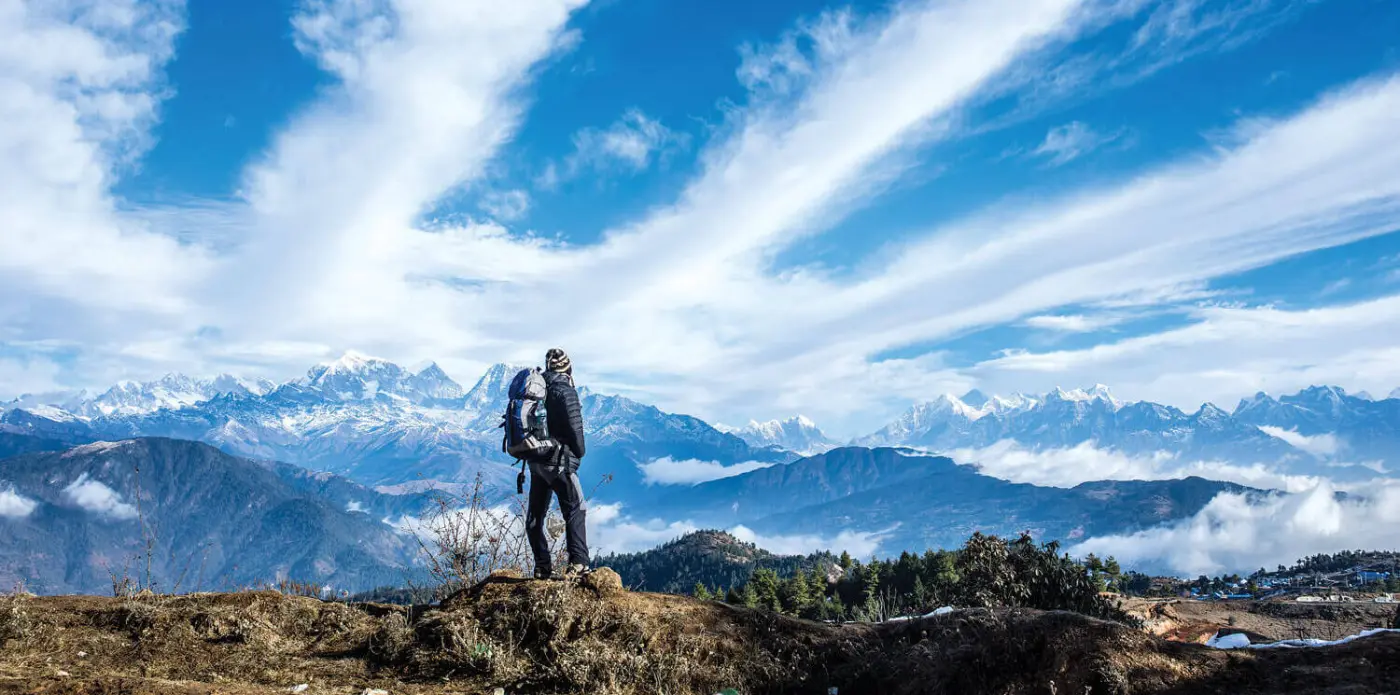
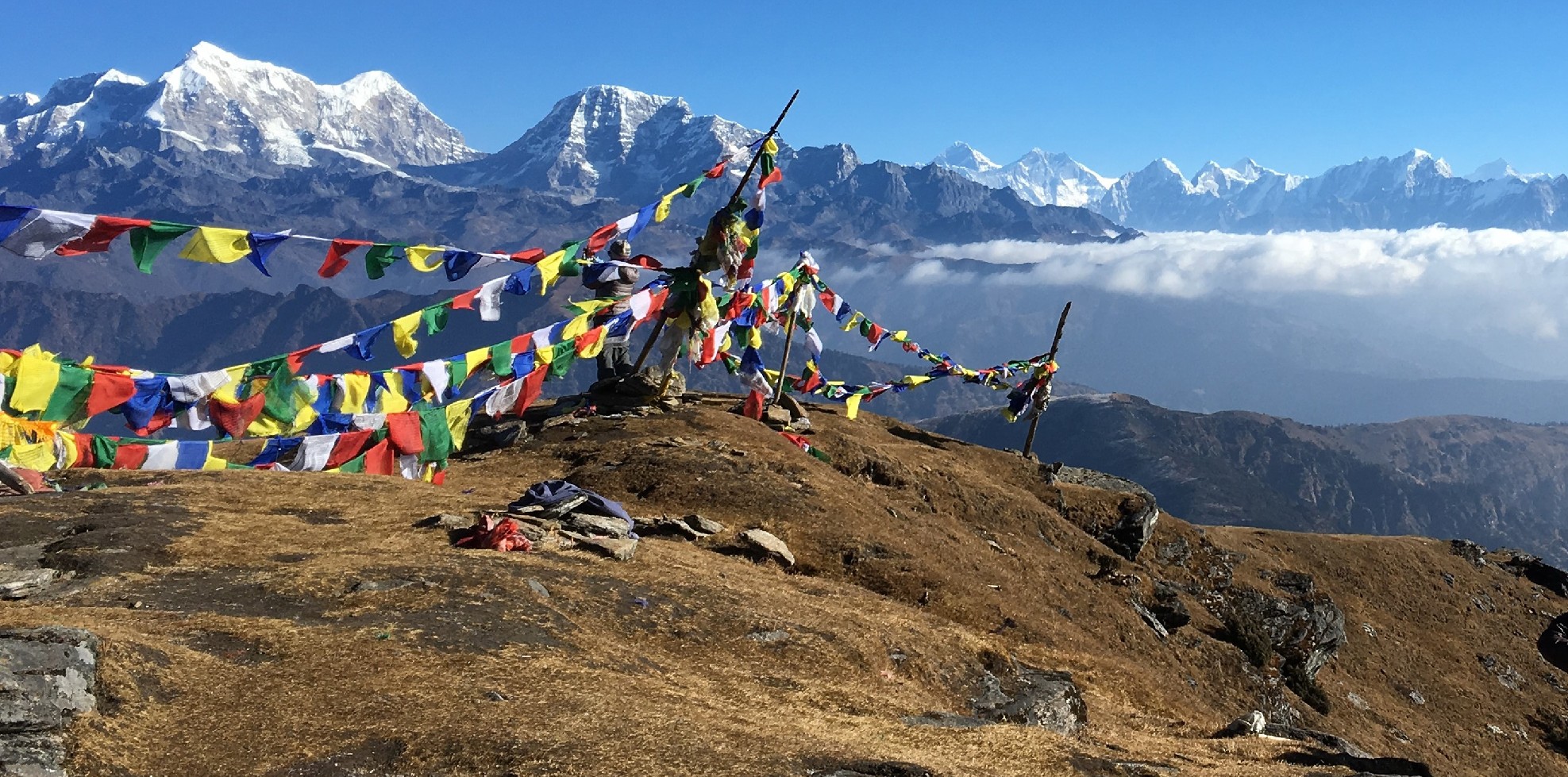
 Pikey Peak — Sir Edmund Hillary’s Finest Viewpoint
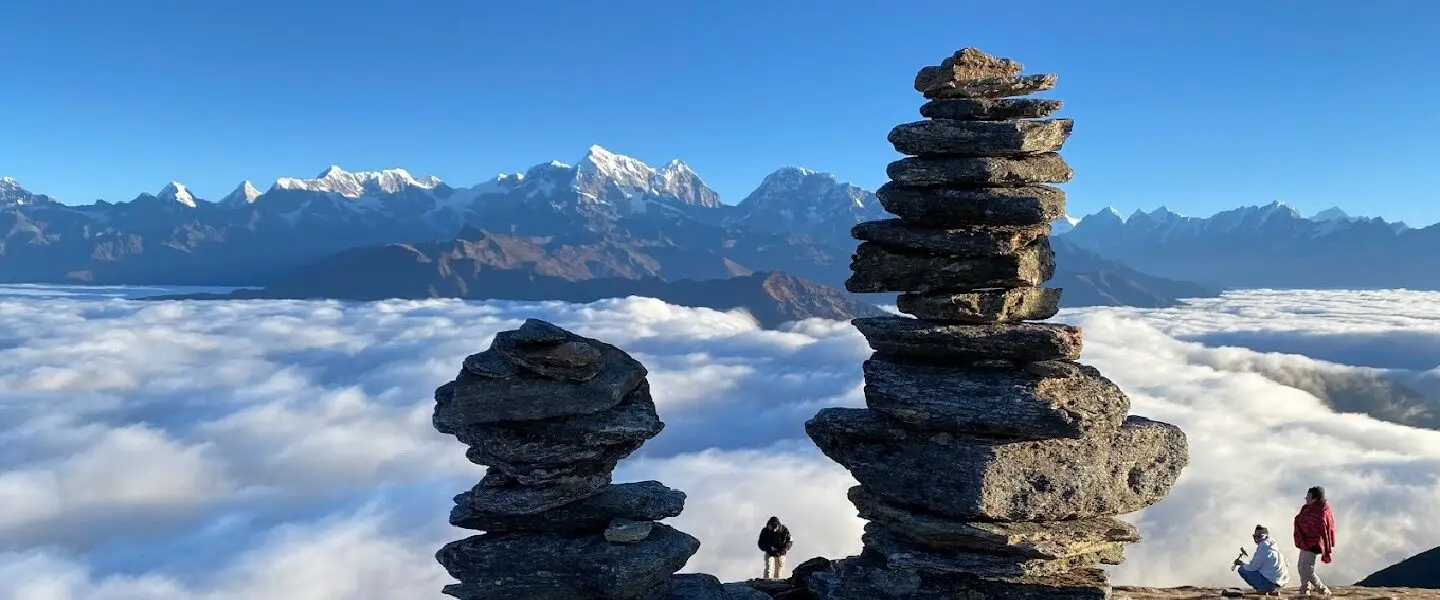 Pikey Peak — Sir Edmund Hillary’s Finest Viewpoint
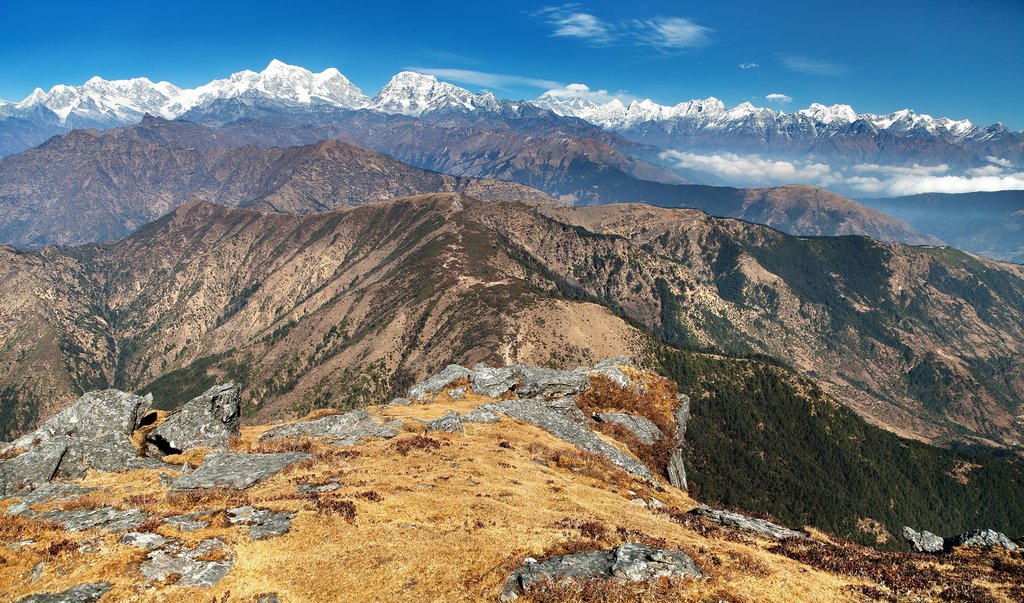

 Shared Jeep — Mid-Range Budget Option
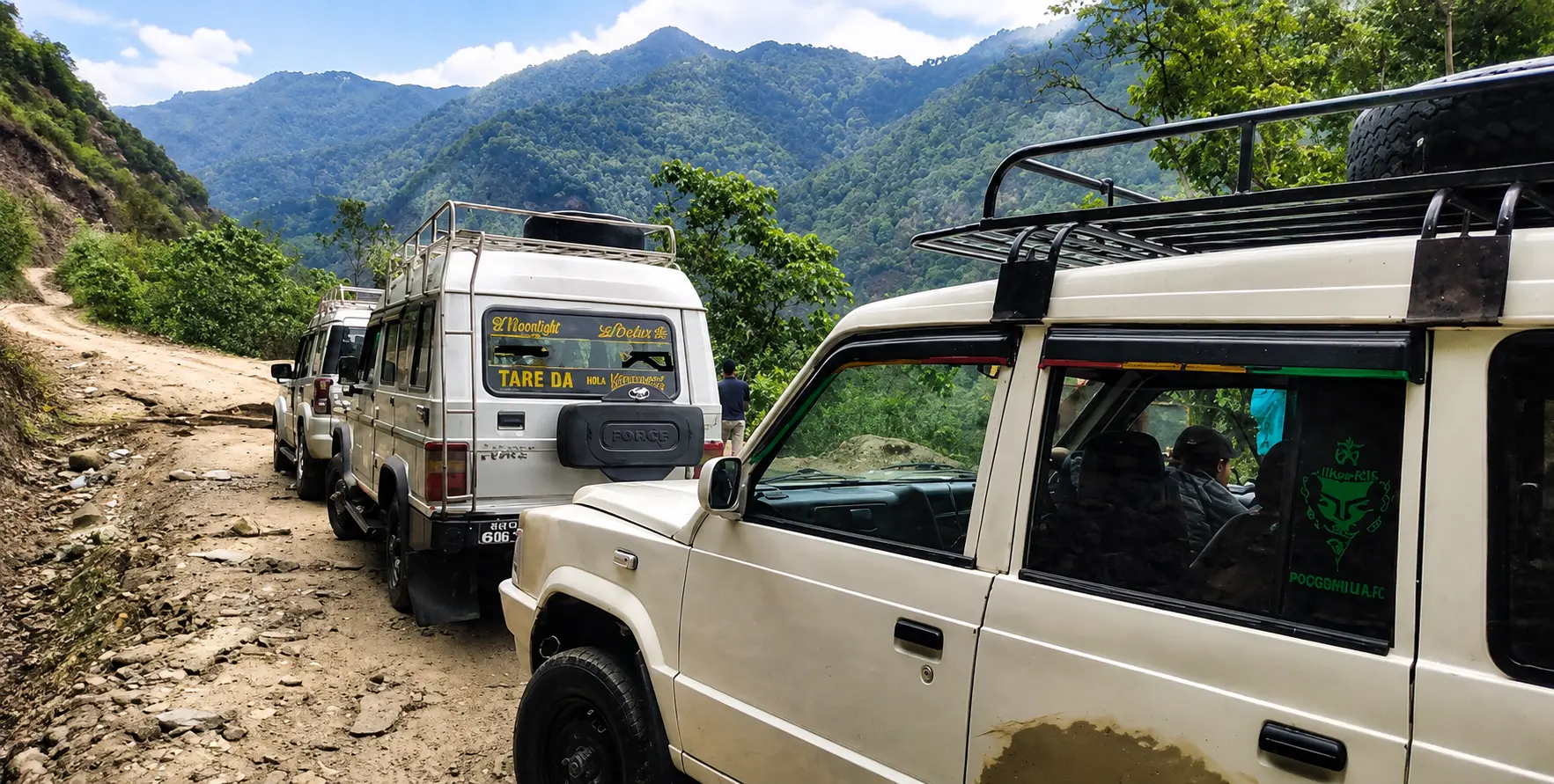 Shared Jeep — Mid-Range Budget Option