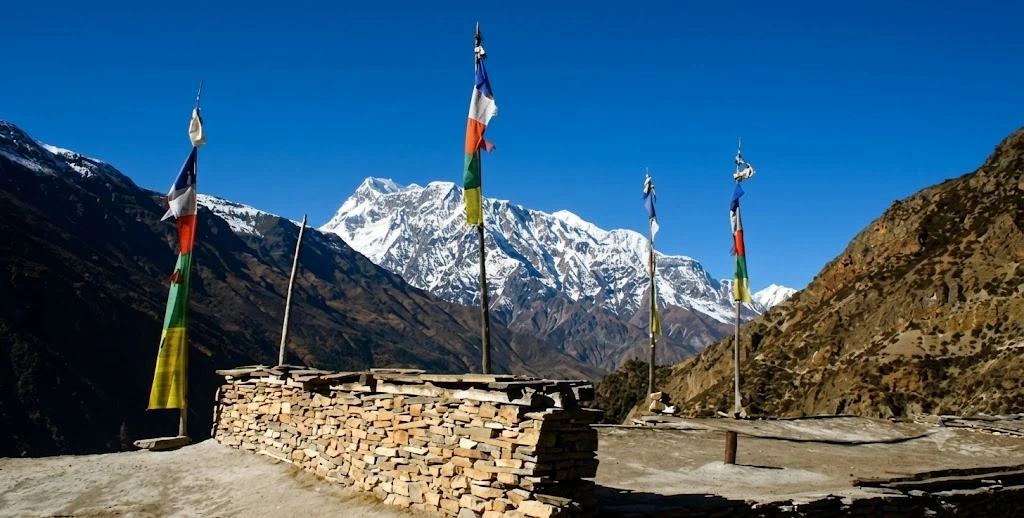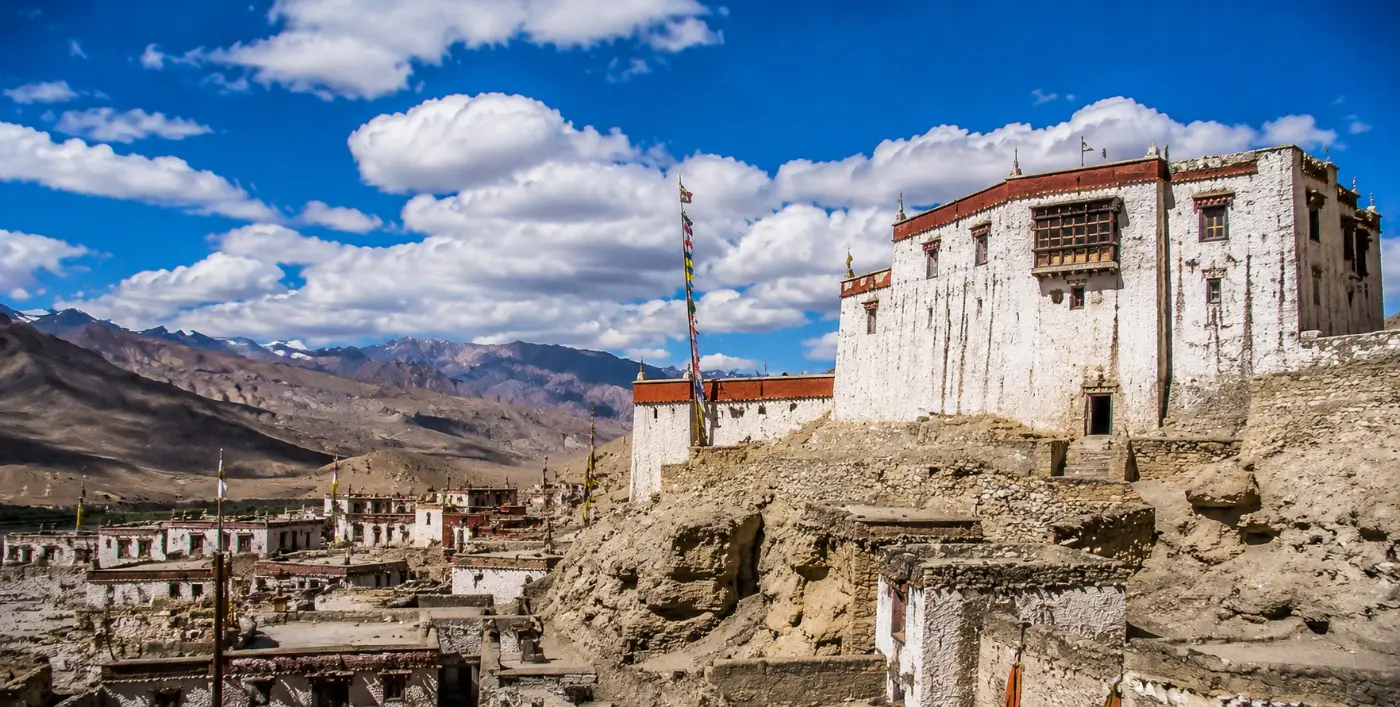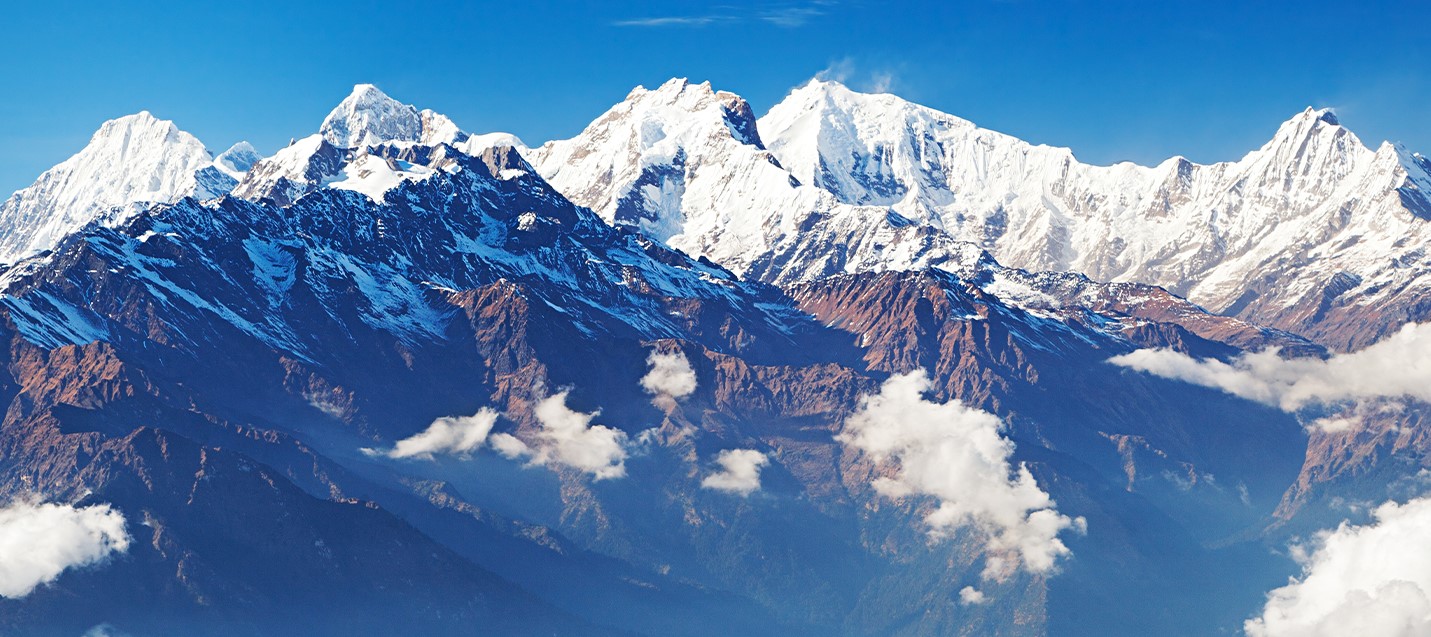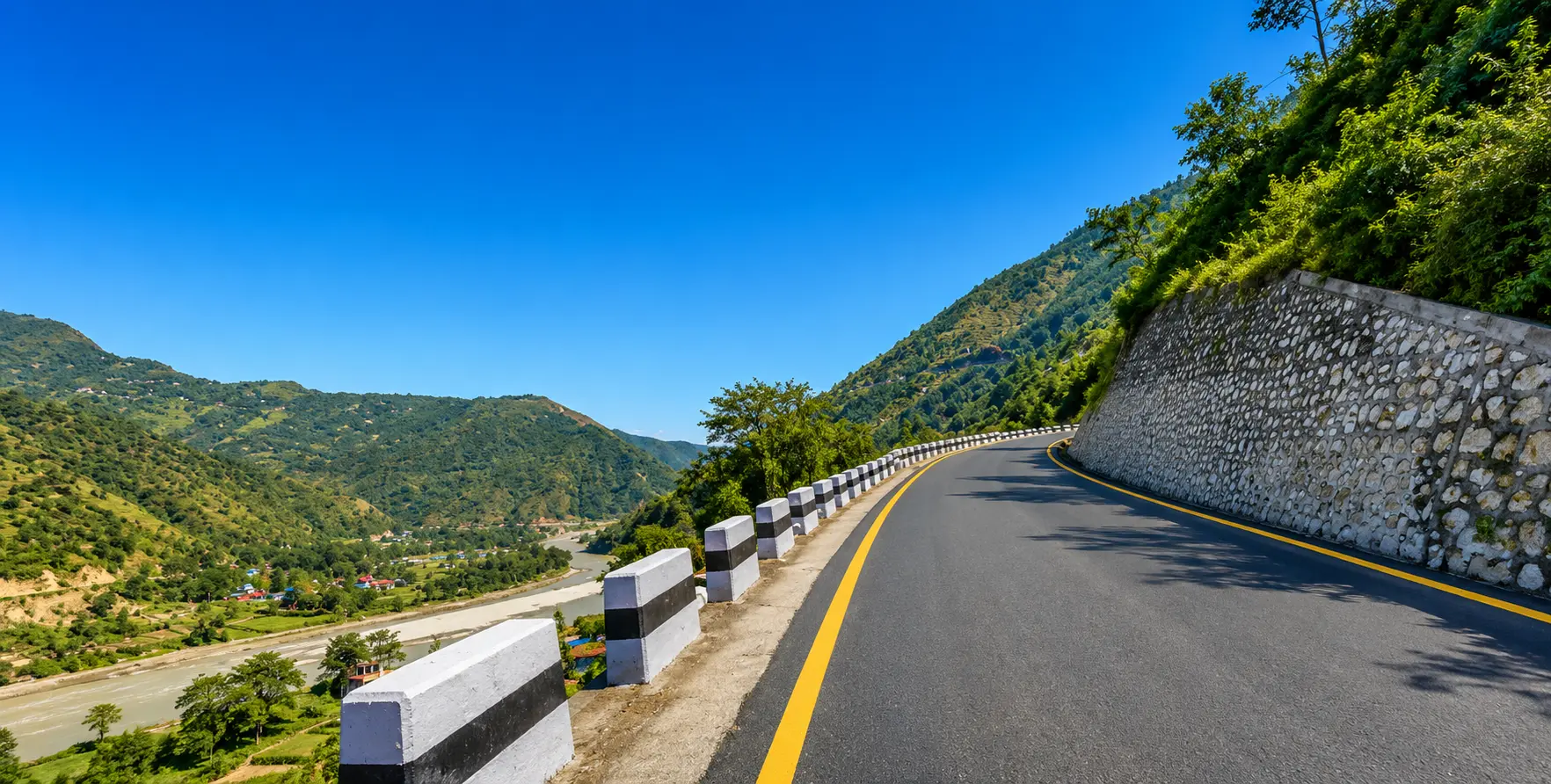
Car, Jeep, Hiace and Bus Hire in Nepal

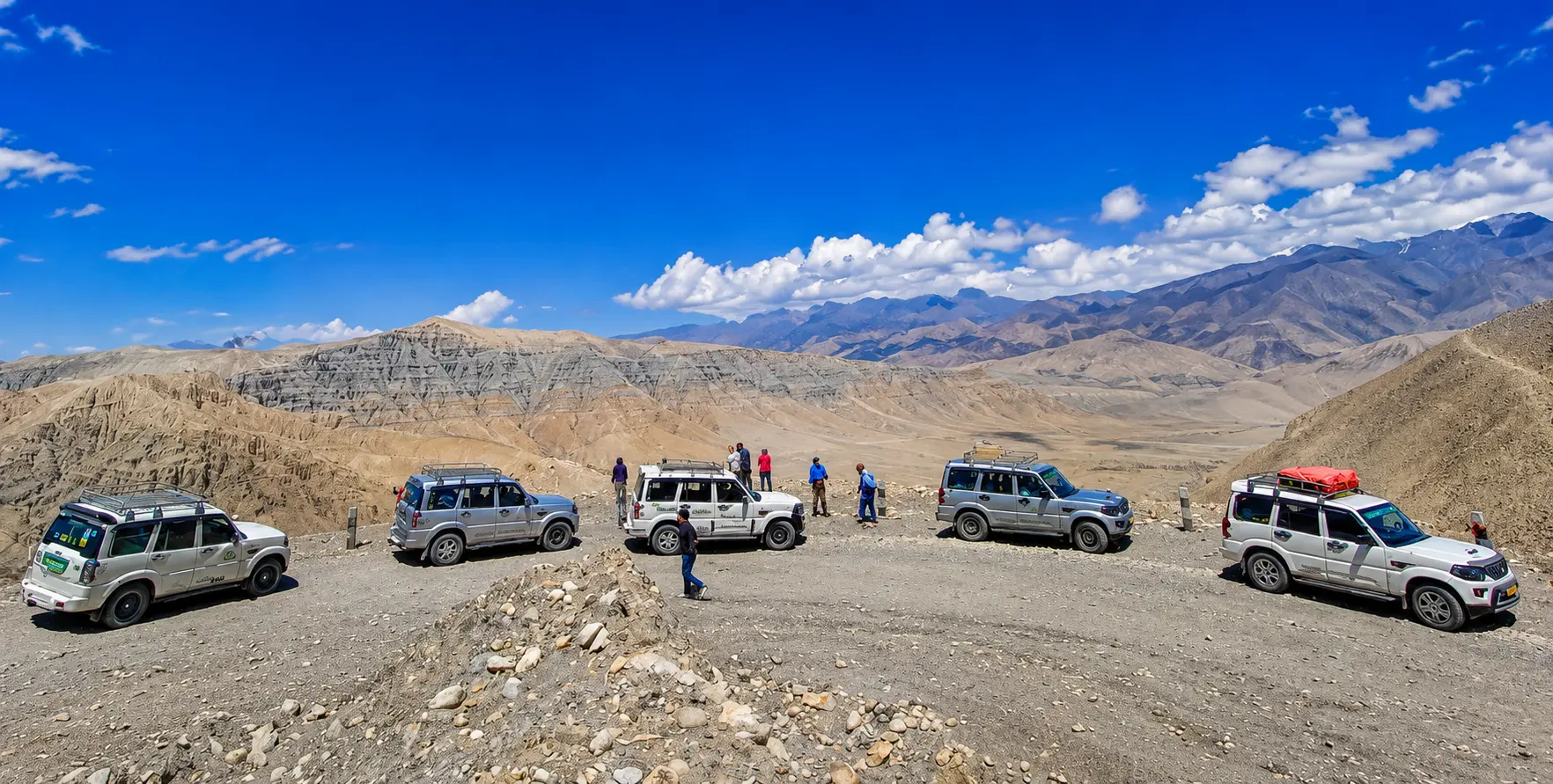
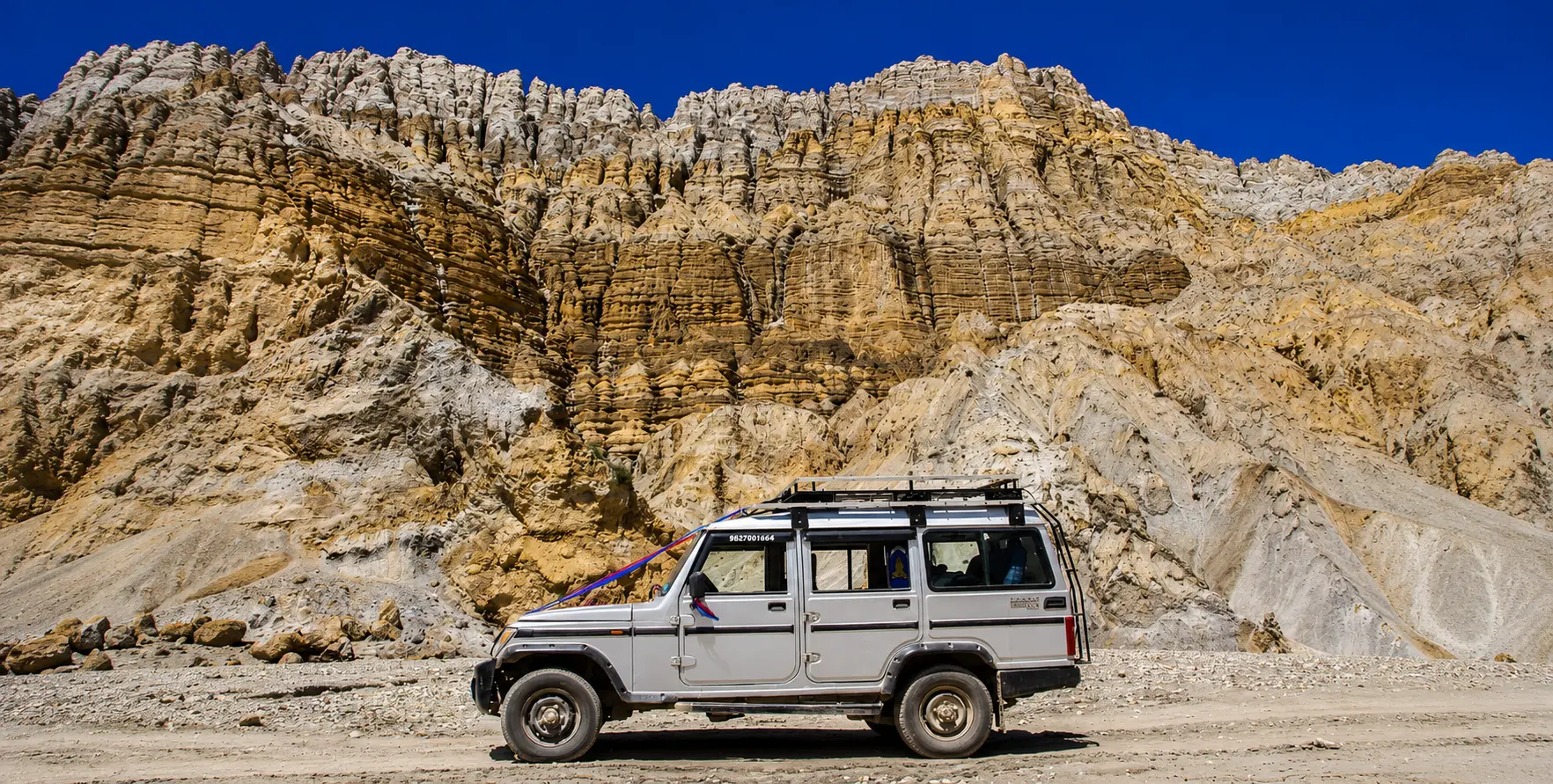
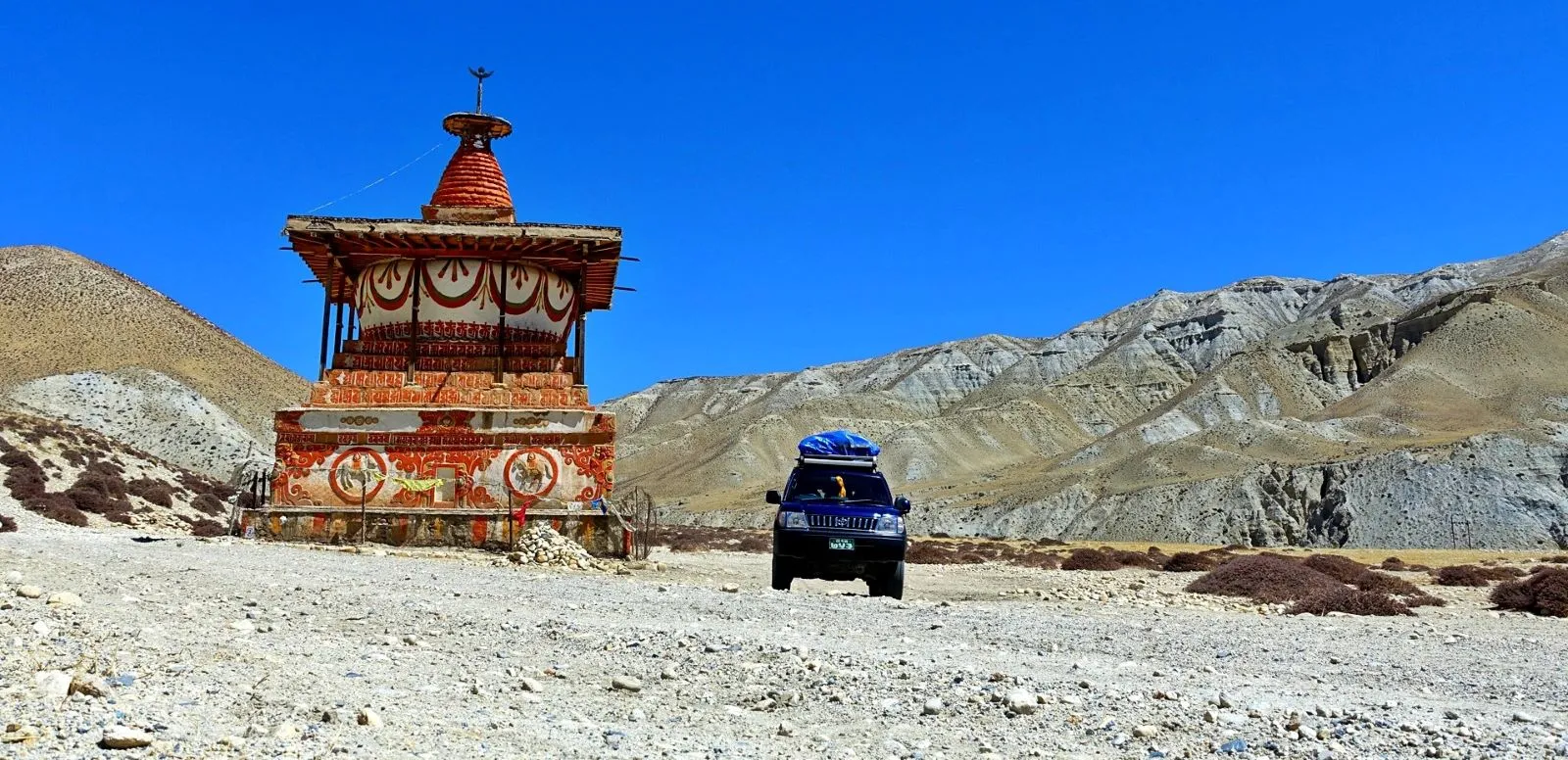
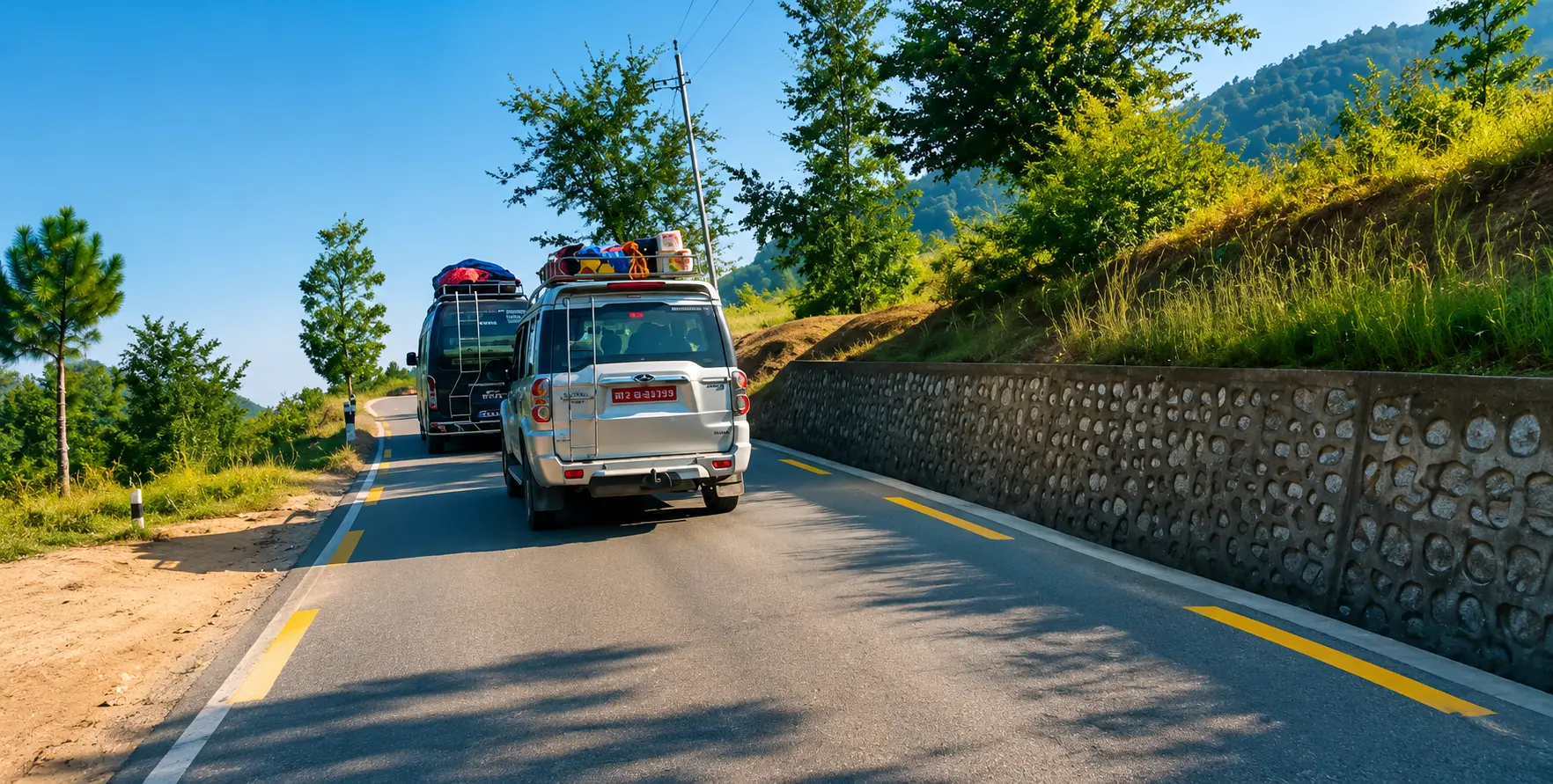
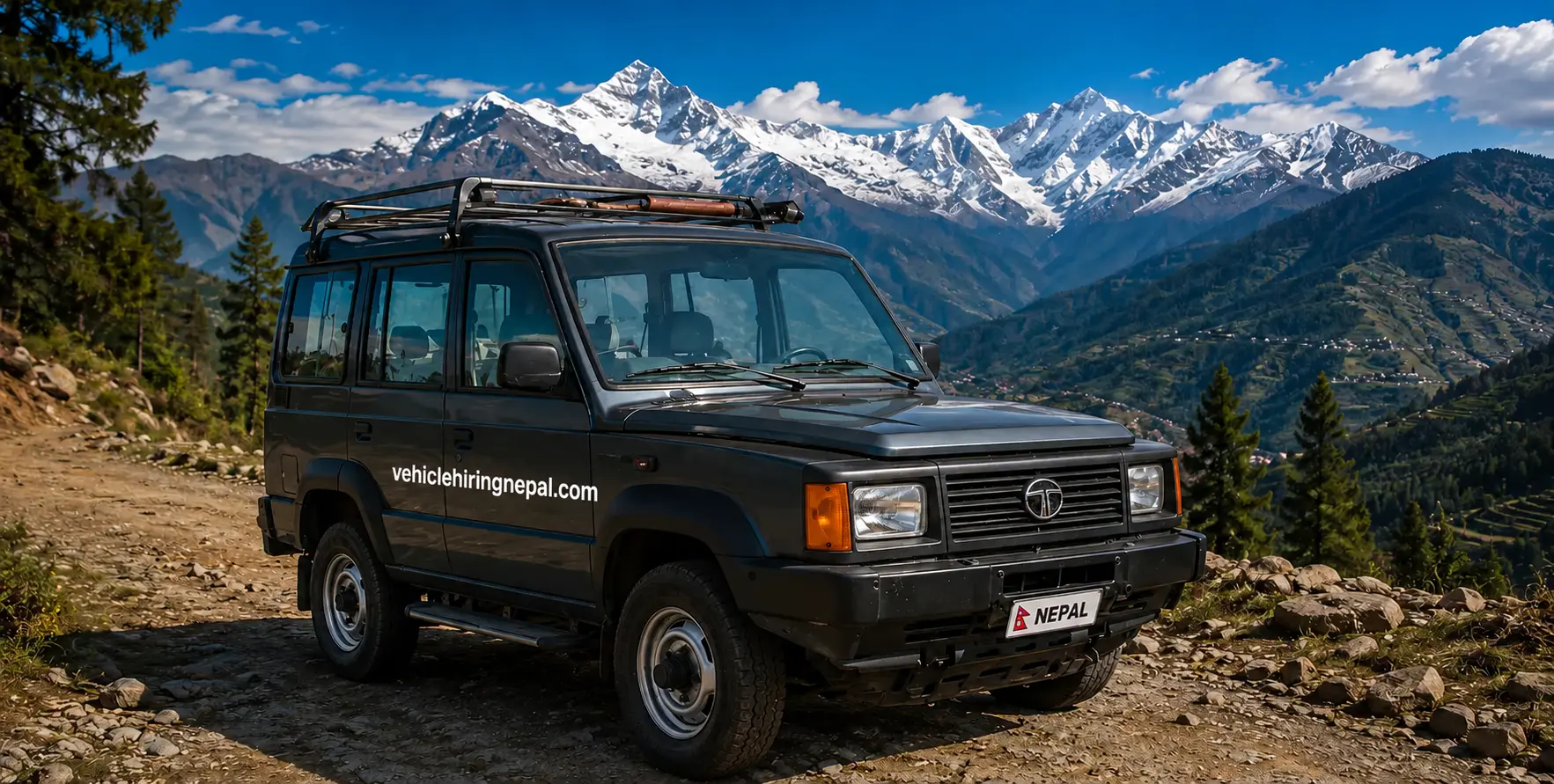
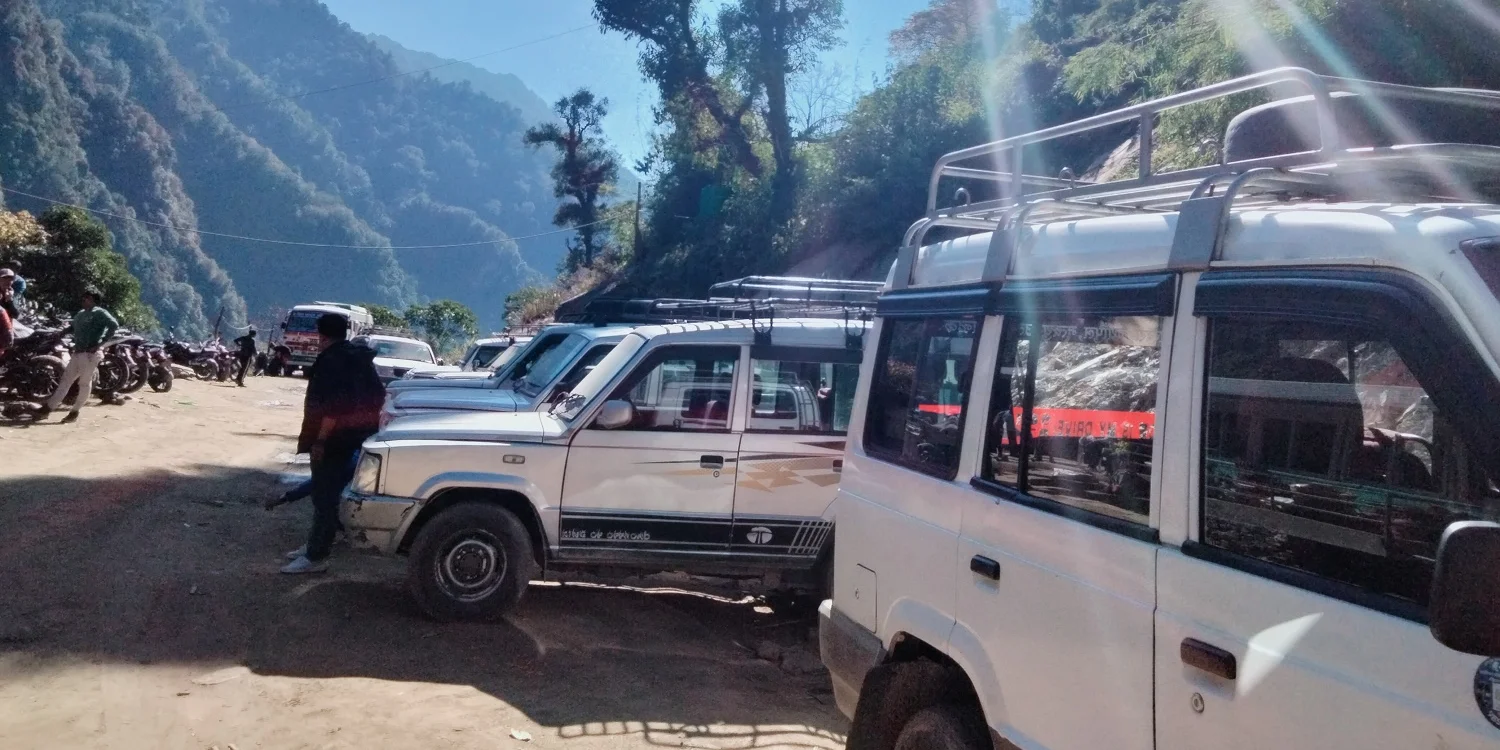
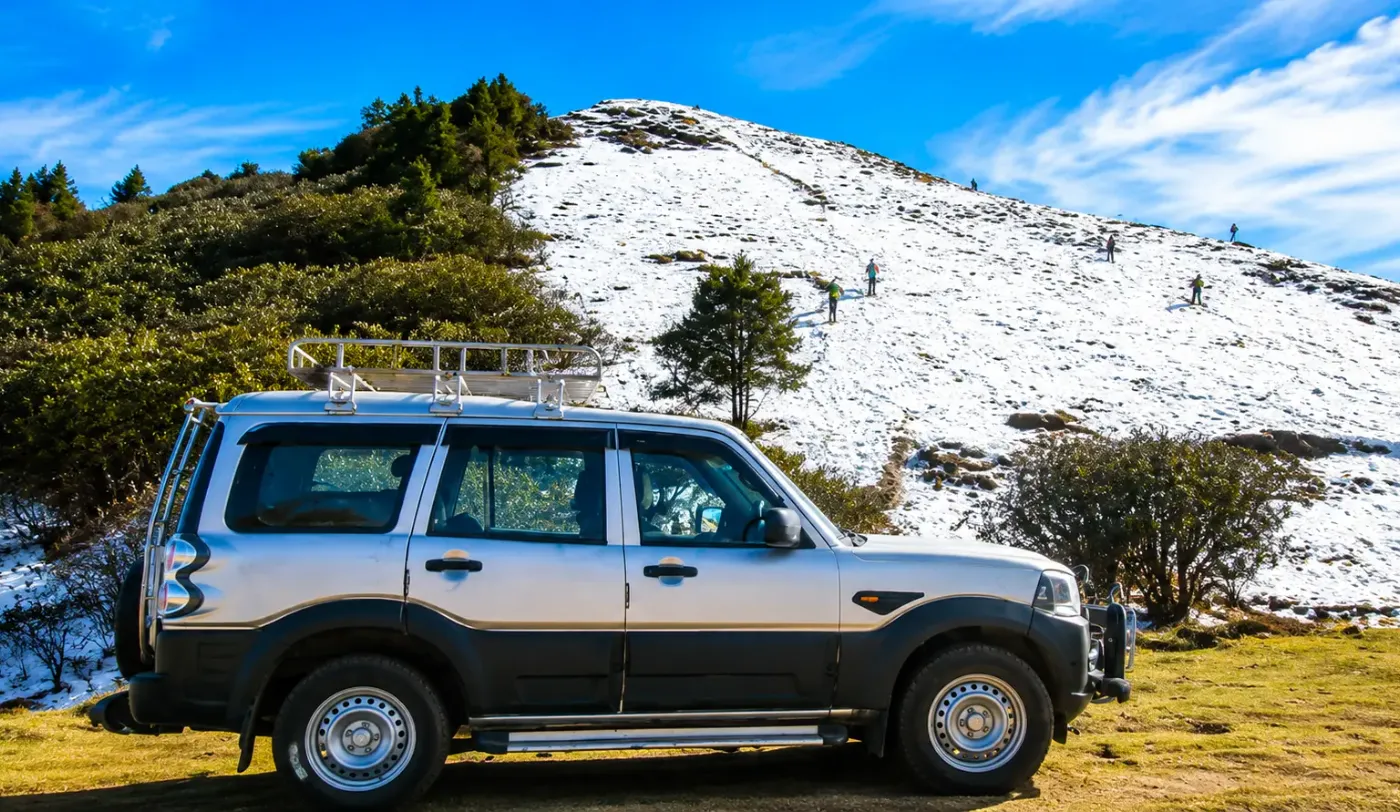
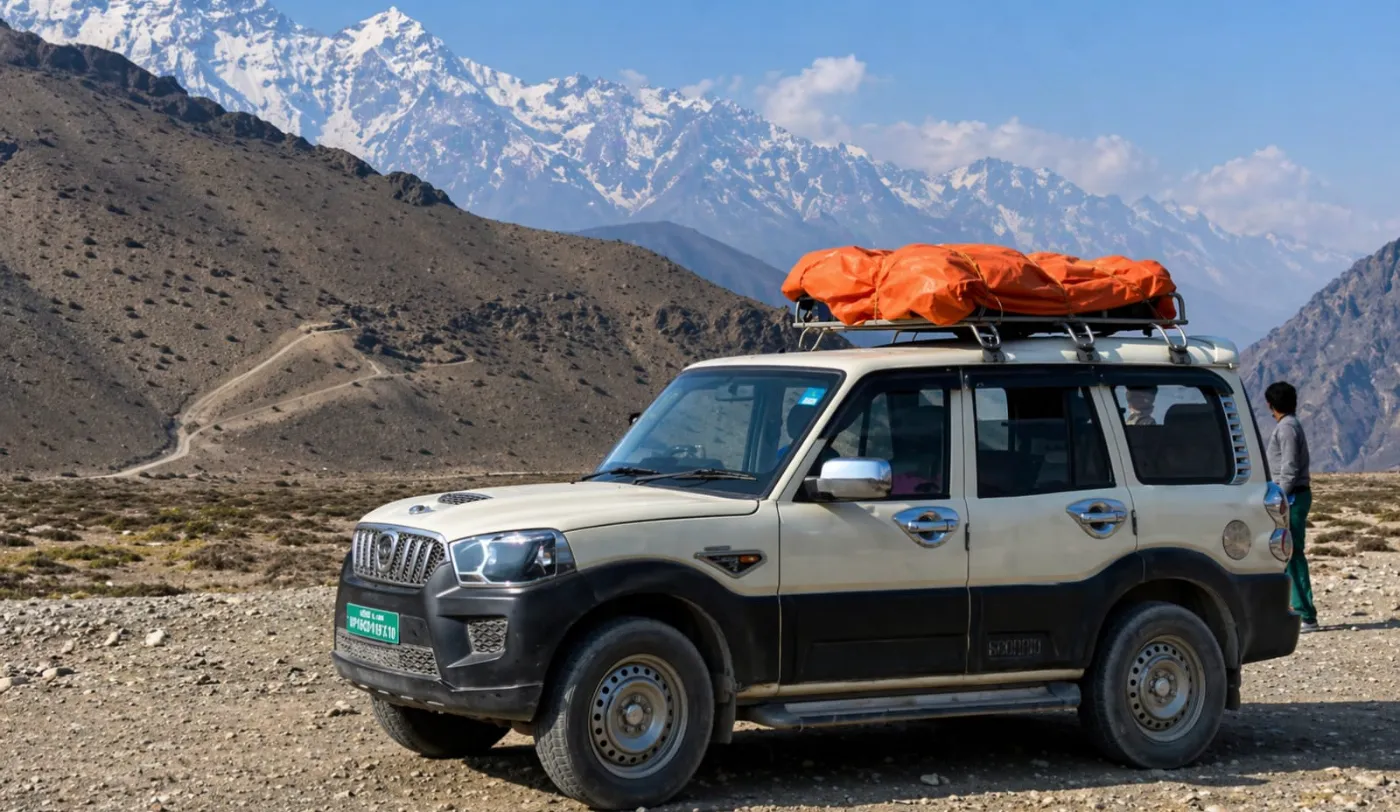
Private Scorpio jeep with luggage on the roof
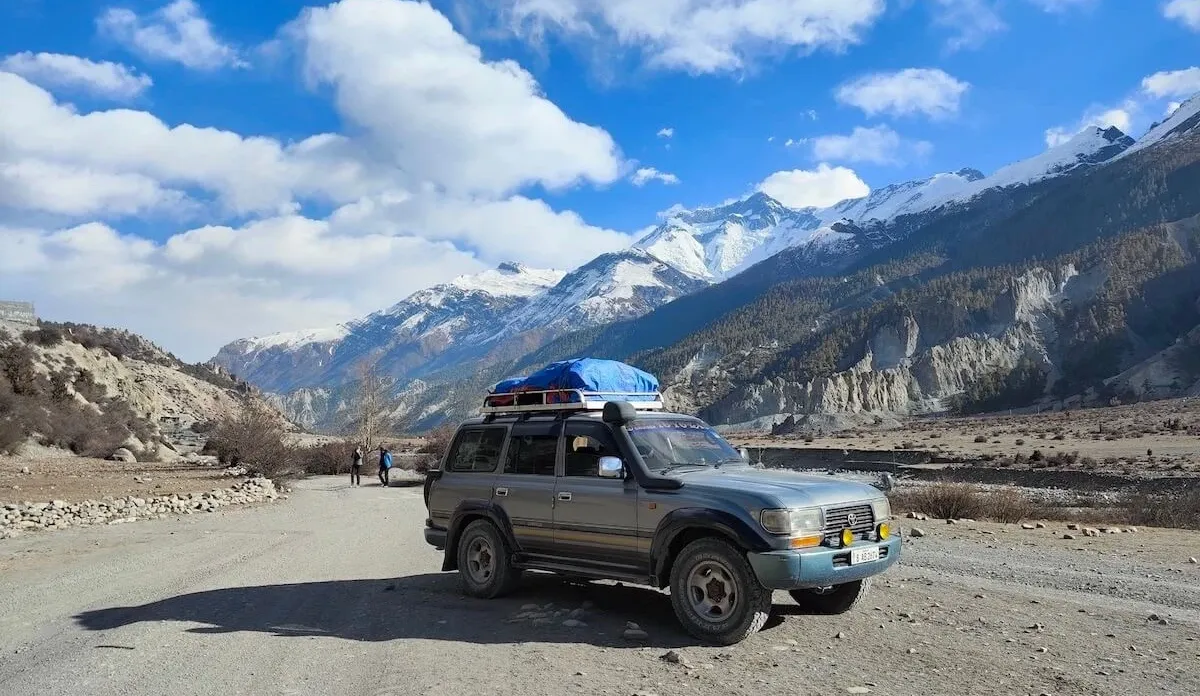
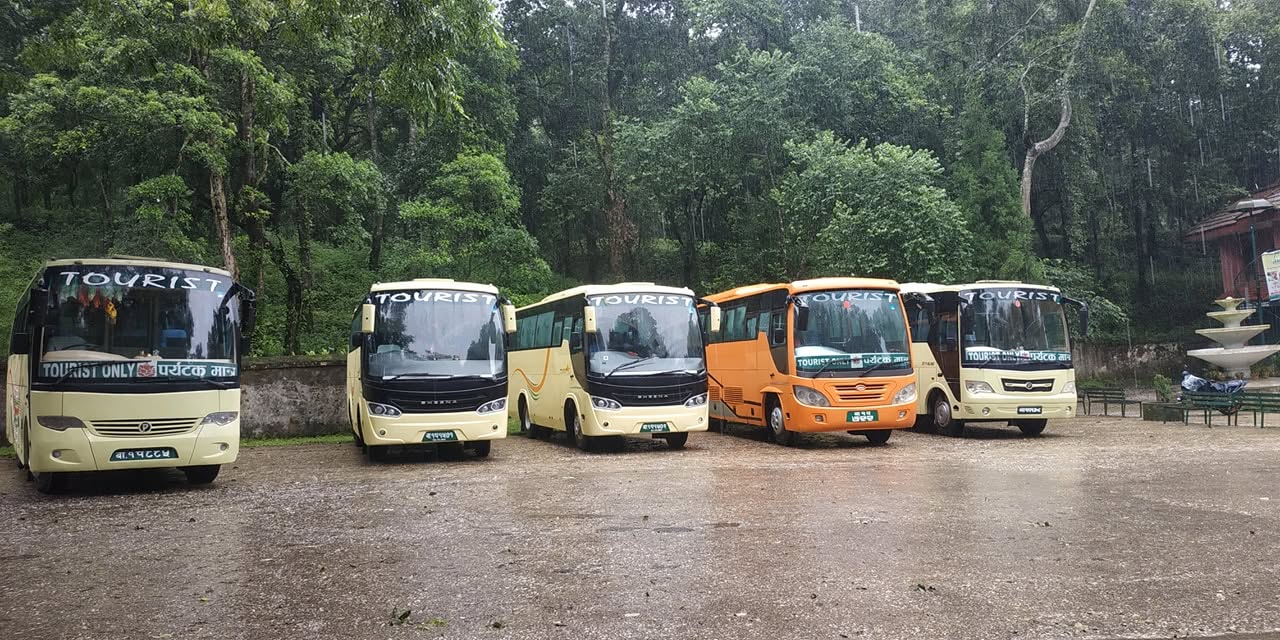
cars, 4WD jeeps, Toyota Hiace vans, and tourist buses

Nepal’s terrain changes more dramatically, more often, than almost anywhere else on earth — from flat highways through the Terai to hairpin mountain roads climbing thousands of meters, and unpaved tracks that no ordinary car was ever built to handle. This is precisely why there is no single ‘best’ vehicle for travelling around Nepal.

The right choice for car, jeep, Hiace, or bus hire in Nepal depends entirely on your group size, route, budget, and whether your itinerary includes rough mountain roads that demand genuine 4WD capability. This guide compares all four major vehicle categories in detail — what each one is built for, what it costs and which specific Nepal routes suit it best — so that you can book the right vehicle the first time, rather than discovering halfway up a mountain road that your sedan should have been a jeep, or paying for an oversized coaster when a single shared car would have done the job for a couple travelling alone.

Every comparison in this guide links directly to the specific vehicle and route pages on Nepal Vehicle Hiring Pvt Ltd’s website, so you can move straight from reading about a vehicle category to checking availability and pricing for your exact trip.

Quick Overview: car, jeep, Hiace, and bus hire in Nepal

Before diving into the details, here is the short version. A private car suits solo travellers and small families sticking to paved roads — Kathmandu Valley sightseeing, the Kathmandu–Pokhara highway, and Terai routes toward Lumbini and Chitwan.

A 4WD jeep is the only sensible choice once your route includes unpaved mountain roads — Mustang, Manaslu, Annapurna trailheads, and most trekking gateway towns above 2,000 meters. A Hiace van fits families and small groups of up to fourteen who want one comfortable vehicle rather than splitting across two cars.

A tourist bus or coaster suits larger groups and budget-conscious solo travellers between major tourist hubs on fixed schedules and well-paved routes.

How This Guide Is Organised: The vehicle category below follows the same structure: what the vehicle is built for, what it typically costs, which specific Nepal routes it suits best, and where its practical limits lie. Reading through all four sections, even if you already have a vehicle category in mind, helps clarify the trade-offs at the boundaries between categories, since many real Nepal itineraries combine more than one vehicle type across different legs of the same trip, rather than relying on a single vehicle for an entire journey from arrival to departure.

Car Hire in Nepal: Comfort for City and Highway Travel

A standard car hire in Nepal is the most popular choice for travellers on itineraries that stay on paved roads: Kathmandu Valley sightseeing, the Kathmandu–Pokhara highway, transfers to and from the airport, and day trips around Pokhara, Chitwan, and Lumbini. Sedans and small SUVs typically seat one to three passengers comfortably, with luggage space sufficient for a few suitcases, making them ideal for solo travellers and honeymooners who prioritise privacy over carrying capacity.
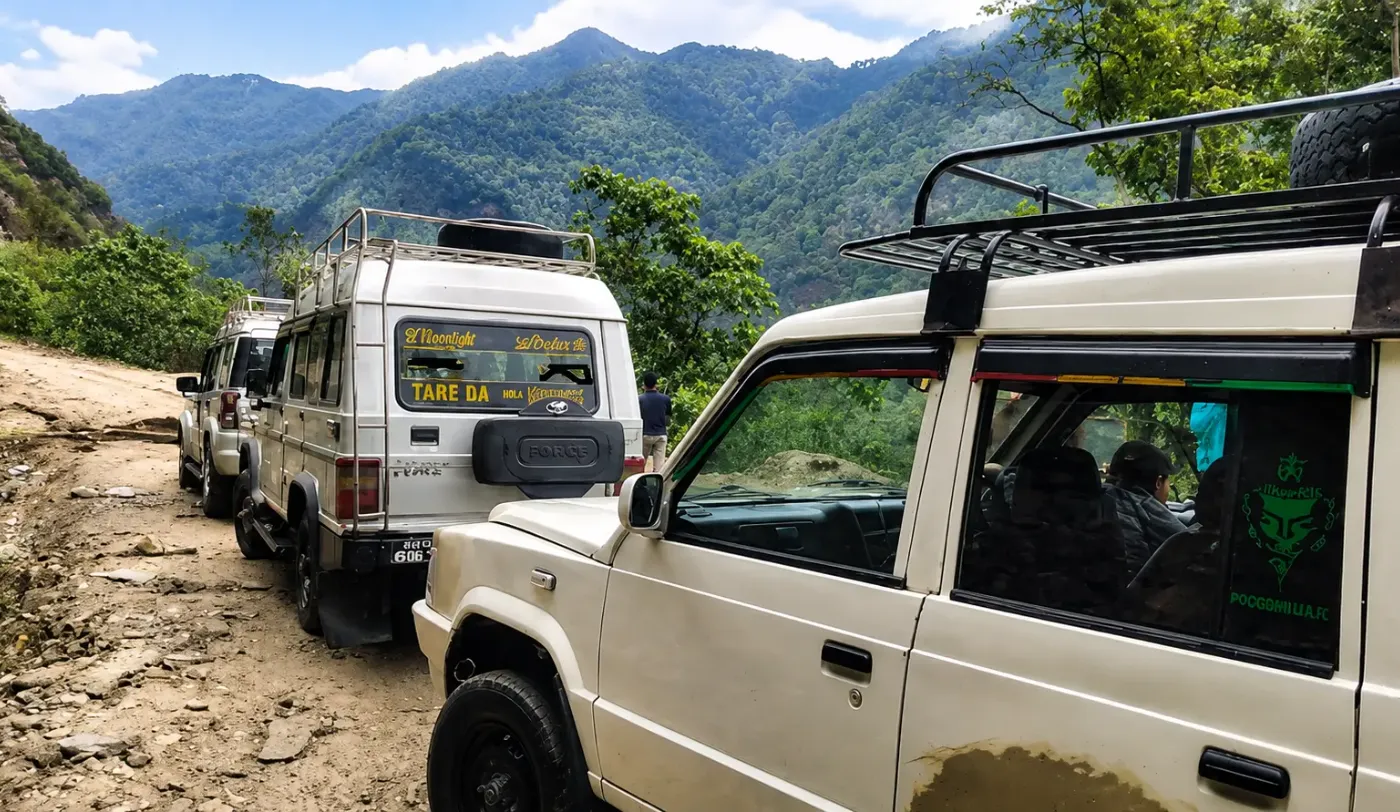
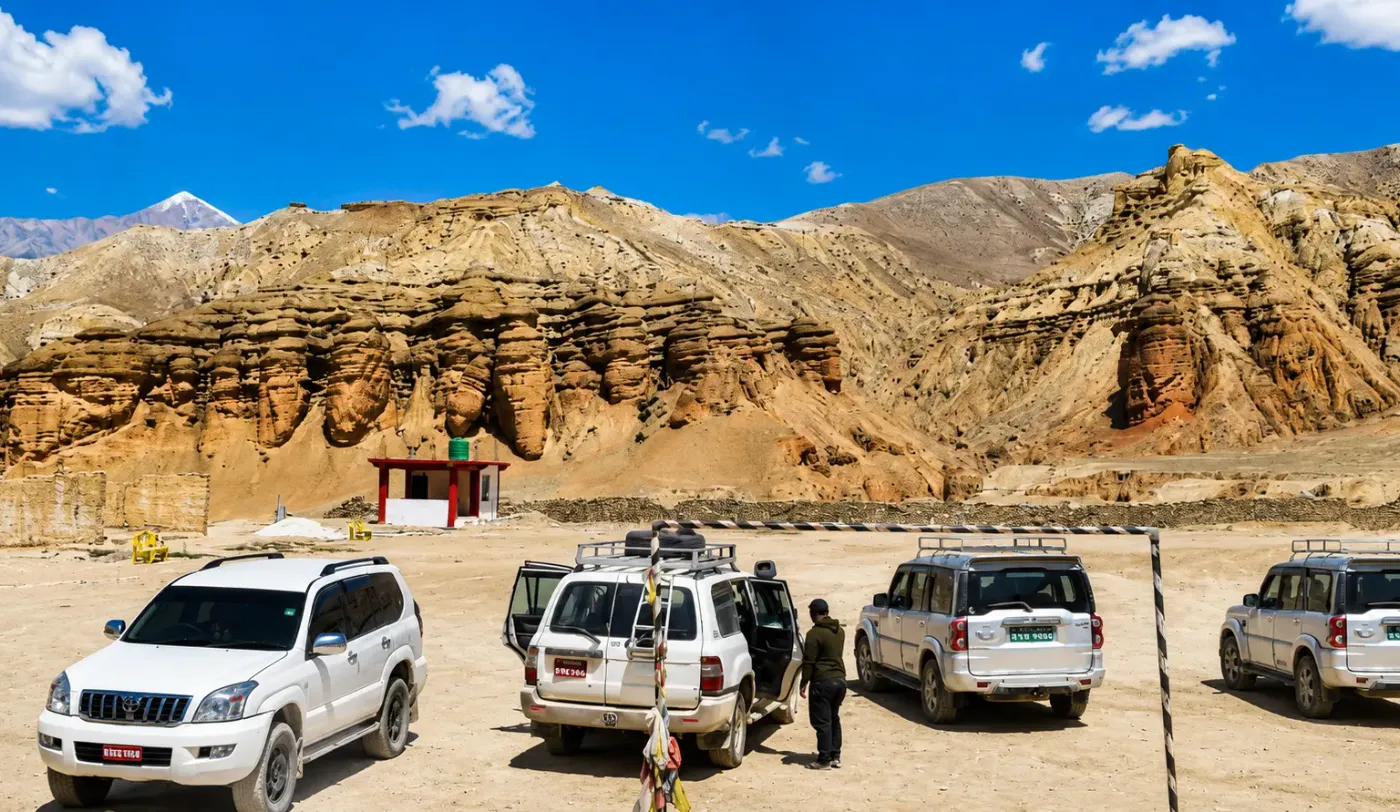
Private jeeps on a mountain road in Nepal

Typical Car Hire Pricing

Within the Kathmandu Valley, sedan hire with a professional driver typically starts around NPR 5,000–6,000 per day (roughly US$38–45), rising modestly for trips outside the valley due to additional fuel and driver accommodation costs. Hourly bookings, useful for half-day sightseeing or short transfers, generally run NPR 600–800 per hour with a minimum booking of around five hours.

These rates conventionally include the driver’s salary, fuel, parking fees, and standard road tolls. However, confirm what is included before booking, since some providers charge extras for late-evening trips on a set mileage allowance.

Best Routes for Car Hire

Cars are not suited to unpaved mountain roads, steep trekking-trailhead access tracks, or routes above roughly 2,000 meters, where road surfaces deteriorate; for any of these, a jeep is the appropriate choice, which is covered next.

Jeep and 4WD Hire in Nepal: The Mountain Specialist

For Nepal’s mountain districts, 4WD hire is not a luxury upgrade; it is a structural requirement. Routes into Mustang, Manang, Manaslu, Dolpa, and most trekking trailheads above 2,000 meters climb steep, unpaved switchbacks that a standard sedan cannot manage safely, especially after monsoon rains wash sections of road into rutted tracks.

A purpose-built jeep hire in Nepal — typically a Mahindra Scorpio, Bolero, Toyota Hilux, or Toyota Land Cruiser Prado — provides the ground clearance, four-wheel drive, and experienced mountain driving needed for these roads.

2WD vs 4WD Jeep: Which Do You Need?

Most Jeep fleets in Nepal offer both two-wheel-drive (2WD) and four-wheel-drive (4WD) variants of the same vehicle models. 2WD Jeeps are a comfortable, slightly more affordable option for long-distance paved highway travel and gentler unpaved stretches.

At the same time, genuine 4WD is essential for steep, loose-surface mountain roads, river crossings, and the high-altitude trekking trailhead access roads common throughout Nepal’s restricted trekking regions. As a rule of thumb, if your itinerary includes any route described online as requiring ‘4WD only’ or passing through districts such as Mustang, Manang, Dolpa, or Manaslu, book a genuine 4WD rather than the cheaper 2WD option.

Typical Jeep Hire Pricing

Jeep hire with a driver typically runs NPR 7,500–9,000 per day (roughly US$56–68) within and immediately around Kathmandu, with rates rising for multi-day mountain itineraries that involve higher fuel consumption, steeper terrain, and overnight accommodation for the driver in remote areas. Standard jeep models such as the Mahindra Scorpio and Bolero comfortably seat up to seven passengers, including the driver, with rooftop space for luggage and trekking gear, making them practical for both family groups and small trekking parties.

Best Routes for Jeep Hire

Jeeps are also the standard choice for pilgrimage routes to high-altitude temples such as Muktinath, and for travelling Upper Mustang’s expanding network of jeep-accessible roads, where the terrain shifts from forested hillside to high-altitude desert within a single day’s drive.

Hiace Van Hire in Nepal: The Group Comfort Option

For families and small groups of seven to fourteen people, a Hiace van hire offers the comfort of a single shared vehicle rather than splitting a group across two cars or a car and a jeep. The Toyota Hiace, Nepal’s standard tourist van, offers individual reclining seats, generous luggage space, and — on most tourist-grade models — air conditioning, making it a popular middle ground between a private car’s intimacy and a bus’s economy of scale.

Typical Hiace Hire Pricing

Hiace van hire with a driver typically costs NPR 7,500–9,000 per day for valley and short-distance use, broadly comparable to jeep pricing, with hourly rates around NPR 850 per hour for shorter bookings, subject to a minimum hours requirement. For multi-day touring itineraries combining several cities, daily rates are usually quoted as part of a package that also covers driver accommodation and meals for overnight trips.

Best Uses for Hiace Hire

Hiace vans handle paved and lightly unpaved roads well but, like cars, are not suited to the steepest, roughest mountain trailhead roads — for those routes, a jeep convoy or a smaller group split between jeeps is the more practical choice.

Bus, Coaster, and Tourist Bus Hire in Nepal: Budget and Scale

For larger groups, budget-conscious solo travellers, and fixed-route intercity travel, Nepal’s bus hire network is reliable, inexpensive, and well-suited to the country’s main paved tourist corridors. Standard tourist buses operate scheduled daily departures on routes such as Kathmandu–Pokhara, Kathmandu–Lumbini, and Pokhara–Chitwan, with reclining seats, onboard storage, and, on the better-equipped lines, air conditioning and onboard refreshment stops.

For private group charters rather than scheduled seats, a coaster bus—Nepa’s standard 20-seater minibus— offers a cost-effective option for groups of 15–20 travelling on a fixed itinerary, commonly used for company retreats, tour groups, and extended family travel.

Typical Bus and Coaster Pricing

Scheduled tourist bus seats between Kathmandu and Pokhara typically cost around US$10 per person, with similar pricing on the Lumbini and Chitwan corridors, making bus travel by far the most economical way to move between Nepal’s major tourist hubs. Private coaster charters are quoted per day or per itinerary rather than per seat, scaling with route length and number of travel days, and represent better value than multiple car or jeep bookings once a group exceeds roughly fifteen people.

Best Routes for Bus and Coaster Hire

Buses are not recommended for the steep, unpaved trailhead access roads covered earlier under jeep hire; even where a bus route nominally exists toward a mountain district, the ride is typically slower, less comfortable, and less reliable than a private jeep over the same rough terrain.

Side-by-Side: Matching the Vehicle to Your Trip

Solo traveller or couple, city and highway only: A private car hire offers the best balance of comfort, privacy, and cost for Kathmandu sightseeing, airport transfers, and the Kathmandu–Pokhara highway.

Solo traveller, mountain trailhead access: A 2WD or 4WD jeep is necessary once your route leaves paved roads, even for just one or two passengers, since the vehicle choice is dictated by road surface rather than group size on these routes.

Family of four to seven, mixed itinerary: A jeep or Hiace both work well; choose the jeep if any part of the route is unpaved or mountainous, and the Hiace if the entire itinerary stays on paved roads and you want a more spacious, car-like ride.

Group of eight to fourteen, paved or lightly mixed roads: A Hiace van is generally the most comfortable and cost-effective single-vehicle solution for this group size.

Group of fifteen or more, fixed touring itinerary: A coaster bus charter typically offers the best value, particularly for multi-day group tours covering several cities.

Budget solo or pair travel between major cities: Scheduled tourist bus seats on routes like Kathmandu to Pokhara offer the lowest per-person cost for travellers on a tight schedule or with heavy luggage.

What’s Typically Included in a Nepal Vehicle Hire Price

Reputable vehicle hire providers in Nepal, across all four categories covered in this guide, generally structure their pricing to include the driver’s daily salary, fuel for the agreed route, standard road tolls and parking fees, and, for multi-day trips, the driver’s meals and overnight accommodation in towns along the route. What is typically included, and what to confirm before booking, includes: routes beyond the originally agreed route; late-night surcharges for pickups or drop-offs outside standard daytime hours; and any tips for the driver, which remain customary but optional at the end of a satisfactory trip.

For multi-day mountain itineraries in particular, confirm whether the quoted price assumes a fixed number of driving days or a fixed itinerary regardless of weather delays, since road closures from landslides or snow are not uncommon during shoulder seasons and can affect both timing and cost if not clarified up front.

Seasonal Considerations for Vehicle Hire

Nepal’s vehicle hire market generally follows the same seasonal rhythm as its tourism calendar. Autumn (late September through November) and spring (March through May) represent peak demand, when vehicles of every category, but particularly jeeps serving popular trekking trailheads, should be booked at least a week or two in advance to guarantee availability on the exact dates needed.

Monsoon season (June through early September) adds the complication of landslide risk on several mountain roads, making jeep drivers’ local route knowledge especially valuable; experienced operators know which roads remain passable and which require detours.

Winter (December through February) is generally the easiest season for last-minute vehicle bookings outside the main Everest and Annapurna trekking windows. However, some high-altitude roads, including sections of the Mustang and Manang jeep routes, may close temporarily due to snow at the highest passes.

Vehicle Hire for Special Occasions and Pilgrimage Travel

Beyond standard sightseeing and trekking logistics, vehicle hire in Nepal also plays a central role in religious pilgrimage travel, a significant segment of the country’s domestic and international tourism economy. Hindu pilgrims travelling to Muktinath, Pashupatinath, and other sacred sites, alongside Buddhist pilgrims visiting Lumbini, Boudhanath, and Swayambhunath, often have specific scheduling needs tied to auspicious dates and religious festivals, requiring vehicle providers experienced in coordinating around these calendars rather than purely tourist schedules.

Jeep hire, in particular, plays an outsized role in pilgrimage logistics to high-altitude sites like Muktinath, where the final approach road climbs well above 3,000 meters and genuinely demands the same 4WD capability used for standard trekking trailhead access elsewhere in this guide.

Wedding parties, corporate retreats, and milestone celebrations represent another distinct category of vehicle-hire needs, often requiring multiple coordinated vehicles to arrive and depart in sequence, sometimes alongside decoration or branding requests for the vehicles themselves. Reputable providers serving this segment typically offer dedicated coordination for multi-vehicle convoys, ensuring that a ng party’s cars, a Hiace for the families, and a coaster for extended guests all arrive at the correct venue at the correct time without the logistics falling to the event organisers. Hire for Business and Corporate Travel in Nepal.

Nepal’s growing business tourism sector, including conferences, corporate retreats, and site visits for international NGOs and development organisations, relies heavily on reliable vehicle hire services distinct from those for standard leisure tourism. Corporate clients typically prioritise reliability, vehicle presentation, and driver professionalism over the adventure-oriented capability that leisure trekkers might prioritise, so many providers maintain a distinct fleet tier of well-presented sedans and SUVs for executive and corporate transfers, alongside their standard tourist fleet.

For multi-day corporate retreats or site visits spanning several Nepal locations, the same vehicle category logic that applies to leisure travel still holds: a sedan or SUV suits Kathmandu Valley meetings and airport transfers, while site visits to rural project locations outside the valley may require a 4WD jeep depending on the specific road conditions involved, a detail worth clarifying with local project staff before booking transport for an unfamiliar rural route. Many corporate clients also value the option to scale a vehicle fleet up or down across a multi-day program, starting with a single executive car for airport arrival and adding jeeps or a Hiace for field visits later in the itinerary, which a fleet-diverse local provider can typically accommodate far more smoothly than a company relying on a single rental partner with a narrower vehicle range.

Practical Tips for Booking Vehicle Hire in Nepal

  • Book in advance during October–November and March–May, Nepal’s two peak tourist seasons, when popular vehicle categories and routes can sell out, particularly jeeps serving major trekking trailheads.
  • Confirm whether your route requires 4WD specifically, not just ‘a jeep’ — some providers default to 2WD unless 4WD is explicitly requested, which matters considerably on rough mountain roads.
  • Clarify what is included in the quoted price: driver costs, fuel, tolls, and meals are usually included, but always confirm before booking rather than assuming.
  • For group travel, compare the total cost of multiple smaller vehicles with that of a single larger vehicle, such as a Hiace or Coaster — beyond a certain group size, the larger vehicle is almost always more economical and more comfortable.
  • Ask about the driver’s experience on your specific route, particularly for mountain destinations, since local route knowledge meaningfully affects both safety and trip pacing.
  • Pre-book airport transfers rather than negotiating with curbside taxi operators on arrival, since pre-arranged rates are typically more transparent and eliminate wait time.

Vehicle Models Explained: What You’re Actually Riding In

Sedans and SUVs (Car Category)

Nepal’s car hire fleets typically draw from a mix of Japanese, Korean, and Indian models well suited to Kathmandu Valley roads and the Kathmandu–Pokhara highway. Compact sedans like the Suzuki Dzire and Honda Amaze offer fuel-efficient, comfortable rides for one to three passengers.

At the same time, small SUVs and crossovers add a bit more ground clearance and luggage space without stepping into full off-road territory. For travellers seeking a more top-end experience, larger SUVs such as the Toyota Land Cruiser Prado are increasingly offered in a ‘luxury car’ tier, combining genuine comfort with enough capability to handle lightly rough roads if an itinerary occasionally strays off the main highway.

Mahindra Scorpio and Bolero (Jeep Category)

The Mahindra Scorpio is Nepal’s most widely used mountain vehicle, prized for its balance of power, ground clearance, and relatively affordable running costs compared to larger 4WD options. Seating up to seven passengers, including the driver, with full rooftop luggage capacity, the Scorpio handles everything from the steep switchbacks toward Manaslu’s Soti Khola trailhead to the high-altitude tracks of Upper Mustang.

The Mahindra Bolero, a slightly more rugged and basic sibling to the Scorpio, is a popular budget-friendly alternative for the same routes, trading a little cabin refinement for an even lower price point, while remaining fully capable on rough terrain in its 4WD configuration.

Toyota Hilux and Land Cruiser Prado (Top-end Jeep Category)

For travellers seeking a higher comfort tier on mountain routes, the Toyota Hilux and Toyota Land Cruiser Prado offer noticeably smoother rides and more robust off-road engineering than the Scorpio or Bolero, at a correspondingly higher daily rate. These vehicles are particularly popular for VIP transfers, longer multi-day mountain itineraries where ride comfort matters for hours of driving, and travellers seeking a top-end experience for occasions such as honeymoons or milestone celebrations.

Toyota Hiace (Van Category)

The Toyota Hiace remains the standard tourist van across Nepal, valued for its reliability, parts availability, and comfortable individual seating compared to older minibus designs. Tourist-grade Hiace vans typically include air conditioning, tinted windows, and a dedicated luggage compartment separate from the passenger cabin, distinguishing them from the more basic Hiace models used for local public transport.

Coaster and Coach Buses (Bus Category)

The Toyota Coaster, Nepal’s standard 20-seater minibus, bridges the gap between vans and full-size buses and is commonly chartered by tour groups, corporate retreats, and extended families. For larger parties, full-size tourist coaches seating roughly 35 passengers handle the major scheduled routes between Kathmandu, Pokhara, Lumbini, and Chitwan, typically offering reclining seats, onboard sound systems, and scheduled rest stops at clean roadside restaurants along the route.

Why the Driver Matters as Much as the Vehicle

Across every vehicle category covered in this guide, the single factor that most affects trip quality, beyond the vehicle itself, is the driver. Nepal’s mountain roads demand genuine local knowledge: which sections wash out first in monsoon rain, where landslide risk is highest in shoulder seasons, which detours avoid current roadwork, and how to pace a long mountain drive so passengers arrive comfortable rather than exhausted.

An inexperienced driver in a perfectly capable 4WD jeep can still produce a stressful, unsafe trip. In contrast,e an experienced driver in a more modest vehicle often delivers a smoother, more reassuring journey.

When booking any vehicle category, it comes down to the driver’s experience on your intended route, not just their general years of driving experience. A driver who regularly runs the Kathmandu to Soti Khola route, for instance, will know the current state of the Budhi Gandaki Valley better than a driver whose experience is mostly confined to Kathmandu Valley city driving, even if both are equally skilled behind the wheel overall.

Understanding Nepal’s Road Conditions by Region

Nepal’s road network broadly falls into three categories that determine which vehicle type best suits a given route. Major highways — the Prithvi Highway connecting Kathmandu and Pokhara, the Mahendra Highway running the length of the Terai, and the roads linking Kathmandu to Bhaktapur and the airport — are sealed, well-maintained, and suitable for any vehicle category, including standard sedans.

Secondary district roads, connecting smaller towns and the lower stretches of most trekking approach routes, are a mix of paved and unpaved surfaces, generally manageable by a 2WD jeep or Hiace but increasingly rough toward their upper reaches.

The third category, rural and high-altitude trekking access roads, is where this choice matters most. Roads like those toward Soti Khola, Besisahar’s upper reaches, and the jeep tracks through Upper Mustang are unpaved, frequently rutted, and prone to seasonal washouts that can render sections temporarily impassable, even to 4WD vehicles, during heavy monsoon rain.

These roads are precisely why Nepal’s vehicle hire market maintains such a clear distinction between car, jeep, Hiace, and bus categories: the underlying infrastructure genuinely requires different vehicles for different routes, not a matter of marketing or upselling.

Understanding the Full Cost of Vehicle Hire

Beyond the daily or per-route rate quoted by a vehicle hire provider, several additional cost factors are worth understanding before booking. Multi-day mountain itineraries typically include the driver’s overnight accommodation and meals as part of the quoted package, since drivers cannot return to Kathmandu each night on remote routes; this is standard practice and should already be reflected in any quoted multi-day rate rather than appearing as a surprise add-on.

Toll roads and entry fees for certain protected areas, such as national park entrance fees for routes through Chitwan or conservation area fees near Annapurna and Manaslu, are sometimes included in quoted vehicle prices and sometimes charged separately, so it is worth clarifying this distinction explicitly when booking.

Fuel costs are almost always included in quoted daily rates for standard itineraries. Still, it is sensible to confirm whether significant detours or mid-trip itinerary changes would incur additional charges, since most providers price routes based on an agreed distance and itinerary established at the time of booking.

Tipping, while not contractually required, remains a customary and appreciated gesture for drivers at the end of a satisfactory multi-day trip, particularly for challenging mountain routes where driver skill directly affects passenger comfort and safety.

How to Book Vehicle Hire in Nepal: A Step-by-Step Overview

Booking vehicle hire in Nepal, whether for a car, jeep, Hiace, or bus, generally follows a similar process regardless of the provider. Travellers typically start by sharing the itinerary, including pickup and drop-off locations, dates, and any multi-day routing; the provider then responds with a vehicle recommendation and an itemised quote, ideally clarifying what is included (driver, fuel, tolls, accommodation for multi-day trips) and what is excluded.

Confirmation usually requires a partial deposit, with the balance settled on arrival or at trip completion, and most established providers in Kathmandu and Pokhara accept a mix of cash, bank transfer, and, increasingly, card payments for deposits.

For travellers planning a multi-stop itinerary spanning several of the vehicle categories covered in this guide — perhaps a car for Kathmandu sightseeing, a jeep for a mountain trailhead, and a bus for the return leg — booking through a single provider that maintains a full fleet across all categories, such as Nepal Vehicle Hiring Pvt Ltd, simplifies logistics considerably compared to coordinating separate bookings with different companies for each leg of the journey.

This kind of integrated booking also tends to produce more accurate quotes overall, since a single provider managing the full itinerary can plan driver rotations, vehicle positioning, and route sequencing as one coordinated plan rather than as several disconnected bookings that may not account for how each leg interacts with the others in terms of timing, vehicle availability, and driver scheduling across a multi-day trip.

Safety Standards and What to Check Before Booking

Vehicle safety standards vary considerably across Nepal’s vehicle hire market, and a few practical checks help travellers identify reputable providers before committing to a booking. Reputable companies maintain documented vehicle insurance, including third-party coverage, and can confirm this on request; vehicles should be visibly well-maintained, with functioning seatbelts for every passenger seat, a spare tyre, and safety equipment such as a first aid kit and warning triangle, particularly important for mountain routes where breakdown assistance can be hours away.

Drivers operating tourist routes generally need a commercial driving license appropriate to the vehicle class, and experienced operators are usually happy to share their experience and familiarity with the requested route when asked directly. For mountain routes in particular, asking whether the vehicle carries snow chains or recovery equipment for high-altitude winter conditions is reasonable during the November–February window, when some higher passes can experience unexpected early snowfall.

Comfort Considerations for Long-Distance Nepal Drives

Several of Nepal’s most popular routes involve genuinely long driving days, and a few practical considerations help travellers choose the right vehicle for comfort, rather than just capability. The Kathmandu–Pokhara highway, while fully paved, still takes six to eight hours depending on traffic and weather, making the seating comfort and air-conditioning quality a key factor in the experience, not merely a luxury detail.

Mountain jeep routes, while often shorter in raw distance, can involve several hours of continuous, low-speed driving over rough terrain, which is physically more tiring than an equivalent highway distance and is worth factoring into trip planning, particularly for travellers prone to motion sickness or with limited mobility.

For any drive expected to exceed four to five hours, requesting scheduled rest stops in advance, rather than assuming the driver will offer them unprompted, ensures the journey includes reasonable breaks for meals, restroom access, and simply stretching, particularly important on winding mountain roads where the cumulative effect of continuous turns can be considerably more fatiguing than a straight highway drive of similar duration. Travellers, children, or anyone prone to motion sickness should factor this into route planning,   choosing shorter daily driving segments over a single very long push wherever the itinerary allows

Planning Vehicle Logistics for Larger Groups

Group travel in Nepal often requires more careful vehicle planning than solo or couple itineraries, particularly when a group’s size sits awkwardly between categories — too large for a single jeep but not quite justifying a full coaster charter. In these cases, a combination approach often works best: splitting a group of ten or twelve across two jeeps for a mountain trailhead route, for instance, rather than forcing everyone into a single overcrowded vehicle or chartering an oversized coaster that struggles on narrower mountain roads where coasters and full-size buses are sometimes simply unable to pass at all.

For mixed-ability groups — families travelling with young children and elderly members, for example — vehicle choice should also weigh comfort and ease of entry and exit alongside raw capacity. A Hiace van’s lower step height and more car-like seating generally suit less mobile travellers than its higher ground clearance, which, while excellent for rough terrain, can make entry and exit noticeably more difficult for anyone with limited mobility- a worthwhile trade-off to discuss when booking for a mixed-ability group.

Sustainable and Responsible Vehicle Hire Choices

As tourist traffic has grown along Nepal’s most popular routes, several practical choices help travellers reduce their transport footprint without sacrificing comfort or reliability. Sharing a single appropriately sized vehicle for the entire trip, rather than booking multiple smaller vehicles for convenience, reduces both costs and road congestion, which matters on narrow mountain roads where vehicle volume directly affects everyone’s travel time.

Choosing well-maintained, newer-model vehicles, where available, also tends to mean better fuel efficiency and lower emissions per kilometre travelled than fleet vehicles that are common among some budget providers.

Supporting local Nepali-owned vehicle hire operators, rather than international rental chains with comparatively limited local route knowledge, also channels tourism revenue more directly into the communities along Nepal’s major travel corridors, including the drivers, mechanics, and roadside businesses that depend on steady tourist vehicle traffic throughout the high season. This is not simply a feel-good consideration; it tends to produce a more knowledgeable, more invested driver, since locally rooted operators generally have a longer-term stake in their reputation among both fellow operators and the travel agencies who refer repeat business their way.

Self-Drive vs Driver-Included Hire: A Closer Comparison

While self-drive rental exists in Nepal for certain vehicle categories, the overwhelming majority of foreign visitors choose driver-included hire, and for good reason. Nepal’s traffic patterns differ considerably from those in most visitors’ home countries: lane discipline is loosely observed at best in Kathmandu, horn use serves as a primary communication tool rather than an emergency signal, and mountain roads frequently lack guardrails, clear signage, or consistent surface quality, particularly during and immediately after monsoon season.

International visitors attempting to self-drive on unfamiliar mountain roads face a meaningfully higher risk of accidents than experienced local drivers who have spent years learning these routes.

Beyond safety, driver-included hire also removes the practical burden of navigation, parking logistics in congested city centres, and the constant vigilance required by Nepal’s traffic conditions, freeing travellers to actually enjoy the scenery rather than focus entirely on the road ahead. For travellers who want the independence of self-drive, specialist providers still offer it, generally requiring an International Driving Permit, a security deposit, and a valid international credit card.

However, this is a minority choice among foreign visitors rather than the standard approach.

Vehicle Availability Across Nepal’s Main Tourist Hubs

Kathmandu offers by far the widest selection of vehicle categories and individual fleet options, simply because it is the country’s primary entry point and largest tourism hub. Pokhara maintains a strong, well-developed fleet across car, jeep, and Hiace categories,s given its role as the launch point for most Annapurna-region trekking.

However, bus and coaster availability, while still solid, is somewhat more limited than in Kathmandu. Smaller tourist hubs such as Chitwan’s Sauraha and Lumbini generally offer adequate car and jeep availability for local excursions but a more limited selection for long-distance or specialist mountain vehicles, making it more practical to arrange multi-day or mountain-bound vehicle hire from Kathmandu or Pokhara before travelling to these smaller hubs.

This uneven distribution of fleet availability is another reason many travellers find it more convenient to arrange their full vehicle logistics — covering multiple legs of a Nepal itinerary across different vehicle categories — through a single Kathmandu-based provider with a comprehensive fleet, rather than sourcing vehicles locally at each stop along a multi-city itinerary.

Common Mistakes When Hiring Vehicles in Nepal

  • Booking a car or 2WD vehicle for a route that actually requires 4WD. Always specify your exact destination, including the final unpaved stretch, rather than just the nearest major town, since road conditions can change dramatically in the last few kilometres to a trekking trailhead.
  • The assumed price covers the entire trip duration, regardless of delays. Confirm whether weather-related delays on mountain routes affect pricing before departure, particularly during monsoon season.
  • Underestimating group size needs. A group of nine or ten people is awkward for a single jeep or Hiace and may need two vehicles or a coaster; clarify exact passenger and luggage counts when requesting a quote.
  • Booking too close to peak season dates. Popular jeep routes to major trekking trailheads can sell out a week or more in advance during October and November.
  • Not confirming driver language ability for remote routes. While most tourist-facing drivers speak functional English, confirming this in advance helps avoid miscommunication on day mountain trips.

Are there electric or hybrid vehicle options for hire in Nepal?

Electric vehicle adoption in Nepal’s tourist transport sector has grown steadily in recent years, particularly for sightseeing in the Kathmandu Valley and airport transfers, supported by the country’s reliance on domestically generated hydropower, which makes charging electric vehicles both clean and relatively inexpensive compared to imported fuel. Electric sedan and SUV options are increasingly available for travellers seeking low-emission city transport.

However, electric 4WD jeeps for genuine mountain trekking routes remain limited because infrastructure in remote districts is lacking, meaning petrol jeeps will remain the standard choice for mountain itineraries for the foreseeable future.

How far in advance should I book a vehicle hire for a trip to Nepal?

For standard car or Hiace hire within Kathmandu or Pokhara, booking a few days in advance is generally sufficient outside peak season, and many providers can accommodate same-day requests when fleet availability allows. For jeep hire to popular trekking trailheads during October–November and March–May, booking one to two weeks in advance is strongly advised, as street capacity on the most popular mountain routes can become genuinely constrained during the busiest weeks of these peak seasons.

Bus and coaster charters for larger groups typically benefit from several weeks’ advance notice, particularly for multi-day itineraries that require coordinated scheduling across multiple destinations.

Frequently Asked Questions

What is the cheapest way to travel between Kathmandu and Pokhara?

A scheduled seat on the Kathmandu-to-Pokhara bus is the most economical option, typically costing around US$10 per person, compared with the considerably higher cost of a private car, jeep, or domestic flight for the same route.

Do I need a 4WD jeep for the Kathmandu-Pokhara highway?

No. The Kathmandu–Pokhara highway is fully paved and well-maintained, suitable for a standard car or a Hiace van. 4WD jeeps become necessary when the route leaves paved roads, typically toward mountain trekking trailheads or remote districts like Mustang and Manaslu.

How many people fit in a Hiace van?

A standard Hiace van comfortably seats up to fourteen passengers, making it the preferred choice for families and small groups who want to travel together in a single vehicle.

Is it cheaper to hire a jeep or take a public bus to a trekking trailhead?

Public buses are cheaper per person but considerably slower and less comfortable on the rough, unpaved roads typical of trekking trailhead access, and many remote trailheads have no reliable public bus service. A private jeep costs more but saves significant time, offers door-to-door convenience, and is often the only practical option for restricted or very remote trekking regions.

What vehicle is best for a family of five visiting Kathmandu, Pokhara, and Chitwan?

A jeep or Hiace van works well for this itinerary; a jeep is preferable if any leg includes rougher roads, while a Hiace offers slightly more interior space and comfort if the entire route stays on paved highways.

Can I rent a vehicle without a driver in Nepal?

Self-drive rentals are available in Nepal for certain vehicle categories and generally require a national driving permit, a security deposit, and a valid credit card. However, most visitors choose driver-included hire, given Nepal’s unfamiliar traffic patterns, mountain road conditions, and the value of a driver’s local route knowledge, particularly outside the Kathmandu Valley.

Combining Vehicle Categories Across a Single Itinerary

Many of the most satisfying Nepal itineraries do not rely on a single vehicle category throughout; instead, they combine two or three categories strategically across different legs of the trip. A common pattern for first-time visitors looks like this: a car or Hiace for Kathmandu Valley sightseeing and the highway transfer to Pokhara, a jeep for any trekking trailhead access from Pokhara, and a scheduled bus or private car for a final loop through Chitwan before returning to Kathmandu for departure.

This approach matches each leg’s actual conditions and the group’s needs rather than forcing one vehicle type to handle an entire itinerary, including stretches it is particularly suited for. A multi-vehicle itinerary works best when arranged through a single provider from the outset, since coordinating handoffs between vehicle categories, confirming each leg’s specific route and timing, and ensuring drivers are briefed correctly on each segment all become considerably simpler when one company manages the full logistics chain rather than several independent bookings needing to be reconciled against each other.

Final Thoughts: Matching Vehicle to Journey

There is no universally ‘best’ vehicle for travelling around Nepal — only the right vehicle for your specific itinerary, group size, and the road conditions your route actually involves. A car serves city sightseeing and highway travel beautifully but has no business on a mountain trailhead road; a jeep handles that same rough terrain with ease but is unnecessary overkill for a flat Terai transfer; a Hiace comfortably carries a family or small group on paved routes; and a bus or coaster delivers the best value once a group grows large enough or a budget tight enough to make per-seat economics matter most.

Nepal Vehicle Hiring Pvt Ltd maintains a full fleet across all four categories covered in this guide — car, jeep, Hiace, and bus — with experienced drivers who know Nepal’s routes, seasonal road conditions, and trailhead access points firsthand. Browse our full range of vehicle packages, and we’ll include the right vehicle for your itinerary, from arrival to departure.

Still unsure which vehicle suits your specific route? Contact our team directly — we help travellers match the right car, jeep, Hiace, or bus to their exact itinerary every day of the season, whether that means a single half-day city tour or a complex multi-vehicle itinerary spanning several weeks and every corner of the country.

Book your car, jeep, Hiace Bus Pickup & Drop Today

WhatsApp: +977 981-4227196
E-mail: [email protected]

Kathmandu → Salleri  / Kathmandu → pokhara  / Kathmandu → besisahar / kathmandu →  chitwan  / Kathmandu →  Lumbini|  Year-Round Service
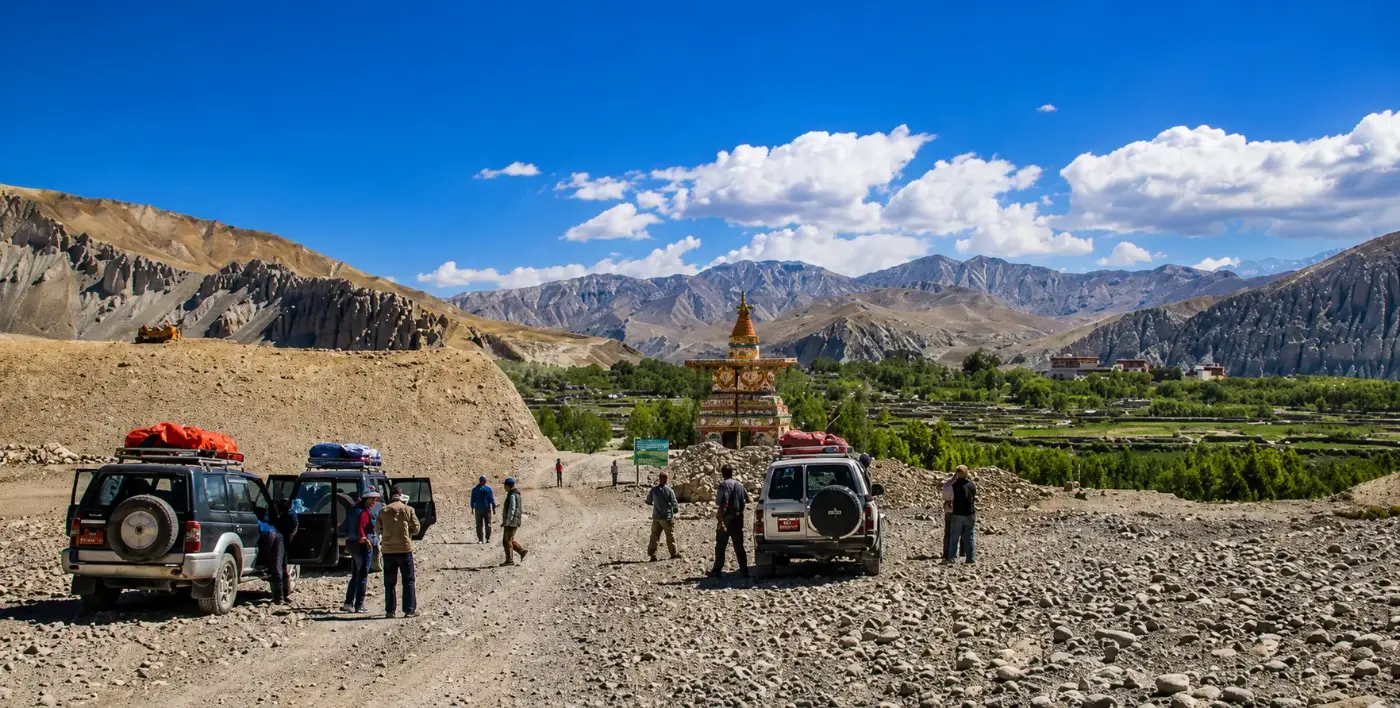
Mustang Full Guide: Upper and Lower Mustang Vehicle Hire

Mustang

Mustang Full Guide: Upper & Lower Mustang — Jeep Tour, Trek & Vehicle Hire

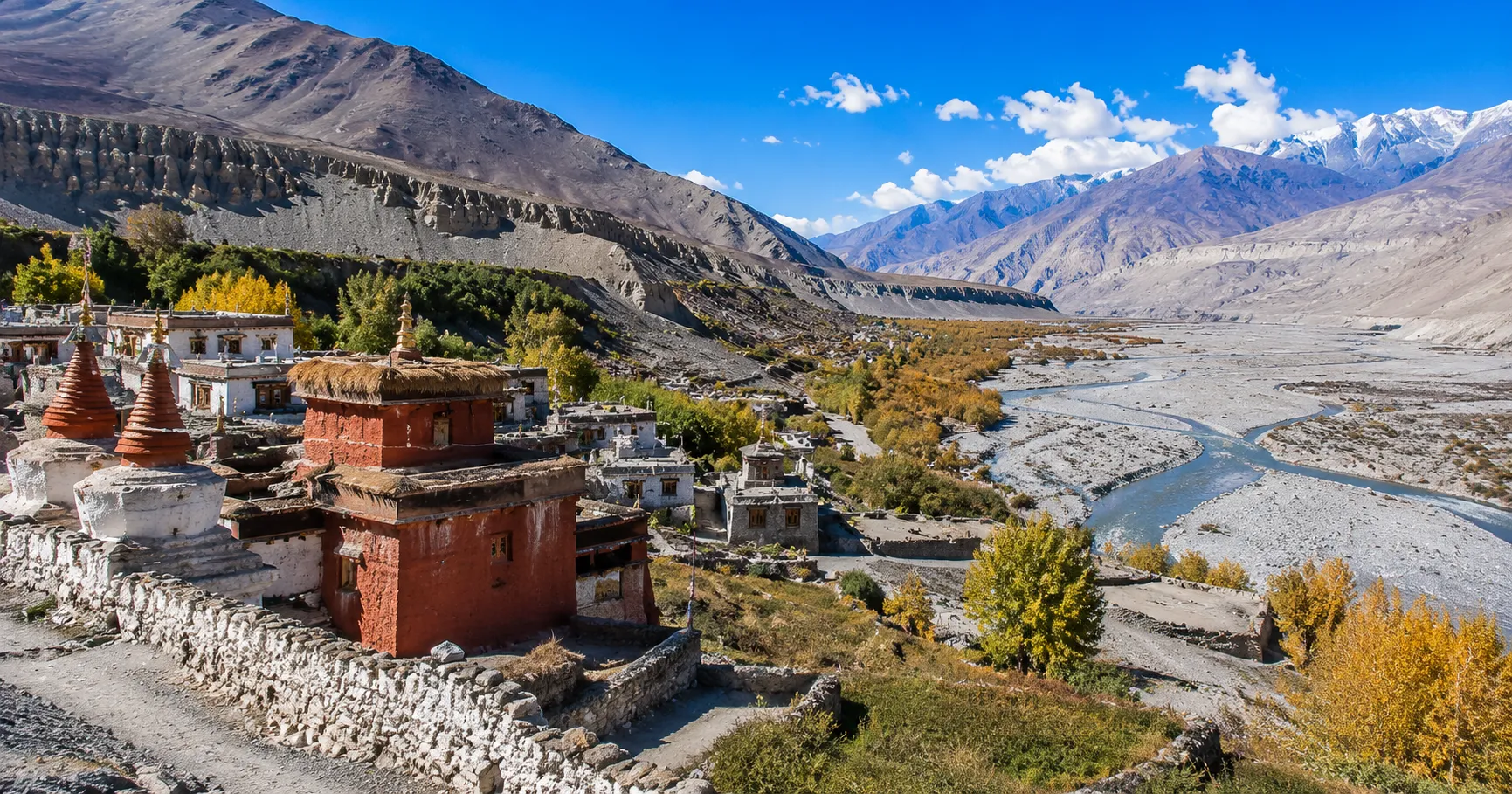
The name Mustang conjures one of the most evocative landscapes in all of Nepal — a high-altitude world where wind-carved canyons of ochre and rust-red rock drop to the turquoise-blue waters of the Kali Gandaki River, where medieval walled cities perch on desert plateaus, where ancient Buddhist monasteries hold centuries of sacred art in near-perfect preservation, and where the skyline is defined by some of the most dramatic peaks on Earth: Dhaulagiri at 8,167 metres to the west, Annapurna at 8,091 metres to the east, and the striking Nilgiri massif looming directly above the valley floor.

Mustang is one of the most remarkable places you can reach by vehicle anywhere on the planet — and for travellers willing to commit to the journey, it delivers cultural and natural richness that stays with visitors for the rest of their lives.

Many first-time travellers do not realise that ‘Mustang’ encompasses two distinct geographic and administrative zones, each with its own character, permit requirements, key destinations, and optimal vehicle hire arrangements. Lower Mustang — also known as Southern Mustang or simply the Kali Gandaki Valley — covers the region from the Kali Gandaki gorge’s lower reaches at Beni through the dramatic river canyon to the ancient gateway town of Kagbeni, encompassing

the famous villages of Tatopani, Ghasa, Kalopani, Tukuche, Marpha, Jomsom, and Muktinath. Lower Mustang requires only the standard Annapurna Conservation Area Permit (ACAP) and is open to all visitors, with no special restrictions or group-size requirements. It is Nepal’s most dramatic highway drive destination, a journey that most visitors describe as extraordinary even before the formal trekking begins.

Upper Mustang — formerly the independent Kingdom of Lo — begins at the police and ACAP checkpoint just north of Kagbeni and extends northward to the ancient walled capital of Lo Manthang and beyond toward the Nepal-Tibet border near the Korala Pass. Upper Mustang is an officially restricted area, closed to foreign visitors until 1992 and still controlled.

Entry requires a special Restricted Area Permit (RAP) costing USD 500 per person for the first ten days (with USD 50 per day thereafter under the new daily extension rule), a minimum group of two foreign nationals, and a licensed guide at all times. This additional layer of control has kept Upper Mustang genuinely less visited than the main Annapurna corridors, preserving a cultural and landscape character that feels  — authentically off the beaten path.

This complete guide to Guideom Nepal Vehicle Hiring Pvt Ltd (vehiclehiringnepal.com) covers both regions in full detail, drawing on thorough 2 research into accommodation costs, permit fees, jeep distances, driving times, road conditions, and cultural content. Every distance, cost, and timing figure reflects current information from multiple verified sources.

Whether you are planning a 3-day Lower Mustang overland escape, a 10-day Upper Mustang jeep tour, a classic 14-day trek over the Thorong La Pass, or a combined circuit that covers both regions in one journey, this guide gives you everything you need to plan your Mustang adventure with total confidence.

Understanding Mustang: Geography, History, and Culture

Geographic Setting

Mustang District sits in the Gandaki Province of north-central Nepal, immediately north of the Annapurna Conservation Area and sandwiched between two of the world’s eight-thousanders. The district is bisected from north to south by the Kali Gandaki River, which flows through what is widely described as the world’s deepest gorge — a designation based on the vertical drop from the summits of Annapurna and Dhaulagiri on either side to the river between them, a difference of nearly 6,000 meters.

The Kali Gandaki Gorge is the primary geographic feature that has shaped both Mustang’s landscape and human history, serving for millennia as the most practical high-altitude trade corridor between the Tibetan plateau to the north and the Indo-Gangetic plains to the south.

Upper Mustang, north of Kagbeni, sits in the pronounced rain shadow cast by the Annapurna and Dhaulagiri massifs, receiving minimal monsoon rainfall and developing a landscape strikingly reminiscent of the Tibetan Plateau, which it geographically and culturally resembles. The contrast between the lush, green terraced hillsides on the approach from Beni and the stark, wind-sculpted desert of the upper valley is one of the most dramatic landscape transitions in Nepal, occurring over just a few hours of driving as the valley narrows and climbs beyond Marpha and Jomsom.

The Kingdom of Lo: A History

Upper Mustang’s historical identity is inseparable from the Kingdom of Lo. This independent Tibetan-culture kingdom controlled this valley from the 14th century through its formal integration into the Kingdom of Nepal in 1795. It maintained cultural and administrative autonomy for decades thereafter.

Founded by the Loba chieftain Ame Pal around 1380 CE, the Kingdom of Lo established its capital at Lo Manthang — still the principal settlement of Upper Mustang today — and built the elaborate palace, monastery, and city wall complex that defines the walled city’s extraordinary appearance.

The kingdom’s wealth came mainly from controlling the trans-Himalayan trade route and collecting customs duties on the salt and grain caravans that passed through Lo Manthang on the route between Tibet and India.

The formal abolition of Nepal’s monarchy in 2008 technically ended Lo Manthang’s royal lineage. Still, the current Loba king — Jigme Dorje Palbar Bista — remains respected by the Loba community as a traditional cultural authority and spiritual figure.

Upper Mustang’s population numbers about 6,000, all of whom follow Tibetan Buddhism, speak the Tibetan-derived Loba language as their primary tongue, and maintain traditions of dress, ceremony, and agricultural practice that connect them far more closely to the Tibetan plateau than to Nepal’s more familiar hill cultures.

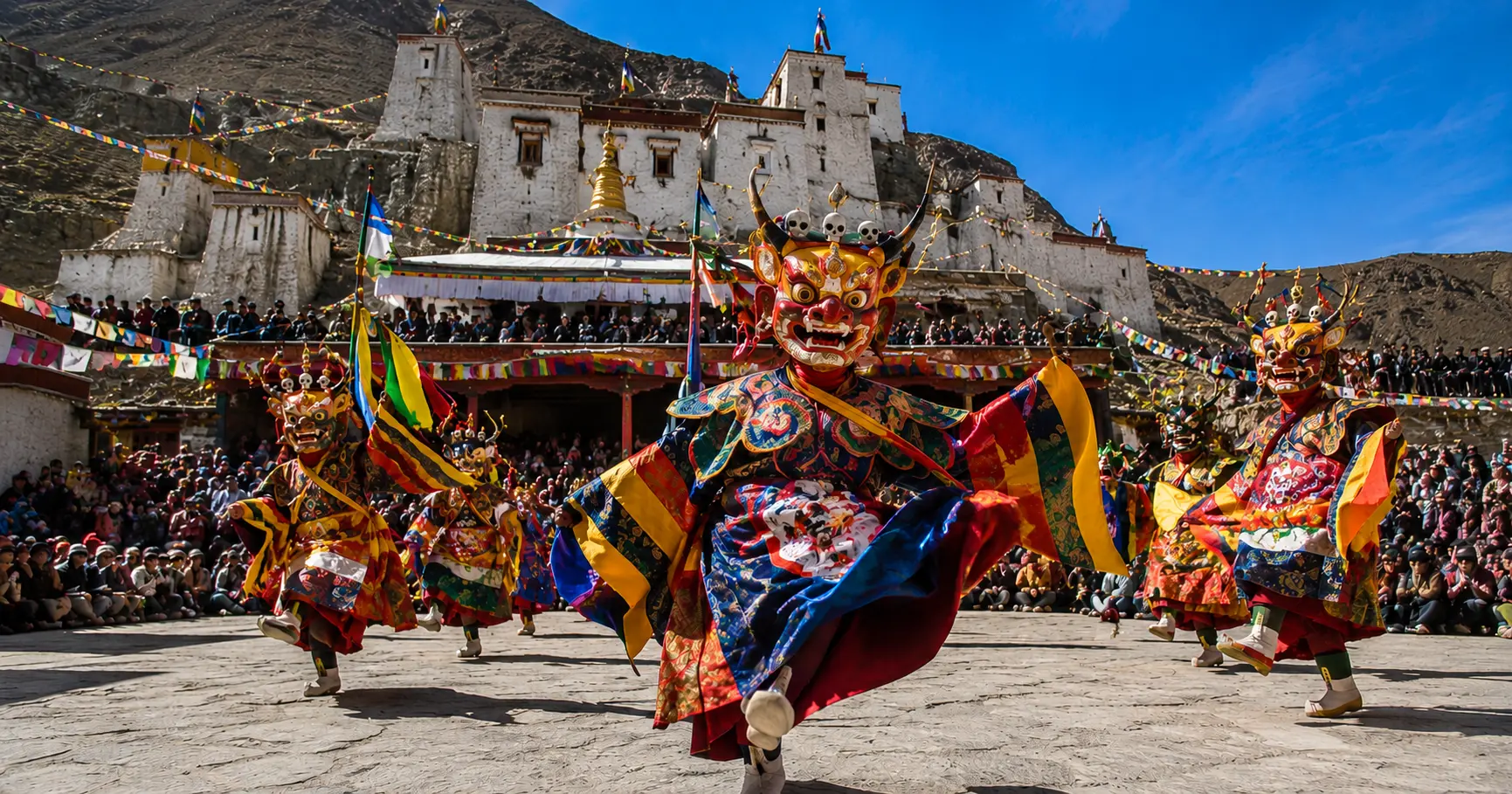
Tiji festival Upper mustang-Mustang Full Guide: Upper & Lower Mustang Vehicle Hire
Tiji Festival, Upper Mustang

The Tiji Festival: Mustang’s Most Spectacular Event

No cultural event in all of Nepal’s calendar quite matches the Tiji Festival of Lo Manthang for sheer visual and spiritual impact. Held annually in Lo Manthang over three days in May according to the Tibetan lunar calendar — the 2026 dates fall on May 13-15 — the Tiji Festival enacts a mythological narrative of the triumph of Jono over the demon who threatened to destroy the world by creating drought and flooding.

The festival involves three days of elaborate masked dance performances by monks from Lo Manthang’s principal monasteries, wearing costumes and masks of extraordinary craftsmanship, who perform before the entire assembled community in the courtyard of the ancient city. For travellers who time their Upper Mustang visit to coincide with Tiji, the experience transcends ordinary cultural tourism and becomes a more genuine spiritual witness.

Lower Mustang: Key Destinations, Road Guide & Vehicle Hire

Lower Mustang — the section of Mustang District south of Kagbeni, roughly corresponding to the Kali Gandaki corridor from Beni to the Upper Mustang checkpoint — is one of Nepal’s most dramatic and diverse overland destinations, offering a concentration of natural and cultural highlights within a relatively compact driving distance that makes it ideal for travellers with limited time who still want a genuinely extraordinary Himalayan experience.

The Drive: Pokhara to Jomsom via Kali Gandaki Gorge

The overland journey from Pokhara to Jomsom — the administrative centre of Mustang District and the main hub for Lower Mustang tourism — covers approximately 143 to 197 kilometres, depending on the specific route, and takes between 7 and 11 hours by private 4WD jeep. The route follows the Bhupi Sherchan Highway from Pokhara through Beni (109 km, approximately 3 hours on smooth concrete road), then transitions to rough off-road driving through Tatopani, Ghasa, Kalopani, Tukuche, and Marpha before reaching Jomsom.

The off-road Beni to Jomsom section covers about 60 kilometres and takes 4 to 5 hours, making the road conditions the dominant factor in the journey’s demands.

This drive through the Kali Gandaki Gorge is one of Nepal’s great overland journeys, combining geological drama — the vertical canyon walls tower hundreds of meters above the road on both sides in the most confined sections — with cultural richness, from the ancient hot springs at Tatopani to the wind-carved rock formations of the upper gorge and the apple orchards of Marpha. The road runs alongside a river famous for its saligram fossils—ancient ammonite stones that Hindu tradition associates with Lord Vishnu and that lie scattered throughout the riverbed in numbers that astonish first-time visitors.

Key Villages and Destinations in Lower Mustang

Tatopani — Natural Hot Springs and Gorge Drama (1,190 m)

Tatopani — whose name literally means ‘hot water’ in Nepali — is one of the most popular rest stops along the Kali Gandaki corridor, famous for its natural sulfur hot springs that draw trekkers and vehicle travellers for a restorative soak after hours of mountain road travel. The springs sit directly beside the river, and the contrast between the hot mineral water and the cold, rushing Kali Gandaki alongside creates an atmospheric bathing experience unlike anything available in more conventional tourist destinations.

The village suffered significant damage in the 2015 earthquake but has been substantially rebuilt, and its cluster of lodges, teahouses, and hot spring facilities now serves the steady stream of overland travellers and trekkers passing through on the Annapurna Circuit.

Marpha — The Apple Capital of Nepal (2,667 m)

Marpha is arguably the most charming village in all of Lower Mustang, a beautifully preserved Thakali settlement of whitewashed stone houses connected by narrow, flagstone-paved lanes so narrow that vehicles cannot pass and only pedestrians and pack animals move through. Marpha is famous throughout Nepal for its apple orchards — the valley’s microclimate and altitude create ideal conditions for apple cultivation — and the local apple products, including fresh apples, apple brandy (a locally distilled spirit with a cult following among trekkers), apple pie, apple juice, and dried apple rings ar, are among the most distinctive culinary specialities anywhere on the Nepal trekking circuit.

A short walk through Marpha village’s covered lanes, plus a visit to the ancient Sakya monastery and the local distillery, is an essential stop on any Lower Mustang vehicle tour.

kagbeni-Mustang Full Guide: Upper & Lower Mustang Vehicle Hire

Jomsom — The Hub of Mustang (2,720 m)

Jomsom is the administrative capital of Mustang district, a busy and surprisingly well-equipped small town strung along the banks of the Kali Gandaki River at an elevation of 2,720 meters. The town has a domestic airport — serviced by Tara Air and other carriers with regular flights from Pokhara (a spectacular 20-to-25-minute flight that costs USD 120 to USD 140 per person one-way, though subject to frequent weather delays) — alongside a Nepal Bank branch with an ATM, several comfortable hotels and teahouses, restaurants, shops, and the full complement of trekking support services.

Jomsom functions as the principal base and staging point for both Lower Mustang day trips and the onward approach to Upper Mustang, and most multi-day Mustang itineraries include at least one overnight here.

Just 5 kilometres from Jomsom, the freshwater Dhumba Lake, at 2,830 metres near Thini Village, offers a peaceful detour with striking mountain reflections on calm mornings. At the same time, the ancient Bon-tradition monastery in Lupra village — one of Nepal’s last surviving Bon communities, where just 14 families maintain a 12th-century monastery through a hereditary priesthood system — offers a genuinely rare encounter with Nepal’s pre-Buddhist religious tradition on any trekking circuit.

Kagbeni — Gateway to the Hidden Kingdom (2,804 m)

Kagbeni is one of the most atmospheric villages in the entire Kali Gandaki corridor — a medieval Tibetan-influenced settlement of narrow alleyways, ancient mud-brick houses, prayer wheels, and chortens, dominated by a hilltop monastery visible from a considerable distance as the vehicle approaches from Jomsom along the flat riverbed track. The village sits at the confluence of the Kali Gandaki and Kag Khola rivers and has historically served as the gateway settlement controlling access to Upper Mustang, a role maintained today by the police checkpoint just north of the village, where all visitors must present their permits before continuing into the restricted zone.

Kagbeni rewards a leisurely exploration on foot — the monastery contains frescoes and statues of genuine antiquity, the village’s covered lanes create a maze-like atmosphere distinct from any other settlement in Nepal, and the views from the terrace above the village toward the Upper Mustang plateau to the north and the Annapurna peaks to the south are outstanding. Many vehicle tour operators include a one- to two-hour stop in Kagbeni specifically for this exploration, separate from any time spent at the checkpoint processing permits.

Muktinath — The Sacred Shrine at 3,710 Meters

Muktinath Temple complex, situated at 3,710 meters at the foot of the Thorong La Pass, is the most sacred destination in the entire Mustang region for millions of Hindu and Buddhist pilgrims who visit Nepal annually. As one of the 108 Divya Desams (holy Vishnu shrines) in the Hindu tradition and as the site of the natural miracle of an eternal flame burning above a spring of water — considered one of the most auspicious natural phenomena in Himalayan religious geography — Muktinath draws pilgrims from across India, Nepal, and the broader Hindu and Buddhist world.

The temple complex includes the main Vishnu shrine, the 108 sacred water spouts (Muktidhara) where devotees take ritual baths in icy mountain water, the Jwala Devi temple, where a natural gas flame burns perpetually, and an adjoining Buddhist monastery maintained by Tibetan Buddhist monks.

The drive from Jomsom to Muktinath covers approximately 19 kilometres of relatively smooth, paved road (the final stage from Kagbeni northward is largely paved and takes about 45 minutes to 1 hour by jeep), making Muktinath one of the most accessible high-altitude pilgrimage destinations in Nepal. Private jeep hire from Jomsom to Muktinath costs NPR 3,000 to NPR 4,500 for the full vehicle — an extremely reasonable rate for access to one of Nepal’s holiest sites.

Mustang Full Guide: Upper & Lower Mustang Vehicle Hire)

Lower Mustang Key Sites: Quick Reference

Village/SiteAltitudeDistance from PokharaKey AttractionNo Permit Needed
Tatopani1,190 m85 kmNatural hot springs, gorge sceneryYes
Marpha2,667 m130 kmApple orchards, Thakali culture, distilleryYes (ACAP only)
Jomsom2,720 m143 kmDistrict HQ, ATM, airport, Dhumba Lake, Bon monasteryYes (ACAP only)
Kagbeni2,804 m155 kmMedieval village, gateway to Upper MustangYes (ACAP only)
Muktinath3,710 m197 kmSacred Hindu/Buddhist temple, 108 spouts, eternal flameYes (ACAP only)

Upper Mustang: The Forbidden Kingdom in Detail

Beyond the Kagbeni checkpoint, where the restricted area permit is verified and stamped, the landscape and experience of Mustang transform into something markedly different from anything in Lower Mustang — or indeed anywhere else in Nepal. The desert plateau stretches northward with an austere grandeur that feels fundamentally Tibetan rather than Nepali; the villages become increasingly remote and traditional, and the sense of entering a place that the modern world has touched only lightly intensifies with every kilometre gained toward Lo Manthang.

Chele, Syangboche and the Approach Plateau (3,055–3,930 m)

The first two major villages north of Kagbeni in the Upper Mustang restricted zone are Chele (approximately 3,055 m, reached 30 km north of Kagbeni by a rough 4WD track taking 2 to 3 hours) and Syangboche (3,800 m, a further 30 km north and 2 to 3 more hours of rough driving).

The road between Kagbeni and Chele involves the most technically demanding driving of the entire Mustang route — steep switchbacks above the Kali Gandaki gorge, narrow cliff-side tracks carved into the rock face, and the kind of loose-surface gradient that demands both low-range gearing and experienced driver judgment. Beyond Chele, the road climbs to the plateau proper at Syangboche, crossing Syangboche Pass at about 3,800 meters and offering panoramic views of the Mustang landscape in all directions.

Along this section, the sky caves carved into the ochre cliff faces appear with increasing frequency—the remarkable ancient cave complexes that archaeologists believe served as habitation, burial, meditation retreat, and storage sites for Mustang’s prehistoric and early-medieval inhabitants. The Chhoser sky caves, accessible via a short detour off the main route approximately 20 kilometres north of Lo Manthang, are the most extensively documented and most dramatically photogenic of these cave complexes, with thousands of individual chambers cut into cliff faces at heights that would have required sophisticated rope-and-ladder systems for access.

Ghami and Tsarang: Villages of the High Plateau (3,520–3,560 m)

Ghami (also spelt Ghiling or Geling in some itineraries) is a significant village on the Upper Mustang plateau, at approximately 3,520 meters, offering excellent views of the surrounding desert landscape and the distant peaks of Tibet to the north. The village has a monastery and several well-preserved traditional houses. It serves as a standard overnight stop on both trekking and jeep tour itineraries between Syangboche and Lo Manthang.

The area around Ghami is notable for its collection of ancient mani walls — long stone barriers inscribed with Buddhist mantras — that stretch for hundreds of meters along the route, creating one of the most distinctive visual elements of the Upper Mustang plateau.

Tsarang (also written as Charang), at approximately 3,560 meters, is another significant cultural stop between Ghami and Lo Manthang, with a hilltop dzong (fortress) and a large monastery containing significant 14th-century murals and statuary.

The fort at Tsarang, though largely ruined, commands dramatic views across the plateau and provides context for the Kingdom of Lo’s military history during its period of greatest political independence. Tsarang is also notable for its traditional Loba houses with flat roofs and painted walls, which distinguish Upper Mustang’s domestic architecture from Lower Mustang’s stone houses.

Lo Manthang: The Walled Capital (3,840 m)

Lo Manthang is the destination toward which every Mustang itinerary ultimately points — an ancient walled city that has stood since the 14th century and that continues to function as the cultural, spiritual, and administrative heart of the Loba community. Approaching Lo Manthang by vehicle across the plateau, the city materialises with startling suddenness from the desert landscape — the white-painted perimeter walls, approximately 150 meters along the long axis, rising abruptly from the ochre Earth, with the monastery rooftops visible above.

Lo-Manthang-Mustang Full Guide: Upper & Lower Mustang Vehicle Hire

Within the walls, Lo Manthang rewards careful, unhurried exploration. The three principal monasteries — Thubchen Gompa, Jampa Gompa (Champa Lhakhang), and Chode Gompa — contain some of the finest surviving examples of 14th- and 15th-century Tibetan Buddhist mural painting and sculptural art anywhere in the world, preserved in extraordinary condition by the region’s extreme dryness and its long closure to the outside world.

The Royal Palace, a four-story mud-brick structure that served as the residence of the Kingdom of Lo’s hereditary rulers, stands at the centre of the city and can be visited with appropriate permissions, offering a glimpse into the domestic and ceremonial life of a medieval Himalayan royal family.

The streets of Lo Manthang are narrow and labyrinthine, connecting the monasteries, palace, residential compounds, and community spaces of a living urban settlement that has maintained its traditional character despite the growing number of visitors it receives each year. The morning atmosphere — monks processing to prayer, elderly Loba residents completing their daily kora (circumambulation) of the city’s perimeter, the smell of butter lamps drifting from open monastery doors — offers one of the most authentically medieval urban experiences in Asia.

Beyond Lo Manthang: Luri Gompa and the Korala Pass Area

For travellers with extra time and an appetite for deeper exploration, two destinations north of Lo Manthang extend the Upper Mustang adventure into territory even fewer visitors reach. Luri Gompa, located approximately aa4-hour drive from Lo Manthang at an altitude of 4,950 meters, is one of the oldest monasteries in the Mustang region, featuring remarkable cave-monastery architecture and some of the finest ancient Buddhist art in the Upper Mustang system.

Most Upper Mustang jeep tour itineraries of 10 days or more include a day excursion to Luri Gompa.

The Korala Pass area, approximately 20 kilometres north of Lo Manthang and accessible by a rough 4WD track, brings vehicles to the Nepal-Tibet border — a sealed checkpoint that is not open to international crossing but that provides one of the most dramatic frontier viewpoints in all of Nepal, looking north across the Tibetan plateau toward the distant interior.

The drive from Lo Manthang to Korala passes through Tingkhar village and the Chhoser sky cave complex, making the excursion one of the most rewarding full-day activities in the entire Upper Mustang program.

Upper Mustang Jeep Route: Stage by Stage

StageRouteDistanceDrive TimeAltitudeRoad Type
1Pokhara → Jomsom143 km7–9 hrs820–2,720 mPaved + rough off-road
2Jomsom → Kagbeni18 km45 min2,720–2,804 mMainly paved
3Kagbeni → Chele / Syangboche60 km4–5 hrs2,804–3,930 m4WD off-road track
4Syangboche → Ghami → Tsarang45 km3–4 hrs3,520–3,560 mRough plateau track
5Tsarang → Lo Manthang15 km1–1.5 hrs3,840 mPlateau track
6 (Optional)Lo Manthang → Luri Gompa45 km4 hrs3,950 mVery rough track
7 (Optional)Lo Manthang → Korala area20 km1.5–2 hrs4,200–4,660 mRough 4WD track
TOTAL (Pokhara to Lo Manthang)280 km2–3 full driving daysUp to 3,840 mMixed

Permits for Mustang: Complete  Guide

The permit structure for Mustang is one of the most important practical elements to understand before planning any trip to the region, since costs and requirements differ significantly between Lower and Upper Mustang and have changed in recent years.

Lower Mustang Permits (South of Kagbeni)

Travel through Lower Mustang — the entire Kali Gandaki corridor from Beni through Tatopani, Marpha, Jomsom, Kagbeni, and Muktinath — requires only the Annapurna Conservation Area Permit (ACAP).

This costs NPR 3,000 (approximately USD 22-25) for non-SAARC nationals and NPR 200 for SAARC nationals (India, Bangladesh, Sri Lanka, Pakistan, Bhutan, Maldives). No restricted-area permit, guide requirement, or minimum group size applies to travel in Lower Mustang. The TIMS card (NPR 2,000 for non-SAARC) is additionally required for trekkers, but may be waived for those travelling by flight both in and out via Jomsom.

Note: A lower Mustang ACAP entry fee of approximately USD 25 applies to all visitors to the conservation area, including vehicle tour travellers who are not trekking. Confirm the current exact rate with your operator or the Nepal Tourism Board before departure.

Kagbeni-Mustang Full Guide: Upper & Lower Mustang Vehicle Hire

Upper Mustang Permits (North of Kagbeni)

Entering the restricted zone north of Kagbeni requires a Restricted Area Permit (RAP) in addition to the ACAP. Nepal’s Department of Immigration manages the RAP, which can only be arranged through a government-registered trekking agency — individual travellers cannot obtain it directly. The key requirements and costs as of 2025/26 are:

PermitCostDurationWho IssuesGroup Requirement
Restricted Area Permit (RAP)USD 500 per personFirst 10 days inside restricted zoneDepartment of Immigration (via agency)Minimum 2 foreign nationals + licensed guide
P extensionUSD 50 per person per dayEach additional day beyond 10SameSame
ACAP (Annapurna Conservation Area)NPR 3,000 non-SAARC / NPR 200 SAARCFull duration of tripNepal Tourism BoardNone
TIMS CardNPR 2,000 non-SAARC / NPR 1,000 SAARCFull duration of tripNepal Tourism Board / TAANNone
Licensed Guide (mandatory)Arranged through an agencyFull Upper Mustang durationTAAN-registeredMust be licensed

Complete Vehicle Hire Costs: Pokhara to Mustang

The following cost tables consolidate vehicle hire rates for both Lower and Upper Mustang journeys, based on current market research. All Nepal Vehicle Hiring Pvt Ltd’s rates are fully inclusive of the vehicle, an experienced driver, fuel, and tolls.

Route / ServiceVehicleCost (NPR)Cost (USD)DurationNotes
Pokhara → Jomsom (one-way overland)4WD JeepNPR 28,000–38,000$210–$2857–9 hrsKali Gandaki Gorge route
Pokhara → Jomsom (return)4WD JeepNPR 48,000–65,000$360–$488Multi-dayRound trip with waiting
Jomsom → Muktinath (private hire)Private JeepNPR 3,000–4,500$22–$341–1.5 hrsFull vehicle hire
Jomsom → Kagbeni (private hire)Private JeepNPR 1,500–3,000$11–$2230–45 minGateway to Upper Mustang
Pokhara → Lo Manthang (full overland)Land CruiserNPR 45,000–65,000$338–$4882–3 daysOne way, full Upper Mustang
Pokhara ⇔ Lo Manthang (round trip)Land CruiserNPR 80,000–120,000$600–$9008–12 daysFull Upper Mustang jeep tour
Lo Manthang day hire (excursions)4WD JeepNPR 12,000–18,000$90–$135Full dayKorala, Luri Gompa, Chhoser
Kathmandu → Pokhara (for Mustang approach)SUV / Toyota FortunerNPR 17,000–22,000$128–$1656–8 hrsIf flying Pokhara→Jomsom
Pokhara → Jomsom by flight (note only)Domestic flightUSD 120–140 one-way$120–$14020–25 minNot a jeep, but a common alternative

Tip: For the complete Upper Mustang round trip from Pokhara, booking a Toyota Land Cruiser VX or Prado (rather than a standard jeep) adds approximately NPR 20,000 to NPR 30,000 to the total vehicle hire cost but transforms the quality of the multi-day driving experience significantly — a worthwhile investment given that driving may account for 6 to 9 hours on some itinerary days.

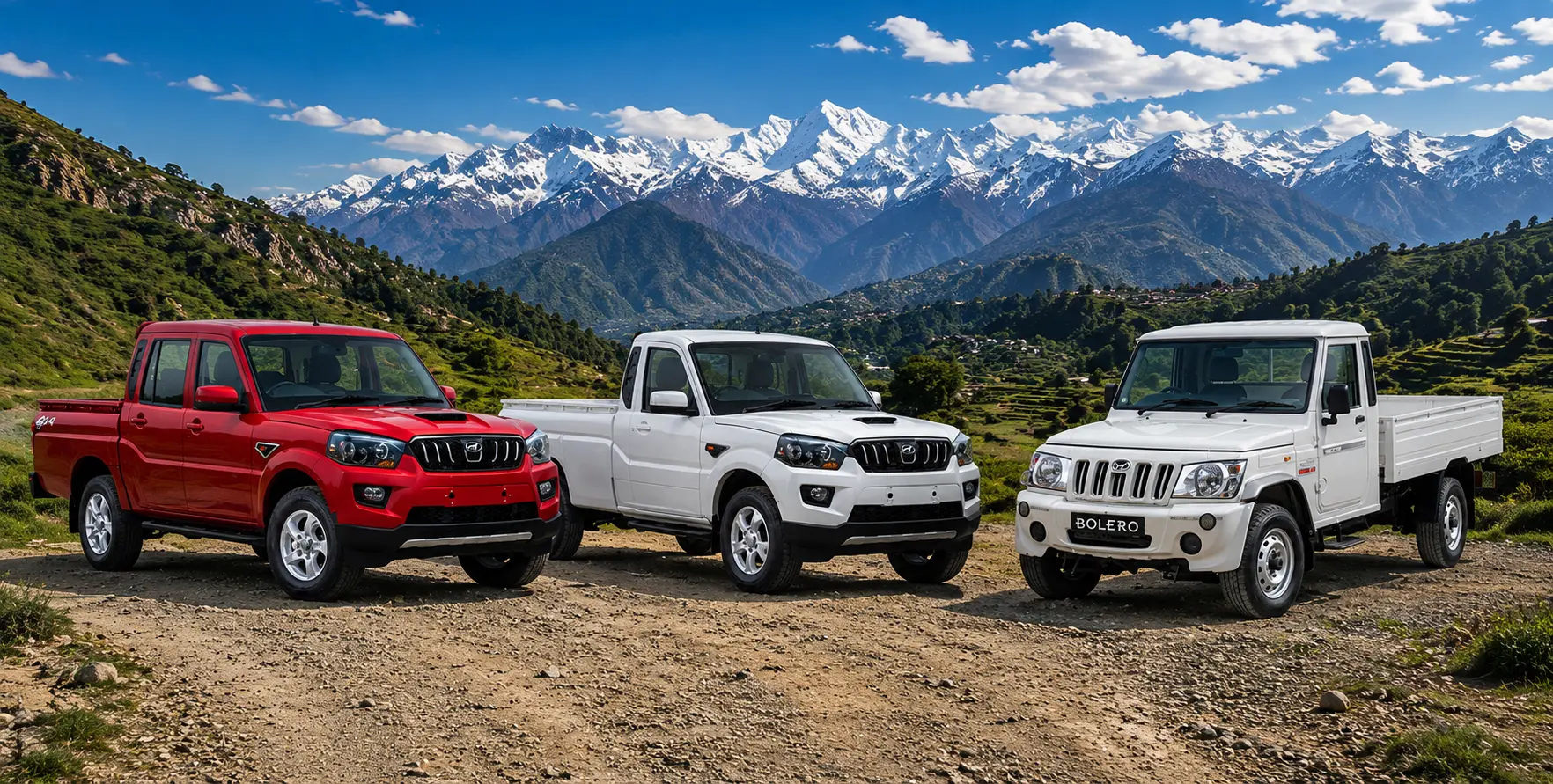
Mustang Full Guide: Upper & Lower Mustang Vehicle Hire-Luxury 4WD Jeep Hire in Nepal features three premium off-road SUVs with a Himalayan mountain background for comfortable and adventurous travel.

Getting to Mustang: All Transport Options Compared

The overland jeep journey from Pokhara through the Kali Gandaki Gorge is the most in-depth and experientially complete way to approach Mustang, combining the dramatic scenery of the world’s deepest gorge with stops at Tatopani, Marpha, and Jomsom before reaching the Upper Mustang gateway at Kagbeni.

This approach is strongly preferred by experienced Nepal travellers specifically because the gorge journey is itself a major highlight — one that the flight from Pokhara to Jomsom completely bypasses. A private 4WD jeep from Pokhara to Jomsom costs US$203 one-way, takes 7 to 9 hours, and accommodates up to 6 passengers plus luggage.

Flight: Pokhara to Jomsom

The domestic flight from Pokhara to Jomsom operates on a tight weather window—flights run only from about 7:00 AM to 11:00 AM each day, as afternoon winds in the Kali Gandaki Gorge make flying impossible. The one-way cost of USD 120-140 per person makes this considerably more expensive per passenger than a shared jeep.

However, it saves approximately 7 hours of driving and offers spectacular aerial views of Dhaulagiri and Annapurna that the road approach cannot match. Flights are notoriously susceptible to weather-related cancellations, and travellers relying on the Jomsom flight for a time-sensitive connection should always build in at least one backup day into their itinerary. Many seasoned Mustang travellers prefer to fly one way and drive the other, combining aerial views with the gorge experience.

Kathmandu to Pokhara: Setting Up the Mustang Approach

For travellers starting in Kathmandu, the first step is reaching Pokhara — either by domestic flight (30-40 minutes, approximately USD 80-100 per person) or by private vehicle along the Prithvi Highway (200 km, approximately 6-8 hours, NPR 17,000-22,000 for a private car or SUV).

Nepal Vehicle Hiring Pvt Ltd provides comfortable private vehicle transfers for this first leg as part of a coordinated Mustang tour package, allowing travellers to combine the Kathmandu-Pokhara scenic drive with an early arrival in Pokhara and position themselves for a next-morning departure toward Mustang.

Best Season for Upper and Lower Mustang

Mustang’s seasonal calendar differs meaningfully from most of Nepal’s other trekking and travel destinations, mainly because Upper Mustang’s rain-shadow location gives it access windows that don’t exist in rain-exposed destinations in Nepal.

SeasonMonthsLower MustangUpper MustangRoad ConditionsRecommended?
SpringMar–MayExcellent — clear, warm daysExcellent — Tiji Festival in MayGood, dryHighly recommended
MonsoonJun–AugDifficult — road disruptionsUNIQUE advantage — rain shadow, dryPoor (lower), Good (upper)Upper only
AutumnSep–NovExcellent — best conditionsExcellent — clear skiesExcellentBest overall
WinterDec–FebCold but passable (lower reaches)Difficult — snow, closed passesVariable — snow above 3000mLower only

The unique monsoon advantage of Upper Mustang deserves emphasis: while June through August is Nepal’s least favourite season for virtually every other region due to rain, leeches, and poor visibility, Upper Mustang sits in the rain shadow of the Annapurna and Dhaulagiri ranges and receives minimal monsoon precipitation.

This makes it the only major Nepal trekking/jeep tour destination where June, July, and August represent a genuinely viable and even enjoyable travel window — indeed som, some experienced travellers specifically choose this period for the emptier trails, lower accommodation rates, and the dramatic quality of the monsoon clouds building over the surrounding peaks while the Upper Mustang plateau remains dry and clear.

Mustang Full Guide: Upper & Lower Mustang Vehicle Hire-Luxury 4WD Jeep Hire in Nepal features three premium off-road SUVs with a Himalayan mountain background for comfortable and adventurous travel.

Practical Tips for Mustang Travel

  • Book permits well in advance for Upper Mustang — the RAP application requires passport copies, photos, a detailed itinerary, and a guarantee letter from a registered agency, and takes 2 to 3 working days to process.
  • Withdraw sufficient NPR cash in Pokhara before departure — Jomsom has ATMs, but they are sometimes unreliable; carry enough for all expected expenses, including accommodation, meals, and local jeeps.
  • Depart Pokhara by 6:00–7:00 AM for the overland drive to Jomsom to ensure a comfortable mid-afternoon arrival in Jomsom or Kagbeni with daylight for settling in.
  • The strong afternoon winds in the Kali Gandaki Gorge — typically starting from around noon and reaching considerable strength by 2:00–3:00 PM — affect both driving comfort and aircraft operations; schedule demanding sections of the drive or any walking for morning .hours
  • Carry warm layers at all times — temperatures at Lo Manthang (3,840 m) can drop sharply even in summer. The journey from Lo Manthang to the Korala Pass area reaches 4,660 m, where conditions can be genuinely cold. Mobile connectivity: NTC and Ncell coverage is available in Jomsom, Kagbeni, and Muktinath,th but becomes sporadic further north into Upper Mustang; download offline maps and key information before departing Jomsom.
  • Photography: Upper Mustang’s extraordinary landscape rewards early morning and late afternoon light — the high-altitude colours are most vivid before the afternoon wind and dust haze build
  • Altitude: Lo Manthang at 3,840 m is high enough to cause altitude sickness in some visitors; anyone arriving quickly from Pokhara (820 m) should plan a rest day and stay hydrated
  • Book accommodation in Lo Manthang in advance during peak season (October–November and the Tiji Festival period in May) — accommodation is limited and fills quickly

Suggested Itineraries: Lower and Upper Mustang

Option A: 3-Day Lower Mustang Overland Escape (From Pokhara)

Day 1: Early departure from Pokhara by private 4WD jeep; drive through Beni, Tatopani (hot springs stop), Ghasa, and Kalopani; explore Marpha village; reach Jomsom by late afternoon. Day 2: Jomsom area exploration (Dhumba Lake, Lupra Bon monastery), afternoon drive to Kagbeni for village exploration and overnight.

Day 3: Morning drive from Kagbeni to Muktinath (45 min), temple visit and ritual bath, return to Jomsom, drive back toward Pokhara (overnight at Tatopani or continue to Pokhara). Total vehicle hire is approximately NPR 35,000 to NPR 55,000 for the complete private jeep arrangement.

Option B: 8-Day Upper Mustang Jeep Tour (From Pokhara)

Day 1: Pokhara to Jomsom overland (7-9 hrs). Day 2: Jomsom to Kagbeni (permit check), continue to Chele (4-5 hrs). Day 3: Chele to Lo Manthang via Syangboche, Ghami, Tsarang (6-8 hrs).

Day 4: Lo Manthang exploration — Thubchen, Jampa, Chode monasteries, palace. Day 5: Korala Pass / Chhoser cave excursion by jeep (full day). Day 6: Lo Manthang to Jomsom (return south, 6-8 hrs).

Day 7: Jomsom to Pokhara (7-9 hrs). Day 8: Rest/buffer day or extend in Pokhara. Total RAP permit cost: USD 500 per person (5 days inside restricted zone at current daily rate structure).

Total vehicle hire: NPR 80,000 to NPR 110,000 for a complete private jeep.

Option C: 14-Day Classic Upper Mustang Trek + Jeep Return

This itinerary combines the classic Annapurna Circuit approach — flying or driving to Jomsom, then trekking north through Kagbeni and the full Upper Mustang restricted zone to Lo Manthang over 6-7 days of walking — with a return by private jeep from Lo Manthang back to Jomsom and then Pokhara, saving 4-5 days of return walking while still completing the northward journey on foot at the trek’s natural pace. Vehicle hire for the return leg from Lo Manthang to Pokhara: NPR 40,000 to NPR 55,000.

Mustang Full Guide: Upper & Lower Mustang Vehicle Hire-Luxury 4WD Jeep Hire in Nepal features three premium off-road SUVs with a Himalayan mountain background for comfortable and adventurous travel.

Frequently Asked Questions

What is the difference between Upper and Lower Mustang?

Lower Mustang covers the Kali Gandaki corridor from Beni through Tatopani, Marpha, Jomsom, Kagbeni, and Muktinath. It requires only the ACAP permit and is open to all visitors without group restrictions.

Upper Mustang begins north of the Kagbeni checkpoint, covers Lo Manthang and beyond, and requires a Restricted Area Permit (RAP) of USD 500 per person for 10 days (USD 50/day extension), a mandatory licensed guide, and a minimum of 2 foreign nationals travelling together.

How much does the Upper Mustang permit cost?

The Upper Mustang Restricted Area Permit costs USD 500 per person for the first 10 days inside the restricted zone, with USD 50 per person per day for any additional days beyond 10.  Individual-day permits can be issued without a mandatory 10-day minimum, making shorter tours more cost-effective. You also need the ACAP (NPR 3,000, non-SAARC) and the TIMS card (NPR 2,000, non-SAARC).

Total permit costs for a 7-day Upper Mustang tour: approximately USD 520–540 per person.

How long does the drive from Pokhara to Lo Manthang take?

The overland drive from Pokhara to Lo Manthang covers approximately 280 kilometres. It typically takes 2 to 3 full driving days, with overnight stops at Jomsom (Day 1) and Ghami or Chele (Day 2) before reaching Lo Manthang on Day 3. A single-day drive for the entire distance is not practical given the road conditions and distance involved.

Can I visit Upper Mustang without a guide?

No. A licensed guide is mandatory for all foreign visitors to Upper Mustang. Independent travel in the restricted zone is not permitted. Your guides must be registered with TAAN (Trekking Agencies’ Association of Nepal) and hold a current license.

The guide requirement applies equally to jeep tour travellers and trekkers.

Is a 4WD jeep necessary for the entire Mustang route?

A 4WD vehicle is essential from Beni onward on the overland approach, and absolutely required for all driving north of Kagbeni into Upper Mustang. The road from Beni to Jomsom is approximately half off-road with rough, bumpy surfaces.

Beyond Kagbeni, the track to Lo Manthang is entirely off-road and requires a proper 4WD, high ground clearance, and an experienced mountain driver. Do not use standard cars or vans north of Beni.

When is the Tiji Festival in 2026?

The 2026 Tiji Festival in Lo Manthang falls on May 13–15, according to the Tibetan lunar calendar. This is the most spectacular cultural event in Upper Mustang and one of the finest cultural experiences available anywhere in Nepal. Vehicle hire and accommodation in Lo Manthang fill quickly for the Tiji Festival period — booking 6 to 8 weeks in advance is strongly recommended.

What vehicle does Nepal Vehicle Hiring Pvt Ltd recommend for Upper Mustang?

For the complete Pokhara-to-Lo Manthang overland journey, Nepal Vehicle Hiring Pvt Ltd recommends a Toyota Land Cruiser (VX or Prado series) as the optimal combination of interior comfort and genuine off-road capability for this demanding multi-day route. For Lower Mustang only (Pokhara to Jomsom/Muktinath), a Toyota Fortuner or equivalent is appropriate and offers good value.

All vehicles are provided with experienced mountain drivers familiar with the specific demands of the Kali Gandaki corridor and the Upper Mustang track.

Conclusion: Your Mustang Adventure Starts Here

Mustang is, without exaggeration, one of the most extraordinary travel destinations anywhere on Earth — a region where an ancient kingdom’s medieval capital still stands intact, where a landscape of desert canyons and wind-sculpted rock formations frames the world’s highest peaks, where the Kali Gandaki River cuts the world’s deepest gorge between walls of ochre and stone, and where a living Tibetan Buddhist culture maintains traditions that centuries of isolation have kept almost perfectly preserved.

Lower Mustang is accessible to every traveller with an ACAP permit and a reliable 4WD vehicle; Upper Mustang rewards those willing to invest in additional permits, offering a journey that consistently delivers one of the most profound experiences a Nepali destination can offer

Nepal Vehicle Hiring Pvt Ltd provides private 4WD vehicle hire for every stage of Lower and Upper Mustang travel—from the first overland kilometre out of Pokhara to the final frontier excursion to the Korala Pass area north of Lo Manthang. Our vehicles are maintained for the demands of the Kali Gandaki corridor and the Upper Mustang track; our drivers are experienced on these roads in every season, and our transparent, all-inclusive pricing in both NPR and USD ensures you know exactly what your Mustang adventure costs before you confirm a booking.

Whether you are planning a compact 3-day Lower Mustang overland escape, a full 10-day Upper Mustang jeep tour to Lo Manthang and beyond, or a combined itinerary that takes in the hot springs of Tatopani, the apple orchards of Marpha, the sacred ghats of Muktinath, the medieval streets of Lo Manthang, and the frontier drama of the Korala Pass all within a single well-organised journey, Nepal Vehicle Hiring Pvt Ltd has the right vehicle, the right driver, and the right experience to make your Mustang adventure everything it deserves to be.

Book Your Mustang Vehicle Hire Today  

WhatsApp: +977 981-4227196
E-mail:[email protected]

Lower Mustang (Jomsom, Muktinath)  |  Upper Mustang (Lo Manthang, Korala)  |  4WD Jeep & Land Cruiser

Mahindra Bolero and Tata Sumo: Nepal’s Most Popular Trekking Transfer Vehicles

Private jeep on the road to Manang

When travellers think about vehicle hire in Nepal, the conversation often begins with the Toyota Land Cruiser and ends with the Mahindra Scorpio. Both are superb vehicles — but in the practical, real-world ecosystem of Nepal’s trekking access routes, two vehicles carry more trekkers to more trailheads across more routes every single day than any other: the Mahindra Bolero 4WD and the Tata Sumo.

These are Nepal’s trekking transfer workhorses: rugged, affordable, spacious, and proven over decades of demanding mountain-road service.

The Mahindra Bolero and Tata Sumo occupy a unique and essential position in Nepal’s vehicle hire landscape. They are not luxury vehicles, and they make no pretence of being so.

They are purpose-built mountain utility vehicles whose robust body-on-frame construction, switchable 4WD systems, high ground clearance, powerful diesel engines, and generous passenger and luggage capacity match Nepal’s trekking access routes: capability, reliability, capacity, and value. A group of 7 trekkers with full expedition packs heading to Besisahar for the Annapurna Circuit, a party of 9 heading to Syabrubesi for the Langtang Circuit, a family of 7 bound for Kuri Village at Kalinchowk in December snow — in every one of these scenarios, the Bolero or Sumo is the vehicle that gets the job done most effectively, most affordably, and most reliably.

This guide from Nepal Vehicle Hiring Pvt Ltd is the most complete resource available on the Mahindra Bolero and Tata Sumo as Nepal trekking transfer vehicles — covering vehicle specifications in depth, the full range of trekking routes they serve, why they are chosen over alternatives, how they compare to the Scorpio and Land Cruiser, seasonal considerations, group size recommendations, booking guidance, and a comprehensive FAQ.

Book your Bolero or Sumo: Nepal Vehicle Hiring – Jeep Hire | All Vehicles | Call/WhatsApp: +977 981-4227196

Mahindra Bolero & Tata Sumo – Complete Specifications

SpecificationMahindra Bolero 4WDTata Sumo Gold / Grande
Engine1.5L mHawk / 2.5L MDI Diesel3.0L DICOR Diesel / 2.0L Diesel
Power Output74–100 bhp @ 3,600 rpm75–90 bhp @ 3,600–4,000 rpm
Torque210–280 Nm @ 1,600–2,200 rpm220–260 Nm @ 1,800–2,200 rpm
4WD SystemSwitchable 4WD (2H / 4H / 4L)Switchable 4WD (4×4 versions)
Ground Clearance180 mm175–185 mm
Seating Capacity7 passengers (2+3+2 layout)7–9 passengers (various layouts)
Fuel Tank60 litres65–70 litres
Kerb Weight1,620 kg1,700–1,850 kg
Transmission5-speed manual5-speed manual
Body TypeSUV / Body-on-frameSUV / Body-on-frame
ACYes – standardYes – standard
Best Nepal UseAll off-road mountain routes; most popular trekking transferOff-road capable; excellent value for large groups, 7-9 pax

Private jeeps parked in Mustang

The Mahindra Bolero – Nepal’s Most Widely Hired Trekking Vehicle

A Vehicle Born for Mountain Roads

The Mahindra Bolero has been in production since 2000 CE, making it one of the longest-running and most proven utility SUVs in the South Asian automotive market. In India, it is the best-selling UV (Utility Vehicle) in rural and semi-urban markets for over two decades; in Nepal, it has earned an equivalent reputation as the most trusted vehicle in the districts — used by local operators, trekking agencies, district government, NGOs, community health workers, and trekking transfer companies across the length and breadth of Nepal’s hill and mountain zones.

The Bolero’s appeal in Nepal is rooted in a set of characteristics that align almost perfectly with what the country’s mountain environment demands:

  • Mechanical Simplicity: The Bolero’s engineering philosophy prioritises proven, repairable, long-lasting mechanical systems over complex technology. In remote mountain districts where the nearest qualified mechanic may be hours away, a vehicle that any experienced driver can identify and fix basic issues with basic tools is not merely preferable — it is genuinely safer.
  • Body-on-Frame Construction: Unlike monocoque (unibody) crossover SUVs that are increasingly common in urban markets, the Bolero uses a traditional body-on-frame chassis — a separate structural frame on which the body is mounted. This construction method delivers superior torsional rigidity for off-road use, better load-carrying ability without chassis flex, and much greater repairability after impacts — all critical qualities on Nepal’s mountain roads, where vehicles encounter rocks, ruts, and occasional impacts from narrow road edges.
  • Ground Clearance: The Bolero’s 180 mm ground clearance—significantly higher than any city SUV or crossover—provides the undercarriage protection and obstacle-clearing capability needed on Nepal’s rocky mountain tracks. This clearance allows the Bolero to pass over rocks, exposed root systems, drainage culverts, and the accumulated debris that characterises off-road mountain surfaces without grounding the chassis.
  • Switchable 4WD System: The Bolero 4WD version features a manual transfer case with three modes: 2H (two-wheel drive high), 4H (four-wheel drive high), and 4L (four-wheel drive low range). The low-range 4L mode is critical for Nepal’s steepest mountain-track ascents — it multiplies engine torque to deliver maximum traction and climbing force on sections such as the Charikot–Kuri Village road and the Besisahar–Dharapani upper gorge.
  • Powerful Low-End Diesel Torque: The Bolero’s diesel engines are tuned for maximum torque at low RPM—precisely the power characteristic Nepal’s mountain tracks require, where gradients are steep, and road surfaces are loose. High-RPM petrol engines that deliver peak power at 5,000–6,000 RPM are genuinely unsuitable for low-speed, steep climbing; the Bolero’s 210–280 Nm of torque above 1,600 RPM provides the right power character.
  • 7-Passenger Capacity with Luggage Space: The Bolero’s 2+3+2 seating configuration (7 passengers) accommodates a full trekking group—typically 5–7 people—with rear luggage space for trekking backpacks, sleeping bags, and equipment. For groups of exactly 7, the Bolero is the perfect fit—a single—vehicle solution that carries the entire Group in one vehicle without the additional cost of a second vehicle.

Mahindra Bolero & tata sumo Nepal-vehicle hire in Nepal

Mahindra Bolero Variants Used in Nepal – Understanding the Differences

Nepal Vehicle Hiring and other operators use several Bolero variants for trekking transfers:

  • Bolero 4WD (Standard): The most common variant for off-road trekking routes. Switchable 4WD, 7 seats, AC. Used for all Category 3 off-road routes, including Besisahar–Dharapani, Charikot–Kuri, and Nayapul–Ulleri.
  • Bolero Neo 4WD: The newer-generation Bolero Neo (built on the same platform as the Scorpio) features a 5L mHawk100 diesel engine (100 bhp), improved suspension, better interior quality, and modern features including USB charging and a more refined dashboard. The Neo is increasingly used for top-end trekking transfers where slightly better interior comfort is valued alongside off-road capability.
  • Bolero Camper / Pickup: The Bolero Camper version with an open rear deck is widely used by trekking operators to carry heavy expedition equipment, porter loads, and group gear. It is not used for passenger-primary trekking transfers but is essential for expedition logistics.

The Tata Sumo – Nepal’s Large-Group Trekking Transfer Vehicle

The Sumo’s Place in Nepal’s Trekking Ecosystem

The Tata Sumo — produced by India’s Tata Motors and sold in Nepal since the late 1990s — is in many respects the Bolero’s larger, more spacious sibling in Nepal’s trekking transfer market. Where the Bolero’s primary advantage is its proven 4WD capability at the most accessible price point, the Sumo’s defining competitive advantage is passenger capacity — with some Sumo configurations accommodating up to 9 passengers, making it the most cost-effective per-head trekking transfer vehicle for larger groups of 8–9 people.

The Tata Sumo Grande and Gold variants are the most commonly used in Nepal’s trekking transfer market. The Sumo Grande’s longer wheelbase and more spacious cabin accommodate more passengers and luggage than the Bolero, making it particularly valued for expedition-style trekking groups with substantial gear, school groups visiting trekking areas, and pilgrimage parties of 8–9 people who need a single-vehicle solution.

Why the Tata Sumo Is Preferred for Larger Groups

In Nepal’s trekking transfer context, the Tata Sumo’s advantages over the Bolero are specifically related to capacity:

  • 9-Passenger Versions: The Tata Sumo Gold and Grande can be configured for up to 9 passengers — two more than the Bolero’s maximum of 7. For a trekking group of 8–9 people, hiring a single Sumo is more economical than two Boleros, and the unified Group travels more conveniently.
  • More Luggage Space: The Sumo’s larger boot and rear cargo area accommodate more trekking gear — particularly important for longer expeditions (10+ day treks like the Manaslu Circuit or Kanchenjunga) where each trekker carries a larger expedition pack, plus porter loads of camp equipment and food supplies.
  • Spacious Cabin: The Sumo’s wider body and taller roofline provide more headroom and lateral space than the Bolero — a meaningful comfort advantage on longer trailhead approach drives (Kathmandu to Salleri for Everest is 7–9 hours; Kathmandu to Taplejung for Kanchenjunga is 12+ hours). The extra interior space reduces the claustrophobia and fatigue of very long group drives.
  • Strong Diesel Engine for Load: The Sumo’s 0L DICOR diesel engine produces excellent low-end torque, making it well-suited to carrying heavy loads (9 passengers plus expedition packs can exceed 1,000 kg payload) on steep mountain tracks. This is a meaningful advantage over lighter vehicles that struggle with maximum passenger and luggage loads on ascents.

Mahindra Bolero & tata sumo Nepal-vehicle hire in Nepal

Tata Sumo 4WD – The Off-Road Version

While many Tata Sumos in Nepal’s hire market are 2WD (rear-wheel drive) vehicles suited to paved highways and moderate dirt roads, Nepal Vehicle Hiring operates Tata Sumo 4WD versions for mountain trekking transfers that require genuine off-road capability. The Sumo 4WD features a switchable 4WD transfer case, offering the same 2H / 4H / 4L modes as the Bolero, with comparable ground clearance and off-road capability for routes such as the Besisahar–Dharapani track and the Syabrubesi approaches.

Nepal Vehicle Hiring advises clients: when booking a Tata Sumo for an off-road trekking route, always confirm with us that the specific vehicle is 4WD—not all Sumos in Nepal’s hire market are 4WD, and deploying a 2WD Sumo on off-road mountain routes would be unsafe and impractical. All Nepal Vehicle Hiring Sumos used for mountain trekking transfers are confirmed 4WD versions.

Why Bolero and Sumo Dominate Nepal’s Trekking Transfer Market

1. The Price-Performance Advantage

In Nepal’s competitive trekking transfer market, the Bolero and Sumo occupy the optimal price-performance sweet spot — delivering genuine off-road 4WD capability and adequate passenger/luggage capacity at significantly lower hire rates than the Scorpio and Land Cruiser. For a trekking group of 6–7 people splitting the cost of a private Bolero hire from Kathmandu to Besisahar, the per-person cost may be comparable to, or even cheaper than, a shared jeep — and the private hire provides far better timing flexibility, comfort, and group cohesion than a shared vehicle.

This democratisation of private mountain vehicle hire — making it genuinely affordable for standard budget trekking groups rather than only top-end travellers — is the Bolero and Sumo’s most significant contribution to Nepal’s trekking transport ecosystem.

2. Mechanical Reliability in Remote Areas

Nepal’s trekking routes take vehicles into areas where the nearest garage may be 3–6 hours away and where mobile phone coverage is intermittent. In this environment, mechanical reliability is not merely a comfort consideration — it is a safety requirement.

Both the Bolero and Sumo are built on mechanically conservative engineering principles—tried-and-tested diesel powertrains, simple suspension systems, easily sourced spare parts, and construction that prioritises durability and repairability over technical sophistication. Nepal’s mountain drivers and mechanics know these vehicles intimately — every workshop in Nepal’s hill districts stocks Bolero and Sumo spare parts as standard inventory.

A stranded Bolero in a remote mountain area has a far greater chance of being repaired on-site than a stranded Land Cruiser with sophisticated electronics and proprietary components.

3. Spare Parts Availability Across Nepal

The Mahindra Bolero and Tata Sumo have the widest spare-parts availability among 4WD vehicles in Nepal. Authorised Mahindra dealers (Agni Inc.) and Tata dealerships operate across Nepal’s major cities and district headquarters, and independent spare parts suppliers in Besisahar, Beni, Charikot, Pokhara, Butwal, Nepalgunj, and virtually every district capital stock these vehicles’ standard consumable components.

This availability network means even a significant mechanical problem in a remote area can typically be addressed within 24–48 hours—a critical resilience factor for multi-day trekking transfer itineraries where delays directly impact trekkers’ onward plans.

4. Driver Expertise – Every Mountain Driver Knows These Vehicles

One of the most practically significant advantages of the Bolero and Sumo for Nepal’s trekking transfers is the depth of the driver pool. Virtually every experienced mountain driver in Nepal — drivers who have spent years navigating the Kali Gandaki valley, the Besisahar gorge, the Kalinchowk approach, and Nepal’s other demanding trekking access routes — has extensive specific experience with the Bolero and Sumo.

They know these vehicles’ characteristics in 4WD low-range on steep, rocky ascents; they know the exact throttle and brake inputs required on the Charikot–Kuri Village track in winter conditions; they know precisely when to fit snow chains and where on each route. This driver-vehicle intimacy, born of years of specific experience, is a genuine safety asset that is more difficult to replicate with less common vehicle types.

5. Luggage Capacity for Full Trekking Groups

A standard Annapurna Circuit or Langtang trekking group of 6–7 people typically carries: 6–7 large trekking backpacks (60–80 L each), a duffel bag of porter supplies, a medical kit, group cooking gear, and camera equipment. The total luggage volume and weight of a complete trekking group is substantial — and the Bolero and Sumo’s roof racks and rear boot space, combined with their body-on-frame construction that tolerates roof-rack loads better than unibody crossovers, accommodate this complete trekking-group luggage set without compromise.

Our drivers secure all luggage with ratchet straps and waterproof tarpaulins before departure.

Bolero and Sumo Trekking Transfer Routes – Complete  Guide

Trekking Transfer RouteDistanceKey SectionWhy Bolero / Sumo?
Besisahar to Dharapani (Annapurna Circuit)40 kmOff-road gorge trackProven 4WD for rocky Marsyangdi valley; saves 2 days of walking; 6-7 pax capacity
Pokhara to Ulleri (Poon Hill)52-60 kmTikhedhunga-Ulleri off-roadSteep mountain track requires 4WD; Bolero/Sumo is the most affordable option for groups
Pokhara to Ghorepani70 kmNayapul to Ghorepani off-roadMountain forest track; 4WD essential; 7-seat capacity for trekking groups
Kathmandu to Kalinchowk (Kuri Village)150 kmCharikot to Kuri off-roadBolero is the most popular Kalinchowk vehicle; snow chains are available; 7 seats
Muktinath via Beni-Jomsom400 kmBeni to Muktinath off-roadKali Gandaki valley off-road; 4WD mandatory; Bolero proven on this route
Syabrubesi (Langtang Circuit)120 kmTrishuli Valley RoadRough secondary road; 4WD recommended; Sumo suits larger Langtang groups
Salleri / Phaplu (Everest Lower Access)230 kmSindhuli-Okhaldhunga winding roadHilly road with sharp bends; Bolero/Sumo ideal for trekking group gear transport
Kathmandu to Nagarkot-Dhulikhel30-35 kmHill road sectionsBolero / Sumo for groups of 6-7; reliable on Bhaktapur-Nagarkot hill track
Kathmandu to Bandipur143 kmDumre Hill RoadDumre to Bandipur:8 km steep hill road; 4WD recommended; Bolero handles this well

Besisahar to Dharapani – The Annapurna Circuit Flagship Route

The Besisahar-to-Dharapani jeep transfer (40 km, 3–4 hours) on the Annapurna Circuit is Nepal Vehicle Hiring’s most booked Bolero transfer route. The off-road Marsyangdi River valley track between Besisahar and Dharapani — passing through Bhulbhule, Syange, Jagat, Chamje, and Tal — is one of Nepal’s most dramatic off-road driving experiences: cliff-face sections, river crossings, steep rocky ascents, and narrow single-vehicle tracks above deep gorges.

The Bolero’s 4WD in low range handles every demanding section of this route with proven competence, and its 7-seat capacity accommodates a complete Annapurna Circuit trekking group in a single vehicle. Nepal Vehicle Hiring’s Boleros are the most frequently used vehicles on this route in 2026. See our dedicated Besisahar-to-Dharapani Jeep Hire blog.

Pokhara to Ulleri and Ghorepani – The Poon Hill Transfer

The Bolero is the most popular vehicle for the Nayapul–Ulleri and Pokhara–Ghorepani jeep transfers — routes that have seen rapidly growing demand since the off-road track from Nayapul/Tikhedhunga through Ulleri to Ghorepani became accessible to jeeps. The steep, narrow Tikhedhunga–Hile–Ulleri track requires genuine 4WD with high ground clearance — and the Bolero, known locally on this route, handles it with the same confidence it brings to its more famous Annapurna and Muktinath routes.

For groups of 5–7 trekkers using the Poon Hill shortcut, the Bolero is the most cost-effective single-vehicle private jeep option available. See our Pokhara to Ulleri Private Jeep and Pokhara to Ghorepani Poon Hill Jeep Hire blogs.

Kalinchowk – The Bolero’s Home Route

If one route in Nepal is the Mahindra Bolero’s own, it is the Kathmandu-to-Kalinchowk Scorpio and Bolero hire for the Charikot-to-Kuri Village off-road section. The 15–18 km mountain track from Charikot to Kuri Village is exactly the terrain the Bolero was designed for — steep, loose-surfaced, narrow, and unforgiving of vehicles with inadequate clearance or 2WD systems.

In December and January, when the Kalinchowk track is snow-covered and ice-patched, the Bolero with snow chains reaches the village when others cannot. Nepal Vehicle Hiring’s Bolero fleet dominates the Kalinchowk weekend market during peak winter snowfall season. See our Kalinchok Scorpio and Jeep Hire blog.

Muktinath – Bolero on the Kali Gandaki

The Pokhara–Muktinath route is the Bolero’s most demanding regular assignment in Nepal — 200 km of increasingly rough mountain road, including the off-road Kali Gandaki valley track from Beni to Muktinath that climbs from 830 m to 3,760 m over approximately 130 km. The Bolero’s low-range 4WD, high ground clearance, and proven high-altitude diesel performance make it a reliable vehicle for Muktinath treks and pilgrimages — though Nepal Vehicle Hiring recommends the Toyota Land Cruiser for the most demanding sections of this route, particularly for groups extending to Upper Mustang beyond Kagbeni. For Muktinath itself (stopping at Jomsom), the Bolero is fully adequate.

See our blog post on Pokhara Airport to Muktinath Jeep Rental.

Bolero vs Sumo vs Scorpio – Choosing the Right Nepal Trekking Vehicle

FactorBolero 4WDTata SumoMahindra Scorpio 4WD
Capacity7 pax7-9 pax6-7 pax
Off-Road RatingExcellentGood-ExcellentExcellent
Ground Clearance180 mm175-185 mm180-200 mm
Interior ComfortFunctional / BasicSpacious / GoodComfortable / Better
Price PointMost Affordable 4WDVery AffordableMid-Range
Snow Chain CapableYesYesYes
Fuel Efficiency14-16 kmpl12-14 kmpl12-14 kmpl
Best ForBudget groups, all off-road routesLarge groups, 7- 9 pax, budgetGroups needing extra comfort + off-road

When to Choose the Mahindra Bolero

Choose the Mahindra Bolero 4WD when:

  • Your Group is 5–7 passengers — the Bolero fills exactly at maximum comfort
  • Budget is a primary consideration — the Bolero is the most affordable genuine 4WD vehicle in the Indian vehicle market
  • Route includes Category 3 or 4 off-road sections (Besisahar–Dharapani, Charikot–Kuri, Nayapul–Ulleri)
  • Mechanical reliability in remote areas is paramount — the Bolero has the widest spare parts network of any 4WD in Nepal
  • Winter Kalinchowk visit with snow chain requirement — the Bolero with snow chains is the standard Kalinchowk winter vehicle

When to Choose the Tata Sumo

Choose the Tata Sumo 4WD when:

  • Your Group is 8–9 people — the Sumo’s larger capacity makes it the most economical single vehicle
  • Maximum luggage space is required — the Sumo’s larger boot accommodates more trekking gear than the Bolero
  • Long highway drive before the trailhead (e.g., KTM to Salleri, KTM to Taplejung) — Sumo’s more spacious cabin reduces fatigue on very long drives
  • Budget is primary, AND group is 8+ — Groupe Sumo hire is more economical than two Bolero hires for groups of 8–9

When to Upgrade to the Mahindra Scorpio

Upgrade from Bolero/Sumo to the Mahindra Scorpio 4WD when:

  • Interior comfort is more important than cost — the Scorpio’s cabin is noticeably more refined than the Bolero’s
  • The route is among Nepal’s most demanding (Muktinath, Ghorepani, extreme off-road), and the Group can hire the higher rate
  • Group size is 6, and comfort for a long journey matters more than maximum budget efficiency

When to Choose the Toyota Land Cruiser

Upgrade to the Toyota Land Cruiser when:

  • Upper Musta, ng beyond Kagbeni,eni is the destination — Land Cruiser only for this extreme terrain
  • VIP pilgrims, elderly trekkers, or top-end tour clients require maximum comfort alongside off-road capability
  • Multi-week expeditions to Karnali, Dolpo, or other remote far-western regions require the highest available vehicle reliability.

Best Nepal Vehicle Hiring Options for Groups of All Sizes

Group SizeBest Vehicle from Vehicle Hiring
Solo / 1-2 TrekkersBolero or Sumo shared with other passengers (ask Nepal VH for shared options) OR private Bolero at an affordable rate
Small Group (3-5 trekkers)Mahindra Bolero 4WD (private) – most cost-effective per-person rate for this group size on all off-road routes
Standard Group (6-7 trekkers)Mahindra Bolero 4WD seats exactly 7 passengers; it’s the lowest-priced vehicle among private 4WD options.
Large Group (8-9 trekkers)Tata Sumo (up to 9 pax in some configurations) OR two Bolero vehicles – most cost-effective for this size
Large Group (10-13 Groupers)Toyota Hiace Van (8-13 pax) for highway section + Bolero 4WDs for off-road trailhead section
Large Group (14+ groups)Hiace Van convoy OR Coaster for highway + multiple Bolero/Sumo for off-road. Nepal VH coordinates multi-vehicle arrangements.

Seasonal Guide – Bolero and Sumo Trekking Transfers

SeasonMonthsOff-Road ConditionBolero / Sumo PerformanceBook Ahead
AutumnOct-NovDry – idealMaximum capability; all routes open1-2 weeks
SpringMar-MayGoodExcellent; rhododendron season5-7 days
WinterDec-FebSnow above 2,000 mSnow chains fitted; Kuri/Ghorepani chain required1-2 weeks (Kalinchowk)
MonsoonJun-SepMuddy: landslide riskOff-road reduced; highway fine3-5 days

Autumn (October–November) – Peak Trekking Season

October and November represent the peak booking period for Bolero and Sumo trekking transfers across Nepal. The Annapurna Circuit, Everest, Langtang, and Muktinath routes are all at maximum demand, and the Besisahar–Dharapani and Nayapul–Ulleri off-road routes are in their best post-monsoon condition.

Bolero and Sumo availability for October and November is limited — Nepal Vehicle Hiring strongly recommends booking 1–2 weeks in advance for all mountain trekking transfers during this period. Festival dates (Dashain, Tihar, Chhath Puja) see concentrated demand surges — book 2–3 weeks in advance for these dates.

Spring (March–May) – Rhododendron and Clear Skies

Spring brings the second major trekking season — rhododendron forests in bloom along the Annapurna and Langtang trails, warm temperatures at lower elevations, and excellent road conditions on all Bolero and Sumo routes. The Bolero’s Pokhara–Ghorepani route is at its most spectacular in spring, with the off-road forest track between Ulleri and Ghorepani lined with flowering rhododendrons.

Book Bolero and Sumo 5–7 days ahead for standard spring dates; 10+ days ahead around Haribodhini Ekadashi and Nepal New Year dates when pilgrim traffic surges.

Winter (December–February) – Snow and the Bolero’s Greatest Test

Winter is the Bolero’s most dramatic season—when the vehicle’s capability and 4WD low-range become the deciding factors between reaching Kuri Village at Kalinchowk and getting stranded at Deurali. Nepal Vehicle Hiring’s winter Bolero fleet for Kalinchowk comes pre-equipped with snow chains.

Experienced winter mountain drivers have driven this route dozens of times in snow conditions. Winter demand for Kalinchowk Bolero hire is extreme — book 2–3 weeks ahead for December–January snowfall weekends. Other trekking routes (Besisahar–Dharapani, Nayapul–Ulleri) are accessible in winter but require assessment of specific current conditions.

Monsoon (June–September) – Reduced Off-Road Access

During monsoon, the off-road sections of Nepal’s trekking transfer routes are significantly more challenging — mud, landslide debris, and swollen streams make the Besisahar–Dharapani track, the Charikot–Kuri section, and the Nayapul–Ulleri approach more technical and hazardous. Nepal Vehicle Hiring monitors road conditions daily during the monsoon and communicates clearly about route safety.

During the monsoon, many trekking groups opt to drive only to the highway endpoint (Besisahar, Nayapul, Charikot) rather than attempt the full off-road section. The Bolero and Sumo are still deployed on all accessible monsoon routes — their ground clearance and 4WD capability provide the best available margin of safety in wet conditions.

Permits Required for Bolero and Sumo Trekking Transfers

All trekking areas served by Nepal Vehicle Hiring’s Bolero and Sumo transfers require permits. Obtain these before departure from Kathmandu or Pokhara — not at mountain checkpoints:

  • ACAP (Annapurna Conservation Area Permit): NPR 3,000 (foreign nationals). Required for: Annapurna Circuit (Besisahar–Dharapani), Pokhara–Ulleri, Pokhara–Ghorepani, Muktinath, Jomsom, Tatopani. Obtain at NTB Kathmandu or Pokhara Damside.
  • TIMS Card (Trekkers Information Management System): USD 20 (foreign trekkers). Required for all ACAP region entries. Same offices as ACAP.
  • Gaurishankar Conservation Area Fee: NPR 1,000 per person. Pay the required fee for Linchowk Kuri Village, the entry point.
  • Manaslu Conservation Area Permit (MCAP): NPR 3,000. Required for access to Tsum Valley and the Manaslu Circuit. Obtain at NTB Kathmandu.
  • Langtang National Park Entry: NPR 3,000 (foreign nationals). For Syabrubesi and Langtang Circuit. Paid at the park entry.

Nepal Vehicle Hiring can advise on the exact permit requirements for your specific trekking route at the time of booking. Our drivers know all checkpoint locations and requirements.

What to Pack for Your Bolero or Sumo Trekking Transfer

  • Documents: Passport, ACAP permit, TIMS card, travel insurance. All checked at mountain entry checkpoints.
  • Cash (NPR): Withdraw in Kathmandu or Pokhara — the last reliable ATMs for most mountain routes. Carry NPR 10,000–20,000 per person for multi-day trekking.
  • Secure Luggage: Pack expedition gear in waterproof duffel bags that fit efficiently in the Bolero/Sumo boot and roof rack. A trekking backpack (60–80 L) per person is standard.
  • Warm Layers: Even on arrival-day jeep drives to high starting points (Dharapani 1,860 m, Ulleri 2,050 m), temperatures are significantly cooler than in Kathmandu or Pokhara. A fleece jacket accessible in the vehicle cabin is always useful.
  • Snacks and Water: For the jeep drive itself — particularly on long routes like KTM to Besisahar (5–6 hours) or Pokhara to Dharapani (full day including Besisahar segment). Stop options are available at village teahouses along all routes.
  • First Aid Essentials: Blister treatment, altitude sickness medication (if prescribed), paracetamol, ORS sachets, and any personal medications. Medical facilities beyond major towns are very limited.

How to Book Your Bolero or Sumo Trekking Transfer with Nepal Vehicle Hiring

  • Step 1 – Contact Nepal Vehicle Hiring: Call or WhatsApp +977 981-4227196 or visit com/jeep. Share your trek start date, exact route (e.g., Besisahar to Dharapani), group size, luggage volume, Kathmandu or Pokhara hotel pickup address, and preferred departure time.
  • Step 2 – Vehicle Recommendation: Nepal Vehicle Hiring confirms whether the Bolero, Sumo, or Scorpio is best for your route and group size, with transparent pricing for each option.
  • Step 3 – Confirm and Book: Confirm the booking with the vehicle model, driver name, and pickup time. An advance deposit may be required for peak season dates.
  • Step 4 – Permit Check: Confirm that all passengers have obtained the required permits (ACAP, TIMS, etc.) from NTB offices before departure day.
  • Step 5 – Transfer Day: Driver arrives at your hotel. Luggage secured. The journey begins. Your trekking adventure starts from the hotel door.

Frequently Asked Questions – Mahindra Bolero and Tata Sumo Nepal Trekking Transfers

What is the difference between the Mahindra Bolero and the Tata Sumo for trekking in Nepal?

The Bolero is Nepal’s most popular 4WD trekking transfer vehicle — best for groups of 5–7 passengers on all off-road mountain routes. It is the most affordable genuine 4WD option. The Tata Sumo accommodates 7–9 passengers — ideal for larger groups needing a single vehicle.

Both are proven off-road 4WD vehicles; the Sumo’s advantage is capacity, the Bolero’s is wider availability of spare parts and more route-specific driver expertise.

Is the Mahindra Bolero 4WD good enough for the Annapurna Circuit jeep transfer?

Yes — the Mahindra Bolero 4WD is fully capable of the Besisahar to Dharapani section of the Annapurna Circuit in dry season conditions. Its switchable 4WD (including low-range), 180 mm ground clearance, and proven diesel engine handle every section of the Marsyangdi valley track. During the monsoon or after heavy rain, assess road conditions before departure — Nepal Vehicle Hiring monitors them daily.

How many passengers can fit in a Bolero for a trekking transfer?

The Mahindra Bolero has a 7-passenger capacity (2+3+2 layout). For a trekking transfer with full expedition packs, Nepal Vehicle Hiring recommends a maximum of 7 passengers with moderate luggage, or 6 passengers with large expedition packs to maintain comfortable luggage space. For 8+ passengers, we recommend a Tata Sumo (up to 9 pax) or a second Bolero.

Is the Tata Sumo 4WD suitable for off-road trekking routes in Nepal?

Yes — Nepal Vehicle Hiring operates Tata Sumo 4WD versions specifically for off-road trekking transfers. When booking, always confirm the vehicle type if your route includes off-road sections. Nepal Vehicle Hiring guarantees 4WD specification on all Sumos dispatched for mountain trekking transfers.

Which is better for Kalinchowk – Bolero or Scorpio?

Both the Mahindra Bolero and Scorpio are excellent for Kalinchowk. The Bolero is more affordable and equally capable on the Charikot–Kuri off-road section. The Scorpio offers slightly better interior comfort at a higher price.

For budget-conscious groups of 7, the Bolero is the most cost-effective vehicle in Kalinchowk. For groups of 5–6 who prioritise comfort, the Scorpio is worth the extra cost. Both receive snow chains for December–February visits to Kalinchowk.

Can I hire a Bolero or Sumo for a multi-day trekking circuit?

Yes — Nepal Vehicle Hiring provides multi-day Bolero and Sumo hire for complete trekking circuit transfers. For example: Day 1 Kathmandu to Besisahar to Dharapani (drop for Annapurna Circuit trek); [6–14 trekking days]; Return pickup at Nayapul (Annapurna Circuit end) → Kathmandu. The driver will wait or return for pickup as arranged.

We confirm all multi-day arrangements at the time of booking with fully transparent pricing.

How does the Bolero compare to the Toyota Land Cruiser for trekking transfers?

The Land Cruiser is superior in every dimension of performance and comfort—greater ground clearance, a more powerful engine, better high-altitude performance, a far more refined interior, and superior off-road technology (multi-terrain select, crawl control). However, the Bolero is the more cost-effective choice for most standard Nepal trekking routes (Besisahar–Dharapani, Kalinchowk, Pokhara–Ulleri), where the Bolero’s capability is fully adequate, and the cost difference matters for budget trekking groups.

The Land Cruiser becomes the clear recommendation for Upper Mustang, extremely remote routes, VIP pilgrimages, and top-end tour groups.

Is the Bolero suitable for the journey to Muktinath via Pokhara–Beni?

The Mahindra Bolero 4WD can handle the Pokhara–Muktinath route via Beni and the Kali Gandaki Valley and is regularly used on it. Nepal Vehicle Hiring recommends the Toyota Land Cruiser or Mahindra Scorpio for Muktinath because of the longer distances, greater altitude gain, and the steep final approach from Kagbeni to Muktinath.

However, for budget-conscious pilgrim groups with tight timetables who stop only at Muktinath (not extending to Upper Mustang), the Bolero is a cost-effective and fully adequate option.

Do Bolero and Sumo vehicles come with professional drivers?

Yes — all Nepal Vehicle Hiring Bolero and Sumo hires include a professional, licensed, experienced mountain driver as standard. Self-drive is not available.

Nepal Vehicle Hiring’s mountain drivers are route-specifically experienced — Bolero drivers assigned to the Besisahar–Dharapani route have driven it dozens of times; Kalinchowk drivers know every section of the Charikot–Kuri track in all seasons. Driver expertise is as important as vehicle capability on Nepal’s mountain routes.

What happens if the Bolero breaks down on a remote mountain route?

Nepal Vehicle Hiring regularly services and mechanically inspects its Bolero fleet before every mountain departure. In the unlikely event of a breakdown, our drivers carry basic tools and emergency contacts; the Bolero’s wide spare parts availability means most districts have accessible components; Nepal Vehicle Hiring’s 24/7 operations line (+977 981-4227196) coordinates support, including replacement vehicle dispatch where possible; and travel insurance covering vehicle breakdown delay is recommended for all trekking groups.

The Bolero’s mechanical simplicity makes on-road repair far more likely than with more technologically complex vehicles.

Book Your Mahindra Bolero or Tata Sumo Trekking Transfer Today

The Mahindra Bolero and Tata Sumo are the real workhorses of Nepal’s trekking transport ecosystem — unflashy, unpretentious, and utterly dependable in the mountain conditions that matter most. They have carried hundreds of thousands of trekkers to trailheads across Nepal’s greatest wilderness circuits — the Annapurna Circuit, the Langtang Valley, the Everest Base Camp approach, the Poon Hill trail, the Muktinath pilgrimage route — and they continue to do so every day, in every season, in conditions that test both vehicles’ and drivers ‘ limits.

Nepal Vehicle Hiring Pvt Ltd’s Bolero and Sumo fleet meets the highest standards in Nepal’s trekking transfer market — regularly serviced, snow-chain-equipped for winter, driven by route-specific, experienced professional drivers, and supported by our 24/7 operations team. Whether you are a budget-conscious trekking group of 7 heading to Besisahar, a family of 9 bound for Syabrubesi, or a pilgrim party of 7 making the Kalinchowk snow pilgrimage in January — Nepal Vehicle Hiring’s Bolero or Sumo gets you there and brings you back safely.

Call / WhatsApp: +977 981-4227196 |  Website: vehiclehiringnepal.com  |  Book Bolero or Sumo Jeep  |  Nepal Trekking Packages

Pokhara to Mohare Danda Jeep Rental

Pokhara to Mohare Danda Jeep Rental-Luxury 4WD Jeep Hire in Nepal – Premium Land Cruiser, Prado, Fortuner and Off-Road VehicleRental with Himalayan Mountain Background

Pokhara to Mohare Danda Jeep Rental

Mohare Danda — sometimes called Mohare Hill — is one of the Annapurna region’s best-kept secrets: a 3,300-meter ridge southwest of the far more famous Poon Hill, offering an equally spectacular panorama of Annapurna, Dhaulagiri, Manaslu, and Machhapuchhre, but with far fewer crowds. Where Poon Hill can feel genuinely busy during peak season, with hundreds of trekkers jostling for a sunrise photo spot, Mohare Danda remains a peaceful, community-run trekking destination — its lodges are operated as a cooperative eco-tourism initiative by the local Magar and Gurung villages of the area, offering a quieter and more intimate alternative for travellers seeking the same first-rate mountain views without the bustle.

Reaching Mohare Danda begins with a road journey from Pokhara to the small trailhead village of Galeshwor, via the district town of Ben, a drive of roughly 75 to 95 kilometres along the Pokhara-Baglung-Beni Highway, taking 2.5 to 5 hours depending on road conditions and the final approach chosen. From Galeshwor (or the alternative jeep drop point of Falame Danda), the trek itself proceeds on foot through forest trails, traditional villages, and a steadily ascending ridge line to the Mohare Danda viewpoint and beyond, often looping back via Ghorepani, Tadapani, or Ghandruk to complete a circuit that can be tailored to anywhere from 4 to 10 days depending on your time and interest.

This complete 2026 guide covers everything from Pokhara to Mohare Danda jeep rental: the route to the trailhead, all transport options and costs, sample trek itineraries and loop options, the various return routes back to Pokhara, required permits, and why Nepal Vehicle Hiring Pvt Ltd is the right private jeep partner for this rewarding, lesser-known Annapurna trek.

Pokhara

Mohare Danda — The Quiet Alternative to Poon Hill

Mohare Danda sits on a forested ridge straddling the border of Myagdi and Parbat districts, within the wider Annapurna Conservation Area, at an altitude generally cited as approximately 3,300 meters (with some sources giving the slightly more precise figure of 3,313 meters). From the viewpoint platform at its summit, an uninterrupted panorama opens across the western Annapurna and Dhaulagiri ranges — Annapurna I, Annapurna South, Dhaulagiri, Manaslu, and the distinctive fishtail summit of Machhapuchhre are all visible on a clear day, alongside sweeping views down into the Pokhara Valley itself.

What distinguishes Mohare Danda most clearly from the nearby and far more visited Poon Hill is the trekking experience itself. The trail to Mohare Danda passes through genuine working villages — Banskharka, Nangi, and others — where community-based tourism cooperatives, rather than individually competing private lodges, manage the trekker accommodation and dining.

This model, developed with support from various community development and eco-tourism initiatives over the past two decades, channels tourism revenue directly and equitably into the villages along the route, while also keeping the overall scale of tourism development deliberately modest. The result is a trek that feels more intimate and culturally rich than the increasingly commercialised Poon Hill corridor, while delivering a mountain panorama that loses nothing in comparison.

Key Facts at a Glance — Pokhara to Mohare Danda

Route DetailInformation
Mohare Danda (Mohare Hill) Altitude3,300 m (also cited as 3,313 m)
LocationSouthwest of Poon Hill — Myagdi/Parbat district border, Annapurna Conservation Area
Standard TrailheadGaleshwor village (via Beni) — also reachable via Falame Danda
Distance — Pokhara to Galeshwor/Beni75–95 km
Travel Time by Private Jeep2.5 to 5 hours, depending on exact road conditions and stops
Road TypePaved Pokhara–Baglung–Beni Highway; final stretch to Galeshwor mixed paved/rough
4WD Required?Recommended beyond Beni; not strictly mandatory in dry season
Views From SummitAnnapurna I, Annapurna South, Dhaulagiri, Manaslu, Machhapuchhre, Pokhara Valley
Trek Duration4 to 10 days, depending on itinerary (standalone or combined with Khopra Danda / Poon Hill)
Trek TypeCommunity-based eco-trek — homestays and community lodges, far quieter than Poon Hill
Permits RequiredACAP (Annapurna Conservation Area Permit) + TIMS Card
Best SeasonMarch–May and September–November (winter also workable)

Pokhara to Mohare Danda Jeep Rental-Pokhara to Mohare Danda Jeep Rental-Vehicle Hire in Nepal

Low Altitude Sickness Risk: At a maximum altitude of approximately 3,300 meters, Mohare Danda carries considerably lower AMS risk than higher Annapurna region destinations, making it an excellent choice for families, older trekkers, and anyone seeking a genuinely spectacular Himalayan panorama without the acclimatisation demands of higher routes.The Route — Pokhara to Galeshwor (Trailhead)

StopDistance from PokharaRoad TypeKey Notes
Pokhara LakesideStart (827 m)City roadsHotel pickup — private jeep departs from your hotel
Kusma45 kmPaved — Pokhara-Baglung HighwayParbat District headquarters — fuel, snack stop
Beni75 km (1,025 m)Paved highwayMyagdi District HQ — junction for Kali Gandaki/Jomsom road
Galeshwor80–85 km (1,130 m)Paved/rough final stretchShiva temple, trailhead — trek begins on foot from here
Fale-me Danda (alternative)70–80 kmRough local roadAlternative jeep drop point — short hike to Nangi

Pokhara to Beni — The Paved Highway Section

The journey begins on the well-maintained Pokhara-Baglung Highway, heading west through Kusma — the headquarters of Parbat District — before reaching Beni, the district headquarters of Myagdi and an important junction town where the road to Jomsom and Muktinath branches off to the north along the Kali Gandaki valley. This entire stretch, approximately 75 km from Pokhara, is smoothly paved and suitable for any vehicle type, including a standard sedan.

Beni to Galeshwor — The Final Approach

From Beni, a short additional stretch of road leads to Galeshwor — a small village known locally for its riverside Shiva temple and the standard starting point for the Mohare Danda trek. This final section includes some rougher, less consistently paved sections. While a sedan can often manage it in good dry-season conditions, a 4WD jeep offers a noticeably smoother and more reliable ride, particularly for trekking groups carrying full gear.

Falame Danda — The Alternative Trailhead

Some trekking itineraries use Falame Danda as the jeep drop-off point, a short drive beyond Beni on a different local road, where a brief hike leads to the village of Nangi—itself an important stop on most Mohare Danda itineraries, regardless of the exact starting point chosen. Nepal Vehicle Hiring Pvt Ltd can arrange a private jeep transfer to either Galeshwor or Falame Danda, depending on which specific itinerary your trekking plan follows.

Begnas Lake Pokhara

All Transport Options — Pokhara to Mohare Danda Trailhead

Transport OptionCapacity2026 CostTravel TimeBest For
Private Jeep (Pokhara–Galeshwor)4–6 passengersNPR 7,000–15,000 / USD 53–90 (full vehicle)2.5–5 hrsTrekking groups, families, and flexible departure
Private Jeep (Pokhara–Falame Danda)4–6 passengersNPR 6,500–13000 / USD 49–83 (full vehicle)2.5–4.5 hrsAlternative trailhead access
Private Sedan (to Beni only)1–3 passengersNPR 4,500–10,000 / USD 34–602–2.5 hrsLight luggage, then local transfer onward

A private jeep from Nepal Vehicle Hiring Pvt Ltd is the most comfortable and flexible way to reach either Galeshwor or Falame Danda. With door-to-door pickup from your Pokhara Lakeside hotel, full luggage capacity for trekking gear, and the flexibility to depart whenever suits your trekking schedule, a private jeep removes the uncertainty of shared transport options.

  • 2026 cost: NPR 7,000–12,000 (USD 53–90) for the full vehicle, one way, to Galeshwor
  • Includes: Driver, fuel — all-inclusive pricing from Nepal Vehicle Hiring Pvt Ltd
  • Capacity: 4–6 passengers comfortably with trekking gear on the roof rack
  • Best for: Trekking groups, families, anyone wanting hotel pickup and flexible departure timing

Private Sedan — Suitable for Beni

For travellers continuing onward by local transport from Beni, or those whose itinerary involves a shorter trek that doesn’t require the full distance to Galeshwor, a private sedan is a comfortable and economical option for the paved highway section to Beni.

  • 2026 cost: NPR 4,500–10,000 (USD 34–60) for the full vehicle, one way to Beni

Pokhara

Shared Jeep and Local Bus — Budget Options

Shared jeeps and local buses run from Pokhara’s Baglung Bus Park toward Beni and, with onward local transport, to Galeshwor. These are the most economical options but involve less predictable departure times, more passenger stops, and no hotel pickup.

  • Shared jeep: NPR 400–700 per person
  • Local bus: NPR 250–400 per person
  • Best for: Solo budget trekkers with flexible schedules

Sample Mohare Danda Trek Itinerary

DayRouteAltitude/Notes
Day 1Drive Pokhara → Galeshwor → trek to Banskharka/NangiForest trail, gradual ascent
Day 2Trek Nangi → Mohare Danda (3,300 m)Cross Hampal Pass — community lodge overnight
Day 3Sunrise at Mohare viewpoint → trek toward Ghorepani/TilkotOptional: continue to Poon Hill loop
Day 4Trek down via Ghandruk/Tadapani or Tilkot/BaseriDepends on the chosen loop direction
Day 5Trek to Siwai/Hile/Nayapul → drive back to Pokhara2–3 hr jeep transfer to Pokhara hotel

This 5-day itinerary is one of the most popular formats for the Mohare Danda trek, looping back via the Ghorepani-Poon Hill area or via Tadapani and Ghandruk. Longer 9- to 10-day itineraries are also widely offered, often combining Mohare Danda with the nearby, higher Khopra Danda viewpoint (offering even more expansive Himalayan views) before completing the same general loop back toward Ghandruk, Tadapani, or the Kali Gandaki valley.

kathmandu to salleri jeep

Return Routes — Completing the Loop Back to Pokhara

One of the most appealing features of the Mohare Danda trek is the flexibility of its loop structure — trekkers can begin from Galeshwor and finish at several different points, each with its own onward jeep or taxi connection back to Pokhara.

Return RouteEnd Trekking PointOnward TransportApprox. Drive Time to Pokhara
Via Ghorepani–Poon Hill loopNayapul / BanthantiPrivate jeep / shared jeep45 min – 1.5 hrs
Via Tadapani–GhandrukSiwaiPrivate jeep/taxi1.5–2 hrs
Via Tilkot–Baseri (Kali Gandaki Valley)BaseriJeep via Galeshwor/Beni2.5–3 hrs
Via HileHileShared/private jeep~2 hrs

Combine with Poon Hill: Many trekkers extend their Mohare Danda itinerary to include the classic Poon Hill sunrise viewpoint, looping through Ghorepani before descending to Nayapul or Banthanti — effectively combining two of the Annapurna region’s finest panoramic viewpoints into a single, moderately paced trekking circuit.

Permits Required for the Mohare Danda Trek

PermitCost 2026 (approx.)Where Obtained
ACAP (Annapurna Conservation Area Permit)NPR 3,000 / USD 22–25 per personNepal Tourism Board, Pokhara or Kathmandu
TIMS CardUSD 10–20 per personNepal Tourism Board / TAAN office
Licensed Guide (mandatory 2026)USD 20–30 per dayArranged through a registered trekking agency

Season Guide — Best Time for the Trek

SeasonMonthsRoad & Trail ConditionsRecommendation
AutumnOct–NovExcellent — dry, clearBest season — peak mountain panorama clarity
WinterDec–FebGood but cold; possible light frost near summitGood — quiet trails, very clear skies
SpringMar–MayGood — dry, rhododendron forests in bloomExcellent — second peak season, colourful forest
MonsoonJun–SepVariable — leeches, occasional landslide risk on hill roadsManageable at this altitude, but views are often clouded

Practical Tips for Pokhara to Mohare Danda Jeep Rental

  • Book your private jeep 24 to 48 hours in advance during peak season (October–November and March–May) — demand for vehicles on the Beni-Galeshwor route increases significantly during these months.
  • Confirm with your driver and trekking agency which exact trailhead — Galeshwor or Falame Danda — your specific itinerary uses, as the jeep drop-off point differs between the two.
  • Depart Pokhara by 7:00–8:00 AM to arrive at the trailhead with a full day remaining for the first trekking stage.
  • Obtain your ACAP permit and TIMS card in Pokhara before departure — the Nepal Tourism Board office in Lakeside processes both.
  • Confirm your return pickup point and arrange it at the same time as your outward booking — Nepal Vehicle Hiring Pvt Ltd can coordinate pickup from Nayapul, Siwai, Hile, or Baseri depending on your chosen loop direction.
  • Carry NPR cash for the community lodges along the trek — card payment is generally not available at these remote village accommodations.
  • A licensed guide is required under Nepal’s trekking regulations — arrange this through a registered agency alongside your transport booking.
  • Pack for cool conditions at the summit — even in spring and autumn, mornings at Mohare Danda’s 3,300 m viewpoint are cold, especially for the pre-dawn sunrise viewing.

Why Choose Nepal Vehicle Hiring Pvt Ltd

  • Trailhead Flexibility: We provide private jeep transfer to either Galeshwor or Falame Danda, matched to your specific trekking itinerary.
  • Hotel Pickup in Pokhara: Door-to-door service from your Lakeside hotel — no need to navigate to Baglung Bus Park.
  • Loop-Friendly Return Booking: We coordinate return pickup from Nayapul, Siwai, Hile, or Baseri, wherever your specific loop itinerary concludes.
  • Right Vehicle for the Terrain: Scorpio 4WD and similar vehicles suit the rougher final approach beyond Beni.
  • Transparent All-Inclusive Pricing: Driver and fuel are included in every quote — no hidden charges.
  • 24/7 Booking: WhatsApp or phone at +977 981-4227196 — instant confirmation for your Mohare Danda trek transport.

Pokhara to Mohare Danda Jeep Rental-Luxury 4WD Jeep rental service in Nepal with Land Cruiser, Prado and Fortuner in Himalayan mountain scenery.

Frequently Asked Questions — Pokhara to Mohare Danda

How far is Mohare Danda from Pokhara, and how long does the journey take?

The jeep journey from Pokhara to the Galeshwor trailhead covers about 75 to 95 km and takes 2.5 to 5 hours, depending on road conditions and the final approach. From Galeshwor, the trek to Mohare Danda itself (3,300 m) typically takes 2 to 3 days of walking.

What is the 2026 cost of a private jeep from Pokhara to the Mohare Danda trailhead?

A private jeep to Galeshwor costs approximately NPR 7,000 to NPR 15,000 (USD 53 to USD 90) for the full vehicle, one way, including driver and fuel.

How is Mohare Danda different from Poon Hill?

Both offer spectacular Annapurna and Dhaulagiri panoramas at similar altitudes (Mohare Danda at ~3,300 m versus Poon Hill at 3,210 m). Still, Mohare Danda is considerably quieter, with community-run lodges and a less commercially developed trail. At the same time, Poon Hill is Nepal’s most visited short trekking destination and can be genuinely crowded during peak season.

Is a 4WD jeep necessary for the drive from Pokhara to the Mohare Danda trailhead?

The main highway to Beni is fully paved and suitable for any vehicle. The final stretch from Beni to Galeshwor includes rougher sections, so a 4WD jeep is recommended for comfort and reliability, though it’s not always strictly mandatory in good dry-season conditions.

Can I combine Mohare Danda with Poon Hill or Khopra Danda?

Yes — many trekkers combine Mohare Danda with a loop through Ghorepani and Poon Hill, or extend to the higher Khopra Danda viewpoint, before completing the circuit via Tadapani, Ghandruk, or the Kali Gandaki valley back to a jeep pickup point.

What permits are needed for the Mohare Danda trek?

The Annapurna Conservation Area Permit (ACAP, approximately NPR 3,000 / USD 22–25) and a TIMS card (USD 10–20) are required, along with a licensed guide under Nepal’s current trekking regulations.

Conclusion

Mohare Danda offers one of the Annapurna region’s most rewarding trekking experiences for travellers seeking the same first-rate mountain panoramas found at Poon Hill, but in a quieter, more community-centred setting. The journey begins with a straightforward but scenic jeep transfer from Pokhara through Kusma and Beni to the trailhead village of Galeshwor — then several days of genuinely peaceful trekking lead to one of the finest and least crowded Himalayan viewpoints in the entire Annapurna Conservation Area.

Nepal Vehicle Hiring Pvt Ltd provides reliable, comfortable private jeep hire for this trailhead transfer, with the flexibility to match your specific loop itinerary, hotel pickup in Pokhara, and coordinated return transport from wherever your trek concludes.

Book your Pokhara to Mohare Danda jeep — Call or WhatsApp: +977 981-4227196

Email: [email protected]

Besisahar to Chame and Upper Pisang Jeep

Besisahar to Chame and Upper Pisang Jeep

Besisahar to Chame and Upper Pisang Jeep: Complete Road Guide for Annapurna Circuit Trekkers

The jeep journey from Besisahar to Chame and beyond to Upper Pisang is one of Nepal’s most dramatic and spectacular off-road drives  This route follows the Marsyangdi River gorge deep into the heart of the Annapurna Conservation Area, climbing from the subtropical lowlands of Besisahar (760 m) through the magnificent river gorge of the middle Marsyangdi, past cascading waterfalls, ancient Gurung and Tibetan villages, suspension bridges, and towering cliff faces, to the high-altitude pine forest and apple orchard landscapes of Chame (2,670 m) — and then further to the spectacular open valley and high ridge villages of Pisang and Upper Pisang (3,300 m).

For Annapurna Circuit trekkers, choosing a jeep from Besisahar to Chame or Upper Pisang rather than walking the lower circuit road is one of the most consequential transport decisions of the entire trek. Riding this section by Jeep saves 3 Jeep days of trekking on a road that, while scenic, covers relatively flat or gently rising terrain along the motorable jeep track rather than on the traditional trekking trail.

You can use those saved days for extra rest in Manang to acclimatise, more exploration in the upper circuit, or a shorter overall trip.

At Nepal Vehicle Hiring Pvt Ltd, we provide professional 4WD jeep services for the Besisahar to Chame and Besisahar to Upper Pisang routes as part of our complete Annapurna Circuit transport portfolio. This guide covers every aspect of this journey—the road, the cost, the vehicle options, the key destinations, the road conditions stage by stage, acclimatisation considerations, and expert tips to prepare you for one of Nepal’s greatest mountain drives.

Why Take a Jeep from Besisahar to Chame or Upper Pisang?

Save 3 to 5 Trekking Days

The section of the Annapurna Circuit from Besisahar to Chame covers approximately 65-70 kilometres of road and takes 3-4 full days of trekking at a standard pace. The trail from Chame to Pisang adds another 14 km (about 1 day). By taking a jeep from Besisahar directly to Chame or Upper Pisang, trekkers save these lower circuit days and reach the high, spectacular section of the Annapurna Circuit much faster.

The Lower Road Is a Motor Road, Not a Classic Trail

An important reality of the modern Annapurna Circuit is that the section from Besisahar to Chame largely follows or runs parallel to the motorable jeep road rather than the classic remote mountain trail of earlier decades. While the villages, gorge scenery, and river crossings remain beautiful, much of the lower route no longer offers the isolated trekking wilderness experience it once did.

Many experienced Annapurna Circuit trekkers now opt to take a jeep for this section, focusing their walking energy on the upper circuit from Chame to Thorong La and beyond.

Acclimatisation Advantage at Chame

Chame at 2,670 meters is an excellent acclimatisation base — significantly higher than Besisahar (760 m) but not so high as to cause acute mountain sickness in most reasonably fit travellers. Starting the trek proper from Chame allows for a natural 1,900-meter altitude gain by vehicle, followed by gradual trekking acclimatisation through the upper circuit. Many experienced guides recommend this approach for trekkers with limited time.

Upper Pisang: The Ideal Trek Starting Point

Upper Pisang (3,300 m) is arguably the best starting point for the Annapurna Circuit for trekkers who want to maximise mountain scenery from the first step. The high village sits on a dramatic ridge above the main valley with outstanding views of Annapurna II, Annapurna IV, Gangapurna, and the entire upper Marsyangdi valley.

Starting the walk from Upper Pisang immediately places you in a high-altitude, Tibetan-influenced landscape. It lets you take the classic high route via Ngawal to Manang—one of the most spectacular trekking stages of the entire circuit.

Besisahar

Besisahar to Chame and Upper Pisang – Journey Quick Facts

DetailInformation
Besisahar to Chame Distance65–70 km
Besisahar to Upper Pisang Distance90–95 km
Drive Time Besisahar to Chame4 to 6 hours (road conditions dependent)
Drive Time Besisahar to Upper Pisang6 to 8 hours (full day drive)
Road TypeOff-road 4WD track throughout – no paved sections beyond Bhulbhule)
Vehicle Required4WD mandatory – Toyota Hilux or Land Cruiser strongly recommended
Chame Altitude2,670 metres
Pisang Altitude3,200 metres
Upper Pisang Altitude3,300 metres
Recommended Departure Time6:00 AM – 7:00 AM for Chame; 6:00 AM for Upper Pisang
Key CheckpointsBesisahar/Khudi (ACAP) + Jagat (Manaslu CArea boundary)
Permits RequiredACAP permit + TIMS card (plus MCAP if crossing Jagat)

Chamen village manang

Vehicle Options: Besisahar to Chame and Upper Pisang

Vehicle TypeCapacityTo Chame (NPR)To Upper Pisang (NPR)NoJeep
Shared Jeep (per seat)–8 pax totalNPR 1,500–2,500/paxNPR 2,500–4,000/paxFrom the Besisahar jeep stand, when full
Private Jeep – Standard4–5 paxNPR 15,000–30,000NPR 20,000–40,000Adequate for the dry season only
Private Jeep – Hilux/Fortuner5–6 paxNPR 20,000–40,000NPR 28,000–50,000Recommended – high clearance, locking diff
Private Jeep – Land Cruiser5–6 paxNPR 28,000–60,000NPR 38,000–80,000Top-end – maximum capability and comfort

Note: All private vehicle prices include driver and fuel for the one-way journey. These are approximate 2026 rates. The road conditions beyond Besisahar vary significantly by season — a Toyota Hilux (280mm ground clearance, locking rear differential) is strongly recommended for the Chame and Pisang routes — a Land Cruiser for groups prioritising comfort and maximum capability.

Besisahar to Chame and Upper Pisang Jeep
Chame village, Manang

The Route: Besisahar to Chame and Upper Pisang – Stage by Stage

The road from Besisahar to Chame is one of Nepal’s most demanding and spectacular mountain jeep tracks. Unlike the Pokhara-to-Besisahar highway section (which is paved throughout), every kilometre beyond Bhulbhule is off-road — a mix of rocky gravel, river crossings, cliff-edge paths, and steep switchbacks. Here is the complete stage-by-stage breakdown:

Stage 1: Besisahar to Bhulbhule – 15 km (45 minutes)

The first section from Besisahar to Bhulbhule (840 m) follows a relatively new concrete road. This is the smoothest section of the entire Besisahar-Chame road and is manageable by most vehicles. Bhulbhule sits at the confluence of the Marshyangdi and Ngadi rivers and is the traditional starting point for many Annapurna Circuit trekkers.

Beyond Bhulbhule, the road immediately changes character — the concrete surface ends and the off-road track begins.

Stage 2: Bhulbhule to Syange – 17 km (1 hour)

From Bhulbhule, the road crosses the Marsyangdi River on a suspension bridge, and the off-road conditions begin in earnest. The track passes through Ngadi (930 m) and climbs the river gorge toward Syange (1,100 m). The road is narrow, rocky, and partially overgrown in the monsoon season.

The gorge walls begin to close in, and the Marsyangdi becomes increasingly dramatic as you travel north.

Syange is a small village with teahouses at the base of a magnificent 150-meter waterfall that falls directly beside the road — one of the most dramatic roadside natural features in Nepal.

Stage 3: Syange to Jagat – 11 km (45 to 60 minutes)

This section passes through Tal (1,700 m) — a remarkable flat river plain completely enclosed by towering gorge walls, offering a brief but memorable open valley respite from the tight gorge driving. Just before Tal, a large waterfall pours from the cliff face directly beside the road.

Jagat (1,300 m) marks the Manaslu Conservation Area boundary checkpoint and is where trekkers crossing from the Manaslu circuit join the main Annapurna route. They check ACAP and TIMS permits here.

Stage 4: Jagat to Chamche – 8 km (45 minutes)

The road from Jagat crosses the river and climbs steeply through the route’s most dramatic cliff-edge section. Chamche (1,430 m) sits above a magnificent waterfall and is named for the cascading falls that surround the village. The driving here requires full concentration — the cliff walls are close, the road is narrow, and the gorge drops sharply on one side.

Stage 5: Chamche to Dharapani – 14 km (1 to 1.5 hours)

From Chamche, the road continues through Bagarchhap (2,160 m) — one of the first villages with distinctly Tibetan-influenced architecture, prayer walls, and stupas — to Dharapani (1,860 m). The Annapurna Circuit officially enters the Manang District at Dharapani, marked by a distinctive arch at the checkpoint. The road here passes through increasingly high-altitude subtropical forest, with the first Alpine tree species appearing above Bagarchhap.

Stage 6: Dharapani to Timang – 10 km (45 minutes)

Beyond Dharapani, the road climbs through Danaque and the small ridge village of Timang (2,750 m). This section offers the first truly spectacular high-mountain views — Lamjung Himal, Annapurna II, and Manaslu appear increasingly close and dramatic. The road is steep here, with switchbacks and a loose gravel surface.

Stage 7: Timang to Chame – 8 km (30 to 45 minutes)

The final approach to Chame passes through Koto (2,600 m) — the junction point for the Nar Phu Valley restricted trek — and arrives at Chame (2,670 m), the district headquarters of Manang District. Chame is a substantial administrative and trekking service town with multiple guesthouses, restaurants, a small market, a thermal spring, and the last reliable facilities before the circuit’s high-mountain section begins.

Stage 8 (Extension): Chame to Pisang and Upper Pisang – 20 km (1.5 to 2 hours)

Beyond Chame, the road continues through Dhikurpokhari and the dramatic straight-valley section below the massive, curved rock face of the Paungda Danda cliff — one of the most awe-inspiring geological features anywhere in Nepal. The road passes through Lower Pisang (3,200 m) before climbing the final few kilometres to Upper Pisang (3,300 m), perched on the ridge above, with spectacular panoramic mountain views.

Upper Pisang is where the Annapurna Circuit splits into the classic lower-valley route to Manang and the spectacular high route via Ghyaru, Ngawal, and down to Braga—the latter is one of the finest trekking days on the entire circuit, with continuous Himalayan panoramas throughout.

Route Overview Table: Besisahar to Upper Pisang

StageSectionDistanceRoadTimeAltitudeHighlights
1Besisahar to Bhulbhule15 kmNew concrete45 min760→840 mLast paved section
2Bhulbhule to Syange17 kmRocky off-road1 hr840→1,100 mSyange Waterfall, the gorge begins
3Syange to Jagat11 kmRocky, cliff45–60 min1,100→1,300 mTal plain, MCAP checkpoint
4Jagat to Chamche8 kmCliff-edge, rough45 min1,300→1,430 mMost dramatic cliff road
5Chamche to Dharapani14 kmRough, improving1–1.5 hrs1,430→1,860 mBagarchhap, Manang District entry
6Dharapani to Timang10 kmSteep switchbacks45 min1,860→2,750 mFirst high mountain views
7Timang to Chame8 kmGravel, improving30–45 min2,750→2,670 mKoto junction, Chame town
8Chame to Upper Pisang20 kmRough high valley1.5–2 hrs2,670→3,300 mPaungda Danda cliff, Pisang views

Besisahar

Road Conditions: What to Expect on the Besisahar to Chame Road

The road from Besisahar to Chame is not a normal driving road. It is an off-road mountain track built primarily to serve the villages of the Marsyangdi Valley and support the Annapurna Circuit trekking economy. Understanding exactly what this means for vehicle selection and travel planning is essential:

The Toyota Hilux has 280mm of ground clearance — the highest of any production 4WD available in Nepal. This exceptional clearance is critical for the rocky, deeply rutted sections between Jagat and Chame, where large boulders and eroded gullies cross the road surface.

The Hilux’s locking rear differential provides the traction needed for the steep, muddy climbs between Dharapani and Timang. The load bed also lets you transport trekking gear, porter loads, and group equipment separately from the passenger cabin, keeping the interior comfortable throughout the long drive.

The Three Most Challenging Road Sections

  • Jagat to Chamche cliff road – the narrowest and most exposed section of the route; cliff drops on the river side require careful, slow driving
  • Dharapani to Timang steep switchbacks – muddy in the monsoon and early post-monsoon season; deep ruts and loose gravel require 4WD in low range
  • River crossings – several sections between Syange and Jagat have minor river crossings that are manageable in the dry season, but can be problematic after heavy rain

Seasonal Road Conditions

SeasonBesisahar to BhulbhuleBhulbhule to JagatJagat to ChameChame to Upper Pisang
Autumn (Sep–Nov)ExcellentGoodGood – best seasonGood – some dust
Spring (Mar–May)GoodGoodGood to ModerateGood
Winter (Dec–Feb)GoodModerate – frost possibleDifficult above 2,000 mSnow risk above 3,000 m
Monsoon (Jun–Aug)GoodDifficult – landslide riskVery difficult – often impassableNot recommended

Monsoon Warning: Monsoon rainfall and landslides significantly affect the road from Bhulbhule to Chame. Nepal Vehicle Hiring does not recommend the Besisahar-to-Chame jeep journey during the core monsoon months of July and August. Conditions improve rapidly in September as the monsoon retreats.

Besisahar to Chame and Upper Pisang Jeep)

Key Destinations: Chame, Pisang & Upper Pisang

Chame – District Headquarters of Manang

Chame (2,670 m) is the administrative headquarters of Manang District and the largest settlement on the Annapurna Circuit between Besisahar and Manang. The town straddles both banks of the Marsyangdi River and lies in a broad valley, surrounded by spectacular mountains on all sides.

Chame is the ideal rest and acclimatisation point for trekkers taking the jeep from Besisahar. At 2,670 meters, it provides a gentle introduction to high-altitude conditions before continuing up the circuit. The town has well-equipped guesthouses, good restaurants, a small hot spring (Gaurishankar Kund), a monastery, shops with basic trekking supplies, and impressive views of Lamjung Himal and Annapurna II rising directly above the valley.

Chame Key FactsDetails
Altitude2,670 meters (8,760 feet)
DistrictManang District, Gandaki Province (HQ)
Distance from Besisahar65–70 km by road
Drive Time from Besisahar4 to 6 hours
Key FeaturesGuesthouses, restaurants, hot springs, shops, and a monastery
Mountain ViewsLamjung Himal (6,983 m), Annapurna II (7,937 m), Manaslu (8,163 m)
Best Trek StartTrekkers beginning the circuit at Chame save 2–3 days vs Besisahar start
AcclimatisationExcellent base – 1,900 m above Besisahar, comfortable altitude
ATMNo reliable ATM – carry sufficient cash from Besisahar or Pokhara/Kathmandu

Lower Pisang and Upper Pisang

Pisang sits approximately 14 km by trail (or 20 km by road) beyond Chame, at elevations of approximately 3,200 meters (Lower Pisang) and 3,300 meters (Upper Pisang). The two Pisang settlements offer starkly different experiences of the same mountain location.

Lower Pisang sits on the valley floor beside the main Annapurna Circuit trail and has a collection of well-developed teahouse lodges along the motor road. Upper Pisang perches dramatically on the ridge above Lower Pisang and offers what many consider the finest mountain view of any teahouse stop on the entire Annapurna Circuit — a sweeping panorama of Annapurna II (7,937 m), Annapurna IV (7,525 m), Gangapurna (7,455 m), and the full arc of the Marsyangdi valley below.

Pisang Key FactsDetails
Lower Pisang Altitude3,200 meters
Upper Pisang Altitude3,300 meters
Distance from Chame14 km by trail (1 trekking day), ~20 km by road
Drive Time from Chame1.5 to 2 hours
Mountain ViewsAnnapurna II, Annapurna IV, Gangapurna, Pisang Peak (6,091 m)
Trek Options from Upper PisangHigh route to Manang via Ghyaru and Ngawal (spectacular)
High Route AdvantageOne of the finest trekking stages on the entire circuit
Pisang Peak6,091 m – popular peak climbing objective accessible from Pisang
AccommodationBoth Upper and Lower Pisang have good teahouse lodges

The Paungda Danda Rock Face

Between Chame and Pisang, the road and trail pass below the extraordinary Paungda Danda rock face — a near-vertical curved cliff approximately 1,500 meters high that rises directly above the Marsyangdi valley. This massive natural wall is one of the most dramatic geological features on the Annapurna Circuit and gives context to the enormous scale of the Himalayan landscape.

On a clear day, the reflection of the snow peaks in the Marsyangdi River below the cliff creates an exceptional photographic composition.

Annapurna Circuit Trek Strategy: Where to Start Walking

Deciding where to begin trekking after the jeep section is one of the most important planning choices for the Annapurna Circuit. Here is a complete guide to the options and the trekking implications of each choice:

Trek Start PointAltitudeJeep Days SavedTrek to EBC DaysTrek Circuit DaysAcclimatisationBest For
Besisahar760 m03–4 days to Chame18–21 totalVery gradualMaximum circuit experience
Bhulbhule840 m0.52.5–3 days to Chame17–20 totalVery gradualSaves lower road sections only
Syange1,100 m12–2.5 days to Chame16–19 totalGradualAvoids the lowest valley section
Jagat1,300 m1.52 days to Chame15–18 totalGoodSaves ~30 km of road walking
Dharapani1,860 m21.5 days to Chame14–17 totalGoodEnters the upper circuit quickly
Chame2,670 m3–40 – start here12–15 totalRecommended baseBest balance – popular choice
Lower Pisang3,200 m4–50.5 days to Manang10–12 totalGood – 1 night neededTime-efficient, good views
Upper Pisang3,300 m5Takes the high route to Manang9–11 totalBest views from day 1Best scenery start, high route
Manang3,519 m5–60 – acclimatise only7–9 totalCaution neededVery time-limited trekkers

Nepal Vehicle Hiring recommendation: For most trekkers, starting in Chame or Upper Pisang offers the best combination of time efficiency, mountain scenery from day one, and adequate acclimatisation. For many experienced trekkers, starting from Upper Pisang and taking the high route to Manang via Ghyaru and Ngawal is the single most spectacular day of trekking on the entire Annapurna Circuit.

Top Attractions Along the Besisahar to Upper Pisang Route

Syange Waterfall

The Syange Waterfall is one of the most dramatic roadside natural features on the entire Annapurna Circuit route. A massive cascade tumbles 150 meters directly from the cliff face immediately beside the road just before the village of Syange. The waterfall’s spray refreshes the village and fills a natural pool at the base.

Your jeep driver will pass within meters of the waterfall — request a brief stop for photographs.

Tal – The Flat Valley Miracle

Tal (1,700 m) is one of the Annapurna Circuit’s most visually arresting surprises. In the midst of the narrow Marsyangdi gorge, the valley suddenly widens into a perfectly flat, kilometre-long river plain — an ancient lake bed completely enclosed by towering cliff walls.

The contrast between the tight gorge driving either side of Tal and the brief, open flat valley is genuinely remarkable. The village of Tal has excellent teahouses and a beautiful waterfall emerging from the cliff face at the valley entrance.

Bagarchhap – First Tibetan Village

Bagarchhap (2,160 m) is the first village on the Annapurna Circuit with distinctly Tibetan cultural architecture — stone houses with flat roofs, elaborate prayer walls (mani walls), prayer flags, and a Buddhist gompa. The village sits on an elevated terrace above the Marsyangdi with excellent mountain views and a quiet, traditional atmosphere that contrasts sharply with the more tourism-oriented villages of the lower circuit.

Koto – Gateway to Nar Phu

Koto (2,600 m), just before Chame, is the junction for the restricted Nar Phu Valley Trek—one of Nepal’s most exclusive trekking experiences, requiring a special restricted-area permit. The stone village checkpoint at Koto marks the entry into the Nar Phu restricted zone for those with the necessary permits. For regular Annapurna Circuit trekkers, Koto is a scenic stop with views up both the Koto Khola valley (toward Nar Phu) and the main Marsyangdi valley.

Chame Hot Spring

The Gaurishankar Kund hot spring in Chame (accessible from the main village) offers a welcome opportunity to relax for jeep drivers arriving after the long, bumpy road journey. The thermal pool is simple but effective — particularly enjoyable on cold mornings in autumn and winter.

Paungda Danda Rock Face

The Paungda Danda cliff between Chame and Pisang is the Annapurna Circuit’s most dramatic geological feature. The near-vertical, curved rock wall rising directly above the road and trail creates a genuinely extraordinary sense of vertical scale. Tectonic uplift and glacial erosion over millions of years formed the cliff, a defining image of the upper Marsyangdi valley landscape.

Upper Pisang Viewpoint

For many trekkers, the view from Upper Pisang village is the first truly overwhelming high-mountain panorama of the Annapurna Circuit. Standing at 3,300 meters with the full arc of the Annapurna range from Annapurna IV through Annapurna II to Gangapurna visible at close range, and the Marsyangdi valley stretching below toward the distant plains, this viewpoint justifies the entire jeep journey and more.

Permits Required for Besisahar to Chame and Upper Pisang

PermitCostRequired ForWhere to Obtain
ACAP – Annapurna Conservation Area PermitNPR 3,000 (foreigners)All visitors to the ACAP area – Besisahar and beyondNepal Tourism Board, Pokhara or Kathmandu
TIMS CardNPR 2,000 (foreigners)All trekkers on multi-day routesNepal Tourism Board, Pokhara or Kathmandu
MCAP – Manaslu Conservation Area PermitNPR 3,000 (foreigners)Trekkers crossing the Jagat checkpoint (Manaslu Circuit crossover)Nepal Tourism Board
Nar Phu Restricted Area PermitUSD 90/week (low season), USD 75 (high season)Only for trekkers going to Nar Phu Valley at the Koto junctionDepartment of Immigration, Kathmandu

IMPORTANT: Obtain ACAP and TIMS permits in Pokhara or Kathmandu before departure. The checkpoint at Besisahar/Khudi checks these permits for all travellers. The Jagat checkpoint additionally checks the MCAP permit. Carry original permit documents and photocopies.

Besisahar to Chame and Upper Pisang Jeep

Best Season for the Besisahar to Chame and Upper Pisang Jeep

Autumn (September to November) – Best Overall Season

Autumn is the finest season for the Besisahar-to-Chame-and-Upper-Pisang jeep journey. Post-monsoon road conditions are at their best — freshly graded and cleared after the summer rains. Skies are crystal clear, and the mountain views from Chame and Upper Pisang are outstanding.

October and November are peak months for the Annapurna Circuit. Book your private Jeep at least 7 days in advance.

Spring (March to May) – Excellent

Spring offers good road conditions and excellent mountain views. The rhododendron forests on the lower sections of the route are in full bloom in March and April. The high passes are generally open, and the weather is stable.

Pre-monsoon haze can reduce visibility slightly in May, a superb time for the journey.

Winter (December to February) – Challenging

Winter driving to Chame and Upper Pisang is possible but challenging. Snow can affect road sections above 2,500 meters, particularly the Timang-to-Chame and Chame-to-Pisang stretches. A fully winter-capable 4WD jeep with chains is required for winter driving on this route.

Nepal Vehicle Hiring advises on current winter conditions before confirming bookings.

The Besisahar-Chame road is significantly affected by monsoon landslides, particularly between Jagat and Dharapani. Nepal Vehicle Hiring does not operate the Besisahar-to-Chame jeep service during the core monsoon months. September conditions improve rapidly — by mid-September, the road is generally passable again.

Acclimatisation Guide: Driving to High Altitude

Taking a jeep from Besisahar (760 m) to Upper Pisang (3,300 m) in a single day is a significant altitude gain of 2,540 meters in one vehicle journey. While most healthy adults can do this without serious problems, understanding the acclimatisation implications is important:

The Golden Rule: Climb High, Sleep Low

If arriving at Upper Pisang by jeep from Besisahar, Nepal Vehicle Hiring strongly recommends spending at least 1 full rest day at Upper Pisang (3,300 m) before continuing to Manang (3,519 m). Don’t be tempted to continue to Manang the same day the jeep arrives; your body needs time to adjust.

Who Should NOT Drive Directly to Upper Pisang

  • First-time high-altitude trekkers with no previous experience above 3,000 meters
  • Trekkers with any history of severe acute mountain sickness
  • Older trekkers or those with respiratory conditions
  • Trekkers who have not been physically active in the weeks before the trek

For these trekkers, starting the walk from Chame (2,670 m) or even Dharapani (1,860 m) and ascending gradually over 2 to 3 days to Pisang is the safer and recommended approach.

Signs of Altitude Sickness to Watch For

  • Persistent headache not relieved by paracetamol
  • Nausea or vomiting
  • Dizziness or loss of balance
  • Unusual fatigue or difficulty sleeping

If any of these symptoms appear at Pisang or above, descend immediately and consult your guide. Do not ascend further until all symptoms have fully resolved.

What to Pack for the Besi to Chame and Upper Pisang Jeep

  • ACAP permit and TIMS card (and MCAP if crossing Jagat) – obtained before departure
  • Warm down jacket and thermal layers – mandatory even in October; Chame nights can be below 5°C
  • Rain jacket and waterproof trousers – dust and occasional rain on the road above Jagat
  • Face mask or buff scarf – the road generates substantial dust from Bhulbhule onward.
  • Water bottles (minimum 1.5 litres) – refill at Syange, Jagat, Bagarchhap, or Chame
  • High-energy snacks – biscuits, nuts, energy bars, dried fruit for the 4 to 8-hour journey
  • Camera with extra battery – Syange waterfall, Tal plain, Bagarchhap, Paungda Danda, Pisang views
  • Motion sickness tablets – the switchbacks above Dharapani and the cliff road near Jagat can cause nausea
  • Small first aid kit – altitude medication (Diamox), paracetamol, blister care
  • Altitude medicine (Diamox) – particularly important for any trekker going directly to Upper Pisang
  • Sufficient Nepali cash – there are no ATMs from Besisahar to Manang; carry enough for the entire circuit.
  • Offline maps downloaded (Maps.me – Manang area) – mobile data is absent from Besisahar onward.

Expert Tips for the Besisahar to Chamé and Upper Pisang Jeep

  • Book your Jeep from Nepal Vehicle Hiring at least 5 to 7 days in advance during the October and November peak season – Chame-bound jeeps are in very high demand.
  • Always request a Toyota Hilux or Land Cruiser for the Besisahar -Hame route – standard Scorpio jeeps often struggle on the worst sections above Jaga, and the experience is noticeably inferior.
  • Depart from Besisahar at 6:00 AM to reach Chame by noon and Upper Pisang by early afternoon, allowing a full afternoon to rest and acclimatise before the next day’s trekking.
  • For the shared jeep from Besisahar, go to the jeep stand at the northern end of Besisahar town in the early morning – shared jeeps depart when full, so arriving early increases chances of a quick departure
  • Do not sit in the back of the shared jeep – the rear experiences the most extreme vibration on the rocky road sections and is significantly less comfortable than the middle or front seats.
  • Request a stop at Tal for photographs and a brief walk – the flat valley plain, completely enclosed by gorge walls, is one of the most extraordinary natural formations on the circuit.
  • Carry enough cash from Pokhara or Kathmandu for the complete Annapurna Circuit – there are NO functioning ATMs between Besisahar and Jomsom.
  • Nepal Vehicle Hiring can arrange the complete Annapurna Circuit transport package: a jeep from Pokhara to Chame at the start, and a return jeep from Jomsom to Pokhara at the end – book both before you depart.
  • If going to Upper Pisang, confirm that your guesthouse is open and has rooms available – particularly in early October and late November, when trekker numbers are at their extremes.

Besisahar to Chame and Upper Pisang Jeep-upper pisang

How to Book Your Besi Sahar to Chame / Upper Pisang Jeep

Booking your jeep with Nepal Vehicle Hiring Pvt Ltd is straightforward:

  • Step 1: Contact us via phone, WhatsApp, or at vehiclehiringnepal.com
  • Step 2: Share your departure point (Besisahar, Pokhara, or Kathmandu), travel date, group size, and final destination (Chame, Pisang, Upper Pisang, or Manang)
  • Step 3: Choose your vehicle: standard jeep, Hilux or Fortuner (recommended), or Land Cruiser
  • Step 4: Confirm return transport requirement at trek end – Nepal Vehicle Hiring arranges Jomsom/Nayapul to Pokhara return jeep
  • Step 5: Receive booking confirmation with driver details, vehicle information, and pickup time
  • Step 6: Your driver meets you at your hotel or at the Besisahar jeep stand at the confirmed time

Book at least 5- 75 days in advance during peak trekking season (October–November and March–April). For off-peak travel, a 2- to 3-day booking is usually sufficient.

Frequently Asked Questions (FAQ)

How long does the jeep journey from Besisahar to Chame take?

The drive from Besisahar to Chame covers approximately 65 to 70 kilometres and takes 4 to 6 hours, depending on road conditions, season, and the number of stops along the route.

How much does a private jeep from Besisahar to Chame cost?

A private Toyota Hilux or Fortuner from Besisahar to Chame costs approximately NPR 20,000 to 50,000 (USD 150 to 3000). A Land Cruiser costs NPR 28,000 to 70,000. A shared jeep seat costs NPR 1,500 to 2,500 per person.

Can I take the shared jeep from Besisahar to Chame?

Yes. Shared jeeps depart from the jeep stand at the north end of Besisahar town. They depart when full (7 to 8 passengers) and cost approximately NPR 1,500 to 2,500 per person to Chame.

There is no fixed schedule — arrive early (6:00 to 7:00 AM) and wait for the jeep to fill.  Is a 4WD jeep necessary for this route?

Yes, absolutely. The road from Bhulbhule to Chame is a demanding off-road track that requires 4WD capability, high ground clearance, and an experienced mountain driver. Standard 2WD vehicles and tuk-tuks cannot manage this road.

Nepal Vehicle Hiring uses only 4WD vehicles on the Besisahar-Chame route.

Should I start trekking from Chame or Upper Pisang?

For most trekkers, starting from Chame (2,670 m) is the safer and more acclimatisation-friendly choice. Chame offers a natural rest point at a moderate altitude before you ascend through the dramatic upper circuit. Starting from Upper Pisang (3,300 m) is ideal for fit, experienced high-altitude trekkers who want to take the spectacular high route to Manang from day one.

What is the road like between Jagat and Chame?

The Jagat-to-Chame section (via Chamche, Tal, Dharapani, Bagarchhap, and Timang) is the most demanding part of the route — narrow cliff-edge driving, deep ruts, steep gravel switchbacks, and occasional river crossings. A fully capable 4WD jeep with an experienced driver is essential. This section is also the most visually spectacular, with the Tal flat plain, the Bagarchhap Tibetan village, and the first close-up views of the high Himalayan peaks.

Are there ATMs in Chame or Upper Pisang?

No. No functioning ATMs exist in Chame, Pisang, or anywhere on the Annapurna Circuit between Besisahar and Jomsom. Carry all the cash you need for the entire circuit from Kathmandu, Pokhara, or Besisahar before departure.

Can I return from Chame or Pisang by jeep if needed?

Yes. Nepal Vehicle Hiring can arrange a return jeep from Chame or Pisang to Besisahar, Pokhara, or Kathmandu if a trekker needs to leave the circuit due to injury, illness, or other circumstances. Contact us in advance to register this as a contingency option for your group.

Book Your Besisahar to Chame and Upper Pisang Jeep with Nepal Vehicle Hiring

The jeep journey from Besisahar through the Marsyangdi gorge to Chame and Upper Pisang is one of Nepal’s most extraordinary off-road drives in Nepal —a high-altitude adventure through roaring waterfalls, ancient villages, impossibly narrow cliff roads, and opening panoramas of the Annapurna range that grow more spectacular with every meter gained in altitude. For Annapurna Circuit trekkers, this drive is not just transport—it is the dramatic first chapter of one of the world’s greatest trekking adventures.

Nepal Vehicle Hiring Pvt Ltd provides the most reliable, best-equipped 4WD jeep service for the Besisahar-Chame-Upper Pisang route. Our Hilux and Land Cruiser fleet, experienced Marsyangdi Valley drivers, and complete Annapurna Circuit transport coordination make us the preferred vehicle partner for Annapurna Circuit trekkers throughout Nepal.

Contact Nepal Vehicle Hiring Pvt Ltd today at vehiclehiringnepal.com to book your Besisahar-to-Chame-and-Upper-Pisang Jeep and start your Annapurna Circuit adventure most spectacularly.

Book your Besisahar-to-Chame-and-Upper-Pisang Jeep today. WhatsApp: +977 981-4227196 | Email: [email protected]

Upper Mustang 4WD Jeep: Complete Rental and Hire Guide

Upper Mustang 4WD Jeep: Complete Rental and Hire Guide

Upper Mustang 4WD Jeep – Complete Rental and Hire Guide

Upper Mustang is a destination you can’t reach without a properly equipped 4WD jeep. This high-altitude desert kingdom in the rain shadow of the Annapurna and Dhaulagiri ranges is connected to the rest of Nepal by jeep tracks alone – remote, rough, and at times extreme – winding through one of the most dramatic landscapes on earth, from the deep gash of the Kali Gandaki gorge to the wind-eroded plateau surrounding the medieval walled city of Lo Manthang.

Vehicle Hiring Nepal specialises in 4WD jeep rental for Upper Mustang, providing well-maintained Toyota Land Cruisers and experienced mountain drivers for travellers heading into this restricted and extraordinary region. This complete 2026 guide covers our full jeep fleet, rental options from both Kathmandu and Pokhara, prices, the Upper Mustang permit system, road conditions, and everything you need to plan your 4WD adventure into the Forbidden Kingdom.

Why Upper Mustang Requires a 4WD Jeep – No Exceptions

Unlike many of Nepal’s mountain regions, where a capable SUV might suffice in good conditions, Upper Mustang allows no compromise on vehicle choice. Here is why:

  • No paved roads exist anywhere within Upper Mustang itself – every meter of road from Kagbeni northward is an unpaved track
  • The terrain is a high-altitude desert plateau with loose sand, rocks, and wind-eroded surfaces that shift with the weather and season.
  • Altitudes range from 2,800 m at Kagbeni to over 3,840 m at Lo Manthang, with several passes exceeding 3,800 m along the route.
  • Remoteness is extreme – between villages, there may be no other vehicles, no fuel stations, and no mobile signal for hours at a time.
  • Weather can change suddenly – wind, dust storms, and occasional snow at higher elevations all demand a vehicle with reliable traction and power.
  • The approach itself, through the Kali Gandaki gorge from Beni to Jomsom, is one of Nepal’s roughest and most technically demanding jeep tracks, even before Upper Mustang begins.

For all of these reasons, Vehicle Hiring Nepal uses only genuine 4WD Toyota Land Cruisers for Upper Mustang journeys – never a standard SUV, sedan, or 2WD vehicle of any kind.

Our Upper Mustang 4WD Jeep Fleet

Toyota Land Cruiser (Standard) – The Workhorse

Capacity: 4 to 6 passengers with full luggage

Engine: 4.5L V8 turbodiesel

Strengths: Maximum power and durability; the most trusted vehicle for Upper Mustang’s roughest sections

The standard Land Cruiser (LC78/LC79 series) is the backbone of our Upper Mustang fleet. Built for decades of reliable service on the world’s harshest roads, it is the vehicle of choice for the Kali Gandaki gorge and the remote plateau tracks north of Kagbeni. Robust, powerful, and easily serviceable even in remote areas, it remains the gold standard for travel in Upper Mustang.

Toyota Land Cruiser Prado – Top-end Comfort

Capacity: 4 to 5 passengers with luggage

Engine: 2.8L turbodiesel

Strengths: More refined ride quality, top-end interior, strong 4WD capability

For travellers who want the comfort of a more modern, top-end interior without sacrificing genuine 4WD capability, the Land Cruiser Prado is an excellent choice for Upper Mustang. It handles the gorge and plateau tracks confidently while offering a smoother, more comfortable ride on the longer driving days.

Mahindra Bolero / Scorpio – Budget 4WD

Capacity: 4 to 6 passengers

Strengths: Rugged, affordable, widely used by local drivers throughout the region

For budget-conscious groups who still need genuine 4WD capability, the Mahindra Bolero and Scorpio offer a more affordable alternative to the Toyota Land Cruiser while remaining capable on Upper Mustang tracks. Ride comfort is somewhat rougher than the Toyota options, but the off-road capability is reliable.

Upper Mustang Jeep Rental Prices

ServiceVehicleCapacityPrice (USD)Duration
Pokhara → Lo Manthang → PokharaLand Cruiser4–6 paxUSD 850–1,100Round trip, 6–8 days
Pokhara → Lo Manthang (one-way)Land Cruiser4–6 paxUSD 500–650One-way, 3–4 days
Kathmandu → Lo Manthang → KathmanduLand Cruiser4–6 paxUSD 1,100–1,400Round trip via Pokhara, 7–9 days
Jomsom → Lo Manthang → JomsomLand Cruiser4–6 paxUSD 350–450Round-trip, if flying to Jomsom
Kagbeni → Lo Manthang (Upper section only)Local 4WD4–6 paxUSD 180–240One-way, day trip option
Lo Manthang local day toursLand Cruiser4–6 paxUSD 60–90/dayChhoser caves, Lo Gekar, Namgyal
Land Cruiser Prado (top-end)Prado4–5 pax+15–20% on the aboveSame routes, top-end comfort
Mahindra Bolero/Scorpio (budget)Bolero/Scorpio4–6 pax-20–25% on the aboveSame routes, budget option

All prices include the driver, full fuel, and vehicle insurance for the complete journey. Driver accommodation during multi-day stays in Upper Mustang is arranged separately. Contact Vehicle Hiring Nepal for an exact 2026 quote tailored to your specific itinerary, group size, and travel dates.

Upper Mustang 4WD jeep

The Upper Mustang Restricted Area Permit

Before booking your 4WD jeep, you must secure the mandatory Upper Mustang Restricted Area Permit. Vehicle Hiring Nepal provides jeep transport only – permits must be arranged separately through the Department of Immigration or a licensed trekking agency.

Permit DetailInformation
Permit NameUpper Mustang Restricted Area Permit (RAP)
Cost 2026USD 500 per person for the first 10 days, USD 50 per additional day
Where to ApplyDepartment of Immigration, Kathmandu (Maitighar) – not available en route
Minimum Group2 foreign nationals minimum – solo foreign travel is not permitted
Guide RequirementA licensed Nepali trekking guide must accompany all foreign visitors at all times.
Additional PermitsACAP (NPR 3,000) and a TIMS card (USD 10) are also required
CheckpointStrictly checked at Kagbeni and at multiple points within Upper Mustang

Plan to obtain your permit in Kathmandu at least 1-2 days before your jeep departure for Pokhara or Jomsom. We can advise on the permit process and recommend trusted, licensed trekking agencies, but you must process the permit separately from your vehicle booking.

Jeep Routes into Upper Mustang

Route 1: Via Pokhara (Most Common)

Distance: Pokhara to Lo Manthang approximately 316 km

Duration: 3 to 4 days driving (recommended for acclimatisation)

Path: Pokhara – Beni – Tatopani – Jomsom – Kagbeni – Chele – Ghami – Charang – Lo Manthang

The Pokhara route is the standard approach for most travellers, combining the spectacular Kali Gandaki Gorge drive with the high-plateau crossing into Upper Mustang. This route allows for gradual acclimatisation with overnight stops at Tatopani, Jomsom, and within Upper Mustang itself.

Route 2: Via Kathmandu (Extended)

Distance: Kathmandu to Lo Manthang, approximately 516 km via Pokhara

Duration: 4 to 5 days driving

Path: Kathmandu – Pokhara (Day 1) – then standard Pokhara route (Days 2–4)

For travellers beginning their Nepal trip in Kathmandu, you can hire the same Land Cruiser for the full journey, with an additional day of driving from Kathmandu to Pokhara before joining the standard Upper Mustang route.

Route 3: Fly to Jomsom, Jeep from There (Fastest)

Flight: Pokhara to Jomsom by air, 25 minutes

Jeep Distance: Jomsom to Lo Manthang, approximately 82 km

Duration: 1 to 2 days driving from Jomsom

For time-limited travellers, flying from Pokhara to Jomsom and picking up the 4WD jeep there cuts 2 to 3 days off the total journey. The trade-off is less gradual acclimatisation and dependency on the Jomsom flight, which is subject to the famous Kali Gandaki afternoon wind and frequent delays.

Road Conditions on the Upper Mustang Jeep Track

SectionSurfaceDifficultyNotes
Beni → TatopaniRough gravel gorge trackModerate–HardCliff-edge sections, narrow
Tatopani → JomsomVery rough gorge trackHardAfternoon wind, rockfall risk
Jomsom → KagbeniGravel Valley TrackModerateSandy, wind-exposed
Kagbeni → CheleRemote rocky trackHardFirst Upper Mustang section
Chele → GhamiHigh plateau desert trackVery HardAltitude, exposed, remote
Ghami → CharangPlateau trackHardWind erosion, loose surface
Charang → Lo ManthangFinal approach trackModerate–HardImproving the surface near the city

Every section of this route demands a genuine 4WD vehicle. No point along the Beni-to-Lo Manthang track is a safe or sensible place for a 2WD vehicle.

What Your Jeep Driver Provides on the Upper Mustang Route

  • Years of specific experience navigating the Kali Gandaki gorge and Upper Mustang plateau tracks
  • Knowledge of the critical timing windows to avoid the Kali Gandaki afternoon wind
  • Familiarity with seasonal road conditions, river crossing points, and current landslide or weather risks
  • Vehicle recovery skills for the rare situations where the jeep needs assistance crossing a difficult section
  • Local knowledge of teahouses, fuel stops, and rest points throughout the remote route
  • Coordination with your licensed guide and itinerary throughout the Upper Mustang permit zone

Customising Your Upper Mustang Jeep Itinerary

Vehicle Hiring Nepal can tailor your Upper Mustang 4WD jeep rental to match your specific interests and time available:

  • Standard 8-day round trip from Pokhara – the most popular option, allowing full exploration of Lo Manthang and key day trips
  • Extended 10-day itinerary including the Tiji Festival (April–May) – book significantly in advance
  • Fast 6-day fly-in option via Jomsom for time-limited travellers
  • Combined itinerary continuing from Upper Mustang to the Annapurna Circuit or onward to Manang
  • Day-tour add-ons in Lo Manthang – Sky Caves of Chhoser, Lo Gekar Monastery, Namgyal Gompa, Nam La Pass
  • Photography-focused itineraries with extra time at key viewpoints for sunrise and sunset light

Mustang

Best Time for Upper Mustang 4WD Jeep Travel

April to May (Tiji Festival Season)

Peak season coincides with the spectacular Tiji Festival in Lo Manthang. Book your jeep well in advance – 8 to 12 weeks ahead for Tiji dates.

June to September (Mustang’s Secret Dry Season)

While the rest of Nepal experiences monsoon, Upper Mustang lies in a rain shadow and remains largely dry and accessible. A wonderful, lightly visited season for jeep travel into the region.

October to November (Excellent, Post-Monsoon Clarity)

Outstanding visibility and dry road conditions make this one of the best seasons for the Upper Mustang jeep journey, with brilliant, clear skies and the autumn light bringing out the ochre and red tones of the plateau landscape.

December to March (Cold but Accessible)

Winter travel is possible with an experienced driver, but the higher sections may have snow and ice. Not recommended for first-time Upper Mustang visitors.

What is Included in Your Jeep Hire

  • Toyota Land Cruiser, Prado, or Mahindra jeep as selected, fully maintained and insured
  • Experienced driver specifically trained on Upper Mustang and Kali Gandaki gorge routes
  • Full fuel cost for the complete journey
  • Vehicle insurance throughout
  • Pickup from your Pokhara or Kathmandu hotel
  • Drop-off at your Lo Manthang accommodation
  • All standard route stops – Beni, Tatopani, Marpha, Jomsom, Kagbeni
  • Day-tour vehicle service within Lo Manthang for round-trip bookings
  • 24/7 WhatsApp support throughout your journey

Not included: Upper Mustang Restricted Area Permit (USD 500), ACAP permit, TIMS card, mandatory licensed guide fees, driver accommodation in Lo Manthang, your accommodation, and personal meals.

How to Book Your Upper Mustang 4WD Jeep

  1. First, arrange your Upper Mustang Restricted Area Permit and licensed guide in Kathmandu.
  2. Contact Vehicle Hiring Nepal via WhatsApp at +977 981-4227196 or visit vehiclehiringnepal.com
  3. Choose your jeep model – Land Cruiser, Prado, or Bolero/Scorpio
  4. Confirm your route – via Pokhara, via Kathmandu, or the fly-to-Jomsom option
  5. Provide your travel dates and group size
  6. Specify any day-tour add-ons in Lo Manthang
  7. Receive booking confirmation with driver details and full itinerary

WhatsApp: +977 981-4227196
Email:[email protected]

Frequently Asked Questions

Can I rent just the jeep without a guide?

Vehicle Hiring Nepal provides only the jeep and driver. However, Nepali law requires all foreign visitors to Upper Mustang to be accompanied by a licensed trekking guide at all times within the restricted area. You must arrange this guide separately through a licensed trekking agency – your jeep driver does not substitute for this legal requirement.

What is the difference between hiring from Pokhara versus Jomsom?

Hiring your jeep from Pokhara means the same vehicle and driver will take you through the full Kali Gandaki gorge experience over 3 to 4 days, with excellent gradual acclimatisation. Hiring from Jomsom (after flying there) cuts the journey to 1 to 2 days, but you miss the dramatic gorge drive and have less time to acclimatise before reaching higher altitudes in Upper Mustang.

Is the Land Cruiser necessary, or can a Scorpio handle the route?

Both can technically complete the route, but the Land Cruiser offers superior power, comfort, and reliability on the most demanding sections, particularly the high plateau north of Kagbeni. The Scorpio is a capable, more affordable alternative for budget-conscious groups comfortable with a rougher ride.

How many days should I allow for the round trip?

A minimum of 6 days from Pokhara (flying to Jomsom and back) or 8 days from Pokhara (full road round trip) is recommended to properly experience Lo Manthang and its surrounding sites without rushing. Add 2 days if including the Tiji Festival.

Final Thoughts

A 4WD jeep is not simply the recommended way to reach Upper Mustang – it is the only way. The combination of remote, unpaved tracks, high altitude, and extreme terrain makes a properly equipped Land Cruiser an absolute necessity for safely and comfortably reaching Lo Manthang and the surrounding sacred sites of this extraordinary kingdom.

Vehicle Hiring Nepal’s fleet of Toyota Land Cruisers and experienced Upper Mustang drivers are ready to take you into one of the most remarkable corners of the Himalayan world. Book your 4WD jeep today.

WhatsApp: +977 981-4227196 | Website: www.vehiclehiringnepal.com | Email: [email protected]

Nepal Vehicle Rental: Complete Guide to Car, Jeep, Van and Bus Hire

Why Your Vehicle Choice Defines Your Nepal Experience

Nepal is not a destination you pass through — it is a country you move through, physically and experientially, across an extraordinary range of landscapes, altitudes, cultures, and road conditions that can change dramatically in a single day’s travel. In the morning, you might be in Kathmandu at 1,350 m, threading through the medieval lanes of Bhaktapur’s Durbar Square.

By afternoon, a private jeep has carried you to Kalinchowk at 3,842 m, where snow covers the rhododendron ridges and the Himalayan panorama fills every direction. By the following week, a VIP Sofa Bus will deliver you to the birthplace of the Buddha in Lumbini’s subtropical plains, 600 km and 1,000 m below your morning’s altitude.

This physical and experiential range — Nepal’s defining characteristic as a travel destination — makes choosing a vehicle not merely a logistical consideration but a fundamental determinant of your entire experience in Nepal. The wrong vehicle leaves you stranded in Besisahar while your group heads to Dharapani on the Annapurna Circuit.

The wrong vehicle leaves elderly pilgrims exhausted by a 9-hour bus journey that should have been a 9-hour Land Cruiser journey. The wrong vehicle — a standard car where a 4WD Scorpio was required — leaves you looking at Muktinath on a map rather than standing at its sacred temple.

In Nepal, the vehicle is not incidental to the journey. It is the journey.

This guide — Nepal Vehicle Hiring Pvt Ltd’s ultimate Nepal vehicle rental guide 2026 — is the most comprehensive resource available on private vehicle hire in Nepal. It covers every vehicle type in our fleet, every major route across the country, seasonal road conditions, permit requirements, traveller profiles, and recommended vehicles, Nepal’s unique driving environment, 10 golden rules for Nepal vehicle hire, and a complete FAQ answering every question we receive from travellers, tour operators, and corporate clients.

Whether you are planning your first Nepal visit or your tenth, whether you are coming alone or with a group of fifty, whether your destination is the nearest heritage site or the most remote corner of Upper Mustang — this guide is designed to help you choose the right vehicle and travel Nepal with complete confidence.

Plan your Nepal journey now: Nepal Vehicle Hiring | Jeep Hire | Bus Hire | Hiace Van Hire | Call/WhatsApp: +977 981-4227196

Private jeeps parked in Mustang

Understanding Nepal’s Road Network – The Foundation of Vehicle Hire Planning

Nepal’s Four Road Categories – What Each Means for Vehicle Choice

Nepal’s road network is among the most geographically diverse in the world—spanning smooth, wide Terai highways (like the Mahendra and Prithvi Highways) to precarious cliff-edge off-road mountain tracks above 4,000 meters, where the road is barely wide enough for a single vehicle. Understanding these four categories is the starting point for selecting the right vehicle:

  • Category 1 – Major Paved Highways: The Prithvi Highway (Kathmandu–Pokhara), Mahendra Highway (East- West), Tribhuvan Highway (Kathmandu–Birgunj), Araniko Highway (Kathmandu–Tibet border). These well-maintained paved roads are accessible to all vehicle types, including standard cars, Hiace vans, and tourist buses. Journey times are predictable, and comfort levels are high.
  • Category 2 – Secondary Paved Roads: District roads and regional connections, such as the Pokhara–Baglung Highway, Sindhuli–Okhaldhunga road, and Bardibas–Janakpur route. Paved but often narrower, with sections of road damage, sharp bends, and moderate gradients. Accessible to most vehicles but less comfortable in standard cars on longer journeys. Hiace vans and jeeps are recommended.
  • Category 3 – Unpaved / Gravel Mountain Roads: The Beni–Muktinath Kali Gandaki valley road, sections of the Besisahar–Dharapani Annapurna road, and numerous district and rural roads across the hills. Loose gravel, ruts, river crossings, and steep gradients define these routes. A 4WD with high ground clearance is required – standard vehicles cannot operate safely here.
  • Category 4 – Extreme Off-Road Tracks: The Kagbeni–Lo Manthang (Upper Mustang) track, Karnali Highway sections, Charikot–Kuri Village (Kalinchowk), and other remote mountain tracks—Rocky and narrow, with cliff-edge drops, boulder fields, and altitudes above 3,500 m. Only a Toyota Land Cruiser 4WD or equivalent can reliably and safely navigate these routes.

Scorpio jeeps on the road in Mustang

The 4WD Question – When It Is Mandatory, When It Is Optional

The single most frequently asked question in Nepal vehicle hire is: “Do I need a 4WD vehicle?” The answer depends entirely on your route and the current road conditions. Nepal Vehicle Hiring’s clear guidance:

Nepal’s Unique Driving Environment – What Every Traveller Should Know

Nepal’s driving environment is unlike any other country in South Asia — and understanding its unique characteristics sets realistic expectations and ensures you choose the right vehicle and driver for your journey:

  • Traffic Density – Kathmandu Valley: Kathmandu city traffic is among the densest and most chaotic in South Asia — motorcycles, buses, cars, tuk-tuks, and pedestrians competing for road space with minimal lane discipline. Nepal Vehicle Hiring’s drivers are experienced urban navigators who know the most efficient routes across the city at all hours. Budget extra time for all valley road journeys, especially during morning (8–10 AM) and evening (5–8 PM) rush hours.
  • Mountain Road Hazards: Narrow roads with no barriers, cliff-edge drops, blind corners, oncoming traffic in the same lane, loose rock surfaces, and seasonal landslide debris are all normal features of Nepal’s mountain road environment. These are not reasons to avoid Nepal’s mountain routes — they are reasons to use an experienced, professional driver and the right vehicle.
  • Altitude Effects on Vehicles: Above 3,000 m, standard petrol engines lose up to 30% of their effective power output due to reduced atmospheric oxygen. Diesel engines (used in Land Cruisers and Scorpios) are far less affected by altitude, making them a much better choice for high-altitude routes to Muktinath, Upper Mustang, and Manang.
  • Monsoon Road Changes: Nepal’s June–September monsoon delivers extraordinarily heavy rainfall (Kathmandu receives 1,400 mm; Lumle near Pokhara receives 5,000 mm), causing frequent landslides on mountain roads and significant flooding on Terai routes. Nepal Vehicle Hiring monitors road conditions daily during the monsoon and clearly communicates route safety and alternatives to all clients.
  • Checkpoints and Permits: Nepal has numerous police and army checkpoints on mountain routes, particularly in the Annapurna Conservation Area, Manaslu, and Restricted Area regions. All passengers must carry valid permits (ACAP, TIMS, Restricted Area Permit) and identity documents. Nepal Vehicle Hiring’s drivers are familiar with all checkpoint locations and requirements.

Nepal Vehicle Hiring’s Complete Fleet – Every Vehicle Explained

Vehicle TypeCapacityACOff-Road?Best Use Case in Nepal
Sedan / Hatchback Car1–4 paxYesNoCity tours, airport transfers, Kathmandu Valley sightseeing, and highway transfers (flat roads)
Mahindra Scorpio 4WD1–7 paxYesYes – excellentMountain treks, Muktinath, Kalinchowk, Besisahar–Dharapani, Ulleri, all off-road routes
Toyota Land Cruiser 4WD1–6 paxYesYes – outstandingVIP, Upper Mustang, Karnali, extreme routes, long-distance luxury mountain expeditions
Mahindra Bolero 4WD1–7 paxYesYes – excellentBudget mountain routes, trekking access, Kalinchowk, similar to Scorpio
Toyota Hiace Van8–13 paxYesNo – highwayGroup tours, families, pilgrimages, airport group transfers, tourist circuits
Coaster Mini Bus18–25 paxYesNo – highwayMedium groups, school excursions, moderate hill routes (not off-road)
VIP Sofa Bus (2×1)21–30 paxYesNo – highwayTop-end long-distance groups, pilgrims, international tourists, KTM–Pokhara/Lumbini
Deluxe Tourist Bus (2×2)30–45 paxMostNo – highwayLarge tour groups, pilgrimages, school groups, and all major highway routes
Standard / Non-AC Bus45–52 paxNoNoBudget large groups, domestic local travel, seasonal off-peak transport

Private Car / Sedan – Best for City and Highway Transfers

The private car or sedan — ranging from compact hatchbacks to mid-size sedans — is ideal for solo travellers, couples, small families of up to 4 passengers, and anyone travelling exclusively on Nepal’s paved highways and city road network. The private car’s greatest strengths are cost-effectiveness for small groups, maximum schedule flexibility, full air conditioning, and door-to-door hotel pick-up.

It is the recommended vehicle for: Kathmandu Valley heritage sightseeing, airport transfers, Kathmandu–Chitwan highway runs, and all Category 1 and 2 route journeys with groups of 1–4.

Nepal Vehicle Hiring’s private car fleet is regularly maintained, fully insured, and driven by licensed professional drivers. All our private cars are air-conditioned and available 24/7. Private cars are not suitable for off-road mountain routes beyond Beni, Tikhedhunga, or Charikot—for those destinations, a genuine 4WD vehicle is required, regardless of the driver’s confidence.

Mahindra Scorpio 4WD – Nepal’s Most Versatile Mountain Vehicle

The Mahindra Scorpio 4WD is the single most widely used and trusted private vehicle for Nepal’s mountain routes, for very good reason. Its genuine switchable 4WD system (4H and 4L modes), 180–200 mm ground clearance, powerful diesel engine, 6–7-passenger capacity, and proven reliability in Nepal’s most challenging terrain make it the gold standard for off-road travel in Nepal at the most accessible price point.

The Scorpio is the vehicle of choice for the Muktinath route, Kalinchowk, Besisahar–Dharapani, Pokhara–Ulleri, and dozens of other mountain routes across Nepal. Nepal Vehicle Hiring’s Scorpio fleet is among the finest in the country—regularly serviced, inspected before each mountain journey, and equipped with snow chains for winter operation. See our Jeep Hire page.

Toyota Land Cruiser 4WD – Nepal’s Top-end Mountain Vehicle

The Toyota Land Cruiser — in its 300, 200, 250 Prado, and 150 Prado variants — represents the absolute pinnacle of 4WD performance, comfort, and reliability available in Nepal’s vehicle hire market. Its 220+ mm ground clearance, locking differentials, multi-terrain select system, crawl control, air suspension, and top-end leather interior deliver a categorically superior experience on Nepal’s most demanding routes — Upper Mustang, Karnali, high-altitude Muktinath approaches, and any extreme Category 4 road — and provide meaningful improvements in comfort, safety, and high-altitude performance over the Scorpio on standard mountain routes.

For VIP pilgrims, international luxury tourists, corporate executives, diplomatic visitors, and honeymooners, the Land Cruiser is not a vehicle choice but a travel standard. See our Luxury Jeep Hire page.

Toyota Hiace Van – The Group Highway Workhorse

The Toyota Hiace (8–13 passengers) is Nepal’s most popular vehicle for medium-sized group highway travel—and for good reason. Its spacious interior, comfortable seating, full air conditioning, adequate luggage space, and competitive group pricing make it the most cost-effective per-head private vehicle for groups of 8–13 on Nepal’s highway routes.

Widely used for: pilgrimage groups to Lumbini, Janakpur, and Manakamana; family group circuit tours; trekking group transfers to Besisahar, Syabrubesi, and Salleri; school and college heritage tours; medium corporate group outings. The Hiace is not suitable for off-road mountain routes — when groups of 8+ need off-road capability (e.g., for Kalinchowk or Besisahar–Dharapani), two or more Scorpios or Land Cruisers are the correct solution. See our Hiace Van Hire page.

VIP Sofa Bus – Nepal’s Finest Group Highway Travel

The VIP Sofa Bus (2×1 seating, 21–30 passengers) is Nepal’s top-end group highway bus — featuring sofa-style reclining seats with wide individual space, full AC, WiFi (on major routes), USB charging at every seat, air suspension, panoramic windows, and complimentary mineral water. It offers the most comfortable group bus travel experience on Nepal’s highway network. It is the preferred choice for international tour operators, Buddhist pilgrimage delegations, top-end corporate groups, and senior traveller parties.

The VIP Sofa Bus is exclusively for highway use — not suitable for off-road or hill routes. See our VIP Sofa Bus Hire page.

Tourist Bus and Coaster – Flexible Group Options

Nepal Vehicle Hiring’s Coaster Mini Bus (18–25 passengers) and Deluxe Tourist Bus (30–45 passengers) cover the full range of medium- and large-group highway travel at competitive per-head rates. The Coaster is particularly valued by groups needing more flexibility than a full tourist bus—its compact size lets it navigate secondary roads and reach hill destinations (Charikot, Bandipur) that full-size buses cannot.

The Deluxe Tourist Bus is the standard vehicle for school excursions, large pilgrimage groups, corporate team outings, and wedding party transport. See Coaster Hire and Bus Hire Nepal.

Best Vehicle for Every Major Nepal Route – Complete Reference

Destination / RouteDistance4WD Needed?Recommended Vehicle
Kathmandu to Pokhara200 kmNoCar, Jeep, Hiace, VIP Sofa Bus, Tourist Bus
Kathmandu to Chitwan150 kmNoCar, Jeep, Hiace, VIP Sofa Bus
Kathmandu to Muktinath400 kmYES – MandatoryToyota Land Cruiser, Scorpio, Bolero
Kathmandu to Kalinchowk150 kmYES – MandatoryScorpio, Bolero, Land Cruiser
Kathmandu to Lumbini280 kmNoCar, Jeep, VIP Sofa Bus, Tourist Bus
Pokhara to Muktinath200 kmYES – MandatoryLand Cruiser, Scorpio, Bolero
Pokhara to Ulleri / Ghorepani52–70 kmYES – MandatoryScorpio, Land Cruiser, Bolero
Besisahar to Dharapani40 kmYES – MandatoryLand Cruiser, Scorpio, Bolero
Nepalgunj to Bardiya74 kmNoCar, Jeep, Hiace, Bus
Kathmandu to Bandipur143 kmRecommendedScorpio, Land Cruiser for Dumre Hill section
Upper Mustang (Lo Manthang)500 kmYES – OutstandingLand Cruiser 4WD only – no other vehicle is suitable
Chitwan to Birgunj160 kmNoCar, Jeep, Hiace, Bus
Lumbini to Kathmandu280 kmNoCar, Jeep, Hiace, VIP Sofa Bus, Tourist Bus

Nepal Vehicle Hire by Traveller Profile – Who Needs What

Traveller ProfileBest Nepal Vehicle Hiring Solution
Solo or Couple – Standard BudgetPrivate Sedan or Car for city and highway transfers. Scorpio 4WD for mountain routes.
Family (4–6 people)Mahindra Scorpio or Toyota Land Cruiser 4WD – covers all routes, including mountains, with full comfort and luggage space.
Small Friend Group (5–7)Scorpio or Land Cruiser for mountain routes. Hiace Van for highway group travel at a reduced per-person cost.
Medium Group (8–15 pax)Toyota Hiace Van (8–13 pax) for all highway routes. Scorpio convoy for off-road mountain routes.
Large Group (20–30 pax)VIP Sofa Bus (top-end) or Coaster (mid-range) for highway routes. Multiple Scorpios for mountain off-road routes.
Large Group (35–52 pax)Deluxe Tourist Bus (AC) or Standard Bus. VIP Sofa Bus is not available at this capacity – book two VIP Sofa Buses for 50–60 pax.
VIP / Corporate / DiplomaticToyota Land Cruiser 300 (LC300) private hire. Most top-end comfort and capability. Professional uniformed driver.
Buddhist / Hindu Pilgrim GroupVIP Sofa Bus or Land Cruiser, depending on group size. Prayer stop flexibility, vegetarian meal coordination, and senior-passenger support.
Trekking Group (Annapurna Circuit, Everest, Langtang)Scorpio or Land Cruiser for trailhead transfers. Hiace from Kathmandu/Pokhara to Besisahar, Syabrubesi, or Salleri.

Seasonal Vehicle Hire Guide – Nepal

SeasonMonthsHighway RoadsMountain Off-RoadVehicle Hire Tip
AutumnOct–NovExcellentDry and stable – bestBook 1–2 weeks ahead. Peak demand. Finest season for all routes.
SpringMar–MayGoodGood – some soft sectionsBook 5–7 days ahead. Rhododendrons bloom. Great driving conditions.
WinterDec–FebCold; some frostSnow chains are required above 2,000 mLand Cruiser or Scorpio with chains for mountains. Book early for Kalinchowk.
MonsoonJun–SepLandslide risk on Prithvi & hilly roadsMuddy; some routes closed4WD is mandatory for all mountain routes. Check conditions daily. Terai routes are safer.

Autumn (October–November) – Peak Season, Peak Demand

October and November are Nepal’s finest travel months and the most in-demand period for private vehicle hire. Post-monsoon road conditions are at their best across the country — the Prithvi Highway is clear and dry, the Kali Gandaki valley road is stable, Kalinchowk’s off-road section is in optimal condition, and every mountain route is at its most accessible.

Clear skies, sharp mountain views, and the extraordinary festive atmosphere of Dashain and Tihar make this Nepal’s travel high season without rival.

Vehicle hire during the peak autumn season is characterised by very high demand and limited availability of top-end vehicles—particularly Land Cruisers for Muktinath and Scorpios for Kalinchowk. Nepal Vehicle Hiring strongly recommends booking 1–2 weeks in advance for jeep hire and 3–5 days for bus hire during October and November. Festival dates (Dashain, Tihar, Chhath Puja) see particularly concentrated demand — book 2–3 weeks ahead for these dates.

Spring (March–May) – The Rhododendron Season

Spring is the second-best Nepal travel season, offering warm temperatures, good road conditions, and the spectacular rhododendron bloom along Nepal’s mid-hill routes from March through April. Mountain views are excellent through April, with some haze building in May.

Spring is particularly rewarding for the Pokhara–Ghorepani jeep hire (Route 1), the Kalinchowk Scorpio hire, and the Muktinath and Annapurna Circuit jeep routes. The Haribodhini Ekadashi festival at Muktinath (usually April–May) brings significant pilgrim traffic — book Muktinath jeep hire 2+ weeks ahead during festival dates.

Winter (December–February) – Snow and Silence

Winter is Nepal’s quietest travel season — offering dramatically reduced crowds, lower accommodation prices, and, on certain routes, the year’s most powerful experiences. The Kalinchowk Scorpio hire in December and January for snowfall experiences is paradoxically the most in-demand period in Nepal’s domestic winter tourism calendar — book 2–3 weeks ahead for weekend snowfall dates.

Mountain routes above 3,000 m require snow chains on 4WD vehicles from December. Highway routes (Kathmandu–Pokhara, Kathmandu–Lumbini) are fully operational year-round with no winter disruption.

Monsoon (June–September) – Navigate with Caution

The monsoon season brings Nepal’s most challenging driving conditions — particularly on mountain and hilly routes where frequent landslides, muddy off-road sections, and reduced visibility create real hazards. Nepal Vehicle Hiring monitors road conditions daily during monsoon and communicates openly with all clients about route safety.

Terai highway routes (Kathmandu–Lumbini, Kathmandu–Chitwan, Lumbini–Kathmandu) are generally safe year-round. Mountain routes (Muktinath, Kalinchowk, Besisahar–Dharapani) carry a genuine risk during heavy rainfall and are advisable only with experienced 4WD drivers who actively monitor conditions.

Permits Required for Nepal Vehicle Hire Routes – Complete Reference

PermitWhere RequiredCost (Foreign)Where to Obtain
ACAPAnnapurna region (Muktinath, Ghorepani, Besisahar, Jomsom)NPR 3,000NTB Kathmandu / Pokhara / Besisahar
TIMS CardAll Annapurna / trekking regionsUSD 20NTB / TAAN offices KTM / Pokhara
Manaslu MCAPManaslu Circuit, Tsum ValleyNPR 3,000NTB Kathmandu office
Upper Mustang RAPAbove Kagbeni toward Lo ManthangUSD 500 / 10 daysRegistered trekking agency only
Gaurishankar CAKalinchowk / Kuri Village areaNPR 1,000Paid at the area entry point

Nepal Vehicle Hiring advises all clients to obtain permits in Kathmandu or Pokhara before departure — not at mountain checkpoints, where costs are higher, processing is slower, and delays can compromise your journey timing. The NTB (Nepal Tourism Board) offices in Kathmandu (Pradarshani Marg) and Pokhara (Damside) process ACAP and TIMS permits in 30 minutes on weekday mornings. Nepal Vehicle Hiring can advise on permit requirements for any route when you book.

10 Golden Rules for Nepal Vehicle Hire – Nepal Vehicle Hiring’s Expert Advice

Rule 1: Always Match Vehicle to Route – Not Budget to Route

The most costly mistake in Nepal vehicle hire is choosing a vehicle based on price rather than route requirements. A standard SUV that costs NPR 3,000 less per day than a Scorpio but cannot navigate the Kalinchowk off-road section hasn’t saved you money — it’s wasted the entire journey cost plus the price of a wasted travel day.

Nepal Vehicle Hiring’s booking team asks about your full route before recommending a vehicle, ot the other way around. Always confirm that your chosen vehicle suits every segment of your planned journey.

Rule 2: Book Early – Especially for Mountain Jeeps in Peak Season

Nepal’s finest mountain vehicles — Land Cruisers for Upper Mustang, Scorpios for Kalinchowk, experienced drivers for the Muktinath route — are finite resources in very high demand during peak season. Booking 10 days ahead versus 1 day ahead in October can mean the difference between a Land Cruiser and… no vehicle at all.

Nepal Vehicle Hiring operates on a first-confirmed, first-served basis. Book in advance. Always.

Rule 3: Depart Early – Mountain Roads Belong to the Morning

Nepal’s mountain roads are safest and most pleasant in the early morning, before traffic builds, passing vehicles raise dust, and afternoon winds begin in the Kali Gandaki and other mountain valleys. Nepal Vehicle Hiring recommends departures of 6:00–7:00 AM for all mountain-route journeys and 6:30–7:30 AM for long highway routes (Kathmandu–Pokhara, Lumbini–Kathmandu).

Early departure for the Muktinath section is particularly critical — the Jomsom valley afternoon winds (sometimes gale-force from midday onward) make driving later in the day genuinely hazardous.

Rule 4: Always Carry Cash – Nepal’s Mountain Areas Are Card-Free

The last reliable ATMs for most mountain routes are in Pokhara (for western Nepal routes) and Besisahar (for Annapurna Circuit routes). Beyond these cities, teahouses, guesthouses, restaurants, cable cars, and permit checkpoints accept only cash. Nepal Vehicle Hiring recommends: withdraw sufficient NPR before departing on any mountain journey.

For multi-day Muktinath or Upper Mustang trips, carry at least NPR 15,000–20,000 per person for accommodation, food, and unforeseen expenses.

Rule 5: Obtain All Permits Before Departure

Permits obtained at mountain checkpoints cost significantly more than those obtained in advance at NTB offices in Kathmandu or Pokhara. Beyond the cost, buying at checkpoints is time-consuming and causes significant delays.

Nepal Vehicle Hiring builds permit-check time at Nayapul (Annapurna) and Beni (Mustang routes) into our journey timing calculations — but only if permits are already in hand. Without permits obtained in advance, delays can be 1–2 hours, and costs can be significantly higher.

Rule 6: Trust Your Driver’s Road Assessment

Nepal Vehicle Hiring’s mountain drivers are professional specialists, not just vehicle operators. When a Nepal Vehicle Hiring driver says “today we park at Hile, not Ulleri” or “the Deurali section requires chains before we continue”, they are making a professional safety assessment based on years of experience with that specific road in those specific conditions.

Pressuring drivers to proceed on roads they have assessed as unsafe is a primary cause of vehicle accidents in Nepal’s mountains. Trust the driver. Safety is not negotiable.

Rule 7: Know the Altitude – Prepare Your Body for Mountain Routes

Destinations like Muktinath (3,760 m), Kalinchowk (3,842 m), and Thorong La Pass (5,416 m) are at altitudes where acute mountain sickness (AMS) is a genuine medical risk for visitors ascending rapidly from Kathmandu (1,350 m)—common symptoms: persistent headache, nausea, fatigue, and dizziness. Nepal Vehicle Hiring recommends: never drive to 3,500+ m on your first day of arrival in Nepal; spend a night at an intermediate altitude (Jomsom at 2,743 m for Muktinath, Kuri Village at 2,300 m for Kalinchowk); drink 3–4 litres of water daily at altitude; carry Diamox if prescribed by your doctor.

Rule 8: Private Charter Beats Shared Transport for Comfort and Control

Nepal Vehicle Hiring operates an exclusively private charter model — your group hires the entire vehicle. This isn’t a top-end service; it is the standard every Nepali journey deserves.

Shared jeeps — the public alternatives on routes like Besisahar–Dharapani or Nayapul–Ghorepani — are overcrowded, depart on unpredictable schedules, carry freight alongside passengers, and stop anywhere along the route without notice. The per-person cost difference between a shared jeep and a Nepal Vehicle Hiring private jeep, split across a group of 5–7, is often smaller than travellers expect — and the difference in comfort, safety, and flexibility is enormous.

Rule 9: Plan Around Your Flight – Not the Other Way

Nepal’s long-distance route travel times — Lumbini to Kathmandu Airport (8–10 hours), Chitwan to Kathmandu (4–5 hours), Pokhara to Kathmandu (6–8 hours) — must be planned backwards from your departure flight time, not forward from your desired departure time. Nepal Vehicle Hiring’s operations team performs this flight-backwards timing calculation for every airport transfer booking, providing a recommended departure time for Lumbini / Chitwan / Pokhara that ensures you arrive at the airport with a 3-hour international buffer and a 1.5-hour domestic buffer. Always share your flight details with Nepal Vehicle Hiring when booking.

Rule 10: Nepal Vehicle Hiring Is Available 24/7 – Always Communicate

Every Nepal journey can bring the unexpected — a highway landslide, a flight delay that disrupts the departure chain, a sudden change in weather on a mountain route, or a passenger’s medical issue. Nepal Vehicle Hiring’s 24/7 operations line on WhatsApp is staffed throughout all operating hours.

It can reroute, reschedule, substitute vehicles, contact emergency services, and resolve any travel issues that arise during your Nepal journey. Communication prevents the unexpected from becoming a crisis.

Nepal Vehicle Hiring – Complete Services Overview

Service CategoryNepal Vehicle Hiring Key Routes & Blog Links
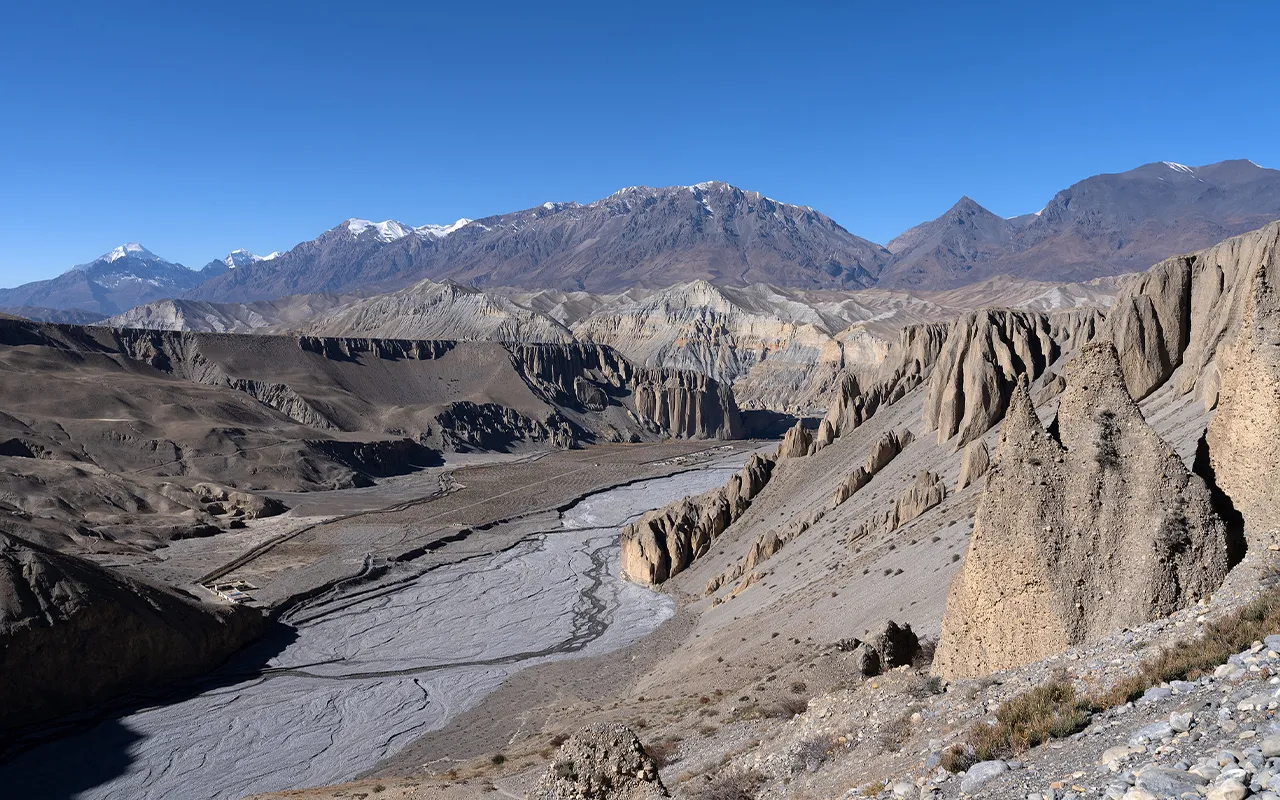
Mountain Jeep RoutesMuktinath (from KTM & Pokhara), Upper Mustang, Kalinchowk, Besisahar–Dharapani, Pokhara–Ulleri, Pokhara–Ghorepani
Pilgrimage TransfersLumbini transfers, Janakpur airport, Muktinath Yatra, Manakamana, Pashupatinath sightseeing, Pokhara to Muktinath
City to City HighwayKathmandu–Pokhara, Kathmandu–Chitwan, Kathmandu–Lumbini, Kathmandu–Birgunj, Chitwan–Birgunj, Lumbini–Kathmandu
Airport TransfersLumbini to KTM Airport, Janakpur Airport Transfer, Nepalgunj to Bardiya, Pokhara Airport to Muktinath
Heritage & SightseeingKathmandu Valley (7 UNESCO sites), Bhaktapur, Nagarkot, Dhulikhel, Bandipur, Kalinchowk, Panauti–Namobuddha
Luxury & VIP ServicesLand Cruiser hire Nepal, Chitwan luxury car, Muktinath top-end jeep, corporate Nepal travel, diplomatic transfers.
Bus & Large GroupVIP Sofa Bus hire Nepal, Tourist Bus hire Nepal, Coaster hire Nepal, Hiace Van hire Nepal
Trekking TransfersBesisahar–Dharapani (Annapurna), Pokhara–Ulleri (Poon Hill), Salleri (Everest), Syabrubesi (Langtang)

Why Nepal Vehicle Hiring Is Nepal’s Most Trusted Vehicle Hire Partner

Nepal Vehicle Hiring Pvt Ltd was established with one mission: to provide Nepal’s most reliable, most professional, and most customer-focused private vehicle hire service. In a market where quality standards vary enormously between operators, Nepal Vehicle Hiring has built its reputation on five non-negotiable pillars:

  • Fleet Quality: Every Nepal Vehicle Hiring vehicle is regularly serviced, mechanically inspected before every mountain departure, fully insured, and green-plated (legally registered for tourist use).
  • Driver Expertise: All drivers hold valid DoTM licenses at the appropriate category level, have route-specific experience, are English-speaking, and have completed Nepal Vehicle Hiring’s internal safety training program.
  • Transparency: We disclose full pricing in writing before booking confirmation. No hidden charges. No surprise fees on travel day. What is quoted is what is charged.
  • 24/7 Support: Nepal Vehicle Hiring’s operations team is available around the clock — not just for bookings but for real-time journey support, emergency response, and problem resolution throughout every trip.
  • Range and Coverage: From a single private car for a Kathmandu Valley heritage day tour to a convoy of Land Cruisers for an Upper Mustang expedition to a VIP Sofa Bus for a 30-person international Buddhist delegation — Nepal Vehicle Hiring covers every scale, every route, every vehicle category, every corner of Nepal.

Explore our complete service library — each blog is a detailed guide to a specific route, vehicle type, or destination:

Frequently Asked Questions

The Mahindra Scorpio 4WD is the most widely used private vehicle for Nepal’s mountain routes — particularly popular for Muktinath, Kalinchowk, Besisahar–Dharapani, Pokhara–Ulleri, and Pokhara–Ghorepani. It offers the best balance of genuine 4WD capability, passenger comfort (6–7 seats), luggage space, and cost-effectiveness. For routes demanding maximum off-road performance and passenger luxury — Upper Mustang, Karnali, VIP pilgrimages — the Toyota Land Cruiser is the top-end choice.

Is a driver included with Nepal Vehicle Hiring vehicles?

Yes — all Nepal Vehicle Hiring vehicle hires include a professional, licensed driver as standard. Nepal Vehicle Hiring does not offer self-drive for safety, legal, and practical reasons (Nepal’s mountain road conditions require route-specific local expertise that visiting drivers cannot practically possess). Our drivers are not merely vehicle operators — they are experienced Nepal travel professionals who enhance the journey with local knowledge, cultural insight, and genuine care for passenger wellbeing.

Can I hire a vehicle for multiple days / a full Nepal circuit?

Yes — multi-day, full-circuit vehicle hire is one of Nepal Vehicle Hiring’s most popular services. We arrange Kathmandu–Pokhara–Chitwan–Kathmandu circuits, Kathmandu–Muktinath–Kathmandu Yatra trips, Nepal Golden Triangle circuits, and custom multi-week itineraries with the same vehicle and driver throughout — ensuring continuity, consistency, and the deep local relationship between driver and passenger group that multi-day travel creates.

How far in advance should I book a vehicle hire in Nepal?

Standard periods: 2–5 days ahead. Peak tourist season (Oct–Nov, Mar–May): 7–14 days ahead. Festival periods (Dashain, Tihar, Vivah Panchami): 2–4 weeks ahead.

Winter Kalinchowk snowfall weekends (Dec–Jan): 1–2 weeks ahead. Upper Mustang expeditions: 3–4 weeks ahead (permit + vehicle combined). For large groups (20+ passengers): always at least 2 weeks, regardless of season.

What is included in the Nepal Vehicle Hiring price?

All Nepal Vehicle Hiring hires include the vehicle, professional driver, fuel for the agreed route, vehicle insurance, and all vehicle running costs. Not included: trekking or conservation area permits (ACAP, TIMS, Restricted Area), passenger food and accommodation, driver accommodation on multi-day trips (quoted separately and transparently), and driver gratuity. Fully transparent pricing is provided before booking confirmation — no hidden charges.

Can Nepal Vehicle Hiring pick me up from my hotel?

Yes — hotel pick-up from any hotel, guesthouse, resort, or specified address in Kathmandu, Pokhara, Chitwan, Lumbini, and all major cities in Nepal is standard for private vehicle bookings. This is one of the key advantages of private hire over public transport — no secondary taxi to a bus park, no navigating an unfamiliar city with heavy luggage. Your driver arrives at your hotel at the agreed time.

What is the difference between a VIP Sofa Bus and a VIP Deluxe Bus?

The key difference is seating configuration. VIP Sofa Bus: 2×1 seats (one on the right, two on the left) — 21–30 passengers with exceptional personal space. VIP Deluxe Bus: 2×2 seats — 30–40 passengers with good but standard bus comfort.

The Sofa Bus is superior for long-distance comfort (especially overnight travel), but the Deluxe Bus accommodates a larger group at a lower per-head cost.

How do I know which vehicle is right for my trip to Nepal?

The three key questions that determine your Nepal vehicle: (1) How many passengers? (2) Which routes will you travel — highway only or mountain off-road? (3) What are your comfort and budget priorities? Nepal Vehicle Hiring’s booking team asks these questions and recommends the right vehicle based on your answers. Use the vehicle-by-route table in this guide as a reference, or call us at +977 981-4227196 for personalised advice.

Are Nepal Vehicle Hiring vehicles safe for families with children?

Yes — Nepal Vehicle Hiring’s fleet is fully insured and maintained to high safety standards. Our drivers are experienced in family group travel and adapt their driving style accordingly.

For families with young children, the Toyota Land Cruiser Prado (7-seat) and Mahindra Scorpio are the most recommended family vehicles, offering easy rear-door access, spacious seating, ample boot space for family luggage, and the smoothest available ride on mountain routes. Child seat requests can be accommodated — advise us at the time of booking.

Can I book a vehicle hire in Nepal from outside Nepal?

Yes — Nepal Vehicle Hiring accepts bookings from anywhere in the world via WhatsApp, email, and the website (vehiclehiringnepal.com). International clients frequently book months in advance to secure top-end vehicles for peak-season Nepal itineraries. We coordinate all booking details, confirmations, and itinerary planning remotely and provide full booking documentation via WhatsApp or email before travel.

Your Nepal Journey Starts Here – Book with Nepal Vehicle Hiring Today

Nepal is one of the most extraordinary travel destinations on earth — a country that compresses tundra and tropics, ancient kingdoms and Himalayan wilderness, sacred pilgrimage and high adventure, Buddhist monasteries and Hindu temples into a landscape barely the size of England. To do it justice —to reach its heights and depths, to connect its ancient cities and remote mountain valleys—you need the right vehicle, the right driver, and the right partner.

Nepal Vehicle Hiring Pvt Ltd has partnered with thousands of travellers, pilgrims, trekkers, tour operators, and corporate clients across Nepal. Our complete fleet — from private cars to luxury Land Cruisers, from Hiace vans to VIP Sofa Buses — our professional, licensed, route-experienced drivers, and our 24/7 customer service and operations support make Nepal Vehicle Hiring Nepal’s most trusted private vehicle hire service in 2026.

Whatever your Nepal destination — and whatever your group size, budget, or travel style — Nepal Vehicle Hiring has the perfect vehicle and the perfect service for your perfect Nepal journey.

Call / WhatsApp: +977 981-4227196 |  Website: vehiclehiringnepal.com  |  Book a Jeep or Car  |  Book a Bus or Van

Kathmandu to Gorkha Jeep Service: The Complete Guide

Kathmandu to Gorkha Jeep Service
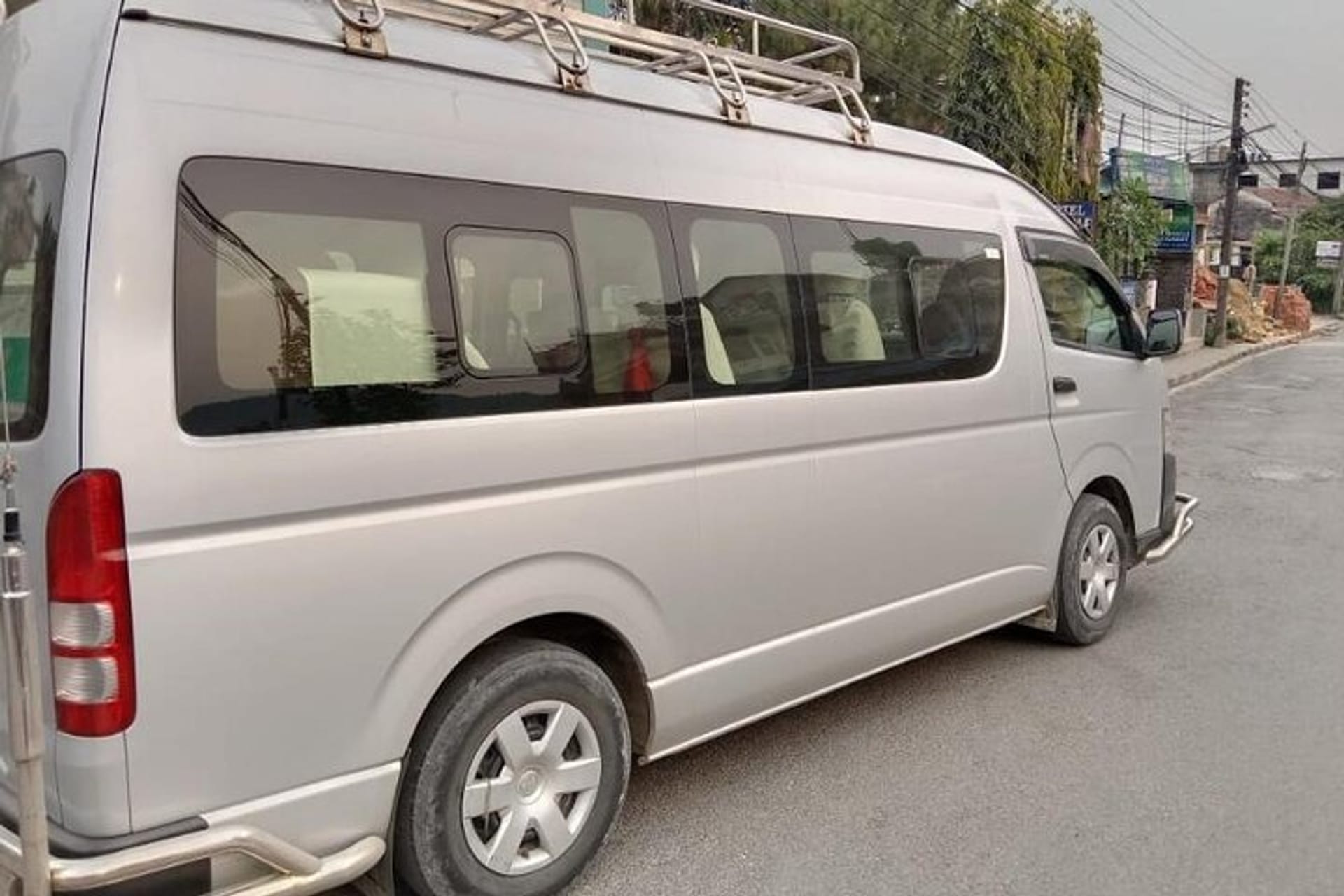
Why Gorkha Should Be on Every Nepal Itinerary

Gorkha is one of Nepal’s most historically and spiritually significant destinations in Nepal —yet it remains one of the country’s best-kept secrets among international tourists. While Kathmandu, Pokhara, and Chitwan attract the lion’s share of visitor attention, the ancient hilltop city of Gorkha quietly holds the keys to Nepal’s greatest story: the unification of the nation.

From Gorkha — from its magnificent hilltop palace-fortress now known as Gorkha Durbar — King Prithvi Narayan Shah launched his ambitious and ultimately successful campaign in the 18th century to unite the dozens of independent principalities of the Himalayan region into a single kingdom. The name ‘Gorkha’ itself resonates through world history, having given its name to the legendary Gurkha soldiers who have served in the British and Indian armies for over two centuries and earned a global reputation for extraordinary courage, loyalty, and fighting ability.

Beyond its royal and military heritage, Gorkha District is home to the sacred Manakamana Temple—one of Nepal’s most important Hindu pilgrimage sites —dedicated to the wish-fulfilling goddess Bhagwati. It is also the gateway to two of Nepal’s most spectacular and less-trodden trekking routes: the Manaslu Circuit Trek and the Tsum Valley Trek, both of which begin in Gorkha District and offer extraordinary Himalayan experiences in areas still largely untouched by mass tourism.

For all these reasons—historical depth, spiritual significance, natural grandeur, and trekking access—the journey from Kathmandu to Gorkha rewards every type of traveller. The most comfortable, flexible, and efficient way to make that journey is to hire a private jeep or vehicle from Nepal Vehicle Hiring Pvt. Ltd., your trusted transportation partner in Nepal.

This complete guide covers everything you need to know: the full route with distances and highlights, road conditions along the Prithvi Highway, the cost of private jeep hire for different vehicle types, the key attractions in Gorkha, the best time to visit, practical travel tips, and answers to the most common questions about the Kathmandu to Gorkha jeep service.

Kathmandu to Gorkha — Quick Reference

Destination: Gorkha Bazar, Gorkha District, Gandaki Province, Nepal
Altitude: Gorkha Bazar approx. 1,000 m | Gorkha Durbar approx. 1,100 m
Total Distance: Approx. 139–145 km from Kathmandu (Thamel) to Gorkha Bazar
Total Drive Time: 4–5 hours (one way, direct route via Prithvi Highway + Gorkha spur road)
Route: Kathmandu → Nagdhunga → Naubise → Malekhu → Kurintar → Anbu Khaireni → Gorkha
Vehicle: Car, Jeep, Hiace, Coaster, or Bus — road is paved and suitable for all vehicle types
Permits: No trekking permits needed for Gorkha Bazar/Durbar visit | Manaslu/Tsum require special permits
Best Season: October–December and February–May (avoid heavy monsoon July–August)
Key Attractions: Gorkha Durbar, Gorakhnath Cave, Manakamana Temple, Old Bazaar, Manaslu/Tsum trekking
Book With: Nepal Vehicle Hiring Pvt. Ltd. | +977 981-4227196

Gorkha: The Birthplace of Modern Nepal

Historical Significance — Where Nepal Was Born

To understand Gorkha is to understand Nepal itself. For centuries, the Kathmandu Valley and the surrounding Himalayan region were divided into dozens of small, often warring principalities — each with its own king, culture, and ambitions.

The Gorkha Kingdom, ruled by the Shah dynasty from the small but strategically positioned hilltop fortress now known as Gorkha Durbar, was one of these principalities. But it differed from others in one crucial respect: it was far more ambitious.

In 1743, a young prince named Prithvi Narayan Shah ascended the throne of Gorkha at just 20 years old; at that moment, he devoted his entire life—his military genius, his diplomatic cunning, and his extraordinary personal will—to a single goal: unifying all the Himalayan principalities into one nation. Over the next 25 years, through a combined military strategy, careful alliance-building, and sheer determination, he succeeded.

By 1769, Kathmandu, Patan, and Bhaktapur had fallen to his forces, and Prithvi Narayan Shah became the first king of unified Nepal.

The palace from which he launched this world-changing campaign — Gorkha Durbar — still stands today on its hilltop above Gorkha Bazar, in remarkable condition. It is not merely a museum piece: it is the nation’s literal birthplace and one of the most historically charged sites in the subcontinent.

Walking through its courtyards and temples, with the panoramic Himalayan skyline spread across the northern horizon, is an experience of rare historical power.

The name ‘Gorkha’ carries global resonance in another dimension too. When the British East India Company encountered the Gorkha warriors during the Anglo-Nepalese War (1814–1816), they were so impressed by their fighting qualities that they immediately began recruiting them into their own army.

The ‘Gurkha’ soldiers — a British corruption of ‘Gorkha’ — went on to serve with extraordinary distinction in conflicts across Asia, Africa, and Europe, earning Victoria Crosses and an unparalleled reputation for courage. Today, Gurkha regiments continue to serve in the British Army, and the Gorkha connection is a source of immense pride throughout the district.

Gorkha’s Geography and Character

Gorkha District is part of Gandaki Province (Province No. 4). It covers dramatic terrain ranging from the subtropical Terai lowlands in the south to the high Himalayan peaks—including Manaslu (8,163 m), the eighth-highest mountain in the world—in the north.

The district headquarters, Gorkha Bazar, sits at approximately 1,000 meters above sea level on a broad ridgeline above the Modi Khola and Daraudi River valleys, with spectacular views northward toward the snow-capped peaks of the Manaslu, Ganesh Himal, and Himalchuli ranges.

The district’s population comprises Brahmin, Chhetri, Gurung, Magar, Newar, and Tamang communities, each contributing to a rich cultural mosaic evident in the district’s festivals, architecture, food, and daily life. The town is compact and pleasant — a genuine Nepali hill town with a market area, several good hotels and restaurants, and an atmosphere that feels more authentic than the heavily visited hubs of Kathmandu or Pokhara.

Gorkha as a Trekking Gateway

Beyond its historical and spiritual appeal, Gorkha is the primary gateway to two of Nepal’s finest restricted trekking routes. The Manaslu Circuit Trek — a spectacular 14–18 day trek around the world’s eighth-highest mountain, passing through remote Buddhist villages, ancient monasteries, and the dramatic Larkya La Pass (5,106 m) — begins in Arughat and Soti Khola in Gorkha District.

The Tsum Valley Trek, an even more remote and culturally extraordinary journey into a hidden Tibetan-influenced valley near the Nepal-Tibet border, also departs from Gorkha District. For trekkers planning either of these routes, private jeep hire from Kathmandu to Gorkha and beyond is an essential part of the journey.

Manakamana Temple in Gorkha

The Complete Route: Kathmandu to Gorkha by Jeep

Route Overview

The journey from Kathmandu to Gorkha follows the famous Prithvi Highway (NH17) westward from Kathmandu to Anbu Khaireni, where a spur road branches north to Gorkha Bazar. The Prithvi Highway is one of Nepal’s most important and well-maintained road arteries, connecting Kathmandu with Pokhara and passing through spectacular Himalayan river gorge scenery along the way.

The total distance from Kathmandu to Gorkha Bazar is approximately 139–145 km, making it one of the shorter major destination drives from the capital.

Route SegmentDistanceRoad TypeEst. Drive Time
Kathmandu (Thamel) → Nagdhunga Checkpoint15 kmCity roads + valley exit — paved30–45 min
Nagdhunga → Naubise Junction10 kmWinding hill descent — paved tarmac20–30 min
Naubise → Malekhu (Trishuli River)45 kmPrithvi Highway — excellent tarmac, river valley45–60 min
Malekhu → Kurintar (Manakamana Base)25 kmPrithvi Highway — paved, river gorge section25–35 min
Kurintar → Anbu Khaireni Junction15 kmPrithvi Highway — paved15–20 min
Anbu Khaireni → Gorkha Bazar24 kmGorkha spur road — paved, hilly35–50 min
TOTAL: Kathmandu → Gorkha Bazar139–145 kmPaved highway + spur road4–5 hours

Note: Drive times are estimates for normal traffic conditions. Morning traffic leaving Kathmandu (7:00–9:00 AM) and festival season congestion at Kurintar/Manakamana can add 30–60 minutes to the total journey time. An early start from Kathmandu (6:30–7:00 AM) is always recommended.

Stage-by-Stage Route Narrative

Stage 1 — Kathmandu to Nagdhunga (15 km, 30–45 min): The journey begins at your hotel in Thamel or anywhere in Kathmandu and heads westward through the city toward the Kathmandu Valley rim. The road climbs steeply to the Nagdhunga pass — the western gateway of the Kathmandu Valley at approximately 2,100 meters — before descending dramatically down the Chandragiri hillside toward Naubise.

On a clear day, the views from the Nagdhunga area back over the Kathmandu Valley and westward toward the distant Himalayan peaks are spectacular. The driver will navigate the city traffic efficiently, and once past Nagdhunga, the drive opens up significantly.

Stage 2 — Naubise to Malekhu (45 km, 45–60 min): Below Nagdhunga, the road descends to Naubise Junction — where the Tribhuvan Highway (the old Kathmandu–India road) branches south — and then joins the Prithvi Highway following the Trishuli River westward. This section of the drive is one of the most scenically dramatic in Nepal.

The highway clings to the cliff faces above the rushing Trishuli River, passing through tunnels, over steel bridges, and alongside vertical gorge walls draped in subtropical vegetation. The river itself is a spectacular torrent of blue-green glacial water, and on weekends you will often see groups of rafters and kayakers on the water below.

The towns of Galchhi, Gajuri, and Malekhu are important stopping points along this section.

Stage 3 — Malekhu to Kurintar (25 km, 25–35 min): The road continues through the deepening Trishuli gorge, now with the river on one side and increasingly dramatic cliff faces on the other. Kurintar is the base station for the Manakamana Cable Car and is located approximately 104 km from Kathmandu.

If your itinerary includes a Manakamana Temple visit — and it is highly recommended — Kurintar is where you will leave the highway, park the vehicle, and take the cable car up to the temple (approximately 10 minutes, 2.8 km). The Kurintar cable car station has a parking area where your driver will comfortably wait.

Stage 4 — Kurintar to Anbu Khaireni Junction (15 km, 15–20 min): Beyond Kurintar, the Prithvi Highway continues westward through the Marsyangdi and Modi River confluence area to Mugling — the famous junction town — and then on to Anbu Khaireni, where the Gorkha spur road branches northward off the main highway. This junction is well-marked and about from Kathmandu.

Stage 5 — Anbu Khaireni to Gorkha Bazar (24 km, 35–50 min): The final stretch from Anbu Khaireni to Gorkha Bazar follows a paved but hilly, winding spur road northward, climbing from the valley floor at about 600 meters to Gorkha Bazar at about 1,000 meters. This section passes through traditional villages, terraced agricultural land, and subtropical forest, with increasingly dramatic views northward toward the Manaslu and Ganesh Himal ranges appearing as the road gains elevation.

The road is paved throughout and accessible to all vehicle types, though the climb and curves make a comfortable vehicle particularly welcome.

Kathmandu to Gorkha: Checkpoint Distance & Time Table

Key CheckpointKm from KathmanduAltitudeDrive Time from Kathmandu
Nagdhunga (Valley Exit)15 km2,100 m30–45 min
Naubise Junction25 km900 m45–60 min
Malekhu70 km540 m1.5–2.0 hrs
Kurintar (Manakamana Base)104 km480 m2.5–3.0 hrs
Mugling Junction110 km400 m2.5–3.0 hrs
Anbu Khaireni Junction115 km540 m3.0–3.5 hrs
Gorkha Bazar139–145 km1,000 m4.0–5.0 hrs
Gorkha Durbar (hilltop)~141–147 km1,100 m4.0–5.0 hrs + 45 min walk

Road Conditions: Kathmandu to Gorkha

Overall Road Quality Assessment

The Kathmandu-Gorkha route is one of Nepal’s best-maintained intercity routes. The majority of the journey follows the Prithvi Highway — a national highway of significant strategic importance that the Department of Roads regularly maintains.

Unlike many Nepal mountain destinations that require 4WD vehicles and rough off-road driving, the Kathmandu to Gorkha journey is accessible to standard cars, jeeps, Hiace vans, and buses, with no significant technical road challenges. This makes Gorkha one of the most comfortable and accessible destinations for all travellers, including families, elderly visitors, and pilgrims.

Kathmandu to Naubise — City and Valley Exit

The first section through Kathmandu city can be slow because of traffic, especially during the morning peak (8:00–10:00 AM) and evening peak (4:00–7:00 PM). The Nagdhunga pass area is well-maintained, and the road is good throughout. A 6:30–7:00 AM departure beats most city traffic and gets you past Nagdhunga well before congestion builds.

This section is suitable for all vehicle types.

Naubise to Kurintar — Prithvi Highway Gorge Section

This is the most scenically spectacular section of the drive, and the road is generally in good condition year-round. The highway follows the Trishuli River gorge and is subject to occasional landslides during and immediately after the monsoon (June–September). The Department of Roads clears landslides relatively promptly, but monsoon-season travellers should allow extra time.

During the dry season (October–May), the road is excellent, and the drive is fast and enjoyable. This section is fully suitable for cars, jeeps, vans, and buses.

Kurintar to Anbu Khaireni — Continued Highway

This short section continues along the well-maintained Prithvi Highway and is in good condition year-round. Traffic around Mugling junction can be heavy, particularly on weekends and public holidays, as Mugling is a major truck stop and transit point. Allow extra time on Friday afternoons and weekends.

Anbu Khaireni to Gorkha Bazar — Gorkha Spur Road

The 24 km spur road from Anbu Khaireni to Gorkha Bazar is paved throughout and is accessible to all vehicle types, including standard cars and tourist buses. The road climbs steadily and winds through several switchbacks on the ascent to Gorkha, but these are manageable for any competent driver.

Road conditions on this section are generally good, but can deteriorate slightly during the monsoon due to water runoff and occasional minor landslides in the steeper sections. Nepal Vehicle Hiring Pvt. Ltd. monitors road conditions and will advise on any seasonal issues before your departure.

Vehicle Suitability for Kathmandu to Gorkha
Standard Car (Sedan/SUV): FULLY SUITABLE — paved road throughout
4WD Jeep (Fortuner/Hilux): IDEAL — comfortable and handles all conditions
Hiace Van (up to 14 pax): FULLY SUITABLE — excellent for larger groups
Coaster Bus (15–25 pax): SUITABLE — all roads can accommodate
Tourist Bus (30+ pax): SUITABLE — widely used on this route
Unlike on high-altitude mountain routes, a 4WD is NOT mandatory for Gorkha — but is always preferred for comfort on the spur road’s switchbacks.

Nepal Tour Package

Kathmandu to Gorkha Jeep Service Cost
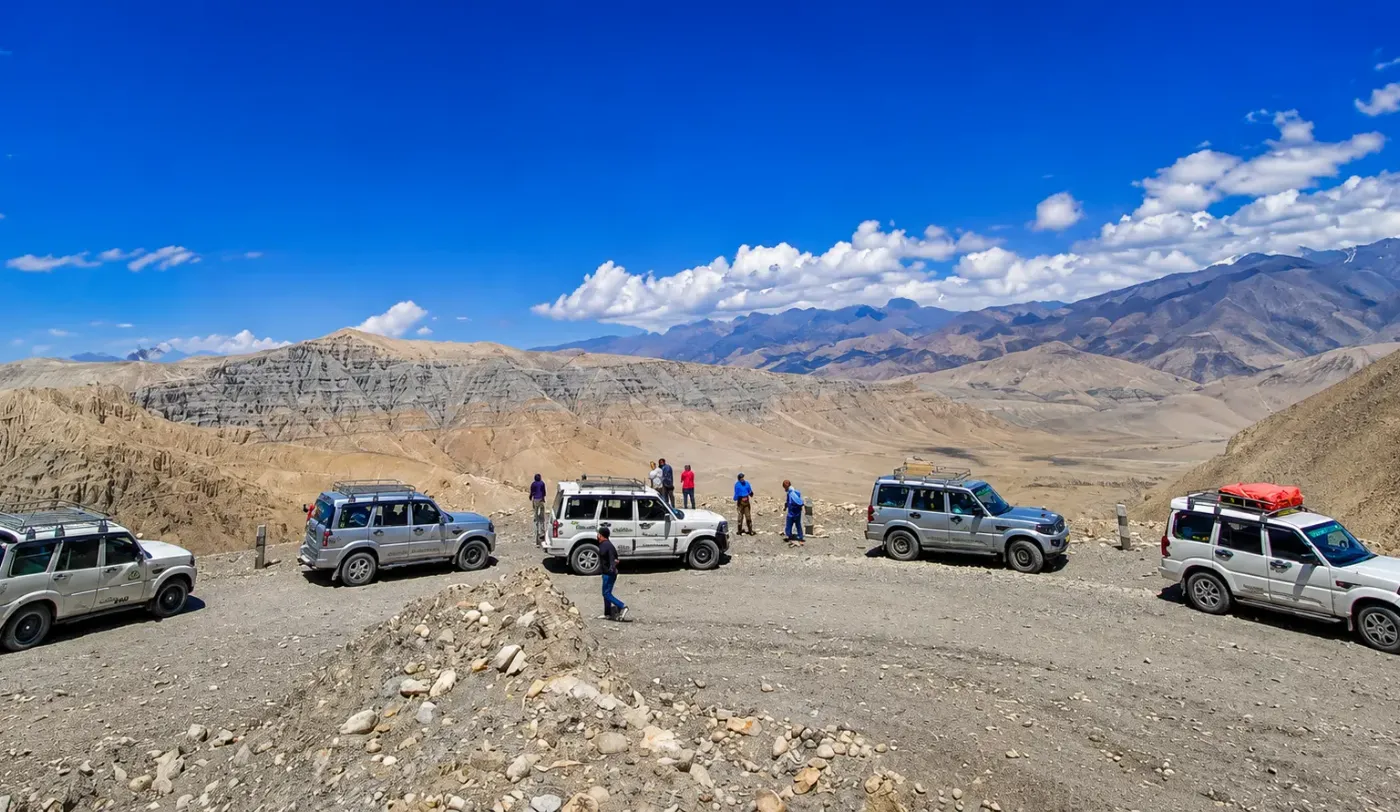
Private Vehicle Hire — One Way, Kathmandu to Gorkha

A private vehicle hire from Kathmandu to Gorkha gives you full control over your journey: hotel pickup at your chosen time, the flexibility to stop at Manakamana Temple or other roadside highlights, your own schedule throughout the day, and door-to-door delivery to your hotel or lodge in Gorkha Bazar. This is the most popular and recommended option for families, groups, pilgrims, and trekkers beginning the Manaslu or Tsum Valley routes.

Vehicle TypePassenger CapacityOne-Way Cost (Kathmandu→Gorkha)Round Trip Cost
Private Car (Sedan / SUV)1–4 passengersNPR 8,000–15,000 / USD 58–100NPR 14,000–25,000
4WD Jeep (Scorpio/Bolero)1–5 passengersNPR 10,000–20,000 / USD 73–150NPR 17,000–30,000
4WD Jeep (Fortuner/Hilux)1–6 passengersNPR 13,000–17,000 / USD 95–124NPR 21,000–28,000
Hiace Van7–14 passengersNPR 16,000–25,000 / USD 116–200NPR 26,000–40,000
Coaster Bus15–25 passengersNPR 22,000–30,000 / USD 160–218NPR 36,000–50,000

Included in private hire price: Driver service, fuel for full journey, vehicle insurance, hotel pickup from anywhere in Kathmandu (Thamel area and beyond), parking at Kurintar if visiting Manakamana, all tolls and road fees.

Not included: Manakamana Cable Car ticket (approx. NPR 1,650 per person return), passenger meals and accommodation, Gorkha Durbar entry fee (if applicable), driver meals and accommodation for multi-day bookings.

Gorkha as a Day Trip from Kathmandu

Given the relatively short distance and drive time (4–5 hours each way), Gorkha makes an excellent and achievable day trip from Kathmandu — particularly if combined with a Manakamana Cable Car visit at Kurintar. A typical Kathmandu day trip itinerary: depart Kathmandu by 6:30 AM, visit Manakamana Temple at Kurintar (cable car ride + darshan + return cable car, approximately 2–3 hours), arrive Gorkha Bazar for lunch, visit Gorkha Durbar (1–2 hours walk + exploration), and return to Kathmandu by 7:00–8:00 PM.

This is a long but highly rewarding day that covers two of Nepal’s most significant historical and spiritual sites.

For a more relaxed experience, we recommend spending one or two nights in Gorkha to fully absorb the Durbar, the old bazaar, the Gorakhnath Cave, and the Manaslu range’s extraordinary sunrise views. Nepal Vehicle Hiring Pvt. Ltd. can arrange your return vehicle for any date you specify.

Kathmandu to Gorkha Jeep Service
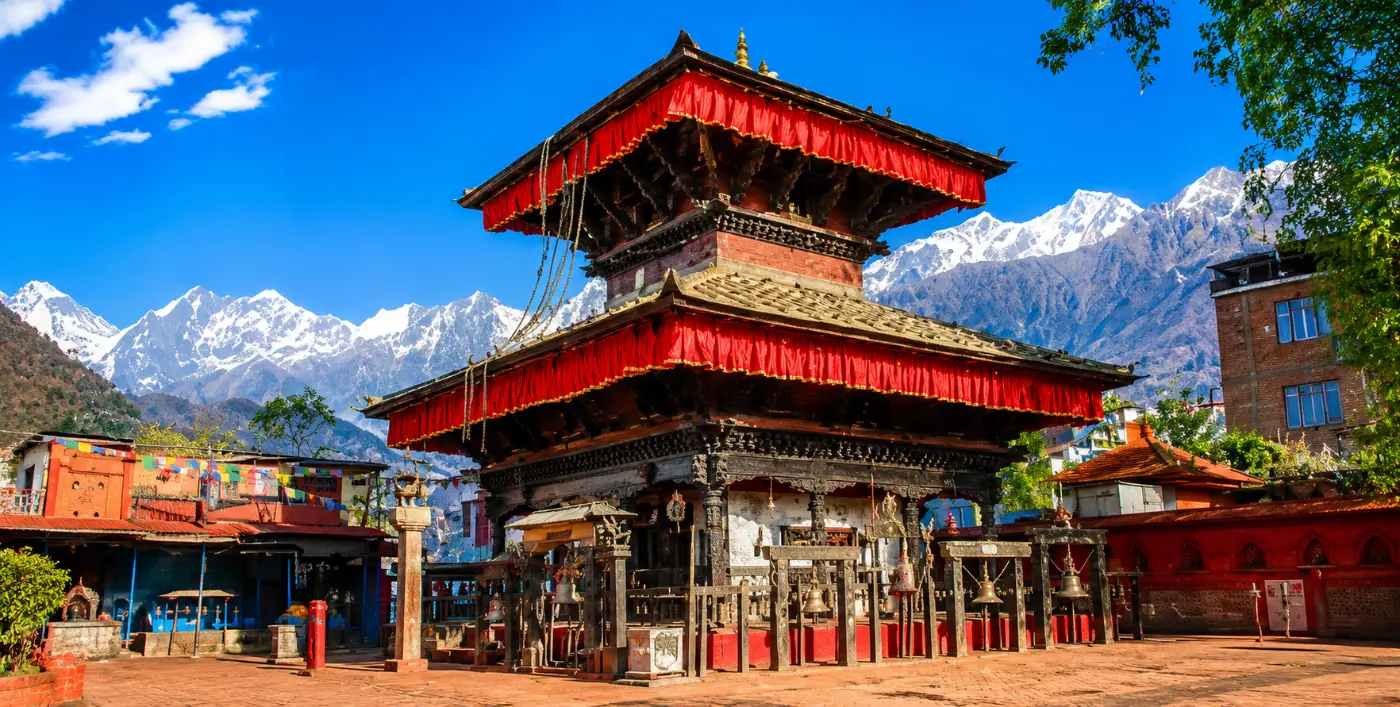
Key Attractions in Gorkha — What to See and Do

1. Gorkha Durbar — The Palace-Fortress That Built a Nation

Gorkha Durbar is the undisputed highlight of any visit to Gorkha and one of Nepal’s most significant historical monuments. Perched on a dramatic hilltop at approximately 1,100 meters — about 45 minutes to one hour on foot from Gorkha Bazar along a well-maintained, stone-paved path with beautiful views — the Durbar complex includes several distinct structures of great historical and religious significance.

The Palace (Durbar) itself was built in the 16th century during the reign of Ram Shah and served as the royal residence of the Gorkha Shah kings for over two centuries, until Prithvi Narayan Shah moved the capital to Kathmandu in 1769. The architecture is a superb example of Newari craftsmanship; intricately carved wooden windows, doors, and struts adorn the multi-storied structures, built from warm-red brick on a commanding stone foundation. The panoramic views from the Durbar hilltop are extraordinary.

On clear days, the entire central Himalayan arc from Dhaulagiri to Langtang is visible, with Manaslu and Ganesh Himal dominating the northern skyline.

The Durbar complex also contains two important temples: the Gorkha Kalika Temple — a Tantric goddess temple that houses the tutelary deity of the Shah kings and is accessible only to Hindus — and the Gorakhnath Temple, a small but highly sacred shrine dedicated to the sage Gorakhnath, believed to be the divine guardian of the Gorkha kingdom and the source of the name ‘Gorkha’ itself. The Gorakhnath Temple marks the site of the sage’s footprint, preserved in stone, and is an important pilgrimage site for devotees.

2. Gorakhnath Cave — Sacred Sanctuary of the Guardian Sage

Immediately adjacent to the Gorkha Durbar, the Gorakhnath Cave is one of the district’s most sacred sites. According to legend, the saint and yogi Gorakhnath — a revered figure in the Nath tradition of Hindu asceticism — meditated in this cave for many years.

The cave is believed to have been deliberately chosen by Prithvi Narayan Shah’s ancestors as the site for their kingdom’s fortress precisely because of its sacred association with Gorakhnath. The cave is small but richly decorated with offerings, oil lamps, and ritual objects, and the atmosphere of concentrated spirituality is palpable. Non-Hindu visitors may observe respectfully from the exterior.

3. Manakamana Temple — The Wish-Fulfilling Goddess

Although technically located at Kurintar — about 30–35 km south of Gorkha Bazar on the Prithvi Highway — the Manakamana Temple is the most famous attraction in Gorkha District, and nearly every visitor to Gorkha combines it with a Durbar visit. The temple is dedicated to the goddess Manakamana (Bhagwati) — a manifestation of Parvati, the consort of Lord Shiva — who is believed to grant devotees’ wishes.

The name ‘Manakamana’ comes from the Sanskrit words ‘mana’ (heart/desire) and ‘kamana’ (wish), meaning ‘fulfiller of heart’s desires.’

The temple sits at an altitude of 1,302 meters on a ridge above the Trishuli River. It is the first cable car system — a 2. m ropeway built with Austrian engineering that takes about 5 minutes each way.

The cable car ride itself is an extraordinary experience, offering panoramic views over the river gorge, the surrounding Gorkha hills, and northward toward the distant snowy peaks of Manaslu and the Himalayan chain. The temple complex at the top is a major pilgrimage centre, drawing tens of thousands of devotees annually.

The temple is open daily from approximately 7:00 AM to 6:00 PM. Cable car tickets cost approximately NPR 1,650 per person (return) for foreign visitors. Animal sacrifice (primarily goats and chickens) is a traditional practice at the temple, and visitors should be prepared to observe this as part of the authentic pilgrimage experience.

4. Gorkha Museum — Preserving the Royal Heritage

The Gorkha Museum, located within the Gorkha Durbar complex, houses an important collection of artefacts related to the history of the Shah dynasty and the unification of Nepal. The collection includes royal weapons, official seals, photographs, traditional musical instruments, garments, and other items that illuminate daily life and the political history of the Gorkha kingdom.

For visitors interested in the historical dimensions of Gorkha’s significance, the museum provides essential context that greatly enriches the Durbar experience.

5. The Old Bazaar (Gorkha Bazar) — Authentic Nepali Hill Town Life

The old market area of Gorkha Bazar is a genuinely authentic, un-touristed Nepali hill town centre, in contrast to the heavily touristed markets of Kathmandu and Pokhara. The main street is lined with traditional shops selling local produce, hardware, textiles, spices, and foodstuffs alongside several restaurants and teahouses serving excellent dal bhat and local specialities.

The older buildings in the bazaar retain traditional Newari and hill-town characteristics largely lost elsewhere. Spending an hour wandering the bazaar, chatting with local shopkeepers, and having tea at a teahouse is an authentic and rewarding experience in Nepal.

6. Ligligkot — Ancient Hilltop Fort with Panoramic Views

Ligligkot is an ancient hilltop fortress approximately 3–4 km from Gorkha Bazar, accessible by a pleasant hiking trail. The site is historically significant as the seat of a pre-Shah ruler of the Gorkha area, and it is famous for an ancient tradition: a running race was held at Ligligkot each year, with the winner declared the local king.

Today, this tradition continues as a celebrated annual race. The hilltop offers outstanding panoramic views of the entire Gorkha District, the river valleys below, and the Himalayan peaks to the north.

7. Gateway to Manaslu Circuit & Tsum Valley Treks

For trekkers planning the Manaslu Circuit Trek or Tsum Valley Trek, Gorkha is not just a destination but the essential gateway. From Gorkha Bazar, the road continues north to Arughat (further), then to Soti Khola and Machha Khola—the starting points of the Manaslu Circuit. Nepal Vehicle Hiring Pvt. Ltd. can extend your jeep hire from Kathmandu through Gorkha to Soti Khola or Machha Khola, providing complete door-to-trailhead transportation for your trek.

Kathmandu to Gorkha Jeep Service
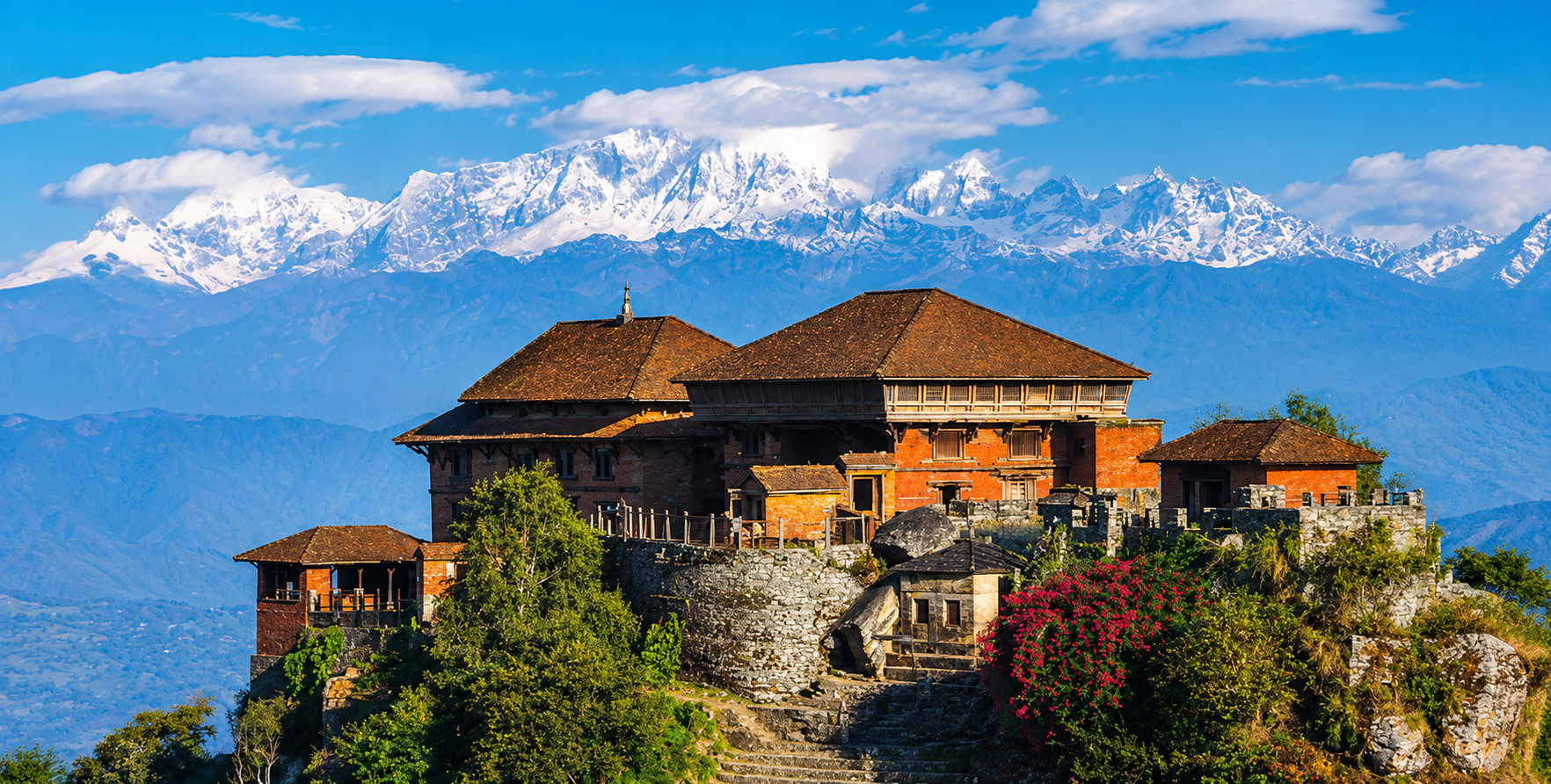
Best Time to Travel from Kathmandu to Gorkha

October to December — Post-Monsoon Autumn (IDEAL)

Autumn is the prime time for the Kathmandu-to-Gorkha trip and for travel throughout the Gorkha region. The monsoon rains have ended, clearing the air of haze and dust, and the mountains stand in crystal-clear definition against brilliant blue skies.

The Manaslu and Ganesh Himal ranges—visible from Gorkha Durbar—are at their most spectacular in September and November. Temperatures in Gorkha Bazar are pleasantly warm during the day (18–25°C) and cool at night (8–12°C).

The festival season of Dasain and Tihar (October–November) adds rich cultural colour to a Gorkha visit, with traditional celebrations particularly vibrant in hill towns such as Gorkha Bazar. This is also the prime season for the Manaslu Circuit Trek.

February to May — Spring (EXCELLENT)

Spring is the second peak season for Gorkha visits. Temperatures warm progressively from February through May, and the surrounding hills are adorned with blooming rhododendrons and wildflowers that add spectacular colour to the drive and the views from Gorkha Durbar. The mountain views are generally clear in the mornings before afternoon cloud build-up.

This is also an excellent trekking season for the Manaslu Circuit and Tsum Valley routes, making spring the busiest period for trekkers passing through Gorkha.

December to January — Winter (GOOD)

Winter brings cool, dry, clear conditions that are excellent for mountain photography and uncrowded exploration of the Durbar. Temperatures in Gorkha Bazar can drop to 5–8°C during the day in January, with cold nights (0–5°C). Mountain views are often exceptional in winter because of the dry, clear air.

Manakamana Temple is best visited in winter on weekdays, when the cable car queues are shorter, and the surrounding views are stunning in the clear winter light.

June to September — Monsoon (POSSIBLE)

The monsoon season brings heavy rainfall to Gorkha District. While the landscape becomes lush and spectacularly green, travel is difficult on the Prithvi Highway gorge section and occasional road damage occurs on the Anbu Khaireni spur road.

Monsoon can affect travel, but the Pashupatinath Temple remains extremely busy throughout the monsoon, with local pilgrims visiting during festivals. For those travelling during the monsoon, Vehicle Hiring Pvt. Ltd. provides up-to-date road condition reports and monsoon-season driving expertise to ensure safe, efficient travel.

Why Choose Nepal Vehicle Hiring Pvt. Ltd. for Kathmandu to Gorkha

Nepal Vehicle Hiring Pvt. Ltd. is Kathmandu’s most trusted private vehicle hire company, with an unmatched track record of safe, professional, and customer-focused service. Our fleet covers every size and style of vehicle for the Kathmandu-to-Gorkha route— from compact private cars for solo travellers to spacious Hiace vans and Coaster buses for pilgrim groups, family parties, or trekking teams.

Why Nepal Vehicle Hiring Is Your Best Choice for Gorkha
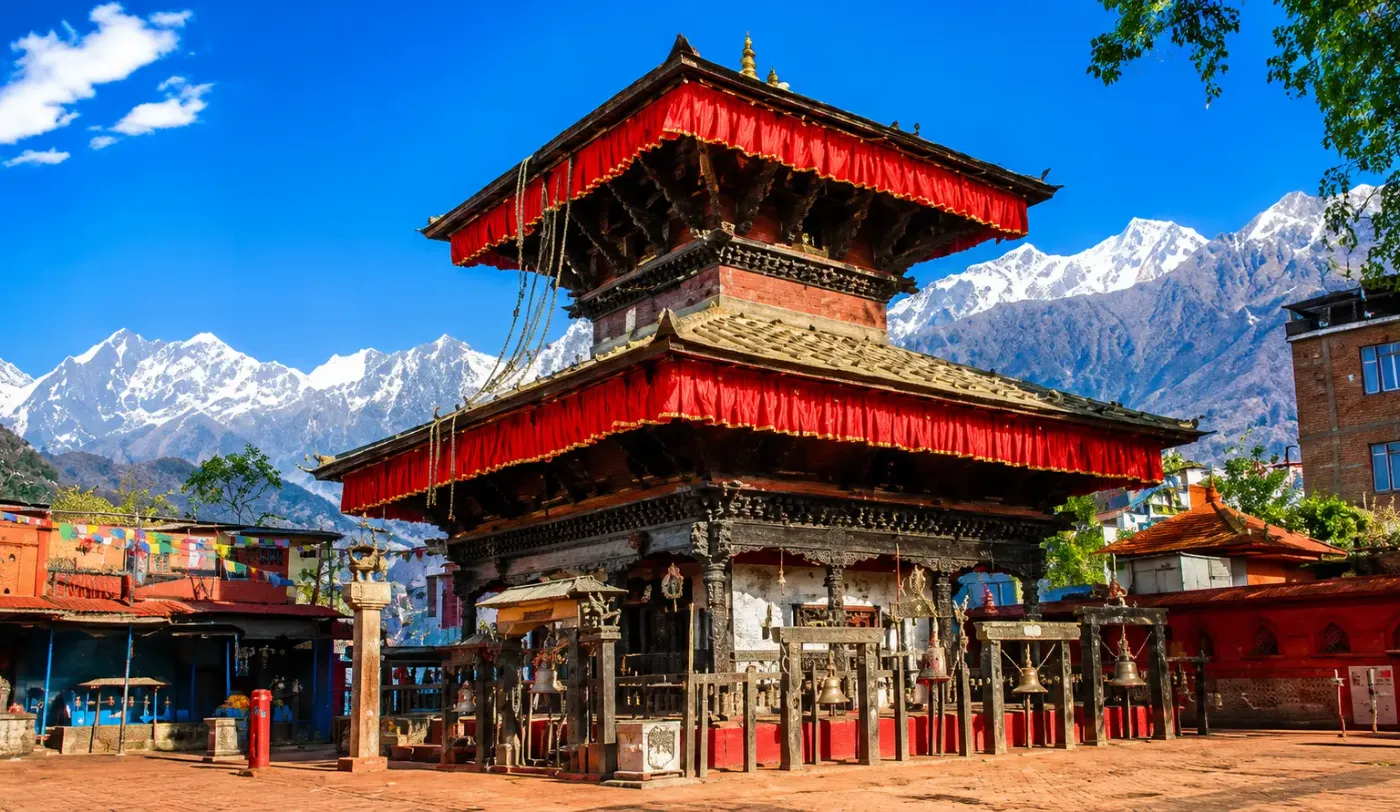
50,000+ satisfied customers | 5.0 TripAdvisor rating | 15,000+ verified reviews
Complete fleet: Car | Jeep | Hiace | Coaster | Tourist Bus — all well-maintained
Experienced drivers familiar with the Prithvi Highway and the Gorkha spur road
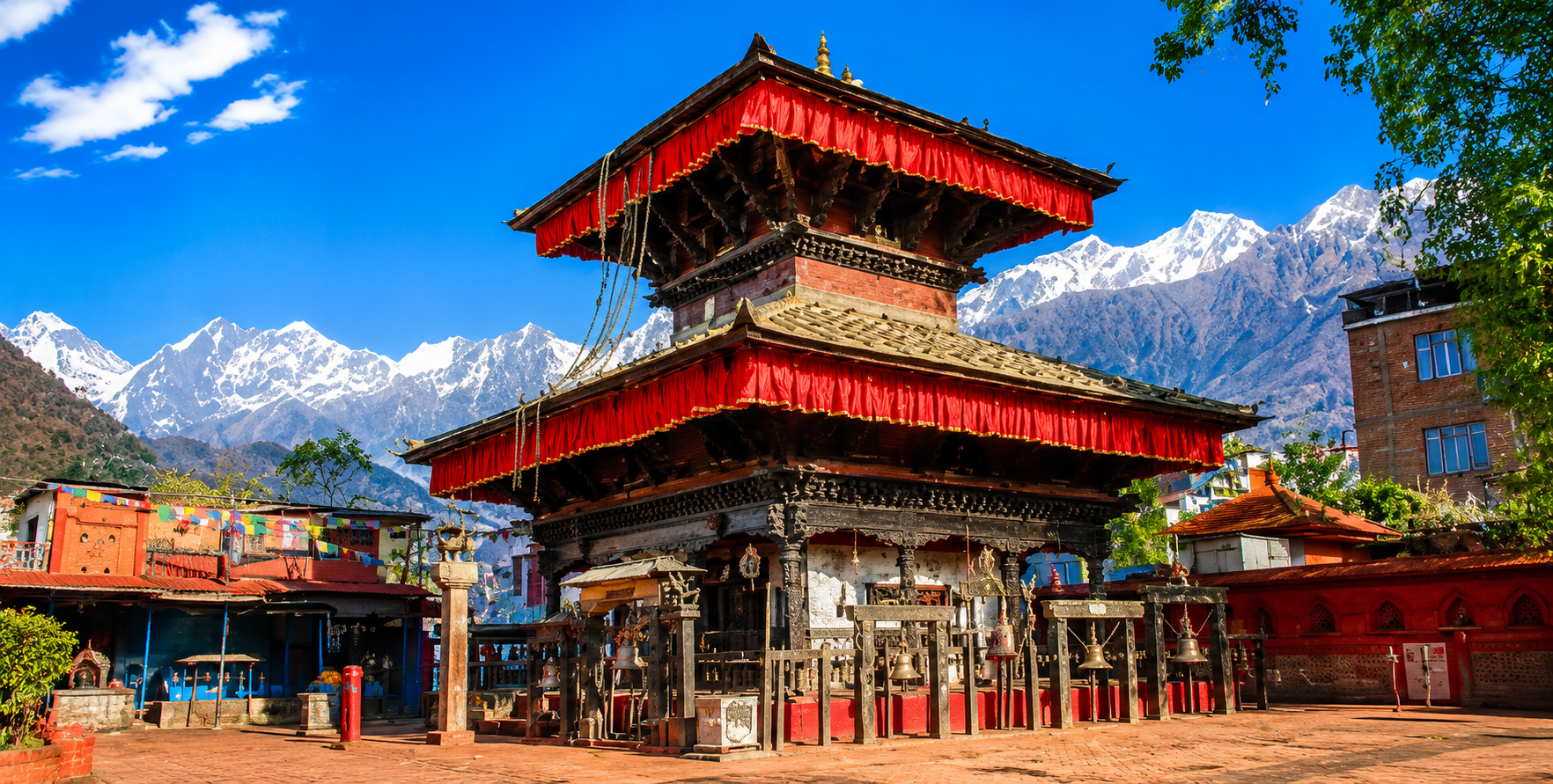
Bilingual drivers — English, Nepali, Hindi — can brief you on route history and highlights
Hotel pickup from anywhere in Kathmandu (Thamel, Lazimpat, Durbar Marg, all areas)
Flexible itinerary — Manakamana Cable Car stop, Kurintar riverside, scenic viewpoints
Transparent all-inclusive pricing — no hidden charges; fuel;; nd driver always included
24/7 WhatsApp support: +977 981-4227196
Can extend hire beyond Gorkha to Arughat, Soti Khola, and Machha Khola for the Manaslu Trek
Licensed & registered | Company Reg. No. 219204 | Bhagawatisthan, Thamel, Kathmandu

Our Vehicle Fleet for the Kathmandu to Gorkha Route

VehicleCapacityBest ForKey Features
Private Car (Sedan/SUV)1–4 paxCouples, small families, business travellersComfortable, fuel-efficient, AC, good for smooth highway driving
4WD Jeep (Fortuner/Hilux)1–6 paxFamilies, small groups, trekkersSpacious, AC, handles all road types, luggage capacity
4WD Land Cruiser1–7 paxLarger groups want maximum comfortTop-end comfort, excellent luggage space, and powerful
Hiace Van7–14 paxPilgrim groups, trekking teams, family reunionsEconomical per person, AC, rear luggage area
Coaster Bus15–25 paxLarge pilgrim groups, tour groupsCost-effective for large groups, comfortable seating
Tourist Bus (shared)IndividualBudget solo travellersCheapest option — not private, less flexible

Special Service: Gorkha Pilgrimage Package

Nepal Vehicle Hiring Pvt. Ltd. offers a popular Gorkha Pilgrimage Package that combines the Kathmandu-to-Gorkha journey with a dedicated stop at the Manakamana Temple in Kurintar. The package includes hotel pickup in Kathmandu, a scheduled stop at Kurintar for a cable car visit to Manakamana Temple (cable car ticket purchased separately), a continuation to Gorkha Bazar, vehicle waiting time during your Gorkha Durbar visit, and a return drive to Kathmandu.

This is the most efficient and comfortable way to cover both major Gorkha attractions in a single day trip. Contact our team for pricing on pilgrimage packages.

Swayambhunath visit during Kathmandu Pokhara Tour

How to Book Your Kathmandu to Gorkha Jeep Service

Step-by-Step Booking Process

  • Step 1 — Contact Nepal Vehicle Hiring Pvt. Ltd. via WhatsApp (+977 981-4227196), phone call, email ([email protected]), or through the website contact form at vehiclehiringnepal.com.
  • Step 2 — Share your travel details: travel date, number of passengers, pickup address/hotel name in Kathmandu, preferred departure time, whether you want one-way or return service, and if you wish to include a Manakamana Cable Car stop at Kurintar.
  • Step 3 — Select your vehicle from the available fleet options based on your group size and comfort preference. Our team will recommend the best match.
  • Step 4 — Receive your booking confirmation via WhatsApp or email, including the driver’s name, vehicle plate number, driver’s contact number, and confirmed pickup time.
  • Step 5 — On the day of travel, be ready at your hotel lobby 5–10 minutes before the agreed pickup time. Your driver will WhatsApp you when they are 10 minutes away.
  • Step 6 — Relax and enjoy the journey! Your driver will handle all navigation and can advise on the best stops, meal options, and historical context along the route.
  • Step 7 — For return journeys, your driver will drop you at your Gorkha hotel and return on your specified date — or the same vehicle can take you back to Kathmandu the same day if booked as a day trip.

Booking Tips

  • Book at least 2–3 days in advance during peak season (October–November and March–May).
  • For Manaslu Circuit or Tsum Valley trekkers, book your jeep to Gorkha or beyond (Arughat/Soti Khola) as a package with your trekking permits to ensure coordinated logistics.
  • Specify your preferred departure time when booking — 6:30 AM is recommended for Kathmandu to Gorkha to ensure arrival with full daylight and time for Durbar exploration.
  • If combining Manakamana and Gorkha Durbar in one day, allow at least 2 hours for the cable car visit (including queue time on busy weekends and festival days) and at least 1.5–2 hours for the Durbar visit plus the 45-minute walk up.

Practical Travel Tips: Kathmandu to Gorkha

What to Carry

  • Cash in Nepali Rupees (NPR) — Gorkha Bazar has ATMs (Nepal Bank and NIC Asia), but carry some cash from Kathmandu as a backup.
  • Manakamana Cable Car ticket — approximately NPR 1,650 per person, return, for foreign nationals (2026 rate).
  • Comfortable walking shoes — the path from Gorkha Bazar to Gorkha Durbar is an approximately 45-minute uphill walk on stone steps and a wide path. Good footwear is essential.
  • Sunscreen and hat — the hilltop Durbar is fully exposed, and midday sun at 1,100 meters can be intense.
  • Light jacket — mornings can be cool, particularly during October–February visits.
  • Camera or phone fully charged — the mountain views from Gorkha Durbar are exceptional and warrant serious photography.
  • Water bottle — hydration is important, particularly on the uphill walk to the Durbar.

Manakamana Temple Visit — Important Notes

  • Cable car operating hours: approximately 9:00 AM – 5:30 PM (last cable car down around 5:00 PM). Do NOT arrive at Kurintar after 4:00 PM if you plan to visit — the cable car will be closing.
  • Weekends and public holidays have extremely long cable car queues (1–3-hour waits). Visit on a weekday if possible for significantly shorter queues.
  • Saturdays are the busiest days at Manakamana — hundreds of devotees bring animals for sacrifice. Expect large crowds and animal sacrifice if you visit on a Saturday.
  • Dress conservatively for the temple visit — shoulders and knees covered for both men and women.
  • Your vehicle driver will park at Kurintar and wait. Confirm waiting time and any extra charges for extended stops when booking.

The Gorkha Durbar Walk — What to Expect

  • The walk from Gorkha Bazar to Gorkha Durbar takes about 45–60 minutes at a comfortable pace, with a climb of about 100 vertical meters on a well-maintained, stone-paved road lined with trees.
  • The path is not strenuous but requires reasonable fitness and comfortable footwear — flip-flops and high heels are not appropriate.
  • A vehicle road also reaches the Durbar parking area from the north side of Gorkha Bazar — VIPs and physically limited visitors use this. Ask your driver if this alternative approach is possible for your group.
  • The Gorkha Kalika Temple inside the Durbar complex is open only to Hindu worshippers. Non-Hindus may view the exterior but must not enter.
  • Remove shoes before entering any temple area within the Durbar complex.

Food and Accommodation in Gorkha

Gorkha Bazar has several good hotels and guesthouses offering comfortable rooms for overnight stays. The Gorkha Hill Resort, Gorkha Gaun Resort, and Hotel Gorkha Inn are popular options with good mountain views and reasonable rates (NPR 1,500–4,000/room depending on standard). Several restaurants in the bazaar serve excellent dal bhat, momos, noodle dishes, and local specialities.

The standard and accommodation in Gorkha are authentic and genuine, less polished than the tourist facilities in Kathmandu or Pokhara, but warm, clean, and excellent value.

Kathmandu to Gorkha: Transport Options Compared

Transport OptionCostTimeComfortFlexibilityBest For
Private Jeep/Car — Nepal Vehicle HiringNPR 9,000–25,0004–5 hrs★★★★★★★★★★Best overall — families, groups, pilgrims, trekkers
Hiace Van (private) — Nepal Vehicle HiringNPR 17,000–30,0004–5 hrs★★★★★★★★★★Groups of 7–14, pilgrim groups, trekking teams
Tourist Bus (Kathmandu–Gorkha spur)NPR 400–600/seat5–6 hrs★★★☆☆★★☆☆☆Budget individual travellers

Frequently Asked Questions

How far is Gorkha from Kathmandu, and how long does the drive take?

Gorkha Bazar is approximately 139–145 km from Kathmandu (Thamel) by road. The drive takes approximately 4–5 hours under normal traffic conditions, following the Prithvi Highway to Anbu Khaireni, then the Gorkha spur road northward. With a 6:30–7:00 AM departure from Kathmandu, you can expect to arrive in Gorkha Bazar by 11:00 AM–12:00 noon, with plenty of time to explore.

Do I need a 4WD jeep for the Kathmandu-Gorkha route?

No — unlike many Nepal mountain destinations, the Kathmandu to Gorkha route is fully paved throughout and is accessible to standard cars, jeeps, vans, and buses. A 4WD is not mandatory.

However, a jeep or SUV is more comfortable on the winding Gorkha spur road and is recommended for groups that want a more comfortable, versatile vehicle. Nepal Vehicle Hiring Pvt. Ltd. offers both standard cars and 4WD jeeps for this route.

Can I combine Manakamana Temple and Gorkha Durbar in a one-day trip from Kathmandu?

Yes, this is a very popular and achievable combination. Depart Kathmandu by 6:30 AM, stop at Kurintar for the Manakamana Cable Car (allow 2–3 hours including the ride, temple darshan, and return cable car), continue to Gorkha Bazar for lunch and then Gorkha Durbar (allow 2–3 hours including the walk and exploration), and return to Kathmandu by 7:00–9:00 PM.

It is a long but extremely rewarding day that covers two of Nepal’s most significant sites. Nepal Vehicle Hiring Pvt. Ltd. offers this as a specific Gorkha Day Trip package.

Is Gorkha suitable for families with children and elderly travellers?

Absolutely. The Kathmandu-Gorkha road is paved, comfortable, and accessible. Gorkha Bazar is a pleasant and safe town. The Manakamana Cable Car is a very family-friendly attraction suitable for all ages. The walk to Gorkha Durbar (45–60 minutes uphill) may be too demanding for elderly visitors or very young children, but an alternative vehicle road exists. Contact Nepal Vehicle Hiring Pvt. Ltd. to discuss mobility options for group members with mobility limitations.

What should I do if I’m starting the Manaslu Circuit Trek from Gorkha?

Nepal Vehicle Hiring Pvt. Ltd. offers extended jeep hire services from Kathmandu through Gorkha to the Manaslu Trek starting points: Arughat (approx. 40 km north of Gorkha), Soti Khola (approx. 70 km from Gorkha), and Machha Khola (approx. 80 km from Gorkha). The road beyond Gorkha is rougher and requires a 4WD vehicle.

We can also arrange your required Manaslu Restricted Area Permit, ACAP permit, and TIMS card as part of your booking. Contact our team for a full Manaslu trekking transportation package.

How much does the Manakamana Cable Car cost?

As of 2026, the Manakamana Cable Car costs approximately NPR 1,650 per person for the return journey for foreign nationals. SAARC nationals pay approximately for a return journey.  For a Nepal journey, subsidised rates apply. Children under a certain height ride free or at a reduced rate.

Cable car operating hours are approximately 9:00 AM to 5:30 PM daily. The ride takes approximately 10 minutes each way.

How do I book the Kathmandu-to-Gorkha jeep service with Nepal Vehicle Hiring?

Booking is simple and fast. Contact Nepal Vehicle Hiring Pvt. Ltd. via WhatsApp at +977 981- 4227196, by phone, email at [email protected], or through the contact form at vehiclehiringnepal.com. Share your travel date, group size, pickup location in Kathmandu, and preferred departure time.

Our team will respond within minutes during business hours and confirm your booking with the driver’s details. We recommend booking 2–3 days in advance during peak season.

Conclusion: Gorkha — Where Nepal’s Greatest Story Began

Gorkha is a destination unlike any other in Nepal. While most of Nepal’s famous tourist sites are defined primarily by natural scenery or Buddhist heritage, Gorkha’s) greatness is rooted in political history — in the extraordinary story of how one small kingdom on a Himalayan hilltop gave birth to an entire nation.

Standing at Gorkha Durbar, looking north across the river valleys toward the snow-crowned peaks of Manaslu and the Himalayan giants, with the wind carrying the whispers of prayer flags and the sound of temple bells from below, it is impossible not to feel the weight of that story and the extraordinary human will that drove it.

Add to this the spiritual grandeur of Manakamana Temple — where thousands of devotees come to seek the blessings of the wish-fulfilling goddess — the authentic warmth of Gorkha Bazar, the dramatic scenery of the Prithvi Highway gorge drive, and the extraordinary trekking possibilities into the wild Manaslu and Tsum Valley wilderness beyond, and Gorkha emerges as one of the most multi-dimensionally rewarding destinations in Nepal.

Reaching Gorkha comfortably and efficiently is straightforward with Nepal Vehicle Hiring Pvt. Ltd. Whether you are a solo pilgrim wanting a private car for the day, a family of six needing a comfortable Fortuner for a Manakamana–Gorkha combination trip, a group of 14 trekkers requiring a Hiace Van to the Manaslu trailhead, or a large pilgrim party of 25 needing a comfortable Coaster bus, we have the right vehicle, the right driver, and the right service for your journey.

Book your Kathmandu to Gorkha jeep service with Nepal Vehicle Hiring Pvt. Ltd. today — and let us take you to where Nepal’s greatest story was written.

Book Your Kathmandu to Gorkha Jeep Service Today!

Website: www.vehiclehiringnepal.com
Phone / WhatsApp: +977 981-4227196 (Available 24/7)
✉ Email:[email protected]
Office: Bhagawatisthan, Thamel, Kathmandu, Nepal
Fleet: Car | 4WD Jeep (Fortuner/Hilux/Land Cruiser) | Hiace Van | Coaster | Tourist Bus
50,000+ Happy Customers | 5.0 TripAdvisor Rating | 15,000+ Verified Reviews
Route: Kathmandu → Kurintar (Manakamana) → Gorkha Bazar → Gorkha Durbar
Day Trip & Overnight Options | Hotel Pickup from Kathmandu | Transparent Pricing
Manaslu Trek Transport: Kathmandu → Gorkha → Arughat → Soti Khola → Machha Khola
Licensed & Registered | Company Reg. No. 219204 | Best Price Guaranteed

Why Choose a 4WD Jeep for Mountain Roads in Nepal?

Scorpio jeep beside a snow-covered hillside

Why Choose a 4WD Jeep for Nepal’s Mountain Roads?

Nepal’s mountain roads are unlike almost anywhere else on Earth. Within a few hours of leaving a paved highway, a road can climb thousands of meters in elevation, narrow to a single rocky lane clinging to a cliff edge, cross seasonal streams with no bridge, and pass through landslide-prone gorges where the surface itself was carved by hand and bulldozer rather than engineered to international standards.

On these roads, the choice of vehicle is not a matter of comfort preference – it is a matter of whether your journey is possible at all.

This guide explains exactly why a 4WD jeep – typically a Toyota Land Cruiser, Land Cruiser Prado, Mahindra Scorpio, or Bolero in the Nepali context – is the right, and often the only, choice for Nepal’s mountain routes, where 4WD is essential, and how to decide which vehicle your specific journey requires.

What Makes Nepal’s Mountain Roads So Demanding?

To understand why 4WD matters, it helps to understand exactly what these roads involve:

  • Extreme gradients – mountain roads frequently climb or descend at gradients far steeper than anything found on a standard highway, sometimes exceeding what a 2WD vehicle’s drivetrain can manage on loose surfaces
  • Unpaved and semi-paved surfaces – many mountain roads beyond the major highways are gravel, rock, or compacted earth tracks rather than asphalt
  • River and stream crossings – seasonal streams cross many mountain roads directly, with no bridge, requiring the vehicle to drive directly through moving water and uneven riverbed
  • Landslide-prone sections – the Himalayan geology is young and unstable; rockfall and landslide debris regularly affect the surface and width of mountain roads
  • Narrow, exposed cliff-edge sections – many roads are cut into the side of steep valleys with sheer drops on one side and minimal margin for error
  • High altitude and rough switchbacks – roads climbing to passes above 3,000 m involve constant tight switchback turns that demand a vehicle with a tight turning radius and strong low-speed control.
  • Seasonal extremes – monsoon rain turns dry tracks into mud; winter brings ice and occasional snow to higher sections

What a 4WD Jeep Provides That a Standard Vehicle Cannot

Power Distribution to All Four Wheels

A 2WD vehicle sends engine power to only two wheels, meaning if those two wheels lose traction on loose gravel, mud, or wet rock, the vehicle can become stuck even on a relatively gentle slope. A 4WD jeep distributes power to all four wheels, dramatically increasing traction on loose, slippery, or uneven surfaces – exactly the conditions found on most Nepali mountain roads beyond the main highways.

High Ground Clearance

Jeeps like the Toyota Land Cruiser and Mahindra Scorpio sit significantly higher off the ground than sedans or standard SUVs This clearance is essential for navigating rutted tracks, large embedded rocks, and the uneven surfaces common on mountain roads – a sedan’s low underbody would scrape, snag, or become high-centred on obstacles a jeep clears with ease.

Low-Range Gearing

Many 4WD jeeps include a low-range gear setting that provides immense torque at low speeds – critical for crawling up steep, loose-surface inclines or carefully descending steep grades without relying solely on the brakes. Standard road vehicles lack this capability.

Robust Suspension and Chassis

Mountain jeeps are built with reinforced suspension systems designed to absorb the constant impact of rough, rocky surfaces over thousands of kilometres without mechanical failure – a critical safety factor on roads where a breakdown could leave passengers stranded far from any assistance.

Engine Power for Steep, Sustained Climbs

The diesel engines found in Land Cruisers, Scorpios, and similar mountain vehicles are tuned for high torque at low RPM – exactly what is needed for sustained steep climbs at altitude, where thinner air also reduces engine performance in any vehicle. A 4WD jeep’s engine matches the demands of mountain driving in a way a standard sedan engine does not.

Share jeep

Where 4WD is Essential in Nepal – Route by Route

Not every road in Nepal requires a 4WD jeep. Major highways like the Prithvi Highway (Kathmandu–Pokhara) and the East-West Highway across the Terai are fully paved and accessible by any standard vehicle. 4WD becomes essential once you leave these main arteries.

Here is a guide to where 4WD is mandatory:

Route4WD Required?Why
Kathmandu – Pokhara (Prithvi Hwy)NoFully paved national highway
Kathmandu – Chitwan / Lumbini (Terai)NoFlat, paved highway throughout
Beni – Jomsom – Muktinath (Kali Gandaki)YesRough gorge track, river-edge sections, no paving
Jomsom – Kagbeni – Lo Manthang (Upper Mustang)YesRemote high-plateau track, extremely rough
Besisahar – Chame – Manang (Annapurna Circuit)YesRough mountain track, switchbacks, stream crossings
Arughat – Soti Khola (Manaslu approach)YesCliff-edge gorge track, very narrow
Pokhara – Sikles / Ghasa / GhandrukYesSteep, rocky foothill tracks
Dharan – Taplejung (Pathivara approach)YesLong winding mountain road, landslide-prone
Kathmandu – Jiri / Salleri (Everest road access)YesRough mountain road beyond Lamosangu

As a general rule, any route beyond Nepal’s two or three fully paved national highways that climbs into hill or mountain terrain should be assumed to require a 4WD vehicle unless specifically confirmed otherwise.

The Risk of Using the Wrong Vehicle

Travellers sometimes attempt to save money by booking a standard sedan or van for a route that actually requires 4WD. The consequences can include:

  • Getting stuck – a 2WD vehicle losing traction on a loose or wet incline can become completely immobilised, sometimes requiring a tow from another vehicle that may not be readily available in remote areas
  • Vehicle damage –low-ground-clearance vehicles risk damaging the underbody, exhaust system, or suspension on rocky and rutted surfaces.
  • Safety risk – loss of control on narrow, cliff-edge mountain roads is far more likely in a vehicle without adequate traction and stability.
  • Trip delays – a stuck or damaged vehicle can cause hours or even days of delay in remote mountain areas where mechanics and spare parts are scarce.
  • Stranding – in the most remote sections of Upper Mustang or the Manaslu approach, a breakdown without 4WD recovery capability can leave a group genuinely stranded.

The relatively small cost difference between hiring a sedan and a proper 4WD jeep is insignificant compared to the risk of an interrupted or unsafe journey on routes where 4WD is genuinely required.

Comparing 4WD Vehicle Options in Nepal

VehicleCapacityStrengthsBest Routes
Toyota Land Cruiser4–6 paxMost powerful and capable, best for the toughest routesUpper Mustang, Manang, Kali Gandaki gorge
Toyota Land Cruiser Prado4–5 paxTop-end comfort with strong 4WD capabilityMuktinath, Mustang, for comfort-focused travellers
Toyota Fortuner5–6 paxGood value 4WD, comfortable highway rideBesisahar–Chame, foothill routes
Mahindra Scorpio6–9 paxPowerful engine, high clearance, widely used regionallyEastern Nepal hill roads, Pathivara, Ilam
Mahindra Bolero4–6 paxRugged and affordable 4WD optionBudget groups on rough but shorter routes

4WD and Altitude: A Connected Challenge

Most routes requiring 4WD in Nepal also involve significant altitude gain – the Kali Gandaki gorge climbs from 820 m at Pokhara to over 3,700 m at Muktinath; the Annapurna Circuit road climbs to 3,500 m at Manang; Upper Mustang reaches 3,840 m at Lo Manthang. This connection is not coincidental: rough, undeveloped roads and high mountain terrain go hand in hand in Nepal’s geography.

A capable 4WD jeep with a powerful engine also performs better at altitude, where thinner air reduces engine power output in any vehicle. The combination of strong torque, 4WD traction, and engine power suited to high-altitude operation makes the Land Cruiser and similar jeeps the standard choice for Nepal’s highest and most demanding mountain routes.

Seasonal Considerations for 4WD Travel

Monsoon (June to September)

4WD becomes even more critical during the monsoon, when rain transforms dry mountain tracks into mud and increases landslide risk. Experienced 4WD drivers know how to read changing road conditions and adjust their approach to wet, slippery sections that would stop a 2WD vehicle entirely.

Winter (December to February)

Higher-altitude sections of mountain roads, particularly above 3,000 m, can develop ice and occasional snow in winter. 4WD with appropriate tyres provides significantly better control on these surfaces than any 2WD vehicle.

Post-Monsoon and Spring (October–November, March–May)

These are the best seasons for mountain road travel, with the driest and most stable surface conditions. Even in good conditions, however, the fundamental terrain – steep gradients, rough surfaces, river crossings – still requires 4WD capability on the routes listed above.

How to Decide if You Need a 4WD Jeep

Use this simple decision framework when planning your Nepal vehicle hire:

  1. Is your entire route on a major paved highway (Prithvi Highway, East-West Highway)? If yes, a standard sedan or van is sufficient.
  2. Does your route include any unpaved mountain section, river crossing, or climb above approximately 2,500 m on a non-highway road? If yes, 4WD is required.
  3. Are you travelling during or shortly after monsoon season on any hill or mountain road? If yes, 4WD strongly reduces risk even on routes that might be passable in the dry season with a 2WD vehicle.
  4. Is your destination in a restricted or remote area (Upper Mustang, Manaslu region, far eastern hill districts)? If yes, 4WD is mandatory and often the only realistic option.
  5. Still unsure? Contact Vehicle Hiring Nepal and describe your exact route – our team will confirm whether 4WD is needed based on current road conditions.

Why Book Your 4WD Jeep with Vehicle Hiring Nepal

  • Full fleet of Toyota Land Cruisers, Prados, Fortuners, and Mahindra Scorpios maintained specifically for mountain route reliability
  • Drivers with deep experience on Nepal’s most demanding roads – Kali Gandaki gorge, Upper Mustang, Manaslu approach, Annapurna Circuit, eastern hill districts
  • Honest advice on which vehicle your specific route actually requires – we will never recommend an underpowered vehicle to save you a small amount of money at the cost of your trip’s reliability
  • Vehicles equipped and maintained for the specific demands of altitude, rough terrain, and remote operation
  • 24/7 WhatsApp support throughout your journey, with drivers who understand how to respond to changing mountain road conditions

How to Book Your 4WD Jeep

  1. Contact Vehicle Hiring Nepal via WhatsApp at +977 981-4227196 or visit vehiclehiringnepal.com
  2. Describe your planned route and destination
  3. We confirm whether 4WD is required and recommend the appropriate vehicle
  4. Provide your travel dates, group size, and pickup location
  5. Receive your booking confirmation with vehicle details and driver information

WhatsApp: +977 981-4227196
Email: [email protected]

Frequently Asked Questions

Can a standard SUV serve as a substitute for a true 4WD Jeep on mountain roads?

It depends on the specific SUV and route. Some SUVs offer genuine 4WD or all-wheel-drive systems with reasonable ground clearance and can handle moderate mountain roads.

However, for the most demanding routes – Upper Mustang, the Kali Gandaki gorge, the Manaslu approach – a true 4WD jeep like the Toyota Land Cruiser remains the safest and most reliable choice. Always confirm the specific drivetrain and ground clearance of any SUV before relying on it for serious mountain terrain.

Is 4WD necessary even in the dry season?

Yes, on the routes this guide identifies as requiring 4WD. While dry-season conditions are more favourable, the fundamental terrain challenges – steep gradients, loose rock and gravel surfaces, narrow cliff-edge sections, and river crossings – remain regardless of season. 4WD provides essential traction and control on these surfaces even when dry.

Does 4WD guarantee a completely safe journey on Nepal’s mountain roads?

4WD significantly improves safety and reliability but does not eliminate all risk. Mountain road travel in Nepal always carries inherent risk because of landslides, weather, and challenging terrain. An experienced, professional driver combined with a properly maintained 4WD vehicle is the best way to minimise risk.

Still, travellers should always follow their driver’s guidance, allow flexibility in their schedule for weather delays, and carry appropriate travel insurance.

How much more does a 4WD jeep cost compared to a standard vehicle?

4WD jeeps typically cost 20 to 40 per cent more than equivalent-capacity standard vehicles for the same route, reflecting the vehicle’s higher value, increased fuel consumption, and the specialised driving skill required. For routes where 4WD is genuinely necessary, this additional cost is a worthwhile investment in the safety and reliability of your journey, not an optional upgrade.

Final Thoughts

Nepal’s mountain roads are part of what makes the country’s most extraordinary destinations – Upper Mustang, the Annapurna Circuit, Muktinath, the remote eastern hills – genuinely special and relatively untouched by mass tourism. But that same ruggedness that preserves their character also demands the right vehicle to reach them safely and reliably.

A 4WD jeep is not a luxury upgrade on these routes – it is the fundamental tool that makes the journey possible at all.

Vehicle Hiring Nepal maintains a full fleet of Toyota Land Cruisers, Prados, Fortuners, and Mahindra Scorpios specifically suited to Nepal’s mountain terrain, with experienced drivers who have navigated these roads for years. Whatever mountain destination you are planning to reach, talk to us first – we will make sure you have the right vehicle for the road ahead.

Book your 4WD jeep today. WhatsApp: +977 981-4227196| Website: www.vehiclehiringnepal.com | Email: [email protected]

Kathmandu to Ghandruk Private Jeep: The Complete Guide

Kathmandu to Ghandruk Private Jeep hire -mountain peak with clear blue sky in the Himalayas

Kathmandu to Ghandruk Private Jeep hire-Why Ghandruk Deserves a Private Jeep from Kathmandu.

Set at an altitude of 2,012 meters (6,601 feet) in the foothills of the magnificent Annapurna range, Ghandruk is one of Nepal’s most beloved and best-preserved Gurung villages. With ancient cobblestone lanes winding between centuries-old, slate-roofed stone houses, extraordinary panoramic views of Annapurna South, Machapuchare (Fishtail), Hiunchuli, and Gangapurna, and a deep, living connection to proud Gurung cultural heritage, Ghandruk is far more than a trekking waypoint.

It is a destination in its own right — a place where mountain grandeur and authentic Himalayan village life meet in perfect, unhurried harmony.

For travellers coming from Kathmandu, reaching Ghandruk requires a two-stage journey: first from Kathmandu to Pokhara (approximately 200 km), and then from Pokhara through the Annapurna foothills to Ghandruk (approximately 55–61 km). In total, the Kathmandu-Ghandruk distance by road is approximately 260–265 km, making it a full-day journey.

While public buses and shared jeeps are budget options for individual travellers, hiring a private jeep from Kathmandu to Ghandruk — with a single professional driver handling the entire journey — offers an unmatched combination of comfort, flexibility, and door-to-door convenience.

This complete guide covers everything you need to know about planning and booking a Kathmandu to Ghandruk private jeep: the full route with distances and highlights, road conditions for each segment, pricing for different vehicle types, required permits, the best time to travel, what to expect in Ghandruk, and why Nepal Vehicle Hiring Pvt. Ltd. is the trusted choice for this iconic Nepal journey.

Whether you are heading to Ghandruk as a standalone cultural destination, as the starting point for the Annapurna Base Camp trek, as a first night on the Poon Hill route, or simply for a spectacular Himalayan village experience, this guide will prepare you perfectly.

Kathmandu to Ghandruk — Quick Reference

Destination: Ghandruk Village, Kaski District, Gandaki Province
Altitude: 2,012 m (6,601 ft) above sea level
Total Distance: Approx. 260–265 km (Kathmandu to Ghandruk)
Total Drive Time: 9–12 hours (one way, including Pokhara transit)
Route: Kathmandu → Mugling → Pokhara → Nayapul → Birethanti → Syauli Bazar → Ghandruk
Vehicle: 4WD Jeep recommended (Fortuner, Hilux, Scorpio) — essential for the final 10 km
Permits: ACAP (NPR 3,000/person) + TIMS Card (NPR 2,000/person)
Best Season: October–December and March–May
Gateway To: Annapurna Base Camp, Poon Hill, Gurung Heritage Trail
Book With: Nepal Vehicle Hiring Pvt. Ltd. |+977 981-4227196

Kathmandu to Ghandruk Private Jeep hire -Scenic Himalayan valley landscape

Ghandruk Village: Understanding Your Destination

A Living Cultural Treasure at the Foot of the Annapurnas

Ghandruk is not simply a village on a trekking map—it is one of the most culturally significant and visually spectacular communities in Nepal. Located about 32 km northwest of Pokhara in Kaski District, Ghandruk is Nepal’s second-largest Gurung village and the heart of Gurung cultural heritage in the Annapurna region.

Its population of around 1,200 people maintains a way of life shaped by centuries of mountain living, Gurung tradition, and the unique geography of the Annapurna Conservation Area.

The village is architecturally distinctive — steep, flagstone-paved lanes connect clusters of closely built stone houses with flat slate roofs, traditional wooden windows, and gardens planted with marigolds and other mountain flowers. The surrounding landscape is a patchwork of terraced fields cultivating corn, millet, wheat, and potatoes, interspersed with patches of rhododendron and oak forest.

The overall impression is of a village that has organically grown from and with its landscape over many centuries, rather than being imposed upon it.

Ghandruk’s most striking attribute is its mountain panorama. From various points in the village — and especially from the lodges and viewpoints on the upper ridge — the entire southern face of the Annapurna Massif is visible in extraordinary detail. Annapurna South (7,219 m) dominates the northern skyline.

The perfect pyramid of Machapuchare (Fishtail, 6,993 m) rises to the east. Hiunchuli (6,441 m) and Gangapurna (7,455 m) complete a mountain panorama that rivals anything in the Himalayan world. On clear mornings, the peaks glow in shades of pink and gold at sunrise — a sight of heartbreaking beauty.

The Gurung People: Culture, Heritage, and Hospitality

The Gurung people — or Tamu, as they call themselves — are one of Nepal’s most prominent ethnic groups, with a proud warrior heritage and a rich spiritual and artistic tradition. Gurung men have served with extraordinary distinction in the Gurkha regiments of the British and Indian armies since the early 19th century, and the Ghandruk area has produced some of Gurkha history’s most decorated soldiers.

Walking through Ghandruk, you will often see elders wearing military medals or decorations, and the local Gurkha Memorial Museum commemorates this remarkable legacy.

Gurung culture is also defined by its distinct language, music, festivals, and spiritual practices—a blend of Tibetan Buddhism, animist Bon traditions, and Hindu influences. The village gompa (monastery) at Ghandruk is the spiritual centre of community life, and the annual festivals of Lhosar (Gurung New Year), Tamu Lhosar, and Rodhi celebrations bring the village to life with music, dance, and traditional dress.

Visitors who time their trip with these festivals witness Ghandruk at its most vibrant and authentic.

The Gurung people’s hospitality is legendary among trekkers. Local families run Ghandruk’s teahouses and lodges and take pride in providing genuine warmth, excellent food, and personal attention to guests. Tasting local food — dhido (millet porridge), gundruk soup (fermented greens), and locally made raksi (grain spirit) — while sitting on a lodge terrace with a direct view of Annapurna South is a quintessential Nepal experience.

Why Ghandruk Is the Perfect Short Himalayan Destination

  • Low altitude (2,012 m) means no risk of altitude sickness — suitable for all ages and fitness levels.
  • Road access now reaches the village directly so you can visit without trekking.
  • First-rate mountain views of multiple 7,000 m+ peaks from the village itself.
  • Rich, authentic Gurung cultural experience — far more genuine than tourist-facing Pokhara.
  • Gateway to multiple major treks: Annapurna Base Camp, Poon Hill/Ghorepani, Mardi Himal, Gurung Heritage Trail.
  • Excellent accommodation ranging from family-run teahouses to comfortable lodge rooms.
  • Close enough for a day trip from Pokhara — or a comfortable 2–3-day Kathmandu weekend escape.
Ghandruk
4WD Jeep Rental Nepal

The Complete Route: Kathmandu to Ghandruk by Private Jeep Hire

Route Overview

The journey from Kathmandu to Ghandruk has two distinct phases: the first follows Nepal’s main Prithvi Highway westward from Kathmandu to Pokhara (approximately 200 km), and the second follows the Annapurna feeder roads southward from Pokhara through the foothills to Ghandruk (approximately 55–65 km). These two phases differ entirely: the highway drive is fast and straightforward, while the Ghandruk approach becomes progressively more adventurous and mountain-road in nature.

Route SegmentDistanceRoad TypeEst. Drive Time
Kathmandu (Thamel) → Mugling Junction110 kmPrithvi Highway — good tarmac2.0–2.5 hrs
Mugling → Pokhara (Lakeside)90 kmPrithvi Highway — paved, scenic river valley1.5–2.0 hrs
Pokhara → Nayapul / Birethanti42 kmBeni Baglung Highway — paved, smooth1.0–1.5 hrs
Birethanti → Syauli Bazar / Kimche10 kmNarrow mountain road — paved then rough0.5–1.0 hrs
Syauli Bazar / Kimche → Ghandruk5–8 kmOff-road mountain track — 4WD essential0.5–1.0 hrs
TOTAL: Kathmandu → Ghandruk260–265 kmMixed highway and off-road9–12 hours

Note: All times are approximate for a direct journey. Add 30–60 minutes for meal stops, permit checks at Birethanti, and roadside scenic pauses. Departing Kathmandu between 5:30 and 6:00 AM is strongly recommended to arrive in Ghandruk in daylight.

Stage-by-Stage Route Narrative

Stage 1 — Kathmandu to Mugling (110 km, approx. 2–2.5 hours): The journey begins at your hotel in Thamel or wherever you are staying in Kathmandu. Heading west through the city, you join the Prithvi Highway — Nepal’s main arterial road connecting Kathmandu to Pokhara and the western regions.

The road initially climbs out of the Kathmandu Valley through the town of Thankot before descending dramatically into the Trishuli River Valley. The Prithvi Highway then follows the Trishuli River gorge westward, offering a spectacular drive through steep, forested hillsides.

Mugling is the major junction town at the confluence of the Trishuli and Marsyangdi rivers — a busy roadside settlement with restaurants where many drivers stop for an early breakfast.

Stage 2 — Mugling to Pokhara (90 km, approx. 1.5–2 hours): West of Mugling, the highway leaves the Trishuli River and crosses into the Modi Khola watershed, passing through the town of Dumre and continuing through rolling countryside to Pokhara. This section passes through some of Nepal’s most productive agricultural land — wide river valleys with rice paddies, banana plantations, and traditional Brahmin and Chhetri villages.

As you approach Pokhara, you get your first distant glimpses of the Annapurna and Dhaulagiri ranges on the northern horizon. The drive is comfortable on well-maintained tarmac throughout.

Stage 3 — Pokhara to Nayapul / Birethanti (42 km, approx. 1–1.5 hours): From Pokhara, the jeep heads south along the Beni–Baglung Highway, following the Modi Khola River valley upstream toward the Annapurna foothills. This is a smooth, scenic drive through rice terraces, riverside villages, and gradually ascending hills.

Nayapul (approx. 1,070 m) is the traditional gateway town for the Annapurna Base Camp and Poon Hill treks, and Birethanti (approx. 1,025 m), just beyond it, is the ACAP permit checkpoint where all trekkers and jeep passengers must show their permits. If you have not yet obtained your ACAP and TIMS permits, Birethanti is the last point where you can do so.

Stage 4 — Birethanti to Syauli Bazar / Kimche (10 km, approx. 30–60 minutes): Beyond Birethanti, the character of the road changes completely. The paved Beni–Baglung Highway ends, and a narrower, rougher mountain road begins, climbing steeply up the Modi Khola valley through increasingly dramatic Annapurna foothills scenery.

The villages of Hile and Syauli Bazar (also known as Kimche) mark the point where vehicles must switch to 4WD. Views of Machapuchare and the Annapurna range open up spectacularly as you gain altitude.

Stage 5 — Kimche / Syauli Bazar to Ghandruk (5–8 km, approx. 30–60 minutes): The final section of the drive is the most dramatic and the most technically demanding. The jeep track climbs steeply from Kimche (approx. 1,640 m) to Ghandruk (approx. 2,012 m) — a gain of nearly 400 vertical meters over a rough, narrow, unpaved track.

This section requires genuine 4WD capability and an experienced mountain driver. The reward is extraordinary: as the jeep crests the final ridge, Ghandruk village suddenly appears spread across the hillside, with the full wall of the Annapurna range filling the northern horizon in one of the most cinematic arrival moments in all of Nepal travel.

Road Conditions: What to Expect on Each Segment

Kathmandu to Pokhara — Prithvi Highway

The Prithvi Highway is Nepal’s most important road connection and is generally well-maintained with tarmac throughout. The road is two lanes in most sections, widening to a divided carriageway in some newer stretches. The drive follows river gorges with spectacular scenery but also experiences heavy truck and bus traffic, particularly in the morning.

Landslides can occasionally affect sections of the road during and immediately after the monsoon season (June–September). During the winter and dry season (October–May), road conditions are generally excellent throughout. The stretch from Mugling onwards to Pokhara tends to be smoother and faster.

Pokhara to Birethanti — Beni Baglung Highway

This section is paved and in good condition year-round. The road narrows in places as it follows the Modi Khola River valley, and traffic can be congested around the market towns of Lumle and Chandrakot during busy periods. The road passes through several small towns where local buses and motorcycles share the road.

This section is passable in a standard car, though your jeep driver will handle it easily.

Birethanti to Kimche — Mixed Paved and Rough Road

Beyond the Birethanti checkpoint, the road quality deteriorates. Some sections have new tarmac or concrete paving, while others revert to compacted gravel and earth. This section is narrow and requires careful driving, especially when passing oncoming traffic.

In the monsoon, this section is prone to minor landslides and road damage. A standard car can manage this section carefully, but a jeep is more appropriate and comfortable.

Kimche to Ghandruk — 4WD Mountain Track

This final 5–8 km section is the most challenging of the entire Kathmandu to Ghandruk route. The track is unpaved, often rocky, and climbs steeply with tight switchbacks. In dry conditions (October–May), an experienced 4WD driver will navigate it confidently in 30–45 minutes.

During the monsoon, sections of this track can become muddy, rutted, and occasionally blocked by minor landslides. In the worst monsoon conditions, the jeep may only reach Kimche, requiring passengers to walk the final 3–4 hours to Ghandruk village.

Nepal Vehicle Hiring Pvt. Ltd. monitors road conditions and will advise on current access before your departure.

Important Vehicle Requirement
Standard cars and sedans are NOT suitable for the Kimche–Ghandruk section.
Regular Pokhara taxis will not take you to Ghandruk village.
Use only 4WD Jeeps (Fortuner, Hilux, Scorpio, Land Cruiser) for the full route.
Nepal Vehicle Hiring Pvt. Ltd. provides exclusively 4WD vehicles for the Ghandruk route.
Our drivers have specific experience on the Birethanti–Ghandruk mountain track.

Distance, Altitude & Time Reference Table

CheckpointDistance from KathmanduAltitudeDrive Time from Kathmandu
Mugling Junction110 km300 m2.0–2.5 hrs
Dumre140 km380 m2.5–3.0 hrs
Pokhara (Lakeside)200 km820 m4.0–5.0 hrs
Nayapul242 km1,070 m5.5–6.5 hrs
Birethanti (Permit Check)245 km1,025 m5.5–6.5 hrs
Syauli Bazar / Kimche255 km1,640 m7.0–8.0 hrs
Ghandruk Village260–265 km2,012 m9–12 hrs

Note: Times are one-way estimates for departures from Kathmandu at 5:30–6:00 AM. Road conditions, traffic, meal stops, and permit checks will affect actual travel time. During peak season (Oct–Nov, Mar–May), entry to Mugling and Pokhara may be congested.

Stone houses of Ghandruk village

Kathmandu to Ghandruk Private Jeep Hire Cost

Private Jeep Hire — Full Route Kathmandu to Ghandruk

A private jeep hire from Kathmandu to Ghandruk is the most convenient, comfortable, and flexible way to complete this journey. Your vehicle collects you from your hotel in Kathmandu at the agreed time, handles the entire 260+ km journey, and drops you directly at your lodge or teahouse in Ghandruk: no transfers, no missed connections, no shared-vehicle discomfort.

Vehicle TypePassenger CapacityOne-Way Cost (Kathmandu–Ghandruk)Return Cost
4WD Jeep (Scorpio/Bolero)1–5 passengersUSD 230–280 / NPR 31,000–38,000USD 200–250 / NPR 27,000–34,000
4WD Toyota Fortuner1–6 passengersUSD 270–330 / NPR 37,000–45,000USD 240–290 / NPR 33,000–40,000
4WD Toyota Hilux1–5 passengersUSD 260–310 / NPR 35,000–42,000USD 230–270 / NPR 31,000–37,000
4WD Land Cruiser1–7 passengersUSD 320–390 / NPR 43,000–53,000USD 280–340 / NPR 38,000–46,000

What’s Included: Driver service and professional expertise, fuel for the full journey, vehicle insurance, hotel pickup in Kathmandu (Thamel area or any central location), and parking fees at all stops.

What’s Not Included: ACAP permit (NPR 3,000/person), TIMS card (NPR 2,000/person), passenger travel insurance, meals and accommodation for passengers, driver meals and accommodation for multi-day bookings.

Cost Per Person Breakdown (Based on Group Size)

Group SizeVehicle RecommendedTotal Vehicle CostCost Per Person (approx.)
1–2 people4WD ScorpioUSD 250USD 125–250/person
3–4 people4WD FortunerUSD 300USD 75–100/person
5–6 people4WD Land CruiserUSD 350USD 58–70/person
7+ peopleLand Cruiser or HiaceUSD 370–420USD 53–60/person

A private jeep hire becomes increasingly excellent value as the group size increases. For families or groups of 4–6, the per-person cost rivals or beats tourist bus + shared jeep combinations, while delivering vastly superior comfort, flexibility, and door-to-door service.

Kathmandu to Ghandruk via Pokhara Stopover Option

Many travellers choose to break the Kathmandu-to-Ghandruk journey with a night in Pokhara — particularly those who want to obtain their ACAP and TIMS permits in Pokhara, explore Pokhara Lakeside, or prefer a less rushed travel pace. Nepal Vehicle Hiring Pvt. Ltd. can arrange a two-day itinerary: Day 1 — Kathmandu to Pokhara by private vehicle; Day 2 — Pokhara to Ghandruk by private 4WD jeep.

This popular option lets you comfortably explore both Pokhara and Ghandruk. Contact our team to arrange a combined itinerary quote.

Kathmandu to Ghandruk Private Jeep hire-Traditional mountain village in Nepal with local houses and scenic views
Authentic Nepalese Village

Permits Required: Kathmandu to Ghandruk

Ghandruk lies within the Annapurna Conservation Area — Nepal’s largest protected area, covering over 7,629 square kilometres of stunning Himalayan terrain. All visitors to the Annapurna Conservation Area, including those arriving by private vehicle rather than trekking in, must carry valid permits. Obtain these before reaching the permit checkpoint at Birethanti.

PermitWho Needs ItCost Where to Obtain
ACAP (Annapurna Conservation Area Permit)All foreign nationals entering the Annapurna Conservation AreaNPR 3,000 per person (approx. USD 22)Nepal Tourism Board offices in Kathmandu (Pradarshani Marg) or Pokhara (Damside/Lakeside), or at checkpoints
TIMS Card (Trekkers’ Information Management System)All foreign trekkers and visitors in the Annapurna regionNPR 2,000 per person for individuals (NPR 1,000 through registered agencies)Same as ACAP — Nepal Tourism Board offices
ACAP (SAARC Nationals)Visitors from India, Bangladesh, Pakistan, Sri Lanka, Bhutan, the Maldives, and AfghanistanNPR 1,500 per personSame as above
TIMS (SAARC Nationals)SAARC visitorsNPR 1,500 per personSame as above
Nepali NationalsNepali citizensACAP: NPR 100 | No TIMS requiredSame as above

Permit Tips: Obtain both permits on the morning before your planned departure from Kathmandu (the Nepal Tourism Board office in Pradarshani Marg opens at 10:00 AM, so arrive at 9:45 AM during peak season). Alternatively, you can obtain permits at the Pokhara office (Damside) if you stop in Pokhara en route.

Always carry two passport-sized photographs and a photocopy of your passport’s photo page. Keep permits accessible throughout your stay in the Annapurna area — checkpoints at Birethanti and within the ACAP zone are strictly enforced.

Best Time to Hire a Private Jeep from Kathmandu to Ghandruk

October to December — Autumn (IDEAL Season)

The October to December window is widely considered the finest time to visit Ghandruk and the Annapurna region. The monsoon rains have ended, clearing the air of dust and haze, and the Himalayan peaks stand sharp and glittering against vivid blue skies.

Temperatures in Ghandruk at this time are perfect for both driving and exploring the village: pleasant days (15–22°C) and cool, crisp nights (5–10°C). The post-monsoon landscape is incredibly lush and green, with wildflowers still blooming in the lower forests.

October coincides with Nepal’s biggest festivals — Dasain and Tihar — which add extraordinary cultural colour to any visit to Ghandruk, and December brings quiet, clear days ideal for photography.

March to May — Spring (EXCELLENT Season)

Spring is the second peak season for the Kathmandu-to-Ghandruk jeep hire, and arguably the most visually spectacular. The rhododendron forests between 2,000–3,500 m burst into brilliant red, pink, and white blooms in March and April, turning the hillsides along the Ghandruk approach into a living mix of colour.

The mountain views are generally clear in the mornings before afternoon clouds build up, and temperatures are warm and comfortable. The Gurung community celebrates Tamu Lhosar (Gurung New Year) in December, along with various spring festivals that add cultural richness to a spring visit.

December to February — Winter (GOOD for the Adventurous)

Winter offers the clearest skies of the year, with extraordinary mountain views and very few fellow travellers. The roads from Kathmandu to Pokhara and from Pokhara to Birethanti are generally fine in winter.

However, the mountain track from Kimche to Ghandruk can become icy or snow-affected in severe cold, and the final few kilometres may require chains or extra caution. Temperatures in Ghandruk drop to -5 to -10°C at night in January, so warm gear is essential.

For those who value solitude and prefer the village at its quietest, winter is a genuinely rewarding time to visit.

June to September — Monsoon (CHALLENGING but Possible)

The monsoon season transforms the Annapurna foothills into a landscape of extraordinary, almost tropical greenery and cascading waterfalls. However, heavy rainfall frequently damages the mountain road section between Kimche and Ghandruk, and during severe monsoon periods, landslides may block the route, or the jeep may only reach Kimche, requiring a 3–4-hour walk to the village.

If you are committed to travelling during the monsoon, Nepal Vehicle Hiring Pvt. Ltd. can provide real-time road condition updates and help you plan your journey accordingly. Monsoon pricing is also generally lower due to reduced demand.

Kathmandu to Ghandruk Private Jeep hire-Remote Himalayan village with stone houses

What to See and Do in Ghandruk Village

A private jeep from Kathmandu delivers you directly to Ghandruk, setting you up perfectly to explore one of Nepal’s richest and most rewarding mountain villages. Here is a guide to the best experiences the village offers:

The Gurung Museum (Ghandruk Museum)

Located in the heart of the village, the Ghandruk Museum is a treasure trove of Gurung cultural artefacts, traditional dress, weapons, household implements, photographs, and historical records. It also commemorates the remarkable military service of Ghandruk’s Gurkha soldiers, with a dedicated Gurkha Memorial section displaying medals, uniforms, and veterans’ personal accounts. The museum is small but expertly planned and provides essential context for everything you observe in the village.

The Village Walk — Cobblestone Lanes and Mountain Views

The single most rewarding activity in Ghandruk requires only a comfortable pair of shoes and a few hours. The village’s steep flagstone lanes wind between stone houses, past ancient gompas, terraced gardens, and community gathering points, revealing constantly changing views of the surrounding mountains.

The upper part of the village, above the main lodge area, offers the most unobstructed Annapurna panoramas. Sunrise from the upper ridge—when the peaks catch the first golden light—is an experience that consistently leaves visitors speechless.

The Gompa — Ghandruk’s Tibetan Buddhist Monastery

The village gompa is the spiritual and social centre of Gurung community life. The monks who reside here follow a Tibetan Buddhist tradition that incorporates elements of the Gurung animist Bon faith — a distinctive synthesis found throughout the Gurung communities of the Annapurna region. Visitors are welcome to observe prayers (respectfully, from the doorway) and to examine the spectacular thangka paintings, ritual objects, and architectural detailing of the monastery interior.

Day Hikes from Ghandruk

  • Ghandruk to Tadapani (3-4 hours, 2,610 m): A beautiful forest walk climbing through dense rhododendron forest to the viewpoint village of Tadapani, offering 360-degree Himalayan views.
  • Ghandruk to Chhomrong (4-5 hours, 2,170 m): The main route toward Annapurna Base Camp, initially descending to the Modi Khola River before climbing steeply to the large Gurung village of Chhomrong.
  • Ghandruk Viewpoint Walk (1-2 hours): A loop around the upper village to the dedicated sunrise viewpoint, the best spot for Annapurna South and Machapuchare photography.
  • Ghandruk to Birethanti (2-3 hours, descent): A pleasant downhill walk back toward the jeep pickup point, passing through forest and riverside scenery.

Trek Starting Points from Ghandruk

Ghandruk’s greatest asset for trekkers is its strategic location as a hub connecting multiple major Annapurna routes. Arriving by private jeep from Kathmandu, you can begin trekking immediately without the multi-day walk-in that the trailhead at Nayapul requires:

  • Annapurna Base Camp Trek (ABC): Ghandruk → Chhomrong → Sinuwa → Bamboo → Deurali → Machhapuchhare Base Camp → ABC (4,130 m). Approximately 4–5 days from Ghandruk.
  • Poon Hill / Ghorepani Trek: Ghandruk → Tadapani → Ghorepani → Poon Hill (3,210 m). Approximately 2–3 days from Ghandruk.
  • Mardi Himal Trek: Ghandruk → Forest Camp → High Camp → Mardi Himal Base Camp (4,500 m). Approximately 3–4 days from Ghandruk.
  • Gurung Heritage Trail: A cultural circuit visiting traditional Gurung villages,s including Ghandruk, Kimche, Landruk, and Dhampus—approximately 3–5 days.

Local Food and Dining in Ghandruk

Ghandruk’s teahouses and lodges offer a surprisingly wide range of food for such a remote village. Standard teahouse menus include dal bhat (the national dish — lentil soup, rice, and vegetable curry), noodle soup, pasta, fried rice, pancakes, porridge, and fresh apple juice.

For a more authentic Gurung food experience, ask your lodge owner to prepare traditional dishes: dhido (buckwheat porridge eaten with gundruk and pickle), sel roti (ring-shaped rice-flour doughnut), and tongba (warm millet beer) are particular highlights. Many lodges also bake fresh bread and cakes — a delightful treat after a mountain day.

Why Nepal Vehicle Hiring Pvt. Ltd. Is the Right Choice for Kathmandu to Ghandruk

The Kathmandu-to-Ghandruk journey is a full-day, long-distance mountain drive that combines highway travel with challenging off-road tracks. It requires the right vehicle, an experienced and trustworthy driver, and a company with the local knowledge to handle the journey’s demands. Nepal Vehicle Hiring Pvt. Ltd. has delivered this same standard of service to thousands of satisfied customers for years.

Why Trust Nepal Vehicle Hiring for Kathmandu to Ghandruk
50,000+ satisfied customers | 5.0 TripAdvisor |15000+ verified 5-star reviews
All-4WD fleet: Fortuner, Hilux, Land Cruiser, Scorpio — mountain-road ready
Drivers experienced on the Birethanti–Ghandruk mountain track and the full Kathmandu–Pokhara highway
Bilingual drivers — English, Nepali, Hindi — can explain route highlights and cultural context
Hotel pickup in Kathmandu (Thamel) or anywhere in Kathmandu Valley
Flexible itinerary — stop at viewpoints, temples, or river cafes along the way
Real-time road condition monitoring — we advise on any monsoon or seasonal issues
Transparent all-inclusive pricing — fuel, driver, vehicle — no hidden charges
24/7 support: +977 981-4227196
Licensed & registered company | Reg. No. 219204 | Bhagawatisthan, Thamel, Kathmandu

Our Vehicle Fleet for the Kathmandu to Ghandruk Route

VehicleCapacityRoute SuitabilityBest For
Toyota Fortuner 4WD1–6 paxExcellent — handles full highway + mountain track perfectlySmall groups, families, and comfortable group travel
Toyota Hilux 4WD1–5 paxExcellent — powerful, good load capacityCouples, trekkers with heavy gear
Toyota Land Cruiser 4WD1–7 paxOutstanding — the gold standard for mountain roadsLarger groups want maximum comfort
Mahindra Scorpio 4WD1–5 paxGood — cost-effective for budget-conscious travellersSolo/couple, budget-aware groups

How to Book Your Kathmandu to Ghandruk Private Jeep

  • Step 1 — Contact Nepal Vehicle Hiring Pvt. Ltd. via WhatsApp (+977 981-4227196), phone, email [email protected], or website (vehiclehiringnepal.com).
  • Step 2 — Share your travel date, group size, pickup hotel name and address in Kathmandu, preferred departure time, and whether you need one-way or return vehicle service.
  • Step 3 — Confirm your vehicle preference (Fortuner, Hilux, or Land Cruiser is recommended for this route).
  • Step 4 — Receive your booking confirmation with the driver’s name, vehicle plate number, driver’s phone number, and pickup time.
  • Step 5 — Obtain your ACAP and TIMS permits the day before departure from the Nepal Tourism Board office at Pradarshani Marg, Kathmandu (open from 10:00 A; go early during peak season).
  • Step 6 — Be ready in your hotel lobby at least 10 minutes before the agreed pickup time (recommended departure time from Kathmandu: 5:30–6:00 AM).
  • Step 7 — Your driver will call/WhatsApp you when they are 10 minutes from your hotel. Your Ghandruk adventure begins!
Nepal Tour Package
4WD Jeep Rental Nepal

Practical Tips for Your Kathmandu to Ghandruk Private Jeep Journey

Departure Time — Start as Early as Possible

A 5:30–6:00 AM departure from Kathmandu is ideal. This early start lets you pass the Mugling junction before the main truck and bus traffic builds up, reach Pokhara by midday for a comfortable lunch stop, and arrive in Ghandruk with 2–3 hours of daylight to spare for settling in and exploring the village. Departures after 7:00 AM risk traffic delays around Mugling and a stressful evening arrival on the mountain track.

The Mugling Stop — Breakfast on the River

Most Kathmandu–Pokhara drivers know the best riverside restaurants at Mugling, where you can have an early breakfast of roti, eggs, and tea while watching the Trishuli River rush past. This is a standard and enjoyable stop, adding about 20–30 minutes to the journey. If your driver suggests a specific restaurant, trust their recommendation — they know the clean, reliable spots that have served Kathmandu–Pokhara travellers for years.

The Pokhara Midday Stop — Optional Lakeside Visit

If your schedule allows, a 45–60-minute stop in Pokhara at the Lakeside (Phewa Lake) is a lovely addition to the journey. You can have lunch with a view of the lake, get your ACAP and TIMS permits at the Pokhara Tourism Board office if you haven’t already, and stretch your legs before the more adventurous second half of the drive. Nepal Vehicle Hiring Pvt. Ltd. can add a stop in Pokhara to your itinerary.

What to Pack for the Drive

  • Warm clothing — temperatures in Ghandruk can drop to 5–10°C even in the trekking season. Carry a down jacket and layers in your daypack, not buried in luggage.
  • Cash in Nepali Rupees — the last ATMs are in Pokhara. Stock up there. Ghandruk lodges do not reliably accept cards.
  • ACAP and TIMS permit— must be physically carried (printed documents with passport-sized photos).
  • Snacks and water for the road — the Kimche to Ghandruk section is not a good time to discover you are hungry.
  • Motion sickness tablets — the Birethanti–Ghandruk mountain track involves steep switchbacks.
  • Camera or phone fully charged — the drive through the Prithvi Highway gorge and the final mountain approach to Ghandruk are extraordinarily photogenic.
  • Headlamp or torch — essential equipment for any mountain village stay.

Accommodation in Ghandruk

Ghandruk has a good range of accommodation for a village of its size. Options range from basic teahouses with shared bathrooms (NPR 300–600/room) to comfortable lodge rooms with private bathrooms, hot showers, and terrace views of Annapurna (NPR 800–2,000/room). Popular lodges include Gurung Cottage, Hotel Excellent, and Himalayan Lodge.

During peak season (October–November and March–May), book accommodation in advance — the village fills up quickly. Nepal Vehicle Hiring Pvt. Ltd. can recommend specific lodges based on your budget and preferences.

Altitude and Health at Ghandruk

At 2,012 meters, Ghandruk is well within the altitude range where almost all visitors will feel perfectly comfortable. Some visitors may get mild headaches on the first evening, especially if they come directly from Kathmandu (1,400 meters) in a single day. Still, serious altitude sickness at this elevation is extremely rare.

Staying well hydrated, avoiding alcohol on the first night, and taking a gentle acclimatisation walk rather than a strenuous hike on day one are sensible precautions.

Swayambhunath visit during Kathmandu Pokhara Tour

Frequently Asked Questions — Kathmandu to Ghandruk Private Jeep

Is a private jeep from Kathmandu to Ghandruk possible in one day?

Yes, it is possible, but it requires an early start — ideally 5:30 AM from Kathmandu. The total journey of approximately 260–265 km takes 9–12 hours, depending on traffic, road conditions, and meal stops.

With a 5:30 AM departure, you can expect to arrive in Ghandruk between 3:3 and 5:30 PM, giving you time to settle in before dark. An overnight stopover in Pokhara is recommended for a more relaxed experience.

Can a regular car make the drive from Kathmandu to Ghandruk?

A regular car can comfortably handle the Kathmandu-to-Pokhara highway section and the Pokhara-to-Birethanti section. However, the Kimche-Ghandruk section (the final 5–8 km) requires a 4WD vehicle with adequate ground clearance. Nepal Vehicle Hiring Pvt. Ltd. provides 4WD jeeps exclusively for the full Kathmandu-to-Ghandruk route, ensuring your vehicle can complete the journey safely.

What is included in the jeep hire price?

The jeep hire price from Nepal Vehicle Hiring Pvt. Ltd. includes driver service, fuel for the entire journey, vehicle insurance, and parking fees. It does not include ACAP and TIMS permits (NPR 3,000 + NPR 2,000 per person), passenger travel insurance, meals and accommodation for passengers, or driver meals/accommodation for overnight bookings.

Can I arrange a return jeep from Ghandruk to Kathmandu?

Absolutely. Nepal Vehicle Hiring Pvt. Ltd. can arrange a return vehicle hire from Ghandruk to Kathmandu on your preferred date. The return journey is priced similarly to the outward trip.

Many trekkers book a one-way jeep to Ghandruk, complete their Annapurna Base Camp or Poon Hill trek, and then arrange return transport from Nayapul or Pokhara. Contact our team to arrange your preferred return option.

Do I need permits to travel by jeep to Ghandruk (not trekking)?

Yes. All visitors entering the Annapurna Conservation Area — whether travelling by vehicle or on foot — must carry valid ACAP and TIMS permits. The permit checkpoint at Birethanti strictly enforces this requirement and will not allow vehicles to pass without valid permits for all passengers.

Get your permits in Kathmandu (Pradarshani Marg) or Pokhara (Damside) before you leave.

Can I visit Ghandruk as a day trip from Pokhara?

Yes — Ghandruk makes an excellent and popular day trip from Pokhara. The Pokhara to Ghandruk section is approximately 55–61 km and takes 3–4 hours each way by private jeep, leaving ample time in the village before the return drive. Nepal Vehicle Hiring Pvt. Ltd. also offers Ghandruk day trip packages from Pokhara — contact us for pricing.

How far in advance should I book?

During peak trekking seasons (October–November and March–May), book your private jeep at least 3–5 days in advance. Quality 4WD vehicles with experienced drivers on the Ghandruk route are in high demand during peak season. You can often arrange off-season bookings with 24–48 hours’ notice.

Contact Nepal Vehicle Hiring Pvt. Ltd. via WhatsApp to check availability.

Kathmandu to Ghandruk: All Transport Options Compared

OptionTotal CostTotal TimeComfortDoor-to-DoorBest For
Private Jeep — Nepal Vehicle HiringUSD 230–3909–12 hrs★★★★★ YesBest overall — families, groups, comfort travellers
Tourist Bus (Kathmandu–Pokhara) + Shared JeepUSD 15–30/pax13–16 hrs+★★★☆☆ NoBudget solo travellers with time to spare
Flight (Kathmandu–Pokhara) + Private JeepUSD 100–180/pax4–5 hrs★★★★☆ PartialTime-pressed travellers, couples
Tourist Bus + Walking from NayapulUSD 10–20/pax2+ days trek★★☆☆☆ NoBudget trekkers wanting a full experience
Private Car (standard) — NOT recommendedUSD 150–2009–12 hrs★★★☆☆ PartialCannot complete the Kimche–Ghandruk section

Conclusion: Begin Your Annapurna Journey in Style

The Kathmandu to Ghandruk private jeep hire is one of Nepal’s great land journeys — a full-day adventure that begins in the ancient capital of the Himalayas, rolls across the lush valleys of the Gandaki Province, climbs into the rhododendron foothills of the Annapurna range, and delivers you at sunset to one of the most beautiful and culturally vibrant mountain villages on the planet.

Ghandruk rewards the traveler who arrives prepared and present. The stone lanes and Gurung hospitality, the extraordinary mountain panorama, the ancient gompa bells and prayer flags, the taste of fresh-brewed Gurung tea on a lodge terrace with Annapurna South blazing gold in the last light of the day — these are the experiences that remain long after the journey home.

Whether Ghandruk is your final destination or the starting gun for an Annapurna Base Camp, Poon Hill, or Mardi Himal trek, arriving by private jeep from Kathmandu with Nepal Vehicle Hiring Pvt. Ltd. means you arrive rested, comfortable, and ready for the mountain experience ahead. Our professional drivers, well-maintained 4WD fleet, transparent pricing, and 24/7 support take all the logistical stress out of the journey — leaving you free to watch the mountains grow on the horizon and savour the extraordinary privilege of being in Nepal.

Book early, especially in peak season. The mountains will wait — but the best jeeps won’t.

Book Your Kathmandu to Ghandruk Private Jeep Today!
Website: www.vehiclehiringnepal.com
Phone / WhatsApp: +977 981-4227196 (24/7 Support)
Email:[email protected]
Office: Bhagawatisthan, Thamel, Kathmandu, Nepal
Fleet: Toyota Fortuner | Toyota Hilux | Land Cruiser | Mahindra Scorpio (All 4WD)
15,000+ Happy Customers | 5.0 Star TripAdvisor Rating | 5,000+ Verified Reviews
Full Route: Kathmandu → Pokhara → Nayapul → Birethanti → Ghandruk
Hotel Pickup in Kathmandu | Experienced Mountain Drivers | Best Price Guaranteed
One-Way & Return Options | Pokhara Day Trip Packages | Custom Itineraries Available
Chat with us